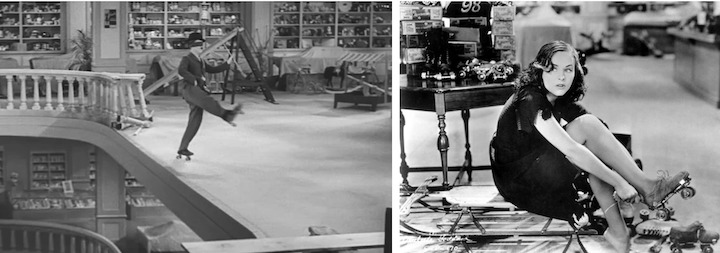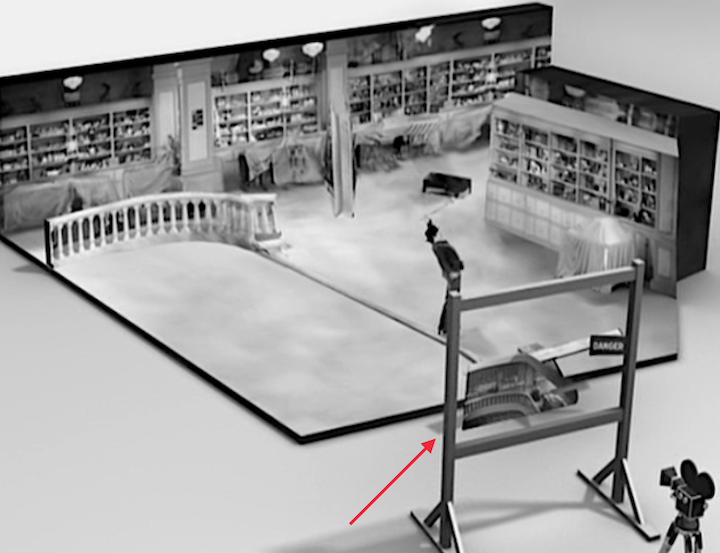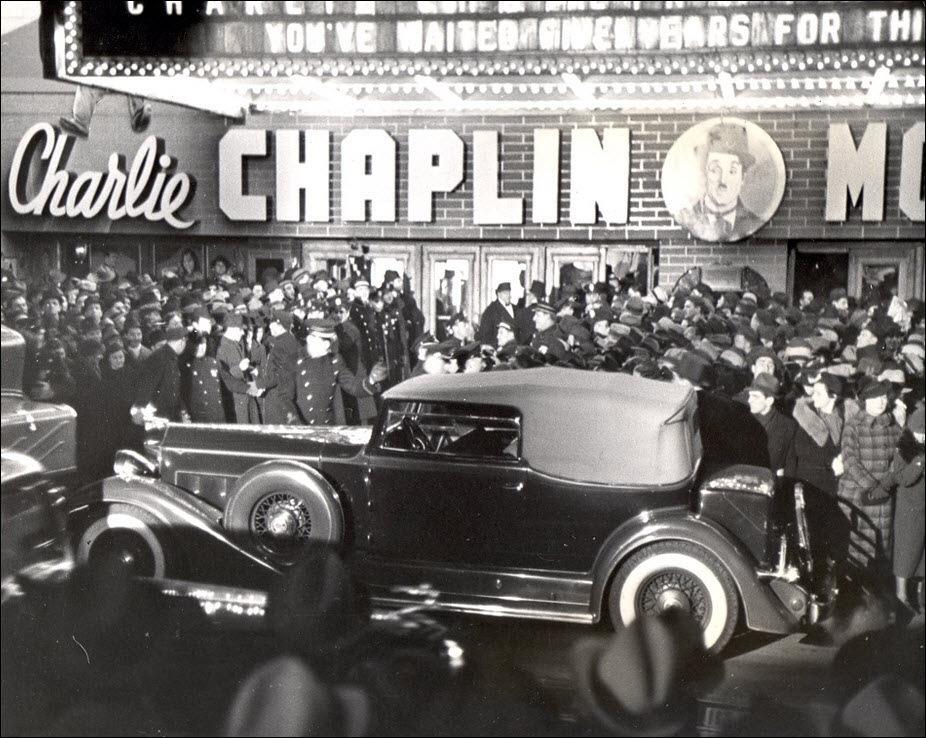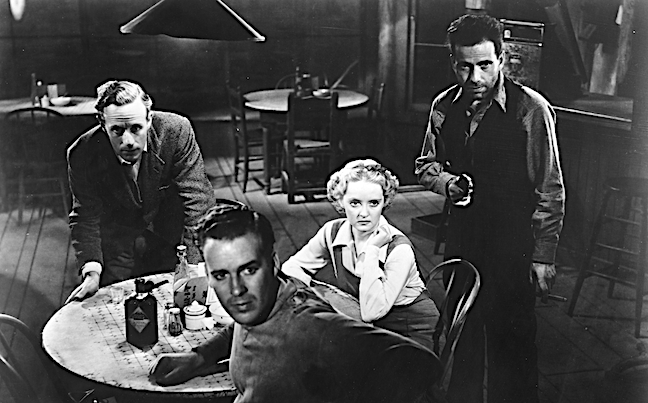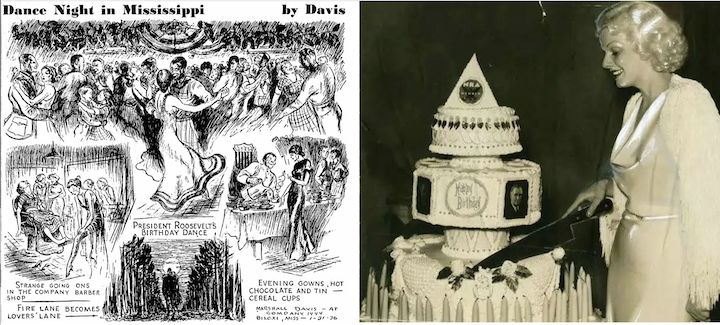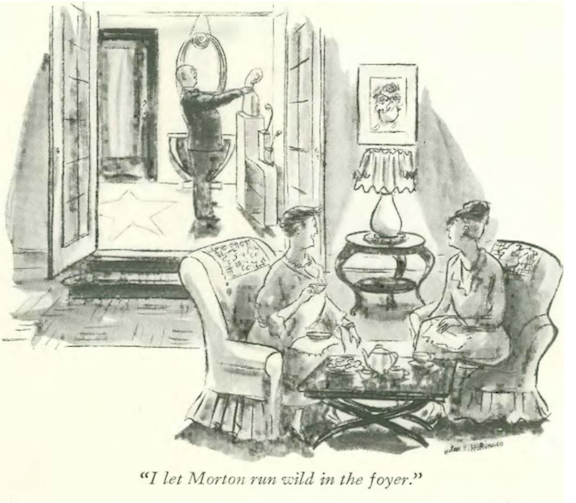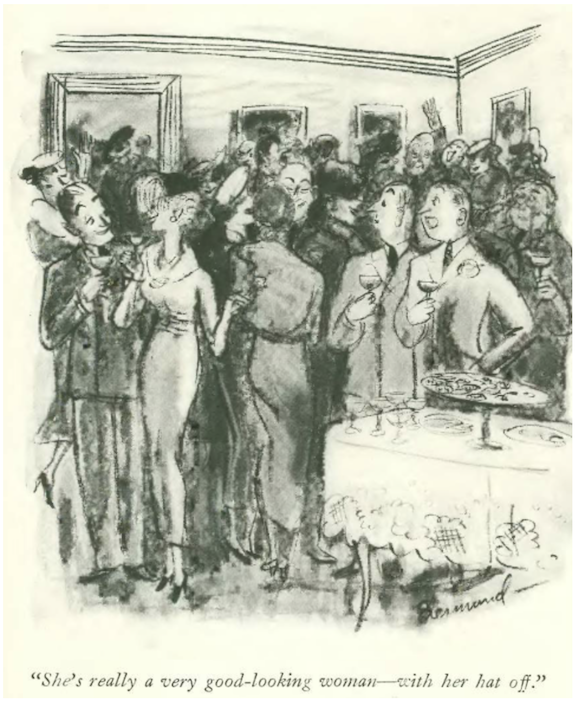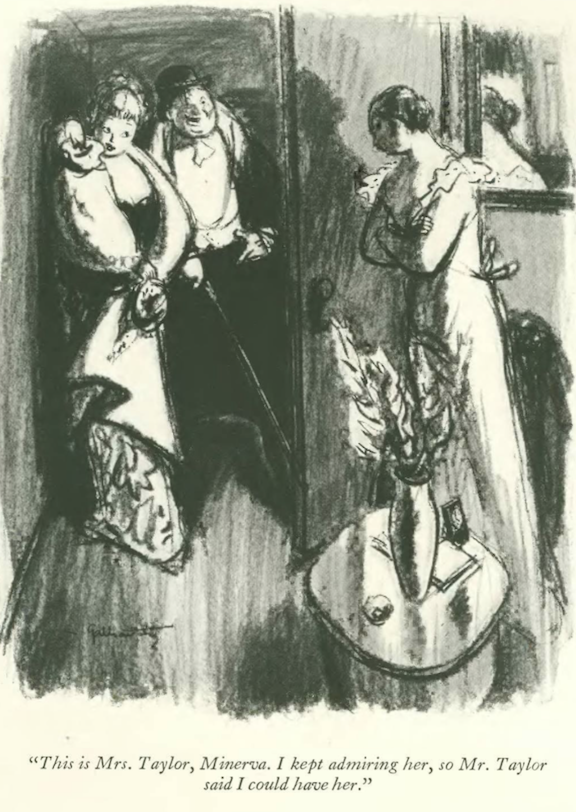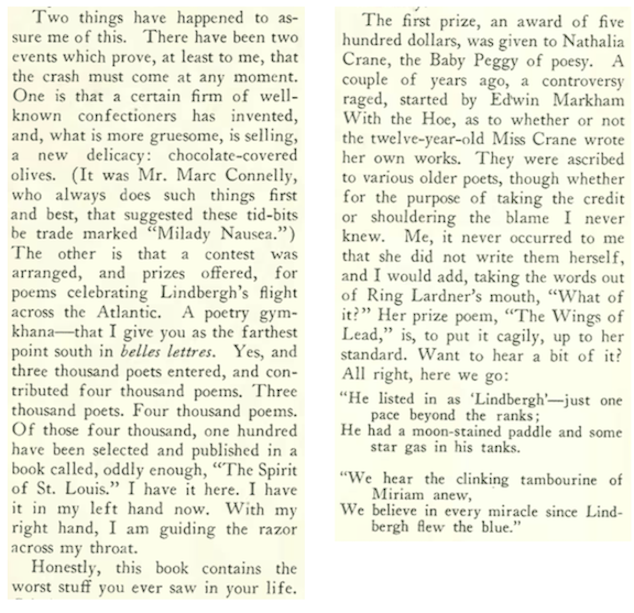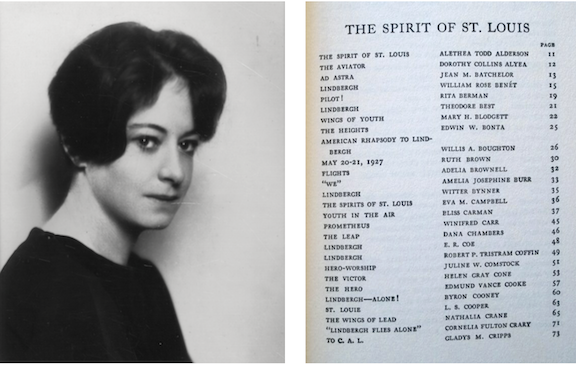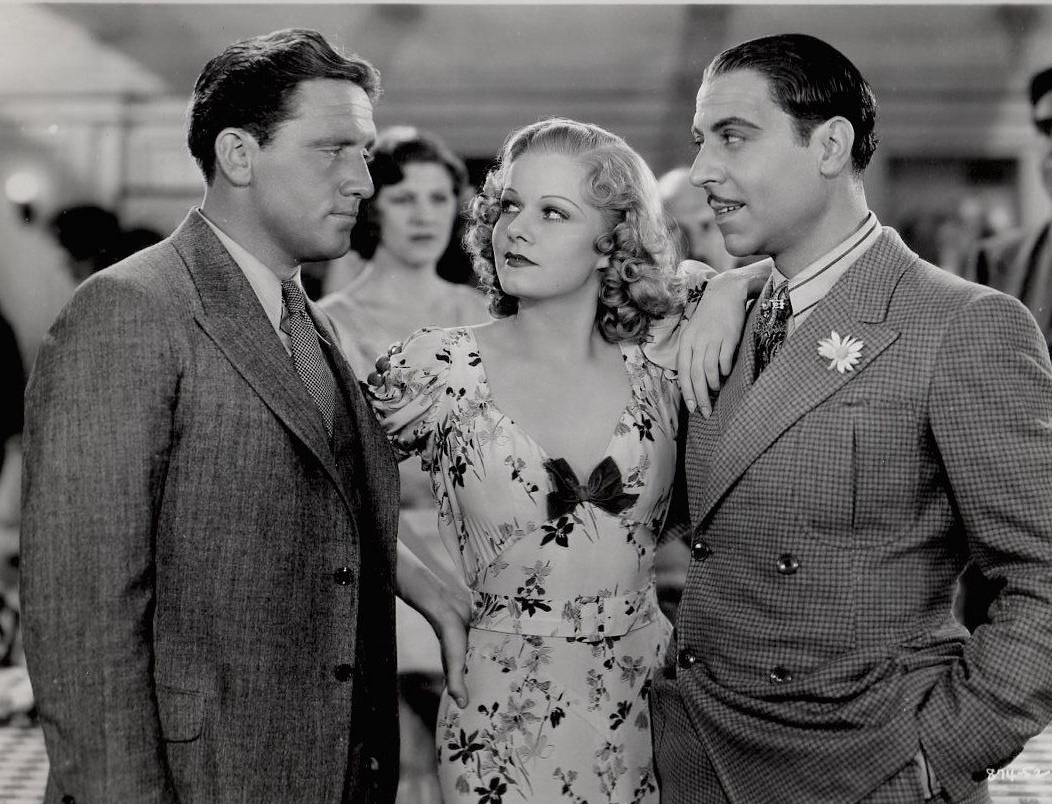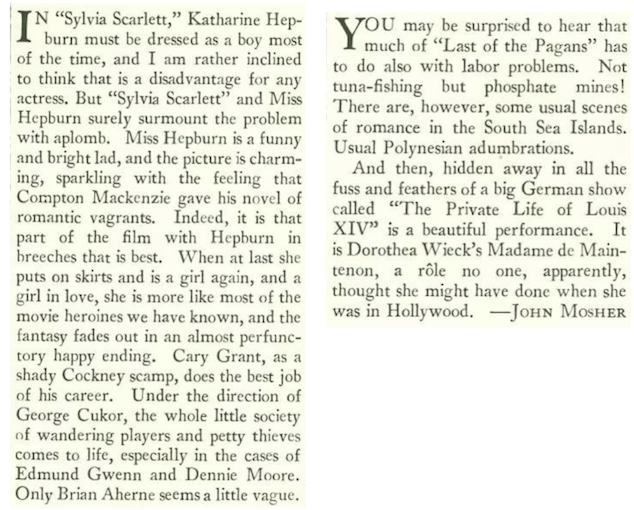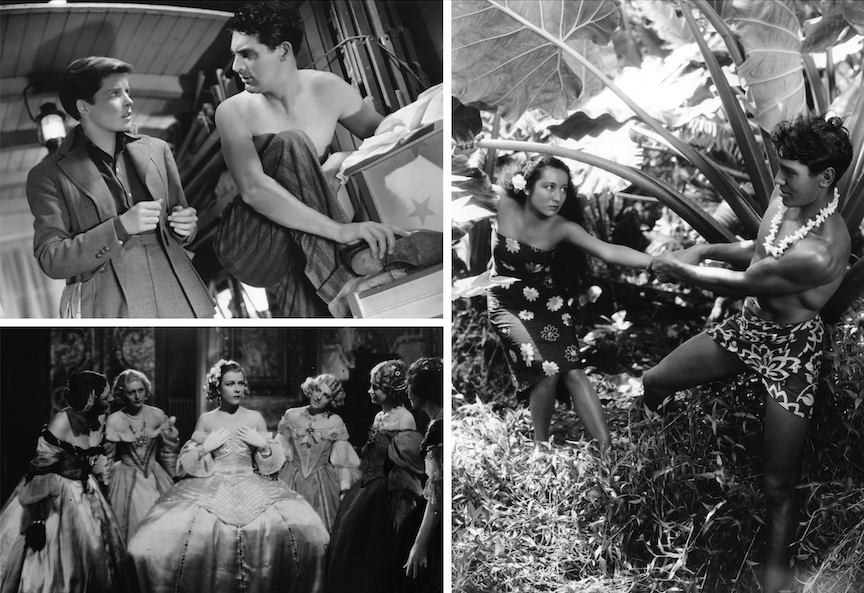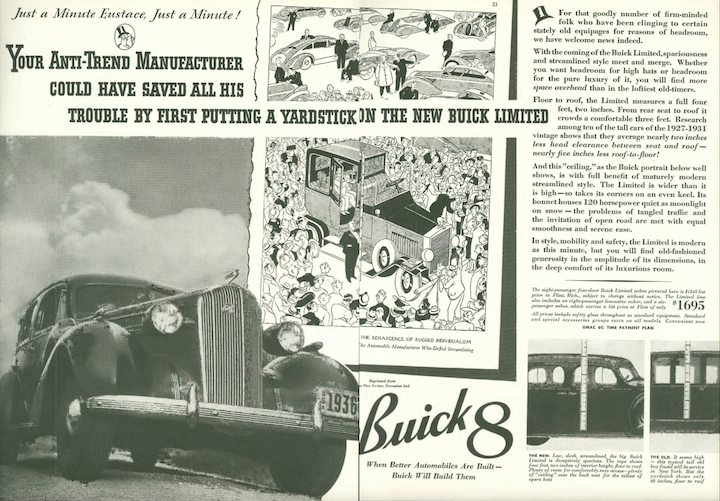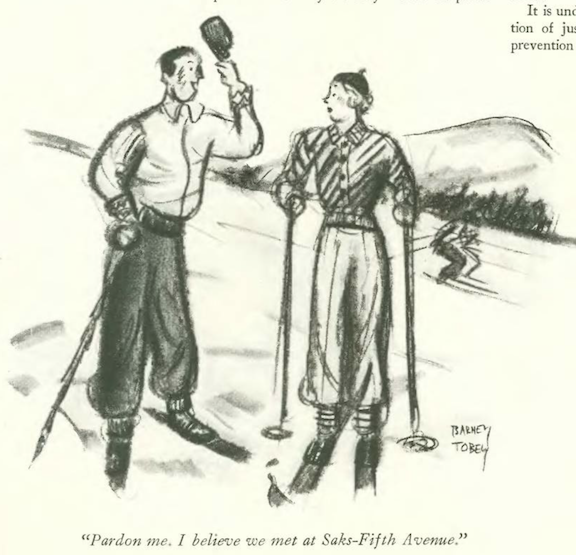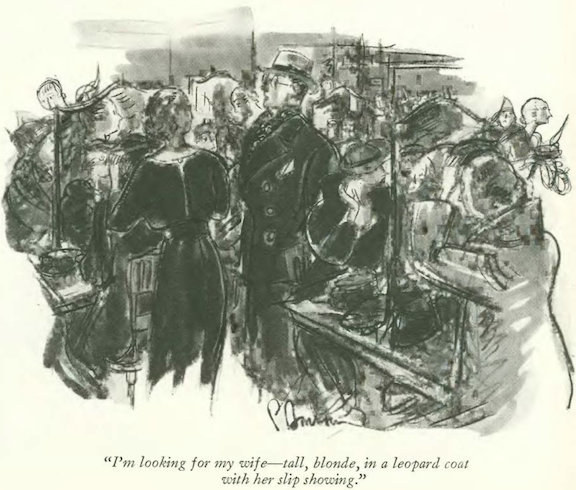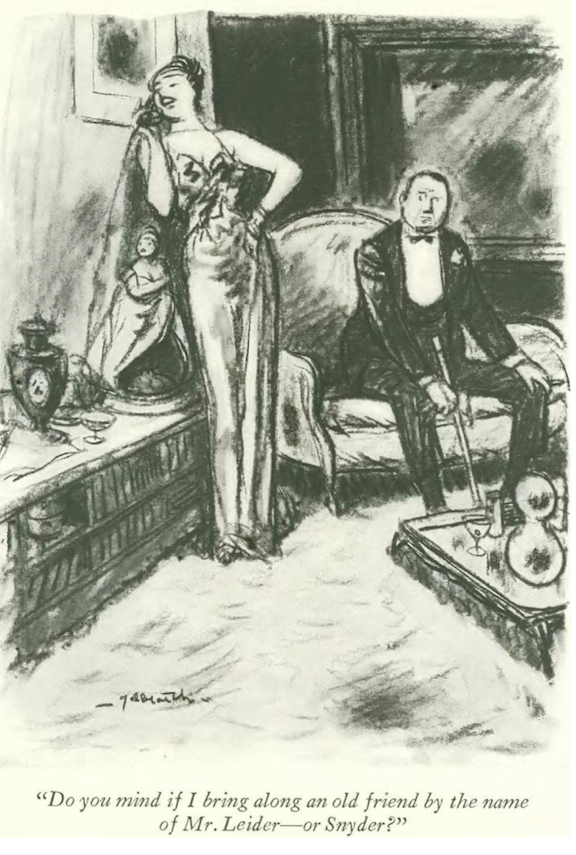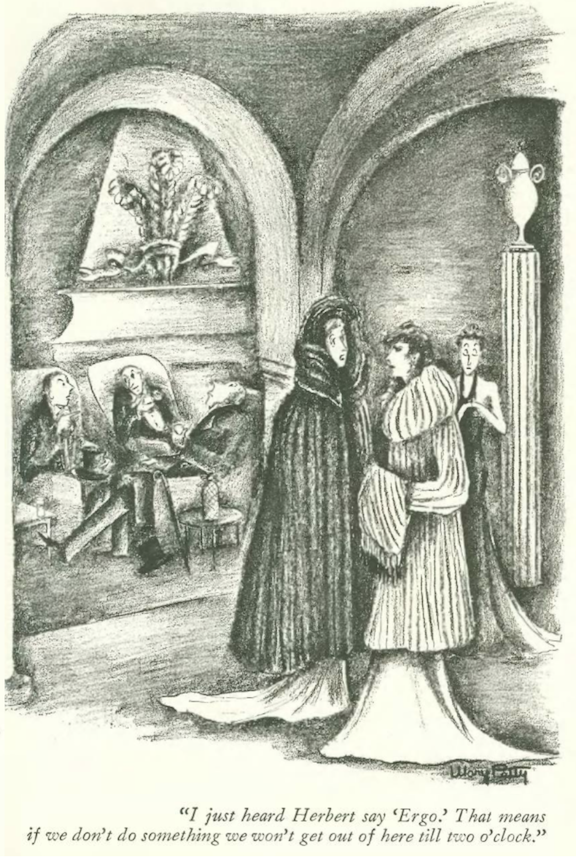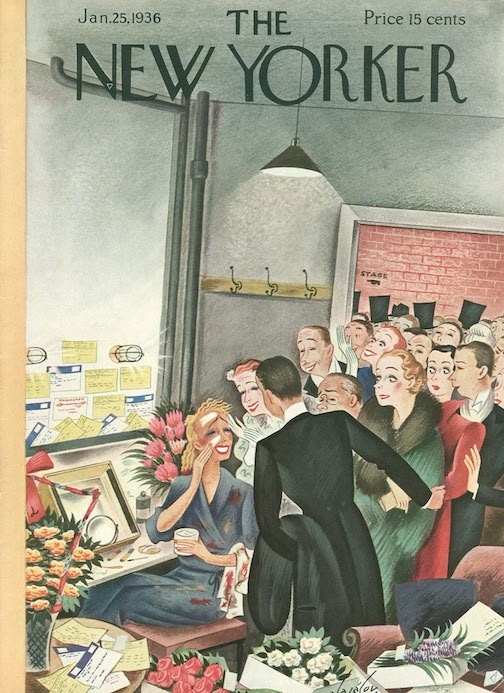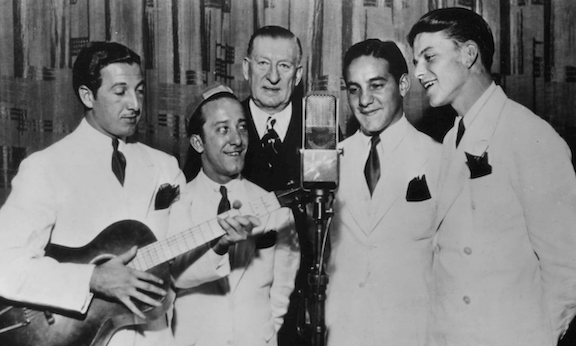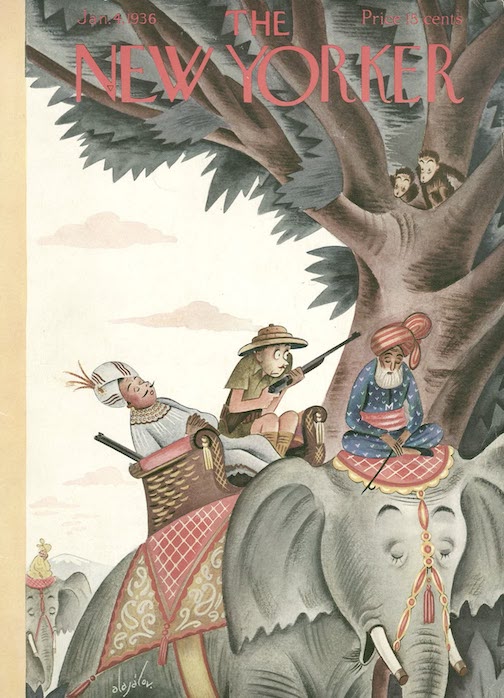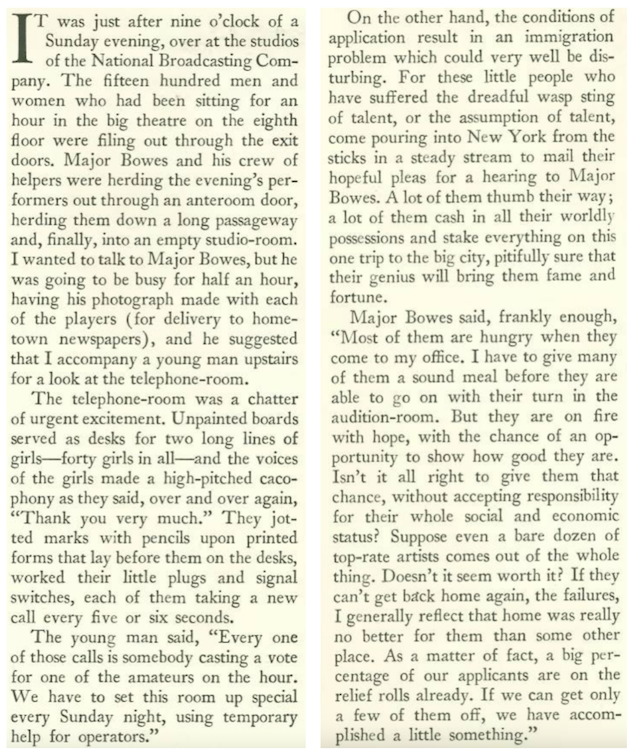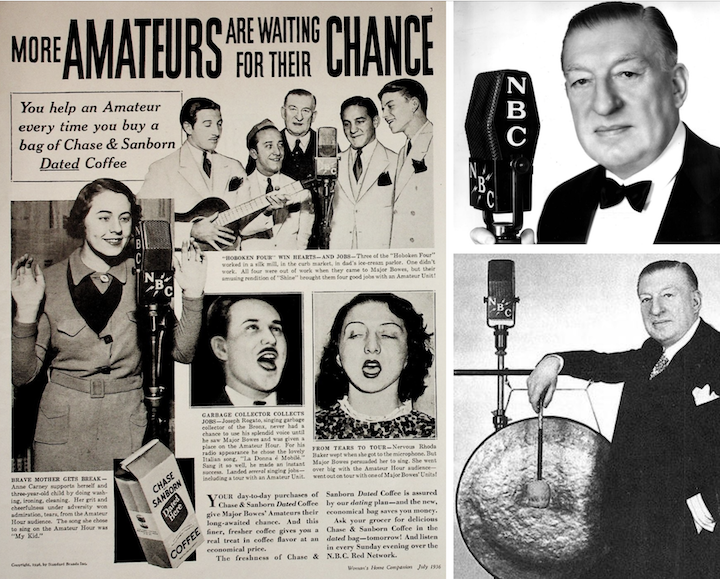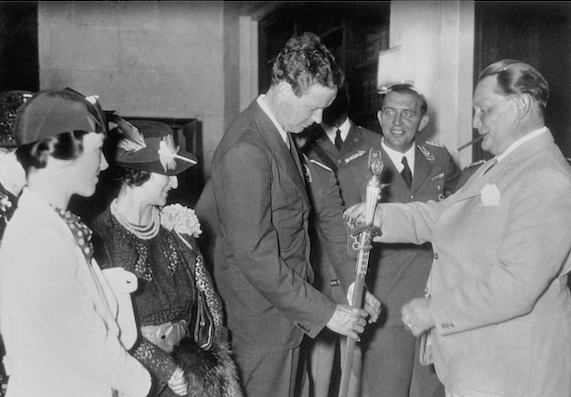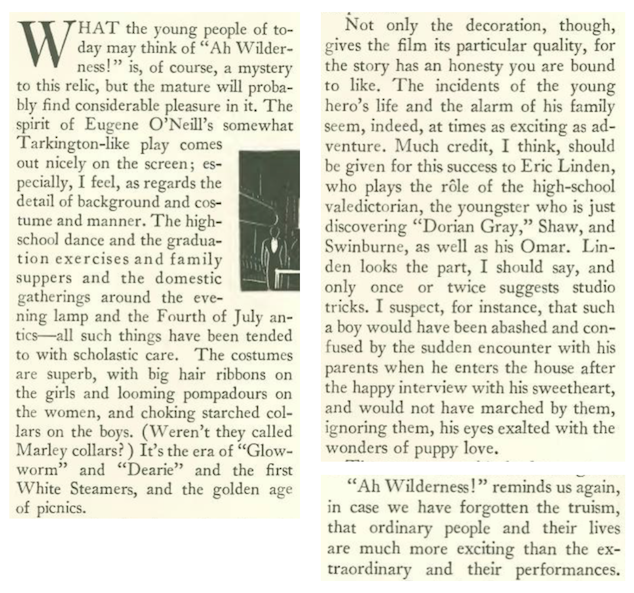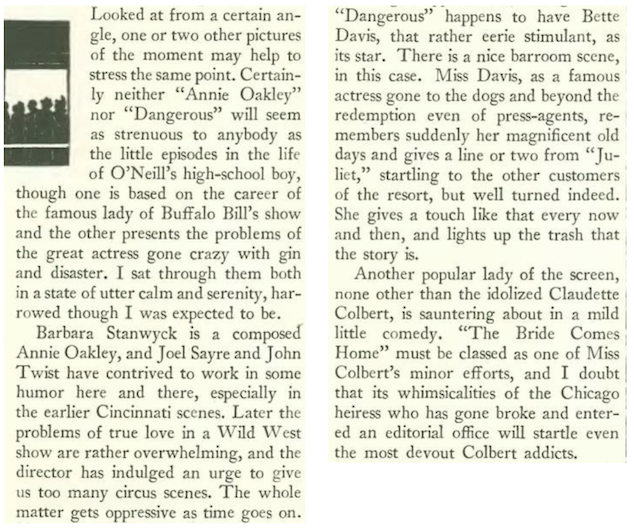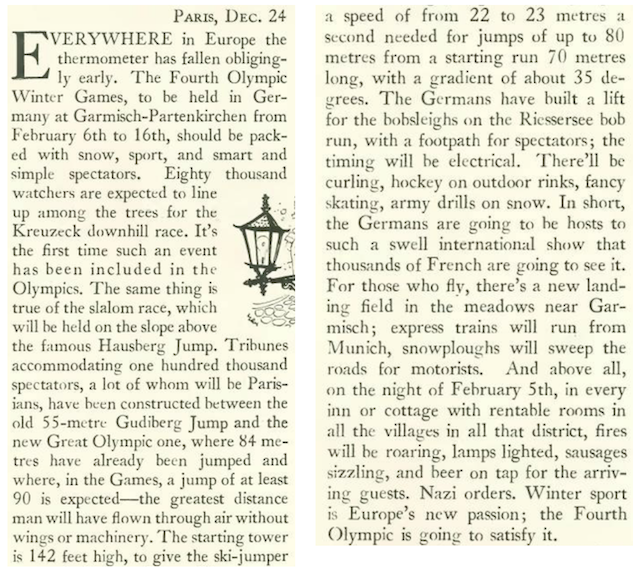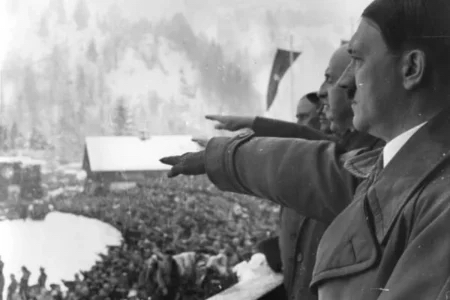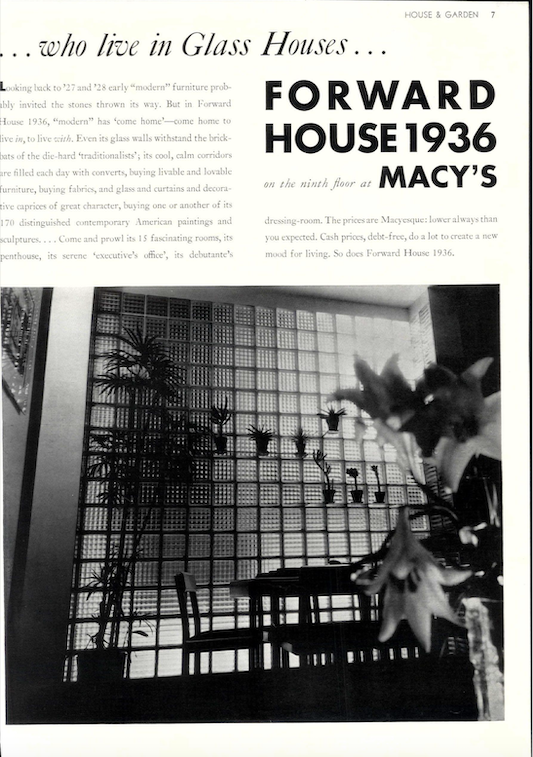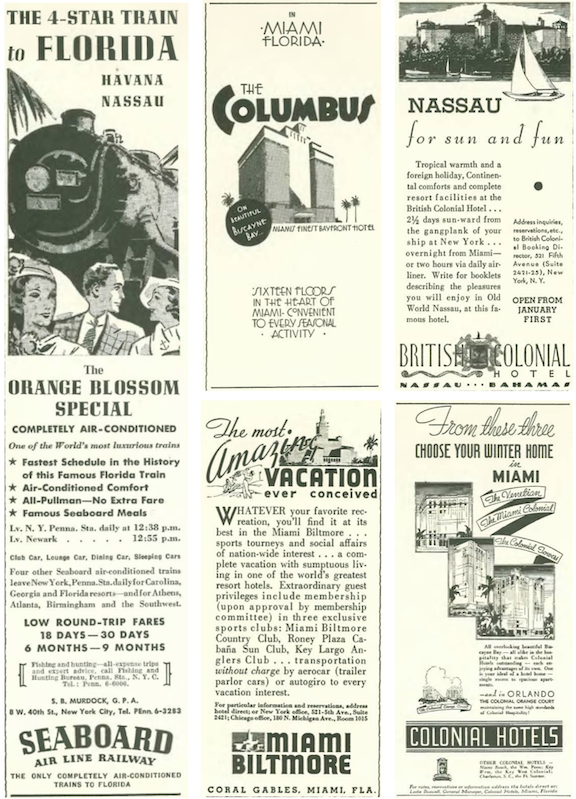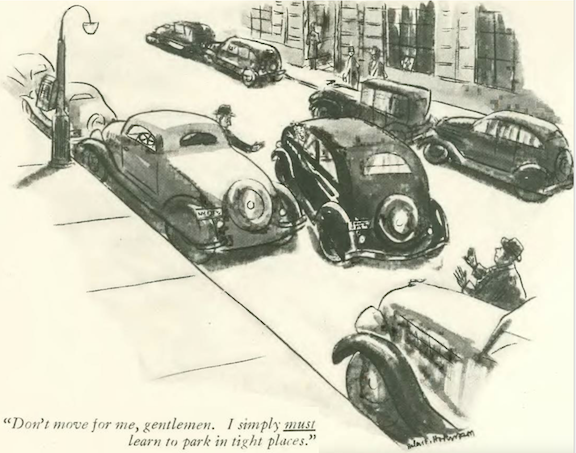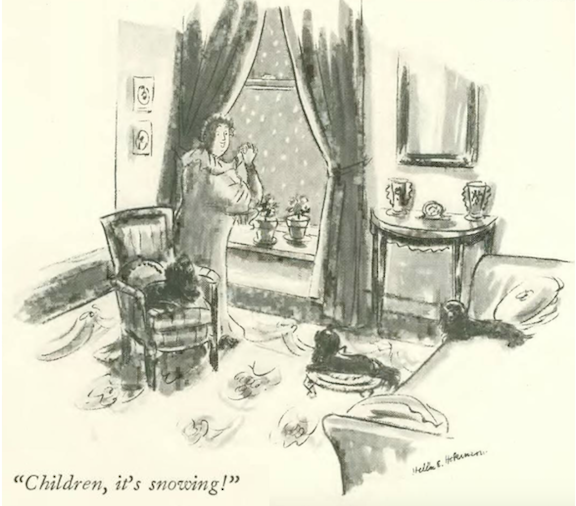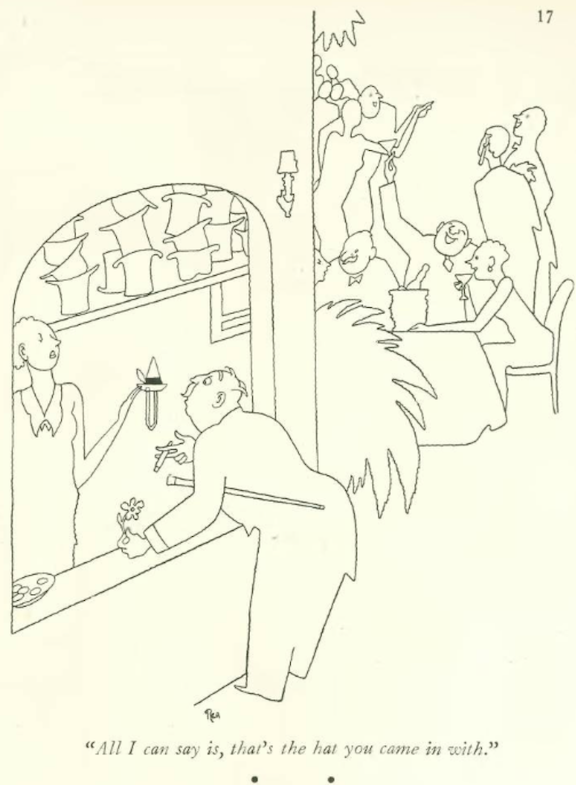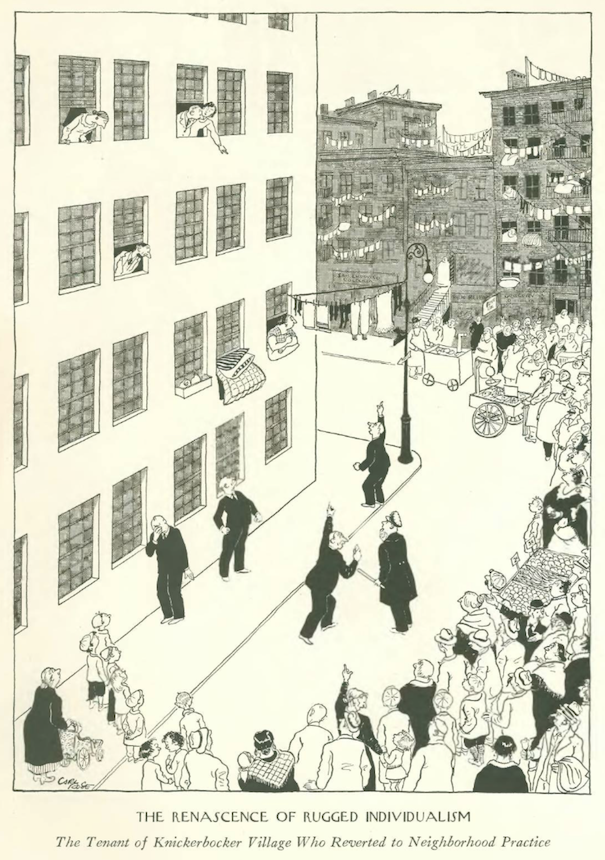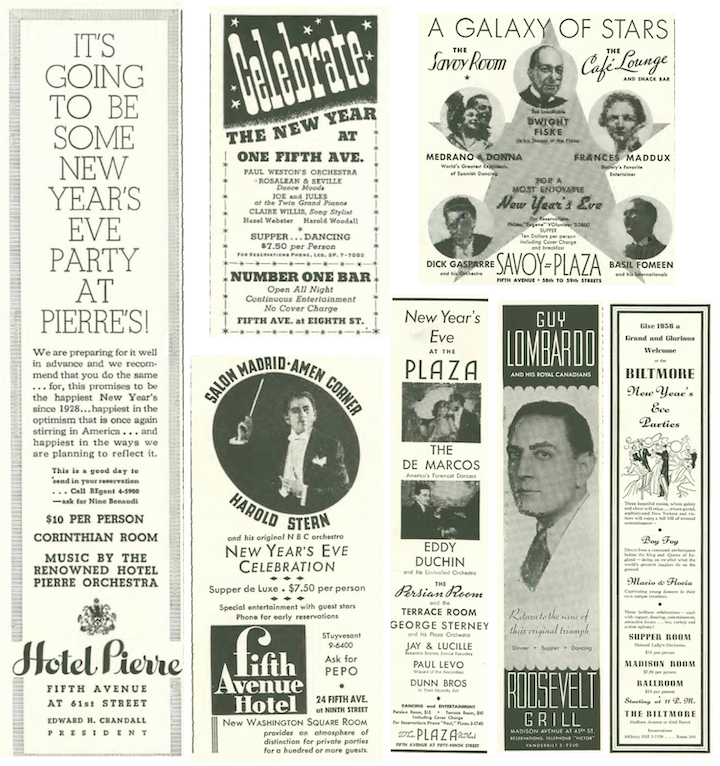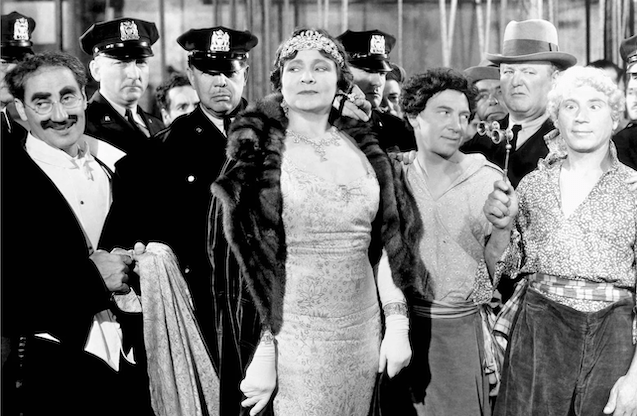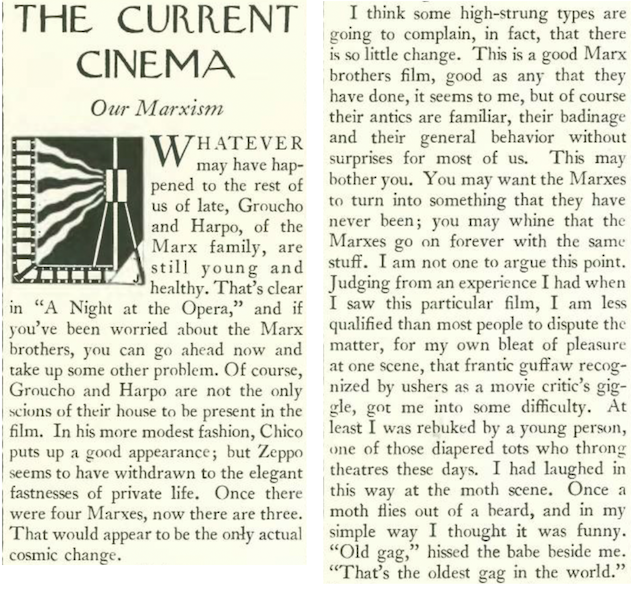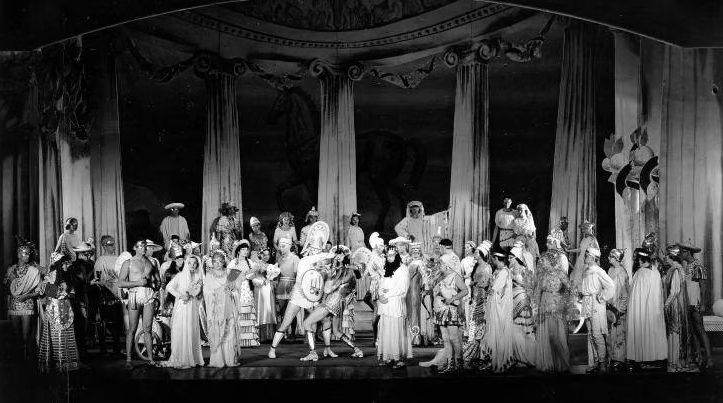
Above: New Year’s Eve at the “El Morocco” Night Club at 154 E. 54th Street, New York, 1935. (Posted on Reddit)
Lois Long took her nightlife seriously, and when it didn’t live up to her standards—defined by the wild speakeasy nights she wrote about after joining The New Yorker in 1925 —she was crestfallen, to say the least.
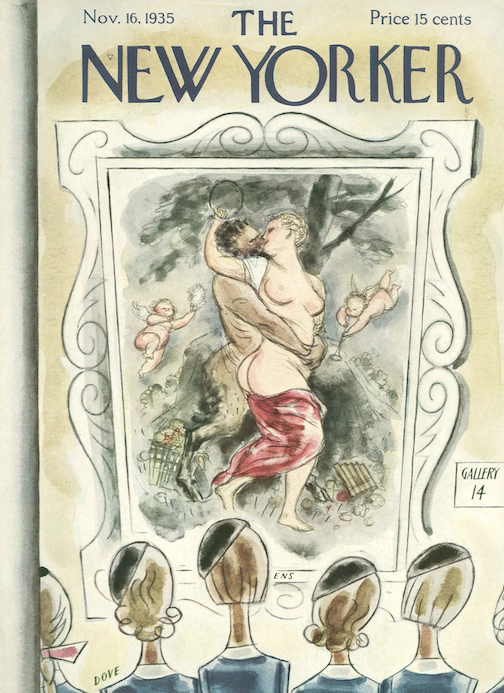
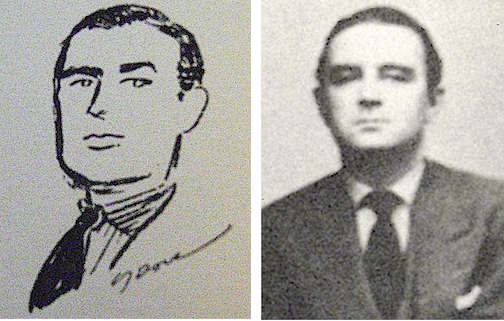
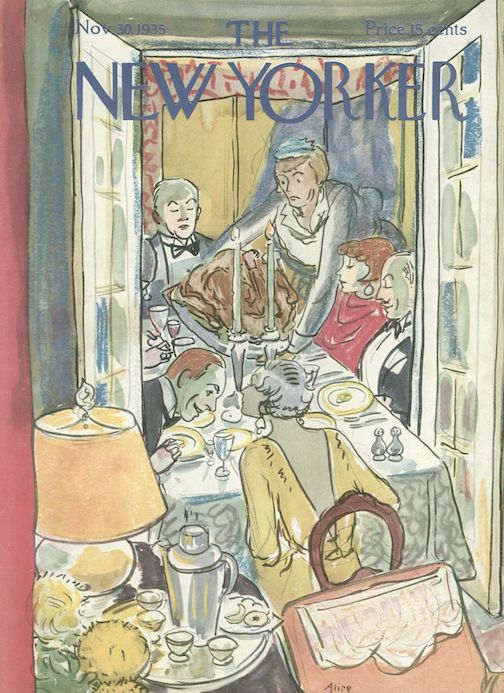
November 16, 1935 cover by Leonard Dove. This is one of Dove’s fifty-seven New Yorker covers; he also contributed 717 cartoons to the magazine.Above: Leonard Dove’s self portrait, 1941; photo: 1947. Born 1906, Great Yarmouth, England. Died, Gramercy Hotel, New York City, 1972. (Thanks to Michael Maslin’s indispensable Ink Spill)
*
When Long joined The New Yorker she was a 23-year-old Vassar graduate, and at age 34 she was not expecting to re-live those heady days; but nightlife in 1935 made her wonder where all the interesting people had gone. Instead of the smart and beautiful speakeasy set, she found people who couldn’t hold a conversation, who cared more about being mentioned in the newspapers by “Cholly Knickerbocker” (a pseudonym used by society columnists)—they simply lacked the “sparkle” she so craved. In this excerpt from her column, “Tables for Two,” she explained:
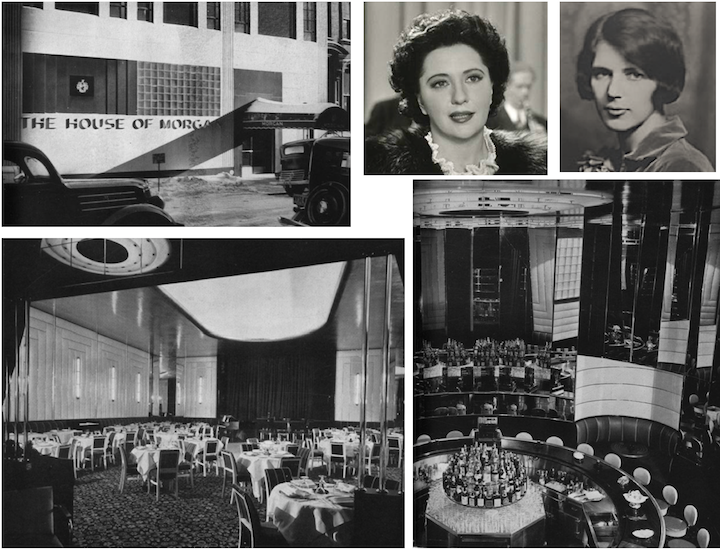
ALL SHOW, NO GO…Lois Long recalled the heady days of the original torch singer Helen Morgan, but her new club, The House of Morgan, offered up tired vaudeville instead of the singer herself. Above, images of the club from Christopher Connelly’sThe Helen Morgan Page. Top, center, detail of Morgan from the 1935 film Sweet Music. Next to Morgan is a photo of Long from the PBS documentary Prohibition. (helen-morgan.net/PBS.org)
* * *
At the Movies
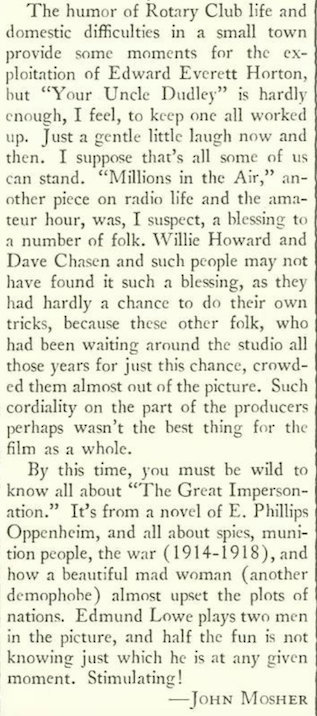
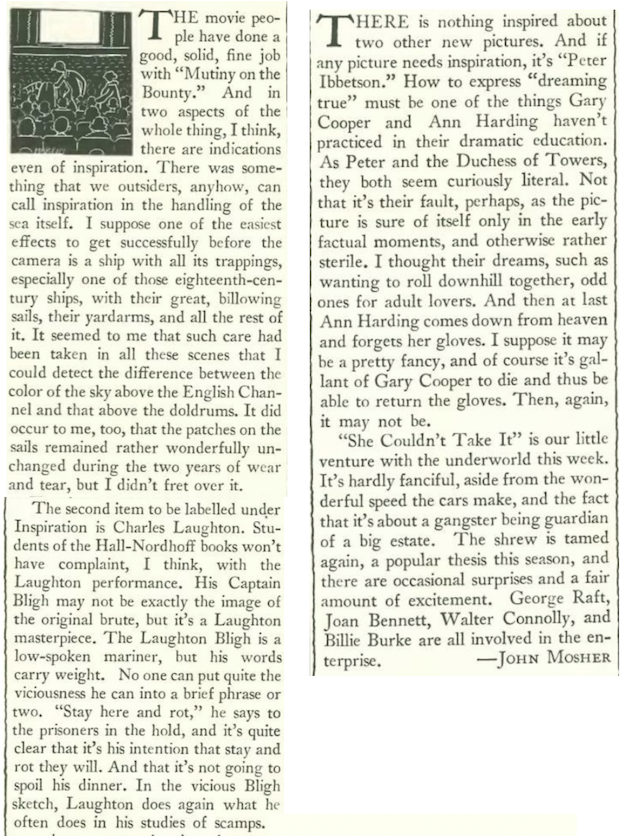
Our film critic John Mosher was in good spirits after taking in MGM’s Mutiny on the Bounty, and especially the inspired performance by Charles Laughton as the cruel, tyrannical Captain Bligh…
LET’S HAVE A STARING CONTEST…Clark Gable (left) portrayed Fletcher Christian, the Bounty’s executive officer, who disapproved of the cruel leadership of Captain Bligh, portrayed by Charles Laughton (right) in Mutiny on the Bounty. (theoscarbuzz.com)
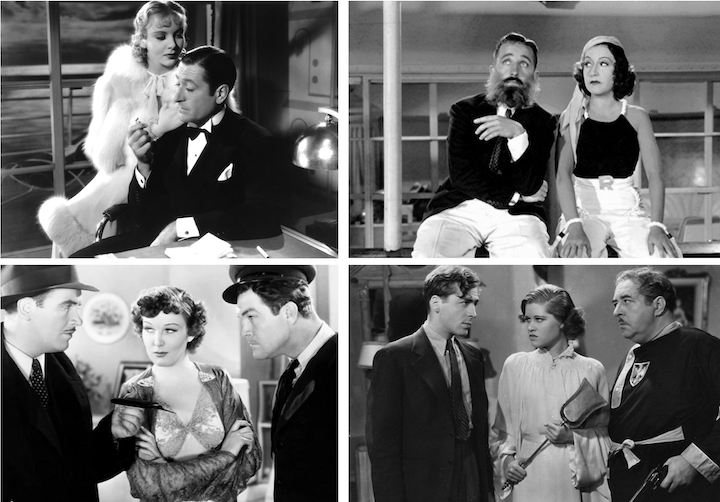
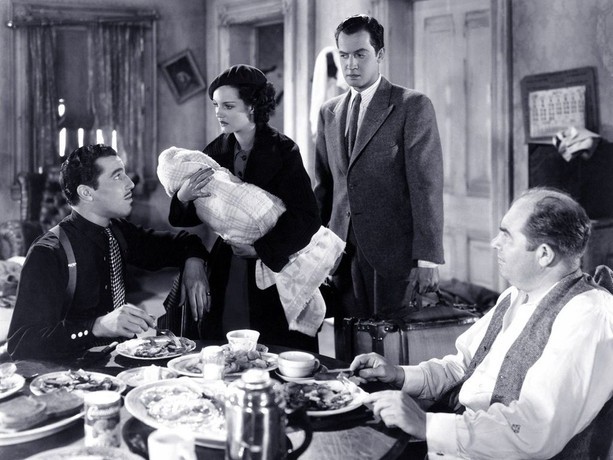
…two other pictures reviewed by Mosher were less than inspired, but at least the George Raft/Joan Bennett gangster film, She Couldn’t Take It, offered a car chase, and the occasional surprise.
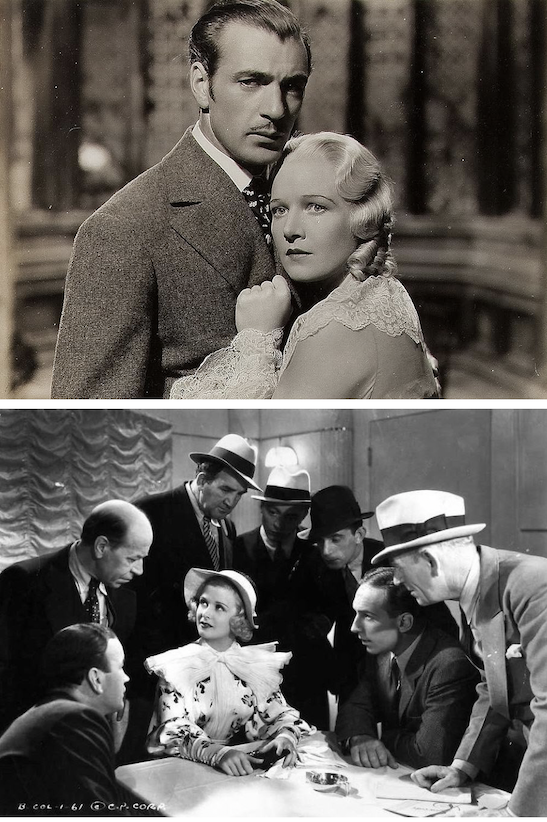
STERILITY ISSUES…Top, Gary Cooper and Ann Harding needed a bit more life in Peter Ibbetson; at least Joan Bennett (bottom photo) found some action in She Couldn’t Take It. (IMDB)
* * *
From Our Advertisers
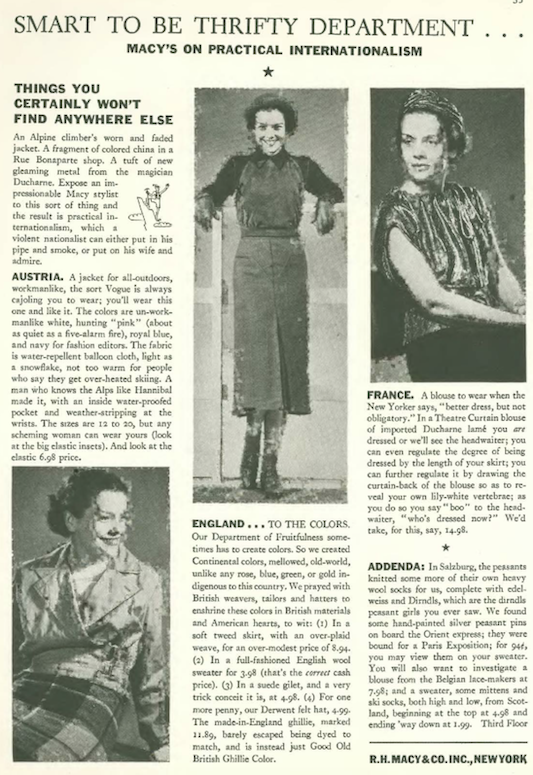
Not all fashion advertisements in The New Yorker were aimed at the posh set…Macy’s offered some thrifty selections, including a French-inspired “Theatre Curtain Blouse” that could be opened in the back “so as to reveal your own lily-white vertebrae”…
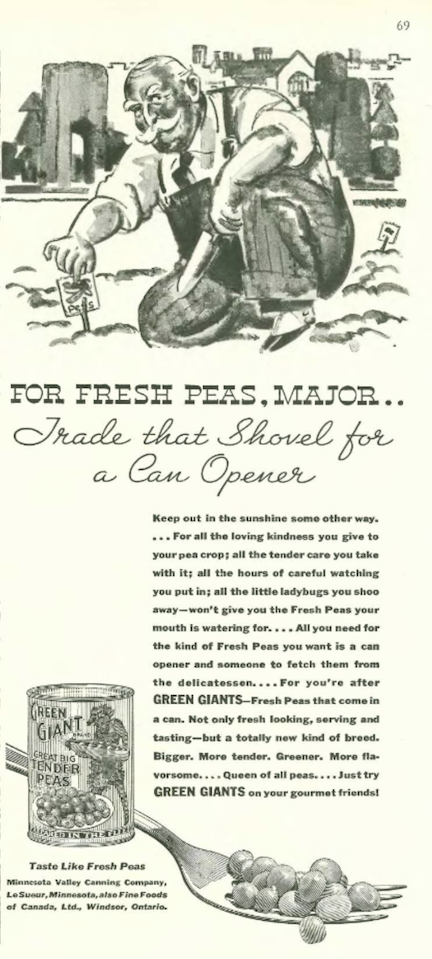
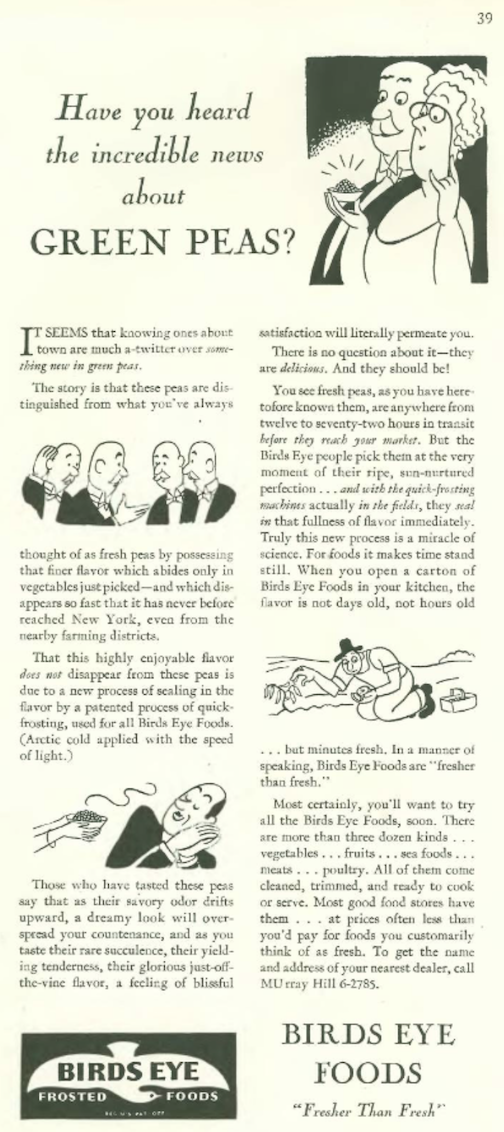
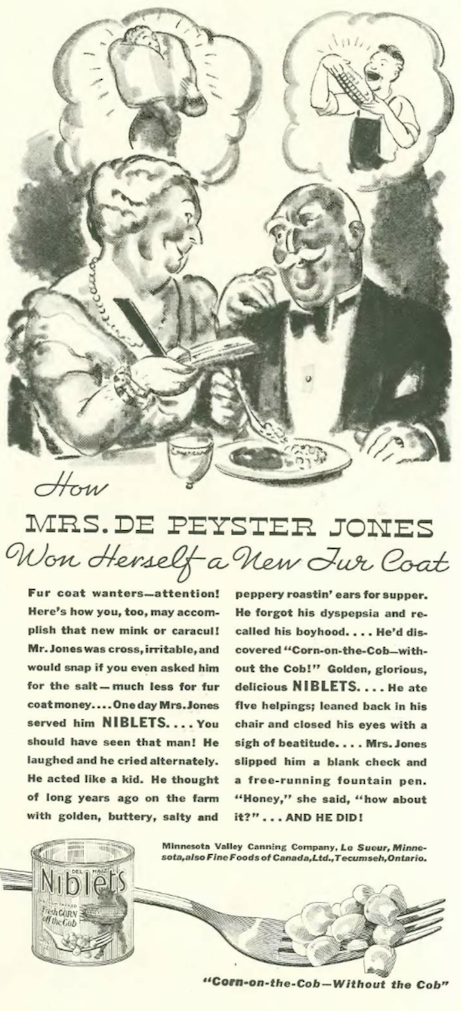
…I am puzzled by the “Duchess” types that appeared in food and beverage ads in the back of the magazine…we’ve seen some angry duchesses in ads for tomato and pineapple juice, and here we have one who has stooped so low as to shell her own peas…
…a side note, the Duchess’s peas came in a can bearing the old Green Giant logo, a savage, bearskin-clad figure…he was redesigned by ad executive Leo Burnett in 1935 to become the friendlier “Jolly Green Giant”…
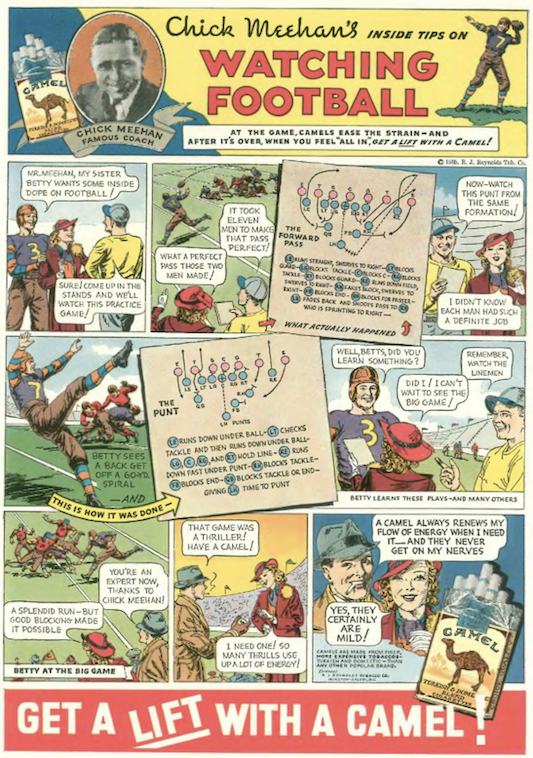
…the makers of Camels presented football coach Chick Meehan in cartoon form to extol the wonders of football and smoking to a young woman…Meehan coached football at Syracuse, NYU and Manhattan College…
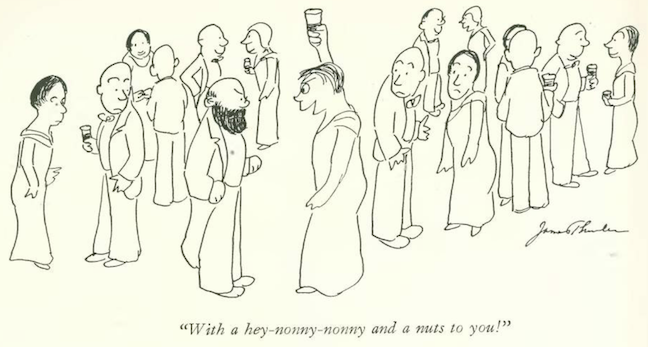
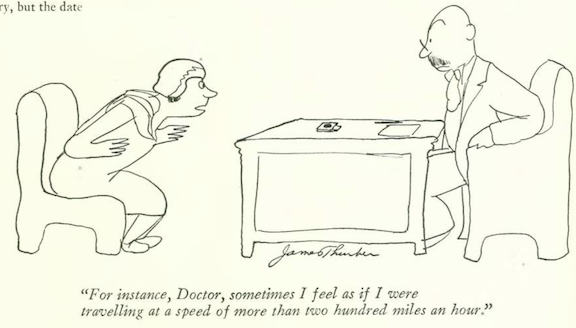
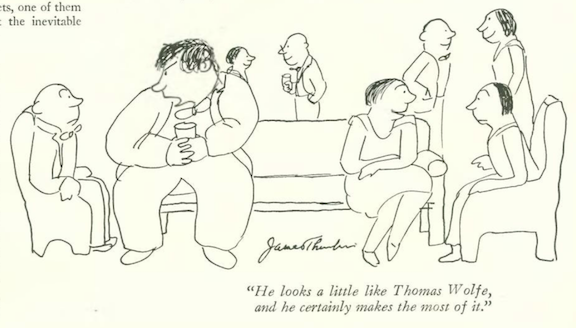
…the football theme segues to our cartoon section, beginning with this spot art by James Thurber…
…Christina Malman’s spot drawings could now be found in every issue, and usually more than one…
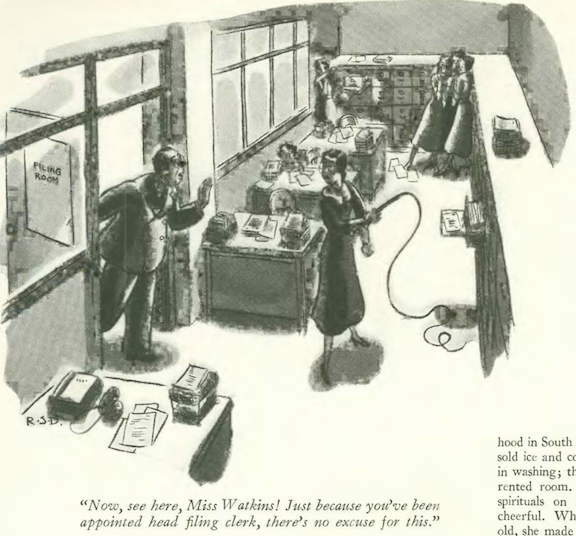
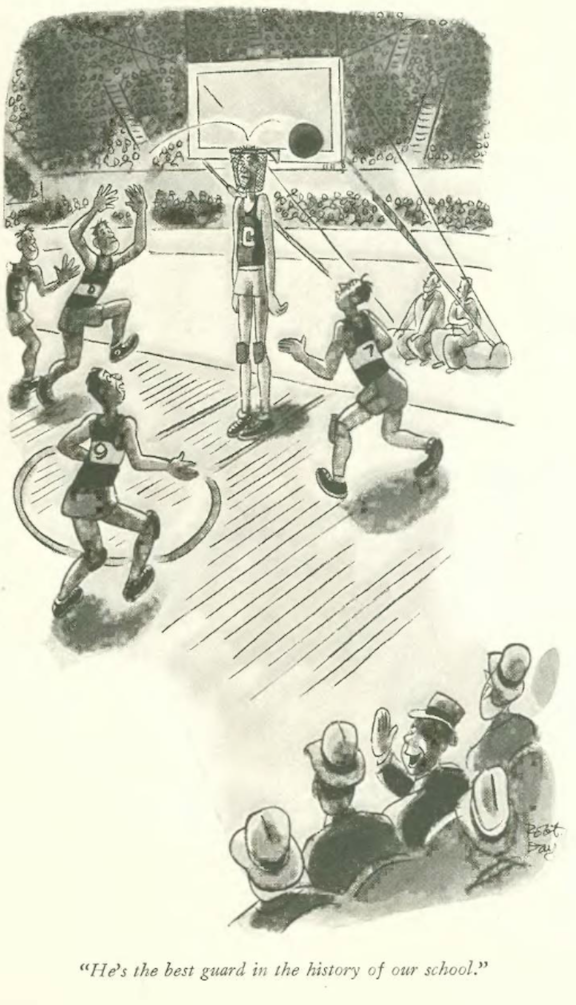
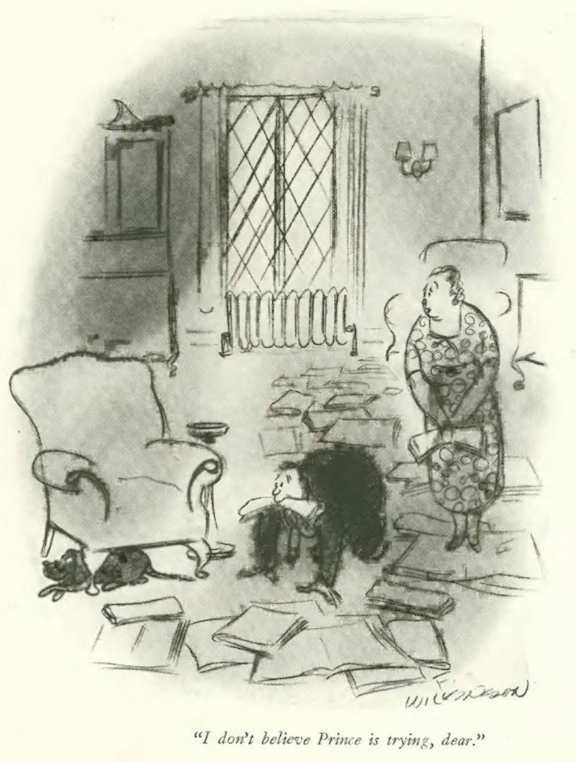
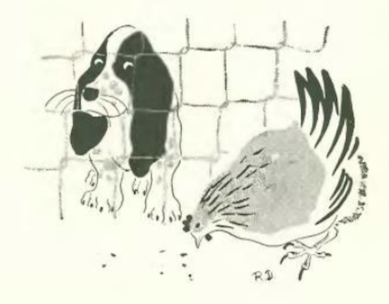
…this one by Robert Day also caught my eye, maybe because I like chickens, and dogs too…
…Day again, on the streets of Manhattan…
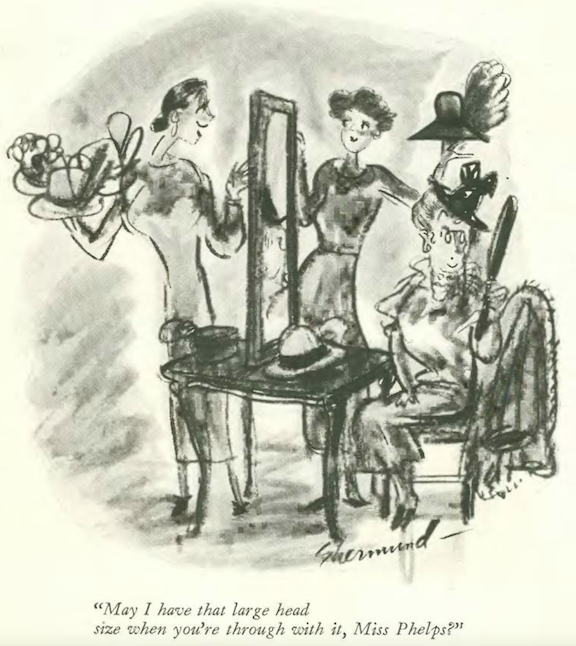
…Barbara Shermund showed us a wolf in wolf’s clothing…
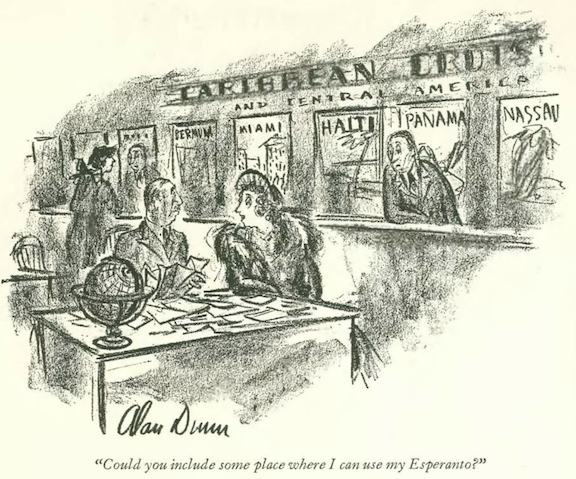
…Alan Dunn seemed to be channelling Barbara Shermund here…or maybe Dunn’s wife Mary Petty had some influence…
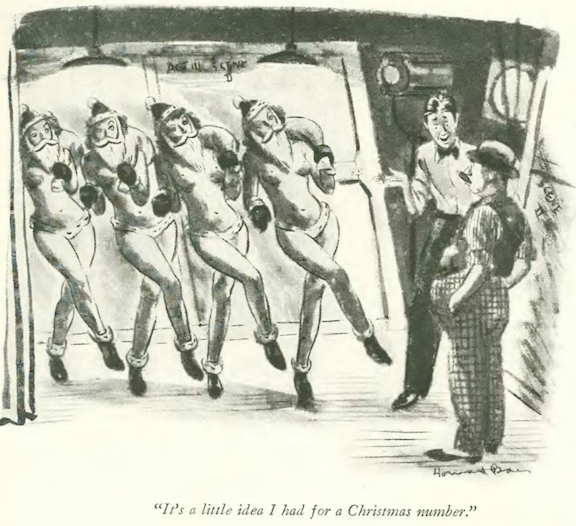
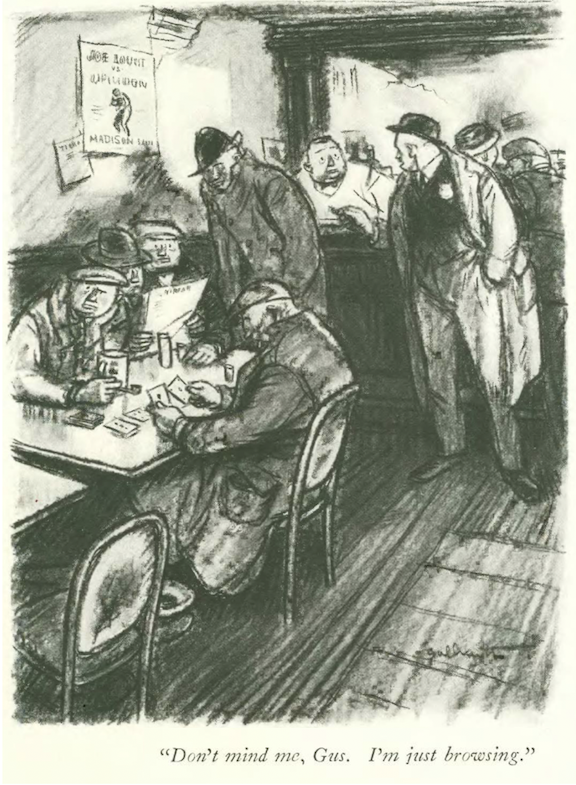
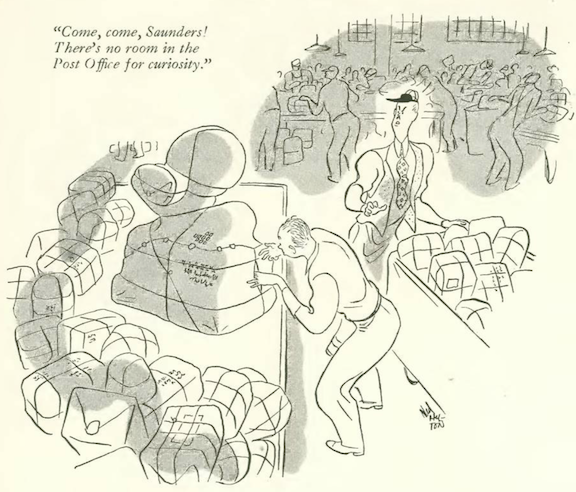
…William Crawford Galbraith eavesdropped on some wagering waiters…
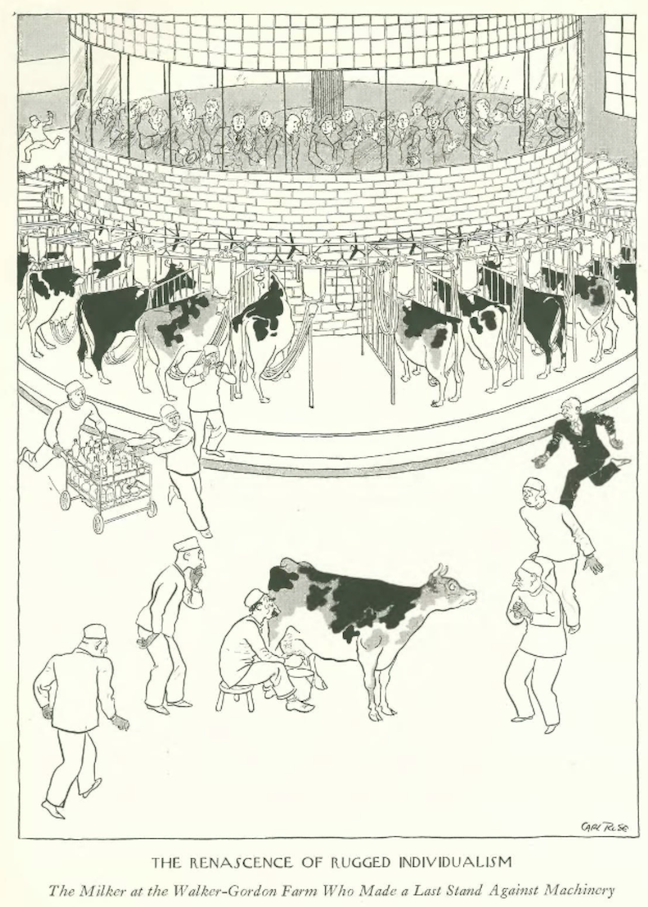
…Carl Rose found an outlier at the modern Walker-Gordon Dairy Farm…
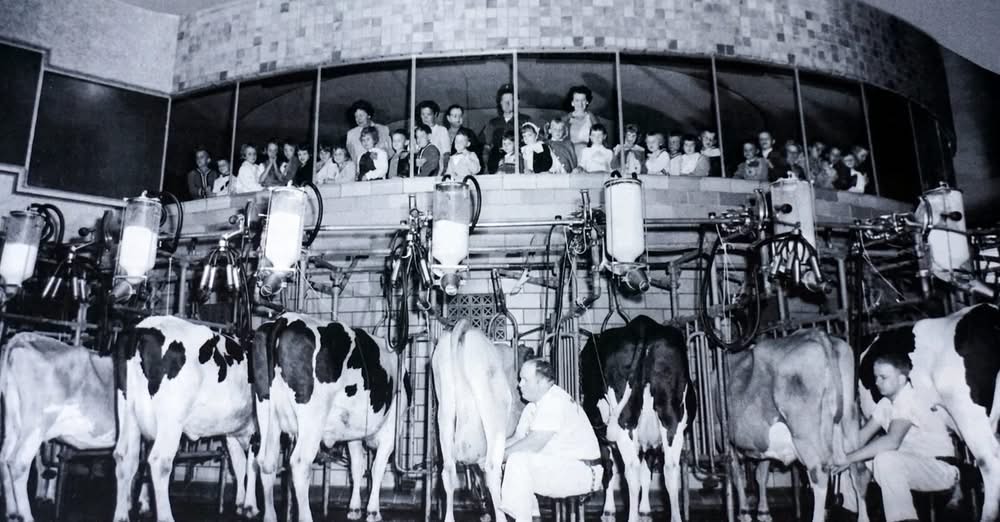
…The Rotolactor featured in Rose’s cartoon was a mostly automatic machine used for milking a large number of cows successively on a rotating platform…first used at the Walker-Gordon Laboratories and Dairy in Plainsboro, New Jersey (pictured below), the Rotolactor held fifty cows at a time, and hosted about 250,000 visitors annually…
(rawmilkinstitute.org)
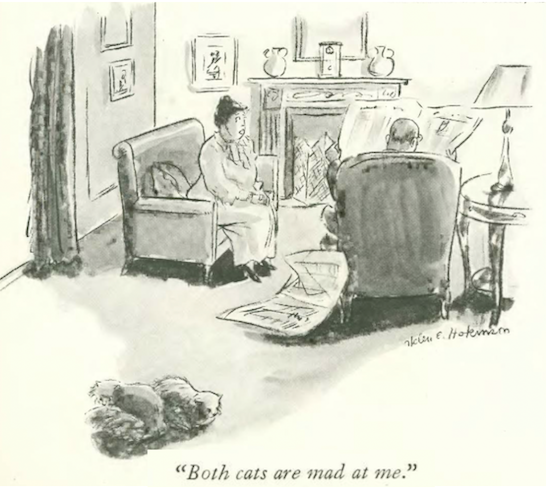
…and we go from cows to cats, courtesy Helen Hokinson…
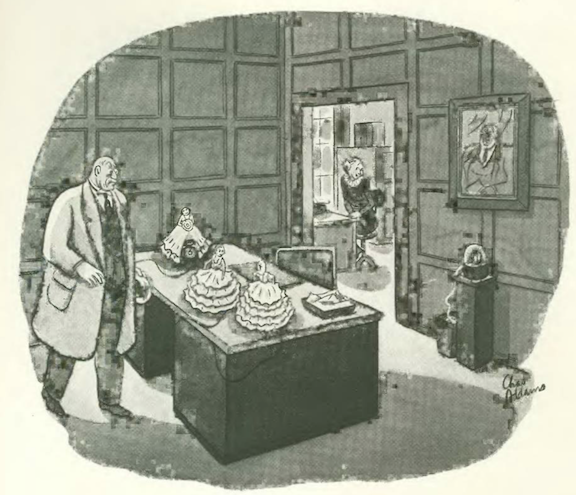
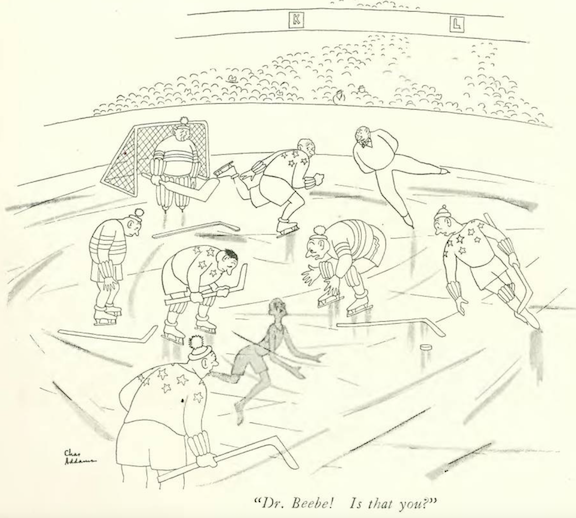
…and Charles Addams booked an unusual perp…
…on to the November 23 issue…
November 23, 1935 cover by Antonio Petruccelli. Petruccelli (1907-1994) began his career as a textile designer, becoming a freelance illustrator in 1932 after winning several House Beautiful cover contests. This is one of four covers he produced for The New Yorker.Antonio Petruccelli. Here are samples of Petruccelli’s remarkable work.(Helicline Fine Art)
*
Worth the Wait
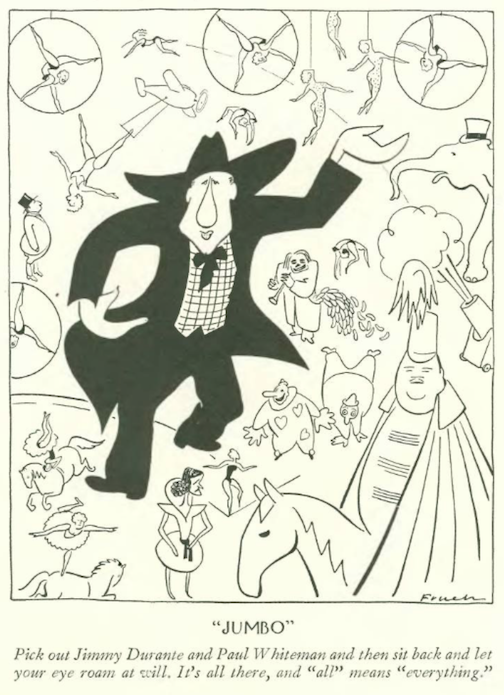
The highly-anticipated circus-themed spectacle Jumbo finally opened at the Hippodrome. In his That’s Entertainment! blog, Jackson Upperco observes that Billy’s Rose’sJumbo was “more circus than musical comedy,” a production that “was largely an excuse for Mr. Rose to present a circus.” It was headlined by comedian Jimmy Durante and bandleader Paul Whiteman, with a score by Rodgers & Hart. Here are excerpts from a review by Wolcott Gibbs:
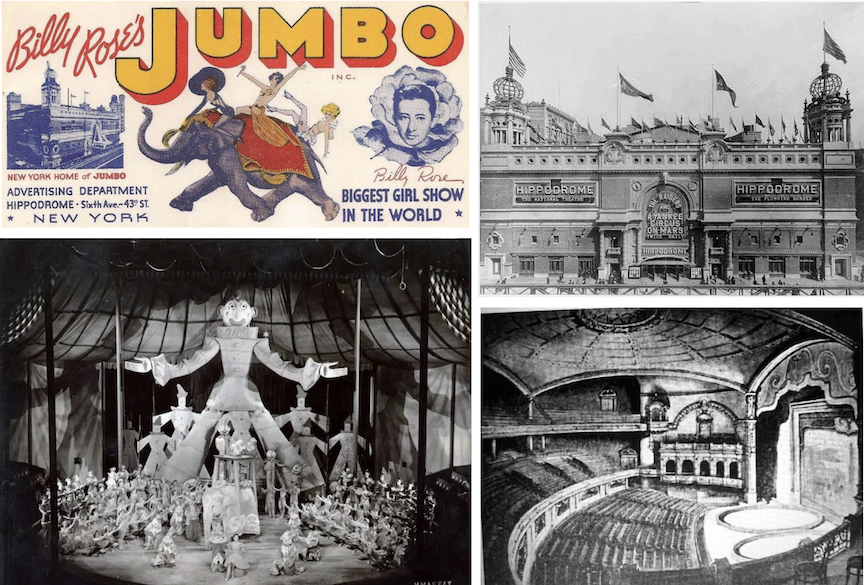
JUMB0-SIZED ENTERTAINMENT…Clockwise, from top left, Hippodrome billboard promoting Jumbo; built in 1905, the Hippodrome provided entertainment to thousands who couldn’t afford a Broadway ticket; a circus tent was erected inside the 5,300-seat theatre for the spectacle; Jumbo was one of the most expensive theatrical events of the first half of the 20th century. (Facebook/Library of Congress/Broadway Magazine/jacksonupperco.com)
* * *
At the Movies
Fyodor Dostoevsky’s 1866 novel Crime and Punishment was adapted to film by both French and American producers in 1935, but critics including The New Yorker’sJohn Mosher mostly preferred the French version, titled Crime et châtiment.
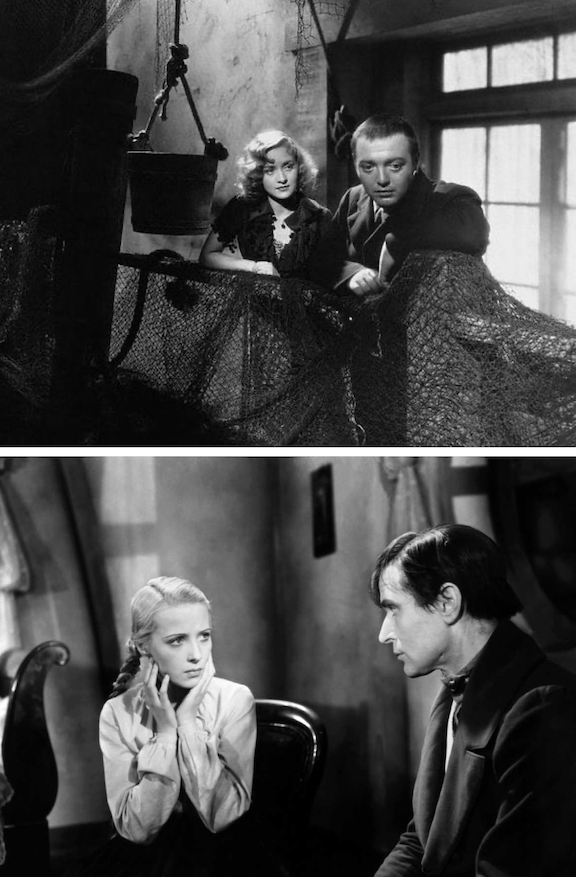
DOUBLE FEATURE…American and French producers each turned out a film adaption of Fyodor Dostoevsky’s novel Crime and Punishment. Top photo, Marian Marsh as Sonya and Peter Lorre as Roderick Raskolnikov in Columbia’s Crime and Punishment; bottom photo, Madeleine Ozeray as Sonia and Pierre Blanchar as Rodion Raskolnikov in Crime et châtiment.(silverscreenmodes.com/SensCritique.com)
…Mosher reviewed another crime thriller, Mary Burns, Fugitive, but found some comic relief in two other films…
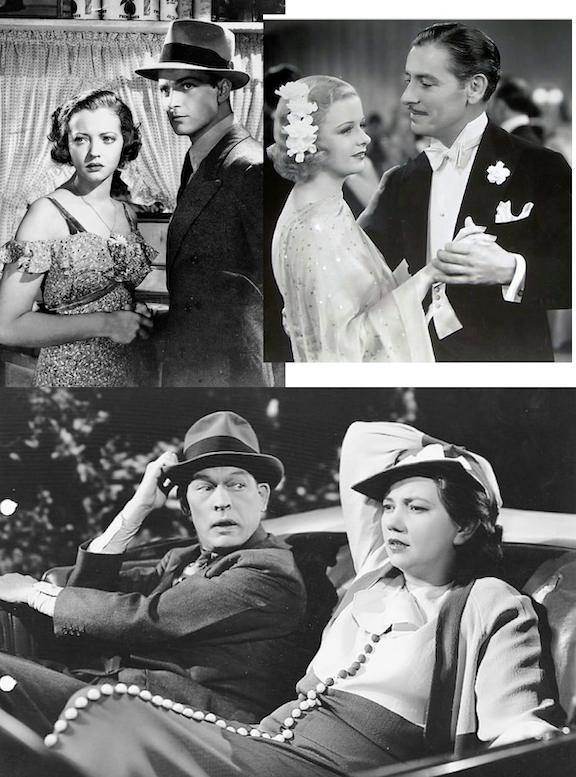
BAD CHOICE IN BOYFRIENDS was the theme of Mary Burns, Fugitive, starring (top left) Sylvia Sidney and Alan Baxter; top right, Joan Bennett and Ronald Colman in the romcom The Man Who Broke the Bank at Monte Carlo; bottom, Fred Allen and Patsy Kelly provided some laughs in musical comedy Thanks a Million. (IMDB)
* * *
From Our Advertisers
Readers of the Nov. 23 issue opened to this lovely image…
…which sharply contrasted with the clunky Plymouth ad on the opposite page…
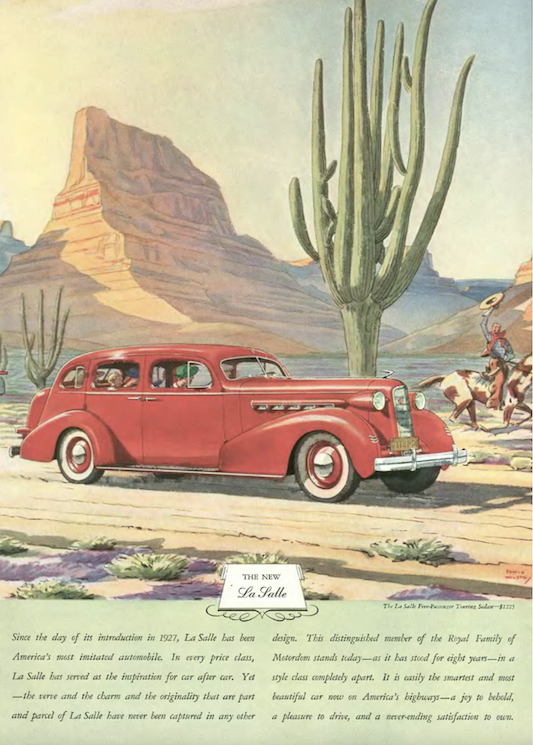
…not so clunky was this colorful illustration promoting Cadillac’s economy model, the La Salle…
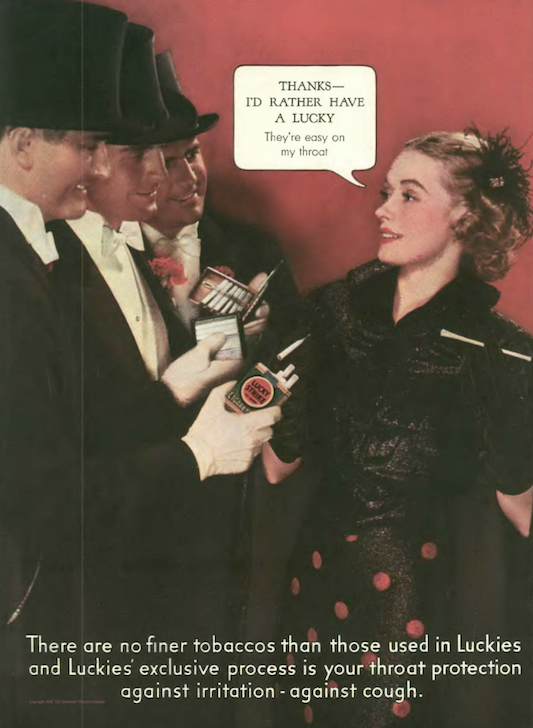
…the back cover was no surprise, with yet another glamorous cigarette ad…
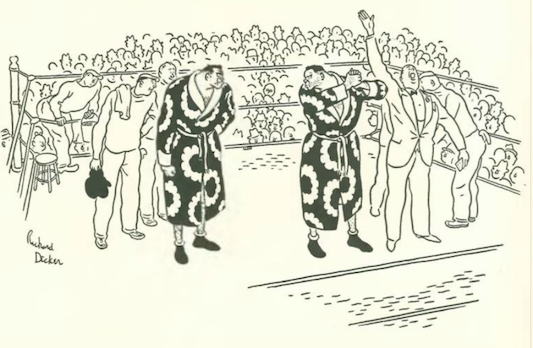
…our cartoonists included Richard Decker, and a fashion faux pas to open a boxing match…
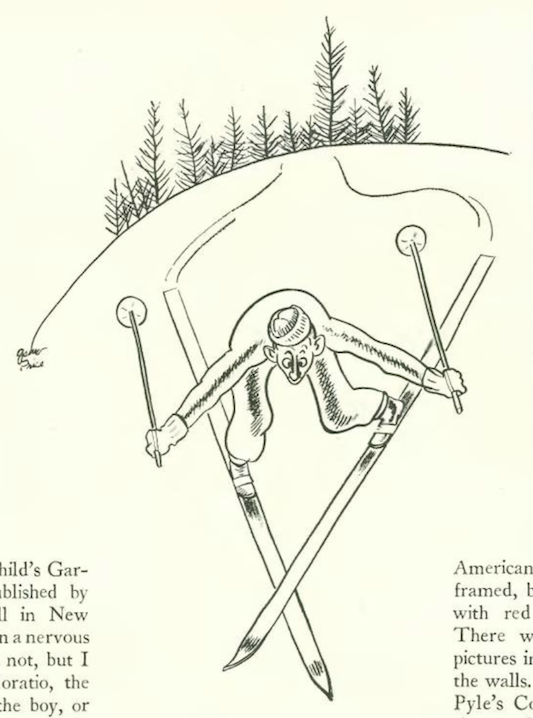
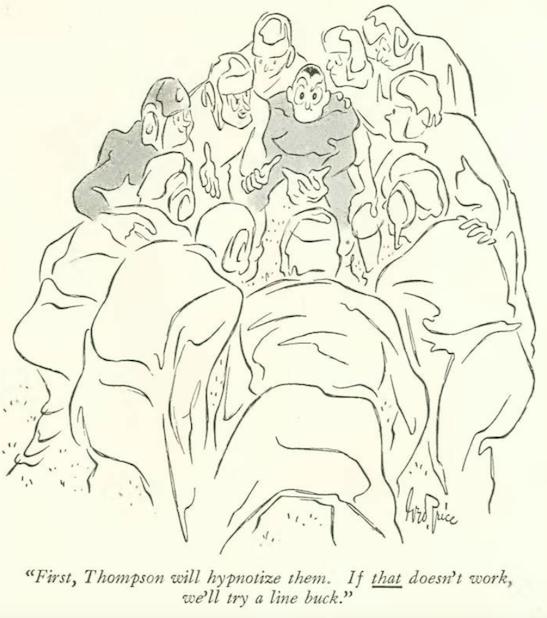
…George Price eavesdropped into some football strategy…
…Carl Rose spotted a canine unbeliever…
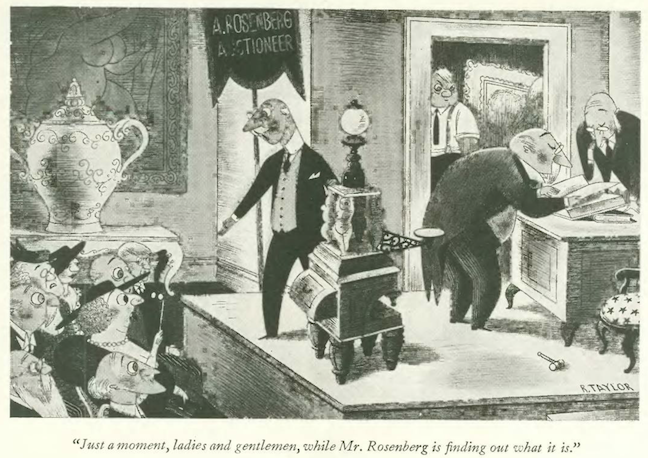
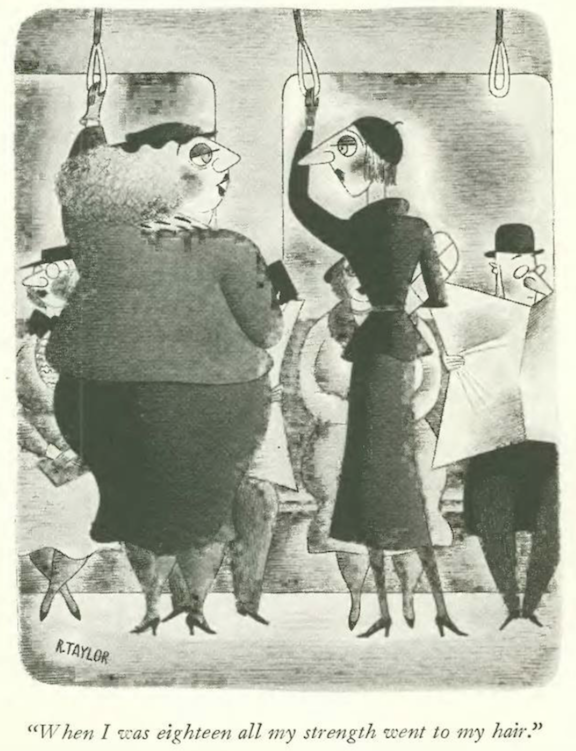
…Richard Taylor was back with his distinctive style…
…Al Frueh continued to illustrate the latest fare on Broadway…
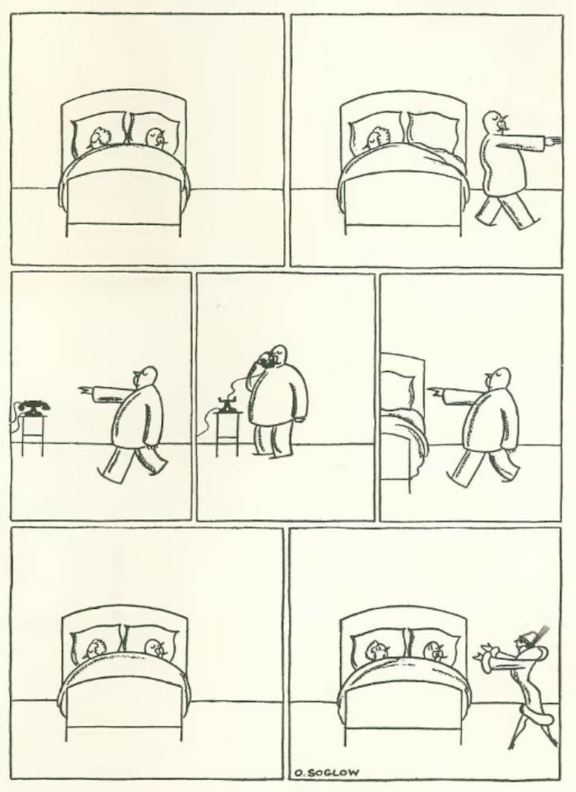
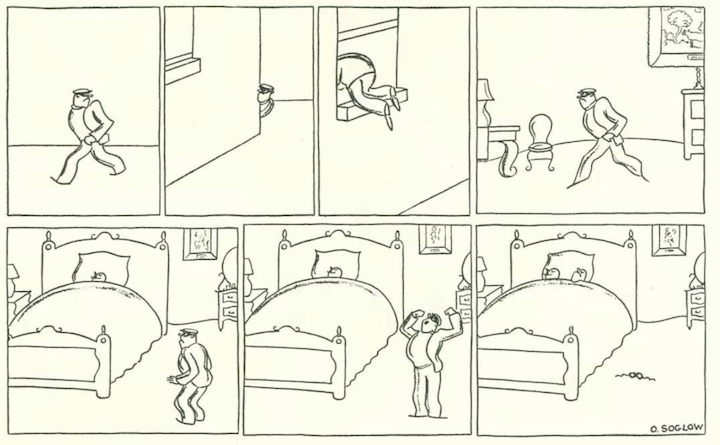
…Otto Soglow crept in for a snooze…
…and we close with James Thurber, and some literary cosplay…
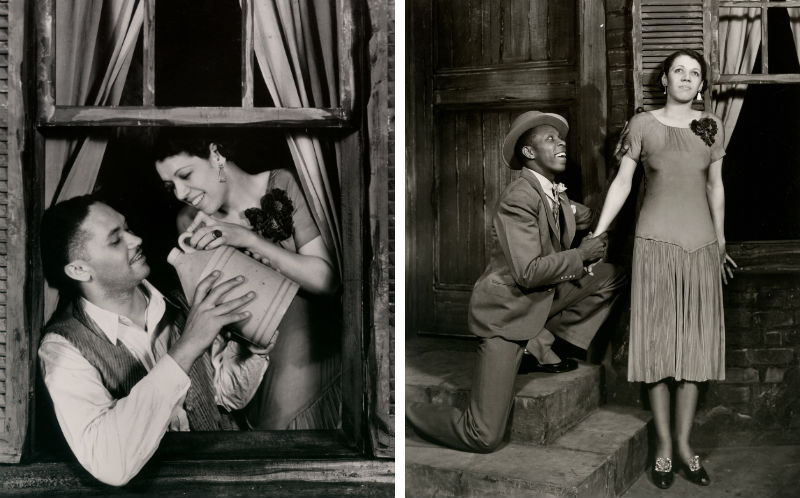
Above: Left image: Todd Duncan (Porgy) and Anne Brown (Bess), in the 1935 Broadway production of Porgy and Bess. Right image: John Bubbles (Sportin’ Life) and Brown. (Photos courtesy the Ira & Leonore Gershwin Trusts)
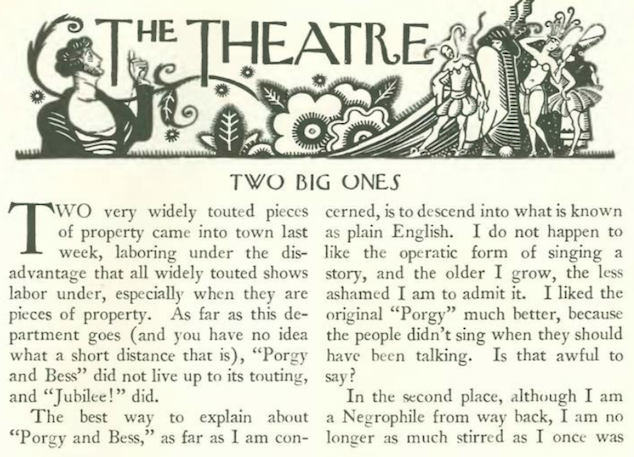
The 1935 Broadway production of Porgy and Bess is widely regarded as one of the most successful American operas of the twentieth century, but when it opened at the Alvin Theatre on Oct. 10, 1935, reviews were mixed, including the one penned by Wolcott Gibbs.
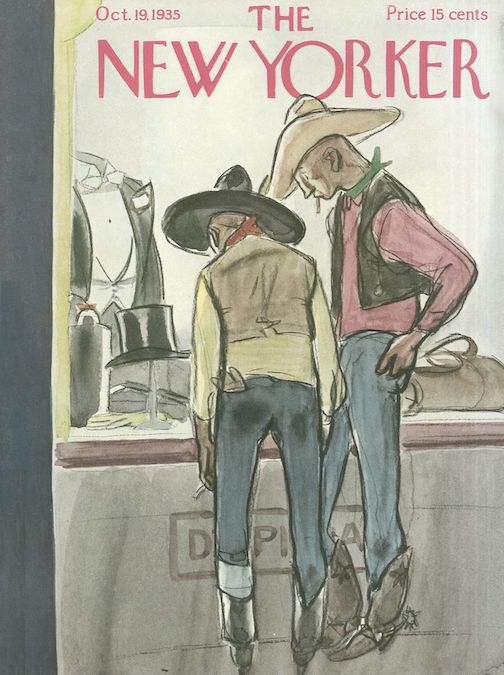
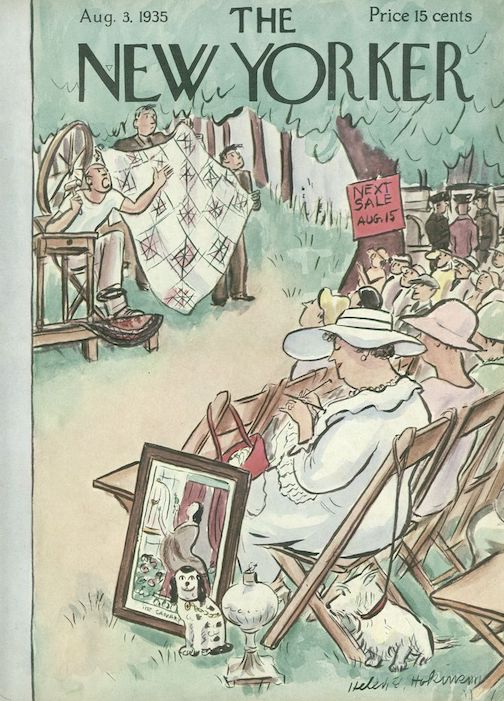
October 19, 1935 cover by William Crawford Galbraith. The New York Times (Oct. 9, 1935) made this observation about the rodeo at Madison Square Garden: “New York, which for several days has been vaguely aware of an impending rodeo because of a profusion of ten-gallon hats along Eighth Avenue and a sign in a beauty parlor, ‘Welcome, Cowgirls,’ will see the real thing this morning.”
Now you would think a work by composer George Gershwin, with a libretto written by DuBose Heyward (author of the 1925 novel Porgy) and lyricist Ira Gershwin, would be a sure hit. Some critics did praise the production, which ran for 124 performances, but others criticized themes and characterizations of Black Americans that were created by white artists.
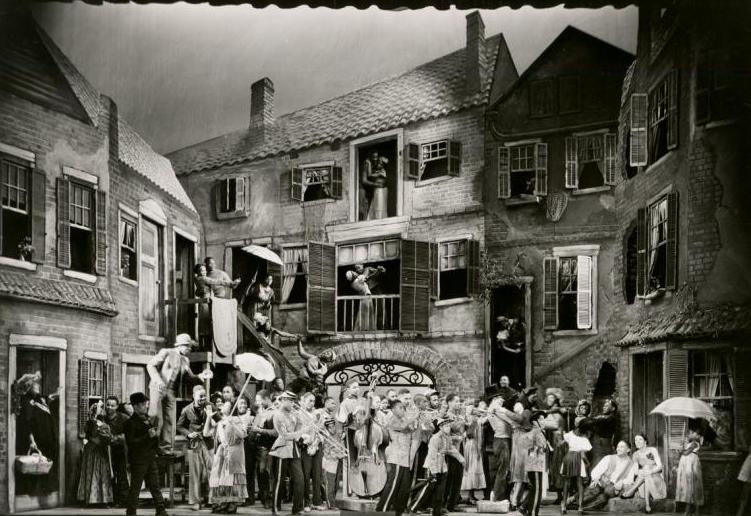
MIXED REVIEWS…The original Catfish Row set for Porgy and Bess as seen at Broadway’s Alvin Theatre (now the Neil Simon Theatre) in 1935. (Billy Rose Theatre Collection, New York Public Library Digital Gallery)
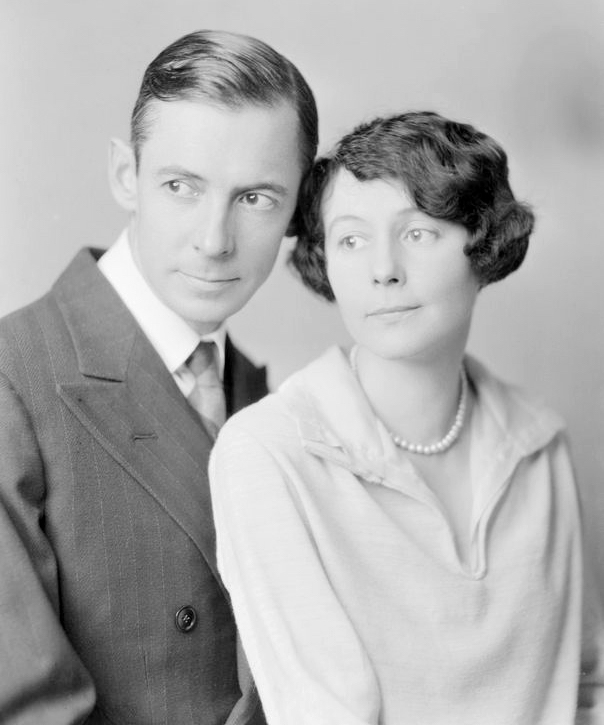
This wasn’t the first time Porgy was adapted to the stage. It was originally produced in 1927 by Heyward and his wife, Dorothy, at the Guild Theatre in New York. The Heywards insisted on an African-American cast—an unusual decision at the time—and enlisted newcomer Rouben Mamoulian to direct. The play ran a total of fifty-five weeks.
ORIGIN STORY: Porgy: A Play in Four Acts, was a 1927 play by Dorothy Heyward and DuBose Heyward, adapted from the short novel by DuBose. (Wikiwand)
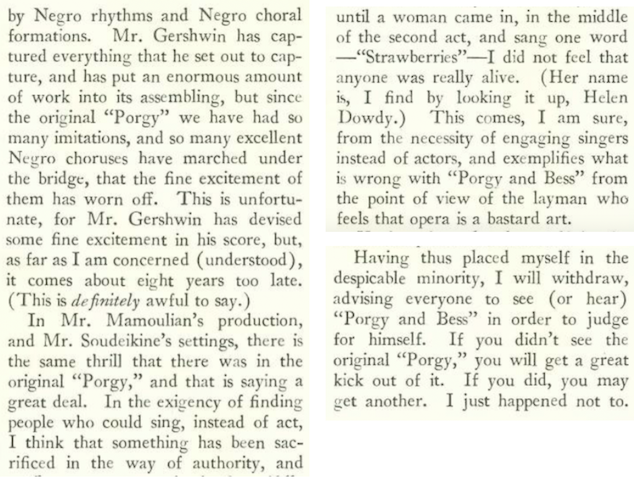
Gibbs preferred the original Porgy to the Gershwin–Heyward production, admitting that he simply did not care for “the operatic form of singing a story.”
continued…
TAKING THEIR BOWS…George Gershwin greets an audience after a performance of Porgy and Bess. Behind Gershwin are his brother, Ira Gershwin (left), and librettist and Porgy author DuBose Heyward (partially hidden, at right). (umich.edu)
The Moss Hart/Cole Porter musical comedy Jubilee! premiered at Broadway’s Imperial Theatre on Oct. 12, 1935, just two days after the Porgy and Bess premiere. Gibbs dubbed this show “heat-warming and beautiful.”
THE BEGUINE BEGINS…Inspired by the Silver Jubilee of Britain’s George V, the musical comedy Jubilee! told the story of a fictional royal family. The play featured such hit songs as “Begin the Beguine” and “Just One of Those Things,” which have become part of the American Songbook. (ovrtur.com)ROYAL HIJINKS…At left, June Knight as Karen O’Kane and Charles Walters as Prince James in Jubilee!; at right, Mary Roland (the Queen) encounters “Mowgli” (Mark Plant) in Act I. (ovrtur.com)
Note: In the last issue (Oct. 12) we saw an ad for an around-the-world luxury cruise on the Franconia.Cole Porter and Moss Hart—with their families, friends, and assistants—sailed on a previous Franconia cruise, possibly in 1934, with the intention to write a new musical while on the trip. Apparently some of the songs and scenes in Jubilee! were inspired by their ports of call.
* * *
Steering Clear
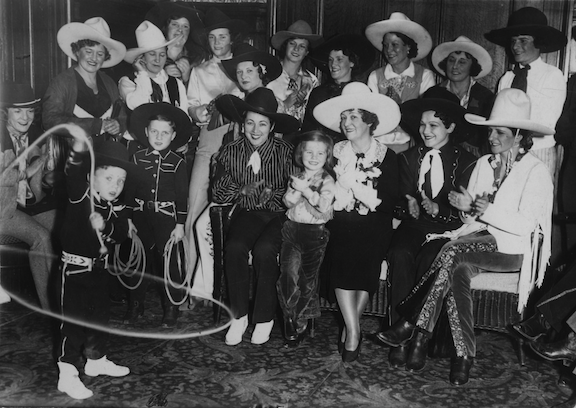
“The Talk of the Town” commented on the “steer-wrestlers” that were featured at the Madison Square Garden rodeo. Since steer-wrestling was also called “bulldogging,” it caused considerable consternation among New York animal lovers.
A BIG HOWDY…Cowgirls From the Madison Square Garden Rodeo With Millicent Hearst, 1932. (texashistory.unt.edu)
* * *
Much Ado About FDR
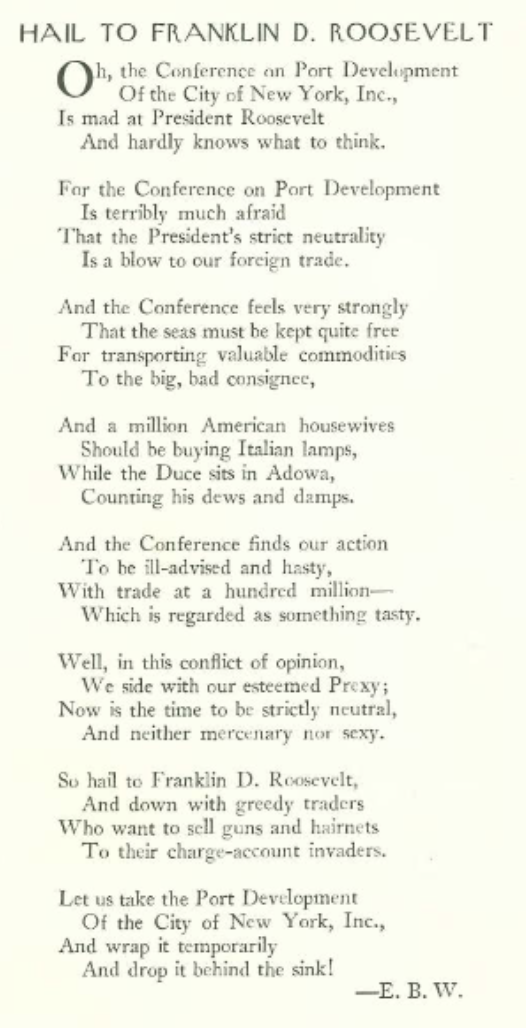
The Conference on Port Development of the City of New York took issue with President Franklin D. Roosevelt’s foreign trade policies, particularly his strict stance on neutrality, which the Conference believed was detrimental to foreign trade. This was likely related to the October 1935 Italian invasion of Ethiopia. E.B. White offered this satirical poem in reaction to the trade spat.
Howard Brubaker also chimed in on the trade issue, and on other unsettling developments in Europe:
* * *
Puppy Love
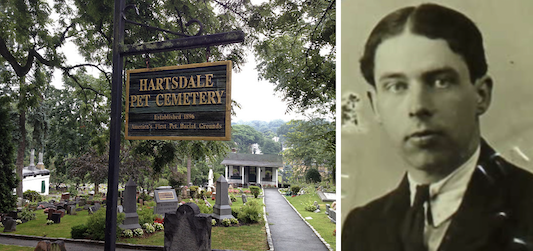
Critic and poet Cuthbert Wright (1892–1948) was moved to write poetry after visiting a dog cemetery that also welcomed animals of all stripes. Here are excerpts of the opening and closing lines:
PET PROJECT…Cuthbert Wright was moved to verse after his visit to a pet cemetery, possibly the Hartsdale Pet Cemetery in Westchester. (Wikipedia/parenthetically.blogspot.com)
* * *
Man and Machine
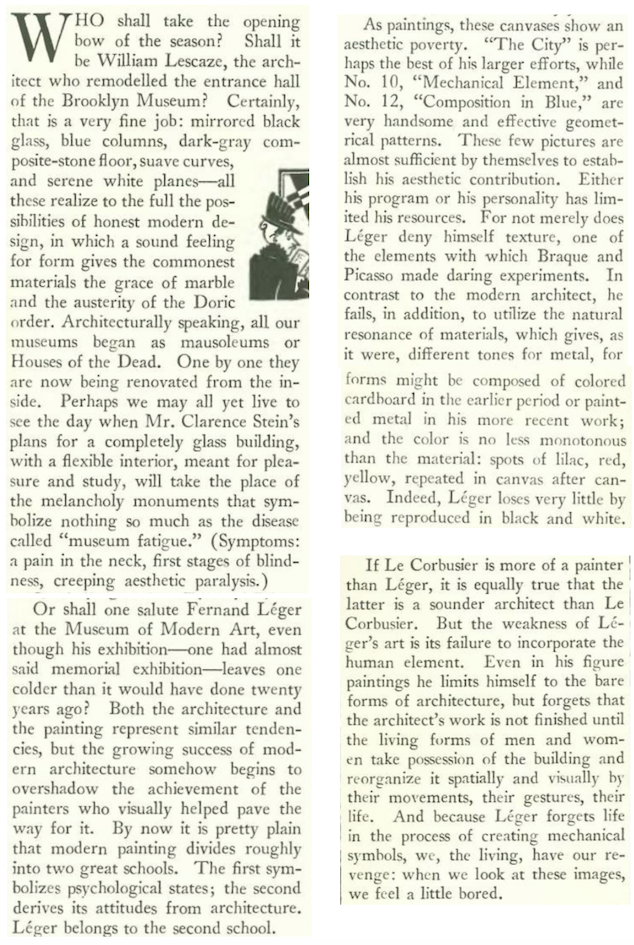
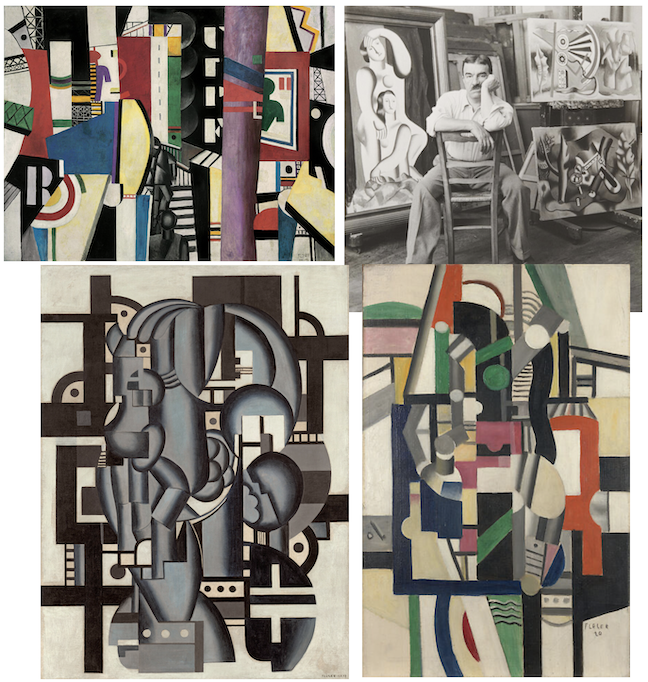
Art and culture critic Lewis Mumford is back this week, this time taking a look at the work of French artist Fernand Léger (1881–1955), who created a form of cubism known as “tubism,” regarded today as a forerunner of the pop art movement of the mid-1950s and the 1960s.
It is no surprise that the humanist Mumford, who sought an “organic balance” in everyday design, found Léger’s machine-like works alienating and sterile, representing an “aesthetic poverty.”
TOTALLY TUBULAR…Clockwise, from top left, works of Fernand Léger cited by Lewis Mumford: The City, 1919; photo of Léger, circa 1930s; from the 1918–1923 series Mechanical Elements, 1920; Composition in Blue, 1920–27. (Philadelphia Museum of Art/The Met Collection/Art Institute of Chicago, Charles H. and Mary F. S. Worcester Collection)
* * *
Disappointment in O’Hara
That is how Clifton Fadiman titled his “Books” column after reviewing John O’Hara’s latest novel, Butterfield 8.
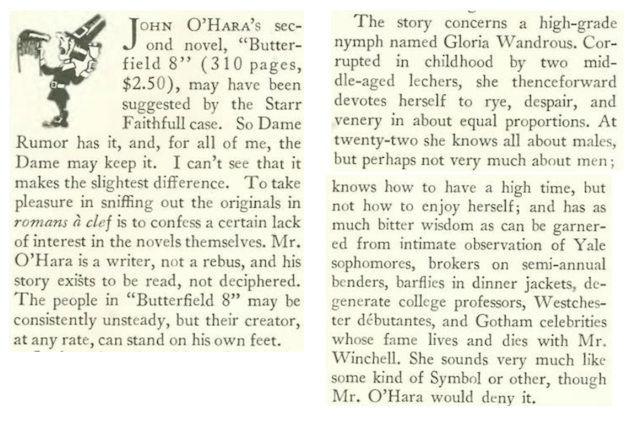
O’Hara (1905–1970) wasn’t just any old scribbler. A prolific short-story writer, he has often been credited with helping to invent The New Yorker’s short story style. Praised by the likes of F. Scott Fitzgerald and Ernest Hemingway, O’Hara cranked out two bestsellers before the age of thirty. One was the acclaimed Appointment in Samarra (which was praised by Fadiman). The other was BUtterfield 8, the novel Fadiman found disappointing (Hemingway, on the other hand, blurbed, “John O’Hara writes better all the time.”). Here are a couple of brief excerpts from Fadiman’s review:
Fadiman concluded his review with a note to the author: “Why not let Jean Harlow have it, Mr. O’Hara, and start a fresh page?”
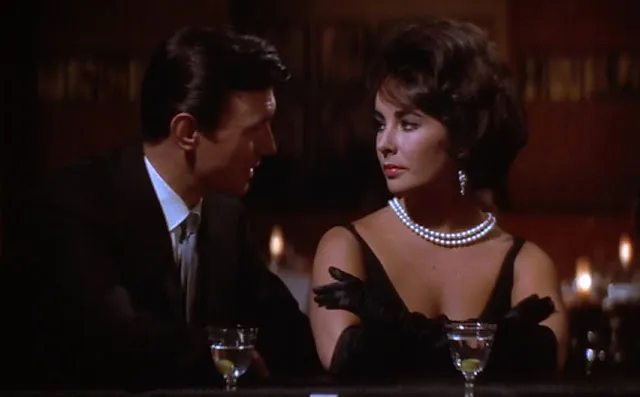
Well, Harlow didn’t get it, but twenty-five years later Elizabeth Taylor would reluctantly take on the role of Gloria Wandrous, and win the Academy Award for Best Actress.
YOU AGAIN?…Laurence Harvey and Elizabeth Taylor played on and off lovers in 1960’s Butterfield 8.John O’Hara did not participate in writing the adaptation, and the film’s plot bore only a slight resemblance to his novel. However, after the film’s release more than one million paperback copies of the novel were sold. (aiptcomics.com)
* * *
At The Movies
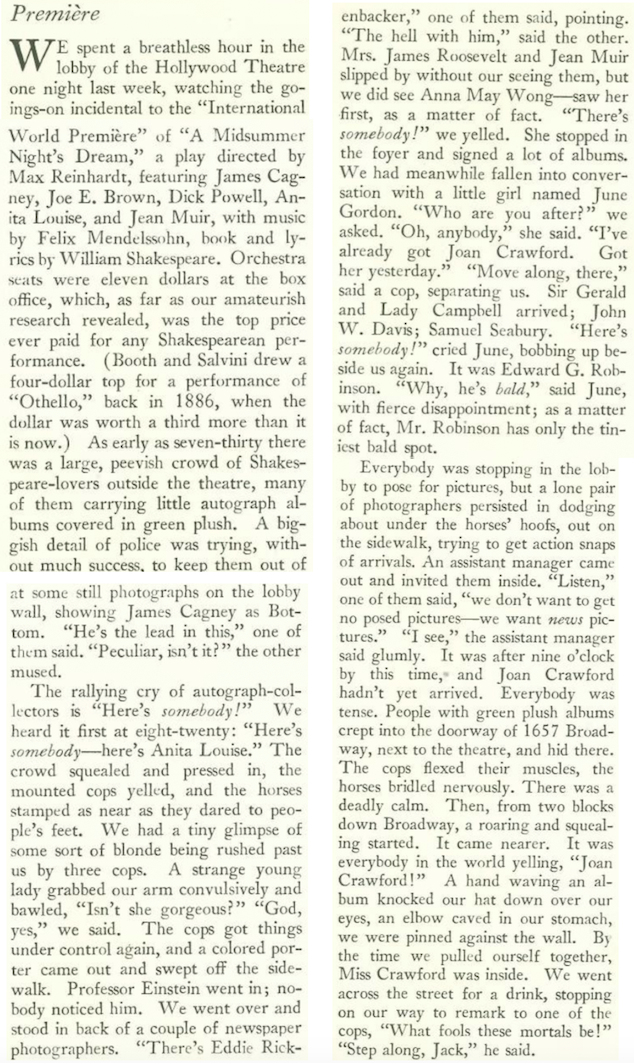
We begin this section with an excerpt from “The Talk of the Town,” which covered the “International World Première” of the Warner Brother’s adaptation of A Midsummer Night’s Dream. The film opened worldwide on October 9, 1935 in London, Sydney, Vienna and at New York’s Hollywood Theatre, where crowds turned out to get a glimpse of the stars.
RUBBERNECKERS…A Midsummer Night’s Dream premiere at the Hollywood Theatre in New York City on October 9, 1935. (britannica.com)
Film critic John Mosher praised Joe E. Brown’s performance as Flute, as well James Cagney’s portrayal of Bottom, and lauded the “magnificent group of clowns” that formed the remainder of The Players. Here are excerpts from his review (note I included the entirety of Otto Slogow’s delightful spot drawing):
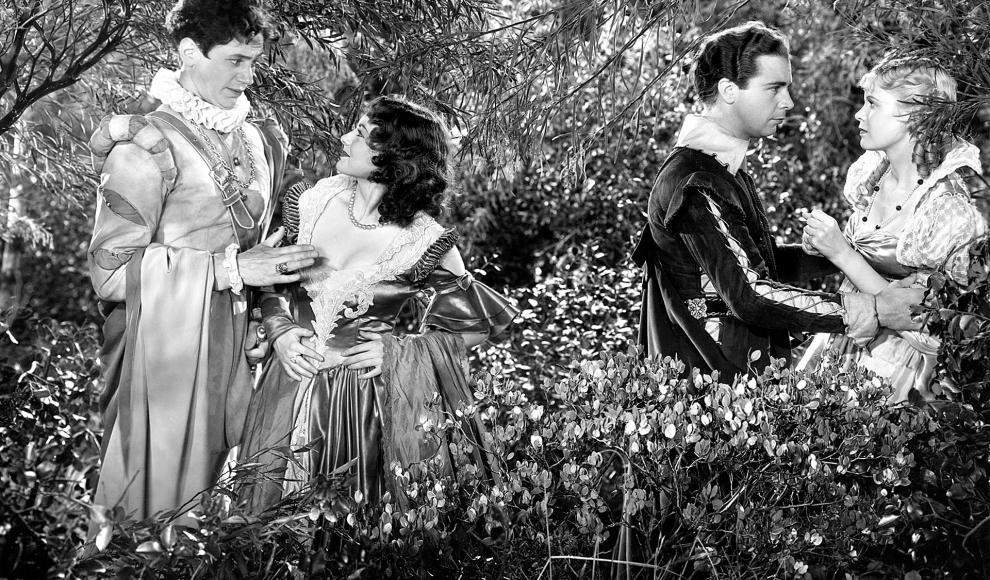
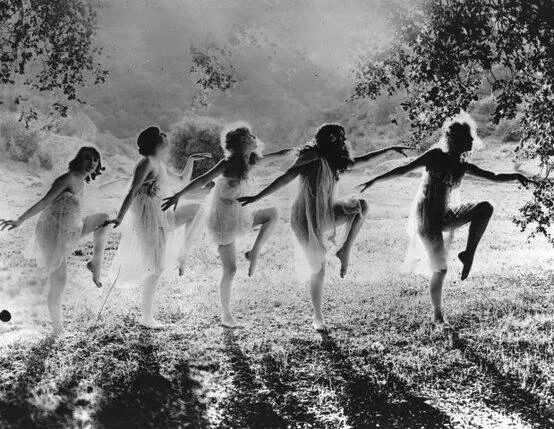
THE LOVERS…Left to right: Ross Alexander (Demetrius), Olivia de Havilland (Hermia), Dick Powell (Lysander) and Jean Muir (Helena) meet cute and confused in A Midsummer Night’s Dream. (TCM.COM)THE SEVEN STOOGES…Bottom (James Cagney) and his fellow Players prepare to perform a stage play about the death of Pyramus and Thisbe which turns into a farce. From left, in front, Joe E. Brown (Flute), Cagney, and Otis Harlan (Starveling); in the back are, from left, Hugh Herbert (Snout), Arthur Treacher (Epilogue) and Dewey Robinson (Snug) as The Players in A Midsummer Night’s Dream. Frank McHugh (Quince) can be seen behind the wall in back. (IMDB)DANCING THE NIGHT AWAY…Fairie scene from A Midsummer Night’s Dream. (Facebook)
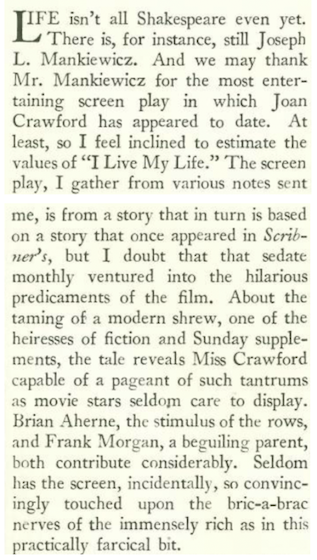
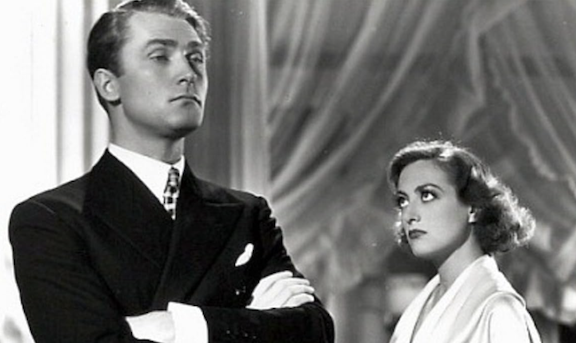
Mosher also reviewed the romantic comedy I Live My Life, which he found to be a satisfying satire on the lives of the rich.
MATCHING WITS…Bored socialite Kay Bentley (Joan Crawford) has a tempestuous romance with idealistic archaeologist Terry O’Neill (Brian Aherne) in I Live My Life. (IMDB)
* * *
From Our Advertisers
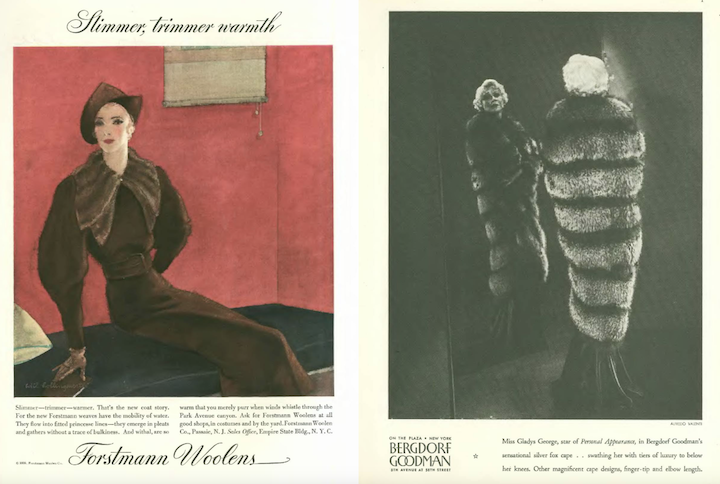
Readers ninety years ago opened the Oct. 19 issue to this two-page spread featuring the latest in fall/winter fashions…the ad on the right from Bergdorf Goodman featured stage and screen actress Gladys George donning a full-length silver fox fur…
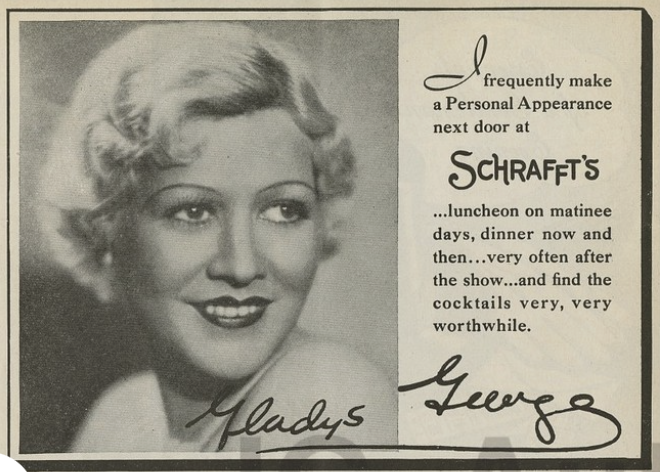
…George (1904–1954) was appearing at Henry Miller’s Theatre in the play Personal Appearance…she was featured in this testimonial ad for Schrafft’s in the theatre’s Playbill…
(playbill.com)
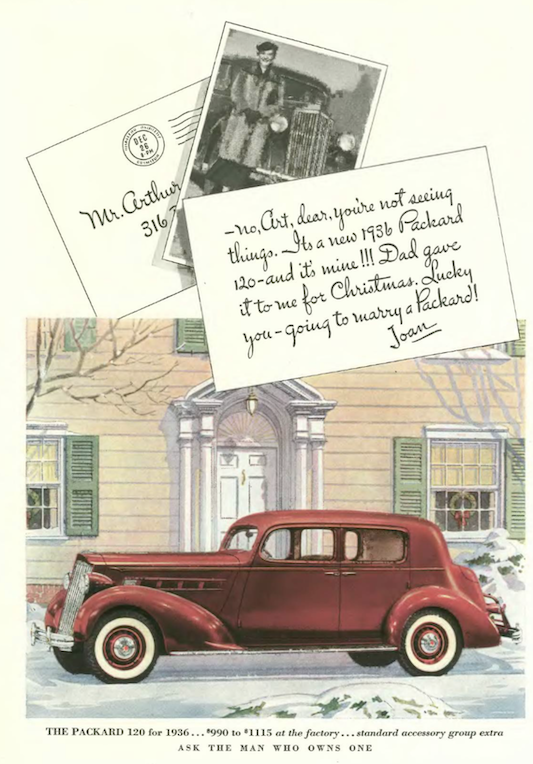
…the folks at Packard took out this colorful two-page spread to promote their more affordable model, the 120…the move to more affordable models helped the luxury carmaker weather the lean years of the Depression…
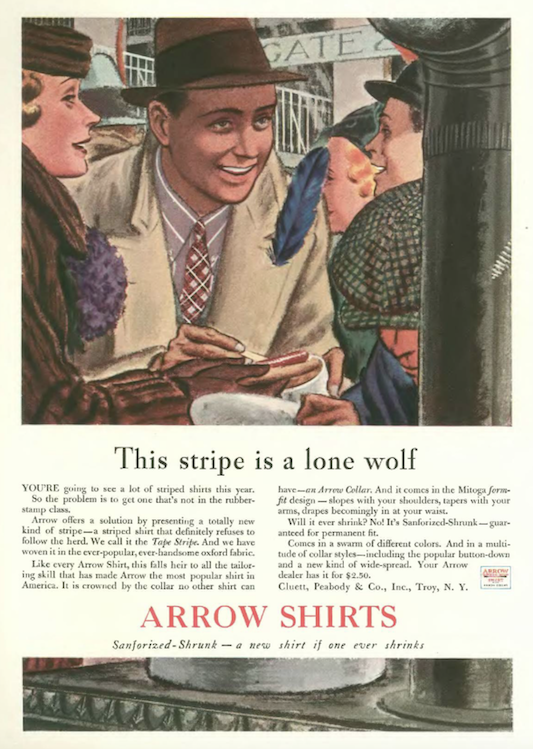
…there is a strange quality to these Arrow Shirt advertisements…what are the they looking at?…apparently something amusing as the man applies mustard to a hotdog, but it isn’t the vendor, who looks down at his cart…
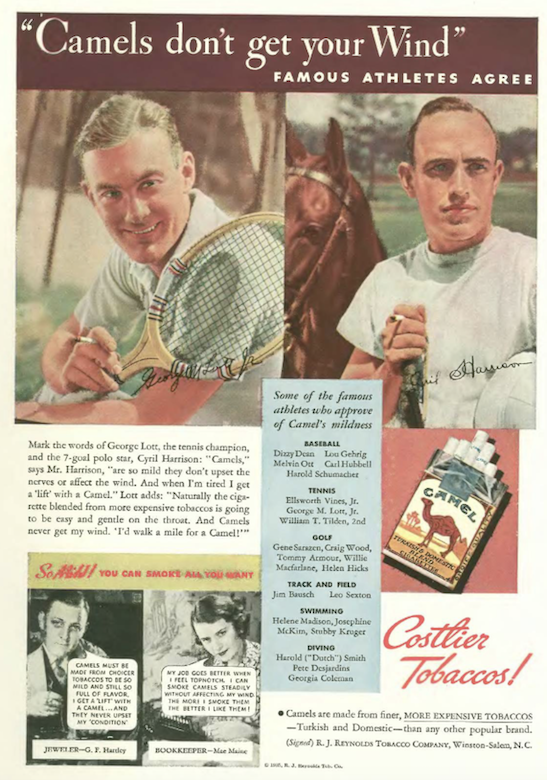
…R.J. Reynolds continued its Camel campaign featuring accomplished athletes who got a “lift” from smoking…the ad also included a couple of regular folks at the bottom, who claimed the cigarettes were so mild “You can smoke all you want”…
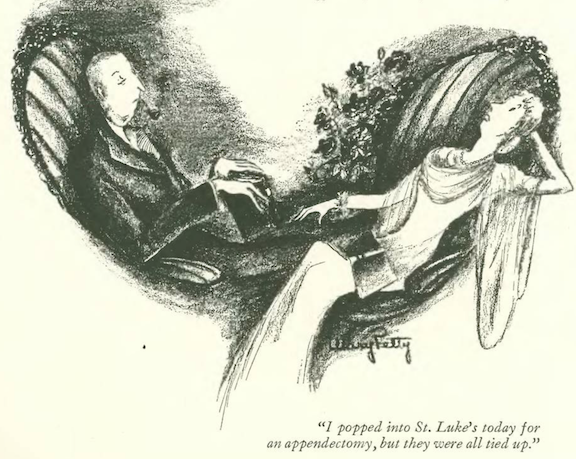
…Old Gold continued to enlist the talents of George Petty to illustrate their full-page ads…
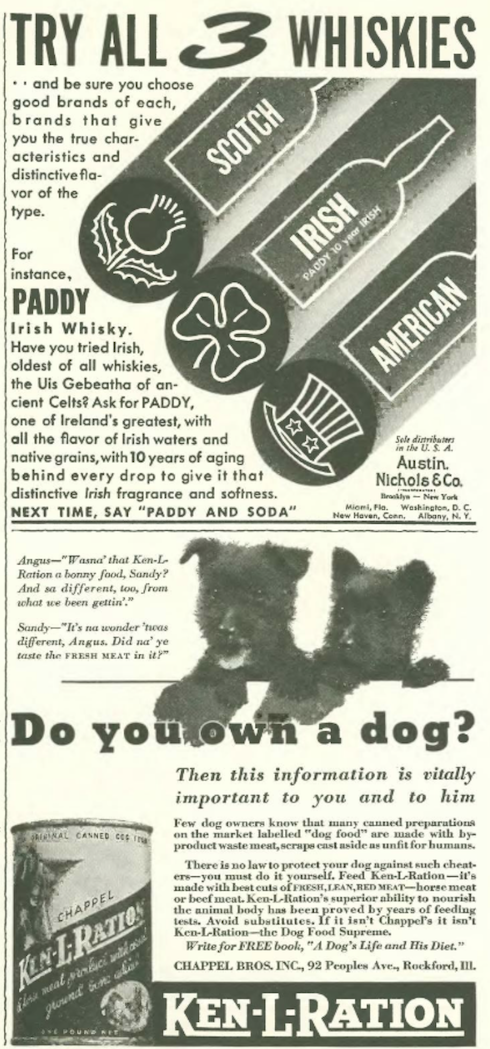
…here’s a couple of back of the book ads touting Irish whisky and Ken-L-Ration dog food…note how the Scottish terriers speak in “dialect”…Ken-L-Ration was a leading dog food brand in the 1930s, thanks to their use of horse meat rather than “waste meat”…
…on to our cartoonists, we start with Al Frueh enhancing the “Theatre” page…
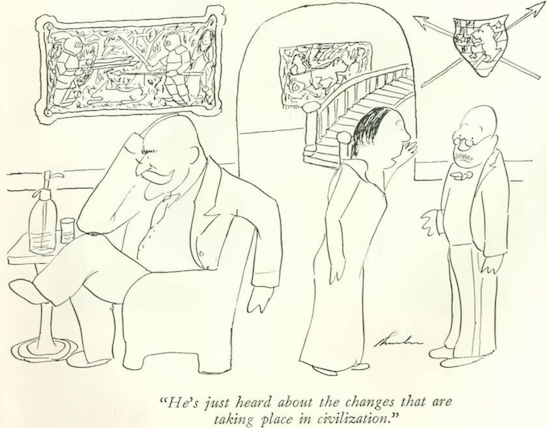
…James Thurber showed us a man at odds with the times…
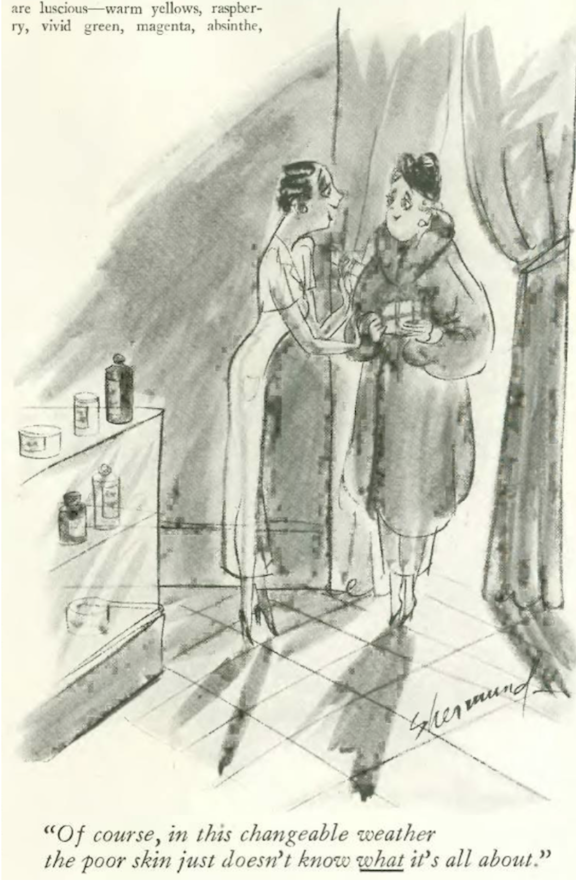
…Barbara Shermund kept us up to date on the modern woman…
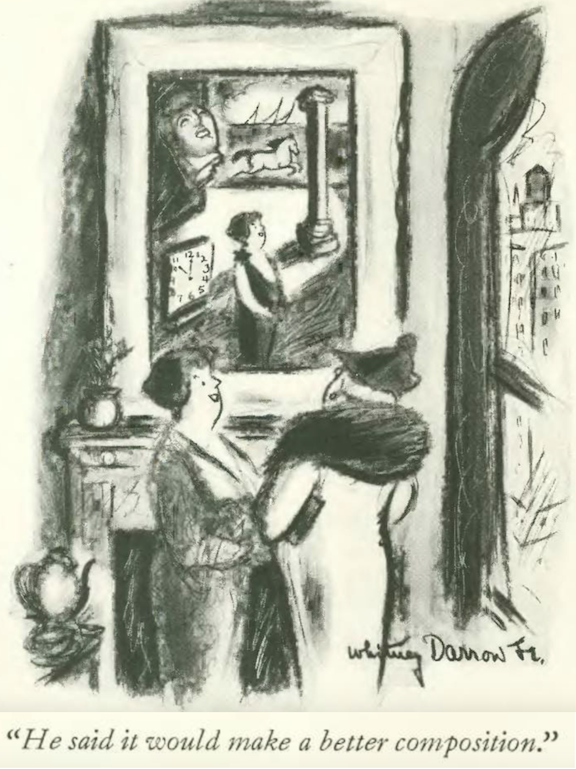
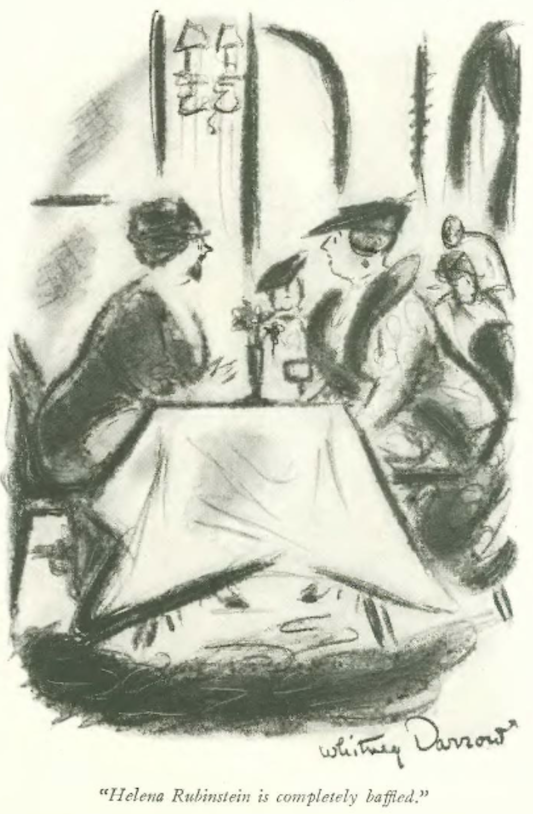
…Whitney Darrow Jr offered a challenge to Helena Rubinstein (note the woman on the right—she could have been drawn by Helen Hokinson)…
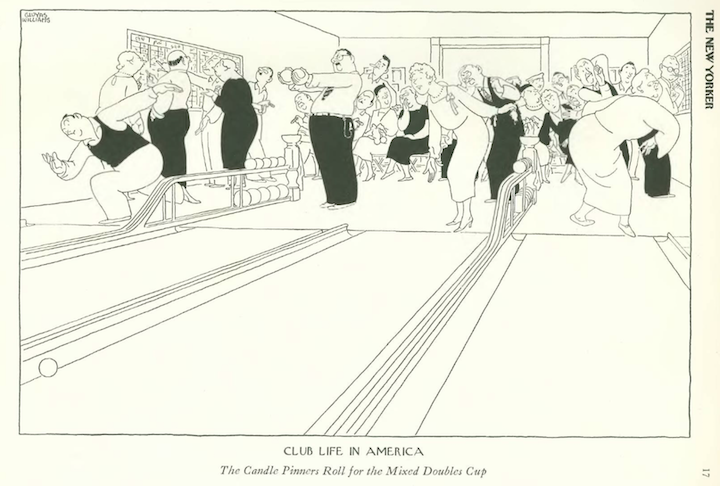
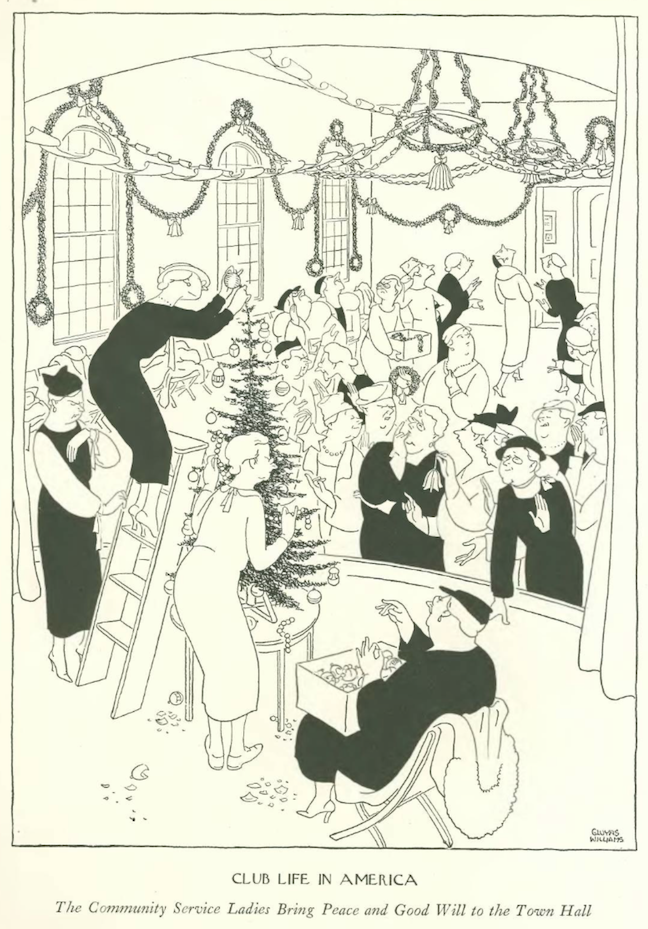
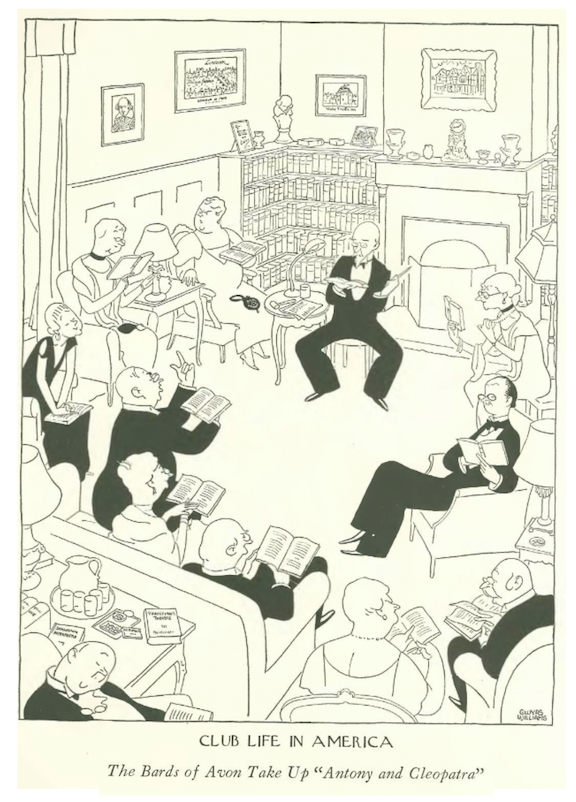
…Gluyas Williams checked in on the lively proceedings of a book club…
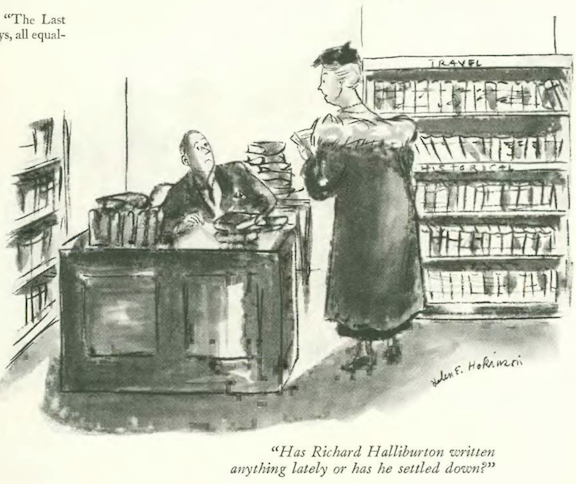
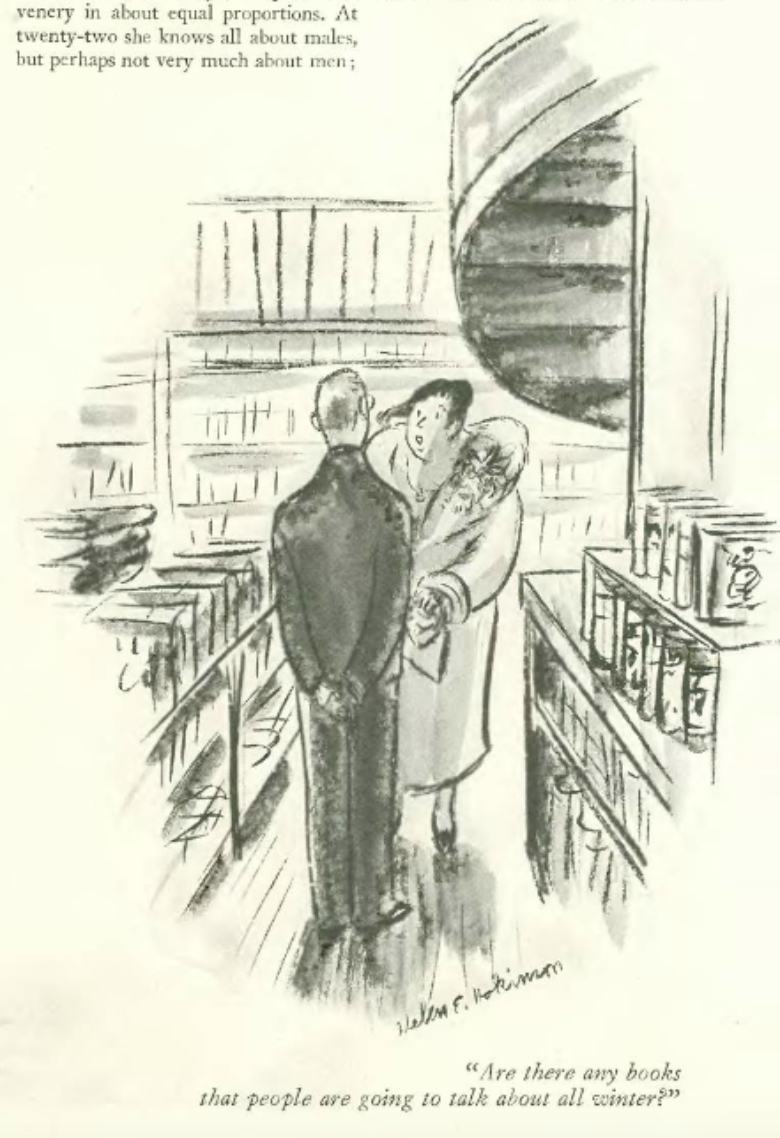
…Helen Hokinson went looking for a good winter read…
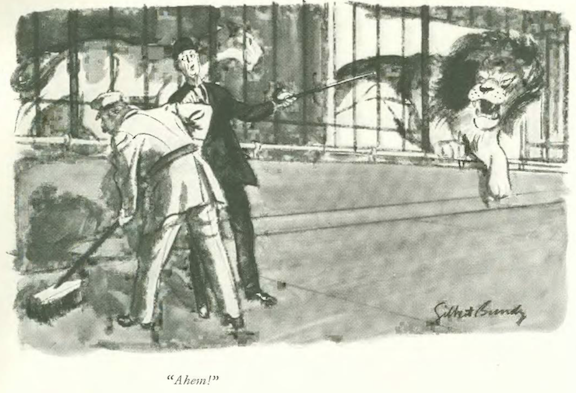
…Gilbert Bundy offered an alarming scenario on the top of p. 31…
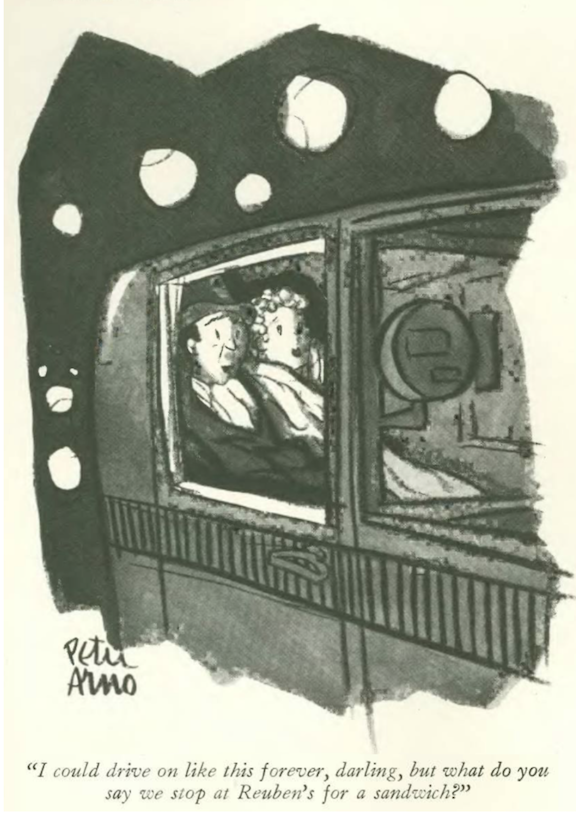
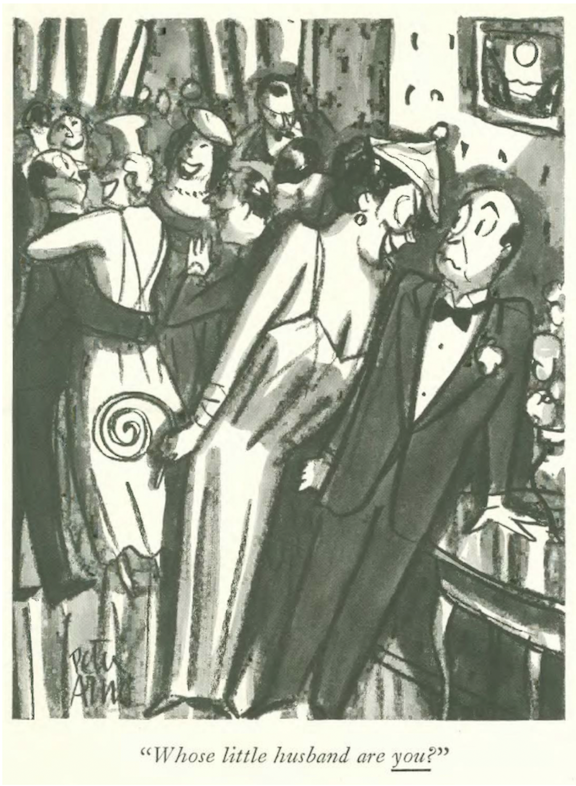
…and we close with Peter Arno, and an eye-raising encounter…
Heading into the dog days of summer we take a look at the last two issues of July 1935, both somewhat scant in editorial content but still offering up fascinating glimpses of Manhattan life ninety years ago.
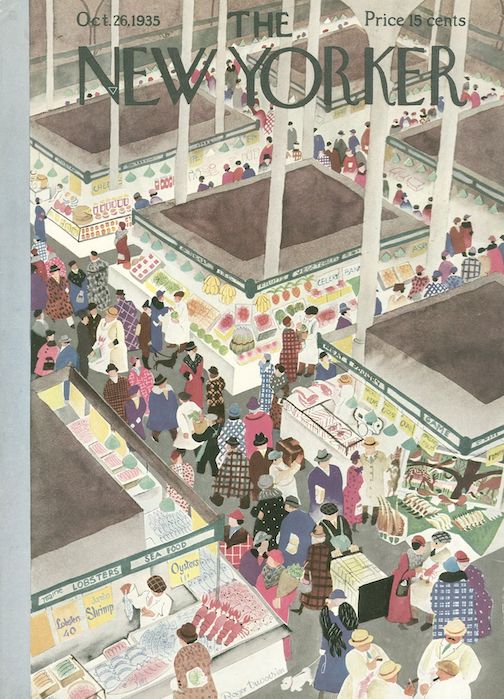
July 20, 1935 cover by William Crawford Galbraith. He contributed seven covers and 151 cartoons to the magazine.
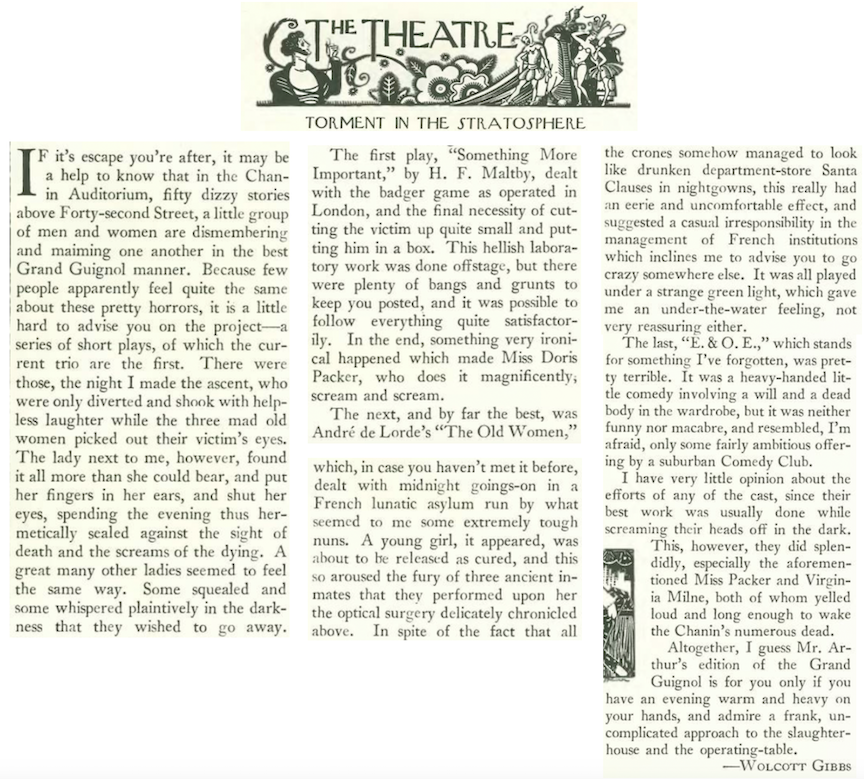
That includes the observations of theatre critic Wolcott Gibbs and film critic John Mosher, both escaping the summer heat to take in some very different forms of entertainment.
Gibbs found himself “fifty dizzy stories above Forty-second Street” in the Chanin Building’s auditorium, where he experienced New York’s take on Le Théâtre du Grand-Guignol. Founded in Paris by Oscar Méténier in 1897, Grand Guignol featured realistic shows that enacted, in gory detail, the horrific existence of the disadvantaged and working classes. It seems audiences were drawn to the shows more out of prurient interest (or sadistic pleasure) than for any desire to help the underclasses.
NOT FOR THE FAINT OF HEART…Wolcott Gibbs recommended the Grand-Guignol only for those who “admire a frank, uncomplicated approach to the slaughterhouse and the operating table.” (Image: Wikipedia)PRETTY HORRORS…Clockwise from top left, the original Théâtre du Grand-Guignol, in the Pigalle district of Paris–it operated from 1897 until 1962, specializing in horror theatre; a poster from one of its productions; New York’s Chanin building, circa 1930s; the Chanin’s auditorium “fifty dizzy stories above 42nd Street”; fake blood applied to an actress’ neck before a scene from The Hussy; Wolcott Gibbs described a madhouse scene from André de Lorde’sThe Old Women, which depicted the fury of ancient inmates performing “optical surgery” on a young woman. (thegrandguignol.com/Wikipedia/NYPL/props.eric-hart.com)
* * *
Popeye to the Rescue
With the Hays Code in effect you wouldn’t see anything like the Grand-Guignol on the silver screen. Indeed, with the exception of a Popeye cartoon, critic John Mosher found little to get excited about at the movies. He did, however, enjoy the air conditioning that offered a break from the hot city streets.
THEY ALL COULD HAVE USED SOME SPINACH…Clockwise, from top left, Popeye and Bluto strike an unlikely partnership in Dizzy Divers; Bette Davis and George Brent in Front Page Woman; Will Rogers and Billie Burke in Doubting Thomas; James Blakeley and Ida Lupino in Paris in Spring. (brothersink.com / rottentomatoes.com / cometoverhollywood.com / classiccartooncorner.substack.com)
* * *
From Our Advertisers
Just a few ads from this issue, first, a jolly appeal from one of the magazine’s newer advertisers, the makers of the French apertif Dubonnet…
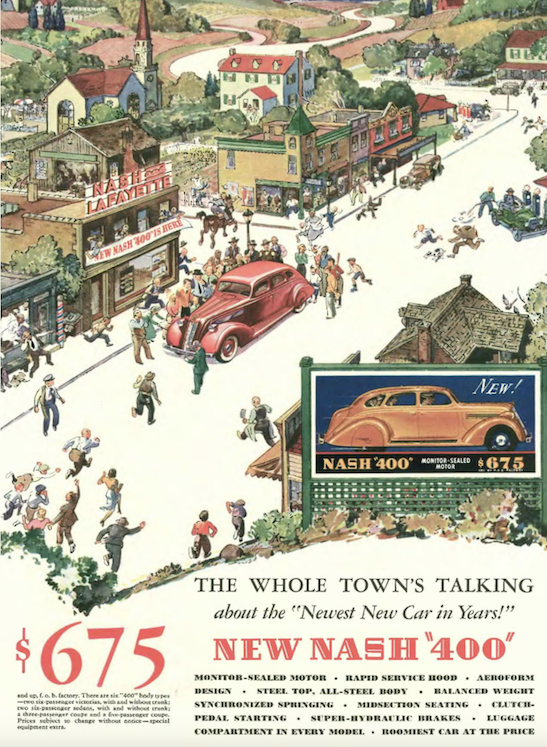
…by contrast, this quaint slice of Americana from Nash…
…and a shot of pesticide from Dr. Seuss…
…our cartoonists include Constantin Alajalov, contributing this bit of spot art to the opening pages…
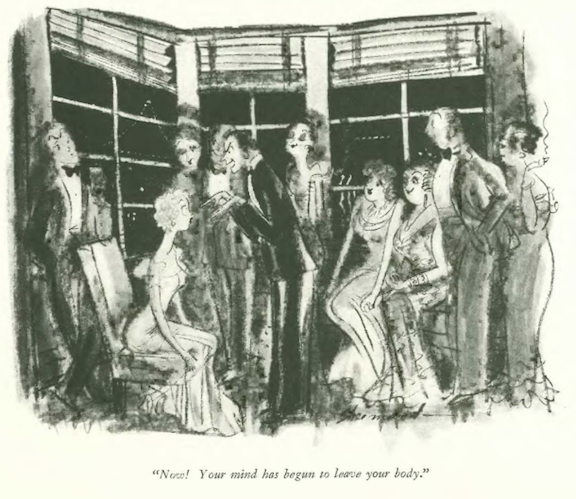
…Barbara Shermund explored the world of hypnotic suggestion…
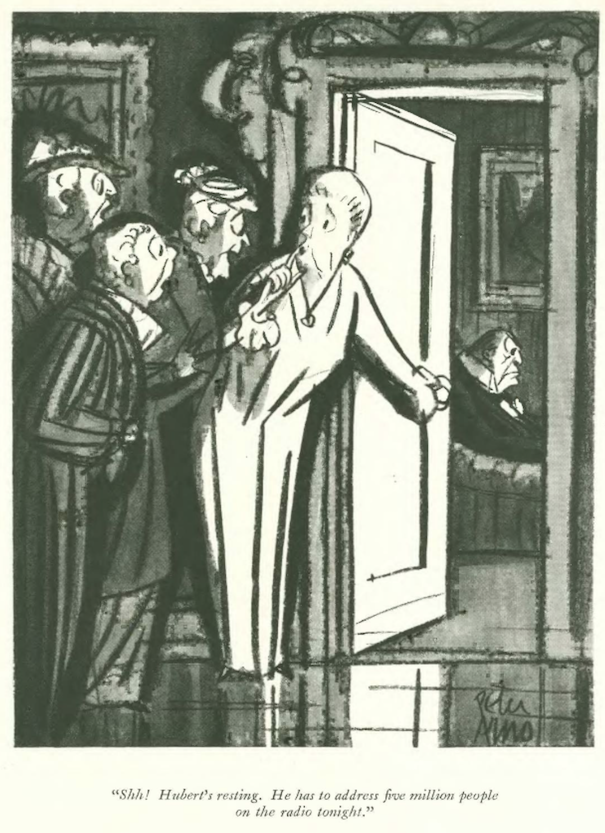
…Peter Arno prepared to address the nation…
…William Steig checked the weather forecast…
…Helen Hokinson’s girls questioned the burden of a lei…
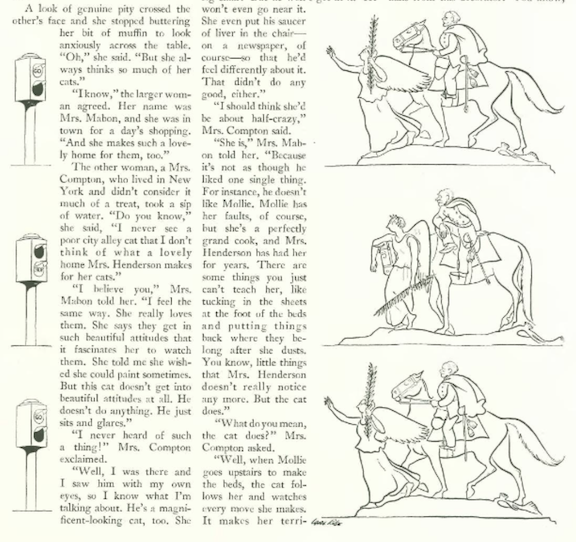
…Carl Rose found himself on opposite sides of the page in this unusual layout…
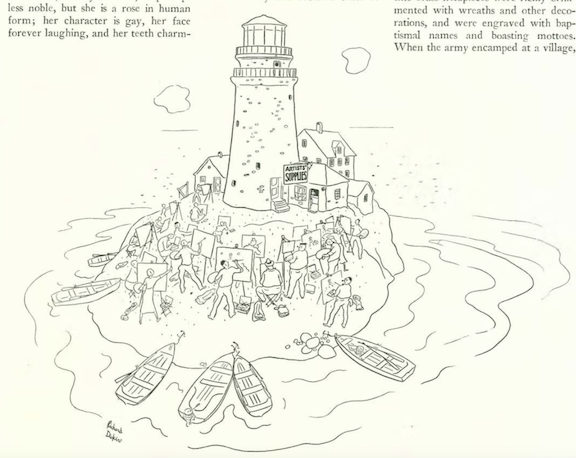
…Richard Decker joined the crowd in a lighthouse rendering…
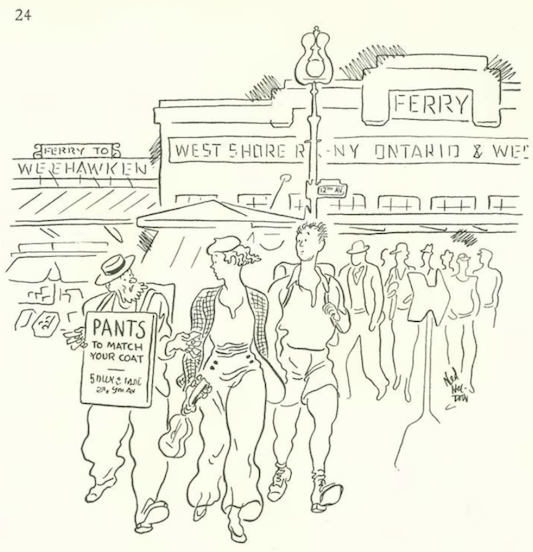
…Ned Hilton reminds us that it was unusual for women to wear trousers ninety years ago…
…Mary Petty examined the complications of marital discord…
…and Charles Addams shone a blue light on a YMCA lecture…
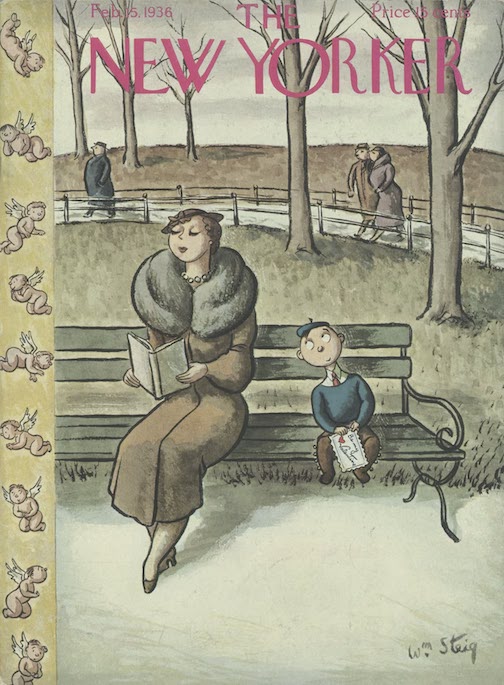
…on to July 27, 1935, with a terrific summertime cover by William Steig…
July 27, 1935 cover by William Steig, one of his 117 covers for the magazine.
E.B. White (in “Notes and Comment”) was ahead of his time in suggesting that the city needed to build “bicycle paths paralleling motor highways” and invest in more pedestrian pathways.
NEW YORK’S FINEST…Doris Kopsky, who trained in Central Park, won the first Amateur Bicycle League of America Women’s Championship in 1937. Bicycle races were a big draw in the 1930s. (crca.net)
* * *
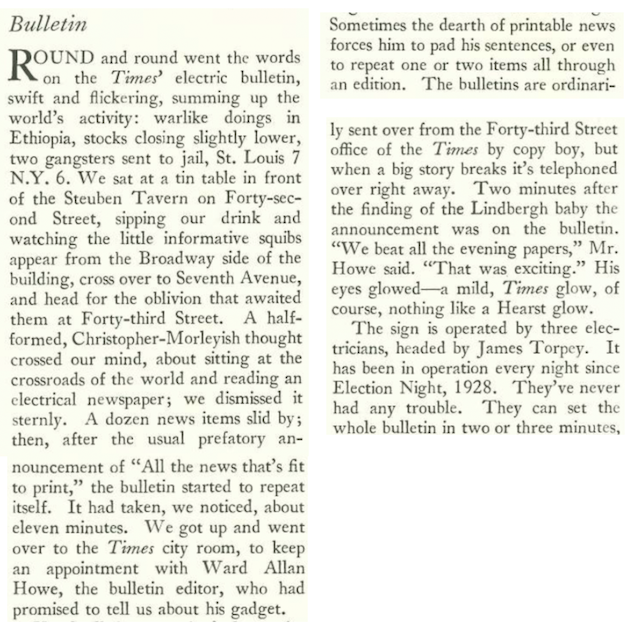
Breaking News
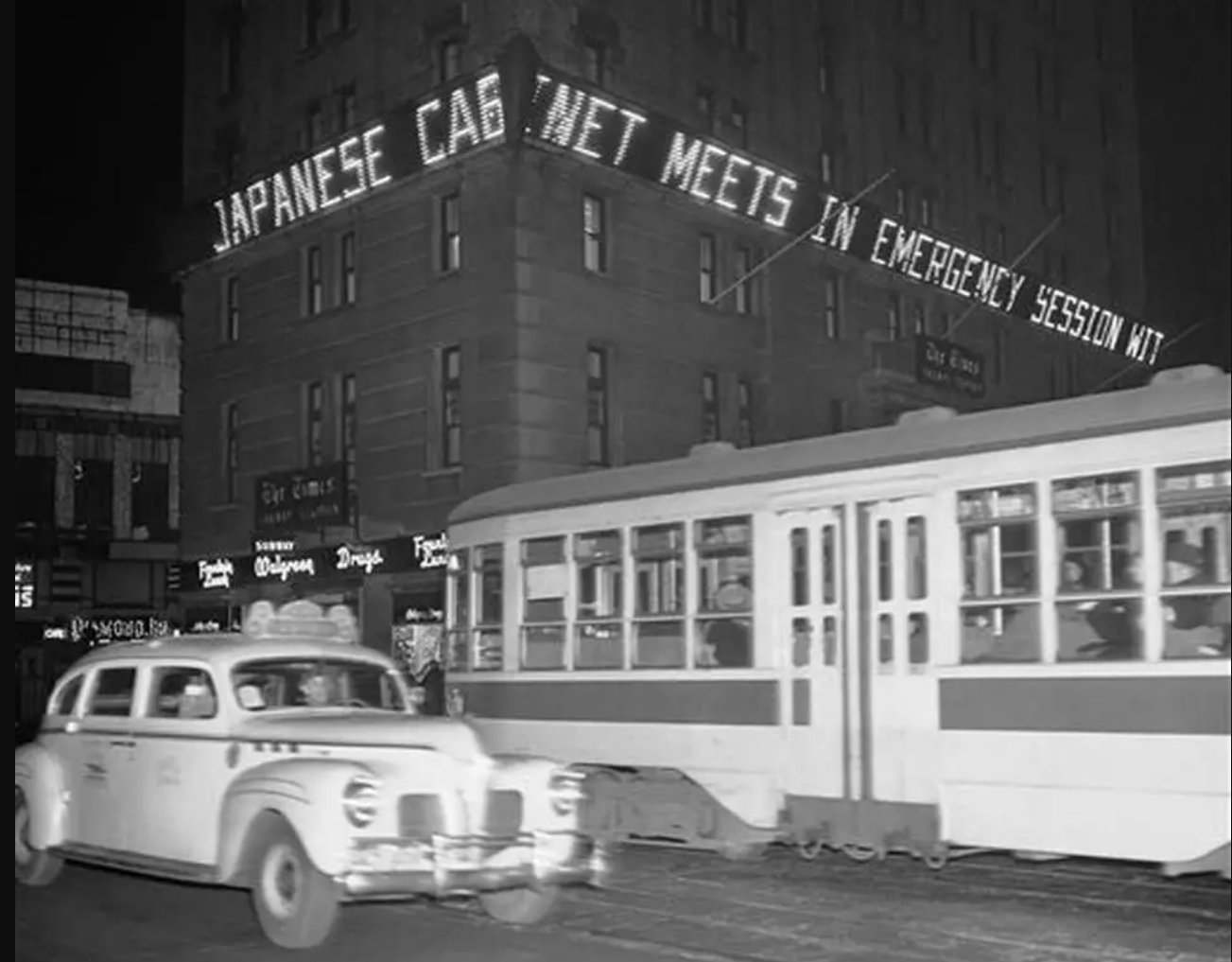
“The Talk of the Town” checked in on the New York Times’ “electric bulletin,” commonly known as “The Zipper.” Excerpt:
NIGHT CRAWLER…Launched in 1928, the Times Square “Zipper” kept New Yorkers apprised of breaking news. (cityguideny.com)
* * *
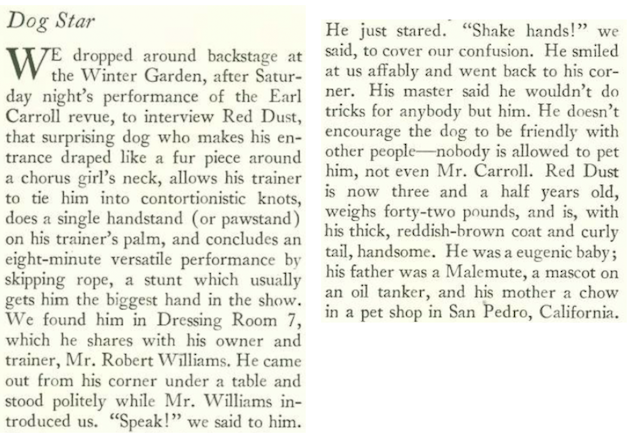
Dog Knots
“Talk” also took a look backstage at the Winter Garden, where burlesque performers shared the stage with a contortionist dog called “Red Dust.” Excerpt:
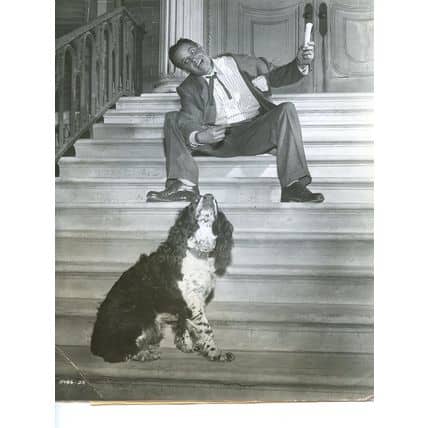
WOOF…Famed animal trainer Robert “Bob” Williams with one of his pupils. The dog in the photo is misidentified as Red Dust (he was actually a Malemute/chow mix).
* * *
Suddenly Famous
Charles Butterworth (1896-1946) earned a law degree from Notre Dame before becoming a newspaper reporter. But his life would take on a new twist in 1926 when he delivered his comical “Rotary Club Talk” at J.P. McEvoy’sAmericana revue in 1926. Hollywood would come calling in the 1930s, and his doleful-looking, deadpan characters would become familiar to movie audiences through a string of films in the thirties and forties. Alva Johnston profiled Butterworth in the July 27 issue. Here are brief excerpts:
Charles Butterworth (left) and Jimmy Durante in Student Tour (1934). A bit of trivia: Butterworth’s distinctive voice was the inspiration for the Cap’n Crunch commercials voiced by Daws Butler beginning in the early 1960s. Butterworth’s life was cut short in 1946 when he crashed his imported roadster into a lamppost on Sunset Boulevard. (Detail from film still via IMDB)
* * *
Noisy Neighborhood
The “Vienna Letter” (written by “F.S.”–possibly Frank Sullivan) noted the rumblings of fascism in a grand old European city known for its many cultural delights as well as its many factions that included Nazis, Socialists and Communists (and no doubt a few Royalists). An excerpt:
CALM BEFORE THE STORM…Vienna in 1935, less than three years before the Anschluss, when Nazi Germany annexed Austria. (meisterdrucke.us)
* * *
Ex Machina
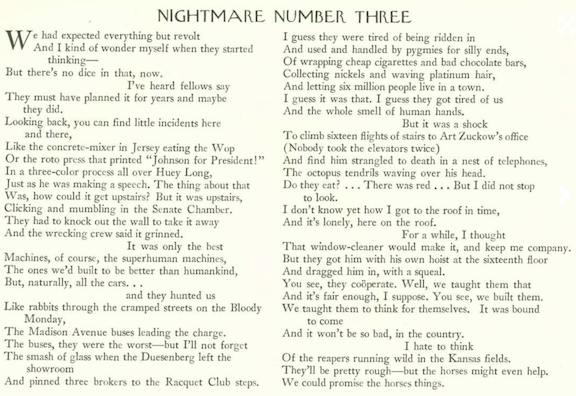
The Pulitzer Prize-winning poet and author Stephen Vincent Benét (1898-1943) penned this poem for The New Yorker that is somewhat appropriate to our own age and our fears of the rise of A.I. In “Nightmare Number Three,” Benét described a dystopian world where machines have revolted against humans.
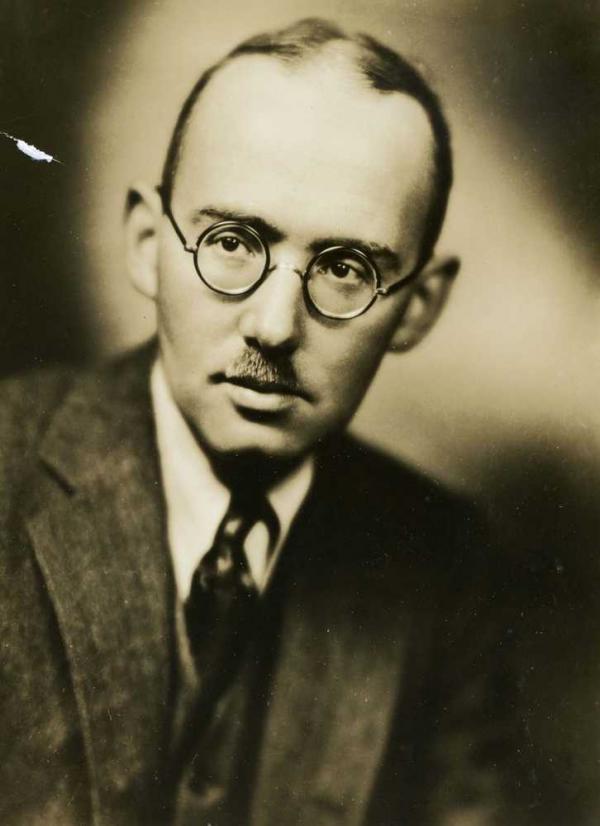
BOTH CLASSY AND FOLKSY is how some today describe Stephen Vincent Benét, who in 1928 wrote a book-length narrative poem of the American Civil War, John Brown’s Body, for which he received the Pulitzer Prize for Poetry. He was also know for such short stories as The Devil and Daniel Webster, published in 1936. (mypoeticside.com)
* * *
From Our Advertisers
We begin with more extraordinary claims from R.J. Reynolds, who convinced a lot of folks that drawing smoke into your lungs actually improved your athletic stamina…
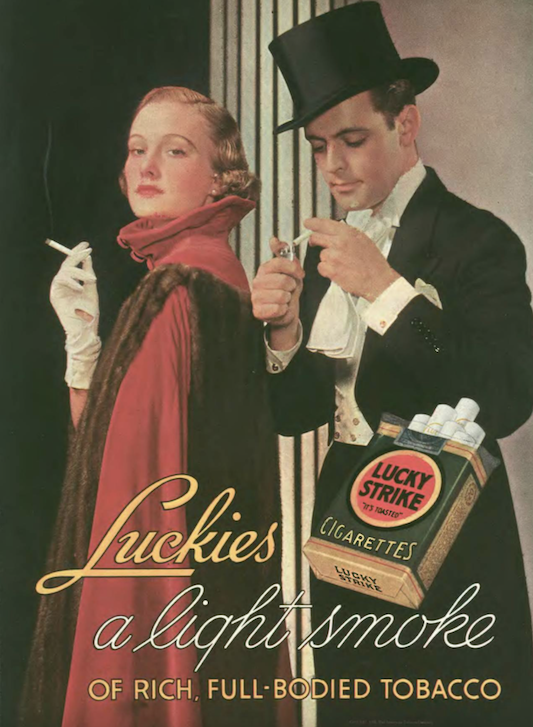
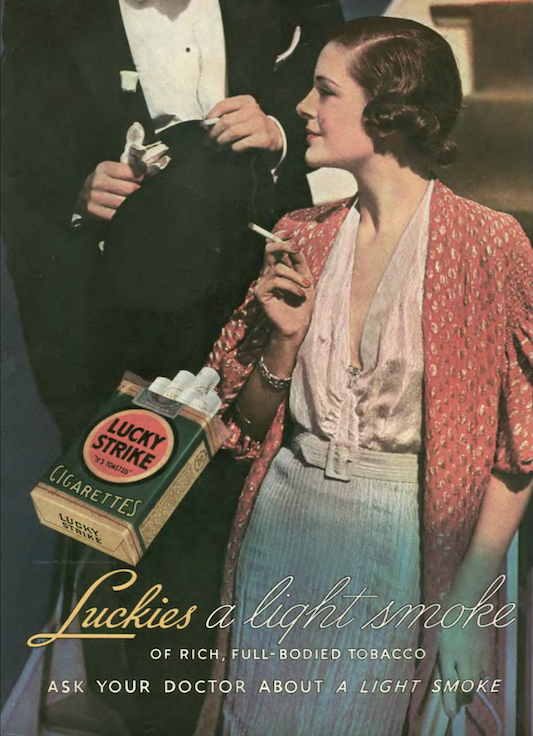
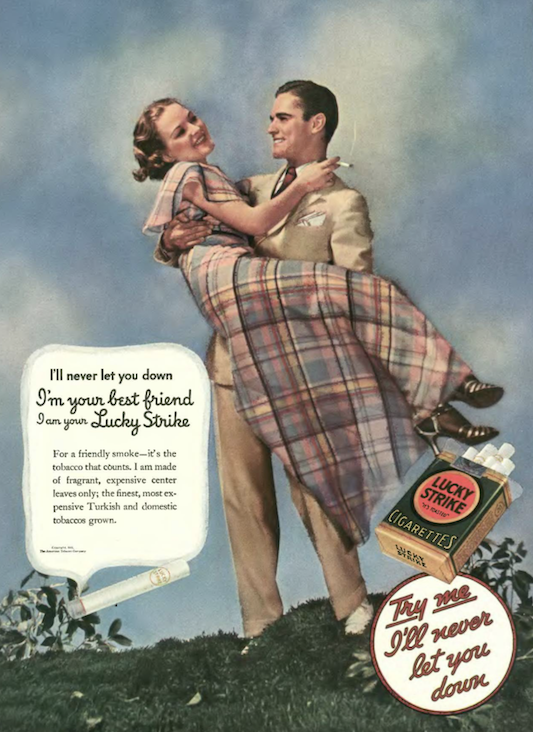
…the makers of Lucky Strike, on the other hand, stuck with images of nature and romance to suggest the joys of inhaling tar and nicotine…
…General Tire took a cue from Goodyear, suggesting that an investment in their “Blowout-Proof Tires” was an investment in the very lives of a person’s loved ones (even though they apparently drove to the beach without seatbelts or even a windshield)…
…another colorful advertisement from the makers of White Rock, who wisely tied their product to ardent spirits as liquor consumption continued to rebound from Prohibition…
…I toss this in for the lovely rendering on behalf of Saks…it looks like the work of illustrator Carl “Eric” Erickson, but he had many imitators…
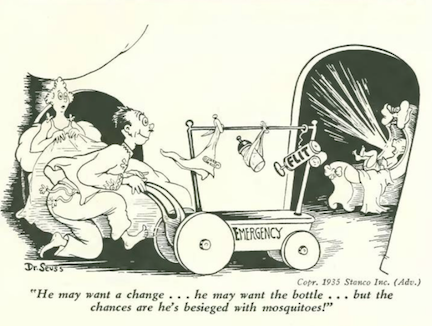
…we do, however, know the identity of this artist, and his drawings on behalf of the pesticide Flit, which apparently in those days of innocence was thought appropriate for use around infants…
…great spot drawing in the opening pages…I should know the signature but it escapes me at the moment…
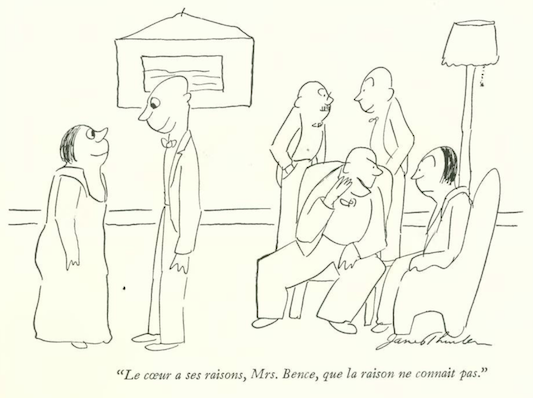
…James Thurber quoted Blaise Pascal for this tender moment ( “The heart has its reasons, of which reason knows nothing”)…
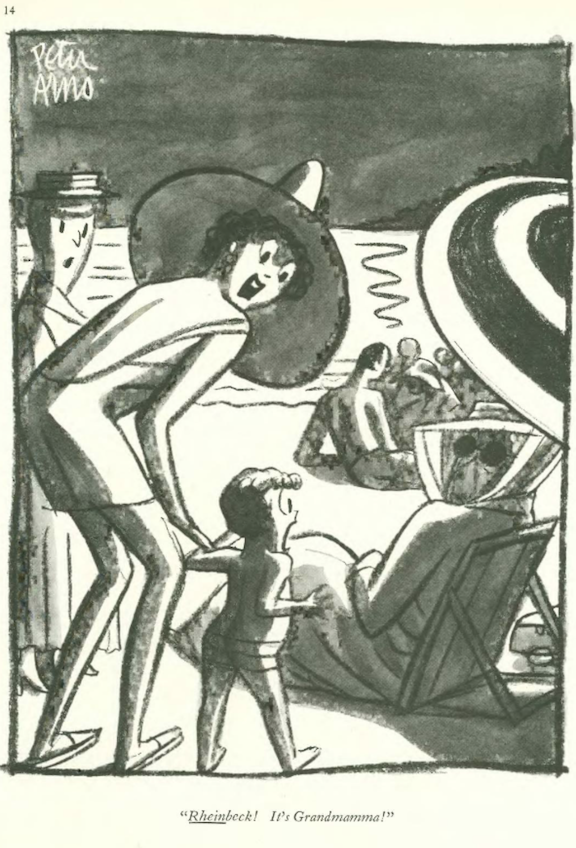
…Peter Arno illustrated the horrors of finding one’s grandmother out of context…
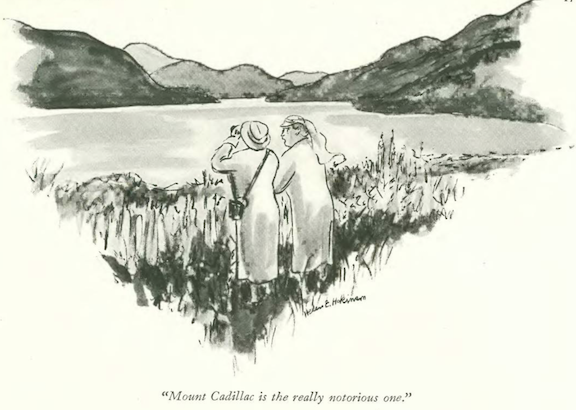
…Helen Hokinson’s girls employed a malaprop to besmirch the good name of an innocent mountain…
…Richard Decker discovered the missing link(s) with two archeologists…
…Alan Dunn narrowly averted a surprise greeting…
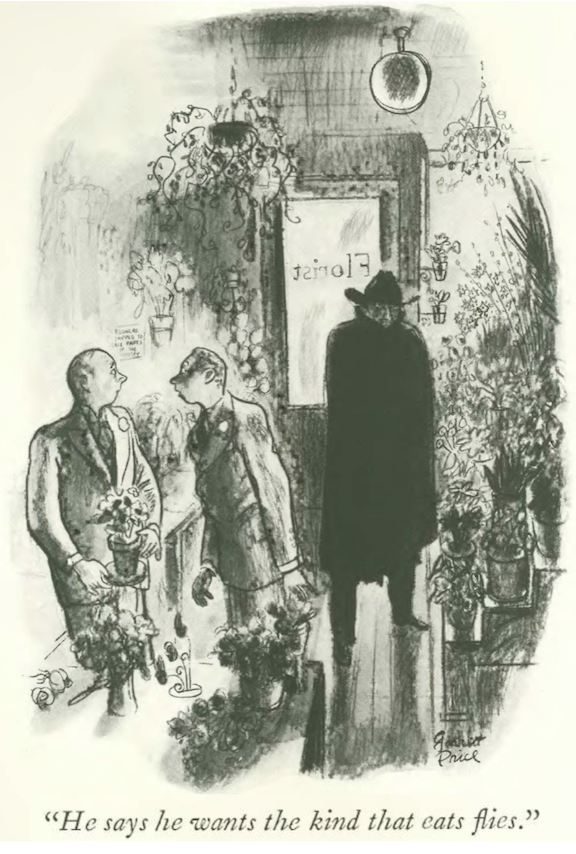
…George Price added a new twist to a billiards match…
…Price again, at the corner newstand…
…Al Frueh bit off more than he could chew…
…and we close with Barbara Shermund, and a prattling mooch…
If you lived in Germany in 1935, or in Italy or Spain for that matter, the world would have looked very different from the one most Americans were experiencing, clawing their way out of the Great Depression and hoping to improve their domestic lives. War was not big on their worry list.
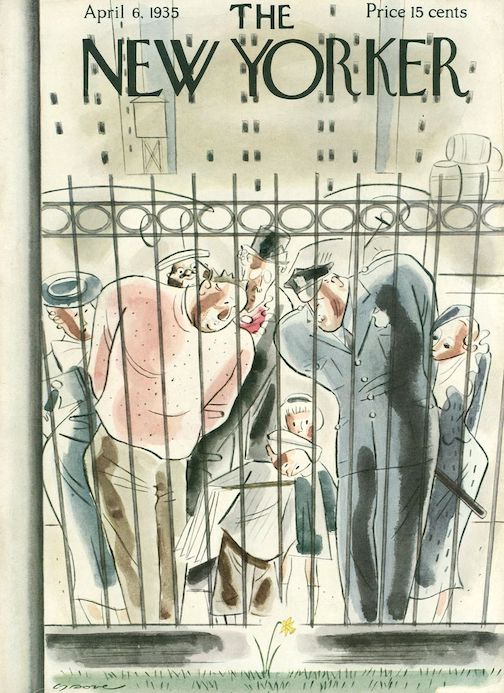
April 6, 1935 cover by Leonard Dove.
In his “Notes and Comment,” E.B. White satirized the talk about war that was filling more column inches in the nation’s newspapers. He was particularly scornful of journalists such as Arthur Brisbane—the influential editor of William Randolph Hearst’s media empire—who was fond of giant headlines warning of impending war.
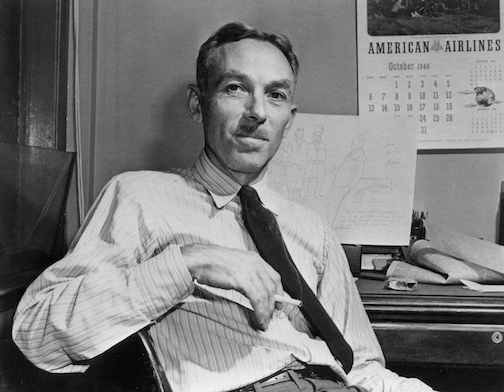
TEND YOUR OWN GARDEN...E.B. White in 1946. (Britannica)
White wasn’t naive about the possibilities of war; however, he believed obsessing about things over which we have little control did little to help the human condition. Helping one’s neighbor, on the other hand, would do the world more good. In 1939, just six months before Germany invaded Poland, White wrote a piece titled “Education” for his Harper’s Magazine column, One Man’s Meat. This excerpt helps define his worldview:
“I find that keeping abreast of my neighbors’ affairs has increased, not diminished, my human sympathies…in New York I rise and scan Europe in the Times; in the country I get up and look at the thermometer—a thoroughly set-contained point of view which, if it could infect everybody everywhere, would I am sure be the most salutary thing that could happen to the world.”
With that, here is a selection from the April 6 “Notes and Comment”…
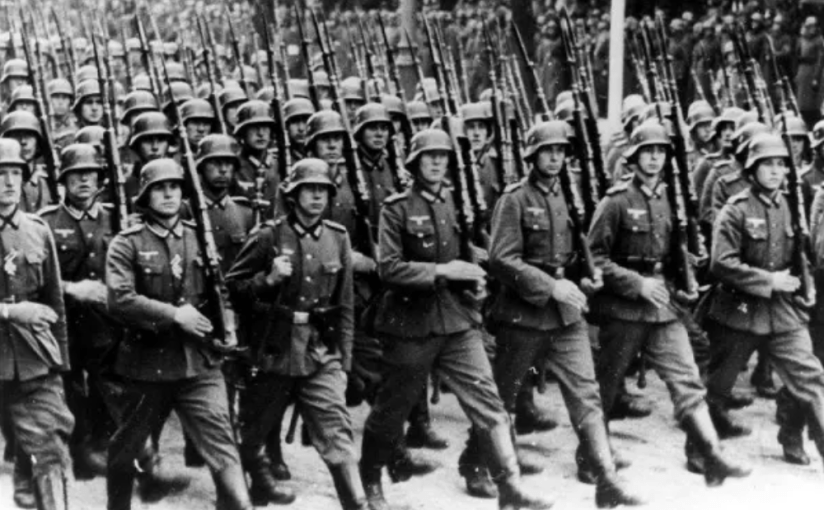
TANKS A LOT…Clockwise, from top left, German war production in the 1930s—by increasing the size of the army by 500,000 and establishing the Luftwaffe in early 1935, Germany broke international law and the Treaty of Versailles; the 1935 Anglo-German Naval Agreement was the first sign of British and European appeasement—photo shows the launch of the Admiral Graf Spee; a display of force at Nuremberg, mid 1930s; cartoon by Bernard Partridge from Punch (September 1932) foresaw the inevitable. (parisology.net/theholocaustexplained.org/Punch Limited)
In March 1973, a “Mr. Nadeau” wrote a letter to E. B. White expressing fears about humanity’s bleak future. Here are the first and last lines of White’s reply:
As long as there is one upright man, as long as there is one compassionate woman, the contagion may spread and the scene is not desolate. Hope is the thing that is left to us, in a bad time. I shall get up Sunday morning and wind the clock, as a contribution to order and steadfastness…Hang on to your hat. Hang on to your hope. And wind the clock, for tomorrow is another day.
* * *
Another Viewpoint
Ever the observer of the passing scene, Howard Brubaker made these relevant observations in “Of All Things”…
…and back to White’s “Notes,” and the imminent passing of the beloved organ grinder…
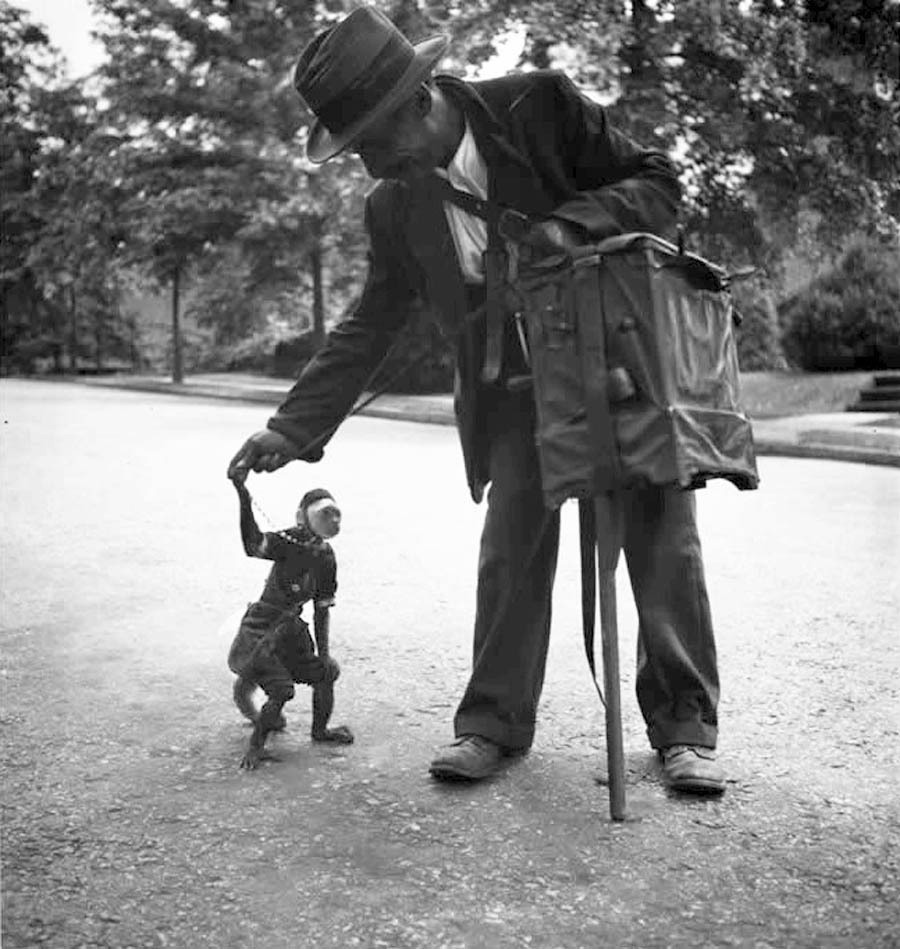
THE OLD GRIND…Above, one of New York City’s last organ grinders in Washington Heights, ca. 1935. Organ grinders had been fixtures in Manhattan since the 1850s, and by 1880 roughly five percent of Italian men living in Five Points were organ grinders, often accompanied by monkeys who entertained and collected coins. Organ grinders were outlawed in 1936 by Mayor Fiorello La Guardia. It is thought the mayor disliked the Italian immigrant stereotype. (Library of Congress)
* * *
Give Him More Mickey Mouse
John Mosher expressed his displeasure with movies that failed to deliver some escape from life’s mundane realities or offered little more than tepid storylines.
IN SEARCH OF A CREDIBLE PLOT…Critic John Mosher found Claudette Colbert (top left) both unbelievable and unqualified to be a psychiatrist in Private Worlds; at top right, Joan Blondell and Glenda Farrell offered some mindless distractions in Traveling Saleslady (from 1933 to 1936 Blondell and Farrell appeared together in seven films); bottom, Mosher called The Woman in Red an “anemic” tale. Barbara Stanwyck seems to be wondering why she took the part. (rottentomatoes.com/TCM)
* * *
Odds and Ends
Also in the issue, John O’Hara kicked off the short fiction with “I Could Have Had A Yacht,” Margaret Case Harriman penned a profile of Elizabeth Arden (of cosmetics empire fame), and theatre critic Wolcott Gibbs enjoyed the “bitterly effective performances” in Clifford Odets’ Waiting For Lefty, which was being produced at the Longacre Theatre.
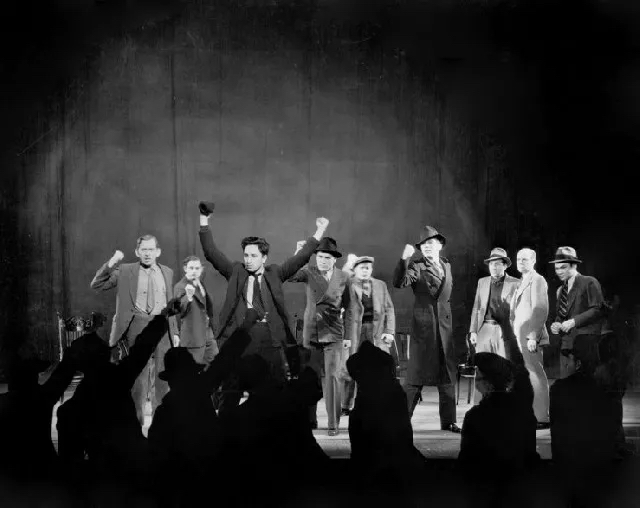
ENOUGH IS ENOUGH...Elia Kazan led the cast in the original production of Clifford Odets’ iconic 1935 play Waiting for Lefty. Centered around a taxi drivers’ strike, Lefty was produced by The Group Theatre, which sought to perform plays that functioned as social commentaries on the inequality and poverty of 1930s America. Some referred to Kazan as the “Proletarian Thunderbolt.” (Creative Commons)
* * *
From Our Advertisers
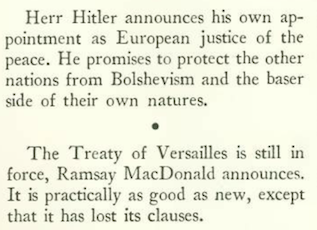
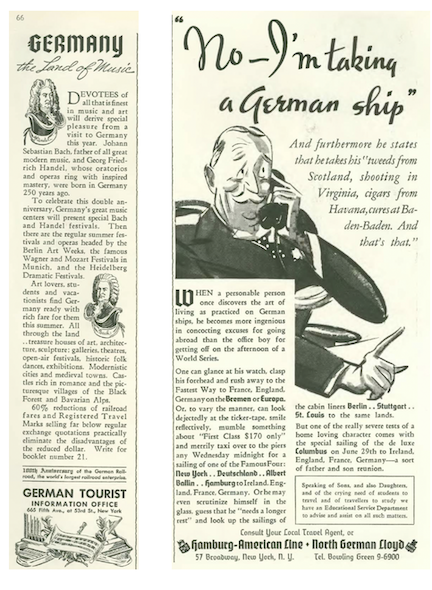
While Hitler ramped up weapons production and prepared to enact the Nuremberg Race Laws, the German Tourist Office touted their country as “The Land of Music” in this one-column advertisement on page 66 (left)…a couple of pages later we have an old chap looking forward to a German cruise and a quiet soak at Baden-Baden in the midst of madness…
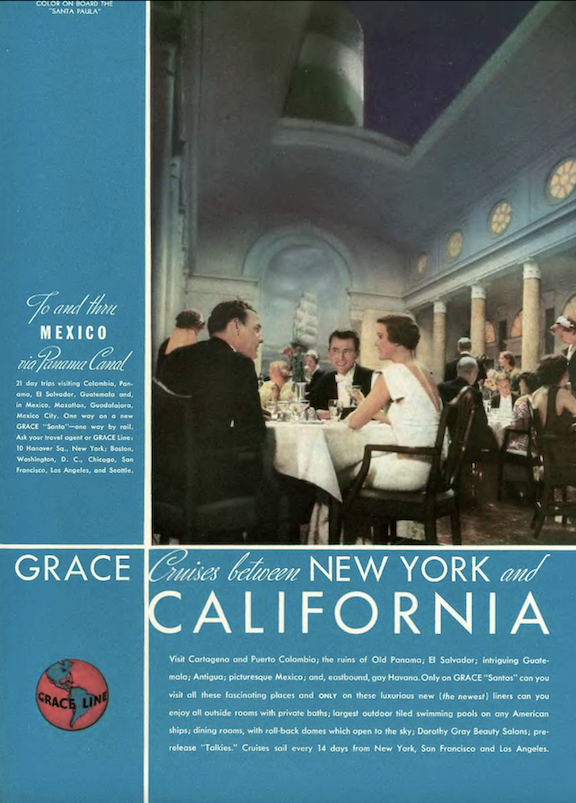
…now this is more like it, fine dining under the stars aboard the Santa Paula, far from the maddening crowds…
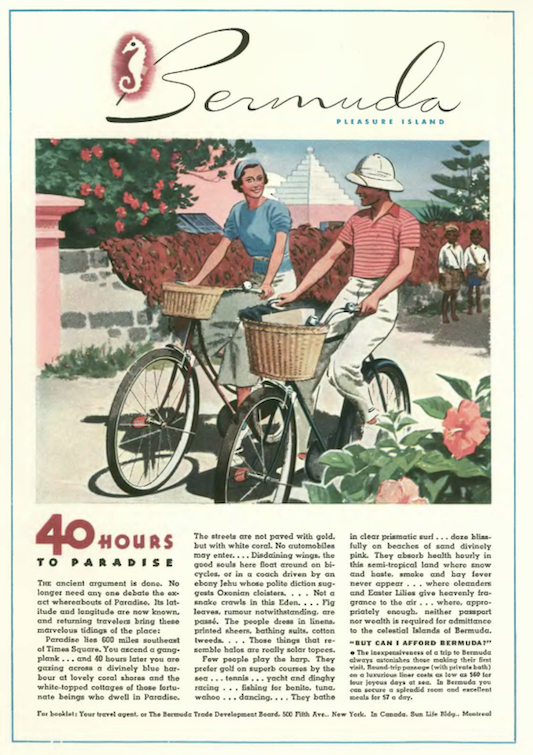
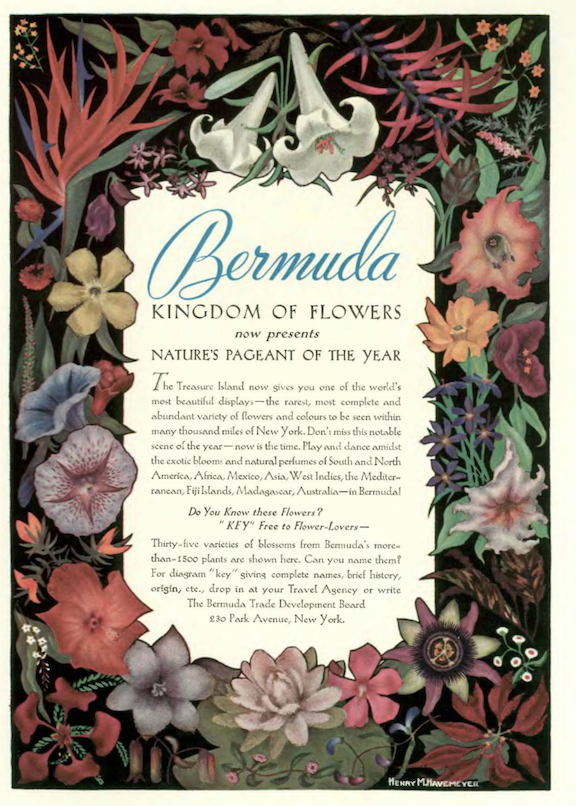
…there were several colorful full-page ads in the issue, including this splashy display from the very un-splashy-sounding Bermuda Trade Development Board…
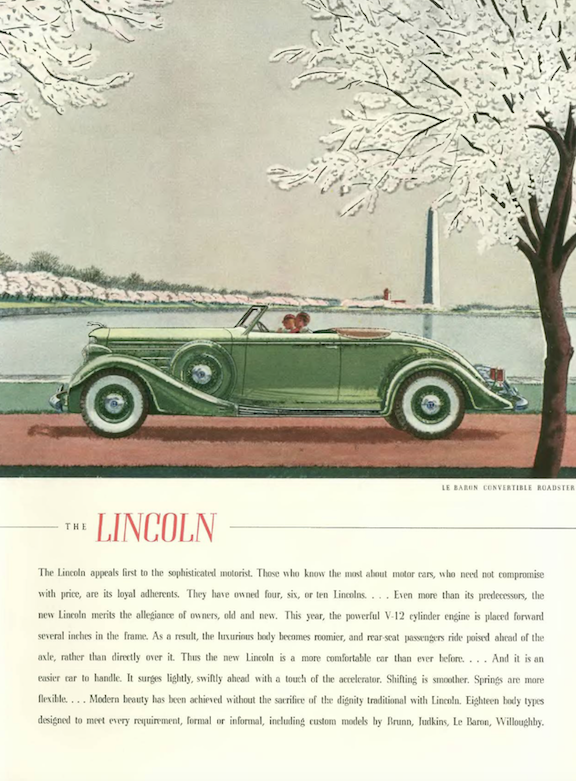
…cherry blossoms lined the path of Lincoln’s Le Baron Roadster…
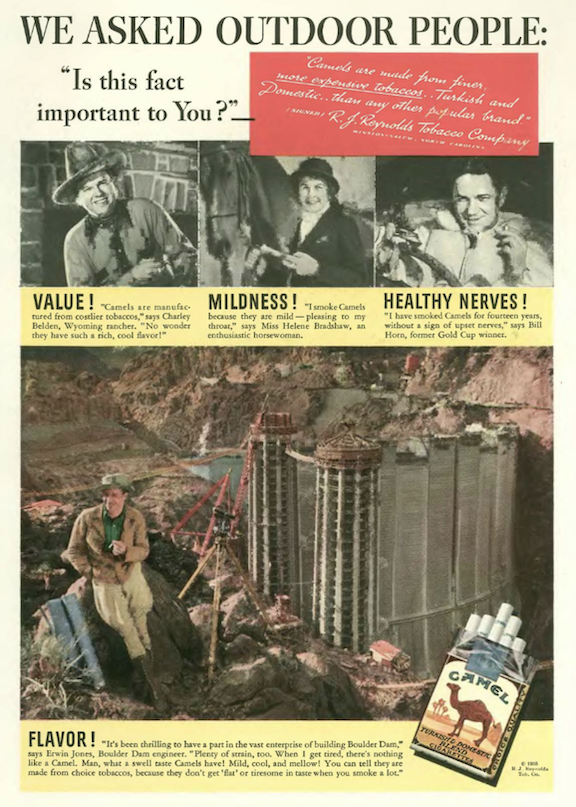
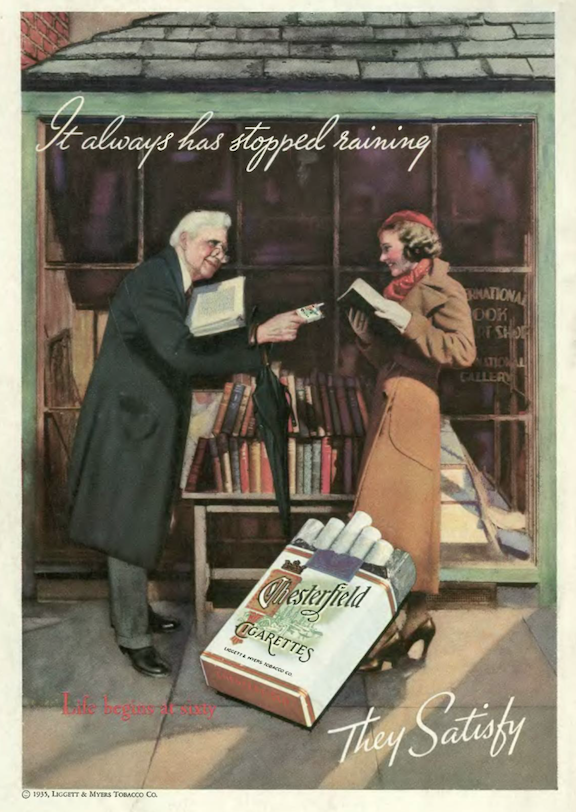
…Camel played to a wide demographic, from ads featuring stylish young women to ads like this that roped in everyone from an “enthusiastic horsewoman” to an engineer working on the Boulder (now Hoover) Dam…
…I’m not sure what “Life begins at sixty” is supposed to mean, unless it’s about tempting young women with your bad habit…
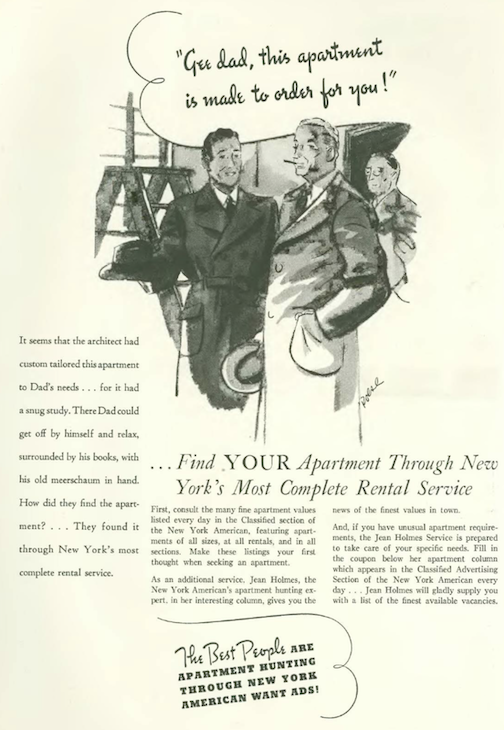
…the New York American was hoping that some of the “Best People” who read The New Yorker would also want to read their apartment rental want ads…
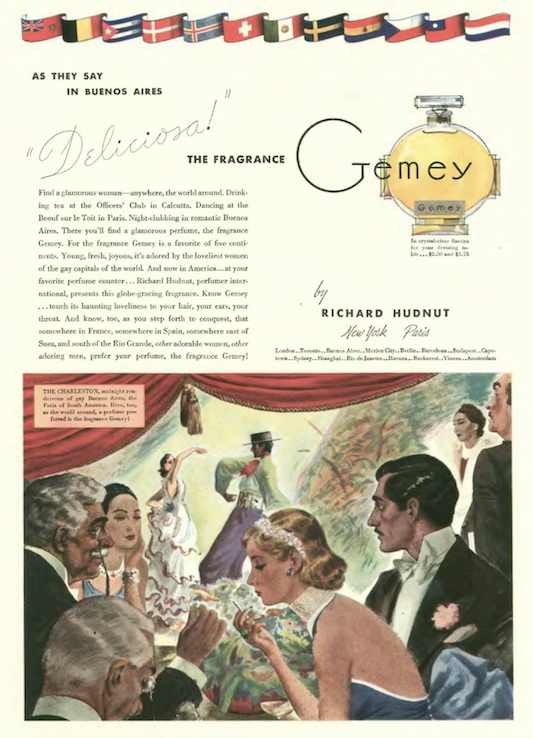
…spring was in the air at Richard Hudnut’s Fifth Avenue salon…if you had dry skin, it was recommended you try a product with the unfortunate name “Du Barry Special Skin Food”…
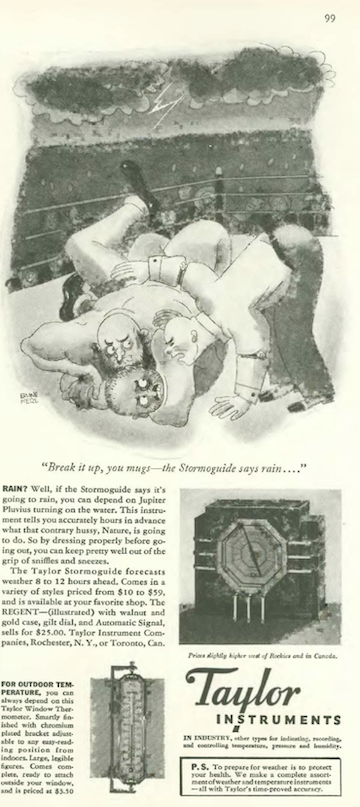
…Taylor Instruments hoped readers would monitor the spring weather with one of their stylish thermometers…American graphic artist and illustrator Ervine Metzl provided the artwork…he was best known for his posters and postage stamp designs…
…which brings us to our illustrators and cartoonists, beginning with this small woodcut on page 6 signed “Martin”…
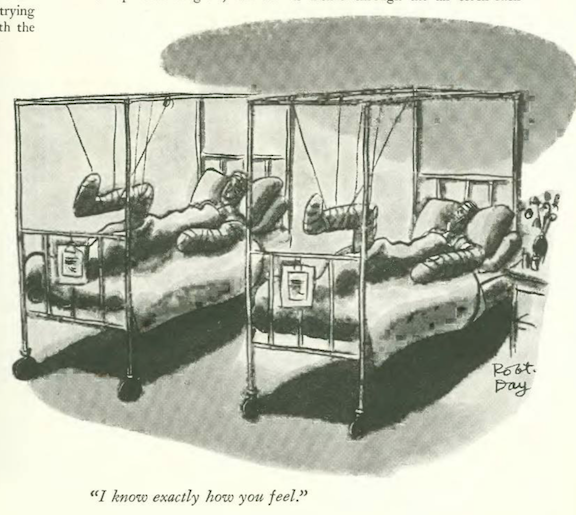
…empathy gained some traction in this Robert Day cartoon…
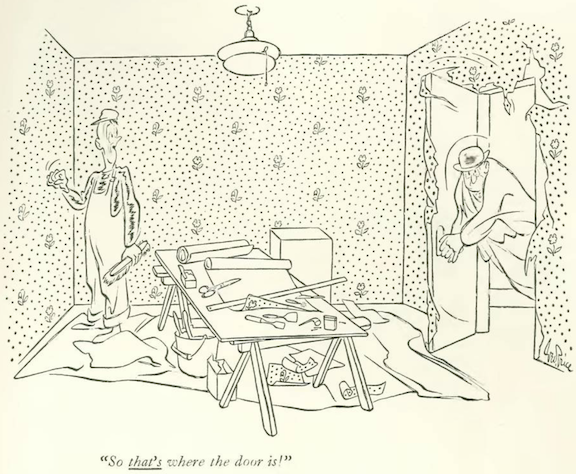
…Alan Dunn demonstrated the effect of the Depression on the building trades…
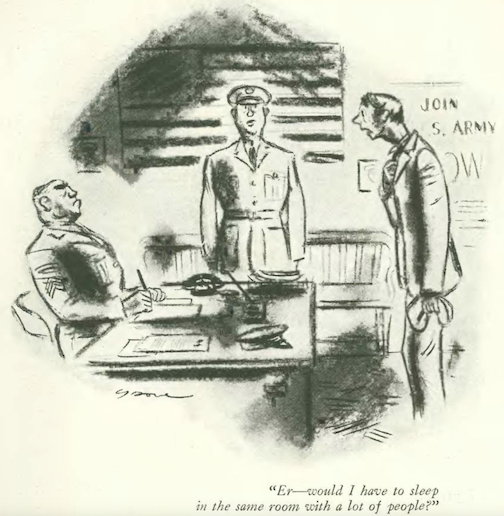
…Leonard Dove found one enlistee not ready for basic training…
…Syd Hoff showed us all the right moves…
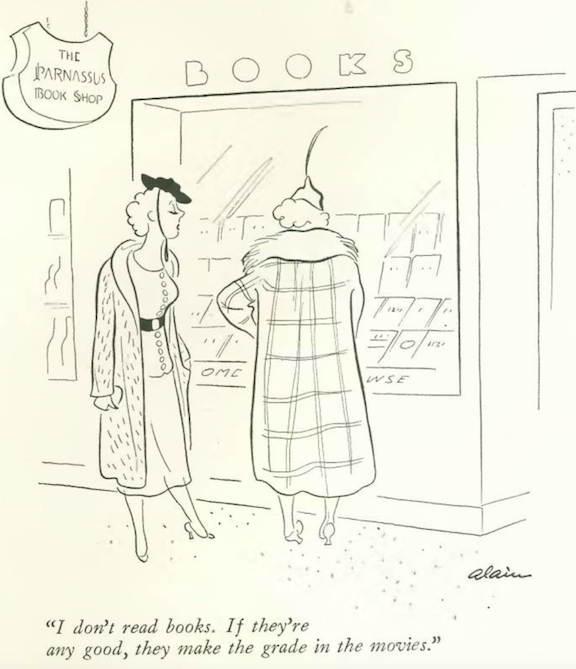
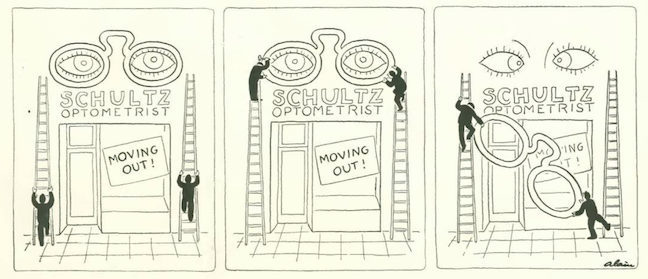
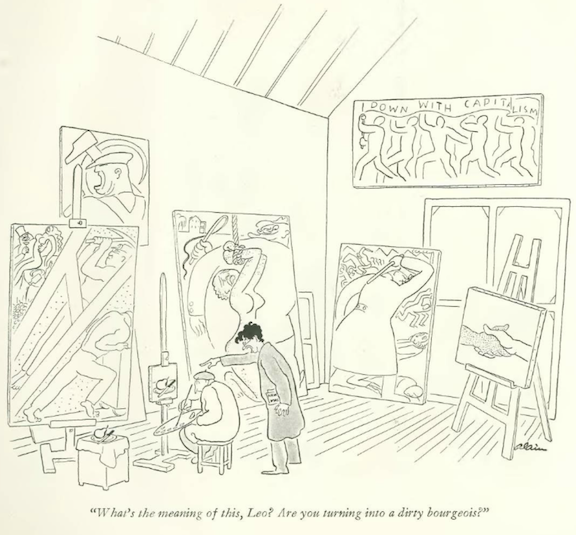
…Alain was up in the garret with an artist in need of some peace…
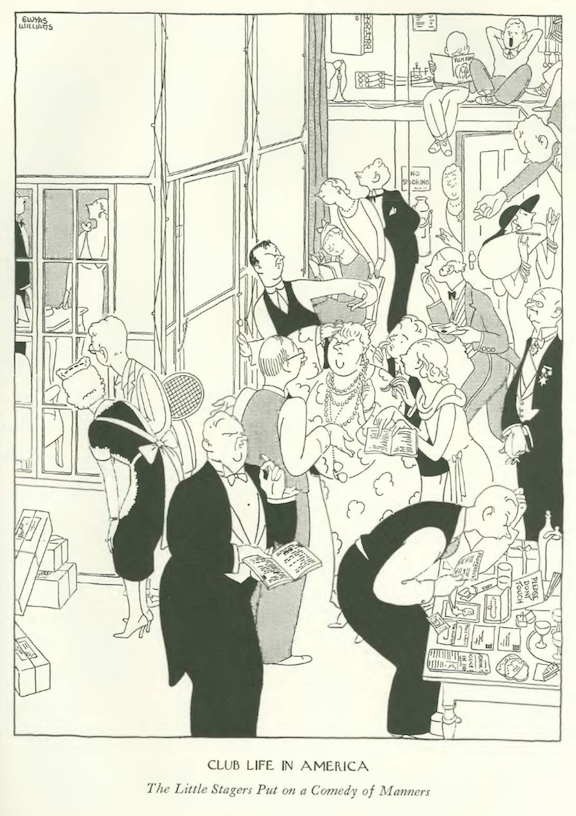
…Gluyas Williams took a glimpse backstage…
…William Crawford Galbraith was still exploring the world of sugar daddies and golddiggers…
John Chapin Mosher was the first regularly assigned film critic for The New Yorker, writing reviews for the magazine from 1928 to 1942. He was also a fan of Disney animated shorts, and one particular mouse.
March 2, 1935 cover by Robert Day.
Mosher, who also contributed short stories to the magazine, displayed a lively, witty style in his reviews, and in the early years of Walt Disney animation he was quite partial to Mickey Mouse, who from his sound debut in 1928’s Steamboat Willie had quickly grown into an international star—when the cartoon mouse first appeared in color in The Band Concert, it was a sensation. Mosher’s other review was not so enthusiastic, even though Sweet Music featured another major star of the 1930s, Rudy Vallée.
The 73rd short film in Disney’s Mickey Mouse series, The Band Concert was acclaimed by no less than conductor Arturo Toscanini, who saw it six times. Esquire’s culture critic Gilbert Seldes wrote that “[none of] dozens of works produced in America at the same time in all the other arts can stand comparison with this one.”
BEDAZZLED…Along with New Yorker film critic John Mosher, both the great Italian conductor Arturo Toscanini and culture critic Gilbert Seldes praised Mickey Mouse’s debut in color. Even later critics revered the nine-and-a-half minute short. In 1984 Leonard Maltin said that The Band Concert is “one of the best cartoons ever made anywhere… There are nuances of expression in Mickey’s character throughout this film that had seldom been explored in earlier shorts…” (Wikipedia/YouTube)PASSING THE TORCH…Bandleader Rudy Vallée and famed torch singer Helen Morgan in Sweet Music. Years of heavy drinking had taken a toll on Morgan by this time; she appeared for a “scant moment” in the film, and would leave movies altogether in 1936. (cinemasojourns.com)
* * *
Rudy Was Here, Too
Rudy Vallée was among the celebrities gathered at Jack Dempsey’s Restaurant, a placed visited in the previous issue by Lois Long. This time Russell Maloney and Charles Cook took a look inside for “The Talk of the Town”…
JACK DEMPSEY LOOMS over his restaurant at 50th Street and Eighth Avenue in this odd postcard image (top), where the backdrop of the city has been replaced with an open sky (Terry Gilliam’sMonty Python animation comes to mind). The restaurant would relocate to 1619 Broadway in 1937-38. (Courtesy eBay)
* * *
Keeping It to Themselves
New Yorkers typically don’t boast about their city because they often consider it a natural part of their lives and identity. Indeed, overt displays of civic boosterism are found to be embarrassing, if not distasteful. E.B. White, in his “Notes and Comment,” explained:
BEING NUMBER TWO, WE TRY HARDER…Although not mentioned in White’s note, The New Yorker enjoyed taking shots at boosterism, and especially the Chicago Tribune and its publisher, Robert R. McCormick, a leading booster of the Second City. (Michigan State University)
White observed, however, that New Yorkers weren’t so thrilled about the cost of living in their fair city…
* * *
Those Excitable French
In her “Letter from Paris,” Janet Flanner recalled the previous year’s “Bloody Sixth” riot that resulted in the police fatally shooting seventeen people. She noted that things were more peaceful on the riot’s anniversary.
AN UGLY TURN…On Feb.6, 1934, thousands of extreme right-wing activists and war veterans gathered in Paris to protest against the alleged corruption of the left-wing government. When protests turned violent, police responded by fatally shooting seventeen people, only nine of whom were far-right protesters. (Wikipedia/wienerholocaustlibrary.org)
* * *
From Our Advertisers
Auburn made some of America’s most beautiful and technologically advanced automobiles, but the Depression was too much for luxury brands like Auburn, which would sadly fold in 1937…
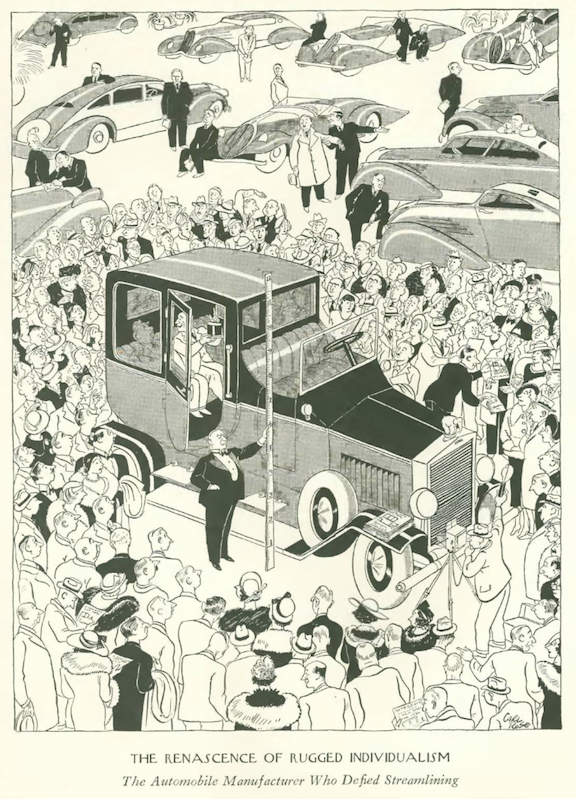
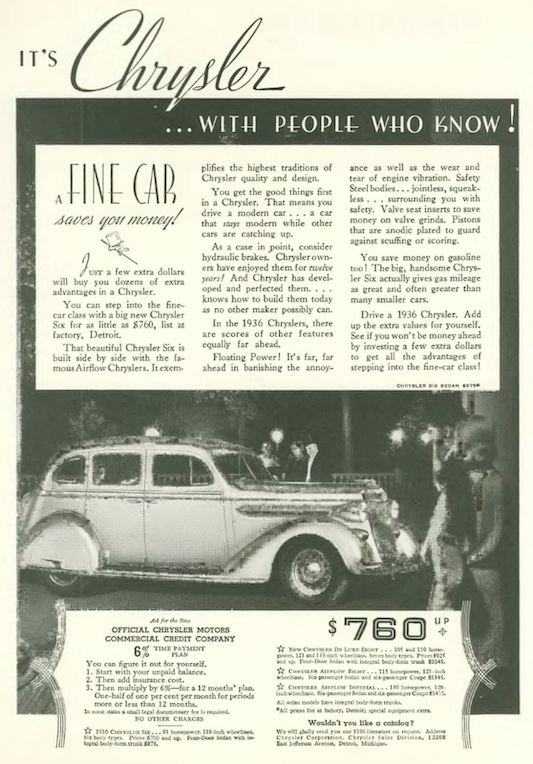
…while luxury brands struggled, Americans turned to less expensive cars that touted safety and economy…in the 1930’s safety meant strong body construction, although this didn’t address the problem of unharnessed riders rattling around inside the “TurretTop” shell, or being launched through the windshield…
…the bargain brand Plymouth, however, employed snob appeal, and safety, to move their “Floating Ride” autos…
…Feel classy driving that Plymouth? Well apparently beer drinking is classy too…just ask this chap, who is apparently toasting a successful fox hunt…
…Speaking of class, the folks at Essex House played on class anxieties to fill their rooms at Central Park South…
…a common theme in upscale fashion ads was aviation; that is, the suggestion that the smart set took to the air when they traveled–they were the only ones who could afford it…
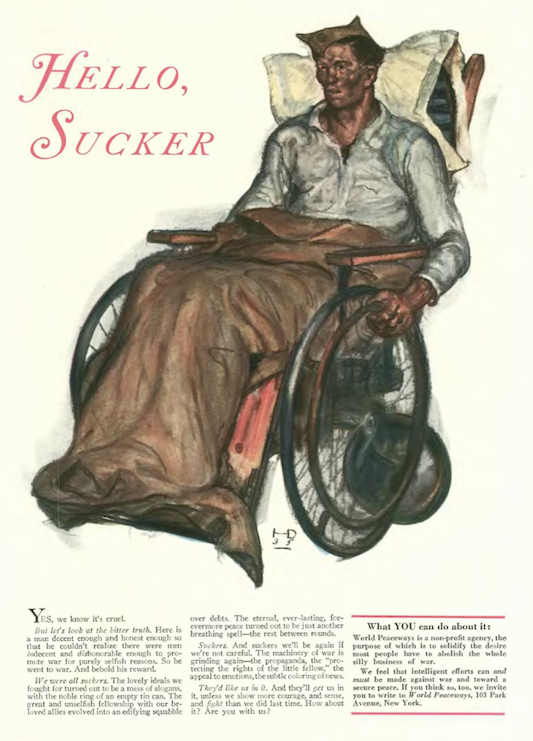
…in stark contrast is this ad from the pacifist/antiwar organization World Peaceways…their bold and unflinching ads described soldiers as pawns in the corrupt games of the rich and powerful…
…Radio City Music Hall was originally opened in December 1932 as a live performance venue, but the cavernous hall wasn’t particularly suited to theatrical performances, and just two weeks after opening, managers announced that the theatre would switch to showing feature films. This modest one-column ad tried to stir up interest in a comedy featuring none other than Edward G. Robinson, who was known for his tough guy, gangster roles…
CRACKING SMILES INSTEAD OF HEADS…Jean Arthur and Edward G. Robinson in The Whole Town’s Talking. (postmodernpelican.com)
…beautifully photographed, stylish women smoking cigarettes were common in 1930s advertising as tobacco companies continued to tap the growth potential of this demographic…
…this next spot employs of the talents of Otto Soglow to promote blended Penn Maryland whiskey…
…which segues to our cartoonists, and Soglow again…his popular Little King stopped running in The New Yorker when it was acquired by Hearst in 1934, but Soglow simply created other King-like characters to run the gags…
…”Profiles” featured socialist cartoonist Art Young, with an illustration by Al Frueh…
…James Thurber contributed this illustration/cartoon at bottom of page 12 in “The Talk of the Town” section…not sure what this means…fear of being attacked by giant Puritan women?…
…Jaro Fabry contributed only one cartoon to The New Yorker…the meaning is lost on me…
…I was also baffled by this Gilbert Bundy cartoon, until I consulted this excerpt from a Paris Review article (“Trading Places” by Sadie Stein 3/19/14): Time was, the passing on of compliments was so ritualized a part of life that the practice had a name: trade-last. Merriam-Webster’s defines it as “a complimentary remark by a third person that a hearer offers to repeat to the person complimented if he or she will first report a compliment made about the hearer,” and dates the first recorded use of the term to 1891…
…Kemp Starrett offered up a uniquely honest sales pitch…
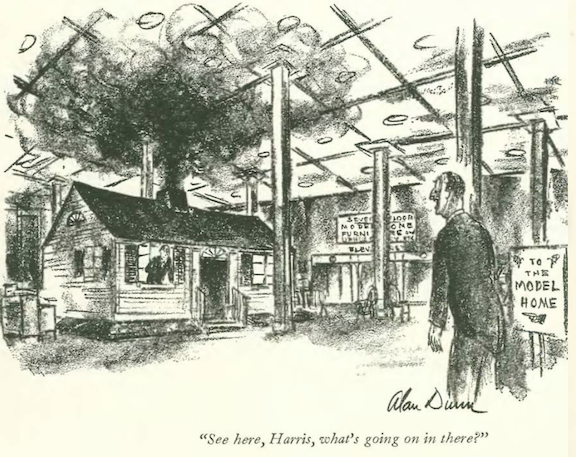
…Alan Dunn advised against eating your vegetables…
…Leonard Dove, and where old-timey music met an old-timey feud…
…and we close with William Crawford Galbraith, and a bartender trying to class up his joint…
Above: Walter Dorwin Teague's design for Kodak's "Brownie" camera, circa 1930. (Milwaukee Art Museum)
Walter Dorwin Teague pioneered industrial design as a profession, firmly believing that great, heirloom-quality design could be available to all, and that even mass-produced objects could be beautiful if they possessed “visible rightness.”
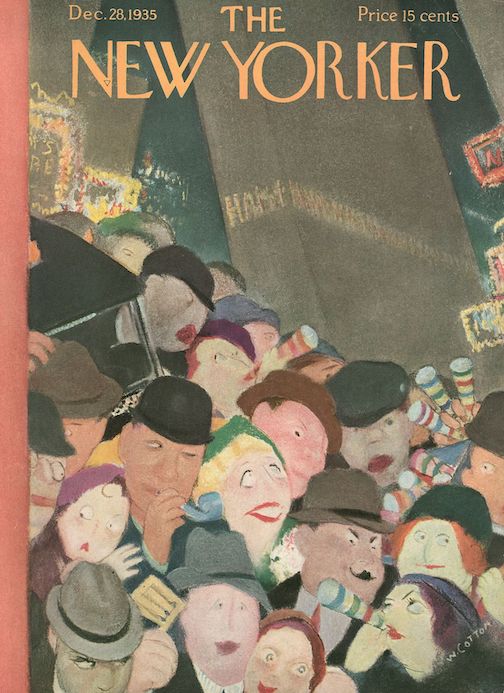
Dec. 15, 1934 cover by William Cotton.
Cultural critic Gilbert Seldes profiled Teague (1883–1960) in the Dec. 15 issue, and in this excerpt he examined the designer’s role in the streamlining craze that emphasized movement and speed in everything from locomotives and automobiles to radios and pencil sharpeners.
GOING WITH THE FLOW…Top left, early applications of streamlining in the 1931 Marmon 16, designed by Walter Dorwin Teague; at right, Teague at work in an undated photo; below, wooden model of Teague’s Marmon 12, 1932. (drivingfordeco.com/North Carolina State University/Smithsonian Design Museum)GEE WHIZ…Henry Ford called on Teague to design an exhibit hall like no other for the 1934 re-opening of the Chicago World’s Fair. The exhibit featured an automobile cut lengthwise, and explained how various materials were extracted to create the final product. Teague helped usher in the era when world’s fairs served as arenas for the advancement of corporate identities. (Hemmings Daily)WHAT A GAS…Teague created this ubiquitous streamlined design for Texaco’s service stations in the late 1930s. (encyclopedia.design)
In this next excerpt, Seldes noted that Teague shared the thinking of other modernists of the time, namely that people could be herded into towers, even in rural landscapes. At any rate, Teague’s ultimate objective, according to Seldes, was to make everyday living more attractive to the masses.
CHROME-PLATED WORLD…Teague designed the Kodak Baby Brownie Camera (top left) and its packaging. It sold for just one dollar; at right, Teague’s console radio design Nocturne, 1935, which featured glass and chrome-plated metal; at bottom, Kodak gift camera, ca.1930. (Cooper Hewitt/design-is-fine.org/Brooklyn Museum)
* * *
Art Depreciation
Lewis Mumford did a bit of hate-viewing during a visit to the Whitney Museum, which hosted the Second Biennial of Contemporary American Painting. Mumford found a few works he genuinely liked, but had to admit he also enjoyed the ones he hated. Excerpts:
MYSTERY WOMAN…at left, Lewis Mumford was at a loss regarding the meaning, if any, of Walt Kuhn’s latest circus painting, Sibyl, 1932; at top, Mumford found Grant Wood’sArbor Day (1932) perfectly suited to the Cedar Raids art scene, while he derived great pleasure in his dislike of Eugene Speicher’s Red Moore: The Blacksmith, 1933-34. (americangallery.wordpress.com/Wikiart/lacma.org)
* * *
The Swash Buckles
Film critic John Mosher checked out Douglas Fairbanks Sr’s latest movie, The Private Life of Don Juan, which would prove to be the old swashbuckler’s last hurrah.
FINAL BOW…Douglas Fairbanks and Merle Oberon in Alexander Korda’s comedy-drama The Private Life of Don Juan (1934). It was the final role for the 51-year-old Fairbanks, who died five years later. (TCM)
* * *
Toyland 1934
The New Yorker continued its seasonal tradition of offering exhaustive descriptions of various wares around the city, including the many new toys that would be available to children whose parents could afford them. An excerpt:
XMAS JOYS…According to The New Yorker, the Union Pacific Streamline Train was a big hit with the kiddos, as were the dolls and other items created to exploit the hapless Dionne Quintuplets. And then there was a Buck Rogers rocket ship that shot real sparks from its tail.(airandspace.si.edu/PBS/Paleofuture)
“Patsy” dolls and doctor/nurse kits were also popular sellers in 1934…
THEY’RE AFTER YOU…The much sought-after Patsy doll and the Patsy Nurse Outfit graced many a Christmas morning in 1934. (eBay)
The article was followed by detailed listings of department stores and select toys. Here are excerpts featuring two of the toy biggies: Macy’s and F.A.O. Schwarz:
THROUGH THE LOOKING GLASS…Top, children peering into a Macy’s window circa 1930; below, F.A.O. Schwarz display window at its Fifth Avenue location in 1935. (Library of Congress/MCNY)
* * *
From Our Advertisers
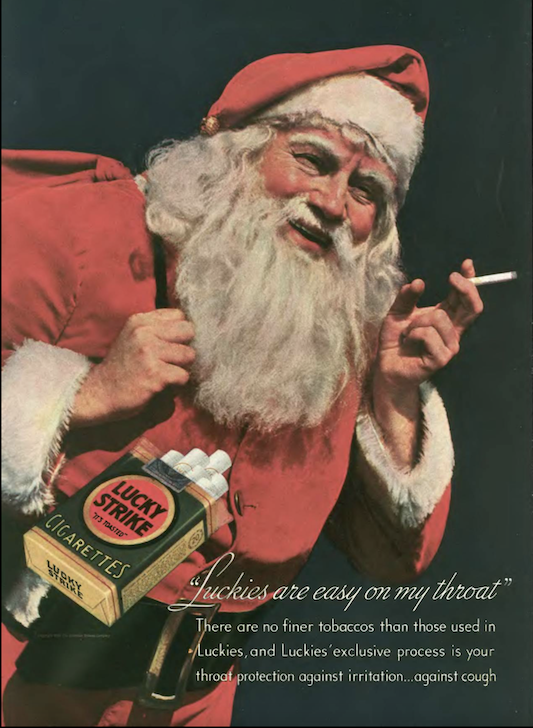
We kick off the holiday season with Santa bringing cheer to the world, his bag laden with tobacco products from the jolly elves at R.J. Reynolds…
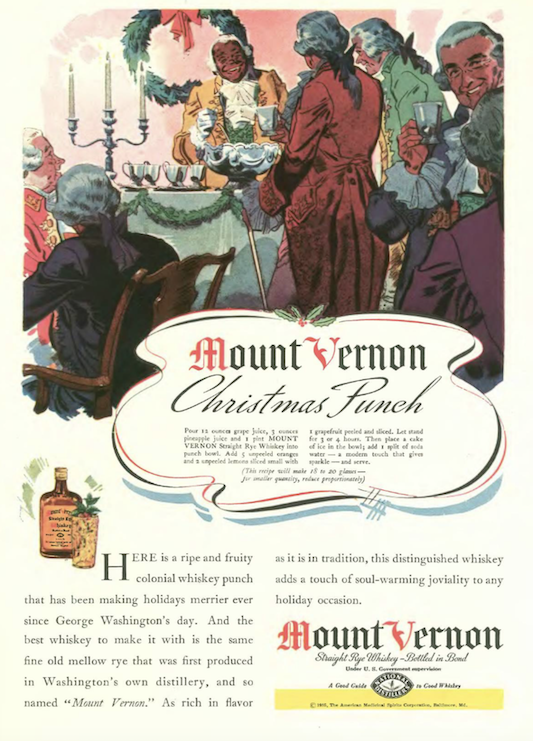
…along with your cigarette you could enjoy a cup of this frothy eggnog spiked with a generous shot of Paul Jones…
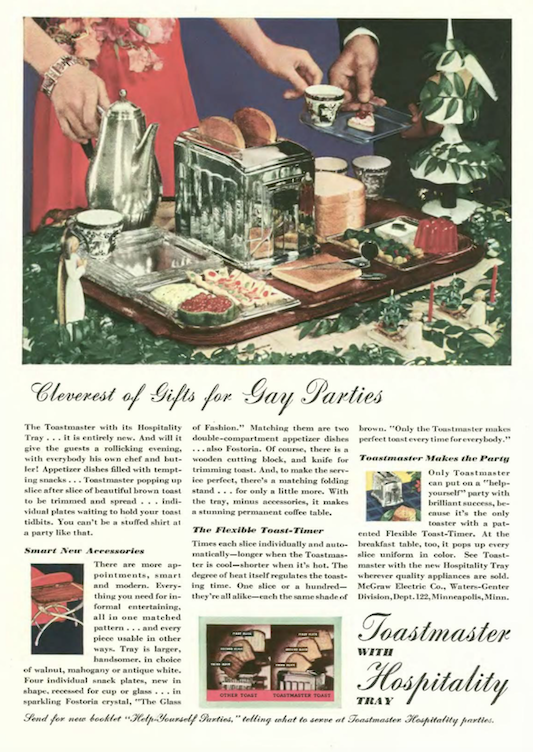
…and I pity the poor soul who was hoping for a toaster from Santa…perhaps the companion “Hospitality Tray” will add an extra dose of good cheer…
…however some may have wished for a revolutionary Parker “vacumatic” pen…no more dipping into the old ink-well…
…I include this ad simply for the terrific Abe Birnbaum caricature of Broadway producer Sam Harris…
Image at right is of Harris in 1928. (Wikipedia)
…on to our cartoonists, we begin with this merry spot by George Price…
…William Crawford Galbraith gave us another person in the spirit of the season…
…as did Daniel ‘Alain’ Brustlein…
…a less cheery note comes to us from James Thurber, who gave us a patron unhappy with changes to his familiar watering hole…
…and we have Alain again, and a spirited salesperson…
…Barbara Shermund gave us a glimpse of the awkward courtship rituals of the male peacock…
…and we close with Jack Markow, and the demands of Hollywood life…
Darryl F. Zanuck (1902–1979) was an unlikely Hollywood mogul. Born in a small Nebraska town with an unusual name (both his and the town), Zanuck dropped out of school in the eighth grade, apparently bitten by the acting bug during a brief childhood sojourn in Los Angeles.
Nov. 10, 1934 cover by Constantin Alajalov.
In the first part of a two-part profile, Alva Johnston began to probe the mystery of the boy from Wahoo who would rise to become one of Hollywood’s most powerful studio executives.
MAKING OF A MOGUL…Clockwise, from top left: Darryl F. Zanuck relaxing with trophies from his hunting excursions, circa 1940 (detail from a Margaret Bourke-White photo); Zanuck’s home town, Wahoo, Nebraska, 1920s; screenshot from a trailer for The Grapes of Wrath, 1940; Zanuck with child star Shirley Temple (left) and his first-born daughter Darrylin (mother was silent-screen actress Virginia Fox) in the 1930s. (Robin Pineda Zanuck via The Hollywood Reporter/Saunders County Historical Society/Wikipedia)
Johnston took a quick look at Zanuck’s humble origins, including his first encounter with the film industry at age eight. There must have been something in the water at Wahoo, a town of just 2,100 residents when Zanuck was born. Other Wahoo notables contemporary to Zanuck included Nobel Prize laureate and geneticist George Beadle, Pulitzer Prize–winning composer Howard Hanson, and Hall of Fame baseball player Sam Crawford, among others.
After writing dozens of scripts for Warner Brothers (including many for their popular canine star, Rin Tin Tin), in 1933 Zanuck would leave Warner and form 20th Century Pictures with Joseph Schenck. By the time Johnston penned the New Yorker profile, 20th Century had risen to be the most successful independent movie studio of its time.
* * *
One-Way Street
It goes without saying that the interwar years of the 20th century were a time of extreme foment; Bolsheviks, communists, anarchists, fascists and other political agitators seemed to be constantly at each other’s throats as Europe prepared for its second act of self-annihilation. In the middle of it all was the Balkans, its many feuds always simmering near the boiling point.
After the assassination of Archduke Franz Ferdinand in 1914 (which, along with other factors, triggered World War I), you would have thought Europeans would have abandoned the practice of parading dignitaries through crowded streets. In 1934 they were reminded of its risks.
That year was King Alexander I of Yugoslavia’s thirteenth on the throne, but his time was running short in a country constantly beset by civil war. Fearing that the German Nazis and Italian Fascists would take advantage of the instability, on Oct. 9, 1934 French Foreign Minister Louis Barthou invited Alexander I to Marseille to sign a Franco-Yugoslav solidarity agreement. While Alexander and Barthou were being slowly driven in an open car through the city’s streets, a Bulgarian gunman, Vlado Chernozemski, stepped from the crowd, hopped onto the car’s running board, and shot Alexander along with his chauffeur. Barthou also died in the melee, killed by a stray bullet fired by French police (three women and a boy in the crowd were also fatally wounded by stray police bullets). Struck down by a policeman’s sword, Chernozemski was subsequently beaten to death by the enraged crowd. It was one of the first assassinations to be captured on film.
Paris correspondent Janet Flanner offered some thoughts about the incident in her “Paris Letter.” Excerpt:
WHAT A DIFFERENCE A DAY MAKES…King Alexander I of Yugoslavia (left) and French Foreign Minister Louis Barthou just moments before an assassin fired two fatal shots into the king. Barthou would die an hour later from a stray police bullet that would enter his arm and sever an artery. (Still image from YouTube video)
* * *
The Traffic Machine
In his “A Reporter at Large” column, Morris Markey sang praises for the Triborough Bridge project, which was making visible progress on the massive public work that commenced in 1930. City officials had dreamed for years about a project that would at once connect Manhattan, Queens and the Bronx, but it wasn’t until the power broker Robert Moses got involved as the Triborough Bridge and Tunnel Authority chairman that things really started to move. Moses biographer Robert Caro wrote that “Triborough was not a bridge so much as a traffic machine, the largest ever built.” A brief excerpt:
As noted by Markey, the “people in charge” were forthright about the bridge’s completion date of July 1, 1936. And they kept their word. The bridge was substantially complete by June 1936, and would be dedicated on July 11, with Moses serving as master of ceremonies.
MAKE WAY FOR THE GIANTS…City engineers had been kicking around plans since 1916 to build bridges to connect Manhattan, Queens and the Bronx, but the massive Triborough Bridge project finally got off the ground in 1930. By 1934 the bridge’s Queens tower (left) would loom over Ward’s Island, visible in the background; at right, views of buildings in Astoria (Hoyt Ave.) that were slated for demolition to make way for the bridge, photographed by Eugene de Salignac in early 1931. (MTA Bridges and Tunnels Special Archives/NYC Municipal Archives)
* * *
From Our Advertisers
The common zipper was a relatively new invention in 1934. It had been more or less perfected by 1920, and in 1923 the B. F. Goodrich Company would coin the onomatopoetic word to describe the newfangled fastener on its galoshes, but it would take a while for the fashion industry to adopt the zipper as a replacement for buttons on garments, including men’s trousers. And so we get this staid-looking ad from Wetzel that signaled its entry into the brave new world of zippers (Talon was the dominant U.S. producer of zippers for many years)…
…this next ad is kind of amazing, a 1935 Auburn for only $695, which roughly translates to $15,000 or so today—still a bargain…known for cars that were fast, good-looking and expensive (and favored by Hollywood elite), Auburn struggled mightily during the Depression…along with its sister marques Duesenberg and Cord, the company would fold in 1937…
…during Prohibition distillers were allowed to keep stocks of whiskies produced before the 18th Amendment went into force…some of these were distributed through pharmacies during Prohibition for “medicinal purposes”…what was left over was sold after repeal, a stock of “pre-prohibition casks” that would be exhausted before Christmas, or so the ad rather alarmingly suggested…
…we first met tennis star Ellsworth Vines Jr a few issues ago when he was touting the health and energy benefits of Camel cigarettes…here he promotes an unlikely “stimulant”—Pabst Blue Ribbon ale…Vines testified that “the demand for more and more speed in sports calls for a finer and finer ‘edge’ of physical condition” and observed that PBR was “a great preventive of overtraining and staleness”…yep, after a few brewskies who feels like doing anything, let alone play tennis?…
…on to our cartoonists we open with a couple of spots by George Shellhase…
…and Gregory d’Alessio…
…William Crawford Galbraith gave us a fish out of water (the caption reads: You New Yorkers didn’t know we were so sophisticated in Detroit, did you?)…
…George Price still hadn’t come back to earth in his latest installment…
…Gardner Rea illustrated the results of charitable acts by the Junior League…
…and we close with James Thurber, and kindness from a stranger…
Claudette Colbert and Henry Wilcoxon in 1934's "Cleopatra." (cecilbdemille.com)
New Yorker film critic John Mosher was in the mood for one of Cecil B. DeMille’s big, splashy epic movies, but was disappointed to find a relatively restrained effort in DeMille’s latest flick, Cleopatra.
August 25, 1934 cover by Rea Irvin.
Perhaps Mosher would have preferred a silent version of the film, finding the dialogue “the worst I have ever heard in the talkies.” Among examples cited by Mosher was Warren William’s Caesar, who utters the word “Nope” to one of his senators.
CLEO BRIO…Clockwise, from top left, Paramount’s trailer for Cleopatra made a bold claim; Cleopatra (Claudette Colbert) hails Caesar after emerging from a rolled up rug that had been presented to the Roman court; Julius Caesar (Warren William) acts unimpressed, but eventually falls for the Egyptian queen before meeting his demise; Marc Antony (Henry Wilcoxon) is the next to fall for Cleopatra’s seductions. It ends badly for both of them. (pre-code.com/obscurehollywood.net)
Despite Mosher’s grumbles, Cleopatra would receive five Academy Award nominations (winning for Best Cinematography) and would become the highest-grossing film released in North America in 1934. That year Claudette Colbert (1903-1996) would appear in three films that were all nominated for the Academy Award for Best Picture—she is the only actress ever to do so.
On the lighter side, Mosher took a liking to Harold Lloyd’s latest picture, The Cat’s Paw, which marked a sharp departure from Lloyd’s trademark slapstick. Lloyd adopted to a calmer pace, “touched with the delicate bloom of satire.”
Moviegoers who associated Lloyd with such pictures as 1923’s Safety Last…
(britannica.com)
…would have to settle for this new version of Lloyd, which was even touted on the movie’s promotional poster…
STAYING ON HIS FEET…Fox Pictures touted a “new” Harold Lloyd (except for his trademark glasses) in The Cat’s Paw. At right, Lloyd with co-star Una Merkel. (IMDB/criterionchannel.com)
* * *
Fun With Philately
After reading a column in The Herald Tribune that concerned interesting stamps and envelopes…
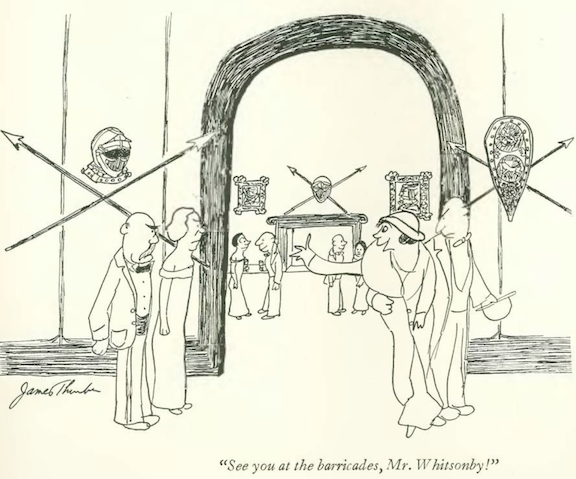
…James Thurber found himself inspired to make a brief examination of the “Thurber envelope”…
…which proved to be neither interesting nor unusual (excerpts):
* * *
From Our Advertisers
A couple of colorful advertisements, the first from the folks at Heinz, who invited New Yorker readers to become “Salad Wizards”…
…if being a salad wizard wasn’t good enough, you could pop open a bottle of Cora vermouth and feel downright aristocratic…
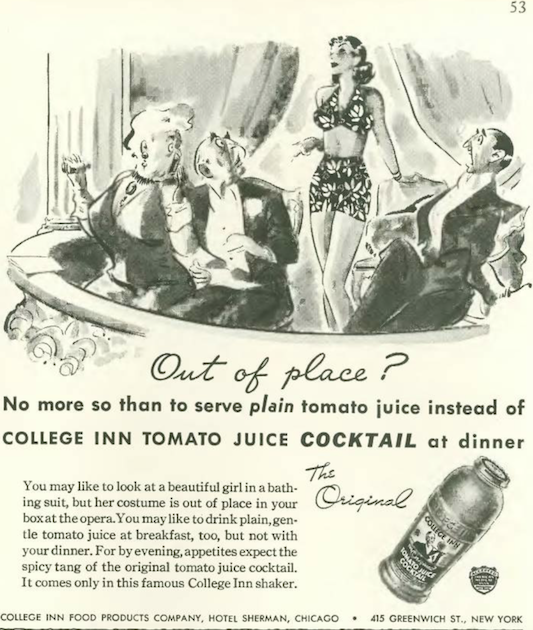
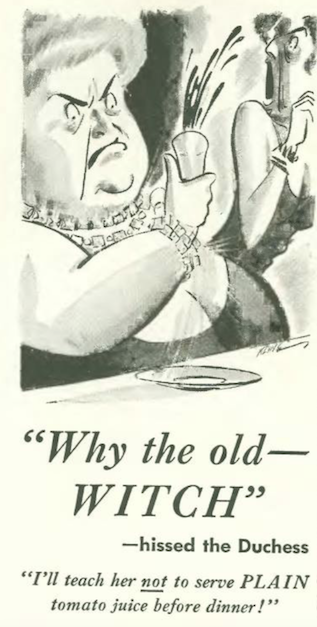
…and if you wanted to maintain that aristocratic pose, you’d better know how to serve your tomato juice, and make sure it is prepared by a “famous French Chef”…
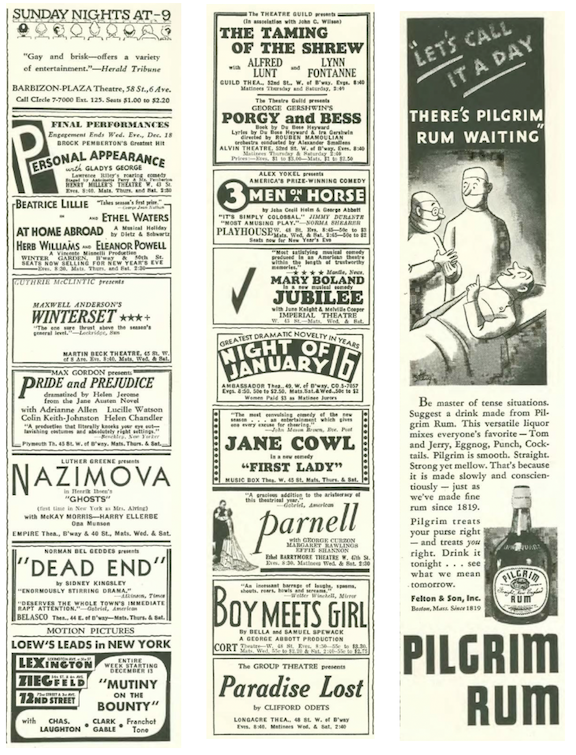
…more libations in the back pages…here’s a sampling of three…there must have been a reason why all of the one-column ads featured mixers and spirits on the top and ads for hotels and apartments on the bottom…
…and before we jump into the cartoons, a brief look at illustrator Mildred Oppenheim, who worked under the pseudonym “Melisse.” Her work was seen in the early New Yorker mostly in ads for Lord & Taylor, however she also did work for others including the makers of Cannon towels (seen below). In 1931 The New York Times described her as “a wicked and telling satirist—almost a feminine counterpart of Peter Arno”…
…Melisse ran a cartoon strip, “Real News of New York…A Preview of What’s New,” in the New York Sun from 1933 to 1935. Melisse seemed to be flying high, but in 1940 she declared bankruptcy. However she quickly rebounded in 1941 with an advertising panel for Orbachs—“Around Town…with Melisse”—which became a nationally syndicated feature:
(strippersguide.blogspot.com)
…in the 1940s Melisse also produced a variety of drawings and paintings, designed mannequins for window and counter displays, and even produced designs for handkerchiefs and other clothing items. But for all her fame as a commercial illustrator, very little is known about her personal life, or what became of her after 1950. According to Alan Jay of the Stripper’s Guide, Melisse was born in Newark in 1905 and died in Miami in 1993, and was briefly married to another commercial artist in the early 1930s. A December 14, 1934 ad for her “Real News” strip in the Pelham Sun featured her photo:
(strippersguide.blogspot.com)
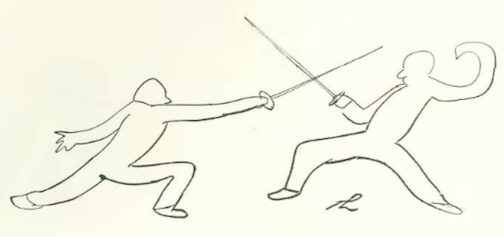
…on to our well-known New Yorker cartoonists, we begin with the stalwart Rea Irvin…
…accompanying part two of a three-part profile of New Deal Administrator Hugh Samuel Johnson was this terrific caricature by Miguel Covarrubias…
…never too early to get ready for winter…spot drawing in the opening pages by Alan Dunn…
…but there was enough summer left for William Steig’s “Small Fry” to enjoy some leisurely pursuits…
…William Crawford Galbraith continued to ply his familiar waters…
…while Al Frueh turned in this gem…
…Helen Hokinson found some lively anticipation at the train station…
…Garrett Price took us to the seashore…
…while Barbara Shermund kept us abreast of current events…
Power broker Robert Moses always made sure he was few steps ahead of any possible opposition to his grand development plans in and around New York City. That included the yacht clubbers along the Hudson River, who were more or less erased from the scene by Moses in one fell swoop.
May 19, 1934 cover by Ilonka Karasz.
The Upper West Side’s Columbia Yacht Club probably thought it was just swell that the city was dumping waste and rock along the shores of the Hudson River, since it eventually created driveway access for members who previously had to access the club via a footbridge over the New York Central’s tracks. What hadn’t occurred to them was that nearly 25 years-worth of infill had also created a new strip of land that extended from 79th to 96th street, land that Moses envisioned as an expansion of Riverside Park (and the abrupt end of the West Side yacht club scene). “The Talk of the Town” explained:
LOCATION, LOCATION…Two views of the Columbia Yacht Club at West 86th Street, circa 1930. The club was razed to make room for Robert Moses’s expansion of Riverside Park. Moses’s ambitious project, which cost twice as much as Hoover Dam, put the train tracks underground and topped the park with the Henry Hudson Parkway. (newyorktoursbygary.blogspot.com/NYPL Digital Collections)HEADS UP…Elsie Henneman dives into the water near the Hudson River Yacht Club, circa 1930. Located at the foot of West 74th Street, the club moved onto a barge at 145th Street to escape Moses’s park expansion plans, but it was eventually banished from the West Side. (Reddit)
* * *
Ode to the Road
We now shift gears to E.B. White, who was poetically inspired by an advertisement in the Herald Tribune that featured Prince Alexis A. Droutzkoy (a member of the exiled White Russian colony in New York) praising the “magic silence” of the new “Dodge Six” automobile:
SILENCE OF THE CAMS…The 1934 Dodge Six. (detail from a vintage ad)
* * *
Führer’s Filmmaker
The ability (or inability) to separate art from an artist’s personal conduct or beliefs has been a particular topic of the last two decades, given the litany of stars who have been “cancelled” despite the quality or importance of their work. The work of German filmmaker Leni Riefenstahl (1902–2003), still debated nearly ninety years after her collaboration with Nazi leaders, demonstrates the fine line many a film historian or critic must walk when assessing the career of an innovative artist (for an American example, see filmmaker D. W. Griffith). Riefenstahl’s 1932 film, The Blue Light (Das blaue Licht), made prior to her Nazi collaborations, was praised for its beauty by American critics, including the New Yorker’sJohn Mosher, when it was released in the U.S. in 1934.
The Blue Light also captivated Adolf Hitler, who saw the attractive and athletic Riefenstahl as an ideal of Aryan womanhood. A subsequent meeting with Hitler would result in Riefenstahl’s controversial 1935 Nazi propaganda film Triumph of the Will (Triumph des Willens). We will explore that film, and Riefenstahl’s role, in a later post.
CAREER MOVE…Clockwise, from top left, Leni Riefenstahl demonstrated her acting ability, athleticism and filmmaking talents in 1932’s The Blue Light (Das blaue Licht); Riefenstahl filming in Nuremberg during the 1934 Nazi Party congress—the footage was used in 1935 Nazi propaganda film Triumph of the Will; working at a film cutting table, 1935; with Adolf Hitler at Nuremberg, 1934. (IMDB/Library of Congress/UTK Cinema Studies/The Irish Times)HI HITLER…Nazi propaganda minister Joseph Goebbels and Adolf Hitler pay a visit to Leni Riefenstahl at her Berlin estate, circa 1937. (Roger-Viollet)
* * *
From Our Advertisers
We begin with more Carl “Eric” Erickson-inspired artwork, here promoting the bygone elegance of transatlantic travel…
…perhaps a bit less upscale but still pretty nice, the “Santa” line of ships operated by the Grace Line between New York and Latin America included air-conditioned interiors paneled with aluminum (a fireproofing measure) and spacious cabins with private baths that faced to outside…
…this ad must have been a happy sight to folks who had to endure more than a decade of bootleg Scotch during Prohibition…
…Smirnoff vodka had its origins in 1860s Russia, capturing two-thirds of the Moscow market by the mid-1880s…forced to leave Russia in 1904 after the Tsar nationalized the Russian vodka industry…Smirnoff relocated to Turkey, then Poland, and then Paris, each time with limited success…at the end of Prohibition the brand relocated once again to a distillery in Bethel, Connecticut, hence this advertisement…
…the habanero pepper has been used to infuse everything from tequila to vodka to whiskey…this particular product was marketed as something new that could be mixed with a variety of spirits or topped up with club soda or ginger ale…
…I include this ad from the maker of Spud cigarettes for its sheer audacity…it claims your mouth will feel dewdrop fresh after an entire day of smoking menthols…
…stunt driver Billy Arnold was one of the “Hell-Drivers” Chrysler employed to tout the safety of its low-priced Plymouths at promotional events…
…including Chicago’s “Century of Progress”…below, a crowd watches Arnold take his Plymouth for a roll and emerge unscathed…
…the folks at Redi-Spred employed a murder theme to promote their “Pâté de Foie”…which foie was used…duck, goose or lord knows what, is not specified…
…the signature is muddled, but this looks like another illustration by Herbert Roese, who never published a cartoon in the New Yorker but sure had its style down, especially Peter Arno’s…
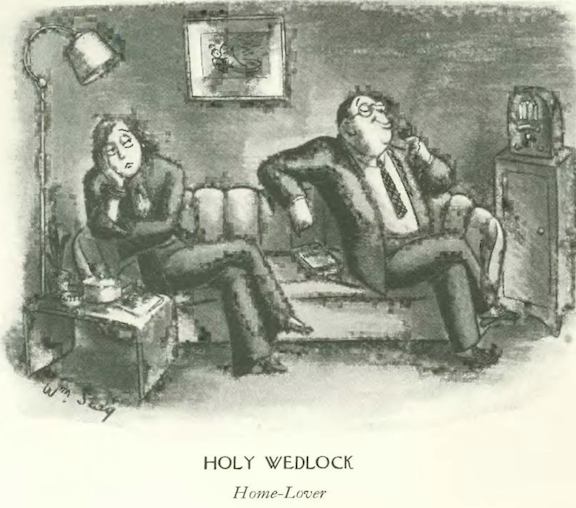
…Harold Ross’s high school friend and cartoonist John Held Jr. was a frequent contributor to the New Yorker from 1925 to 1932 (he also contributed to Life, Vanity Fair, Harper’s Bazaar), but when demand for his Jazz Age cartoons and illustrations fell off in the 1930s, he turned to painting and illustrating children’s books. So it was a surprise to catch this glimpse of Held’s work in a one-column ad promoting a Held-drawn map of New England inns…
…speaking of elusive illustrators, I am often challenged to discover the identities of spot illustrators in the early issues…this one appears to be signed by “Maurice Dreco”…
…the signature on this one looks like “Saphire,” but again, it is not clear…
…but there is no doubt this little gem is by Daniel ‘Alain’ Brustlein…
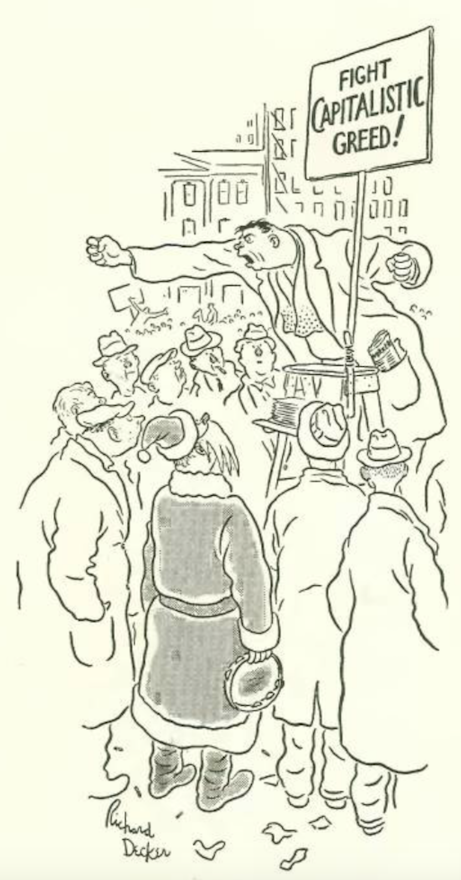
…which leads us to Richard Decker, and a hostage situation gone flat…
…and Decker again, with a back-handed compliment…
…James Thurber was in his familiar world of dogs and battling sexes…
…Mary Petty found some good news on the dentistry front…
…Otto Soglow’s Little King believed more is merrier…
…and we close with William Crawford Galbraith, and a wedding day surprise…
Above: Adolf Hitler at a groundbreaking ceremony for a new section of the Reichsautobahn highway system, 1933. (Bundesarchiv)
Mildred Gilman was one of the highest paid female reporters in the 1920s, interviewing everyone from murderers to heads of state. But when she arranged to interview Adolf Hitler in 1933, the Gestapo got nervous and threw her out of the country.
Feb. 10, 1934 cover by Harry Brown.
Gilman (1896-1994) doubtless sought a modicum of satisfaction when she penned “Made in Germany” for the Feb. 10, 1934 issue. I am including generous excerpts below, which describe the day in the life of an average Berliner named Emil Pfalz, a man who doesn’t question the omnipresent Nazi propaganda and often worries about his ability to keep in step with the new regime.
THERE’S SOMETHING HAPPENING HERE…Berliners (left) and residents of Worms (top) inspect Nazi propaganda that instructed Germans not to do business with Jewish people (on Jan. 24, 1934, the German government banned Jews from membership in the German Labor Front, depriving them of the opportunity to find employment); below, in early 1934 a simulated uprising was staged in Berlin (with people posing as casualties) as part of Nazi maneuvers. Later that summer SS and Gestapo forces would conduct a purge known as “Night of the Long Knives,” eliminating any known or suspected dissenters of the Nazi regime. Hundreds were murdered and many more arrested. (digitallibrary.usc/Wikipedia)GRIM FAIRY TALE…As a loyal citizen, Emil Pfalz was sure to teach his children the Nazi salute. Image from a Nazi propaganda booklet. (British Library Board)
Emil’s story continues as he contemplates his duties as a father and husband in the Third Reich…
…and heeds the call to produce more Aryan babies.
What the Nazis did not want more of was chronically ill or disabled persons. The sick minds of Nazi propagandists produced this image below, which argues that for the same daily amount of reichsmarks you could either support an entire Aryan family or a single mentally disabled person…in 1933 the Law for the Prevention of Hereditarily Diseased Offspring was passed, allowing for the forced sterilization of those regarded as ‘unfit’. In 1939 the regime began killing the disabled (up to 250,000 people).
A final note about the writer, Mildred Gilman. In addition to being a journalist of both daring and flair, she wrote eight novels including the bestseller Sob Sister. In her younger days she was employed as a secretary for New York World columnist Heywood Broun and partied with Dorothy Parker, Alexander Woollcott, and Robert Benchley. She wrote a profile of Paul Robeson for the Sept. 21, 1928 issue of The New Yorker.
Mildred Gilman in 1938.
* * *
Up In Smoke
George Cecil Cowing, known for his whimsical “Boulevardier” column for the Pasadena Star-News, commented on the changing themes adopted by cigarette manufacturers, namely the folks at R.J. Reynolds who abandoned their magician-themed ads for their Camel brand (“It’s Fun to Be Fooled”) for spots featuring endorsements from second-tier society women…
POSH PUFFERS…”Mrs. Thomas M. Carnegie Jr.” (Virginia Beggs) and “Mrs. J. Gardner Coolidge II” (Mary Louise Coolidge) shared their favorite dishes and their love for smoking Camels in these ads, which appeared in The New Yorker in early 1934.
* * *
From Our Advertisers
Appropriately we turn to our advertisers, where we find the Camel brand trying out a new theme that demonstrated their product’s appeal to plainer folks…
…Brown & Williamson’s first national brand, Raleigh, was launched as a premium cigarette in 1928, here marketed with a plain or cork tip (“to please her and save her lips”)…
…in his parody of Camel ads, George Cecil Cowing wrote that he preferred Chesterfields, a big-time brand of mid-century America…
…the makers of White Rock reveled in the newly found freedoms of legalized alcohol…
…the folks at Fisher were sticking with their lavish two-page color ads and what has always been a tiresome double entendre…
…Lord & Taylor took to the skies to promote their “country clothes” to the smart set…
…and cartoonist Herbert Roese, who apparently never published a cartoon in The New Yorker, turned in this very New Yorker-looking illustration for Piel’s…
…on to our cartoonists, we begin with Clarence Day, better known for his Life With Father stories…
…the Valentine’s issue featured several themed cartoons, including these by Richard Decker…
…and John Reehill…
…love was also in the air for Gilbert Bundy…
…while William Crawford Galbraith continued to ply the waters of the creepily lustful…
…and we test different waters with Richard Yardley, a popular editorial cartoonist for The Baltimore Sun…this is the only cartoon he published in The New Yorker…
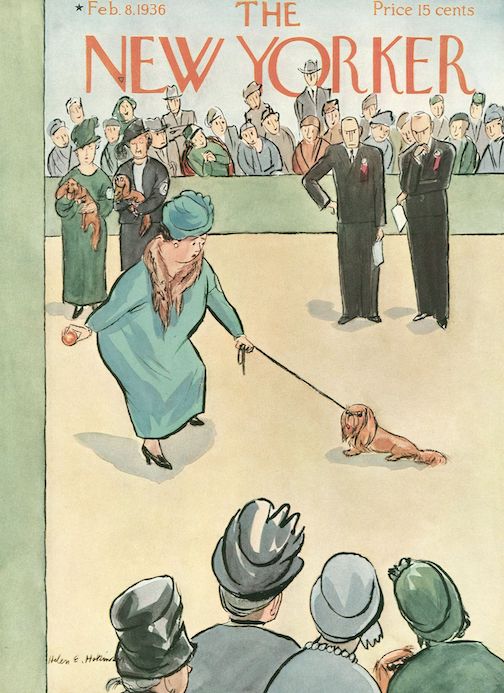
…the Westminster Kennel Club dog show was in town, here tapped by Helen Hokinson to also explore the theme of fatherhood…
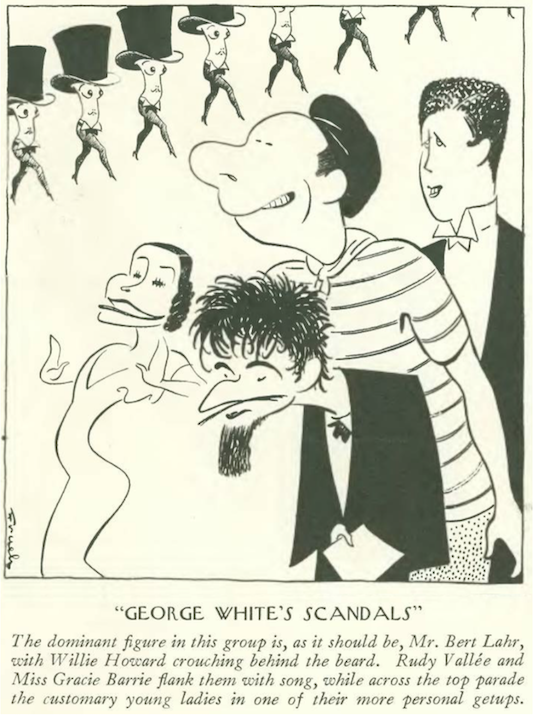
…Perry Barlow was the latest New Yorker contributor to mock the futuristic, aerodynamic style of Chrysler’s Airflow…
…and James Thurber’s “War Between Men and Women” paused as the two sides made preparations for the next battle…