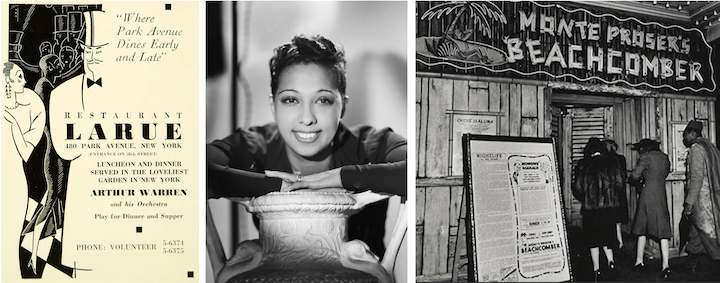
Above: Nightlife correspondent Lois Long checked out the latest clubs as well as old-time favorites in her column "Tables for Two." From left, advertisement for Restaurant Larue; Josephine Baker in 1937; and the entrance to Monte Proser's Beachcomber, an early iteration of the tiki bar that would become ubiquitous in midcentury America. (eBay.com/Wikipedia/mytiki.life)
Part three of Janet Flanner’s profile of Adolf Hitler can be found below, but it’s time to lead with something more pleasant, namely Manhattan nightlife through the eyes of Lois Long.
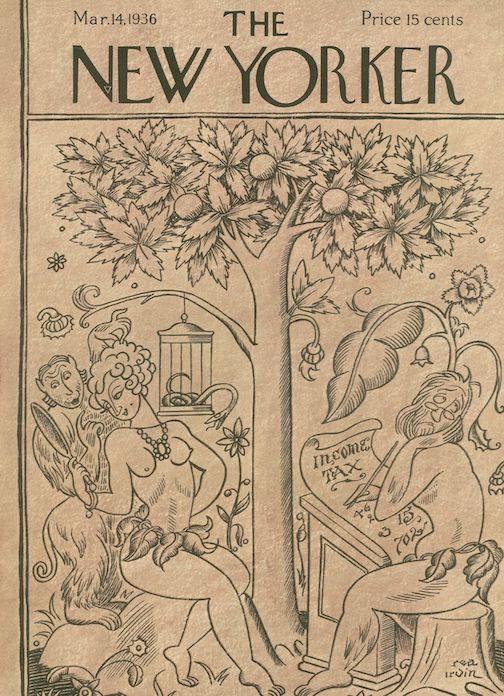
March 14, 1936 cover by Rea Irvin.
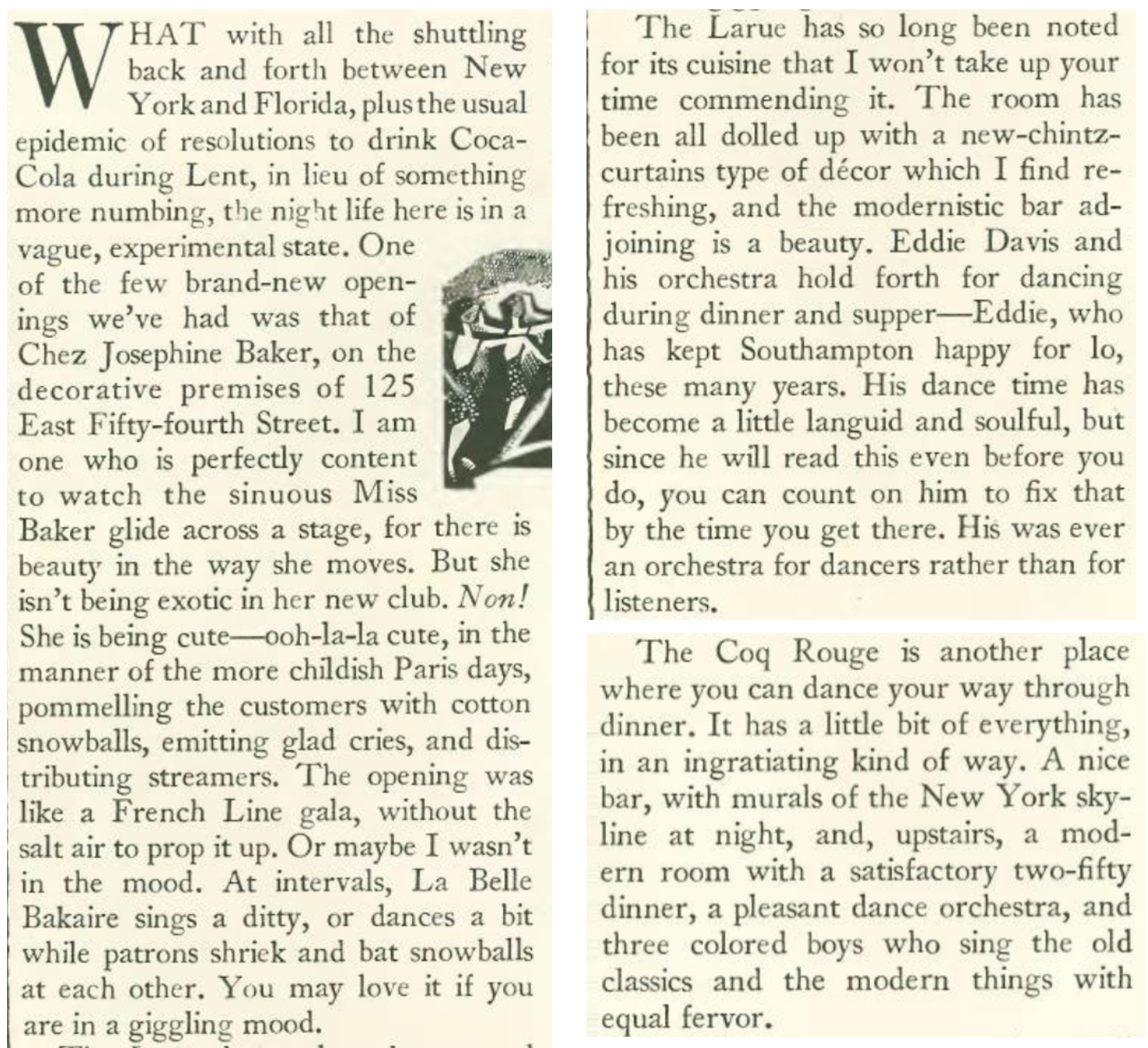
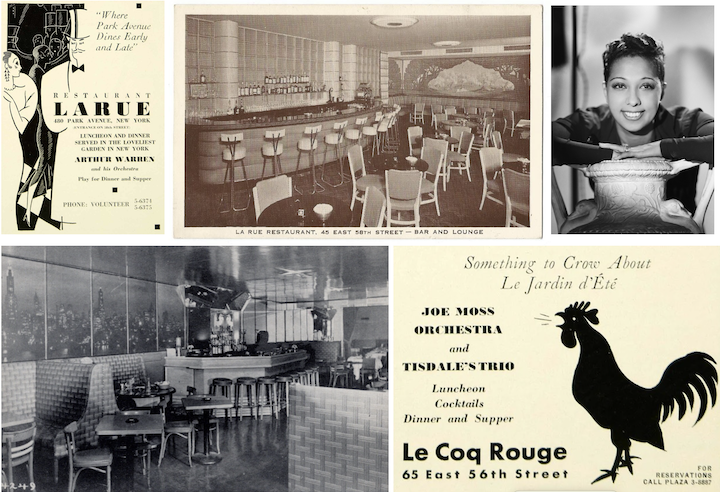
In her “Tables for Two” column headlined “Nostalgic Notes,” Long checked out the new Chez Josephine Baker, the garden-like delights of Restauarnt Larue, and the French-themed Le Coq Rouge.
NEW NIGHTLIFE…Clockwise from top left, ad for Restaurant Larue; 1930s postcard showing interior of Larue; Josephine Baker, proprietor of Chez Josephine Baker; ad for Le Coq Rouge; interior of Le Coq Rouge, 1930s. (eBay/Wikipedia)
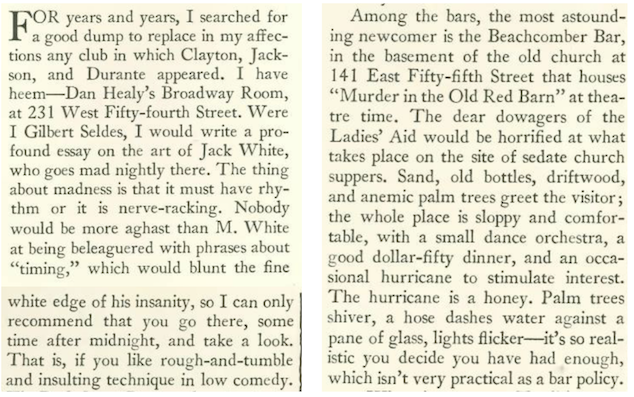
Long also noted the Beachcomber Bar, which originated in the basement of an old church, and actor Dan Healy’sBroadway Room.
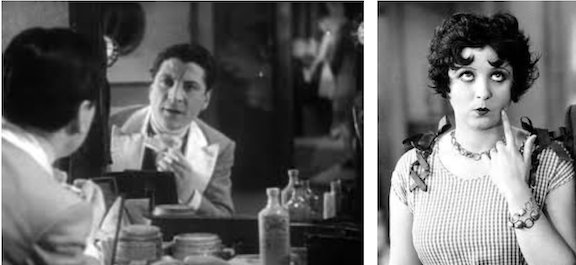
MAN ABOUT TOWN…Dan Healy was a well-known master of ceremonies in the Manhattan nightlife scene. He married the famed “boop-boop-a-doop” singer (and possible Betty Boop inspiration) Helen Kane in 1939—they later opened a New York restaurant together called Healy’s Grill. (whosdatedwho.com/Facebook)
* * *
Bummed Out
E.B. White (in “Notes and Comment”) referred to confessional essays published in Esquire magazine by F. Scott Fitzgerald that frankly described his struggles with alcoholism and the decline of his literary reputation. The confessional tone of the essays (three in all, published in February, March and April 1936) proved controversial at the time.
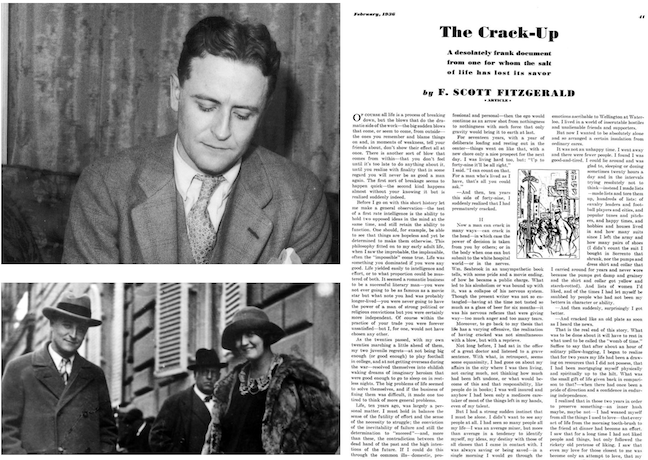
In his first essay, “The Crack-Up,” Fitzgerald famously observed that “the test of a first-rate intelligence is the ability to hold two opposed ideas in the mind at the same time, and still retain the ability to function.”
A CRY FOR HELP?…At left, F. Scott Fitzgerald in the 1930s (top), and, apparently during happier days (below, with wife Zelda); at right, the opening page of “The Crack-Up.” (esquire.com/pbs.org)
* * *
Say What?
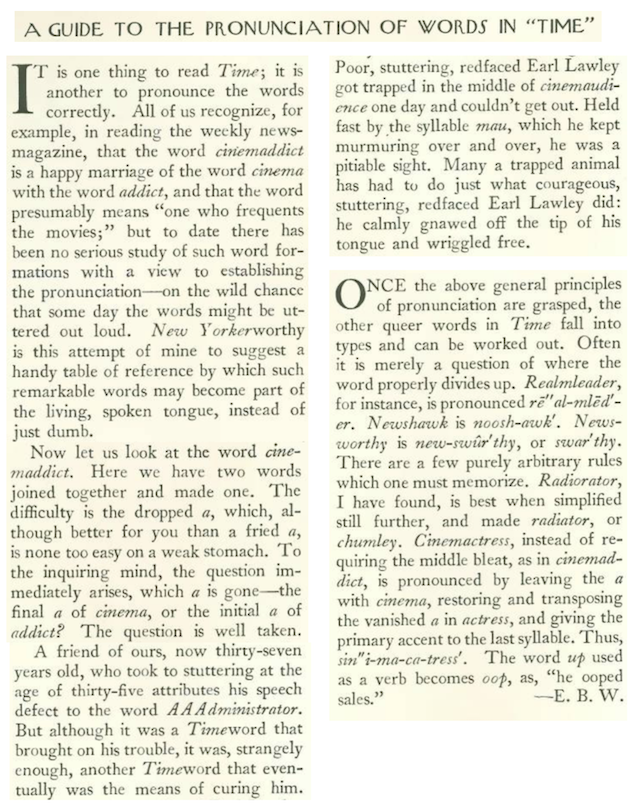
New Yorker writers rarely missed an opportunity to poke fun of Time magazine’s unique ways with the English language. E.B. White again, in an excerpt:
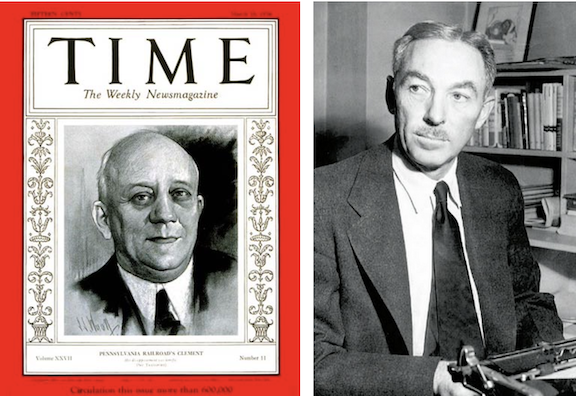
TIMEWORDS…The March 16, 1936 issue of Time, and E.B. White. (time.com/imdb.com)
* * *
Dying to Know
“The Talk of the Town” made brief mention of a rumor regarding Woolworth heiress Barbara Hutton’s health. Reports of her demise were premature; she died in 1979.
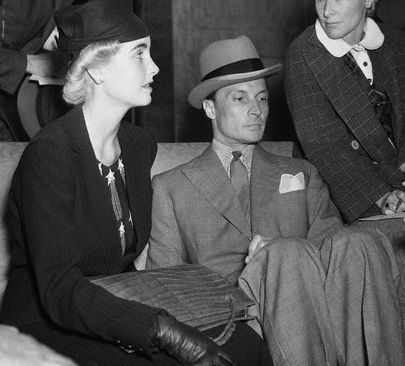
HANGING IN THERE…Barbara Hutton with husband no. 2, Count Kurt von Haugwitz-Reventlow, circa 1936. Hutton married seven times, including a brief marriage to actor Cary Grant, who was husband no. 3. (whosdatedwho.com)
* * *
Part Three
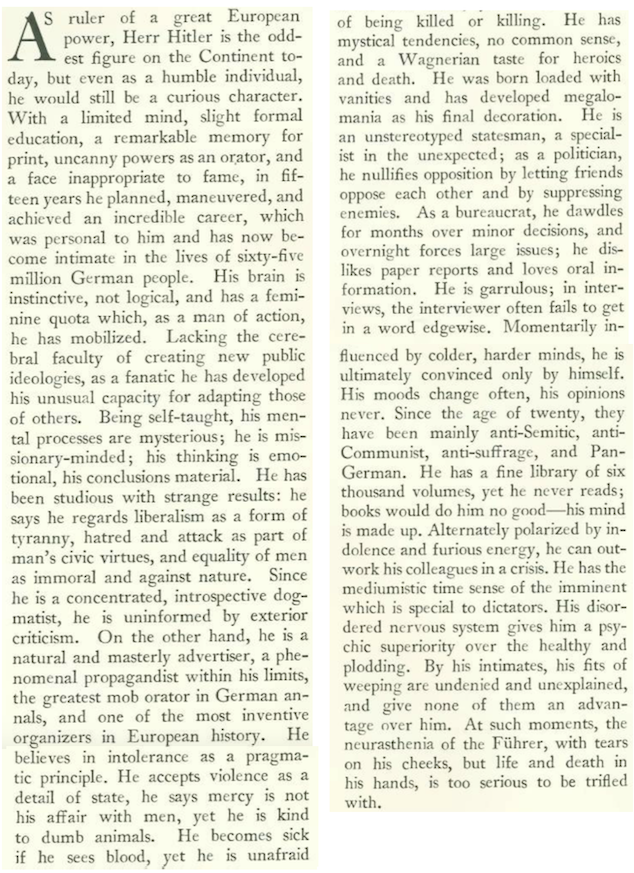
Janet Flanner completed her three-part profile of Adolf Hitler by looking into the man’s mind, if that was even possible.
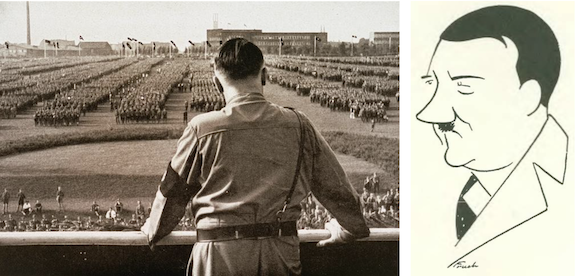
OBEDIENT MASSES…Nazi dictator Adolf Hitler addresses soldiers at a rally in Dortmund, Germany, 1933. (encyclopedia.ushmm.org)
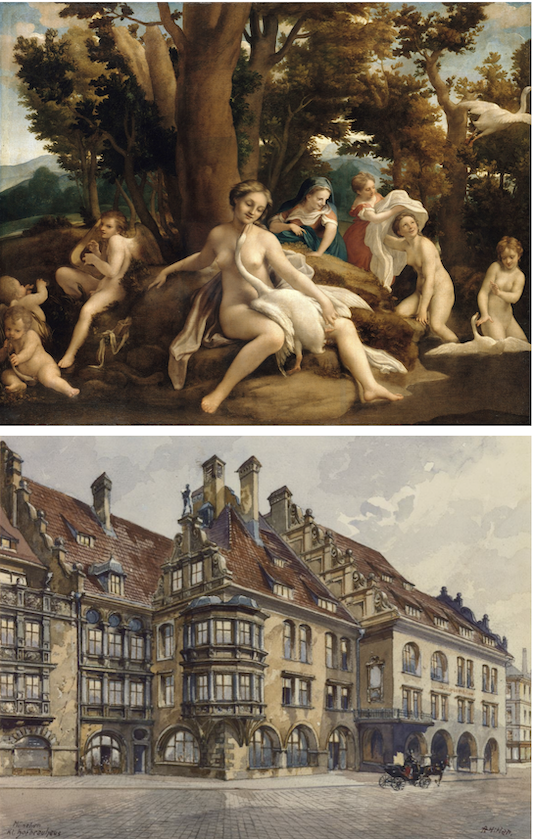
Flanner also noted the Führer’s early days as an unsuccessful painter, and an odd wedding gift to his buddy Hermann Göring:
GOOSED…Top, Adolf Hitler presented a specially painted copy of Correggio’s Leda with the Swan as a wedding gift to Hermann Göring and actress Emmy Sonnemann on April 10, 1935; below, Hitler painted this watercolor during his pre-WWI time in Munich, from May 1913 to August 1914. (Wikipedia)
* * *
China Syndrome
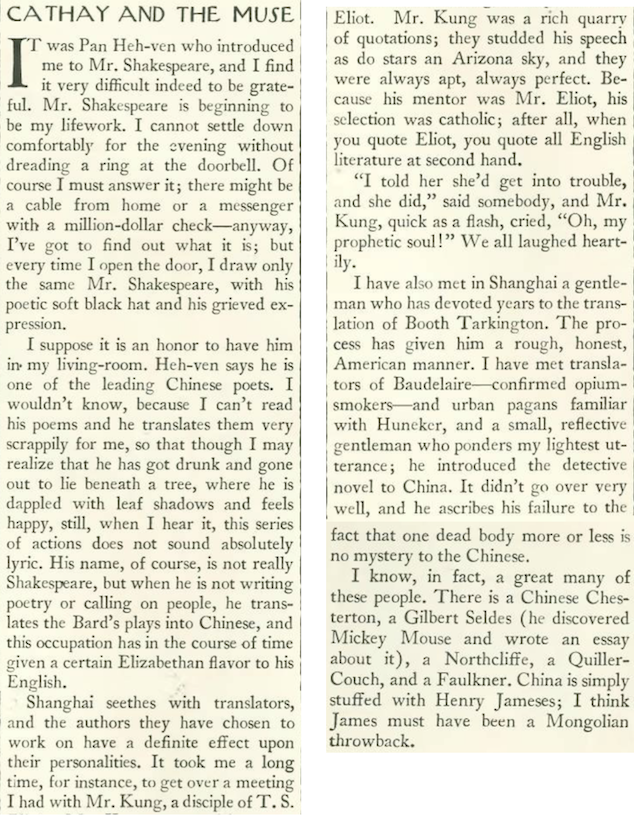
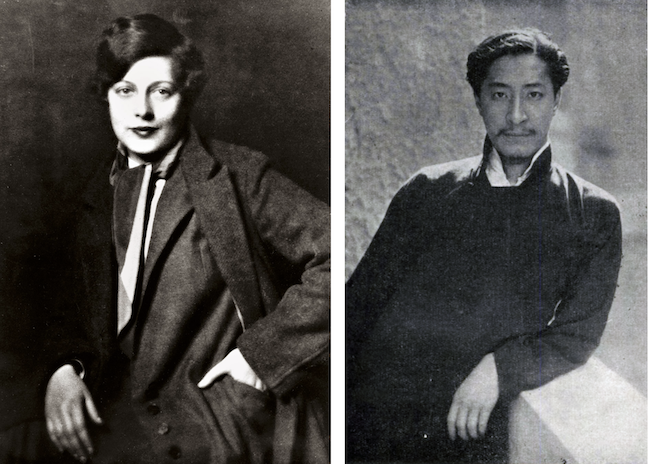
Supporting herself as a writer for The New Yorker, Emily Hahn’s years in Shanghai, China (1935 to 1941) were tumultuous. Living in the city’s red light district, she became romantically involved with the Chinese poet and publisher Shao Xunmei (aka Sinmay Zau) and became addicted to opium. In this excerpted short essay, Hahn described her literary encounters with Shao Xunmei (here referred to as “Pan Heh-ven”) and a passel of translators.
ENOUGH OF THAT…Emily Hahn became romantically involved with the Chinese poet and publisher Shao Xunmei (aka Sinmay Zau), but ultimately left him in order to break her opium addiction. (Wikipedia)
* * *
At the Movies
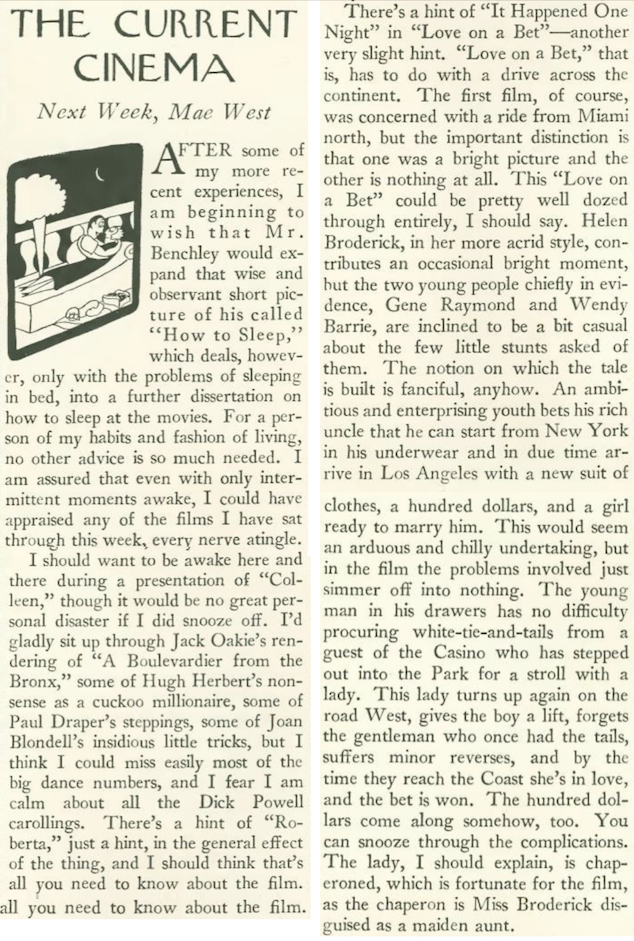
Critic John Mosher did his best to stay awake during the latest fare from Hollywood…
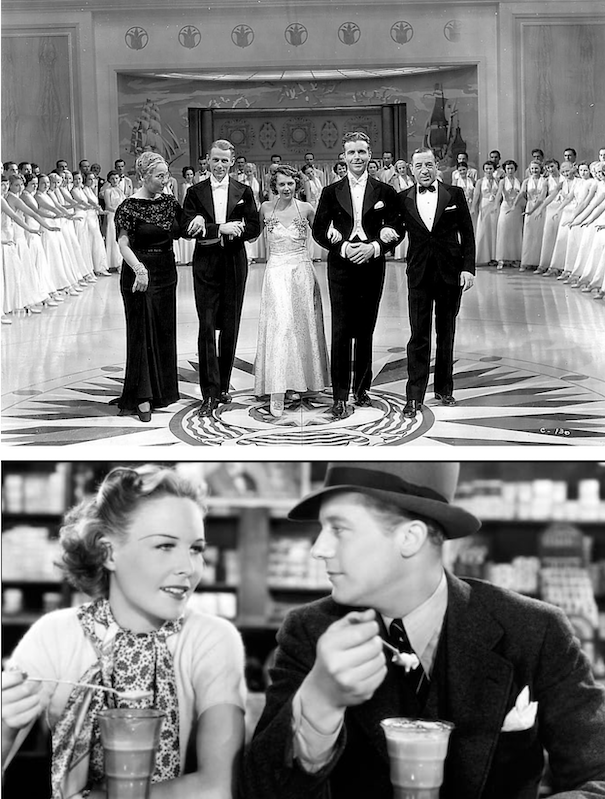
SPECIOUS SPECTACLE…Top, from left, Louise Fazenda, Paul Draper, Ruby Keeler, Dick Powell and Hugh Herbert in Colleen; below, Wendy Barrie and Gene Raymond in Love on a Bet. (cometoverhollywood.com/imdb.com)
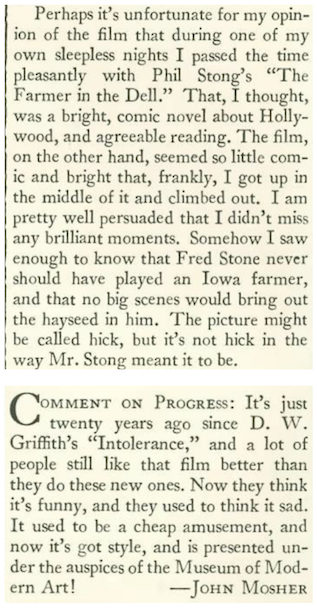
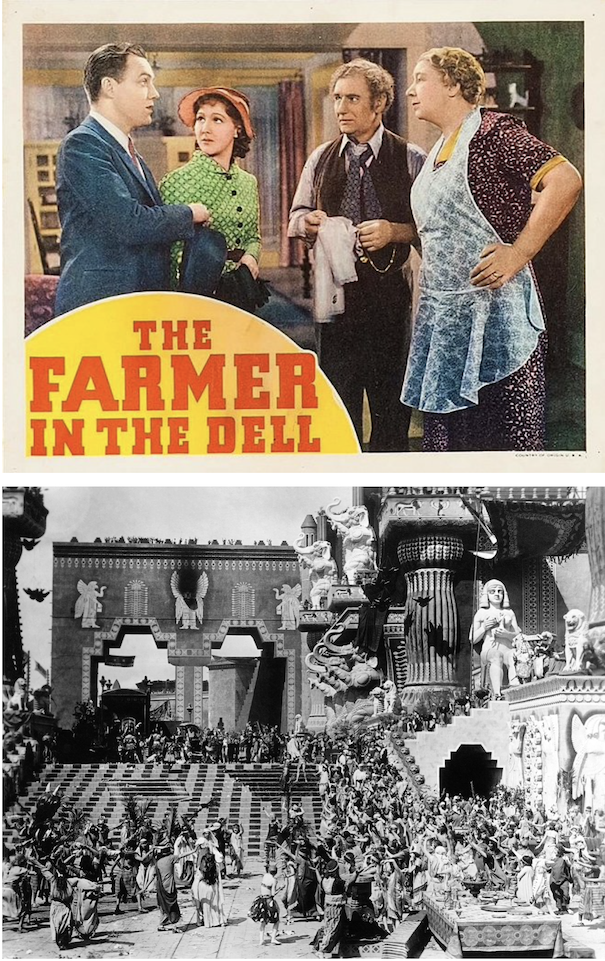
Mosher also commented on a film he walked out on (The Farmer in the Dell), and considered the twentieth anniversary of Intolerance, a 1916 drama that had become a “cheap amusement.”
HO HUM…Critic John Mosher walked out of The Farmer in the Dell, mostly due to boredom—above, Frank Albertson, Jean Parker, Fred Stone and Esther Dale in the romcom The Farmer in the Dell; below, scene from D.W. Griffith’s epic silent film from 1916, Intolerance. (imdb.com/cinemafromthespectrum.com)
* * *
From Our Advertisers
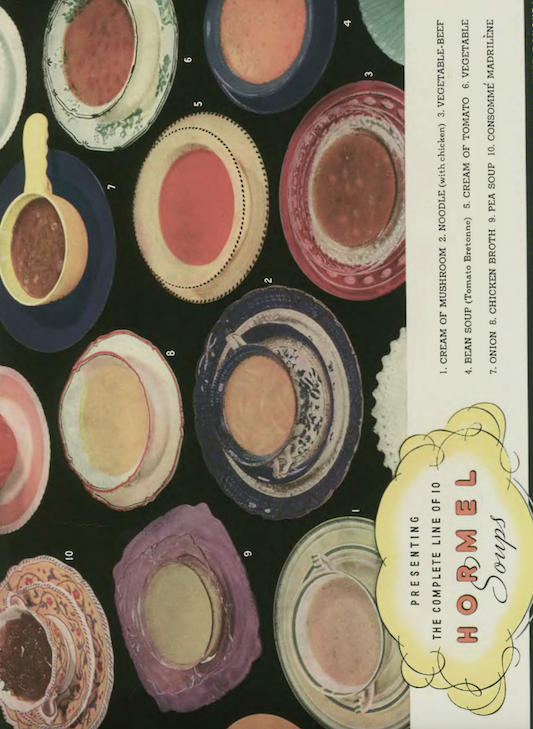
The folks at Hormel once again claimed the inside front cover with this array of soups featured sideways, in full color…
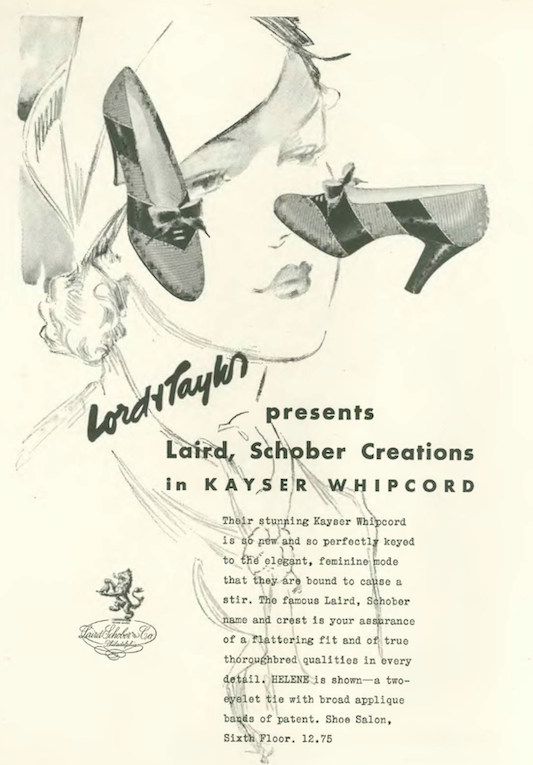
…the illustrator of this Lord & Taylor advertisement hoped to superimpose a pair of shoes over a woman’s face, with less than convincing results…
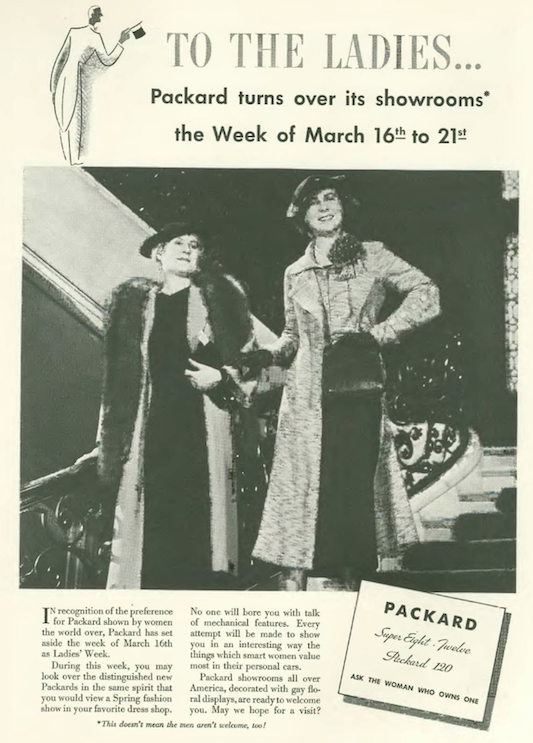
…the makers of Packard automobiles sent a condescending message “To The Ladies,” promising not to “bore them” with talk of mechanical features…
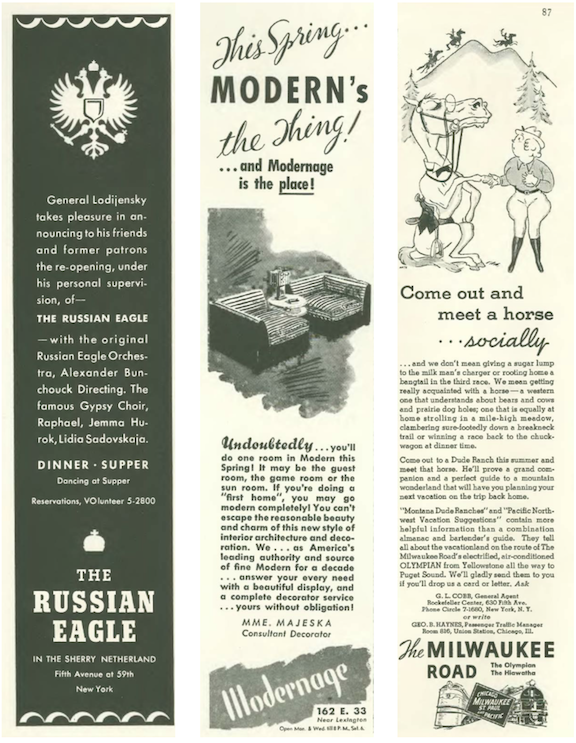
…a sampling of one-column ads featured, from left, the renowned Russian Eagle cafe-bar at the Sherry-Netherland, the Modernage furniture store on East 33rd, and the Milwaukee Road railroad, which offered adventure at such places as a Montana dude ranch…
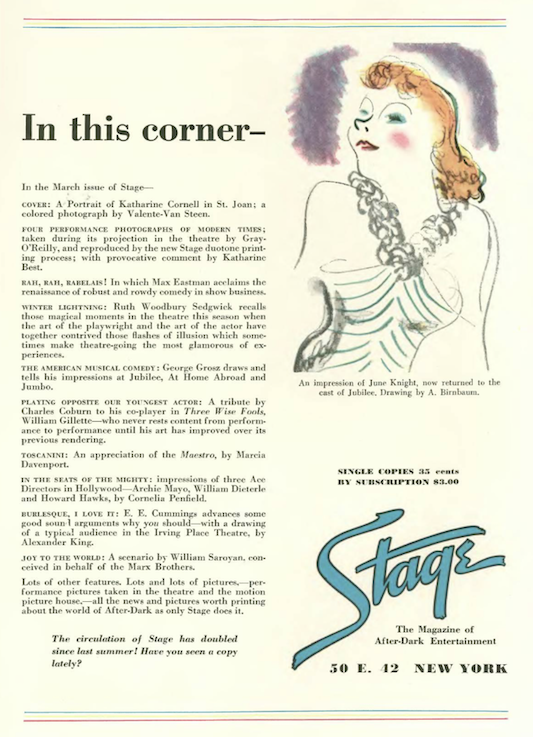
…the inside back cover featured this drawing of actress/dancer/singer June Knight by Abe Birnbaum…
…Birnbaum was a terrific artist, but his portrait of Knight was not terribly flattering…this is what she looked like in the 1930s…
June Knight (1913–1987) circa 1930s. (reddit.com)
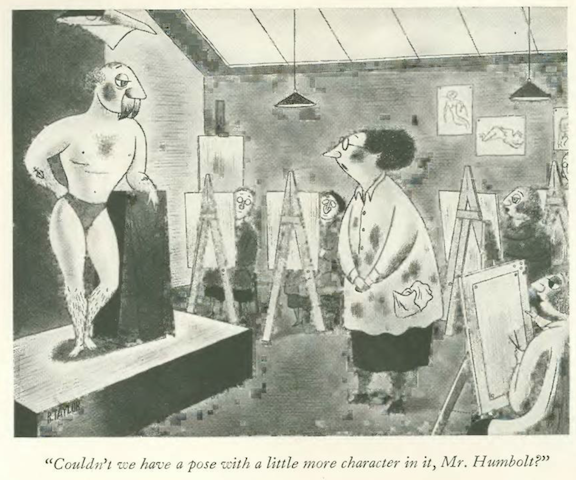
…on to the cartoons, we kick off the issue with Canadian cartoonist Richard Taylor…
…and Taylor again, striking a pose…
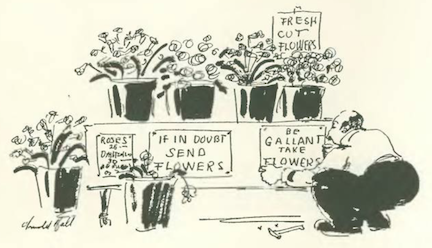
…Arnold Hall contributed an example of floral marketing…
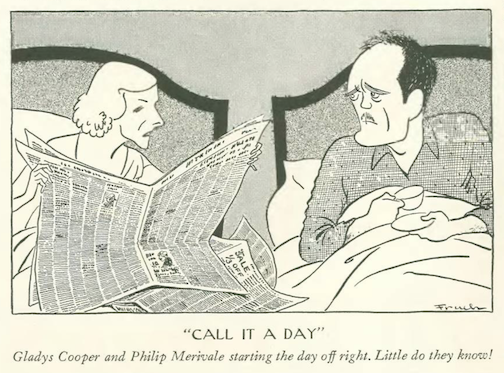
…Al Frueh contributed to “The Theatre” section…
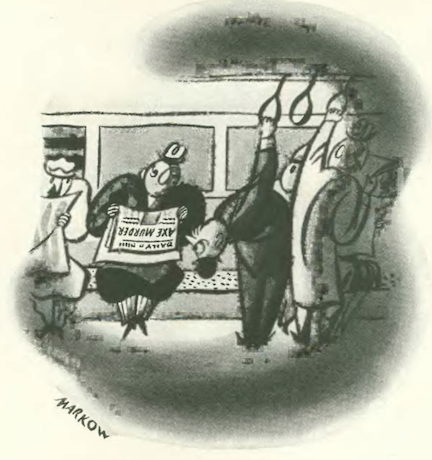
…Jack Markow did some rubbernecking…
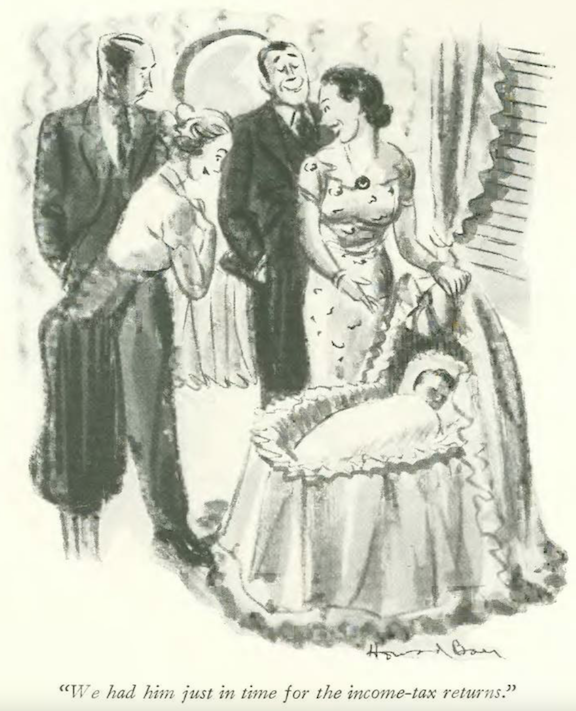
…Howard Baer welcomed a new tax deduction to the world…
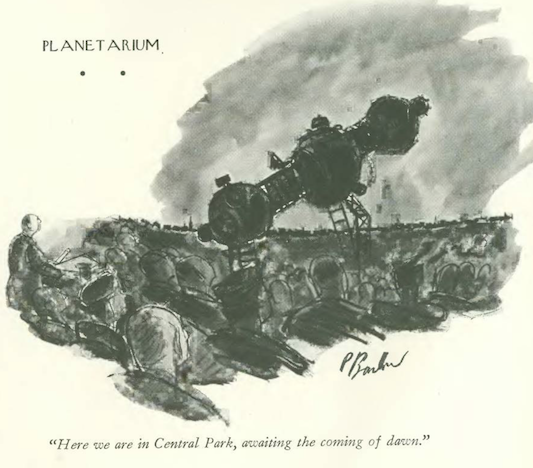
…Perry Barlow drew up impressions of a field trip to the Hayden Planetarium…
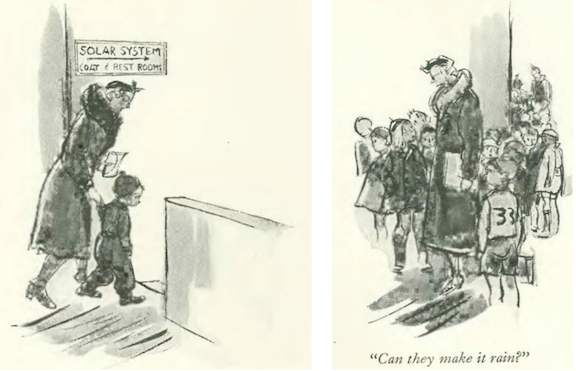
…Barlow again…
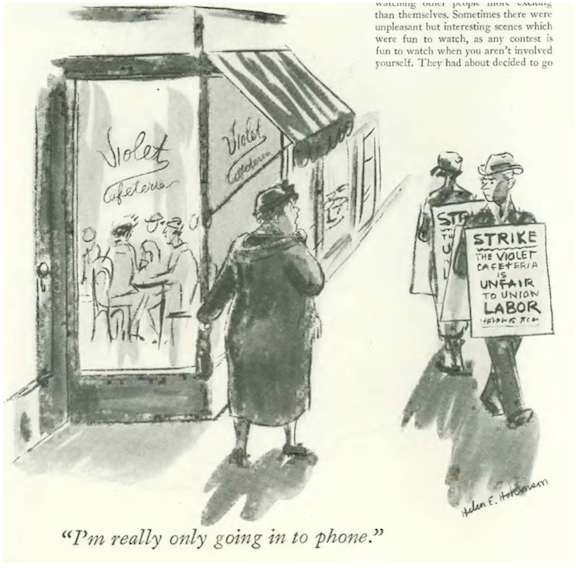
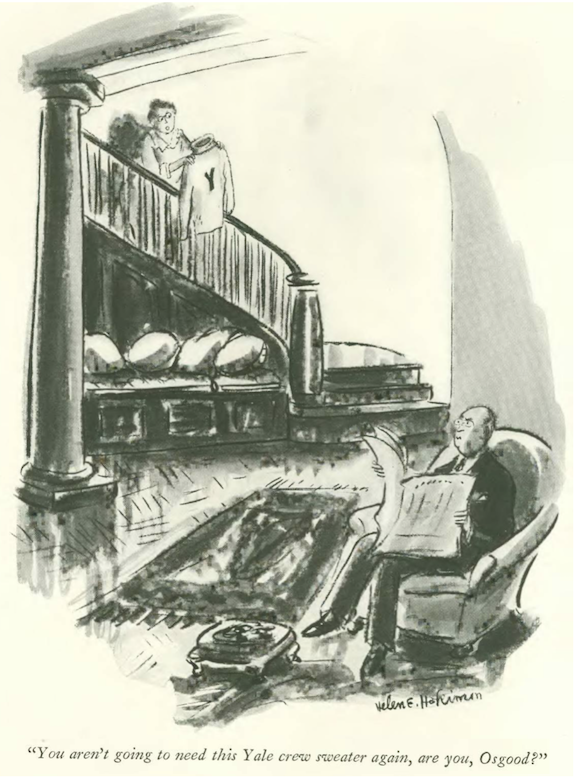
…one of Helen Hokinson’s “girls” explained herself…
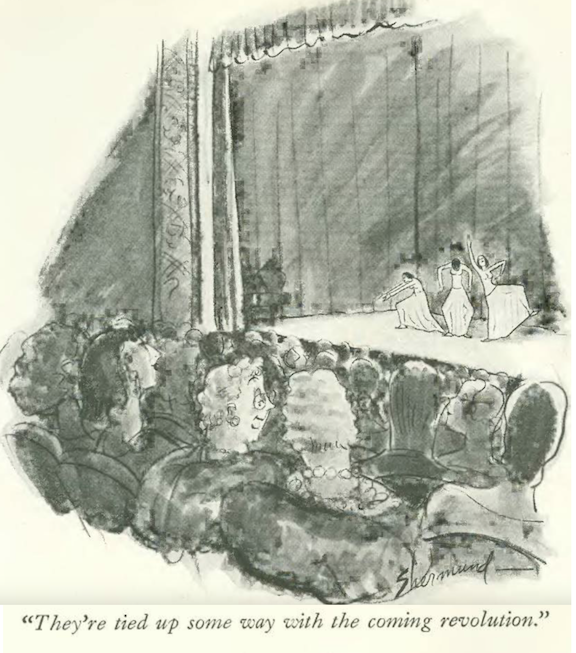
…Barbara Shermund interpreted modern dance…
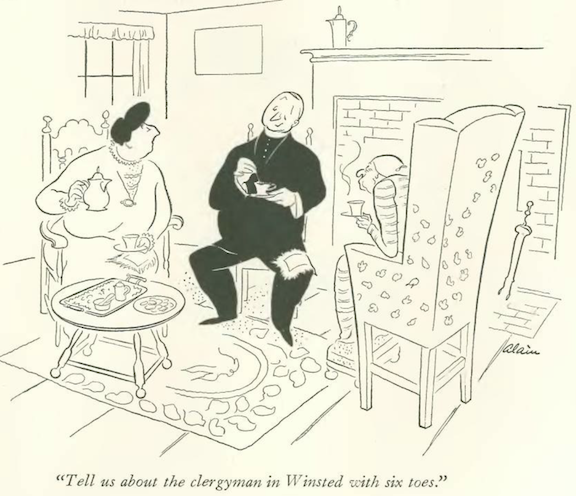
…Alain sought some dish over tea with the vicar…
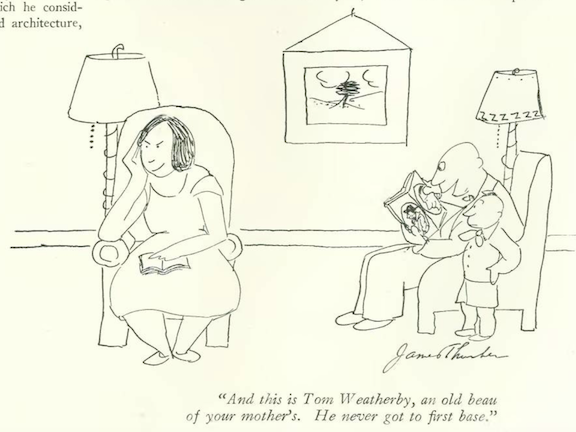
…and we close with James Thurber, and a penny for her thoughts…
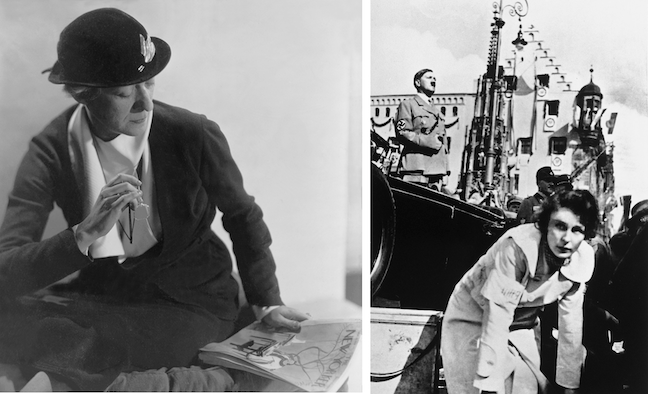
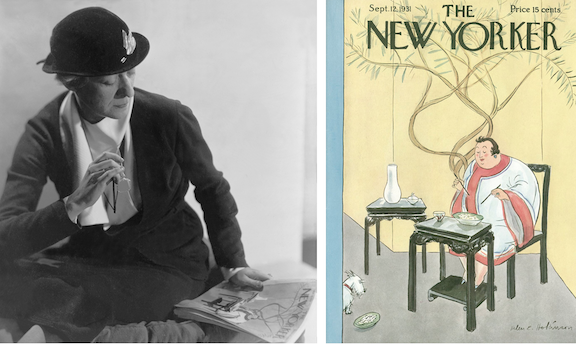
Above, left, Janet Flanner regards the cover of the Sept. 13, 1931 issue of The New Yorker; at right, Adolf Hitler's chosen filmmaker Leni Riefenstahl at Nuremberg's "Shovel Day" parade, 1936. (Library of Congress/Sueddeutscher Verlag)
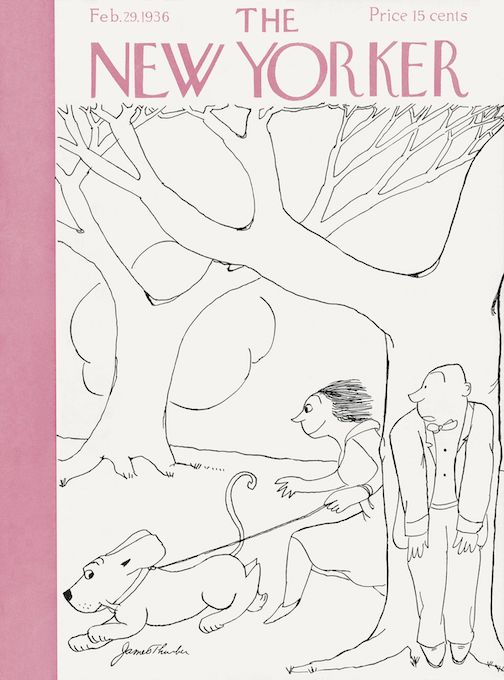
The February 29, 1936 issue stands out from pack not only for its cover—James Thurber’s first—but also for the magazine’s first in-depth look at a man who would spark the deadliest conflict in human history.
February 29, 1936 cover by James Thurber. This was the first of six covers Thurber contributed to The New Yorker. You can see all six covers at Michael Maslin’s Ink Spill, the go-to site for all things Thurber and so much more. UPDATE: Also check Maslin’s post regarding the repeat of this cover on Sept. 4, 2023. Fascinating read!
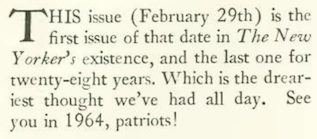
Before we jump in…Thurber’s close friend E.B. White noted another unusual fact about this issue…
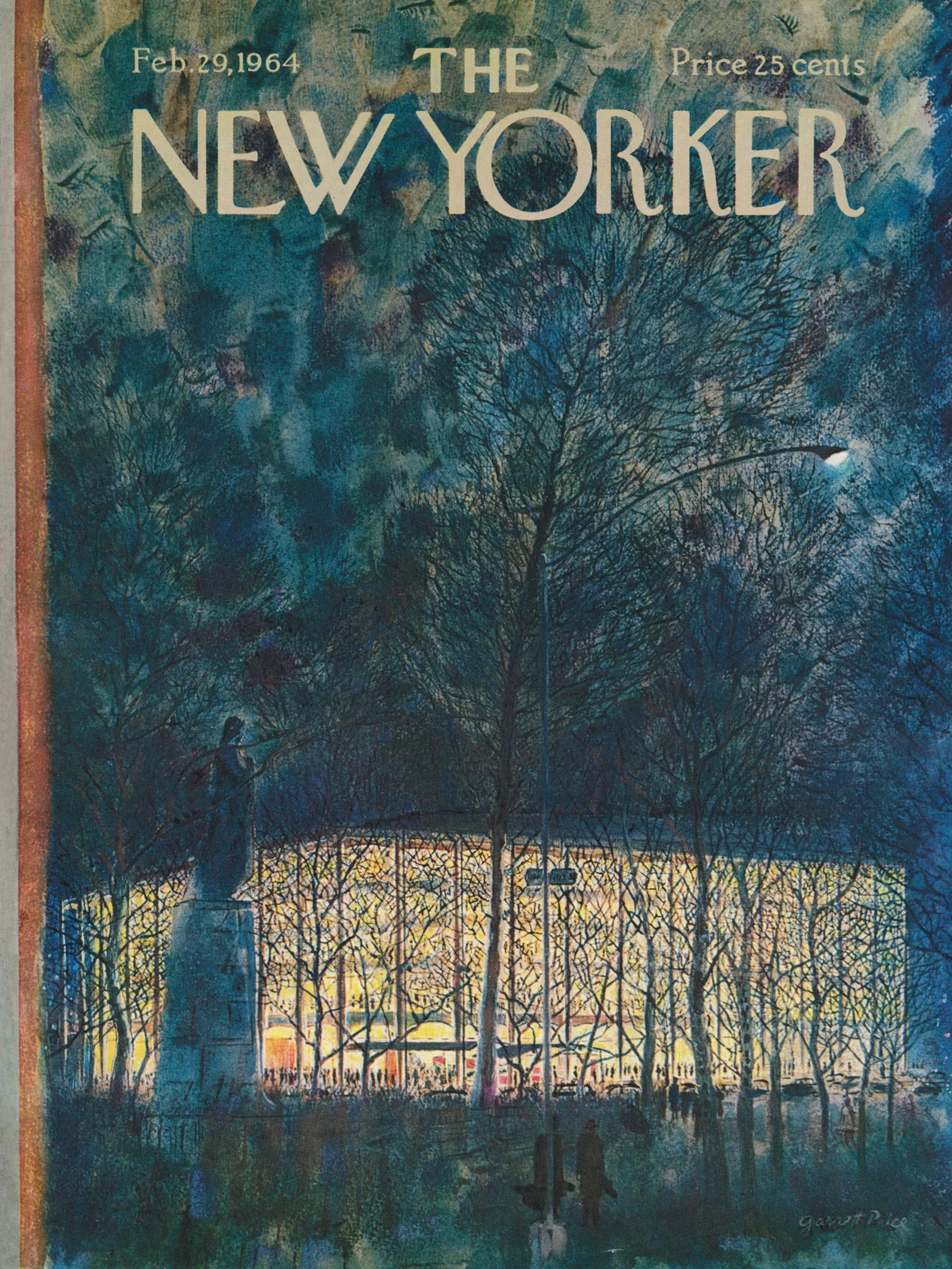
…twenty-eight years later, and a dime extra (cover by Garrett Price)…
* * *
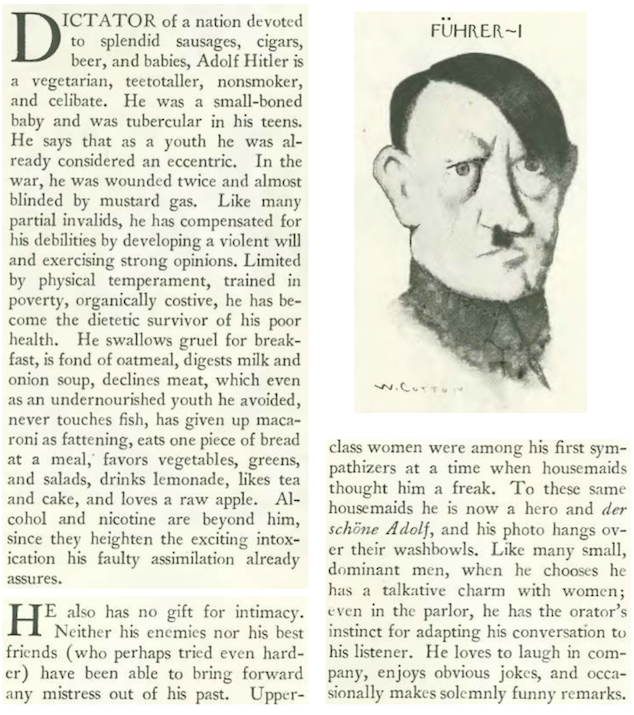
Inside the Feb. 29 issue, The New Yorker’s Paris correspondent Janet Flanner published the first part of a three-part profile on German dictator Adolf Hitler. In this first excerpt she described the Führer’s ascetic diet and personality (caricature by William Cotton).
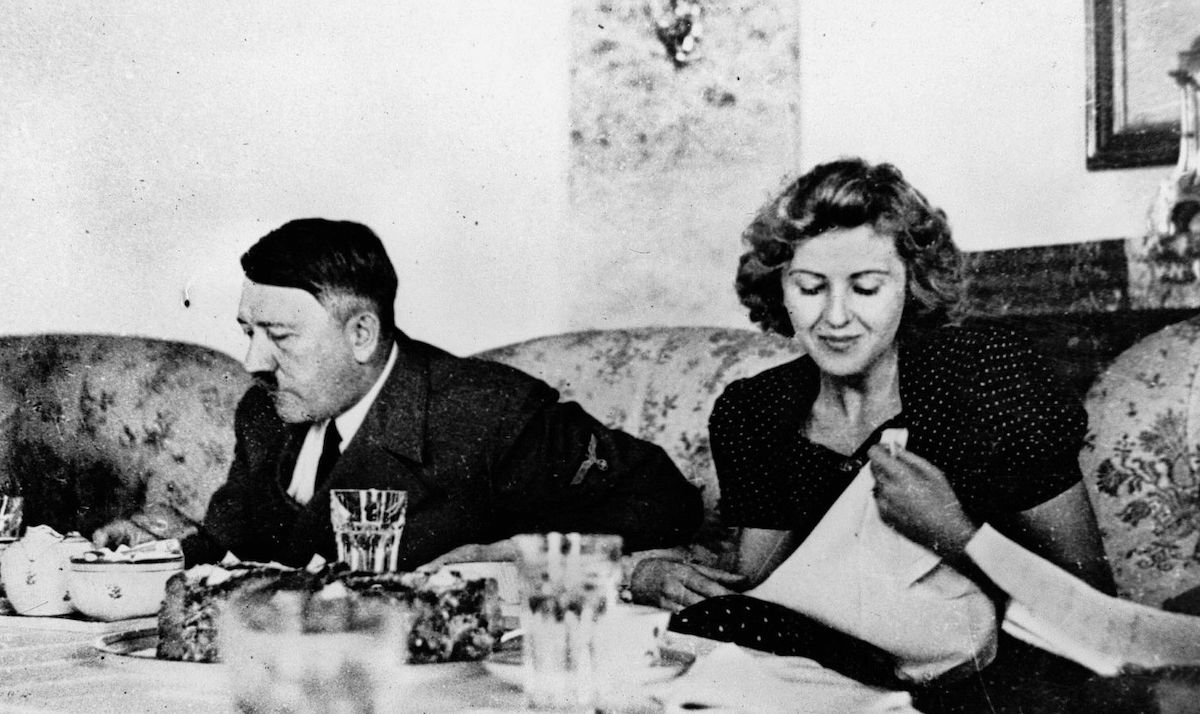
NAZI NUM NUMS….Adolf Hitler with one of his official food tasters, Margot Woelk, during World War II. Woelk later claimed she was the sole survivor from a group of food tasters who were summarily executed by the Red Army after the fall of Berlin. (warfarehistorynetwork.com)
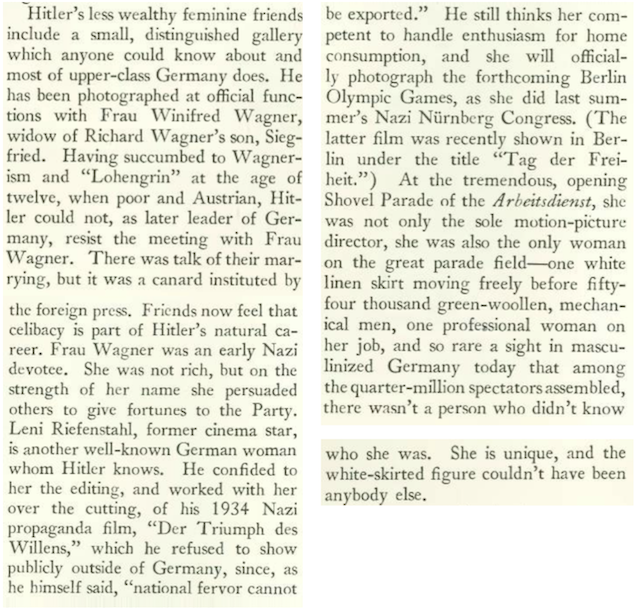
Flanner described Hitler’s relationships with influential women, particularly filmmaker Leni Riefenstahl.
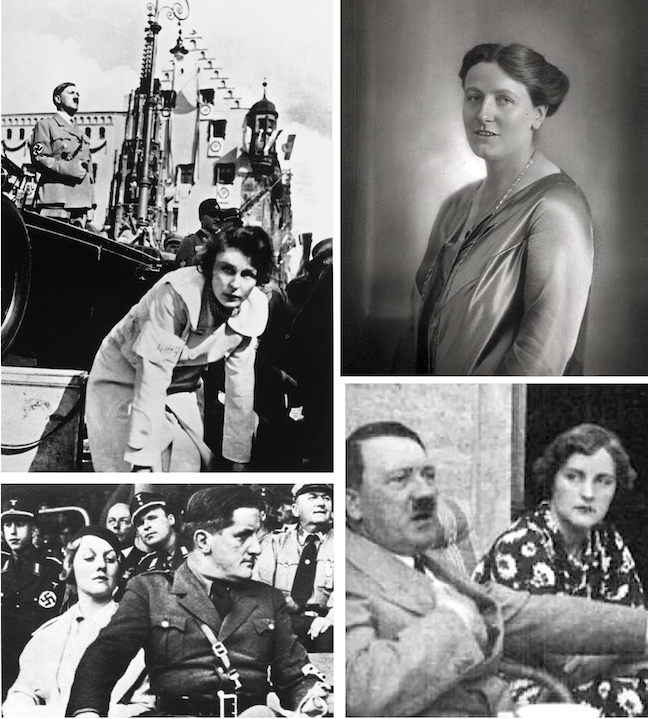
FRIENDS WITH BENEFITS…Adolf Hitler had influential admirers both in and outside of Germany, including, clockwise, from top left, filmmaker Leni Riefenstahl (in the white skirt described by Flanner) at the 1936 “Shovel Day” in Nuremburg; Winifred Wagner, daughter-in-law of composer Richard Wagner, in 1925; Hitler with Unity Mitford, one of six aristocratic Mitford sisters and a fanatical Nazi; Ernst Franz Sedgwick Hanfstaengl with another Mitford sister, Diana Mitford, at a 1934 Nuremberg rally. Diana as married to Oswald Mosley, leader of the British Union of Fascists, and Hanfstaengl was the son of Katharina Wilhelmina Hanfstaengl, a prominent Munich art publisher who helped finance Hitler’s rise to power. (Sueddeutscher Verlag/Wikipedia/historyreader.com)
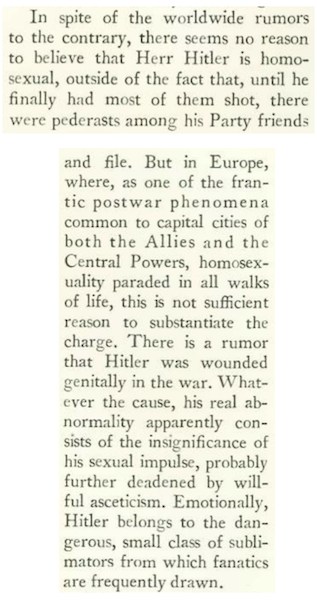
Flanner concluded the piece with a look at Hitler’s sexuality, which seemed non-existent, and drew an ominous conclusion about his personality type.
EXPENDABLE…Ernst Röhm with Adolf Hitler in 1933. Although Hitler knew Röhm was gay, he also valued Röhm’s leadership and organizational skills, that is until his presence proved a liability. Röhm was murdered by the SS in 1934 during the “Night of the Long Knives.” (Wikipedia)
As part of a centenary series, The New Yorker’s Andrew Marantz recently looked at Flanner’s profile of Hitler, noting that she was “neither an antifascist, like her friend Dorothy Parker, nor a Fascist, like her friend Ezra Pound; she was against crude bigotry, but she was not the world’s greatest philo-Semite.”
* * *
Lamour Amour
In his “Notes and Comment,” E.B. White pointed out the challenges of expressing physical beauty over a non-visual medium like radio:
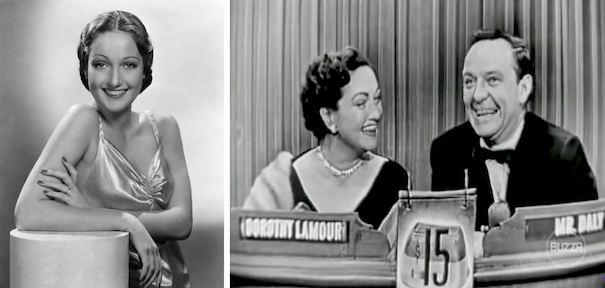
TELEGENIC…Hopefully E.B. White managed to see Dorothy Lamour on the “television waves… bumping along over the Alleghenies.” At left, publicity photo of Lamour from 1937; at right, Lamour appeared as a mystery guest on What’s My Line?, Feb. 20, 1955, seen here with host John Daly. In later years Lamour was a guest on a number of television shows, ranging from Marcus Welby, M.D. to Remington Steele. (Wikipedia/YouTube.com)
* * *
Shadow Plays
Morris Bishop (1893-1973), a noted scholar of the Middle Ages as well as a writer of light verse, offered up these lines after screening early silent films at the Museum of Modern Art. The screenings were curated by Iris Barry to showcase MoMA’s new film library and to advance the study of film as a serious art form.
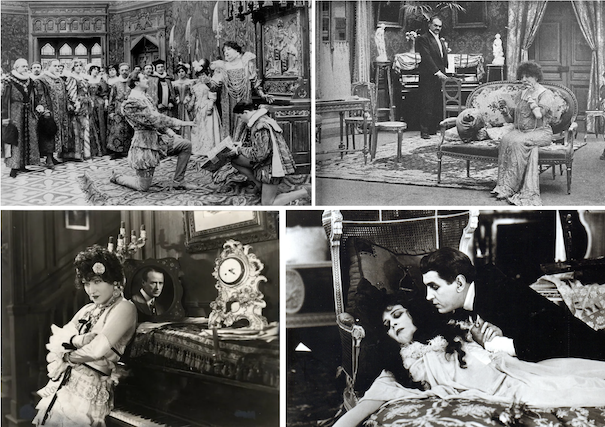
TIME CAPSULES…The Museum of Modern Art was a pioneer in the study of film as a modern art form. Among the films screened at MoMA in 1936 (clockwise, from top left): famed stage actress Sarah Bernhardt as Queen Elizabeth in the Les Amours de la reine Élisabeth (The Loves of Queen Elizabeth) with Lou Tellegen, 1912; Bernhardt in the film Camille (La Dame aux camélias) with André Calmettes, 1911; Theda Bara’s 1917 take on Camille, in a scene with Alan Roscoe; Gloria Swanson in Zaza, 1923. (Wikipedia/imdb.com/YouTube.com)
* * *
A Reporter’s Chops
With so much attention given to James Thurber as a humorist, it is easy to forget that he was an experienced journalist, and that he could apply his considerable gifts as a writer to narrative non-fiction. For the Feb. 29 “A Reporter at Large” column, Thurber penned “Crime in the Cumberlands.”I can’t do it justice through excerpts, but I highly recommend giving it a read as a prime example of Thurber’s skills as a reporter.
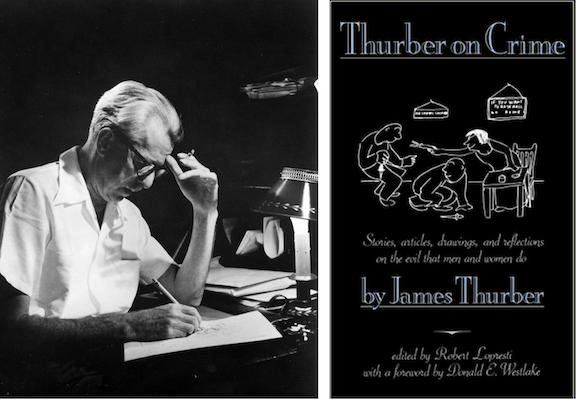
SERIOUSLY SERIOUS WRITER…You can find both humorous and not-so-humorous crime stories (and drawings, of course) in 1991’s Thurber on Crime, edited by Robert Lopresti. “Crime in the Cumberlands” is included in the collection. (jamesthurber.org/barnesandnoble.com)
* * *
At the Movies
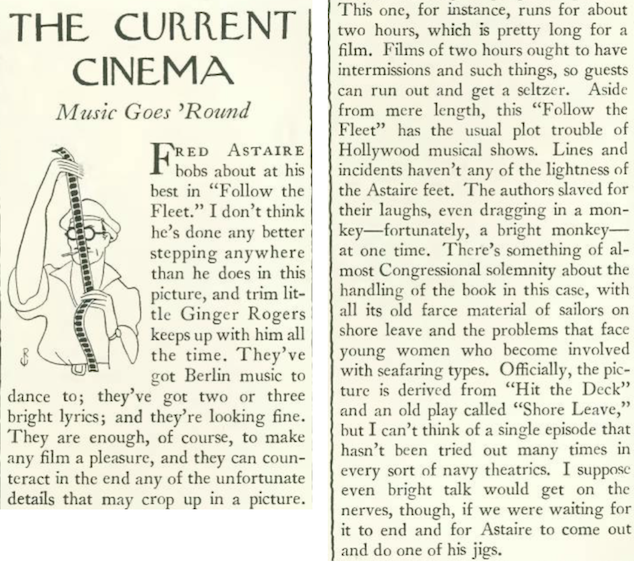
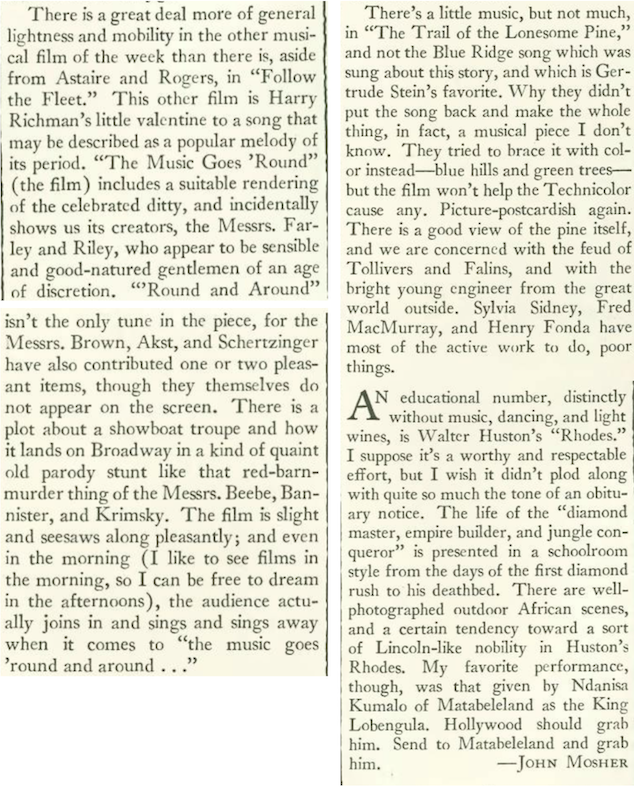
Not so serious were the films being churned out by Hollywood, including the Fred Astaire/Ginger Rogers toe-tapper Follow the Fleet, set to an Irving Berlin score that featured the hit “Let’s Face the Music and Dance.” Critic John Mosher was on board for the ride.
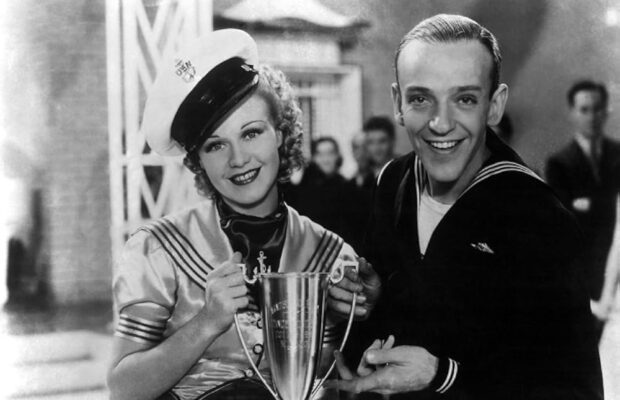
GOOD CLEAN FUN…Dance partners “Bake” Baker (Fred Astaire) and Sherry Martin (Ginger Rogers) find love during shore leave in Follow the Fleet.(Toronto Film Society)
Bandleader Harry Richman, well known in the New York nightlife scene of the 1920s and 30s, showed his acting chops in The Music Goes ‘Round…
I CAN SING TOO…Rochelle Hudson and Harry Richman in The Music Goes ‘Round. (imdb.com)
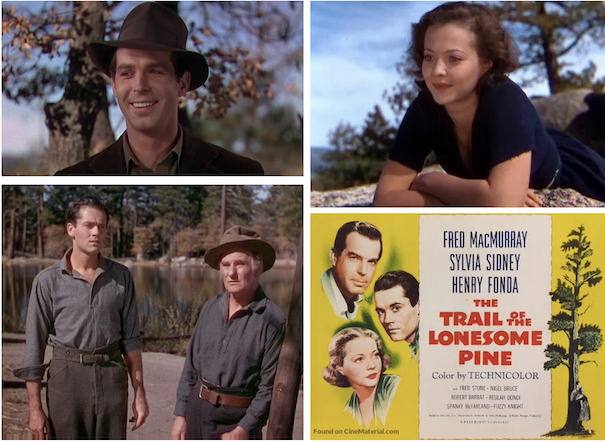
…Fred MacMurray, Sylvia Sydney, Henry Fonda and Fred Stone appeared in living color in The Trail of the Lonesome Pine–it was just the second full-length feature to be shot in three-strip Technicolor and the first to be shot outdoors in Technicolor…
LIFELIKE…Clockwise, from top left: Fred MacMurray; Sylvia Sydney; a Paramount movie poster; Henry Fonda and Fred Stone.(moviesalamark.com/imdb.com)
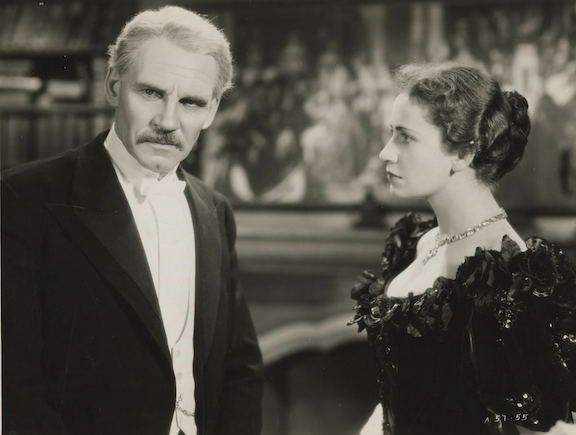
…the 1936 film Rhodes (aka Rhodes of Africa) featured the massive acting talents of Walter Huston and Peggy Ashcroft; not surprisingly, the subject matter of the film has not aged well…a 2015 review in The Guardianis headlined: “Rhodes of Africa: only slightly less offensive than the man himself”…
COLONIAL KLINK…Walter Huston and Peggy Ashcroft in Rhodes.(imdb.com)
* * *
From Our Advertisers
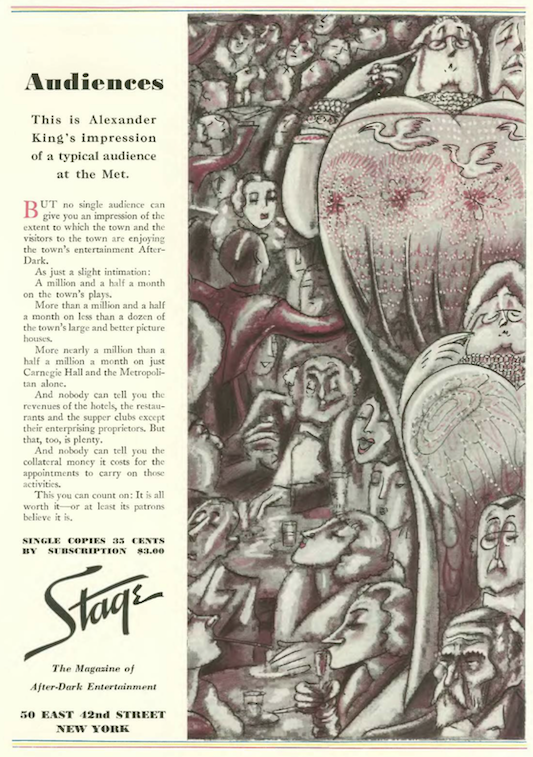
We begin with a Stage magazine ad from the inside front cover, featuring an illustration by Alexander King…
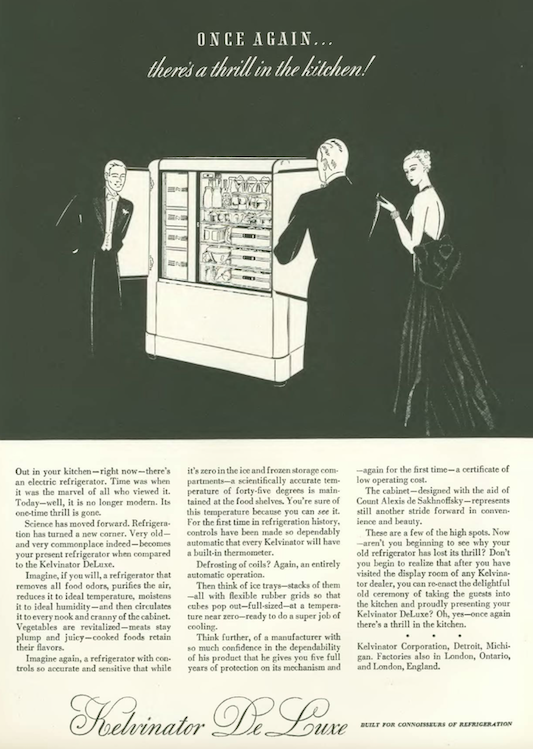
…only new-money swells would be seen doing this…old money wouldn’t dare enter the kitchen, unless they needed to sack the cook…
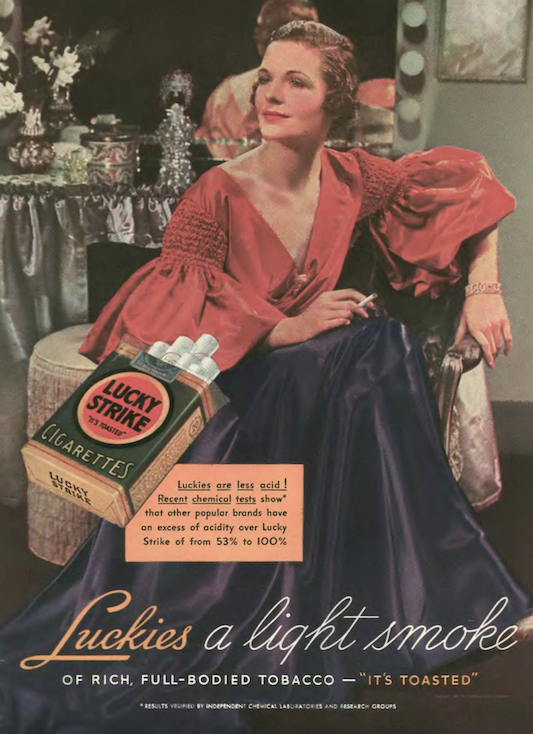
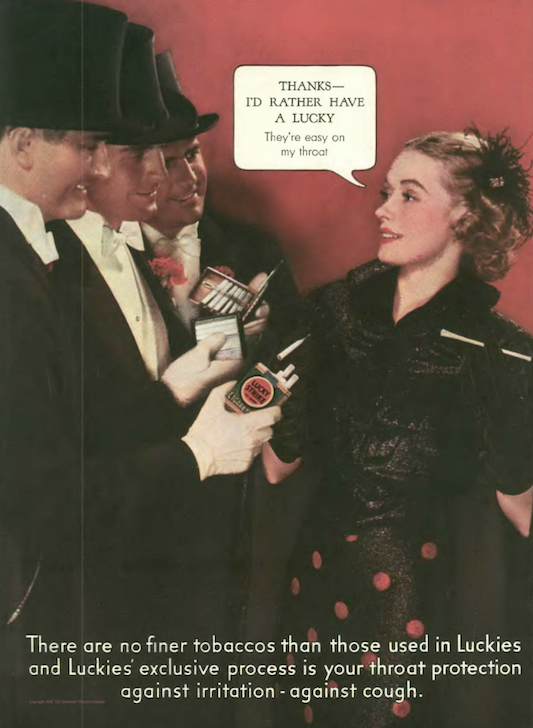
…on the back cover of the Feb. 29 issue you would find this elegant woman taking a break from her vanity to enjoy a “toasted” Lucky…
…we join our cartoonists, starting with this spot by Richard Taylor…
…Garrett Price got stuck over the frozen falls…
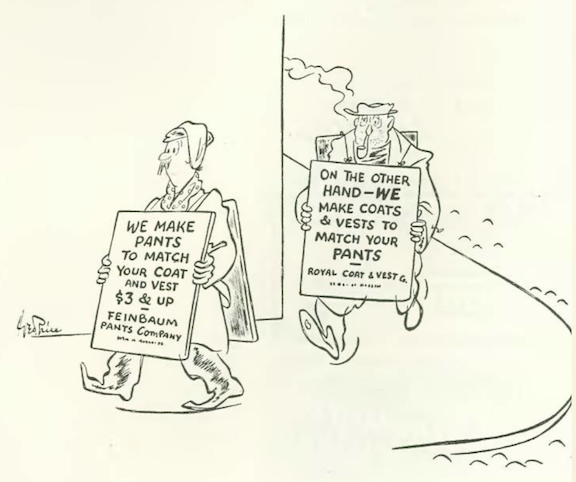
…George Price drew up a sandwich board competition…
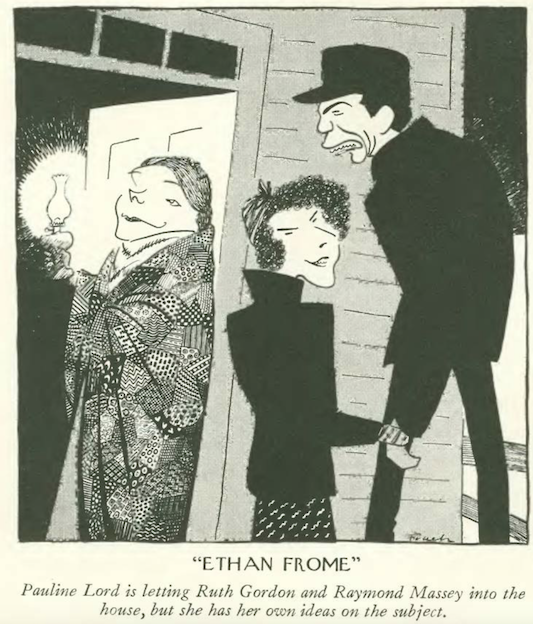
…Al Frueh continued to illuminate “The Theatre” section…
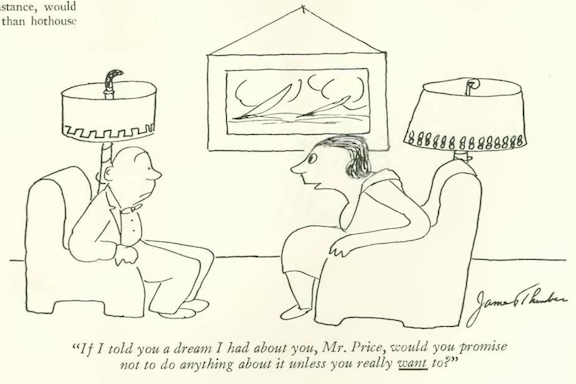
…James Thurber posed a loaded question…
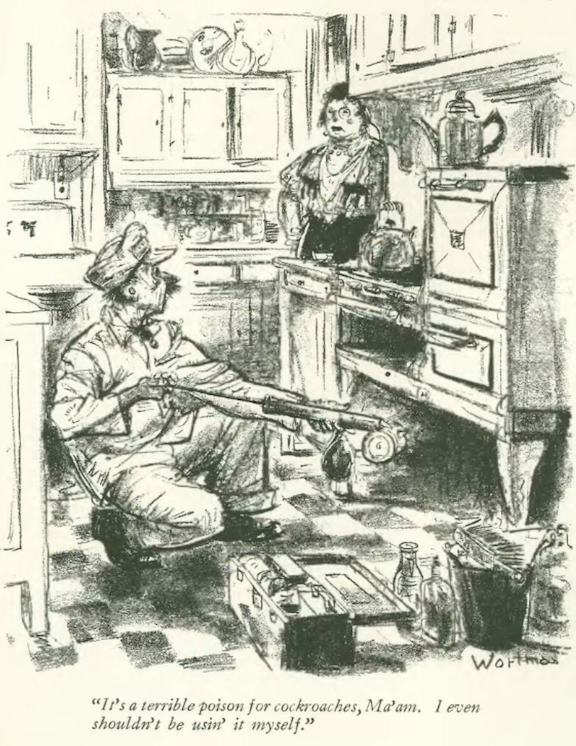
…Denys Wortman got down to some debugging…
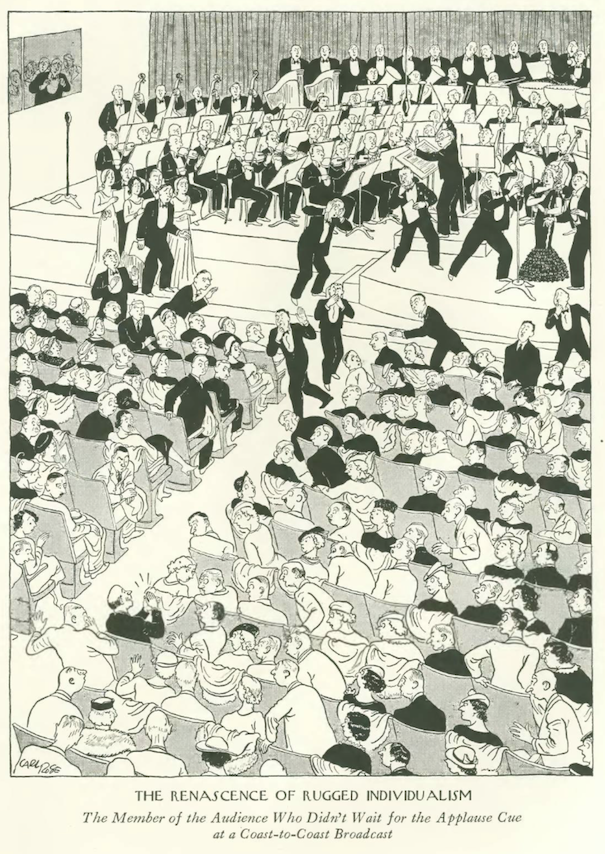
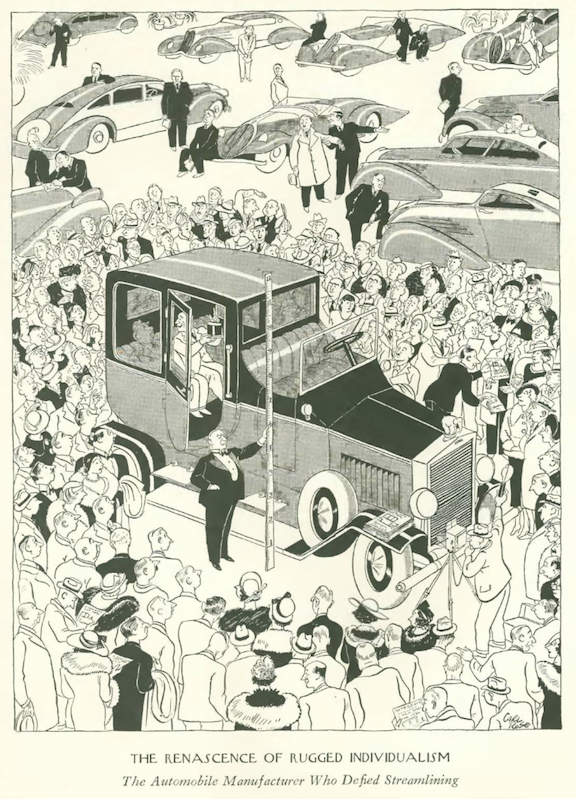
…Carl Rose offered up another example of rugged individualism…
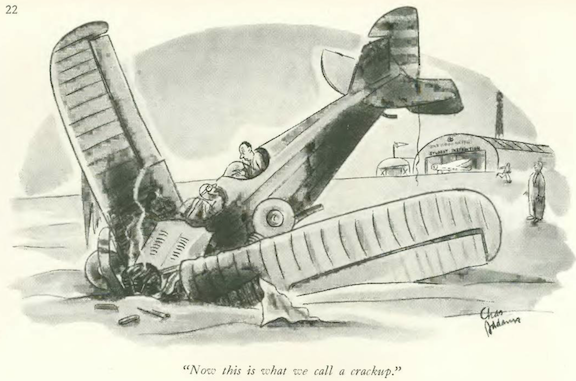
…Charles Addams came down to earth…
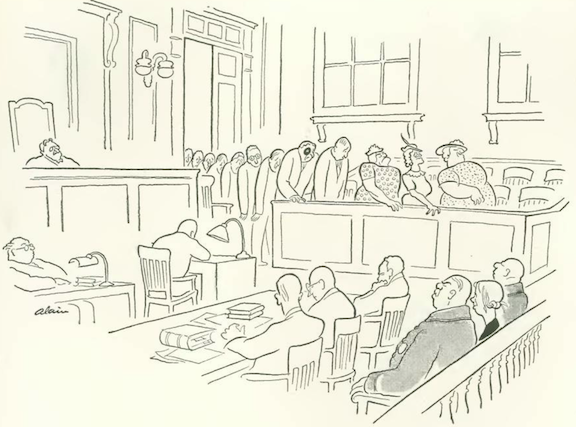
…Alain illustrated a case of jury tampering…
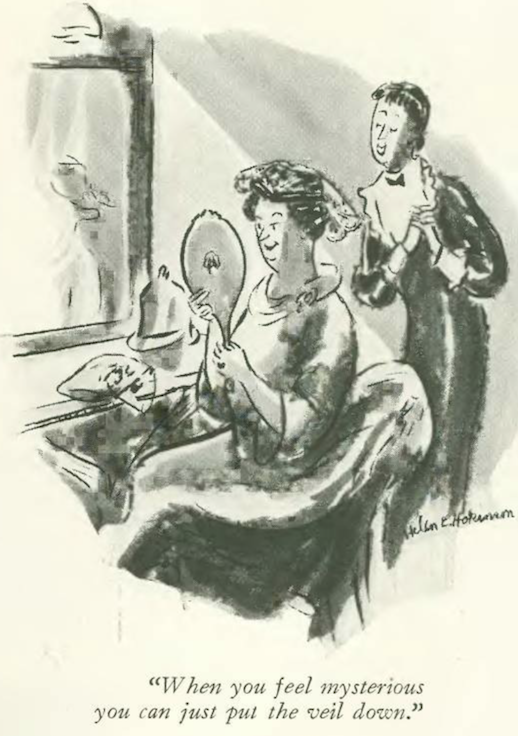
…Helen Hokinson demonstrated the allure of a netted hat…
…and Hokinson again, doing some early spring cleaning…
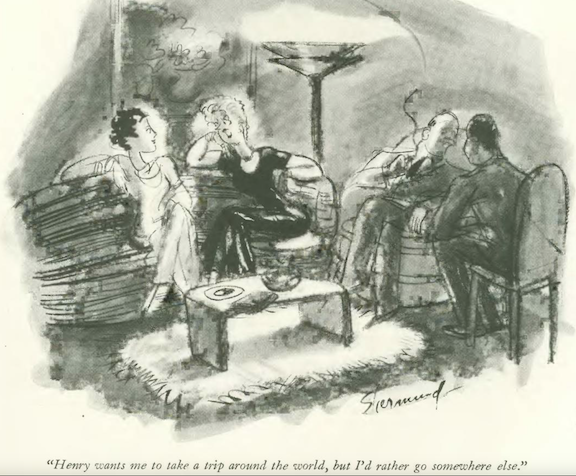
…and Barbara Shermund explored the idyll of wanderlust…
…and before we go, here is the New Yorker cover—by Helen Hokinson, Sept. 12, 1931—that was the object of Janet Flanner’s attention…
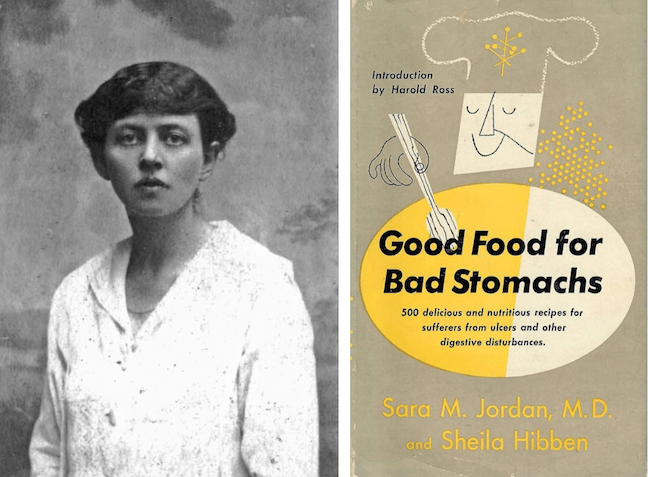
Above: Sheila Hibben became The New Yorker's first food critic in 1934. She also wrote several cookbooks, including Good Food for Bad Stomachs, a book that was suggested by New Yorker founder and editor Harold Ross. Hibben was a pioneering advocate for American regional dishes, and despised food snobbery (she wanted to banish the word "gourmet" from the English language). (Wikipedia/Amazon)
Long overdue is a look at The New Yorker’s first food critic, Sheila Hibben, who wrote frankly about the dining scene in her restaurant reviews and in her column “Markets and Menus.” Decades ahead of her time, she drew attention to America’s regional dishes, persuading readers to embrace the comforts of humble, practical recipes during the lean years of the Depression and the Second World War.
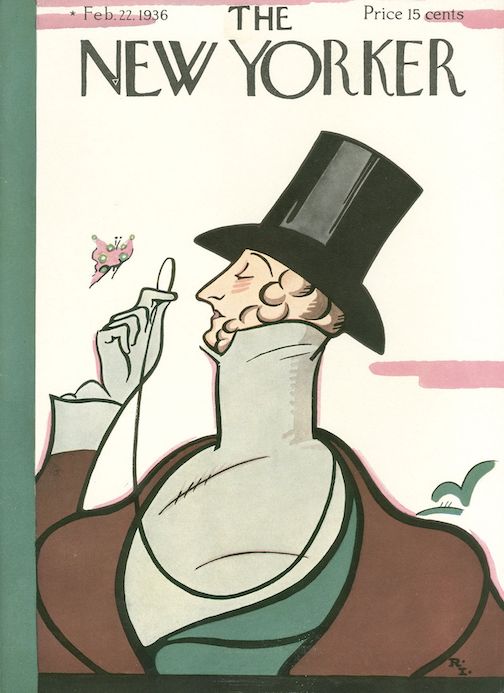
Eleventh anniversary cover by Rea Irvin, February 22, 1936.
Born Cecile Craik, Hibben (1888–1964) detested food snobbery, and through her pioneering work “persuaded housewives to be proud of their American culinary identity, to embrace traditional regional cuisines, and to reject fancier fare for the sake of fashion,” observed Meaghan Elliott in her 2021 dissertation at the University of New Hampshire.
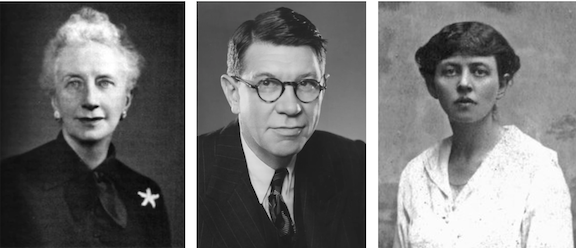
In addition to her “Markets and Menus” column and restaurant reviews, Hibben also wrote several books including Good Food for Bad Stomachs, which was inspired by New Yorker founder and editor Harold Ross. Plagued by ulcers and discouraged by his limited diet, Ross encouraged his gastroenterologist, Sara Murray Jordan, to write a cookbook with Hibben. Good Food for Bad Stomachs was published in 1951, with a laudatory foreword by Ross, who unfortunately did not have long to enjoy the recipes, dying of heart and lung problems that same year.
DYSPEPTIC DIETER Harold Ross brought together the talents of his gastroenterologist Sara Murray Jordan, left, with his magazine’s food critic, Sheila Hibben, to publish Good Food for Bad Stomachs. (Wikipedia/The New Yorker)
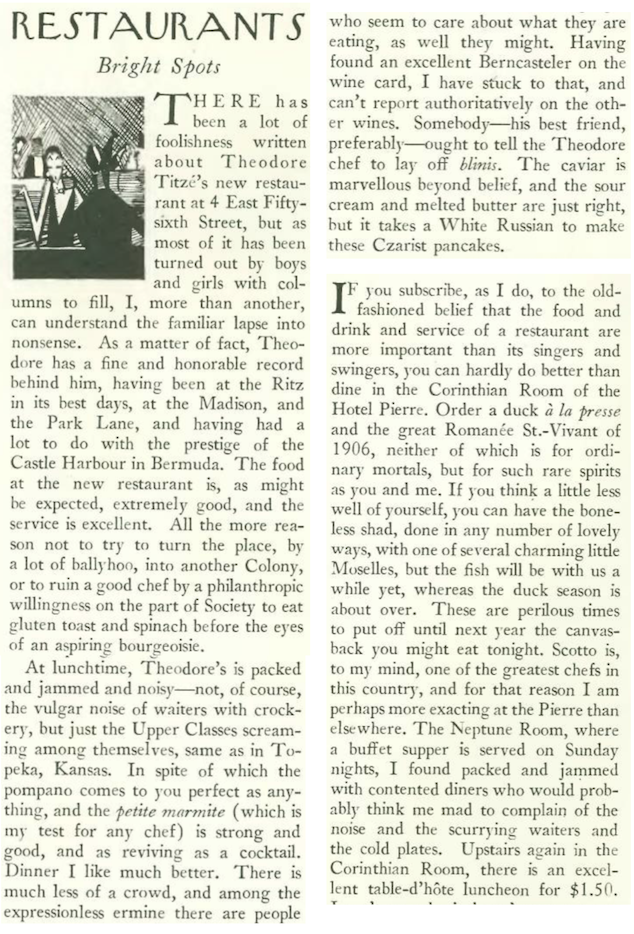
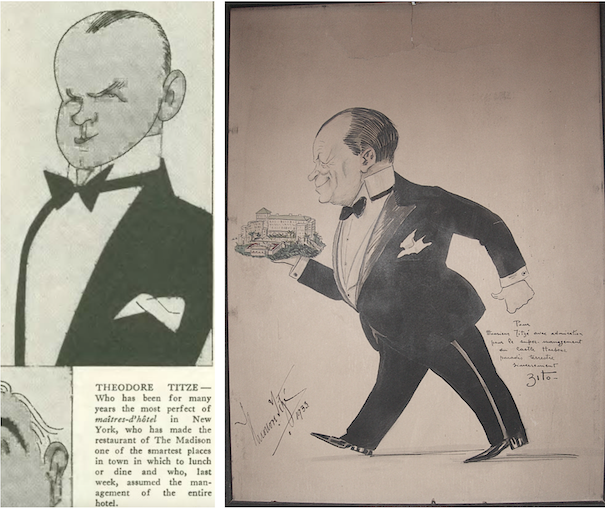
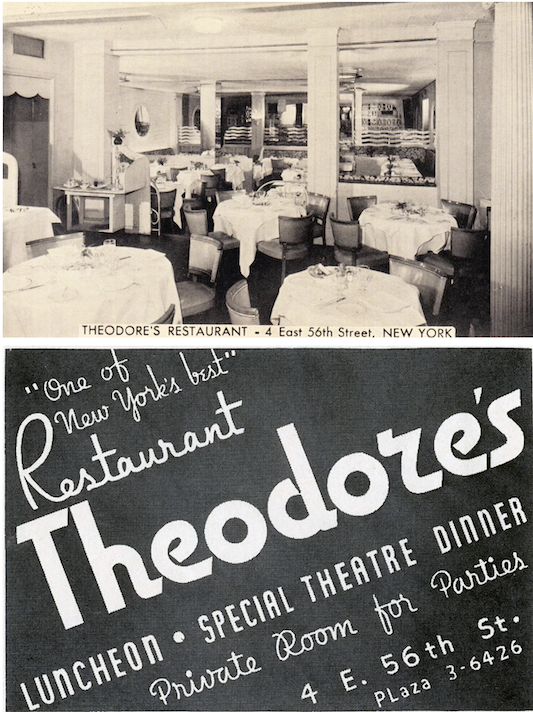
Here are excerpts from Hibben’s “Restaurants” column for the Feb. 22 issue, featuring her takes on a couple of the city’s finer dining establishments, including Theodore Titze’s restaurant on East 56th and the famed fare of Charles Scotto at the Hotel Pierre:
KNOWN AS THEODORE OF THE RITZ, the German-born Theodore Titze (1879–1953) was a well-known maitre d’hotel—at left, Ralph Barton featured Titze as one of his “Heroes of the Week” in the Dec. 12, 1925 issue of The New Yorker; at right, a 1933 drawing of Titze by the cartoonist Vinzento Zito—the image refers to Titze’s 1931 departure from New York to take charge of the Castle Harbor Hotel in Bermuda. He later operated other properties in Bermuda before opening Theodore’s at 4 East Fifty-sixth Street. (wikitree.com)CAN’T MISS IT…Top, postcard image of Theodore’s Restaurant; below, ad for Theodore’s in Stage magazine, February 1938. (Etsy.com)
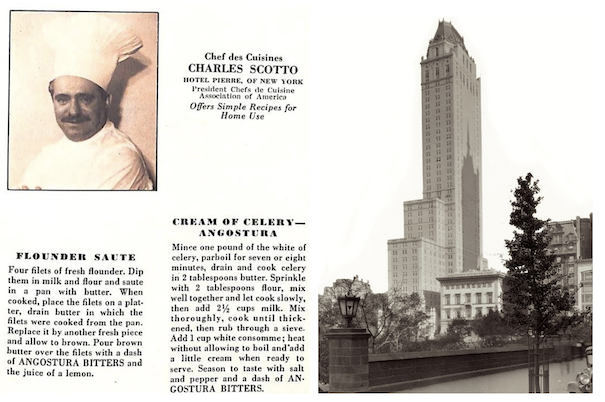
Hibben also wrote about the excellent fare at the Hotel Pierre, where Chef Charles Scotto, an early protégé of the legendary Chef Auguste Escoffier, reigned supreme.
CREAM OF THE CROP…At left, a page from the 1934 booklet Angostura Recipes featuring a recipe by famed Chef Charles Scotto (1887–1937). At right, undated image of the Hotel Pierre. (The Cary Collection/geographicguide.com)
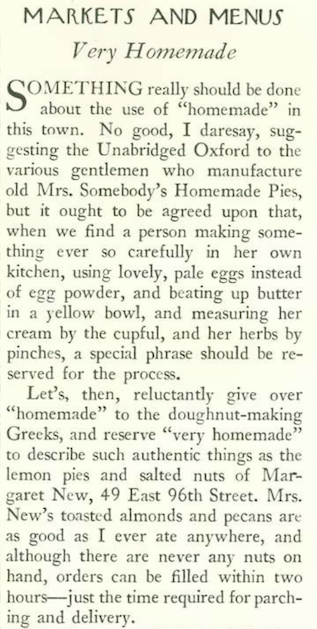
From 1934 to 1962 Hibben wrote the “Markets and Menus” column, which appeared in rotation with several other columns that were tacked onto Lois Long’s weekly “On and Off the Avenue.” Here is an excerpt from Hibben’s Feb. 1, 1936 column:
* * *
Not Music to His Ears
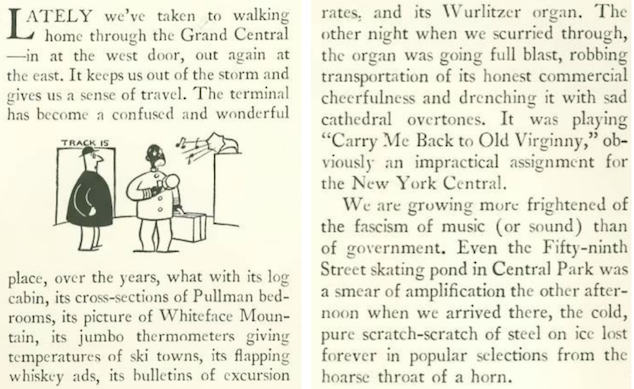
In his “Notes and Comment,” E.B. White took issue with “the fascism of music” in public places including Grand Central Station and the Central Park skating pond.
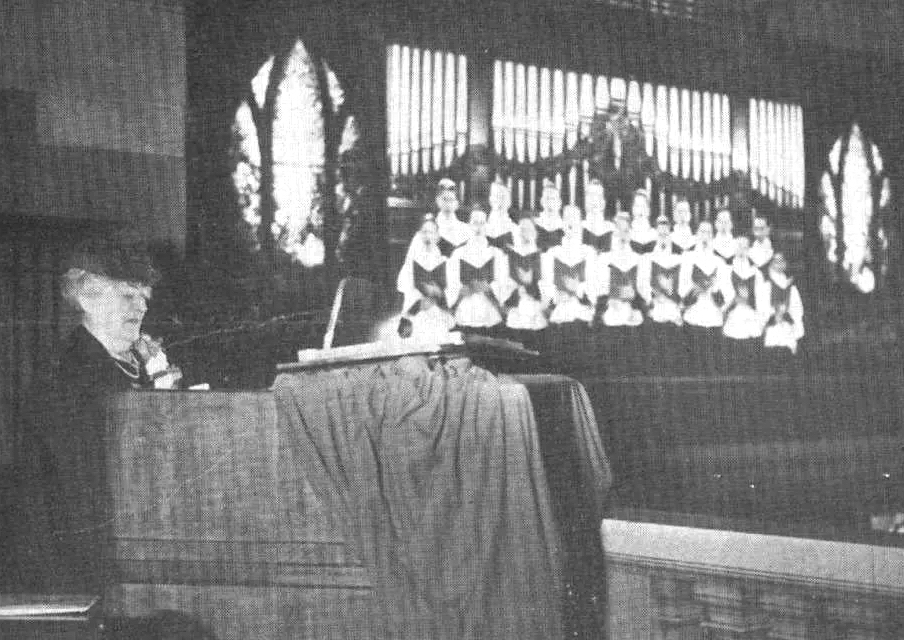
SAD CATHEDRAL OVERTONES is how E.B. White described the organ music of Mary Lee Read, who played organ in Grand Central’s north gallery from 1928 until the late 1950s. On the day after Pearl Harbor was attacked she played “The Star-Spangled Banner;” activity on the concourse ground to a halt, causing commuters to miss their trains. She was forbidden from playing the song after that. She has also been credited with saving the life of a man who was planning to commit suicide until he heard her play a moving hymn. (marthahallkelly.com)
* * *
At the Movies
Paul Muni was considered one of the best actors of the 1930s, his talents so appreciated by Warner Brothers that he was allowed to choose his own roles, including the lead in The Story of Louis Pasteur. It was a good choice, as it landed him a Best Actor Oscar in 1936. New Yorker critic John Mosher had these observations:
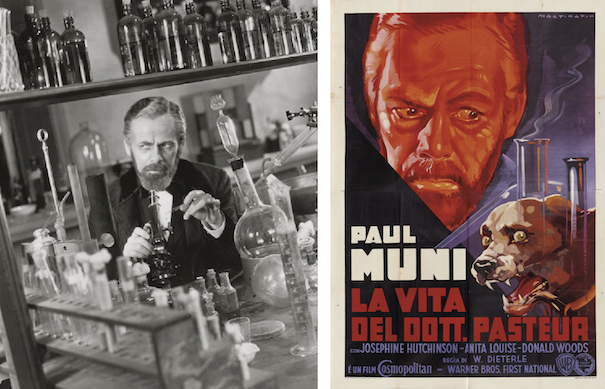
HE’S ON TO SOMETHING…Paul Muni in The Story of Louis Pasteur. One of the best posters for the film was the Italian version at right, the rabid dog promising some some real drama. Muni won the Best Actor Oscar of his portrayal of Pasteur. (researchgate.net/imdb.com)
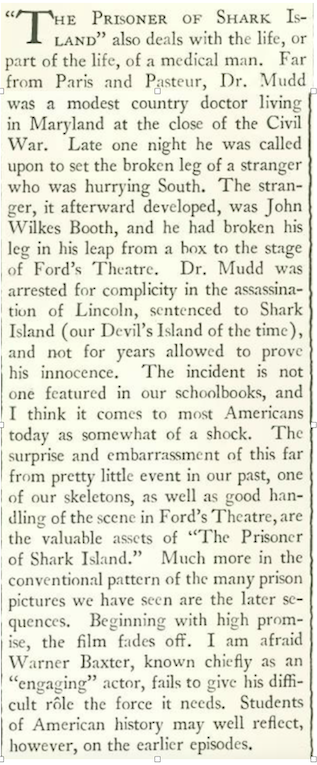
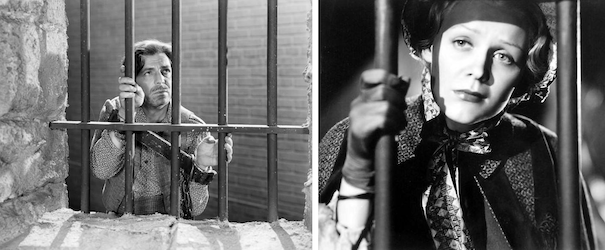
Mosher also took in The Prisoner of Shark Island, featuring Warren Baxter as a man falsely accused of complicity in the assassination of President Abraham Lincoln.
I DIDN’T DO IT…Warren Baxter and Gloria Stuart in The Prisoner of Shark Island. Moviegoers today will remember Stuart (1910–2010) in her portrayal of the aged Rose in 1997’s Titanic. Stuart’s film career would span more than seventy years, 1932–2004. (mubi.com/imdb.com)
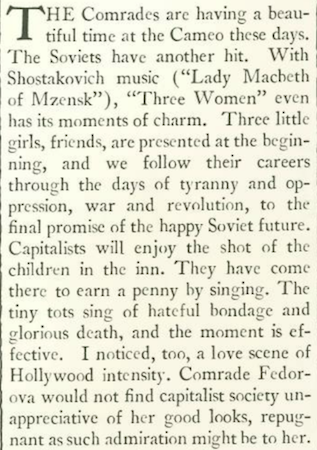
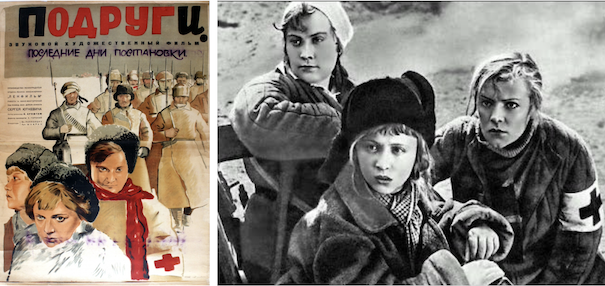
Mosher found much to like in a Soviet film about the struggles and hardships of three childhood friends from Petrograd who become nurses to serve the cause of the Bolshevik Revolution.
SOVIET SISTERHOOD…At right, Irina Zarubina, Yanina Zhejmo and Zoya Fyodorova in 1936’s Three Women. It was released in the Soviet Union as Girl Friends (Podrugi).
* * *
From Our Advertisers
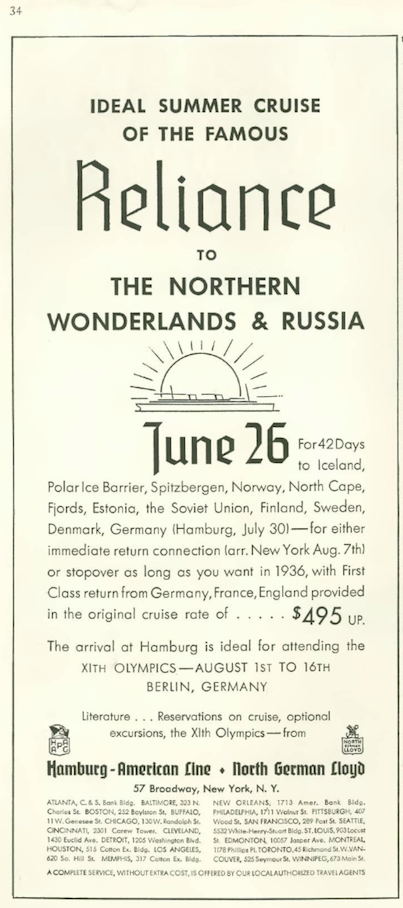
If you wanted to visit the land of the Soviet film, Three Women, you could have hopped onto this Reliance cruise to Russia as well as to the Summer Olympics in Berlin…in just a little over three years the Germans would invade Poland and these “wonderlands” would become a living hell for many…
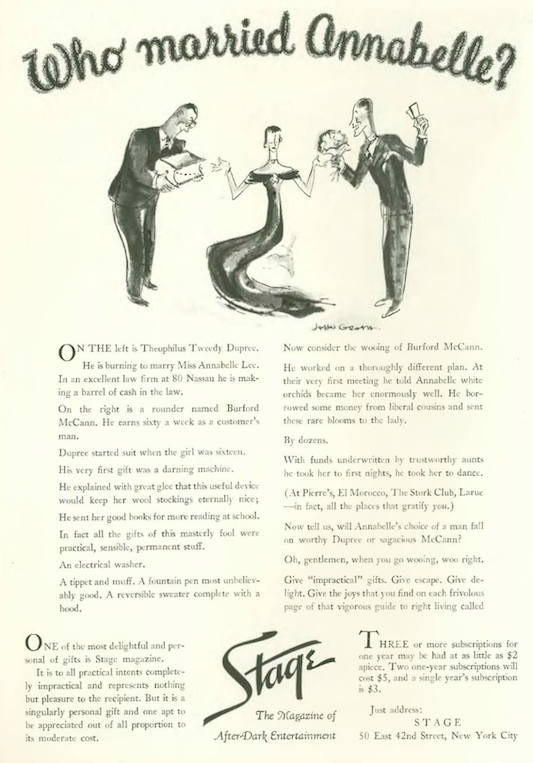
…John Groth, who would contribute cartoons to The New Yorker in the 1940s, provided this illustration for a Stage magazine ad…
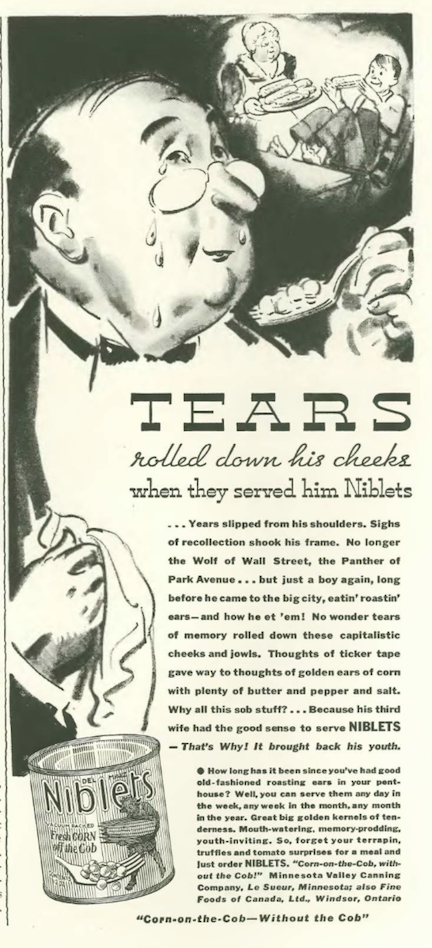
…the folks at Minnesota Valley Canning Company continued the theme of a rich man returning to his humble roots via canned Green Giant vegetables…here the man is brought to tears over “Niblets”…
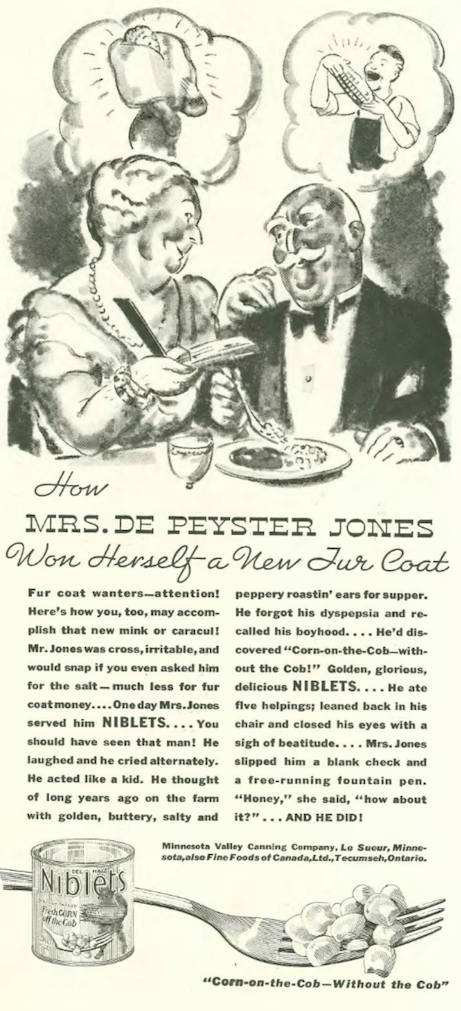
…as you might recall, it was a wealthy “Major” who recently (Dec. 21, 1935) sought to rekindle lost youth through Green Giant Niblets…
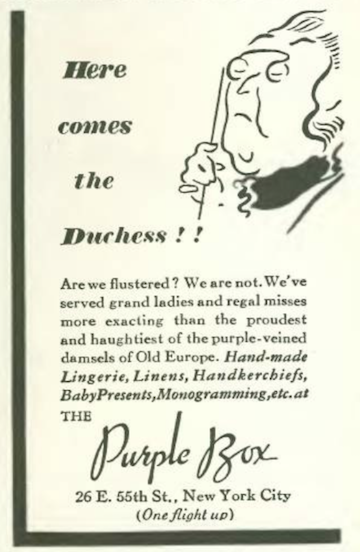
…and what’s the deal with the Duchess trope found in so many ads?…she has been featured in a Green Giant ad for peas, as well as in ads for tomato and grapefruit juice…
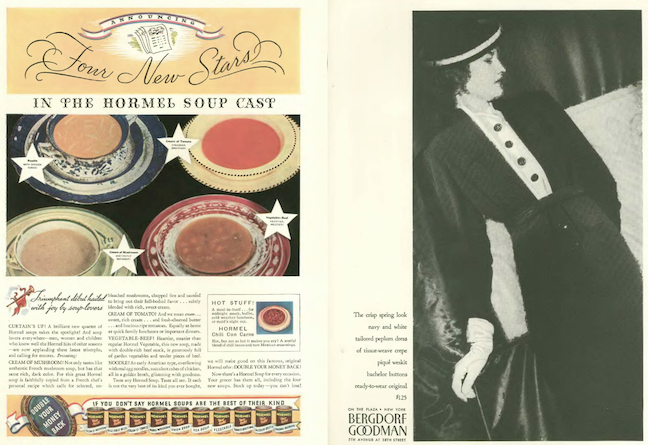
…the magazine’s opening spread once again featured the odd juxtaposition of canned soup and high fashion…
…one-column ads in the back of the book featured illustrations by Peter Wells (at left), and William Steig…
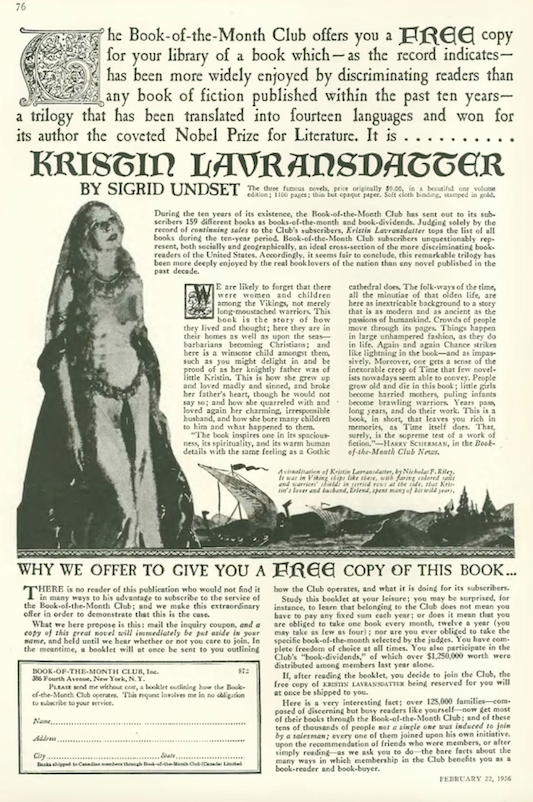
…Book-of-the-Month Club enticed new members with a FREE copy of the Nobel Prize-winning trilogy Kristin Lavransdatter by Danish-Norwegian author Sigrid Undset…
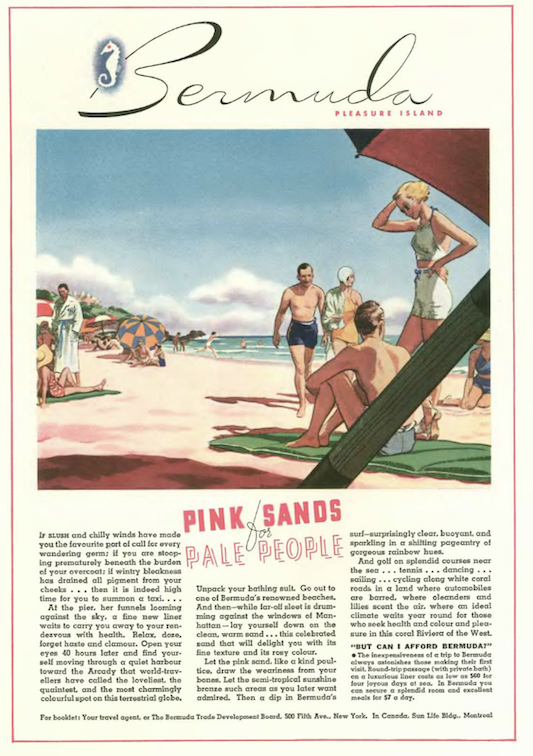
…this colorful ad from the Bermuda Trade Development Board beckoned New Yorkers to trade “slush and chilly winds” for the pink sands of the British island territory…
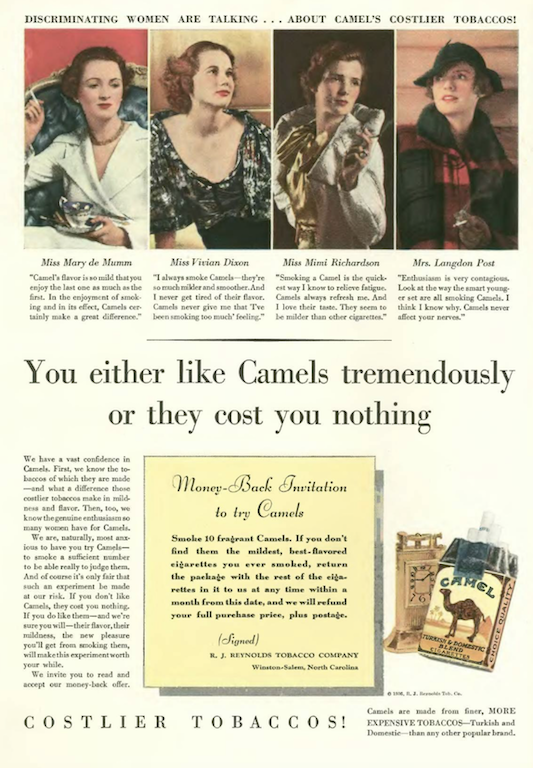
…the back cover cycled back to Camel cigarettes with a lineup of fashionable debs enticing young women to join their ranks…as Camel smokers, at least…
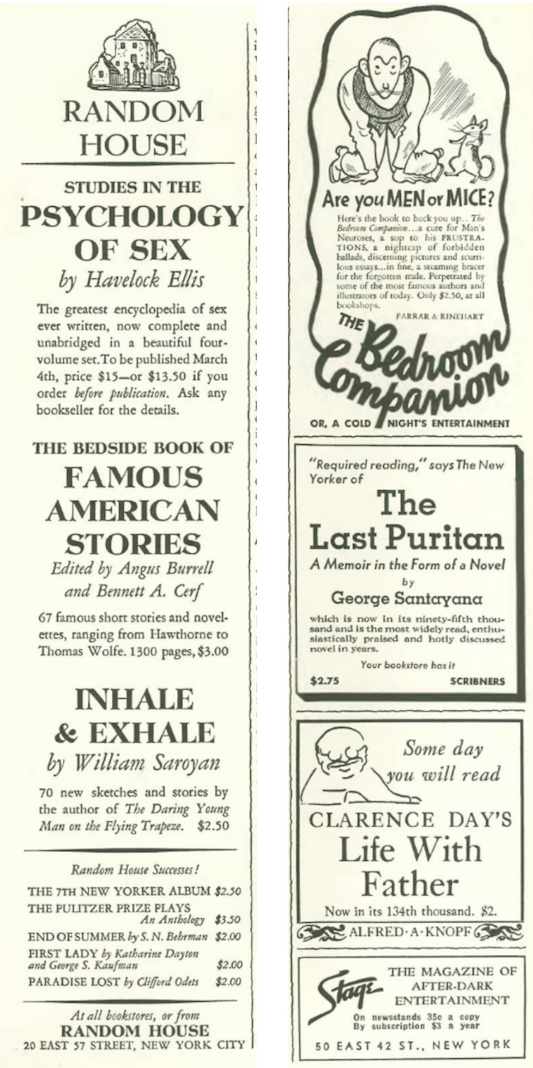
…more one-column ads, featuring the latest in reading material…
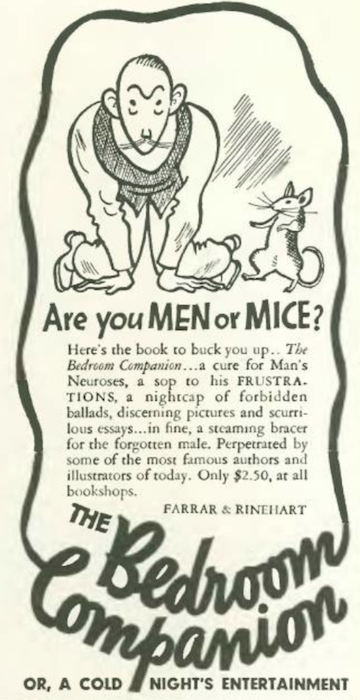
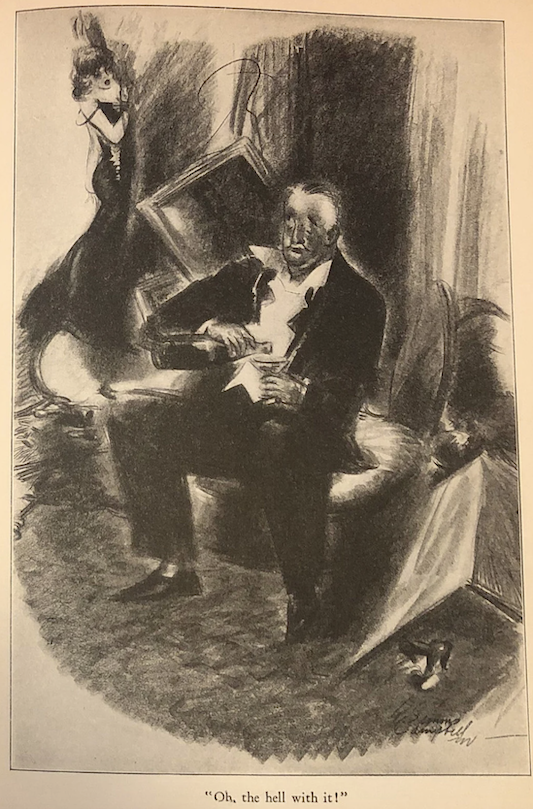
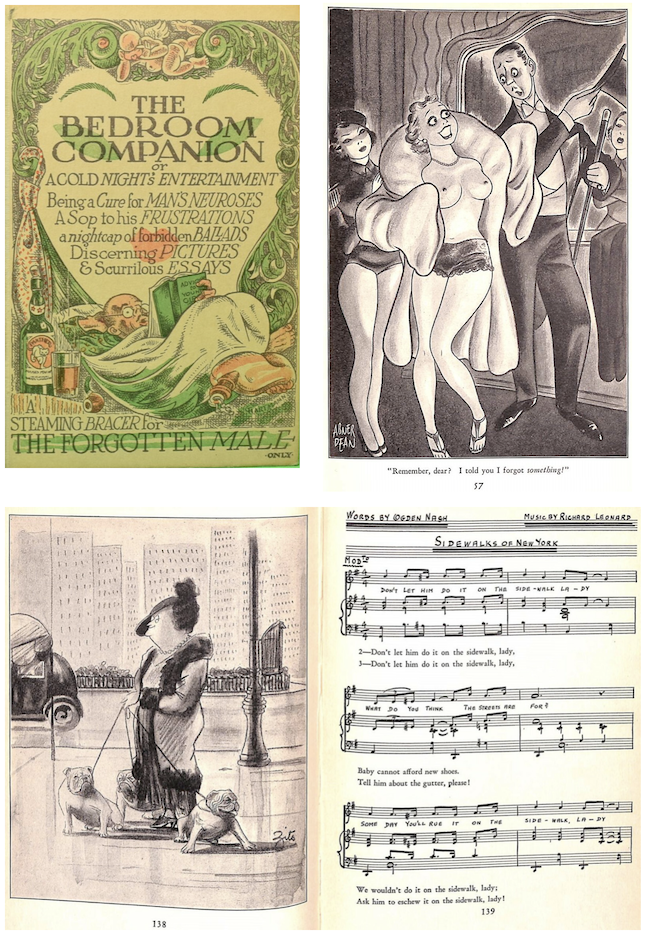
…including the latest edition of The Bedroom Companion…it was one of those “For Men Only” books that compiled some previously published pieces with other contributions…
…the index of the 1935 edition included a number of New Yorker regulars…
…such as E. Simms Campbell…
…and Abner Dean…
LATE NIGHT READING…Clockwise, from top left, 1935 edition of The Bedroom Companion; a racy cartoon by Abner Dean; comic lyrics by Ogden Nash; a contribution by Vincenzo Zito, a well-known caricature artist who particularly favored dogs. (etsy.com)
…on to our other cartoonists, we begin with spots by Constantin Alajalov…
and Richard Taylor…
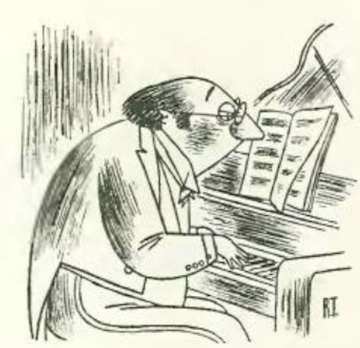
…Taylor again, a spot in the “Musical Events” section…
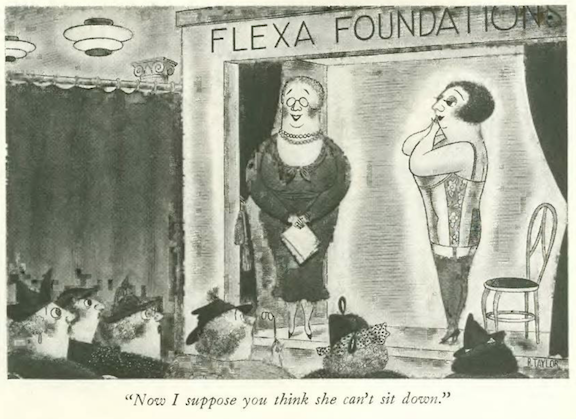
…and a Taylor cartoon…
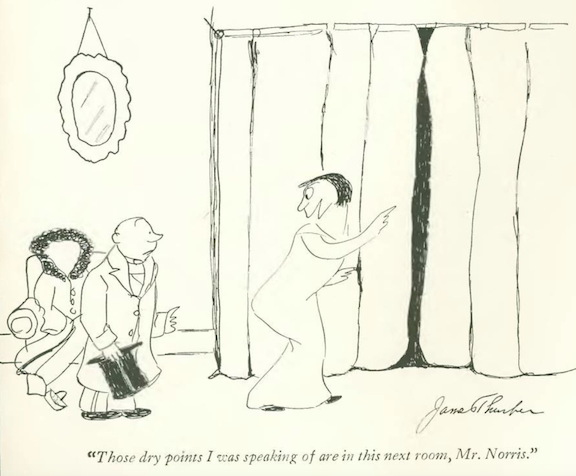
…and we wonder what’s behind the curtain, with James Thurber…
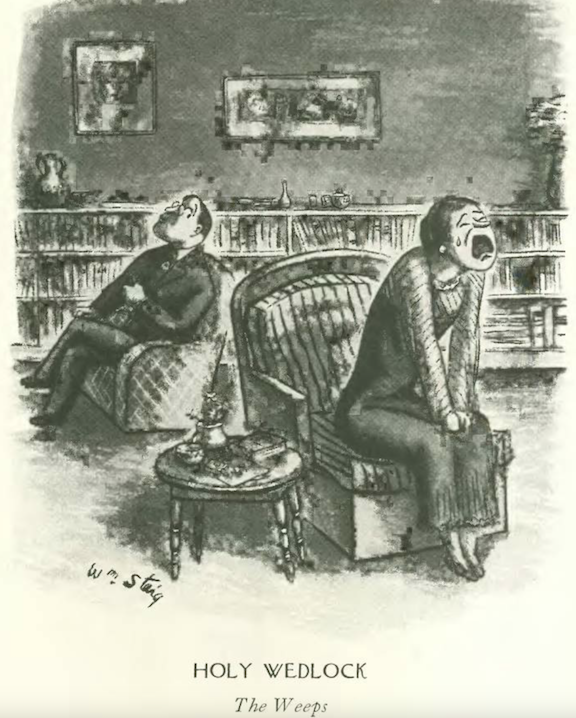
…William Steig continued to probe the downsides of matrimony…
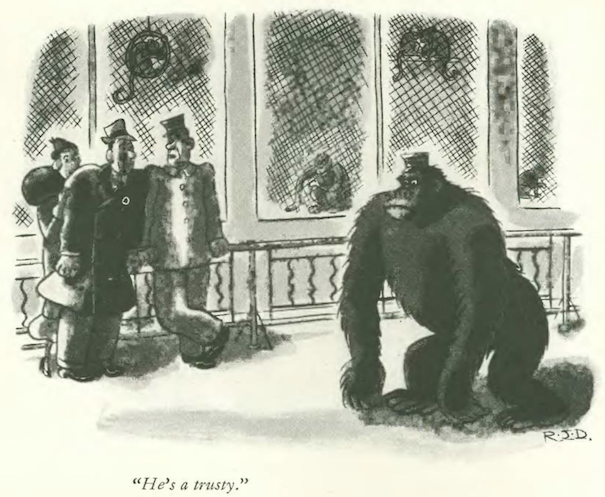
…Robert Day showed who’s in charge at the zoo…
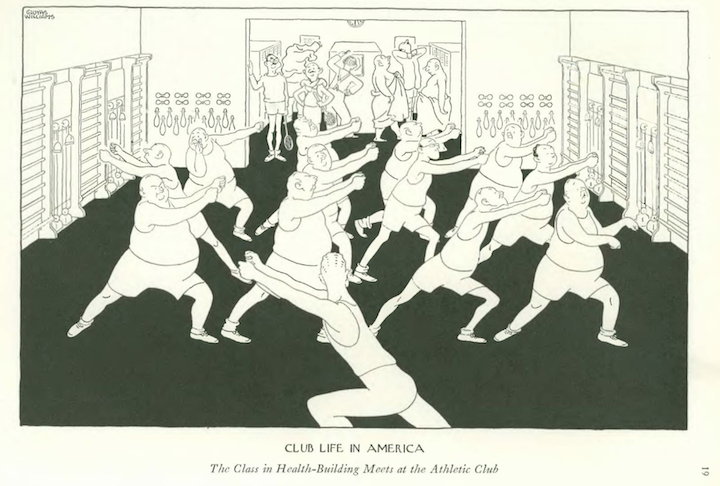
…more club life from Gluyas Williams…
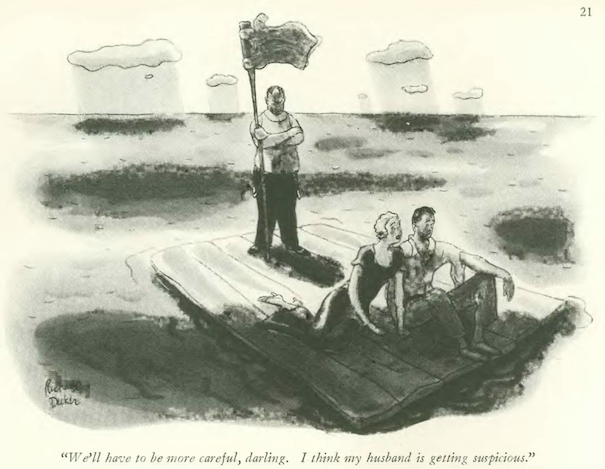
…Richard Decker was in a tight situation…
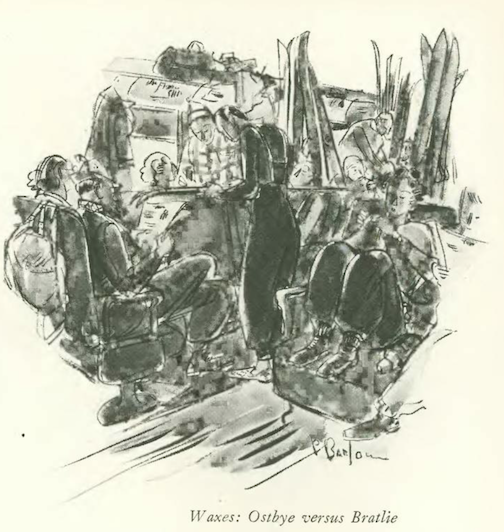
…Perry Barlow drew up two pages of scenes from Snow Trains that took thousands of skiers from Grand Central to the Berkshires and Adirondacks…
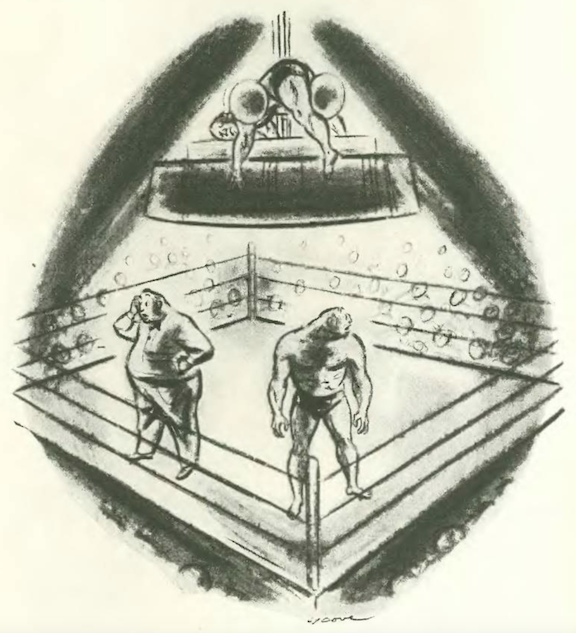
…Leonard Dove delivered a knockout punch…
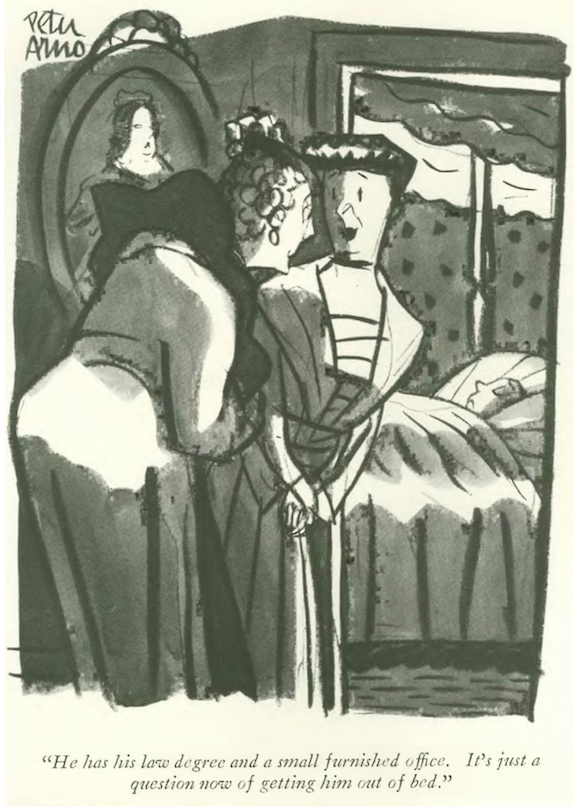
…Peter Arno raised a question of initiative…
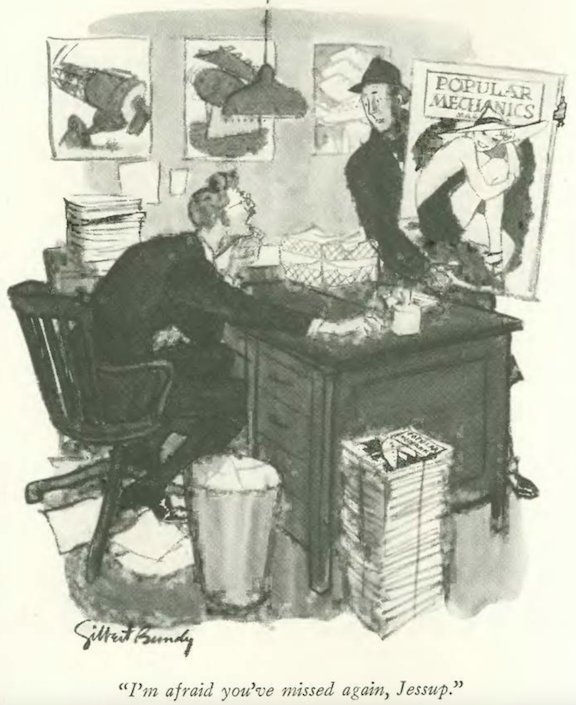
…and Gilbert Bundy sought to spice things up at Popular Mechanics…
A final note: Aside from the recurring Rea Irvin cover, this issue made no reference to the eleventh anniversary…except, on the bottom of page 57…
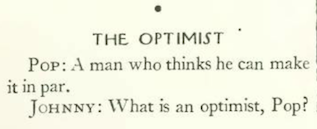
…a recurring column filler, “The Optimist,” appeared in Issue No. 1, and was featured in subsequent issues until Katharine Angell mercifully put an end to it.
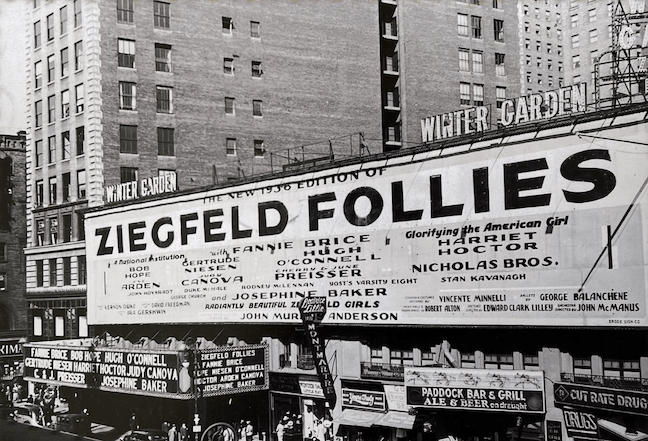
Above: The 1936 Ziegfeld Follies premiered on Broadway at the Winter Garden Theatre on January 30, 1936 and closed on May 9, 1936 after 115 performances. (Hulton Archive)
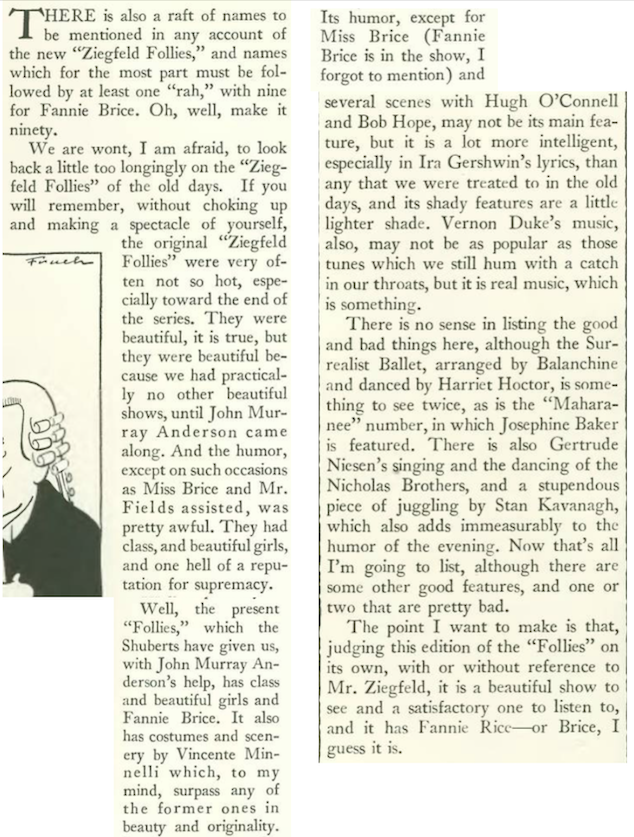
Broadway impresario Florenz Ziegfeld Jr died in 1932, but his famous theatrical revue lived on for years with revivals including one in 1936 that Robert Benchley praised for being better than the originals.
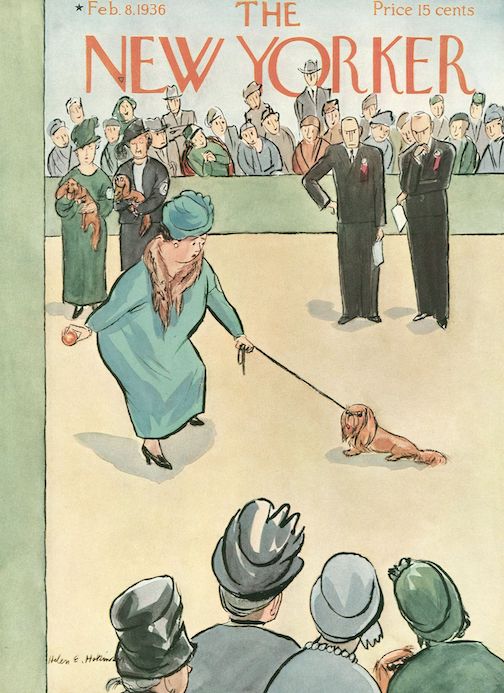
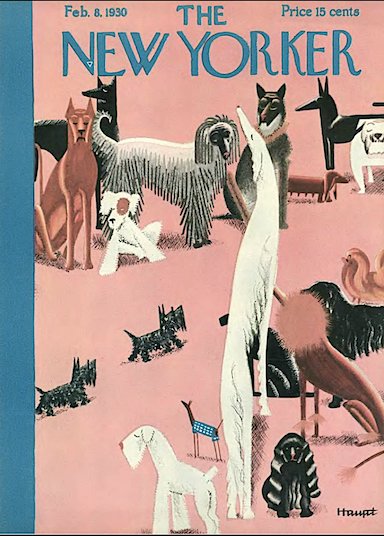
February 8, 1936 cover by Helen Hokinson, marking the opening of the Westminster Kennel Club Dog Show at Madison Square Garden. According to Michael Maslin’s always enlightening Ink Spill, the first dog-themed New Yorker cover was Feb. 8, 1930, by Theodore Haupt (below).
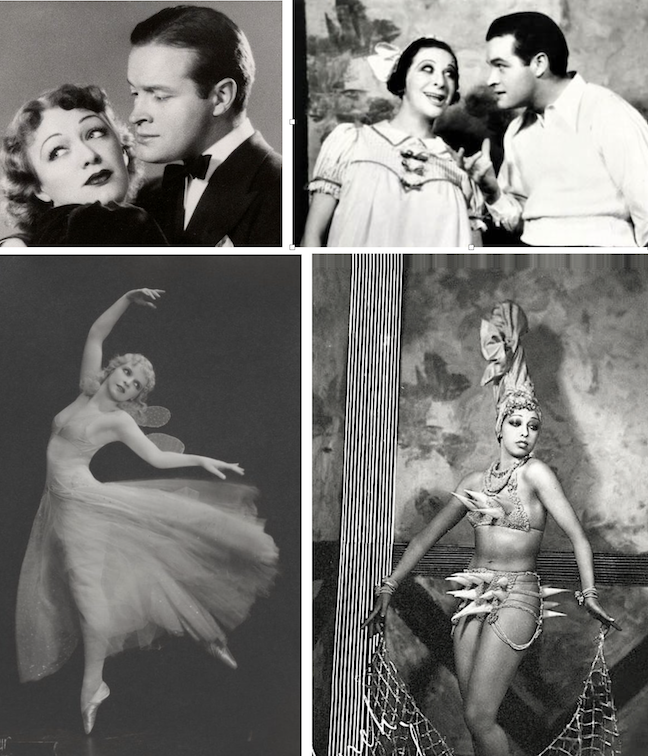
Now on with the show. Brought back to life by Ziegfeld’s widow Billie Burke and theatre operators Lee and J. J. Shubert,The Ziegfeld Follies of 1936 was loaded with talent, with lyrics by Ira Gershwin, choreography by George Balanchine, and sets and costumes by Vincente Minnelli. What really brought people in was the star of the show, Fannie Brice, who was supported by cast members Bob Hope, Eve Arden, Josephine Baker, and the Nicholas Brothers, among others. Benchley wrote:
FANNIE AND THE REST…Clockwise, from top left: Bob Hope and Eve Arden performed the popular tune “I Can’t Get Started With You”; Hope with Fannie Brice in the sketch “Baby Snooks Goes Hollywood”; Josephine Baker premiered “The Conga” at the Follies, and Harriet Hoctor performed her “Night Flight.” (gershwin.com/uneicone-josephinebaker.webador.fr/libraryofcongress,org)
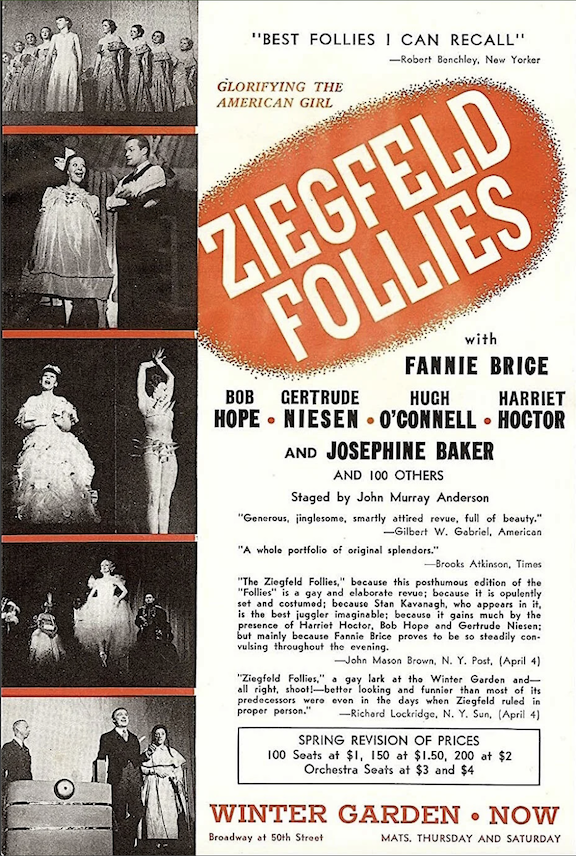
This ad for the 1936 Follies prominently featured Benchley’s endorsement:
(uneicone-josephinebaker.webador.fr)
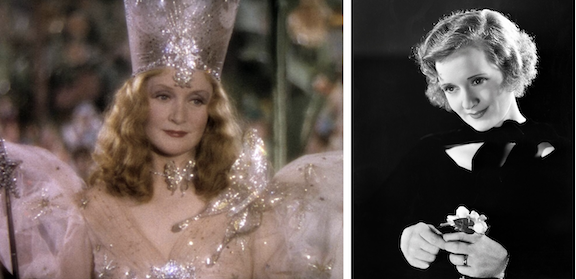
Billie Burke (1884–1970) authorized Follies revivals with the Shuberts in 1934, 1936 and 1943, with the Shubert family producing a final revival in 1957. In 1936 MGM also filmed a Ziegfeld biopic, The Great Ziegfeld (which won two Academy Awards), casting William Powell as Ziegfeld and Myrna Loy as Burke. Burke wanted to play herself in the film, but at age 51 she was deemed too old for the part.
ZIEGFELD MAGIC…Florenz Ziegfeld’s widow Billie Burke kept the Follies going after her husband’s death in 1932. She is best known today for her portrayal of Glinda the Good Witch of the North in 1939’s The Wizard of Oz. (oscars.org/Wikipedia)
Fannie Brice (1891–1951) was the biggest star of the Follies and so dominated the show that when she became ill in May 1936 the production closed. Brice returned to the Winter Garden that September for 112 more performances.
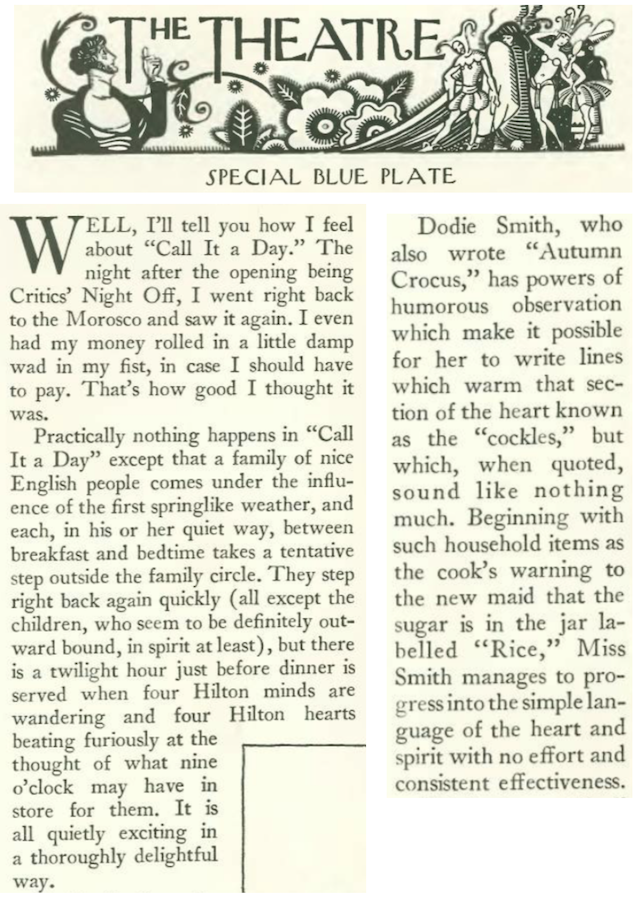
Benchley also praised Call it a Day, a 1935 play by British writer Dodie Smith that ran for 194 performances at the Morosco Theatre. Benchley thought it was so good he saw it twice.
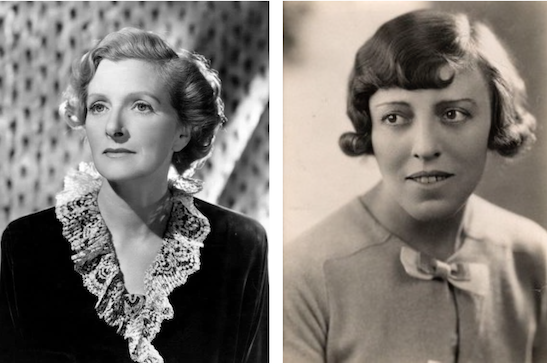
SPRING FEVER drove the action in Dodie Smith’s (right) hit comedy Call it a Day. The play chronicles a single spring day in the lives of the Hilton family, during which each member encounters unexpected romantic temptations and complications. Gladys Cooper, left, starred as Dorothy Hilton. The play was adapted to a Hollywood film in 1937. (vocal.media/Wikipedia)
* * *
At the Movies
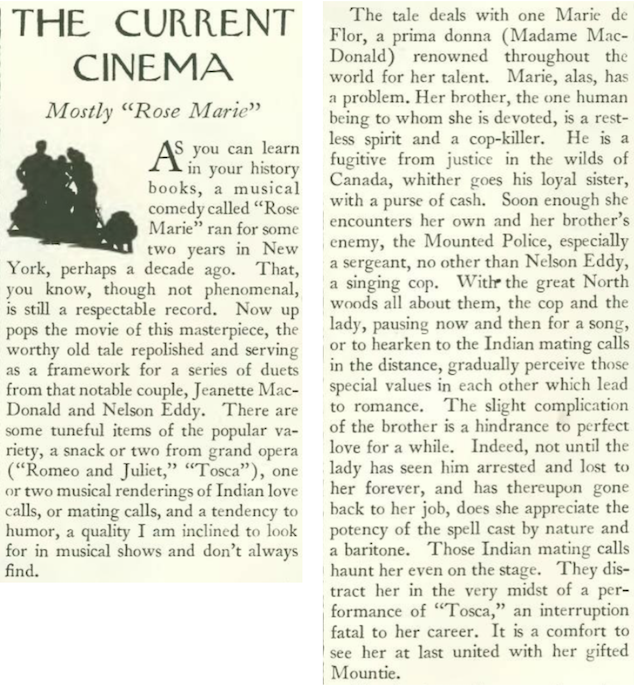
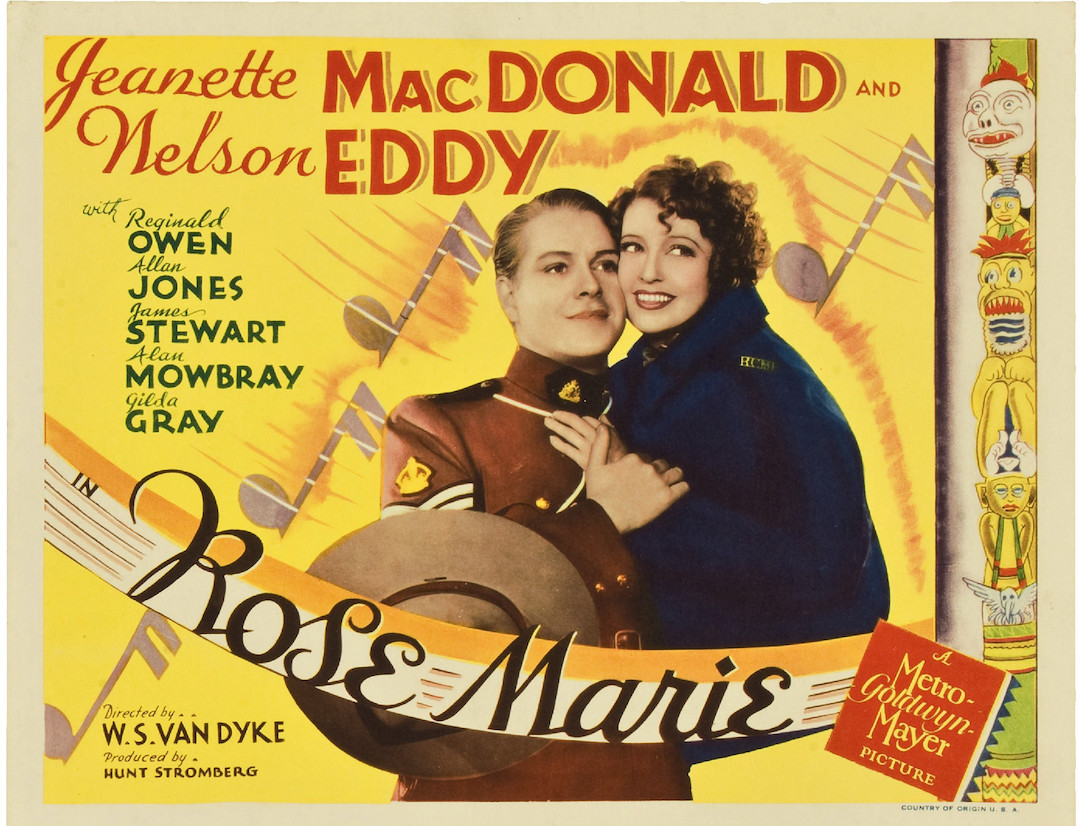
We go from the stage to the screen, where John Mosher took in Rose Marie, a musical comedy based on a popular 1924 Broadway play. The film “repolished” the old play and used it as a framework for a series of duets between Jeanette MacDonald and Nelson Eddy.
MELODIOUS MOUNTIE…Lobby card for Rose Marie, a musical romcom about a singing Mountie and a world-renowned prima donna, joined in love by a haunting “Indian mating call.” (Wikipedia)
Mosher reviewed three other films that could have used some of Rose Marie’s cheer:
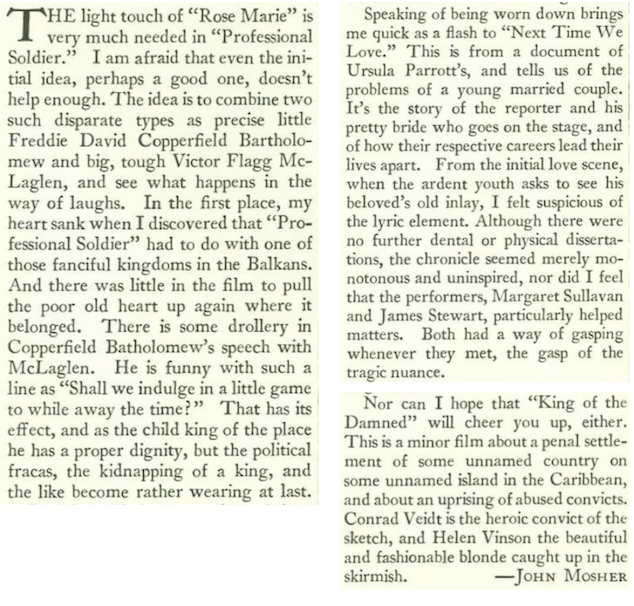
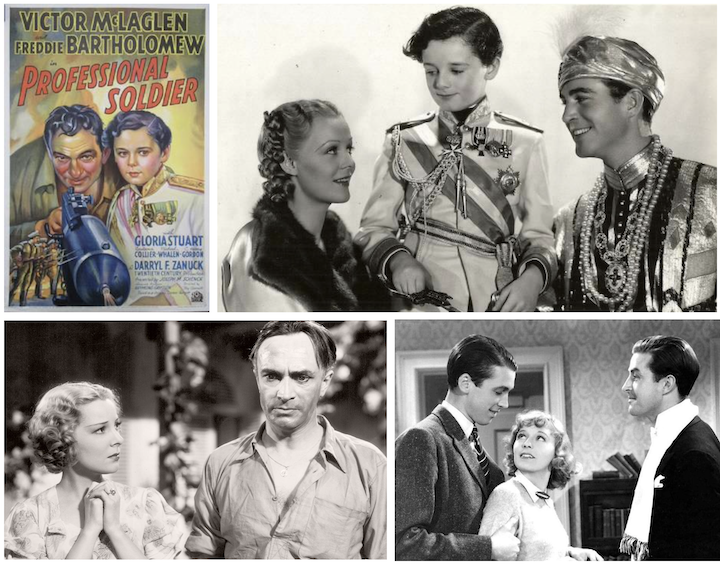
CHEERLESS FARE…Clockwise, from top: Gloria Stuart, Freddie Bartholomew, and Michael Whalen in Professional Soldier; James Stewart, Margaret Sullavan and Ray Milland in Next Time We Love; Helen Vinson and Conrad Veidt in King of the Damned. (Wikipedia/imdb.com/letterboxd.com/silversirens.co.uk)
* * *
Miscellany
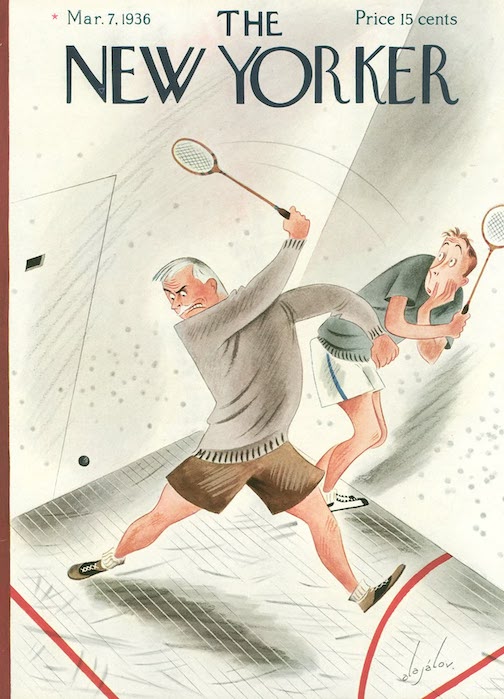
I strive to keep these posts at a readable length, and (hopefully) lively and enjoyable to read, which means that I cannot include absolutely everything that appears in each issue. For example, there are a number of regular features from the sports world—ranging from major attractions like hockey and college football (no coverage yet of baseball—which for some reason Harold Ross hated—or basketball) to more niche pursuits, such as squash (below) or indoor polo. From time to time I will include these under “Miscellany” as a way to give readers a more complete picture, and to assuage my fear that I am leaving something important out. Here is a very brief snippet of a regular feature, “Court Games,” by staff writer Geoffrey T. Hellman.
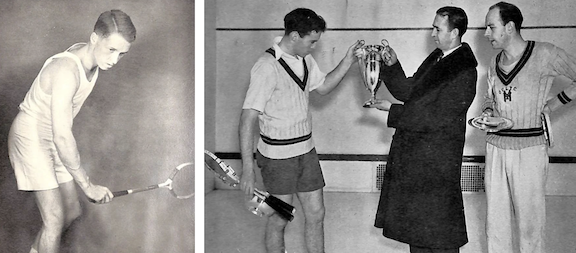
RACKETEERS…At left, Beekman Pool of the Harvard Club was the 1936 singles champion of the Metropolitan Squash Racquets Association; at right, Edwin Bigelow of the U.S. Squash Racquets Association presents the National Trophy to Germain Glidden. To the far right is runner-up Andrew Ingraham, who looks a bit miffed about getting a plate rather than a trophy cup. (thecarycollection.com)
* * *
From Our Advertisers
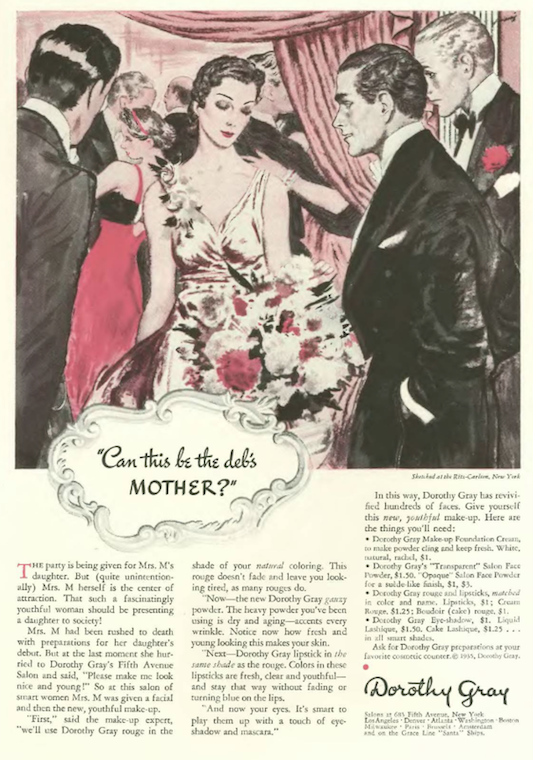
Let’s start with the inside front cover…advertisements from Dorothy Gray salons were all about the restoration of youth in older women…apparently the treatments were so successful that “Mrs. M” was a bigger attraction at a Ritz-Carlton debutante party than her society-bound daughter…note the young gents at right checking out mom, and not the deb…
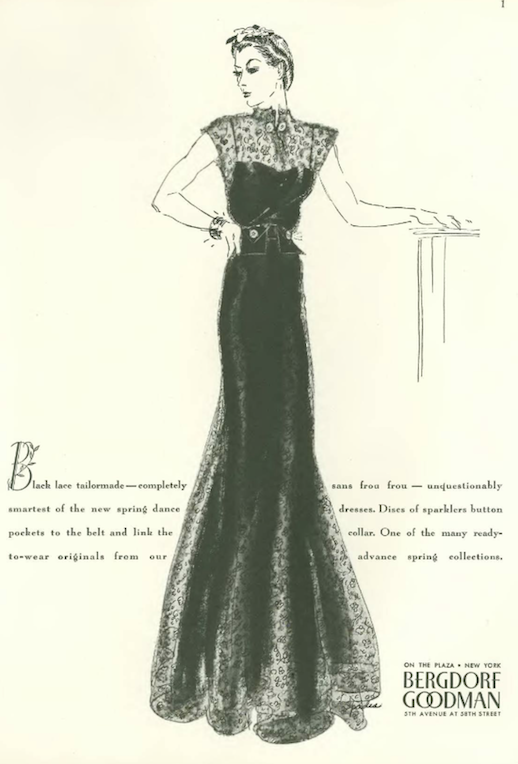
…opposite Dorothy Gray was this elegant appeal from Bergdorf Goodman…ads aimed at more refined tastes almost always featured these attenuated figures (whether they were people or luxury automobiles)…I guess I would hold onto something too with stilts like those…
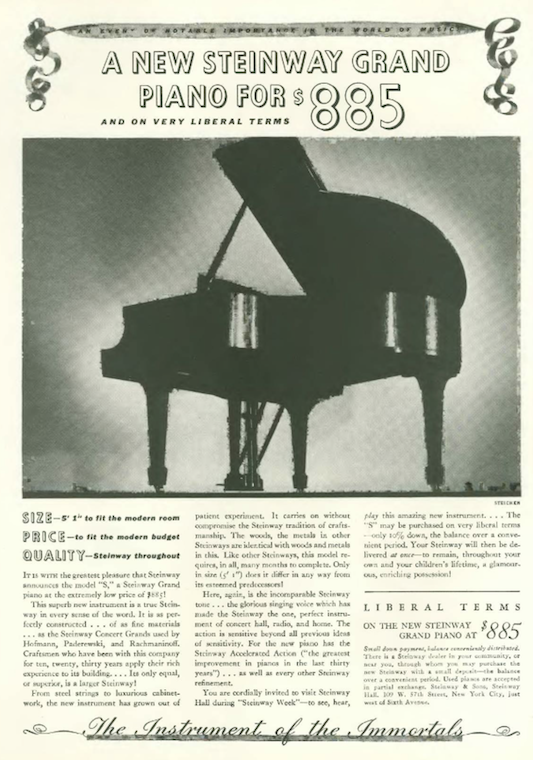
…here’s a Steinway grand for less than a grand…$885 in 1936 is roughly equivalent to $20,000 or so today, but that’s still a bargain—Steinway grand pianos currently start at around $85,000…
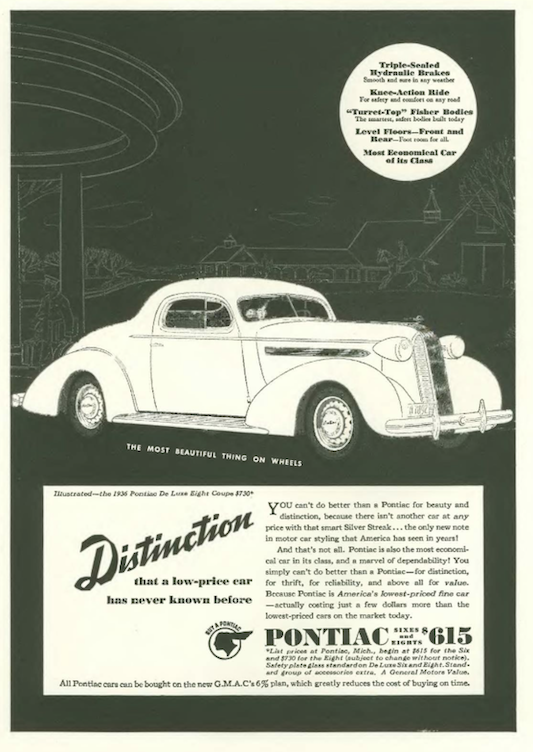
…speaking of bargains, you could own “The Most Beautiful Thing on Wheels” (according to this ad) for a mere $615…
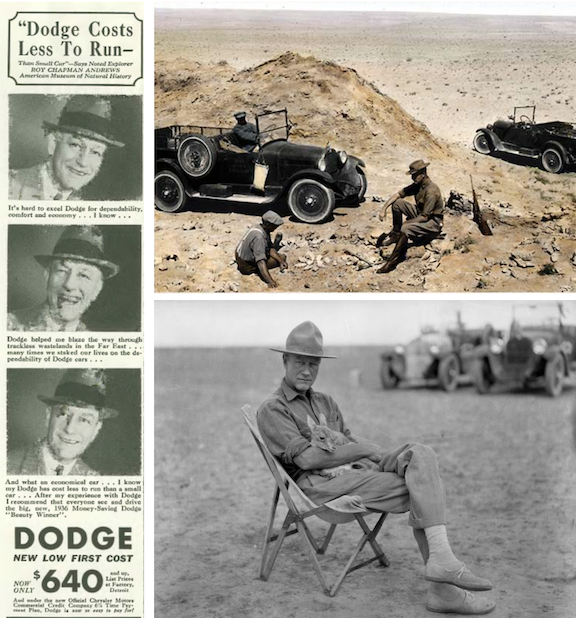
…and for an extra twenty-five bucks you could own a durable Dodge like the one endorsed by Roy Chapman Andrews (1884–1960), a globetrotting explorer who discovered fossilized dinosaur eggs in the Gobi Desert in the 1920s…
THE REAL INDY…Roy Chapman Andrews gained national fame as an explorer for New York’s American Museum of Natural History (AMNH). The discovery of a nest of complete dinosaur eggs in Mongolia in 1923 (above) provided the first proof that the critters hatched out of eggs. Named AMNH’s director in 1934, Andrews is thought to be an inspiration for the film hero Indiana Jones. (amnh.org/roychapmanandrewssociety.org)
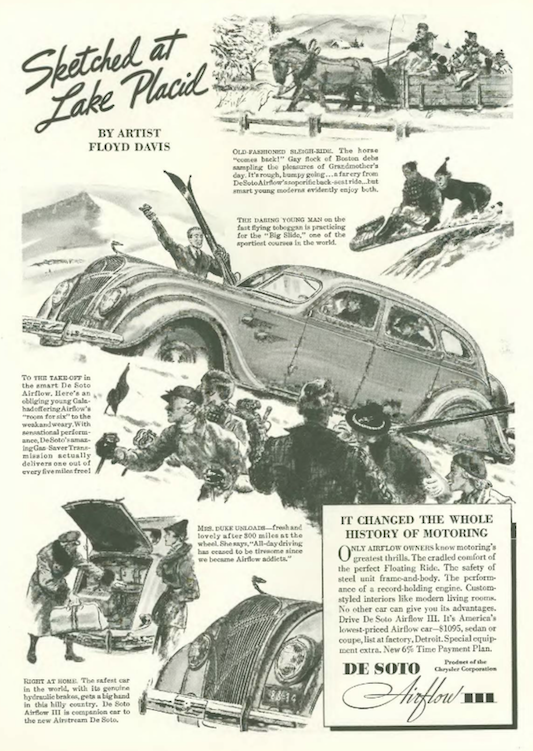
…the folks at Chrysler were doing everything they could to get people interested in buying their Airflows—despite its technological advances, the car’s streamlined design (toned down in later models) was just too radical for mass market tastes…note how the ad draws attention to the work of “Artist Floyd Davis”…
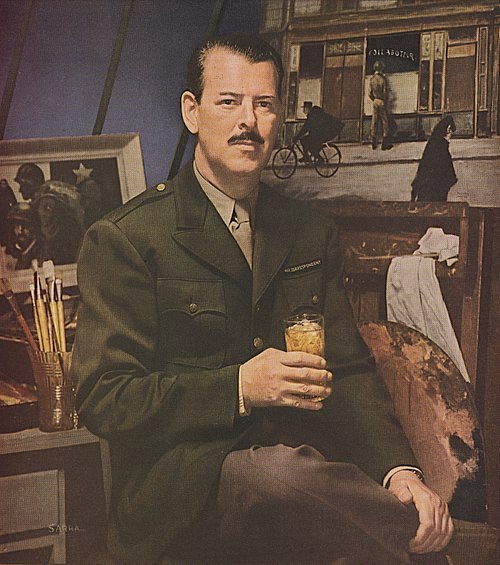
…here’s a photo of Floyd Davis…
CHEERS…Illustrator Floyd Davis (1896–1966) poses in an ad for Lord Calvert whiskey, 1946. In 1943 Life magazine called him the “#1 Illustrator in America.” (Wikipedia)
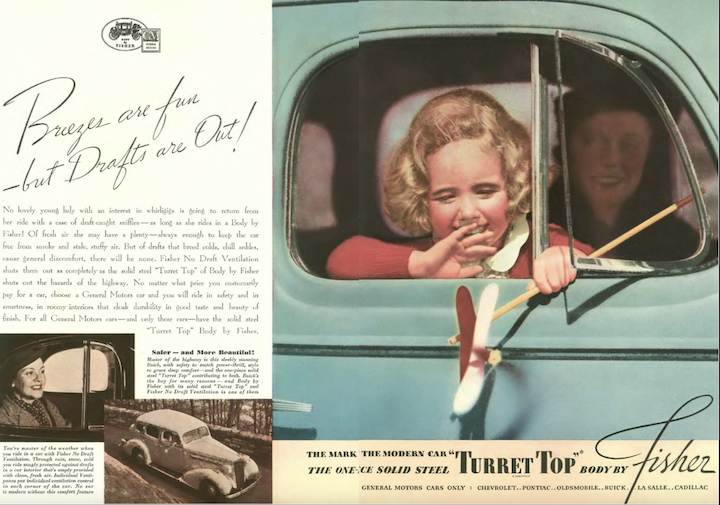
…the Fisher company, makers of car bodies for General Motors, liked to emphasize the safety of their “Turret Top,” although it didn’t seem to occur to anyone that a child dangling from a car window was problematic…
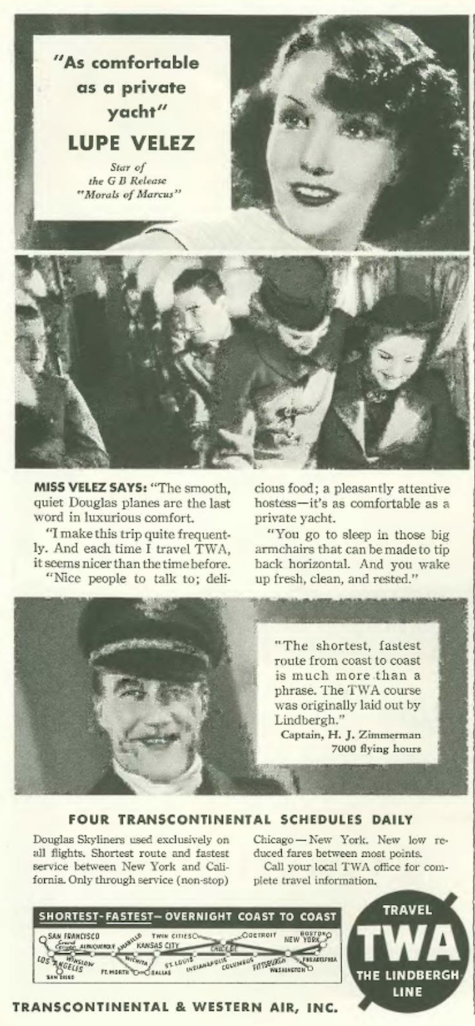
…actress Lupe Vélez made the unlikely claim that flying on a 1930s airliner was “as comfortable as a private yacht”…
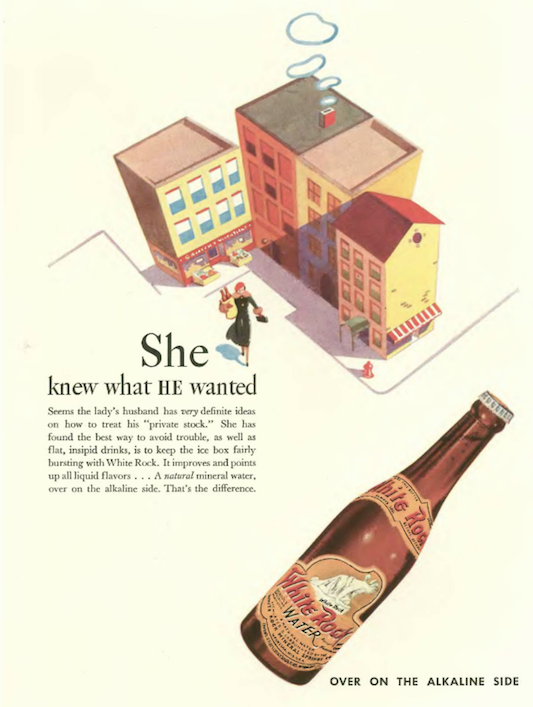
…ads for White Rock were among the more colorful found in the early New Yorker…
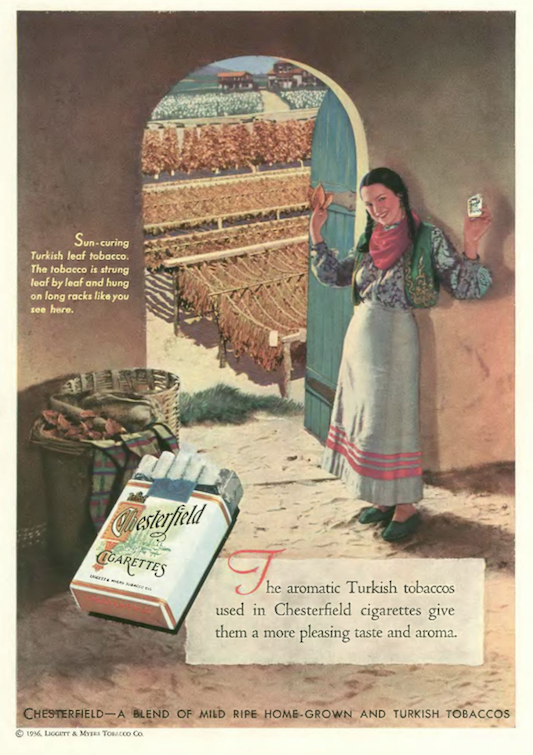
…on the back cover, Liggett & Myers tobacco company shifted gears from elegant to homespun with an ad that emphasized the high quality of Turkish leaf tobacco…
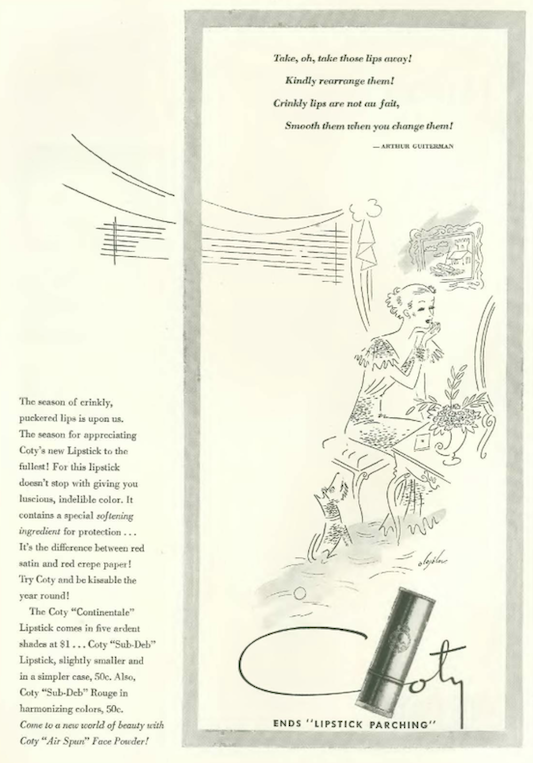
…the folks at Coty hired two New Yorker contributors, poet Arthur Guiterman and illustrator Constantin Alajalov, to promote their line of lipsticks…
…which brings us to the cartoonists, beginning with Al Frueh…
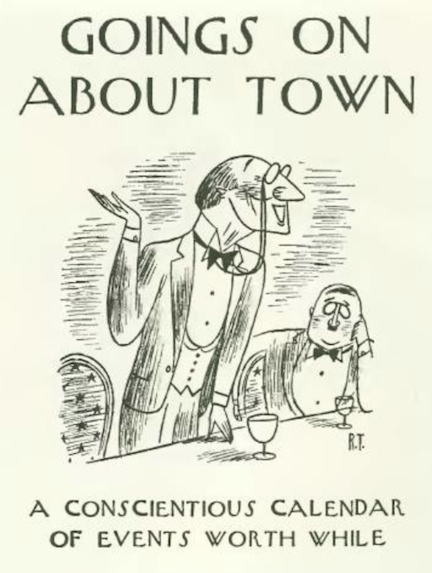
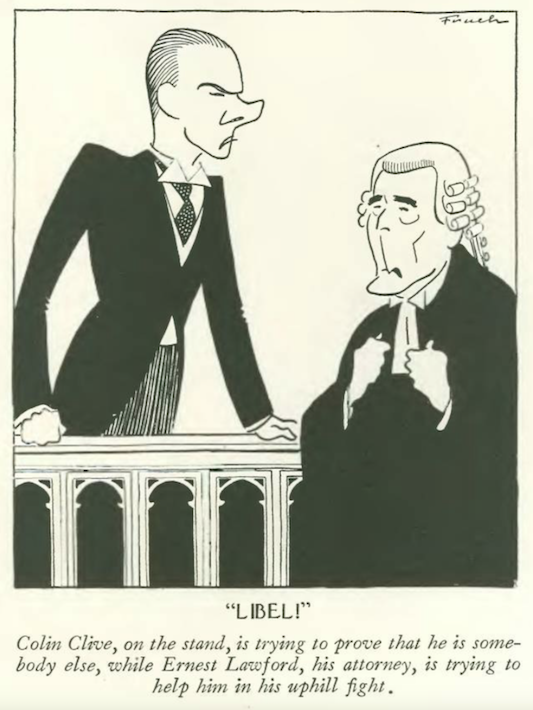
…Richard Taylor opened things up in “Goings On”…
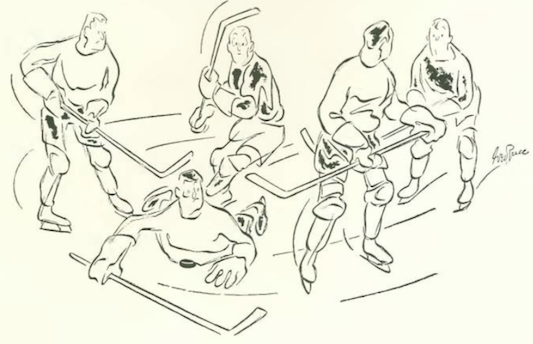
…and George Price added this bit of action to the calendar section…
…Abe Birnbaum contributed this delightful spot drawing…
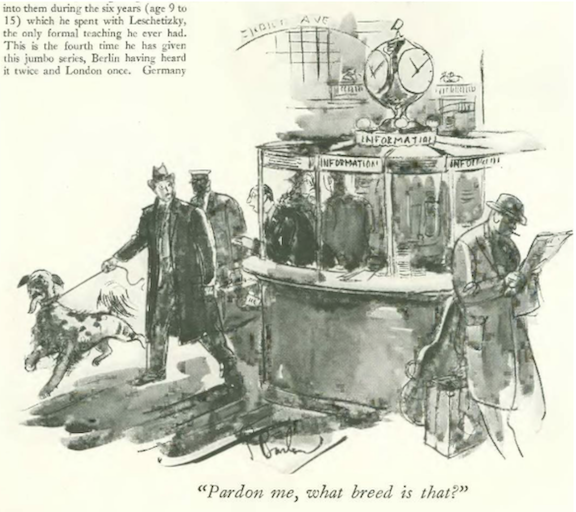
…the Westminster dog show was the talk of the town, and at Grand Central, per Perry Barlow…
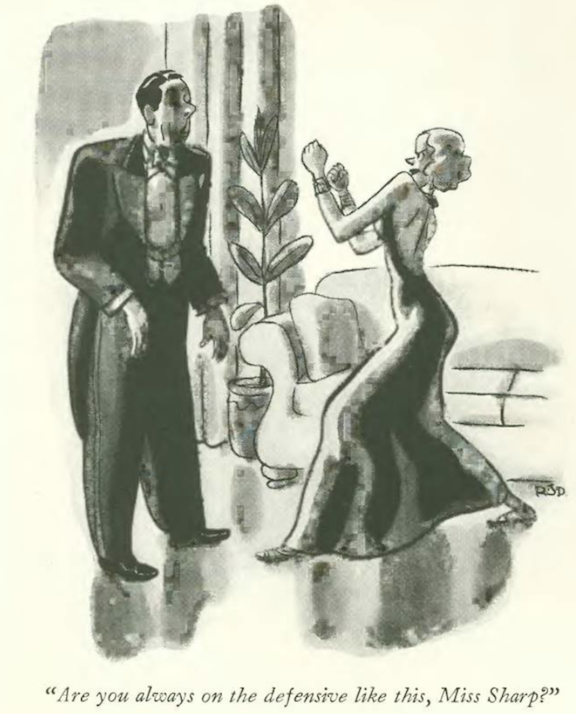
…Robert Day had a fight on his hands…
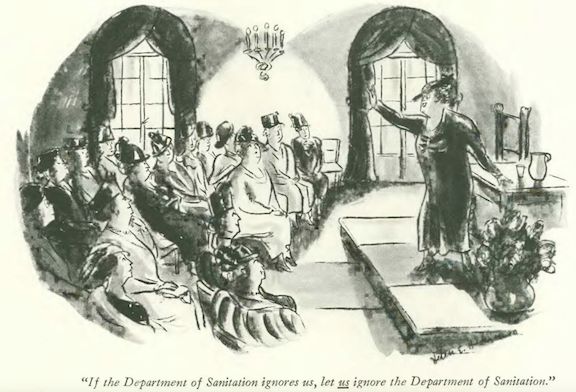
…Helen Hokinson’s “girls” were out to snub the sanitation department…
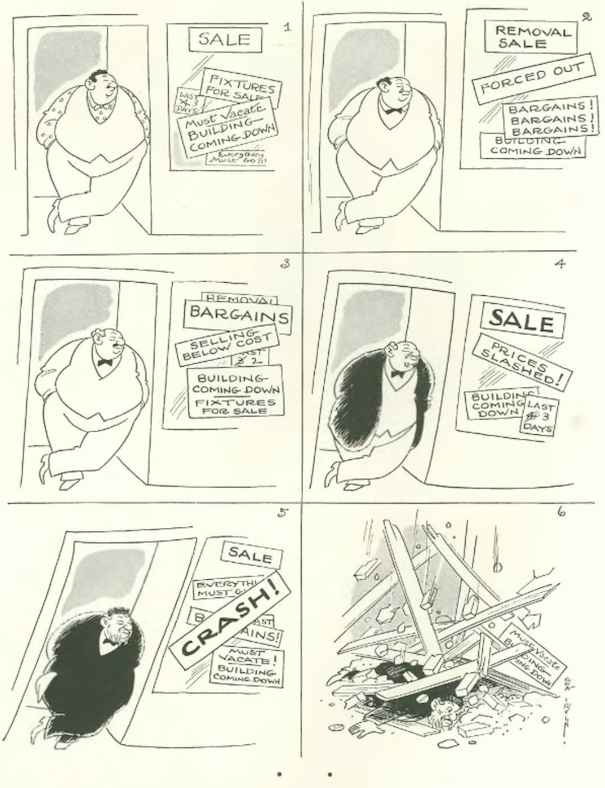
…Rea Irvin drew up the literal downfall of one business…
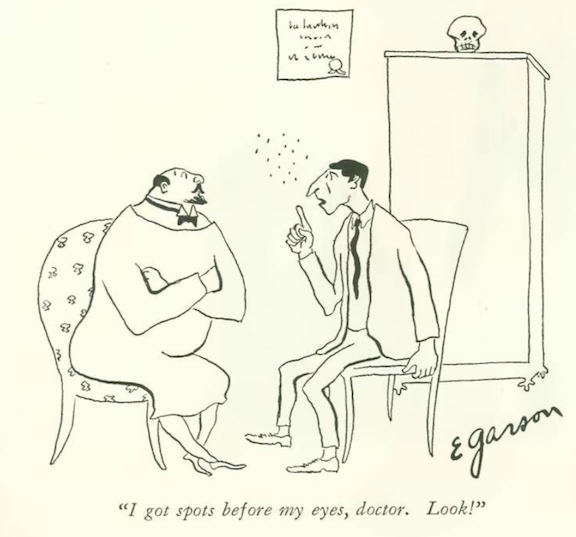
…Eli Garson had us seeing spots…
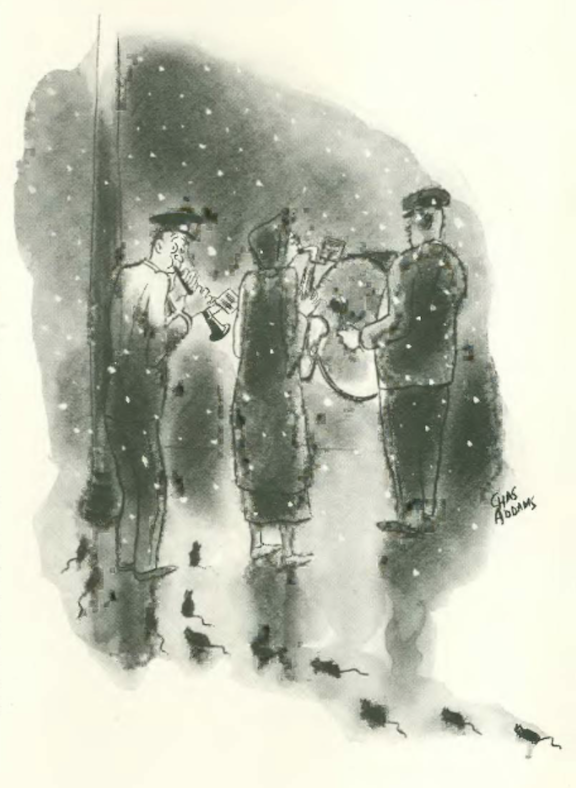
…Charles Addams found the Pied Piper in a Salvation Army band…
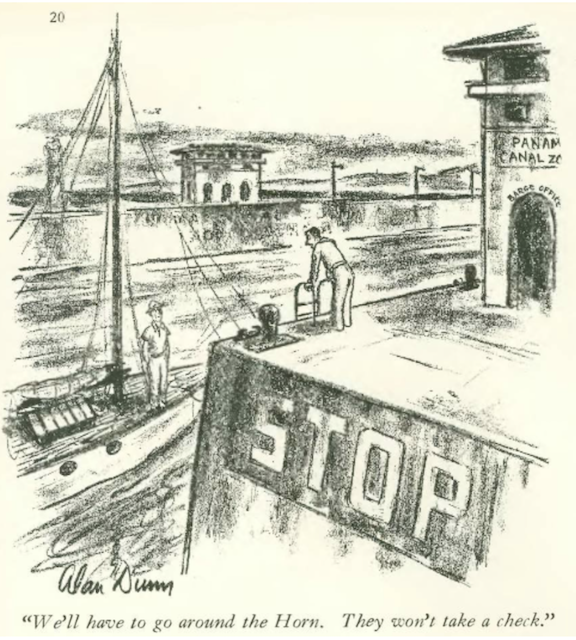
…Alan Dunn gave new meaning to “taking a detour”…
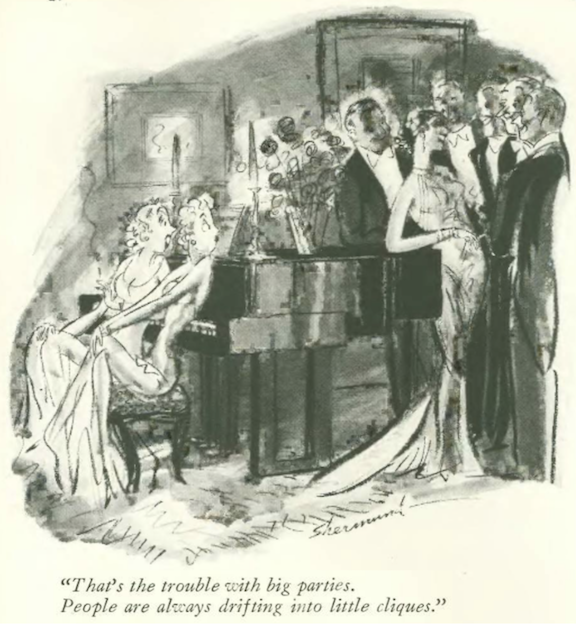
…Barbara Shermund illustrated one of the perils of cocktail parties…
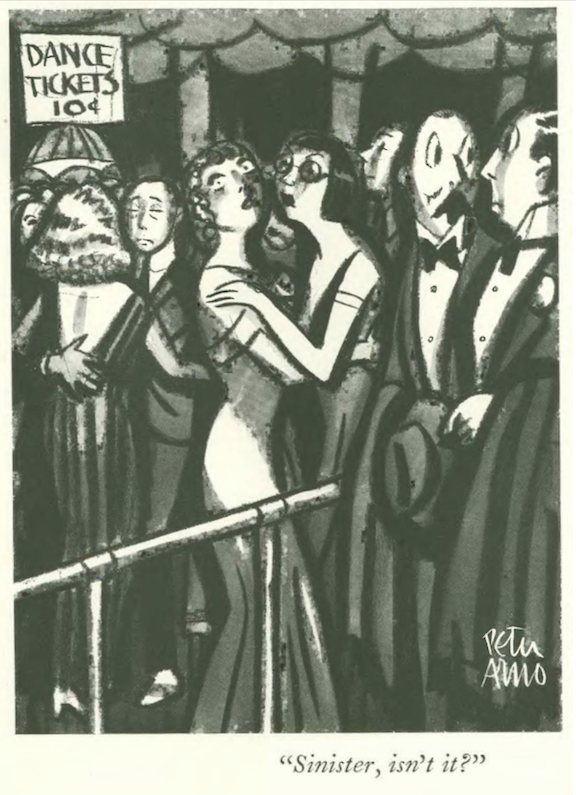
…and we close with Peter Arno, and the sinister world of taxi dancers…
Above: Portrait of Georgia O'Keeffe, 1935, by Alfred Stieglitz, gelatin silver print; at right, O'Keeffe's Ram's Head, White Hollyhock-Hills, 1935. Oil on canvas. (National Gallery/Brooklyn Museum)
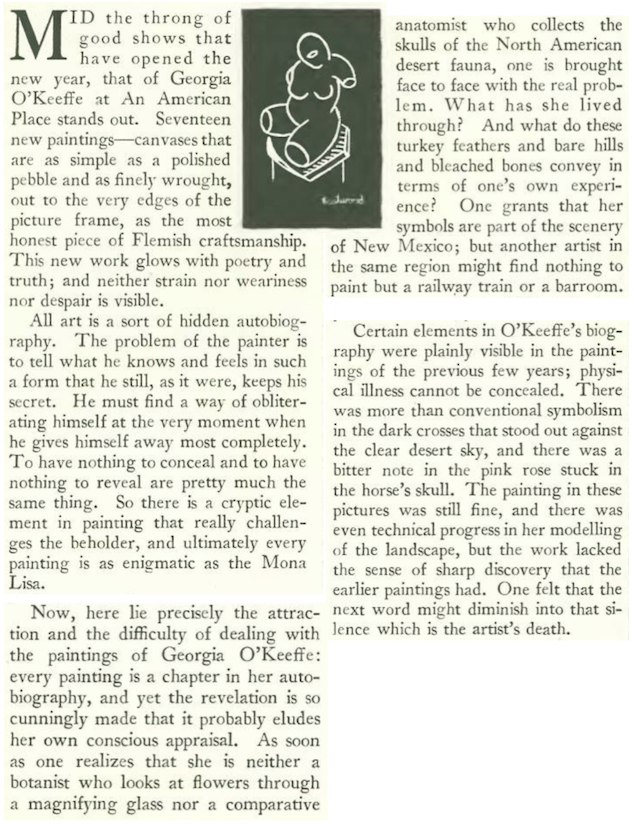
Over the seven decades of her career, Georgia O’Keeffe created works that did not necessarily follow the art movements of the 20th century. Critic Lewis Mumford referred to these works as “autobiographies in paint,” every painting “as enigmatic as the Mona Lisa.”
January 18, 1936 cover by Robert Day, illustrating the days before the invention of the Zamboni (in 1949).
O’Keeffe was married to art dealer and photographer Alfred Stieglitz, who exhibited her works at his “An American Place” gallery at 53rd and Madison. The couple had a complex, open relationship (Stieglitz had a number of affairs) that proved painful to O’Keeffe, and in 1933 she was hospitalized for two months after experiencing a nervous breakdown; she did not paint again until the following year. Although Mumford did not directly reference this episode in O’Keeffe’s life, he did note that “Certain elements in O’Keeffe’s biography were plainly visible” in her paintings.
PAINED PAINTINGS…Clockwise, from top left, Georgia O’Keeffe’sEagle Claw and Bean Necklace, 1934; Jack-in-the-Pulpit No. IV, 1930; Purple Hills, 1935. (MoMA/Phillips Collection/San Diego Museum of Art)
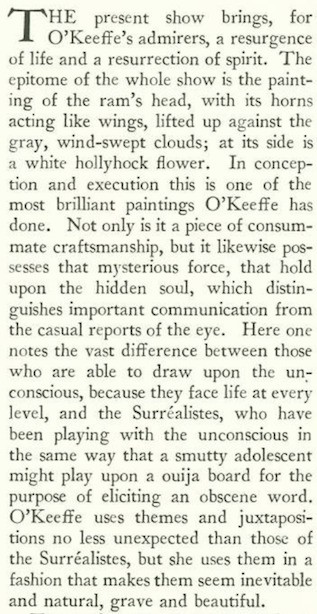
Mumford noted that O’Keeffe’s newer works revealed a “resurrection of spirit,” such as the painting of a ram’s skull, “with its horns acting like wings, lifted up against the gray, wind-swept clouds…”
GLOWING WITH POETRY AND TRUTH is how Lewis Mumford described Georgia O’Keeffe’s latest work. Clockwise, from top left: Ram’s Head suggested to Mumford “a resurgence of life and a resurrection of spirit” in the artist; other bright works included Sunflower, New Mexico 1, 1935; and Hill, 1935. (National Gallery/Cleveland Museum of Art/ Denver Art Museum)
* * *
Lights Out
In the previous issue E.B. White noted that the Edison Company was threatening to cut off electric service to the magazine’s offices due to nonpayment. This “Notes and Comment” update cleared up the matter.
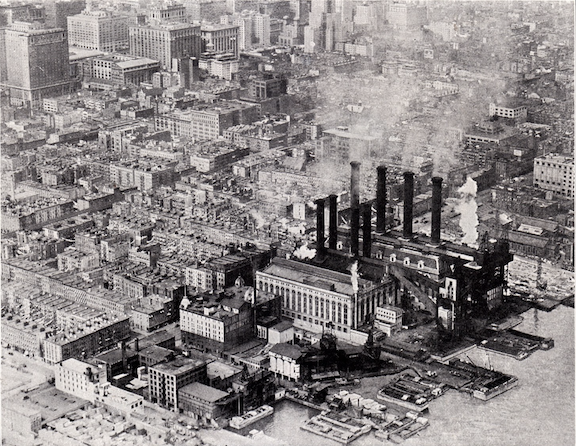
THE PRICE FOR POWER…Above, an aerial view from 1926 of New York Edison’s East River Power Station at 38th Street. In 1936 it was powered by coal, which burned pungently and created problems with soot throughout the area. (tudorcityconfidential.com)
* * *
Revisiting a Pint-size Poet
“The Talk of the Town” paid a visit to Nathalia Crane (1913–1998), who became famous after the 1924 publication of her first book of poetry, The Janitor’s Boy, at the age of ten. Excerpts:
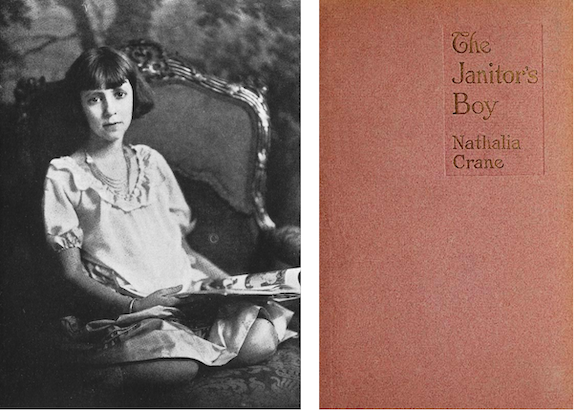
PIXIE POET…Nathalia Crane published her first poems in The New York Sun when she was only nine years old, the paper unaware that she was a child. She later became a professor of English at San Diego State University. (gutenberg.org)
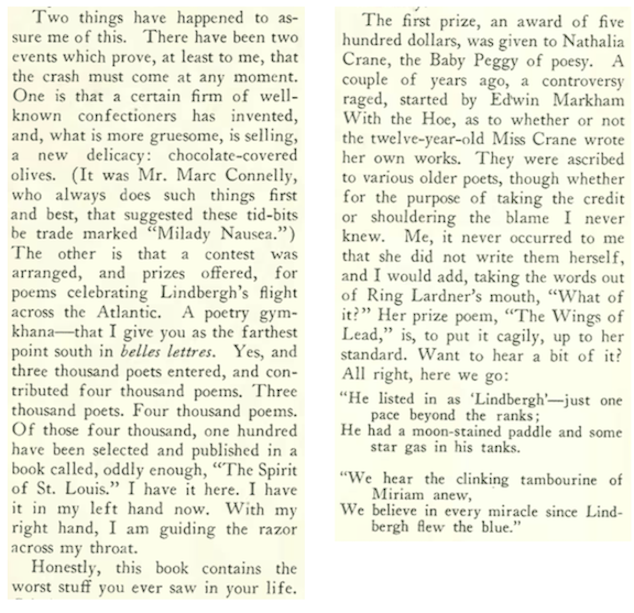
The fledgling Crane received a very different New Yorker reception in 1928, when Dorothy Parker took her to task for contributing to the collapse of grammar and civilization in general. Here’s an excerpt from Parker’s Jan. 7, 1928 “Reading & Writing” column:
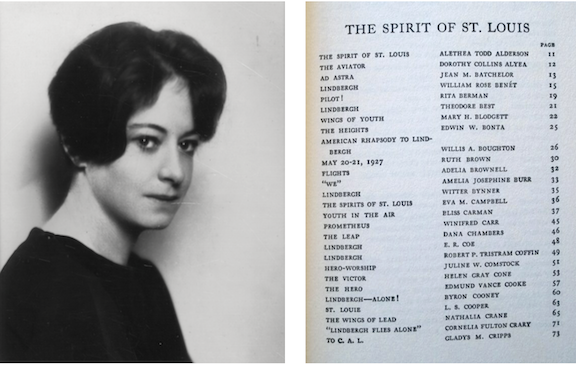
GRUESOME was the word Dorothy Parker chose to describe chocolate-covered olives and bad poetry. At left, Parker in 1928. At right, a contents page from The Spirit of St. Louis, a collection of one hundred poems selected from thousands in a poetry contest celebrating Charles Lindbergh’s flight across the Atlantic. (literaryladiesguide.com/ebay.com)
* * *
Order in the Court
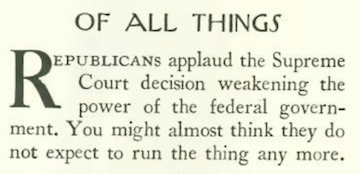
Howard Brubaker commented on a recent ruling by the Supreme Court regarding the ongoing fight by Republicans to curtail FDR’s New Deal.
* * *
Cinderella Stories
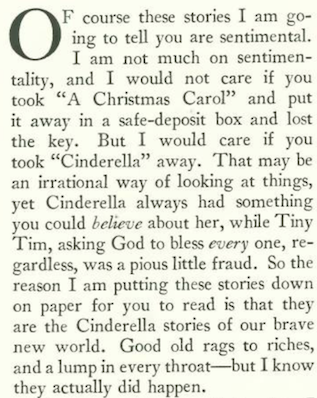
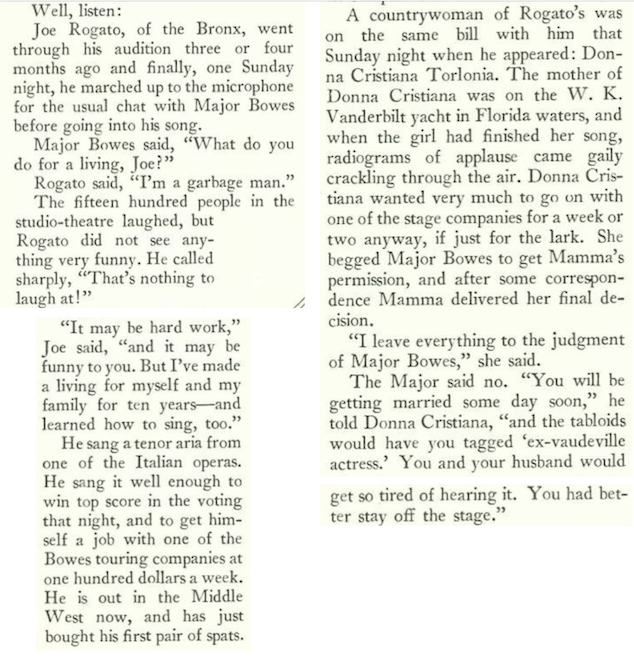
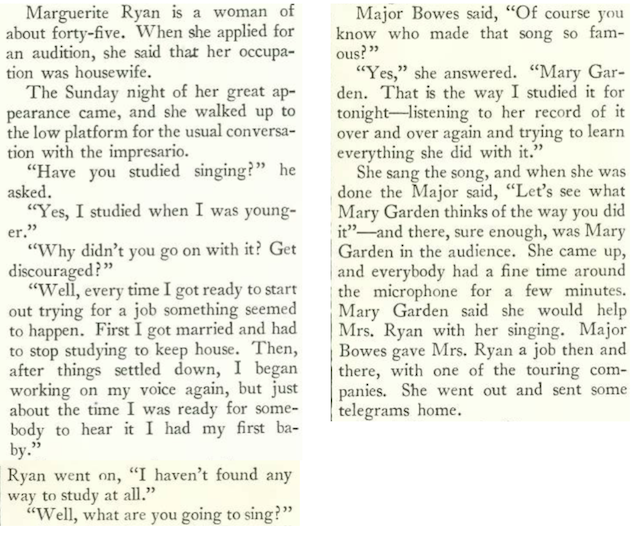
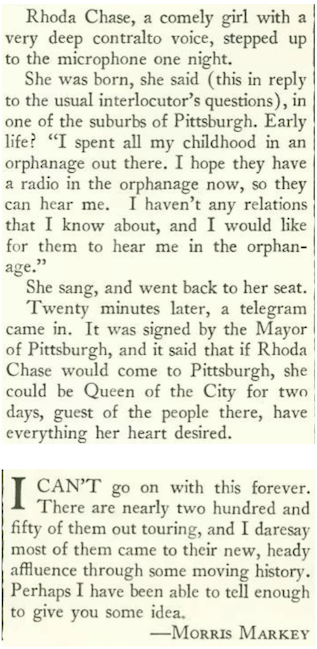
For his Jan. 4, 1936 “A Reporter at Large” column Morris Markey visited “Major Bowe’s Amateur Hour” at NBC’s Rockefeller Center radio studios. He was so impressed by the rags-to-riches stories that he shared a few in his Jan. 18 column, titled “The Crystal Slipper.” He warned readers that the stories were “sentimental,” but not in the vein of A Christmas Carol: “Tiny Tim, asking God to bless every one, regardless, was a pious little fraud,” Markey noted. Excerpts:
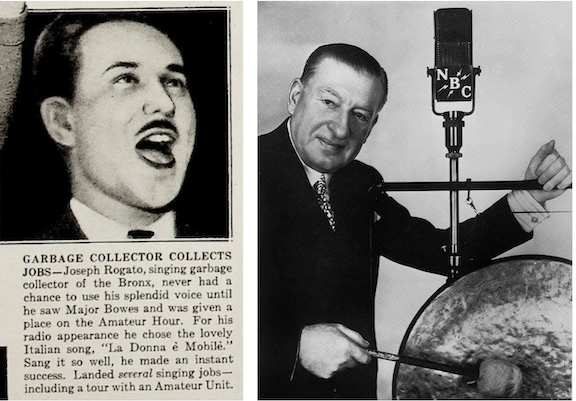
Markey shared the story of a garbage collector turned opera tenor, and a wealthy debutante who was encouraged to “stay off the stage” by “Major” Edward Bowes himself.
CUT THE TRASH TALK…Joseph Rogato told the Amateur Hour audience that his job as a “garbage man” was no laughing matter, and went on to wow them with his singing voice. At left, a detail from an ad for Chase & Sanborn coffee, the show’s sponsors. At right, show founder and host “Major” Edward Bowes with the gong he used to abruptly end acts he deemed poor—he soon abandoned the practice after listeners objected. (eBay.com/Facebook)
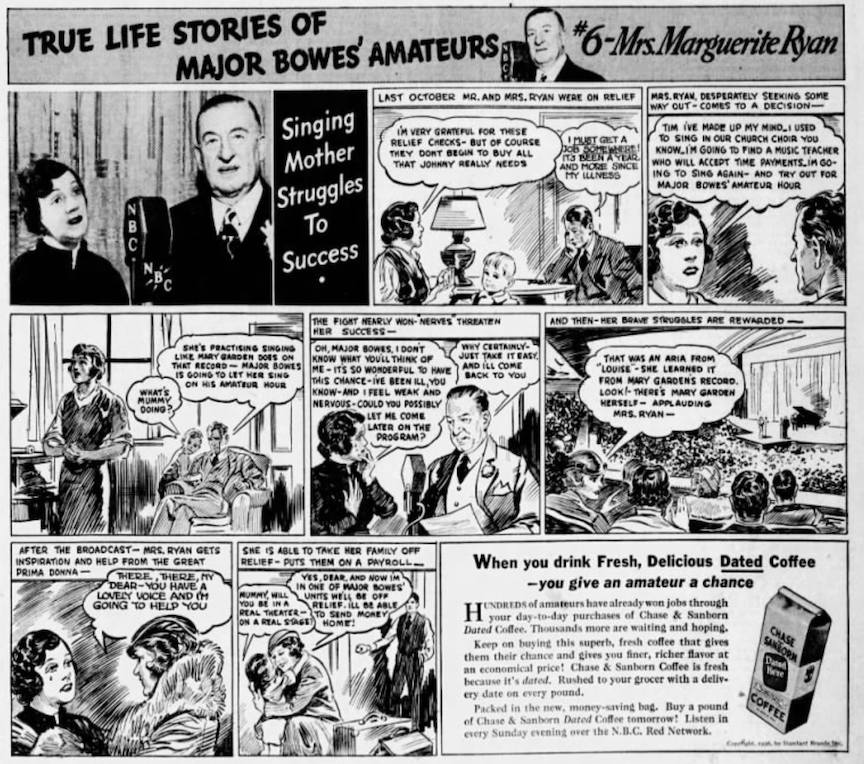
Markey next told the story of Marguerite Ryan, the “Singing Housewife”…
FROM RELIEF TO RICHES…This Chase & Sanborn advertisement described Marguerite Ryan’s brush with fame and her deliverance from poverty thanks to her appearance on the Amateur Hour. (newspapers.com)
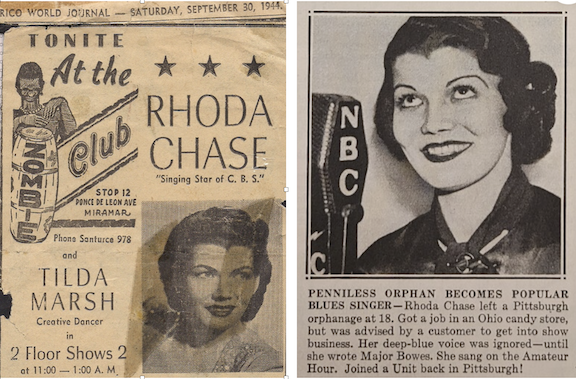
Finally, the story of Rhoda Chase, whom Bowes promoted as a “penniless orphan.” Born Anna Blanor, her stage name, Rhoda, was selected by a psychic, while her last name was inspired by sponsors Chase & Sanborn.
VELVET VOICE…At right, detail from a Chase & Sanborn ad that promoted Rhoda Chase as a “Penniless Orphan” who made the big time thanks to the Amateur Hour. At left, a 1944 newspaper ad for the Zombie Club in San Juan, Puerto Rico. Known as “The Blue Velvet Voice”, Chase was a radio, stage, nightclub and USO blues singer. (Wikimedia Commons/eBay)
* * *
At the Movies
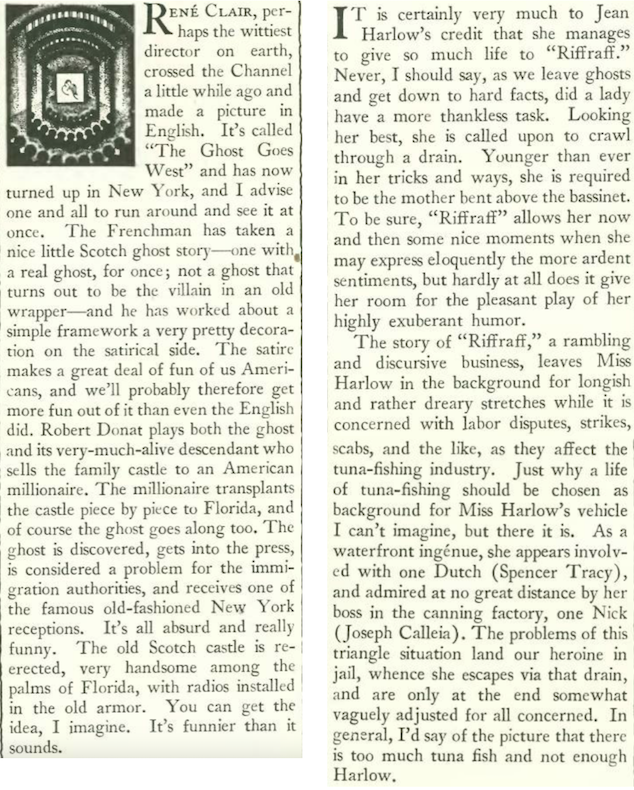
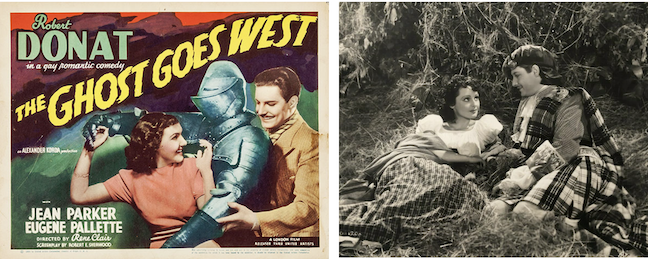
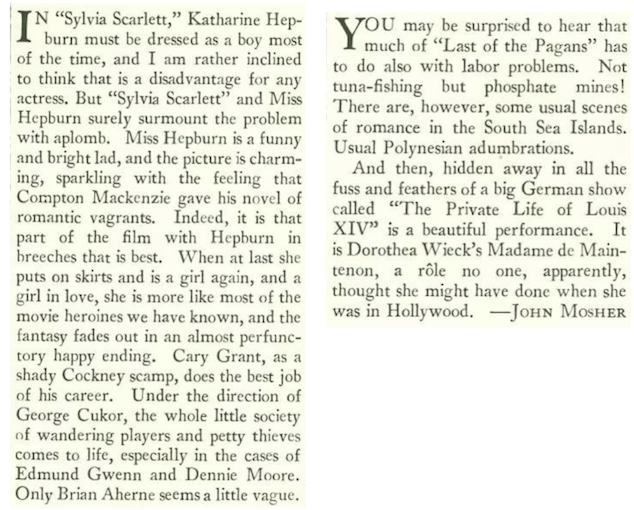
Film critic John Mosher found some bright spots at the movies, praising René Clair’s The Ghost Goes West but feeling sorry for Jean Harlow in her “thankless” role in Riffraff, a film about the tuna-fishing industry.
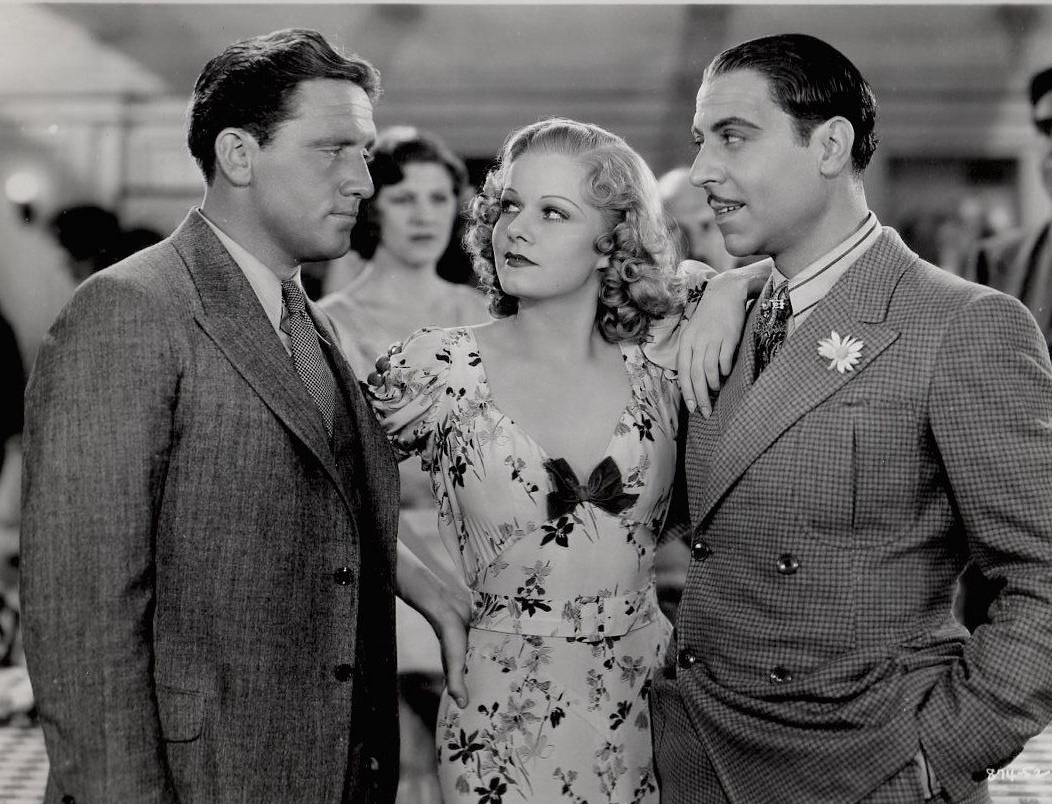
THE FRIENDLY GHOST…Robert Donat and Patricia Hilliard in the romantic comedy The Ghost Goes West. (IMDB)FISH OUT OF WATER…Spencer Tracy, Jean Harlow, and Joseph Calleia in Riffraff, a drama about a strike at a tuna fishery. “Just why a life of tuna-fishing should be chosen as background for Miss Harlow’s vehicle I can’t imagine, but there it is,” wrote critic John Mosher. (IMDB)
Mosher didn’t know what to make of Katharine Hepburn’s latest film, Sylvia Scarlett, in which she portrayed a con artist disguised as a boy hiding from the police. Despite its major star power and George Cukor as director, the film was a flop.
Mosher also reviewed Last of the Pagans (also about a labor dispute!) and The Private Life of Louis XIV (released in Germany in 1935 as Liselotte von der Pfalz).
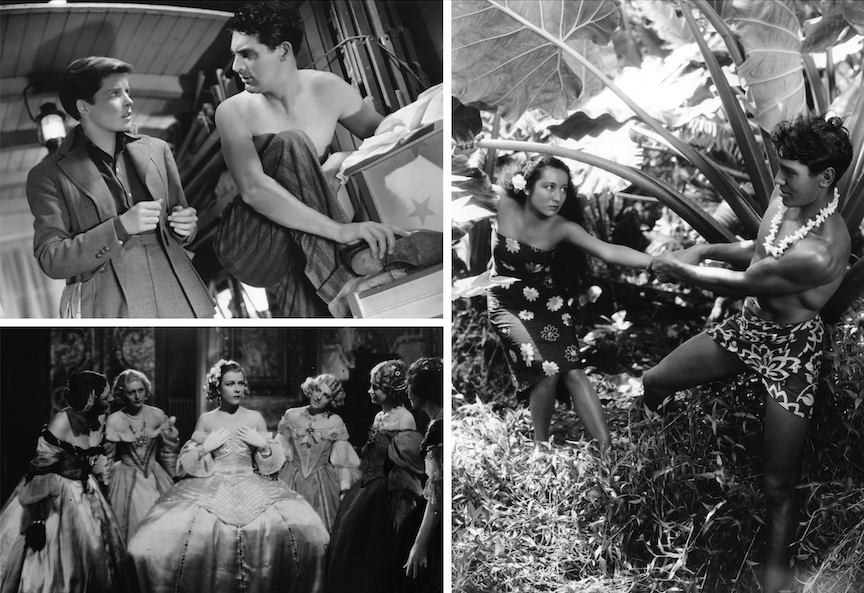
SHE’S A MAN, MAN…Clockwise, from top left, Katharine Hepburn and Cary Grant in Sylvia Scarlett; Lotus Long and Mala in Last of the Pagans;Renate Müller in The Private Life of Louis XIV (Liselotte von der Pfalz). Müller would die in 1937 at age 31 under mysterious circumstances. Many believe the Nazis had her killed because she refused to appear in their propaganda films. (academymuseum.org/MGM/IMDB)
* * *
From Our Advertisers
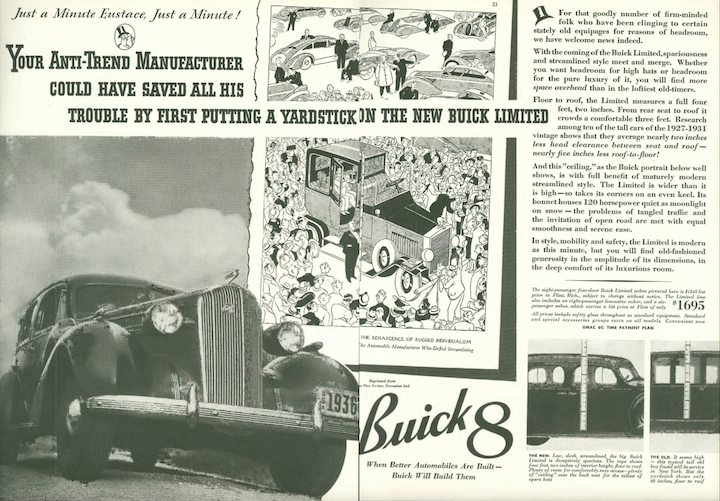
General Motors promoted their Buick Eight in a two-page advertisement that called out Eustace Tilley and reprinted a Carl Rose cartoon from the Nov. 2, 1935 issue…
…here is the original cartoon…
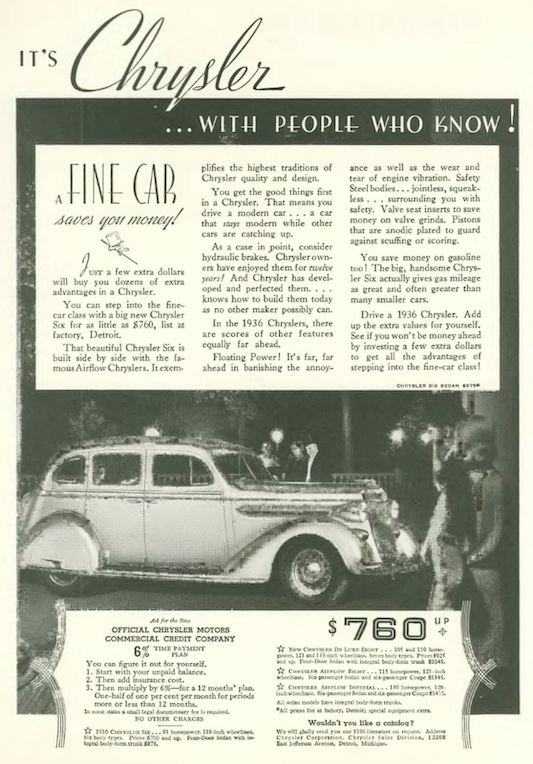
…with the holidays a memory and the Depression still lingering, most of the automobile ads touted economy over luxury, however Chrysler claimed you could have both with this $760 model…
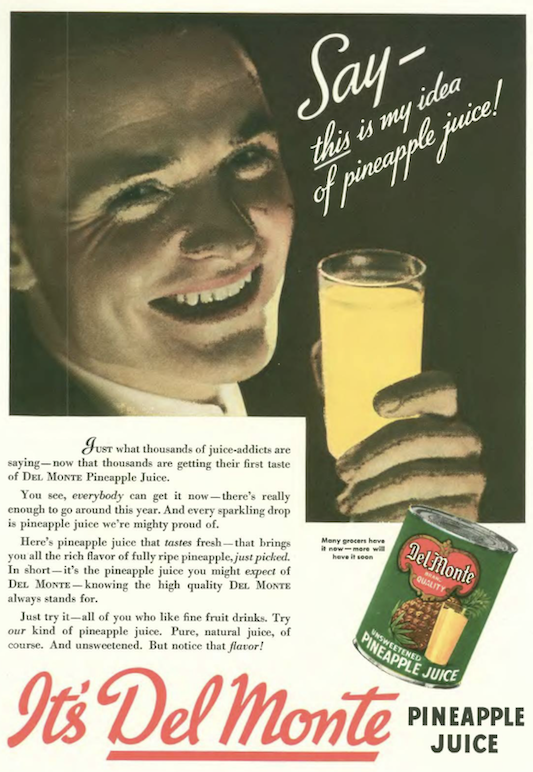
…by the looks of this guy, he probably added three fingers of vodka to his pineapple juice…
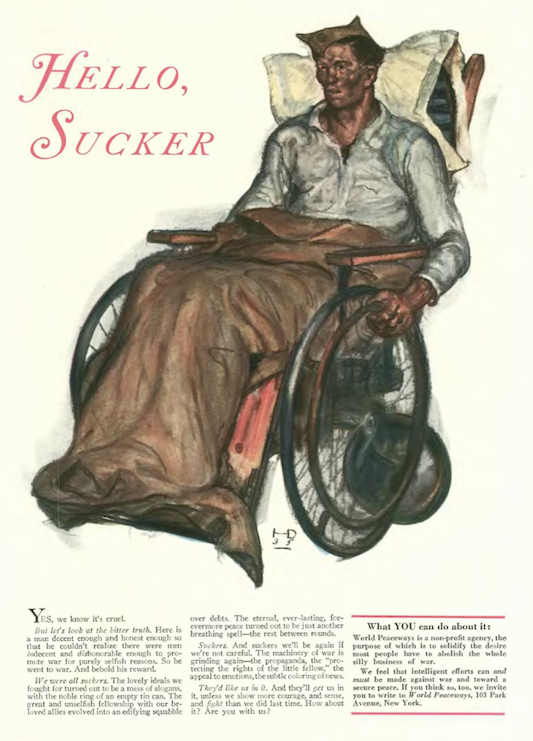
…as noted before, the folks at World Peaceways pulled no punches with their anti-war appeals…
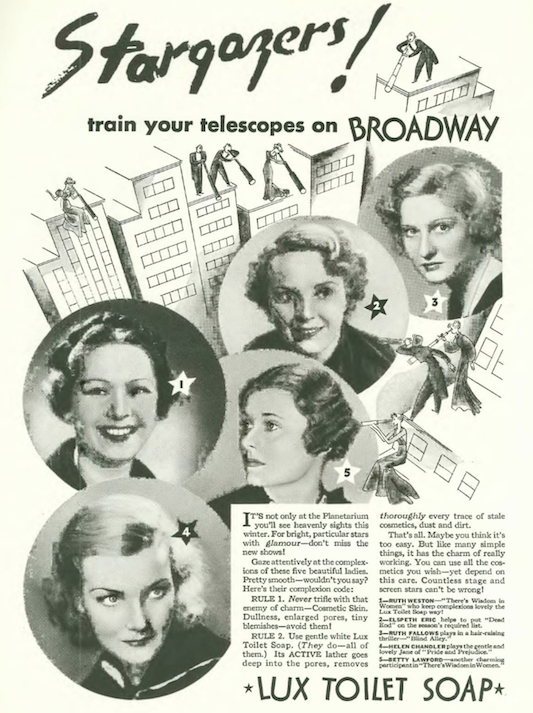
…the makers of Lux were still rolling out Broadway stars to endorse their toilet soap…(Betty Lawford, #5, was an English film and stage actress and a cousin of actor Peter Lawford)…
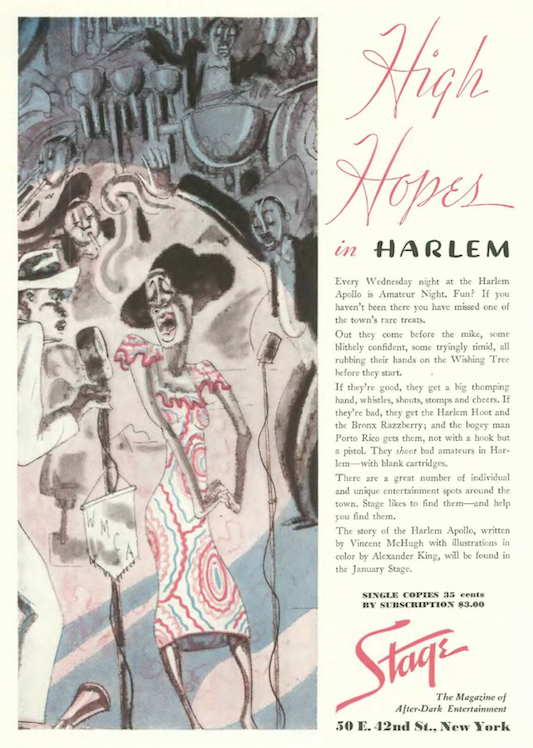
…the inside back cover belonged to Stage magazine…the illustration, “Amateur Night at the Apollo,” is by Alexander King…
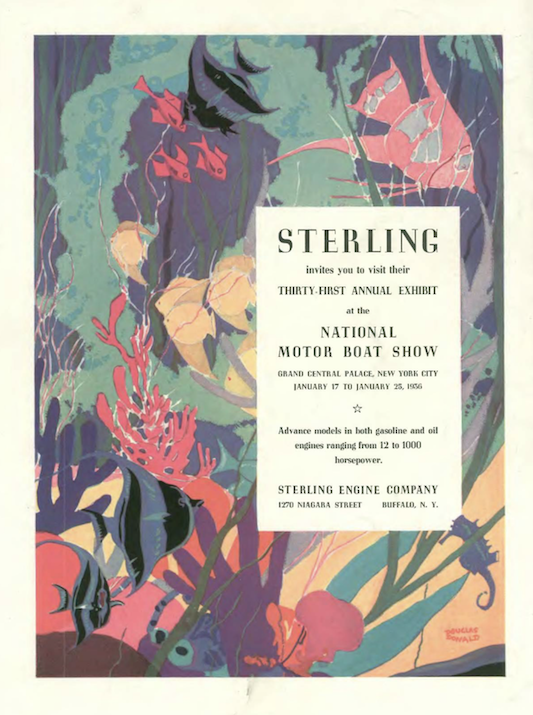
…the Grand Central Palace was hosting the thirty-first annual National Motor Boat Show, a rare back cover not taken by a tobacco company…
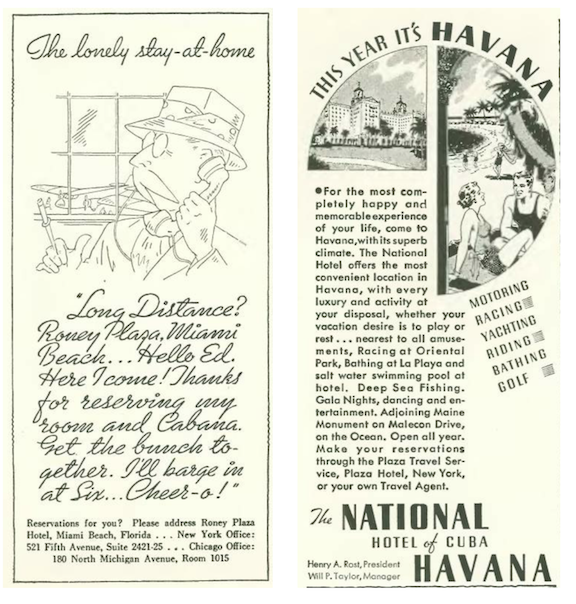
…a couple of ads from back of the book…at left, an Anglophilic appeal from Miami’s Roney Plaza Hotel, and, at right, pre-revolutionary days at the National Hotel in Havana (I had a drink there a few years ago during the Obama thaw…the lobby is beautiful, a classic from another era still hanging on thanks to Canadian and European tourists)…
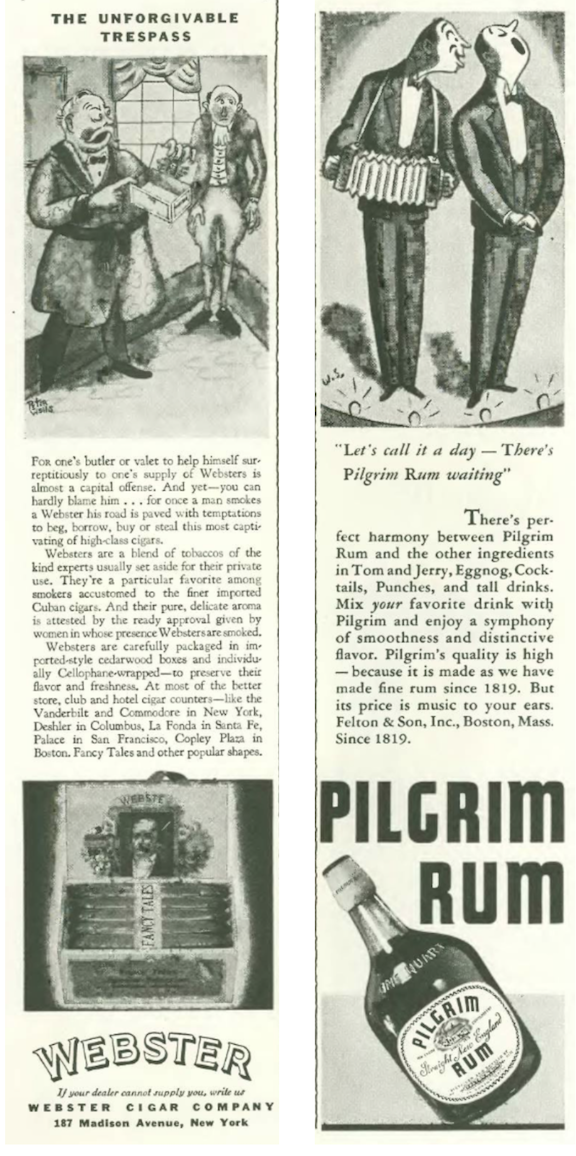
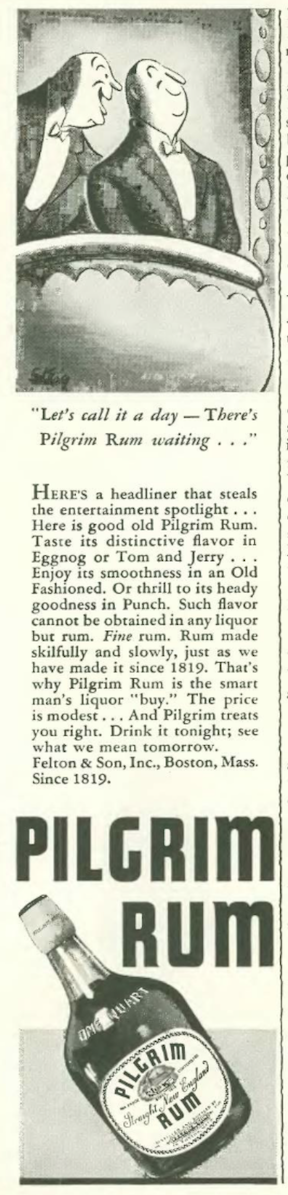
…William Steig continued to illustrate these one-column ads from Pilgrim Rum…
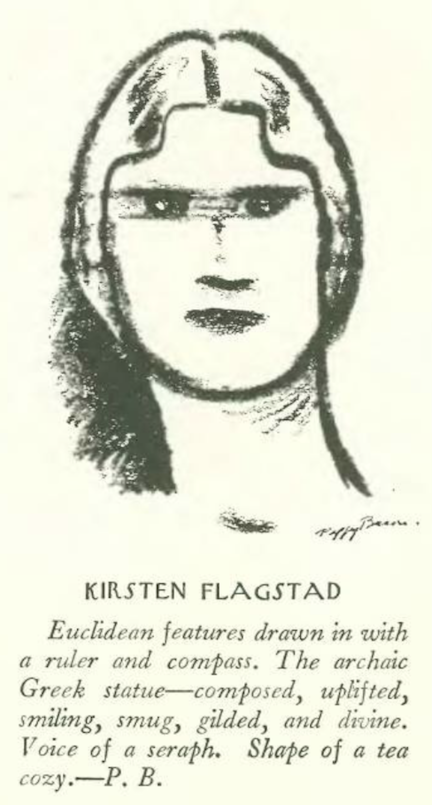
…which segues to our cartoonists…on the bottom of page 3 was this one-column drawing by Peggy Bacon…
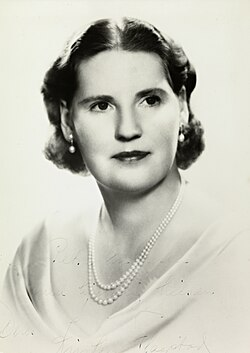
…Norwegian opera singer Kirsten Flagstad (1895–1962) was a famous Wagnerian soprano who made a triumphant debut at the Metropolitan Opera in 1935…
Kirsten Flagstad circa 1940. (Wikipedia)
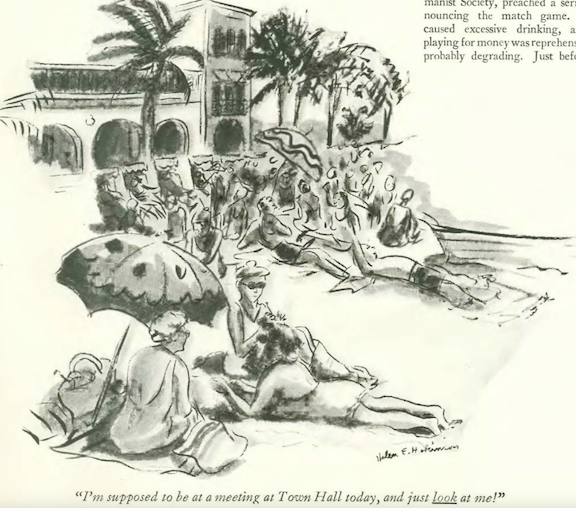
…we continue with Helen Hokinson soaking up some sun…
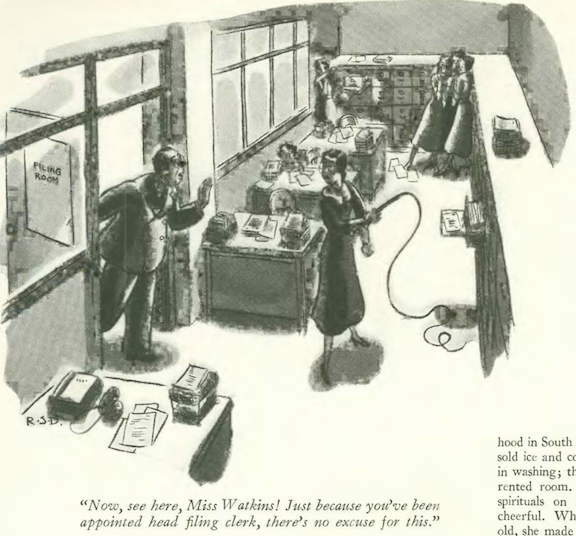
…Robert Day cracked the whip in the steno pool…
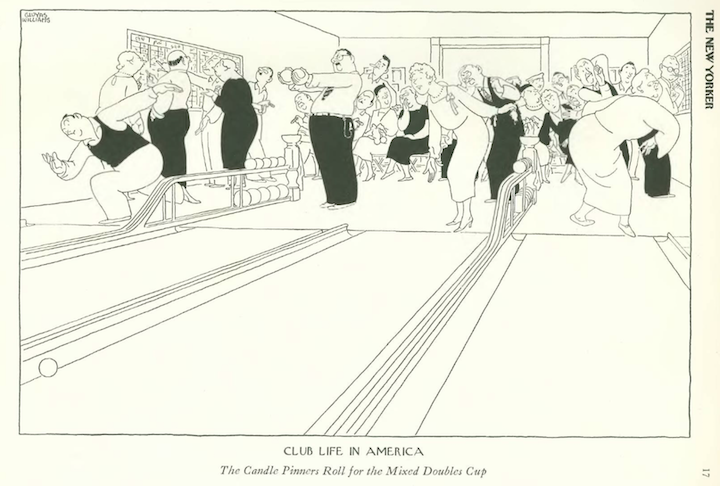
…originally published sideways, another look at club life by Gluyas Williams...
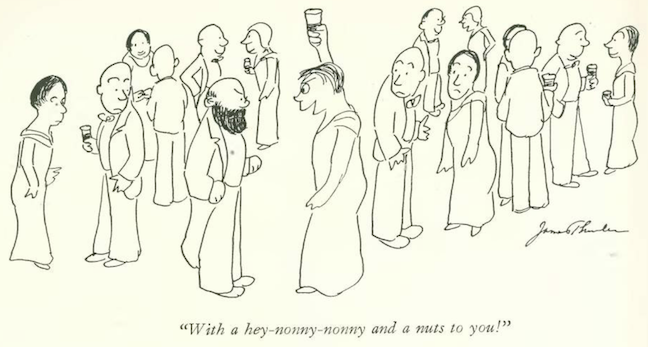
…James Thurber offered up a toast…
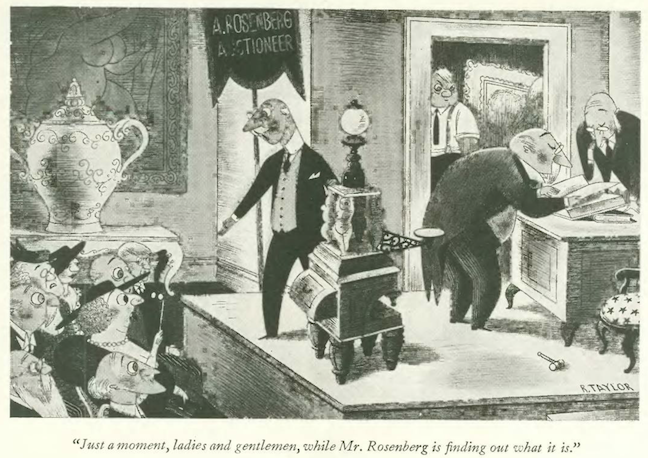
…Richard Taylor looked into an auction mystery…
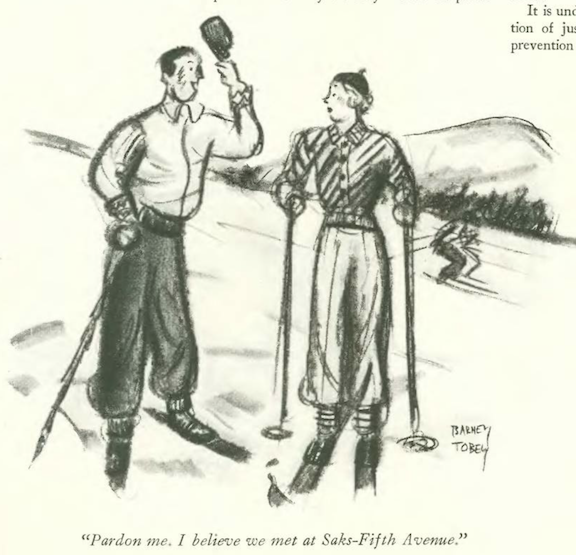
…Barney Tobey gave us a friendly greeting on the slopes…
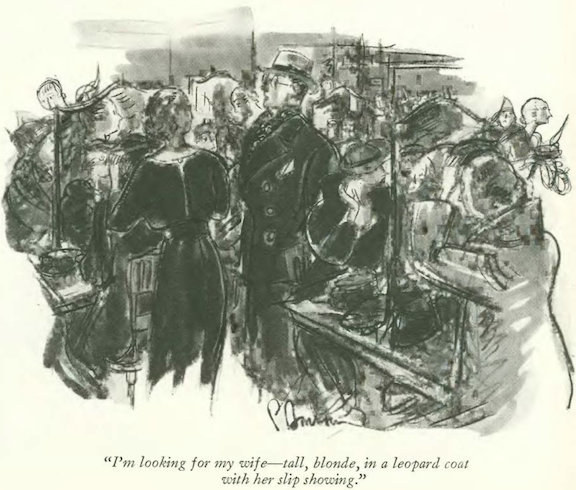
…Perry Barlow was lost in a department store…
…William Crawford Galbraith continued to probe the woes of sugar daddies…
Above: New Year’s Eve at the “El Morocco” Night Club at 154 E. 54th Street, New York, 1935. (Posted on Reddit)
Lois Long took her nightlife seriously, and when it didn’t live up to her standards—defined by the wild speakeasy nights she wrote about after joining The New Yorker in 1925 —she was crestfallen, to say the least.
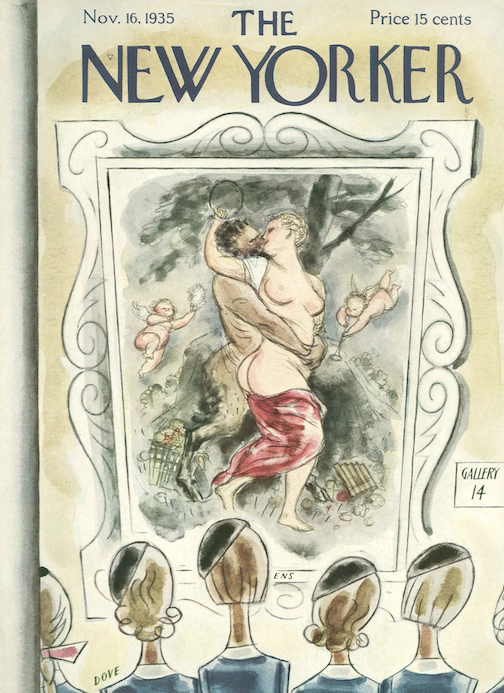
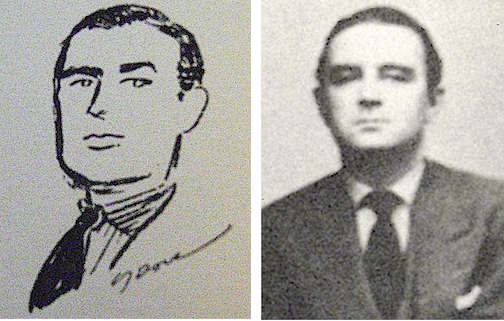
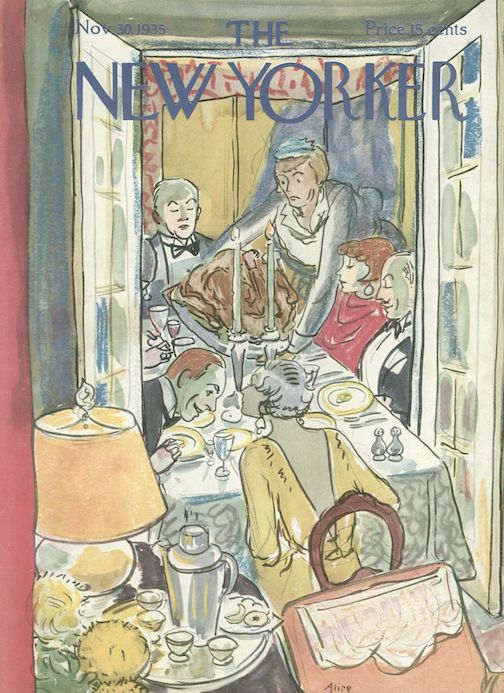
November 16, 1935 cover by Leonard Dove. This is one of Dove’s fifty-seven New Yorker covers; he also contributed 717 cartoons to the magazine.Above: Leonard Dove’s self portrait, 1941; photo: 1947. Born 1906, Great Yarmouth, England. Died, Gramercy Hotel, New York City, 1972. (Thanks to Michael Maslin’s indispensable Ink Spill)
*
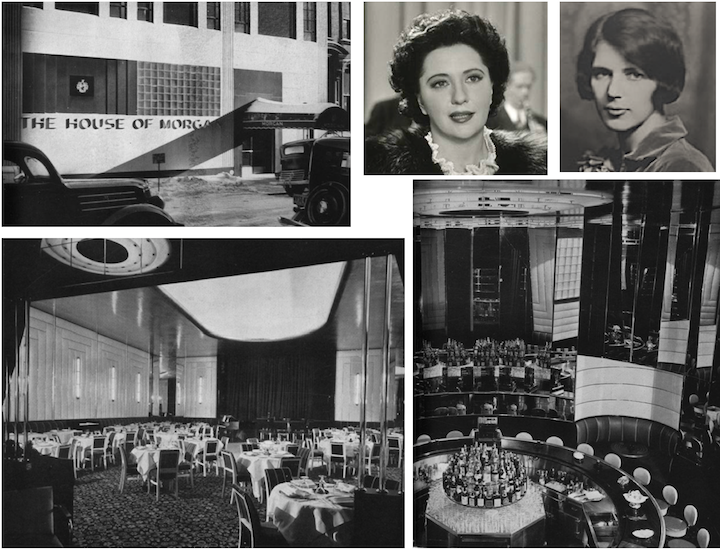
When Long joined The New Yorker she was a 23-year-old Vassar graduate, and at age 34 she was not expecting to re-live those heady days; but nightlife in 1935 made her wonder where all the interesting people had gone. Instead of the smart and beautiful speakeasy set, she found people who couldn’t hold a conversation, who cared more about being mentioned in the newspapers by “Cholly Knickerbocker” (a pseudonym used by society columnists)—they simply lacked the “sparkle” she so craved. In this excerpt from her column, “Tables for Two,” she explained:
ALL SHOW, NO GO…Lois Long recalled the heady days of the original torch singer Helen Morgan, but her new club, The House of Morgan, offered up tired vaudeville instead of the singer herself. Above, images of the club from Christopher Connelly’sThe Helen Morgan Page. Top, center, detail of Morgan from the 1935 film Sweet Music. Next to Morgan is a photo of Long from the PBS documentary Prohibition. (helen-morgan.net/PBS.org)
* * *
At the Movies
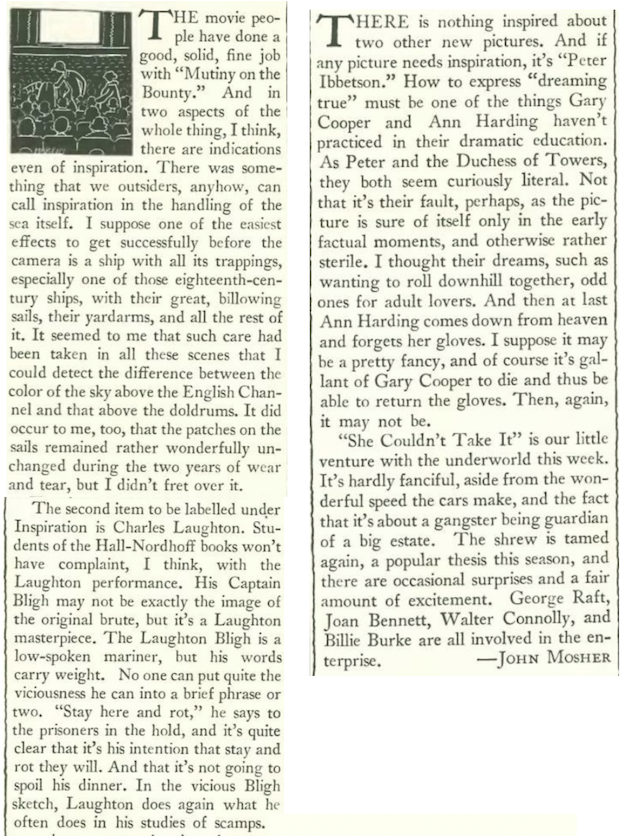
Our film critic John Mosher was in good spirits after taking in MGM’s Mutiny on the Bounty, and especially the inspired performance by Charles Laughton as the cruel, tyrannical Captain Bligh…
LET’S HAVE A STARING CONTEST…Clark Gable (left) portrayed Fletcher Christian, the Bounty’s executive officer, who disapproved of the cruel leadership of Captain Bligh, portrayed by Charles Laughton (right) in Mutiny on the Bounty. (theoscarbuzz.com)
…two other pictures reviewed by Mosher were less than inspired, but at least the George Raft/Joan Bennett gangster film, She Couldn’t Take It, offered a car chase, and the occasional surprise.
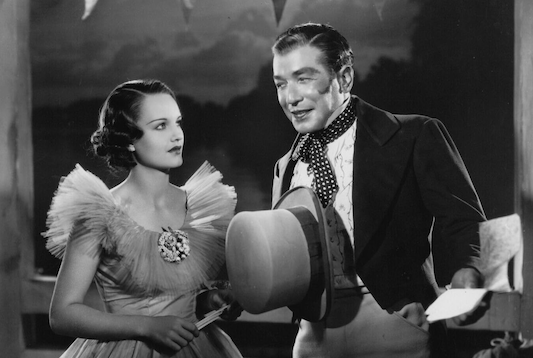
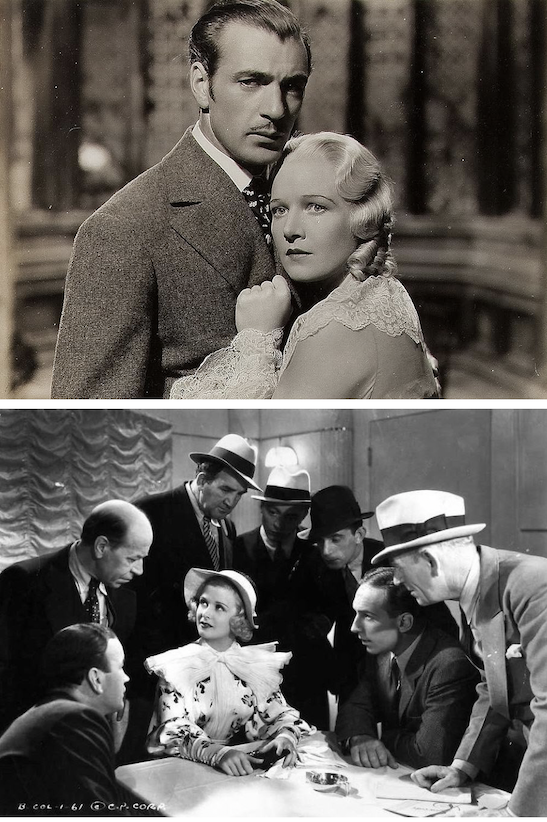
STERILITY ISSUES…Top, Gary Cooper and Ann Harding needed a bit more life in Peter Ibbetson; at least Joan Bennett (bottom photo) found some action in She Couldn’t Take It. (IMDB)
* * *
From Our Advertisers
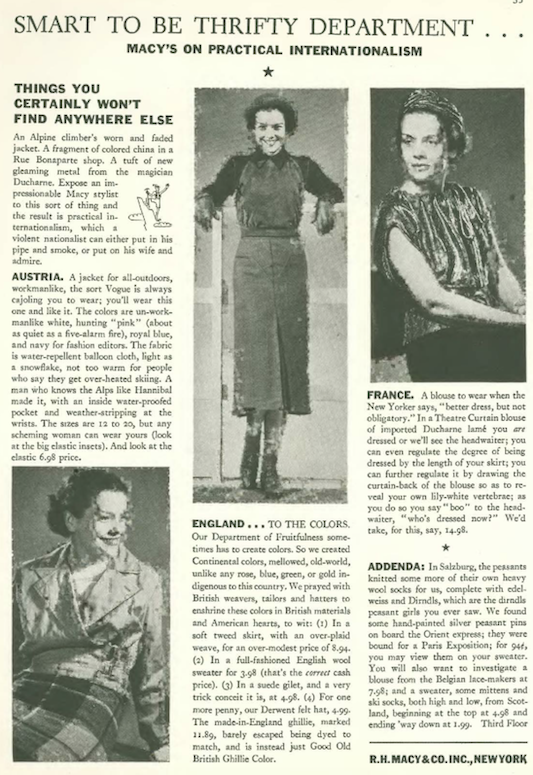
Not all fashion advertisements in The New Yorker were aimed at the posh set…Macy’s offered some thrifty selections, including a French-inspired “Theatre Curtain Blouse” that could be opened in the back “so as to reveal your own lily-white vertebrae”…
…I am puzzled by the “Duchess” types that appeared in food and beverage ads in the back of the magazine…we’ve seen some angry duchesses in ads for tomato and pineapple juice, and here we have one who has stooped so low as to shell her own peas…
…a side note, the Duchess’s peas came in a can bearing the old Green Giant logo, a savage, bearskin-clad figure…he was redesigned by ad executive Leo Burnett in 1935 to become the friendlier “Jolly Green Giant”…
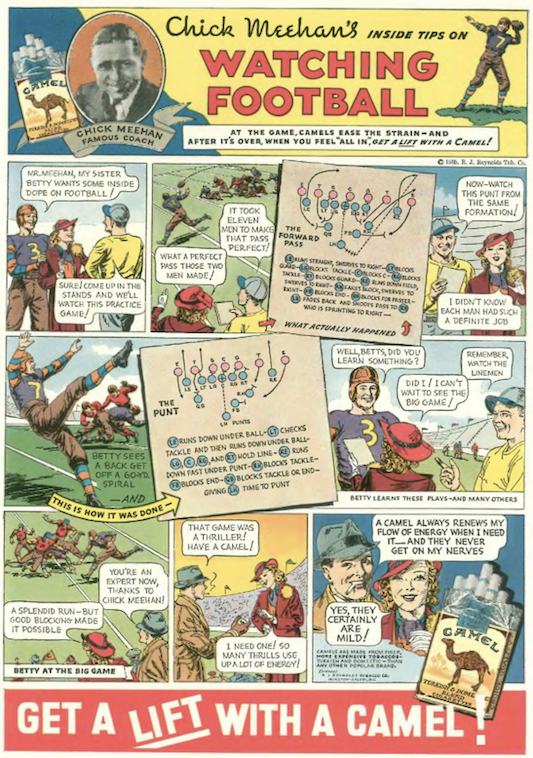
…the makers of Camels presented football coach Chick Meehan in cartoon form to extol the wonders of football and smoking to a young woman…Meehan coached football at Syracuse, NYU and Manhattan College…
…the football theme segues to our cartoon section, beginning with this spot art by James Thurber…
…Christina Malman’s spot drawings could now be found in every issue, and usually more than one…
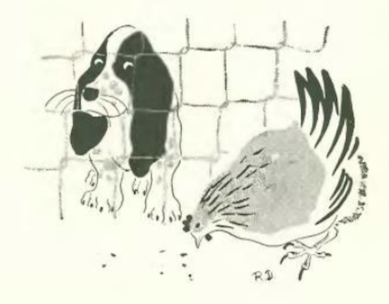
…this one by Robert Day also caught my eye, maybe because I like chickens, and dogs too…
…Day again, on the streets of Manhattan…
…Barbara Shermund showed us a wolf in wolf’s clothing…
…Alan Dunn seemed to be channelling Barbara Shermund here…or maybe Dunn’s wife Mary Petty had some influence…
…William Crawford Galbraith eavesdropped on some wagering waiters…
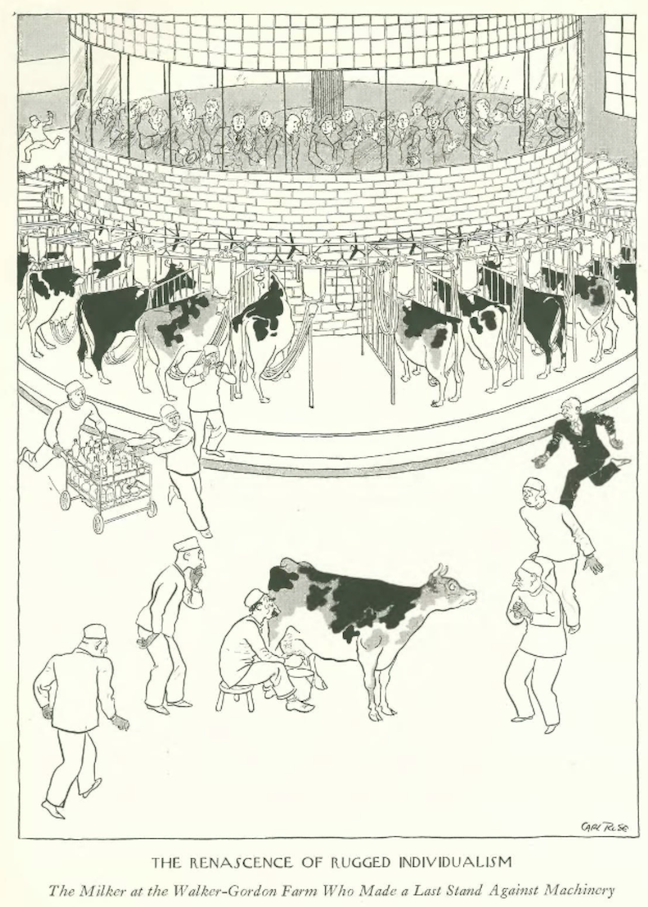
…Carl Rose found an outlier at the modern Walker-Gordon Dairy Farm…
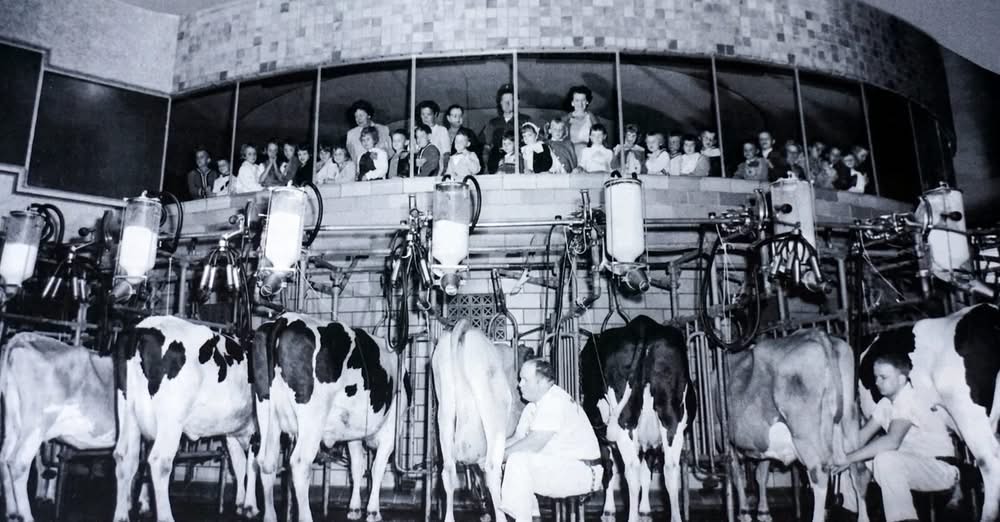
…The Rotolactor featured in Rose’s cartoon was a mostly automatic machine used for milking a large number of cows successively on a rotating platform…first used at the Walker-Gordon Laboratories and Dairy in Plainsboro, New Jersey (pictured below), the Rotolactor held fifty cows at a time, and hosted about 250,000 visitors annually…
(rawmilkinstitute.org)
…and we go from cows to cats, courtesy Helen Hokinson…
…and Charles Addams booked an unusual perp…
…on to the November 23 issue…
November 23, 1935 cover by Antonio Petruccelli. Petruccelli (1907-1994) began his career as a textile designer, becoming a freelance illustrator in 1932 after winning several House Beautiful cover contests. This is one of four covers he produced for The New Yorker.Antonio Petruccelli. Here are samples of Petruccelli’s remarkable work.(Helicline Fine Art)
*
Worth the Wait
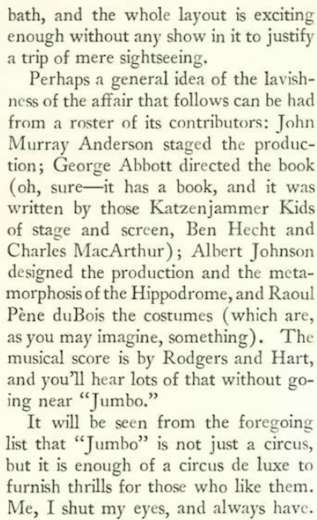
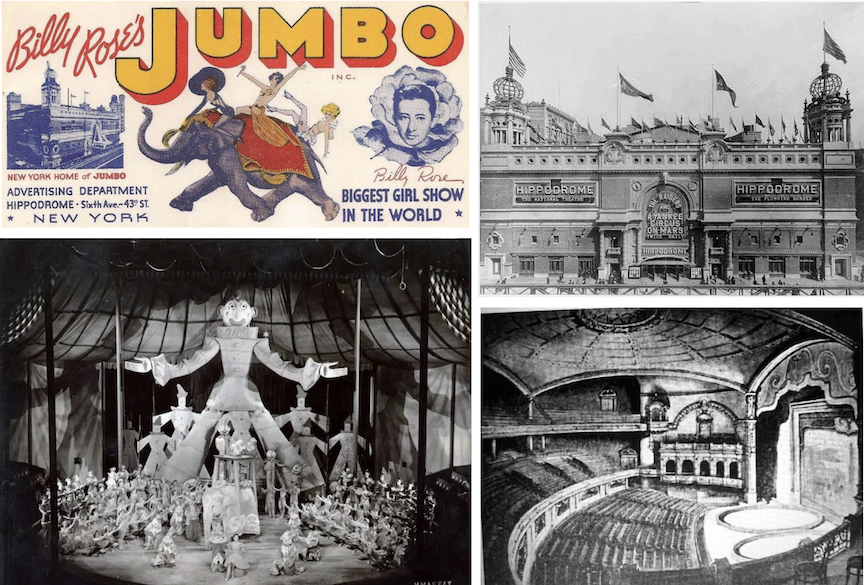
The highly-anticipated circus-themed spectacle Jumbo finally opened at the Hippodrome. In his That’s Entertainment! blog, Jackson Upperco observes that Billy’s Rose’sJumbo was “more circus than musical comedy,” a production that “was largely an excuse for Mr. Rose to present a circus.” It was headlined by comedian Jimmy Durante and bandleader Paul Whiteman, with a score by Rodgers & Hart. Here are excerpts from a review by Wolcott Gibbs:
JUMB0-SIZED ENTERTAINMENT…Clockwise, from top left, Hippodrome billboard promoting Jumbo; built in 1905, the Hippodrome provided entertainment to thousands who couldn’t afford a Broadway ticket; a circus tent was erected inside the 5,300-seat theatre for the spectacle; Jumbo was one of the most expensive theatrical events of the first half of the 20th century. (Facebook/Library of Congress/Broadway Magazine/jacksonupperco.com)
* * *
At the Movies
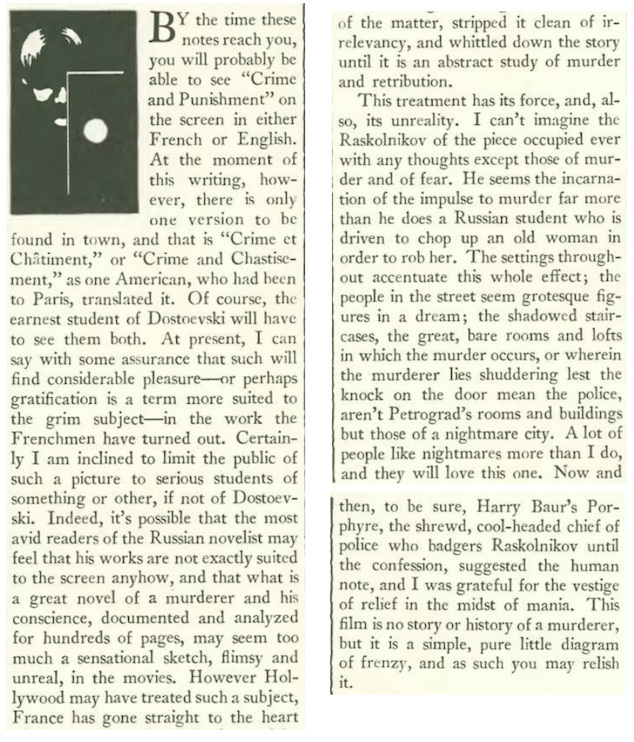
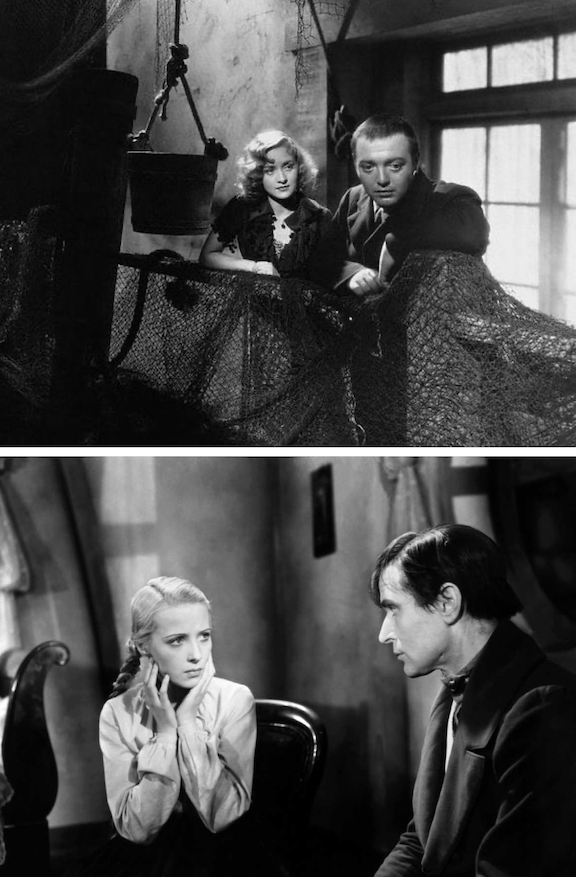
Fyodor Dostoevsky’s 1866 novel Crime and Punishment was adapted to film by both French and American producers in 1935, but critics including The New Yorker’sJohn Mosher mostly preferred the French version, titled Crime et châtiment.
DOUBLE FEATURE…American and French producers each turned out a film adaption of Fyodor Dostoevsky’s novel Crime and Punishment. Top photo, Marian Marsh as Sonya and Peter Lorre as Roderick Raskolnikov in Columbia’s Crime and Punishment; bottom photo, Madeleine Ozeray as Sonia and Pierre Blanchar as Rodion Raskolnikov in Crime et châtiment.(silverscreenmodes.com/SensCritique.com)
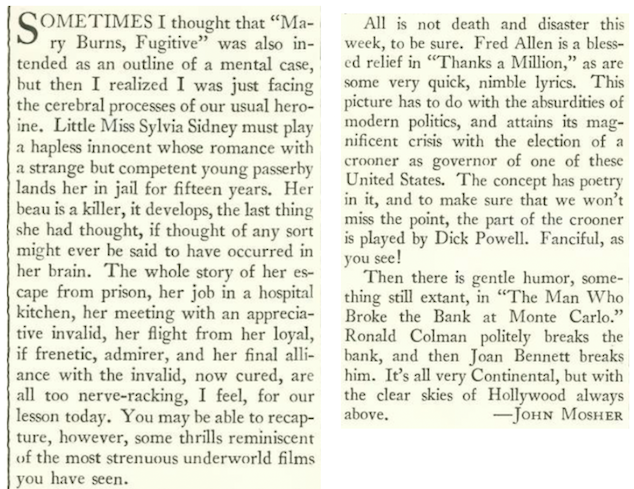
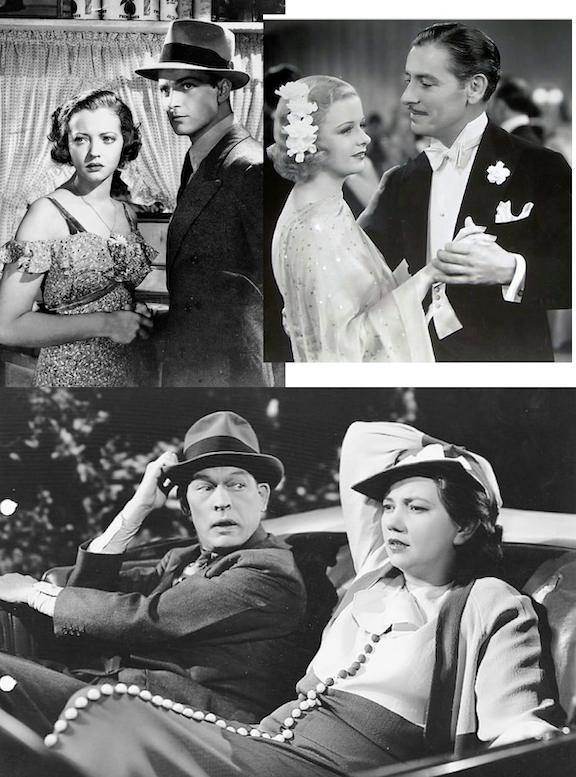
…Mosher reviewed another crime thriller, Mary Burns, Fugitive, but found some comic relief in two other films…
BAD CHOICE IN BOYFRIENDS was the theme of Mary Burns, Fugitive, starring (top left) Sylvia Sidney and Alan Baxter; top right, Joan Bennett and Ronald Colman in the romcom The Man Who Broke the Bank at Monte Carlo; bottom, Fred Allen and Patsy Kelly provided some laughs in musical comedy Thanks a Million. (IMDB)
* * *
From Our Advertisers
Readers of the Nov. 23 issue opened to this lovely image…
…which sharply contrasted with the clunky Plymouth ad on the opposite page…
…not so clunky was this colorful illustration promoting Cadillac’s economy model, the La Salle…
…the back cover was no surprise, with yet another glamorous cigarette ad…
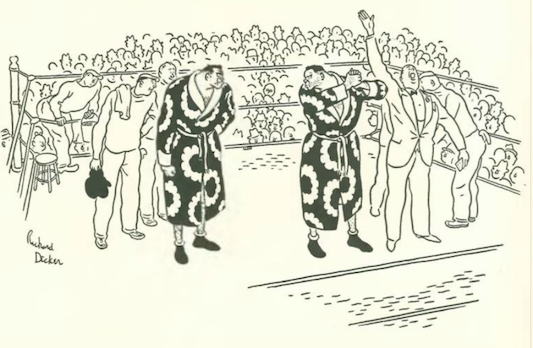
…our cartoonists included Richard Decker, and a fashion faux pas to open a boxing match…
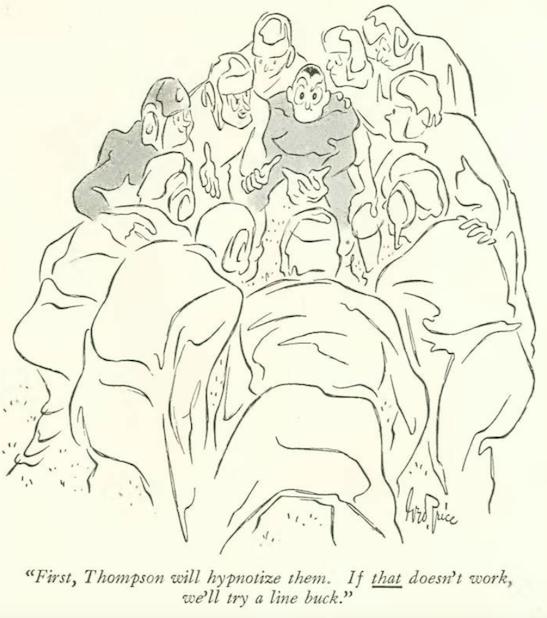
…George Price eavesdropped into some football strategy…
…Carl Rose spotted a canine unbeliever…
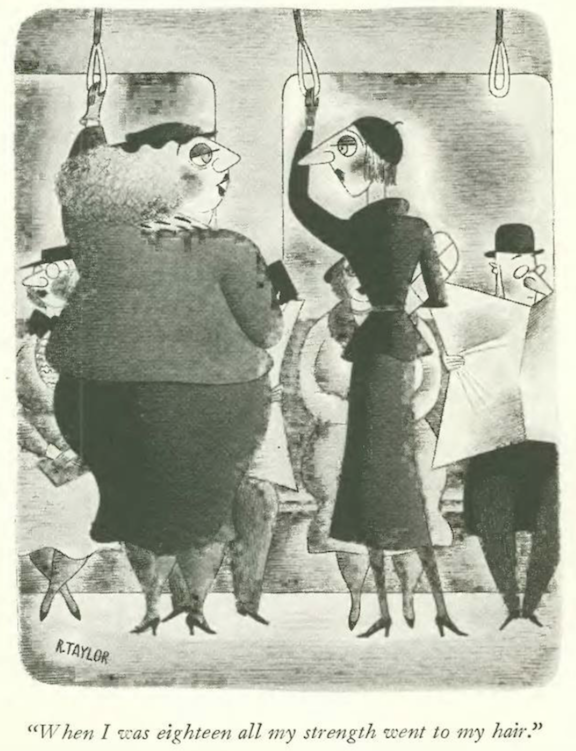
…Richard Taylor was back with his distinctive style…
…Al Frueh continued to illustrate the latest fare on Broadway…
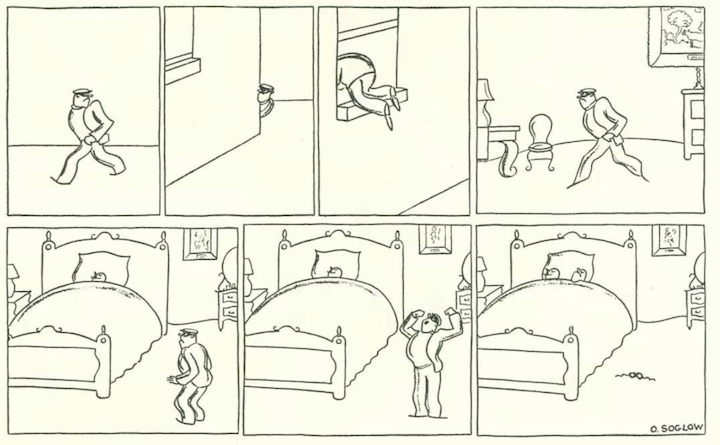
…Otto Soglow crept in for a snooze…
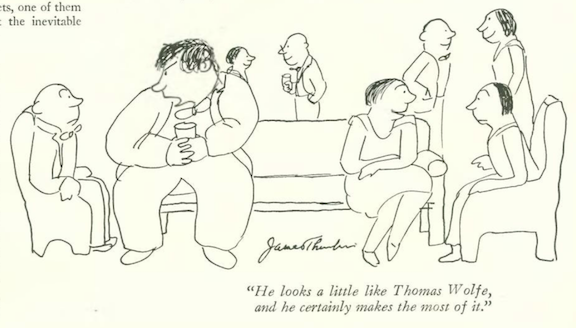
…and we close with James Thurber, and some literary cosplay…
Above: Former New York Mayor Jimmy Walker and wife Betty Compton, aboard the S.S. Manhattan in 1935. (New York Daily News Archive)
The Roaring Twenties and Jimmy Walker seemed made for each other. A dandy with a taste for fine clothes, late-night parties, and Broadway showgirls, the 97th mayor of New York was a darling of the media…until the market crashed; as nest eggs evaporated along with jobs, folks quickly lost their taste for such frivolity.
November 9, 1935 cover by Daniel “Alain” Brustlein. This was the first of nine covers Brustlein created for the magazine. An Alsatian-born American artist, cartoonist, illustrator, and author of children’s books, Brustlein (1904–1996) contributed to The New Yorker under the pen name “Alain” from the 1930s through the 1950s.Daniel “Alain” Brustlein, in an undated photo. During the height of Abstract Expressionism Brustlein became a reputable painter, exhibiting his work in New York and Paris. (derfner.org)
*
The fall of 1935 marked three years since Walker had left office, and for nearly two of those years the city had been governed by the reformist Mayor Fiorello La Guardia. New Yorkers, it seemed, were ready for a dose of Jimmy when he returned from his European exile, hailed by a throng of media and well-wishers.
Writing for Airmail, longtime New York journalist Sam Roberts observes that the city loved Walker, “a charming hellion, a witty, self-effacing, glib humanist, far more flawed, too, and compassionate than pictured previously, a man elevated and condemned by his own character, created and ultimately consumed by his times. He conjures up the anti-Trump—a dodgy philanderer who governed by making people feel good rather than angry.”
WHERE’S THE PARTY?…Former Mayor Jimmy Walker and his wife, Betty Compton, returned to New York in the fall of 1935 amid tremendous fanfare. The New Yorker’sMorris Markey noted that at least 160 media representatives were on hand for the couple’s arrival. (YouTube)
Walker (1881-1946) fled to Europe in November 1932 amid a bribery scandal that had prompted his resignation. Accompanied by Ziegfeld Follies singer Betty Compton (1906–1944)—whom he would marry in Cannes the following April—they would bounce around the continent until Walker determined that the danger of criminal prosecution had passed.
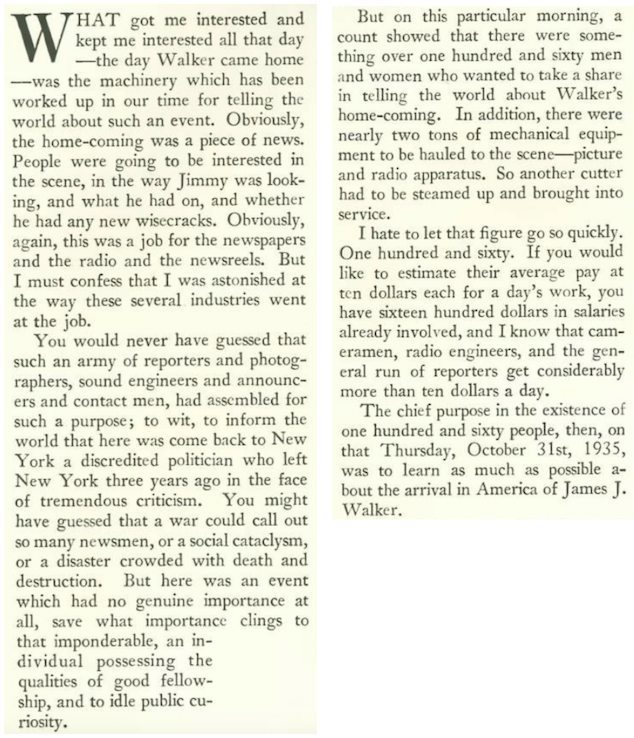
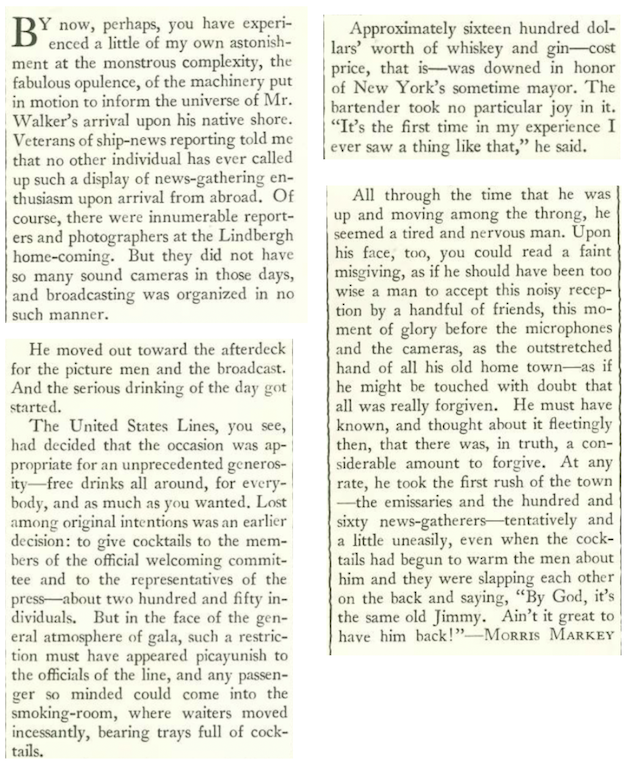
In his “A Reporter at Large” column, Morris Markey wrote about the media’s reception of the exiled mayor, “an army of reporters and photographers, sound engineers and announcers and contact men”…all assembled to inform the world of the return of a “discredited politician.”
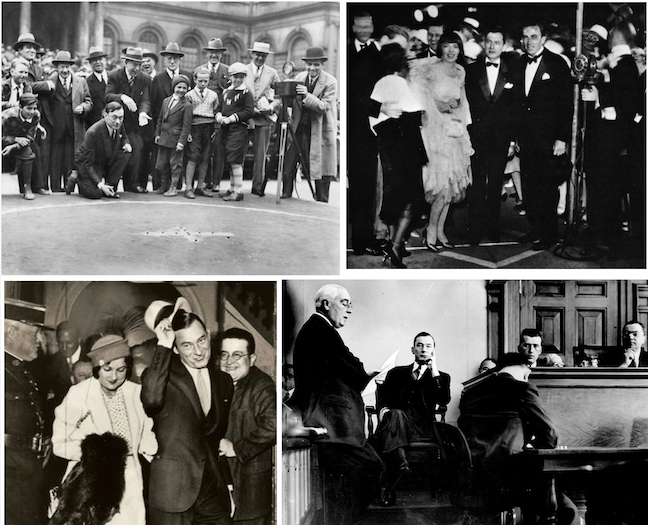
HE GOT AROUND…During his time in office from 1926 to 1932, Mayor Jimmy Walker never seemed to miss a moment in the spotlight. Clockwise, from top left, Walker presided over the first shot in the city’s annual marble tournament on June 3, 1928; with actress Colleen Moore at the 1928 premiere of her latest film, Lilac Time; testifying on bribery charges before the investigative committee of Judge Samuel Seabury, 1932; with Betty Compton following their 1933 wedding in Cannes. (New York Times/konreioldnewyork.blogspot.com/villagepreservation.org)
Markey continued to convey his astonishment at “the monstrous complexity, the fabulous opulence, of the machinery put in motion to inform the universe of Mr. Walker’s arrival upon his native shore.” This included a massive cocktail party—hosted by The United States Lines—for more than two hundred press representatives and other officials.
After all the commotion, Walker would settle into a job as head of Majestic Records, adopt two children with Compton, and host his own radio series on WHN, Jimmy Walker’s Opportunity Hour.
Compton would divorce Walker in 1941 and remarry. Becoming ill after the birth of a son, she would die at age 38 in 1944. Walker would die two years later at age 65 of a brain hemorrhage.
CALLING ON THE ROOSEVELTS…Jimmy Walker and Betty Compton at the White House in 1937. It was pressure from FDR that led to Walker’s resignation in 1932. (Wikipedia)
* * *
High-flying Hooplah
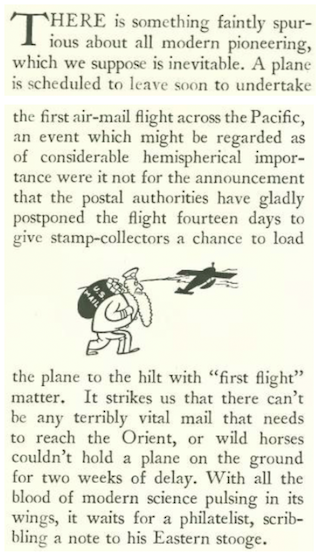
While New Yorkers were going gaga over Walker, folks in the Bay Area were all atwitter over the first air-mail flight across the Pacific, loading a Pan Am Clipper to the gills with all manner of collectables. E.B. White noted:
BELLYFUL…On Nov. 22, 1935, Pan American Airways made aviation history as the China Clipper lifted off from Alameda, beginning the world’s first trans-Pacific airmail service. Captained by Edwin Musick and crewed by famed navigator Fred Noonan, the Martin M-130 opened a new era of long-distance flight across the Pacific. Noonan, who charted many commercial routes across the Pacific, would go missing along with Amelia Earhart during their ill-fated flight in July 1937. (Library of Congress)
* * *
Wise Men From the East
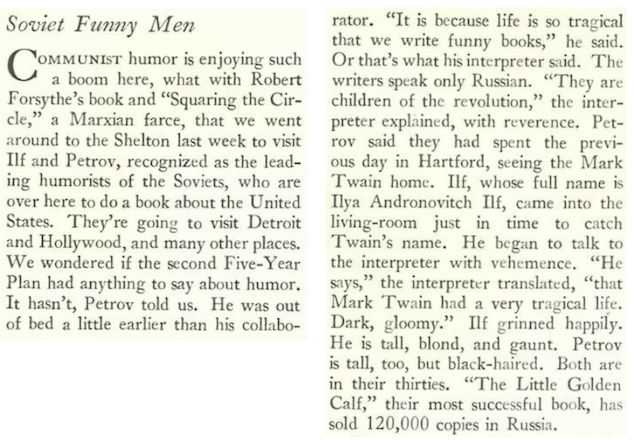
“The Talk of the Town” visited with Soviet satirists Ilya Ilf (1897–1937) and Evgeny Petrov (1903–1942), who were in New York preparing for a ten-week road trip to California and back. On assignment as special correspondents for the newspaper Pravda, they later published a series of illustrated articles, “American Photographs,” as well as a book titled Single-Storied America (the summer 2004 issue of Cabinet Magazine features an account of their journey as well as a number of their photographs).
AMERICA WAS A GAS…Soviet satirists Ilya Ilf (left) and Yevgeni Petrov check out New York before heading into the American heartland on a ten-week road trip, a highlight being the countless full-service gas stations they encountered along the way. After seeing skyscrapers and mountains and other wonders, the pair agreed that the most enduring image was the one at right: “an intersection of two roads and a gasoline station against a (back)ground of wires and advertising signs.” Sadly, Ilf died two years later from tuberculosis; Petrov died in a plane crash in 1942 while working as a war correspondent. (Aleksandra Ilf archive/Cabinet Magazine)
* * *
A Jumbo Career
Wallace Beery (1885–1949) got his start in the comedy silents of the 1910s and became a star before the sound era made him an even bigger one; by 1932 he was the world’s highest-paid actor. Alva Johnston’s profile (titled “Jumbo”) took a look at Beery’s life and career (illustration by Al Frueh). Excerpts:
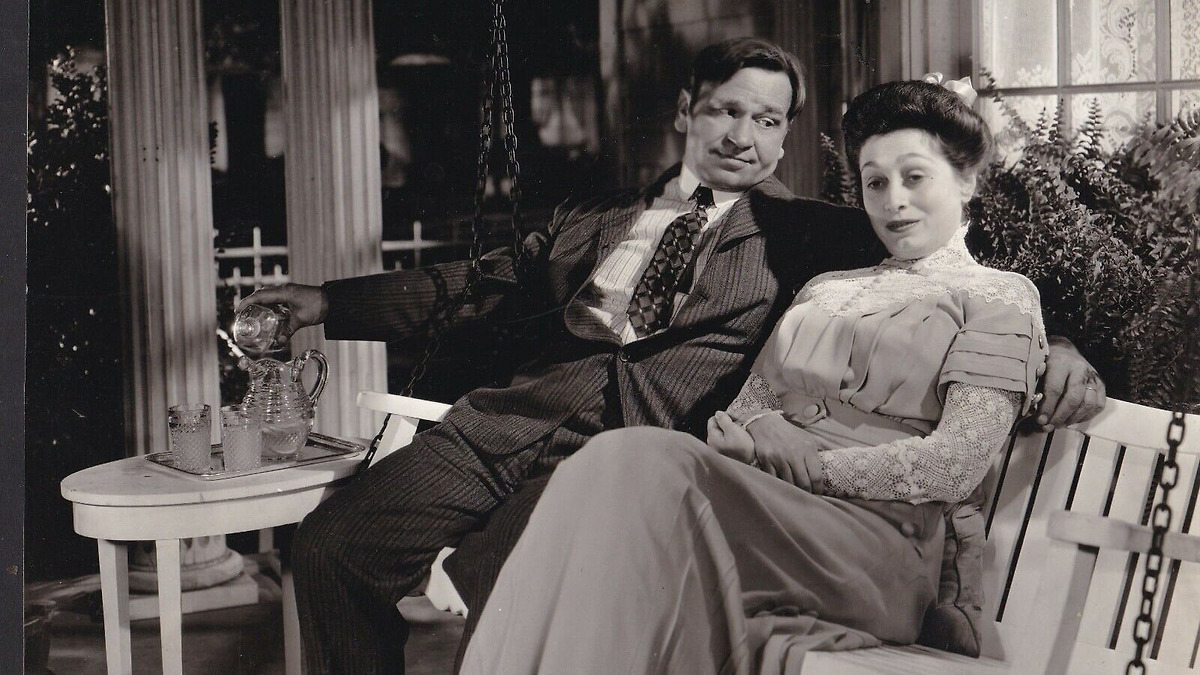
COURTING AND SPARKING…Sid Miller (Wallace Beery) spikes the lemonade as he woos Lily Davis (Aline MacMahon) in a scene from the 1935 film, Ah Wilderness! (letterboxd.com)
* * *
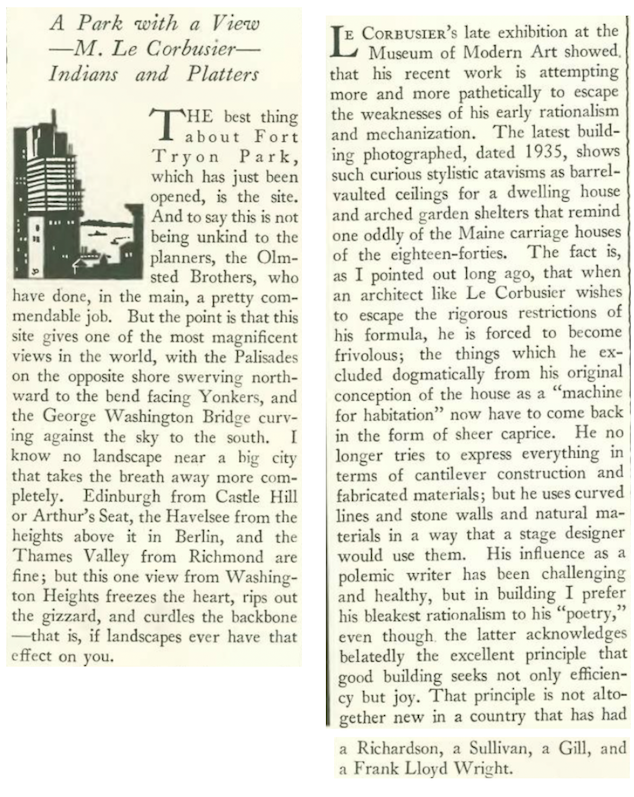
A View and Corbu
Art and design critic Lewis Mumford was well-known for his hypercritical eye, but occasionally he could be moved to rhapsodize, in this case about the opening of Fort Tryon Park, and particularly about the view it afforded visitors. He reserved his criticism for one of the latest works by Le Corbusier (aka Charles-Édouard Jeanneret), on exhibit at MoMA.
MAGNIFICENT is the word Lewis Mumford used to describe the view from Fort Tryon Park. This scene is taken from Linden Terrace to the west: a barge on the Hudson River and the Hudson Palisades beyond, with the Englewood Cliffs campus of Saint Peter’s University on the top. (Wikipedia)IRRATIONAL?…Mumford was not pleased with Le Corbusier’s latest work, Le Petite Maison de Weekend (Villa Henfel), which was featured on the cover of the MoMA exhibition catalogue (upper left). Mumford saw the design as a pathetic escape from the architect’s renown rationalism. (MoMA/Fondation Le Corbusier)
* * *
At the Movies
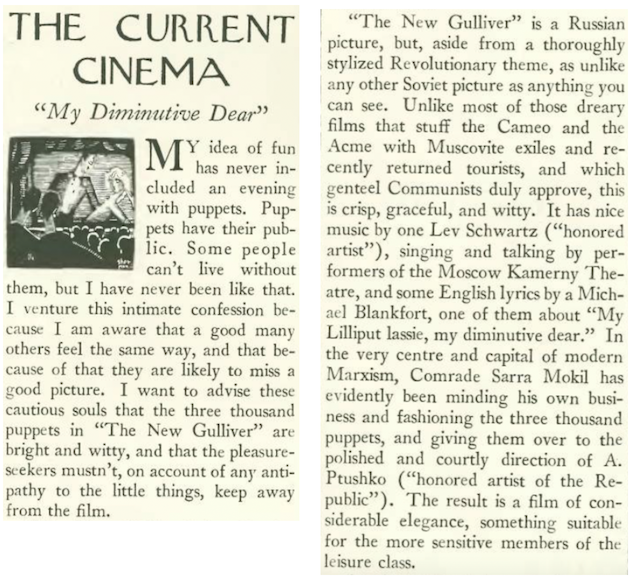
It was a mixed bag at the movies for critic John Mosher, who was delighted by a Soviet take on Gulliver’s Travels, rendered with puppets engaged in a proletarian struggle…
KOMRADE GULLIVER…The Soviet stop motion-animated fantasy film, The New Gulliver, was a communist re-telling of Jonathan Swift’s 1726 novel. The film depicted Lilliput suffering under capitalist inequality and exploitation, with Gulliver enabling a proletarian revolution against the Lilliputian monarchy. (revolutionsnewstand.com)
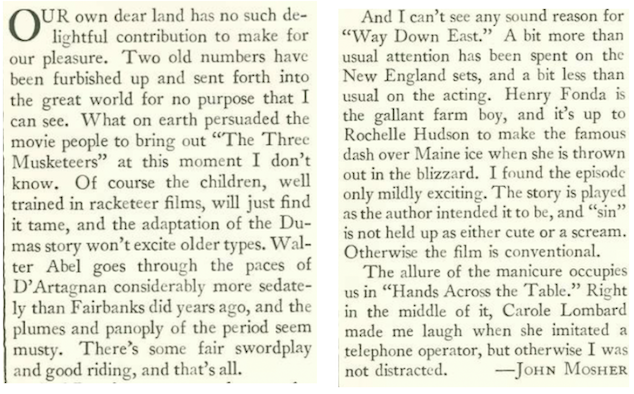
…but Mosher was less than delighted with the latest from Hollywood, including a sedate The Three Musketeers, a “conventional” remake of D.W. Grifffith’s 1920 melodrama Way Down East, and the romcom Hands Across the Table, which the Times called “uproariously funny” but Mosher deemed barely worth a chuckle.
OUTCLASSED BY PUPPETS…John Mosher found the latest from Hollywood underwhelming. Clockwise, from top, Onslow Stevens, Moroni Olsen, and Paul Lukas in The Three Musketeers; Rochelle Hudson and Henry Fonda in Way Down East;Fred MacMurray and Carole Lombard in Hands Across the Table. (mabumbe.com/zeusdvds.com/Wikipedia)
* * *
From Our Advertisers
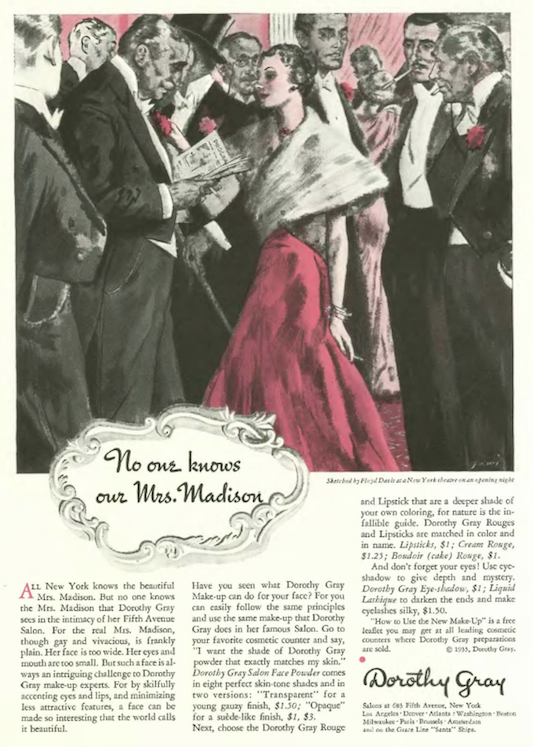
The Dorothy Gray salons didn’t mince words when it came to a woman’s beauty regimen…without their help, claimed this ad, the poor “Mrs. Madison” would be “frankly plain,” with a face too wide and eyes and mouth too small…
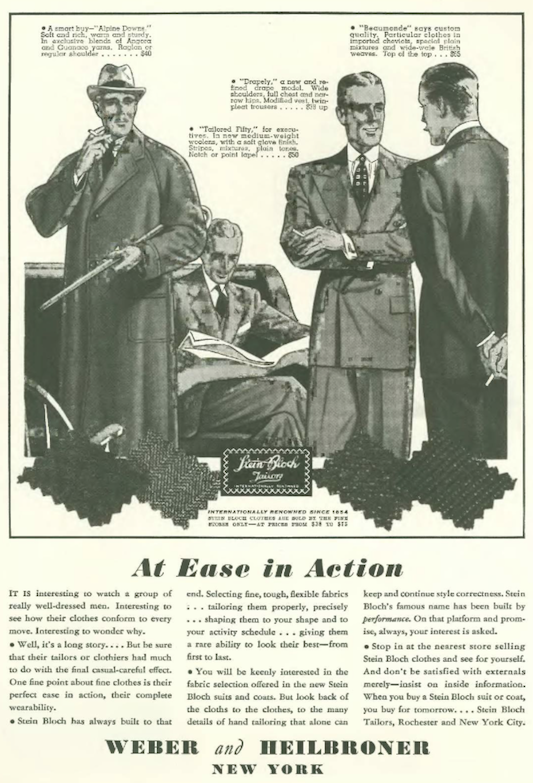
…notable in ads for men’s and women’s clothes were the presence of cigarettes…all three of the men in this spot are having a smoke in their smart attire…
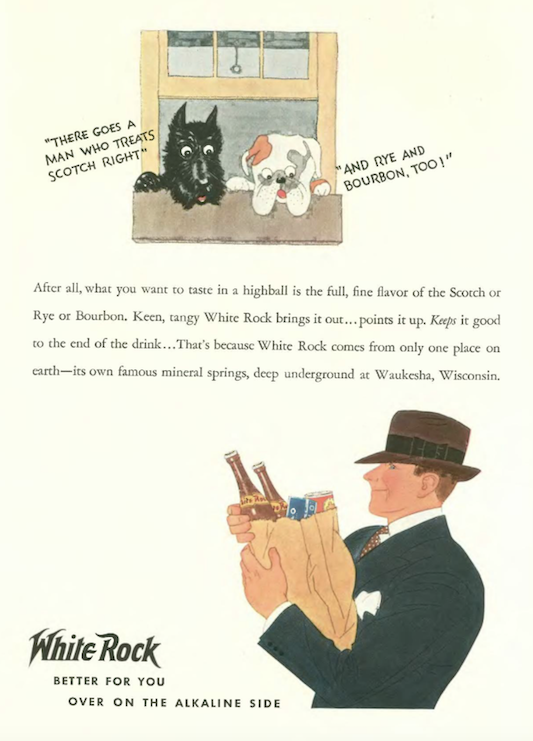
…White Rock gave their logo-bearer Psyche a rest in 1935 with a variety of ads including this one…
…the makers of Bisquit assumed their customers could read the French dialogue, or at least pretend to…
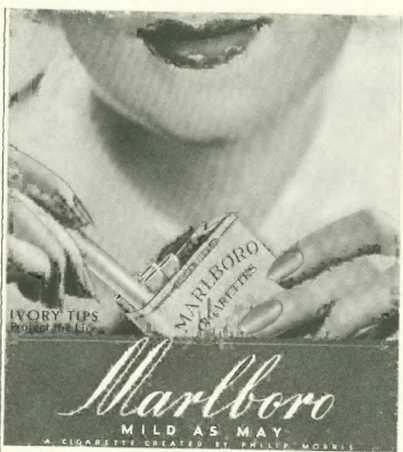
…when we (of a certain age) think of Marlboro we think of the rugged Marlboro Man, but in 1935 the brand was exclusively marketed to women…
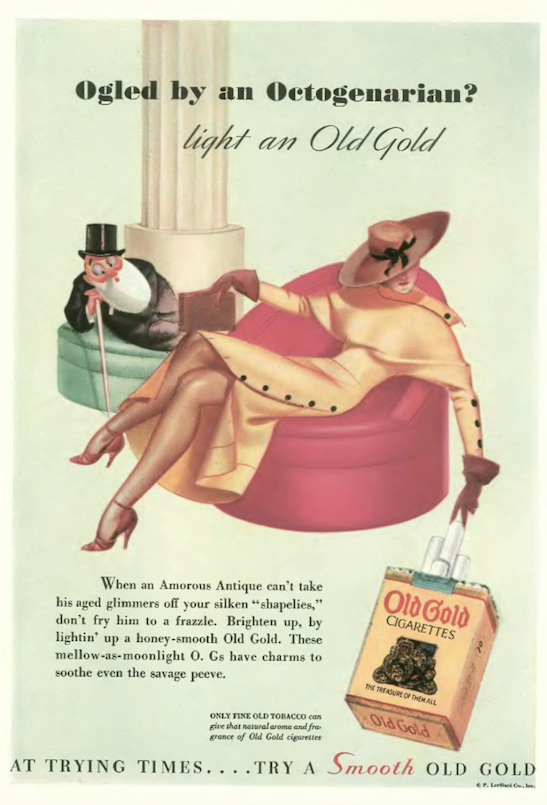
…and who knows what Old Gold’s target was here…definitely women smokers, who were the growth market, but men would take notice of the George Petty pin-up…
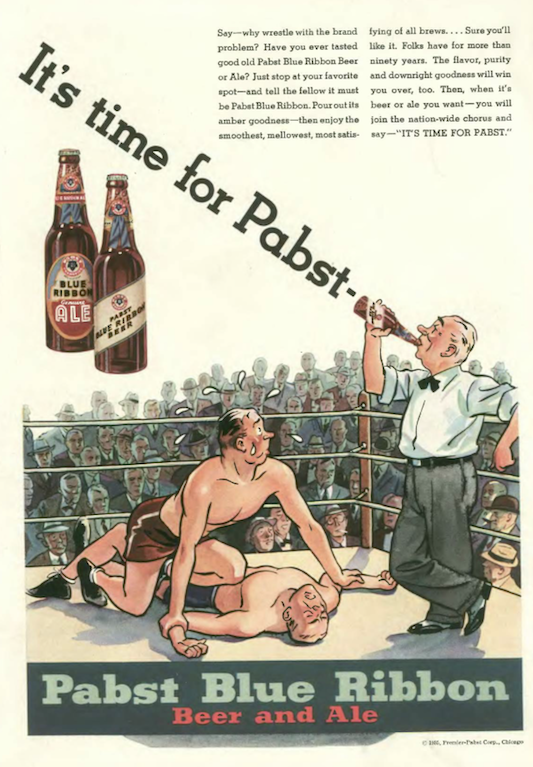
…the makers of Pabst Blue Ribbon Beer, who endured Prohibition by offering products like Pabst-ett cheese spread, were ready to grab a big market share after Repeal…
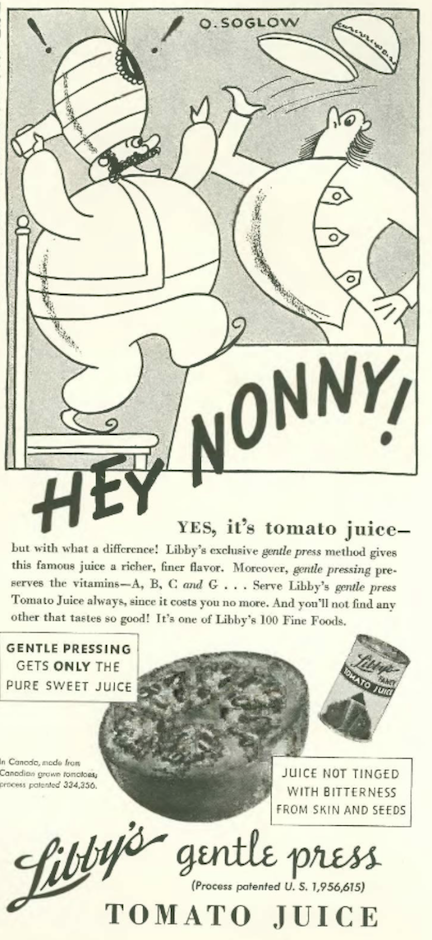
…Otto Soglow, still contributing to The New Yorker despite taking his Little King to Hearst, drew up this potentate for a tomato juice spot…
…which segues to our other cartoonists, beginning with Al Frueh and his take on the latest Broadway hit, Jubilee!…
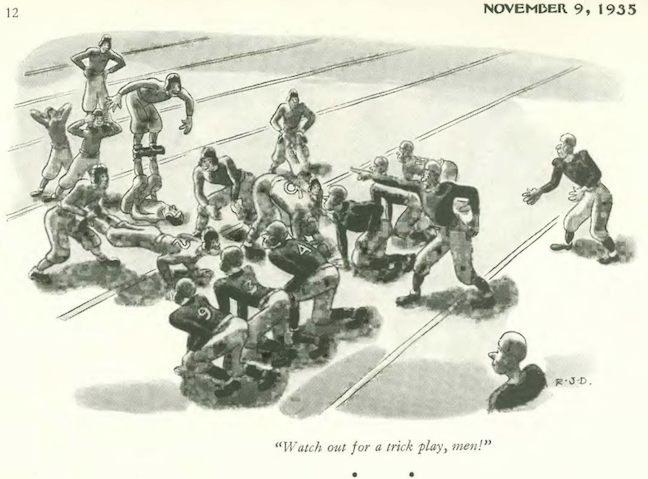
…Robert Day saw action on the gridiron…
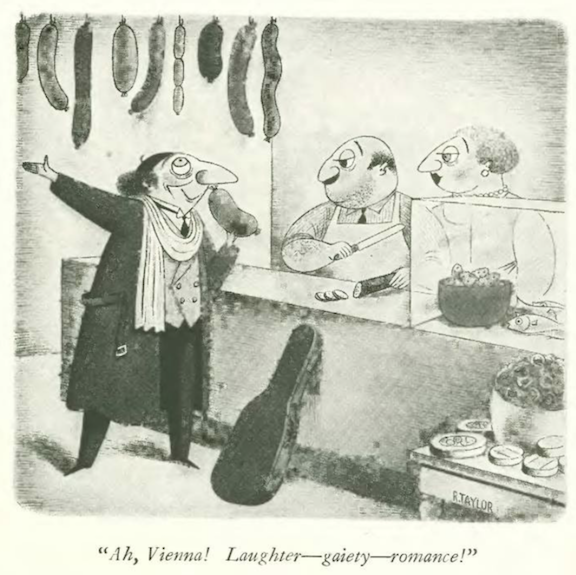
…unless I missed something, this might be Richard Taylor’s first New Yorker cartoon…
…James Thurber put a unique spin on a bowling ball…
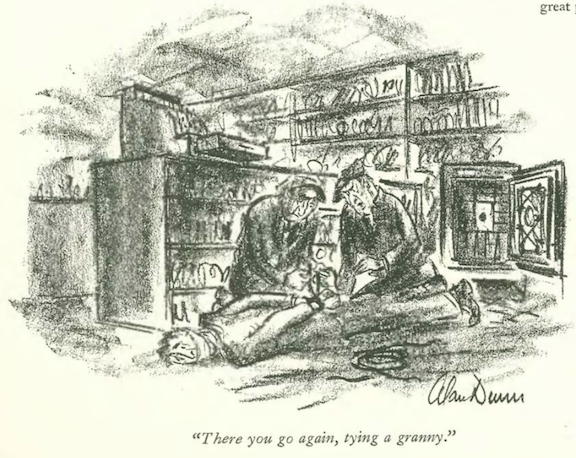
…Alan Dunn was all in knots at a crime scene…
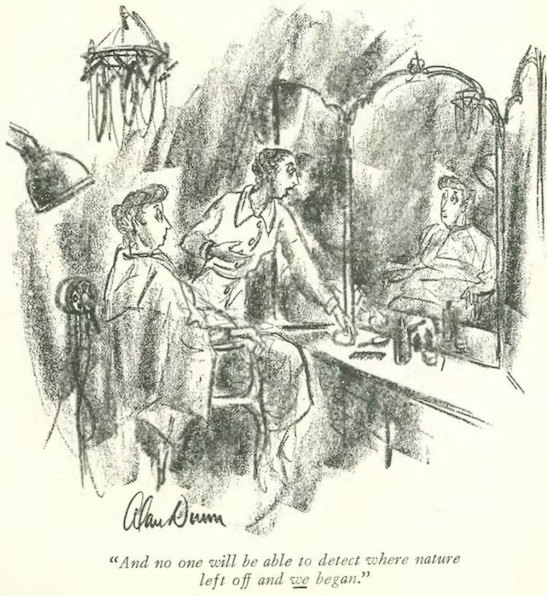
…Dunn again, pondering the wonders of a makeover…
…Barney Tobey eavesdropped on a Downtown subway…
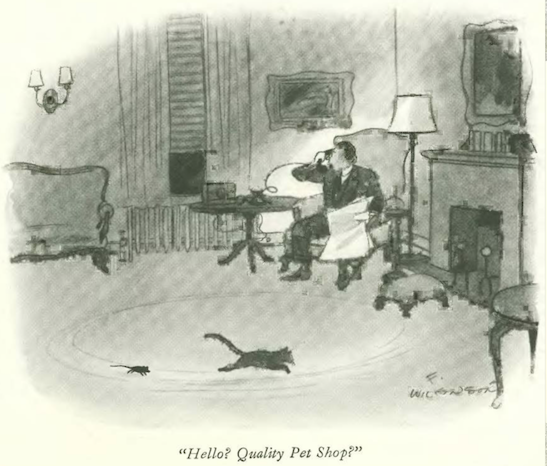
…Fritz Wilkinson looked to return a defective pet…
…Carl Rose needed two pages to illustrate his epic cartoon (caption added at the bottom for readability)…
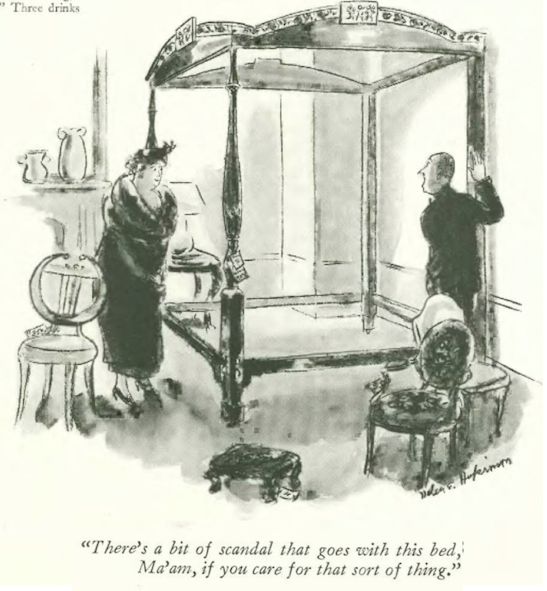
…and we close with Helen Hokinson, and a whiff of scandal…










































 A New Yorker State of Mind