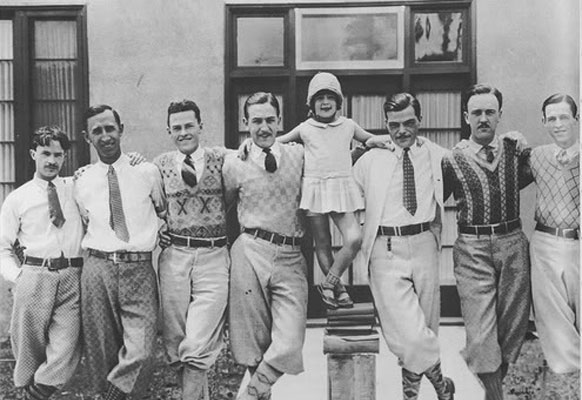
Photo above circa 1930 via mensfashionmagazine.com.
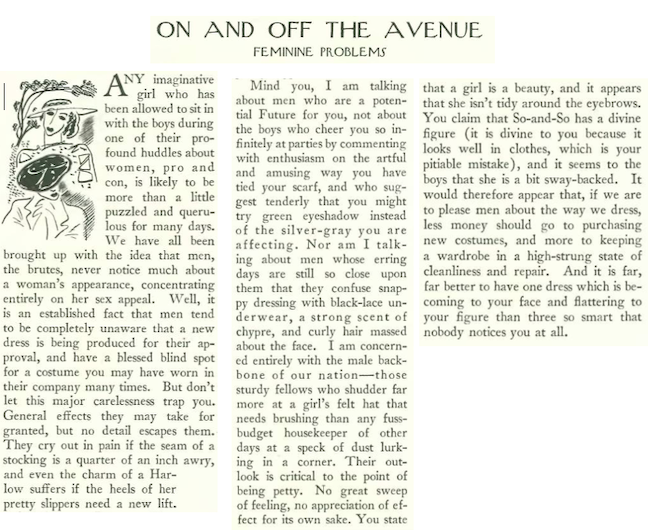
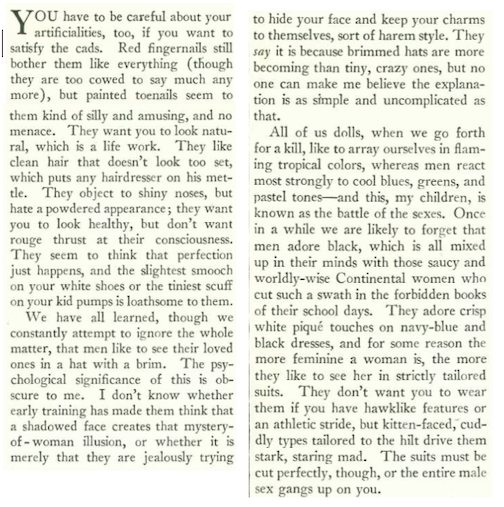
Lois Long took a break from reviewing the latest fashions to offer some thoughts on the relations between men and women, and more specifically, what was expected of women if they ever hoped to land the type of man who represented a “potential Future” for them.
August 4, 1934 cover by Otmar. Likely Otmar Gaul, sometimes spelled “Ottmar.”
Based on what we know about Long, this column has a strong “tongue-in-cheek” quality. It should also be noted that the 32-year-old Long had been divorced from cartoonist Peter Arno for three years, and was possibly contemplating the dating scene (she would marry newspaper ad man Donaldson Thorburn in 1938). In this excerpt, Long dispelled the notion that “the brutes” never notice a woman’s appearance:
THEY MIGHT BE BRUTES, but they notice the little things, according to Lois Long. (fashionhistory.fitnyc.edu)
SEEING RED…According to Long, discerning men preferred women in brimmed hats (actress Sylvia Sidney models above), but found red fingernails to be disturbing. (glamourdaze.com/vintagehairstyling.com)SEEING RED in women’s clothes, however, wasn’t a problem, according to Long, who wrote that men liked to see women in bright, tropical colors. (clickamericana.com)
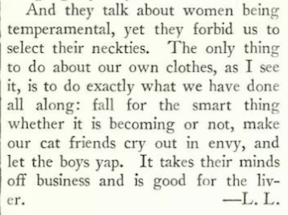
Long concluded that in the end, it didn’t matter what men thought about women’s clothes, but letting them “yap” about such things was a good way for them to blow off some steam.
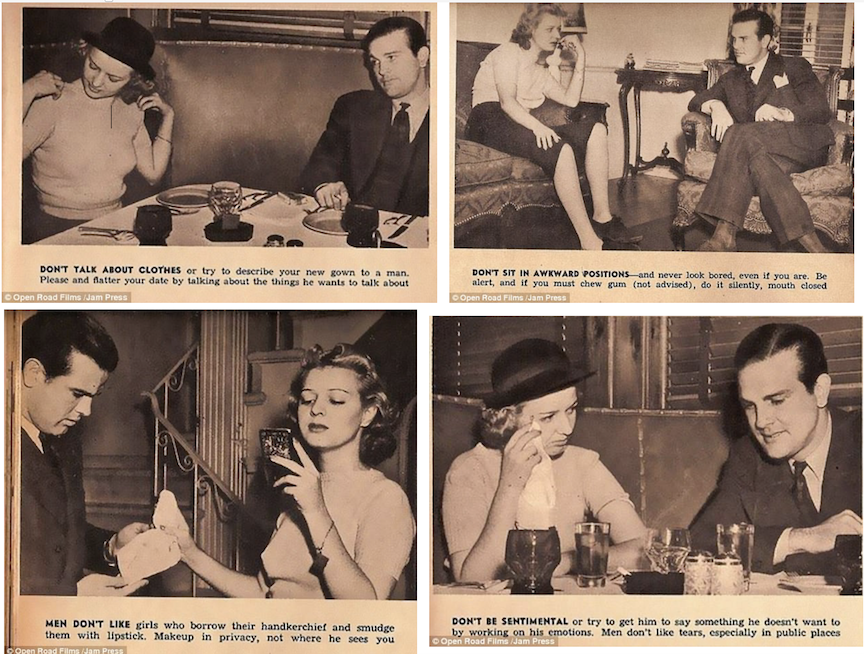
Check out these patronizing examples from an illustrated guide for women published in 1938 by Click Parade magazine. It gives us some idea of what Long, and millions of other women, were up against…
(dailymail.co.uk)
* * *
Fifth Avenue Remnant
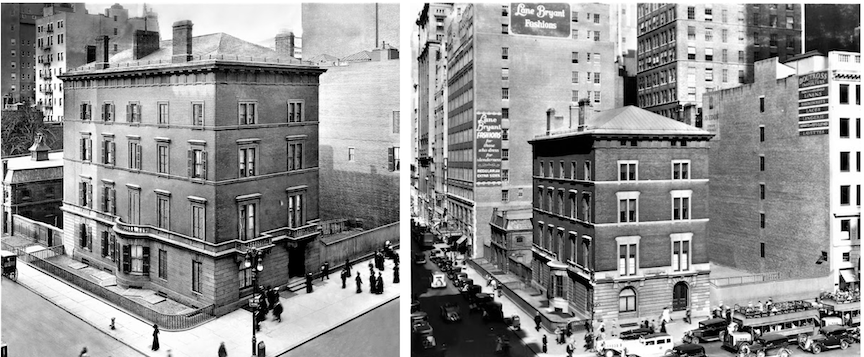
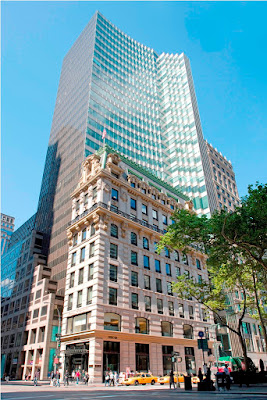
The first years of The New Yorker coincided with some of the most transformational years in Manhattan’s urban fabric, including the replacement of Gilded Age mansions with upscale commercial buildings. One of the last remaining mansions was the Wendel house, featured in “The Talk of the Town.”
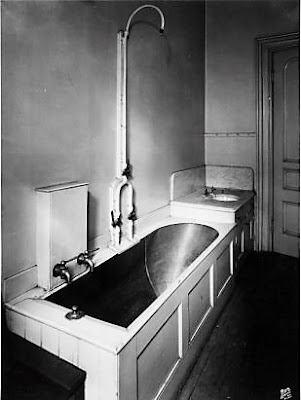
A ONCE GRAND MANSION becomes diminished as the city grows around it. At left, the Wendel mansion as it appeared circa 1901; at right, shorn of its balconies and shutters, the mansion shrinks in contrast to the city around it, circa 1930. (Wendel Family Papers, Special Collections and Archives, Drew University Library)WHAT HO!…A “very British-looking” zinc-lined bathtub (with shower) was state-of-the-art when installed at the Wendel mansion. (New York Public Library)BARELY A MEMORY….The glass-and-steel structure towering above the former Knox Hat Building sits on the site of the Wendel mansion. (Photo by Nicolson & Gallowy via Daytonian in Manhattan)
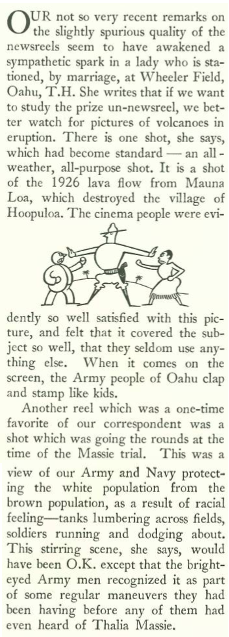
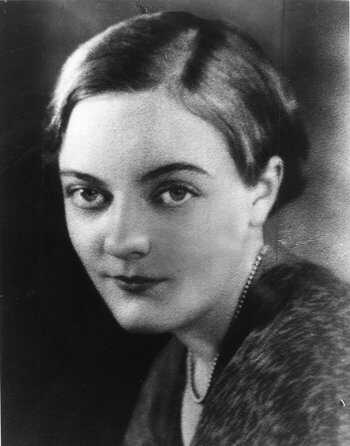
In his “Notes and Comment,” E.B. White noted the spurious nature of cinema newsreels, including one featuring the case of Thalia Massie, a navy wife stationed in Hawaii whose immature behavior and trail of lies would implicate five men in a crime they could not have committed (one would even be killed by vigilantes) and would cast Hawaii into a state of racial turmoil. (You can read more about it at the PBS site for American Experience.
FATAL FEMME…Thalie Massie, circa 1930. (Library of Congress)
* * *
Blunders, Part II
Howard Brubaker commented on the twentieth anniversary of the outbreak of the Great War. Today we call it World War I, and as we know, the blunders did not cease with the Armistice.
* * *
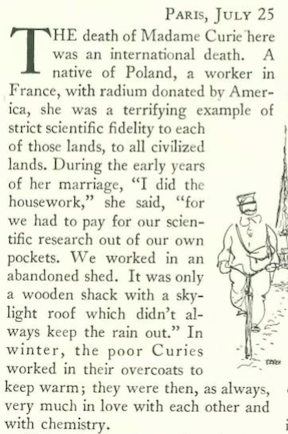
RIP Madame Curie
Janet Flanner, Paris correspondent for The New Yorker, noted the passing of Marie Curie, a pioneer in field of radioactivity.
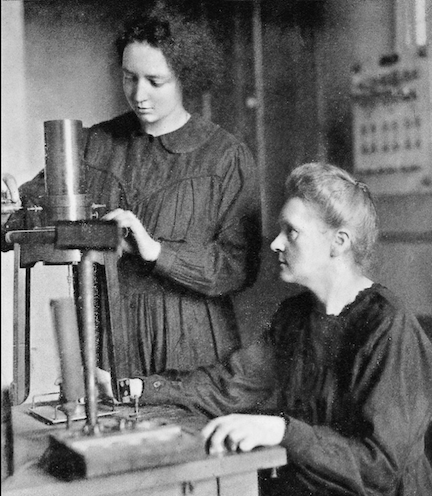
THE CURIE CURE…Marie Curie and daughter Irène, 1925. (Wikipedia)
* * *
From Our Advertisers
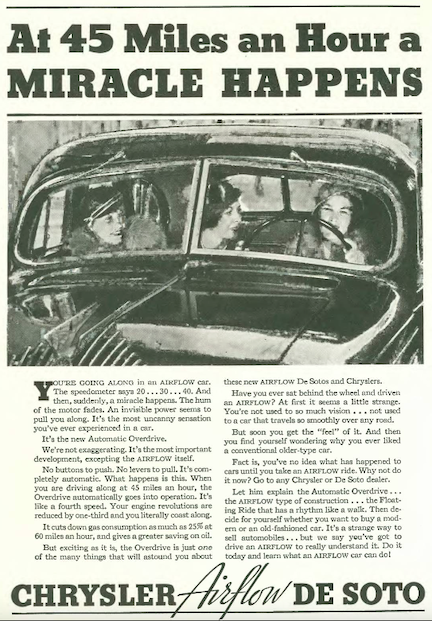
The folks at Chrysler were trying every angle to get car buyers interested in the Airflow—although the car offered a number of advanced features, consumers just weren’t ready for its radical aerodynamic design…note how the ad downplays the car’s sweeping curves…
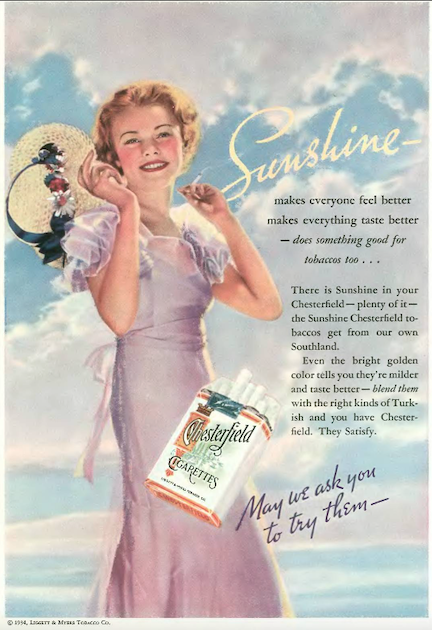
…and we have more deception from the cigarette industry, including claims that cigarettes gave you more energy and improved the performance of top athletes…
…the makers of Chesterfields gave us this sunny picture of health…indeed, there was sunshine in every pack…
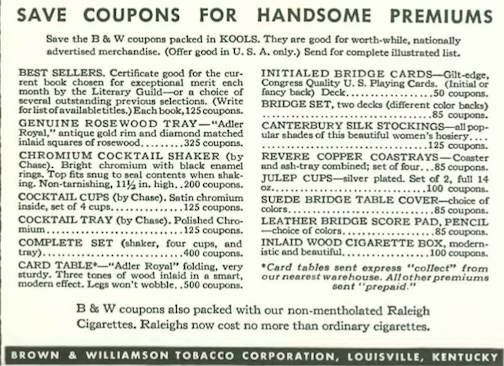
…The Brown & Williamson Tobacco Company launched KOOL cigarettes in 1933 as the sole competitor to the other menthol brand, Spud, which was a big advertiser in the early New Yorker. Maybe it was the coupons, or the modern brand name, that helped KOOL knock Spud from the market by the 1940s. As for those coupons, it appears each pack contained only one of them…
…so you would have to smoke a ton of those things to get one of these swell prizes…
…early Budweiser ads often featured images of the Old South…here they conjured up the ghost of Mark Twain (who had been dead only 24 years), putting the great humorist and writer on par with their bottled beer…
…Canada Dry didn’t have Mark Twain, but what they did have was a beer (Hupfel’s) lacking “that queer yeasty taste that beer usually has”…
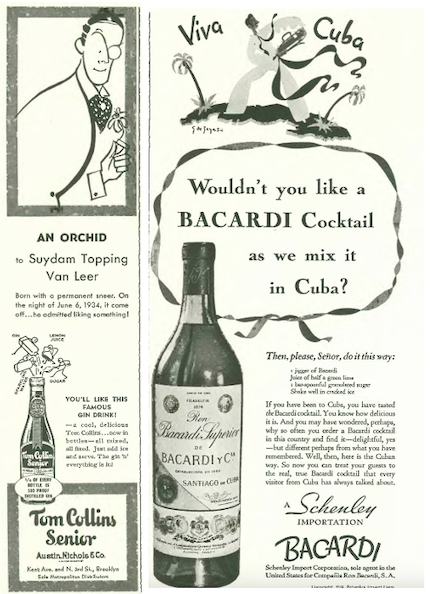
…a couple of ads from the back pages featured, at left, an ad for a pre-mixed Tom Collins, which must have been awful, and at right, a spot for Bacardi rum, which was actually made in Cuba before the revolution…
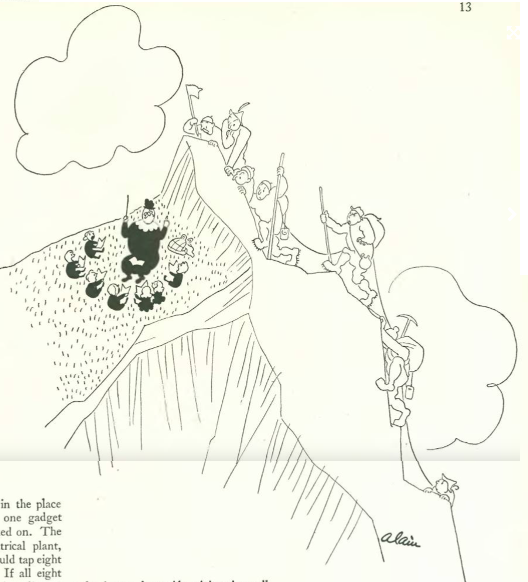
…on to our cartoons, we begin with Alain (Daniel Brustlein) and some not-so-intrepid mountain climbers…
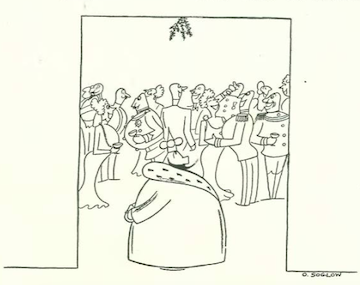
…Otto Soglow’s Little King sought a glimpse of the street life…
…William Steig took a dip with his Small Fry…
…Isadore Klein gave us a glimpse of sensationalist radio reporting…
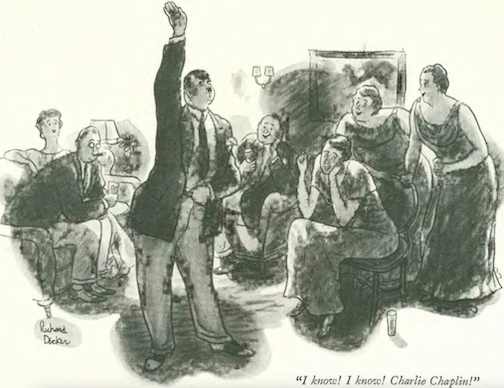
…and we close with Richard Decker, and a game of charades…
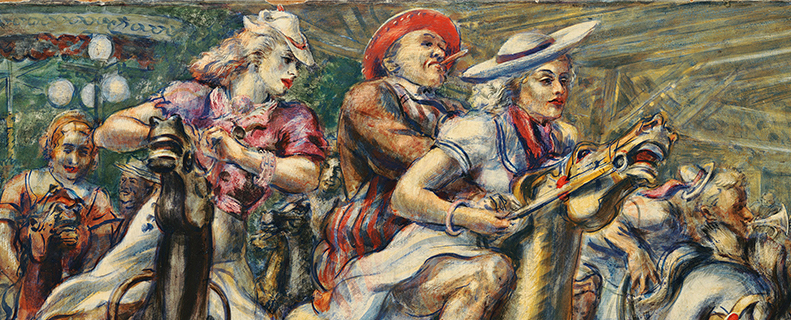
Above: Wooden Horses(detail) by Reginald Marsh, 1936. Marsh was a frequent visitor to Coney Island, a place that inspired numerous sketches and paintings. (Wadsworth Atheneum Museum of Art)
We officially kick off the summer with a visit to Coney Island, where “The Talk of the Town” took in the latest sights and amusements.
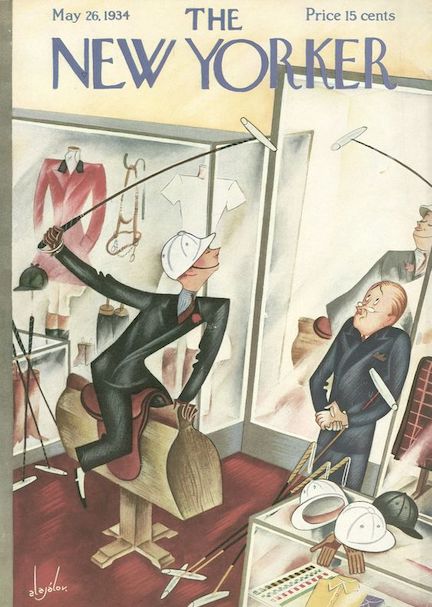
June 16, 1934 cover by Constantin Alajalov.
This excerpted “Talk” piece, attributed either to an “H. Beckett” orFrancis Steegmuller, describes a post-Prohibition Coney Island with liquor to be had (although at only three locations) and new attractions including several imported from the 1933-34 Chicago’s World’s Fair (aka “The Century of Progress”).
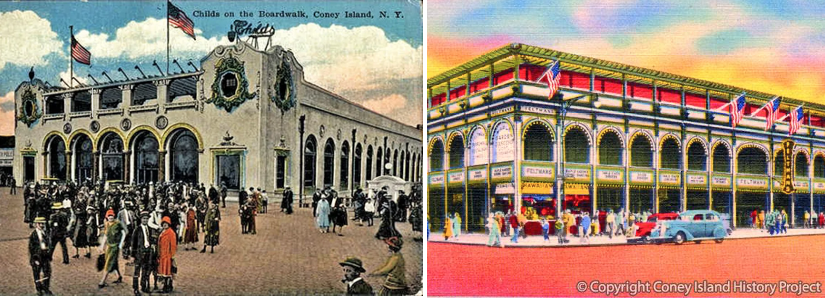
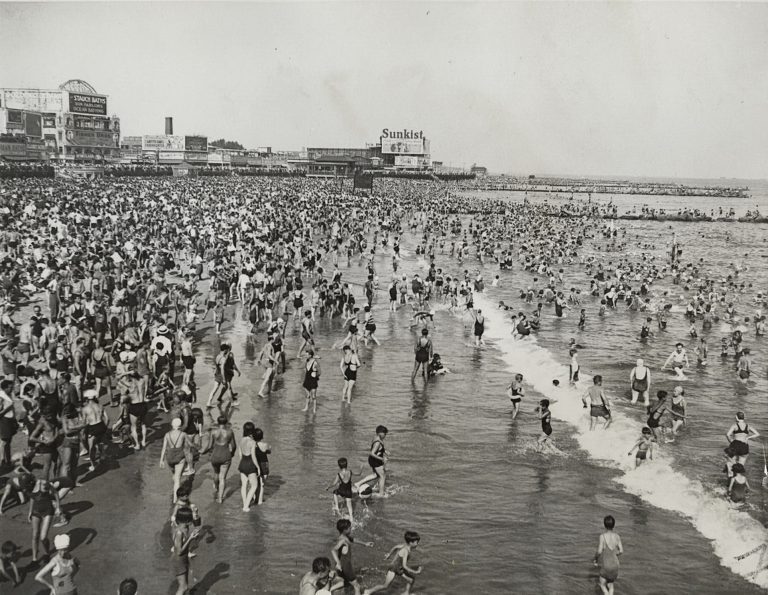
CLANKITY CLANK…The mechanical man referred to in the “Talk” piece was likely similar to the one pictured above in this October 1933 feature in Popular Mechanics. Like many “robots” of that era, they were often pictured smoking cigarettes. (Google books)WET YOUR WHISTLE…Beer flowed up and down the boardwalk at Coney Island, but if you wanted something stronger you had to stop by the Half Moon Hotel or one of these establishments, Childs (left) or Feltmans’. (www.coneyislandhistory.org)LEAVE SOME FOR ME…An estimated one million New Yorkers visited Coney Island on July 4, 1934 to get away from the heat of the city. (stuffnobodycaresabout.com)DIFFERING INTERPRETATIONS…In his 1934 painting, Coney Island (left), artist Paul Cadmus portrayed beachgoers as ridiculous and uncouth rabble, while Cadmus’s friend and fellow artist Reginald Marsh took a somewhat kinder approach to the same subject in his 1936 Coney Island (right). (Jon F. Anderson, Estate of Paul Cadmus, licensed by VAGA, obtained via lacma.org / Syracuse University Art Collection)
Of course it wouldn’t be Coney Island without grisly wax museum scenes inspired by the latest sensational headlines…bank robber John Dillinger was still on the run, and “little June Robles” was finally free and apparently unharmed after being kidnapped and locked in a desert cage for 19 days…
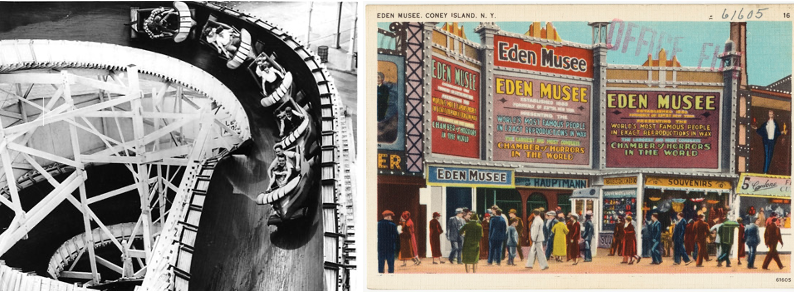
THANKS WINDY CITY…At left, the Chicago World’s Fair inspired Coney Island to build a trackless, bobsled-style “flying turns” coaster in Steeplechase Park (the wooden ride was destroyed by fire after only five years of operation). At right, a postcard image of the Eden Musee wax museum. (riverviewparkchicago.com / New York Public Library)ON THE BOARDWALK…Another Coney scene by Reginald Marsh, titled Pip and Flip, 1932. (Terra Foundation for American Art, Chicago Daniel J. Terra Collection via artblart.com)
* * *
Luck of the Irish
The Irish Hospitals’ Sweepstake (more commonly known as the Irish Sweepstakes) was established in 1930 to raise funding for hospitals in Ireland. Although lotteries were generally illegal in the U.S., millions of tickets were sold in the States, many of them in New York and New England. In his “Notes and Comment,” E.B. White wondered what would become of the lottery’s newest American winners, including former Ziegfeld Follies showgirl Alma Mamay, who won $152,000 in the Irish sweepstakes. White might have been pleased to know that Mamay moved to California, married a millionaire oil tycoon, and lived to the age of ninety-one.
CALIFORNY IS THE PLACE YOU OUGHTA BE..Ziegfeld Follies showgirl Alma Mamay took her Sweepstakes winnings and fled to California, where she married a millionaire oil tycoon. (ziegfeldfolliesgirls.com)
* * *
Rugged Individual
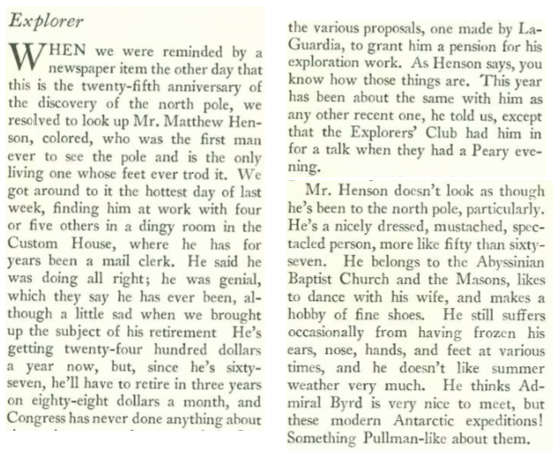
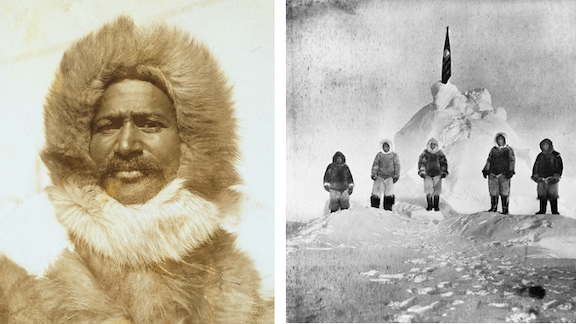
Matthew Alexander Henson (1866–1955) was an African American explorer who accompanied Polar explorer Robert Peary to the Arctic seven times, participating in a 1908–1909 expedition that arguably made Henson the first explorer to reach the geographic North Pole. “The Talk of the Town” caught up with Henson on the feat’s 25th anniversary.
GO NORTH YOUNG MAN…At left, Matthew Henson circa 1910. At right, photograph of Henson and four Inuit guides on the last stretch of their 1908–09 expedition, taken by Robert Peary at what they believed to be the North Pole. Henson (center) planted the flag. (Wikipedia)
* * *
POTUS Profiled
Pulitizer Prize-winning historian Henry F. Pringle published the first installment of a three-part profile of President Franklin D. Roosevelt. In this excerpt Pringle writes about FDR’s sense of humor (illustration by William Cotton):
* * *
Mattress Campers
The “About the House” column featured the latest in home-cooling devices. Couldn’t afford the zillions it would cost to install a home air-conditioner? Well the folks at Crosley—an electronics company known for its radios—offered a more affordable solution: an air-conditioned tent that could be erected over one’s bed for $150 (about $3,500 in today’s dollars):
Here is a 1934 ad for the contraption I found at worldradiohistory.com:
…and we continue with more from our advertisers, including the Broadway magazine The Stage, which offered up this idyllic scene showing what folks did in the days before air-conditioning…
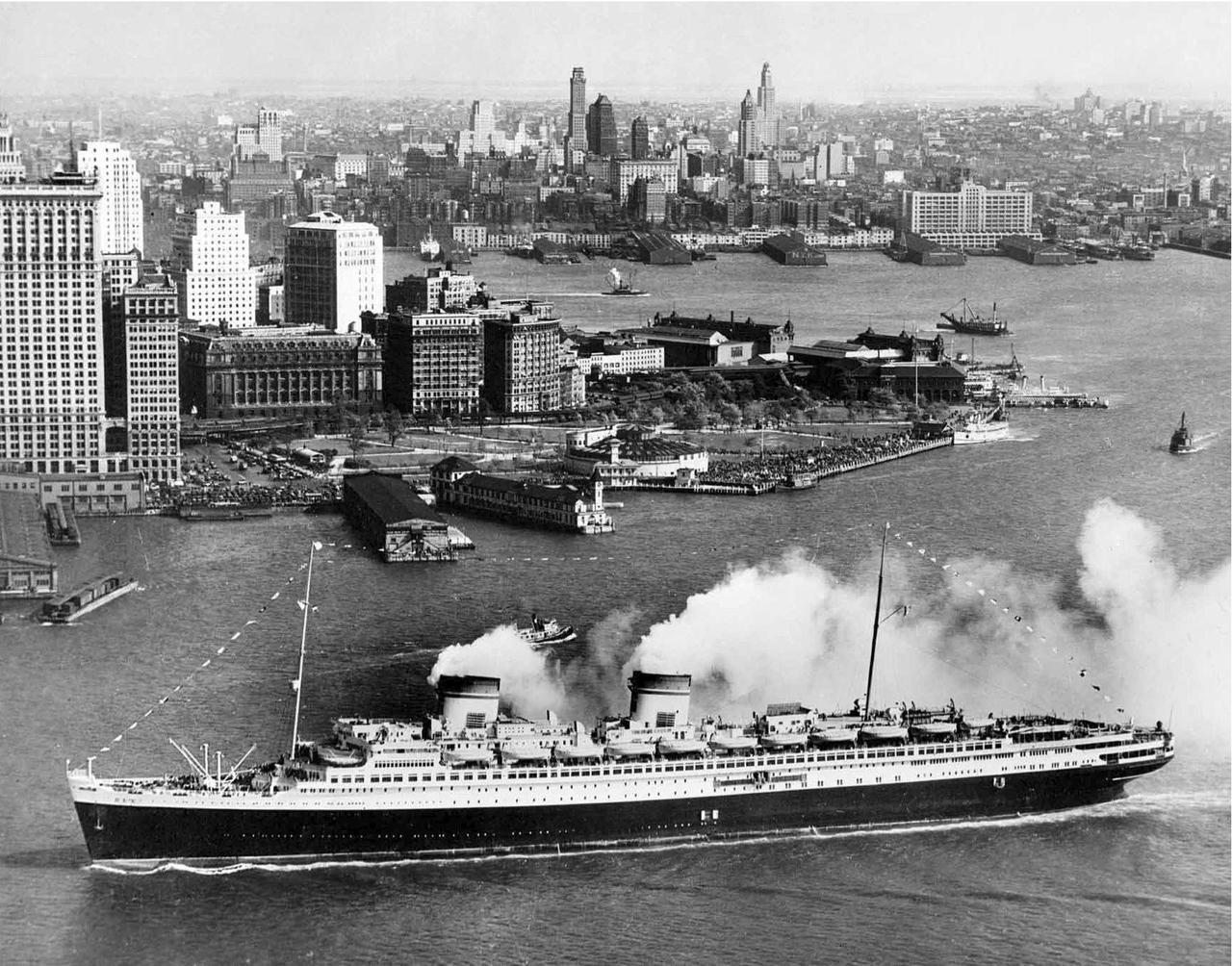
…you could also escape the heat by taking to the high seas aboard the Italian liner SS Rex…
…seen below arriving in New York in this 1932 photo, the 911-foot SS Rex was the largest ship built in Italy before World War II…it was destroyed by the British RAF in 1944…
(adventures-of-the-blackgang.tumblr.com)
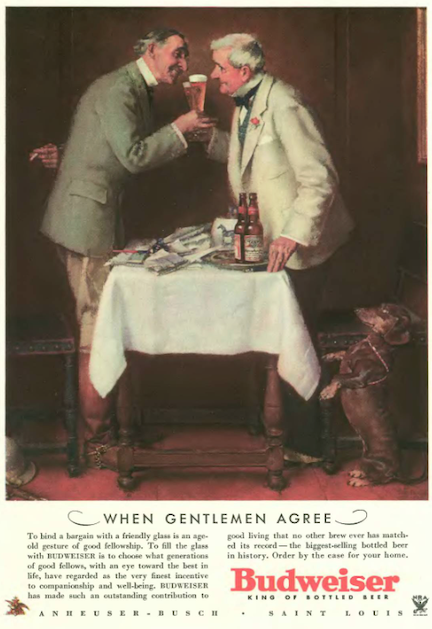
…you could also cool off like these two old gents, sharing a toast and some Budweisers…
…or you could get yourself a jug of applejack brandy and mix it 1:1 with pineapple juice…not sure who or what is being “saved” here…
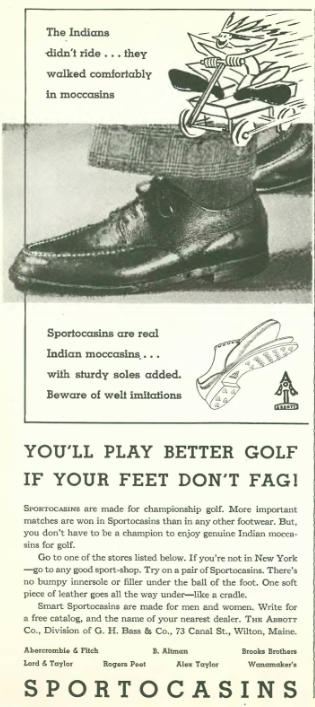
…long before there were Nikes or Adidas, golfers could hit the links in a pair of Sportocasins…
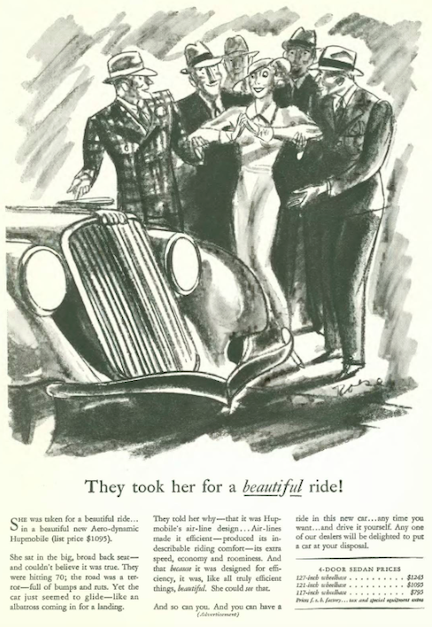
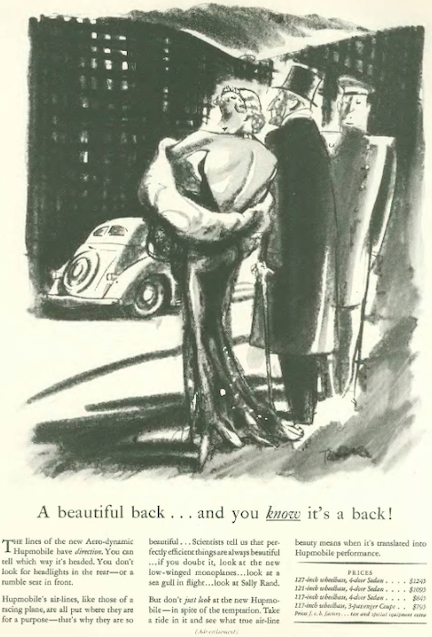
…Hupmobile was still hanging in there, enlisting the talents of illustrator Herbert Roese to extol the comforts and the beauty of its “air-line design”… it isn’t clear why it required five middle-aged men to take her on that beautiful ride…
…the real-life bellboy Johnny Roventini made his debut in the New Yorker as the spokesman for Phillip Morris cigarettes…
…Roventini (1910–1998), who stood less than four feet tall as an adult, was working as a bellboy at the New Yorker Hotel when he was discovered by an advertising executive in 1933. Apparently the exec had Roventini shout the line “Call for Philip Morris!” and learned the bellboy could repeatedly, and on cue, vocalize a perfect B-flat tone. Representing the company for more than forty years, he helped Lucille Ball and Desi Arnaz with the initial success of I Love Lucy (Philip Morris was the show’s sponsor)…
WHAT’S HIS LINE?…TV producers Mark Goodson, left, and Bill Todman greet Johnny Roventini during a 1952 radio broadcast of their quiz show, What’s My Line? The program’s sponsor was Phillip Morris. Note Goodson and Todman both hold cigarettes. (Wikipedia)
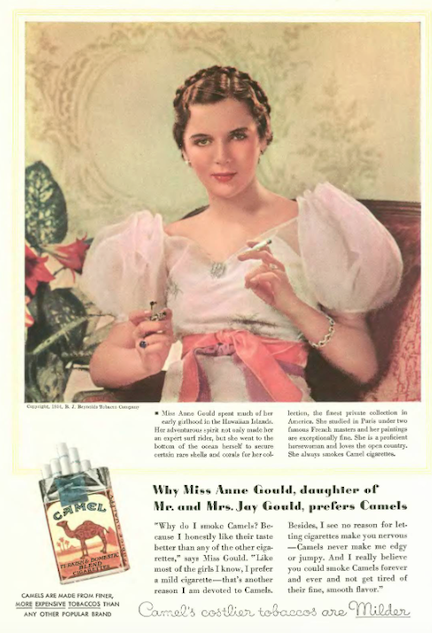
…by the looks of it, Anne Gould (heiress daughter of Jay Gould II and Anne Douglas Graham Gould) didn’t need anyone to tell her what to smoke…
…on to our cartoons, we continue our birdwatching with Rea Irvin…and we also get…
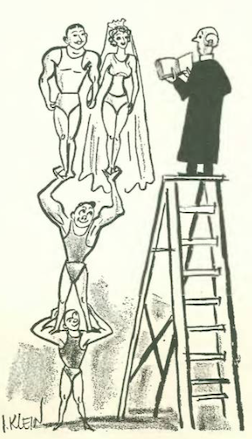
…high-flying nuptials with Isadore Klein…
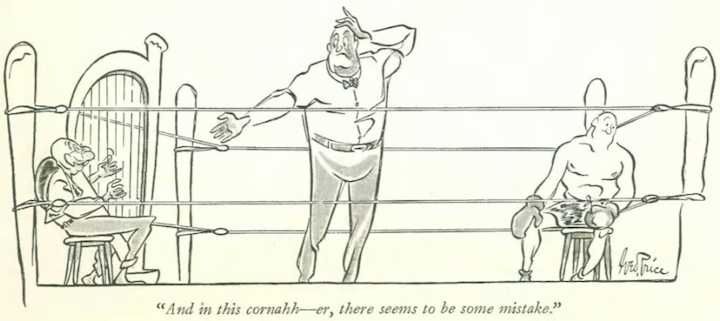
…a mismatch with George Price…
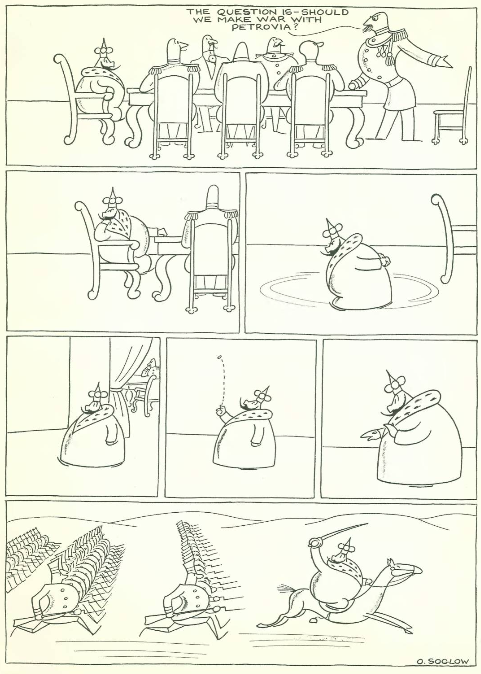
…the prospects for war with Otto Soglow…
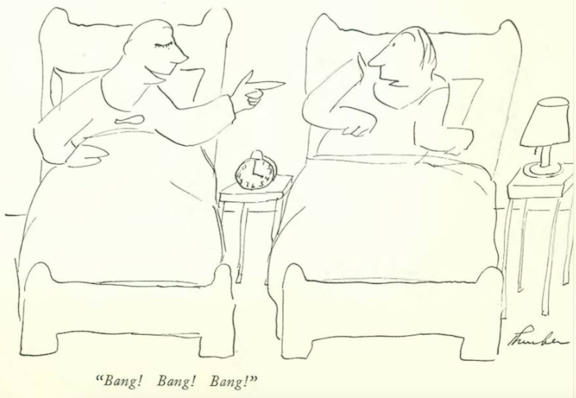
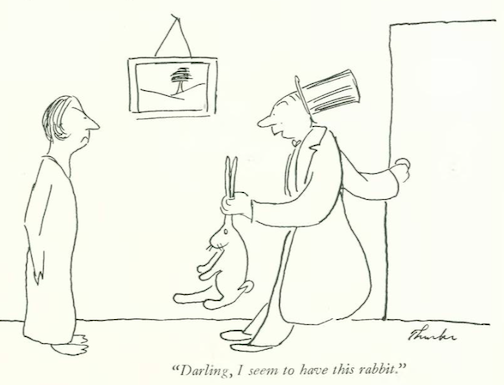
…marital bliss with James Thurber…
…and a courtship scene, with an expiration date, from Mary Petty…
Power broker Robert Moses always made sure he was few steps ahead of any possible opposition to his grand development plans in and around New York City. That included the yacht clubbers along the Hudson River, who were more or less erased from the scene by Moses in one fell swoop.
May 19, 1934 cover by Ilonka Karasz.
The Upper West Side’s Columbia Yacht Club probably thought it was just swell that the city was dumping waste and rock along the shores of the Hudson River, since it eventually created driveway access for members who previously had to access the club via a footbridge over the New York Central’s tracks. What hadn’t occurred to them was that nearly 25 years-worth of infill had also created a new strip of land that extended from 79th to 96th street, land that Moses envisioned as an expansion of Riverside Park (and the abrupt end of the West Side yacht club scene). “The Talk of the Town” explained:
LOCATION, LOCATION…Two views of the Columbia Yacht Club at West 86th Street, circa 1930. The club was razed to make room for Robert Moses’s expansion of Riverside Park. Moses’s ambitious project, which cost twice as much as Hoover Dam, put the train tracks underground and topped the park with the Henry Hudson Parkway. (newyorktoursbygary.blogspot.com/NYPL Digital Collections)HEADS UP…Elsie Henneman dives into the water near the Hudson River Yacht Club, circa 1930. Located at the foot of West 74th Street, the club moved onto a barge at 145th Street to escape Moses’s park expansion plans, but it was eventually banished from the West Side. (Reddit)
* * *
Ode to the Road
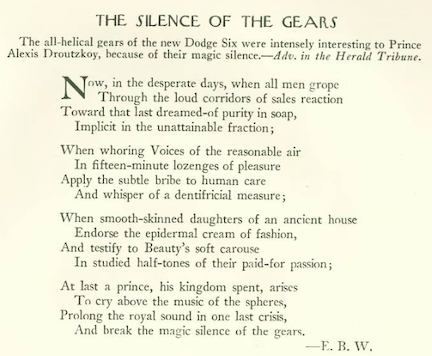
We now shift gears to E.B. White, who was poetically inspired by an advertisement in the Herald Tribune that featured Prince Alexis A. Droutzkoy (a member of the exiled White Russian colony in New York) praising the “magic silence” of the new “Dodge Six” automobile:
SILENCE OF THE CAMS…The 1934 Dodge Six. (detail from a vintage ad)
* * *
Führer’s Filmmaker
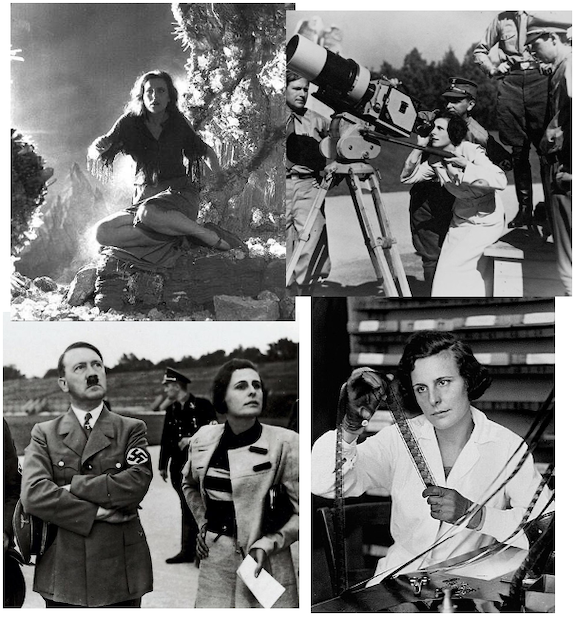
The ability (or inability) to separate art from an artist’s personal conduct or beliefs has been a particular topic of the last two decades, given the litany of stars who have been “cancelled” despite the quality or importance of their work. The work of German filmmaker Leni Riefenstahl (1902–2003), still debated nearly ninety years after her collaboration with Nazi leaders, demonstrates the fine line many a film historian or critic must walk when assessing the career of an innovative artist (for an American example, see filmmaker D. W. Griffith). Riefenstahl’s 1932 film, The Blue Light (Das blaue Licht), made prior to her Nazi collaborations, was praised for its beauty by American critics, including the New Yorker’sJohn Mosher, when it was released in the U.S. in 1934.
The Blue Light also captivated Adolf Hitler, who saw the attractive and athletic Riefenstahl as an ideal of Aryan womanhood. A subsequent meeting with Hitler would result in Riefenstahl’s controversial 1935 Nazi propaganda film Triumph of the Will (Triumph des Willens). We will explore that film, and Riefenstahl’s role, in a later post.
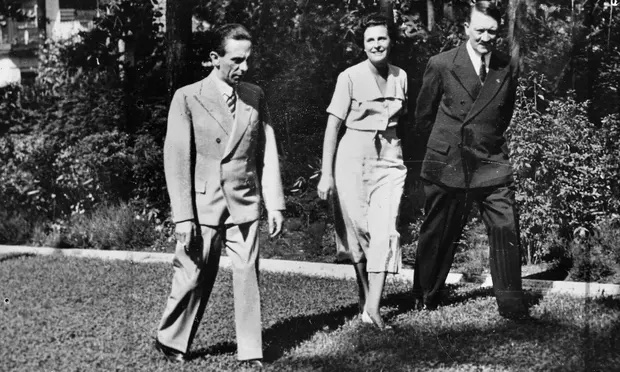
CAREER MOVE…Clockwise, from top left, Leni Riefenstahl demonstrated her acting ability, athleticism and filmmaking talents in 1932’s The Blue Light (Das blaue Licht); Riefenstahl filming in Nuremberg during the 1934 Nazi Party congress—the footage was used in 1935 Nazi propaganda film Triumph of the Will; working at a film cutting table, 1935; with Adolf Hitler at Nuremberg, 1934. (IMDB/Library of Congress/UTK Cinema Studies/The Irish Times)HI HITLER…Nazi propaganda minister Joseph Goebbels and Adolf Hitler pay a visit to Leni Riefenstahl at her Berlin estate, circa 1937. (Roger-Viollet)
* * *
From Our Advertisers
We begin with more Carl “Eric” Erickson-inspired artwork, here promoting the bygone elegance of transatlantic travel…
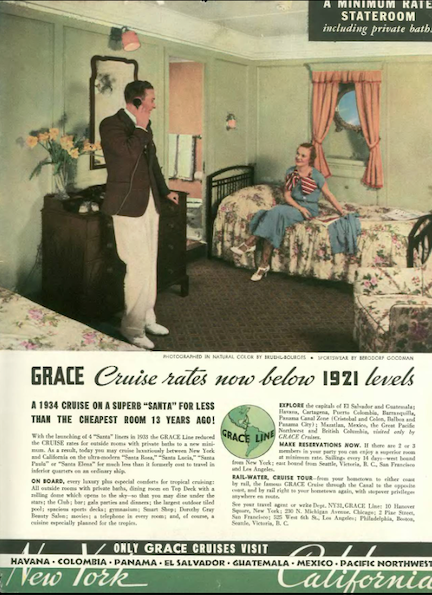
…perhaps a bit less upscale but still pretty nice, the “Santa” line of ships operated by the Grace Line between New York and Latin America included air-conditioned interiors paneled with aluminum (a fireproofing measure) and spacious cabins with private baths that faced to outside…
…this ad must have been a happy sight to folks who had to endure more than a decade of bootleg Scotch during Prohibition…
…Smirnoff vodka had its origins in 1860s Russia, capturing two-thirds of the Moscow market by the mid-1880s…forced to leave Russia in 1904 after the Tsar nationalized the Russian vodka industry…Smirnoff relocated to Turkey, then Poland, and then Paris, each time with limited success…at the end of Prohibition the brand relocated once again to a distillery in Bethel, Connecticut, hence this advertisement…
…the habanero pepper has been used to infuse everything from tequila to vodka to whiskey…this particular product was marketed as something new that could be mixed with a variety of spirits or topped up with club soda or ginger ale…
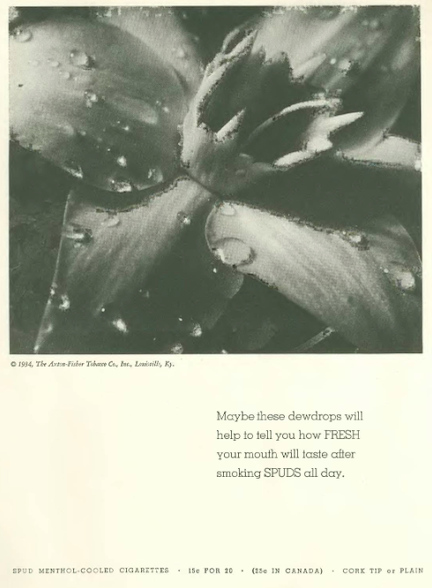
…I include this ad from the maker of Spud cigarettes for its sheer audacity…it claims your mouth will feel dewdrop fresh after an entire day of smoking menthols…
…stunt driver Billy Arnold was one of the “Hell-Drivers” Chrysler employed to tout the safety of its low-priced Plymouths at promotional events…
…including Chicago’s “Century of Progress”…below, a crowd watches Arnold take his Plymouth for a roll and emerge unscathed…
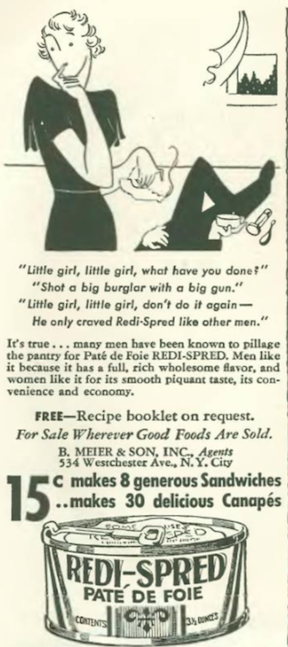
…the folks at Redi-Spred employed a murder theme to promote their “Pâté de Foie”…which foie was used…duck, goose or lord knows what, is not specified…
…the signature is muddled, but this looks like another illustration by Herbert Roese, who never published a cartoon in the New Yorker but sure had its style down, especially Peter Arno’s…
…Harold Ross’s high school friend and cartoonist John Held Jr. was a frequent contributor to the New Yorker from 1925 to 1932 (he also contributed to Life, Vanity Fair, Harper’s Bazaar), but when demand for his Jazz Age cartoons and illustrations fell off in the 1930s, he turned to painting and illustrating children’s books. So it was a surprise to catch this glimpse of Held’s work in a one-column ad promoting a Held-drawn map of New England inns…
…speaking of elusive illustrators, I am often challenged to discover the identities of spot illustrators in the early issues…this one appears to be signed by “Maurice Dreco”…
…the signature on this one looks like “Saphire,” but again, it is not clear…
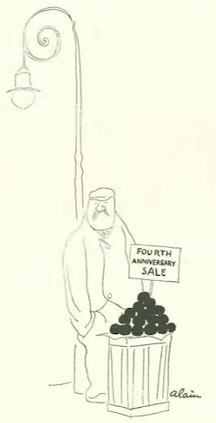
…but there is no doubt this little gem is by Daniel ‘Alain’ Brustlein…
…which leads us to Richard Decker, and a hostage situation gone flat…
…and Decker again, with a back-handed compliment…
…James Thurber was in his familiar world of dogs and battling sexes…
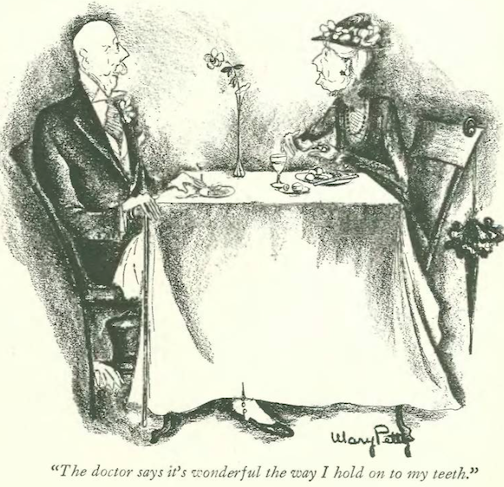
…Mary Petty found some good news on the dentistry front…
…Otto Soglow’s Little King believed more is merrier…
…and we close with William Crawford Galbraith, and a wedding day surprise…
In 1912, Edgar Rice Burroughs published the short story Tarzan of the Apes. Since then at least ninety books, 350 radio serials, three TV series and forty-five full-length films have told the story of the Lord of the Apes.
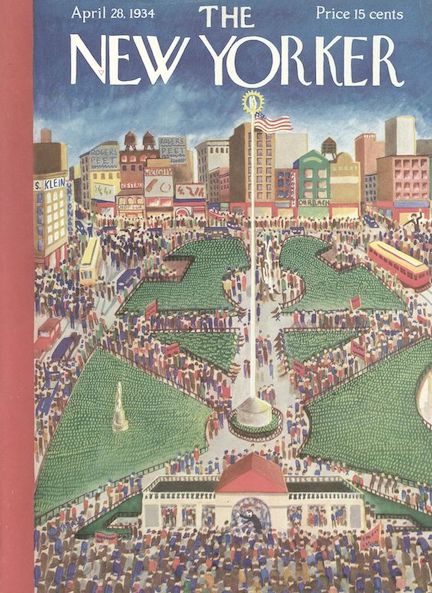
April 28, 1934 cover by Ilonka Karasz.
Tarzan was the first pop culture icon to attain worldwide fame, paving the way for a host of comic-book superheroes that would follow. Recalling his youth in post-war Leningrad in the early 1950s, Joseph Brodsky wrote of the bootleg Tarzan movies he devoured at the local cinema, and the effect a “long-haired naked loner” had on the regimented, inhibited lives of Soviet youth: “The Tarzan (film) series alone, I daresay, did more for de-Stalinization than all of Khrushchev’s speeches.”
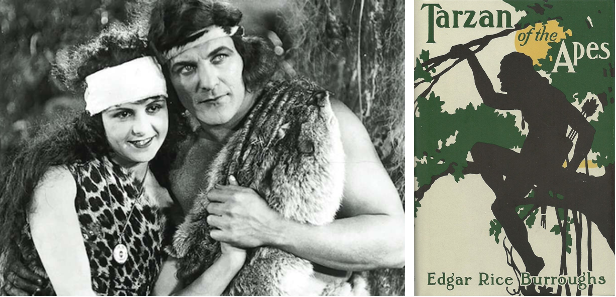
ME ELMO, YOU ENID…Elmo Lincoln as Tarzan and Enid Markey as Jane Porter in the 1918 silent film Tarzan of the Apes. The movie was released just six years after the publication of Edgar Rice Burroughs’ short story and subsequent book. (times-herald.com/Wikipedia)
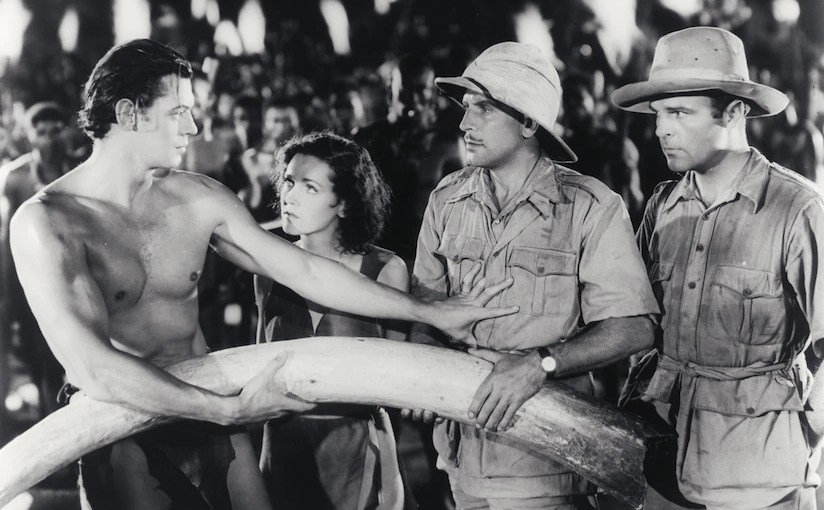
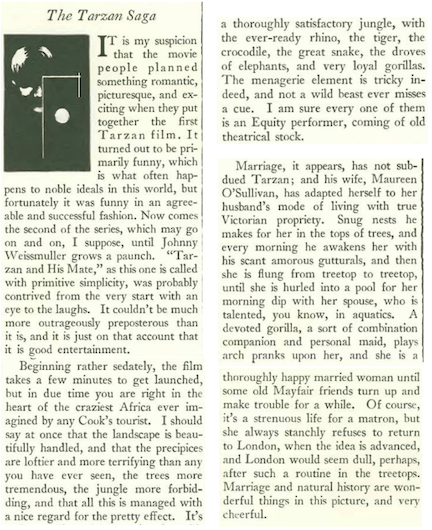
Starting with Elmo Lincoln in 1918, four different silent film actors portrayed Tarzan before Johnny Weissmuller (1904–1984) swung onto the screen with co-star Maureen O’Sullivan. Other Tarzan portrayers would follow, but it was Weissmuller—winner of five gold medals as an Olympic swimmer—who defined the role over two decades, starring in twelve Tarzan films from 1932 to 1948, O’Sullivan playing Jane in the first six of those films. Critic John Mosher sensed that Weissmuller was in for the long haul in just his second outing:
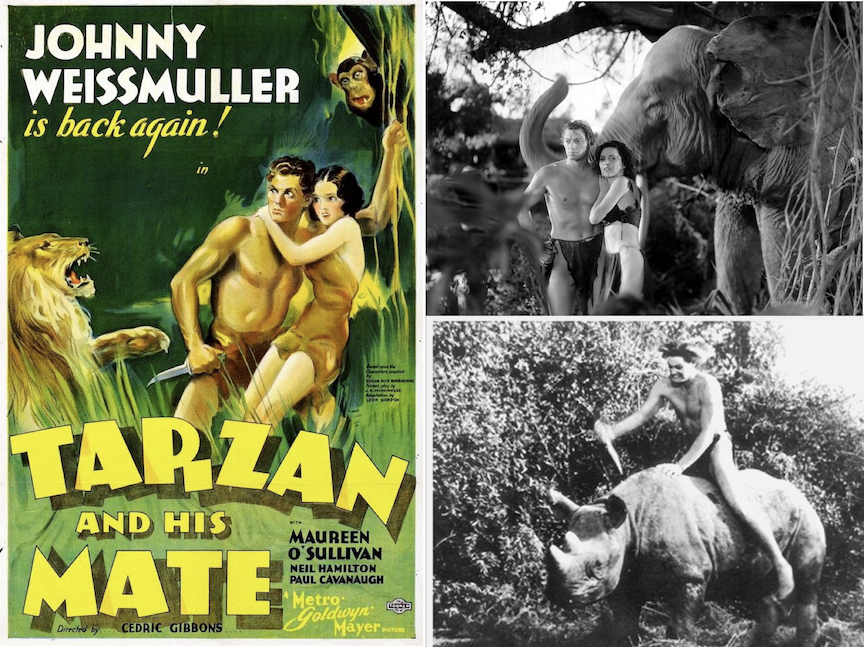
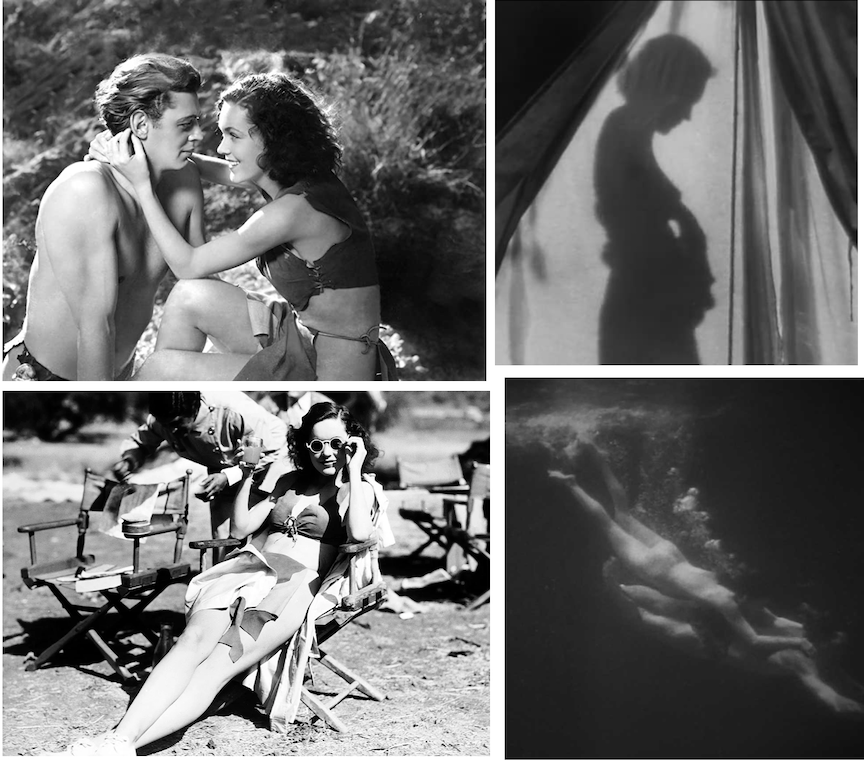
FAUX JUNGLE…Critic John Mosher was impressed by the wild and forbidding jungle scenes portrayed in Tarzan and His Mate—actually locations around Los Angeles. At left, MGM poster proclaims “Johnny Weissmuller is back again,” a reference to the 1933 dud Tarzan the Fearless starring Buster Crabbe (his single turn at Tarzan); top, Indian elephants taken from MGM’s zoo had attachments fixed to their ears and tusks to suggest African elephants; bottom, Weissmuller rides a rhino (named Mary), imported from a German zoo to appear in the scene. (Wikipedia/IMDB/Reddit)NOTHING TO HIDE…Tarzan and His Mate has acquired cult status mainly due to Maureen O’Sullivan’s skimpy halter top and loincloth—in 1934 it was one of the most revealing costumes ever seen on the silver screen. Hays Code puritans had fits over scenes that showed O’Sullivan nude in silhouette and swimming sans bathing suit with Weissmuller (the swimming scene used a body double, Olympic swimmer Josephine McKim). On April 24, 1934, all prints of Tarzan and His Mate were ordered changed, the nude scenes removed—the original print was not restored until 1986. At bottom left, O’Sullivan on the set of Tarzan and His Mate, looking quite unperturbed. (IMDB/hotcorn.com/Twitter)
In 2003, the Library of Congress deemed Tarzan and His Mate “culturally, historically or aesthetically significant” and selected it for preservation in the National Film Registry.
A note of trivia: Irish actress Maureen O’Sullivan (1911–1998) was the mother of actress Mia Farrow and grandmother of journalist Ronan Farrow. She’s also the grandmother of Soon-Yi Previn, Mia’s adopted daughter and current wife of Mia’s ex-partner, Woody Allen.
* * *
Spring Has Sprung
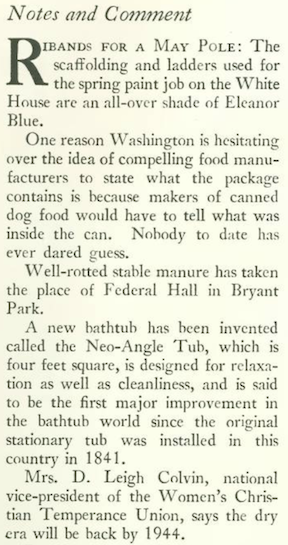
E.B. White began his weekly column with some thematic suggestions for the Maypole’s ceremonial ribbons. Excerpt:
A few of White’s references explained:
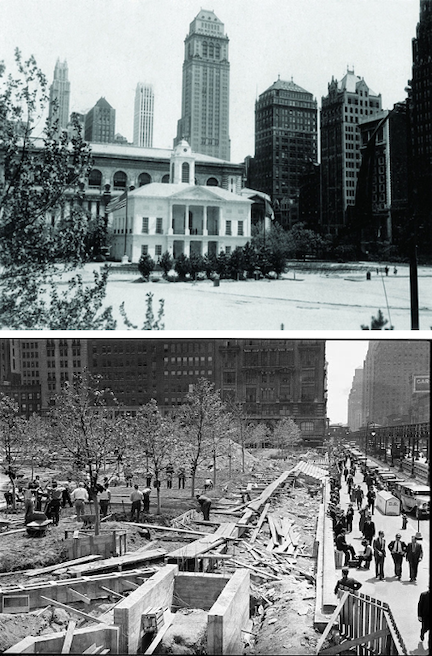
SPRING IS IN THE AIR, or in E.B. White’s case, horse manure, likely used to amend the soil in Bryant Park. In 1933 Parks Commissioner Robert Moses had the park’s Federal Hall replica demolished (erected in 1932 to commemorate the bicentennial of George Washington’s birth) and embarked on an ambitious facelift that included elevating the park from street level and planting numerous trees and hedges. The bottom image shows a 1934 view of the reconstruction looking south on 6th Avenue from 42nd Street. (Untapped Cities/NYC Parks Dept.)
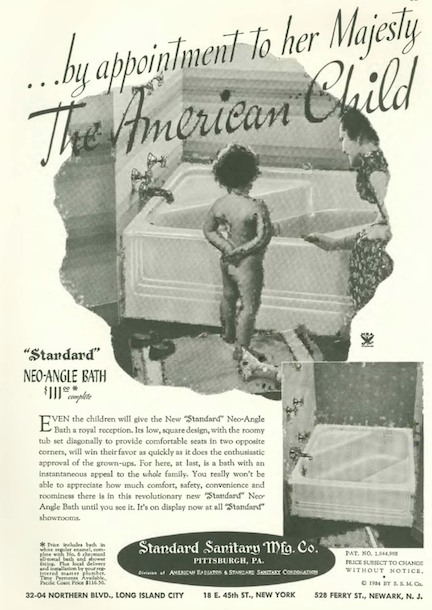
White also referenced the “Neo-Angle” bathtub, shown here in an ad from the same issue:
…James Thurber added this embellishment along the bottom of White’s column…
* * *
Freaked Out
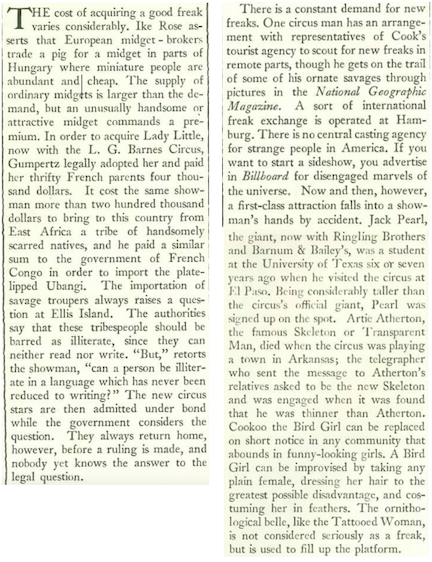
Alva Johnston contributed his third and final installment on the world of circus freaks, using descriptive language that would not pass muster today:
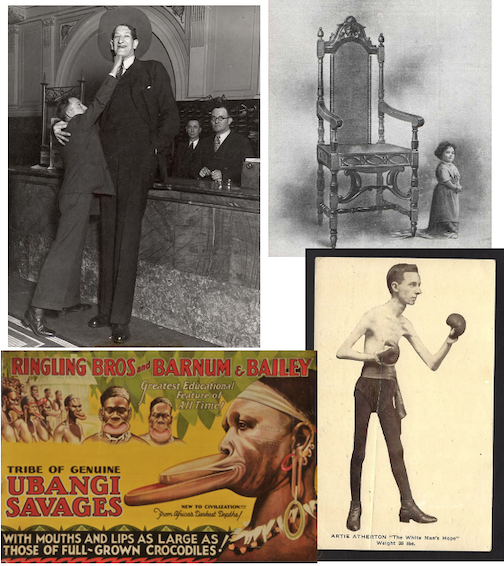
THE LONG AND SHORT OF IT…In his third installment of the world of circus freaks, Alva Johnston referenced the following performers, clockwise, from top left: circus giant Jack Earle; Lady Little, aka “Anita The Doll Lady,” on a 1918 postcard that described her as “26 inches high, 36 years old”; Artie Atherton, aka “Skeleton Dude,” weighing in at 38 pounds; Ringling Bros. and Barnum & Bailey Circus advertised “Geniune Ubangi Savages”—the word “Ubangi” was made up, plucked from a map of Africa because it sounded exotic. These “savages” were actually Congolese natives. (Pinterest/University of Sheffield/Worthpoint/Harry Ransom Center)
* * *
Biding Its Time
“The Talk of the Town” took notice of a lighthouse that was mounted atop the Seamen’s Church Institute, which overlooked New York Harbor from Battery Park. A time ball above the lighthouse would drop down a pole to signal twelve noon to ships in the harbor. Installed on April 15, 1913—to mark one year after the sinking of the RMS Titanic—the lighthouse and time ball were relocated to the South Street Seaport Museum in 1968.
REFUGE BY THE SEA…The Seamen’s Church Institute at 25 South Street (left) could house up to 580 seafarers in dormitory-style rooms. The building also housed a shipping bureau, a restaurant, a postal service and a chapel. When the building was demolished in 1968, the lighthouse and time ball were salvaged and relocated to South Street Seaport Museum. (southstreetseaportmuseum.org)
* * *
Gall of a Gaul
French writer Céline, aka Dr Louis Ferdinand Auguste Destouches (1894–1961), is considered by some to be one of France’s greatest 20th century writers, influencing the likes of Henry Miller, Samuel Beckett, and Charles Bukowski. However Céline is also widely reviled as a Nazi sympathizer and anti-semite, but whatever one thinks of the writer, most agree that he hated pretty much everyone. Clifton Fadiman tried to make sense of the bilious Céline and his most celebrated novel, Journey to the End of the Night (Voyage au bout de la nuit). An excerpt:
DON’T STAND SO CLOSE TO ME…The French writer Céline in a 1932 photograph. (Bibliothèque nationale de France)
* * *
From Our Advertisers
There’s nothing hateful about these brightly colored blankets and throws if you were looking for something for Mother’s Day…
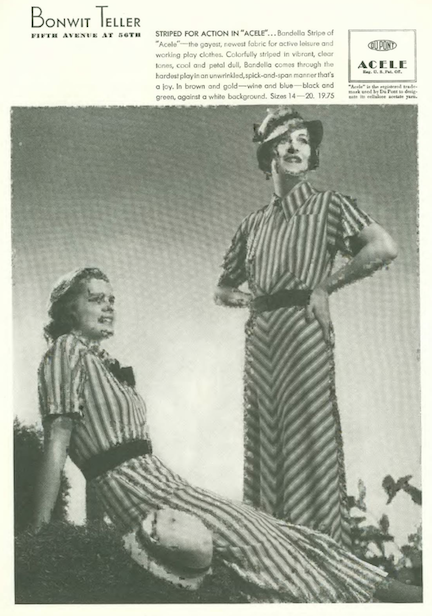
…it’s interesting how Fifth Avenue department stores such as Bonwit Teller embraced new-fangled synthetics made by Dupont—not exactly material favored by those to the manor born…
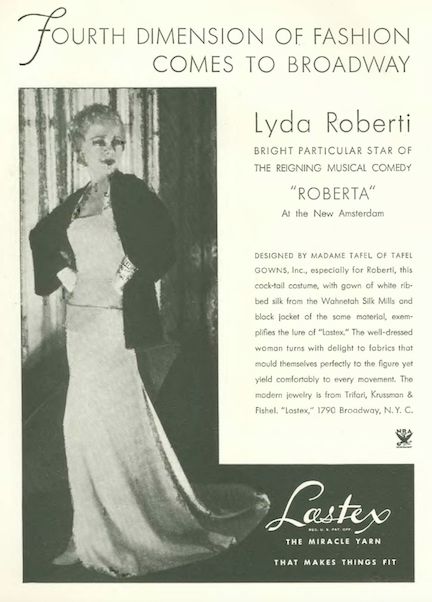
…however Lyda Roberti, the “Bright Particular Star” of the Broadway musical Roberta, seemed pleased to be sporting a gown spun from “Lastex,” formed from a combination of silk and rubber…
…more fashionable women, this time paired with Buick’s latest model displaying a bit of streamlined flair…
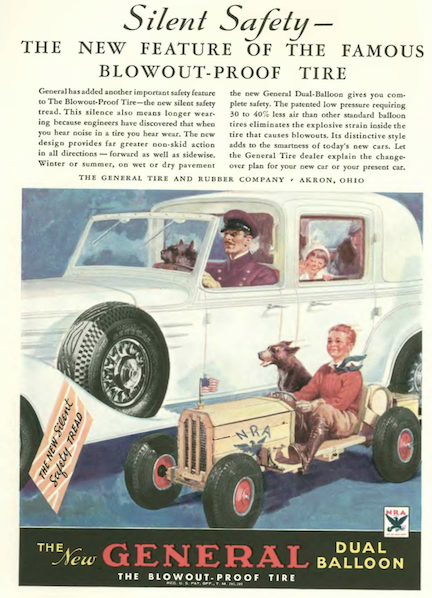
…the folks at General Tire touted the safety of their blowout-proof tires, but as with most things in the 1930s, the scene suggests little regard for safety in general…the boy driving the soapbox racer perilously close to the limo is not a supporter of the National Rifle Association—in the 1930s NRA stood for the New Deal’s National Recovery Act…
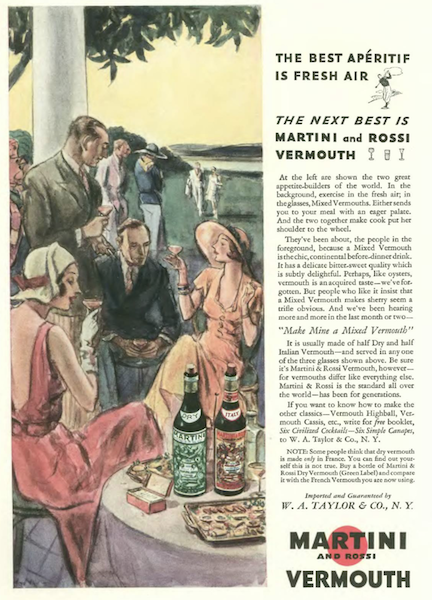
…recalling a style perfected by fashion illustrator Carl “Eric” Erickson, this lovely ad beckoned us to an outdoor cocktail party courtesy of Martini & Rossi…
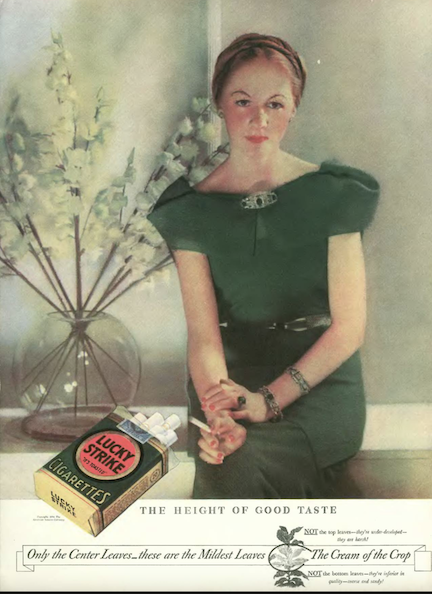
…working the growing market of female smokers, the folks at Lucky Strike gave us this sophisticate caught in a pensive mood…
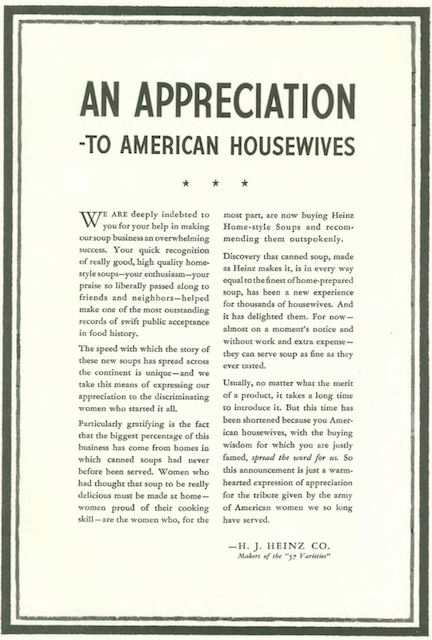
…of course advertisers also appealed to another female market, the majority of women stuck at home doing the cooking and cleaning…and so we have pandering ads like this one from Heinz (did people really read these things?)…
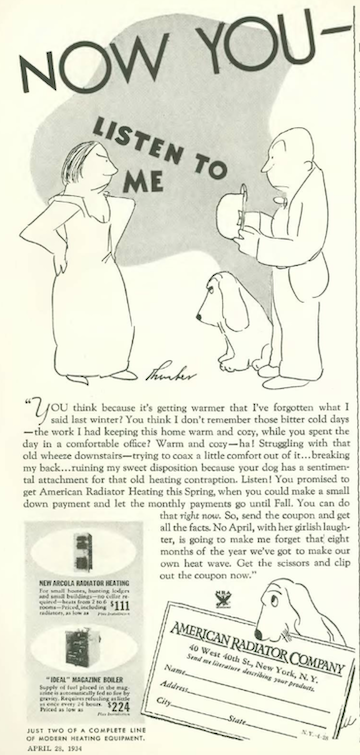
…another approach was to cast women as a nagging emasculators, here illustrated by James Thurber…
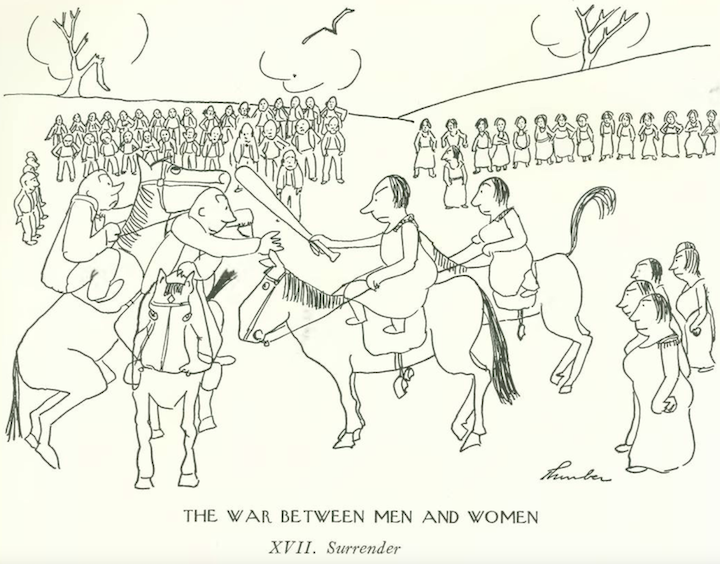
…however, in Thurber’s cartoon world, it was the men who got the upper hand in the final installment of his “war” series…
…Thurber was busy in this issue, also supplying this spot illustration…
…we switch to a more leisurely pace with Syd Hoff…
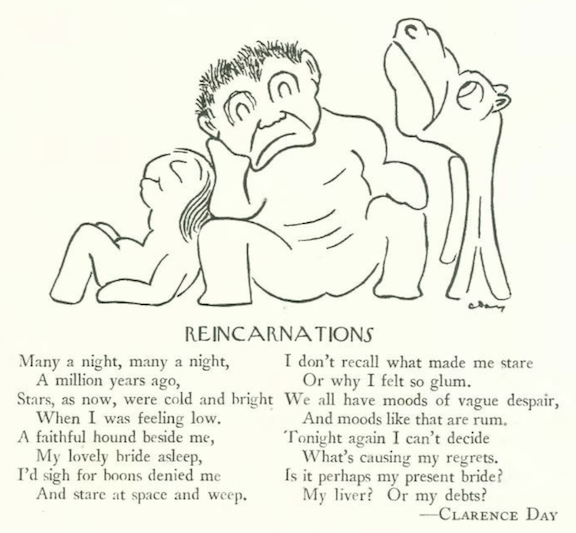
…and check in with Clarence Day, who in addition to his continuing “Life With Father” series occasionally contributed these illustrated poems…
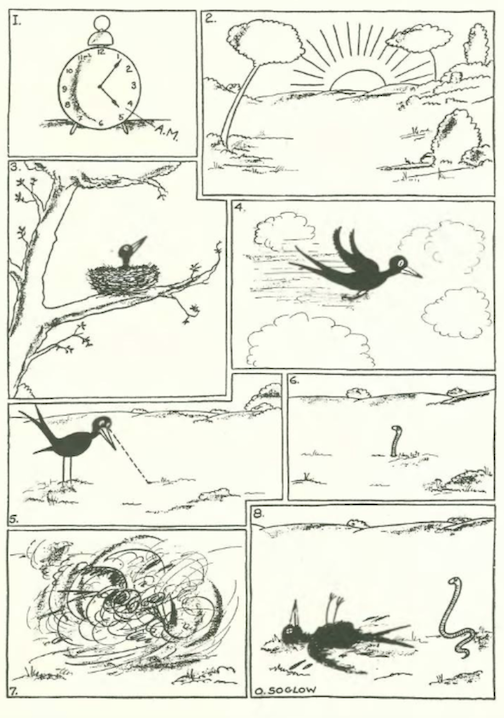
…and we close with Otto Soglow, and an early bird who should have stayed in bed…
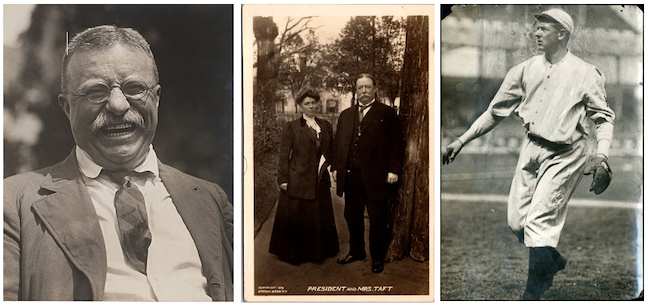
Above, from left: When Teddy Roosevelt announced in 1912 that he would run for president against his former VP, William Howard Taft, Brown Brothers sent photographer Charles Duprez to Oyster Bay to take this famous photo; President Taft and his wife, Helen “Nellie” Taft, in 1909; famed New York Giants pitcher Christy Mathewson warms up before a game, circa 1912. (liveauctioneers.com/cabinetcardgallery.com/psacard.com)
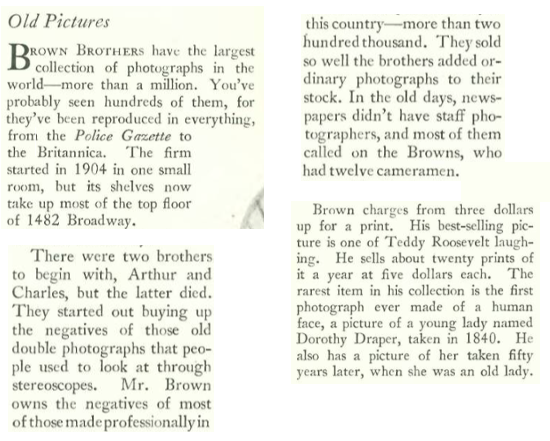
Before there were photo agencies like Magnum or archives such as Getty Images there was a company named Brown Brothers, the world’s first stock photo agency founded by Arthur and Charles Brown in New York City in 1904.
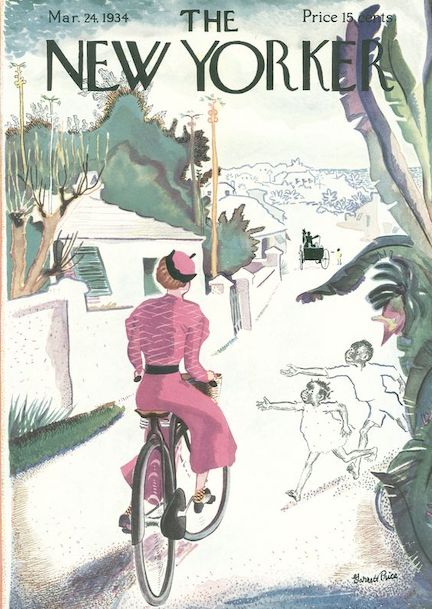
March 24, 1934 cover by Garrett Price.
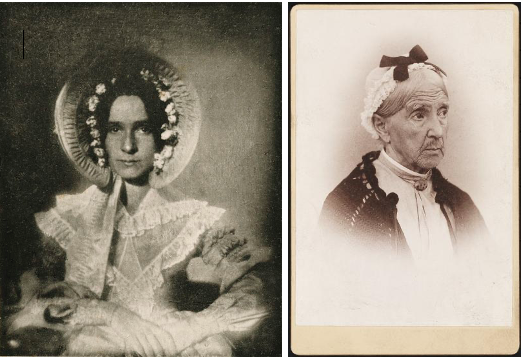
“The Talk of the Town” looked in on Brown Brothers, “the largest collection of photographs in the world—more than a million,” including a famous image of Teddy Roosevelt and the first photographic portrait of a woman’s face.
Brown Brothers photos could be seen everywhere in the early 20th century—their staff of twelve photographers provided images to New York newspapers at a time when the technology for publishing photos in the dailies was in its infancy and most papers didn’t employ staff photographers. Even the venerable New York Times hired the Browns to cover news events until they established their own team of photographers.
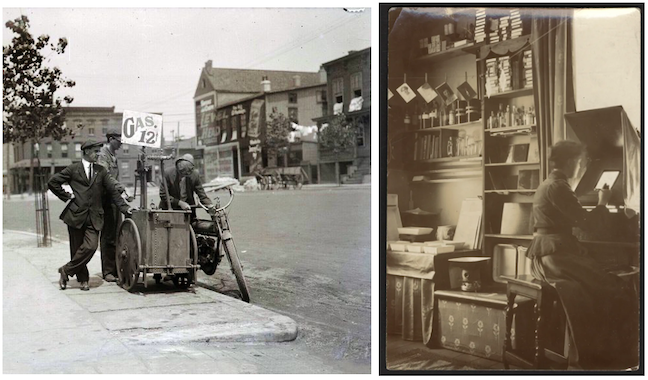
LITTLE DID DOROTHY DRAPER KNOW that she would become world famous when she sat for this photo (left) taken by her brother Dr. John W. Draper in his Washington Square studio at NYU in 1839 or 1840. Dorothy had to sit unblinking for the 65-second exposure—apparently her brother dusted her face with white flour to enhance the contrast. The Drapers still go down in history as creators of the oldest photo of a woman; at right, Dorothy Draper in the 1890s, in a photograph taken by her nephew. (boweryboyshistory.com/MCNY)ONE IN A MILLION…The early 20th century image at left is just one of as many as three million images amassed in the Brown Brothers archive; at right, a Brown Brothers archivist at work. (Pinterest/sportscollectorsdigest.com)
Note: The Brown Brothers’ archive of photos and negatives went up for sale in 2014, and was ultimately acquired by Leland’s in 2020.
* * *
De Terraplane!
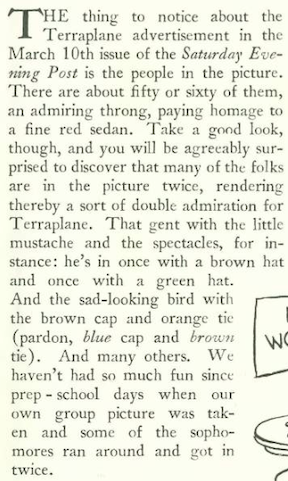
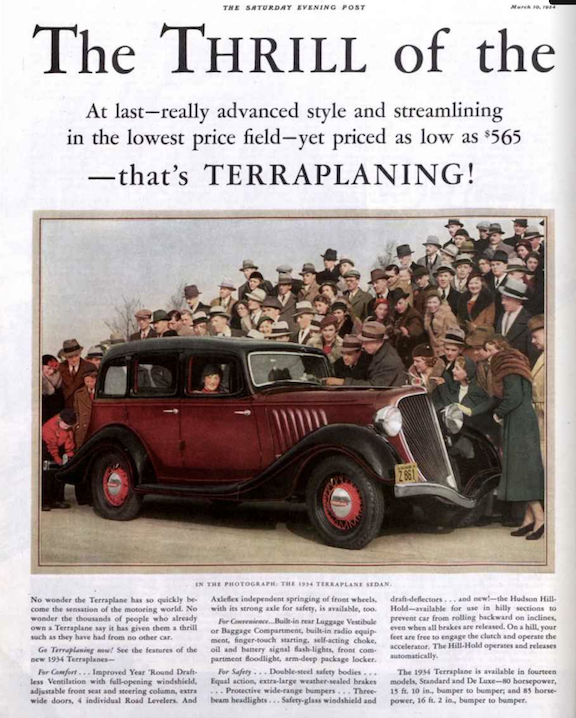
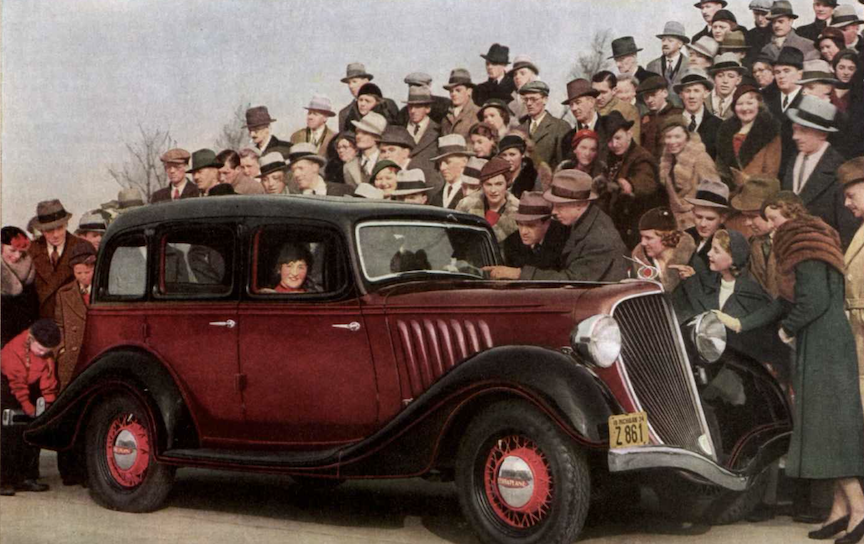
E.B. White (in “Notes and Comment”) was also looking at a photo, or rather scrutinizing one that was featured in a Saturday Evening Post advertisement for Hudson’s Terraplane:
…here is the ad from the Post…
…and a closer look at the image, which had White seeing double.
(Both images courtesy The Saturday Evening Post)
* * *
Escape Artist
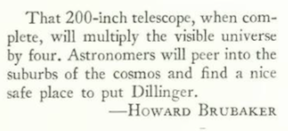
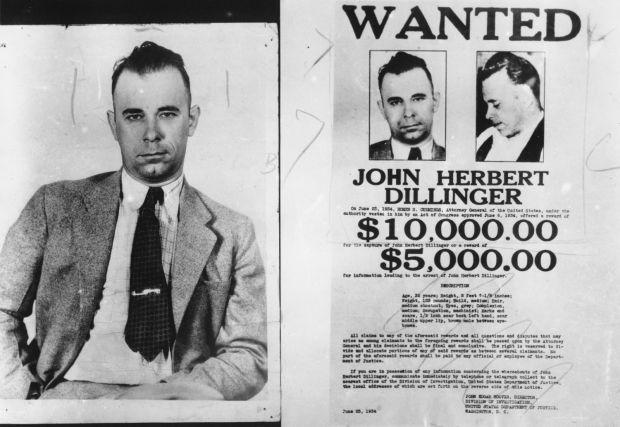
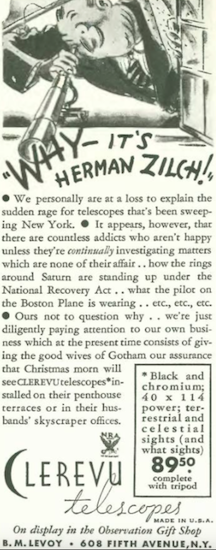
In his “Of All Things” column, Howard Brubaker included the following item about a new telescope, ostensibly to set up a quip about John Dillinger’s recent prison break (his second):
YOUR DAYS ARE NUMBERED…The FBI issued this “Wanted” poster of gangster John Dillinger— “Public Enemy No. 1″—in June 1934. The Feds gunned him down a month later. (AP Photo)
* * *
Playing Nice
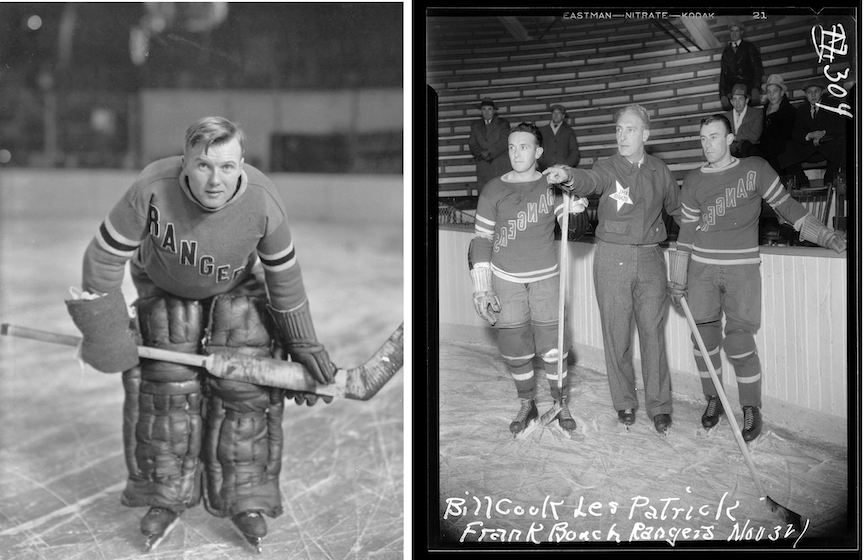
The New Yorker commented on the trend toward fewer fights in the world of hockey, and although fighting in general ebbed a bit through mid-century, it nevertheless remained a staple of the game. Indeed the New York Rangers founder, Tex Rickard, who also promoted boxing at Madison Square Garden, knew quite well that hockey fights were one reason folks attended the games.
FACE OFF?…At left, goaltender Andy Aitkenhead of the New York Rangers padded his legs and arms but put his clean-shaven mug on the line in December 1934— it wasn’t until 1959, 42 years into the NHL’s existence, that a league goalie wore a mask on the ice. At right, New York Rangers captain Bill Cook (right) flanks coach and manager Lester Patrick alongside Frank Boucher on the ice at the Chicago Stadium in November of 1934. (Pinterest)
* * *
From Our Advertisers
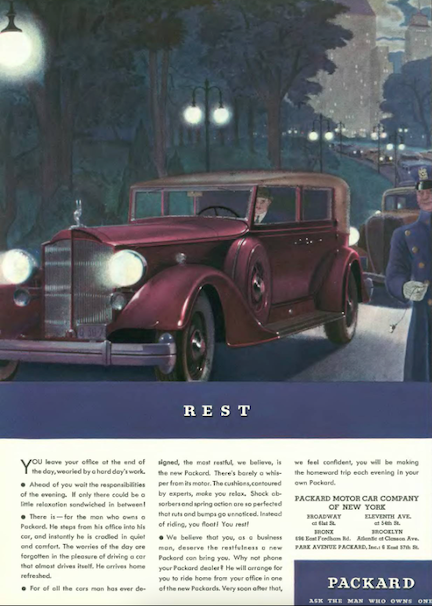
We begin with this sumptuous ad from Packard, appealing to those who could afford to own this luxury brand…
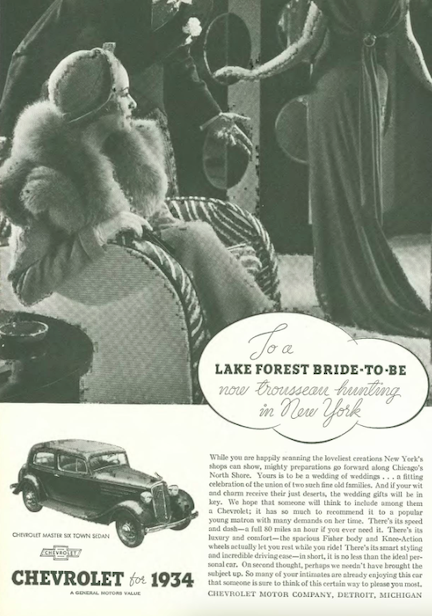
…if you couldn’t afford a Packard, you could rest assured that even a well-heeled deb could be happy with a Chevy…
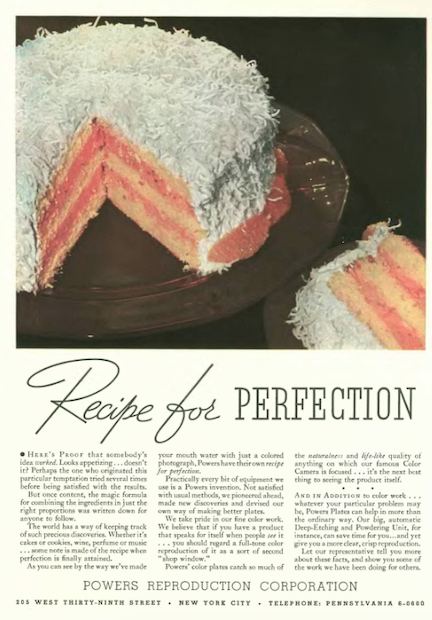
…the folks at Powers Reproduction continued to tout the wonders of their color photography, even if their cake looked less than appetizing…
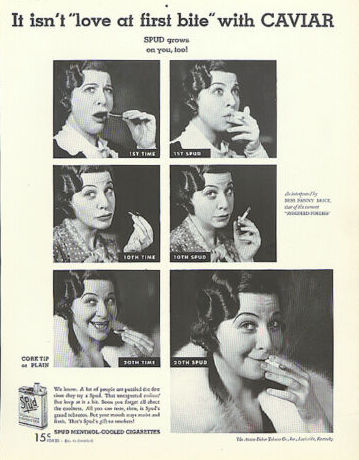
…Fanny Brice was appearing with the 1934 Ziegfeld Follies on Broadway, so the folks at Spud jumped on her celebrity bandwagon…
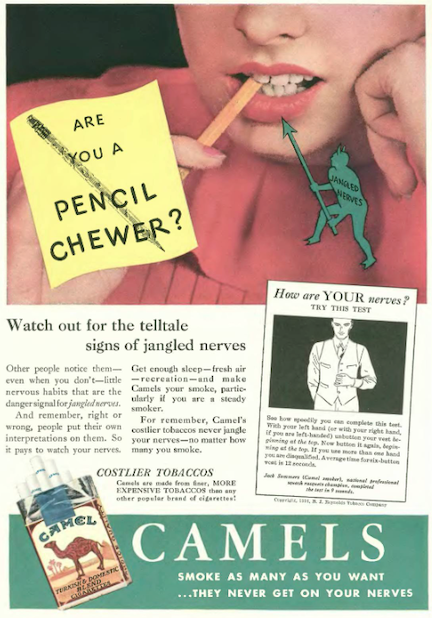
…while R.J. Reynolds was suggesting we replace our chewed up pencils with a nice Camel cigarette…now, don’t you feel better?…
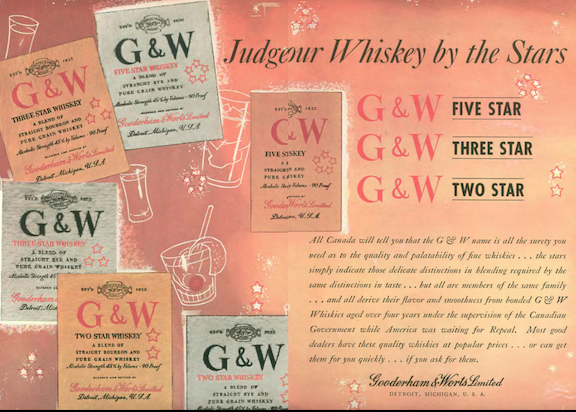
…the Canadian distillery giant Gooderham & Worts offered all sorts of options to calm our jangled nerves in this two-page spread…
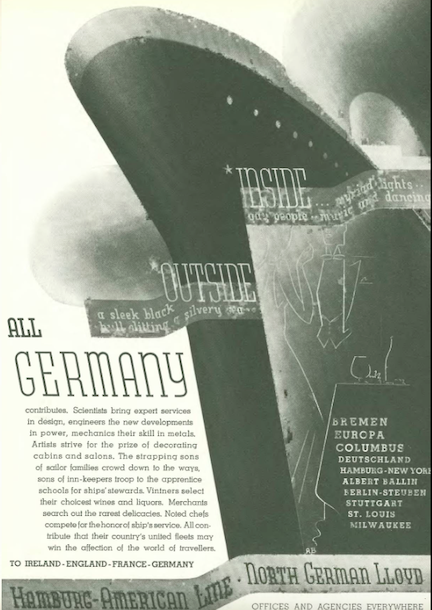
…while the Germans continued to entice us onto their cruise ships perfected by science and featuring “the strapping sons of sailor families”…hmmm…
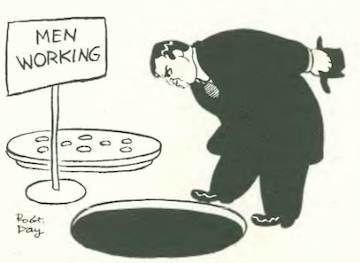
…in 1934 the New Yorker began featuring mostly wordless cartoons on the opening page of “The Talk of the Town,” including this one by Robert Day featuring Mayor Fiorello LaGuardia checking up on city employees…
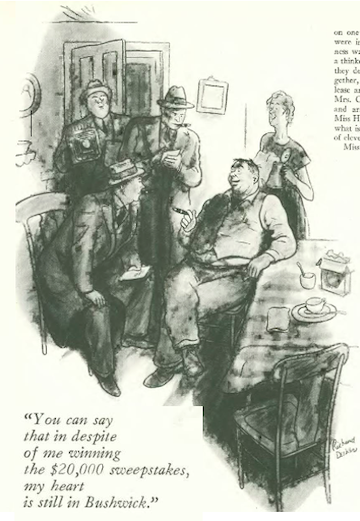
…Richard Decker gave us an Irish Sweepstakes winner from Brooklyn who displayed some modesty and media savvy…
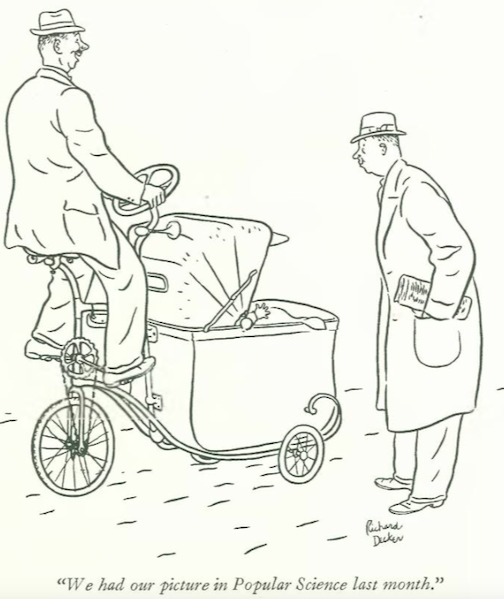
…Decker again, with the latest in perambulators…
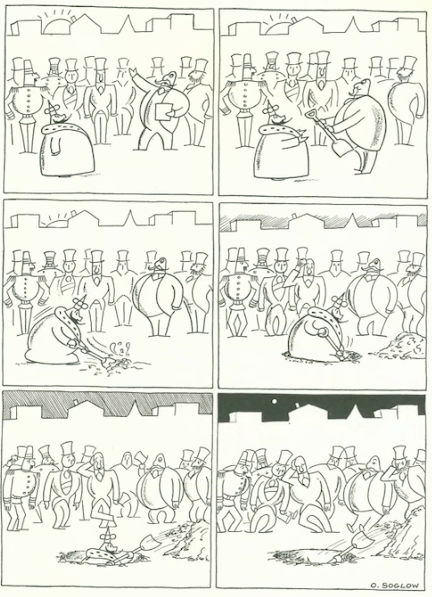
…Otto Soglow’s Little King put his back into a ceremonial groundbreaking…
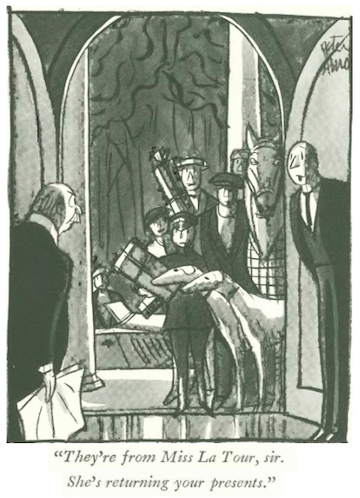
…Peter Arno’s sugar daddy received some not-so-happy returns…
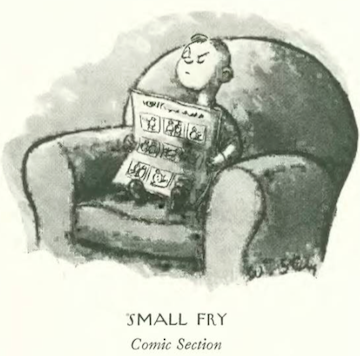
…one of William Steig’s “Small Fry” was doing some serious reading…
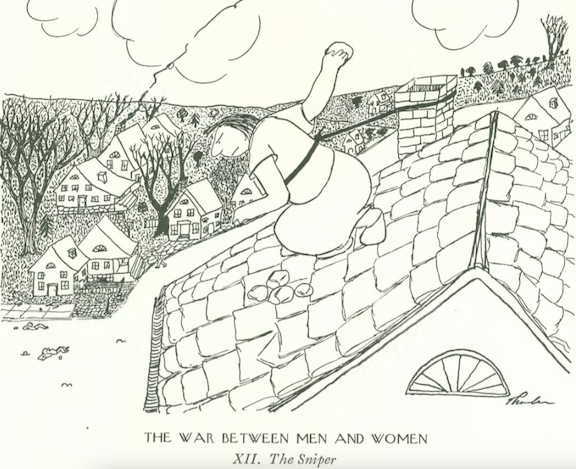
…and James Thurber’s war continued from the rooftops…
…on to March 31, 1934…
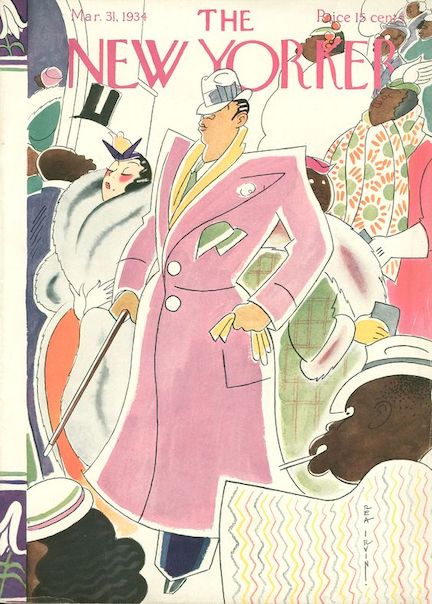
March 31, 1934 cover by Rea Irvin.
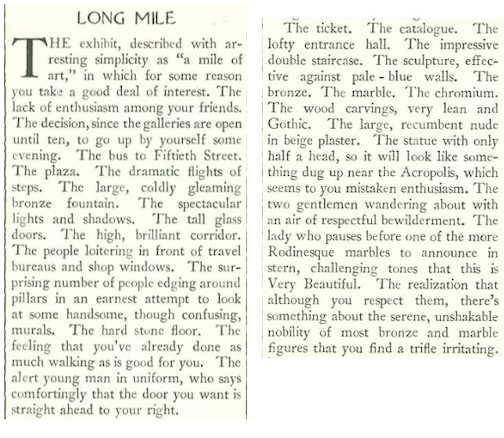
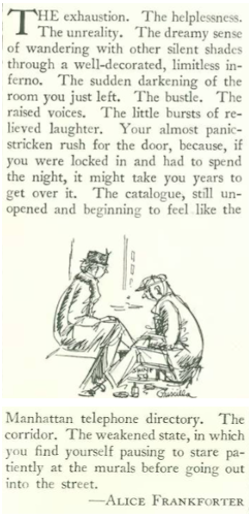
…where we find Alice Frankforter covering an exhibition dubbed “A Mile of Art.” I’m guessing critic Lewis Mumford passed on this opportunity to offer some blistering commentary. As for Frankforter, she found the spectacle puzzling, if not irritating. An excerpt:
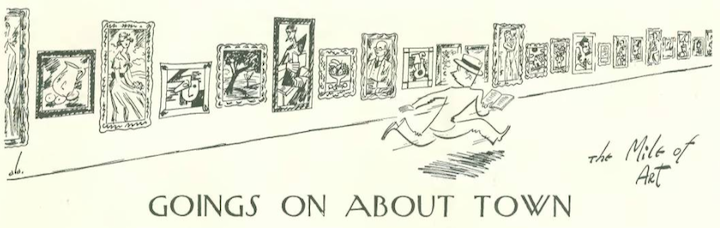
Constantin Alajalov offered his perspective on the art world stunt with this bit of spot art…
…and more from Frankforter, now reaching a state of exhaustion and near-delirium as she approached the end of the exhibit:
* * *
Biblical Babbitts
Frank Buchman’s First Century Christian Fellowship (aka the Oxford Group) meeting in New York featured a lot of people chuckling and bubbling, but all that forced conviviality left critic Edmund Wilson feeling “quite morose.” Writing for the “A Reporter at Large” column, Wilson looked in on the group as they awaited Buchman’s arrival at a preliminary rally. The column was subtitled, “Saving the Better Classes and Their Butlers.” An excerpt:
Like other critics at the time, Wilson saw “Buchmanism” as bourgeois optimism and boosterism, interested more in converting the souls of the wealthy and celebrated rather than serving the needs of poor.
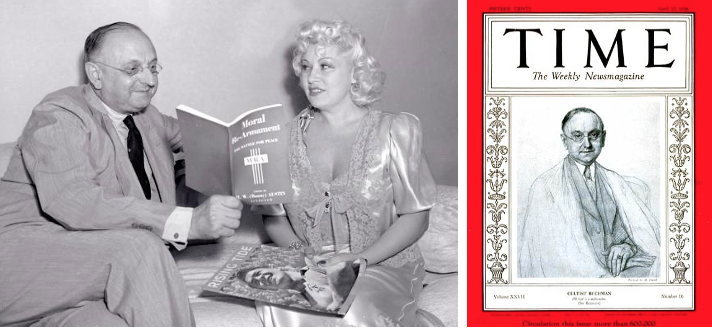
ODD COUPLE…Frank Buchman liked to be seen with the rich and famous. In 1939 he asked for a half hour of Mae West’s time, ostensibly to get this photo of him sharing some wisdom from his “Moral Re-assessment” booklet. West seems less than enamored by the encounter, regarding Buchman as some sort of alien creature; right, Buchman on the cover of April 20, 1936 edition of Time, which identified him as “Cultist Buchman.” (maewest.blogspot.com/Time)
* * *
Carnegie’s Couture
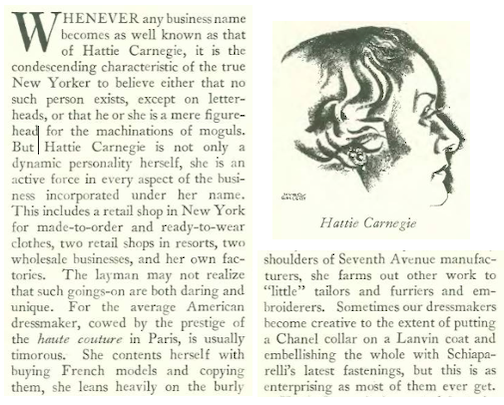
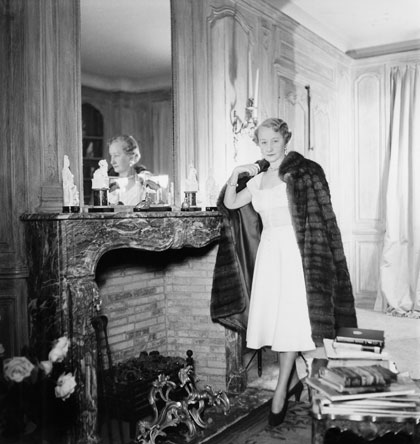
Vogue magazine fashion editor Nancy Hardin and the New Yorker’s fashion editor Lois Long teamed up on a profile about Hattie Carnegie (1889 -1956) titled “Luxury, Inc.” Born Henrietta Kanengeiser in Vienna, Carnegie immigrated with her family to New York in 1900; nine years later she adopted the name “Carnegie” after Andrew Carnegie, the richest person in America. Through hard work and an inherent instinct for what American women desired, she built a fashion design business that thrived in Depression and catered to stars and celebrities including Tallulah Bankhead, Joan Fontaine, Lucille Ball, and Joan Crawford. An excerpt, with illustration by Hugo Gellert:
FUR SURE…Hattie Carnegie posing for a 1951 Vogue magazine photo. (Vogue)
* * *
Steampunk Dream
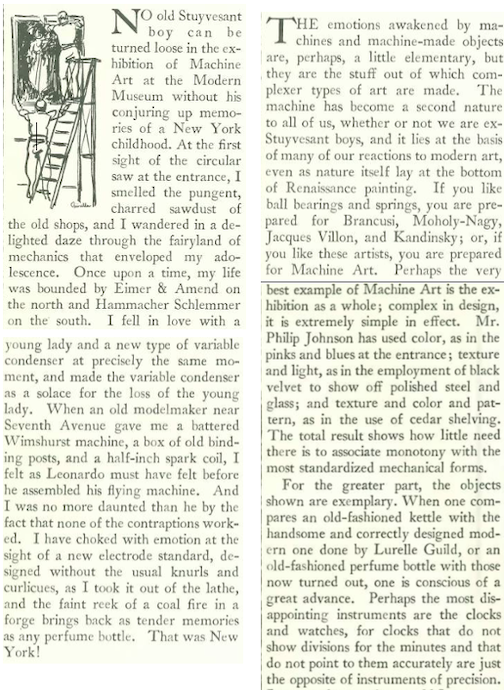
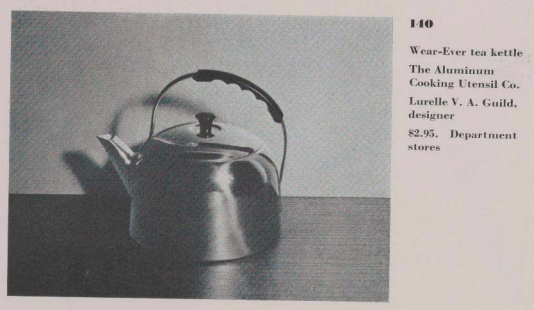
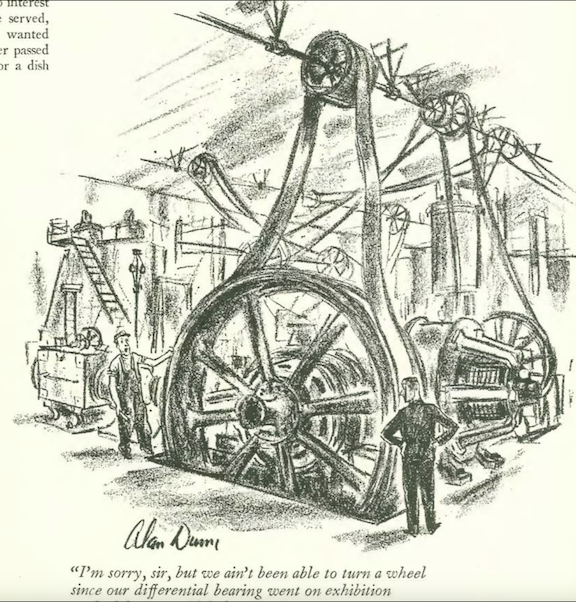
In my previous entry I featured Robert Coates’s observations on the new Machine Art exhibition at the Museum of Modern Art. For the March 31 issue critic Lewis Mumford, celebrant of the simple and unpretentious, waxed nostalgic over the novel exhibit:
I’M A LITTLE TEAPOT that made a big advance in the design world, according to critic Lewis Mumford. (MoMA)
Alan Dunn was also inspired by the exhibit, as evidenced in this cartoon from the April 7 issue…
* * *
More From Our Advertisers
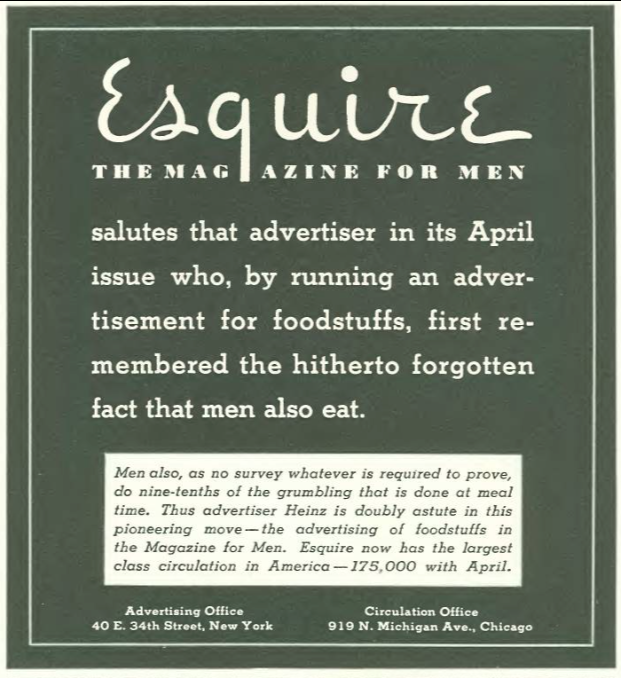
Founded in October 1933, the men’s magazine Esquire took off with a bang, and the publishers were not shy about boasting of its early success…
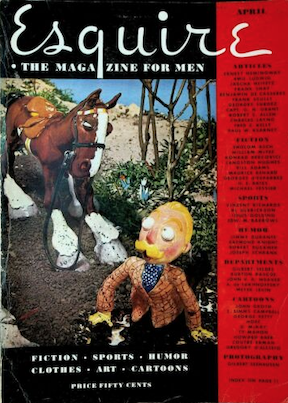
…cover of the April 1934 issue, featuring the mustachioed mascot Esky…based on a drawing by cartoonist E. Simms Campbell, Esky was featured on the cover in various situations until 1961…
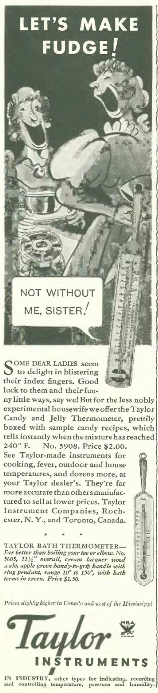
…Peter Arno’s “Whoops Sisters” appeared sixty-three times in the New Yorker between 1926 and 1927 before Arno retired them (they occasionally popped up in other publications, and in a 1931 Cunard ad)…it seems odd that they would make an appearance in a cheap thermometer ad in 1934…at any rate, it is difficult to tell if this is by Arno or by a clever forger…
…there’s no mistaking the cartoonist behind this ad…
…and this one by Otto Soglow…
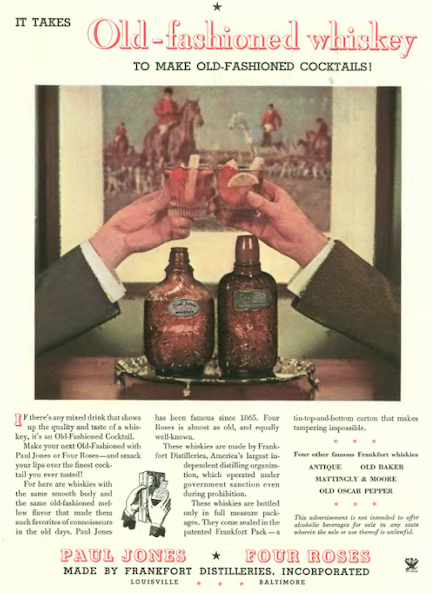
…and we close our advertising section by raising a glass to Frankfort Distilleries…
…on to our March 31 cartoons, and a lineup of New Yorker regulars Abe Birnbaum…
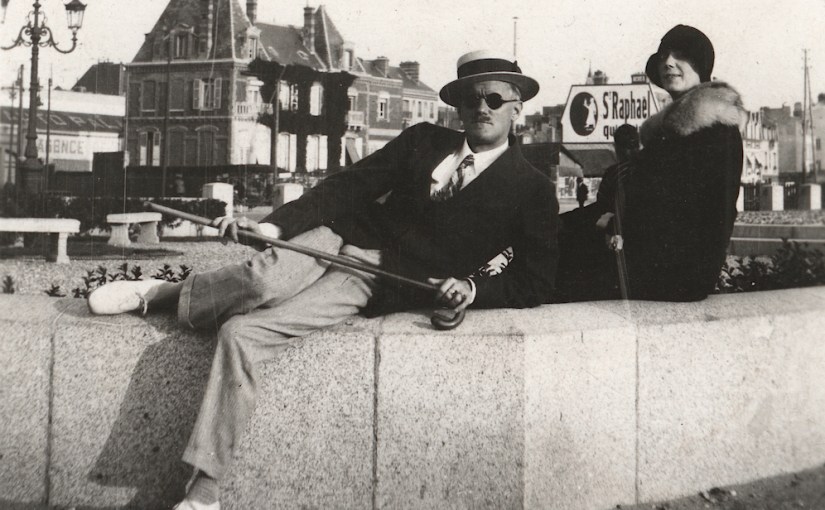
Above, James Joyce and his longtime partner Nora Barnacle, in Zurich, 1930. They would marry the following year when Joyce established residency in the UK. (SUNY Buffalo)
It began 103 years ago when the American literary magazine The Little Review published its latest installment of James Joyce’s landmark novel Ulysses—a chapter that featured an account of a wanker on a beach.
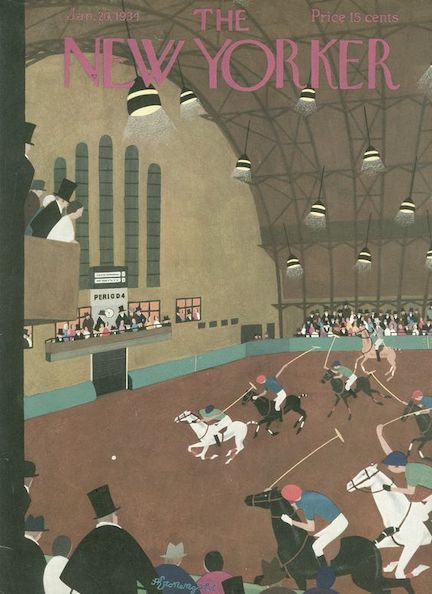
Jan. 20, 1934 cover by Adolph K. Kronengold.
More specifically, the passage described the novel’s main character, Leopold Bloom, pleasuring himself while gazing at a teenage girl. It didn’t take long for the pearl-clutchers at the New York Society for the Suppression of Vice to go after the editors of The Little Review, who were ultimately fined for obscenity and banned from publishing the remainder of the novel, which, by the way, Joyce had structured along the lines of Homer’s epic poem, the Odyssey.
Scenes in the novel that frankly described sexual acts and mocked rituals of the Catholic Church kept the book off American shelves until 1934, when District Judge John M. Woolsey ruled that the book was neither pornographic nor obscene. One wonders if Judge Woolsey took a cue from the end of Prohibition.
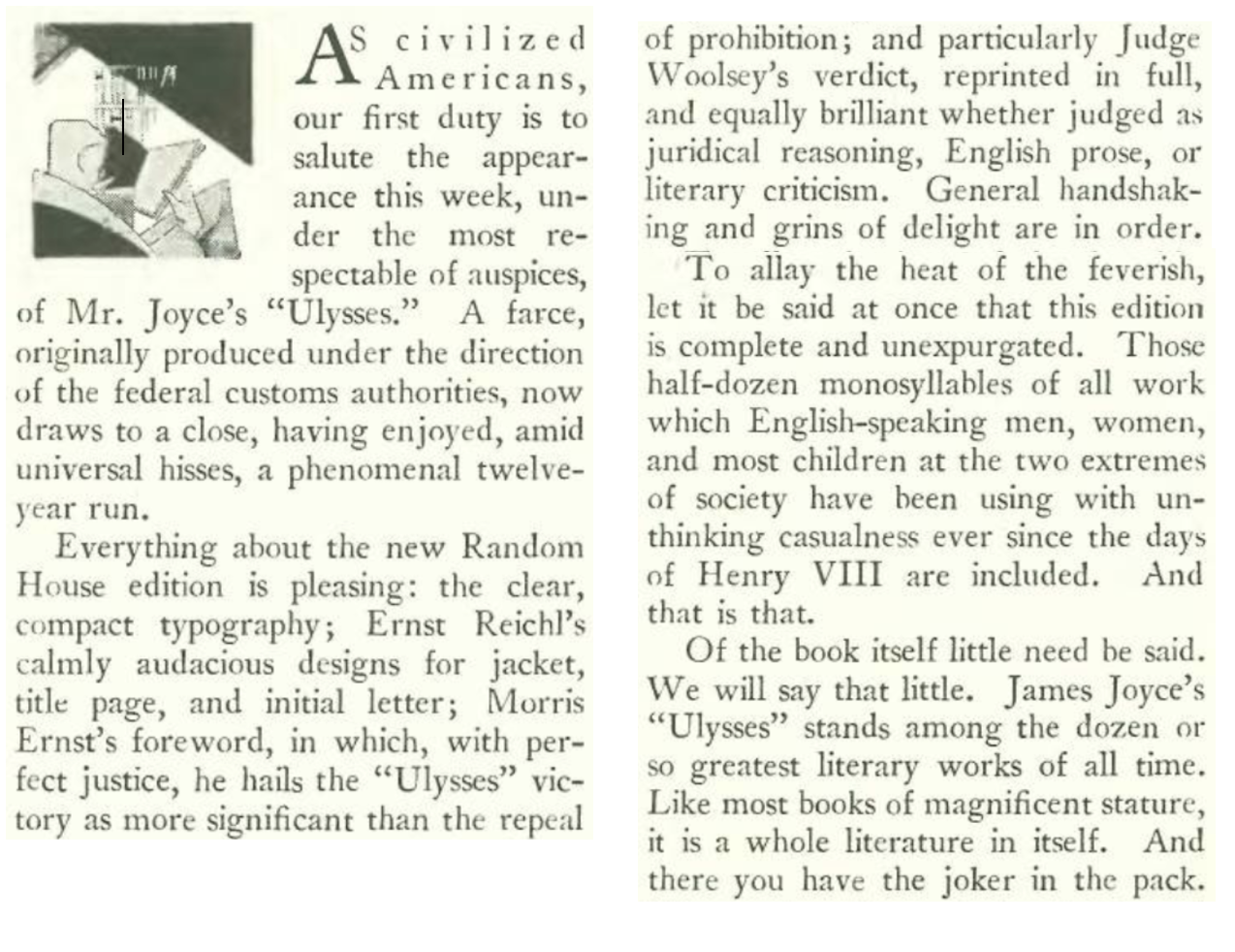
Lovers of literature, including New Yorker book reviewer Clifton Fadiman, rejoiced at the judge’s decision. We skip ahead to the Jan. 27 issue for Fadiman’s thoughts on the matter:
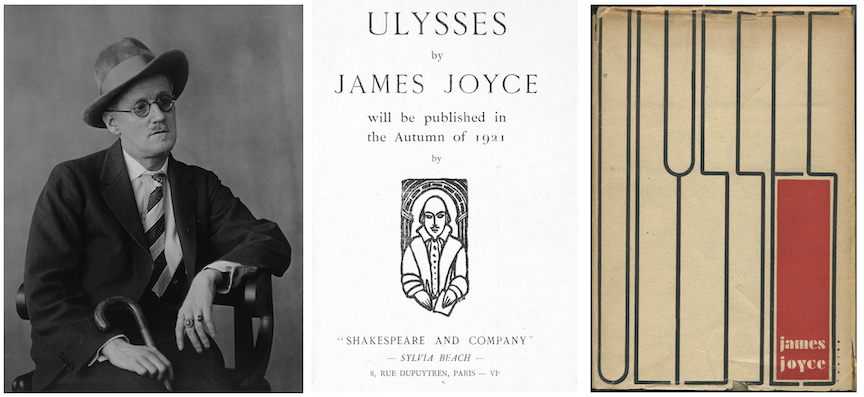
DUBLINER…James Joyce in 1928, as photographed by Berenice Abbott; announcement by Shakespeare & Company (Paris) of the first publication of Ulysses, 1921; cover of the American first edition, 1934, with Ernst Reichl’s “calmly audacious” jacket design. (Wikipedia/Abe Books)
* * *
Pleasurable Diversion
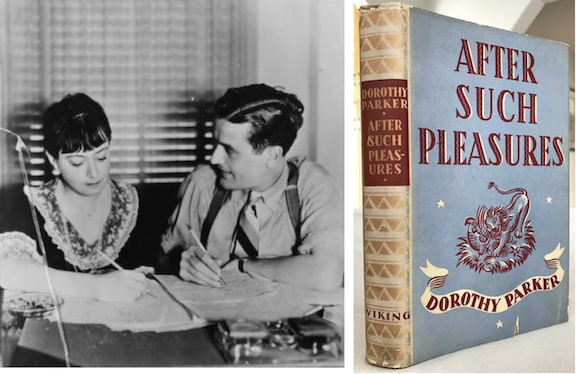
We now turn to the Jan. 20 issue, in which Robert Benchley concluded his stage reviews with a generous nod to his dear friend and colleague, Dorothy Parker, whose short stories were being performed as sketches at the Barbizon-Plaza Hotel, the first fully-equipped music and arts residential center in the U.S.
INCIDENTAL ATTRACTION…Stories from Dorothy Parker’s 1933 collection After Such Pleasures were performed as sketches at the Barbizon-Plaza Hotel; at left, Parker with her husband, actor/author Alan Campbell. (Pinterest/Biblio)
* * *
Une Séduction Américaine
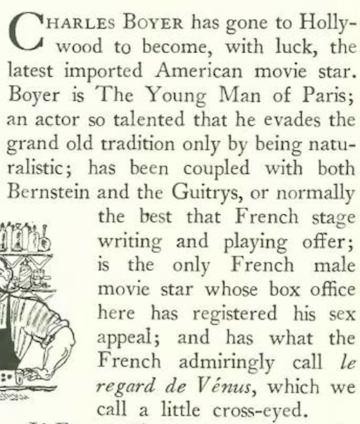
Janet Flanner began writing her weekly New Yorker column “Letter from Paris” in September 1925, keeping readers informed on a variety of subjects ranging from arts and culture to politics and crime. In the Jan. 20 issue she introduced readers to French actor Charles Boyer (1899–1978), who was preparing to try his luck in Hollywood. Actually, Boyer made his first trip to Tinseltown in 1930, but his return would mark the beginning of a successful run in American cinema, including the 1944 mystery-thriller Gaslight and the 1967 romantic-comedy Barefoot in the Park.
MAKING BEAUTIFUL MUSIC…Charles Boyer as the ” gypsy” vagabond Latzi, with Jean Parker (center) and Loretta Young in 1934’s Caravan. (MoMA)
* * *
The Way Of All Flesh
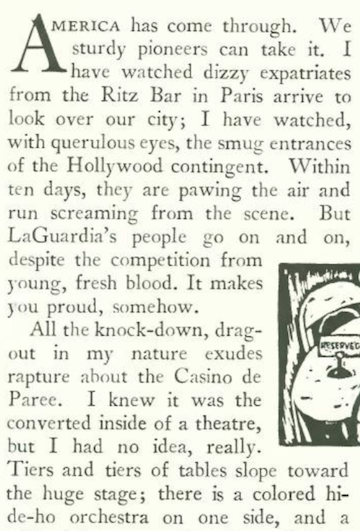
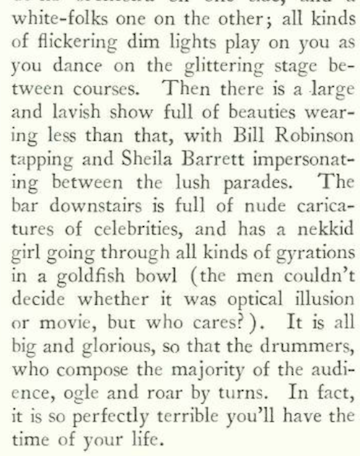
Lois Long continued to chronicle New York nightlife in her “Tables for Two” column, exuding “rapture” over the new theatre/restaurant Casino de Paree, which featured ample nudity as well as top performers dancer Bill “Bojangles” Robinson and comedienne Sheila Barrett.
The Casino de Paree featured revues, dancing, and side shows such as fire-eaters and animal acts. It closed in 1937, and the building later became home to the trendy 80s–90’s hot spot Studio 54.
CLOTHES OPTIONAL…A 1934 brochure offered glimpses of the entertainment to be had at the new theatre/restaurant Casino de Paree.
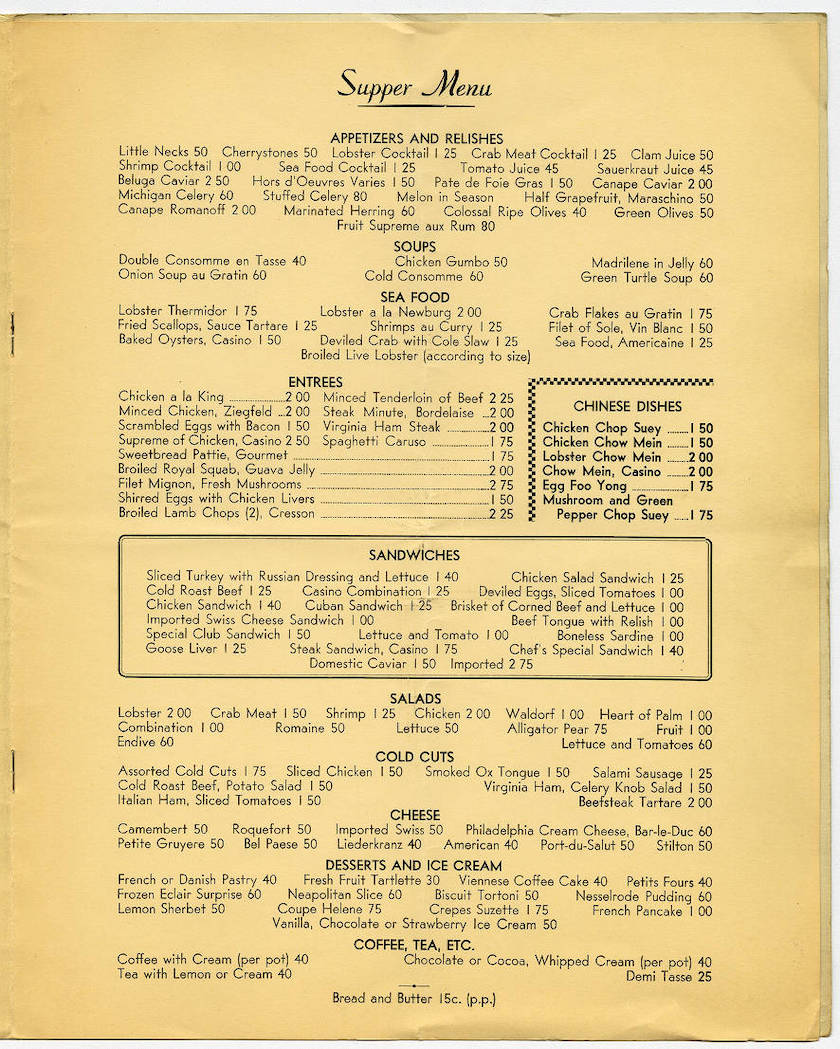
The Casino de Paree’s menu gave patrons some idea of what could be expected on the stage…
(The Culinary Institute of America Menu Collection)
…but if food and drink was the only thing on your mind, you could enjoy lobster thermidor for a buck seventy-five…
(The Culinary Institute of America Menu Collection; Craig Claiborne Menu Collection)
* * *
From Our Advertisers
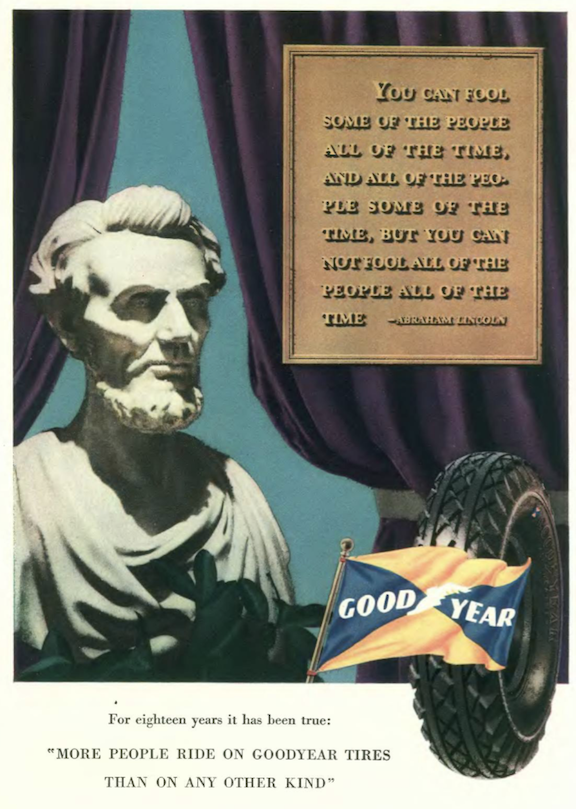
How reliable were Goodyear’s tires? Hopefully more reliable than this adage, which Abraham Lincoln apparently never uttered…
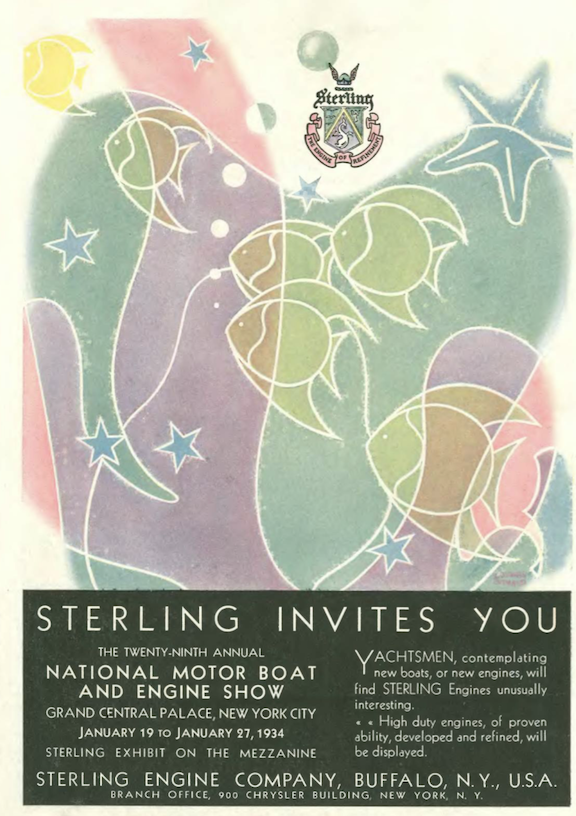
…major exhibitions at the Grand Central Palace changed like the seasons, the National Automobile Show ceding to the National Motor Boat & Engine Show…
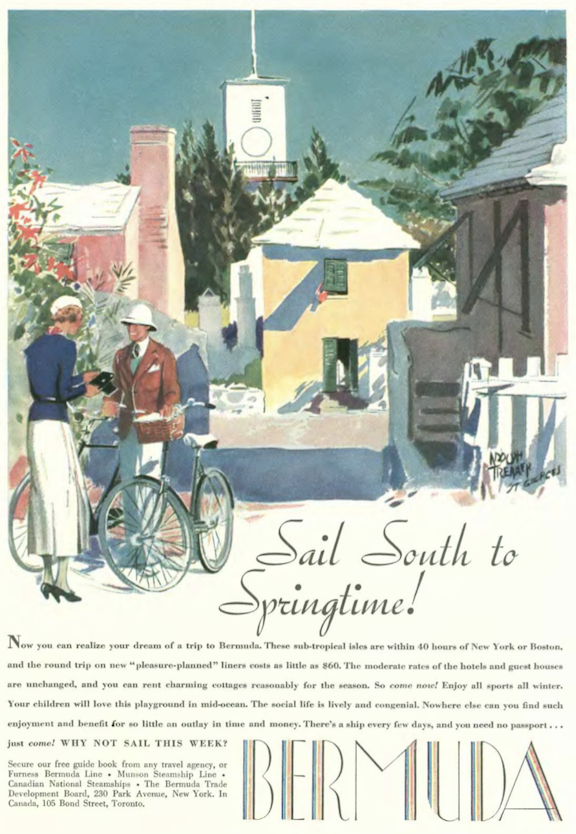
…if you’d rather have someone else do the sailing, the Bermuda line could take you on a round-trip cruise for as little as $60…
…with the end of Prohibition, the folks at White Rock were doubtless pleased to overtly advertise their product as a cocktail mixer…
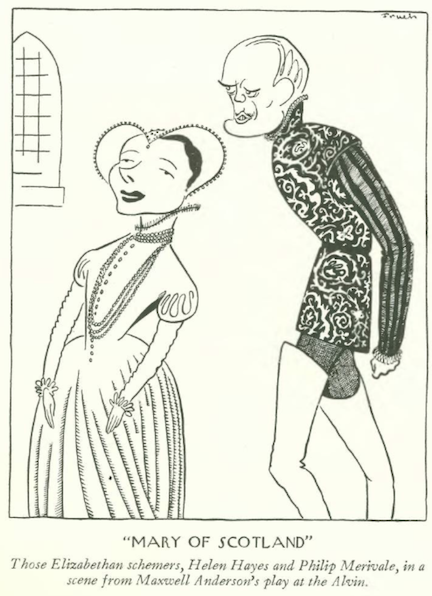
…on to our cartoonists, Al Frueh contributed this rendering for the theatre review section…
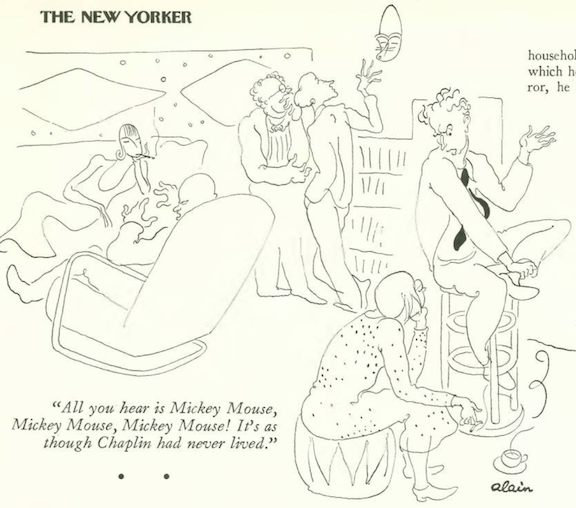
…Daniel ‘Alain’ Brustlein found this salon conversation a bit Mickey Mouse…
…Helen Hokinson explored the results of family planning…
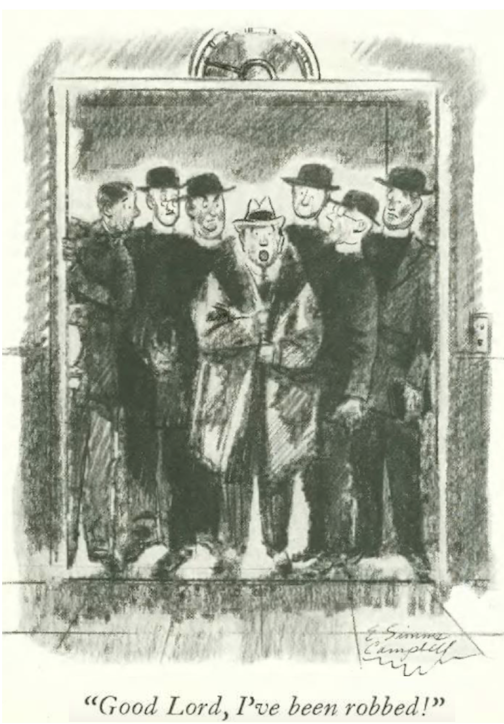
…E. Simms Campbell gave us an unlikely den of thieves…
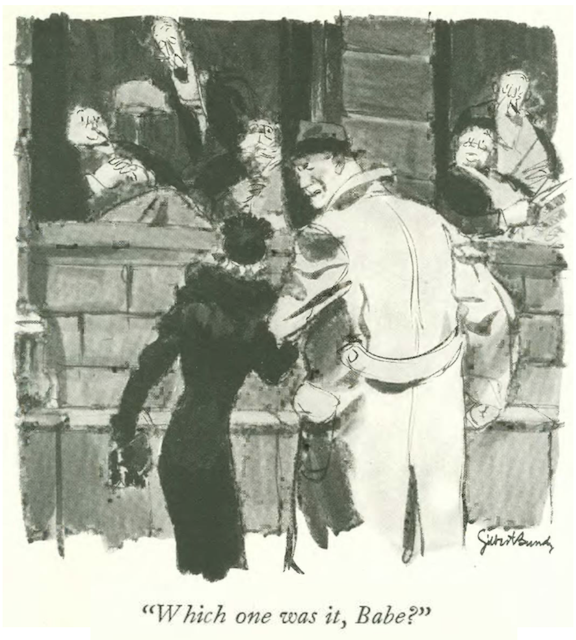
…Gilbert Bundy had us wondering what ensued at this gentlemen’s club…
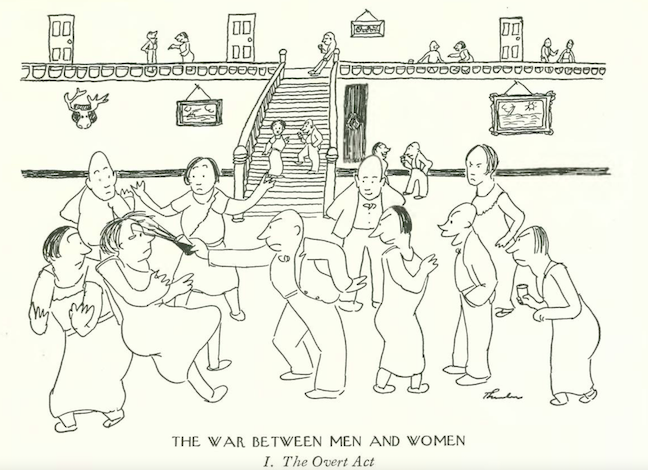
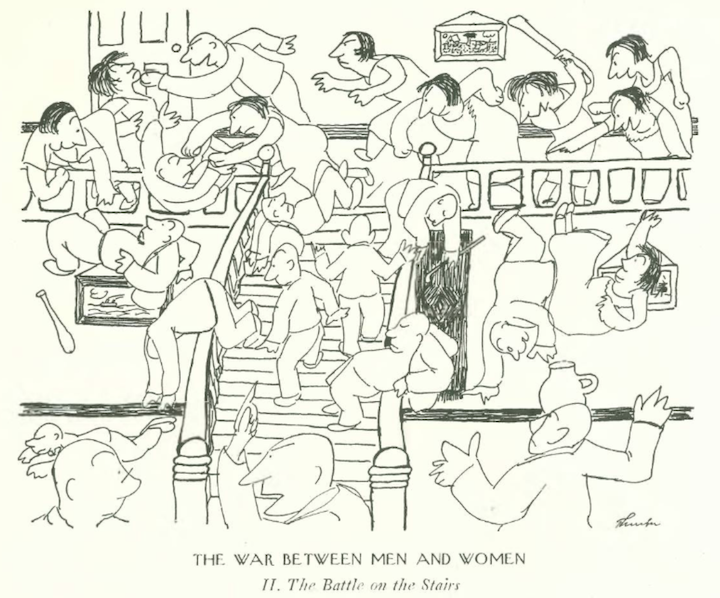
…and James Thurber fired the first shot in The War Between Men And Women…
…on to Jan. 27, 1934…
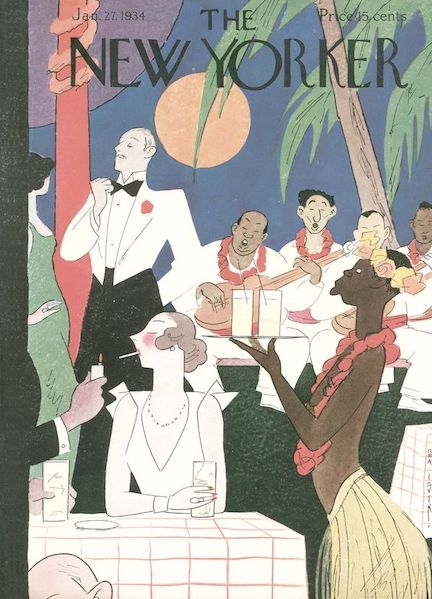
Jan. 27, 1934 cover by Rea Irvin.
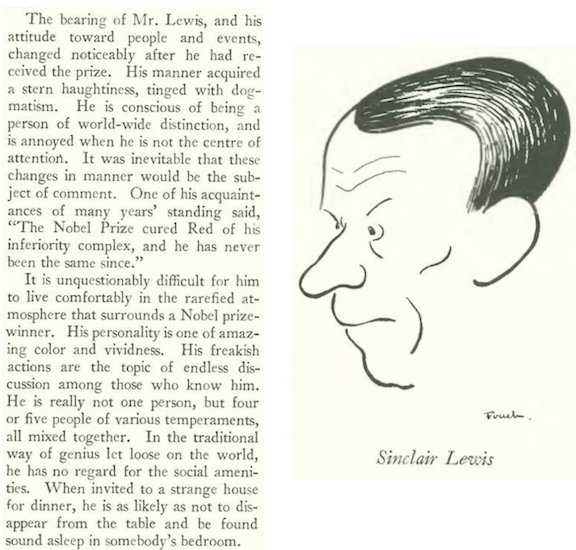
…where writer W.E. Woodward profiled Sinclair Lewis (1885-1951), whose manner had changed noticeably after receiving the Nobel Prize. An excerpt (with caricature by Al Frueh):
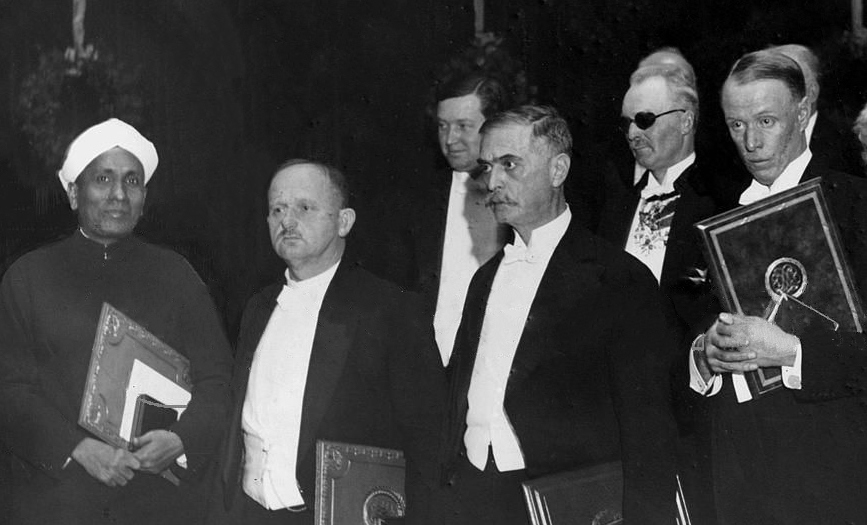
I’M SOMEBODY NOW…Sinclair Lewis (far right) with his 1930 Nobel Prize for literature. Other 1930 prize winners were, from left, Venkata Raman (physics), Hans Fischer (chemistry), and Karl Landsteiner (medicine).
* * *
More From Our Advertisers
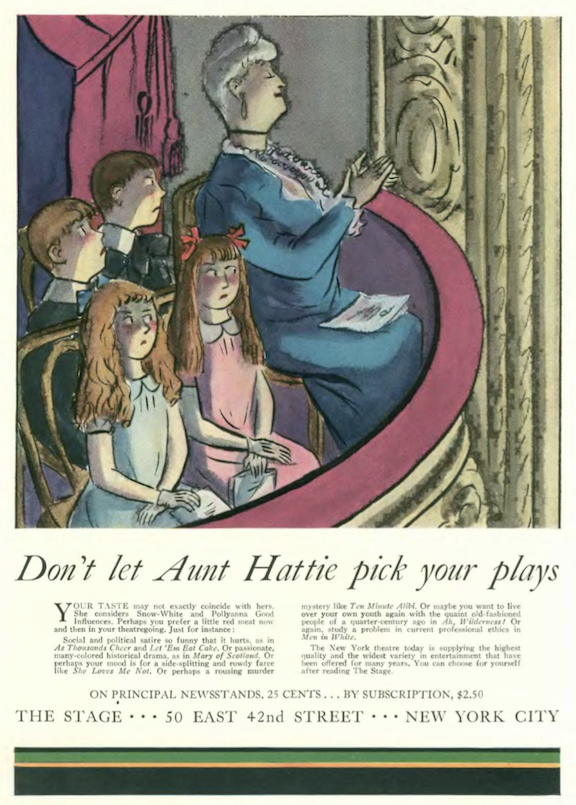
We begin with this lovely color illustration by Helen Hokinson, which also graced the cover of the January 1934 issue of The Stage…
…the vintners at Moët & Chandon let New Yorkers know that their fine Champagne could be had from sole distributors Labourdette and Company…
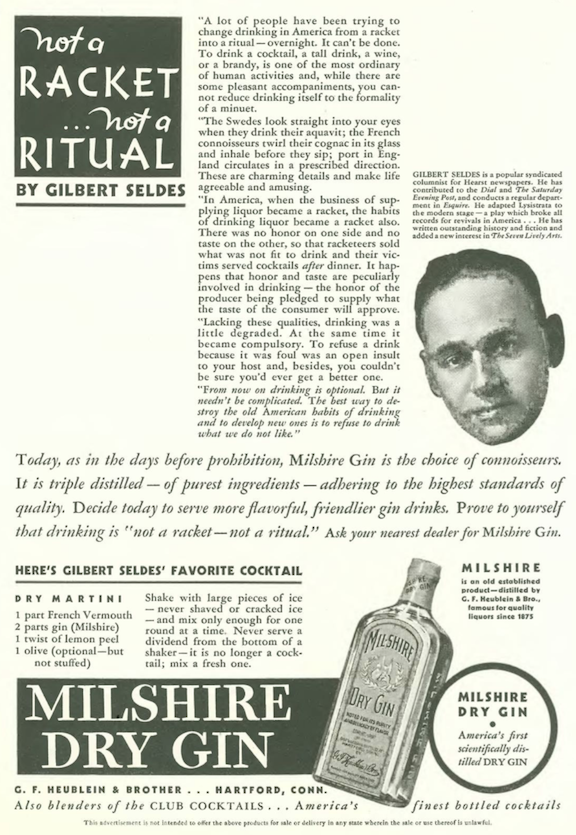
…cultural critic Gilbert Seldes advised drinkers to abandon their degraded ways and return to the civilized consumption of an old favorite…
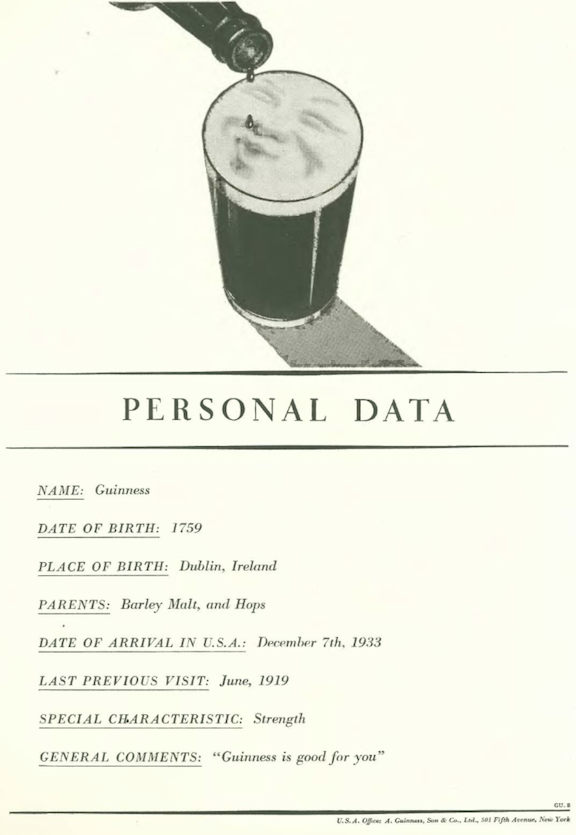
…while the folks at Guinness reminded us of their product’s deep history as well as its health benefits…
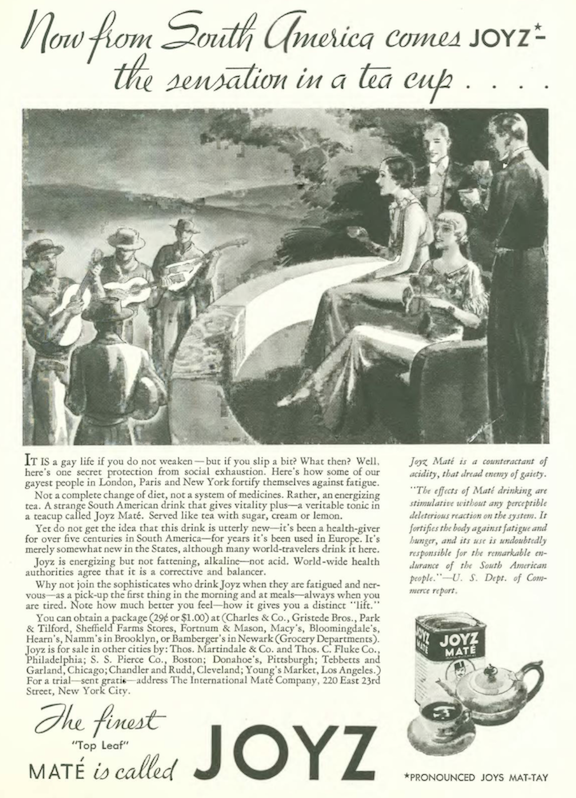
…and for the teetotalers the purveyors of Joyz Maté encouraged Yankees to take up this “strange” South American drink…the ad claimed it “fortifies the body against fatigue” (thanks to the generous amount of caffeine) and acts as a “corrective and a balancer” (it helped stimulate bowel movements)…
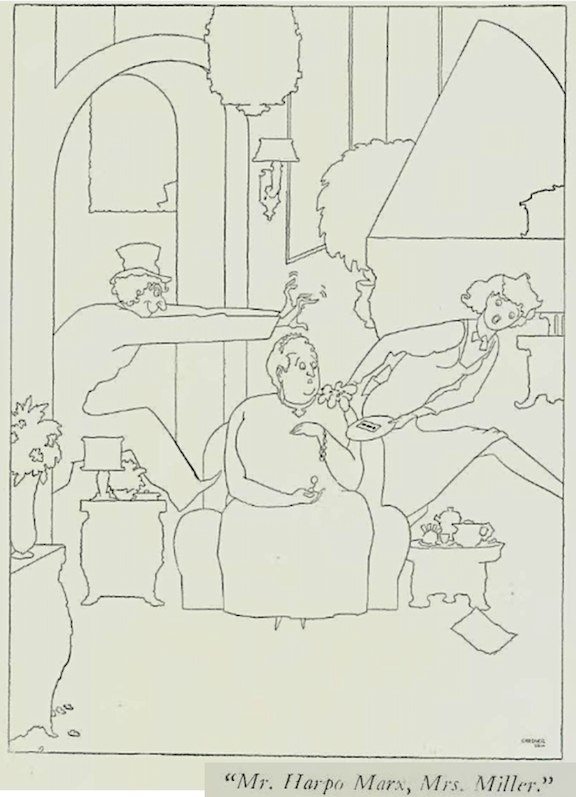
…on to our cartoons, we begin with Gardner Rea, borrowing from a running gag in the Marx Brothers’ 1930 film Animal Crackers, which featured Harpo chasing a sexy blonde around a mansion (apologies for the poor reproduction quality—the archival image was quite faint)…
…Gilbert Bundy gave us a couple confronting the subtleties of Times Square…
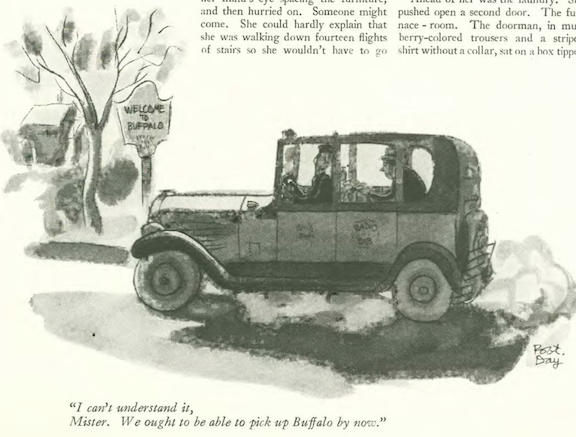
…Robert Day commented on the latest trend in taxicab conveniences: coin-operated radios for passengers…
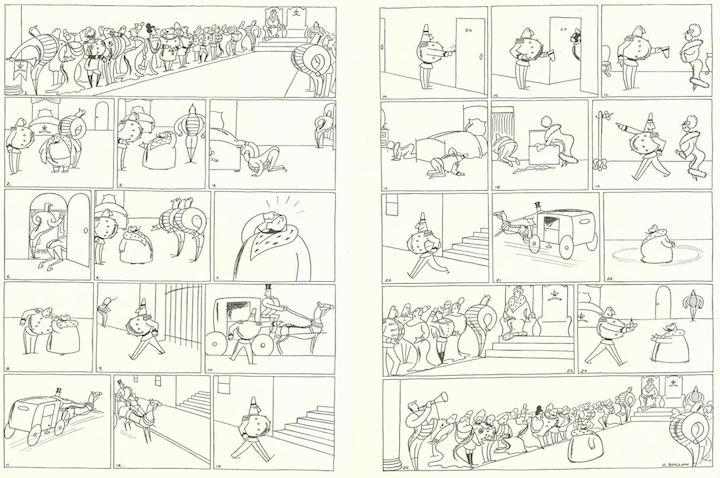
…this two-page Little King cartoon by Otto Soglow revealed another side to our diminutive potentate…
…and the war between the sexes raged on, with James Thurber…
Perhaps it was the end of Prohibition, or the implementation of the New Deal, but throughout the pages of the final New Yorker of 1933 you could sense a lightening of spirit.
Dec. 30, 1933 cover by Rea Irvin.
By most accounts 1933 was one of the Depression’s worst years, and that is likely why E.B. White chose to remember “only a few scattered moments,” mixing the silly with the salient.
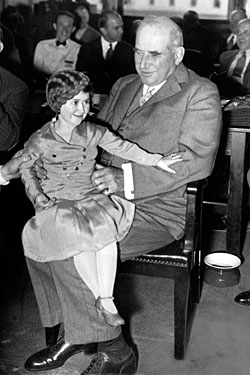
Of the silly, there was the time when the Barnum & Bailey circus dwarf Lya Graf sat on J.P. Morgan’s lap while he was waiting to testify before the Senate Banking Committee…
HE DIDN’T BANK ON THIS…J.P. Morgan was paid a visit by Barnum & Bailey circus dwarf Lya Graf, prior to his testimony before the Senate Banking Committee on June 1, 1933. (New York Magazine)
White also noted the passing of Texas Guinan. Known as “Queen of the Nightclubs,” she was a fixture on the Manhattan speakeasy scene throughout the Roaring Twenties and a reliable source of nightlife headlines. White also recalled George Bernard Shaw’s controversial speech at the crowded Metropolitan Opera House, during which he referred to American financiers as “lunatics” and called the U.S. Constitution a “charter of anarchism.”
YEAR IN A NUTSHELL…Clockwise, from top left: The year 1933 saw the passing of the “Queen of the Nightclubs” Texas Guinan—more than 10,000 showed up for her funeral in November; also that month Thomas G.W. Settle and C.L Fordney ascended to the stratosphere in the Century of Progress balloon; The New York Times (April 12, 1933) published the full text of George Bernard Shaw’s Met speech; Esquire published its first issue in the fall, featuring Ernest Hemingway and John Dos Passos as well as New Yorker cartoonists Constantin Alajalov, William Steig and E. Simms Campbell; according to Vogue, 1933’s breasts were “high and pointed.” (bounddv.medium.com/history.navy.mil/The New York Times/Pinterest)
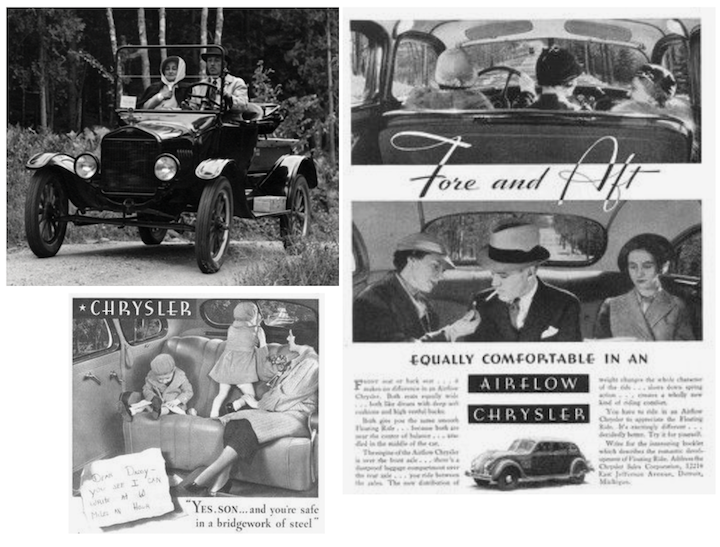
White also had more to say about the streamlining trend in automobiles, led by Chrysler’s new “Airflow.” White preferred the older, boxier models, with plenty of head and hat room.
In 1922 White set off across America in the car of his dreams, a Model T, which had plenty of headroom and, as he later wrote, transformed his view of the land, a vision “shaped, more than by any other instrument, by a Model T Ford…a slow-motion roadster of miraculous design—strong, tremulous, and tireless”…
MERRILY WE ROLL ALONG…Clockwise, from top left: E.B. White and wife Katharine Sergeant take a spin in a Model T in the mid 1930s; despite White’s remonstrations regarding headroom, the makers of the Chrysler Airflow advertised their streamlined car’s interior as practically cavernous. (Goodreads/Pinterest)
* * *
Crying in His Beer
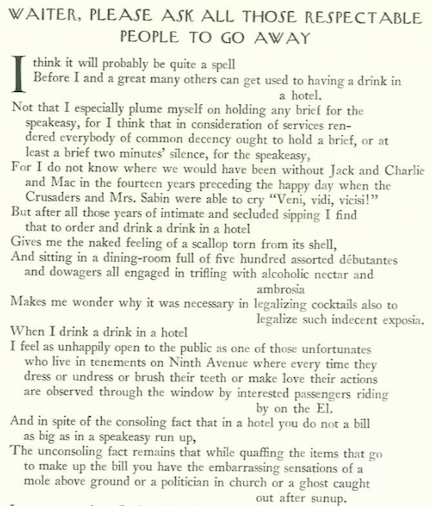
A couple of issues back we saw Lois Long bid a sad farewell to the cosy and secluded atmosphere of the speakeasy…Ogden Nash turned to verse to offer his own lament, feeling naked and exposed in dining rooms “full of 500 assorted debutantes and dowagers”…
FEELING EXPOSED…Ogden Nash (1902–1971) missed the sacrilegious rite of the speakeasy and lamented the “humdrumness” of legal drinking. (vpoeticous.com)
* * *
Wondering About Alice
Combine horrific character designs with a young adult playing a child and you have the recipe for 1933’s star-studded Alice in Wonderland, a film the Nerdist’sKyle Anderson calls “a fascinating, unintentionally disturbing take on a classic.” Almost ninety years earlier the New Yorker’sJohn Mosher found it disturbing in other ways, save for W.C. Field’s portrayal of Humpty Dumpty.
Writing for The Roarbots, Jamie Green notes that Charlotte Henry was 19 when she played Alice: “This version of Alice doesn’t feel like a sweet look at the twists and turns of adolescence; it feels more like a commentary on repressed desire and self-identity.” The film was a flop at the box office.
CHANNELLING HER YOUTH…Clockwise, from top left: 19-year-old Charlotte Henry as Alice in 1933’s Alice in Wonderland; W.C. Fields as Humpty Dumpty; Roscoe Karns as Tweedledee and Jack Oakie as Tweedledum; Alice has a chat with Gryphon (William Austin) and Mock Turtle (Cary Grant). Except for Henry, most of the cast was unrecognizable in their macabre makeup and costumes. (IMDB)
* * *
From Our Advertisers
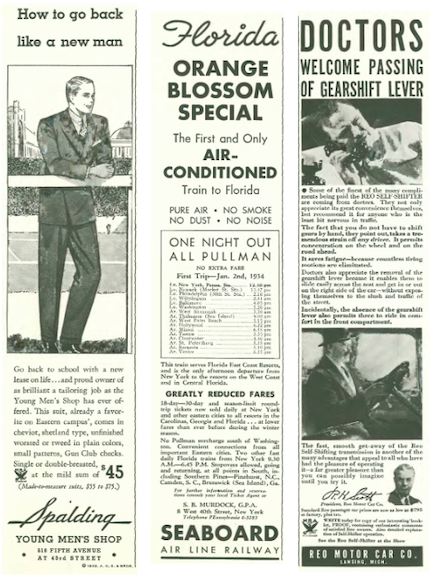
We start with a selection of three one-column ads, featuring, from left, the latest back-to-school look for the collegiate male (apparently attending Columbia); the dustless, noiseless, smokeless, AIR-CONDITIONED railway wonder called the Orange Blossom Special; the automobile arm of the REO Motor Car Company trying to pack everything it could into this narrow little ad (REO would stop producing cars in 1936 in order to focus solely on trucks)…
…the distillers of Holloway’s London Dry Gin warned newly liberated American drinkers about the consequences of imbibing cheap gin…
…the folks at R.J. Reynolds found another member of the gentry to push their Camels onto aspiring young women…
…on to our cartoons, the Dec. 30 issue featured a James Thurber double-header, beginning with this “Talk of the Town” spot illustration…
…a rare one-panel Little King from Otto Soglow…
…ringing in the New Year with Syd Hoff…
…and George Price…
…and we close with Gilbert Bundy, seeking from fresh air…
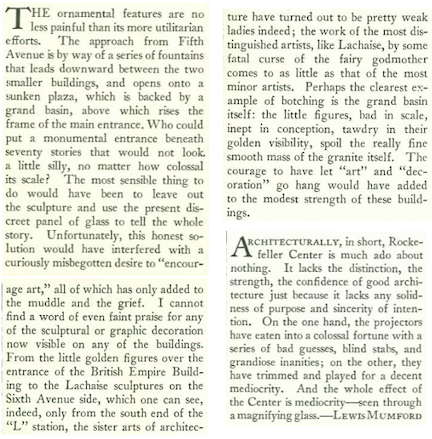
When Rockefeller Center’s design was unveiled in 1931, New Yorker architecture critic Lewis Mumford wrote that it followed ”the canons of Cloudcuckooland.”
Dec. 23, 1933 cover by Helen Hokinson.
Today we know 30 Rock as one of the most iconic and beloved places in Manhattan, but after Mumford saw the plans for this future “Radio City” he went into exile in upstate New York, upset over the “weakly conceived, reckless, romantic chaos” of the project. Mumford wasn’t alone in his opinion; indeed it was his commentary that helped fuel negative reactions from citizens and newspapers alike.
No doubt the scale of the project bothered a lot of people, as it was slated to replace four- and five-story brownstones and other smaller buildings with a series of massive structures (for Mumford, it was rare that any skyscraper found his favor—to him they were oversized symbols of corporate tyranny).
IMMODEST PROPOSAL…In the fall of 1928 John D. Rockefeller leased this property from Columbia University for the future site of Rockefeller Center. The project covered nearly all of the area in the three square blocks bordered by Fifth Avenue, Sixth Avenue, and 48th and 51st Streets. (ephemeralnewyork.wordpress.com)
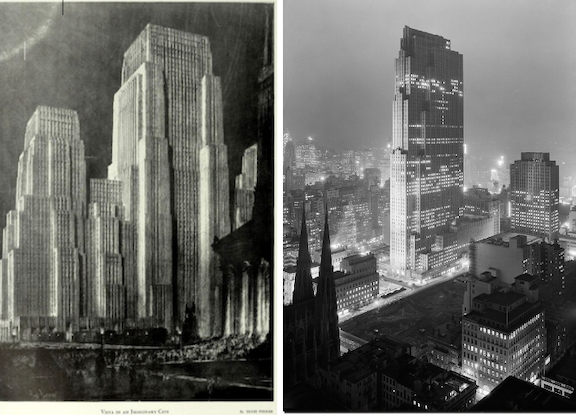
As the Rockefeller Center towers rose, some softened their criticisms, including E.B. White—in the Dec. 9 issue he said he would eat his words after viewing the floodlit 30 Rock by night: “the whole thing swims up tremendously into the blue roxyspheres of the sky.”
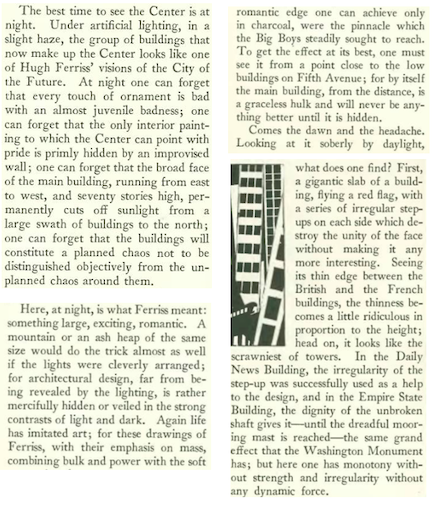
Two weeks later, in his Dec. 23 “Sky Line” column, Mumford agreed that the floodlit buildings looked impressive, recalling Hugh Ferriss’ romantic, futuristic visions of the city; however, the darkness also concealed a decorative scheme that was ”bad with an almost juvenile badness.”
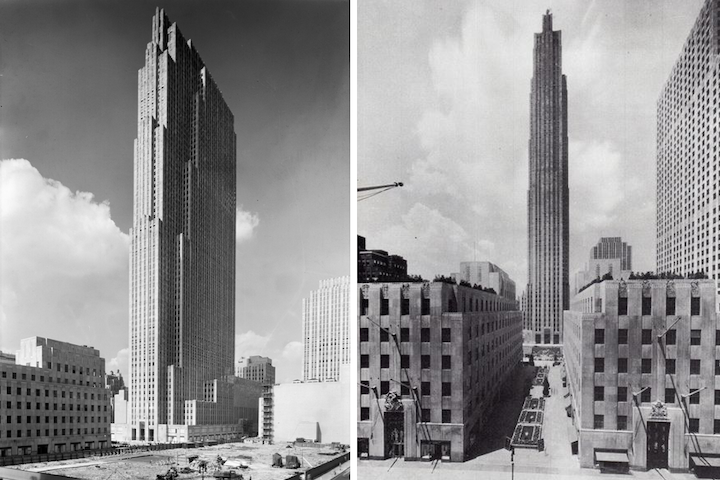
A MATTER OF PERSPECTIVE…Lewis Mumford thought the RCA tower looked “scrawny” when viewed in broad daylight between the British and French empire buildings. (smarthistory.com/Pinterest)NIGHT VISION…In his 1929 book, The Metropolis of Tomorrow, Hugh Ferriss published the image at left of an imaginary city of the future (left). Ferriss was an architect, illustrator, and poet who explored the psychological condition of urban life, and was known for his conte crayon drawings of skyscrapers—nighttime scenes from a futuristic Babylon that are influential in popular culture (e.g. Tim Burton’s vision for Gotham in 1989’s Batman). (archive.org/Wikipedia)
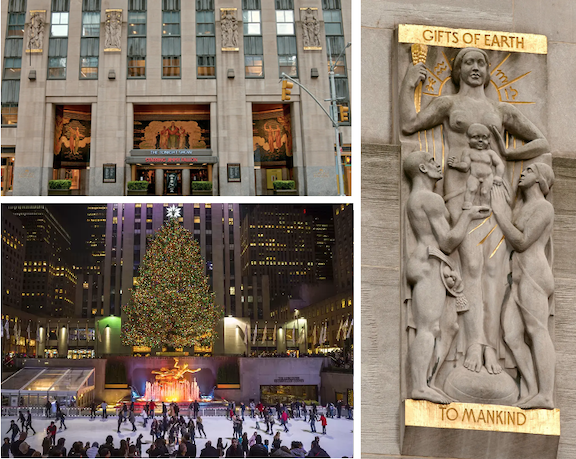
Having finished his excoriation of the buildings’ scale and placement, Mumford proceeded to carve up the ornamental features, including the sunken plaza (today an iconic site for ice skating), which he thought looked “a little silly” in relation to the mass of the RCA building.
TRAINED EYE…Lewis Mumford believed the work of the great Gaston Lachaise was diminished in the Rockefeller Center concept, noting that the Lachaise sculptures on Sixth Avenue (top and right photos) were only visible from the “L” station (Mumford doesn’t mention that the elevated placement of the sculptures was deliberate—they were put there so train riders on the “L” could see them); below, Mumford found the sunken plaza to be out of scale with the RCA tower—for decades it has been one of Manhattan’s most iconic sites. (Wikipedia/Vincent Tullo for The New York Times)
Revisiting Rockefeller Center in his May 4, 1940 “Sky Line” column, Mumford wouldn’t exactly eat his words, but he did admit that the collection of structures formed “a composition in which unity and coherence have to a considerable degree diminished the fault of overemphasis. In other words, they get by.” Mumford still believed 30 Rock was too tall—he would have preferred 32 stories, less than half its actual size: “Good architecture is designed for the human beings who use or view the buildings, not for publicity men or photographers.”
I have to disagree. Every time I look up at 30 Rock I feel my heart soar.
* * *
Yule Like This
The Dec. 23 issue marked the return of Frank Sullivan’s annual holiday poem, “Greetings, Friends!” Sullivan published his first holiday poem in 1932 and faithfully continued the tradition until 1974; after his death in 1976, New Yorker editor William Shawn asked the late Roger Angell to take on the poem. In 2012 Angell passed the duty along to Ian Frazier, the magazine’s current Yuletide bard (Frazier’s latest poem can be found in the Dec. 26, 2022 issue).
* * *
Success, In Spite of it All
“The Talk of the Town” looked in on singer Ethel Waters, who apparently wasn’t brooding over the difficulties of her past life, given that she was seeing so much success as a recording artist and as a Broadway star in As Thousands Cheer. Although her material life was better, she still faced racism wherever she went, including on stage—although she received equal billing, she was segregated from her co-stars in As Thousands Cheer.
BORN INTO THE BLUES…Raised in crushing poverty, Ethel Waters became a major singing star in the 1930s. She was one of the first singers to confront racism in a popular 1933 song, “Suppertime.” (Facebook)
* * *
Enigma
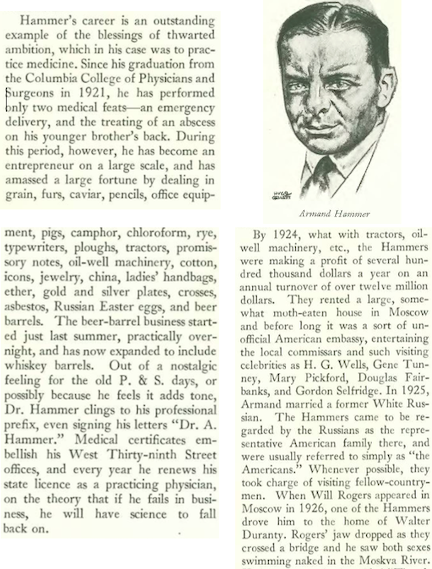
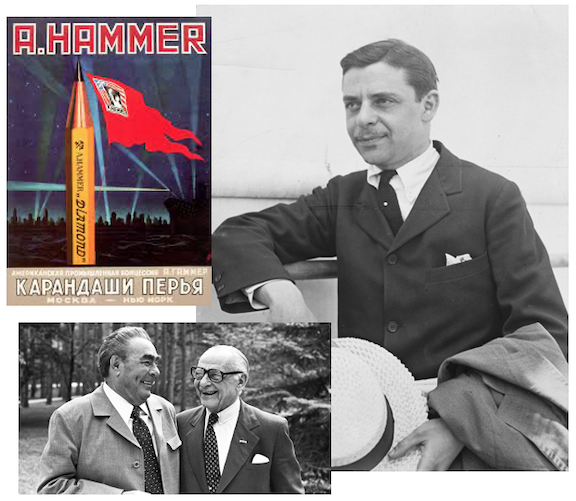
Geoffrey T. Hellman examined the life of American entrepreneur Armand Hammer in a profile titled “Innocents Abroad.” Hammer’s business interests around the world helped him cultivate a wide network of friends and associates. Called “Lenin’s chosen capitalist” by the press, Hammer (1898-1990) started a pencil factory in the Soviet Union in 1926 and later became head of Occidental Petroleum. Throughout his career he maintained close ties with Soviet leaders—which raised many suspicions in the West—but Hammer also served as a citizen diplomat for the U.S., an important go-between during the Cold War. An excerpt:
PROLETARIAN PENCILS…Clockwise, from top left: A 1928 Soviet advertising poster for “A. Hammer” pencils. The factory began work in Moscow in April 1926 as a private American industrial concession; Armand Hammer in the 1920s; Hammer (at right) shares a laugh with Soviet leader Leonid Brezhnev in the 1970s. Hammer is also the great-grandfather of American actor Armie Hammer. (crwflags.com/The New York Times)
* * *
From Our Advertisers
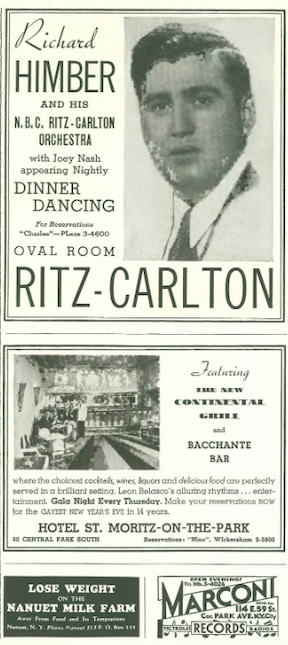
With Prohibition over, New Yorkers were looking forward to celebrating the holidays with Richard Himber and his orchestra at the Ritz-Carlton or enjoying a cocktail at the new Continental Grill and Bacchante Bar at the Hotel St. Moritz…
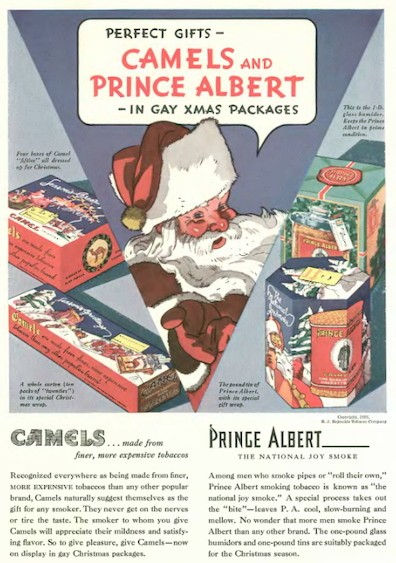
…and no less of an authority than Santa was advising shoppers to give tobacco products to their loved ones this holiday season…
…or perhaps you could be persuaded by elegant holiday wishes from the owners of Lucky Strike, who included their cigarettes among “the best of good things”…
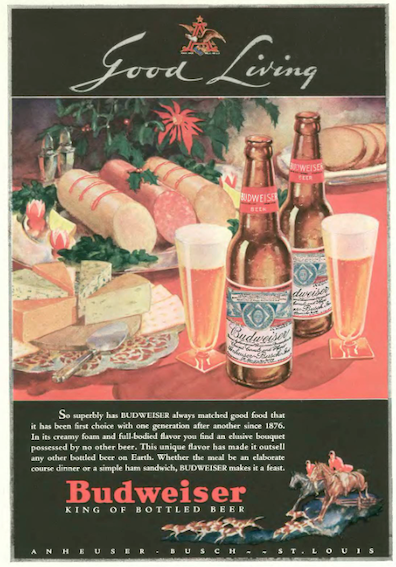
…good living, apparently, could also be found in a bottle of Bud…
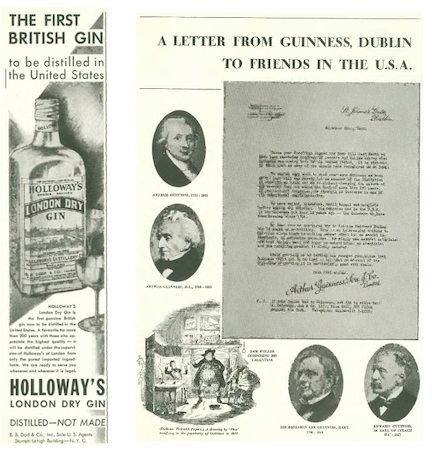
…or in American-distilled “London Dry Gin”…or in a pint of Guinness…
…our cartoons begin with Gardner Rea, and a course in mixology…
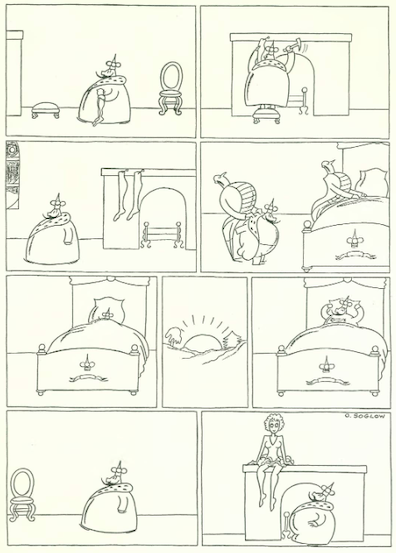
…Otto Soglow’s Little King found a surprise in his Christmas stockings…
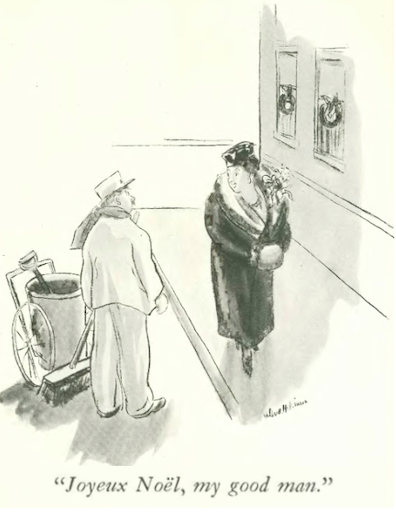
…Helen Hokinson offered some passing holiday cheer…
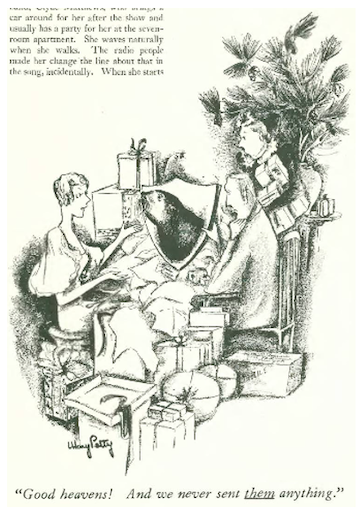
…Mary Petty gave us this unusual Christmas seal…
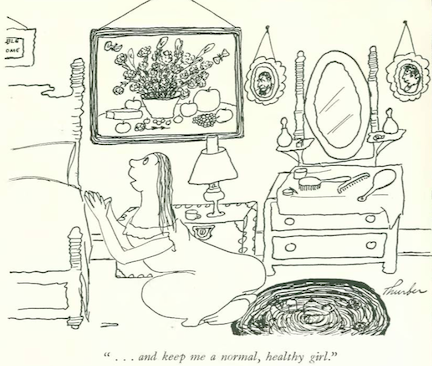
…and from James Thurber, this earnest prayer…
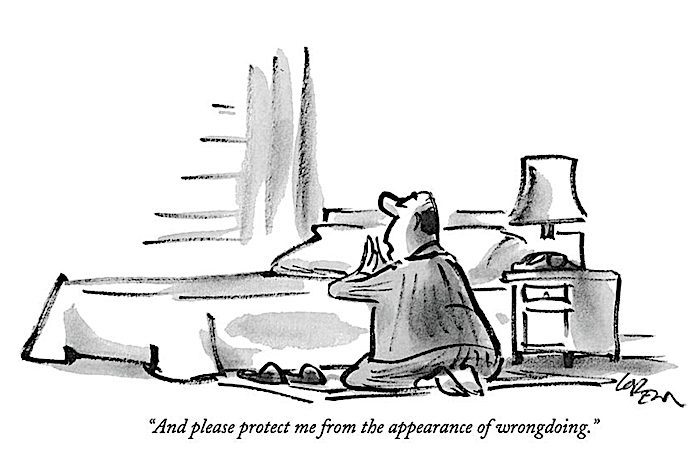
…and we close with another prayer-themed cartoon from Jan. 4, 1982—Lee Lorenz, who died Dec. 8 at age 90, joined the New Yorker staff in 1958, the same year his first cartoon appeared in the magazine’s pages. He also served as art editor (1973–1993) and cartoon editor (1993–1997) for the New Yorker. Michael Maslin penned an appreciation on his Ink Spill site.
…Happy Holidays one and all, as we end with this GIF from Disney’s 1933 short, The Night Before Christmas…
…and this scene from December 1933, when Rockefeller Center decided to make the Christmas Tree an annual tradition and held the very first tree lighting ceremony…
At left, image from December 1933—the very first tree lighting ceremony at 30 Rock, when the Christmas Tree became an annual tradition; at right, the tree on the Plaza in 1934, before ice skaters occupied the space. (rockefellercenter.com/Museum of the City of New York)
It’s hard to believe in this day and age that a theoretical physicist could enjoy rock star status, but then Albert Einstein wasn’t your everyday theoretical physicist.
Dec. 2, 1933 cover by Helen Hokinson.
A two-part profile of Einstein (1879–1955) by Alva Johnston (with terrific caricature by Al Frueh) examined the life and “idol” status of a man who would define the idea of genius in the 20th century. Although Einstein desired to live an almost reclusive existence at Princeton University, Johnston noted that he had become “fairly reconciled to the occupation of popular idol.”
Einstein was at Princeton thanks to the rise of Adolf Hitler, who came to power in Germany in early 1933 while Einstein was visiting the United States. Returning to Europe that March, Einstein knew he could not return to his home country (indeed, the Gestapo had raided his Berlin apartment and eventually seized all of his property), so when Einstein landed in Antwerp, Belgium on March 28, 1933, he immediately went to the German consulate and surrendered his passport, formally renouncing his German citizenship.
I’M OUTTA HERE…Albert Einstein with a Zionist delegation from France, Belgium, and England upon leaving the SS Belgenland in Antwerp, Belgium, 1933. (United States Holocaust Memorial Museum)
After some time in Europe and Great Britain, in October 1933 Einstein accepted an offer made earlier by from the Institute for Advanced Study in Princeton, New Jersey to serve as a resident scholar. When he arrived with his wife, Elsa, he said he would seclude himself at the Institute and focus on his teaching and research.
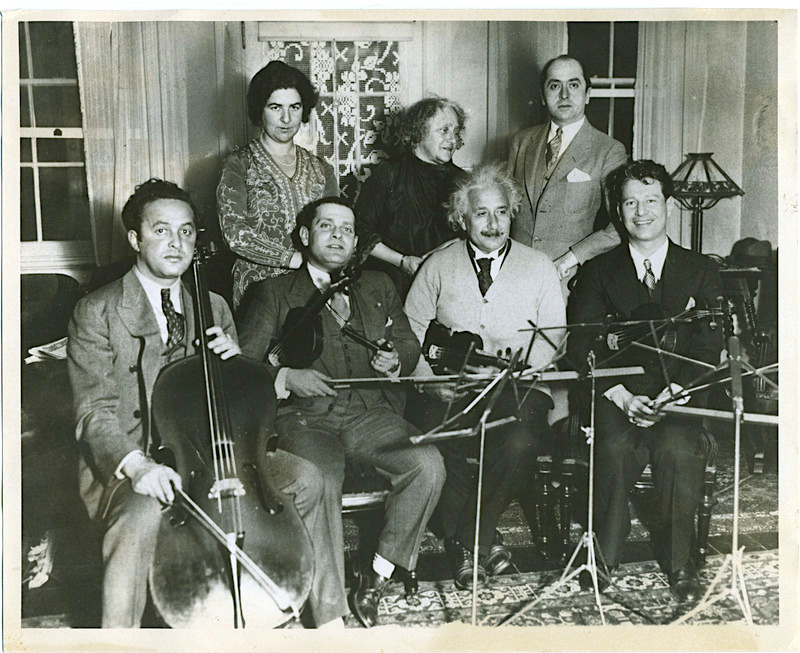
(NY Times, Oct. 18, 1933)EINSTEIN WASN’T FIDDLIN’ AROUND when he played his cherished violin—he once said that if he hadn’t been a scientist, he would have been a musician. This photo was taken at Einstein’s Princeton home in November 1933—he and fellow members of a string quartet were practicing for a December concert at the Waldorf-Astoria to raise money for German-Jewish refugees. From left to right, sitting: Arthur (Ossip) Giskin, Toscha Seidel, Albert Einstein, and Bernard Ocko; standing: Estelle Manheim (Seidel’s wife), Elsa Einstein and unidentified man. (Leo Baeck Institute)
* * *
Stop and Go
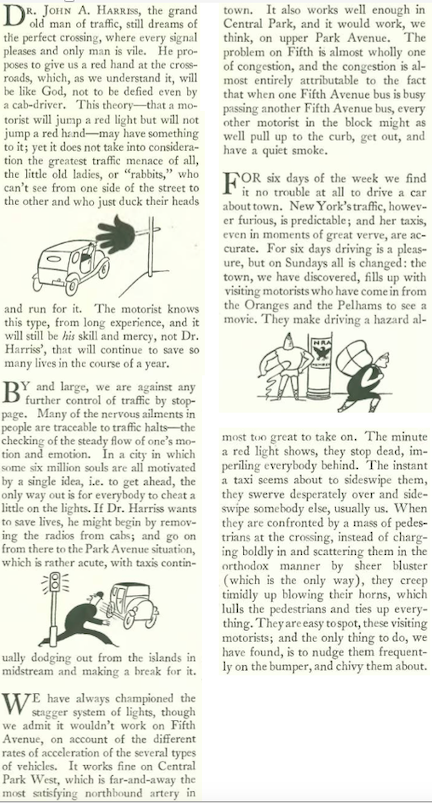
E.B. White devoted his “Notes and Comment” to Manhattan’s traffic situation, which he found manageable as long as tourists stayed out of the way…
White also noted the perils of Park Avenue, especially the taxi drivers (distracted by those newfangled radios) darting between the islands…
Park Avenue in the 1930s. (geographicguide.com)
…and then there was Fifth Avenue, notorious for traffic jams, made worse on weekends by the tourist traffic…
Fifth Avenue in 1932. (New York State Archives)
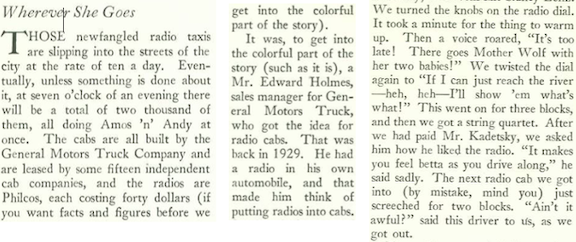
…later in “The Talk of the Town” White continued his thoughts on New York taxis, namely the introduction of coin-operated radios installed for use by passengers…
* * *
Fly Newark
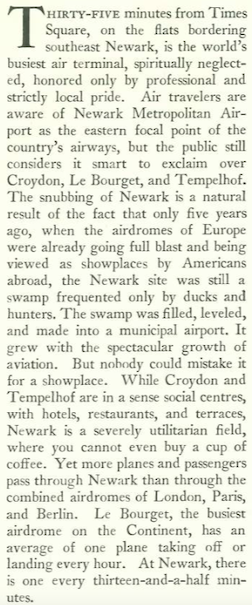
Albert L. Furth took us off the mean streets and into the air when he filed this account about the Newark Metropolitan Airport for “A Reporter at Large.” Furth seemed put off by the cachet of European airports and their many amenities, given that the Newark airport—although admittedly utilitarian—was the busiest in the world. An excerpt:
FREQUENT FLIER…Albert Furth noted that Newark Municipal Airport logged a landing or departure every thirteen-and-a-half minutes. Above, passengers boarding a Boston-bound American Airlines Condor at Newark Airport in 1930. In those simpler times, passengers just walked to the runway and climbed on board. The airport had opened two years earlier on 68 acres of reclaimed swampland along the Passaic River. It was the first major commercial airport in the New York metro area and the first anywhere with a paved runway. (njmonthly.com)
* * *
Goodnight, Speakeasy
Lois Long was an 17-year-old Vassar student when Prohibition went into effect in 1919, so when she started her career in New York in 1922 the only nightlife she knew revolved around speakeasies. Although she held Prohibition officers in disdain, she also believed that the repeal of the 18th Amendment would lower the quality of New York nightlife—the food, the “adroit service,” and the “genial din” of the speakeasy. Excerpts:
FROM LOUCHE TO LEGAL…Lois Long was saying a sad goodbye to her beloved speakeasies; perhaps the Algonquin Hotel (here, circa 1930) would offer some cheer. (Pinterest)
* * *
From Our Advertisers
Abercrombie & Fitch (then an outfitter for the elite outdoorsman) was offering holiday shoppers everything from multi-tool knives to cocktail shakers…
…while the folks at Clerevu telescopes found a growing market for folks who used their product for anything but stargazing…
…with Repeal just days away, the Pleasant Valley Wine Company of New York hoped folks would pop a few of their corks before the good stuff arrived from France…
…the British were coming to the rescue via the Berry Brothers, who were overseeing the importation of liquor from their offices at Rockefeller Center’s British Empire Building…
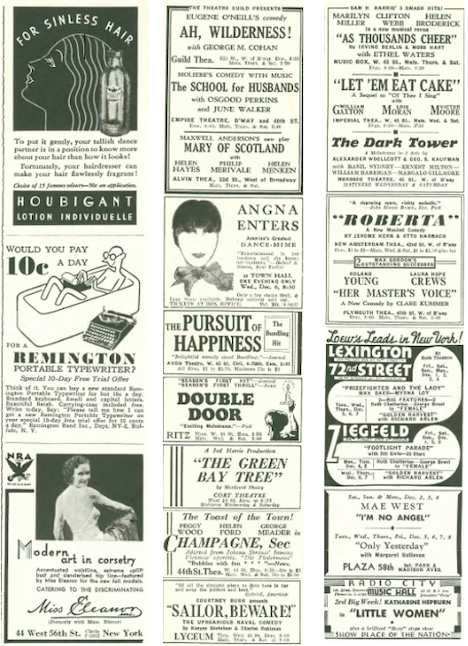
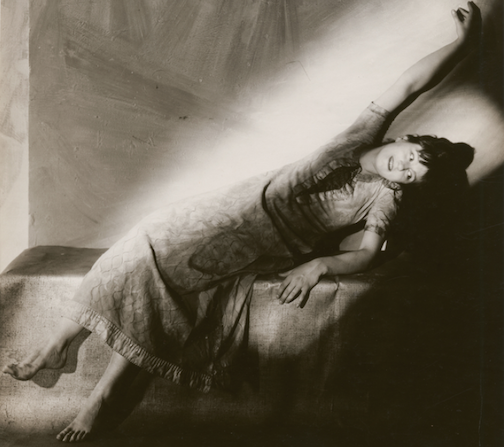
…let’s look at an assortment of one-column ads…the center strip features an ad promoting Angna Enters’ appearance for “one evening only” at The Town Hall (123 West 43rd Street)…Enters (1897–1989) was an American dancer, mime, painter and writer who likely performed her piece Moyen Age…
FEEL THAT STRETCH…Angna Enters performing Moyen Age, circa early 1930s. (NYPL)
…we begin our cartoons with Gardner Rea, and a dedicated bell ringer…
…Otto Soglow showed us a softer side of The Little King…
…Peter Arno revealed the human side of the posh set…
…and we close the Dec. 2 issue with this classic from James Thurber…
…on to Dec. 9, 1933, and a cover by an artist we haven’t seen in awhile, Ilonka Karasz…
Dec. 9, 1933 cover by Ilonka Karasz.
…and we open with this comment by E.B. White, who along with critic Lewis Mumford had once voiced displeasure over the massive Rockefeller Center project. However, while viewing the floodlit tower by night, he decided that he would have to eat his words, observing how “the whole thing swims up tremendously into the blue roxyspheres of the sky”…
MEA CULPA…E.B. White gained a new perspective on Rockefeller Center, pictured here in December 1933. (Wikipedia)
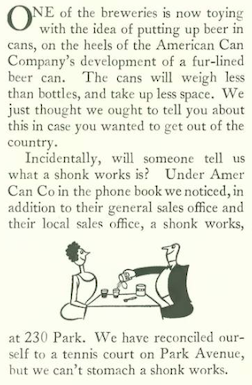
…we continue with White, who also offered his thoughts on something heretofore unthinkable—a proposal to start putting beer in cans…
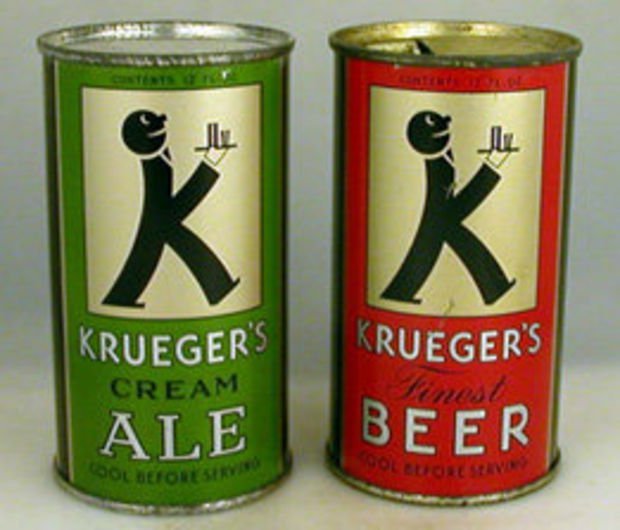
…it would happen about a year later…on Jan. 24, 1935, the Gottfried Krueger Brewing Company, in partnership with the American Can Company, delivered 2,000 cans of Krueger’s Finest Beer and Krueger’s Cream Ale to drinkers in Richmond, Virginia…
(seletyn.com)
…and despite White’s doubts, apparently ninety-one percent of the first drinkers of the product approved of the canned beer, although when Krueger’s launched their ad blitz they had to include instructions (and a new tool) to open the darn things…
(seletyn.com)
* * *
Dreamscapes
Critic Lewis Mumford offered his thoughts on a recent exhibit by a young surrealist named Salvador Dali…
MIDDLEBROW SURREALIST…The Triangular Hour by Salvador Dali, 1933. (wikiart.org)
…and we move along to moving pictures, where John Mosher was showing some appreciation for Joan Crawford (1906–1977) in the pre-Code film Dancing Lady…
SHE HAD IT ALL…Audiences and critics alike were wowed by Joan Crawford’s performance in Dancing Lady, which featured a star-studded and eclectic cast. Clockwise from top left, Clark Gable plays a Broadway director who becomes Crawford’s love interest; Crawford displays her dancing talent in a Broadway rehearsal; Dancing Lady featured an early film appearance by The Three Stooges, pictured here with Gable and the Stooges’ leader at the time, Ted Healy; Crawford with Stooge Larry Fine—in the original film, Fine completes his jigsaw puzzle only to discover (to his disgust) that it’s a picture of Adolf Hitler. The Hitler scene was removed by the Production Code; its enforcers claimed it insulted a foreign head of state. (IMDB)
In addition to Crawford, the star-studded cast included Clark Gable, Fred Astaire (in his film debut), Franchot Tone (who was married to Crawford from 1935-39 and made seven movies with her), The Three Stooges, Nelson Eddy, and Robert Benchley, who played a reporter in the film.
Dancing Lady was the film debut of Astaire, making Crawford the first on-screen dance partner of the famed hoofer…
(IMDB)
* * *
More From Our Advertisers
We begin with this full-page advertisement from Heinz, which went to great lengths and expense to make their ad appear to part of The New Yorker’s editorial content, even featuring a Perry Barlow cartoon of a boy making a mess with their product…
…another New Yorker contributor who occasionally went over to the advertising side was Alexander Woollcott, here shilling for Chrysler…
…Kayser, purveyor of women’s hosiery and underthings, was going for some humorous holiday cheer, but the effect is a bit unsettling…
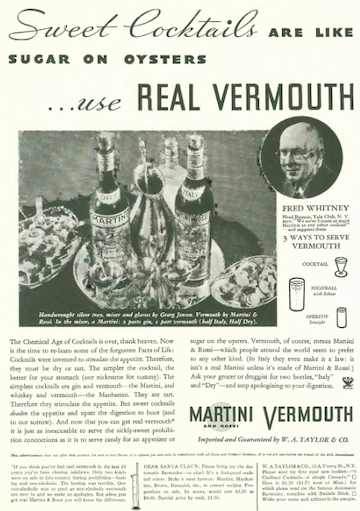
…liquor-related ads began to proliferate with the end of the Prohibition…this one from Martini & Rossi…
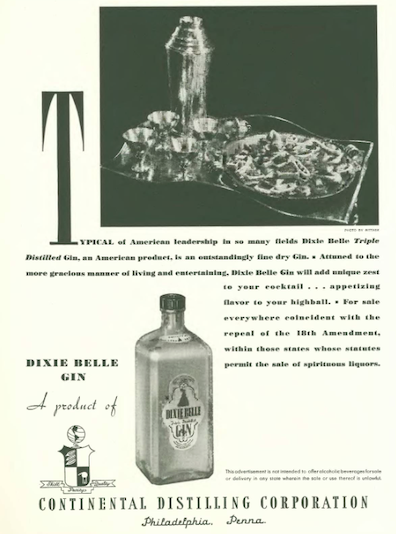
…Continental Distilling was hoping to grab its share of gin sales with its Dixie Belle American gin…
…from the same folks who brought us Fleishmann’s yeast (and kept The New Yorker afloat in its early lean years) came this American dry gin…
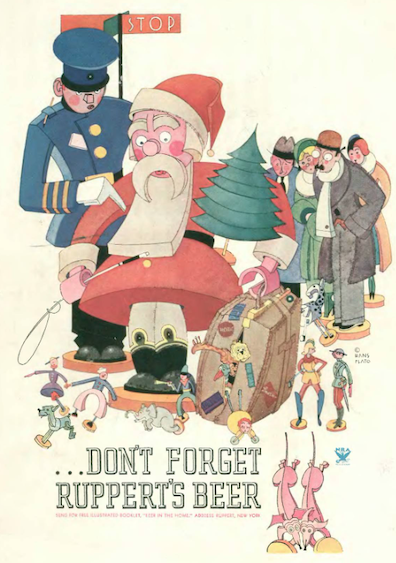
…Ruppert’s Beer was back with another full-page color ad by Hans Flato…
…on to our cartoons, and Santa again, this time besieged by an aggressive tot as rendered by Helen Hokinson…
…Carl Rose found an unlikely customer at a newsstand…
…here is the last of four cartoons Walter Schmidt published in the New Yorker between 1931 and 1933…
…Peter Arno left his glamorous world of nightclubs and high society parties to look in on life at a boarding house…
…and we close with the delightful Barbara Shermund…
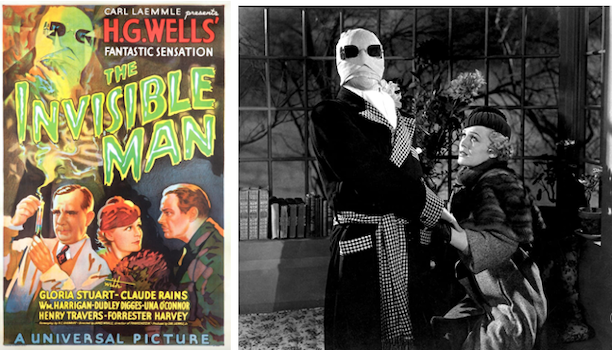
British actor Claude Rains made his American film debut in a 1933 movie where the actor’s face isn’t revealed until the final scene.
Nov. 25, 1933 cover by Gardner Rea.
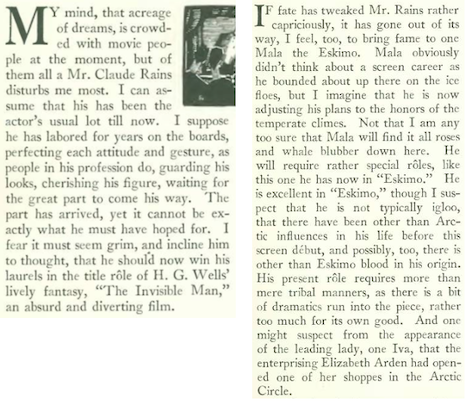
Although praised by critics in 1933 and today, The New Yorker’sJohn Mosher had but a paragraph to offer on the The Invisible Man, calling it a “bright little oddity” and an “absurd and diverting film.” Mosher also reviewed the Arctic adventure Eskimo, a film he found to be less than convincing about life on the frozen tundra.
FROM A TEST TUBE, BABY…Dr. Jack Griffin (Claude Rains) develops a secret formula that renders him invisible, much to the distress of his former fiancée Flora Cranley (Gloria Stuart). Some of you may recall Stuart from 1997’s Titanic, in which she portrayed the 100-year-old Rose. In real life Stuart had a career spanning nearly eighty years. And wouldn’t you know, she died in 2010 at age 100. (IMDB)NOW YOU SEE HIM…Special effects in 1933 were no mean feat. To create the effect of invisibility, Rains was covered head to foot with black velvet tights and wore whatever clothes he required for the scene. The invisibility scenes were then shot against a black set, the negative areas later manually masked to create the effect of invisibility. (IMDB)
…on to our other film, Eskimo…Mosher had doubts about the authenticity of the Eskimo family portrayed in the movie, suggesting (rather unkindly) that the lead actress, Lotus Long, looked like a client of the noted beautician Elizabeth Arden. The film was well-received by critics, but did poorly at the box office. However, it did receive the first-ever Oscar for Best Film Editing.
ICEBREAKER…Although MGM publicists portrayed Eskimo as a steamy love story set against a backdrop of adventure in the wild, the film was ahead of its time in some ways, including the use of Inuit dialogue, which was translated in English intertitles. Directed by W.S. Van Dyke, who also directed 1932’s Tarzan the Ape Man, the cast included (top photo, from left), Ray Mala and Lulu Long Wing (older sister of famed Hollywood actress Anna May Wong) with unidentified child actors. Bottom right, Mala with actress Lotus Long. (IMDB)
* * *
Numbers Racket
Little known today, the sliding number puzzle “Imp” was hugely popular in the late 19th and early 20th centuries. Plastic versions were produced following World War II—I recall one of them being quietly deployed from my mother’s purse during church, to keep me occupied during lengthy sermons.
* * *
Hammered and Sickled
“The Talk of the Town” commented on a Union Square riot in which American communists attacked a group of Ukrainians protesting the Soviet-imposed mass starvation in their country. Following is an excerpt from a longer piece that also noted the arrival of New York police, who “charged into the Square, riding their horses into the crowd and taking a crack at a head here and there.”
SEE NO EVIL…American Communists attack a group of Ukrainians protesting the Soviet-caused Holodomor famine in 1933, which killed at least four million Ukrainians. (Public domain)
* * *
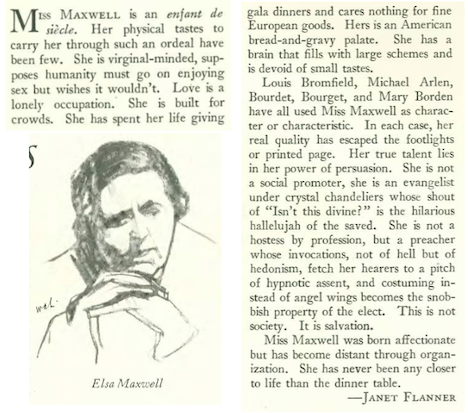
Party Girl
Elsa Maxwell (1883–1963) was an Iowa girl who grew up to become a gossip columnist and a hostess of high society parties—throughout the 1920s she was known for throwing lavish affairs for Europe’s wealthy and entitled. A 1963 Time magazine obituary noted that Maxwell developed a gift for staging games and diversions for the rich, making a living devising treasure-hunt parties, including a 1927 Paris scavenger hunt that created disturbances all over the city. Excerpts from a profile by Janet Flanner:
GETTING AN EARFUL…Elsa Maxwell hobnobbing with actress Constance Bennett and producer Darryl Zanuck in 1939. (Pinterest)
* * *
Masked Man
Novelist Sherwood Anderson offered his impressions of the late Ring Lardner in a piece titled “Meeting Ring Lardner.” Anderson wrote that although Lardner “seemed surrounded by a little halo of something like worship wherever he went,” he had no satisfaction in his achievements. Anderson recounted Lardner’s encounter with a shy banker, when for a moment Lardner dropped the “mask” that he often wore to shield himself from humanity. Excerpts:
SPHINX…Sherwood Anderson (right) wrote of Ring Lardner: “You wanted him not to be hurt, perhaps to have some freedom he did not have.” (AP/hilobrow.com)
* * *
Phooey on Huey
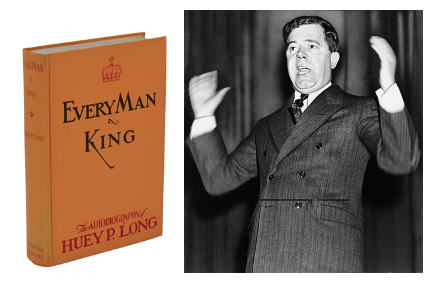
When Louisiana Senator and former Governor Huey Long published his autobiography, Every Man a King, the reaction from the press was resoundingly negative; in the Saturday Review,Allan Nevins wrote that Long “is unbalanced, vulgar, in many ways ignorant, and quite reckless.” The New Yorker’sClifton Fadiman went further, calling him the “Goebbels of Louisiana” and compared the senator to Adolf Hitler. Excerpts:
IT’S ALL ABOUT ME, REALLY…Huey Long’s 1933 autobiography, Every Man a King, was excoriated by the press, which largely viewed the senator as a fascistic demagogue. Long was assassinated in 1935. (Wikipedia)
* * *
From Our Advertisers
Christmas was coming, and parents with the means could consider buying a “Skippy” brand racer for their little tykes. The cartoon character at the top of the ad—Skippy—was the star of one of the most popular American comic strips of its day…
…written and drawn by Percy Crosby (1891–1964) from 1923 to 1945, the Skippy comic was a big influence on later cartoonists including Charles Schulz (Peanuts) and Bill Watterson (Calvin and Hobbes)…note the football gag below later made famous by Schulz’s Lucy and Charlie Brown…
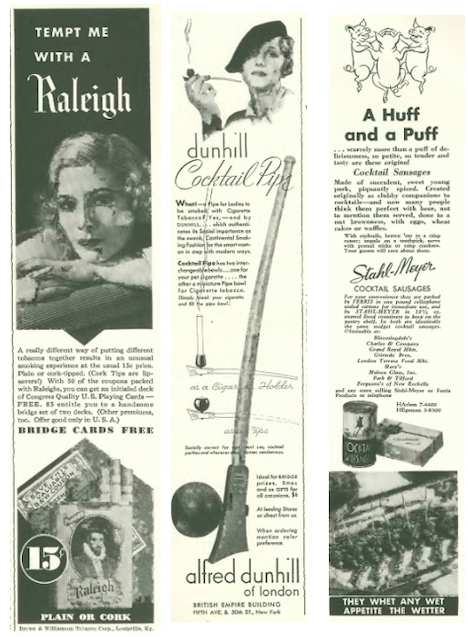
…on to some of our one-column ads…Raleigh cigarettes were promoted to the growing women’s market, while Dunhill touted a “cocktail pipe” that allowed women to get in on the fun of pipe smoking…and with Disney’s Three Little Pigs penetrating every nook and cranny of America, the makers of Stahl-Meyer sausages decided to join in the fun…
…I include this razor ad mainly for the bold typography…advertisers were in a transitional phase, experimenting with new forms and more white space, but still holding on text-heavy pitches…
…in the case of Goodyear, if you wanted to inspire confidence in your product, you propped an old codger in a rocking chair and offered some homespun wisdom…
…here is a closer look at the old-timer’s advice…
…another tobacco ad, this one displaying the glorious blooms of a tobacco plant…how could something so lovely be bad for you?…
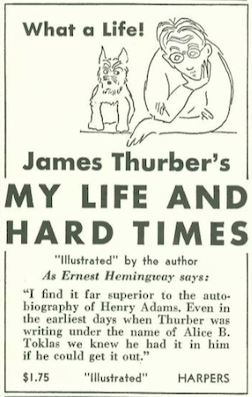
…a small back page ad announced a big-time book for James Thurber, including a satirical blurb from Ernest Hemingway…
…and that makes a nice segue to our cartoons, with Thurber again…
…Otto Soglow demonstrated the unexpected effectiveness of hair tonic…
…Perry Barlow gave us a look at the posh and precocious set…
…and we close with George Price, and 1933’s version of Black Friday…






































































































 A New Yorker State of Mind