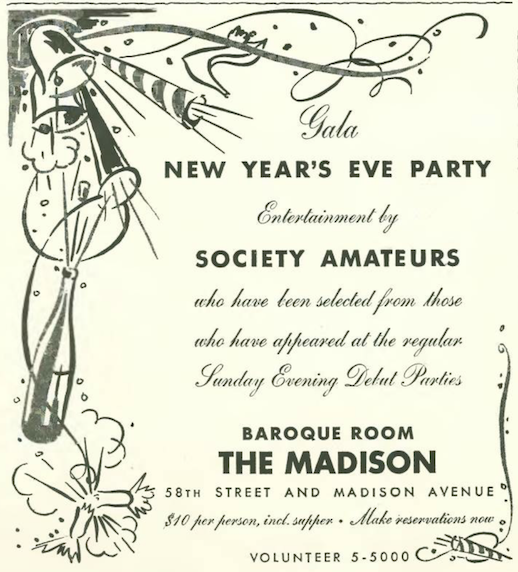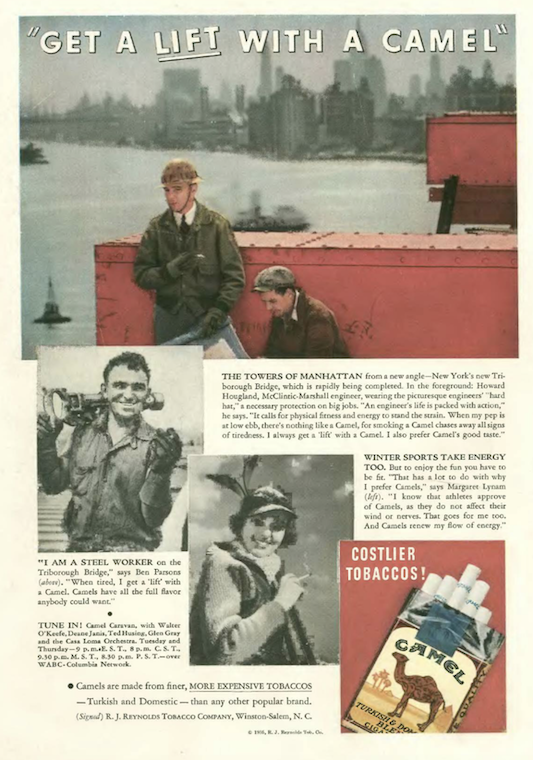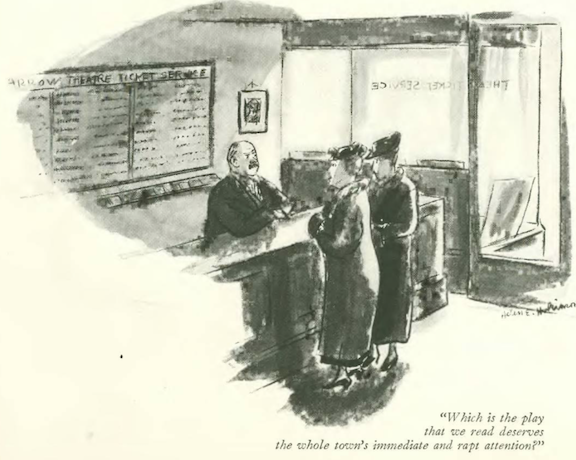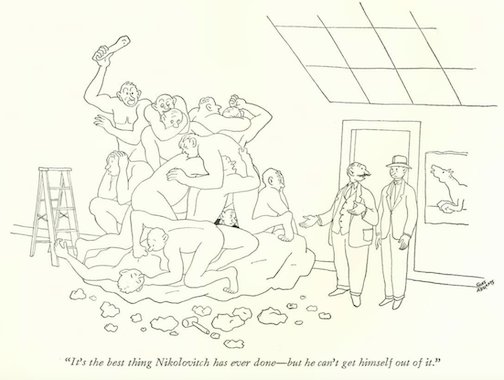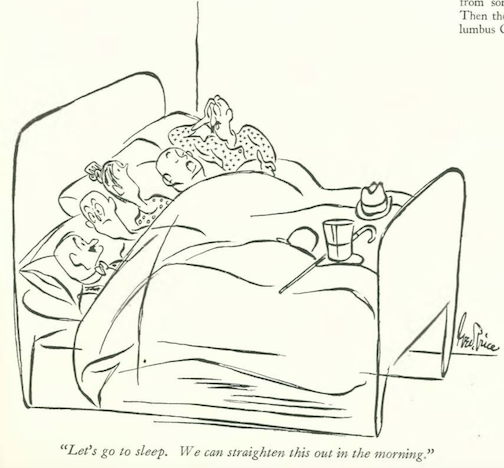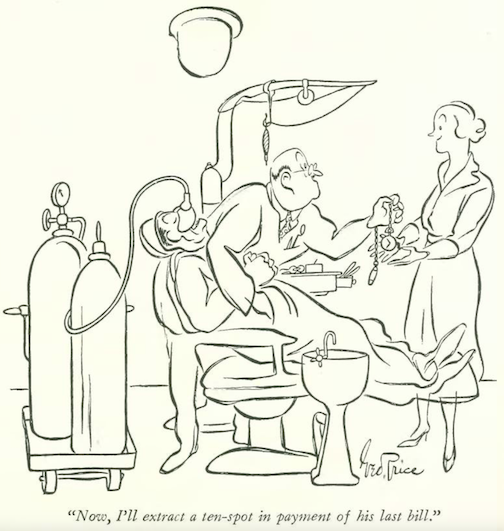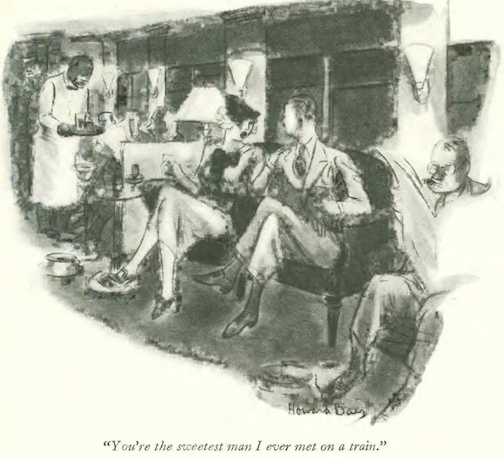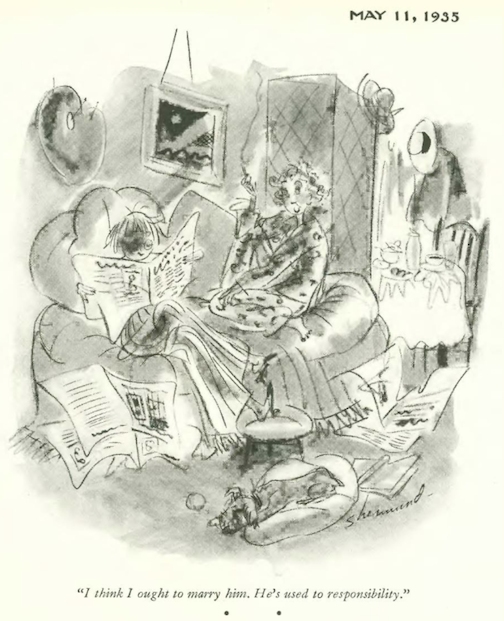
Seeking Decorative People

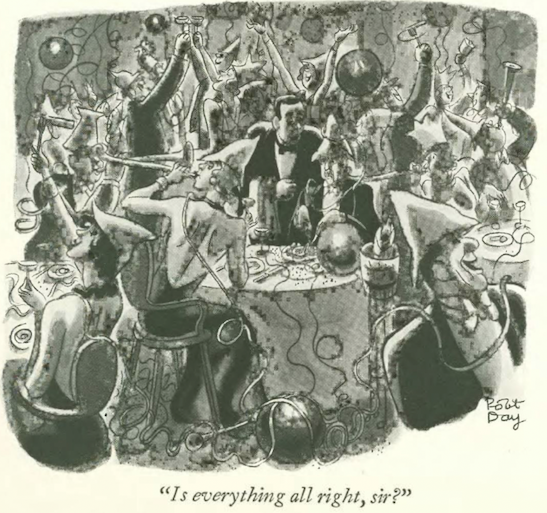
Above: New Year’s Eve at the “El Morocco” Night Club at 154 E. 54th Street, New York, 1935. (Posted on Reddit)

Lois Long took her nightlife seriously, and when it didn’t live up to her standards—defined by the wild speakeasy nights she wrote about after joining The New Yorker in 1925 —she was crestfallen, to say the least.

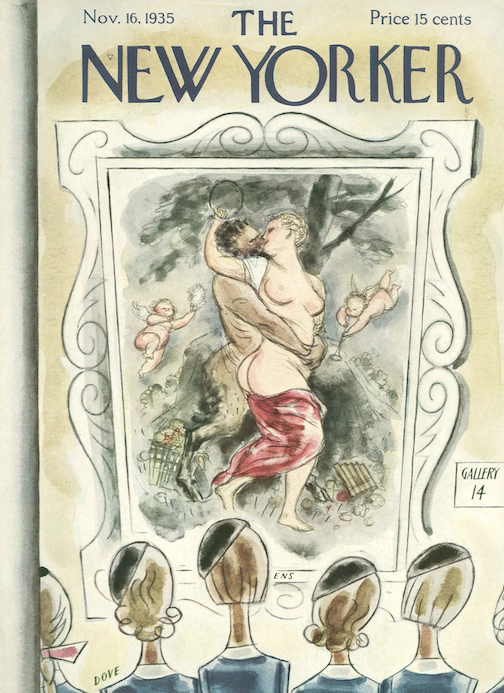
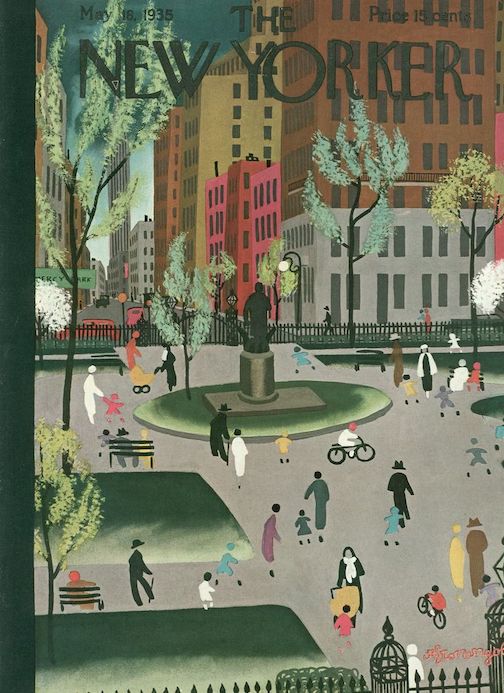
November 16, 1935 cover by Leonard Dove. This is one of Dove’s fifty-seven New Yorker covers; he also contributed 717 cartoons to the magazine.
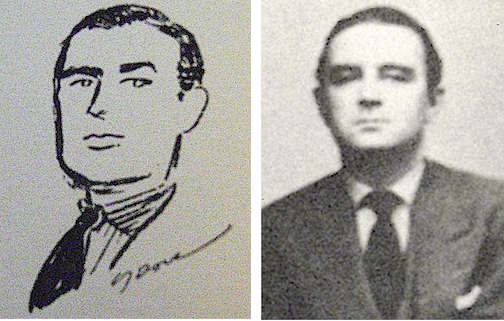
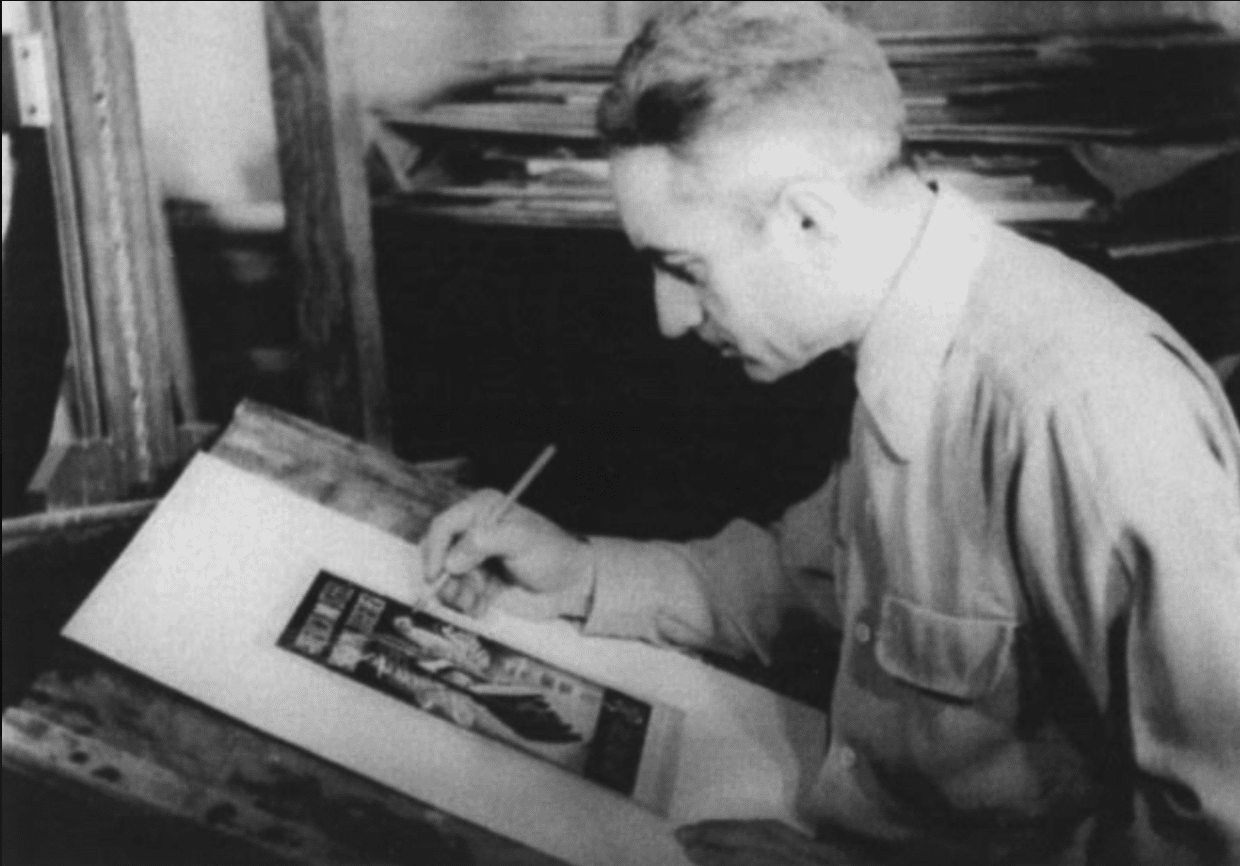
Above: Leonard Dove’s self portrait, 1941; photo: 1947. Born 1906, Great Yarmouth, England. Died, Gramercy Hotel, New York City, 1972. (Thanks to Michael Maslin’s indispensable Ink Spill)

 *

When Long joined The New Yorker she was a 23-year-old Vassar graduate, and at age 34 she was not expecting to re-live those heady days; but nightlife in 1935 made her wonder where all the interesting people had gone. Instead of the smart and beautiful speakeasy set, she found people who couldn’t hold a conversation, who cared more about being mentioned in the newspapers by “Cholly Knickerbocker” (a pseudonym used by society columnists)—they simply lacked the “sparkle” she so craved. In this excerpt from her column, “Tables for Two,” she explained:

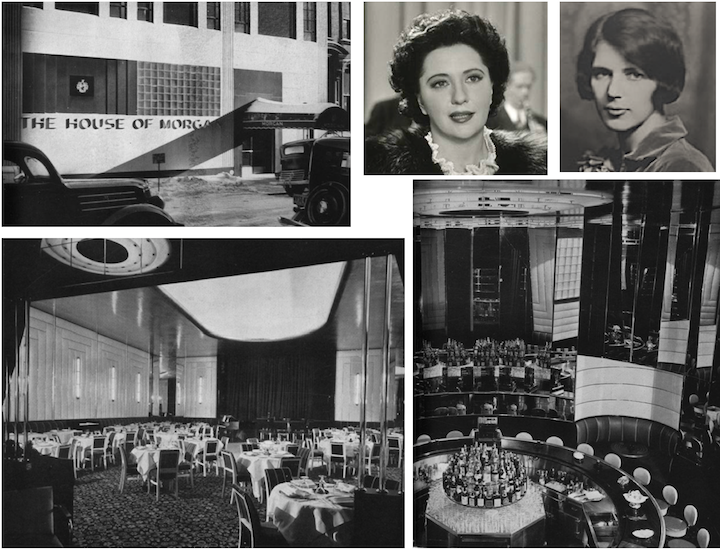
ALL SHOW, NO GO…Lois Long recalled the heady days of the original torch singer Helen Morgan, but her new club, The House of Morgan, offered up tired vaudeville instead of the singer herself. Above, images of the club from Christopher Connelly’s The Helen Morgan Page. Top, center, detail of Morgan from the 1935 film Sweet Music. Next to Morgan is a photo of Long from the PBS documentary Prohibition. (helen-morgan.net/PBS.org)

 * * *

At the Movies

Our film critic John Mosher was in good spirits after taking in MGM’s Mutiny on the Bounty, and especially the inspired performance by Charles Laughton as the cruel, tyrannical Captain Bligh…

LET’S HAVE A STARING CONTEST…Clark Gable (left) portrayed Fletcher Christian, the Bounty’s executive officer, who disapproved of the cruel leadership of Captain Bligh, portrayed by Charles Laughton (right) in Mutiny on the Bounty. (theoscarbuzz.com)

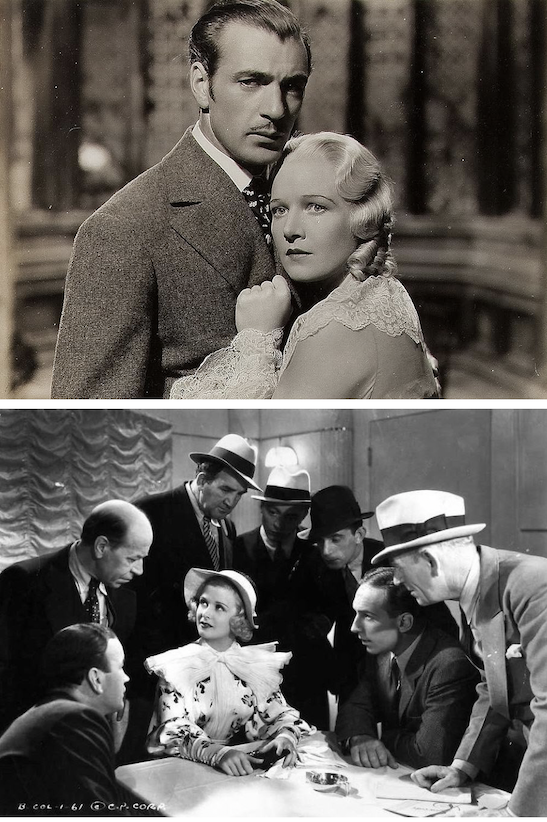
…two other pictures reviewed by Mosher were less than inspired, but at least the George Raft/Joan Bennett gangster film, She Couldn’t Take It, offered a car chase, and the occasional surprise.

STERILITY ISSUES…Top, Gary Cooper and Ann Harding needed a bit more life in Peter Ibbetson; at least Joan Bennett (bottom photo) found some action in She Couldn’t Take It. (IMDB)

 * * *

From Our Advertisers

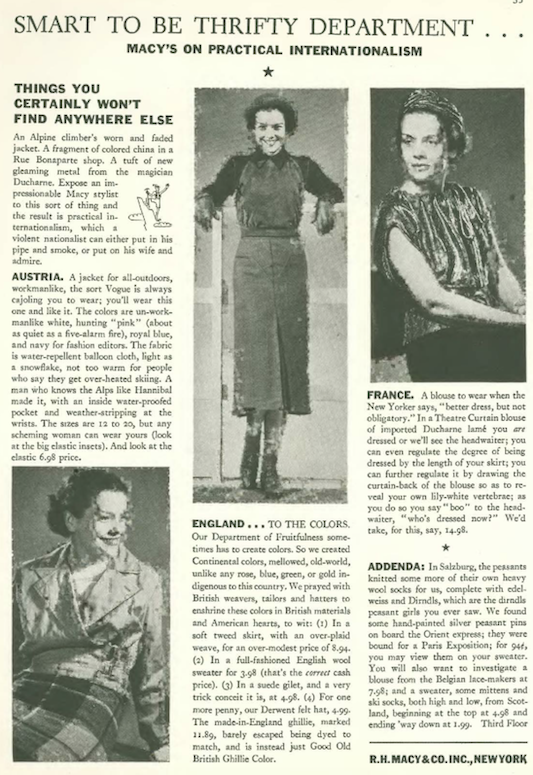
Not all fashion advertisements in The New Yorker were aimed at the posh set…Macy’s offered some thrifty selections, including a French-inspired “Theatre Curtain Blouse” that could be opened in the back “so as to reveal your own lily-white vertebrae”…

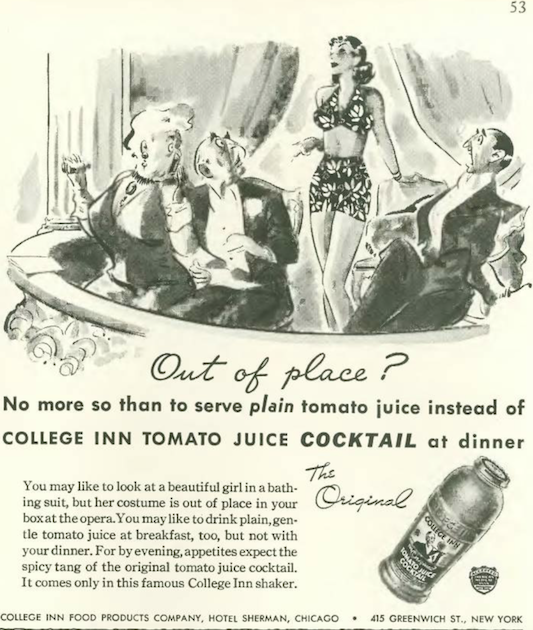
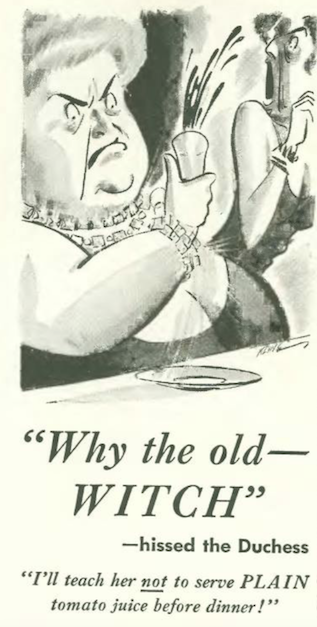
…I am puzzled by the “Duchess” types that appeared in food and beverage ads in the back of the magazine…we’ve seen some angry duchesses in ads for tomato and pineapple juice, and here we have one who has stooped so low as to shell her own peas…

…a side note, the Duchess’s peas came in a can bearing the old Green Giant logo, a savage, bearskin-clad figure…he was redesigned by ad executive Leo Burnett in 1935 to become the friendlier “Jolly Green Giant”…

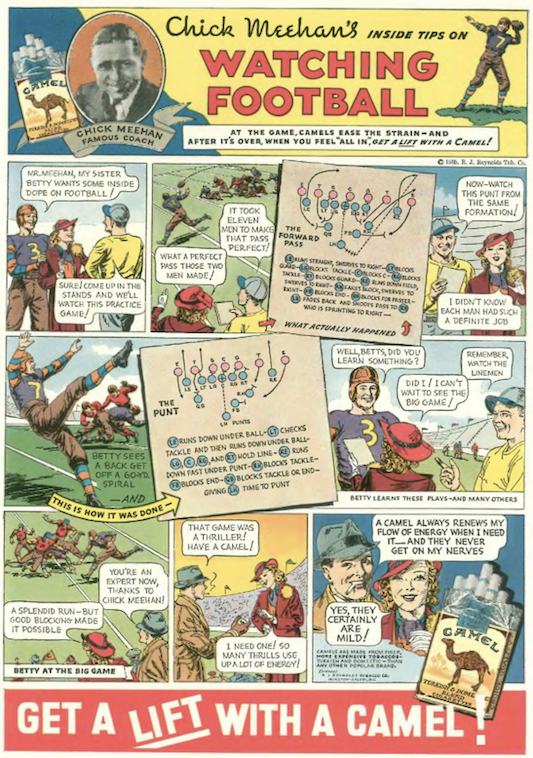
…the makers of Camels presented football coach Chick Meehan in cartoon form to extol the wonders of football and smoking to a young woman…Meehan coached football at Syracuse, NYU and Manhattan College…

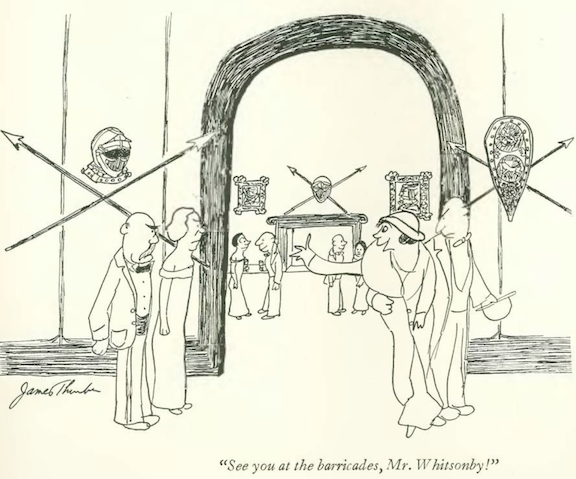
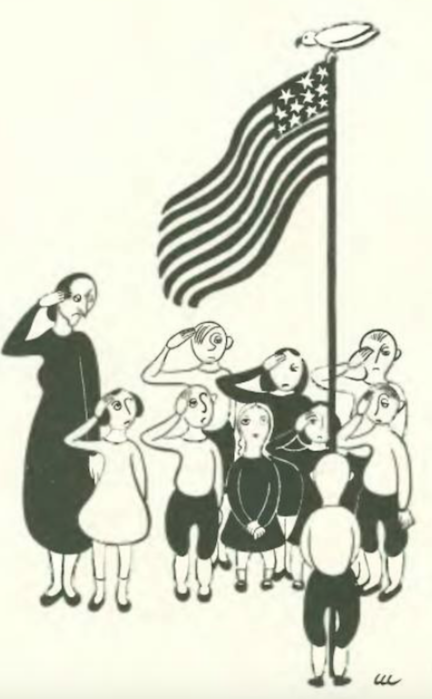
…the football theme segues to our cartoon section, beginning with this spot art by James Thurber

Christina Malman’s spot drawings could now be found in every issue, and usually more than one…

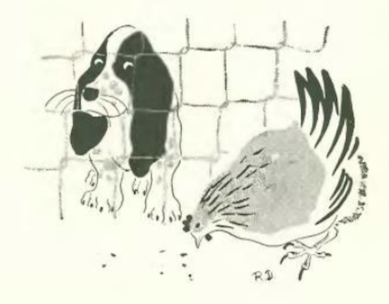
…this one by Robert Day also caught my eye, maybe because I like chickens, and dogs too…

…Day again, on the streets of Manhattan…

Barbara Shermund showed us a wolf in wolf’s clothing…

Alan Dunn seemed to be channelling Barbara Shermund here…or maybe Dunn’s wife Mary Petty had some influence…

William Crawford Galbraith eavesdropped on some wagering waiters…

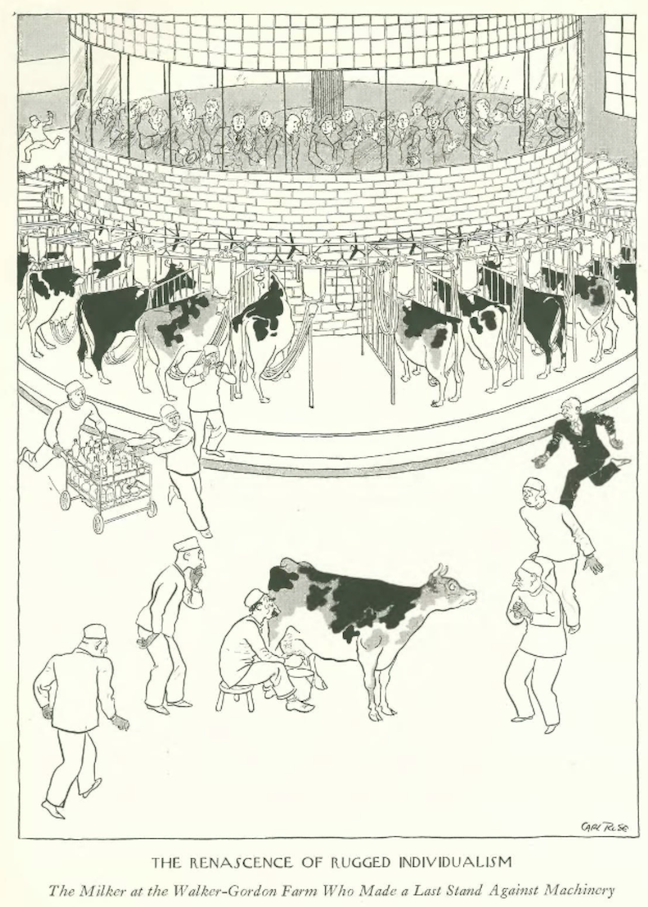
Carl Rose found an outlier at the modern Walker-Gordon Dairy Farm…

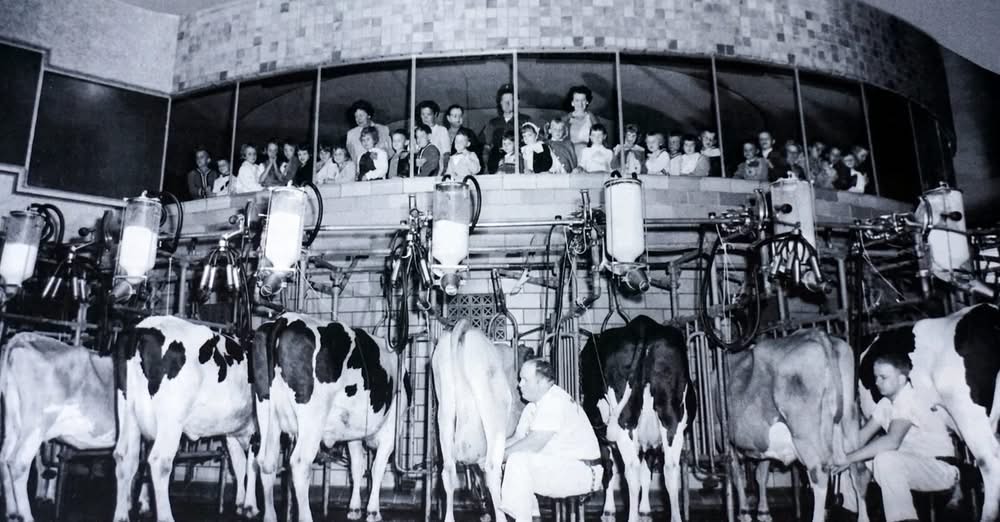
…The Rotolactor featured in Rose’s cartoon was a mostly automatic machine used for milking a large number of cows successively on a rotating platform…first used at the Walker-Gordon Laboratories and Dairy in Plainsboro, New Jersey (pictured below), the Rotolactor held fifty cows at a time, and hosted about 250,000 visitors annually…

(rawmilkinstitute.org)

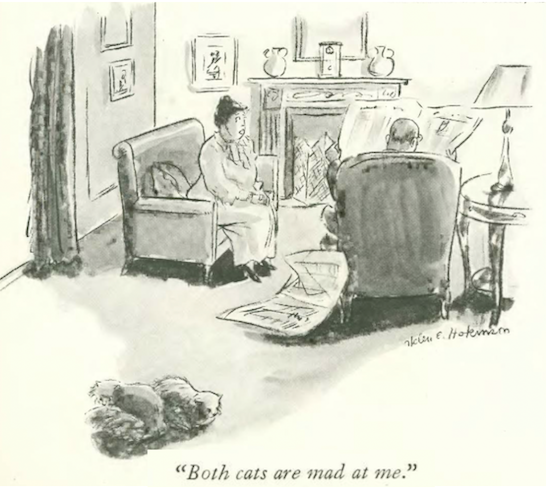
…and we go from cows to cats, courtesy Helen Hokinson

…and Charles Addams booked an unusual perp…

…on to the November 23 issue…

November 23, 1935 cover by Antonio Petruccelli. Petruccelli (1907-1994) began his career as a textile designer, becoming a freelance illustrator in 1932 after winning several House Beautiful cover contests. This is one of four covers he produced for The New Yorker.
Antonio Petruccelli. Here are samples of Petruccelli’s remarkable work. (Helicline Fine Art)

 *

Worth the Wait

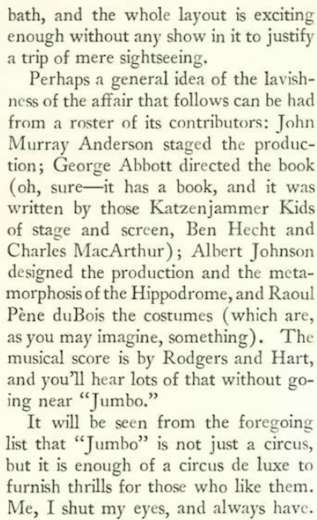
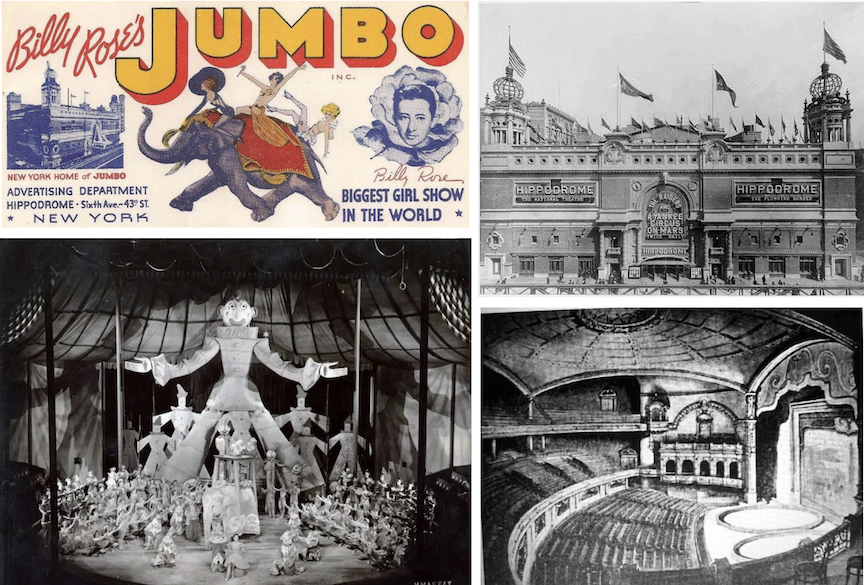
The highly-anticipated circus-themed spectacle Jumbo finally opened at the Hippodrome. In his That’s Entertainment! blog, Jackson Upperco observes that Billy’s Rose’s Jumbo was “more circus than musical comedy,” a production that “was largely an excuse for Mr. Rose to present a circus.” It was headlined by comedian Jimmy Durante and bandleader Paul Whiteman, with a score by Rodgers & Hart. Here are excerpts from a review by Wolcott Gibbs:

JUMB0-SIZED ENTERTAINMENT…Clockwise, from top left, Hippodrome billboard promoting Jumbo; built in 1905, the Hippodrome provided entertainment to thousands who couldn’t afford a Broadway ticket; a circus tent was erected inside the 5,300-seat theatre for the spectacle; Jumbo was one of the most expensive theatrical events of the first half of the 20th century. (Facebook/Library of Congress/Broadway Magazine/jacksonupperco.com)

 * * *

At the Movies

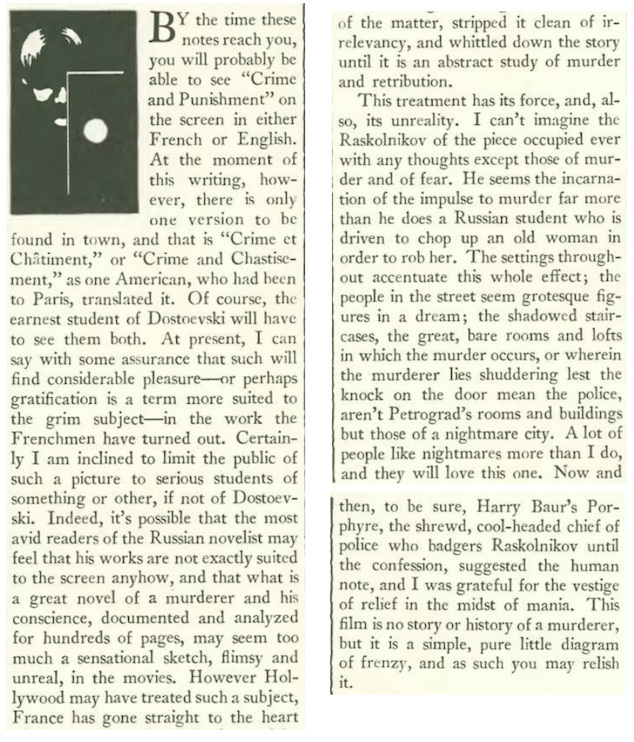
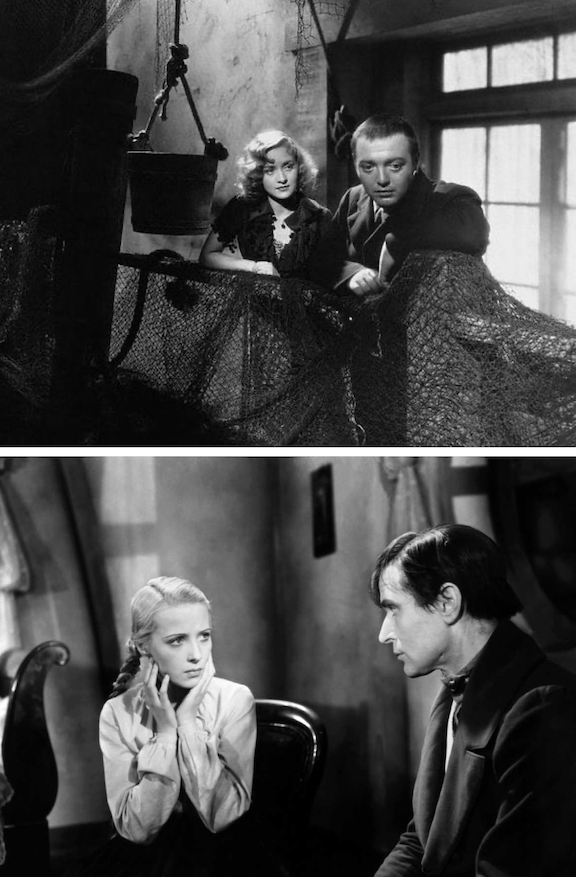
Fyodor Dostoevsky’s 1866 novel Crime and Punishment was adapted to film by both French and American producers in 1935, but critics including The New Yorker’s John Mosher mostly preferred the French version, titled Crime et châtiment.

DOUBLE FEATURE…American and French producers each turned out a film adaption of Fyodor Dostoevsky’s novel Crime and Punishment. Top photo, Marian Marsh as Sonya and Peter Lorre as Roderick Raskolnikov in Columbia’s Crime and Punishment; bottom photo, Madeleine Ozeray as Sonia and Pierre Blanchar as Rodion Raskolnikov in Crime et châtiment. (silverscreenmodes.com/SensCritique.com)

…Mosher reviewed another crime thriller, Mary Burns, Fugitive, but found some comic relief in two other films…

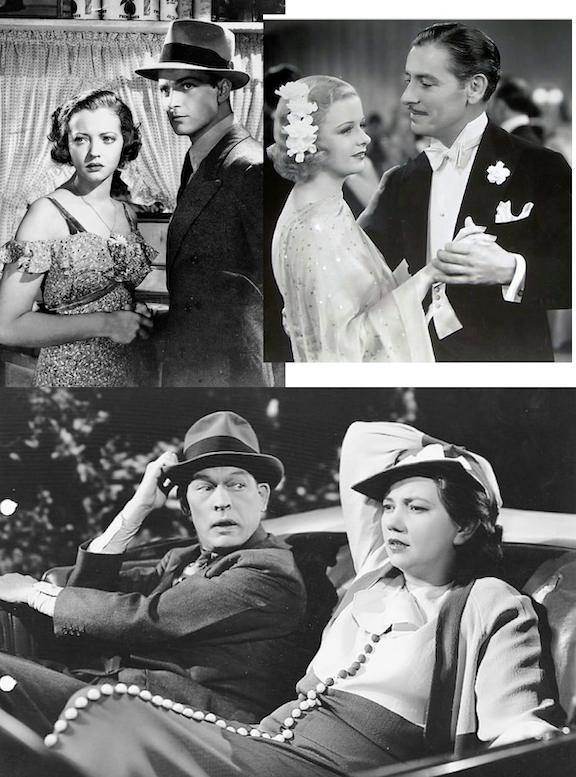
BAD CHOICE IN BOYFRIENDS was the theme of Mary Burns, Fugitive, starring (top left) Sylvia Sidney and Alan Baxter; top right, Joan Bennett and Ronald Colman in the romcom The Man Who Broke the Bank at Monte Carlo; bottom, Fred Allen and Patsy Kelly provided some laughs in musical comedy Thanks a Million. (IMDB)

* * *

From Our Advertisers

Readers of the Nov. 23 issue opened to this lovely image…

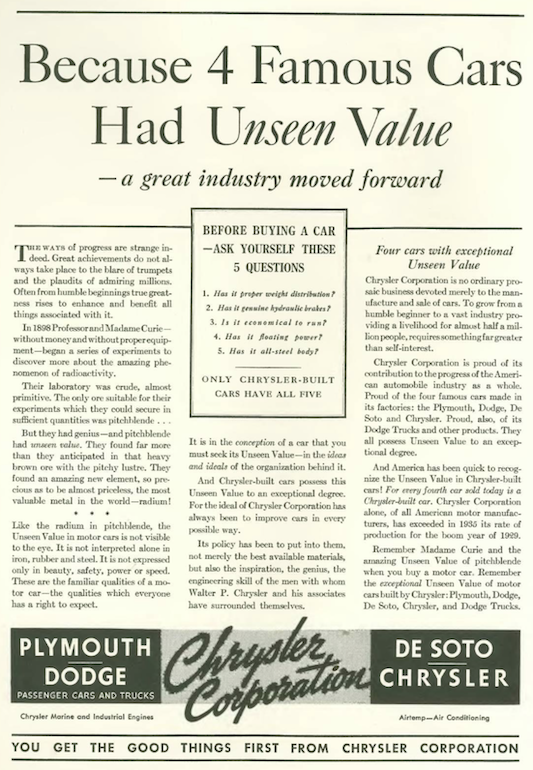
…which sharply contrasted with the clunky Plymouth ad on the opposite page…

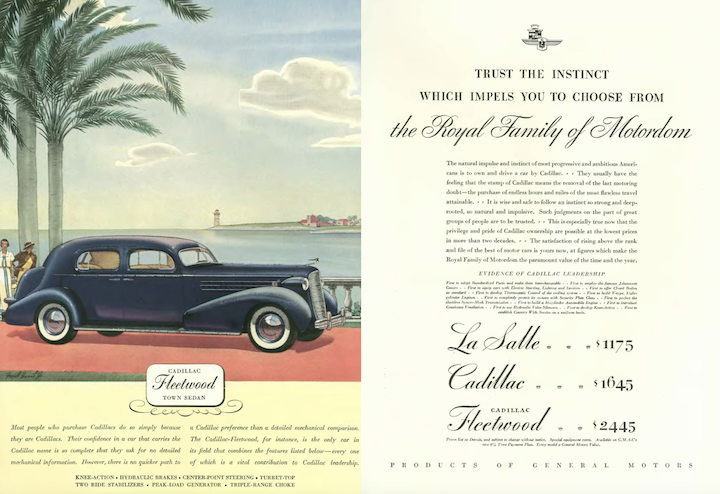
…not so clunky was this colorful illustration promoting Cadillac’s economy model, the La Salle…

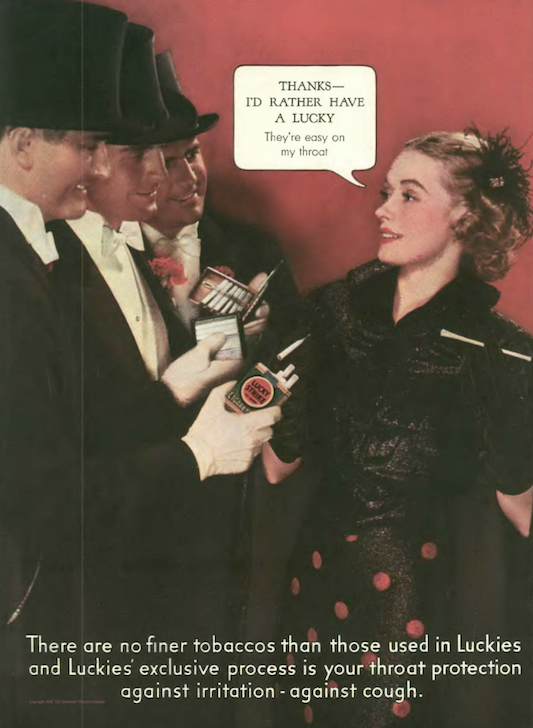
…the back cover was no surprise, with yet another glamorous cigarette ad…

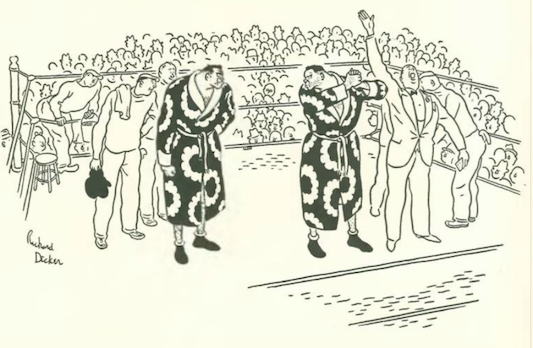
…our cartoonists included Richard Decker, and a fashion faux pas to open a boxing match…

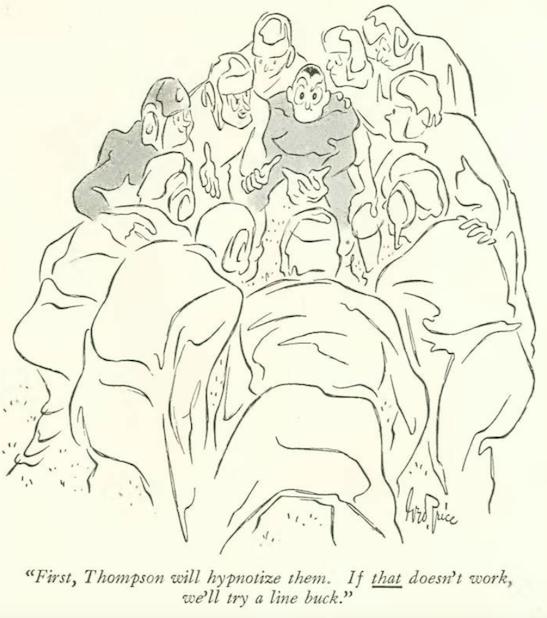
George Price eavesdropped into some football strategy…

Carl Rose spotted a canine unbeliever…

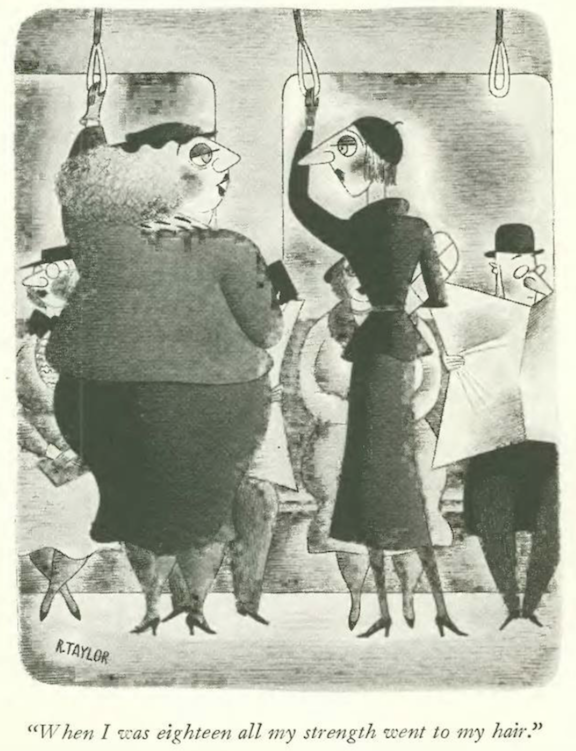
Richard Taylor was back with his distinctive style…

Al Frueh continued to illustrate the latest fare on Broadway…

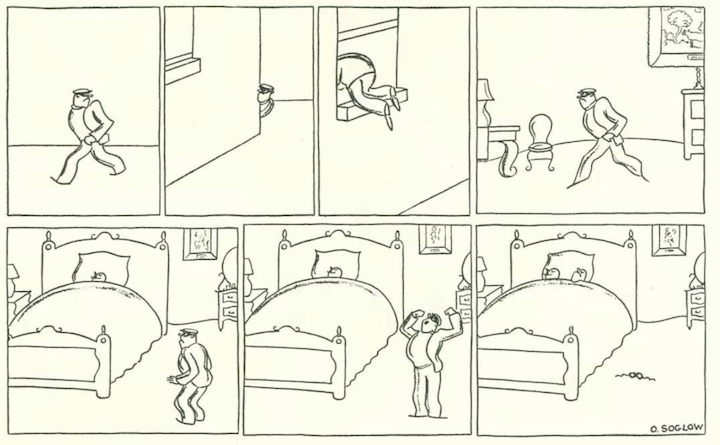
Otto Soglow crept in for a snooze…

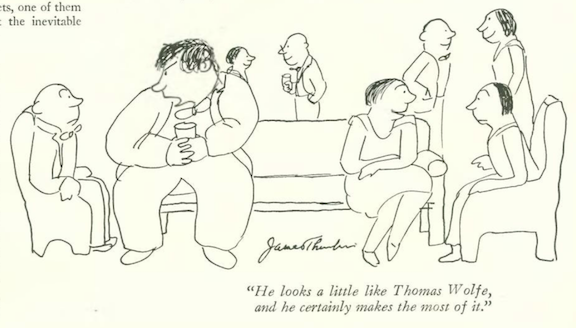
…and we close with James Thurber, and some literary cosplay…

Next Time: Some Holiday Shopping…

Jimmy Comes Home

Above: Former New York Mayor Jimmy Walker and wife Betty Compton, aboard the S.S. Manhattan in 1935. (New York Daily News Archive)

The Roaring Twenties and Jimmy Walker seemed made for each other. A dandy with a taste for fine clothes, late-night parties, and Broadway showgirls, the 97th mayor of New York was a darling of the media…until the market crashed; as nest eggs evaporated along with jobs, folks quickly lost their taste for such frivolity.

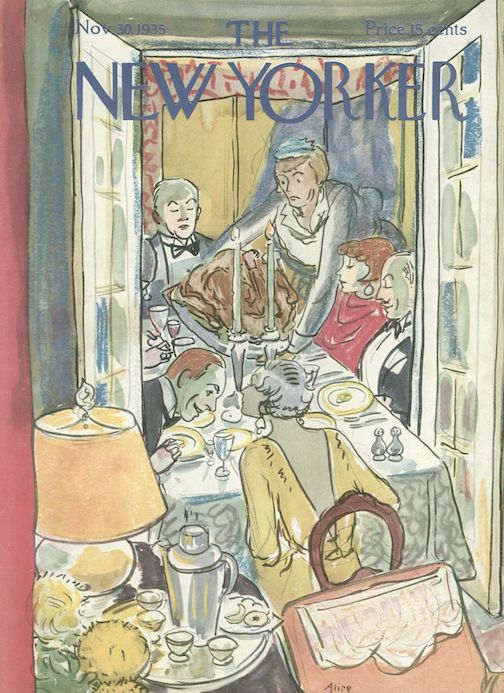
November 9, 1935 cover by Daniel “Alain” Brustlein. This was the first of nine covers Brustlein created for the magazine. An Alsatian-born American artist, cartoonist, illustrator, and author of children’s books, Brustlein (1904–1996) contributed to The New Yorker under the pen name “Alain” from the 1930s through the 1950s.
Daniel “Alain” Brustlein, in an undated photo. During the height of Abstract Expressionism Brustlein became a reputable painter, exhibiting his work in New York and Paris. (derfner.org)

 *

The fall of 1935 marked three years since Walker had left office, and for nearly two of those years the city had been governed by the reformist Mayor Fiorello La Guardia. New Yorkers, it seemed, were ready for a dose of Jimmy when he returned from his European exile, hailed by a throng of media and well-wishers.

Writing for Airmail, longtime New York journalist Sam Roberts observes that the city loved Walker, “a charming hellion, a witty, self-effacing, glib humanist, far more flawed, too, and compassionate than pictured previously, a man elevated and condemned by his own character, created and ultimately consumed by his times. He conjures up the anti-Trump—a dodgy philanderer who governed by making people feel good rather than angry.”

WHERE’S THE PARTY?…Former Mayor Jimmy Walker and his wife, Betty Compton, returned to New York in the fall of 1935 amid tremendous fanfare. The New Yorker’s Morris Markey noted that at least 160 media representatives were on hand for the couple’s arrival. (YouTube)

Walker (1881-1946) fled to Europe in November 1932 amid a bribery scandal that had prompted his resignation. Accompanied by Ziegfeld Follies singer Betty Compton (1906–1944)—whom he would marry in Cannes the following April—they would bounce around the continent until Walker determined that the danger of criminal prosecution had passed.

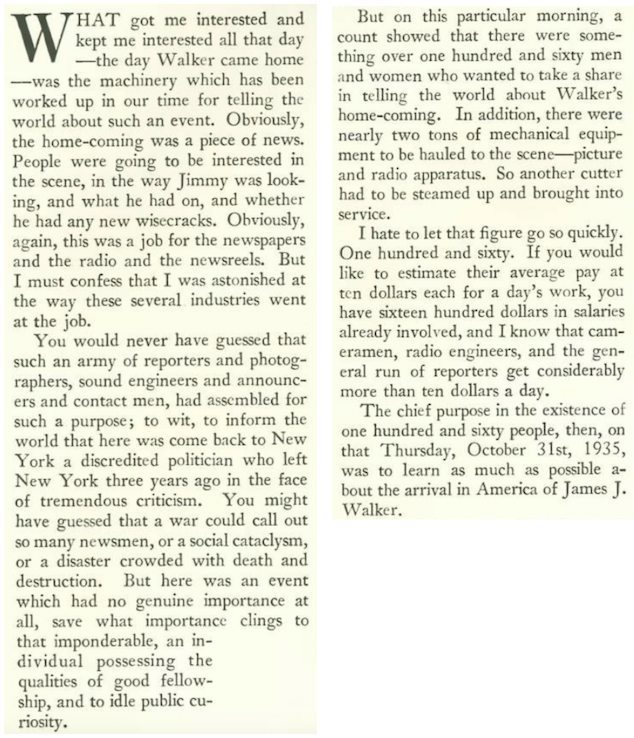
In his “A Reporter at Large” column, Morris Markey wrote about the media’s reception of the exiled mayor, “an army of reporters and photographers, sound engineers and announcers and contact men”…all assembled to inform the world of the return of a “discredited politician.”

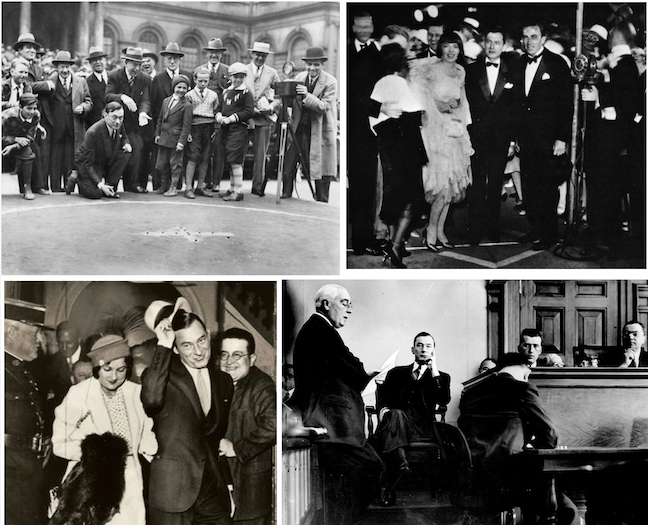
HE GOT AROUND…During his time in office from 1926 to 1932, Mayor Jimmy Walker never seemed to miss a moment in the spotlight. Clockwise, from top left, Walker presided over the first shot in the city’s annual marble tournament on June 3, 1928; with actress Colleen Moore at the 1928 premiere of her latest film, Lilac Time;  testifying on bribery charges before the investigative committee of Judge Samuel Seabury, 1932; with Betty Compton following their 1933 wedding in Cannes. (New York Times/konreioldnewyork.blogspot.com/villagepreservation.org)

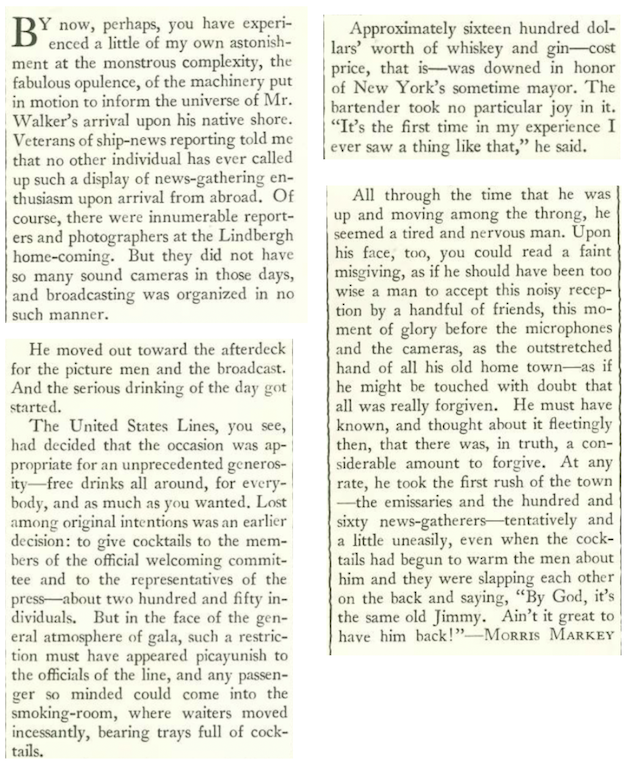
Markey continued to convey his astonishment at “the monstrous complexity, the fabulous opulence, of the machinery put in motion to inform the universe of Mr. Walker’s arrival upon his native shore.” This included a massive cocktail party—hosted by The United States Lines—for more than two hundred press representatives and other officials.

After all the commotion, Walker would settle into a job as head of Majestic Records, adopt two children with Compton, and host his own radio series on WHN, Jimmy Walker’s Opportunity Hour.

Compton would divorce Walker in 1941 and remarry. Becoming ill after the birth of a son, she would die at age 38 in 1944. Walker would die two years later at age 65 of a brain hemorrhage.

CALLING ON THE ROOSEVELTS…Jimmy Walker and Betty Compton at the White House in 1937. It was pressure from FDR that led to Walker’s resignation in 1932. (Wikipedia)

 * * *

High-flying Hooplah

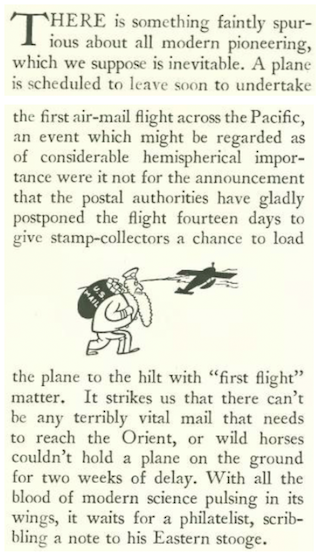
While New Yorkers were going gaga over Walker, folks in the Bay Area were all atwitter over the first air-mail flight across the Pacific, loading a Pan Am Clipper to the gills with all manner of collectables. E.B. White noted:

BELLYFUL…On Nov. 22, 1935, Pan American Airways made aviation history as the China Clipper lifted off from Alameda, beginning the world’s first trans-Pacific airmail service. Captained by Edwin Musick and crewed by famed navigator Fred Noonan, the Martin M-130 opened a new era of long-distance flight across the Pacific. Noonan, who charted many commercial routes across the Pacific, would go missing along with Amelia Earhart during their ill-fated flight in July 1937. (Library of Congress)

* * *

Wise Men From the East

“The Talk of the Town” visited with Soviet satirists Ilya Ilf (1897–1937) and Evgeny Petrov (1903–1942), who were in New York preparing for a ten-week road trip to California and back. On assignment as special correspondents for the newspaper Pravda, they later published a series of illustrated articles, “American Photographs,” as well as a book titled Single-Storied America (the summer 2004 issue of Cabinet Magazine features an account of their journey as well as a number of their photographs).

AMERICA WAS A GAS…Soviet satirists Ilya Ilf (left) and Yevgeni Petrov check out New York before heading into the American heartland on a ten-week road trip, a highlight being the countless full-service gas stations they encountered along the way. After seeing skyscrapers and mountains and other wonders, the pair agreed that the most enduring image was the one at right: “an intersection of two roads and a gasoline station against a (back)ground of wires and advertising signs.” Sadly, Ilf died two years later from tuberculosis; Petrov died in a plane crash in 1942 while working as a war correspondent. (Aleksandra Ilf archive/Cabinet Magazine)

 * * *

A Jumbo Career

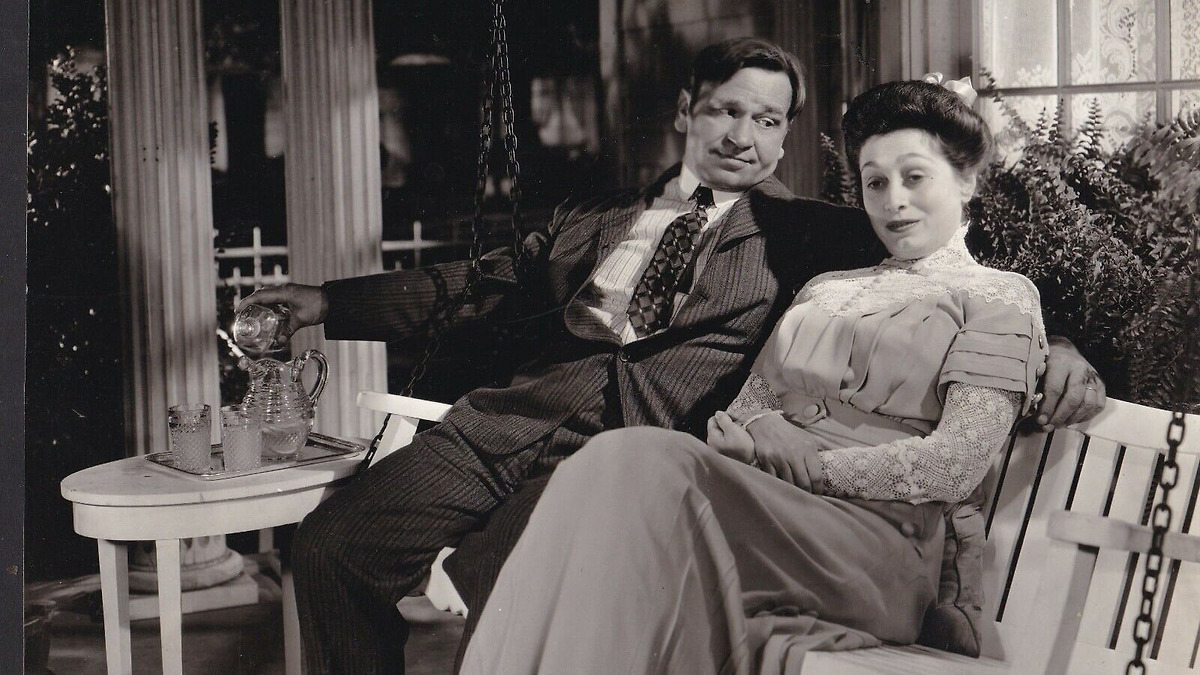
Wallace Beery (1885–1949) got his start in the comedy silents of the 1910s and became a star before the sound era made him an even bigger one; by 1932 he was the world’s highest-paid actor. Alva Johnston’s profile (titled “Jumbo”) took a look at Beery’s life and career (illustration by Al Frueh). Excerpts:

COURTING AND SPARKING…Sid Miller (Wallace Beery) spikes the lemonade as he woos Lily Davis (Aline MacMahon) in a scene from the 1935 film, Ah Wilderness! (letterboxd.com)

 * * *

A View and Corbu

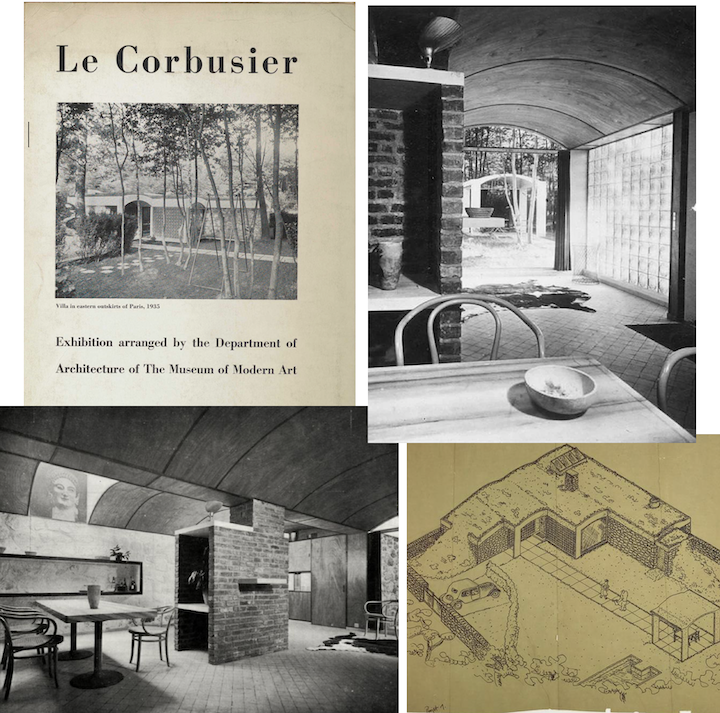
Art and design critic Lewis Mumford was well-known for his hypercritical eye, but occasionally he could be moved to rhapsodize, in this case about the opening of Fort Tryon Park, and particularly about the view it afforded visitors. He reserved his criticism for one of the latest works by Le Corbusier (aka Charles-Édouard Jeanneret), on exhibit at MoMA.

MAGNIFICENT is the word Lewis Mumford used to describe the view from Fort Tryon Park. This scene is taken from Linden Terrace to the west: a barge on the Hudson River and the Hudson Palisades beyond, with the Englewood Cliffs campus of Saint Peter’s University on the top. (Wikipedia)
IRRATIONAL?…Mumford was not pleased with Le Corbusier’s latest work, Le Petite Maison de Weekend (Villa Henfel), which was featured on the cover of the MoMA exhibition catalogue (upper left). Mumford saw the design as a pathetic escape from the architect’s renown rationalism. (MoMA/Fondation Le Corbusier)

* * *

At the Movies

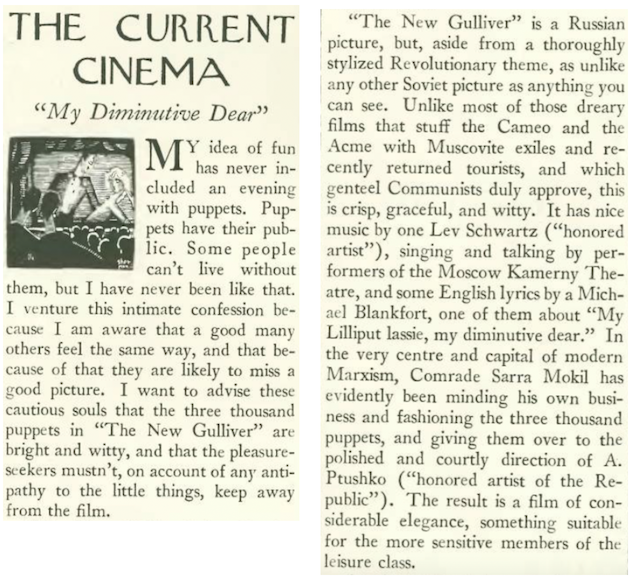
It was a mixed bag at the movies for critic John Mosher, who was delighted by a Soviet take on Gulliver’s Travels, rendered with puppets engaged in a proletarian struggle…

KOMRADE GULLIVER…The Soviet stop motion-animated fantasy film, The New Gulliver, was a communist re-telling of Jonathan Swift’s 1726 novel. The film depicted Lilliput suffering under capitalist inequality and exploitation, with Gulliver enabling a proletarian revolution against the Lilliputian monarchy. (revolutionsnewstand.com)

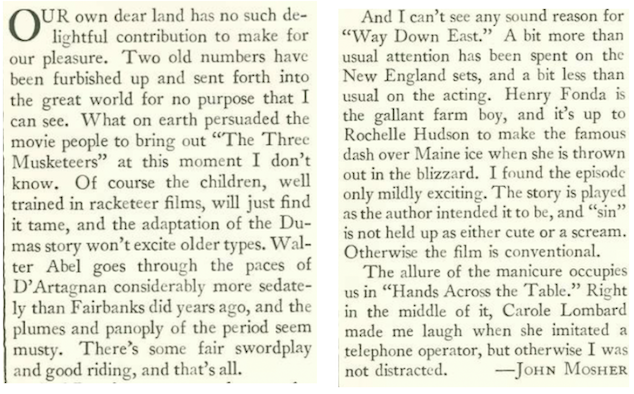
…but Mosher was less than delighted with the latest from Hollywood, including a sedate The Three Musketeers, a “conventional” remake of D.W. Grifffith’s 1920 melodrama Way Down East, and the romcom Hands Across the Table, which the Times called “uproariously funny” but Mosher deemed barely worth a chuckle.

OUTCLASSED BY PUPPETS…John Mosher found the latest from Hollywood underwhelming. Clockwise, from top, Onslow Stevens, Moroni Olsen, and Paul Lukas in The Three Musketeers; Rochelle Hudson and Henry Fonda in Way Down East; Fred MacMurray and Carole Lombard in Hands Across the Table. (mabumbe.com/zeusdvds.com/Wikipedia)

 * * *

From Our Advertisers

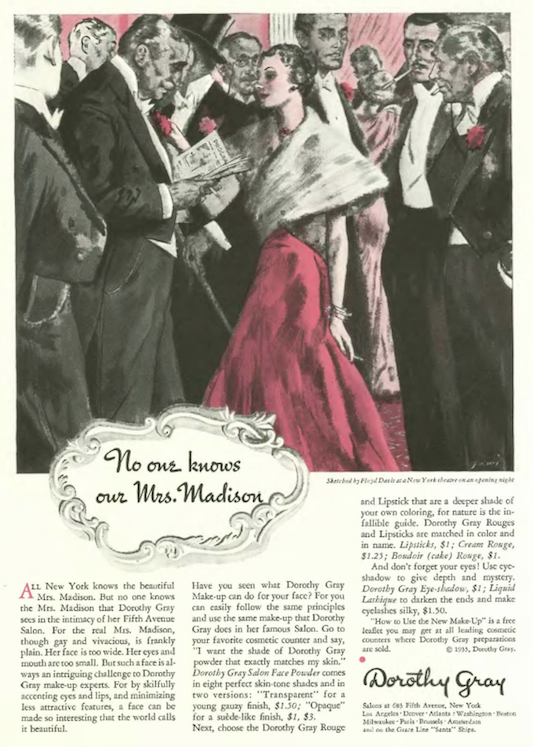
The Dorothy Gray salons didn’t mince words when it came to a woman’s beauty regimen…without their help, claimed this ad, the poor “Mrs. Madison” would be “frankly plain,” with a face too wide and eyes and mouth too small…

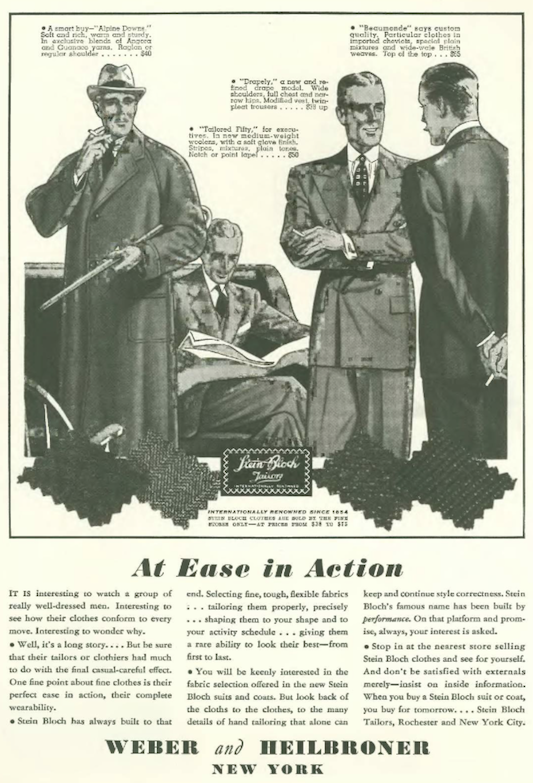
…notable in ads for men’s and women’s clothes were the presence of cigarettes…all three of the men in this spot are having a smoke in their smart attire…

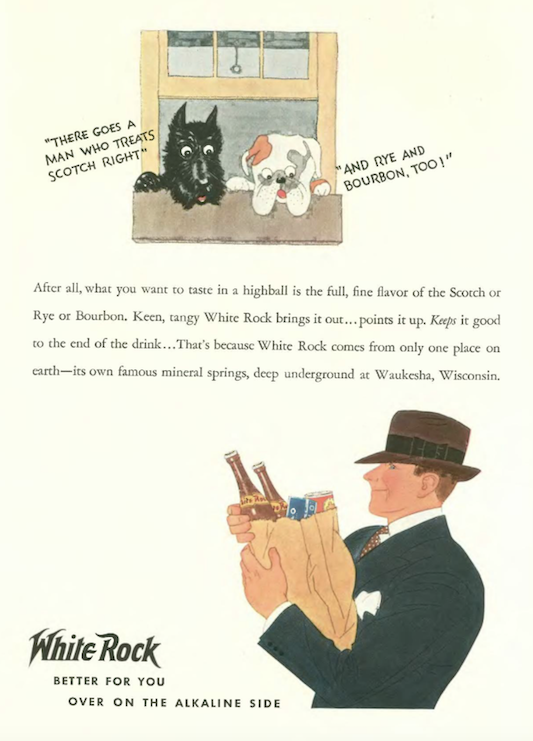
…White Rock gave their logo-bearer Psyche a rest in 1935 with a variety of ads including this one…

…the makers of Bisquit assumed their customers could read the French dialogue, or at least pretend to…

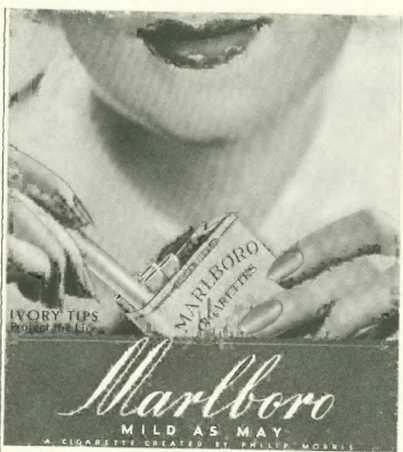
…when we (of a certain age) think of Marlboro we think of the rugged Marlboro Man, but in 1935 the brand was exclusively marketed to women…

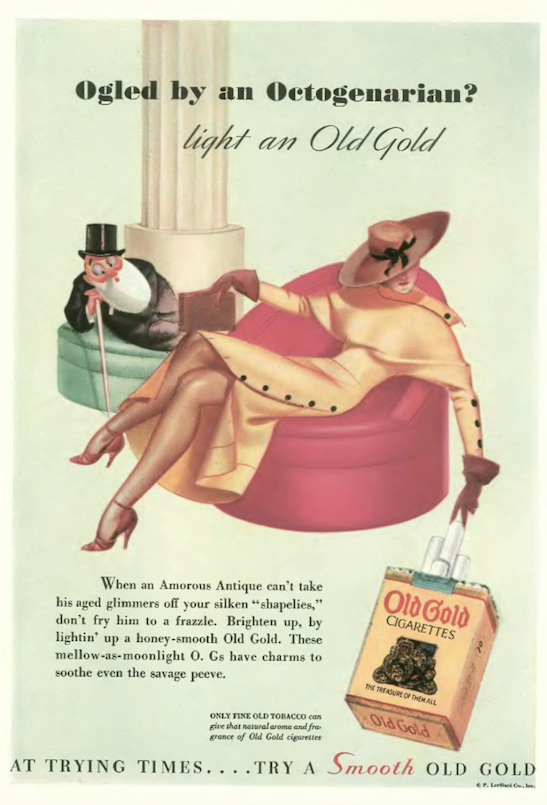
…and who knows what Old Gold’s target was here…definitely women smokers, who were the growth market, but men would take notice of the George Petty pin-up…

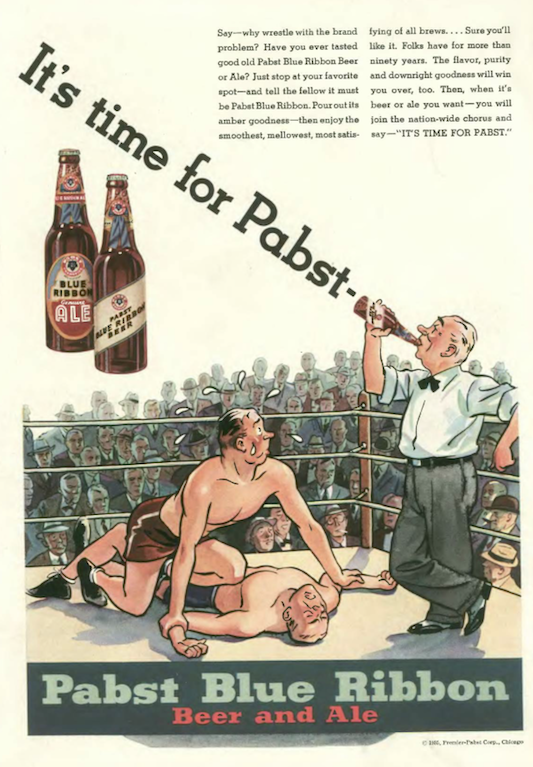
…the makers of Pabst Blue Ribbon Beer, who endured Prohibition by offering products like Pabst-ett cheese spread, were ready to grab a big market share after Repeal…

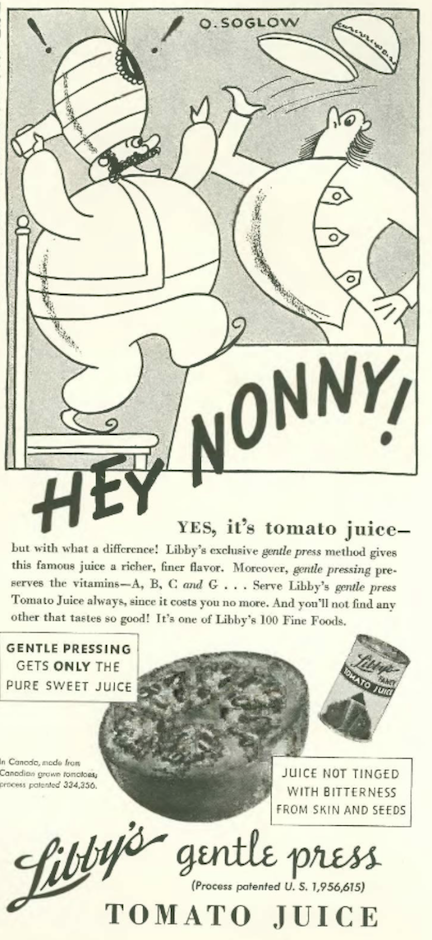
Otto Soglow, still contributing to The New Yorker despite taking his Little King to Hearst, drew up this potentate for a tomato juice spot…

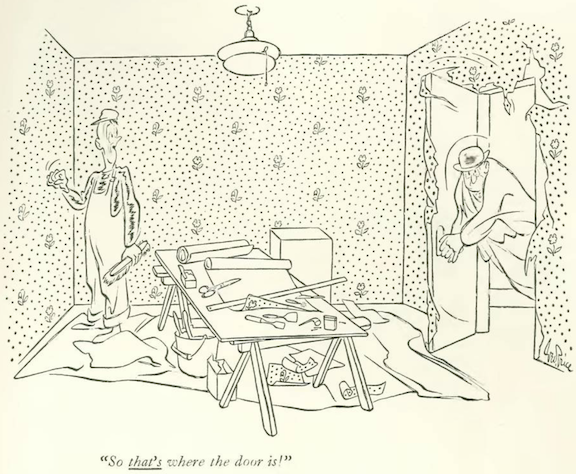
…which segues to our other cartoonists, beginning with Al Frueh and his take on the latest  Broadway hit, Jubilee!

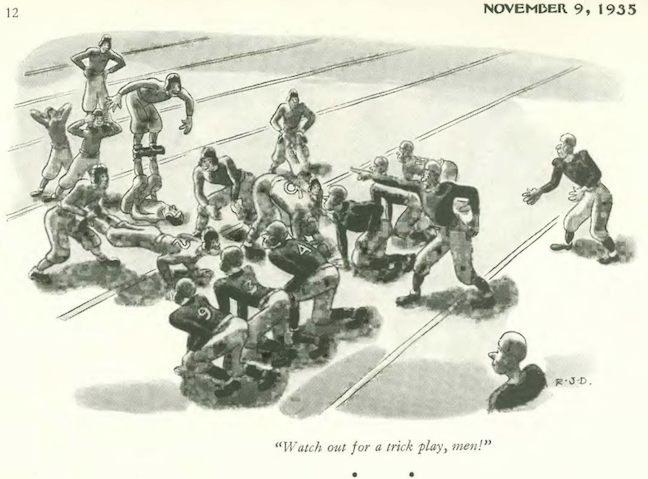
Robert Day saw action on the gridiron…

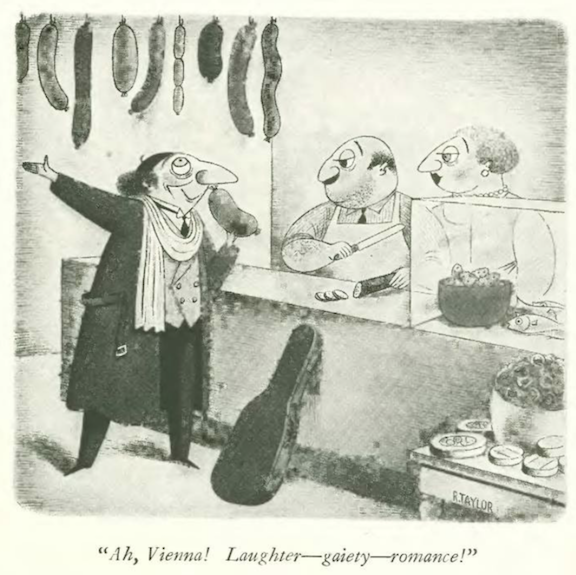
…unless I missed something, this might be Richard Taylor’s first New Yorker cartoon…

James Thurber put a unique spin on a bowling ball…

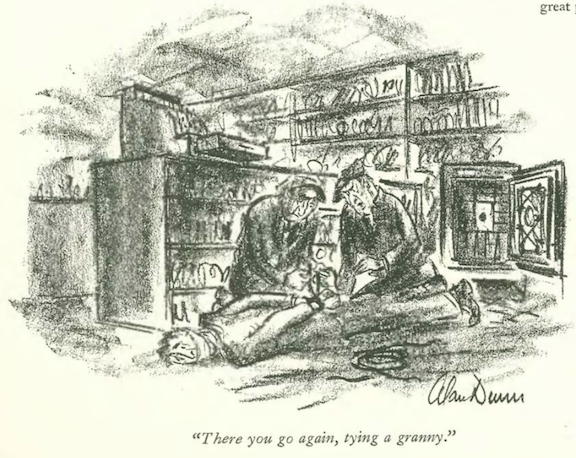
Alan Dunn was all in knots at a crime scene…

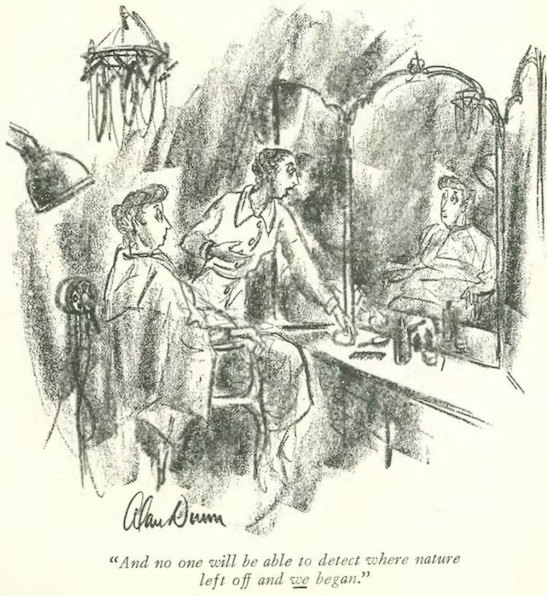
…Dunn again, pondering the wonders of a makeover…

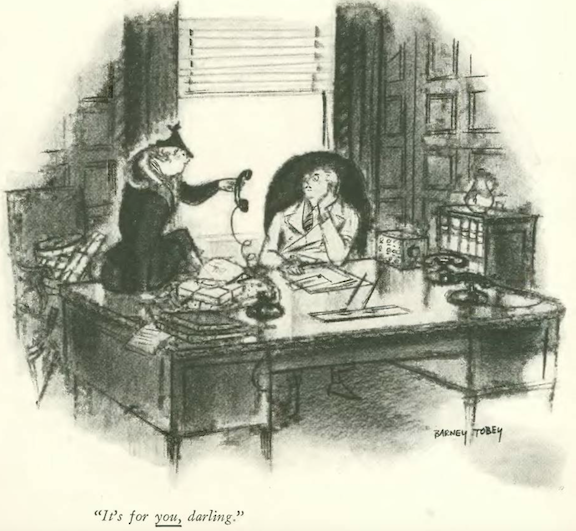
Barney Tobey eavesdropped on a Downtown subway…

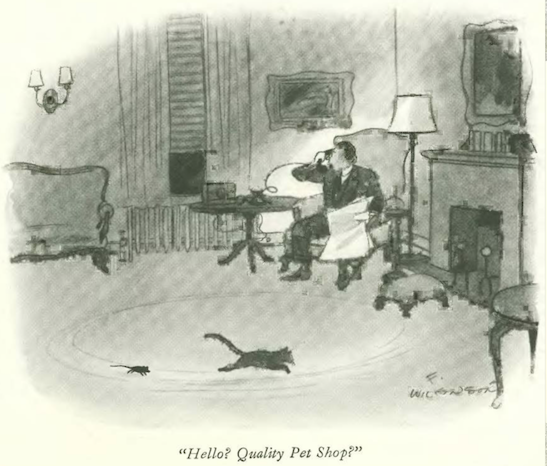
Fritz Wilkinson looked to return a defective pet…

Carl Rose needed two pages to illustrate his epic cartoon (caption added at the bottom for readability)…

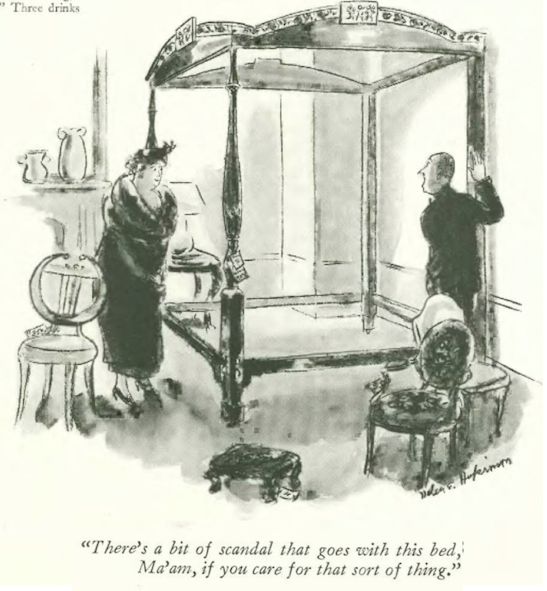
…and we close with Helen Hokinson, and a whiff of scandal…

Next Time: Seeking Decorative People…


A Summer Night

Morris Markey embodied the ideal of “A Reporter at Large,” and for his Sept. 7 column he decided to stroll the steamy streets of Manhattan on a late summer night, finding the sidewalks alive with folks seeking a break from their stifling dwellings.

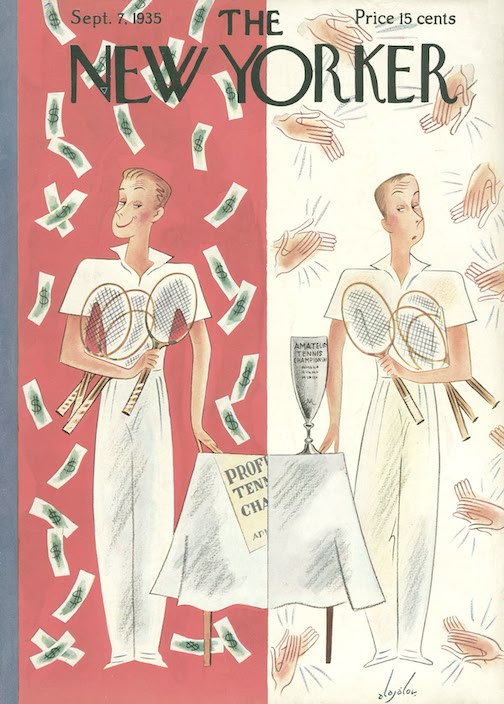
September 7, 1935 cover by Constantin Alajalov.

Markey (1899-1950) began “Summer Night” by describing a bus ride from Midtown to Washington Square with (I assume) his wife, Helen Turman Markey. They enjoyed the breeze atop the bus as they passed Central Park and heard the faint strains of music in the air.

FINAL NOTES…Morris Markey thought he heard music coming from the Central Park Casino (left) on that hot summer night; it would prove to be one of the Casino’s last summer nights since Robert Moses would have it demolished the following May; at right, Adolf Dehn lithograph Central Park at Night, 1934. (NYC Parks/Art Institute of Chicago)
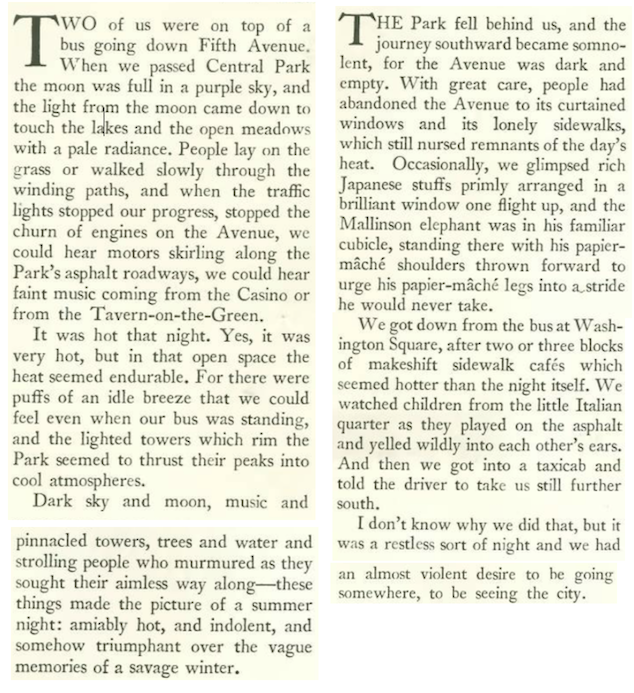
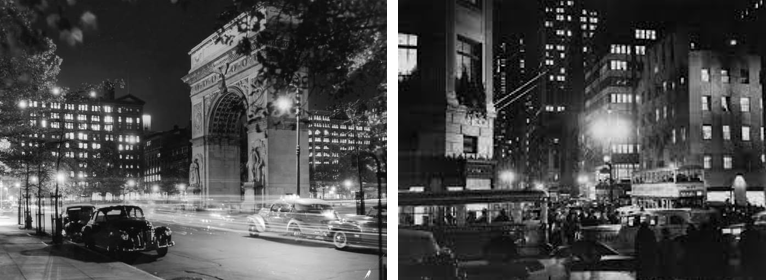
AMID THE BUSTLE the Markeys hopped off the bus at Washington Square and set out on foot. At left, Washington Square by night, 1945; at right, cacophony on Fifth Avenue, circa 1940. (Facebook)

The scenes described by Markey offer a glimpse of what has changed and what still remains of Manhattan night life after ninety years.

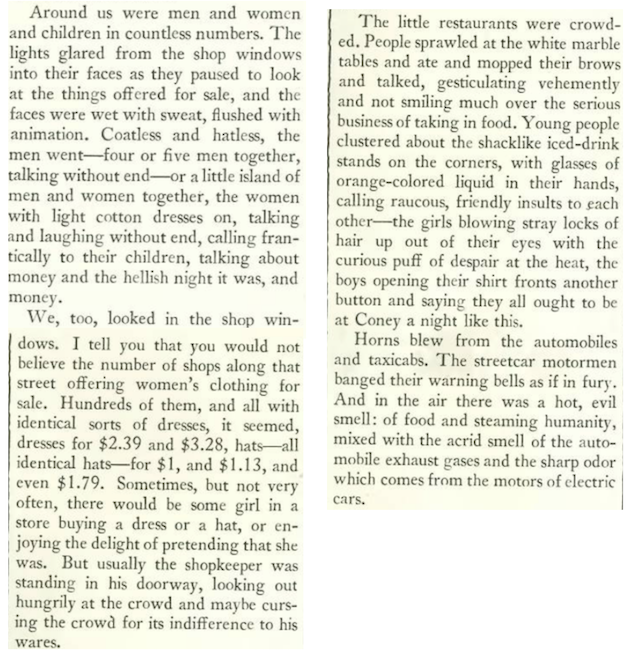
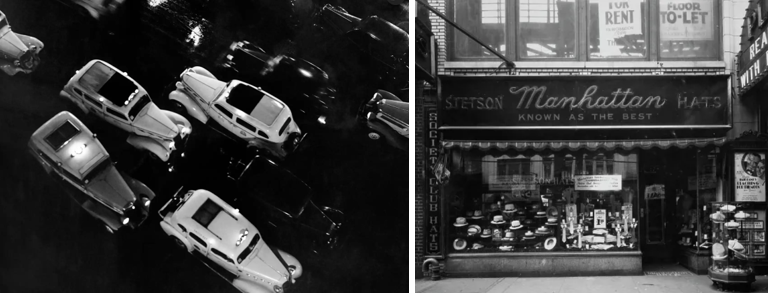
GO BLOW YOUR HORN…Something taxis did then and do now; Markey described folks looking at hats in a shop window, probably similar to this 1930s store at right. (theguardian.com/Pinterest)

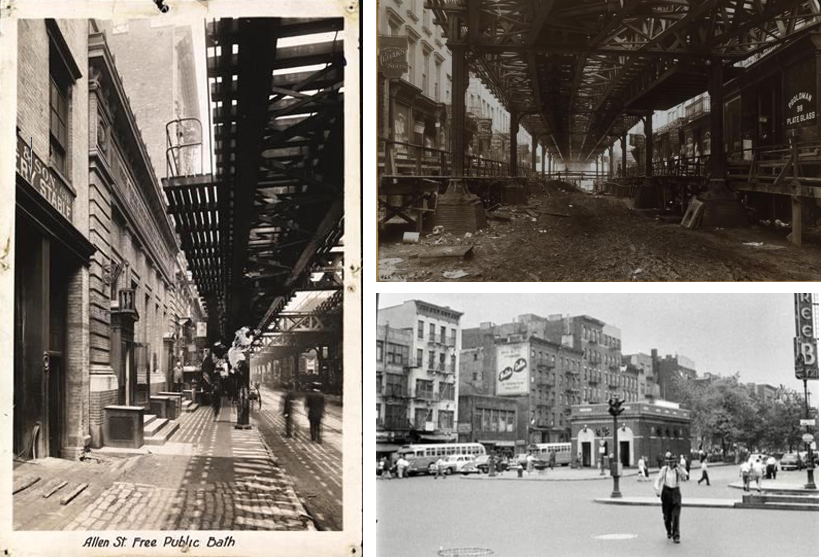
They concluded their stroll on the Lower East Side, where Markey noted a tenement clearance project on Allen Street. Considered one of the most densely populated places in the world, the street was widened by demolishing all of the buildings on its east side from Division to Houston Street.

HERE COMES THE SUN…The densely populated Allen Street was called “a place where the sun never shines.” The narrow street was mostly under the shadow of the elevated train tracks until it was widened in 1930s by demolishing all of buildings on its east side. Photo at left shows the public bath at 133 Allen Street (now used as a church). The demolition project, and the removal of the overhead “El” tracks in 1942, created a broad thoroughfare with a meridian mall in the center, as seen in the bottom photo of the intersection of Allen and Delancey circa 1950. (mcny.org/leshp.org/Facebook)

 * * *

At the Movies

Film critic John Mosher finally found a film he could gush about in Anna Karenina, and most notably its star Greta Garbo, who in Mosher’s words “sets the pace and the tone for the whole thing.” Mosher was not alone in his praise: Writing for The Spectator in 1935, Graham Greene wrote that Garbo’s acting in the film overwhelmed the acting of all the supporting cast save that of Basil Rathbone. This observation was later echoed by Roland Barthes, who wrote in 1957 that Garbo belonged “to that moment in cinema when the apprehension of the human countenance plunged crowds into the greatest perturbation, where people literally lost themselves in the human image.” Here is Mosher’s review:

GARBO AND THE OTHERS…Greta Garbo dominated the screen in 1935’s Anna Karenina. Clockwise, from top left, MGM poster for the film; Garbo with Fredric March as Anna’s lover, Count Vronksy; Garbo with Basil Rathbone, who portrayed Anna’s husband Karenin, and child actor Freddie Bartholomew as their son, Sergei; Maureen O’Sullivan took a break from the Tarzan films to portray Anna’s friend Kitty (here with Gyles Isham as Levin). (filmforum.org/Wikipedia/IMDB)

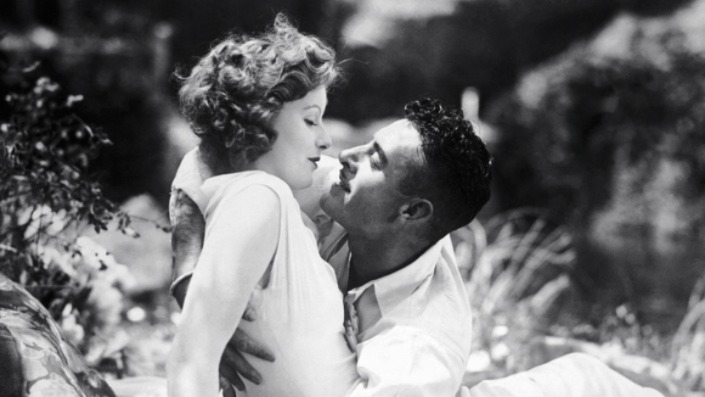
As Mosher noted, Garbo also portrayed Anna Karenina in the 1927 silent film Love, in which she co-starred with John Gilbert as Count Vronsky.

BEEN HERE BEFORE…Greta Garbo as Anna Karenina and John Gilbert as Count Vronsky in the 1927 silent film Love, the second of four films they made together. They were also lovers off-screen in the 1920s, but with the advent of sound pictures her star rose as his began to fall; in their last film together, Queen Christina (1933), Garbo insisted that Gilbert be cast opposite her in a final attempt to revive his declining career. He essentially drank himself to an early grave, dying of a heart attack in January 1936. (rottentomatoes.com)

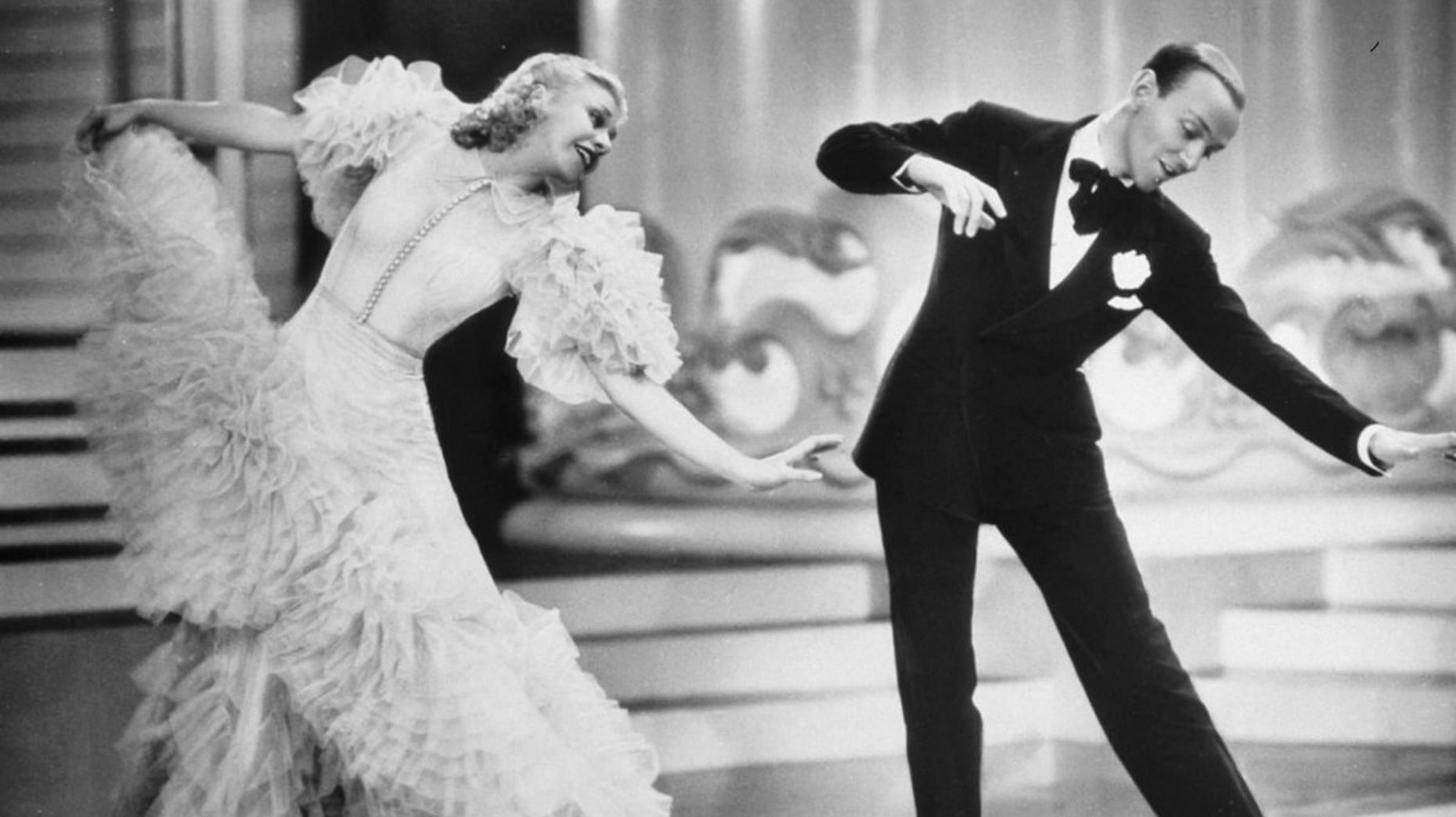
Mosher also enjoyed the dance moves of Fred Astaire and Ginger Rogers in Top Hat (although it could have used less “patter and piffle”), and brought out his hankie for The Dark Angel, where he once again encountered the acting of Fredric March.

DEFYING GRAVITY…Ginger Rogers and Fred Astaire made their complex dance moves look effortless as they glided through Top Hat, the fourth of ten films they made together. (americancinematheque.com)
TEARS FOR FEARS…Fredric March and Merle Oberon portrayed old friends and lovers facing a rival lover and the horrors of World War I in the 1935 weeper The Dark Angel. (rottentomatoes.com)

 * * *

From Our Advertisers

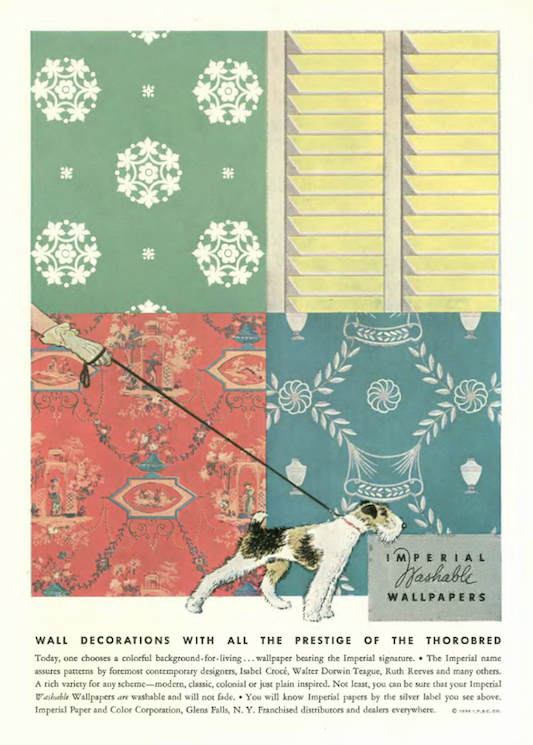
We begin with a splash of color from the makers of Imperial washable wallpapers…not sure why a wire fox terrier is featured in the advertisement…they were a popular breed, and maybe Fido was the reason one needed washable walls…

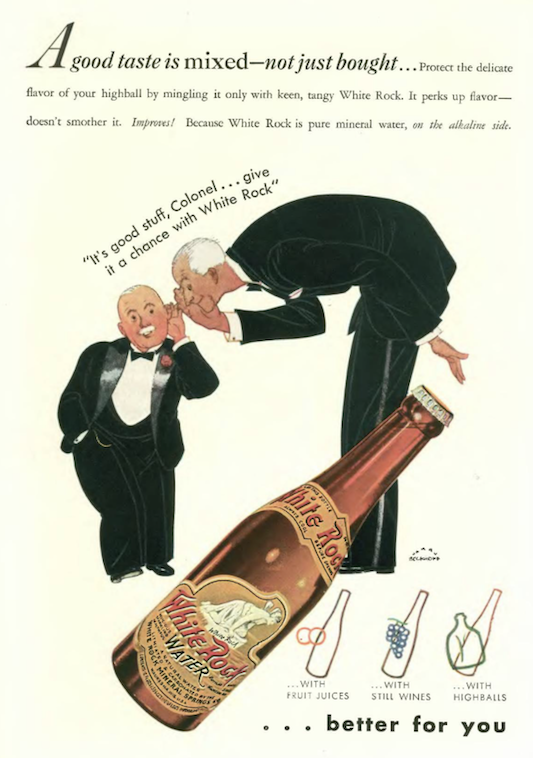
…White Rock rolled out their tiny Colonel to promote mineral water as an ideal mixer…

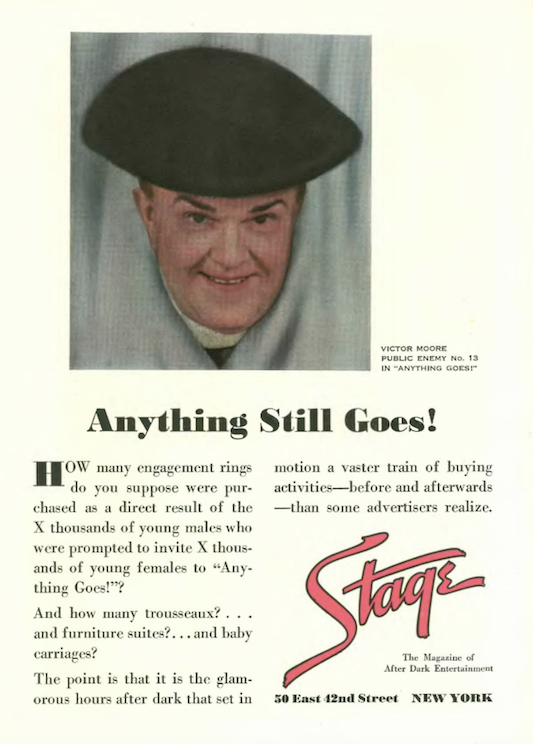
…ever heard of Victor Moore?…well, he was quite the comedian back in the day, playing timid, mild-mannered characters on stage and screen…Moore (1876-1962) was also famous for his 1942 marriage to dancer Shirley Paige when Moore was 65 and Paige was 20…

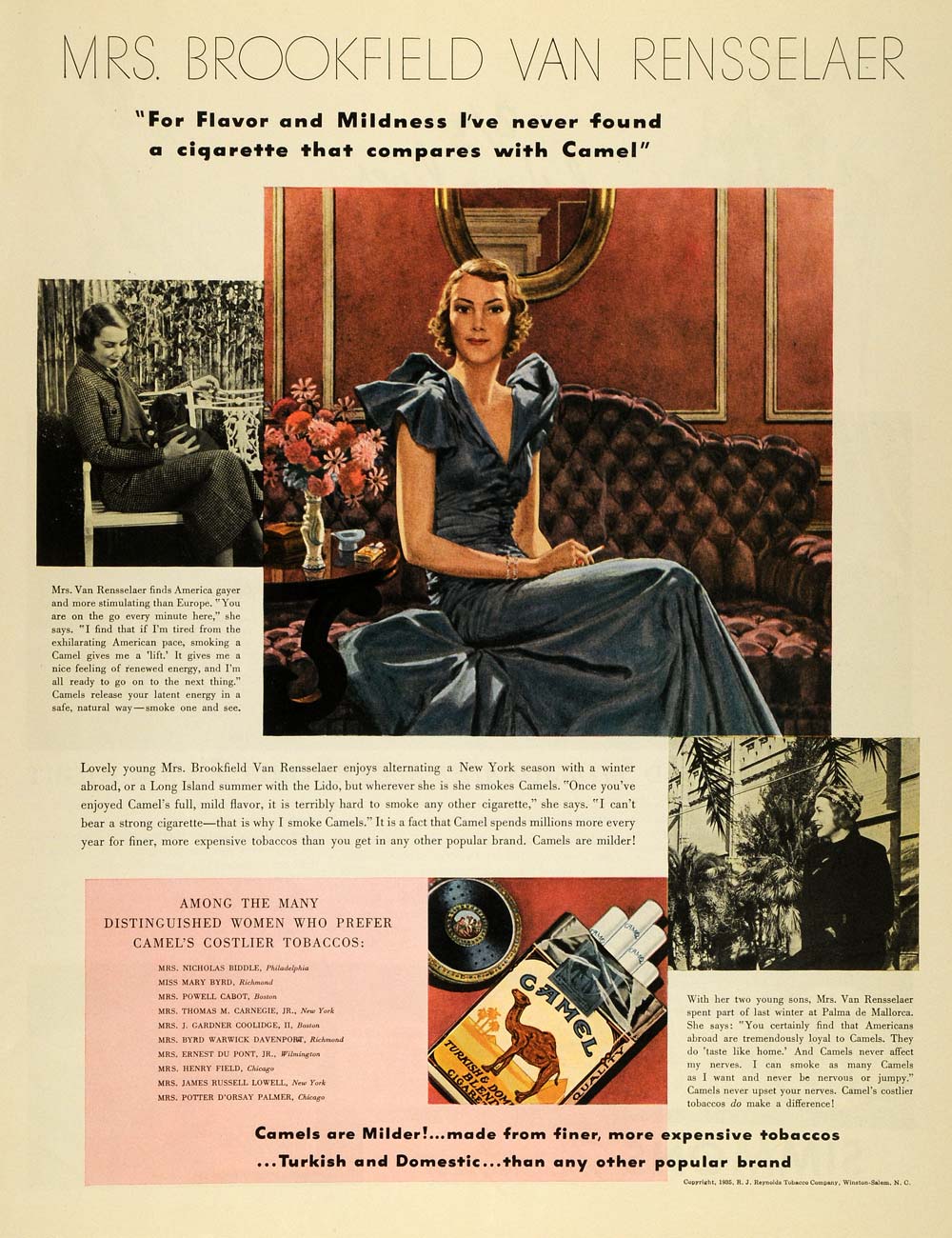
…Camel rolled out another high society endorser, Maude Adele Brookfield van Rensselaer (1904-1945)…her color image is a watercolor by Leslie Saalburg

…on to our cartoonists, we begin with spot art by Abe Birnbaum

and Maurice Freed

…also in the opening pages this wordless contribution by James Thurber

Gluyas Williams found this midday repast anything but relaxing…

Otto Soglow found a new “man’s best friend”…

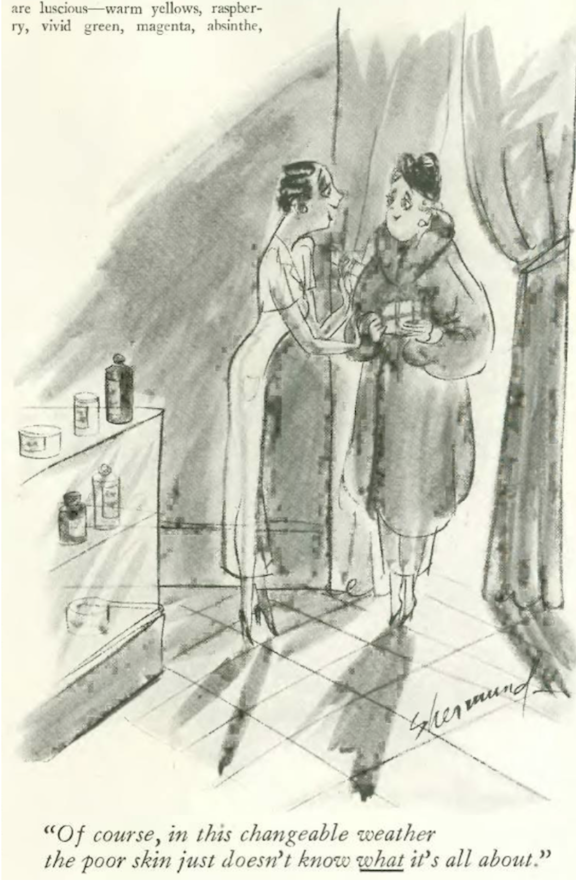
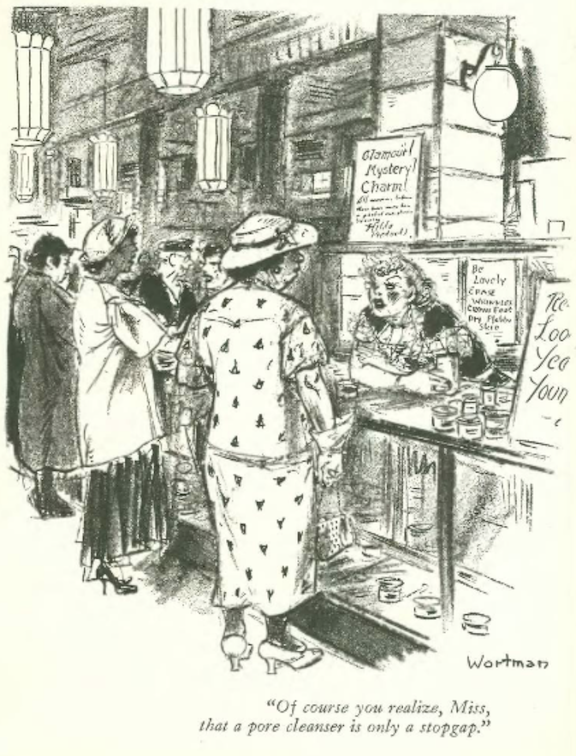
Denys Wortman encountered some frank advice at the cosmetics counter…

Helen Hokinson found appreciation for the “strong and silent” acting style…

Peter Arno gave us a department store clerk in need of some time off…

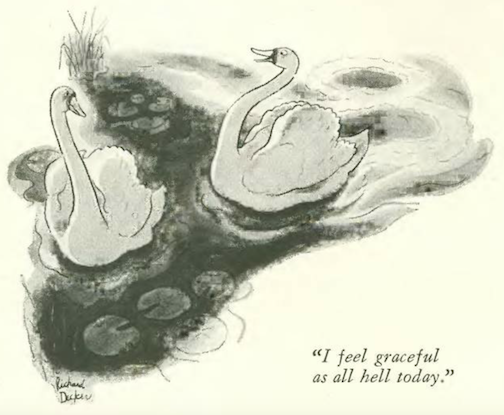
…and we close with Richard Decker, finding some truth in advertising…

Next Time: Looking For Mister Wrong…

A German Problem

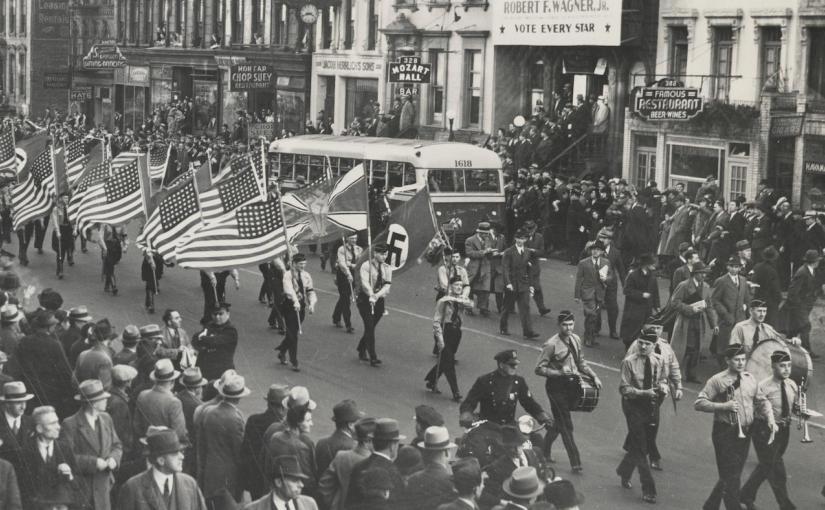
Above: A German American Bund parade in New York City on East 86th Street. Oct. 30, 1937. (Library of Congress)

Among the many ethnic enclaves of 1930s New York City was a neighborhood that was feeling the influence of world events, and not necessarily in a good way.

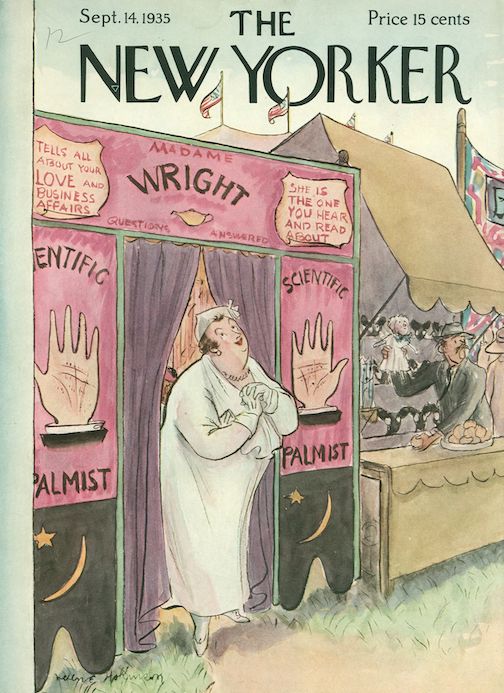
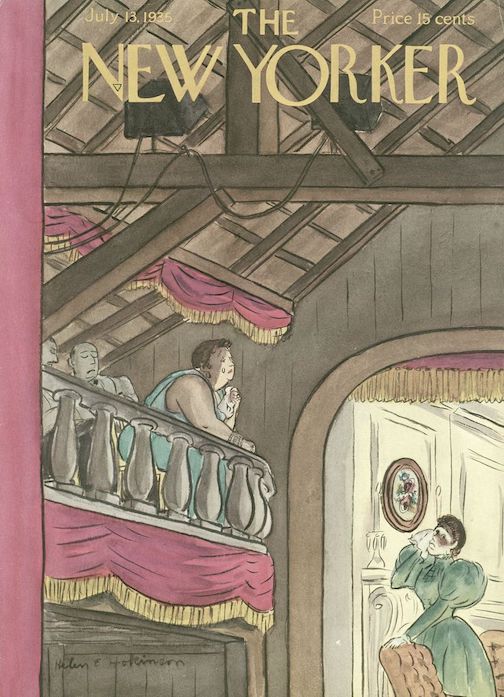
July 13, 1935 cover by Helen Hokinson. One of the first cartoonists to be published in The New Yorker, she appeared in the magazine for the first time in the July 4, 1925 issue. She contributed 68 covers and more than 1,800 cartoons to the magazine.

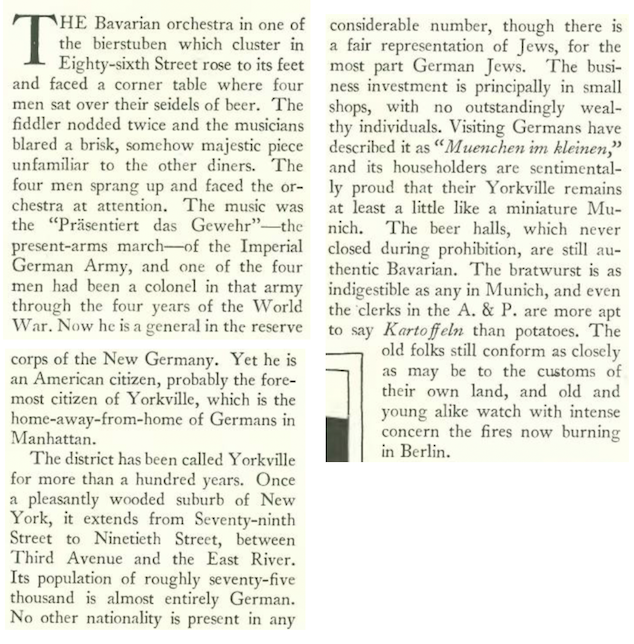
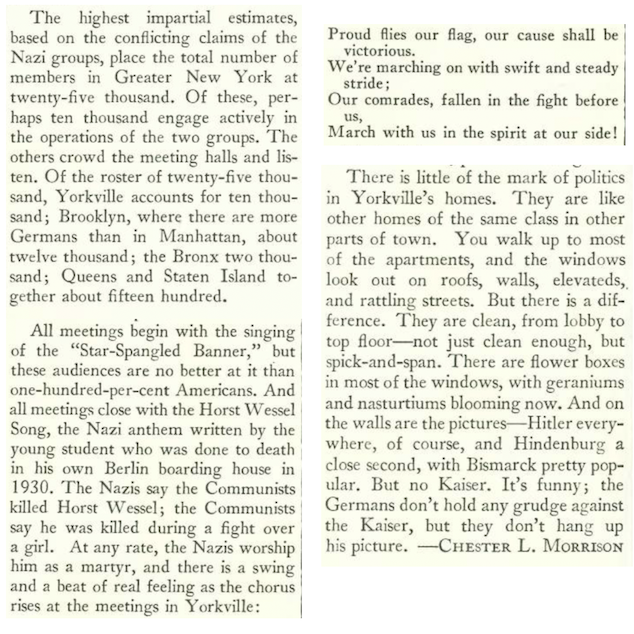
Journalist Chester L. Morrison looked at life among German immigrants on the Upper East Side for “A Reporter at Large.” Under the title “Muenchen Im Kleinen” (Little Munich), Morrison examined the everyday life of the Yorkville district between East 79th and East 96th streets.

Germans had settled in New York City almost from its first days, and by 1885 the city had the third-largest German-speaking population in the world, outside of Vienna and Berlin, the majority settling in what is today the East Village. Following the General Slocum disaster in 1904, German settlement migrated to Yorkville, which was commonly referred to as Germantown. Here are excerpts of Morrison’s observations:

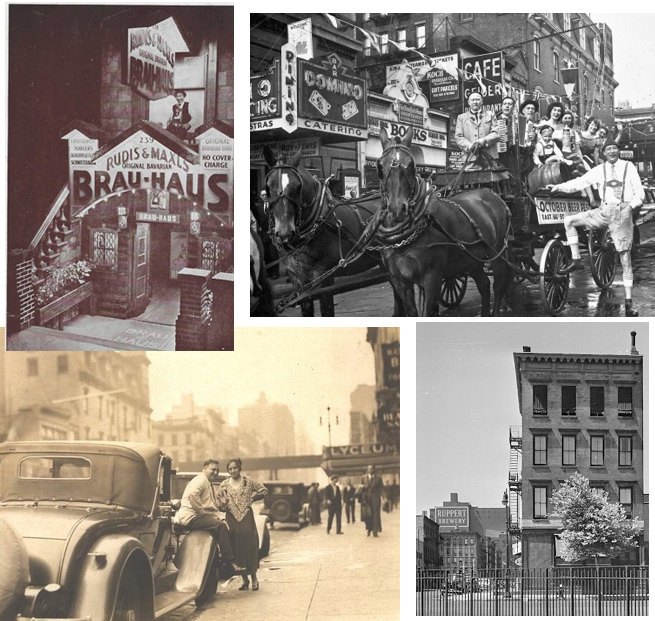
ENCLAVE…Clockwise, from top left, Rudi and Maxl’s Brau-Haus at 239 East 86th; Oktoberfest celebration in Yorkville, undated; Walker Evans photo with Rupert Brewery sign in the background; the Yorkville neighborhood in the 1930s with the old Third Avenue El in the background. (postcardhistory.net/boweryboyshistory.com/metmuseum/gothamcenter.org)

With the rise of the Nazi Party in Germany in the 1930s, a pro-Hitler group called the German-American Bund began to organize street rallies and marches on 86th Street and on 2nd Avenue. Although they represented a minority of German settlers, the Bund made itself visible in parades and other public events that culminated in a mass demonstration at Madison Square Garden in 1939. The Bund also organized training camps for young men outside of the city, such as Camp Siegfried in Yaphank, L.I.

Morrison noted that Yorkville homes looked like many others across the city, that is until you saw the pictures on their walls.

SCOUT’S HONOR?…At a German-American Bund camp in Andover, New Jersey, young campers stand at attention as the American flag and the German-American Youth Movement flag are lowered at sundown, July 21, 1937. (AP)
THE MADNESS OF CROWDS…A German-American Bund color guard marches through Madison Square Garden, Feb. 20, 1939. (AP)

 * * *

Garden Varieties

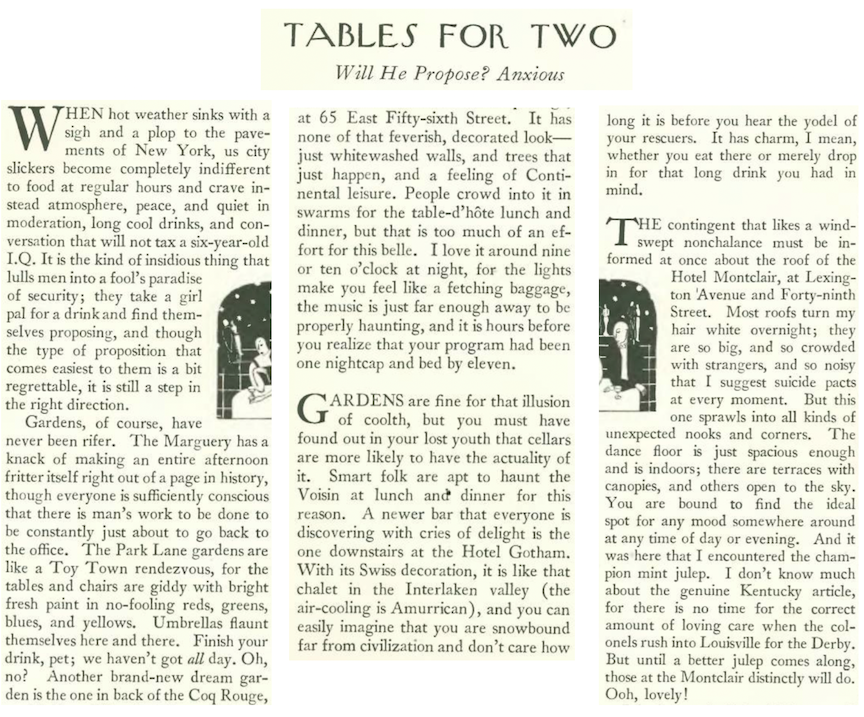
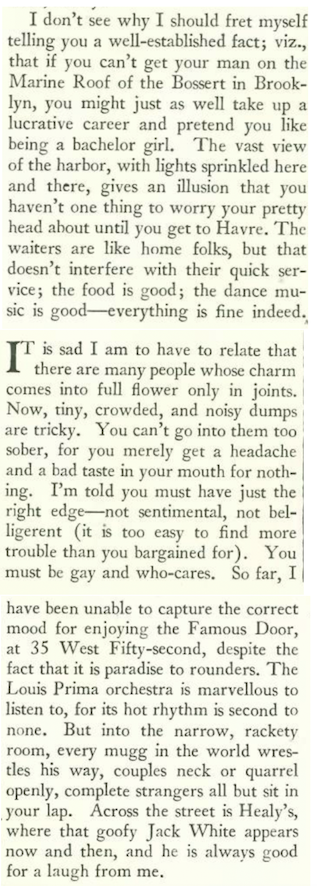
Now for a palate cleanser as we turn to Lois Long and her “Tables For Two” column, in which she examined the confluence of hotel gardens and marriage proposals. Excerpts:

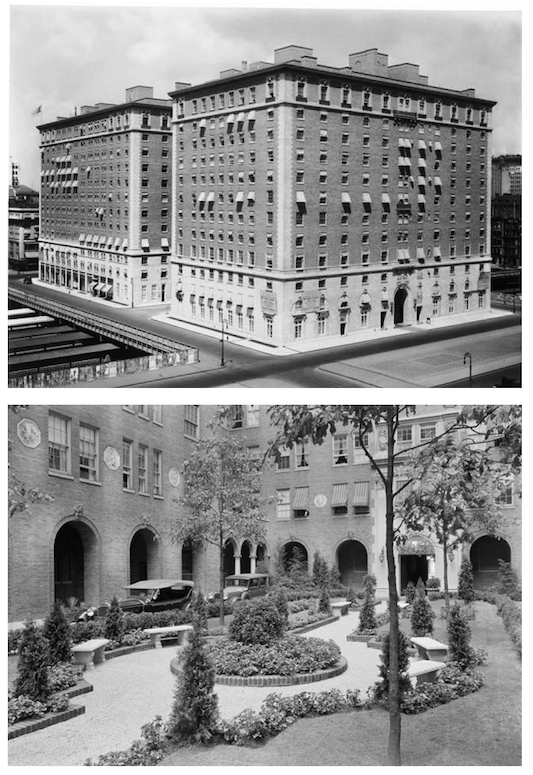
OASIS…Lois Long recommended the Hotel Marguery’s formal garden as a place to “fritter away” an afternoon. The hotel was demolished in 1957 to make way for the Union Carbide Building. (Museum of the City of New York)
A COOL, SWISS CHALET was how Long described the new Alpine Room in the basement of the Gotham Hotel. (daytoninmanhattan.blogspot.com)

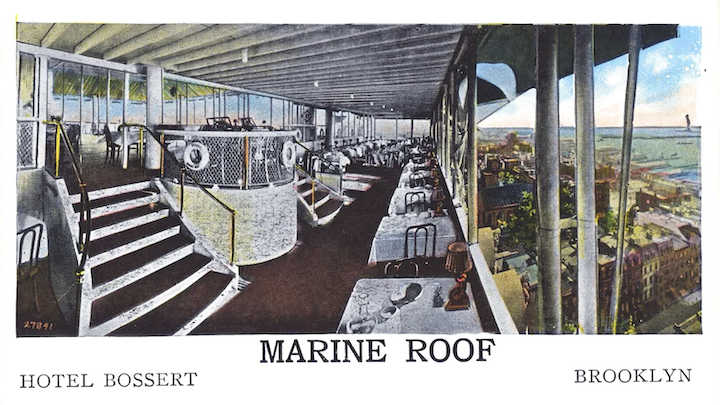
Long continued as she set her sights on Brooklyn…

HE WILL LIKELY SAY YES, according to Long, if you got your beau to accompany you to the roof of the Hotel Bossert in Brooklyn. (brownstoner.com)
THE TUNEFUL SURROUNDINGS of the Famous Door were a bit too crowded for Long, however this group seems to have had plenty of room to enjoy the greats Ben Webster, Eddie Barefield, Buck Clayton, and Benny Morton on stage at the Famous Door in 1947. (Wikipedia)

 * * *

Monster Mash-up

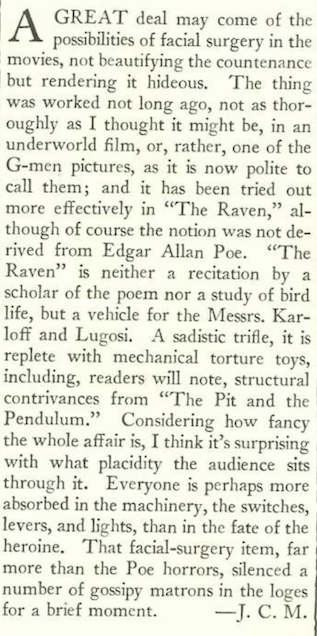
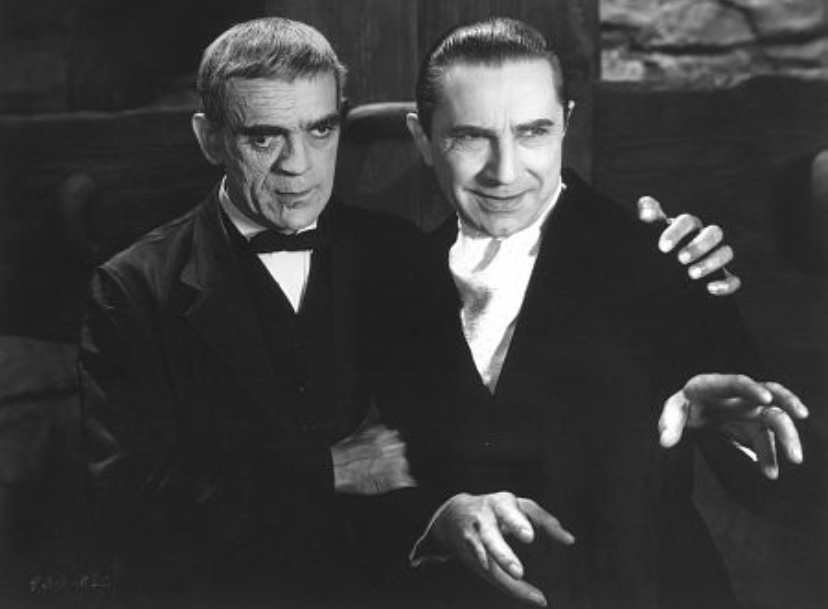
Boris Karloff and Bela Lugosi are synonymous with 1930s monster flicks (they did eight together) but their latest outing, The Raven, left critic John Mosher wondering where the Poe was in the midst of this “sadistic trifle.”

BUDDY FILM…The Raven (which had almost nothing to do with Edgar Allen Poe’s famous narrative poem) was the third of eight films that featured Boris Karloff and Bela Lugosi. According to film historian Karina Longworth, thanks to a wave of monster movie hits in the 1930s, these two middle-aged, foreign, struggling actors became huge stars. (cerealatmidnight.com)
TYPECAST? WHO CARES?…Bela Lugosi and Boris Karloff in 1932. Despite being monster movie rivals, the two seemed get along well off-screen, perhaps appreciating their mutual good fortune. (beladraculalugosi.wordpress.com)

* * *

Ode to Education

Clarence Day, best known for his Life With Father stories, also contributed a number of cartoons to The New Yorker that were accompanied by satirical poems…here he examines attempts at education in the arts and sciences…

 * * *

From Our Advertisers

We start at the back of the book, and a couple of one-column ads (appearing on the opposite sides of the same page) that catered to very different clientele…

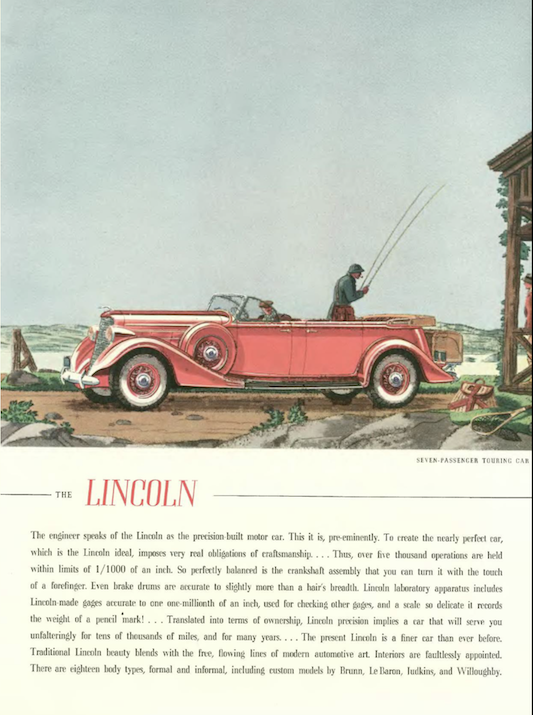
…the makers of Lincoln luxury cars knew the type of client they were fishing for here…

…pin-up artist George Petty continued exploring his beauty and the beast theme on behalf of Old Gold cigarettes…

…and Camel offered more reasons why you should smoke your way to athletic glory…

…this inside back cover advertisement reminds us that we are indeed back in 1935…

…as does this one from Dr. Seuss, with a shot of insecticide for a talking toddler…

…on to our cartoonists, beginning with Charles Addams and some Navy hijincks…

Gluyas Williams offered his latest take on American club life…

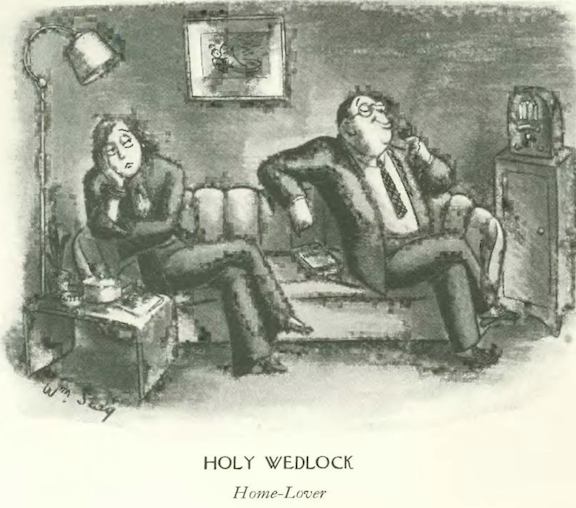
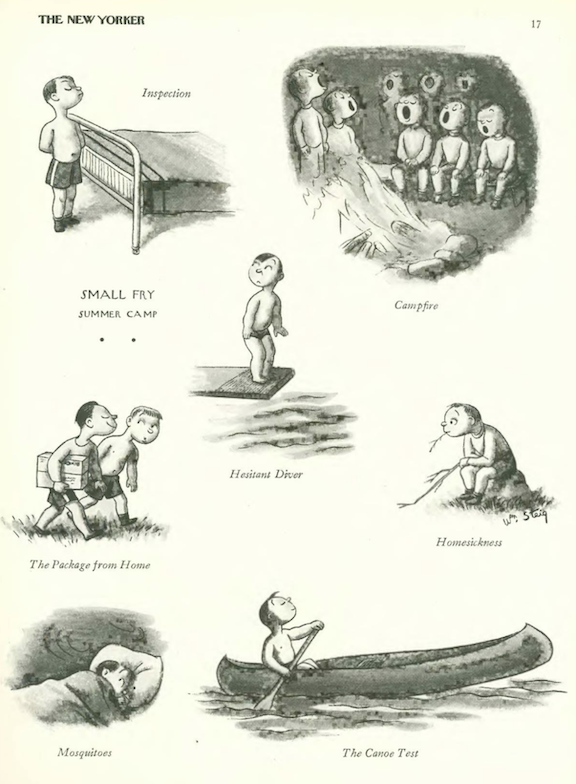
William Steig took us to summer camp…

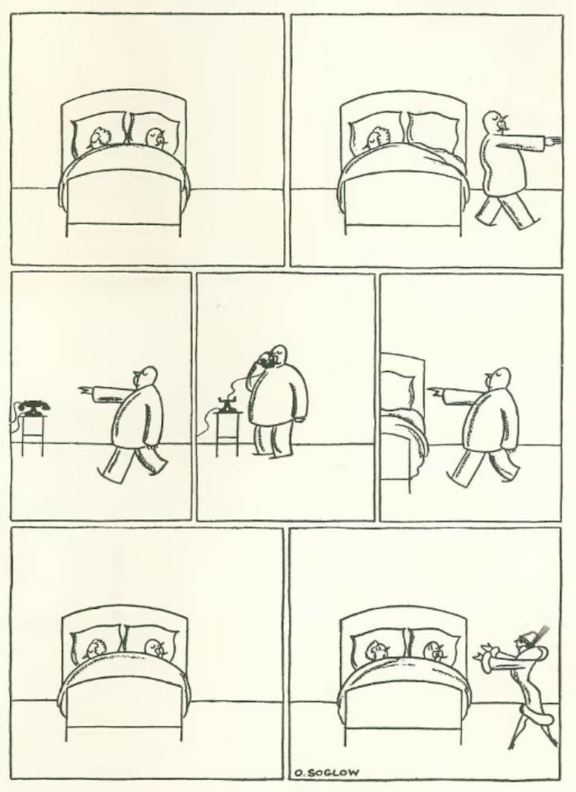
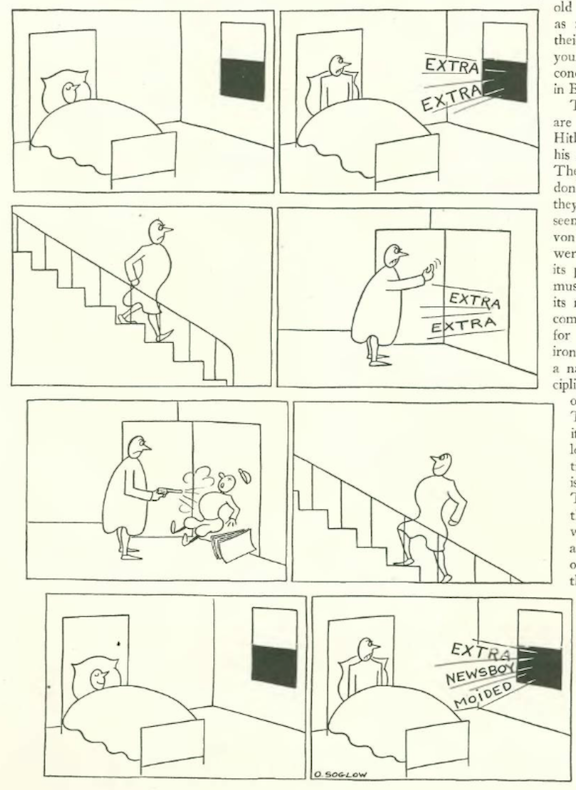
Otto Soglow looked for a good night’s rest…

Mary Petty explored the latest in bathing fashions…

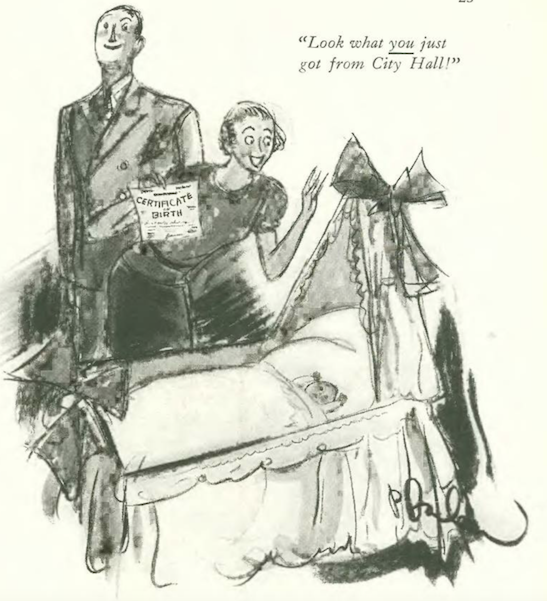
Perry Barlow introduced us to some proud parents…

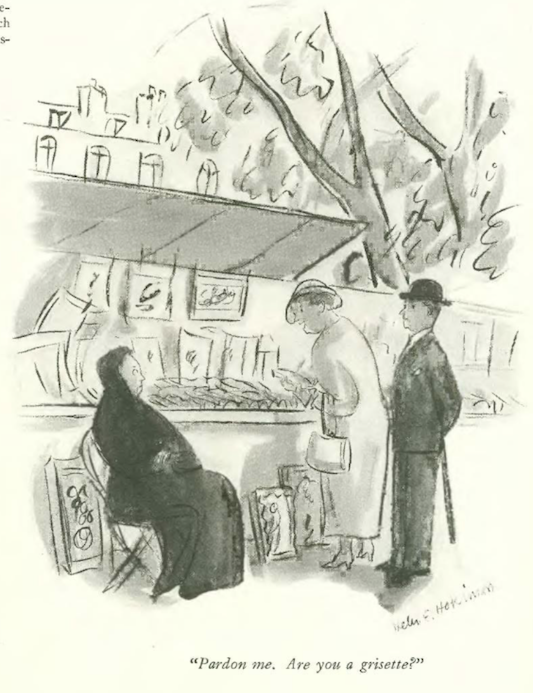
…and to close with Helen Hokinson, who showed us some innocents abroad…

Next Time: A Double-Header…


Happy Motoring

In 1933 the U.S. economy began a slow recovery from the 1929 market crash, but the recovery stalled in 1934 and 1935, and folks including E.B. White were looking for any indication of brighter days ahead.

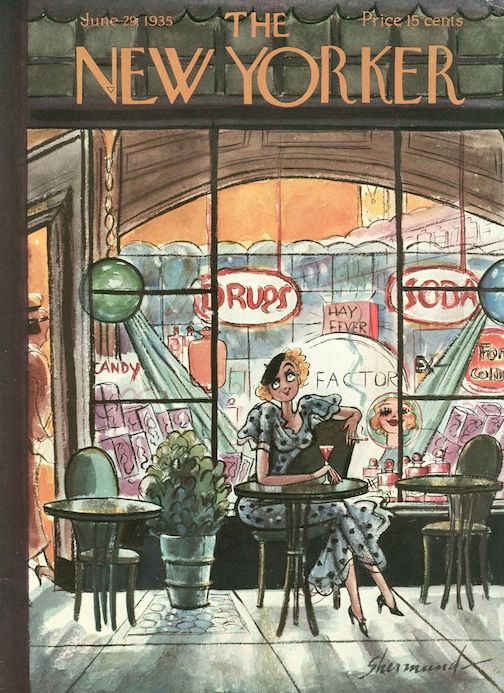
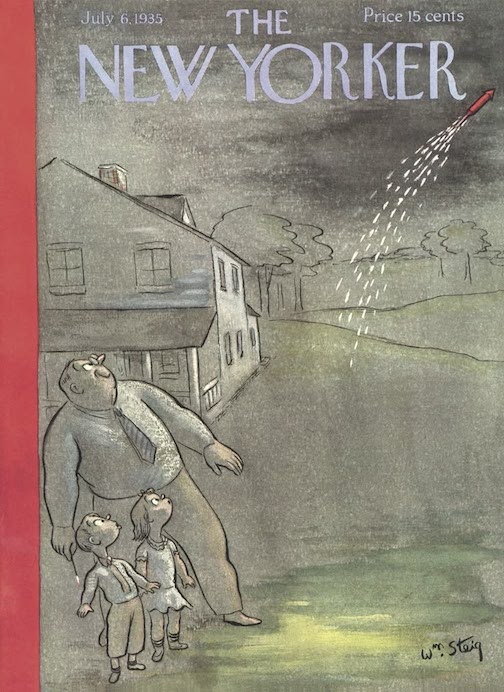
June 29, 1935 cover by Barbara Shermund. A prolific contributor of cartoons to The New Yorker (600 in all), Shermund also illustrated eight covers, including this charmer.

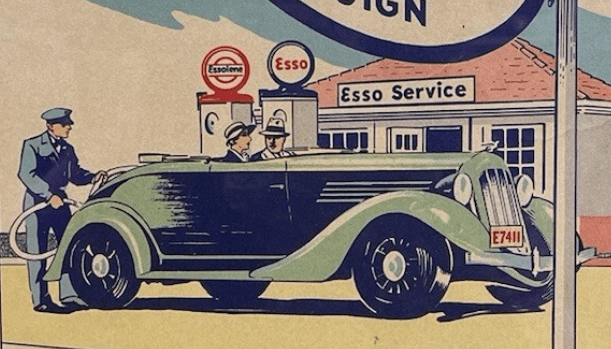
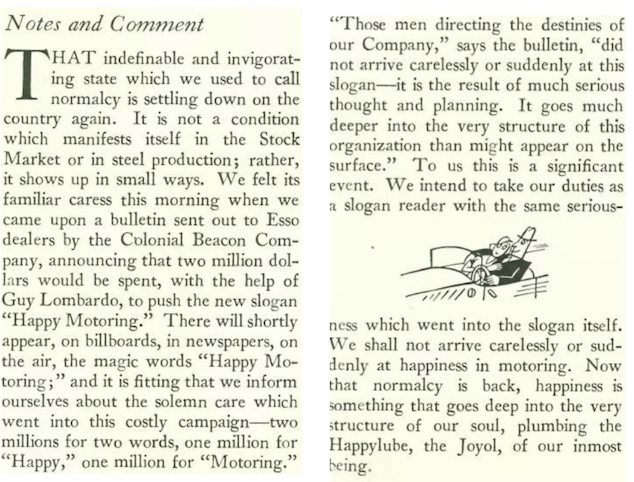
White suggested that Americans look for smaller signs of normalcy, such as the new slogan, “Happy Motoring,” that was being rolled out by Standard Oil’s Esso.

IT’S A GAS…At left, Gasoline Station, Tenth Avenue, photo by Berenice Abbott, 1935; at right, newspaper ad, May 1935. (metmuseum.org/wataugademocrat.com)

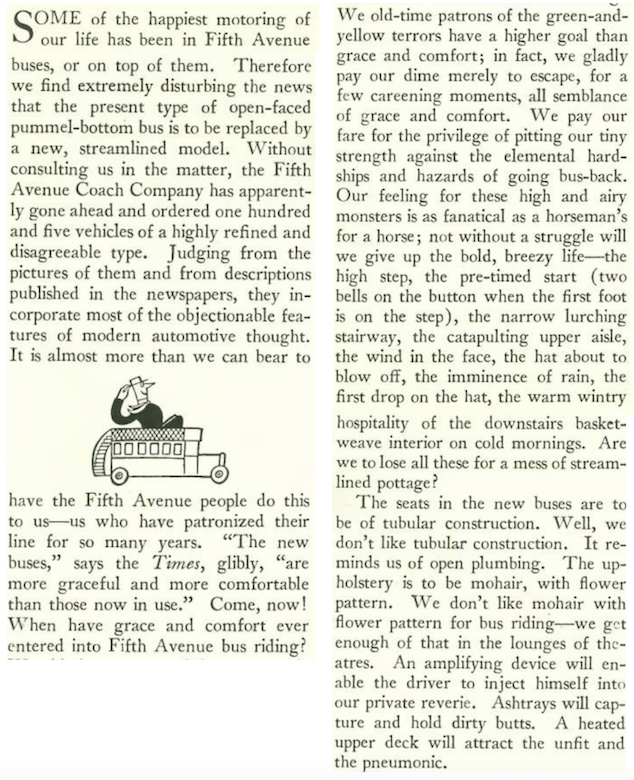
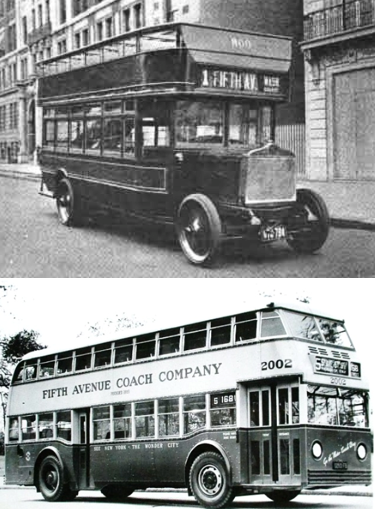
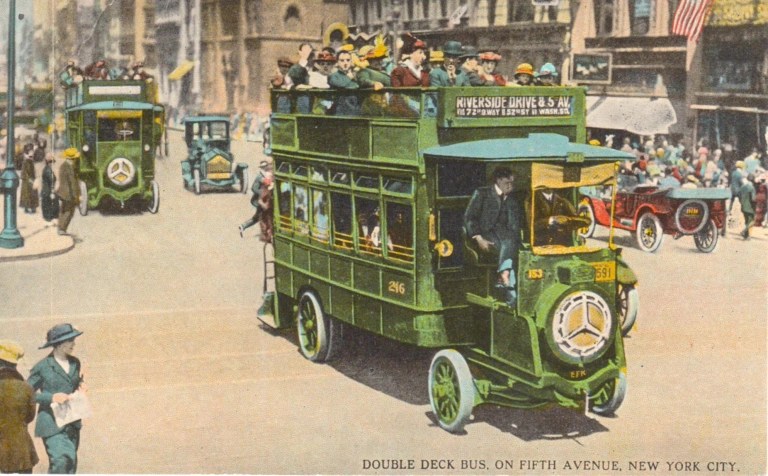
Like many of us, White was a study in contradictions, enthusiastically embracing the age of air travel while rejecting the style and comforts of modern automobiles (he famously loved his Model T). It is no surprise that he also preferred Fifth Avenue’s spartan green and yellow omnibuses over the new streamlined buses that would soon be plying the streets of Manhattan.

NO THANKS…E.B. White preferred the spartan accommodations of the old Fifth Avenue buses to the comforts of their replacements.  (coachbuilt.com)

White elaborated on the advantages of the older buses:

STYLE OVER COMFORT…Of the old Fifth Avenue buses, E.B. White wrote that he preferred the “hard wooden benches on the sun deck, conducive to an erect posture, sparkling clean after a rain.” (Ephemeral New York)

 * * *

Cinderella Story

Challenger James J. Braddock achieved one of boxing’s greatest upsets by defeating the heavily favored (and reigning champ) Max Baer. For this feat he was given the nickname “Cinderella Man” by journalist Damon Runyon. The writer of the “Wayward Press” (byline “S.M.”) seemed less impressed, and mocked the national media for their sudden pivot on the bout’s unlikely outcome.

BRINGING THE FIGHT…Challenger James J. Braddock lays into defending champ Max Baer during a heavyweight boxing title match on June 13, 1935, at the Madison Square Garden Bowl in Long Island City. Although the national media dismissed Braddock’s chances of winning, Braddock trained hard for the fight while Baer spent more time clowning around than training. Braddock won by unanimous decision, eight rounds to six. (thefightcity.com)

 * * *

Seemed Like a Nice Guy

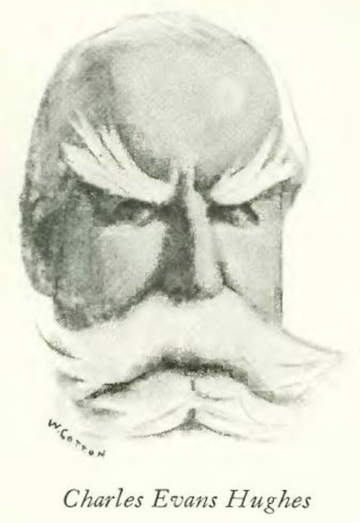
Henry Pringle penned the first part of a three-part profile of Supreme Court Chief Justice Charles Evans Hughes (1862–1948), who was also a former New York governor and U.S. secretary of state. William Cotton rendered a rather severe-looking Hughes in this caricature for the profile…

…although in reality he tended to look more like this…

PROGRESSIVE THINKER…Supreme Court Chief Justice Charles Evans Hughes in 1931. Known as a reformer who fought corruption, Hughes was a popular public figure in New York. (Wikipedia)

 * * *

From Our Advertisers

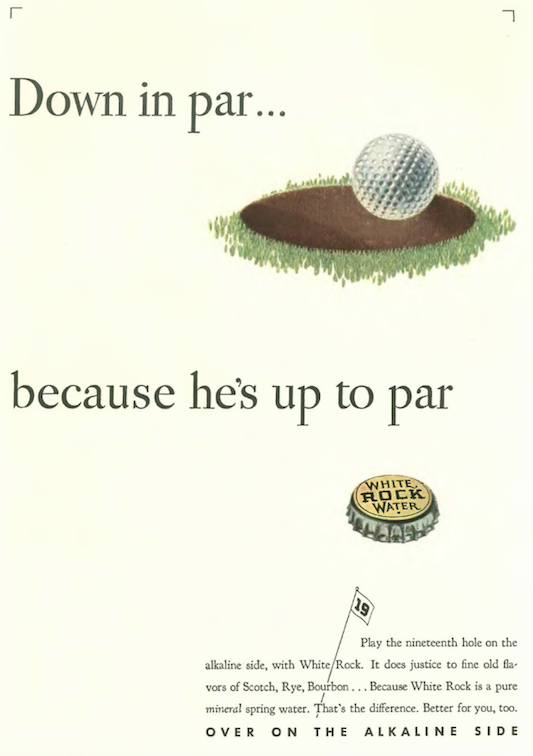
We begin with an advertisement that goes down easy, with its minimal style…

…by contrast, a busy Camel advertisement…R.J. Reynolds alternated full-page ads featuring society women with these health-themed spots that linked smoking with athletic prowess…

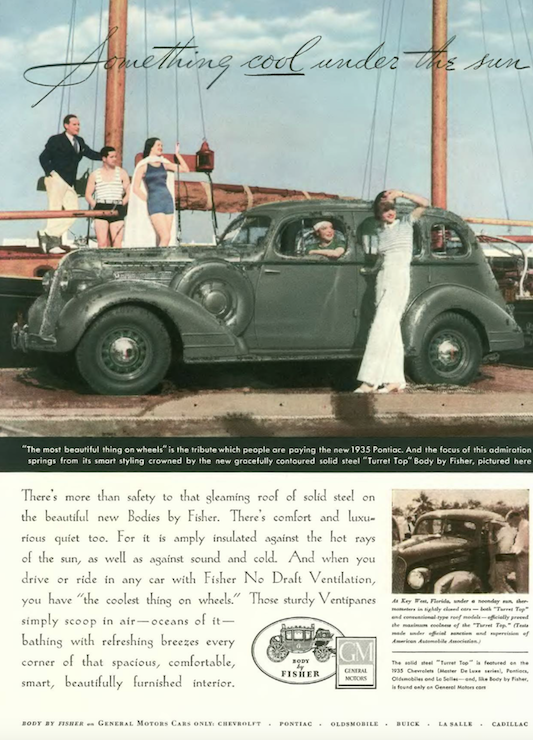
…this advertisement by Fisher claimed the 1935 Pontiac was “The most beautiful thing on wheels,” however here it looks perfectly ancient…

…as does this Nash on the inside back cover…

…the back cover was claimed by Highland Queen, a blend of some very fine distilleries…

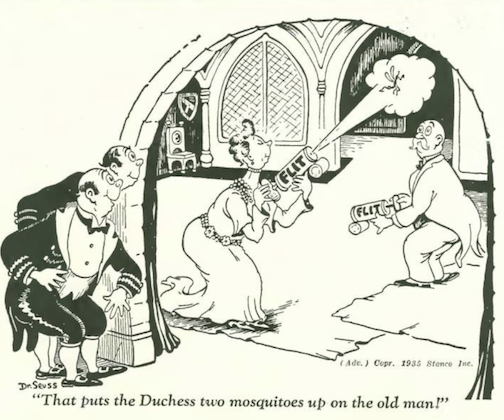
Theodore Seuss Geisel continued his ongoing saga against the mighty mosquito…

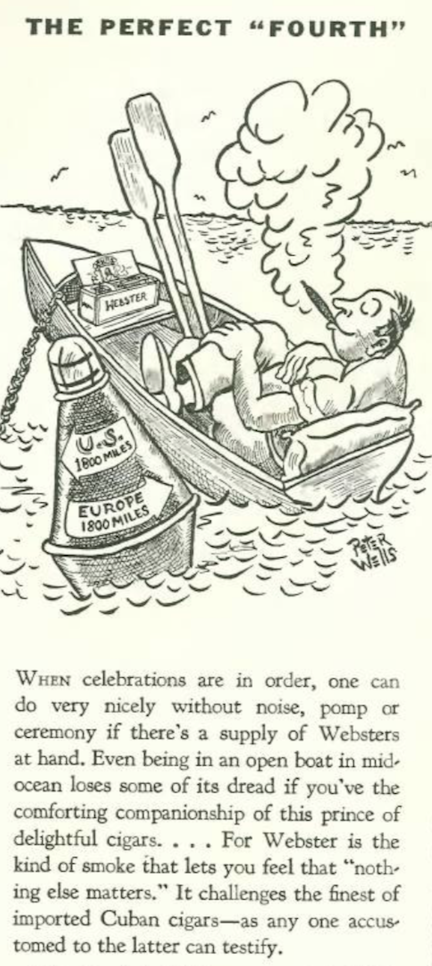
…and we have this back of the book ad for Webster cigars, who enlisted the talents of Peter Wells

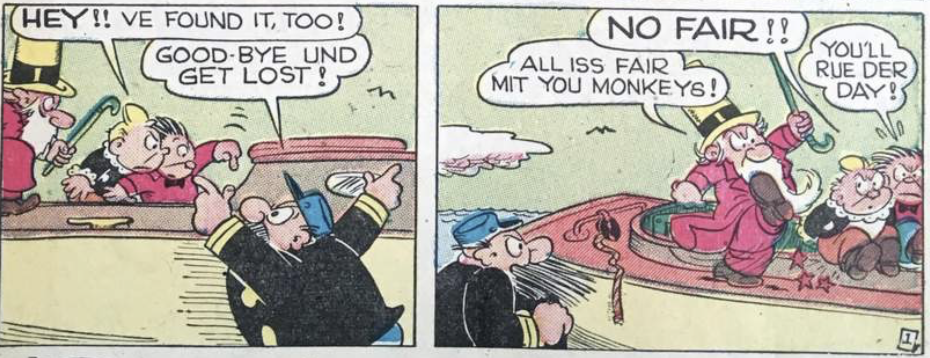
…Wells (1912–1995) was also a children’s book writer, most famous for contributing drawings to the Katzenjammer Kids comic strip …

Peter Wells, detail from the opening page from “The Katzenjammer Kids,” #16, Spring 1951, King Features Syndicate, Inc.

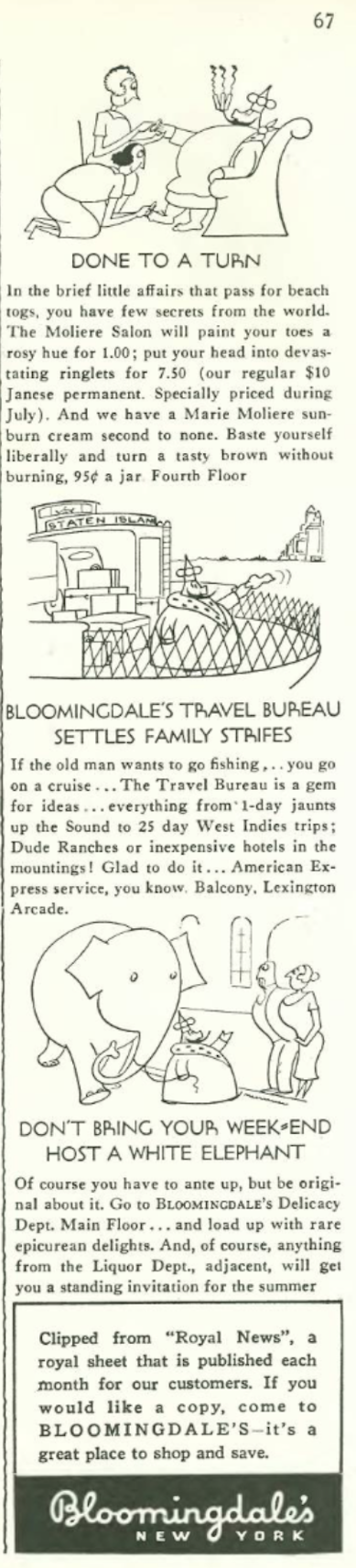
…and of course we are all familiar with Otto Soglow, who sold his beloved Little King to Hearst (and made a pile) but was still able to feature his diminutive potentate in the The New Yorker in a series of ads for Bloomingdales…

…which brings us to our cartoonists, and a familiar torment for our beloved James Thurber

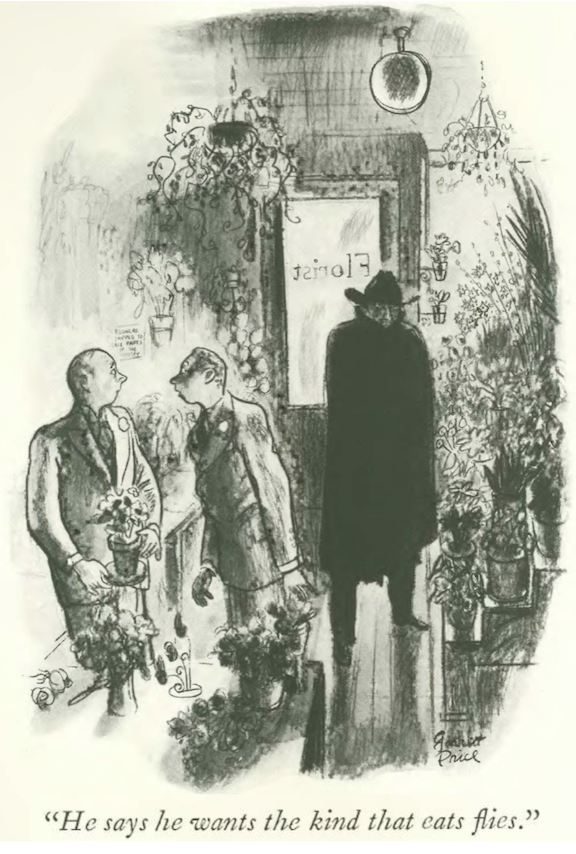
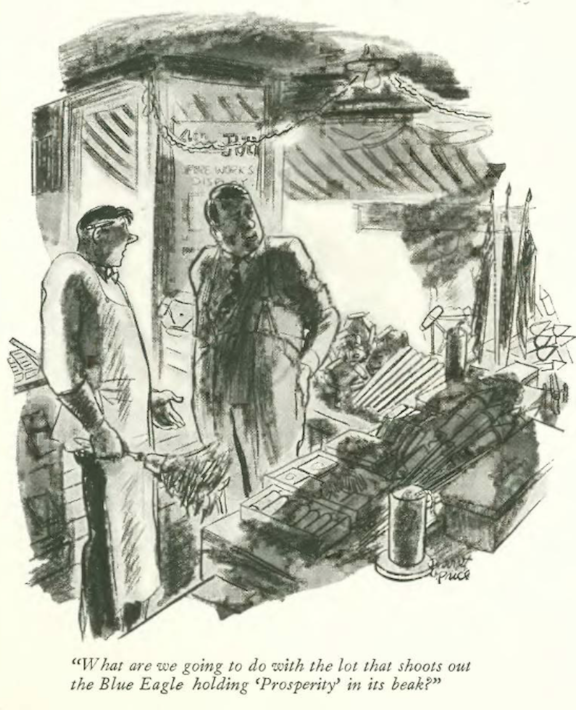
…Independence Day offered a marketing challenge to these shopkeepers, per Garrett Price

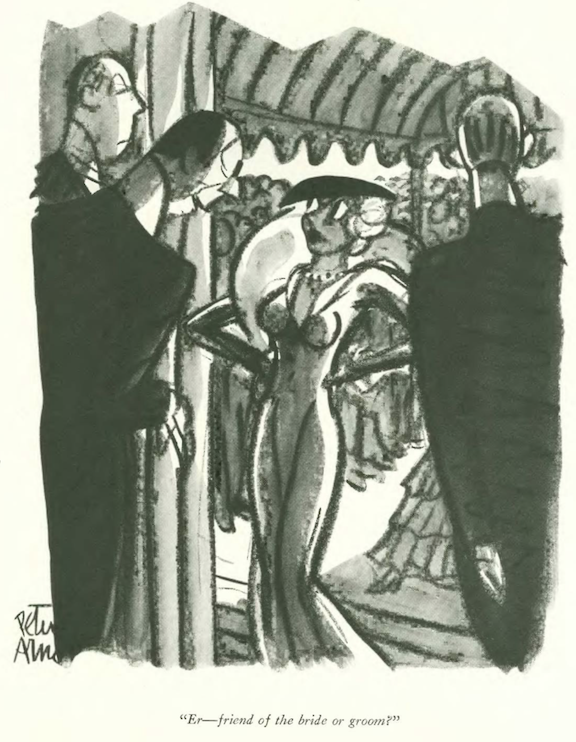
Peter Arno was at his best, in his element…

Charles Addams explored the unnatural, which would become his calling card…

Robert Day offered a new twist to the tonsorial arts…

William Steig gave examples of some budding “tough guys”…

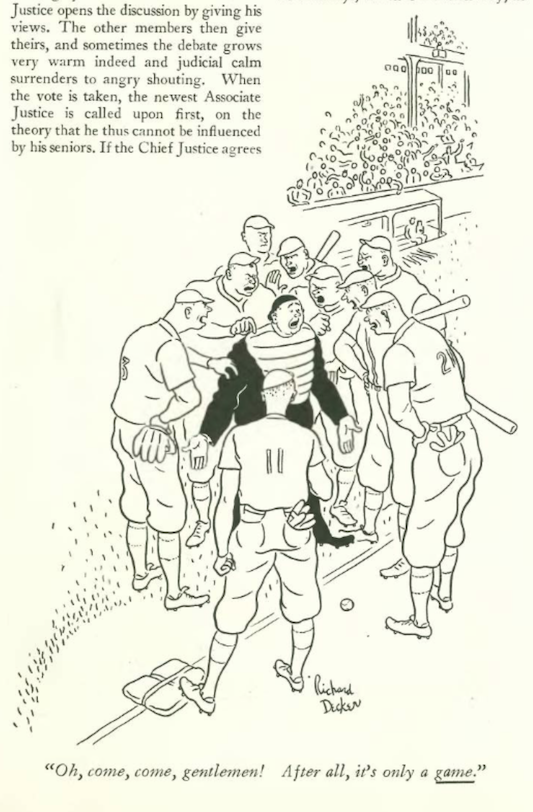
…a rare baseball-themed cartoon from Richard Decker (editor Harold Ross was not a baseball fan)…

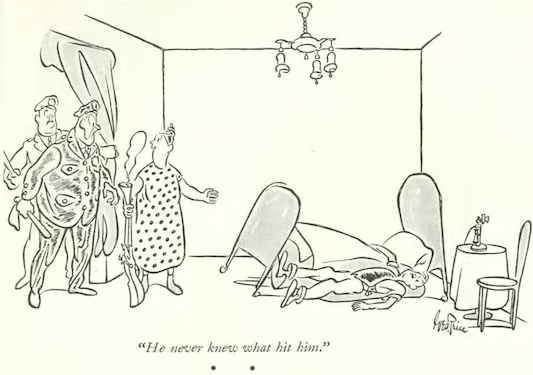
…from George Price, what appears to be the end of his “floating man” series, which began in September 1934…

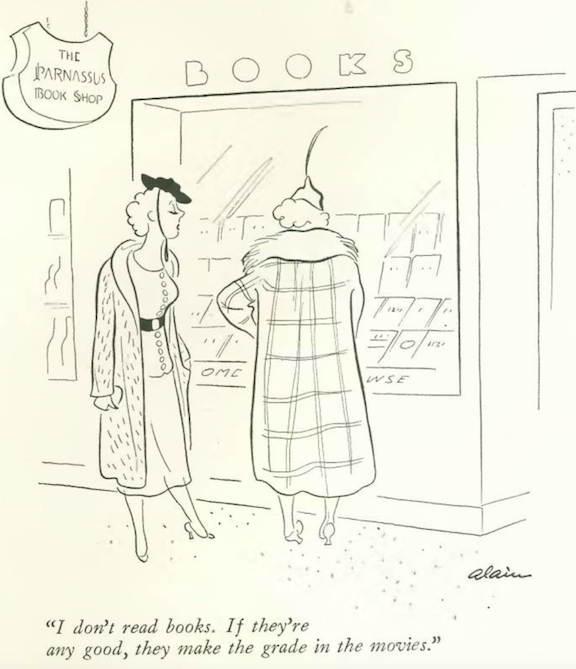
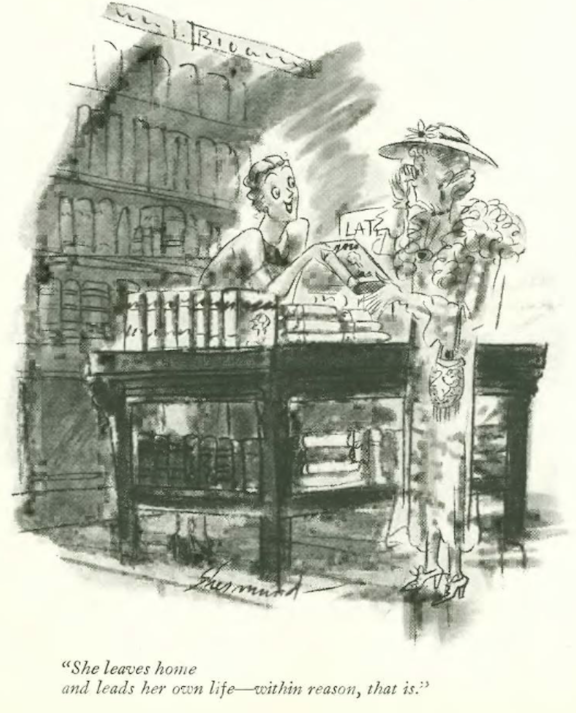
…and we close with one my favorite cartoonists, Barbara Shermund, here at the bookstore…

…and on vacation…

Next Time: Independence Day 1935…


Not a Square Deal

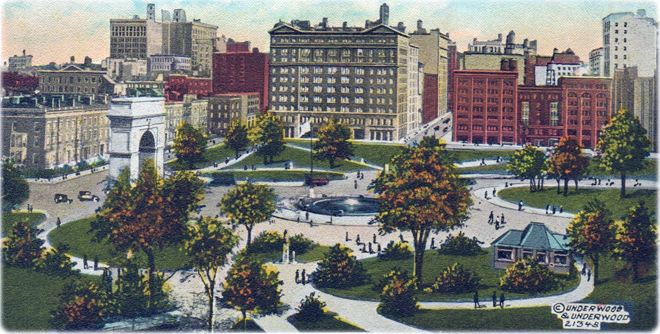
Above: Postcard image of Washington Square Park, circa 1930. (citybeautifulblog.com)

New Yorkers know all about change, and especially during the 1920s and 30s when the city razed everything from Dutch settler houses to the Gilded Age mansions of Fifth Avenue. Landmarks such as the old Waldorf-Astoria were leveled to make way for the Empire State Building, while several blocks—22 acres of residential and commercial buildings—were scraped clean for Rockefeller Center.

June 8, 1935 cover by Harry Brown. This June bride-themed cover was Brown’s fourteenth of the eighteen covers he would create for The New Yorker.

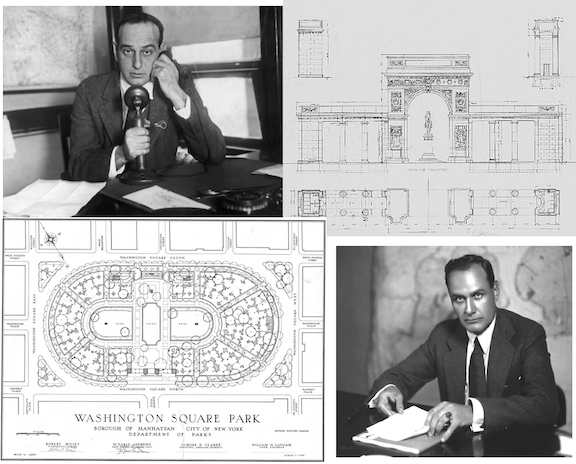
Some things, like Washington Square, were still held dear by city residents. But very little was sacred to the city’s new park commissioner, Robert Moses, who had no problem leveling whole neighborhoods if they stood in way of a road or some other ambitious project.

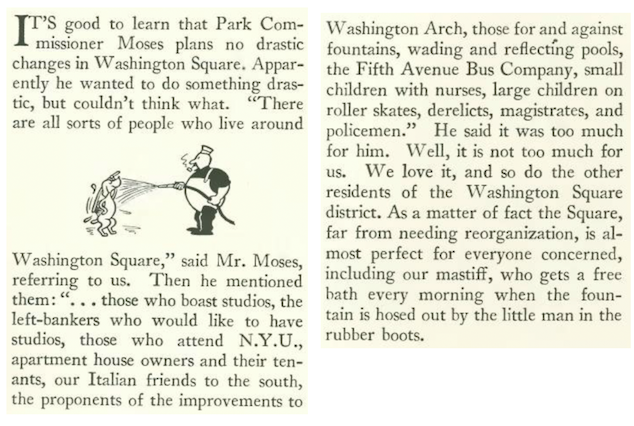
It all seemed well at first when Moses called for the repair of neglected parks, including Washington Square. However, when changes to the park were revealed by the Villager, residents were outraged. Moses’ plan, designed by landscape architect Gilmore Clarke, was a complete reversal of the park’s existing design. In “Notes and Comment,” E.B. White explained:

Village residents organized a “Save Washington Square” committee and successfully blocked Moses from implementing his plan; in true Moses style, he responded by allowing the park to deteriorate.

MAKE NO LITTLE PLANS…Clockwise, from top left, Parks Commissioner Robert Moses; proposal to add colonnades to either side of the arch; landscape architect Gilmore Clarke; Clarke’s plan for the redesign.  (Wikipedia/washingtonsqpark.org)

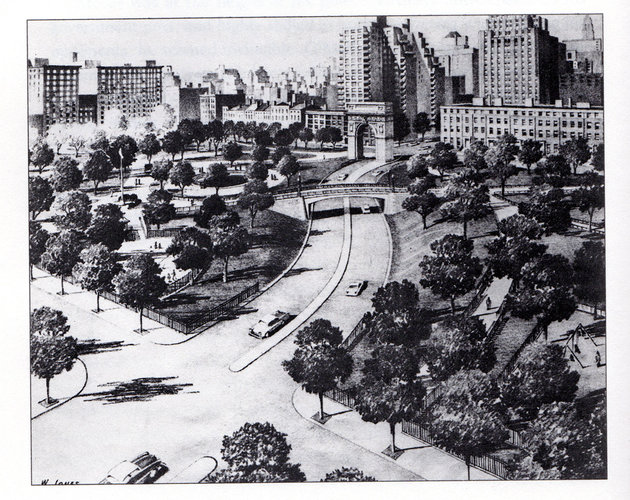
Moses, however, didn’t give up on Washington Square. Around 1940 he began floating the idea of building a double highway through the park. Local residents again rallied, joining business owners and NYU officials in blocking the audacious scheme.

DOUBLE TROUBLE…Around 1940 Moses began floating the idea of building a double highway through Washington Square Park. This illustration is circa 1950. (MTA Archives)

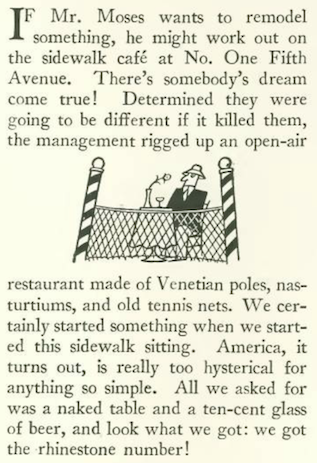
White continued on the theme of city planning, calling on Moses this time to figure out a better plan for sidewalk cafés.

AL FRESCO…Postcard images of sidewalk cafés at 24 Fifth Avenue (top) and 23rd and Lexington, circa 1935. (picryl.com)

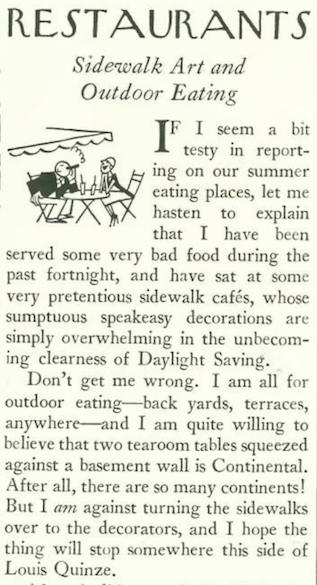
Additional note: The magazine’s June 15, 1935 issue featured Lois Long’s criticisms of sidewalk cafés in Manhattan:

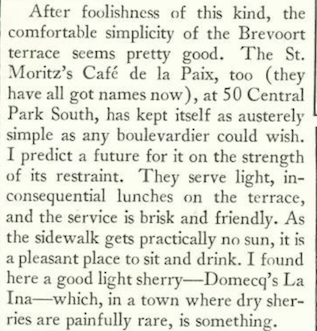
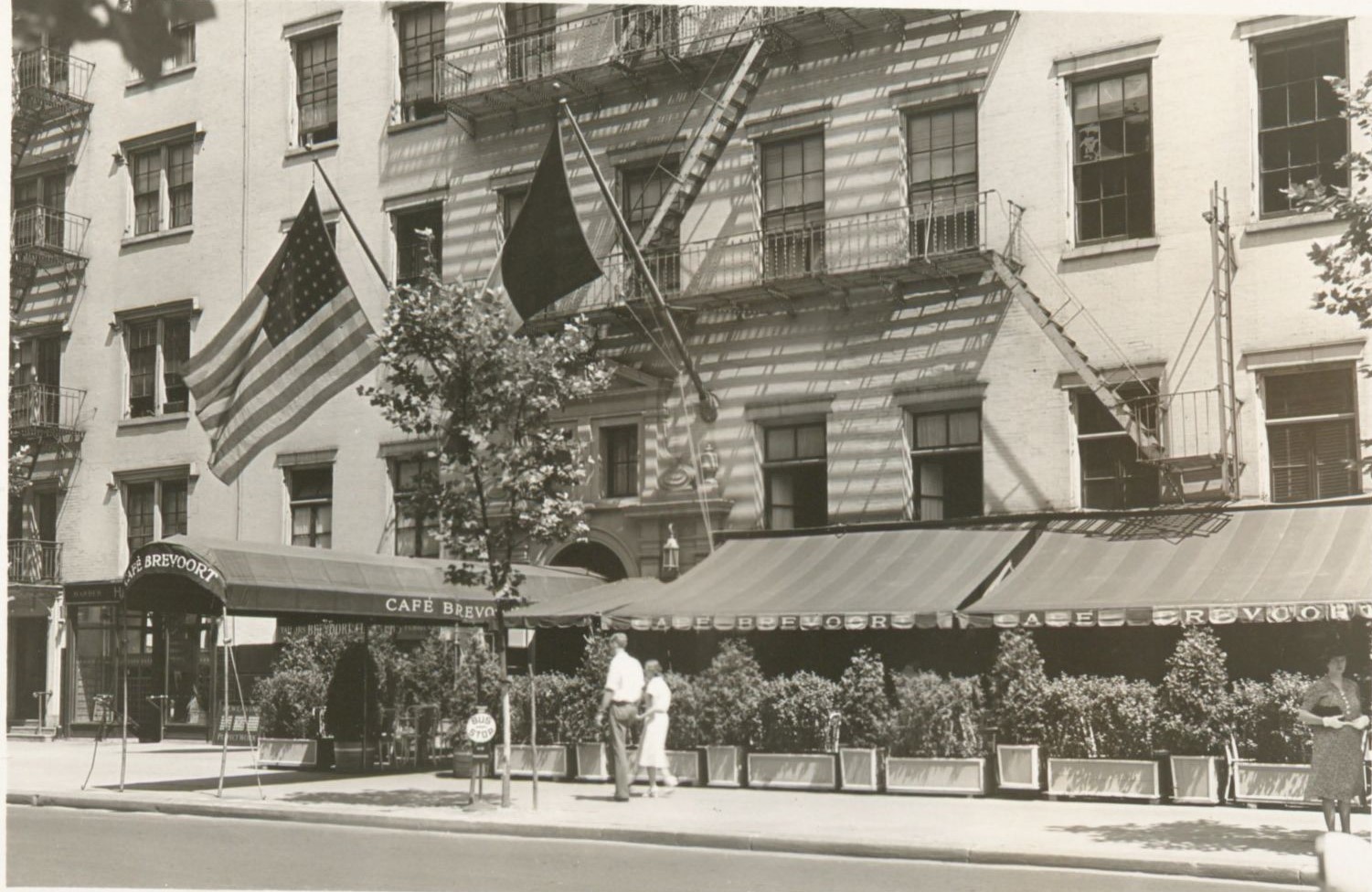
Long did offer, however, a couple of recommendations for sidewalk dining, including the Breevort in Greenwich Village…

If you really wanted to eat outside, Lois Long suggested the Breevort in Greenwich Village. (New York Public Library)

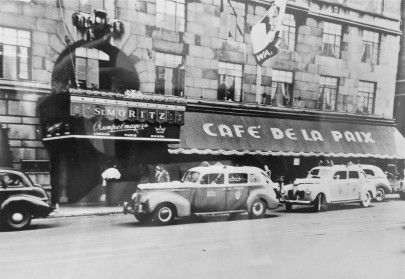
…and the St. Moritz’s Café de la Paix at 50 Central Park South…

The St. Moritz’s Café de la Paix in the 1940s. (blog.bondbrand.com)

 * * *

Sexily Danced the Burlesques

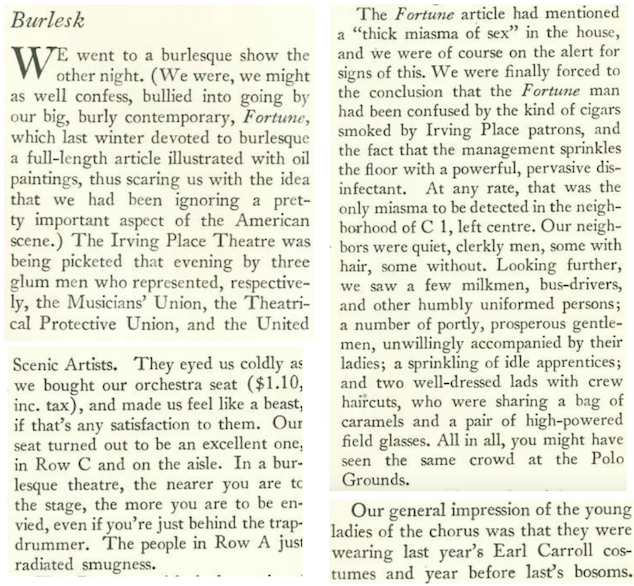
New Yorker writers loved to take shots at Henry Luce, publisher of Time and Fortune. Wolcott Gibbs famously satirized Time’s writing style in a parody profile in 1936: “Backward ran sentences until reeled the mind.” When Fortune decided to take a look behind the curtain at a burlesque show (February 1935), “The Talk of the Town” was ready to pounce.

The Fortune piece featured oil paintings by Stuyvesant Van Veen, including this one depicting the Proscenium at the Irving Place

Fortune images courtesy fulltable.com

…Van Veen got behind the curtain to create this painting (below) of “Burlesque Queens,” and the magazine chastely demonstrated the “cycle of the strip act” with the help of Miss Jean Lee, aka Miss Jess Mack…

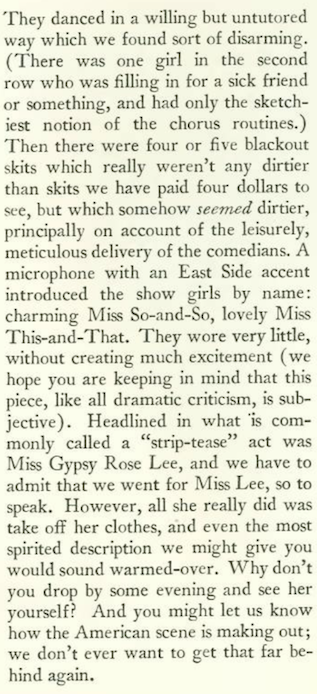
The New Yorker also took a sideways glance at Fortune’s stuffy approach to the subject of striptease, suggesting that it was much ado about nothing.

IT’S ALL AN ACT, FELLAS…Gypsy Rose Lee in 1943. (nypl.org)

 * * *

Futures and Fascists

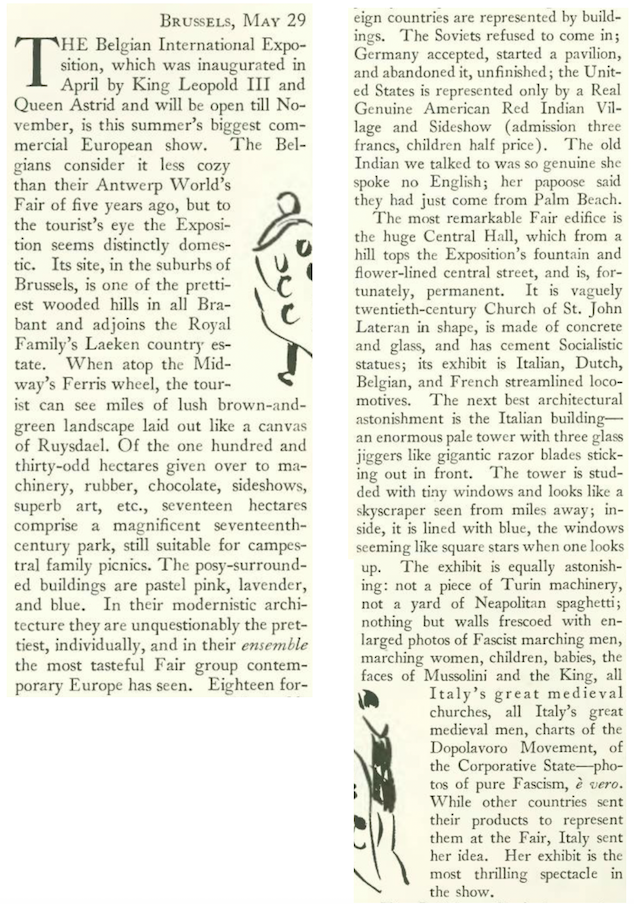
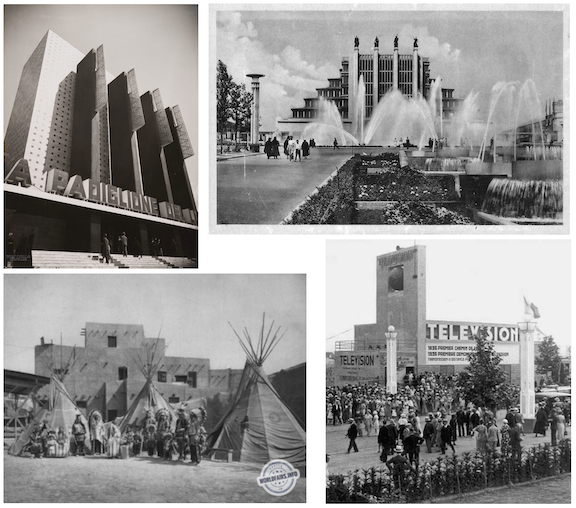
Before the days of television and the Internet, a world’s fair was the place to go to see the latest technologies and other attractions from countries around the world. Paris correspondent Janet Flanner filed a special report on the Brussels International Exposition of 1935, which attracted 20 million visitors in a little over six months.

EURO SPECTACLE…Clockwise, from top left, the menacing facade of the Italian Pavilion—its interior walls featured frescoes of marching fascists; the Palais des Expositions (Grand Palais) still stands today as the Brussels Exhibition Centre; an early demonstration of television; the U.S. featured an “Indian Village” at the Expo. (fomo.be/Wikimedia/en.worldsfairs.info)

 * * *

Matchbox Cars

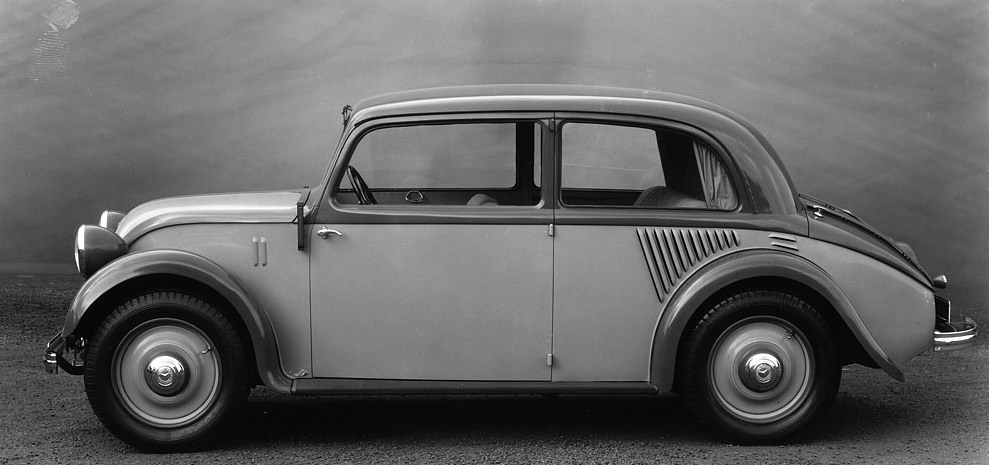
The New Yorker regularly checked the automobile competition from overseas, and found a tiny German car to be “perfectly amazing,” even if it didn’t go over so well with consumers.

IT’S CUTE, BUT…Due to its extreme unbalance of the Mercedes-Benz 130 H (two-thirds of the mass, including the engine, was on the rear axle), the car apparently was awkward to handle. It was discontinued in 1936. (automobile-catalog.com)

 * * *

From Our Advertisers

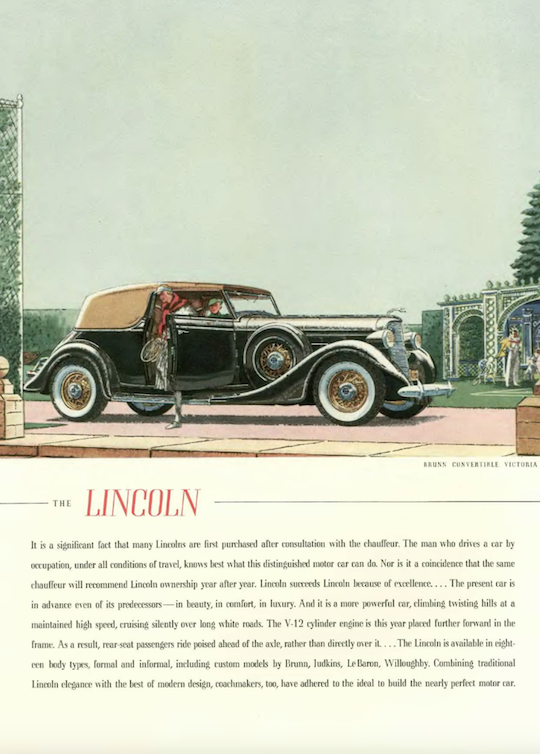
Anyway, most Americans preferred bigger cars, especially ones by luxury makers such as Lincoln, if they could afford them…

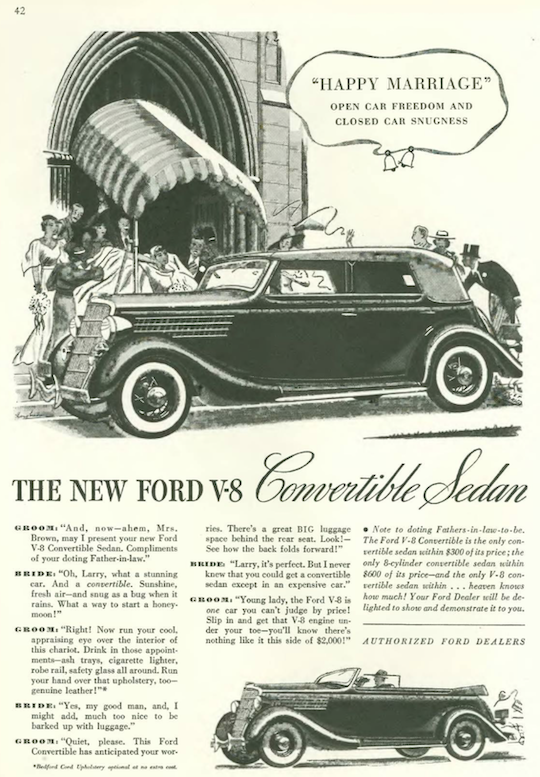
…Lincoln’s parent company, Ford, offered up a more affordable convertible with some flair of its own…automakers were fond of the marriage theme in advertisements, especially in the month of June…

…automakers and related industries were important advertisers during The New Yorker’s first years…

…indeed, the back cover of Issue #1 (Feb. 21, 1925) featured this ad from the United States Rubber Company, promoting its U.S. Royal Cord Balloon Tires…

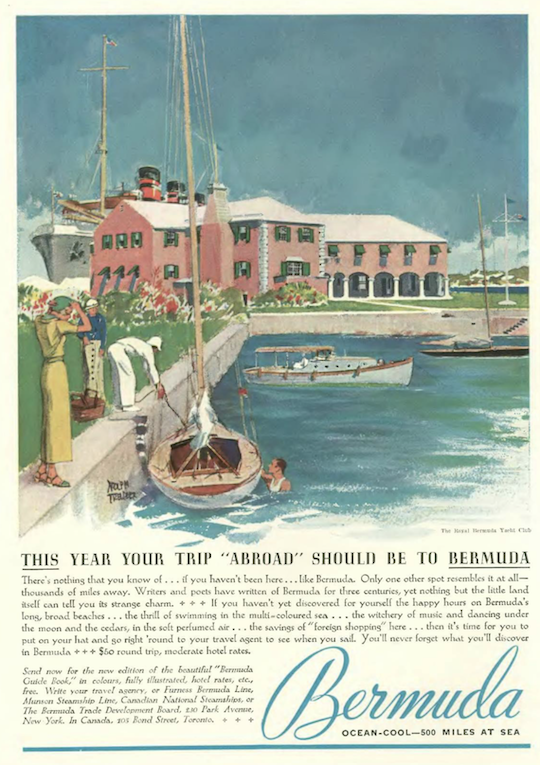
…another faithful advertiser in the magazine’s first decade was the Bermuda Trade Development Board…

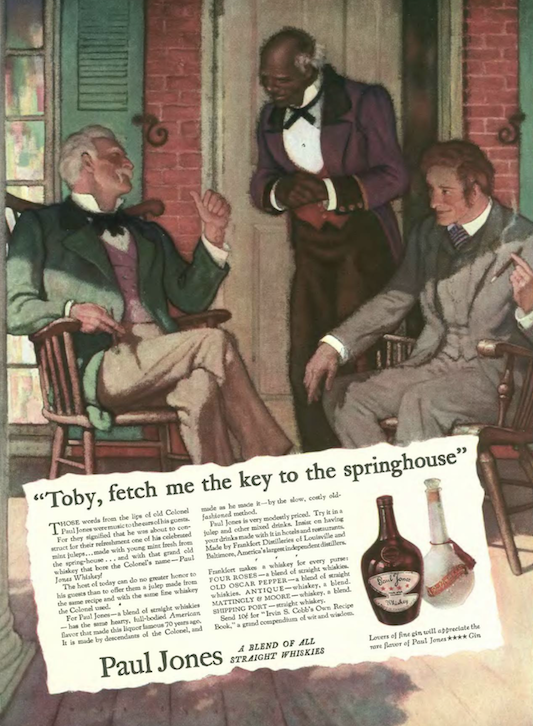
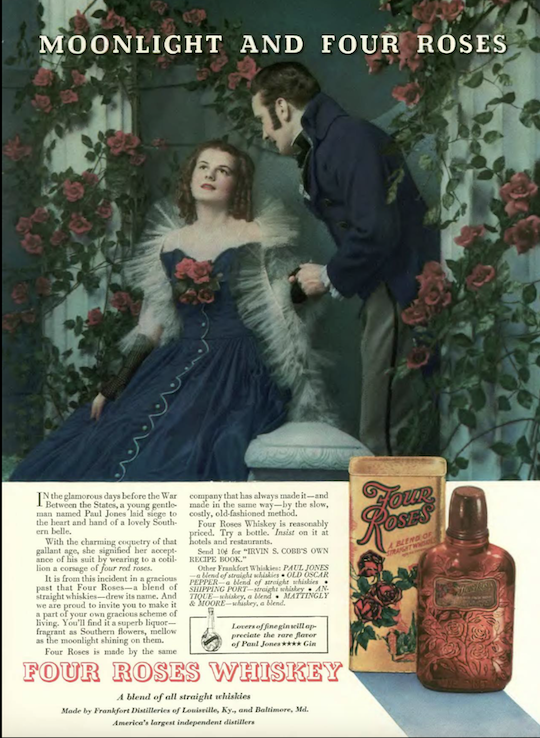
…this ad for Four Roses whiskey recalled “the glamorous days” (ahem) before the Civil War…

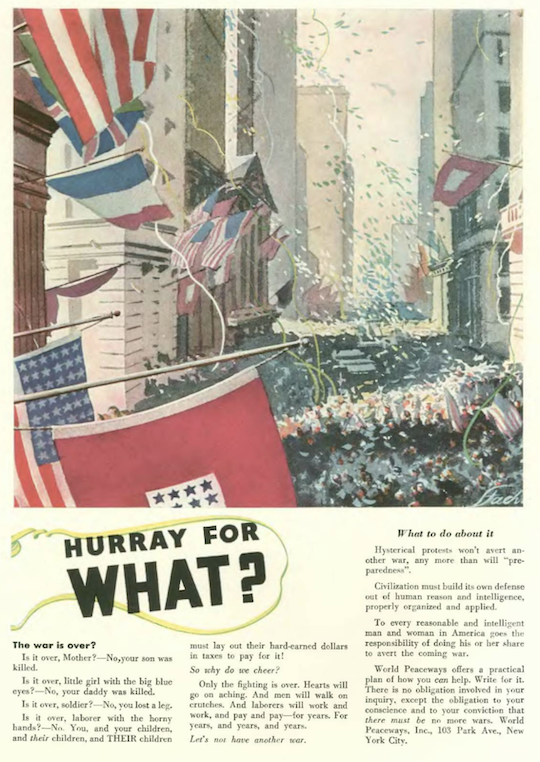
…and this colorful ad from World Peaceways reminded readers there was nothing to celebrate about wars…these ads pulled no punches (read the first few lines)…

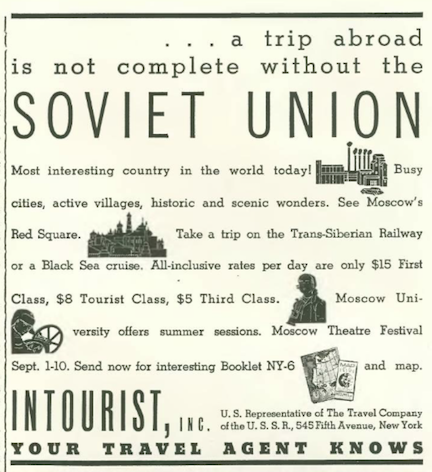
…”most interesting country in the world today!” proclaimed this ad inviting tourists to the Soviet Union…during 1934-35 Joseph Stalin was ruthlessly purging the Party, and local leaders across the country were being annihilated…of the 2.3 million people who had been party members in 1935, just under half were executed or perished in labor camps…this fact probably wasn’t mentioned in the travel folder…

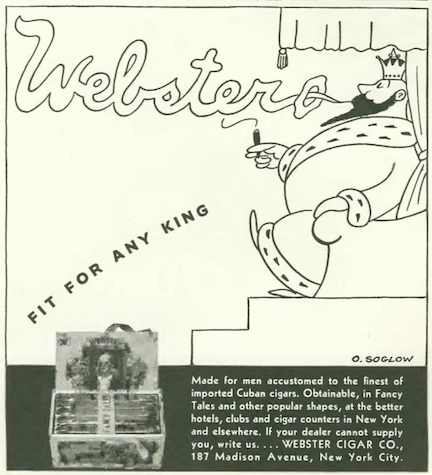
…the Webster Cigar Company hired Otto Soglow to create an ad doubtless based on the popularity of “The Little King,” but this isn’t the diminutive monarch…

…which takes us to our cartoonists, beginning with this spot signed E.S., I believe, or L.S. (anyone know?)…at any rate, its whimsical…

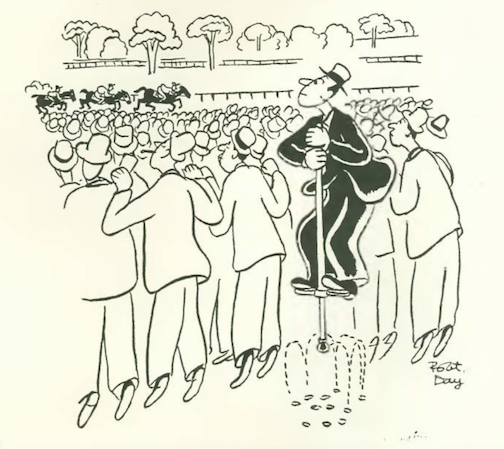
…of course we know Robert Day

…Day again, in a very different style…

Helen Hokinson, sounding a contemporary note…

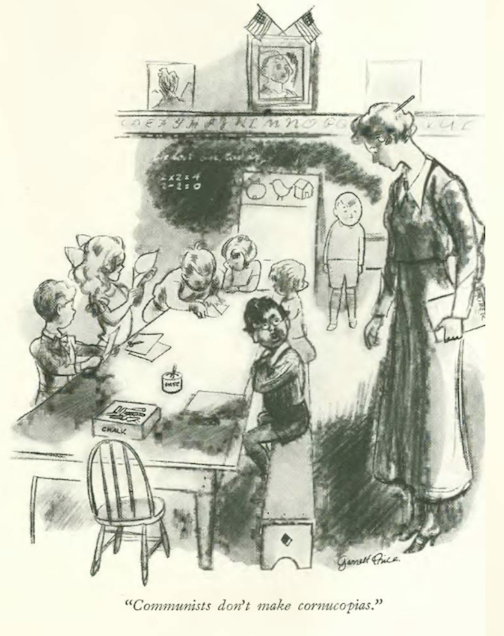
…a kindergarten political standoff, courtesy Garrett Price

Rea Irvin, and the obsolescence of Pan (today she’d have a cell phone)…

Peter Arno, and a clueless, cold, cuckold…

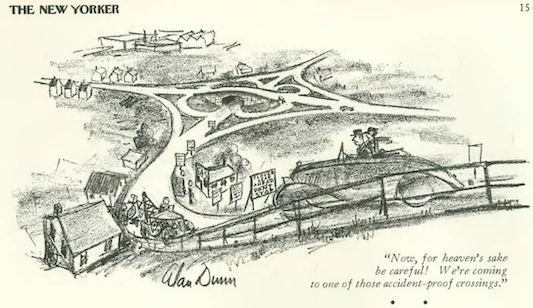
…and we close with Alan Dunn, and the future of transportation…

Next Time: A Return to Coney…

Wining & Dining

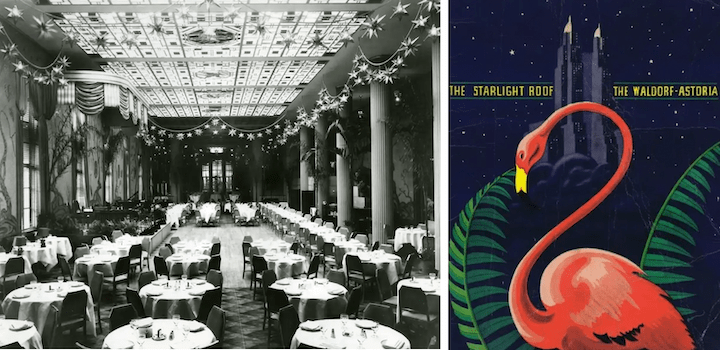
Above: The Waldorf-Astoria's Starlight Roof, and a 1930s menu cover. (Facebook/Pinterest)

With summer approaching, the rooftop restaurants were in full swing, and Lois Long continued her exploration of favorite haunts, including one nightclub that drew many Manhattanites across the Hudson to the cliffs of the New Jersey Palisades.

June 1, 1935 Cover by Rea Irvin.

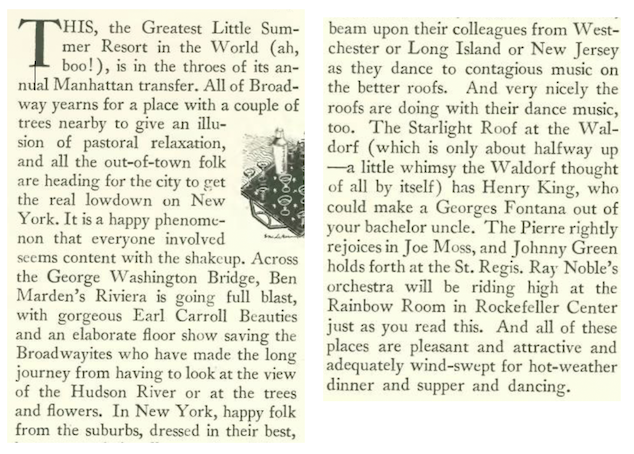
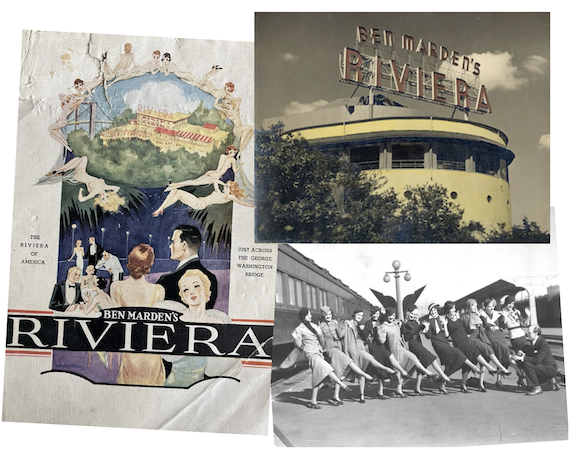
Ben Marden couldn’t wait for the official end of Prohibition when he opened his Riviera Night Club in Fort Lee in 1931. The frequent site of raids until the repeal of the 18th Amendment, the Riviera continued to be a place well known to Bergen County police thanks to clientele that included racketeers and other unsavory types. But to New Yorkers like Long, it was a break from the din of the city to the relative green of the Garden State. Long wrote:

The Riviera closed during the first years of World War II, but it reopened in 1945 after Bill Miller bought it from Marden and apparently cleaned it up. It then attracted the likes of Frank Sinatra, Dean Martin, Jerry Lewis, Martha Rae, Sammy Davis, Jr., and Pearl Bailey until it closed in 1953. It was demolished the following year.

THEY HAD FOOD, TOO…Clockwise, from left, the1936 spring menu cover of Ben Marden’s Riviera featured an illustration of the original Riviera (ringed by nude showgirls), which burned to the ground on Thanksgiving night, 1936; the building that replaced it was called an architectural wonder with its retractable roof, rotating stage, and glass windows that slid down to the floor; Earl Carroll and his “Beauties” performed at the Riviera in 1935–they are pictured here at a train station in Los Angeles, 1934. (ebay.com/patch.com/lapl.org)

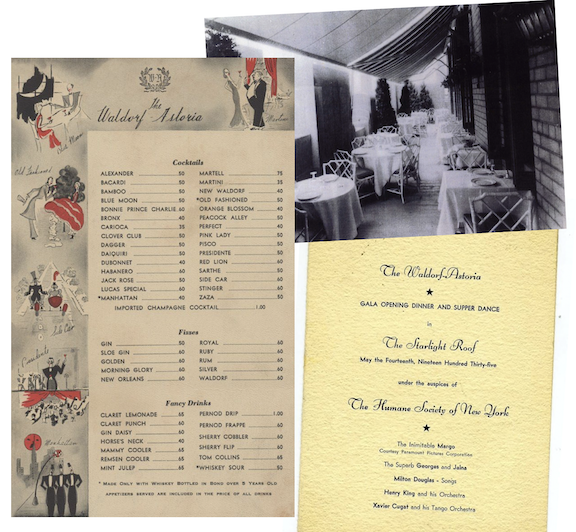
Long also stayed in town to visit the Waldorf-Astoria’s Starlight Roof.

WITH THE STARS, UNDER THE STARS…Clockwise, from left, cocktail menu from the Waldorf’s Starlight Roof, 1935; outdoor seating on the Starlight Roof Terrace; special menu for the Gala Opening Dinner and Supper Dance on the Starlight Roof, May 14, 1935. It was a favorite destination of Frank Sinatra, Cole Porter, Katharine Hepburn, and Ella Fitzgerald, among others. (Pinterest)

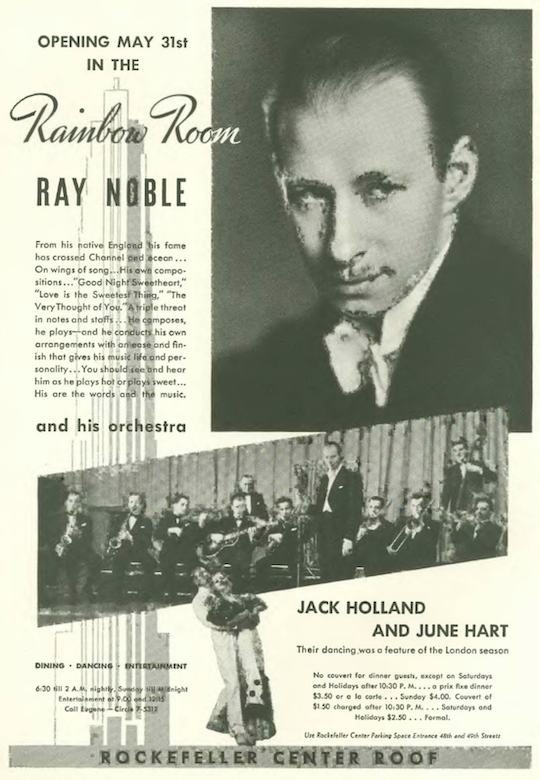
Long also mentioned the appearance of Ray Noble in the Rockefeller Center’s Rainbow Room. This full-page ad appeared in the June 1 issue:

Other summer season attractions were advertised in numerous back-of-the-book, one-column advertisements:

…and at the bottom of page 64…

Wining and dining were also the topic of the profile, a two-parter penned by Margaret Case Harriman, who took a look at New York’s famed Colony Restaurant.

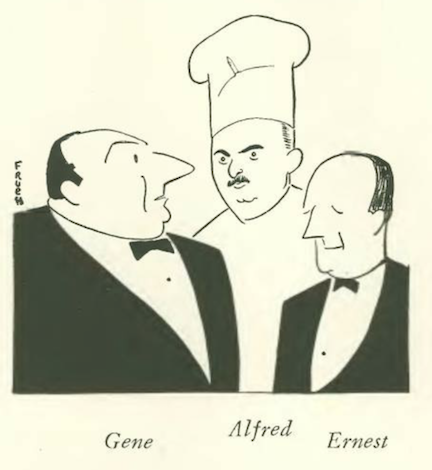
ORIGINAL TRIO…Al Frueh’s caricatures of the Colony’s owners/headwaiters Gene Cavallero and Ernest Cerutti, who flank chef Alfred Hartmann, who was also part owner until he sold his interest to the other two in 1927 and retired to a farm in France. Harriman wrote that Cavallero and Cerutti were “born headwaiters—suave, solicitous, infallible.”
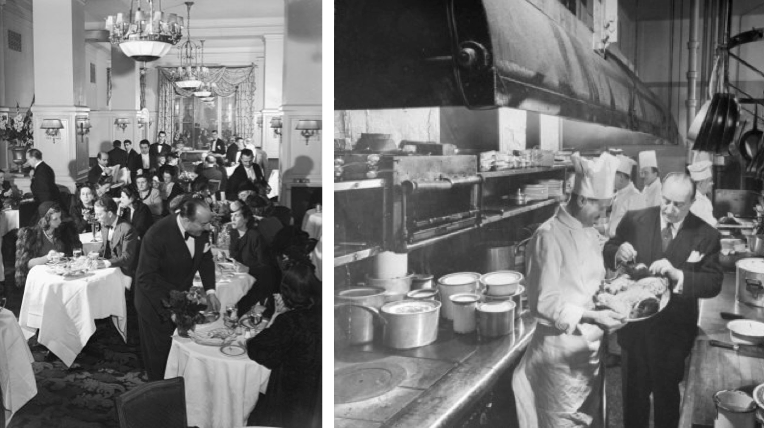
A PLACE TO BE SEEN…From the 1920s to the 1960s New York’s café society dined at the Colony. Rian James, in Dining In New York (1930) wrote “the Colony is the restaurant of the cosmopolite and the connoisseur; the rendezvous of the social register; the retreat of the Four Hundred.” Critic George Jean Nathan said the Colony was one of “civilization’s last strongholds in the department of cuisine.” Photo at left of the dining room around 1940; at right, co-owner Eugene Cavallero consults with a chef. (lostpastremembered.blogspot.com)

 * * *

The Business of News

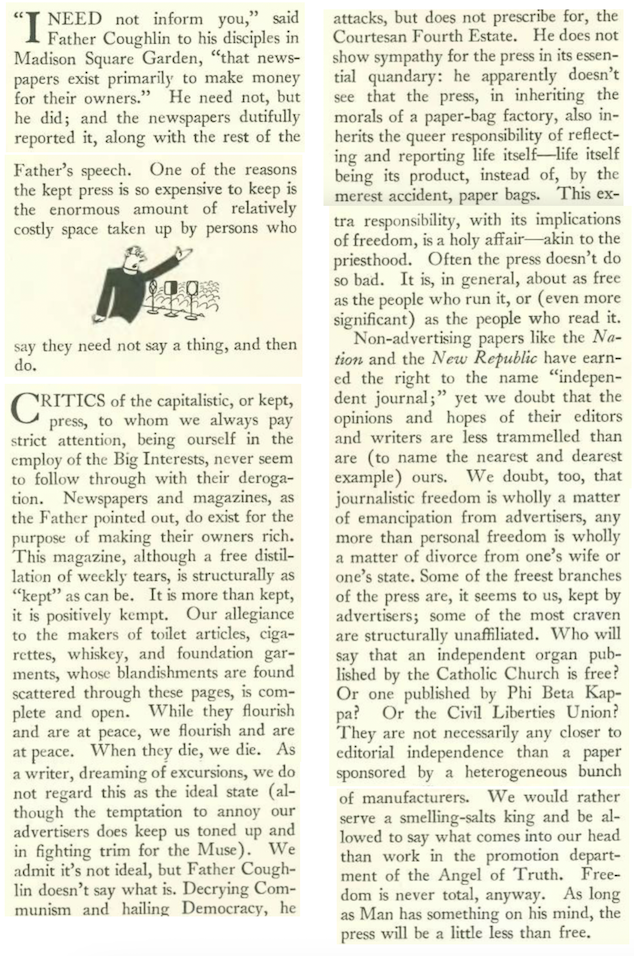
In his “Notes and Comment,” E.B. White contemplated the meaning of a free press, noting that nearly all media was at the mercy of advertisers. That included The New Yorker, which owed allegiance “to the makers of toilet articles, cigarettes, whiskey, and foundation garments.”

* * *

Cat Lady

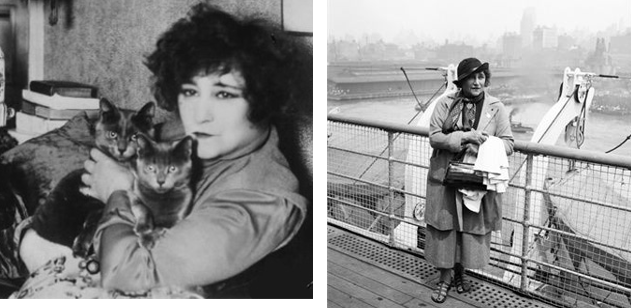
“The Talk of the Town” anticipated the arrival of French writer Colette (1873-1954) aboard the S.S. Normandie. This excerpt makes note of her high standing in society as well as her love of cats.

SHE ONCE OWNED AN OCELOT….Colette with her cats in an undated photo; at right, entering New York Harbor on the S.S. Normandie, 1935. (Pinterest)


 * * *

Public Artists

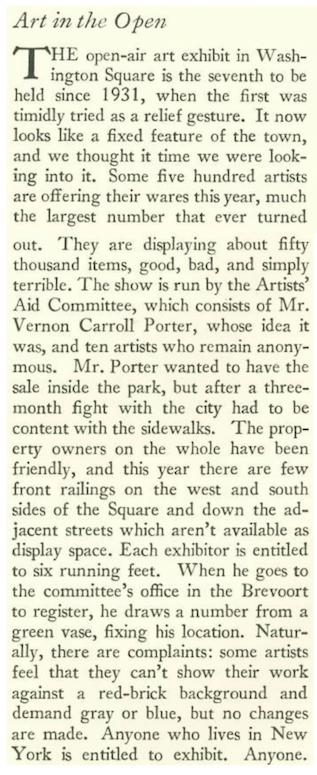
“The Talk of the Town” noted the latest Washington Square Outdoor Art Exhibition…

LENDING THEIR TALENTS…New Yorker cartoonists who helped promote the Outdoor Art Exhibition in Washington Square included James Thurber, Otto Soglow, and William Steig.

 * * *

Cutting Remarks

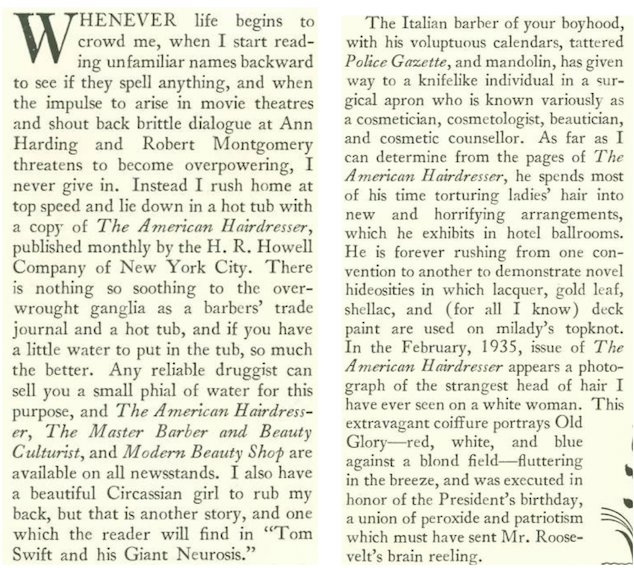
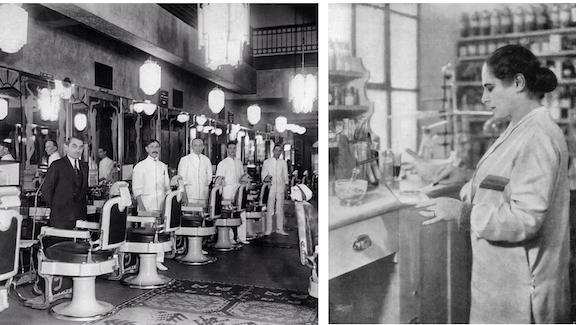
S.J. Perelman offered his thoughts on the decline of the tonsorial arts. In this excerpt, he sees his beloved Italian barber give way to a “knifelike individual in a surgical apron.” Excerpts:

IT’S A SCIENCE NOW, SIDNEY…S.J. Perelman worried about the displacement of Italian barbershops by cosmetologists in “surgical aprons,” such as the one modeled by Helena Rubinstein at right. (Pinterest)

* * *

Even Those Eyes Couldn’t Help

Film critic John Mosher was sad to report that disappointment was in store for moviegoers who enjoyed seeing Bette Davis in Of Human Bondage. Her latest flick, The Girl from 10th Avenue, featured Davis murmuring “gentle nothings of a vaguely noble monotony.”

GET ME OUT OF THIS PICTURE…Left, Bette Davis with Ian Hunter in the uninspired The Girl from 10th Avenue; at right, screen shot of Davis in 1934’s Of Human Bondage, the film that made Davis a star.  (thefilmexperience.net)

Other items in the editorial section included a casual by Dorothy Parker’s husband Alan Campbell (titled “Loyalty at Pool-Wah-Met”), and Morris Markey examined the Christian Science movement inspired of Mary Baker Eddy, in “A Reporter at Large” piece titled “But Thinking Makes It So.”

 * * *

From Our Advertisers

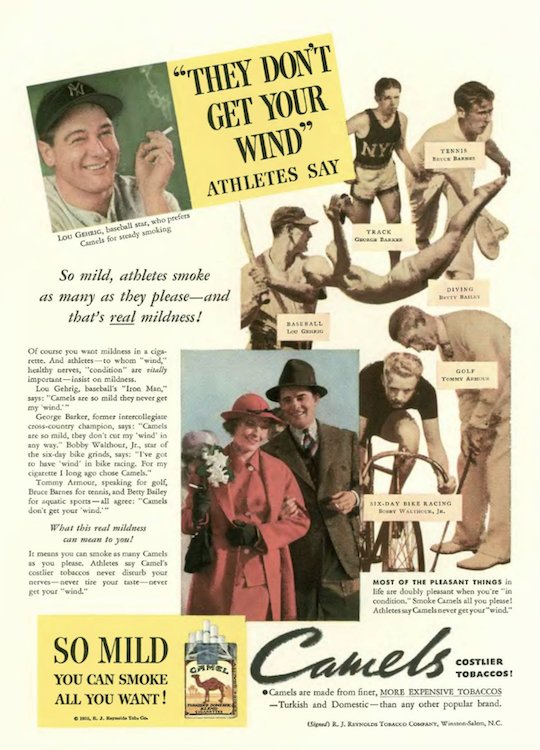
We begin with an advertising theme common through midcentury, namely, that you could smoke certain brands as much as you liked and still be a star athlete (as opposed to a wheezing husk of a human being)…

…not only did these cigarettes “steady your nerves” and preserve your “wind,” they also made for sweet, romantic moments…

…in between puffs you could also enjoy breathing in fumes from leaded gasoline…lead pollution increased by more than 625 times previous levels after leaded fuels were introduced in 1924…

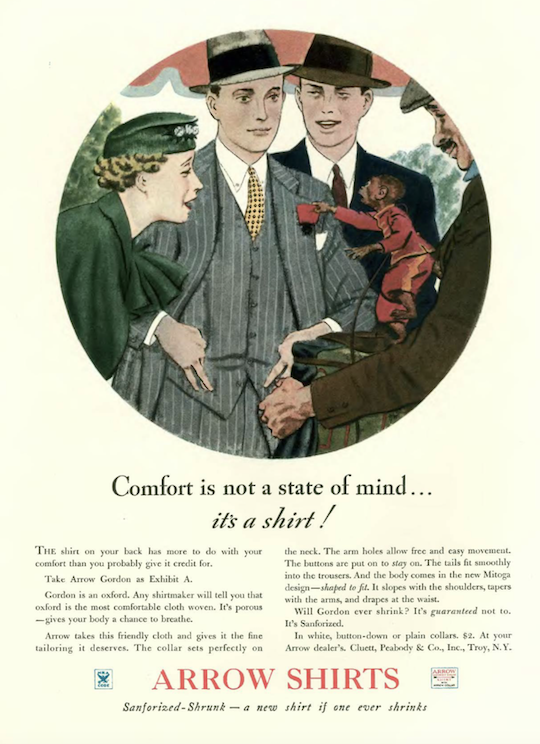
…although they were being outlawed by New York Mayor Fiorello Henry La Guardia, an organ grinder nevertheless made an appearance in an Arrow Shirt ad that offered a lighthearted moment for all involved (except for the dude on ketamine)…

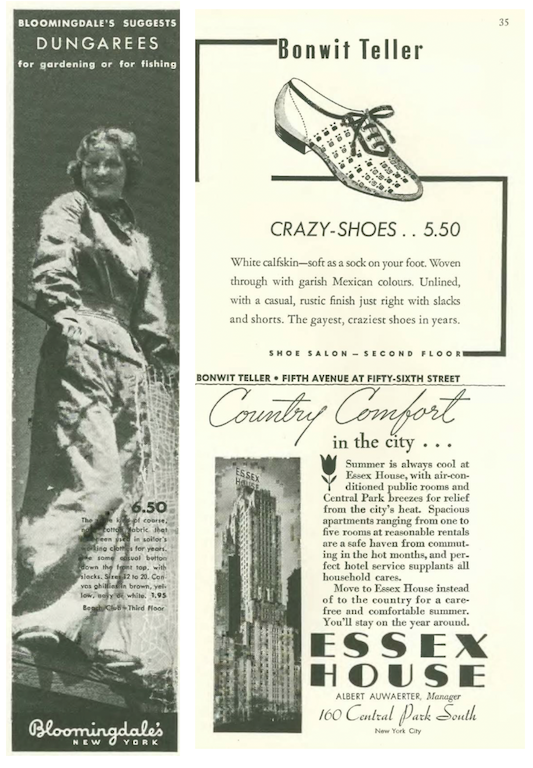
…when jeans were called “dungarees” they were reserved for gardening or fishing…at right you could land a pair of “Crazy Shoes” woven with “garish Mexican colours” for five-and-a-half bucks…

…the makers of White Rock kept it cool with this minimalist ad…

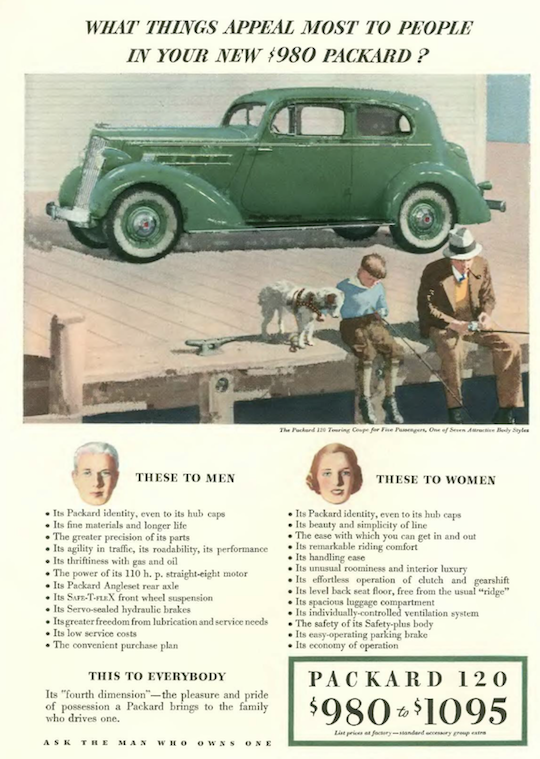
…luxury automaker Packard continued to hang on through the Depression by offering a downscale version…it appears their demographic was middle-aged men and women who still preferred the finer things even if they couldn’t afford them…

…now the property of Hearst, Otto Soglow’s Little King could still appear in The New Yorker via the advertising sections…

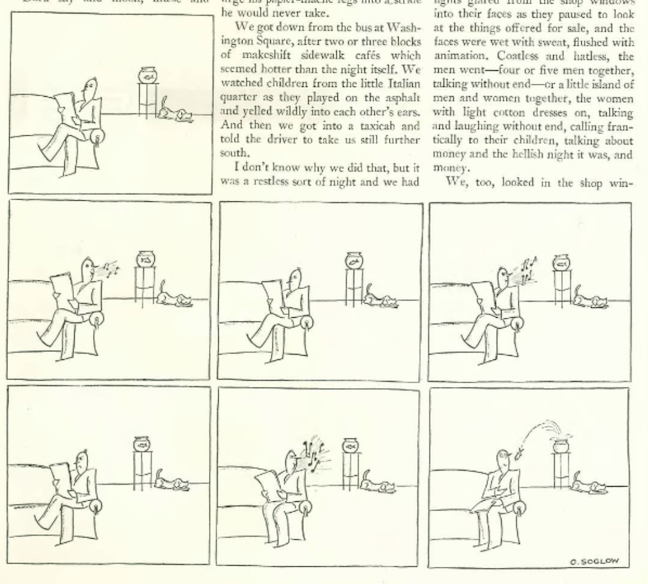
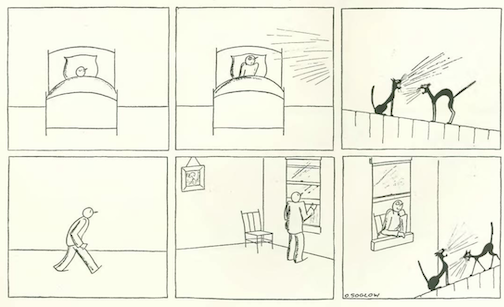
…and Soglow continued his contribution to the magazine’s cartoons with other multi-panel subjects…

James Thurber kicked off the cartoonists with this tender spot…

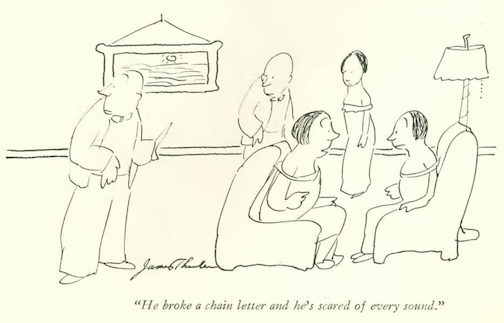
…and contributed this cartoon…

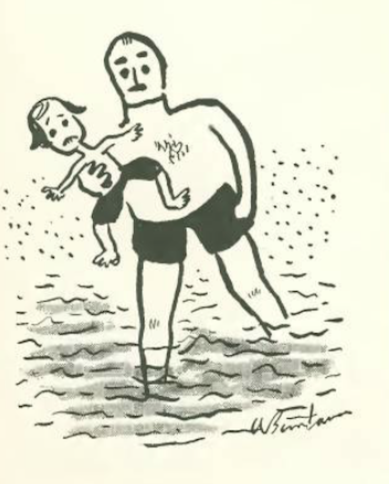
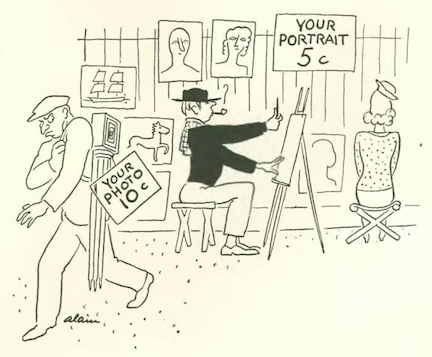
Alain found competition in the portrait trade…

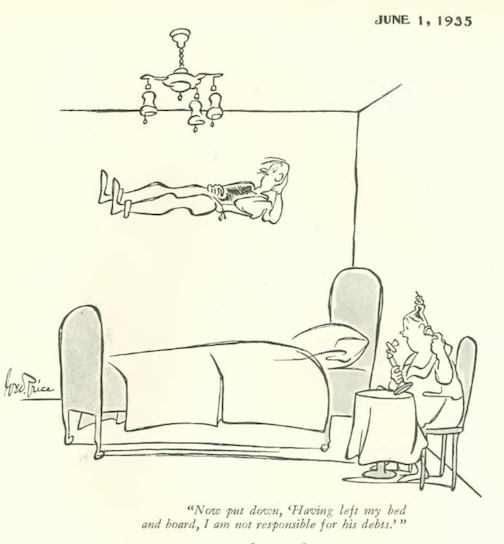
George Price was still afloat…

Charles Addams was tied up with the sculptural arts…

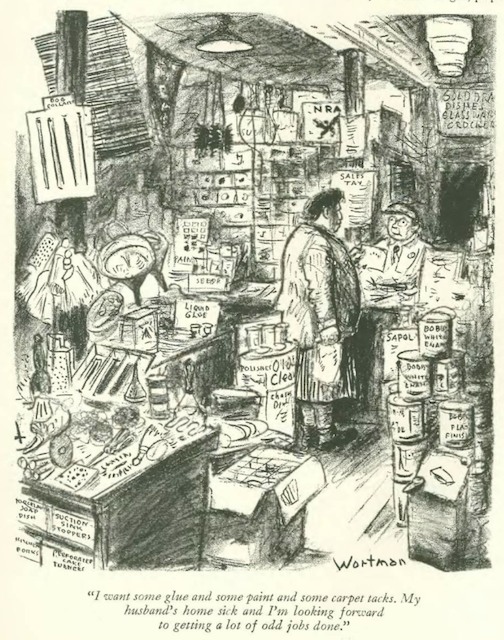
Denys Wortman shopped for DIY projects…

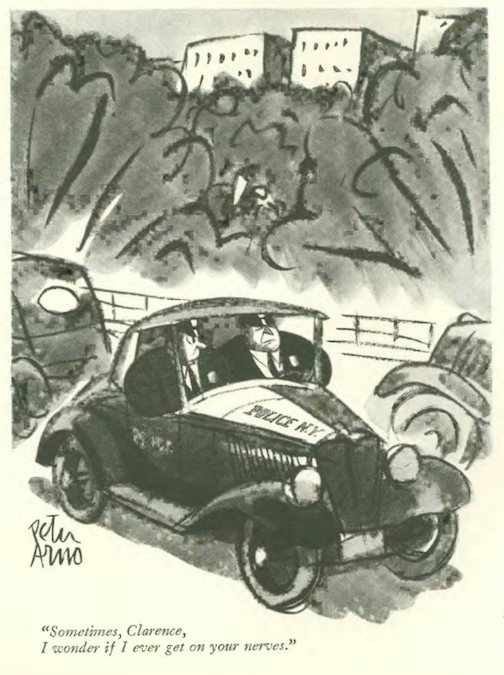
Peter Arno found a sensitive side in one member of the NYPD…

Mary Petty made some alterations…

…and we close with this terrific cartoon by Richard Decker

Next Time: Not a Square Deal…


What’s in a Name?

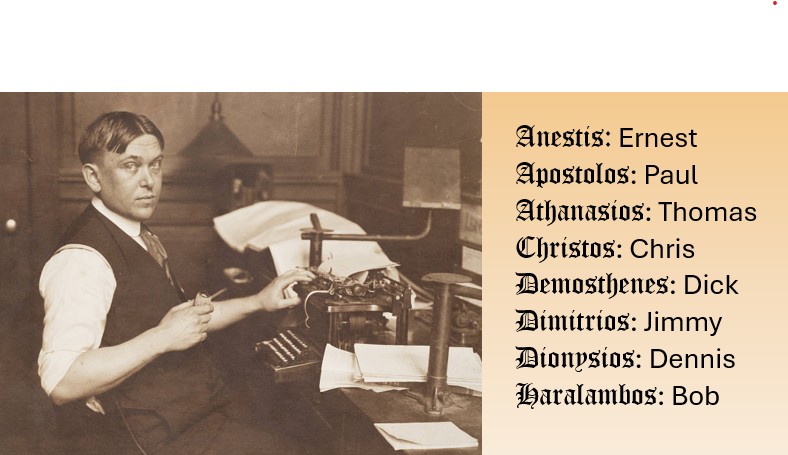
Above: H.L. Mencken at the Baltimore Sun, circa 1930. From April 1934 to September 1949, Mencken contributed more than fifty articles to The New Yorker.

The American journalist Henry Louis Mencken (1880–1956) was well-known as a biting satirist and cultural critic, but he was also a noted scholar of the English language and its various quirks.

May 11, 1935, Mother’s Day cover by William Cotton.

One of those quirks was explored in Mencken’s essay, “The Advance of Nomenclatural Eugenics In the Republic,” for the column “Onward & Upward With The Arts.” Broadly defined, eugenics refers to the discredited belief that selective breeding could be used to improve the human race. Mencken used the term satirically to describe the anglicization of immigrant names, either to conform to English spellings or, in many cases, to avoid racial and ethnic discrimination. An excerpt:

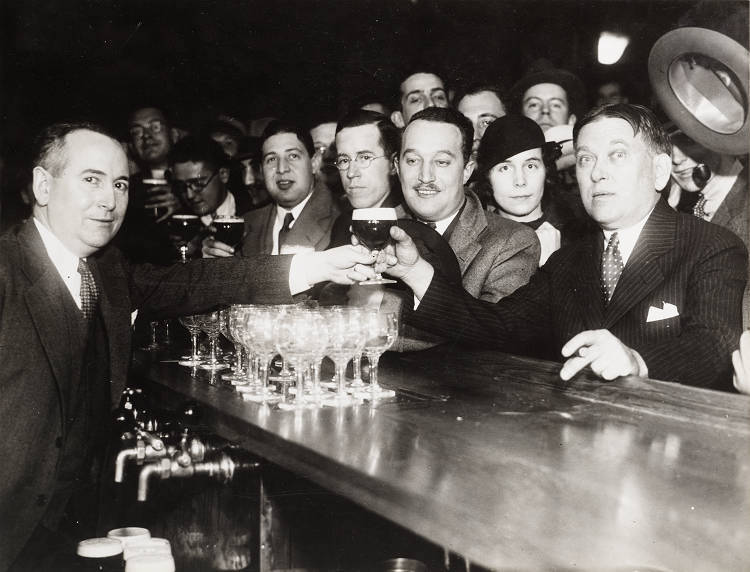
A PERFECT PAIRING, for H. L. Mencken, was a beer and a cigar. Here he is accepting “his first public glass of post-Prohibition beer” at the Rennert Hotel in Baltimore on April 7, 1933. In 1924 Mencken wrote: “Five years of Prohibition have had, at least, this one benign effect: they have completely disposed of all the favorite arguments of the Prohibitionists.” (digitalmaryland.org)

Many Jewish immigrants also abandoned their surnames, seeking to blend in and avoid discrimination. Historian and author Kirsten Fermaglich (A Rosenberg by Any Other Name, 2016) found that persons with Jewish-sounding last names made up 65 percent of all name change requests in New York in the first quarter of the 20th century. Mencken observed:

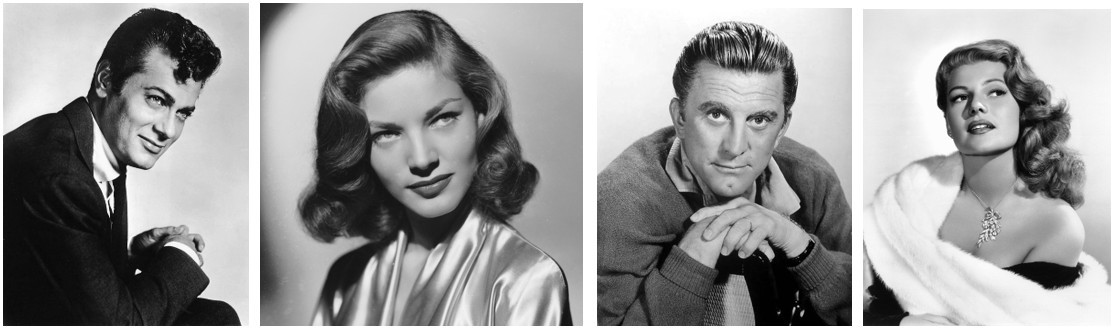
MEET BERNARD, BETTY, ISSUR AND MARGARITA…Some more famous examples of name changes in the first half of the 20th century. From left, actors (and New Yorkers) Tony Curtis (Bernard Schwartz), Lauren Bacall (Betty Joan Perske), Kirk Douglas (Issur Danielovitch Demsky), and Rita Hayworth (Margarita Carmen Cansino). (Wikipedia)

 * * *

Canada Dry

In his column, “Of All Things,” Howard Brubaker noted the “well-merited spanking” FDR gave to military leaders who were talking about fortifying the border with Canada. Brubaker agreed with FDR’s action, observing how Canadians came to the aid of thirsty Americans during Prohibition.

 * * *

Air France

Paris correspondent Janet Flanner considered the state of French aviation as well as signs of war preparation. She also noted the birthday of German dictator Adolf Hitler, the birth of French television, and the streamlined taxis that had suddenly appeared on the streets of Paris. Excerpts:

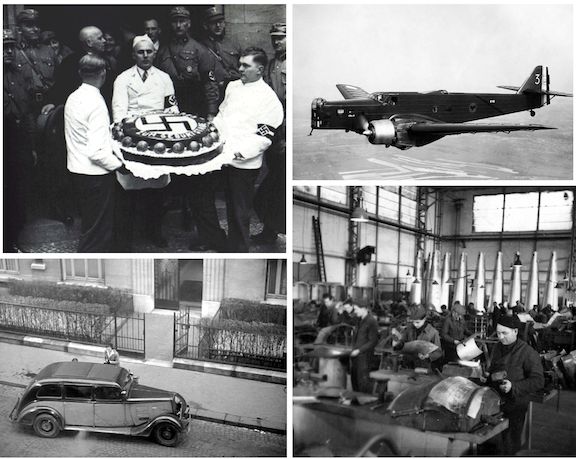
SOME ICE CREAM WITH YOUR SLICE OF HATE?…Clockwise, from top left, bakers carefully carry Adolf Hitler’s birthday cake in April 1935; the French, meanwhile, were ramping up war production including the manufacture of the M210 bomber; airplane factory workers fashion sheet metal in a factory in Châteauroux-Déols; streamlined Peugeot 401 taxis hit the Paris streets in 1935. (reddit.com/dassault-aviation.com/imcdc.org)

 * * *

Vamps and Vampires

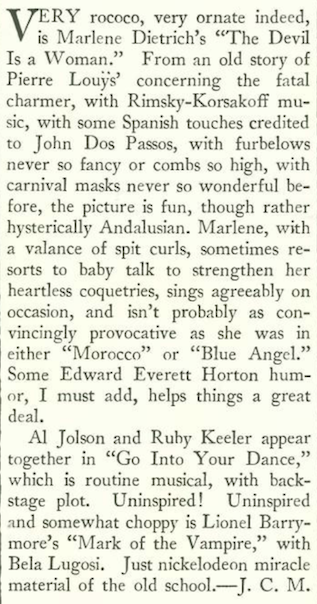
John Mosher offered mixed reviews of Hollywood’s latest fare, finding Marlene Dietrich’s latest vehicle “fun,” and the singing and dancing of husband/wife Al Jolson and Ruby Keeler “uninspired,” a term he also applied to Bela Lugosi’s latest vampire flick.

TAKE YOUR PICK…Critic John Mosher sampled some very different films including, left, Marlene Dietrich and Lionel Atwill in The Devil Is a Woman; top, Ruby Keeler with her then-husband Al Jolson in Go Into Your Dance; and Bela Lugosi did his vampire schtick with the help of Carroll Borland (who played Dracula’s daughter) in Mark of the Vampire. (MoMA/Pinterest/Instagram)

 * * *

From Our Advertisers

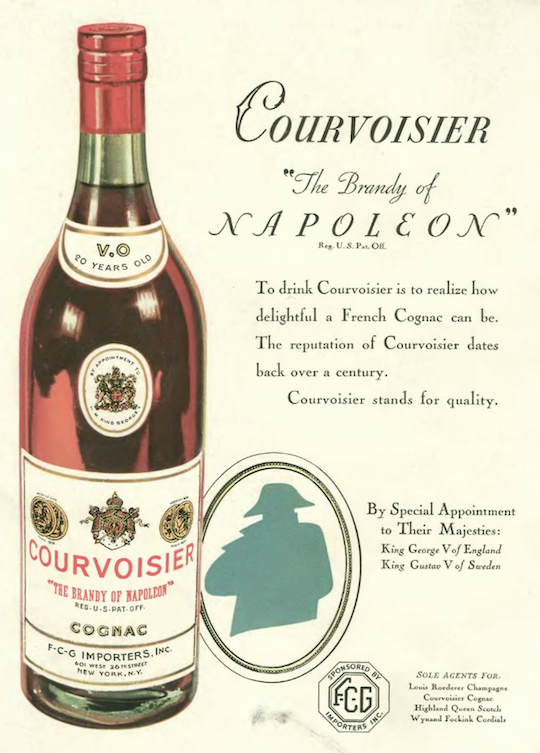
We start off with a bang from Goodyear…tire blowouts were common in the 1930s as tire technology could not keep pace with the increasing speed of automobiles, nor the poor condition of many roads…

…after many weeks, the back cover went to something other than cigarette manufacturers…

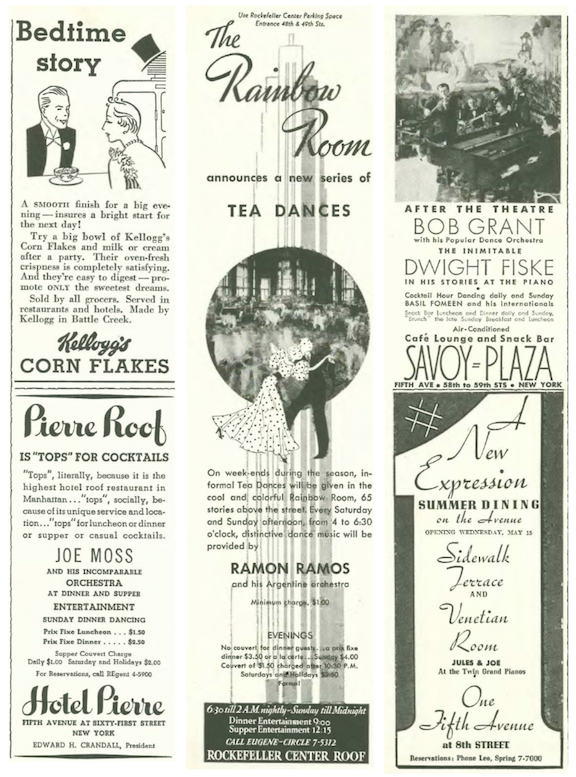
…let’s take a look at some of the one-column ads from the back pages…many of them highlighted the various nighttime entertainments, from the rooftop of Hotel Pierre to the air-conditioned lounge at the Savoy-Plaza (plus that weird ad that suggested Corn Flakes as a nightcap)…

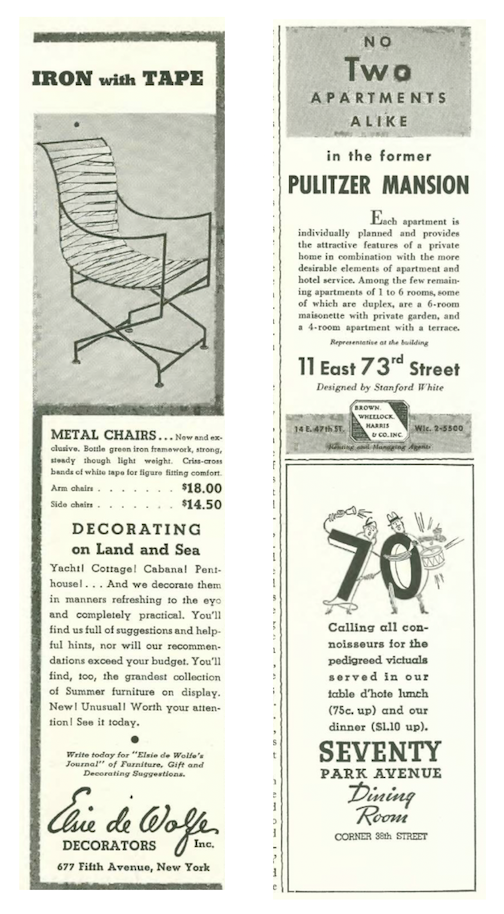
…interior designer Elsie de Wolfe rolled out “Iron with Tape” chairs, which might be the first example of what would become the ubiquitous webbed lawn chair…also advertised were apartments in the former Pulitzer mansion…

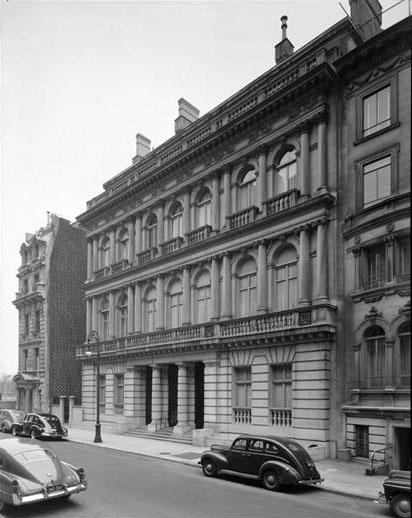
…the Pulitzer apartments were one happy outcome of the Great Depression, which foiled the plans of investors to demolish the house in 1934 and erect an apartment building…

The Pulitzer mansion still stands today, now divided into high-class coops. (daytoninmanhattan.blogspot.com)

…here’s something new from the Jay Thorpe shop, “noted for unusual sportswear”…

…perhaps inspired by Hollywood…
Ruby Keeler in 1935’s Shipmates Forever. (Reddit)

…illustrator Lyse Darcy created many of these distinctive ads for Guerlain products from the 1930s through the 1950s…

…on to our cartoonists, we begin with spot art from James Thurber

…and Thurber again…

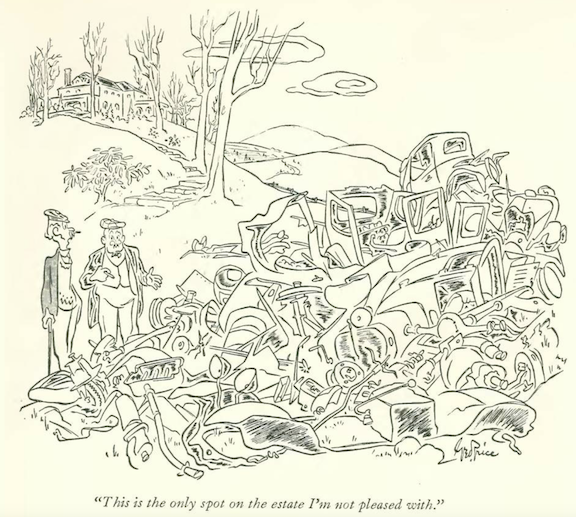
…and we have two from George Price

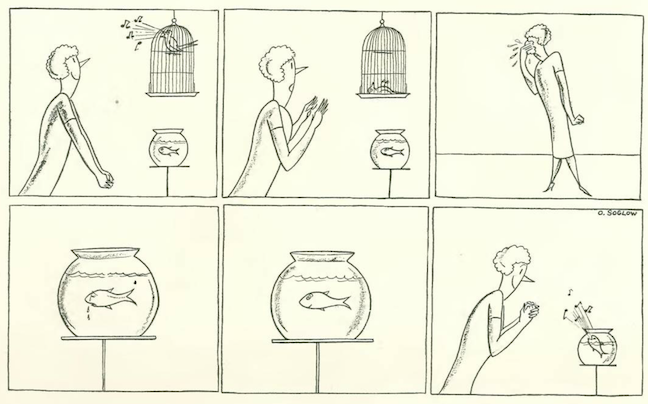
Otto Soglow continued with his multi-panel tricks…

Howard Baer did some eavesdropping on the rails…

…while Barbara Shermund checked in on her modern women…

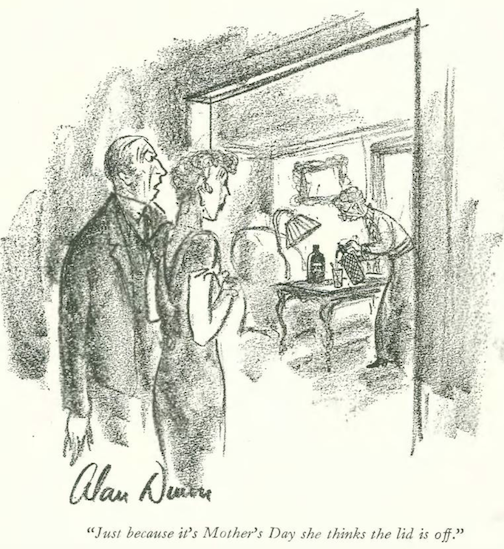
Alan Dunn gave us a mother who took care of herself on Mother’s Day…

Peter Arno found some kindly advice in the crowded city…

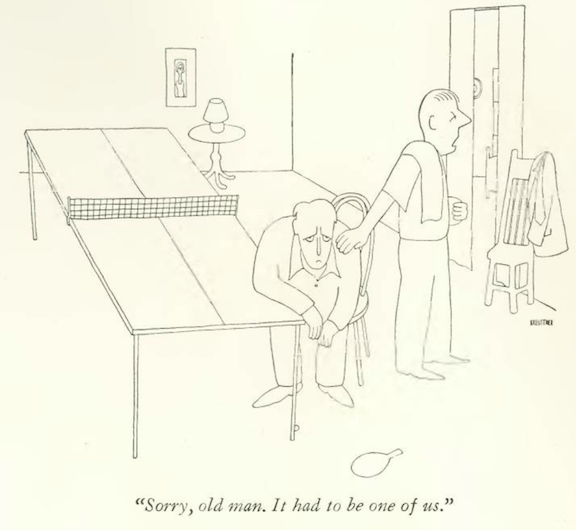
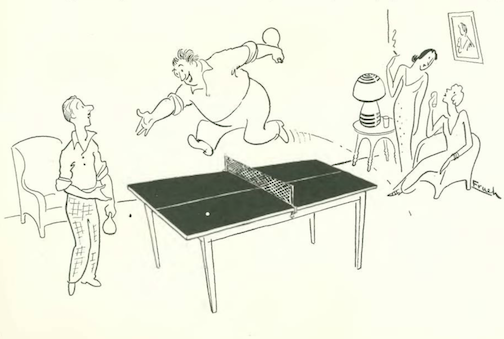
Al Frueh put the “tennis” back into table tennis…

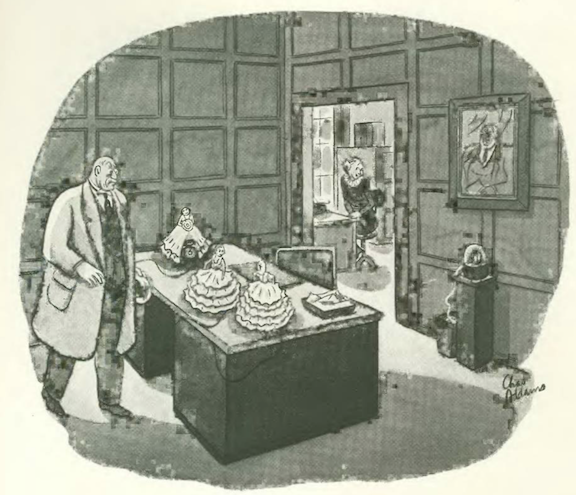
…and we close with Charles Addams, who had become a regular contributor but was still more than three years away from launching his “Addams Family” cartoons…

Next Time: Settling Down, In a Way…


The Royal Treatment

Above: King George V and Queen Mary posed for portraits by John St Helier Lander to commemorate the king’s Silver Jubilee in 1935. (Wikipedia) 

The British Royal Family has never been my cup of tea, but its hard to deny their influence on world affairs, even if today it is mostly ceremonial. The king and queen were also figureheads back in 1935, however they could still claim to lead a vast empire, albeit one badly fraying at the seams.

May 4, 1935 cover by Ilonka Karasz.

Then as now, the power of the royals lay largely in their ability to boost the political and economic fortunes of their island nation. Such was observed by The New Yorker’s Paris correspondent Janet Flanner, who penned a two-part profile of Queen Mary (nee Mary of Teck or more formally Victoria Mary Augusta Louise Olga Pauline Claudine Agnes; Queen of the United Kingdom and the British Dominions, and Empress of India). Flanner wrote the profile of Queen Mary (1867-1953) in anticipation of the Silver Jubilee of her husband, King-Emperor George V (1865-1936). Excerpts:

A DEB AND A DUKE…In 1886 Mary was a an unmarried British princess who was not descended from Queen Victoria, so she was a suitable candidate for the royal family’s most eligible bachelor, Mary’s second cousin Prince Albert Victor, Duke of Clarence and Avondale. In early December 1891 Albert Victor (left photo) proposed marriage to Mary, but he died six weeks later in the Russian flu pandemic. Less than two years later (July 1893) Albert Victor’s brother, Prince George, Duke of York, would wed Mary—at right, their wedding day photo. (Wikipedia)

Flanner noted that the King George V and Queen Mary were rated by British industrialists as the Empire’s “two best salesmen,” however it was Mary who proved the most influential whether she was buying a hat or a refrigerator. Excerpts:

SILVER AND GOLD…Top photo: to mark the king’s Silver Jubilee on May 6, 1935, King George V and Queen Mary greet their subjects from a balcony at Buckingham Palace with their grandchildren, (from left) Princess Margaret Rose, Hon. Gerald Lascelles, Princess Elizabeth, and Viscount Lascelles. Below, King George V, the Duke and Duchess of York, and Princess Elizabeth take a trip in the royal carriage, 1933. The Duke and Duchess would succeed the throne upon the death of King George in 1936 and the abdication of the Duke’s brother, Edward, that same year. (Reddit/Town & Country)

Naturally, not everyone in the kingdom was thrilled by the Silver Jubilee…

OPPOSING VIEWPOINT…The anti-monarchist cartoonist Desmond Rowney commemorated the Silver Jubilee with this cartoon in the Daily Worker. The public expense for the Silver Jubilee in the midst of a financial depression caused some controversy. (National Archives UK)

 * * *

Corn-fed Canvasses

Critic Lewis Mumford, like many East Coast intellectuals, was allergic to the over-patriotic and the sentimental, so when it came to assessing the work of the regionalist painter Grant Wood (1891-1942), Mumford found himself perplexed but hopeful that Wood would one day “find himself” and produce “first rate” art.

FLANKING THE ICONIC painting American Gothic (1930) are Grant Wood’s Self Portrait (1932) and, at right, Arnold Comes of Age (1930). Lewis Mumford considered American Gothic to be Wood’s best work. (figgeartmuseum.org/whitney.org/sheldonartmuseum.org)

Mumford did not mince words, however, when it came to Wood’s contemporary landscapes, which he called “unmitigatedly bad…If that is what the vegetation of Iowa is like, the farmers ought to be able to sell their corn for chewing gum…”

BUBBLEGUM TREES…From 1919 to 1925, Grant Wood taught junior high art in Cedar Rapids, Iowa. The seasonal nature of teaching allowed Wood to take summer trips to Europe to study art, and his early work showed strong post-impressionist influences, including his impressionistic Vegetable Farm (top) from 1924; below, Mumford thought Grant’s later landscapes looked like they were made of cotton and sponge rubber, including Near Sundown, from 1933. (wikiart.org)
HOPE AND NOPE…Mumford wrote that Wood’s more “hopeful” works included, top left, Death on Ridge Road and, top right, Adolescence. On the other hand, he found the portraiture in Dinner for Threshers (bottom) vacuous, suggesting “a color photograph of a model of Life in Iowa done for a historical museum.” (wikiart.org/figgeartmuseum.org)

 * * *

Daring Young Man

“The Talk of the Town” paid a visit to William Saroyan (1908–1981), an Armenian-American novelist, playwright, and short story writer who would go on to receive a Pulitzer Prize for Drama in 1940 and a 1943 Academy Award for Best Story for the film The Human Comedy. An excerpt:

HIGH WIRE ACT…The Daring Young Man on the Flying Trapeze and Other Stories (1934) was the first collection of 26 short stories by William Saroyan (pictured here in 1940). The book became an immediate bestseller. (Wikipedia)

 * * *

Not Long For Long

In his column “Of All Things,” Howard Brubaker noted that the “loose talk” of Huey Long, a U.S. Senator from Louisiana and prominent critic of the New Deal, could be squelched by a Senate vote. As it turned out, it wouldn’t be necessary; Long was felled by an assassin’s bullet four months later.

 * * *

Ode to Abode

E.B. White turned to verse to offer his thoughts on where one should live:

 * * *

Tough Guys

After a musical comedy, a Shakespeare adaptation (A Midsummer Night’s Dream), and another comedy, James Cagney returned to familiar form with an exciting crime drama, G Men. Critic John Mosher was pleased that Cagney was back to tap-dancing with machine guns rather than showgirls.

CRIME PAYS…AT THE BOX OFFICE… James Cagney takes aim at his new role as a federal agent James “Brick” Davis in G Men. With the Hays Code in force, Warner Brothers made the film to counteract what many leaders claimed was a disturbing trend of glorifying criminals in gangster films. (Still from film)

 * * *

From Our Advertisers

According to General Motors’ Fischer division, good taste was in order whether you were choosing a spouse or an automobile…

New Yorker ads continued to display bright colors to sell everything from cars to whiskey to sparkling water (with apparent health benefits)…

…the shadowy Dubonnet mascot was back, here making the claim (against the wisdom of the ages) that a lunchtime drink will clear your head for the afternoon ahead…
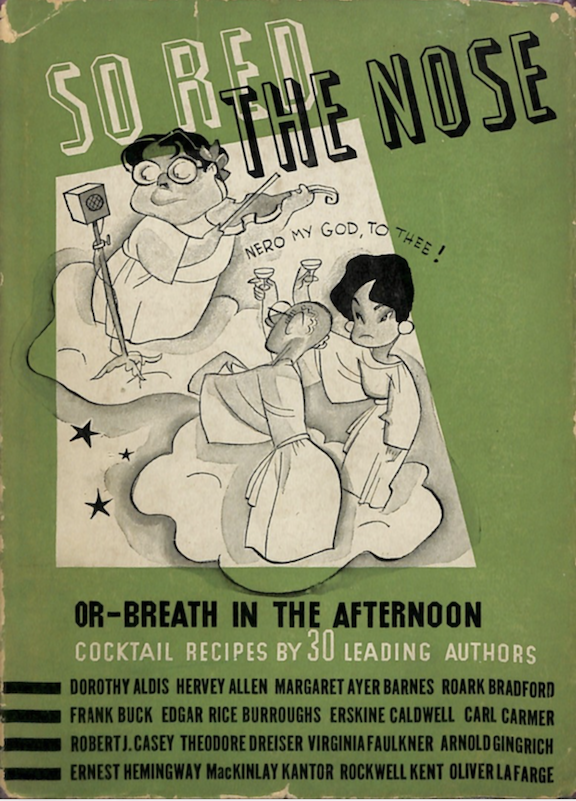
…no health claims here from Penn Maryland, just pure magic as depicted by Otto Soglow

…and what goes better with whiskey than the Kentucky Derby…

…the 1935 Kentucky Derby was won by Omaha, a three-year-old Thoroughbred; he was the third horse to ever win the Triple Crown (Omaha was the son of Gallant Fox, the 1930 U.S. Triple Crown winner)…

Omaha in 1935 (Wikipedia)

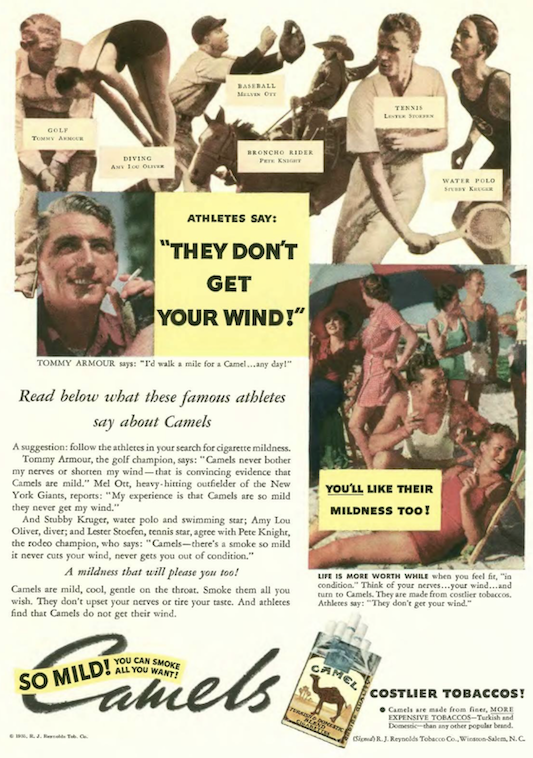
…on the subject of Thoroughbreds, Camel offered up testimonials from top athletes in a variety of sports…they all agreed that the cigarettes “don’t get your wind”…so what did that mean?…according to R.J. Reynolds, “It means you can smoke Camels all you want”…

…Camels also calmed the nerves, and so apparently did Chesterfields…

…on to our cartoonists, we begin with a spot by Charles Addams at the top of page 2…

…later in the issue James Thurber contributed this drawing to stretch across the bottom of page 62 (“On and Off the Avenue”)…

…Thurber again, with the life of the party…

William Steig offered up a page-full of wits…

…plus one more on the preceding page…

Gluyas Williams continued to follow the strange ways of club life in America…

…and we close with Alan Dunn, and service with a smile…

Next Time: What’s In a Name?…


Terse Verse

Above: Holiday greeting card circa 1920 (left) and framed poetry (1916) from the P.F. Volland Company, which rejected E.B. White's attempt at a get-well card. (Newberry Library/Wikipedia)

A deep reading of The New Yorker’s back issues can lead a person down some interesting rabbit holes as well as to new insights. For instance, who knew that the greeting card business could lead to murder?

April 20, 1935 cover by William Cotton.

Writing for the occasional feature “Onward And Upward With The Arts,” E.B. White examined the hardboiled world of the “sentiment biz,” a world in which each year 42,000 eager writers elbowed their way into a few hundred positions, and even a smaller number made a decent living at it. To test his own mettle at the craft, White submitted a get-well message to the P. F. Volland Company.

A JOB TO DIE FOR…Paul Frederick Volland (1875-1919) founded his greeting card company in 1908, producing sheet music, children’s books, calendars, cookbooks, and framed poetry such as the example at left, from 1916. On May 5, 1919, Volland was shot and killed in his office by an elderly contributor, Vera Trepagnier, after a dispute about compensation over her miniature of George Washington. The company continued until 1959. (Wikipedia)
HACK RACKET…One of the more illustrious contributors to the Volland Company was J.P. McEvoy (1894-1958). Despite his generous salary, he hated working for Volland. His 1930 novel Denny and the Dumb Cluck satirized the greeting-card business and his experiences with Volland. In an author’s note, McEvoy wrote that “among other minor atrocities I have compiled 47,888 variations of Merry Christmas…” (Wikipedia/Pinterest)

The Volland Company employed scores of artists and writers including L. Frank Baum, Edgar Rice Burroughs, John Held Jr, Ring Lardner, Robert Louis Stevenson, and J.P. McEvoy—a writer little known today, McEvoy was influential in the 1920s and 30s, writing everything from children’s tales (he likely inspired Raggedy Ann) to short stories, novels and comic strips, including the popular Dixie Dugan. He also wrote a hit Broadway play, and several of his stories were turned into movies, including W.C. Fields’ 1934 classic It’s a Gift.

White also offered some “tips” on sentiment writing, suggesting that one avoid rhyming words such as “smother” and “mother”…

…he also cautioned about the use of certain phrases, and concluded with a cheeky Easter poem of his own…

 * * *

More Thoughts From E.B.W.

White occasionally led off his column with observations on the passing scene, in this case springtime happenings in the city and beyond…

SIGNS OF SPRING…E.B. White looked around for signs of spring and found, among other things, the bicycle drills of the League of American Wheelmen (top left, professional bike racer Vincent Seifred rode for the the Empire City Wheelmen in the 1930s); top right, tiny spring peepers were for sale as pets at Macy’s; the Fifth Avenue Coach Company switched sponsors, from Marlboro to Gulden’s; White noted freshets (spring meltwater) in the hills—image is from New York’s Finger Lakes. (crca.net/paherps.com/aldenjewell-flickr.com/nygeo.org)

 * * *

Star Struck

“The Talk of Town” anticipated the completion of the Hayden Planetarium at the American Museum of Natural History. When it opened in October 1935, it was only the fourth planetarium in the United States. Excerpts:

TO INFINITY AND BEYOND…When the Hayden Planetarium opened in October 1935, it was only the fourth planetarium in the United States. In its first year the planetarium drew more than half a million visitors. Clockwise, from top left, the exterior of the planetarium; inside the 75-foot dome; the Zeiss projector; Copernican Room demonstrated movements in the solar system with model planets following tracks in the ceiling; prize-winning poster from a contest in which more than 3,500 high school students were invited to compete for a chance to have their poster exhibited at the American Museum of Natural History. (© AMNH Library)

 * * *

Broadway Slugfest

The profile by Meyer Berger looked at the life of a “chiseller,” that is, someone who lived day to day by skimming off the labors of others. Today it is mostly done digitally, but in 1935 the mechanical world could be manipulated by a handful of slugs. Excerpts:

 * * *
From Our Advertisers
We begin with an elegant evening, the men in white tie, the women in their finest gowns, all preparing to partake of some canned soup…
…there were many ads with Easter themes to move the merch…

…here’s a detail from an Easter-themed ad for neckties, a retired Colonel, presumably, proudly strutting in the Easter Parade with his crop and monocle as he elbows aside his chauffeur and granddaughter…

…the Duchess returns, and she’s still pissed about her tomato juice…I wish I could have entered this contest…

…the Dubonnet mascot, Dubo-Dubon-Dubonnet, made a startling appearance in this ad…the creation of French graphic designer Adolphe Mouron Cassandre, Paul Rand took over the drawing of Dubonnet Man when the liquor came to the United States…

…Old Gold continued its campaign (illustrated by pin-up artist George Petty)  featuring a homely, clueless sugar daddy…

…while Camel turned out another group of “sports champions” who testified to the energizing effects of cigarettes…

…another grim message from General Tire…this time featuring dear old dad, contemplating a different fate for his wife and children…

…recall the General ad from March 23…

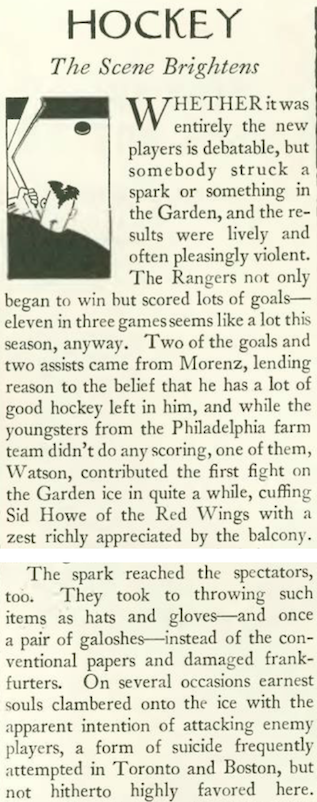
…General Motors was touting its lineup of 1935 models at the Hotel Astor…

…Chrysler was known as an innovator, introducing radical designs like the Airflow, but consumers weren’t ready for the ultra-streamlined model, even if it did ride so smoothly that one could apparently lose consciousness…

…if a car trip was not your thing, you could fly across America, with a few stops…

…and we fly into our cartoons, where we keep up to date with Otto Soglow

George Price was still up in the air with this fellow…

Gluyas Williams continued to look at club life with this cartoon which originally ran sideways on page 21…

…compliments to the cook, from Syd Hoff

…Walter Lippmann put the scare in this James Thurber subject…

…and we end with Barbara Shermund, and one young woman who won’t be visiting the new planetarium…

Next Time: A Tour of Broadacre City…