Down to Earth

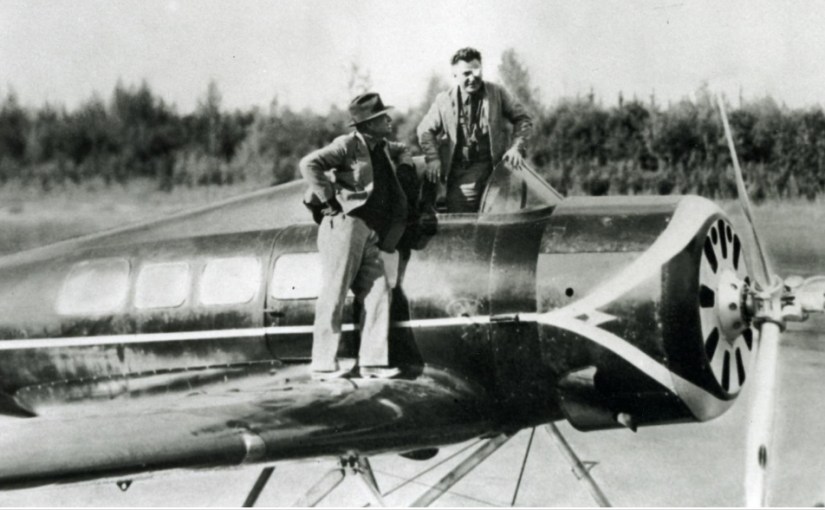
Above: Will Rogers (with hat) visits with pilot Wiley Post near Fairbanks, Alaska, hours before their fatal crash on August 15, 1935. (okhistory.org)

It would be a challenge to find a place for a multi-talented, mega-star like Will Rogers in today’s over-saturated and segmented media landscapehe was a trick roper, vaudevillian, social commentator, comedian, journalist, author, and radio and film celebrity. His early fame on the vaudeville circuit, including the Ziegfeld Follies, would spark a film career in 1918 (he would appear in 71 films), and a 1922 town hall speech would lead to a nationally syndicated newspaper column. When radio became a nationwide phenomenon his voice could heard coast-to-coast. He was seemingly everywhere.
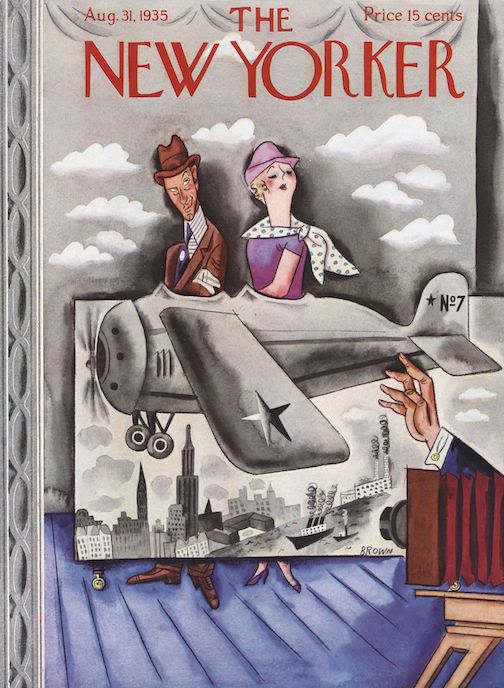
August 31, 1935 cover by Harry Brown. Brown illustrated eighteen covers for The New Yorker.

Rogers (1879-1935) was also a big promoter of aviation, and he gave his audiences many entertaining accounts of his world travels. In the summer of 1935 he announced plans to join famed aviator Wiley Post (1898-1935) on a flight to Alaska and beyond. It appeared to be routine, making the trip’s tragic ending all the more poignant.

Although E.B. White often seemed stuck in the past—he preferred Model Ts and rattily omnibuses to more more modern conveyances—he was a flying enthusiast, never missing a chance to hop aboard an airplane and marvel at the scene far below. However, when tragedy struck, White would become circumspect. When Notre Dame coach Knute Rockne’s Fokker Trimotor crashed into a Kansas wheatfield, White expressed doubts about air safety and pondered “safer” alternatives such as autogiros (a kind of early helicopter that wasn’t so safe or practical). Such doubts returned in his “Notes and Comment” for August 31, 1935:
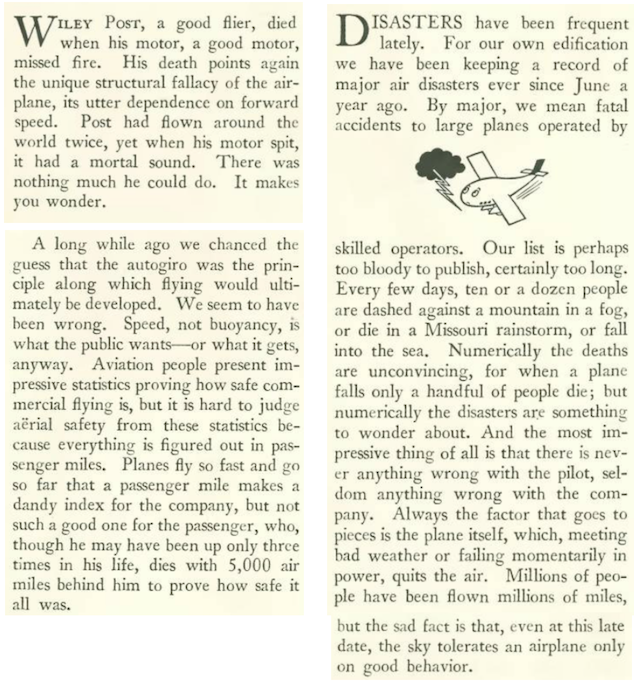
The fated aircraft, a Lockheed Orion, was heavily modified by Post into a floatplane; one wing was even salvaged from a wrecked Explorer (an older Lockheed model). The pontoon floats he attached were also designed for a larger aircraft, which made the nose-heavy Orion even more unwieldy.

BUILT FOR SPEED…A Lockheed Model 9 Orion parked at Boeing Field, Seattle, in May 1935. With 200-mph speed, the single-engine passenger aircraft (5 to 6 passengers) was faster than any American military aircraft of the time. It was Lockheed’s last aircraft to use wood construction in the frame, which was lightweight but not designed for longevity on major airlines. (James Borden Photography Collection)
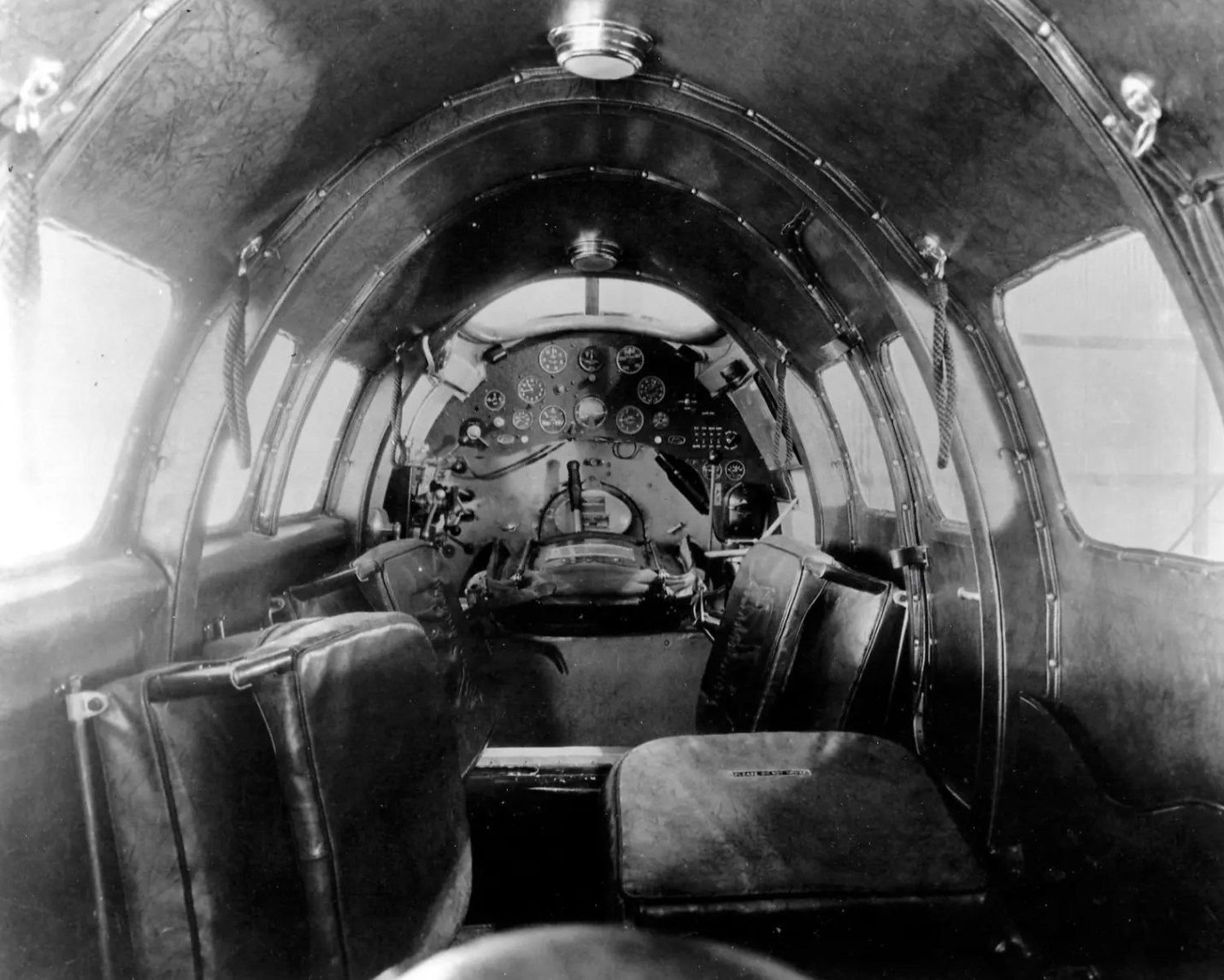
TIGHT QUARTERS….Interior view of a Lockheed Orion 9. No doubt much of the passenger space was loaded with gear for the trip to Alaska. (James Borden Photography Collection)

When Post and Rogers arrived in Juneau, local bush pilots doubtfully regarded the Orion and asked Rogers about the flight plan. “Wiley and I are like a couple of country boys in an old Ford—don’t know where we’re going and don’t care,” he said. They were actually headed to Point Barrow, and from there planned to hop over to Siberia.

After stopping in Fairbanks they set off for Point Barrow in bad weather. Lost in the murk, they landed short of their destination in the shallow waters of Walakpa Lagoon, fifteen or so miles southwest of Point Barrow. Post and Rogers then took off—despite warnings from locals about the conditions. But the weather wasn’t the worst problem: Post had a bad habit of taking to the air in an abrupt, steep climb, which likely caused the engine to stall. Powerless, the ungainly aircraft plunged into the lagoon and landed on its top. Post and Rogers were killed instantly.
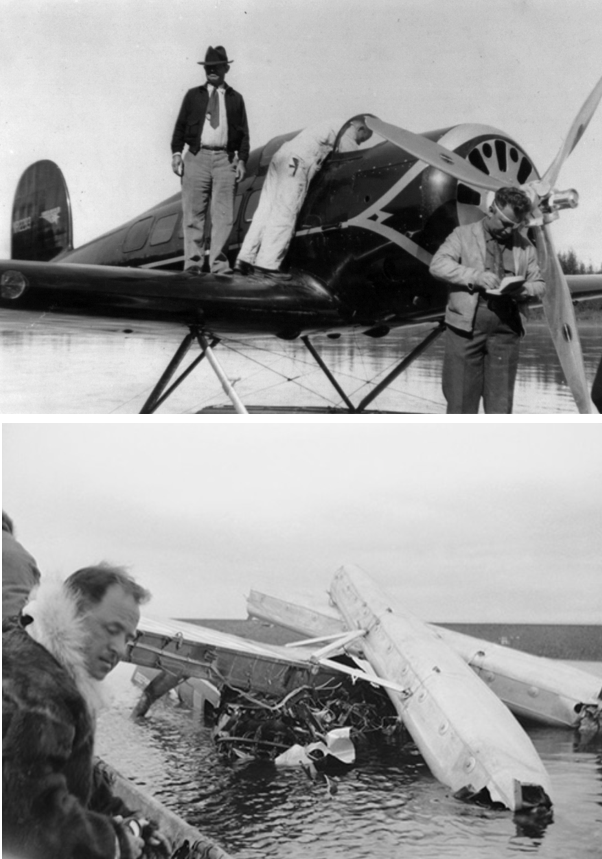
JUST A COUPLE OF COUNTRY BOYS…Top photo, Will Rogers on the wing of the Lockheed floatplane belonging to famed aviation pioneer Wiley Post, hours before their fatal crash on August 15, 1935. Below photo, inverted wreckage of the float plane in Walakpa Lagoon.  (Wikipedia/vintageaviationnews.com)

Rather than eulogize the fallen Rogers, “The Talk of Town” offered up an anecdote about his rise as a newspaper columnist, which was sparked by a backhanded endorsement speech:

A HUMAN FACE…Top left, Will Rogers backstage with the 1924 Ziegfeld Follies cast. At right, Rogers made his film debut in the now lost silent film Laughing Bill Hyde (1918) with co-star Anna Lehr. The magazine ad at right quoted producer Rex Beach, who called Rogers “the most human player who ever faced a camera.” (Will Rogers Memorial Museum/Wikipedia/IMDB)
FINAL CURTAIN…Top photo, Will Rogers with co-star Anne Shirley in Steamboat Round the Bend. Rogers wrapped filming just before heading to Alaska. The film was released posthumously on September 6,1935. Bottom image is a detail from a full-page ad in the October 1935 issue of Picture Play Magazine. Oddly, the ad makes no mention of Rogers’ death, proclaiming that “Will blazes a new path in his screen career as he scores his greatest triumph!”  (theretrorocket.blogspot.com/IMDB)

 * * *

Putting it Mildly

In “Onward & Upward With the Arts,” H.L. Mencken continued to explore the quirks of American language, this time looking at the pervasive (and evasive) use of euphemisms by “professional uplifters.” Excerpts:

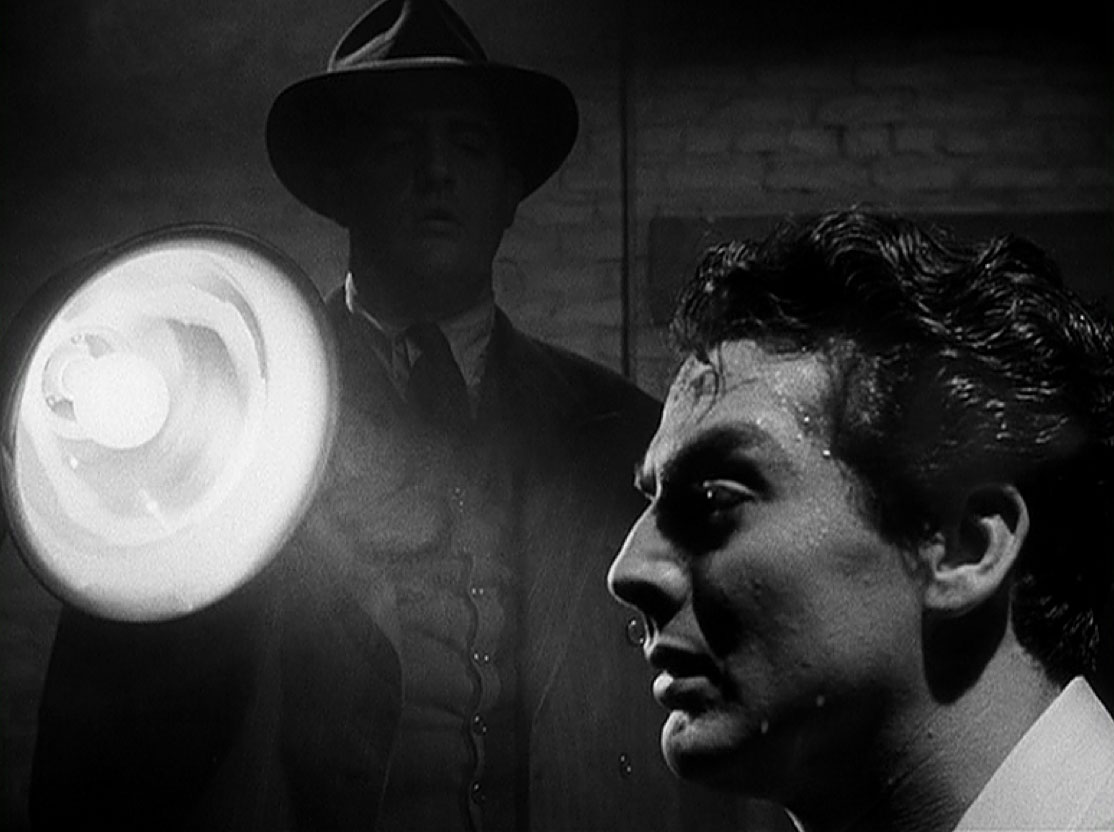
INTELLIGENCE TEST was suggested by “professional uplifters” as a polite replacement for giving someone “The Third Degree.” Image is from the 1941 noir thriller I Wake Up Screaming, starring Victor Mature, pictured here getting his “intelligence test.” (cinematography.com)

 * * *

At the Movies

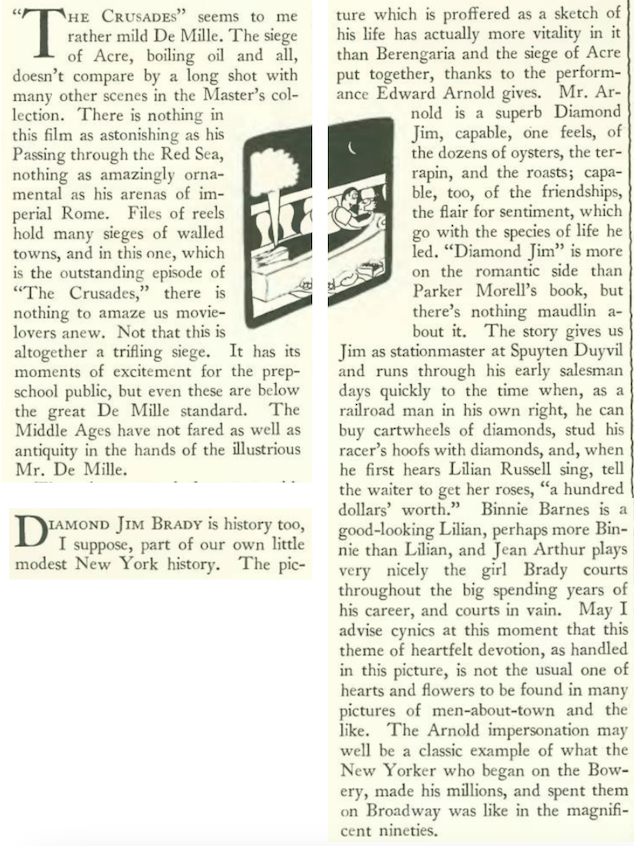
We join film critic John Mosher to take a look at the latest epic from Cecil B. DeMille, The Crusades, which to Mosher’s disappointment was a rather mild epic, with little to astonish. However, our critic did find something to admire in a more recent historical drama, Diamond Jim.
ANTISEPTIC EPIC?…Clockwise, from top left, movie poster for The Crusades offered up an image one typically does not associate with religious warfare, but you had to bring ’em in somehow; Henry Wilcoxon and Ian Keith in a scene from the film; co-stars Loretta Young as Berengaria of Navarre and Wilcoxon as Richard the Lionheart; the film also featured Joseph Schildkraut as Conrad of Montferrat and Katherine DeMille as Princess Alice of France (bottom left). A talented actress, Katherine reportedly landed the role as a Christmas gift from her adoptive father, Cecil B. DeMille. (cecilbdemille.com)
HEY BIG SPENDER…At right, Edward Arnold in the title role (here with Eric Blore) in Diamond Jim. At left, Cesar Romero moves in on Diamond Jim’s love interest, portrayed by Jean Arthur. (Rotten Tomatoes/IMDB)

 * * *

From Our Advertisers

We begin with this advertisement from Lord & Taylor, featuring the latest fall fashions for young women heading to college…notable here is the inclusion of Mickey Mouse in the illustration…the animated rodent was in vogue as much the latest fashions…


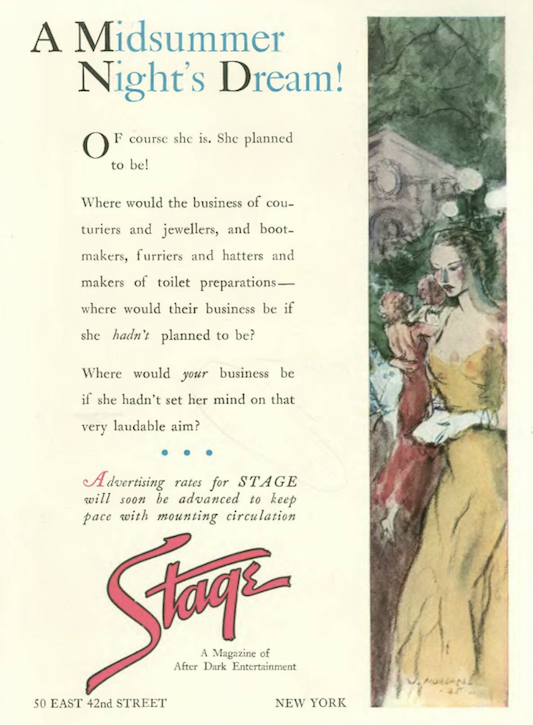
John Hanrahan, whose advertising savvy helped guide The New Yorker through its lean early years, was publisher of the richly designed Stage magazine, promoted here on the inside front cover…
…soft drink giant Coca-Cola recalled its soda fountain origins in this ad that promoted its 6.5-ounce bottled product…

…on the inside back cover Goodyear continued its series of perilous ads illustrating the dangers of tire blowouts (but not the obvious hazard of children riding untethered in a rumble seat, where they doubtless inhaled all manner of noxious fumes)…

…the majority of back covers in 1935 featured tobacco companies…here we learn that Lucky Strikes were more than cigarette; they were your “best friend”…

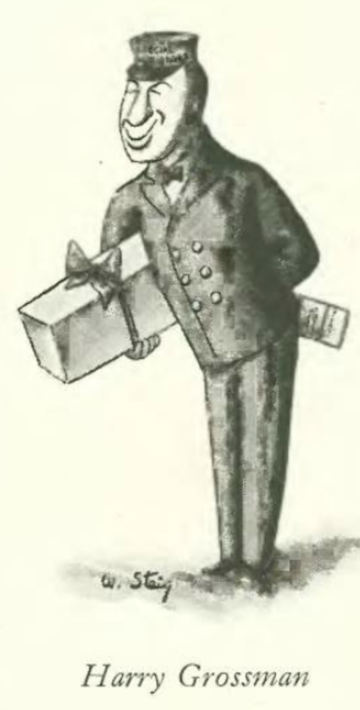
…on to our cartoonists, we start with this “Profile” illustration by William Steig…the profile was a two-parter featuring a clever summons server…
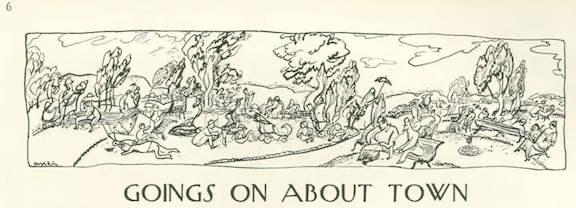
Adolph Dehn adorned the “Goings On” section with this illustration…
…unsigned, but I’m pretty sure this is H.O. Hofman

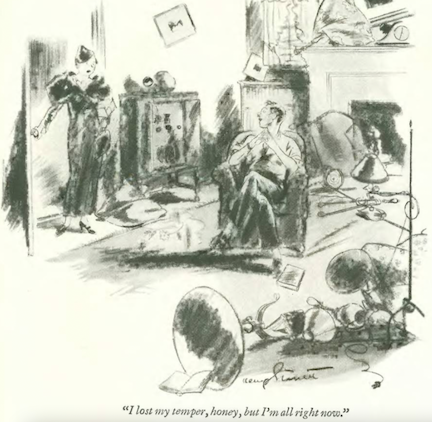
…here we get a lift from Robert Day

Al Frueh conjured up a nightmare of leaping sheep…

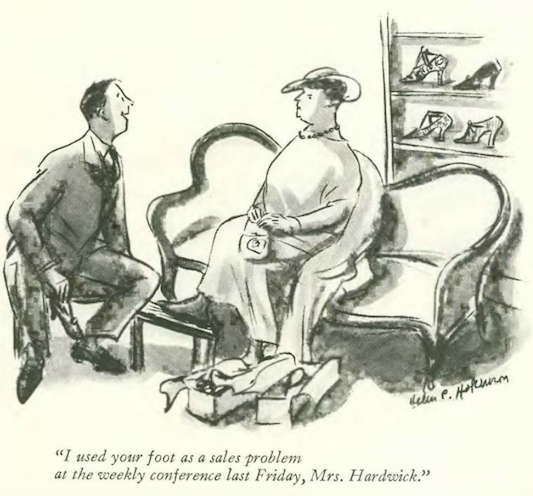
Helen Hokinson gave us some famous footwear…
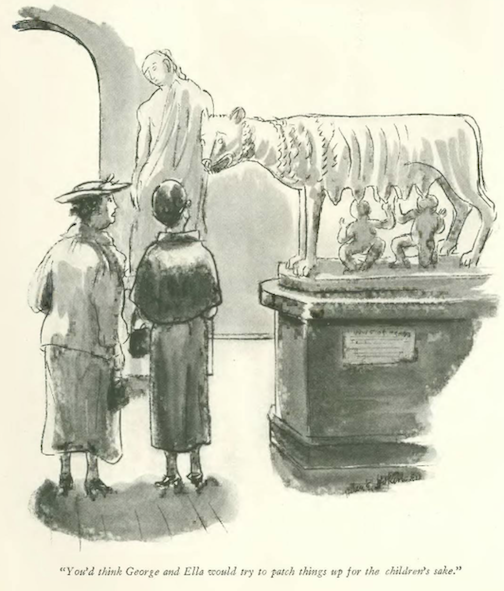
…Hokinson again, with Romulus and Remus providing a convenient metaphor…
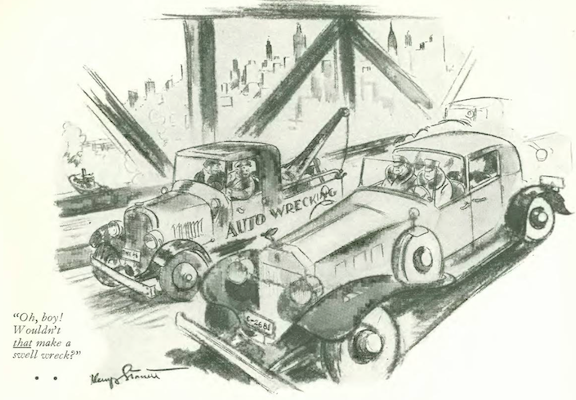
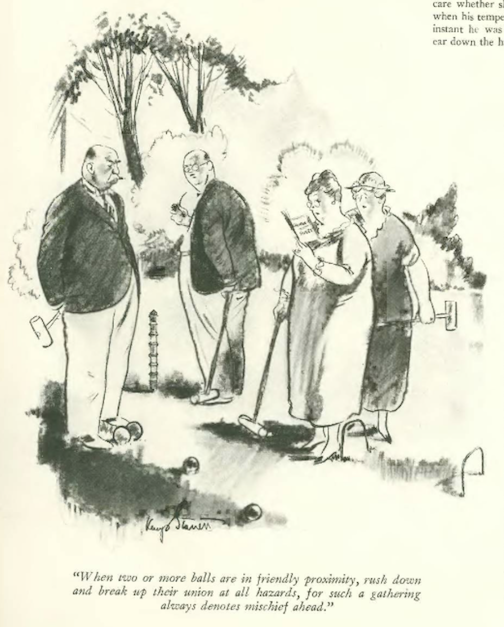
Kemp Starrett was bogged down in the rules of a game…
George Price discovered a budding talent…

Richard Decker took to the back roads…(reminds me of a scene from The Long, Long Trailer with Lucy and Desi)…

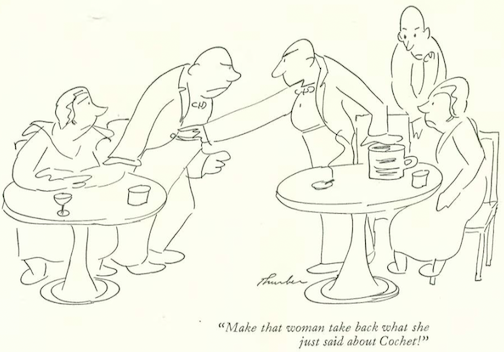
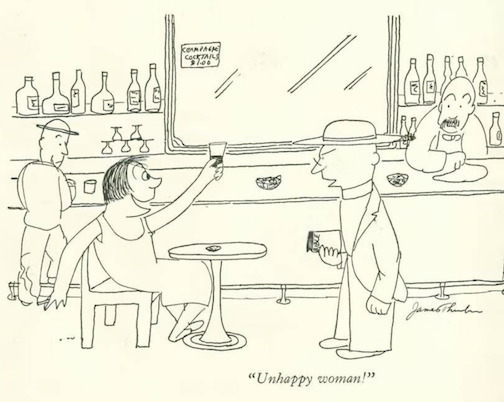
James Thurber raised a glass to a dry do-gooder…
Alan Dunn brought an unexpected windfall to Westchester…
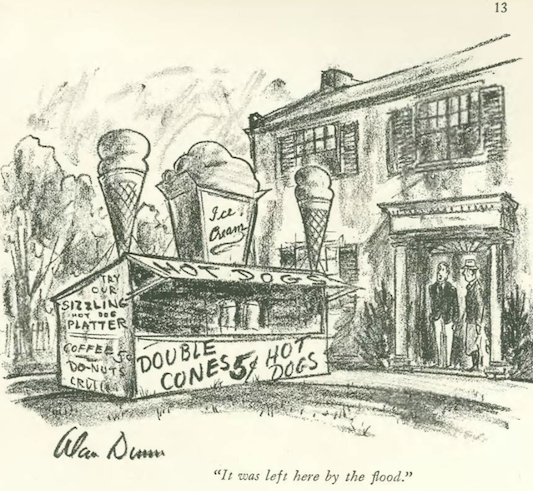
…and to close we Dunn again, and a bit of flattery…
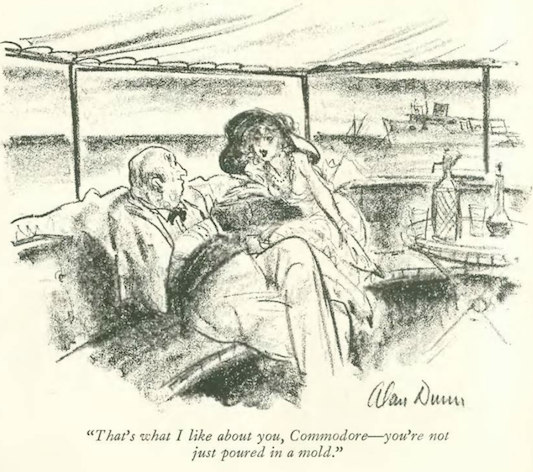
Next Time: A Summer Night…
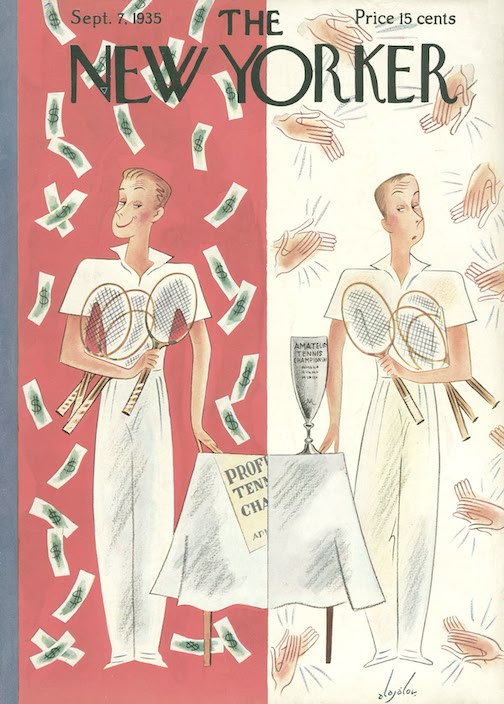
Thackeray, In Color

Above: Seated in front of a massive Technicolor camera, Rouben Mamoulian directs Miriam Hopkins (also inset) in Becky Sharp, the first feature shot entirely in three-color Technicolor. The film was based on character from William Makepeace Thackeray's 1848 novel Vanity Fair. (UCLA Film & Television Archive)

Rouben Mamoulian’s 1935 production of Becky Sharp wasn’t the first color film, but it was the first feature film to use the newly developed three-strip Technicolor process throughout, setting a standard for color films to come.

June 22, 1935 cover by Constantin Alajalov. A New Yorker contributor for thirty-four years, Alajalov (1900–1987) illustrated 170 covers for the magazine. Check out the treasure trove at Ink Spill for more on Alajalov and all things New Yorker.

Earlier color processes included films that were hand-tinted. Others used various dyes and techniques that included photographing a black-and-white film behind alternating red/orange and blue/green filters, and then projecting them through red and green filters. The inability to reproduce the full color spectrum, among other issues, had many critics dismissing the idea of color films altogether.

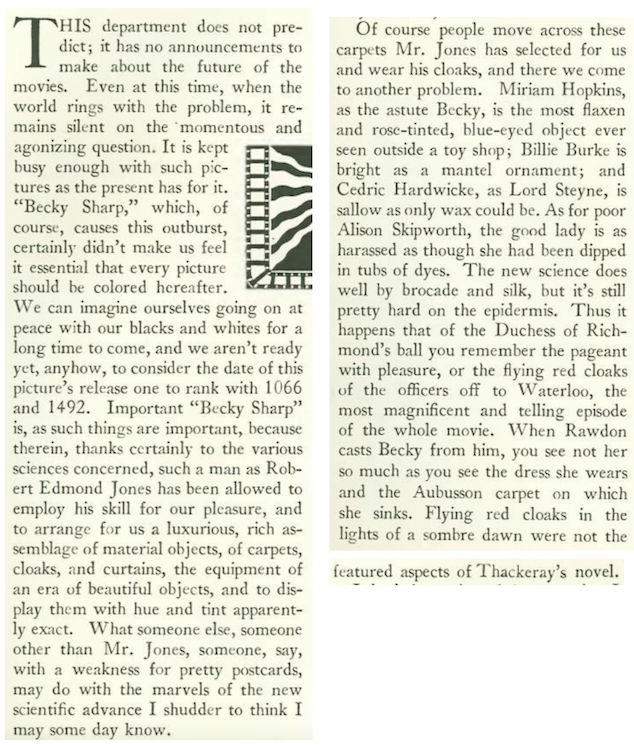
Mamoulian was fascinated by the possibilities of color film; by producing (and later directing) the film, he showcased the advancements in Technicolor. Film critic John Mosher had these observations:

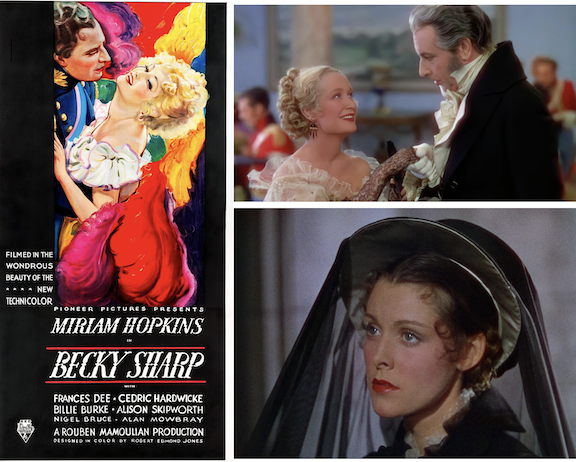
THIS IS A TEST…Considered a landmark in cinema as the first feature film to use the newly developed three-strip Technicolor production throughout, in many ways the film validated this advanced color technology. Top photo, Miriam Hopkins portrayed Becky Sharp, a socially ambitious woman (seen here with Cedric Hardwicke) who climbs the British social ladder with the help of her best friend, Amelia Sedley (Frances Dee, bottom photo). (Wikipedia/Amazon)
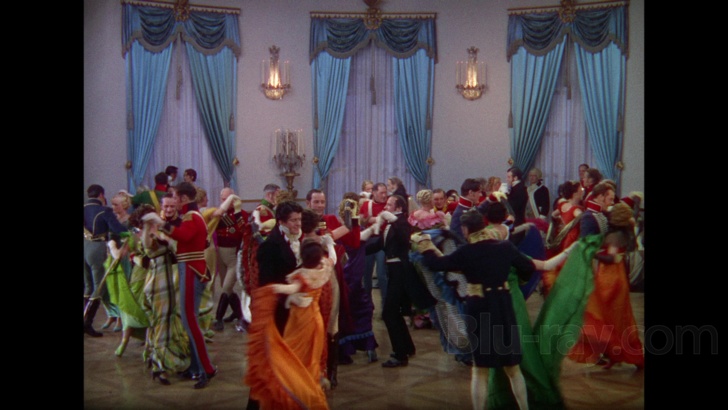
IT WAS FUN ANYWAY…Critic John Mosher was thrilled by the swirl of colors in the ballroom scene, even if flying red cloaks weren’t an aspect of William Makepeace Thackeray’s 1848 novel Vanity Fair. The film, however, was actually based on an 1899 play by Langdon Mitchell, who named his play after one of the characters in Thackeray’s novel. (blu-ray.com)
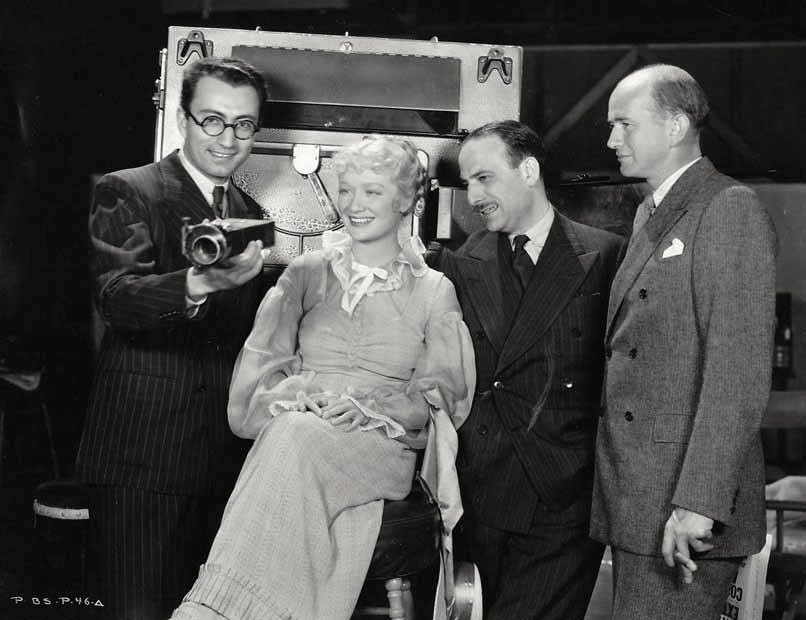
WHOLE NEW WORLD…Rouben Mamoulian, Miriam Hopkins, visitor Michael Balcon, and Kenneth Macgowan on the set of Becky Sharp. According to film historian Marc Spergel, “Mamoulian was fascinated by color…He saw in the color process another opportunity for innovations that would set a standard for the new technology…His interest lay in choosing color for psychological effect rather than mere realistic reproduction or decorative dividends. With the advent of color processing, particularly Technicolor processing—with its non-realistic, supersaturated color—Mamoulian could approach the film medium like a painter with a palette.” (Wikipedia)

Mosher also checked out the latest from Robert Montgomery and Joan Crawford, who exchanged marital banter in No More Ladies, while George Raft went all gangster in Dashiell Hammett’s The Glass Key.

HIGH FIDELITY…Top photo, socialite Marcia (Joan Crawford) is determined to keep her husband (Robert Montgomery) faithful in No More Ladies; below, George Raft does what he does best (playing a gangster) in The Glass Key. (jacksonupperco.com/notesoncinematograph.blogspot.com)

 * * *

Astor’s Risk

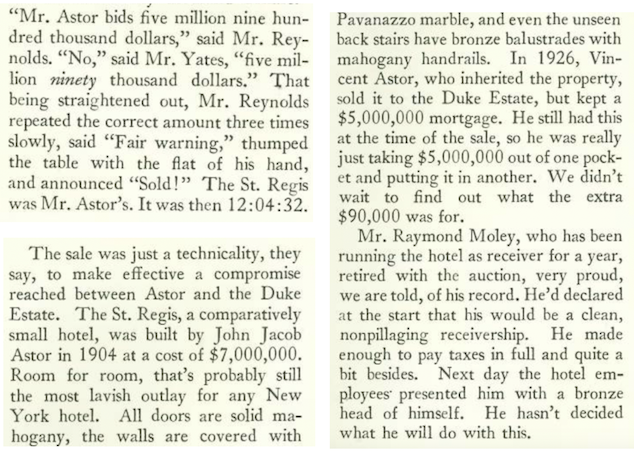
“The Talk of the Town” paid a visit to the Real Estate Exchange, where Vincent Astor re-acquired the St. Regis Hotel for five million and change. He then sunk another $500,000 (roughly $12 million today) into the hotel to further its luxurious status (including adding air-conditioning). The hotel’s famed King Cole Room and the Maisonette Russe restaurant opened in October 1935. Excerpts:

GOOD INVESTMENT…At left, Fifth Avenue facade of the St. Regis as seen in 2022. Right, entrance to the King Cole bar in the 55th Street annex. Thanks in part to the repeal of Prohibition, the hotel’s restaurant business increased by 300 percent between 1935 and 1937. (Wikipedia)

 * * *

School Days

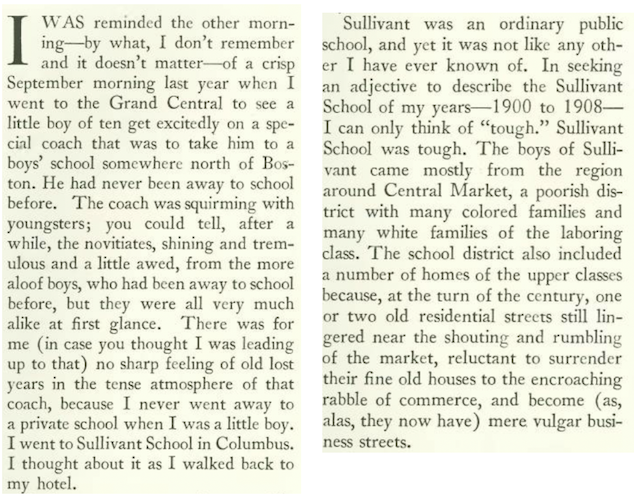
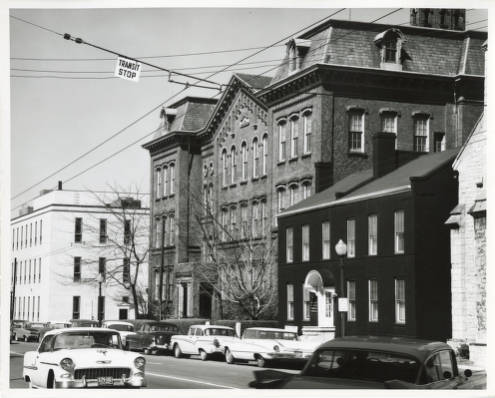
James Thurber recalled his “tough” years at Sullivant School in Columbus, Ohio, in the essay, “I Went to Sullivant.” Brief excerpts:

ALMA MATER…The Sullivant School James Thurber attended was completed in 1871 and was a school until 1923 when it became the offices for Columbus City Schools. This photo was taken shortly before it was demolished in 1961. (columbuslibrary.org)

 * * *

Avril en juin

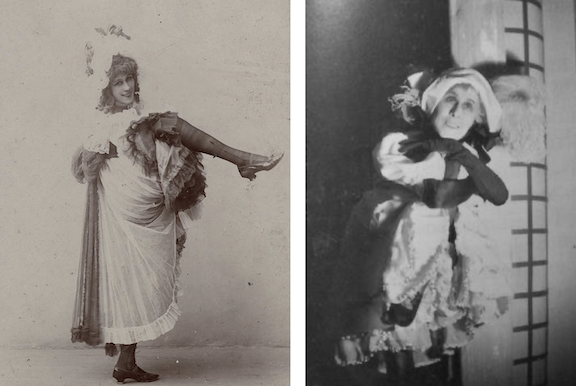
Paris correspondent Janet Flanner gave a rundown on the latest happenings, including the Toulouse-Lautrec costume ball that attracted none other than Jane Avril, the famed French can-can dancer of the 1890s who could still kick up her heels. Flanner gave Avril’s age at 80, but records indicate she was closer to 70.

STILL KICKING…Jane Avril (1868–1943) was a French can-can dancer at the Moulin Rouge in Paris and a frequent subject of painter Henri de Toulouse-Lautrec. The wispy Avril, known for her jerky movements and sudden contortions, was nicknamed La Mélinite, after an explosive. At top left, Avril in her heyday circa 1890s; at right, Avril at the 1935 Toulouse-Lautrec costume ball. Read more about Avril’s strange life at one of my favorite “rabbit hole” sites, Messy Nessy. (messynessychic.com/Pinterest)
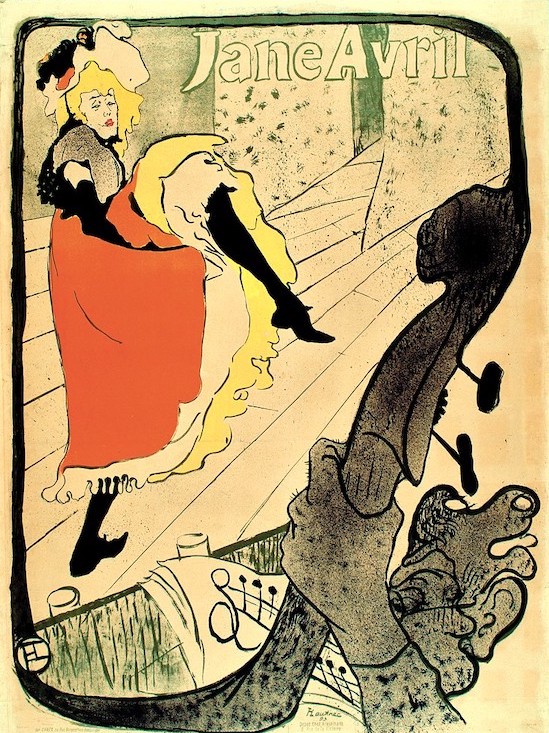
An 1893 Toulouse-Lautrec lithograph featuring Jane Avril, a lifelong friend of the artist. Avril commissioned this print to advertise her cabaret show at the Jardin de Paris. (met museum.org)

 * * *

From Our Advertisers

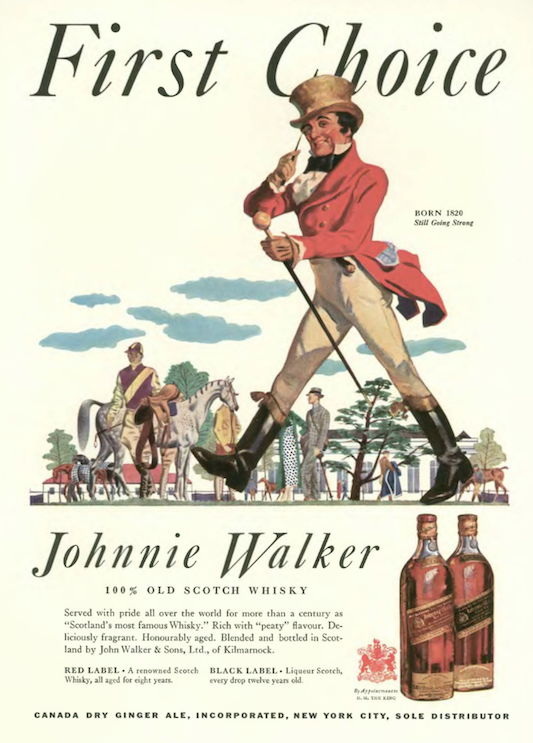
We begin with the inside front cover, Johnnie Walker strutting along at the horse races…

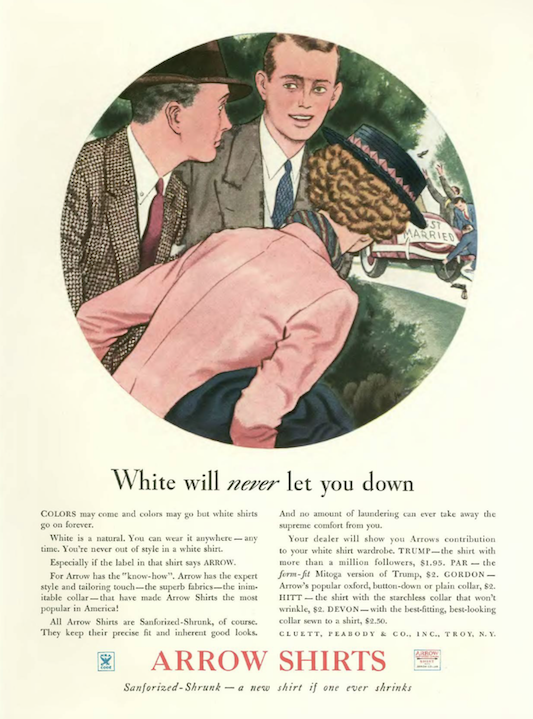
…the inside back cover belonged to Arrow Shirts…

…and no surprise that the back cover featured a stylish woman enjoying a cigarette, in this case a Lucky…

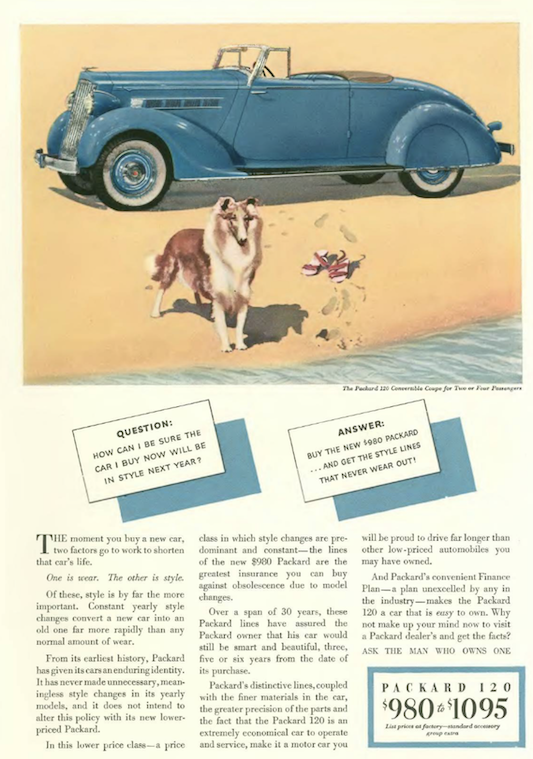
…Packard continued to run these colorful, wordy ads that made the case for owning a lower-priced Packard, which I’m sure was a fine automobile…

John Hanrahan, who early on served as The New Yorker’s policy council and guided it through its lean first years, be­came the publisher of Stage magazine (formerly The Theatre Guild Magazine) in 1932. In 1933 Stage became part of the Ultra-Class Magazine Group’s line-up that included Arts & Decoration and The Sportsman. Stage published its last issue in 1939, and I don’t believe the other two survived the 1930s either…this Mark Simonson site looks at the striking design elements of an issue from 1938…

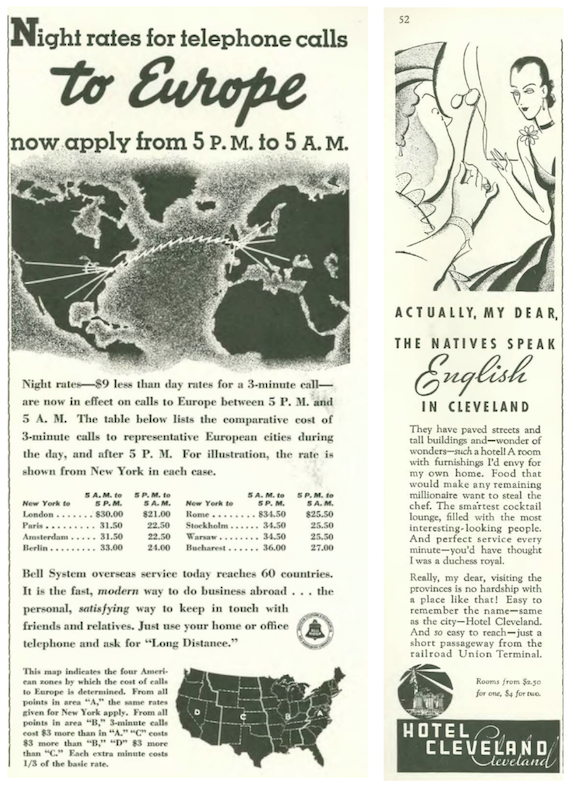
…a couple from back of the book…calling Europe by telephone in 1935 was an impressive feat, however it could cost you roughly $700 in today’s dollars to make a three-minute call to London…the one-column ad at right offered an Anglophilic appeal to those visiting Cleveland…

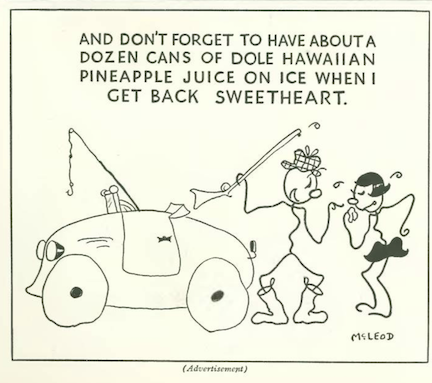
…this simple spot for Dole pineapple juice caught my eye because it was illustrated by Norman Z. McLeod (1898–1964), who drew Christie Comedy title cards during the Silent Era…

McLeod was also an acclaimed director of Marx Brothers comedies Monkey Business (1931) and Horse Feathers (1932), W.C. Fields’ It’s a Gift (1934), Danny Kaye’s The Secret Life of Walter Mitty (1947) and two of the Topper films.

HE GOT AROUND…Clockwise, from top left, director Norman Z. McLeod on the set of 1941’s Lady Be Good with actress Ann Sothern; Young’s familiar stick figure drawings on title cards for the 1928 silent short Loose Change; Cary Grant and Constance Bennett with Roland Young in 1937’s Topper. (TCM.com/silentology.wordpress.com/charlesmatthews.blogspot.com)

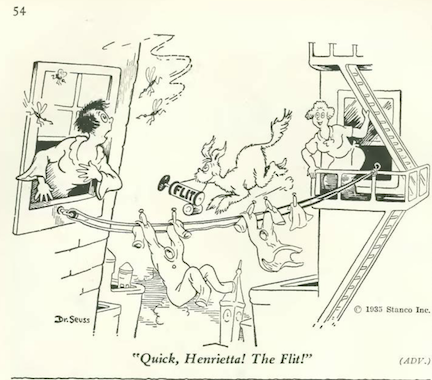
Dr. Seuss was back with his Flit advertisements…

Richard Decker illustrated this ad for Borden’s “Golden Crest” Farm Products…

…which segues into our cartoonists, and this curious spot drawing by James Thurber

Perry Barlow gave us the early days of the “Bed and Breakfast”…

Peter Arno, and no rest for the titans of industry…

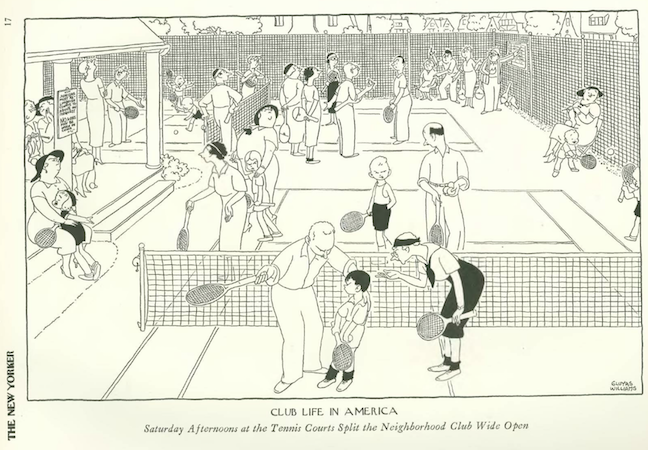
Gluyas Williams continued to take a sideways glance at Club Life in America”…

…from George Price…back in the day, tattoos were usually confined to sailors and longshoreman…this particular fellow found himself with some outdated ink…

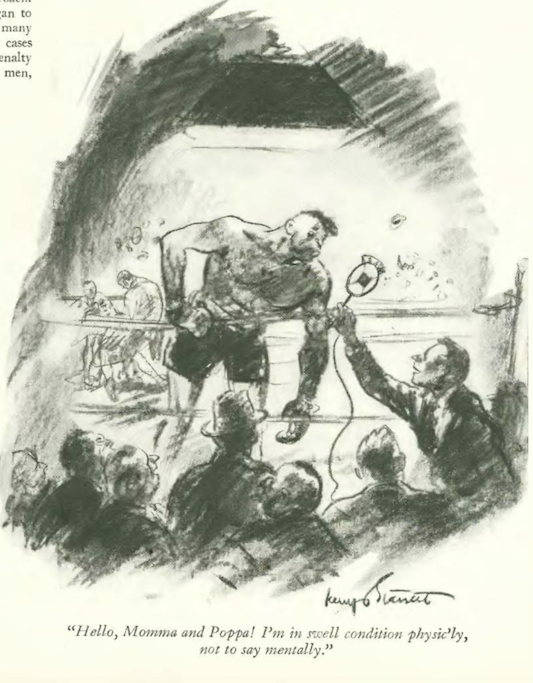
Kemp Starrett took us ringside…

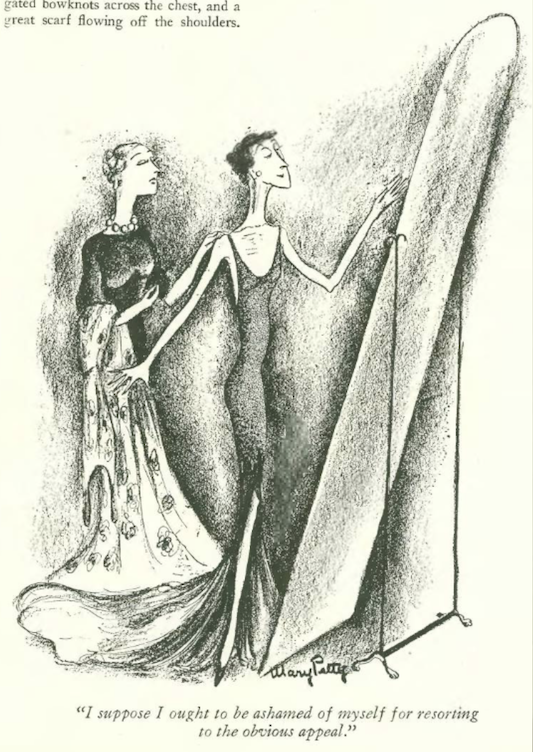
Mary Petty reflected on a bit of narcissism…

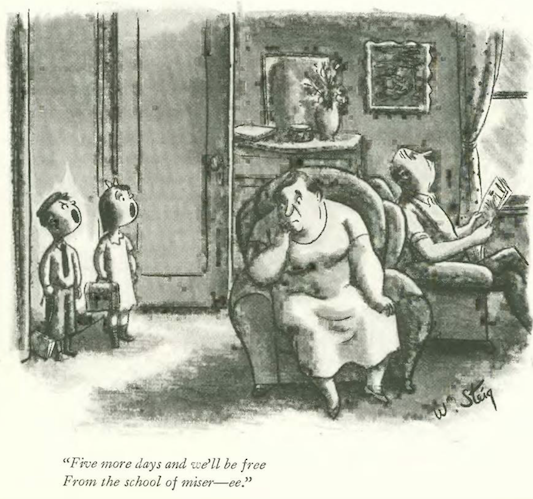
…and we close with William Steig, and mixed feelings about the summer season…

Next Time: Happy Motoring…

The Mouse That Roared, In Color

John Chapin Mosher was the first regularly assigned film critic for The New Yorker, writing reviews for the magazine from 1928 to 1942. He was also a fan of Disney animated shorts, and one particular mouse.

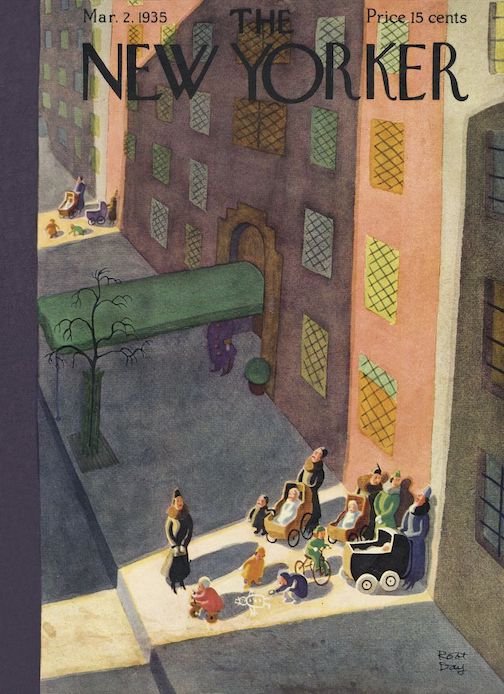
March 2, 1935 cover by Robert Day.

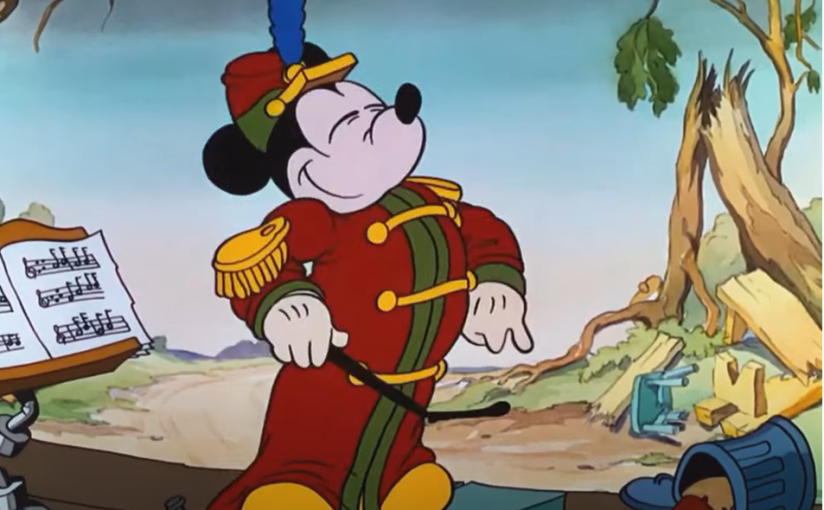
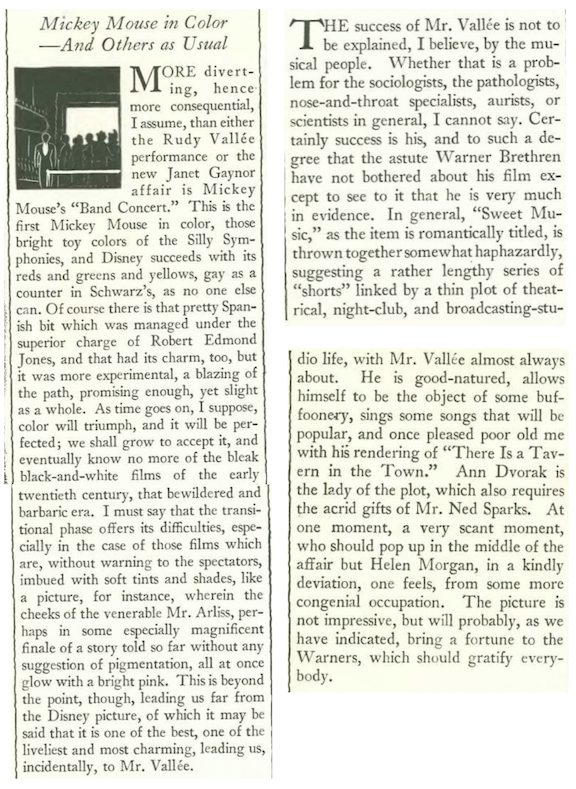
Mosher, who also contributed short stories to the magazine, displayed a lively, witty style in his reviews, and in the early years of Walt Disney animation he was quite partial to Mickey Mouse, who from his sound debut in 1928’s Steamboat Willie had quickly grown into an international star—when the cartoon mouse first appeared in color in The Band Concert, it was a sensation. Mosher’s other review was not so enthusiastic, even though Sweet Music featured another major star of the 1930s, Rudy Vallée.

The 73rd short film in Disney’s Mickey Mouse series, The Band Concert was acclaimed by no less than conductor Arturo Toscanini, who saw it six times. Esquire’s culture critic Gilbert Seldes wrote that “[none of] dozens of works produced in America at the same time in all the other arts can stand comparison with this one.”

BEDAZZLED…Along with New Yorker film critic John Mosher, both the great Italian conductor Arturo Toscanini and culture critic Gilbert Seldes praised Mickey Mouse’s debut in color. Even later critics revered the nine-and-a-half minute short. In 1984 Leonard Maltin said that The Band Concert is “one of the best cartoons ever made anywhere… There are nuances of expression in Mickey’s character throughout this film that had seldom been explored in earlier shorts…” (Wikipedia/YouTube)
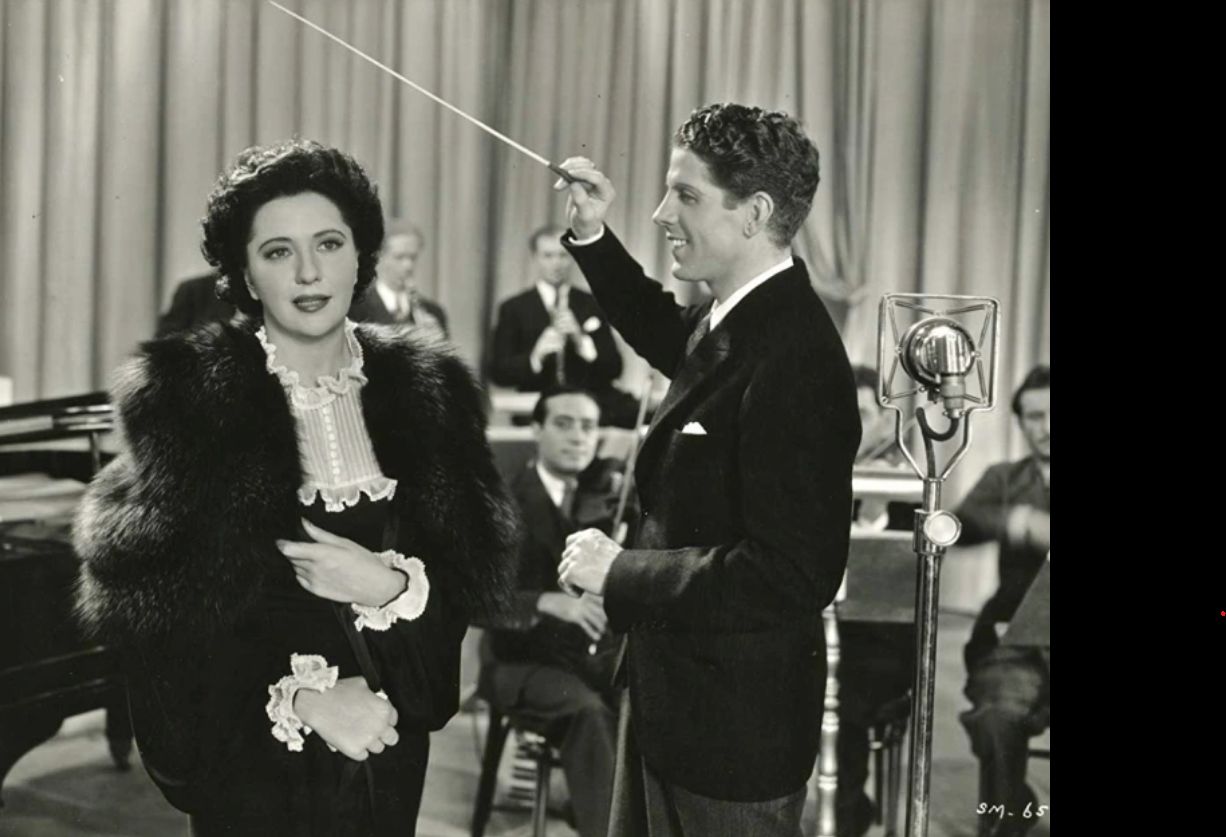
PASSING THE TORCH…Bandleader Rudy Vallée and famed torch singer Helen Morgan in Sweet Music. Years of heavy drinking had taken a toll on Morgan by this time; she appeared for a “scant moment” in the film, and would leave movies altogether in 1936. (cinemasojourns.com)

 * * *

Rudy Was Here, Too

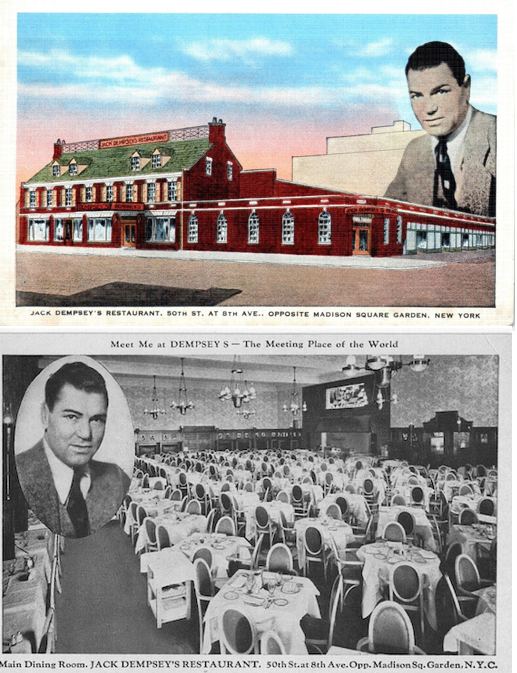
Rudy Vallée was among the celebrities gathered at Jack Dempsey’s Restaurant, a placed visited in the previous issue by Lois Long. This time Russell Maloney and Charles Cook took a look inside for “The Talk of the Town”…

JACK DEMPSEY LOOMS over his restaurant at 50th Street and Eighth Avenue in this odd postcard image (top), where the backdrop of the city has been replaced with an open sky (Terry Gilliam’s Monty Python animation comes to mind). The restaurant would relocate to 1619 Broadway in 1937-38. (Courtesy eBay)

 * * *

Keeping It to Themselves

New Yorkers typically don’t boast about their city because they often consider it a natural part of their lives and identity. Indeed, overt displays of civic boosterism are found to be embarrassing, if not distasteful. E.B. White, in his “Notes and Comment,” explained:

BEING NUMBER TWO, WE TRY HARDER…Although not mentioned in White’s note, The New Yorker enjoyed taking shots at boosterism, and especially the Chicago Tribune and its publisher, Robert R. McCormick, a leading booster of the Second City. (Michigan State University)

White observed, however, that New Yorkers weren’t so thrilled about the cost of living in their fair city…

 * * *

Those Excitable French

In her “Letter from Paris,” Janet Flanner recalled the previous year’s “Bloody Sixth” riot that resulted in the police fatally shooting seventeen people. She noted that things were more peaceful on the riot’s anniversary.

AN UGLY TURN…On Feb.6, 1934, thousands of extreme right-wing activists and war veterans gathered in Paris to protest against the alleged corruption of the left-wing government. When protests turned violent, police responded by fatally shooting seventeen people, only nine of whom were far-right protesters. (Wikipedia/wienerholocaustlibrary.org)

* * *

From Our Advertisers

Auburn made some of America’s most beautiful and technologically advanced automobiles, but the Depression was too much for luxury brands like Auburn, which would sadly fold in 1937…

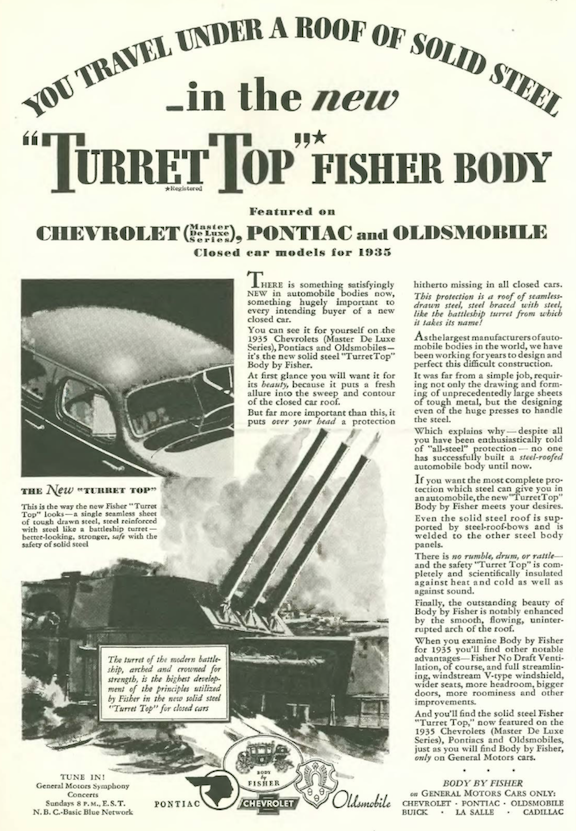
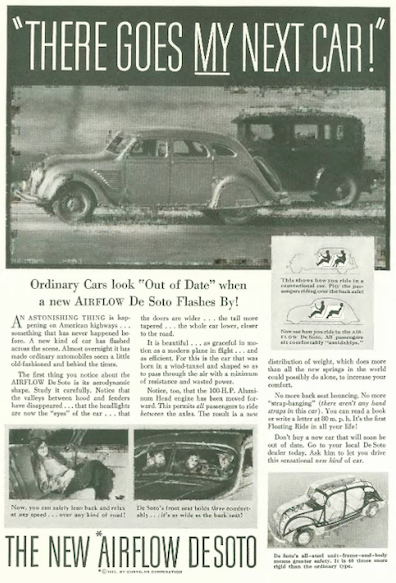
…while luxury brands struggled, Americans turned to less expensive cars that touted safety and economy…in the 1930’s safety meant strong body construction, although this didn’t address the problem of unharnessed riders rattling around inside the “TurretTop” shell, or being launched through the windshield…

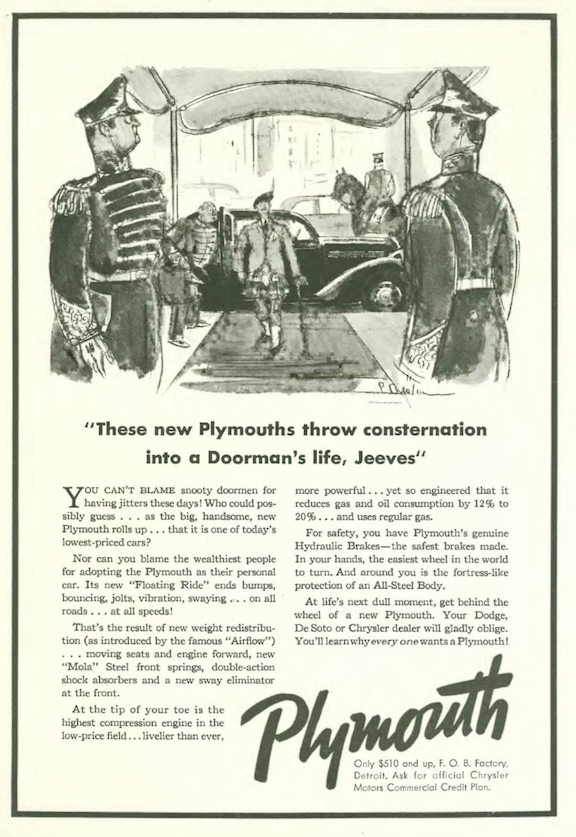
…the bargain brand Plymouth, however, employed snob appeal, and safety, to move their “Floating Ride” autos…

…Feel classy driving that Plymouth? Well apparently beer drinking is classy too…just ask this chap, who is apparently toasting a successful fox hunt…

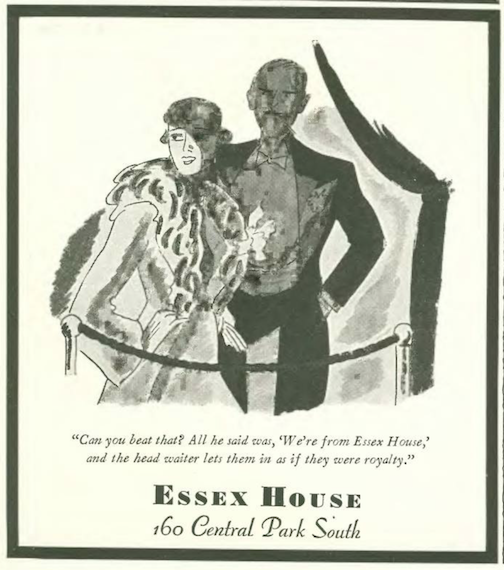
…Speaking of class, the folks at Essex House played on class anxieties to fill their rooms at Central Park South…

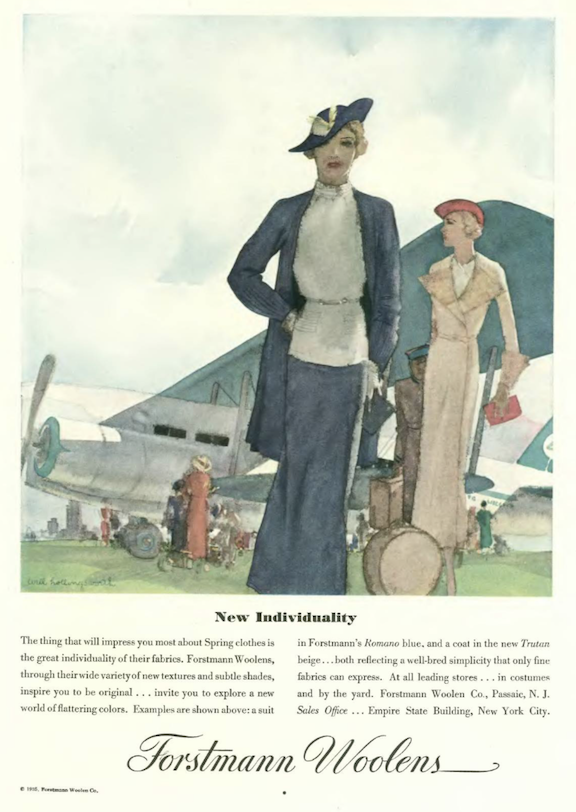
…a common theme in  upscale fashion ads was aviation; that is, the suggestion that the smart set took to the air when they traveled–they were the only ones who could afford it…

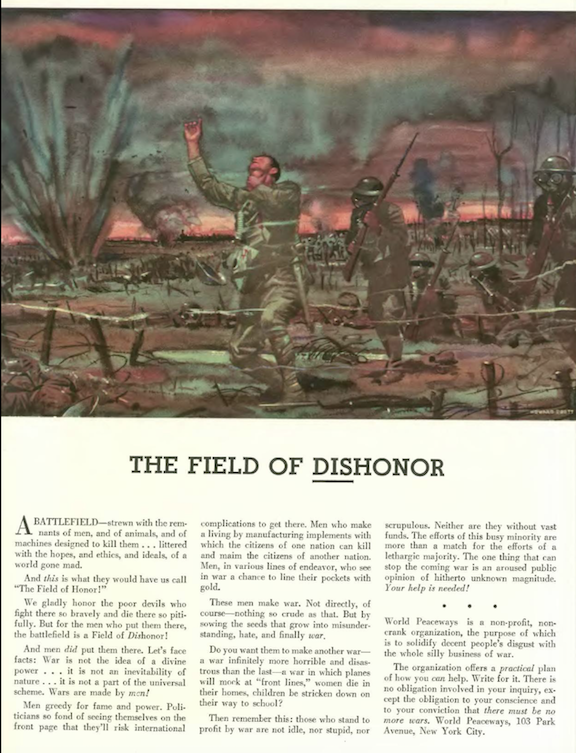
…in stark contrast is this ad from the pacifist/antiwar organization World Peaceways…their bold and unflinching ads described soldiers as pawns in the corrupt games of the rich and powerful…

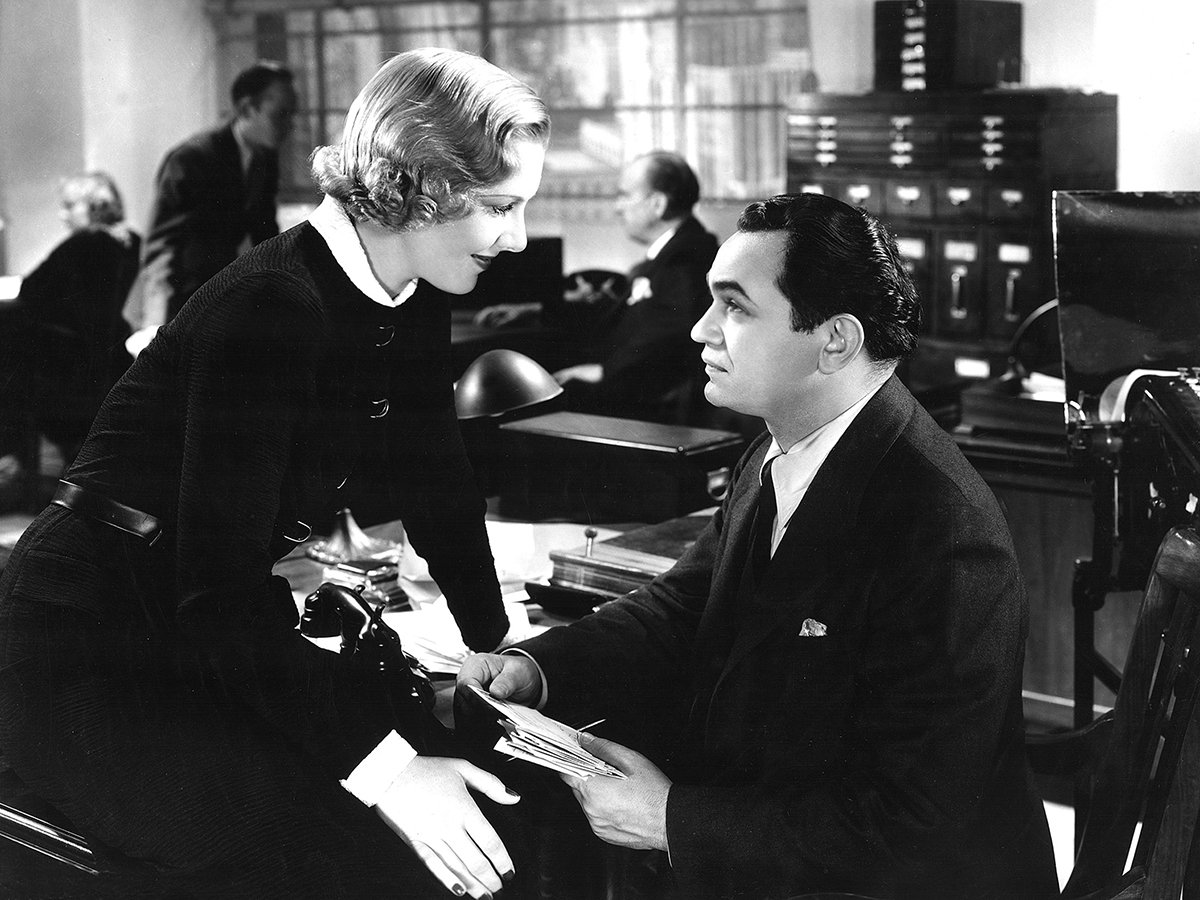
…Radio City Music Hall was originally opened in December 1932 as a live performance venue, but the cavernous hall wasn’t particularly suited to theatrical performances, and just two weeks after opening, managers announced that the theatre would switch to showing feature films. This modest one-column ad tried to stir up interest in a comedy featuring none other than Edward G. Robinson, who was known for his tough guy, gangster roles…

CRACKING SMILES INSTEAD OF HEADS…Jean Arthur and Edward G. Robinson in The Whole Town’s Talking. (postmodernpelican.com)

…beautifully photographed, stylish women smoking cigarettes were common in 1930s advertising as tobacco companies continued to tap the growth potential of this demographic…

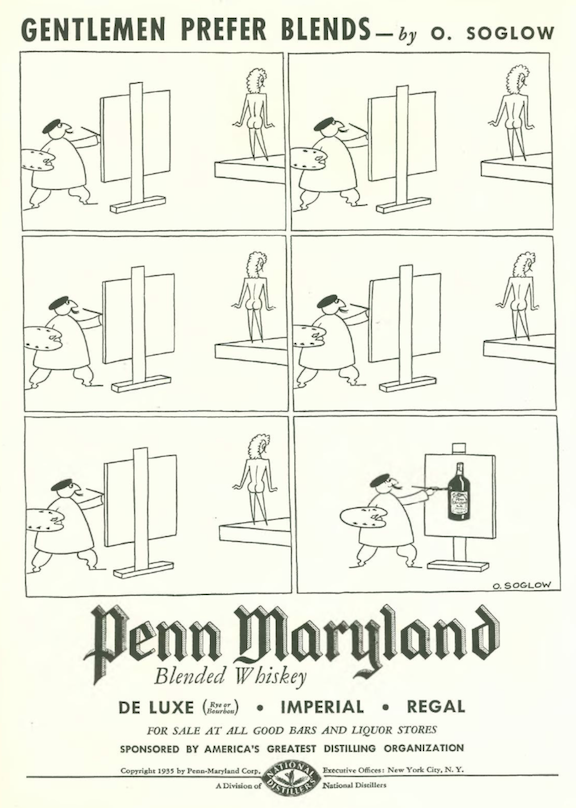
…this next spot employs of the talents of Otto Soglow to promote blended Penn Maryland whiskey…

…which segues to our cartoonists, and Soglow again…his popular Little King stopped running in The New Yorker when it was acquired by Hearst in 1934, but Soglow simply created other King-like characters to run the gags…

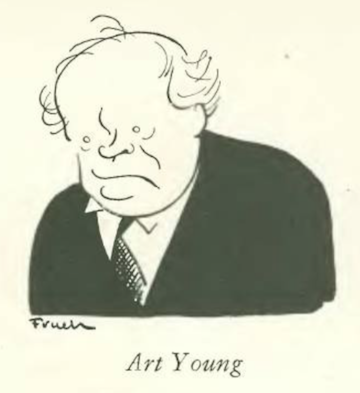
…”Profiles” featured socialist cartoonist Art Young, with an illustration by Al Frueh

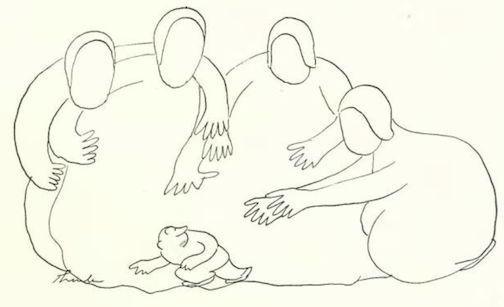
James Thurber contributed this illustration/cartoon at bottom of page 12 in “The Talk of the Town” section…not sure what this means…fear of being attacked by giant Puritan women?…

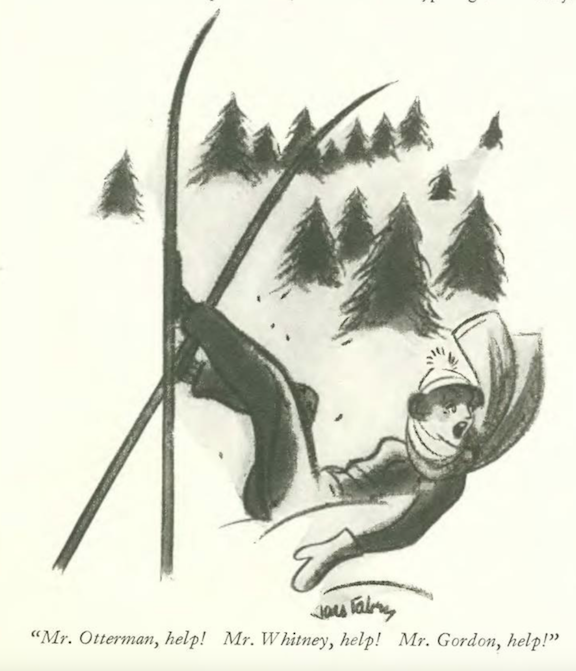
Jaro Fabry contributed only one cartoon to The New Yorker…the meaning is lost on me…

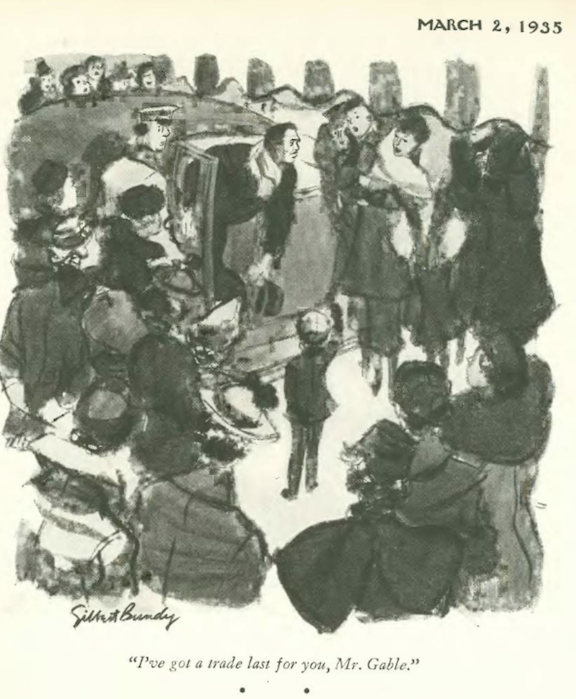
…I was also baffled by this Gilbert Bundy cartoon, until I consulted this excerpt from a Paris Review article (“Trading Places” by Sadie Stein 3/19/14): Time was, the passing on of compliments was so ritualized a part of life that the practice had a name: trade-last. Merriam-Webster’s defines it as “a complimentary remark by a third person that a hearer offers to repeat to the person complimented if he or she will first report a compliment made about the hearer,” and dates the first recorded use of the term to 1891…

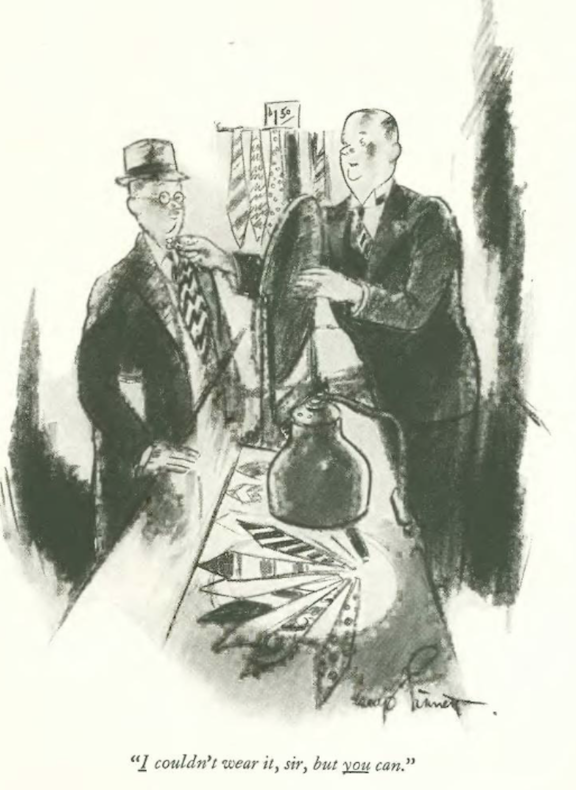
Kemp Starrett offered up a uniquely honest sales pitch…

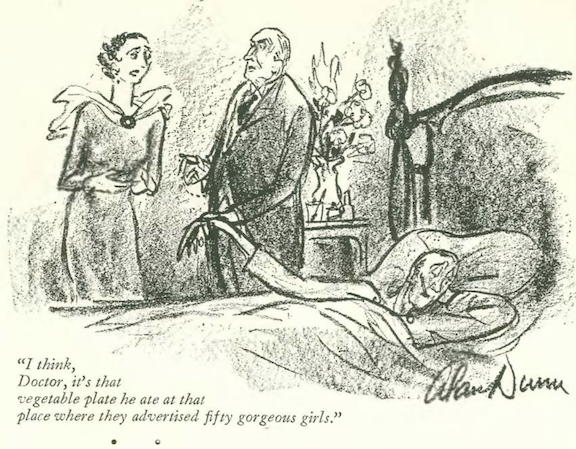
Alan Dunn advised against eating your vegetables…

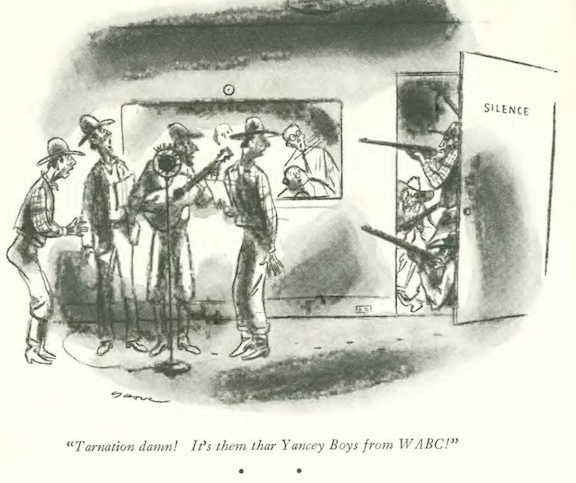
Leonard Dove, and where old-timey music met an old-timey feud…

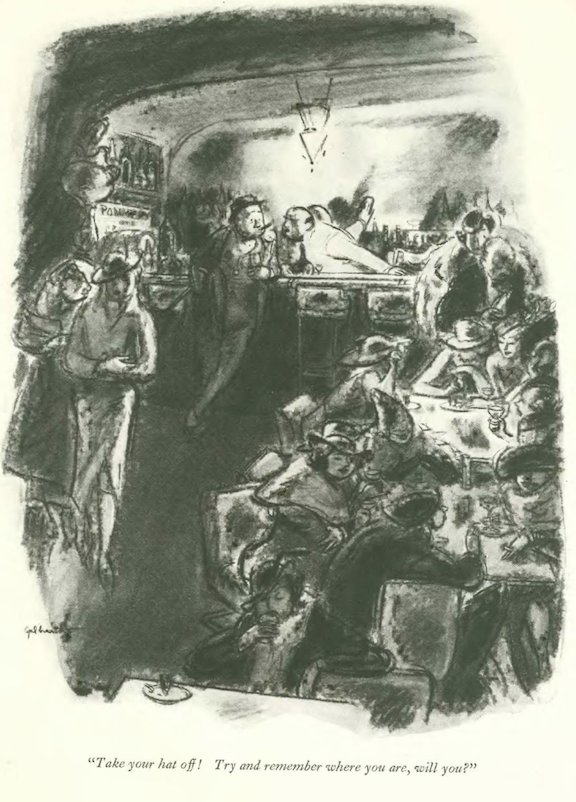
…and we close with William Crawford Galbraith, and a bartender trying to class up his joint…

Next Time: Snapshot of a Dog…

Easy Riders

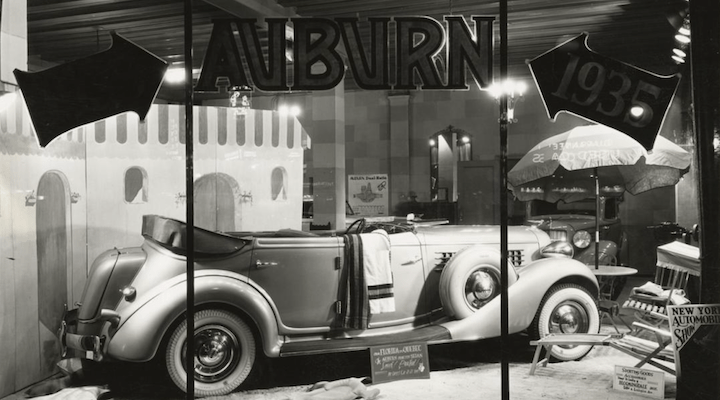
Above: Manhattan auto dealer's window display promoting the 1935 Auburn's appearance at the New York Automobile Show. (Detroit Public Library)

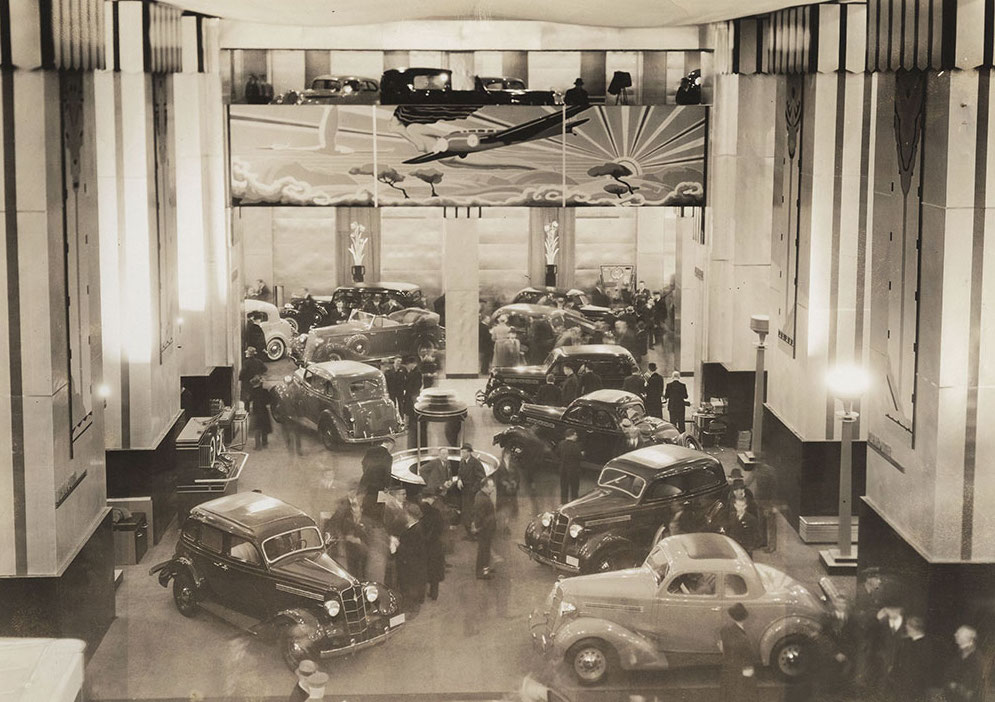
Manhattan’s first big event of 1935 was the annual automobile show at the Grand Central Palace, where New Yorkers chased away the winter blues (and the lingering Depression) in a dreamscape crammed with gleaming new cars.

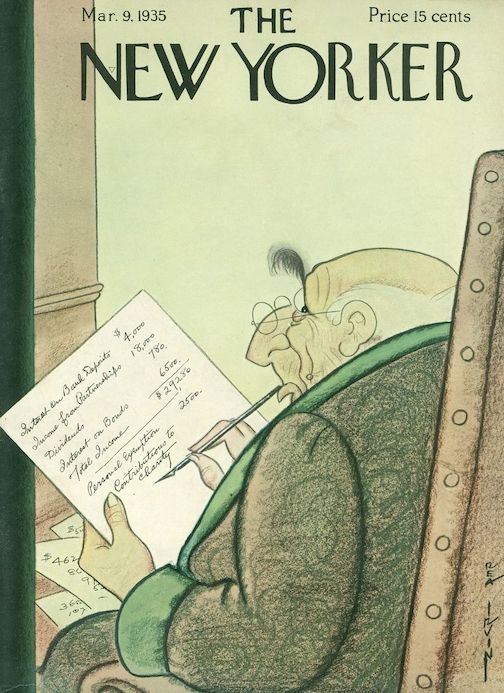
January 5, 1935 cover by Rea Irvin.

The exhibition included mostly domestic models with wider bodies and, in the case of Chrysler, a dialing back of a radical, streamlined design that was too advanced for American tastes in the 1930s.

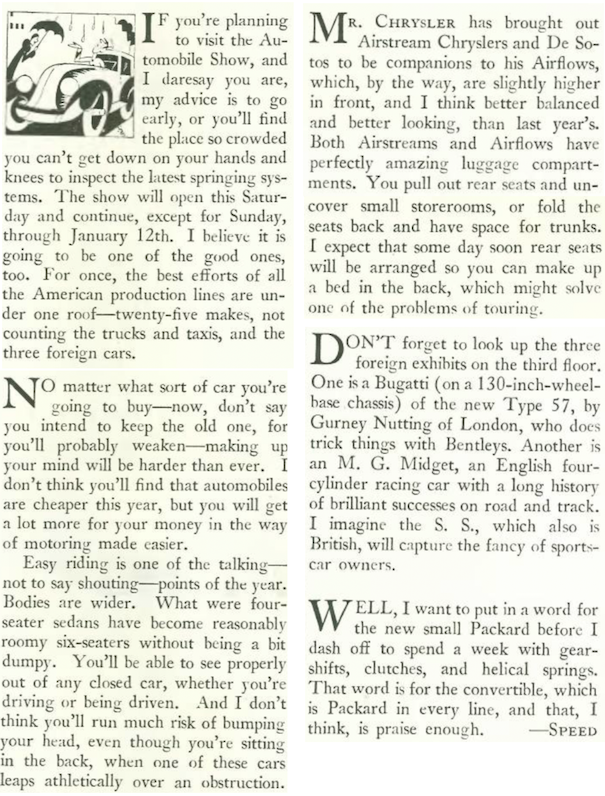
CROWD SOURCING…New Yorker correspondent “Speed” observed that the Grand Central Palace was so crowded with new cars that “you can’t get down on your hands and knees to inspect the latest springing systems.” (forums.aaca.org)
SAFE ROOM…This Ford dealer postcard touted safety, durability and roominess rather than style to market a V-8 sedan to Depression-strapped car buyers. (Pinterest)
BACK TO BASICS…The DeSoto display showcased more traditional designs (top) after the disappointing debut of the 1934 Airflow. Below, three foreign makes were on display, including Great Britain’s sporty MG Midget. (forums.aaca.org)

It is no surprise that E.B. White was once again disappointed with new line of cars, still preferring the boxy Model T to the lower-slung streamlined models. That distaste extended to the new taxi cabs hitting the streets of Manhattan, where White saw absolutely no need for wind resistance. An excerpt from his “Notes and Comment:”

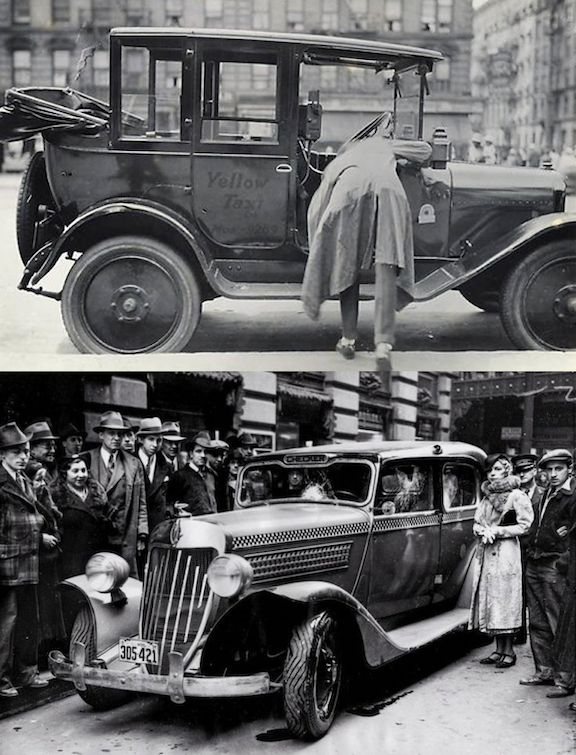
IF IT AIN’T BROKE…E.B. White preferred to old Yellow Taxis (seen at top, circa 1932), to the new streamlined Model Y Checker Cabs that were introduced to the streets of Manhattan in 1935. (Metropolitan Museum of Art/Pinterest)

 * * *

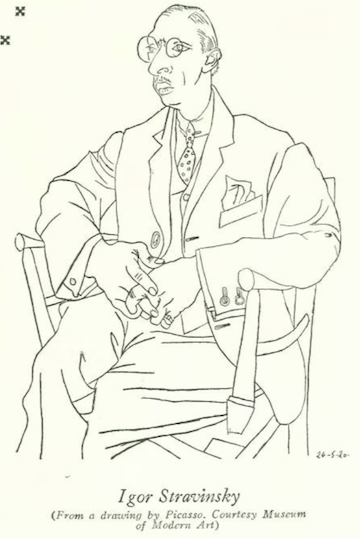
Elsewhere, The New Yorker added a new twist to its “Profile” section by featuring an illustration derived from a drawing by Pablo Picasso

 * * *

From Our Advertisers

The New Yorker’s advertising department padded its revenue from the Christmas season with a slew of ads from automobile companies touting the wonders of their latest models, which were on display at the New York Auto Show…former makers of horse-drawn carriage bodies, the Fisher brothers (Fred and Charles) began making bodies for automobiles in 1908, and the company was later incorporated as part of General Motors…as noted earlier, safety and durability (rather than style) were the calling cards of many automakers during the Depression…

…as is also evidenced here in this ad from Plymouth, part of a continuing series that touted the crash-worthiness of their sedan…

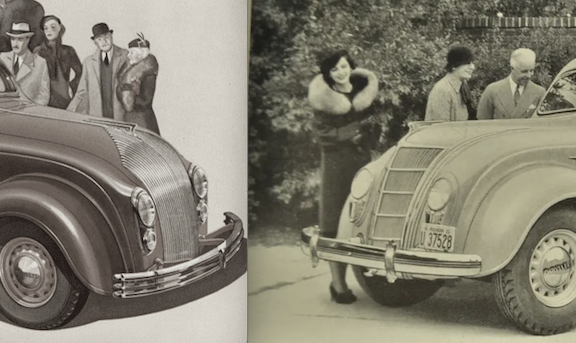
…Plymouth’s parent company Chrysler, still stinging from the lack of consumer interest in their boldly aerodynamic Airflow (introduced in 1934), made modifications to the Airflow’s body, replacing the bold “waterfall” grille with a more traditional peaked unit…the company also offered an even more traditional “Airstream” model that outsold the Airflow 4 to 1…

Consumers in 1934 found the Chrysler Airflow’s bold design (left) too advanced for the times, so Chrysler responded by making the grille on the 1935 model (right) a bit more traditional. That didn’t help sales, either.

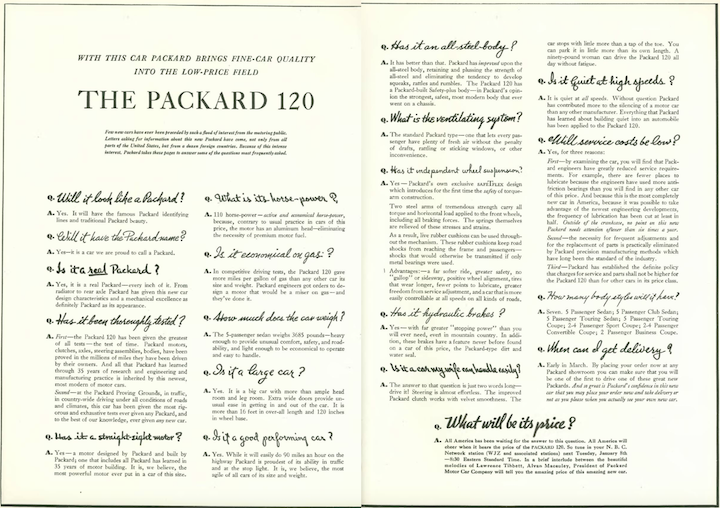
…luxury car maker Packard addressed the challenges of the Depression by introducing a low-priced car (under $1,000) named the 102…it was teased here on the first page of a three-page ad…

…that provided some answers to a “flood” of questions the folks at Packard claimed they had received from across the country and around the world…

…but the ad kept readers in suspense about the car’s actual cost, which was to be announced during Lawrence Tibbett’s NBC radio program…

…Hupmobile was still hanging in there with the innovative, Raymond Loewy-designed Model J, but behind the scenes the company, already beset with sagging sales, was fighting a hostile takeover and would stop making cars altogether by 1938…

…Auburn was also on its last legs, its cars known more for being fast, good-looking and expensive rather for being than safe and economical…although the supercharged Speedster shows here would become a legend in automotive history, and although Auburn began selling more affordable models, the Depression had already taken its toll…

…other luxury brands, such as Cadillac, could survive because they were buoyed by the scale and largesse of a huge corporation, in this case General Motors…

…the folks at Hudson marketed their “Terraplane” with this cartoon ad that quite possibly was illustrated by Wesley Morse, who in 1953 would create the Bazooka Joe comic strip for Topps…

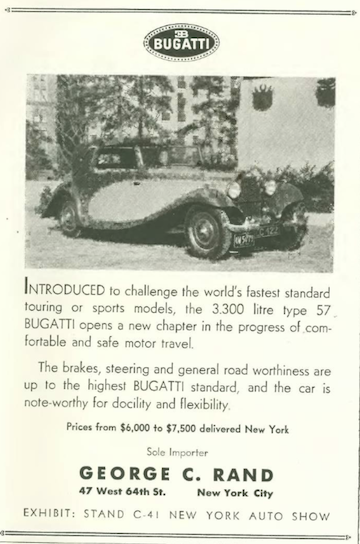
…only three foreign makes were displayed at the exhibition, including Bugatti, which promoted its type 57 in this modest ad placed by a local dealer…at prices ranging as high as $7,500 (nearly $170k today), it was a definitely not a car for the thrifty minded…

…some non-car ads included beachwear from Bonwit Teller…

…while Burdine’s offered men’s suits men that apparently could be worn comfortably while relaxing on the sand…

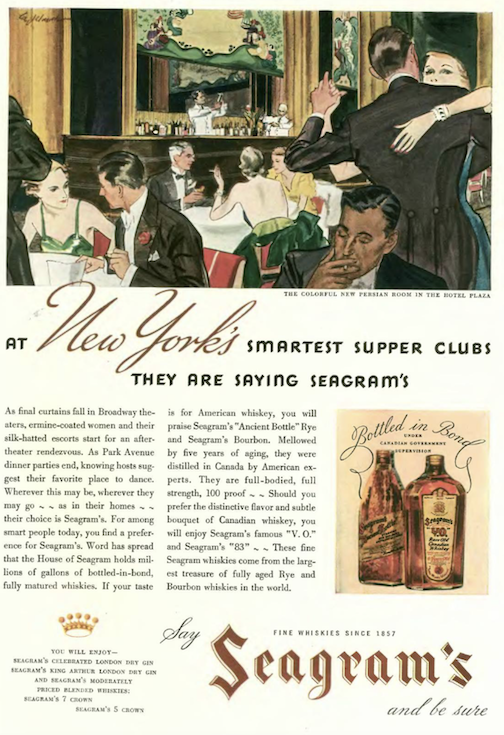
…besides the car companies, others who possessed the means to run full-page color ads included the makers of spirits…

…chewing gum…

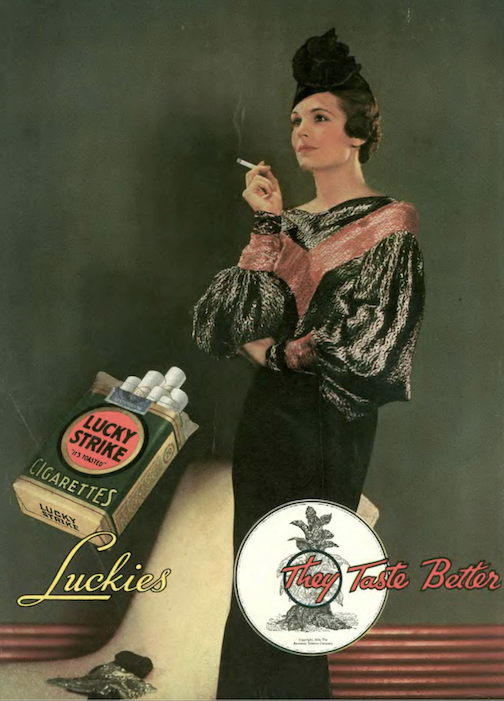
…and, of course, cigarettes…

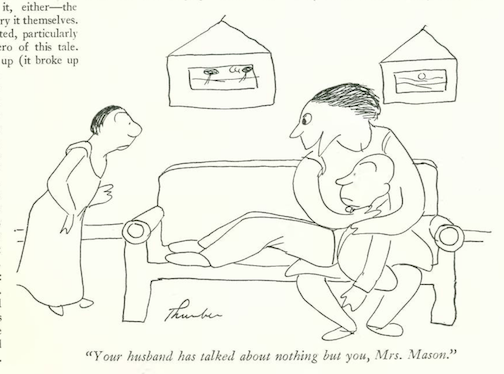
…on to our cartoons, we begin with a spot and a panel by James Thurber

Al Frueh, whom we haven’t seen in awhile, gave us an elaborate joke conjured up by some bored astronomers…

Kemp Starrett looked in on an unlikely Packard customer…

Perry Barlow predicted a hot time for these two young lads…

…and to close, Gardner Rea offered a cure for a New Year’s hangover…

Next Time: It’s A Gift…

And Now We Are Nine

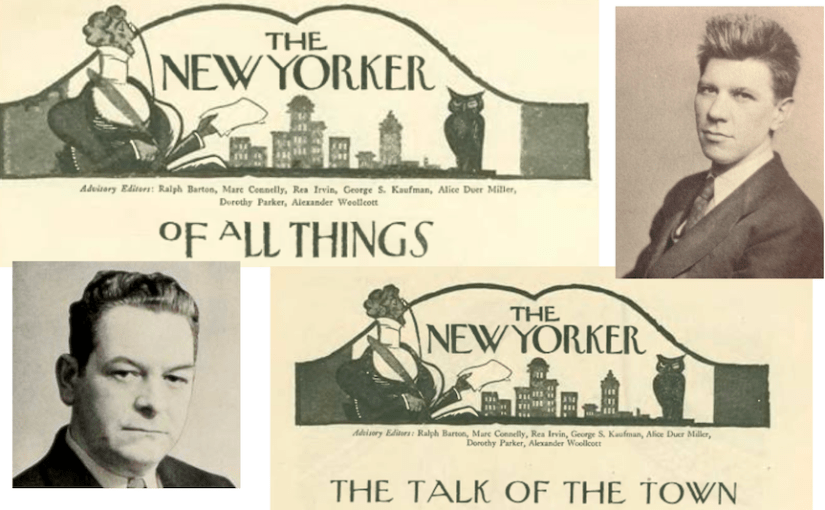
Above: It took a few issues for the editors to sort out regular features and their order of appearance. The opening section of Issue No. 1 featured the famous Rea Irvin masthead that would introduce “The Talk of Town” for many issues to come. In Issue No. 1, however, “Of All Things” appeared first under the masthead, followed by “The Talk of the Town." Let us hope the magazine restores the original Rea Irvin masthead for its 100th anniversary.

Despite the lingering Depression The New Yorker entered its ninth year on strong financial footing. With nearly equal numbers of subscribers and single copy sales, circulation would approach 125,000 in 1934, with more than $2.2 million in advertising income.

Feb. 17, 1934 cover by Rea Irvin (naturally).

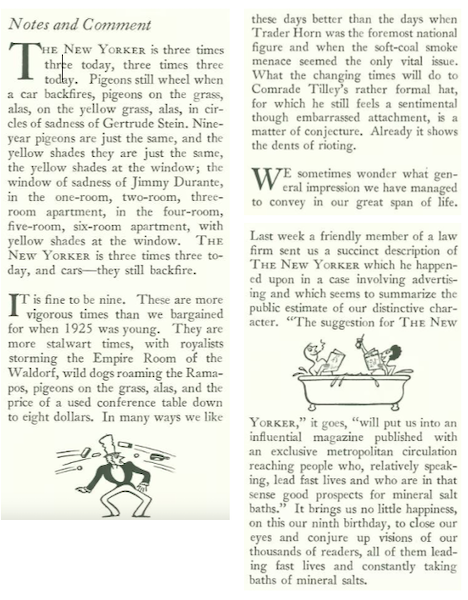
In his “Notes and Comment,” E.B. White commented on the “more vigorous times” the magazine was enjoying, declaring “it is fine to be nine.”

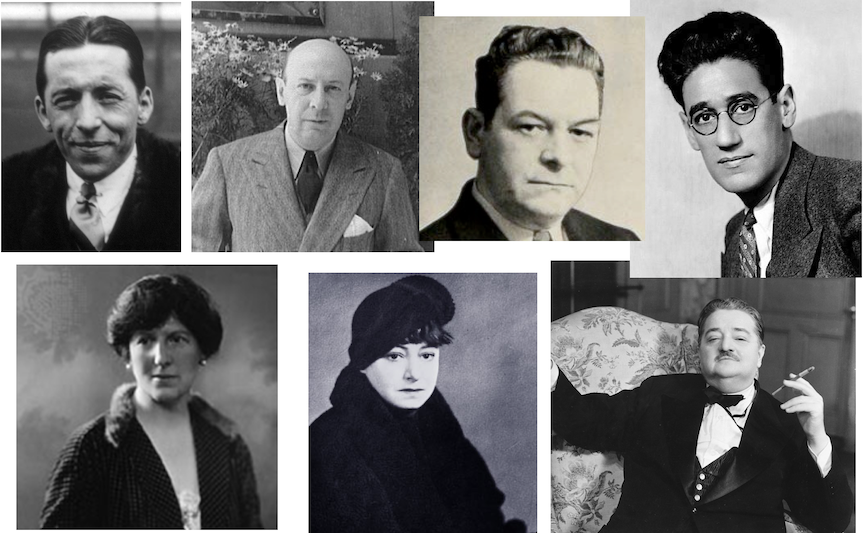
THE NEW YORKER SEVEN…In 1924, baking product heir Raoul Fleischmann put up $25,000 to help Harold Ross get his new magazine off the ground. To assuage Fleischmann’s doubts regarding his investment, Ross persuaded some of his Algonquin Round Table cronies to appear on the magazine’s purely ceremonial masthead. The seven who appeared on the first masthead were, from top left, Ralph Barton, Marc Connelly, Rea Irvin, and George S. Kaufman; bottom row, from left, are Alice Duer Miller, Dorothy Parker, and Alexander Woollcott.

 * * *

Daffy Dilettante 

Another Algonquin Round Table crony, Harpo Marx, was a skilled artist when it came to comedy, pantomime, or the harp, but when he decided to take up a brush and palette he struggled to properly paint a female nude. In this account from “The Talk of the Town,” Harpo eventually abandoned his painting and switched places with the model.

BRUSHING UP ON HIS ART…Undated photo of Harpo Marx putting finishing touches on his painting of an accordion player; Harpo was a one of the Algonquin Round Table originals: a 1919 photo features (standing, left to right) Art Samuels and Harpo Marx; (sitting) Charles MacArthur, Dorothy Parker, and Alexander Woollcott. (Twitter/Wikipedia)

 * * *

Ode to Faraway Lands

A renowned author of children’s poetry, David McCord (1897-1997), was also a frequent contributor to The New Yorker for thirty years (1926-56). For the Feb. 17 issue he penned these sonnets to the Baedeker travel guide.

 * * *

Wimpy Vernacular

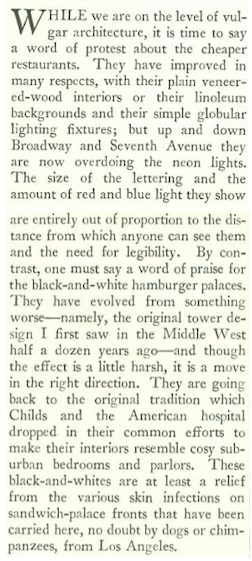
Architecture, art and cultural critic Lewis Mumford paused in his criticism of everything from liquor stores to cheap restaurants to offer some surprising praise to his city’s “black-and-white hamburger palaces.”

RED MEAT RIVALS White Tower and White Castle vied for customers in 1930s New York. Above, a 1933 photo of a White Tower in the 200 block of 2nd Avenue; below, a circa 1930 photo of a White Castle in the Bronx. (gothamist.com/Cision)

 * * *

From Our Advertisers

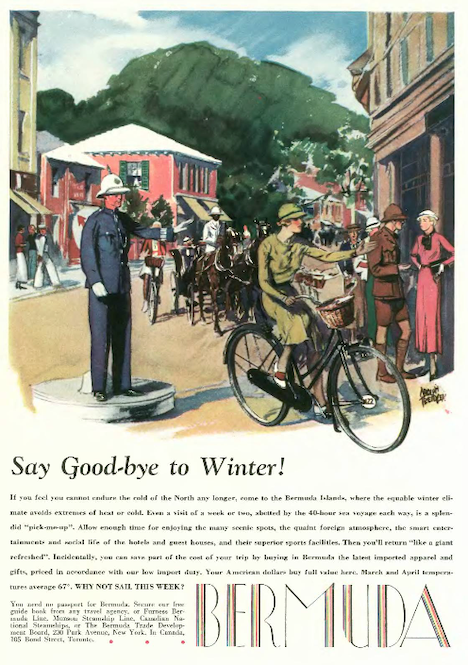
Advertising income reached an all-time high at The New Yorker in 1934, and it showed with the numerous color ads enticing travel to Bermuda…

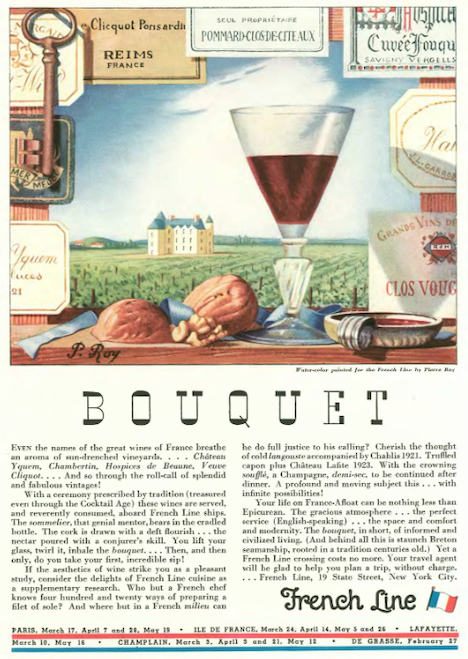
…or to the French wine country…

…Hiram Walker presented their Canadian Club whisky on what appeared to be a cloth napkin…

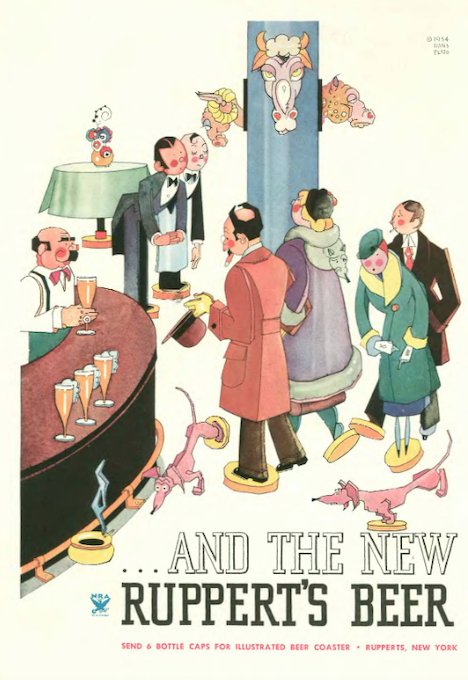
…artist Hans Flato continued his unusual Ruppert’s Beer series of mannequin people (and dogs) going about their lives stuck to yellow discs…

…according to the Ruppert’s ad, for six bottle caps you could get a tin coaster like those pictured below…

(1stdibs.com)

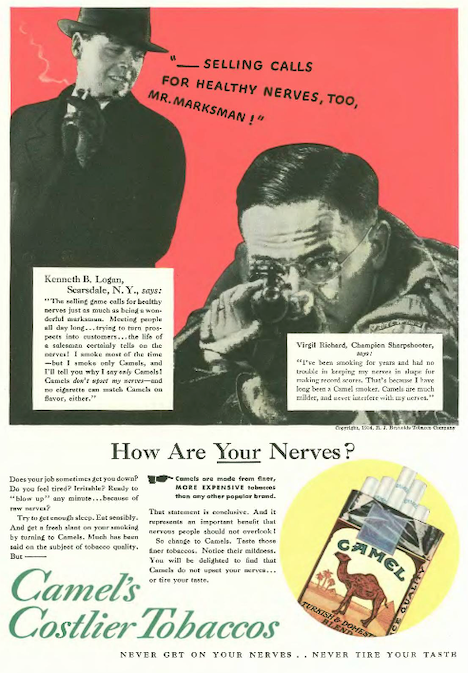
…from magicians and salesmen to sportsmen and high society, the folks pushing Camel cigarettes seemed to try every angle to get their product into the mouths of as many consumers as possible…

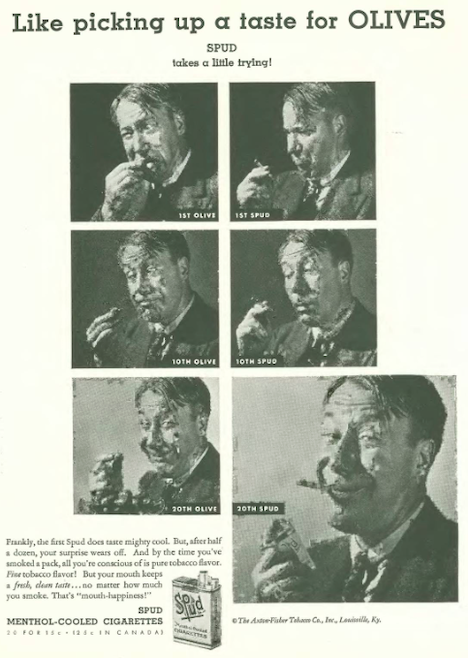
…the makers of Spud menthol cigarettes, on the other hand, tried a little humor to get smokers hooked on their “mouth happiness”…

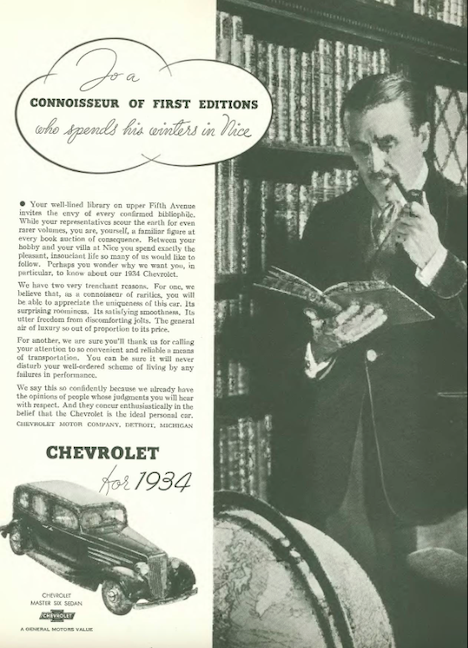
…as one of the world’s most popular car brands, Chevrolet has long been considered a car for the masses, although this ad campaign launched in 1934 suggested that the ubiquitous Chevy was just the car for a connoisseur of the finer things…

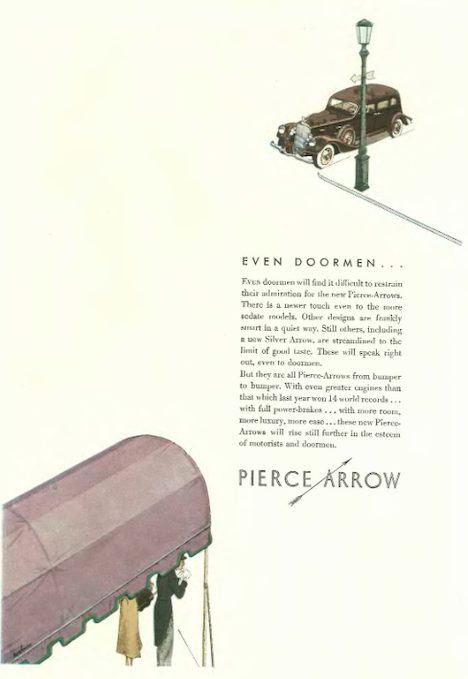
…the staid luxury auto maker Pierce Arrow broke with tradition by placing this very modern, minimalist ad…

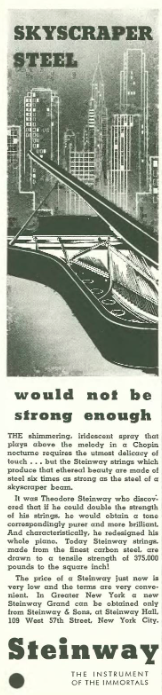
…the folks at Steinway also adopted a modern look with this single column ad touting the durability of their grand pianos…

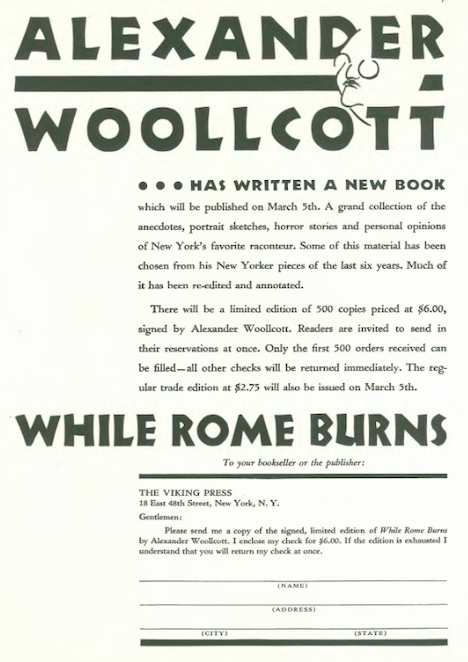
…The Viking Press took out this full-page ad to announce the publication of Alexander Woollcott’s While Rome Burns, a collection of some of Woollcott’s writings for The New Yorker and other magazines…

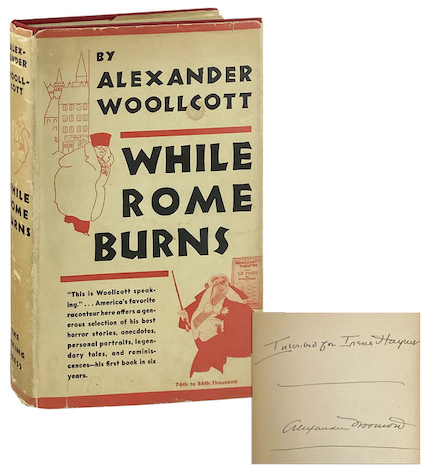
…according to the ad, for six bucks you could get one of 500 limited edition signed copies…as of this writing, the inscribed and signed edition below was available for $350…

(capitolhillbooks-dc.com)

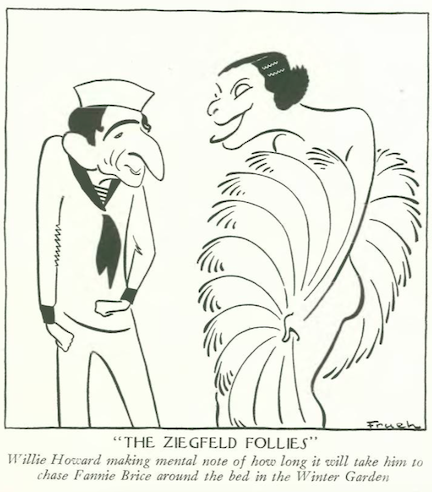
…on to our cartoonists, Al Frueh offered up this interpretation of Ziegfeld entertainers Willie Howard and Fannie Brice

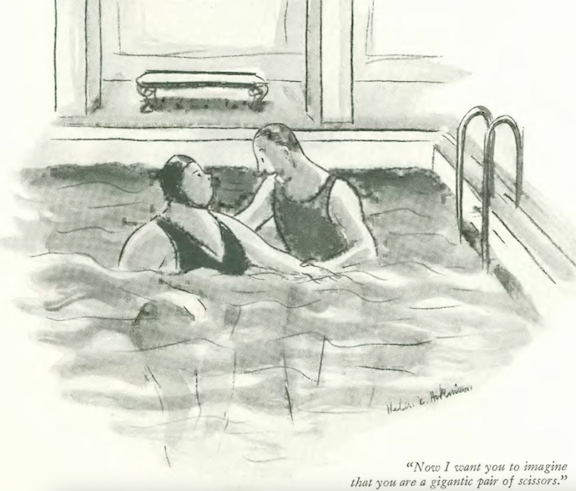
Helen Hokinson took the plunge with 1930s water aerobics…

Kemp Starrett demonstrated how beauty is in the eye of the beholder…

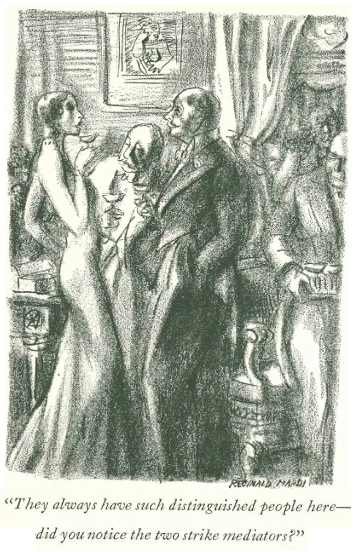
Reginald Marsh returned, taking temporary leave from life on the streets to look at life above the streets…

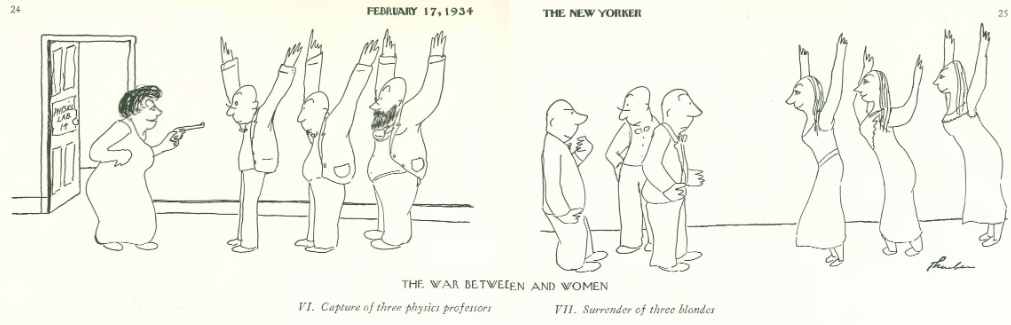
James Thurber’s “War Between Men And Women” took some new twists…

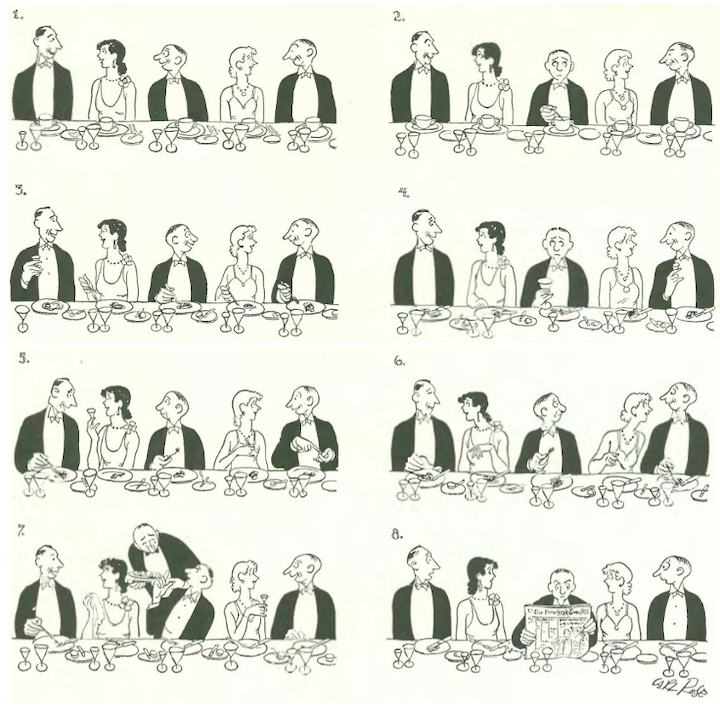
…and we end with Carl Rose, and one man’s solution to being stuck in the middle…

Next Time: Rocky’s Cover-up…

Under the Knife

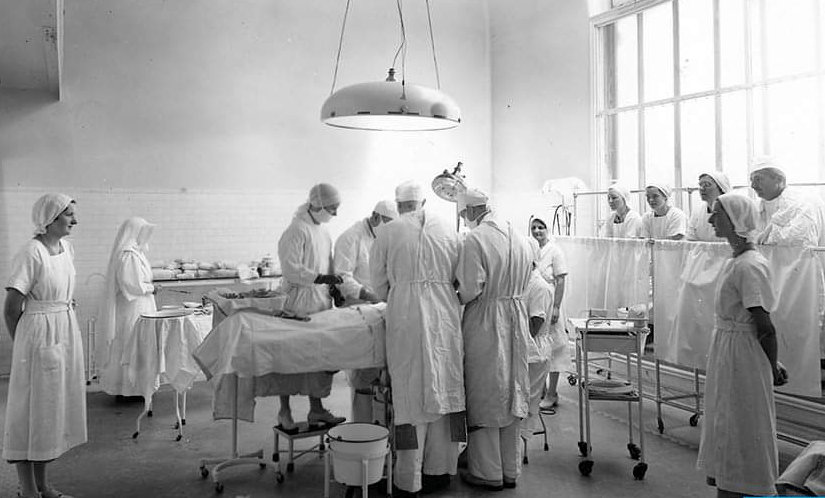
Above: Surgery being performed at the Hospital of Saint Raphael (Conn.) in the late 1930s. Operating rooms were often located near large windows and under skylights to offer greater illumination. (Yale New Haven Hospital)

For all the challenges of 21st century, I always remind myself that advances in medicine during the past ninety years have made our lives better, and substantially longer, even if our current health care system is far from ideal.

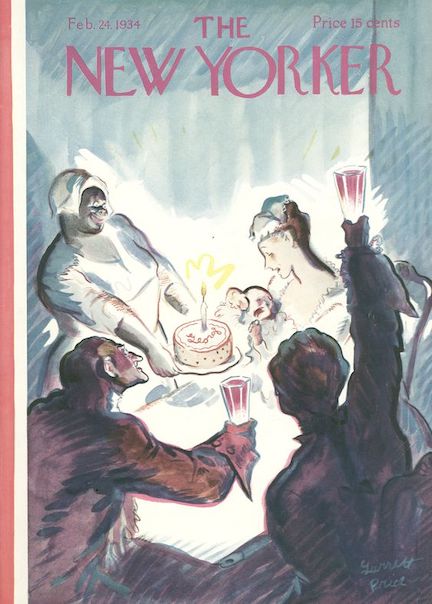
Feb. 3, 1934 cover by E. Simms Campbell.

People could live to a ripe old age in the 1930s, however the average life expectancy at birth in 1930 was only 58 for men and 62 for women. The Depression didn’t help matters, and neither did the Dust Bowl, unregulated urban smog, the dramatic rise in smoking, and the lingering effects of more than a decade of bootleg alcohol consumption.

Polio was a serious problem in the 1930s, as was syphilis, which affected as many as ten percent of Americans. Blood groups would not be identified until 1930 (by Nobel Prize-winner Karl Landsteiner), and human nutrition remained something of a puzzle—Vitamin C wasn’t identified until 1932. There was exciting chatter about penicillin (discovered in late 1920s) and the antibacterial effects of sulfonamides (first observed in 1932), but it would be years before antibiotics would come into common use. So yes, infection was also a big killer.

Nevertheless, progress had been made, as told by Morris Markey in the column, “A Reporter at Large.” An excerpt:

FORTRESS ON THE HEIGHTS…Top, Columbia-Presbyterian Medical Center loomed large when it opened in Washington Heights in 1928; below, New York Hospital, most likely the building described in Morris Markey’s column; at left, Dr. George Crile, Sr., completing his landmark 25,000th thyroid operation in 1936. (CUIMC/Wikipedia/Cleveland Clinic)

This next excerpt describes the work of the anesthetist after the patient receives a spinal injection of novocaine, which had replaced cocaine as a pain blocker. At the start of the 1930s, the most-used anesthetic was ether, used in this account to calm the patient. Ether carried its own risks—in was unstable, and sparks from X-ray machines and other equipment could cause an explosion.

NO SMOKING, PLEASE…Anesthetist in the 1920s carefully administers ether while surgeon swabs a patient with iodine (inset). Ether was unstable, and sparks from equipment could cause an explosion. (Internet Archive/Flickr)

 * * *

And Then There’s Maude

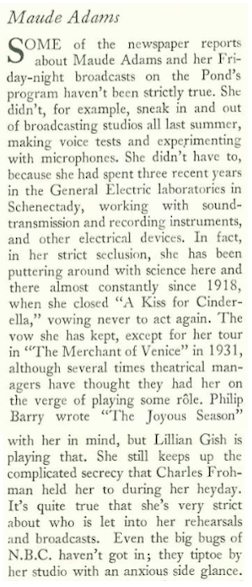
American actress and stage designer Maude Ewing Adams (1872–1953) defined the role of “the boy who wouldn’t grow up” in her Broadway adaptations of Peter Pan in the early 1900s (1905, 1906, 1912 and 1915). She would appear in 26 Broadway productions between 1888 and 1916, but after a severe bout of the Spanish flu in 1918 she retired from the stage and focused on developing better stage lights with General Electric; her electric lights ultimately set the industry standard with the advent of sound movies. As this excerpt from “The Talk of the Town” revealed, Adams was also quite shy and highly valued her privacy.

THE RETIRING SORT…Maud Adams in a Broadway publicity photo, circa 1900. (Vintage Everyday)

* * *

In The Trenches

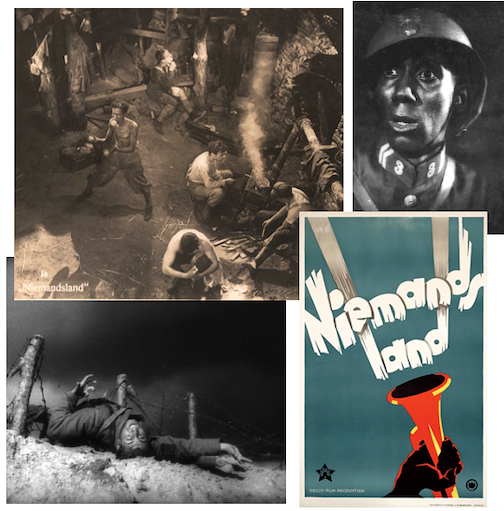
Just before the Nazis decided to turn their country back into a warlike state, Victor Trivas and George Shdanoff wrote and directed an allegorical anti-war film. Niemandsland (released in the U.S. as Hell on Earth) featured five soldiers, from different backgrounds, who find themselves together in a dugout in no man’s land and together come to terms with the absurdity of war. The film premiered in Berlin in December 1931 and was greeted by thunderous applause. A little over a year later it was banned by the Nazis. Critic John Mosher made these observations:

WAR, WHAT’S IT GOOD FOR?Niemandsland (released in the U.S. as Hell on Earth) featured five soldiers from different backgrounds on a front lines during WWI: a carpenter from Berlin, a mechanic from Paris, an English officer, a Jewish tailor and a Black dancer (the only one who understands everyone’s languages). Actor and dancer Louis W. Douglas (top right) was a Philadelphia native who moved to Paris in 1925 with his dancing partner, Josephine Baker, in the popular La Revue Nègre. He went on to establish a successful musical and film career in Germany until his death in 1939. (silverinahaystack.wordpress.com/IMDB)

 * * *

From Our Advertisers

We begin with this jolly color image from Lucky Strike representing the joys of cigarette smoking…

…a trio of ads culled from the back pages, everything from “Tiara Trouble” (apparently a common problem) to a smoking penguin introducing a new line of menthol cigarettes, KOOL, challenging the dominance of the Spud menthol brand (we know who won that battle)…in the final ad, Atlantic City resort hotel Haddon Hall attempted to drum up business using a slavery/emancipation theme—Abraham Lincoln’s birthday is at hand…why not slip the shackles of work and run away to sunshine and freedom?

…These Paul Whiteman ads were ubiquitous in the 1930s…the distinctive caricature of his pudgy, mustachioed face—Whiteman’s “Potato Head” emblem—was featured in ads and on 78 rpm record labels and various promotional items…on the more classical side, violinist David Rubinoff sawed away on his famed $100,000 Stradivarius for audiences at the Roosevelt Hotel…

…automobile ads continued to grace the pages of The New Yorker, including this one suggesting that young blue bloods would look quite smart in a ’34 Chevy…

…in the 1930s Studebaker marketed car lines including the high-end President, the mid-priced Commander, and the low-priced Dictator…the Dictator was introduced in 1927, so named because it “dictated the standard” other automobile makes would be obliged to follow…the rise of Mussolini and Hitler attached unsavory connotations to the car’s moniker…it was renamed “Director” for European markets and was finally abandoned in 1937…

…Chrysler continued to push its radical new Airflow, here demonstrating how it blows the doors off of an old-timer…

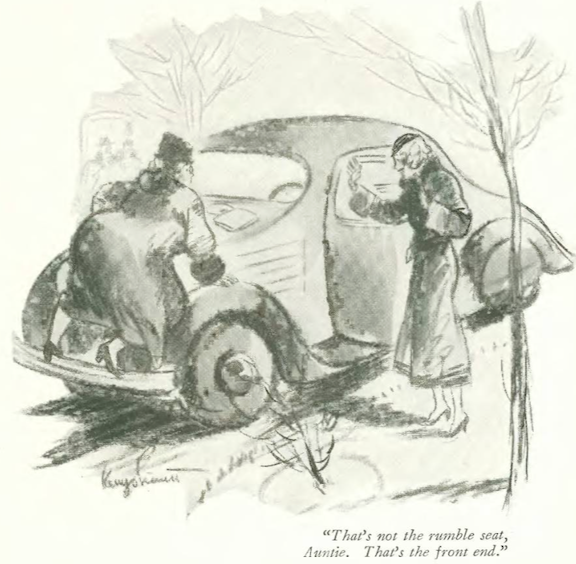
…as we jump into our cartoons, Kemp Starrett referenced the Airflow in his latest contribution to The New Yorker

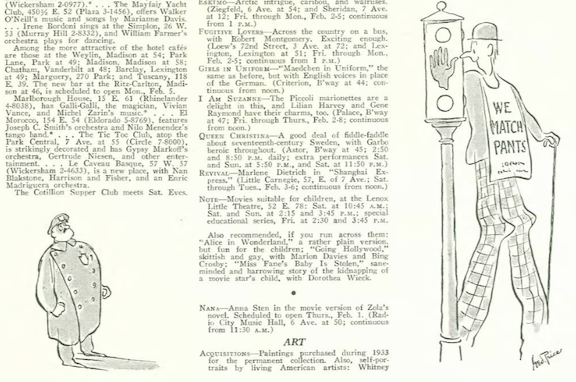
…the issue included two from George Price…a playful pairing in the events section…

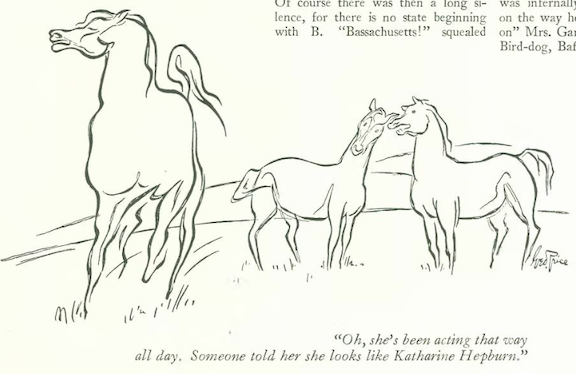
…and a somewhat unkind nod to new Hollywood star Katharine Hepburn…apparently David O. Selznick had misgivings about casting a “horse face” like her…well, she obviously proved him wrong…

…the magazine pulled out this old illustration by H.O. Hofman to break up the copy in Howard Brubaker’s “Of All Things” column…

…more antics from the precocious set, courtesy Perry Barlow

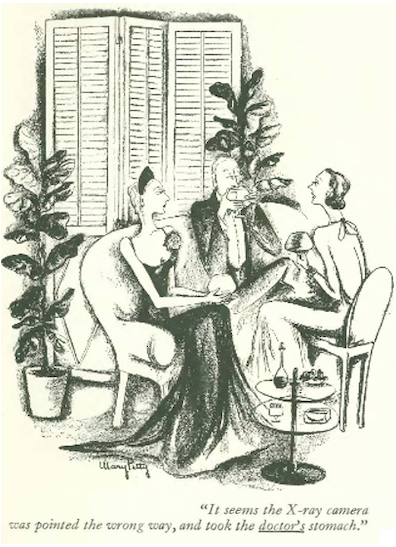
Mary Petty offered this observation on the state of medicine in 1934…

…a sobering and topical contribution from Alan Dunn

Carl Rose made preparations for the annual Charity Ball…

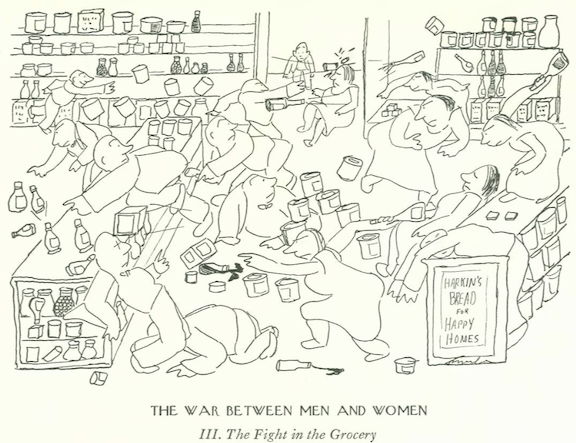
…and James Thurber gave us Part III of his “War Between Men and Women”…

Next Time: Made in Germany…


A Poke At Punch

In 1925 New Yorker founding editor Harold Ross wrote that he wanted his new magazine to be “humorous from a sophisticated viewpoint” and “record the situations of everyday life among intelligent and substantial people as do the English magazines, notably Punch, except that our bent is more satirical, sharper.”

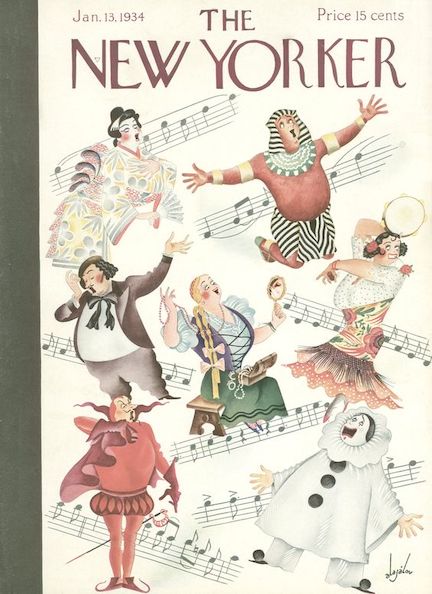
Jan. 13, 1934 cover by Constantin Alajalov.

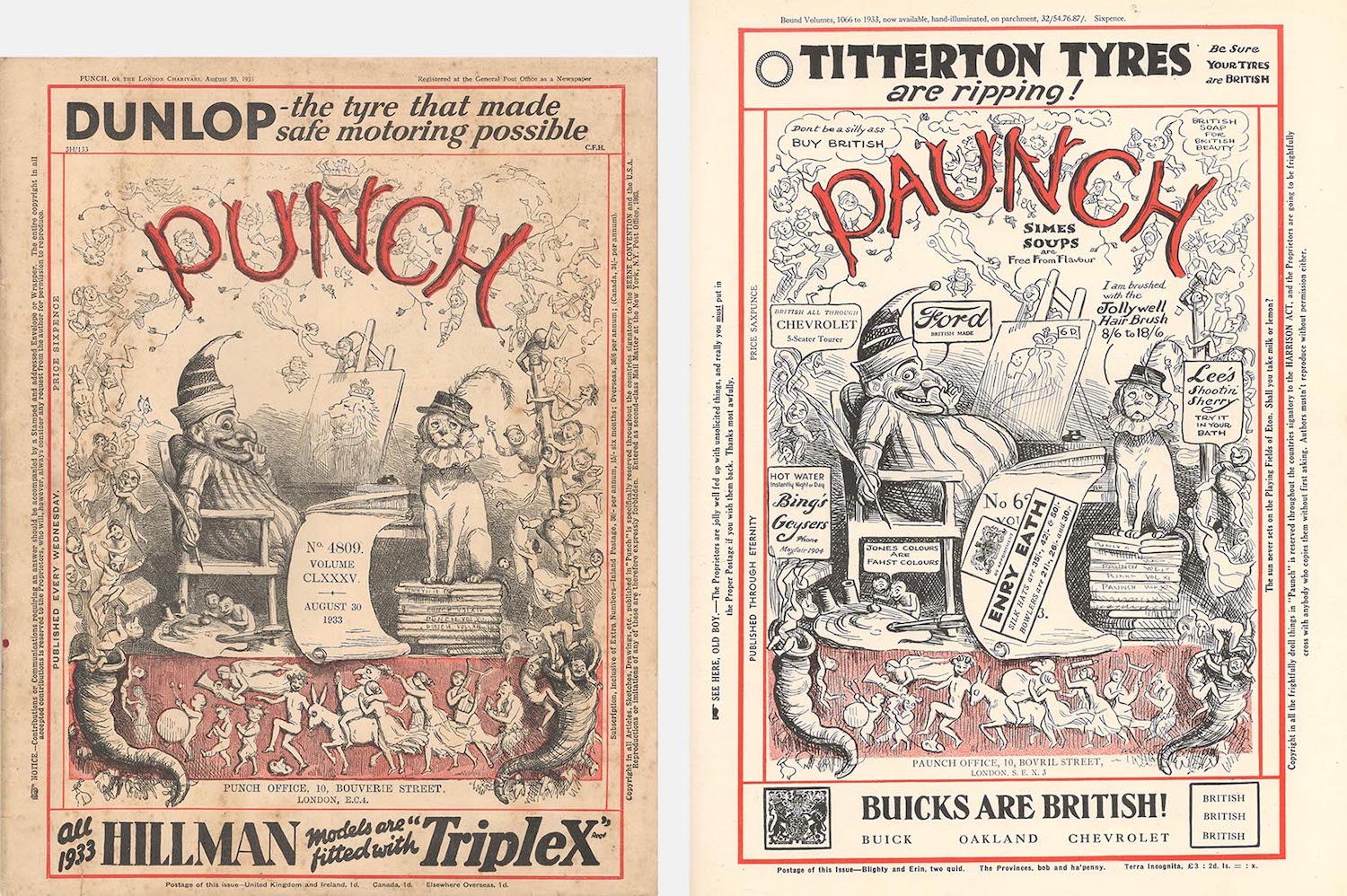
Sharper indeed, as was demonstrated in the Jan. 13, 1934 issue, when Ross’s young magazine took aim at Punch, which was founded in 1841 and had grown long in the tooth under the guidance of Sir Owen Seaman, whose Victorian sensibilities (he joined Punch in 1897) were ripe for parody by a magazine founded during the Jazz Age.

Writer and cartoonist V. Cullum Rogers (MagazineParody.com) notes that the eight pages devoted to “Paunch” was The New Yorker’s longest and most elaborate parody of another publication.

RIPE FOR THE PICKING…The covers of Punch for August 30, 1933, and The New Yorker’s 1934 parody.

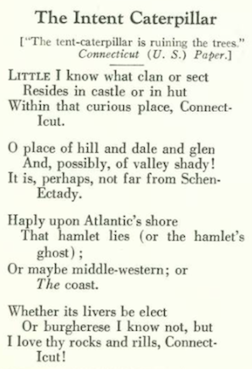
E.B. White and Franklin P. Adams contributed parodies (“The Mall” by White and “The Intent Caterpillar” by Franklin) of what Rogers cites as “two of Punch’s favorite forms of bad verse: the sticky-sentimental and the mechanically clever.”

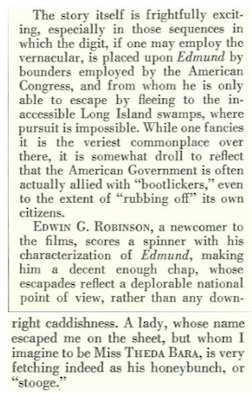
The New Yorker’s theatre critic Wolcott Gibbs joined the fun by penning “Mr. Paunch’s Cinema Review” (excerpt)…

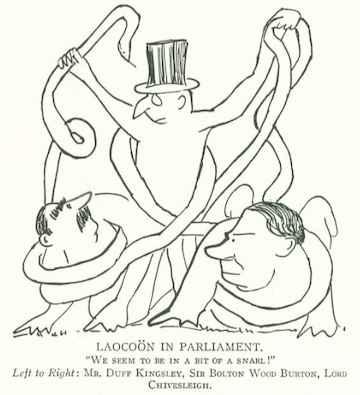
…Rea Irvin and James Thurber offered up their cartooning skills…

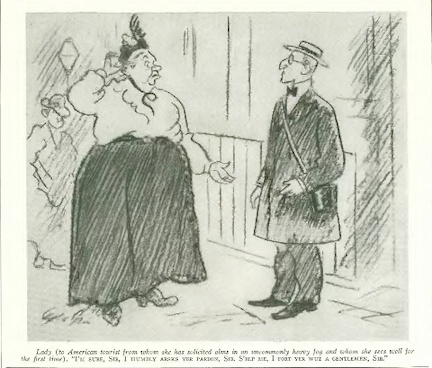
Rea Irvin’s parody of a Punch cartoon. (Caption enlarged below).

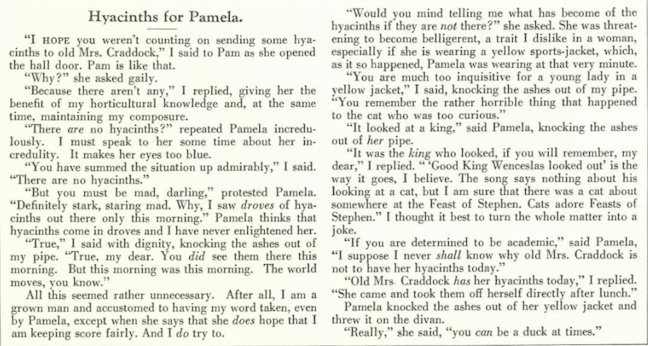
…and Robert Benchley contributed this gem, “Hyacinths for Pamela.”

Rogers writes that although “Paunch” wasn’t promoted on the cover, “the issue it ran in became the first in The New Yorker’s nine-year history to sell out on newsstands. (The second sellout contained Wolcott Gibbs’s Time parody, which suggests a demand for such things).”

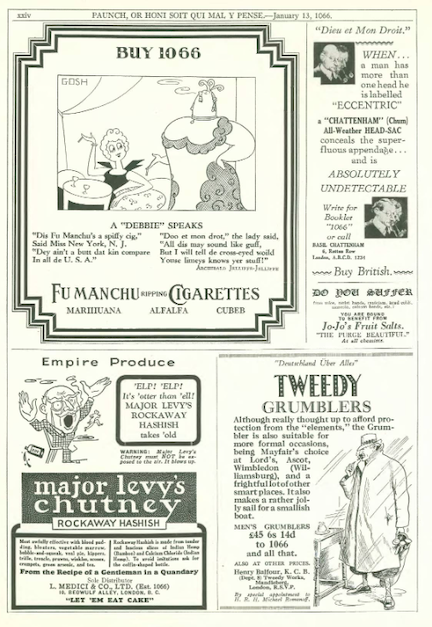
The parody issue concluded with this page of advertisements:

 * * *

The Show Must Go On

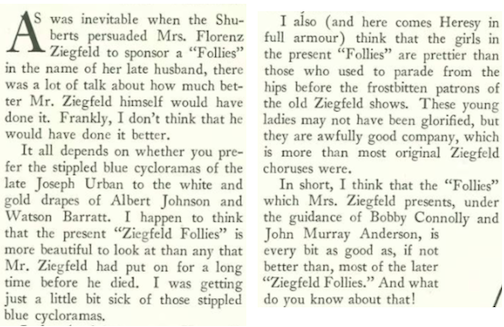
The death of Florenz Ziegfeld Jr. in 1932 did not put an end to his Follies; indeed, under the direction of his widow, Billie Burke, the show seemed to have new legs, at least according to Robert Benchley:

HOOFIN’ IT…Clockwise, from top left: Program for the 1934 Ziegfeld Follies; performers in the show included popular brother–sister dancing act Buddy and Vilma Ebsen, pictured here with Eleanor Powell in Broadway Melody of 1936 (most of us know Buddy Ebsen as Uncle Jed from The Beverly Hillbillies); Al Hirschfeld drawing of the show’s stars; Willie Howard, Fanny Brice and Eugene Howard in Ziegfeld Follies of 1934. (YouTube/NYPL)

* * *

Keen on the Airflow

The streamlining trend in autos was not to E.B. White’s liking (see below), but the reviewer of the National Auto Show (pseud. “Speed”) was eager to take the Chrysler Airflow for a spin.

 * * *

From Our Advertisers

The Chrysler Corporation ran this two-page ad that took issue with E.B. White’s criticisms of the streamlining trend in automobiles, led by Chrysler’s “Airflow” model…here Chrysler responded with a note pinned to a tear sheet from the Dec. 16, 1933 “Talk of the Town”…You wrote this before you saw the new Chryslers, Mr. New Yorker

…with the National Auto Show still in town the splashy car ads continued, including this one from the makers of Fisher car bodies…

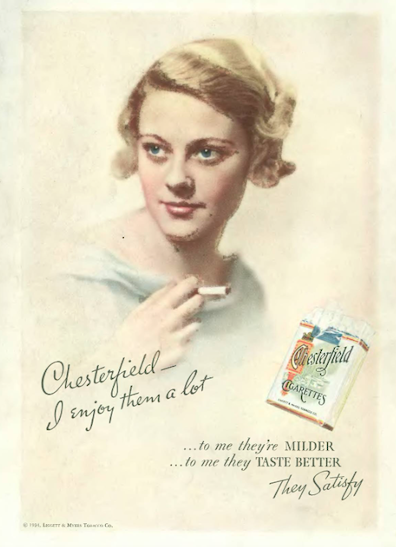
…another advertising stalwart, the Liggett & Myers Tobacco Company, gave us a young woman who enjoyed their Chesterfields “a lot”…

…Guinness was back for those who missed that taste of Dublin…

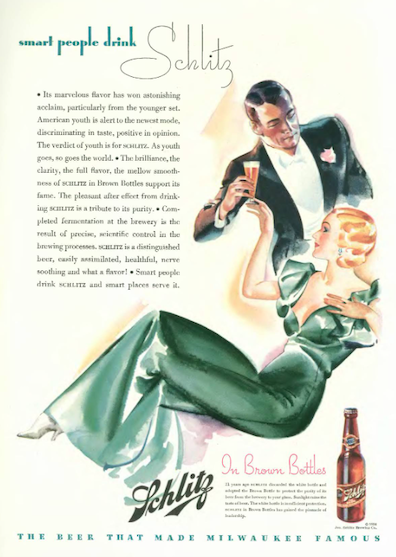
…and the folks behind “The Beer That Made Milwaukee Famous” placed their first ad in The New Yorker

…if you wanted to have your drink outside of the home, what better place than the Madison Room at The Biltmore…

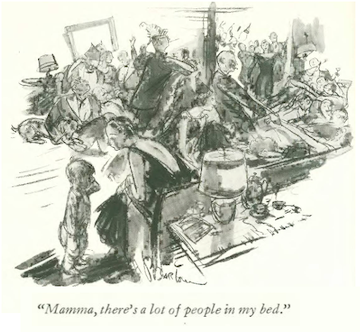
…on to our cartoons, with begin with Perry Barlow and a tot losing sleep over the new year…

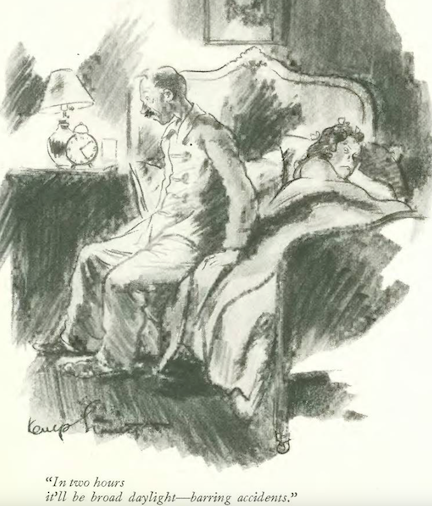
Kemp Starrett also explored the world of sleep deprivation…

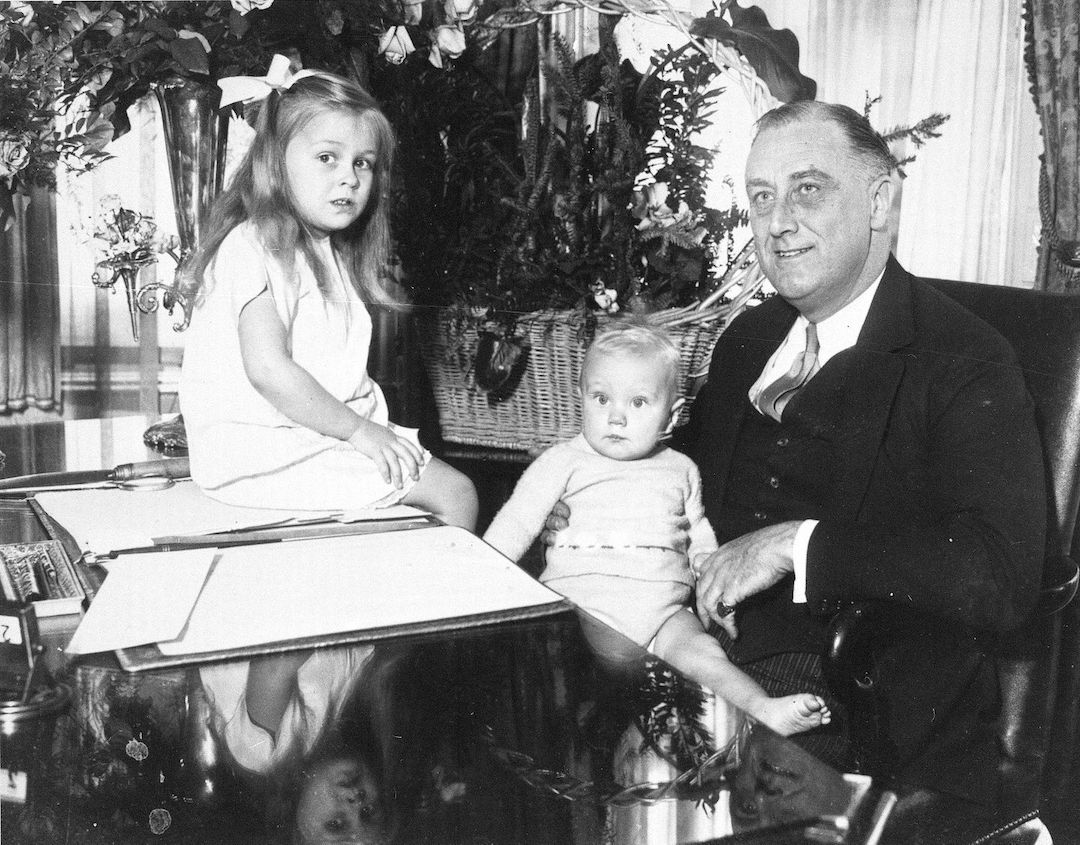
…and we end with James Thurber, and a woman with a low tolerance for “cute” news…

…in case you are wondering, Anna Eleanor Sistie” Dall was the daughter of Franklin and Eleanor Roosevelt’s eldest child Anna Dall. When Dall separated from her husband in 1933, she moved into the White House with her children, Sistie and Buzzie.

TOO CUTE…Franklin Roosevelt with his grandchildren Anna Eleanor Sistie” Dall and Curtis “Buzzie” Dall in 1932. According to Buzzie, he and his sister lived in the White House from September 1933 to November 1935. (AP)

Next Time: A Joycean Odyssey…


The Wild West

Kino Lorber)

We first encountered Mae West back in 1926 when The New Yorker commented on her risqué Broadway play, Sex. Although the play was the biggest ticket in town, it eventually attracted a police raid that landed West in jail on morals charges. Sentenced to ten days for “corrupting the morals of youth,” she could have paid a fine, but for West a short stint on Welfare Island was worth its weight in publicity gold.

Oct. 14, 1933 cover by Rea Irvin.

Fast forward seven years, and West is one of the nation’s biggest box office attractions and starring in her third film, I’m No Angel. Depression-era audiences responded enthusiastically to West’s portrayals of a woman from the wrong side of the tracks who in the end gains both fortune and social acceptance. Although puritanical forces continued to be outraged by West’s antics, New Yorker film critic John Mosher found her act to be “a safe parody on indecency.”

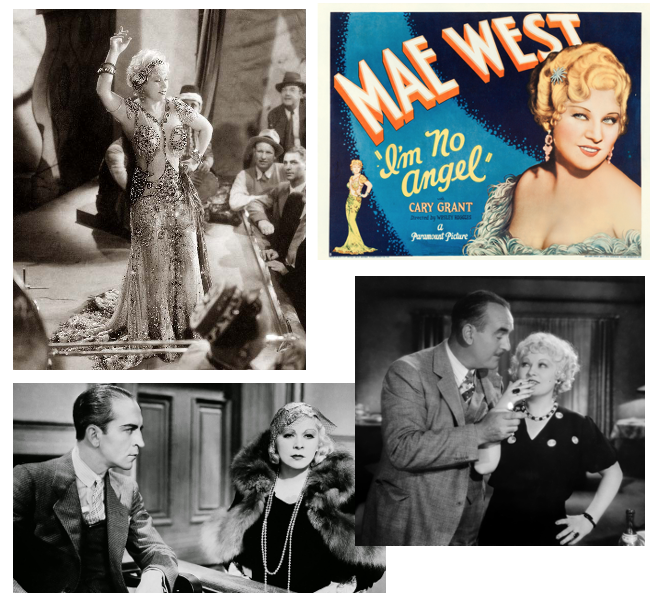
SHIMMY TO SUCCESS…Clockwise, from top left: At the beginning of I’m No Angel, Tira (Mae West) shimmies and sings in a circus sideshow; studio poster for the film— In the early 1930s, West’s films were key in saving Paramount Pictures from bankruptcy; a wealthy sideshow customer (William B. Davidson) arranges a private rendezvous; Tira has her day in court despite attempts by her ex-boyfriend, Slick Wiley (Ralf Harolde), to discredit her. (IMDB)
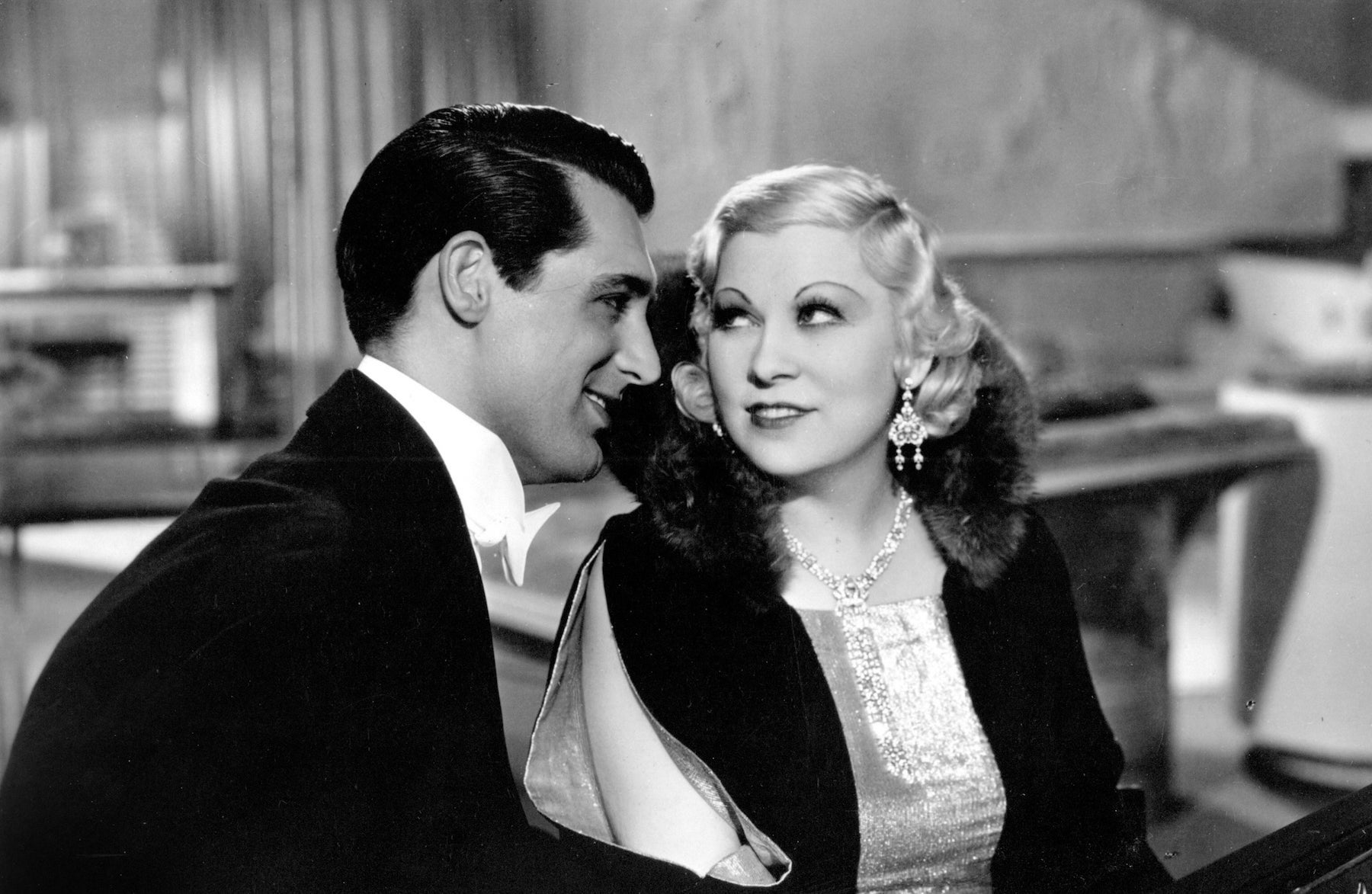
SHE GETS HER MAN…Cary Grant starred opposite Mae West for the second and final time in I’m No Angel. Eleven years junior to West, Grant portrayed Tira’s fiancé, Jack Clayton. (TCM)

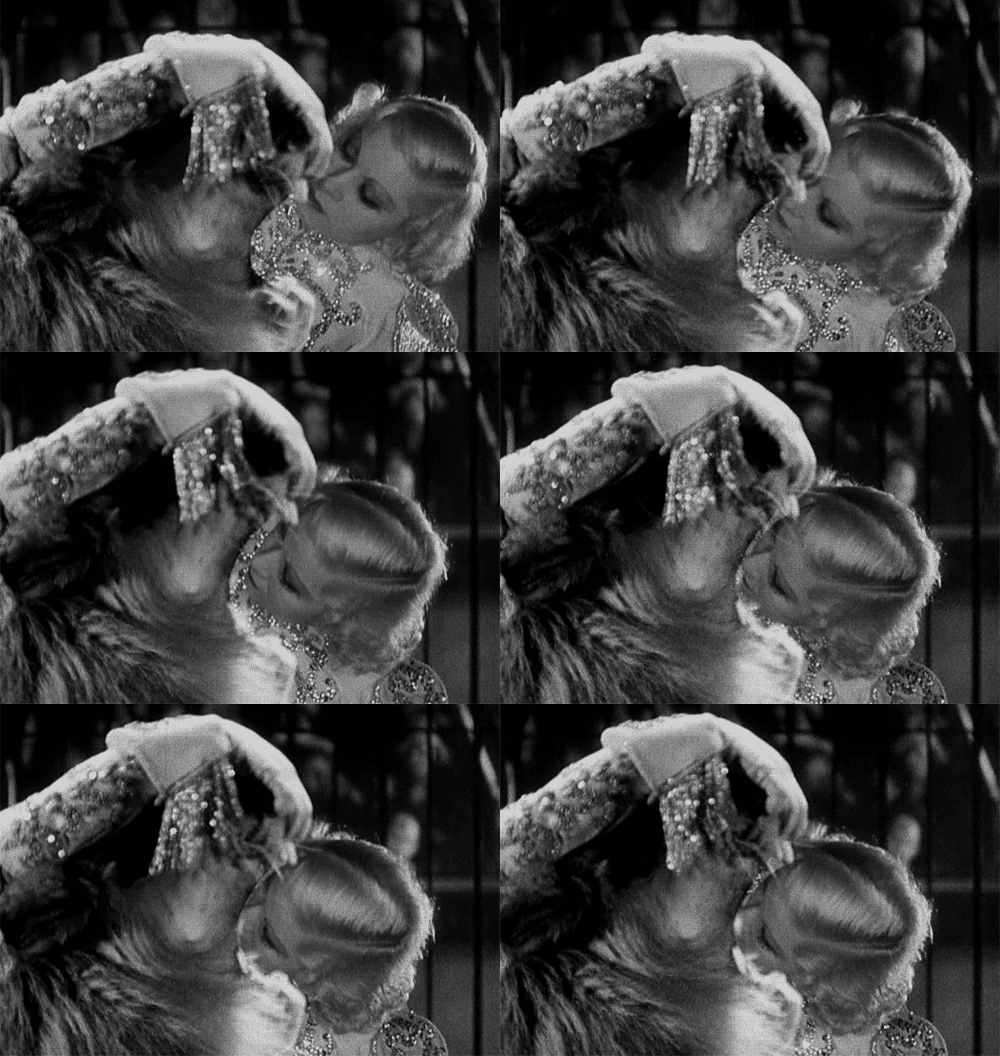
And finally, a much-talked about scene from the movie featured West putting her head (rather sensually) into the mouth of a lion. In reality it appears to be a camera trick: West was actually placing her head to the side of the lion’s mouth. Still, a gutsy move by West. As for the lion, it was no picnic either.

 * * *

Comic Relief

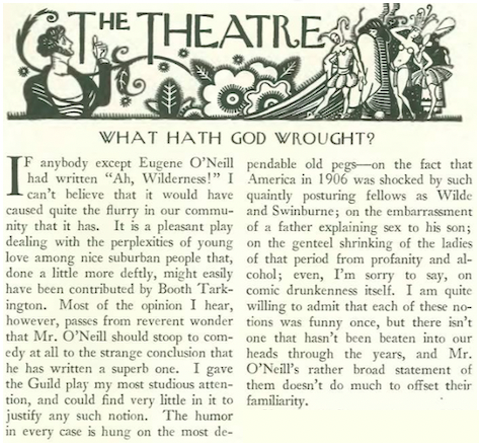
Eugene O’Neill surprised critics and audiences alike when he premiered Ah, Wilderness! at Broadway’s Guild Theatre on October 2, 1933. Among the critics was Wolcott Gibbs, who concluded that O’Neill should stick to his usual themes of disillusion and despair. An excerpt:

PASS THE CORN, PLEASE…Around the table in the original 1933 Broadway production of Ah, Wilderness! are (from left) George M. Cohan (Nat Miller), Eda Heinemann (Lily), Elisha Cook, Jr. (Richard), Gene Lockhart (Sid), Marjorie Marquis (Mrs. Nat Miller), Walter Vonnegut, Jr. (Tommy) and Adelaide Bean (Mildred). (Photograph by Vandamm for Stage magazine, November 1933)
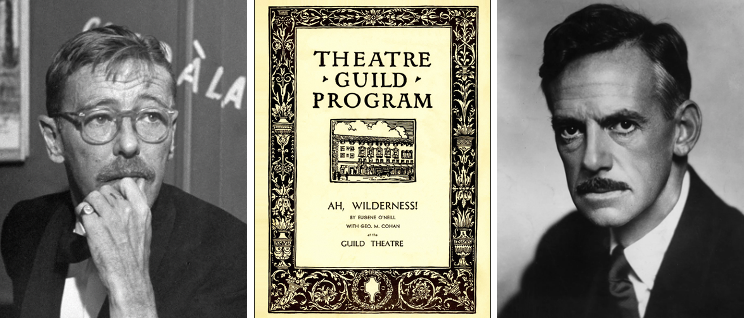
ERRORS OF COMEDY…Wolcott Gibbs (left) found Eugene O’Neill’s attempt at comedy to be nothing more than a recycling of corny old saws. However, Ah, Wilderness! proved successful in its first Broadway production and in the touring company that followed. It remains to this day a staple of community repertory. (The New Yorker/Playbill/Encyclopedia Britannica)

 * * *

Hell in a Handbasket

If Eugene O’Neill couldn’t offer up some woe, then leave it to E.B. White of all people to supply reason for despair. In his 1982 review of a collection of White’s poems and sketches,

For the Oct. 14 issue White bemoaned the loss of the American elm (of the 77 million elms in North America in 1930, more than 75 percent were lost to Dutch elm disease by 1989), the dangers of pesticide use, and other maladies. Excerpts:

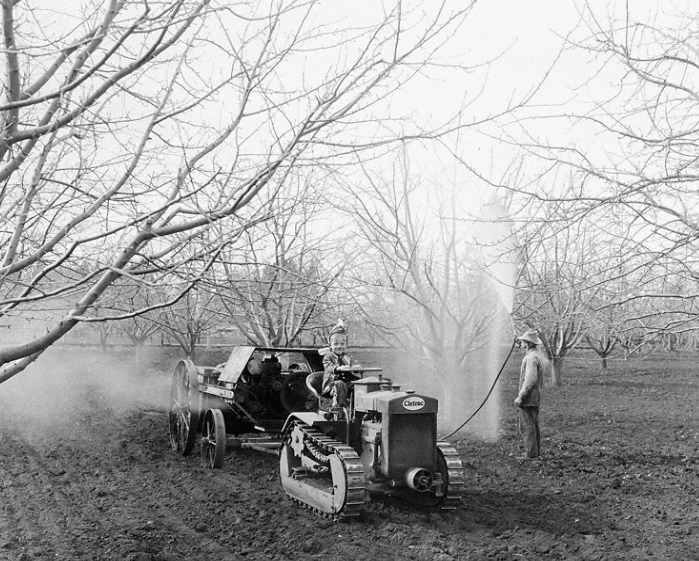
APPLE OF HIS EYE…E.B. White had reason to be concerned about the widespread practice of spraying lead arsenic on fruit trees. This 1930 photograph shows an Oregon orchardist and his child spraying apple trees with the stuff. (oregonhistoryproject.org)

White’s New Yorker colleague John O’Hara raised some concerns of his own, namely the likelihood of another world war in this prescient piece titled “Dynamite is Like a Mill Pond.” Excerpts:

FROM RUSSIA WITH LOVE…John O’Hara pondered the likelihood of another world war and an unlikely bedfellow: Soviet Russia. Photo circa 1938. (AP via loa.org)

 * * *

Pooh-Poohing Mr. Milne

In his review of A.A. Milne’s latest novel, The Red House Mystery, Clifton Fadiman seemed to recall Dorothy Parker’s own revulsion to Milne’s juvenile style (“Tonstant Weader Fwowed Up” Parker once wrote of The House at Pooh Corner). Excerpts:

 * * *

From Our Advertisers

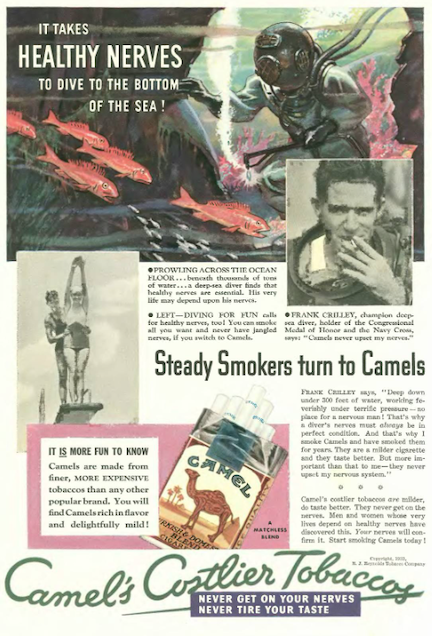
The makers of Camels took to the water to prove how their cigarettes supported “healthy nerves,” whether in the deep sea or on the high dive…

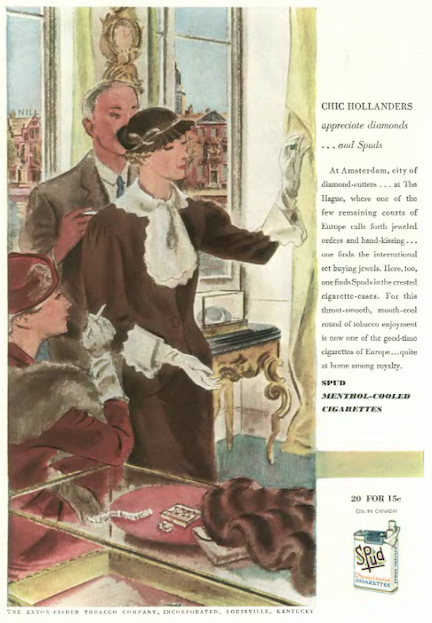
…with a name like “Spud” you really had to stretch to prove you were a choice of the smart set…here they claimed their product was “quite at home among royalty”…

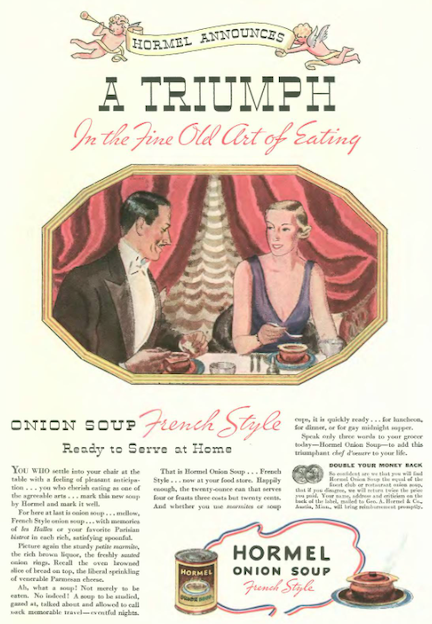
…here’s another great example of class appropriation, a white-tie dinner featuring a couple of toffs eating canned soup…

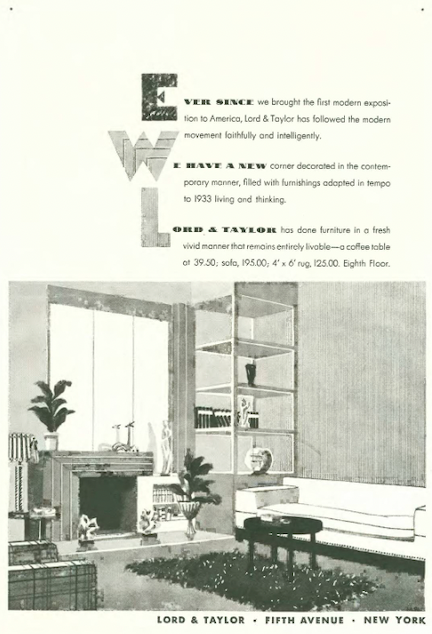
…and we give our eyes a break with a bit of elegance from Lord & Taylor, featuring the art of modern living…

…on to our cartoons, we begin with James Thurber

…curious to know Thurber’s favorite songs?—then check out this Thurber Thursday post from Michael Maslin’s Inkspill...

…we continue with William Steig’s look at a “Lady With Mirror”…

…and discover the calm after a storm in this domestic scene by Kemp Starrett

…visit the Century of Progress World’s Fair in Chicago, with George Price

…for reference, Price’s cartoon depicted the Federal Building at the Century of Progress…

…and is often the case with this blog, we give Peter Arno the last word…

Next Time: As Millions Cheer…

Making Hays

The name Will Hays will always be linked to the Motion Picture Production Code, a set of guidelines for self-censorship that studios adopted to avoid government intervention.

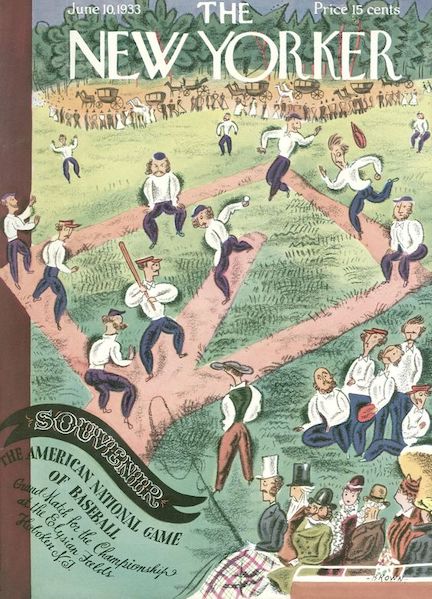
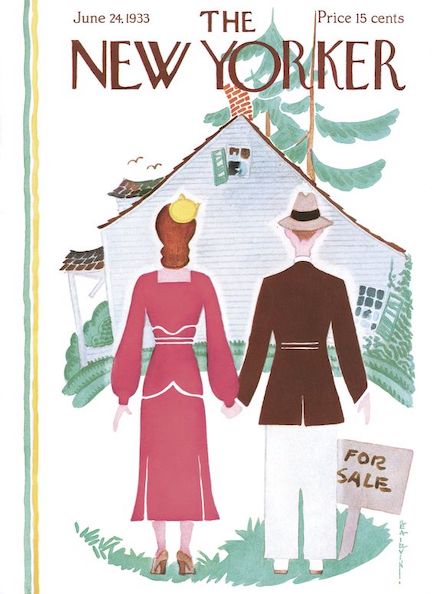
June 10, 1933 cover by Harry Brown.

Hays, however, played both sides in the culture wars. A Republican politician, Hays (1879–1954) managed the 1920 election of Warren G. Harding before moving on to Postmaster General and then chairman of the Motion Picture Producers and Distributors of America. During the so-called pre-Code era, roughly 1930 to 1934, the Production Code was barely enforced, giving filmmakers the freedom to explore themes ranging from prostitution to gangster violence. When Alva Johnston wrote a two-part profile on Hays for The New Yorker, pressure from Catholic Church and other morality groups was building for Hays to strictly enforce the Code, or else. An excerpt:

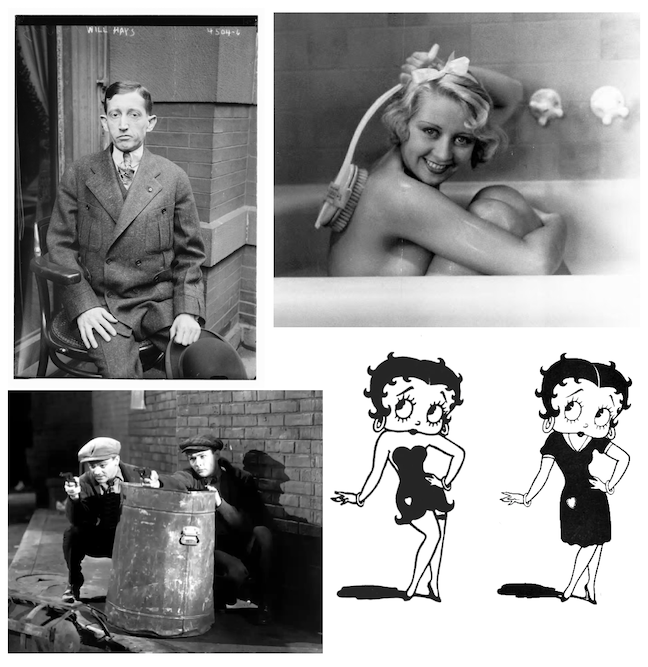
CLEAN IT UP, JOAN…Will Hays (top left) felt pressure in 1933 to start seriously enforcing the Production Code, and scenes such as the one at top right from Blonde Crazy (1931) with Joan Blondell would probably not pass muster after 1934; the Hays Code would also lengthen the animated Betty Boop’s skirts, and tone down gratuitous violence (James Cagney and Edward Woods in 1931’s Public Enemy). (Wikimedia/pre-code.com/Warner Brothers)

 * * *

The Trouble With Money

In their investigation of the probable causes of the 1929 market crash, the Senate Banking and Currency Committee summoned J.P. Morgan Jr (1867–1943) on June 1, 1933, to testify on questionable banking practices. Committee counsel Ferdinand Pecora (1882–1971) set out to prove, among other things, that Morgan sold stock below market price to some of his cronies. Pecora also learned that Morgan and many of his partners paid no income tax in 1931 and 1932, big news to Americans still suffering from the effects of the Great Depression. E.B. White made these observations:

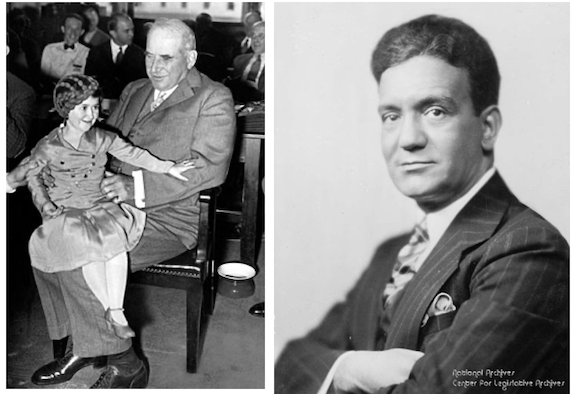
Although not mentioned by White, the hearing began with an odd little sideshow. Writing for the U.S. Capitol Historical Society blog, Joanna Hallac notes that because the hearings were slow to get started, newspaper reporters grew desperate to get something for the evening papers. Then one enterprising reporter, Ray Tucker, spotted circus dwarf Lya Graf with her agent, Charles Leef, outside of the hearing room (the Barnum & Bailey Circus was in town) and suggested Graf meet the famed banker. Hallac writes: “Although he was initially startled, Morgan was genial and rose and shook her hand. Naturally, the photographers were stepping all over each other to get a picture of the exchange. Leef, seeing a perfect press opportunity for himself and the circus, waited for Morgan to sit down and then scooped up Graf and placed her in J.P. Morgan’s lap. Morgan apparently laughed and had a brief exchange with the demure lady, in which he told her he had a grandchild bigger than her.”

THE LIGHTER SIDE OF FINANCE…Before being grilled by Senate counsel Ferdinand Pecora at a June 1, 1933 banking hearing,  J.P. Morgan Jr was paid a surprise visit by Lya Graf, a Barnum & Bailey circus dwarf. At right, Pecora, circa 1933. Sadly, Graf, who was German, perished in a concentration camp after she returned to her homeland in 1935. She was condemned to death in 1937 for being half Jewish and “abnormal.” (New York Magazine/Wikipedia)

 * * *

Single Member Plurality

Among other attributes, E.B. White was known for his use of the first person plural, the editorial or clinical “we.” White himself offered this insight:

I, ME, MINE…E.B. White at work in 1945. (Britannica.com)

 * * *

Uncle Tom, Revived

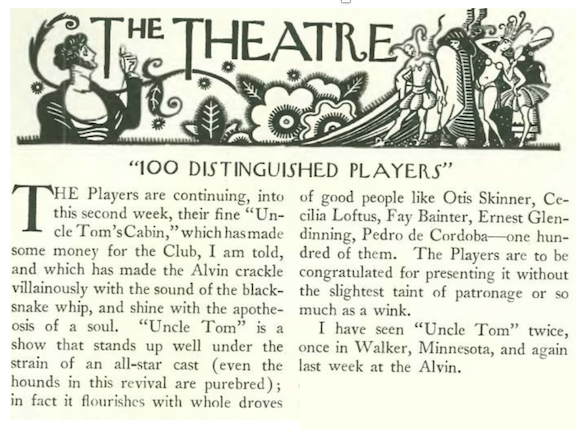
Plays based on Harriet Beecher Stowe’s 1852 novel Uncle Tom’s Cabin were wildly popular throughout the late 19th and early 20th centuries, but by the 1930s the story seemed antiquated and no longer relevant. That didn’t stop the Players (a Gramercy park actors club) from mounting a 1933 Broadway revival that proved popular with audiences and a New Yorker stage critic, namely E.B. White, sitting in for Robert Benchley…an excerpt…

SAY UNCLE…Otis Skinner (1858–1942), a beloved broadway actor, portrayed Uncle Tom in the 1933 Broadway revival. The all-white cast performed in blackface.

…on the other hand, White found the Frank Faye/Barbara Stanwyck play Tattle Tales tedious, a thin veneer over the stars’ crumbling marriage off-stage…

THAT’S ALL, FOLKS…Publicity photo of Barbara Stanwyck and Frank Faye for the Broadway production of Tattle Tales at the Broadhurst Theatre. The co-stars’ real-life marriage supposedly inspired the 1937 film A Star is Born (as well as subsequent remakes). As Stanwyck’s star rose, Faye’s faded—his heavy drinking and abuse led to their 1935 divorce. The play itself closed after 28 performances. (IBDB)

 * * *

Frothy Air

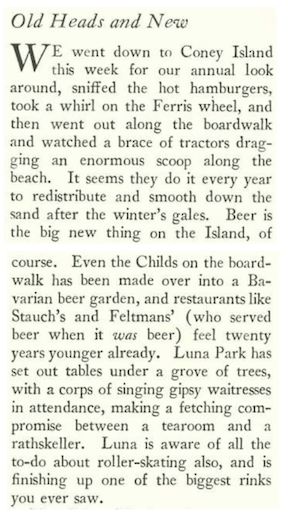
E.B. White (via “The Talk of the Town”) took a stroll through Coney Island and found the place somewhat revived, perhaps thanks to the return of legal beer and Bavarian-style beer gardens…

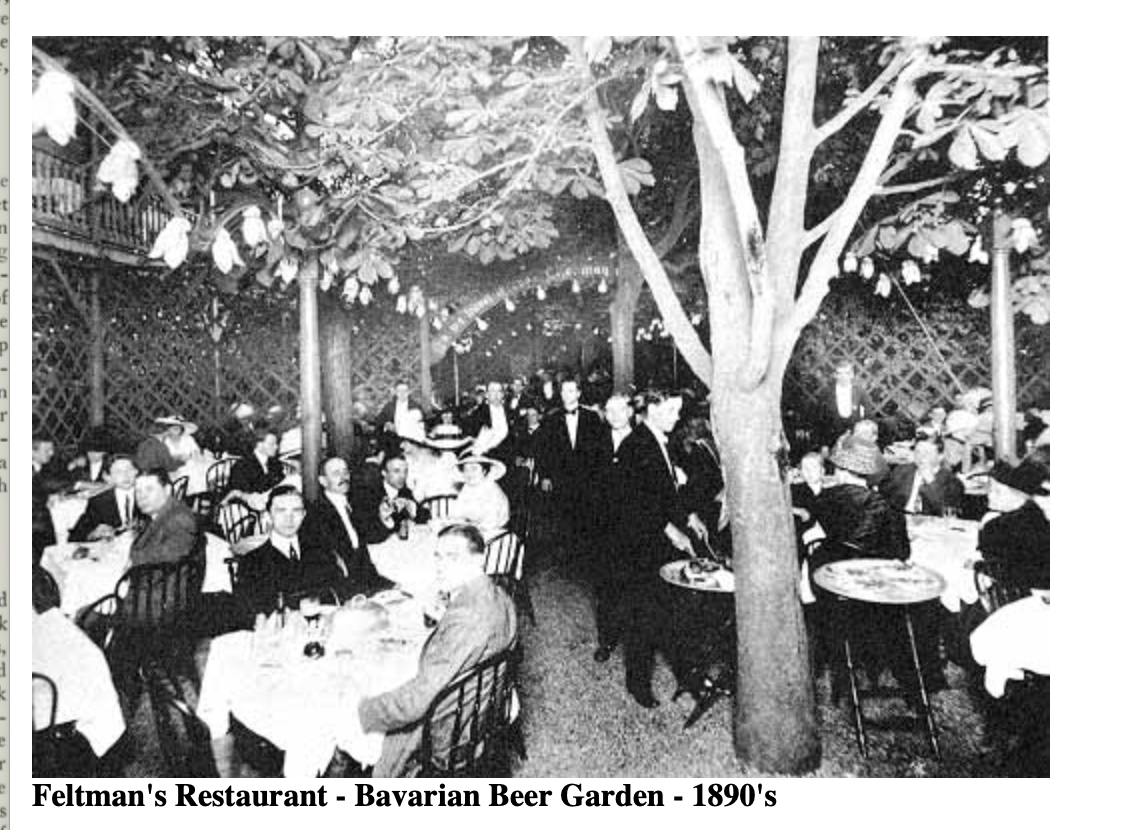
RECALLING THE GOOD OLD DAYS…Feltman’s Restaurant on Coney Island operated this popular Bavarian Beer Garden in 1890s. (Westland.net)

 * * *

Peace, He Said

Adolf Hitler was talking peace, but the French weren’t buying it according to The New Yorker’s Paris correspondent Janet Flanner—in just seven years her beloved City of Light would fall to the Nazis…

IF YOU CAN’T SAY SOMETHING NICE…Adolf Hitler makes his first radio broadcast as German Chancellor, February 1933. Hitler spoke of peace in Europe while preparing his country for war. (Detail of image courtesy Bundesarchiv)

…speaking of Janet Flanner, apparently her “Paris Letter” implied that the author Edna Ferber had married. Ferber offered this correction, in good humor:

 * * *

From Our Advertisers

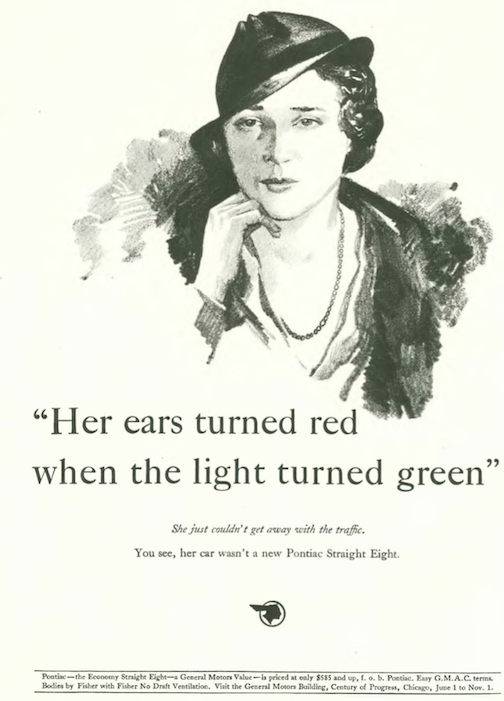
Class anxieties were (and still are) gold to Madison Avenue—look at this poor woman, pondering her very existence, lacking as she did the horsepower to lay some rubber at a green light…
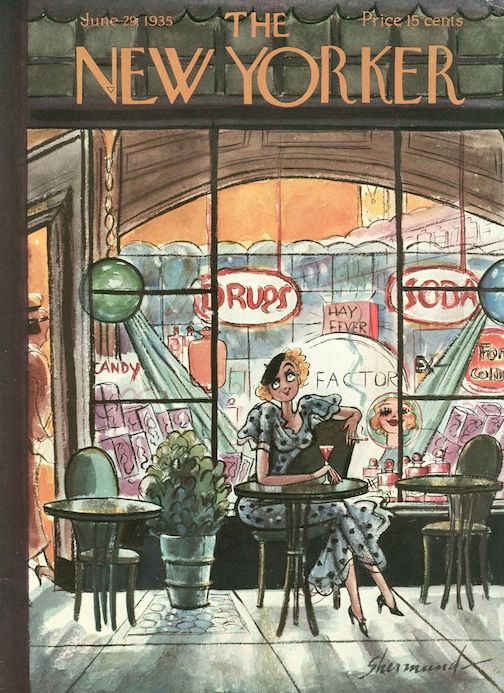
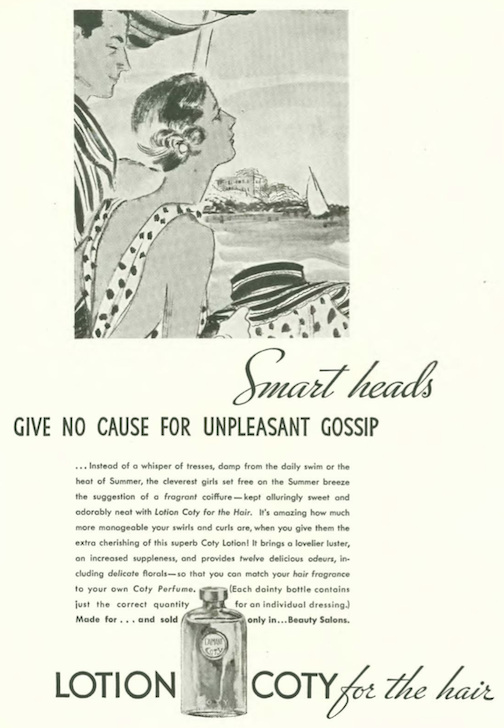
…or this woman, who thought ahead and made sure she had some hair lotion to ward off cackles from the beach harpies…

…on the other hand, this cyclist seems to care less about appearances as she races toward us with a crazed smile, half-human, half-illustration…

…and then there’s this fellow, playing it cool in a white linen suit, which for a sawbuck seems like a bargain, even in 1933…

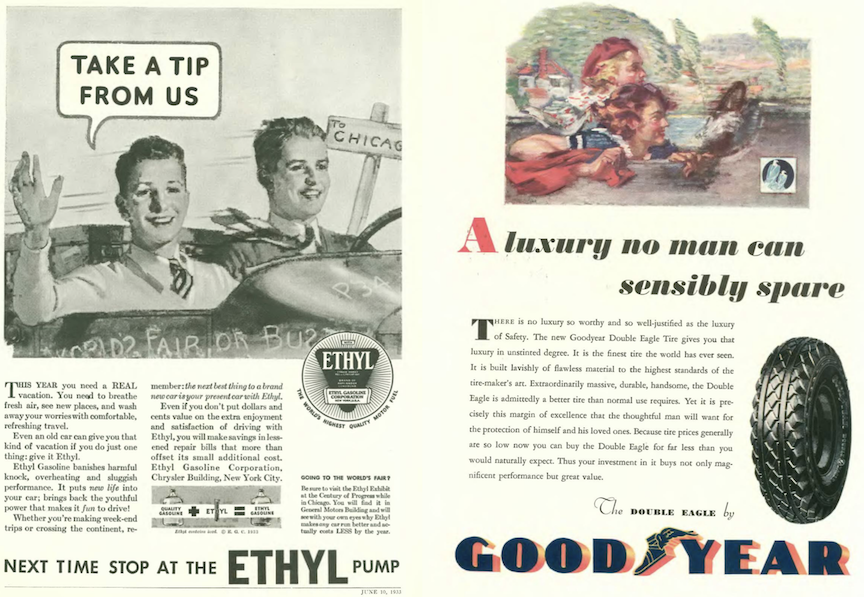
…the last two pages of the magazine featured friends racing to some swell destination…the lads at left are being propelled to the 1933 Chicago World’s Fair thanks to the wonders of leaded gasoline, while the women at right seem to be doing at least eighty…note neither car has a windshield, so you wonder how many bugs they will pick out of their teeth…

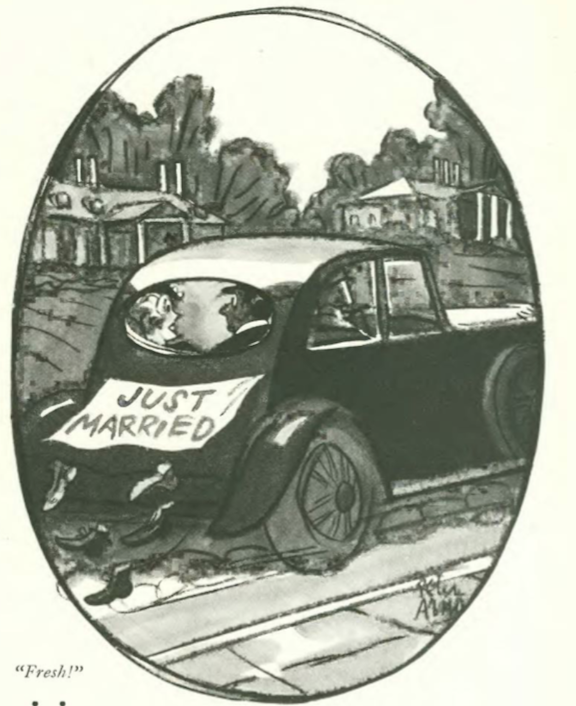
…an apt segue to our cartoons, where Peter Arno showed us a couple going nowhere fast…
Otto Soglow’s Little King had his own marital situation to ponder after a visit from a sultan…

…a very unusual cartoon from Helen Hokinson, who rarely delved into serious socio-political issues (although her captions were often provided by others at The New Yorker)…this cartoon referred to a cause célèbre of the 1930s, the case of the prejudicial sentences of the Scottsboro boys that recalled the Tom Mooney frame-up two decades earlier…

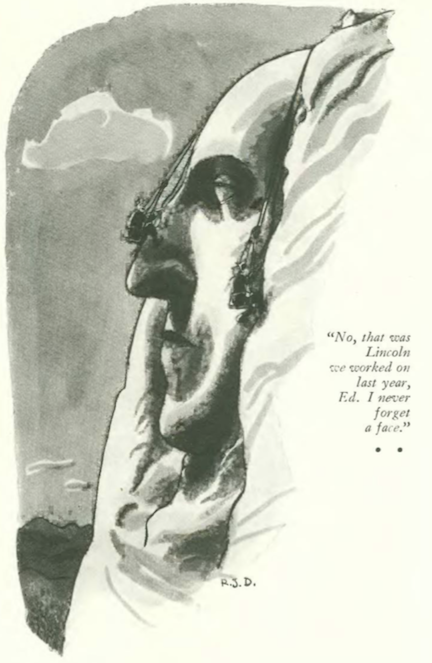
…on to lighter topics, Robert Day checked in on the progress at Mt. Rushmore…

George Price also went aloft for a challenge…

…and Carl Rose found this dichotomy in the conquest of nature…

…on to June 17, 1933…

June 17, 1933 cover by Perry Barlow.

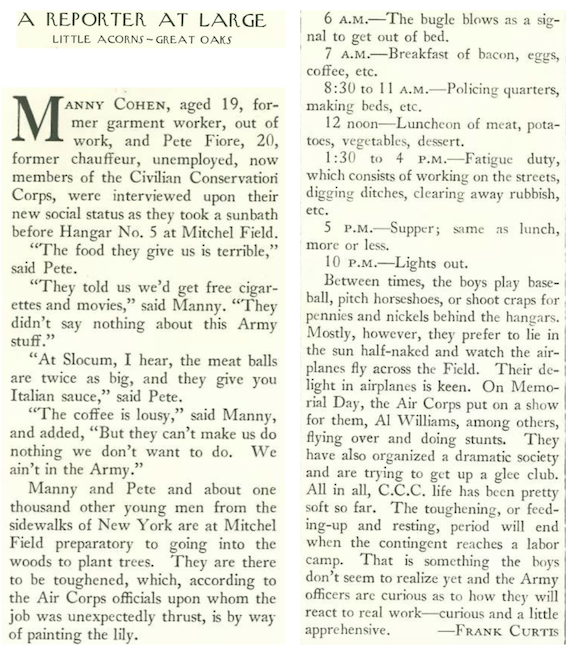
…where Frank Curtis reported on the military-style schedule that put young men to work for the Civilian Conservation Corps…excerpts:

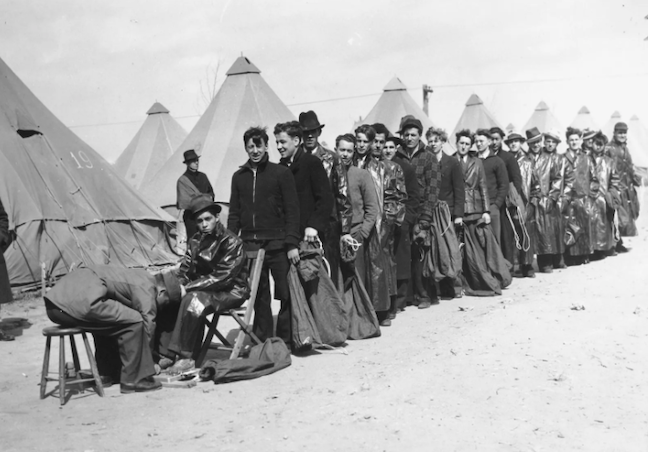
MARCHING ORDERS…New members of the Civilian Conservation Corps waiting to be fitted for shoes at Camp Dix, New Jersey, 1935. (Encyclopædia Britannica, Inc.)

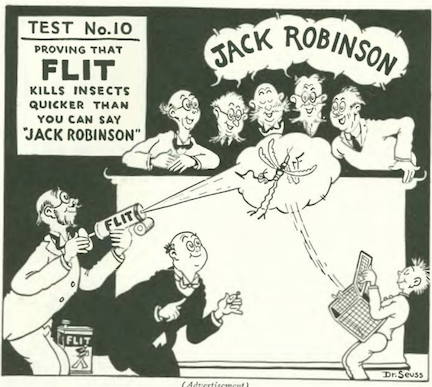
…just one ad from this issue, another Flit entry from Dr. Seuss, who wouldn’t publish his first book until 1937…

…our cartoons are courtesy Otto Soglow, with some bedside manner…

Kemp Starrett set up what should prove to be an interesting evening…

Gluyas Williams considered the woes of J.P. Morgan Jr

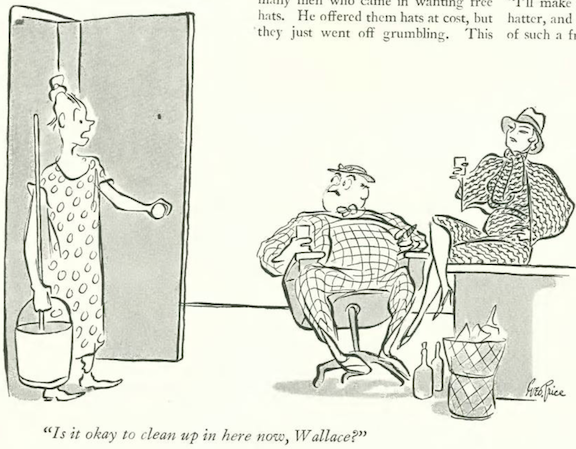
…and we close with another from George Price, doing some tidying up…

Next Time: Home Sweet Home…

Diary of a Lady

It was no surprise Dorothy Parker did not think much of society types, especially those afflicted with extreme solipsism.

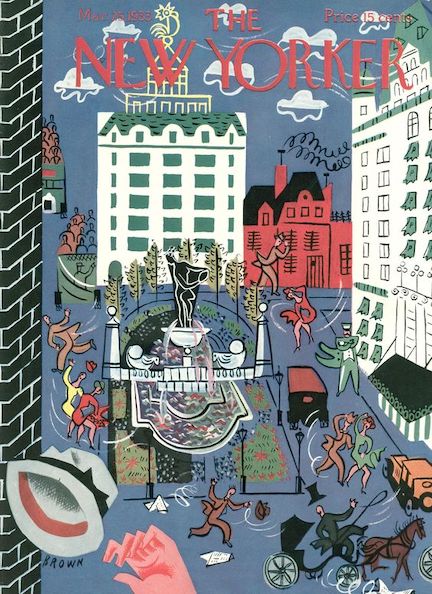
March 25, 1933 cover by Harry Brown.

Parker’s “The Diary of a Lady,” briefly excerpted here, featured entries from a diary of a fictional socialite who constantly bemoaned the minor inconveniences of her shallow existence, oblivious to the world around her.

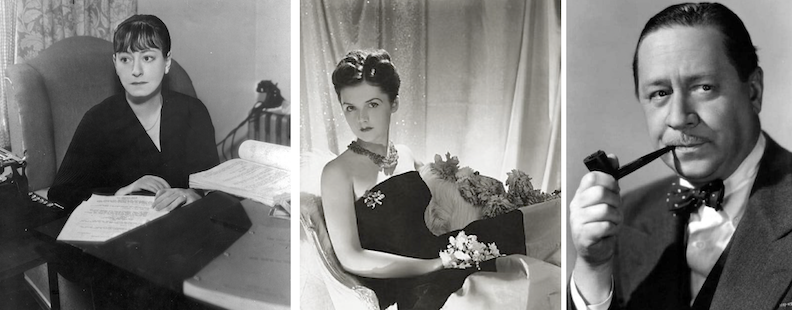
YOU POOR THING…Dorothy Parker (left) took a dim view of the lives of “poor little rich girls” like socialite Brenda Frazier (who had a tempestuous relationship with New Yorker cartoonist Peter Arno); Robert Benchley, on the other hand, took a more jolly view of human absurdity. (britannica.com/Wikipedia/theattic.space)

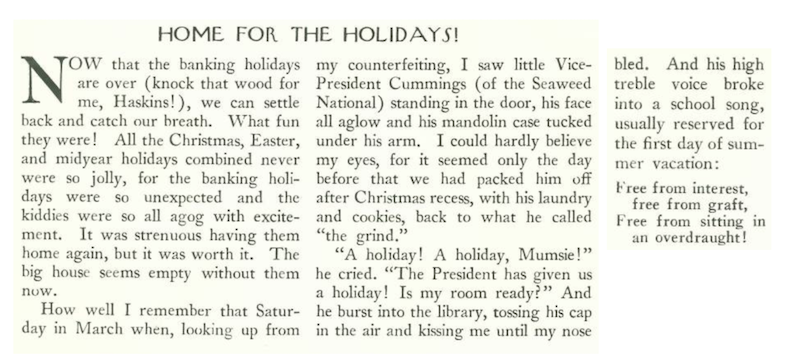
In contrast to Parker, Robert Benchley’s satire was usually more on the silly side, with a lot less bite. Here is an excerpt from “Home for the Holidays” (which immediately followed Parker’s piece in the magazine), in which Benchley describes the festive mood of one family during FDR’s “bank holiday”…

 *  *  *

On the Lighter Side

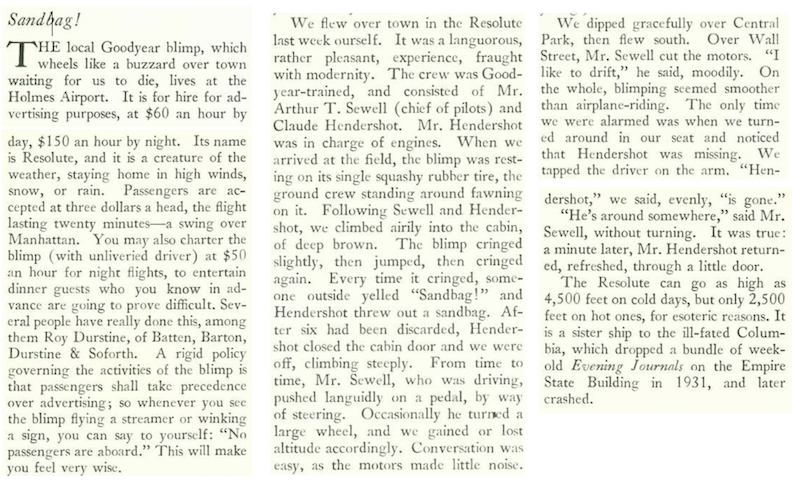
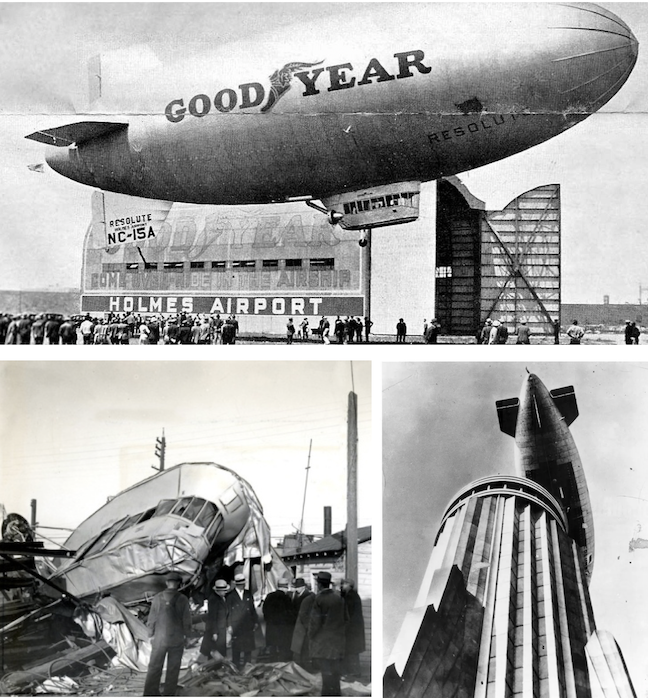
E.B. White was the unofficial aviation correspondent for The New Yorker, ever eager to go aloft in the latest contraption. In this excerpted “Talk of the Town” entry White described his adventures aboard the Goodyear blimp Resolute:

WHAT A GAS…Top photo, the Resolute at its home base, Holmes Airport (in Jackson Heights, L.I.), where E.B. White boarded his flight. As White noted, Resolute was a sister ship to kathrynsreport.com/New York Times)

And we turn again to White, this time an excerpt from his “Notes and Comment” celebrating Franklin D. Roosevelt’s planned amendment to the Volstead Act that would allow people to have a legal beer while they waited for the 21st Amendment to be ratified. White had a couple of ideas regarding locations for beer gardens. An excerpt:

BEER THIRTY…E.B. White believed the front of the internationally famous Brevoort Hotel (next to the Mark Twain House at the southeast corner of Fifth Avenue and 9th Street) would be an ideal spot to quaff some suds. Alas, the hotel (and the Twain house) fell to the wrecking ball in 1952, replaced by the Brevoort apartments (right). (MCNY/streetwise.com)

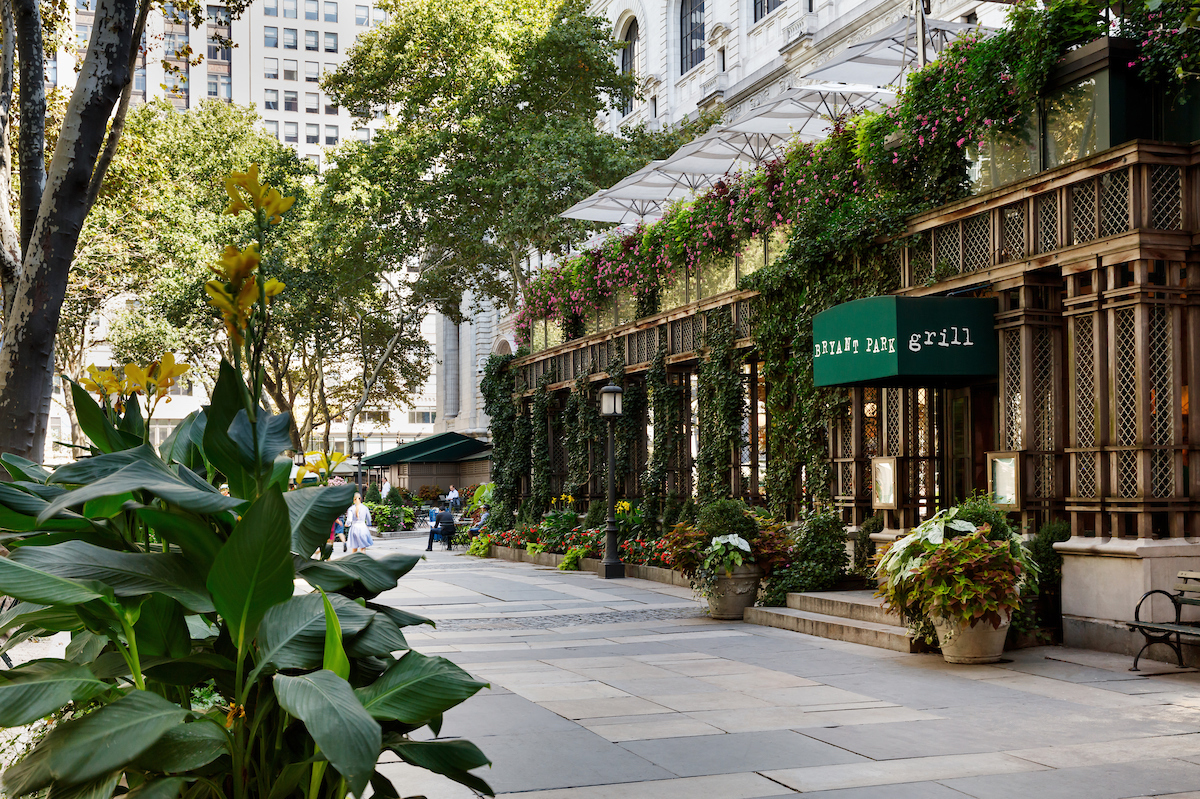
Although the Brevoort idea didn’t pan out, White did get his wish, more or less, for a Bryant Park location, the Bryant Park Grill…

(bryantpark.org)

 *  *  *

Mayor McCarthy

The profile featured Stitch McCarthy, considered one the most flamboyant “street mayors” of the Lower East Side. Writing in Lapham’s Quarterly (Aug. 1, 2018), Laurie Gwen Shapiro describes McCarthy as “a five-foot-tall, cross-eyed Romanian Jew born Samuel Rothberg, always seen with a cigar in his mouth.” What Stitch lacked in height he made up for in toughness, and by his teens was as tough as nails. Shapiro writes: “At night he managed a small-time boxer who once was scheduled to fight a bantamweight named Stitch McCartney in Jersey City. As he later told the story (no doubt over and over), his client fled in fear at the sight of McCartney and the crowd booed. He went in the ring himself, flattened McCartney, and took a version of his opponent’s name for his own.”

The profile was written by Meyer Berger, known as a master of the human interest story. Berger did a short stint at The New Yorker but for most of his career he worked for The New York Times, where he wrote a long-running column, “About New York.” Here is a very brief excerpt of the profile, with a caricature by Al Frueh.

TOUGH AS NAILS was what you became if you wanted to be one of the unofficial mayors of the Lower East Side like Stitch McCarthy, seen here in 1931. According to Laurie Gwen Shapiro, street mayors “were likable fixers who cut through red tape and might settle between fifteen and twenty neighborhood disputes a day.” Photo at left (by Berenice Abbott) is a scene from McCathy’s world—Hester Street, between Allen and Orchard Streets. (New York Public Library/Lapham’s Quarterly)

 *  *  *

From Our Advertisers

I would guess Dorothy Parker would have some problems with this ad, featuring society women shilling for nail polish…

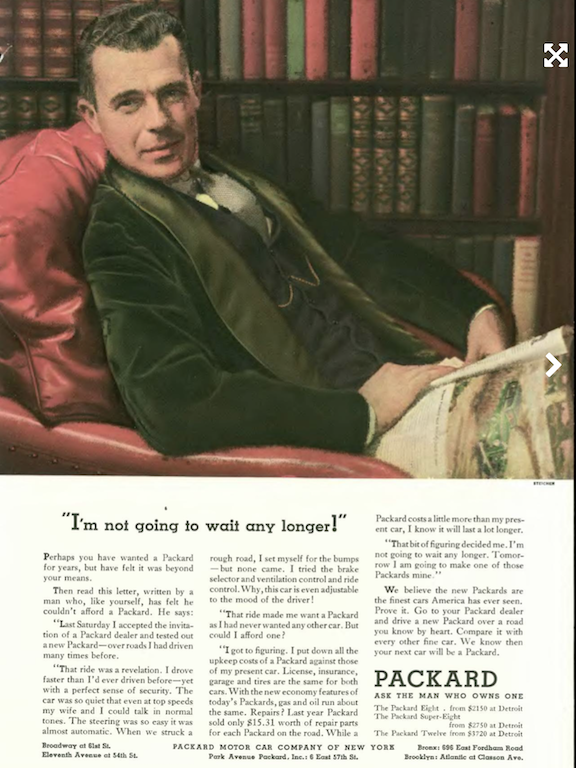
…the folks at Packard went with an ad that showed the ideal customer (seated in a library, clad in smoking jacket), contemplating one of their recent ads (the same one that was featured in the Feb. 18, 1933 issue of The New Yorker

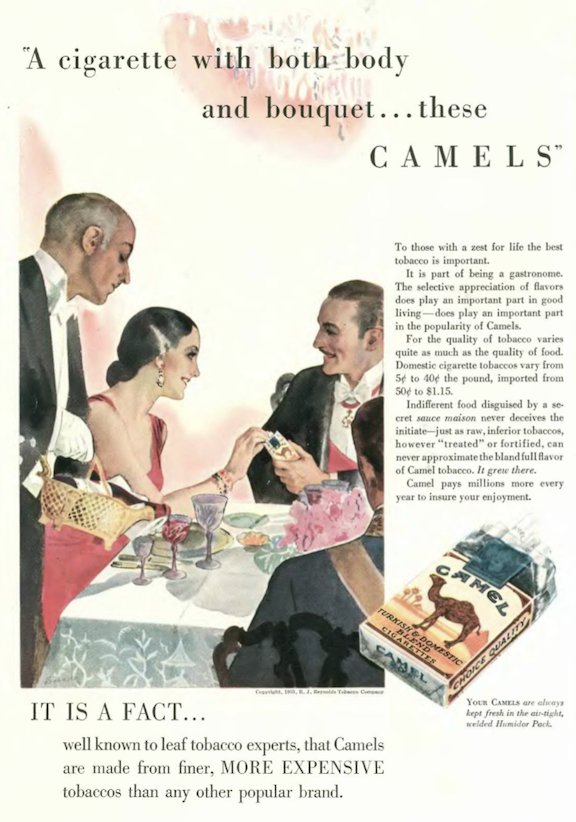
…Camel ads took on a new look thanks to the artistry of Ray Prohaska (1901–1981)…in the early 1930’s you see more use of watercolors in ads for fashion, or in this case, cigarettes…

…and Gardner Rea drew up this scene for the makers of Sanka coffee, the decaf of its day…

…which leads into the work of other New Yorker cartoonists and another master of the line drawing, Gluyas Williams

Robert Day offered a bit of understatement…

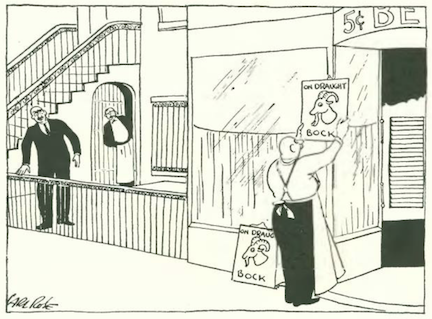
Carl Rose celebrated the arrival of legal beer…

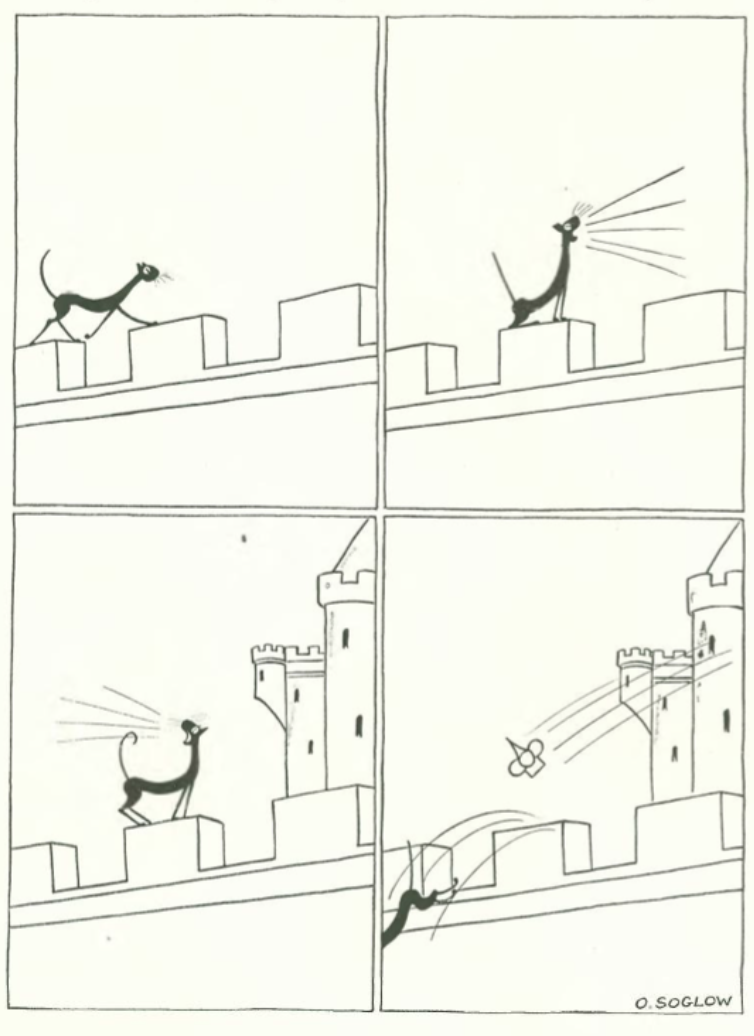
Otto Soglow showed us how royalty responds to a noisy feline…

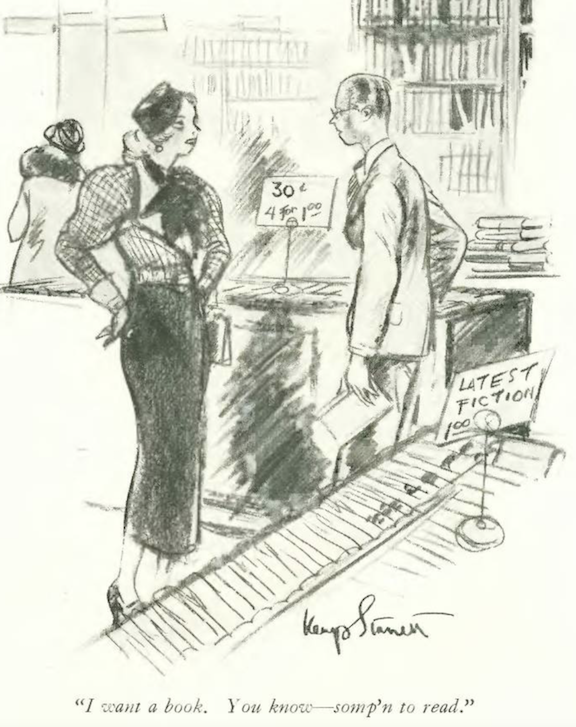
Kemp Starrett shopped for somp’n to read…

…and we close with Peter Arno, and an ill-timed joke, at least for one woman…

Next Time: Stormy Bellwether…