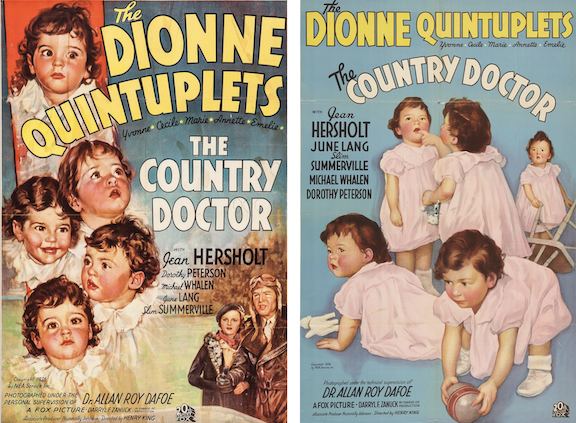
Above: Posters advertising The Country Doctor, a film featuring the Dionne Quintuplets as "The Wyatt Quintuplets." (Wikipedia/imdb.com)
The Dionne Quintuplets, famed as the first quintuplets known to have survived infancy, appeared in a motion picture before their second birthday—The Country Doctor—just one example of the many ways the girls were exploited by the province of Ontario, their doctor, their father, and the companies who used their images to sell everything from toys to toothpaste.
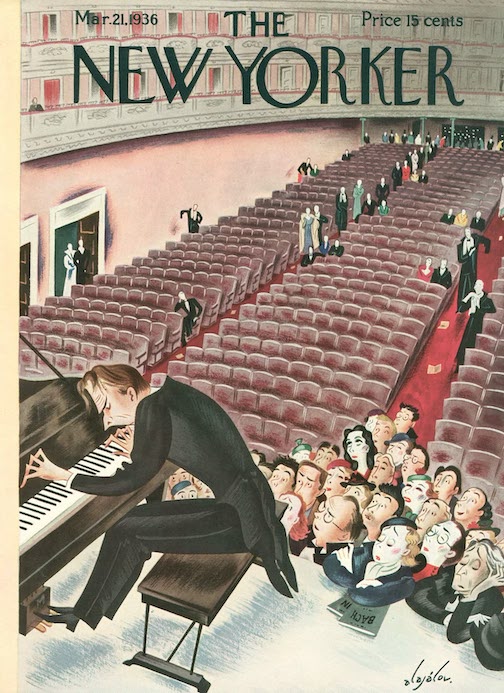
March 21, 1936 cover by Constantin Alajalov.
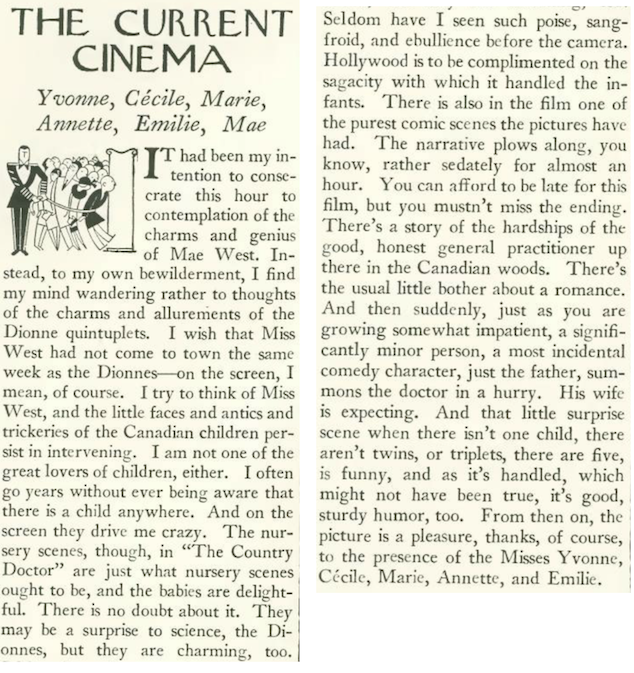
The Country Doctor was the first of three 20th Century Fox films featuring the toddlers as the “The Wyatt Quintuplets.” Actor Jean Hersholt played the country doctor (“Dr. John Luke”) in all three films, his character based on Allan Roy Dafoe, the Ontario obstetrician who successfully delivered the identical quints in 1934. It was a sign of the times that no one seemed too concerned about the children’s welfare—TheNew Yorker’s John Mosher was joined by his fellow critics in generally praising the film.
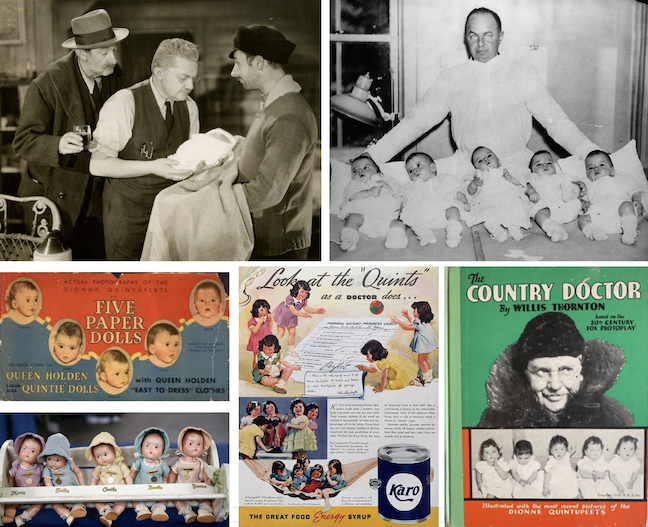
MARKETING MATERNITY…The Country Doctor was the first of three 20th Century Fox films featuring the Dionne Quintuplets. Clockwise, from top left: Slim Summerville, Jean Hersholt, and John Qualen in The Country Doctor; Ontario Premier Mitchell Hepburn with the quintuplets in 1934; a 1936 book based on the film; a 1937 ad for Karo Syrup, a major sponsor of the girls and Dr. Dafoe; an array of quintuplet-related toys included paper dolls and the much sought after Madame Alexander dolls. (Wikipedia/ebay.com/facebook.com/pbs.org)
The Dionne Quintuplets were used to endorse an array of products including Quaker Oats, Colgate toothpaste, Palmolive soap, and Lysol disinfectant. Dr. Dafoe became a wealthy man due to his association with the quintuplets, while the government of Ontario saw enormous tourism potential (the girls were made wards of the province ostensibly to protect them from exploitation). At the age of four months the quintuplets were moved from the farmhouse where they were born to a compound (“Quintland”) that featured an outdoor playground designed as a public observation area.
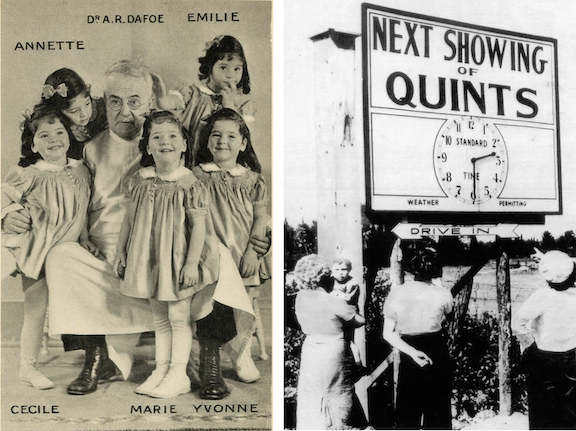
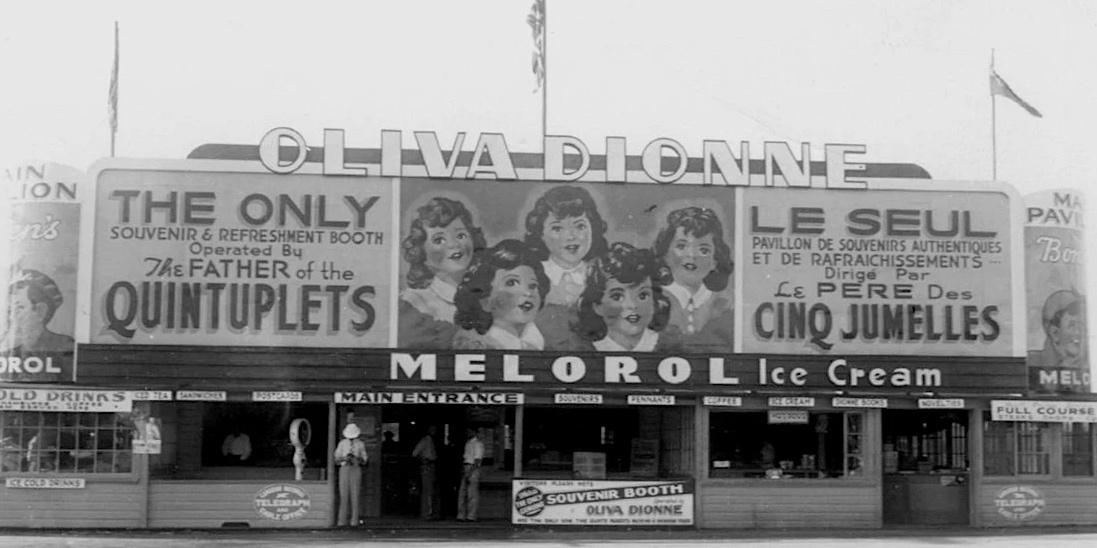
SURROUNDED BY RICHES…at left, Allen Roy DaFoe on a postcard with the Dionne Quintuplets; tourists consult sign for the next public showing of the “Quints.”(roadtripusa.com/facebook.com)CHA-CHING…Oliva Dionne, the quintuplets’ father, ran this souvenir and refreshment stand at Quintland, where the public flocked to view the girls playing. (montrealgazette.com)
The last surviving quintuplet, Annette, died on December 24, 2025, at the age of 91. Her sister Cécile died a few months earlier, also at age of 91.
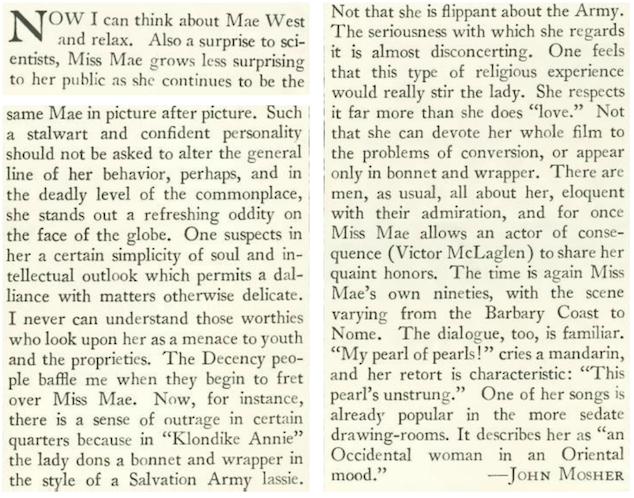
John Mosher also reviewed Mae West’s latest film, Klondike Annie. Some critics regarded it as her finest film, despite heavy censorship and the outrage of “Decency people.”
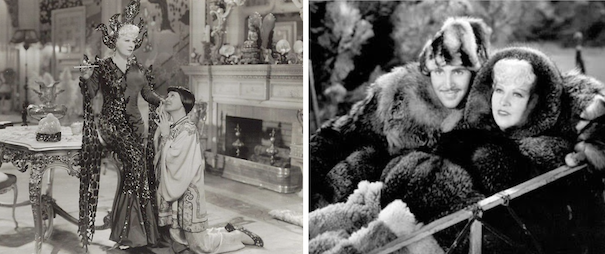
GO WEST, WEST…Mae West portrayed a kept woman who murders her keeper in self-defense and escapes to Nome, Alaska in Klondike Annie. At left, West in a scene with Son Yong; at right, with Phillip Reed. (Pinterest)
* * *
St. Katharine
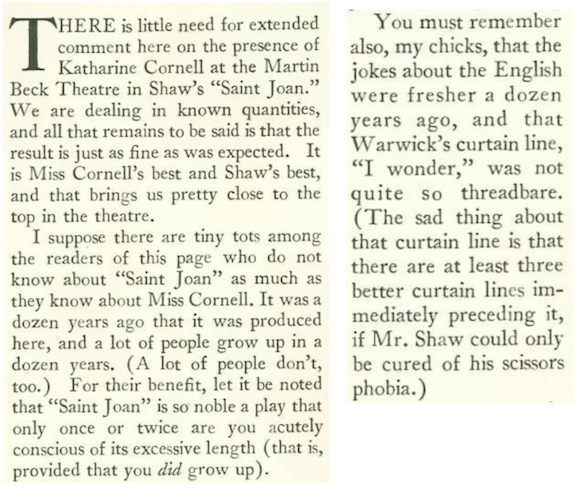
Robert Benchley found Katharine Cornell’s theatrical performance in Saint Joan to be “as fine as was expected.” An excerpt:
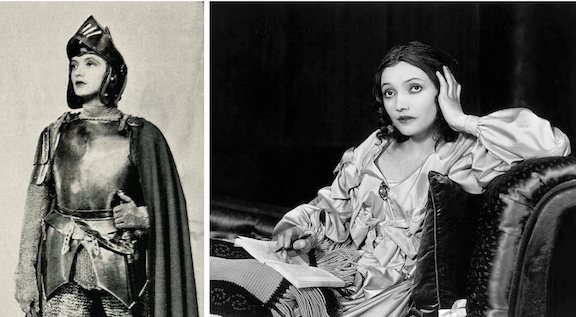
KNOWN QUANTITIES was how Robert Benchley described the talents of stage actress Katharine Cornell. At left, Cornell as Saint Joan; at right, Cornell (1893–1974) is perhaps best known in her role as Elizabeth Barrett in the 1931 Broadway production of The Barretts of Wimpole Street. (Wikipedia)
* * *
It Begins…
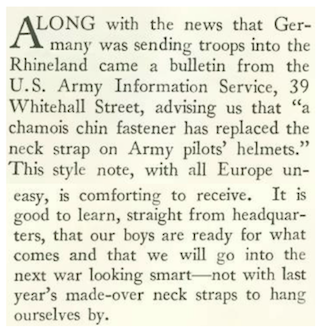
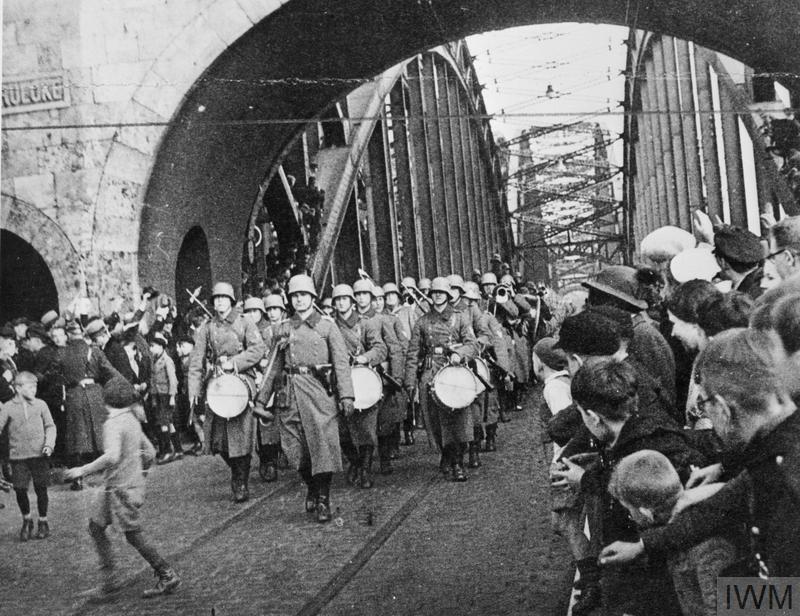
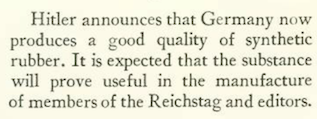
On March 7, 1936, 22,000 German army troops crossed a bridge over the Rhine River and entered the Rhineland, breaking the 1919 Treaty of Versailles, which mandated a demilitarized Rhineland to ensure French safety. Despite the violation, and the fact that the German army was still weak, France and Britain took no military action. E.B. White reported:
REOCCUPATION…On March 7, 1936, German Army troops crossed a bridge over the Rhine River and entered the Rhineland for the first time since the end of World War I. The lack of response from France and Great Britain no doubt emboldened Hitler to annex Austria and occupy Czechoslovakia in 1938. (iwm.org.uk)
Howard Brubaker, in his column “Of All Things,” also noted:
* * *
Some Pretty Things
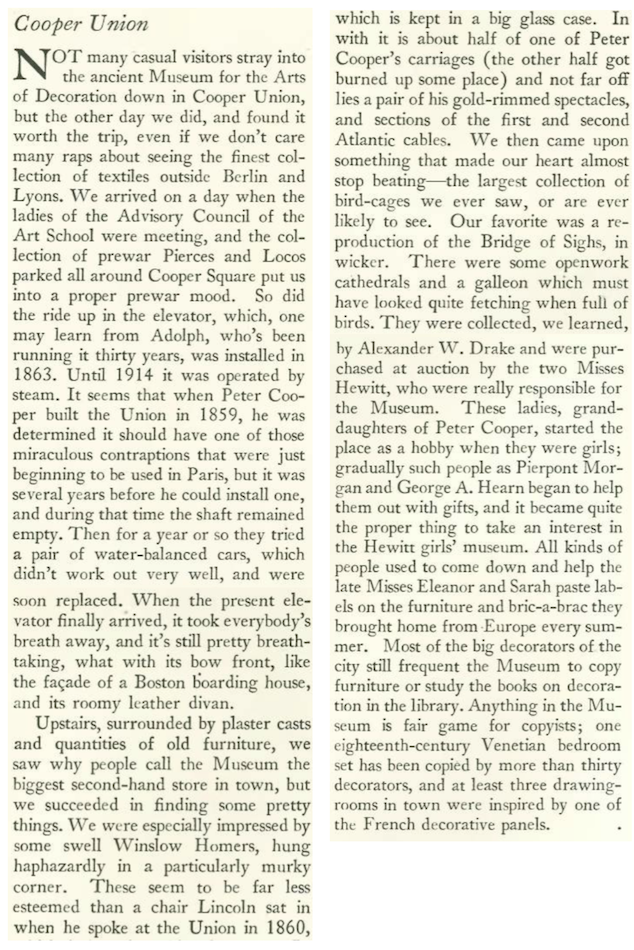
“The Talk of the Town” paid a visit to the Museum for the Arts of Decoration at the Cooper Union and found many treasures within, including a unique circular elevator.
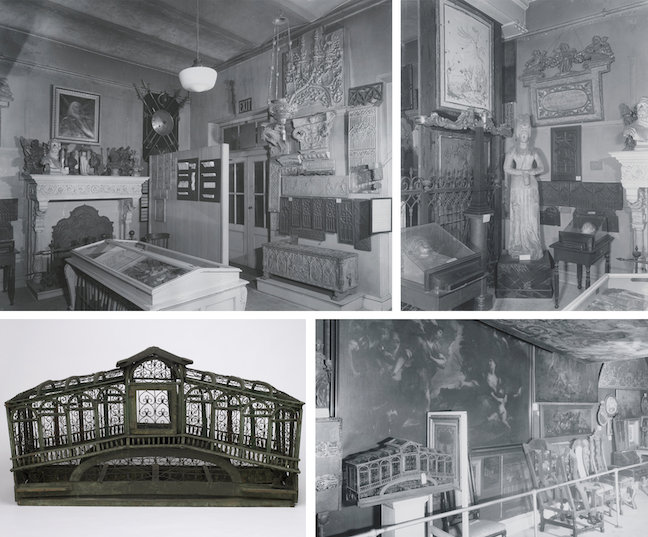
BRIDGE TO THE PAST…The Cooper Union’s Museum for the Arts of Decoration held many treasures, including (at bottom) an Italian birdcage fashioned to resemble the Rialto Bridge; at top, rooms filled with examples from the decorative arts. (cooperhewitt.org)
The “Talk” visit included a ride up a circa 1850s elevator shaft designed by inventor Peter Cooper four years before safety elevators even existed. The design was based on Cooper’s belief that the circular shape was the most efficient.
ROUND AND SOUND…At left, entrance to Peter Cooper’s circa 1850s round elevator and the elevator’s shaft at the Cooper Union Foundation Building. The round shaft remains a central feature of the building today, now housing a modern round elevator designed in 1972. (Cooper Union Library)
* * *
Commie Cutlery
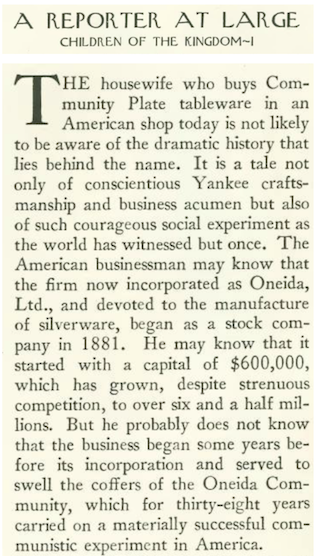
American non-fiction writer Carl Carmer published the first part of a two-part essay on the revolutionary Oneida Community, which Carmer dubbed “a materially successful communist experiment…”
This polyamorous Christian utopia disbanded before the end of the 19th century and reemerged as a joint-stock company, Oneida Community Limited, which focused on making silverware. This brief excerpt is from the first paragraph.
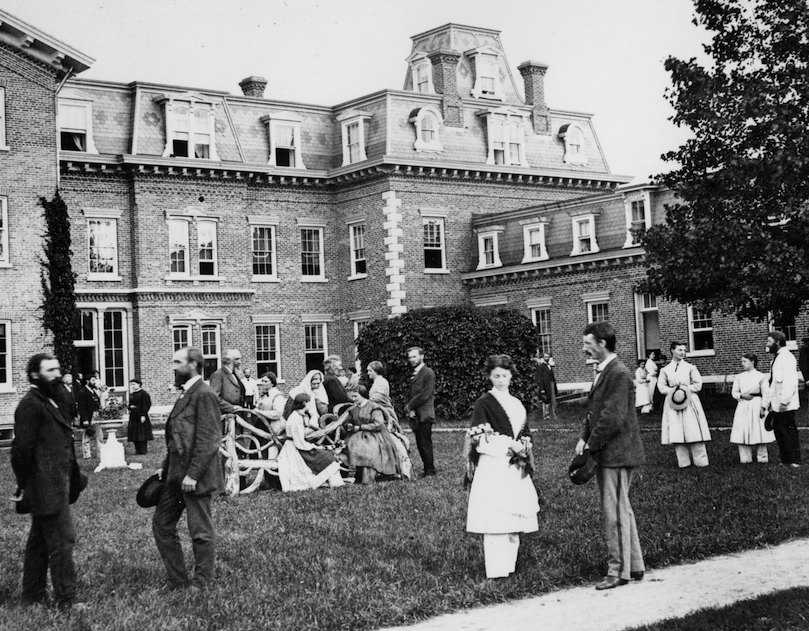
COHABITING COMRADES…Oneida commune members gather on the lawn in front of the Community Mansion House in in Madison County, New York, circa 1860s. Members of the community practiced free love, women and men had equal freedom in sexual expression and commitment, and children were raised communally. (collectorsweekly.com)
* * *
From Our Advertisers
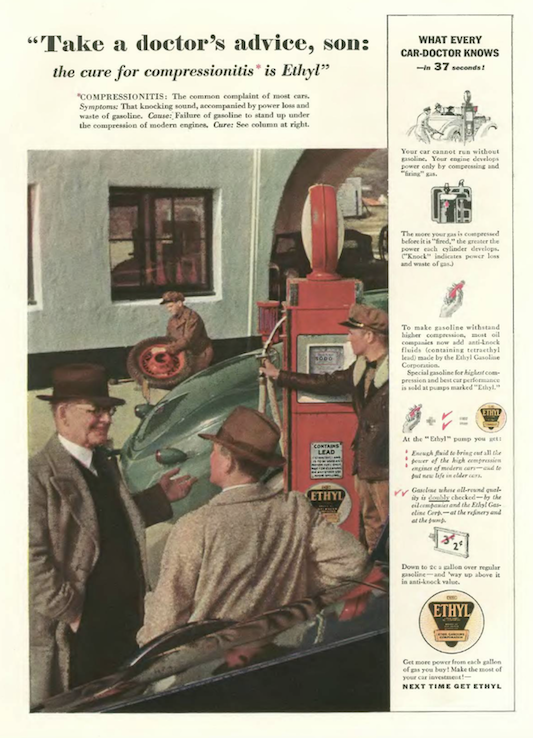
Yes, take a doctor’s advice, and put some leaded gas in your car, and into the air you breathe…
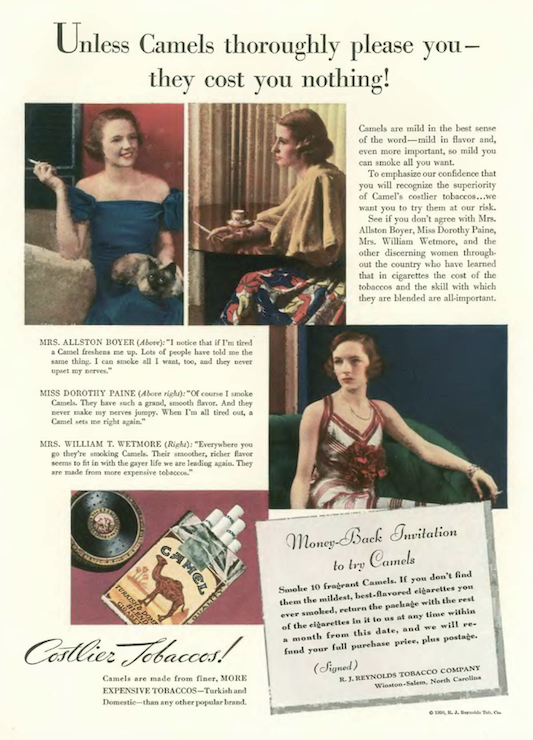
…R.J. Reynolds presented three women who exemplified the “society model” trend of the 1930s…well-known debs and socialites who provided an air of prestige to a brand…especially cigarettes…
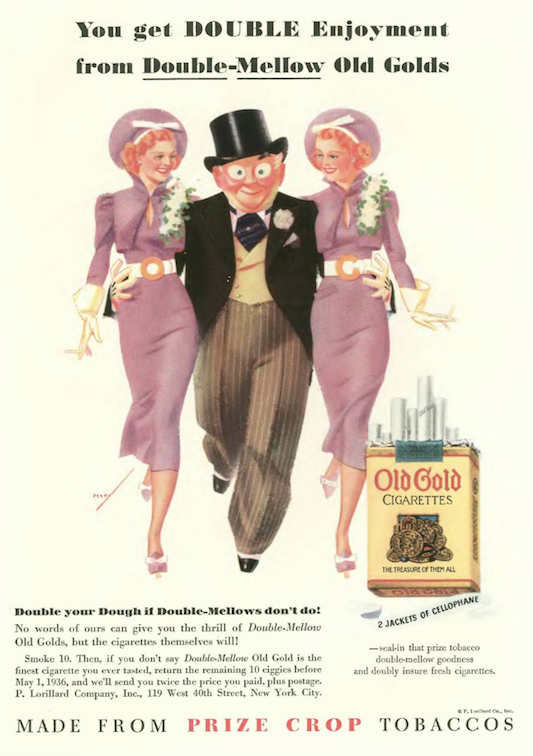
…Lorillard Tobacco Company, on the other hand, stuck with pin-up artist George Petty to push their Old Golds…
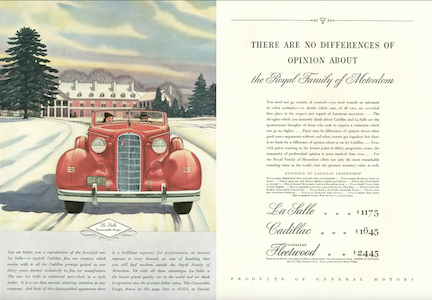
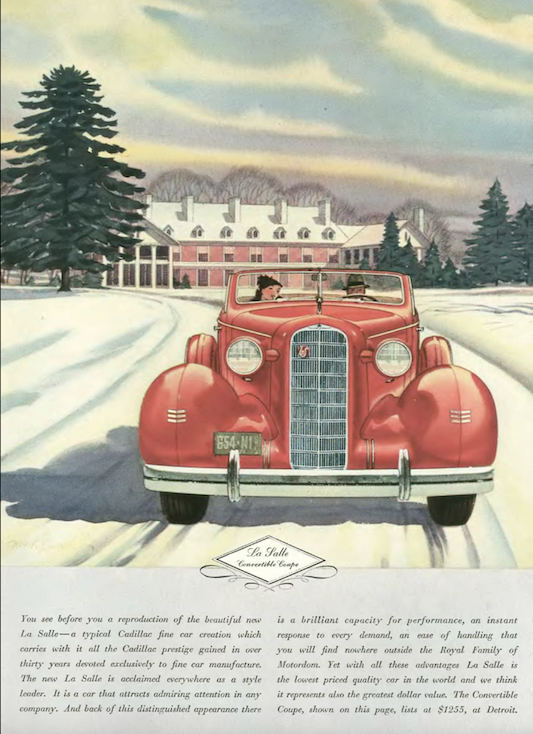
…General Motors took out the middle spread to tout their low-priced luxury automobile, the La Salle…
…the convertible La Salle looked handsome, if not a bit brisk with the top down…
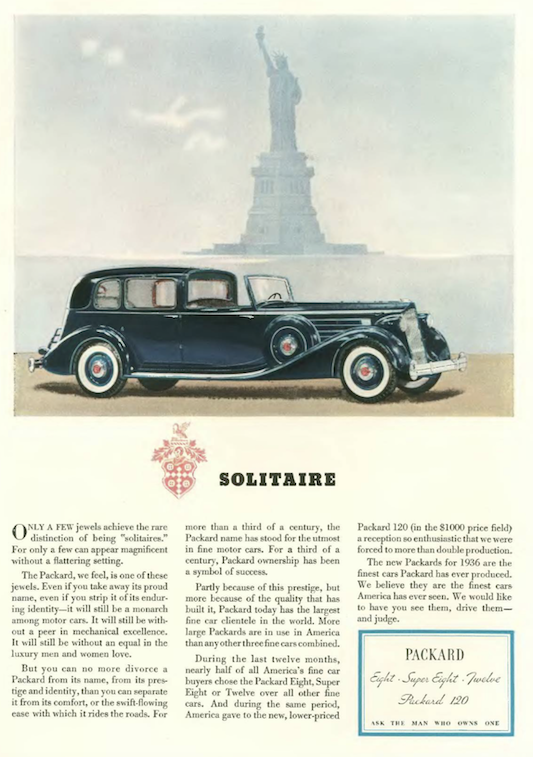
…American luxury carmaker Packard proudly displayed their twelve-cylinder luxury model, but reminded readers they could have a lesser model, the 120, for a price “in the $1,000 field”…
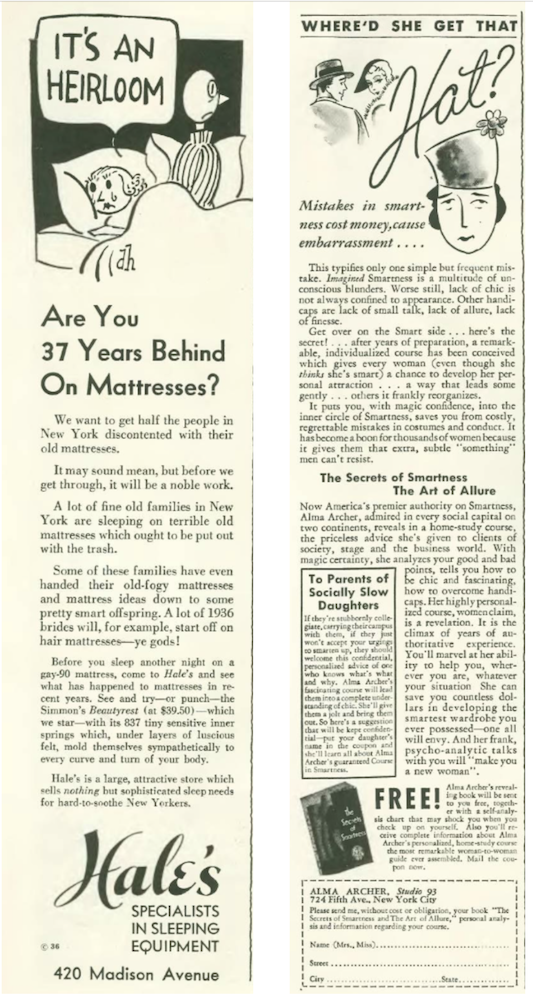
…a couple of one-column ads…Don Herold helped Hale’s move mattresses, while fashion columnist Alma Archer employed class anxiety to promote her new book, The Secrets of Smartness and the Art of Allure…
SMARTNESS AUTHORITY Alma Archer in 1937. Archer (1898–1988) wrote a widely read column for the New York Mirror that was syndicated in more than a thousand newspapers.
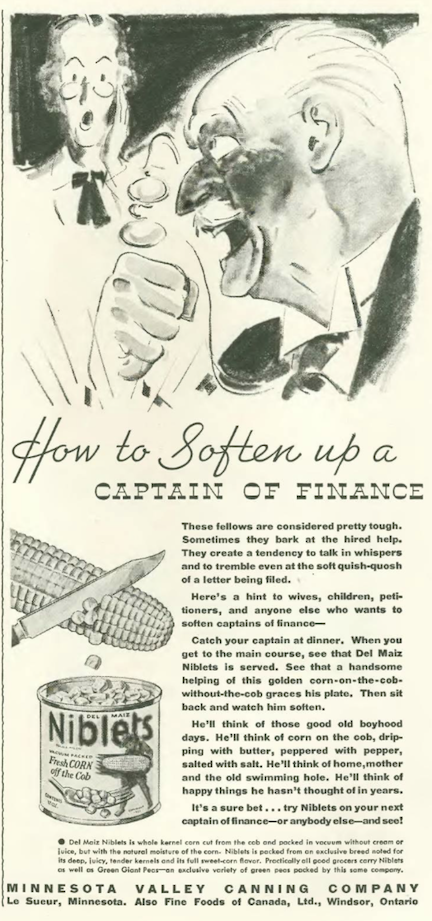
…if you have been following this blog, you’ll recall the ads with angry duchesses fuming over tomato juice and rich old men fondly recalling their countrified youth via canned corn niblets…well here is one robber baron who needed some niblets pronto to quiet his rage…maybe a snifter or two of brandy would have also helped…
…on to our cartoonists, James Thurber kicked things off on page two…
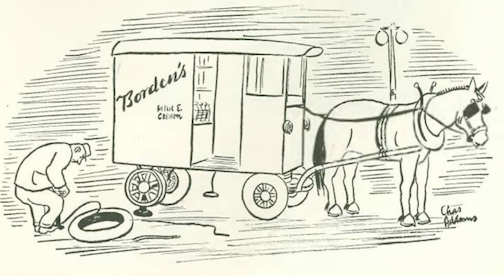
…the “Goings On” section concluded on page four with this drawing by Charles Addams…
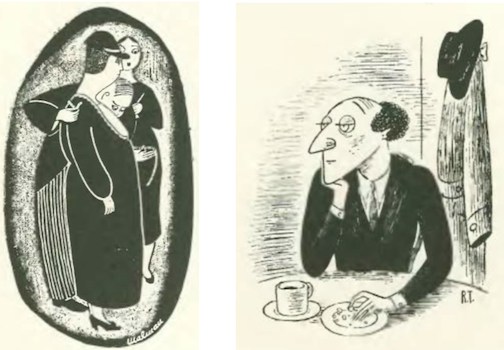
…a couple more spot drawings from the issue by Christina Malman (left) and Richard Taylor…
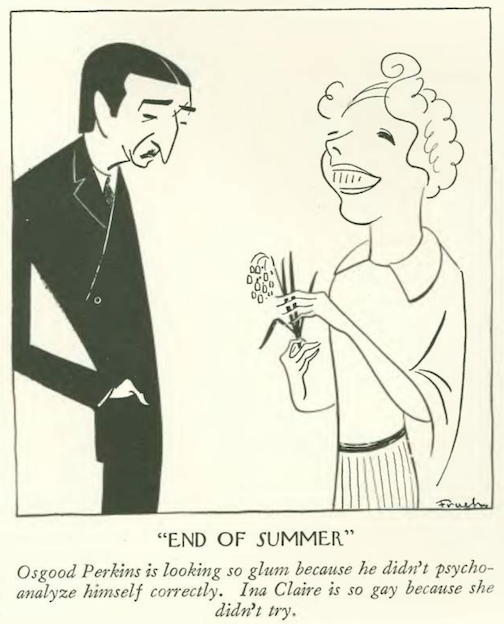
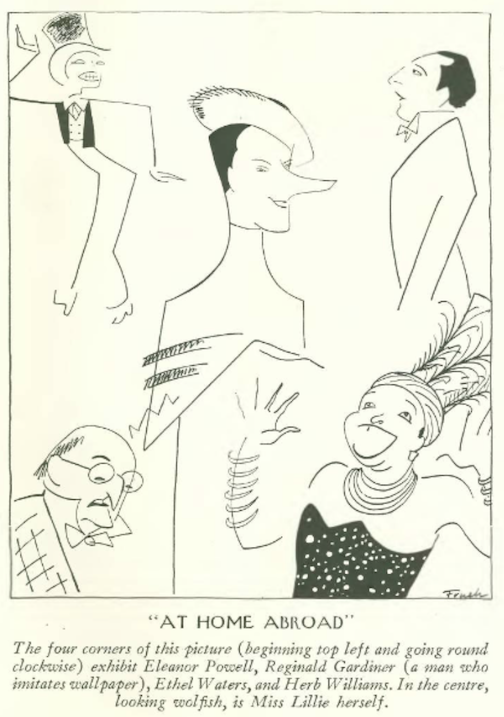
…Al Frueh offered this interpretation of the players in End of Summer…
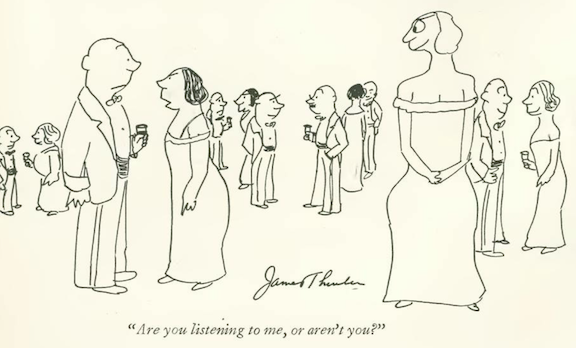
…and we have Thurber again, with a hard-to-miss distraction…
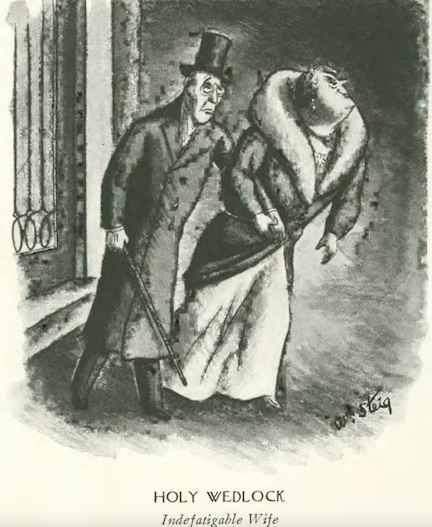
…William Steig continued to explore the varieties of “Holy Wedlock”…
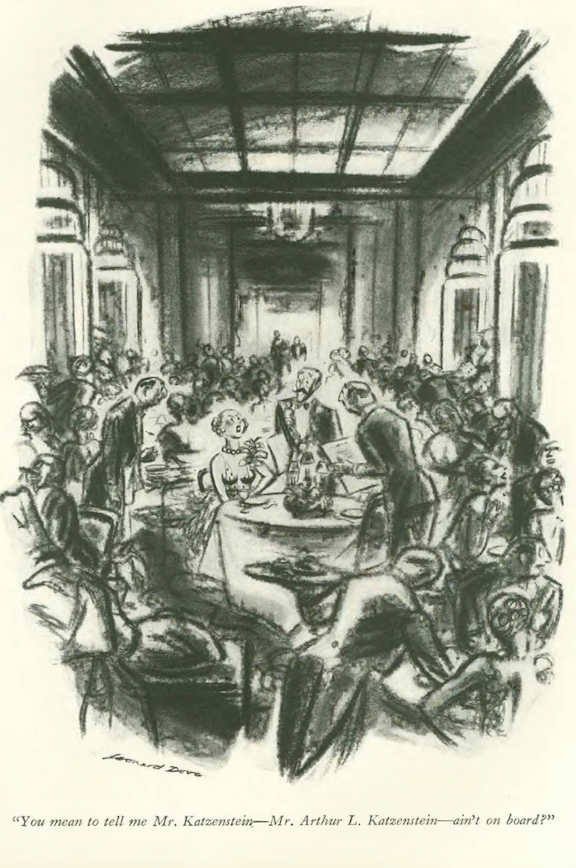
…Leonard Dove gave us a golddigger stranded at sea…
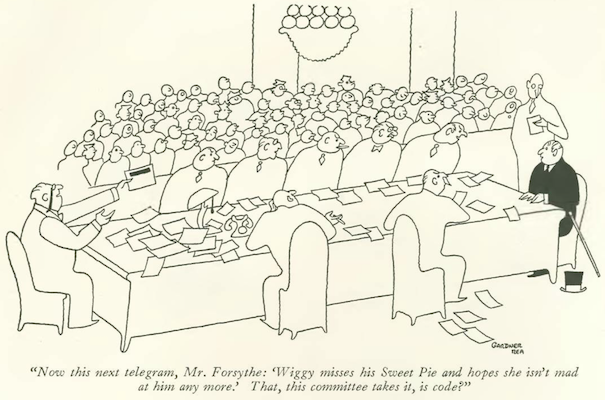
…Gardner Rea put a captain of industry in a tight spot…
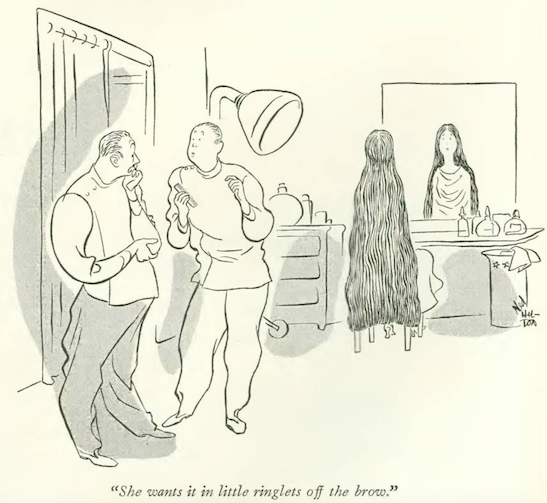
…Ned Hilton encountered a hairy challenge…
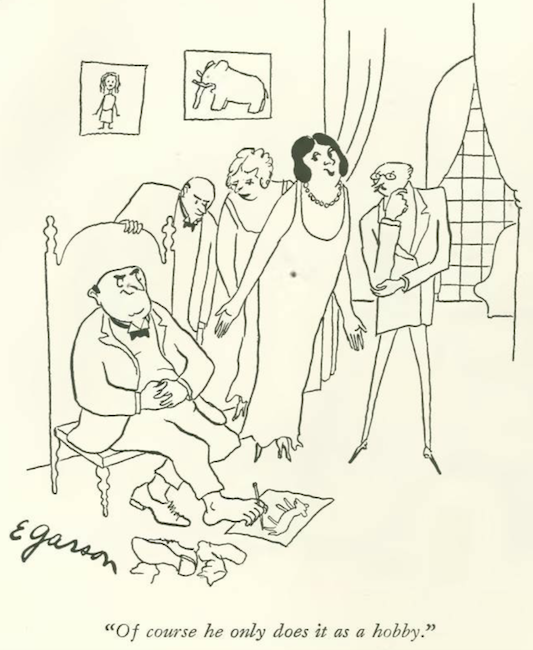
…Eli Garson demonstrated some remarkable foot dexterity…
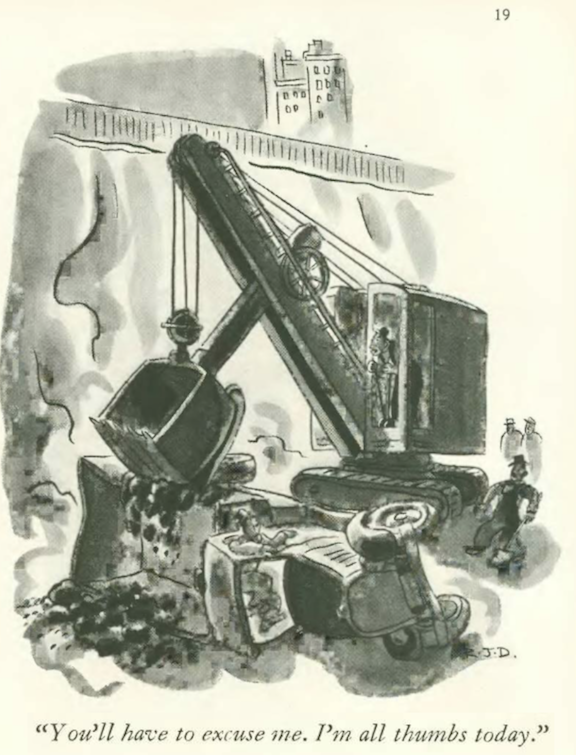
…while Robert Day showed a lack of dexterity a construction site…
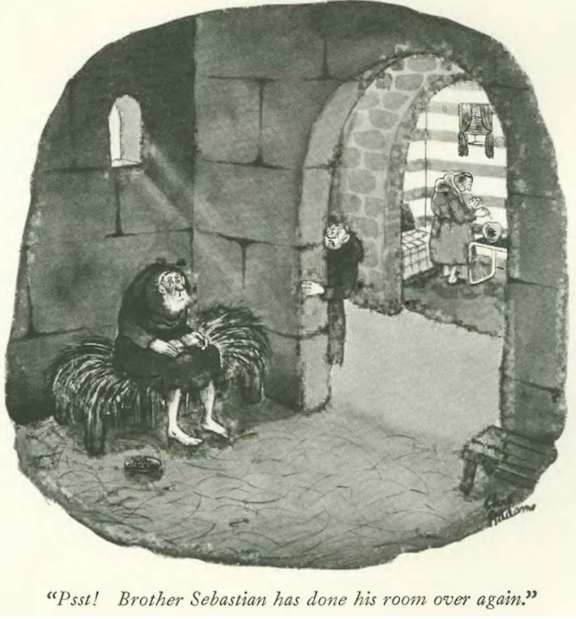
…Charles Addams revealed a materialist in the brotherhood…
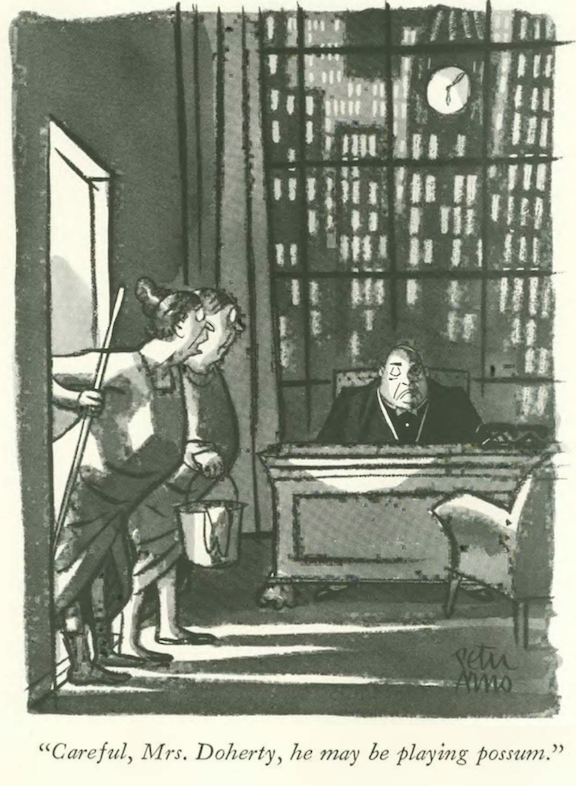
…Peter Arno’s charwomen let a sleeping dog lie…
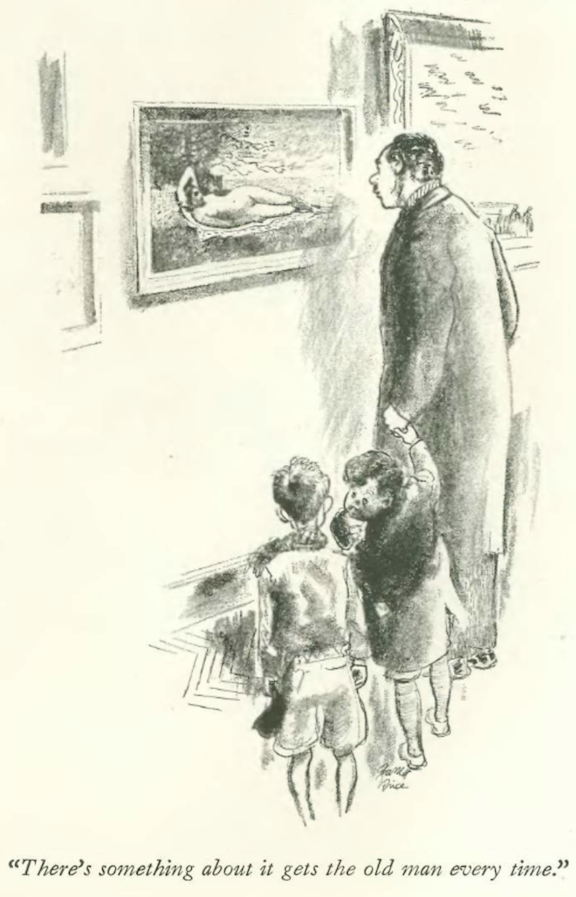
…and we close Garrett Price, and one perceptive lad…
Above: Former New York Mayor Jimmy Walker and wife Betty Compton, aboard the S.S. Manhattan in 1935. (New York Daily News Archive)
The Roaring Twenties and Jimmy Walker seemed made for each other. A dandy with a taste for fine clothes, late-night parties, and Broadway showgirls, the 97th mayor of New York was a darling of the media…until the market crashed; as nest eggs evaporated along with jobs, folks quickly lost their taste for such frivolity.
November 9, 1935 cover by Daniel “Alain” Brustlein. This was the first of nine covers Brustlein created for the magazine. An Alsatian-born American artist, cartoonist, illustrator, and author of children’s books, Brustlein (1904–1996) contributed to The New Yorker under the pen name “Alain” from the 1930s through the 1950s.Daniel “Alain” Brustlein, in an undated photo. During the height of Abstract Expressionism Brustlein became a reputable painter, exhibiting his work in New York and Paris. (derfner.org)
*
The fall of 1935 marked three years since Walker had left office, and for nearly two of those years the city had been governed by the reformist Mayor Fiorello La Guardia. New Yorkers, it seemed, were ready for a dose of Jimmy when he returned from his European exile, hailed by a throng of media and well-wishers.
Writing for Airmail, longtime New York journalist Sam Roberts observes that the city loved Walker, “a charming hellion, a witty, self-effacing, glib humanist, far more flawed, too, and compassionate than pictured previously, a man elevated and condemned by his own character, created and ultimately consumed by his times. He conjures up the anti-Trump—a dodgy philanderer who governed by making people feel good rather than angry.”
WHERE’S THE PARTY?…Former Mayor Jimmy Walker and his wife, Betty Compton, returned to New York in the fall of 1935 amid tremendous fanfare. The New Yorker’sMorris Markey noted that at least 160 media representatives were on hand for the couple’s arrival. (YouTube)
Walker (1881-1946) fled to Europe in November 1932 amid a bribery scandal that had prompted his resignation. Accompanied by Ziegfeld Follies singer Betty Compton (1906–1944)—whom he would marry in Cannes the following April—they would bounce around the continent until Walker determined that the danger of criminal prosecution had passed.
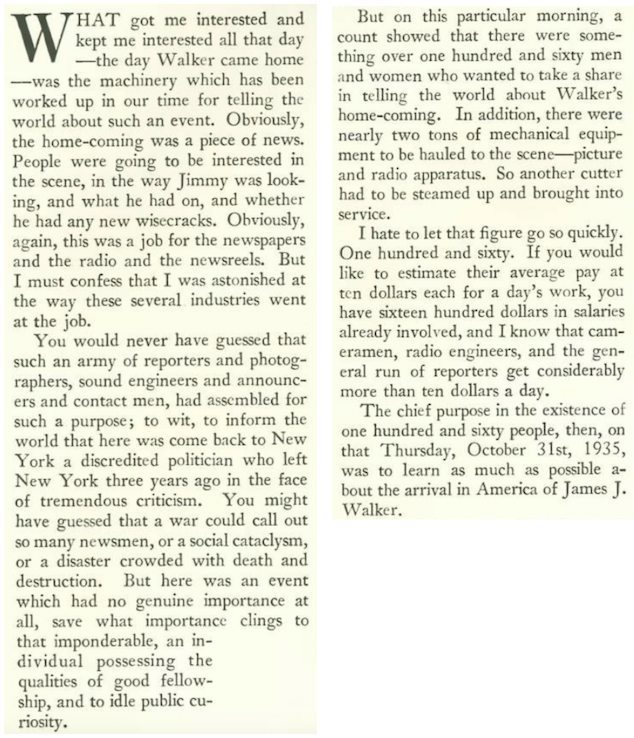
In his “A Reporter at Large” column, Morris Markey wrote about the media’s reception of the exiled mayor, “an army of reporters and photographers, sound engineers and announcers and contact men”…all assembled to inform the world of the return of a “discredited politician.”
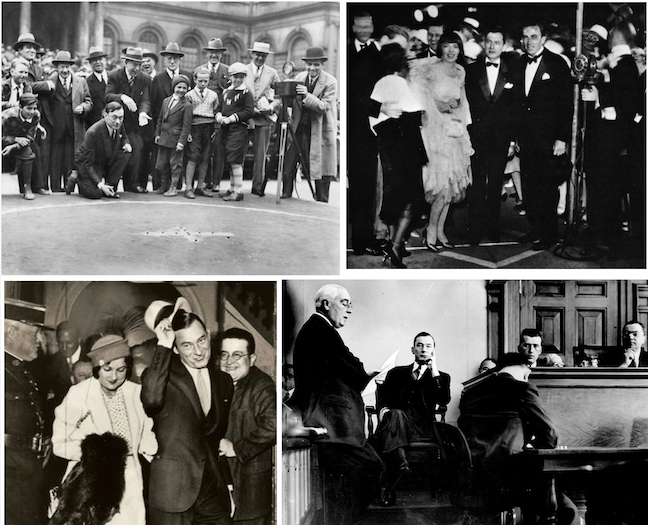
HE GOT AROUND…During his time in office from 1926 to 1932, Mayor Jimmy Walker never seemed to miss a moment in the spotlight. Clockwise, from top left, Walker presided over the first shot in the city’s annual marble tournament on June 3, 1928; with actress Colleen Moore at the 1928 premiere of her latest film, Lilac Time; testifying on bribery charges before the investigative committee of Judge Samuel Seabury, 1932; with Betty Compton following their 1933 wedding in Cannes. (New York Times/konreioldnewyork.blogspot.com/villagepreservation.org)
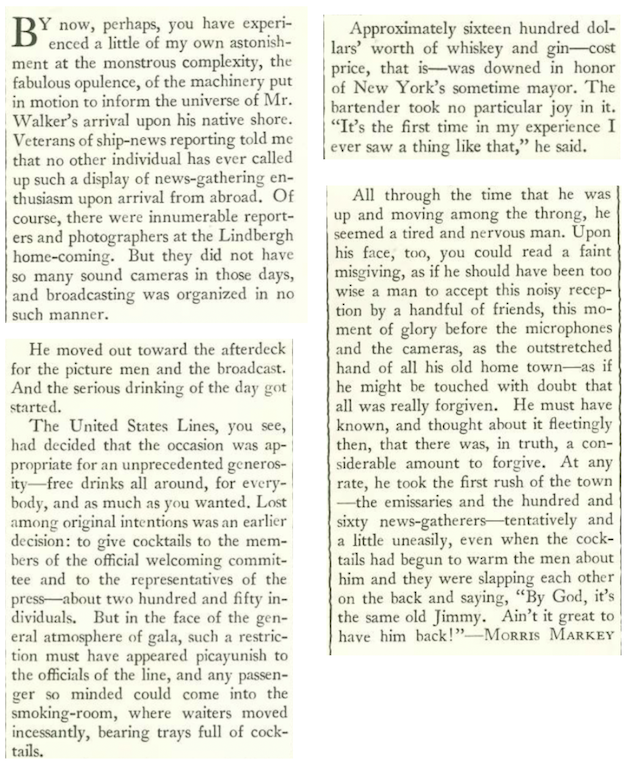
Markey continued to convey his astonishment at “the monstrous complexity, the fabulous opulence, of the machinery put in motion to inform the universe of Mr. Walker’s arrival upon his native shore.” This included a massive cocktail party—hosted by The United States Lines—for more than two hundred press representatives and other officials.
After all the commotion, Walker would settle into a job as head of Majestic Records, adopt two children with Compton, and host his own radio series on WHN, Jimmy Walker’s Opportunity Hour.
Compton would divorce Walker in 1941 and remarry. Becoming ill after the birth of a son, she would die at age 38 in 1944. Walker would die two years later at age 65 of a brain hemorrhage.
CALLING ON THE ROOSEVELTS…Jimmy Walker and Betty Compton at the White House in 1937. It was pressure from FDR that led to Walker’s resignation in 1932. (Wikipedia)
* * *
High-flying Hooplah
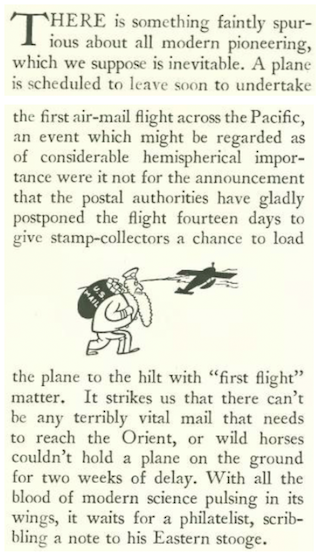
While New Yorkers were going gaga over Walker, folks in the Bay Area were all atwitter over the first air-mail flight across the Pacific, loading a Pan Am Clipper to the gills with all manner of collectables. E.B. White noted:
BELLYFUL…On Nov. 22, 1935, Pan American Airways made aviation history as the China Clipper lifted off from Alameda, beginning the world’s first trans-Pacific airmail service. Captained by Edwin Musick and crewed by famed navigator Fred Noonan, the Martin M-130 opened a new era of long-distance flight across the Pacific. Noonan, who charted many commercial routes across the Pacific, would go missing along with Amelia Earhart during their ill-fated flight in July 1937. (Library of Congress)
* * *
Wise Men From the East
“The Talk of the Town” visited with Soviet satirists Ilya Ilf (1897–1937) and Evgeny Petrov (1903–1942), who were in New York preparing for a ten-week road trip to California and back. On assignment as special correspondents for the newspaper Pravda, they later published a series of illustrated articles, “American Photographs,” as well as a book titled Single-Storied America (the summer 2004 issue of Cabinet Magazine features an account of their journey as well as a number of their photographs).
AMERICA WAS A GAS…Soviet satirists Ilya Ilf (left) and Yevgeni Petrov check out New York before heading into the American heartland on a ten-week road trip, a highlight being the countless full-service gas stations they encountered along the way. After seeing skyscrapers and mountains and other wonders, the pair agreed that the most enduring image was the one at right: “an intersection of two roads and a gasoline station against a (back)ground of wires and advertising signs.” Sadly, Ilf died two years later from tuberculosis; Petrov died in a plane crash in 1942 while working as a war correspondent. (Aleksandra Ilf archive/Cabinet Magazine)
* * *
A Jumbo Career
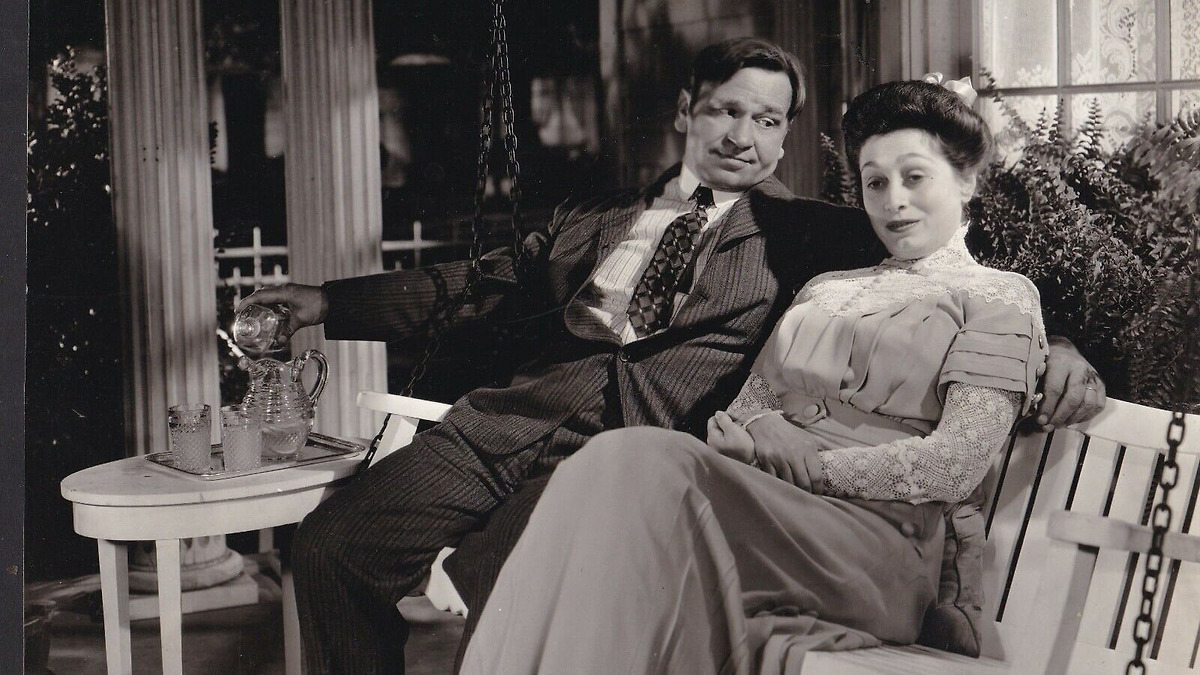
Wallace Beery (1885–1949) got his start in the comedy silents of the 1910s and became a star before the sound era made him an even bigger one; by 1932 he was the world’s highest-paid actor. Alva Johnston’s profile (titled “Jumbo”) took a look at Beery’s life and career (illustration by Al Frueh). Excerpts:
COURTING AND SPARKING…Sid Miller (Wallace Beery) spikes the lemonade as he woos Lily Davis (Aline MacMahon) in a scene from the 1935 film, Ah Wilderness! (letterboxd.com)
* * *
A View and Corbu
Art and design critic Lewis Mumford was well-known for his hypercritical eye, but occasionally he could be moved to rhapsodize, in this case about the opening of Fort Tryon Park, and particularly about the view it afforded visitors. He reserved his criticism for one of the latest works by Le Corbusier (aka Charles-Édouard Jeanneret), on exhibit at MoMA.
MAGNIFICENT is the word Lewis Mumford used to describe the view from Fort Tryon Park. This scene is taken from Linden Terrace to the west: a barge on the Hudson River and the Hudson Palisades beyond, with the Englewood Cliffs campus of Saint Peter’s University on the top. (Wikipedia)IRRATIONAL?…Mumford was not pleased with Le Corbusier’s latest work, Le Petite Maison de Weekend (Villa Henfel), which was featured on the cover of the MoMA exhibition catalogue (upper left). Mumford saw the design as a pathetic escape from the architect’s renown rationalism. (MoMA/Fondation Le Corbusier)
* * *
At the Movies
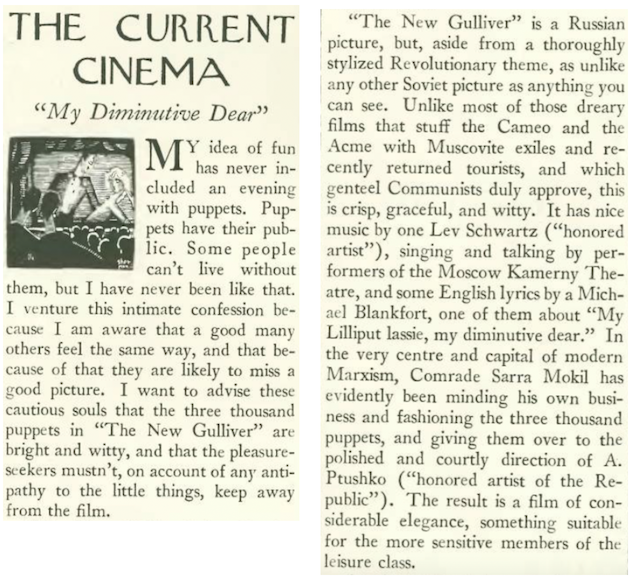
It was a mixed bag at the movies for critic John Mosher, who was delighted by a Soviet take on Gulliver’s Travels, rendered with puppets engaged in a proletarian struggle…
KOMRADE GULLIVER…The Soviet stop motion-animated fantasy film, The New Gulliver, was a communist re-telling of Jonathan Swift’s 1726 novel. The film depicted Lilliput suffering under capitalist inequality and exploitation, with Gulliver enabling a proletarian revolution against the Lilliputian monarchy. (revolutionsnewstand.com)
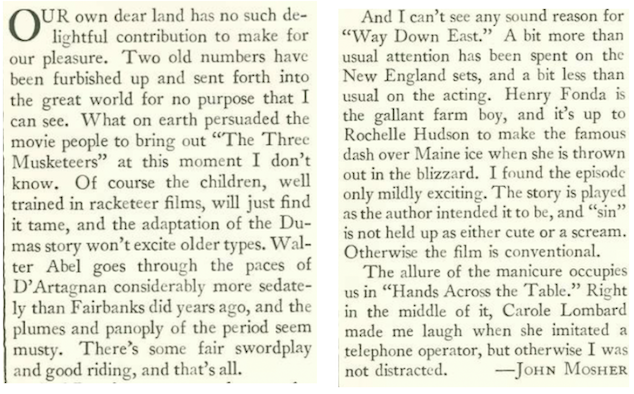
…but Mosher was less than delighted with the latest from Hollywood, including a sedate The Three Musketeers, a “conventional” remake of D.W. Grifffith’s 1920 melodrama Way Down East, and the romcom Hands Across the Table, which the Times called “uproariously funny” but Mosher deemed barely worth a chuckle.
OUTCLASSED BY PUPPETS…John Mosher found the latest from Hollywood underwhelming. Clockwise, from top, Onslow Stevens, Moroni Olsen, and Paul Lukas in The Three Musketeers; Rochelle Hudson and Henry Fonda in Way Down East;Fred MacMurray and Carole Lombard in Hands Across the Table. (mabumbe.com/zeusdvds.com/Wikipedia)
* * *
From Our Advertisers
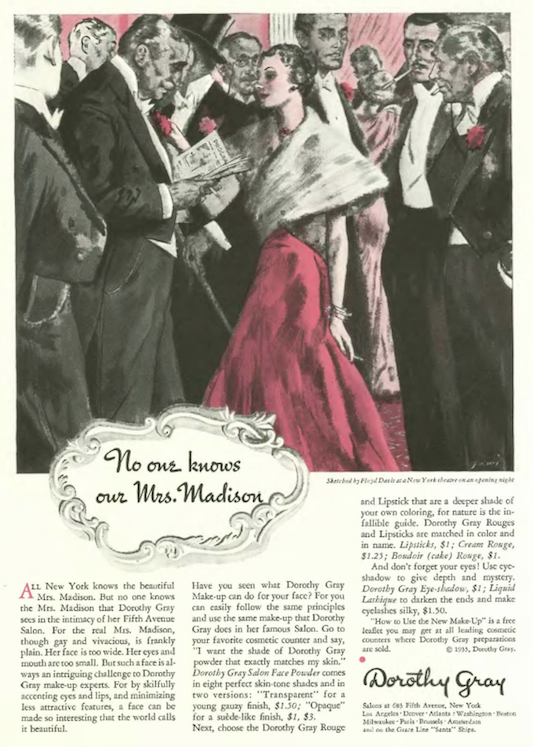
The Dorothy Gray salons didn’t mince words when it came to a woman’s beauty regimen…without their help, claimed this ad, the poor “Mrs. Madison” would be “frankly plain,” with a face too wide and eyes and mouth too small…
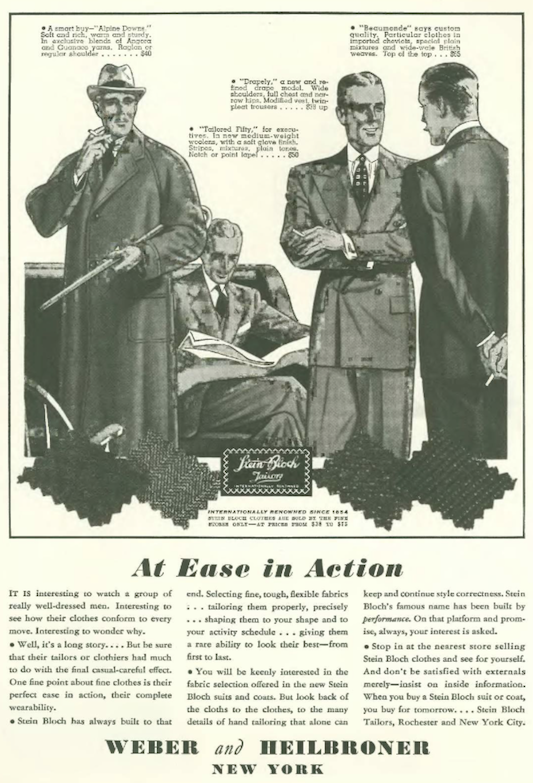
…notable in ads for men’s and women’s clothes were the presence of cigarettes…all three of the men in this spot are having a smoke in their smart attire…
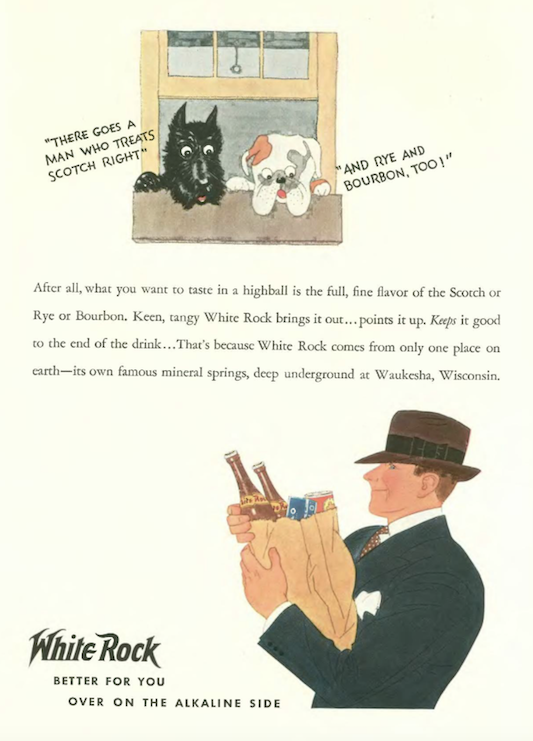
…White Rock gave their logo-bearer Psyche a rest in 1935 with a variety of ads including this one…
…the makers of Bisquit assumed their customers could read the French dialogue, or at least pretend to…
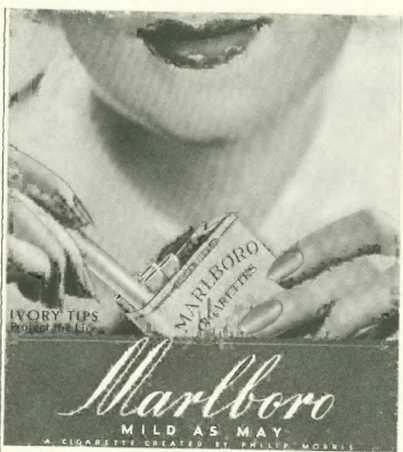
…when we (of a certain age) think of Marlboro we think of the rugged Marlboro Man, but in 1935 the brand was exclusively marketed to women…
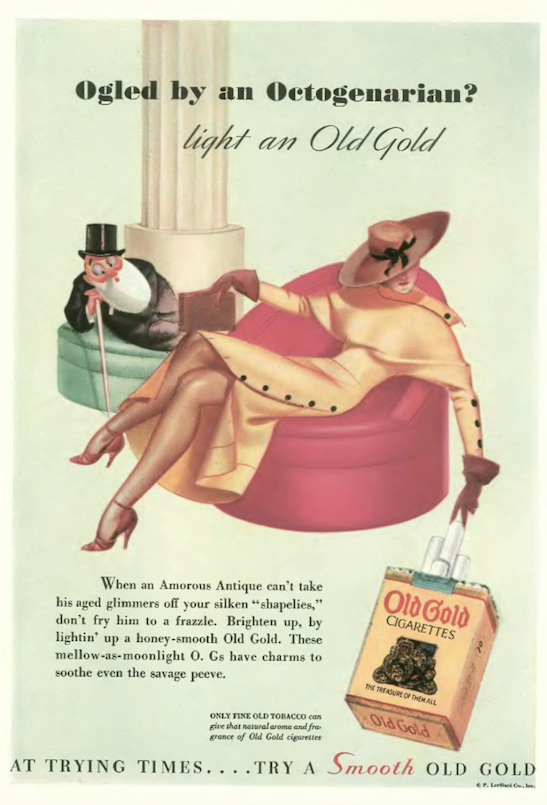
…and who knows what Old Gold’s target was here…definitely women smokers, who were the growth market, but men would take notice of the George Petty pin-up…
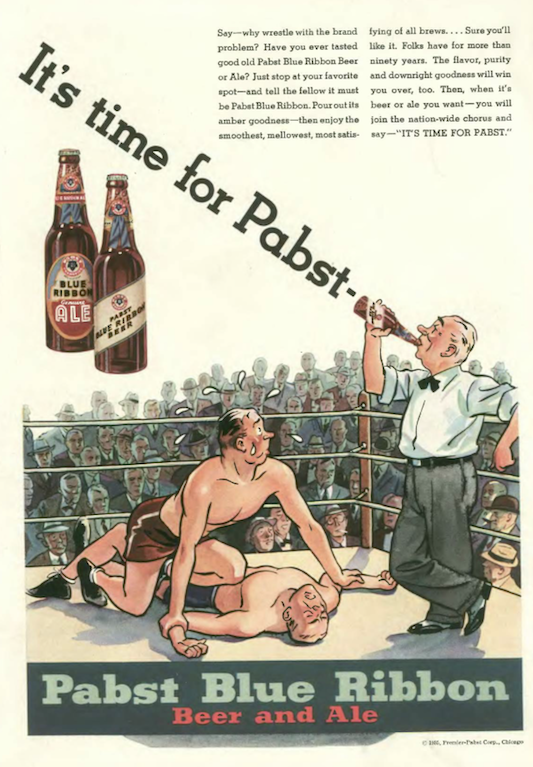
…the makers of Pabst Blue Ribbon Beer, who endured Prohibition by offering products like Pabst-ett cheese spread, were ready to grab a big market share after Repeal…
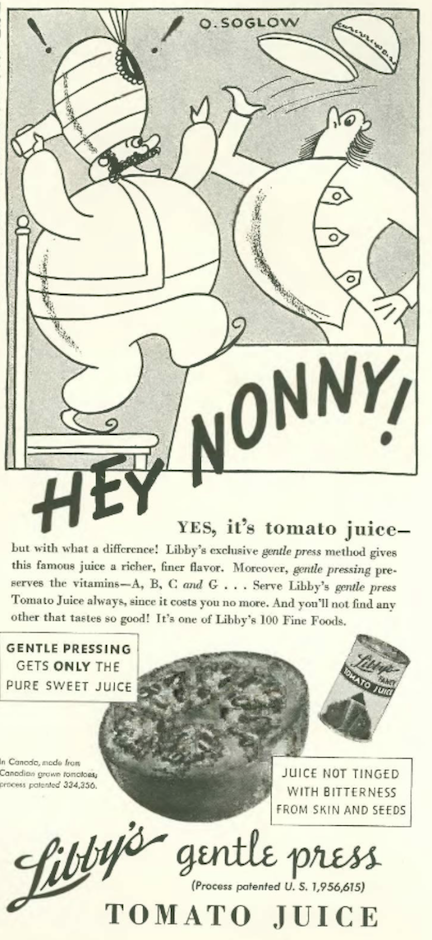
…Otto Soglow, still contributing to The New Yorker despite taking his Little King to Hearst, drew up this potentate for a tomato juice spot…
…which segues to our other cartoonists, beginning with Al Frueh and his take on the latest Broadway hit, Jubilee!…
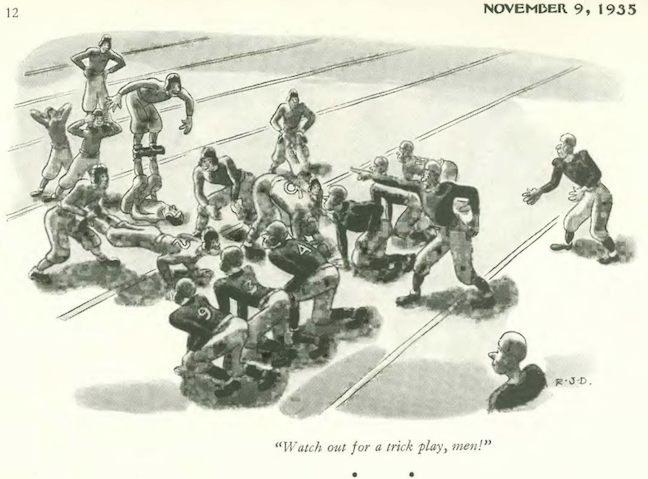
…Robert Day saw action on the gridiron…
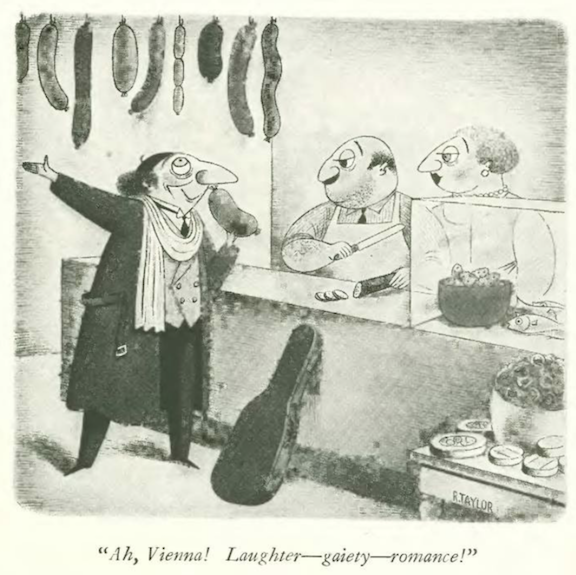
…unless I missed something, this might be Richard Taylor’s first New Yorker cartoon…
…James Thurber put a unique spin on a bowling ball…
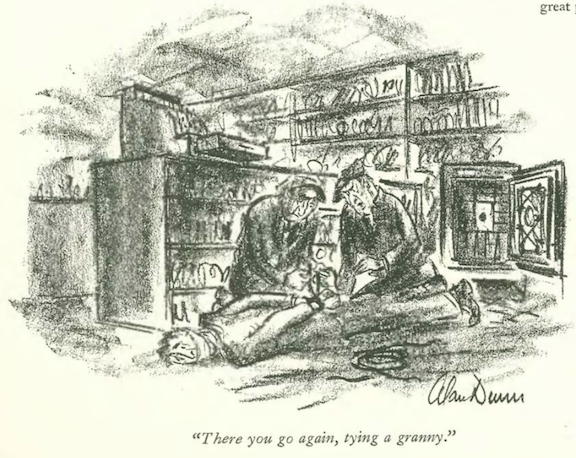
…Alan Dunn was all in knots at a crime scene…
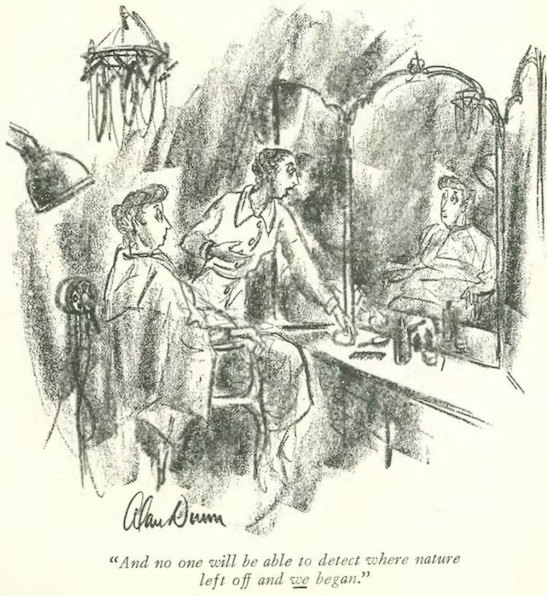
…Dunn again, pondering the wonders of a makeover…
…Barney Tobey eavesdropped on a Downtown subway…
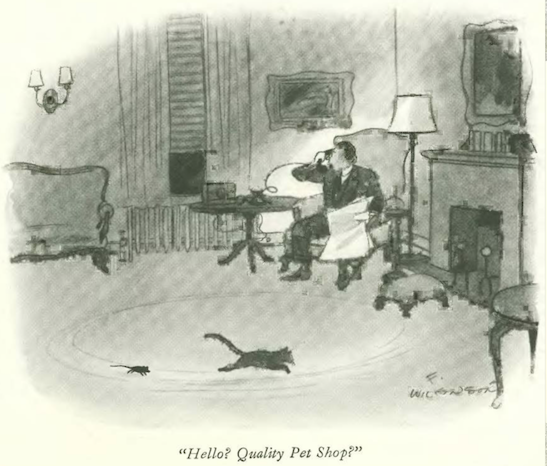
…Fritz Wilkinson looked to return a defective pet…
…Carl Rose needed two pages to illustrate his epic cartoon (caption added at the bottom for readability)…
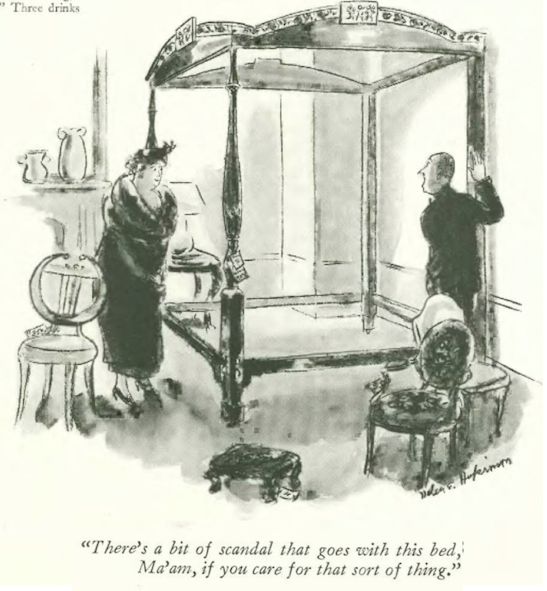
…and we close with Helen Hokinson, and a whiff of scandal…
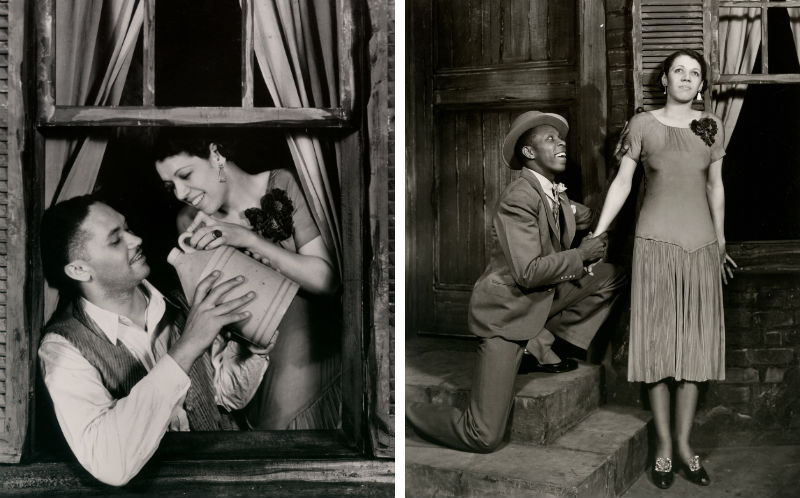
Above: Left image: Todd Duncan (Porgy) and Anne Brown (Bess), in the 1935 Broadway production of Porgy and Bess. Right image: John Bubbles (Sportin’ Life) and Brown. (Photos courtesy the Ira & Leonore Gershwin Trusts)
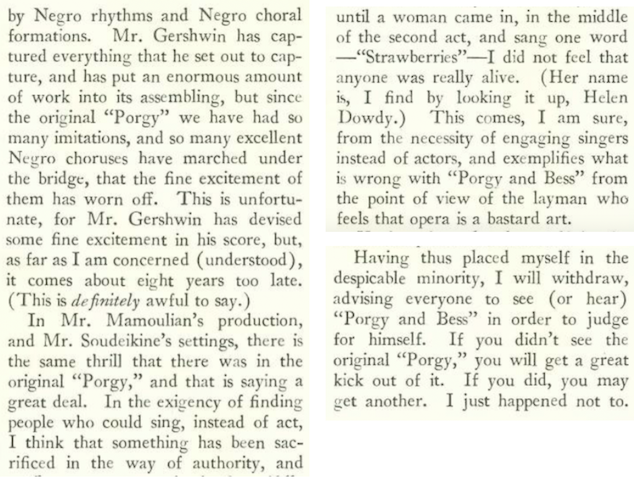
The 1935 Broadway production of Porgy and Bess is widely regarded as one of the most successful American operas of the twentieth century, but when it opened at the Alvin Theatre on Oct. 10, 1935, reviews were mixed, including the one penned by Wolcott Gibbs.
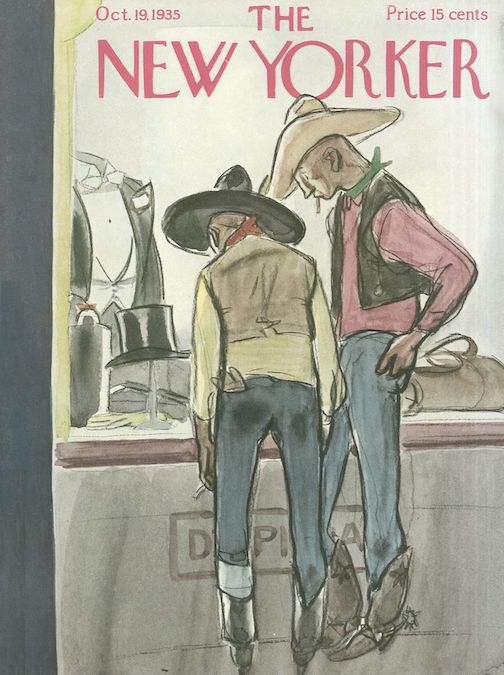
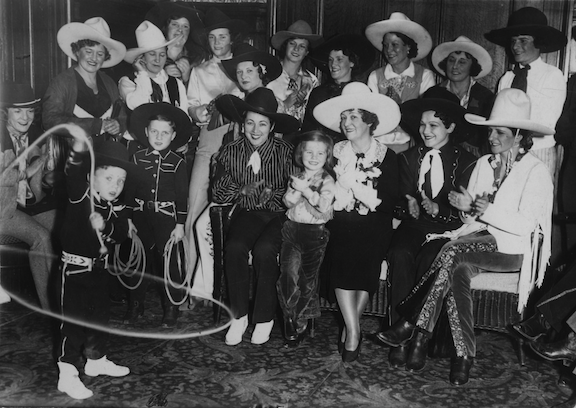
October 19, 1935 cover by William Crawford Galbraith. The New York Times (Oct. 9, 1935) made this observation about the rodeo at Madison Square Garden: “New York, which for several days has been vaguely aware of an impending rodeo because of a profusion of ten-gallon hats along Eighth Avenue and a sign in a beauty parlor, ‘Welcome, Cowgirls,’ will see the real thing this morning.”
Now you would think a work by composer George Gershwin, with a libretto written by DuBose Heyward (author of the 1925 novel Porgy) and lyricist Ira Gershwin, would be a sure hit. Some critics did praise the production, which ran for 124 performances, but others criticized themes and characterizations of Black Americans that were created by white artists.
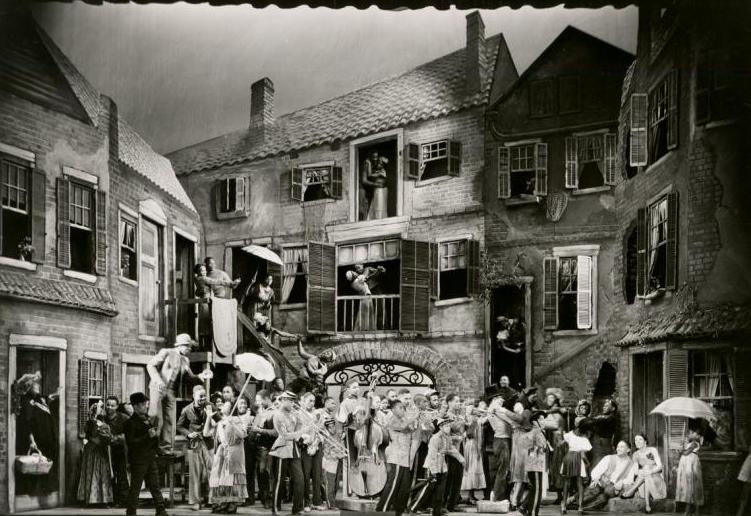
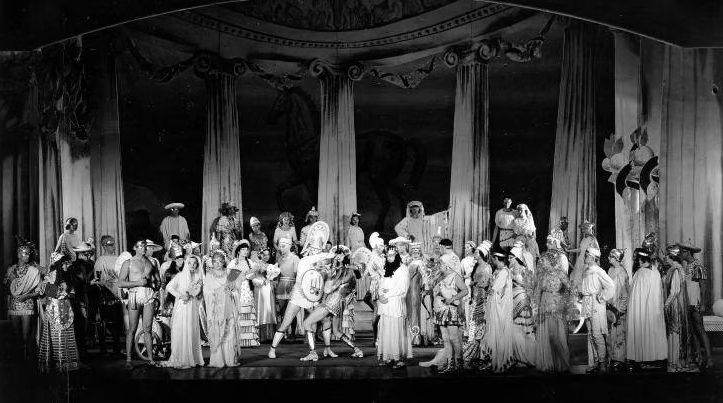
MIXED REVIEWS…The original Catfish Row set for Porgy and Bess as seen at Broadway’s Alvin Theatre (now the Neil Simon Theatre) in 1935. (Billy Rose Theatre Collection, New York Public Library Digital Gallery)
This wasn’t the first time Porgy was adapted to the stage. It was originally produced in 1927 by Heyward and his wife, Dorothy, at the Guild Theatre in New York. The Heywards insisted on an African-American cast—an unusual decision at the time—and enlisted newcomer Rouben Mamoulian to direct. The play ran a total of fifty-five weeks.
ORIGIN STORY: Porgy: A Play in Four Acts, was a 1927 play by Dorothy Heyward and DuBose Heyward, adapted from the short novel by DuBose. (Wikiwand)
Gibbs preferred the original Porgy to the Gershwin–Heyward production, admitting that he simply did not care for “the operatic form of singing a story.”
continued…
TAKING THEIR BOWS…George Gershwin greets an audience after a performance of Porgy and Bess. Behind Gershwin are his brother, Ira Gershwin (left), and librettist and Porgy author DuBose Heyward (partially hidden, at right). (umich.edu)
The Moss Hart/Cole Porter musical comedy Jubilee! premiered at Broadway’s Imperial Theatre on Oct. 12, 1935, just two days after the Porgy and Bess premiere. Gibbs dubbed this show “heat-warming and beautiful.”
THE BEGUINE BEGINS…Inspired by the Silver Jubilee of Britain’s George V, the musical comedy Jubilee! told the story of a fictional royal family. The play featured such hit songs as “Begin the Beguine” and “Just One of Those Things,” which have become part of the American Songbook. (ovrtur.com)ROYAL HIJINKS…At left, June Knight as Karen O’Kane and Charles Walters as Prince James in Jubilee!; at right, Mary Roland (the Queen) encounters “Mowgli” (Mark Plant) in Act I. (ovrtur.com)
Note: In the last issue (Oct. 12) we saw an ad for an around-the-world luxury cruise on the Franconia.Cole Porter and Moss Hart—with their families, friends, and assistants—sailed on a previous Franconia cruise, possibly in 1934, with the intention to write a new musical while on the trip. Apparently some of the songs and scenes in Jubilee! were inspired by their ports of call.
* * *
Steering Clear
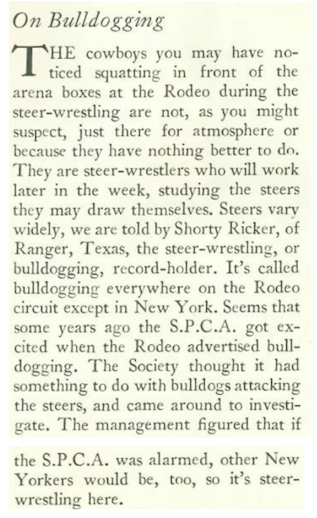
“The Talk of the Town” commented on the “steer-wrestlers” that were featured at the Madison Square Garden rodeo. Since steer-wrestling was also called “bulldogging,” it caused considerable consternation among New York animal lovers.
A BIG HOWDY…Cowgirls From the Madison Square Garden Rodeo With Millicent Hearst, 1932. (texashistory.unt.edu)
* * *
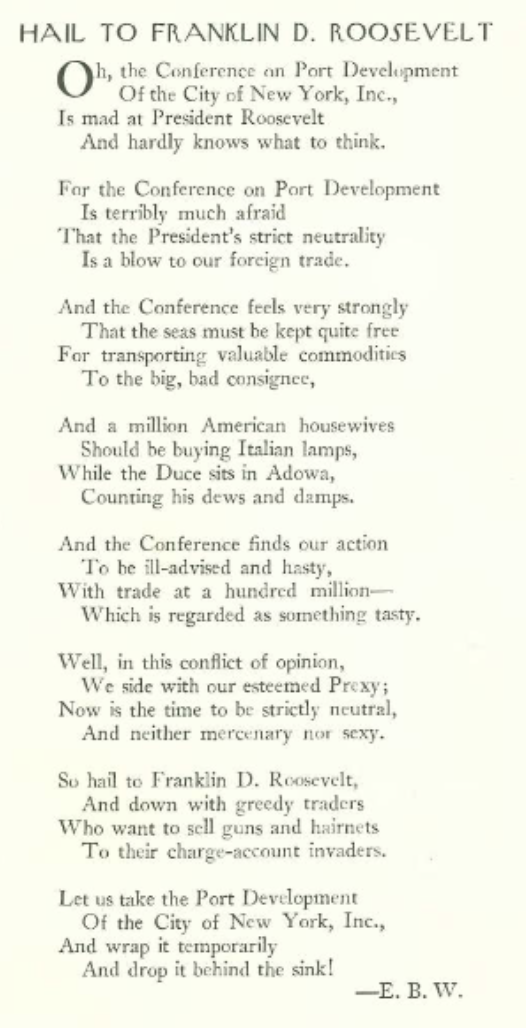
Much Ado About FDR
The Conference on Port Development of the City of New York took issue with President Franklin D. Roosevelt’s foreign trade policies, particularly his strict stance on neutrality, which the Conference believed was detrimental to foreign trade. This was likely related to the October 1935 Italian invasion of Ethiopia. E.B. White offered this satirical poem in reaction to the trade spat.
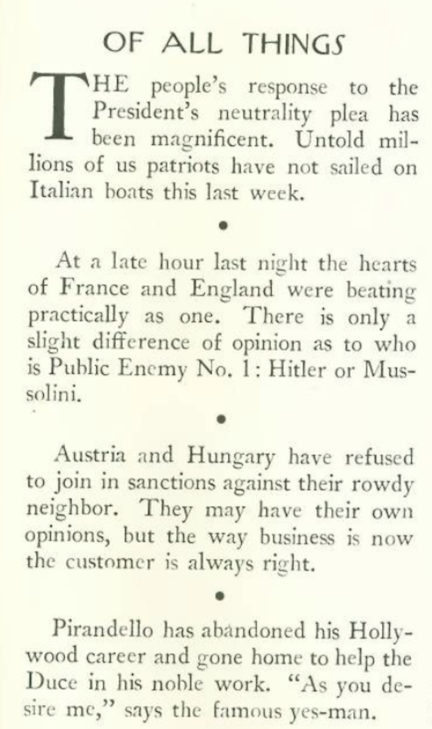
Howard Brubaker also chimed in on the trade issue, and on other unsettling developments in Europe:
* * *
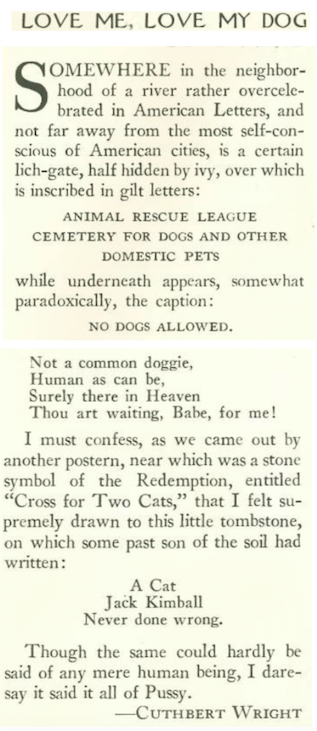
Puppy Love
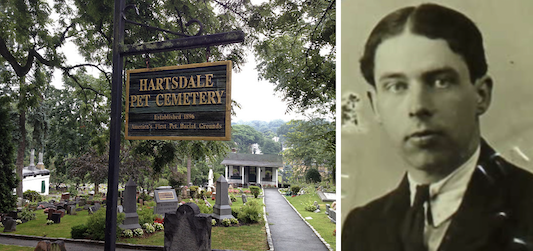
Critic and poet Cuthbert Wright (1892–1948) was moved to write poetry after visiting a dog cemetery that also welcomed animals of all stripes. Here are excerpts of the opening and closing lines:
PET PROJECT…Cuthbert Wright was moved to verse after his visit to a pet cemetery, possibly the Hartsdale Pet Cemetery in Westchester. (Wikipedia/parenthetically.blogspot.com)
* * *
Man and Machine
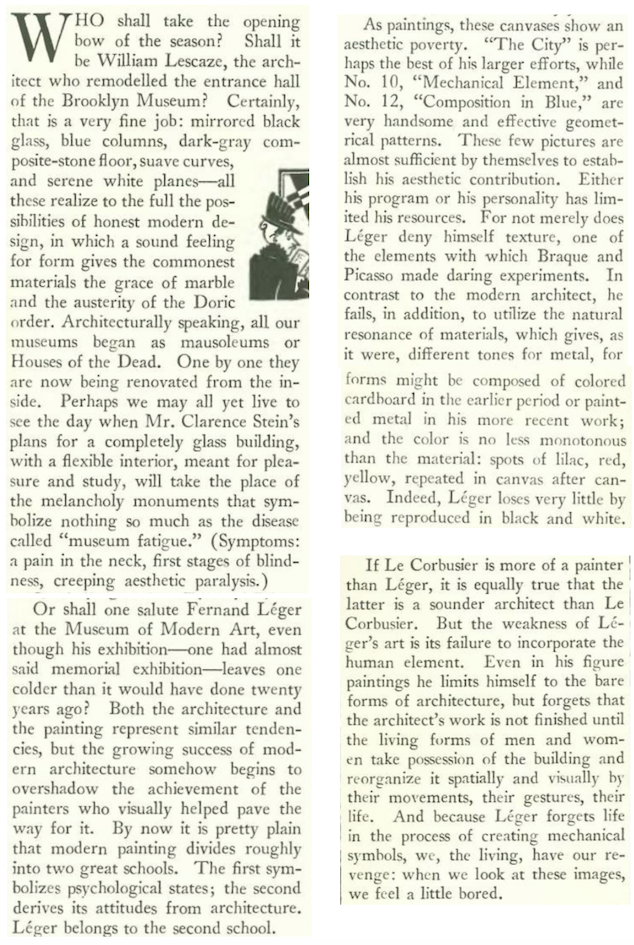
Art and culture critic Lewis Mumford is back this week, this time taking a look at the work of French artist Fernand Léger (1881–1955), who created a form of cubism known as “tubism,” regarded today as a forerunner of the pop art movement of the mid-1950s and the 1960s.
It is no surprise that the humanist Mumford, who sought an “organic balance” in everyday design, found Léger’s machine-like works alienating and sterile, representing an “aesthetic poverty.”
TOTALLY TUBULAR…Clockwise, from top left, works of Fernand Léger cited by Lewis Mumford: The City, 1919; photo of Léger, circa 1930s; from the 1918–1923 series Mechanical Elements, 1920; Composition in Blue, 1920–27. (Philadelphia Museum of Art/The Met Collection/Art Institute of Chicago, Charles H. and Mary F. S. Worcester Collection)
* * *
Disappointment in O’Hara
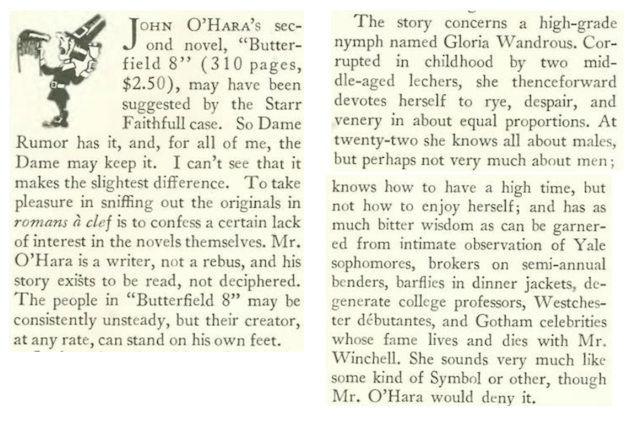
That is how Clifton Fadiman titled his “Books” column after reviewing John O’Hara’s latest novel, Butterfield 8.
O’Hara (1905–1970) wasn’t just any old scribbler. A prolific short-story writer, he has often been credited with helping to invent The New Yorker’s short story style. Praised by the likes of F. Scott Fitzgerald and Ernest Hemingway, O’Hara cranked out two bestsellers before the age of thirty. One was the acclaimed Appointment in Samarra (which was praised by Fadiman). The other was BUtterfield 8, the novel Fadiman found disappointing (Hemingway, on the other hand, blurbed, “John O’Hara writes better all the time.”). Here are a couple of brief excerpts from Fadiman’s review:
Fadiman concluded his review with a note to the author: “Why not let Jean Harlow have it, Mr. O’Hara, and start a fresh page?”
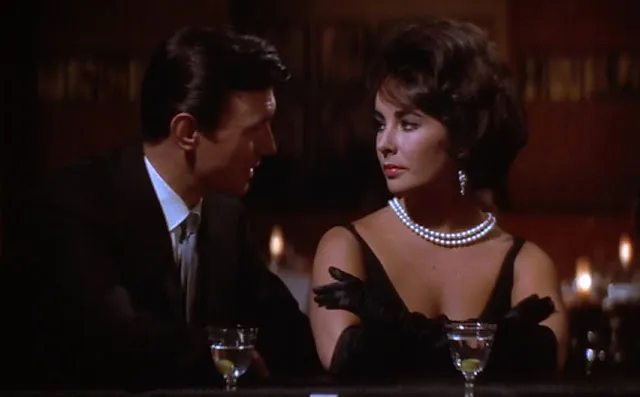
Well, Harlow didn’t get it, but twenty-five years later Elizabeth Taylor would reluctantly take on the role of Gloria Wandrous, and win the Academy Award for Best Actress.
YOU AGAIN?…Laurence Harvey and Elizabeth Taylor played on and off lovers in 1960’s Butterfield 8.John O’Hara did not participate in writing the adaptation, and the film’s plot bore only a slight resemblance to his novel. However, after the film’s release more than one million paperback copies of the novel were sold. (aiptcomics.com)
* * *
At The Movies
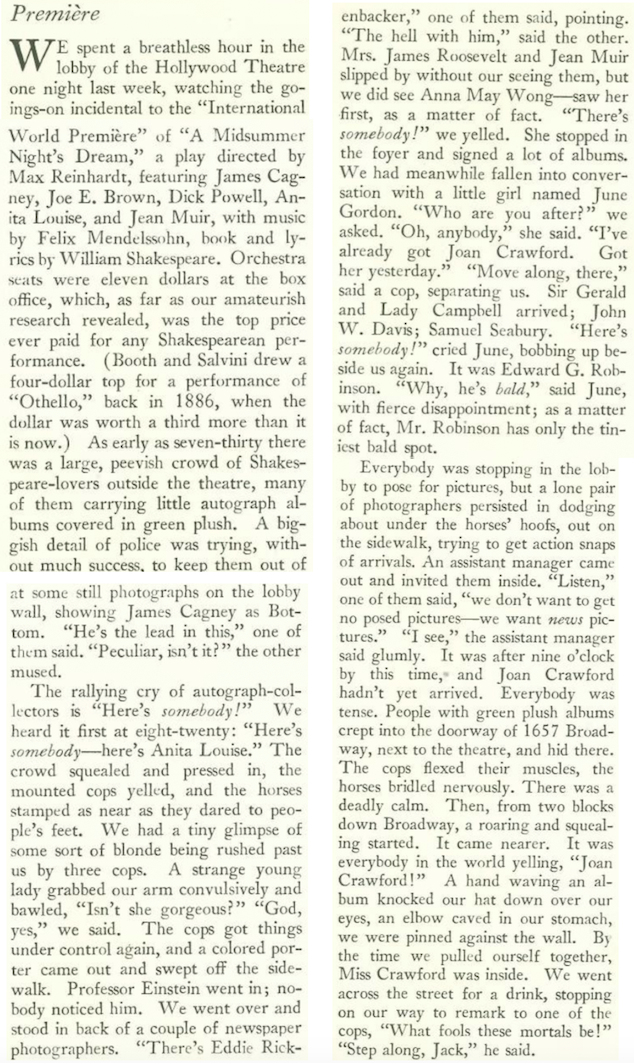
We begin this section with an excerpt from “The Talk of the Town,” which covered the “International World Première” of the Warner Brother’s adaptation of A Midsummer Night’s Dream. The film opened worldwide on October 9, 1935 in London, Sydney, Vienna and at New York’s Hollywood Theatre, where crowds turned out to get a glimpse of the stars.
RUBBERNECKERS…A Midsummer Night’s Dream premiere at the Hollywood Theatre in New York City on October 9, 1935. (britannica.com)
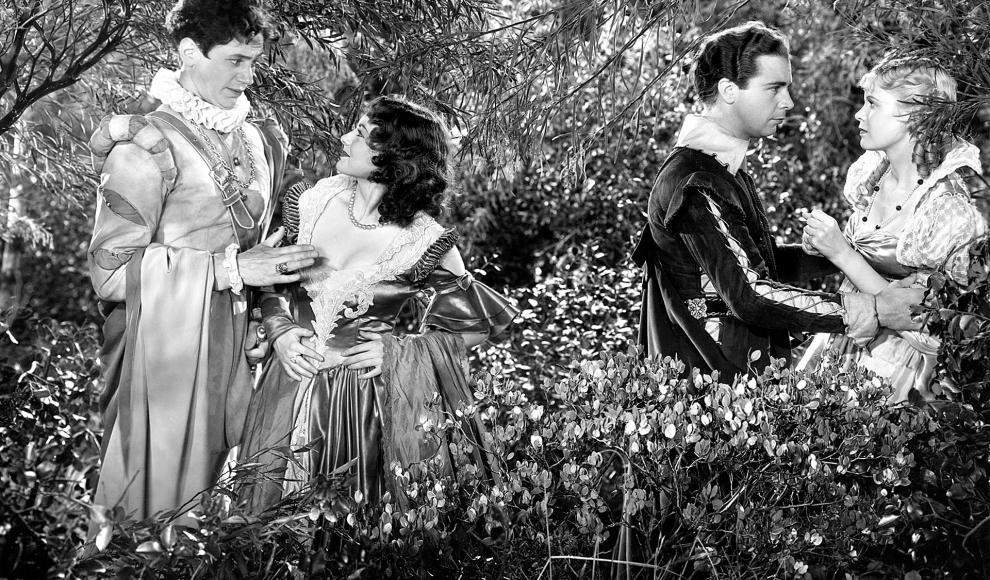
Film critic John Mosher praised Joe E. Brown’s performance as Flute, as well James Cagney’s portrayal of Bottom, and lauded the “magnificent group of clowns” that formed the remainder of The Players. Here are excerpts from his review (note I included the entirety of Otto Slogow’s delightful spot drawing):
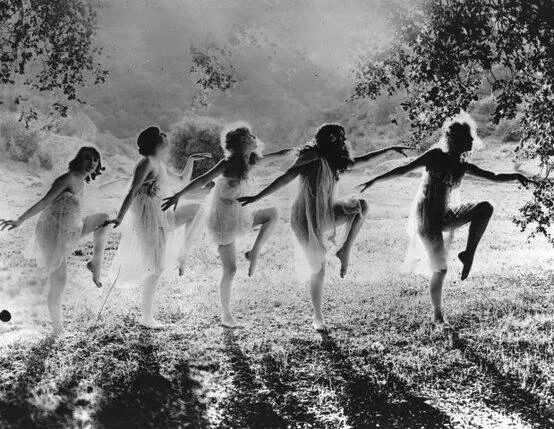
THE LOVERS…Left to right: Ross Alexander (Demetrius), Olivia de Havilland (Hermia), Dick Powell (Lysander) and Jean Muir (Helena) meet cute and confused in A Midsummer Night’s Dream. (TCM.COM)THE SEVEN STOOGES…Bottom (James Cagney) and his fellow Players prepare to perform a stage play about the death of Pyramus and Thisbe which turns into a farce. From left, in front, Joe E. Brown (Flute), Cagney, and Otis Harlan (Starveling); in the back are, from left, Hugh Herbert (Snout), Arthur Treacher (Epilogue) and Dewey Robinson (Snug) as The Players in A Midsummer Night’s Dream. Frank McHugh (Quince) can be seen behind the wall in back. (IMDB)DANCING THE NIGHT AWAY…Fairie scene from A Midsummer Night’s Dream. (Facebook)
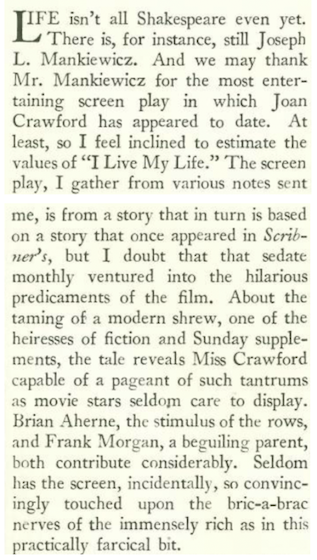
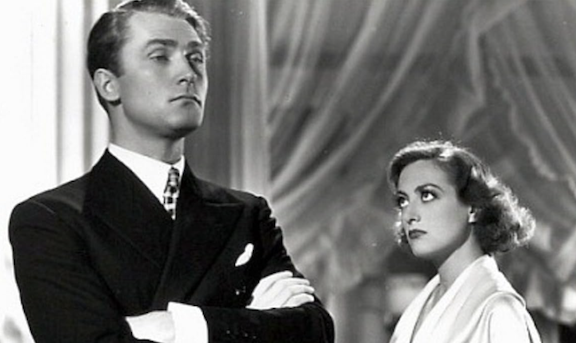
Mosher also reviewed the romantic comedy I Live My Life, which he found to be a satisfying satire on the lives of the rich.
MATCHING WITS…Bored socialite Kay Bentley (Joan Crawford) has a tempestuous romance with idealistic archaeologist Terry O’Neill (Brian Aherne) in I Live My Life. (IMDB)
* * *
From Our Advertisers
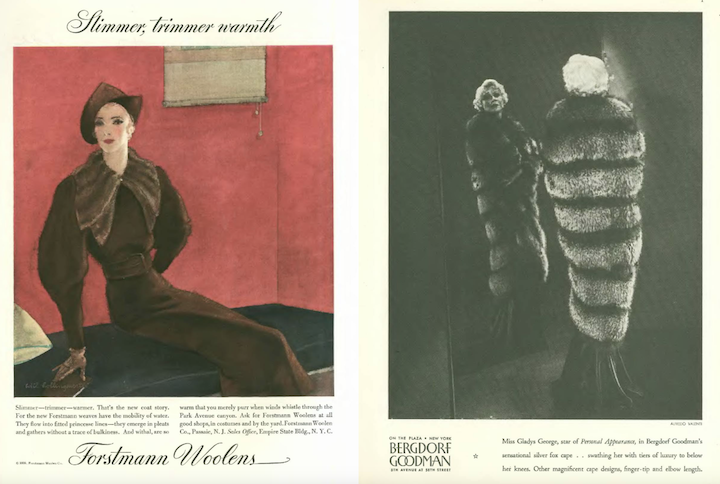
Readers ninety years ago opened the Oct. 19 issue to this two-page spread featuring the latest in fall/winter fashions…the ad on the right from Bergdorf Goodman featured stage and screen actress Gladys George donning a full-length silver fox fur…
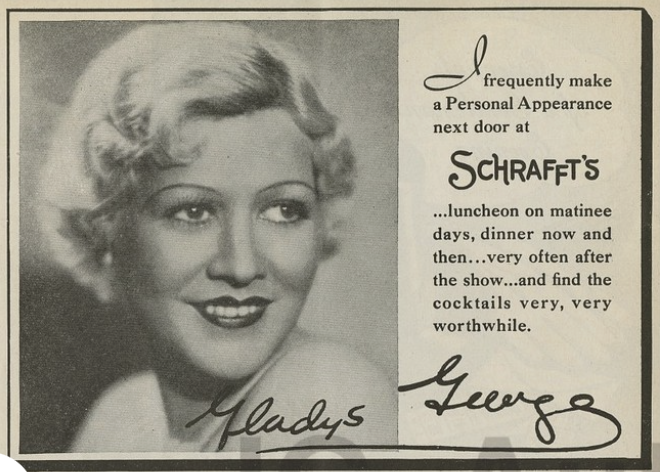
…George (1904–1954) was appearing at Henry Miller’s Theatre in the play Personal Appearance…she was featured in this testimonial ad for Schrafft’s in the theatre’s Playbill…
(playbill.com)
…the folks at Packard took out this colorful two-page spread to promote their more affordable model, the 120…the move to more affordable models helped the luxury carmaker weather the lean years of the Depression…
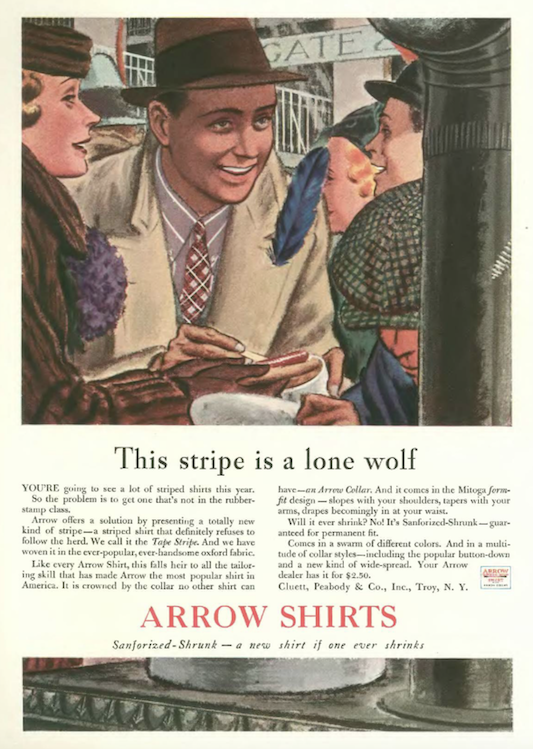
…there is a strange quality to these Arrow Shirt advertisements…what are the they looking at?…apparently something amusing as the man applies mustard to a hotdog, but it isn’t the vendor, who looks down at his cart…
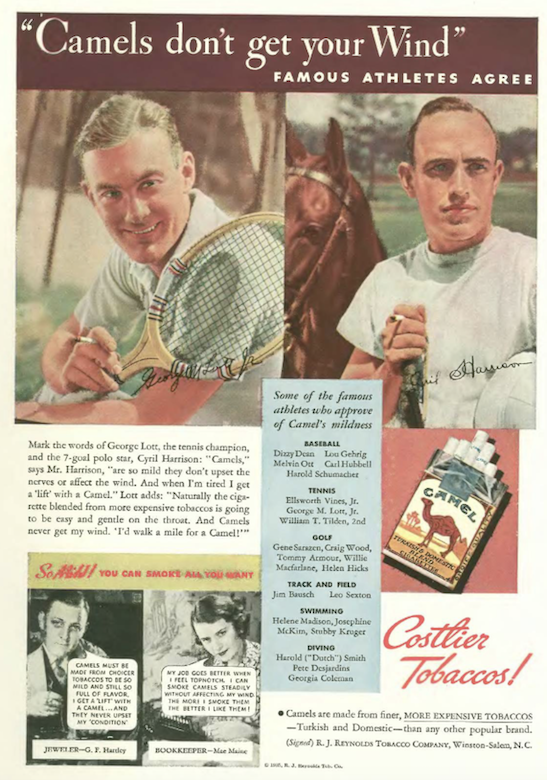
…R.J. Reynolds continued its Camel campaign featuring accomplished athletes who got a “lift” from smoking…the ad also included a couple of regular folks at the bottom, who claimed the cigarettes were so mild “You can smoke all you want”…
…Old Gold continued to enlist the talents of George Petty to illustrate their full-page ads…
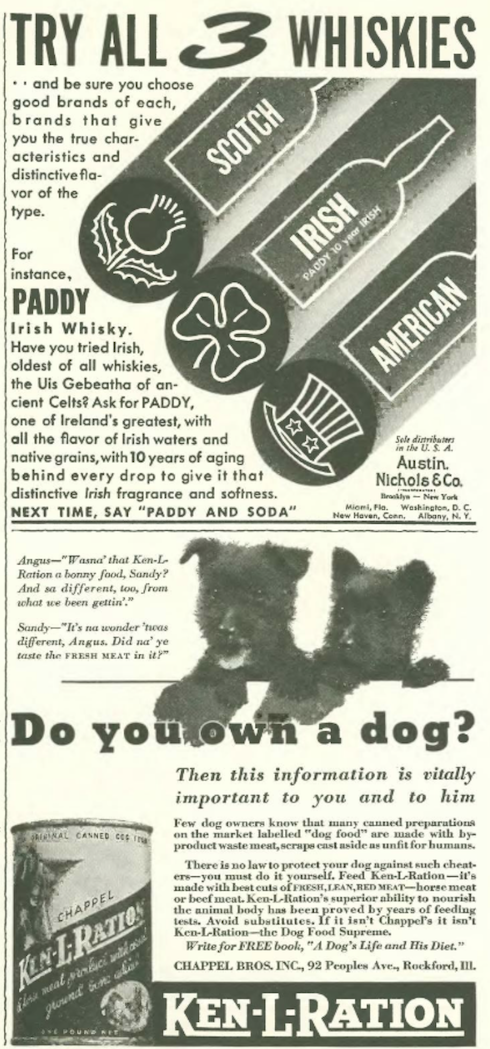
…here’s a couple of back of the book ads touting Irish whisky and Ken-L-Ration dog food…note how the Scottish terriers speak in “dialect”…Ken-L-Ration was a leading dog food brand in the 1930s, thanks to their use of horse meat rather than “waste meat”…
…on to our cartoonists, we start with Al Frueh enhancing the “Theatre” page…
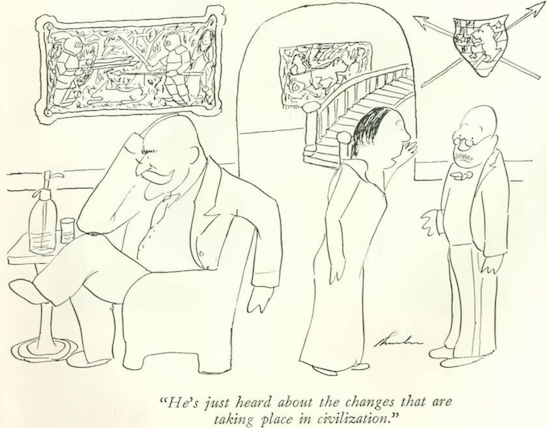
…James Thurber showed us a man at odds with the times…
…Barbara Shermund kept us up to date on the modern woman…
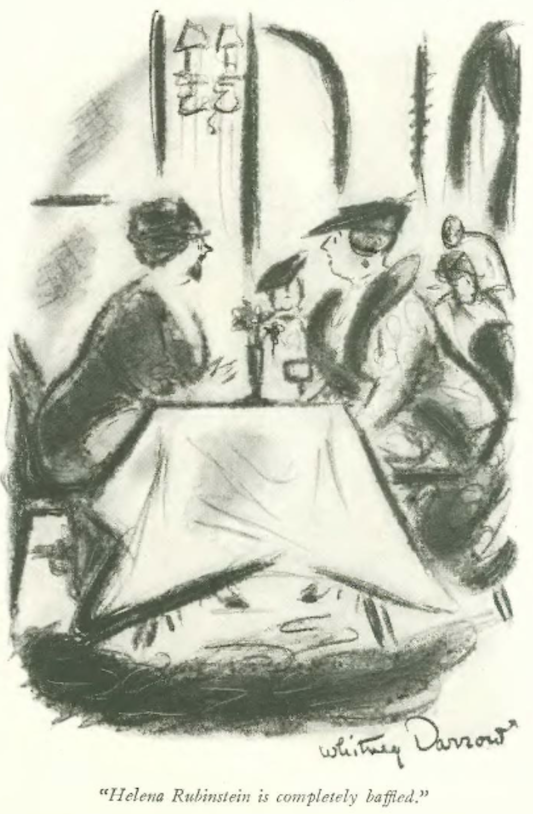
…Whitney Darrow Jr offered a challenge to Helena Rubinstein (note the woman on the right—she could have been drawn by Helen Hokinson)…
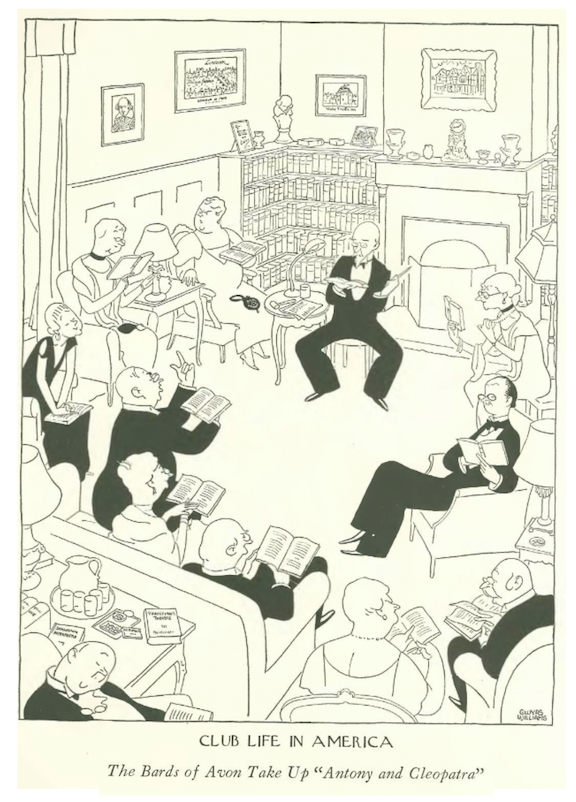
…Gluyas Williams checked in on the lively proceedings of a book club…
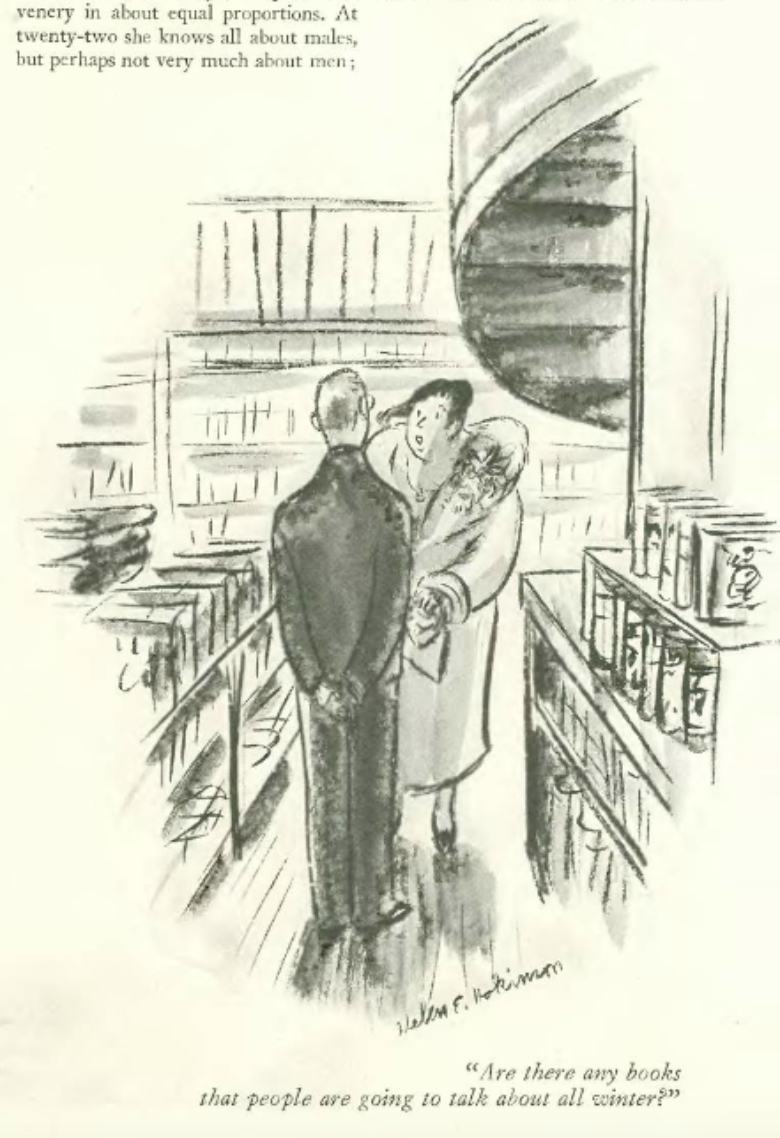
…Helen Hokinson went looking for a good winter read…
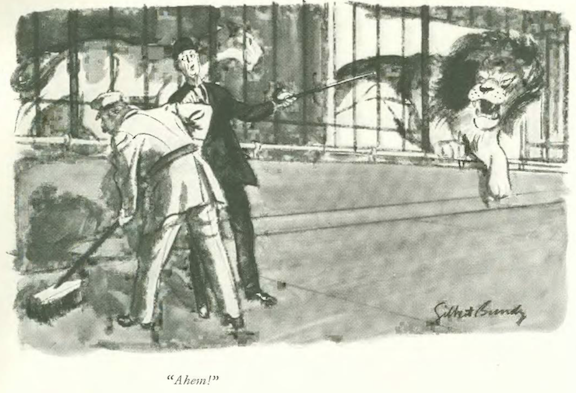
…Gilbert Bundy offered an alarming scenario on the top of p. 31…
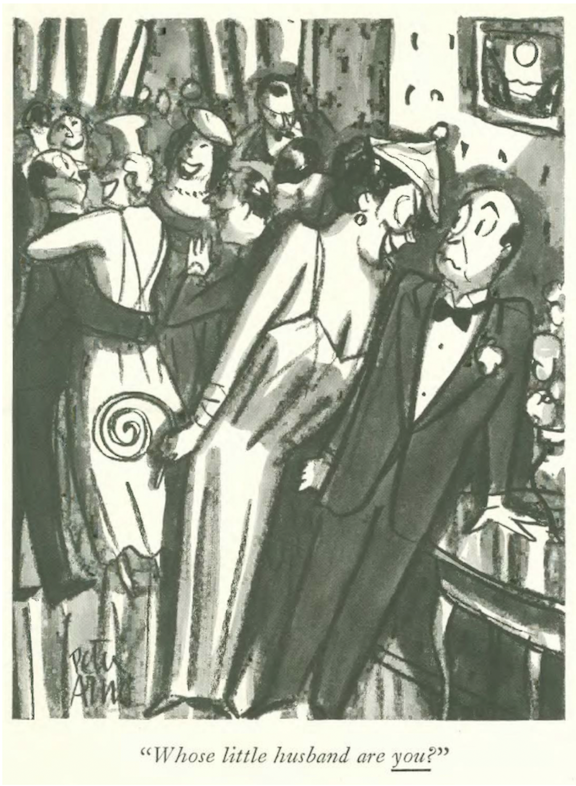
…and we close with Peter Arno, and an eye-raising encounter…
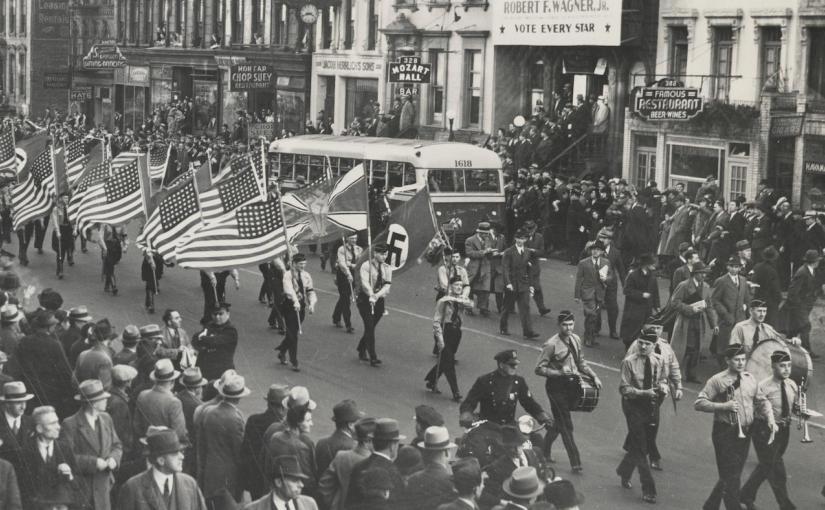
Above: A German American Bund parade in New York City on East 86th Street. Oct. 30, 1937. (Library of Congress)
Among the many ethnic enclaves of 1930s New York City was a neighborhood that was feeling the influence of world events, and not necessarily in a good way.
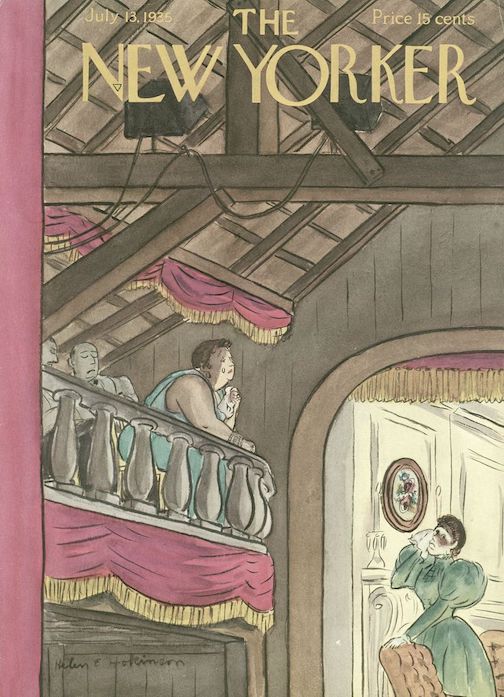
July 13, 1935 cover by Helen Hokinson. One of the first cartoonists to be published in The New Yorker, she appeared in the magazine for the first time in the July 4, 1925 issue. She contributed 68 covers and more than 1,800 cartoons to the magazine.
Journalist Chester L. Morrison looked at life among German immigrants on the Upper East Side for “A Reporter at Large.” Under the title “Muenchen Im Kleinen” (Little Munich), Morrison examined the everyday life of the Yorkville district between East 79th and East 96th streets.
Germans had settled in New York City almost from its first days, and by 1885 the city had the third-largest German-speaking population in the world, outside of Vienna and Berlin, the majority settling in what is today the East Village. Following the General Slocum disaster in 1904, German settlement migrated to Yorkville, which was commonly referred to as Germantown. Here are excerpts of Morrison’s observations:
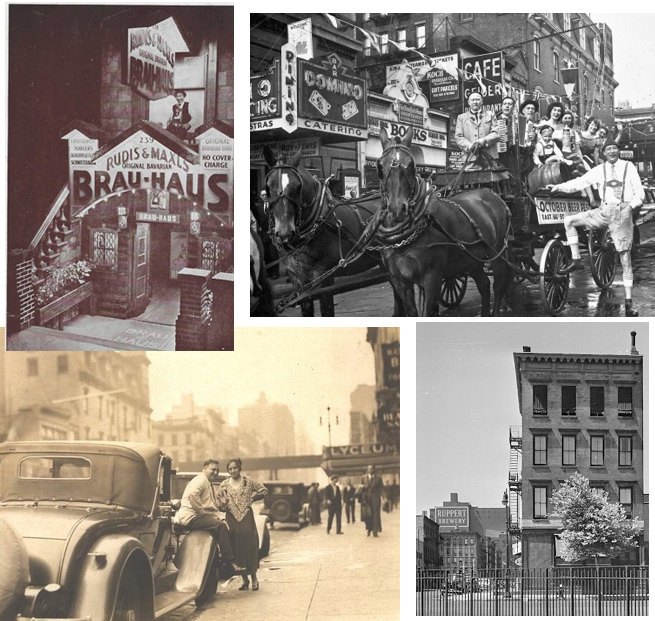
ENCLAVE…Clockwise, from top left, Rudi and Maxl’s Brau-Haus at 239 East 86th; Oktoberfest celebration in Yorkville, undated; Walker Evans photo with Rupert Brewery sign in the background; the Yorkville neighborhood in the 1930s with the old Third Avenue El in the background. (postcardhistory.net/boweryboyshistory.com/metmuseum/gothamcenter.org)
With the rise of the Nazi Party in Germany in the 1930s, a pro-Hitler group called the German-American Bund began to organize street rallies and marches on 86th Street and on 2nd Avenue. Although they represented a minority of German settlers, the Bund made itself visible in parades and other public events that culminated in a mass demonstration at Madison Square Garden in 1939. The Bund also organized training camps for young men outside of the city, such as Camp Siegfried in Yaphank, L.I.
Morrison noted that Yorkville homes looked like many others across the city, that is until you saw the pictures on their walls.
SCOUT’S HONOR?…At a German-American Bund camp in Andover, New Jersey, young campers stand at attention as the American flag and the German-American Youth Movement flag are lowered at sundown, July 21, 1937. (AP)THE MADNESS OF CROWDS…A German-American Bund color guard marches through Madison Square Garden, Feb. 20, 1939. (AP)
* * *
Garden Varieties
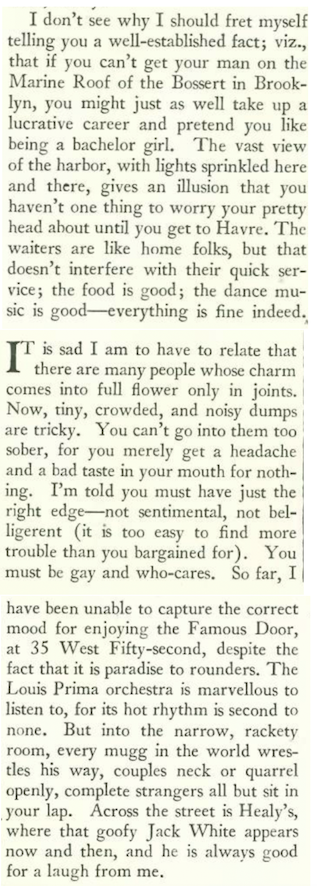
Now for a palate cleanser as we turn to Lois Long and her “Tables For Two” column, in which she examined the confluence of hotel gardens and marriage proposals. Excerpts:
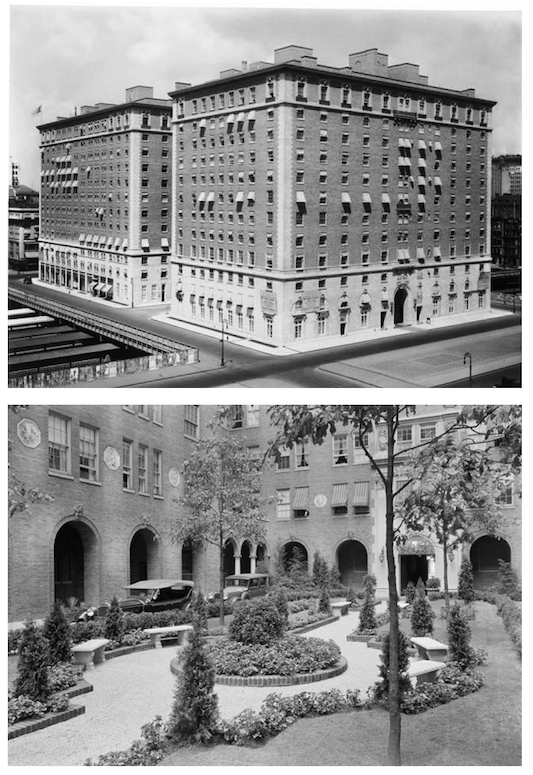
OASIS…Lois Long recommended the Hotel Marguery’s formal garden as a place to “fritter away” an afternoon. The hotel was demolished in 1957 to make way for the Union Carbide Building. (Museum of the City of New York)A COOL, SWISS CHALET was how Long described the new Alpine Room in the basement of the Gotham Hotel. (daytoninmanhattan.blogspot.com)
Long continued as she set her sights on Brooklyn…
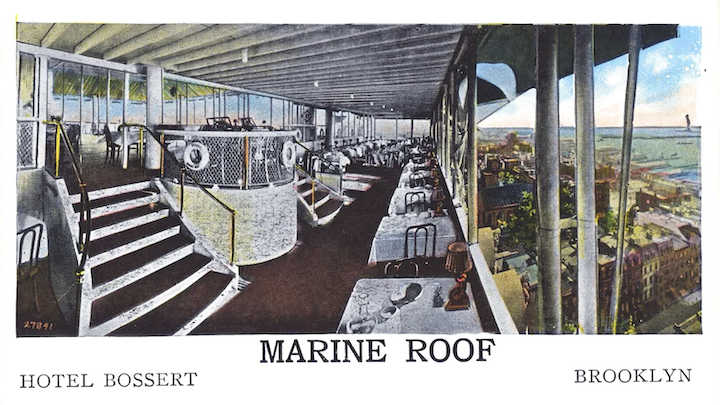
HE WILL LIKELY SAY YES, according to Long, if you got your beau to accompany you to the roof of the Hotel Bossert in Brooklyn. (brownstoner.com)THE TUNEFUL SURROUNDINGS of the Famous Door were a bit too crowded for Long, however this group seems to have had plenty of room to enjoy the greats Ben Webster, Eddie Barefield, Buck Clayton, and Benny Morton on stage at the Famous Door in 1947. (Wikipedia)
* * *
Monster Mash-up
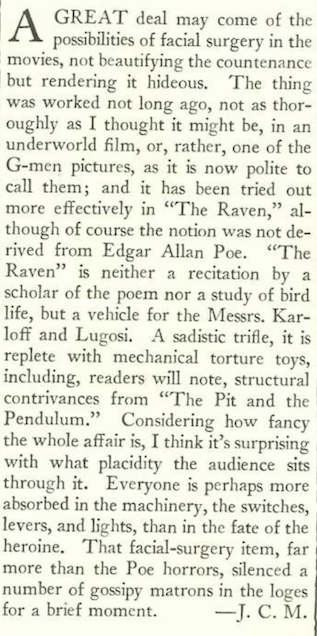
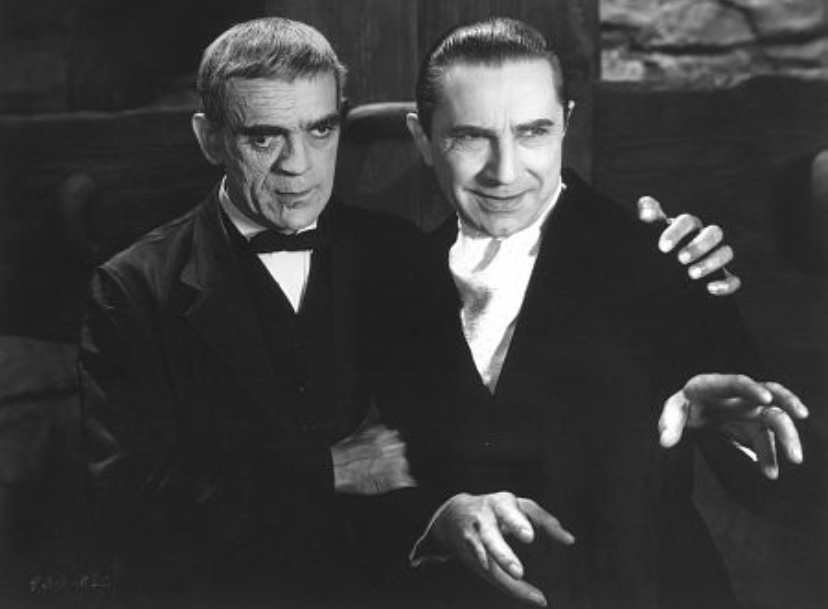
Boris Karloff and Bela Lugosi are synonymous with 1930s monster flicks (they did eight together) but their latest outing, The Raven, left critic John Mosher wondering where the Poe was in the midst of this “sadistic trifle.”
BUDDY FILM…The Raven (which had almost nothing to do with Edgar Allen Poe’s famous narrative poem) was the third of eight films that featured Boris Karloff and Bela Lugosi. According to film historian Karina Longworth, thanks to a wave of monster movie hits in the 1930s, these two middle-aged, foreign, struggling actors became huge stars. (cerealatmidnight.com)TYPECAST? WHO CARES?…Bela Lugosi and Boris Karloff in 1932. Despite being monster movie rivals, the two seemed get along well off-screen, perhaps appreciating their mutual good fortune. (beladraculalugosi.wordpress.com)
* * *
Ode to Education
Clarence Day, best known for his Life With Father stories, also contributed a number of cartoons to The New Yorker that were accompanied by satirical poems…here he examines attempts at education in the arts and sciences…
* * *
From Our Advertisers
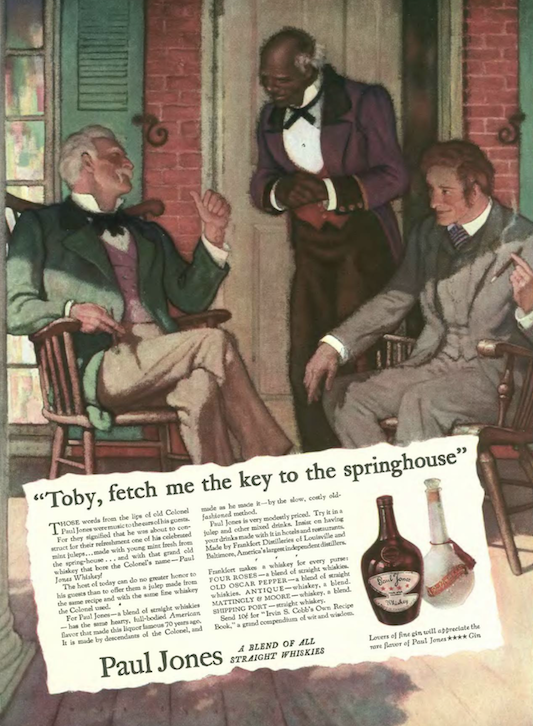
We start at the back of the book, and a couple of one-column ads (appearing on the opposite sides of the same page) that catered to very different clientele…
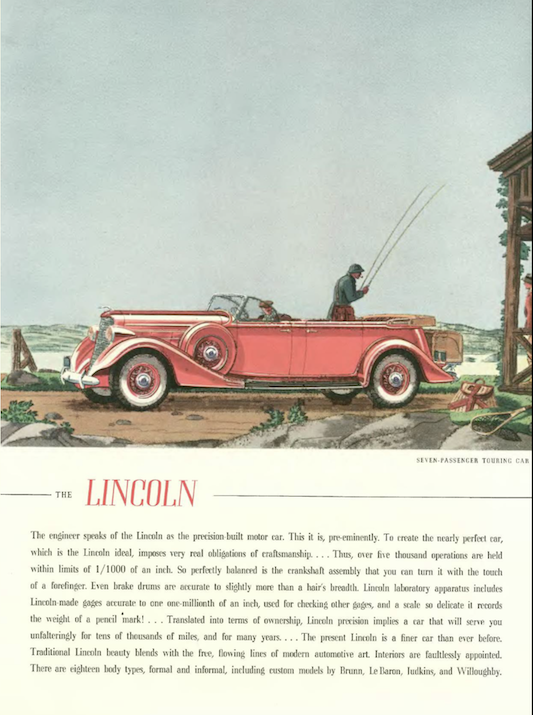
…the makers of Lincoln luxury cars knew the type of client they were fishing for here…
…pin-up artist George Petty continued exploring his beauty and the beast theme on behalf of Old Gold cigarettes…
…and Camel offered more reasons why you should smoke your way to athletic glory…
…this inside back cover advertisement reminds us that we are indeed back in 1935…
…as does this one from Dr. Seuss, with a shot of insecticide for a talking toddler…
…on to our cartoonists, beginning with Charles Addams and some Navy hijincks…
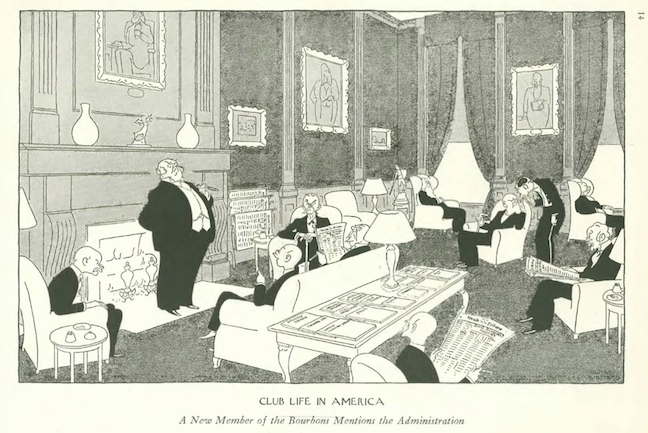
…Gluyas Williams offered his latest take on American club life…
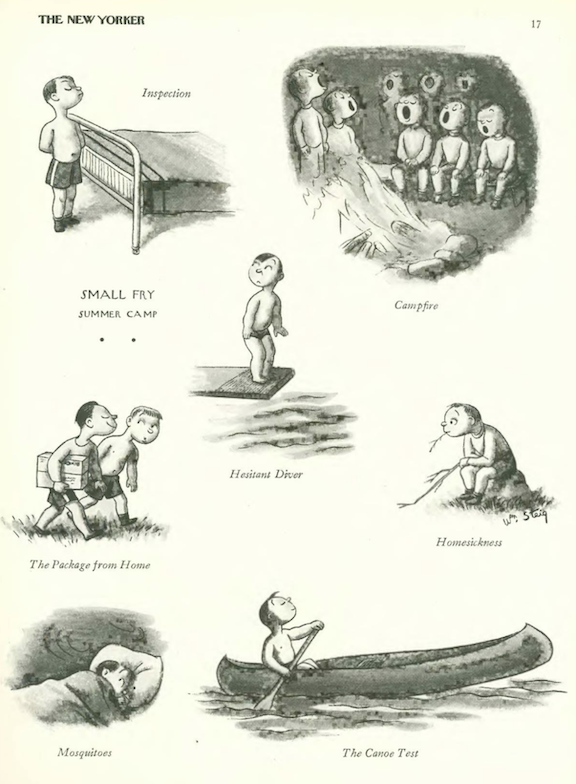
…William Steig took us to summer camp…
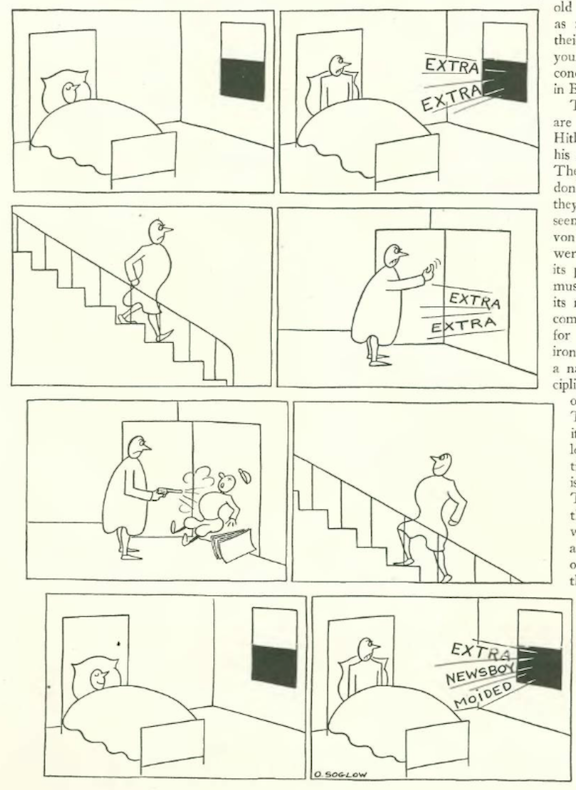
…Otto Soglow looked for a good night’s rest…
…Mary Petty explored the latest in bathing fashions…
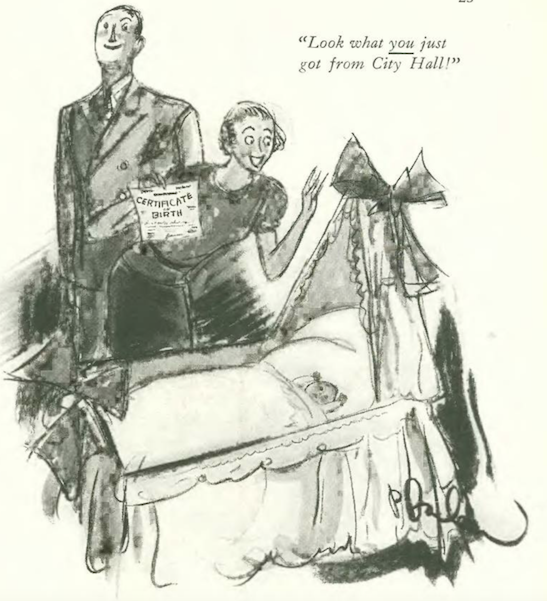
…Perry Barlow introduced us to some proud parents…
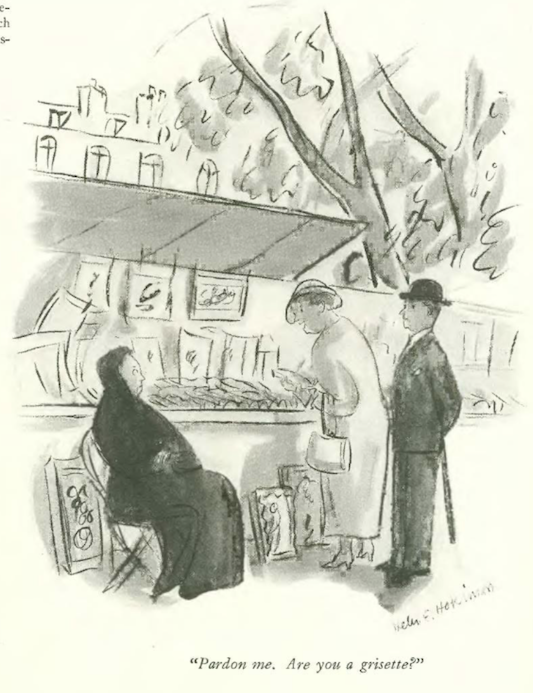
…and to close with Helen Hokinson, who showed us some innocents abroad…
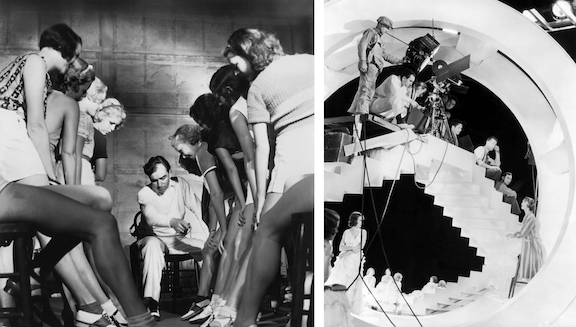
And what can be more frivolous than a Busby Berkeley musical, with scores of leggy showgirls tap-dancing in perfect rhythm, or dressed in identical white gowns while playing flying pianos. Make sense? No, and that was the whole point.
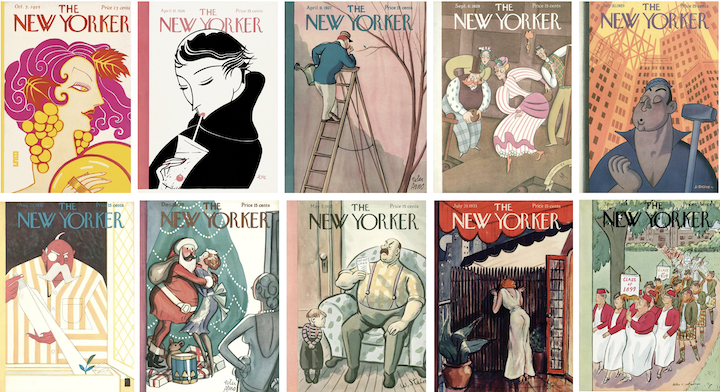
March 23, 1935 cover by Peter Arno. The color, contrast and composition are striking; it looks more like a cover from the 50s or 60s.
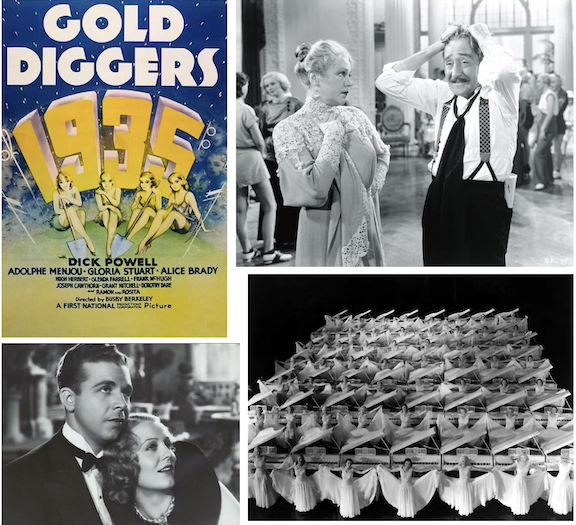
“In an era of breadlines, depression and wars, I tried to help people get away from all the misery…” Berkeley once remarked. “I wanted to make people happy, if only for an hour.” Gold Diggers of 1935 was Berkeley’s second “Gold Digger” picture (he choreographed or directed four; there were six in all, including one silent), and it was the first in which he served as sole director. Critic John Mosher didn’t know what to make of the film, likening it more to an earthquake than an entertainment.
SOMEONE HAS TO DO IT…Busby Berkeley (1895-1976) works with dancers (left) during the production of 1933’s 42nd Street; right, at work on one of his lavish sets, circa 1930s. (IMDB)
The “harmless jingle” Mosher referred to, Harry Warren and Al Dubin’s “Lullaby of Broadway,” received an Oscar for Best Original Song (it also gave me an earworm for a week).
GOLDEN GIRLS…Clockwise, from top left, Alice Brady as the parsimonious Matilda Prentiss and Adolphe Menjou as the conniving Russian dance director Nicolai Nicoleff in Gold Diggers of 1935; a scene from the dancing pianos sequence; Dick Powell and Gloria Stuart as the film’s sweethearts. (Wikipedia/YouTube/IMDB)
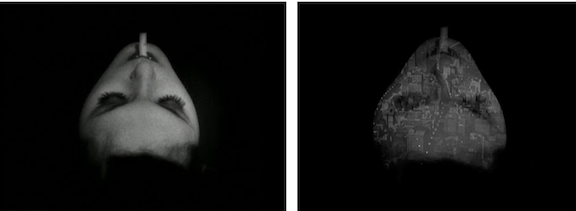
Amid the frivolity, Mosher noted the juxtaposition of the jingly “Lullaby of Broadway” with the haunting, two-minute sequence of Wini Shaw singing “Lullaby” as her disembodied face emerges from the blackness toward the viewer.
The scene continues as the woman (Shaw) turns onto her back, her head slowly dissolving into the nighttime city…after a raucous, mass tap-dancing scene, she falls to her death, and the sequence is reversed, her face disappearing into the blackness. The blog Acidemic gives an interesting take on this part of the film, which is more reminiscent of a German avant-garde film than Berkeley’s usual fare…
(YouTube)
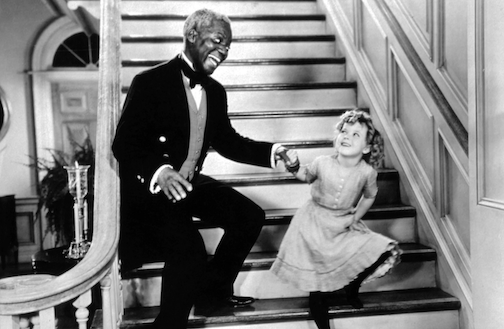
…Mosher found the scene “terrifying.” Perhaps Shirley Temple helped calm his nerves with her precocious antics in The Little Colonel…
NO FLOATING HEADS HERE…Shirley Temple and Bill Robinson doing the famous staircase dance in The Little Colonel (1935). (TCM)
* * *
Up In Smoke
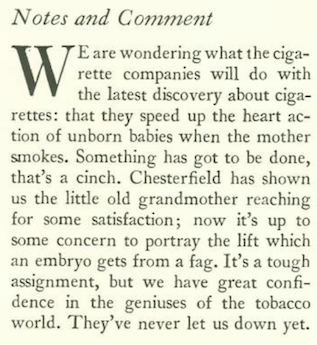
In “Notes and Comment” E.B. White considered the possibility that cigarette smoking might be harmful to unborn babies, and wryly suggested that embryos could replace grandmothers as a new growth market for big tobacco:
…White referred to the advertisement below, which appeared in the Feb. 9, 1935 issue of The New Yorker:
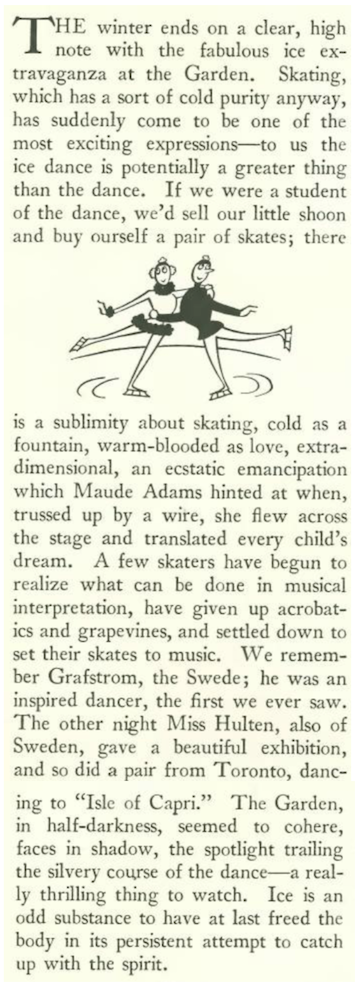
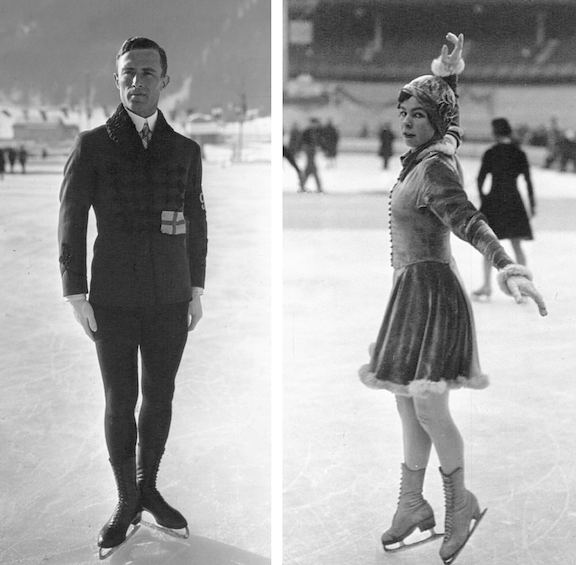
…White also commented on his recent visit to Madison Square Garden’s winter skating carnival…
THE DOUBLE AXEL was still thirteen years in the future when Swedish skaters Gillis Emanuel Grafström (left) and Vivi-Anne Hultén delighted E.B. White at Madison Square Garden. Photos are from 1924 and 1932, respectively. (Wikipedia)
* * *
Prescience of Mind
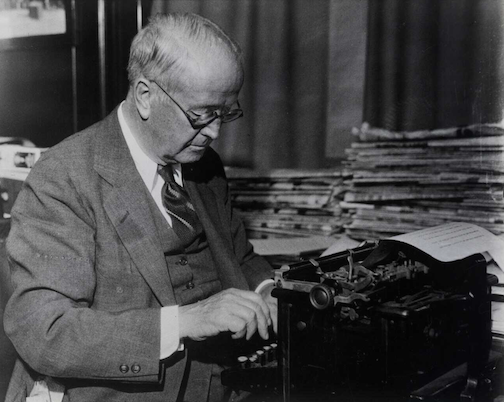
We have more from E.B. White, this time in a humorous piece titled “The Dove’s Nest,” in which White took a poke at the most influential newspaper editor in the country, Arthur Brisbane. A close friend of William Randolph Hearst, Brisbane essentially ran Hearst’s newspaper empire. The New Yorker often ridiculed Hearst’s (and Brisbane’s) jingoistic approach to the news that included giant headlines warning of war. Excerpts:
William A. Swanberg, author of the 1961 biography Citizen Hearst, described Brisbane as “a one-time socialist who had drifted pleasantly into the profit system…in some respects a vest-pocket Hearst–a personal enigma, a workhorse, a madman for circulation, a liberal who had grown conservative, an investor.”
DAMN THOSE TORPEDOES…Arthur Brisbane in 1933. His grandson, Arthur S. Brisbane, now retired, served as public editor of The New York Times from 2010 to 2012. (credo.library.umass.edu)
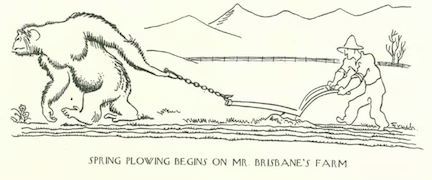
The New Yorker continued to take jabs at Brisbane in the following issue (March 30). Brisbane owned a large estate (including a horse farm) in New Jersey that he made available to New Deal work programs during the Depression. I suppose this Al Frueh cartoon was some kind of reference to that…
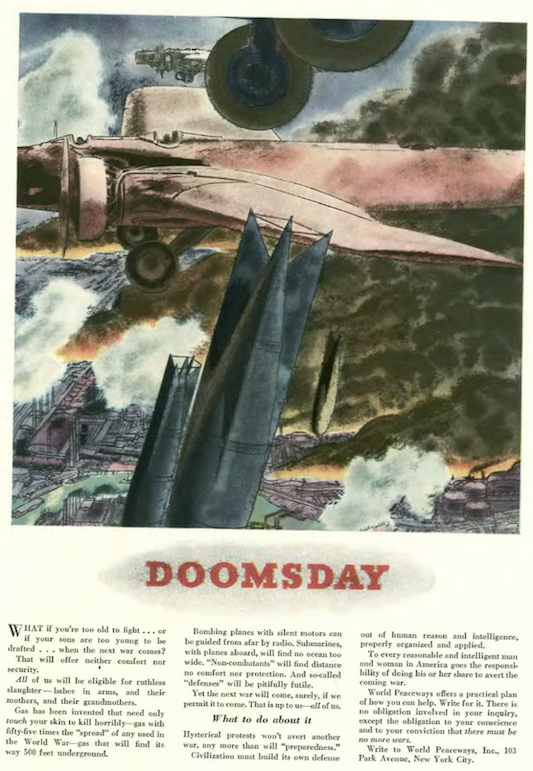
…also in the March 30 issue was this ad from World Peaceways, which raised alarms about possible war and bombs raining down from the sky…
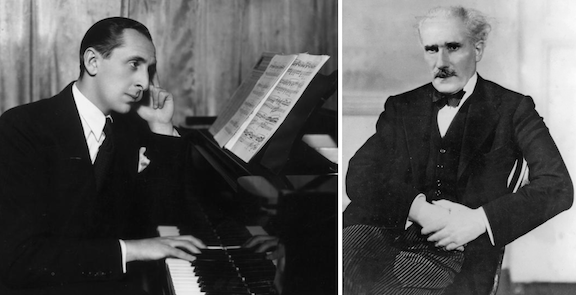
…back to the March 23 issue, where we find the calming strains of a Brahms concerto at Carnegie Hall, conducted by Arturo Toscanini with some support from his son-in-law, Vladimir Horowitz…
MAY I CALL YOU DAD?…Not likely something said by young Vladimir Horowitz, left, to father-in-law Arturo Toscanini. (WQXR/Britannica)
* * *
From Our Advertisers
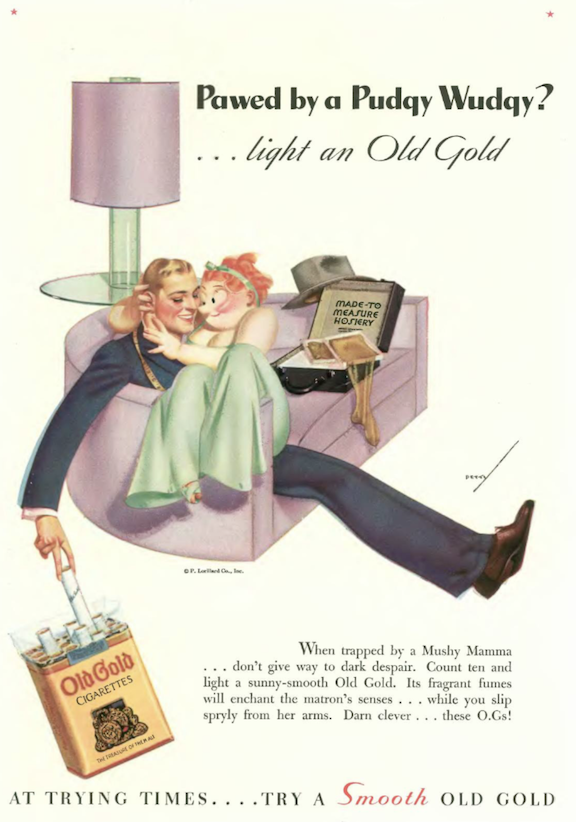
Beginning in 1934 the makers of Old Gold cigarettes hired pin-up artist George Petty to create a series of ads featuring a homely, clueless sugar daddy and his leggy mistress…here he turns the tables, introducing a “Pudgy Wudgy” matron putting the moves on a handsome hosiery salesman…
…this Petty ad appeared in the Feb. 9, 1935 issue of The New Yorker…
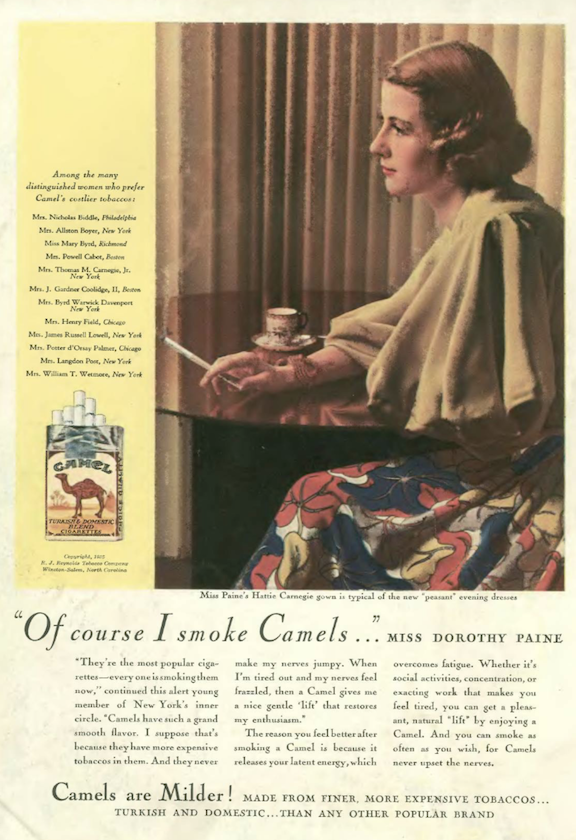
…the makers of Camels continued their campaign of “distinguished women” who enjoyed their product…here we have a former debutante, Dorothy Paine, an “alert young member of New York’s inner circle.” Not much of a record of Dorothy, who married a man named Walter H. Sterling in 1935…apparently they moved to Phoenix and bought up property in the Southwest…
…the makers of General Tire offered this grim assessment of tire safety…the lad seems to be a mere investment of time…
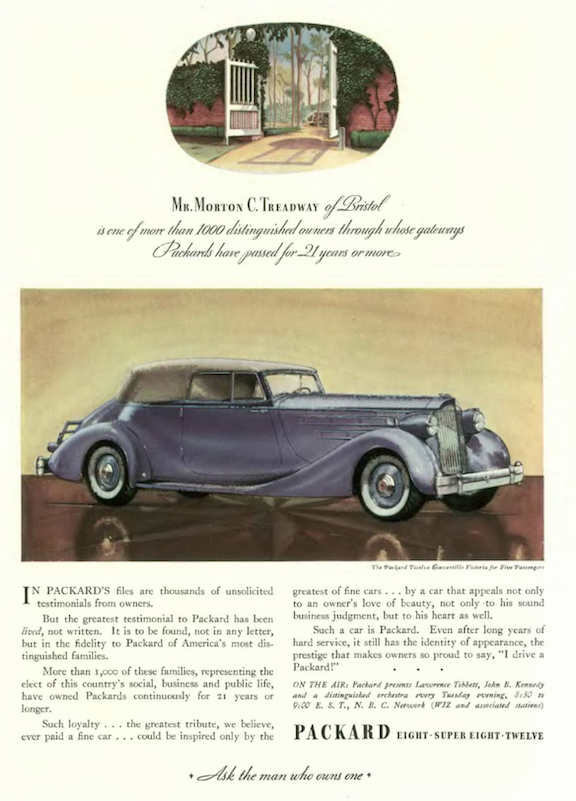
…although prestige brands suffered mightily during the Depression, the folks at Packard were doubling down on the elite status of their automobile…
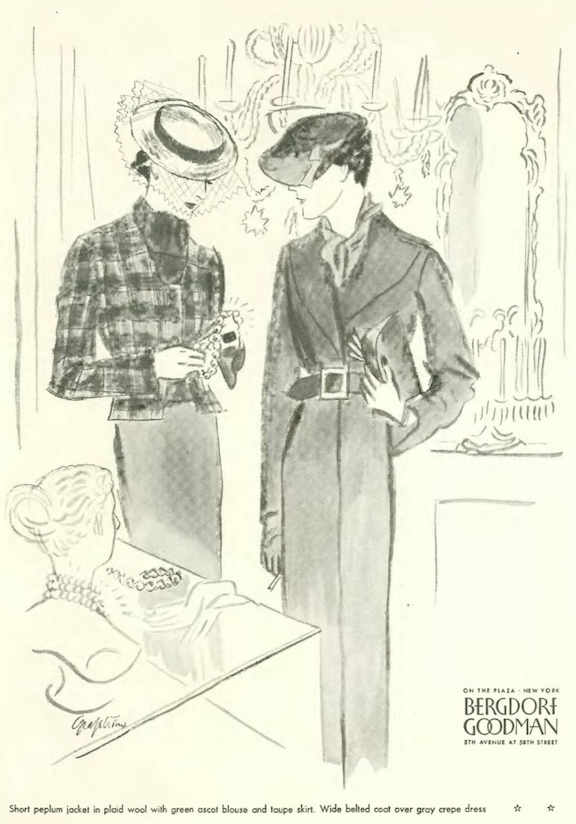
…we’ve seen the work of fashion illustrator Ruth Sigrid Grafstrom before in ads for Spud cigarettes…here she contributes some elegant lines to a spot for Bergdorf Goodman (is the woman on the right smoking a Spud?)…
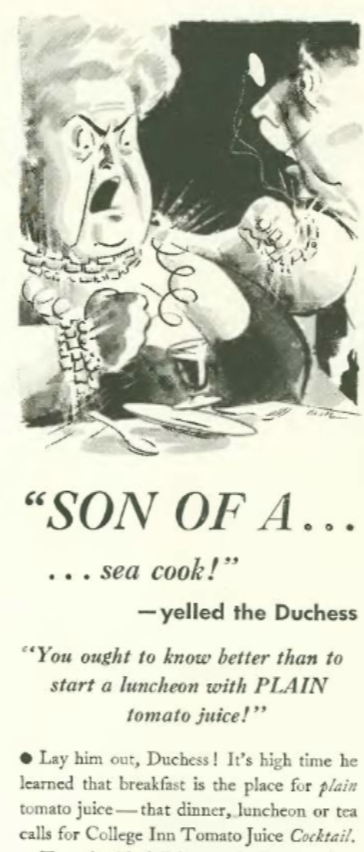
…here’s the Duchess again, still blowing her top over College Inn tomato juice…just look at her clenched fists…that fop with a monocle looks like he just took a left hook to the chops…
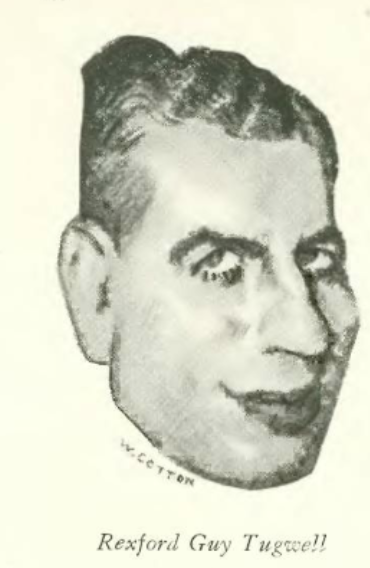
…on to our illustrators, William Cotton created this caricature of Rexford Guy Tugwell for Russell Lord’s two-part profile…Tugwell and President Franklin D. Roosevelt created the Resettlement Administration, which relocated rural unemployed to “Greenbelt Cities” near urban job markets. Critics called him “Rex the Red” for his social engineering experiments, and after he was forced out of federal government, Tugwell was appointed in 1938 as the first director of the NYC Planning Commission. Naturally, he would butt heads with Robert Moses…
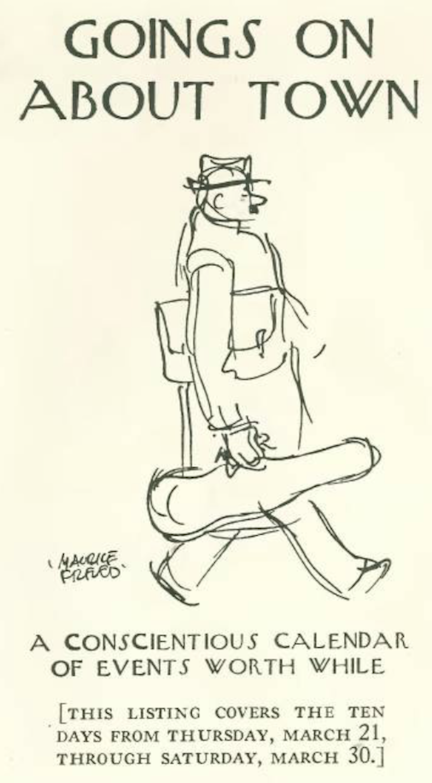
…illustrator and painter Maurice Freed kicked off the calendar section…
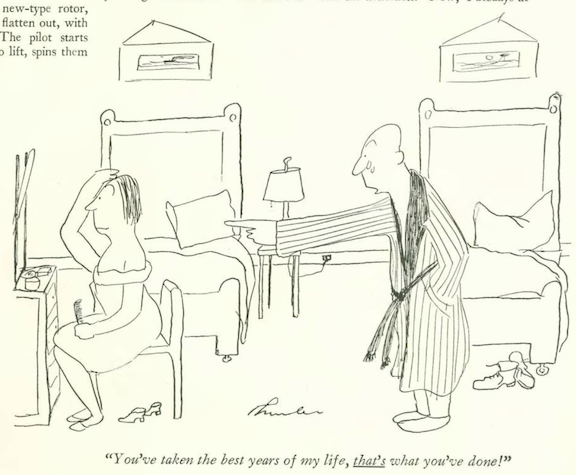
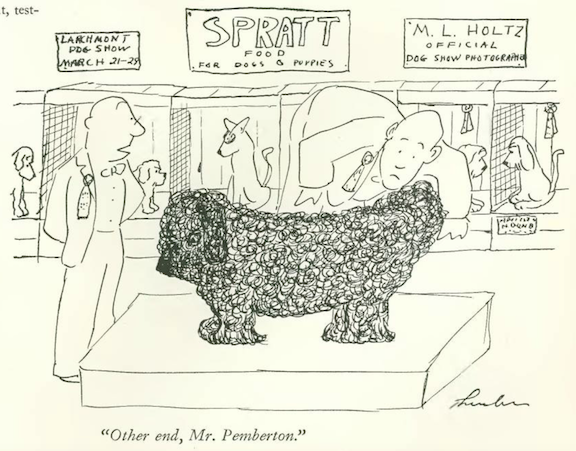
…bookended on the bottom of page 4 by one of James Thurber’s most recognized drawings…
…Thurber again, and more woes between the sexes…
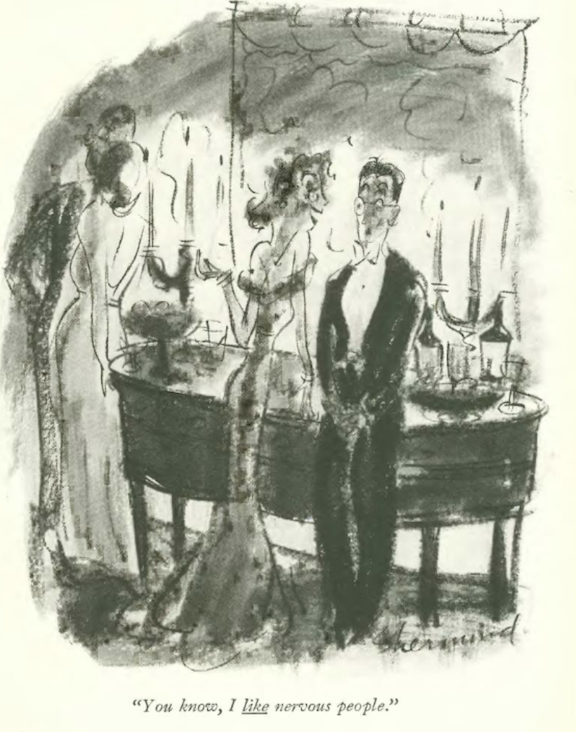
…we continue with our cartoonists by looking in on Barbara Shermund…
…George Price found a new wrinkle for his recurring floating man cartoon…
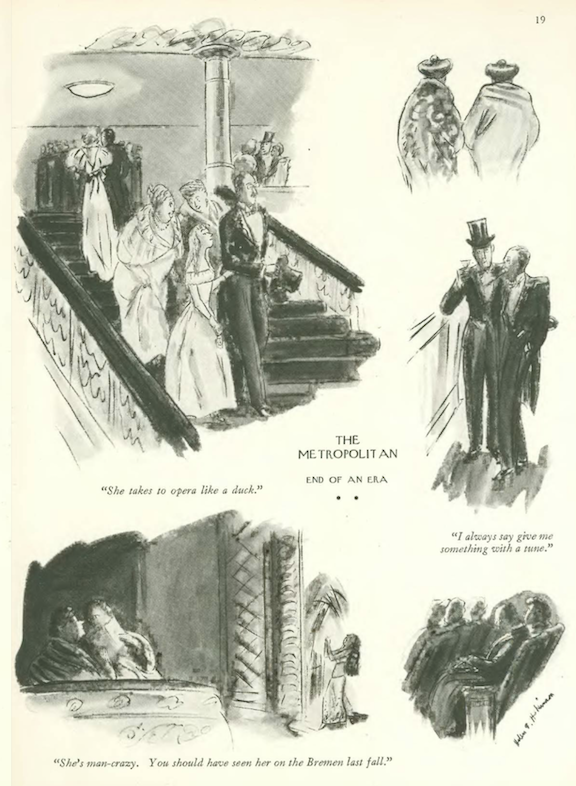
…Helen Hokinson graced page 19 with scenes from the opera…
…leaving an extra drawing stranded on page 18…
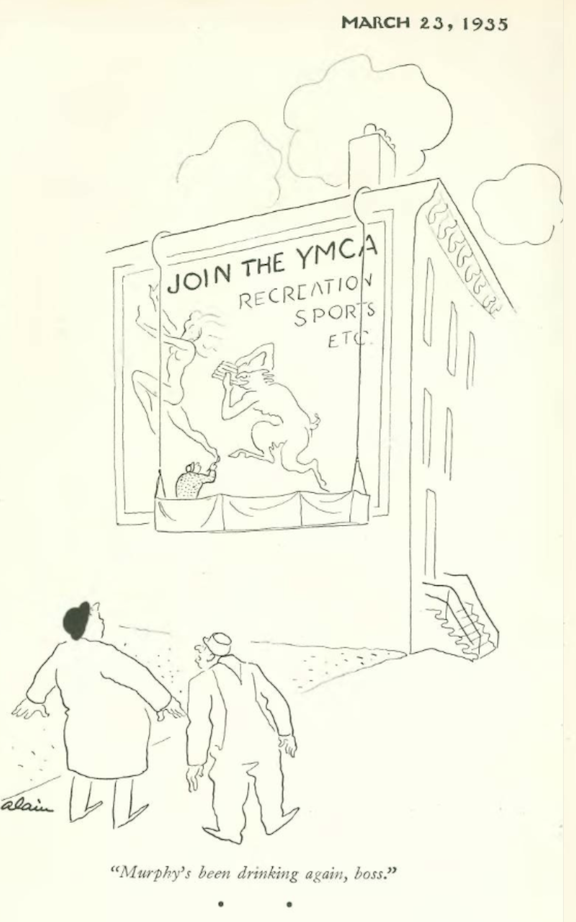
…Alain offered a new twist on the promotion of physical fitness…
…Gluyas Williams brought us to the stuffy confines of club life (the cartoon was originally featured vertically)…
…and we close with Richard Decker, and a lucky draw at the IRS…
With this post (No. 413), we mark the tenth anniversary of The New Yorker. Since I began A New Yorker State of Mind in March 2015, I’ve attempted to give you at least a sense of what the magazine was like in those first years, as well as the historical events that often informed its editorial content as well as its famed cartoons. Those times also informed the advertisements; indeed, in some cases the ads give us a better idea of who was reading the magazine, as well as their changing tastes and buying power as we moved from the Roaring Twenties to the Depression, and from Prohibition into Repeal.
I have also chosen this time to go on hiatus, and hopefully resume this blog when The New Yorker celebrates its centennial next February (this site will remain active and available, and I will continue to monitor comments and messages). Let us hope that the editors use the original Rea Irvin cover for that occasion, and restore his masthead above “The Talk of the Town” section. Perhaps some enterprising soul could start a petition.
Feb. 16, 1935 cover by Rea Irvin.
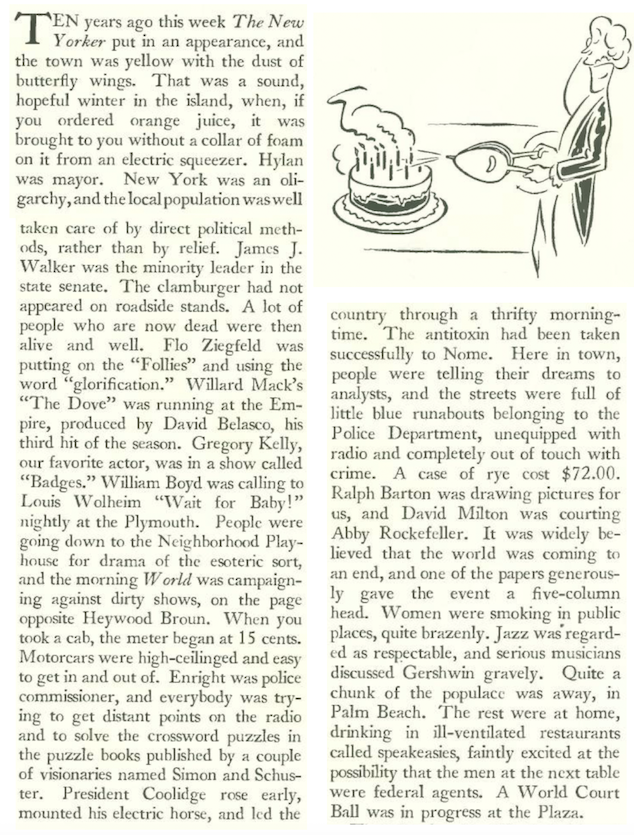
Moving on to the tenth anniversary issue, we find E.B. White recalling the world of The New Yorker’s first days. Given the massive economic and societal shifts that occurred from 1925 to 1935, those first days seemed distant to White, who felt old, “not in years but events.”
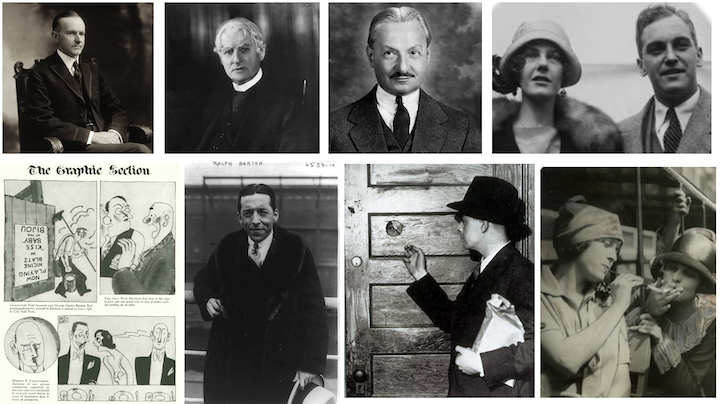
DAYS OF YORE…E.B. White noted the many changes that had taken place during The New Yorker’s first ten years, including, clockwise from top left, the passing of 1920s notables such as President Calvin Coolidge and two very different theatre impresarios—David Belasco and Flo Ziegfeld; White also recalled the much-publicized 1925 wedding of Abby Rockefeller to David Milton, the throngs of women who took to smoking in public in the 1920s and the drinkers who took their activities behind closed doors; and one of the early magazine’s beloved contributors, Ralph Barton, who offered his whimsical take on the news in “The Graphic Section” as well as in other illustrated features. (Wikipedia/Wikitree/Ephemeral New York)
White also noted a new craze that had originated around the same time as the birth of The New Yorker…
TWO ACROSS…Max Schuster and Richard Simon of Simon & Schuster, with their first crossword book, 1924. (americanbusinesshistory.org)
White concluded with these parting words, tinged with world-weariness, writing “More seems likely to happen.” One wonders if he imagined The New Yorker at 100, which in our day is just around the corner. Like White, many us have grown weary of this angry world, where indeed more seems likely to happen. Let us hope it is for the best.
Now, some unfinished business. We need to look at the previous issue, Feb. 9, 1935, before we close out the decade.
Feb. 9, 1935 cover by William Cotton.
We stay on the lighter side, joining critic John Mosher at the local cinema to appreciate Leslie Howard’s dashing performance in The Scarlet Pimpernel…
WORKING OVERTIME…Leslie Howard and Merle Oberon in The Scarlet Pimpernel. Howard portrayed an aristocrat who leads a double life, publicly appearing as a dandy while secretly rescuing French nobles from Robespierre’s Reign of Terror. (PBS)
* * *
From Our Advertisers
Cigarette manufacturers employed every angle from sex to health claims to move their product…not to be left out of any niche market, Chesterfield even went after the little old ladies…
…by contrast, the makers of Old Gold cigarettes featured a clueless sugar daddy and his leggy mistress in a series of ads drawn by famed pin-up artist George Petty…
…Otto Soglow would do well with advertisers during his career, promoting everything from whiskey to Pepsi and Shredded Wheat to department stores…in this case Bloomingdale’s…after William Randolph Hearst’s King Features Syndicate wrested The Little King away from The New Yorker in September 1934, this was the only way you would see the harmless potentate in the magazine…
…another New Yorker artist earning some ad dollars on the side was Constantin Alajalov, here adding a stylish flair for Coty…
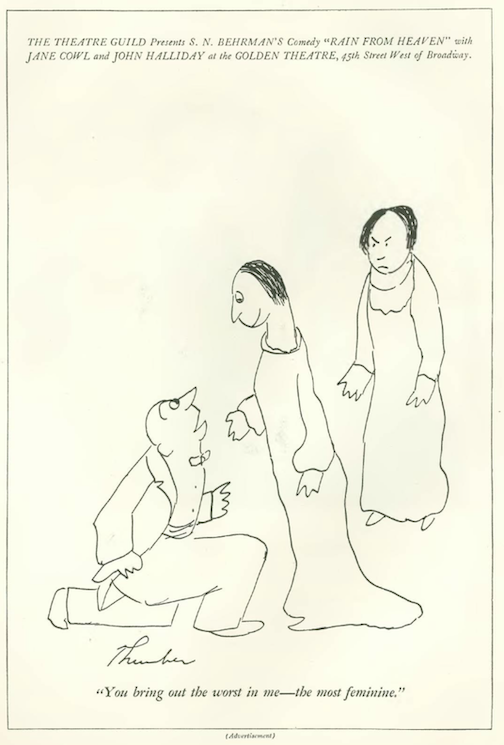
…and then there’s James Thurber, who continued to contribute his talents on behalf of the Theatre Guild…
…and we move along to the Feb. 9 cartoons, with Thurber again…
…the issue also featured two by George Price…
…and Howard Baer supplied some life to this little party…
…now let’s return to the Feb. 15, 1935 issue…
…where John Mosher was back at the cinema, this time enjoying the story of a “beautiful stenographer”…
POPCORNY…Fred MacMurray and Claudette Colbert meet cute over popcorn in the romantic comedy The Gilded Lily. It was MacMurray’s second credited screen role, and it was the first of seven films in which Colbert and MacMurray would star together. (Wikipedia)
* * *
More From Our Advertisers
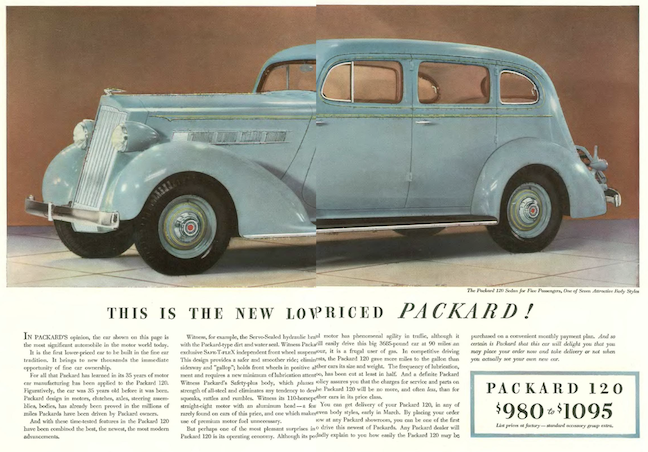
In its bid for survival during the Depression, the luxury brand Packard introduced its first car under $1000, the 120. Sales more than tripled in 1935 and doubled again in 1936…
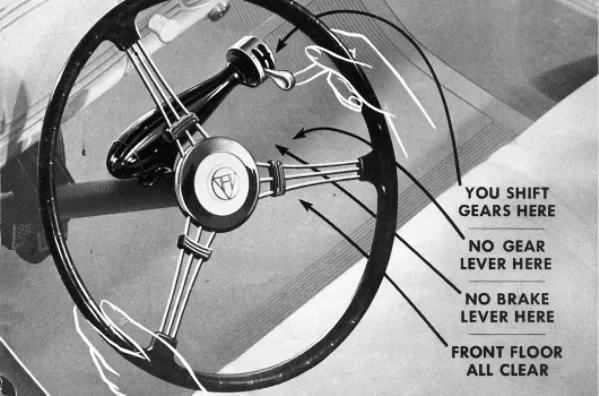
…meanwhile, Hudson was hanging in there with innovations such as the “Electric Hand”…it was not a true automatic transmission, but it did allow drivers to shift gears near the steering wheel…
…as demonstrated here…
…whatever you were driving, Goodyear claimed it would keep you the safest with their “Double Eagles”…
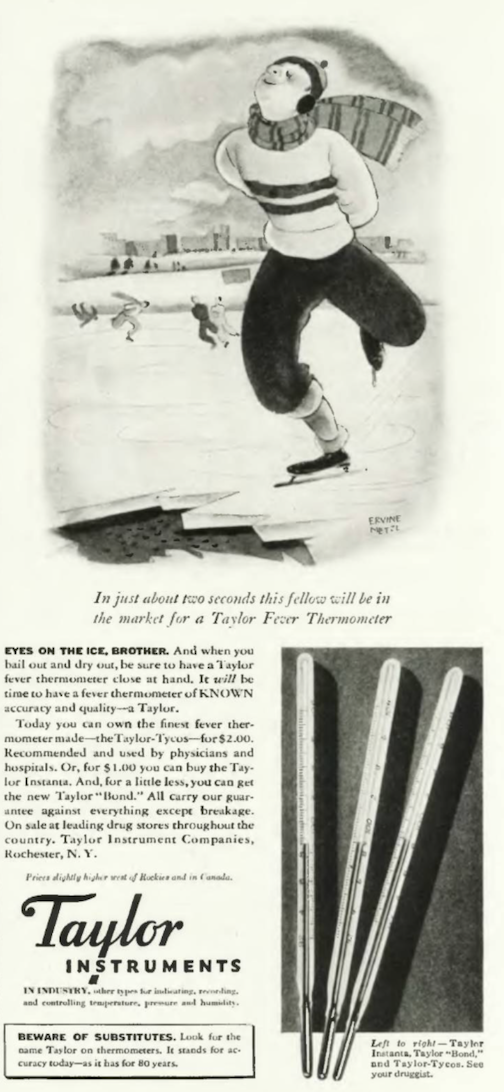
…I include this ad for Taylor Instruments because it features an illustration by Ervine Metzl, who would become known for his posters and postage stamp designs…
…Metzl’s design of a three-cent stamp commemorating the 1957–1958 International Geophysical Year…
…on to our cartoonists, we begin with this Deco-inspired artwork by an unidentified illustrator…
…one of Helen Hokinson’s “girls” was going about her daily rounds…
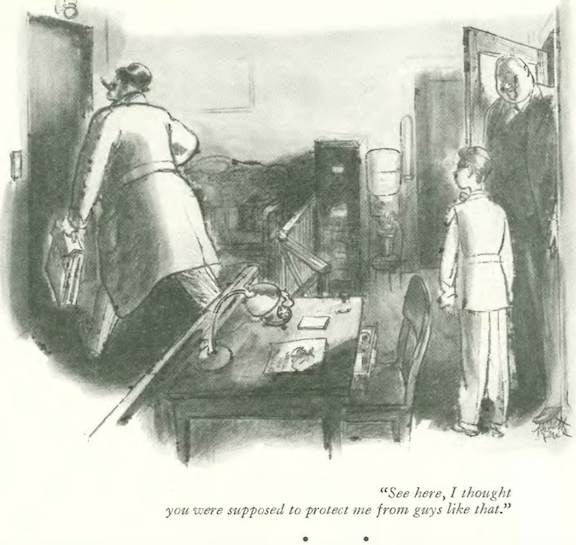
…Garrett Price gave us a gatekeeper not quite up to his task…
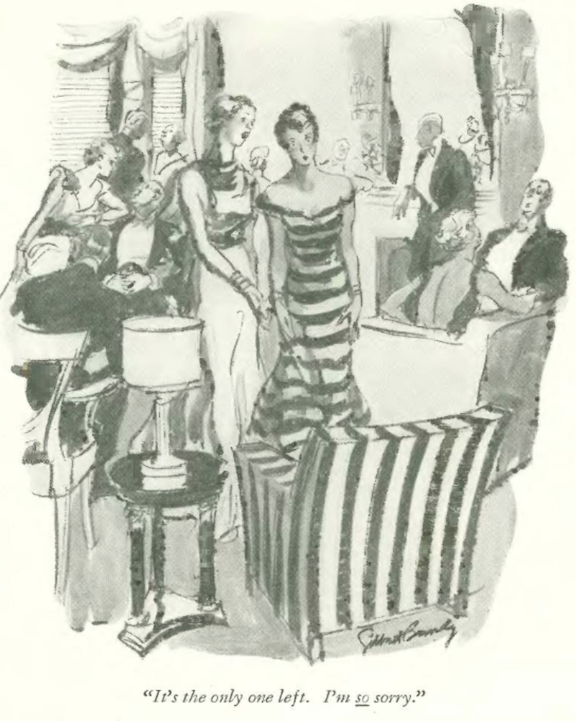
…Gilbert Bundy was seeing stripes rather than stars…
…while James Thurber’s medium was getting in touch with an equine spirit…
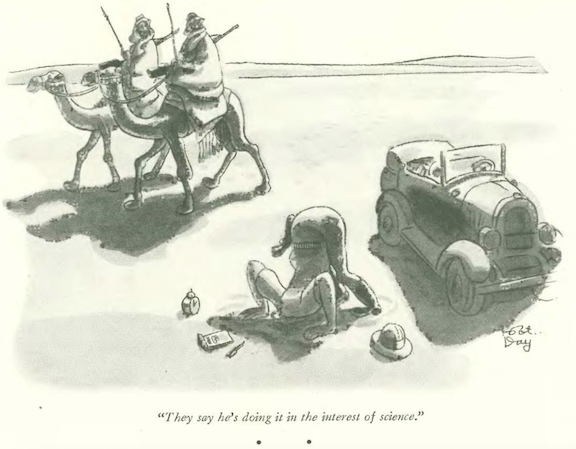
…scientific inquiry knew no bounds in Robert Day’s world….
…and in the world of Alain (aka Daniel Brustlein), old habits died hard…
…and we close with Peter Arno, at his risqué best…
Above: Illustration and article on "Typhoid Mary" that appeared in 1909 in The New York American. At right, Mary Mallon with other quarantined inmates on North Brother Island. (Wikipedia)
The Irish-born Mary Mallon (1869–1938) lived a simple life as a maid and a cook, and it would have been a life of anonymity save for a sad twist of fate on the day she was born.
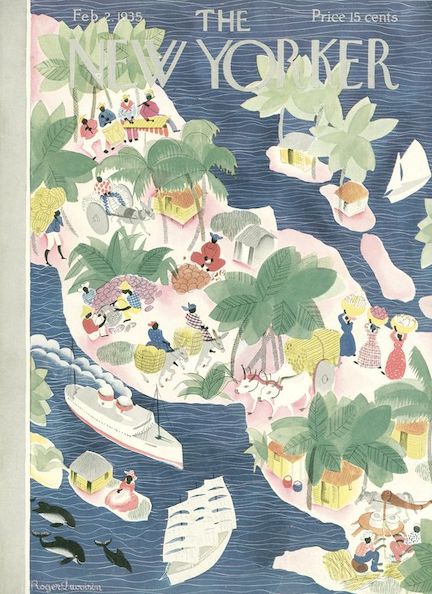
Jan. 26, 1935 cover by Perry Barlow.
History knows Mary Mallon as Typhoid Mary. From 1901 to 1907 she would cook for seven wealthy New York families that would later contract typhoid. Mallon was born to a mother who was infected with typhoid, which offers a possible explanation as to why she became an asymptomatic carrier of the disease. Forcibly quarantined on North Brother Island (near Long Island) from 1907 to 1910, Mallon agreed upon her release to take hygienic precautions, including ending her occupation as a cook.
When other jobs failed to pan out, Mallon returned to cooking—this time in restaurants and hotels—infecting many more while evading investigators who were desperately trying to track her down (it is estimated she infected up to 122 people, resulting in as many as four-dozen deaths). When she was finally arrested in 1915, she was returned to North Brother Island, where she would live out her days. Stanley Walker (1898–1962), a native Texan, longtime editor of the New York Herald Tribune, and a New Yorker contributor from 1925 to 1956, featured Mallon in a profile for the Jan. 26, 1935 issue. Some brief excerpts:
* * *
The Latest Sensation
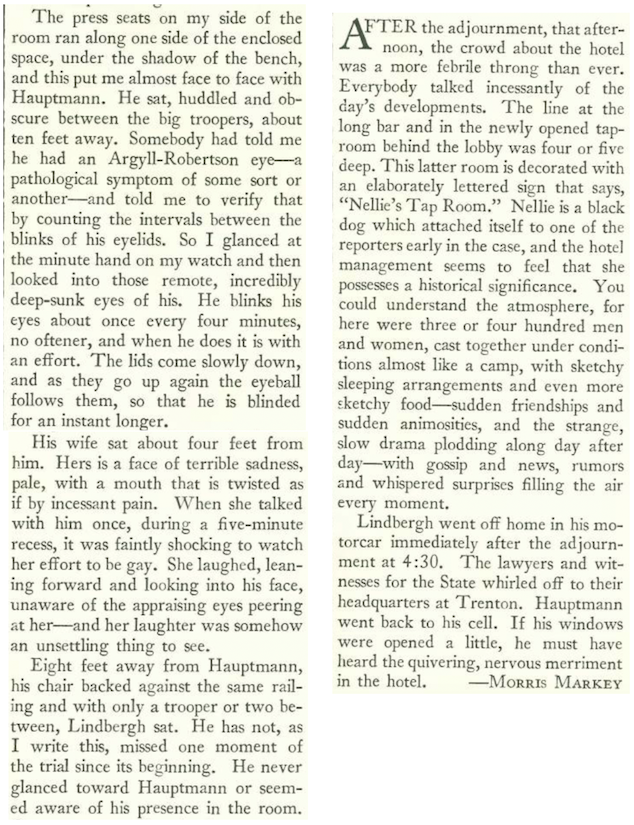
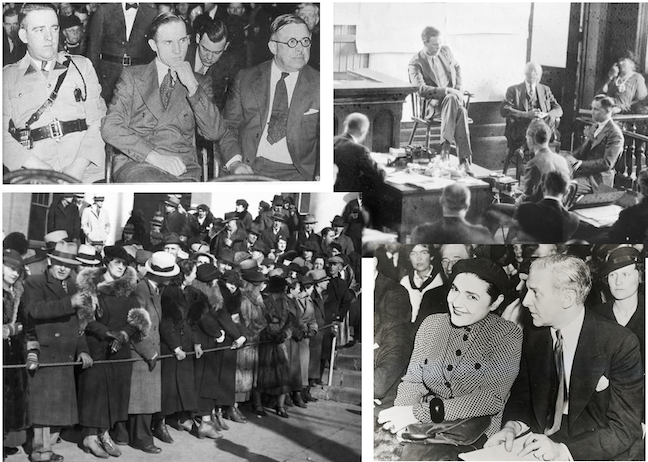
Mary Mallon was the source of sensational headlines in the early 1900s, but even she couldn’t top the media frenzy prompted by the Lindbergh baby kidnapping and the trial of accused murderer Bruno Hauptmann.The New Yorker’s Morris Markey went to the courthouse in Flemington, New Jersey, to file this report for “A Reporter at Large.” Excerpts:
TRIAL OF THE CENTURY…Clockwise, from top left: Bruno Hauptmann (center) at his murder trial, which ran from Jan. 2 to Feb. 13, 1935, in Flemington, New Jersey; Charles Lindbergh takes the witness stand; novelist Fanny Hurst and gossip columnist Walter Winchell at the trial on Jan. 30, 1935—the “Trial of the Century” was followed by more than 700 reporters; police ropes contained the large crowds gathered at the courthouse. (Library of Congress/umass.edu/Courier Post)
Hauptmann would be convicted of the crime and immediately sentenced to death. On April 3, 1936, he would meet his end in an electric chair at the New Jersey State Prison, maintaining his innocence to the very end.
* * *
From Our Advertisers
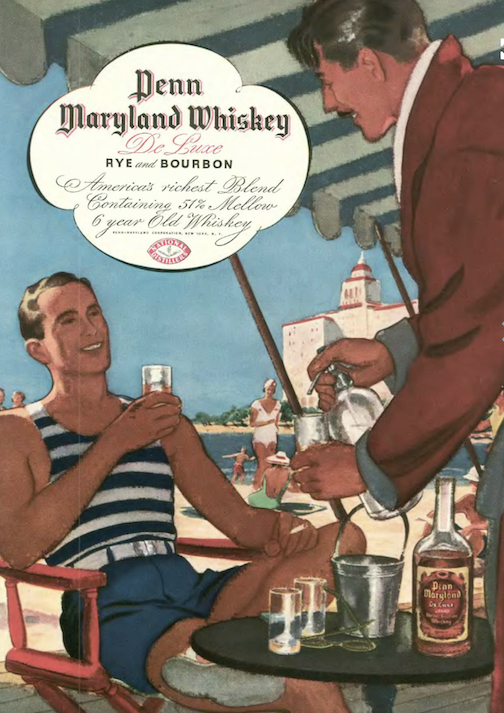
On to our ads, we begin with another colorful spot from Penn Maryland, and jolly times on Miami Beach…
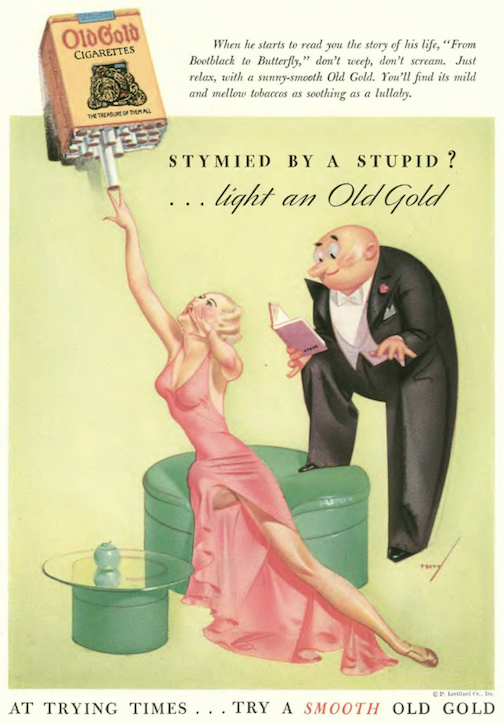
…here is the first in a series of ads that the makers of Old Gold cigarettes (Lorillard) began running in 1935, featuring a sugar daddy and his leggy mistress…they were drawn by George Petty (1884–1975), famed for his “pin-up girls” featured on many magazine covers as well as in ads for Old Gold, Jantzen swimsuits, and TWA, among others…
…here is Petty at work in 1939…
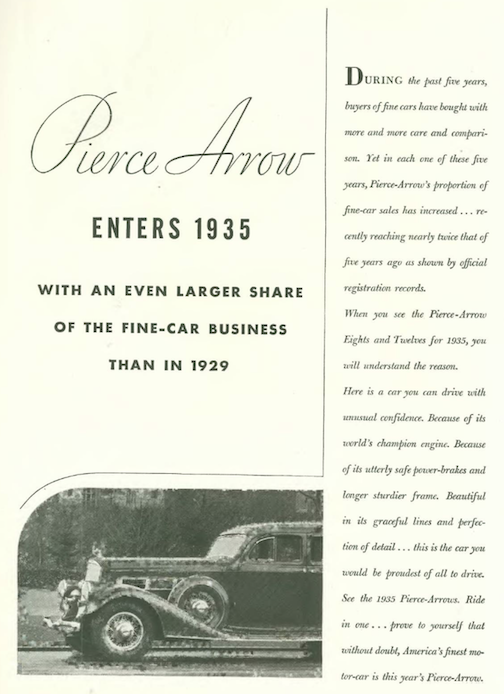
…Buffalo-based Pierce-Arrow was known for its expensive luxury cars, which were not exactly hot sellers during the Great Depression; moreover, Pierce was the only luxury brand that did not offer a lower-priced car to provide cash flow to the company, and contrary to the claims in this ad, Pierce-Arrow would close its doors by 1938…
…one thing alive and well in the 1930s was sexism, and here is a good example from the makers of a popular line of soups…
…The Theatre Guild called upon the talents of James Thurber to promote their latest production…
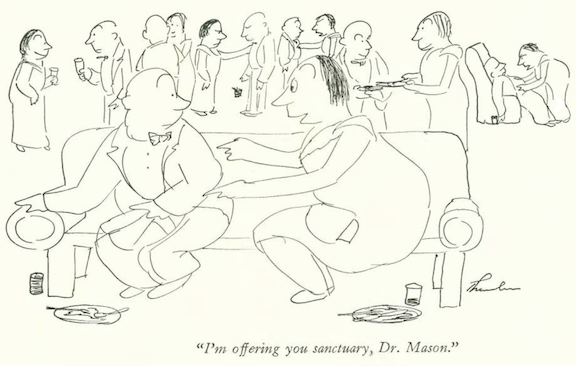
…and we continue with Thurber as move into the cartoons…
…where Robert Day found some miscasting in a Civil War epic…
…George Price’s floating man seemed to be coming back to earth…
…Day again, with a sure-fire way to defend one’s goal…
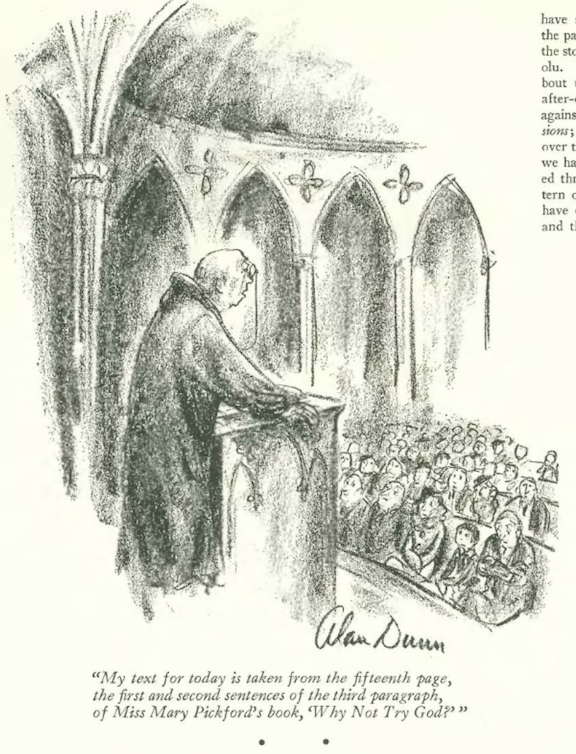
…Alan Dunn offered words of wisdom from the pulpit…
…and we close with Barbara Shermund, and a familiar face…






































































 A New Yorker State of Mind