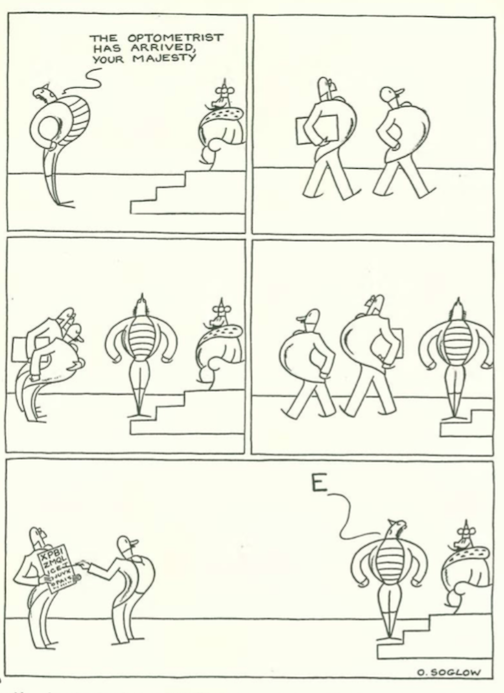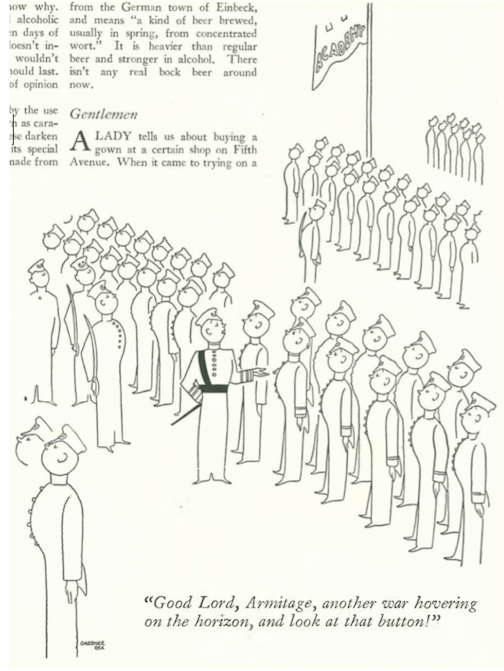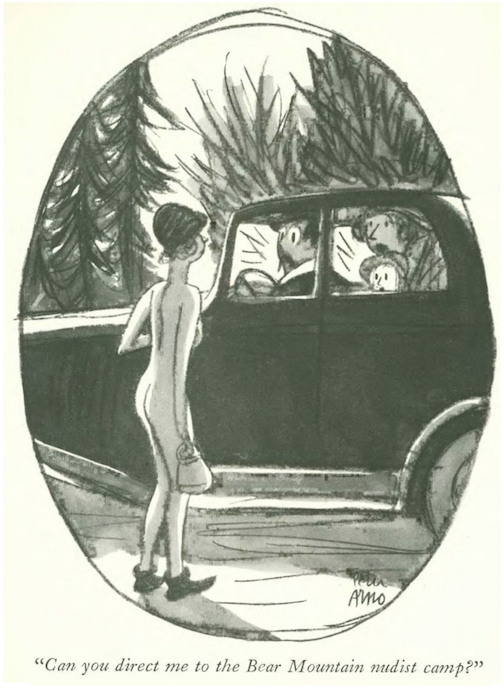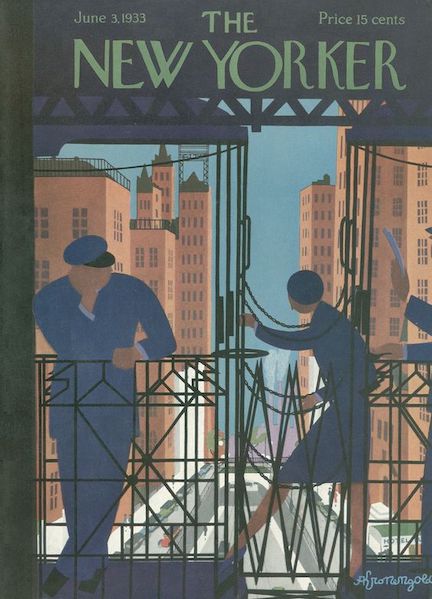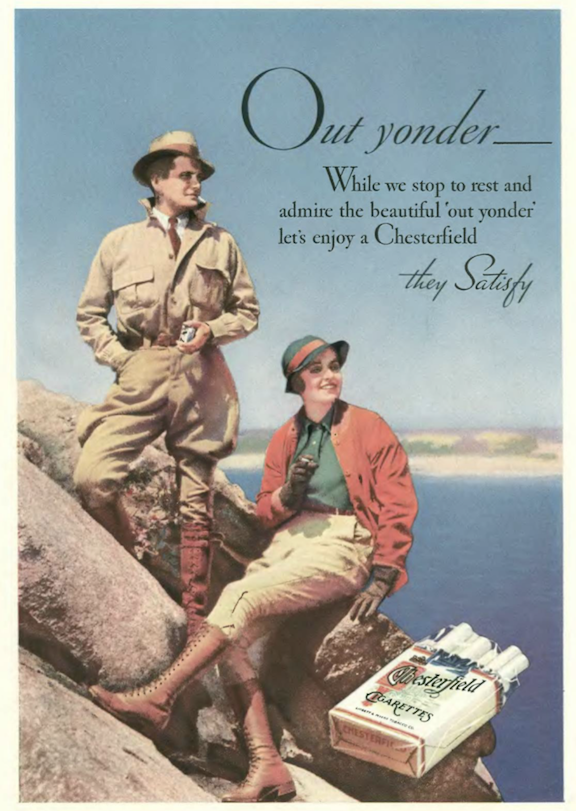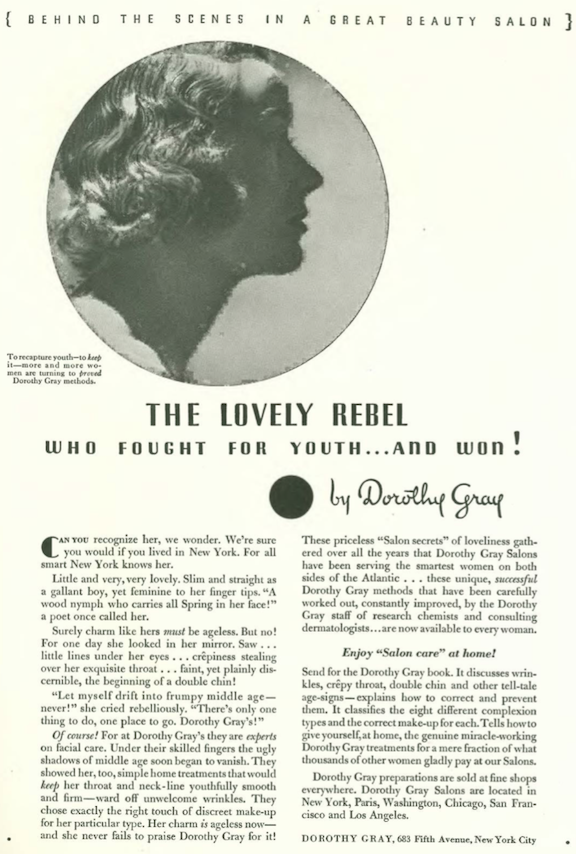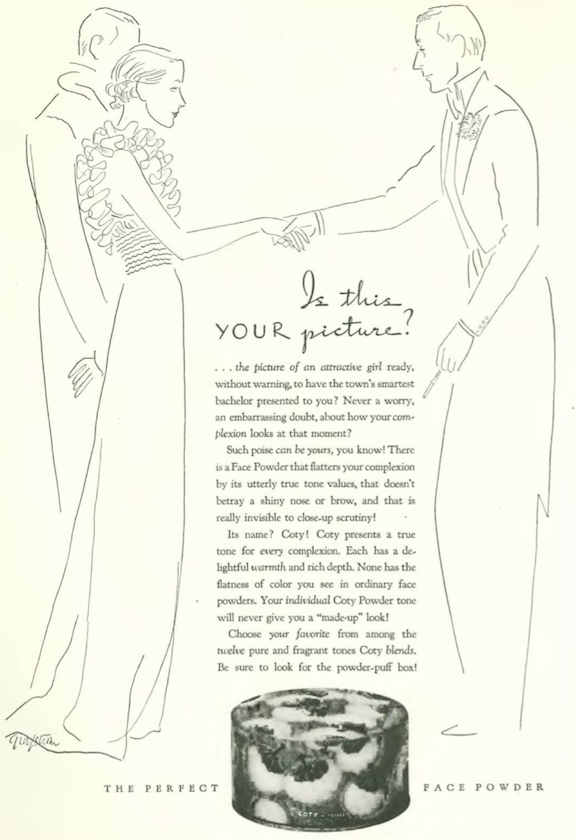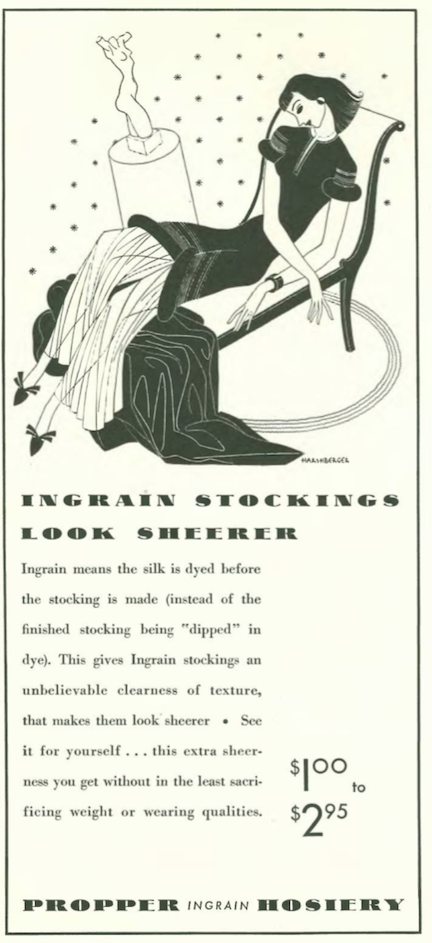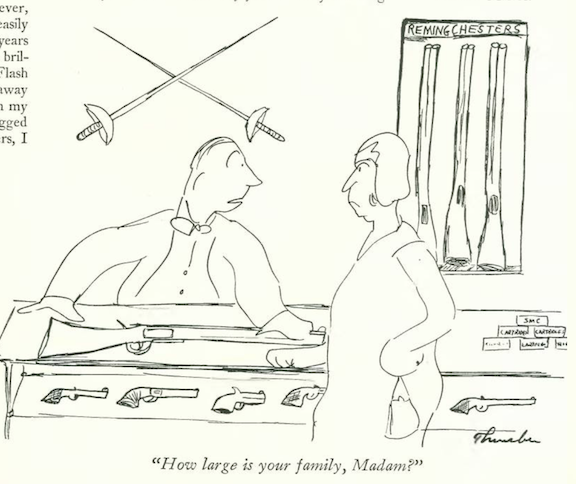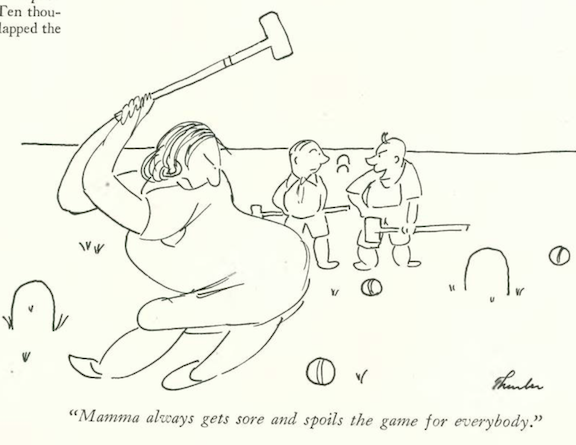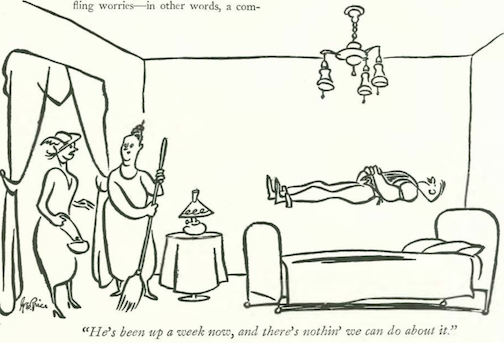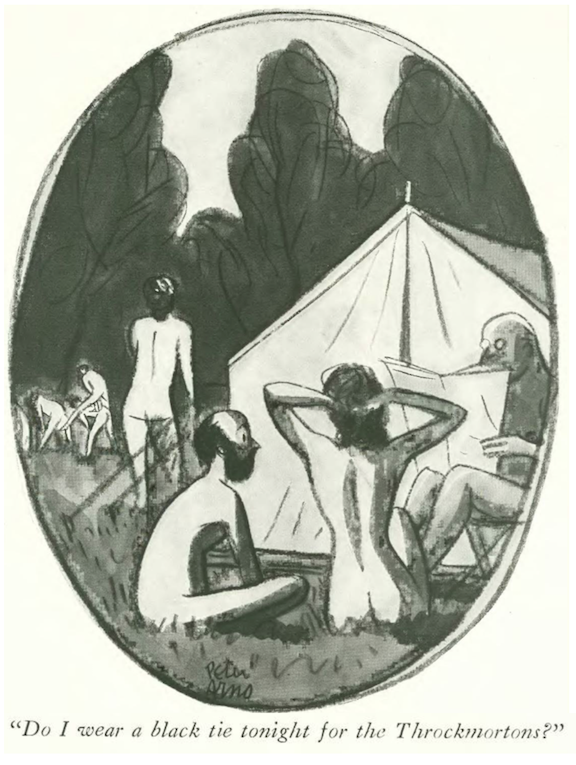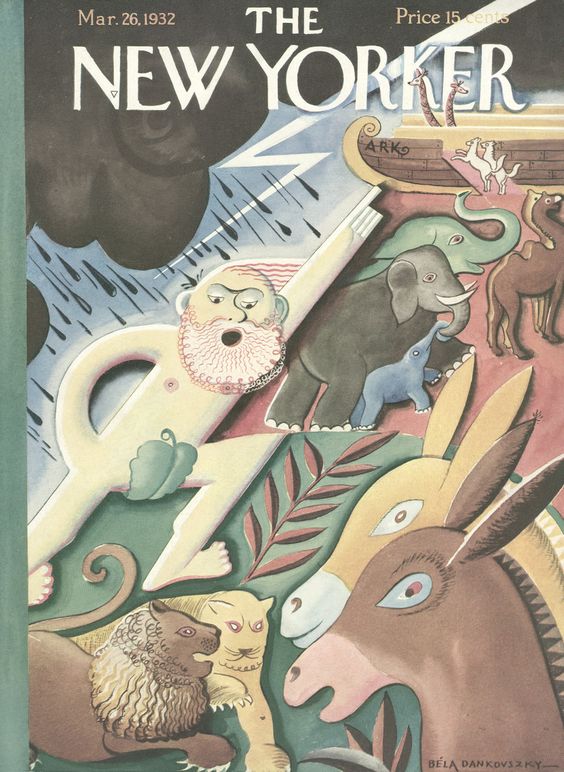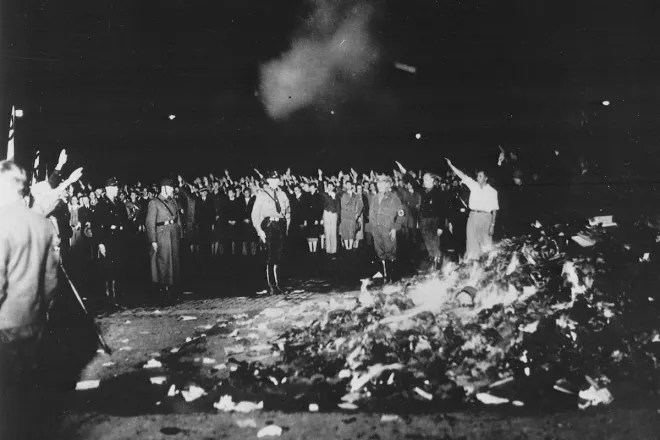
Cheers For Beers

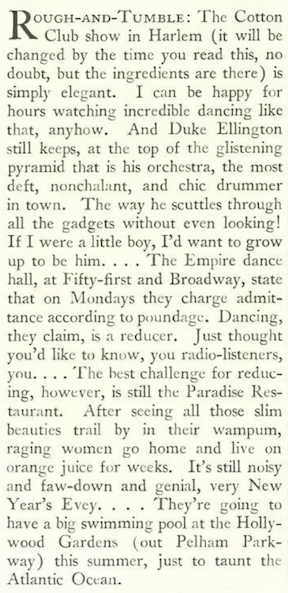
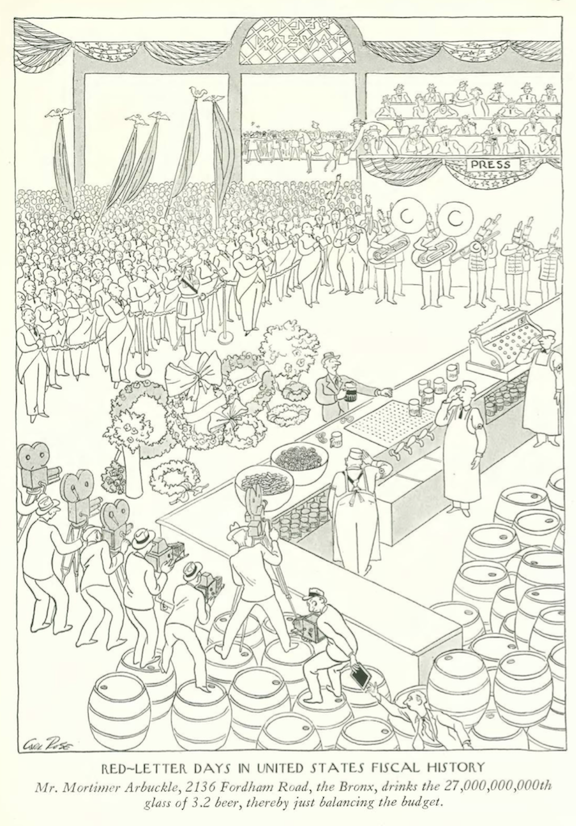
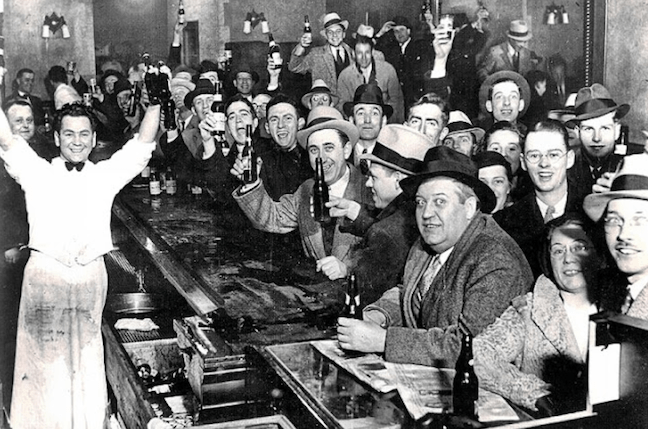
Good cheer was in short supply during the worst year of the Depression, but as 1933 approached many New Yorkers could at least look forward to legal beer in the New Year.

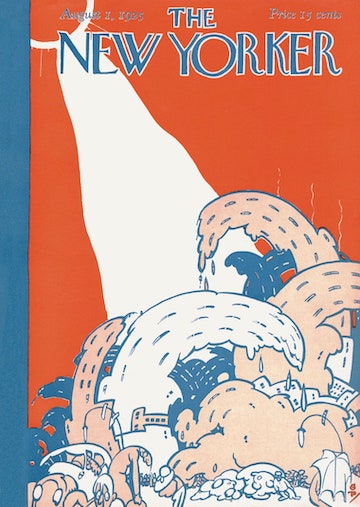
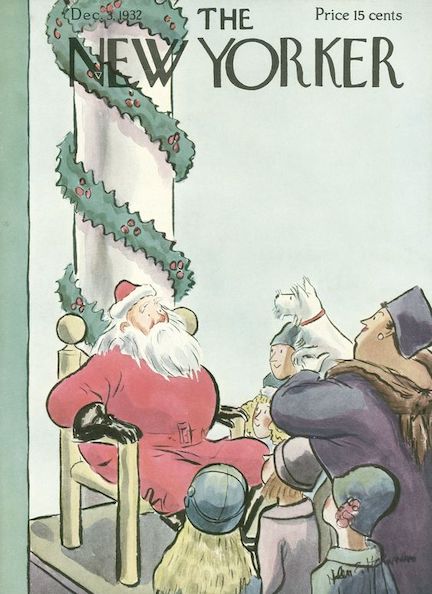
Dec. 3, 1932 cover by Helen Hokinson.

But as with all things political, new rules and regulations would need to be hashed out before the taps could flow, and both brewers and beer drinkers would have to recalibrate a relationship that had been suspended for nearly 13 years. Alva Johnston gave this (excerpted) report in “A Reporter at Large”…

WHILE YOU WERE AWAY…Vaudeville star Rae Samuels holds what was purportedly the last bottle of beer (a Schlitz) distilled before Prohibition went into effect in Chicago on Dec. 29, 1930. The bottle was insured for $25,000. After Prohibition ended in late 1933, Schlitz reappeared with gusto and quickly became the world’s top-selling brewery. (vintag.es)

 *  *  *

National Treasure

Chester Dale (1883–1962) began his career in finance at age fifteen, working as a runner for the New York Stock Exchange. Just twelve years later he would marry painter and art critic Maud Murray Dale, and together they would amass an art collection that would include significant works by Claude Monet, Paul Cézanne, Amedeo Modigliani, Henri Matisse and Pablo Picasso. In 1932 the Dales were well on their way to building a collection that would eventually end up in the National Gallery of Art in Washington, D.C. “The Talk of the Town” featured the Dales in this except:

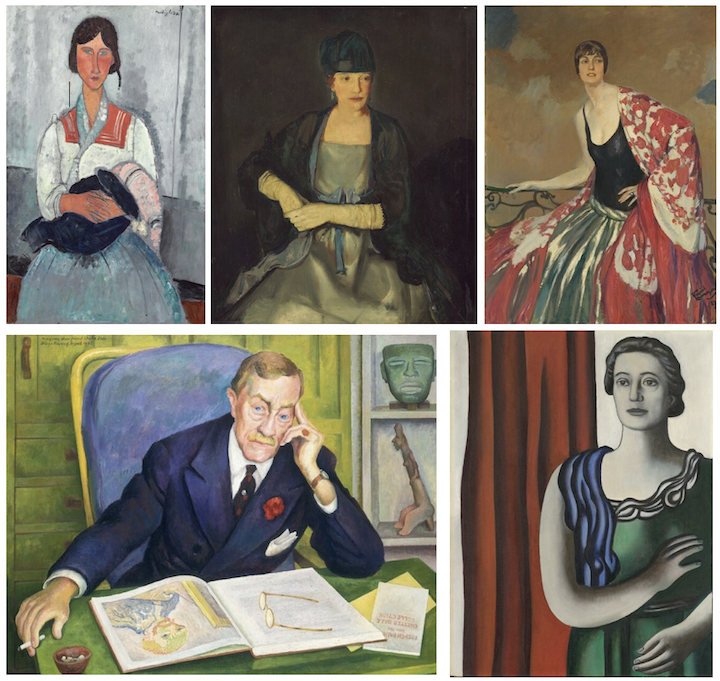
WAYS OF SEEING…Maud Dale was a staunch supporter of artist Amedeo Modigliani, whose 1919 painting Gypsy Woman with Baby (top left) was among 21 of his works collected by the Dales. Maud also commissioned a number of her own portraits, including (clockwise, from top center) ones rendered by George Bellows in 1919, by Jean-Gabriel Domergue in 1923, and by Fernand Léger in 1935. At bottom left is a 1945 portrait of Chester Dale by Diego Rivera. (National Gallery of Art)
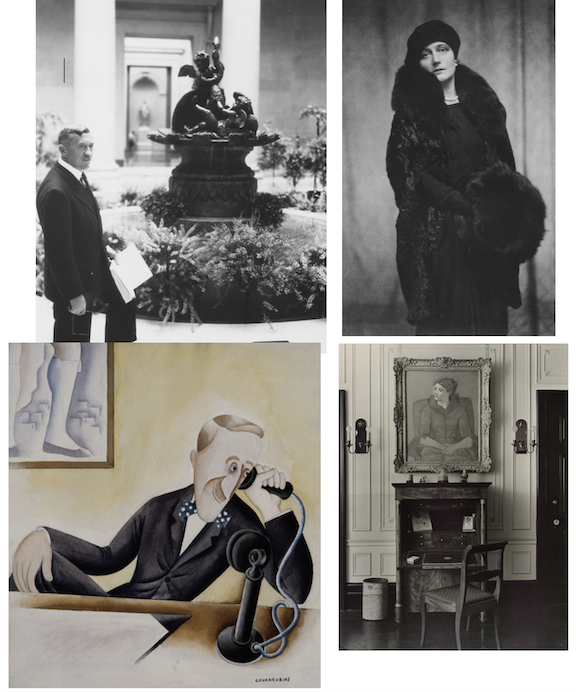
SAINTED PATRONS…Clockwise, from top left, a 1943 photo of Chester Dale in the West Garden Court of the National Gallery of Art, which today holds the Chester Dale Collection of 240 paintings among other items; Maud Dale, c. 1926; Madame Picasso (1923) by Pablo Picasso on view in the Dale residence, c. 1935; a 1926 caricature of Chester by Mexican artist Miguel Covarrubias, a close friend of the Dales and early New Yorker contributor. (National Gallery of Art)

 *  *  *

Smoke Screen

E.B. White noted the historic meeting of outgoing U.S. President Herbert Hoover and his successor, Franklin D. Roosevelt. White speculated on at least one topic of discussion:

DO YOU INHALE?…Outgoing President Herbert Hoover (left) and President-elect Franklin D. Roosevelt on their way to the inauguration ceremonies, 1933. (National Archives)

 *  *  *

No Longer “It”

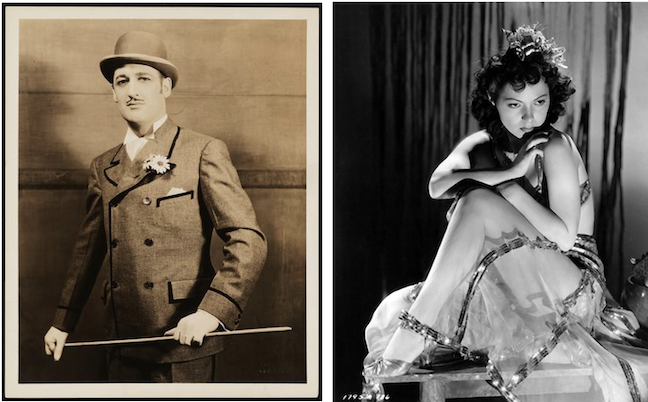
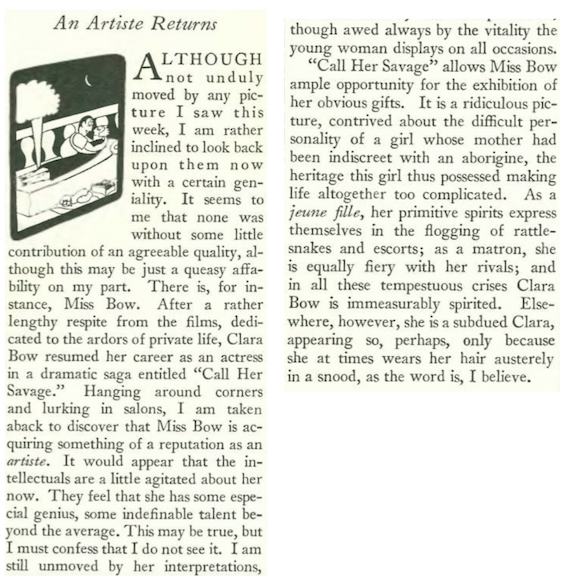
Here is how IMDB describes the 1932 pre-Code drama Call Her Savage: “Sexy Texas gal storms her way through life, brawling and boozing until her luck runs out, forcing her to learn the errors of her ways.” The actress who portrayed that “Texas Gal,” Clara Bow, was getting sick of Hollywood and would make just one more film before retiring at age 28. Although in some circles the silent era’s “It Girl” sex symbol was finally beginning to earn some credit as an “artiste,” critic John Mosher was reserving judgment:

WHIP IT GOOD…Clara Bow brawls her way through life in her second-to-last film role, Call Her Savage. (IMDB)

 *  *  *

From Our Advertisers

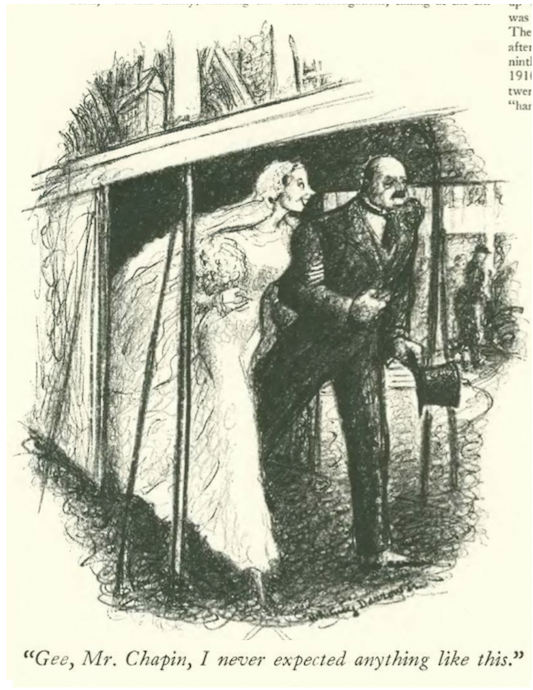
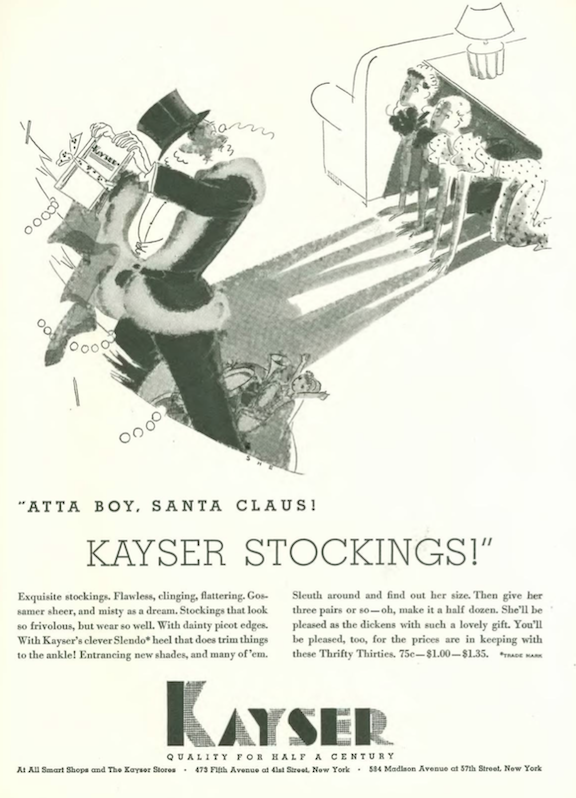
Is this really how the smart set lived in 1932 Manhattan? Here we have an old toff dressed like Santa (in a top hat) sneaking presents onto the Christmas tree…and caught in the act by, I presume, his wife and a chambermaid?…

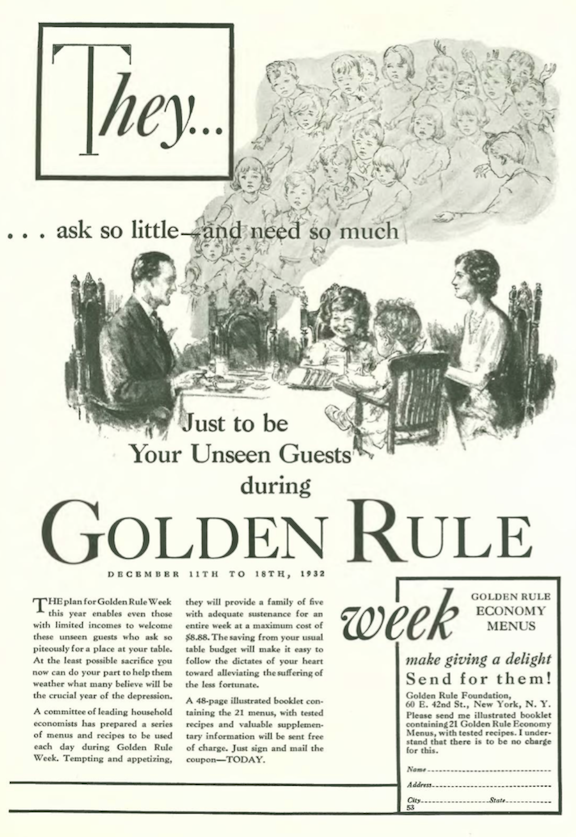
…in sharp contrast, here is an ad from the Golden Rule Foundation, which annually designated the second week in December as “Golden Rule Week”…the foundation raised funds to help needy children throughout the world…

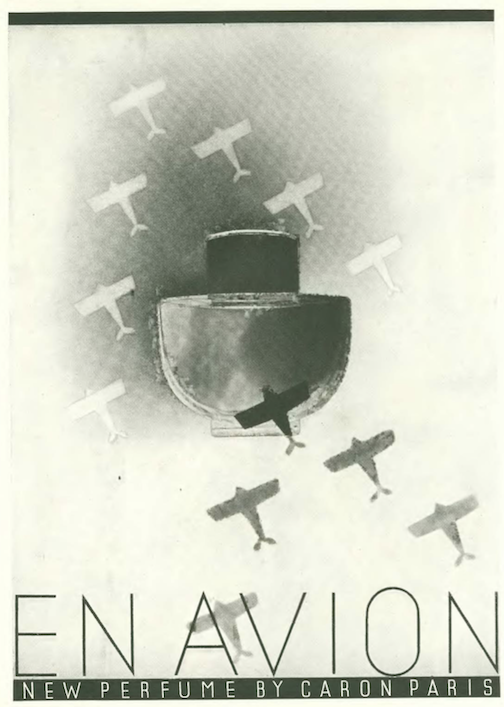
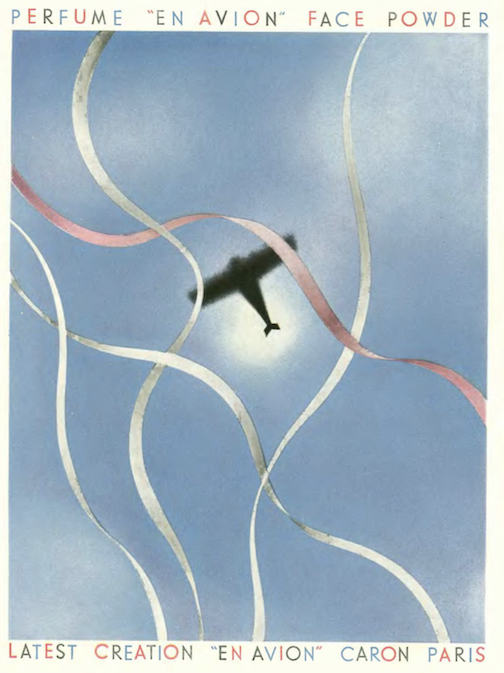
…and here’s a bright, back cover ad from Caron Paris…apparently the face powder industry had been good to them in 1932…

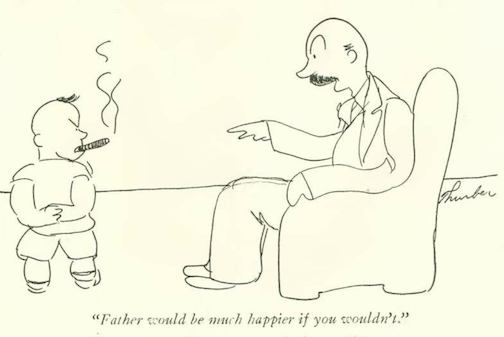
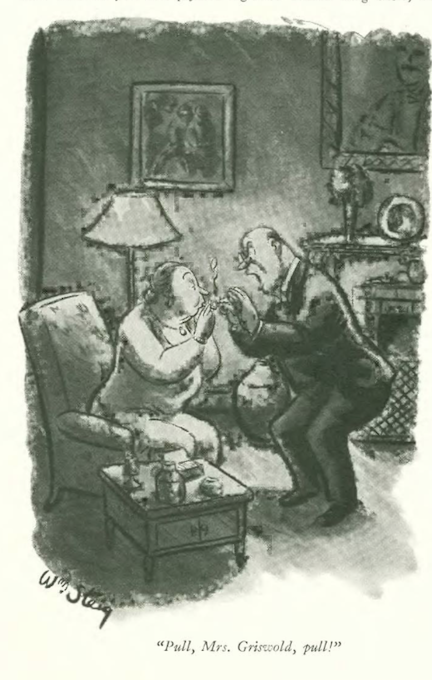
…on to our cartoons, we start with a smoking tutorial from William Steig

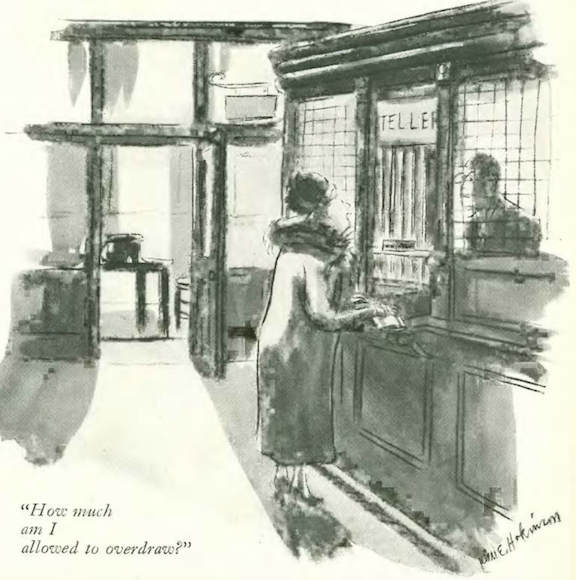
…some sunny optimism from one of Helen Hokinson’s “girls”…

…in this two-pager by Garrett Price, an artist asks his patron: All right then, what was your conception of the Awakening of Intelligence through Literature and Music?…

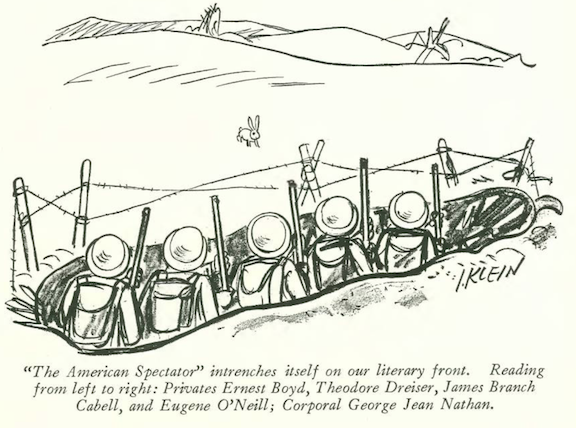
Isadore Klein dedicated this cartoon to the much-anticipated launch of a new literary magazine, The American Spectator (not to be confused with today’s conservative political publication by the same name) and its illustrious line-up of joint editors…

Crawford Young’s caption recalled the precocious child in Carl Rose’s 1928 cartoon caption, a collaboration with E.B. White — “I say it’s spinach, and I say the hell with it”…

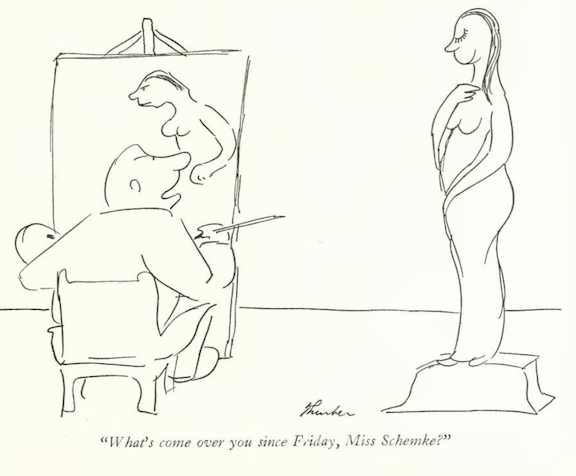
…and speaking of Carl Rose, this next cartoon by James Thurber has an interesting history…New Yorker cartoonist Michael Maslin explains in this Carl Rose Inkspill bio: In 1932, Rose submitted a drawing captioned, “Touche!” of two fencers, one of whom has just cut off the head of the other. Harold Ross (according to Thurber in The Years With Ross) thinking the Rose version “too bloody” suggested Thurber do the drawing because “Thurber’s people have no blood. You can put their heads back on and they’re as good as new”…

…as we close out December 2021 (which I am dutifully trying to do the same in 1932), we move on to the Dec. 10 issue…

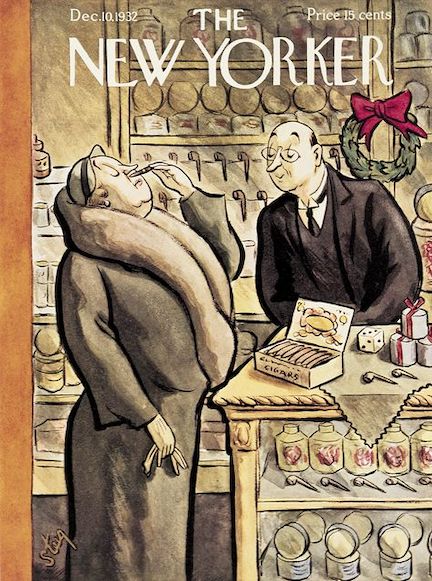
Dec. 10, 1932 cover by William Steig.

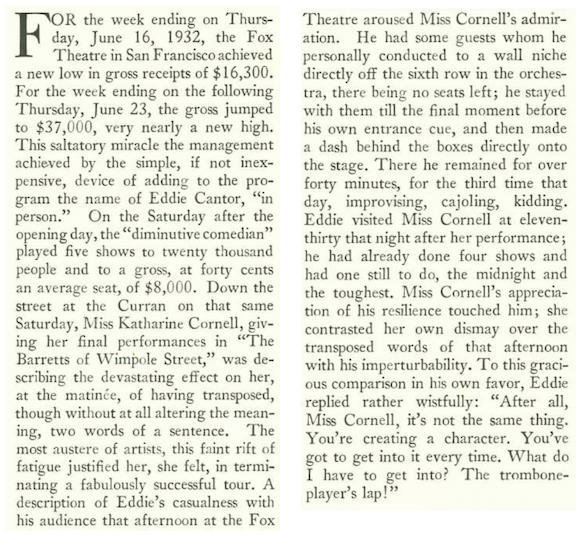
…and Samuel N. Behrman’s profile (titled “Chutspo”) of comedian Eddie Cantor, who made his way from vaudeville and the Ziegfeld Follies to fame on the radio, in film and on early television. Theater great Katherine Cornell certainly appreciated Cantor’s gift for making his routine look easy: Here’s an excerpt:

AH, IT WAS NOTHIN’…Comedian Eddie Cantor was adored by millions of radio listeners as the “Apostle of Pep.” At right, caricature for the profile by Al Frueh. (bizarrela.com)

 *  *  *

Christmess

Lois Long’s “On and Off the Avenue” column was thus titled to reflect the annual challenge of buying that special something for that special someone. Here is the opening paragraph:

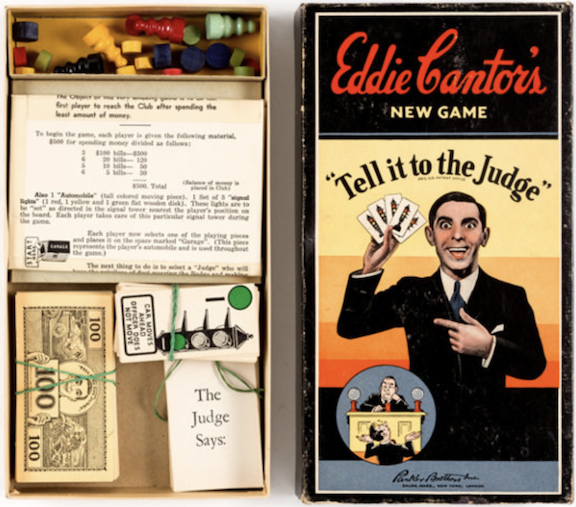
One of the items suggested in Long’s column was a game named for our friend Eddie Cantor called “Tell it to the Judge”…

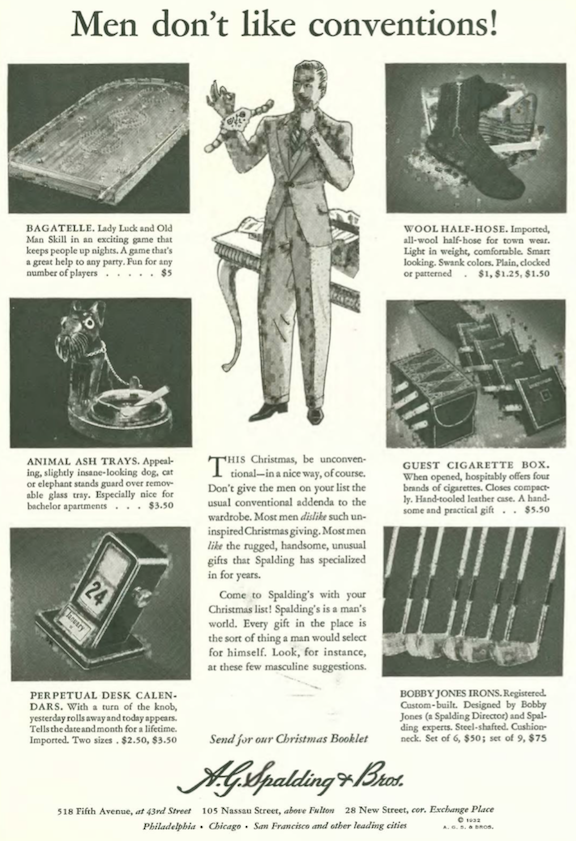
…or you could select one of these gifts from A.G. Spaulding…my grandfather had one of those perpetual desk calendars…I would stave off boredom by endlessly flipping those numbers while the adults conversed in German…

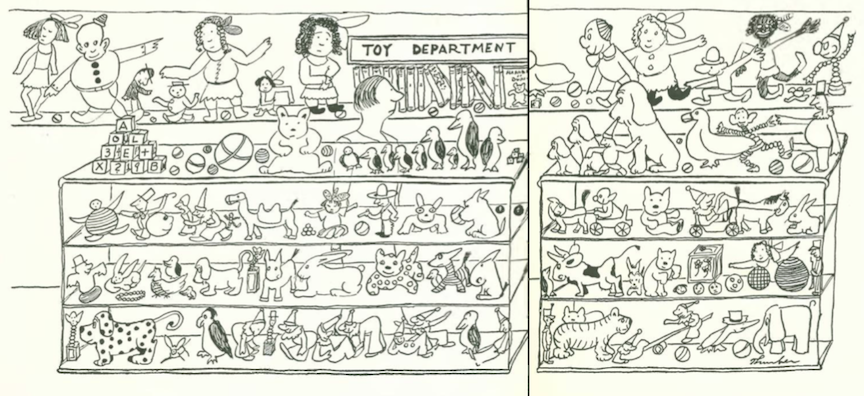
…on to our cartoonists, James Thurber provided this nice bit of art for a two-page spread…

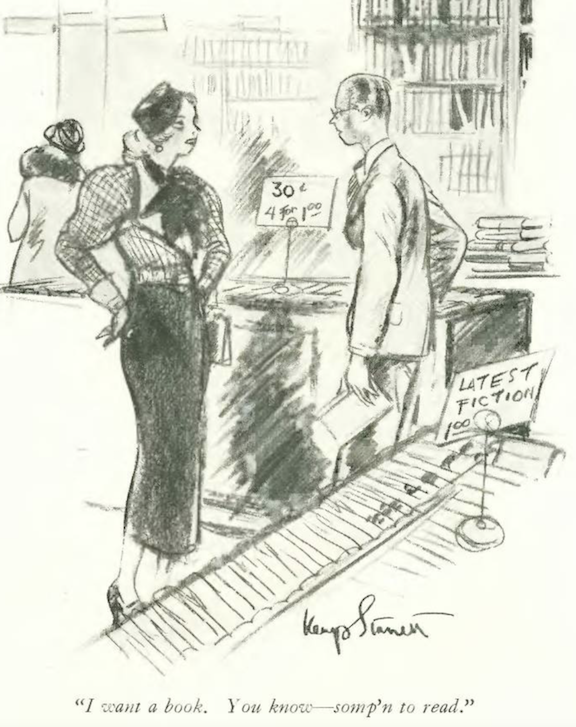
Kemp Starrett gave us some biscuit (cookie) execs contemplating a new, streamlined design for their product…

Norman Bel Geddes is perhaps best known for designing the “Futurama” display at the 1939 New York World’s Fair…here is Bel Geddes’ “Cobra Lamp”…

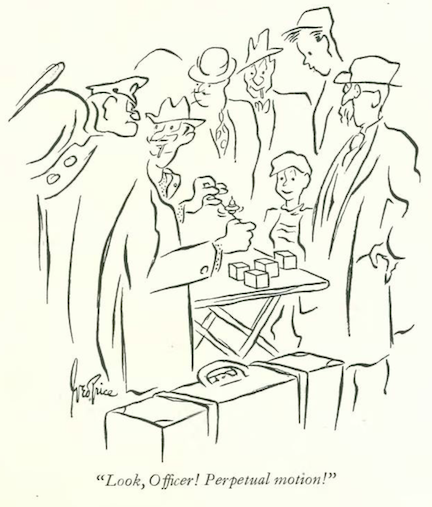
George Price gave us a fellow peddling more than a simple top…

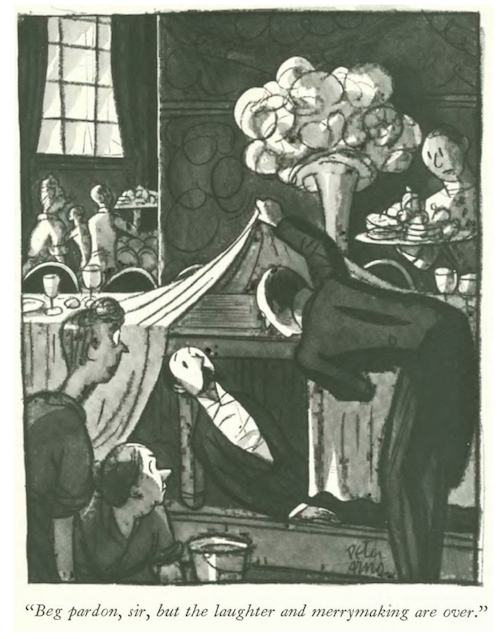
…and with Peter Arno, the party never ends…

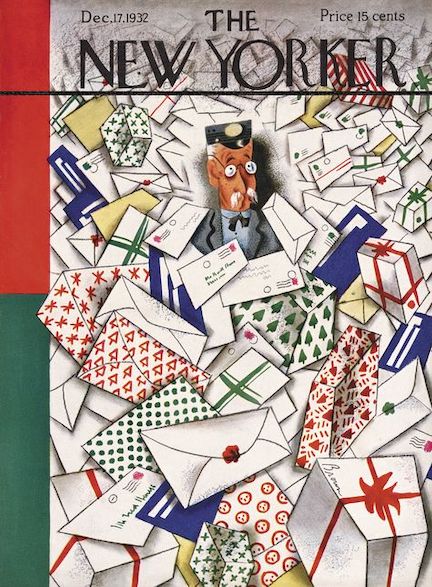
…on to Dec. 17, 1932…

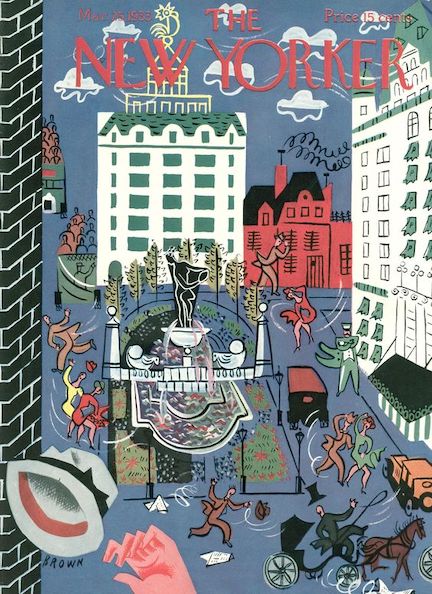
Dec. 17, 1932 cover by Harry Brown.

…and Arno’s ex Lois Long was back with another “Tables for Two,” still feigning the old spinster (see “shawl and slippers” reference in first graf) when in fact she was an attractive, 31-year-old divorcee who apparently still had plenty of fire for late night revelry…

According to the Jeremiah Moss blog Vanishing New York, Long was likely describing 52nd Street between Fifth and Sixth avenues that “began as a row of speakeasies, which turned into jazz clubs that then evolved into burlesque houses.” The speakeasies got their start when the city lifted residential restrictions on the brownstones and businesses moved in, including Tony’s, the Trocadero and later Place Pigalle…

(vanishingnewyork.blogspot.com via NYPL)

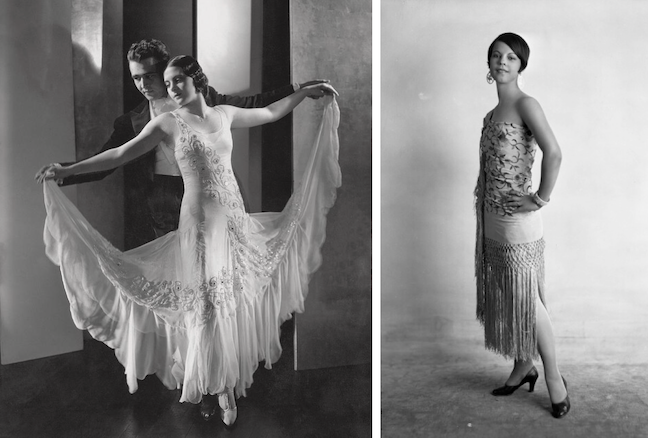
…it was at the new Place Pigalle that Long enjoyed the “knockout” after-midnight show featuring ballroom dancers Frank Veloz and Yolanda Casazza and the diminutive singer Reva Reyes

AFTER HOURS entertainment at the Place Pigalle included Frank Veloz and Yolanda Casazza (left, in a 1930 portrait by Edward Steichen) and Mexican singer Reva Reyes. (Vanity Fair/El Paso Museum of History)

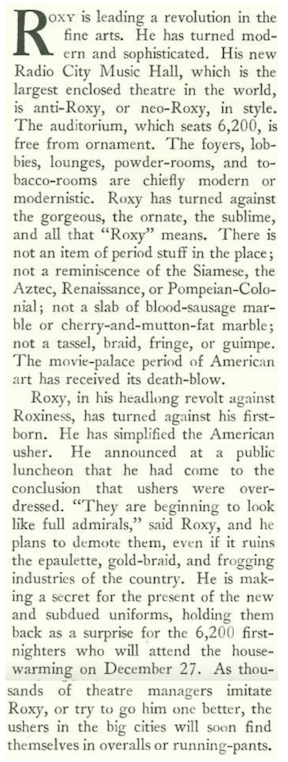
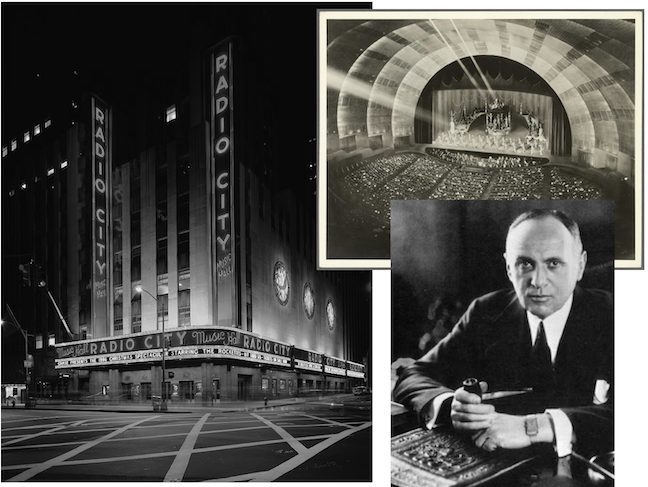
…and there was more entertainment to be had in Midtown with the upcoming opening (Dec. 27, 1932) of Radio City Music Hall, a dream project of Samuel “Roxy” Rothafel. Hugh Blake had the scoop for the New Yorker in the “A Reporter at Large” column…an excerpt:

AIN’T IT GRAND?..of Radio City Music Hall would open its doors on Dec. 27, 1932, fulfilling a dream of theater owner Samuel “Roxy” Rothafel. (nypap.org/Wikipedia/dobywood.com)

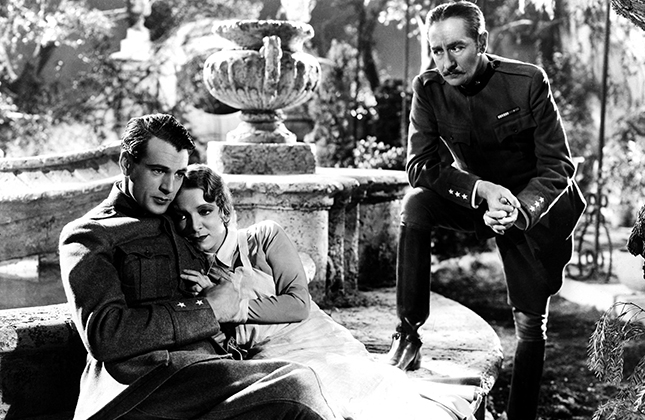
…Radio City Music Hall was built to host stage shows only, but within a year of its opening it was converted into a movie venue…and speaking of movies, we have film critic John Mosher finally finding a movie to his liking, and a novel-to-film adaptation to boot…

FAREWELL TO ALL OF THOSE ARMS…Gary Cooper, Helen Hayes and Adolphe Menjou in Paramount’s A Farewell to Arms, directed by Frank Borzage. The film received Academy Awards for Best Cinematography and Best Sound. (buffalo.edu)

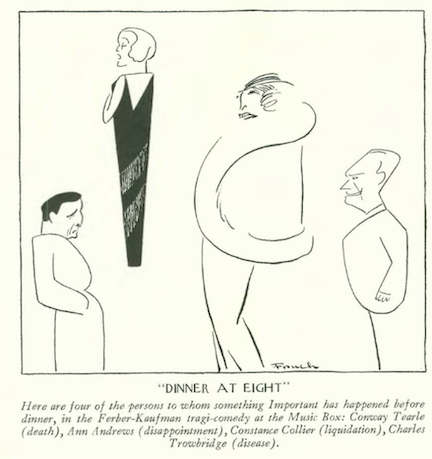
…and back to the stage, Al Frueh lent his artistry to the play Dinner At Eight, which opened October 22, 1932, at the Music Box Theatre, and would close May 6, 1933, after 232 performances. The popular play had revivals in 1933, 1966 and 2002 as well as a George Cukor film adaptation in 1933 with an all-star cast.

 *  *  *

From Our Advertisers

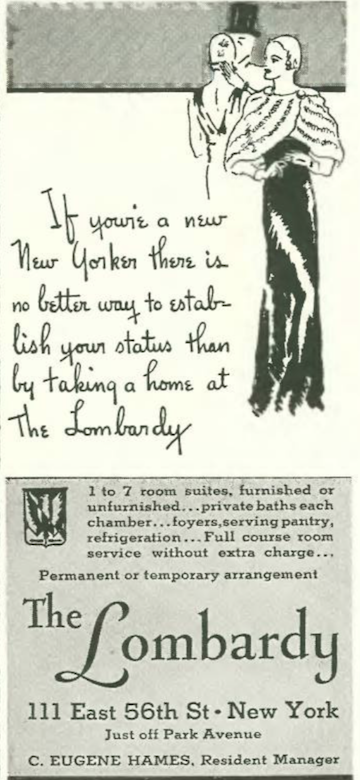
We begin with this helpful advice from the folks at the Lombardy…

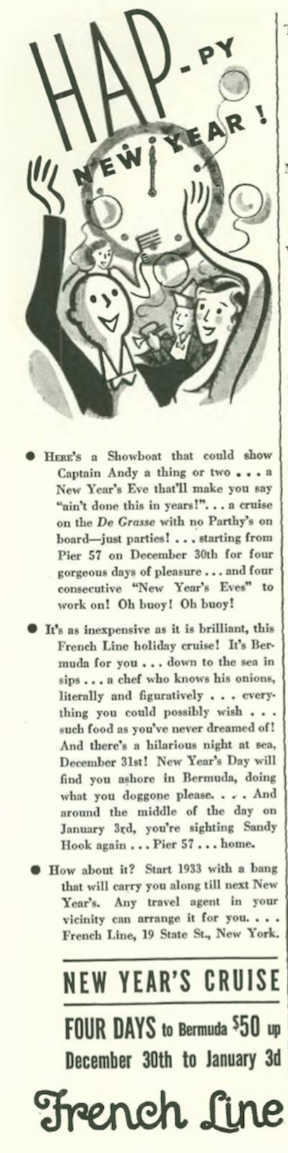
…while we have a much less stuffy invitation from the French Line…

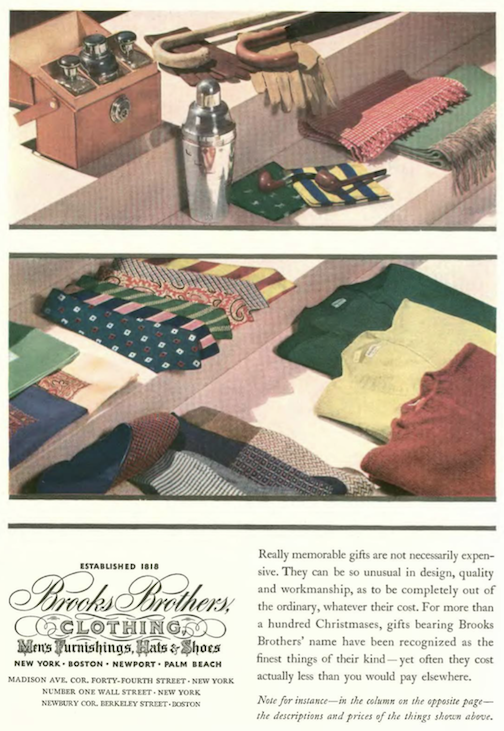
…the usually staid Brooks Brothers sprung for an all-color Christmas ad, featuring items that would suit any aspiring Bertie Wooster…

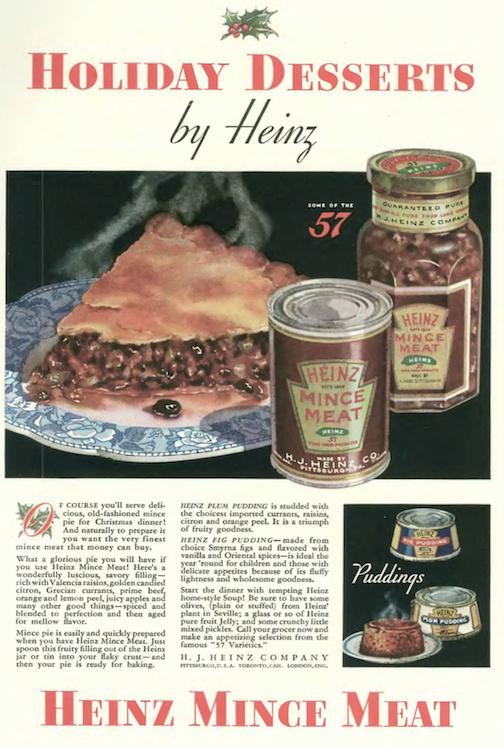
…and what would be the holidays without canned meat…

…and we end with James Thurber, who gets us into the proper mood for the New Year…

Next Time: Comrade Alex…


Pining for Tin Lizzy

In 1922, a young Cornell graduate named E.B. White set off across America in a Model T with a typewriter and a sense of adventure.

Nov. 12, 1932 cover by Constantin Alajalov.

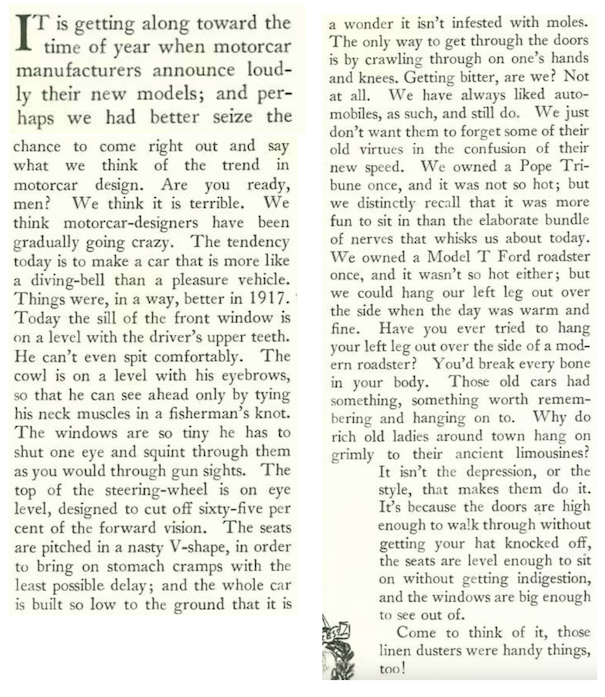
Years later, 1936 exactly, White would recall the America he had discovered as a 22-year old in his book From Sea to Shining Sea, which would include an essay “Farewell to Model T” that first appeared in The New Yorker as “Farewell My Lovely.” For this Nov. 12, 1932 “Notes and Comment” column, it appears White is already pondering his paean to the Model T, contrasting its freedom with the glassed-in claustrophobia of modern cars:

OUT WITH THE NEW, IN WITH THE OLD…Despite their many shortcomings, E.B. White seemed to prefer the cars of yesteryear, including (above) the 1904 Pope Tribune and 1917 Ford Model T Roadster; White likened modern cars, such as the 1932 Ford and Chevrolet sedans (bottom, left and right) to riding in a “diving bell.”(Wikimedia/vintagecarcollector.com/Pinterest)

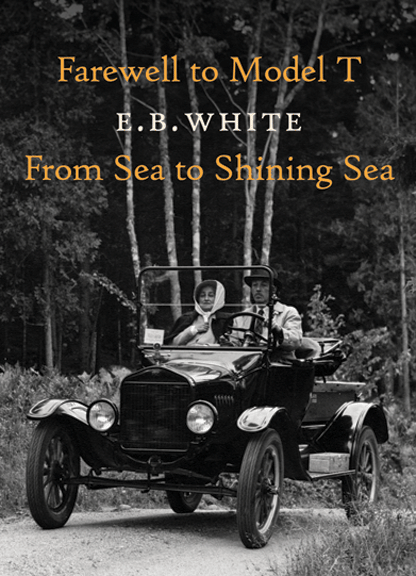
Here’s the cover of From Sea to Shining Sea, which features a photo of White and his wife, Katharine, in a Model T Roadster…

*  *  *

An Appreciation

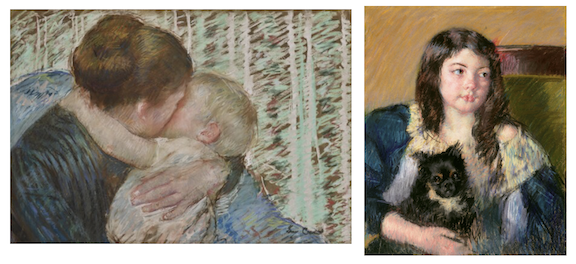
Mary Cassatt (1844-1926) was an American painter who for most of her adult life lived in France among fellow Impressionists. Like her friend Edgar Degas, Cassatt excelled in pastels, works that were admired by critic Lewis Mumford in an exhibition at New York’s Durand-Ruel Galleries:

TRY A LITTLE TENDERNESS…Mothers and children were Mary Cassatt’s favorite subjects. Among the examples shown in 1932 at the Durand-Ruel Galleries’ Exhibition of Pastels were Cassatt’s A Goodnight Hug (1880) and Françoise, Holding a Little Dog, Looking Far to the Right (1909). (Sotheby’s/Christie’s)

*  *  *

Hollywood Slump

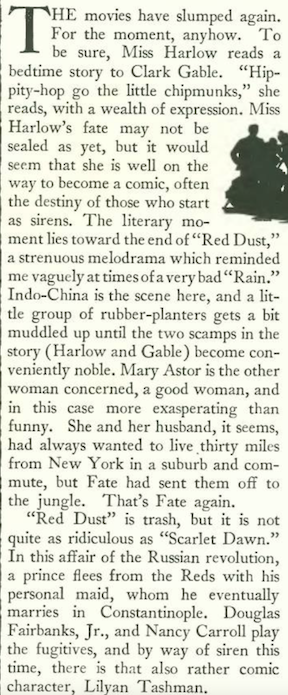
We go from treasure to trash with John Mosher’s latest cinema dispatch, in which he recounts his experience watching the “strenuous melodrama” Red Dust, starring Clark Gable and Jean Harlow. Mosher assured readers that the film is trash, but better trash than Scarlet Dawn with Douglas Fairbanks Jr. and Nancy Carroll.

DUMB AND DUMBER…Jean Harlow attempts to distract Clark Gable from his work in Red Dust; at right, Douglas Fairbanks Jr. is tempted by a servant girl’s affection (Nancy Carroll) in Scarlet Dawn. (IMDB)

*  *  *

From Our Advertisers

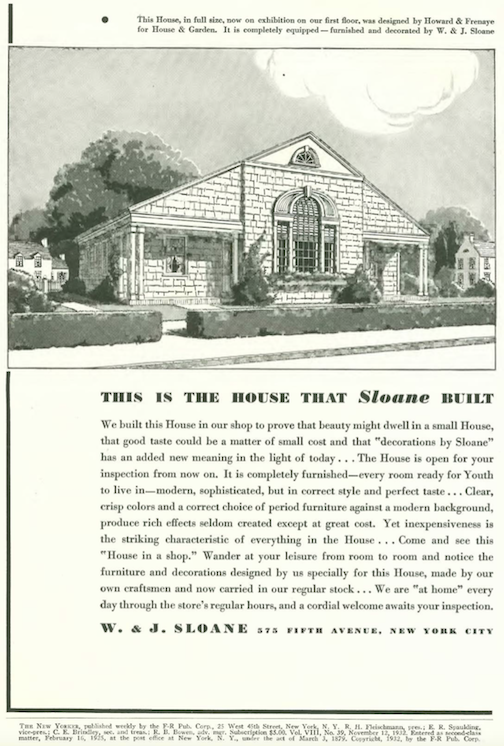
The folks at W.J. Sloane decided that the best way to sell their housewares would be to build an actual house in their Fifth Avenue store…

…do you really want to buy Kraft cheese after looking at this ad? From the look on the woman’s face, that tiresome old wheeze-bag probably smells like aged cheese, and not in a good way…

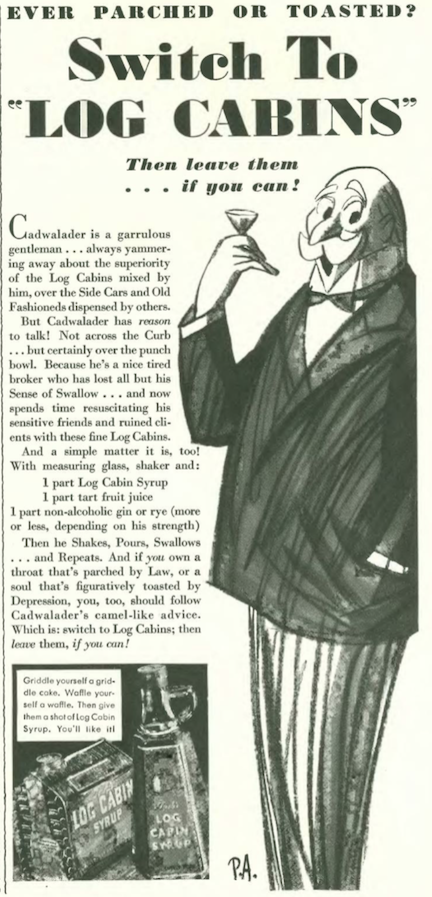
…The makers of Log Cabin syrup continued to parody the popular taglines of tobacco companies with ads featuring a several New Yorker cartoonists, here Peter Arno

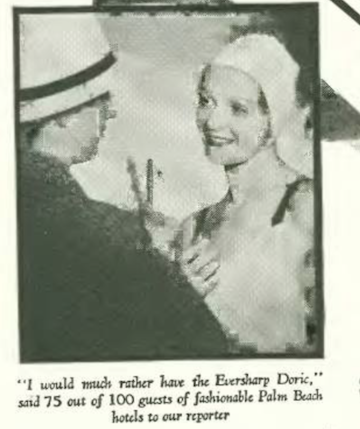
…yep, when I’m relaxing on the beach I like to talk about ink pens, especially those Eversharp ones…

…nor do I mind some weirdo in a dark coat seeking my opinion of said pen while I frolic near my fashionable Palm Beach hotel…

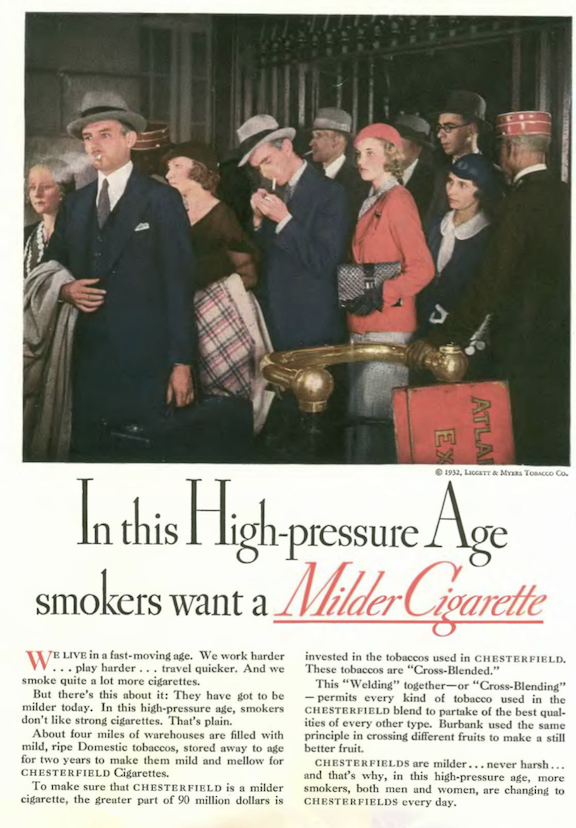
…yes, we all know that Chesterfields are milder, but will someone help that poor man on the left who appears to be blowing out his aorta…

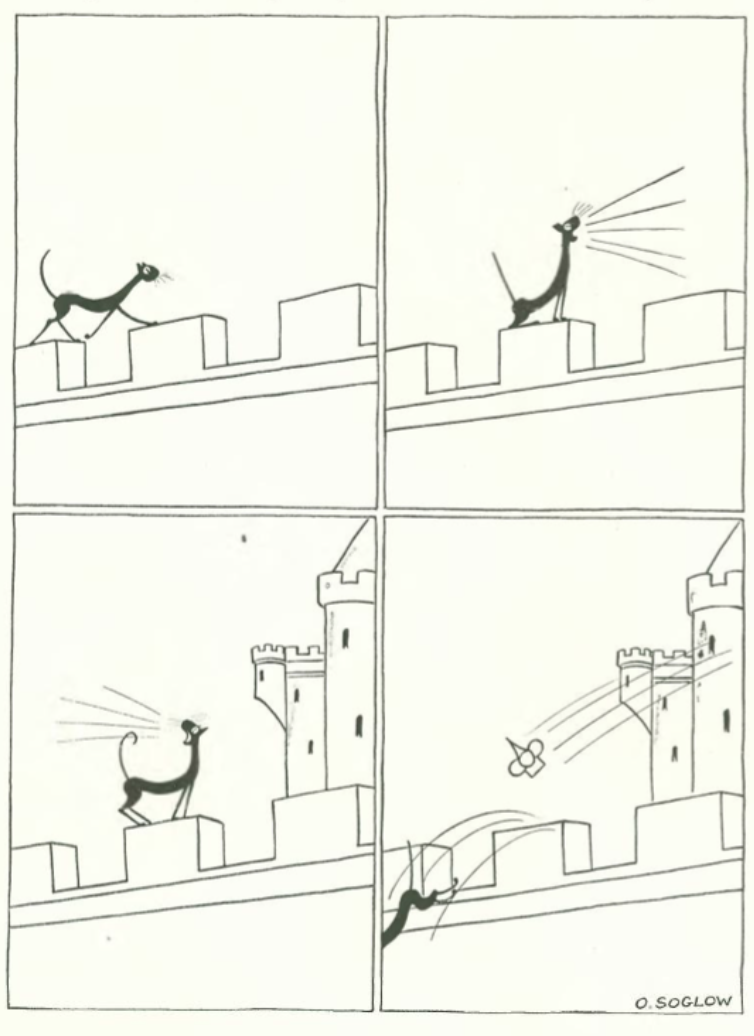
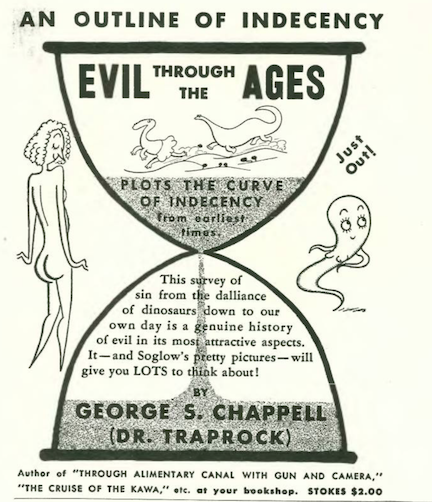
The New Yorker’s former architecture critic George S. Chappell (who wrote under the pen-name T-Square) had moved on to other things, namely parodies of societal mores, including this new book written under his other pen-name, Walter E. Traprock, with illustrations by Otto Soglow

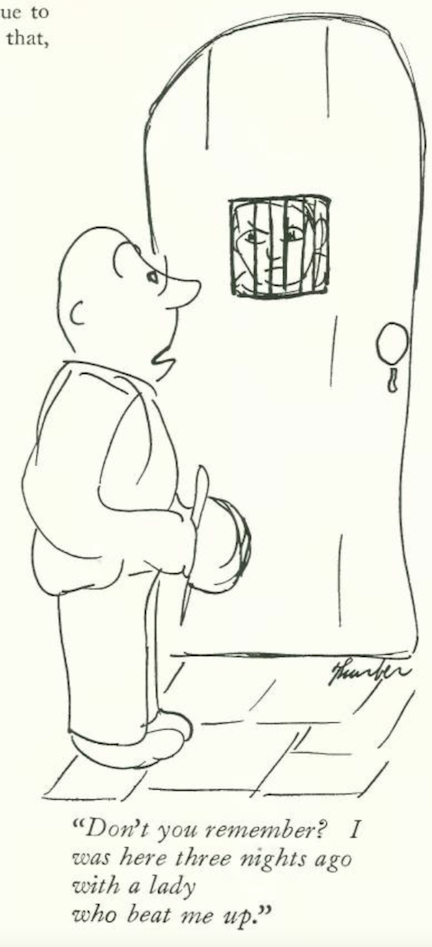
…on to our cartoons, we begin with James Thurber and the travails of menfolk…

Richard Decker gave us the prelude to one man’s nightmare…

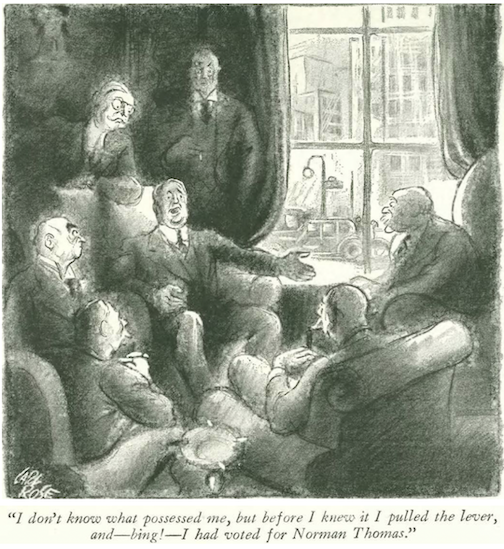
Carl Rose found a titan of industry puzzling over his vote for a socialist candidate…

…and we move on to Nov. 19, 1932…

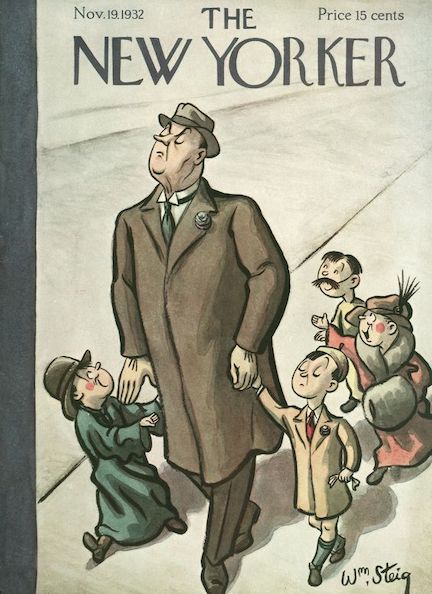
Nov. 19, 1932 cover by William Steig.

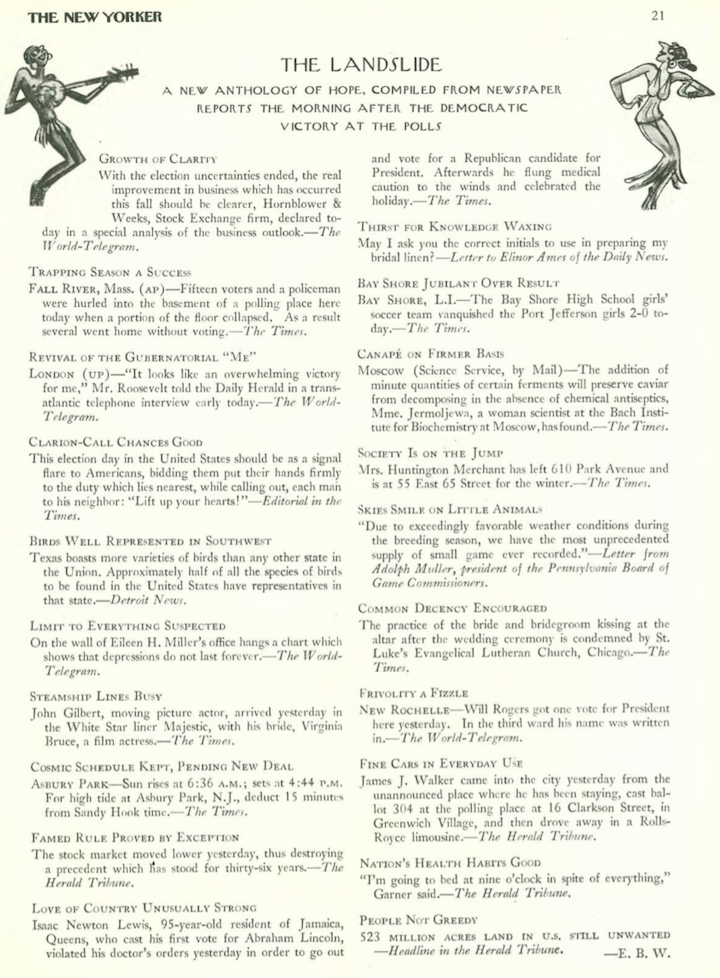
…and this compendium of election highlights by E.B. White

…and Howard Brubaker’s wry observation of the same…

BUSY DAYS AHEAD…Franklin D. Roosevelt celebrates his landslide victory over Herbert Hoover in the 1932 presidential elections. (Associated Press)

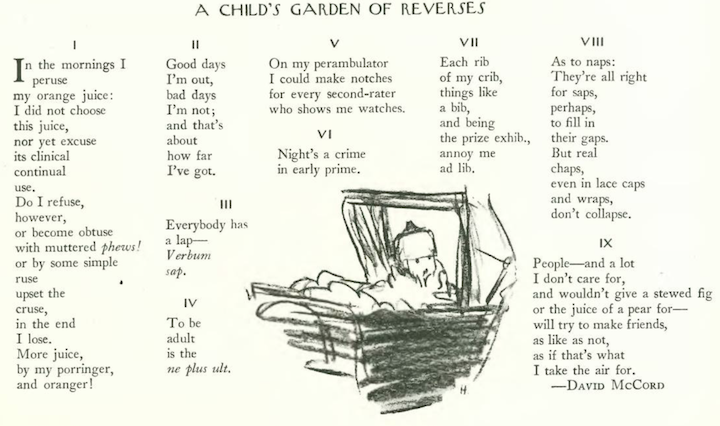
…and on an even lighter side, poet David McCord’s take on a Robert Louis Stevenson classic…

…speaking of children, the New Yorker was looking ahead to Christmas, and what the little ones might be hoping for under the tree…

ALL HUNG UP ON MICKEY…Mickey Mouse puppet was popular with the kiddies in 1932. (Ebay)

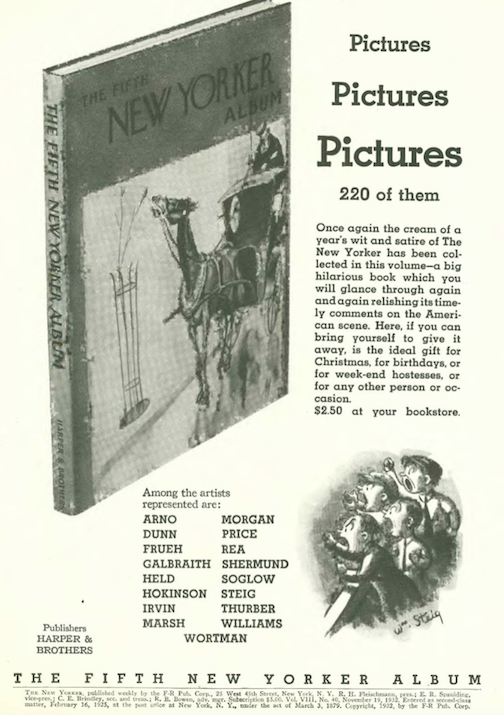
…if Mickey Mouse wasn’t your thing, you could spring for The Fifth New Yorker Album

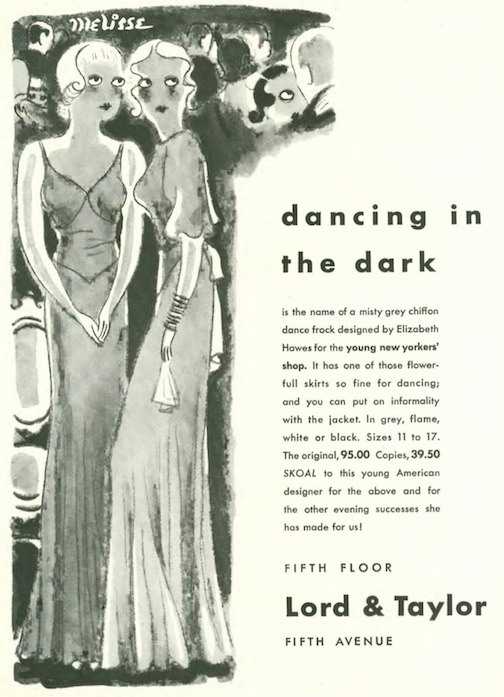
…on to our other Nov. 19 advertisements, Mildred Oppenheim (aka Melisse) illustrated another whimsical Lord & Taylor ad…

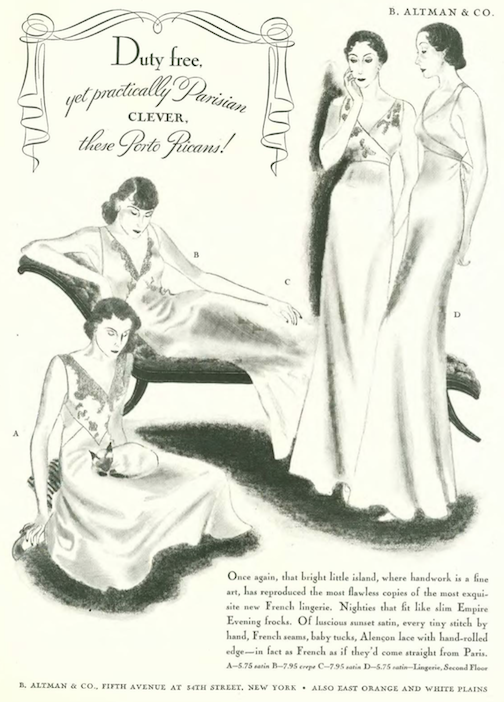
…while B. Altman maintained its staid approach to fashion to tout these duty-free, “practically Parisian” nighties created by “clever Porto Ricans”…

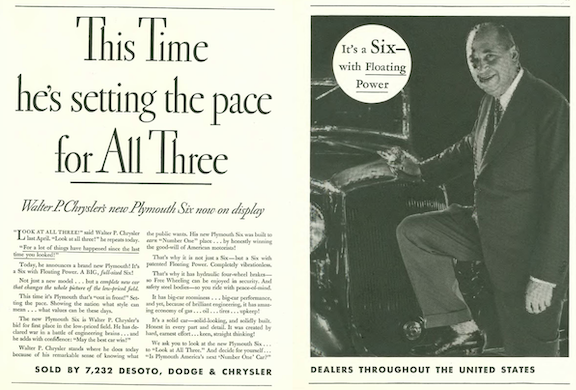
Walter Chrysler continued to spend big advertising bucks to promote his company’s “floating power”…

…in my last entry I noted E.B. White’s musings regarding Lucky Strike’s new “raw” campaign…this appeared on the Nov. 19th issue’s back cover…

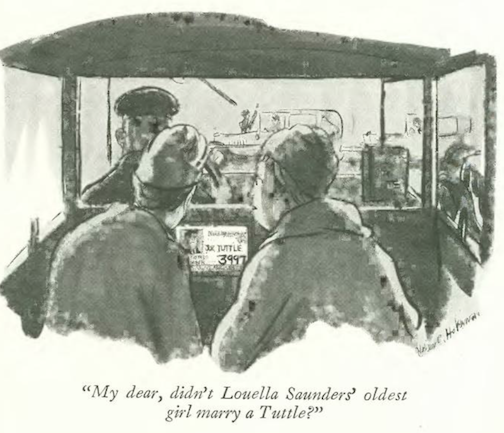
…on to our cartoons, we have Helen Hokinson’s girls pondering the social implications of a cabbie’s identity…

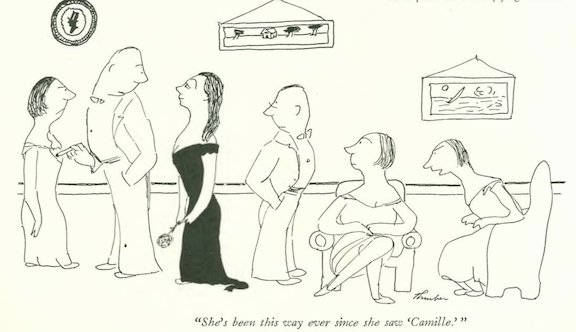
James Thurber explored the dynamic tension provided by passion dropped into mixed company…

Carl Rose offered a bird’s eye view of the 1932 election…

William Crawford Galbraith showed us one woman’s idea of sage advice…

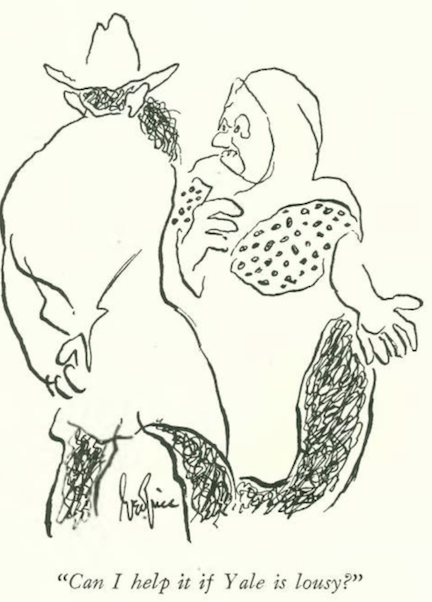
…and George Price continued to introduce his strange cast of characters to The New Yorker in a career that would span six decades…

…on to our Nov. 26 issue, and a cover by William Crawford Galbraith that recalled the post-impressionist poster designs of Toulouse-Lautrec

Nov. 26, 1932 cover by William Crawford Galbraith.

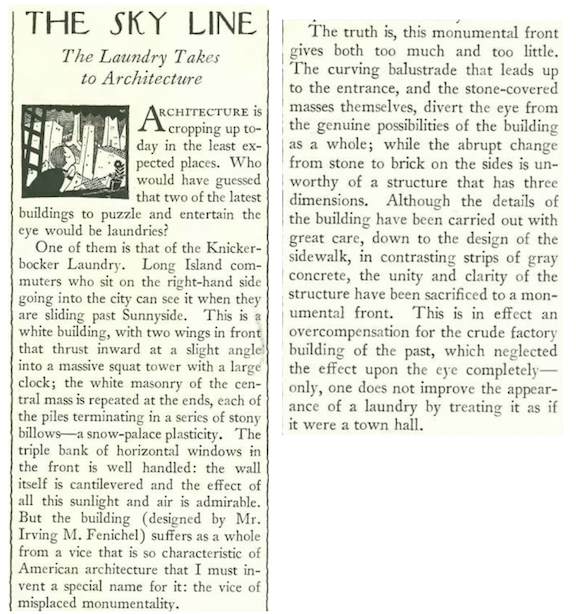
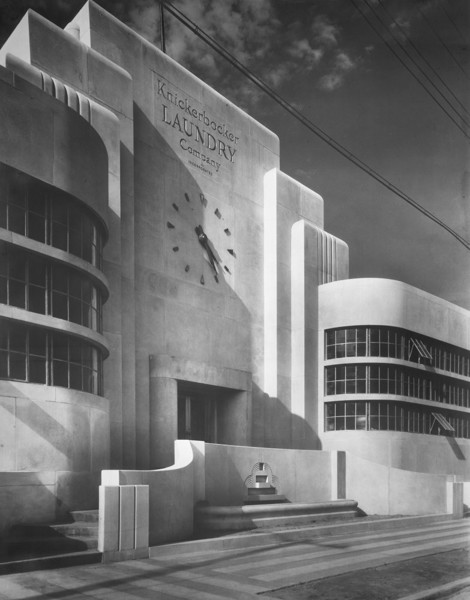
…and in this issue we have Lewis Mumford back on the streets assessing New York’s ever-changing landscape, including an unexpectedly “monumental” design for a Laundry company:

ALL WASHED UP?…Irving M. Fenichel’s Knickerbocker Laundry Building seemed a bit too monumental for Lewis Mumford. (ribapix.com)

…the building still stands, but is substantially altered (now used as a church)…

 *  *  *

Wie Bitte?

Attributed to E.B. White, this “Talk of the Town” item, “Besichtigung” (sightseeing) told readers — in pidgen German — about a visit to the German Cruiser Karlsruhe docked in the New York harbor.

…I try my best to avoid contemporary political commentary (this blog should be a respite from all that!), so I will let Howard Brubaker (in “Of All Things”) speak for himself regarding the outcome of the 1932 presidential election:

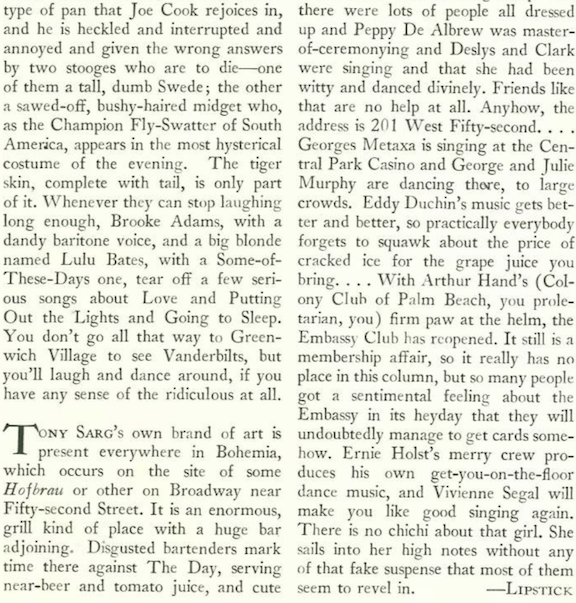
…in researching the life and work of Lois Long, there seems to be a consensus out there in the interwebs that her “Tables for Two” column ended in June 1930, however she continued the write the column from time to time, including this entry for Nov. 26 with a bonus illustration by James Thurber

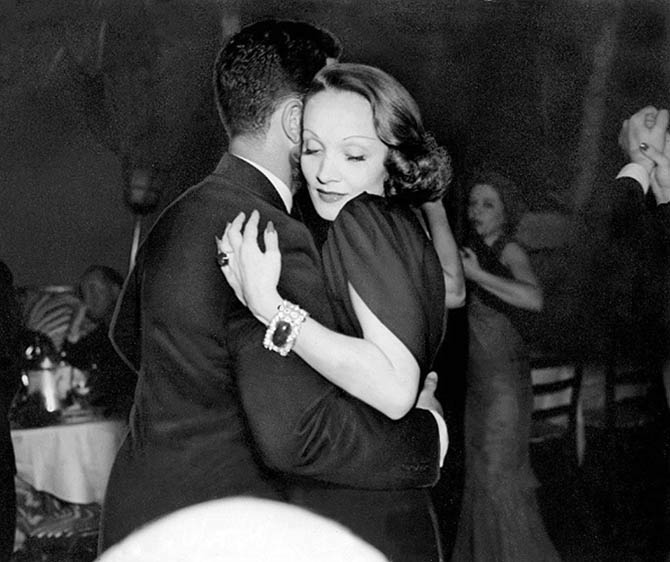
MARLENE DIETRICHING…was how Lois Long described the star’s appearance at the Bohemia club. Above is a photo of Marlene Dietrich and Cornelius Vanderbilt Whitney dancing at the New York club El Morocco in 1938. (Beinecke Rare Book and Manuscript Library)

*  *  *

From Our Advertisers

More Christmas ideas from the folks at Rogers Peet…hey, I could use a new opera hat!…and look at all those swell ash trays…
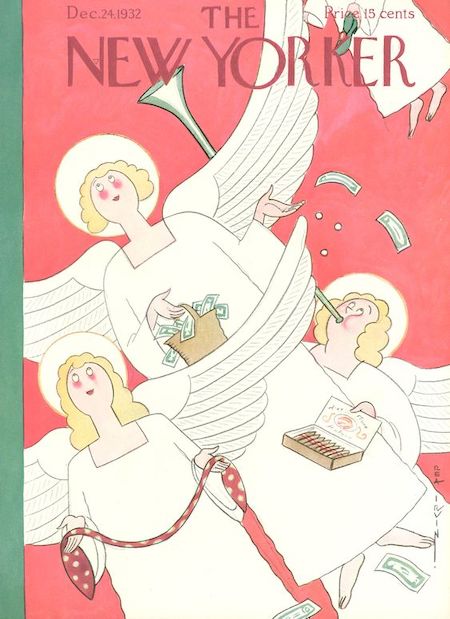
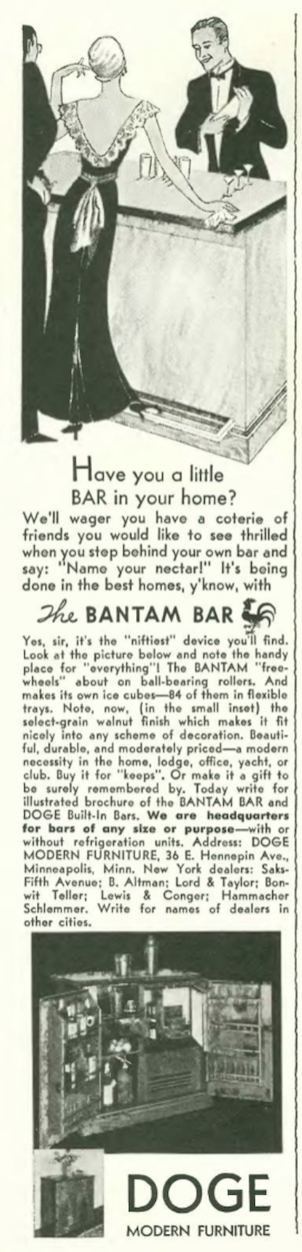
…yes, Prohibition is still around for another year, but the wets are ascendent, FDR is in office, so let’s get the party started…

…on to our cartoonists, we begin with this illustration by James Thurber for the magazine’s events section…note the familiar theme of the sculpture, pondered by the young man…

…we are off to the races with William Steig, and some news that should kick this fella into high gear…

…and we close, with all due modesty, via the great James Thurber

Next Time: Cheers For Beer…

A New Outlook

Above: Former Governor Alfred E. Smith points out the sights of the city to Governor Franklin D. Roosevelt from an Empire State Building observation floor on May 1, 1931. (Empire State Realty Trust)

New York Governor Al Smith and the man who succeeded him in that office, Franklin D. Roosevelt, were both Democrats, but when it came to personalities, they were more like oil and water.

Sept. 3, 1932 cover by Ilonka Karasz.

A popular governor (1923 to 1928) from working-class roots, Smith thought he could ride that popularity to the White House, but lost to Herbert Hoover in the ’28 presidential elections. He then hoped to be of some use to his gubernatorial successor FDR, but was more or less snubbed by his fellow Democrat – the regal Roosevelt branded himself as a reformer, and didn’t want Smith’s deep Irish Tammany connections to sully that reputation. Smith did find something to do, however, by becoming president of the corporation that built and operated the Empire State Building.

THINGS ARE LOOKING UP…Al Smith (pointing) extolls the wonders of the Empire State Building at the May 1, 1931 grand opening. (chrismurphy.com)

But after the building’s dedication, Smith took another shot at the White House, this time against Roosevelt in the 1932 Democratic presidential primaries. Smith lost the nomination in a bitter convention battle (he eventually endorsed FDR) but kept busy with another venture: editor of the New Outlook magazine…

SECULAR SHIFT…The Outlook began publication as The Christian Union (1870–1893). The issue at left is from July 1, 1893, when the magazine became The Outlook to reflect its shift from religious subjects to social and political issues. That magazine went bankrupt and became the New Outlook in 1932; the issue at right is from October 1933, a year after Al Smith became editor. The magazine folded in 1935. (Wikipedia/Abe Books)

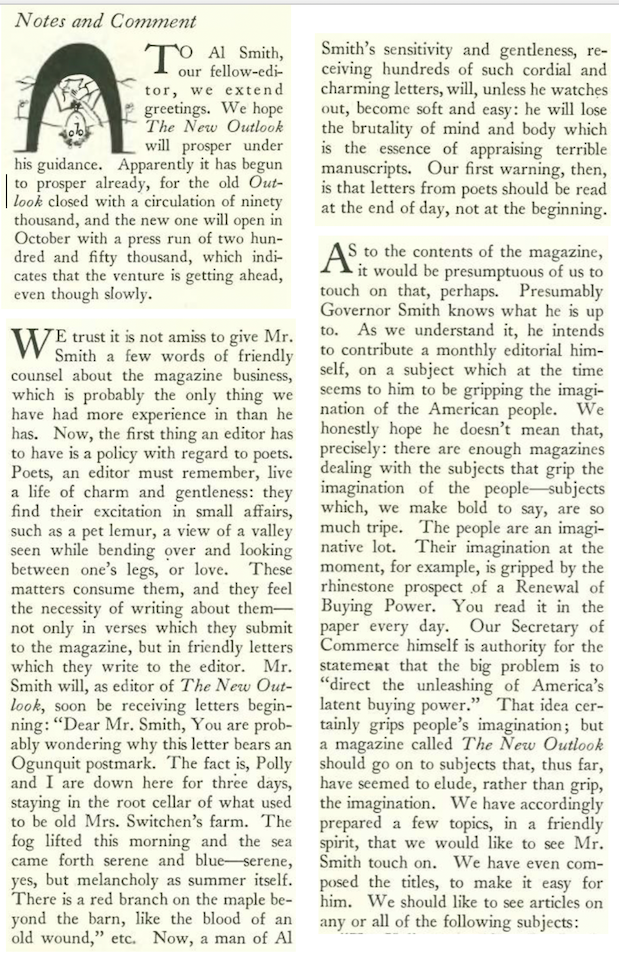
…which Smith used as a platform to attack his Democratic rival, and, particularly the New Deal policies following Roosevelt’s successful election to the White House. The election was still a couple months away when E.B. White offered these observations about Smith’s new publishing venture:

Otto Soglow provided this interpretation of Smith’s new job for “Notes and Comment”…

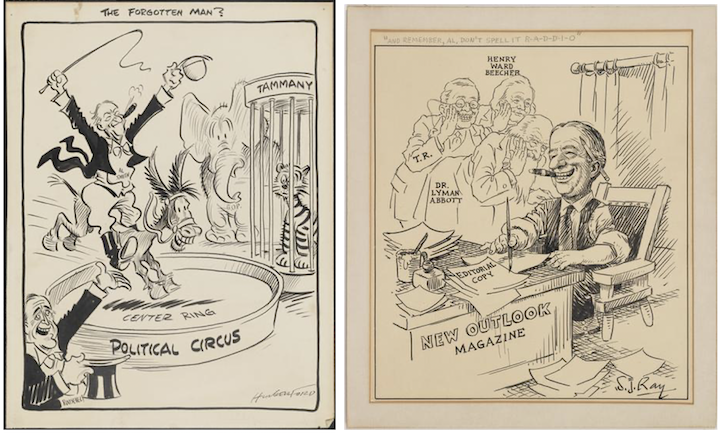
…while other cartoonists made hay over the Roosevelt/Smith rift:

COMIC APPEAL…Cyrus Cotton “Cy” Hungerford produced daily cartoons for the Pittsburgh Post-Gazette for 50 years, including this gem at left that aptly illustrated the political circus that featured Al Smith as its star attraction; during his 32 years as editorial cartoonist for The Kansas City Star, Silvey Jackson (S. J. or Sil) Ray amassed a portfolio of roughly 10,000 cartoons, including the one at right that depicts the ghosts of past Outlook contributors and editors including Teddy Roosevelt, Lyman J. Abbott and Henry Ward Beecher. (Museum of the City of New York/kchistory.org)

 *  *  *

Nein Bitte

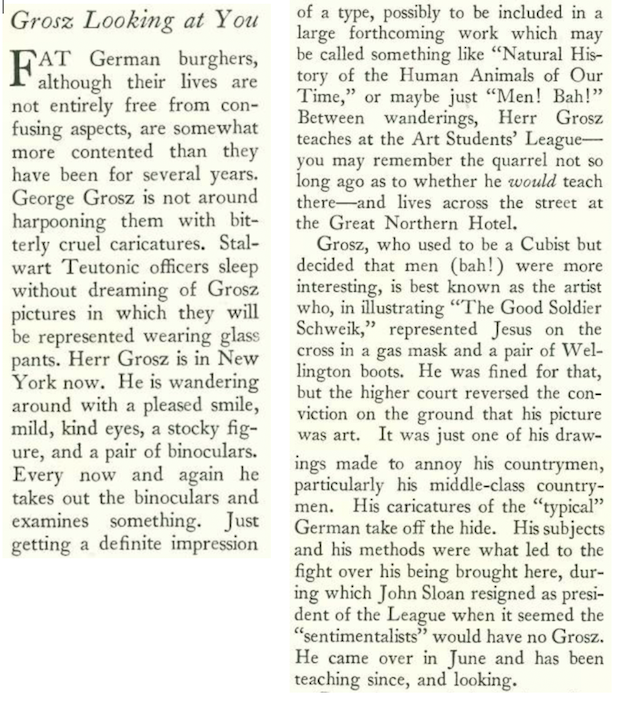
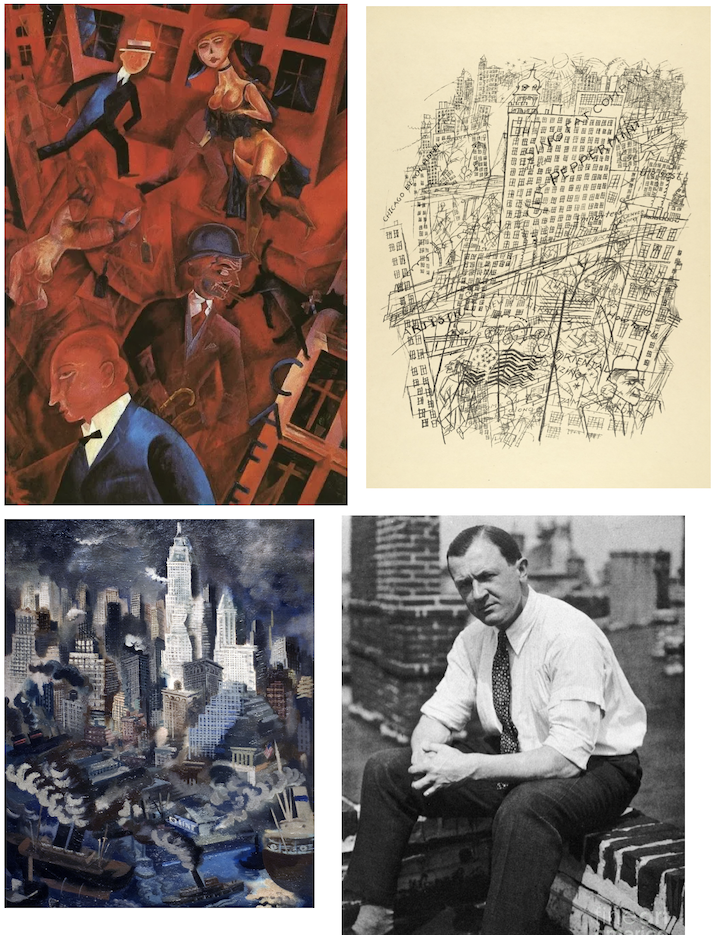
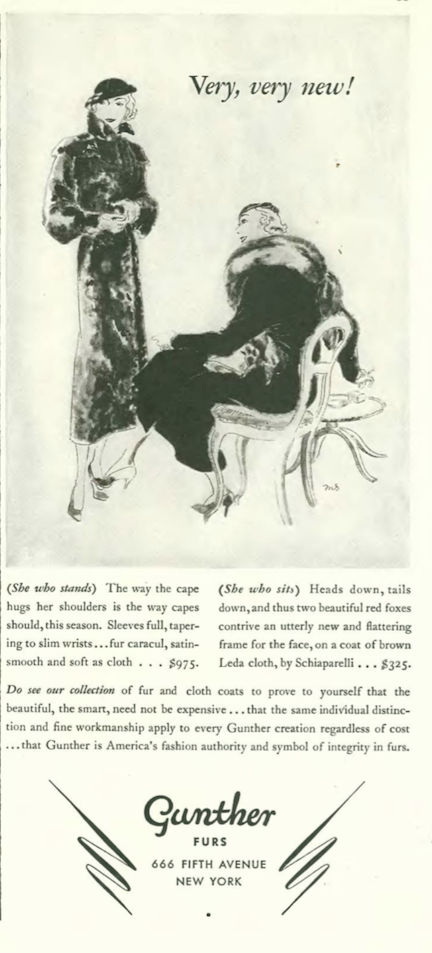
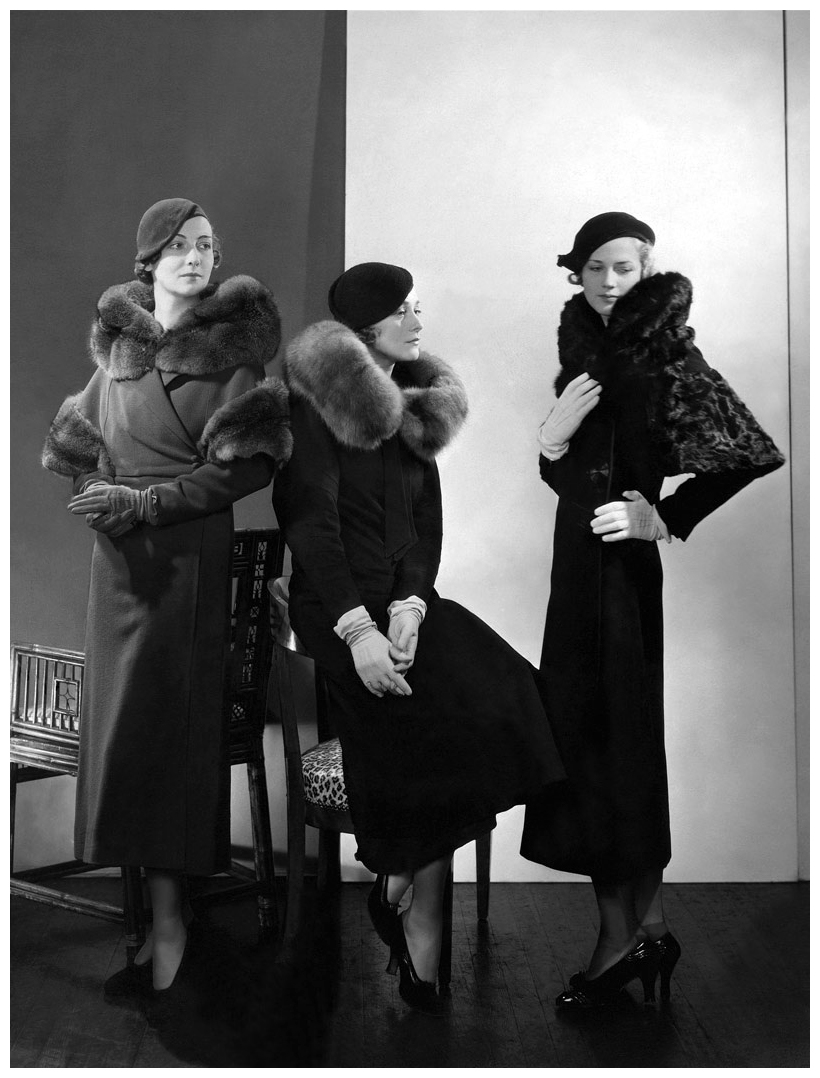
The German artist George Grosz (1893–1959) was perhaps best known for his bitter caricatures and paintings of Berlin’s Weimar years (roughly 1918 to 1933). In June 1932 he accepted an invitation to teach the summer semester at the Art Students League of New York, then briefly returned to Germany before emigrating to the U.S. with his family in January 1933.

SEEING RED…Clockwise, from top left, George Grosz depicted Berlin as a hellscape awash in blood and corruption in Metropolis (1917); by contrast, Grosz celebrated the energy and freedom of New York in his 1915–16 work Memory of New York; Grosz in New York, circa 1932; after emigrating to the US in 1933, Grosz abandoned his harsh caricatures and corrupted cityscapes in favor of nudes and landscapes. He returned to the subject of the New York skyline a number of times, including his 1934 painting Lower Manhattan. (MoMA/Flickr)

 *  *  *

From Our Advertisers

Back in the day when it was still acceptable to drape dead animals around your neck, Gunther Furs offered these ensembles…the coat at left would cost the equivalent of $17,000 today…

…this 1932 photo gives us some idea of how these coats might have appeared…

FUR SURE…Models in 1932 wearing (from left) wool coat with fur collar and armbands; wool coat with blue fox collar by Lanvin; and wool coat with caracal collar and sleeve trimming by Mainbocher. Photo by Edward Steichen. (pleasurephotoroom.wordpress.com)

…perhaps you could wear one of the coats on a breezy day atop Ten Park Avenue…even this posh address felt the need to emphasize its affordability in those depressed times…also note the advertisement at the bottom for a “Milk Farm”…

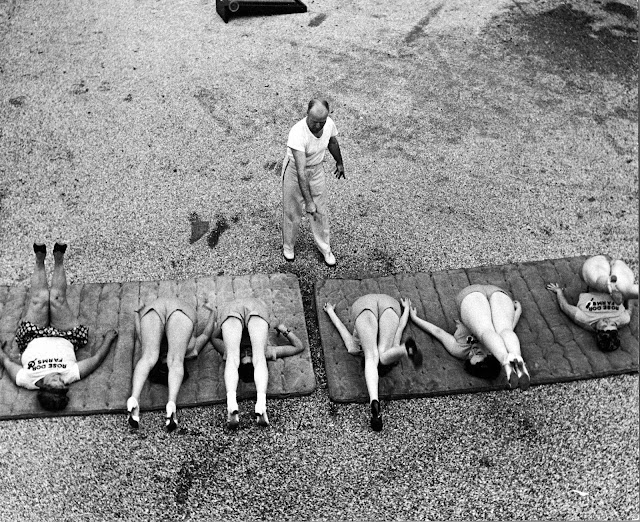
…the 1930s saw a weight-loss fad that included dairy as a dietary must; one such “milk farm” was the Rose Dor Farm just up the Hudson from New York…

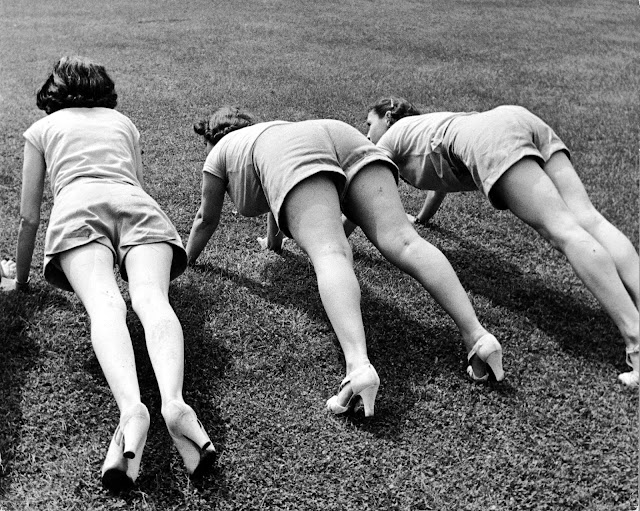
HUMP DAY…Top, Rose Dor Farm trainer Steve Finan directs mat exercises calculated to reduce hips and remove “widow’s humps” in the 1930s. Below, note the choice of footwear for the workout. (vintag.es)

…back to our apartment hunting, The Lombardy was built in the 1920s by William Randolph Hearst for his movie star mistress Marion Davies…unlike Ten Park Avenue, it wasn’t on Park, but the ad makes sure to note its close proximity, and the illustration assured that the clientele were sufficiently dour in their good taste…also note the ad for the Fraternity Clubs Building, which was going co-ed…

The New York Times reported in August 1932 that “the ninety rooms of the fourth and fifth floors of the building have been redecorated and furnished with a ‘feminine touch'”…

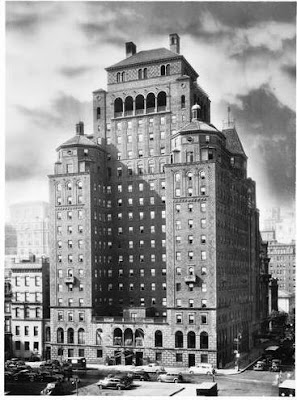
NO ANIMAL HOUSE…The Fraternity Clubs Building, erected in 1923, went co-ed in 1932. The Renaissance Revival-style building was designed by the firm Murgatroyd & Ogden. Today it serves as the Jolly Madison Towers hotel. (New York Public Library via Daytonian in Manhattan)

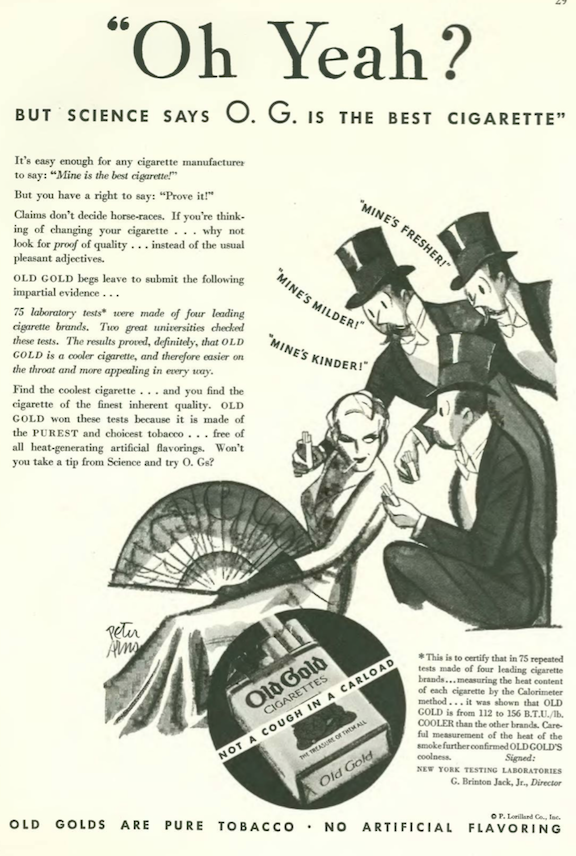
…time to step out for a smoke with another Old Gold ad illustrated by Peter Arno

…in contrast to Arno’s defiant vamp, this woman enjoyed her smoke with a sense of ease…

…if you’ve never heard of Richard Himber, he made a name for himself in New York beginning with his days in vaudeville and Tin Pan Alley. Described in a Wikipedia entry as “American bandleader, composer, violinist, magician and practical joker,” Himber ran a band-booking agency before forming an orchestra of his own at the Essex House that performed over NBC Radio…

…our last ad is a most unlikely one from the Sterling Engine Company of Buffalo, New York, definitely an outlier among the other New Yorker ads…

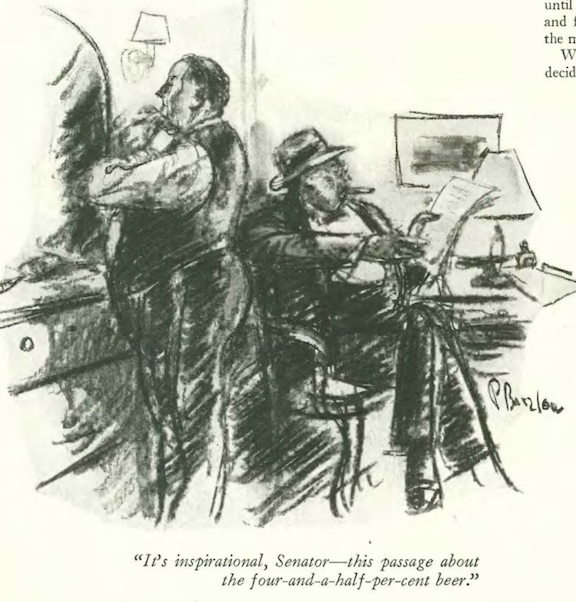
…our cartoonists include Perry Barlow on the campaign trail…

…along with Alain (Daniel Brustlein)

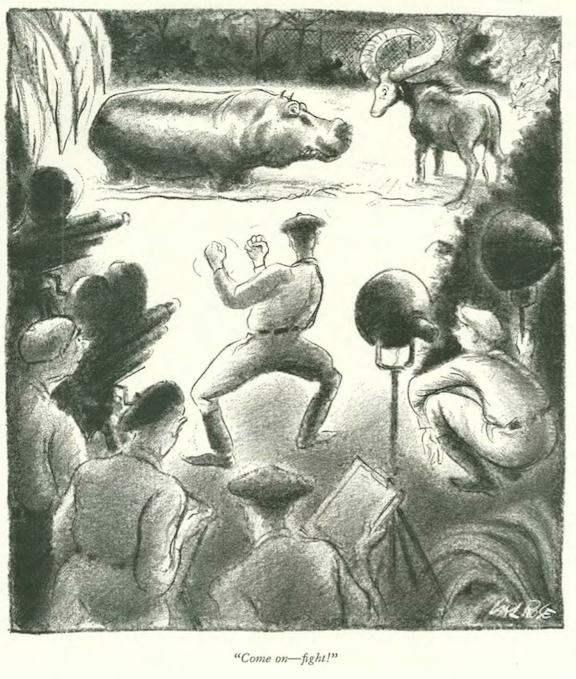
Carl Rose gave us two zoo animals who were less than keen to become movie stars…

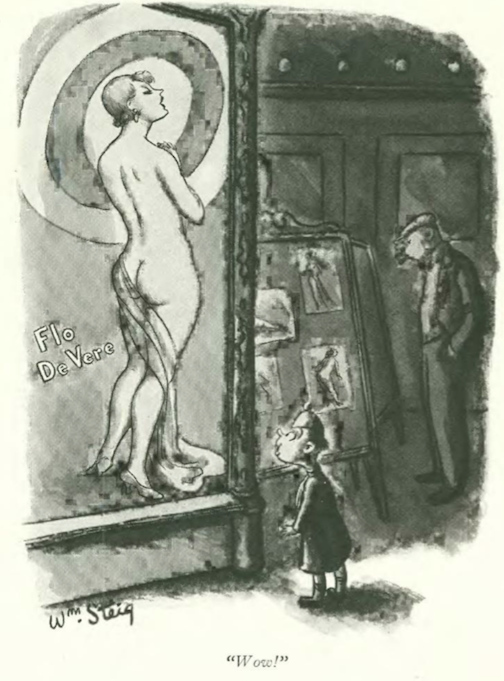
…and we close with William Steig, who showed us one of his Small Fry coming of age…

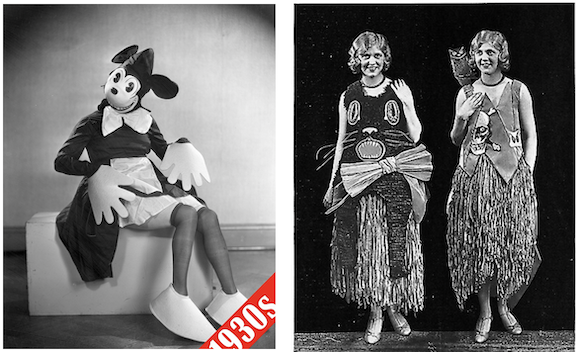
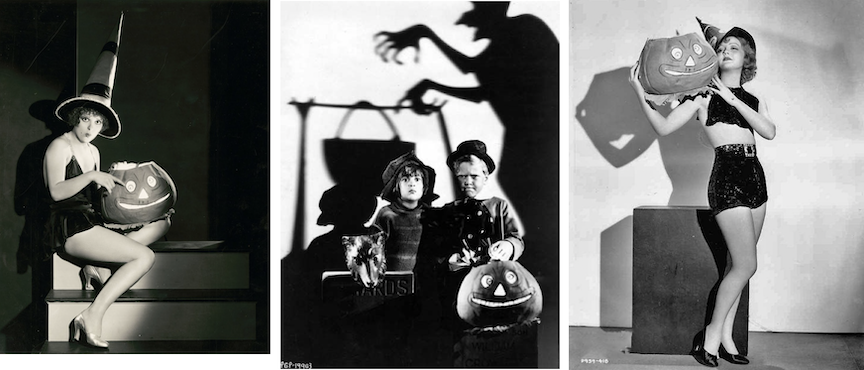
…but before we close, here’s a brief nod to Halloween, 1932, and some popular costumes for the grown-ups, including a Minnie Mouse costume that is unintentionally creepy…

…Hollywood liked to get in on the fun by releasing studio “pin-ups” featuring stars of the day…

BOO…Paramount stars all pose with the same prop Jack ‘o Lantern circa 1931-32. From left, the original “It Girl” Clara Bow, who would retire from movies in 1933 at age 28 and become a rancher; Robert Coogan and Jackie Cooper were child stars of the film Sooky; Nancy Carroll’s latest film, Hot Saturday, was released a few days before Halloween 1932. The film also starred Cary Grant in his first leading role. (vintag.es/twitter/Pinterest)

Next Time: The Red House…

Sounds of Silence

In 1928 both sound and silent films appeared on screens across America, but by 1929 sound was ascendent, and in 1932 silents were mostly a distant memory.

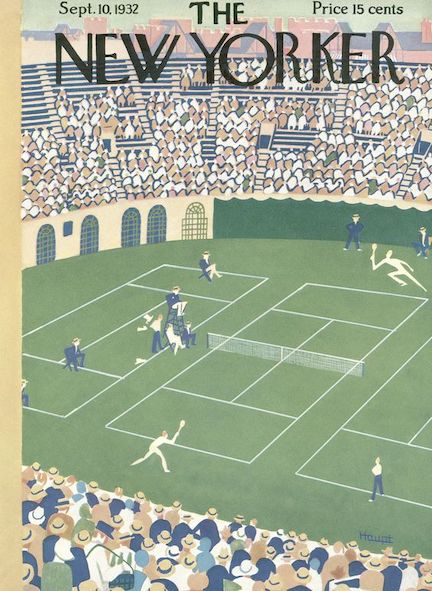
August 13, 1932 cover by Rea Irvin.

The New Yorker was slow to embrace sound—in reviews of early talkies, critic John Mosher found the technology stultifying in both dialogue and action, but as equipment and techniques improved he came to embrace the new medium. E.B. White, however, still missed the silent theatre, and the strains of its pipe organ…

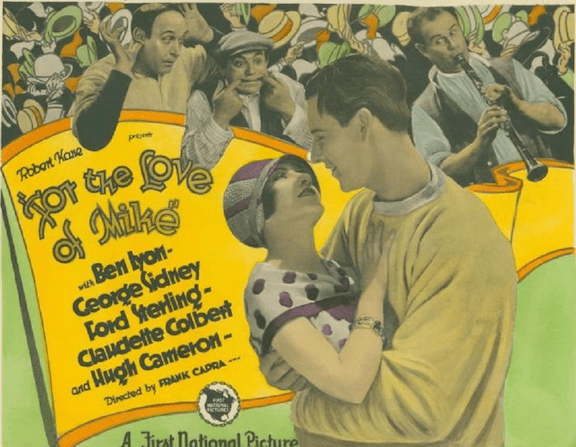
SILENCE IS GOLDEN…E.B. White was likely attending a late evening showing of For the Love of Mike, Claudette Colbert’s only silent film. After the Frank Capra-directed film received poor reviews, the 24-year-old Colbert vowed she would never make another movie. Fortunately for her fans, she changed her mind and signed with Paramount in 1929. At right, promotional photograph of Colbert for the 1928 Broadway production La Gringa. (IMDB/Wikipedia)
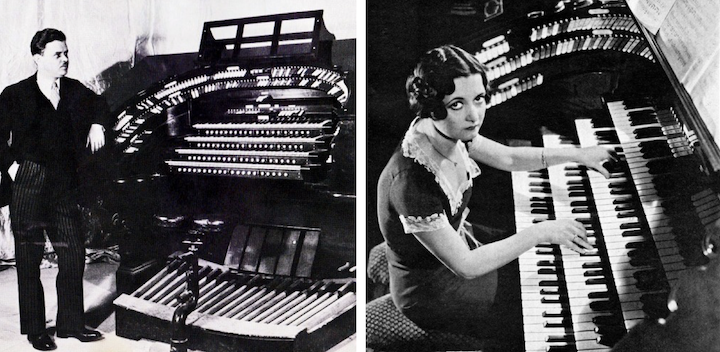
VITAL ORGANISTS…Jesse and Helen Crawford both recorded music on Paramount’s mighty Wurlitzer, sounds that were music to the ears of E.B. White. (theatreorgans.com)

 *  *  *

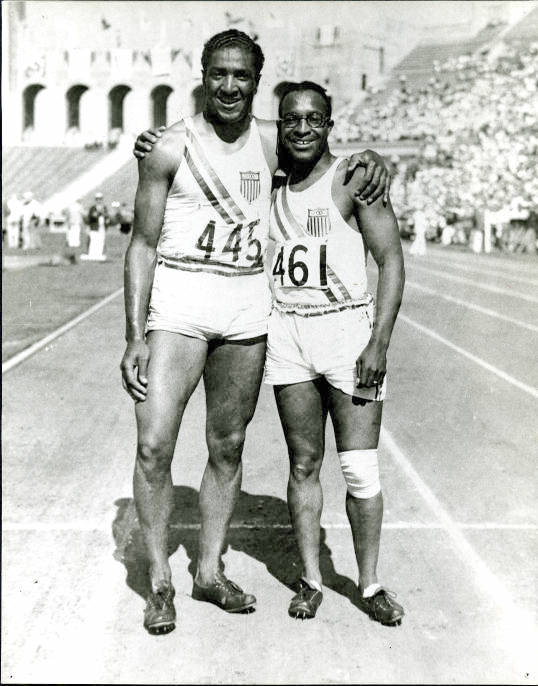
World’s Fastest Man

That title went to Eddie Tolan after the 1932 Summer Olympic Games, and his fame won him a long entry in the “The Talk of the Town,” although the column (excerpted) took a patronizing tone toward the athlete:

FASTEST IN THE WORLD…U.S. sprinters Ralph Metcalfe (left) and Eddie Tolan pose on the track at 1932 Los Angeles Olympics. Tolan would receive the title of the “world’s fastest human” after winning gold medals in the 100- and 200- meter events. Metcalfe, who be elected to the U.S. Congress in the 1970s, was considered the world’s fastest human in 1934-35. (Marquette University)

 *  *  *

From Our Advertisers

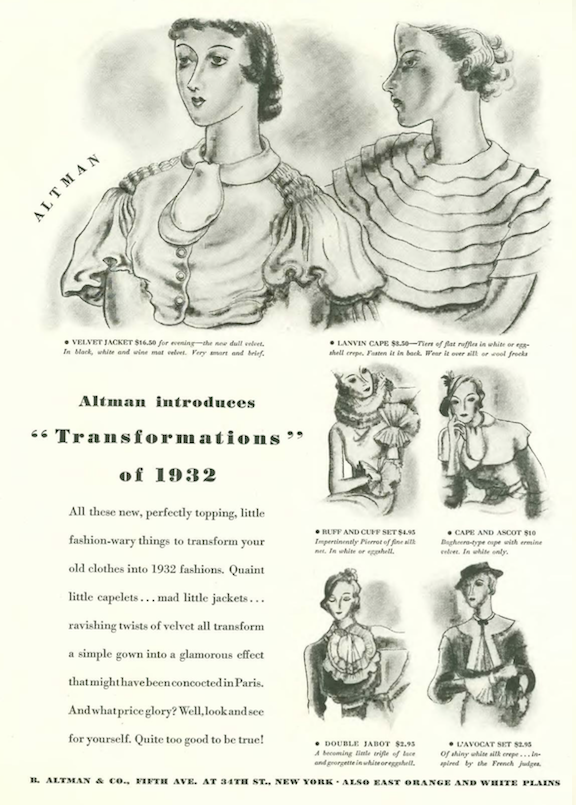
You could tell times were tough when a luxury department store felt the need to sell capes and cuffs designed to “transform” old clothes in to 1932 fashions…

…however, things seemed to be looking up for the folks at Powers Reproduction, who touted the naturalness of their DeSoto ads…

…such as this two-pager that appeared in The New Yorker’s July 23 issue…

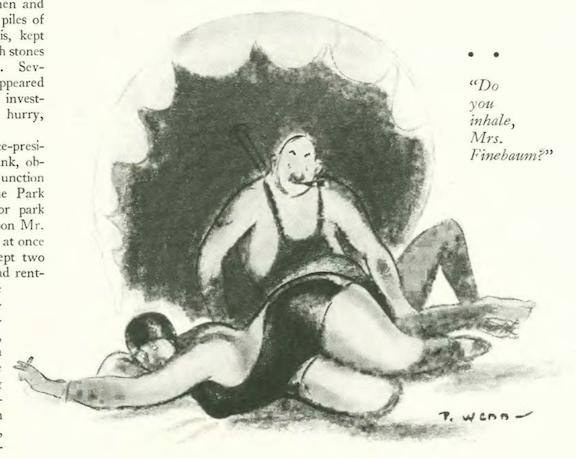
…we move on to our cartoonists, beginning with Paul Webb…

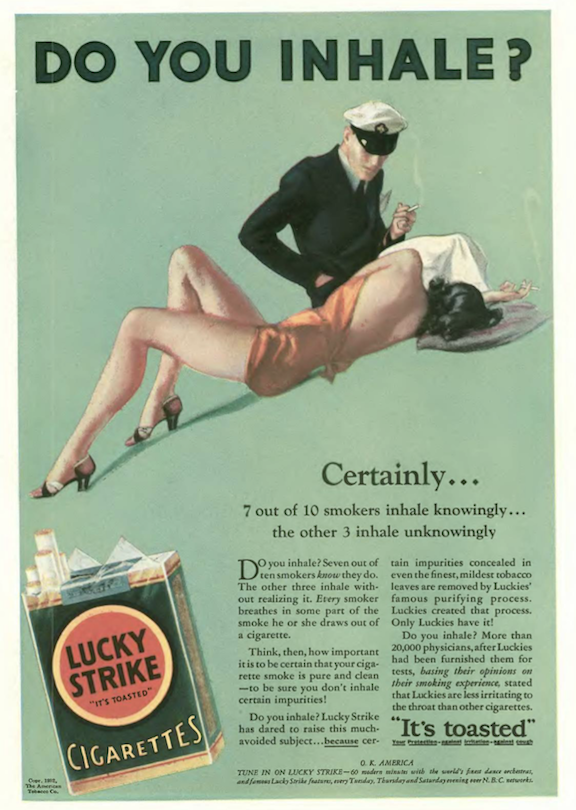
…who referenced a recent New Yorker ad (also from the July 23 issue)…

James Thurber gave us two examples of female aggression…

…this one a bit less deadly…

…here’s an early work by the great George Price (1901-1995), who beginning in 1929 contributed New Yorker cartoons for almost six decades…

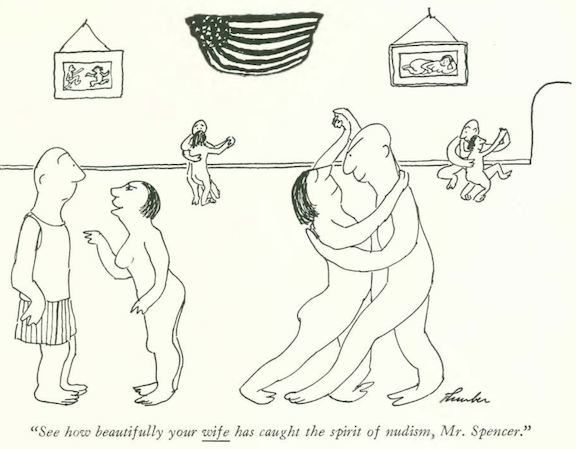
Peter Arno showed us that among the uppers, even nudism had its class distinctions…

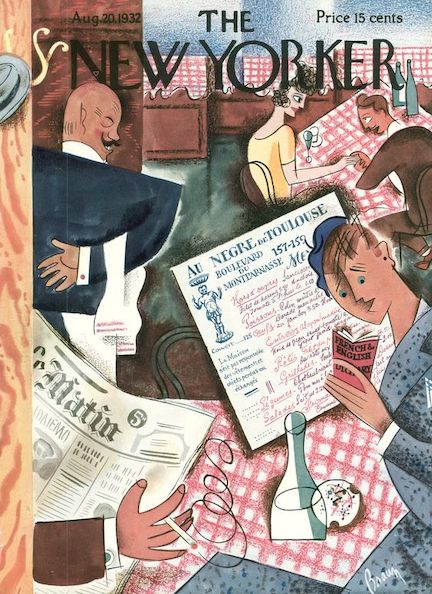
…on to our August 20, 1932 issue, and this terrific cover by Harry Brown. With a style reminiscent of the French artist Raoul Dufy, Brown illustrated a number of memorable New Yorker covers during the 1930s…

August 20, 1932 cover by Harry Brown.

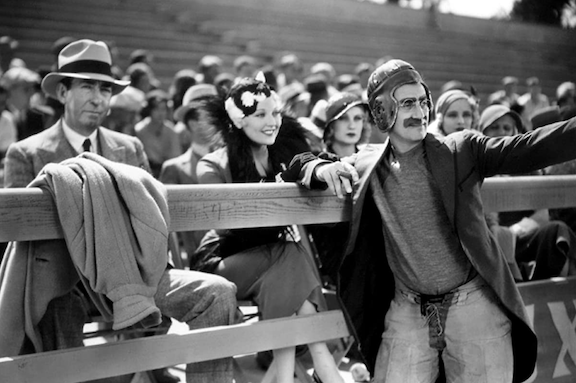
…the Marx Brothers were back in cinemas with Horse Feathers, and, according to critic John Mosher, delivered the comic goods…

Xs AND OsGroucho Marx shows David Landau and Thelma Todd how the game of football is really played in Horse Feathers (1932). (IMDB)

 *  *  *

 Author, Author

“The Talk of the Town” included this bit of news regarding the Pulitzer Prize-winning author Willa Cather. Beginning in the early 1920s, Cather and her partner, Edith Lewis, spent summers at Manan Island in New Brunswick, Canada:

THESE NEED SOME EDITING…Willa Cather pruning her roses on Manon Island. (University of Nebraska-Lincoln)

 *  *  *

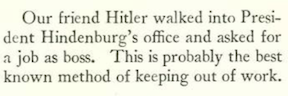
While Cather was enjoying the peace of island life, there were disturbing rumblings on the other side of the ocean, even if Howard Brubaker (writing in his column “Of All Things”) found humor in them…

…the result, however was no laughing matter…

NOT HIS USUAL STYLE…After being appointed as German chancellor, Adolf Hitler greets President Paul von Hindenburg in Potsdam, Germany, on March 21, 1933. This image, intended to project an image of Hitler as non-threatening, was made into a popular postcard. The photo also appeared widely in the international press. (www.ushmm.org)

…Brubaker also commented on the upcoming U.S. presidential elections, and, more importantly, the absence of Greta Garbo, who returned to Sweden after her MGM contract expired…

NOT FEELIN’ IT, PAL…Melvyn Douglas romances Greta Garbo in 1932’s As You Desire Me. Garbo would leave for Sweden after the film wrapped. She would return after a nearly a year of contract negotiations. (IMDB)

 *  *  *

From Our Advertisers

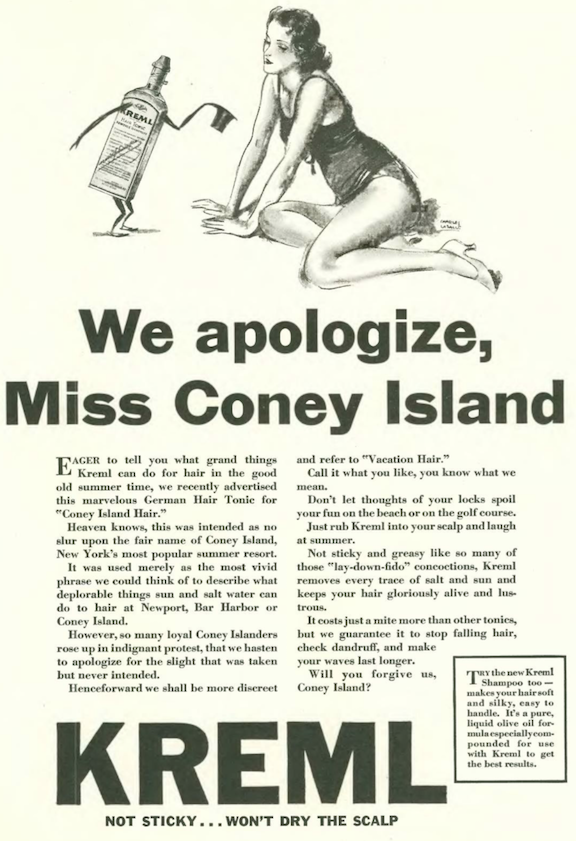
Illustrator Charles LaSalle, who would later be known for his Western-themed art, provided this odd bit of art for the makers of a German hair tonic…

…on to our cartoons, Rea Irvin continued his travelogue of famed tourist destinations…

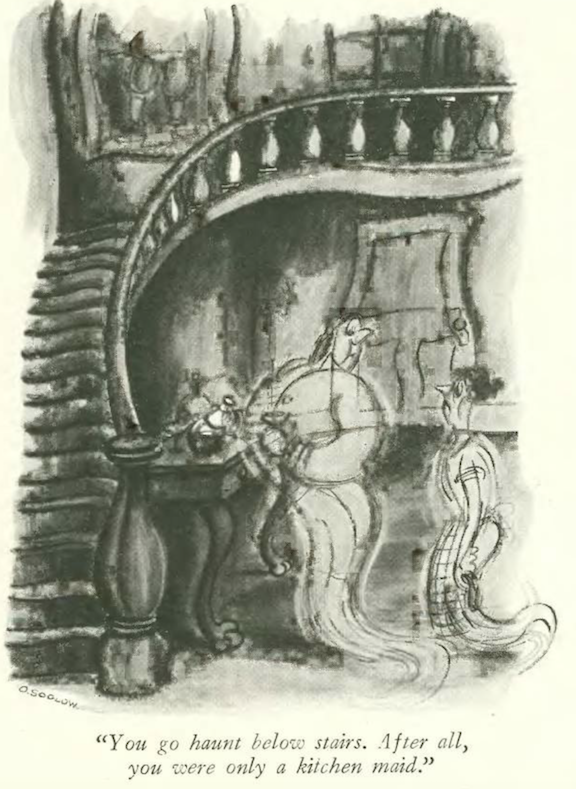
Otto Soglow showed us that even the spirit world has its version of Upstairs, Downstairs

Carl Rose rendered a cow and a calf made homeless for art’s sake…

Leo Soretsky contributed only one cartoon to The New Yorker, but it was a doozy…

…on to August 27, 1932…

August 27, 1932 cover by S. Liam Dunne.

…in which the “Talk of the Town” contributors decided to pay homage to Lewis Gaylord Clark (1808–1873), who was editor and publisher of the old The Knickerbocker magazine (1833 – 1865)…

…here is one of the entries, with accompanying artwork, written in the style of the old magazine…

 *  *  *

From Our Advertisers

William Steig had illustrated several ads for Old Gold, and now it was Peter Arno’s turn to entice readers to the national habit…

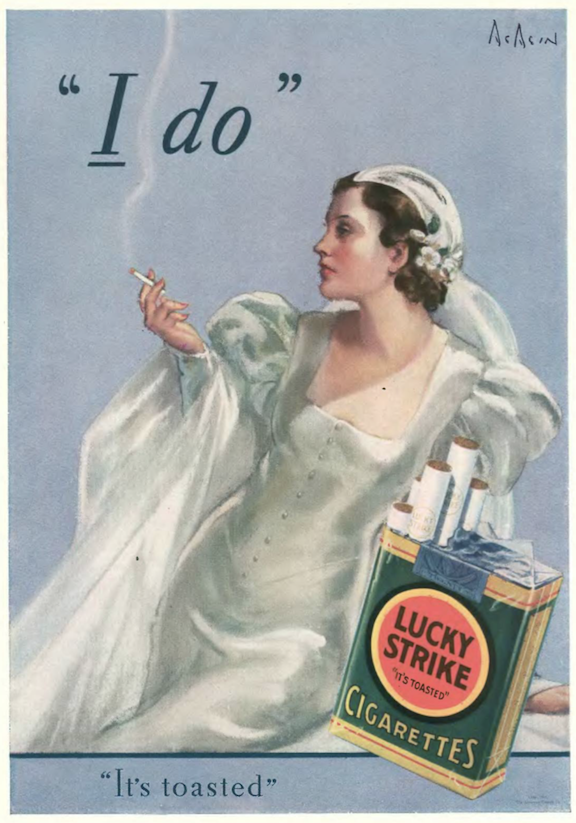
…Lucky Strike, on the other hand, preferred these illustrations of young women, who also happened to be their biggest growth market…by the way, this is not an official “Miss America”—there was no pageant in 1932…

…and we end with cartoons that ponder the female form by Daniel Brustlein (1904–1996), who contributed cartoons and covers to The New Yorker from the 1930s to the 1950s under the pen name Alain

…and C.W. Anderson

Next Time: A New Outlook…

Rebecca and the Zombies

As we recently saw in the 1932 film Freaks, there were some truly weird motion pictures produced in Hollywood during the pre-Code era, including four that were reviewed in the July 30 and August 6 editions of The New Yorker.

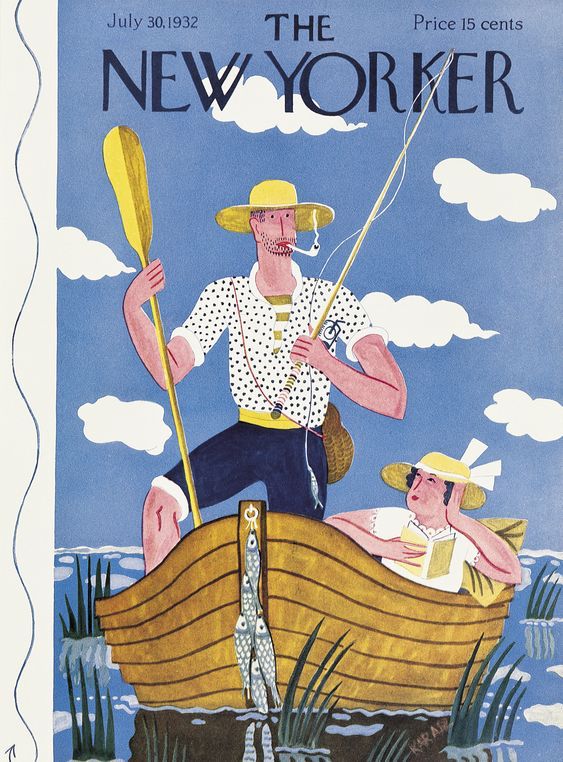
July 30, 1932 cover by Ilonka Karasz.

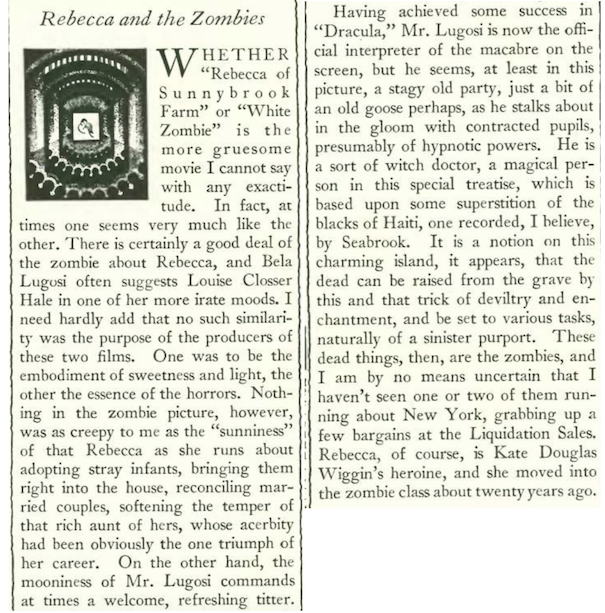
According to critic John Mosher, some of those films were not intended to be viewed as such, including Rebecca of Sunnybrook Farm (reviewed in the Aug. 6 issue), which Mosher found more gruesome than the Bela Lugosi vehicle White Zombie:

THE HORROR…After seeing Rebecca of Sunnybrook Farm, critic John Mosher concluded that too much sweetness and sunniness could be creepier than a bunch of zombies. Pictured above is Marian Nixon as Rebecca and Ralph Bellamy as her suitor, Dr. Ladd. (IMDB)
THE BELA BUNCH…Following up on his 1931 hit Dracula, Bela Lugosi inexplicably chose to star in the low-budget horror film White Zombie. Considered to be the first feature-length zombie movie, it served as a model for subsequent zombie pictures. Clockwise, from top left, white Haitian voodoo master “Murder” Legendre (Lugosi) leads his crew of zombies; Legendre toasting his evil intentions; coach driver (Clarence Muse), warns his passengers about zombies on the highway (although the film is set in Haiti — actually a Hollywood studio lot — Muse was the only Black actor with a speaking part, albeit quite brief); as was common in those days, John T. Printz, a white actor, portrayed the Black character Ledot, a former witch doctor; Legendre (Lugosi) transforms Madeleine Short (Madge Bellamy) into a zombie and orders her to kill her fiancé. Also pictured is Robert Frazer, who portrayed a plantation owner. Filmed in just eleven days, the majority of the cast in White Zombie were actors whose careers had waned since the silent era. (IMDB)

In the July 30 issue Mosher had another encounter with the strange, this time two documentaries that were very much products of their time.

In case a film about the hardships on the Alaskan tundra wasn’t enough to entice moviegoers, Universal Pictures served up this lobby card featuring a topless Nuwuk woman to promote Igloo…

Igloo lobby card. (Pinterest)

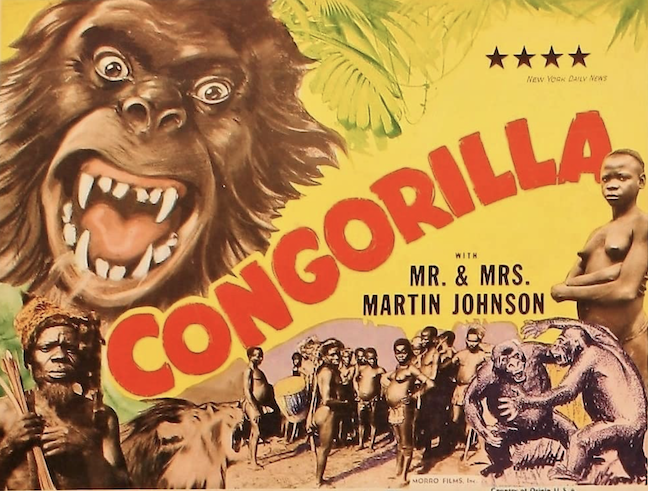
…in a similar vein, husband and wife filmmakers Martin E. and Osa Johnson offered up some topless images to accompany the action promised in Congorilla. It’s a familiar National Geographic-style trope—an over-the-counter magazine or film in the 1930s wouldn’t dare show a European woman topless (there were decency laws after all!) but these folks were “primitive,” and therefore weren’t subject to the Hays Code or other “decency standards.”

Congorilla lobby card. (IMDB)

The Johnson’s documentary was partly staged, including this scene with “child-like pygmies” that is just plain weird (um, didn’t “modern” jazz have its roots in Africa?):

 *  *  *

Life of the Party

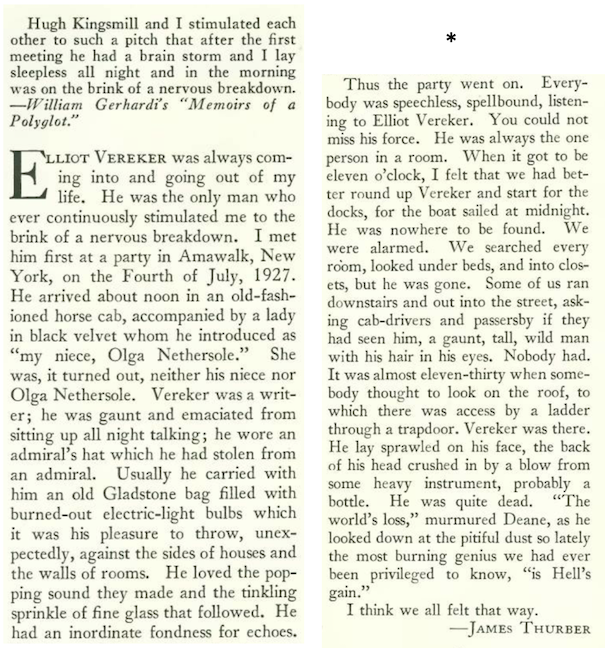
James Thurber penned this unusual July 30 profile, a parody of artistic genius- types who are loved and admired despite also being a drunken assholes. I include the opening paragraph, and the concluding paragraph, which follows a decision by Elliot Vereker’s literary friends to put him on a boat to France; during a farewell party he roundly insults them all.

MIRROR, MIRROR…James Thurber and his “Profile” subject, Elliot Vereker. Some critics suggest Vereker’s character was the result of some self-reflection on Thurber’s part. (thurberhouse.org/The New Yorker)

*  *  *

From Our Advertisers

William Steig continued illustrating these full-page ads for Old Gold (no surprise that tobacco companies were doing quite well during the Depression)…

…as we’ve seen, a number of New Yorker cartoonists earned extra money illustrating ads for a variety of companies, but one cartoonist, Peter Arno, also collaborated with artists, playwrights and musicians including Paul Whiteman…no doubt this collaboration was inspired in Arno’s youth, as noted New Yorker cartoonist Michael Maslin explains in this Inkspill entry

…and we have another in the continuing series of Lucky Strike ads encouraging smokers to inhale its “pure” tobacco, the better to draw in all that addictive nicotine…

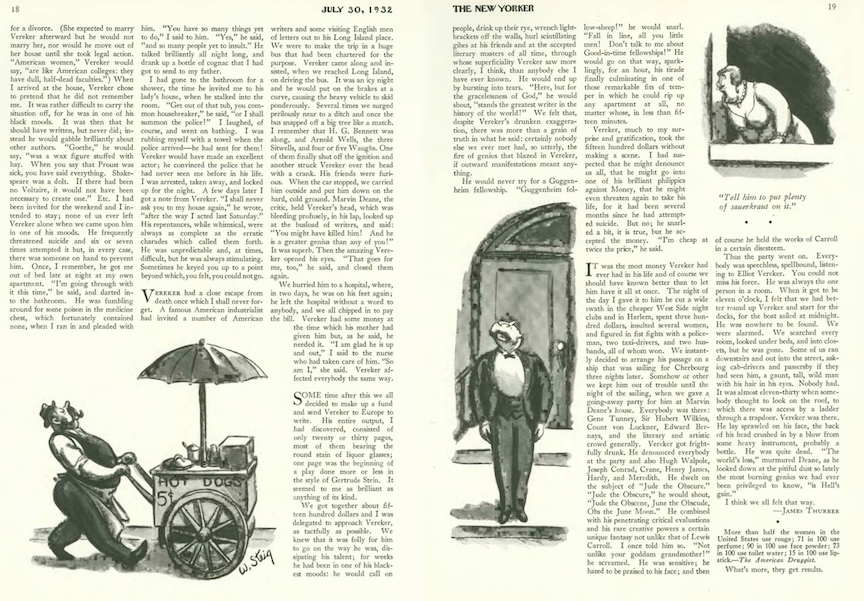
…on to our cartoons…William Steig got a clever two-page layout with the caption, “Tell him to put plenty of sauerkraut on it”…

Carl Rose offered his thoughts on the slate of wishy-washy candidates in the upcoming 1932 elections…

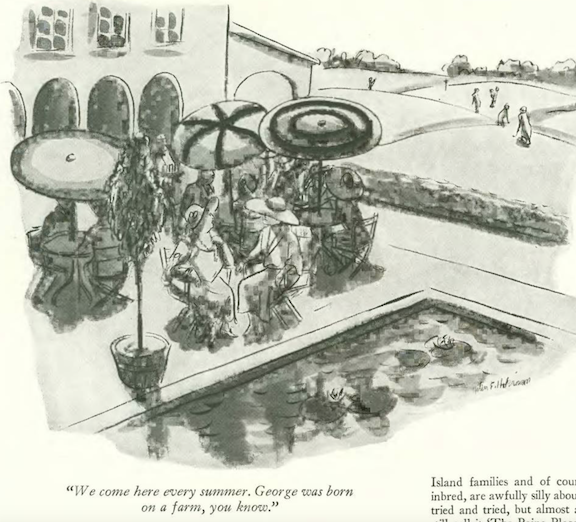
Helen Hokinson explored the simple ways of rural living…

Barbara Shermund looked in on the charmed lives of her modern women…

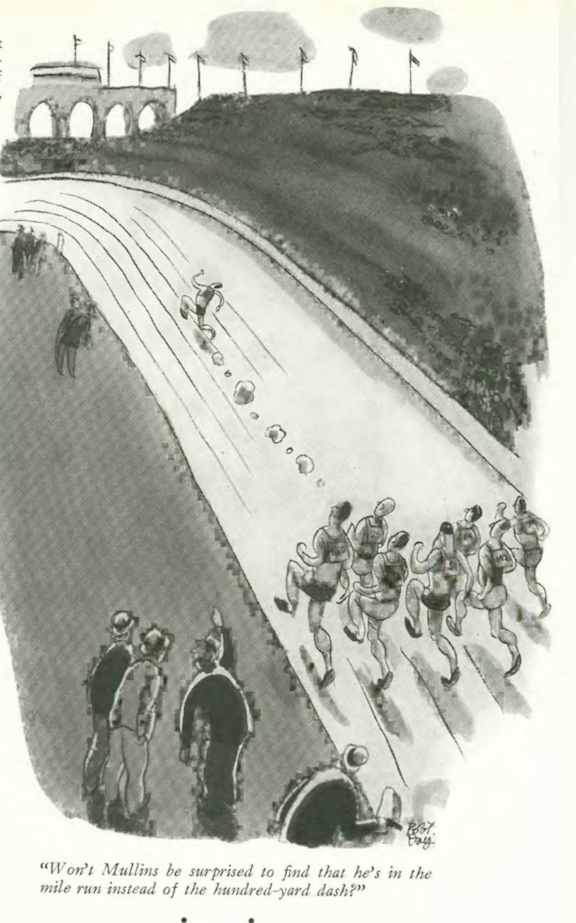
Robert Day gave us an athlete with a big surprise ahead (and not a happy one…I made this same mistake years ago in a junior high track meet)…

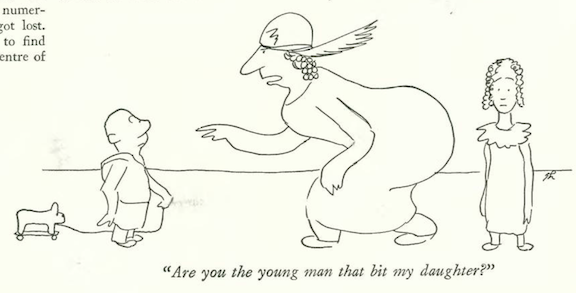
...James Thurber explored the junior edition of his “War Between Men and Women”…

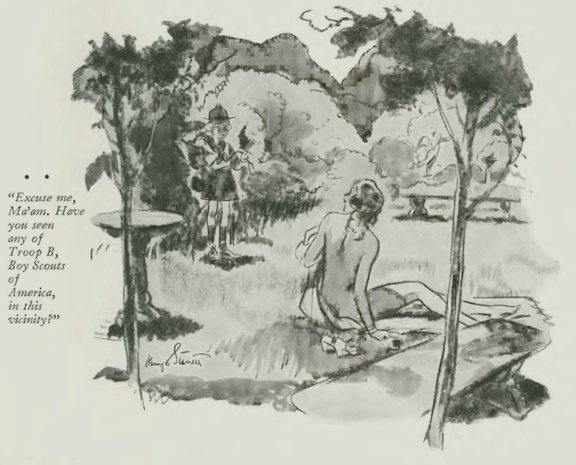
…and Kemp Starrett illustrated a Boy Scout who lost his troop along with some of his innocence…

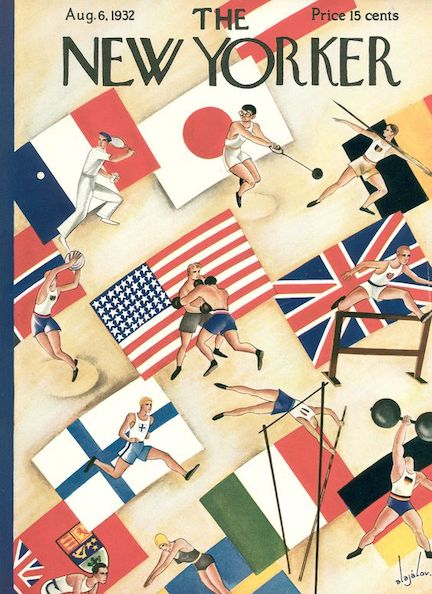
…and we continue with the Aug. 6 issue, cover artist Constantin Alajalov choosing the 1932 Summer Olympics as his theme:

August 6, 1932 cover by Constantin Alajalov.

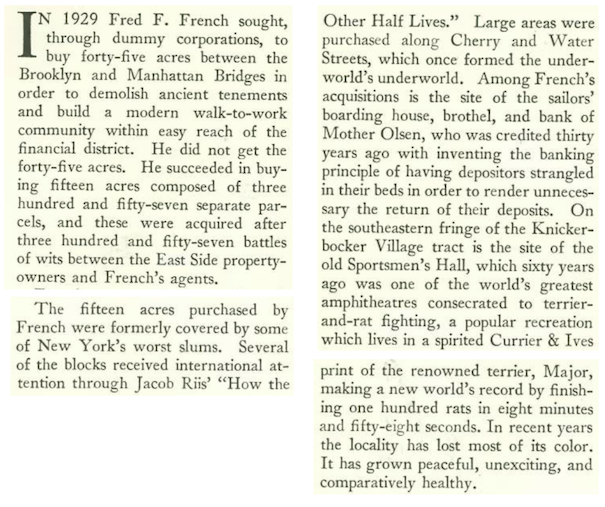
Alva Johnston penned the first part of a two-part “A Reporter At Large” feature on Knickerbocker Village. Yet to be built when this article was written (construction began in 1933 and was completed in 1934), Knickerbocker Village was the first apartment development in the U.S. to receive federal funding. It came from the Congress-authorized Reconstruction Finance Corporation (RFC), which gave loans to private developers like Fred French for the construction of low-income housing in slum-clearance areas.

CLEARANCE SALE…Tenements in Lower East Side were razed in 1933 to make way for Knickerbocker Village. The site was known as “Lung Block,” because of its high tuberculosis mortality rate. Developer Fred French, who also created Manhattan’s Tudor City, received federal funding to replace slums with more healthful housing. However, the 1,590 small apartments in Knickerbocker Village were eventually occupied by white collar, middle-income residents. Rather than provide better housing for former tenement dwellers, the project displaced them to other slum areas in the city. (Ewing Galloway/NYT)
STILL STANDING…Knickerbocker Village today. The complex was severely damaged during Hurricane Sandy in 2012. In 2019, the City Council passed a bill that keeps Knickerbocker Village relatively affordable for the next 50 years in exchange for a $3 million annual tax abatement. (Wikipedia)

*  *  *

From Our Advertisers

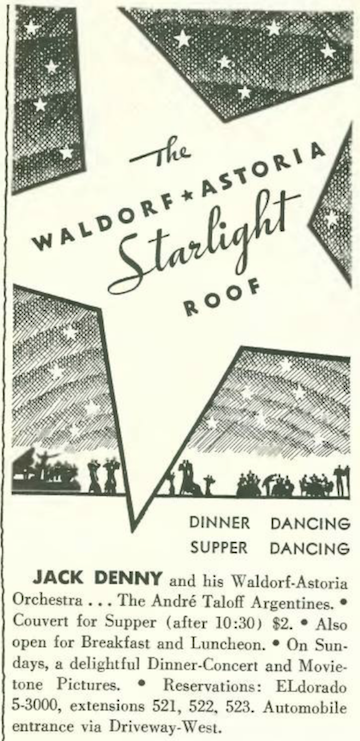
The new Waldorf-Astoria touted its Starlight Roof’s many attractions, including, no doubt, escape from the heat and dust of the city streets…

ON TOP OF THE WORLD…View of the Waldorf-Astoria’s famed Starlight Roof and the cover of its wine list, circa 1934. (Waldorf Astoria)

…I find these Ethyl ads endlessly fascinating, not only for pushing leaded gasoline on the public, but for class-shaming them into using their product…

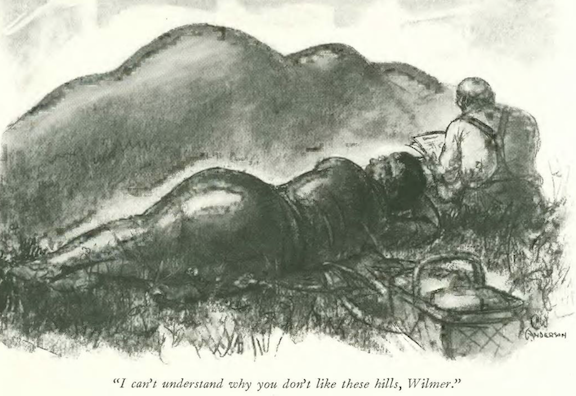
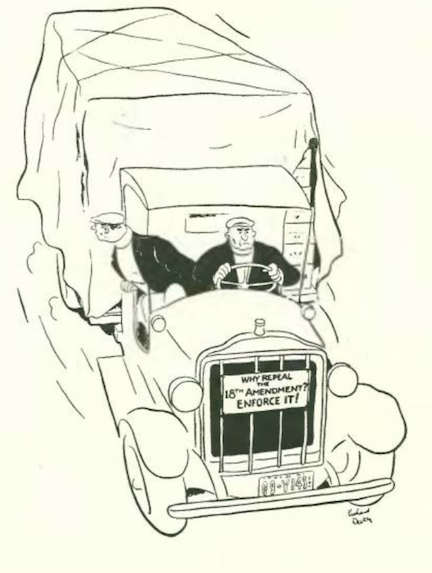
…on to our cartoons, Richard Decker showed how not all Prohibition supporters were teetotalers…

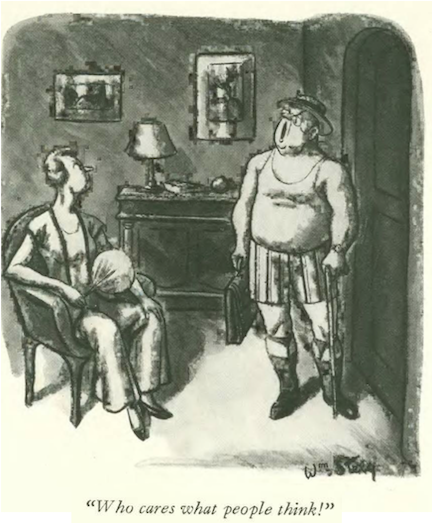
William Steig gave us one man’s reaction to August weather…

Barbara Shermund drew a man drawing a line on his place of birth…

…and we end with a cartoon by Wallace Morgan…there is a joke here related to the attire of the two women, but I am at a loss (any suggestions?)…

Next Time: Silence is Golden…


The Final Curtain

Nearly a century after his passing, many still regard Florenz Ziegfeld Jr as the most important and influential producer of Broadway musicals. His theatrical revues, filled with leggy chorines and wisecracking comics, set a standard for everything from Busby Berkeley productions to the Fats Waller stage celebration Ain’t Misbehavin’.

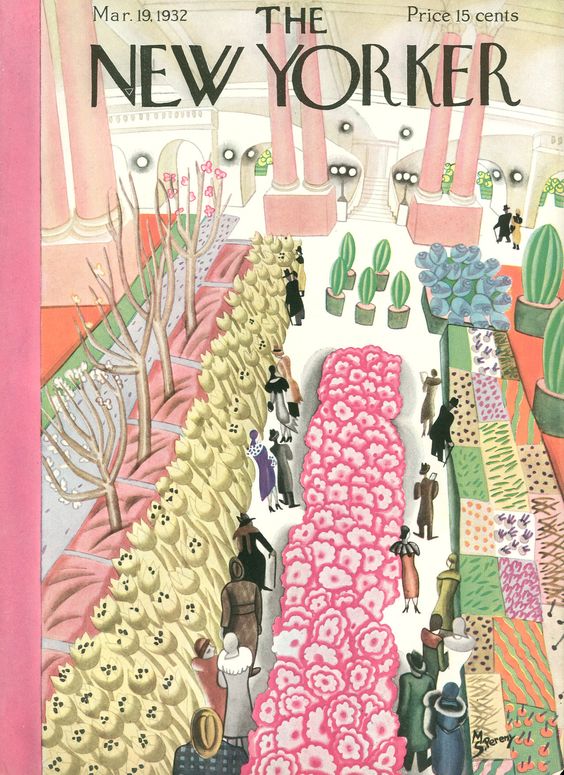
March 19, 1932 cover by Madeline S. Pereny, who gave us a glimpse of the annual International Flower Show at Grand Central Palace.

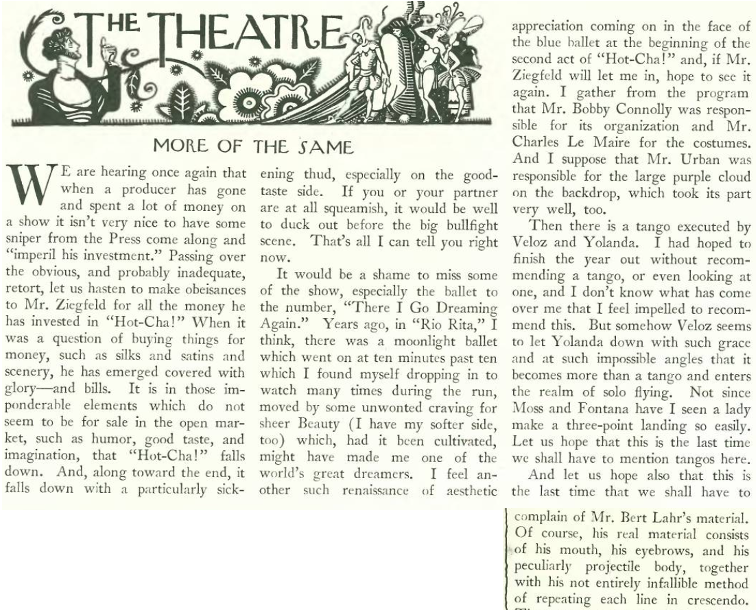
But when Robert Benchley checked out Ziegfeld’s latest revue, Hot-Cha, which opened at the Ziegfeld Theatre on March 8, 1932, he found it tiresome, and no amount of expensive scenery could keep the show from ending on a “particularly sickening thud.” What Benchley couldn’t know, however, was that Hot-Cha would be the last original musical-comedy produced by Ziegfeld, who in just four months would punch his final ticket.

NOT SO HOT-CHA!…Florenz Ziegfeld’s final revue brought out the stars, but it wasn’t enough to dazzle drama critic Robert Benchley. Clockwise, from top left, program for the revue; Lupe Velez, Charles “Buddy” Rogers, and June Knight in Hot-Cha; Benchley was more critical of Bert Lahr’s material than of the comedian himself — many years later Lahr’s son, John Lahr, would follow in Benchley’s footsteps and serve as the New Yorker’s drama critic; Frank Veloz and Yolanda Casazza were among the highest-paid dance acts in the 1930s and 40s, but Benchley had simply lost his appetite for yet another tango. (playbill.com/Pinterest/Smithsonian/Wikimedia)

Selections from the Ziegfeld Theatre program promised a stageful of talents, including 75 “Glorified Girls”…

…and Ziegfeld (1867–1932) would be back in May for a revival of Show Boat, which once again proved to be a hit, but a bout of pleurisy would claim his life on July 22, 1932. As Benchley alluded in his review, these lavish shows led to equally lavish expenses, and Ziegfeld, having lost much of his money in the stock market crash, would leave his actress wife Billy Burke with substantial debts. The plucky Burke, however, marched on with a successful acting career that included her appearance as Glinda the Good Witch in 1939’s Wizard of Oz.

SECOND ACT…Florenz Ziegfeld Jr. and his wife, actress Billie Burke, pose for an Edward Steichen photo, 1927. At right, Burke as Glinda the Good Witch in 1939’s Wizard of Oz. (Condé Nast/IMDB)

 *  *  *

Everyone’s a Critic

The March 19 issue also featured drama criticism from Alexander Woollcott in his “Shouts and Murmurs” column. In this case, Woollcott had a bone to pick with the famed playwright Eugene O’Neill, as well as with Guild Theatre’s coughing patrons, who called to mind a chorus of frogs:

SHSSS!…Alexander Woollcott would have preferred an empty Guild Theatre to one filled with “bronchial” patrons. (goodreads.com)

 *  *  *

Down in Old Mexico

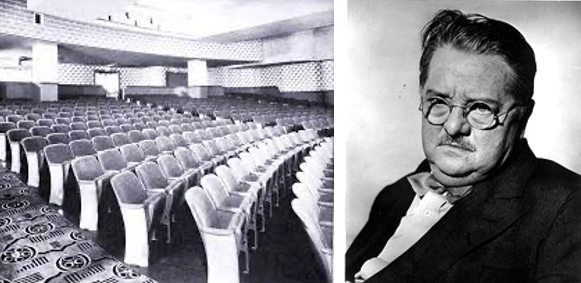
The New Yorker’s latest “Out of Town” feature assured travelers that Mexico was a safe destination, and advised men to pack “spring suits and a dinner jacket” if they planned to visit Mexico City. The author of this piece (signed “P.L.”) cautioned travelers “to get insulated against liquid lightning before getting flip with the national drinks: pulque and tequila. Bootleg liquor is no preparation for the havoc these work even on the sternest drinker.”

 *  *  *

Sweating With the Stars

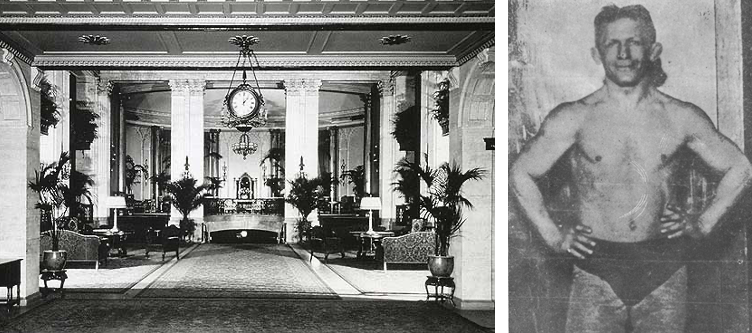
The March 19 “A Reporter at Large” column carried the simple title “Exercise.” Written by journalist Russell Lord* (1895-1964), this excerpt revealed some high-powered clients of one of the world’s first celebrity trainers:

GUY LOMBARDO’S DOOR IS ON THE LEFT…Izzy Winter’s health and exercise “institute” was tucked away on the second floor of the Roosevelt Hotel. Patrons passed through the hotel’s lobby to access an “honest sweat.” Izzy is pictured at right. (Roosevelt Hotel/Yale University)

In Lord’s conclusion, he noted that after a workout patrons were treated to a doze under a sunlamp…and a cigarette…

* In his day, Russell Lord was a noted agricultural writer and editor of the agricultural literary journal The Land, which promoted ecologically responsible agricultural practices.

 *  *  *

Fame and Infamy

I include this snippet from John Mosher’s film column to note the first reference in The New Yorker to the March 1, 1932 kidnapping of the baby of Charles and Anne Morrow Lindbergh…the lives and various doings of the Lindberghs were frequent subjects in the early days of the magazine…

  *  *  *

From Our Advertisers

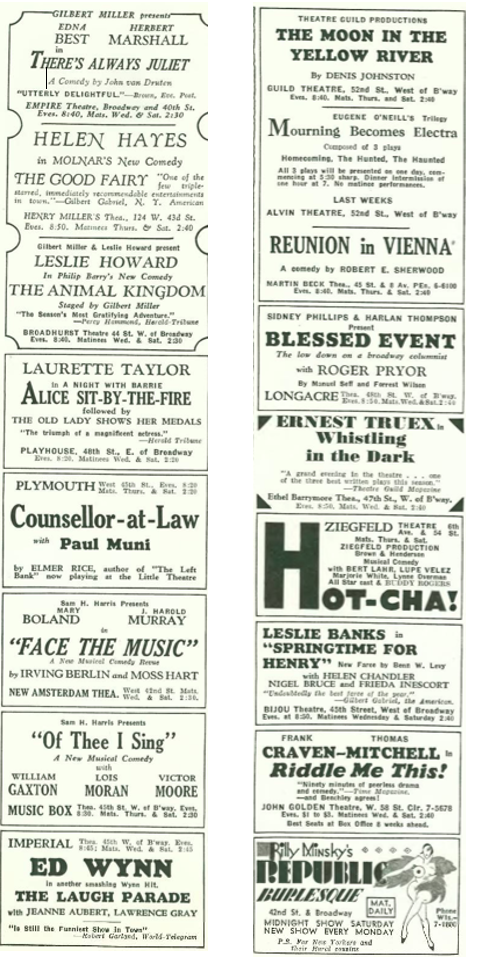
We’ll start by sampling some of the wares in the back pages…looks like Ziegfeld got a big bang for his small investment with his Hot-Cha ad…

…while Ziegfeld ran a cheap ad for his lavish production, the R.F. Simmons Company decided to go big with this ad for…drum roll please…watch chains…

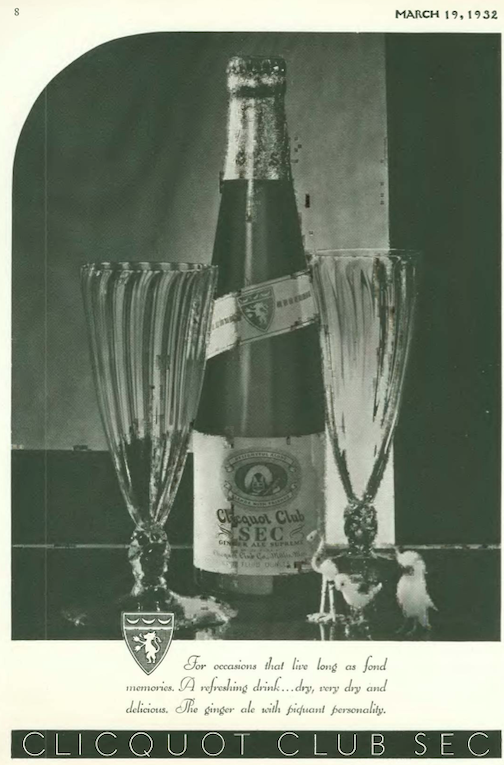
…the makers of Cliquot Club Ginger Ale also did their best to promote a mundane product, claiming their beverage had a “piquant personality”…yeah, especially with a splash or two of some bootleg whisky…

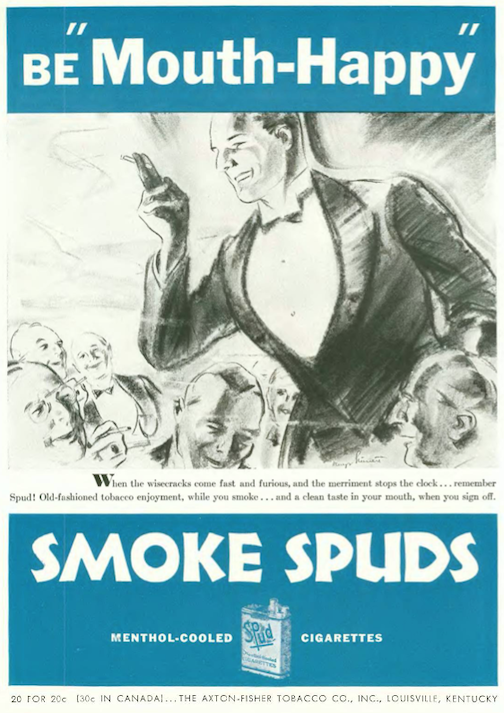
…the makers of Spuds were staying with their stupid “Mouth-Happy” theme, assuring menthol cigarette smokers they will be the life the party…a party filled with old gasbags, that is…

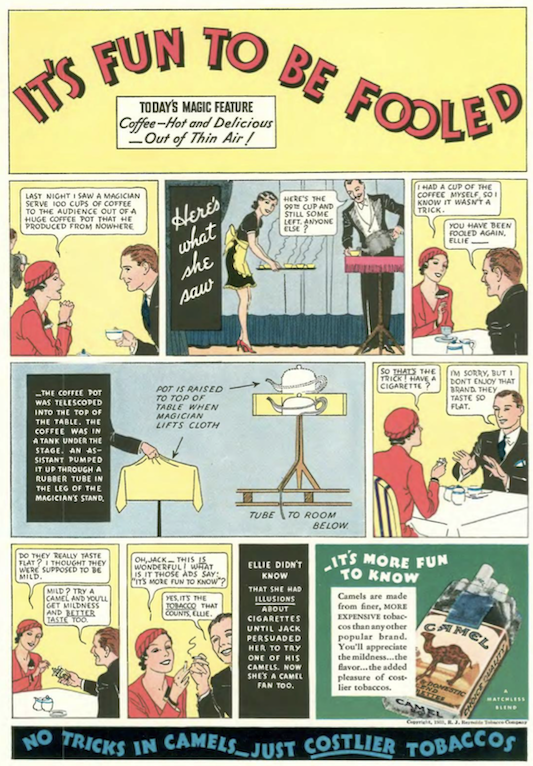
…R.J. Reynolds continued to push their Camels on the growing market of women smokers, demonstrating the effects of a fresh cigarette with this image of a rosy-cheeked nurse…

…DeSoto (a division of Chrysler) gave Depression-era readers something to smile about with this full-color, two-page advertisement featuring a sunny beach scene and an affordable automobile…

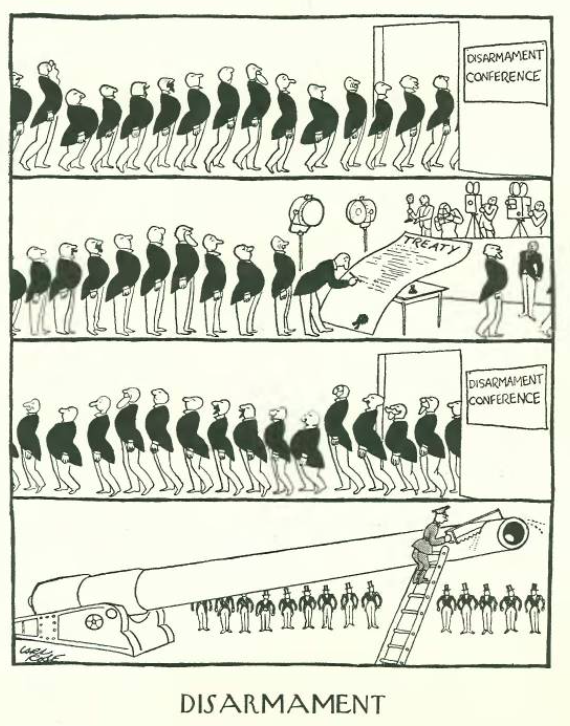
…on to our cartoons, here’s Carl Rose’s perspective on the Disarmament Conference taking place in Geneva, Switzerland…

…while the Otto Soglow’s Little King had his own way of projecting power…

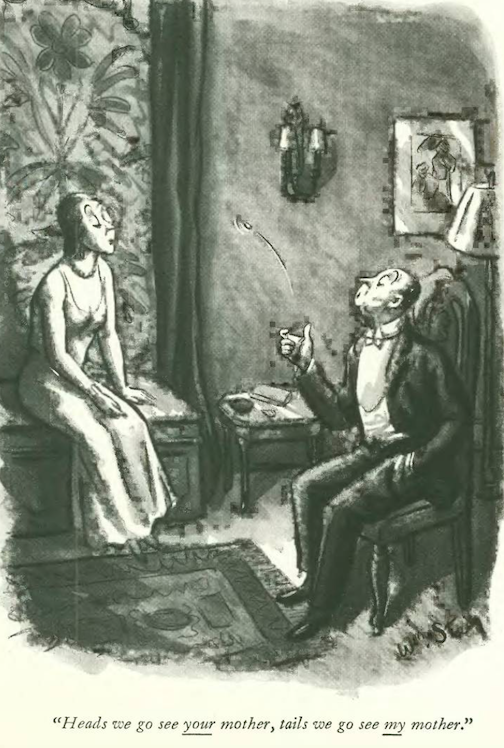
…on the domestic scene, Barbara Shermund’s modern women were channeling  René Descartes

…and William Steig showed us a couple debating an equally weighty matter…

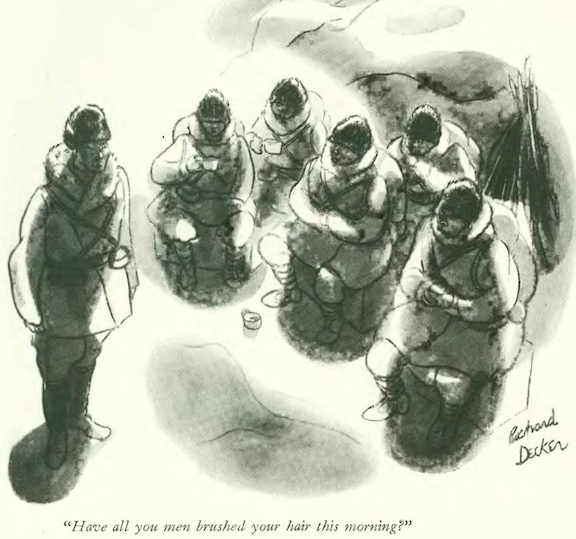
…and via Richard Decker, some well-groomed polar explorers…

…two of Helen Hokinson’s “girls” stopped by the International Flower Show at Grand Central Palace…

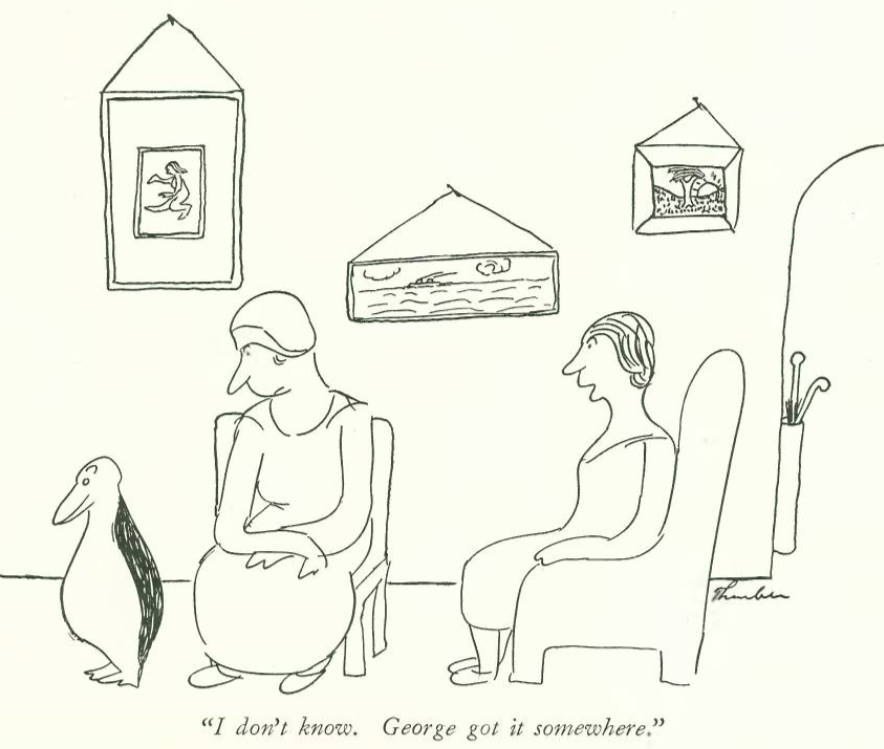
…and we end with another classic from James Thurber

Next Time: Dirge for a Dirigible…

Yankee Doodles

In 1931 Gertrude Vanderbilt Whitney (image above) opened a new art museum in Greenwich Village that would be unlike any other in Manhattan, one that would focus exclusively on American art and artists.

Nov. 28, 1931 cover by Harry Brown.

Ninety years ago American painters and sculptors were mostly considered second-rate by critics who had cut their teeth on the Old World’s “Great Masters.” An exception was The New Yorker’s first art critic, Murdock Pemberton, who accused such institutions as the Metropolitan Museum of discouraging American art. It is a bit surprising, however, that Pemberton initially gave a cool reception to the opening of the Whitney Museum of American Art, perceiving that its founders were putting the cart before the horse:

AMERICAN ORIGINAL…The original Whitney Museum of American Art was located at 8–12 West Eighth Street in Greenwich Village. Above, images from a 1937 museum catalog, and (bottom right) a view of the building’s West Eighth Street facade, circa 1940-50. (Whitney Museum/Life magazine)
SHE WORE THE PANTS…Robert Henri’s 1916 portrait of Gertrude Vanderbilt Whitney, sculptor and founder of the Whitney Museum. Gertrude’s husband, Harry Payne Whitney, would not allow his wife to hang the portrait in their Fifth Avenue town house because he didn’t want visitors to see his wife “in pants.” Instead, the portrait hung in Gertrude’s West 8th Street studio, which became the first Whitney Museum in 1931. (whitney.org)

Despite Pemberton’s initial concerns, the Whitney became a beloved New York institution, moving in 1954 from the West Eighth location to a larger space on West 54th, and then to its iconic Marcel Breuer-designed building at Madison and 75th, which opened in 1966. The museum would move again in 2015 to its current location at 99 Gansevoort Street in a building designed by Renzo Piano.

IMPERMANENT COLLECTION…The Whitney would move three times after its 1931 opening, first to West 54th in 1954, then to its iconic Marcel Breuer-designed home at Madison and 75th (opened in 1966), and finally to its current location at 99 Gansevoort Street. (museuminforme.blogspot.com)

 *  *  *

Party Pooper

William Faulkner attracted much attention among literary circles during his extended visit to New York in 1931, however (as reported in “The Talk of the Town”) the author was able to dodge most of it by staying put in his Tudor City apartment.

HOME ALONE…William Faulkner spent most of his time in New York holed up in his Tudor City apartment, where he worked on the manuscript for Light in August. (LA Times/Wikipedia)

 *  *  *

This or That

While we are on the subject of literary giants, here is a poem submitted by E.B. White to the Nov. 28 issue that explored some universal half-truths:

*  *  *

From Our Advertisers

As the market for cigarettes continued to increase, so did the number of new brands launched to take advantage of all those eager young puffers. The makers of Condossis Cigarettes hoped to create some buzz for their new product through a series of ads written by Mark O’Dea and illustrated by The New Yorker’s Gardner Rea. Apparently the makers of Condossis believed that a posh backstory would lend a certain élan to their smokes. This seems all for naught—I haven’t found a record of the brand beyond 1938…

…a few of those posh smokers might have considered heading to Monte Carlo for the holidays, where they could also legally drink and gamble and forget about the jobless masses back home…

…but you needn’t go to Monte Carlo to signal your taste for the finer things, at least that is what B. Altman claimed with their lower-priced French knock-offs (although $95 was still a lot of dough in 1931)…

…Bonwit Teller also boasted of its low-priced evening wraps, so affordable that one could consider having a different wrap to complement every gown in one’s wardrobe ($135 in 1931 is roughly equivalent to $2,300 today)…

…the makers of Lenthéric perfumes offered the potential for shame and embarrassment if one didn’t choose their product for that special holiday gift…(illustration by Frank McIntosh, who contributes a cartoon in the next issue)…

…but perhaps the happiest shopper of all could shell out a mere $2.50 for the latest editions of The Fourth New Yorker Album or The New Yorker Scrapbook (drawings of a delighted couple courtesy Peter Arno)

…on to our cartoons, we begin with Mary Petty and a tête-à-tête over tea…

…and Petty again with one woman’s attempt at noblesse oblige…

Barbara Shermund looked in on the very idle rich…

William Steig spotted a bald-watcher…

E. McNerney revealed a secret among siblings…

…and William Crawford Galbraith gave us a backstage glimpse of a Broadway revue…

 *  *  *

On to the Dec. 5 issue…

Dec. 5, 1931 cover by Rea Irvin.

…which featured a profile of renowned violinist and composer Efrem Zimbalist (1889-1985). The son of a Russian conductor, Zimbalist was married to the famous American soprano Alma Gluck

…and the entertainment gene continued on through the family line, as Zimbalist and Gluck’s son, Efrem Zimbalist Jr., would become a star in Hollywood, as would their granddaughter, Stephanie Zimbalist.

ALL IN THE FAMILY…Famed violinist Efrem Zimbalist and American soprano Alma Gluck (top, left) would pass on their entertainment genes to son Efrem Zimbalist Jr. (known for his starring roles in 77 Sunset Strip and The F.B.I.) and granddaughter Stephanie Zimbalist, who portrayed sleuth Laura Holt in the NBC series Remington Steele. Top right, a “Profile” caricature of Zimbalist by Al Frueh. (Wikipedia/Pinterest)

 *  *  *

From Our Advertisers

Much to the delight of The New Yorker advertising department, the makers of Condossis Cigarettes were back with their second installment of the adventures of the “Condossis Family”…

…on the other hand, the well-established Chesterfield brand didn’t have to try quite as hard — offering an attractive woman and some supporting copy that subtly suggested that a woman could credit her fine demeanor to a mere cigarette…

…on to our comics, we have this two-page entry by Rea Irvin

…a bit of offensive driving, Helen Hokinson-style…

Carl Rose gave us an unlikely candidate for a chaste role…

Alan Dunn’s entry played to the stereotypes of his day…

Frank McIntosh plied the Sugar Daddy waters to come up with this gem…

Garrett Price gave us a gift designed to light a man’s fire…

Barbara Shermund lit a flame of a different sort between a dowager and her latest escort…

…and we end with James Thurber, and one of my all-time favorites…

Next Time: Mosher’s Monster

All That Glitters Is Not Gold

We first encountered critic Lewis Mumford in the June 30, 1931 issue of The New Yorker when he roundly excoriated plans for Rockefeller Center. The Nov. 14 issue once again found him in a surly mood, this time regarding the decorative arts and how they had been poorly displayed at the otherwise esteemed Metropolitan Museum.

Nov. 14, 1931 cover by B.H. Jackson.

To say that Mumford was displeased with the Met’s decorative arts exhibition would be an understatement:

BED, BATH AND BEYOND…Let’s just say Lewis Mumford probably needed a stiff drink after strolling through the Met’s latest displays of the decorative arts. (Library of Congress)
PAST IMPERFECT…Norman Bel Geddes was known for his theatrical, futuristic visions of streamlined everything, but the radio he exhibited at the Met was more Queen Victoria’s speed in Mumford’s view. (Pinterest)

Mumford pondered this sudden decline: was it the Depression, or just a streak of bad taste? And what could be done with the purveyors of bad taste, short of shooting them? Let’s read on…

MIRACLE ON 34TH STREET…Mumford suggested that Macy’s International Exposition of Art in Industry in the late 1920’s had more vision than the Met’s 1931 offering. Above, living room furniture designed by Houbert et Petit exhibited in a showroom during the 1928 “International Exposition of Art in Industry” at Macy’s department store. (Library of Congress)
LESS THAN A PRETTY FACE?…The streamlined form of Norman Bel Geddes’ “House of Tomorrow” probably wowed a few readers of Ladies Home Journal in April 1931, but critic Lewis Mumford was likely not among them, as he often criticized Bel Geddes for his theatricality at the expense of good taste and functionality (see first excerpt above). Mumford was especially critical of Bel Geddes’ glorification of the automobile and the highway at the expense of livable cities. (Pinterest)

 *  *  *

Peter, We Have Your Back

When your colleague has a play made from his book, and it closes after just seven performances, what can you say, especially if you are theater critic for The New Yorker? Well, here is what Robert Benchley did:

THAT’S SHOW BIZ…Here Goes The Bride, based on a Peter Arno book, closed after just seven performances. However, as a cartoonist, Arno was at the top of his game. (Britannica/Ebay)

 *  *  *

From Our Advertisers

Depression? Who needs it? If you had the means, and didn’t lose your shirt in the 1929 crash, you could get away from it all and book passage to the Bahamas, where you could drink legally, soak up some sun, and forget about those lengthening bread lines you occasionally glanced from the window of your town car…

…well, that bootleg gin was a mind eraser…

Helen Hokinson continued to offer her cartooning skills to the folks at Frigidaire…

…on to our cartoons, the George Washington Bridge drew the envy of some out-of-towners, as illustrated by Garrett Price

…nearly 90 years ago folks were almost as nuts about college football as they are now, except for Perry Barlow’s lone dowager, who would rather be sitting in her parlor with a cup of tea…

Gardner Rea explored the wonders of heredity…

Otto Soglow’s Little King employed a guard ready for any emergency…

Barbara Shermund gave us an artist with a god complex…

James Thurber continued to probe the nuances of the sexes…

Peter Arno sketched this two-page spread with the caption: J.G’s a card all right when he gets to New York

…and from the mouth of babes, we have these observations of the underworld from Chon Day

…and Denys Wortman

On to the Nov. 21 issue, which featured the last in a series of eleven covers Helen Hokinson contributed to The New Yorker in 1931. The covers featured one of Hokinson’s “Best Girls”—a plump, wealthy, society woman—on an around-the-world cruise, which began with the March 2 issue and ended on Nov. 21 with a stop at the customs office, and a nosy customs officer…

Nov. 21, 1931 cover by Helen Hokinson.

Bread & Circuses

In his “Notes and Comment,” E.B. White reported on a recent editorial in the Columbia Spectator, that university’s student newspaper, which took issue with the professionalization and “furtive hypocrisy” of college football (if only they could see us now). White observed:

In 1931, Columbia was a football power, and the Ivy League was a big-time conference. To the editors of the Spectator, this was not a point of pride, which they made clear in this 89-year-old editorial that could have been written yesterday:

Clippings from Columbia Spectator Archive
JUST GETTING MY KICKS…1931 press photo of Columbia University football star Ralph Hewitt, who still holds the school record for the longest field goal — a 53-yarder he dropped kicked in a 1930 upset victory over Cornell. Hewitt went on to coach high school sports.

 *  *  *

Sorry, Charlie

William “Billy” Haines was a top-five box-office star from 1928 to 1932, portraying arrogant but likable characters in a string of pictures that ended abruptly when Haines refused to deny his homosexuality and was cut loose by MGM. “The Talk of the Town” looked in on Haines at his Santa Barbara home, where he entertained a mysterious visitor:

THE INTERIOR LIFE…The actor William Haines in a 1926 publicity shot taken at his Hollywood home. Haines would abandon acting in the 1930s and take up a successful career as an interior designer. (Photofest)

 *  *  *

Coveted Coiffeur

Writer Bessie Breuer wrote an admiring profile of Polish hairdresser Antoine (aka Antoni Cierplikowski), considered the world’s first celebrity hairdresser. The opening paragraph:

A CUT ABOVE…In 1914 famed hairdresser Antoine (aka Antoni Cierplikowski) invented the “shingle cut” (at left, sported by actress Louise Brooks in the 1920s), which was all the rage during the Roaring Twenties. (Pinterest)

 *  *  *

The Look of Relief

In “The Talk of the Town” E.B. White noted that a familiar face was gracing advertisements for President Herbert Hoover’s Unemployment Relief Agency:

I NEVER FORGET A FACE…E.B. White referred to this ad featuring an unnamed woman who had a familiar look about her. (period paper.com)

 *  *  *

More His Style

We return again to Lewis Mumford, this time cheered by the sight of the new Starrett-Lehigh Building in Chelsea, designed by Cory & Cory. An excerpt from “The Sky Line” column:

THAT’S MORE LIKE IT…Lewis Mumford praised the striking effect of the Starrett-Lehigh Building’s alternating bands of brick, concrete and steel. (Atlas of Places)

 *  *  *

The Chump

John Mosher was neither moved nor charmed by the appearance of little Jackie Cooper in The Champ, a tearjerker story of an alcoholic ex-boxer (Wallace Beery) struggling to provide for his son. He did, however, appreciate the boy’s ability to carry “on his little shoulders a heavy and tedious and lengthy story.”

BUMMER…John Mosher had little to like about King Vidor’s The Champ, featuring Wallace Beery and Jackie Cooper. Mosher was no doubt a bit dismayed when Beery received an Academy Award for his performance. (IMDB)

 *  *  *

A Wishful Christmas List

It was that time of the year when the New Yorker began running its lengthy features on possible gifts for Christmas. This excerpt caught my eye for what might have been possible in 1931 — buying a photographic print directly from Berenice Abbott or Nickolas Muray:

NO LUMP OF COAL, THIS…In 1931 it might have been quite possible to buy this print directly from photographer Berenice Abbott. Barclay Street, Hoboken Ferry 1931, is in MoMA’s photography collection.

*  *  *

From Our Advertisers

It has been well-established in previous posts that Anglophilia ran rampant among New York’s smart set, and this advertisement from Saks provides everything we need to underscore the point…

…and the top hat mades another appearance in this spot for Lucky Strike, featuring an endorsement from actor Edmund Lowe...

…our cartoons featured a song-less songbird courtesy of Perry Barlow

…and from James Thurber, another creature with little appetite for song, let alone wine and women…

William Steig brought us back to the bleachers with another nonconformist…

Gluyas Williams gave us this sad sack all alone in the crowd…

Richard Decker sought to bring order to this court…

…and we end with Carl Rose, and this two-page cartoon illustrating a dicey parking challenge…

Next Time: Yankee Doodles…


The Tragic Pose

In an age of toe-tapping musicals and screwball comedies — which served to distract from the grim realities of the Great Depression—one playwright was content to continue mining the deep veins of tragedy and pessimism than ran through the 1930s.

Nov. 7, 1931 cover by Margaret Schloeman.

A Chekhovian realistEugene O’Neill (1888–1953) had yet to write his masterpiece, Long Day’s Journey into Night, but in 1931 he was already well established as America’s preeminent playwright. When his naturalistic Mourning Becomes Electra hit the Guild Theatre stage, New Yorker theatre critic Robert Benchley had little doubt about O’Neill’s greatness as a playwright, even if he wasn’t so sure about the play itself:

O’Neill’s tragic pose was borne from childhood, the son of an alcoholic father and a mother who became addicted to morphine after his difficult birth. His older brother, Jamie, would drink himself to death. It doesn’t end there. O’Neill’s own  two sons would commit suicide, and he would disown his remaining daughter, Oona O’Neill, when at age 18 she married silent film star Charlie Chaplin, 36 years her senior. An odd footnote: Chaplin was best friends with Ralph Barton, a cartoonist for the early New Yorker who took his own life after Eugene O’Neill married Barton’s ex, Carlotta Monterey. To close the loop, O’Neill and Monterey had a mess of a marriage between his alcoholism and her addiction to sedatives. No wonder the man rarely smiled.

WRONG MEDS, MY DEAR…Christine Mannon (Alla Nazimova) recoils from her husband, Ezra (Lee Baker) after giving him a poison that he mistakes for his heart medicine. At right, Christine and her daughter, Lavinia (Alice Brady), await the return of Ezra from battle. All three actors were part of the original cast of Eugene O’Neill’s Mourning Becomes Electra, which was a retelling of Oresteia by Aeschylus. (allanazimova.com)
FAMILIAR FACE…Eugene O’Neill made his third appearance on the cover of Time magazine for the Nov. 2, 1931 issue. He made a total of four appearances on the magazine’s cover (1924, 1928, 1931 and 1946). At right, cover of Guild Theatre program. (Time/Pinterest)
SAY CHEESE…Eugene O’Neill wore his familiar scowl in this undated portrait with his third (and final) wife, stage and film actress Carlotta Monterey. (famousfix.com)

 *  *  *

Go West, William

When Mae West announced she was going to present a modern version of William Shakespeare’s Macbeth and play the part of Lady Macbeth, Wolcott Gibbs went to work on possible scenarios for such a production. Here is one of them:

LADIES MACBETH?…Actually, only two of these women made the cut to play Lady Macbeth. Gladys Cooper (center) appeared as Lady Macbeth in a 1935 production at the Ethel Barrymore Theatre that lasted barely a month. The following year Edna Thomas (right) portrayed Lady Macbeth in a Federal Theatre Project production of Macbeth with an all-Black cast. Orson Welles adapted and directed the production, which was staged at Harlem’s Lafayette Theatre. It became a box office and critical sensation.

 *  *  *

Those Hats Again

And now to E.B. White, who once again explored the mysteries of the Empress hat:

TAKE THIS, MR. LIPPMANN…Thelma Todd wearing an Empress Eugénie hat in the 1932 comedy Speak Easily. (Wikipedia)

  *  *  *

Rah, Rah, Sis Boom Bah

And so, in a city with one of the most storied teams in Major League Baseball, The New Yorker continued to ignore that sport as it gushed over college football, John Tunis even going the extra mile to check out homecoming at Ohio State.

HOMECOMING ROYALTY…THE Ohio State football team went 6-3 in 1931, but they blanked Navy 20-0 in their homecoming game. (elevenwarriors.com)

*  *  *

Boxing Brainiac

Several times before in this blog we have encountered boxing great Gene Tunney and his taste for the literary life. E.B. White gave us the latest on the Champ in “The Talk of the Town”…

THE FINER THINGS…Heavyweight Boxing Champion Gene Tunney, left, discusses things that don’t involve hitting people with writer George Bernard Shaw during a 1929 vacation to Brioni. (Associated Press)

 *  *  *

From Our Advertisers

It’s the Depression, Prohibition is still in force (kind of), so what’s a body to do to blow off some steam? Well, you could take up smoking, every waking moment, at least when it came to this guy…

…and these were the days when tobacco companies offered competing claims about the health benefits of their cigarettes (weight loss, calmer nerves etc.). So the folks at Listerine, who were all about keeping you safe from nasty mouth germs, launched a cigarette of their own, which was “taking the country by storm,” at least in their estimation…

…and I throw this in to give you an idea of how far cigarette companies would go, and how folks would respond in the early 1930s…at left is a 1932 advertisement from the back cover of Popular Mechanics, telling us that “Everybody” is deeply inhaling their product…of course people became addicted, including this young woman (right) featured in a 1931 Popular Science news item who managed to smoke and read a book while reducing her figure…

…back to the ads from the Nov. 7 issue, here is one that offered a “scientific” way to remove nicotine from cigarettes, allowing only “pure tobacco” to enter your pink lungs…

…and now a couple of lovely color ads for Houbigant cosmetics…

…and our friends at Alcoa, diligently working to convince Americans that aluminum furniture was the modern way to keep your house “in step” with the times…

…and finally, RCA Victor was offering an early version of the LP record, so you wouldn’t have to stop necking to turn the damn record…

…on to our cartoons, we begin with Gardner Rea

…John Reehill gave us a lover who probably watched too many romance movies…

…contrasting with this fellow illustrated by Carl Rose, who doesn’t lift a finger to find some romance…

…and while we are on the subject of love, here is a modern twist offered by Barbara Shermund

William Crawford Galbraith gave us a far more detached view of the game of love…

…while Helen Hokinson found an attraction of a different sort with one of her “girls”…

Alan Dunn looked in on the baking business, industrial-sized…

…and we end with Richard Decker, and the price of war…

Next Time: All That Glitters Is Not Gold…

Firecracker Lane

When fireworks were still allowed on the streets of New York City, Firecracker Lane was the place to go for all your pyrotechnic needs.

Theodore Haupt illustrated holiday travelers for the Fourth of July issue in 1931.

By 1931, however, fireworks had been banned across the greater New York City area, so customers visiting Firecracker Lane—a short row of sellers on Park Place between Broadway and Church Street—had to find a friendly burg beyond the metropolis to shoot off their Independence Day arsenals.

Before the city clamped down on the fun, Firecracker Lane did a bustling trade, and fireworks were even manufactured at sites around the metro area. But after a number of explosions and fires, the city closed down the fireworks factories, and by 1931 Fireworks Lane itself was on its last leg. “The Talk of the Town” visited what remained, and reminisced about the glory days.

A STREET WITH SOME SIZZLE…The famed Pain’s Fireworks company occupied this building on Firecracker Lane, photo circa 1903. At right, a young woman promoting Pain’s latest novelty, the “Chinese Dragon,” in the 1920s. (Museum of the City of New York)
HAVING A BLAST…In the 19th and early 20th centuries, Pain’s staged massive themed fireworks displays, including the incredible The Last Days of Pompeii show on Manhattan Beach, seen here during its 1903 Season. (heartofconeyisland.com)
BEFORE THERE WERE MOVIES, entertainment companies were fond of putting on spectacular shows like The Last Days of Pompeii on Manhattan Beach. Illustration from an 1885 edition of Harper’s Weekly. (heartofconeyisland.com)
LOCATION, LOCATION…Explosions at fireworks factories in New York and New Jersey put an end to the manufacture of fireworks in the area by 1930. Above, a July 1901 explosion of a fireworks factory in a Paterson, N.J. tenement resulted in the deaths of 17 people who lived above factory. The New York Times reported “So great was the force of the blast, that a boy playing in the street a half a block away was lifted from his feet and hurled against an iron fence, and had one of his legs broken.” (Courtesy Paterson Fire History, via boweryboyshistory.com)

*  *  *

Not Mum on Mumford

In the previous post we were introduced to critic Lewis Mumford, who excoriated plans for the new Radio City, now known as Rockefeller Center. In his “Notes and Comment,” E.B. White added his own two cents:

PERHAPS IT SHOULD HAVE BEEN A CAKE…Even the promoters of the Radio City project looked uncertain of their scheme in this March 1931 photo. (drivingfordeco.com)

*  *  *

From Our Advertisers

New Yorkers who wanted to get away from the steamy streets of Manhattan (almost no one had air conditioning in 1931) could catch the cooling breezes of the Atlantic on any number of cruise lines that plied the Eastern Seaboard and Canadian Maritimes during the summer…here the French Line offered a six-day “Triangle Cruise”…

…while Cunard offered a similar excursion (employing the cartooning skills of H.O. Hofman) that allowed passengers to “do the ocean” in just four days…

…to earn the ever-shrinking travel dollar during the Depression, both the Red Star and White Star lines offered their giant ocean liners for half- and full-week cruises to the Maritimes, Red Star even throwing in some on-board entertainment, claiming to be the first to do so “on any ocean”…

A SCRAPPED LOT…From top, the Belgenland, Majestic and Olympic. These great ships that once ferried passengers in high style between Europe and the States had been reduced to taking folks on short cruises and even one-day excursions due to the Depression. By the mid-1930s the Belgenland and Olympic (once the world’s largest ship) were sold for scrap. The Majestic was scuttled a few years later. (Wikipeda)

…I’m not sure where this pair is headed, but the angle suggests they just drove off a cliff…

…if cliff diving wasn’t your thing, you could tool around in a bright red Dodge boat…

…or be easily amused like this guy on the right, who gets his jollies from the abundance of ice cubes in his fridge…

…over at Essex House we find a more reserved scene, the “well-born” father and son gloating over their Central Park view…

…the Essex House might have been “all that,” but Dad and Junior would have to reconsider their social rank against a newcomer — the Waldorf-Astoria, reborn on Park Avenue…

…on to our cartoons, this couple illustrated by Garrett Price might consider something with a larger balcony…

Otto Soglow’s Little King took his Little Prince out for some air…

Kemp Starrett showed us a chap who contemplated the passing of time along with the passing of his timepiece…

Isadore Klein updated the theme of a damsel in distress…
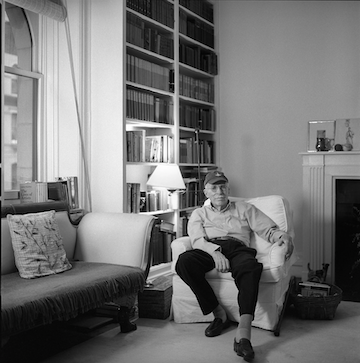
…the growing popularity of Ping-Pong gave James Thurber some material to explore the battle of the sexes…

…and Barbara Shermund left us poolside with a couple of eggheads…

…on to our July 11, 1931 issue…

July 11, 1931 cover by Rose Silver.

…we find E.B. White taking his sweetheart, Katharine Angell White (referred to here as his “best girl”) out for a date at Coney Island…

A PLACE FOR ROMANCE…It’s not them, but this couple visiting Coney Island in 1928 (photo by Walker Evans) will serve well as our stand-ins for E.B. and Katharine White on their date to Coney. At right, the famous “Tunnels of Love.” (Metropolitan Museum of Art/Pinterest)
AND OTHER DIVERSIONS…Another famous and rather lurid Coney attraction was the wax museum, which featured dioramas based on headlines of the day. The biggest attractions were those featuring famous crime scenes, gruesome effects included. (Museum of the City of New York)
IT WAS A LIVING…Among other big attractions at Coney were the sideshow “freaks” White mentioned in his article. The photo above, from 1929, is by Edward J. Kelty. (artblart.com)

 *  *  *

On the Waterfront

The 1954 film by the same name featured the murderous mob boss Johnny Friendly (Lee J. Cobb) who ruled the waterfront’s stevedores with an iron fist. The reality was just as brutal, if not more so along the Brooklyn waterfront in the early 20th century, where the reign of a crime boss was as short as his life span. Alva Johnston reports:

TOUGH NEIGHBORHOOD…Midcentury view of the Brooklyn waterfront. (thenewyorkmafia.com)

Dinnie Meehan’s widow, Anna Lonergan, had the distinction of being shot at the side of two successive husbands; after Meehan was murdered, Anna married “White Hand” gangster Harry Reynolds. Johnston, who referred to Anna Lonergan as “the Brunhild of the longshore cycle,” concluded his piece with a look at the “last of the great leaders,” Red Donnelly, also known as “Cute Charlie”…

HARD KNOCKS…“Peg Leg” Lonergan was the final leader of the waterfront’s “White Hand Gang.” He was gunned down on Dec. 26, 1925, after a short reign as boss. He was just 25 years old when he died. (Pinterest)

 *  *  *

The Show Must Go On

With the glory days of vaudeville quickly receding into the past, Flo Ziegfeld was nevertheless determined to keep his “Follies” alive at his eponymous theatre. Robert Benchley stopped by for a look at the Ziegfeld Follies of 1931.

CARE FOR A SMOKE?…Program cover for the Ziegfeld Follies of 1931. At right, Ziegfeld star Ruth Etting, who portrayed a cigarette girl in the show’s “Club Piccadilly” skit. A note of trivia: Etting and I attended the same high school (but not at the same time!). (Playbill/Wikimedia Commons)
GLORY BE…Inside pages of the program featured some of the “Ziegfeld Beauties” appearing in the show. (Playbill)

 *  *  *

Gross

Back in the day some entrepreneurial types would kill a large whale, stuff it full of sawdust and formaldehyde, and then take it on the road to parade in front of gawkers with spare nickels in their pockets. E.B. White observed the fate of one such specimen:

YES, THIS WAS A THING…Before the days of Jacques Cousteau and Animal Planet, this is how some folks got their first and likely only look at a real whale, even if it was pumped full of sawdust and formaldehyde.

 *  *  *

From Our Advertisers

This small back page ad invited New Yorkers to the cooling breezes atop the Hotel Bossert in Brooklyn Heights, once referred to as the “Waldorf-Astoria of Brooklyn”…

Its rooftop restaurant — the Marine Roof — was a famous hangout. When the Brooklyn Dodgers won the World Series in 1955, this is where they celebrated…

(brownstoner.com)

Dr. Seuss was still making a living illustrating advertisements for Flit insecticide…

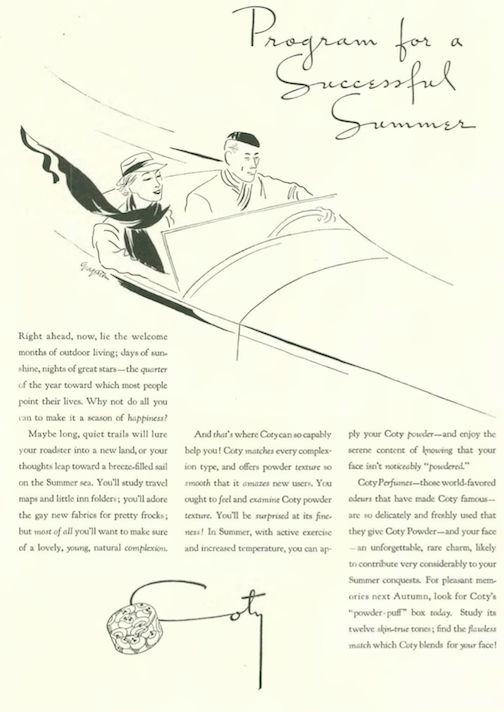
…”my eyes are up here”…says the woman who uses Coty brand lipstick…

…on to our cartoonists, we have Garrett Price also examining the challenges of playing Ping-Pong…

Perry Barlow was at the seaside with a precocious beach-goer…

Carl Rose showed us a Boy Scout after his encounter with the Red Menace…

Kemp Starrett weighed the advantages of air travel…

Otto Soglow surprised us with this undercover operation…

…and we end with James Thurber, and the price of literary fame…

Next Time: The Black Eagle…