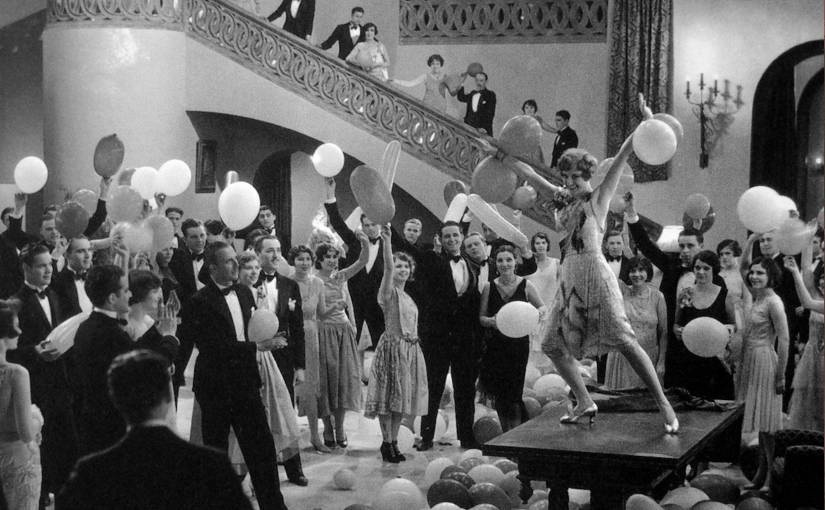
Happy 1929!

I’ve been writing this blog for nearly three years, and during that stretch have managed to cover more than 200 issues of The New Yorker, or about the first four years of the magazine.

Dec. 22, 1928 and Dec. 29, 1928 covers by Rea Irvin.

The amount of young talent on display in those early issues is truly astounding, from writers such as E.B. White, Dorothy Parker and James Thurber (writer and cartoonist) to illustrators and cartoonists including Peter Arno, Rea Irvin, Helen Hokinson, Miguel Covarrubias and Ilonka Karasz, to name just a few. Among the contributing artists was Abe Birnbaum, who illustrated more than 150 covers for The New Yorker from the 1940s to 1970s. One of his earliest contributions to the magazine was this illustration for the “Profile” section in the Dec. 22 issue:
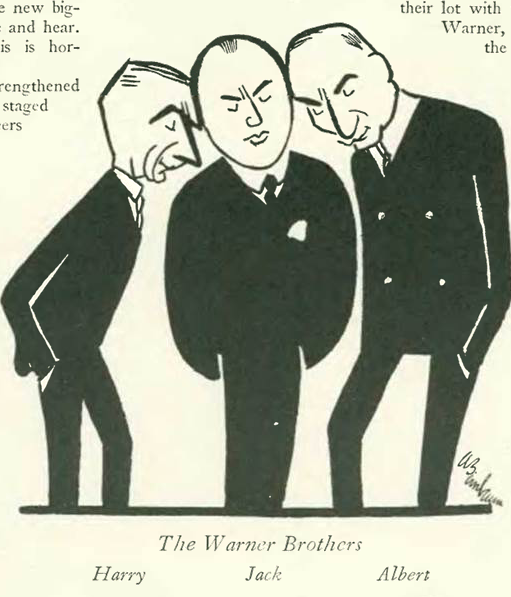
Canadian artist Shelley Davies writes in her blog that Birnbaum “charmingly captured some of life’s quieter moments with a deft eye.” In addition to The New Yorker, Birnbaum illustrated numerous covers for Stage and Arts In America, and won a Caldecott Award in 1954 for his children’s book, Green Eyes.

ON THE QUIETER SIDE…Abe Birnbaum (pictured here circa 1960) created more than 150 covers for The New Yorker from the 1940s to the 1970s. At right, a cover from March 17, 1962. (google.com.br)

 * * *

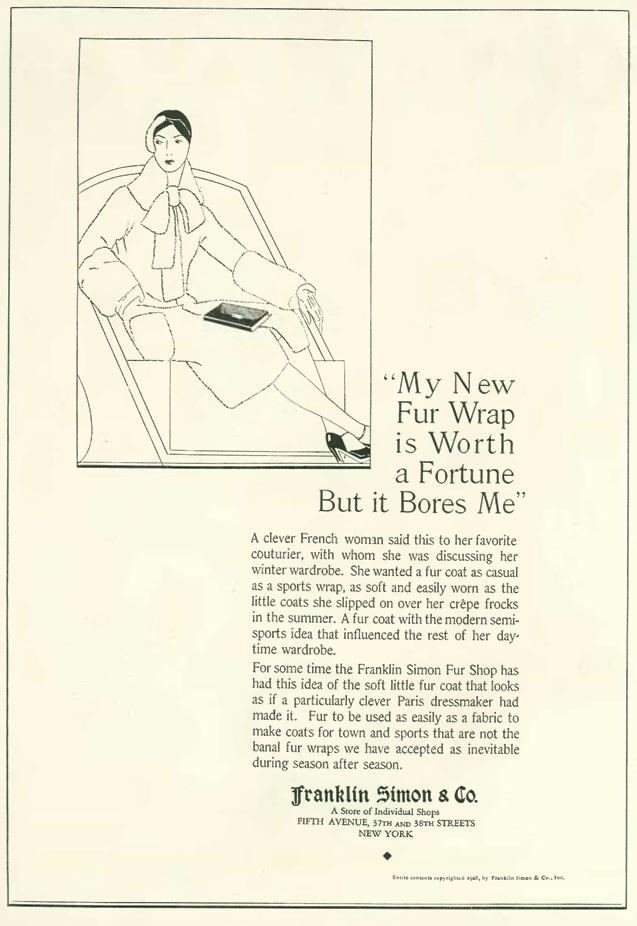
A couple of select advertisements from the Dec. 22 reveal what retailers knew, or thought they knew, about the magazine’s readership. Franklin & Simon, seeking perhaps to broaden their market for furs, suggested that even a stylish French woman might prefer a fur fashioned as a modest “sports wrap”…
…as for the guys, Saks appealed to the anglophilia that apparently was rife among New York’s smart set. Check out the ridiculous hat gracing the noggin of this young dandy…

Well-heeled readers who could afford to flee the New York winter were targeted by these various enticements in the Dec. 22 issue (this is a collage of select ads found in the back pages of the issue):

 * * *

Hello Down There

Writing about New Yorker humor derived from class distinctions, Ben Yagoda (About Town: The New Yorker and the World It Made, p. 63) noted a series of cartoons by Otto Soglow that began with this one in the Dec. 22, 1928 issue and continued through thirty installments that ran to early 1930, when the workers, Joe and Bill, finally emerged from the manhole:

This running gag, according to Yagoda, “came from the conceit that the laborers spoke with the same assumptions and in the same catchphrases as those with ‘higher’ places in society.”

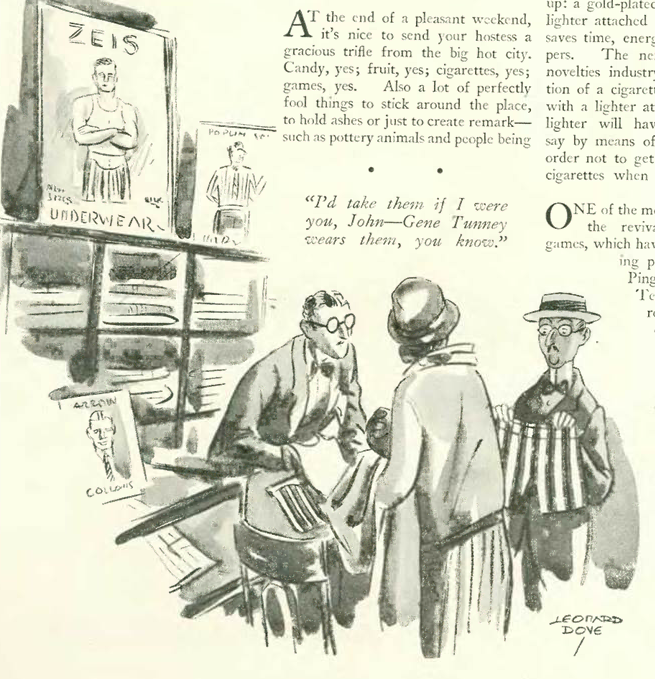
Also from the Dec. 22 issue, this terrific cartoon by Leonard Dove that showed a bookish man who had accidentally entered the wrong type of book-making establishment:

* * *

The Girl Who Wouldn’t Grow Up

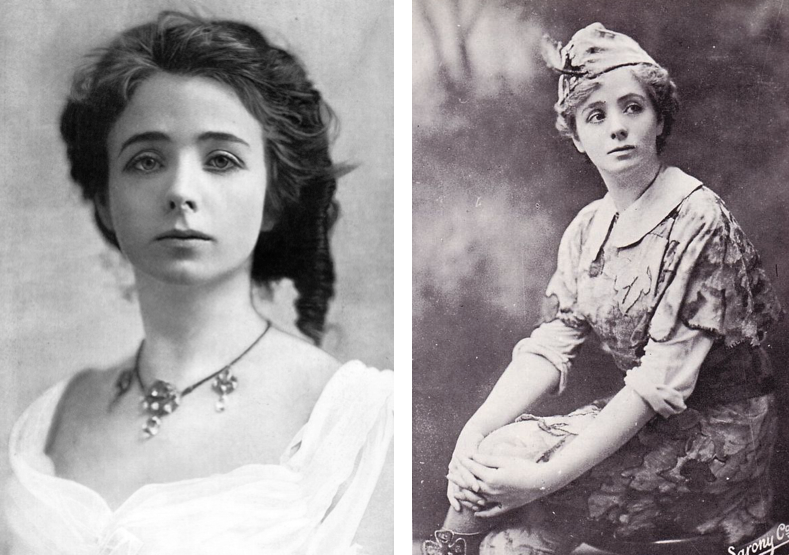
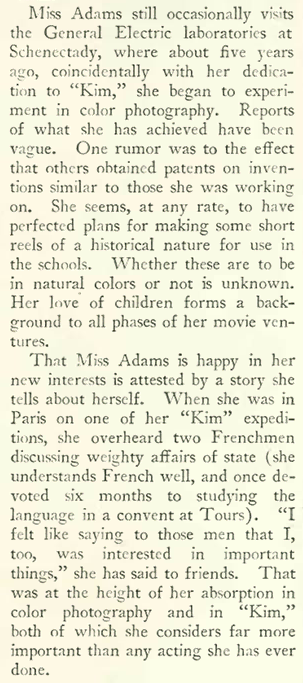
Maude Adams was a major Broadway star in the early years of the 20th century. Appearing in more than 25 productions from 1888 to 1916, she was most famous for her portrayal of Peter Pan in the Broadway production of Peter Pan; or, The Boy Who Wouldn’t Grow Up. She performed that role first in 1905-06 and again in 1912 and 1915. The highest-paid performer of her day, at her peak she earned more than $1 million a year, a staggering sum more than a century ago. James Thurber, writing in the Dec. 29 “Talk of the Town,” reported that after a decade-long absence from the stage, Adams was planning a comeback as a director:
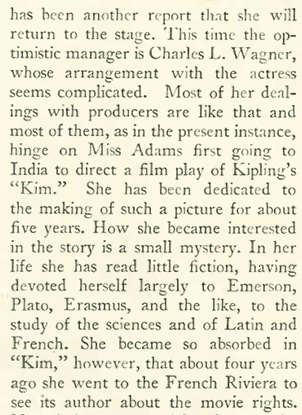
STAR POWER…At left, American actress Maude Adams, circa 1900. At right, Adams as Peter Pan, her most famous stage role. Adams was the first American to portray Peter Pan on the stage. She played the role 1,500 times between 1905-1915. She retired from the stage in 1918 after a severe bout with the flu. She died at age 80 in 1953. (Wikipedia/Oakland Tribune)

Thurber also noted that Adams was working with General Electric in the development of color photography. According to the Trivia Library, it has been suggested that her motivation might have been a wish to appear in a color film version of Peter Pan. She eventually returned to acting in the 1930s, with occasional appearances in regional productions of Shakespeare plays.
 * * *

A Lukewarm Welcome to 1929

The Dec. 29 New Yorker opened with these lamentations for the last issue of 1928. At least it appears that one could obtain a decent bottle of French champagne to toast the New Year:

JAM SESSION…1929 photo of traffic on Fifth Avenue. (theoldmotor.com)

 * * *

The Passing of a Poet

The Dec. 29 issue featured something unprecedented in The New Yorker up to that point: the reprinting of an entire piece previously featured in the magazine. In this case, it was in tribute to the sudden passing of poet and author Elinor Wylie:
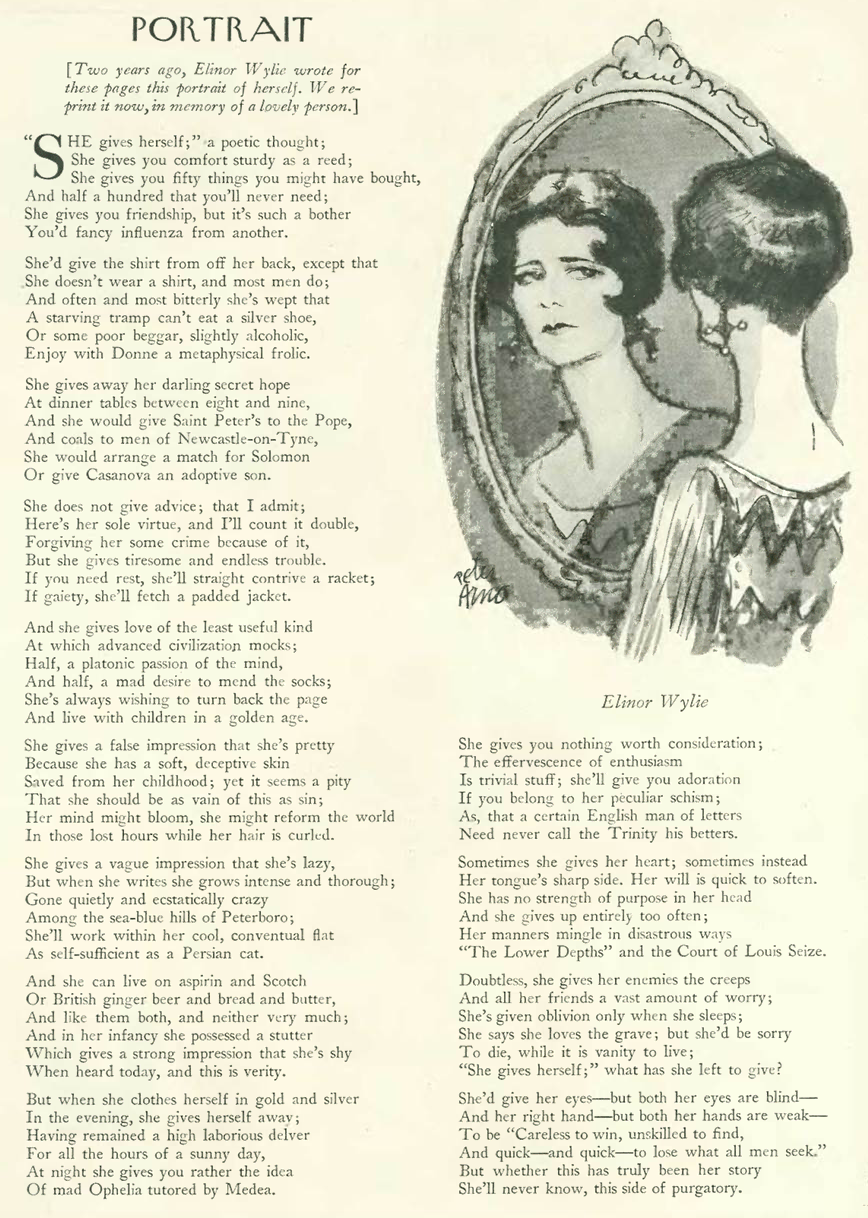
PORTRAITS…Elinor Wylie posed for her friend Carl Van Vechten in this 1922 portrait (left). The photo at right, probably taken around 1926, was clearly the inspiration for the illustration by Peter Arno that accompanied “Portrait.” (Yale University/humorinamerica.wordpress.com)

It is no wonder that The New Yorker had such affection for Wylie, for she was as colorful a personality as could be found in 1920s literary circles. A Columbia University Press bio notes that “she was famous during her life almost as much for her ethereal beauty and personality as for her melodious, sensuous poetry.” Born to a socially prominent family and trained for a life in society, she instead became notorious for her multiple marriages and love affairs. She also suffered from extremely high blood pressure that gave her unbearable migraines.

Wylie died on Dec. 16, 1928, while going over a typescript of her poetry collection, Angels and Earthly Creatures, with her estranged third husband, William Rose Benét. According to Karen Stein (in the Dictionary of Literary Biography), Wylie, while picking up a volume of John Donne’s poems, asked Benét for a glass of water. When he returned with it, she reportedly walked toward him and murmured, “Is that all it is?,” and fell to the floor, dead of a stroke. She was 43.

* * *

Age of Innocence

The Dec. 29 theatre review section featured this illustration by Al Frueh of Katharine Cornell in the Empire Theatre’s production of The Age of Innocence:
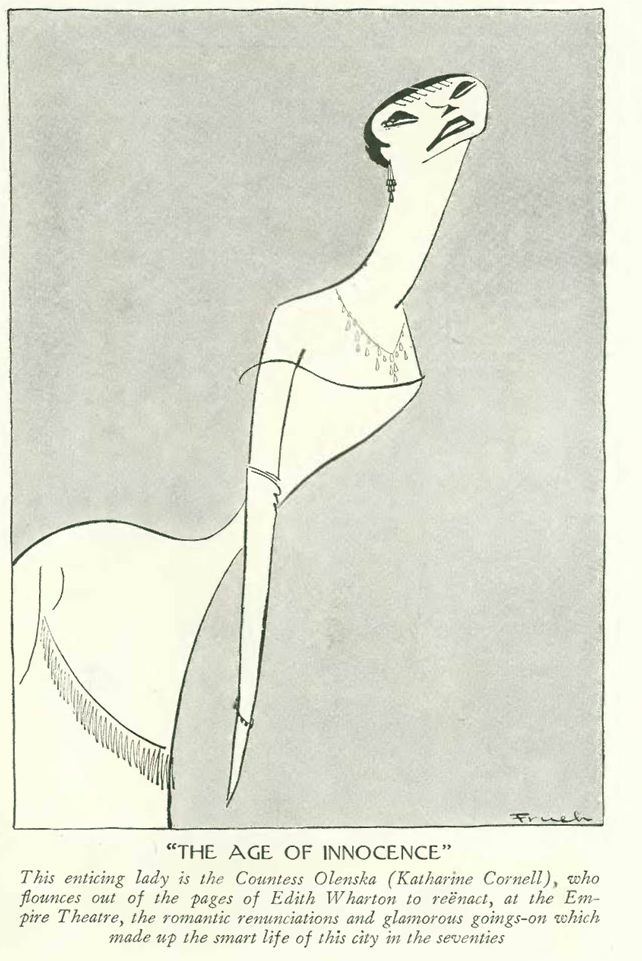
And below, a studio portrait of Cornell from the same play:
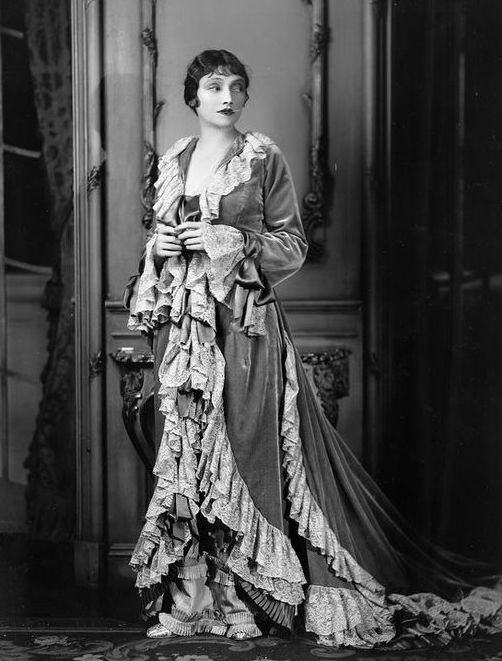
HOW SHE REALLY LOOKED…Katharine Cornell as ‘Countess Ellen Olenska’ in this Vandamm Studio portrait dated November 27, 1928. (Billy Rose Theatre Collection, The New York Public Library)

 * * *

Before Baby Snooks

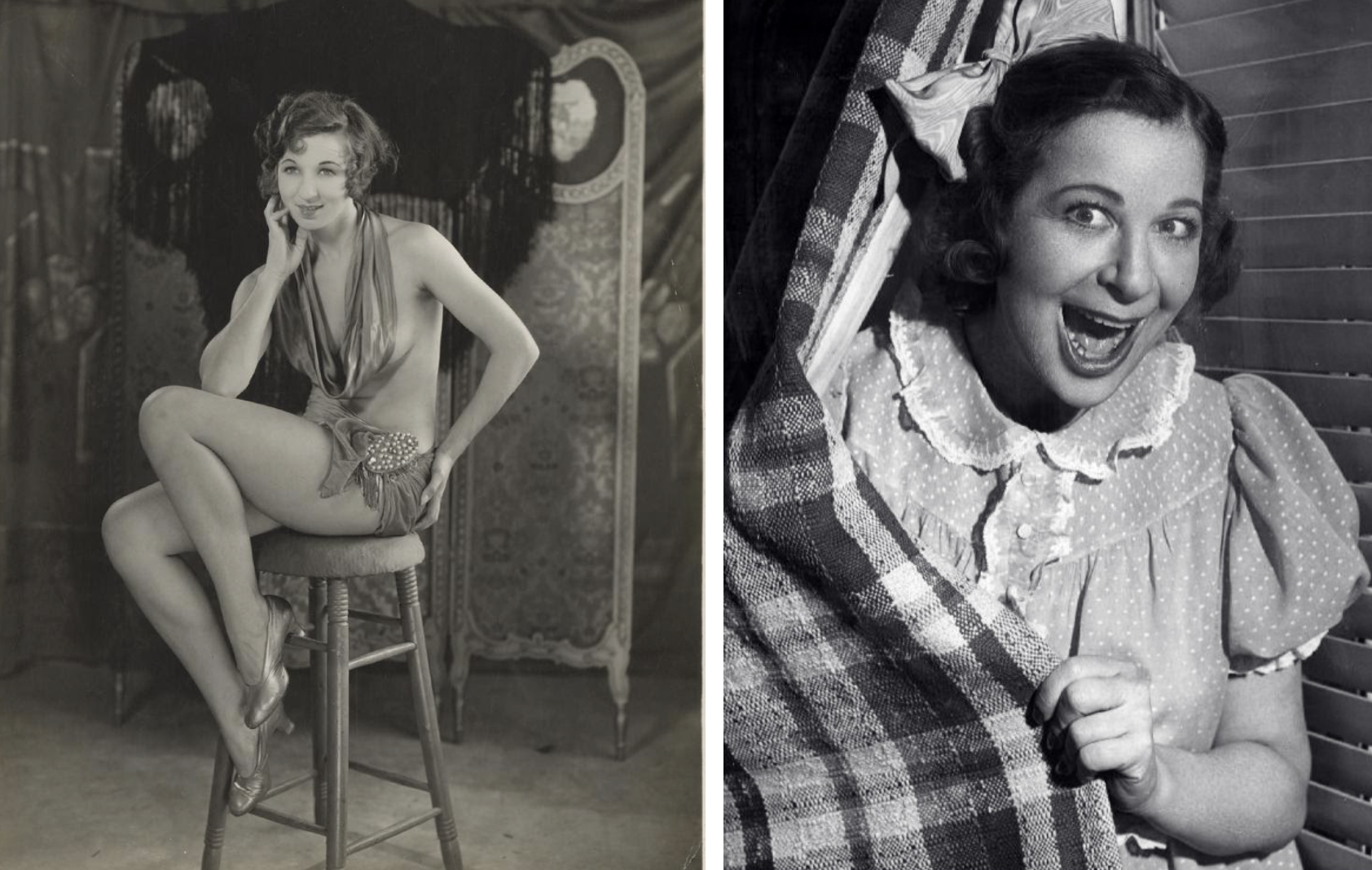
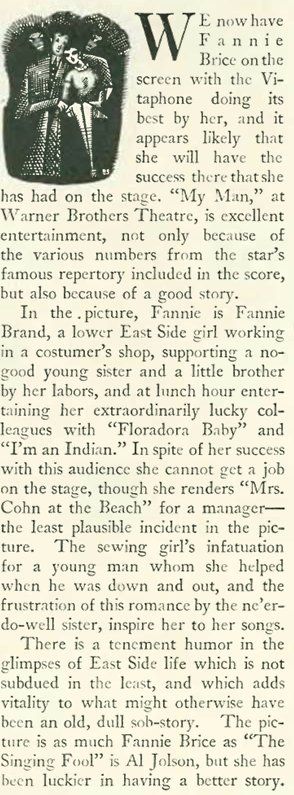
Although it was still a few years before singer and actress Fanny Brice would make her radio debut as the bratty toddler named “Snooks,” she was already well-known to New York audiences for her work in the Ziegfeld Follies (beginning in 1910). In its Dec. 29 issue The New Yorker favorably reviewed Brice’s first motion picture, My Man, which included musical scenes with Vitaphone sound:
MY MAN…Fanny Brice, Guinn Williams, and Edna Murphy on the set of the partially silent film My Man, 1928. Her first movie appearance, Brice played Fanny Brand, a poor girl who becomes a star. The film is now considered lost, since only an incomplete version survives. (brice.nl)
THROUGH THE YEARS…At left, singer and actress Fanny Brice from the time she was a Ziegfeld Follies girl, circa 1915. At right, Brice in the role of Baby Snooks, 1940. (Vintage Everyday/Wikipedia)

 * * *

Let’s Get Physical

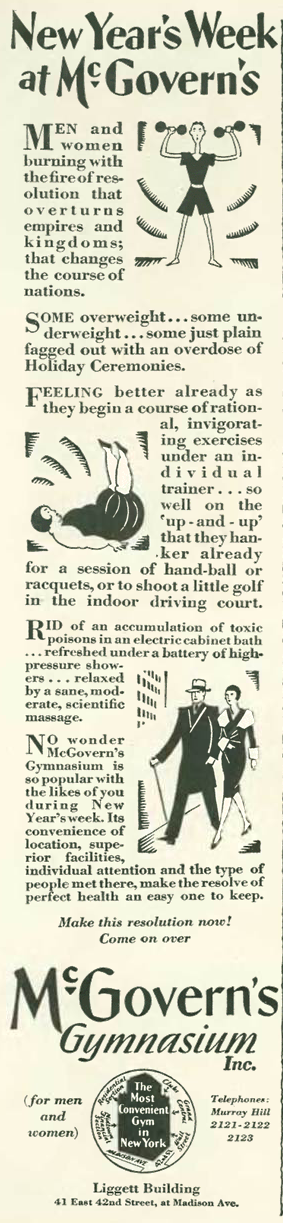
Even 90 years ago some folks (or at least some New Yorkers) resolved to get healthy and hit the gym in the New Year. In this ad, McGovern’s Gymnasium announced it was ready for them:
Babe Ruth trains at Artie McGovern’s Gym for the upcoming baseball season, February 9, 1928. (twitter.com/BSmile)

And to close out 1928, a cartoon from John Reehill

Next Time: Out With the Old…

(Another) Fight of the Century

It seems that each generation has its “Fight of the Century,” a phenomenon that emerges from the alchemy of mass marketing, a lust for blood sport, and the madness of crowds. Gene Tunney — a boxer who also wanted to be a public intellectual — was party to at least two of these spectacles in the 1920s.

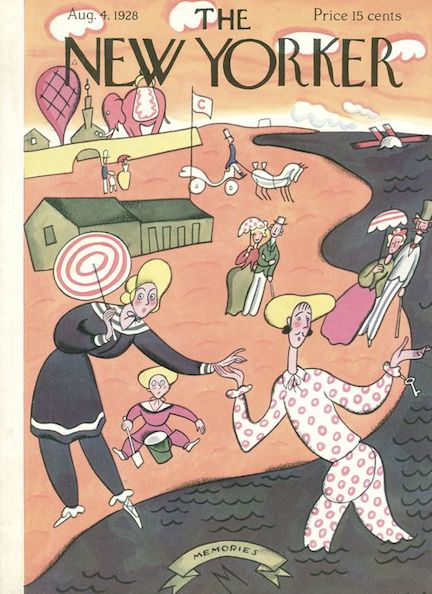
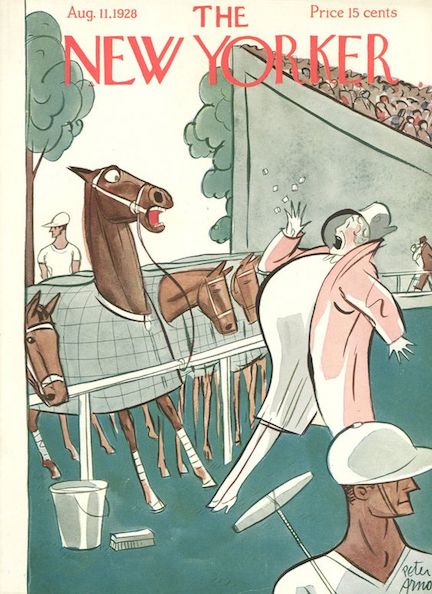
August 4, 1928 cover by Julian de Miskey.

Tunney is most famous for his fights against Jack Dempsey—in some ways they were the Ali–Frazier of their day. Tunney took the heavyweight title from Dempsey in 1926, and again defeated Dempsey in the controversial “long count” rematch one year later, on Sept. 22, 1927. That match was a huge spectacle, staged at Chicago’s Soldier Field in front of 105,000 spectators.

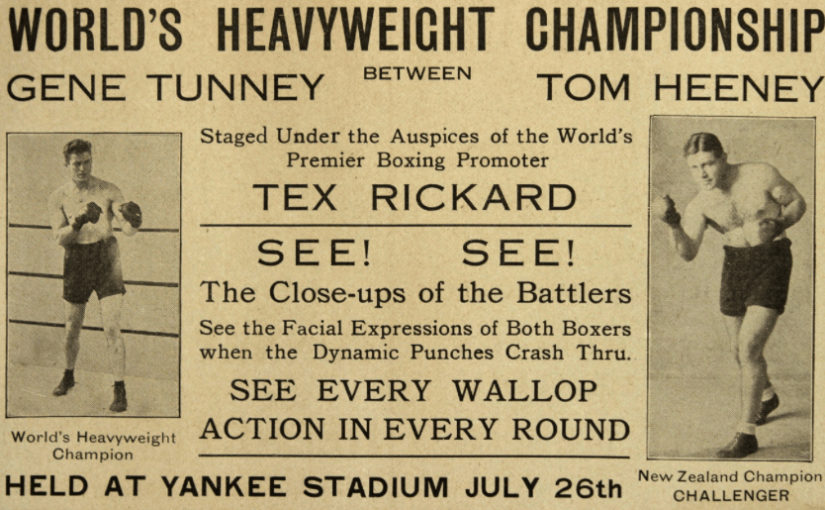
Boxing promoter Tex Rickard saw dollar signs when a scrappy New Zealander named Tom Heeney challenged the champ to a match. Heeney had won the Australian heavyweight title in 1922, and after arriving in the U.S. in 1926 found enough success in the ring to be ranked fourth among the world’s heavyweight boxers.

Writing in his column, “Sports of the Week,” in the July 21, 1928 issue of The New Yorker, Niven Busch Jr. assessed Heeney as a formidable opponent:

NO PALOOKAS HERE…Tom Heeny (left), and Gene Tunney in the late 1920s. (boxrec.com / Alchetron)

This cartoon by Leonard Dove, also in the July 21 issue, joined in the fun…

As for the actual fight at Yankee Stadium on July 26, 1928, Tunney won by a TKO in the 11th round. Perhaps the boxer from Down Under wasn’t in such great shape after all, or so surmised Niven Busch Jr in the August 4 issue:

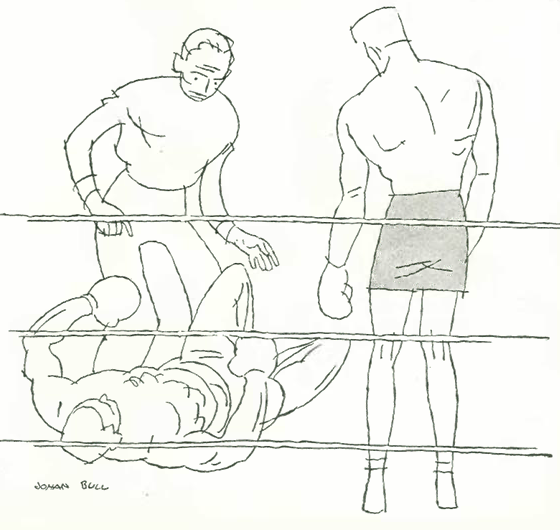
New Yorker illustrator Johan Bull offered this perspective in artwork that accompanied Busch’s article…


Tunney’s winning purse was $525,000 (about $7.3 million today) and Heeney’s was $100,000 ($1.4 million), modest when compared to the recent debacle in Las Vegas that pitted professional boxer Floyd Mayweather Jr. against mixed martial arts champion Conor McGregor.  Mayweather earned a disclosed purse of $100 million while Conor McGregor brought home $30 million.

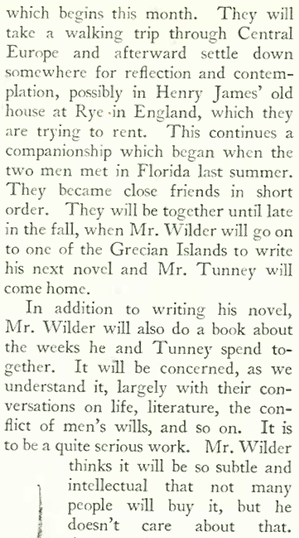
Heeney would remain in the U.S. and fight a few more bouts before retiring to Florida, where he ran a bar and fished with his friend, Ernest Hemingway. Tunney, on the other hand, announced his retirement from boxing just five days after the fight. It was time to finally devote himself to a life of the mind. Norman Klein, writing in the Aug. 4 “Talk of Town,” offered a glimpse into that new life:

BRAIN OVER BRAWN…Boxing champ Gene Tunney, left, and writer George Bernard Shaw on a 1929 vacation to Brioni. (Associated Press)

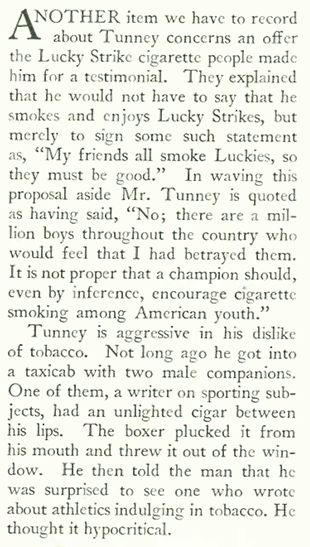
Still not getting enough of The Champ, “Talk” also related this story about Lucky Strike cigarettes, and how that company’s publicists tried unsuccessfully to persuade Tunney to endorse their product:

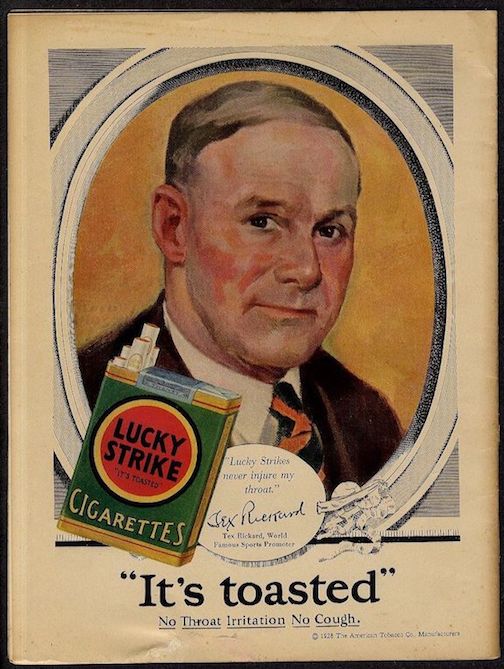
However the promoter of the Tunney–Heeney fight, Tex Rickard, had no problem taking money from the American Tobacco Company:

THEN I’LL TAKE THE MONEY…The promoter of the Tunney – Heeney fight, Tex Rickard, had no problem endorsing Lucky Strikes in this 1928 advertisement. Rickard would die the following year at age 59, from an appendectomy of all things. (eBay)

*  *  *

Tunney Was More Exciting

“The Talk of the Town” cast a jaded eye toward the Ninth Olympic Games in Amsterdam:

Poster from the 1928 games. (www.olympic.org)

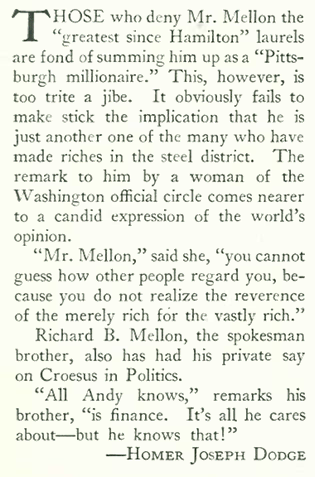
And perhaps even less exciting than the Olympics was the magazine’s “Profile” subject, Andrew W. Mellon, referred to in the title as “Croesus in Politics.” Mellon was no Gene Tunney, but he did ensure his immortal fame through his philanthropy, still expressed today by the Andrew W. Mellon Foundation. Below are the concluding lines of the profile, written by Homer Joseph Dodge:

The article featured this terrific caricature by illustrator Abe Birnbaum

Planned Obsolescence

The magazine’s “Motors” column touted Chrysler’s new “peaked” radiators, which no doubt caused many insecure Chrysler owners to consider junking their non-peaked models of yesteryear:

This ad in the same issue screamed “new, new, new” for what appeared to be mostly the same old, same old…

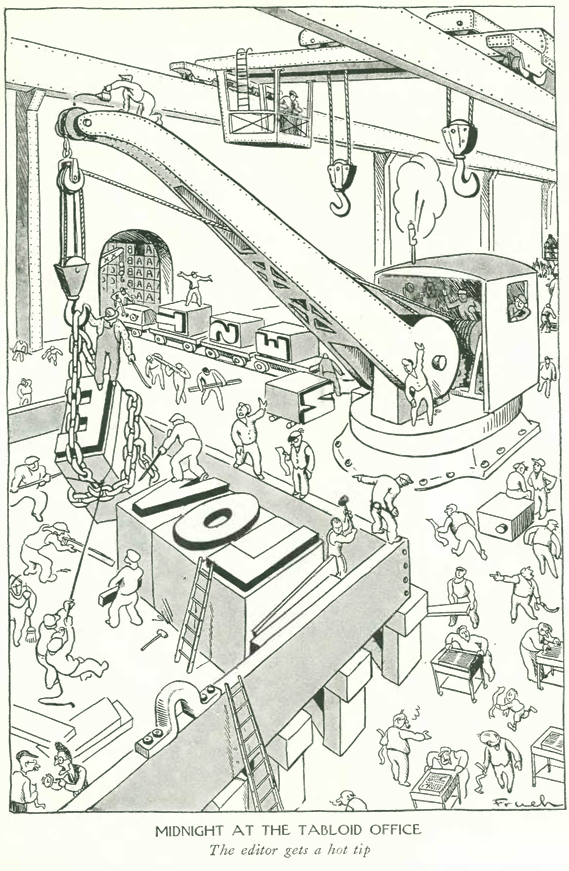
Our comic comes courtesy Al Frueh, who looks in on the workings of a printing press at a celebrity tabloid:

Next Time: Shadows of the South Seas…