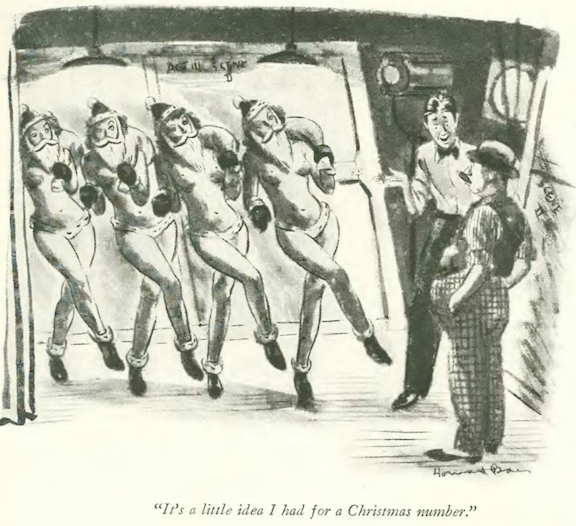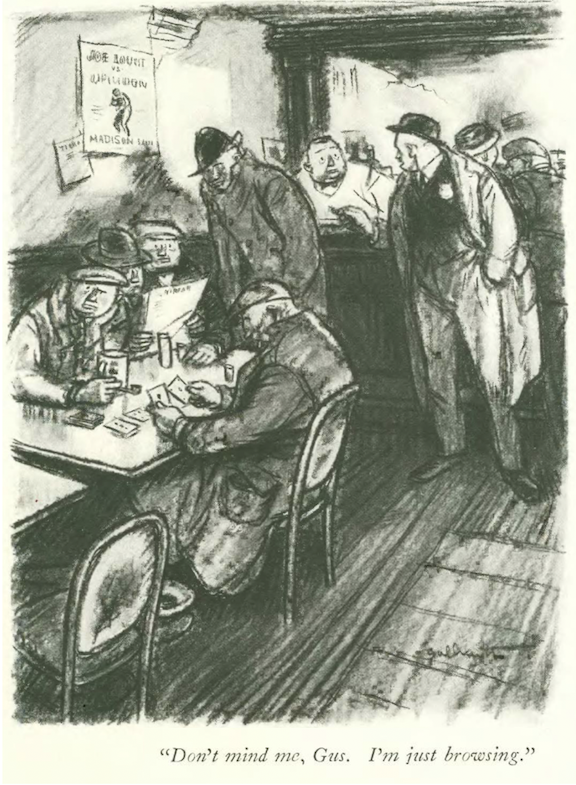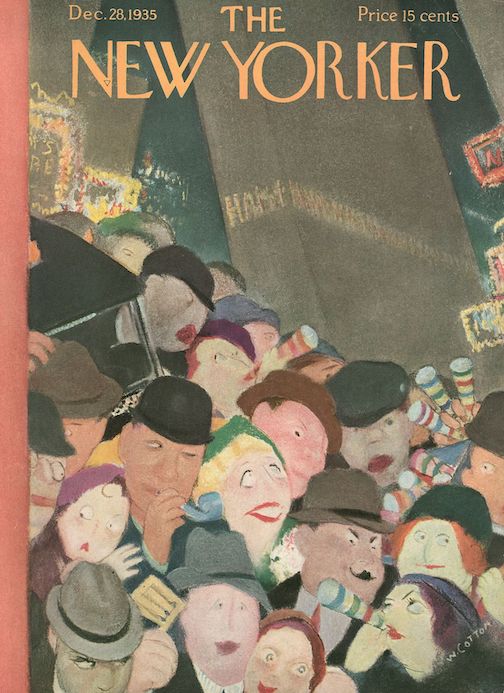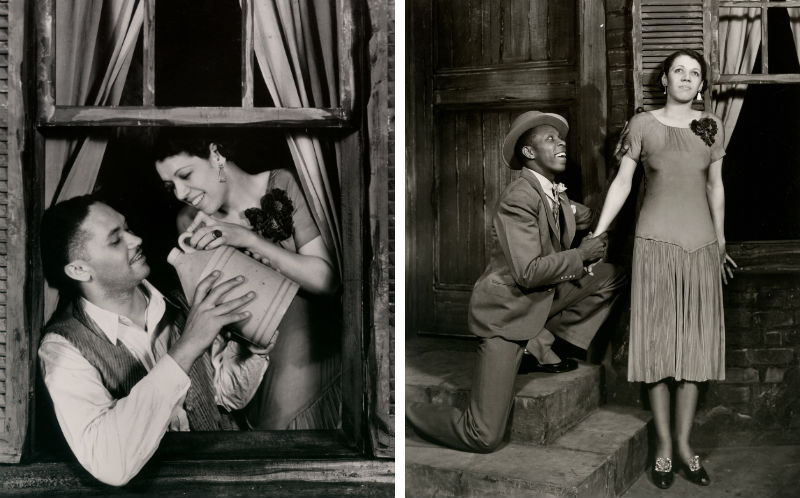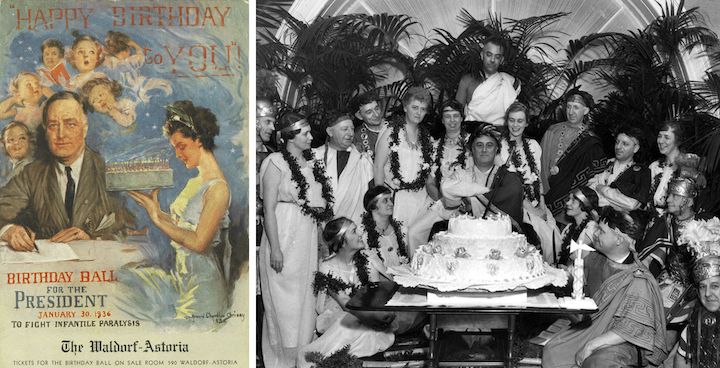
A Double-Header

Heading into the dog days of summer we take a look at the last two issues of July 1935, both somewhat scant in editorial content but still offering up fascinating glimpses of Manhattan life ninety years ago.

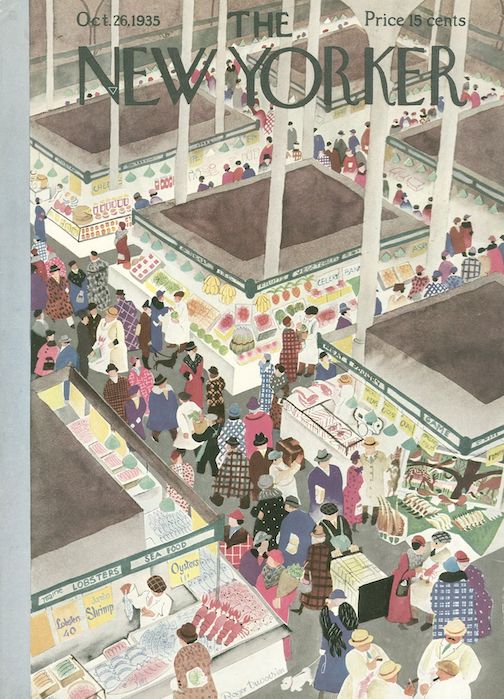
July 20, 1935 cover by William Crawford Galbraith. He contributed seven covers and 151 cartoons to the magazine.

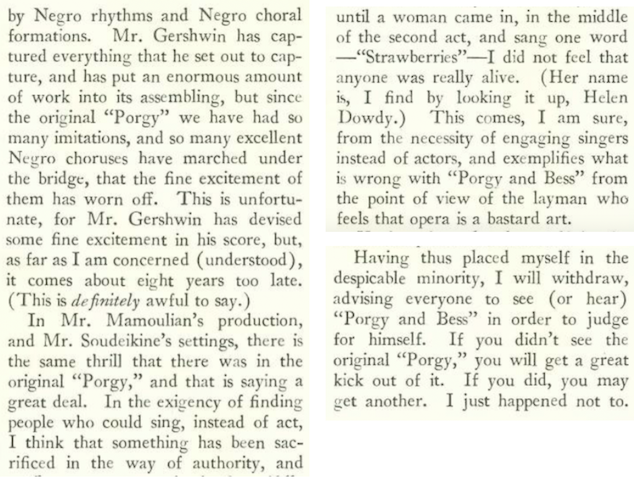
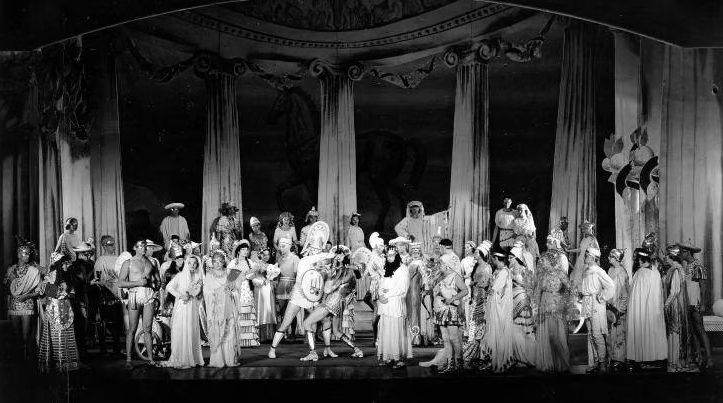
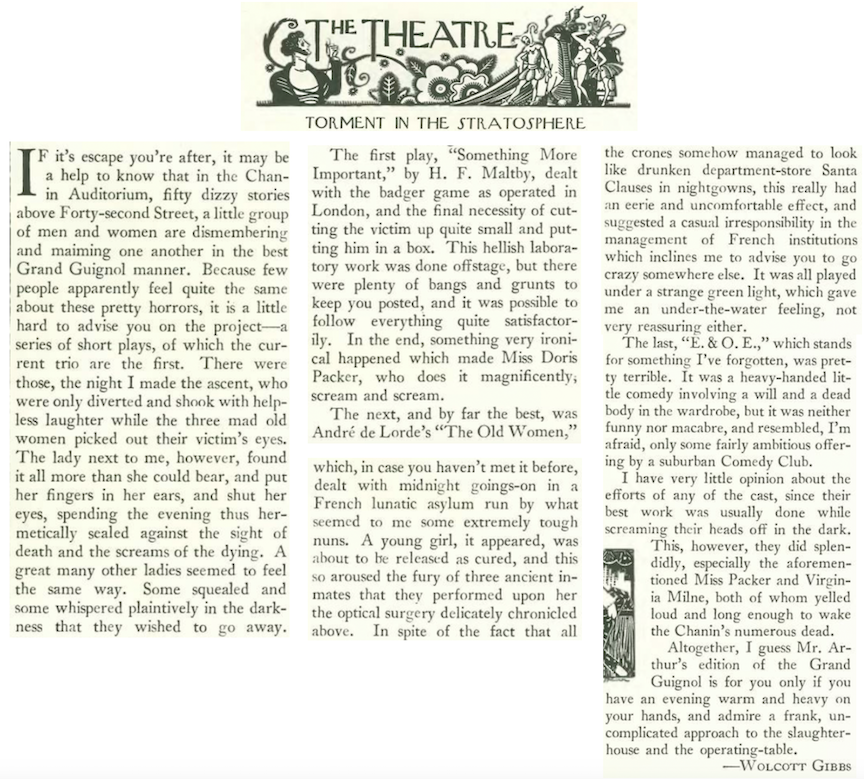
That includes the observations of theatre critic Wolcott Gibbs and film critic John Mosher, both escaping the summer heat to take in some very different forms of entertainment.

Gibbs found himself “fifty dizzy stories above Forty-second Street” in the Chanin Building’s auditorium, where he experienced New York’s take on Le Théâtre du Grand-Guignol. Founded in Paris by Oscar Méténier in 1897, Grand Guignol featured realistic shows that enacted, in gory detail, the horrific existence of the disadvantaged and working classes. It seems audiences were drawn to the shows more out of prurient interest (or sadistic pleasure) than for any desire to help the underclasses.

NOT FOR THE FAINT OF HEART…Wolcott Gibbs recommended the Grand-Guignol only for those who “admire a frank, uncomplicated approach to the slaughterhouse and the operating table.” (Image: Wikipedia)
PRETTY HORRORS…Clockwise from top left, the original Théâtre du Grand-Guignol, in the Pigalle district of Paris–it operated from 1897 until 1962, specializing in horror theatre; a poster from one of its productions; New York’s Chanin building, circa 1930s; the Chanin’s auditorium “fifty dizzy stories above 42nd Street”; fake blood applied to an actress’ neck before a scene from The Hussy; Wolcott Gibbs described a madhouse scene from André de Lorde’s The Old Women, which depicted the fury of ancient inmates performing “optical surgery” on a young woman. (thegrandguignol.com/Wikipedia/NYPL/props.eric-hart.com)

 * * *

Popeye to the Rescue

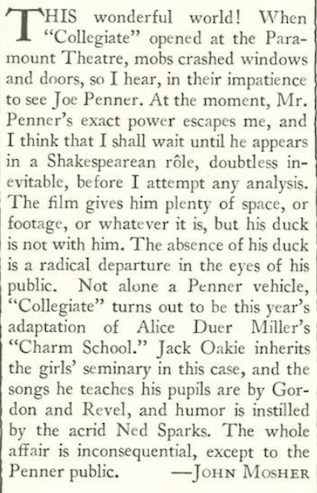
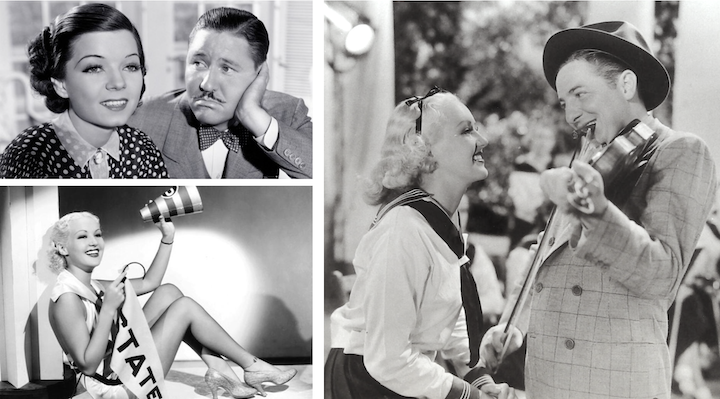
With the Hays Code in effect you wouldn’t see anything like the Grand-Guignol on the silver screen. Indeed, with the exception of a Popeye cartoon, critic John Mosher found little to get excited about at the movies. He did, however, enjoy the air conditioning that offered a break from the hot city streets.

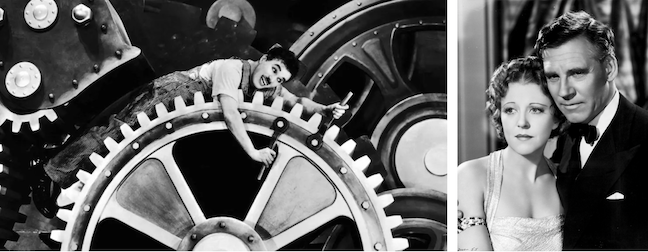
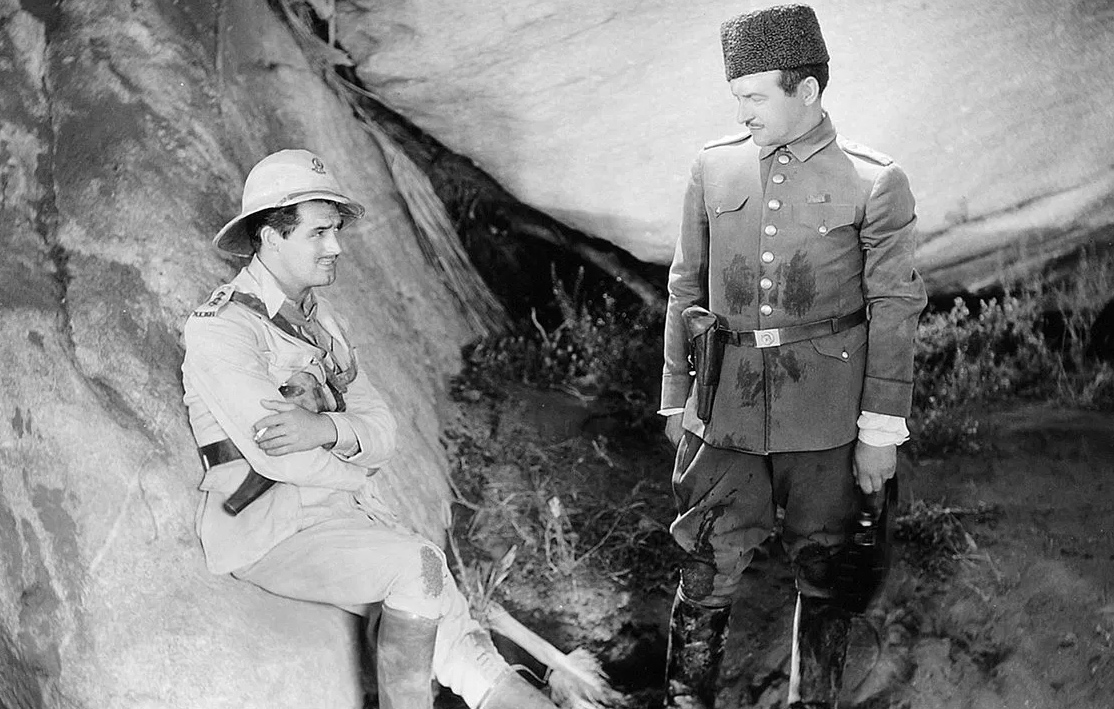
THEY ALL COULD HAVE USED SOME SPINACH…Clockwise, from top left, Popeye and Bluto strike an unlikely partnership in Dizzy Divers; Bette Davis and George Brent in Front Page Woman; Will Rogers and Billie Burke in Doubting Thomas; James Blakeley and Ida Lupino in Paris in Spring. (brothersink.com / rottentomatoes.com / cometoverhollywood.com / classiccartooncorner.substack.com)

 * * *

From Our Advertisers

Just a few ads from this issue, first, a jolly appeal from one of the magazine’s newer advertisers, the makers of the French apertif Dubonnet…

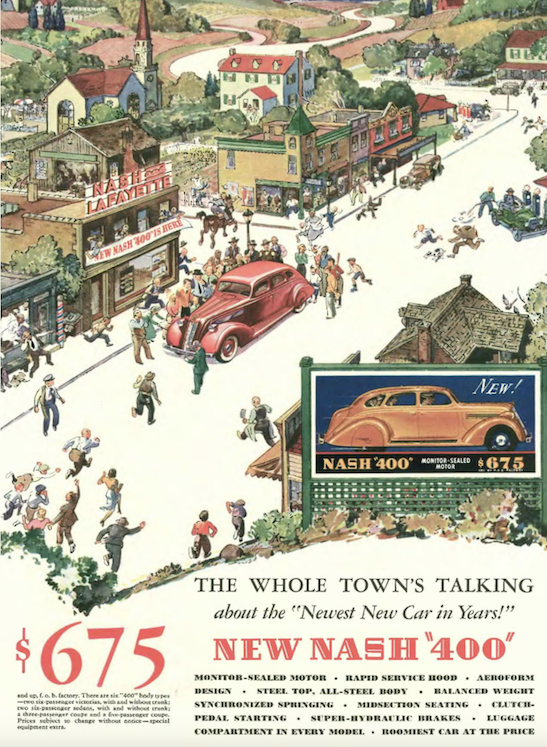
…by contrast, this quaint slice of Americana from Nash…

…and a shot of pesticide from Dr. Seuss

…our cartoonists include Constantin Alajalov, contributing this bit of spot art to the opening pages…

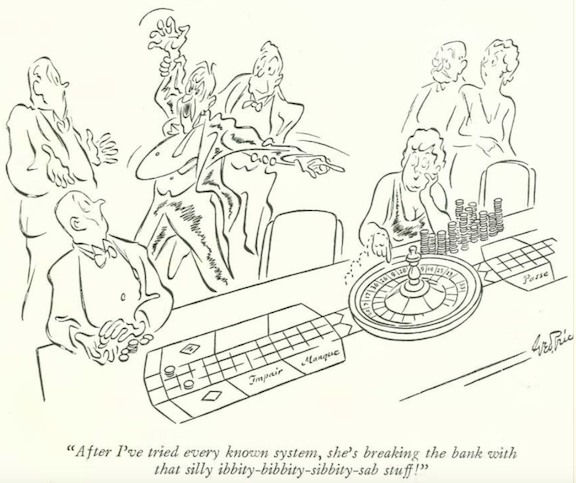
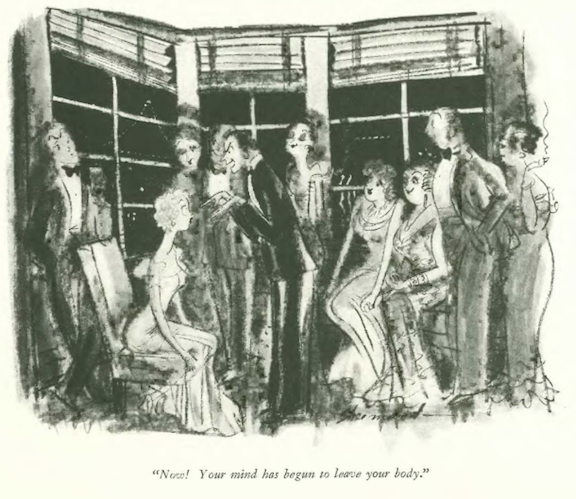
Barbara Shermund explored the world of hypnotic suggestion…

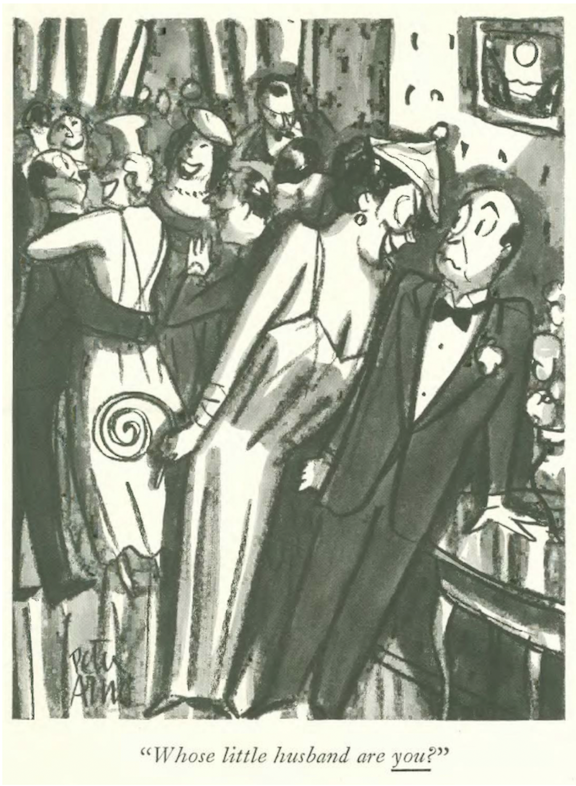
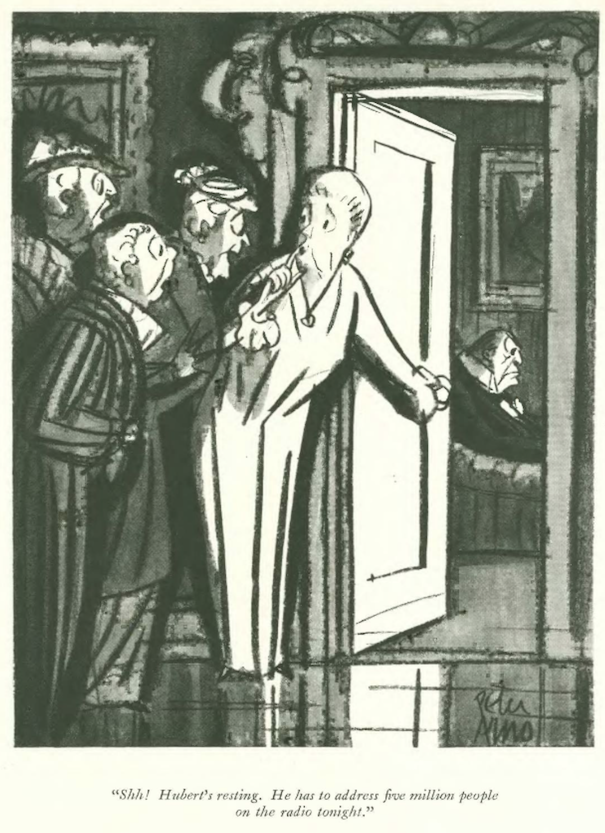
Peter Arno prepared to address the nation…

William Steig checked the weather forecast…

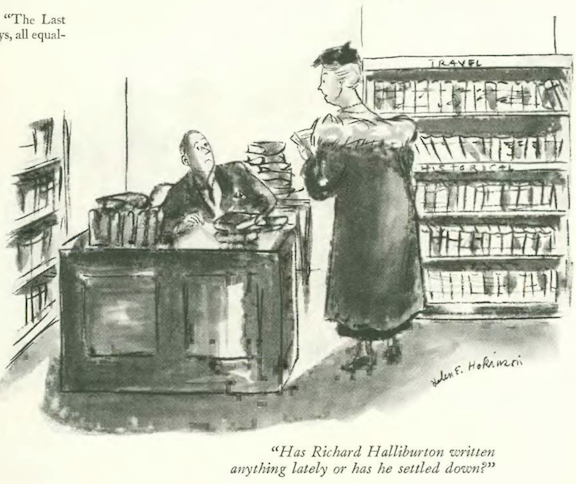
Helen Hokinson’s girls questioned the burden of a lei…

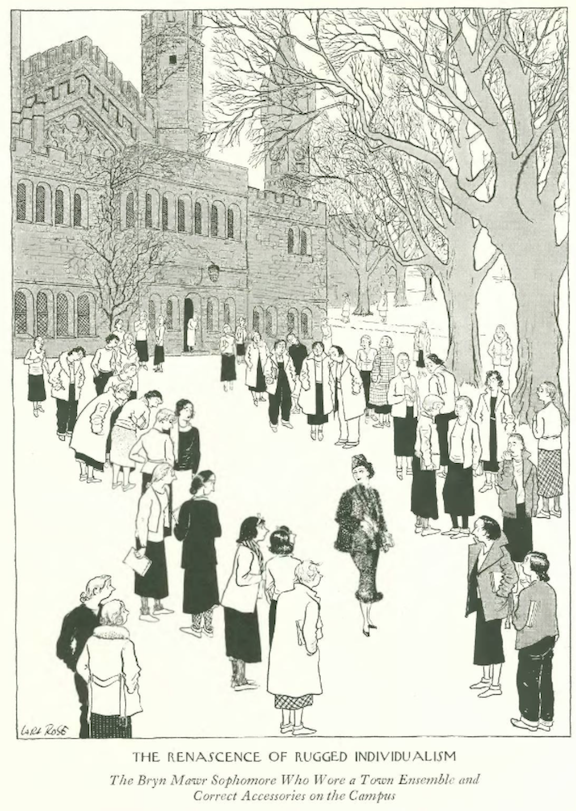
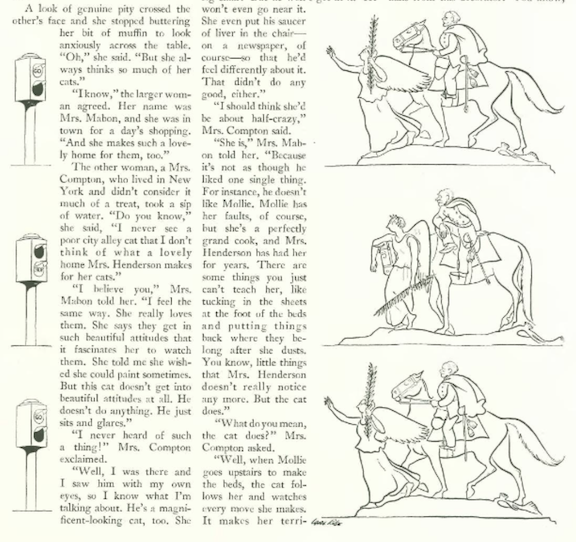
Carl Rose found himself on opposite sides of the page in this unusual layout

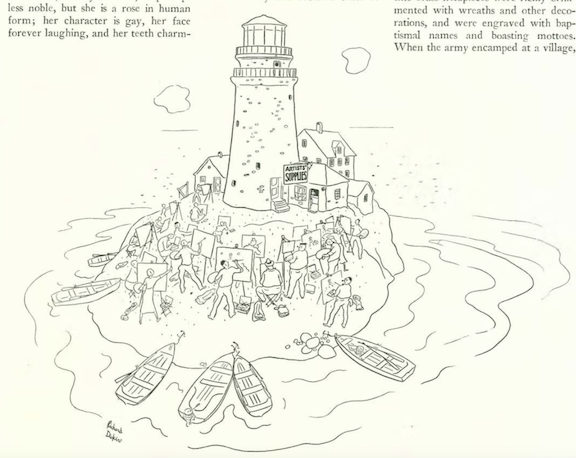
Richard Decker joined the crowd in a lighthouse rendering…

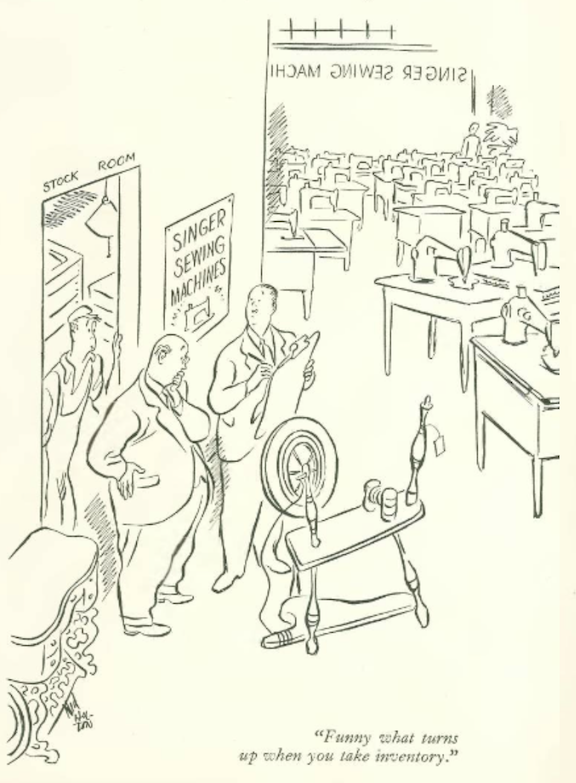
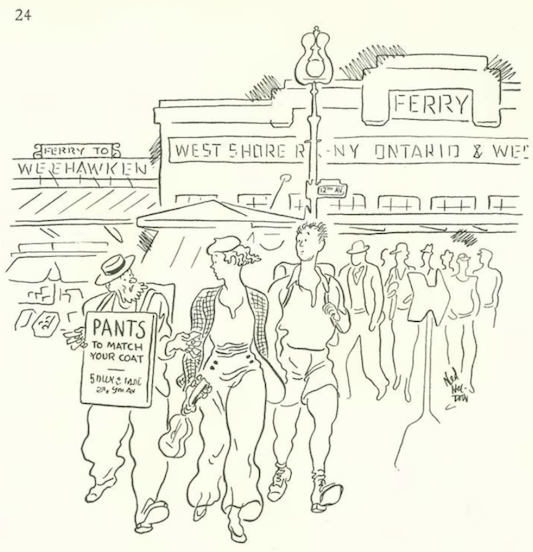
Ned Hilton reminds us that it was unusual for women to wear trousers ninety years ago…

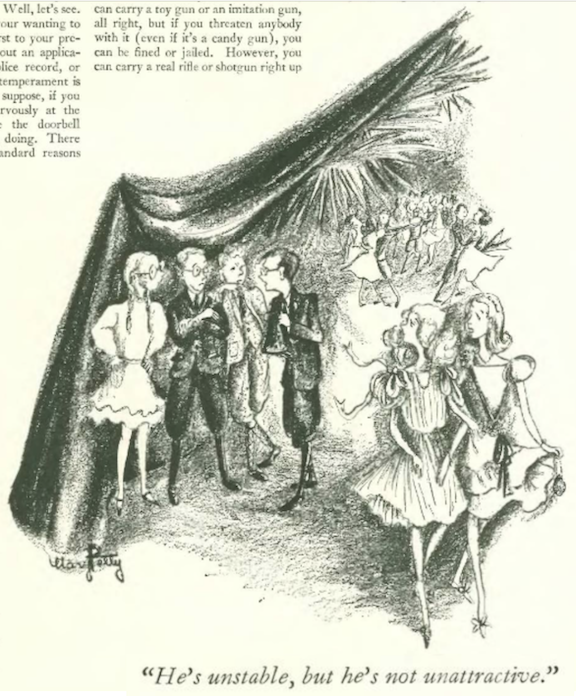
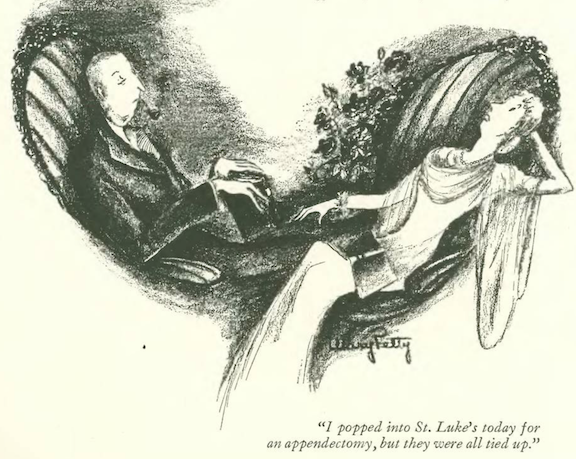
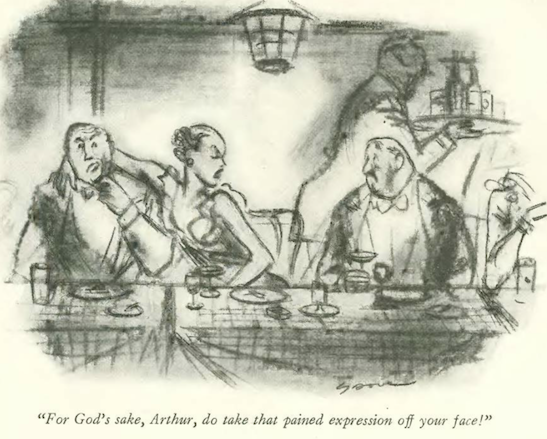
Mary Petty examined the complications of marital discord…

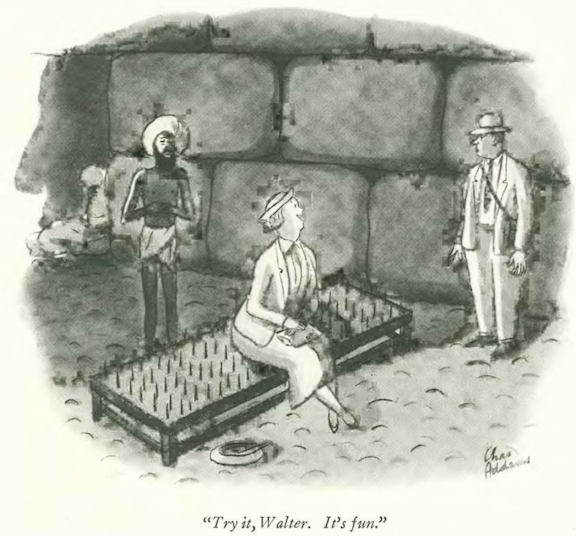
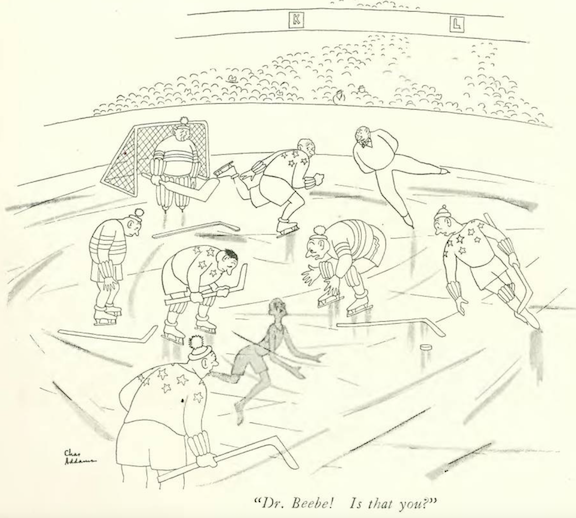
…and Charles Addams shone a blue light on a YMCA lecture…

…on to July 27, 1935, with a terrific summertime cover by William Steig

July 27, 1935 cover by William Steig, one of his 117 covers for the magazine.

E.B. White (in “Notes and Comment”) was ahead of his time in suggesting that the city needed to build “bicycle paths paralleling motor highways” and invest in more pedestrian pathways.

NEW YORK’S FINEST…Doris Kopsky, who trained in Central Park, won the first Amateur Bicycle League of America Women’s Championship in 1937. Bicycle races were a big draw in the 1930s. (crca.net)

 * * *

Breaking News

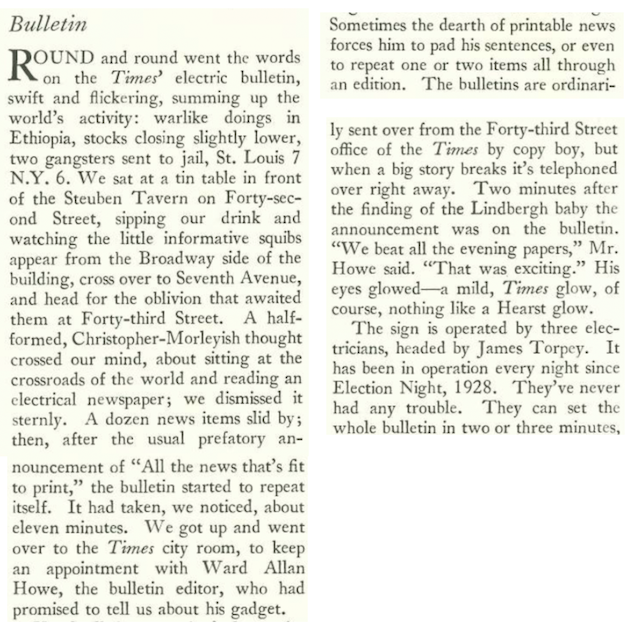
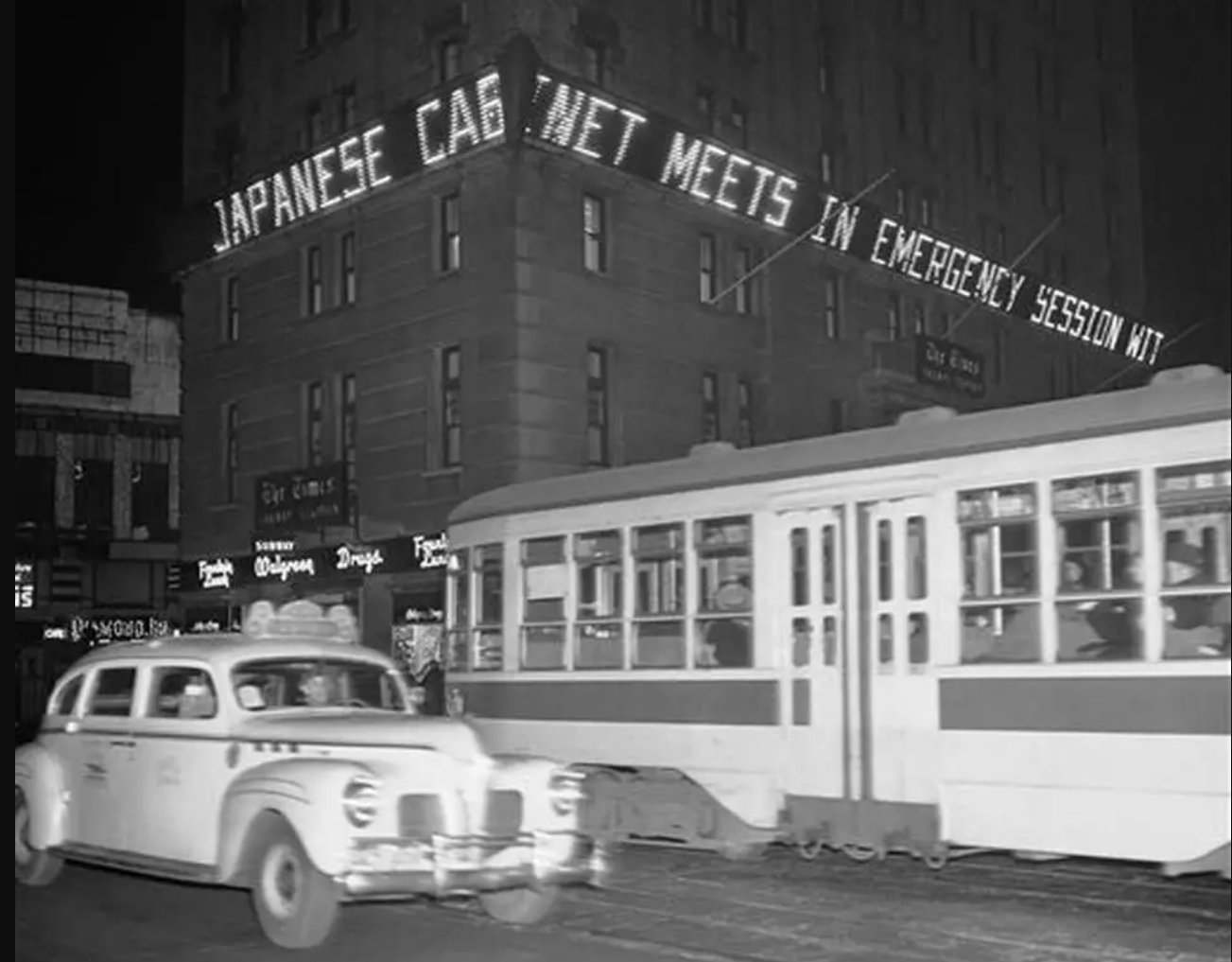
“The Talk of the Town” checked in on the New York Times’ “electric bulletin,” commonly known as “The Zipper.” Excerpt:

NIGHT CRAWLER…Launched in 1928, the Times Square “Zipper” kept New Yorkers apprised of breaking news. (cityguideny.com)

 * * *

Dog Knots

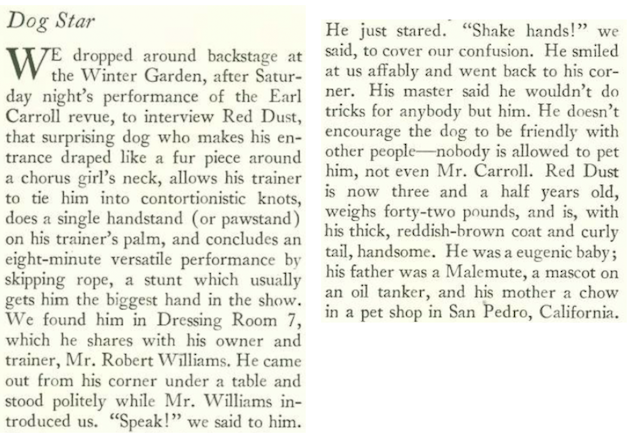
“Talk” also took a look backstage at the Winter Garden, where burlesque performers shared the stage with a contortionist dog called “Red Dust.” Excerpt:

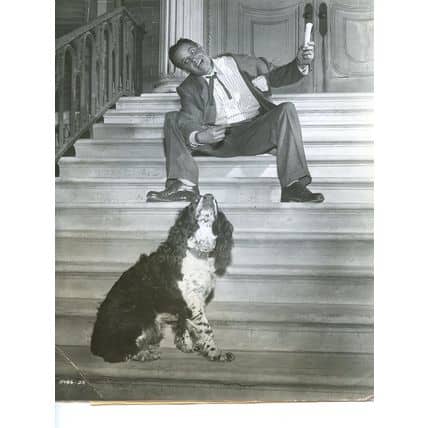
WOOF…Famed animal trainer Robert “Bob” Williams with one of his pupils. The dog in the photo is misidentified as Red Dust (he was actually a Malemute/chow mix).

 * * *

Suddenly Famous

Charles Butterworth (1896-1946) earned a law degree from Notre Dame before becoming a newspaper reporter. But his life would take on a new twist in 1926 when he delivered his comical “Rotary Club Talk” at J.P. McEvoy’s Americana revue in 1926. Hollywood would come calling in the 1930s, and his doleful-looking, deadpan characters would become familiar to movie audiences through a string of films in the thirties and forties. Alva Johnston profiled Butterworth in the July 27 issue. Here are brief excerpts:

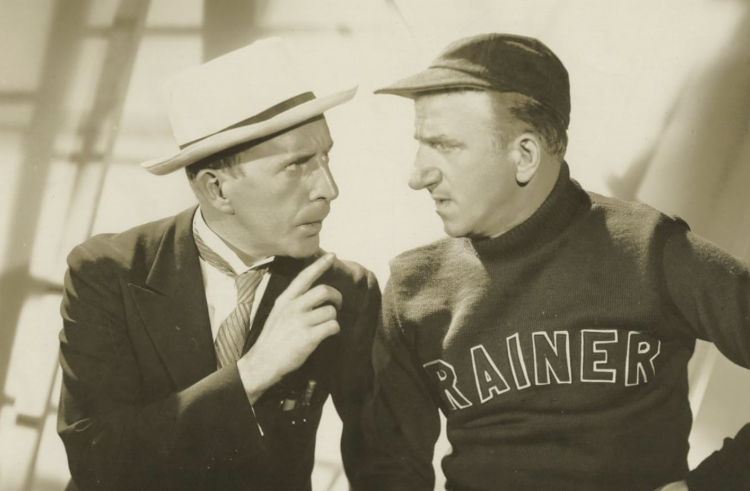
Charles Butterworth (left) and Jimmy Durante in Student Tour (1934). A bit of trivia: Butterworth’s distinctive voice was the inspiration for the Cap’n Crunch commercials voiced by Daws Butler beginning in the early 1960s. Butterworth’s life was cut short in 1946 when he crashed his imported roadster into a lamppost on Sunset Boulevard. (Detail from film still via IMDB)

 * * *

Noisy Neighborhood

The “Vienna Letter” (written by “F.S.”–possibly Frank Sullivan) noted the rumblings of fascism in a grand old European city known for its many cultural delights as well as its many factions that included Nazis, Socialists and Communists (and no doubt a few Royalists). An excerpt:

CALM BEFORE THE STORM…Vienna in 1935, less than three years before the Anschluss, when Nazi Germany annexed Austria. (meisterdrucke.us)

 * * *

Ex Machina

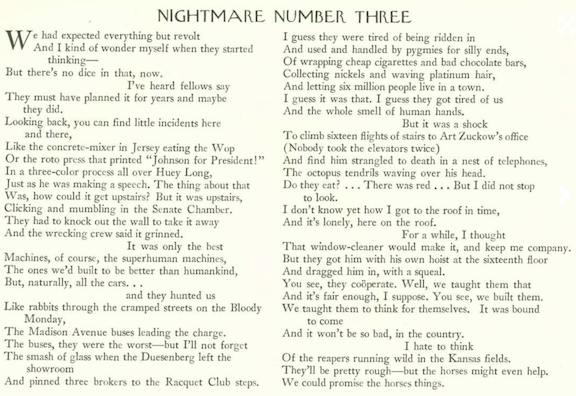
The Pulitzer Prize-winning poet and author Stephen Vincent Benét (1898-1943) penned this poem for The New Yorker that is somewhat appropriate to our own age and our fears of the rise of A.I. In “Nightmare Number Three,” Benét described a dystopian world where machines have revolted against humans.

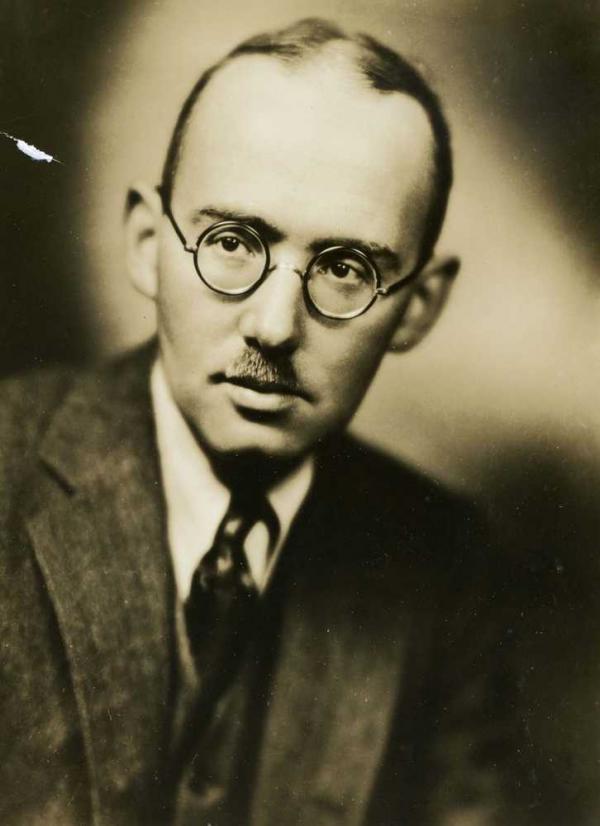
BOTH CLASSY AND FOLKSY is how some today describe Stephen Vincent Benét, who in 1928 wrote a book-length narrative poem of the American Civil War, John Brown’s Body, for which he received the Pulitzer Prize for Poetry. He was also know for such short stories as The Devil and Daniel Webster, published in 1936. (mypoeticside.com)

 * * *

From Our Advertisers

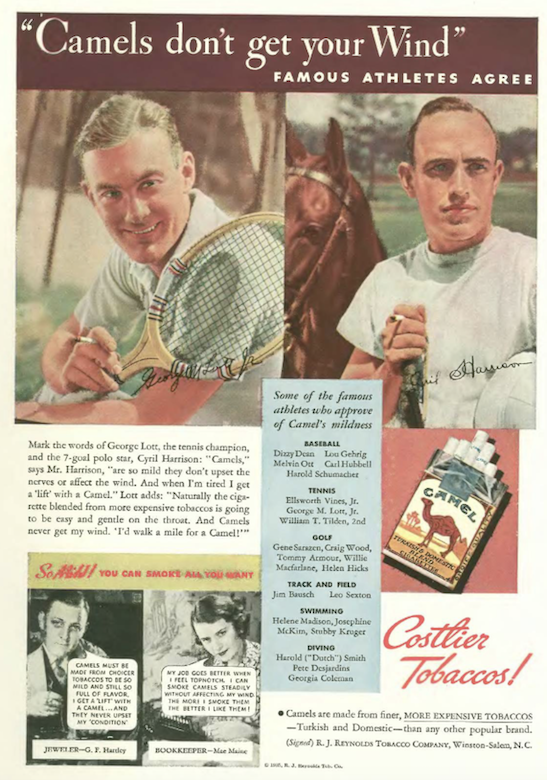
We begin with more extraordinary claims from R.J. Reynolds, who convinced a lot of folks that drawing smoke into your lungs actually improved your athletic stamina…

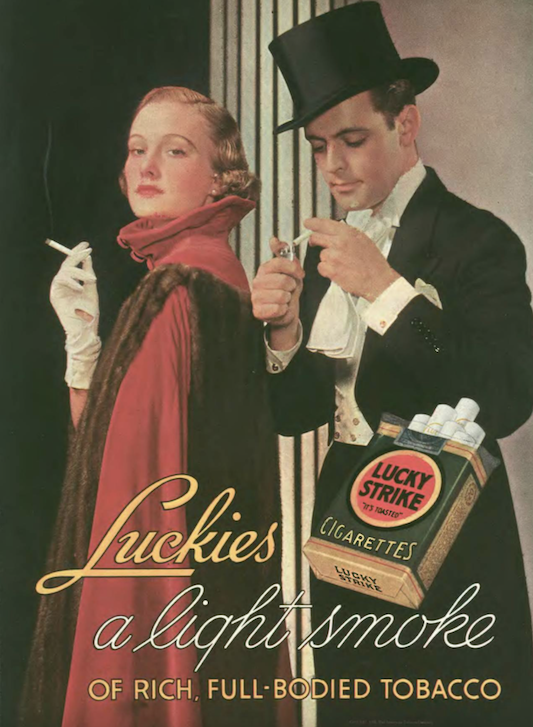
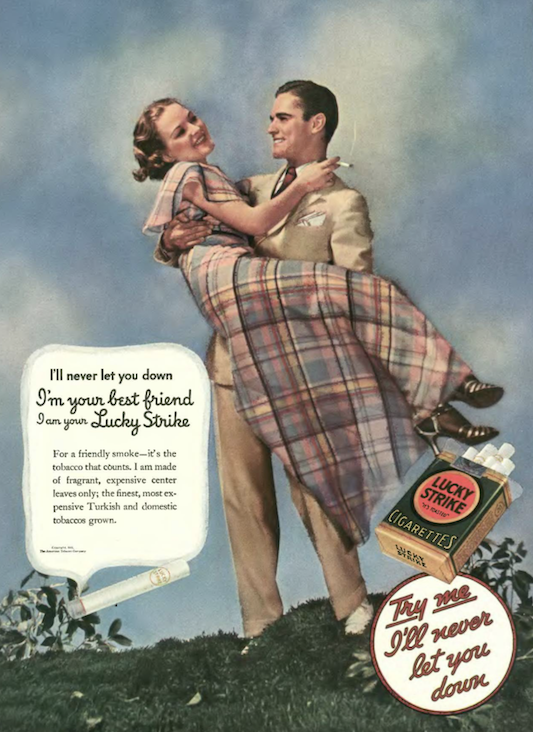
…the makers of Lucky Strike, on the other hand, stuck with images of nature and romance to suggest the joys of inhaling tar and nicotine…

…General Tire took a cue from Goodyear, suggesting that an investment in their “Blowout-Proof Tires” was an investment in the very lives of a person’s loved ones (even though they apparently drove to the beach without seatbelts or even a windshield)…

…another colorful advertisement from the makers of White Rock, who wisely tied their product to ardent spirits as liquor consumption continued to rebound from Prohibition…

…I toss this in for the lovely rendering on behalf of Saks…it looks like the work of illustrator Carl “Eric” Erickson, but he had many imitators…

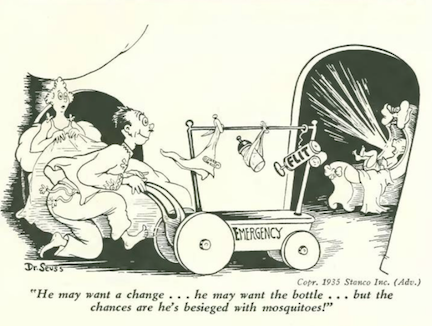
…we do, however, know the identity of this artist, and his drawings on behalf of the pesticide Flit, which apparently in those days of innocence was thought appropriate for use around infants…

…great spot drawing in the opening pages…I should know the signature but it escapes me at the moment…

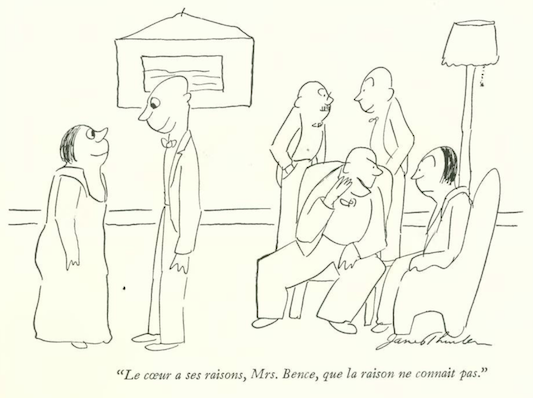
James Thurber quoted Blaise Pascal for this tender moment ( “The heart has its reasons, of which reason knows nothing”)…

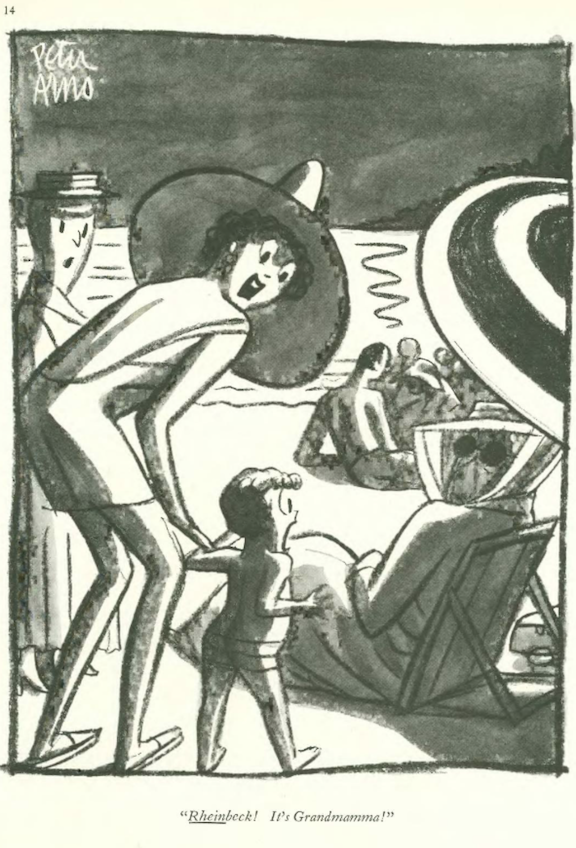
Peter Arno illustrated the horrors of finding one’s grandmother out of context…

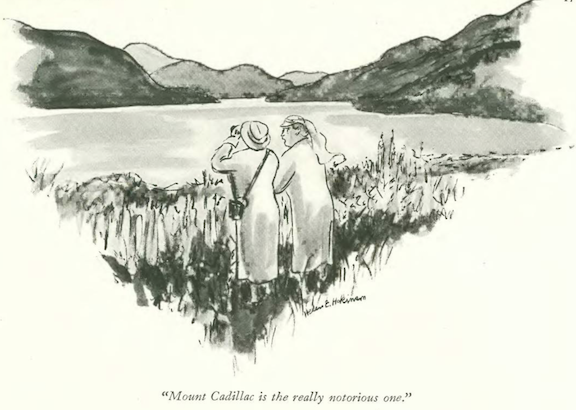
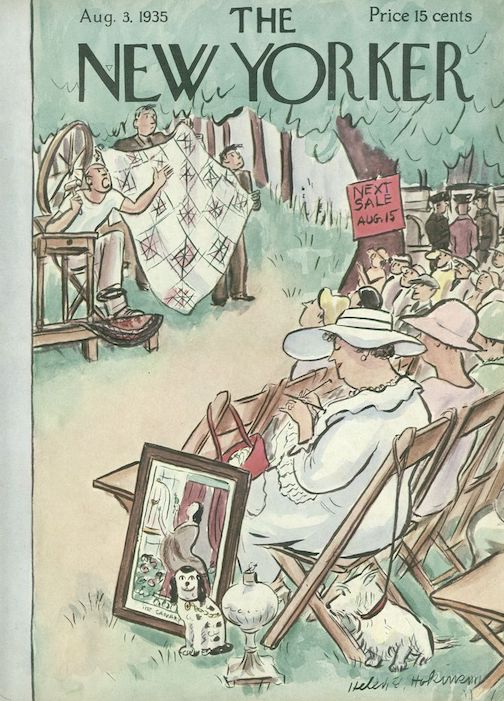
Helen Hokinson’s girls employed a malaprop to besmirch the good name of an innocent mountain…

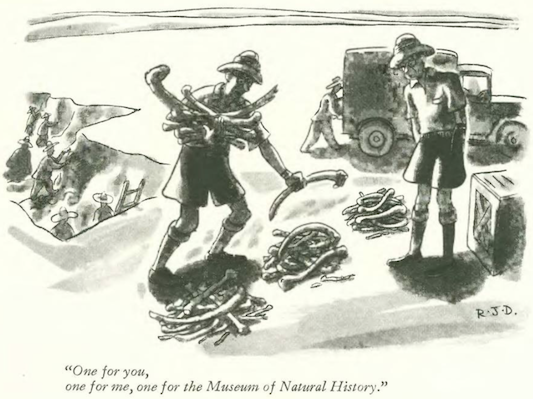
Richard Decker discovered the missing link(s) with two archeologists…

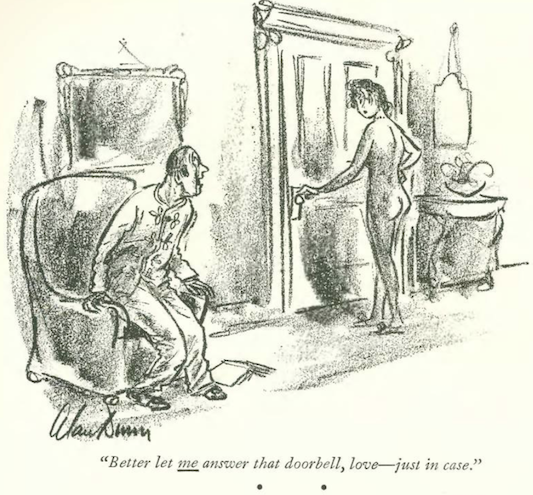
Alan Dunn narrowly averted a surprise greeting…

George Price added a new twist to a billiards match…

…Price again, at the corner newstand…

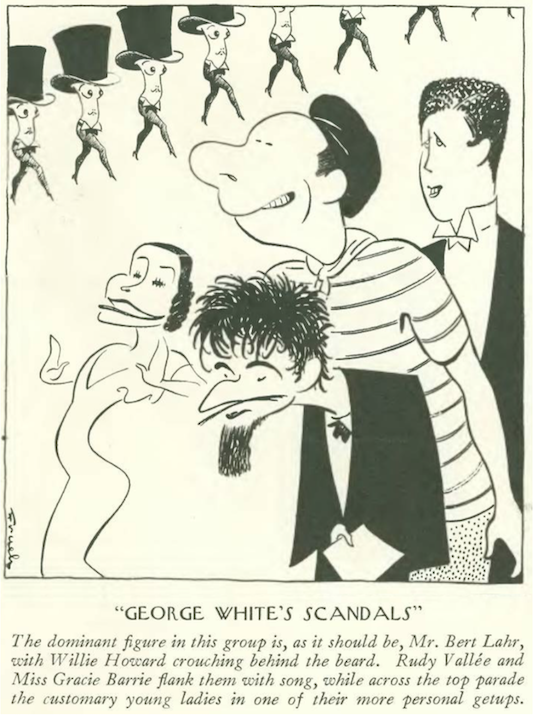
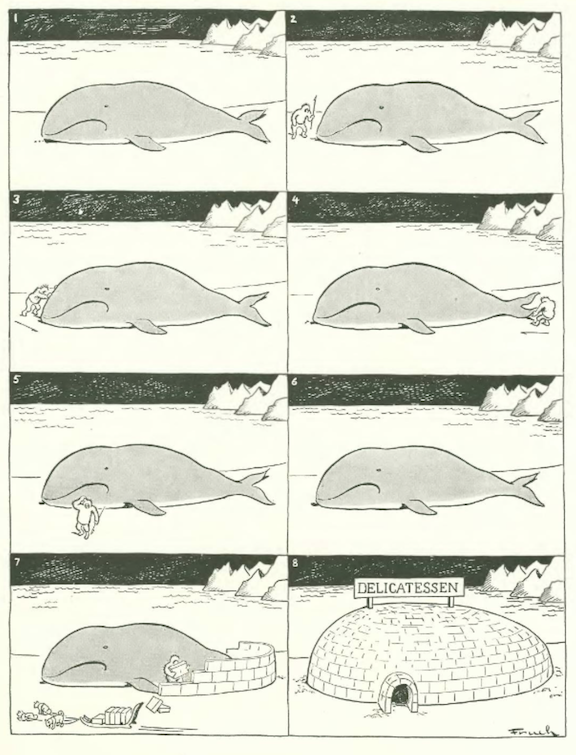
Al Frueh bit off more than he could chew…

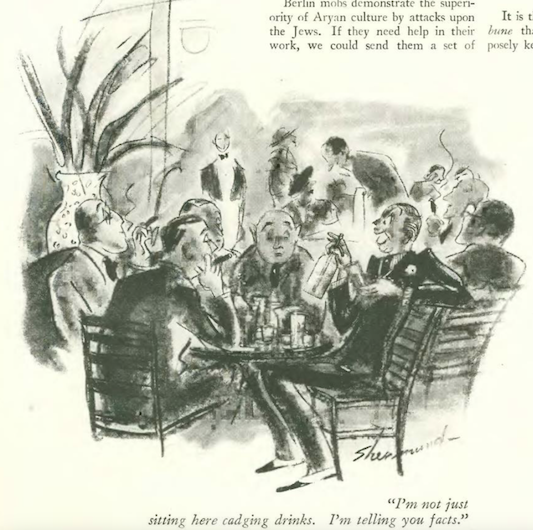
…and we close with Barbara Shermund, and a prattling mooch…

Next Time: La Marseillaise…

Not a Square Deal

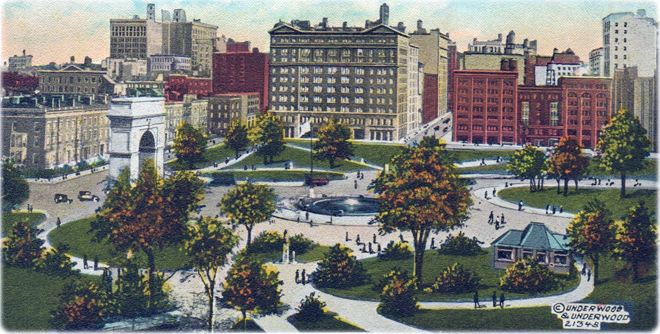
Above: Postcard image of Washington Square Park, circa 1930. (citybeautifulblog.com)

New Yorkers know all about change, and especially during the 1920s and 30s when the city razed everything from Dutch settler houses to the Gilded Age mansions of Fifth Avenue. Landmarks such as the old Waldorf-Astoria were leveled to make way for the Empire State Building, while several blocks—22 acres of residential and commercial buildings—were scraped clean for Rockefeller Center.

June 8, 1935 cover by Harry Brown. This June bride-themed cover was Brown’s fourteenth of the eighteen covers he would create for The New Yorker.

Some things, like Washington Square, were still held dear by city residents. But very little was sacred to the city’s new park commissioner, Robert Moses, who had no problem leveling whole neighborhoods if they stood in way of a road or some other ambitious project.

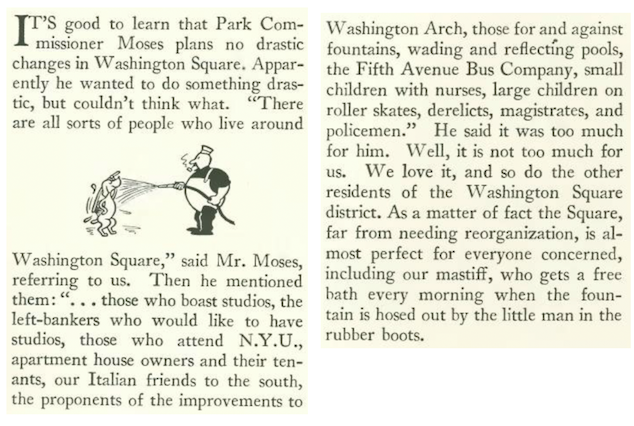
It all seemed well at first when Moses called for the repair of neglected parks, including Washington Square. However, when changes to the park were revealed by the Villager, residents were outraged. Moses’ plan, designed by landscape architect Gilmore Clarke, was a complete reversal of the park’s existing design. In “Notes and Comment,” E.B. White explained:

Village residents organized a “Save Washington Square” committee and successfully blocked Moses from implementing his plan; in true Moses style, he responded by allowing the park to deteriorate.

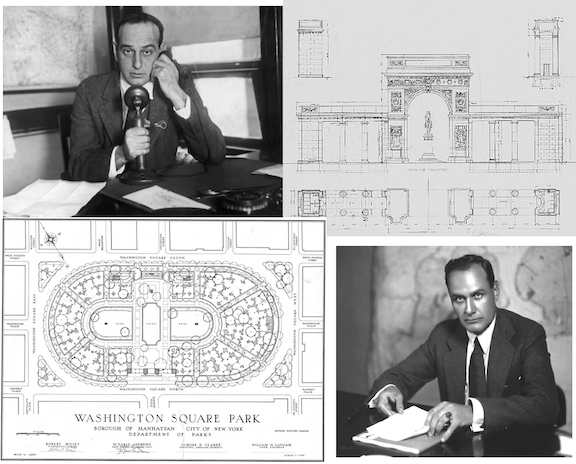
MAKE NO LITTLE PLANS…Clockwise, from top left, Parks Commissioner Robert Moses; proposal to add colonnades to either side of the arch; landscape architect Gilmore Clarke; Clarke’s plan for the redesign.  (Wikipedia/washingtonsqpark.org)

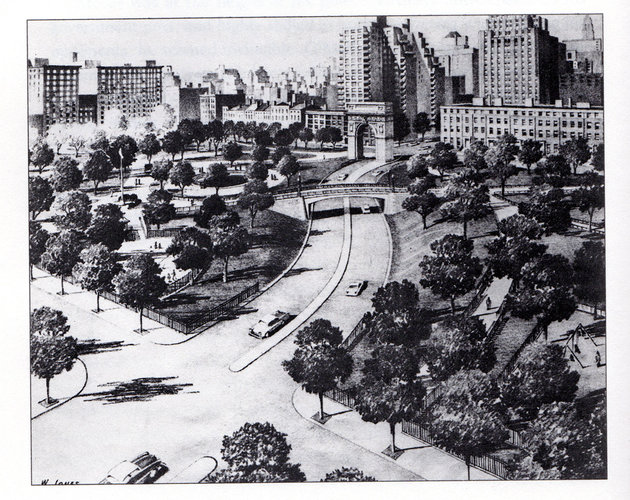
Moses, however, didn’t give up on Washington Square. Around 1940 he began floating the idea of building a double highway through the park. Local residents again rallied, joining business owners and NYU officials in blocking the audacious scheme.

DOUBLE TROUBLE…Around 1940 Moses began floating the idea of building a double highway through Washington Square Park. This illustration is circa 1950. (MTA Archives)

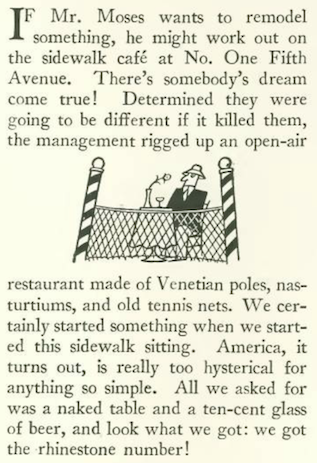
White continued on the theme of city planning, calling on Moses this time to figure out a better plan for sidewalk cafés.

AL FRESCO…Postcard images of sidewalk cafés at 24 Fifth Avenue (top) and 23rd and Lexington, circa 1935. (picryl.com)

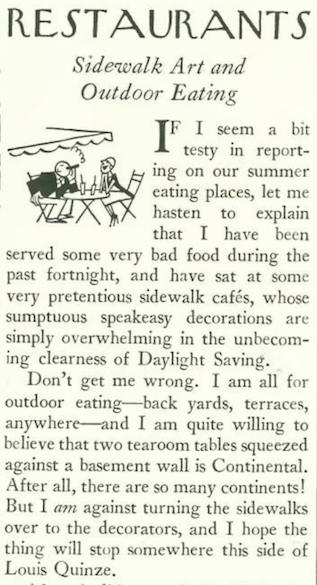
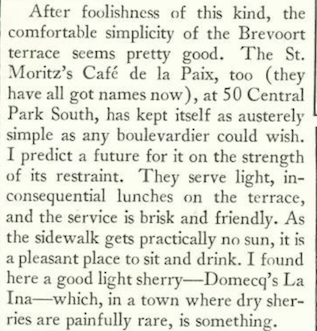
Additional note: The magazine’s June 15, 1935 issue featured Lois Long’s criticisms of sidewalk cafés in Manhattan:

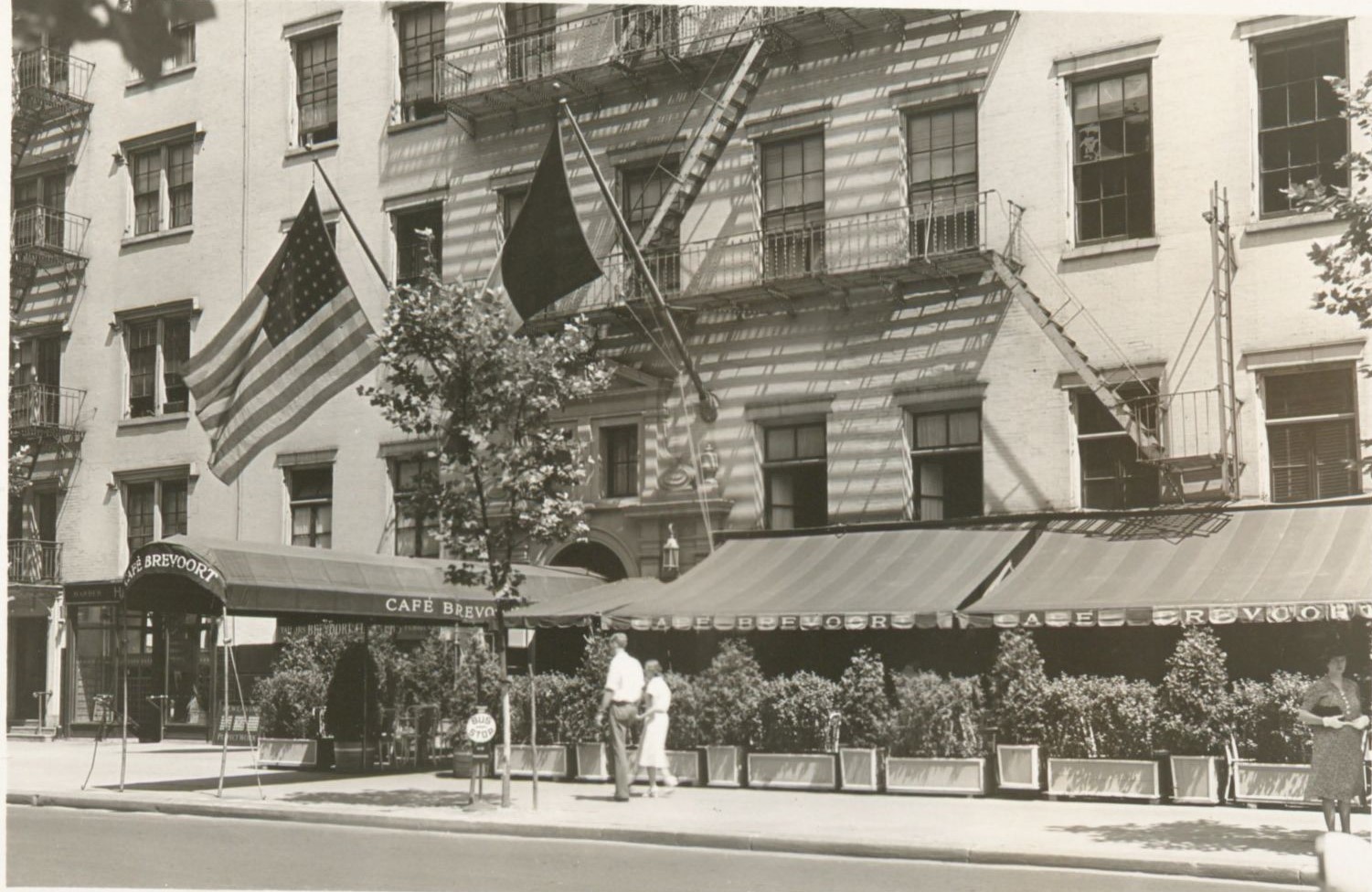
Long did offer, however, a couple of recommendations for sidewalk dining, including the Breevort in Greenwich Village…

If you really wanted to eat outside, Lois Long suggested the Breevort in Greenwich Village. (New York Public Library)

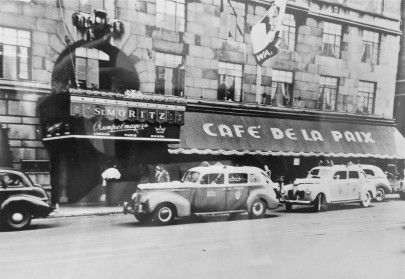
…and the St. Moritz’s Café de la Paix at 50 Central Park South…

The St. Moritz’s Café de la Paix in the 1940s. (blog.bondbrand.com)

 * * *

Sexily Danced the Burlesques

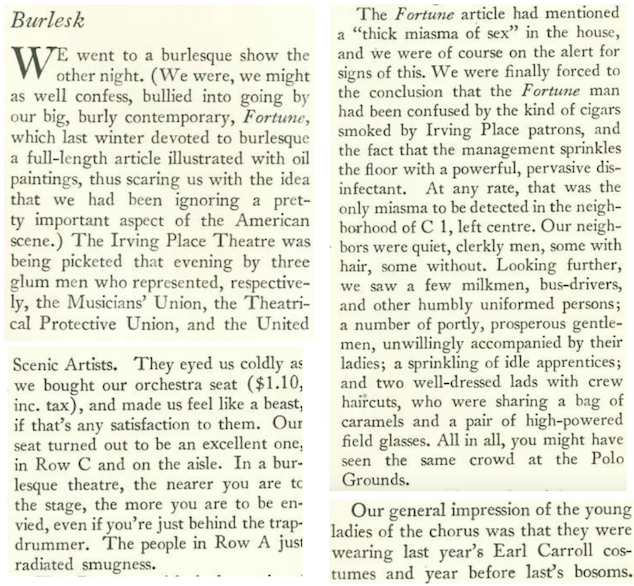
New Yorker writers loved to take shots at Henry Luce, publisher of Time and Fortune. Wolcott Gibbs famously satirized Time’s writing style in a parody profile in 1936: “Backward ran sentences until reeled the mind.” When Fortune decided to take a look behind the curtain at a burlesque show (February 1935), “The Talk of the Town” was ready to pounce.

The Fortune piece featured oil paintings by Stuyvesant Van Veen, including this one depicting the Proscenium at the Irving Place

Fortune images courtesy fulltable.com

…Van Veen got behind the curtain to create this painting (below) of “Burlesque Queens,” and the magazine chastely demonstrated the “cycle of the strip act” with the help of Miss Jean Lee, aka Miss Jess Mack…

The New Yorker also took a sideways glance at Fortune’s stuffy approach to the subject of striptease, suggesting that it was much ado about nothing.

IT’S ALL AN ACT, FELLAS…Gypsy Rose Lee in 1943. (nypl.org)

 * * *

Futures and Fascists

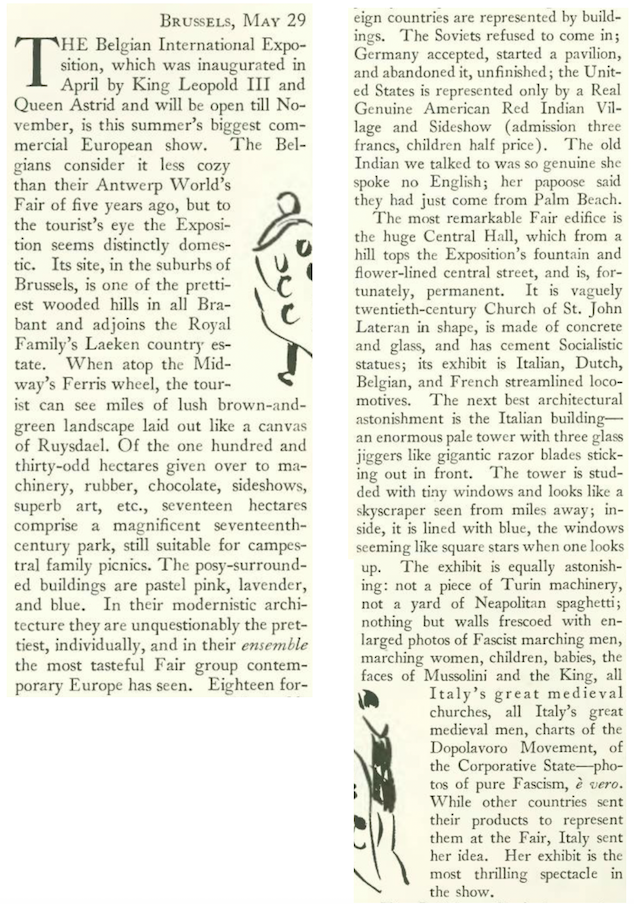
Before the days of television and the Internet, a world’s fair was the place to go to see the latest technologies and other attractions from countries around the world. Paris correspondent Janet Flanner filed a special report on the Brussels International Exposition of 1935, which attracted 20 million visitors in a little over six months.

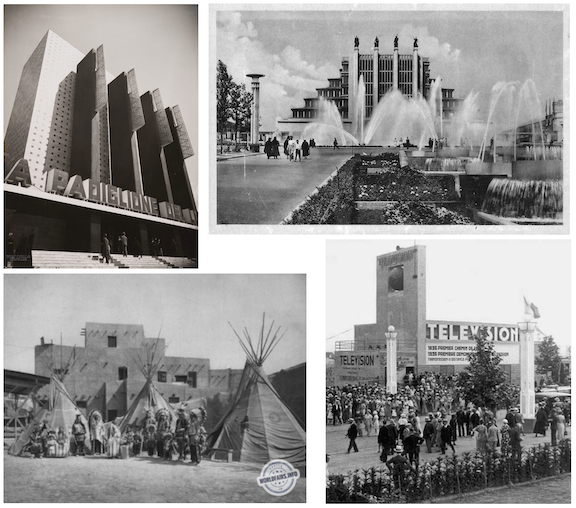
EURO SPECTACLE…Clockwise, from top left, the menacing facade of the Italian Pavilion—its interior walls featured frescoes of marching fascists; the Palais des Expositions (Grand Palais) still stands today as the Brussels Exhibition Centre; an early demonstration of television; the U.S. featured an “Indian Village” at the Expo. (fomo.be/Wikimedia/en.worldsfairs.info)

 * * *

Matchbox Cars

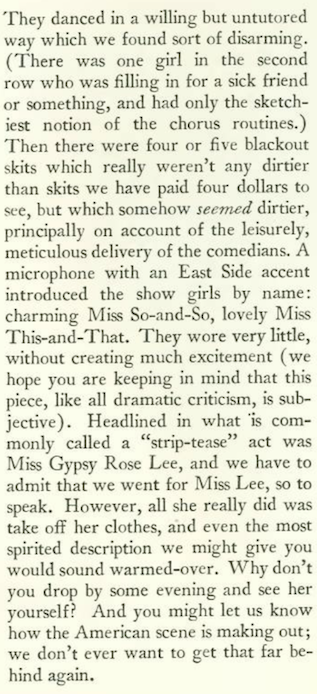
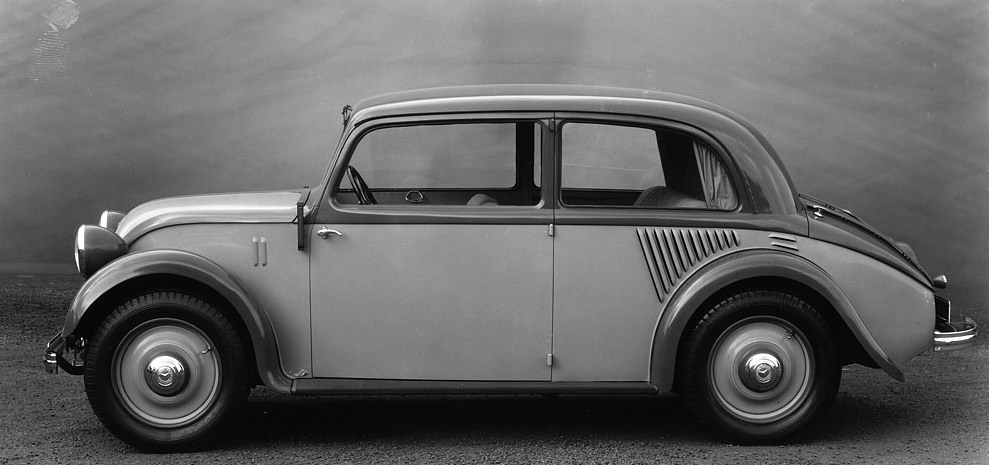
The New Yorker regularly checked the automobile competition from overseas, and found a tiny German car to be “perfectly amazing,” even if it didn’t go over so well with consumers.

IT’S CUTE, BUT…Due to its extreme unbalance of the Mercedes-Benz 130 H (two-thirds of the mass, including the engine, was on the rear axle), the car apparently was awkward to handle. It was discontinued in 1936. (automobile-catalog.com)

 * * *

From Our Advertisers

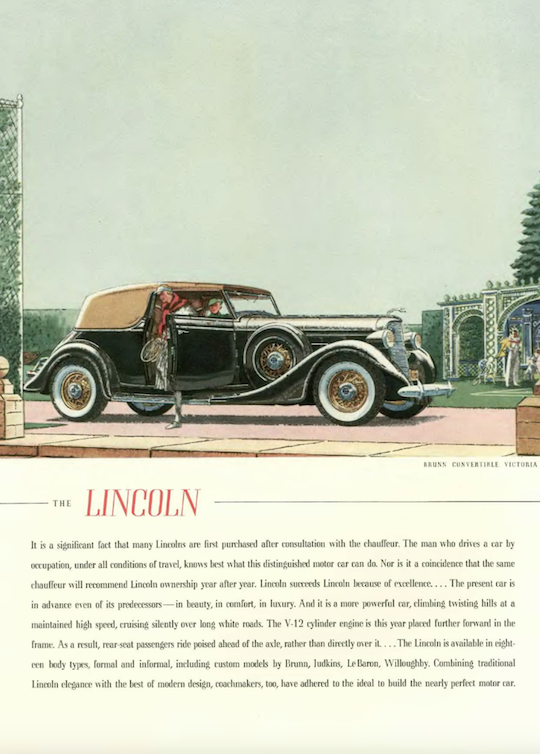
Anyway, most Americans preferred bigger cars, especially ones by luxury makers such as Lincoln, if they could afford them…

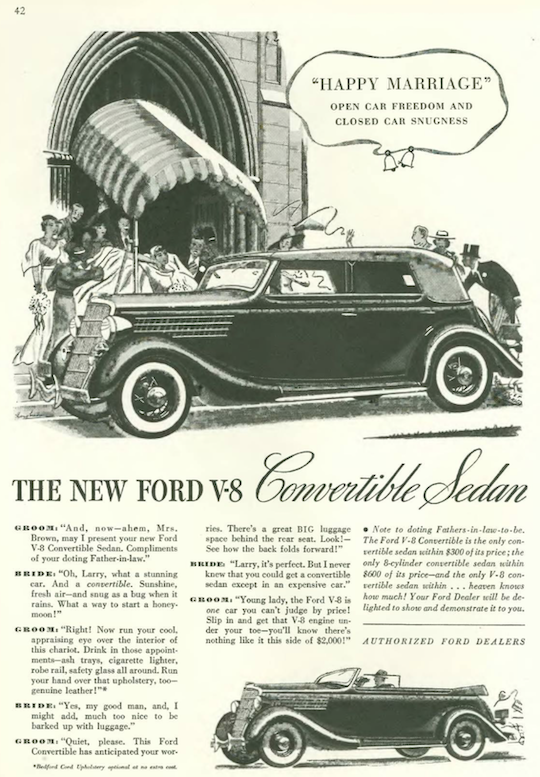
…Lincoln’s parent company, Ford, offered up a more affordable convertible with some flair of its own…automakers were fond of the marriage theme in advertisements, especially in the month of June…

…automakers and related industries were important advertisers during The New Yorker’s first years…

…indeed, the back cover of Issue #1 (Feb. 21, 1925) featured this ad from the United States Rubber Company, promoting its U.S. Royal Cord Balloon Tires…

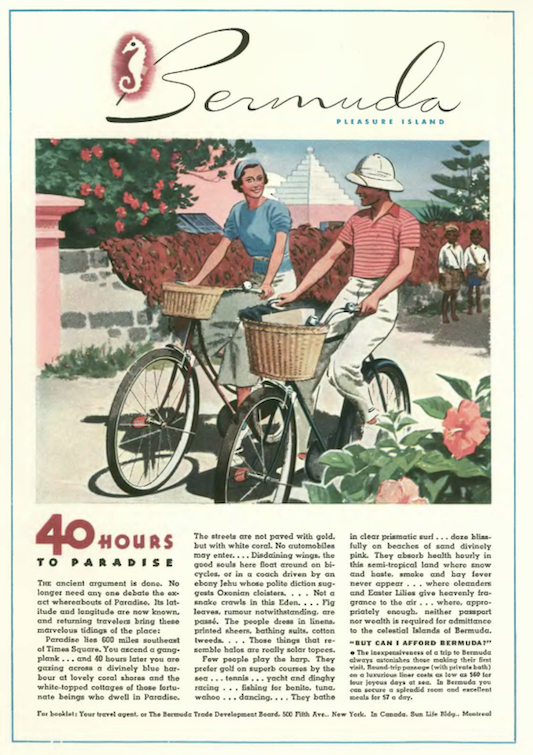
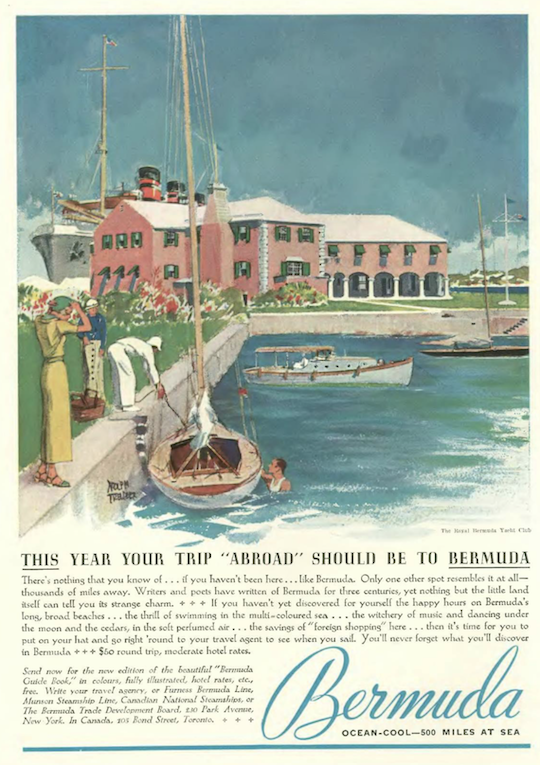
…another faithful advertiser in the magazine’s first decade was the Bermuda Trade Development Board…

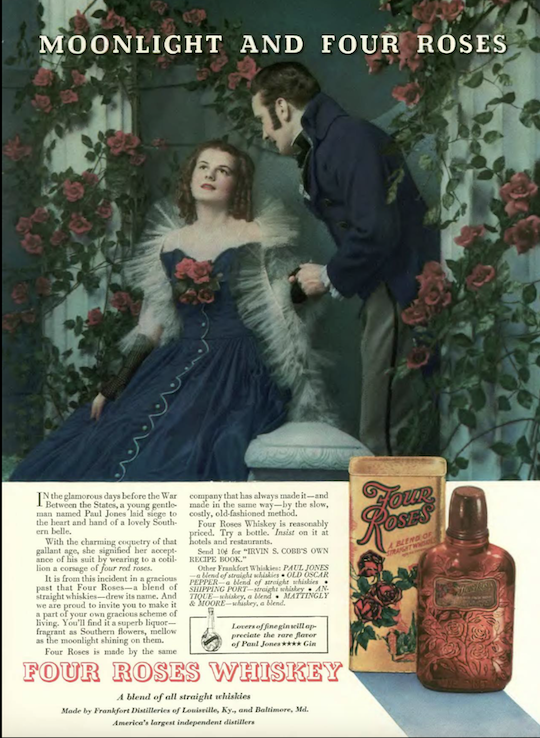
…this ad for Four Roses whiskey recalled “the glamorous days” (ahem) before the Civil War…

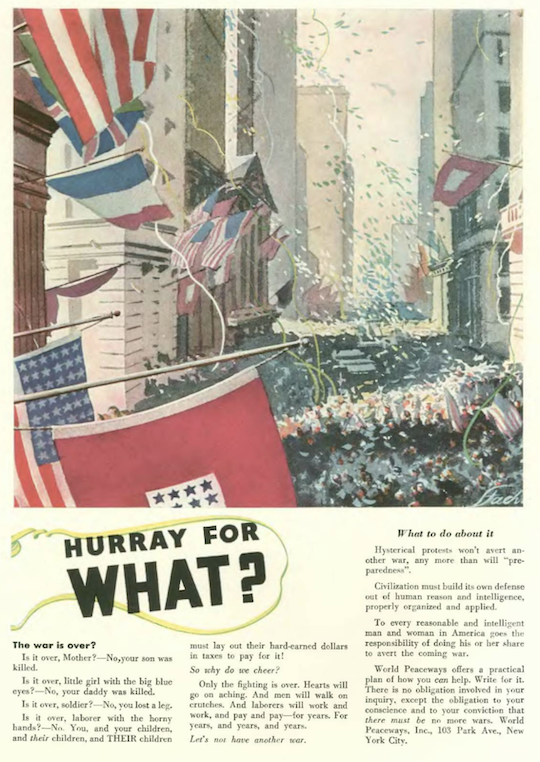
…and this colorful ad from World Peaceways reminded readers there was nothing to celebrate about wars…these ads pulled no punches (read the first few lines)…

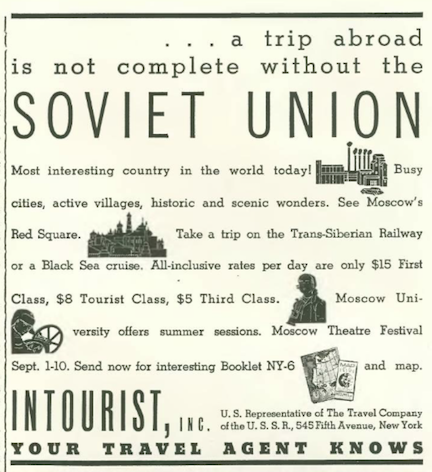
…”most interesting country in the world today!” proclaimed this ad inviting tourists to the Soviet Union…during 1934-35 Joseph Stalin was ruthlessly purging the Party, and local leaders across the country were being annihilated…of the 2.3 million people who had been party members in 1935, just under half were executed or perished in labor camps…this fact probably wasn’t mentioned in the travel folder…

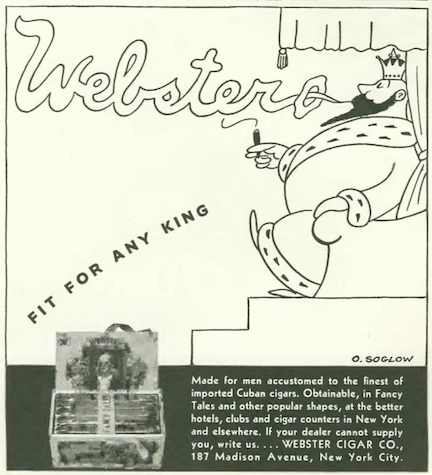
…the Webster Cigar Company hired Otto Soglow to create an ad doubtless based on the popularity of “The Little King,” but this isn’t the diminutive monarch…

…which takes us to our cartoonists, beginning with this spot signed E.S., I believe, or L.S. (anyone know?)…at any rate, its whimsical…

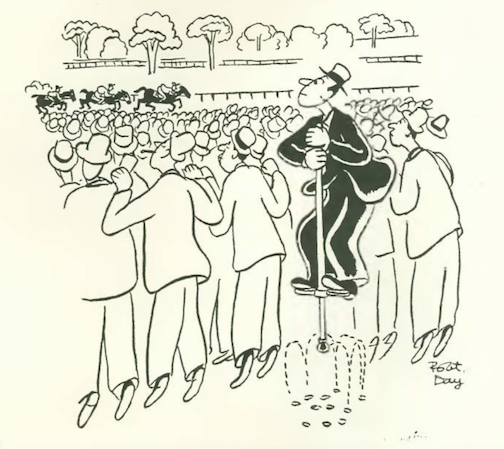
…of course we know Robert Day

…Day again, in a very different style…

Helen Hokinson, sounding a contemporary note…

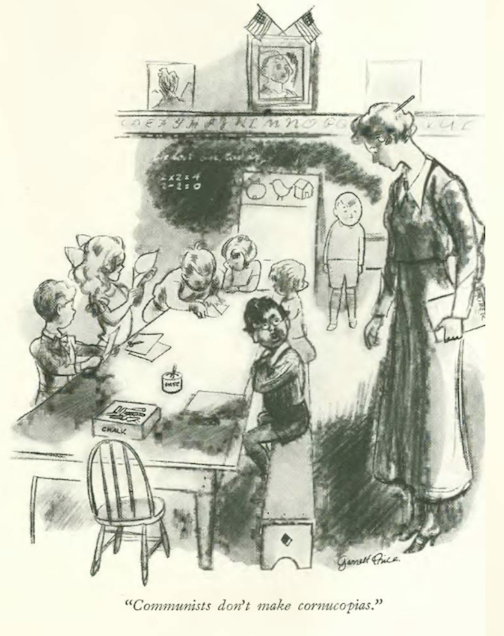
…a kindergarten political standoff, courtesy Garrett Price

Rea Irvin, and the obsolescence of Pan (today she’d have a cell phone)…

Peter Arno, and a clueless, cold, cuckold…
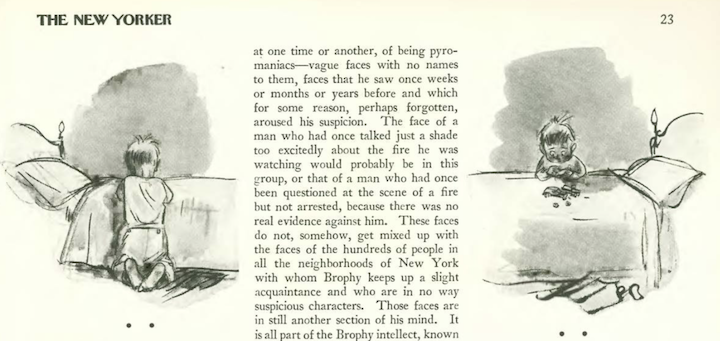
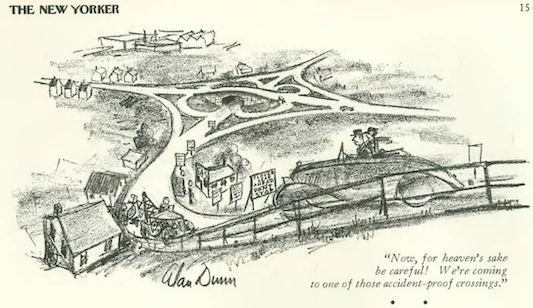
…and we close with Alan Dunn, and the future of transportation…

Next Time: A Return to Coney…

Vive La Normandie

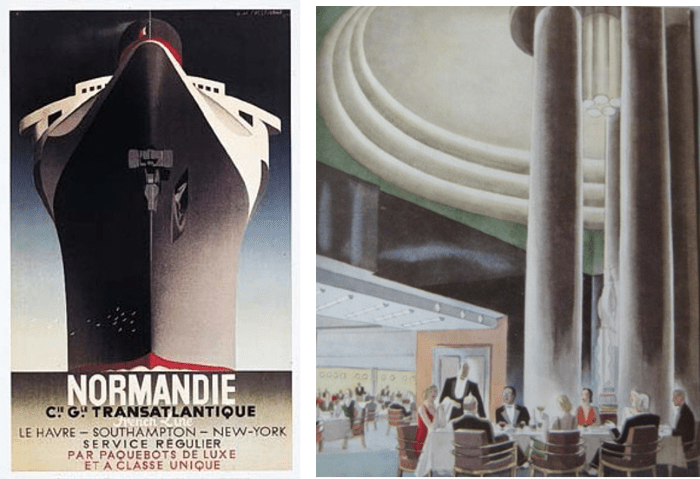
Above: At left, Adolphe Cassandre's famed 1935 depiction of the S.S. Normandie; right, image from a 1935 promotional booklet published by the French Line.

When the S.S. Normandie entered service in 1935, she was the largest and fastest passenger ship afloat, crossing the Atlantic in a little over four days. The ship was so impressive that even the imperturbable Janet Flanner expressed enthusiasm over its launch.

May 25, 1935 cover by Constantin Alajalov.

As Paris correspondent, Flanner was giving New Yorker readers a preview of Normandies May 29 maiden voyage from Le Havre to New York City.

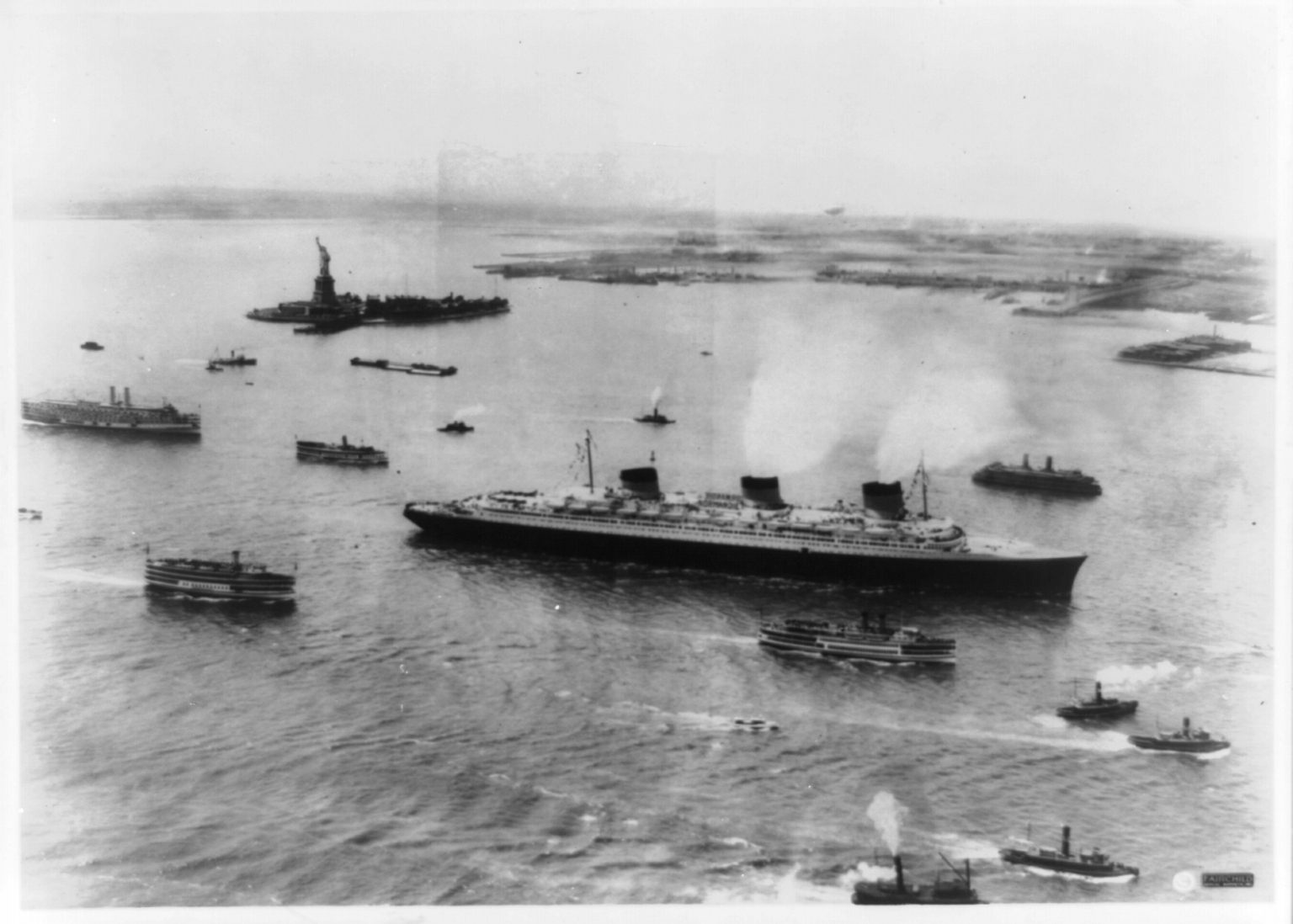
HER ENTOURAGE…The S.S. Normandie was welcomed into New York Harbor on June 3, 1935. (Wikipedia)
IMAGINE THAT…An S.S. Normandie promotional poster from 1935 depicts the ocean liner making an unlikely entrance into Manhattan. The sleek ship measured 1,029 feet (313.6m) in length and carried nearly 2,000 passengers plus 1,345 crew. It was the first ocean liner to exceed 1,000 feet in length. (Museum of the City of New York–MCNY)

To give New Yorkers some idea of the liner’s size, Flanner noted that the Normandie would stretch from 43rd to 47th Street, and if stood on her stern, would stand nearly 180 feet above the RCA Building at Rockefeller Center.

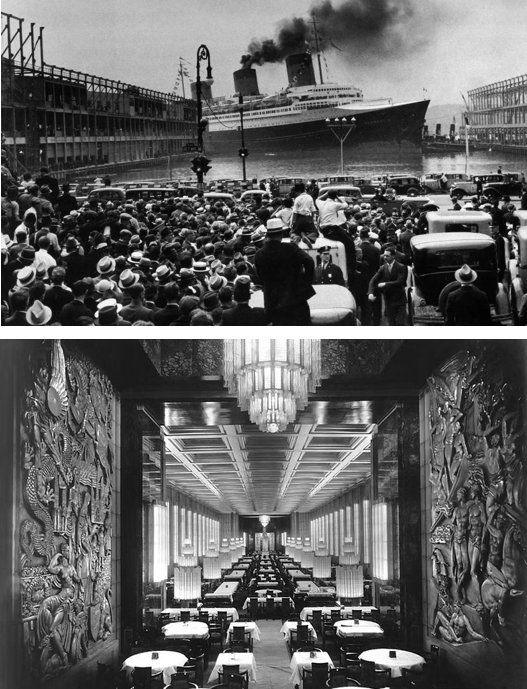
FRENCH TOAST…Top, a crowd cheers the S.S. Normandie as it arrives at New York’s Pier 88 on June 3, 1935; below, the first class dining hall was 305 feet long, 46 feet wide and three decks high. (drivingfordeco.com/MCNY)
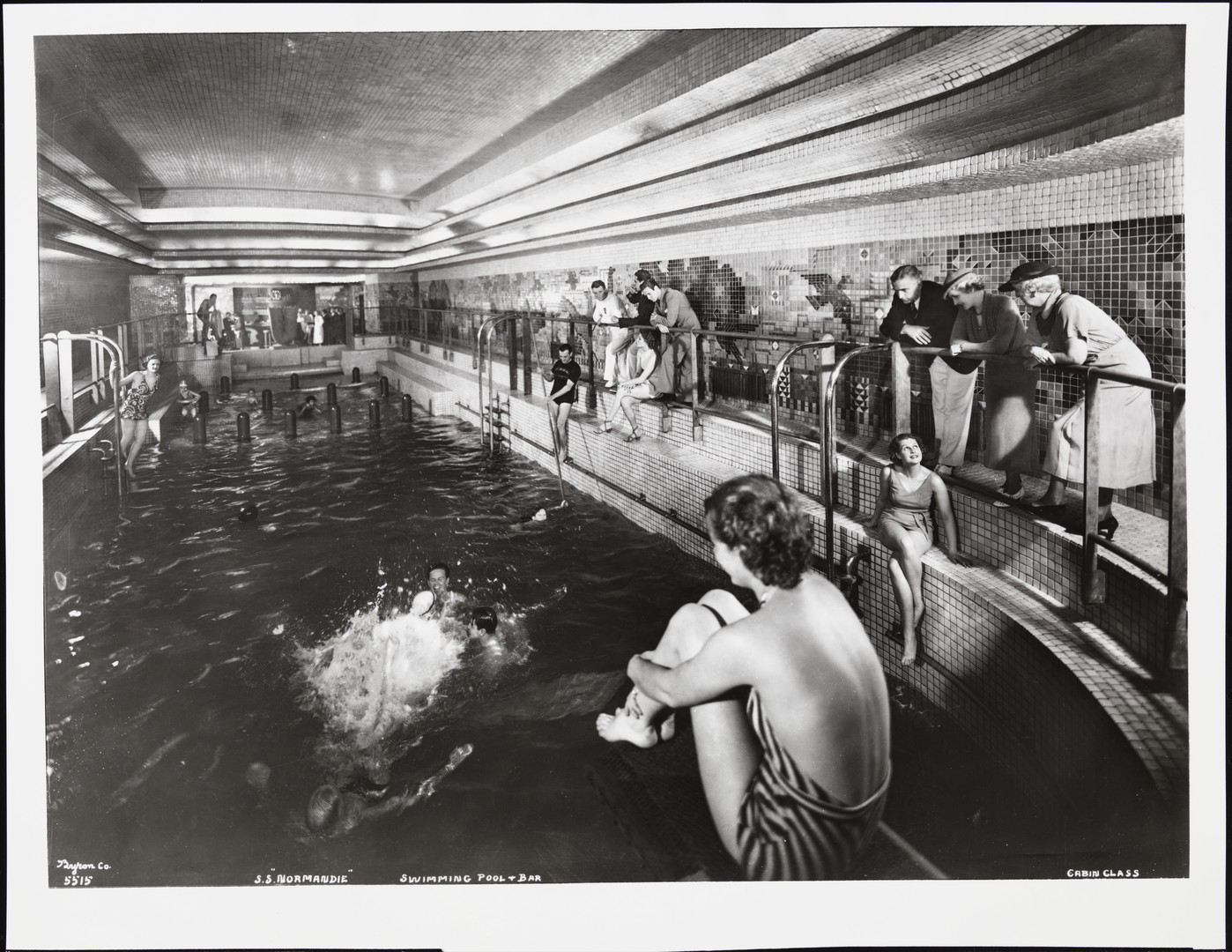
IN, AND ON THE WATER…Passengers take a plunge in the Normandie’s swimming pool, which included a bar at the far end. (MCNY)
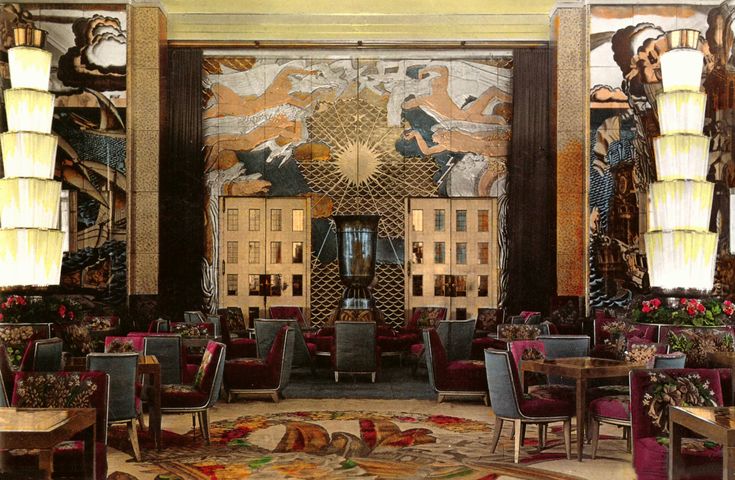
EYE-POPPING…Colorized image of the first-class lounge. (Pinterest)
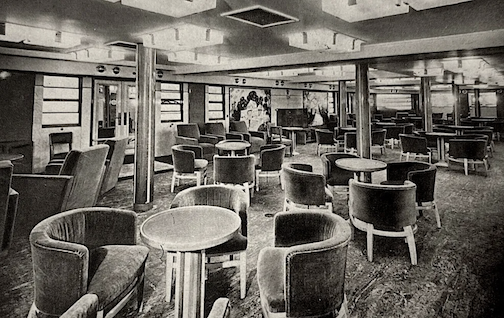
BARGAIN…Accommodations for weren’t too bad, either, for the other classes. Here is the 3rd class salon. (drivingfordeco.com)
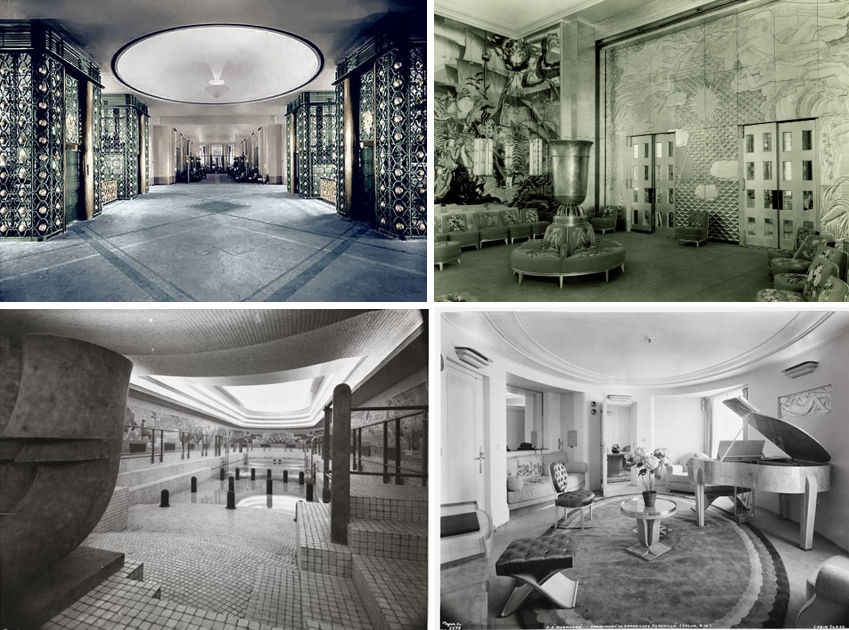
TAKE YOUR PICK…Clockwise from top left, elevators decorated in sea shells; the rear of the Grand Salon; a first class suite; view of the swimming pool. An incredible scale model of the S.S. Normandie is displayed on the Queen Mary, which is permanently docked at Long Beach, CA. (MCNY)

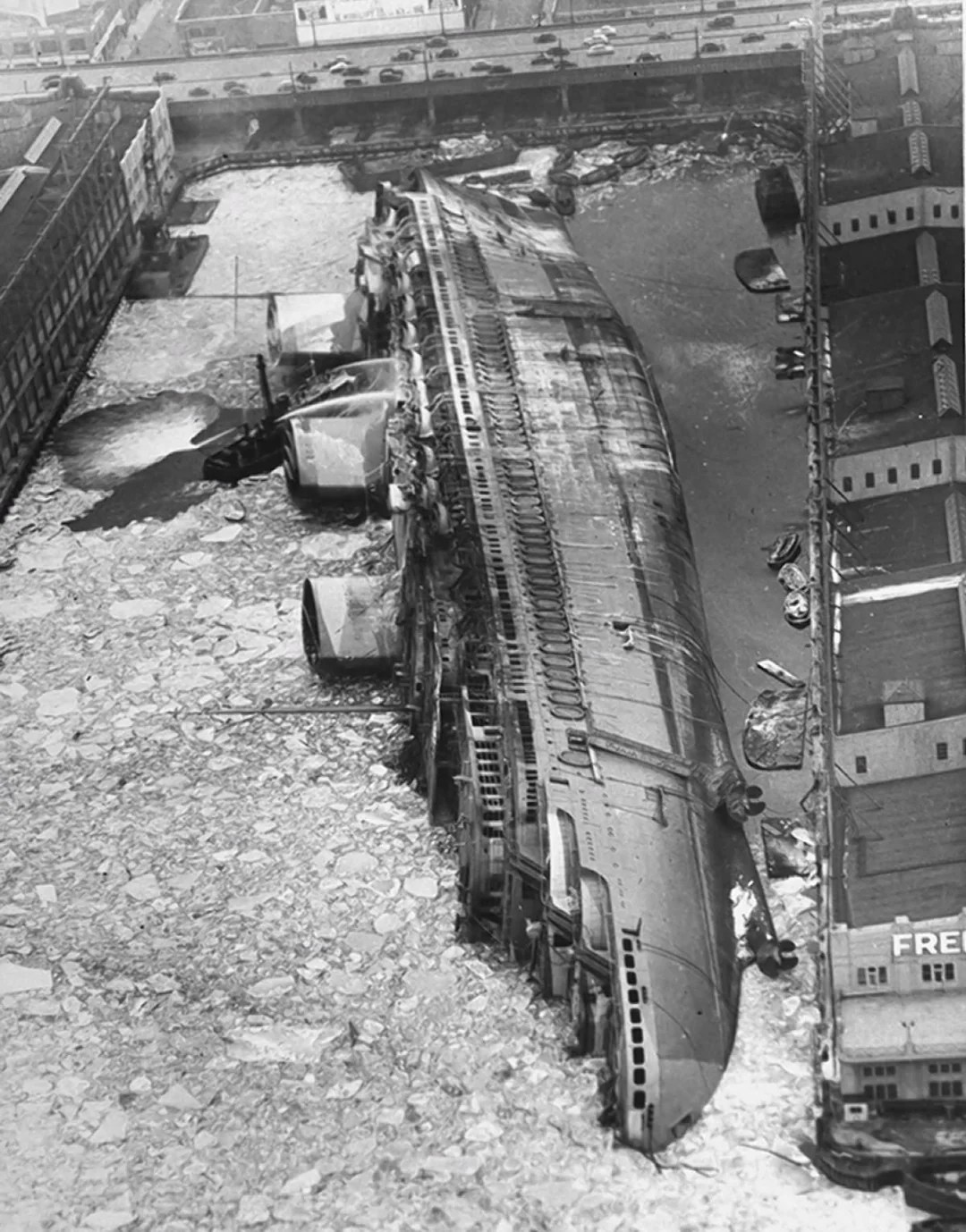
World War II would cut short the Normandie’s life. Seized in New York and renamed USS Lafayette in 1942, she was being converted to a troopship when she caught fire, capsized onto the port side, and came to rest half submerged on the bottom of the Hudson at Pier 88, the same pier where she was welcomed in 1935. She was scrapped in 1946.

THE WAGES OF STUPIDITY…The Normandie after a fire brought her glory days to an end. (Reddit)

 * * *

A Critic Is Born

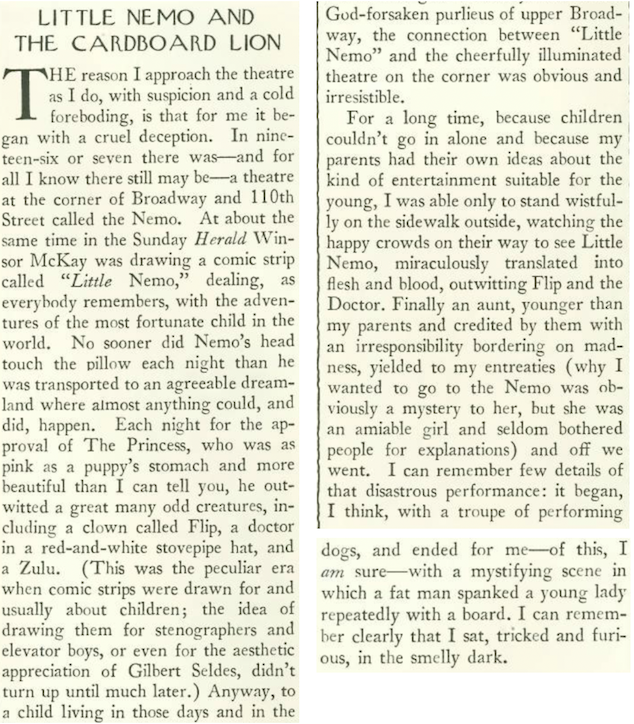
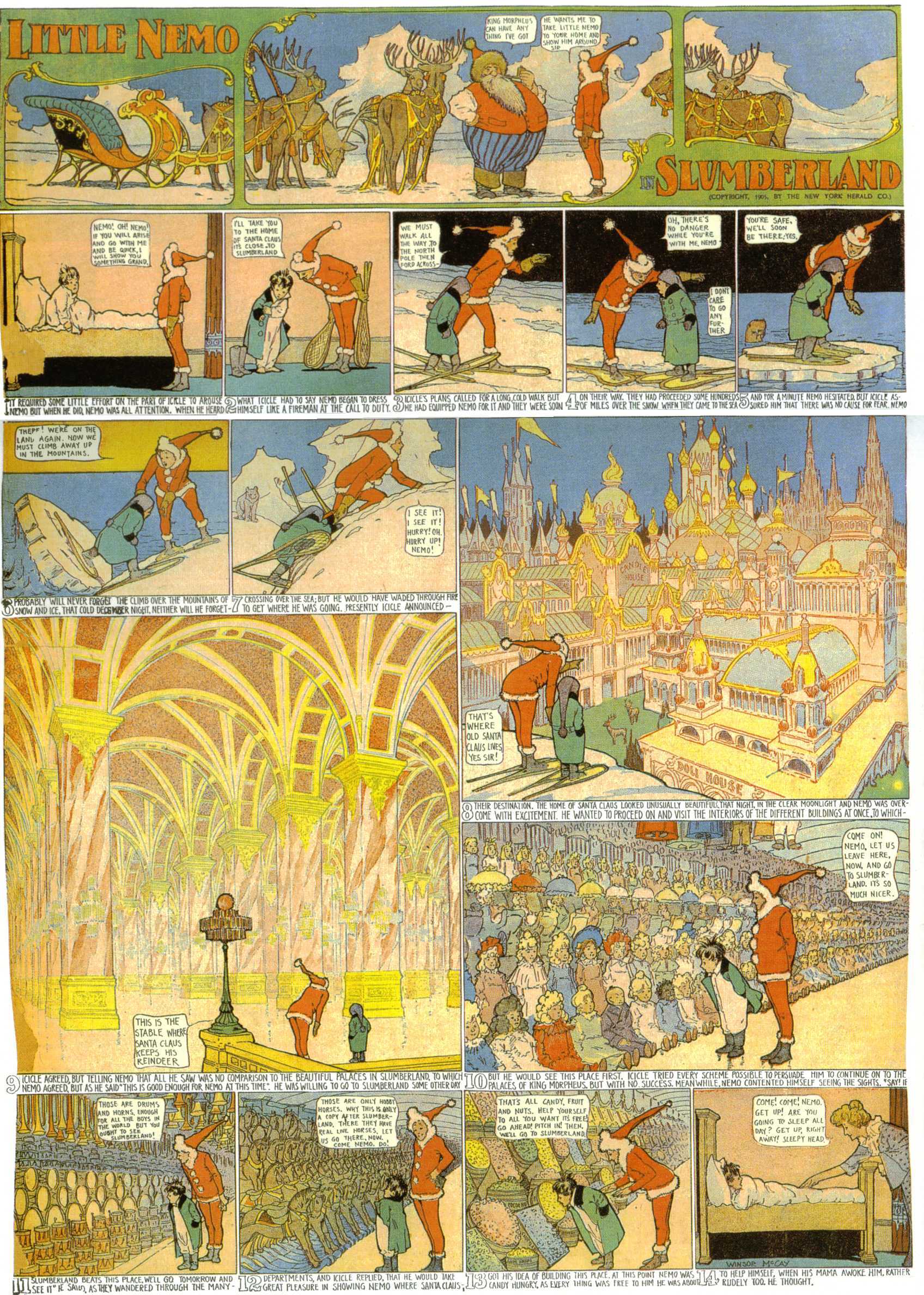
It turns out that Wolcott Gibbs (1902–1958) cut his teeth as The New Yorker’s theatre critic while he was still in short pants. Gibbs recalled his five-year-old self in an essay that described his first experience with the theatre—a play based on the New York Herald’s popular comic strip, Little Nemo in Slumberland, by Winsor McCay. In parallel with Gibbs’ childhood, the strip ran from 1905 to 1911.

As a child, Gibbs was wild about Little Nemo’s adventures, but the stage adaptation left the child disillusioned (and feeling “tricked and furious”). The New York Public Library’s Douglas Reside wrote (in 2015) that the producers, seeking to draw as wide an audience as possible, presented Little Nemo “as a bloated mixture of theatrical styles, including the minstrel show, pantomime, operetta, farce-comedy, vaudeville, revue, and ballet,” featuring three comedians “mostly superfluous to Nemo’s story.” The part of Nemo was played by a 25-year-old actor with dwarfism.

DREAMLAND…The Little Nemo strip from Dec. 17, 1905 depicted the boy’s dream of a visit to Santa’s magical city at the North Pole. (Wikipedia)
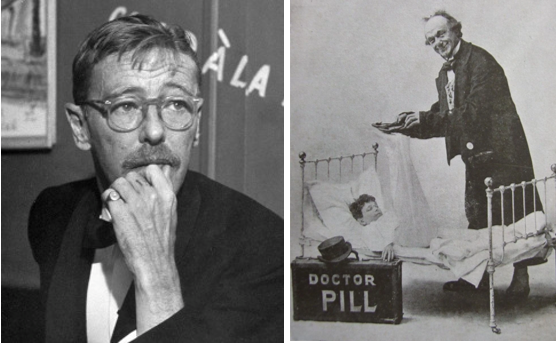
THAT’S SHOWBIZ…As a boy, Wolcott Gibbs (left) was disillusioned by a 1907 theatre adaptation of his favorite comic strip, Little Nemo in Slumberland. The play was dominated by three comedians including Joseph Cawthorn, right, who burlesqued German linguistic and cultural mannerisms for comic effect. He played Dr. Pill, the quack doctor of Slumberland’s royal court. The “boy” in the bed portraying Nemo was 25-year-old “Master” Gabriel Weigel. (Wikipedia/New York Public Library)

 * * *

Humorous Humors

Clarence Day, best known for his Life with Father stories, wrote humorously about his physical ailments and contributed a number of cartoons to The New Yorker that were accompanied by satirical poems. Day would be dead by December—after a bout with pneumonia—however, despite his ailments he would spend his last months arranging publication of his Life with Father book, which was published posthumously.

 * * *

Frankie Got Hitched

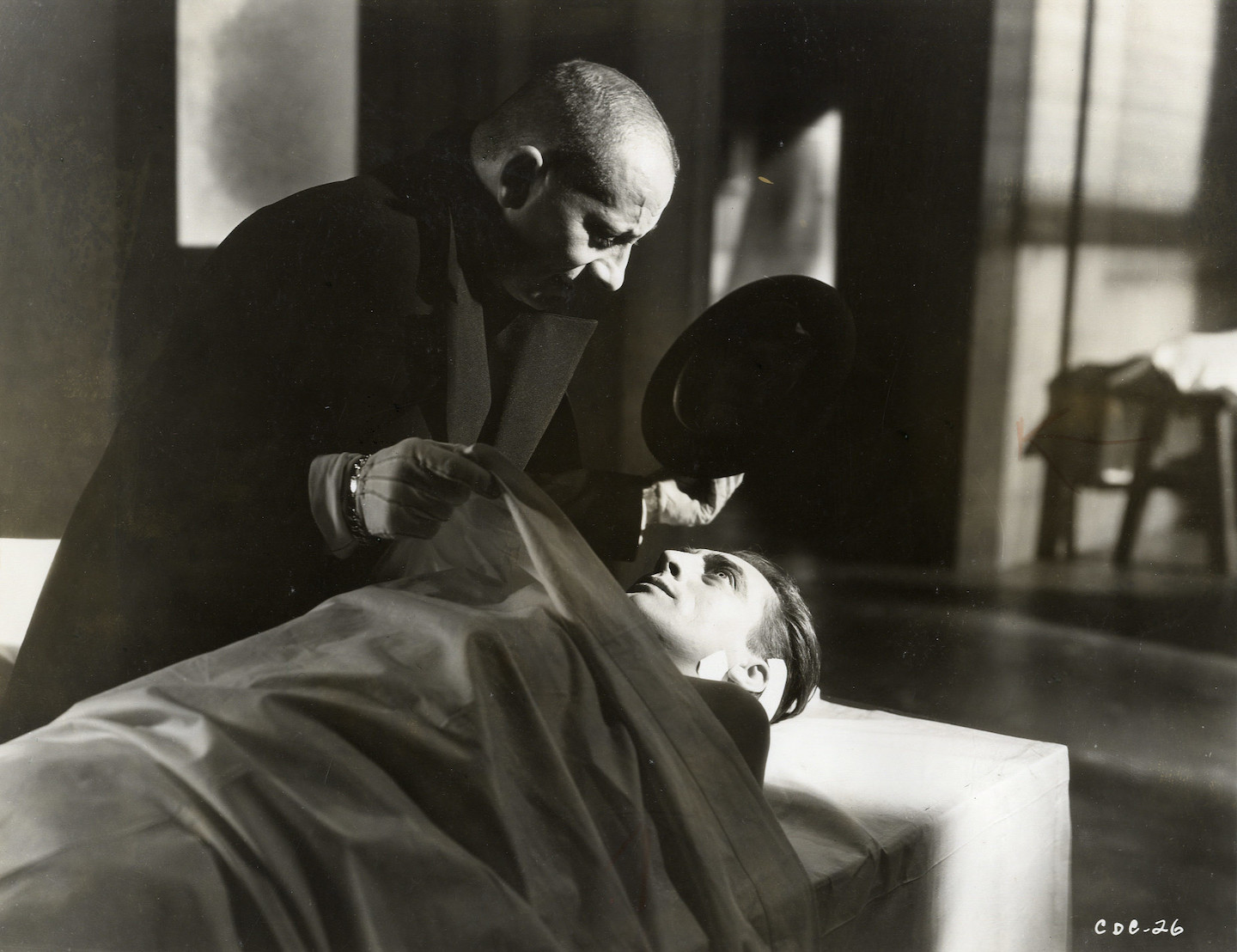
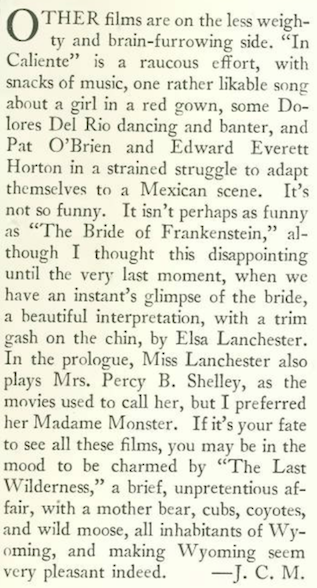
Film critic John Mosher still wasn’t finding much to rave about at the cinema, getting more chuckles from the monster mash-up of Boris Karloff and Elsa Lanchester in The Bride of Frankenstein than he did from the Dolores Del Rio vehicle Caliente.

DATE NIGHT…Top, Elsa Lanchester and Boris Karloff let the sparks fly in The Bride of Frankenstein, while Dolores Del Rio danced and chatted her way through the unfunny musical comedy Caliente. (Wikipedia/TCM)

* * *

Other features in the May 25 issue included H. L. Mencken’s continuing exploration into the origins of American names…

…and The New Yorker published its first John Cheever story, “Brooklyn Rooming House.” Of Cheever’s 180 short stories, the magazine would publish 121 of them.

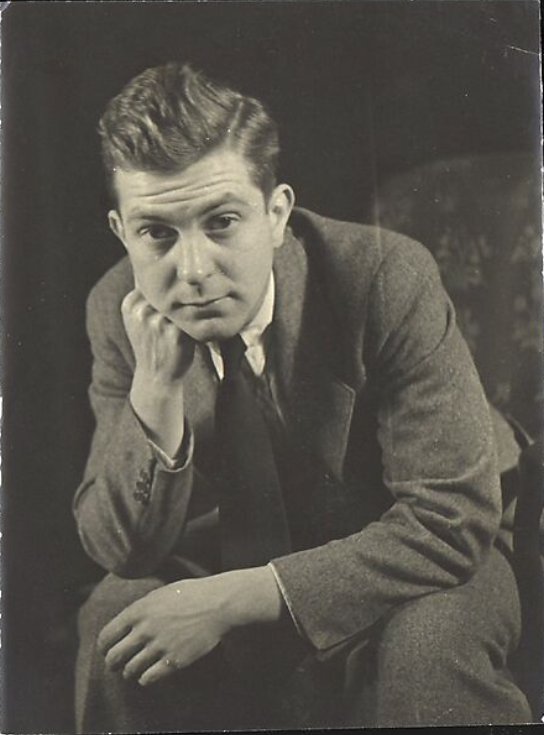
A NEW FACE…In spring 1935 The New Yorker bought two John Cheever stories, paying $90 for “The Brooklyn Rooming House” and $45 for “Buffalo.” Fiction editor Katharine White urged the purchase of the stories. Above, Walker Evan’s photo of Cheever, circa 1940s. (metmuseum.org)

 * * *

From Our Advertisers

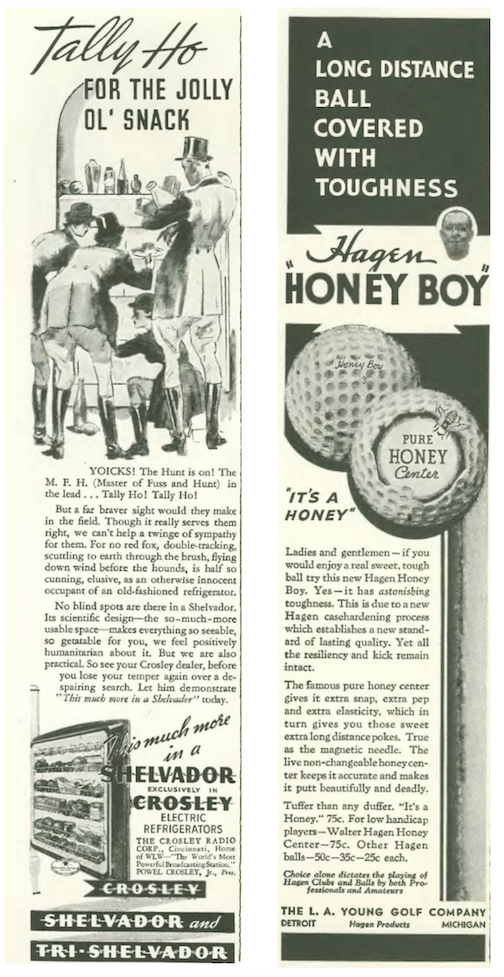
We start with some one-column gems from the back of the book including the latest innovation in electric refrigerators…a shelf in the door!…apparently Crosley was the first to invent this “Shelvador”…the ad to the right is interesting in that it advertises honey-filled golf balls…in the early 20th century some golf balls did contain real honey…apparently it was chosen for its consistent viscosity (or maybe for a quick snack on the ninth hole)…

…and from General Tire, we have another ominous warning from Dad as the teens head out for another night of crooning, or whatever they are dressed for…

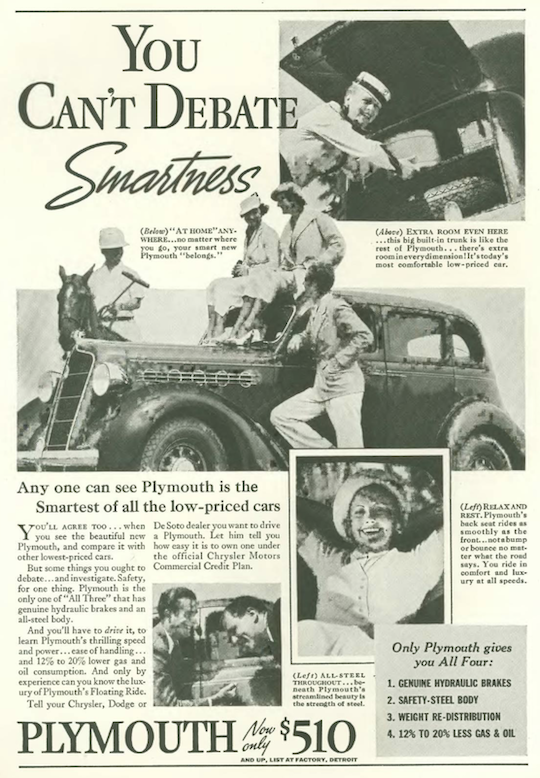
…last week Chrysler was offering its sedans for $745, and this week you could have one of their Plymouths for just 510 bucks…the message: you would be admired by your polo buddies for your smart, thrifty choice…

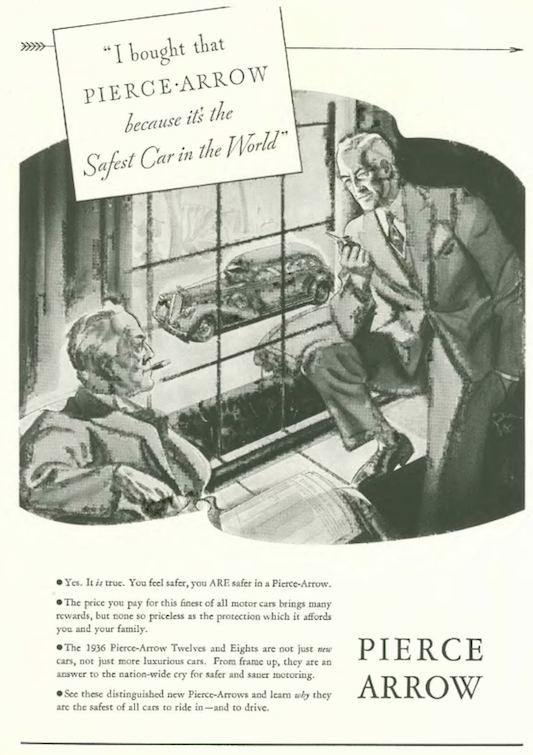
…where the above ad crammed every square inch with information, the folks at Pierce Arrow offered a restrained, minimal message (suggesting “we can afford to buy a full-page ad and leave much of it blank”)…another class signifier was the absence of a price tag (about $150k in today’s dollars)…but Chrysler-Plymouth would survive the Depression because it sold affordable cars, while Pierce Arrow was on its last legs…

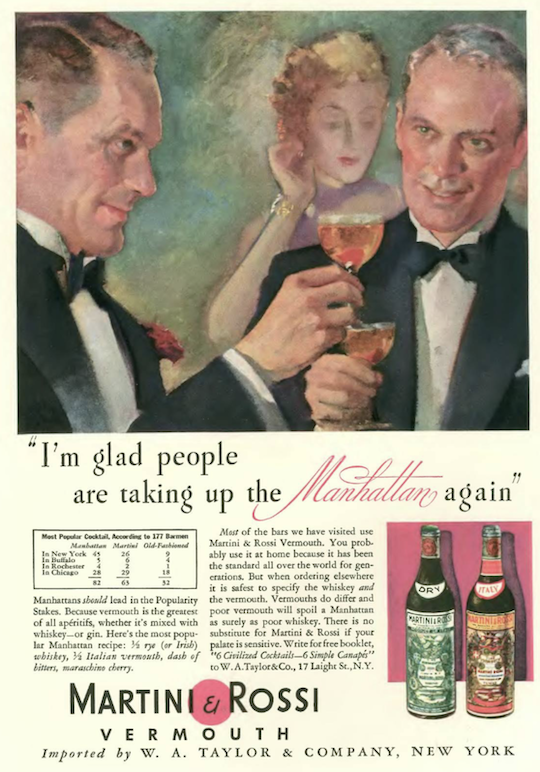
…here’s a couple of Pierce Arrow owners toasting the return of the Manhattan…

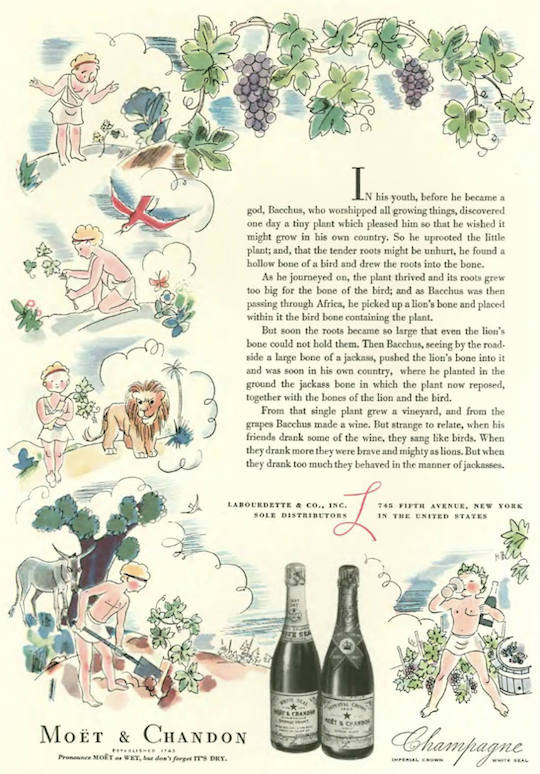
…Moët & Chandon offered up this whimsical tableau from the youth of Bacchus…

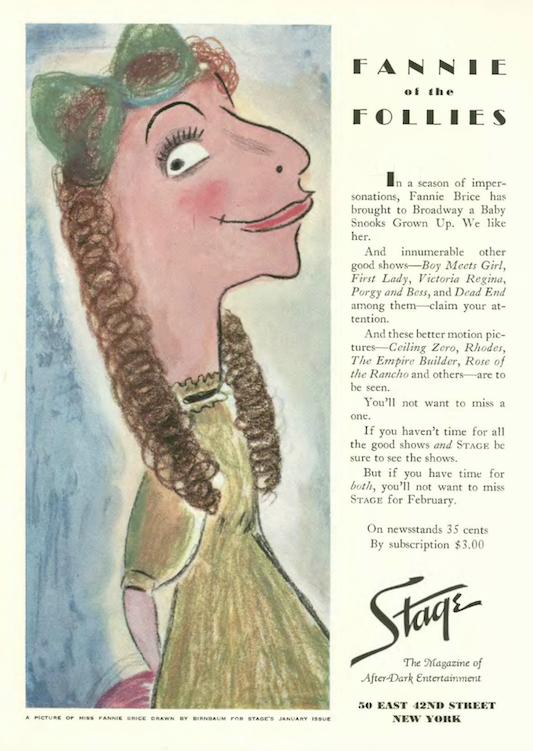
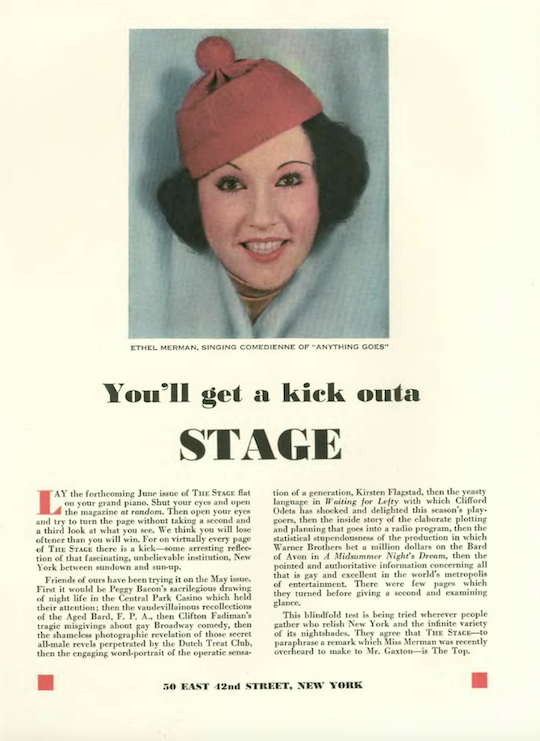
Ethel Merman popped through a curtain on the inside back cover to invite readers to subscribe to The Stage magazine…

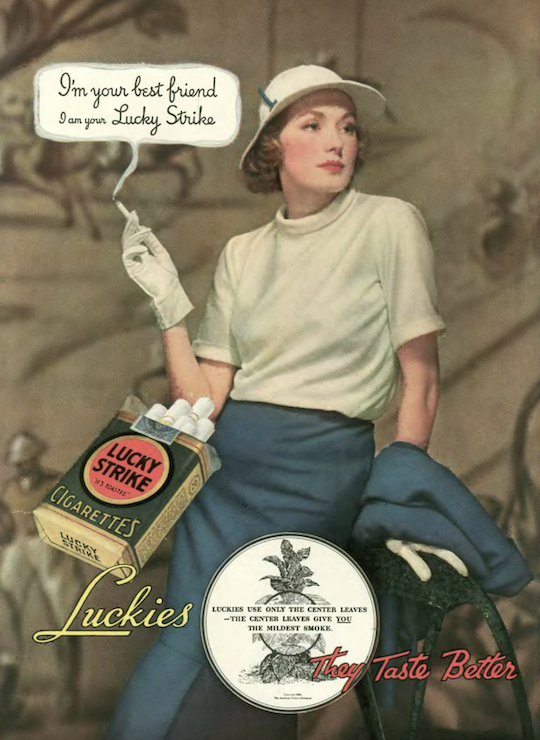
…and Lucky Strike claimed the back cover with another stylish woman and a talking cigarette bent on mind control…

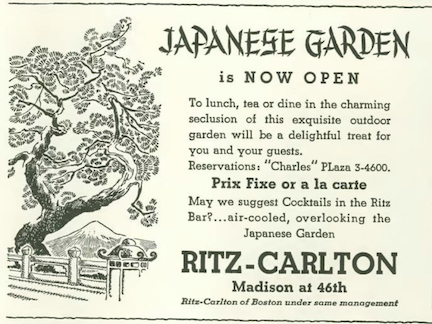
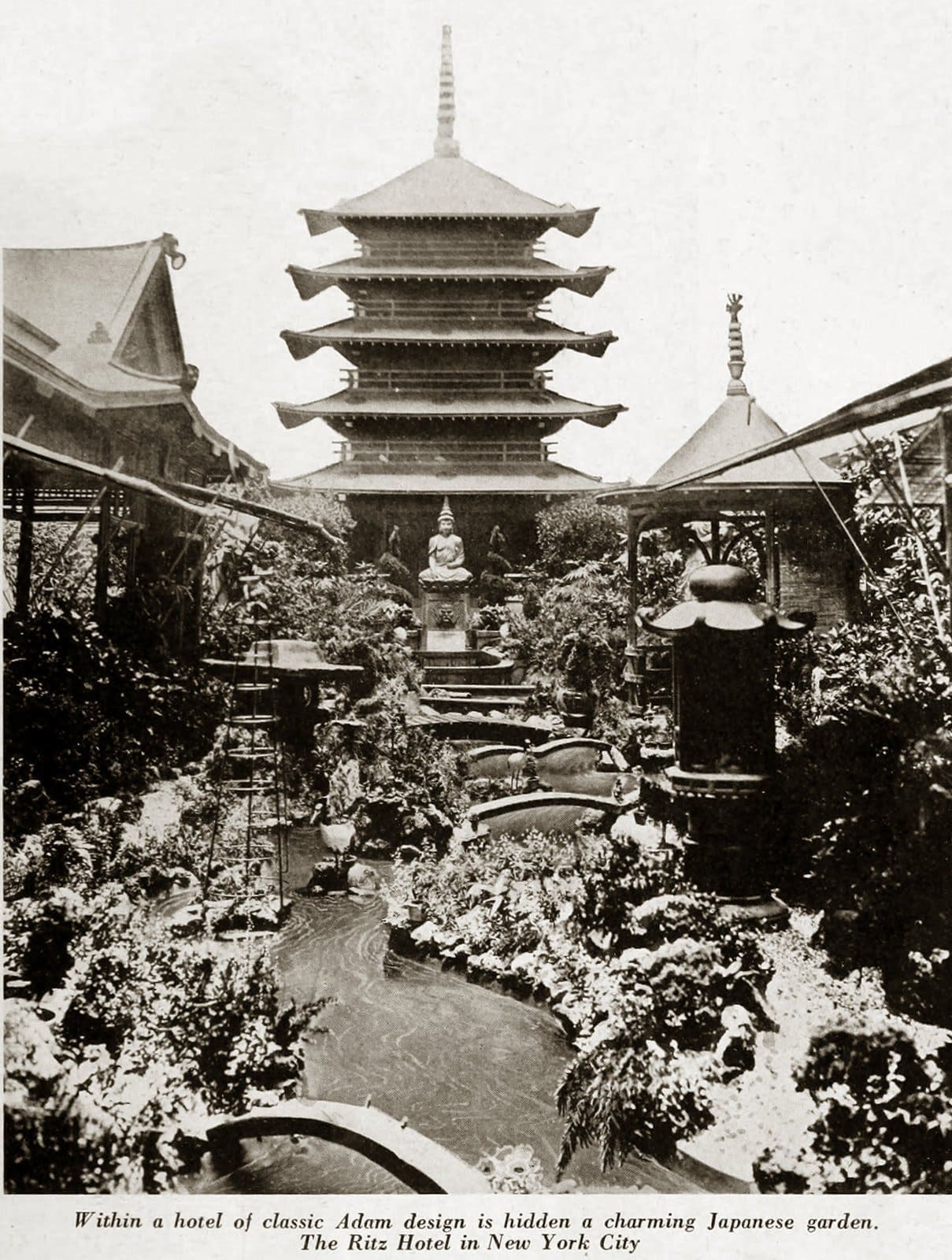
…the Ritz-Carlton announced the spring re-opening of its famed Japanese Garden…

The Japanese Garden in 1924. (clickamericana)

…and we kick off our cartoonists with this “Goings On” topper by D. Krán

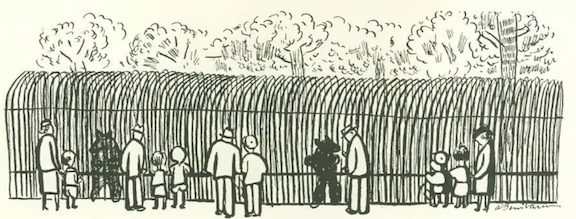
…followed by this visit to the zoo by Abe Birnbaum

James Thurber was up for some fashion criticism…

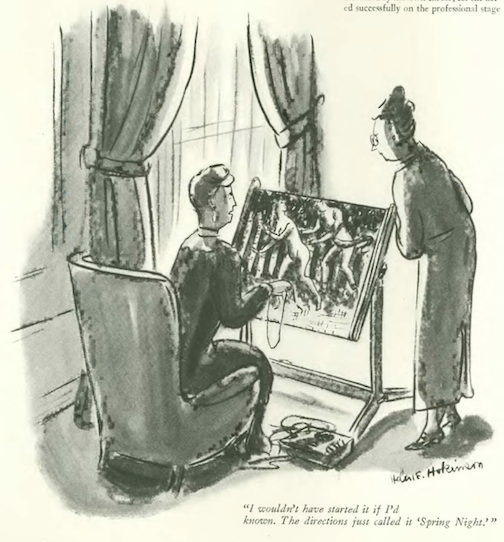
Helen Hokinson found a surprise in a paint-by-numbers kit..

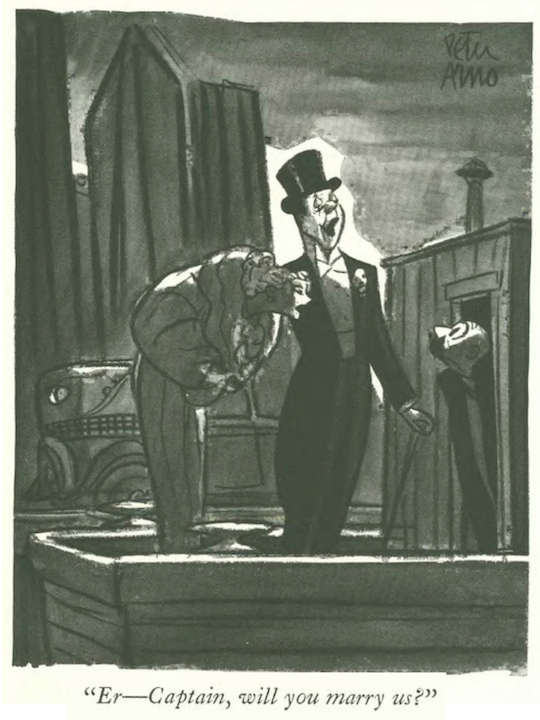
Peter Arno was up for some late night nuptials…

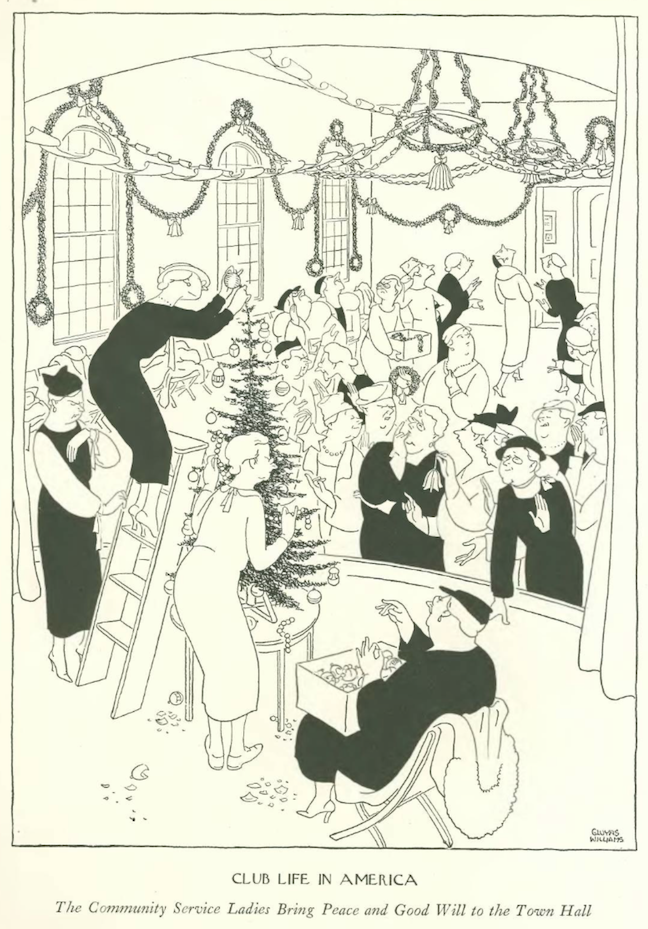
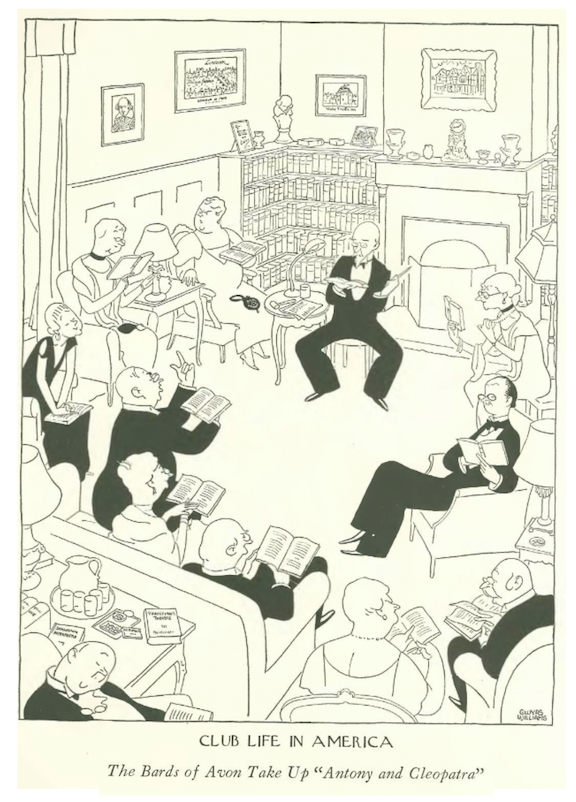
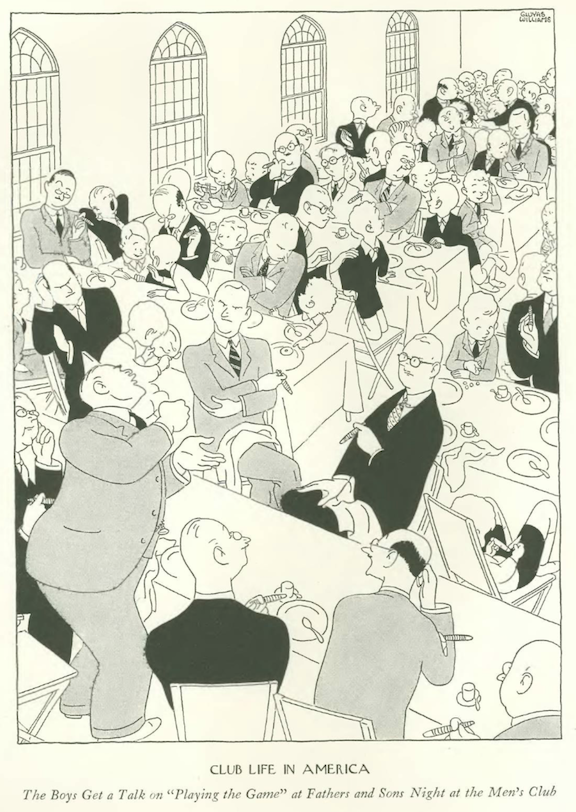
Gluyas Williams continued to examine club life…

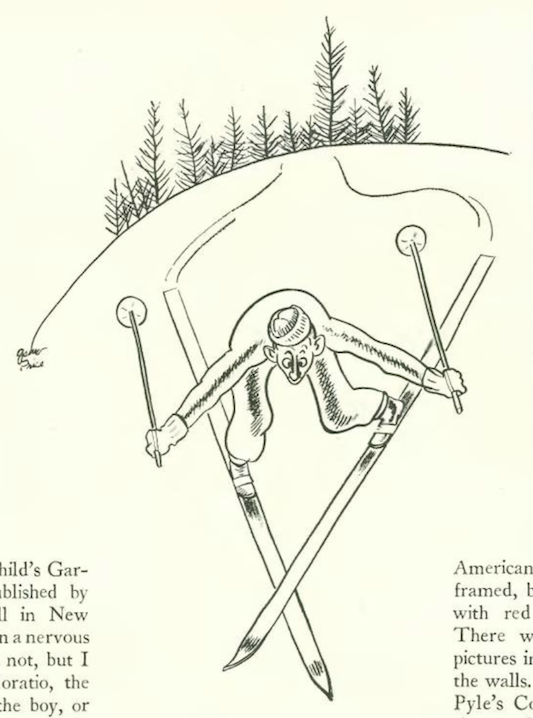
...George Price was back in the air…

Alan Dunn gave us some men on a mission…

…and we close with Charles Addams, and some dam trouble…

Next Time: Wining and Dining…


Settling Down

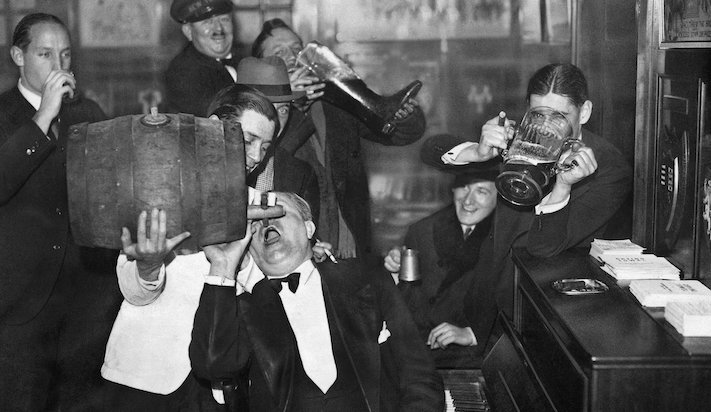
Above: Celebrating the repeal of the 18th Amendment, 1933. (New York Times)

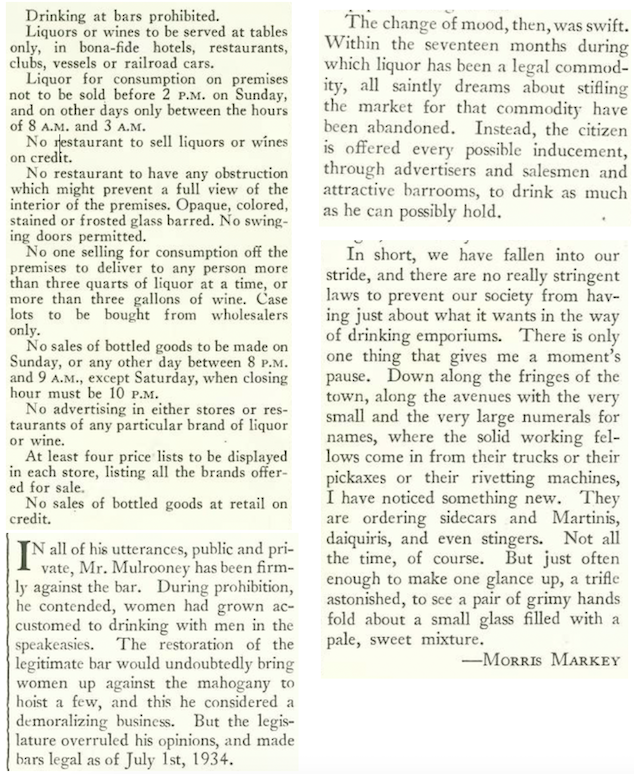
“Settling Down” was the title given to Morris Markey’s examination of the post-Prohibition world, which to no one’s surprise heartily embraced (and imbibed) everything this world had to offer.

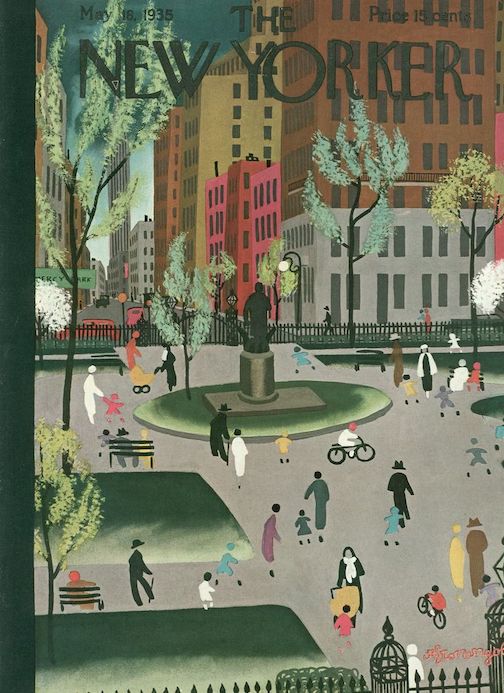
May 18, 1935 cover by Adolph K. Kronengold.

In his column, “A Reporter at Large,” Markey examined the challenges faced by local and federal governments in reestablishing old liquor control laws, in many cases creating new ones to address the technological, economic and social changes that transpired during the fourteen years of Prohibition. Facing this challenge in New York was Edward P. Mulrooney (1874-1960), a former police commissioner tapped in 1933 to head the State Alcoholic Beverage Control Board. Markey explained how Mulrooney and New York regulators tried to create new standards for alcohol consumption that would encourage moderation. Excerpts:

CAN’T HAVE A BELT IN THE BIBLE BELT…Published by The United States News on Nov. 11, 1933, this map shows how liquor laws varied by state following Prohibition. After Prohibition ended with the ratification of the 21st Amendment, states gained the authority to regulate alcohol sales, leading to a wide variety of state and local laws. Many states adopted local option laws, allowing cities and counties to decide whether to allow alcohol sales, resulting in “wet,” “dry,” and “moist” jurisdictions. (us news.com)

Seventeen chief provisions for moderating alcohol use were published in The New York Times on Nov. 10, 1933, but ten of those provisions were quickly abandoned. Less than a year and a half after repeal, Markey noted that “the citizen is offered every inducement…to drink as much as he can possibly hold.”

SO MUCH FOR RULES…Celebrations for the repeal of Prohibition in bars and former speakeasies began when Franklin Roosevelt signed the Cullen-Harrison Act on March 22, 1933; the president himself was known to enjoy a dry martini; former New York Police Commissioner Edward P. Mulrooney had the unlucky task of figuring out how to regulate the juice of the grape and the grain. In the end, people seemed to be drinking more than ever. (themobmuseum.org/thrillist.com/Condé Nast)

 * * *

Hordes From the Hinterland

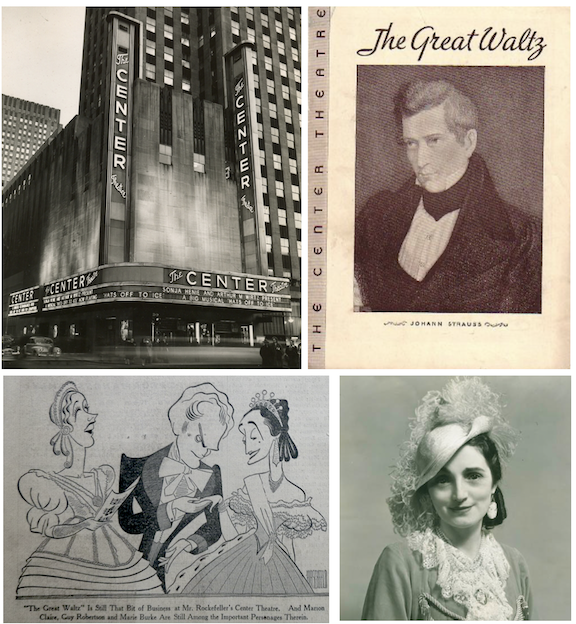
There was a time, long ago, when Broadway catered mostly to New Yorkers, but with the advent of mass media and better transportation options folks from the hinterlands (from beyond the Hudson) began to descend on the Great White Way. Then as now, certain shows attracted thousands, including The Great Waltz, a musical based on the works of Johann Strauss I and Johann Strauss II. It opened in September 1934 at the Center Theatre and ran for 289 performances. “The Talk of the Town” sniffed that “People who literally have never seen a play before in their lives turn up at Sixth Avenue and Forty-ninth Street, ready for anything.”

MANY AMERICANS WERE AGOG over the The Great Waltz…Clockwise, from top left, the play was performed at the Center Theatre (formerly the RKO Roxy Theatre) at 49th Street and 6th Avenue—sadly, it was demolished in 1954, the only building to ever be demolished from the original Rockefeller Center complex; cover of the Playbill; actress Marie Burke portrayed Countess Olga Baranskaja; Al Hirschfeld illustration of Burke and fellow actors Guy Robertson (as Johann Strauss) and Marion Claire as Therese. (cinematreasures.org/playbill.com/nyt.com)

 * * *

From Our Advertisers

Appropriately, this full-page advertisement for Gordon’s Gin appeared opposite the opening page of Morris Markey’s exploration of the post-Prohibition world…
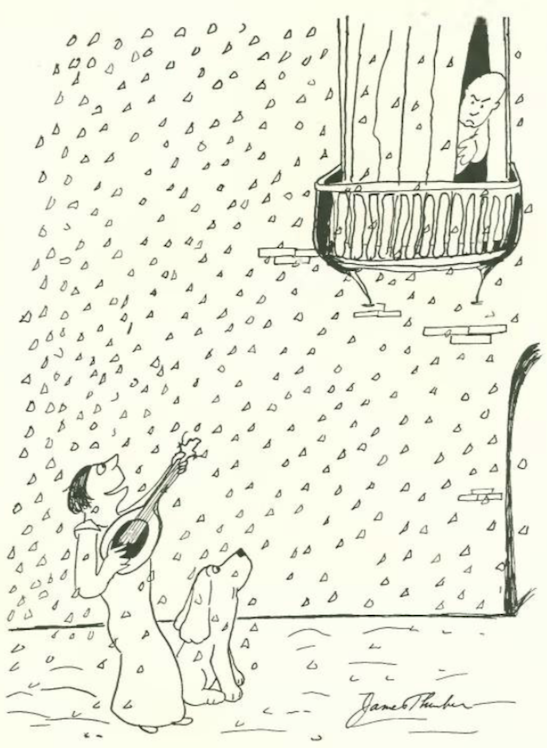
…and business was booming in the liquor trades…most of the full-color ads in The New Yorker were placed by liquor companies, cigarette manufacturers, and automakers…the inside back cover shilled for Penn Maryland…

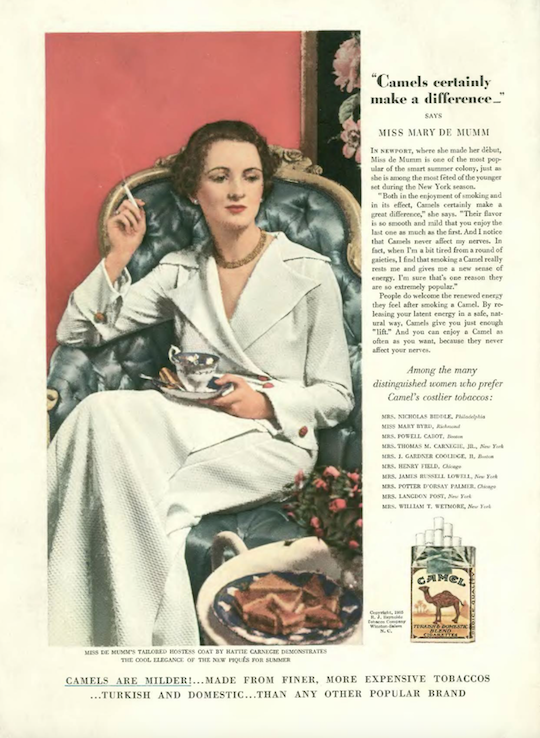
…while the back cover was once again claimed by big tobacco…here we have Newport deb Mary De Mumm expounding on wonders of Camel cigarettes, which somehow helped her feel both restful and energetic…

…those who enjoyed the finer things could buy this Packard for about $3,000 (nearly $90K today).

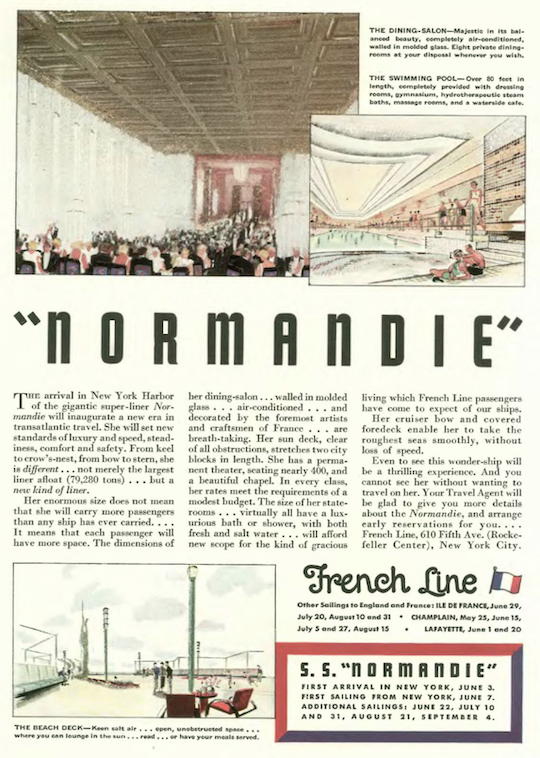
…anticipation was building for the June arrival of the new French liner S.S. Normandie, the largest and fastest passenger ship afloat…

S.S. Normandie on the high seas. (Wikipedia)

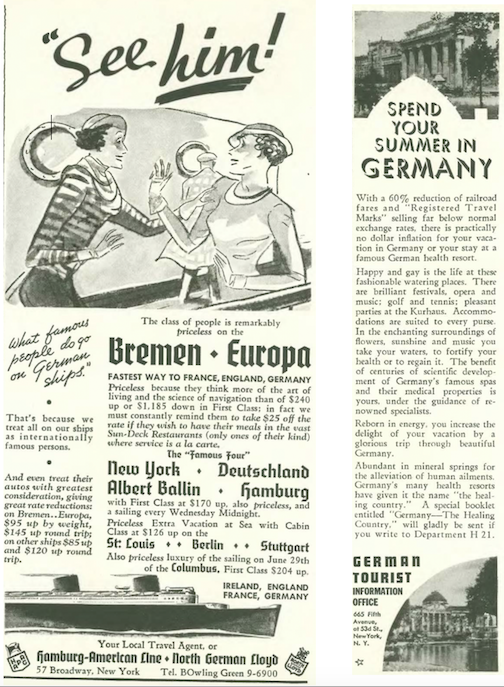
…the Hamburg-American Line was another way to get across the pond, and it promised a ship filled with famous and classy people (and likely more than a few Nazis)…the single-column ad on the right suggested you could spend your summer in Germany…the tourist bureau claimed that Germany was known as “the healing country,” and doubtless many needed healing after being beaten by Brownshirts…

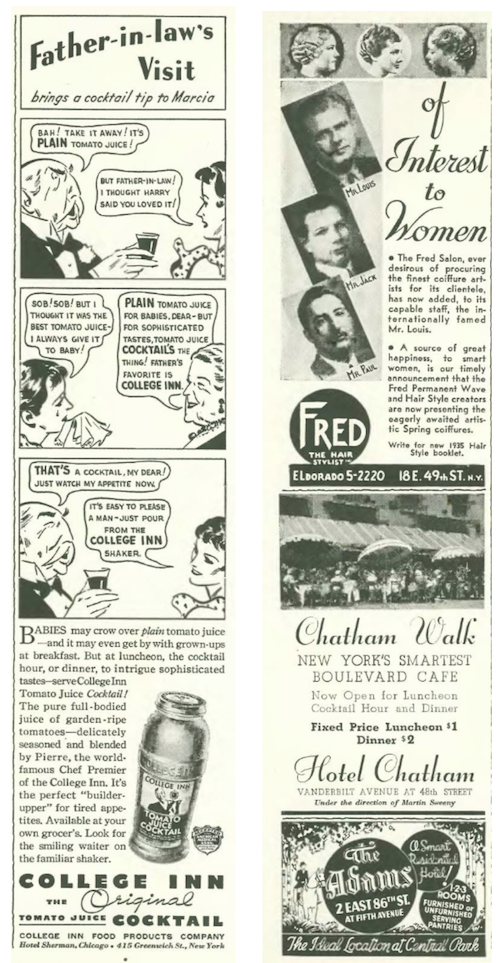
…a couple more single-column ads, first from our friends at College Inn, who dumped the furious Duchess in favor of a dyspeptic father-in-law who brings his daughter-in-law to tears over her choice of tomato juice…the ad at right advertised the services of Mr. Louis, Mr. Jack, and Mr. Paul at the hair stylist Fred, while a tiny ad at the bottom offered a luncheon for a buck at New York’s “Smartest Boulevard Cafe”…

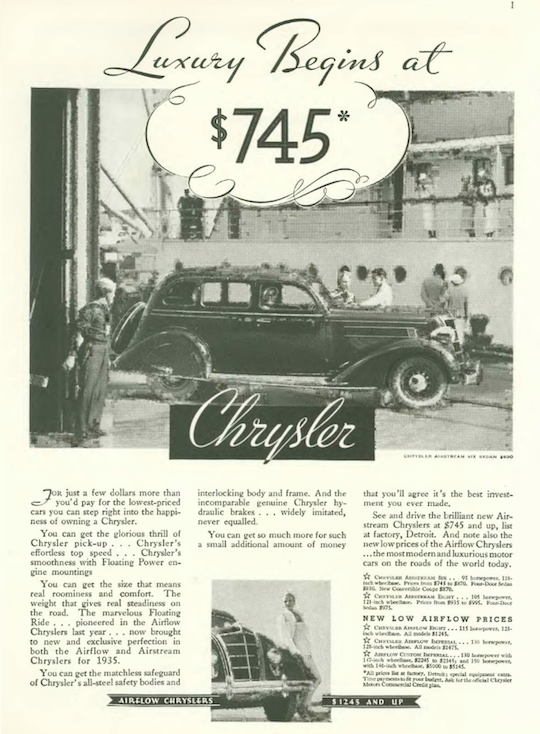
…the key word in many New Yorker advertisements was luxury, and for a fraction of what you would pay for a Packard, you could, apparently, experience luxury for as little as $745…

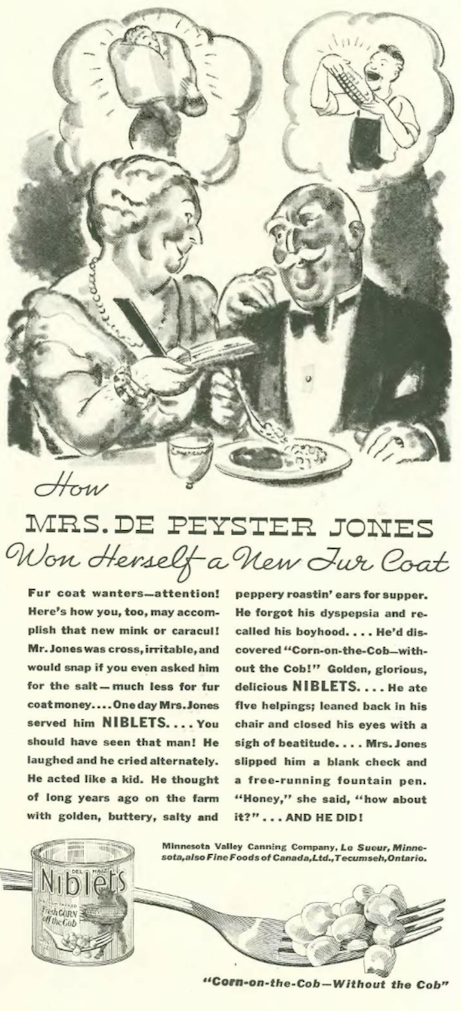
…or you could enjoy a bit of elegance by opening a some cans of Heinz soup, chili sauce, stuffed olives and other delectables…here a couple of shady-looking butlers are serving nothing but canned goods at a swanky party, much to the annoyance of the cook, who appears poised to take a cleaver to the scheming pair…

…and look what else you can get from a can, some soup with a “personality”…

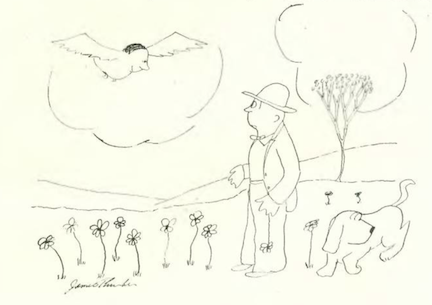
…enough of that nonsense, on to our cartoonists, with two spots from James Thurber

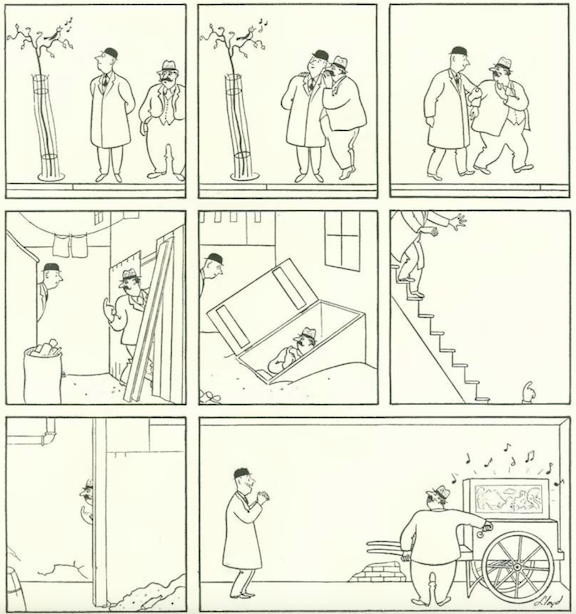
...Lloyd Coe gave us this musical multi-panel…

Leonard Dove looked in on the complex world of young love…

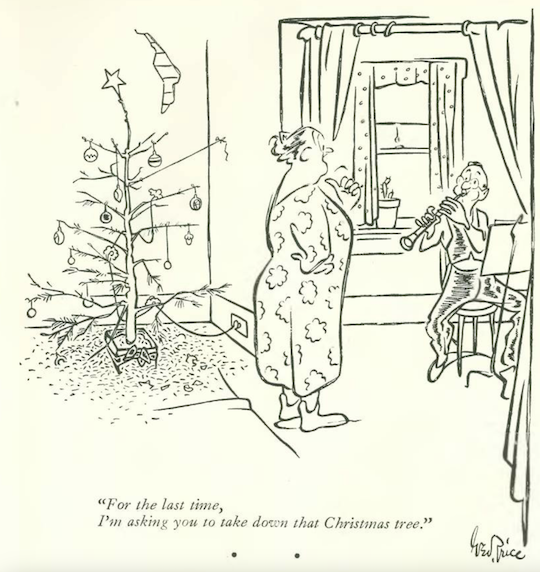
George Price found the Yuletide spirit still alive among procrastinators…

…and we close with Alan Dunn, and some earthy reading…

Next Time: Vive La Normandie…

Broadacre City

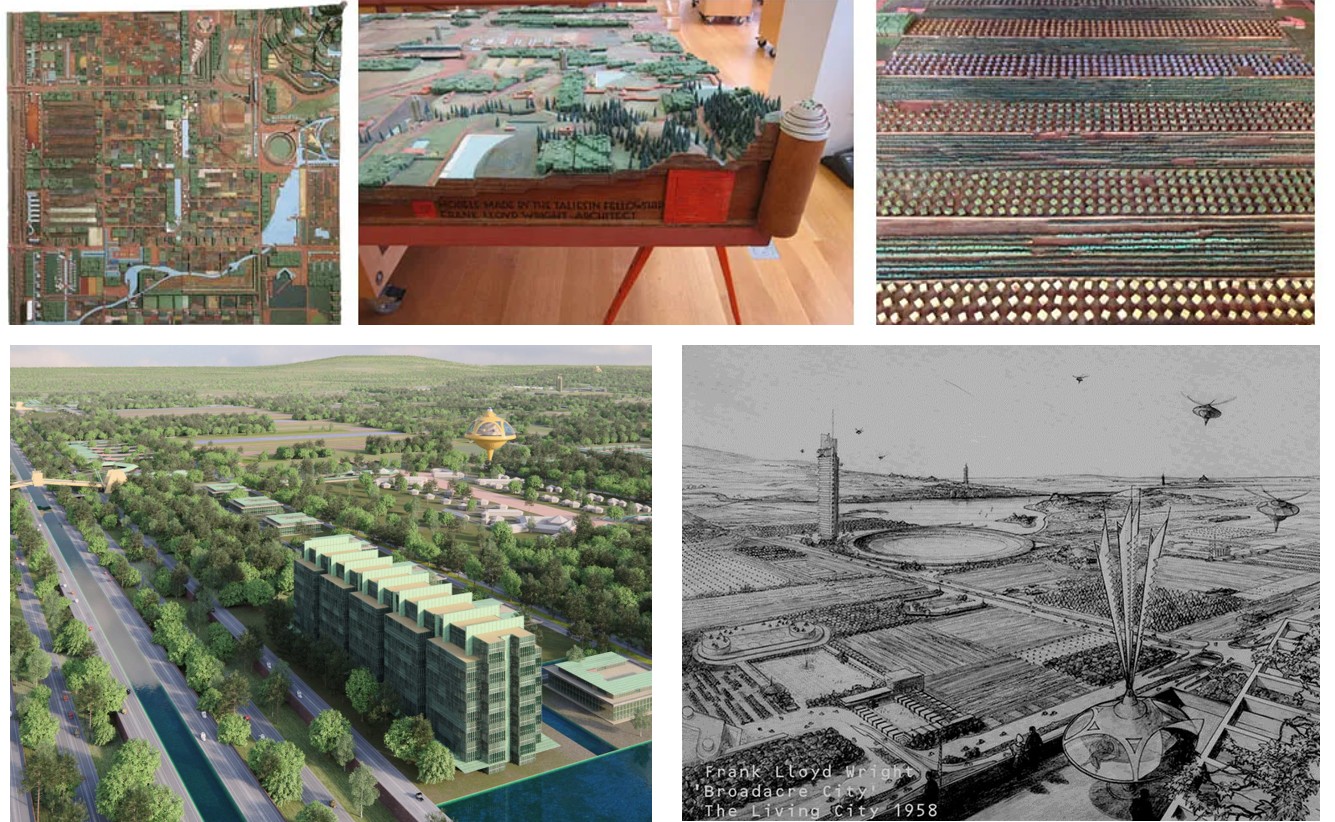
Above: Detail from Spanish architect David Romero's computer-generated model of Frank Lloyd Wright's Broadacre City, complete with an "aerotor" flying car.

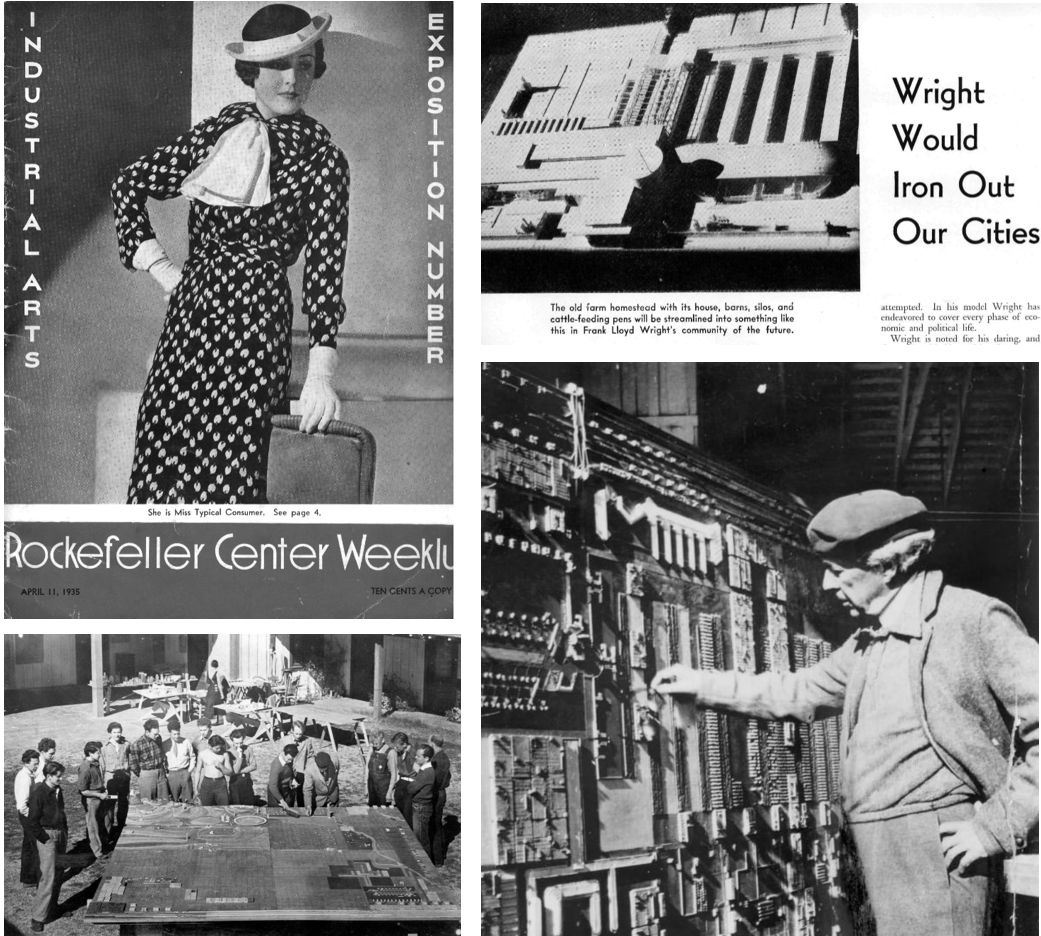
To be sure, architect Frank Lloyd Wright was a visionary, creating a uniquely American vernacular that influences architecture and design to this day. That might also true for his Broadacre City concept, which demonstrated how four square miles (10.3 km2) of countryside might be settled by 1,400 families. Wright unveiled this escape to the countryside in the middle of Manhattan.

April 27, 1930 cover by Reginald Marsh.

On April 15, 1935, the Industrial Arts Exposition opened at Rockefeller Center, and Wright (1867-1959) was front and center with his audacious proposal to resettle the entire population of the United States onto individual homesteads. Critic Lewis Mumford observed that Wright “carries the tradition of romantic isolation and reunion with the soil” by putting every American family on a minimum of five acres of land.

FLAT EARTH…Clockwise, from top left, cover of Rockefeller Center Weekly featuring the Industrial Arts Exposition—the model on the cover is identified as “Miss Typical Consumer”; detail from the magazine depicting a “streamlined farmstead” in Broadacre City; Frank Lloyd Wright examining the Broadacre City model, circa 1935; Wright students who crafted the 12×12-foot model, circa 1935. (digital.hagley.org/franklloydwright.org)

Wright first presented the idea of Broadacre City in his book The Disappearing City in 1932…

ROMANTIC ISOLATION…Broadacre City as depicted in Wright’s 1932 book The Disappearing City. (Wikipedia)

…note how the above drawing is reflected in one of Wright’s last designs, the Marin County Civic Center:

(visitmarin.org)

A detailed 12×12-foot scale model of Broadacre City—crafted by Wright’s student interns at Taliesin, was unveiled at the Industrial Arts Exposition:

GREEN ACRES…The 12×12-foot model (top images) crafted by student interns who worked for Wright at Taliesin is now housed at the Museum of Modern Art (MoMA); bottom right, Wright’s rendering of Broadacre City, and at left, detail from Spanish architect David Romero’s computer-generated model of Broadacre City (more images below). (MoMA/David Romero via Smithsonian)

For the most part Mumford reacted favorably to Wright’s vision, which is no surprise considering that Mumford derided the dehumanizing skyscrapers popping up all over his city (including Rockefeller Center).

Despite his patrician demeanor, Wright envisioned an egalitarian Broadacre City, with every family having access to cars, telephones and other appliances. Power would come from solar and electric energy, and any technological advances would be applied at a local level toward the common good.

VIRTUAL REALITY…In 2018 Spanish architect David Romero created computer-generated models to see what Wright’s unrealized structures might have looked like. At left, cars (based on Wright concepts) in Broadacre City, and an aerial view featuring a tower that bears a strong resemblance to Wright’s 1956 Price Tower in Bartlesville, Oklahoma. Modeling Broadacre took Romero more than eight months to complete—it contains more than one hundred detailed buildings, one hundred ships, two hundred “aerotors” (based on the autogyros of the day), 5,800 cars, and more than 250,000 trees. (David Romero via Smithsonian and openculture.com)

What Mumford (and perhaps Wright) didn’t fully anticipate was the urban sprawl such a vision would help inspire, the suburban and exurban landscape that would lead to a car-dominated world of congested, multi-lane highways and housing developments that continue to encroach on our woodlands and wetlands. And we didn’t get those groovy aerotors either.

(Christoph Gielen, webcolby.edu)

 * * *

Little House on the Avenue

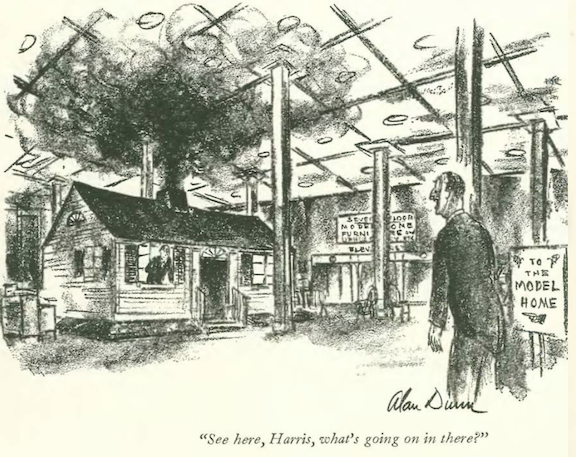
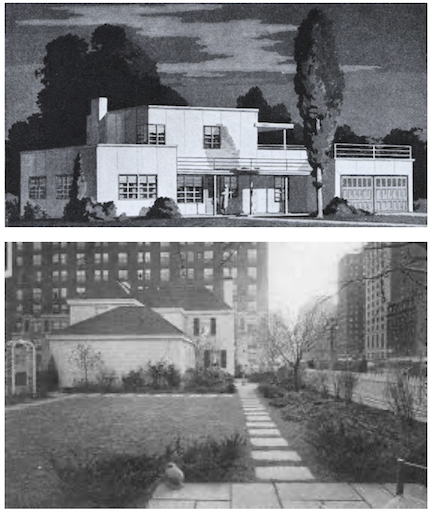
E.B. White, in his “Notes and Comment,” also offered some observations on housing trends, noting the manufactured “Motohome” displayed at Wanamaker’s as well as “America’s Little House,” plopped down at the corner of 39th and Park Avenue.

SETTING A STANDARD…Above, the factory-manufactured Motohome (above) was touted as the solution to the nation’s housing shortage. The federal Better Homes in America organization built a model house (“America’s Little House,” below) at 39th and Park Avenue to illustrate how standardized components and methods could make home improvement easier. (Google Books/Johns Hopkins)

* * *

Horsing Around

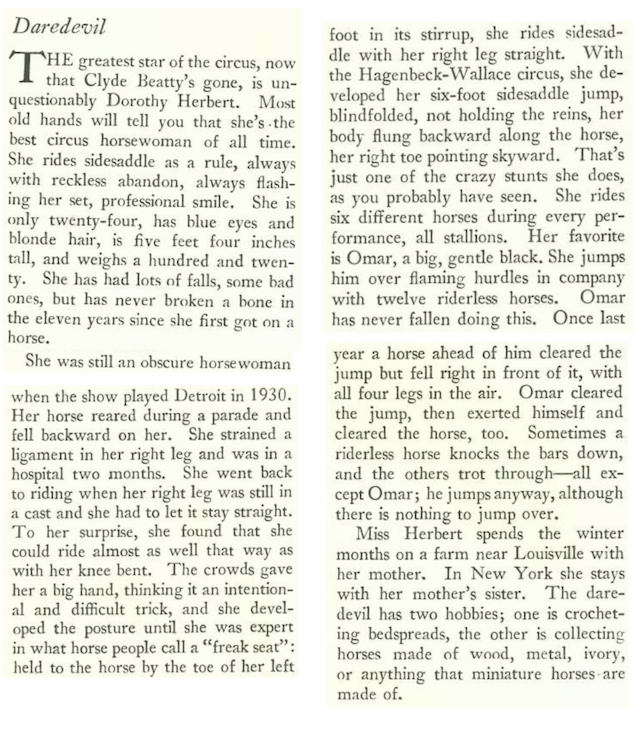
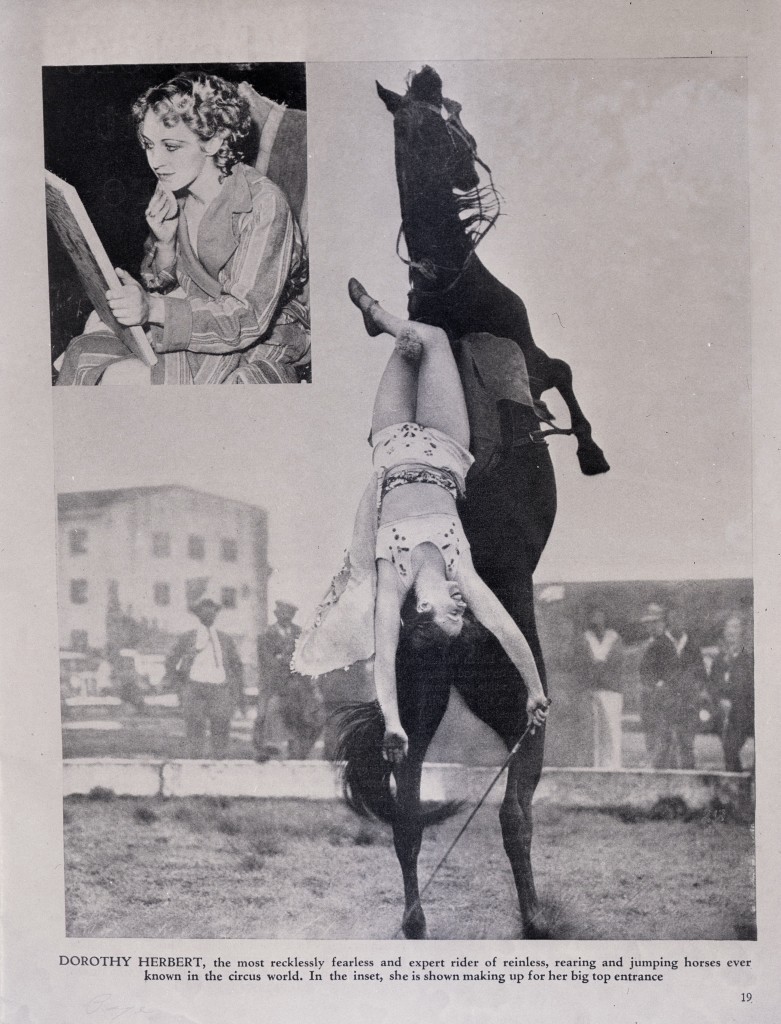
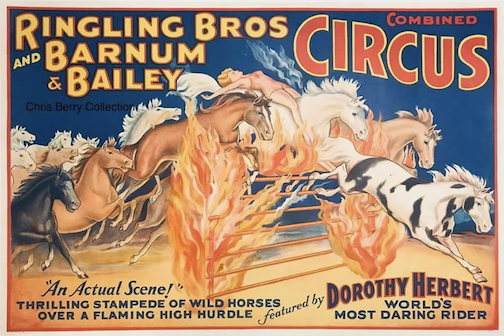
Although known for their nonchalance, New Yorkers could still find some enthusiasm when the circus came to town. “The Talk of the Town” looked in on the star of the circus, Dorothy Herbert (1910-1994), a trick rider with the Ringling Bros. and Barnum & Bailey Circus.

WHOA NELLY…One of Dorothy Herbert’s signature moves was her layback on a rearing horse. Here she demonstrates the move in 1939. (equineink.com)
HOT STUFF…Circus poster touts Herbert’s ride over flaming hurdles in the company of twelve riderless horses. (circushistory.org)

 * * *

Don’t Call Him ‘Tiny’

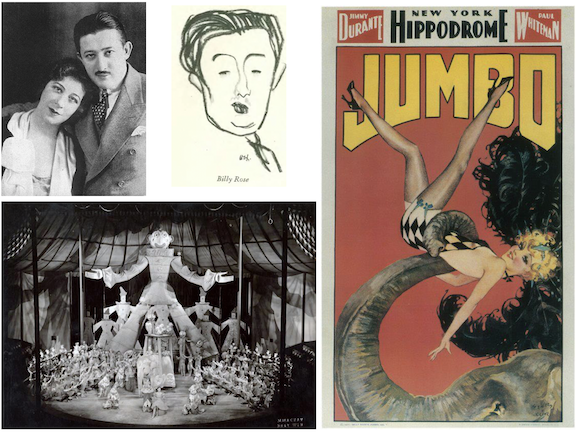
He was known as “The Little Napoleon of Showmanship,” but there was nothing small about Billy Rose’s accomplishments as an impresario, theatrical showman, composer, lyricist and columnist. Here are excerpts from Alva Johnston’s profile:

JUMBO-SIZED ENTERTAINMENT…Clockwise, from top left, Billy Rose and his first wife, comedian-actress Fanny Brice; illustration of Rose for the profile; poster announcing Rose’s 1935 stage spectacle Jumbo at the Hippodrome; described as more circus than musical comedy, Jumbo was one of the most expensive theatrical events of the first half of the 20th century. (jacksonupperco.com)

 * * *

On Guard

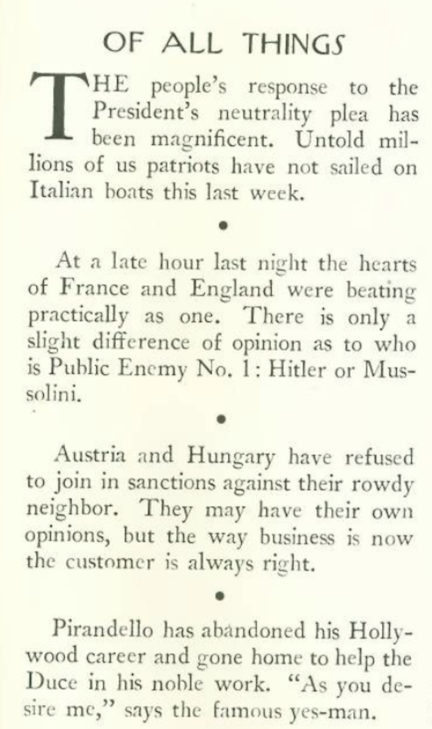
We shift gears and turn to more sobering events of the 1930s, namely the rise of fascism in Europe. In his column “Of All Things,” Howard Brubaker pondered the possibilities of fascism in his own country…

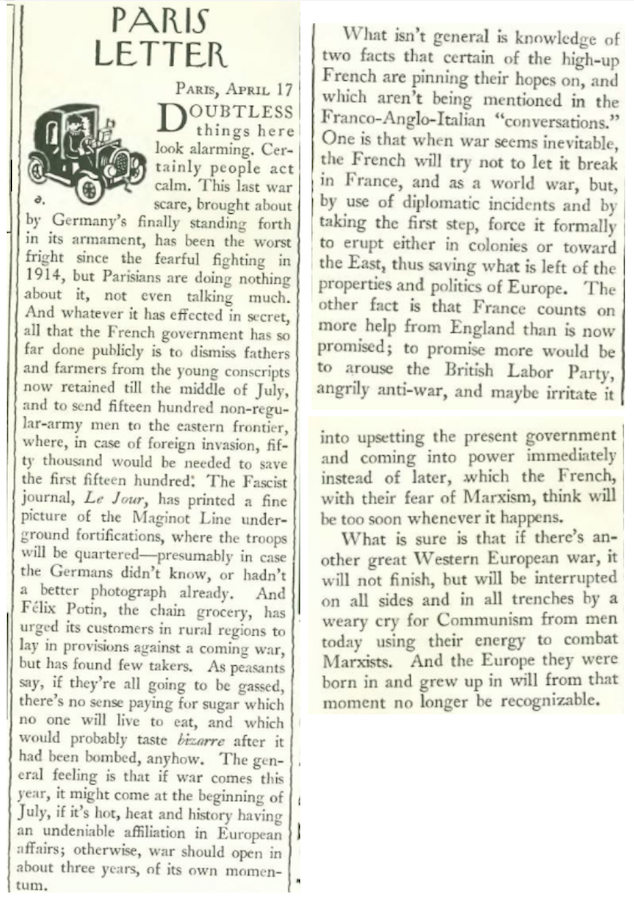
…meanwhile, Paris correspondent Janet Flanner was finding nothing funny about the uneasy calm among Parisians as war with Germany seemed likely.

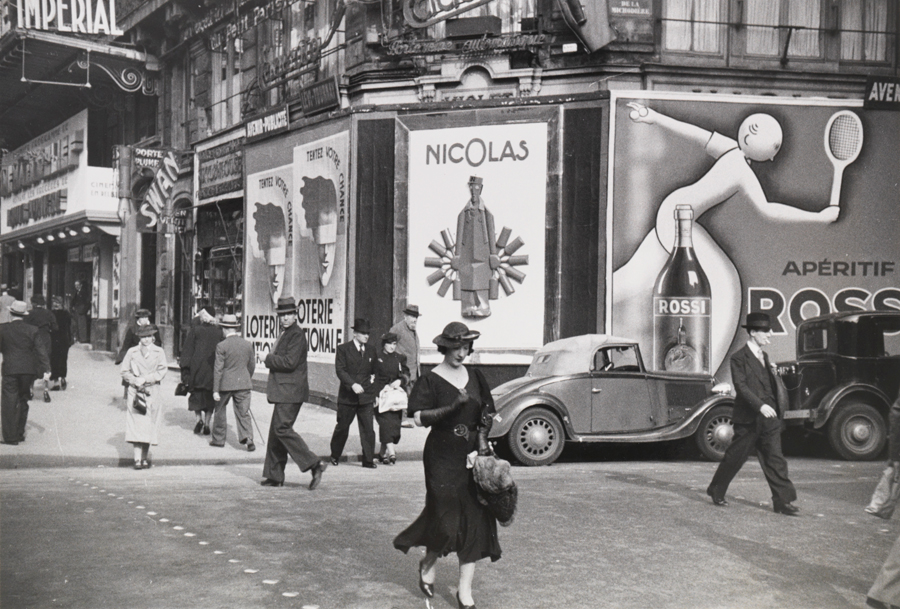
C’EST LA VIE…Janet Flanner found Parisians resigned to whatever fate awaited them in 1935. (unjourdeplusaparis.com)

Flanner also remarked on Leni Riefenstahl’s Nazi propaganda film Triumph des Willens (Triumph of the Will). Flanner’s assessment of this “best recent European pageant” wryly underscored the horrors the film portends.

 * * *

News From An Old Friend

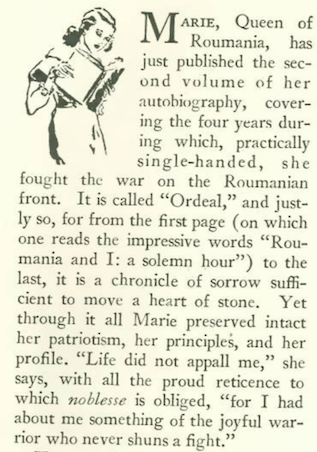
Longtime readers may recall one of my earliest entries on Queen Marie of Romania (1875-1938); the March 14, 1925 edition of The New Yorker (issue #4) found New Yorkers “agog” over her planned 1926 visit to the city. Her comings and goings were followed for a time (she also appeared in a Pond’s Cold Cream ad in the June 6, 1925 issue), but then she abruptly disappeared. Here she is again, courtesy of a glowing book review by Clifton Fadiman. An excerpt:

A PROGRESSIVE THINKER for her time, Marie of Romania was immensely popular in America. Born into the British royal family, she was the last queen of Romania from 1914 to 1927. At left, portrait from 1920; at right, during her 1926 visit to the States, Marie received a headdress from two American Indian tribes. They named her “Morning Star” and “Winyan Kipanpi Win”—“The Woman Who Was Waited For.” (Wikipedia/brilliantstarmagazine.org)

 * * *

From Our Advertisers

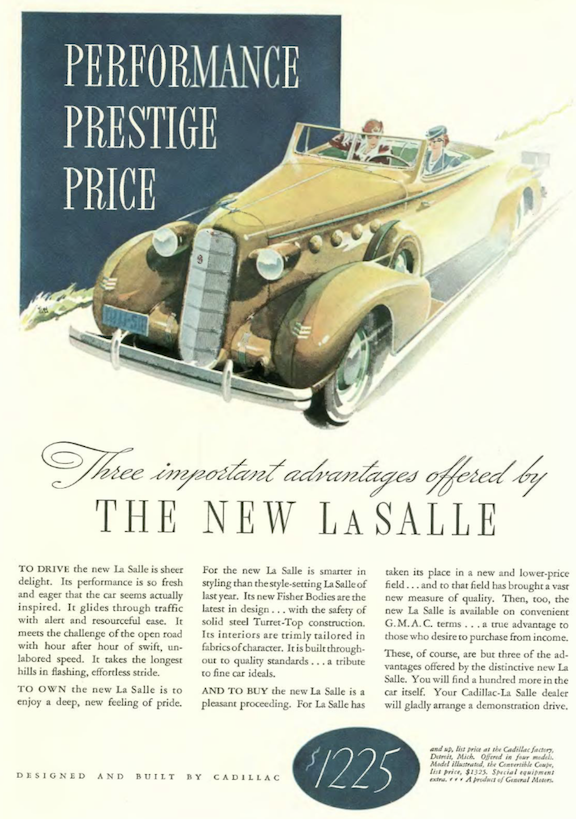
Although we’ve seen plenty of ads from prestige automakers such as Packard, it was clear that companies found their sweet spot in lower-priced models that still suggested “prestige”…here’s an example from Cadillac’s budget line LaSalle…

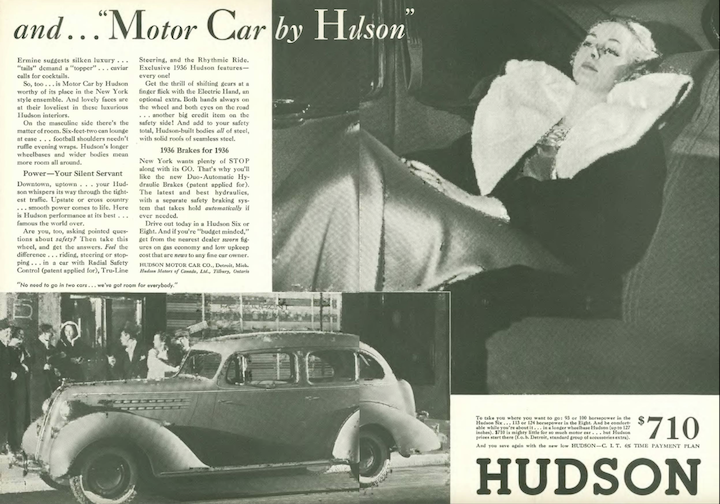
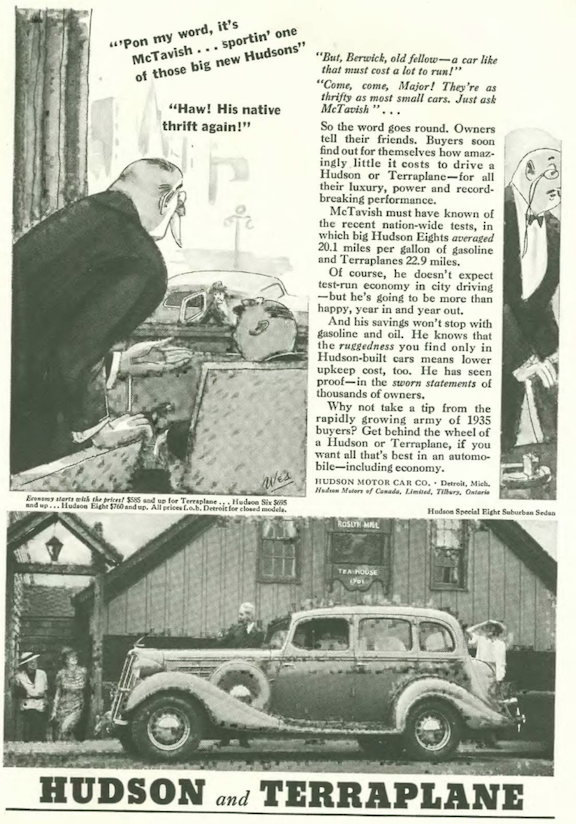
…for less than half the price of a LaSalle you could get behind the wheel of Hudson, its makers suggesting that prestige doesn’t preclude thrift…this ad seems to have been hastily produced–note the right side of ad, with just a slice of some toff squeezed next to the copy…

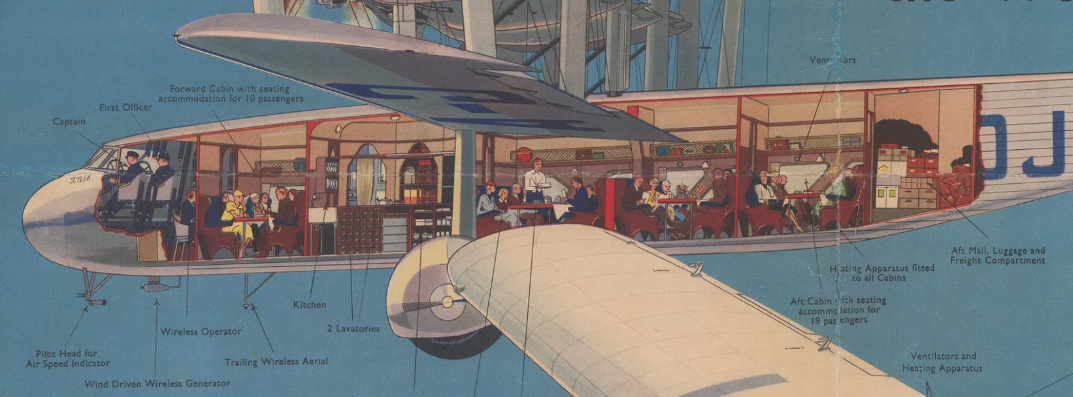
…this advertisement would only appeal to those who were among the tiny minority who could afford to fly…from 1924 to 1939 this early long-range airline served British Empire routes to South Africa, India, Australia and the Far East…

…for reference, detail below of a Scylla-class airliner used by Imperial Airways…

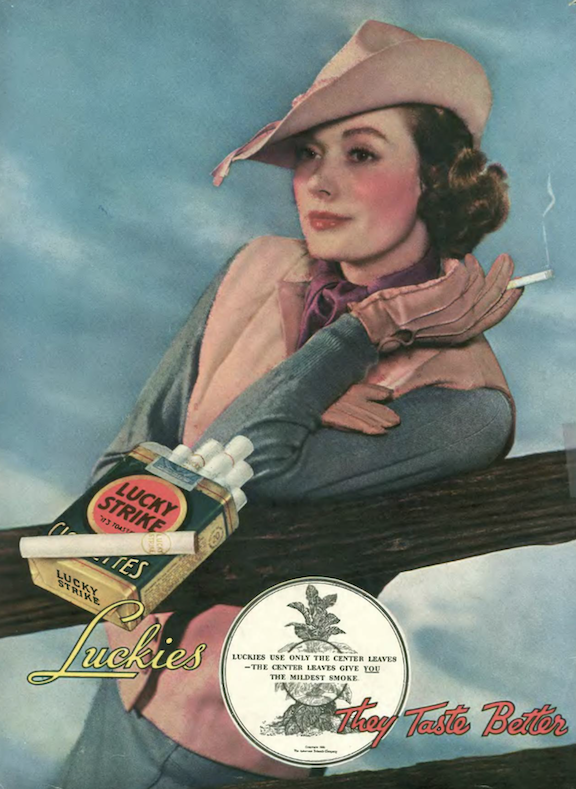
…and what would the back cover be without a photo of a stylish woman having a smoke?…

…a few advertisers referenced the circus in town to drum up business…

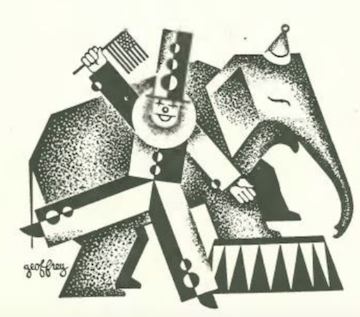
…and we segue to our cartoonists and illustrators, and this circus-themed spot from an illustrator signed “Geoffrey”…

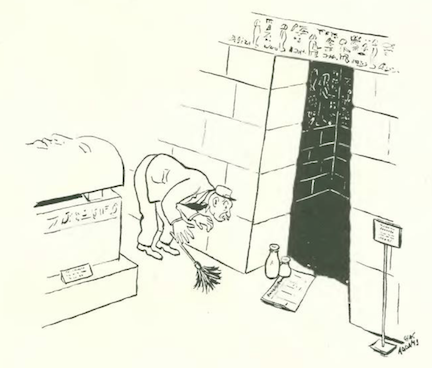
…a more familiar name is found at the bottom of page 4…namely Charles Addams…the milk order outside the tomb hints at things to come…

…Addams again, going from Bacchus to beige…

George Price, and well, you know…

Robert Day was aloft with a speculative builder…

William Steig typecast his Small Fry…

Leonard Dove made a sudden exit…

Gilbert Bundy found one old boy unaffected by spring fever…

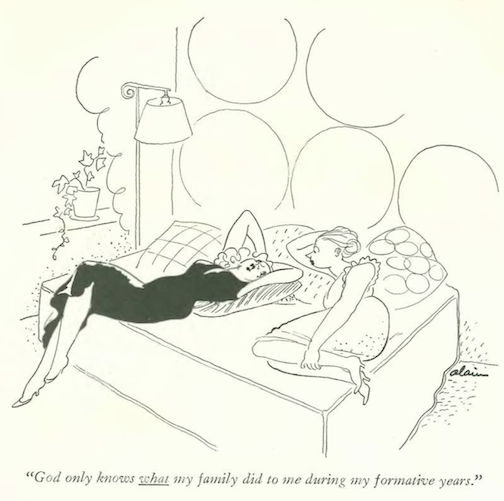
Alain channeled Barbara Shermund to give us this gem…

…and we close with a typical day in James Thurber’s world…
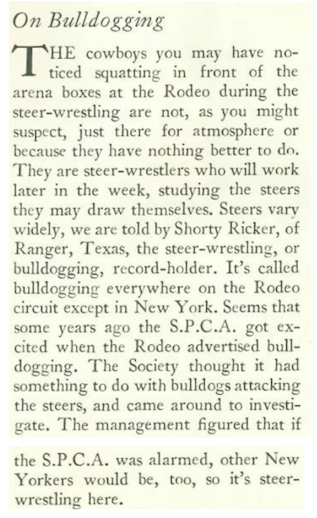
Next Time: The Royal Treatment…


Farewell to 1934

Above: Ringing in the New Year at Times Square, 1934.

We bid adieu to 1934 with some odds and ends, beginning with E.B. White’s observations for the upcoming year, which if anyone had noticed the uptick in Ascot tie purchases, just might be a bit rosier than previous years of the decade.

Dec. 29, 1934 cover by S. Liam Dunn.

White was also hopeful for a new year with a less dreadful press, particularly the pandering type promulgated by William Randolph Hearst.

GOOD RIDDANCE…E.B. White wryly noted the positive signs heading into 1935. While actresses Billie Seward and Lucille Ball rang in the New Year, Erroll Flynn was sporting an ascot tie and Henry Ford was proclaiming that the Depression was over. (Pinterest)

 * * *

Dr. Peeper

“The Talk of the Town” noted that Dr. Allan Dafoe, the country doctor who gained fame for delivering the Dionne Quintuplets, expressed a desire to see Sally Rand perform her bubble dance during his visit to Gotham. “Talk” also looked in on the some of the technical aspects of the burlesque dancer’s signature act:

DON’T BURST MY BUBBLE…Dr. Allan Dafoe of Dionne Quintuplet fame looked forward to taking in the sights of New York, including Sally Rand’s famed bubble dance. (Image from the 1936 book The Country Doctor/Sally Rand via stuffnobodycaresabout.com)

 * * *

Leading Ladies

Film Critic John Mosher noted the continued rise of two leading female stars, twenty-seven-year-old Katharine Hepburn and six-year-old Shirley Temple. Mosher recalled Hepburn’s recent performance in Little Women, and proclaimed that she “succeeds again” in The Little Minister.

OPPORTUNITY KNOCKS...Katharine Hepburn and John Beal in The Little Minister. Hepburn portrayed Babbie, a member of the nobility who disguises herself as a gypsy to protect villagers from a tyrannical lord. In the process she falls in love with the good Rev. Gavin Dishart (Beal). (IMDB)

Although Mosher admitted he was a “disagreeable adult” who doesn’t enjoy seeing children on the screen “more than necessary,” he acknowledged Shirley Temple’s talents as well as those of child actor Jane Withers in Bright Eyes.

BRIGHT EYES, BRIGHT STARS…Jane Withers, Shirley Temple, and Terry in Bright Eyes. (IMDB)

 * * *

That Youthful Feeling

Given that William Shakespeare’s star-crossed lovers Romeo and Juliet were mere teenagers (the ages 13 and 16 were given to Juliet and Romeo, respectively), many productions featured actors more than twice that age. That was the case in 1933 when the play was revived by actress Katharine Cornell and her director husband Guthrie McClintic, who took the play on a seven-month nationwide tour before it was revised and opened on Broadway in December 1934. Critics dubbed the 41-year-old Cornell “the greatest Juliet of her time,” and it seems Robert Benchley heartily agreed in this excerpt from his stage review:

AGE IS JUST A NUMBER…The 41-year-old Katharine Cornell and 42-year-old Basil Rathbone in a promotional photo for Romeo and Juliet. Cornell was the first performer to receive the Drama League’s Distinguished Performance Award, which became the oldest and most exclusive theatrical honor in North America. (Vandamm photo, Museum of the City of New York)

 * * *

The New Yorkiest Place 

In 1930 gossip columnist Walter Winchell called the new Stork Club “New York’s New Yorkiest place on W. 58th,” and when it relocated to 3 East 53rd Street in 1934 it further defined itself as the ultimate New York night club. In her “Tables for Two” column, Lois Long found the new location much to her liking. An excerpt:

THE STORK DELIVERS…The Stork Club truly became the New Yorkiest nightclub when it relocated to 3 East 53rd Street in 1934. Clockwise, from top left: the club entrance in the 1930s; Cary Grant was one of the many celebrities who favored the nightclub, circa 1935; a 1930’s club menu; Lita Grey, the former teen bride of actor Charlie Chaplin, was a featured singer at the club during Lois Long’s visit. (Gibbes Museum of Art/Pinterest/vintagemenuart.com/IMDB)

 * * *

So Long?

Clarence Day, best known for his Life with Father stories, also contributed a number of cartoons to the magazine, accompanied by satirical poems and humorous shorts. Day would die at the tender age of 61—after a bout with pneumonia—in December 1935, about a year after this  cartoon was published in The New Yorker. I assume he was signing off from the magazine in order to arrange publication of his Life with Father book, which was published shortly after his death.

 * * *

From Our Advertisers

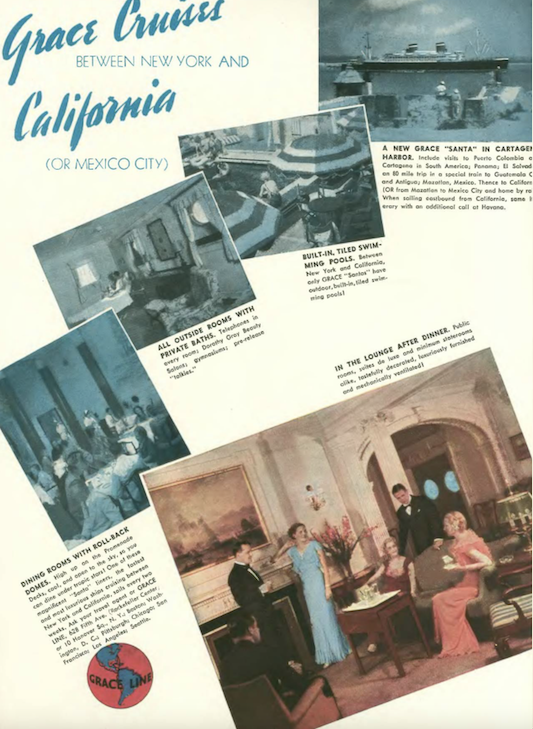
Sunny California beckoned those who had the means and leisure to head to warmer climes during the New York winter…

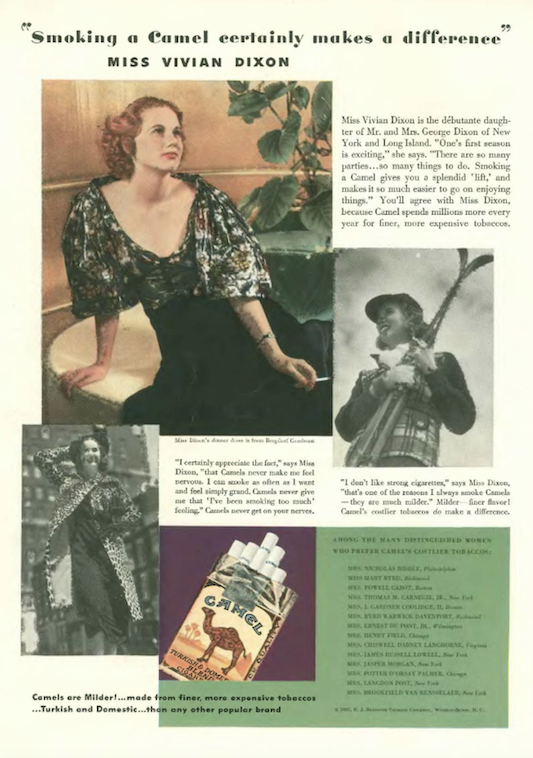
…for those who stayed behind, they could wrap themselves in a chic winter coat such as this one sported by Camel endorser Mrs. Langdon Post (Janet Kirby)…

…another colorful ad with a not-so-colorful message from World Peaceways, a 1930s anti-war organization that characterized soldiers (and future soldiers, seen here) as pawns in the corrupt games of the rich and powerful…

…the distributors of French champagne rang in the New Year by suggesting that Doyen was worth your very last cent…

…we kick off our cartoons by welcoming the New Year with George Price

Robert Day contributed a spot drawing that offered a new twist to ice hockey…

…I should know this artist, but it escapes me for the moment…nevertheless, a great illustration to stretch across the bottom of an opening page…

…a closeup of the signature…

…another from George Price, still up in the air in the final issue of 1934…

Garner Rea introduced us to the life of the party…

…”Miss Otis Regrets” is a 1934 Cole Porter song about the lynching of a society woman after she murders her unfaithful lover. Porter wrote the song as a parody of a sad cowboy song he heard on the radio. The song was further workshopped for fun at “smart set” cocktail parties…on to our next cartoon, and a moment of keen insight from James Thurber

Garrett Price went on the town with some students of anatomy…

…and we say Happy New Year with the help of Helen Hokinson

Next Time: Easy Riders…

Lunch at the Dog Wagon

If you think today’s food trailers are the result of some hipster craze, consider that their origins go back more than a century; by 1934 Manhattan was home to 300 of the country’s 5,000 “lunch wagons,” which were commonly called “dog wagons.”

September 8, 1934 cover by Ilonka Karasz.

Some of Manhattan’s dog wagons belied the moniker, however, resembling the sleek roadside diners over which many today wax nostalgic. Jerry O’Mahony Diner Company of Elizabeth, New Jersey, produced more of these dining cars than any other concern—2,000 of them between 1917 and 1952 (only about twenty remain today). “The Talk of the Town” had this to say about the dog wagon phenomenon. Excerpts:

PROMISE OF BIG BUCKS…Tierney, based in New Rochelle and established in 1895, was an early manufacturer of lunch wagons and dining cars. It went out of business in 1933. Above, detail from a Tierney Diner Car Advertisement from the late 1920s. (scalar.usc.edu)
LUNCH ON THE RUN…Clockwise, from top left, early “dog wagons” were horse-drawn affairs; the wagons became semi-stationary with the advent of manufactured units designed to resemble old railroad dining cars; bottom photos show interiors of two O’Mahony diners. (restaurantingthroughhistory.com/americanbusinesshistory.org/dinerhunter.com)
ALL IN A NAME…Above: The Jerry O’Mahony Diner Company produced 2,000 diners in its Elizabeth, New Jersey, factory. Below, an O’Mahoney dining car headed for its new home in Kansas—the O’Mahony company preferred that patrons give their dining cars elite names, such as this “Palace Diner.” (dinerhunter.com/nyfta.org)
LAST CALL…One of the few surviving O’Mahony diners—The Summit Diner in Summit, New Jersey. A prototypical “rail car” style diner, it was built by the O’Mahony Company in 1938. (Jeff Boyce/Wikimedia Commons)

 * * *

A Captain’s Curios

“The Talk of the Town” also paid a visit to Captain Charley’s Private Museum for Intelligent People, a place that would later be visited (and written about) by The New Yorker’s chronicler of the commonplace, Joseph Mitchell. Excerpts:

MURKY MUSEUM…This is likely the red brick building on 127th Street where the old mariner Captain Charley held court in the basement with his Private Museum for Intelligent People. (Google Street View)

 * * *

Origins of Life

Wolcott Gibbs took his turn as theater reviewer (in relief of Robert Benchley) and managed to sit through Life Begins at 8:40, which had a successful run at the Winter Garden.

GIVING IT A REST…Roy Bolger, Luella Gear, Frances Williams and Bert Lahr headed the cast of Life Begins at 8:40 at the Winter Garden. Critic Wolcott Gibbs appreciated Lahr’s change in tempo, as he was becoming a more “restful” comedian. Lahr was the father of New Yorker theater critic and writer John Lahr. (Library of Congress)

In contrast to Bert Lahr’s new toned-down style, Milton Berle’s outlandish antics over at the Imperial Theatre had Gibbs wondering what the comedian’s vaudeville-style show Saluta was all about, if it was about anything. Whatever it was, it worked—Berle would enjoy a comedy career spanning eight decades, including becoming one of early television’s biggest stars.

ON FIRE…Milton Berle’s show Saluta featured Chaz Chase (right), famed for gobbling up whatever was placed in front of his mouth, including a box of lit matches. At left, Berle in 1930; right, Chase in the 1935 film Vaudeville. (Pinterest/IMDB)

 * * *

From Our Advertisers

We begin with a cold one from Rheingold, which had “beverage balance” and wasn’t afraid to stamp a slogan right over its ad copy…

…Lucky Strike gave us another stylish reason for taking up a bad habit…

Arts & Decoration magazine took out this full page to tout the latest news in modern design…

…while the folks at Packard bought this center spread to give ample space to their 1935 model, which must have been a helluva thing to parallel park…

…clothing companies continued use class shaming to goad aspiring toffs to purchase the “correct” attire for school…

…with the help of Gardner Rea, Heinz suggested that the upper orders would simply swoon over cuisine you managed to scoop out of a can…

…on to our cartoonists, we begin with spots by James Thurber

…and Lloyd Coe

…with the absence of Otto Soglow’s Little King, Gluyas Williams did his best to fill the void of a full page, something Williams did quite nicely…

Rea Irvin gave us yet another local bird sighting…

Richard Decker found understatement over a reservoir…

Robert Day borrowed from the style of Rockwell Kent to offer a bit of humor from the northern climes…

…here is a woodcut from Kent’s N by E is, an illustrated story of his voyage to Greenland…
(From Rockwell Kent’s 1930 book of woodcuts, N by E, via untendedgarden.com)

Reginald Marsh lent his social realism to an uglier side of American life…
…and we close with Helen Hokinson, just taking in the passing scene…

Next Time: Sticks and Stones…

Ring Ding

Back in the days before we had a zillion different entertainment options, almost anyone with a pair of ears would tune in to hear the radio broadcast of a heavyweight title fight.

June 23, 1934 cover by Rea Irvin.

Jack Dempsey and Gene Tunney dominated the late 1920s, while Joe Louis, Max Schmeling and Jack Sharkey were marquee names in the 1930s along with Max Baer and Primo Carnera, who met on June 14, 1934 at the outdoor Madison Square Garden Bowl in Long Island City. The reigning champ Carnera (1906–1967), who stood six-and-a-half feet tall and weighed in at 260 pounds, had won more fights by knockout than any other heavyweight champion. But Baer (1909–1959) was known as a knockout puncher who beat one opponent so savagely that he died the following day.

DEADLY DUEL…Max Baer (right) fought Frankie Campbell on Aug. 25, 1930, in San Francisco for the unofficial title of Pacific Coast champion. In the fifth round Baer got Campbell against the ropes and hammered him senseless. Campbell died the next day. An autopsy revealed that Campbell’s brain was “knocked completely loose from his skull.” Baer was profoundly affected by Campbell’s death, and donated purses from succeeding bouts to Campbell’s family. (thefightcity.com)

Baer was also something of a showboater, a quality Morris Markey found distasteful when he wrote about the Baer–Carnera bout in “A Reporter at Large.”

ALL SMILES…A year before their championship bout Max Baer (left) and Primo Carnera starred with Myrna Loy in The Prizefighter and the Lady. (theusaboxingnews.com)

GIANT SLAYER…The Italian prizefighter and wrestler Primo Carnera, nicknamed the “Ambling Alp,” was the reigning heavyweight champion when he faced Max Baer on June 14, 1934 at the Madison Square Garden Bowl. Baer felled the champion eleven times before the fight was stopped in the eleventh round. Baer would only hold the title for a year, losing to James J. Braddock on June 13, 1935, in what has been called one of the greatest upsets in boxing history. (theusaboxingnews.com)

Markey further explained why Baer’s behavior in the ring was so bothersome, and how it differed from the comic antics of other famous athletes:

RETIRING TYPES…Both Primo Carnera and Max Baer acted in films during their boxing careers, and continued acting after their retirements (Carnera in 1944, Baer in 1941). At left, Carnera with Bob Hope in the 1954 American comedy Casanova’s Big Night (Carnera appeared in eleven Italian films and in a half-dozen American films); at right, Max Baer and brother Buddy Baer (also a boxer) with Lou Costello in the 1949 comedy Africa Screams. Baer would appear in more than 20 films.(theusaboxingnews.com/monstermoviemusic.blogspot.com)

Complications from diabetes would take Carnera down for good at age 60. Baer would die even younger, from a heart attack, at age 50. His last words reportedly were, “Oh God, here I go.” Baer’s son, actor and director Max Baer Jr. (best known as Jethro Bodine from TV’s The Beverly Hillbillies) is still with us, at age 85.

We aren’t quite finished with the Baer–Carnera fight…E.B. White led his “Notes and Comment” with this observation regarding the fight’s mass appeal and seeming universality:

 * * *

Apologies to Ms. Winslow

I seem to have given short shrift to author Thyra Samter Winslow (1886–1961) who published more than 200 stories during her career in magazines such as The Smart Set and The American Mercury. She published more than thirty in The New Yorker, from 1927 to 1942, including the serialization of her short story collection, My Own, My Native Land. The story “Poodles” was featured in the June 23 issue.

According to the Encyclopedia of Arkansas, Winslow’s early life in Fort Smith (Ark.) “provided background for her view of small towns as prejudiced, hypocritical, and suffocating places…many stories expose the hypocrisy, prejudice, and carefully maintained social structures of both small town and urban life. She was particularly adept at portraying women of every social class, often in an unfavorable light. Money, especially the pursuit of it as a means to happiness or status, is an important theme throughout her work.”

THE PURSUIT OF HAPPINESS…Thyra Samter Winslow with friend, 1937. (findagrave.com)

 * * *

Hot Enough For Ya?

So what did New Yorkers do when the summer heat set in? The next few items offer some clues, beginning with this poem by E.B. White:

SUMMER STOCK…Theatergoers fled to shady villages in New York, New Jersey and New England in the 1920s and 30s when summer stock theater was at its height. The above photo shows theatergoers leaving a performance at the Lakewood Theatre near Skowhegan, Maine. The theater was claimed to be the oldest and finest summer stock company in America with a Broadway cast. Nearby Lakewood Inn provided recreation, camping, and tourist bungalows. (mainememory.net)

You could also take in some entertainment while enjoying the cooling breezes of the Hudson River. Robert Benchley hopped aboard the Alexander Hamilton to enjoy Bobby Sanford’s showboat revue:

SOME REAL SHOWBOATING…Clockwise, from top left, the steamboat Alexander Hamilton hosted Bobby Sanford’s showboat revue; comedian Lester Allen served as emcee for the show; the Meyer Davis Orchestra supplied the music; the revue featured the “exotic” DuVal sisters (image from program) among other diversions. (Hudson River Maritime Museum/IMDB/vintagebandstand.blogspot.com/Worthpoint)

“Tables for Two” took a look at summer dining options, from sidewalk cafes to hotel rooftops featuring dinner and dancing—this “Tables” was not written by Lois Long, but by Margaret Case Harriman, who knew a thing or two about nightlife (she was the daughter of the Hotel Algonquin’s owner, Frank Case)…

DANCING WITH THE STARS…The Waldorf-Astoria’s “Starlight Roof” was a popular summer restaurant for dining and dancing. Image from a 1935 publication The Waldorf-Astoria by Richard Averill Smith. (The Waldorf-Astoria)
 * * *
Doing Swimmingly
Historian Henry F. Pringle published part two of his series on President Franklin D. Roosevelt, here marveling at the president’s health despite his serious bout with polio (drawing by William Cotton).

TAKING THE WATERS…President Franklin D. Roosevelt took to swimming for therapy and exercise. (FDR Presidential Library and Museum)

* * *

Get Yourself to Chi-Town

The Chicago World’s Fair (The Century of Progress) was in its second and final year, and The New Yorker found everything “terrific.” Excerpt:

MAKING A SPECTACLE OF ITSELF…The 11-acre Ford Motor Company exhibit at Chicago’s Century of Progress became the most talked-about exhibit of 1934, featuring a central rotunda designed to simulate graduated clusters of gears. At right, Proof of Safety Exhibit in the Ford Building. (chicagology.com)

  * * *

From Our Advertisers

Just a couple of entries this week…You could take a plane to the Chicago World’s Fair on a United Airlines Boeing 247…

…the lower section of the ad claimed you could fly to Chicago in about five hours in planes featuring “Two pilots…stewardess…two-way radio…directive radio beam”…

TSA? WHAT’S A TSA?…United Airlines Boeing 247-D at an airport terminal with passengers and crew. (digitalcollections.lib.washington.edu)
COZY CONFINES…Passengers enjoy a game of checkers aboard a Boeing 247 in 1933. (digitalcollections.lib.washington.edu)

…and what would our advertising section be without two fashionable people lighting up?…

…on to our cartoonists, we begin with Reginald Marsh’s illustration of a Rep Theatre production…

Otto Soglow’s Little King found his artistic side…

Rea Irvin continued his examination of native fauna…

Gardner Rea correctly predicted the global domination of Mickey Mouse…

Peter Arno showed the dizzying effects of a Coney Island ride…

…however at the altar the thrill was gone, per Garrett Price

…another take on the ways of love, with Barbara Shermund...

…the newfangled diagonal bathtub continued to dazzle, with George Price

Gardner Rea offered up some subtle irony on the farm…

…and we close with James Thurber, in a poetic moment…

Next Time: A Light in Darkness…

Under the Knife

Above: Surgery being performed at the Hospital of Saint Raphael (Conn.) in the late 1930s. Operating rooms were often located near large windows and under skylights to offer greater illumination. (Yale New Haven Hospital)

For all the challenges of 21st century, I always remind myself that advances in medicine during the past ninety years have made our lives better, and substantially longer, even if our current health care system is far from ideal.

Feb. 3, 1934 cover by E. Simms Campbell.

People could live to a ripe old age in the 1930s, however the average life expectancy at birth in 1930 was only 58 for men and 62 for women. The Depression didn’t help matters, and neither did the Dust Bowl, unregulated urban smog, the dramatic rise in smoking, and the lingering effects of more than a decade of bootleg alcohol consumption.

Polio was a serious problem in the 1930s, as was syphilis, which affected as many as ten percent of Americans. Blood groups would not be identified until 1930 (by Nobel Prize-winner Karl Landsteiner), and human nutrition remained something of a puzzle—Vitamin C wasn’t identified until 1932. There was exciting chatter about penicillin (discovered in late 1920s) and the antibacterial effects of sulfonamides (first observed in 1932), but it would be years before antibiotics would come into common use. So yes, infection was also a big killer.

Nevertheless, progress had been made, as told by Morris Markey in the column, “A Reporter at Large.” An excerpt:

FORTRESS ON THE HEIGHTS…Top, Columbia-Presbyterian Medical Center loomed large when it opened in Washington Heights in 1928; below, New York Hospital, most likely the building described in Morris Markey’s column; at left, Dr. George Crile, Sr., completing his landmark 25,000th thyroid operation in 1936. (CUIMC/Wikipedia/Cleveland Clinic)

This next excerpt describes the work of the anesthetist after the patient receives a spinal injection of novocaine, which had replaced cocaine as a pain blocker. At the start of the 1930s, the most-used anesthetic was ether, used in this account to calm the patient. Ether carried its own risks—in was unstable, and sparks from X-ray machines and other equipment could cause an explosion.

NO SMOKING, PLEASE…Anesthetist in the 1920s carefully administers ether while surgeon swabs a patient with iodine (inset). Ether was unstable, and sparks from equipment could cause an explosion. (Internet Archive/Flickr)

 * * *

And Then There’s Maude

American actress and stage designer Maude Ewing Adams (1872–1953) defined the role of “the boy who wouldn’t grow up” in her Broadway adaptations of Peter Pan in the early 1900s (1905, 1906, 1912 and 1915). She would appear in 26 Broadway productions between 1888 and 1916, but after a severe bout of the Spanish flu in 1918 she retired from the stage and focused on developing better stage lights with General Electric; her electric lights ultimately set the industry standard with the advent of sound movies. As this excerpt from “The Talk of the Town” revealed, Adams was also quite shy and highly valued her privacy.

THE RETIRING SORT…Maud Adams in a Broadway publicity photo, circa 1900. (Vintage Everyday)

* * *

In The Trenches

Just before the Nazis decided to turn their country back into a warlike state, Victor Trivas and George Shdanoff wrote and directed an allegorical anti-war film. Niemandsland (released in the U.S. as Hell on Earth) featured five soldiers, from different backgrounds, who find themselves together in a dugout in no man’s land and together come to terms with the absurdity of war. The film premiered in Berlin in December 1931 and was greeted by thunderous applause. A little over a year later it was banned by the Nazis. Critic John Mosher made these observations:

WAR, WHAT’S IT GOOD FOR?Niemandsland (released in the U.S. as Hell on Earth) featured five soldiers from different backgrounds on a front lines during WWI: a carpenter from Berlin, a mechanic from Paris, an English officer, a Jewish tailor and a Black dancer (the only one who understands everyone’s languages). Actor and dancer Louis W. Douglas (top right) was a Philadelphia native who moved to Paris in 1925 with his dancing partner, Josephine Baker, in the popular La Revue Nègre. He went on to establish a successful musical and film career in Germany until his death in 1939. (silverinahaystack.wordpress.com/IMDB)

 * * *

From Our Advertisers

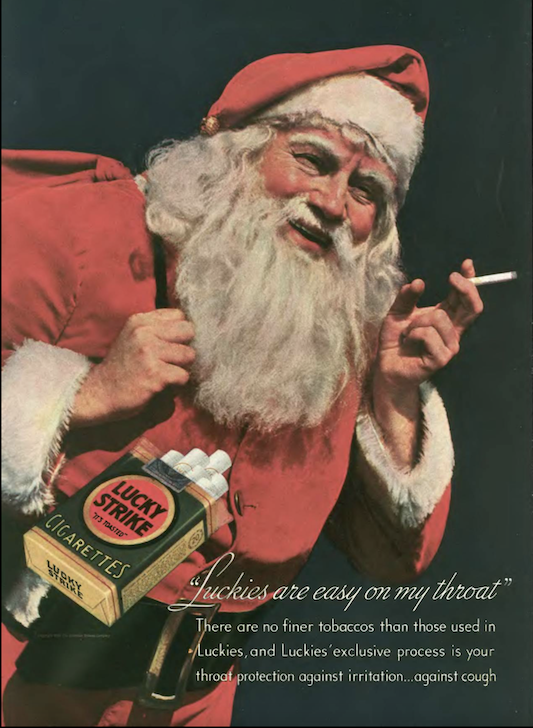
We begin with this jolly color image from Lucky Strike representing the joys of cigarette smoking…

…a trio of ads culled from the back pages, everything from “Tiara Trouble” (apparently a common problem) to a smoking penguin introducing a new line of menthol cigarettes, KOOL, challenging the dominance of the Spud menthol brand (we know who won that battle)…in the final ad, Atlantic City resort hotel Haddon Hall attempted to drum up business using a slavery/emancipation theme—Abraham Lincoln’s birthday is at hand…why not slip the shackles of work and run away to sunshine and freedom?

…These Paul Whiteman ads were ubiquitous in the 1930s…the distinctive caricature of his pudgy, mustachioed face—Whiteman’s “Potato Head” emblem—was featured in ads and on 78 rpm record labels and various promotional items…on the more classical side, violinist David Rubinoff sawed away on his famed $100,000 Stradivarius for audiences at the Roosevelt Hotel…

…automobile ads continued to grace the pages of The New Yorker, including this one suggesting that young blue bloods would look quite smart in a ’34 Chevy…

…in the 1930s Studebaker marketed car lines including the high-end President, the mid-priced Commander, and the low-priced Dictator…the Dictator was introduced in 1927, so named because it “dictated the standard” other automobile makes would be obliged to follow…the rise of Mussolini and Hitler attached unsavory connotations to the car’s moniker…it was renamed “Director” for European markets and was finally abandoned in 1937…

…Chrysler continued to push its radical new Airflow, here demonstrating how it blows the doors off of an old-timer…

…as we jump into our cartoons, Kemp Starrett referenced the Airflow in his latest contribution to The New Yorker

…the issue included two from George Price…a playful pairing in the events section…

…and a somewhat unkind nod to new Hollywood star Katharine Hepburn…apparently David O. Selznick had misgivings about casting a “horse face” like her…well, she obviously proved him wrong…

…the magazine pulled out this old illustration by H.O. Hofman to break up the copy in Howard Brubaker’s “Of All Things” column…

…more antics from the precocious set, courtesy Perry Barlow

Mary Petty offered this observation on the state of medicine in 1934…

…a sobering and topical contribution from Alan Dunn

Carl Rose made preparations for the annual Charity Ball…

…and James Thurber gave us Part III of his “War Between Men and Women”…

Next Time: Made in Germany…


A Poke At Punch

In 1925 New Yorker founding editor Harold Ross wrote that he wanted his new magazine to be “humorous from a sophisticated viewpoint” and “record the situations of everyday life among intelligent and substantial people as do the English magazines, notably Punch, except that our bent is more satirical, sharper.”

Jan. 13, 1934 cover by Constantin Alajalov.

Sharper indeed, as was demonstrated in the Jan. 13, 1934 issue, when Ross’s young magazine took aim at Punch, which was founded in 1841 and had grown long in the tooth under the guidance of Sir Owen Seaman, whose Victorian sensibilities (he joined Punch in 1897) were ripe for parody by a magazine founded during the Jazz Age.

Writer and cartoonist V. Cullum Rogers (MagazineParody.com) notes that the eight pages devoted to “Paunch” was The New Yorker’s longest and most elaborate parody of another publication.

RIPE FOR THE PICKING…The covers of Punch for August 30, 1933, and The New Yorker’s 1934 parody.

E.B. White and Franklin P. Adams contributed parodies (“The Mall” by White and “The Intent Caterpillar” by Franklin) of what Rogers cites as “two of Punch’s favorite forms of bad verse: the sticky-sentimental and the mechanically clever.”

The New Yorker’s theatre critic Wolcott Gibbs joined the fun by penning “Mr. Paunch’s Cinema Review” (excerpt)…

…Rea Irvin and James Thurber offered up their cartooning skills…

Rea Irvin’s parody of a Punch cartoon. (Caption enlarged below).

…and Robert Benchley contributed this gem, “Hyacinths for Pamela.”

Rogers writes that although “Paunch” wasn’t promoted on the cover, “the issue it ran in became the first in The New Yorker’s nine-year history to sell out on newsstands. (The second sellout contained Wolcott Gibbs’s Time parody, which suggests a demand for such things).”

The parody issue concluded with this page of advertisements:

 * * *

The Show Must Go On

The death of Florenz Ziegfeld Jr. in 1932 did not put an end to his Follies; indeed, under the direction of his widow, Billie Burke, the show seemed to have new legs, at least according to Robert Benchley:

HOOFIN’ IT…Clockwise, from top left: Program for the 1934 Ziegfeld Follies; performers in the show included popular brother–sister dancing act Buddy and Vilma Ebsen, pictured here with Eleanor Powell in Broadway Melody of 1936 (most of us know Buddy Ebsen as Uncle Jed from The Beverly Hillbillies); Al Hirschfeld drawing of the show’s stars; Willie Howard, Fanny Brice and Eugene Howard in Ziegfeld Follies of 1934. (YouTube/NYPL)

* * *

Keen on the Airflow

The streamlining trend in autos was not to E.B. White’s liking (see below), but the reviewer of the National Auto Show (pseud. “Speed”) was eager to take the Chrysler Airflow for a spin.

 * * *

From Our Advertisers

The Chrysler Corporation ran this two-page ad that took issue with E.B. White’s criticisms of the streamlining trend in automobiles, led by Chrysler’s “Airflow” model…here Chrysler responded with a note pinned to a tear sheet from the Dec. 16, 1933 “Talk of the Town”…You wrote this before you saw the new Chryslers, Mr. New Yorker

…with the National Auto Show still in town the splashy car ads continued, including this one from the makers of Fisher car bodies…

…another advertising stalwart, the Liggett & Myers Tobacco Company, gave us a young woman who enjoyed their Chesterfields “a lot”…

…Guinness was back for those who missed that taste of Dublin…

…and the folks behind “The Beer That Made Milwaukee Famous” placed their first ad in The New Yorker

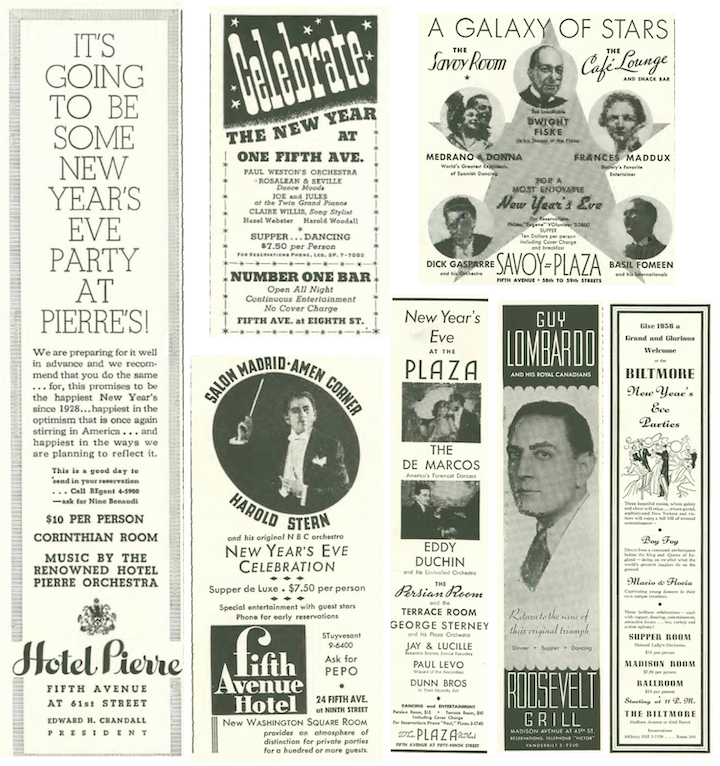
…if you wanted to have your drink outside of the home, what better place than the Madison Room at The Biltmore…

…on to our cartoons, with begin with Perry Barlow and a tot losing sleep over the new year…

Kemp Starrett also explored the world of sleep deprivation…

…and we end with James Thurber, and a woman with a low tolerance for “cute” news…

…in case you are wondering, Anna Eleanor Sistie” Dall was the daughter of Franklin and Eleanor Roosevelt’s eldest child Anna Dall. When Dall separated from her husband in 1933, she moved into the White House with her children, Sistie and Buzzie.

TOO CUTE…Franklin Roosevelt with his grandchildren Anna Eleanor Sistie” Dall and Curtis “Buzzie” Dall in 1932. According to Buzzie, he and his sister lived in the White House from September 1933 to November 1935. (AP)

Next Time: A Joycean Odyssey…