Two Years Young

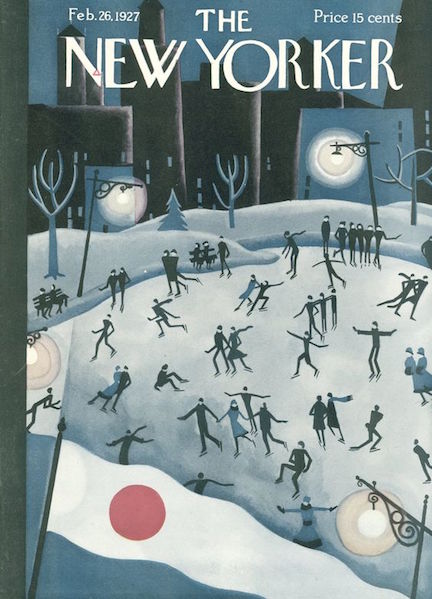
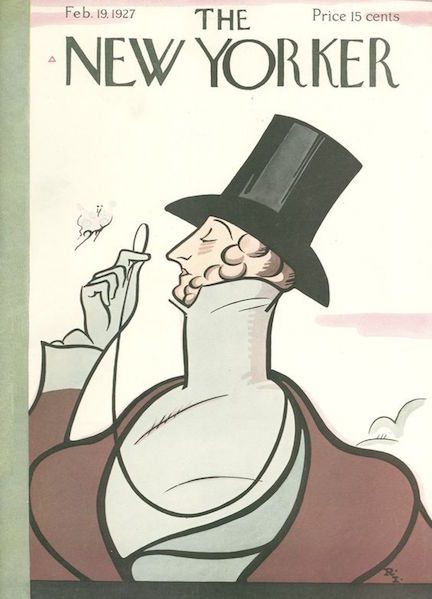
The New Yorker celebrated its 2nd anniversary by once again using the Rea Irvin cover from its first issue, which depicted a dandified character–soon to be dubbed “Eustace Tilley”–that would become a mascot of sorts for the magazine.
e5c3fabc5f1612a71442c78a3c71d654
February 19, 1927: 2nd anniversary issue cover by Rea Irvin.

For more than 90 years it has been a tradition to feature the original cover every year on the issue closest to the anniversary date of February 21, although on several occasions a newly drawn variation has been substituted, including several “alternative” covers for last year’s 90th anniversary issue. This one in particular, by Carter Goodrich, is appropriate for our times:

CV1_TNY_02_23_15Goodrich.indd

The magazine included this embellishment on the opening page of “The Talk of the Town” (also repeated from the previous year)…

Screen Shot 2016-07-21 at 4.54.08 PM

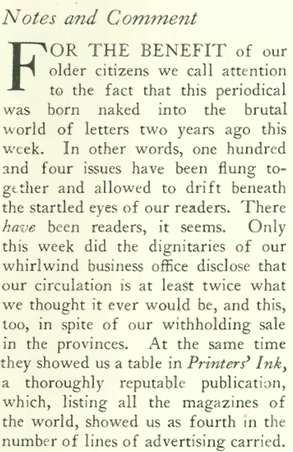
…and the editors opened with a somewhat tongue-in-cheek boast of the young magazine’s improving fortunes:
Screen Shot 2016-07-21 at 4.55.17 PM

Screen Shot 2016-07-21 at 4.56.04 PM

The boasts about advertising were legitimate. Apparently the people at Rolls Royce felt that the magazine was worth a full-page, weekly advertisement. Note the third paragraph of the ad, third to to the last line: How many car makers today, or any at time for that matter, would tout that their car “meets every traveling situation blandly?”

Screen Shot 2016-07-22 at 9.02.21 AM

While on the topic of ads, this one from the back pages caught my eye:

Screen Shot 2016-07-22 at 9.24.12 AM

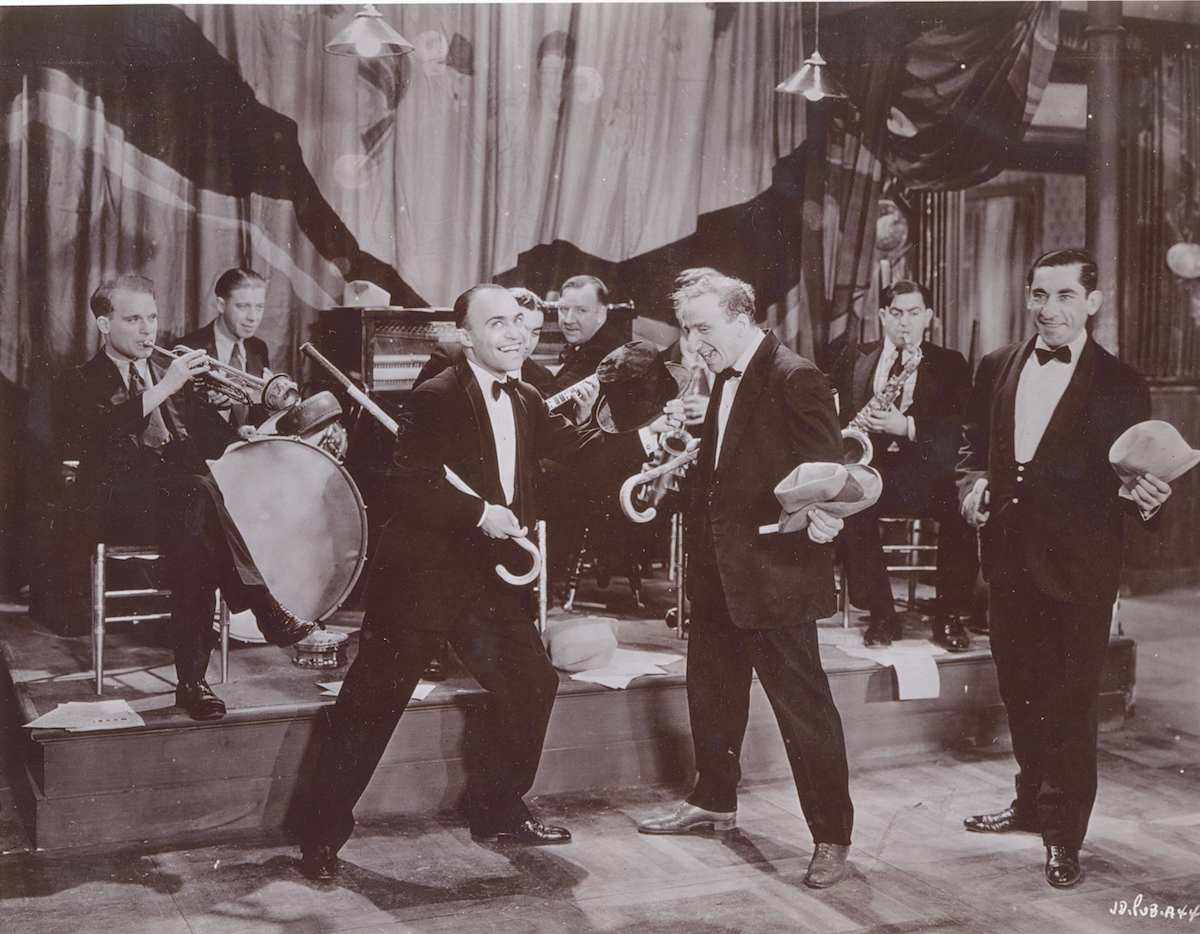
Most of us have heard of vaudeville teams like the Marx Brothers and Laurel & Hardy, but there were many others who drew big audiences but who are mostly forgotten today, including the trio of Clayton, Jackson and Durante.
clayton-jackson-and-durante0001
Jimmy Durante (center) performing with his vaudeville partners Eddie Jackson (right) and Lou Clayton. (New York Public Library)

Of the three, Jimmy Durante would go on to the greatest fame. Known for his gravelly voice, clever wordplay and his prominent nose (which he dubbed “the Schnozzola”), Durante would find great success in radio, film, and in early television. The singer, pianist and comedian would appear on many variety shows in the 1950s and 60s. Although he died in 1980, today he is still known to audiences young and old alike thanks to his appearance as the narrator in the animated Frosty the Snowman (1969), which is still broadcast every year during the Christmas season and is distributed through countless DVDs and streaming services.

Screen Shot 2016-07-22 at 1.26.10 PM
GOOD NIGHT, Mrs. Calabash, wherever you are…the animated Jimmy Durante in Frosty the Snowman (1969), and in a 1964 publicity photo. (YouTube/Wikipedia)

*  *  *  *  *

On to more advertising, and a less savory topic. Beginning in the 1920s, Lysol was advertised for use in feminine hygiene as a guard against “odors,” a term that was widely understood as a euphemism for contraception. According to Andrea Tone (Devices and Desires) by 1940 it had become the most popular birth control method in the country. Unfortunately for many women, Lysol contained cresol (derived from coal tar) which could cause severe inflammation and even death:

Screen Shot 2016-07-22 at 9.03.33 AM

Also popular (and a lot less harmful) in the 1920s was sheet music featuring the latest songs. So sidle up to the piano with your guy or gal and belt out one of these favorites:

Screen Shot 2016-07-22 at 9.26.21 AM

And to close, a cartoon by the famed Peter Arno, who was well-acquained with New York nightlife:

Screen Shot 2016-07-22 at 9.00.34 AM

Next Time: Clark’s Folly…

a4866ba5e836b04dce69f13fb06cf5df


Batter Up

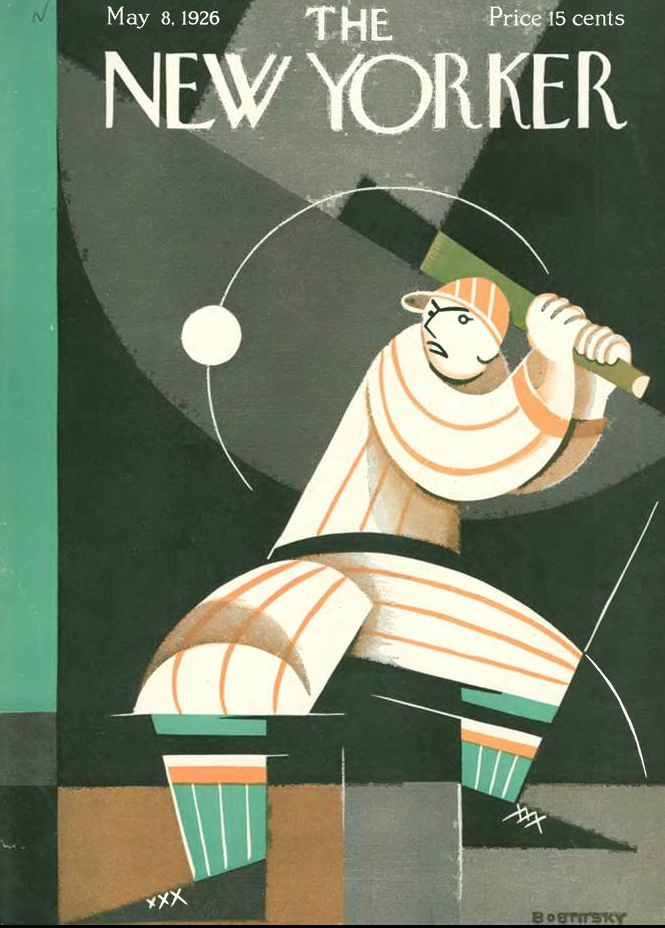
The cover of the May 8, 1926 issue featured this Bauhaus-style rendering of a baseball player by Victor Bobritsky in anticipation of the 1926 season:

Screen Shot 2015-12-11 at 9.24.00 AM
May 8, 1926 cover by Victor Bobritsky.

After a terrible 1925 season (and Babe Ruth’s infamous stomach ache), in 1926 the New York Yankees would begin to form a batting lineup that would become known as “Murderers’ Row.” They won the AL pennant in 1926 (losing to the St. Louis Cardinals in a seven-game World Series) and in 1927 they would go 110-44 and sweep the Pittsburgh Pirates in the World Series. More on that when we actually get to 1927.

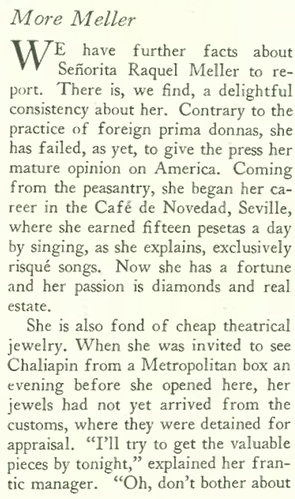
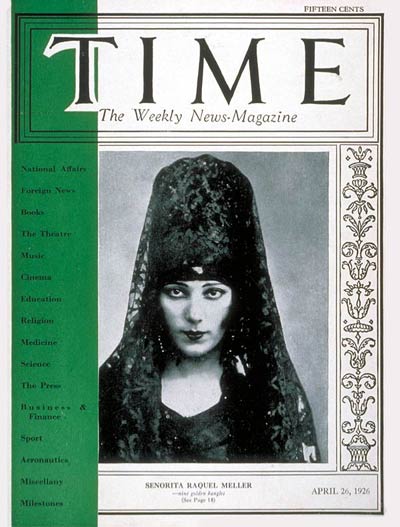
The May 8 issue offered more coverage of Spanish actress-singer Raquel Meller’s first-ever visit to America, which caused quite a sensation:

Screen Shot 2015-12-11 at 9.27.34 AM

Screen Shot 2015-12-11 at 9.28.24 AM

8635eeb0
Raquel Meller

Meller arrived in New York via the SS Leviathan, on which she apparently attempted to book a deluxe suite for her five Pekingese. After New York she also visited Philadelphia, Chicago, Boston, Baltimore and Los Angeles, where she attracted the attention of Charlie Chaplin. Although Chaplin was unsuccessful in landing Meller as a co-star, he did incorporate the melody of her most famous song, La Violetera, as a major theme in his 1931 film City Lights.

Raquel_Meller_Time_magazine_cover_April_26,_1926
Meller’s visit landed her on the cover of the April 26, 1926 Time magazine. (Wikipedia)

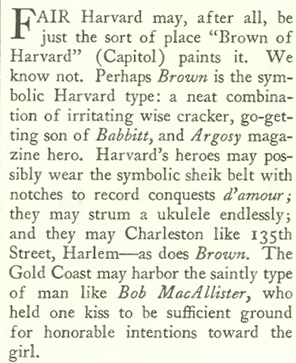
Theodore Shane reviewed the film Brown of Harvard and pondered the accuracy of this portrayal of Harvard student life:

Screen Shot 2015-12-11 at 9.42.48 AM

Screen Shot 2015-12-16 at 11.52.18 AM
(Wikipedia)

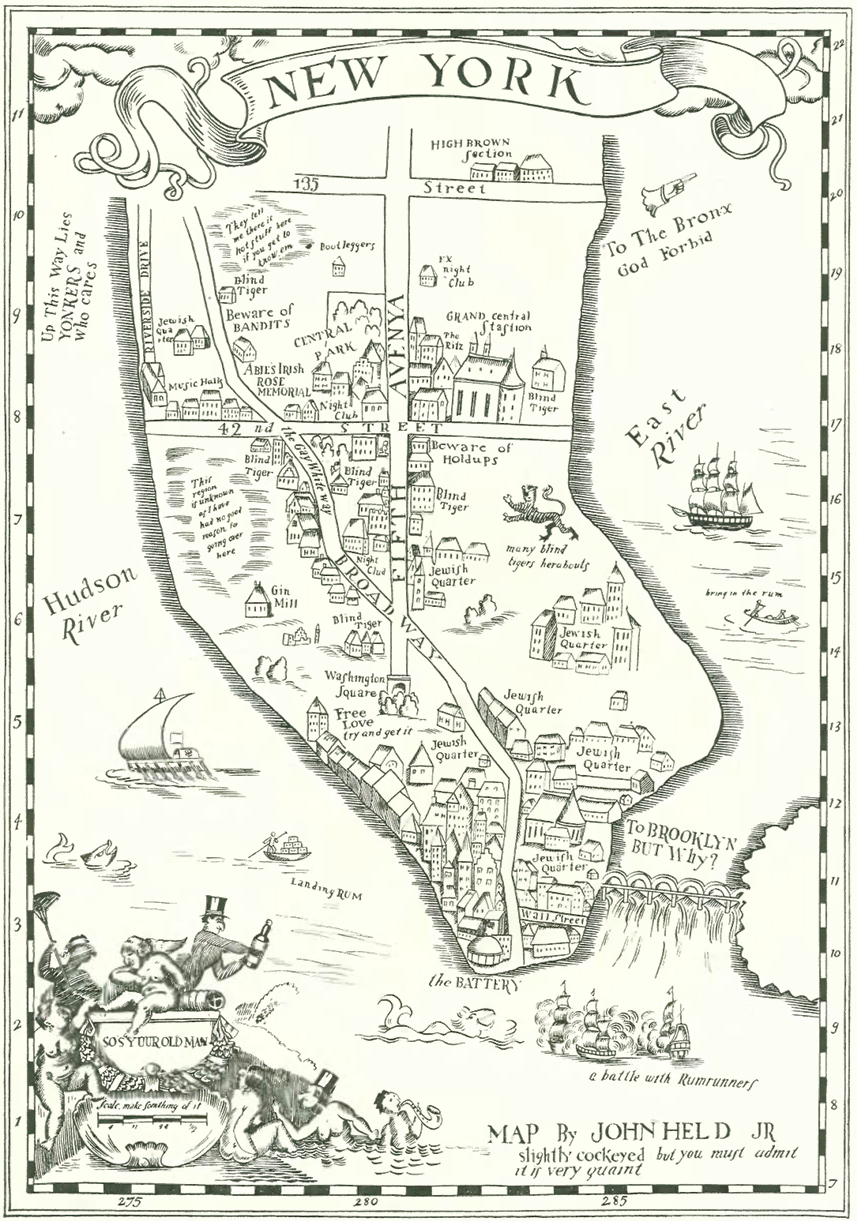
The issue also featured more unique mapmaking by John Held Jr:

Screen Shot 2015-12-11 at 9.31.16 AM

And this W.P. Trent cartoon with a common theme of early New Yorker issues: the comic imbalance of rich old men and their young mistresses:

Screen Shot 2015-12-11 at 9.35.18 AM

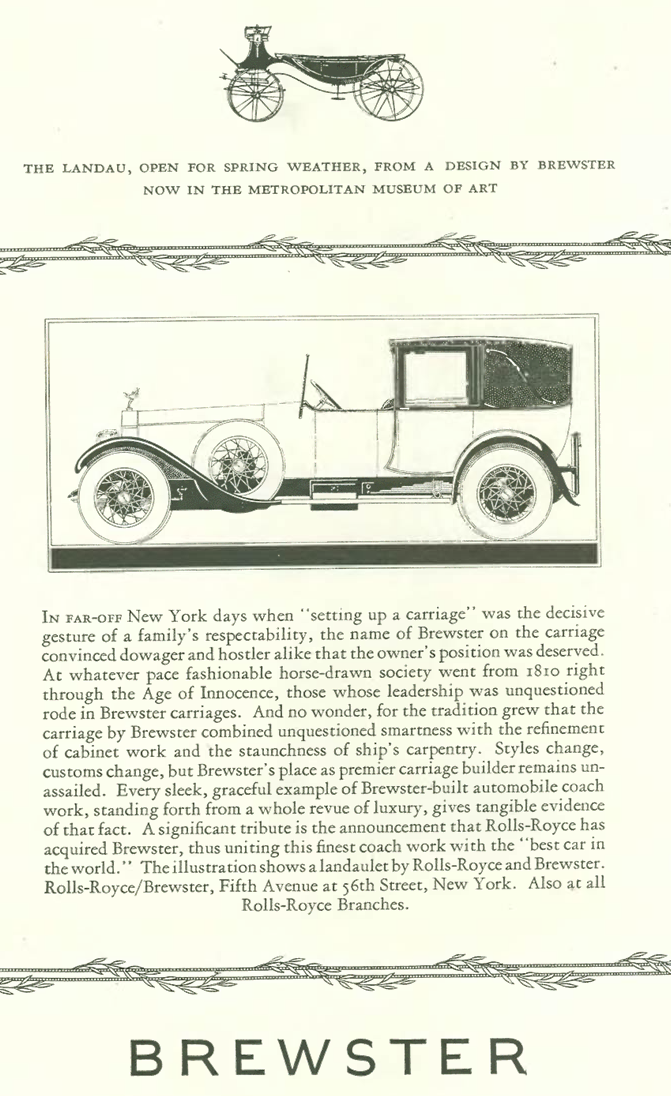
And finally, this advertisement in the May 8 issue caught my eye. Although cars crowded the streets of New York, they were still a recent enough invention to evoke the days of horse-drawn carriages. Even with all of the advances in automobiles in the late 20s, this landau-style Rolls Royce still exposed the driver to the weather, a design feature that signaled class, not practicality.

Screen Shot 2015-12-11 at 9.26.30 AM

Next Time: Nize & Not So Nize…

Screen Shot 2015-12-11 at 9.44.03 AM