Hello Molly

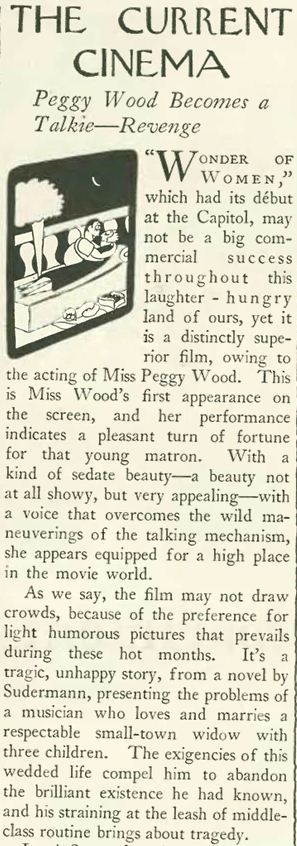
While the New Yorker was happy to send singer Marion Talley packing back to Midwest (see last post), it was wholly embracing one of its own, Molly Picon. But as we will see, it had every reason to do so.

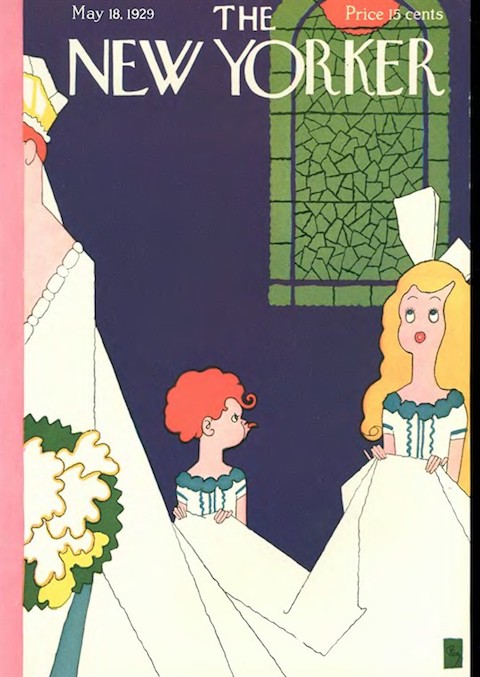
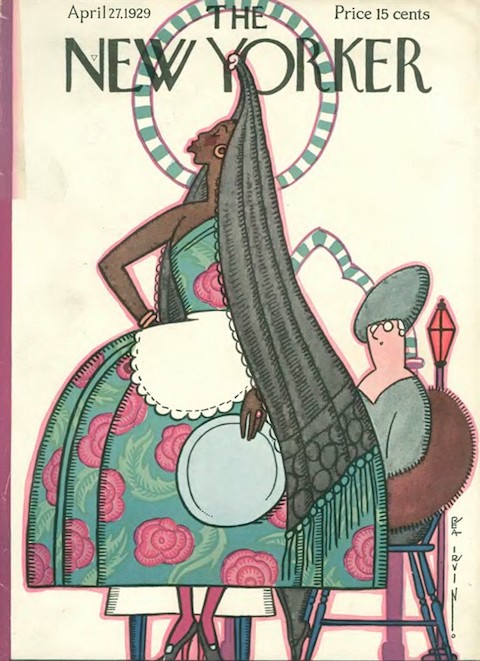
April 27, 1929 cover by Rea Irvin.

The daughter of Polish immigrants, Molly Picon (1898-1992) was born Małka Opiekun in New York City on Feb. 28, 1898, and became of a star of Yiddish theatre and film before moving to English language productions in the 1930s.

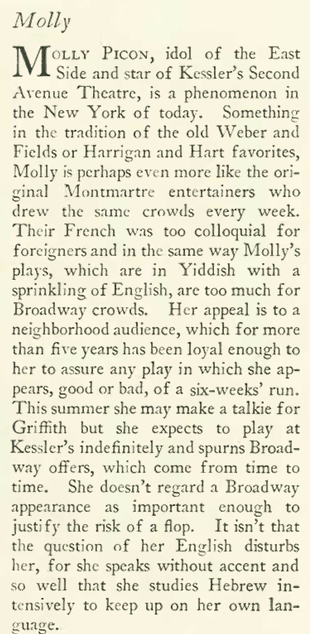
Writing in “The Talk of the Town,” James Thurber described Picon as an “idol of the East Side”…

PRECOCIOUS…Molly Picon began performing in the Yiddish Theatre at age six. Pictured, from left, is 10-year-old Molly in a 1908 Nickelodeon short of a vaudeville act, Fagan’s Decision; an undated press photo; in The Jolly Orphan, 1929. (Jewish Women’s Archive/Wikipedia/Museum of the City of New York)
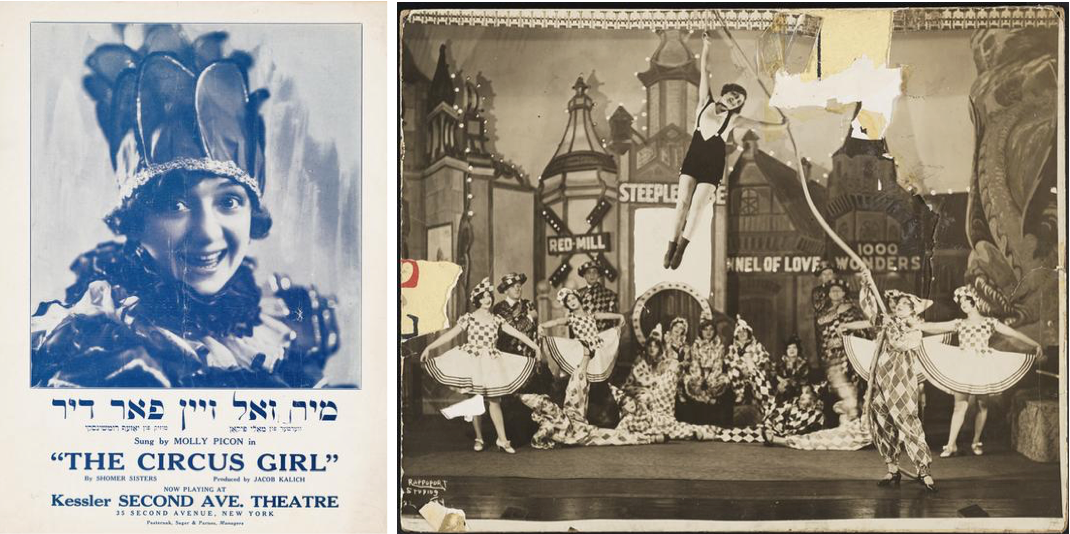
At left, music sung by Molly Picot in the a Yiddish theatre production, Tsirkus meydl (The Circus Girl), 1928. At right, a scene from the play. (Museum of the City of New York)
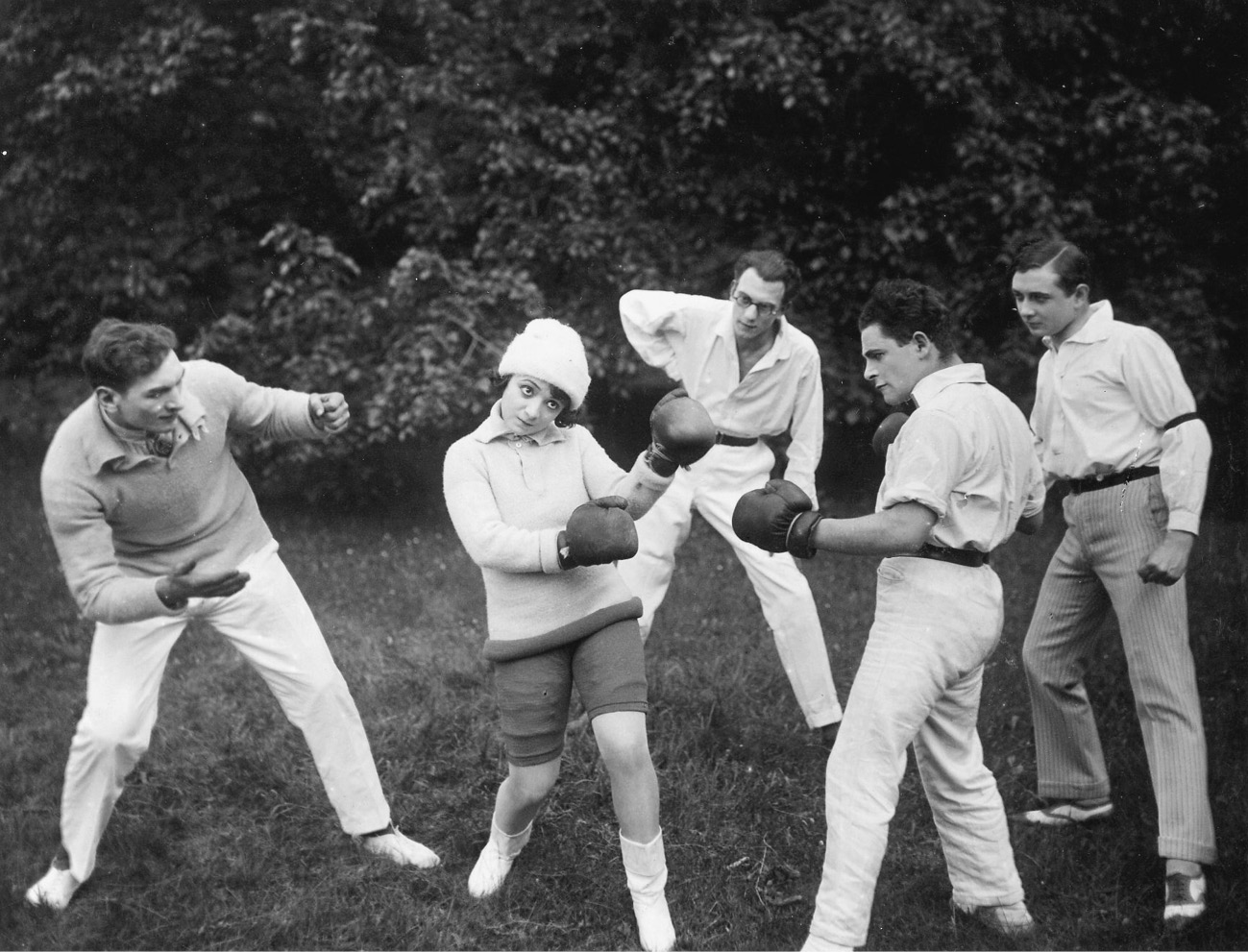
PUT ‘EM UP…Molly Picot tries her hand at boxing in the silent comedy, East and West, originally produced in Austria in 1923. In this film about assimilation and Jewish values, a sophisticated New Yorker travels back to his village to attend his niece’s traditional wedding. There he encounters the rambunctious Molly, whose hijinks include boxing, and teaching other young villagers to shimmy. (Image: National Center for Jewish Film / Caption: UC Berkeley Library)

Thurber described Picon’s personal life as simple and focused on her family, a path she followed throughout her 94 years:

Picon met her husband, Jacob “Yonkel” Kalich (1891-1975) in 1918 and they married a year later. In an exhibition at the American Jewish Historical Society, Picon is quoted on how meeting Kalich changed her life:

“When we met in Boston, I was the All-American Girl full of hurdy-gurdys and absolutely illiterate about Jewish culture. Yonkel, on the other hand, was the complete intellectual who knew not only classic Yiddish but its plays, theater and writers.”

After they married in 1919, the couple toured Eastern European cities with large Jewish populations in order that she could improve her Yiddish and gain experience as a performer. Kalich served as her manager and creator of many of her roles, and they often performed together, including in two films nearly 50 years apart—East and West (1923) and Fiddler on the Roof (1971).

Top photos, left to right, Molly Picon in the Yiddish Theatre comedy Di Tsvey Kuni Lemels (The Two Kuni Lemels), 1926; with husband Jacob “Yonkel” Kalich in the 1923 silent film comedy, East and West; with Kalich that same year in Vienna. Bottom row, left to right, Picon tapes the Maxwell House Radio Show, 1938, and below, on the set of the Fiddler on the Roof (1971) with husband Jacob “Yonkel” Kalich; with Frank Sinatra in Come Blow Your Horn (1963); and on the TV show The Facts of Life (1979). (Wikimedia Commons/American Jewish Historical Society/Jewish Women’s Archive)

Picon appeared on a variety of TV shows from the 1960s through the 1980s including Car 54, Where Are You?, Gomer Pyle, The Facts of Life, and Trapper John M.D. Movie appearances during that time included Fiddler on the Roof (1971); For Pete’s Sake (with Barbra Streisand, 1974); and perhaps one of her oddest roles, as Roger Moore’s longsuffering mother in The Cannonball Run (1981) and 1984’s The Cannonball Run II (In those films, Moore portrayed Seymour Goldfarb, heir to the Goldfarb Girdles fortune, who preferred the life of pretending to be a spy to girdle manufacturing).

Thurber observed that Picon was only interested in comedic roles, a preference she stuck to throughout her long career.

Molly Picon as Mrs. Bronson in the television show Car 54, Where Are You? (1962) (Wikimedia Commons)

To learn more about Molly Picon’s fascinating life, visit the online exhibition at the American Jewish Historical Society.

 *  *  *

Sober as a Judge

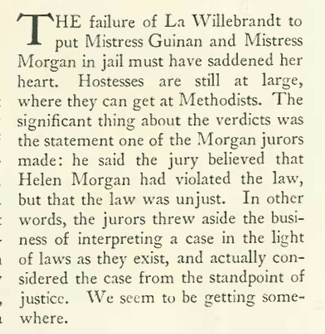
Despite Prohibition, booze flowed freely in New York in the late 1920s thanks to bootleggers and corrupt cops. U.S. Assistant Attorney General Mabel Walker Willebrandt tried her best to crack down on violations, arresting (among many others) the operators of two of Manhattan’s most popular nightclubs, actress Texas Guinan (300 Club) and torch singer Helen Morgan (Chez Morgan). In the “Talk of the Town,” the New Yorker found hope in the acquittal of Guinan and Morgan, and in the opinion of one of the jurors:

In the same issue, this cartoon by Oscar Howard tells us a lot about New York’s approach to Prohibition enforcement in 1929…

 *  *  *

Captive Audience

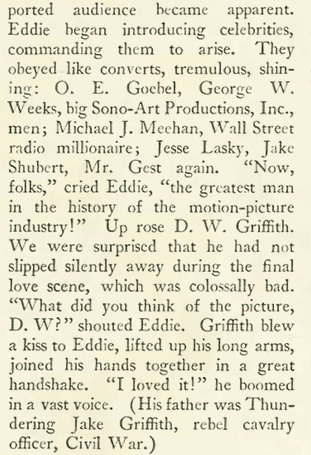
In the April 27 “Talk of the Town” James Thurber also turned his attention to the latest treacle flowing out of Hollywood—the premiere of The Rainbow Man, starring Eddie Dowling in his first talking picture. Thurber found the film to be “alarmingly bad.” But that was only the beginning…

TIRED OF ME YET?…Lloyd Ingraham, Eddie Dowling, and Marian Nixon in The Rainbow Man (1929) (IMDB)

Thurber wrote that the film was followed by live performances from “a Kate Smith” and by Eddie Dowling himself, who piled more ham on the proceedings.

PILING IT ON…Eddie Dowling gave audiences more than they needed (at least in the view of James Thurber) at the premiere of The Rainbow Man. Dowling would share the stage with Kate Smith, apparently unknown to Thurber at that time. She would go on to massive stardom. Dowling, not so much. (IMDB/Pinterest)

 *  *  *

Slow Man River

Things didn’t look much better in the magazine’s movie review section, where the 1929 film version of the huge 1927 Broadway hit musical Showboat seemed stuck on sandbar:

SLOW BOAT…Scene from the 1929 film Show Boat featuring Laura LaPlante as Magnolia Hawks and Joseph Schildkraut as Gaylord Ravenal. (Wikipedia)

 *  *  *

Elsie Dinsmore Revisited

Phyllis Crawford (writing under the pseudonym Josie Turner) contributed another parody of the Elsie Dinsmore book series. The original books (28 in all), were written in the late 19th and early 20th century and featured an impossibly upright eight-year-old as the main character.

Crawford, herself an author of children’s books (including the award-winning Hello, the Boat!), had some fun with the Dinsmore books, her parody featuring a still pious and innocent Elsie living with her father in New York, where she encounters his circle of friends including gamblers and chorus girls (the collected pieces were published as a book in 1930: Elsie Dinsmore on the Loose). In this brief excerpt from Crawford’s piece in the April 27 issue (“Elsie Dinsmore Entertains at Tea”), little Elsie tries her best to entertain a friend of her “dear Papa”…

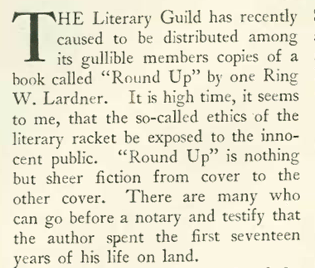
On the topic of books, Dorothy Parker, in her “Reading and Writing” column, took aim at middlebrow book clubs such as the Literary Guild, expressing (in her way) surprise that such a club would actually recommend something with literary merit…

Advertisement in the April 27 issue for Ring Lardner’s Round Up. At right, Lardner and Dorothy Parker, circa 1930. (thenationalpastimemuseum.com/selectedshorts.org)

 *  *  *

From Our Advertisers

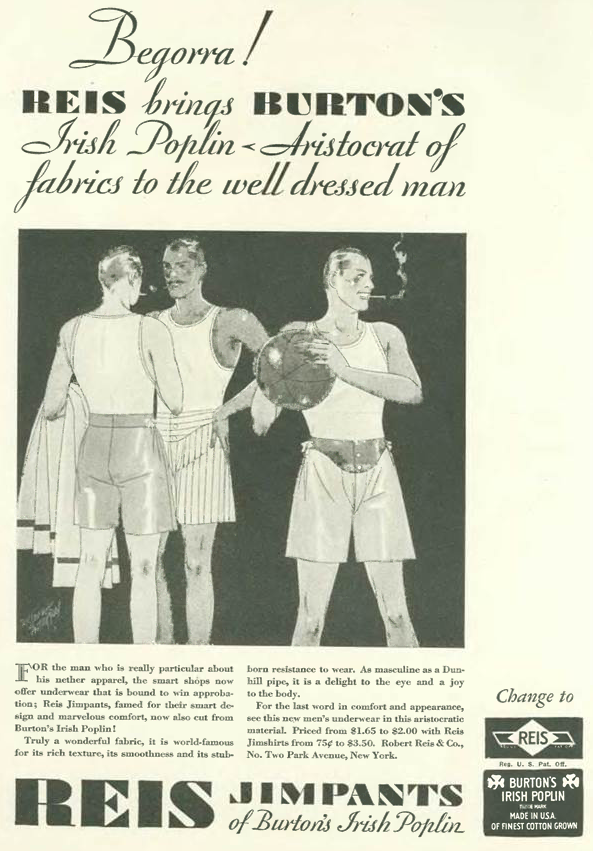
We begin with a colorful ad from the makers B.V.D., a brand name that would become synonymous with men’s underwear…
…Russian prima ballerina Anna Pavlova demonstrated the wonders of Cutex nail polish in her famous “Dying Swan” costume (Pavlova would be dead herself in less than two years)…
…while the Wizard of Menlo Park applied his genius to the cause for better toast…

…and actor John Gilbert was the latest actor to “reach for a Lucky instead of a sweet”…

…this ad in the back pages enticed readers to visit the International Exposition of Barcelona…those fortunate enough to have made the trip would have seen Mies Van Der Rohe’s “Barcelona House” (pictured) and the first-ever Barcelona chair…
(thomortiz.tumblr.com)

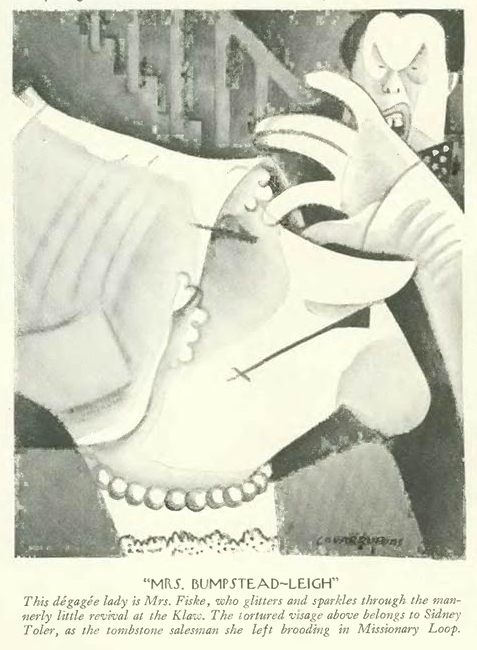
…on to cartoons and illustrations, in the theatre section this contribution by Miguel Covarrubias

…Covarrubias (pictured) was an early contributor to the New Yorker, indeed he contributed to the very first issue with this rendering of Italian opera manager Giulio Gatti-Casazza for the first-ever profile…

Gluyas Williams illustrated the collective shaming of a commuter by residents of Tudor City…

…Tudor City was touted in many early New Yorker ads as having all the amenities of the suburbs but within walking distance of the city…here is an ad from the March 26, 1927 issue of The New Yorker

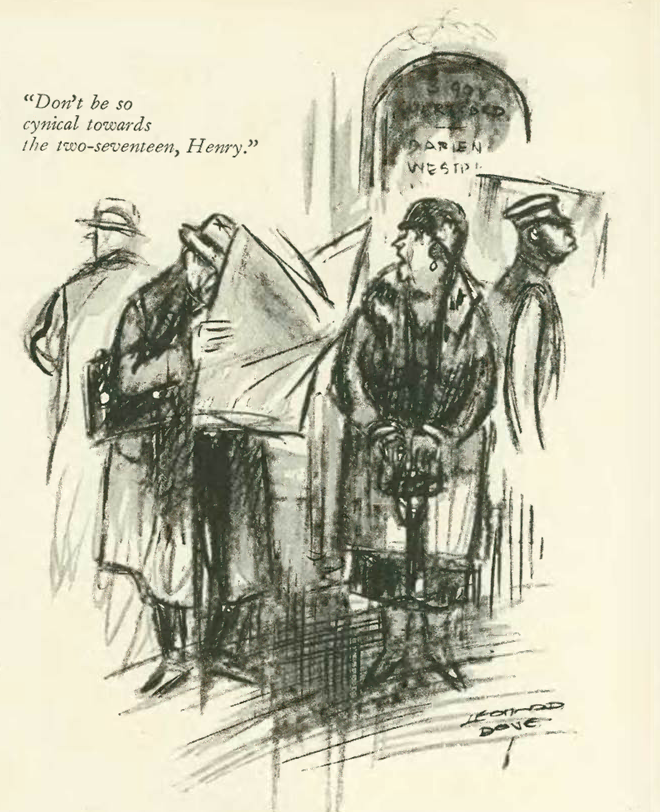
…and then we have the English cartoonist Leonard Dove, who looks in on a couple who are obviously not from Tudor City…

…and finally, a terrific cartoon by an artist I have failed to identify (if anyone knows, please comment!)…

Next Time: From Broadway to Babylon…

The So-So Soprano

Although its founding editor, Harold Ross, was raised in the rude surroundings of a Colorado mining town and often displayed the manners of a backwoodsman, the New Yorker nevertheless looked down its sophisticated nose at most anything west of the Hudson, and the middle west was reserved for particular ridicule in its homespun piety and small city boosterism.

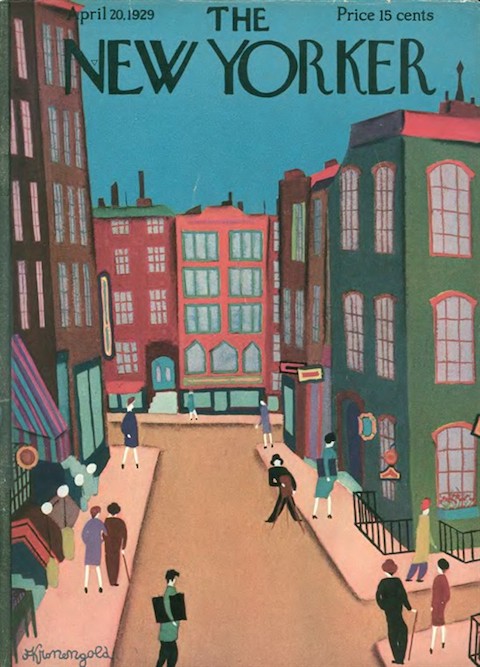
April 20, 1929 cover by Adolph K. Kronengold.

Enter one Marion Talley, a child prodigy from the tiny town of Nevada, Missouri. After appearing in a lead role at age 15 for the Kansas City Grand Opera, excited civic leaders raised enough money to send Talley to New York to study voice. Four years later (February 1926) she made her Metropolitan Opera debut as Gilda in Rigoletto — at that time the youngest prima donna to appear on the Met stage. A delegation of Kansas City’s two hundred leading citizens (including the mayor) travelled to New York via special train to attend the performance. Adding to the spectacle, a noisy telegraph machine was set up backstage so Talley’s father could send dispatches back home during the performance. Writing in his “A Reporter at Large” column for the New Yorker’s Feb. 27, 1926 issue, Morris Markey scoffed at the hype and Babbitry on display:

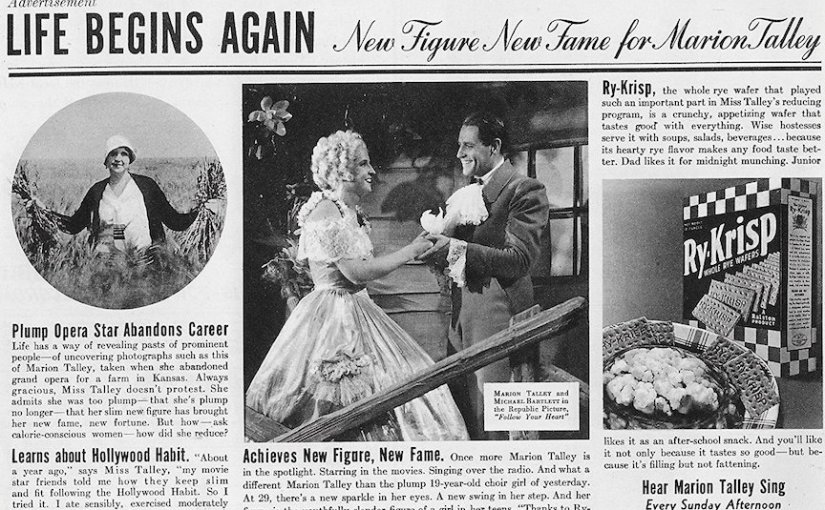
THE BIG TIME…at right, with co-star Michael Bartlett in her only movie, Follow Your Heart (1936); left, promoting Ry-Krisp crackers, sponsor of her NBC radio show, 1937. (imdb.com/mnopedia.org)

The New Yorker (via E.B. White in “Notes & Comment”) caught up with Talley more than three years later in the April 20, 1929 issue, her short career seemingly over, her voice perhaps destined for nothing more than “hog-calling”…

When Talley’s Met contract was not renewed for the 1929 season, she announced her plans to retire to a wheat farm in Kansas (hence the hog calling reference). She did, however, try to revive her career on concert tours and then on her own NBC Radio program (1936-1938), sponsored by Ry-Krisp. She made one film, the 1936 musical Follow Your Heart, but after its tepid reception the 30-year-old Talley decided to retire from show business.

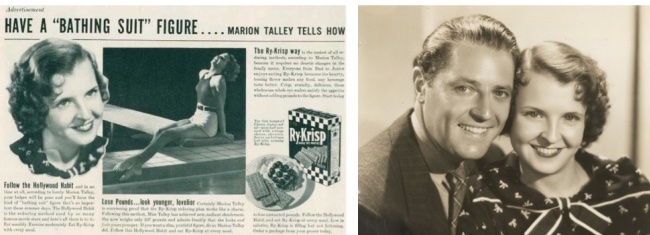
ONE MORE TRY…Testimonial ads promoting weight reduction usually signal the end of a career, and for Marion Talley her Ry-Krisp diet endorsement was no exception. (imdb)

Talley married twice — to pianist Michael Rauchelsen (1932–1934) and to music critic Adolph Eckstein (1935–1942), the latter with whom she had a daughter, Susan. Talley died in 1983 in Beverly Hills, California.

*  *  *

Dark Clouds on the Horizon

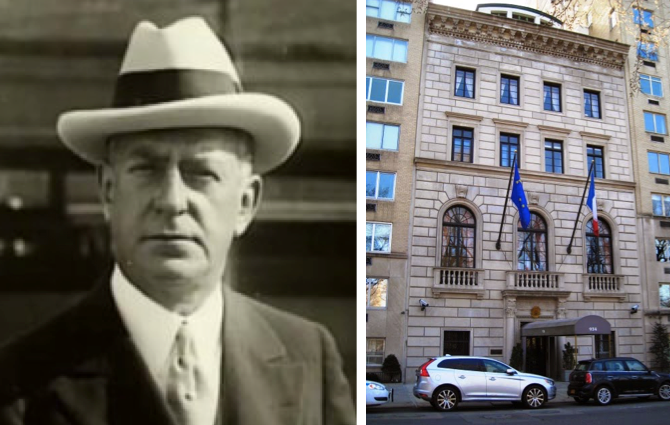
The April 20, 1929 “Talk of the Town” made passing mention of a man who would be instrumental in the stock market crash later that year—National City Bank President Charles E. Mitchell:

The “Talk” item references a $25 million advance Mitchell offered to stock market traders who were getting the yips in an overheated market. This happened after a “mini crash” on March 25, 1929, when the Federal Reserve told its banks to withhold all loans to finance securities. Mitchell’s announcement apparently reassured the public enough to stop the panic, but in reality it only delayed the inevitable—a major market crash brought on in large part by the over-selling of securities by Mitchell’s bank.

RUNAWAY BULL…Charles E. Mitchell’s reckless overselling of securities played a large role in the October 1929 stock market crash. Arrested and indicted for tax evasion in 1933, Mitchell would be acquitted of criminal charges but would end up paying a million dollars to the U.S. government in a civil settlement. At right, Walker’s stately townhouse on Fifth Avenue, now home to the French consulate. (geni.com/daytonian in manhattan)

The “Talk” item continued with this observation on the Panic of 1907, and how banker J.P. Morgan had also offered $25 million to bring the market back to earth:

PANIC ATTACK…banker J.P. Morgan (left) used a pile of money to calm the stock market during the Panic of 1907. His son, J.P. Morgan Jr., (right) would try to do the same following the October 1929 crash, when he and other bankers attempted to prevent a depression by purchasing some overpriced blue chip stock. As we know, their actions had little effect. (Library of Congress)

 *  *  *

Funny Girl

One of Broadway’s biggest stars in the 1920s, Fanny Brice (1891-1951) was profiled by Niven Busch Jr. in the April 20 issue. In addition to her work with the Ziegfeld Follies and other stage productions, by 1929 the comedian, singer and actress had recorded two-dozen songs and appeared in the 1928 film, My Man. Brice’s star would continue to rise in the 1930s and 40s, especially on the radio portraying the bratty toddler “Baby Snooks.” Here are the opening lines of the profile, which included a caricature of Brice by Miguel Covarrubias:

Top right, caricature of Fanny Brice that accompanied the New Yorker profile, drawn by Miguel Covarrubias. Below, publicity photo of Brice as Baby Snooks, 1938. (Photofest)

 *  *  *

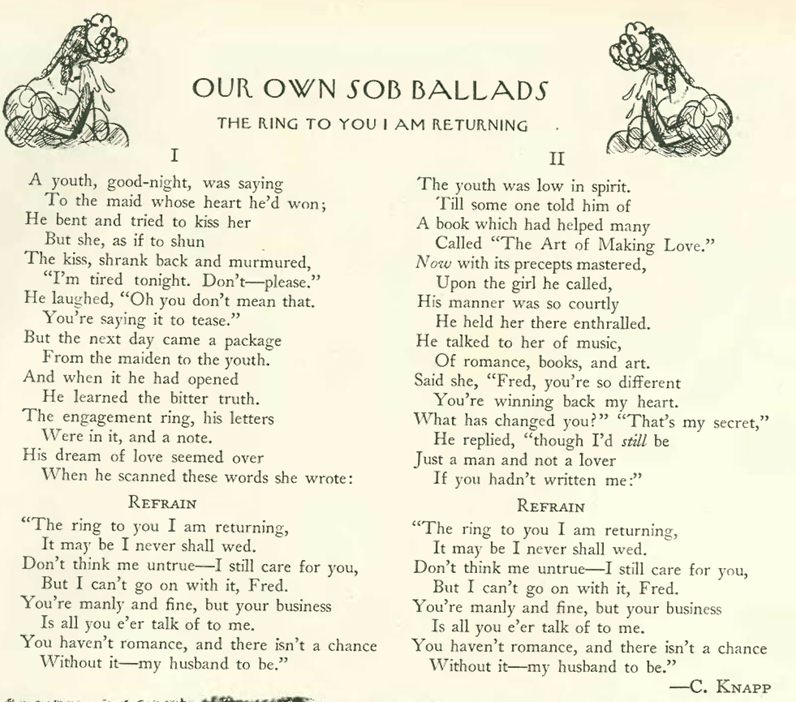
From its very beginnings comic verse played an important role in the pages of the New Yorker. The subjects of my previous blog post (Generation of Vipers), sisters Elinor Wylie and Nancy Hoyt, both contributed comic poems to the magazine, as did Clarence Knapp, a former mayor of Saratoga, New York, who also wrote prose pieces on that city’s famed horse racing scene. According to Judith Yaross Lee (Defining New Yorker Humor, p. 354), Knapp was a New Yorker insider who penned a total of 14 mock-melodramatic “sob ballads” between 1927 and 1930. Lee observes that Knapp’s ballads followed a fixed formula, two 16-line stanzas followed by eight-line refrains, that “joked about present social values by invoking past forms.”

*  *  *

They Loved a Parade

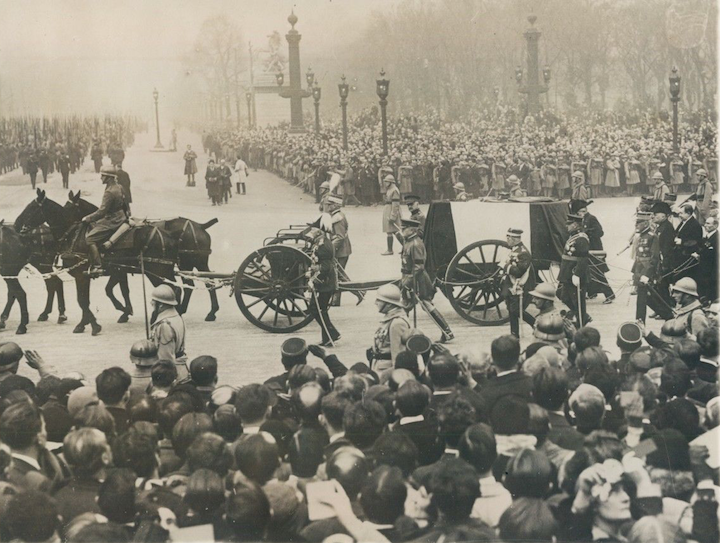
After the passing of literary giant Victor Hugo in 1885 (his funeral attracted two million mourners), Paris became known for its spectacular funeral processions. So when famed French general and (WWI) Supreme Allied Commander Marshal Ferdinand Foch died on March 20, 1929, the City of Light turned out in droves to say goodbye. On hand to report the scene was the New Yorker’s Paris correspondent, Janet Flanner, aka Genêt:

A PARIS FAREWELL…The Tricolor-draped coffin of Marshal Ferdinand Foch is escorted by the Allied Commanders from the Great War (WWI) during the funeral procession. The American General John J. Pershing can be seen marching alongside the catafalque in the center of the photo. (Associated Press)

By Flanner’s account, Foch’s send-off easily matched Hugo’s in terms of crowd size:

 *  *  *

The Art of Smoking

Cigarette manufacturers used a variety of marketing techniques to promote their tobacco products. During the late 1920s and early 30s R.J. Reynolds sought to attract more women smokers through a series of stylish ads for its Camel brand that evoked a softly elegant world. These ads were illustrated by Carl Erickson (1891–1958), a fashion artist whose work was widely seen in Vogue and in promotions for Coty cosmetics. This ad appeared in the April 20 issue of the New Yorker:

While studying at Chicago’s Academy of Fine Arts, Erickson was nicknamed “Eric,” a name he later used to sign his works. Also a successful portrait artist, Erickson lived part of his professional life in France (1920 to 1940) with his wife, the fashion illustrator Lee Creelman. Below are several examples of Erickson’s Camel work, including two back page illustrations from Delineator, a women’s fashion magazine that featured Butterick sewing patterns.

Clockwise from top, left, ad from Delineator, July 1930; 1929 ad from unknown source; unknown date and source; Carl “Eric” Erickson at work circa 1950; ad from the Delineator, July 1929. (Delineator/fashionising.com/periodpaper.com)

And From Our Other Advertisers…

With our Cuba relations once again eroding, let’s look back 89 years to a time when affordable, care-free living could be yours in sunny Havana…

…or in the days before foam rubber, “ozonized” animal hair gave bounce to your rugs…

…or the modestly well-off could contemplate an apartment on Park Avenue…

View from a 16th floor condo at 784 Park Avenue, yours today for a cool $8 million. (triumphproperty.com/stribling.com)

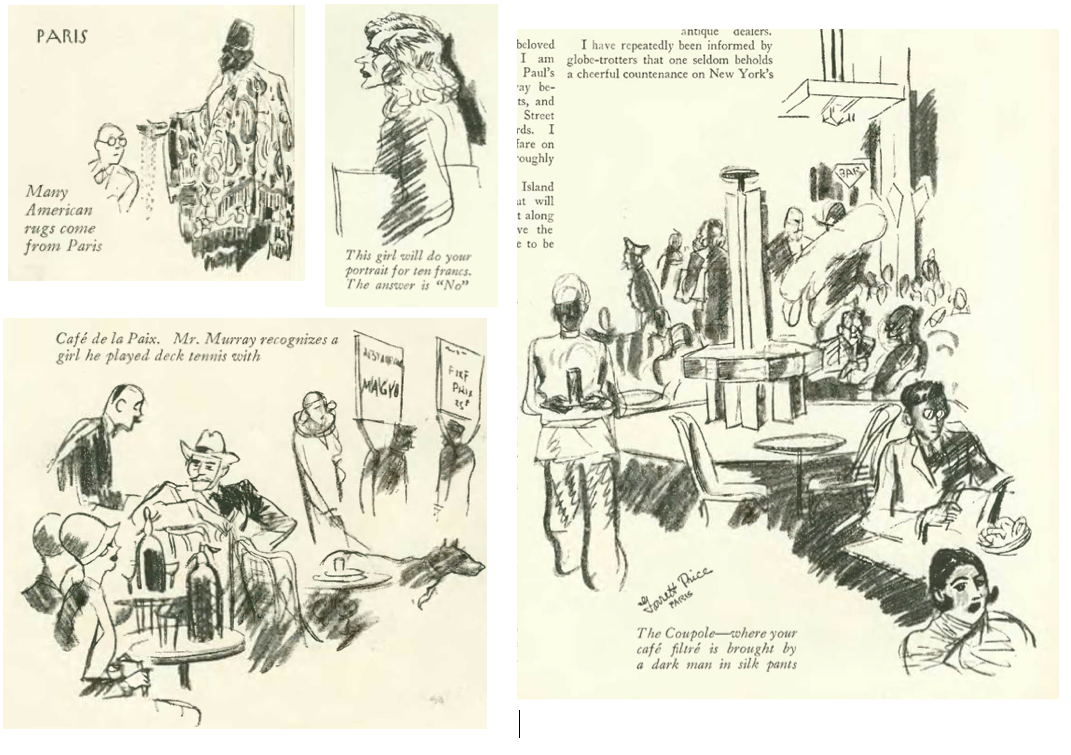
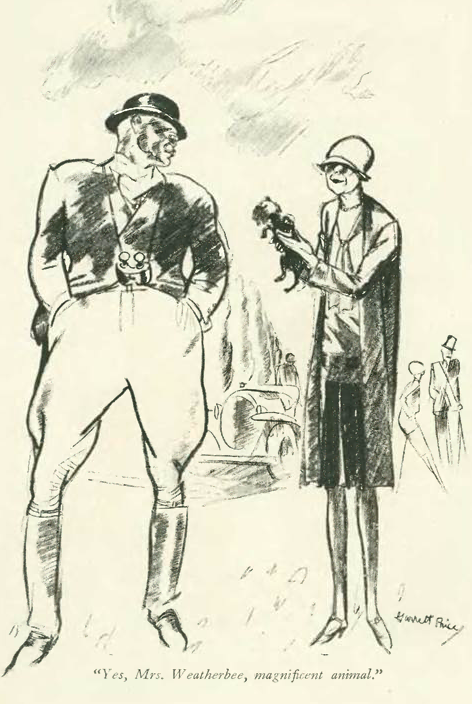
Our cartoons come courtesy of Garrett Price (1895-1979), who would contribute hundreds of cartoons as well as 100 covers during his more than 50 years with the New Yorker. An excellent look at Price’s life and work can be found in The Comics Journal

Garrett Price, circa 1918, and one of his New Yorker covers from May 21, 1949. (The Comics Journal)

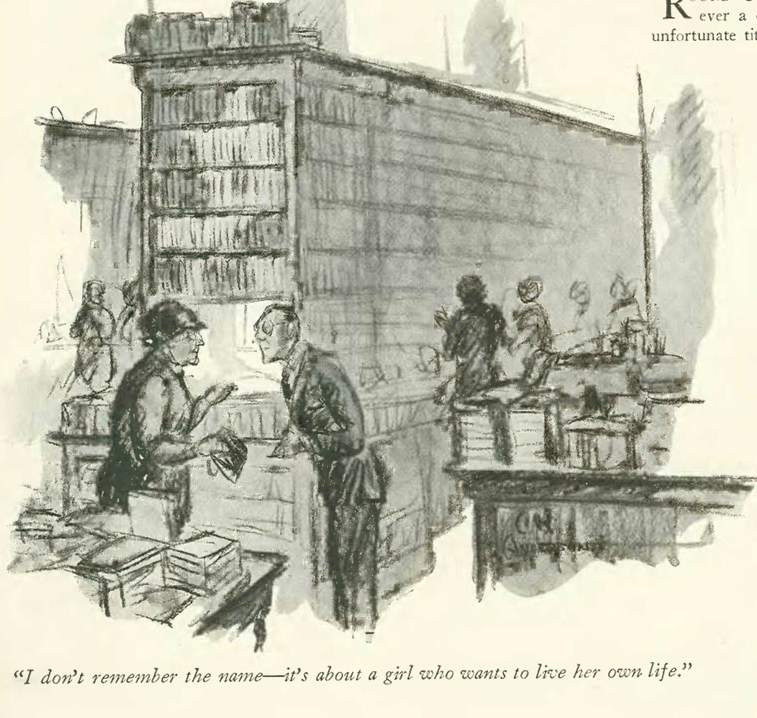
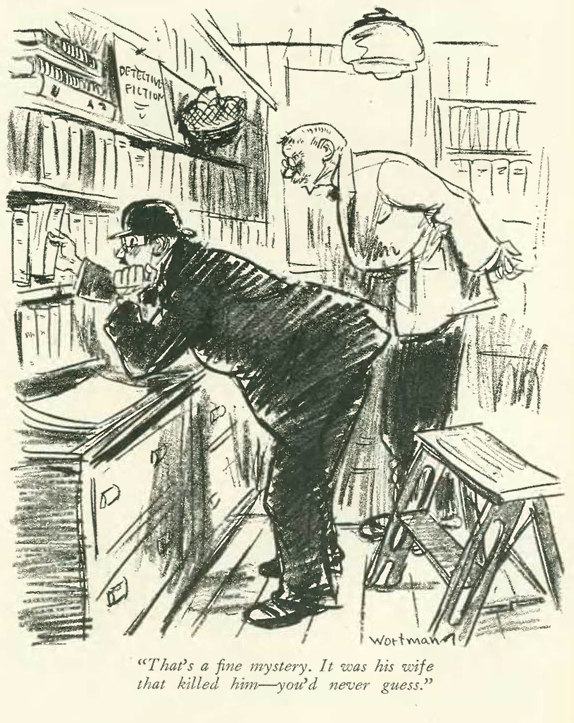
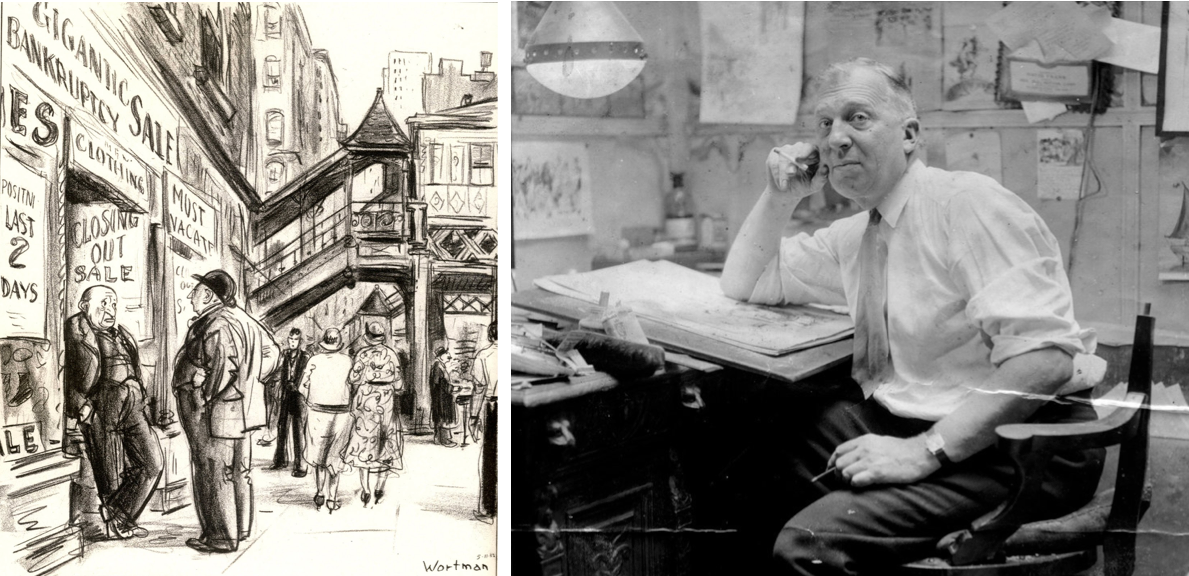
Denys Wortman (1887-1958) looked in on a bookseller with a “spoiler” problem. From 1924 to 1954 Wortman drew the nationally syndicated comic strip Metropolitan Movies for the New York World. The beautifully drawn strip offered a naturalistic portrayal of daily life in New York City…

Denys Wortman at work in an undated photo. At left, an example from his Metropolitan Movies comic strip, dated May 11, 1932. (New York World/New York Times)

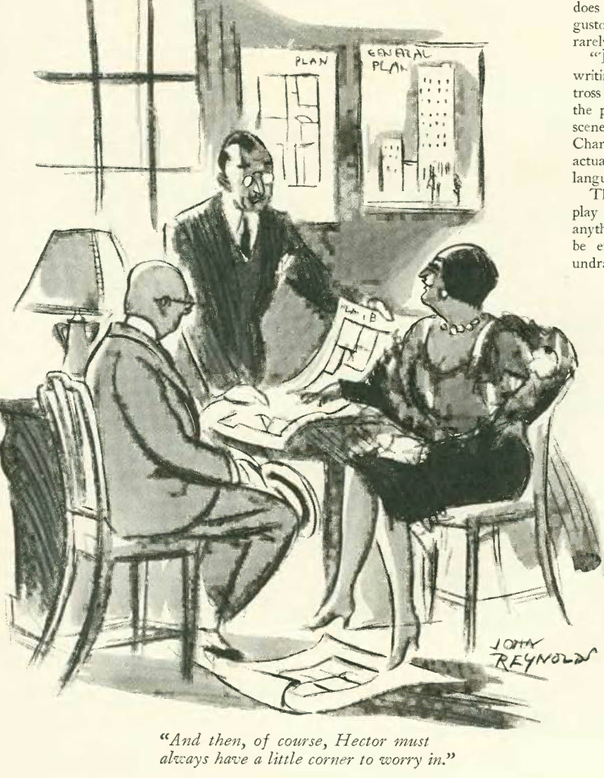
…and John Reynolds looked in on the challenges of the architecture profession. Reynolds contributed 34 drawings to the New Yorker from 1928 to 1930.

Next Time: Hello Molly…


Generation of Vipers

I’d spotted Nancy Hoyt’s byline in the New Yorker before, but I had no idea of the joys and sorrows (mostly sorrows) that were attached to it.

April 13, 1929 cover by Rose Silver.

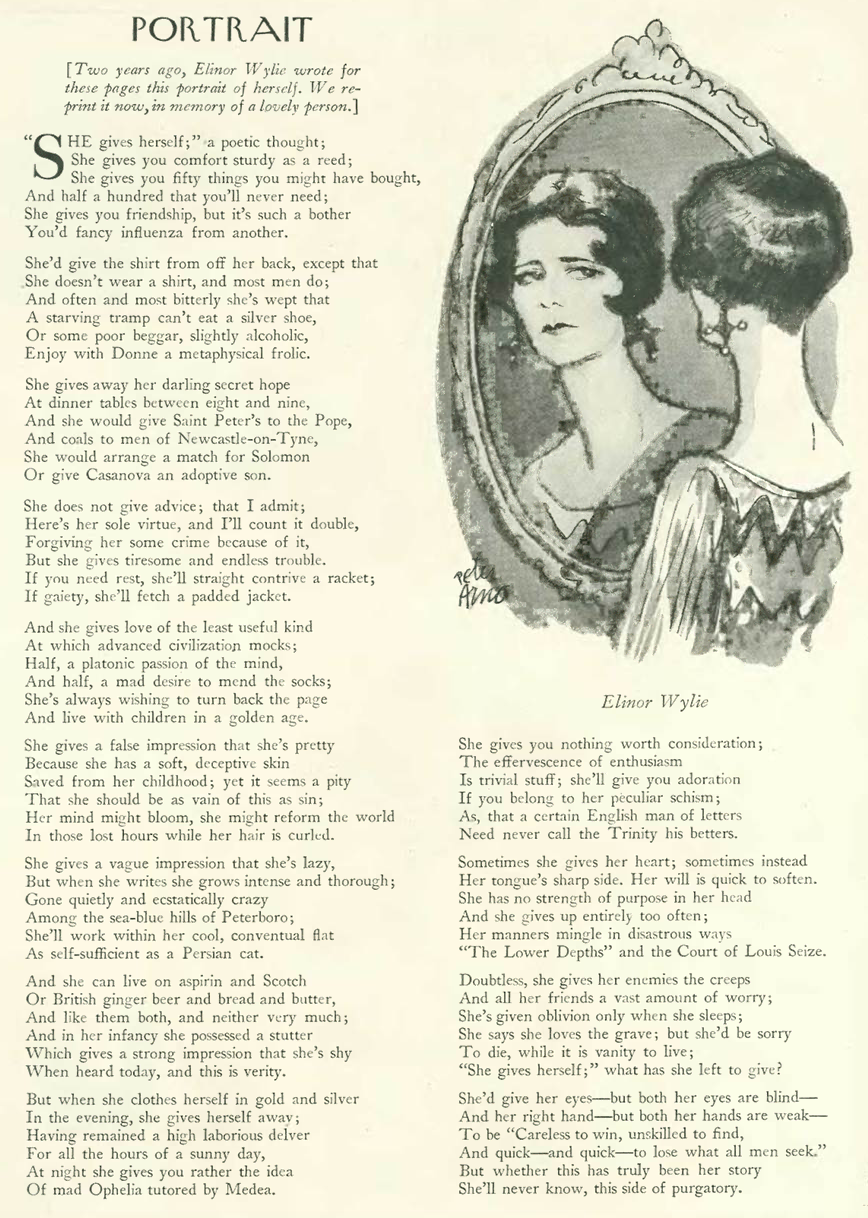
Nancy McMichael Hoyt was the younger sister of poet and writer Elinor Wylie, the latter a beloved figure at the New Yorker. Indeed when Wylie died suddenly on Dec. 16, 1928, the editors paid tribute by reprinting her autobiographical profile, “Portrait,” in the Dec. 29, 1929 issue:

Elinor and Nancy were the daughters of U.S. Solicitor General Henry Martyn Hoyt, Jr. and Anne Morton McMichael. Both came from prominent Pennsylvania families and loomed large in Washington society. The sisters became notorious for their multiple marriages and love affairs, and it was often thought that Nancy lived in imitation of her older sister when she took on a writing career of her own.

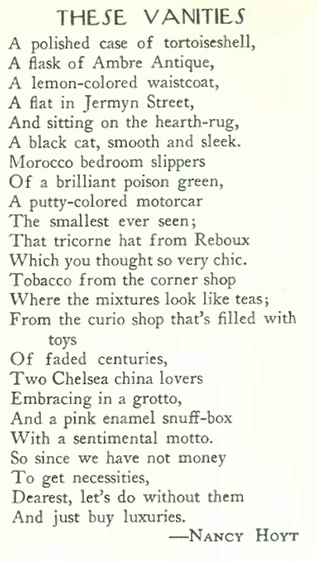
Elinor Wylie would contribute at least a dozen poems or short fiction pieces to the New Yorker between 1925 and 1929 (three of them posthumously). Her sister Nancy would contribute three pieces of short fiction (1927-28) and one poem, “These Vanities,” published in the March 12, 1927 issue:

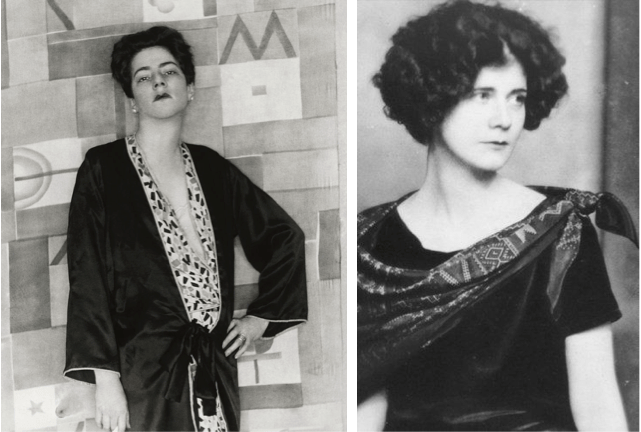
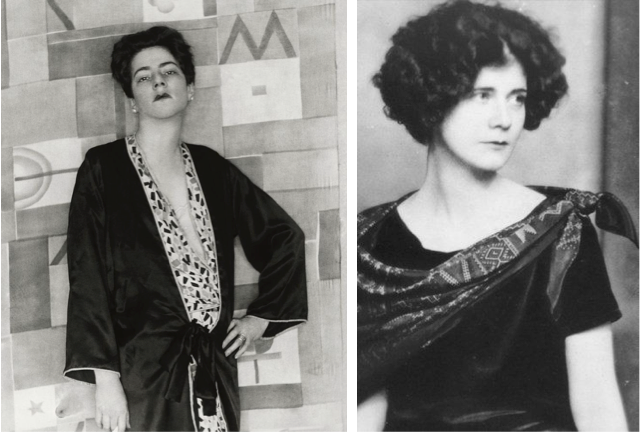
IMITATION OF LIFE…Nancy Hoyt (left) followed in the footsteps of her older, more successful sister, Elinor Wylie (right). The undated photo of Hoyt was taken by Sherril Schell. Wylie’s 1922 portrait was taken by her friend Carl Van Vechten. (CondeNast, alchetron)

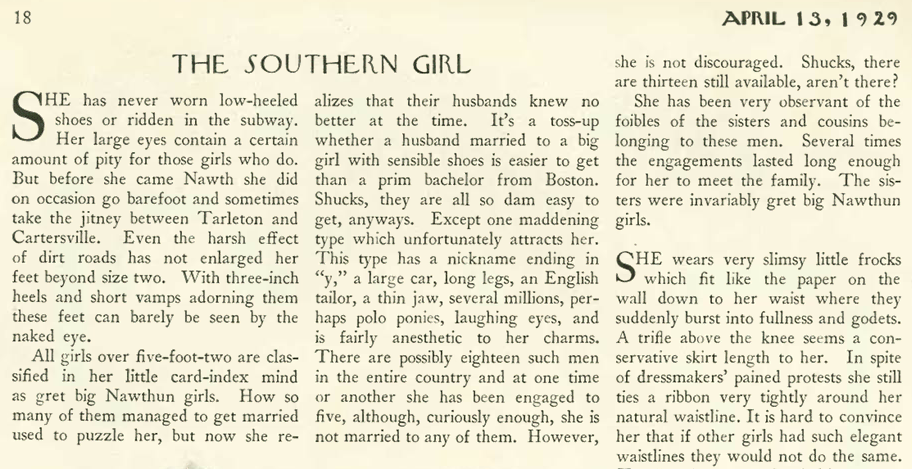
The April 13, 1929 issue featured Hoyt’s sharp satirical piece about a fictional Southern Girl…

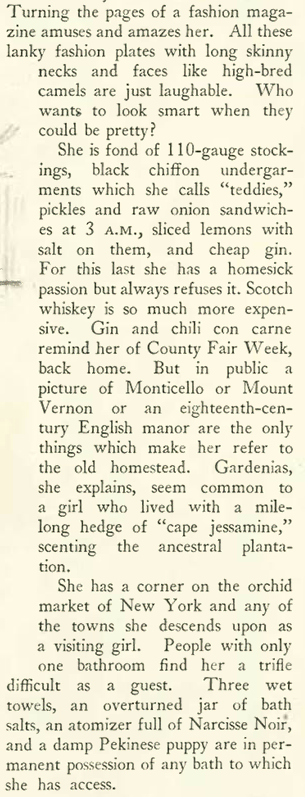
No doubt Hoyt drew on her own observations of Washington society and the clash of debutantes from the North and South. She continued her skewering of the Southern girl, likening her to something of a country bumpkin…

…and not very bright at that…

The last paragraph is telling, because in many ways it describes Hoyt’s own life. In her 2003 book, A Private Madness: The Genius of Elinor Wylie, Evelyn Helmick Hively wrote that Hoyt “scandalized Washington by cancelling her wedding after society guests arrived for the ceremony” (apparently Elinor helped her reach the decision). Her various love affairs and marriages provided rich material for reporters who wrote about her flings with the Earl of Donegal and and the heir to the Reynolds Tobacco fortune. The Washington Herald reported her attempt to elope to Canada with a taxi driver she had known for only ten days.

Hively observed that each member of the Hoyt family “seemed fated to flame briefly, to struggle, and too often to die tragically.” Indeed, Elinor and Nancy’s mother Anne once told a reporter that she had given birth to a “generation of vipers,” and predicted she would outlive them all. And she nearly did:

• The eldest child, Elinor Wylie, suffered from extremely high blood pressure that gave her unbearable migraines. She died of a stroke on Dec. 16, 1928, while going over a typescript of her poetry collection, Angels and Earthly Creatures, with her estranged third husband, William Rose Benét. She was 43.

• The eldest son, Henry Martyn Hoyt, became a poet and painter. He killed himself in 1920 at age 33 by inhaling through a tube attached to a gas jet.

• Daughter Constance A. Hoyt married a German diplomat (against her family’s wishes) and became Baroness von Stumm-Halberg. She was either 33 or 34 when she committed suicide in Bavaria in 1923.

• Morton McMichael Hoyt would marry the same woman—Eugenia Bankhead (sister of actress Tallulah Bankhead)—three times. Heavy drinking ended his life in 1949, at age 50.

• Just fifteen days later Nancy Hoyt would succumb to the drink at age 47.

The family patriarch, Henry Martyn Hoyt, Jr., was long gone by then, dying at age 54 in 1910. The family matriarch, Anne Morton McMichael, almost outlived them all (odd, considering that she was in ill health much of her life and often remained confined to her room). She died in her late 80s, in 1949, the same year as her two youngest children.

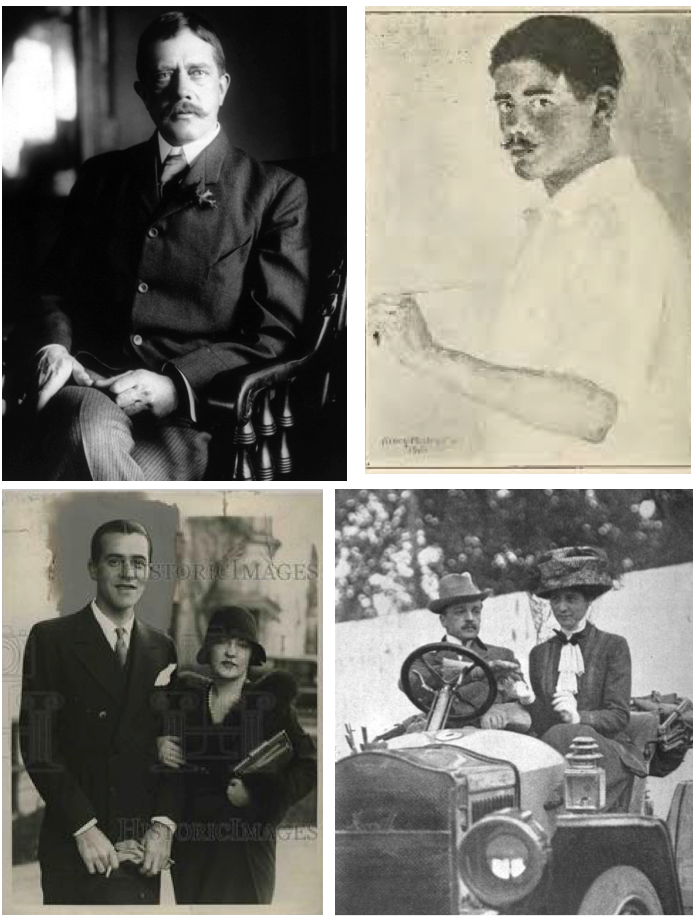
Top left, Henry Martyn Hoyt, Jr., U.S. Solicitor General and patriarch of the Hoyt family; in addition to Elinor Wylie and Nancy Hoyt, his children included (clockwise, from top right) the painter and poet Henry Martyn Hoyt III (in a self-portrait); Constance Hoyt (pictured riding in a car with Baron Ferdinand von Stumm-Halberg); and Morton Hoyt, seen here with his three-time wife Eugenia Bankhead. (Wikipedia, hokku.wordpress.com, theesotericcuriosa.blogspot.com, historic images.com)

And as a final, sad note (did you expect anything else?) Nancy’s daughter, Edwina Curtis, would eventually inherit the bulk of the Hoyt estate, which was quickly squandered.

 *  *  *

Silence is Golden

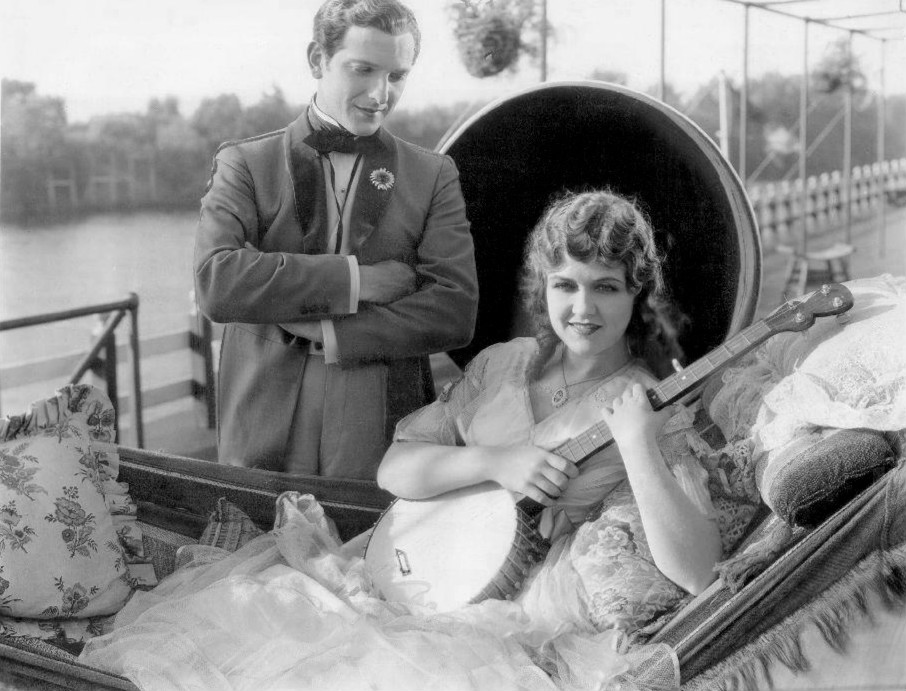
During the silent era, actress Mary Pickford was hands down the queen of the movies. Pickford and her husband, actor Douglas Fairbanks, were also the original Hollywood power couple, founding the Pickford-Fairbanks Studio and later joining forces with Charlie Chaplin and D.W. Griffith to create United Artists. Pickford was also one of the original 36 founders of the Academy of Motion Picture Arts and Sciences (the “Oscar” presenters).

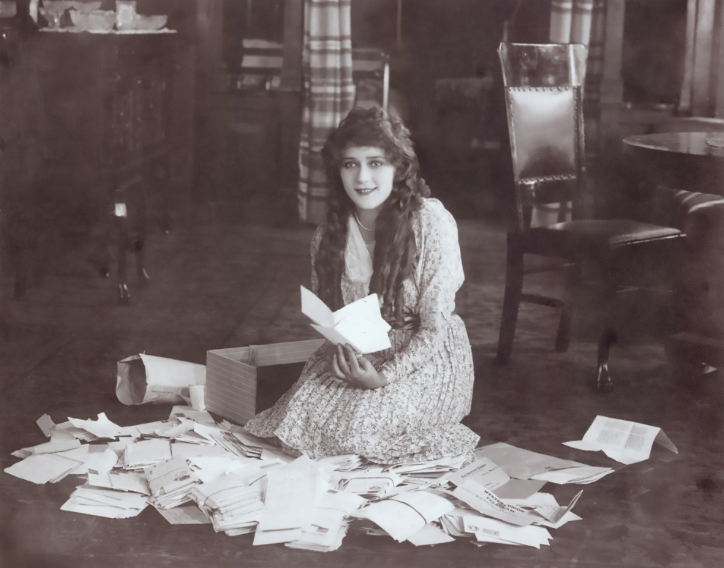
AMERICA’S SWEETHEART…Mary Pickford with her signature curls, surrounded by fan mail, circa 1920. (AMPAS)

Although she was born in Canada, she was beloved in the States as a symbol of female virtue, affectionately dubbed “America’s Sweetheart.” According to writer Eileen Whitfield (Pickford: the Woman Who Made Hollywood), one silent movie reporter described Pickford as “the best known woman who has ever lived, the woman who was known to more people and loved by more people than any other woman that has been in all history.”

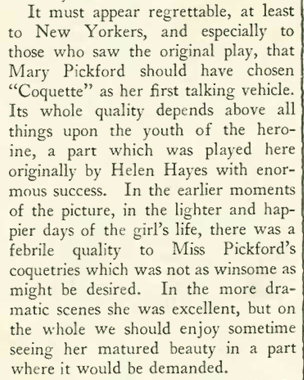
Also known as the “girl with the curls” for her famous ringlets, fans were shocked to find those ringlets replaced by a short bob in Pickford’s first talking film, Coquette, in which she played a reckless socialite. The New Yorker was not shocked; on the contrary, it found Pickford’s depiction of a coquette rather forced, and not altogether believeable:

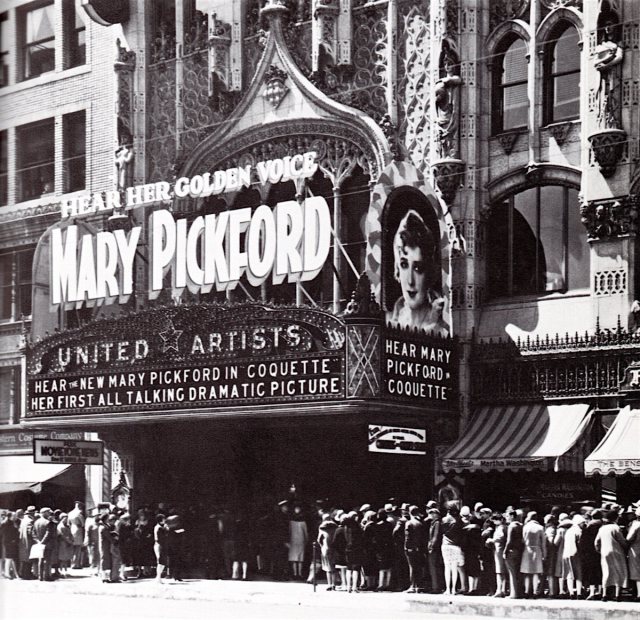
THUS SPOKE MARY PICKFORD…Crowds lined up at the United Artists Theatre in Los Angeles to get a first glimpse of the “new” talking Mary Pickford in Coquette. (martinturnbull.com)

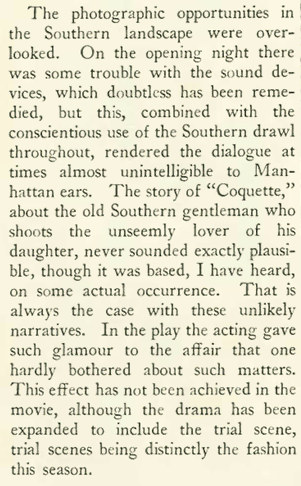
Not only did the New Yorker find Pickford’s performance less than plausible, but the storyline itself seemed a bit fanciful. As for the “Southern drawl” used in the dialogue, the magazine found it “almost unintelligible to Manhattan ears…”

You be the judge. Here’s a brief clip from the film:

Coquette was a box office success, and Pickford would win an Oscar for her first sound performance. Nevertheless, her best days were in the silent era, and she retired from acting in 1933.

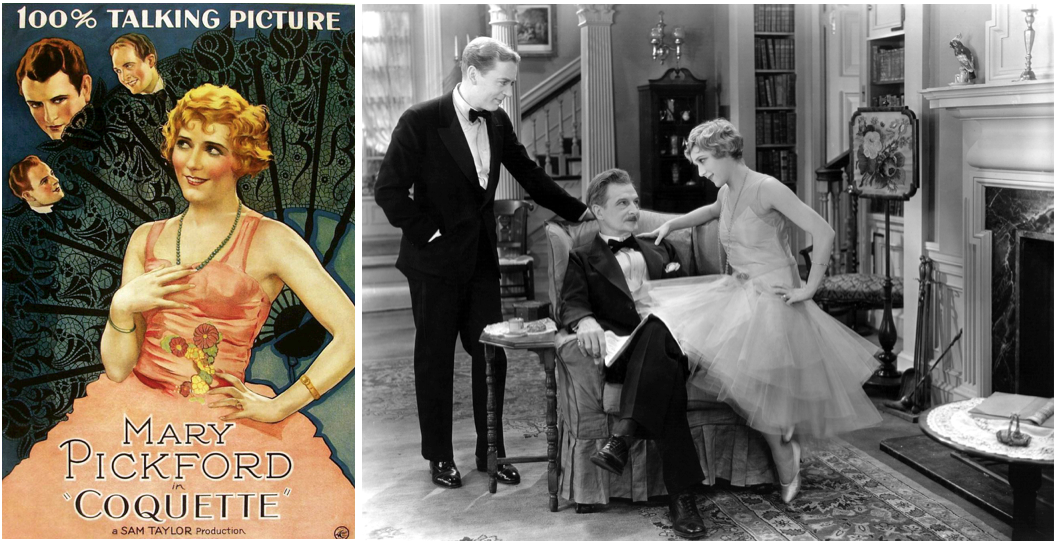
100% MARY…(Left to Right) Matt Moore, John St. Polis, and Mary Pickford in Coquette (1929), a film directed by Sam Taylor. (Wikimedia)

 *  *  *

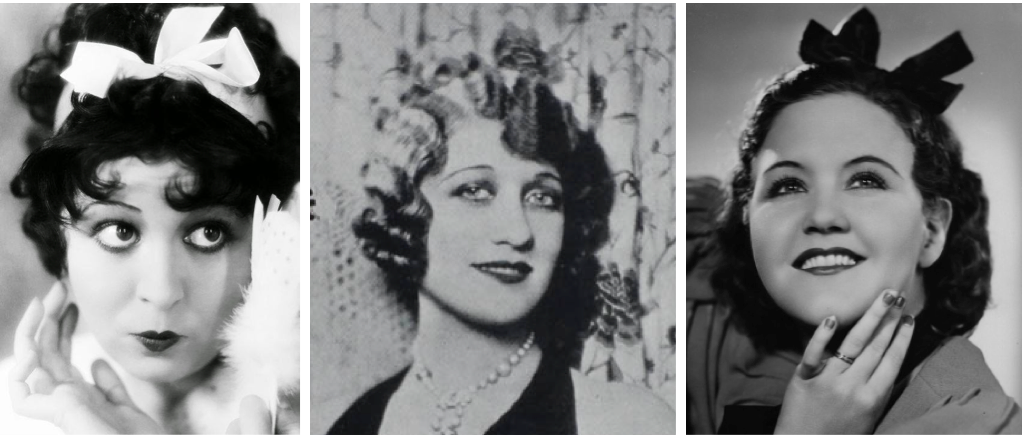
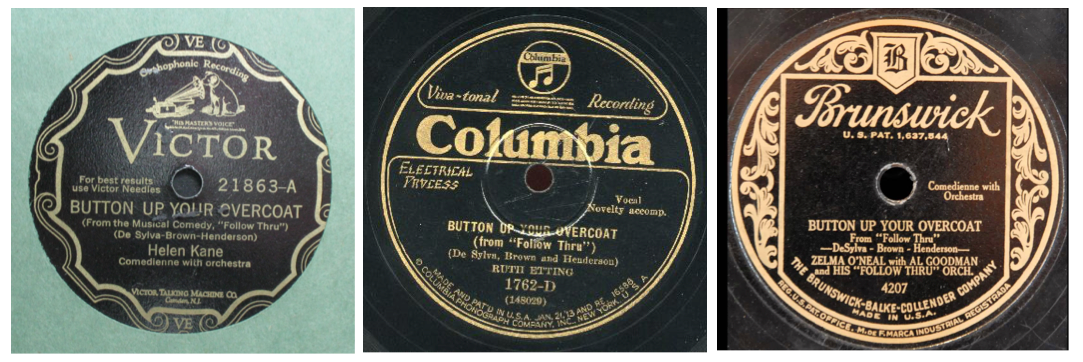
Today we associate popular songs with a particular performer or group, but in the first half of the 20th century most songs were recorded by many different artists, and such was the case with Ray Henderson’s hit “Button Up Your Overcoat” (from the musical comedy Follow Thru), recordings of which were available under three different labels by three popular artists of the day—Helen Kane, Zelma O’Neal, and Ruth Etting. As the New Yorker suggested, you could “pick your own fashions”…

PICK YOUR FASHION…Left to right, Helen Kane, Ruth Etting and Zelma O’Neal all recorded renditions of the “Button Up Your Overcoat” in 1929. (bennypdrinnon.blogspot.com/ruthettig.com/findagrave.com)

 *  *  *

From Our Advertisers

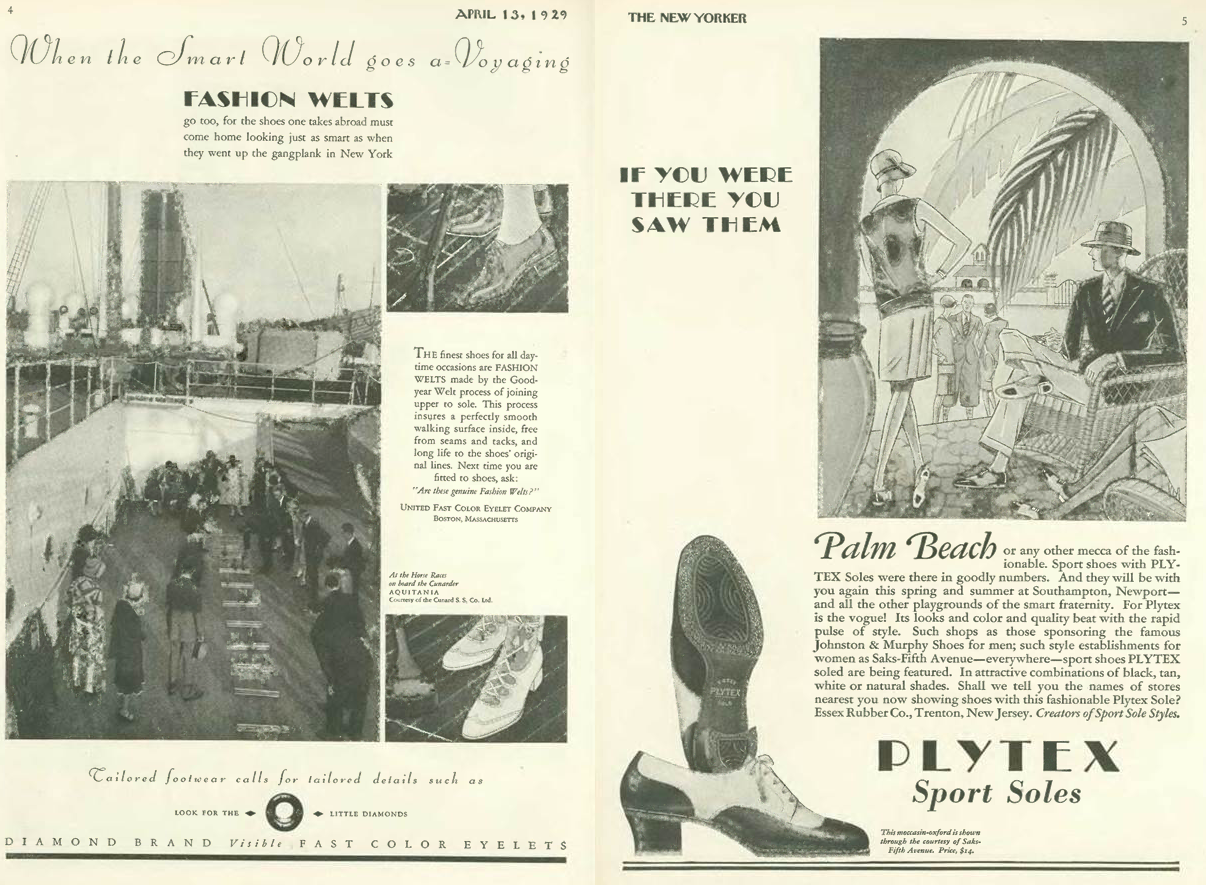
Spring had sprung and so did “fashion welts” and rubber-soled Plytex shoes suitable for ship decks or leisurely strolls along Palm Beach…

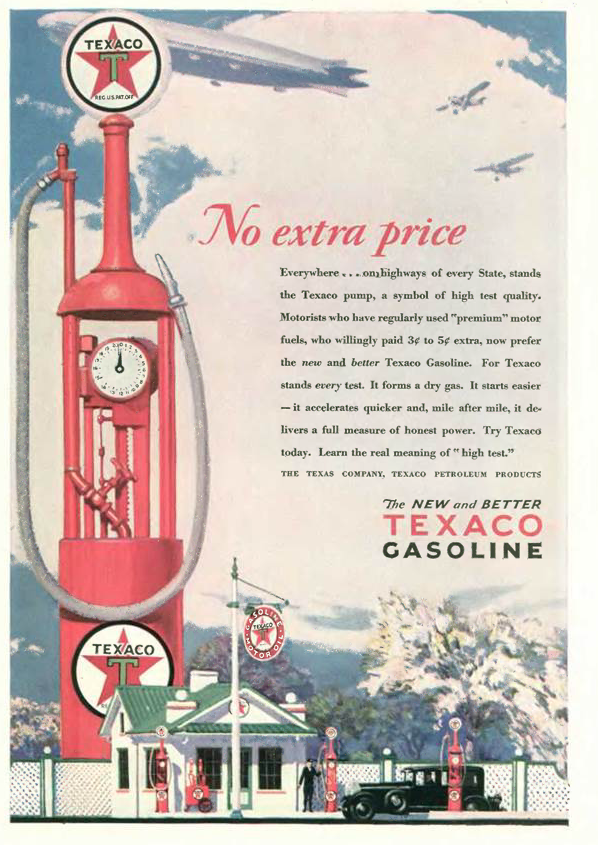
…while the folks at Texaco referenced the future with dirigibles and airplanes to hawk its higher octane “premium” gasoline…

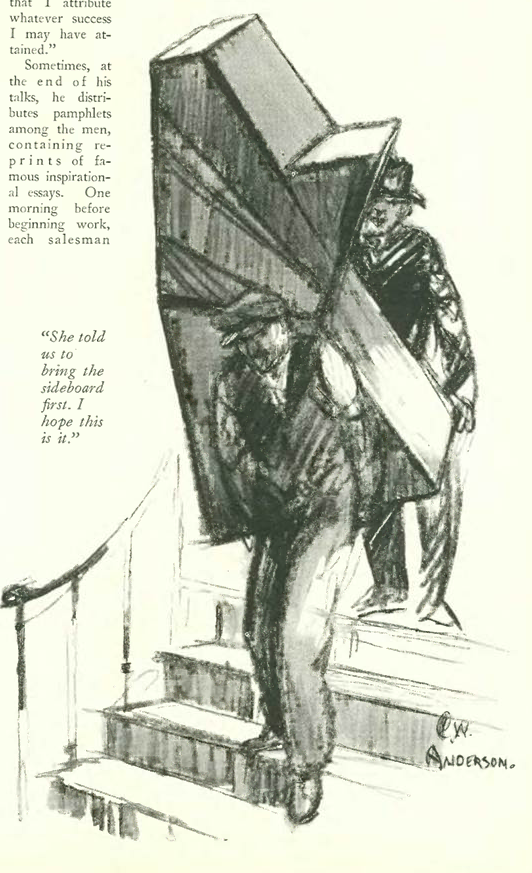
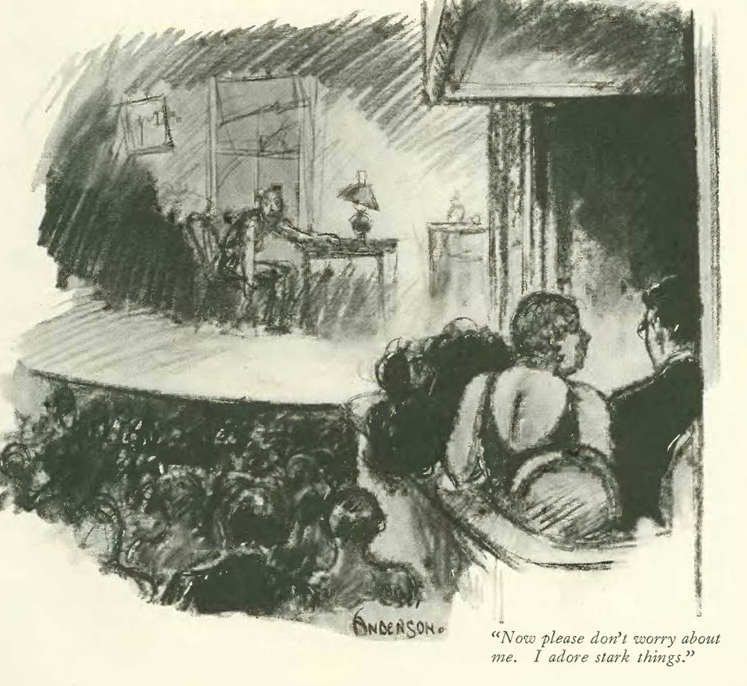
For our comics, we have this entry by C.W. Anderson, who was born in Wahoo, Nebraska, and went on to author the popular Billy and Blaze books for young readers. I know this thanks to Michael Maslin’s indispensable The New Yorker Cartoonists A-Z.

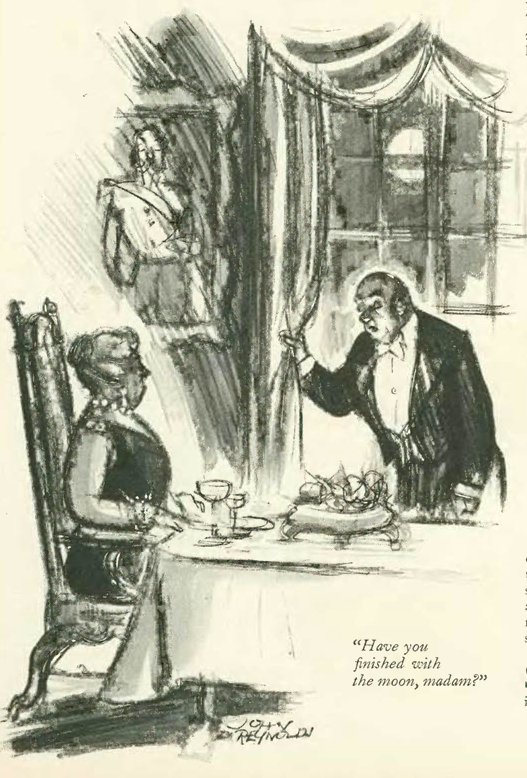
…and we close with this cartoon by John Reynolds, who contributed a total of 34 drawings to the New Yorker between 1928 and 1930…

Next Time: The So-So Soprano…

While You Were Away

During the Roaring Twenties New Yorkers took a wrecking ball to much of their past, and at a breathtaking pace that left many residents little time to ponder what was lost.

March 30, 1929 cover by Julian de Miskey.

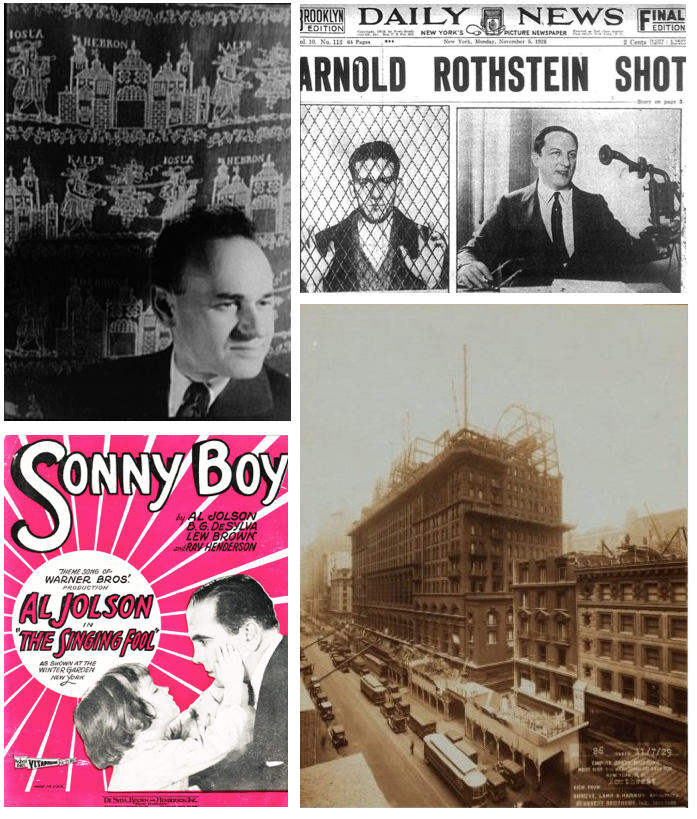
Writer and cultural critic Gilbert Seldes succinctly summed up this spirit of the times in a tongue-in-cheek “reminiscence” of the “old” New York—that is, how the city appeared the previous fall before he left to spend the winter in Bermuda:

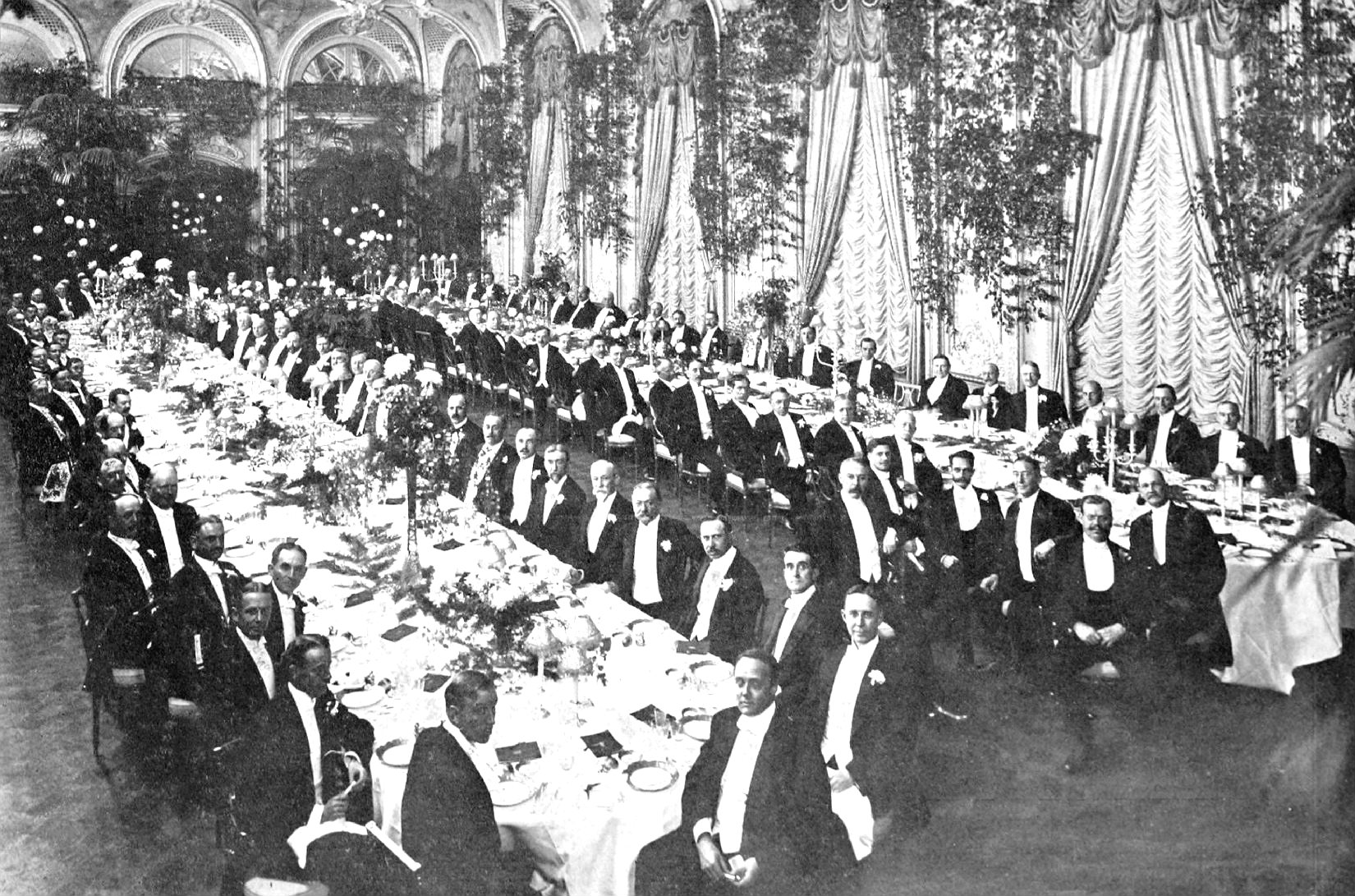
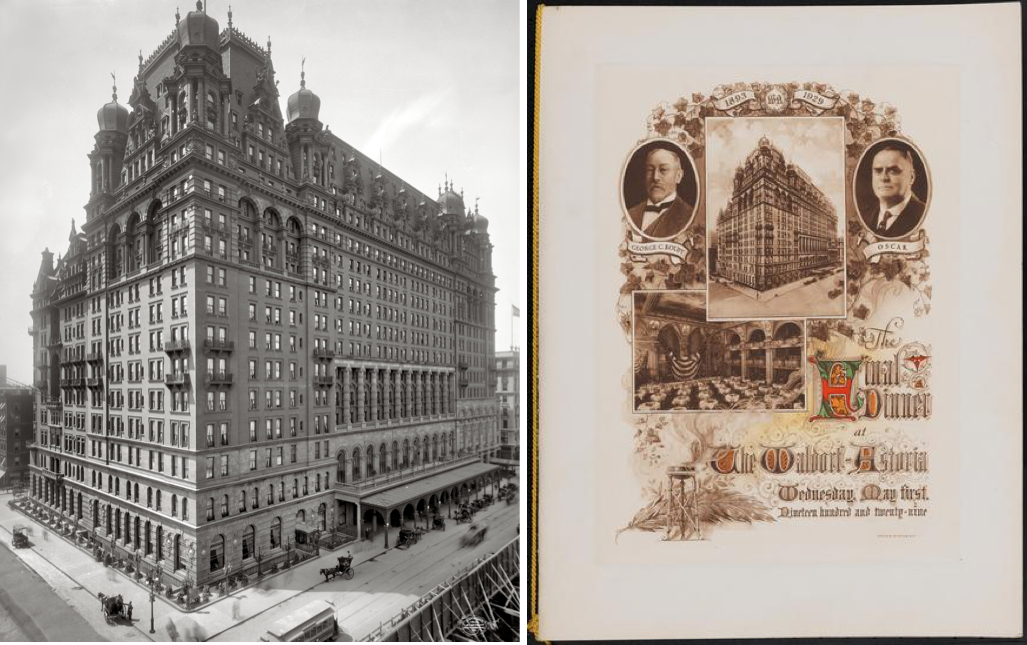
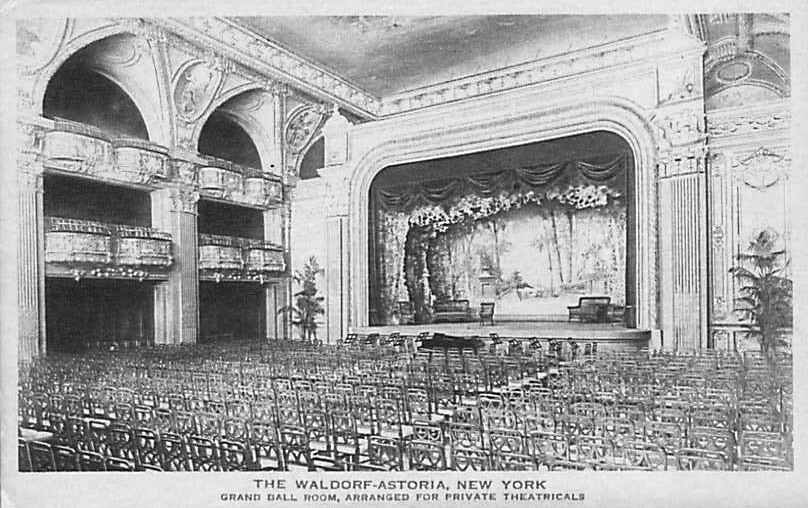
NOW WHERE WILL I GET A WALDORF SALAD? Writer Gilbert Seldes (top left) ticked off some of the many changes to his city while he was away for the winter, including (clockwise, from top right), the murder of racketeer Arnold Rothstein; the planned demolition of the Waldorf Astoria to make room for the Empire State Building (photo of the partially demolished hotel); and perhaps the first song to be overplayed on the radio ad nauseumAl Jolson’s “Sonny Boy.” (Wikipedia, Daily News, New York Public Library, musicals101.com)

A member of the intellectual elite but also a strong advocate for cultural democracy, Seldes began writing for the New Yorker in late 1925 and would be a frequent contributor through 1936. In 1937 he would join CBS as its first director of television programs, and would also become one of television’s first critics thanks to his 1937 Atlantic Monthly article, “The ‘Errors’ of Television.” (Note: There were only 50 experimental TV sets in the New York area in 1937, and the first commercially available sets weren’t sold until 1939). In 1958—when there would be 42 million U.S. households with a television—Seldes would serve as the host of NBC’s The Subject is Jazz.

 *  *  *

Peggy Bacon Did It All

Another early contributor to the New Yorker was Peggy Bacon, who displayed her sharp wit in her nearly 50 articles and poems for the magazine from 1926 to 1950. But Bacon was also well-known for displaying her talent and wit in the many paintings and illustrations she created throughout her long career. The New Yorker’s art critic Murdock Pemberton sang her praises in the March 30, 1929 issue after visiting her show at the Weyhe Gallery.

A FEW IDEAS was the title of this 1927 drypoint work featured in Peggy Bacon’s Weyhe Gallery show. At right, Bacon, circa 1920s. (artnet.com/wikipedia)
A sampling of Peggy Bacon drypoint works from the 1920s, clockwise, from top: Frenzied Effort, 1925; Vanity, 1929; Penguin Island, 1926. (Brooklyn Museum/Artnet/1stdibs.com)

 *  *  *

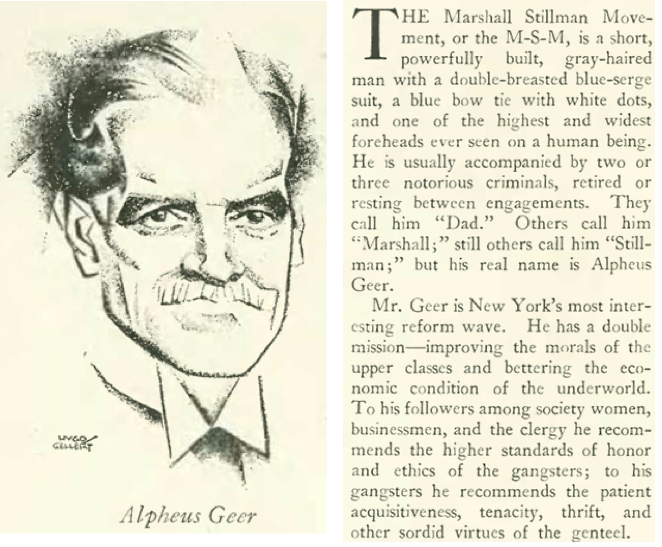
The March 30 profile featured aviation innovator Giuseppe Mario Bellanca, who in 1922 designed the first enclosed-cabin monoplane in the U.S. Perhaps even more significant, his design in 1913 of a plane with a propeller in front, a wing in the middle and tail at the end set the standard for all aircraft built since. (Before 1913 many planes were propelled from the rear, with the “tail” projected in front of the craft). The profile writer, William Weimer (with art by Hugo Gellert) admired Bellanca’s ability to stand toe-to-toe with the mighty du Pont family:

Bellanca founded the Roos-Bellanca Aircraft Company in Omaha in 1927, and was featured on the cover of Time. In 1929 he created the Delaware-based Bellanca Aircraft Corporation of America in a financial partnership with the du Ponts.

AVIATION PIONEER Giuseppe Mario Bellanca (center) at the new Bellanca Airfield in New Castle, Delaware, 1928. Bellanca’s planes would establish numerous records for altitude, endurance, and speed. (Delaware Public Archives)

 *  *  *

Showing Some Restraint

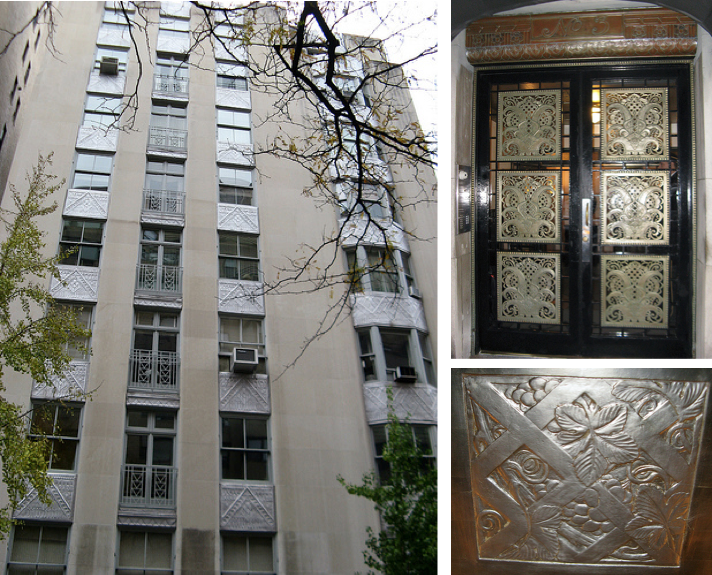
In his “Sky Line” column, the New Yorker architecture critic George S. Chappell (aka “T-Square”) praised an award-winning 1928 apartment at 3 East 84th Street for its contemporary charm and “fine restraint.” Designed by Raymond Hood and John Mead Howells, the 9-story building was commissioned by Joseph Medill Patterson, owner of the New York Daily News. The design would be influential in Hood’s much more ambitious projects two years later—the Daily News Building (1930) and Rockefeller Center (1931).


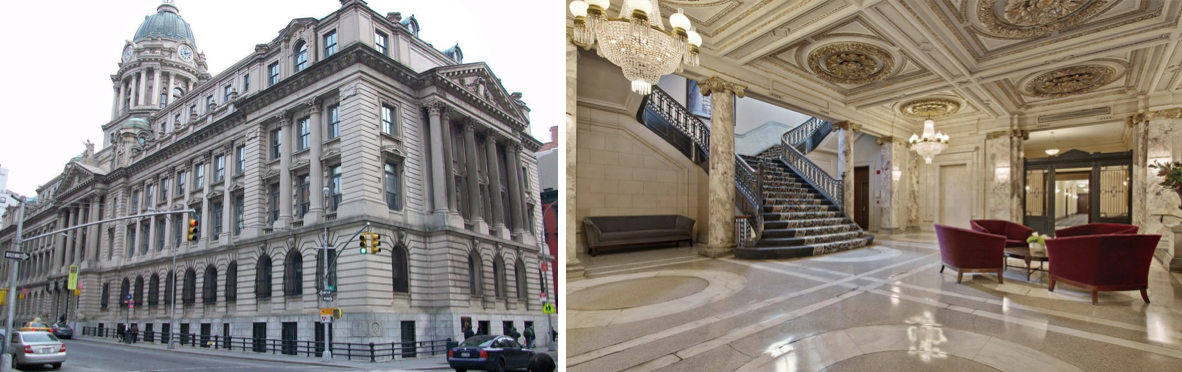
The Raymond Hood– and John Mead Howells-designed 3 East 84th Street. Top right, the front entrance; and bottom right, ceiling’s silver leaf squares. (Susan DeMark–mindfulwalker.com)

 *  *  *

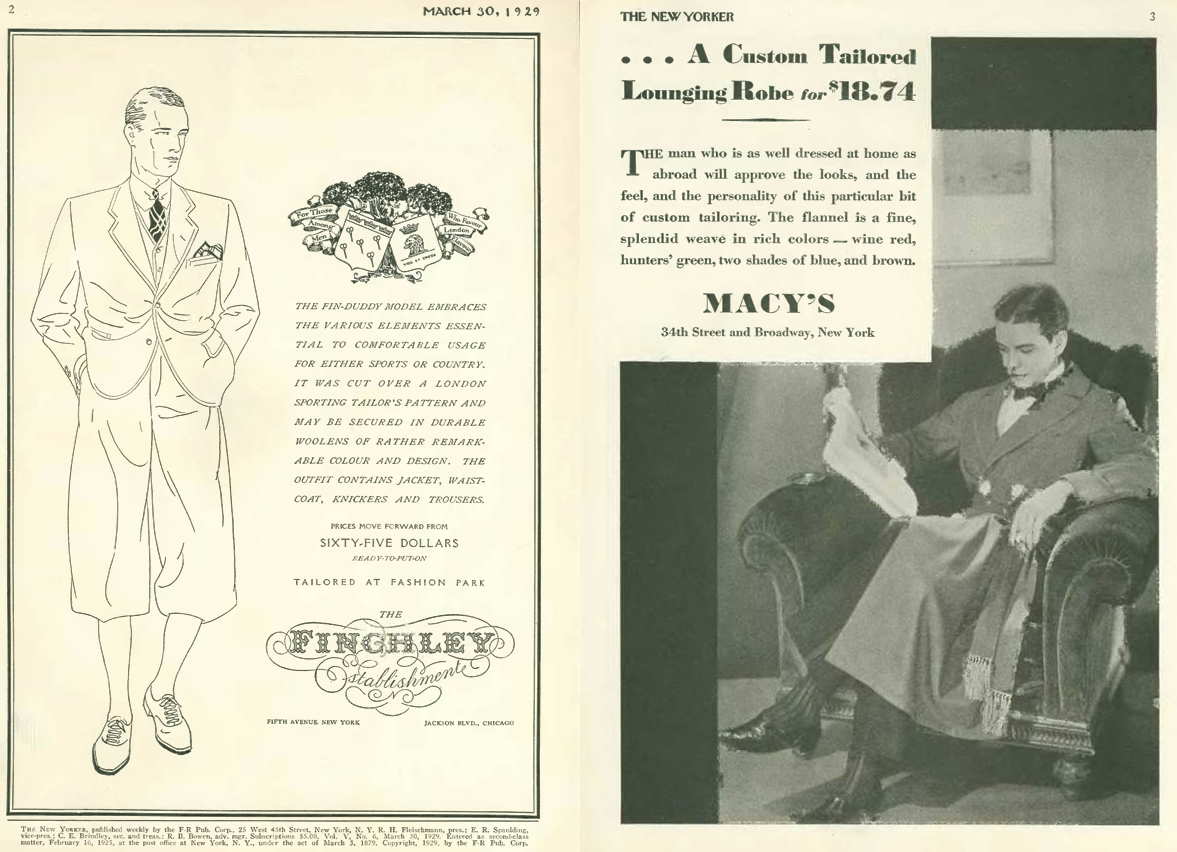
Advertisers in the March 30 issue offered various garments for the gentleman, including this sports-country ensemble at left from Finchley and a custom lounging robe from Macy’s…

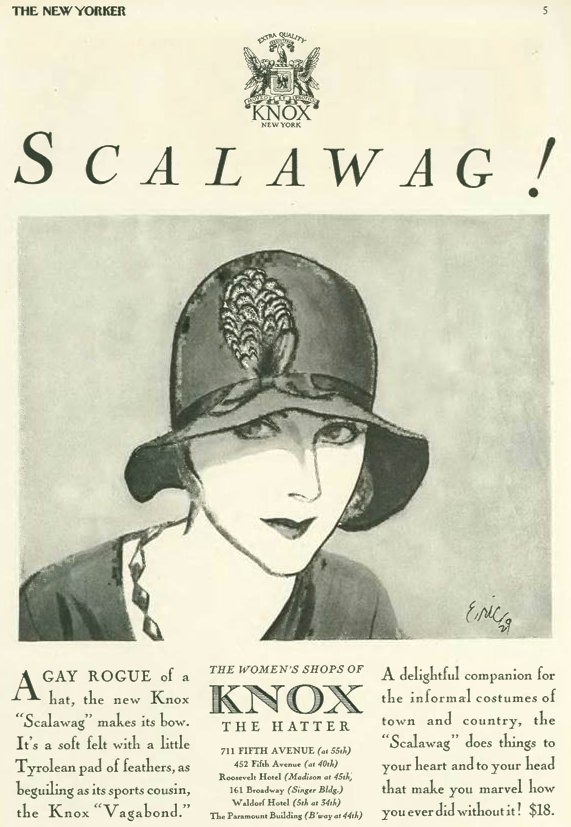
…and for fashionable, amusingly mischievous woman there was the new “Scalawag” hat by Knox (ad illustrated by the great Carl Erickson)

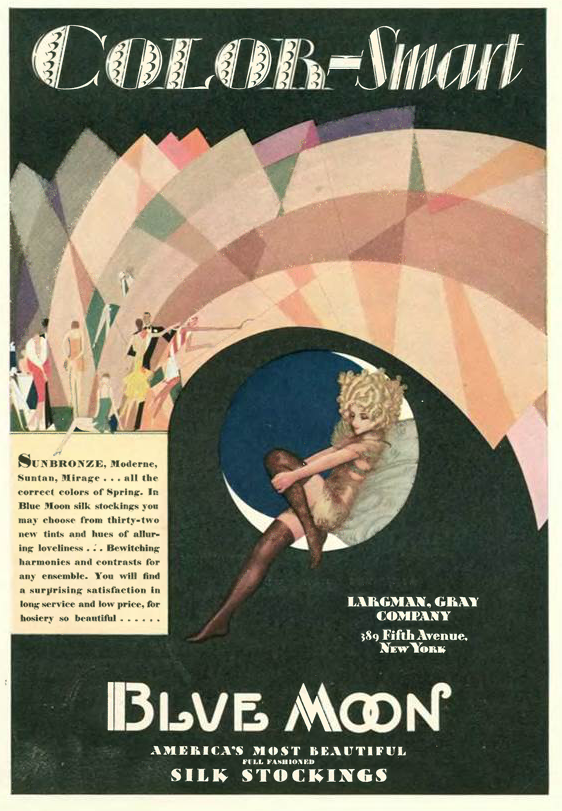
…Blue Moon’s blonde fairy girl was one of the Jazz Age’s most recognizable labels…here she is matched with an Art Deco-inspired spectrum of stocking colors…

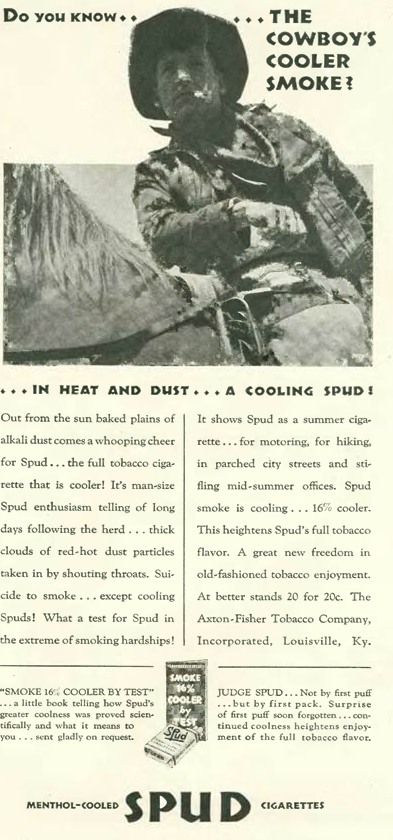
…Ligget & Myers Tobacco Company joined the ranks of sophisticated advertisers who touted a product—in this case Fatima cigarettes—without actually showing the product…

…on the other hand, American Tobacco Company, the makers of Lucky Strike, made doubly sure you wouldn’t forget that bright red bullseye, or Rosalie Adele Nelson, “The Original Lucky Poster Girl”…

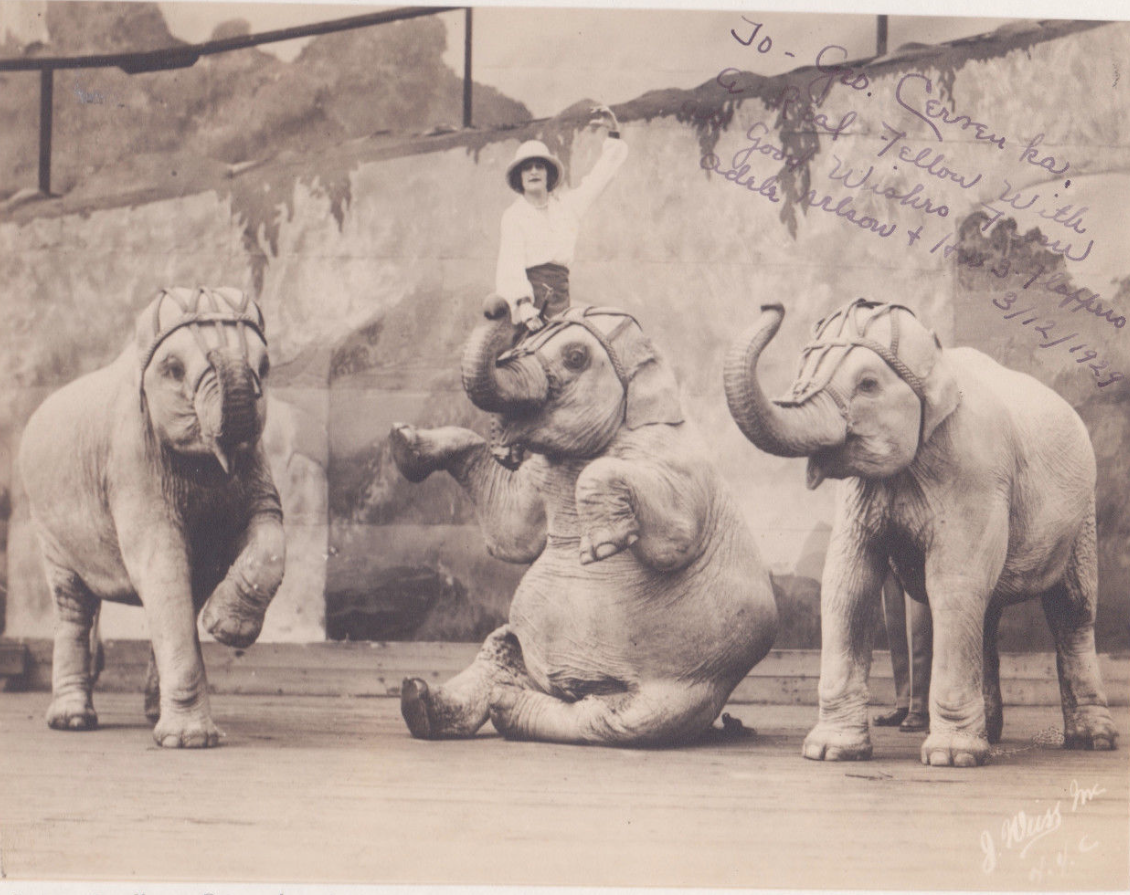
Nelson’s image for Lucky Strike was almost as ubiquitous as the fairy in the Blue Moon ads. Apparently she was also a member the Nelson family of circus acrobats and performed her own signature act with baby elephants:

Rosalie Adele Nelson with her baby elephant act, 1929 (eBay)

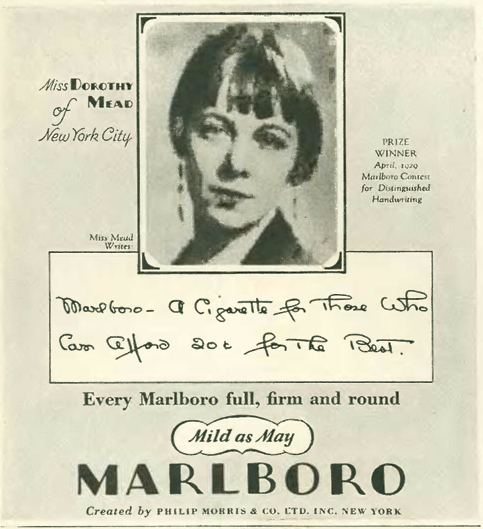
Philip Morris took an entirely different (and unusual) approach to selling its relatively new brand of Marlboro cigarettes by touting the achievements of Gretchen Colnik, winner of the “1928 Marlboro Contest for Distinguished Handwriting….”

Like Rosalie Adele Nelson, Gretchen Colnik would go on to minor fame of her own. She was managing editor of the Great Neck, NY, newspaper before returning to her hometown—Milwaukee, Wisconsin. From 1952 to 1966 Gretchen was the Martha Stewart of Milwaukee, hosting a TV show that provided advice on interior design, food and crafts. “The Gretchen Colnik Show” was sponsored by Mrs. Karl’s Bread.

Our cartoon is by Leonard Dove, who looks in on an architect at work:

The Cruelest Month

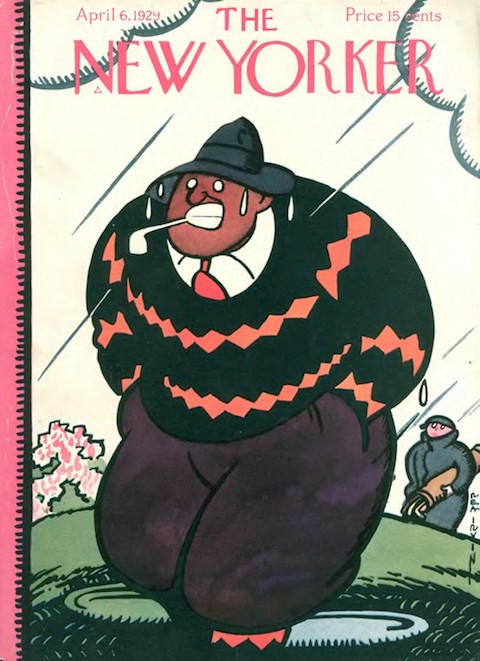
The film reviews for the April 6, 1929 issue found the New Yorker once again at odds with Hollywood and favoring cinematic products from the Old World.

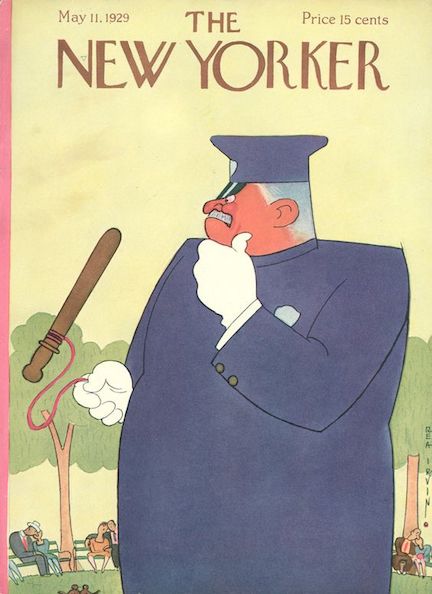
April 6, 1929 cover by Rea Irvin.

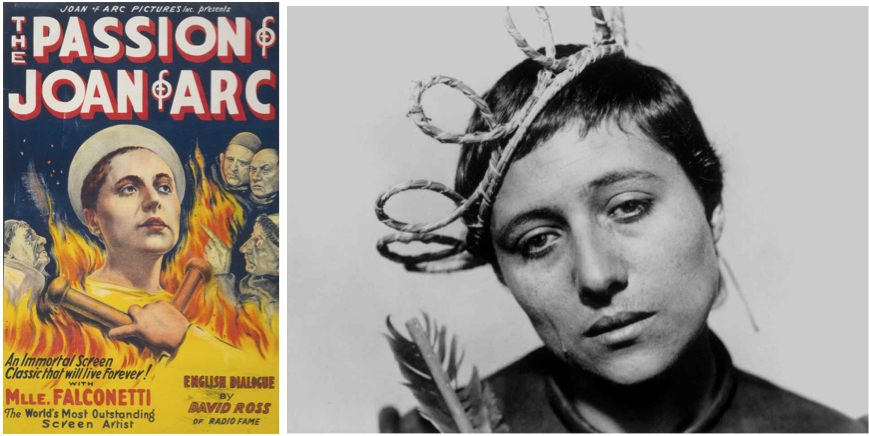
In the case it was a French film, The Passion of Joan of Arc, which even today is regarded as a cinematic landmark.

A LOT AT STAKE…American poster for The Passion of Joan of Arc; at right, Maria Falconetti in the title role. (Wikipedia/Film Forum)

The New Yorker review praised the film as “one of the few of the year which merit serious attention”…

On the other hand, there were the latest products from Hollywood, which stood on the other side of a “vast abyss” from the French film:

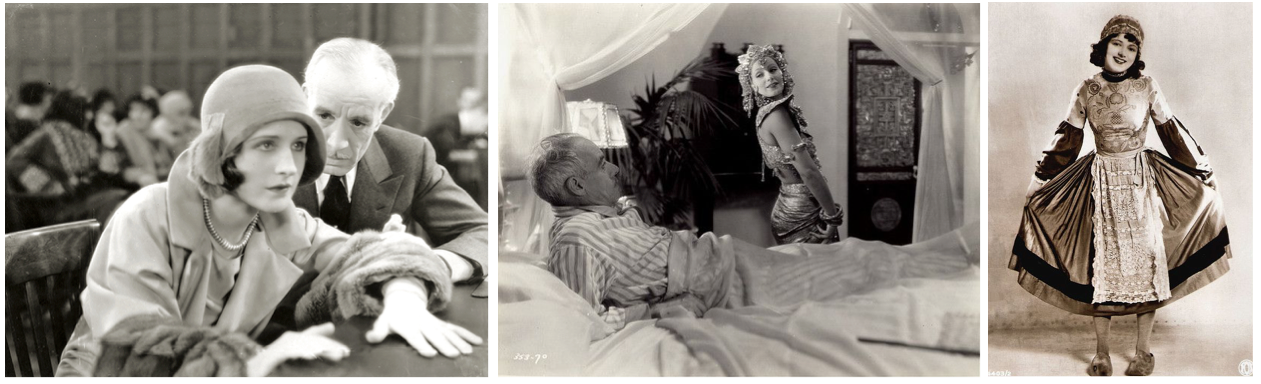
HO HUM FOR HOLLYWOOD…At left, Mary Dugan (Norma Shearer) with her conniving lawyer, Edward West (Lewis Stone) in The Trial of Mary Dugan; Lewis Stone was a apparently a busy man in the late 1920s—here he is again (center image), this time portraying John Sterling, a tea plantation investor lacking the mojo to keep up with his much younger wife, Lillie (Greta Garbo) in Wild Orchids; and at right, Janet Gaynor as a little Dutch girl in Christina, a film now considered lost. Click image to enlarge (normashearer.com/pinterest)

 *  *  *

From Our Advertisers

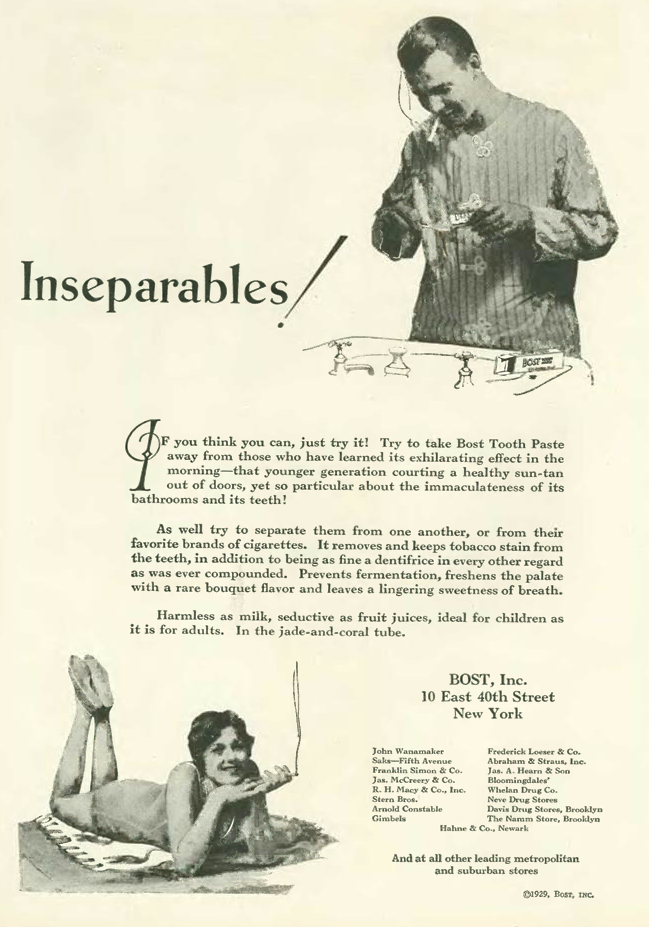
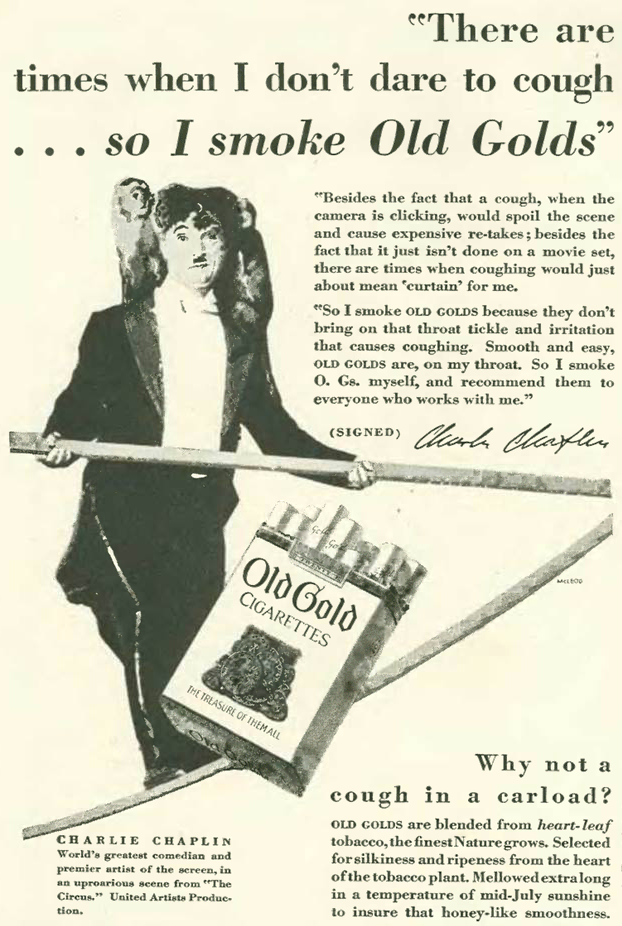
The April 6 issue found Charlie Chaplin getting in on the action of Old Gold cigarette endorsements…

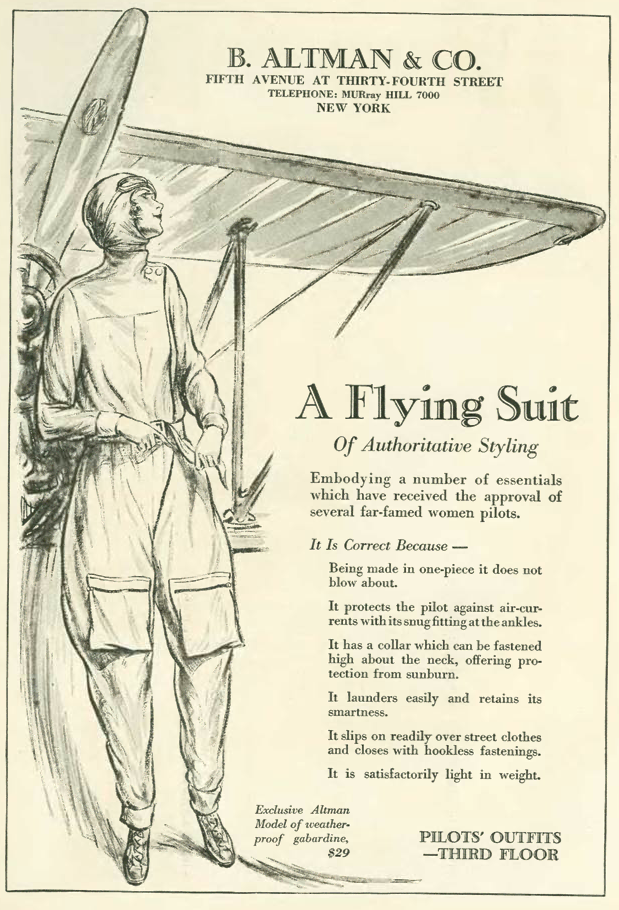
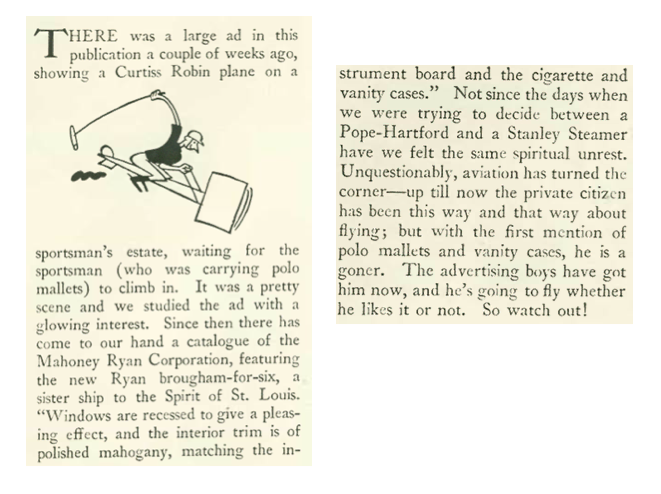
…while Curtiss Flying Service thought it might interest some of the more well-heeled New Yorker readers in the purchase of an airplane…

…a couple weeks later, in the April 20 issue, the New Yorker would make this observation about the ad in “The Talk of the Town”…

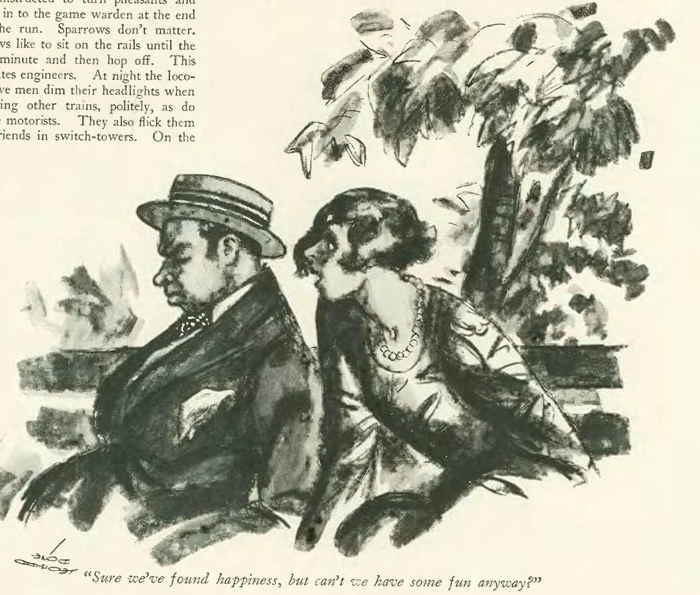
…and finally, our cartoon by R. Van Buren, looking in on yet another sugar daddy and his much younger companion on a night out…

Next Time: Generation of Vipers…

Queen of the Night Clubs

In the Roaring Twenties, Mary Louise Cecilia—aka Texas Guinan—was the undisputed queen of New York’s boozy, bawdy nightclub and speakeasy scene.

March 23, 1929 cover by Gardner Rea.

During the 1920s Guinan operated one of New York’s most famed speakeasies, The El Fey Club, which attracted the likes of Mayor Jimmy Walker, actors George Raft and Peggy Hopkins Joyce, writers including Ring Larder and Damon Runyon, and gossip columnists Walter Winchell, Mark Hellinger, and Ed Sullivan (yep, the same Ed who later hosted TV’s most famous variety show).

It was still months before the big stock market crash, but in the pages of the New Yorker you could already sense a change in its voice; it was maturing, to be sure, but it also seemed to be growing weary of the party. The magazine’s nightlife correspondent, Lois Long, contributed sporadically to her once-lively “Tables for Two” column (she was now a mother, and would abandon the column altogether in 1930). As for the queen of nightlife, Texas Guinan, New Yorkers were ready for something different.

BEATING THE RAP…In June 1928 Texas Guinan and other New York speakeasy operators were arrested and indicted by a federal grand jury. Guinan beat the rap, and was acquitted in April 1929. (ephemeralness york)

In a review of her latest movie, Queen of the Night Clubs, the New Yorker found that Guinan lacked her famed charm and vitality, and that the camera was “not kind to her looks.”

THE FINAL CURTAIN…Clockwise from top left: Texas Guinan in a nightclub scene from Queen of the Night Clubs; trading lines in the film with John Davidson; a 1929 portrait of Guinan by Cecil Beaton; and a scene from the film with co-star Lila Lee (far right). The film is considered lost. (boweryboyshistory.com/texasguinan.blogspot.com)

The film in many ways marked the end of Texas Guinan, not so much because it was a bad film but because she had simply run her course and was going out of style. The market crash later that year was the final straw. She took her show on the road, made an unsuccessful attempt at a European tour, then returned to the States. She made one final film, Broadway Thru A Keyhole, which was based on a story by Guinan acolyte Walter Winchell. Guinan died on Nov. 5, 1933, three days after the film’s release; her death was due to ulcerative colitis brought on by a case of amoebic dysentery contracted during a visit to Chicago. She was 49. One month later, Prohibition would be repealed.

A final note: Queen of the Night Clubs would be Texas Guinan’s final starring role (the film is considered lost), but before she became a night club fixture she was a popular star in dozens of shorts and two-reelers—with mostly Western themes— from 1917 to 1921.

HAPPIER TRAILS…Texas Guinan featured in a movie poster and publicity photo for The Two-Gun Woman, 1918. (Columbia University)

 *  *  *

A Film of Biblical Proportions

The New Yorker’s May 23 film review also sized up the latest epic to come out of Hollywood—Noah’s Ark—a picture with parallel storylines known mostly for its innovations in special effects.

The film premiered in late 1928 as a silent and was re-released in 1929 as a “part-talkie.” It told the story of Noah and the Great Flood, connected to another story featuring cabaret singers, soldiers and espionage during the First World War. Here is the New Yorker’s take on the film:

IDENTITY CRISES…Various promotional posters touted different aspects of the partial-sound film, Noah’s Ark. The one at left promoted the film’s biblical story, while the one at right played up Dolores Costello’s sex appeal. (IMDB)

The New Yorker concluded that the film was worth seeing for the Noah story’s special effects, despite its attachment to a “dreary and banal” war picture.

DUAL ROLES…Dolores Costello (seated, at left) played both a cabaret dancer, Marie, and Noah’s handmaiden Miriam, in Noah’s Ark. Note in the first photo the actress at far left, with her leg propped up on the chair—that’s Myrna Loy, who would become one of Hollywood’s biggest stars in the 30s and 40s. As for Costello, known as “The Goddess of the Silent Screen,” her greatest success was in the silent era. Click image to enlarge. (1stdibs.com, IMDB)
BIG SHOW…Portions of Noah’s Ark were filmed at the famed Iverson Movie Ranch in Chatsworth, California, including the opening shot that featured a massive ark (top, left) beached on the boulders of the movie ranch’s Garden of the Gods. Other scenes from the film included (moving clockwise, from top right) Paul McAllister as Noah, issuing a warning to the heathen as Noah’s son Japheth (George O’Brien) and servant girl Miriam (Dolores Costello) cower at right; the heathen masses desperately clamoring to board the ark as they are engulfed by the flood (600,000 gallons of water was used in the scene—three of the extras actually drowned during the filming); Japheth carries the rescued Miriam into the ark. Click image to enlarge. (IMDB, Wikipedia, dukewayne.com, medium.com)

Notable about these silent epics is the lack of precaution they took with both the actors and the extras. A huge amount of water—600,000 gallons—was used to film the the climactic flood scene. Three extras drowned and many others suffered broken bones and other serious injuries. One extra had to have his leg amputated. As for the stars, Dolores Costello caught a severe case of pneumonia during the filming.

Here’s a clip to give you an idea of what the extras had to deal with:

Some trivia: John Wayne was an extra in the film, and also worked in the prop department. The director of Noah’s Ark, Michael Curtiz, would go on to direct some of the most well-known films of the 20th century, including The Adventures of Robin Hood with Errol Flynn, Angels with Dirty Faces with James Cagney and Humphrey Bogart, Casablanca with Bogart and Ingrid BergmanMildred Pierce with Joan Crawford, and White Christmas with Bing Crosby and Rosemary Clooney. He would also direct an Elvis Presley movie, King Creole, and in his final film would reunite with John Wayne in 1961’s The Comancheros.

 *  *  *

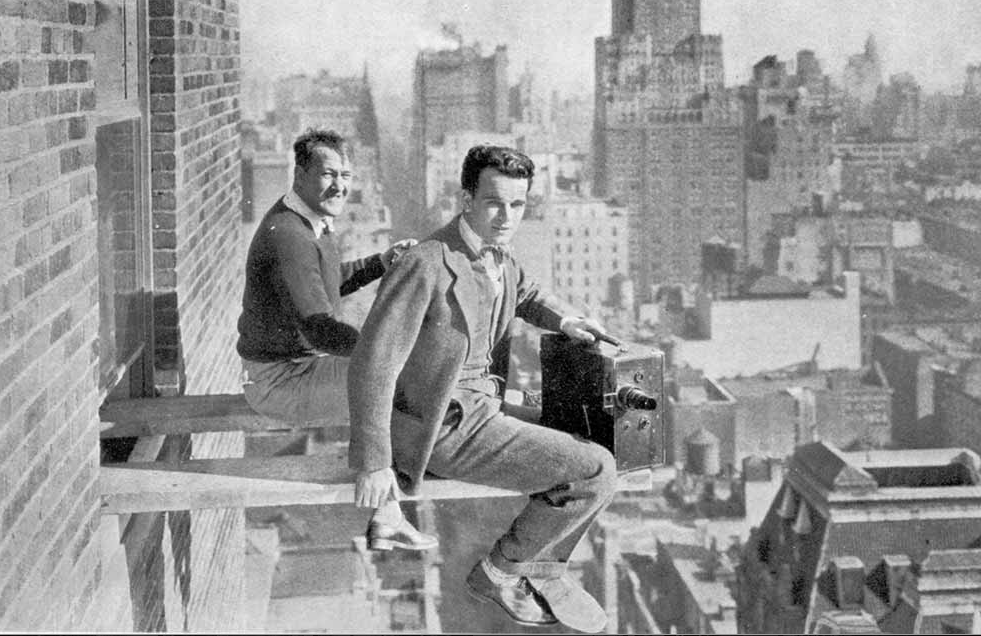
While Americans were enjoying epic filmmaking, Russian audiences were being served up the latest in propaganda, although this was propaganda presented with stunning film innovations and avant-garde sequences. In this item from the March 23 “Talk of the Town” the film is referred to as Through Russia With A Camera, but today it is known as Man with a Movie Camera. This experimental silent film from 1929 supposedly documented ordinary life in Soviet Union (with no signs of the famine that claimed 5 million Soviet citizens in the early 1920s). Directed by Dziga Vertov, the documentary’s famed cinematography was by Mikhail Kaufman. “Talk” observed:

AVANT GARDE…Poster for Man with a Movie Camera rendered in the Constructivist style. At right, cinematographer Mikhail Kaufman risks his life for a unique camera angle. (Wikipedia)
Clockwise, from top left: Cinematographer Mikhail Kaufman prepares to set up for a Black Sea beach sequence near Odessa; images of ordinary life include a woman at a hairdresser and a young woman fastening her bra; the eye through the camera lens, the film’s final image. (ascmag.com)

 *  *  *

From Our Advertisers

A sampling of advertisements from the pages of the March 23 issue include this nearly two-page spread for Pond’s cold cream…no doubt Pond’s was thrilled with this endorsement by “Mrs. Cornelius Vanderbilt Jr,” otherwise known as Mary Weir of Davenport, Iowa. Mary was wife No. 2 of Cornelius Vanderbilt’s seven wives. Mary and Cornelius were married in 1928 and divorced in 1931…

…and then we have this advertisement from Knox hatters, illustrated by the New Yorker’s own Rea Irvin

…this advertisement for the new Lincoln Building played up the building’s dominating form on Madison Avenue…

…a dominance that continues to this day. I know it’s not cool to gaze up at buildings in Manhattan, but if you’re ever in the neighborhood you must look upward at least once and gaze at the canyon that splits the Lincoln Building’s massive facade…

Lincoln Building, circa 1950. (Museum of the City of New York)

…this Remington typewriter was the closest thing to a desktop computer in 1929…I own one of these and I must attest that it isn’t exactly noiseless…

…this next ad caught my eye because it encouraged people to commit negligent homicide by throwing their product out of a high-rise window…it is also interesting because today Crosley is still a big name in radios and record players, although today’s Crosley is similar in name only. The original Crosley Corporation was a major player in early radio broadcasting, and in addition to manufacturing radios Crosley would go on to build refrigerators, a line of inexpensive subcompact cars and trucks (from 1939 to ’52) cars, and even small airplanes (1929-’36). Crosley ceased as a brand name in 1956, but the name was revived in 1984 by Modern Marketing Concepts. Today Crosley is a leading manufacturer of vintage-styled turntables, radios and other electronics…

…speaking of encouraging ridiculous behavior, some clever marketer at Ronson lighters found a great way not only to sell lighters, but also to encourage customers to waste lots of lighter fluid…

…and then we have this, one of the unlikeliest advertisements ever to appear in the New Yorker—at first I thought it was one of E.B. White’s fake newspapers, but it was actually a two-page spread promoting Davey Tree Surgeons of all things…

…just for fun I am tossing in this illustration by Constantin Aladjalov that appeared along the bottom of a two-page spread…

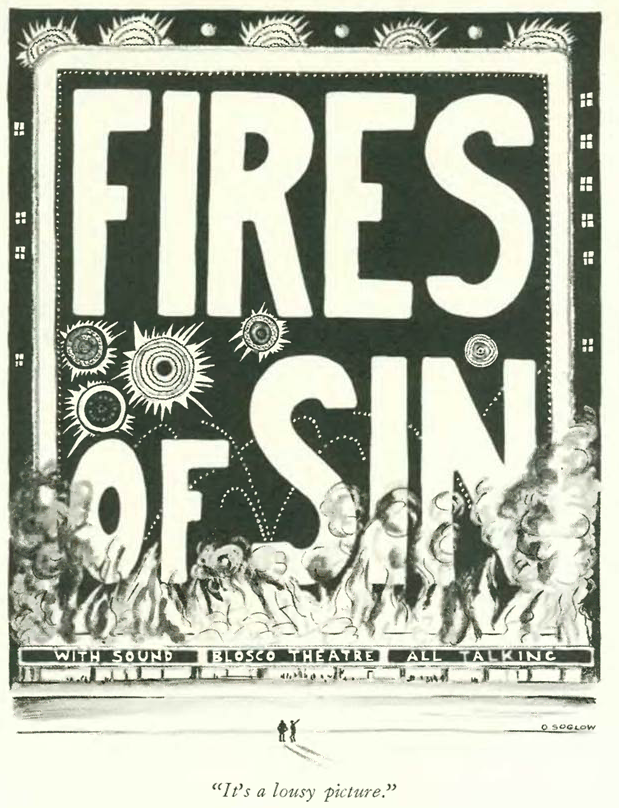
…and finally, our cartoon from Otto Soglow, in which our subject is either referring to a popular board game from 1929, or a particular sequence in a domino game…

Next Time: While You Were Away…


The Last Dandy

Like his good friend Charlie Chaplin, Ralph Barton wore a mask of a clown that hid a face of bitter anguish. Chaplin would cope, more or less. Barton would not.

March 16, 1929 cover by Rea Irvin.

A member of the New Yorker gang from the very beginning, Barton served as the magazine’s advisory editor but more famously as a caricaturist of the Roaring Twenties, also contributing to the likes of Harper’s Bazaar, Collier’s, Vanity Fair and Judge. He also illustrated one of the most popular books of the Twenties, Anita Loos’ Gentlemen Prefer Blondes:

Images (left and right) from the book, Gentlemen Prefer Blonds.

In 1929 Barton would publish a book of his own, God’s Country, which was reviewed in the March 16, 1929 edition of the New Yorker:

The same issue featured this advertisement from Knopf promoting God’s Country as the latest addition to its lovely Borzoi Books collection (and endorsed by composer and Barton friend George Gershwin)…

Some excerpts from the book…(click to enlarge)

(All images courtesy fulltable.com)

Barton was a longtime friend of Charlie Chaplin, even coming to the silent film star’s defense (in the pages of the July 23, 1927 New Yorker) when many Americans turned their backs on the comedian during a messy and much publicized divorce trial. In that New Yorker piece Barton concluded that France would be a better, more welcoming home to such an artist:

Clockwise, from left: Ralph Barton poses with his old friend Charlie Chaplin for photographer Nickolas Muray in 1927; Barton with wife Carlotta Monterey in the mid-1920s; Carl Van Vechten’s portrait of Monterey with husband Eugene O’Neill in 1933, two years after Barton’s death. (Mimi Muray/allstarpics.com/Museum of the City of New York)

The manic-depressive Barton had his own problems in the love department, marrying four times in his short life, most famously to wife No. 3, stage and film actress Carlotta Monterey, who divorced Barton in 1926 and married playwright Eugene O’Neill in 1929. Although Barton would marry again, he would never recover from his loss of Monterey.

PORTRAIT IN ANGUISH…Ralph Barton self-portrait, 1925. At right, Barton’s portrait of his third wife, Carlotta Monterey, from 1922. In 1926 Barton wrote, “The human soul would be a hideous object if it were possible to lay it bare.” (National Portrait Gallery/Mimi Muray)

A little more than two years after publishing God’s Country—May 19, 1931—the 39-year-old Barton shot himself through the right temple in his East Midtown apartment. He referred to Carlotta Monterey in his suicide note, writing that he had lost the only woman he’d ever loved. He also wrote: “I have had few difficulties, many friends, great successes; I have gone from wife to wife and house to house, visited great countries of the world—but I am fed up with inventing devices to fill up twenty-four hours of the day.”

As the exuberance of the Jazz Age faded into the Depression, so did Barton’s reputation as a chronicler of that age. An abstract for the 1998 Library of Congress exhibition Caricature and Cartoon in Twentieth-Century America notes that “in a good week he (Barton) could make $1,500 (about $22,000 today) but a couple of years after his early death his caricature of George Gershwin sold for $5.”

The last caricature Barton ever drew was of his old friend, Charlie Chaplin.

Note: I took the title of this blog entry from a 1991 book on the life of Ralph Barton: The Last Dandy, Ralph Barton, American Artist, 1891-1931, by Bruce Keller.

Babbitt Babble

Preceding the review of Barton’s book in the March 16 New Yorker was this much less complimentary review of Sinclair Lewis’s latest effort, Dodsworth, a story in the tradition of Henry James about wealthy middle-class Americans on a grand tour of Europe.

The task of skewering Lewis and his book fell to Dorothy Parker, who would never mistake Lewis for Henry James: ““I can not, with the slightest sureness, tell you if it (Dodsworth) will sweep the country, like ‘Main Street,’ or bring forth yards of printed praise…My guess would be that it will not. Other guesses which I have made in the past half-year have been that Al Smith would carry New York state, that St. John Ervine would be a great dramatic critic for an American newspaper, and that I would have more than twenty-six dollars in the bank on March 1st. So you see my my confidence in my judgment is scarcely what it used to be.”

NOT UP TO SNUFF…Sinclair Lewis, circa 1930s. (Library of Congress)

Parker took particular umbrage at Lewis’s use of the name of a character from another book as a descriptive term for his latest:

Parker concluded that if a reader could wade through the book’s cluttered language and “grotesquely over-drawn figures,” there was a conclusion that was perhaps worth pursuing…

…the New Yorker was never afraid to bite the hand that fed it (except Raoul Fleischmann’s, whose money saved the magazine from an early death), so even though its author was savaged on the opposite page, Dodsworth’s publisher Harcourt still sprung for an ad:

 *  *  *

This Geometric Life

The author of the March 16, 1929 “Comment” (Leading item of “The Talk of the Town”) found the “geometric life” dictated by modern design took some getting used to. This entry was most likely written by E.B. White:

DARLING, YOU SEEM RATHER COLD…Greta Garbo and Anders Randolf break bread amid the angular lines of an art deco dining room in the 1929 film The Kiss, set design by Cedric Gibbons. (pinterest.co.uk)

 *  *  *

Mexican Firecracker

Mexican actress and emerging star Lupe Velez caught the eye, and ear, of the New Yorker in her latest film, Lady of the Pavements

DUBBED THE ‘MEXICAN FIRECRACKER,’ Lupe Velez emerged as a star at the advent of sound motion pictures. Theatrical release poster, left, and Velez in a scene from D.W. Griffith’s 1929 film, Lady Of The Pavements. (Wikipedia/moviessilently.com)

An ad in the same issue of the New Yorker touted the film’s appearance at Public Theaters, a chain owned by Paramount:

Well-known for her explosive screen presence, Velez was big star in the 1930s. Married to Tarzan actor Johnny Weissmuller from 1933 to 1939, her star began to fade at the end of the decade. She died of a drug overdose in 1944, just 36 years of age.

 *  *  *

From Our Advertisers

A few advertisements that caught my eye from the March 16 issue…one thing you notice is the emerging sophistication of advertising techniques, including this ad for Resilio Cravats that enticed by deliberating not showing the product…

…and this ad that demonstrated Best & Co. was not shy at all to show women in their skivvies (or suggest that they could wear the same undergarments as a Follies performer)…

…and then we have this strange ad for Cutex nail polish, with an endorsement by Sophie Peirce-Evans, later known as Mary, Lady Heath, a well-know aviatrix (dubbed “Lady Icarus”) of the 1920s who shared headlines with Amelia Earhart for her high-flying derring-do. The close-up shot of the hands is priceless…

…and then we have another celebrity endorsement of a cigarette by a society figure—interior designer and social maven Elsie de Wolfe, who was also known as Lady Mendl…

…and on to the cartoons…Peter Arno listened in on two young debutantes sizing up a dowager at a society gathering…

…while Garrett Price looked in on well-heeled visitors to the Metropolitan Museum of Art contemplating what appears to be the work of W.A. Dwiggins in the museum’s The Architect & the Industrial Arts exhibition…

Next Time: Queen of the Night Clubs…

Modern English Usage

The fourth anniversary issue of the New Yorker gave every indication that the magazine had arrived as a cultural force.

Fourth anniversary cover, Feb. 23, 1929, by Rea Irvin.

Rich in content, the issue’s offering’s ranged from the famed humorous short “You Were Perfectly Fine” by Dorothy Parker, a profile of famed maestro Arturo Toscanini, and various accounts on the romance between Charles Lindbergh and Anne Morrow. The issue also featured this “organization chart” drawn by Julian de Miskey:

The little door marked “Tony’s” in the bottom right-hand corner referred to a celebrated speakeasy operated by Tony Soma. It was a second home to many New Yorker staffers, and was patronized by hard-drinking actors and writers including Scott and Zelda Fitzgerald, Dorothy Parker and Robert Benchley, and also a young actor named Humphrey Bogart.

Another notable item in the Feb. 23 issue was this contribution by James Thurber in which he lampooned H.W. Fowler’s Modern English Usage, a handbook that New Yorker Editor-in-Chief Harold Ross considered to be the last word in matters of punctuation and grammar. Thurber would write a dozen entries in this series, including the following (click to enlarge):

The New Yorker could never get enough of Charles Lindbergh, even though his personality was every bit as wooden as that of the former President Calvin Coolidge. The Feb. 23 “Talk of the Town” speculated on “Charlie’s” affections for Anne Morrow, and the woe that would befall anyone who challenged the famed flyboy for those affections:

COME FLY WITH ME…Anne Morrow Lindbergh and Charles Lindbergh shortly after their marriage in May 1929. (Bio.com)
SON-IN-LAW…Charles and Anne visiting Anne’s parents, Elisabeth and Dwight Morrow, in 1931. Charles met Anne during a visit to Mexico when Dwight was served as ambassador to that country. (kaiology.wordpress.com)

A second item in the Feb. 23 “Talk” section took a closer look at Charles’ courtship habits, or lack thereof…

Even Howard Brubaker got in a word regarding the Lindbergh-Morrow courtship in his column, “Of All Things”…

As we know, Brubaker had it wrong. Rather than pining away at home, Anne would become one of the 20th century’s most beloved writers, a leading feminist voice, and an accomplished aviator in her own right.

SORRY CHARLIE…As one for the most beloved writers of the 20th century, Anne Morrow Lindbergh would go on to match and even eclipse her husband’s fame. (PBS)

*  *  *

Little Yehudi

Yehudi Menuhin is known to classical music lovers as one of the greatest violinists of the 20th century. But as this “Talk” item suggests, he was once a little boy, more or less…

STILL IN SHORT PANTS…A young Yehudi Menuhin poses with conductor Bruno Walter in Berlin, 1931. Just two years after this photo was taken, Walter would flee Nazi Germany and eventually settle in the U.S. (Wikipedia)

 *  *  *

More Fun With Lois

Although Lois Long devoted most of her ink to her weekly fashion column, “On and Off the Avenue,” she continued to write her nightlife column, “Tables for Two,” though somewhat sporadically. Which makes sense because around this time Long was also either pregnant (she was married to New Yorker cartoonist Peter Arno) or was now the mother of a daughter, Patricia. The reason I’m not sure is that I have birth dates from both 1928 and 1929 for Patricia, depending on sources. At any rate, Long was taking in the nightlife in a big way, moving from club to club and assessing the quality of their various acts:

At the Lido, Beatrice Lillie sang “for the edification of devoted admirers”…

AT THE LIDO you could see British actress, singer and comedic performer Beatrice Lillie light up the stage. (vintag.es)

…Long also commented on the arrival of French entertainer Maurice Chevalier, who promised to inject some life into the Paul Whitman Orchestra performing at the Ziegfeld Midnight Frolic

Flyer announcing Maurice Chevalier’s upcoming performance at the Ziegfeld Midnight Frolic.
THANK HEAVEN…Maurice Chevalier in a 1929 publicity photo. He is mostly known today for his appearance in the 1958 film Gigi and his rendition of “Thank Heaven for Little Girls.” (thefamouspeople.com)

As for the rest of the New York nightlife, Long hoped that in the end it was all for fun, and that there was no “deep meaning” behind the frivolity:

SHALLOW WATERS…Eddie Jackson, Jimmy Durante, Lou Clayton performing their act in the motion picture Roadhouse Nights, 1930. (digitalcollections.nypl.org)

 *  *  *

Something In the Air

The “On The Air” column noted that NBC had made a brave attempt at rebroadcasting the music of the London Symphony Orchestra from Queen’s Hall and had “succeeded in coaxing a section of Rachmaninoff’s E Minor Symphony across the Atlantic.” It was also reported that the General Electric Company of Schenectady, in its ongoing research into television, had successful sent an image of famed film director D.W. Griffith across the country to California. In a separate item. “The Talk of the Town” also reported on the achievement…

…and advances continued in motion pictures, the “talkies” quickly overtaking the silents and even resorting to such tricks as lip-syncing:

SORRY DEAR, YOU’VE BEEN DUBBED…Betty Compson with Richard Barthelmess in Weary River. While Barthelmess’s character sings and plays the piano throughout the film, Barthelmess himself did not sing or play the piano. Frank Churchill played the piano and Johnny Murray sang into a microphone far away from Barthelmess while he lip-synced and played a piano which had strings deadened with felt. (TCM)

*  *  *

For the anniversary issue, and for old time’s sake, the New Yorker tossed in this little filler joke from its first issue, a joke that was repeated ad nauseam in subsequent issues:

This riddle, told backwards, appeared to be a mistake, but it was most likely an attack on two-liners found in humor magazines of the day like Judge and Punch.

From Our Advertisers

Advertising was booming for the New Yorker in 1929, the magazine recording nearly $2 million in ad sales that year (compared to just $36,000 in their first year, 1925). Now on to the ads…

In a recent post we followed the mostly wealthy New York snowbirds down to Palm Beach, Florida, which during the 1920s grew from a quiet village to a resort for the rich and famous. For those who couldn’t make it, they could install “Vita Glass” and bring Palm Beach to Park Avenue…

…and as spring approached, one could catch a bit of nature’s breezes atop 730 Park Avenue…

…or live like a demi-god above the toiling masses at Fifth Avenue’s Lefcourt National…

…back on terra firma, we find W.C. Fields the latest endorser of Old Golds…

…this has to be the most audacious attempt to add sex appeal to canned ham…

And finally, our illustrators…Garrett Price contributed some fine drawings of Nice and Monte Carlo…

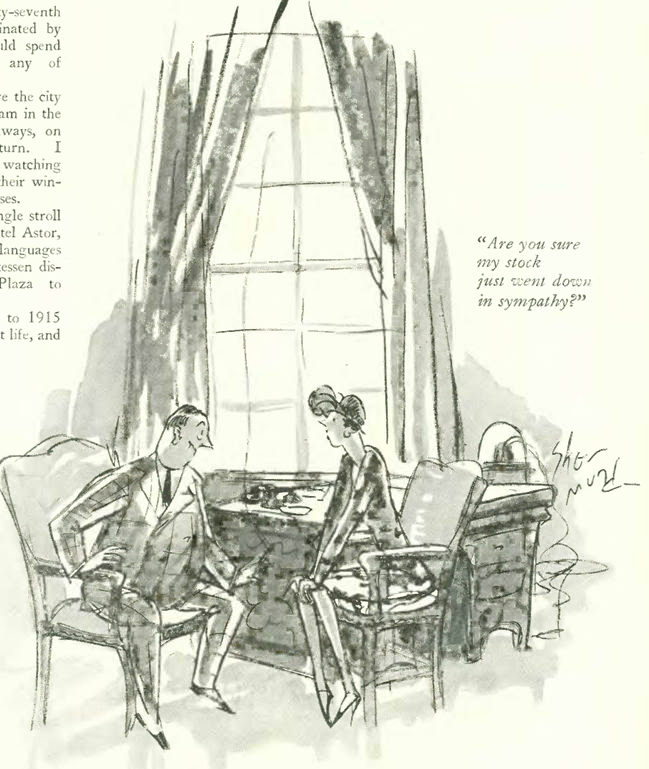
Barbara Shermund looked in on young toffs making idle chat…

…and Rea Irvin, finding everyone perplexed over Einstein’s unified field theory…

Next Time: The Capones at Home…


The Midnight Frolic

What do you do after an evening at the theater when the night is young and the city still thrums with excitement? In 1929 Manhattan, those willing to shell out a $5 cover charge (equivalent to nearly $120 today) and another $3 for front row seats could take in a show on the rooftop of the New Amsterdam Theatre — Florenz Ziegfeld’s Midnight Frolic.

Jan. 12, 1928 cover by Julian de Miskey.

The New Yorker’s Lois Long was on hand for opening night of the Ziegfeld Midnight Frolic, where the rich and famous gathered to enjoy after hours performances by Paul Whitman’s orchestra, singer and comedian Eddie Cantor (performing in blackface), and the boozy torch singer Helen Morgan. In her nightlife column, “Tables for Two,” Long observed:

Among the celebrities Long spotted at the Midnight Frolic’s opening night was actress and dancer Peggy Hopkins Joyce, famed for collecting men along with diamonds and furs:

FAMOUSLY FAMOUS…Largely unknown today, during the Roaring Twenties actress and dancer Peggy Hopkins Joyce was one of the decade’s most famous celebrities, her noteriety mostly deriving from her flamboyant lifestyle that included six marriages, dozens of engagements and affairs with celebrities ranging from Charlie Chaplin to Walter Chrysler, who reportedly gave her $2 million in jewelry including a 134-karat diamond necklace. (http://jenniferfabulous.blogspot.com)
WHAT THEY DID FOR FUN…Ziegfeld girl Olive Thomas wearing her balloon costume on the stage of the New Amsterdam’s rooftop theatre during the original run of the Midnight Frolic. Male patrons were encouraged to use their cigars and cigarettes to pop the balloons. Photo circa 1915. (Pinterest)

According to a Museum of the City of New York blog (posted by Nimisha Bhat), Flo Ziegfeld was tired of seeing his audiences leave after performances of his Ziegfeld Follies at the New Amsterdam Theatre on 42nd Street (and spend money elsewhere), so in 1915 he staged a new revue — the Danse de Follies! (later to be called Midnight Frolic) on the New Amsterdam’s underused 680-seat roof-top level that included tables, box seats, and a balcony. Ziegfeld added a glass walkway that would allow chorus girls to dance above the audience, affording some customers a more risqué perspective on the dancers.

Bhat writes that the club “stayed open year-round for seven years and while World War I couldn’t stop the Midnight Frolic, Prohibition was ultimately what led Ziegfeld to end the show in 1922.” In 1921 Ziegfeld told The New York Times: “The best class of people from all over the world have been in the habit of coming up on the roof … and when they are subjected to the humiliation of having policemen stand by their tables and watch what they are drinking, then I do not care to keep open any longer.” The show Lois Long attended in January 1929 was a revival of the Midnight Frolic, and although Prohibition was still the law, by 1929 it was widely flaunted if not completely ignored by many New Yorkers. Long also noted changes to the rooftop, including a new decor by famed theatrical designer Joseph Urban:

Clockwise, from top left, Hazel Forbes poses in her costume for Ziegfeld’s 1929 Midnight Frolic; Dolores (also known as Rose Dolores) plays the part of “The White Peacock” in the Tropical Birds number for the Midnight Frolic of 1919. Considered to be first celebrity clothes model, Dolores is often credited as the inventor of the “blank hauteur” look of modern fashion models; Jean Ackerman & Evelyn Groves from the 1929 show; program for the 1929 Midnight Frolic. (White Studios/Pinterest/Playbill)
READY TO FROLIC…Stage ensemble from the 1917 Midnight Frolic included, at center left, actor/humorist Will Rogers. (Museum of the City of New York)
EXTROVERTS…Margaret Morris, Kay Laurell, and Florence Cripps on the infamous glass walkway in the Ziegfeld Midnight Frolic of 1916. (talesofamadcapheiress.blogspot.com)
THEY WERE HAMMERED…Insisting that theater-goers would have sore hands after applauding so much, Flo Ziegfeld provided little wooden hammers at Frolic tables, so audiences could bang out their appreciation. (Museum of the City of New York)

There is a filmed performance of Eddie Cantor allegedly made that night at the Ziegfeld Theatre Roof Garden, but it was actually filmed on a soundstage at the Paramount Astoria studio in Queens. You can tell it is staged because during Cantor’s performance he recognizes some of the celebrities who were at the opening (the camera shifts to them as they take bows), but when he calls out Peggy Joyce the camera stays on Cantor. Apparently she didn’t find it necessary to participate in this charade. Nevertheless, this video gives you some idea of what was presented at the Midnight Frolic. And one wonders why Cantor performed in blackface, since it’s just his standard song and gags schtick:

 * * *

Mea Culpa

Also in the Jan. 12 issue was this small ad in the back pages — an apology from Texas Guinan, actress, producer, and entrepreneur well-known to New York nightlife (and to the vice squad):

QUEEN OF THE NIGHTCLUBS…or so they called Texas Guinan, pictured here from a 1929 film by the same name. (texasguinan.blogspot.com)

 * * *

Nevertheless, Prohibition Continued to Suck…

The Jan. 12 “Talk of the Town” addressed the sheer folly of Prohibition enforcement:

DON’T JUDGE A BOTTLE BY ITS COVER…An assortment of confiscated, adulterated spirits from the Prohibition era. (prohibition.themobmuseum.org)

SUPPLY AND DEMAND…In 1925 there were an estimated 30,000 to 100,000 speakeasies in New York City alone. Near the end of the ban on alcohol in 1933 Life photographer Margaret Bourke-White captured some of the city’s elite speakeasies. (Time/Life)

The “Talk” item also addressed the new police commissioner’s approach to enforcement of the unpopular law:

And as it happened, Grover Whalen was also the subject of the Jan. 12 “Profile,” which included this illustration by Peter Arno:


 * * *

How’s the Old Ticker?

The “Talk of the Town” also marveled at the technology behind the famed news ticker in Times Square, inaugurated on election night the previous November:

JUNE 6, 1944…Crowd watching D-Day headlines on the New York Times building. (Library of Congress)

The news ticker, known as the “zipper” (which inspired the news crawl at the bottom of today’s cable news channels), made Times Square the place to be when big events were announced. According to Wired magazine, the zipper, invented by Frank C. Reilly, “was the technological marvel of its day, extending 380 feet around the Times Tower and, with a band 5-feet tall, the moving letters were visible from a distance of several city blocks.” Wired cites a 2005 New York Times column to describe how it worked:

“Inside the control room, three cables poured energy into transformers. The hookup to all the bulbs totaled 88,000 soldered connections. Messages from a ticker came to a desk beside a cabinet like the case that contained type used by old-time compositors. The cabinet contained thin slabs called letter elements. An operator composed the message letter-by-letter in a frame. The frame, when filled with the letters and spaces that spelled out a news item, was inserted in a magazine at one end of a track. A chain conveyor moved the track, and each letter in the frame brushed a number of contacts. Each contact set a light flashing on Broadway.” Reilly calculated that there were 261,925,664 flashes an hour from the zipper’s 14,800 bulbs.

* * *

From Our Advertisers

A couple of clothing store ads which demonstrated a more modern look in graphic design…

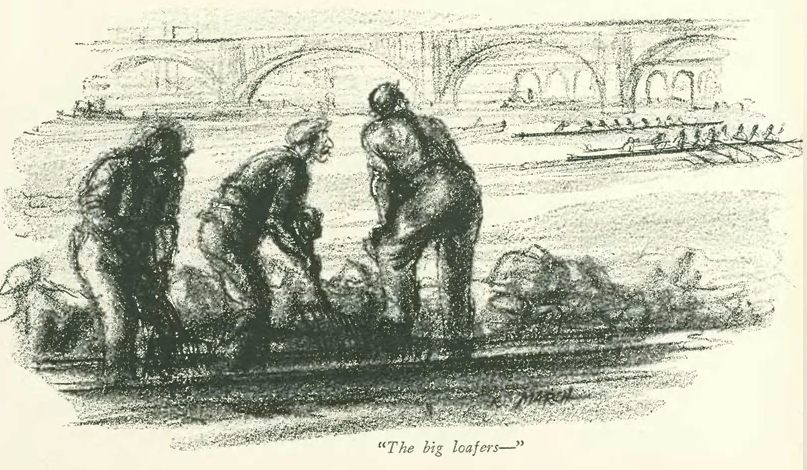
…and two terrific illustrations (out of four in a two-page spread) by Reginald Marsh that decorated the “Profile” section of the magazine, featuring scenes from the Webster Hall nightclub in the East Village…

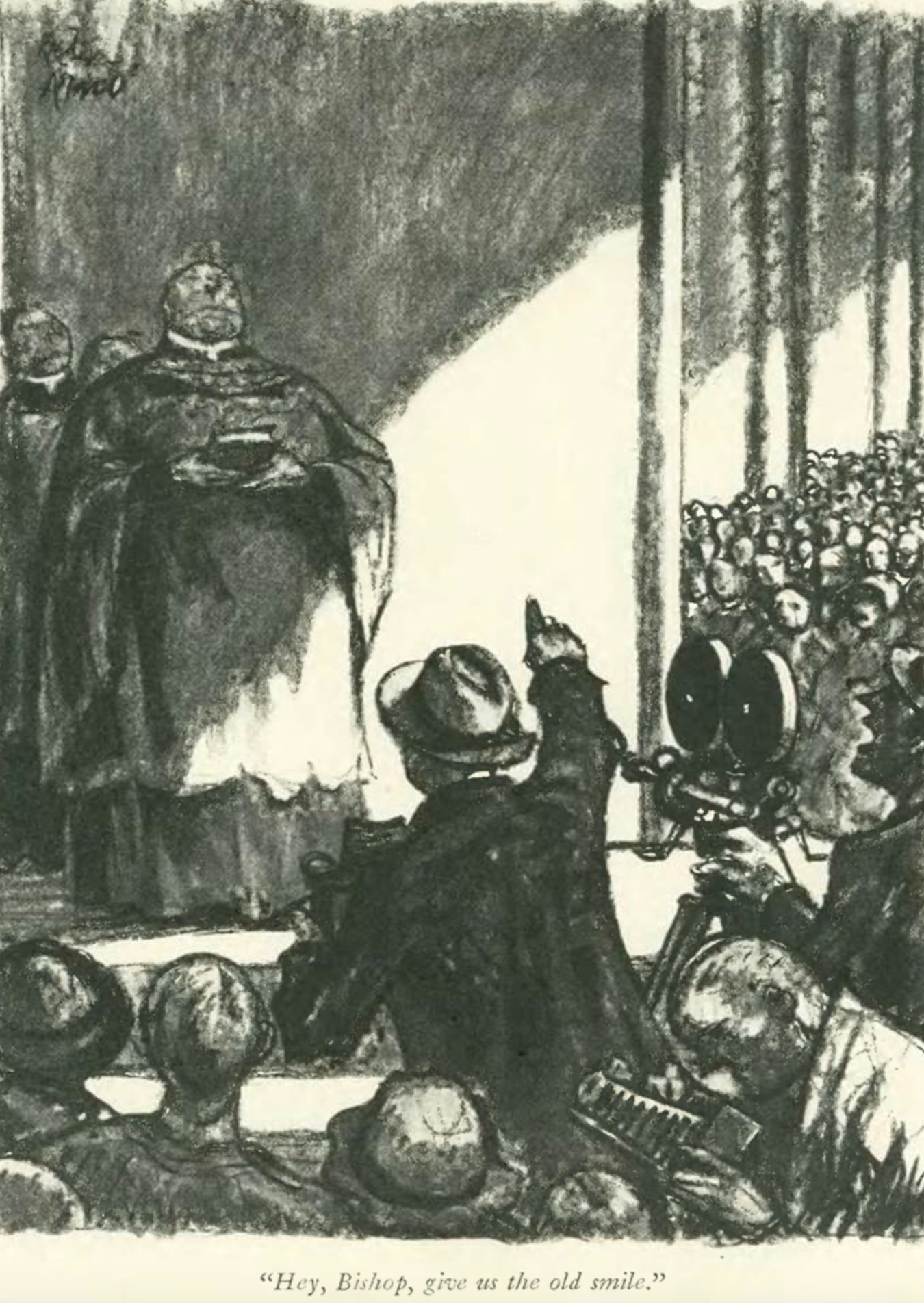
…and our cartoon, courtesy of Roch King:

Next Time: The Bootleg Spirit…

Happy 1929!

I’ve been writing this blog for nearly three years, and during that stretch have managed to cover more than 200 issues of The New Yorker, or about the first four years of the magazine.

Dec. 22, 1928 and Dec. 29, 1928 covers by Rea Irvin.

The amount of young talent on display in those early issues is truly astounding, from writers such as E.B. White, Dorothy Parker and James Thurber (writer and cartoonist) to illustrators and cartoonists including Peter Arno, Rea Irvin, Helen Hokinson, Miguel Covarrubias and Ilonka Karasz, to name just a few. Among the contributing artists was Abe Birnbaum, who illustrated more than 150 covers for The New Yorker from the 1940s to 1970s. One of his earliest contributions to the magazine was this illustration for the “Profile” section in the Dec. 22 issue:

Canadian artist Shelley Davies writes in her blog that Birnbaum “charmingly captured some of life’s quieter moments with a deft eye.” In addition to The New Yorker, Birnbaum illustrated numerous covers for Stage and Arts In America, and won a Caldecott Award in 1954 for his children’s book, Green Eyes.

ON THE QUIETER SIDE…Abe Birnbaum (pictured here circa 1960) created more than 150 covers for The New Yorker from the 1940s to the 1970s. At right, a cover from March 17, 1962. (google.com.br)

 * * *

A couple of select advertisements from the Dec. 22 reveal what retailers knew, or thought they knew, about the magazine’s readership. Franklin & Simon, seeking perhaps to broaden their market for furs, suggested that even a stylish French woman might prefer a fur fashioned as a modest “sports wrap”…

…as for the guys, Saks appealed to the anglophilia that apparently was rife among New York’s smart set. Check out the ridiculous hat gracing the noggin of this young dandy…

Well-heeled readers who could afford to flee the New York winter were targeted by these various enticements in the Dec. 22 issue (this is a collage of select ads found in the back pages of the issue):

 * * *

Hello Down There

Writing about New Yorker humor derived from class distinctions, Ben Yagoda (About Town: The New Yorker and the World It Made, p. 63) noted a series of cartoons by Otto Soglow that began with this one in the Dec. 22, 1928 issue and continued through thirty installments that ran to early 1930, when the workers, Joe and Bill, finally emerged from the manhole:

This running gag, according to Yagoda, “came from the conceit that the laborers spoke with the same assumptions and in the same catchphrases as those with ‘higher’ places in society.”

Also from the Dec. 22 issue, this terrific cartoon by Leonard Dove that showed a bookish man who had accidentally entered the wrong type of book-making establishment:

* * *

The Girl Who Wouldn’t Grow Up

Maude Adams was a major Broadway star in the early years of the 20th century. Appearing in more than 25 productions from 1888 to 1916, she was most famous for her portrayal of Peter Pan in the Broadway production of Peter Pan; or, The Boy Who Wouldn’t Grow Up. She performed that role first in 1905-06 and again in 1912 and 1915. The highest-paid performer of her day, at her peak she earned more than $1 million a year, a staggering sum more than a century ago. James Thurber, writing in the Dec. 29 “Talk of the Town,” reported that after a decade-long absence from the stage, Adams was planning a comeback as a director:

STAR POWER…At left, American actress Maude Adams, circa 1900. At right, Adams as Peter Pan, her most famous stage role. Adams was the first American to portray Peter Pan on the stage. She played the role 1,500 times between 1905-1915. She retired from the stage in 1918 after a severe bout with the flu. She died at age 80 in 1953. (Wikipedia/Oakland Tribune)

Thurber also noted that Adams was working with General Electric in the development of color photography. According to the Trivia Library, it has been suggested that her motivation might have been a wish to appear in a color film version of Peter Pan. She eventually returned to acting in the 1930s, with occasional appearances in regional productions of Shakespeare plays.

 * * *

A Lukewarm Welcome to 1929

The Dec. 29 New Yorker opened with these lamentations for the last issue of 1928. At least it appears that one could obtain a decent bottle of French champagne to toast the New Year:

JAM SESSION…1929 photo of traffic on Fifth Avenue. (theoldmotor.com)

 * * *

The Passing of a Poet

The Dec. 29 issue featured something unprecedented in The New Yorker up to that point: the reprinting of an entire piece previously featured in the magazine. In this case, it was in tribute to the sudden passing of poet and author Elinor Wylie:

PORTRAITS…Elinor Wylie posed for her friend Carl Van Vechten in this 1922 portrait (left). The photo at right, probably taken around 1926, was clearly the inspiration for the illustration by Peter Arno that accompanied “Portrait.” (Yale University/humorinamerica.wordpress.com)

It is no wonder that The New Yorker had such affection for Wylie, for she was as colorful a personality as could be found in 1920s literary circles. A Columbia University Press bio notes that “she was famous during her life almost as much for her ethereal beauty and personality as for her melodious, sensuous poetry.” Born to a socially prominent family and trained for a life in society, she instead became notorious for her multiple marriages and love affairs. She also suffered from extremely high blood pressure that gave her unbearable migraines.

Wylie died on Dec. 16, 1928, while going over a typescript of her poetry collection, Angels and Earthly Creatures, with her estranged third husband, William Rose Benét. According to Karen Stein (in the Dictionary of Literary Biography), Wylie, while picking up a volume of John Donne’s poems, asked Benét for a glass of water. When he returned with it, she reportedly walked toward him and murmured, “Is that all it is?,” and fell to the floor, dead of a stroke. She was 43.

* * *

Age of Innocence

The Dec. 29 theatre review section featured this illustration by Al Frueh of Katharine Cornell in the Empire Theatre’s production of The Age of Innocence:

And below, a studio portrait of Cornell from the same play:

HOW SHE REALLY LOOKED…Katharine Cornell as ‘Countess Ellen Olenska’ in this Vandamm Studio portrait dated November 27, 1928. (Billy Rose Theatre Collection, The New York Public Library)

 * * *

Before Baby Snooks

Although it was still a few years before singer and actress Fanny Brice would make her radio debut as the bratty toddler named “Snooks,” she was already well-known to New York audiences for her work in the Ziegfeld Follies (beginning in 1910). In its Dec. 29 issue The New Yorker favorably reviewed Brice’s first motion picture, My Man, which included musical scenes with Vitaphone sound:

MY MAN…Fanny Brice, Guinn Williams, and Edna Murphy on the set of the partially silent film My Man, 1928. Her first movie appearance, Brice played Fanny Brand, a poor girl who becomes a star. The film is now considered lost, since only an incomplete version survives. (brice.nl)
THROUGH THE YEARS…At left, singer and actress Fanny Brice from the time she was a Ziegfeld Follies girl, circa 1915. At right, Brice in the role of Baby Snooks, 1940. (Vintage Everyday/Wikipedia)

 * * *

Let’s Get Physical

Even 90 years ago some folks (or at least some New Yorkers) resolved to get healthy and hit the gym in the New Year. In this ad, McGovern’s Gymnasium announced it was ready for them:

Babe Ruth trains at Artie McGovern’s Gym for the upcoming baseball season, February 9, 1928. (twitter.com/BSmile)

And to close out 1928, a cartoon from John Reehill

Next Time: Out With the Old…

What Santa Brought in 1928

As we sweep up the tinsel and wrappings from another holiday season, let’s take a look back at 1928 and see what the New York “smart set” wished for under the Christmas tree.

Nov. 24, 1928 cover by Julian de Miskey.

We’ll start with the outlandish, namely this advertisement from Kurzman furriers on Fifth Avenue, which offered just two rare chinchilla coats for sale, one for $45K and the other for a mere $20K. That would be roughly equivalent to $630K and $280K in 2017 dollars. Oh Santa baby…

If you didn’t get the chinchilla, you could have asked for a Glycine Swiss watch, a gift “whose smartness reflects your taste”… and is “the supreme adornment of the patrician wrist.”

The New Yorker was filled with such ads that appealed to class pretensions, but thankfully the editorial side of the magazine mostly tweaked those pretensions, including this Nov. 24 cartoon by John Elmore:

In the following issue (Dec. 1), Elmore also contributed this unsigned cartoon (thanks to Michael Maslin’s invaluable Ink Spill blog for the identification):

Back to the ads for Nov. 24, Kolster Radio continued its series featuring illustrations by New Yorker cartoonist Peter Arno, this one borrowing from his familiar themes featuring gold-diggers and sugar daddies…

…and 56-year-old stage and silent film actress Fannie Ward offered proof that lighting up a Lucky could keep you slim and youthful. Whether or not she actually smoked the things, Ward was indeed best known for her seemingly ageless appearance.

Our cartoons from Nov. 24 issue are courtesy of Arno…

…and Helen Hokinson

We continue our Christmas wish list with the Dec. 1, 1928 issue…

Dec. 1, 1928 cover by Rea Irvin.

Regarding gifts for her, how about some fine French perfume, “originally created for the exclusive use of one of the present Nobility of France” (apparently a person descended from the line that managed to keep their heads attached to their necks)…

…and for him, the ubiquitous Christmas necktie, with a choice of patterns that would still serve him well in 2018…

Your “smoking friends” would doubtless have appreciated a rum-infused rumidor, available in a variety of finishes and sizes…

…or you could choose from the sundries offered up by Abercrombie & Fitch (bookends appeared to be a popular item)…

…and finally, for that special, anal-retentive someone on your list, “Fabrikoid” covers would keep his or her periodicals neat and tidy (note the New Yorker is conspicuously missing here).

Note: Fabrikoid “was one of DuPont’s first non-explosives products. Produced by coating fabric with nitrocellulose (yep, basically the same flammable stuff silent films were printed on) and marketed as artificial leather, Fabrikoid was widely used in upholstery, luggage and bookbindings during the early 20th century. In the 1920s, Fabrikoid became the preferred material for automobile convertible tops and seat covers” (text from www2.dupont.com).

 * * *

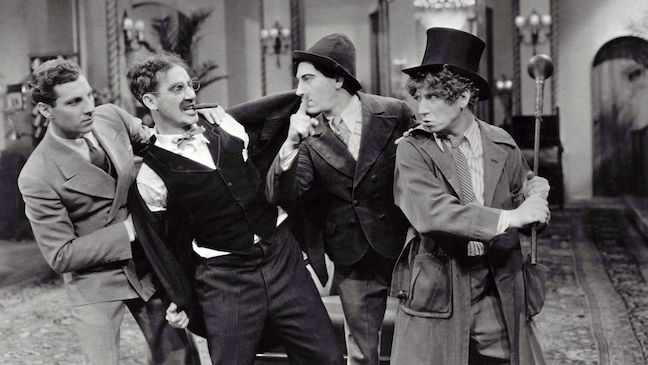
Despite the holidays, there was still news to be reported. The Nov. 24 issue profiled violinist Fritz Kreisler, while the Dec. 1 edition featured a profile of Harpo Marx, written by his fellow Algonquin Round Tabler Alexander Woollcott. Two brief excerpts:

In this next excerpt, it is interesting to note that Woollcott couldn’t see ahead to the huge success in film that awaited Harpo Marx and his brothers. Just eight months after Woollcott’s profile, the Marx Brothers would premiere their first film, The Cocoanuts, and continue to draw on material from their vaudeville and Broadway days to produce a string a comedy hits throughout the 1930s and 40s.

In other news from the Dec. 1 issue, Frank Sullivan grumbled about the recent election of President Herbert Hoover and the state of politics in general, echoing the general sentiment of his New Yorker colleagues in dismissing the national elections as little more than silly sideshow. Two excerpts:

The New Yorker was less pessimistic when it came to the changing skyline, and was almost giddy at times about the latest technology seemingly transforming the city overnight. This time it was the gilded New York Life Insurance tower, and its impressive pneumatic tube system:

THINGS ARE LOOKING UP…Cass Gilbert’s newly completed New York Life Insurance Building in 1928. (Smithsonian)

 *  *  *

And to close, some more holiday offerings, this time for the kiddies, from Macy’s Department Store, as reported by writer Bertram Bloch:

The Macy’s Christmas window display in 1928 featured the Tony Sarg marionettes in a tableau based on The Adventures of Christopher Columbus. (Pinterest)
SUPER SOAKER…With this 1928 sit ‘n ride toy, junior could hose down the living room thanks to its large water tank and hand crank-operated water tower. (collector.com)

Next Time: Out of the Mouth of Babes…