Planes, Trains and Automobiles

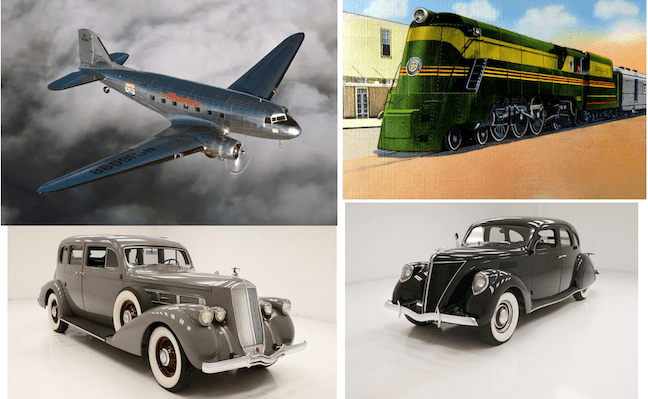
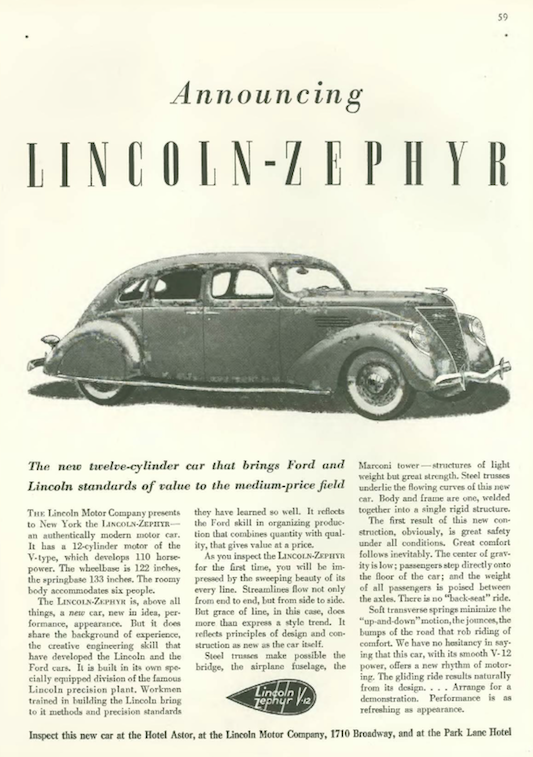
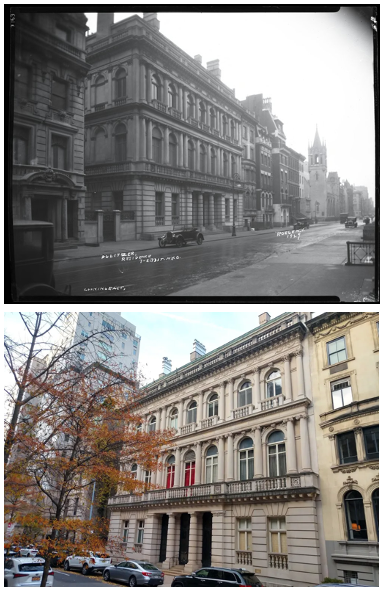
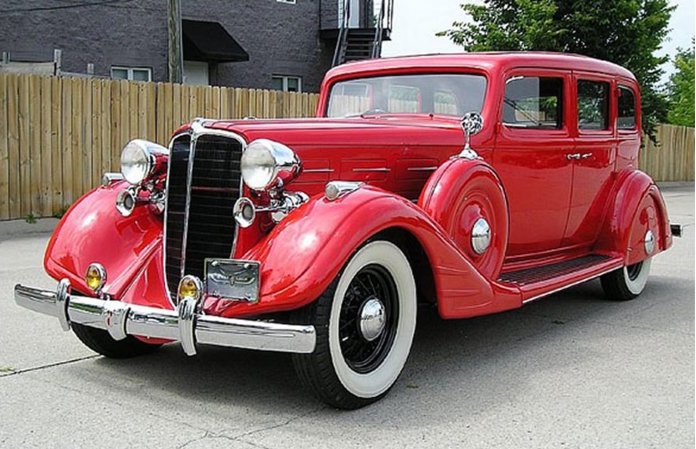
Above: Clockwise from top left—the Douglas DC-3 was introduced to airlines in 1935; Seaboard streamlined locomotive, c. 1930s; 1936 Lincoln-Zephyr; 1936 Pierce Arrow. (hushkit.net/Wikimedia/classicautomall.com)

As we’ve seen in previous issues, E.B. White often served as The New Yorker’s unofficial aviation correspondent; despite his sometimes anachronistic views on progress, he never missed a chance to hop aboard an airplane and marvel at the scene far below.

November 2, 1935 cover by Constantin Alajalov.

White’s enthusiasm, however, was tempered with doubts about air safety, including observations he made in an August 31, 1935 column following the deaths of Wiley Post and Will Rogers in an Alaska plane crash. Here is what he wrote then:

The aviation industry’s strong reaction to that “noisy little paragraph” apparently led to a number of subscription cancellations, prompting White to return to the topic in his Nov. 2 “Notes and Comment” column:

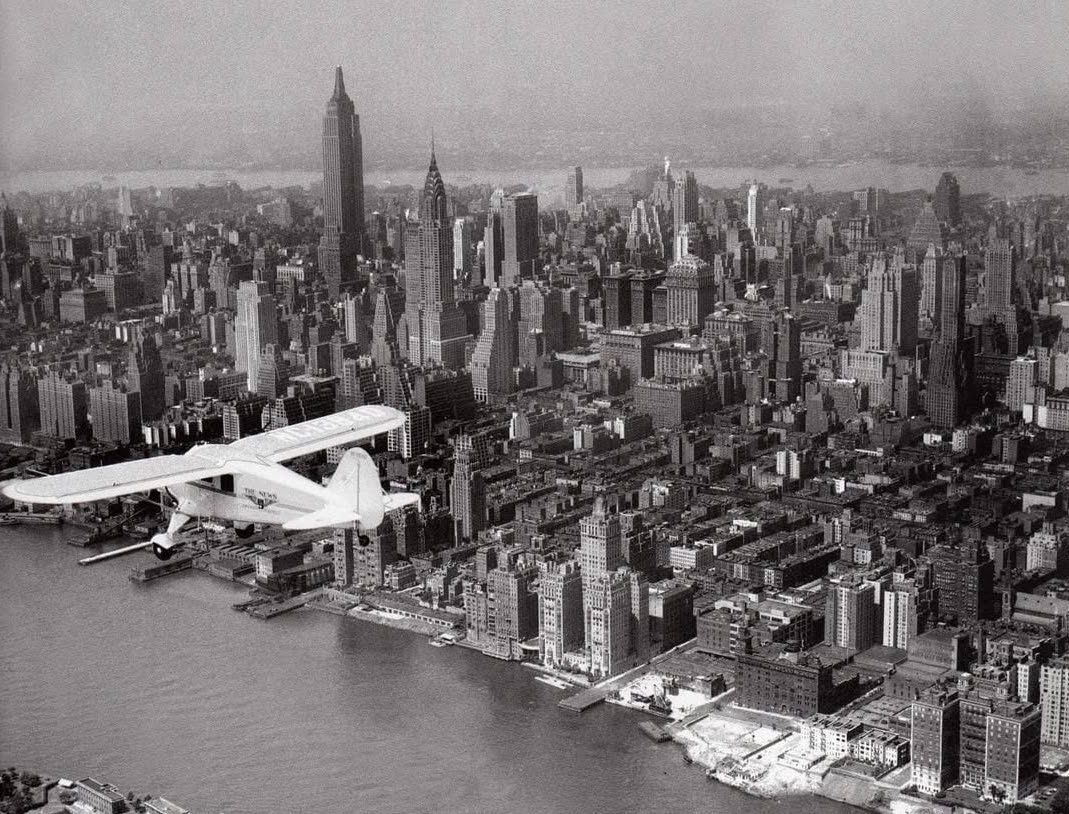
HE’D BEEN AROUND…E.B. White supported his comments on air safety by citing his many flying experiences, including soaring around the Empire State Building “on a blithe morning.” Pictured above is a New York Daily News plane flying over Manhattan in 1934. (NY Daily News)

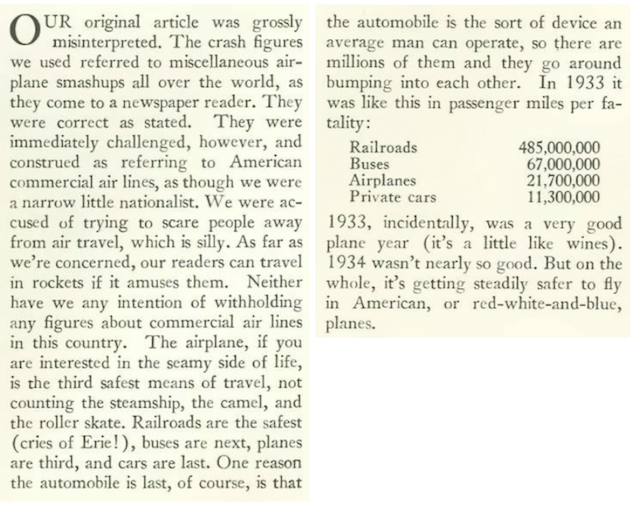
White also turned to statistics for his defense, finding that per passenger mile, railroads were still the safest mode of transportation in the country.

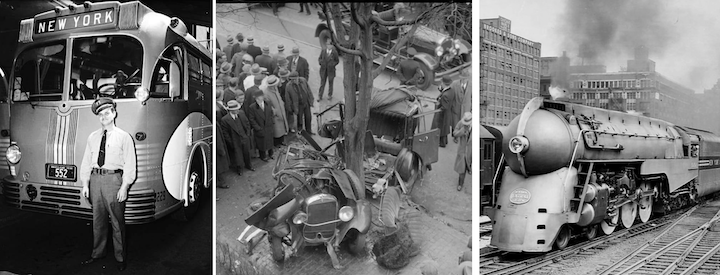
HOP ABOARD…According to 1933 statistics shared by E.B. White, trains were the safest mode of transportation per passenger mile, followed by buses. Automobiles were the least safe, a fact that still holds true today. From left, Greyhound bus and driver, 1937; automobile wreck, 1930s; New York Central’s 20th Century Limited leaving Chicago’s LaSalle Street station in 1938. (Facebook/Reddit/Wikipedia)

With that, White still wasn’t done with the topic, turning to none other than Anne Morrow Lindbergh for her thoughts on flying, which she shared in her latest book, North to the Orient. White noted Lindbergh’s mixed feelings about flying, about getting to places quickly and missing familiar landmarks. He also suggested that someday airline passengers would use mountains and rivers as landmarks…(I still try to do that when I fly, but at 35,000 feet it is a challenge). Today most folks are content with plugging in their earbuds and tuning out completely.

NOT YOUR EVERYDAY OUTING…In July 1931 Charles and Anne Morrow Lindbergh embarked in their Lockheed Model 8 Sirius on an often treacherous 7,100-mile journey across Canada, Alaska, Siberia and Japan in an attempt to find a commercial route to Asia for Pan American Airways. Top photo, Charles (standing on pontoon) and Anne (in the cockpit) make final preparations before the flight; bottom photo, enthusiastic crowds greet the Lindberghs upon their arrival in Japan. The Siberia-to-Japan leg was the most dangerous due to heavy fog. (historynet.com)

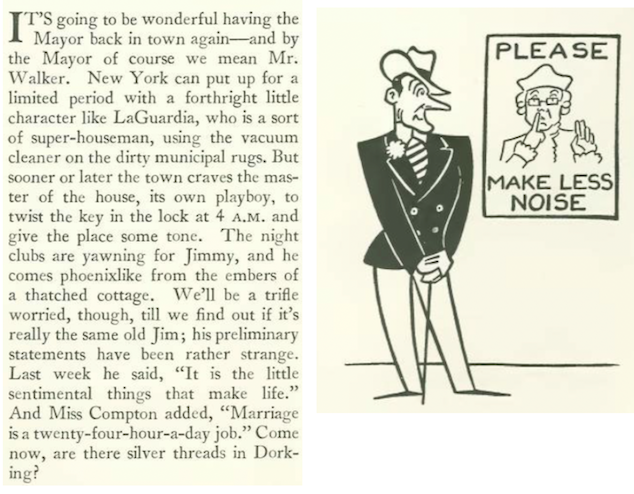
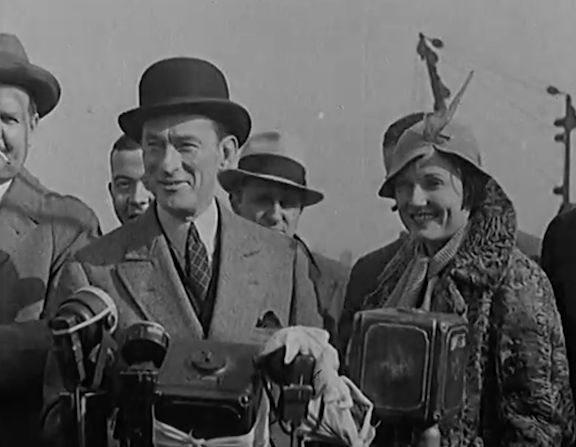
E.B. White also announced the return to the city of former Mayor Jimmy Walker, who had fled to Europe in 1932 amid corruption charges. White noted that New York’s nightclubs were eager to welcome the fun-loving Walker back to town.

SECOND ACT…Still image from a 1935 British Pathé newsreel shows the triumphant return from Europe of former Mayor Jimmy Walker and his wife, Betty Compton. (YouTube)

 * * *

A Zephyr Blows In

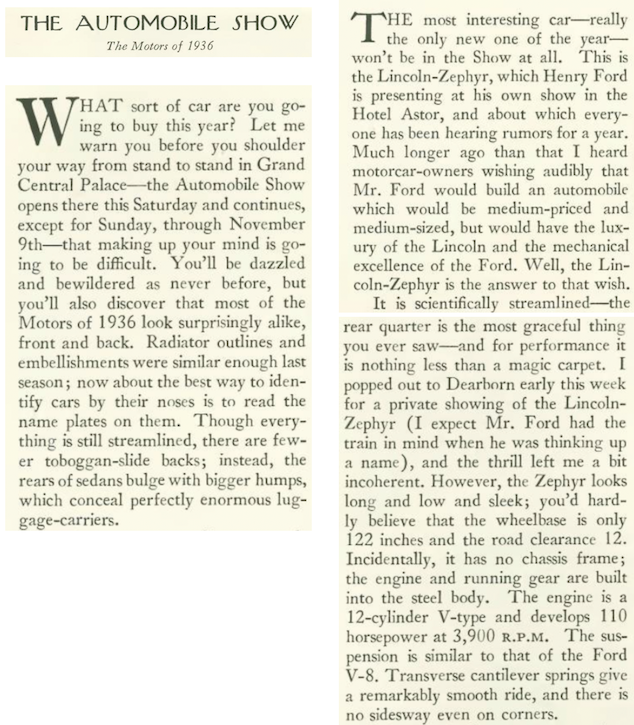
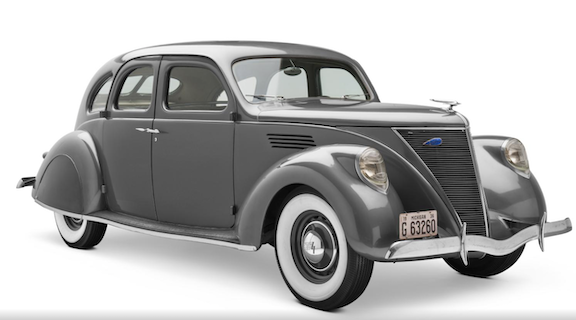
The magazine’s “Motors” correspondent (pen name “Speed”) noted the dazzling display of 1936 models at the New York Automobile Show, singling out the Lincoln-Zephyr as the year’s biggest innovation.

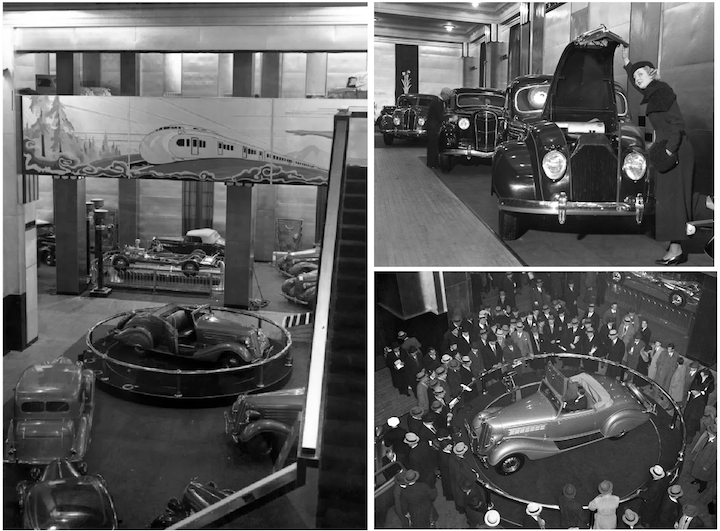
DECO DREAMSCAPE…Streamlining was all the rage at the 1935 New York Automobile Show at Grand Central Palace. Upper right, a woman opens the hood of a streamlining pioneer, the Chrysler Airflow. (New York Daily News)
LEADER OF THE PACK…The 1936 Lincoln-Zephyr had tongues wagging at the New York Automobile Show.  (thehenryford.org)

 * * *

At the Movies

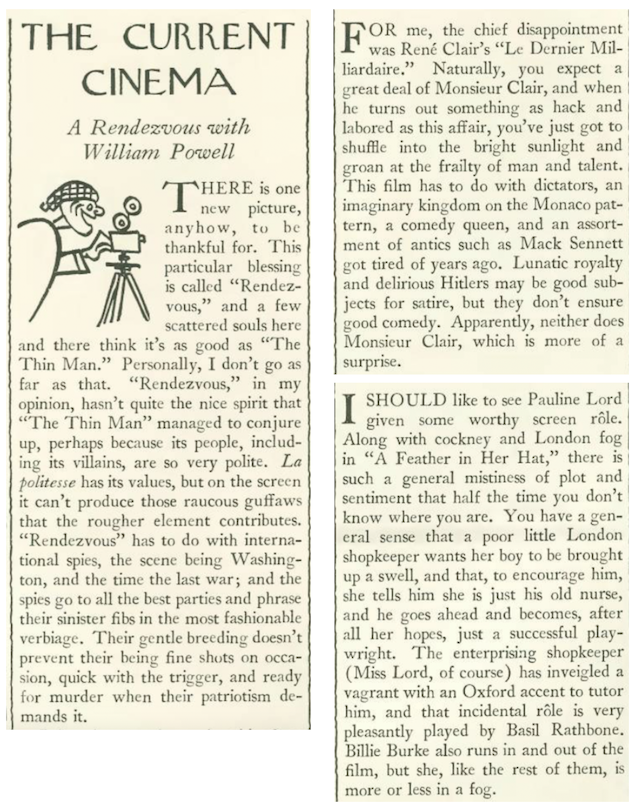
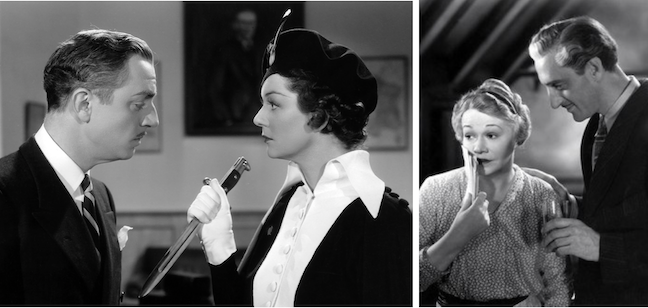
William Powell and Hollywood newcomer Rosalind Russell blessed film critic John Mosher with their spy caper, Rendezvous, while Pauline Lord got lost in the London fog with Basil Rathbone in A Feather in Her Hat.

A CAPER AND A WEEPER…At left, William Powell starred with Hollywood newcomer Rosalind Russell in Rendezvous; at right, Broadway stage actress Pauline Lord appeared opposite Basil Rathbone in A Feather in Her Hat. (1935)

Mosher also screened a French comedy, René Clair’s Le Dernier Milliardaire (The Last Billionaire), finding its slapstick approach to satire a bit dated.

DURABLE AND ADORABLE…Renée Saint-Cyr as Princess Isabelle in the French comedy Le Dernier Milliardaire (The Last Billionaire). Known for her chic comedies, Saint-Cyr (1904–2004) was a major French film star for seven decades. (Film Forum)

Finally, Mosher turned his critical eye toward a British sci-fi film, Transatlantic Tunnel. Looking forward to seeing a gee-whiz Jules Verne-type story, what Mosher found instead was a lot of sentimental “padding” and very little gee-whiz.

UNDERWATER…John Mosher looked forward to an undersea adventure, but instead got a lot of sentimental fluff in the British sci-fi film, Transatlantic Tunnel. Clockwise, from top left, movie poster for the American release; scene from the film depicting the tunnel entrance; the film showcased such futuristic conveniences as video phones (called “televisors”); a group of wealthy industrialists gather at the home of a Mr. Lloyd, a millionaire investor who used a motorized wheelchair. (Wikipedia/Reddit/cinemasojourns.com)

 * * *

No Thanks, Ernie

Clifton Fadiman had an armload of books to review, including an autobiography by Andre Gide (If I Die), novels by Mikhail Sholokhov (Seeds of Tomorrow) and Mari Sandoz (Old Jules), and an Ernest Hemingway tale about big game hunting (Green Hills of Africa) that Fadiman did not care for at all. Here are excerpts from a couple of the reviews:

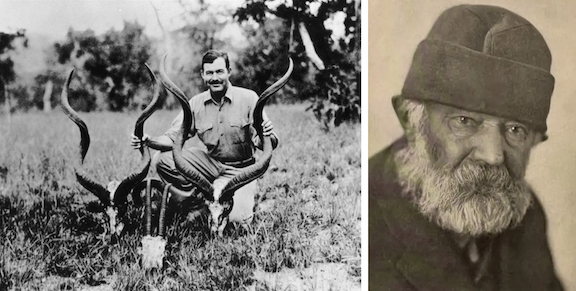
RUGGED TYPES…At left, Ernest Hemingway poses with skulls of kudu and female of sable antelope in East Africa, 1934, part of his hunting trip described in Green Hills of Africa; at right, photo of Jules Sandoz from the frontispiece of Old Jules, a biography written by his daughter Mari Sandoz. (JFK Library/U of Nebraska)

 * * *

From Our Advertisers

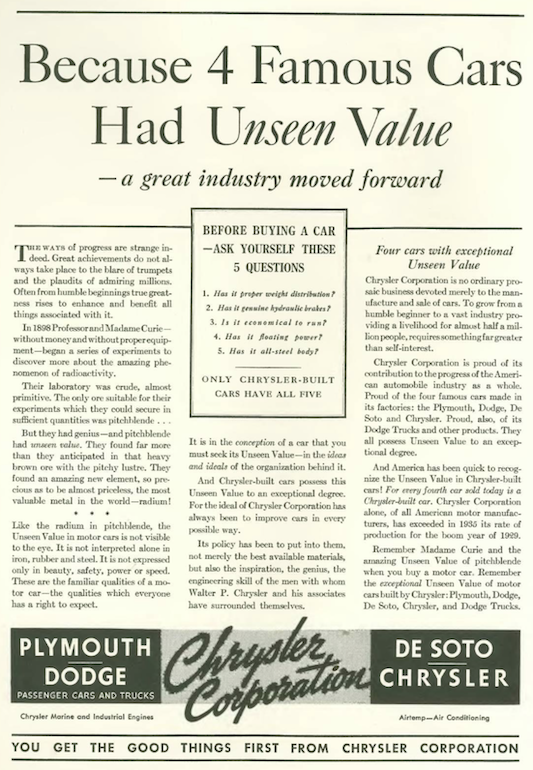
With the National Automobile Show in full swing at the Grand Central Palace, the issue was jammed with ads for every type and price range…the Chrysler Corporation took out this full-page spot on the opening spread to promote one of the lowest priced cars on the market…

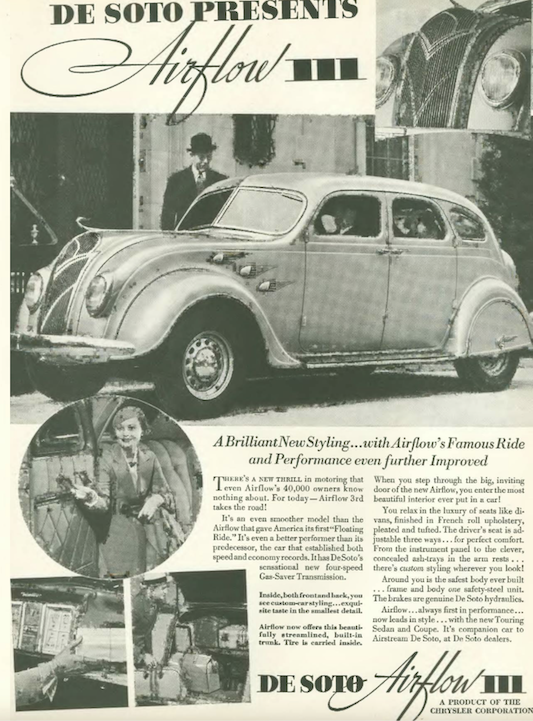
…Chrysler/DeSoto continued to tout its streamlined Airflow models…introduced in 1934, the Airflow was the first full-size American production car to use streamlining, and it featured a number of other innovations, but consumers just weren’t ready for something this radical…even with the streamlining toned down after its first year, only 55,000 units were produced during the model’s four-year run…

…on a side note, Chrysler has revived the Airflow nameplate for an electric car concept due to the marketplace in 2028…

…mentioned in Speed’s review of the Automobile Show, the Lincoln-Zephyr would find success with its aerodynamic design…

…most manufacturers were in on the streamlining trend, noticeable in the tilted grilles, low rooflines, and sweeping fenders…

…unlike the other car companies, Pierce Arrow did not produce an economy model to keep its luxury line afloat during the Depression…emphasizing its handmade quality, this American rival to Rolls-Royce went out of business by 1938…

…Goodyear got in on the Auto Show action promoting its tires for the “new and faster cars”…

…the folks at Campbell’s continued their ad series featuring upper-class women covertly serving canned soup to their society friends…in this ad, however, the hostess reveals her secret…

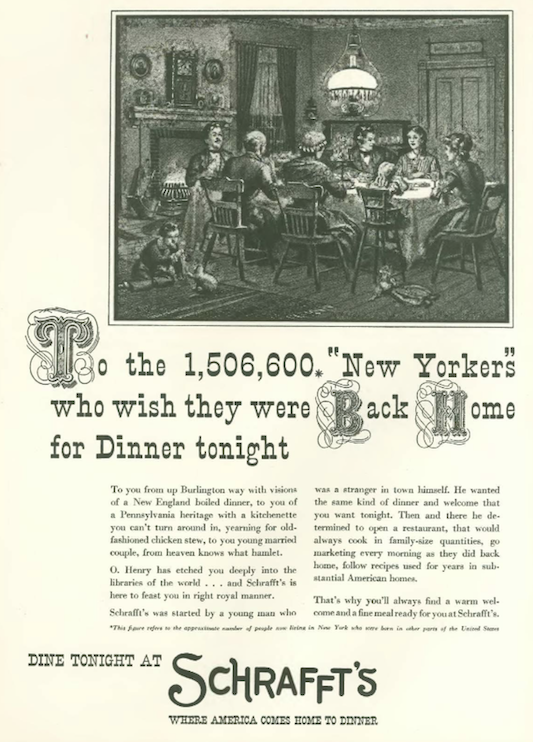
…there were no secrets to be found at Schrafft’s—its popularity increased during the Depression, when more than forty locations in the New York metro offered moderately priced “home-style” meals in an atmosphere that suggested upper-middle-class gentility…

…Long Island’s Lido Country Club tried to drum up some autumn business by promoting the “warm and lazy” sunshine of “Indian Summer”…

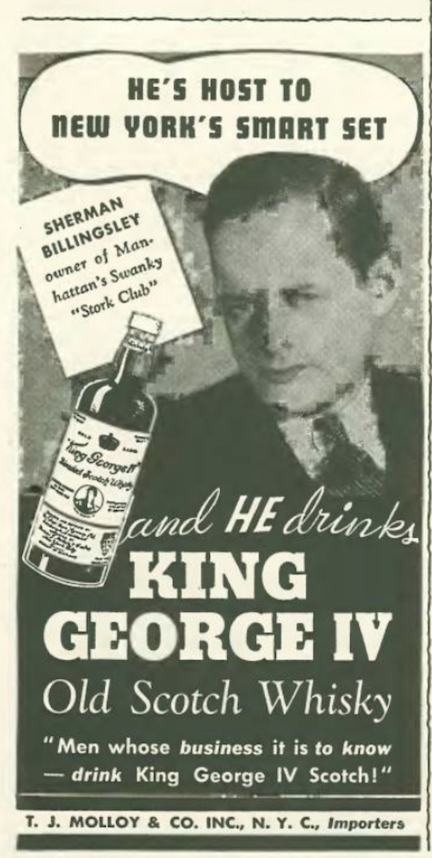
…the makers of King George IV Scotch used the face of Stork Club owner Sherman Billingsley to lend some nightlife cachet to their product…here’s an odd little fact: his nephew, Glenn Billingsley, was married to Leave It to Beaver actress Barbara Billingsley, who played June Cleaver on the TV series…

…this week the back cover belonged to R.J. Reynolds, with various aviators testifying to the calming effects of Camel cigarettes…the lead endorser in the ad, Frank Hawks, was famous for breaking aviation speed records until he perished in the crash of an experimental plane in 1938…

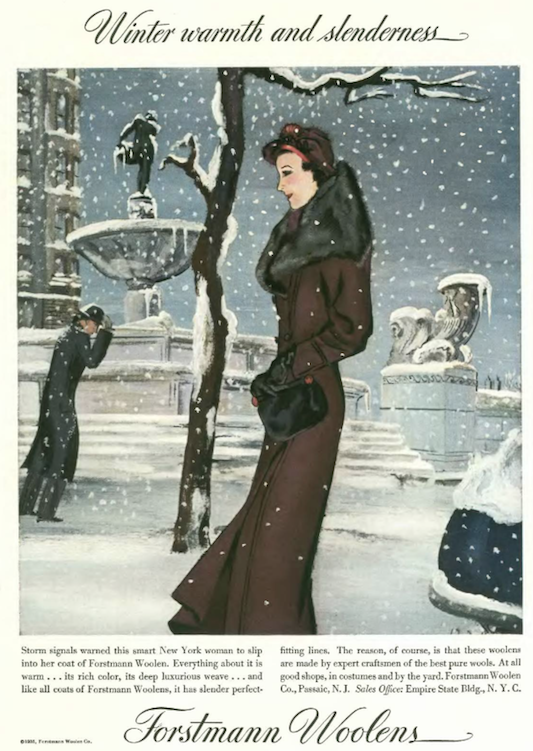
…Forstmann ads were a regular feature on the inside front cover during the fall/winter fashion season, rendered in a style made popular by illustrator Carl “Eric” Erickson

…on to our cartoonists, we open the magazine with Maurice Freed

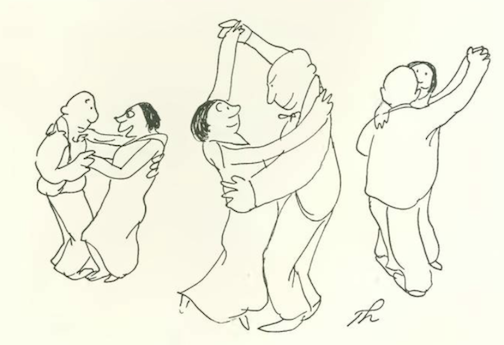
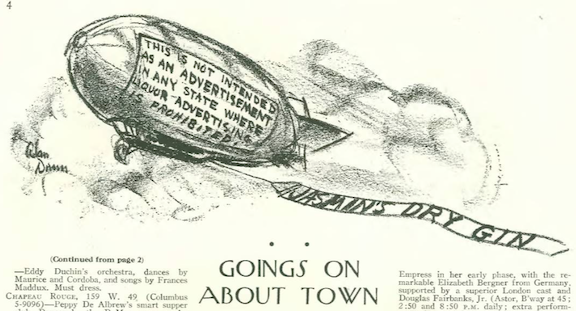
James Thurber was busy in this issue, writing a touching character sketch of a medicine show man he greatly admired (“Doc Marlowe”)…and contributing this spot art for “Goings On About Town”…

…he also turned in this terrific cartoon…

Christina Malman livened up the Auto Show review with this spot art…

Carl Rose also paid tribute to the annual event…

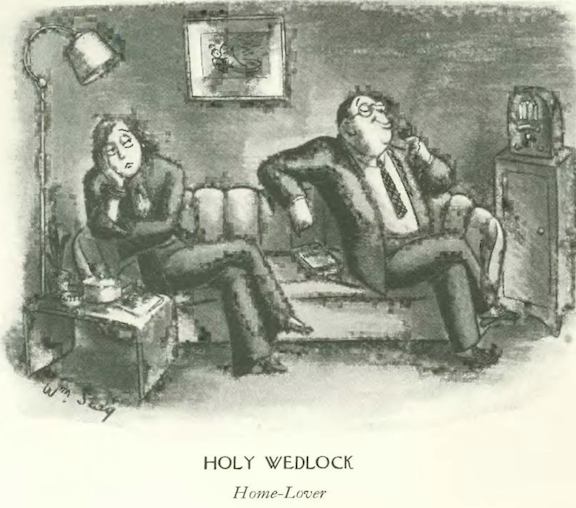
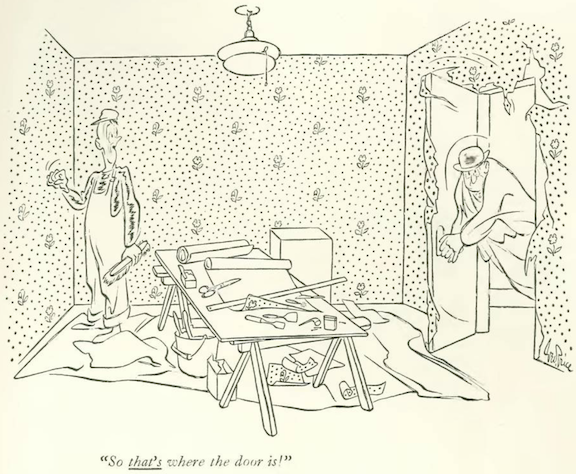
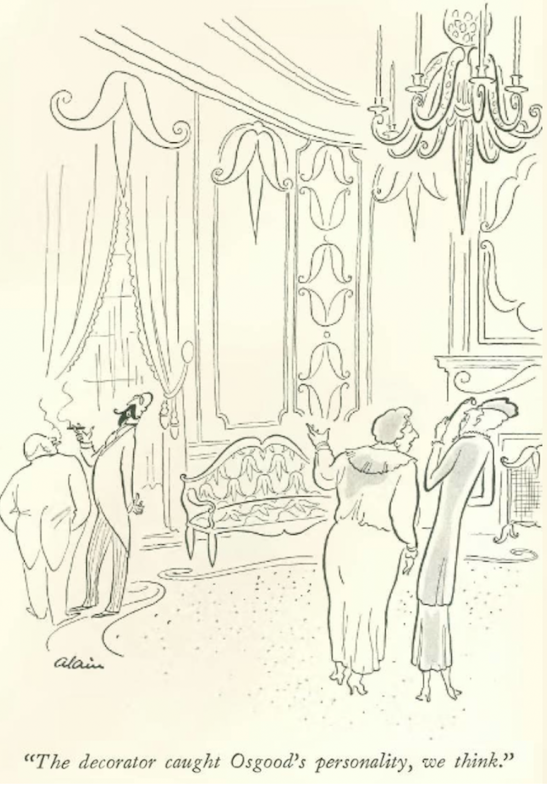
Daniel ‘Alain’ Brustlein did a bit of home decorating…

Robert Day was ready to call it a night…

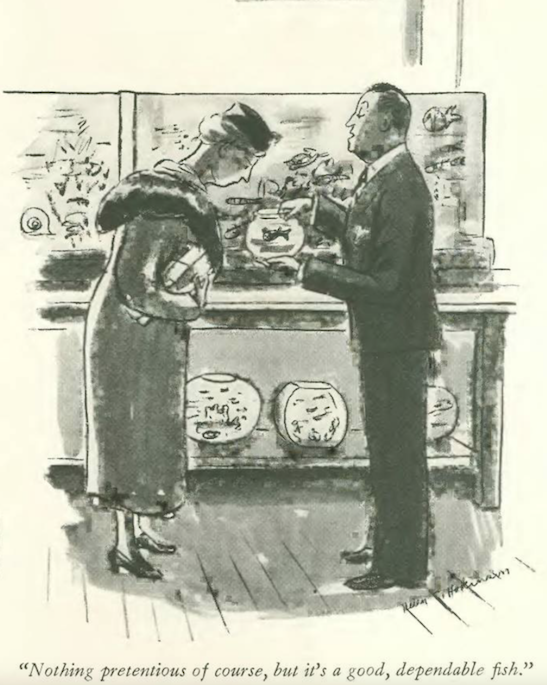
Helen Hokinson contributed two cartoons, shopping for a pet fish…

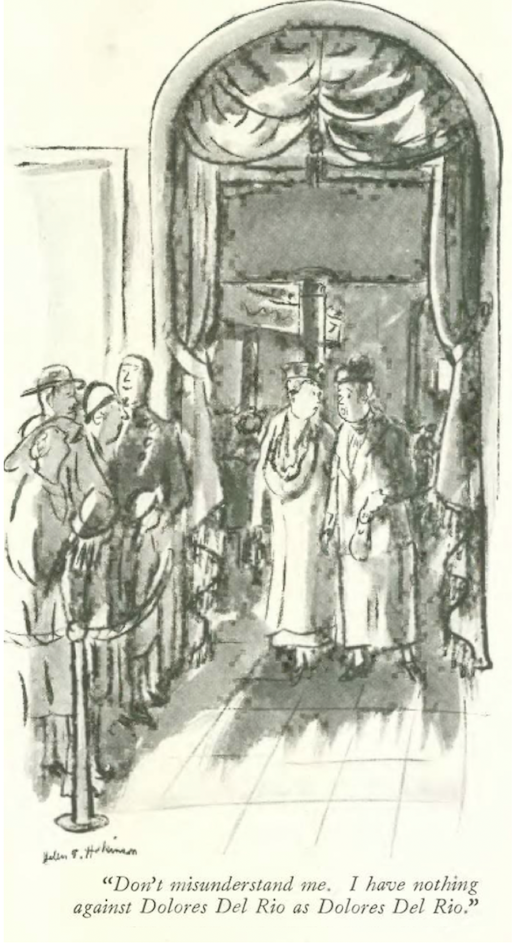
and taking in a Dolores Del Rio picture…

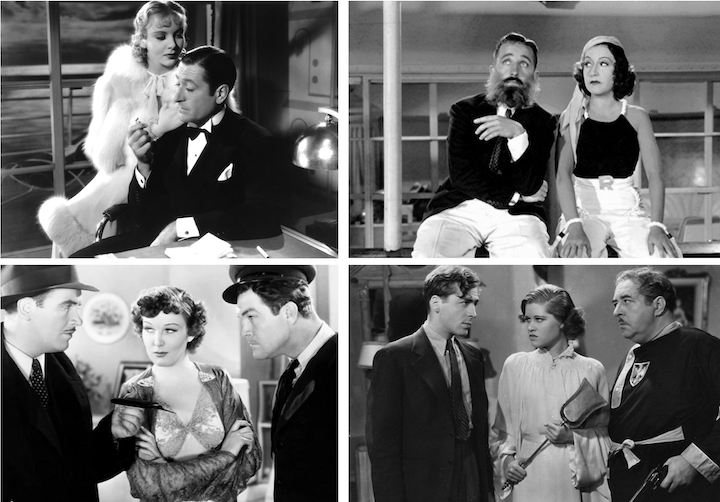
…no doubt Hokinson’s “girls” were commenting on the 1935 musical comedy In Caliente, featuring Mexican actress Dolores Del Rio (1904–1983)…Del Rio was the first Mexican actress to achieve mainstream success in Hollywood…

Dolores Del Rio in a scene from In Caliente. (Reddit)

…we continue with George Price, and a dedicated lumberjack…

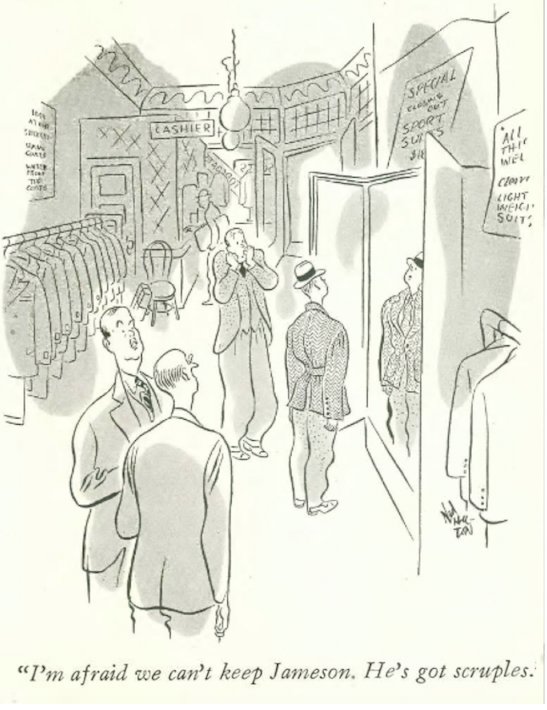
Ned Hilton discovered some honesty in the Men’s Department…

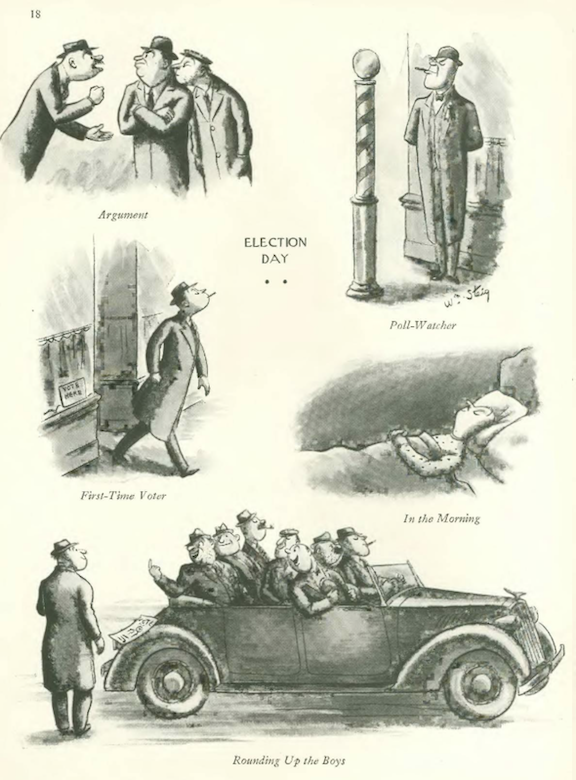
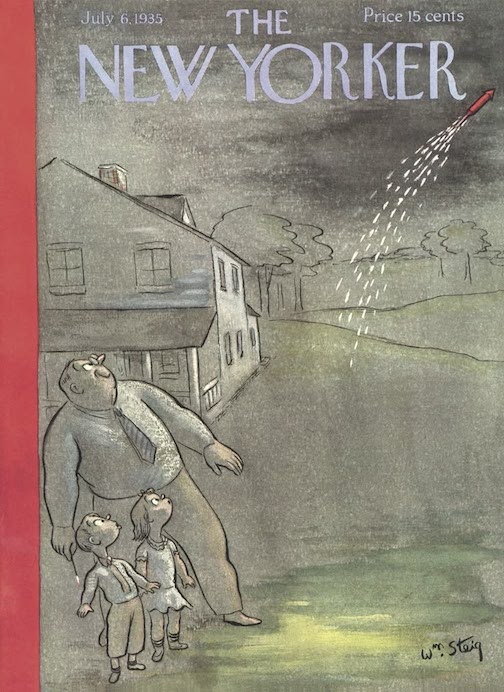
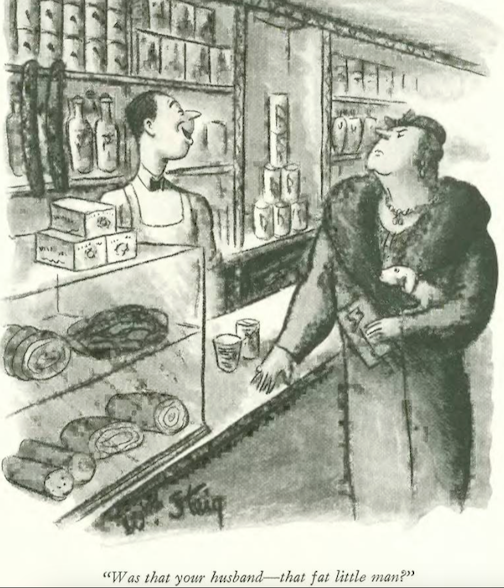
William Steig took a look around on Election Day…

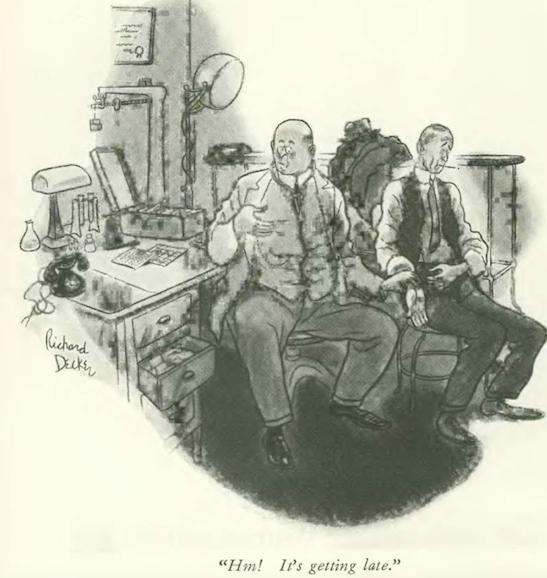
Richard Decker took the pulse of the medical profession…

…and we close with another by Decker, where seeing is not believing…

Next Time: Jimmy Comes Home…


Happy Motoring

In 1933 the U.S. economy began a slow recovery from the 1929 market crash, but the recovery stalled in 1934 and 1935, and folks including E.B. White were looking for any indication of brighter days ahead.

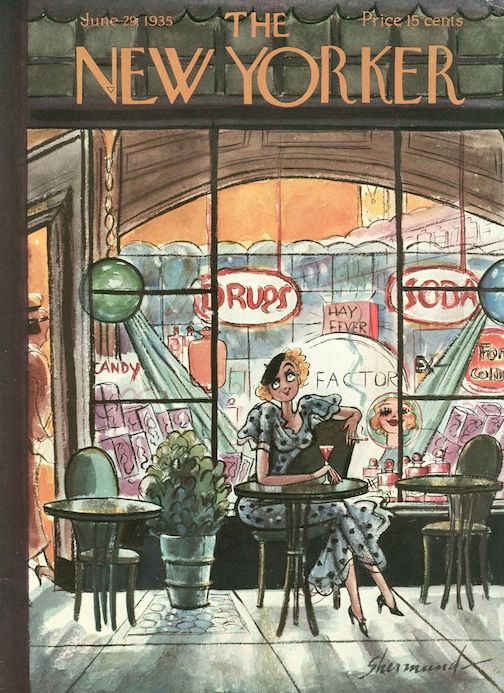
June 29, 1935 cover by Barbara Shermund. A prolific contributor of cartoons to The New Yorker (600 in all), Shermund also illustrated eight covers, including this charmer.

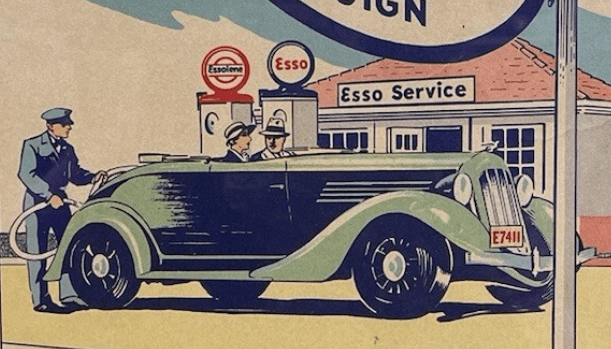
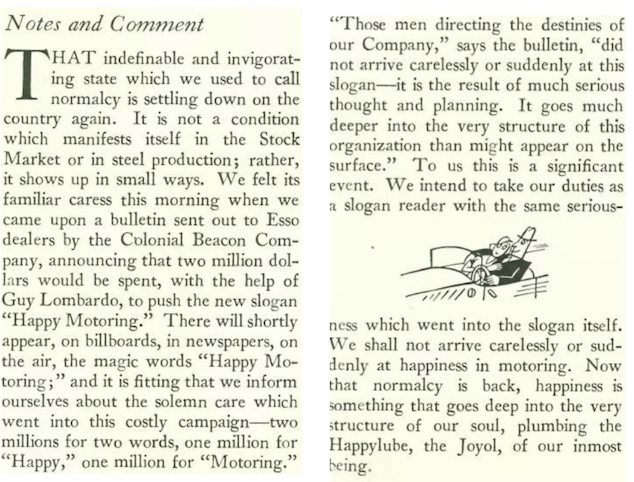
White suggested that Americans look for smaller signs of normalcy, such as the new slogan, “Happy Motoring,” that was being rolled out by Standard Oil’s Esso.

IT’S A GAS…At left, Gasoline Station, Tenth Avenue, photo by Berenice Abbott, 1935; at right, newspaper ad, May 1935. (metmuseum.org/wataugademocrat.com)

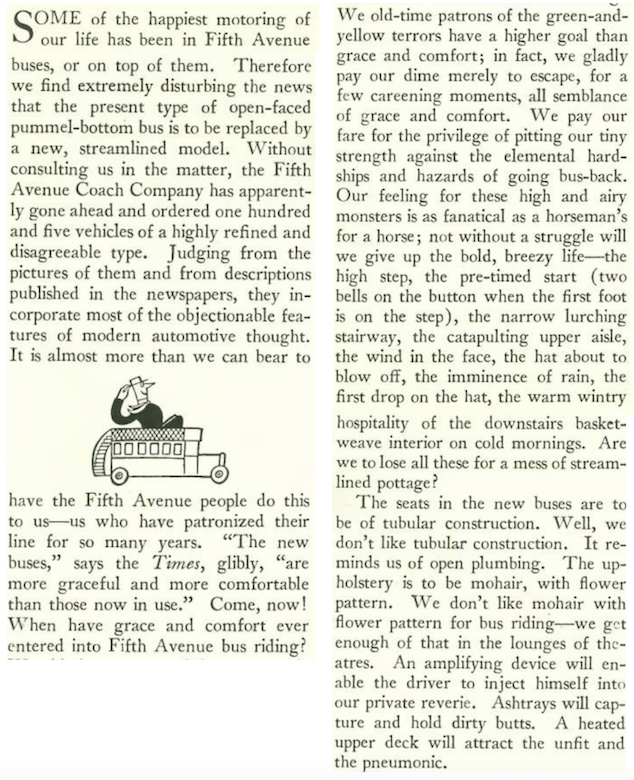
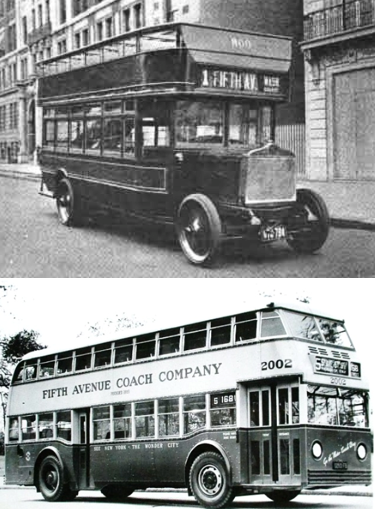
Like many of us, White was a study in contradictions, enthusiastically embracing the age of air travel while rejecting the style and comforts of modern automobiles (he famously loved his Model T). It is no surprise that he also preferred Fifth Avenue’s spartan green and yellow omnibuses over the new streamlined buses that would soon be plying the streets of Manhattan.

NO THANKS…E.B. White preferred the spartan accommodations of the old Fifth Avenue buses to the comforts of their replacements.  (coachbuilt.com)

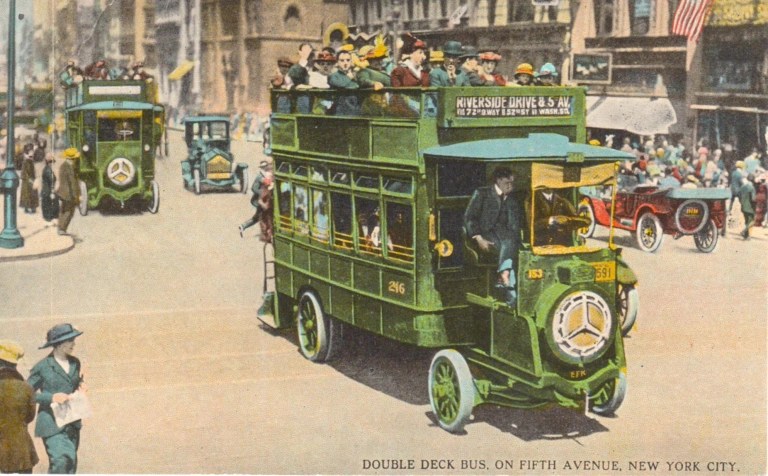
White elaborated on the advantages of the older buses:

STYLE OVER COMFORT…Of the old Fifth Avenue buses, E.B. White wrote that he preferred the “hard wooden benches on the sun deck, conducive to an erect posture, sparkling clean after a rain.” (Ephemeral New York)

 * * *

Cinderella Story

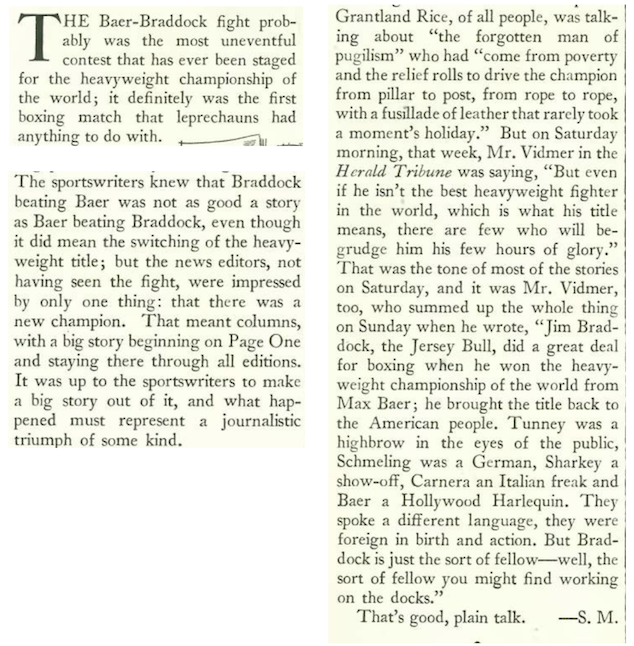
Challenger James J. Braddock achieved one of boxing’s greatest upsets by defeating the heavily favored (and reigning champ) Max Baer. For this feat he was given the nickname “Cinderella Man” by journalist Damon Runyon. The writer of the “Wayward Press” (byline “S.M.”) seemed less impressed, and mocked the national media for their sudden pivot on the bout’s unlikely outcome.

BRINGING THE FIGHT…Challenger James J. Braddock lays into defending champ Max Baer during a heavyweight boxing title match on June 13, 1935, at the Madison Square Garden Bowl in Long Island City. Although the national media dismissed Braddock’s chances of winning, Braddock trained hard for the fight while Baer spent more time clowning around than training. Braddock won by unanimous decision, eight rounds to six. (thefightcity.com)

 * * *

Seemed Like a Nice Guy

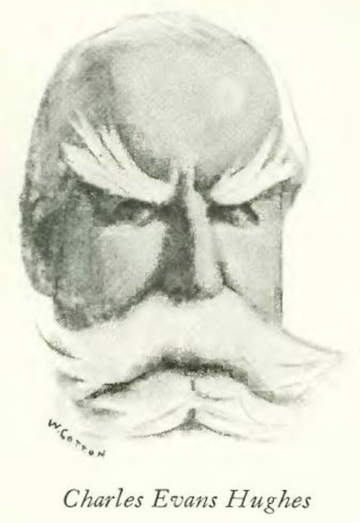
Henry Pringle penned the first part of a three-part profile of Supreme Court Chief Justice Charles Evans Hughes (1862–1948), who was also a former New York governor and U.S. secretary of state. William Cotton rendered a rather severe-looking Hughes in this caricature for the profile…

…although in reality he tended to look more like this…

PROGRESSIVE THINKER…Supreme Court Chief Justice Charles Evans Hughes in 1931. Known as a reformer who fought corruption, Hughes was a popular public figure in New York. (Wikipedia)

 * * *

From Our Advertisers

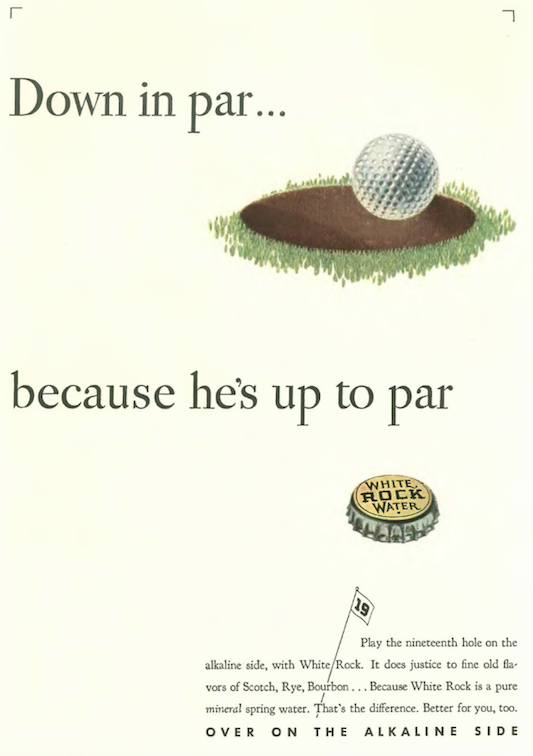
We begin with an advertisement that goes down easy, with its minimal style…

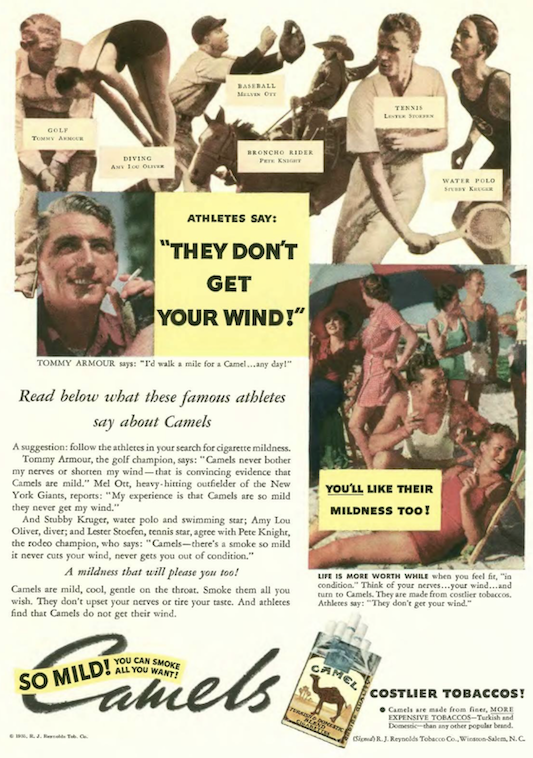
…by contrast, a busy Camel advertisement…R.J. Reynolds alternated full-page ads featuring society women with these health-themed spots that linked smoking with athletic prowess…

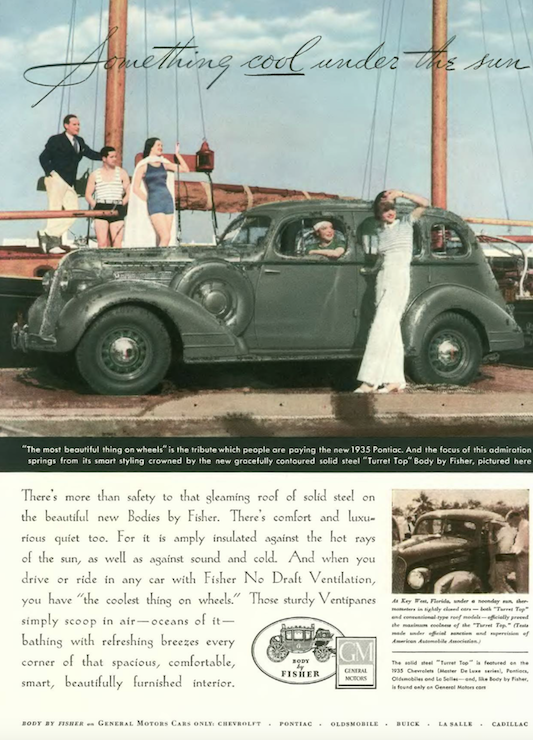
…this advertisement by Fisher claimed the 1935 Pontiac was “The most beautiful thing on wheels,” however here it looks perfectly ancient…

…as does this Nash on the inside back cover…

…the back cover was claimed by Highland Queen, a blend of some very fine distilleries…

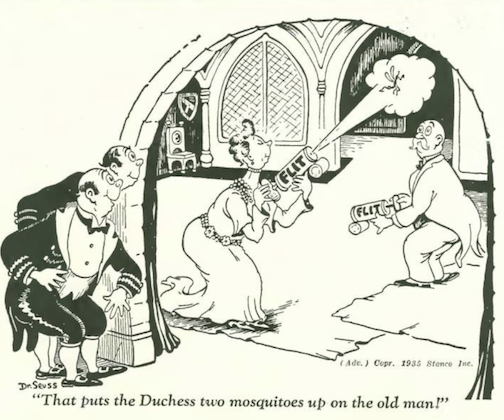
Theodore Seuss Geisel continued his ongoing saga against the mighty mosquito…

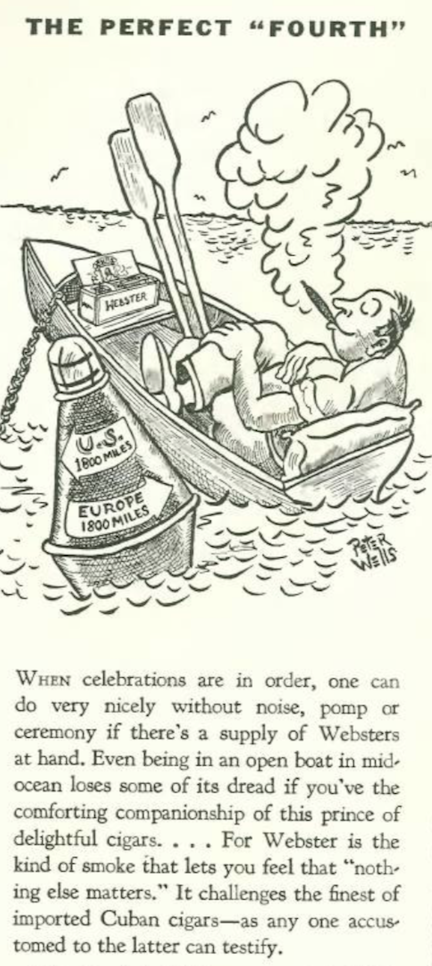
…and we have this back of the book ad for Webster cigars, who enlisted the talents of Peter Wells

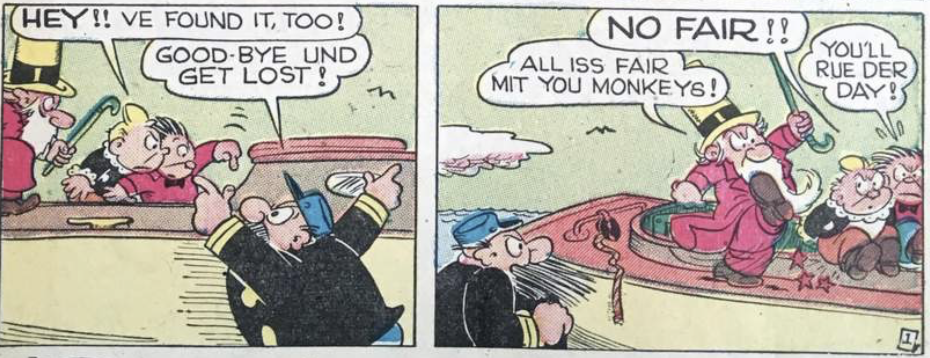
…Wells (1912–1995) was also a children’s book writer, most famous for contributing drawings to the Katzenjammer Kids comic strip …

Peter Wells, detail from the opening page from “The Katzenjammer Kids,” #16, Spring 1951, King Features Syndicate, Inc.

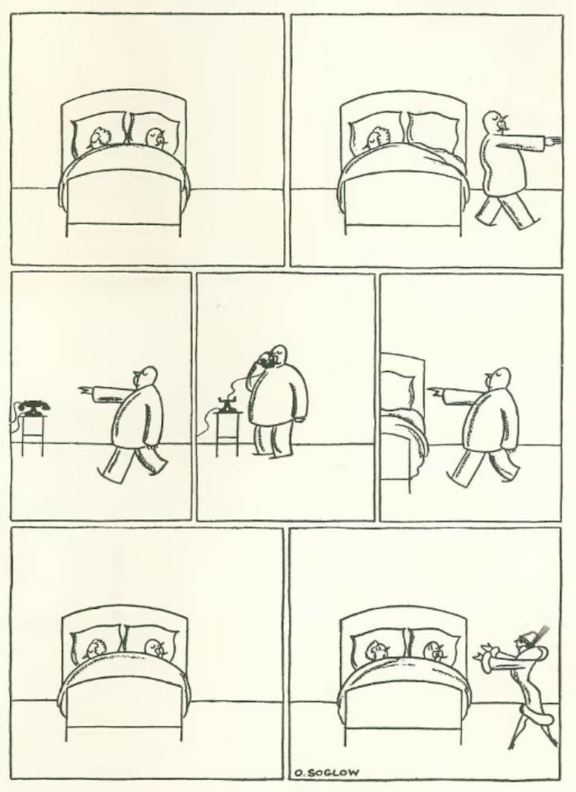
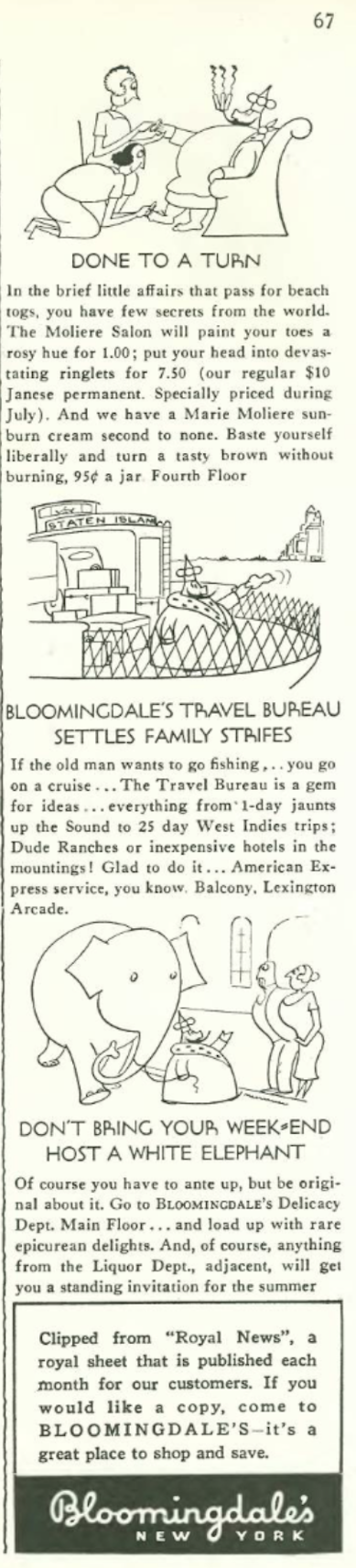
…and of course we are all familiar with Otto Soglow, who sold his beloved Little King to Hearst (and made a pile) but was still able to feature his diminutive potentate in the The New Yorker in a series of ads for Bloomingdales…

…which brings us to our cartoonists, and a familiar torment for our beloved James Thurber

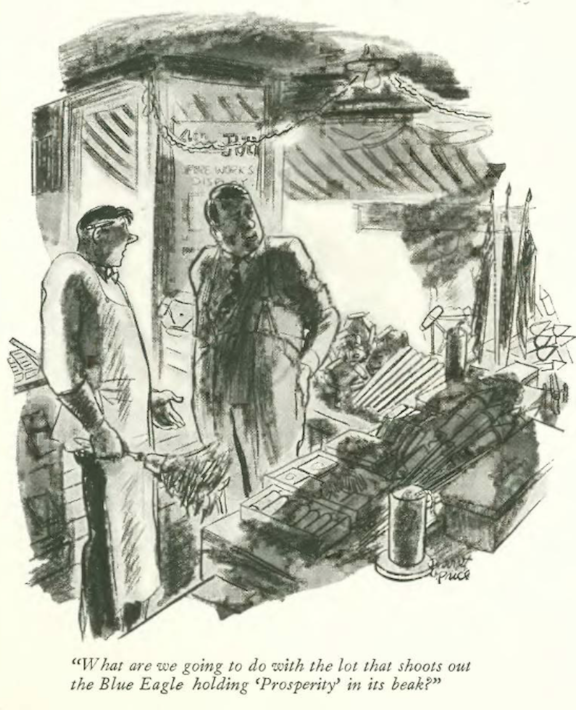
…Independence Day offered a marketing challenge to these shopkeepers, per Garrett Price

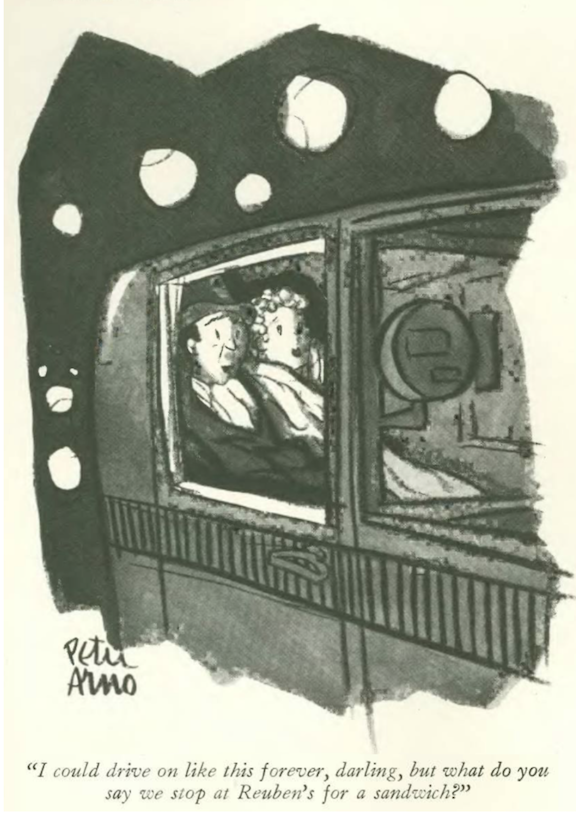
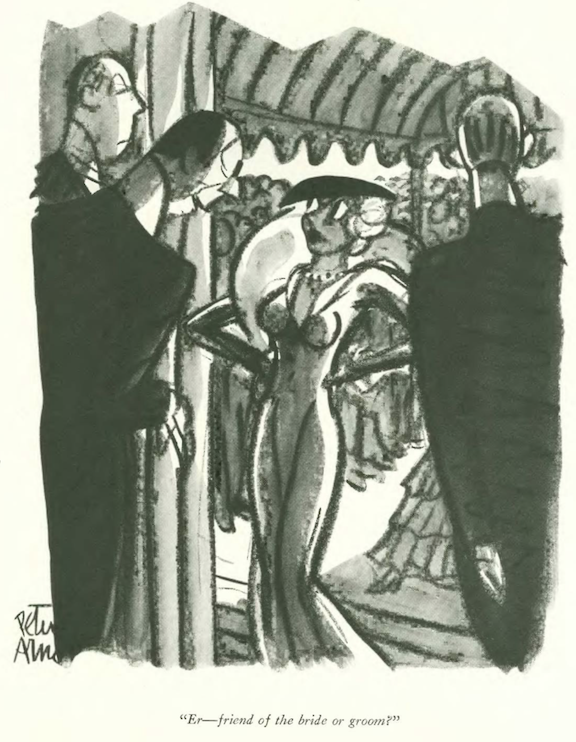
Peter Arno was at his best, in his element…

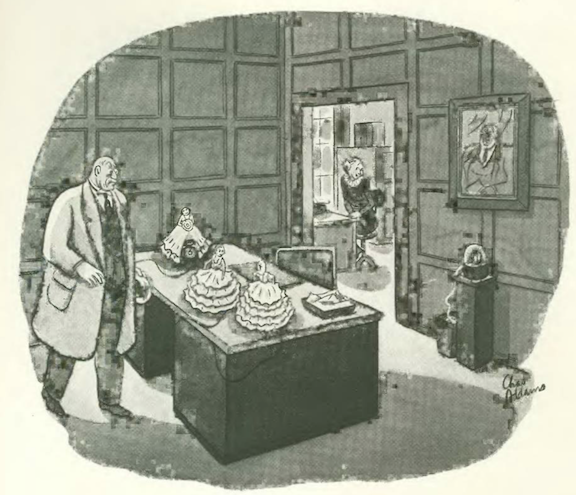
Charles Addams explored the unnatural, which would become his calling card…

Robert Day offered a new twist to the tonsorial arts…

William Steig gave examples of some budding “tough guys”…

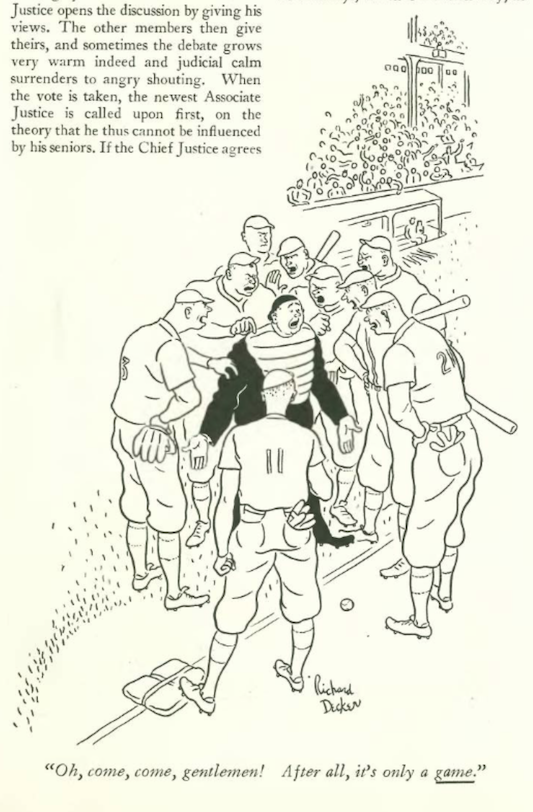
…a rare baseball-themed cartoon from Richard Decker (editor Harold Ross was not a baseball fan)…

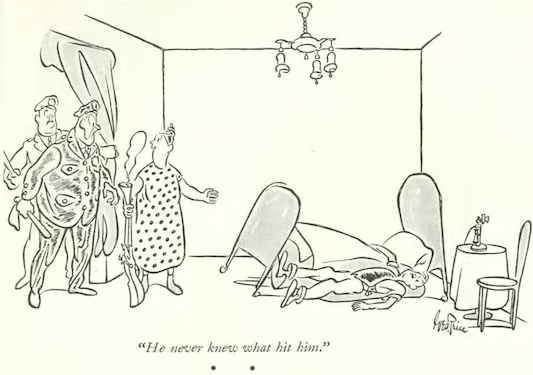
…from George Price, what appears to be the end of his “floating man” series, which began in September 1934…

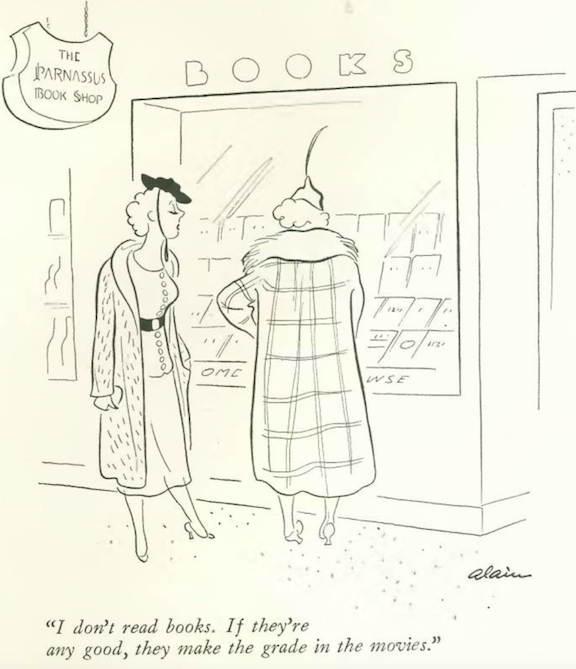
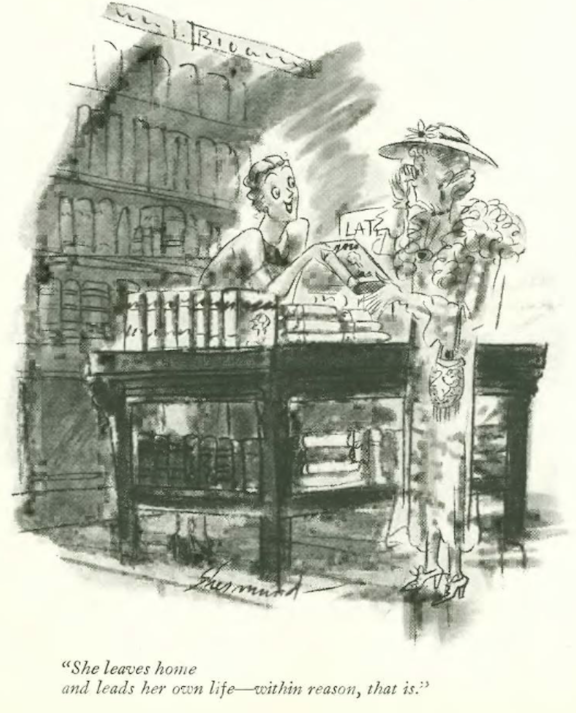
…and we close with one my favorite cartoonists, Barbara Shermund, here at the bookstore…

…and on vacation…

Next Time: Independence Day 1935…


Home Sweet Motohome

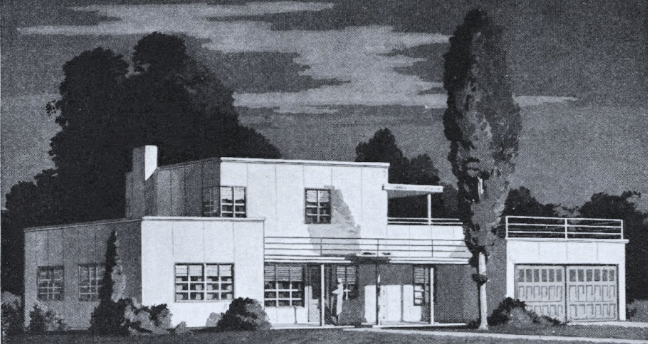
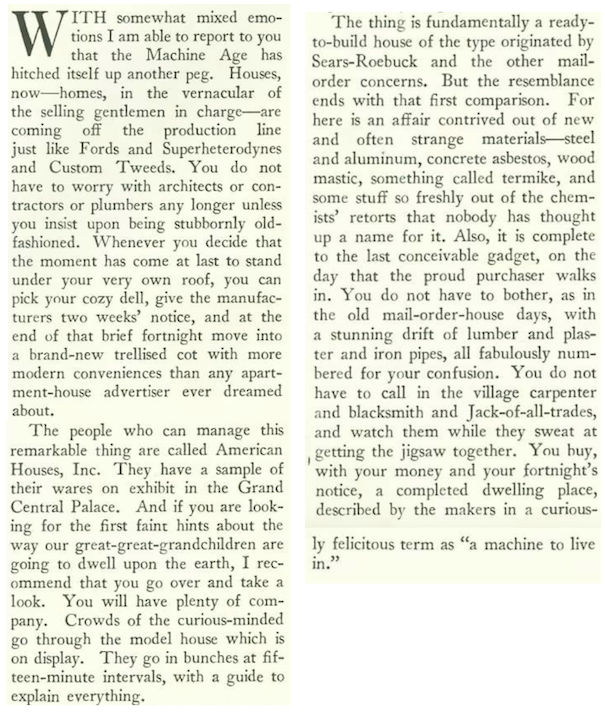
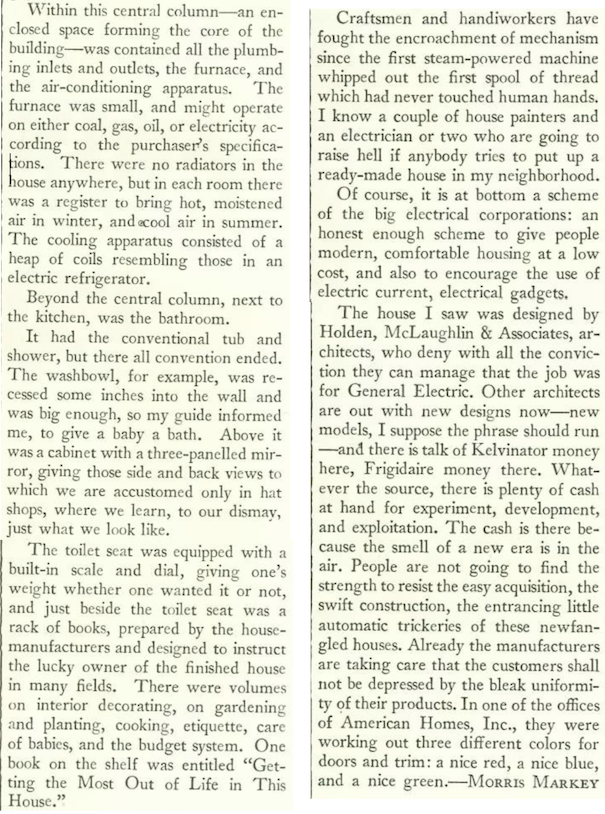
Morris Markey thought he was getting a glimpse of the future when he attended an exhibit of “machines to live in” at New York’s Grand Central Palace.

March 16, 1935 cover by Constantin Alajalov.

The Great Depression created a housing shortfall in the U.S. of nearly two million units, so many idled architects and builders turned to industrialized housing as a way to boost the building industry. In “A Reporter At Large,” Markey described his encounter with one type of “machine to live in”––the Motohome.

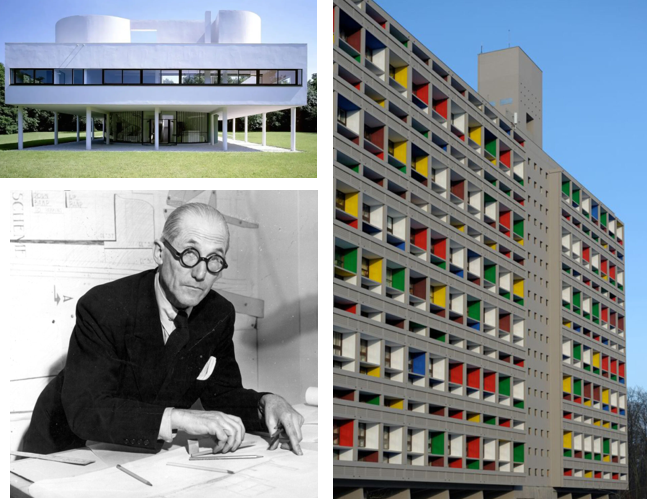
The idea of pre-fab living wasn’t exactly new in 1935, originating in the 1920s with the German Bauhaus school and with notables such as Swiss architect Le Corbusier.

NOT THRILLED WITH FRILLS…Charles-Édouard Jeanneret (1887-1965), better known as Le Corbusier, stated in 1923 that “a house is a living machine.” He believed the world had evolved beyond the need for decorative frills, and that homes and furnishings should reflect their functions. Top left, Corbu’s 1929 Villa Savoye in Poissy, France; at right, his 1947-52 Unité d’habitation de Marseille. (Fondation Le Corbusier/Architectural Digest/Le Corbusier World Heritage)

Markey correctly surmised that the American twist on Le Corbusier’s vision was largely driven by big corporations, and in the case of the Motohome, by General Electric.

GET YOUR MOTO RUNNING…Clockwise, from bottom left, New York’s Grand Central Palace; the Eggiman House in Madison, Wisconsin, a 1936 Motohome listed in the National Register of Historic Places; Long Island Motohome featured on a brochure; Popular Mechanics article on the Motohome. A common wall “core” was prefabricated with all kitchen and bath fixtures, as well as the HVAC system. (Wikipedia/makeitmidcentury.com/books.google.com)

 * * *

Strange and Wonderful

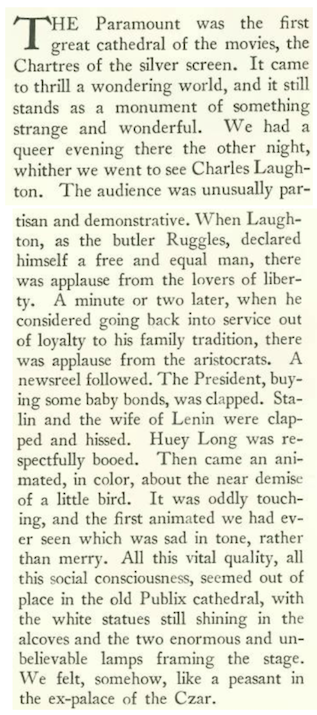
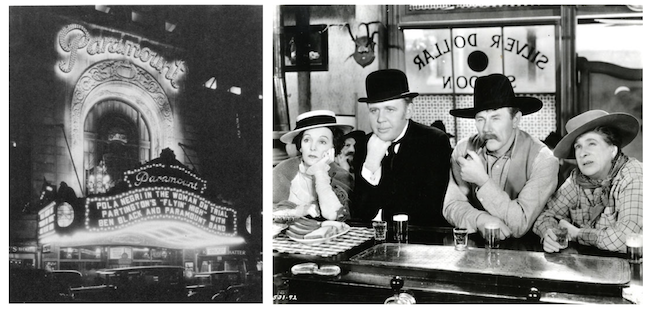
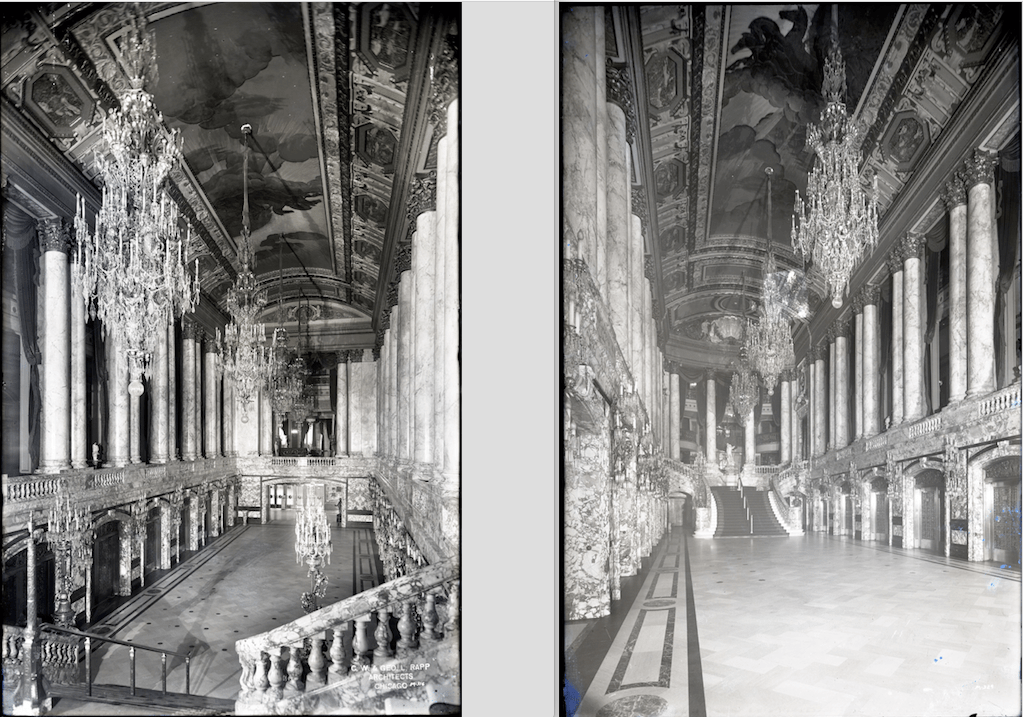
That is how E.B. White described the 3,664-seat Paramount Theatre, which opened on 43rd and Broadway in 1926. After nine years White was still in awe of its palatial trappings. In his “Notes and Comment,” White offered some thoughts after an evening at the movies.

CINEMA GLORY DAYS…E.B. White visited the Paramount Theatre to take in Charles Laughton’s hit film, Ruggles of Red Gap. From left, Zasu Pitts, Laughton, Charles Ruggles and Maude Eburne in Ruggles. (nyc.gov/TCM)
PALACE FOR THE PICTURES…The Paramount Theatre’s Grande Hall featured a 75-foot-long ceiling mural by artist Louis Grell above the Italian marble-lined entrance. In 1966, after a run of the James Bond film Thunderball, the Paramount was closed for good and later gutted and turned into retail and office space. (Louis Grell Foundation)

 * * *

Bad Guys

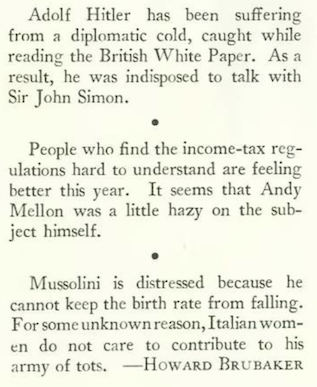
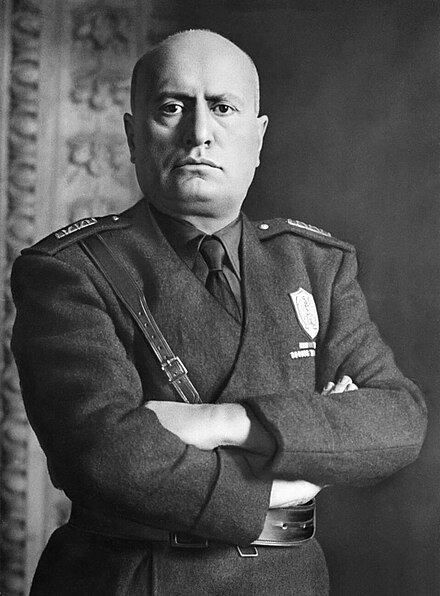
Andrew Mellon’s tax fraud troubles were sandwiched between the woes of a fascist bromance in Howard Brubaker’s “Of All Things”…Mellon would soon be dead, Adolf Hitler would lie his way around the Brits, and Benito Mussolini would struggle to inspire Italian women to produce his “army of tots”…

NOT TONIGHT, WE HAVE A HEADACHE…Little wonder fascist dictator Benito Mussolini couldn’t inspire a baby boom. (Wikipedia)

 * * *

Zoom Zoom

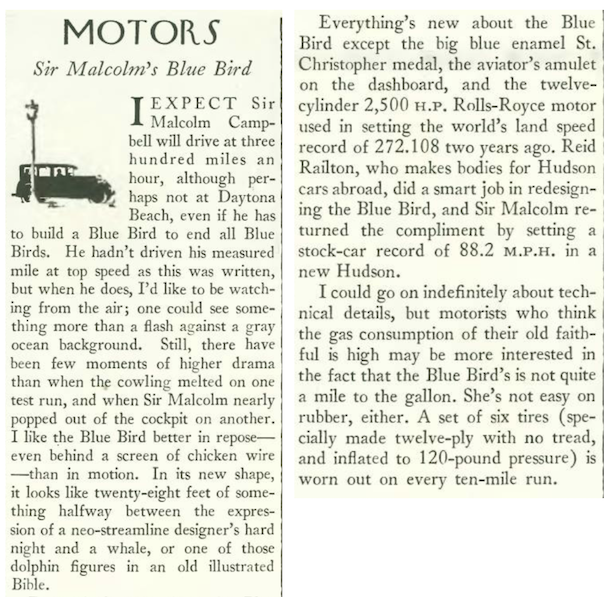
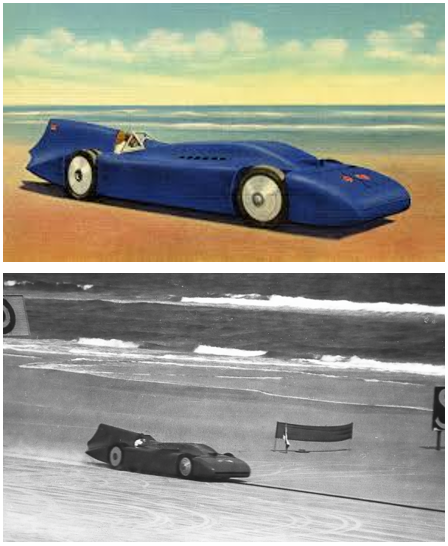
In his “Motors” column, writer “Speed” looked in on Sir Malcolm Campbell (1885-1948), who was attempting to break the 300-mph mark at Daytona in his 2,500-horsepower Blue Bird.

BLUE STREAK…Sir Malcolm Campbell’s bid for a land speed record surpassing 300 mph began at Daytona Beach in March 1935 in his Campbell-Railton Blue Bird, powered by a 2,500 hp supercharged Rolls-Royce V-12. He managed to hit 276 mph (combined runs in each direction), but conditions at the beach (bottom photo) left him short of his goal. He found a smoother, longer run at Utah’s Bonneville Salt Flats in September, where he would average 301.337 mph (484.955 km/h) in two passes to set the new record. (floridamemory.com/oldmachinepress.com)
ONCE IS NOT ENOUGH…Sir Malcolm Campbell MBE was a British racing motorist and motoring journalist. He gained the world speed record on land and on water several times. He was also one of the few land speed record holders of his era to die of natural causes. (Wikipedia)

 * * *

From Our Advertisers

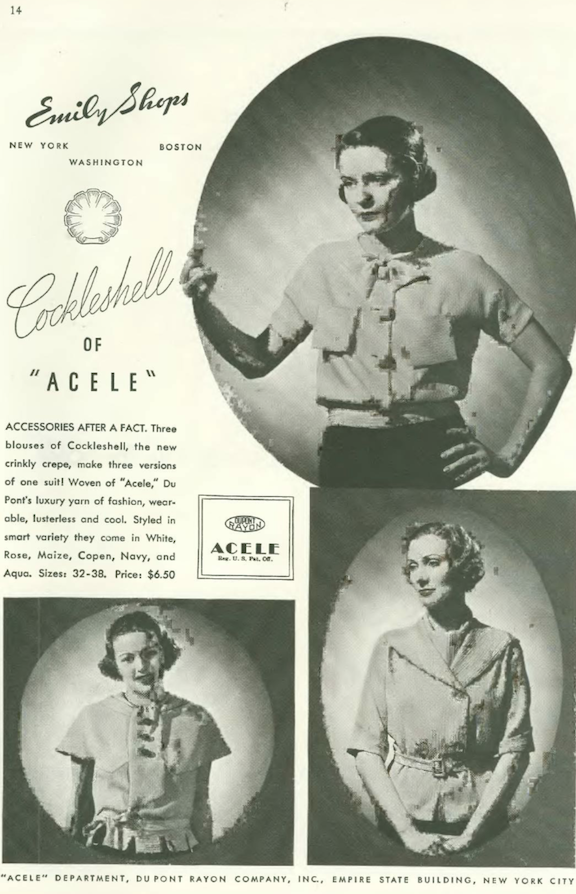
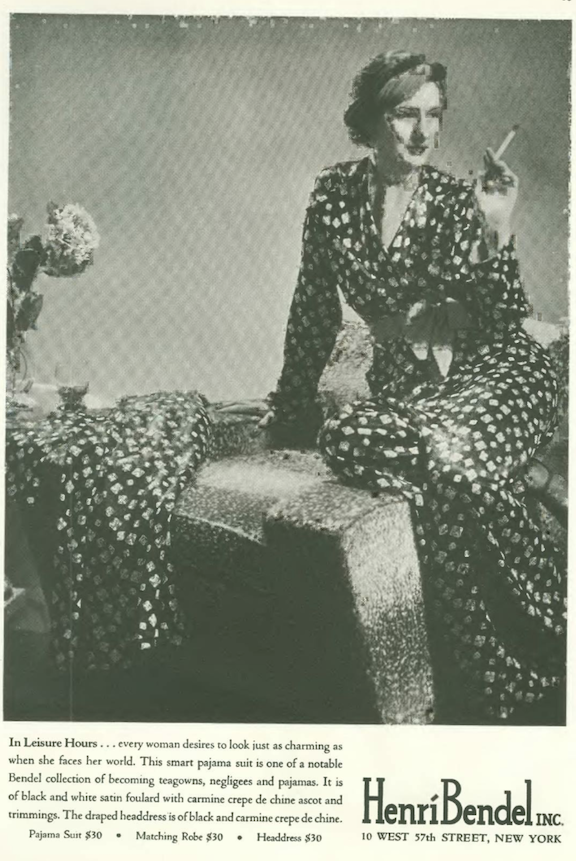
For ninety bucks you could get this swell pajama suit and matching robe (plus headdress) at Henri Bendel, the perfect ensemble for having a leisurely smoke after a day facing the world…For more than 100 years, Henri Bendel’s flagship and only store was located at 10 West 57th Street…it closed in 2018…

…I doubt the woman in the Bendel ad would have been interested in clothes made with Acele…it was without question that the uppers only wore clothes derived from living things…

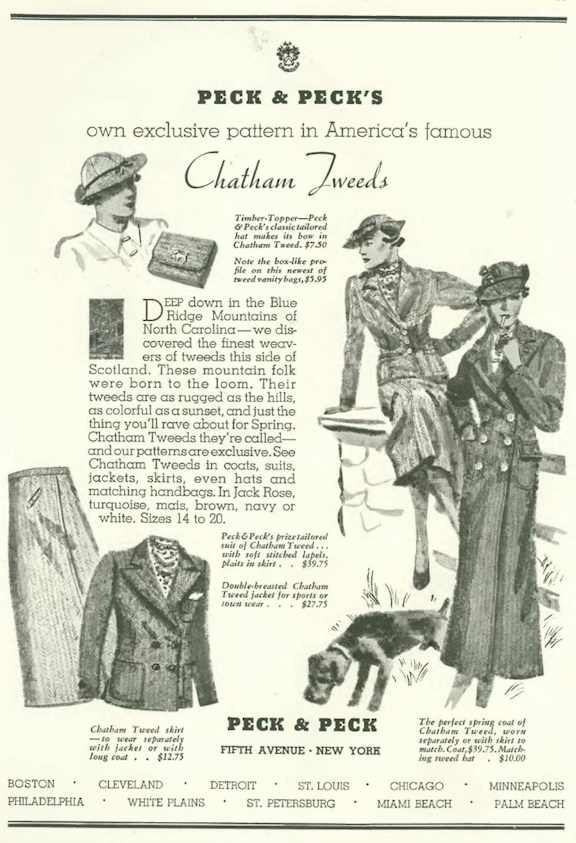
…this Anglophilic Peck & Peck ad is notable for its condescending reference to the “mountain folk” in Appalachia who “were born to loom”…

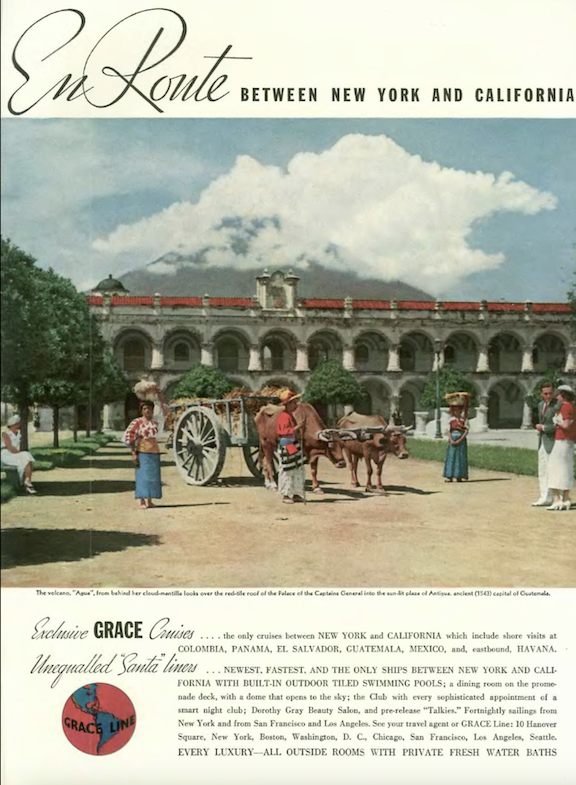
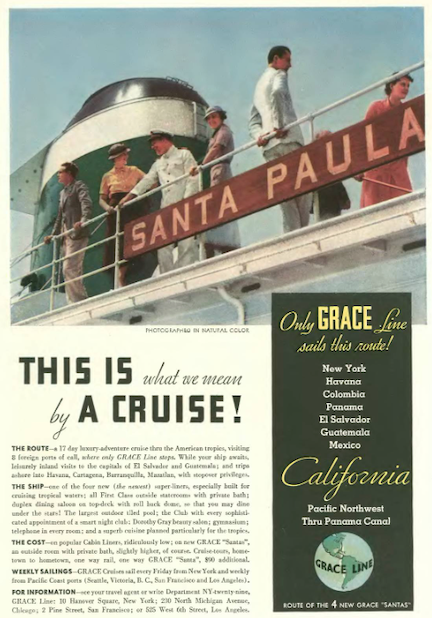
…while we are on the subject, check out this ad for Grace Cruises…this was a common theme in mid-century travel advertising, Westerners dressed in their Sunday best while having a gander at the colorful natives…

…who are just part of the scenery…

…all four of the automobile ads in this issue come from long-gone companies…the luxury carmaker Packard made beautiful, quality cars that outsold Cadillacs up until 1950, but competition from the Big Three (GM, Ford, Chrysler) plus Packard’s decision in 1954 to buy failing Studebaker led to Packard’s demise four years later…

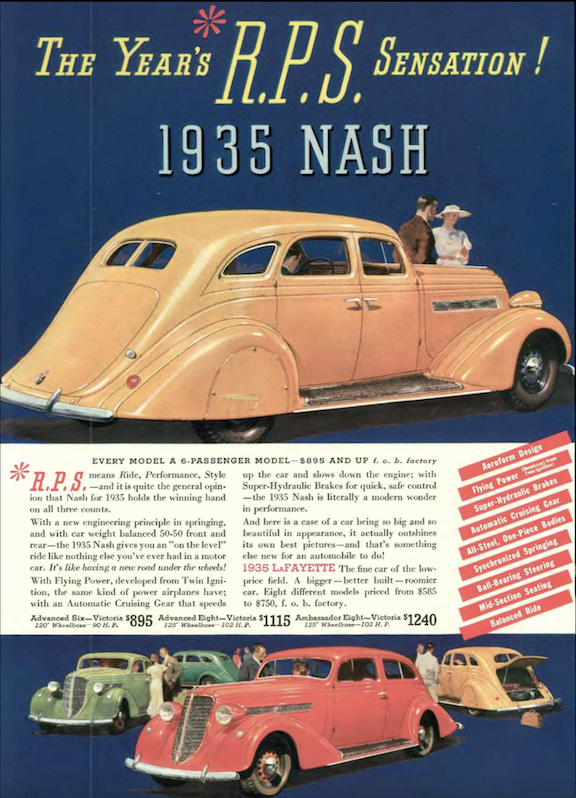
…a more successful merger took place in 1954 between Nash…

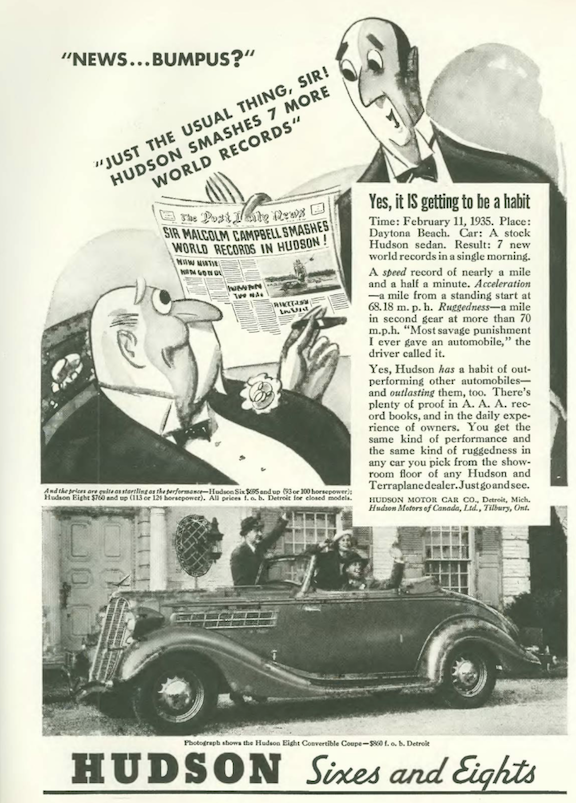
…and Hudson, the two forming the new American Motors Corporation…

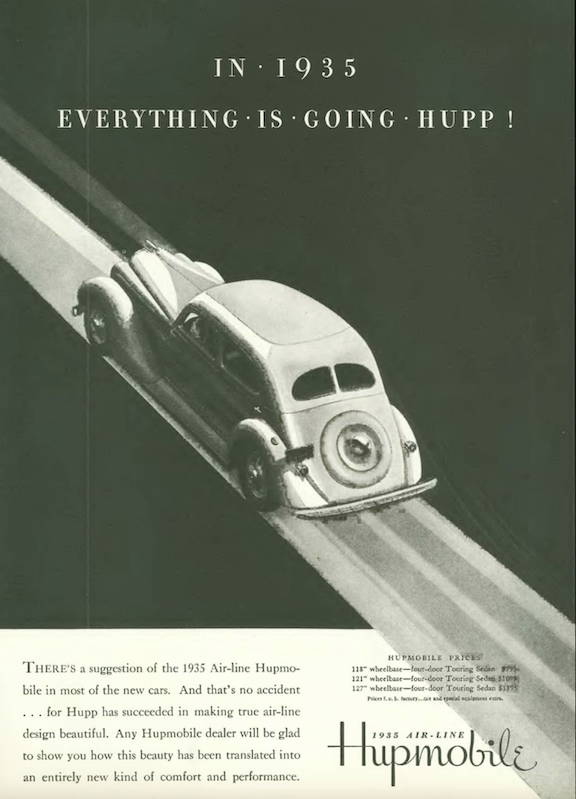
…contrary to this ad’s tagline, everything was actually going down for Hupmobile, which would go out of business in 1939…

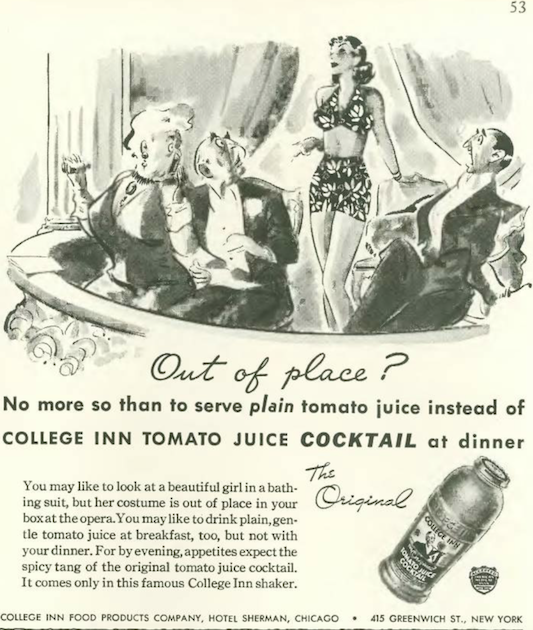
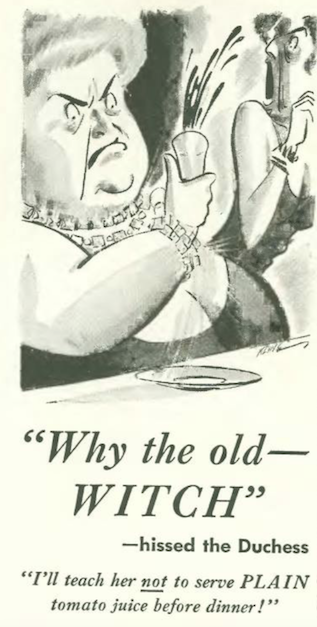
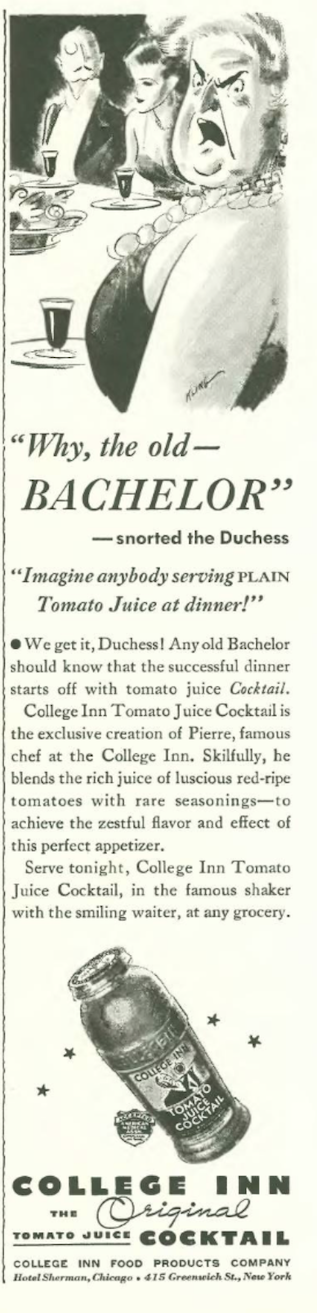
…the makers of College Inn Tomato Juice Cocktail apparently thought an angry old “Duchess” would boost sales…she first appeared in the Feb. 23 issue…

…in the March 16 issue she appears to be psychotic, threatening, “I’ll teach her not to serve PLAIN tomato juice before dinner!” Will she break the glass on the table and lunge at her host (the old WITCH) with a glass shard?…Stay tuned…

…better to calm down and have a Guinness, which, by Jove, was affordable and good for you!…
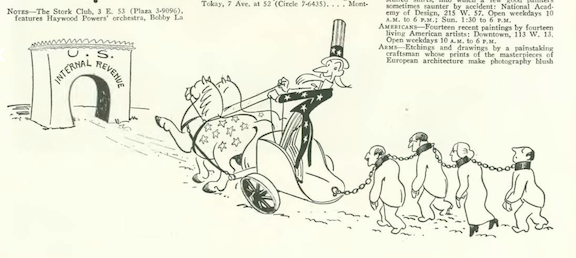
New Yorker cartoons are also good for you, and we begin with Al Frueh and this taxing illustration at the bottom of page 4…

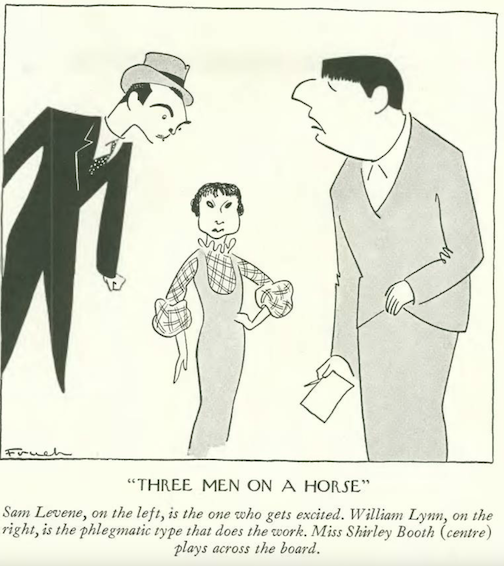
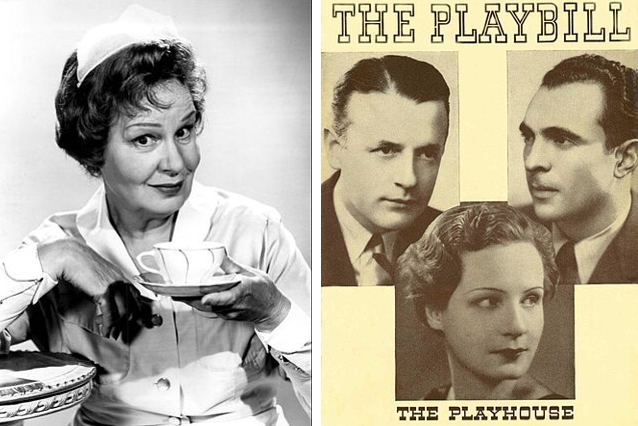
…Frueh again, for the theater review section…in the center is Shirley Booth, known to Baby Boomers as the star of the old TV series Hazel (1961-66)…

…Booth was much more than a sitcom star, achieving the Triple Crown of Acting––an Academy Award, two Primetime Emmy Awards and three Tony Awards…

ACTING CHOPS…Shirley Booth (1898-1992) as Hazel in 1962; on the cover of the 1935 Playbill featuring Three Men on a Horse. (Wikipedia)

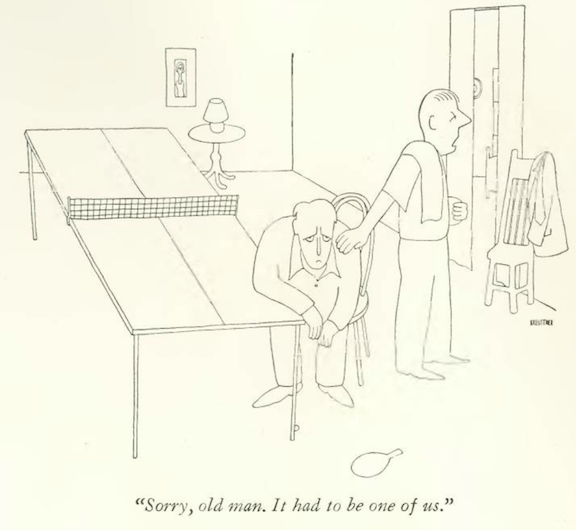
…we continue with Daniel ‘Alain’ Brustlein, and a term of endearment from someone well known to the police…

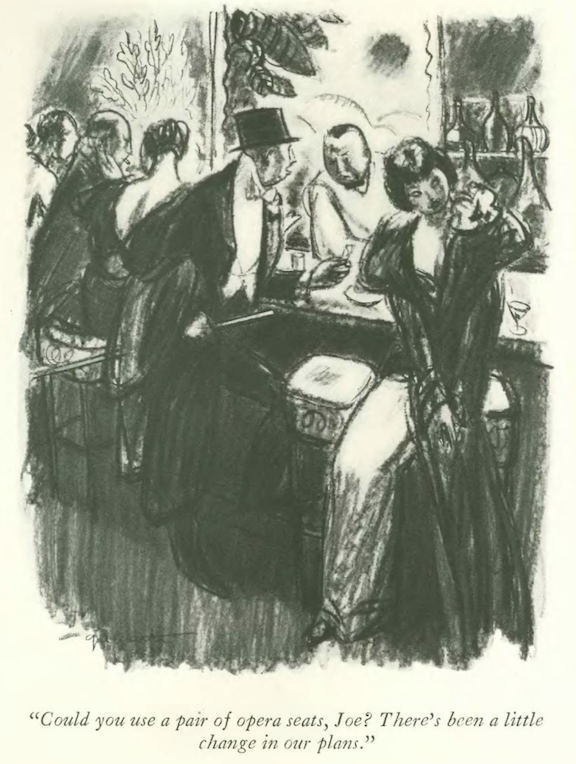
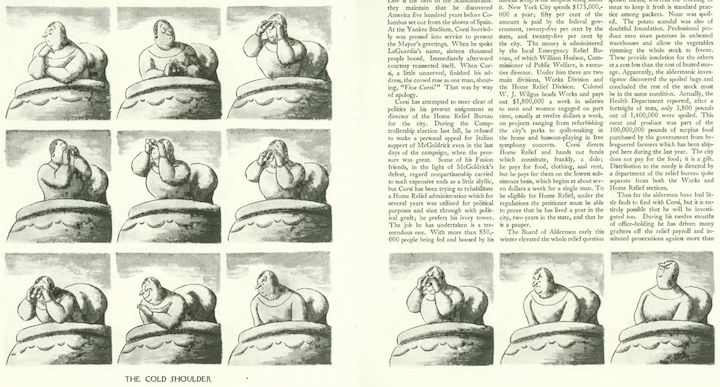
William Steig took up two pages to give one opera patron the cold shoulder…

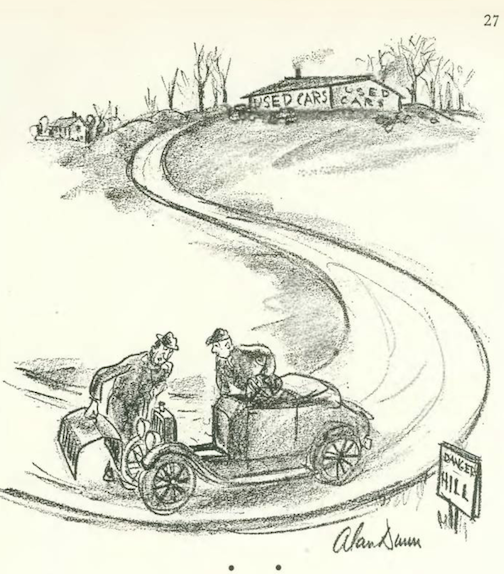
Alan Dunn cautioned against car dealers perched on high hills…

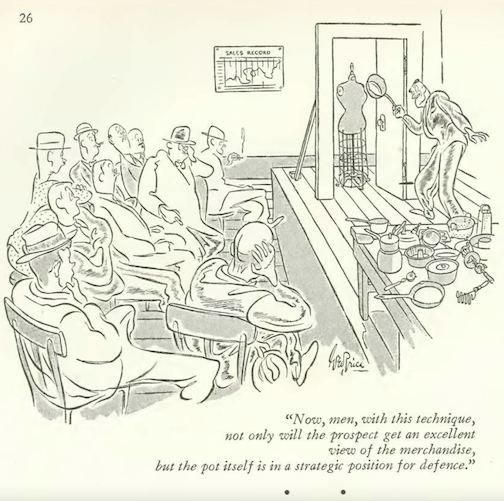
George Price examined the finer points of salesmanship…

Helen Hokinson headed for the high seas…

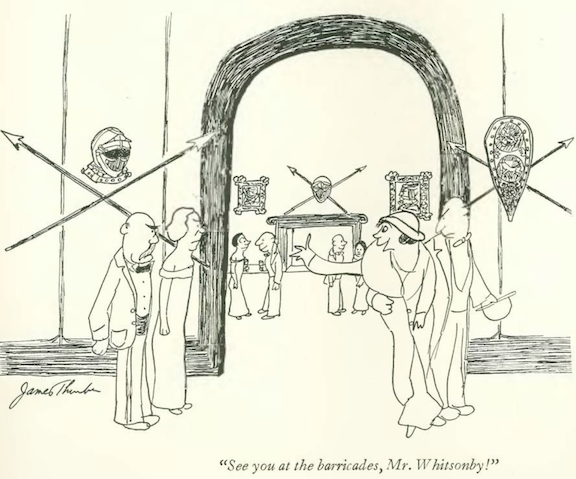
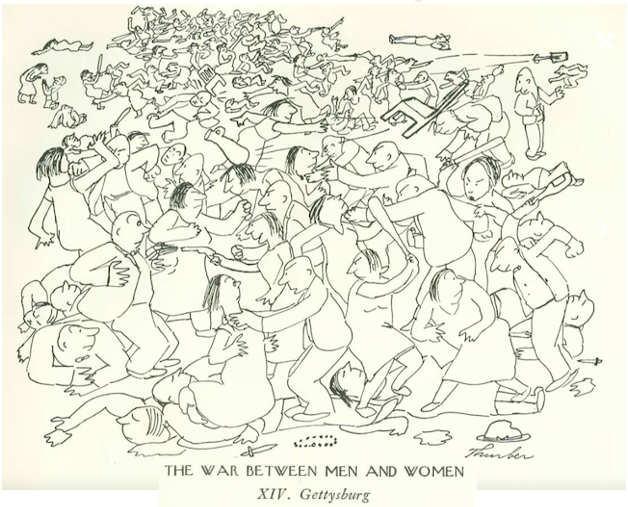
…and we close with an all-time classic from James Thurber

Next Time: Something Frivolous…

It’s a Gift

Above: Charles Sellen as Mr. Muckle and W.C. Fields as shopkeeper Harold Bissonette in the 1934 film It's a Gift.

Rea Irvin featured the New York Auto Show on the cover of Jan. 12, 1935 issue—the extravaganza of cars at the Grand Central Palace was one place New Yorkers could go to chase away the winter blues. The other was at one of the city’s RKO theatres, where a classic W.C. Fields comedy was gracing the silver screen.

Jan. 12, 1935 cover by Rea Irvin.

It’s a Gift was a showcase of Fields’ vaudevillian talents, tied together in a story about grocer Harold Bissonette (Fields) whose various tribulations included a pompous wife (who insisted on pronouncing the surname “biss-on-ay”), bratty children, and challenging customers (the hilarious Charles Sellen as Mr. Muckle). Writing for BFI Film Classics, Simon Louvish calls the film a chronicle of the “many titanic struggles between Harold Bissonnette and the universe. There will be battle of wills between father and daughter, between male and female, between man and a variety of uncontrollable objects.” Here is John Mosher’s review for The New Yorker.

HAROLD VS. THE WORLD…Clockwise, from top left, W.C. Fields as grocer Harold Bissonette; Fields with Kathleen Howard as wife Amelia Bissonette; Bissonette is relegated to the back porch in search of some rest; Charles Sellon as one of Bissonette’s more challenging customers, Mr. Muckle. (IMDB/TCM/filmfanatic.org/YouTube)
BABY BLUES…Two-year old Baby LeRoy (Ronald Le Roy Overacker) played the annoying foil to W.C. Fields in three films, including It’s a Gift (left, with Fields and Tammany Young). James Curtis’s W.C. Fields: A Biography (2003) quotes director Norman McLeod: “[Fields] used to swear at the baby so much in front of the camera that I sometimes had to cut off the ends of the scenes in which they appeared.” Fields’ popular persona was a man who hated dogs and kids, but a studio photo taken during the filming of It’s a Gift (right) seems to show another side. Perhaps. (Pinterest/citizenscreen.com)

 * * *

By Another Name

E.B. White led off his column with a note about Persia, which had officially changed its name to Iran. To mark the new year, Reza Shah had officially asked foreign delegates to use the new term, which referred to the native name of the people who inhabited the region.

 * * *

Hot Rods

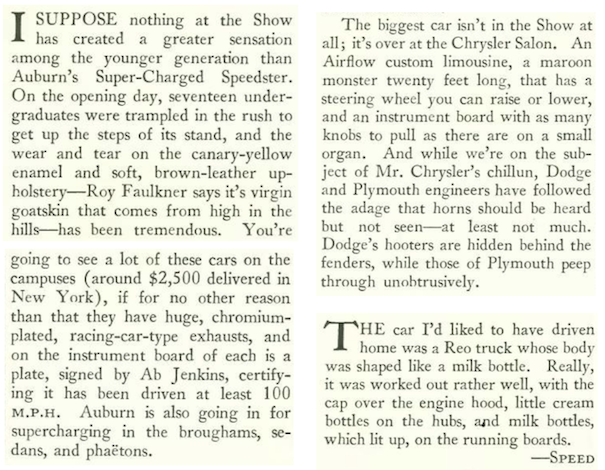
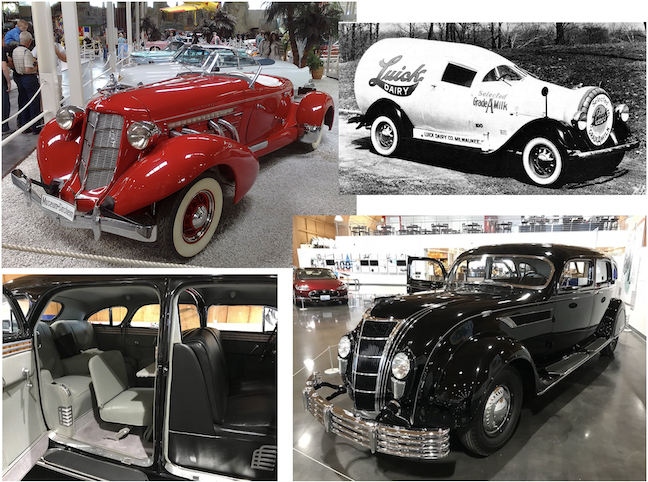
The New Yorker was back at the auto show, where correspondent “Speed” noted the appeal of the Auburn Speedster to a college-age crowd. The $2,500 price tag (equivalent to about $55k today) was apparently within reach for some of the lads at Columbia and other Ivies. Speed also admired the limousine version of the Chrysler Airflow, but the real car of his desires was a bottle-shaped milk truck.

INSTANT CLASSIC…The New Yorker predicted that the Auburn Speedster 851, which came to be known as the “Hollywood Car,” would be popular among lads on college campuses. Despite its technical advancement (it could do 100 mph) and beautiful lines, it would prove to be Auburn’s final production model. (Wikipedia)
RARITIES…Clockwise, from top left: Boattail version of the Auburn Speedster 851, of which only 143 were built; REO milk bottle truck, circa 1930; 1935 Chrysler CW Airflow Limousine—only fifteen of these massive cars were built. (Wikipedia/Pinterest/Donald Pittenger@carstylecritic.blogspot.com)

 * * *

From Our Advertisers

The proprietors of Essex House tapped into the popularity of the Auto Show to market their economical, yet deluxe accommodations…

…the anti-war group World Peaceways continued its ad campaign with this image of the “most powerful man in America,” that is, the average citizen who should not be tricked into “the absurd business of war”…

…United Airlines used the endorsement of journalist and radio commentator Edwin C. Hill to tout the safety and comfort of its airliners…

…at the time, United’s flagship airplane was the Boeing 247…

Interior and exterior of the Boeing 247. (Library of Congress/Wikipedia)

…”Mrs. William LaVarre” (Alice Lucille Elliott) was the latest adventurous soul to endorse the energizing effects of Camel cigarettes…

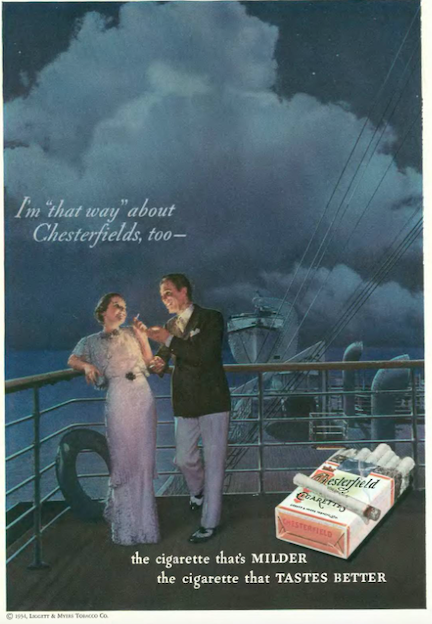
…it was no coincidence that the Camel and Chesterfield ads both featured women, the tobacco companies’ biggest growth market in the 1930s…

…on to our cartoons, we go bowling in this spot by George Shellhase

…a doctor’s bedside manner, in James Thurber’s world of the battling sexes…

…two of Helen Hokinson’s “Girls” were left breathless by the exploits of Elias Burton Holmes, an American photographer and filmmaker who apparently coined the term “travelogue”…

…for this next cartoon by Robert Day, a snippet from the Auto Show will shed some light…

…and we close with Carl Rose, and some hijinks among the statuary…

Next Time: Everything’s Jake…

Easy Riders

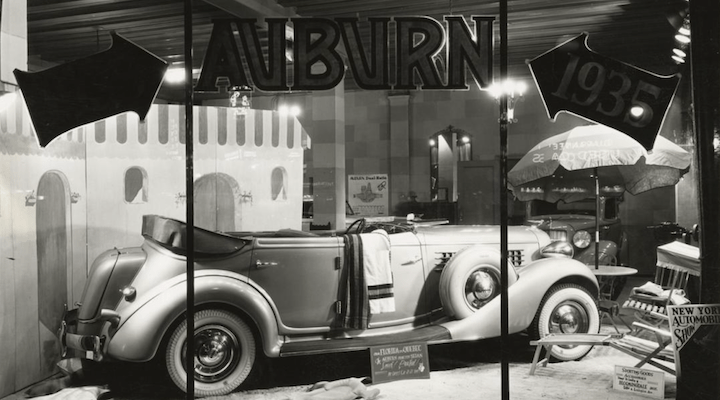
Above: Manhattan auto dealer's window display promoting the 1935 Auburn's appearance at the New York Automobile Show. (Detroit Public Library)

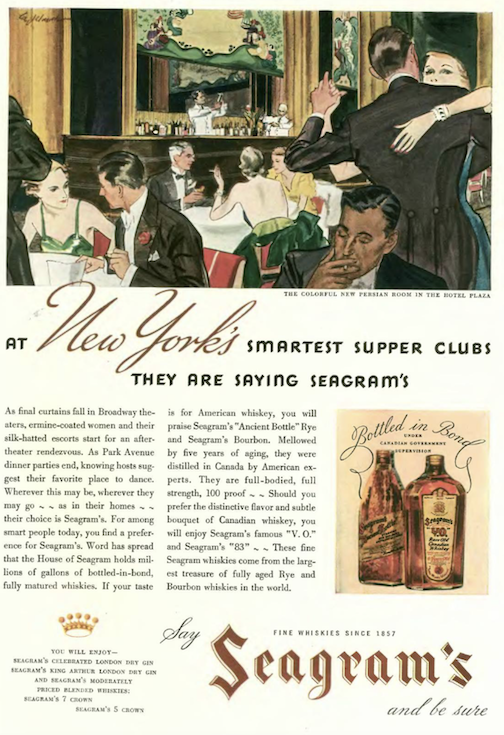
Manhattan’s first big event of 1935 was the annual automobile show at the Grand Central Palace, where New Yorkers chased away the winter blues (and the lingering Depression) in a dreamscape crammed with gleaming new cars.

January 5, 1935 cover by Rea Irvin.

The exhibition included mostly domestic models with wider bodies and, in the case of Chrysler, a dialing back of a radical, streamlined design that was too advanced for American tastes in the 1930s.

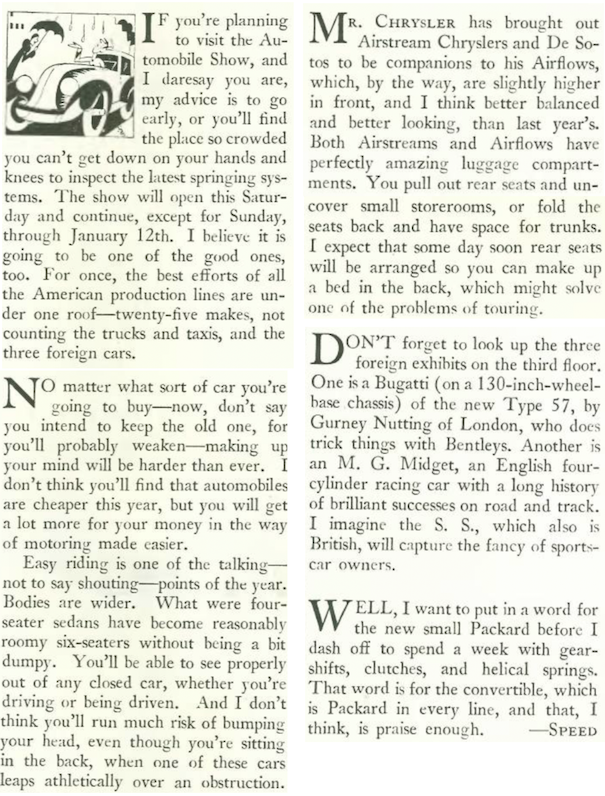
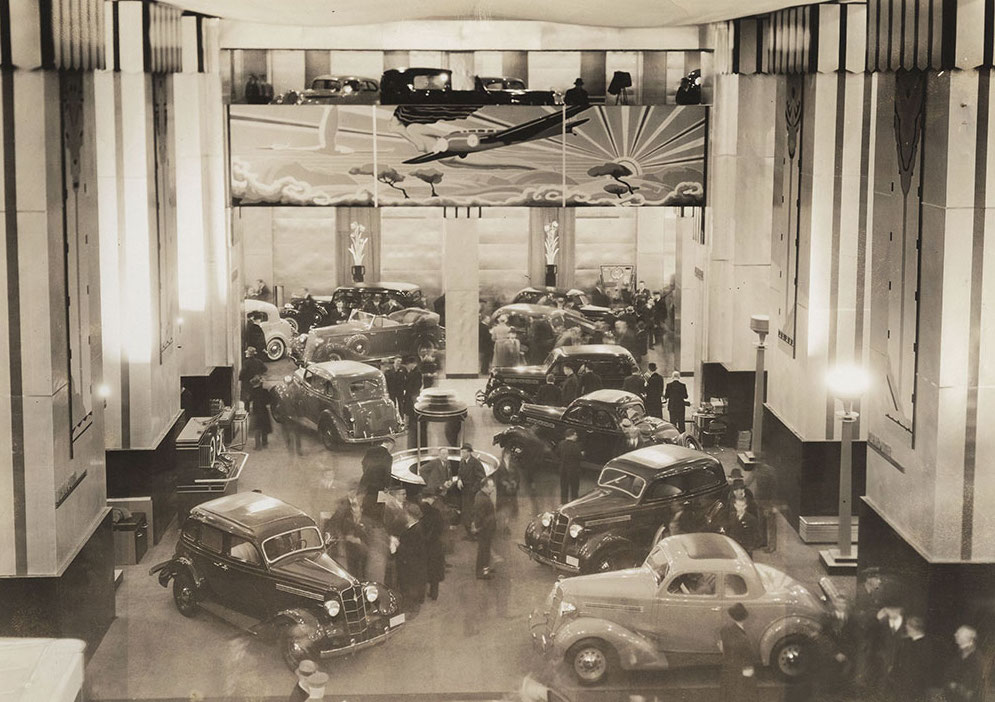
CROWD SOURCING…New Yorker correspondent “Speed” observed that the Grand Central Palace was so crowded with new cars that “you can’t get down on your hands and knees to inspect the latest springing systems.” (forums.aaca.org)
SAFE ROOM…This Ford dealer postcard touted safety, durability and roominess rather than style to market a V-8 sedan to Depression-strapped car buyers. (Pinterest)
BACK TO BASICS…The DeSoto display showcased more traditional designs (top) after the disappointing debut of the 1934 Airflow. Below, three foreign makes were on display, including Great Britain’s sporty MG Midget. (forums.aaca.org)

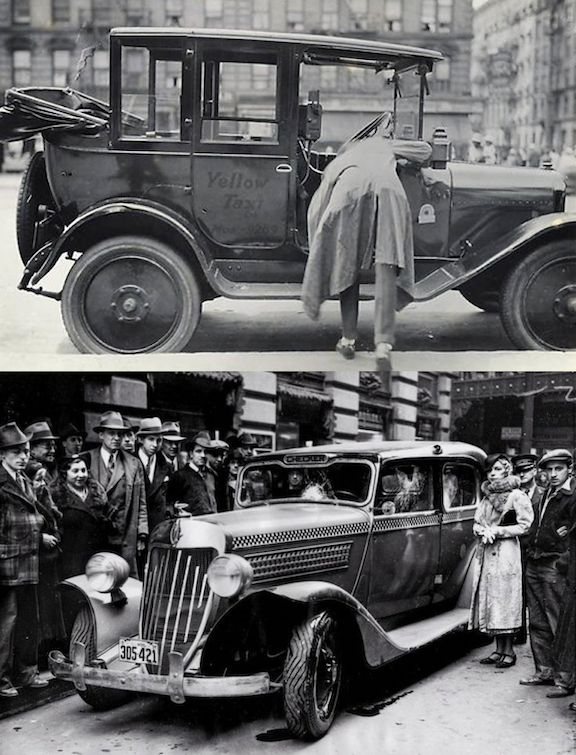
It is no surprise that E.B. White was once again disappointed with new line of cars, still preferring the boxy Model T to the lower-slung streamlined models. That distaste extended to the new taxi cabs hitting the streets of Manhattan, where White saw absolutely no need for wind resistance. An excerpt from his “Notes and Comment:”

IF IT AIN’T BROKE…E.B. White preferred to old Yellow Taxis (seen at top, circa 1932), to the new streamlined Model Y Checker Cabs that were introduced to the streets of Manhattan in 1935. (Metropolitan Museum of Art/Pinterest)

 * * *

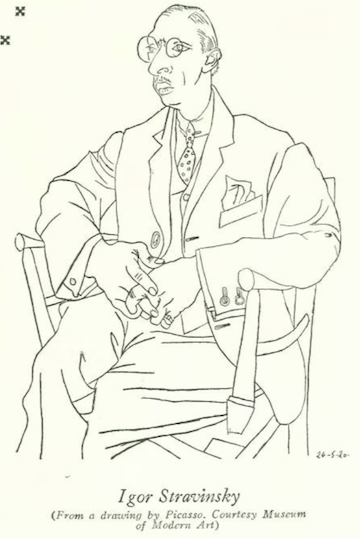
Elsewhere, The New Yorker added a new twist to its “Profile” section by featuring an illustration derived from a drawing by Pablo Picasso

 * * *

From Our Advertisers

The New Yorker’s advertising department padded its revenue from the Christmas season with a slew of ads from automobile companies touting the wonders of their latest models, which were on display at the New York Auto Show…former makers of horse-drawn carriage bodies, the Fisher brothers (Fred and Charles) began making bodies for automobiles in 1908, and the company was later incorporated as part of General Motors…as noted earlier, safety and durability (rather than style) were the calling cards of many automakers during the Depression…

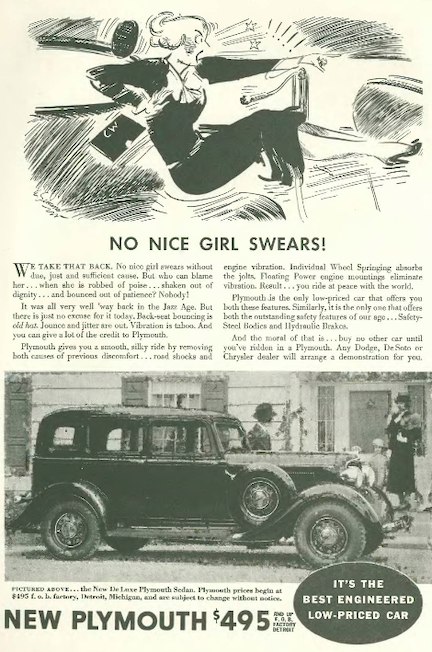
…as is also evidenced here in this ad from Plymouth, part of a continuing series that touted the crash-worthiness of their sedan…

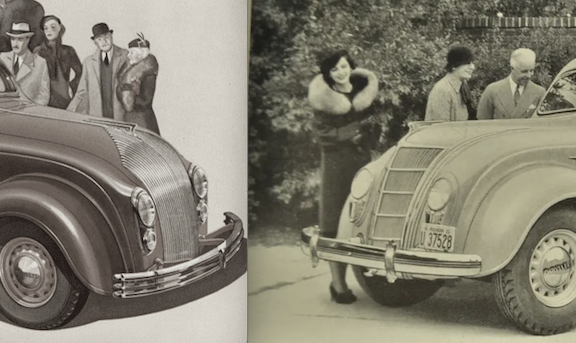
…Plymouth’s parent company Chrysler, still stinging from the lack of consumer interest in their boldly aerodynamic Airflow (introduced in 1934), made modifications to the Airflow’s body, replacing the bold “waterfall” grille with a more traditional peaked unit…the company also offered an even more traditional “Airstream” model that outsold the Airflow 4 to 1…

Consumers in 1934 found the Chrysler Airflow’s bold design (left) too advanced for the times, so Chrysler responded by making the grille on the 1935 model (right) a bit more traditional. That didn’t help sales, either.

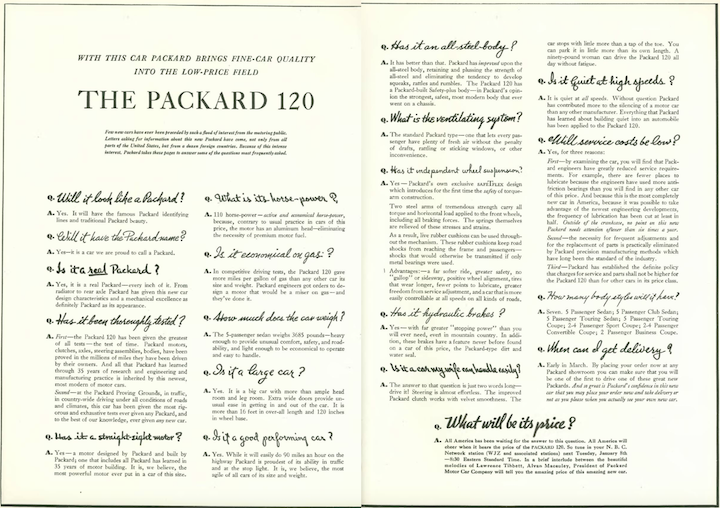
…luxury car maker Packard addressed the challenges of the Depression by introducing a low-priced car (under $1,000) named the 102…it was teased here on the first page of a three-page ad…

…that provided some answers to a “flood” of questions the folks at Packard claimed they had received from across the country and around the world…

…but the ad kept readers in suspense about the car’s actual cost, which was to be announced during Lawrence Tibbett’s NBC radio program…

…Hupmobile was still hanging in there with the innovative, Raymond Loewy-designed Model J, but behind the scenes the company, already beset with sagging sales, was fighting a hostile takeover and would stop making cars altogether by 1938…

…Auburn was also on its last legs, its cars known more for being fast, good-looking and expensive rather for being than safe and economical…although the supercharged Speedster shows here would become a legend in automotive history, and although Auburn began selling more affordable models, the Depression had already taken its toll…

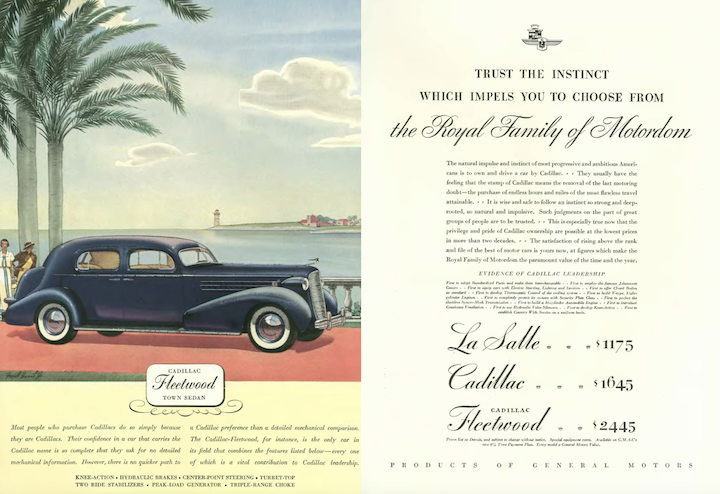
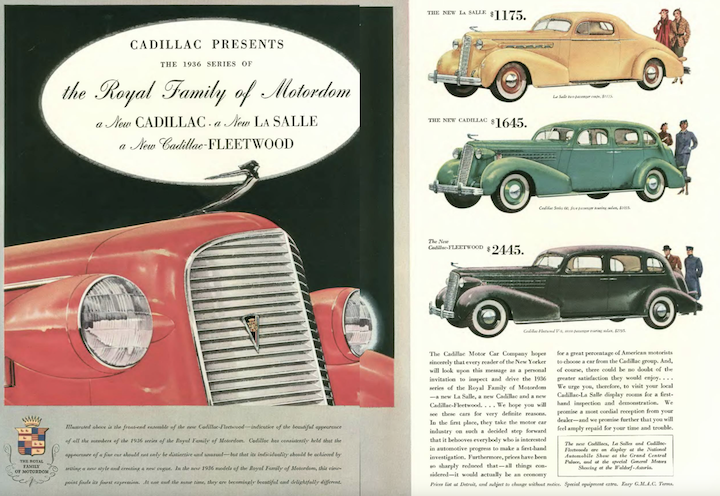
…other luxury brands, such as Cadillac, could survive because they were buoyed by the scale and largesse of a huge corporation, in this case General Motors…

…the folks at Hudson marketed their “Terraplane” with this cartoon ad that quite possibly was illustrated by Wesley Morse, who in 1953 would create the Bazooka Joe comic strip for Topps…

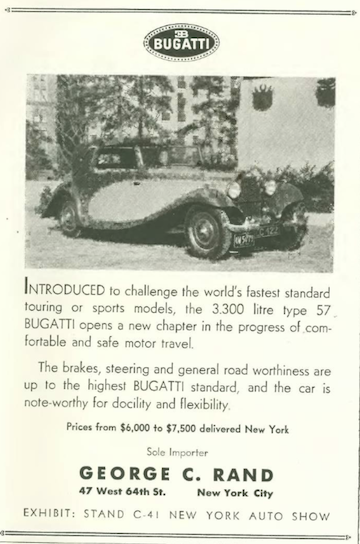
…only three foreign makes were displayed at the exhibition, including Bugatti, which promoted its type 57 in this modest ad placed by a local dealer…at prices ranging as high as $7,500 (nearly $170k today), it was a definitely not a car for the thrifty minded…

…some non-car ads included beachwear from Bonwit Teller…

…while Burdine’s offered men’s suits men that apparently could be worn comfortably while relaxing on the sand…

…besides the car companies, others who possessed the means to run full-page color ads included the makers of spirits…

…chewing gum…

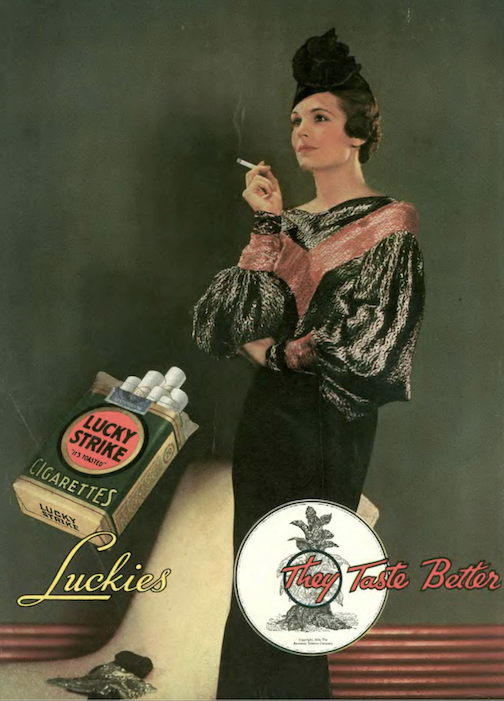
…and, of course, cigarettes…

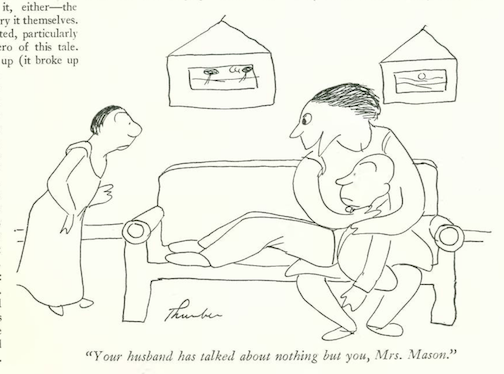
…on to our cartoons, we begin with a spot and a panel by James Thurber

Al Frueh, whom we haven’t seen in awhile, gave us an elaborate joke conjured up by some bored astronomers…

Kemp Starrett looked in on an unlikely Packard customer…

Perry Barlow predicted a hot time for these two young lads…

…and to close, Gardner Rea offered a cure for a New Year’s hangover…

Next Time: It’s A Gift…

London Calling

Above: Illustration of the Dorchester Hotel’s ballroom in the 1930s. (dorchestercollection.com)

Lois Long took her nightlife column, “Tables for Two,” to London and its famed nightclub scene, where everyone from British royalty to gangsters reveled in a boozy, bohemian scene.

July 7, 1934 cover by Ilonka Karasz.

Prince Edward, a well-known party animal (who would serve as king for less than a year and abdicate in 1936) was known to get up on the stage of the Embassy Club and perform drum solos, while at the Savoy his fellow toffs would sip Champagne and glide in elegant dress across the dance floor. London nightlife included a lively jazz scene in edgy Soho basement clubs, featuring such greats as Duke Ellington, Louis Armstrong and Dizzy Gillespie.

Long hoped that the visit to London, her first in eight years, would give her some much-needed rest and a change of scene. What she found instead was a red-hot, all-night party, where the smart set took dinner near midnight and danced until dawn.

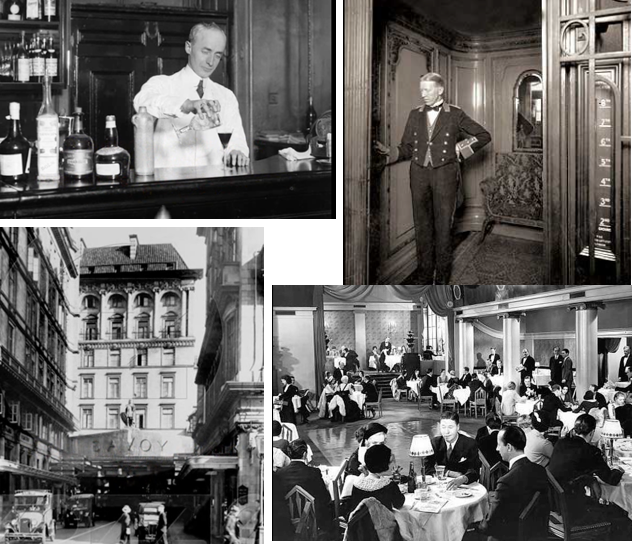
SAVVY SAVOY….Clockwise from top left, the famed Savoy bartender Harry Craddock, credited with inventing the White Lady and the Corpse Reviver, at the Savoy’s American Bar in the 1930s; a Savoy elevator operator in 1926; diners at the Savoy circa 1930s; Savoy entrance. (madamgenevaandgent.co.uk/The Savoy/YouTube)
LONDON SWINGS…More Lois Long haunts in London included, clockwise from top left, the Dorchester Hotel; the crowded dance floor at the Monseigneur with Roy Fox and his Orchestra (photo from 1932); patrons kicking up their heels at the Embassy Club on Old Bond Street; the Café de Paris, where American actress Louise Brooks demonstrated a new dance craze, The Charleston, in 1924. (dorchestercollection.com/albowlly.club/lucyjanesantos.com/Wikipedia)

 * * *

Misery Loves Company

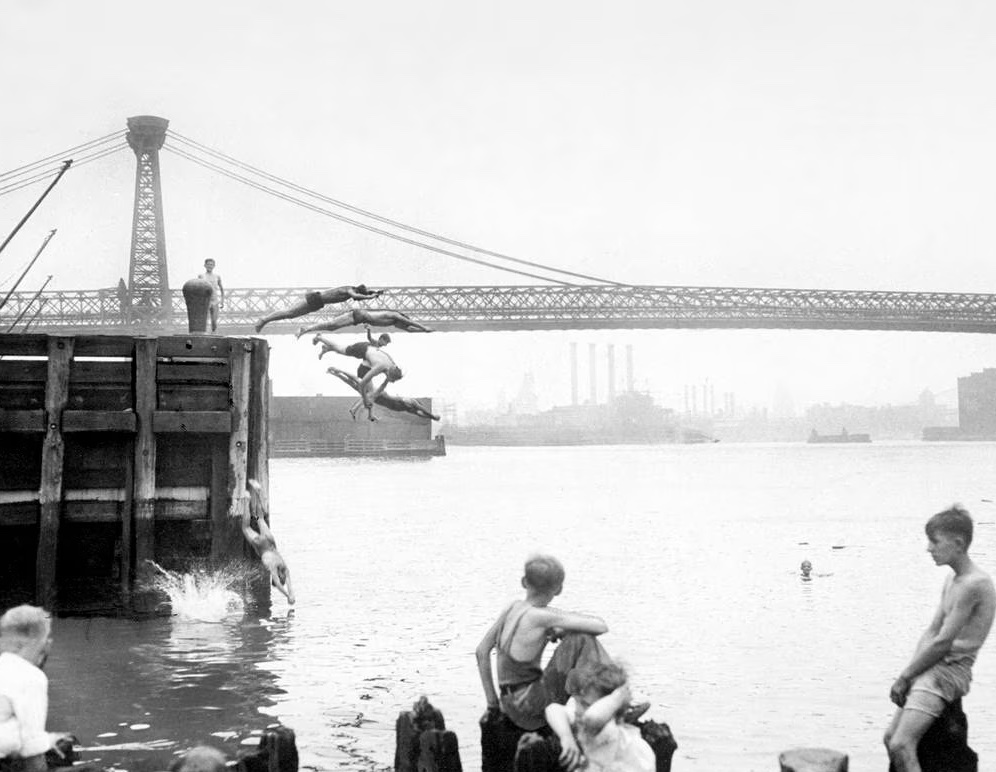
In his “Notes and Comment,” E.B. White observed that almost everyone was “made miserable” by the Depression, but if one looked around there were signs that things weren’t so bad after all.

REASON FOR CHEER…For those still feeling blue about the Depression, E.B. White suggested watching kids cool off at a pier, such as these lads seen diving into the East River on the Lower East Side on July 3, 1935. (Jack Gordon/New York Daily News)

 * * *

He Came Up a Bit Short

Howard Brubaker, in his column “Of All Things,” made this observation about Adolf Hitler’s prediction that Nazism would endure a thousand years.

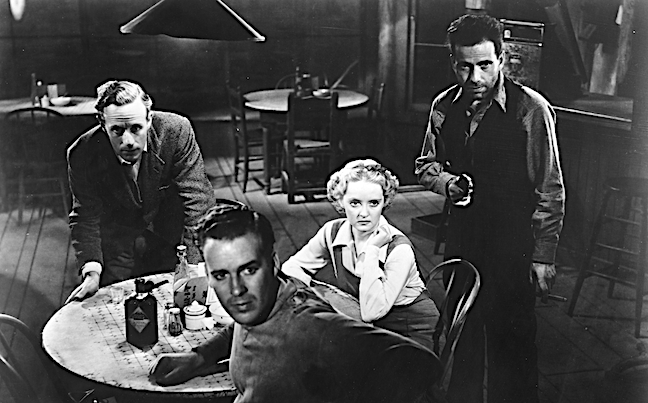
And now a retreat into the cool darkness of the cinema, where John Mosher singled out Bette Davis’s performance in Of Human Bondage…Mosher’s instincts were correct—the film proved to be Davis’s breakout role on her road to major stardom.

ROAD TO RUIN…Bette Davis wowed the critics with her portrayal of a tearoom waitress who seduces a young medical student (Leslie Howard) and leads him down a path of self-destruction. The film was based on the 1915 novel by W. Somerset Maugham. (IMDB)

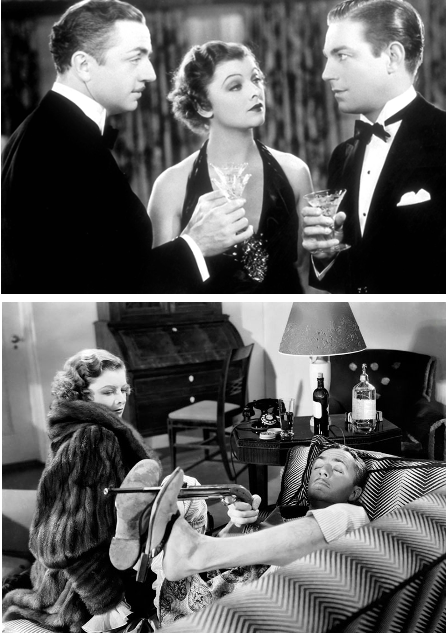
Mosher also took in the “bright” performances of William Powell and Myrna Loy in The Thin Man, a pre-Code comedy-mystery based on the Dashiell Hammett novel by the same name. Powell and Loy portrayed Nick and Nora Charles, who added spice to their leisurely lives through numerous cocktails, flirtatious banter, and crime-solving. Critics loved the film, as did audiences, spawning five sequels from 1936 to 1947.

CHEERS…Top photo: Nick and Nora Charles (William Powell and Myrna Loy) enjoy a drink with their client’s fiancee (Henry Wadsworth) in The Thin Man (1934); Bottom photo: Charles takes aim at a Christmas ornament (with a BB gun) while Nora enjoys the comforts of her new fur coat in a scene from The Thin Man. (Daily Beast/Austin Chronicle)

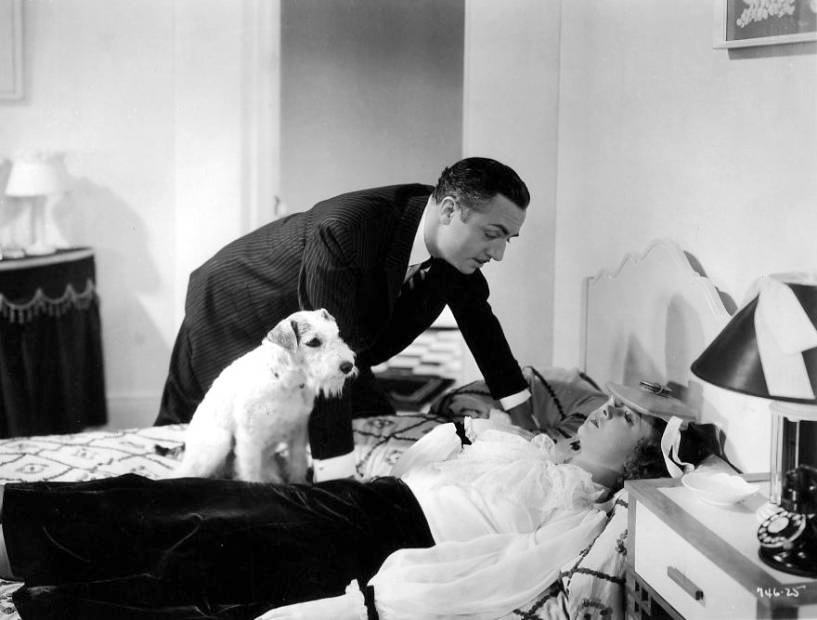
Another star of the show was Asta, the Charles’s wire fox terrier. Asta was portrayed by Skippy, a dog actor who not only appeared in The Thin Man films but also acted alongside Cary Grant in 1937’s The Awful Truth and in 1938’s Bringing Up Baby. Skippy appeared in three Thin Man movies and in more than twenty films altogether between 1932 and 1941. Being an actor in the film must have been good for one’s health: Powell lived 91 years, Loy 88 years, and Skippy, 20 years—a good long life for any pooch.

ROUGH NIGHT…Nick (William Powell) and Asta (Skippy) tend to Nora (Myrna Loy), who nurses a hangover in The Thin Man. (Wikipedia)

 * * *

From Our Advertisers

While Chrysler’s styling of their streamlined Airflow proved to be too far advanced for the buying public (the Depression didn’t help), Studebaker’s own foray into the streamlined future caused a sensation…

…thanks to Studebaker’s brief merger with Pierce-Arrow (1928–33), Studebaker’s designers took cues from Pierce’s streamlined 1933 Silver Arrow and created more than 800 cars with “Year-Ahead” design features—the positive reception convinced the company to continue the style in 1935…here is a top-of-the-line 1934 President Land Cruiser…

1934 Studebaker President Land Cruiser with “Year-Ahead” design features, yet not as radical as Chrysler’s Airflow. (hemmings.com)

and the car that inspired it…

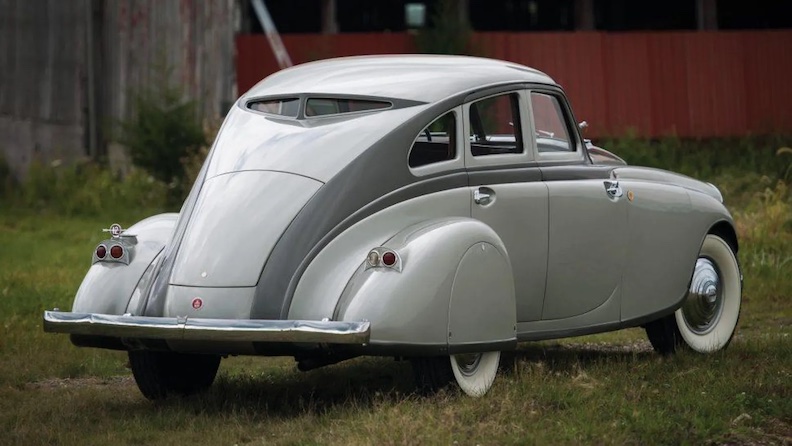
1933 Pierce-Arrow Silver Arrow. Photo copyright Darin Schnabel, courtesy RM Sotheby’s, via hemming.com.

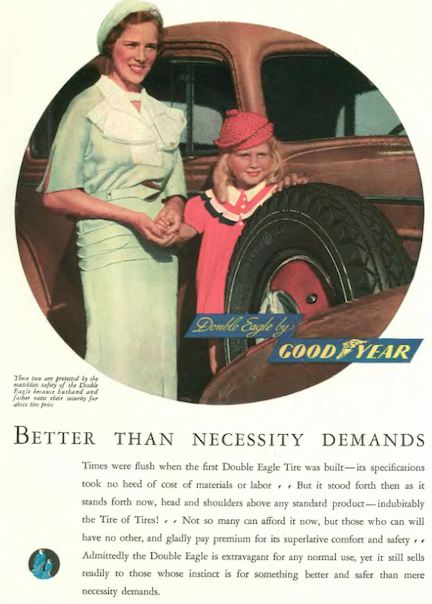
…we continue with those round rubber things that held the cars up…a lot of tire ads in the 1930s emphasized safety—blowouts were common back then…funny how it took nearly four decades to add seat belts to cars…those tires wouldn’t help much in a head-on collision, especially with your kid standing on the from seat…

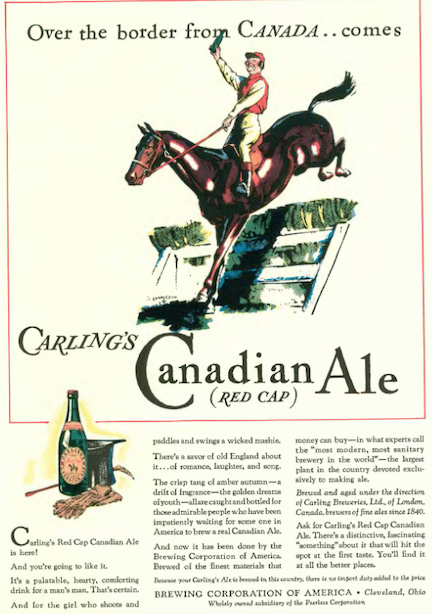
…now let’s cool off with crisp Canadian Ale, thanks to Carling’s entry into the American market…

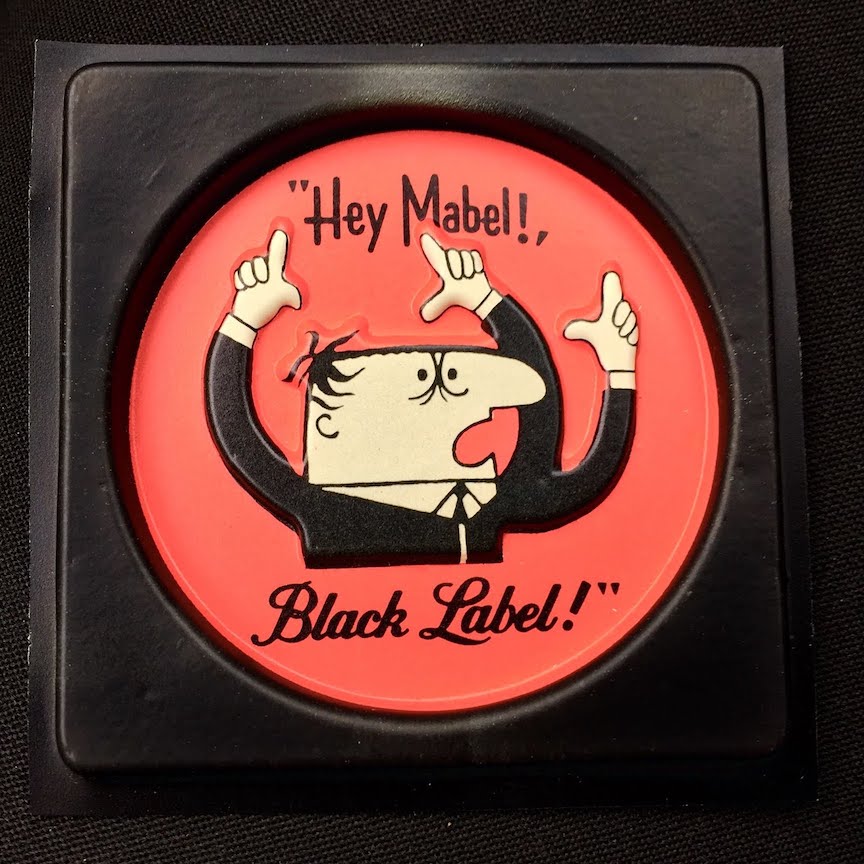
…Carling’s Black Label beer was popular in the states…my parents had a set of these coasters with the Black Label tagline…

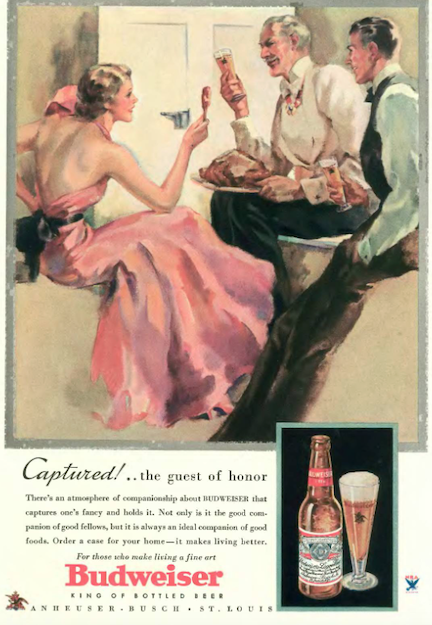
…Budweiser continued its artful series of ads featuring the well-heeled enjoying its product…here it appears old dad (wearing some kind of medal) is getting to know his daughter-in-law over some cold chicken…”hey boy, she’s one of us!”…

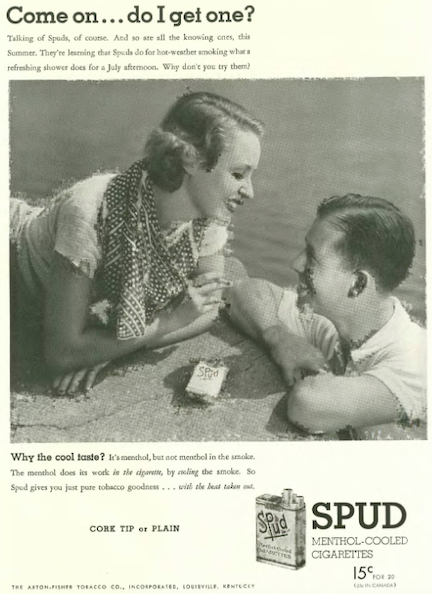
…and we move on to three very different approaches to selling cigarettes, beginning with Spud, continuing its message that menthol cigarettes are as refreshing as a shower on a July afternoon…

…a close up of the message…

…Camel, on the other hand, continued its campaign against irritability…it apparently did wonders for this woman, who seems to be on something more than nicotine…

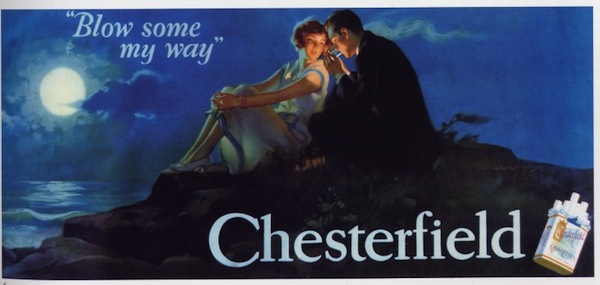
…and from the people who brought us the tagline “blow some my way” in 1928 (as a way to encourage women to take up the habit), by 1934 she is owning that cigarette, and apparently setting some ground rules with the gentleman…

…contrast with the more submissive pose in the Chesterfield ad from the late 1920s…

…on to our cartoons, we begin with spot art by Alan Dunn, which appears to have originated as a captioned cartoon…

William Steig offered up this bit of art for a profile of an “insurance man” by St. Clair McKelway

Helen Hokinson drew up a full page of cartoons along the theme of outdoor dining…

…we continue Rea Irvin’s series on native birds…

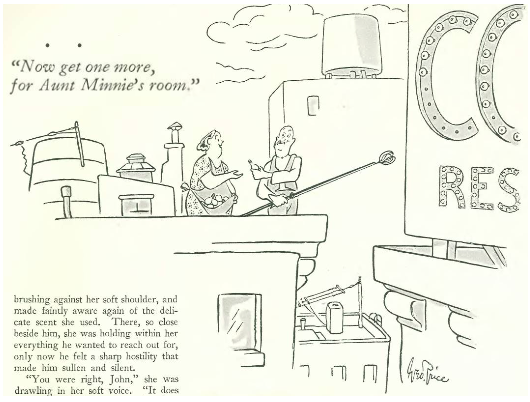
George Price found a way to save on the cost of light bulbs…

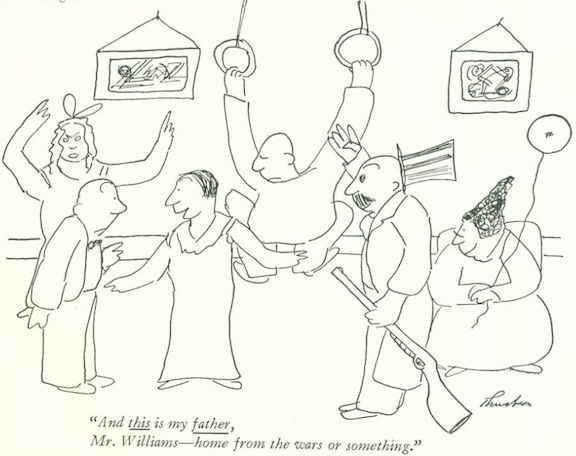
…and we close with James Thurber, and a welcome to the family…

Next Time: The Happy Warrior…

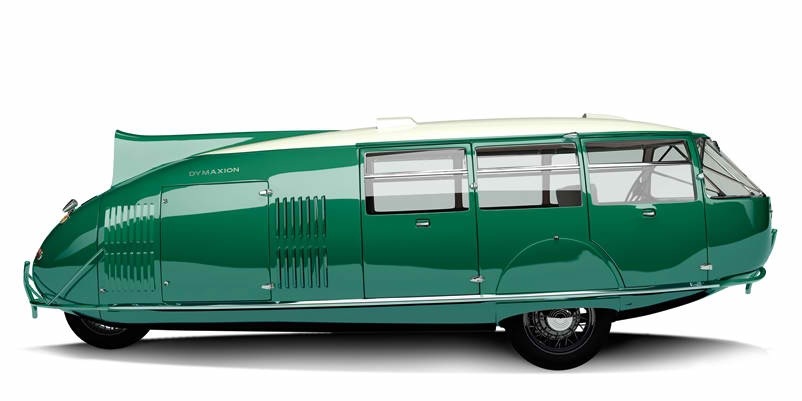
A Tadpole on Wheels

Above: British architect Norman Foster's 2010 recreation of R. Buckminster Fuller's 1933 Dymaxion car. (Wikipedia)

Despite the limitations of 1930s technology, a few architects and designers were hell-bent on building a streamlined future that until then was mostly the stuff of movies and science fiction magazines.

May 5, 1934 cover by Rea Irvin.

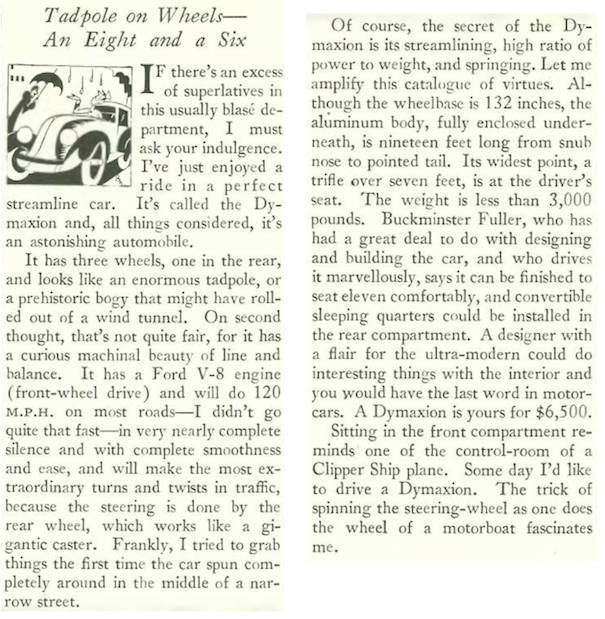
One of them was R. Buckminster Fuller (1895–1983), architect, designer, and futurist probably best known today as the inventor of the geodesic dome (think Disney’s Epcot Center). In the 1930s Fuller was all about a concept he called Dymaxion. Derived from the words dynamic, maximum, and tension, when applied to architecture and design it would supposedly deliver maximum gain from minimal energy input. The writer of the New Yorker article (pseud. “Speed”) was fascinated by the Dymaxion’s motorboat-type steering, no coincidence since Fuller intended to adapt his futuristic car for use on and under the water, as well as in the air.

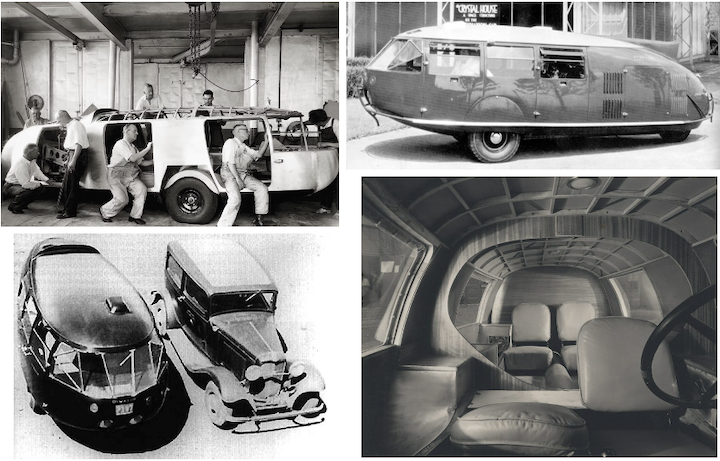
THE SHAPE OF THINGS TO COME…Clockwise, from top left: Workers at a Bridgeport, Conn., plant creating the first of three Dymaxion cars; the Dymaxion at Chicago’s 1933 Century of Progress exposition—the car was involved in a fatal accident at the fair; interior view of the Dymaxion; using the same engine and transmission as a Ford sedan (pictured), the Dymaxion offered three times the interior volume with half the fuel consumption and a 50 percent increase in top speed. (Buckminster Fuller Institute/Poet Architecture)
THINKING WITHOUT THE BOX…In 1927 R. Buckminster Fuller (pictured) developed a Dymaxion House, a “Dwelling Machine” that would be the last word in self-sufficiency. Although the aluminum house was intended to be mass-produced, flat-packaged and shipped throughout the world, the design never made it to market (however its ideas influenced other architects); at right, a Fuller geodesic dome at Disney’s Epcot Center in Florida. (archdaily.com/Wikipedia)

The 1933 Century of Progress exposition in Chicago was supposed to be a major showcase for Fuller, but when professional driver Francis Turner was killed while demonstrating the first prototype of the Dymaxion, the car’s prospects dimmed considerably. According to an article by Stephanie d’Arc Taylor (cnn.com Oct. 30, 2019), during the demonstration a local politician tried to drive his own car close to the Dymaxion—to get a better look—and ended up crashing into the unwieldy prototype, which rolled over, killing the driver and injuring its passengers. “The politician’s car was removed from the fracas before police arrived, so the Dymaxion was blamed for the accident,” writes Taylor, who notes that the rear wheel–powered car, though unconventional, was not necessarily the problem. However, “the thing that made the Fuller death-mobile singularly deadly was the fact it was also steered by the rear wheel, making it hard to control and prone to all kinds of terrifying issues.”

That history did not stop architect Norman Foster from building a replica of the Dymaxion in 2010. Foster worked with Fuller from 1971 to 1983, and considers Fuller a design hero.

GIVING IT ANOTHER GO…Architect Norman Foster with his 2010 recreation of the Dymaxion. To build a new Dymaxion, Foster sent a restorer to the National Automobile Museum in Reno, Nevada (home of the only surviving Dymaxion, Car No. 2), and after thousands of photos and measurements Foster had the car recreated using only materials available in 1933: Foster’s Dymaxion consists of an ash frame sheathed in hand-beaten aluminum, mounted on the chassis of an old 1934 Ford Tudor Sedan. (CNN/The Guardian)

According to Taylor, Foster cleaved so closely to Fuller’s original designs that he refers to his creation as a fourth genuine Dymaxion—not a replica. “The car is such a beautiful object that I very much wanted to own it, to be able to touch as well as contemplate the reality for its delight in the same spirit as a sculpture,” said Foster. “Everything in (the car) was either made in 1934, or recreated using techniques and materials that Bucky would have had access to in that period.”

 * * *

Meanwhile, At The Tracks…

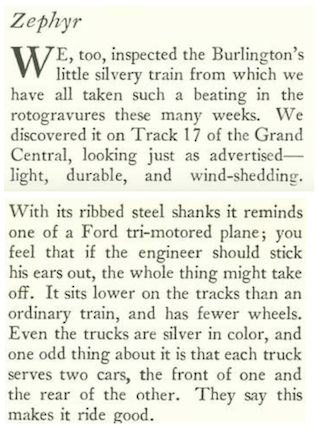
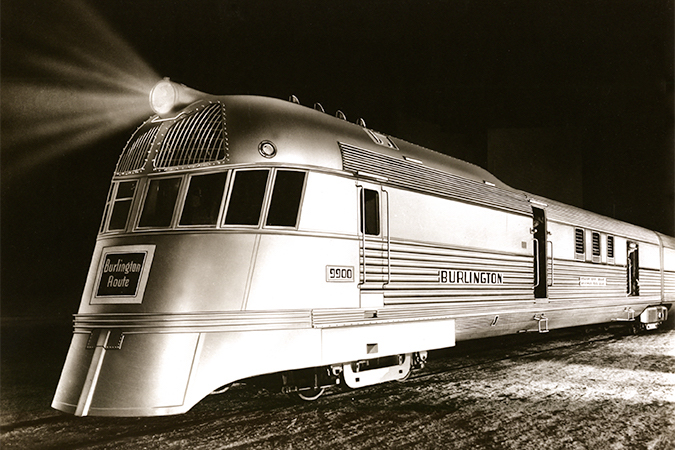
If Fuller’s attempt at the streamlined future was a bit of bust, the Burlington railroad was making a splash with its gleaming new Zephyr. E.B. White reported:

ZOOM ZOOM…The Burlington Zephyr set a speed record for travel between Denver and Chicago when it made a 1,015.4-mile (1,633 km) non-stop “Dawn-to-Dusk” dash in 13 hours 5 minutes at an average speed of almost 78 mph (124 km/h). In one section of the run it reached a speed of 112.5 mph. Following a promotional tour that included New York, it was placed in regular service between Kansas City, Missouri, and Omaha and Lincoln, Nebraska, on November 11, 1934. Other routes would be added later in the Midwest and West. (BNSF)

…we continue with E.B. White, here with some observations regarding Mother’s Day and bank robber/murderer John Dillinger, who had escaped from prison in March 1934 and was on the FBI’s Most Wanted List…

I REMEMBER MAMA…John Dillinger posed with Lake County prosecutor Robert Estill, left, in the jail at Crown Point, Ind. while he awaited his trial for murder in January 1934. Dillinger would escape from the jail in March and would be on the lam until July, when FBI agents would gun him down outside a Chicago movie theatre. (NY Daily News)

…and a last word from White, about an important change at Radio City:

 * * *

Voice In The Wilderness

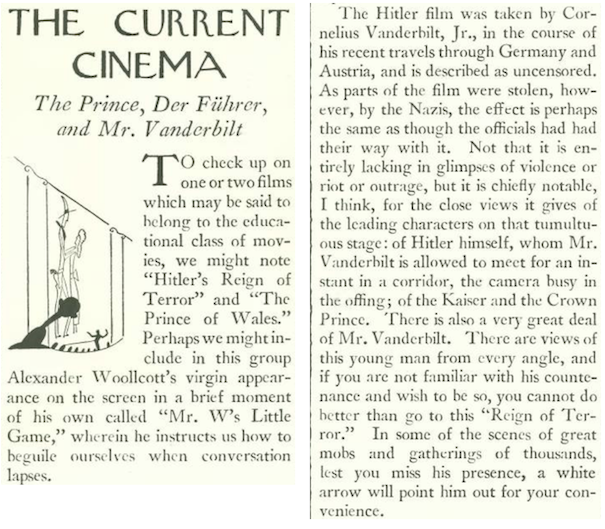
A combination of newsreel footage, documentary, and reenactment, Cornelius Vanderbilt Jr’s Hitler’s Reign of Terror played to capacity crowds for two weeks in New York City, despite the refusal of the state’s censor to license the film. Disinherited by his parents when he became a newspaper publisher, Vanderbilt was a determined journalist, covertly filming scenes in Nazi Germany and even briefly encountering Adolf Hitler outside the Reichstag, where Vanderbilt yelled to Der Führer, “And what about the Jews, Your Excellency?” (Hitler ignored the question and referred Vanderbilt to one of his lackeys). Unfortunately, Vanderbilt wasn’t much of a filmmaker, and although he warned Americans about the emerging threat in Germany, few took the film, or his warning, seriously, including John Mosher:

UNHEEDED…Audiences flocked to see Cornelius Vanderbilt Jr’s Hitler’s Reign of Terror, but critics dismissed the rather amateurish film—Film Daily scoffed at the film’s prediction that Hitler’s Germany was a future threat to world peace; at right, in the film Vanderbilt confronted “Hitler” in a recreation. (TMDB/Library of Congress)

 * * *

From Our Advertisers

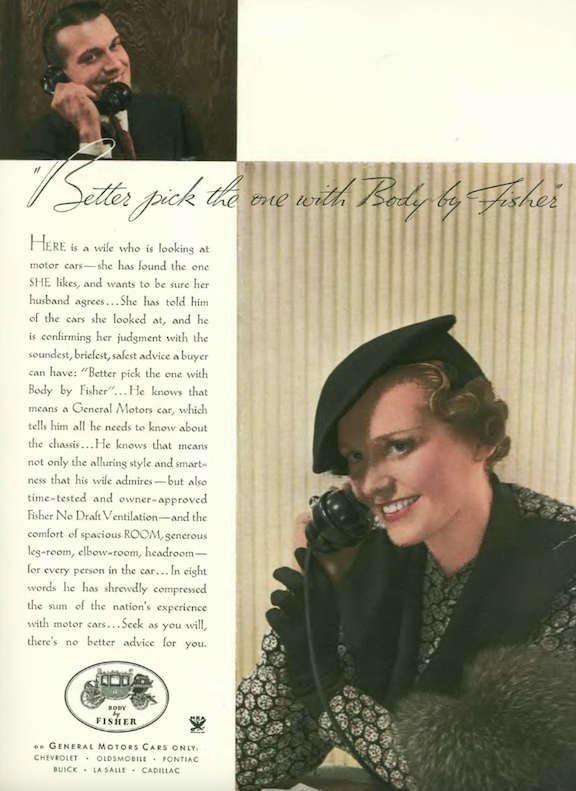
It wouldn’t seat eleven people like a Dymaxion, but a Body by Fisher (coach builder to General Motors) certainly impressed this young woman…but better check with the hubby just in case…

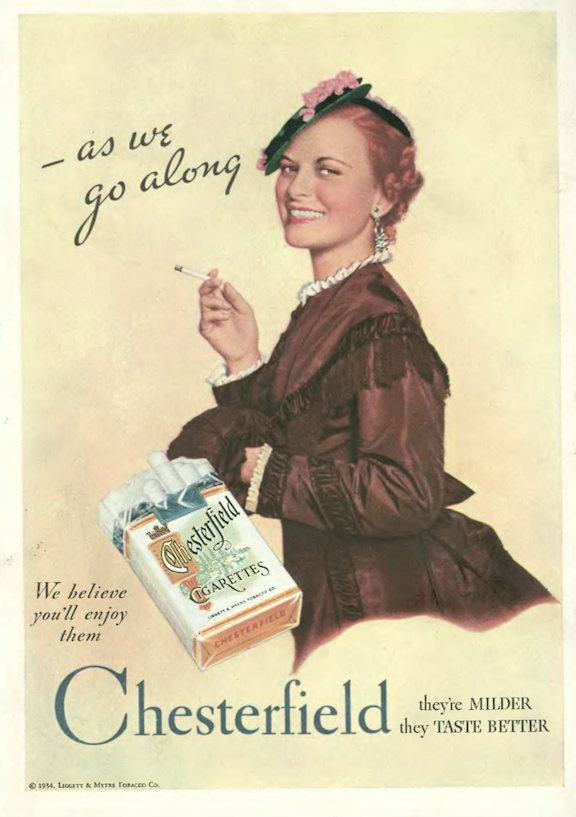
…in this next ad, we find what looks like the same woman, perhaps celebrating her decision with a nice smoke…

…this spot seems out of place in the New Yorker, like it snuck over from Better Homes & Gardens...

…on to our cartoons…with James Thurber’s war of the sexes over, life returned to normal…

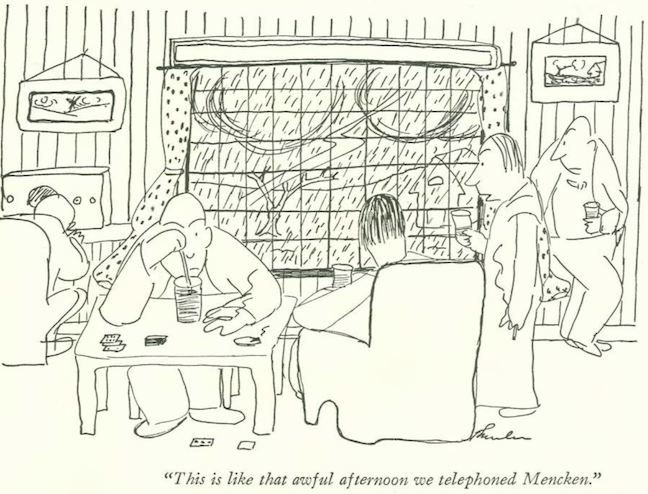
…and both sides shared in the gloom of a rainy afternoon…

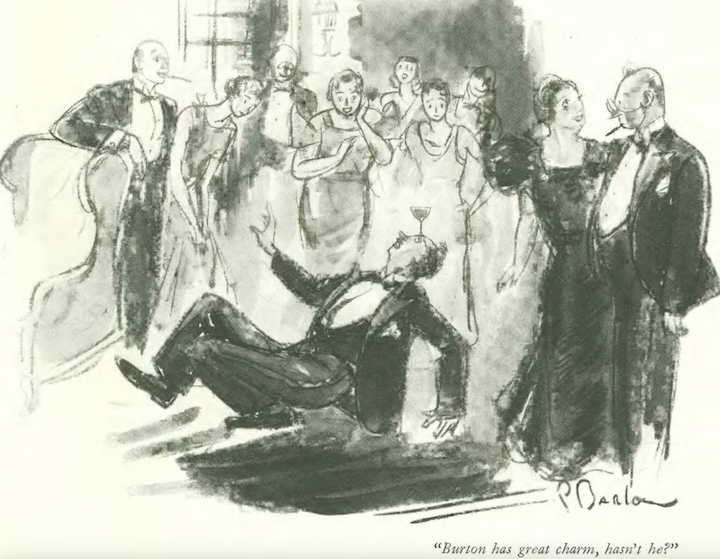
…by contrast, Perry Barlow brightened things up with this life of the party…

…but a good time doesn’t always translate over the airwaves, per George Price

Alain illustrated the consequences of losing one’s nest egg…

Peter Arno didn’t leave any room for dessert…

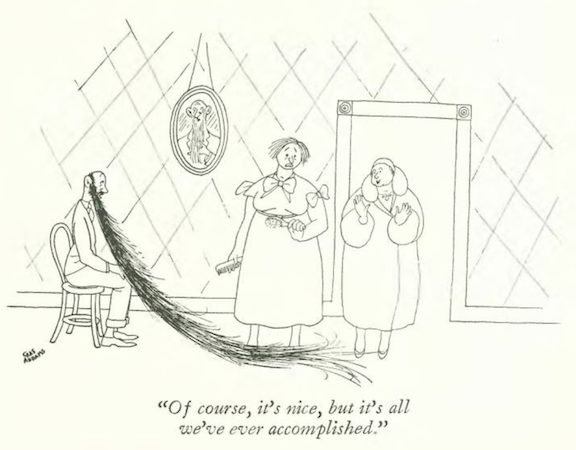
…and Charles Addams returned, a macabre cast of characters still percolating in his brain…

…on to May 12, 1934…

May 12, 1934 cover by Leonard Dove.

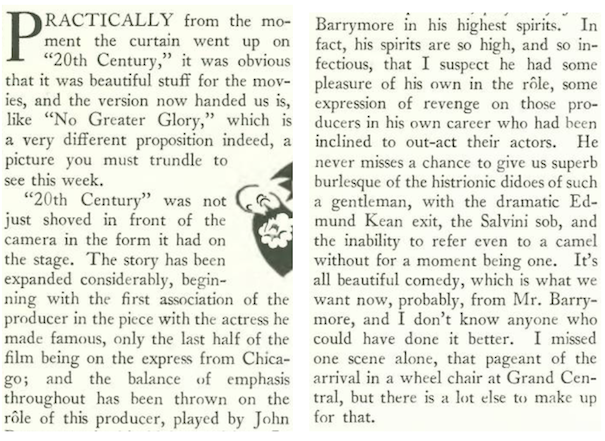
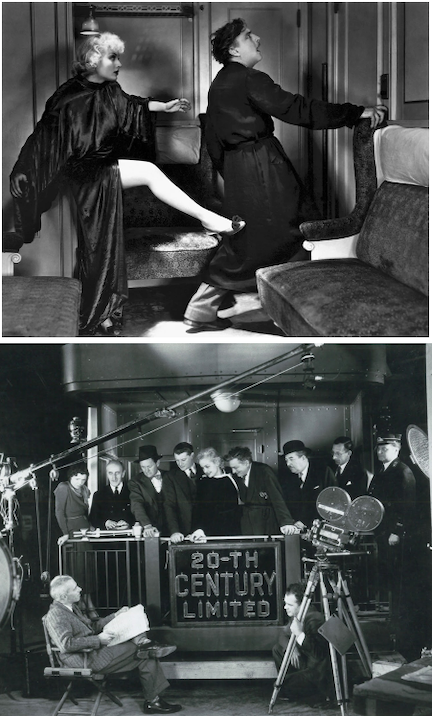
…and back to the movies, this time critic John Mosher found more cheery fare in 20th Century, a pre-Code screwball comedy directed by Howard Hawks and starring John Barrymore and Carole Lombard. Battling alcohol abuse since age 14, Barrymore nevertheless managed to display his rare genius as a comedian and turned in what is considered to be his last great film performance.

GETTING HER KICKS…Top, Carole Lombard delivers a swift one to John Barrymore in the screwball comedy 20th Century. Below, director Howard Hawks with the cast. (greenbriarpictureshows.blogspot.com)

 * * *

Playing the Ponies

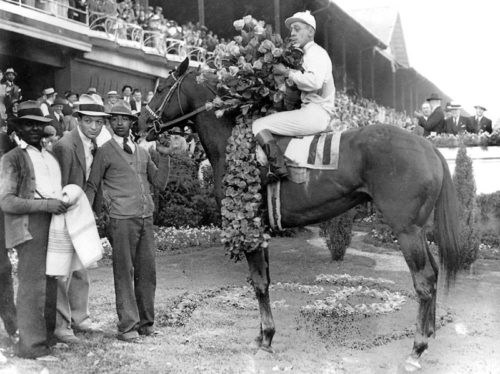
Horse racing correspondent George F. T. Ryall (pseud. “Audax Minor”) considered a losing wager at the Kentucky Derby in his column, “The Race Track.”

A HORSE OF COURSE…Jockey Mack Garner rode Cavalcade to victory at the 1934 Kentucky Derby. (Appanoose County Historical Society)

 * * *

More From Our Advertisers

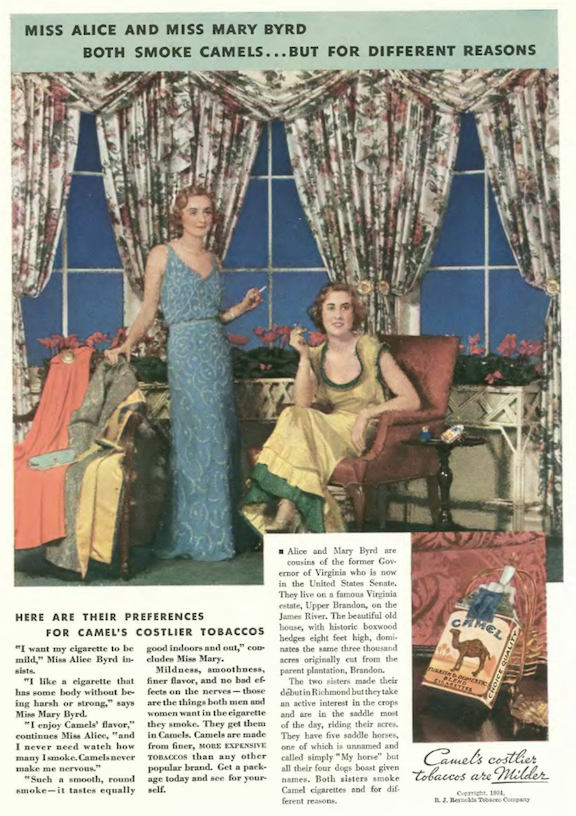
We begin with Camel cigarette endorsers Alice and Mary Byrd, residents of Virginia’s famous Brandon plantation and cousins of Virginia Senator and Governor Harry F. Byrd, known for his fights against the New Deal and his “massive resistance” to federally mandated school desegregation...

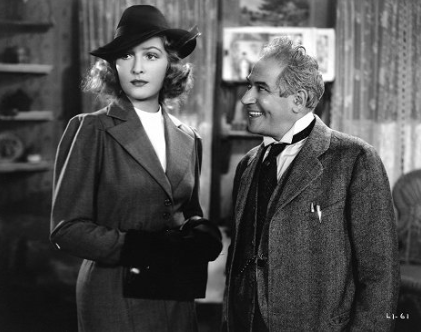
…also to the manor born, Whitney Bourne, a New York deb who would go on to a brief stage and film career that would end when she married her first husband (diplomat Stanton Griffis) in 1939…

AN EYE FOR STYLE…Whitney Bourne in a scene with Solly Ward in 1937’s Flight From Glory. Named in 1933 as one of America’s best dressed women, Bourne was a noted New York socialite, skier, golfer and tennis player as well as an occasional actress.

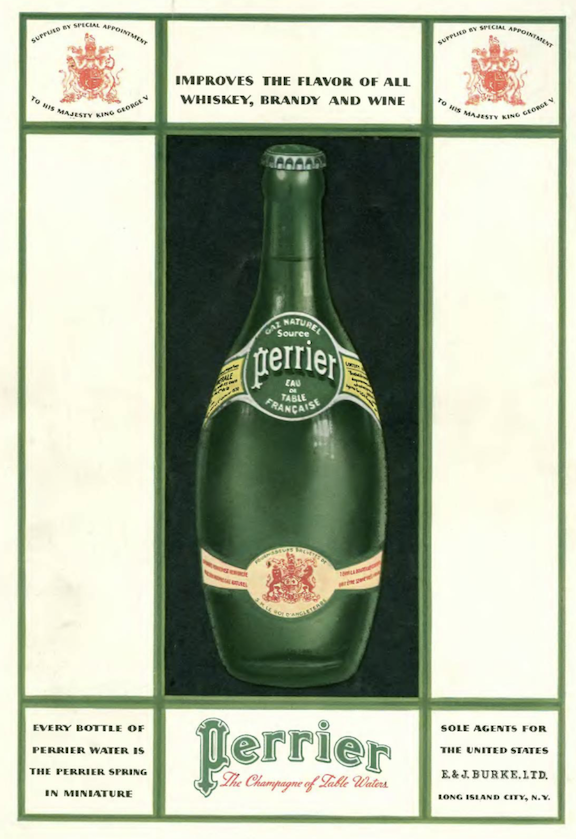
…we move along from the effervescent Whitney Bourne to the sparkling waters of Perrier…

Gardner Rea followed other New Yorker cartoonists by illustrating an ad for Heinz…

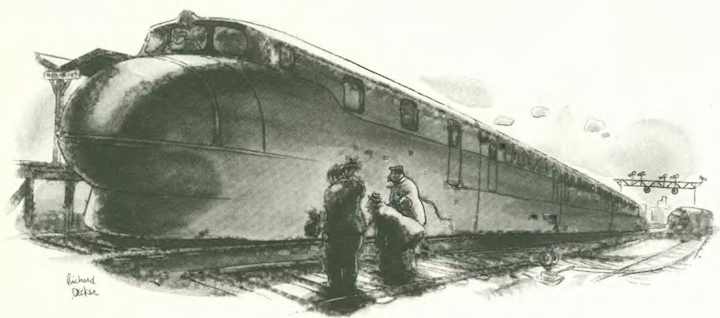
…which brings is to more cartoons, where according to Richard Decker, the move to streamlined trains wasn’t welcomed by everyone…

Carl Rose illustrated this two-page spread with an imagined right-wing response to the recent left-wing May Day parades…

William Steig eavesdropped onto a saucy little conversation…

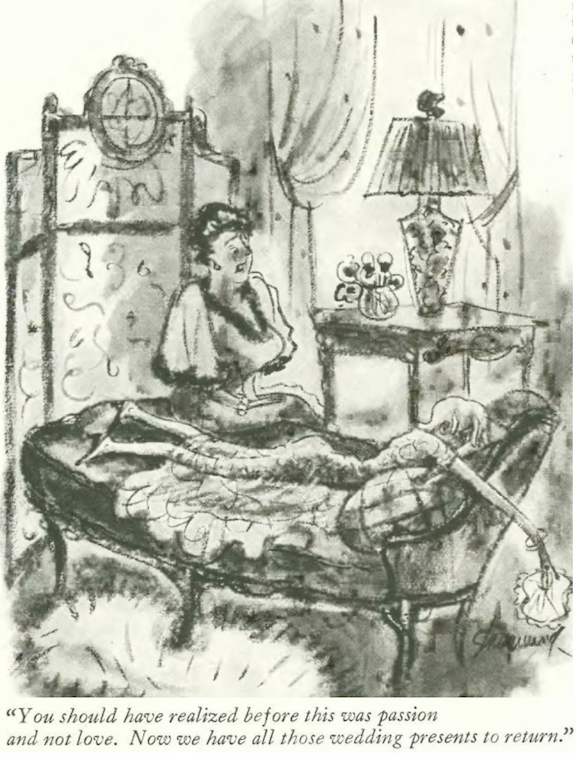
Barbara Shermund continued her explorations into the trials of the modern woman…

James Thurber was back to his old tricks…

…and we conclude our cartoons with Eli Garson, and a new perspective…

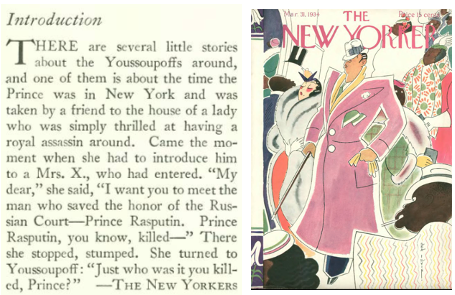
Before I close, a bit of housekeeping. The first issues in 1925 sometimes ended “The Talk of the Town” with…

…but on May 23, 1925, “Talk” signed off with —The New Yorkers. That continued until the March 31, 1934 issue (below), the last time the New Yorker signed off “The Talk of the Town” with —The New Yorkers:

Next Time: Moses Parts a Yacht Club…


America’s Sweetheart

Above: A scene from Mary Pickford’s 1922 film Tess of the Storm Country. (Library of Congress)

In today’s celebrity-saturated culture it is difficult to find a parallel to silent film star Mary Pickford, who was dubbed Queen of the Movies more than a century ago. Indeed, during the 1910s and 1920s Pickford was regarded as the most famous woman in the world.

April 7, 1934 cover by Rea Irvin.

Pickford was also known as “America’s Sweet” for her portrayal of gutsy but tenderhearted heroines. In real life she was also a gutsy and shrewd businesswoman who co-founded United Artists in 1919 with Charlie Chaplin, Douglas Fairbanks, and director D. W. Griffith. Commanding a salary only rivaled by Chaplin, her stardom only grew when she married Fairbanks in 1920, forming the first celebrity supercouple; together they ruled Hollywood from their Beverly Hills mansion, Pickfair (apparently staging dull affairs, per the “Profile” excerpt below).

The end of the silent era also put an end to Pickford’s stardom, as well as to her fairytale marriage to Fairbanks. Margaret Case Harriman’s profile of Pickford, simply titled “Sweetheart,” gave readers a glimpse into the decline of a silent superstar. Excerpts:

SINGULAR STAR…Clockwise, from top left, Mary Pickford in a publicity photo, circa 1910; Pickford visits close friend and screenwriter Frances Marion during filming of Straight is the Way (1921); Douglas Fairbanks and Pickford in the early 1920s; Pickford with a movie camera in 1916—in addition to being a shrewd businesswoman, she was also skilled behind the camera. (thehollywoodtimes.today/Time/Library of Congress)

Harriman concluded her profile with some thoughts on Pickford’s future:

THE SOUND BARRIER…With the advent of sound movies Mary Pickford turned to writing books and serving various charities. From left, sharing ice cream with rising star Bing Crosby in 1934; center, Al Frueh’s caricature of Pickford for the profile; Pickford in a 1934 promotional picture supporting The Salvation Army. (Pinterest/Library of Congress)

A note on the profile’s writer, Margaret Case Harriman (1904-1966), who doubtless sharpened her people-watching skills at the Hotel Algonquin (famed birthing ground of the New Yorker), which was owned by her father, Frank Case. Douglas Fairbanks was one of Case’s best friends, and Harriman knew both Fairbanks and Pickford well, since they often stayed at the hotel.

HOME SWEET HOME…Margaret Case Harriman, photographed May 31, 1937 by Carl Van Vechten. Harriman was born in 1904 in room 1206 of the Hotel Algonquin, which was owned by her father, Frank Case. (Philadelphia Museum of Art)

 * * *

Master of Masters

The founder of perhaps the world’s most prestigious golf tournament was an amateur and a working lawyer by profession. When Bobby Jones (1902–1971) co-founded the Masters Tournament in 1934 with investment dealer Clifford Robert, it was called the Augusta National Invitation Tournament (it was Robert’s idea to call it The Masters, a name Jones thought immodest). Jones dominated top-level amateur competition from the early 1920s through 1930—the year he achieved a Grand Slam by winning golf ’s four major tournaments in the same year. However, by the 1934 Jones’s skills began to wane. The New Yorker had little to say about the first Masters (it wasn’t a big deal yet), other than Howard Brubaker making this observation in “Of All Things”…

A SWING INTO HISTORY…Bobby Jones (center) drives during the first-ever Masters Tournament in Augusta, Georgia on March 22, 1934. (augusta.com)

 * * *

From Our Advertisers

Wanna get away? This colorful advertisement beckoned New Yorker readers to take the next boat to sunny Bermuda…

…while the Grace Line offered a southern cruise through the Panama Canal…

…but who needed to travel when you could enjoy a beer that was beloved the world over?…

Mrs. Potter d’Orsay Palmer nee Maria Eugenia Martinez de Hoz was content to stay home in Chicago and smoke a few Camels, apparently…

…we’ve encountered her before—she appeared in a Ponds ad (below) in the Aug. 8, 1931 issue of the New Yorker, where we learned she was wife No. 2 of Potter d’Orsay Palmer, son of the wealthy family of Chicago Palmer House fame…they would divorce in 1937, and the playboy Potter would marry two more times before dying of a cerebral hemorrhage in May 1939—following a drunken brawl in Sarasota, Florida with a meat cutter called Kenneth Nosworthy. Maria Eugenia would remarry and return to her homeland of Argentina to raise a family…

…this ad from Nash looks like a scene from Attack of the 50 Foot Woman, if she had a car to match, that is…

…the Cadillac V-16 was a truly massive automobile, but in contrast to the Nash ad, you can barely see the car as it approaches from the vanishing distance…

E. Simms Campbell got in on the advertising game with this spot that features contrasting images of storm and calm…

James Thurber offered this cartoon on behalf of Heinz soups…

…and Thurber again, as we kick off the cartoons with the ongoing battle…

Adolph Schus made a rare appearance in the New Yorker…according to Ink Spill, he also contributed a cartoon on March 19, 1938, and was editor of Pageant Magazine in 1945… 

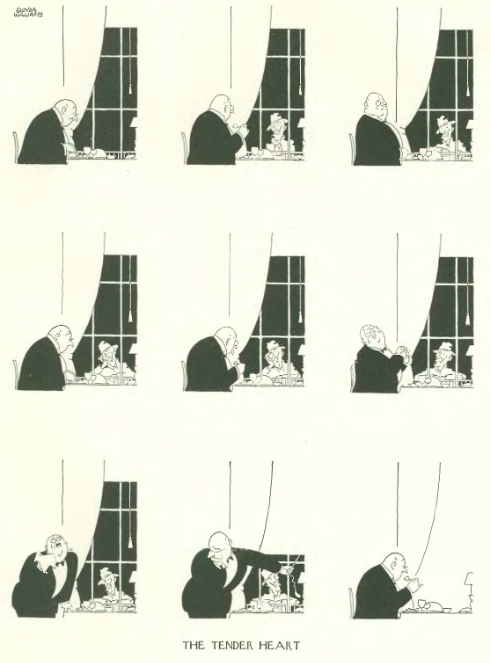
Gluyas Williams looked in on the sorrows of moneyed classes…

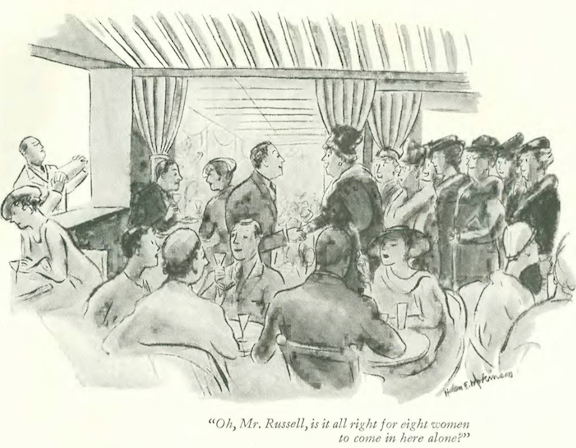
Helen Hokinson’s “girls” were in search of lunch, and propriety…

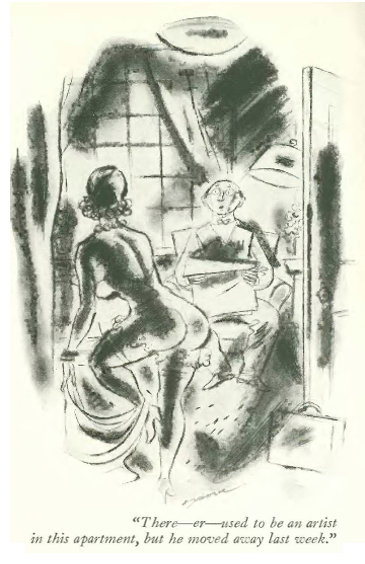
…and Leonard Dove gave us a renter surprised by something not included in his lease…

…on to April 14, 1934…

April 14, 1934 cover by Harry Brown.

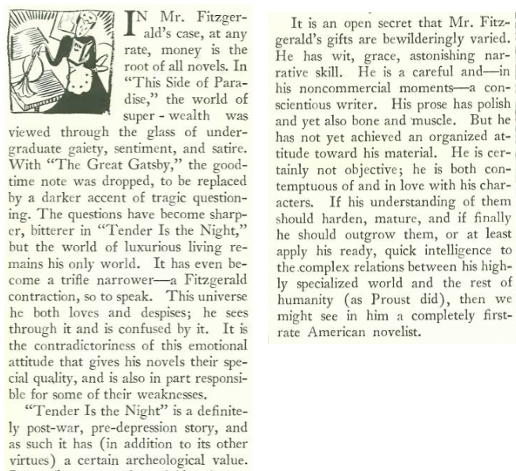
…and book reviewer Clifton Fadiman, who found F. Scott Fitzgerald’s literary gifts “bewilderingly varied”…

A NOT-SO-TENDER RECEPTION…F. Scott Fitzgerald’s status as a symbol of Jazz Age excess hurt his career during the Depression years. Tender Is the Night received mixed reviews, which didn’t help his alcoholism and deteriorating health. When Carl Van Vechten took this photo of Fitzgerald in June 1937, the author had a little over three years to live. (Wikipedia)

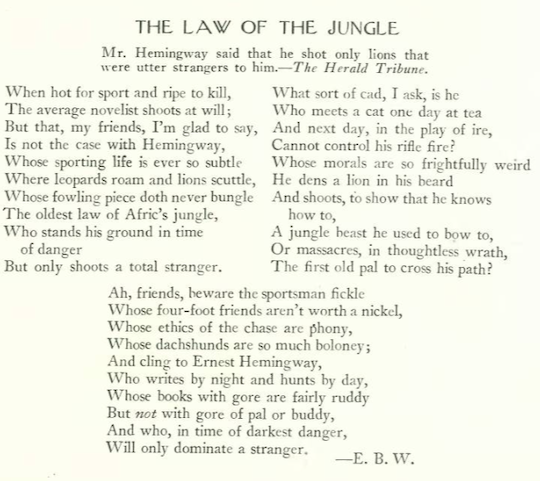
…speaking of F. Scott Fitzgerald, fellow author Ernest Hemingway defended Fitzgerald’s writing, arguing that criticism of his Jazz Age settings stemmed from superficial readings. One then wonders what Hemingway thought of E.B. White’s poetic “tribute” to his big game hunting excursions…

I ONLY SHOOT STRANGERS…Author Ernest Hemingway poses with a lion shot during a safari in Africa in 1934. (MPR News)

 * * *

From History’s Ash Heap

Various reference sources cite “freak shows” as a normal part of American culture in the late 19th to the early 20th centuries, but I have to admit I saw exhibits at state fairs of half-ton humans and conjoined twins when I was a kid in the 1970s (not to mention things in jars at a carnival in St. Louis that should have been given a decent burial).

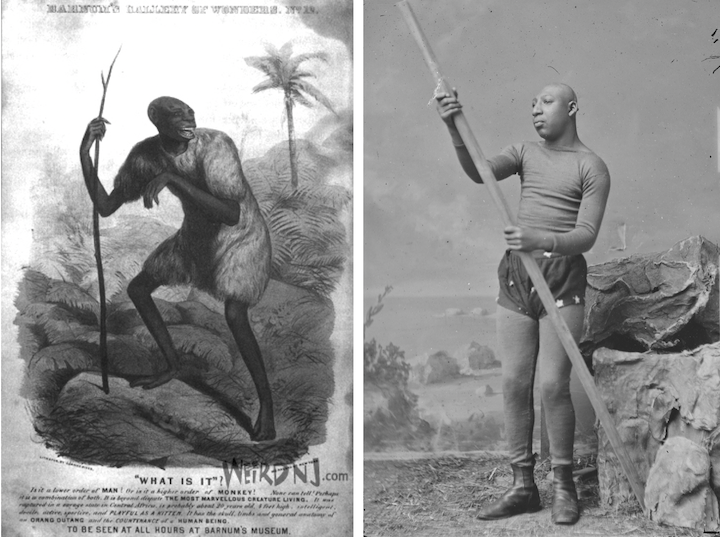
When Alva Johnston penned the first installment of a three-part profile series titled “Sideshow People,” such attractions could be found across the U.S. and Europe—Coney Island featured “Zip the Pinhead,” who was actually William Henry Johnson (1842–1926), one of six children born to former slaves living in New Jersey. His desperately poor parents agreed to allow P.T. Barnum to display him at a museum and at circus performances billed as a missing link, a “What-Is-It” supposedly caught in Africa.

FOR THE SUCKERS…P.T. Barnum exhibited William Henry Johnson as a “wild man”, a “What-Is-It” that subsisted on raw meat, nuts, and fruit, but was learning to eat more civilized fare such as bread and cake. Note the difference between the poster depiction at left and the actual man. Civil War-era photo at right by Mathew Brady’s photography studio in New York City. (National Portrait Gallery)

 * * *

Floating and Sinking

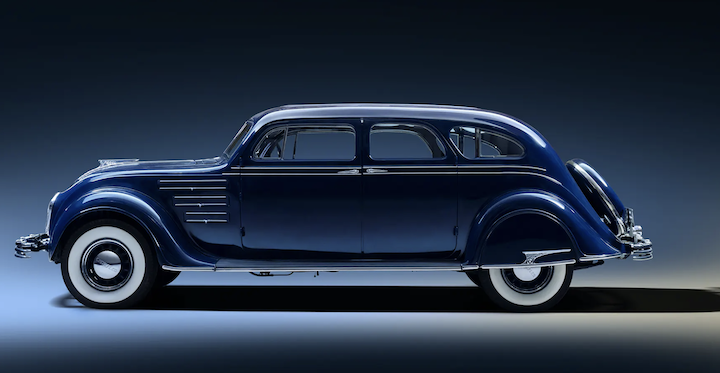
As much as New Yorker cartoonists (and E.B. White) liked to take pokes at Chrysler’s futuristic Airflow, there was much to be admired by the innovations the car represented. Unfortunately, the car’s design was too advanced for the buying public, and despite a big manufacturing and sales push by Chrysler the car was shelved by late 1936.

Writing for Time, Dan Neil noted the Airflow’s spectacularly bad timing. “Twenty years later, the car’s many design and engineering innovations — the aerodynamic singlet-style fuselage, steel-spaceframe construction, near 50-50 front-rear weight distribution and light weight—would have been celebrated. As it was, in 1934, the car’s dramatic streamliner styling antagonized Americans on some deep level, almost as if it were designed by Bolsheviks.”

SEEMED LIKE A GOOD IDEA. A restored 1934 Airflow. (Hagerty Media)

* * *

More From Our Advertisers

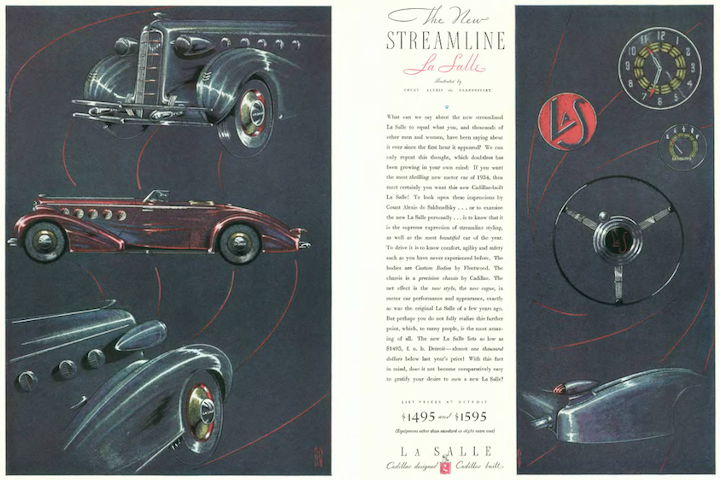
Maybe the buying public wasn’t ready for a car with a sloping hood and embedded headlights, but the folks at Cadillac were eager to unveil concepts for the new streamlined La Salle, which retained the familiar bullet headlights so as not to alarm consumers too much…

…and here’s a lovely image from Goodyear…I assume this woman is merely resting in a rumble seat, since this pose would not be possible above 25 mph…

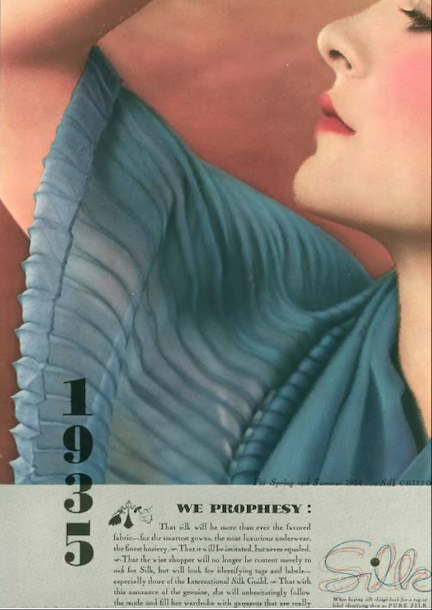
…full-bleed color ads were coming into their own, as demonstrated by this stylish entry from the purveyors of silk garments…

…on the other hand, our well-heeled friends at Ponds stuck with the tried and true copy-heavy approach…here they offer the flawless features of Anne Gould (1913–1962), granddaughter of Gilded Age robber baron Jay Gould

…R.J. Reynolds continued their campaign to convince us that Camels bring success to the average Joe and the champion athlete…

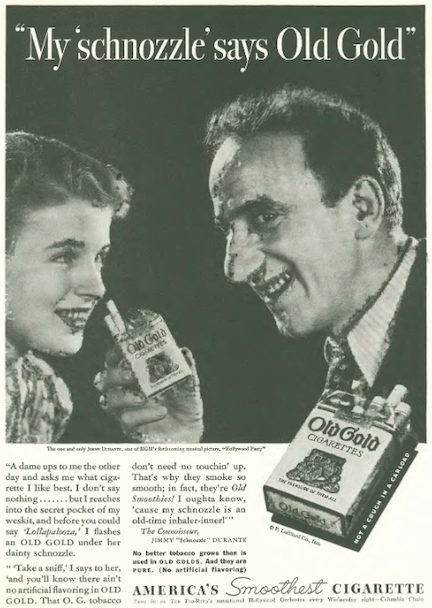
…the makers of Old Gold opted for the super creepy approach, asking entertainer Jimmy Durante to shove a pack of smokes into the face of what appears to be a teenager…

…here’s another ad from World Peaceways, reminding us of the futility of war…

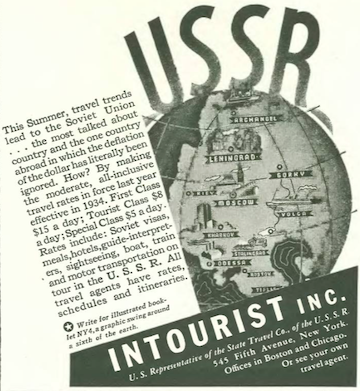
…speaking of futility, you could visit the USSR, which doubtless took great pains to steer tourists away from mass starvation in Ukraine and mass executions of Stalin’s many “enemies”…

…while folks in the USSR were worshiping Lenin and Stalin, Americans were rightly transfixed by the miracle of Kellogg’s Corn Flakes…a producer of industrial and advertising films, Castle Films would become a subsidiary of Universal and would go on to make a line of science-fiction and horror films including The Wolf Man, The Mummy, and Creature from the Black Lagoon.

…on to our cartoons, Alain took on the recent MoMA exhibition of “Machine Art”…

…and speaking of machine art, George Price was to latest cartoonist to take a crack at the Airflow…

James Thurber offered this bit of spot art for the opening pages…

…and returned to a somber scene on the battlefield of the sexes…

Next Time: Model Citizens…

Rocky’s Cover-Up

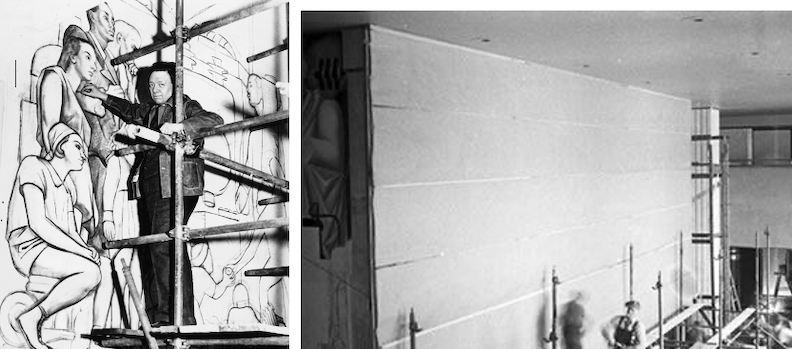
On April 28, 1933, just two days before the RCA Building was to open to new tenants, artist Diego Rivera added a portrait of Vladimir Lenin to the mural he was painting in the building’s lobby.

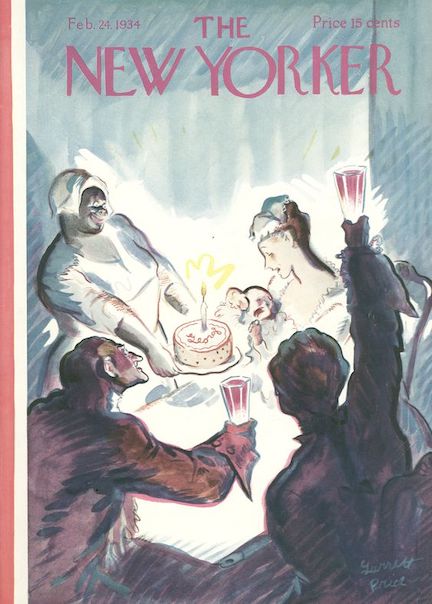
Feb. 24, 1934 cover by Garrett Price.

When Nelson Rockefeller asked Rivera to replace Lenin with a portrait of an “everyman,” Rivera refused, stating that he would prefer to see the whole mural destroyed than to alter it. Two weeks later Rivera was paid and dismissed from the job; carpenters immediately covered the mural in a white cloth. Fast forward to Saturday, February 10, 1934, when workers showed up late in the evening and began chipping away at the plaster bearing the mural, reducing Rivera’s artwork to dust. E.B. White, in his “Notes and Comment,” had this to say about that fateful night:

DUST TO DUST…Diego Rivera working on his mural, Man at the Crossroads, in the RCA Building lobby in 1933. At right, workers quickly covered up the mural after Rivera was dismissed from the job. One of Rivera’s artist assistants, Lucienne Bloch, clandestinely took the photo before she was escorted from the building. (Wikipedia/6sqft.com)
ARTEM INTERRUPTUS…Mexican artist Diego Rivera stands with a copy of the mural he painted at Rockefeller Center that was eventually destroyed. (A. Estrada /Courtesy of Museo Frida Kalho)

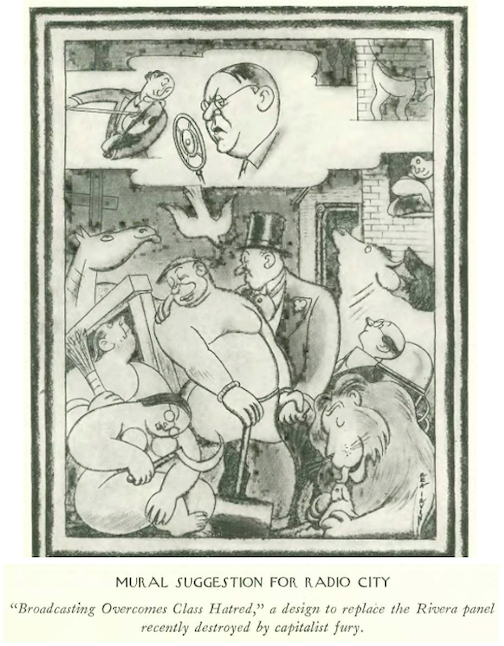
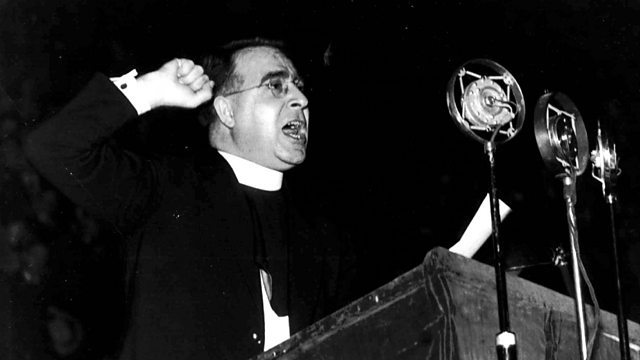
Rea Irvin shared his own thoughts on the issue with this illustration below, which referenced the hateful rhetoric of Charles Coughlin, a Canadian-American Catholic priest and populist leader and one of the first public figures to make effective use of the airwaves to spew his invective.

FAMILIAR RING…Charles Coughlin, a Catholic priest and populist leader, promoted antisemitic and pro-fascist views while also acting as a champion to the poor and a foe of big business. In the midst of the Depression he spoke to the hopes and fears of lower-middle class Americans throughout the U.S. One supporter recalled: “When he spoke it was a thrill like Hitler. And the magnetism was uncanny. It was so intoxicating, there’s no use saying what he talked about…” (BBC/NPR)

* * *

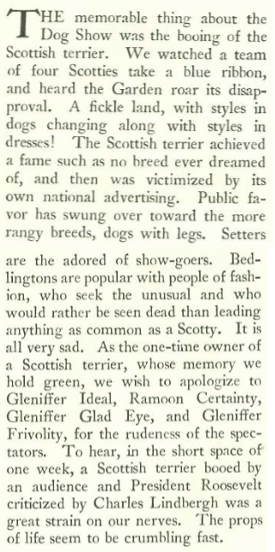
Dog Days

E.B. White also chimed in about boorish behavior he witnessed at the Westminster Kennel Club show at Madison Square Garden. Terriers had dominated Westminster; the fox terrier that ultimately won the 1934 competition represented the 21st terrier of any type to win Best of Show since that category was introduced in 1907.

YOU AGAIN? Ch Flornell Spicy Bit of Halleston, a Wire Fox Terrier, took Best of Show at Madison Square Garden in 1934. (westminsterkennelclub.org)

 * * *

Anybody Home?

After the wealthy owner of the New York World, Joseph Pulitzer, died in 1911, his family moved out of his lavish East 73rd Street mansion, which was designed by Stanford White to resemble an Italian palazzo. The building sat empty until 1930, when investors planned to knock it down and replace it with an apartment building. The Depression foiled their plans, and another attempt to raze the mansion in the 1950s also miraculously failed, and the building was eventually converted into a co-op with sixteen apartments. Writing in “The Talk of the Town,” James Thurber pondered the Pulitzer mansion’s expected fate. An excerpt:

THEN AND NOW…With so many buildings reduced to dust these days in NYC, it’s good to see the Pulitzer mansion still standing. You can buy one of its sixteen apartments for roughly $6 million, if and when they become available. (ephemeralnewyork.wordpress.com)

 * * *

From Our Advertisers

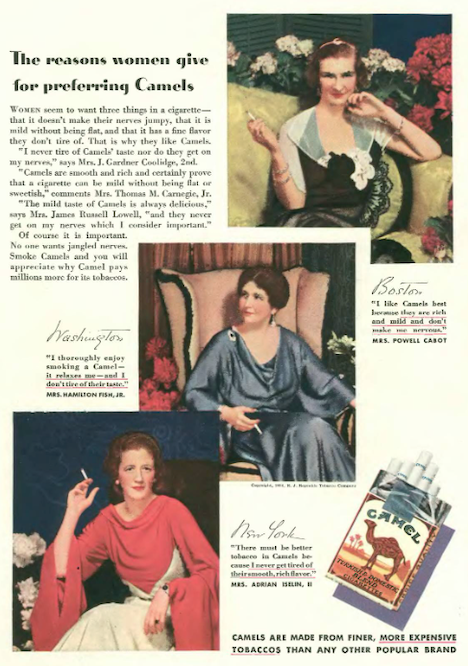
The makers of Camel cigarettes combined three previous ads into one, featuring endorsements from society matrons in Boston, Washington, D.C., and New York…

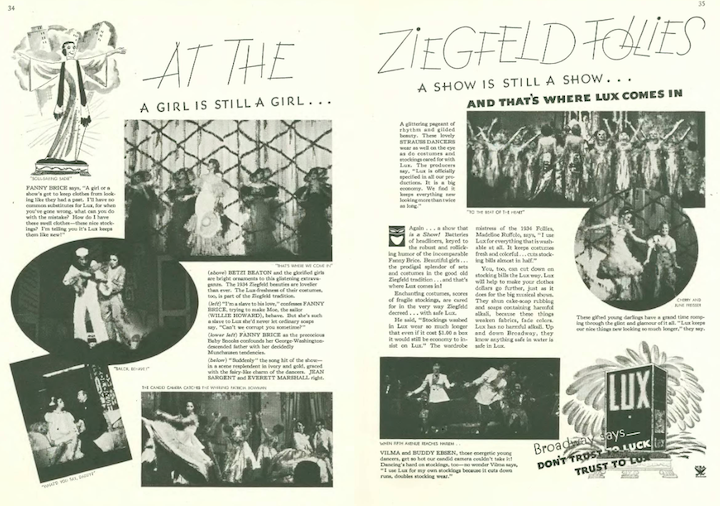
…while Fanny Brice and the cast of the 1934 Ziegfeld Follies offered a chorus of endorsements for Lux detergent in this two-page spread…

…the Graham-Paige Motors Corporation is long gone, but in the early 1930s the company was still going strong, introducing many innovations (described in the ad below) that would be copied by other carmakers…

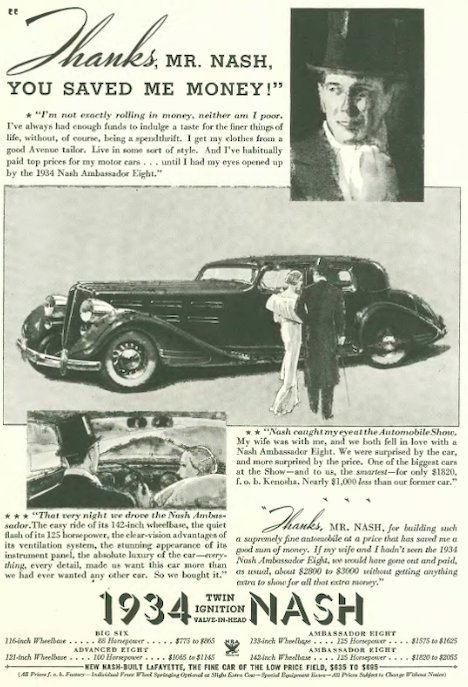
…in the 1930s an exiled Russian noble, Count Alexis de Sakhnoffsky, was known for his streamlined automobile designs…he influenced the look of the 1934 Nash Ambassador Eight, which was touted here as the choice of the budget-minded toff…note how the illustrator exaggerated the car’s length in this ad…

…as compared to an actual model of a Nash Eight…

A restored 1934 Nash Ambassador Eight. (classiccars.com)

…on to our cartoonists, Alan Dunn floated above the “Goings On About Town” section…

William Steig gave us a tactless grocer…

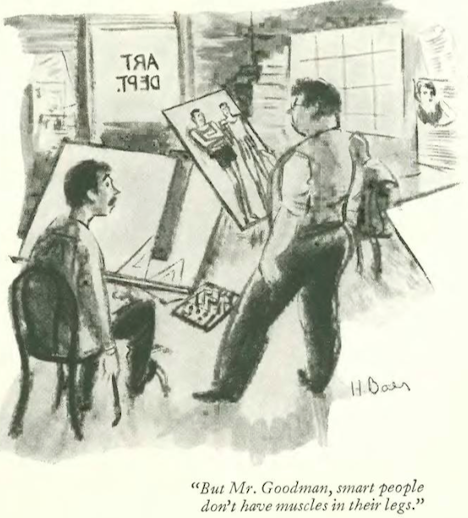
Howard Baer offered up some finer points from Madison Avenue…

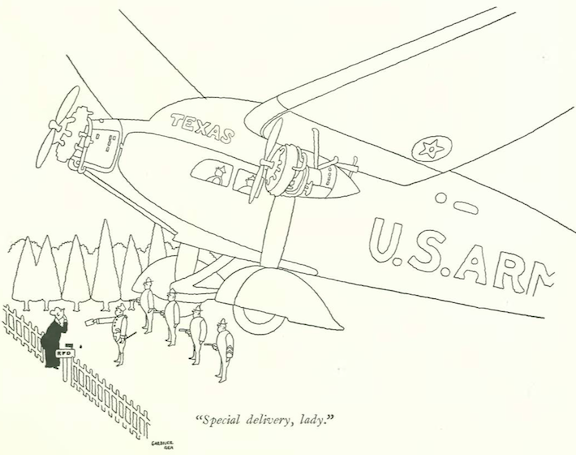
Gardner Rea illustrated a very special delivery…

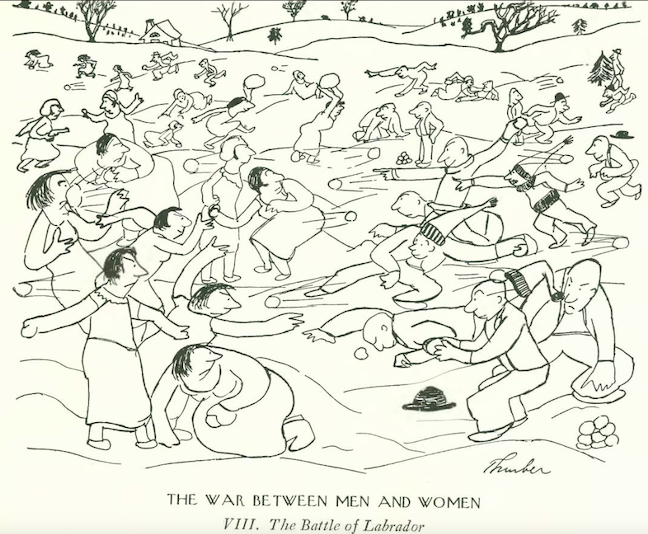
…and James Thurber’s war continued to be waged on a snowy battlefield…

…on to our March 3, 1934 issue…

March 3, 1934 cover by Harry Brown.

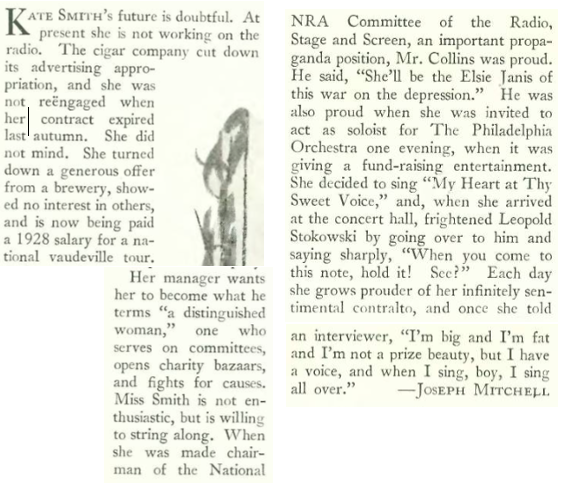
…which featured a profile of singer Kate Smith (1907–1986), written by none other than Joseph Mitchell (1908-1996), who began his career at The New Yorker in 1933. Smith was an American contralto often referred to as “The First Lady of Radio,” well known for her renditions of When the Moon Comes over the Mountain and Dream a Little Dream of Me. She was enormously popular during World War II for her rendition of God Bless America among other patriotic tunes.

Smith got her start in New York in 1926 when she appeared on Broadway in Honeymoon Lane. That year also saw the emergence of countless humiliating wisecracks about her weight that would dog her long career. A reviewer in The New York Times (Oct. 31, 1926) wrote, “A 19-year-old girl, weighing in the immediate neighborhood of 200 pounds, is one of the discoveries of the season…” In 1930, when Smith appeared in George White’s Flying High, she served as the butt of Bert Lahr’s often cruel jokes about her size.

An excerpt from the opening lines of Mitchell’s profile:

RISING STAR…At left, Kate Smith performing in the 1932 Paramount Pictures musical, Hello Everybody!; at right, on the cover of the October 1934 issue of Radio Mirror. (medium.com)

Toward the conclusion of the profile Mitchell suggested that Smith’s future was “doubtful.” She would prove that prediction wrong, however…

…23 years after her death her rendition of God Bless America would be discontinued pretty much everywhere when it was revealed that in the early 1930s she recorded such songs as That’s Why Darkies Were Born and Pickaninny Heaven (which was featured in Hello, Everybody!).

CANCELLED STAR…Since the late 1960s a rendition of God Bless America by Kate Smith served as a good luck charm for the Philadelphia Flyers hockey team. “The team began to win on nights the song was played,” The New York Times wrote in Smith’s 1986 obituary. Smith sang the tune live during game six of the 1974 Stanley Cup finals, which the Flyers went on to win against the Boston Bruins. When Smith’s racist songs were rediscovered in 2019, a statue of the singer that stood outside the Flyers’ arena was covered and ultimately removed. (Daily Mail)

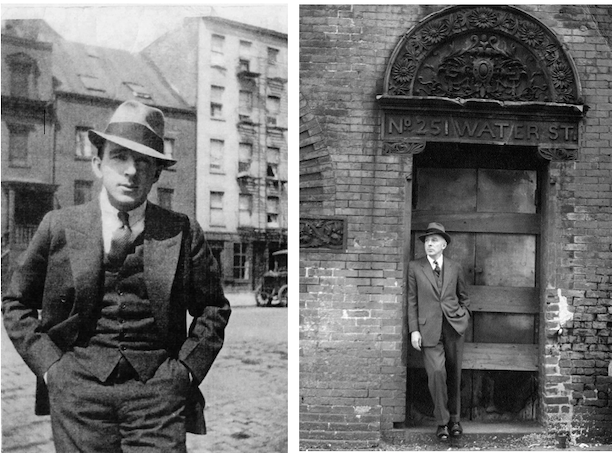
A note on Joseph Mitchell, whose first credited piece in The New Yorker was a Nov. 11, 1933 “A Reporter at Large” column titled “They Got Married in Elkton.” The article described a small Maryland border town that became known for discrete “quicky” marriages. Mitchell would become known for his finely crafted character studies and expressive stories found in commonplace settings. His 1943 McSorley’s Wonderful Saloon is a prime example.

MAN ABOUT TOWN…At left, Joseph Mitchell circa 1930, wearing a brown fedora he was rarely seen without; at right, Mitchell in Lower Manhattan near the old Fulton Fish Market, as photographed by his wife, Therese Mitchell, circa 1950. (Estate of Joseph Mitchell)

 * * *

Acquired Taste

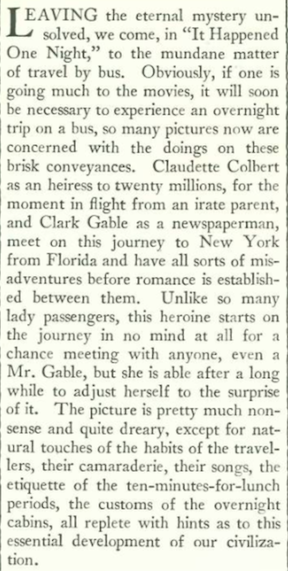
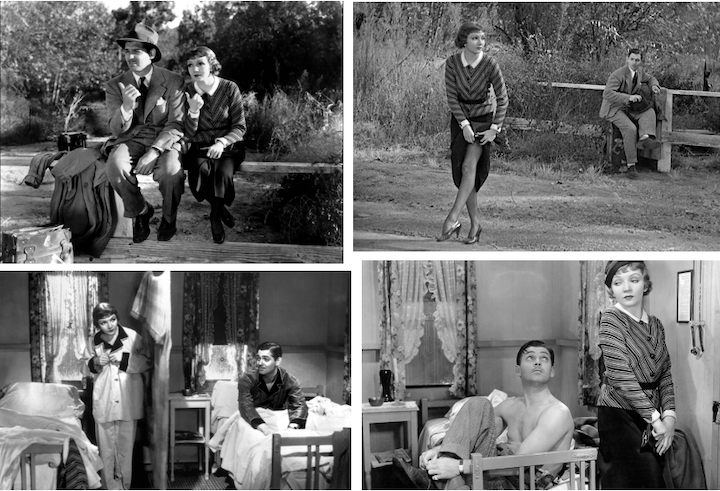
Occasionally New Yorker film critic John Mosher found himself at odds with other reviewers, and such was the case when Mosher sat down to watch Frank Capra’s It Happened One Night. While he described the 1934 pre-Code romantic comedy as “nonsense” and “dreary,” other critics found it generally enjoyable, and although it took audiences awhile to catch on, the film eventually became a smash hit.

In all fairness to Mosher, even the film’s co-star, Claudette Colbert, complained to a friend after the film wrapped, “I just finished the worst picture in the world.” As it turned out, It Happened One Night became the first of only three films to win all five major Academy Awards: Best Picture, Best Director, Best Actor, Best Actress, and Best Adapted Screenplay. It is now widely considered one of the best films ever made. Go figure.

Back to Mosher, who thought so little of the film he didn’t even lead his column with the picture’s review:

PRE-CODE AND TOPLESS…An heiress (Claudette Colbert) and a reporter (Clark Gable) find themselves hitchhiking (and sharing a motel room) after their bus breaks down in It Happened One Night. The film famously featured a scene in which co-star Gable undresses for bed and takes off his shirt to reveal that he is bare-chested. An urban legend claims that, as a result, sales of men’s undershirts declined noticeably. (IMDB)

 * * *

More From Our Advertisers

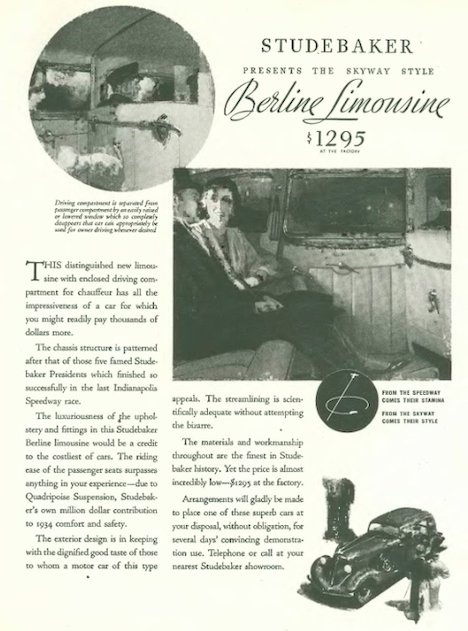
If you wanted luxury with the price, you could buy a Nash Ambassador Eight for $1,800 (about thousand less than other luxury models) or opt for Studebaker’s Berline Limousine, practically a steal at $1,295…

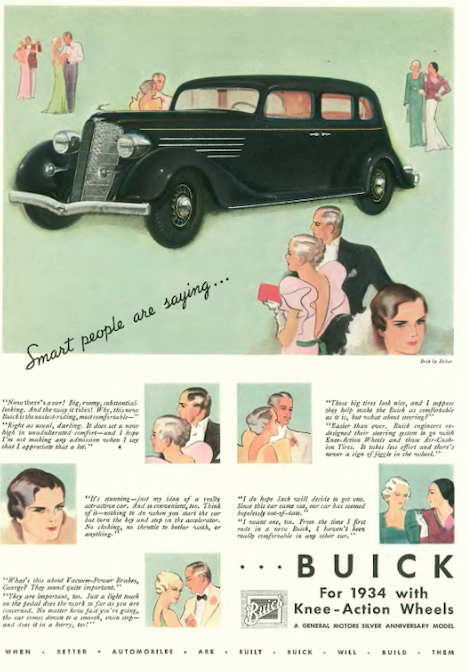
…or you could opt for this fancy-looking Buick with “Knee-Action wheels”…Knee Action was a GM marketing term for independent front suspension, which made for a smoother ride…

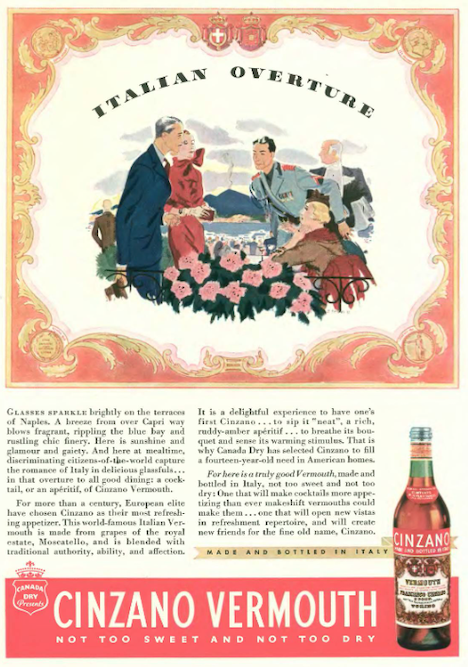
…always colorful, the makers of Cinzano vermouth made their splash in The New Yorker

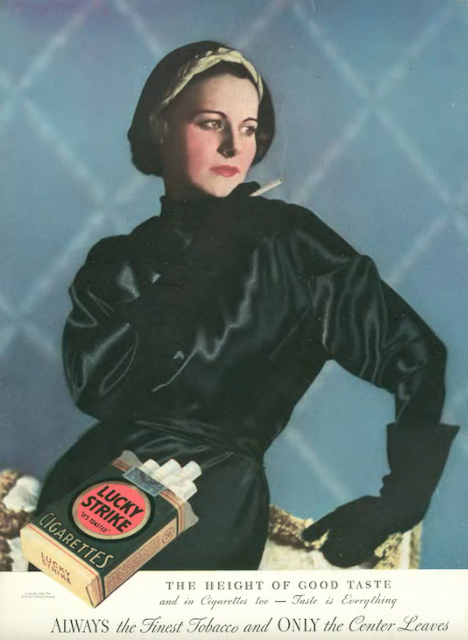
…the folks at Lucky Strike continued their theme of colorful ads featuring attractive women enjoying their cigs…

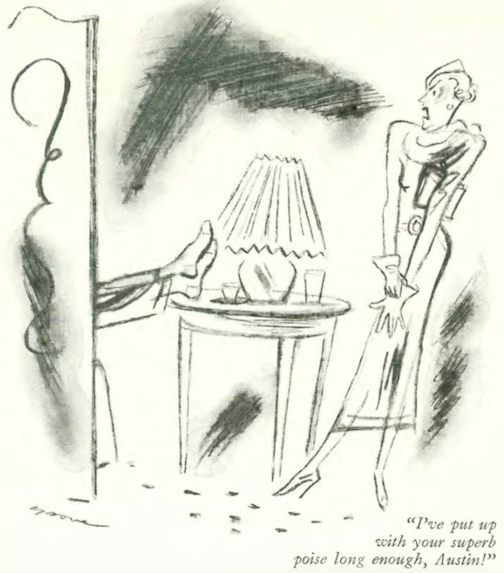
…on to our cartoonists, Leonard Dove illustrated a domestic spat…

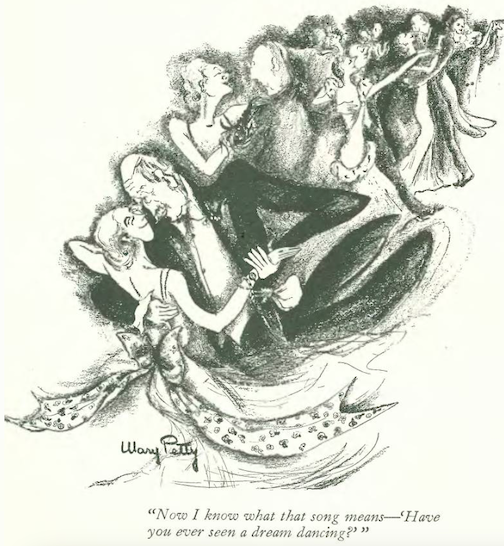
Mary Petty captured a romantic interlude on the dance floor…

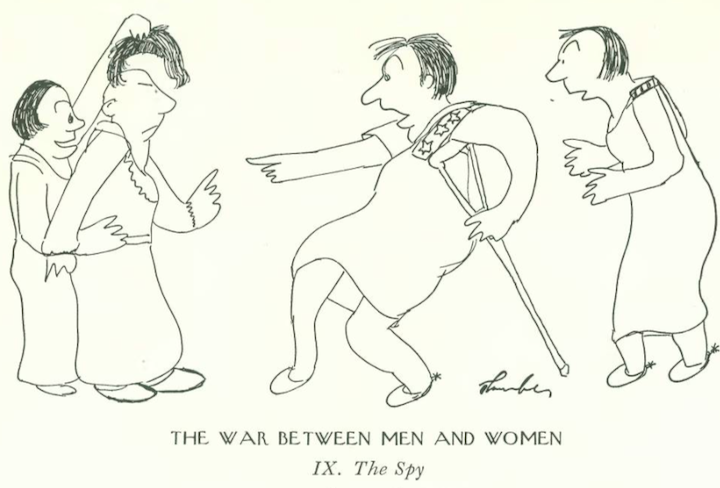
…and James Thurber introduced a new twist—espionage—into his “war”…

Next Time: The Power Broker…


A Poke At Punch

In 1925 New Yorker founding editor Harold Ross wrote that he wanted his new magazine to be “humorous from a sophisticated viewpoint” and “record the situations of everyday life among intelligent and substantial people as do the English magazines, notably Punch, except that our bent is more satirical, sharper.”

Jan. 13, 1934 cover by Constantin Alajalov.

Sharper indeed, as was demonstrated in the Jan. 13, 1934 issue, when Ross’s young magazine took aim at Punch, which was founded in 1841 and had grown long in the tooth under the guidance of Sir Owen Seaman, whose Victorian sensibilities (he joined Punch in 1897) were ripe for parody by a magazine founded during the Jazz Age.

Writer and cartoonist V. Cullum Rogers (MagazineParody.com) notes that the eight pages devoted to “Paunch” was The New Yorker’s longest and most elaborate parody of another publication.

RIPE FOR THE PICKING…The covers of Punch for August 30, 1933, and The New Yorker’s 1934 parody.

E.B. White and Franklin P. Adams contributed parodies (“The Mall” by White and “The Intent Caterpillar” by Franklin) of what Rogers cites as “two of Punch’s favorite forms of bad verse: the sticky-sentimental and the mechanically clever.”

The New Yorker’s theatre critic Wolcott Gibbs joined the fun by penning “Mr. Paunch’s Cinema Review” (excerpt)…

…Rea Irvin and James Thurber offered up their cartooning skills…

Rea Irvin’s parody of a Punch cartoon. (Caption enlarged below).

…and Robert Benchley contributed this gem, “Hyacinths for Pamela.”

Rogers writes that although “Paunch” wasn’t promoted on the cover, “the issue it ran in became the first in The New Yorker’s nine-year history to sell out on newsstands. (The second sellout contained Wolcott Gibbs’s Time parody, which suggests a demand for such things).”

The parody issue concluded with this page of advertisements:

 * * *

The Show Must Go On

The death of Florenz Ziegfeld Jr. in 1932 did not put an end to his Follies; indeed, under the direction of his widow, Billie Burke, the show seemed to have new legs, at least according to Robert Benchley:

HOOFIN’ IT…Clockwise, from top left: Program for the 1934 Ziegfeld Follies; performers in the show included popular brother–sister dancing act Buddy and Vilma Ebsen, pictured here with Eleanor Powell in Broadway Melody of 1936 (most of us know Buddy Ebsen as Uncle Jed from The Beverly Hillbillies); Al Hirschfeld drawing of the show’s stars; Willie Howard, Fanny Brice and Eugene Howard in Ziegfeld Follies of 1934. (YouTube/NYPL)

* * *

Keen on the Airflow

The streamlining trend in autos was not to E.B. White’s liking (see below), but the reviewer of the National Auto Show (pseud. “Speed”) was eager to take the Chrysler Airflow for a spin.

 * * *

From Our Advertisers

The Chrysler Corporation ran this two-page ad that took issue with E.B. White’s criticisms of the streamlining trend in automobiles, led by Chrysler’s “Airflow” model…here Chrysler responded with a note pinned to a tear sheet from the Dec. 16, 1933 “Talk of the Town”…You wrote this before you saw the new Chryslers, Mr. New Yorker

…with the National Auto Show still in town the splashy car ads continued, including this one from the makers of Fisher car bodies…

…another advertising stalwart, the Liggett & Myers Tobacco Company, gave us a young woman who enjoyed their Chesterfields “a lot”…

…Guinness was back for those who missed that taste of Dublin…

…and the folks behind “The Beer That Made Milwaukee Famous” placed their first ad in The New Yorker

…if you wanted to have your drink outside of the home, what better place than the Madison Room at The Biltmore…

…on to our cartoons, with begin with Perry Barlow and a tot losing sleep over the new year…

Kemp Starrett also explored the world of sleep deprivation…

…and we end with James Thurber, and a woman with a low tolerance for “cute” news…

…in case you are wondering, Anna Eleanor Sistie” Dall was the daughter of Franklin and Eleanor Roosevelt’s eldest child Anna Dall. When Dall separated from her husband in 1933, she moved into the White House with her children, Sistie and Buzzie.

TOO CUTE…Franklin Roosevelt with his grandchildren Anna Eleanor Sistie” Dall and Curtis “Buzzie” Dall in 1932. According to Buzzie, he and his sister lived in the White House from September 1933 to November 1935. (AP)

Next Time: A Joycean Odyssey…