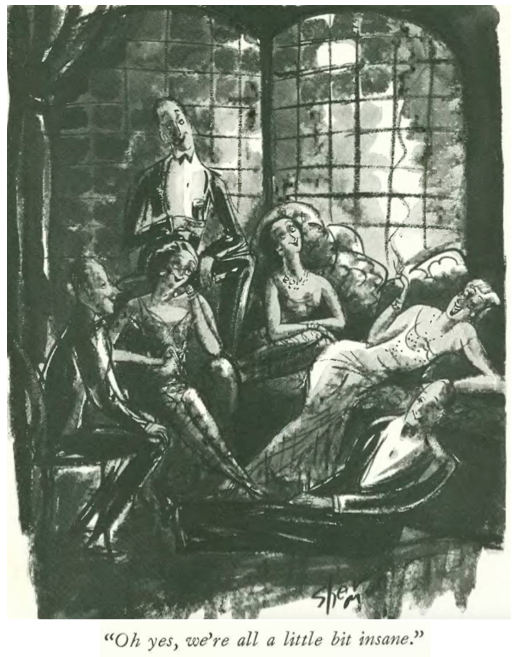
Bonfire of the Vanities

When Earl Carroll’s Vanities hit the Broadway revue scene in 1923, it faced strong competition from George White’s Scandals and the long-running Ziegfeld Follies. Carroll’s answer: More of everything.

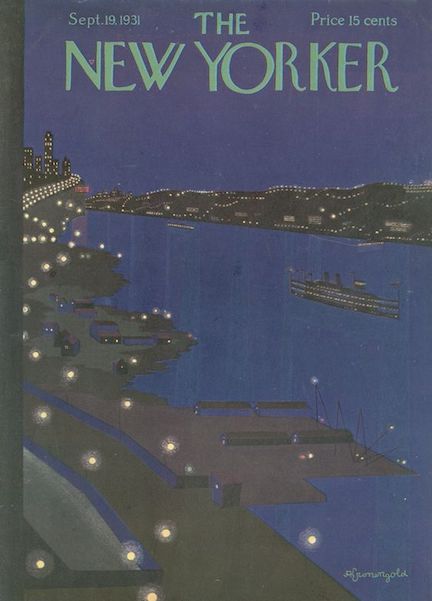
Sept. 5, 1931 cover by Theodore Haupt.

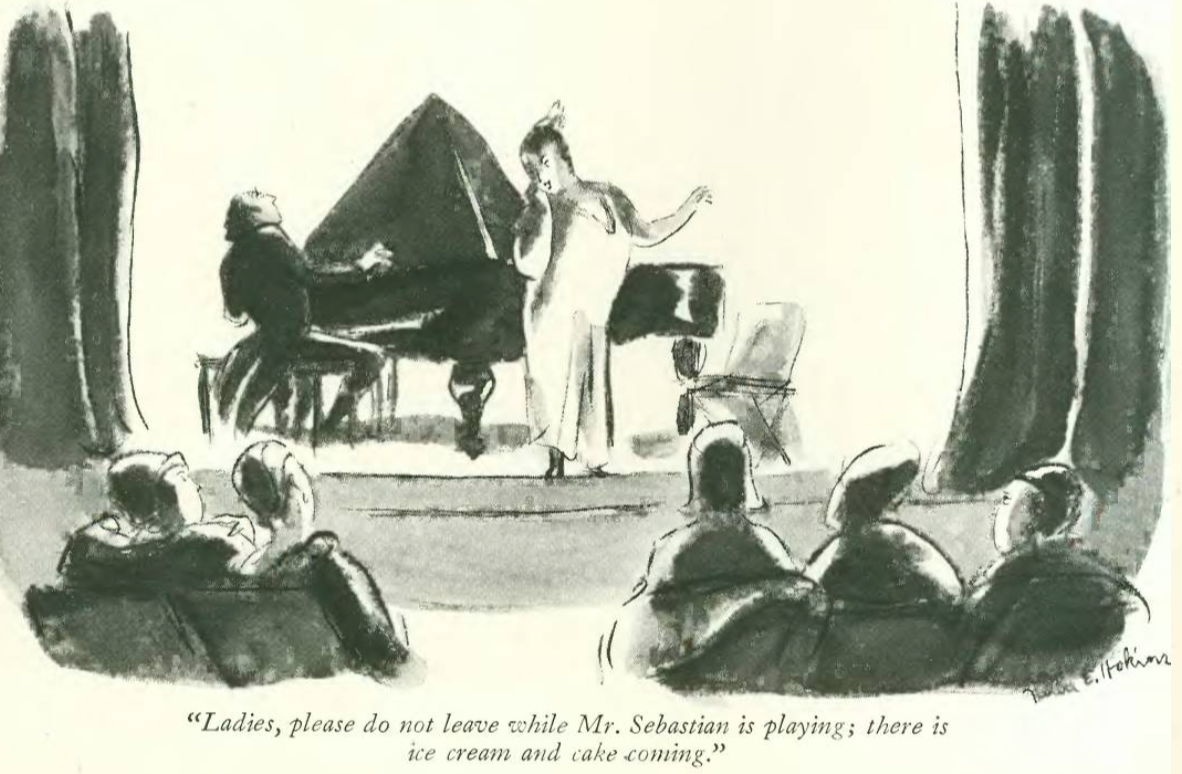
That included more nudity than the other revues. Critics, including the New Yorker’s Robert Benchley, found the nudity gratuitous, a titillating distraction from what was otherwise a mess of a show. It also landed Carroll in court from time to time on charges of public indecency. All of this, of course, was just more publicity to drive audiences to his theatre at 753 Seventh Avenue, which he built in 1922 and then partially tore down just nine years later to replace it with an even grander venue. This is where Benchley found himself on the evening of August 27 — at the grand opening of the Earl Carroll Theatre and the 1931 edition of the Vanities. Benchley found nothing grand about it:

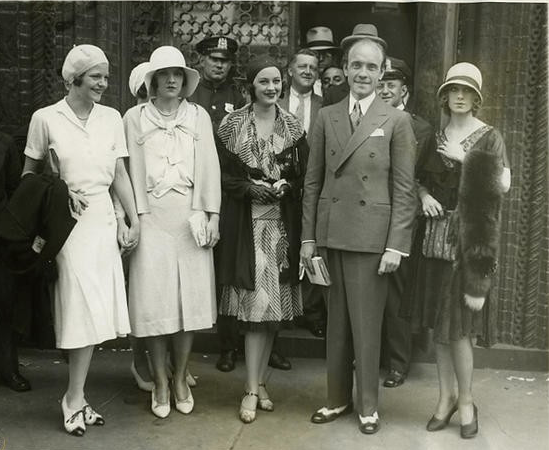
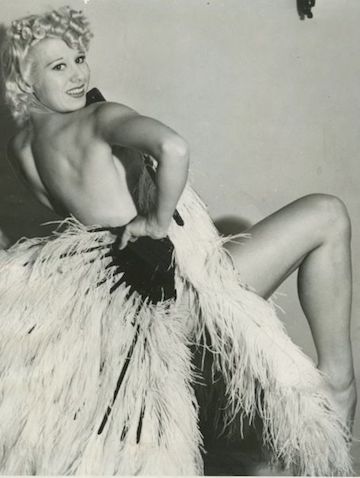
AUTOGRAPHS, ANYONE?…Accompanied by his Vanities showgirls, Earl Carroll leaves the Essex Market Police Court on July 20,1930, after appearing to answer charges of public indecency. Police raided a Vanities matinee on July 9, arresting eleven including famed burlesque dancer Faith Bacon, who performed in nothing but fans made of ostrich feathers. No doubt police were tipped off by critics who called the 1930 edition the “nudest” cast in American theatre history. From the looks on their faces, it seems even the police enjoyed the spectacle. (Worthpoint)
IS THERE A PROBLEM, OFFICER?…Faith Bacon in a less-revealing pose with the ostrich-feather fans that brought the police ‘a calling. (fanpix.net)

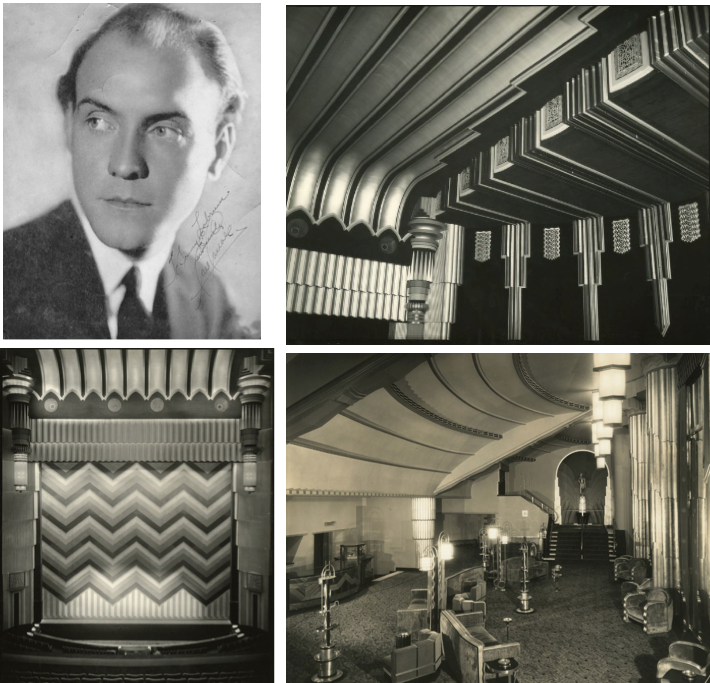
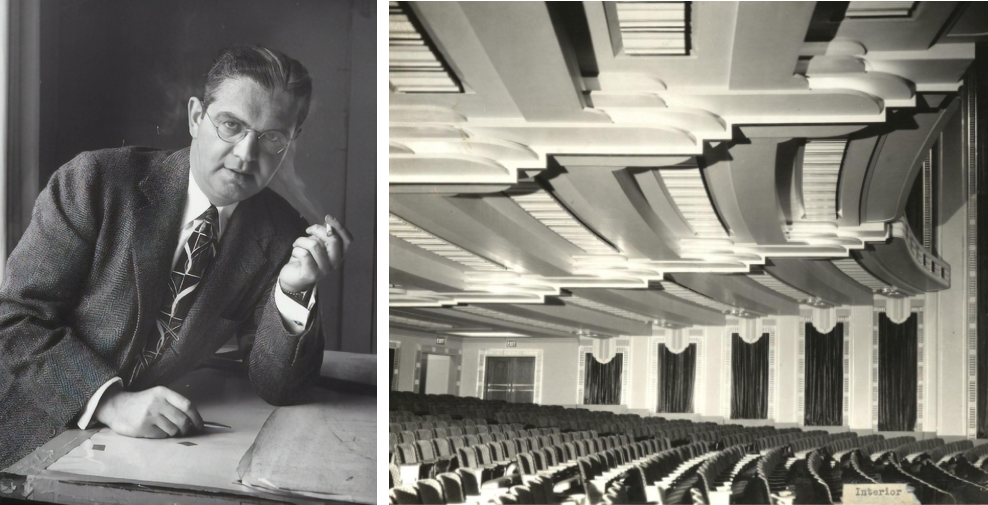
Carroll’s ambitions were always big, whether it was the size or lavishness of his stage shows or the Art Deco theatre (designed by George W. Keister) he erected in 1931 in answer to Flo Ziegfeld’s 1927 Joseph Urban-designed theatre on Sixth Avenue. With 3,000 seats, Carroll’s theatre was nearly twice the size of Ziegfeld’s.

THEY DON’T COME FOR THE SCRIPTWRITING…Earl Carroll made it clear what audiences could expect in his 1931 Art Deco-style theatre, which featured black velvet-covered walls relieved with gold and silver-colored highlights. Its 3,000 seats made it one of the largest theatres in the world. Clockwise, from top left, portrait of Carroll (a gift from the 1930 Vanities showgirls) flanked by busts of Vanities girls Doris Andrese and Beryl Wallace in the theatre lobby; sign above theatre entrance; a two-page spread from the theatre’s “Beauty Souvenir” booklet; cover of the booklet, featuring singer Lillian Roth. (New York Historical Society).
DECO DRAMA…Clockwise, from top left, Earl Carroll circa 1925; ceiling detail inside the Earl Carroll Theatre; mezzanine lounge; the stage. (New York Historical Society).

The show itself left Benchley baffled, a mishmash of lights, colors, and effects including a drooling dinosaur that dropped a naked woman on stage for a dance number…

LAUNCH SITE….The Vanities stage helped launch the careers of many entertainers. Clockwise, from top left, undated photo of a Vanities production — some shows would feature more than 100 women on stage at one time; singer Lillian Roth was a star attraction; Vanities alumni included William Demarest (Uncle Charlie!), Jack Benny and Vincente Minnelli. (assumption.edu/flickr.com/classicmoviehub.com/amazon.com/sensesofcinema.com)

This wasn’t last word from The New Yorker on the new theatre; the Sept. 12 issue featured these observations by Creighton Peet:

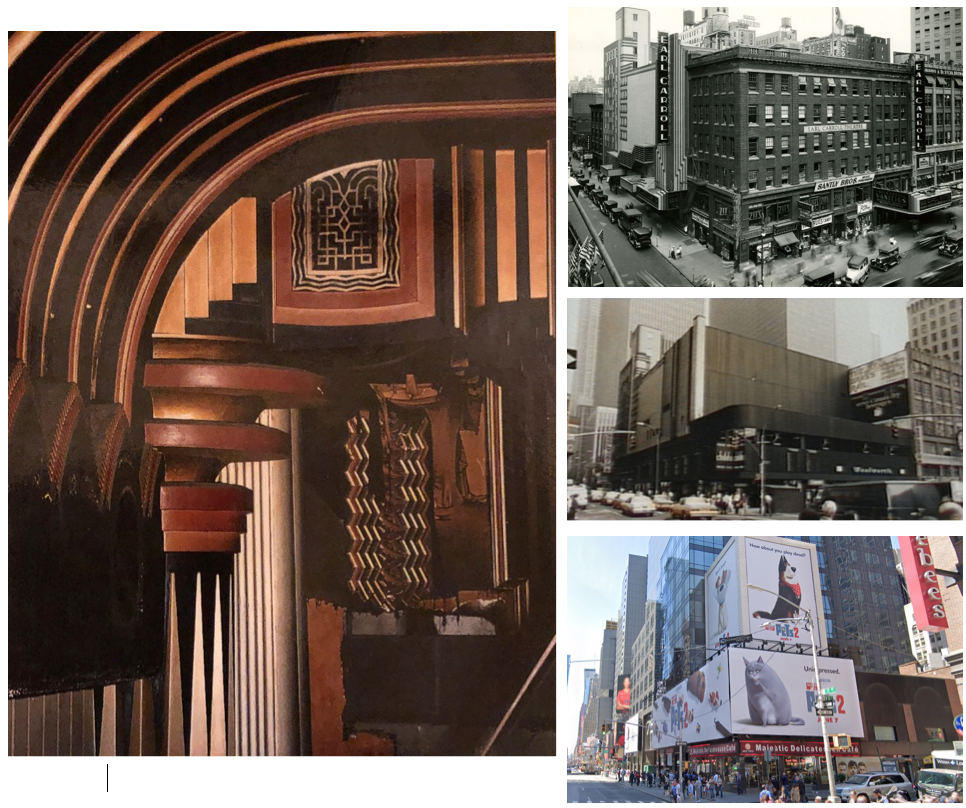
In the end, Carroll’s ambitions were too big for the deepening Depression, and just six months after his theatre’s opening he would lose it to creditors. The property would be snapped up by rival Florenz Ziegfeld and renamed the Casino, but the Ziegfeld connection would be short-lived; Ziegfeld would die a few months later in July 1932. Later that year another rival, George White, would take over the venue to stage his Music Hall Varieties, which ended in 1933 with middling results. The theatre would go through several more tenants—including Billy Rose—until 1940 when the discount “dime store” Woolworth’s would move in, demolishing the lobby and walling off the remaining ceiling and walls. Woolworth’s would close the location in the late 1980s—the store, and the last remnants of the Earl Carroll Theatre, would be demolished in 1990.

CLOSING NUMBER…At left, a sneak peek behind the false walls of Woolworth’s in 1988 shows a detail of the theatre’s proscenium, ceiling and sidewall. At right, top to bottom, the second Earl Carroll Theatre at 7th Avenue & 50th Street; the Woolworth’s store that replaced it, circa 1980; the site today. (Large image from the book Lost Broadway Theatres, via drivingfordeco.com/Google Maps)

*  *  *

From Our Advertisers

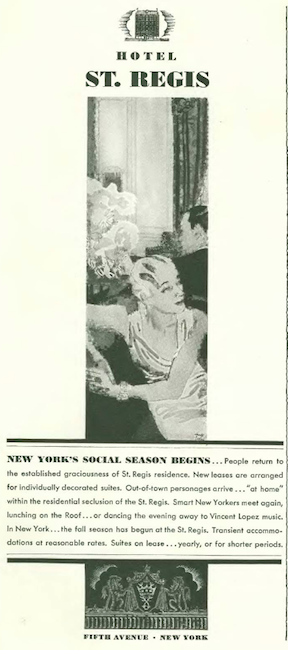
Fall is upon us, and so the social season begins, according to the Hotel St. Regis…

…and what better way to prepare for the season than to acquire a new mink coat…

…maybe politics and world affairs were more your bag, in which case you probably wanted to get a subscription to the Herald Tribune and read the latest from commentator Walter Lippmann

…the makers of Marlboro cigarettes, an upstart brand that initially targeted women, continued with their prize contests, but now they began courting men as well…

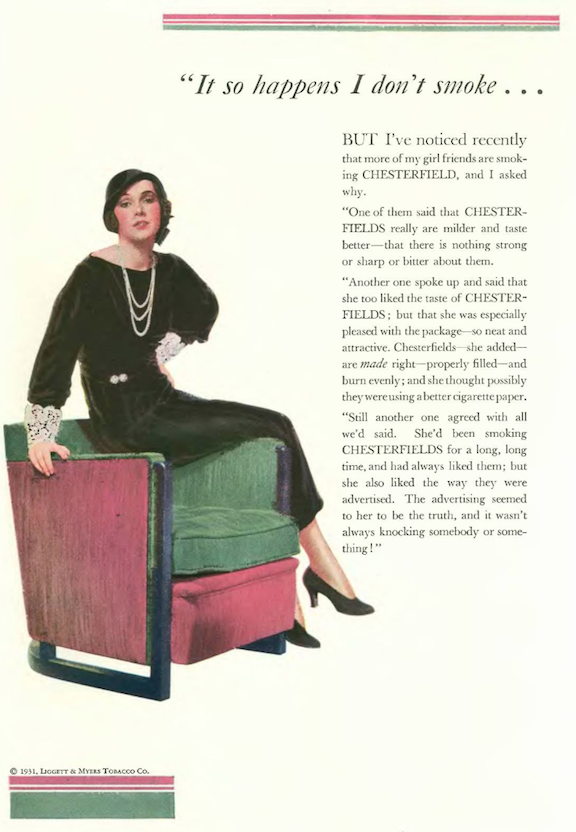
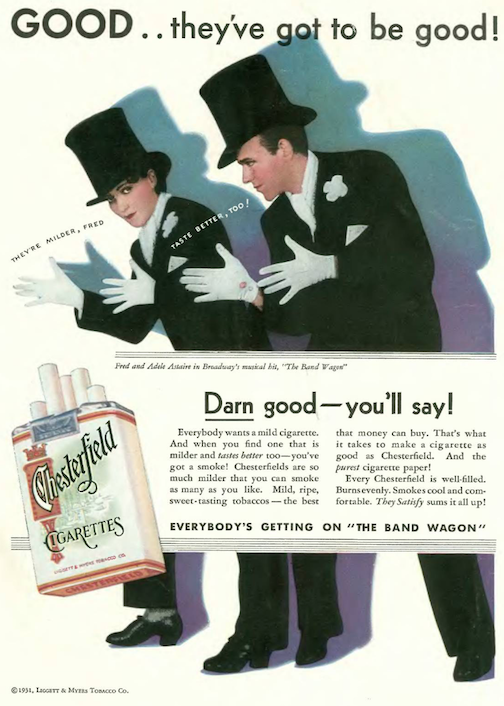
…on the other hand, the more established brand Chesterfield had the resources to run a color back-cover ad with endorsements from the brother-sister dance team Fred and Adele Astaire

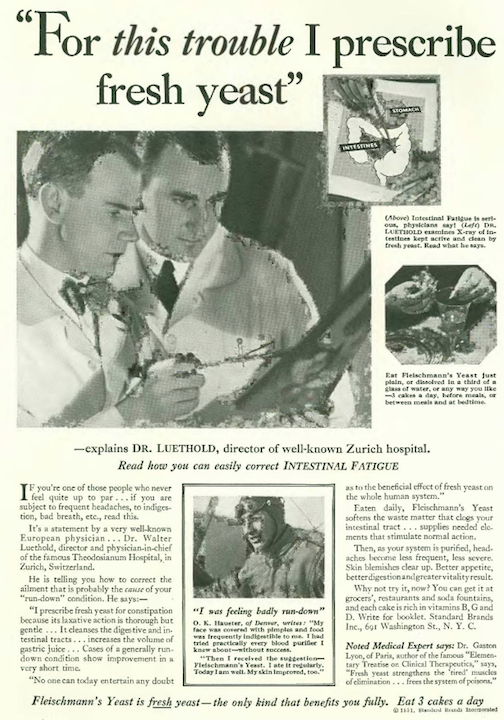
…Fleishmann’s continued to run their full-page ads touting the wonders of daily yeast consumption (“Eat three cakes a day”). The ads were there because Raoul Fleishmann used his wealth from the family baking business to keep the New Yorker afloat during its fledgling years…

…Farrar and Rinehart announced the arrival of Otto Soglow’s first book, Pretty Pictures

…here is the cover of the book…

…and we move on to the cartoons with the character that would make Soglow rich and famous…The Little King

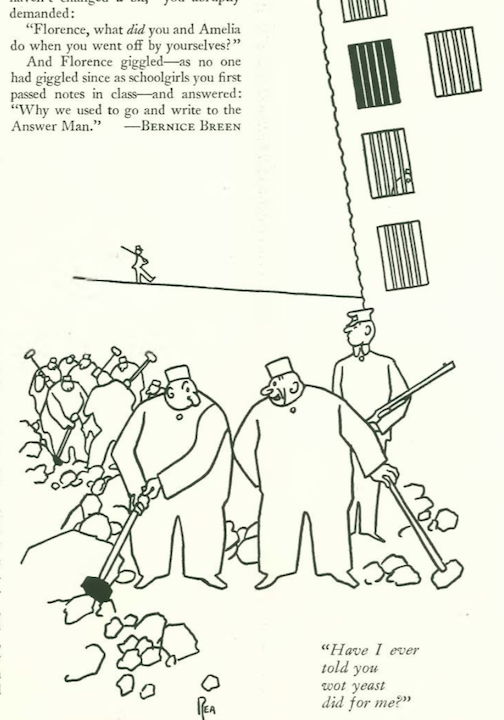
…although Fleischmann likely saved The New Yorker with large infusions of cash, its cartoonists, including Gardner Rea, still took an occasional poke at the company’s health claims…

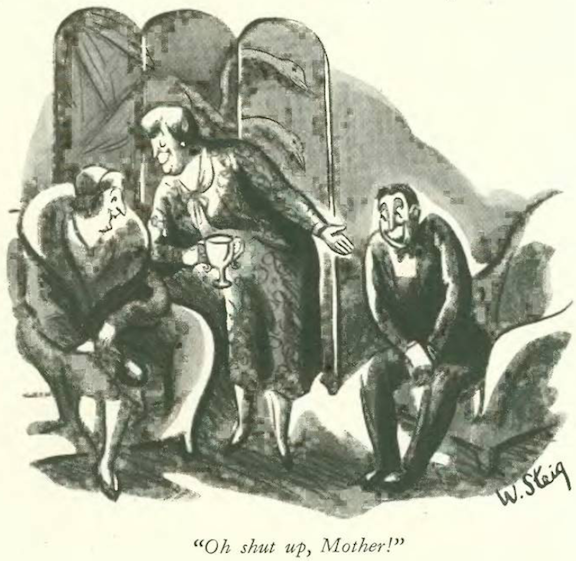
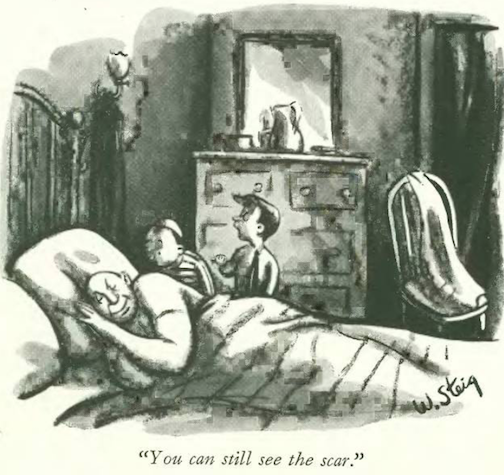
…anticipating his “Small Fry” cartoons, William Steig finds two of them examining the wonders of human physiology…

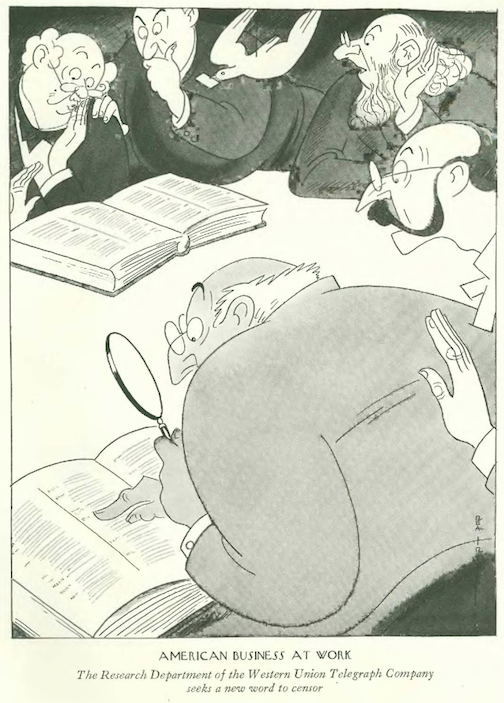
Rea Irvin looked in on some stuffy Western Union censors…

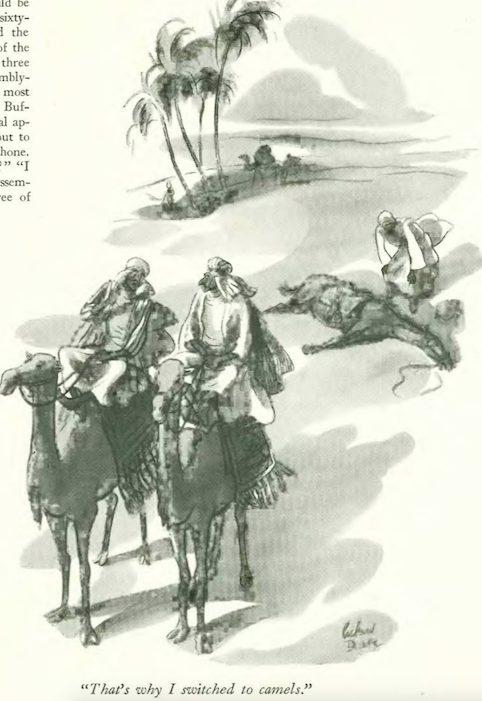
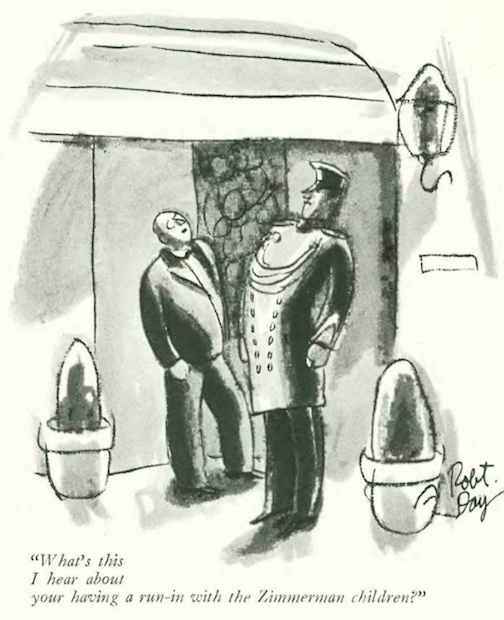
…newcomer Robert Day illustrated the challenges of a doorman (Day would be a longtime contributor)…

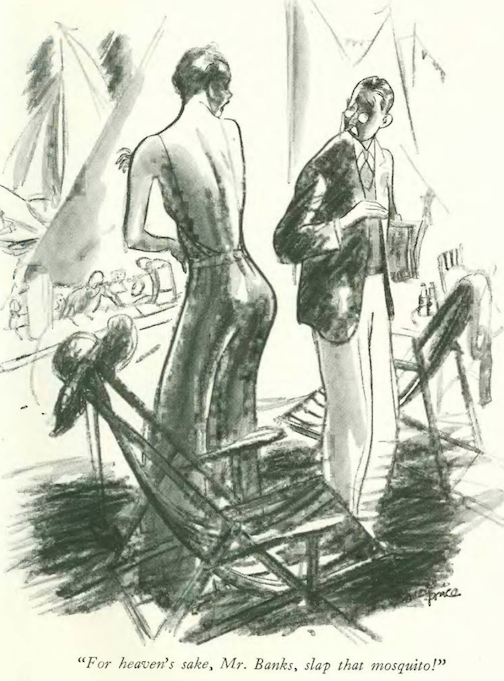
Garrett Price found humor abuzz between the bold and the meek…

Alan Dunn tracked down a clueless hunter…

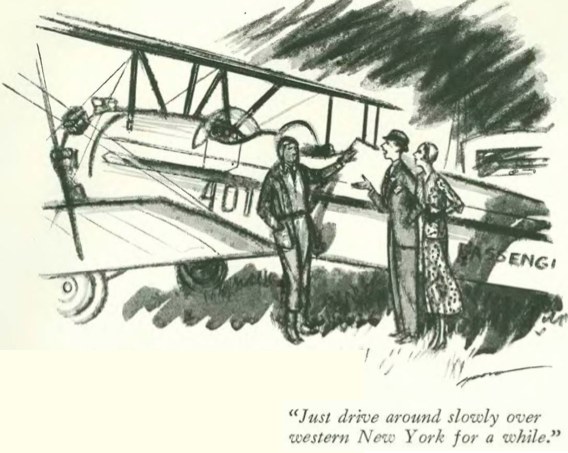
…and we end with Leonard Dove, who takes flight and anticipates our next installment…

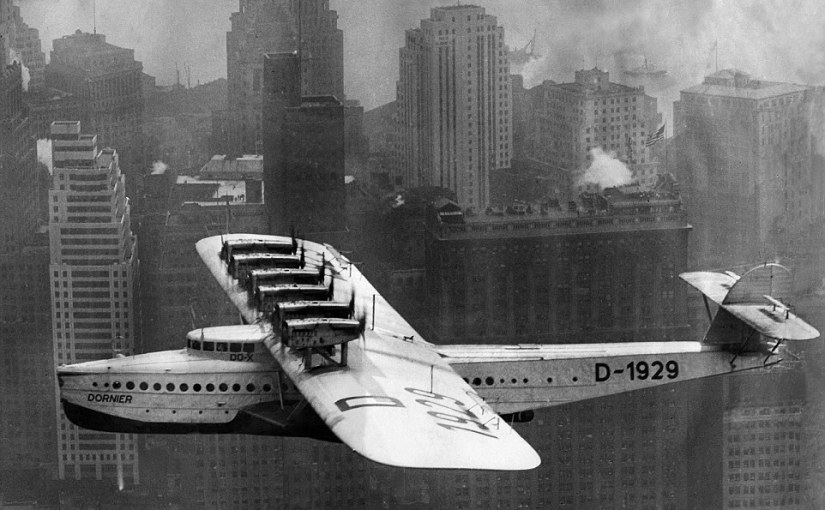
Next Time: A Big Bird…


Unnatural History

In my last post we visited the Central Park Zoo, circa 1931, and found a collection of animals displayed as curiosities in barren enclosures that in no way resembled natural habitats.

Aug. 29, 1931 cover by Constantin Alajalov.

It’s hard to say if those creatures were better or worse off than their cousins at the American Museum of Natural History, a short walk across the park to the northwest. Unlike the zoo, the tigers and rhinos at the museum were displayed in naturalistic, almost dreamlike settings. But then again they were dead; indeed, all that remained of them were their skins, skillfully fitted over skeletons of wood and clay.

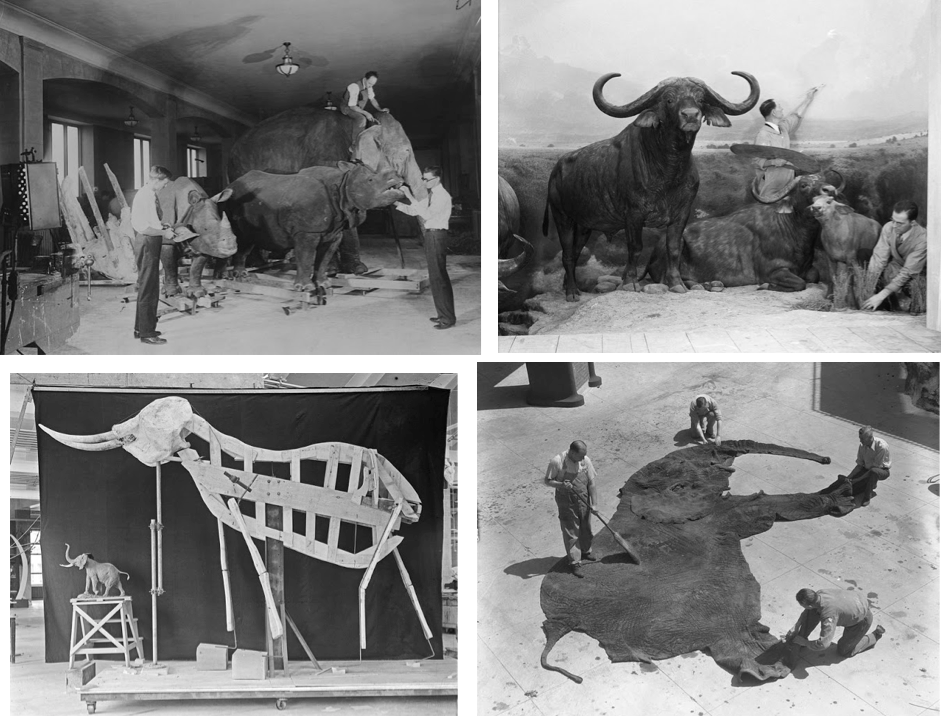
SIMULACRUM…Clockwise, from top left, American Museum of Natural History staff mounting rhinoceros and Indian elephant, circa 1930; preparing African buffalo group diorama; staff cleaning elephant skin in preparation for mounting on a frame consisting of a skull and some wood. This would be covered with clay before the skin is fitted. (vintag.es)

E.B. White stopped by the famed museum to take a look at its new Asiatic Hall, and filed this report for “The Talk of the Town.”

The animals pictured below came from a couple of British big game hunters, gathered during expeditions in the 1910s and 1920s…

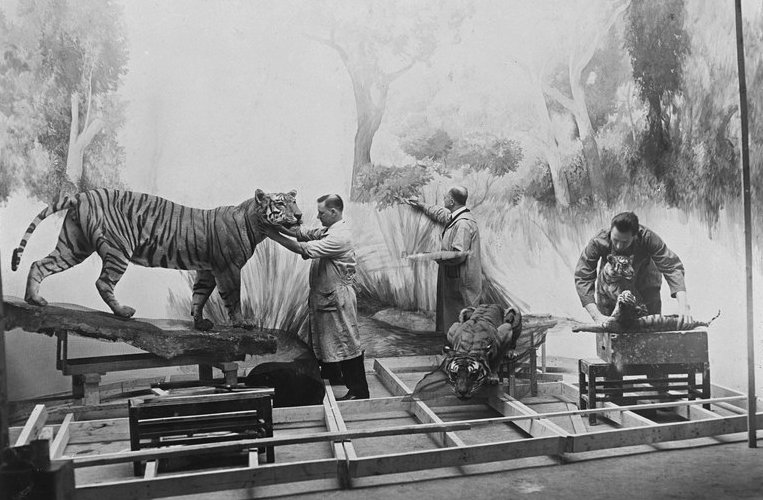
PLEASE HOLD STILL…American Museum of Natural History staff prepare the tiger group diorama in 1931. The display was in the new Asiatic Hall referred to by E.B. White. (vintage.es)
SURVIVORS OF A SORT…Nearly 90 years later, the tiger group is still on display at the American Museum of Natural History, now in the Hall of Biodiversity. (AMNH)
STILL THE SAME…This Asiatic leopard diorama, which so impressed E.B. White, also survives to this day, in the Hall of Asian Mammals at AMNH. (atlasobscura)
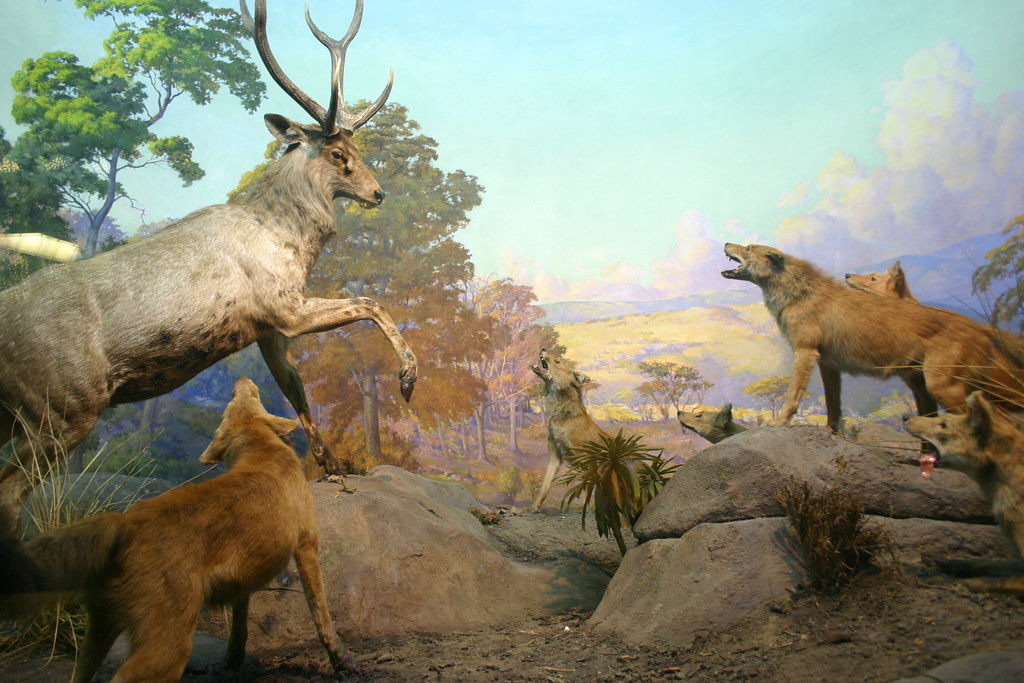
NEVER-ENDING BATTLE…The Sambar stag diorama, dating to 1911, is also mentioned by White in his article. (atlasobscura)

I am delighted that the AMNH (which I visited in December as an avid fan of diorama art) preserves these exhibits, which not only display animals—many now endangered—but also the artistry of painters, sculptors and taxidermists from a century ago. Sadly, many museums are scrapping these cultural treasures and replacing them with gaudy, interactive displays and video screens. An article in Newsweek (“Museum Dioramas Are as Endangered as the Animals They Contain,” Aug. 2, 2015) notes that around 2008 “the Smithsonian’s National Museum of Natural History in Washington, D.C., closed two diorama halls and reopened them with video screens, interactive features and stand-alone specimens where the dioramas had been.” In other words, the specimens were removed from naturalistic scenes and displayed as stand-alone curiosities, rather like those poor animals in the Central Park Zoo of yesteryear.

 *  *  *

Everyday Icons

Gilbert Seldes profiled industrial designer Henry Dreyfuss (1904–1972), who along with contemporaries Raymond Loewy and Norman Bel Geddes was among celebrity designers of the midcentury. Like Bel Geddes, Dreyfuss was a well-known Broadway set designer who would go on to become an industrial designer in the era of streamlining. But unlike Loewy and Bel Geddes, Dreyfuss went well beyond mere styling, taking a practical, scientific approach to problems that would not only make products better looking, but also safer and more comfortable to use. An excerpt:

GOT MY START IN SHOW BIZ…Henry Dreyfuss in 1946, and his 1930-31 design of the RKO Theatre in Davenport, Iowa (now the Adler Theatre). (Wikipedia/qctimes.com)
ICONS OF EVERYDAY LIFE…Some of Dreyfuss’s designs included, top row: the Western Electric Model 500 telephone (center), which replaced the clunkier Model 300 (left) in 1950; the Hoover model 150 vacuum cleaner, from 1936; middle row: Dreyfuss designs for the New York Central Railroad’s streamlined Mercury train (1936); and the NYC Hudson locomotive for the Twentieth Century Limited (1938); bottom row: Dreyfuss designed things as varied as tractors for John Deere (1960); the Honeywell T87 circular wall thermostat (1953–present); and the Polaroid SX-70 Land camera (1972).

 *  *  *

Body-Building Barnum

Another well-known figure of the 1930s was Bernarr Macfadden (1868–1955), an early proponent of physical culture who would prefigure such notables as Charles Atlas, Jack LaLanne, and Arnold Schwarzenegger. But none of them were quite like McFadden, who also created a pulp publishing empire (among his magazines: Liberty, True Detective, True Story, True Romances, Photoplay and the notorious tabloid newspaper The New York Evening Graphic).

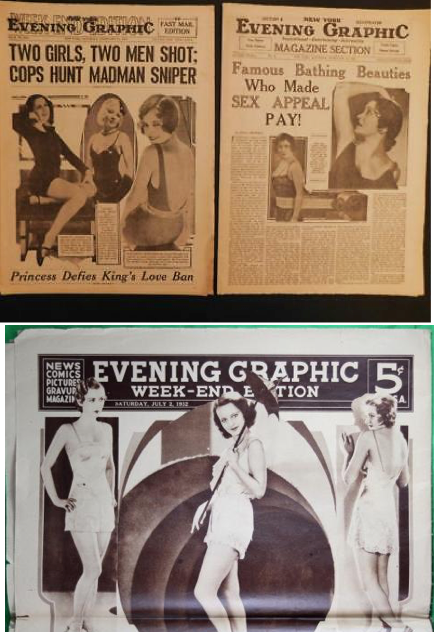
READ ALL ABOUT IT…Macfadden’s Evening Graphic was all about scandal, and especially sex and murder.

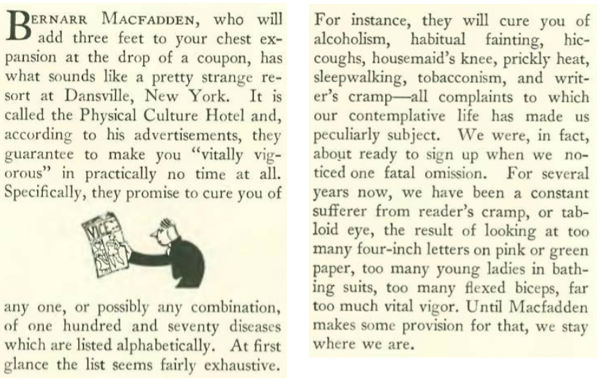
Macfadden also established numerous “healthatoriums” across the East and Midwest, including (in 1931) his latest venture, the Physical Culture Hotel near Dansville, New York. E.B. White explained, in his “Notes and Comment”…

MCFADDEN SHOWS OFF HIS BOD in 1910 (left) at age 42, and at age 55 in 1923. (Wikipedia)
BEFORE AND AFTER…Mcfadden acquired the 1882 Jackson Sanatorium near Dansville, NY in 1931 and renamed it the Physical Culture Hotel. Circa 1930s images at top contrast with the condition of the property today — it fell into disrepair after MacFadden’s death in 1955, and closed for good in 1971. Known to locals as the “Castle on the Hill” in its heyday, it can still be glimpsed by motorists traveling on I-390. (bernarrmacfadden.com/abandonedplaces.livejournal.com)

 *  *  *

For the Birds

When I came across “Farewell to Birds,” on page 17, I thought for a moment it was one of James Thurber’s animal parodies (there was even a Thurber cartoon at the bottom of the page), but then I noticed our writer was Will Cuppy, (1884-1949) who wrote in the Thurber vein (Cuppy was ten years Thurber’s senior) and like Thurber, was a bit of a curmudgeon. From 1931 until his death Cuppy wrote satirical pieces for The New Yorker that were later collected into books (also like Thurber). Here is an excerpt from “Farewell to Birds.”

THE SIMPLE LIFE…Satirist Will Cuppy (center, in 1932) and two of his early books. How to be a Hermit (1929) was a humorous look at his life residing in a Jones Island seaside shack from 1921 to 1929 (he was escaping city noise and hayfever); How to Tell Your Friends from the Apes was a 1931 compilation of Cuppy’s articles, including the one above.

 *  *  *

Puttin’ on the Ritz

Lois Long, newly divorced from cartoonist Peter Arno, concluded her fashion column (“On and Off the Avenue”) by telling readers about her “swell new hairdo”…

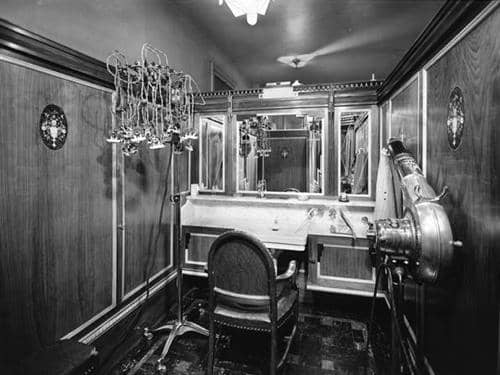
HAVE A SEAT, LOIS…The perm room at Charles of the Ritz, 1932. (Museum of the City of New York)

 *  *  *

Your Majesty

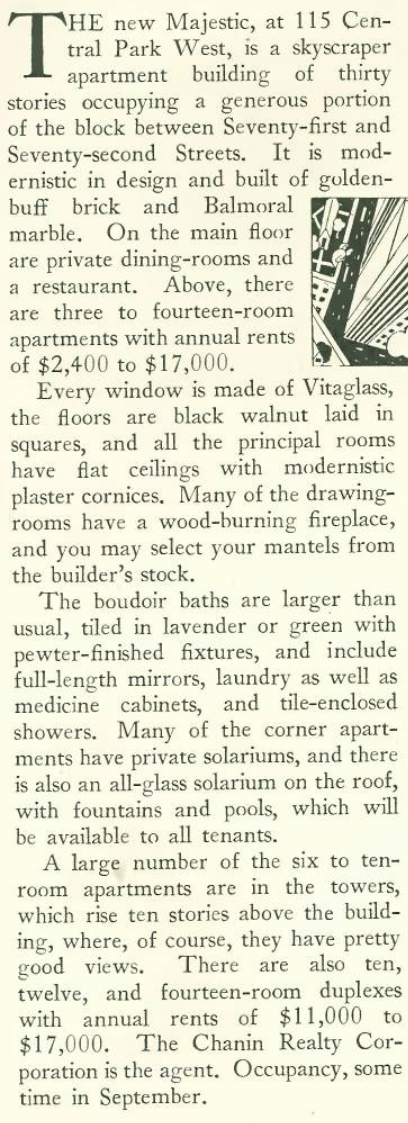
Speaking of new looks, Central Park West was boasting the addition of a new “skyscraper apartment building” called the Majestic. “The Sky Line” reported:

APTLY NAMED…The Majestic at Central Park West. (Pinterest)

Another building making its mark was the Parc Vendôme on West 57th, offering more than 600 apartments with annual rents ranging from $1,100 to $6,600. Condos in the same building today range from $495,000 to $5,495,000.

BREAD BOX INCLUDED…The Parc Vendôme on West 57th. (street easy.com)

From Our Advertisers

Henry Mandel, one of New York City’s most ambitious developers in the 1920s and early 30s, touted the Parc Vendôme in this advertisement…

…I wonder if Lois Long (see above) got one of these “dos” at the Ritz…I love the snob appeal of this ad — “The New Paris Way of Doing Your Hair”…

…which seemed to work…here is a random sample of Hollywood stars in 1931, all wearing the look…

DOING THE WAVE…From left, Tilly Losch, Constance Bennett, and Barbara Stanwyck.

…other ads appealing to the Continental lifestyle…a very understated yet elegant ad for Guerlain lipstick, and Nellie Harrington-Levine gave us a disinterested deb sporting “the wave,” a cigarette and a velvet dress…

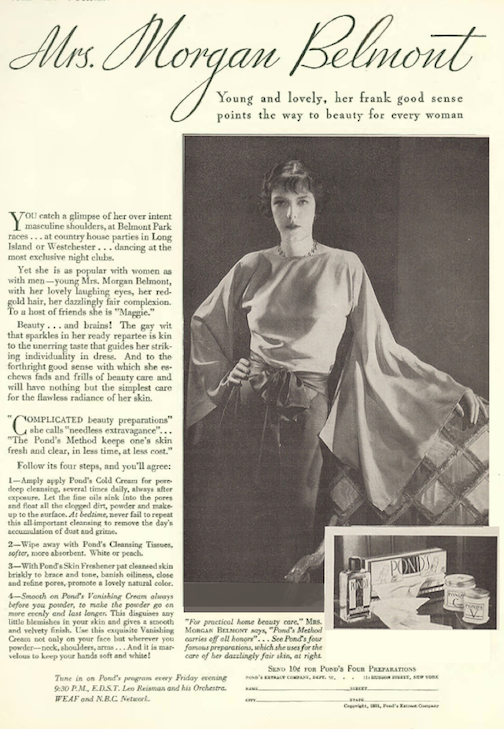
…and Pond’s continued its parade of rich society women to sell its cold cream…here we are presented with “Mrs. Morgan Belmont,” aka Margaret Frances Andrews (1894–1945), a Newport socialite and prize-winning show dog breeder…

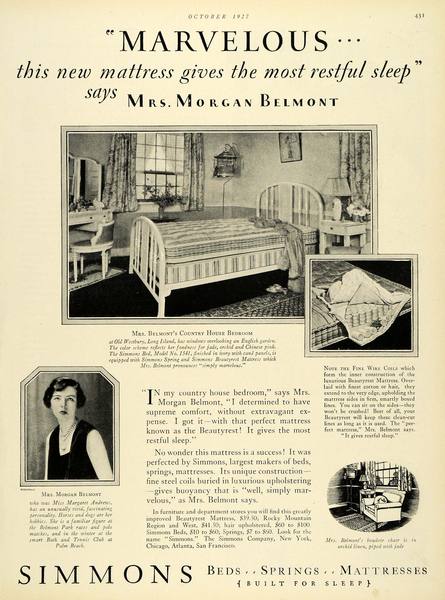
Andrews didn’t limit herself to cold cream, here appearing in a 1927 ad for Simmons mattresses…

Margaret Frances Andrews was a noted dog breeder, seen above at the Newport Dog Show around 1915; below, Andrews had a small role in the 1920 Mary Pickford film Way Down East. Andrews—seen at left, she was credited as “Mrs. Morgan Belmont.”

…and we move on to this sad little ad from the back pages, featuring something called “Peeko,” which apparently mimicked the flavors of Rye, Gin and Rum…it must have tasted awful…

…our cartoons feature Perry Barlow, and I can’t quite tell if this guy is drinking a soda or some bootleg gin, which was often sold at select gas stations…

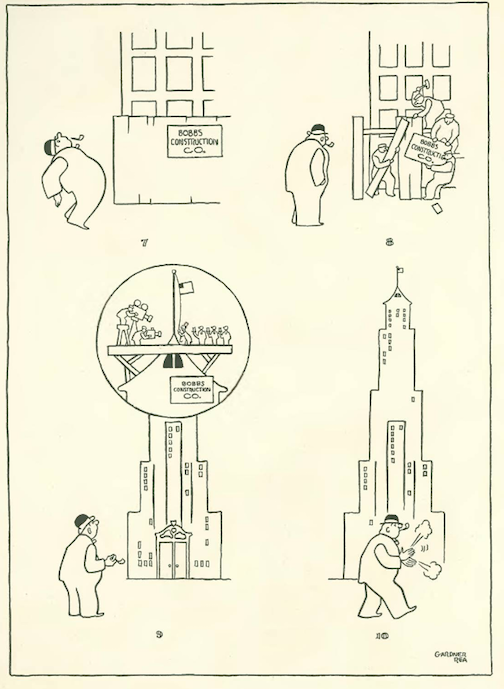
…a two-page sequence from Gardner Rea

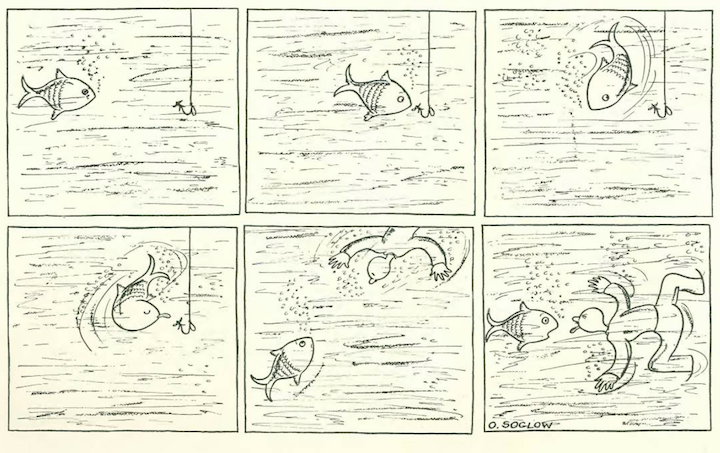
Otto Soglow went fishing…

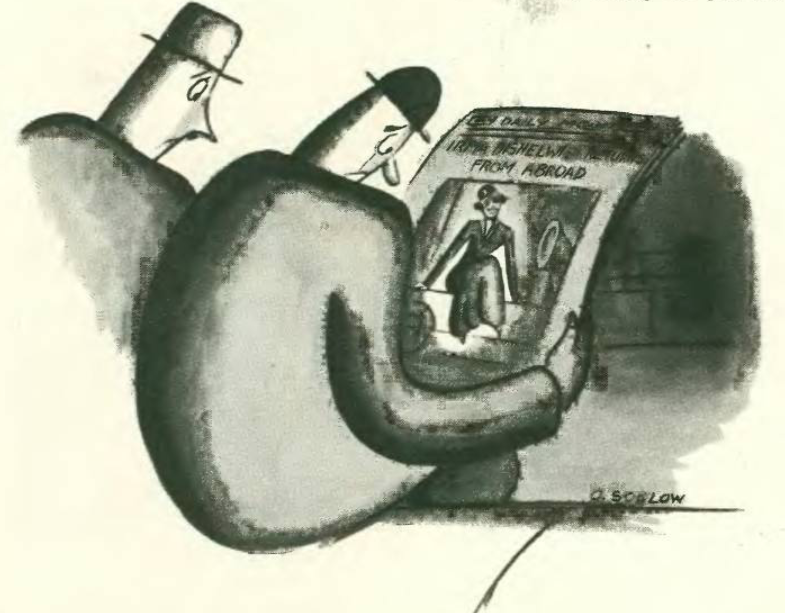
…and commiserated with a couple of unemployed guys whose plight is ignored by the celebrity-obsessed media…

Alan Dunn hit the lecture circuit…

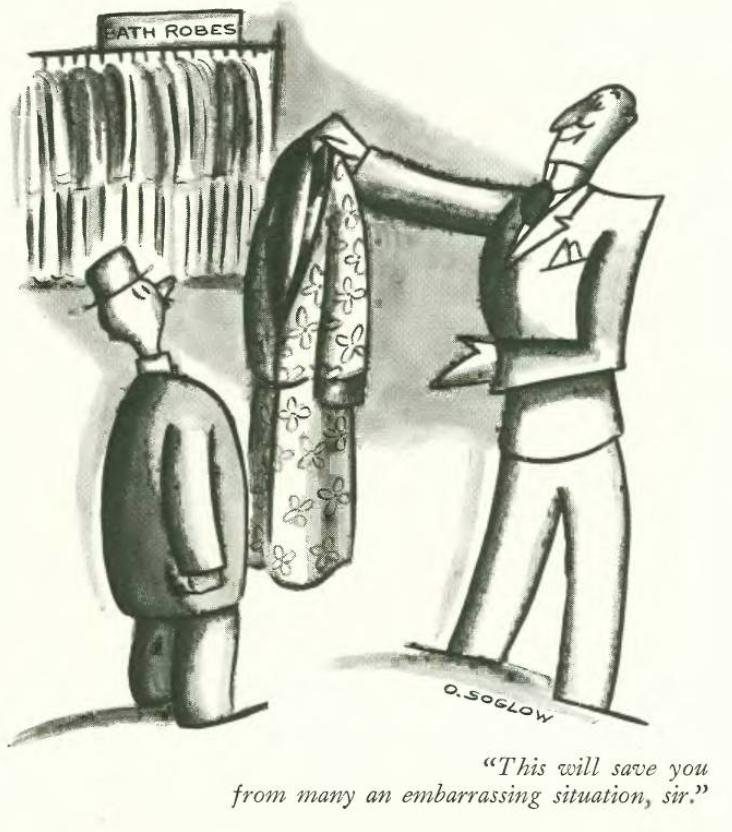
Kemp Starrett sketched some wink-wink, nudge-nudge at the men’s store…

…and we close with James Thurber, and the trials of our elders…

Next Time: Bonfire of the Vanities…

Firecracker Lane

When fireworks were still allowed on the streets of New York City, Firecracker Lane was the place to go for all your pyrotechnic needs.

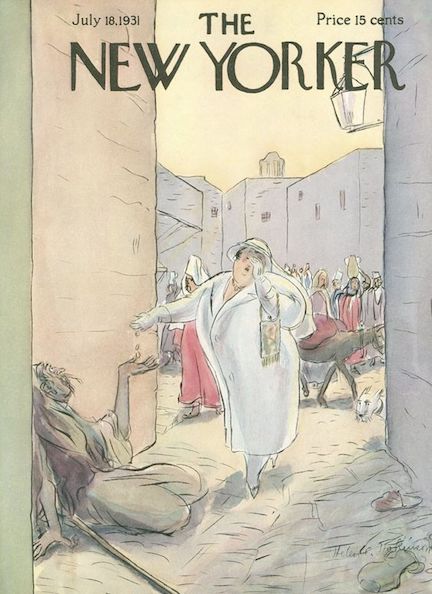
Theodore Haupt illustrated holiday travelers for the Fourth of July issue in 1931.

By 1931, however, fireworks had been banned across the greater New York City area, so customers visiting Firecracker Lane—a short row of sellers on Park Place between Broadway and Church Street—had to find a friendly burg beyond the metropolis to shoot off their Independence Day arsenals.

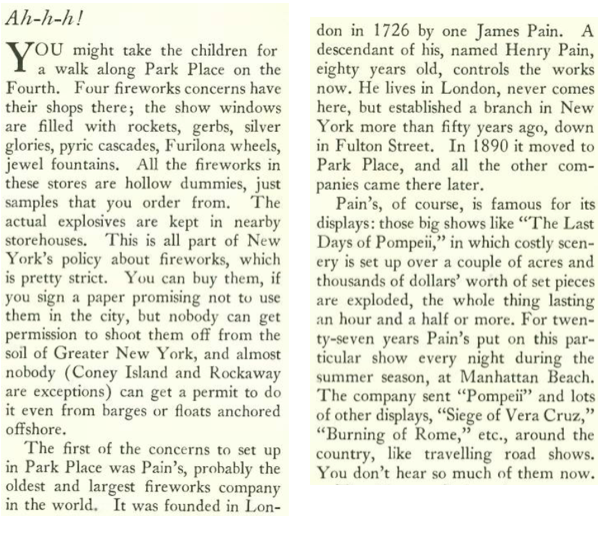
Before the city clamped down on the fun, Firecracker Lane did a bustling trade, and fireworks were even manufactured at sites around the metro area. But after a number of explosions and fires, the city closed down the fireworks factories, and by 1931 Fireworks Lane itself was on its last leg. “The Talk of the Town” visited what remained, and reminisced about the glory days.

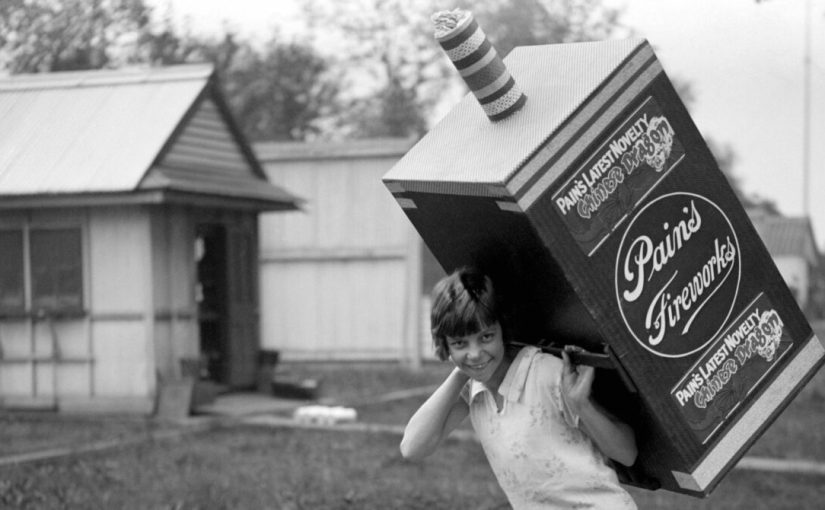
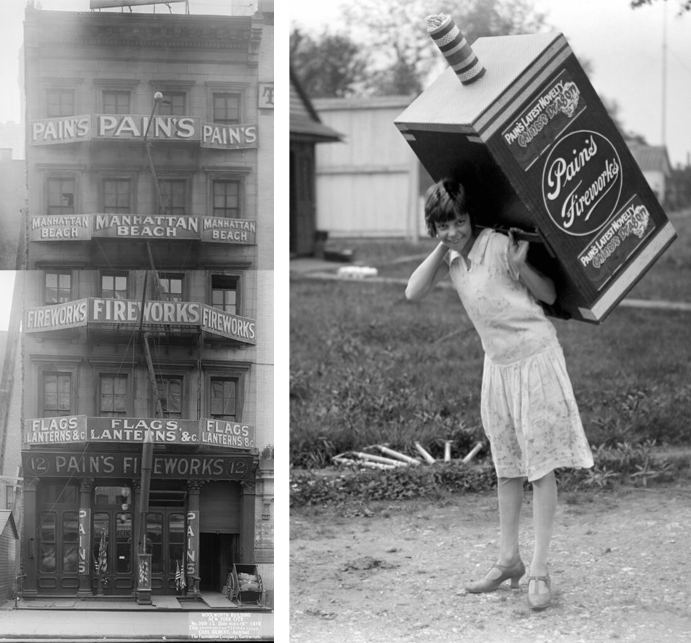
A STREET WITH SOME SIZZLE…The famed Pain’s Fireworks company occupied this building on Firecracker Lane, photo circa 1903. At right, a young woman promoting Pain’s latest novelty, the “Chinese Dragon,” in the 1920s. (Museum of the City of New York)
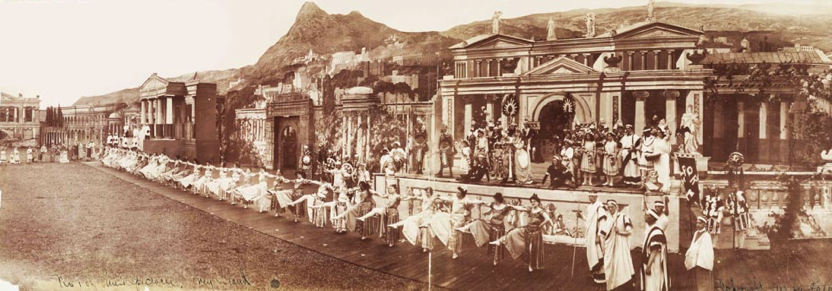
HAVING A BLAST…In the 19th and early 20th centuries, Pain’s staged massive themed fireworks displays, including the incredible The Last Days of Pompeii show on Manhattan Beach, seen here during its 1903 Season. (heartofconeyisland.com)
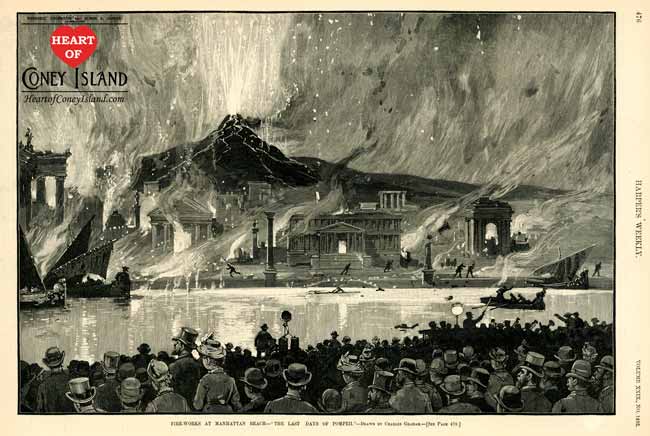
BEFORE THERE WERE MOVIES, entertainment companies were fond of putting on spectacular shows like The Last Days of Pompeii on Manhattan Beach. Illustration from an 1885 edition of Harper’s Weekly. (heartofconeyisland.com)
LOCATION, LOCATION…Explosions at fireworks factories in New York and New Jersey put an end to the manufacture of fireworks in the area by 1930. Above, a July 1901 explosion of a fireworks factory in a Paterson, N.J. tenement resulted in the deaths of 17 people who lived above factory. The New York Times reported “So great was the force of the blast, that a boy playing in the street a half a block away was lifted from his feet and hurled against an iron fence, and had one of his legs broken.” (Courtesy Paterson Fire History, via boweryboyshistory.com)

*  *  *

Not Mum on Mumford

In the previous post we were introduced to critic Lewis Mumford, who excoriated plans for the new Radio City, now known as Rockefeller Center. In his “Notes and Comment,” E.B. White added his own two cents:

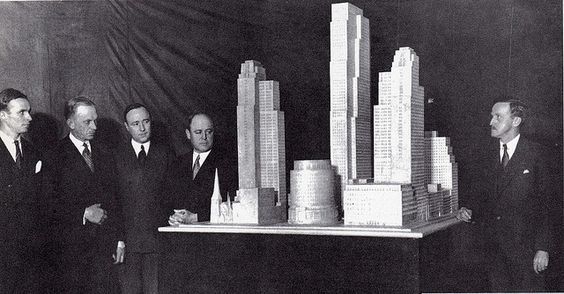
PERHAPS IT SHOULD HAVE BEEN A CAKE…Even the promoters of the Radio City project looked uncertain of their scheme in this March 1931 photo. (drivingfordeco.com)

*  *  *

From Our Advertisers

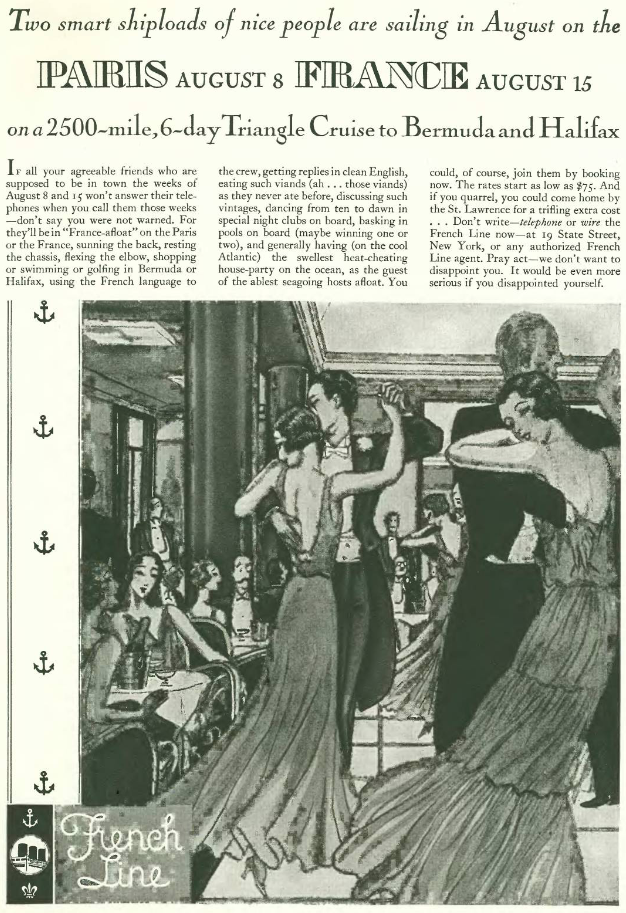
New Yorkers who wanted to get away from the steamy streets of Manhattan (almost no one had air conditioning in 1931) could catch the cooling breezes of the Atlantic on any number of cruise lines that plied the Eastern Seaboard and Canadian Maritimes during the summer…here the French Line offered a six-day “Triangle Cruise”…

…while Cunard offered a similar excursion (employing the cartooning skills of H.O. Hofman) that allowed passengers to “do the ocean” in just four days…

…to earn the ever-shrinking travel dollar during the Depression, both the Red Star and White Star lines offered their giant ocean liners for half- and full-week cruises to the Maritimes, Red Star even throwing in some on-board entertainment, claiming to be the first to do so “on any ocean”…

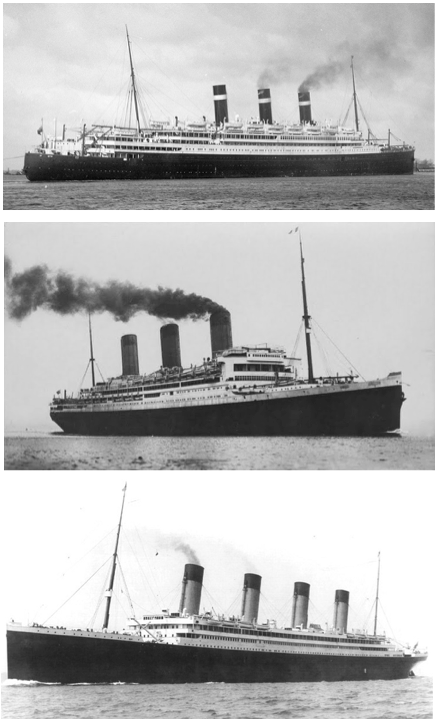
A SCRAPPED LOT…From top, the Belgenland, Majestic and Olympic. These great ships that once ferried passengers in high style between Europe and the States had been reduced to taking folks on short cruises and even one-day excursions due to the Depression. By the mid-1930s the Belgenland and Olympic (once the world’s largest ship) were sold for scrap. The Majestic was scuttled a few years later. (Wikipeda)

…I’m not sure where this pair is headed, but the angle suggests they just drove off a cliff…

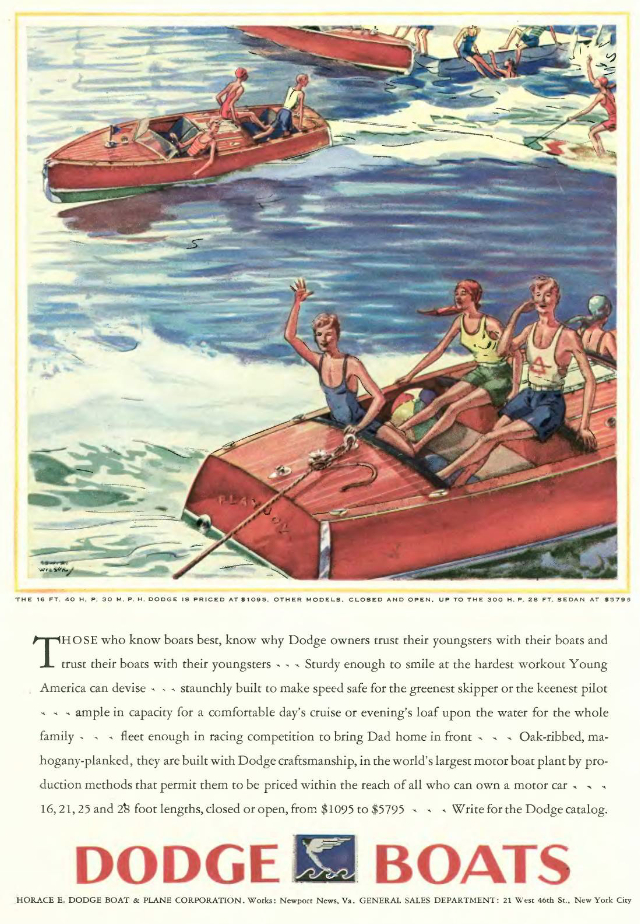
…if cliff diving wasn’t your thing, you could tool around in a bright red Dodge boat…

…or be easily amused like this guy on the right, who gets his jollies from the abundance of ice cubes in his fridge…

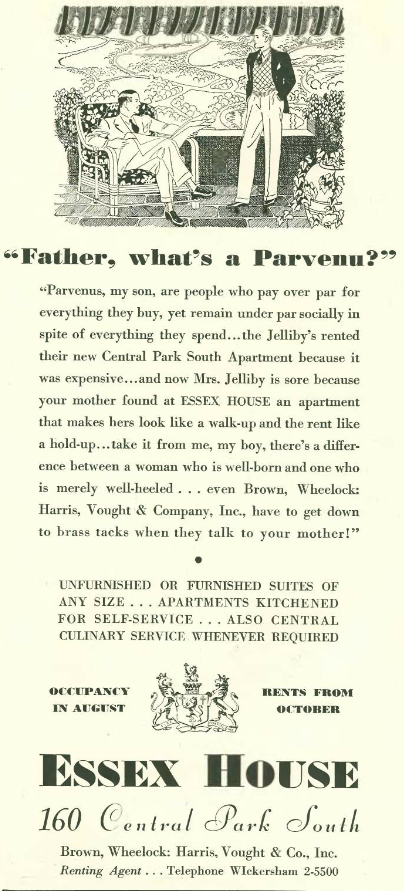
…over at Essex House we find a more reserved scene, the “well-born” father and son gloating over their Central Park view…

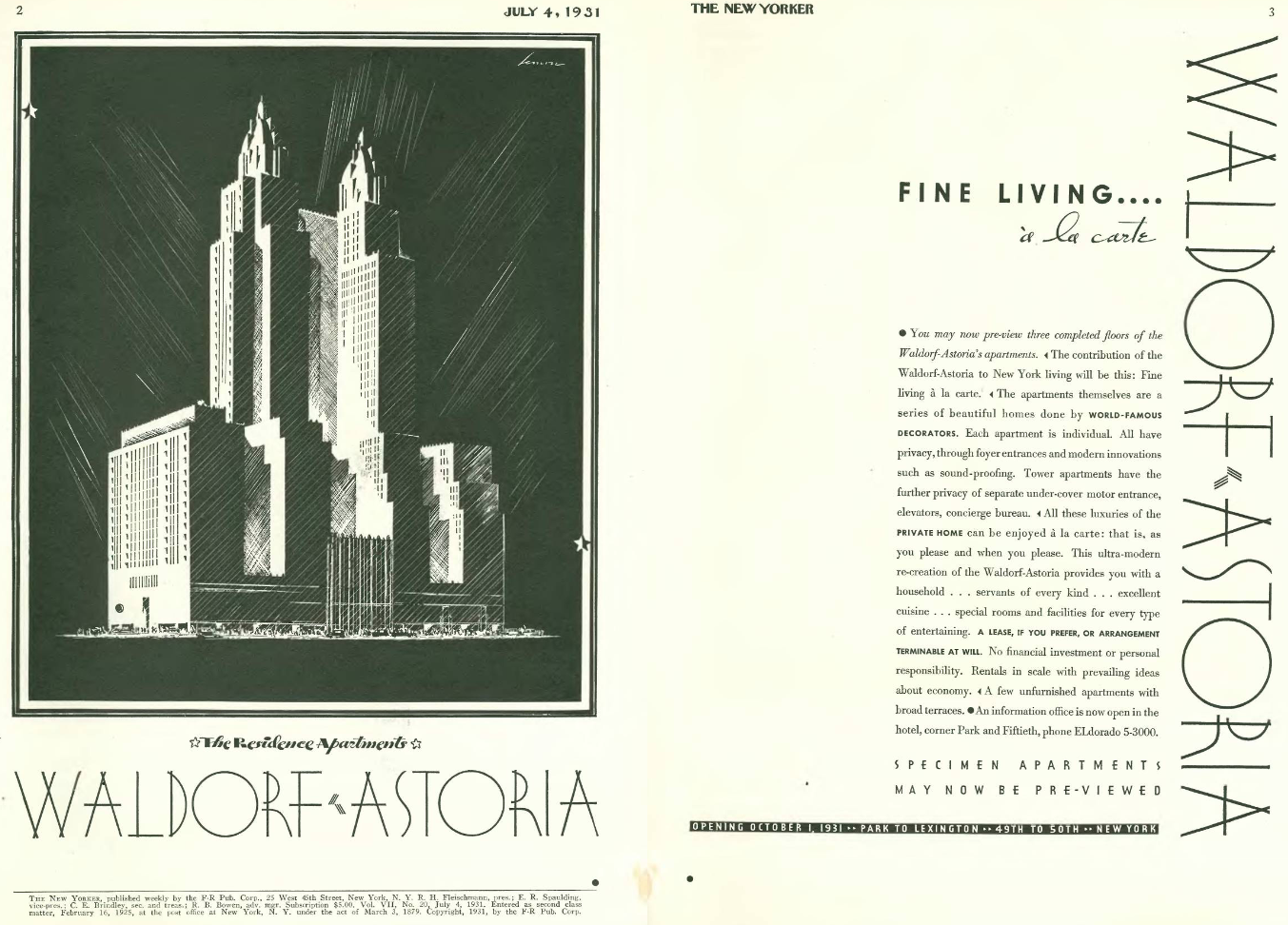
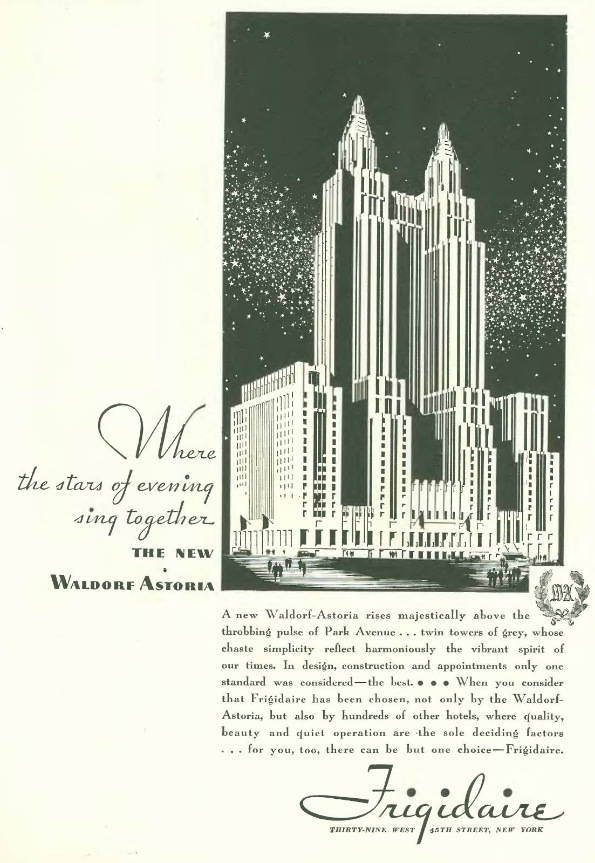
…the Essex House might have been “all that,” but Dad and Junior would have to reconsider their social rank against a newcomer — the Waldorf-Astoria, reborn on Park Avenue…

…on to our cartoons, this couple illustrated by Garrett Price might consider something with a larger balcony…

Otto Soglow’s Little King took his Little Prince out for some air…

Kemp Starrett showed us a chap who contemplated the passing of time along with the passing of his timepiece…

Isadore Klein updated the theme of a damsel in distress…

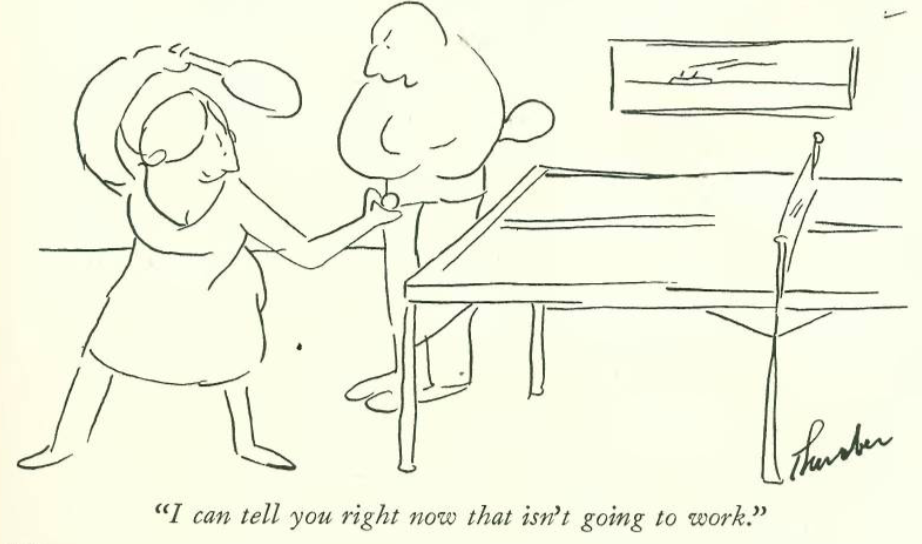
…the growing popularity of Ping-Pong gave James Thurber some material to explore the battle of the sexes…

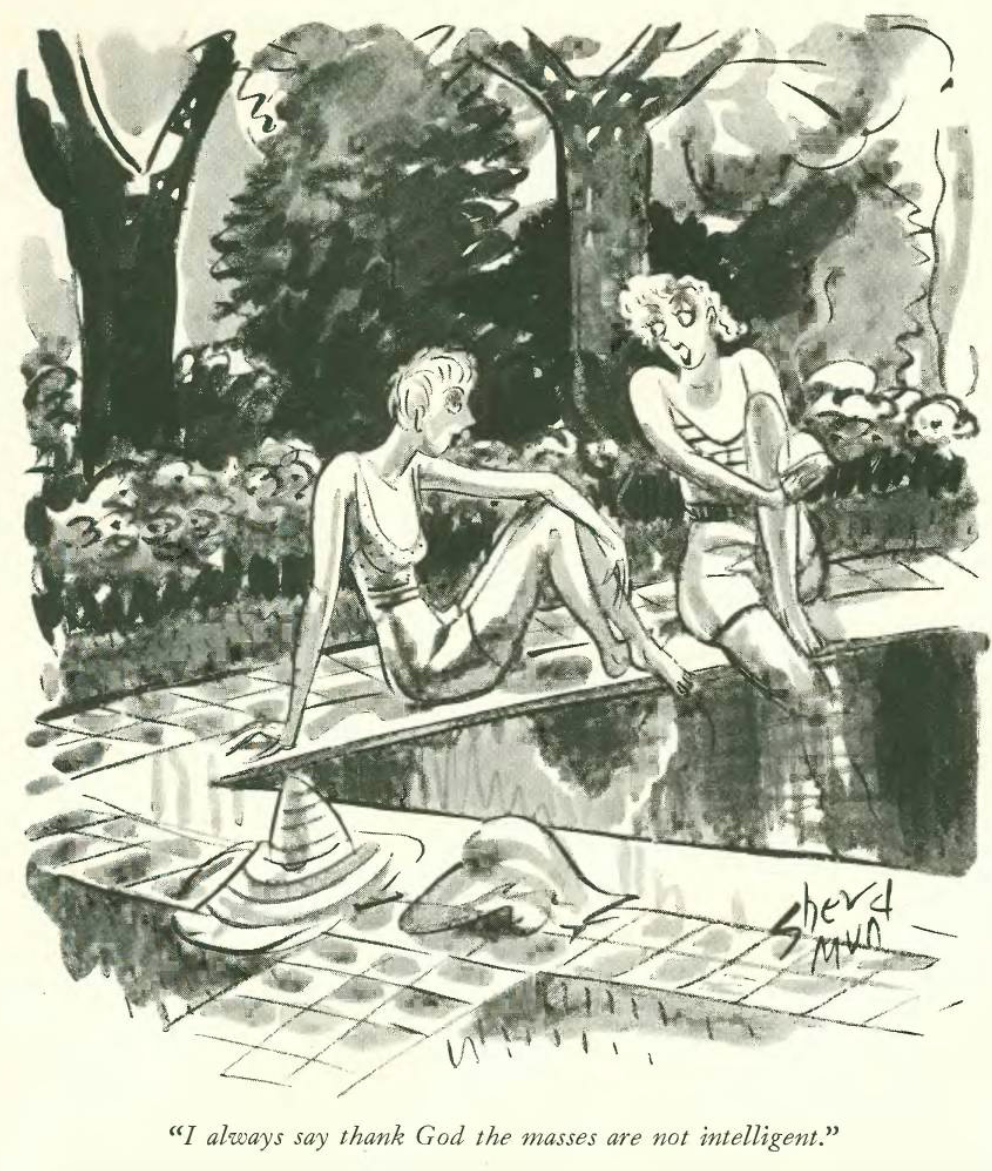
…and Barbara Shermund left us poolside with a couple of eggheads…

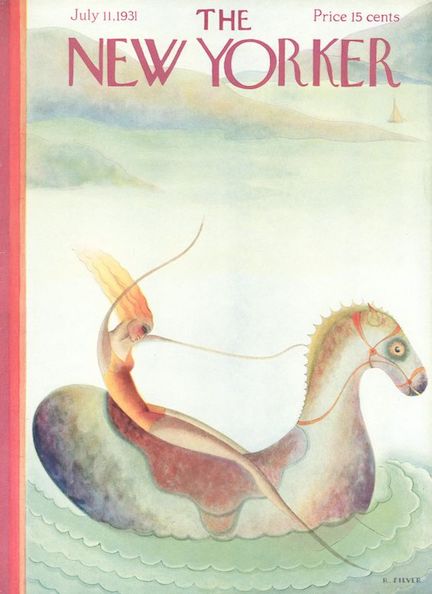
…on to our July 11, 1931 issue…

July 11, 1931 cover by Rose Silver.

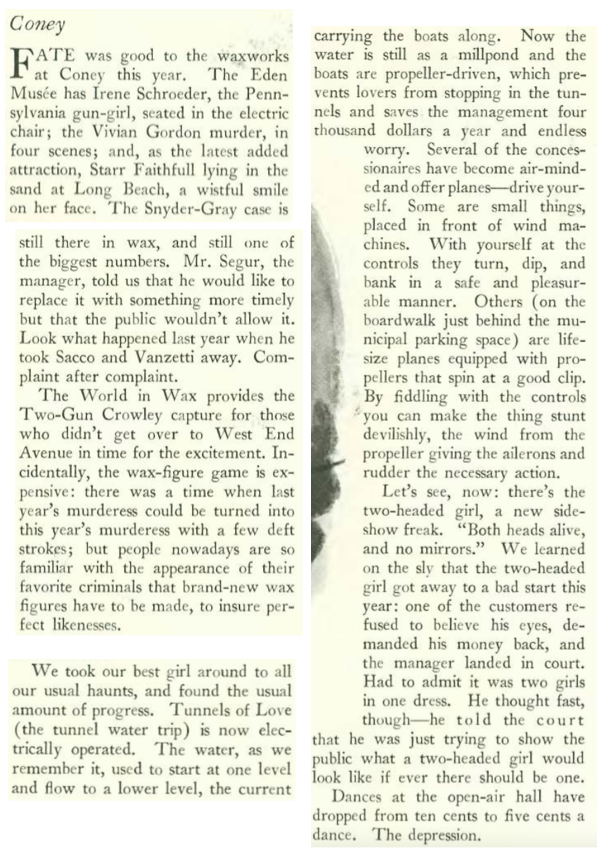
…we find E.B. White taking his sweetheart, Katharine Angell White (referred to here as his “best girl”) out for a date at Coney Island…

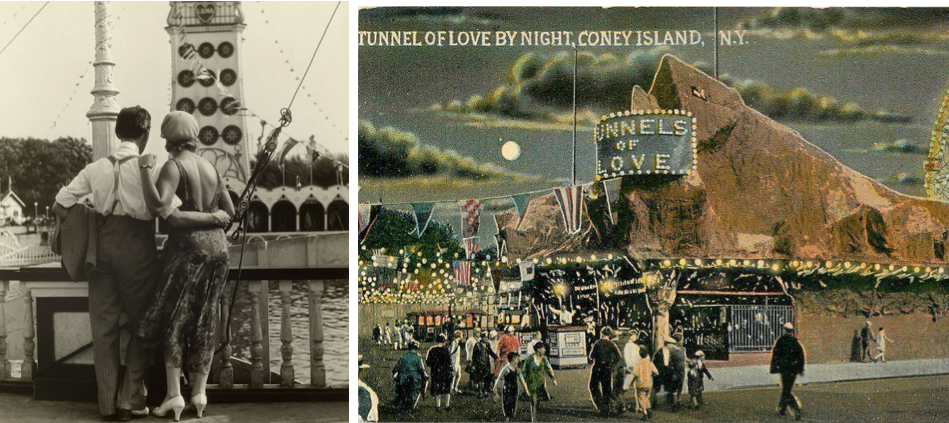
A PLACE FOR ROMANCE…It’s not them, but this couple visiting Coney Island in 1928 (photo by Walker Evans) will serve well as our stand-ins for E.B. and Katharine White on their date to Coney. At right, the famous “Tunnels of Love.” (Metropolitan Museum of Art/Pinterest)
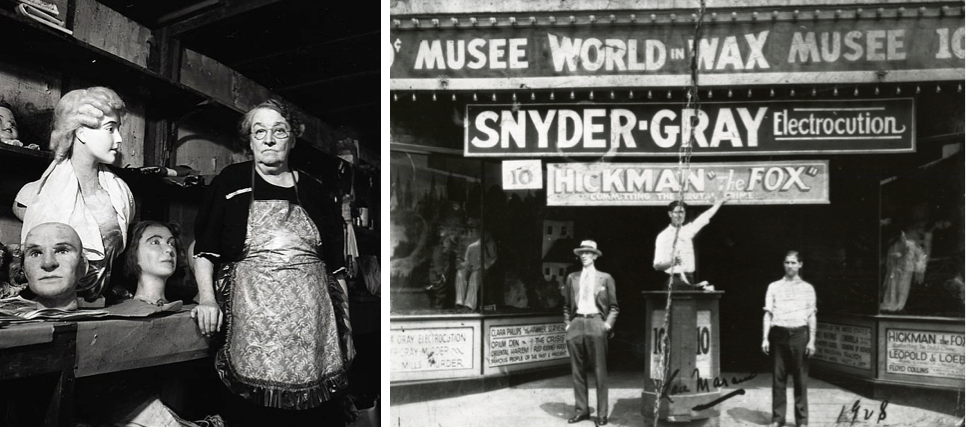
AND OTHER DIVERSIONS…Another famous and rather lurid Coney attraction was the wax museum, which featured dioramas based on headlines of the day. The biggest attractions were those featuring famous crime scenes, gruesome effects included. (Museum of the City of New York)
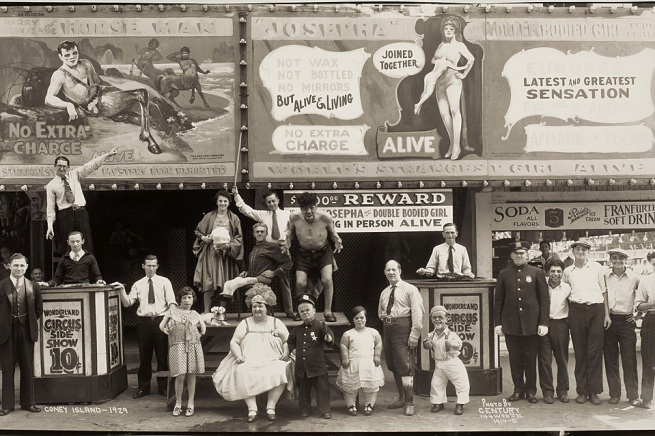
IT WAS A LIVING…Among other big attractions at Coney were the sideshow “freaks” White mentioned in his article. The photo above, from 1929, is by Edward J. Kelty. (artblart.com)

 *  *  *

On the Waterfront

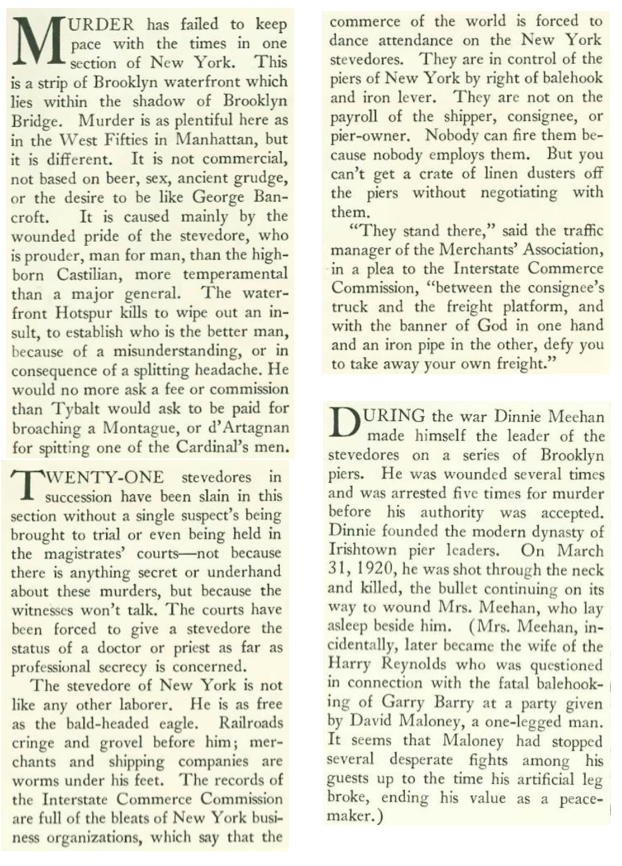
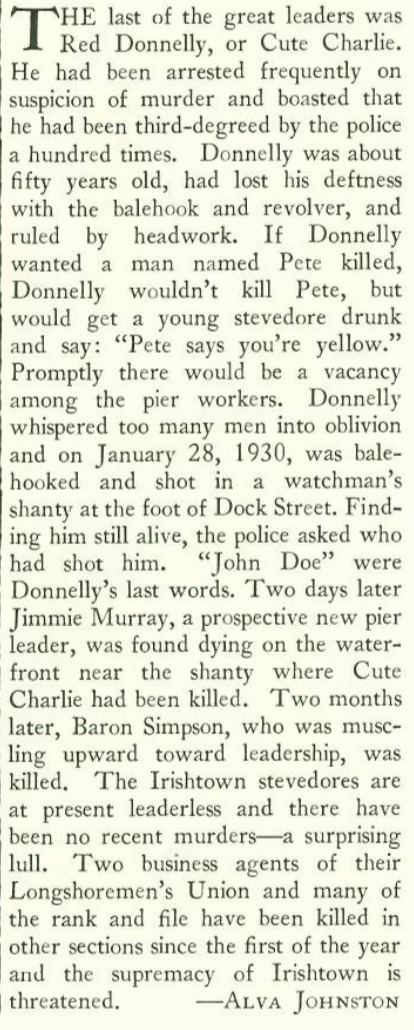
The 1954 film by the same name featured the murderous mob boss Johnny Friendly (Lee J. Cobb) who ruled the waterfront’s stevedores with an iron fist. The reality was just as brutal, if not more so along the Brooklyn waterfront in the early 20th century, where the reign of a crime boss was as short as his life span. Alva Johnston reports:

TOUGH NEIGHBORHOOD…Midcentury view of the Brooklyn waterfront. (thenewyorkmafia.com)

Dinnie Meehan’s widow, Anna Lonergan, had the distinction of being shot at the side of two successive husbands; after Meehan was murdered, Anna married “White Hand” gangster Harry Reynolds. Johnston, who referred to Anna Lonergan as “the Brunhild of the longshore cycle,” concluded his piece with a look at the “last of the great leaders,” Red Donnelly, also known as “Cute Charlie”…

HARD KNOCKS…“Peg Leg” Lonergan was the final leader of the waterfront’s “White Hand Gang.” He was gunned down on Dec. 26, 1925, after a short reign as boss. He was just 25 years old when he died. (Pinterest)

 *  *  *

The Show Must Go On

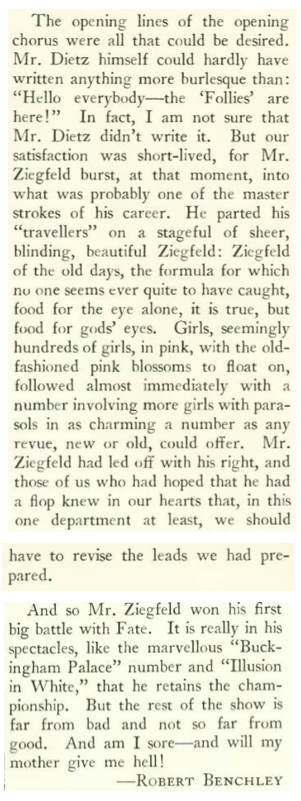
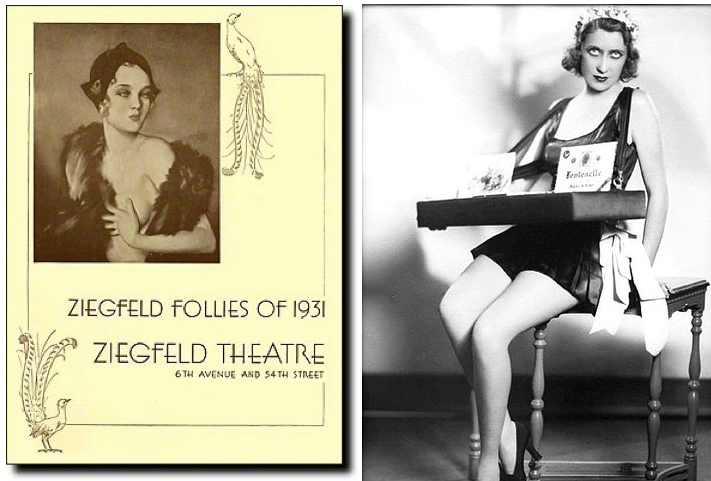
With the glory days of vaudeville quickly receding into the past, Flo Ziegfeld was nevertheless determined to keep his “Follies” alive at his eponymous theatre. Robert Benchley stopped by for a look at the Ziegfeld Follies of 1931.

CARE FOR A SMOKE?…Program cover for the Ziegfeld Follies of 1931. At right, Ziegfeld star Ruth Etting, who portrayed a cigarette girl in the show’s “Club Piccadilly” skit. A note of trivia: Etting and I attended the same high school (but not at the same time!). (Playbill/Wikimedia Commons)
GLORY BE…Inside pages of the program featured some of the “Ziegfeld Beauties” appearing in the show. (Playbill)

 *  *  *

Gross

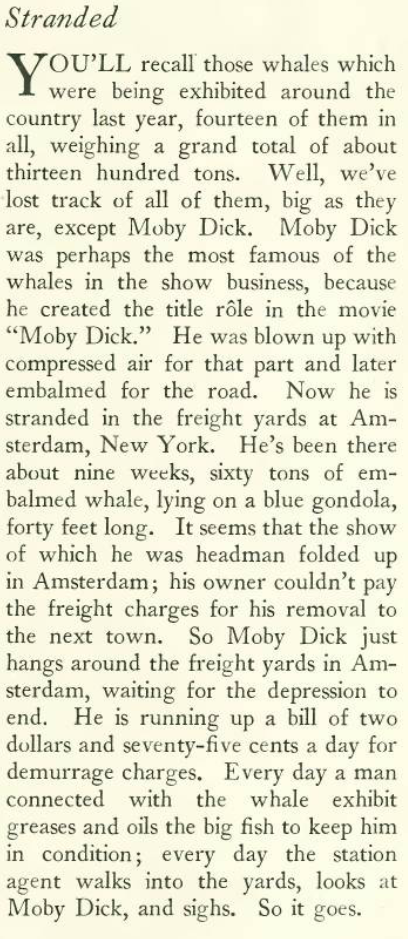
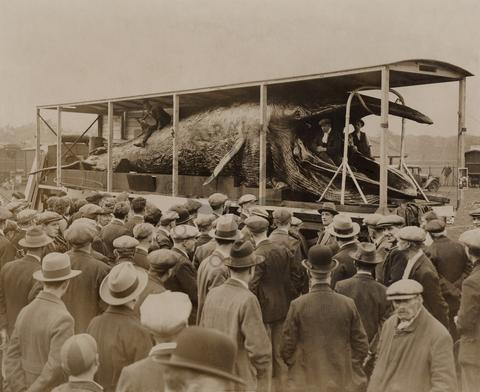
Back in the day some entrepreneurial types would kill a large whale, stuff it full of sawdust and formaldehyde, and then take it on the road to parade in front of gawkers with spare nickels in their pockets. E.B. White observed the fate of one such specimen:

YES, THIS WAS A THING…Before the days of Jacques Cousteau and Animal Planet, this is how some folks got their first and likely only look at a real whale, even if it was pumped full of sawdust and formaldehyde.

 *  *  *

From Our Advertisers

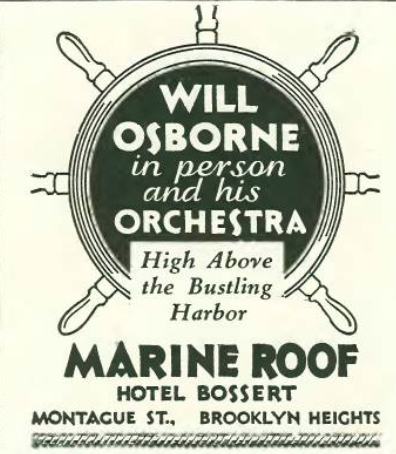
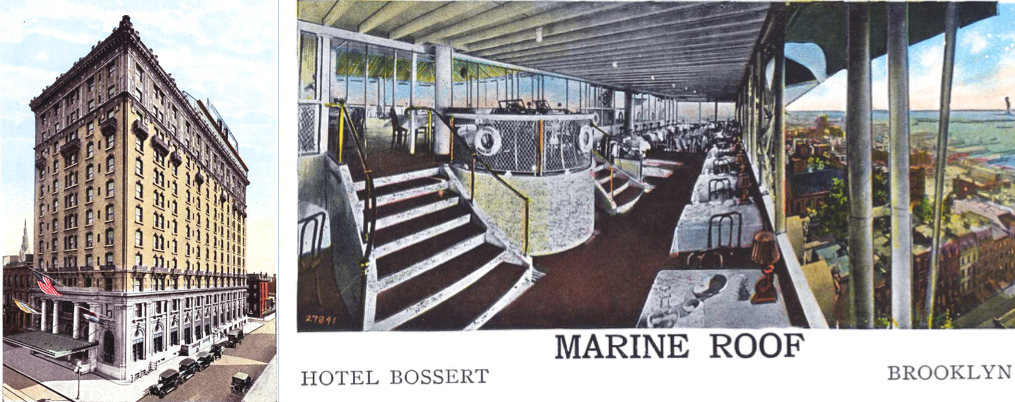
This small back page ad invited New Yorkers to the cooling breezes atop the Hotel Bossert in Brooklyn Heights, once referred to as the “Waldorf-Astoria of Brooklyn”…

Its rooftop restaurant — the Marine Roof — was a famous hangout. When the Brooklyn Dodgers won the World Series in 1955, this is where they celebrated…

(brownstoner.com)

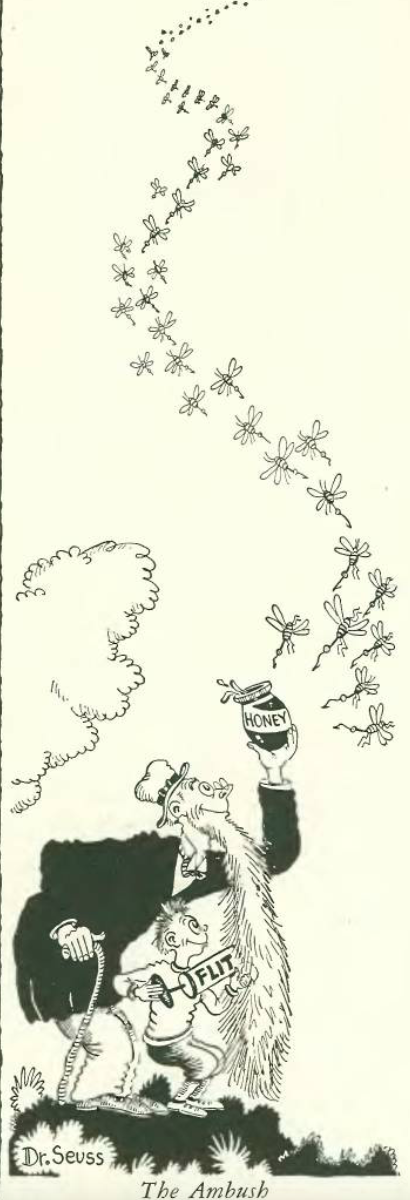
Dr. Seuss was still making a living illustrating advertisements for Flit insecticide…

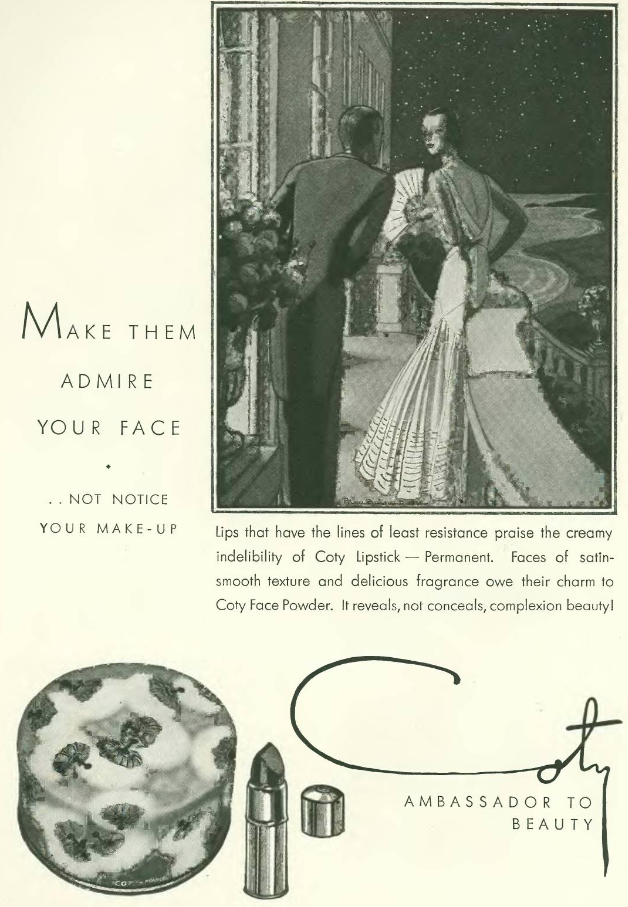
…”my eyes are up here”…says the woman who uses Coty brand lipstick…

…on to our cartoonists, we have Garrett Price also examining the challenges of playing Ping-Pong…

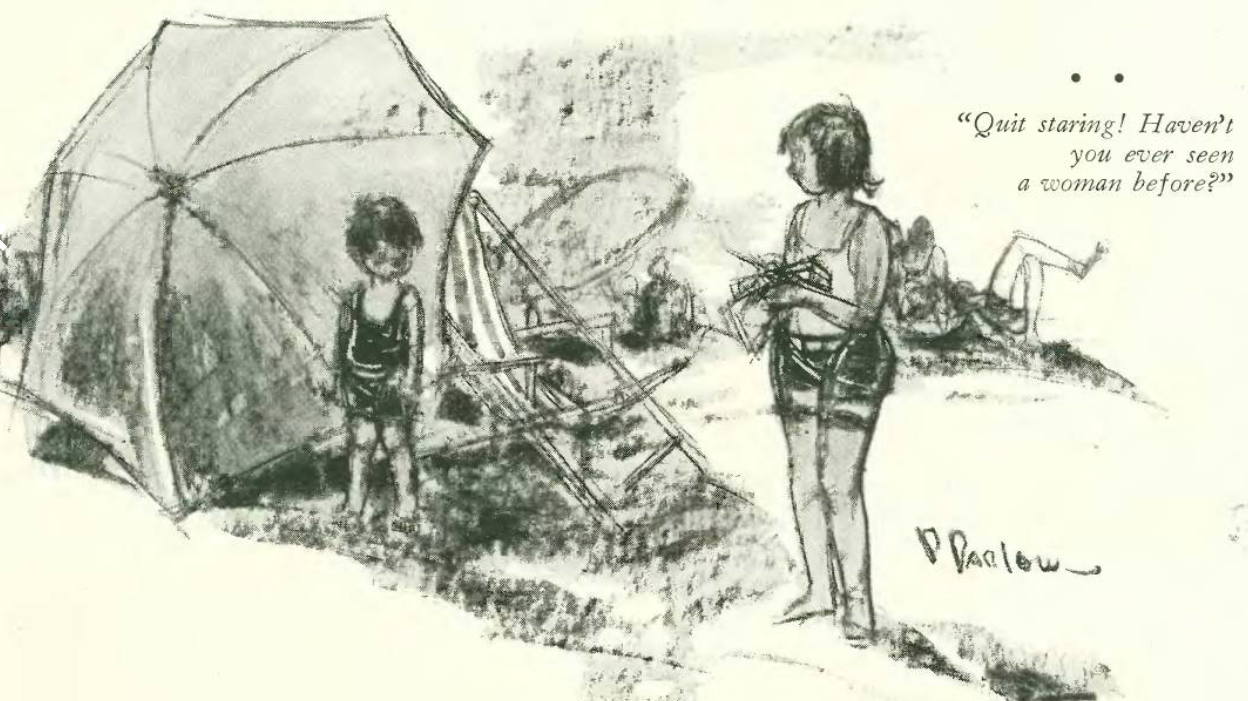
Perry Barlow was at the seaside with a precocious beach-goer…

Carl Rose showed us a Boy Scout after his encounter with the Red Menace…

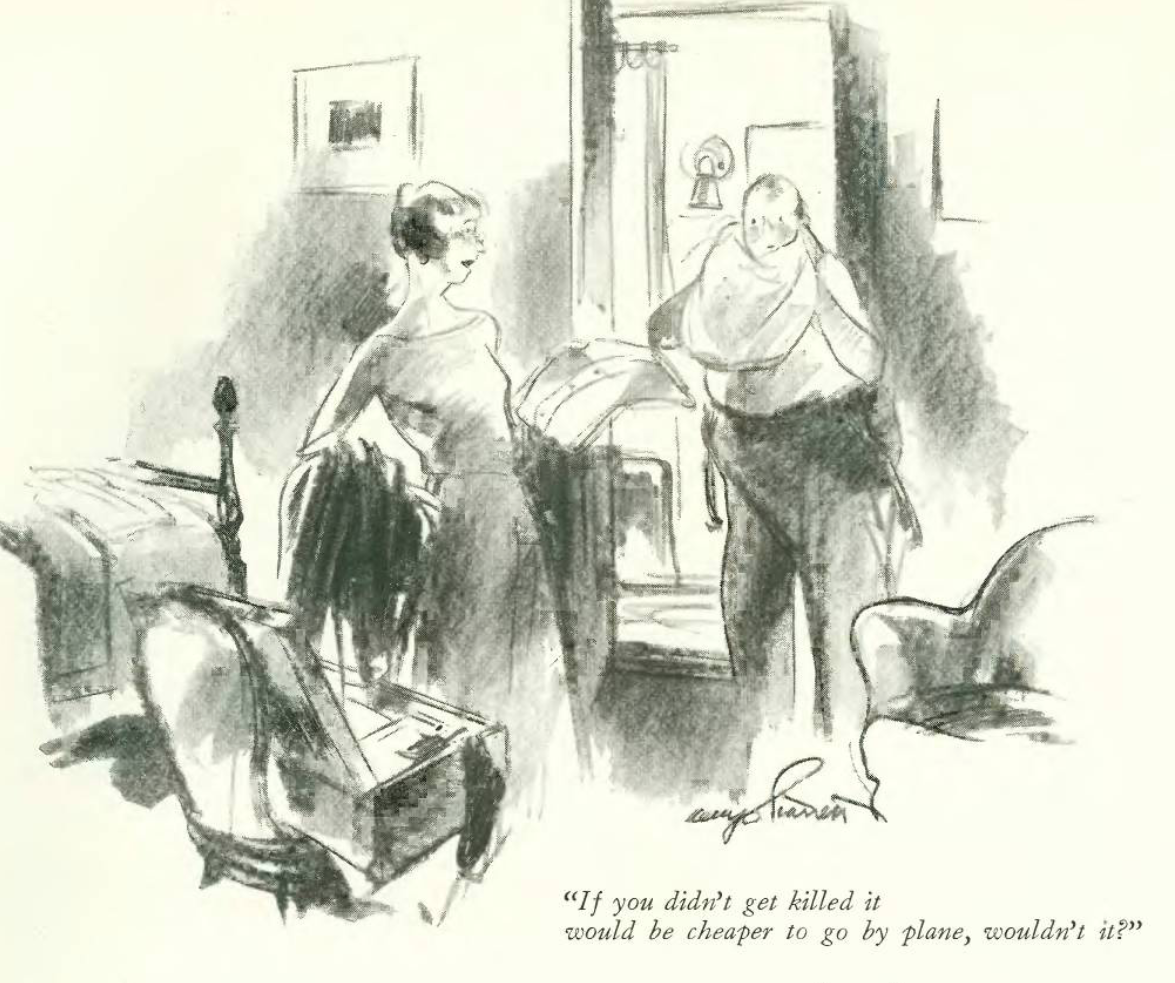
Kemp Starrett weighed the advantages of air travel…

Otto Soglow surprised us with this undercover operation…

…and we end with James Thurber, and the price of literary fame…

Next Time: The Black Eagle…


Frozen at 30 Rock

To call Lewis Mumford an architecture critic would do him a disservice. He was indeed an outspoken voice on New York’s changing skyline, informed by a keen understanding of history and aesthetics, but his criticisms were also those of a philosopher, a political commentator, a city planner, and an authority on matters concerning art, literature, society and culture.

June 20, 1931 cover by S. Liam Dunne.

The June 20, 1931 issue marks the entrance of Mumford (1895-1990) to our New Yorker story, and just in time to offer his perspectives on the Rockefeller Center project, which was about to commence.

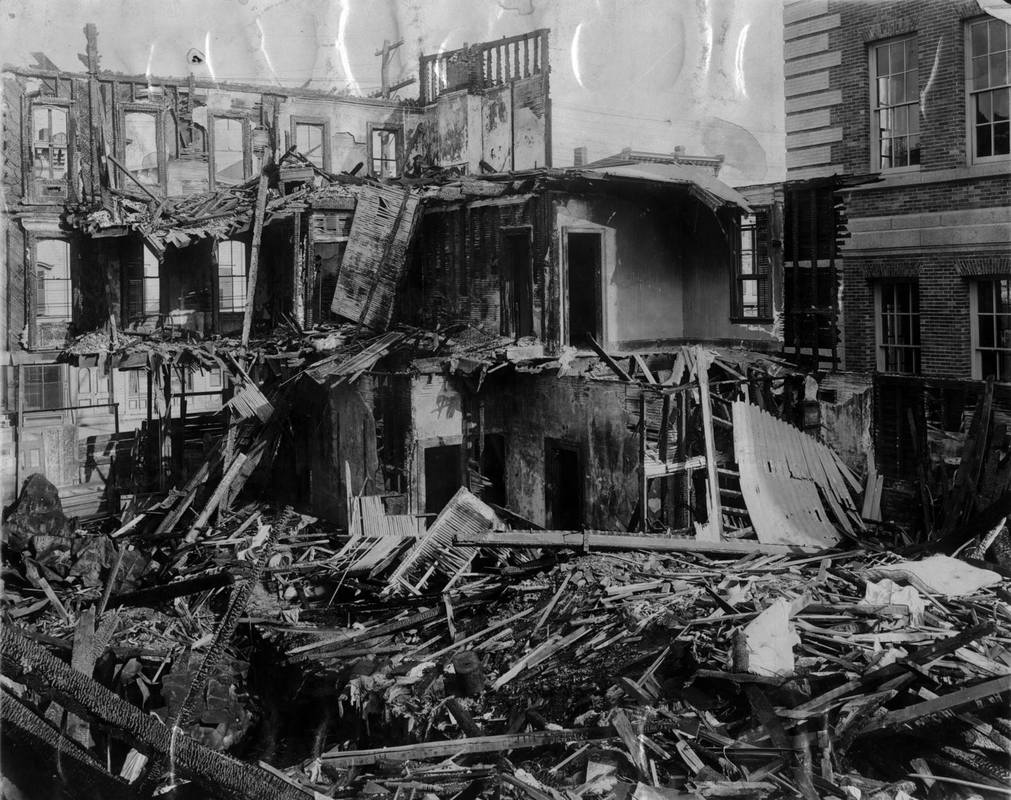
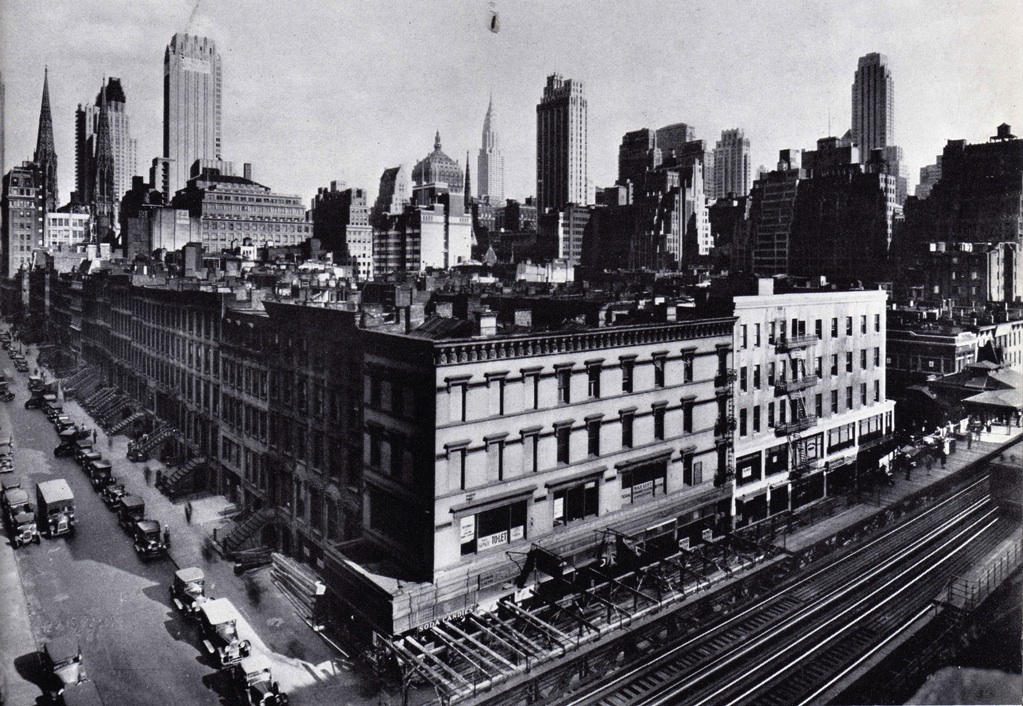
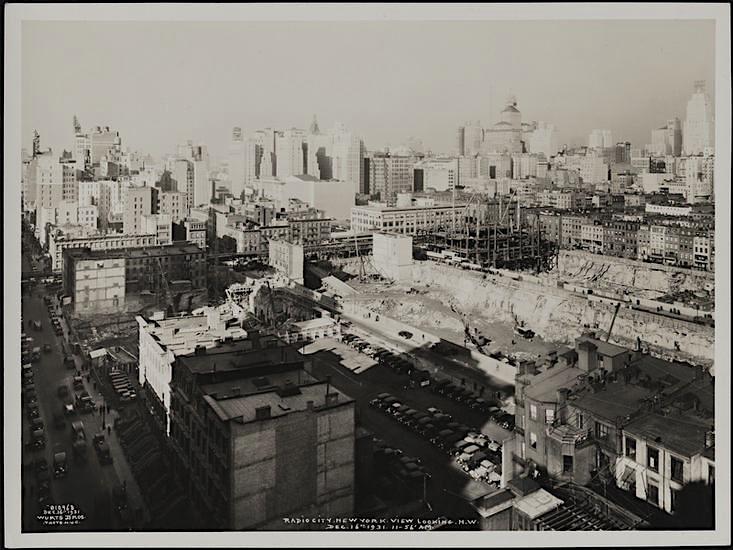
THERE GOES THE NEIGHBORHOOD…This Midtown neighborhood was torn down shortly after the photo was taken to make room for the massive Rockefeller Center project. The view is from the corner of 6th Avenue and 51st Street looking to the southeast. One of the spires of St. Patrick’s is visible at far left, and the Chrysler Building can be glimpsed in the distant center. Lewis Mumford was no fan of giant skyscrapers or other “mega” building projects, and would have preferred something more on this smaller scale for Rockefeller Center. (Museum of the City of New York)

The proposed project — then referred to as “Radio City” — received negative reviews from a number of critics, although the most pointed came from Mumford, who disliked “mega” building projects such as Rockefeller’s, labeling it as “weakly conceived, reckless, romantic chaos.”

RECKLESS, ROMANTIC CHAOS is how Lewis Mumford, left, described plans for Rockefeller Center. At right, the May 1931 issue of Popular Science featured the project’s plans. (Pinterest/Google Books)

Mumford’s Emersonian temperament favored simplicity, self-sufficiency and community; he believed skyscrapers and other “megamachines” were dehumanizing and even dishonest. In this next excerpt he poses a question about the so-called pragmatic “money men” behind the project: “Are the practical men practical?” We read on…

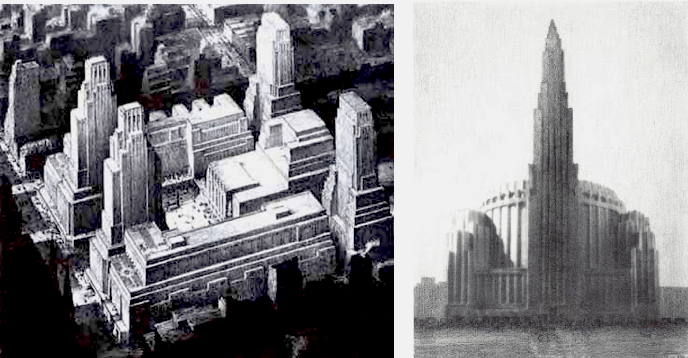
WELCOME TO CLOUDCUCKOOLAND…That was Mumford’s own term to describe plans for Rockefeller’s “Radio City.” An early rendering from 1928 (left) referred to the project as “Metropolitan Square,” and for a time it was slated to include a new Metropolitan Opera house.  Joseph Urban proposed this Fifth Avenue-facing design (right) in 1927, but plans were waylaid by the Great Depression. (ephemeralnewyork)
BLANK SLATE…With the site mostly cleared, construction commenced in the fall of 1931. This image is from December 16, 1931. (Museum of the City of New York)

Mumford concluded that the opportunity to create a restful respite from the clamor of the city had been lost on the project, which just promised more “razzle-dazzle” and “incongruous jangle,” an interesting observation given that other New Yorker writers were generally dazzled by the skyscrapers and other gigantic projects that were rapidly erasing the old city.

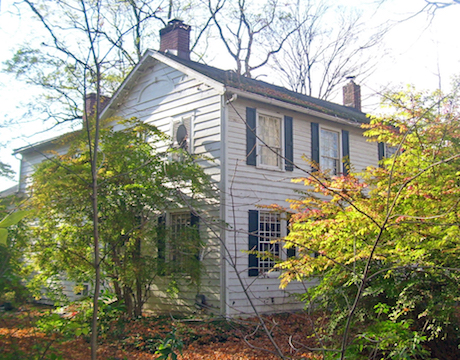
True to his beliefs, Mumford lived a simple life in an old country house in Amenia, New York, a small town in the northern reaches of the Hudson Valley region.

FAR FROM THE RAZZLE-DAZZLE…Mumford house in Amenia, NY. (Wikipedia)

Historian Daniel Okrent, author of Great Fortune, The Epic of Rockefeller Center, notes that Mumford was eventually won over by Rockefeller Center in the end, calling it “a serene eyeful” and “the most exciting mass of buildings in the city.” I have to agree.

SERENE EYEFUL…Images of Rockefeller Center from 1939 (left) and 1935. (flickr.com/(Museum of the City of New York)

 *  *  *

Summertime Reads

A quick glance at the new books listed at the end of the New Yorker’s book review column shows us a nice variety of summertime diversions, including a book about Josef Stalin written before his Great Purge that murdered a million of his own citizens…then there was the memoir Blood on the Moon written by Jim Tully, “America’s most famous hobo author”…the book Life Among the Lowbrows by Eleanor Rowland Wembridge also caught my eye…I believe I’m almost set for the summer…

A STUDY IN CONTRASTS…Misfits and lowlifes peppered the books of both “hobo writer” Jim Tully (left) and psychologist Eleanor Rowland Wembridge, although from very different perspectives. While Wembridge took a more clinical approach to the underclasses, Tully used them for material in his hardscrabble stories. Guess which one ended up in Hollywood. (scpr.org/apadivisions.org)

 *  *  *

From Our Advertisers

The makers of Jantzen swimwear took a slightly risqué approach in advertising their latest women’s line…

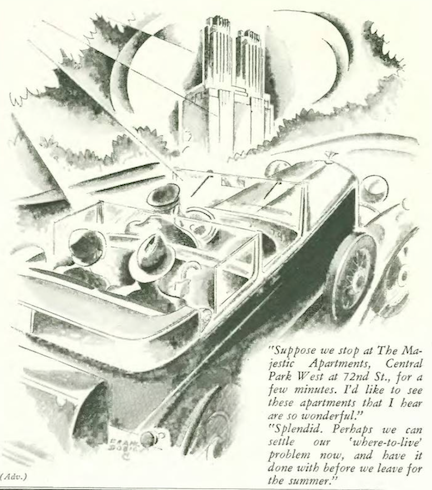
…the owners of the Majestic, on the other hand, used snob appeal and a sense of heightened grandeur to promote their Central Park West apartments…

…advertisers of non-alcoholic drinks tried their best to capture the allure of cocktails, and I imagine much of their product was mixed with something a bit more interesting…

William Steig was hitting his stride as one of the newer cartoon contributors to The New Yorker

…with two of his entries featured in the June 20 issue…Steig would live 95 years and be productive throughout his life…nearly 60 years after these cartoons appeared in The New Yorker he would publish the children’s book Shrek!, the basis for the popular movie series…

…earlier in his career, Steig would also find fame for his series of Small Fry cartoons featuring children in adult situations, anticipating Charles Schulz’s Peanuts…this next cartoon, however, is not by Steig but by Alan Dunn, perhaps anticipating Steig…

Gardner Rea continued to explore the foibles of the well-heeled…

John Held Jr amused us with another of his rustic “woodcuts”…

Garrett Price shot the rapids with a hapless suitor…

…here is one the six cartoons Crawford Young contributed to The New Yorker in 1931-32, capturing a moment in which the chicken-egg question is largely moot…

…and another look into the leisure classes courtesy Barbara Shermund

…and we close the June 20 issue with James Thurber, who showed us a fellow who probably regretted his evening out…

…Thurber also brings into the next issue, June 27…

June 27, 1931 cover by Gardner Rea

…in which he recounted his adventures in bird-watching and the mating habits of crows…

 *  *  *

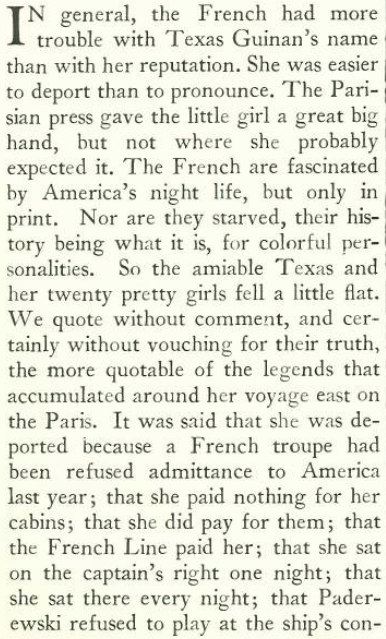
A Falling (Lone) Star

In her “Letter From Paris,” Janet Flanner reported that the allure of the “Queen of the Nightclubs,” Texas Guinan, did not extend to French shores, where among other things she ran afoul of labor laws that dissuaded non-citizens from working in France.

BEGINNING OF THE END…Associated with risqué entertainments in various speakeasies during the Roaring Twenties, the Great Depression prompted Texas Guinan to take to the road with her show. After attempting (and failing) to make a tour of Europe, she returned to the States for one final road trip. Above left, Guinan in the 1933 film Broadway Through a Keyhole, which would open just three days before her death. At right, headline from the Rochester Democrat and Chronicle trumpeting Guinan’s French debacle. (pre-code.com/

Upon her return to the States, Guinan took advantage of her well-publicized dismissal from France and launched the satirical revue Too Hot for Paris. This traveling show would also mark the beginning of the end for Guinan, who would contract amoebic dysentery during a run of the show at the Chicago World’s Fair. It would claim her life on Nov. 5, 1933, at age 49.

 *  *  *

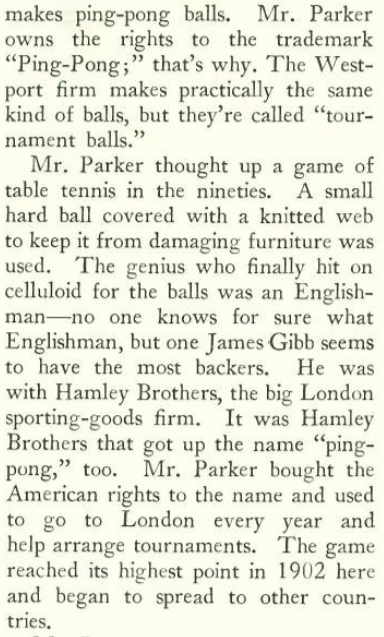
They Put the Ping Into Pong

“They” being the Parker Brothers, who took umbrage at anyone who questioned their sole right to market genuine “Ping-Pong” balls. “The Talk of the Town” explained:

The “Talk” item ended with a little surprise about Mr. George Parker himself:

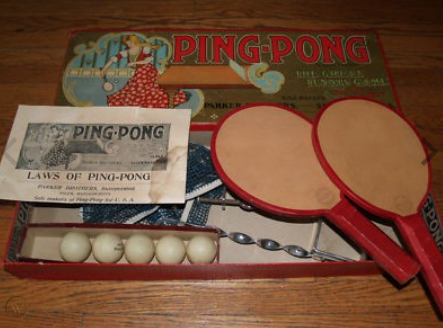
VINTAGE…A 1902 ping-pong set from Parker Brothers. (Worthpoint)

 *  *  *

From Our Advertisers

Some lovely color ads, including this message that paired playful porpoises with leaded gasoline…

…this ad was about color itself, and how Powers Reproduction Corporation could make your images pop…

…and another sad Prohibition-era ad from the makers of Budweiser, in this case, a non-alcoholic version that looks like the real thing…of course what is even sadder about this ad is the suggestion that plantation life was something one should fondly hearken back to…

…on to our cartoons, and another terrific illustration from Barbara Shermund

…and we have Otto Soglow’s Little King, who temporarily lost his crown…

…and another from Soglow, at the men’s store…

Carl Rose gave us a chap contemplating the burdens of a Guggenheim “genius” grant…

Peter Arno revealed that his Major had two left feet…

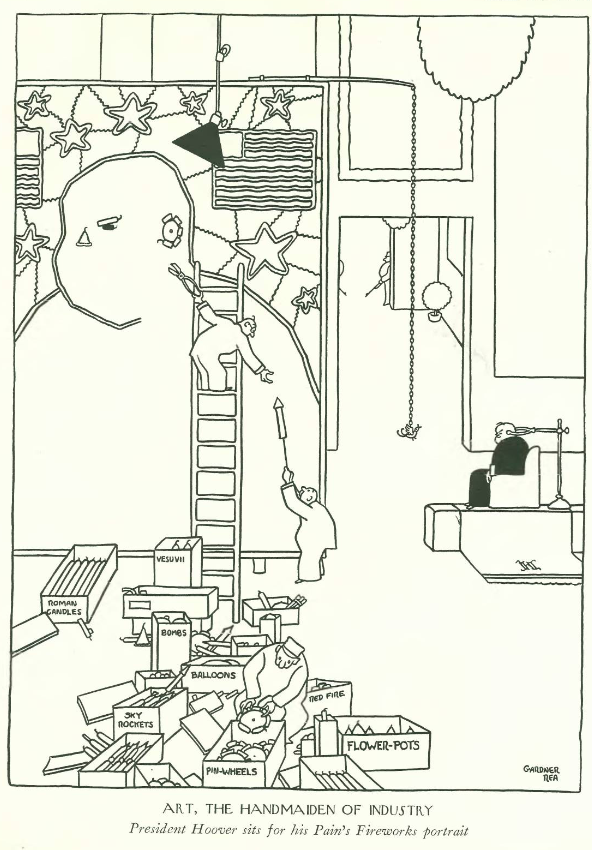
…and in anticipation of the Fourth of July, we end as we began, with Gardner Rea

Next Time: Firecracker Lane…


From Bad to Awful

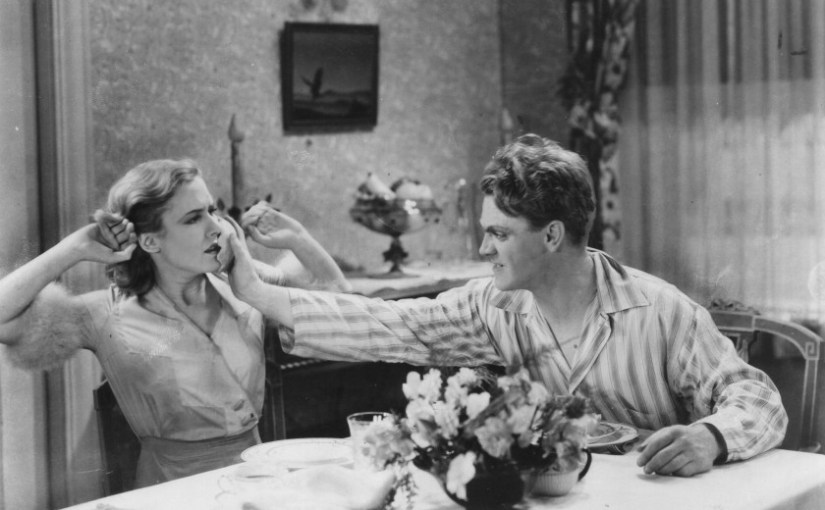
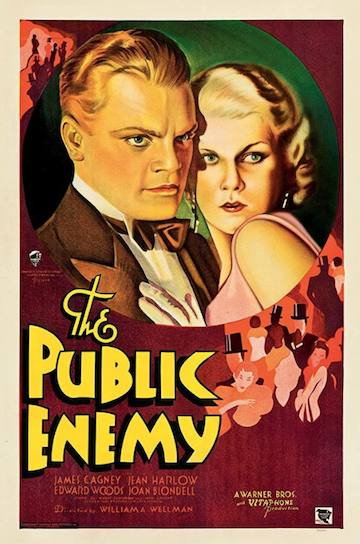
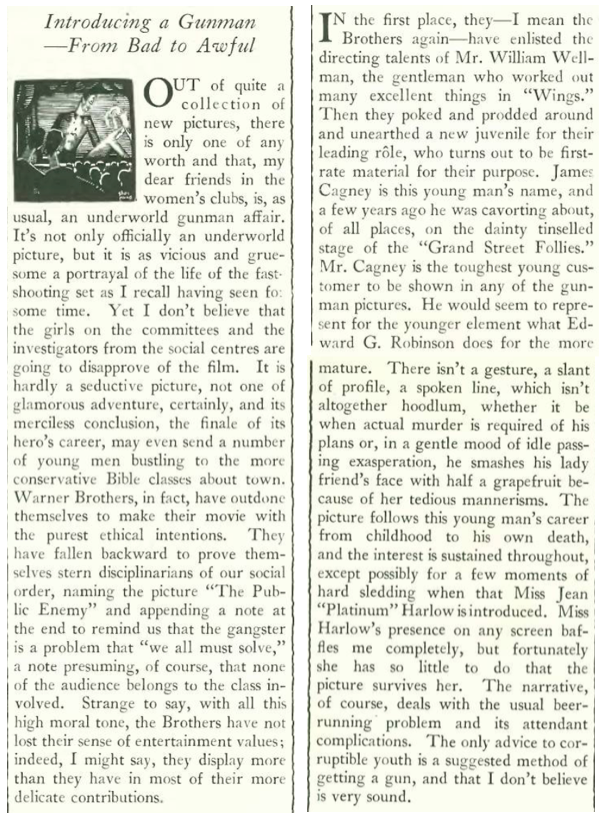
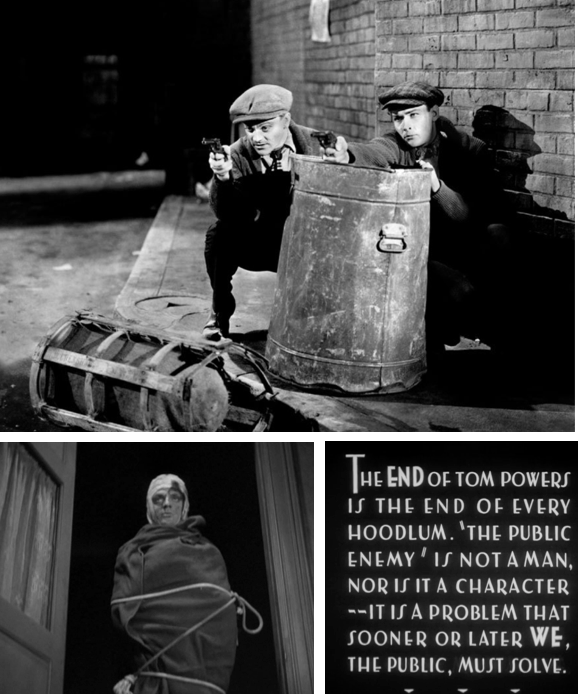
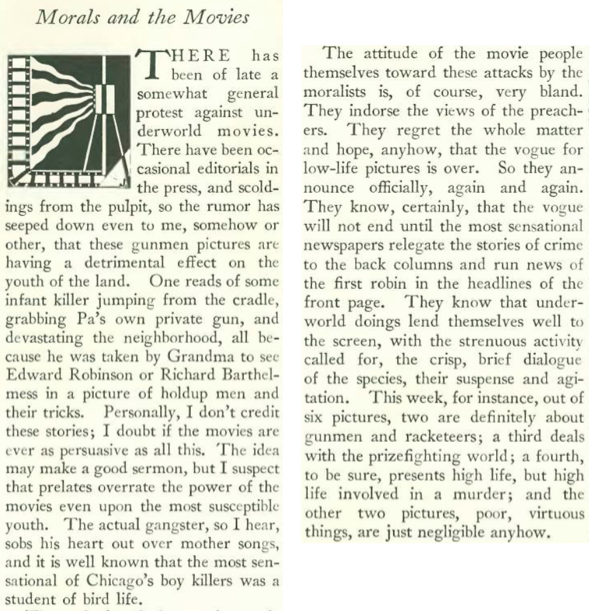
In the previous issue, New Yorker film critic John Mosher examined the morals of pre-code, “underworld films” such as Edward G. Robinson’s Little Caesar. Mosher didn’t seem all that impressed with these new gangster films, that is, until James Cagney lent his talents to The Public Enemy.

May 2, 1930 cover by Theodore Haupt.

Despite its violence (by yesterday’s standards), Mosher believed that even the preachers and various women’s committees who decried the sex and violence in pre-code movies would have little to gripe about with The Public Enemy, since it clearly depicted the wages of the sins of Tom Powers, a bootlegger on the rise portrayed by Cagney.

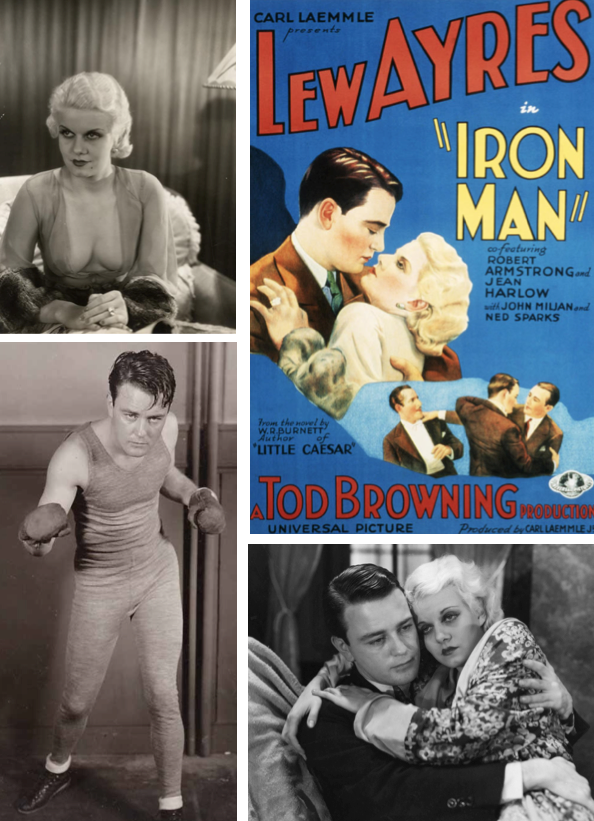
YOU AGAIN?…New Yorker film critic John Mosher thought very little of Jean Harlow’s acting, but Warner Brothers heavily promoted their new sex symbol, giving her equal billing even though she contributed little to the film. In the previous issue, Mosher had reviewed the film Iron Man, which also featured Harlow. He found it distressing that it was her “platinum blonde” status, rather than her acting, that landed her in that picture. (IMDB)

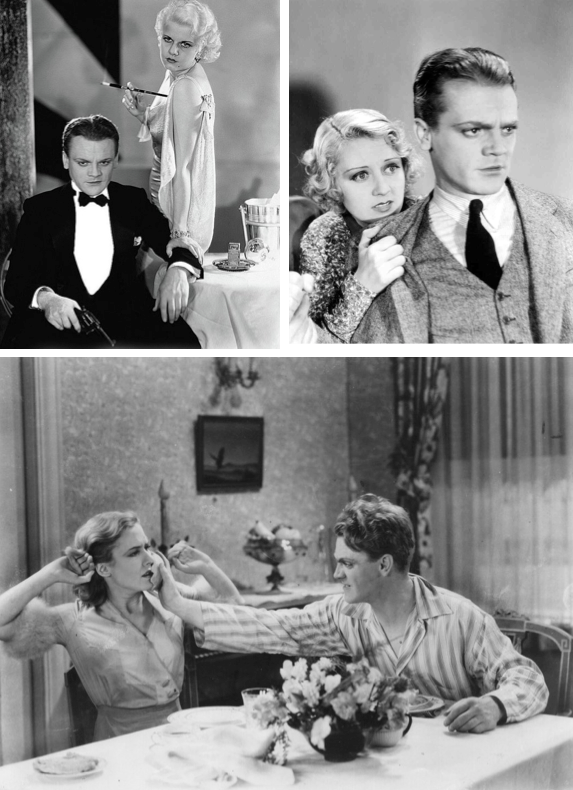
WOMEN IN HIS LIFE…James Cagney played a small-time bootlegger, Tom Powers, who rose in the criminal underworld in Public Enemy. Top left: Powers with Gwen Allen (Jean Harlow), a woman with a weakness for bad men. Top right: Joan Blondell portrayed Mamie, the girlfriend of Powers’ friend, Matt Doyle (Edward Woods). Blondell, one of the biggest stars of the 1930s, worked often with Cagney. In 1930 they were in Penny Arcade on Broadway and co-starred in the film Sinner’s Holiday. They would make several more films together after Public Enemy. Bottom photo: Tom smashes a grapefruit into the face of his first girlfriend, Kitty (Mae Clarke). Although this is one of Public Enemy’s most iconic scenes, Clarke was uncredited in the film. (IMDB)
WHAT HAPPENS WHEN YOU’RE NAUGHTY…Top, Tom Powers (Cagney) and his buddy, Matt Doyle (Woods) shoot it out in an alleyway. Bottom, the film ends with one of cinema’s greatest death scenes — awaiting the return of his brother to the family home, Mike Powers (Donald Cook) opens the door to be greeted by Tom’s corpse, which falls over the threshold. Just in case the audience didn’t get the message, Warner Brothers included this epilogue after the death scene. (IMDB/YouTube)

 *  *  *

Flag of a Father

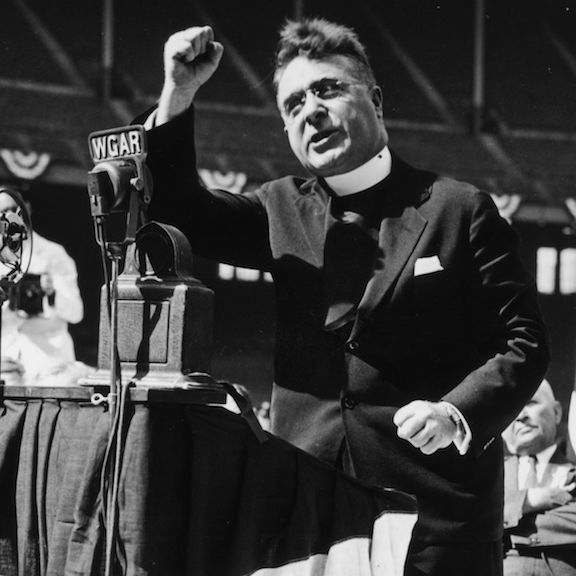
Speaking of morality, no voice was louder, or carried farther, than that of Charles Edward Coughlin (1891-1979), known familiarly as “Father Coughlin,” an enormously popular radio priest who had an estimated following of 30 million listeners in the 1930s. E.B White took notice of this phenomenon, and also the Father’s stand against “internationalism,” which in a few years would morph into a virulent nationalism and anti-semitism that would find the Father finding common cause with Hitler and Mussolini. Yes, those guys. But for now, we are still in 1931…

SAVING SOULS?…Fr. Charles Coughlin preached nationalism and anti-semitism in his widely broadcast radio show in the 1930s. He was one of the first demagogues to effectively use the mass media to his advantage. (Detail of Library of Congress photo)

 *  *  *

Paradise Lost

Far up the Henry Hudson Parkway, just before you cross Spuyten Duyvil Creek (Harlem River) into Younkers, is a park with a history that goes back to a Lenape tribe that occupied the site prior to European settlement. Inwood Hill Park is where, legend has it, Peter Minuit purchased Manhattan from the Lenape on behalf of the Dutch West India Company.

ORIGIN STORY…It was purportedly under this tulip tree that the Lenape tribe sold Manhattan to Peter Minuit in 1626. The tree was felled by a storm in 1933. A large stone (inset) marks the spot today. (Wikipedia)

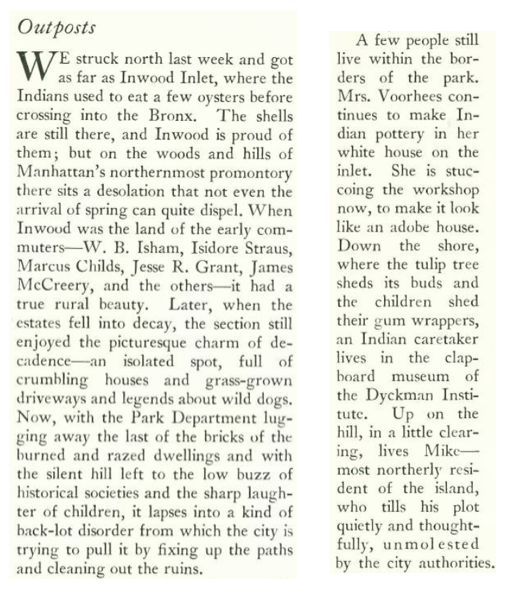
Inwood served as a location for a fort during the Revolutionary War, and was dotted with working farms including one owned by the Jan Dyckman family, established in 1661. In the 19th century a number of wealthy New Yorkers built country retreats around Inwood, which became a park in 1926. Squatters continued to live in abandoned estates around the edge of the park until Robert Moses came along in the 1930s and cleared them out. E.B. White, in “The Talk of the Town,” takes it from there.

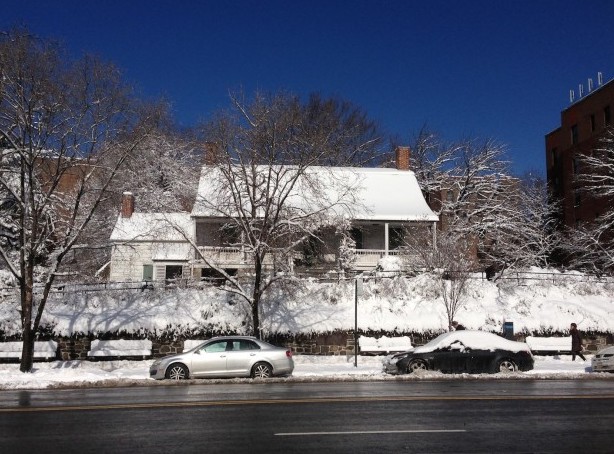
WE CALL IT HOME…In 1931, Marie Naomie Boulerease Constantine Kennedy, an American Indian known as Princess Naomie (left) was a caretaker of the old Dyckman farm (below), which had fallen into disrepair by the late 1800s and was restored in 1916. At right, LePrince Voorhees and her husband, Harry Voorhees, at the door of their ramshackle Inwood Hill Pottery. (myinwood.net/MCNY)

The Dyckman farmhouse fell into disrepair by the late 1800s, seen here in 1892…

(myinwood.net)

…but it was restored in 1916, and still stands today at Broadway and 204th Street…

(myinwood.net)

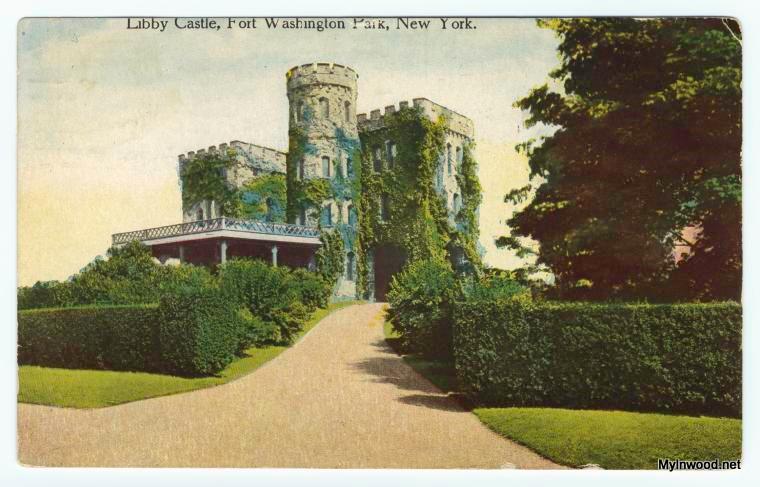
White wondered how Inwood would appear in ten years, now that parks workers were paving over the old Indian trails and landmarks like the Libby Castle were being torn down to make way for John D. Rockefeller’s Cloisters and Fort Tryon Park.

Built around 1855, Libby Castle was home to several New York bigwigs including William “Boss” Tweed of Tammany Hall fame. It was bulldozed in 1930-31 to make way for John D. Rockefeller’s Cloisters.

(myinwood.net)

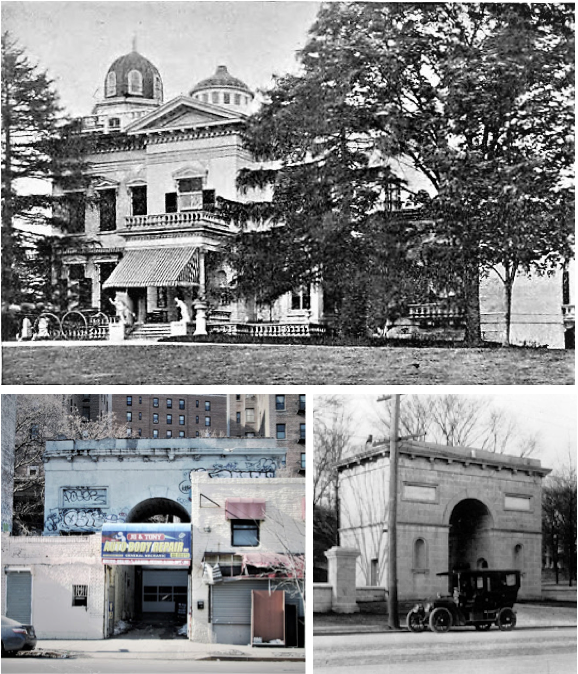
Inwood contained the last remaining farms in Manhattan — below are cows grazing in 1900 at site today now occupied by Isham Park, located on the southeast edge of Inwood Park. The next photo, from 1895, identifies “the last field of grain on Manhattan Island.” In the background is the Seaman Mansion at Broadway and 216th Street…

(myinwood.net/MCNY)

Below is a closer view of Seaman Mansion, a white marble, 30-room pile built around 1852. When this photo was taken in 1895, it had just become the new home of a riding club. Entry to the mansion was through a gatehouse, pictured below at right. The mansion was demolished in 1938 as the area around it filled up with cheap commercial buildings. Only the gatehouse remains, crumbling behind an auto body shop as seen in this 2015 image (bottom left):

(daytoninmanhattan.blogspot.com/Google Maps)

And here’s the latest view from Google maps. Note how the business is now renamed (ironically, yes) after the crumbling arch behind it…

But let’s be fair; there is still much beauty to be had at Inwood. Check out this lovely fall panorama…

(Wikipedia/Barry Solow, November 2010)

 *  *  *

Rub-a-Dub-Dub

One of the great British modernists of the 20th century — perhaps best known for his 1915 novel, The Good Soldier — Ford Madox Ford (1873 – 1939) led a complicated personal life filled with indecision and anxiety. It makes sense that a man, in search of some order in his life, imposed a strict routine on bath time (and also found time for a bit of humor). Here is an excerpt from Ford’s submission to the May 2, 1931 New Yorker:

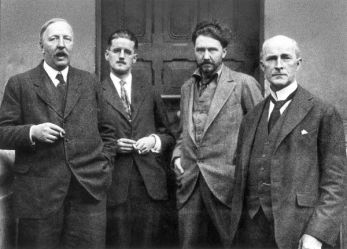
LITERARY LIONS…Ford Madox Ford (left) poses with other literary greats of the 20th century in a photo taken in Paris, November 1923. Next to Ford are James Joyce, Ezra Pound and John Quinn. (justewords.com)

 *  *  *

Tete-a-tete

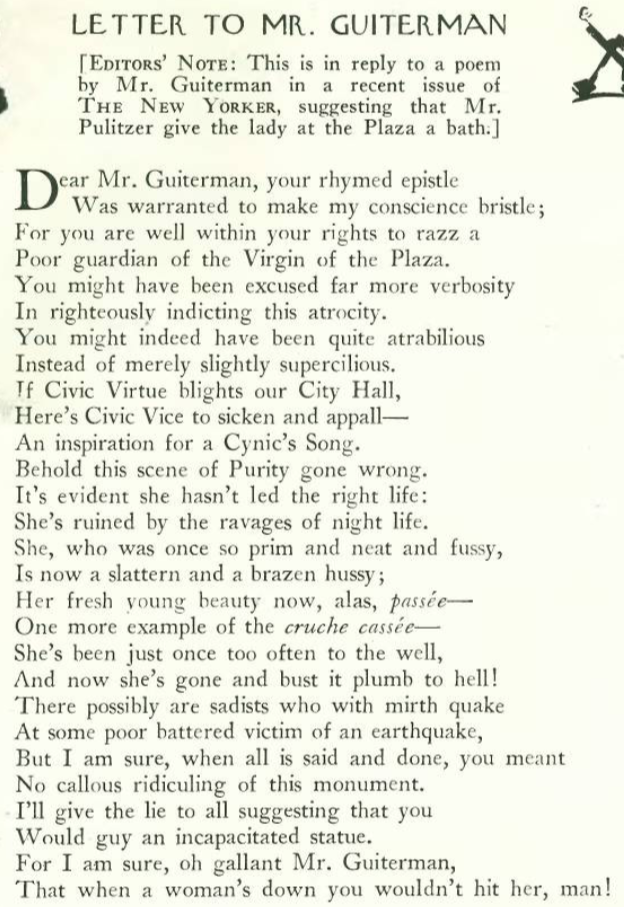
Humorist and poet Arthur Guiterman was a regular contributor of comic verse to The New Yorker from its first days in 1925 until his death in 1943. In the April 18, 1931 issue, he dashed off this poem to Ralph Pulitzer, imploring him to give his family’s namesake Plaza fountain, and its “goddess of abundance,” a much-needed scrubbing…

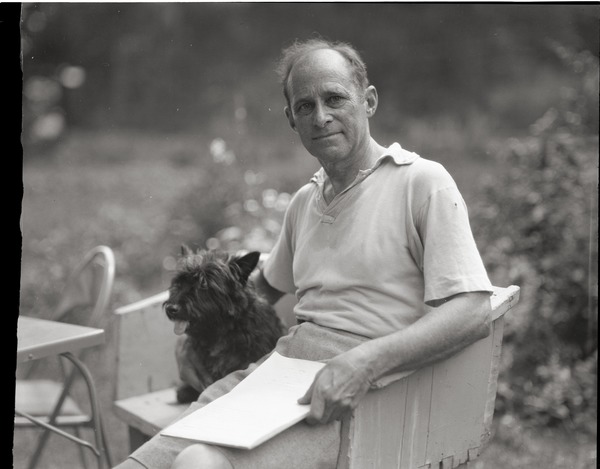
KEEP IT CLEAN, RALPH…Arthur Guiterman, shown here seated with his Scottish terrier in August 1931, asked Ralph Pulitzer to do a bit of scrubbing on the family’s namesake Grand Plaza fountain. (UMassAmherst)

No doubt to Guiterman’s delight, he received a reply in the May 3 issue, also in verse, from Ralph Pulitzer himself…

Well, Pulitizer was good for his word, and the fountain was cleaned and restored in 1933. There have been other restorations in 1971, 1985-90. Here is how it looks today:

(Central Park Conservancy)

 *  *  *

From Our Advertisers

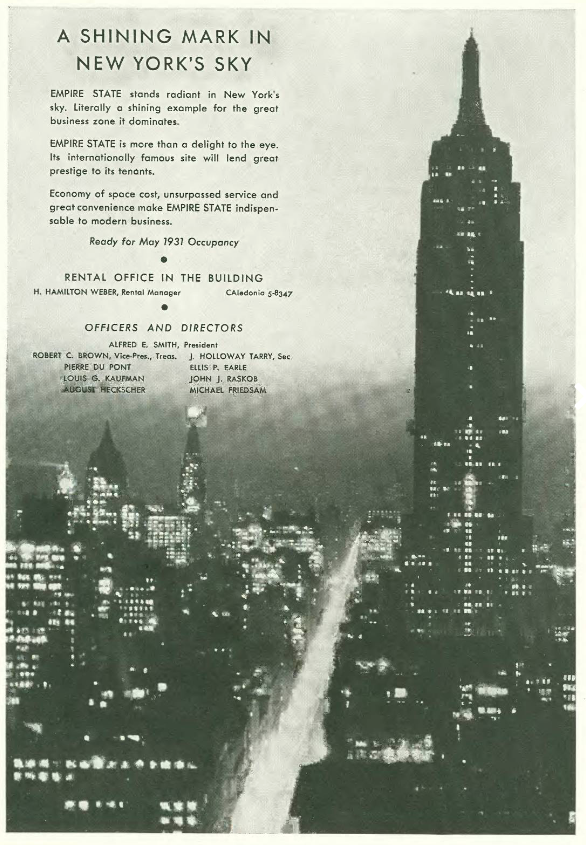
The Empire State Building officially opened its doors for business, and to mark the occasion the building’s promoters ran this full page ad that said it all: we are the biggest. Period.

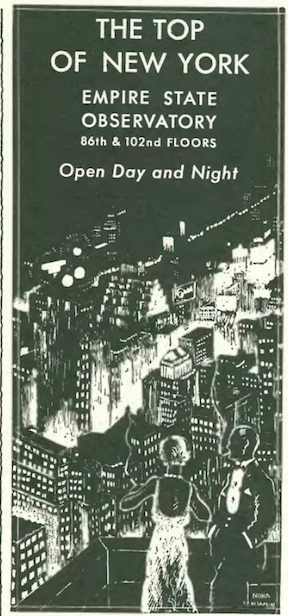
In the back pages another ad touted the amazing views one could afford from the highest spot in the city…note the couple in formal wear having a leisurely smoke as they gaze over the metropolis, their view unobstructed by fencing later added in 1947 to prevent suicidal leaps…

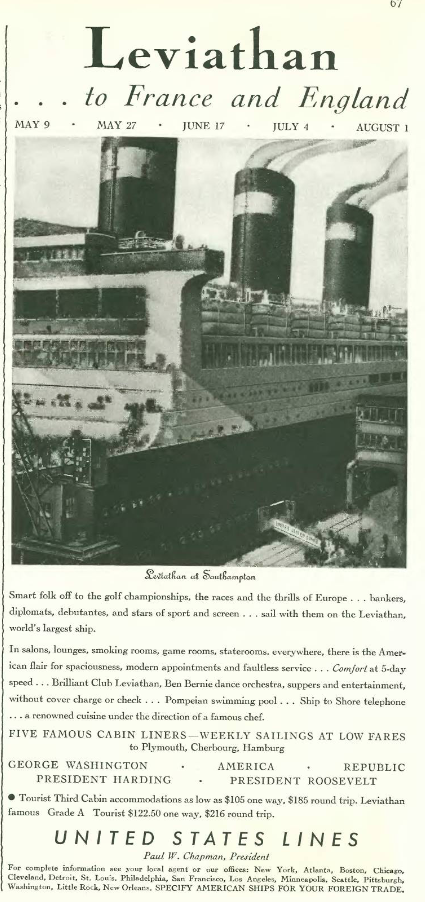
…speaking of large things, folks in the 19th and 20th centuries marveled at the gigantic scale of the man-made world—the Empire State Building, the Hindenburg, Hoover Dam, and ships with names like Titanic and Leviathan, the latter seen below in this ad from the United States Line…

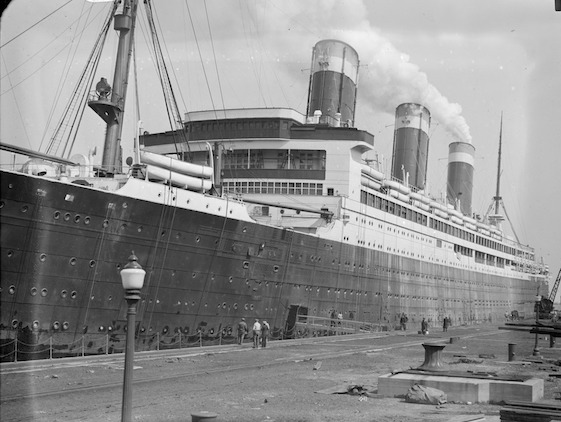
…one of the largest and most popular ocean liners of the 1920s, the U.S.S. Leviathan was actually built in 1914 for Germany’s Hamburg-American Line and christened the Vaterland. During World War I the American government seized the ship while it was docked in Hoboken, New Jersey and used it to transport troops. After the war, it was refurbished and re-christened Leviathan. It was scrapped in 1938…

The U.S.S. Leviathan at dry dock in Boston, 1930. (digitalcommonwealth.org)

…if you took the boat to Paris, you probably had enough money to make an overseas call back home…it would set you back almost $34 for three minutes of static-filled chat, about $550 in today’s dollars…

…and despite the Depression, the thrills of the modern world still abounded, such as GE’s “all-steel” electric refrigerator so artfully depicted in this ad…

…and check out these Chryslers, looking absolutely luxurious…

…as do these Dodge boats, their polished wooden hulls gliding effortlessly through placid waters…

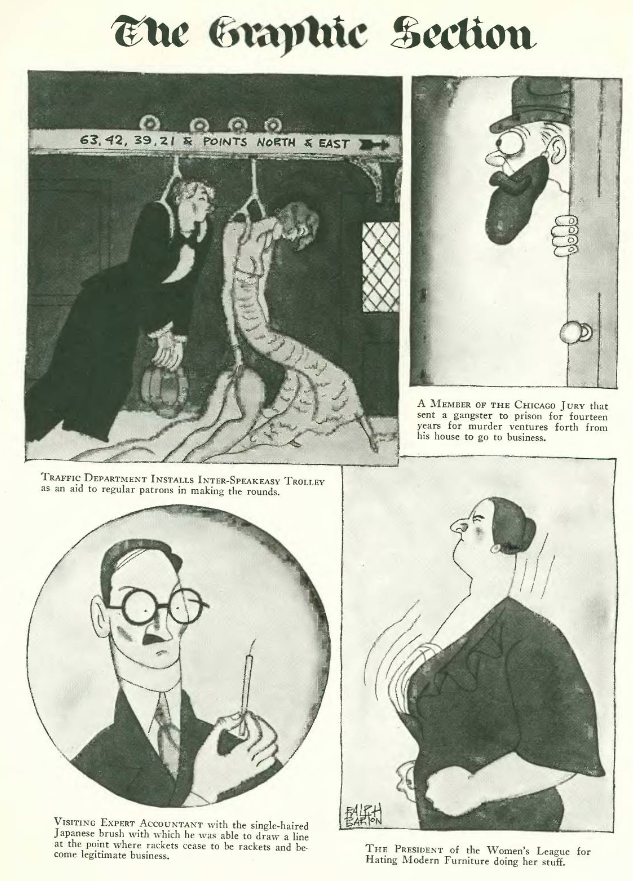
…on to our cartoonists, we begin again with Ralph Barton’s “Hero of the Week”…

…and Barton’s graphic take on the week’s headlines…

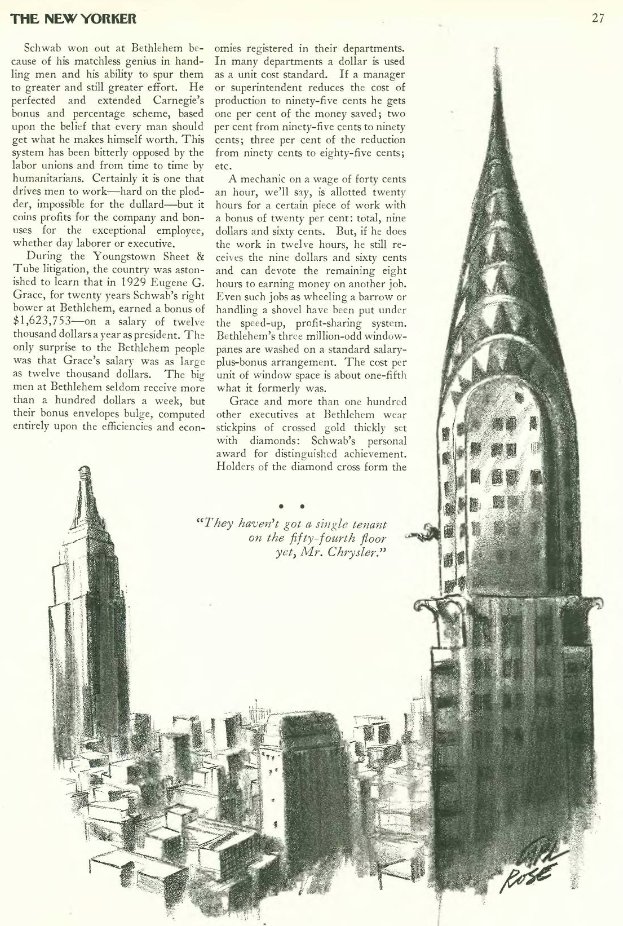
Carl Rose examined new heights in envy…

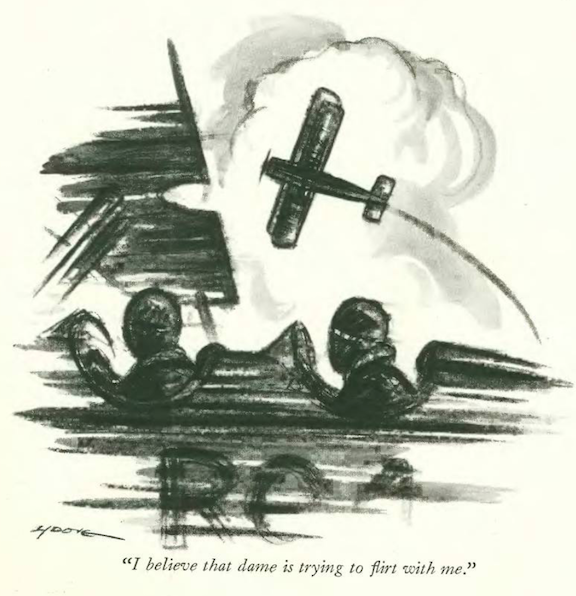
…or in the case of Leonard Dove, romance…

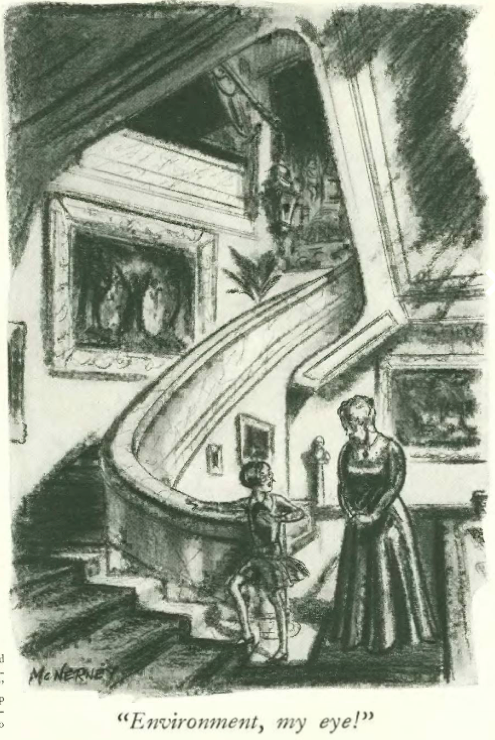
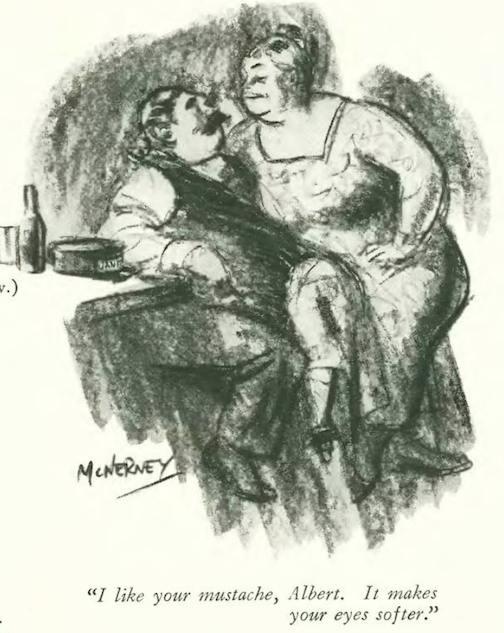
…back to earth, more romance from E. McNerney

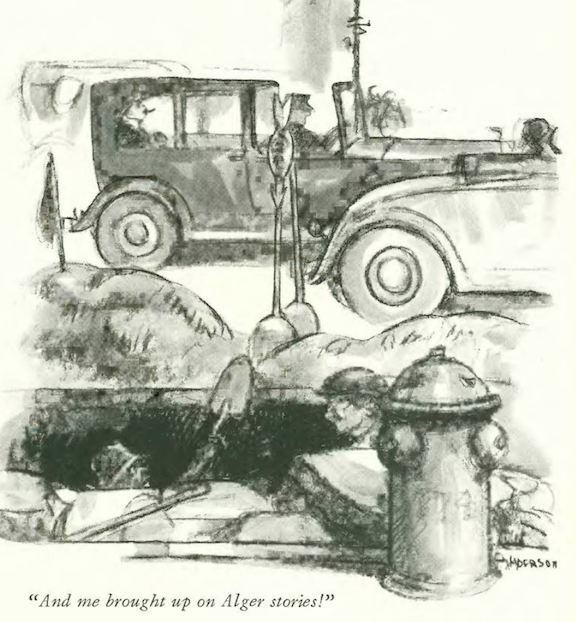
…and below ground, C.W. Anderson showed how romantic notions can go sour, in this case a man who felt duped by those rags-to-riches tales…

…and we end with Alan Dunn, and a little girl getting an education through the pages of a scandal rag…

Next Time: Through the Looking Glass…

Cinema’s Underworld

In some ways, the raucous party of the Roaring Twenties was sublimated in the movies of the late 1920s and early 1930s—a brief period at the beginning of the sound era before censorship guidelines were enforced. During those “Pre-code” times everyone from preachers to publishers decried the sex and violence that washed across the silver screen.

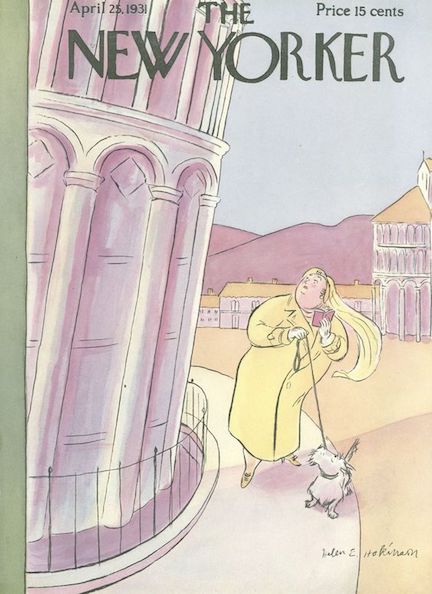
April 25, 1931 cover by Helen Hokinson.

New Yorker film critic John Mosher opened his “Current Cinema” column with some musings about violence and “morals” in underworld films, declaring that until newspapers relegated sensational crime stories to the back pages, the public would be drawn to similar fare at the movies.

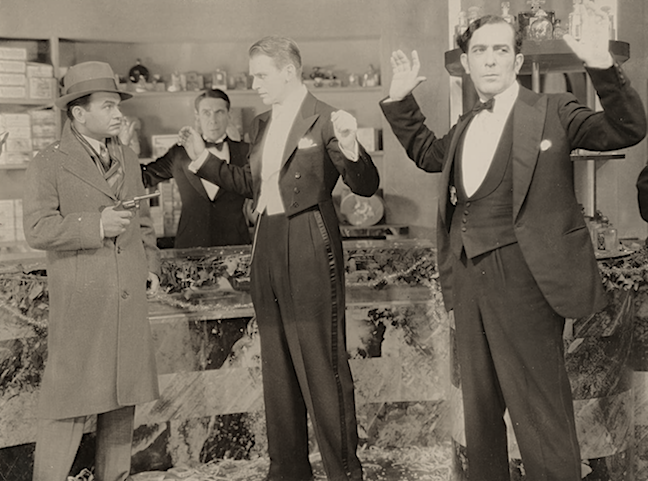
GIVING THE PEOPLE WHAT THEY WANT…Edward G. Robinson (left) played a hoodlum hoping to make the big time in 1931’s Little Caesar, a film that defined the gangster genre for decades to come. (IMDB)

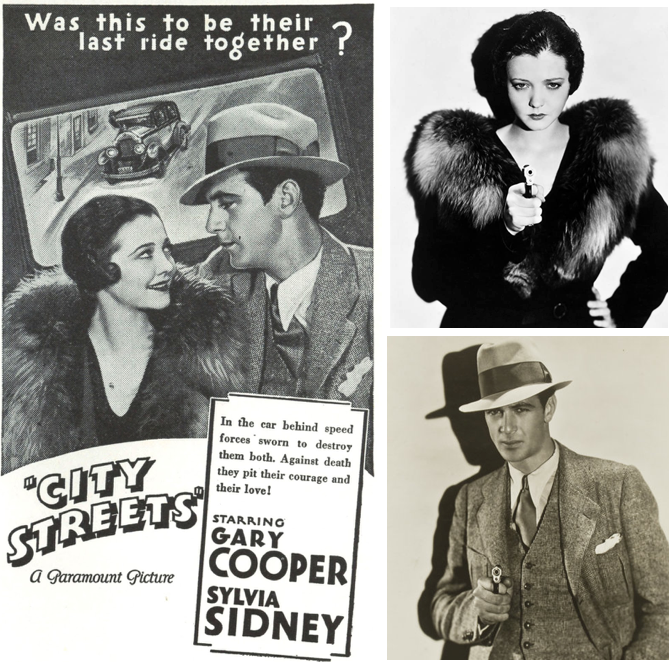
Mosher noted that two of the more prominent gangster films currently making the circuit weren’t much to fuss about—City Streets, the “more pretentious” of the two movies, featured rising stars Gary Cooper and Sylvia Sidney. The prizefighting picture Iron Man featured another popular pair of actors, Lew Ayers and Jean Harlow. Mosher observed that no amount of camera tricks could make the slight Ayers look like a husky fighter. As for Harlow, Mosher found it distressing that it was her “platinum blonde” status, rather than her acting, that landed her in the picture.

WHO CARES?…That was the conclusion of critic John Mosher after sitting through the “pretentious” City Streets. At right, publicity photos for lead actors Sylvia Sidney and Gary Cooper. (IMDB)
NO, NOT THAT IRON MAN…Jean Harlow, top, was known for attributes other than her acting, according to critic John Mosher. As for her co-star, Lew Ayers, a few weeks in the gym and some protein shakes might have made for a more plausible prize fighter. (IMDB)

 *  *  *

Fashion of a Different Fashion

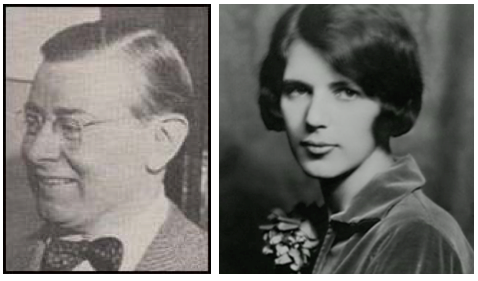
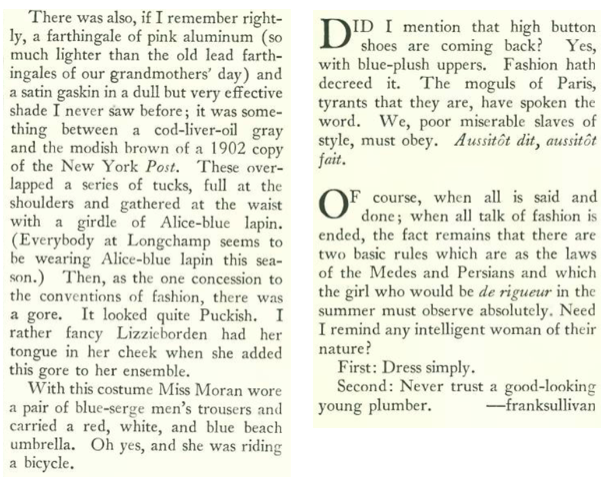
A New Yorker contributor since 1925 and denizen of the Algonquin Round Table, Frank Sullivan was a jolly soul known for his gentle wit and spoofs of cliches. His latest target was Lois Long’s fashion column “On and Off the Avenue,” penning a spoof that was indistinguishable from the original save for the change of one word in the title. Long’s actual column appeared in the magazine a few pages later, so no doubt a few readers started reading Sullivan’s spoof before realizing they had been had. I am among them. Some excerpts:

HE TOOK A FASHION TO FASHION…A wit herself, Lois Long no doubt enjoyed Frank Sullivan’s spoof of her fashion column. (Wikipedia/PBS)

Sullivan probably had a little extra time on his hands after the folding of the New York World newspaper, to which he contributed two or three humor columns a week before the grand old paper folded for good in February 1931. And so we have Sullivan again in the April 25 issue, and his “report” on the annual meeting of the “International Association of Girls Who Have Danced with the Prince of Wales.” Excerpts:

HOOFER…Apparently the Prince of Wales (Edward VIII), shown here in 1924, danced with many a lady before he abdicated the throne and married Wallis Simpson. (Pinterest)

 *  *  *

Getting High in Manhattan

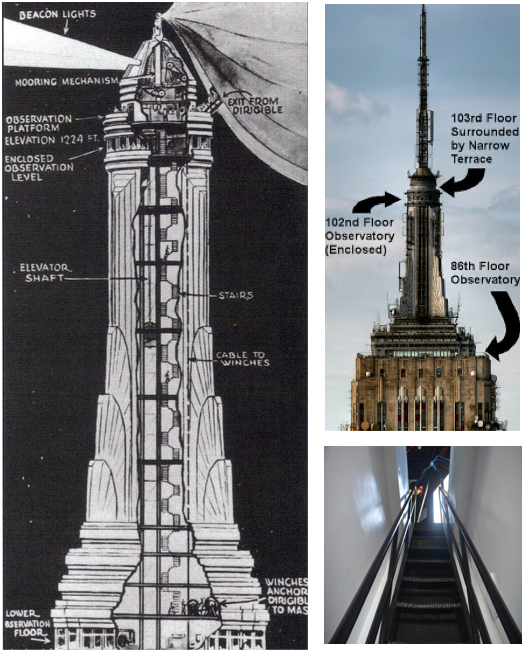
E.B. White enthusiastically embraced many aspects of modern life, from the wonder of air travel to the spectacle of buildings climbing ever higher into the clouds above Manhattan. It seemed whenever someone was needed to report on a flight or check out progress on the latest skyscraper, White was there, eager to climb into cockpits or onto scaffolds to get a better a look at his fair city. In “The Talk of the Town” White recalled his visit to (almost) to the very top of the Empire State Building, which was to open on May 1, 1931.

QUITE A SALTSHAKER…As E.B. White noted, the mooring mast atop the Empire State Building might have looked like a mere “saltcellar” from the ground, but in reality was as tall as a 20-story building, so quite a climb. Image at left shows inner stairwell winding to the top; bottom right, stairs to the 103rd floor of the Empire State Building. (Modern Mechanix/Evan Bindelglass-CBSNewYork)

 *  *  *

From Our Advertisers

With summer on the way B. Altman’s touted its new line of wool bathing suits for the kiddies…I frankly can’t imagine wearing wet wool in the summer, at least not voluntarily…

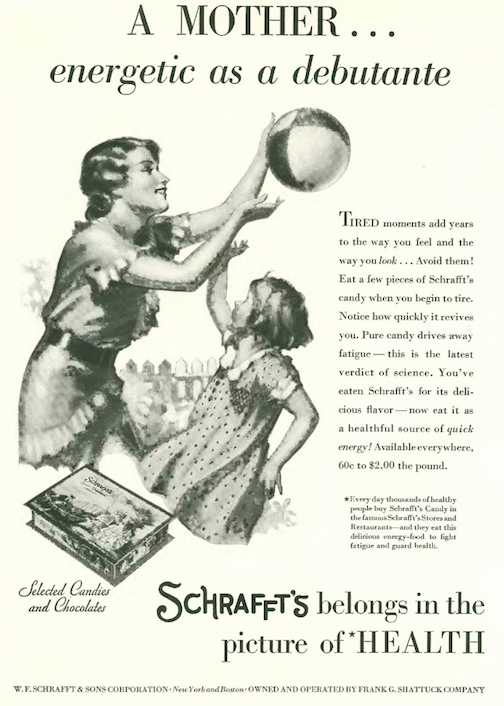
…hey, here’s an idea if you want to keep up with the little brats…eat some candy…according to Schrafft’s, it’s HEALTHY…

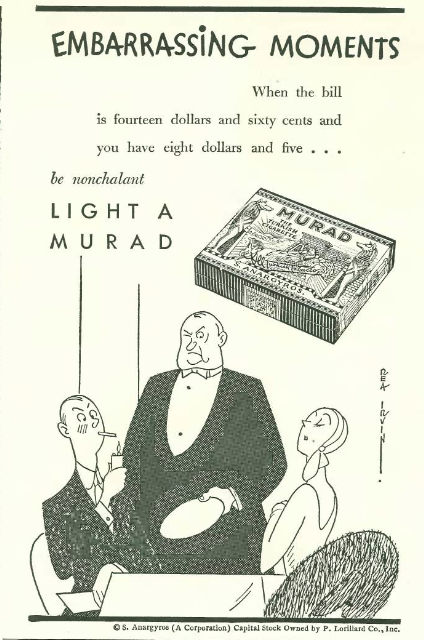
…on to our illustrators and cartoonists, another fine moment in smoking thanks to Rea Irvin

Ralph Barton introduced us to his latest “Hero of the Week”…

…and his news summary in graphic form…

Helen Hokinson observed some subway etiquette…

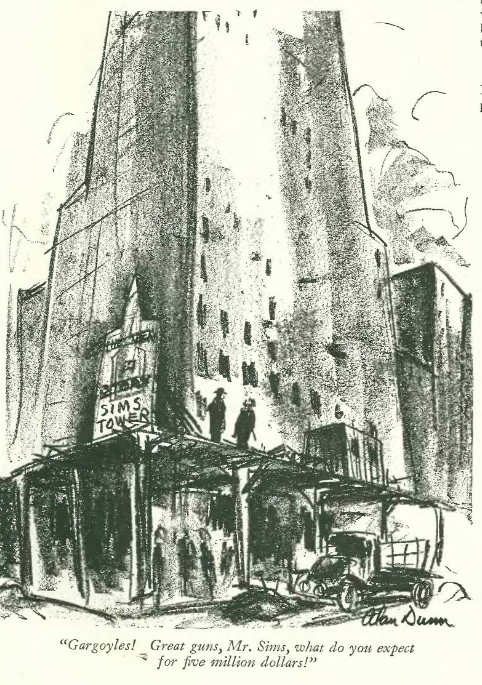
Alan Dunn found a developer looking for some extras…

Bruce Bairnsfather offered a study in contrasts…

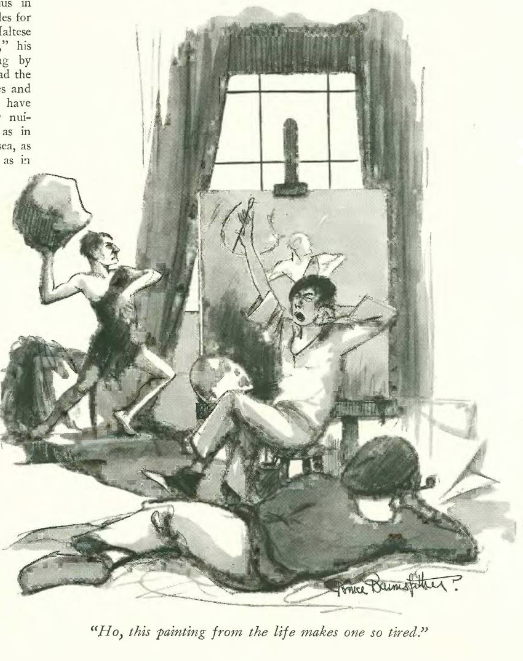
C.W. Anderson, and another example of an artist’s struggle…

…and we end with Otto Soglow and his Little King, a strip that would become a nationally syndicated hit…

Next Time: From Bad to Awful…

Fear of Flying

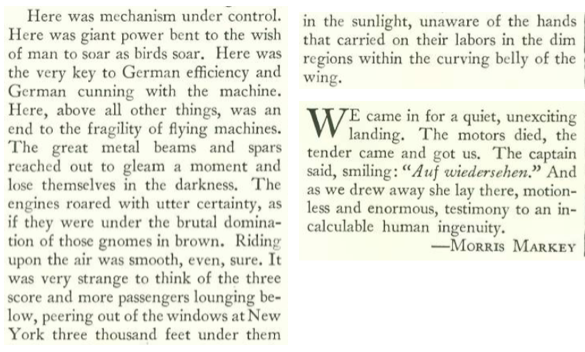
The early New Yorker loved two things about modern life — college football and air travel. Tragedy would bring them together on the last day of March 1931.

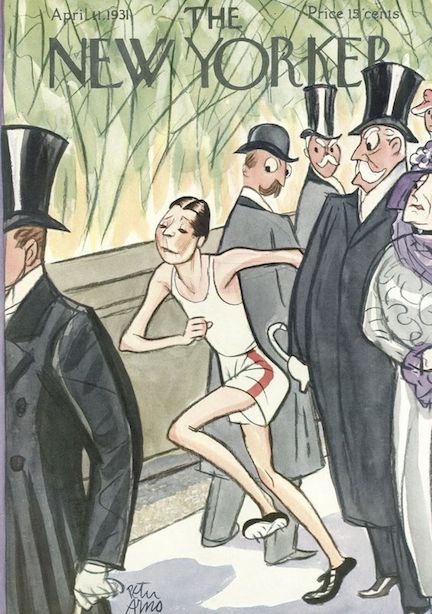
April 11, 1931 cover by Peter Arno. A brilliant cover, contrasting the skinny, lightly clad runner with one of Arno’s stock characters from the Taft era—a millionaire with a walrus mustache.

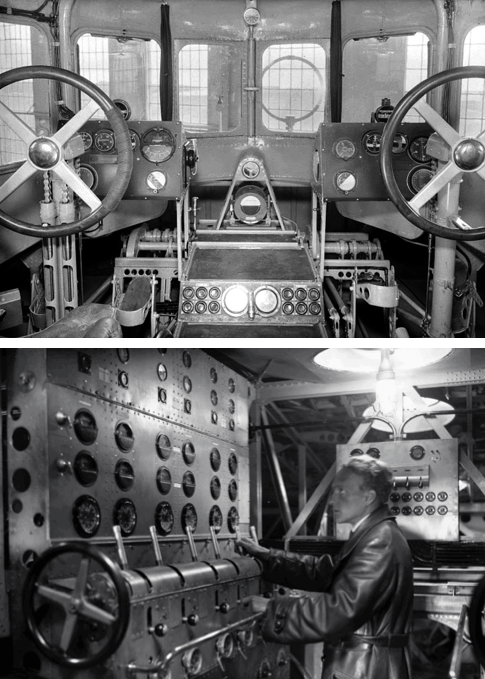
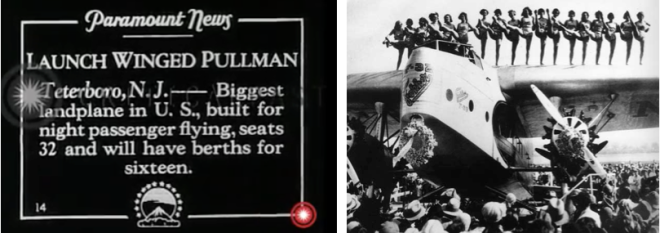
The New Yorker’s sportswriter John Tunis was especially keen on Knute Rockne’s Notre Dame football team, which played an annual rivalry game against Army at Yankee Stadium. Tunis’s colleague, E.B. White, was the flying enthusiast, never missing a chance to hop aboard a plane and marvel at the scene far below. In the Nov. 30, 1929 issue, White was eager to join passengers on a test of the Fokker F-32, and suggested that flying was becoming so routine that one could be blasé about its risks:

WHAT COULD POSSIBLY GO WRONG?…Title card from a silent Paramount newsreel reporting on a November 1929 test flight of the Fokker F-32 at Teterboro, possibly the same flight enjoyed by E.B. White. At right, a celebration of the plane’s arrival in Los Angeles. (YouTube/petersonfield.org)

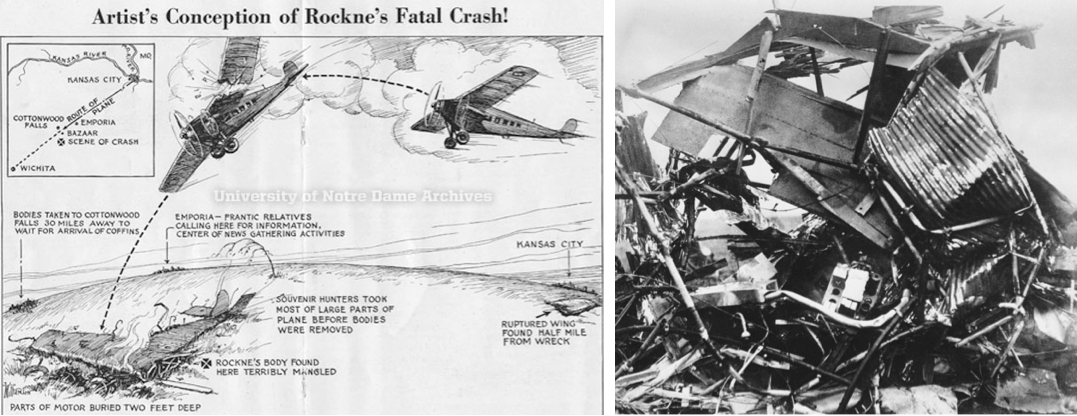
All of that exuberance came crashing down in a Kansas wheat field on March 31, 1931. It was Rockne’s fame—which The New Yorker and countless other magazines and newspapers helped to spread—that put the coach on a TWA flight to Hollywood, where director Russell Mack was filming The Spirit of Notre Dame. Rockne stopped in Kansas City, where he visited his two oldest sons, before boarding a Fokker F-10 destined for Los Angeles. About an hour after takeoff one of the airplane’s wings broke to pieces, sending Rockne and seven others to their deaths.

(University of Notre Dame) click image to enlarge

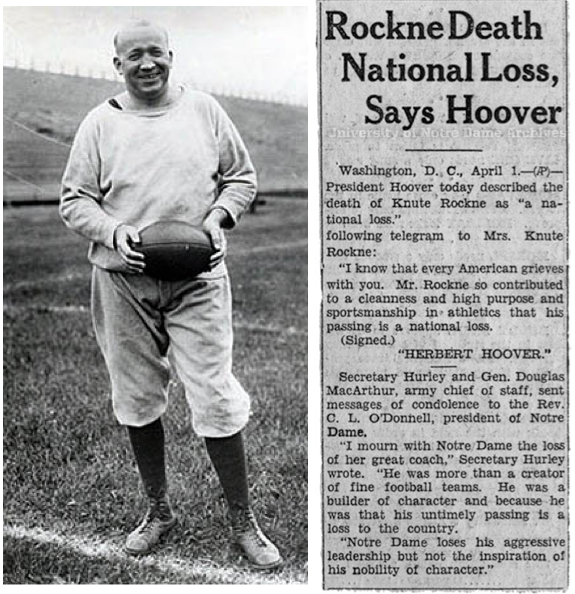
The accident rattled E.B. White. In his April 11, 1931 “Notes and Comment,” White pondered the eulogies Rockne received from President Herbert Hoover and others, calling into question the fame a college football coach could attain while achievements of college faculty go unheralded. White also seemed to have lost some of his faith in the progress of aviation, suggesting that the autogiro (a cross between an airplane and a helicopter) might be the safest way to proceed into the future:

Knute Rockne, in undated photo. (University of Notre Dame)

Ironically, it was thanks to Rockne’s fame that the aviation industry began to get serious about safety. A public outcry over the crash led to sweeping changes in everything from design to crash investigation, changes that have helped make flying one of the safest forms of transportation today.

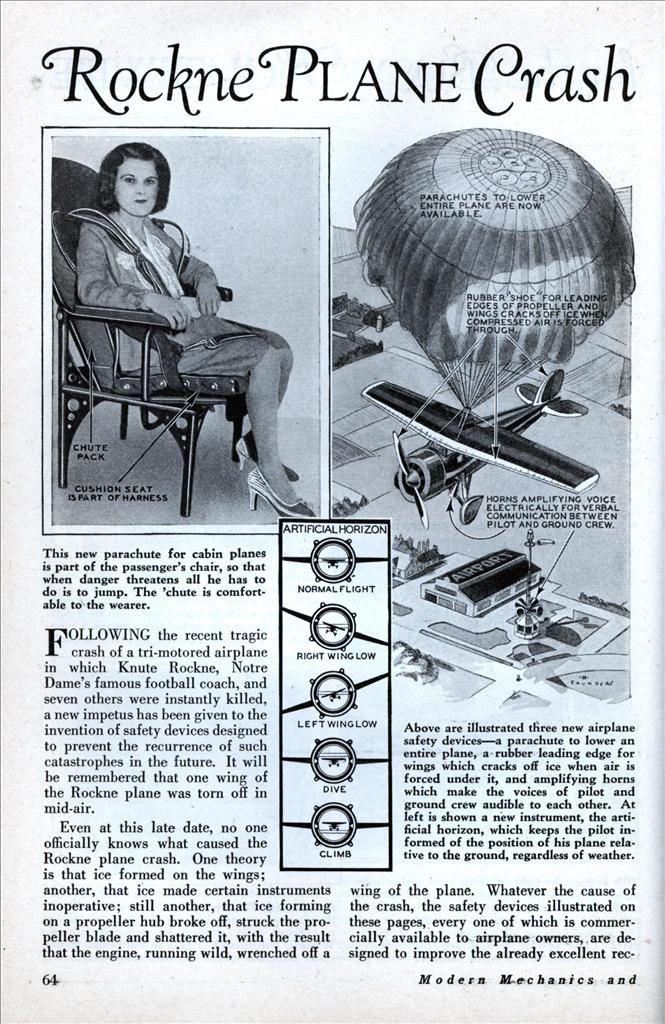
SAFETY FIRST…The crash that claimed the life of Knute Rockne resulted in a public outcry for greater safety in the air. This article in the July 1931 issue of Modern Mechanics suggested parachutes for passengers and for the plane itself. (modernmechanix.com)

As for the cause of crash, it was determined that the plywood covering one of the Fokker F-10’s wings had separated from the wing’s supporting structure — the wing had been bonded together with a water-based glue that likely deteriorated as the result of rainwater seeping into the wing.

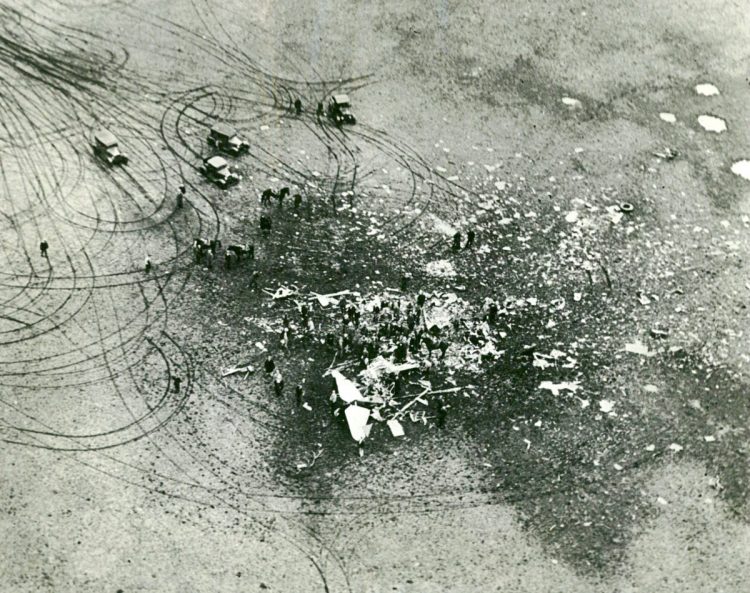
Unfortunately, the investigation into the crash was hampered by souvenir-seekers, who carried away most of the large parts of the plane even before the bodies were removed. So much for honest Midwestern values, at least in this case.

(clickamericana.com)

 *  *  *

Give My Regards

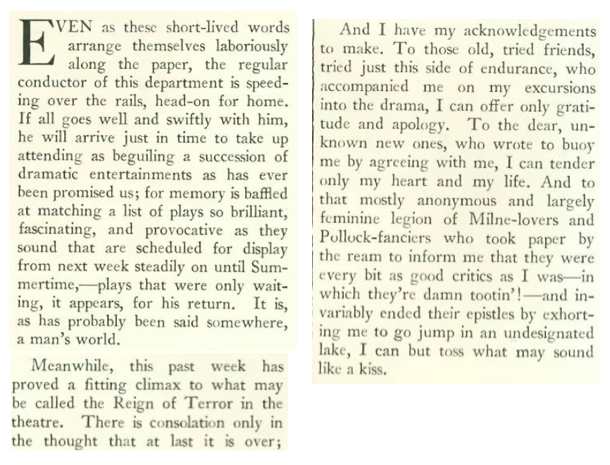
Back in Manhattan, Dorothy Parker was writing a eulogy of her own, bidding farewell to her interim role as theater critic. Parker subbed for Robert Benchley during his extended European vacation, and often noted that it was just her luck  to be stuck with a string of plays that likely comprised one of Broadway’s worst spring line-ups.

In an earlier column Parker had alluded to the fact that Benchley was in Europe, no doubt staying part of the time with their mutual friends, Gerald and Sara Murphy, at their fashionable “Villa America” at Cap d’Antibes on the French Riviera.

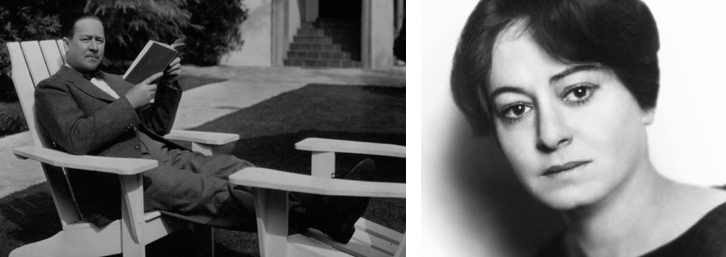
SIGHT FOR SORE EYES…Dorothy Parker was glad to have her old friend Robert Benchley back at the theater desk, she having endured a “rotten time” reviewing a long string of bad plays. (dorothy parker.com)

Hopeful to review at least one play of redeeming value before her friend returned, Parker was to be sorely disappointed as evidenced in her final review column. Of the terribly dated Getting Married, a play written by George Barnard Shaw way back in 1908, Parker was more afraid of Getting Bored, especially when Helen Westley (portraying Mrs. George Collins) entered the stage to deliver a 15-minute monologue…

Things got no better with the second play Parker reviewed, Lady Beyond the Moon, a “dull, silly, dirty play” that was frequently interrupted by various sounds from the restless audience — “comments, titters and lip-noises…” The play must have been terrible, because it closed after just fifteen performances.

As for the third play Parker reviewed, the misnamed Right of Happiness, the audience had every excuse “for displayed impatience,” yet conducted itself “like a group of little lambs.” Right of Happiness, observed Parker, “fittingly concluded the horrible little pre-Easter season…” The play closed after just eleven performances.

 *  *  *

Turning Up the Heat

If anyone thought he had a right to happiness it would have been New York Mayor Jimmy Walker, who was preparing to face a grilling from Judge Samuel Seabury. Walker loved the nightlife and left most of his duties to a bunch of Tammany Hall cronies whose activities drew the attention of reformers like Seabury and Gov. Franklin D. Roosevelt. In his “A Reporter at Large” column, Morris Markey observed:

 *  *  *

Walking Tall

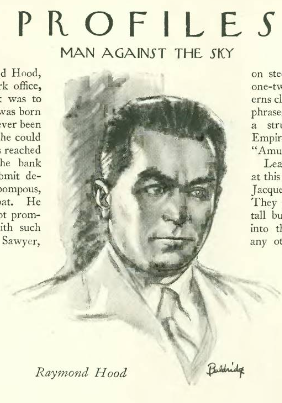
Raymond Hood (1881-1934) might have been short in stature, but he stood tall among the architects of some of New York’s most iconic skyscrapers — Rockefeller Plaza, American Radiator, Daily News, McGraw Hill (Sadly, both his career and his life were cut short when he died in 1934 at age 53 from complications related to rheumatoid arthritis). Allene Talmey, a former reporter for the New York World and managing editor of Conde Naste’s original Vanity Fair, gave Hood his due (see brief excerpt) in a New Yorker profile, with a portrait by Cyrus Baldridge:

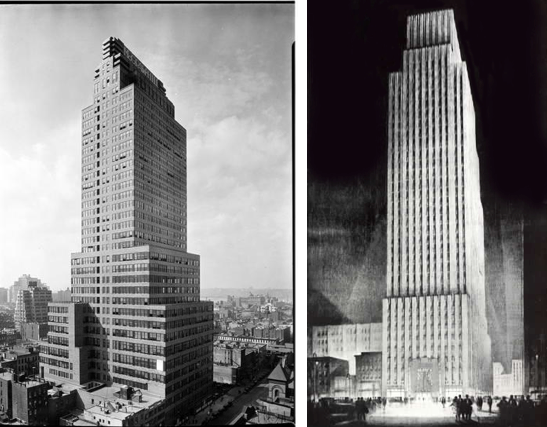
LANDMARKS…The 1931 McGraw-Hill Building and the 1929-30 Daily News Building. (MCNY/Wikipedia)
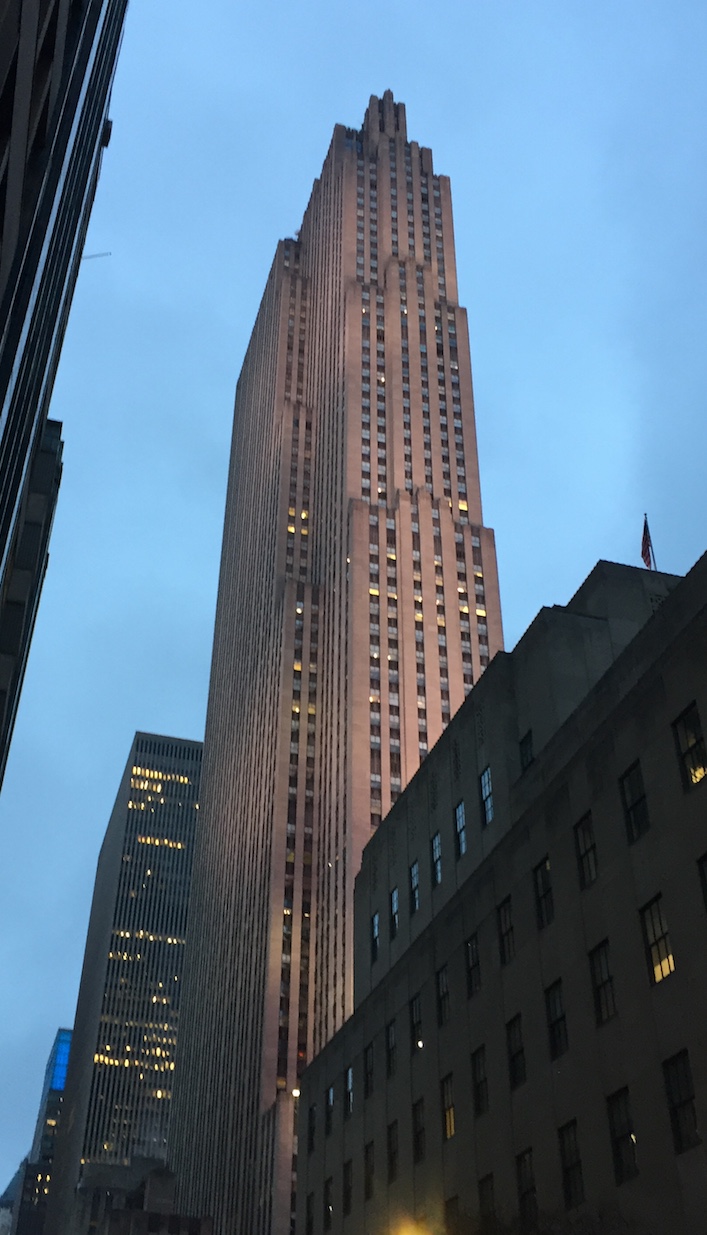
And of course, Hood’s 30 Rock. I took this last December before everything shut down.

 *  *  *

From Our Advertisers

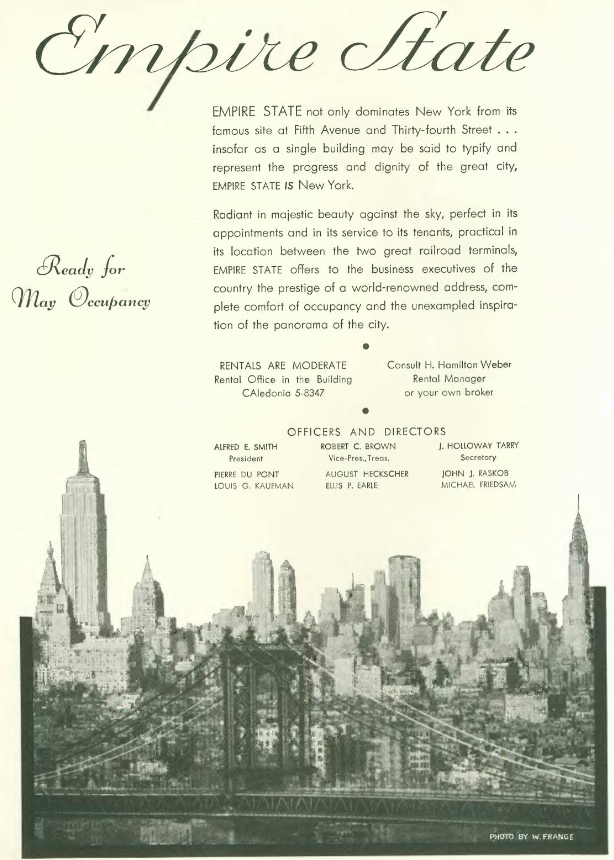
Speaking of big and tall, Al Smith and his gang took out this full page ad to announce the availability of office rentals in the world’s tallest building. Thanks to the Depression, only 23 percent of the available space in the Empire State Building was rented out in its first year. Thankfully, the building was also an instant tourist attraction, with one million people each paying a dollar to ride elevators to the observation decks in 1931, matching what the owners made in rent that year…

…for those who could afford more than a dollar ride up the Empire State’s elevators, the cooling breezes of coastal California beckoned…

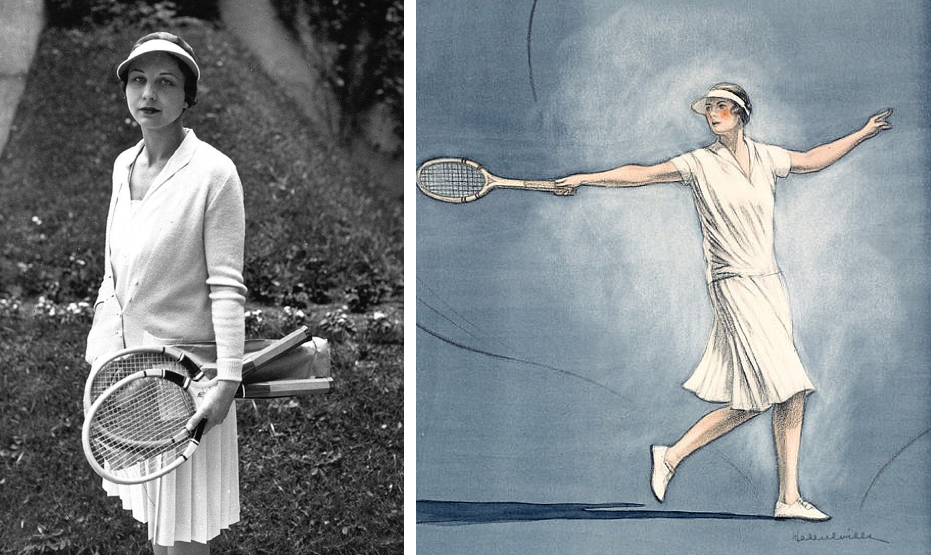
…those with even greater means and leisure time could hop on a boat to Europe…note that you could still cruise on the Olympic, the Titanic’s sister ship…also note that the illustration of the posh couple was rendered by Helen Wills (1905-1998), better known at the time as the top women’s tennis player in the world…

HELEN, MEET HELEN…American tennis star Helen Wills in 1932, and a self-portrait from the same year. Wills was the world’s top women’s tennis player for nine of the years between 1927 and 1938. She played tennis into her 80s, and sketched and painted all of her life. (Wikipedia/invaluable.com)

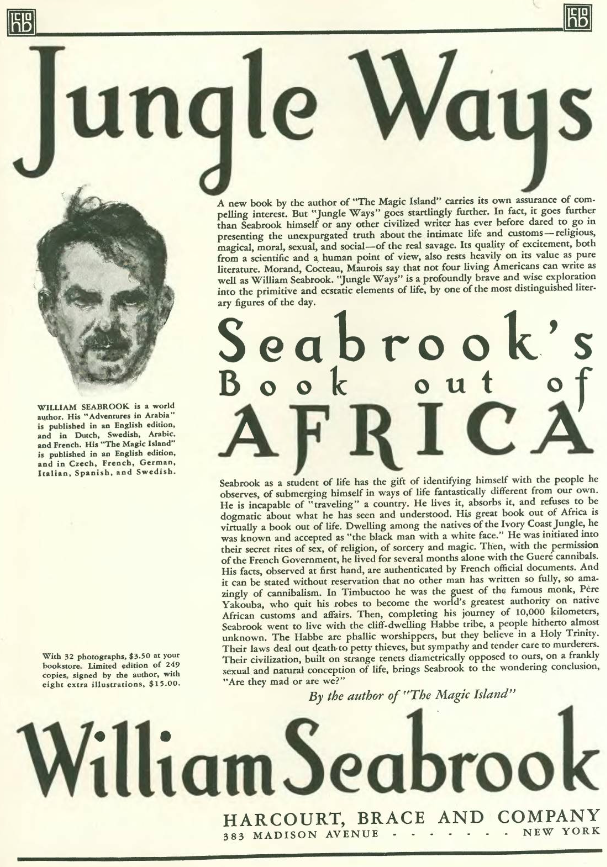
…Guess who’s coming to dinner?…hopefully not William Seabrook, who had just released his latest book on his adventures as an explorer…in Jungle Ways, Seabrook devoted an entire section to cannibalism in the French Sudan and how to cook human flesh; apparently he tried some himself…but then again by most accounts he was a weird dude who dabbled in occultism and possibly believed in zombies…Seabrook’s 1929 book, The Magic Island, is credited with introducing the concept of zombies to popular culture…

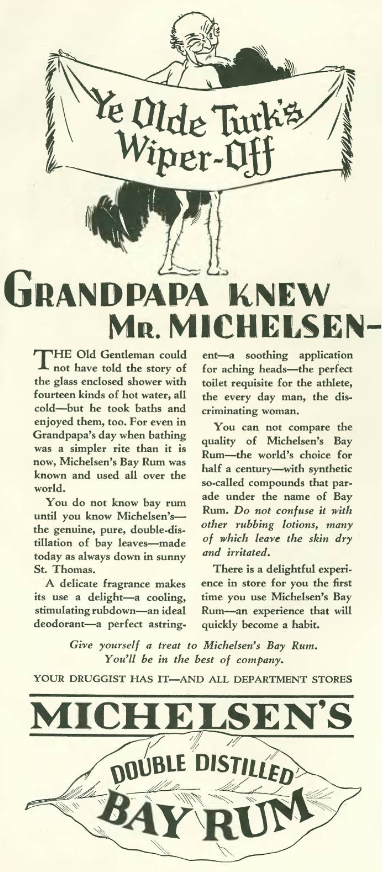
…speaking of weird, an ad for Michelsen’s “Bay Rum” body rub…

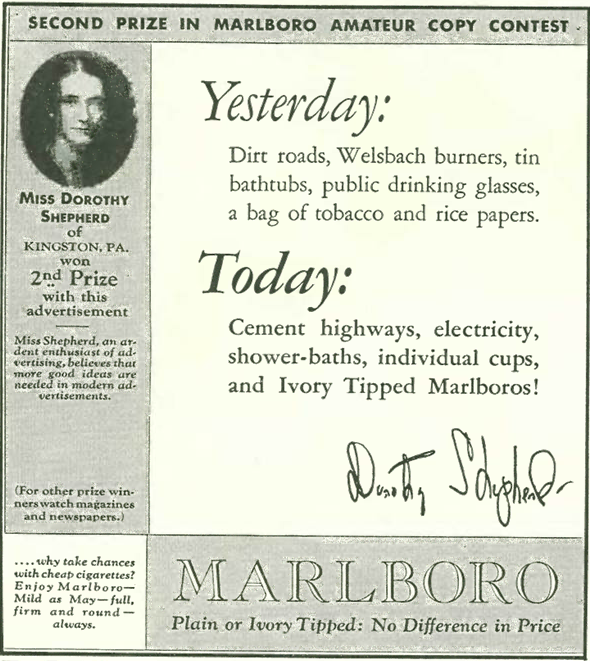
…when Marlboro cigarettes were introduced in the mid-1920s, they were marketed as “luxury” cigarettes and sold mostly at resorts and hotels. In the late 1920s, however, they were marketed as a “lady’s cigarette,” with ads in the New Yorker featuring handwriting and penmanship contests to promote the brand. This ad from November 1930 featured the “second prize” winner of their amateur copywriting contest…

…it appears marketing tactics changed a bit in 1931…still the dopey contest, but instead of real photos of winners, like the schoolmarmish “Miss Dorothy Shepherd” above, this ad featured a rather tawdry image of a model, more gun moll than schoolmarm…

…on to our cartoonists…Ralph Barton, who was with The New Yorker from Day One, had been increasing his contributions to the magazine after a notable absence from spring 1929 to summer 1930…beset by manic-depression, he would take his own life in May 1931, so what we are seeing are Barton’s last bursts of creativity before his tragic end, reviving old favorites like “The Graphic Section”…

Barbara Shermund entertained with some parlor room chatter…

Leonard Dove looked in on a couple of frisky old duffers…

William Crawford Galbraith, and a crashing bore…

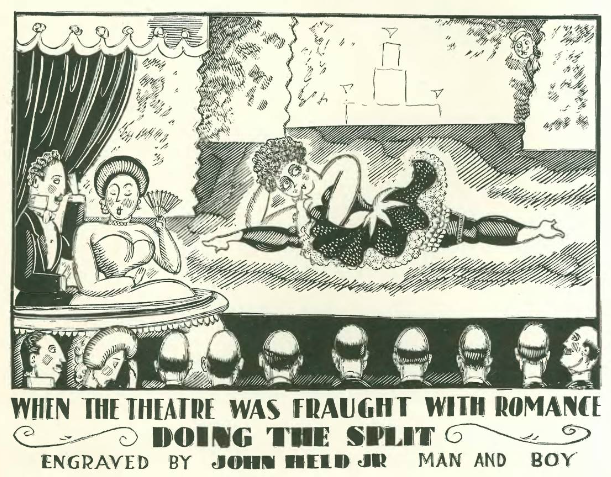
John Held Jr gave us one of his “naughty” engravings…

…and two by our dear Helen Hokinson, stuck in traffic…

…and enjoying cake and ice cream, with a dab of culture…

Next Time: An Unmarried Woman…

Age of Wonders

Despite the deepening economic depression, work continued apace on a number of large building projects that were transforming the Manhattan skyline, including the Empire State Building, which was being readied for its May grand opening.

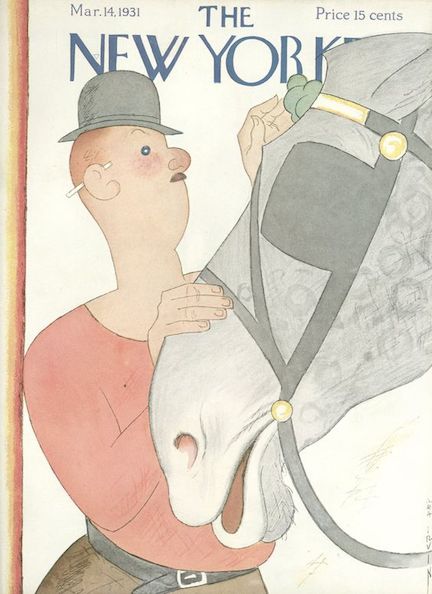
March 14, 1931 cover by Rea Irvin.

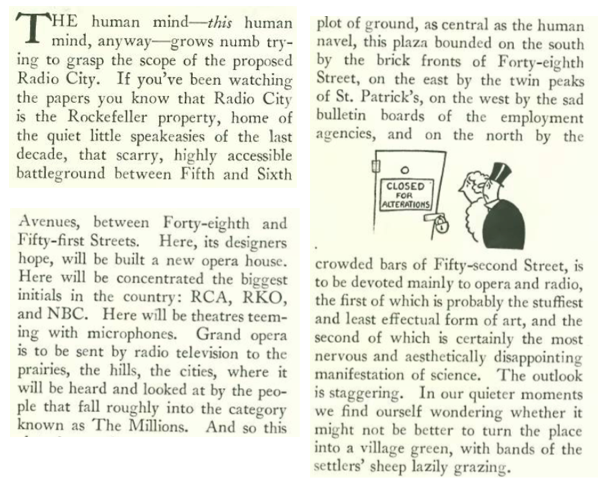
Developers also looked to the future, including the Rockefeller family, who commissioned a massive project in Midtown — 14 buildings on 22 acres — that would be one of the greatest building projects in the Depression era…

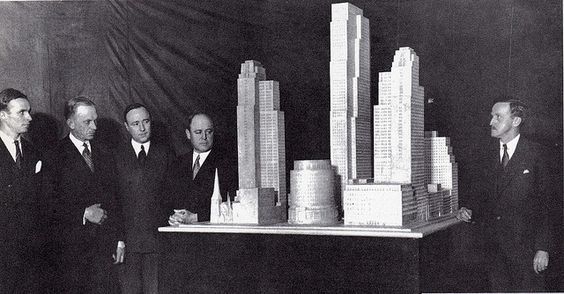
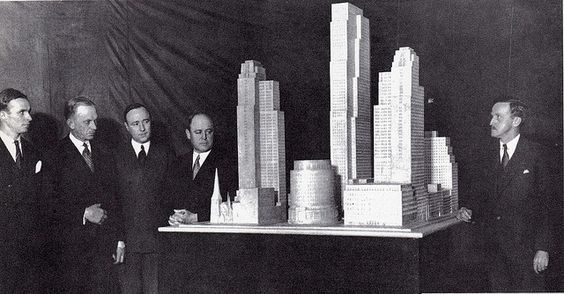
SAY ‘CHEESE’…A group of dour-looking developers unveil an early model for Rockefeller Center, March, 1931. (drivingfordeco.com)

…so great that even E.B. White found the proposed Rockefeller Center difficult to fathom:

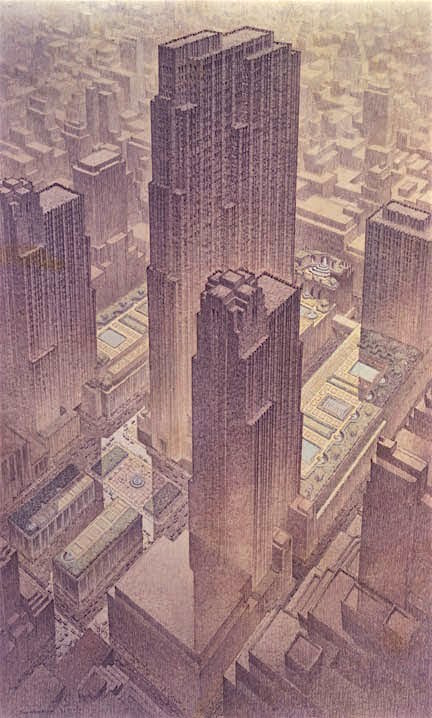
DECO DREAM…Conceptual rendering of the Rockefeller Center complex by architectural illustrator John C. Wenrich. (beyondarchitecturalillustration.blogspot.com)

 *  *  *

Star Power

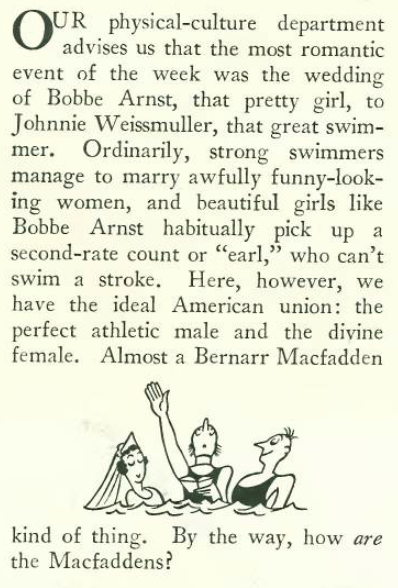
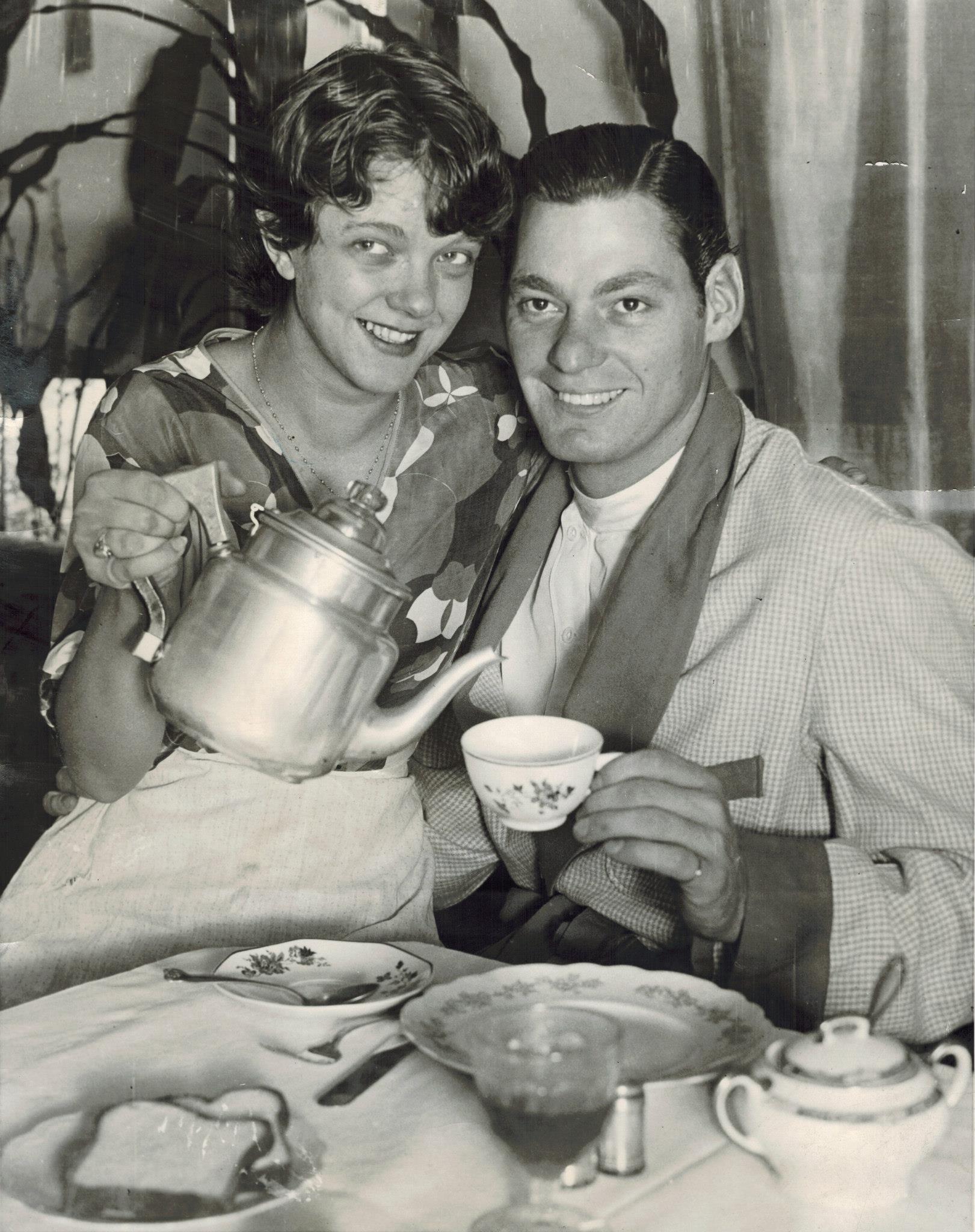
The Depression years also offered lesser diversions, and there’s nothing like celebrity culture to distract one’s mind from daily woes. For our amusement, E.B. White offered up the recent nuptials of Olympic swimmer (and future Tarzan movie star) Johnny Weissmuller and Ziegfeld singer/showgirl Bobbe Arnst…

MONKEY’S UNCLE…Newlyweds Johnny Weissmuller and Bobbe Arnst pose for photographers in 1931. The marriage would last two years. In 1932 Weissmuller would appear in his first “Tarzan” movie, Tarzan the Ape Man, and after divorcing Arnst would marry four more times. (Pinterest)

…of course there’s no better place to find celebrities than Hollywood, where Marlene Dietrich was collecting good reviews for her latest film, Dishonored. Critic John Mosher was absolutely gah gah over the German actress…

COME HITHER IF YOU DARE…Marlene Dietrich portrayed Agent X-27 in Josef Von Sternberg’s 1931 spy film Dishonored. (IMDB)

…if you preferred the stage to the screen, you could check out a show on Broadway, but if you were Dorothy Parker (subbing as theater critic for her pal Robert Benchley), you’d have trouble finding anything worth watching. Her latest review was something of a double-whammy: not only was the play a stinker, but it was written by one of Parker’s least-favorite authors, A. A. Milne

…AND MY MONEY BACK, TOO…

 *  *  *

Cinéma Vérité

However, Dorothy Parker could have found consolation in the fact that someone, somewhere, had it a lot worse. For example, the eight defendants in a Soviet show trial, filmed for the edification of the masses and as a warning to opponents of the Bolshevik Revolution. In this warm-up for the Great Terror to come, five of the eight were condemned to death after making what were obviously forced confessions. John Mosher had this to say about the real-life horror film:

PRELUDE TO MADNESS…Scenes from the Treason Trial of the Industrial Party of Moscow. Above, filming the proceedings; below, one of the accused scientists confessing his “crimes” against the state. (moderntimes.review/YouTube)

 *  *  *

End of the World, Part II

In my last post we saw how E. B. White mourned the end of The New York World newspaper in a lengthy “Notes and Comment” entry. By contrast, White’s colleague Morris Markey wasn’t shedding any tears for a newspaper he believed had seen its better days. Markey shared his observations in his March 14 “Reporter at Large” column…

AFRAID OF THE DENTIST? Murder suspect Arthur Warren Waite, a dentist from Grand Rapids, Michigan, appeared at Criminal Courts in New York City on May 22, 1916, to face double murder charges (he poisoned his in-laws). He was sent to the electric chair at Sing Sing on May 24, 1917. According to Morris Markey, the World’s coverage of the story was the newspaper’s swan song. (Criminal Encyclopedia)

…Markey described the newspaper’s final day with veteran rewrite man Martin Green quietly typing his last story amid the tears and wisecracks of reporters suddenly out of work…

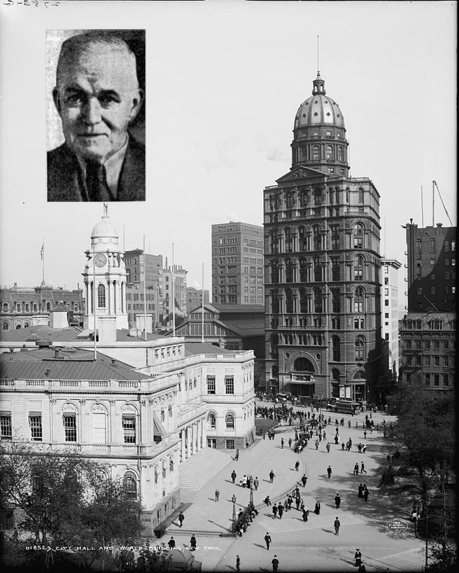
LONG GONE…Veteran rewrite man Martin Green (inset) filed his last story for The New York World on Feb. 27, 1931. Above, the New York World building was located on Manhattan’s “Newspaper Row” near City Hall. Commissioned by the newspaper’s owner, Joseph Pulitzer, the 20-story building was the world’s tallest office building when in was completed in 1890. It was demolished in 1955 to make way for an expanded car ramp entrance to the Brooklyn Bridge. (New York Times/Library of Congress)

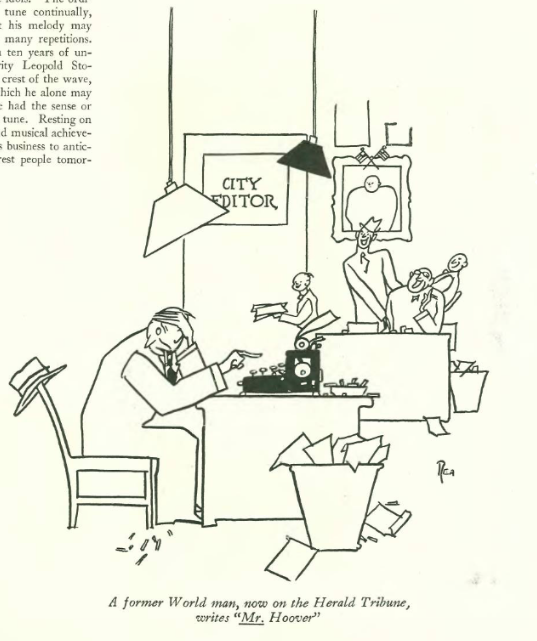
…the end of the World was also on the mind of Gardner Rea, who contributed this cartoon to the March 21 issue: 

 *  *  *

The State of Modern Man

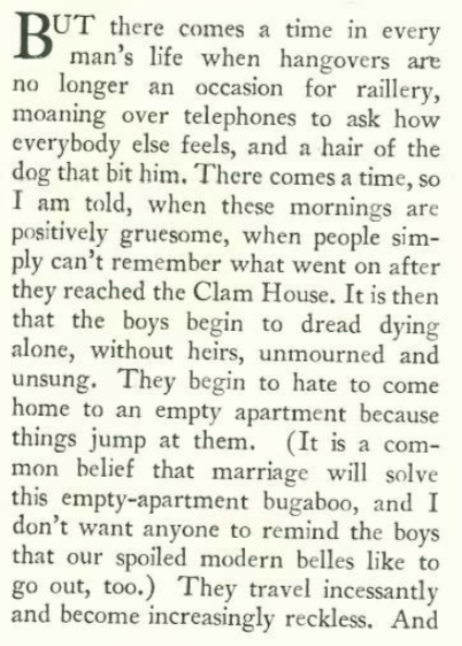
Lois Long continued her “Doldrums” series by looking at the condition of bachelor life in the city, and like everything else among the younger generation she found it wanting. Lois was a ripe old 29 when she wrote this, but given how radically life had changed since the Roaring Twenties, a wide gulf now separated those days from the more somber Thirties. Note how Long, who embodied flapper life in her defunct “Tables for Two” column, described herself as a “modest, retiring type” who knew nothing about men. Around this time Long was preparing to divorce husband (and New Yorker cartoonist) Peter Arno after a brief, tempestuous marriage…

 *  *  *

From Our Advertisers

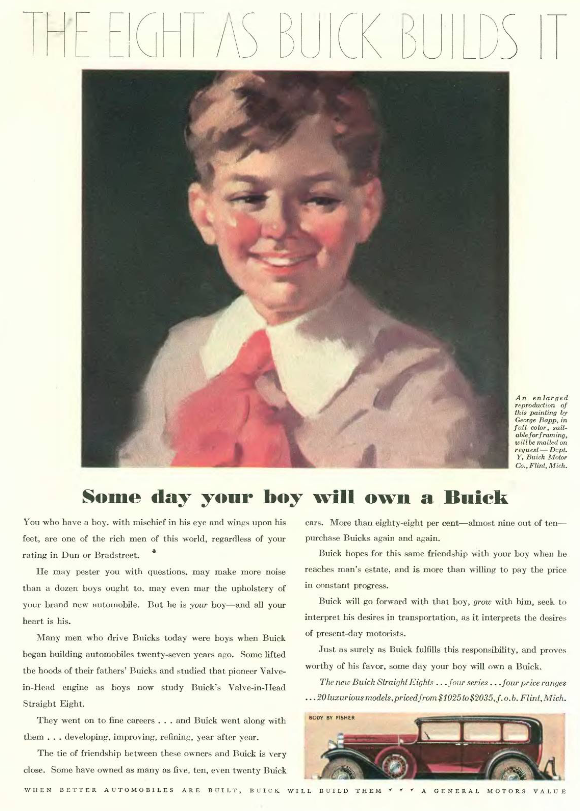
In those depressed days the makers of Buick automobiles decided to look to a brighter future, imaging how the boys of the present would be drivers of Buicks in the future…this kid probably ended up driving a tank or a Jeep rather than a Buick when 1942 rolled around…

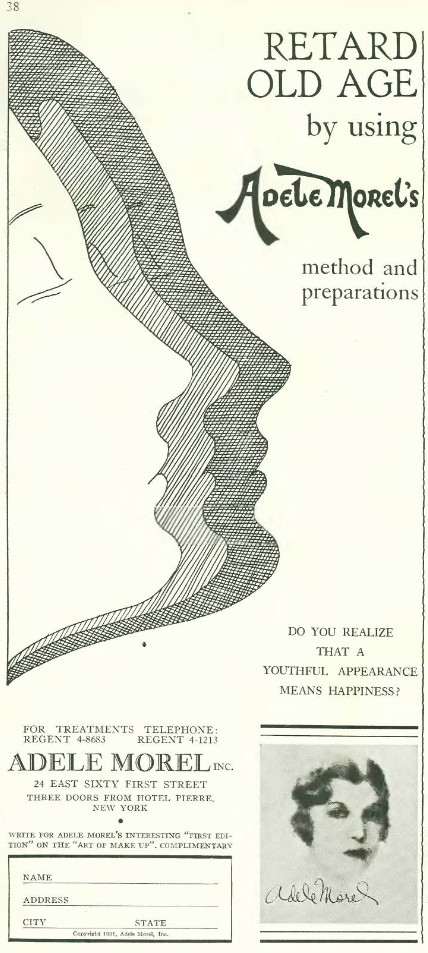
Adele Morel also wanted you to think about the future, and how to hold off those inevitable wrinkles…note the message near the bottom: “Do you realize that a youthful appearance means happiness?”…

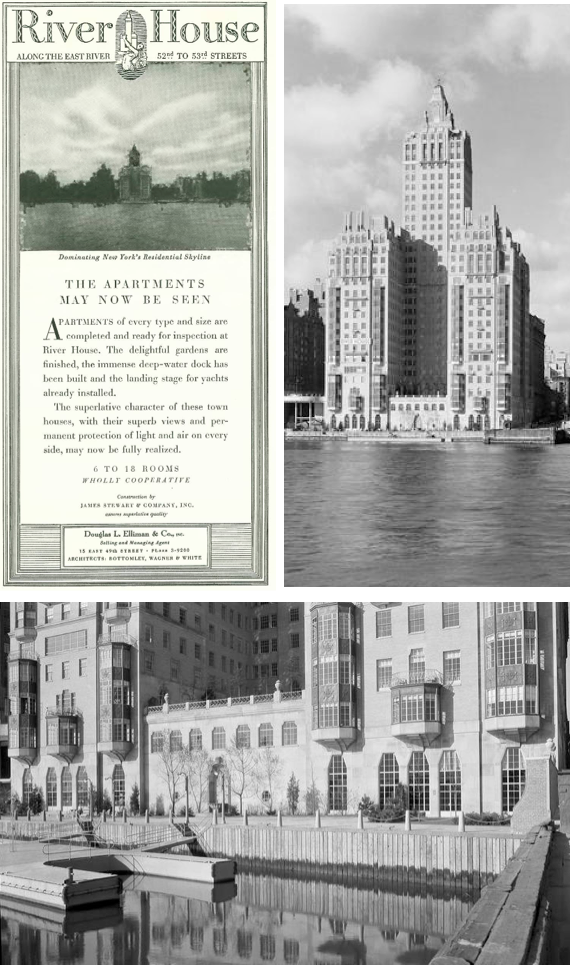
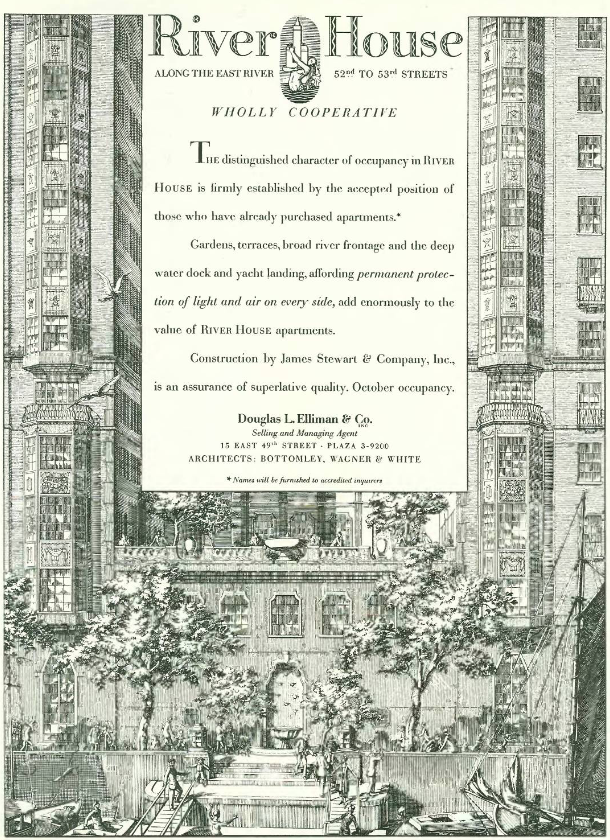
…I included this ad for River House because of its sumptuous detail…it rather resembles a 17th century European silk tapestry, and the people depicted look like they could be from that time as well…

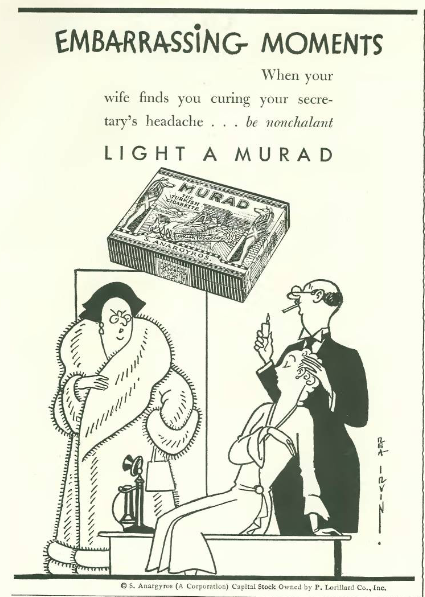
…speaking of another age, we have this Murad ad by Rea Irvin, illustrating office behavior that was quite common in the 20th century…

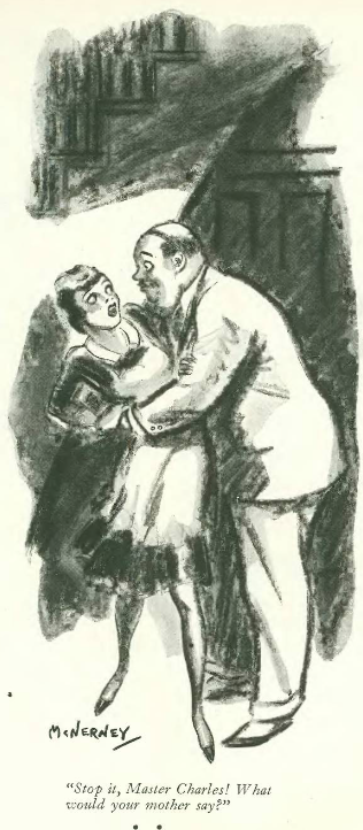
…on a related note, in the cartoons E. McNerney illustrated a “Me Too” moment…

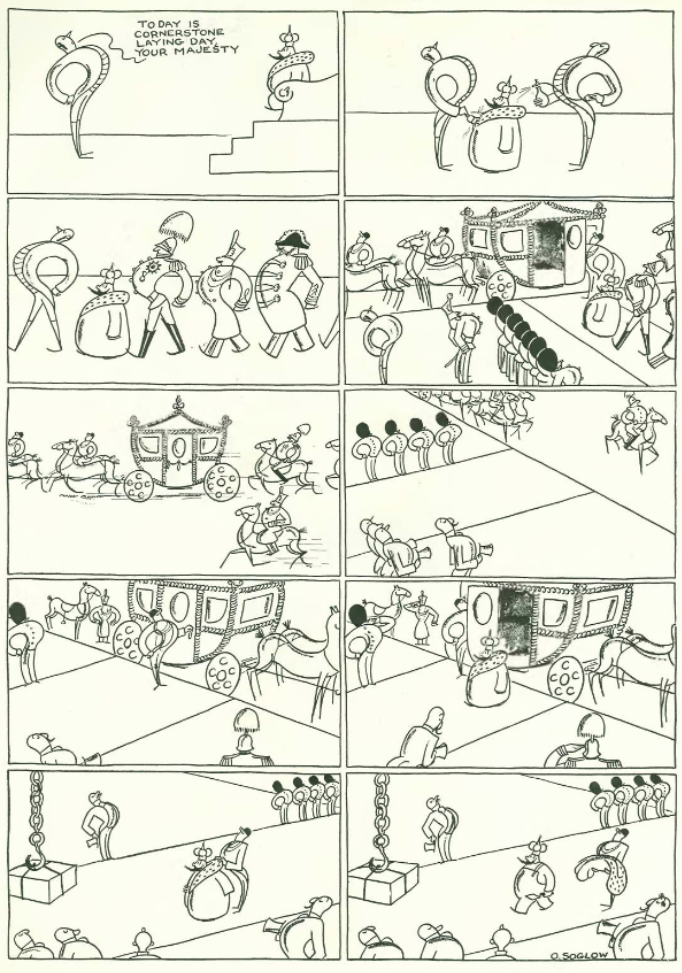
…when Otto Soglow published his first Little King strip in the June 7, 1930 issue, it caught the eye of Harold Ross (New Yorker founding editor), who asked Soglow to produce more. After building up an inventory over nearly 10 months, Ross finally published a second Little King strip, which you see below. The strip would become a hit, and would launch Soglow into cartoon stardom…

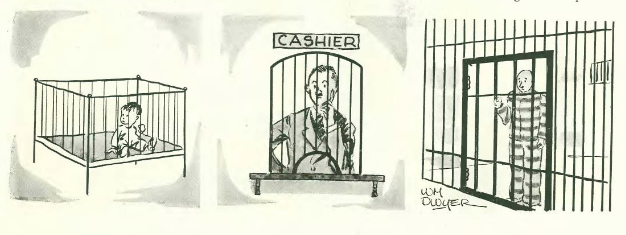
William Dwyer offered a dim view of a man’s stages of life in the first of two cartoons he contributed to The New Yorker

James Thurber shared tears with some sad sacks…

…in a few years Leonard Dove’s housewife would see her fears realized as another world war would loom on the horizon…

…and we end with Garrett Price, and an appreciation for fine art…

Next Time: Killer Queen…


And the Winner Is…

We lead off with a couple of winners from the Feb. 7, 1931 issue, beginning with a cover by Rea Irvin that takes measure of a lighter moment at the Westminster Kennel Club Dog Show.

Feb. 7, 1931 cover by Rea Irvin.

The 1930 Best of Show winner Pendley Calling of Blarney also took the top honor in 1931, giving the wire fox terrier back-to-back Westminster wins. Overall, terriers have dominated Westminster — wire fox terriers have won Best of Show fifteen times, with Scottish terriers a distant second, with eight wins.

TOP DOG…Pendley Calling of Blarney won back-to-back crowns in 1930-31 at Westminster Kennel Club Dog Show at Madison Square Garden. The dog’s owner, John Grenville Bates, mercifully retired the pooch after the ’31 win. (Westminster Kennel Club)
STANDARD? WHO ARE YOU KIDDING?…Standard poodle Siba won Best in Show at the 144th annual Westminster Kennel Club Dog Show on Feb. 11, 2020, at Madison Square Garden. (Reuters)

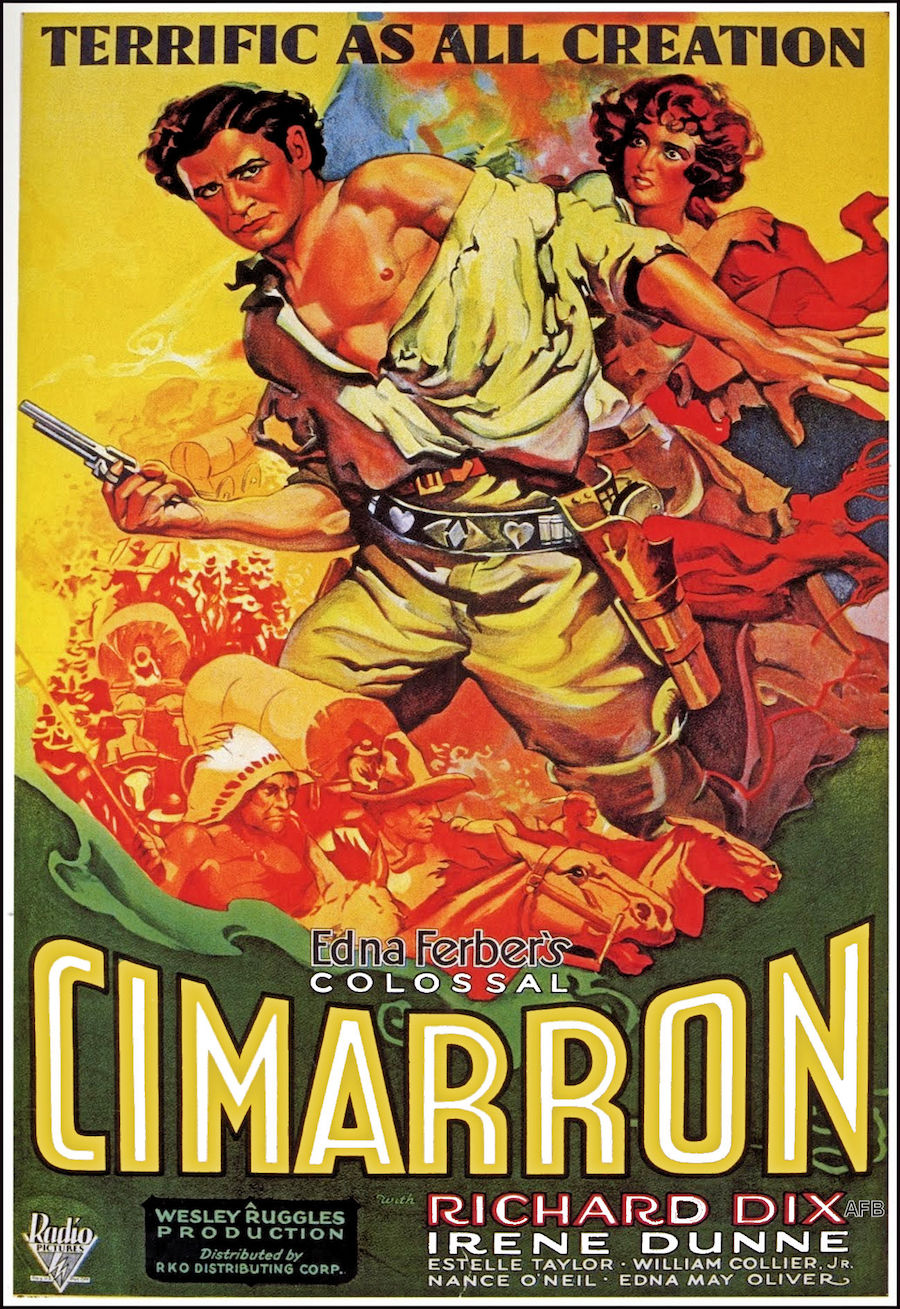
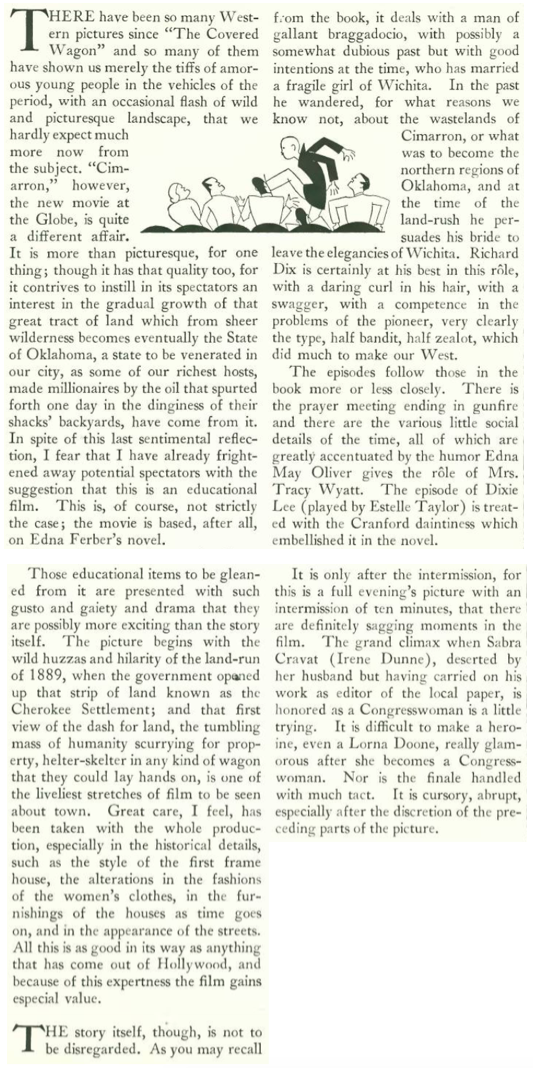
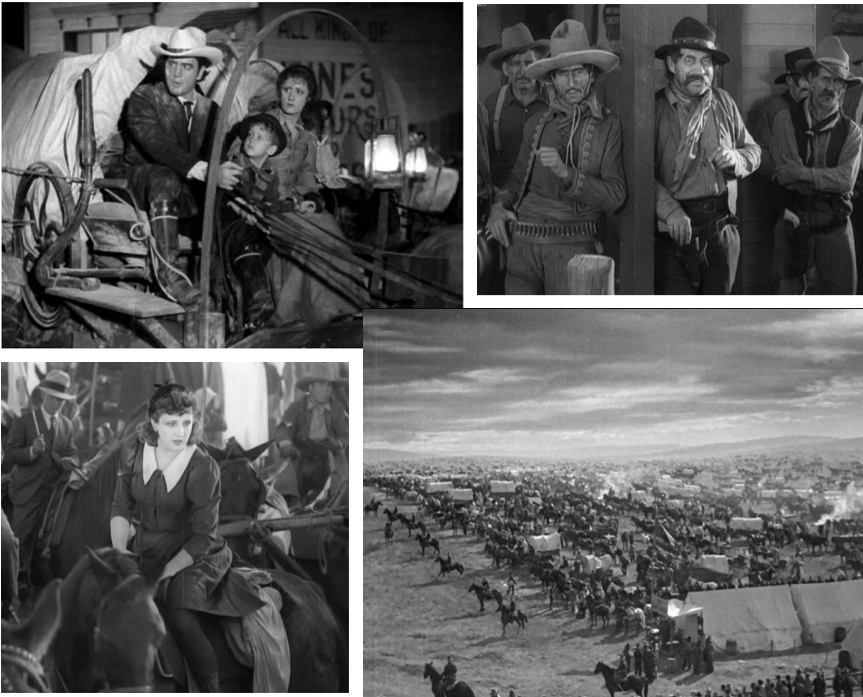
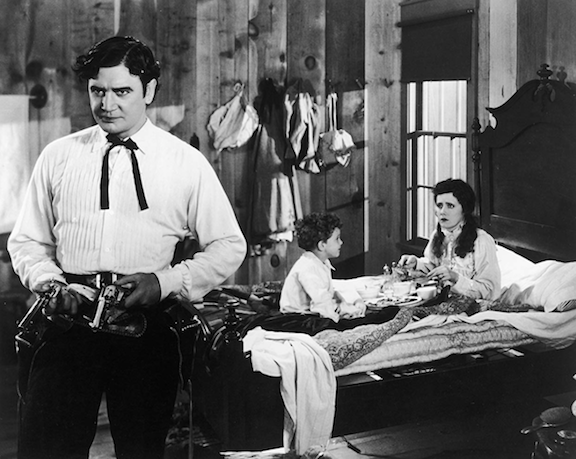
The other winner was Cimarron, the first film to receive more than six Academy Award nominations, winning three including Best Picture (then called Best Production). It was the first Western to win Best Picture, and it would be nearly sixty years until another Western, Dances with Wolves, would take the top honor.

HE LOST HIS SHIRT, TOO…

Despite some “sagging moments,” John Mosher mostly lavished praise on the film, which was showing at the Globe Theatre:

THAT’S NO WELCOME WAGON…Clockwise, from top left, Yancey and Sabra Cravat (Richard Dix and Irene Dunn) join the 1889 Oklahoma Land Rush with their son, Cim (Junior Johnston); a less-than-friendly greeting at a boomer town; wagons line up for the big land grab; a young prostitute, Dixie Lee (Estelle Taylor), outwits Yancey for a piece of prime property. (IMDB)
OH DEAR, THERE’S THAT LOOK AGAIN…Yancey (Richard Dix) takes it upon himself to establish order in the boomer town of Osage. On the bed are Yancey’s son, Cim (Junior Johnston) and wife Sabra (Irene Dunn). (IMDB)

 *  *  *

Handy Painter

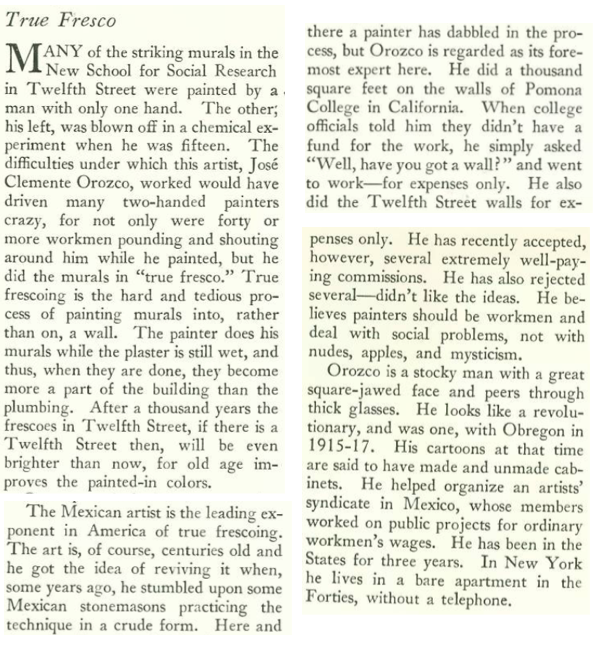
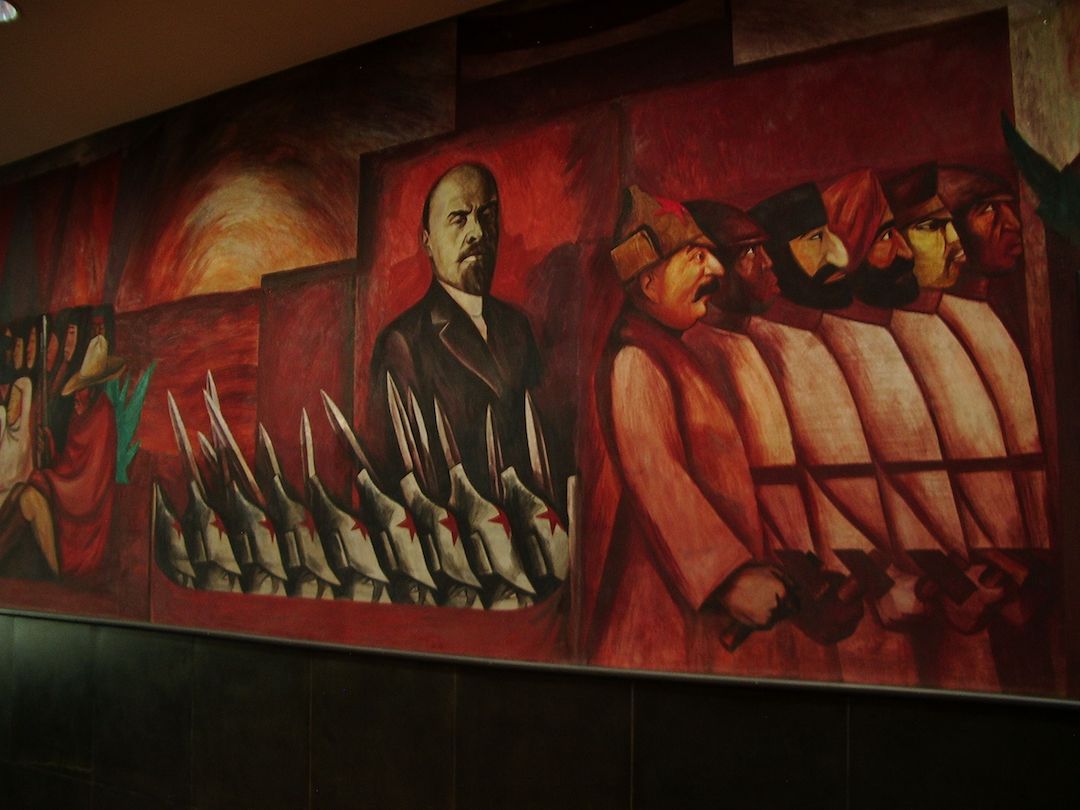
It is hard to imagine the struggles of one-handed painter José Clemente Orozco (1883-1949), who despite his handicap was able to complete huge murals in true fresco style (paint applied quickly on fresh, wet plaster), including five socially-themed frescoes at the Joseph Urban-designed New School. The murals included controversial depictions of Lenin and Stalin, but it wasn’t until the 1950s — during the McCarthy era — that school officials felt compelled to cover the images with a curtain. More protests followed, this time from faculty and students, and the curtains fell along with Joe McCarthy. “The Talk of the Town” looked in on the artist at work:

HE LOOKS FAMILIAR…José Clemente Orozco’s “The Struggle in The Occident”, 1930-1931, one of five frescoes at the New School. (Pinterest)

 *  *  *

Prescience of Mind

News reporter and author Elmer Davis submitted this humorous piece to The New Yorker doubtless thinking how preposterous, and therefore humorous, the following notion would be (a brief excerpt):

 *  *  *

Funny Cigarettes

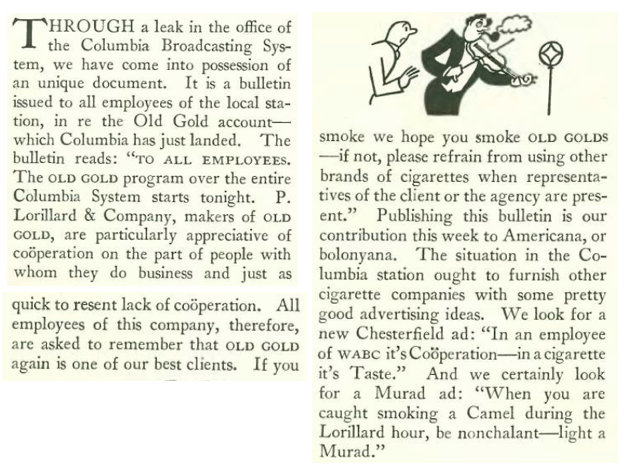
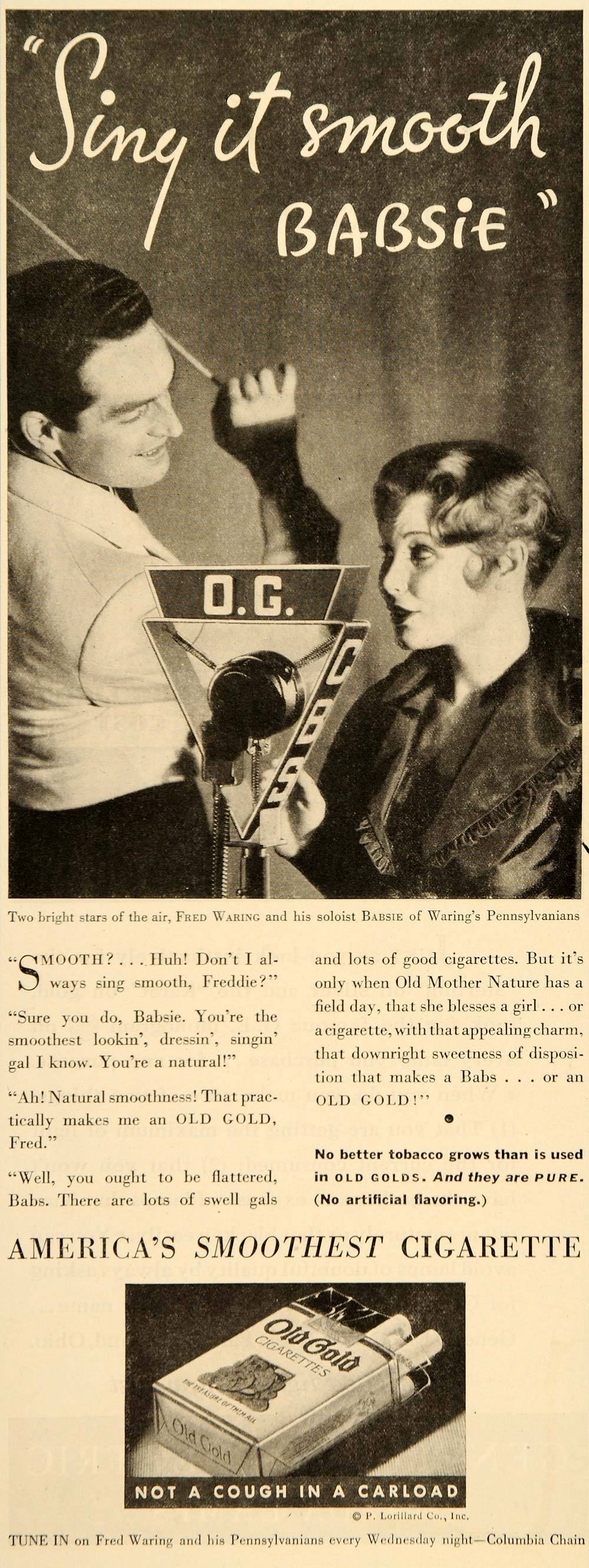
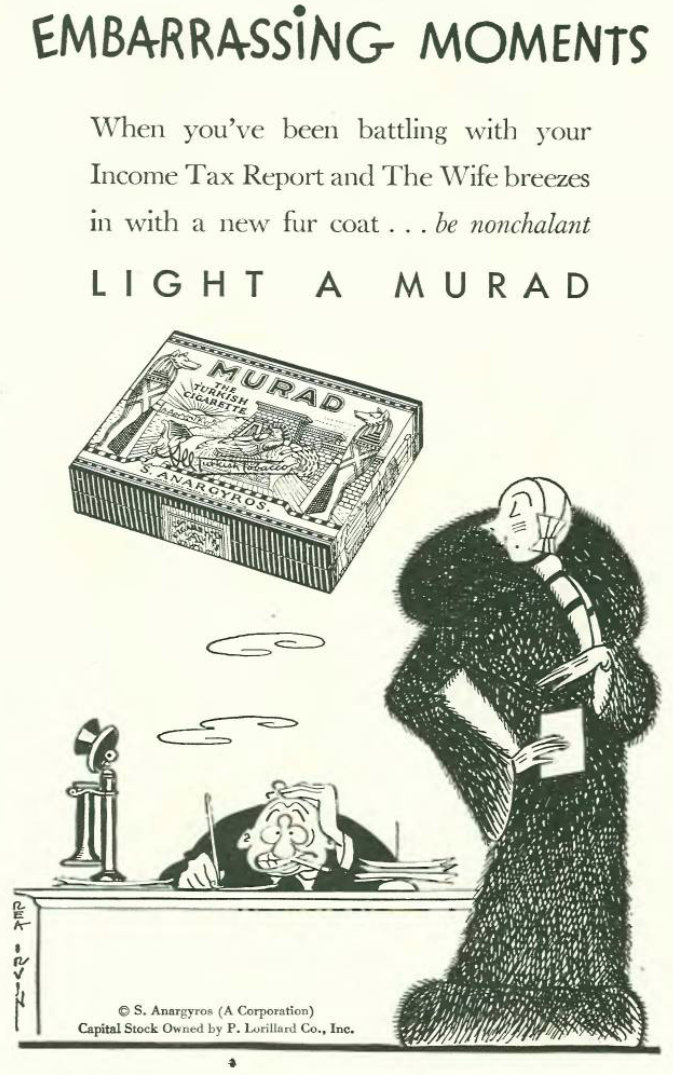
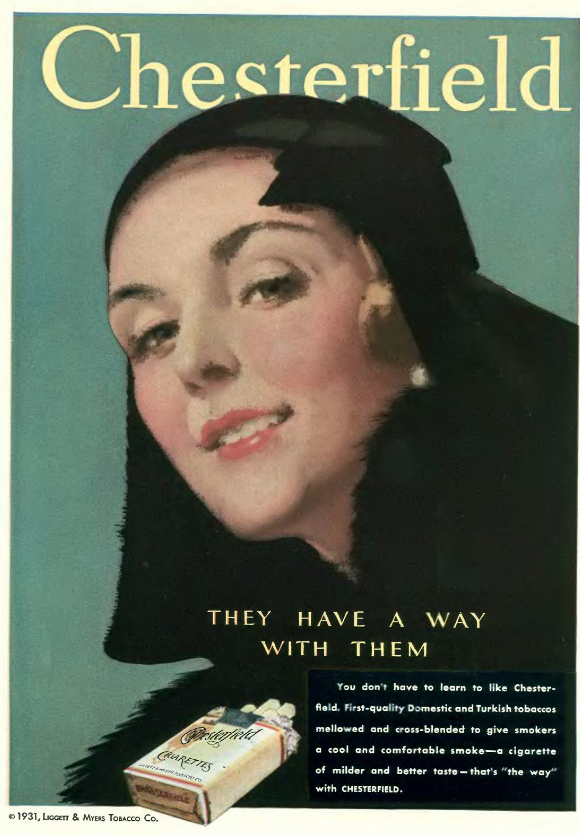
In the early years of broadcast radio (and later TV) tobacco companies rightly saw a huge gold mine in radio show sponsorships. So when CBS radio executives accepted a sponsorship from Lorillard (the makers of Old Gold), they realized they had a challenge on their hands. “Talk” explained:

COUGH ME A MELODY…The makers of Old Gold cigarettes had CBS in their clutches in this September 1933 ad featuring bandleader Fred Waring and singer Babsie. (period paper.com)

…The above “Talk of the Town” item referred to the famous Murad ads illustrated by The New Yorker’s own Rea Irvin

…while other advertisers were scaling back a bit due to the Depression, lovely full-color ads continued to flow from tobacco companies (and oil companies)…

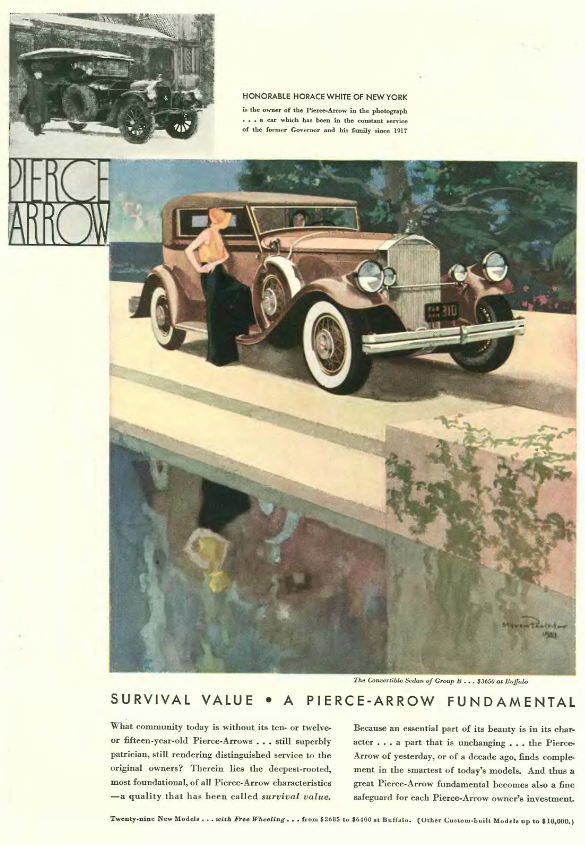
…Pierce-Arrow was also known for its sumptuous ads, but they wouldn’t save the luxury car maker from going under by the mid-1930s…

…Some less expensive black and white ads, such as this hand-lettered ad from Stein & Blaine, could be quite charming…

…speaking of charm, this ad from Arthur Murray could have used a little of it…note the stern visage of the woman, described as “typical of Arthur Murray’s staff of expert teachers”…

…on to our Feb. 7 cartoons, we have one of Peter Arno’s stock characters, the Sugar Daddy, in an awkward moment at a costume party…

…Arno’s party looked a lot more lively than this affair, illustrated by William Crawford Galbraith...

…and Carl Rose gave us this pair, who seem to having the best time of all…

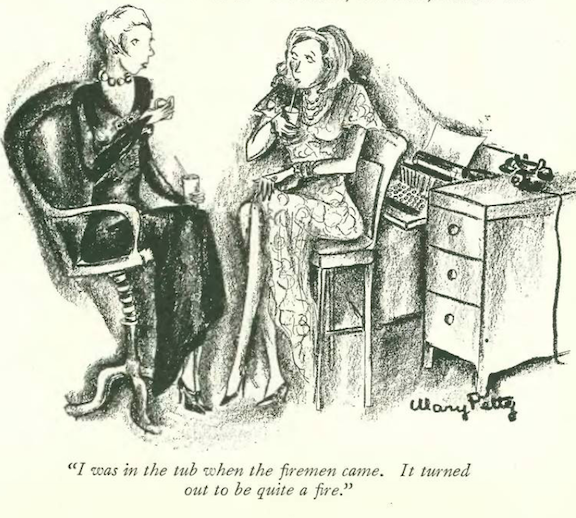
Mary Petty eavesdropped on a guileless young woman…
…and Gardner Rea paid a visit to the Met…

 *  *  *

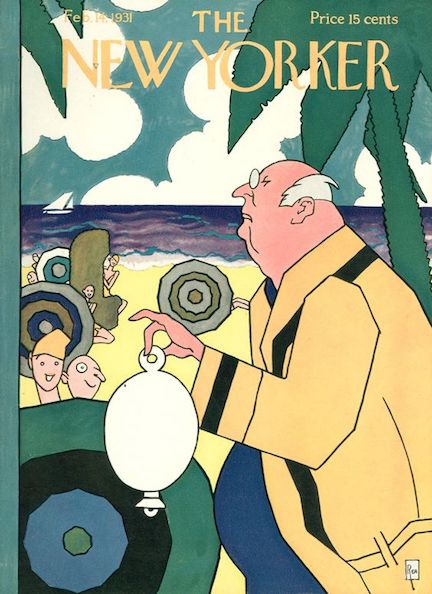
On to our Feb. 14 issue, and Gardner Rea once more…

Feb. 14, 1931 cover by Gardner Rea.

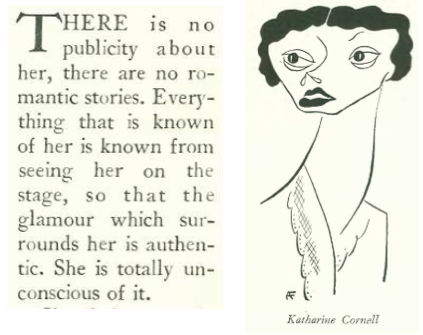
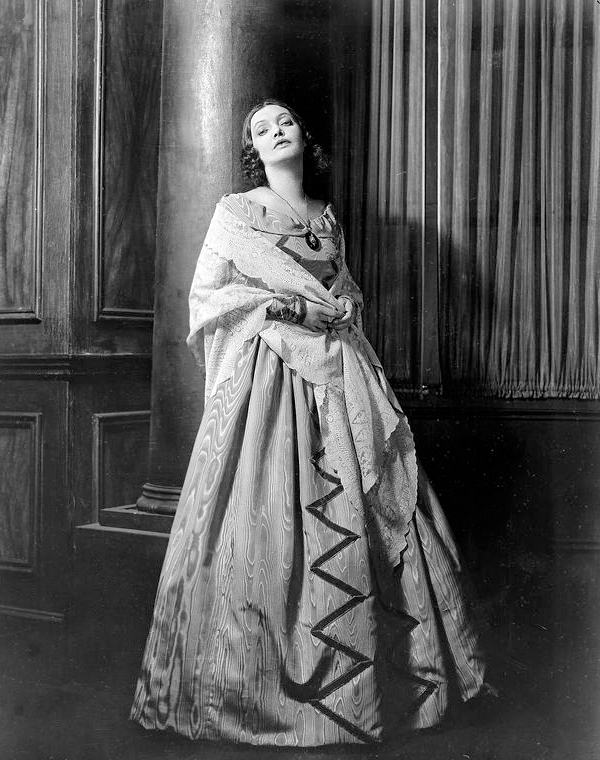
The Feb. 14 issue featured a profile of actress Katharine Cornell (1893-1974), written by cultural critic Gilbert Seldes. The caricature of Cornell is by Al Frueh. Excerpts:

Promotional photograph of Katharine Cornell as Elizabeth Barrett in the original 1931 Broadway production of The Barretts of Wimpole Street. It was her most famous role(Theatre Magazine, March 1931)

Cornell is considered one of the greatest actors of American theater, known for her eloquence and romantic stage presence. Seldes concluded:

 *  *  *

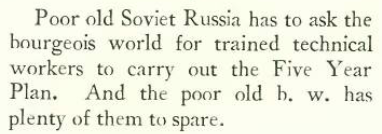
Strange Bedfellows

In his column “Of All Things,” Howard Brubaker referred to an exchange between American capitalists and Soviet Russians that resulted in the rapid industrialization of the Soviet Union. That actual story behind this effort is pretty amazing.

 *  *  *

Sneak Peek

Film critic John Mosher was so excited about Charlie Chaplin’s latest film that he offered this teaser to readers…

 *  *  *

From Our Advertisers

We have this ad from the developers of the Empire State Building, which was being readied for a May 1931 opening…

…the Empire State Building was erected on the site of the old Waldorf-Astoria Hotel. The new Waldorf-Astoria, also completed in 1931, was located more than 15 blocks away from its original site. Both the Empire State Building and the Waldorf Astoria would become Art Deco landmarks, and both shared the distinction of holding world records: the Empire State was the world’s tallest building (a record it would keep until 1970), and the Waldorf would claim the title of the world’s tallest hotel (until 1963)…

…on to our cartoonists, we have Ralph Barton contributing one of his last illustrations to the theater review section…

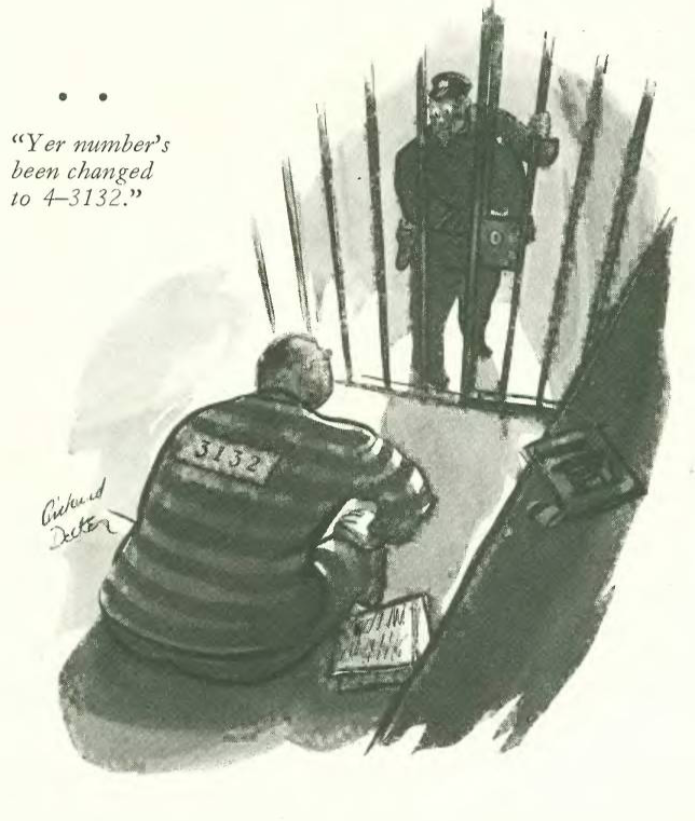
Richard Decker references a recent change in New York telephone numbers with this prison scene…
…Decker was referring to this bit of news, here interpreted by E.B. White in his Feb. 14 “Notes and Comment.”

James Thurber returned with his second-ever stand-alone cartoon for the New Yorker

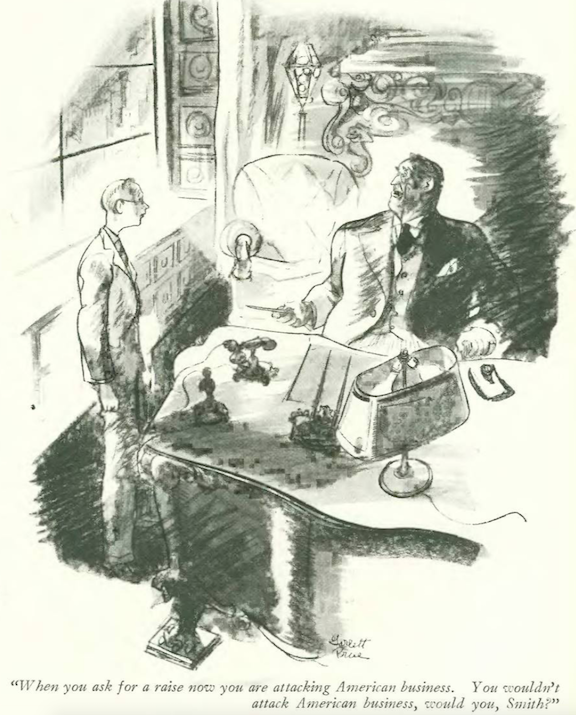
Garrett Price mined a theme that would become common in New Yorker cartoons: the tycoon vs. meek employee…

Nancy Fay gave us a glimpse of the seamier side of family life…

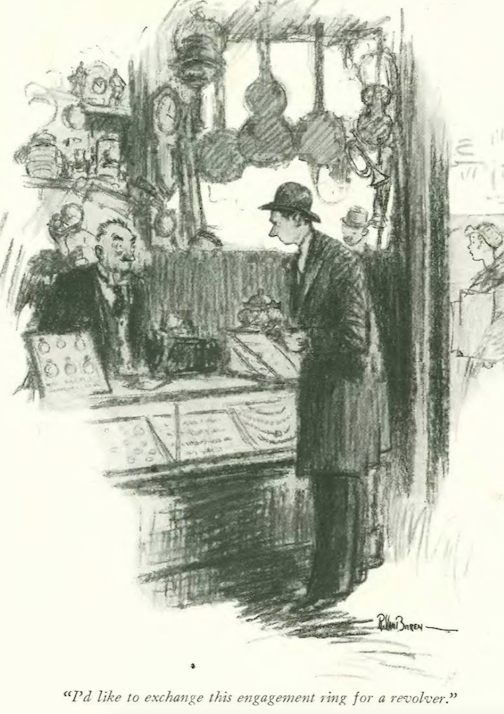
R. Van Buren goes even darker with this entry…

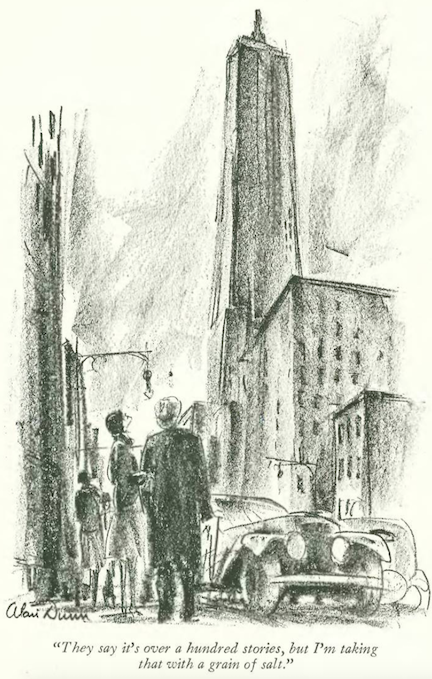
…and we end on a high note, with Alan Dunn

Next Time: Super Tramp…

Wickersham Sham

Introduce the topic of the Wickersham Commission at your next dinner party and you will most likely be answered with a puzzled silence.

January 31, 1931 cover by Constantin Alajalov.

However, in January 1931 it was THE topic of the month, especially among New Yorkers keen to see the end of Prohibition, which was the focus of the commission.

Established by President Herbert Hoover, the 11-member Wickersham Commission (officially, the National Commission on Law Observance and Enforcement) was not seeking to repeal the 18th Amendment, but rather to examine the criminal justice system under Prohibition, everything from police brutality and graft to the rapid rise of organized crime.

SOBER UNDERTAKING…George Wickersham was featured on Time’s Feb. 2, 1931 cover for his leadership on the National Commission on Law Observance and Enforcement, better known as the Wickersham Commission. (Time Inc.)

To the chagrin of many New Yorkers, the report (released on Jan. 7, 1931) called for even more aggressive enforcement of anti-alcohol laws.

This caused such a stir that The New Yorker dedicated the entire first page of “The Talk of the Town” to a satirical commentary furnished by E.B. White. An excerpt:

LEAVE MY NAME OUT OF IT…Former US Attorney General George Woodward Wickersham, left, was tapped by President Herbert Hoover to lead the National Commission on Law Observance and Enforcement. Humorist Will Rogers weighed in on the likely outcome of the Commission’s report. (Wikipedia/PBS)

Humorist Will Rogers also commented on the report in this letter published on page 19 of the Jan. 26, 1931 edition of The New York Times…

…Algonquin Round Table co-founder Franklin P. Adams, on the other hand, summed up the Commission’s report with a poem:

Prohibition is an awful flop.
We like it.
It can’t stop what it’s meant to stop.
We like it.
It’s left a trail of graft and slime
It don’t prohibit worth a dime
It’s filled our land with vice and crime,
Nevertheless, we’re for it.

Back to The New Yorker, Howard Brubaker weighed in with his column, “Of All Things,” correctly noting that the majority of Americans wanted an end to Prohibition laws despite the Commission’s recommendations…

…and Rea Irvin gauged the mood of the parlor crowd in light of the report:

 *  *  *

Polar Plunge

On to happier news, “The Talk of the Town” looked in on preparations for a North Pole trip by a refitted and renamed military submarine, Nautilus. An excerpt:

POLAR OBSESSED…Above, the Nautilus arrives at Plymouth, England, on June 26, 1931. It left New York City on June 4 on the first leg of a voyage that was to continue on to Spitsbergen, Norway and ultimately to the North Pole and a rendezvous with Germany’s Graf Zeppelin. At right, crew members Cornelius P. Royster, John R. Janson, and Harry Zoeller dine in the Nautilus galley, April 20, 1931. (amphilsoc.org)
HOW IT WORKED…The June 1931 issue of Modern Mechanics asked the question, “Will the Nautilus Freeze Under the North Pole?” Stay tuned. (Modern Mechanix)

 *  *  *

Dorothy, Abridged

Laid up with the flu, Dorothy Parker turned to some reading during her convalescence, only to find that the books provided to her (for review) were far from uplifting. One in particular, a censored version of D.H. Lawrence’s Lady Chatterley’s Lover, was downright galling. Excerpts:

FIFTY SHADES OF EMBARRASSMENT…D.H. Lawrence’s Lady Chatterley’s Lover was published privately in 1928 and swiftly banned by the United States the following year. Amazingly, the first unexpurgated edition would not be published in the U.S. until 1959, in the edition pictured above issued by the fledgling Grove Press. (mhpbooks.com/orbooks.com)

 *  *  *

Old Before Her Time

Lois Long was only 29 years old when she wrote her “Doldrums” series for The New Yorker, but the chronicler of Jazz Age nightlife who once epitomized the flapper lifestyle felt much older given how much the world had changed in just a few short years. She was particularly appalled by the younger generation’s embrace of “health and vitality” over her own generation’s lust for the party life…

GETTING THEIR KICKS…Lois Long was appalled by the new generation’s healthier pursuits, left, contrasted with the flapper lifestyle Long embodied in the 1920s. (Pinterest)

…Long was mother to a toddler at the time, and would divorce husband and New Yorker colleague Peter Arno in the spring. This, no doubt, contributed to her feeling of estrangement from the younger generation:

Endnote: Bernarr MacFadden (1868-1955), referred to above, was an early proponent of body building and healthy diets that anticipated the rise of physical culture icons such as Charles Atlas and Jack LaLanne.

*  *  *

The Last Warrior

Paris correspondent Janet Flanner noted the passing of 78-year-old French Field Marshal Joseph Joffre, the last of the great World War I military leaders. Note that Flanner referred to Joffre’s war as “the world war,” since the next world war was still on the horizon.

AU REVOIR…French Field Marshal Joseph Joffre (saluting) in 1922. (Library of Congress)

 *  *  *

From Our Advertisers

We have two of New York’s finest hotels advertised along with the newly opened National Hotel in Havana, Cuba. All three were under the same management at the time. The Cuban hotel would be heavily damaged two years later in a coup led by Fulgencio Batista. It would be restored, and eventually nationalized by Fidel Castro. The Savoy-Plaza would not be so lucky, demolished in 1965 to make way for the General Motors Building…

NOW YOU SEE IT, NOW YOU DON’T…The elegant Savoy-Plaza (left) was razed in 1965 to make way for the General Motors Building. (Wikipedia)

…and we have this lovely color ad from the makers of Alcoa aluminum chairs, which bespoke “the new vogue.” Alcoa created the market for aluminum furniture in the 1920s in an effort to increase demand for its aluminum products. It obviously worked, as all kinds of aluminum chairs and desks became ubiquitous by mid-century, especially in the workplace…

…on to our cartoonists…the Jan. 31, 1931 issue marked a big moment in New Yorker cartoons, as it featured James Thurber’s very first…

Alan Dunn showed us a man who could not be distracted from financial woes…

William Steig settled in as a New Yorker regular…

Carl Rose gave us a lot of sour faces in a bank lobby…

…and Gluyas Williams demonstrated the effects of decaf coffee…

…and before I go, here is a scene from the Third Academy Awards, which are referred to as the 1931 awards, although they were actually held on Nov. 5, 1930 in the Fiesta Room of the Ambassador Hotel in Los Angeles….

(oscars.com)

Next Time: And the Winner Is…