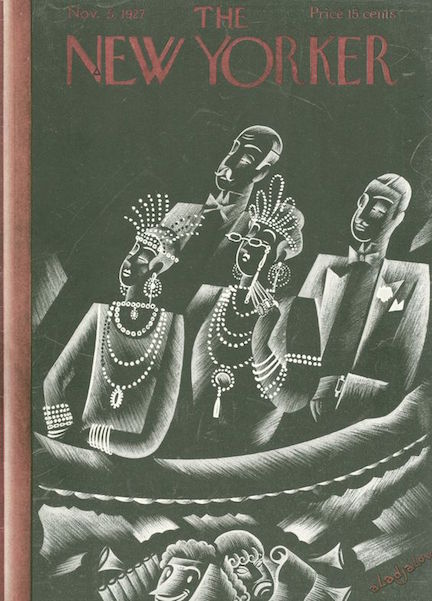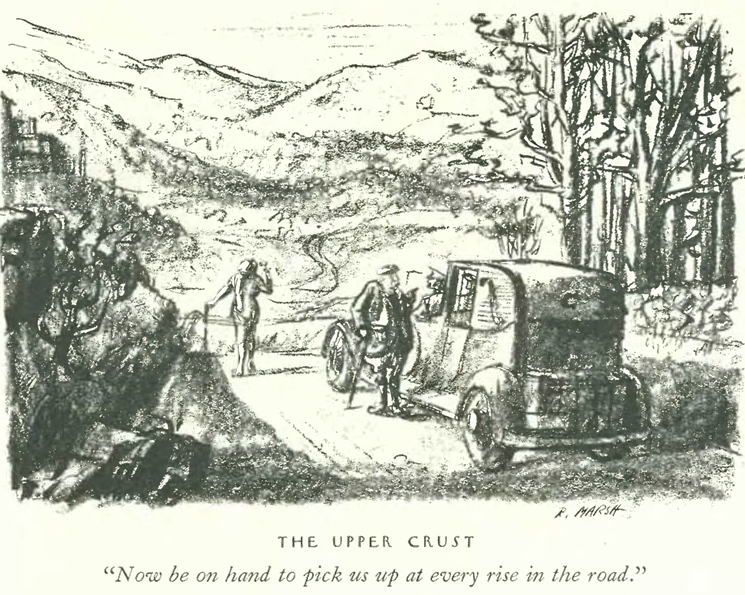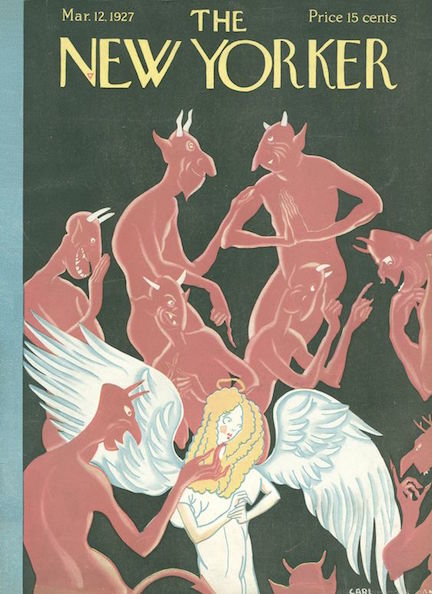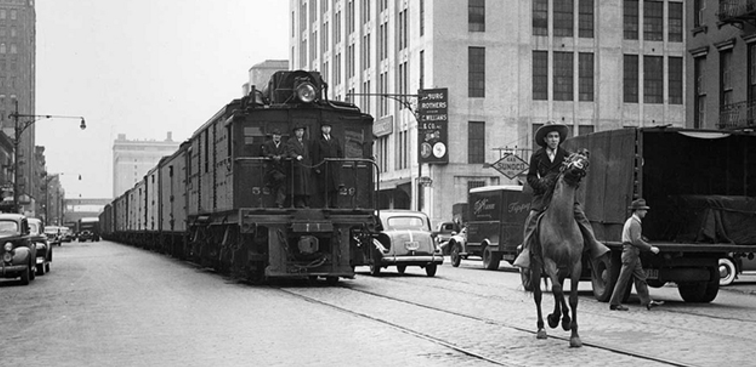
The Ephemeral City

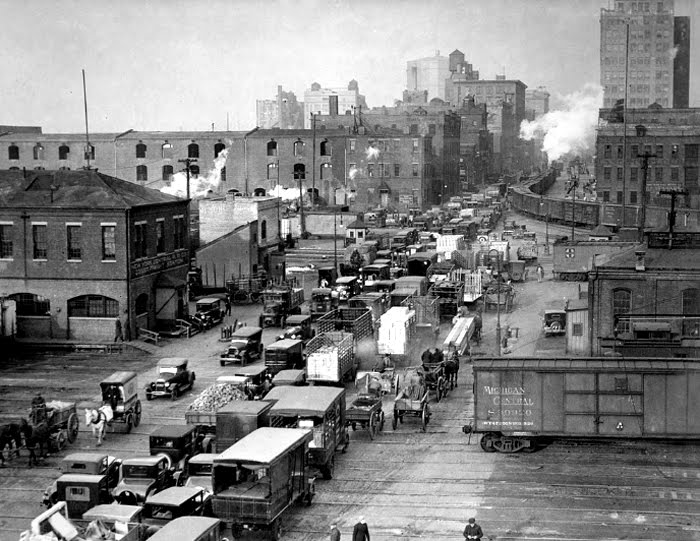
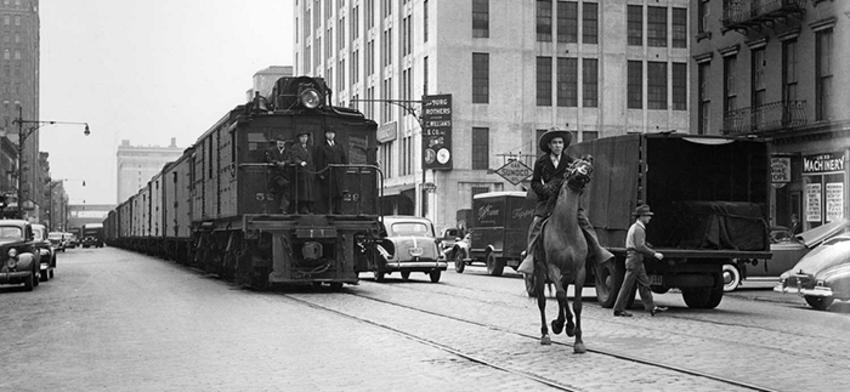
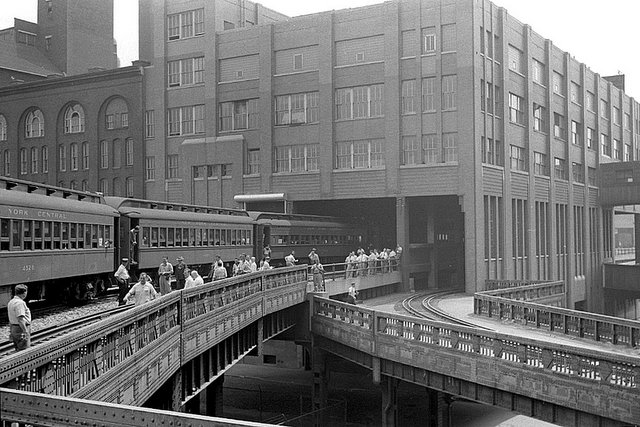
Continuing to explore the Oct. 8, 1927 issue, The New Yorker editors were taking into account the rapid changes around the bustling heart of the city, Grand Central Terminal at 42nd Street and Park Avenue.

2e0e046af2a088471e3deb71d8b8de57-1
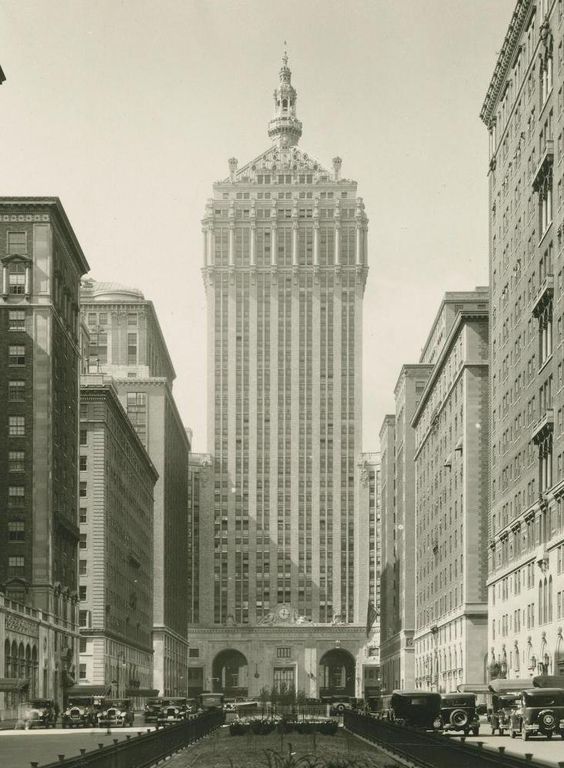
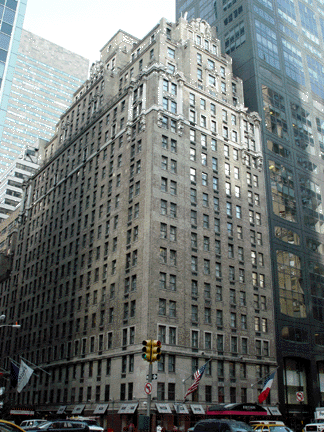
EDIFICE…The New York Central Building (now the Helmsley Building) was built in 1929 to span Park Avenue near Grand Central Terminal. The unique design allowed Park Avenue to pass through the building, connect to a divided aerial highway around Grand Central Terminal to 42nd Street, and then back to street level. (skyscrapercity.com)

Their subject was the New York Central Building, which was slated to become  the tallest structure in the great “Terminal City” complex.

screen-shot-2016-12-06-at-1-03-40-pm

screen-shot-2016-12-06-at-1-03-51-pm

The New Yorker commented that the new building would “remove a section from the sky.” Just 34 years later, in 1963, more sky would be removed when the massive Pan Am Building would open at 200 Park Avenue and dwarf the New York Central Building.

screen-shot-2016-12-09-at-10-31-57-am
NEW KID ON THE BLOCK…The once-massive New York Central Building seemed to shrink in the shadow of the Pan Am (now Met Life) building. (skyscrapercity.com/NY Times)

*  *  *  *  *

In the same issue The New Yorker lauded the opening of the Savoy-Plaza Hotel, which overlooked Central Park at Fifth Avenue and 59th Street.

637f21ae66e26bccf2a38bfeb74215a8
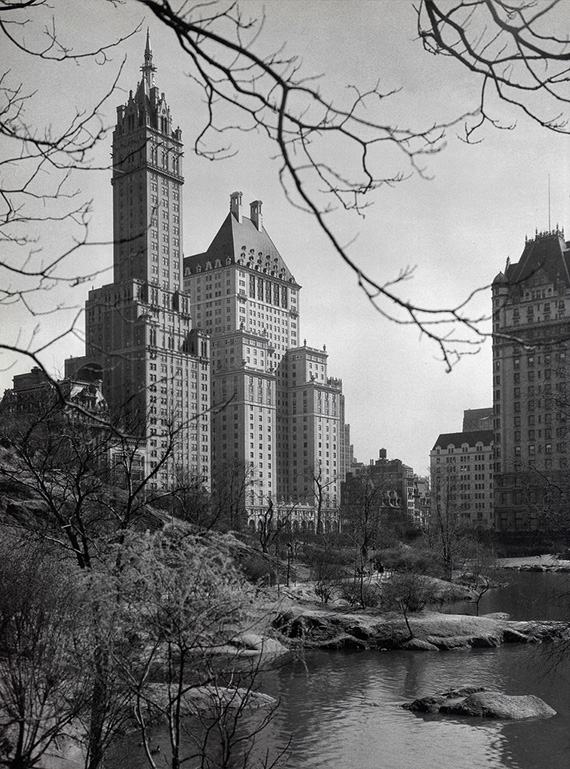
GRAND TRIO…The Savoy-Plaza (center) sits grandly between the Sherry-Netherland, left, and the Plaza Hotel (partial, at right) in 1928. (openbuildings.com)

screen-shot-2016-12-06-at-1-14-54-pm

screen-shot-2016-12-12-at-8-46-25-am
SHE’S STILL THERE…The “nude lady in the fountain” in front of the Savoy-Plaza is Karl Bitter’s Abundance, which sits atop the Pulitzer Fountain. (Museum of the City of New York/Wikipedia)

Harry Black, the owner of the nearby Plaza Hotel, built the Savoy-Plaza on a site previously occupied by the old Savoy Hotel (built in 1890). The Savoy-Plaza, designed by McKim, Mead & White, was intended to serve as a newer and less stuffy companion to the older Plaza Hotel.

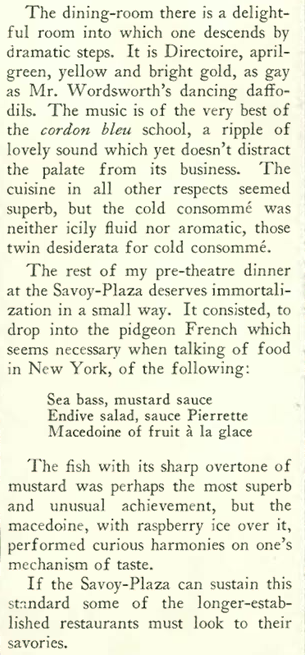
Lois Long paid a visit to the new Savoy-Plaza and offered these observations in Oct. 15 issue’s “Tables for Two”…

screen-shot-2016-12-09-at-12-20-48-pm

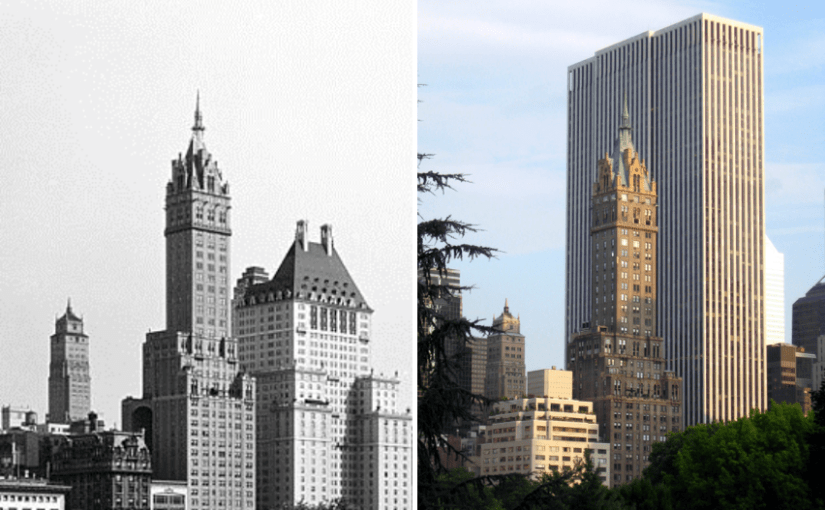
In 1958 the Savoy-Plaza was sold to Hilton Hotels and renamed the Savoy Hilton. Hilton sold the hotel to investors in May 1962. In August 1964, the hotel’s planned demolition was announced amid significant public outcry and protests. The hotel remained open during the 1964/1965 New York World’s Fair, but was demolished by early 1966. It was replaced in 1968 with the General Motors Building.

screen-shot-2016-12-09-at-9-44-50-am
DOWN IN FRONT…the Sherry-Netherland and Savoy Plaza Hotels in 1929 (left). At right, the same view today. (Pinterest/Wikimedia)

 *  *  *  *  *

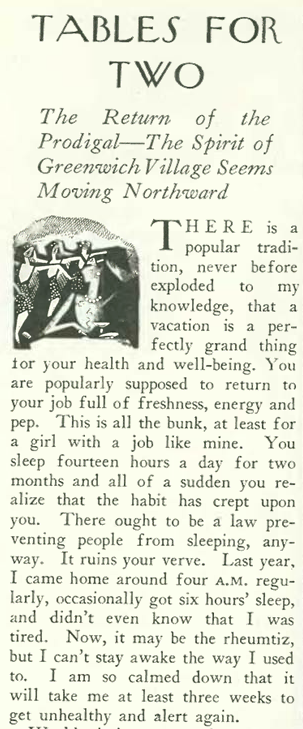
On Oct. 8, 1927 Lois Long revived her “Tables for Two” column after a summer hiatus. She had married her New Yorker colleague Peter Arno in August, and no doubt was returning from a honeymoon. Maintaining her ruse that she was single and possibly middle-aged and writing under her pen name, Lipstick, Long referred to her absence as a “vacation”…

screen-shot-2016-12-06-at-1-31-47-pm

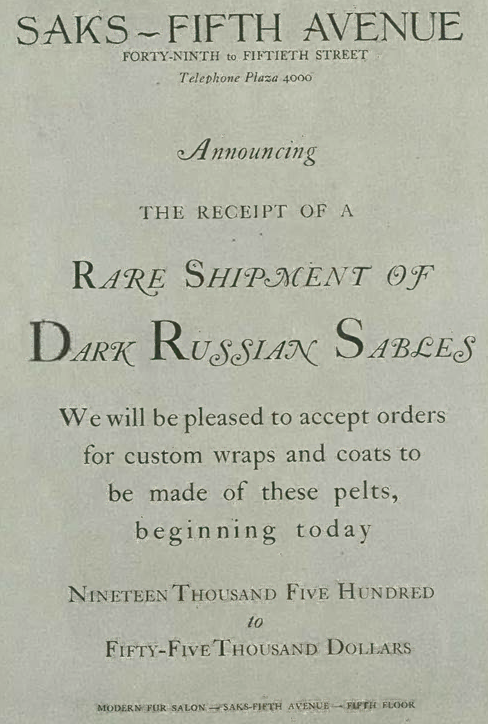
And finally…in the Oct. 8 issue this advertisement from Saks appeared opposite “The Talk of the Town.” In those high times before the market crash some folks apparently had the means to to buy a Russian sable for prices ranging from $19,500 to $55,000–the equivalent range today would be roughly $261,000 to $735,000…

screen-shot-2016-12-09-at-9-02-32-am

Next Time: Age of the Talkies…

cca81fb3c6aeb61c01f52c8dc5c3c05b


The Movies Take Wing

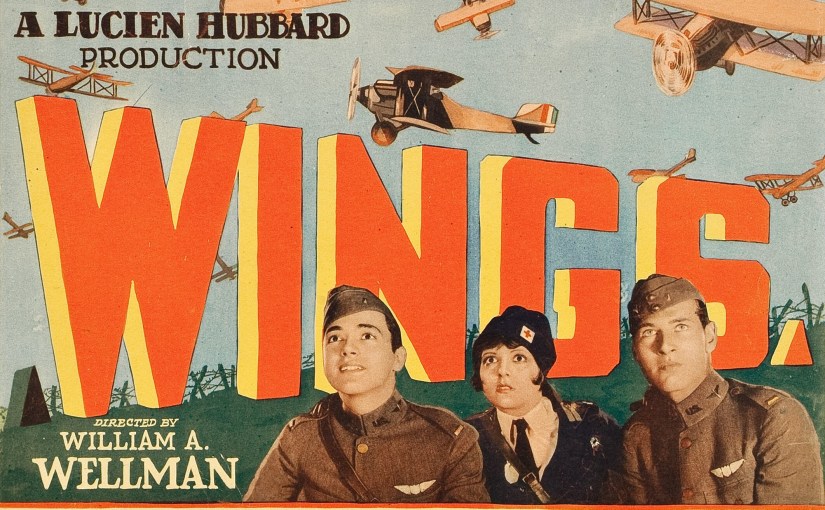
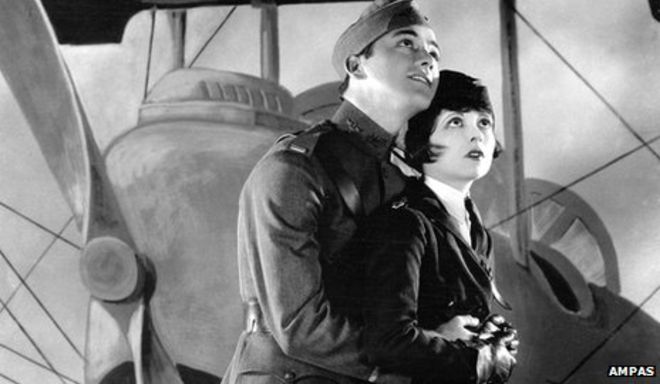
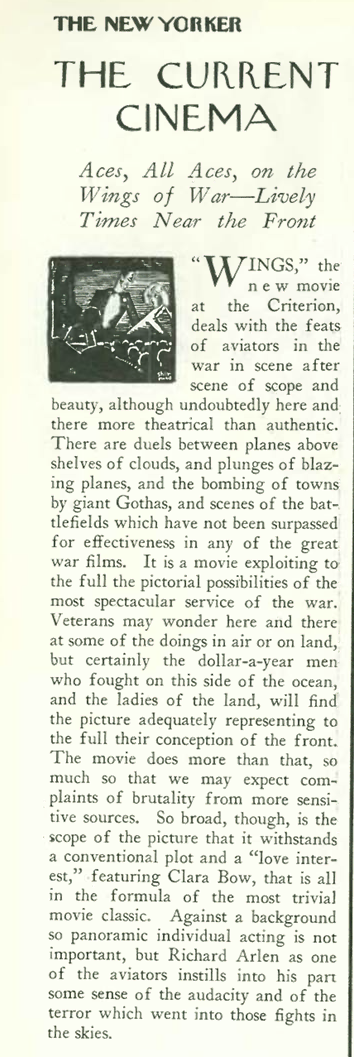
The First Academy Award for Best Picture went to Wings, a romantic action-war picture directed by William Wellman and featuring Paramount’s biggest star at the time, the “It Girl” Clara Bow and a young Gary Cooper in a role that would launch his Hollywood career.

31163f0a903d36d43f89b8495fe4e9a4
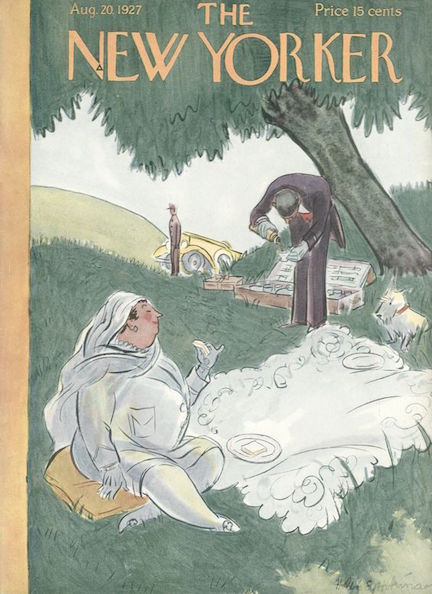
August 20, 1927 cover by Helen Hokinson.

The film was shot on location at Kelly Field in San Antonio, Texas, on a budget of $2 million (about $27 million today). About 300 pilots were involved in filming  realistic (and dangerous) air-combat sequences using both mounted and hand-held cameras.

_57942979_wings_pose_hi
LOFTY AMBITIONS…Charles “Buddy” Rogers and Clara Bow in Wings, 1927. (BBC)

wings

william-wellman
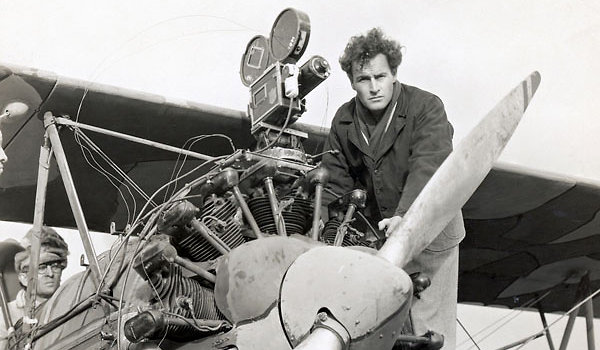
NO CGI HERE…Director William Wellman, during production of Wings, 1927. (Paramount Pictures via New York Times)
photo33chic_0632
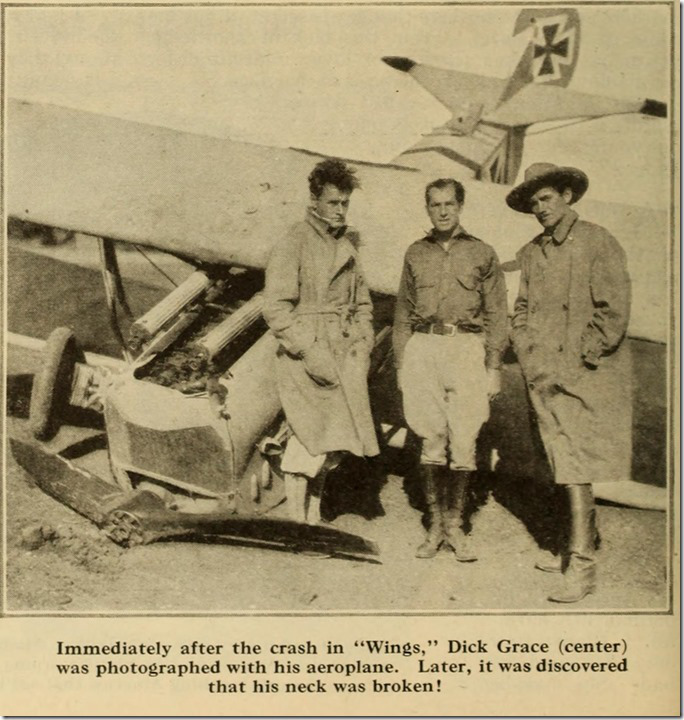
INSURANCE RISK…Stunt pilot Dick Grace specialized in crashing planes for films, and was one of the few stunt pilots who died of old age. (ladailymirror)

 *  *  *

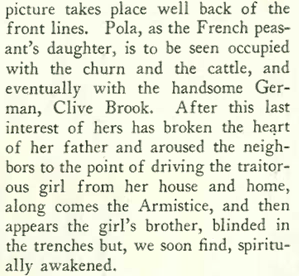
We leave the skies for the trenches in another World War I film–Barbed Wire–that was entertaining New Yorkers in 1927…

barbed-wire-1927-image-10
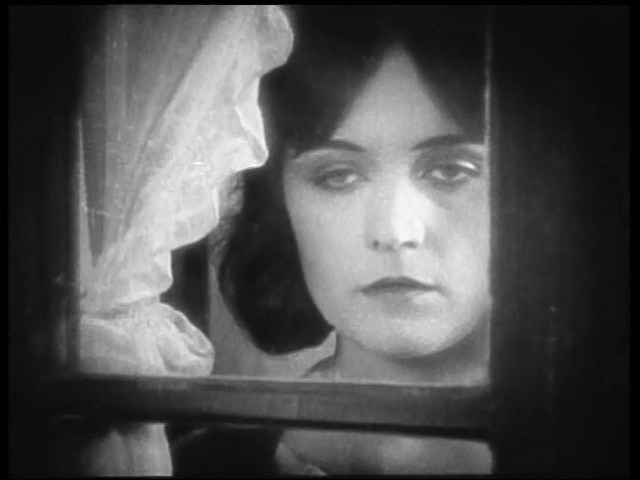
LOOKS MORE INTERESTING OUT THERE…Pola Negri watches the Germans in Barbed Wire, 1927. (Wikipedia)

screen-shot-2016-11-15-at-12-53-17-pm

screen-shot-2016-11-15-at-12-53-28-pm

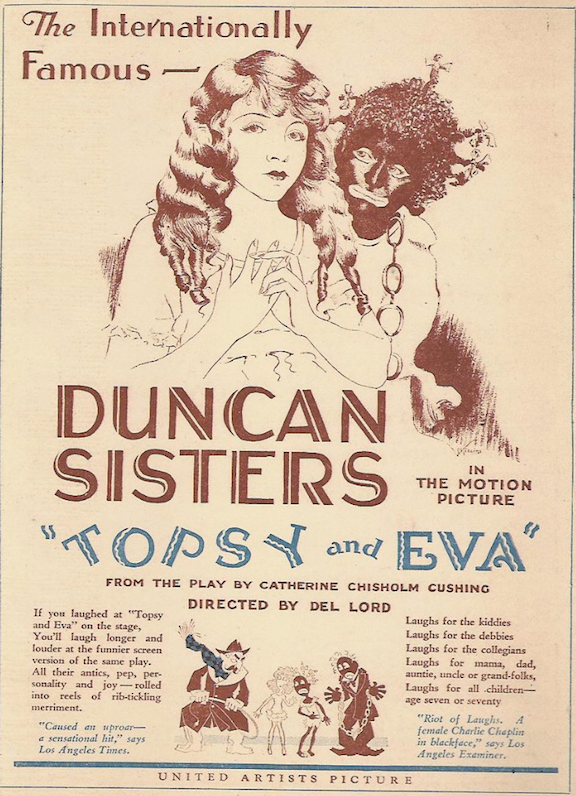
The Duncan Sisters were back, this time on the silver screen in an adaptation of their Broadway hit play, Topsy and Eva. One of the sisters performed in blackface, which was acceptable to white audiences of the time (including New Yorker critics). You can read more about this duo in my recent blog entry, Fifteen Minutes is Quite Enough.

screen-shot-2016-11-21-at-4-24-40-pm
Advertisement for the film, Topsy and Eva, 1927. (nilsasther.blogspot.com)

screen-shot-2016-11-15-at-12-53-42-pm

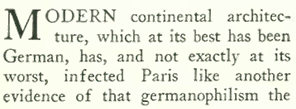
Meanwhile, Paris correspondent Janet Flanner was noting some modern influences in the city thanks to the influence of the German Bauhaus…

screen-shot-2016-11-15-at-12-55-16-pm

genet-mod-arch

002_mallet_stevens_rue_mallet_stevens_paris_theredlist
Rue Mallet Stevens was designed by Paris-based architect, designer and production designer Robert Mallet-Stevens, who founded the Union of Modern Artists (UAM) in 1929. (theredlist.com).

*  *  *

From the “they couldn’t see it coming” department, this item in “The Talk of the Town” caught my eye. We have since learned that carbon emissions are indeed taking a toll on human life…

screen-shot-2016-11-15-at-12-39-27-pm

screen-shot-2016-11-15-at-12-39-36-pm

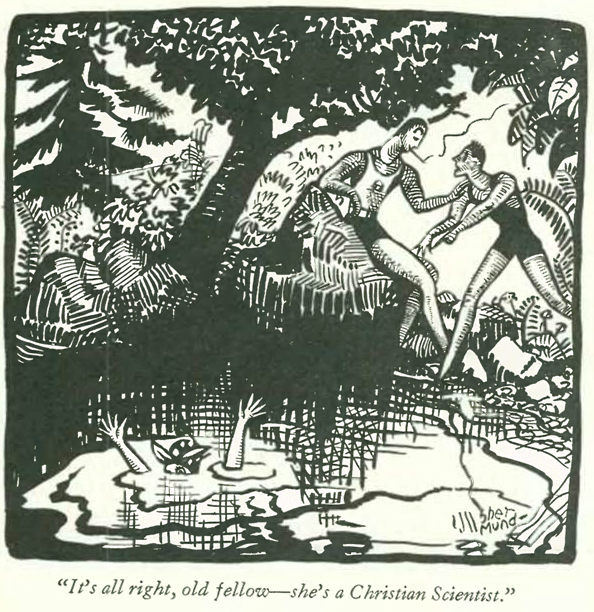
…and a couple of cartoons from this issue, this one courtesy of Barbara Shermund

screen-shot-2016-11-15-at-12-40-32-pm

…and this from an unidentified cartoonist (Dussey?) that gives us a glimpse of the world to come thanks to merger of technology and tedious, proud parents…

screen-shot-2016-11-15-at-12-46-17-pm

*  *  *

And to end on a “Wings” theme, the following week’s issue…
029648b8835cd8a9600d9dc4caf29b32
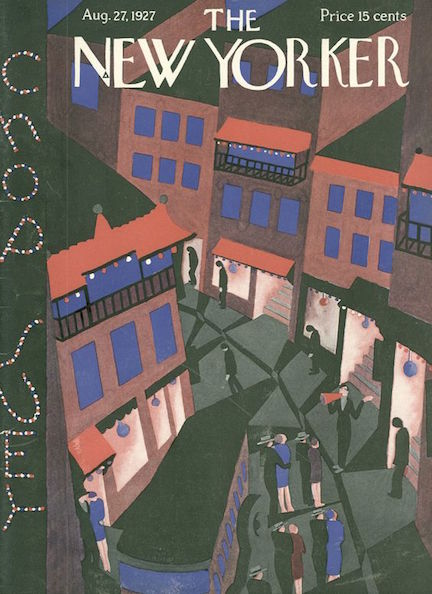
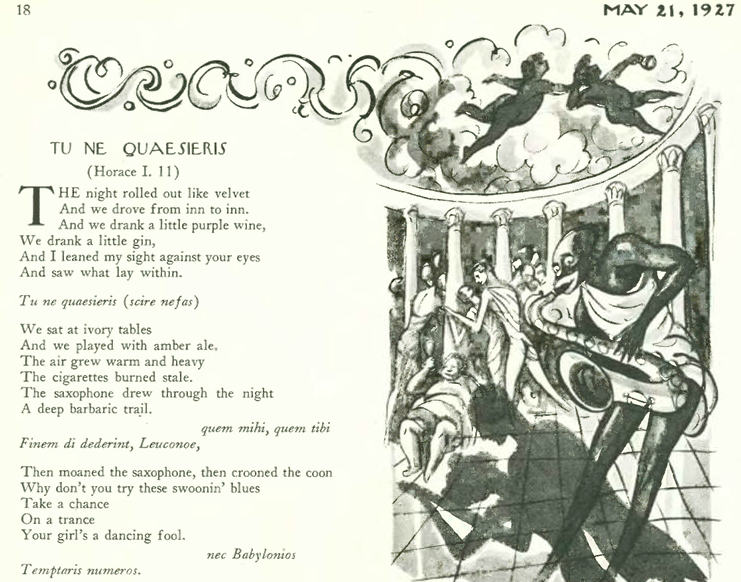
August 27, 1927 cover by Theodore G. Haupt.

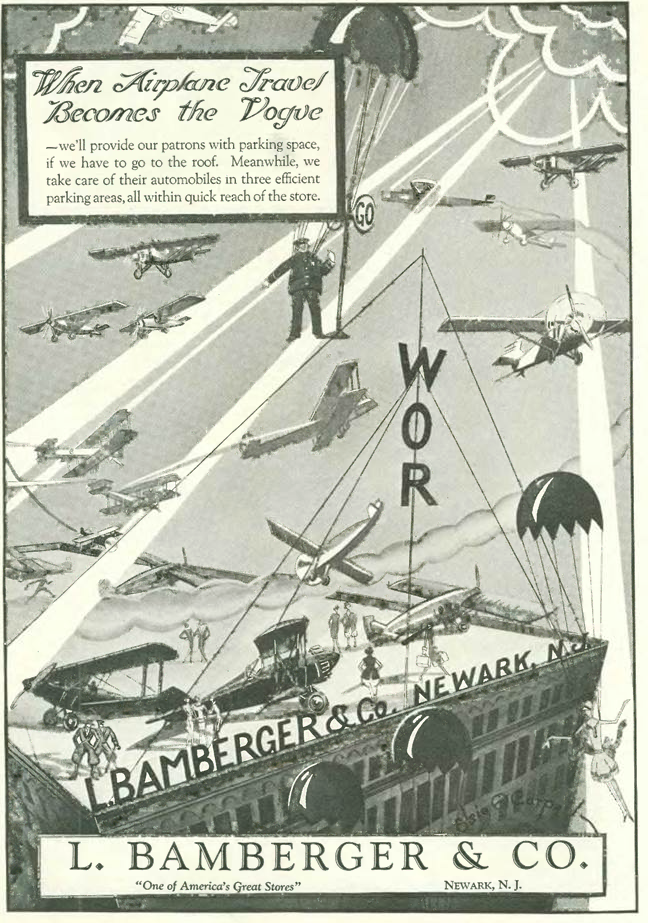
…offered this advertisment from L. Bamberger & Co. that gave us a tongue-in-cheek glance at the future of aviation…

screen-shot-2016-11-15-at-12-58-09-pm

Next Time: The Wages of Beauty…

Île-de-France

On June 22, 1927, the legendary French ocean-liner, the Île-de-France, traveled from Le Havre to New York on its maiden voyage, soon to be greeted by the American media and the thousands who would crowd the docks at New York Harbor to see the great ship.

80c5240bf5ffaaff418de94b7e176525
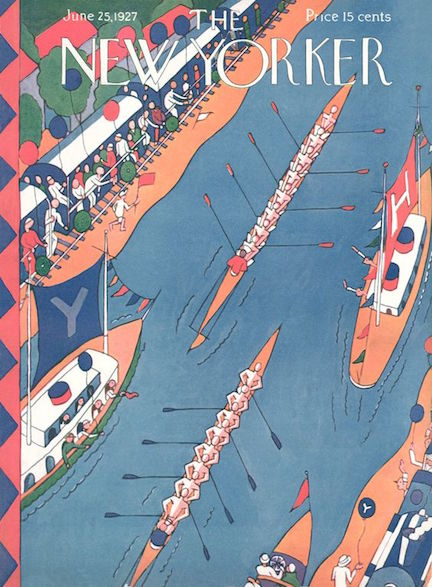
June 25, 1927 cover by Ilonka Karasz.

Among those anticipating the visit was The New Yorker, which offered this account in “The Talk of the Town” for the June 25, 1927 issue:

screen-shot-2016-10-14-at-9-46-05-am

screen-shot-2016-10-14-at-9-46-18-am

screen-shot-2016-10-14-at-9-46-27-am

ss_ile_de_france_c1935
PRIDE OF FRANCE…Postcard image of the Île-de-France from 1935. During a post-war refurbishment, the three funnels were replaced with a pair of stockier, more stylish funnels. (Wikipedia)

The Île-de-France was unique in that it was the first ocean-liner to have an interior design that didn’t imitate “shore-style” interiors that resembled rooms in manor houses or grand hotels. The trend-setting ship sported a modern, art deco look that celebrated the present and the future.

mainfoyer
IN WITH THE NEW…The Main Foyer & Grand Staircase of the Île-de-France,(newyorksocialdiary.com)
c1fe5bedcb3cb40a005ca4aa6672195c
LEAVE YOUR FLIP-FLOPS AT HOME…The first-class dining room in the Île-de-France. (newyorksocialdiary.com)

Note that these photos do not contain images of water slides or all-you-can eat buffets. An ocean voyage, if you could afford it, was an elegant affair. The Île-de-France was especially popular among wealthy Americans who liked its stylish, youthful vibe.

The Île-de-France served as a troop ship during World War II, and in 1956 played a major role in rescuing passengers from the sinking Andrea Doria off the coast of Nantucket.

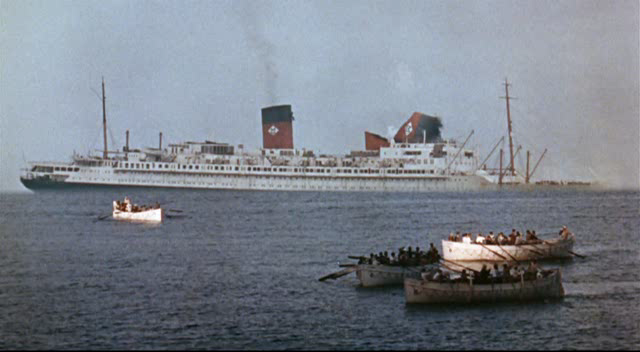
Unfortunately, anything that is youthful soon grows old, and as we all know, style is an ephemeral thing. With the advent of transatlantic jet transport, ships like the Île-de-France fell out of favor, and by 1960 the grand ocean liner was reduced to serving as a floating prop for a disaster movie titled The Last Voyage. The filmmakers partially sunk the poor ship, set fires and detonated explosions in the interior, and in a final act of desecration dropped one for the ship’s smoke stacks onto its deck house.

oceanlinersmagazine
(IMDB)
the-last-votage
NOT A BUFFET IN SIGHT…Still from the 1960 movie, The Last Voyage, shot on board the soon-to-be-scrapped Île-de-France. (Screen shot from movie trailer)
screen-shot-2016-10-20-at-2-20-28-pm
FIERY END…Fires were set in the interior of the Île-de-France during the filming of The Last Voyage. (Screen shot from movie trailer)
the-last-voyage-1960-ship-sinking
BROUGHT TO ITS KNEES…The Île-de-France (named the SS Clarion in the movie) is partially sunk with its forward funnel collapsed in a still from the film, The Last Voyage.

 *  *  *

The Ruth Snyder–Judd Gray murder trial and sentencing captivated Americans in 1927, but another trial and sentencing in the 1920s would bring worldwide attention and spark mass protests.

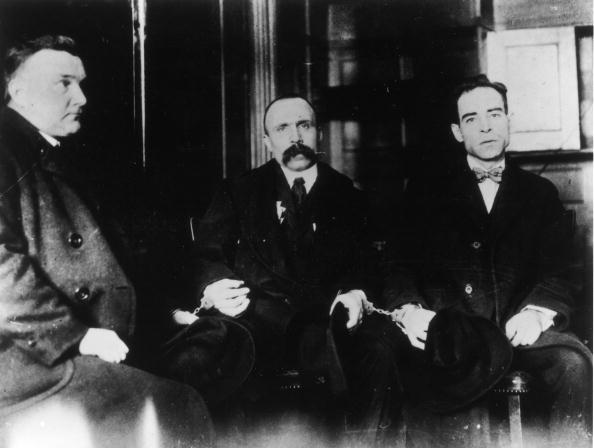
Nicola Sacco and Bartolomeo Vanzetti were Italian-born Americans who were convicted of murdering a paymaster and guard during a robbery of a Boston-area shoe company in 1920. Although convicted of murder the following year, many critics of trial believed Sacco and Vanzetti, who held anarchist views, were innocent of the charges, and the case became one of largest causes célèbres in modern history with protests held on their behalf in major cities across the U.S. and around the world.

Ferdinando Nicola Sacco and Bartolomeo Vanzetti in handcuffs, circa 1920s. (Photo by Fotosearch/Getty Images).
Cause Célèbre…Nicola Sacco and Bartolomeo Vanzetti handcuffed together at the Dedham, Massachusetts Superior Court, 1923. (Boston Public Library).

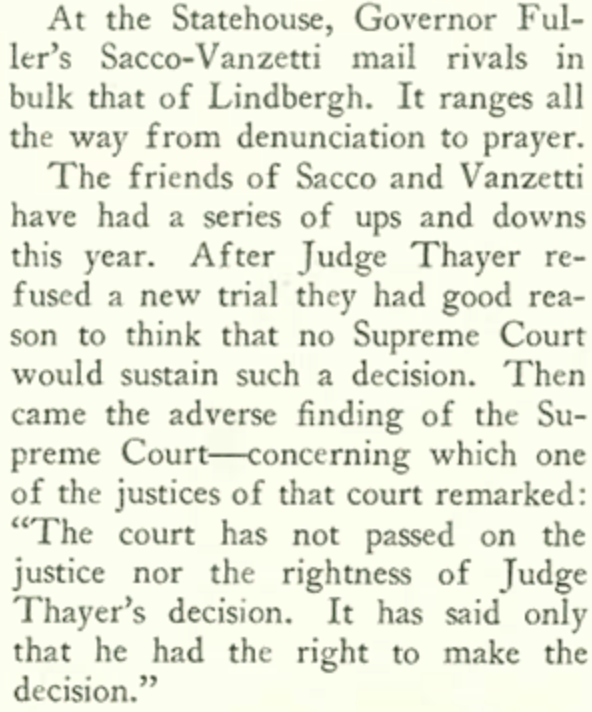
Sentenced to death in April 1927, they would be executed the following August. The New Yorker, predisposed to look down on Boston as something of a backwater, had this to say about the trial in an article by Gerald Day for the “Reporter at Large” column:

screen-shot-2016-10-22-at-10-18-49-am

The case also rekindled memories of other notorious trials:

screen-shot-2016-10-22-at-10-19-05-am

The governor did appoint a commission to review the case, but the final decision was in his hands…

screen-shot-2016-10-22-at-10-19-49-am

And so the only option left for Sacco and Vanzetti was clemency from the governor.

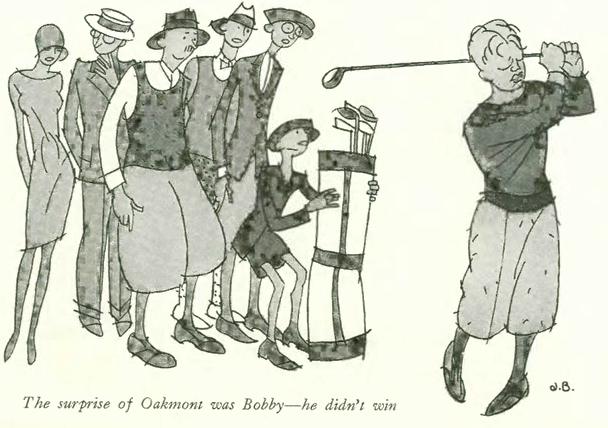
To close, a few illustrations from some of the magazine’s mainstay artists…this one from Johan Bull used to illustrate an article on the U.S. Open featuring amateur Bobby Jones

screen-shot-2016-10-14-at-9-49-23-am

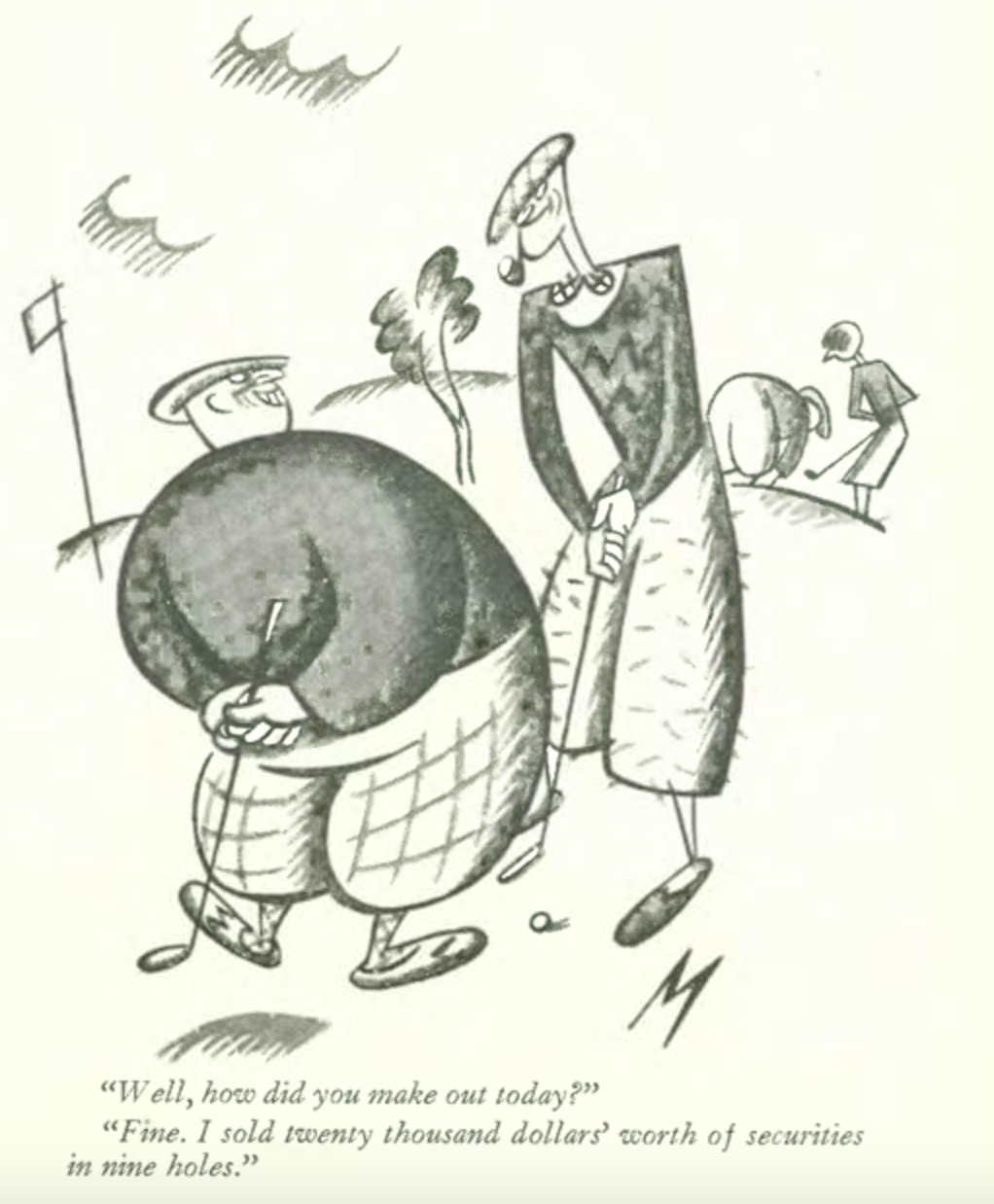
…and keeping with the golf theme, this cartoon by Julian de Miskey

screen-shot-2016-10-22-at-9-36-35-am

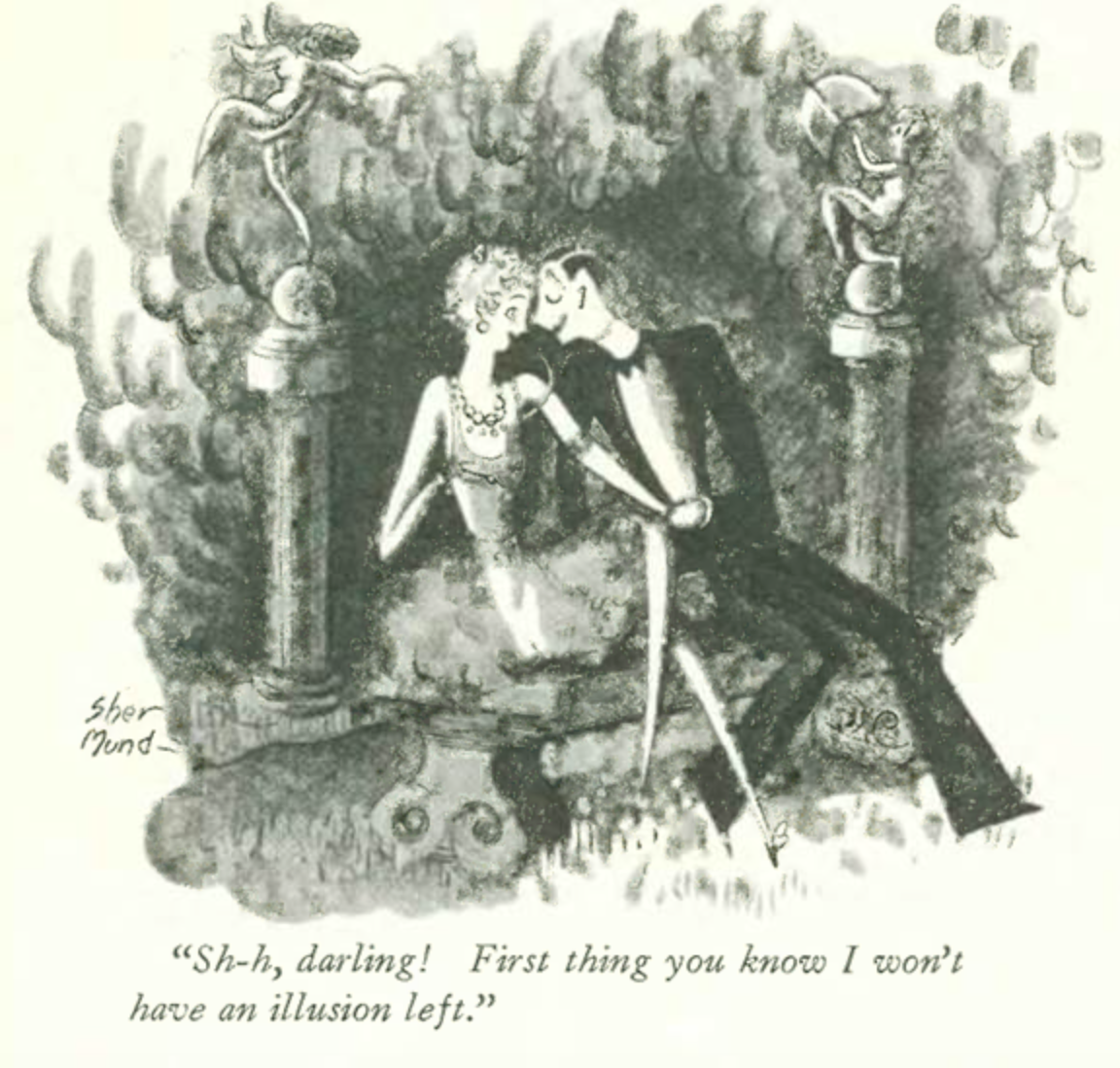
…and finally, a little fun with Barbara Shermund and her comment on social mores of the day:

screen-shot-2016-10-22-at-9-37-14-am

Next Time: Fifteen Minutes is Quite Enough…

7b096a824e274d6b7b7c5e0f1a3e85e7


The Flying Fool

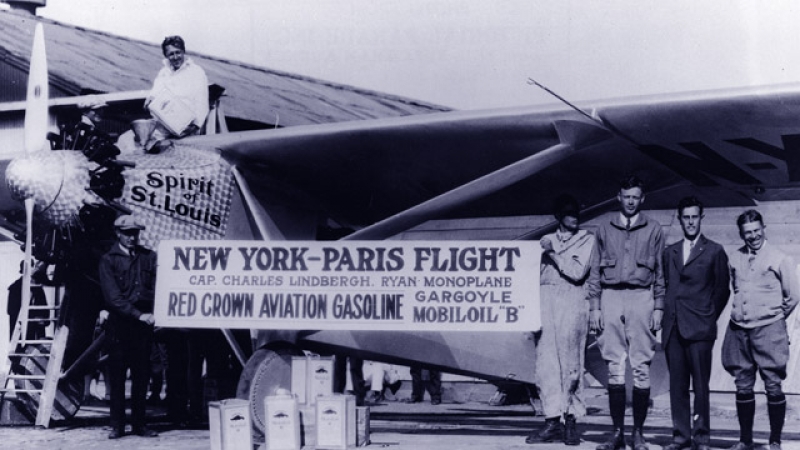
Charles Lindbergh was “The Flying Fool” no more after flying nonstop across the Atlantic to worldwide acclaim. The New Yorker shared in the enthusiasm, although it tried its best to appear not too impressed by the feat. But as we shall see in subsequent issues, The New Yorker, along with the rest of the media, couldn’t get enough of the man with a new title, “Lucky Lindy.”

may-28
May 28, 1927, cover by Ilonka Karasz.

But that’s in the future. Here’s what the New Yorker had to say following Lindbergh’s famous flight in “Talk of the Town…”

screen-shot-2016-10-05-at-8-43-05-am

And from its distant perch the magazine also took some shots at the media hype surrounding Lindbergh, and the usual retinue of money-changers (see title image above)…

screen-shot-2016-10-05-at-8-43-15-am

So what was the New Yorker saying about the historic moment? Well, for most of us, life goes on…

screen-shot-2016-10-05-at-8-43-50-am

screen-shot-2016-10-07-at-4-48-14-pm
HE’S A GOOD BOY…Still from Movietone newsreel showing Charles Lindbergh with his mother, Evangeline Lodge Land, before the historic flight. (Movietone)

…and for those who missed it on TV (because it wasn’t invented yet), they could catch a newsreel of Lindbergh at the Roxy, complete with crude sound effects:

screen-shot-2016-10-07-at-1-43-36-pm

air_and_space_museum_paris_lindbergh
OH CALM DOWN…A gendarmerie links arms in a futile attempt at crowd control as a mob closes in on the just-landed Spirit of St. Louis at Le Bourget airport in Paris. (parisdigest.com)

 * * *

On the other side of the pond, Paris correspondent Janet Flanner wrote about the Paris media’s complete denial or ignorance of the deaths of their own Atlantic flyers, Charles Nungesser and Francois Coli, who were lost at sea in their crossing attempt.

screen-shot-2016-10-07-at-1-39-30-pm

 * * *

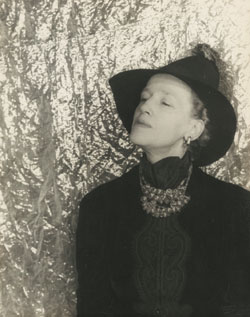
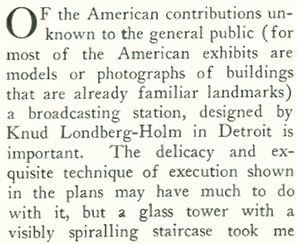
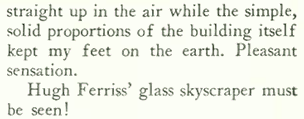
The New Yorker offered more observations on the Machine-Age Exposition, this time in a column titled “About the House,” by “Repard Leirum,” or Muriel Draper spelled backwards. Under this pseudonym Draper served as interior decoration critic for The New Yorker—she was one of the most influential personalities in the American interior decorating in the early 20th century.

1013583
Muriel Draper, as photographed by Carl Van Vechten on July 30, 1934. (Muriel Draper Papers, Yale)

screen-shot-2016-10-05-at-9-25-08-am

screen-shot-2016-10-05-at-9-25-23-am

klh_36_hr-web
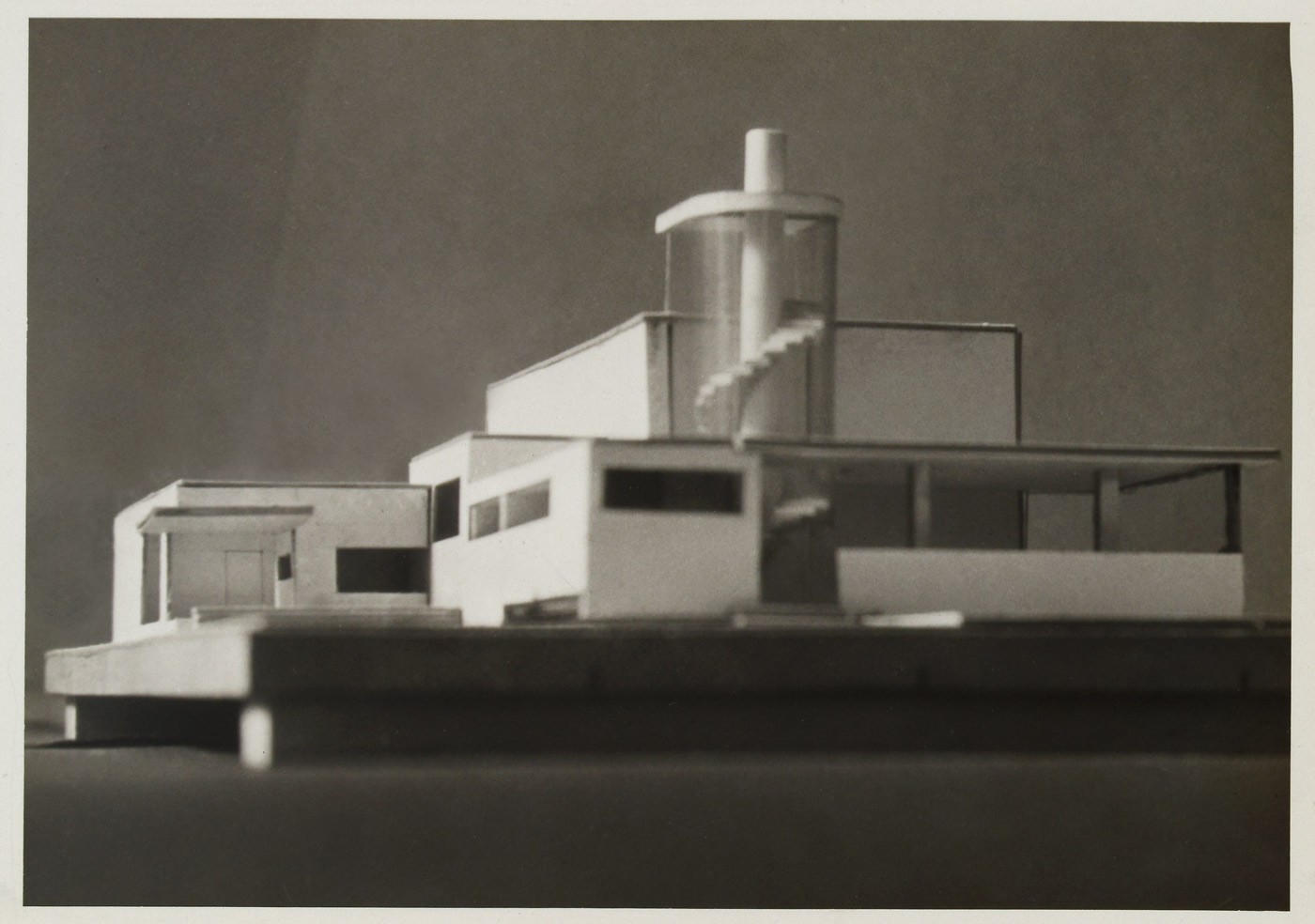
This model of a radio station by Knud Londberg-Holm was displayed at the Machine-Age Exposition in New York City May 16-28, 1927. (artblart.com)

About Muriel Draper: Although she wrote on interior design for The New Yorker during the late 1920s, she was more widely known as a “culture desk” writer, and was prominent in promoting the Harlem Renaissance. She became active in left wing politics after a trip to the Soviet Union in 1934, and in 1949 she was investigated by the U.S. House Un-American Activities Committee and thereafter ceased her political activities.

The Machine-Age Exposition Draper visited had a decidedly socialist flavor with its prominent inclusion of the Soviet Union and its touting of the International Style of architecture. Before it was appropriated by post-war corporate America, the International Style was developed as housing and workspaces for the masses.

A side-note: The Exposition was initiated by Jane Heap, who like Draper was a follower of the charismatic Russian mystic G. I. Gurdjieff (among Gurdjieff’s other followers were architect Frank Lloyd Wright, the writer P. L. Travers (Mary Poppins) and 1960s counterculture figure Timothy Leary).

georges_gurdjieff
George Ivanovich Gurdjieff, circa 1925-35 (Library of Congress)

Marxists with spiritual yearnings—and especially guild socialists—were attracted to Gurdjieff’s ideas about something he called “The Work,” in which crafts and community life provided ways to cultivate a deeper understanding of ourselves and our purpose amidst the activities of daily life.

 *  *  *

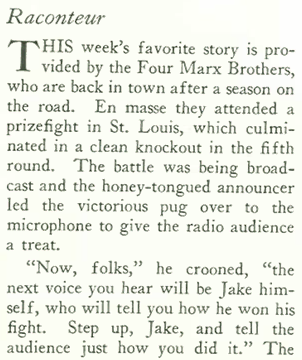
And now on to a different kind of Marxism…this odd little item from the “The Talk of the Town”…

screen-shot-2016-10-05-at-9-07-51-am

screen-shot-2016-10-10-at-10-38-34-am

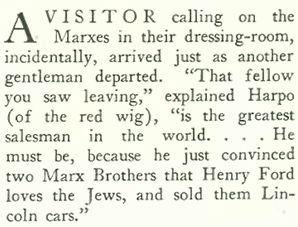
In 1927 the Marx Brothers were still known as a traveling vaudeville act—their first feature film was still two years away. But thanks to the vaudeville circuit of the day, an astonishing number of people in cities large and small across the country would see them perform. The “Talk” item concludes with this story that references Henry Ford’s well-known anti-semitism:

screen-shot-2016-10-05-at-9-08-01-am

mte5ndg0mdu0nty4njy2njm5
OH THE MOVIES THEY WILL MAKE…The Marx Brothers, from left, Chico, Zeppo, Groucho and Harpo. (biography.com)

Next Time: The Age of Innocence…

fe856464214bef0718e3c838d3a54ab2

Shock of the New

Above: The Bauhaus in Dessau, Germany (photo credit: Andreas Meichsner for The New York Times)

The Roaring Twenties saw astonishing changes to American life, including a dramatic break from the technologies and habits of the past. Icemen gave way to electric refrigerators, broadcast radio brought entertainment and news into living rooms, and Charles Lindbergh made flying something everyone wanted to try.

may-21
May 21, 1927 cover by Ilonka Karasz.

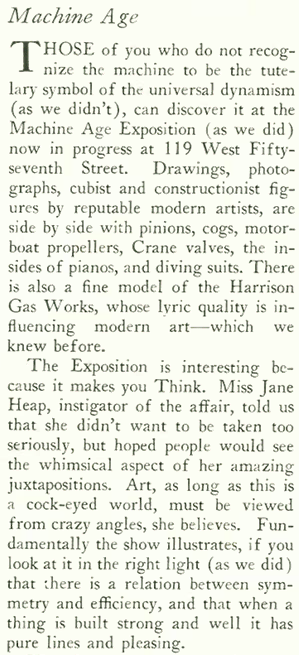
Despite the mechanized horrors of World War I, most people were enchanted by the idea of man and machine coming together to make a better world. In the U.S. the machine-age exuberance was expressed largely in capitalist terms, while many European and Soviet intellectuals saw the machine as integral to the progress of socialism. The Machine-Age Exposition in New York City (May 16-28 at 119 West 57th Street) celebrated all facets through a unique event that brought together architecture, engineering, industrial arts and modern art from a number of nations.

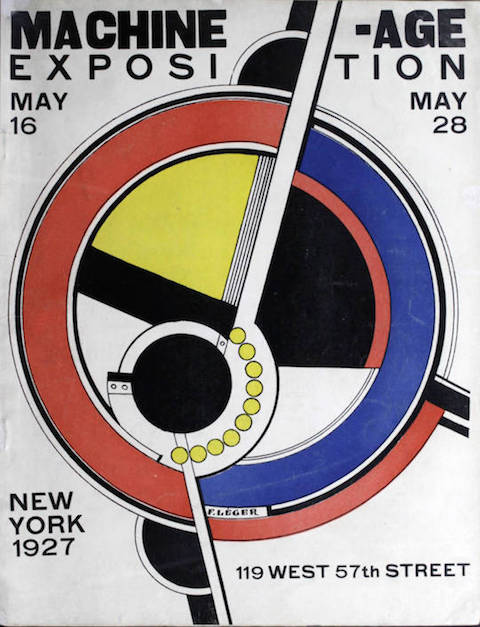
machine-age_exposition_catalogue
Cover of the Exposition Catalogue. (monoskop.org)
screen-shot-2016-09-27-at-10-05-00-am
Scanned illustration of an airplane from the Exposition catalogue.

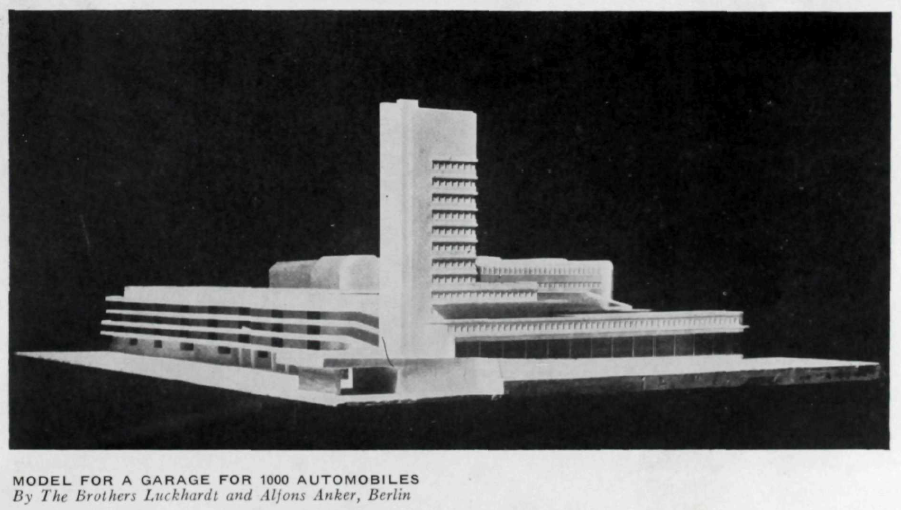
The exhibition, initiated by Jane Heap of the literary magazine The Little Review, included exhibits from the U.S., Austria, Belgium, France, Germany, Poland and the Soviet Union. Artists in the exhibition represented a Who’s Who of modernists and futurists—Alexander Archipenko, Marcel Duchamp, Hugh Ferriss, Man Ray and others who celebrated the aural and visual cacophony of the age as well as the gleaming precision of machines and machine-like buildings.

screen-shot-2016-09-28-at-4-38-04-pm
Model of a futuristic parking garage by the Luckhardt brothers and Alfons Anker on display at the Exposition. (Scanned  image from the Exposition catalogue)

New Yorker writer E.B. White shared in the enthusiasm with this bit for “The Talk of the Town…”

screen-shot-2016-09-26-at-3-38-06-pm

screen-shot-2016-09-27-at-10-04-31-am
The Futurist Hugh Ferriss contributed this design of a glass skyscraper to the Machine Age Exposition. A thing of dreams in the 1920s, such buildings are now commonplace in cities around the world. (Scanned from the Exposition catalogue)

The sleek and glass-walled buildings featured at the Exhibition were fantastic images in 1927, when most large-scale buildings were still being rendered in brick and stone in various neoclassical, federal or gothic styles.

screen-shot-2016-09-28-at-4-36-30-pm
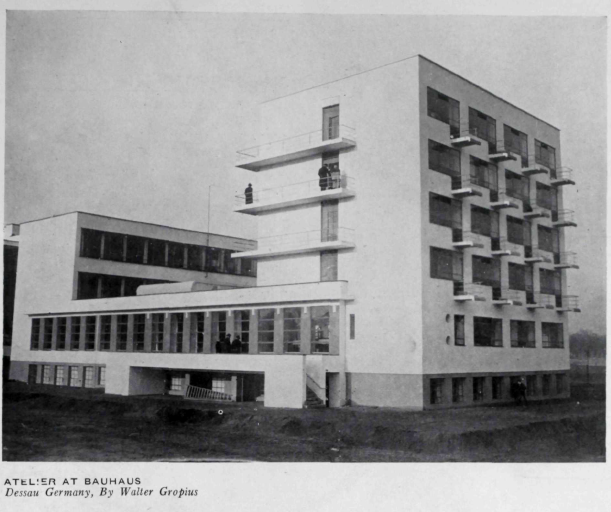
Image from Exposition featured Walter Gropius-designed student studio apartments at the Bauhaus in Dessau, Germany. (Scan from the Exposition catalogue)

Little did Exposition visitors realize that the radical Bauhaus style on display would become ubiquitous in the U.S. in the second half of their century, thanks not to some new machine age of peace and harmony but rather because of the annihilation of the Second World War and the mass migration from Europe of architects, artists, scientists and other professionals fleeing Nazi oppression.

screen-shot-2016-09-28-at-4-38-35-pm
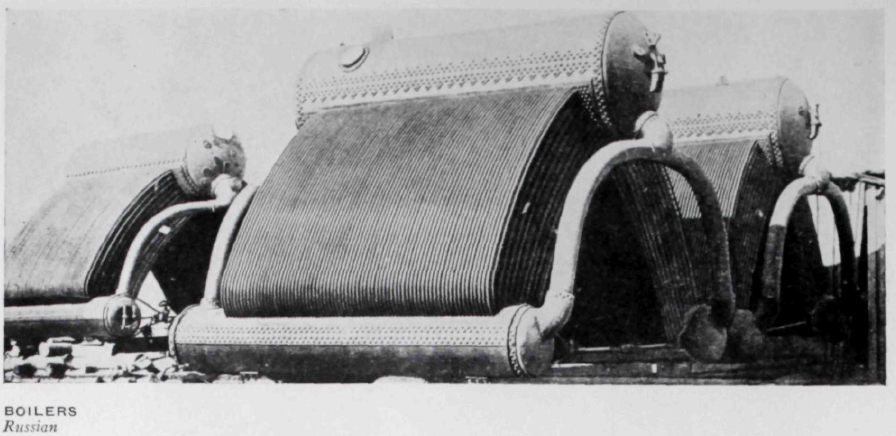
This image of giant steam boilers from Russia was displayed at the Exposition. (Scan from the Exposition catalogue)

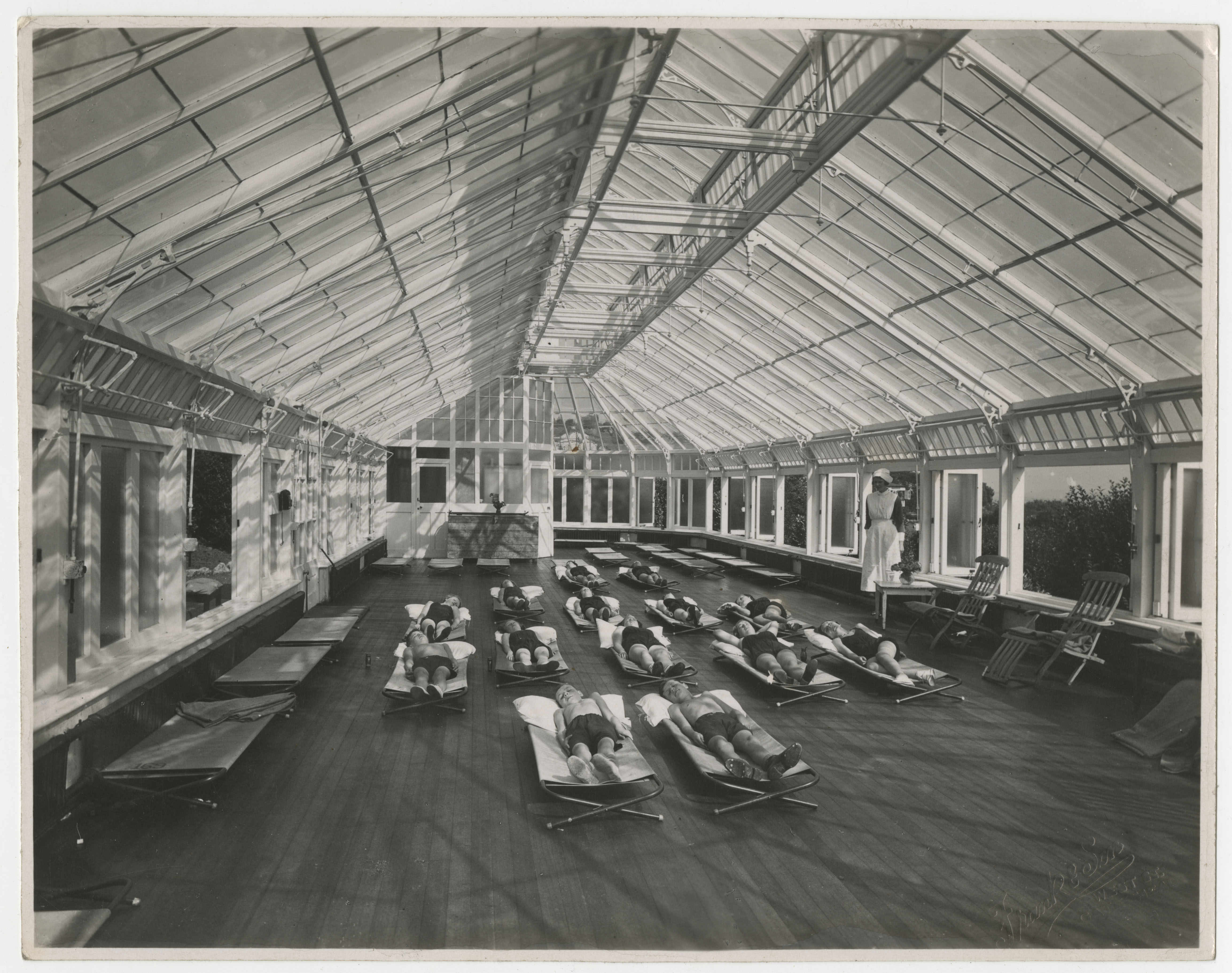
It was also a time when it was believed technology was on the verge of conquering nature, and that the invention of air-conditioning and “Vita-Glass” would create indoor environments with all of the health benefits but none of the discomforts of the outdoors:

screen-shot-2016-09-26-at-3-38-27-pm

screen-shot-2016-09-26-at-3-38-36-pm

hosp-stan-11-01-31
Children at rest in a “Vita-Glass” pavilion, built in 1927 at Stannington Sanatorium, Northumberland. Used primarily in the treatment of those with pulmonary TB, the glass was designed to allow ultraviolet rays to penetrate easily while protecting patients from the elements. (northumberlandarchives.com)

The invention of sulfa drugs and antibiotics was still a few years away, so health providers were excited about the possibilities of these artificial environments.

 *  *  *

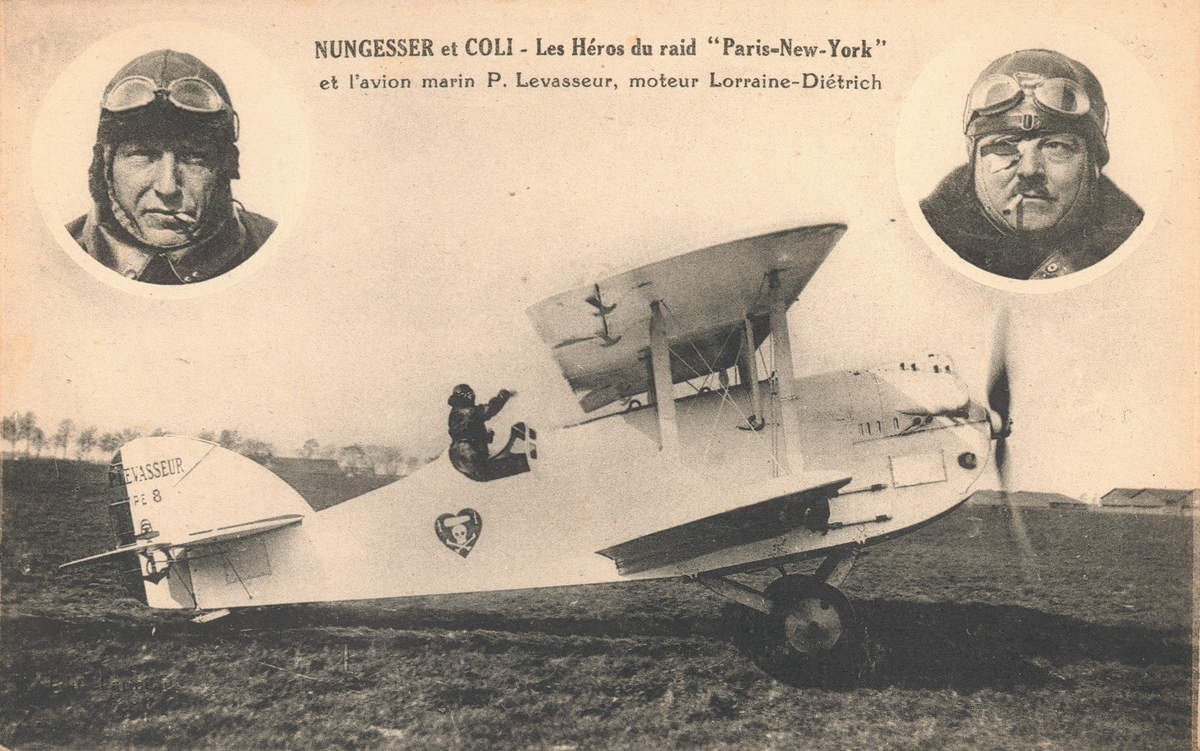
In the “A Reporter at Large” column, Russell Owen wrote about the intrepid aviators who were vying to become the first to fly nonstop across the Atlantic. He began the piece with a tribute to French ace pilot Charles Nungesser and his one-eyed wartime buddy François Coli, who disappeared during their May 8 attempt to fly from Paris to New York.

carte_postale-nungesser_et_coli-1927
A 1927 postcard commemorating Nungesser, Coli and their airplane, The White Bird (L’Oiseau Blanc).

screen-shot-2016-09-26-at-3-58-11-pm

Owen also wrote about those who would soon be taking the same daring leap into “the illimitable terror of space”…

screen-shot-2016-09-26-at-3-57-16-pm

screen-shot-2016-09-26-at-3-57-24-pm

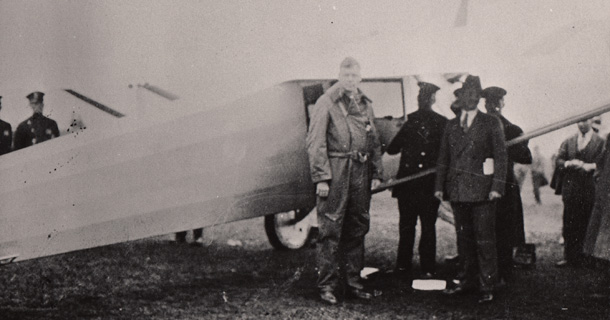
Although Charles Lindbergh had yet to accomplish his transatlantic feat, he had already been singled out as a loner and a bit of an odd duck:

screen-shot-2016-09-26-at-3-53-40-pm

screen-shot-2016-09-26-at-3-53-51-pm

Charles Lindbergh preparing for his transatlantic flight. (Long Island Press)

 *  *  *

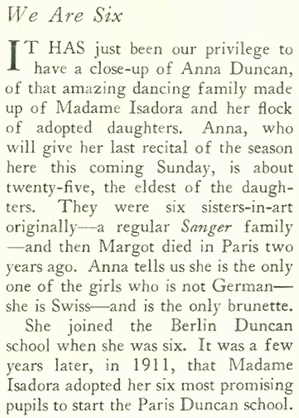
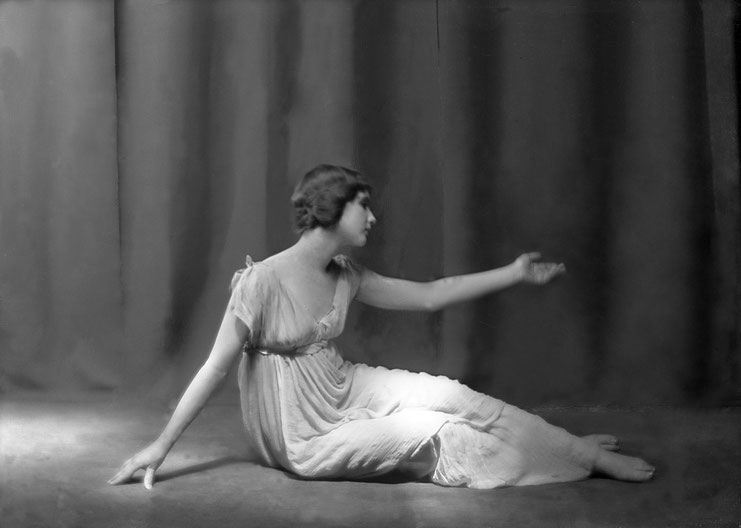
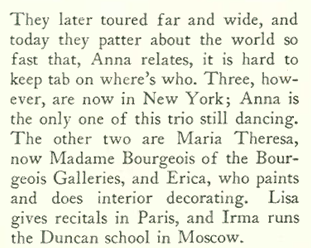
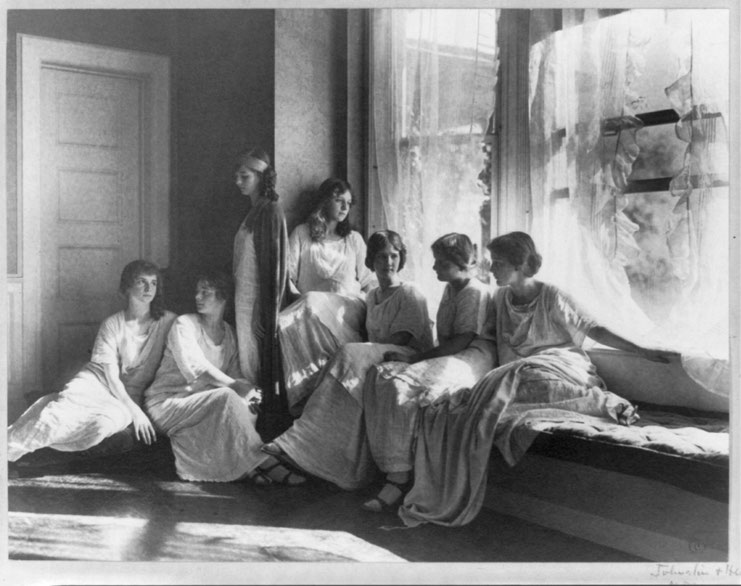
Editors of “The Talk of the Town” also checked in on famed dancer Isadora Duncan, her eldest daughter Anna, and Isadora’s “amazing dancing family…”

screen-shot-2016-09-26-at-3-37-13-pm

anna-duncan-dans-la-berceuse-choregraphie-d-isadora-duncan-musique-frederic-chopin-photo-arnold-genthe-1920-courtesy-of-tanzarchiv-koln-allemagne
Anna Duncan dances La Berceuse, choreographed by Isadora Duncan with music by Frédéric Chopin, in 1920. Photo by Arnold Genthe. (Tanzarchiv, Cologne, Germany)

screen-shot-2016-09-26-at-3-37-32-pm

isadora-s-dancers-by-frances-benjamin-johnston-1864-1952-photographer-public-domain-via-wikimedia-commons
Isadora’s Dancers, by photographer Frances Benjamin Johnston. (Wikimedia Commons)

 *  *  *

And finally, an excerpt of a poem contributed by Marion Clinch Calkins—who often wrote humorous rhymes for the New Yorker under the pen name Majollica Wattles. Here she riffs on Horace’s “poetry of pleasure…”

screen-shot-2016-09-26-at-3-49-19-pm

Next Time: The Flying Fool…

may-28

Those Restless Natives

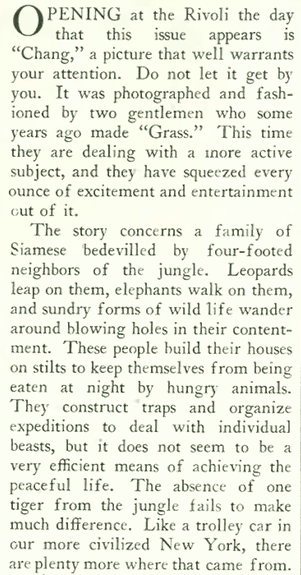
The evolution of filmmaking in the 1920s included the development of “docudramas.” Nanook of the North (1922), which captured the struggles of an Inuit hunter and his family, was received with great acclaim. A few years later Grass (1925), directed by Merian C. Cooper and Ernest B. Schoedsack, followed a tribe in Iran as they guided herds to greener pastures. So when Chang: A Drama of the Wilderness opened at the Rivoli, The New Yorker was there (May 7, 1927) to share in the adventure.

43b9e74a7197a3d27d520d251a303549
May 7, 1927 cover by Ilonka Karasz.

Chang, also directed by Cooper and Schoedsack, told the story of a poor farmer and his family (native, nonprofessional actors) in Issan—now northeastern Thailand—and their constant struggle for survival in the jungle. Cooper and Schoedsack attempted to depict real life but often re-staged events. The danger, however, was real to all involved, as was the slaughter of animals in the film.

chang_poster
(Wikipedia)

According to Ray Young, writing for Viennale, the website for the Vienna International Film Festival (which is screening a retrospective of Chang this fall) Cooper and Schoedsack “open with scenes of domestic bliss and, offsetting title card warnings of the dangers of the jungle, a bucolic Eden ripe for development. But the tone soon shifts as tigers and leopards attack, and the picture evolves into a succession of episodes concerning their survival.”

The perils in Chang often feel rigged, notes Young, “most conspicuously in places where animals appear to have been killed simply for the benefit of the camera. By most accounts, Schoedsack did most of the filming while Cooper covered him with a rifle.”

chang-criticsroundup
I’D BE WARY OF THOSE GUYS TOO…Image from the filming of Chang. (criticsroundup.com)
elephant-stampede-from-chang-1927
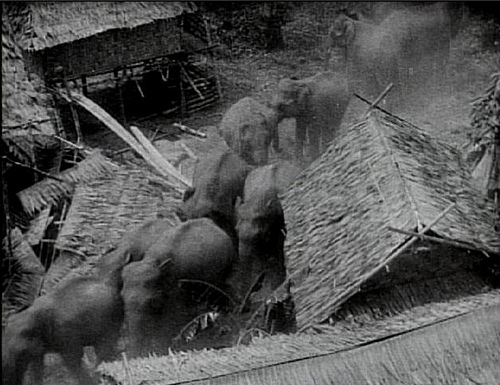
JUST PASSING THROUGH…Elephants stampede a village in the film’s finale. (image capture from film)

Chang was nominated for the Academy Award for Unique and Artistic Production at the first Academy Awards in 1929. It was the only year when that award was presented (It lost to F.W. Murnau’s Sunrise: A Song of Two Humans).

However appalled as we are today by the film’s exploitation of humans and animals alike, those were different times, even for the usually discerning eye of The New Yorker:

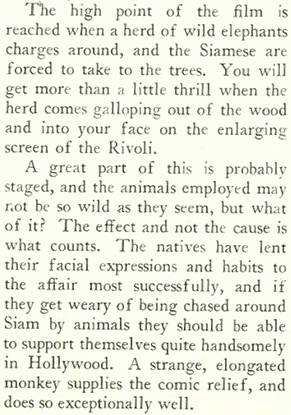
chang-1

In 1927 most people had a very limited view of the non-Western world, which was perceived as both savage and exotic, populated by child-like “natives” who in this case “lent their facial expressions and habits to the affair most successfully…”

chang-2And so in 1927 we also encounter cartoons like this one by Alan Dunn that at once dismisses out-of-town conventioneers (here: an Elks Lodge) as a bunch of ignorant racists, yet the early New Yorker’s own depictions of Blacks were usually minstrel-era stereotypes.

screen-shot-2016-09-06-at-1-06-50-pm

 *  *  *

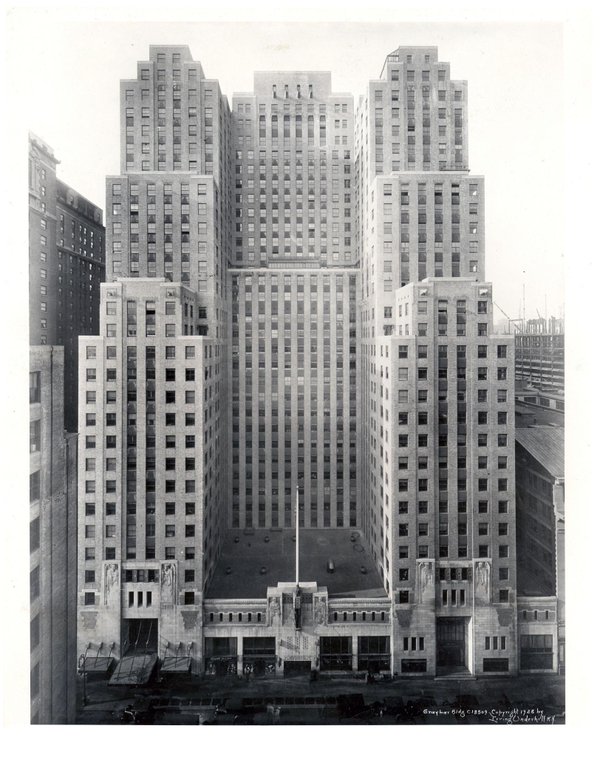
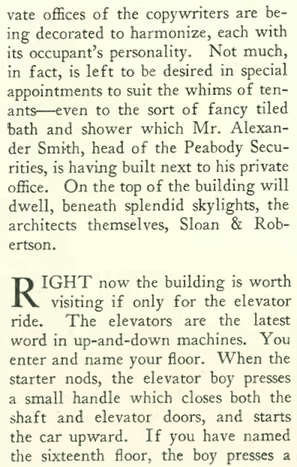
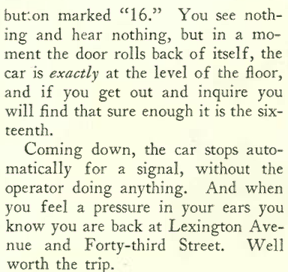
The massive Graybar Building made its debut at 420 Lexington Avenue, the multi-tiered edifice impressing the “Talk of the Town” editors with the latest technology, including push-button elevators: 

The Graybar Building (history.graybar.com)

screen-shot-2016-09-06-at-1-04-11-pm

screen-shot-2016-09-06-at-1-04-38-pm

screen-shot-2016-09-06-at-1-04-45-pm

graybar-building-2
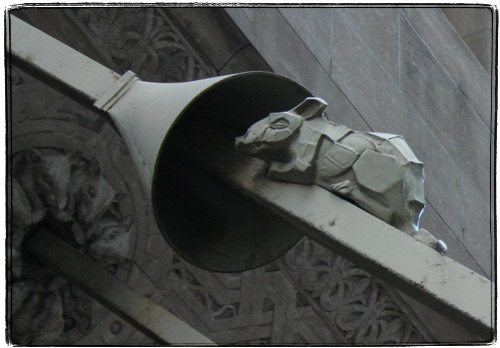
PERMANENT INFESTATION…The Graybar’s rain canopy cables include anti-rat devices (cones) decorated with rats. If you look carefully, the rosettes anchoring the cables are also decorated with rat heads. (deadprogrammer.com)

 *  *  *

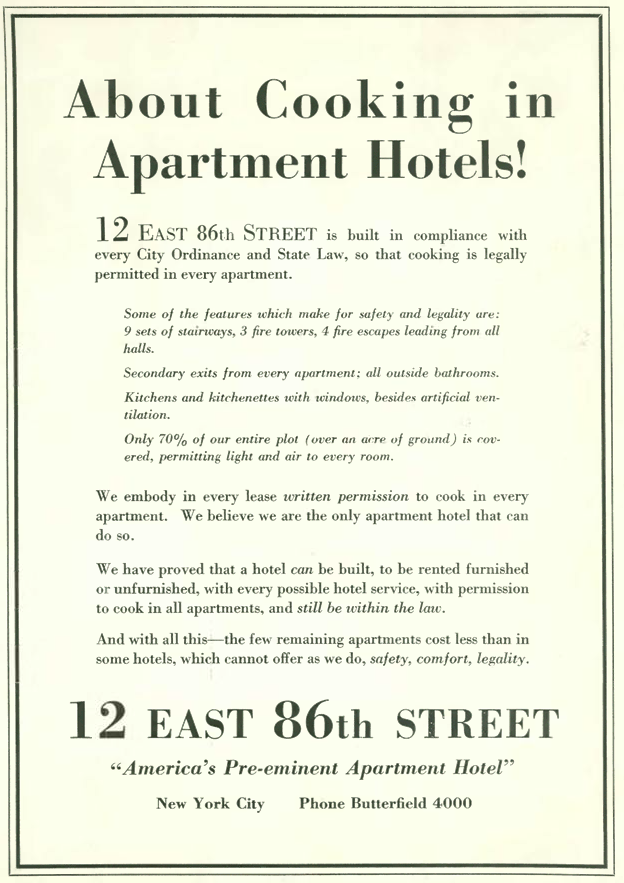
The following advertisement needs some explanation: The 1867 Tenement House Act imposed constraints on height and lot coverage that large apartment buildings routinely violated.

According to an article in the Observer by Stephen Jacob Smith (April 30, 2013), “Some developers got out of these requirements by building co-operative buildings, without rental units, but others wanted to retain the revenue and control that came with rentals, while at the same time building larger structures than the tenement laws allowed. And thus was born the ‘apartment hotel.'”

The New York Times’s columnist Christopher Gray wrote (Oct. 4, 1992) that Apartment Hotels were a “widespread fiction of the period,” and “tenants in fact usually set up full kitchens in the serving pantries.” Smith adds that “one of the reasons apartment hotels were allowed to be built more densely than their fully residential counterparts was that there would be no cooking—a fire hazard in those days—in the units.” An so the ad:

screen-shot-2016-09-06-at-1-08-22-pm

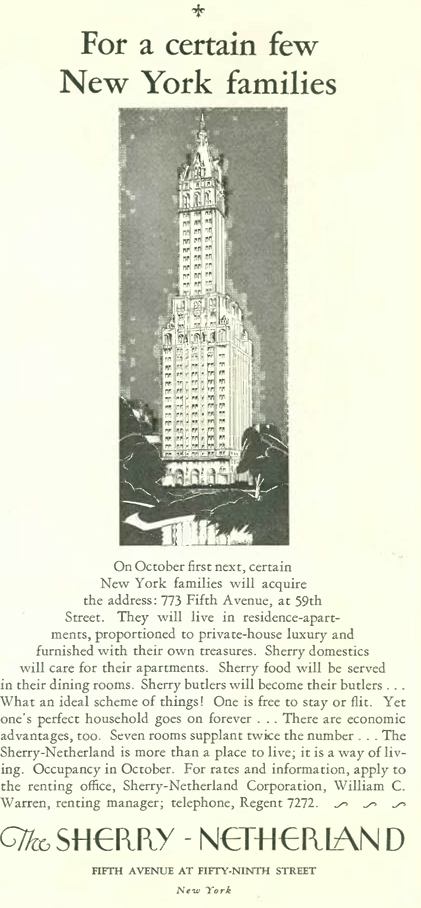
Smith writes that by calling their buildings ‘apartment-hotels,’ builders could claim that as hotels they were outside of the rules of tenement legislation. He notes that “some of Manhattan’s most illustrious buildings were constructed using this legal sleight of hand,” including the Sherry-Netherland on Park Avenue.

The famous scaffolding fire at the Sherry-Netherland, which I featured in my last post, no doubt prompted developers to run the following ad in hopes that people would soon forget about the giant roman candle that burned bright near Central Park on the evening of April 12, 1927.

screen-shot-2016-09-06-at-1-09-30-pm

If you are ever in New York, check out the Sherry Netherland. It is a beautiful building.

And finally, this ad from the makers of Wildroot hair care products. I love the flapper artwork by John Held Jr., and even better the words “CRUDE-OIL SHAMPOO” displayed prominently as a selling point.

screen-shot-2016-09-06-at-1-12-51-pm

Next Time: Mode de Vie…

304b9308de906b0c02f50b14add69c6d

Unfit to Print

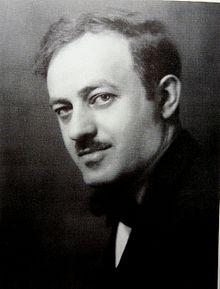
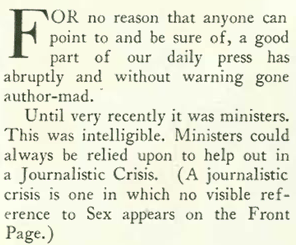
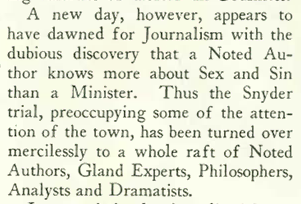
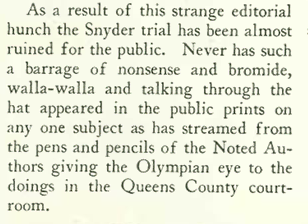
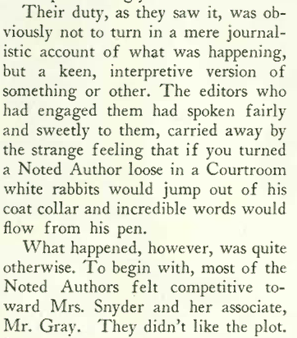
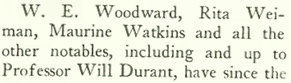
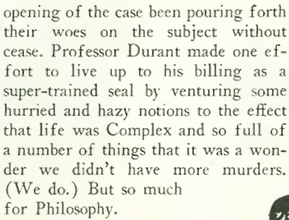
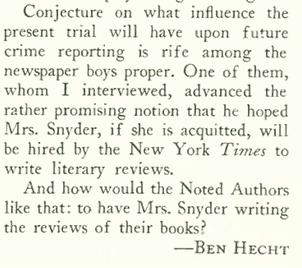
The journalist and screenwriter Ben Hecht wrote the “Reporter at Large” column for the early New Yorker, and for the April 30, 1927 issue took aim at the shoddy coverage of the Ruth Snyder murder trial at the Long Island City Courthouse.

e83e83f37e5b2787e23dd4ee7a85c62d
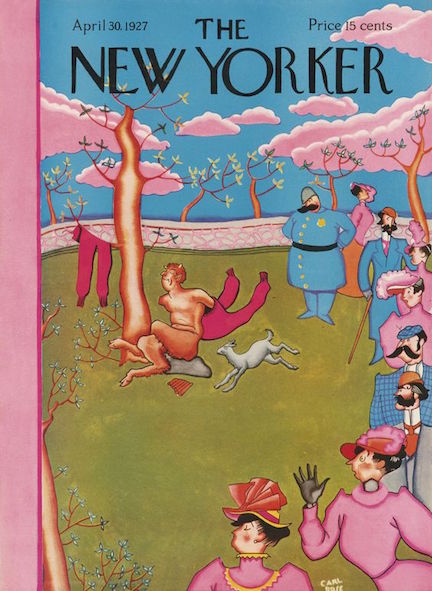
April 30, 1927 cover by Carl Rose.

Hecht was appalled by the media’s use of celebrity “experts” to cover the trial, which only served to sensationalize and trivialize the proceedings:

Ben Hecht (Wikipedia)

hecht-1

hecht-2

The Ruth Snyder trial dominated headlines in 1927. A housewife from Queens, Snyder began an affair in 1925 with Henry Judd Gray, a married corset salesman. After she persuaded her husband, Albert Snyder, to purchase life insurance, she enlisted Gray’s help to murder him. On March 20, 1927 the couple garrotted Albert (after bludgeoning him with a sash weight) and then staged the murder scene to look like a burglary.

The trial was covered by such figures as former Ziegfeld Follies showgirl Peggy Hopkins Joyce, the radio evangelist Aimee Semple McPherson, movie director D. W. Griffith, author Damon Runyon, popular philosopher Will Durant, and James M. Cain, a crime reporter who went on to write Double Indemnity, which was later made into a major Hollywood movie. Hecht (who would go on to co-write a hugely successful play about newspaper reporters, The Front Page) would have none of this celebrity circus. Some excerpts:

hecht-3

hecht-4

hecht-5

hecht-6

hecht-8

Ruth Snyder would not be acquitted (or live to write reviews), but instead would go to Sing Sing’s electric chair on Jan. 12, 1928. The 32-year-old Snyder would go to the chair first, followed shortly thereafter by her former lover and accomplice, 35-year-old Henry Judd Gray. The pair had sealed each other’s fate: During the trial, Snyder and Gray had turned on each other, contending the other was responsible for killing Albert Snyder.

screen-shot-2016-09-08-at-12-22-48-pm
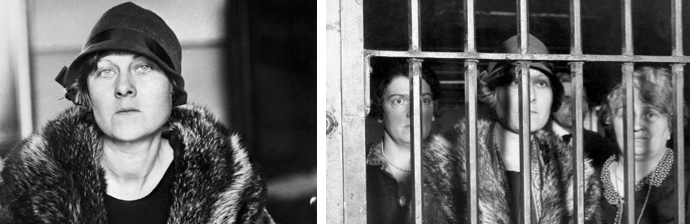
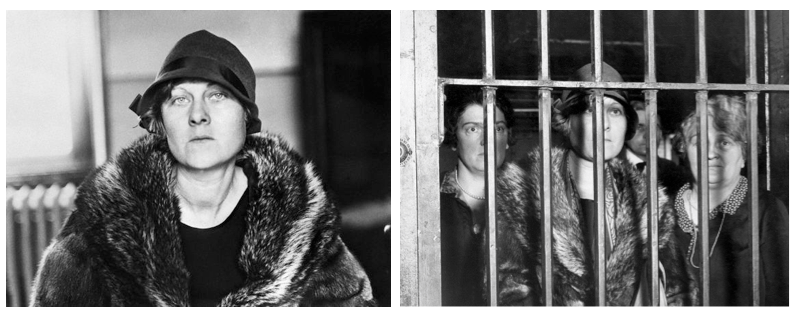
BUSTED…Ruth Snyder in custody and behind bars at the Queens County Jail. (Criminal Encyclopedia/NY Daily News)
snyder-and-gray
END OF THE LINE…Mugshots of Ruth Snyder and Henry Judd Gray taken at Sing Sing Prison following their conviction. (Lloyd Sealy Library, CUNY)
connect_blog_ruth-snyder
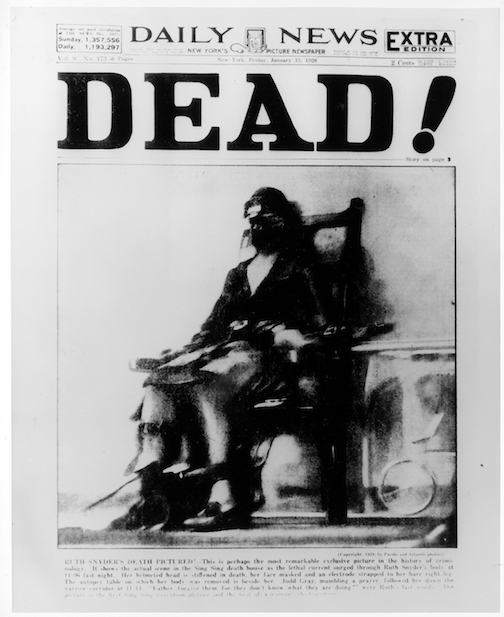
NATIONAL SENSATION…The cover of Jan. 13, 1928, issue of the New York Daily News. Although photographs of the execution were not allowed, photographer Tom Howard took this now-famous photo of Snyder at the moment of her execution with the aid of a miniature camera strapped to his ankle. (newseum.org)

 *  *  *

On to a lighter topic…The Sherry-Netherland Hotel has graced the corner of Fifth Avenue and East 59th Street since 1927, and when it was built it was the tallest apartment-hotel in New York City.

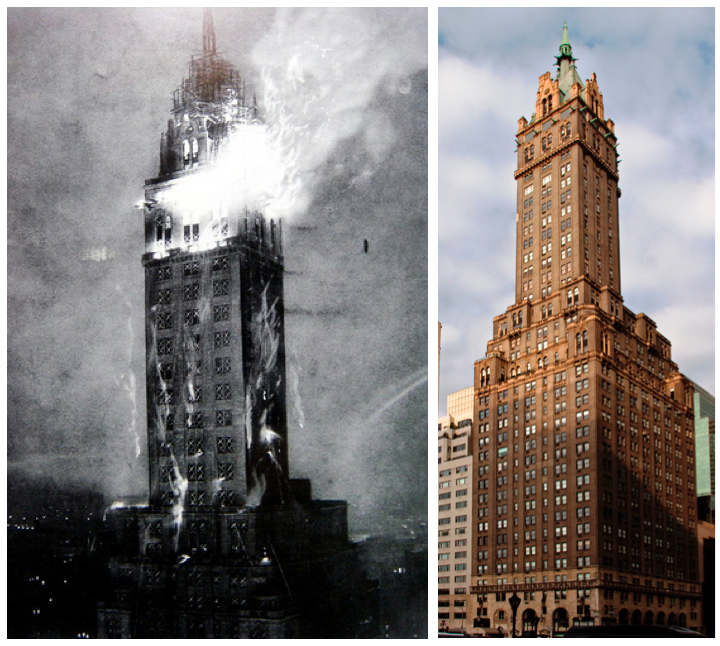
The building was nearing completion when around 8 pm on April 12, 1927, fire broke out on wood plank scaffolding surrounding the top floors. Firefighters responded only to find they lacked water pressure to fight the blaze.

According to the New York Times (“The Night a Hotel Turned Into a Torch,” Nov. 15, 2012), the fire was watched by hundreds of thousands, and “the windows of the Plaza Hotel across the street were ‘black with people’; every front room was engaged, either by news organizations or for spontaneous parties to watch the fire.”

Planks tumbled to the street for hours, and The Times said one “sailed in a crazy parabola” and crashed against the Savoy-Plaza, also nearly finished; occasionally minor collapses of the scaffolding turned the picturesque top into a “lofty Roman candle.” The crowds on the street could feel the heat on their faces, and the roar and crackle of the fire could be heard for blocks around. The fire burned itself out around midnight.

Oddly, the New Yorker had little to say about the fire, mentioning it only in passing in this “Talk of the Town” item:

screen-shot-2016-09-06-at-12-48-11-pm

screen-shot-2016-09-08-at-1-14-21-pm
HOT TIME IN THE CITY…In 1927 the Sherry-Netherland caught on fire, creating what The New York Times called “the best show of the season.” The newspaper ran this photo (left), retouching it for contrast (New York Times). At right, the hotel as it appears today (Wikipedia)

An interesting side note…at the time of the Sherry-Netherland’s construction, the nearby Vanderbilt mansion was being demolished. Carved limestone panels from the mansion’s porte-cochere as well as ornamental frieze roundels were salvaged and installed in the Sherry-Netherland’s lobby.

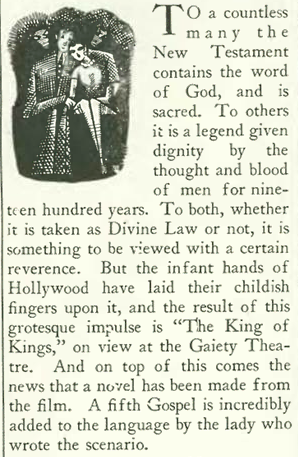
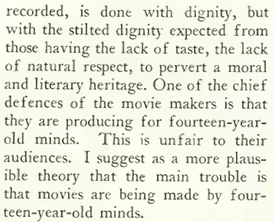
Hollywood movies continued to disappoint New Yorker critics, including Cecil B. DeMille’s silent epic The King of Kings.

screen-shot-2016-09-06-at-12-58-11-pm

screen-shot-2016-09-06-at-12-58-48-pm

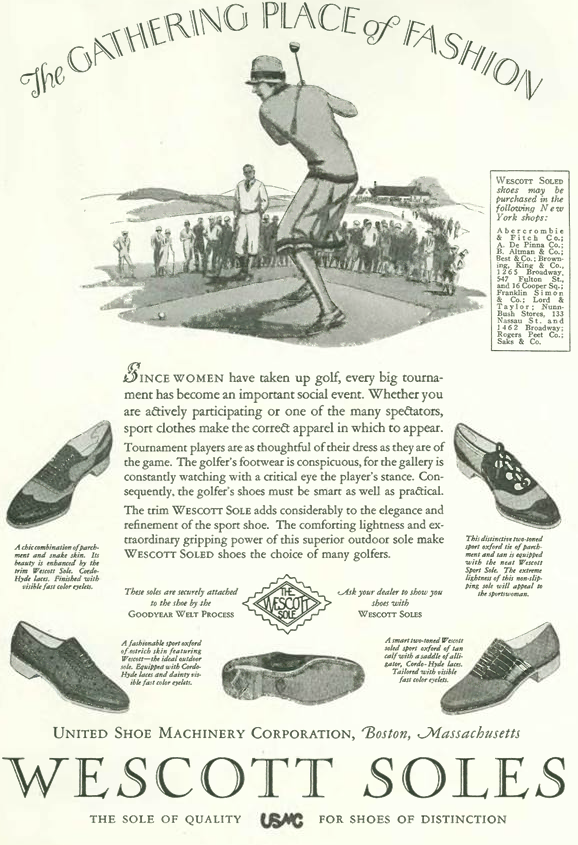
screen-shot-2016-09-06-at-12-59-22-pmFinally, a couple of advertisements from the April 30 issue. It was spring, and time to hit the links…

screen-shot-2016-09-06-at-12-44-22-pm

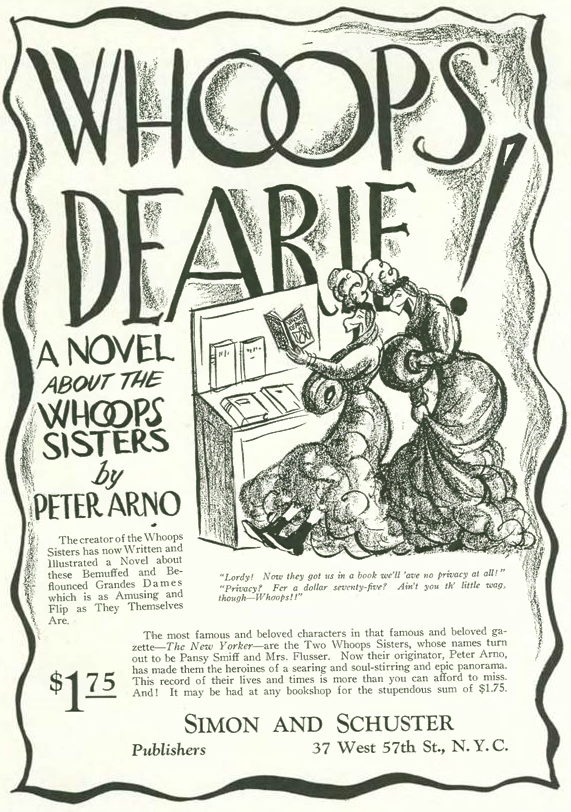
…and New Yorker cartoonist Peter Arno plugged his new book featuring the Whoops Sisters:

screen-shot-2016-09-06-at-12-51-37-pm

Next time: Those Restless Natives…

43b9e74a7197a3d27d520d251a303549

Nothing Like the Roxy

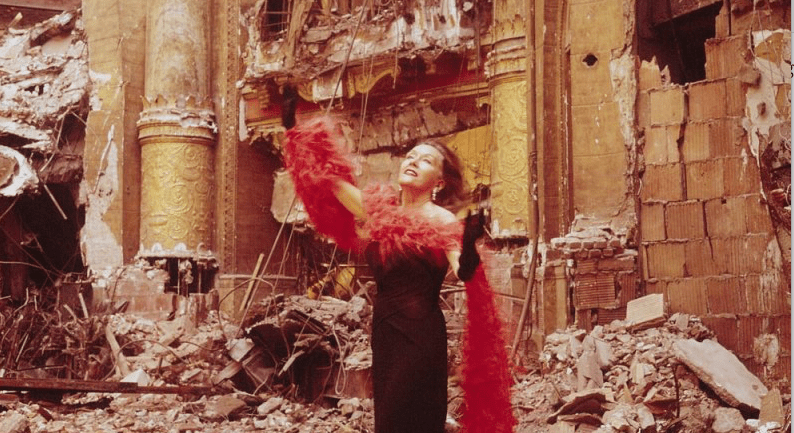
Above: Actress Gloria Swanson amid the ruins of the Roxy, 1960. The famed theater opened with Swanson's silent film, "The Love of Sunya."(Time Inc.)

Jazz Age New York City was all about the big and grand, and nothing was bigger and grander than the new Roxy Theatre near Times Square.

ef3893e952639f635327190b41ee6ea3
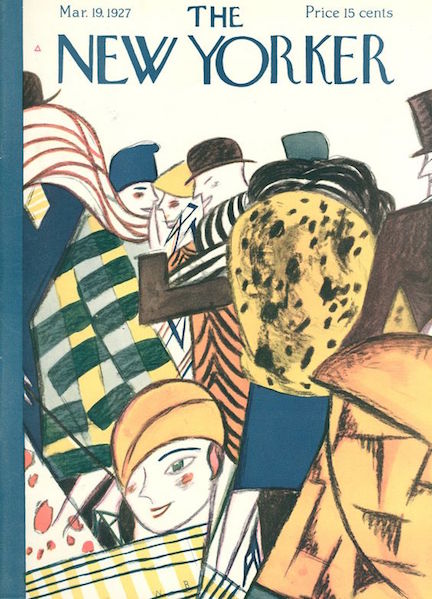
March 19, 1927 cover by W. Boethling.

The nearly 6,000-seat theatre was such big news that the March 19, 1927 edition of The New Yorker heralded its arrival in three separate columns.

RXYMARQ
OPENING NIGHT at the Roxy Theatre. (elixinhollywood.blogspot.com)

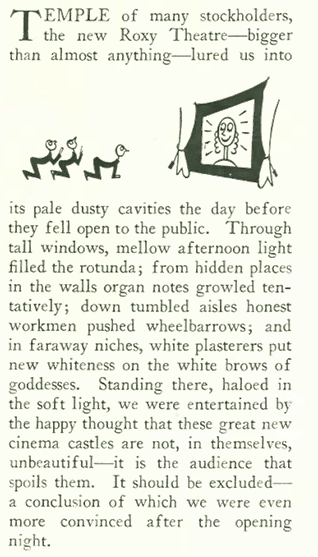
The Roxy opened with the silent film The Love of Sunya, produced by and starring Gloria Swanson. The film, naturally, was panned by the magazine. Perhaps the critic’s distaste for the film also prompted a certain aloofness about the theatre itself:

Screen Shot 2016-08-09 at 9.19.38 AM

roxylobby
NOT EXACTLY YOUR LOCAL CINEPLEX…The Roxy Theatre lobby featuring the “world’s largest oval rug” manufactured by Mohawk Carpets. The theatre was torn down in 1960 and replaced by an office building. A TGI Friday’s restaurant is now located in the space that once housed this grand lobby. (screensonhigh.wordpress.com)
8011897_orig
NOT ANOTHER BAD NEW YORKER REVIEW?…Gloria Swanson consults a crystal ball to learn her future with three different men in The Love of Sunya. (gswanson.weebly.com)

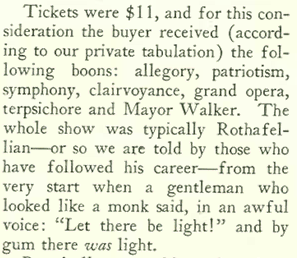
“The Talk of the Town” described the Roxy in similar dispassionate terms, tossing a wet blanket not on the film but rather on the rude, gawking masses who shelled out eleven bucks apiece (equivalent to $150 today) for a seat on opening night:

Screen Shot 2016-08-09 at 9.06.07 AM

Screen Shot 2016-08-09 at 9.08.24 AM

Screen Shot 2016-08-09 at 9.08.38 AM

Roxy_1927_1
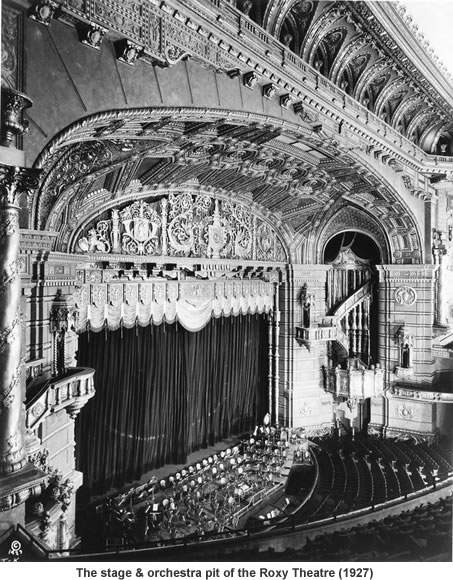
THEY WERE AWESTRUCK…The stage and orchestra pit of the Roxy Theatre (elixinhollywood.blogspot.com)

New Yorker architecture critic George S. Chappell (aka “T-Square”) was a bit more generous in his column, “The Sky Line.”

Screen Shot 2016-08-09 at 9.17.37 AM

RoxyTheatreExt
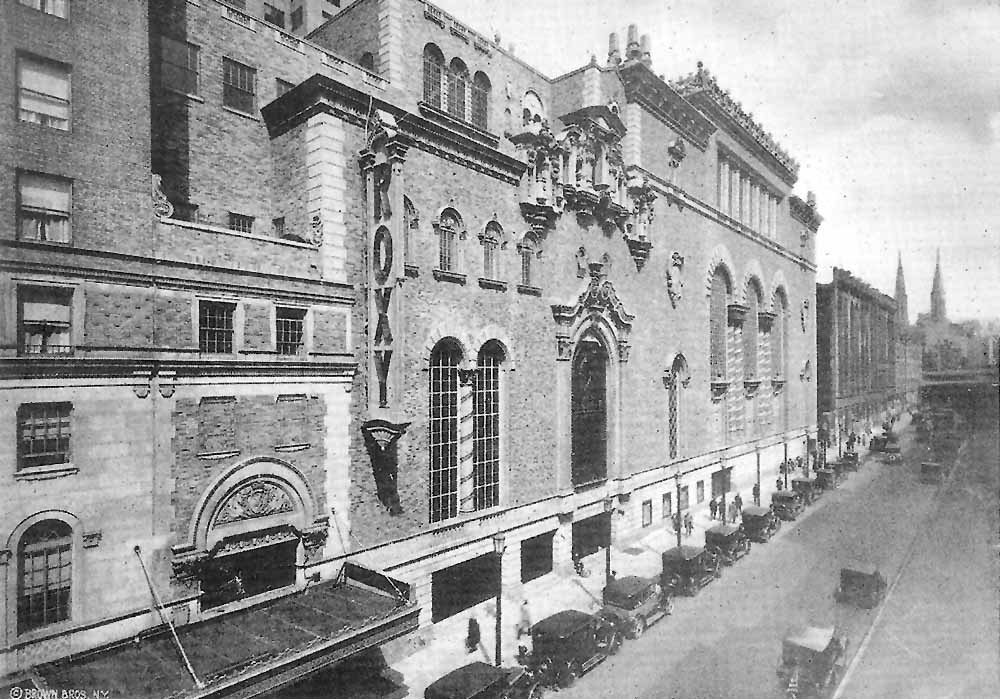
DUBBED ‘THE CATHEDRAL OF THE MOTION PICTURE’ by creator and namesake Samuel ‘Roxy’ Rothafel, the Roxy was located at 153 West 50th Street between 6th and 7th Avenues. It was torn down in 1960. (nycago.com)
photoby-Eliot-elisofon_large792x1024
COMING FULL CIRCLE…Gloria Swanson was photographed by Eliot Elisofon in the ruins of the Roxy Theatre on October 14, 1960 for Life Magazine. (Time Inc.)

 *  *  *

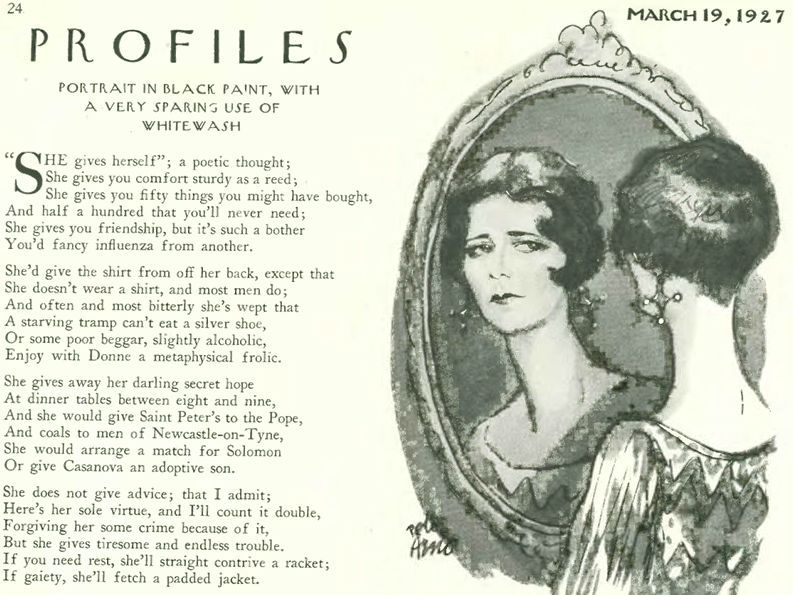
The magazine took an unusual approach to its “Profile” section by featuring an autobiographical profile of poet Elinor Wylie in verse, a portion of which is shown below with an illustration by Peter Arno:

Screen Shot 2016-08-09 at 9.13.06 AM

 *  *  *

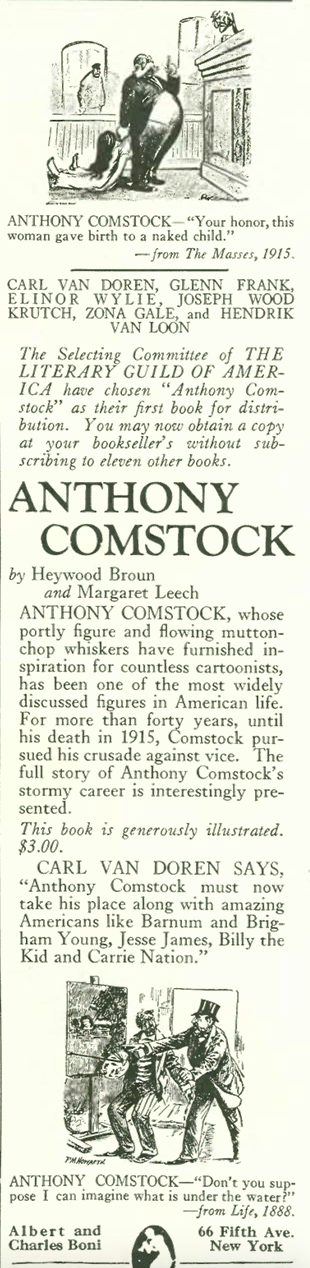
Morality-themed books got the attention of New Yorker book reviewer Ernest Boyd (pen name “Alceste), who devoted considerable ink to Anthony Comstock: Roundsman of the Lord by Heywood Broun and Margaret Leech (both of Algonquin Round Table fame). Comstock was a United States Postal Inspector and politician known for the “Comstock Law,” which sought to censor materials he considered indecent and obscene. That included birth control information, which led to famous clashes between Comstock and family planning advocate Margaret Sanger.

An advertisement for the book appeared in the back pages of the magazine:

Screen Shot 2016-08-09 at 9.31.58 AM

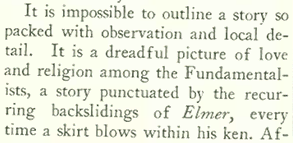
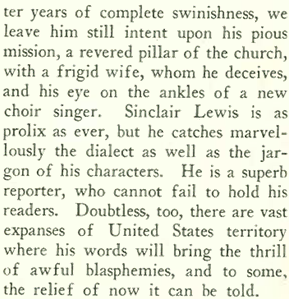
Boyd also reviewed Sinclair Lewis’s Elmer Gantry, a controversial novel that exposed the hypocrisy of some 1920s evangelical preachers:

Screen Shot 2016-08-09 at 9.28.52 AM

Screen Shot 2016-08-09 at 9.29.04 AM

  *  *  *

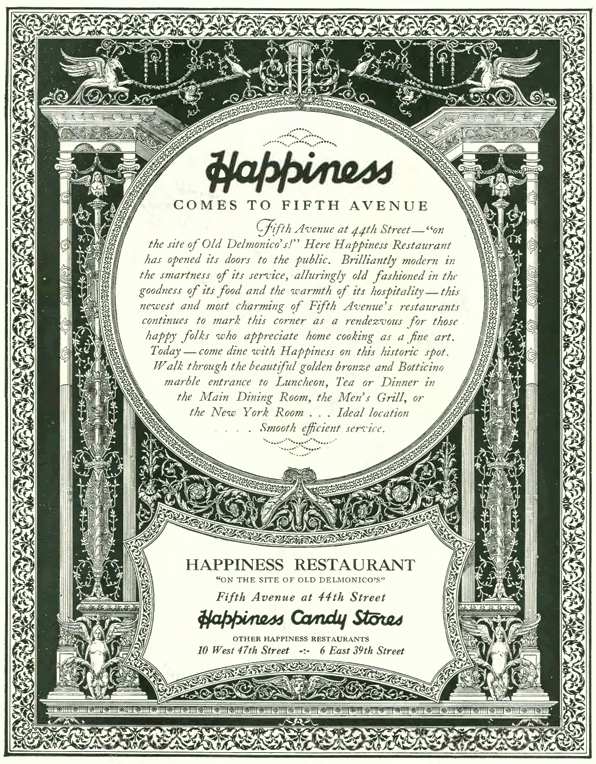
This advertisement began to appear in the pages of the New Yorker for a new restaurant that claimed to replace the beloved Delmonico’s. Despite its status as a New York institution, Delmonico’s had fallen victim to the changing dining habits of Prohibition New York and had closed its doors in 1923:

Screen Shot 2016-08-09 at 9.01.48 AM

The restaurant was operated by the Happiness Candy Stores chain, which according to the ad also operated restaurants in two other locations in the city. The restaurants must have been short-lived, as I could find no record of them apart from the ads.

Next Time: The Garden City…

232025ffa678f70369b2642ceae085d0

Clark’s Folly

The breathtaking changes along Manhattan’s streets and across its skyline in 1927 were reflected in the New Yorker’s frequent accounts of venerable landmarks giving way to new skyscrapers.

Screen Shot 2016-07-26 at 9.29.38 AM
The Feb. 26, 1927 cover (left) is by an unknown artist. The March 5, 1927 cover is by Ilonka Karasz.

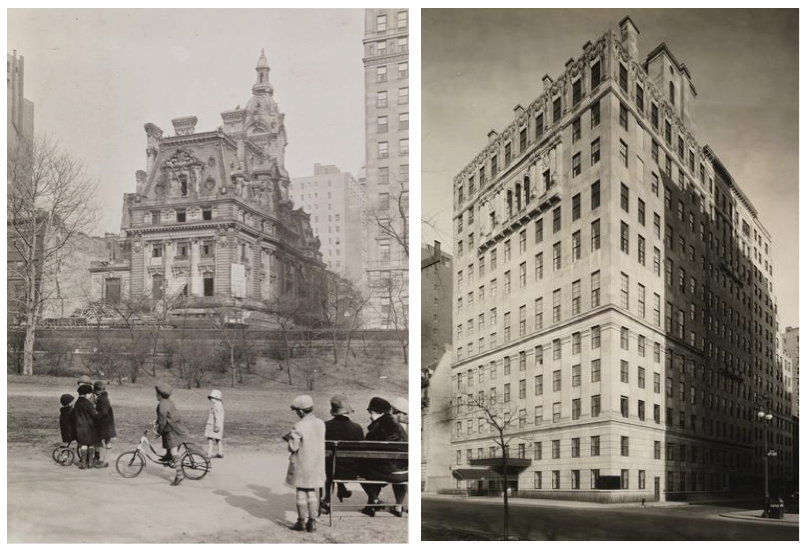
We’ll skip ahead for a moment to the March 5 issue in which the “Talk of the Town” editors reflected on the upcoming demolition of the William A. Clark house on Fifth Avenue and 77th Street, just 16 years after its completion in 1911. The editors noted that the empty house received many curious visitors in its last days, including the silent film star Charlie Chaplin:

Screen Shot 2016-07-26 at 8.57.04 AM

Screen Shot 2016-07-26 at 8.57.12 AM

NY_099_18
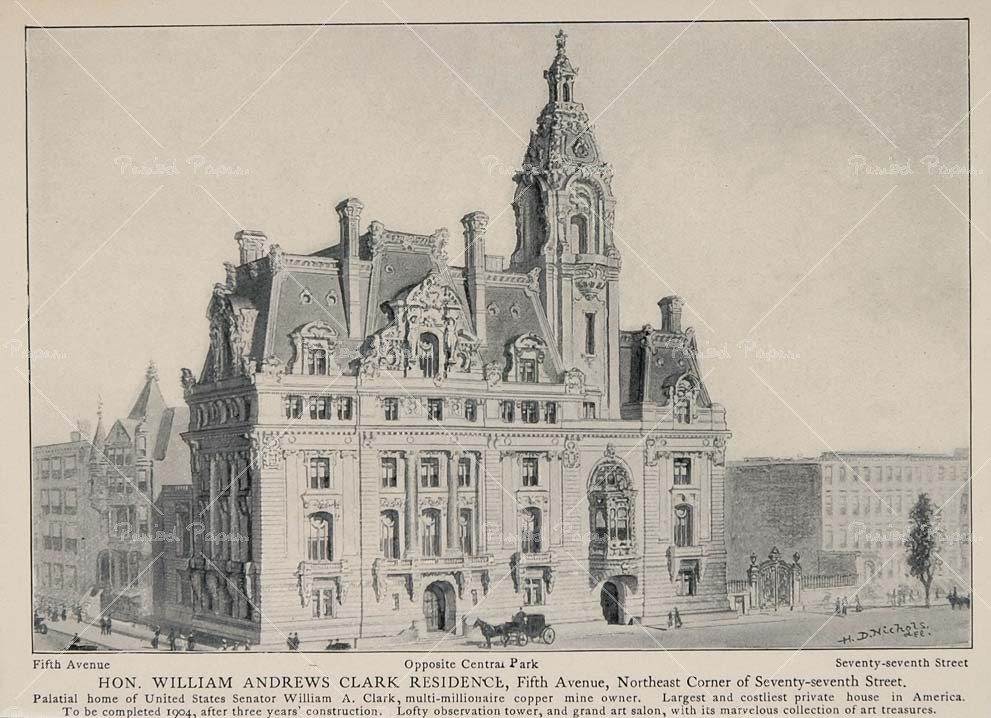
CURB APPEAL…This newspaper account of Clark’s planned mansion noted that it would be the largest and costliest house in America, and would take three years to complete. In fact, it took 13 years to finish the job, in 1911. Just 16 years later it would be demolished. (1889victorianrestoration.blogspot.com)

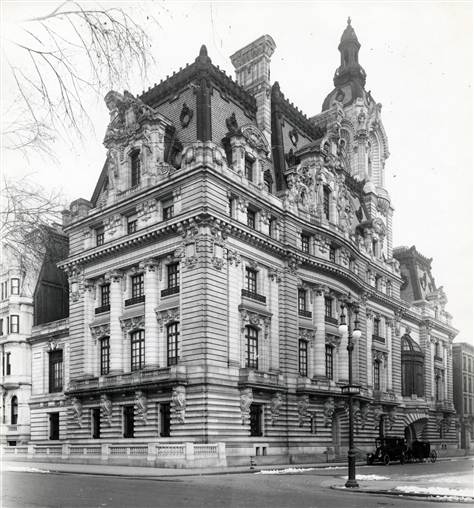
Clark was an enormously wealthy Montana entrepreneur (copper and railroads) and politician. His New York mansion, dubbed “Clark’s Folly,” took almost as long to complete—13 years—as its actual lifespan—16 years. In today’s dollars the house would cost nearly $200 million. It included imported marble from Italy, oak from England’s Sherwood Forest, and sections of whole rooms from old French Châteaus.

Clark-family-home-1907
The William A. Clark mansion on Fifth Avenue and 77th Street. (Museum of the City of New York)

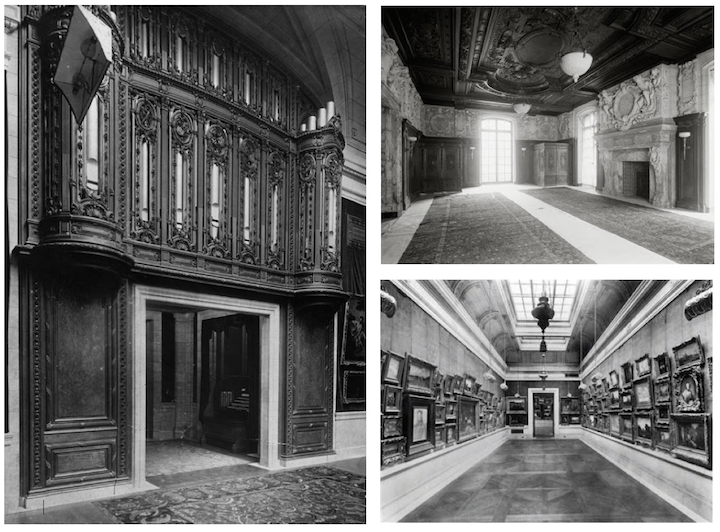
According to Wikipedia, the second floor featured a 36-foot-high rotunda, used as the statuary room. This opened onto a conservatory of solid brass and glass, 30 ft. high and 22 ft. wide. Across the rotunda was the marble-paneled main picture gallery that was 95 ft. long and two stories high. An organ loft housed the largest chamber organ in America.

The nine-story house contained 121 rooms, 31 bathrooms, four art galleries, a swimming pool and Turkish baths. High-tech for its times, with electricity and central air conditioning, it required seven tons of coal per day, brought in by a private subway line.

Screen Shot 2016-07-26 at 12.01.39 PM
PARTING SHOTS…Interiors of Clark’s “Folly” included the largest chamber organ in America (left), an immense dining room (upper right) and a two-story art gallery, a section shown below, right. The photos were taken just prior to demolition. Although some interior appointments were saved, the organ was apparently torn apart and dumped into a swamp in Queens. (Wikipedia)

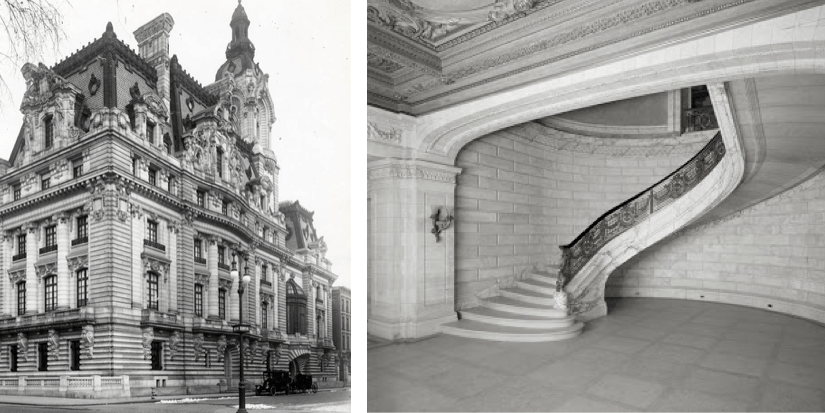
After Clark died in 1925, his daughter, Huguette, and her mother, Anna, moved to 907 Fifth Avenue and the mansion was sold to developer Anthony Compagana for $3 million (more than $40 million today). Compagana had it torn down, replacing it with a luxury apartment building.

Screen Shot 2016-07-26 at 12.34.05 PM
The demolition of “Clark’s Folly” (left) in 1927. A large sign on the mansion advertises modern apartments to come. (New York Historical Society). At right, the building that replaced it, 960 Fifth Avenue. (Museum of the City of New York).

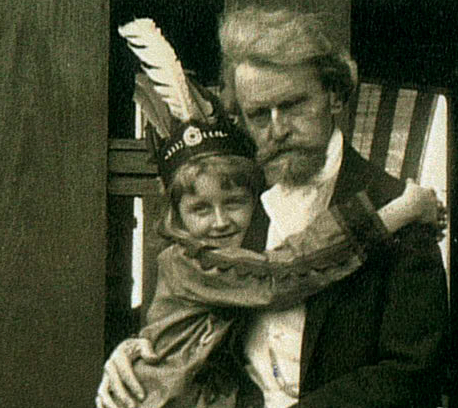
A footnote: Clark’s daughter and heiress, Huguette, would go on to own a $24 million Connecticut country estate and a $100 million estate in Santa Barbara, but would keep them uninhabited. Briefly married from 1928 to 1930, she became reclusive, holed up in her apartments at 907 Fifth Avenue until she moved to a series of hospital rooms beginning in the 1980s.

Huguette Clark in an Indian costume with her father, W.A. Clark, c. 1912.
HAPPIER TIMES…Huguette Clark with her father, William A. Clark, circa 1912. (EmptyMansionsBook.com)

Huguette died at age 104 in 2011. You can read more about her strange and fascinating life in Bill Dedman’s Empty Mansions: The Mysterious Life of Huguette Clark and the Spending of a Great American Fortune.

Architecture’s Middle Finger

Continuing the theme of the changing skyline, the Feb. 26 New Yorker featured this advertisement for the new Drake Hotel at Park Avenue and 56th Street:

Screen Shot 2016-07-25 at 12.01.17 PM

The hotel was built in 1926 by the real estate organization of Bing and Bing, 21 stories with 495 rooms. Like Clark’s Folly, it was innovative for its time, with automatic refrigeration and spacious rooms and suites.

It saw plenty of famous guests, from silent star Lillian Gish (she lived there for three years) to ’60s and ’70s rock bands like Led Zeppelin and The Who.

1137783985_drake
The Drake Hotel, demolished in 2007. (skyscrapercity)

Razed in 2007, the Drake Hotel was replaced by 432 Park Avenue. At 96 stories and 1,400 feet, 432 Park it is the tallest residential tower in the Western Hemisphere (as of August 2016).

432-Park-Avenue-New-York-Raphael-(dezeen.com)Vinoly_dezeen_sq
432 Park Avenue (Wikipedia)

Completed in 2015, the supertall 432 Park was designed for the superrich. The building has been maligned by many who find it not only ugly but also a stark representation of the city’s increasing cost of living and conspicuous displays of wealth. One blogger suggested that the building was giving the city “the finger.”

Even Fortune magazine’s Joshua Brown (“Meet the house that inequality built: 432 Park Avenue,” Nov. 24, 2014) noted “in a building so tall and imposing, with over 400,000 square feet of usable interior space, there are only 104 units for people to live in. 432 Park Avenue is, in short, a monument to the epic rise of the global super-wealthy. It is the house that historic inequality built.”

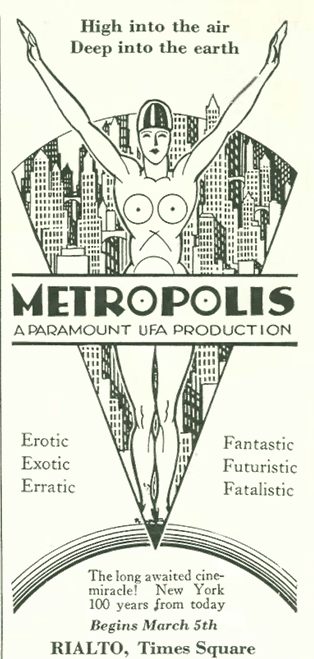
After reading about 432 Park, it seems appropriate that I spotted this advertisement in the New Yorker’s March 5, 1927 issue:

Screen Shot 2016-07-26 at 9.08.34 AM

Fritz Lang’s film Metropolis was set in a futuristic urban dystopia where the upper classes lived high above the toiling masses. Hmmm.

Next Time: World of Tomorrow…

2ab7711b486573bd3d0e3be1880afe36


Papa Pens a Parody

Ernest Hemingway wrote his lone New Yorker piece for the Feb. 5, 1927 issue. Titled “My Own Life,” it was a short parody of the 3-volume My Life and Loves by Irish writer Frank Harris.

7532b3c65dcb4c041db31d7c0c75b4c4
February 12, 1927 cover by Rea Irvin.

Writing for The Hemingway Review (Fall 2001), Francis Bosha notes in “The Harold Ross Files” that Hemingway’s sole contribution to the New Yorker is striking given that the magazine was such a major influence on fiction in the 20th century.

Money, or the shortage thereof, appears to be the main reason why Hemingway was not a regular contributor. Although the young magazine was doing well, Bosha writes that it was not yet ready to compete financially with more established mass market magazines. Indeed, Hemingway’s “My Own Life” landed in the New Yorker because it had already been rejected by both Scribner’s and The New Republic.

Ernest_and_Pauline_Hemingway,_Paris,_1927
Ernest Hemingway and his second wife, Pauline Pfeiffer, in Paris, 1927. (Wikipedia)

If you read the piece you can see why it was rejected. The famed fiction writer, hot off the success of The Sun Also Rises, was not a great parodist. An excerpt:

Screen Shot 2016-07-20 at 3.24.37 PM

And so on. Hemingway wisely stuck with serious fiction, which might explain his fleeting association with The New Yorker, which in its first years was bent toward humor in the Punch or Judge vein and not toward serious writing.

Nevertheless, the New Yorker’s founding editor, Harold Ross, maintained a friendship and a regular correspondence with Hemingway during the writer’s years in Cuba in the 1940s. On several occasions Ross invited Hemingway to submit something to the magazine, but nothing came of it. It didn’t help that Hemingway publicly stated in 1942 that he “was out of business as a writer,” and was suffering from depression, weight gain, and bouts of heavy drinking.

The Great Ziegfeld Finally Opens His New Theatre

“The Talk of the Town” reported the premiere of Florenz Ziegfeld’s new art deco theatre was “one of the big mob scenes of the season,” attracting celebrities and celebrity-gawkers alike:

110927-GON066-04
Opening Night…

Screen Shot 2016-07-19 at 3.48.51 PM

Screen Shot 2016-07-19 at 3.49.09 PM

wurts_A0810_808013 001
DECKED IN DECO…The Ziegfeld Theatre at Sixth Avenue and 54th Street, 1927. Joseph Urban’s design of the facade suggests open curtains flanking a stage. (nyc-architecture.com)
Screen Shot 2016-07-20 at 4.11.16 PM
HELLO DOLLY…On the Ziegfeld Theatre’s opening night Ada May played Dolly in Rio Rita (Museum of the City of New York)

The opening drew the likes of Charlie Chaplin and polar explorer Roald Amundsen, who perhaps found a line of chorus girls a welcome sight after years of trekking through frozen landscapes.

Screen Shot 2016-07-19 at 3.49.28 PM

Among the attractions of the new theatre was what was claimed to be the largest oil painting in the world:

Screen Shot 2016-07-19 at 3.50.12 PM

110927-GON066-02
AN EYEFUL…A section of the interior wall of the Ziegfeld Theatre, decorated with “the largest oil painting in the world.” (nyc-architecture.com)

Sadly, despite public protests, the theatre was razed in 1966, bulldozed into rubble. The Burlington House stands on the site today:

800px-Burlington-house-nyc
Burlington House. (Wikipedia)

But we will end on a happier note, a cartoon by Barbara Shermund:

Screen Shot 2016-07-19 at 3.52.59 PM

Next Time: Two Years Young…

e5c3fabc5f1612a71442c78a3c71d654