Above: First-grade pupils at the blackboard, circa 1943. (The New York Times)
Peering into the life of a Manhattan elementary school—as it was ninety years ago—offers a glimpse into the social mores of the 1930s.
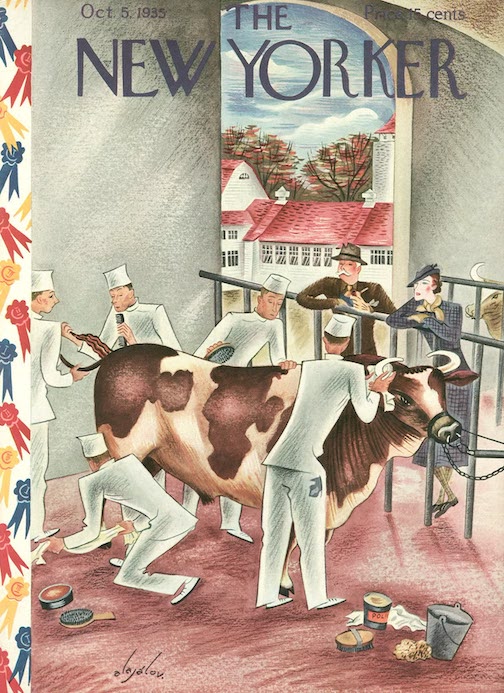
October 5, 1935 cover by Constantin Alajalov.
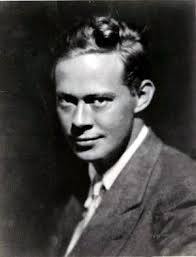
Taking us back to those days was St. Clair McKelway (1905-1980), who beginning in 1933 served as a writer and editor for The New Yorker. Although not well-known today, McKelway was credited by William Shawn as one of a handful of people who “set the magazine on its course.”
St. Clair McKelway.(LA Times)
For the “A Reporter at Large” column, McKelway toured PS 165 on the Upper West Side. In this first excerpt, McKelway sits in on a geography lesson:
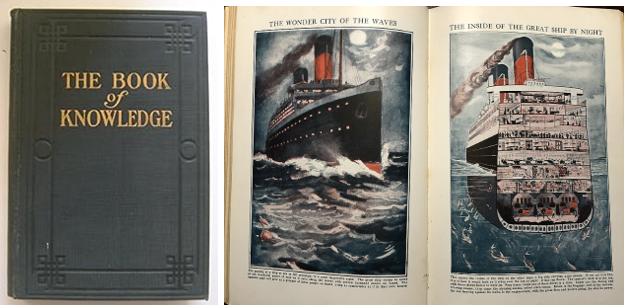
AROUND THE WORLD IN TWENTY VOLUMES…The Grolier Society’s The Book of Knowledge was a well-known resource to students and teachers alike in the 1930s. Originally largely a reprint of the British Children’s Encyclopædia with U.S. revisions, it evolved over time into an entirely new entity. This particular volume is from 1919, part of a twenty-volume set. (Randal Oulton via Wikipedia)
In this next excerpt, a teacher and principal speak of the schoolchildren dispassionately, casually referring to one pupil’s IQ as “almost down to mental defective.”
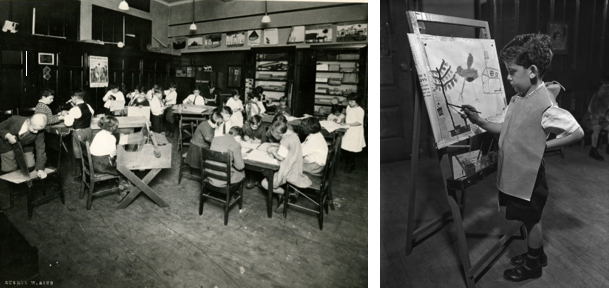
PS PUPILS…Students participate in Elizabeth Irwin’s “Little Red Schoolhouse“ program at PS 61 in 1928; at right, a kindergarten painter at PS 23 in 1935. (NYC Municipal Archives/Fordham U)
In this final excerpt, McKelway looked in on the school’s “ungraded class” of sixteen boys, most from families who were “on relief.” Beginning in the third paragraph, note how the teacher speculates on the future of one of the students.
STILL STANDING, STILL SERVING…PS 165 Robert E. Simon school today. (insideschools.org/Anna Duncan/Friends of PS 165)
A final note: It is interesting to compare McKelway’s article with one written almost thirty years later byRichard Schickel for Commentary magazine (January 1964). Schickel also visited PS 165, his observations of the “special service” school sometimes echoing McKelway’s. Today PS 165 receives high marks from teachers and parents. Located a few blocks from Columbia University, the school teaches children of graduate students and professors as well as long-time neighborhood residents and newcomers.
* * *
Moving Days
In the fall of 1935 E.B. and Katharine White and their four-year-old son Joel moved from their Greenwich Village apartment on East 8th Street (reluctantly for E.B.) to Turtle Bay Gardens in the East 40s. At about the same time The New Yorker moved from its original headquarters on West 45th Street to its new digs at 25 West 43rd Street, where the magazine would settle in for more than fifty years.
HOME SWEET HOME…This New York townhouse (left) was the new home of E.B. and Katharine White in the fall of 1935 (their neighbor was Katharine Hepburn). At right, The New Yorker also moved to a new home at 25 West 43rd Street. The magazine would occupy several floors of the building for 56 years. (homes.com/Ink Spill)
* * *
A Good Bad Girl
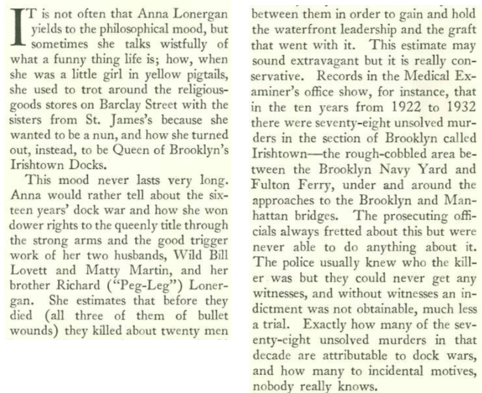
Journalist Meyer Berger (1898-1959) was known for digging deep into his subjects, including a two-part New Yorker profile of Anna Lonergan, “Queen of the Irishtown Docks.” Her two husbands and a brother—notorious killers themselves—were murdered in gang wars along with dozens of others who were Lonergan’s friends and neighbors. She was often called to the morgue to identify murder victims, thus the “Profile” title “Lady in Crepe”—one who is in a constant state of mourning. Here are the opening paragraphs:
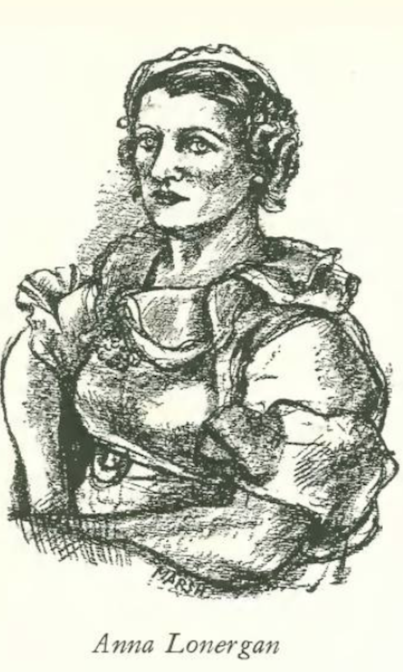
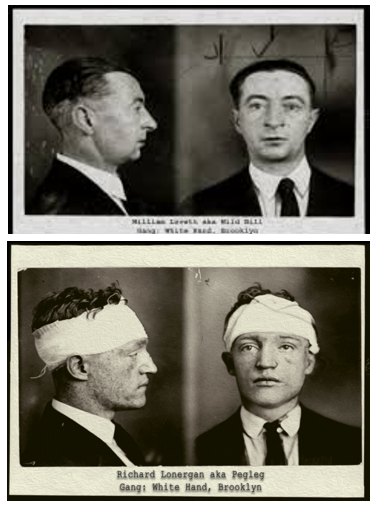
SHE WANTED TO BE A NUN…Anna Lonergan, as rendered by Reginald Marsh for the Profile.KILL OR BE KILLED…Members of the Irish “White Hand Gang” battled their Italian rivals (the Black Hand Gang) on the Brooklyn waterfront from the early 1900s to 1930. Anna Lonergan’s first husband William “Wild Bill” Lovett (top) was murdered in 1923; her brother Richard “Pegleg” Lonergan was gunned down in 1925. (artofneed.com)
* * *
At the Movies
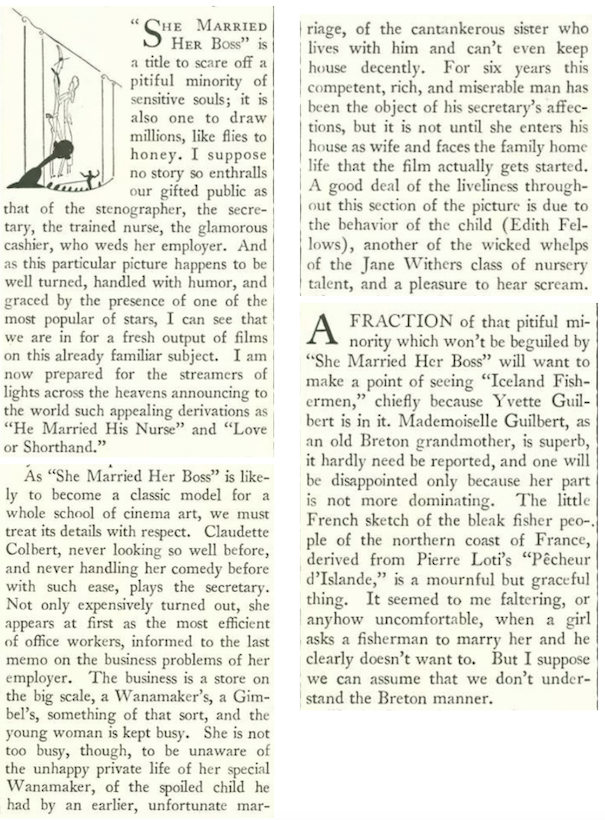
Film critic John Mosher took on a couple of very different films—the lively Claudette Colbert comedy She Married Her Boss, and the “mournful, graceful” Iceland Fisherman featuring the 1890s French cabaret star Yvette Guilbert.
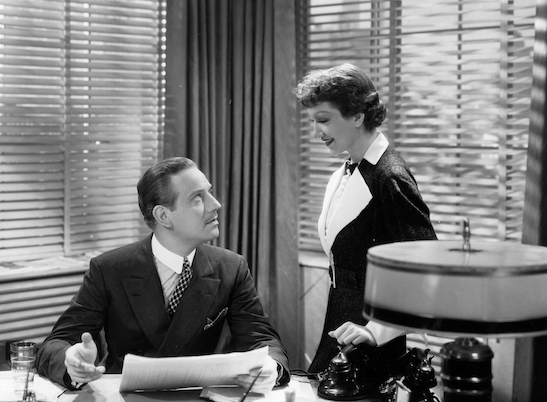
BUSINESS AND PLEASURE…Melvyn Douglas and Claudette Colbert in She Married Her Boss. (IMDB)GRAND GRANDMOTHER...John Mosher found French actress and cabaret singer Yvette Guilbert (1865–1944) to be the main attraction as a Breton grandmother in 1934’s Pêcheur d’Islande (Iceland Fishermen). Guilbert was a favorite subject of artist Henri de Toulouse-Lautrec, who made many portraits and caricatures of Guilbert, including the one at right from 1894. (musee-breton.finistere/National Portrait Gallery, London/Wikipedia)
Mosher also screened Soviet Russia through the Eyes of an American, which documented American engineer Charles Stuart’s travels through the Soviet Union. You can watch the entire film here.
NO FAMINE HERE…Children playing games were featured in Soviet Russia through the Eyes of an American, a travelogue that skipped all the bad parts of Stalinist Russia. (YouTube/Hoover Institution)
* * *
Some Housekeeping
Before we jump into the advertisements, I would feel remiss not to mention other writers in the issue, including poet Ogden Nash (“How Now, Sirrah, Oh, Anyhow”), James Thurber (“Smashup,” featuring henpecked husband Tommy Trinway); Frances Warfield (“Practical Nurse”); Theodore Pratt (“I Jes’ Goin'”); James Reid Parker (“The First Day”); Andree L. Eilert (“Words Across the Sea”) W.E. Farbstein (“Copycat”); and P. S. Le Poer Trench (“Parsons is Prepared”). Some of these contributors are long forgotten—Warfield often wrote about her deafness, but little to nothing can be found out about Eilert or Trench without considerable effort (Trench published twice in the New Yorker in 1935).
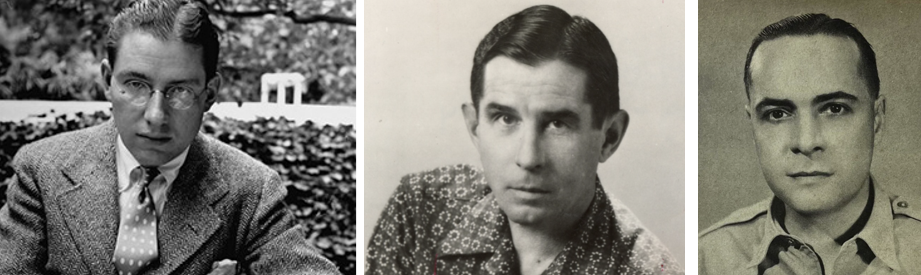
AMONG THE KNOWN…At left, Ogden Nash (1902-1971) is the most famous of this trio that includes Theodore Pratt (1901-1969), center, known as the “Literary Laureate of Florida”; and at right, James Reid Parker (1909-1984), who sidelined as a writer of captions for Helen Hokinson. Read more about Parker’s contributions to The New Yorker at Michael Maslin’sNew Yorker treasure trove Ink Spill.
* * *
From Our Advertisers
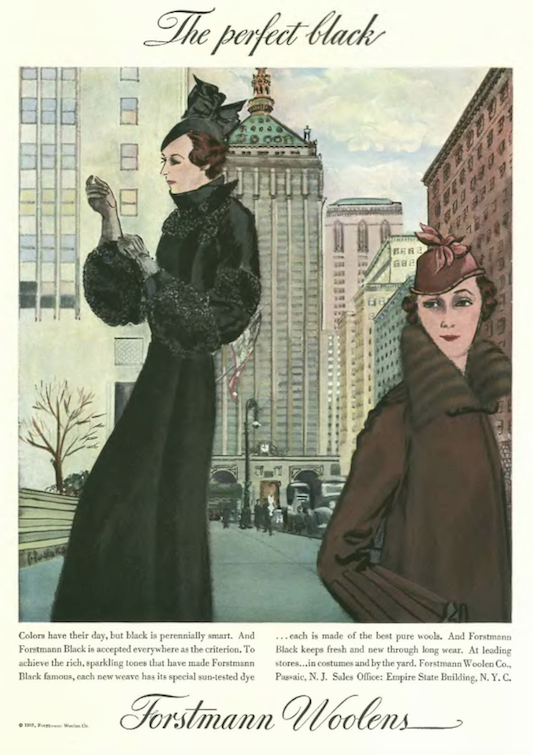
Apparently business was booming at Forstmann Woolens, who continued to post these stylish ads in the opening pages of The New Yorker—note Midtown’s 1927-29 New York Central Building (now Helmsley Building) that served as a gateway to Grand Central…
…who knew that one could be so stylish while drinking a glass of tomato juice?…
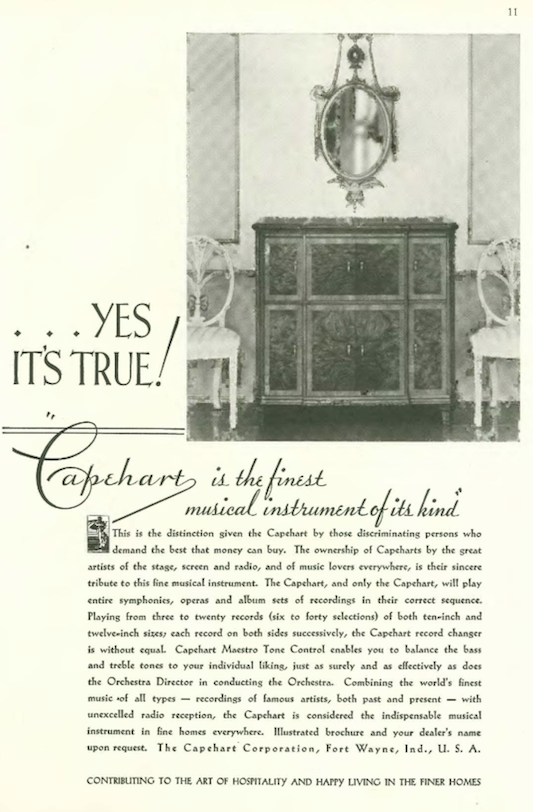
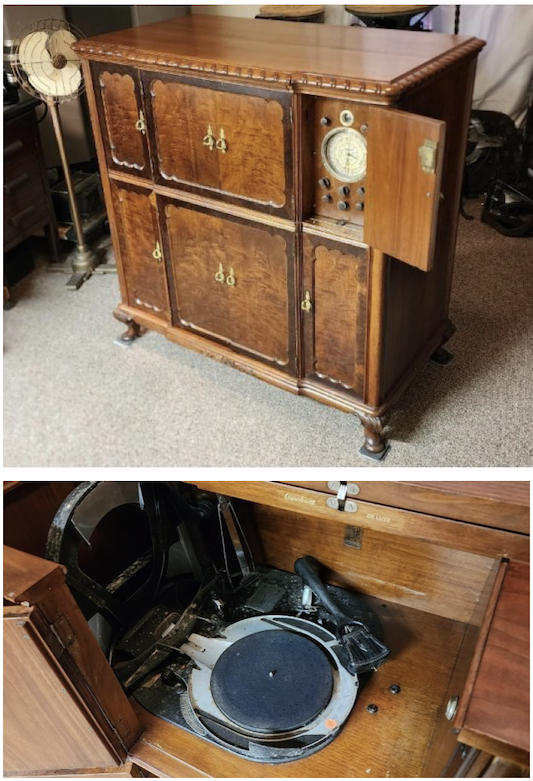
…the Capehart Automatic Phonograph Company produced a radio-phonograph that could automatically flip records to play both sides—this particular model could play up to twenty records in succession…
QUITE THE GIZMO…Restoration of a Capehart 405E. These units were not cheap, selling for the equivalent of $30k or more today. (forum.antiquephono.org)
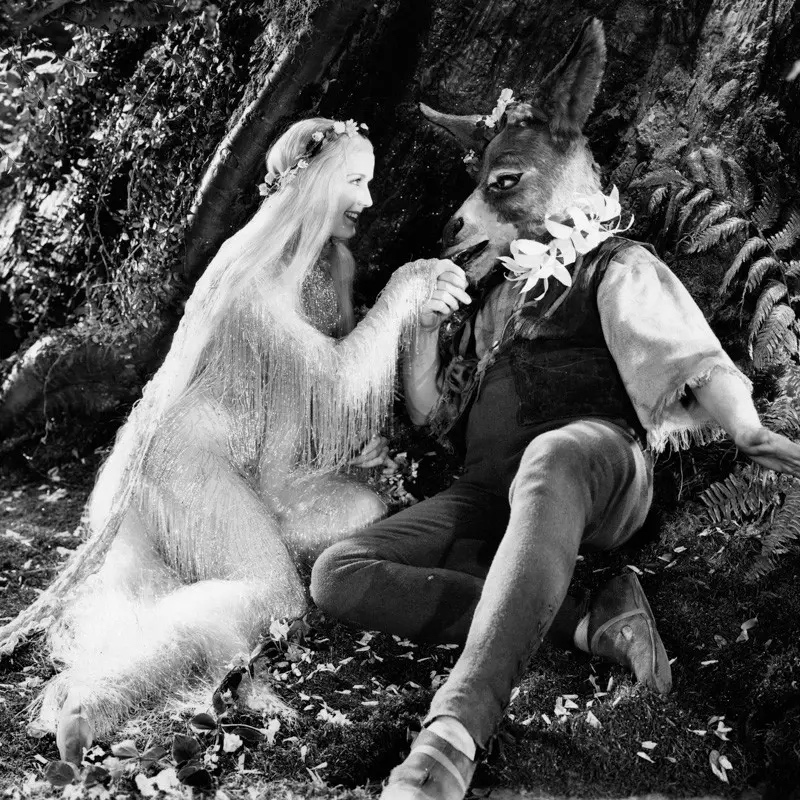
…Warner Brothers took out a full-page ad to announce the world premiere of A Midsummer Night’s Dream…the lavish, star-studded production featured, among others, James Cagney, Olivia de Havilland, Dick Powell, Anita Louise and Mickey Rooney…
AN ACQUIRED TASTE...Anita Louise as Titania, Queen of the Fairies, and James Cagney as Bottom, the Weaver, in the 1935 film production of Shakespeare’s A Midsummer Night’s Dream. The film failed at the box office with mixed reviews, however it won two Academy Awards—Best Cinematography and Best Film Editing, and it was nominated for Best Picture. Today the film gets mostly good reviews. (www.academymuseum.org)
…Stage magazine also took out a full-page ad to trumpet its own star-studded lineup, including contributions by James Thurber, Peggy Bacon and Abe Birnbaum…
…Mrs. Chiswell Dabney Langhorne, nee Caryetta Davis Saunders (1899-1971), was the latest society maven to encourage women smokers to enjoy the unfiltered pleasures of Camel cigarettes…
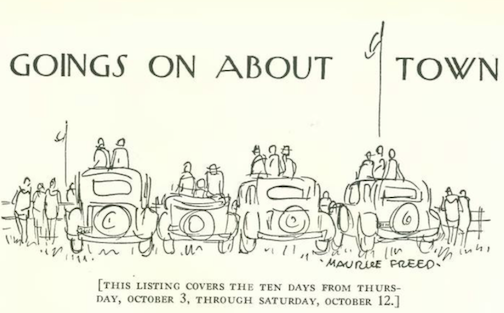
…on to our cartoonists, George Price and Maurice Freed got things rolling with these spot drawings…
…Carl Rose mixed the old with the new on moving day…
…Barney Tobey showed us how the posh travelled to school…
…George Price again, here demonstrating the joys of moneyed eccentricity…
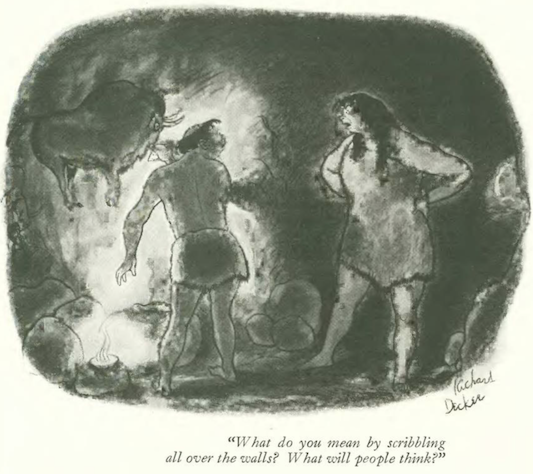
…Richard Decker explored the origins of art criticism…
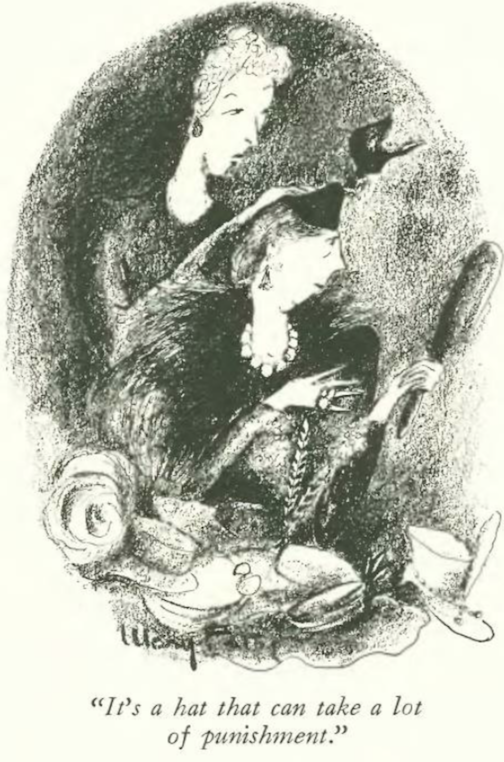
…Mary Petty offered some durable fashion advice…
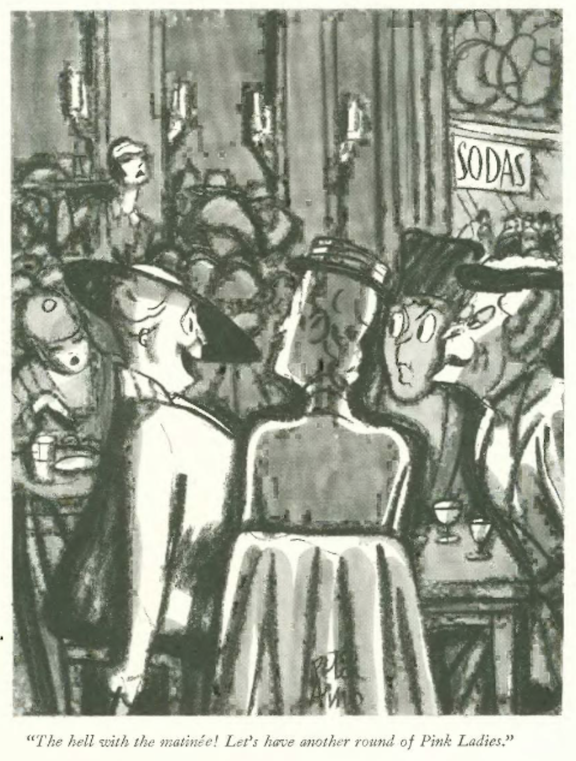
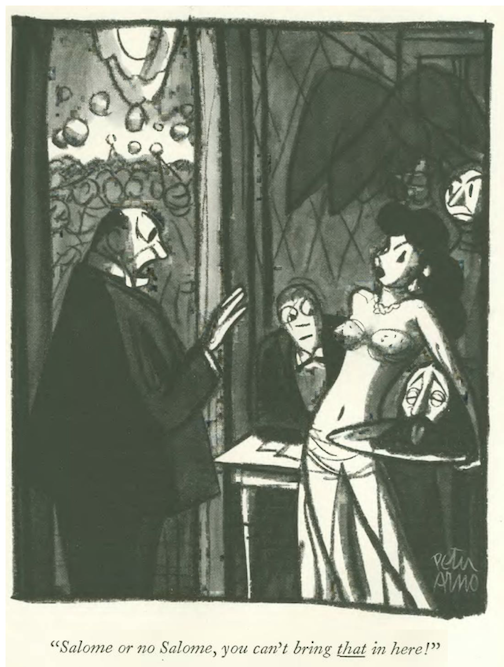
…and we close with Peter Arno, finding sudden inspiration in a Pink Lady cocktail…
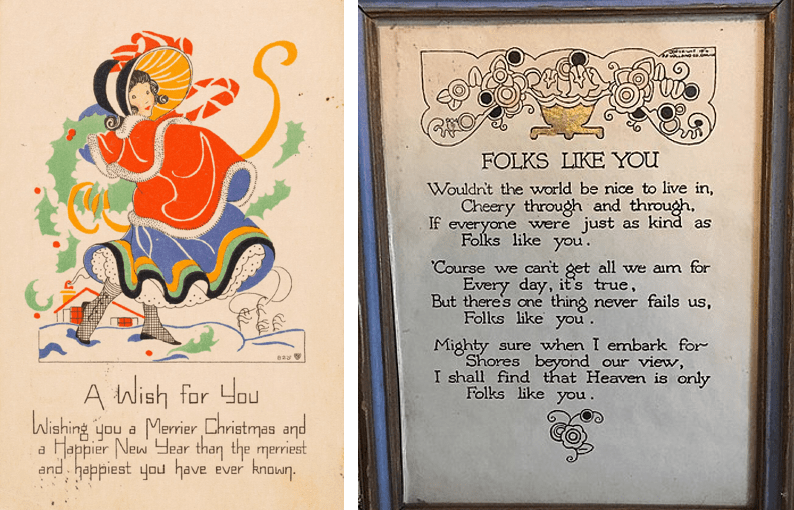
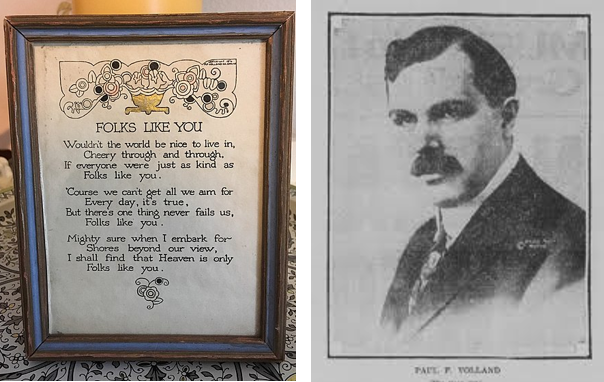
Above: Holiday greeting card circa 1920 (left) and framed poetry (1916) from the P.F. Volland Company, which rejected E.B. White's attempt at a get-well card. (Newberry Library/Wikipedia)
A deep reading of The New Yorker’s back issues can lead a person down some interesting rabbit holes as well as to new insights. For instance, who knew that the greeting card business could lead to murder?
April 20, 1935 cover by William Cotton.
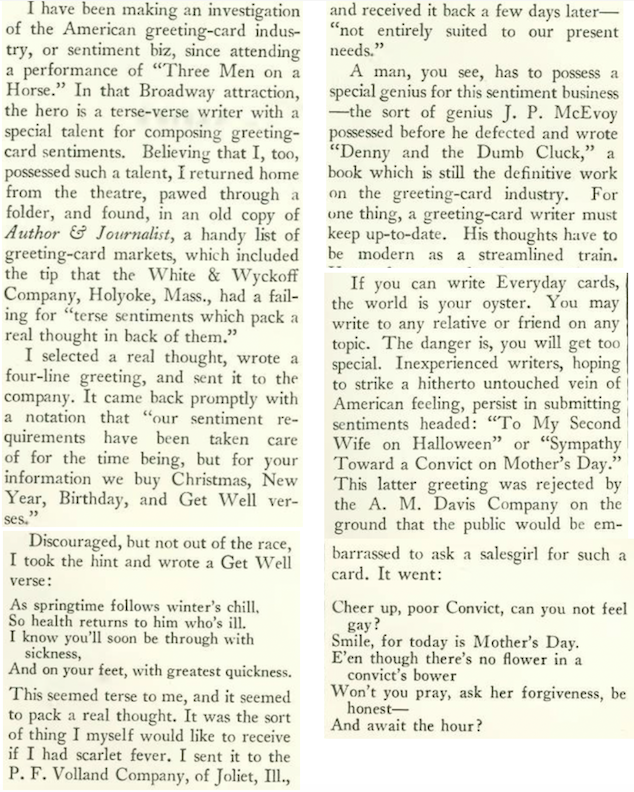
Writing for the occasional feature “Onward And Upward With The Arts,” E.B. White examined the hardboiled world of the “sentiment biz,” a world in which each year 42,000 eager writers elbowed their way into a few hundred positions, and even a smaller number made a decent living at it. To test his own mettle at the craft, White submitted a get-well message to the P. F. Volland Company.
A JOB TO DIE FOR…Paul Frederick Volland (1875-1919) founded his greeting card company in 1908, producing sheet music, children’s books, calendars, cookbooks, and framed poetry such as the example at left, from 1916. On May 5, 1919, Volland was shot and killed in his office by an elderly contributor, Vera Trepagnier, after a dispute about compensation over her miniature of George Washington. The company continued until 1959. (Wikipedia)HACK RACKET…One of the more illustrious contributors to the Volland Company was J.P. McEvoy (1894-1958). Despite his generous salary, he hated working for Volland. His 1930 novel Denny and the Dumb Cluck satirized the greeting-card business and his experiences with Volland. In an author’s note, McEvoy wrote that “among other minor atrocities I have compiled 47,888 variations of Merry Christmas…” (Wikipedia/Pinterest)
The Volland Company employed scores of artists and writers including L. Frank Baum, Edgar Rice Burroughs, John Held Jr, Ring Lardner, Robert Louis Stevenson, and J.P. McEvoy—a writer little known today, McEvoy was influential in the 1920s and 30s, writing everything from children’s tales (he likely inspired Raggedy Ann) to short stories, novels and comic strips, including the popular Dixie Dugan. He also wrote a hit Broadway play, and several of his stories were turned into movies, including W.C. Fields’ 1934 classic It’s a Gift.
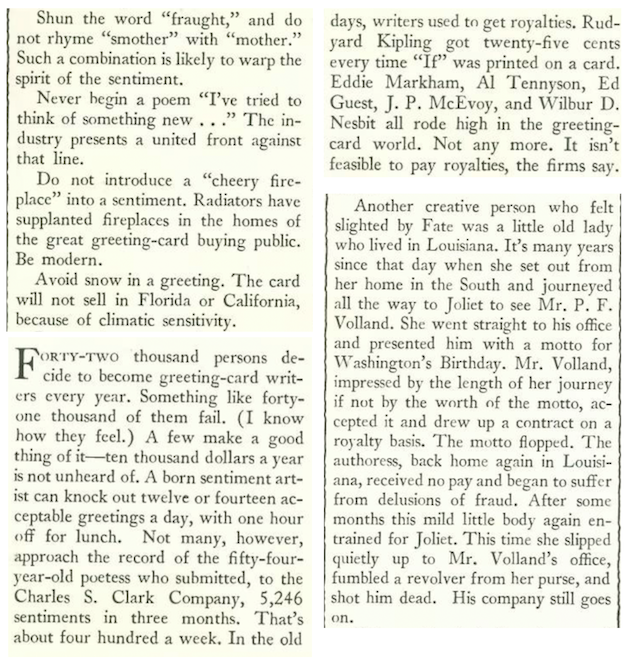
White also offered some “tips” on sentiment writing, suggesting that one avoid rhyming words such as “smother” and “mother”…
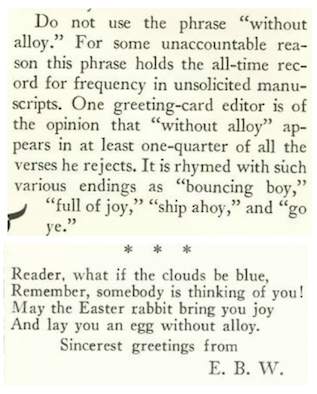
…he also cautioned about the use of certain phrases, and concluded with a cheeky Easter poem of his own…
* * *
More Thoughts From E.B.W.
White occasionally led off his column with observations on the passing scene, in this case springtime happenings in the city and beyond…
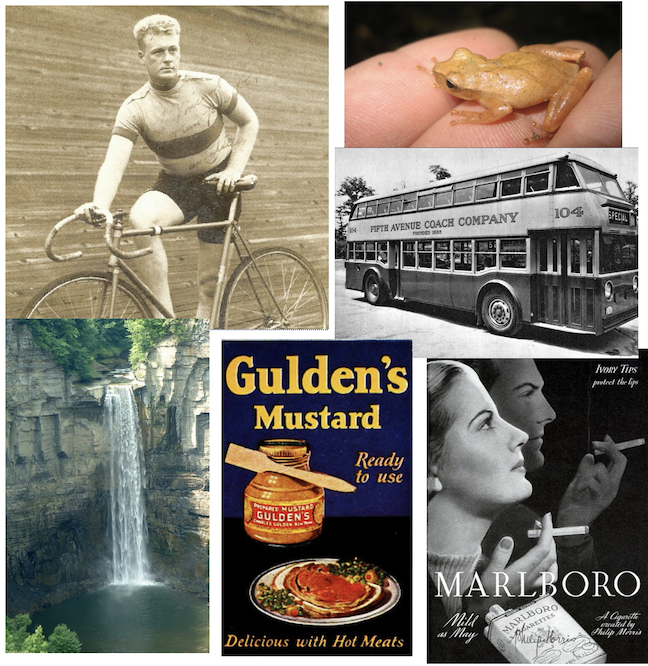
SIGNS OF SPRING…E.B. White looked around for signs of spring and found, among other things, the bicycle drills of the League of American Wheelmen (top left, professional bike racer Vincent Seifred rode for the the Empire City Wheelmen in the 1930s); top right, tiny spring peepers were for sale as pets at Macy’s; the Fifth Avenue Coach Company switched sponsors, from Marlboro to Gulden’s; White noted freshets (spring meltwater) in the hills—image is from New York’s Finger Lakes. (crca.net/paherps.com/aldenjewell-flickr.com/nygeo.org)
* * *
Star Struck
“The Talk of Town” anticipated the completion of the Hayden Planetarium at the American Museum of Natural History. When it opened in October 1935, it was only the fourth planetarium in the United States. Excerpts:
The profile by Meyer Berger looked at the life of a “chiseller,” that is, someone who lived day to day by skimming off the labors of others. Today it is mostly done digitally, but in 1935 the mechanical world could be manipulated by a handful of slugs. Excerpts:
* * *
From Our Advertisers
We begin with an elegant evening, the men in white tie, the women in their finest gowns, all preparing to partake of some canned soup…
…there were many ads with Easter themes to move the merch…
…here’s a detail from an Easter-themed ad for neckties, a retired Colonel, presumably, proudly strutting in the Easter Parade with his crop and monocle as he elbows aside his chauffeur and granddaughter…
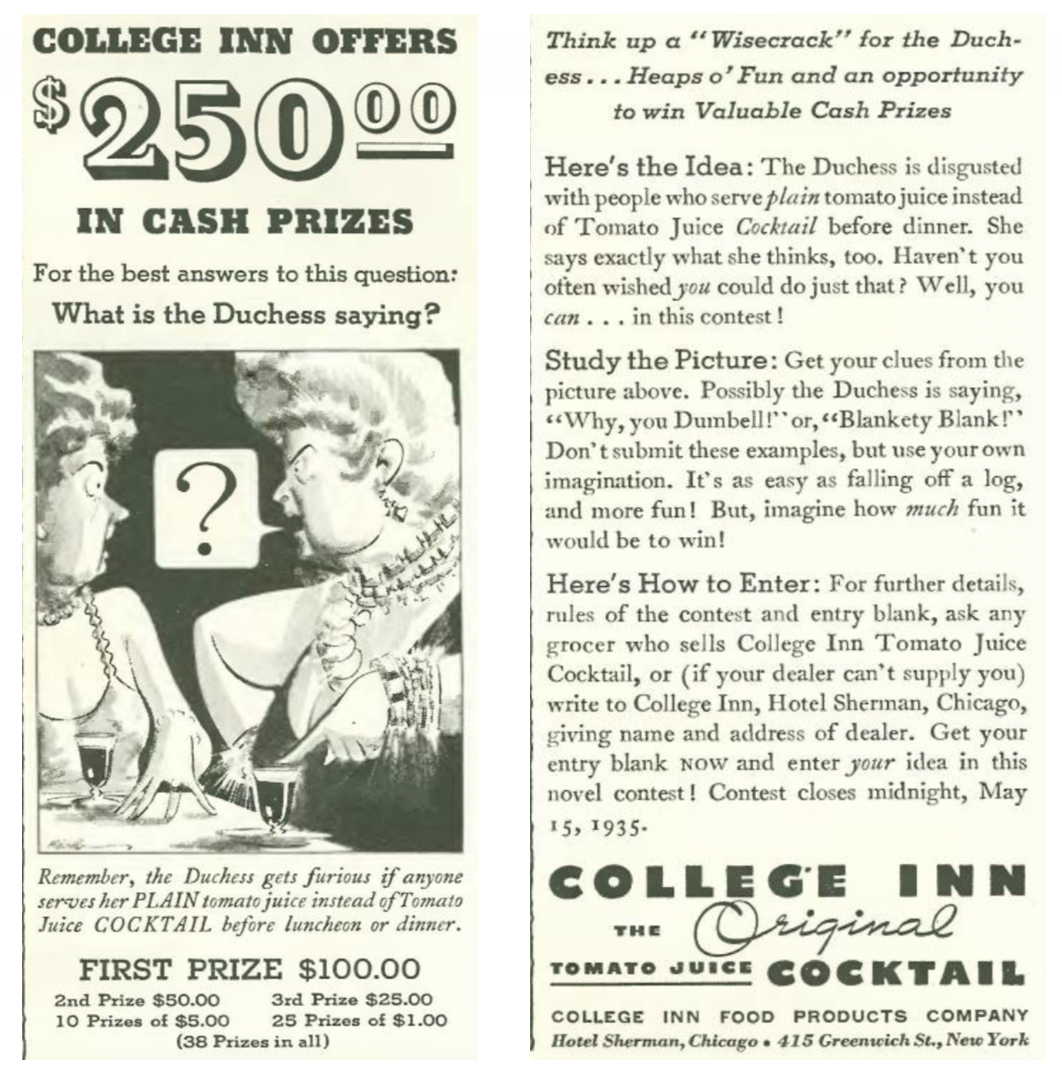
…the Duchess returns, and she’s still pissed about her tomato juice…I wish I could have entered this contest…
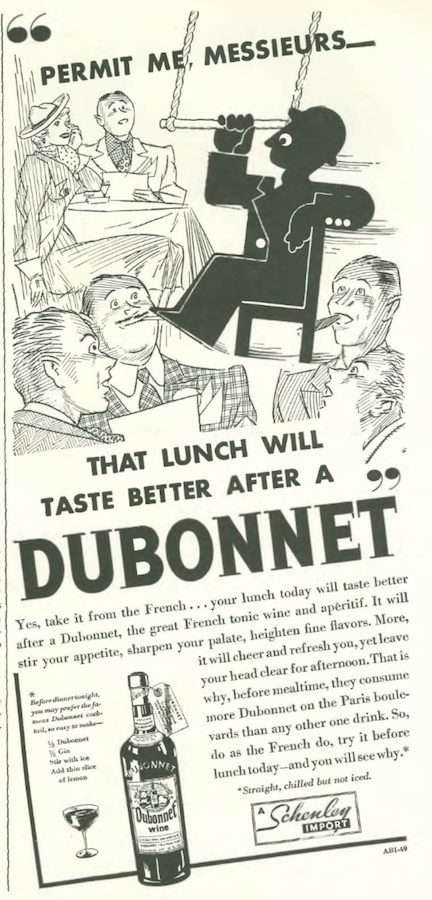
…the Dubonnet mascot, Dubo-Dubon-Dubonnet, made a startling appearance in this ad…the creation of French graphic designer Adolphe Mouron Cassandre, Paul Rand took over the drawing of Dubonnet Man when the liquor came to the United States…
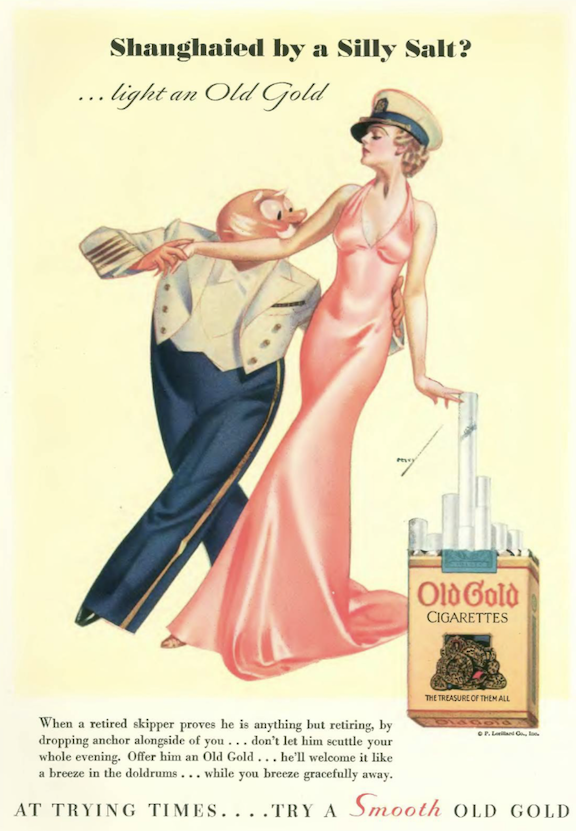
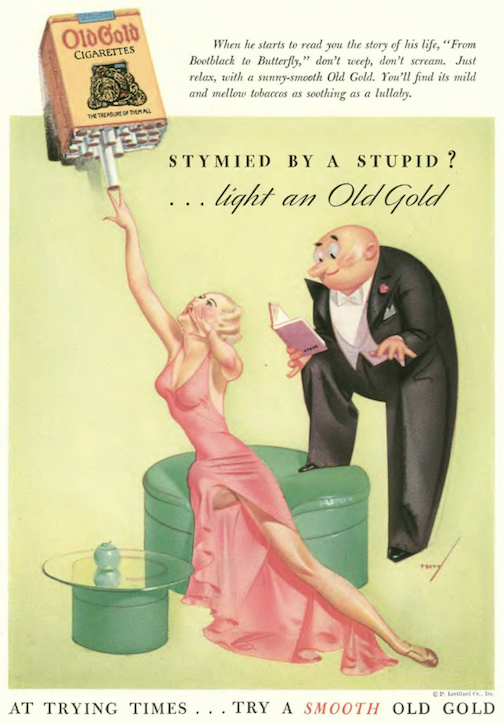
…Old Gold continued its campaign (illustrated by pin-up artist George Petty) featuring a homely, clueless sugar daddy…
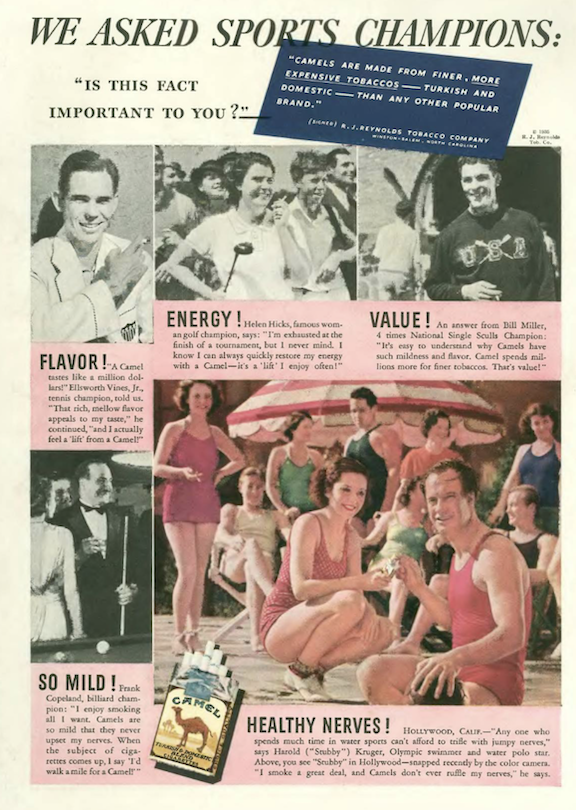
…while Camel turned out another group of “sports champions” who testified to the energizing effects of cigarettes…
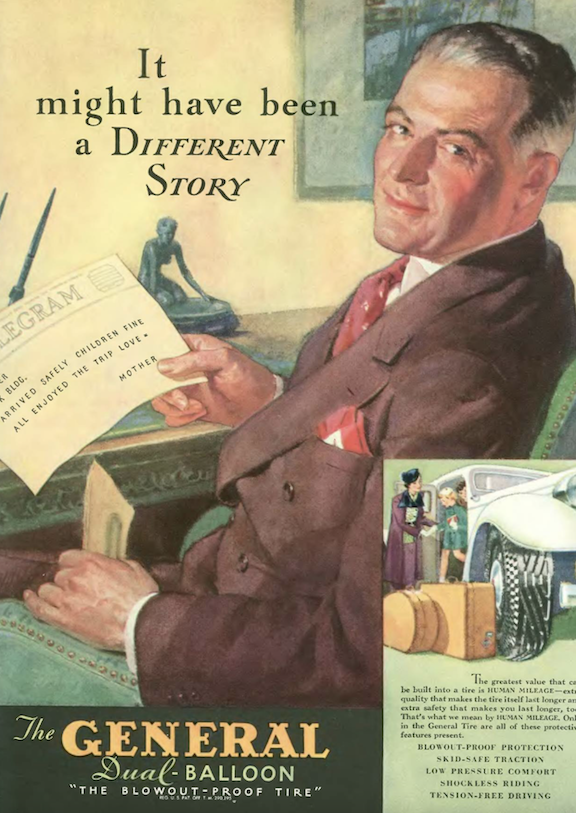
…another grim message from General Tire…this time featuring dear old dad, contemplating a different fate for his wife and children…
…recall the General ad from March 23…
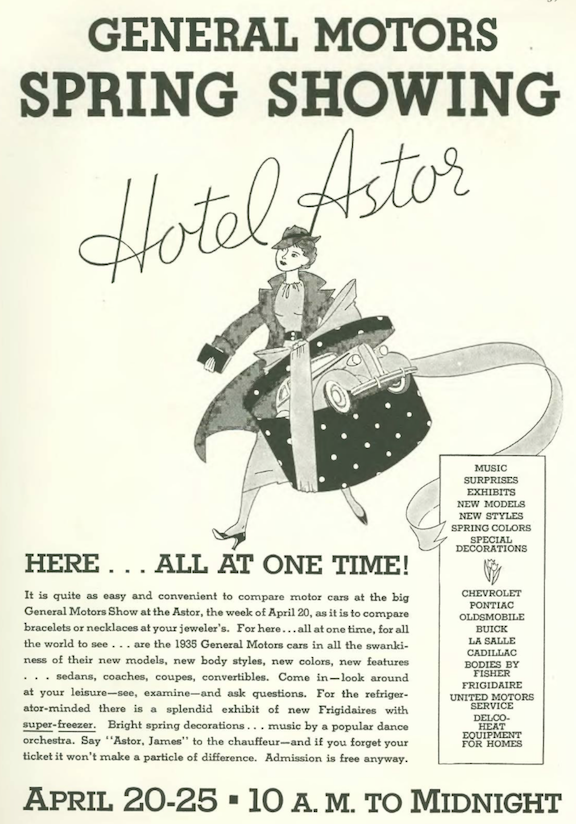
…General Motors was touting its lineup of 1935 models at the Hotel Astor…
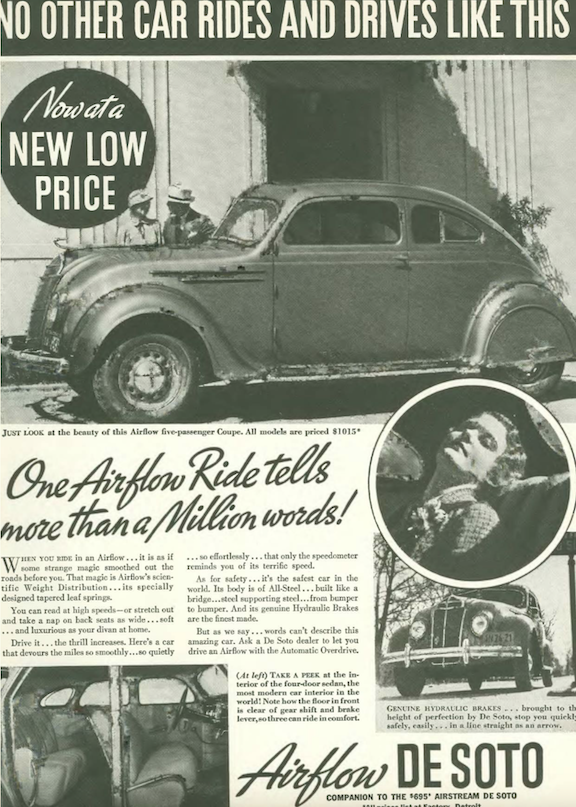
…Chrysler was known as an innovator, introducing radical designs like the Airflow, but consumers weren’t ready for the ultra-streamlined model, even if it did ride so smoothly that one could apparently lose consciousness…
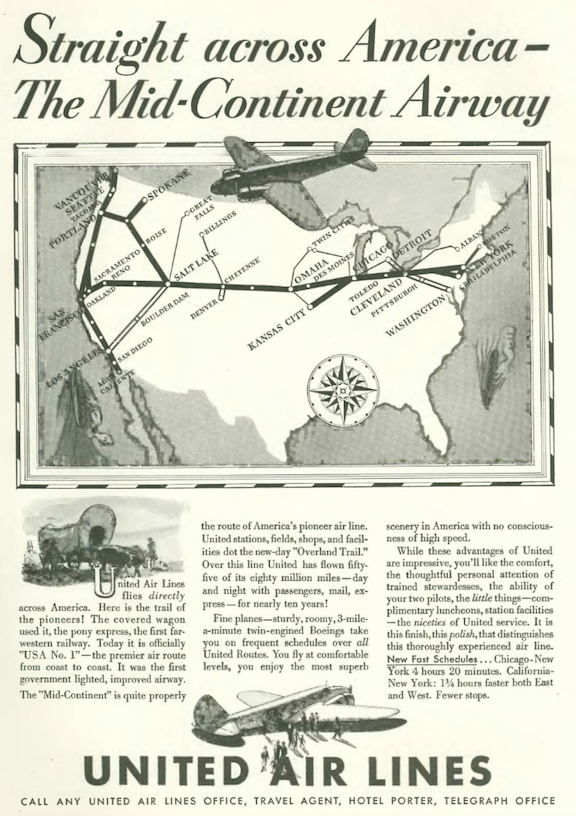
…if a car trip was not your thing, you could fly across America, with a few stops…
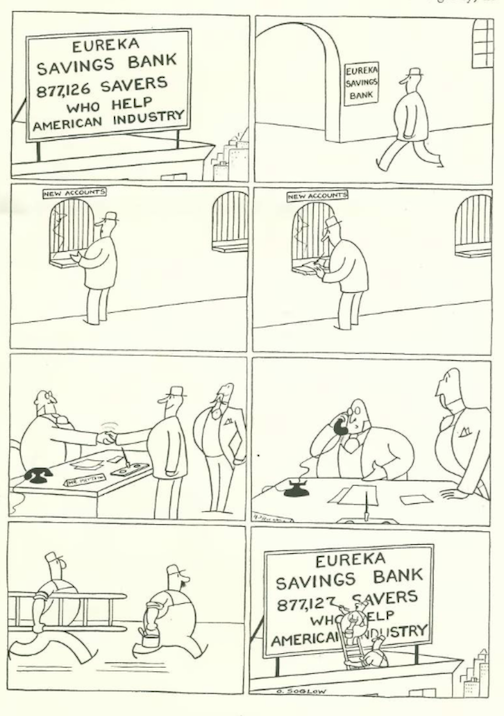
…and we fly into our cartoons, where we keep up to date with Otto Soglow…
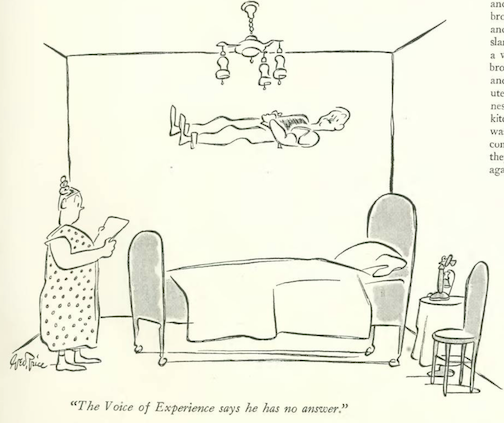
…George Price was still up in the air with this fellow…
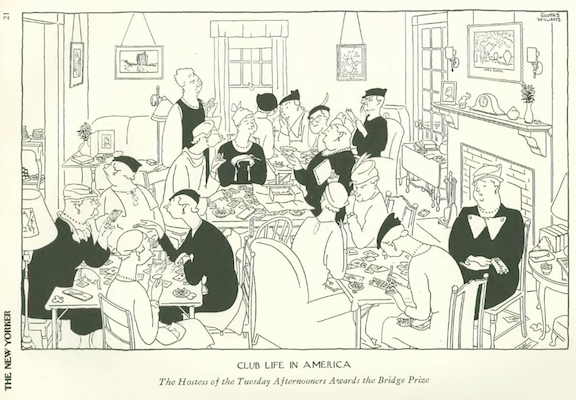
…Gluyas Williams continued to look at club life with this cartoon which originally ran sideways on page 21…
…compliments to the cook, from Syd Hoff…
…Walter Lippmann put the scare in this James Thurber subject…
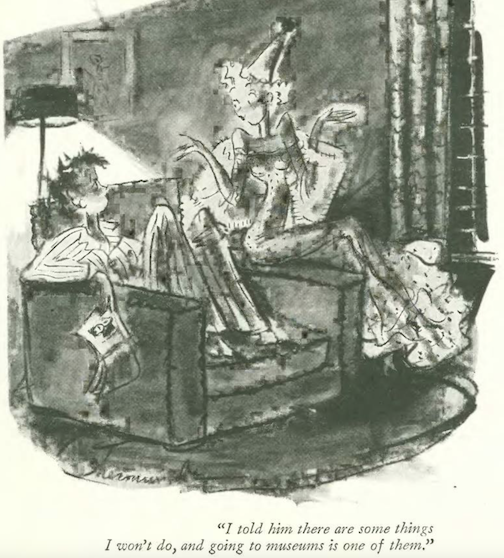
…and we end with Barbara Shermund, and one young woman who won’t be visiting the new planetarium…
Above: W.C. Fields was a well-known juggler and vaudeville performer decades before he became even more famous in the movies of the 1930s.
William Claude Dukenfield was a vaudeville juggler who distinguished himself from other “tramp acts” by adding sarcastic asides to his routines. Internationally known for his juggling skills, by the turn of the century the man who billed himself as “The Eccentric Juggler” would become much better known by another name: W.C. Fields.
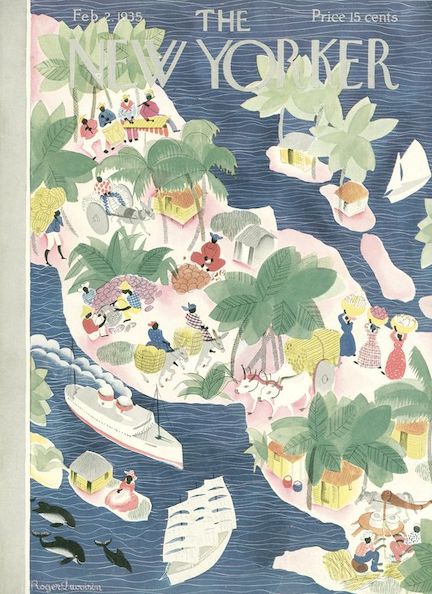
Feb. 2, 1935 cover by Roger Duvoisin.
In the first of a three-part profile, Alva Johnston pondered the secret behind Fields’ genius, an “inborn nonchalance” that he considered “the rarest of gifts.” Johnston surmised that some of that genius derived from the volatile relationship Fields had with his father, and the street-smarts he gained as a runaway at age eleven. It is no surprise, however, that these childhood stories of hardship were significantly embellished by the great wit himself.
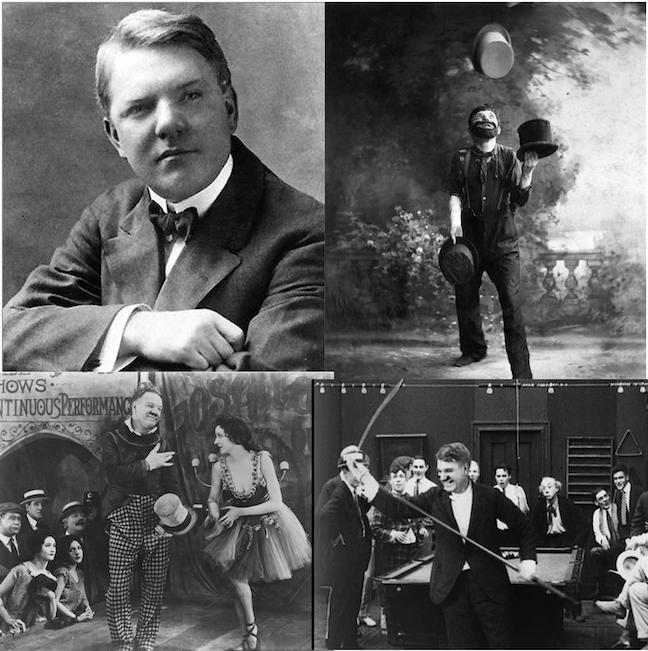
A STAR IS FORMED…Clockwise, from top left, W.C. Fields in his youth; Fields was an internationally known juggler, seen here in his vaudeville days in the early 1900s; Fields made his screen debut in 1915, seen here in his second film, Pool Sharks (1915); Fields with Carol Dempster in Sally of the Sawdust, a 1925 silent comedy film directed by D. W. Griffith. (Pinterest/YouTube)
Johnston also described Fields’ acting style and demeanor, noting that the actor’s asides were likely inspired by his mother, Kate Spangler Felton, who was known for her doorstep witticisms.
NINETEEN THIRTY-FIVE WAS A GOOD YEAR for W.C. Fields, who starred in It’s a Gift (right), released the previous December, and in the 1935 screen adaptation of Charles Dickens’sDavid Copperfield, as the character Wilkins Micawber. (MGM/IMDB)
* * *
Macabre Diversions
In the days before television and the internet, folks got their dose of the sensational and macabre from the tabloids, or, on occasion, in real life. Before crime or accident scene investigations became more sophisticated, it was not uncommon for crowds to mob grisly death scenes, including the car containing the bullet-riddled bodies of notorious bank robbers Bonnie Parker and Clyde Barrow. Their Ford automobile, pocked with 112 bullet holes, became a popular traveling attraction at fairs, amusement parks, and, in February 1935, at a car dealer’s showroom in Missouri. E.B. White explained:
BEFORE THE INTERNET, folks got their ghoulish thrills by rubbernecking at famous crime scenes. At left, a crowd gathers around the bullet-riddled car belonging to Bonnie and Clyde. According to one account, at the scene of the police ambush on Louisiana State Highway 154, nearly everyone collected souvenirs including shell casings and bloody pieces of clothing from Bonnie and Clyde. One man even tried to collect Clyde’s left ear with a pocket knife; at right, unidentified man standing next to the “death car.” (KXAN/unt.edu)
* * *
Saar Kraut
Janet Flanner mused on the recent plebiscite in the Saarland, which following World War I was seized from Germany and placed under the governance of a League of Nations commission. Much to the dismay of the French, the majority German population voted to return the Saar region to Germany, and its Nazi leadership.
* * *
Over the Rainbow
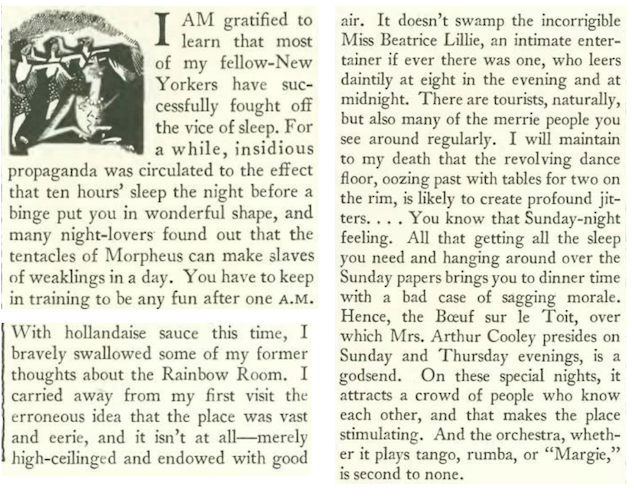
In a previous column, Lois Long took aim at the Rockefeller Center’s new Rainbow Room, dismissing it as a tourist trap filled with interminable strains of organ music. In her latest column, Long retracted some of that vitriol, finding the entertainment (and, one supposes, the food) more to her liking.
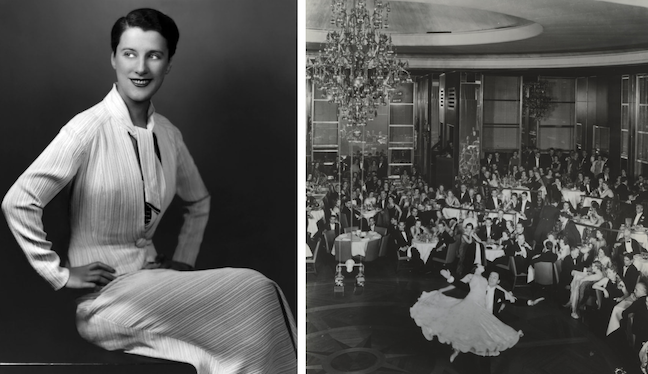
THE ‘INCORRIGIBLE’ Beatrice Lillie (left) delighted Lois Long and audiences in the Rainbow Room on the 65th floor of Rockefeller Center; at right, ballroom dancers Lydia and Joresco take to the floor in the then newly opened Rainbow Room, 1934. (Pinterest/#rainbowroomnyc)
* * *
From Our Advertisers
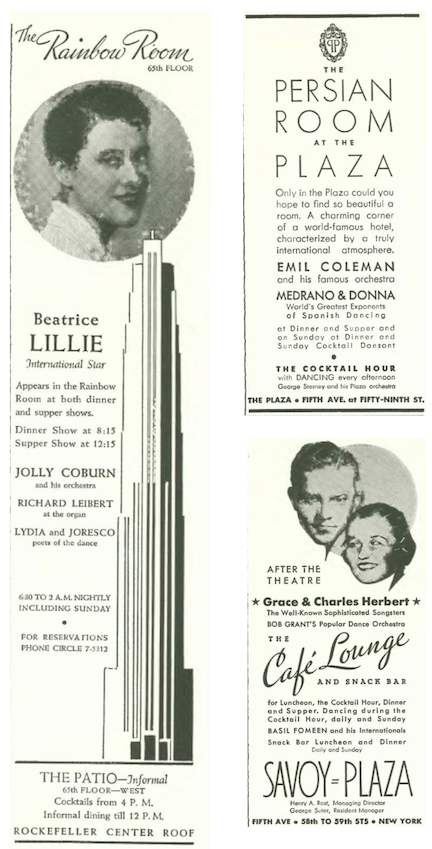
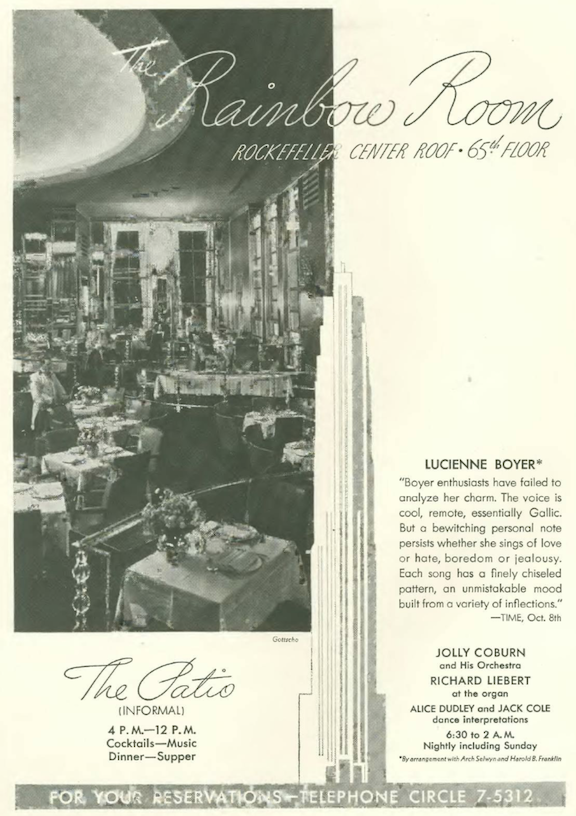
As Lois Long mentioned in “Tables for Two,” British actress and singer Beatrice Lillie was appearing at in the Rainbow Room on the 65th floor of Rockefeller Center; according to the ad below, also featured were ballroom dancers Lydia and Joresco and bandleader Jolly Corburn…
…at first I though this was Alfred Lunt and Lynn Fontanne shilling for Luckies, but the resemblance isn’t quite there, plus I’m not aware of the Broadway legends ever endorsing any product, let alone cigarettes…
…the folks at Hormel continued to feature notable Frenchmen who were known to enjoy French onion soup, although this particular image doesn’t do much for one’s appetite…
…the Bermuda Trade Development Board continued to feature colorful ads that enticed New Yorkers away from the late winter blahs…
…this ad for Schaefer is a bit odd…I guess the artist wanted to suggest a handbill, and therefore tilted the image it at an angle, unsuccessfully, one might add…
…The Theatre Guild once again called upon the talents of James Thurber to advertise their latest production…
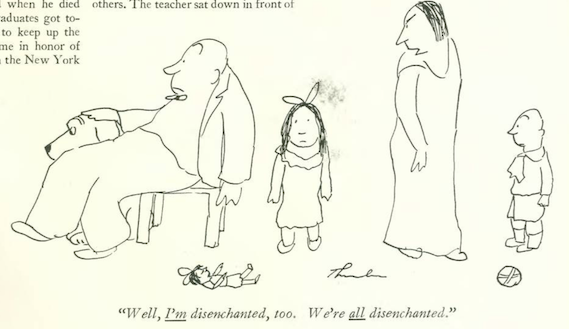
…which segues into our cartoons, with Thurber once more…
…Al Frueh did his part to promote the stage with this illustration for the theatre section…
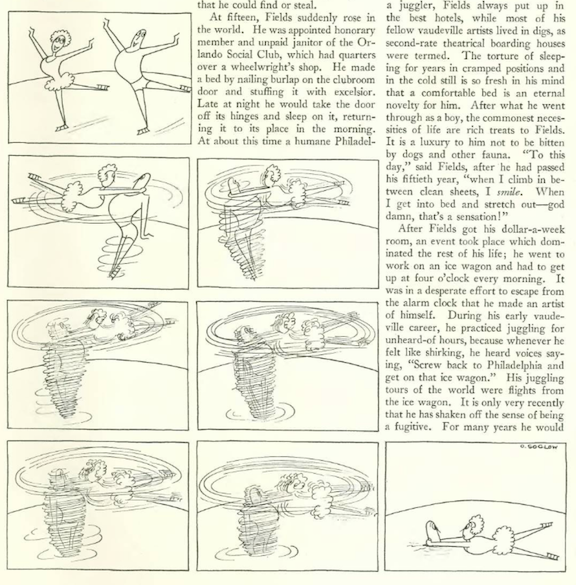
…Otto Soglow offered his spin on pairs figure skating…
…Gardner Rea explored the world of art appreciation…
…Helen Hokinson aptly supplied this cartoon for Lois Long’s fashion column…
…Whitney Darrow Jr. showed us the consequences of classified advertising…
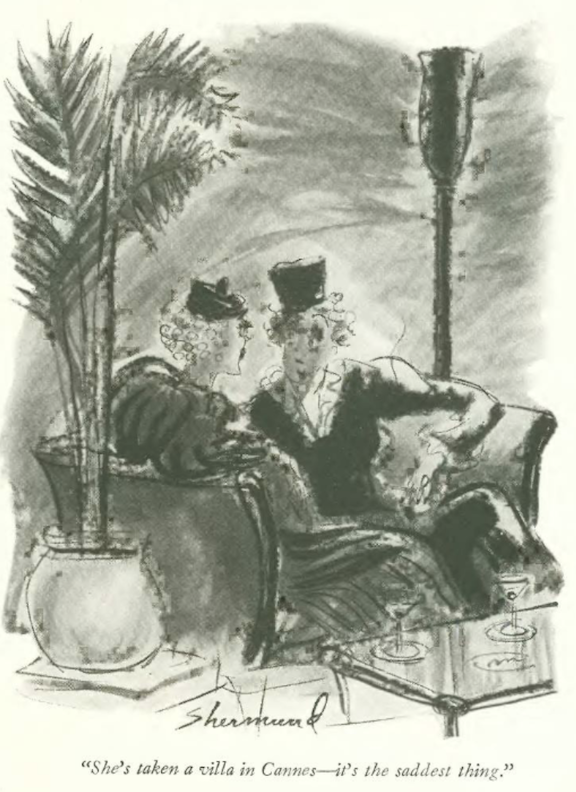
…Barbara Shermund clued us in on the latest gossip…
…and we close with Peter Arno, and one butcher’s cold greeting…
Above: Illustration and article on "Typhoid Mary" that appeared in 1909 in The New York American. At right, Mary Mallon with other quarantined inmates on North Brother Island. (Wikipedia)
The Irish-born Mary Mallon (1869–1938) lived a simple life as a maid and a cook, and it would have been a life of anonymity save for a sad twist of fate on the day she was born.
Jan. 26, 1935 cover by Perry Barlow.
History knows Mary Mallon as Typhoid Mary. From 1901 to 1907 she would cook for seven wealthy New York families that would later contract typhoid. Mallon was born to a mother who was infected with typhoid, which offers a possible explanation as to why she became an asymptomatic carrier of the disease. Forcibly quarantined on North Brother Island (near Long Island) from 1907 to 1910, Mallon agreed upon her release to take hygienic precautions, including ending her occupation as a cook.
When other jobs failed to pan out, Mallon returned to cooking—this time in restaurants and hotels—infecting many more while evading investigators who were desperately trying to track her down (it is estimated she infected up to 122 people, resulting in as many as four-dozen deaths). When she was finally arrested in 1915, she was returned to North Brother Island, where she would live out her days. Stanley Walker (1898–1962), a native Texan, longtime editor of the New York Herald Tribune, and a New Yorker contributor from 1925 to 1956, featured Mallon in a profile for the Jan. 26, 1935 issue. Some brief excerpts:
* * *
The Latest Sensation
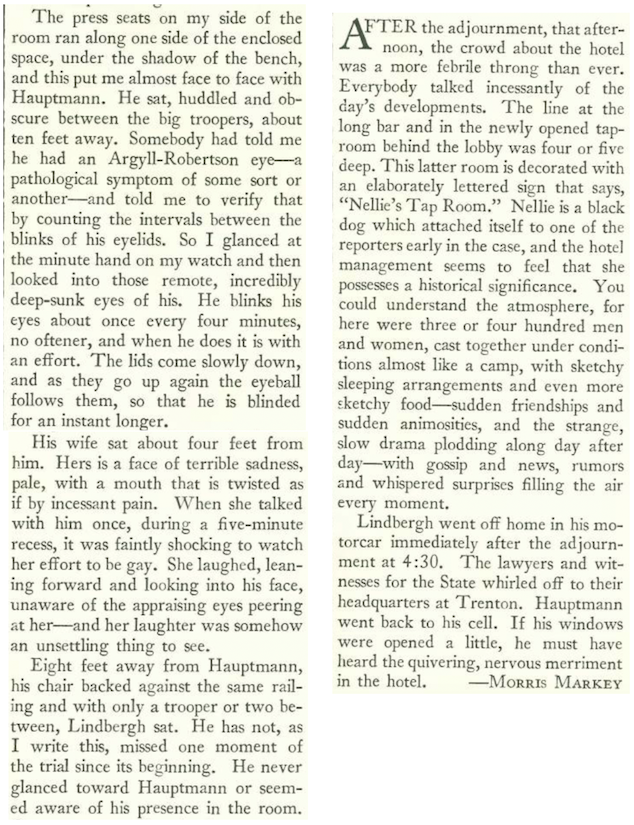
Mary Mallon was the source of sensational headlines in the early 1900s, but even she couldn’t top the media frenzy prompted by the Lindbergh baby kidnapping and the trial of accused murderer Bruno Hauptmann.The New Yorker’s Morris Markey went to the courthouse in Flemington, New Jersey, to file this report for “A Reporter at Large.” Excerpts:
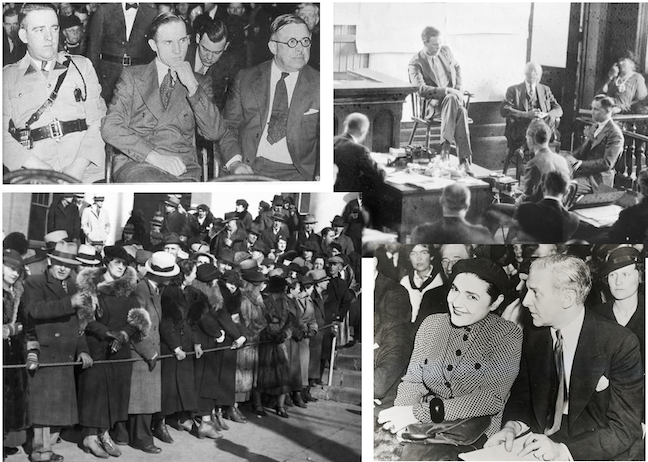
TRIAL OF THE CENTURY…Clockwise, from top left: Bruno Hauptmann (center) at his murder trial, which ran from Jan. 2 to Feb. 13, 1935, in Flemington, New Jersey; Charles Lindbergh takes the witness stand; novelist Fanny Hurst and gossip columnist Walter Winchell at the trial on Jan. 30, 1935—the “Trial of the Century” was followed by more than 700 reporters; police ropes contained the large crowds gathered at the courthouse. (Library of Congress/umass.edu/Courier Post)
Hauptmann would be convicted of the crime and immediately sentenced to death. On April 3, 1936, he would meet his end in an electric chair at the New Jersey State Prison, maintaining his innocence to the very end.
* * *
From Our Advertisers
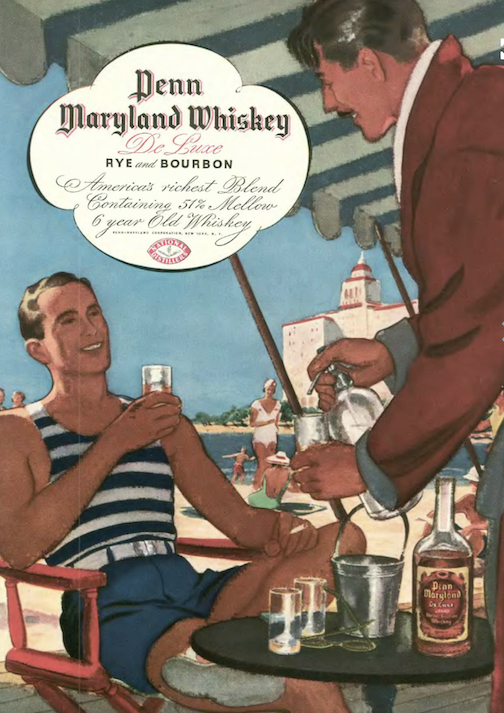
On to our ads, we begin with another colorful spot from Penn Maryland, and jolly times on Miami Beach…
…here is the first in a series of ads that the makers of Old Gold cigarettes (Lorillard) began running in 1935, featuring a sugar daddy and his leggy mistress…they were drawn by George Petty (1884–1975), famed for his “pin-up girls” featured on many magazine covers as well as in ads for Old Gold, Jantzen swimsuits, and TWA, among others…
…here is Petty at work in 1939…
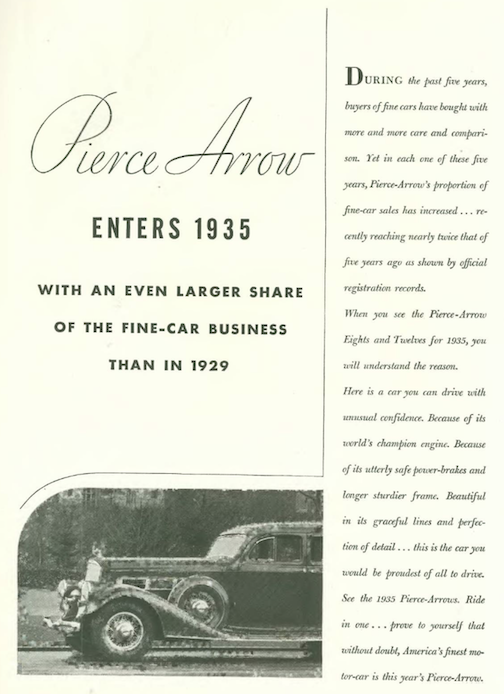
…Buffalo-based Pierce-Arrow was known for its expensive luxury cars, which were not exactly hot sellers during the Great Depression; moreover, Pierce was the only luxury brand that did not offer a lower-priced car to provide cash flow to the company, and contrary to the claims in this ad, Pierce-Arrow would close its doors by 1938…
…one thing alive and well in the 1930s was sexism, and here is a good example from the makers of a popular line of soups…
…The Theatre Guild called upon the talents of James Thurber to promote their latest production…
…and we continue with Thurber as move into the cartoons…
…where Robert Day found some miscasting in a Civil War epic…
…George Price’s floating man seemed to be coming back to earth…
…Day again, with a sure-fire way to defend one’s goal…
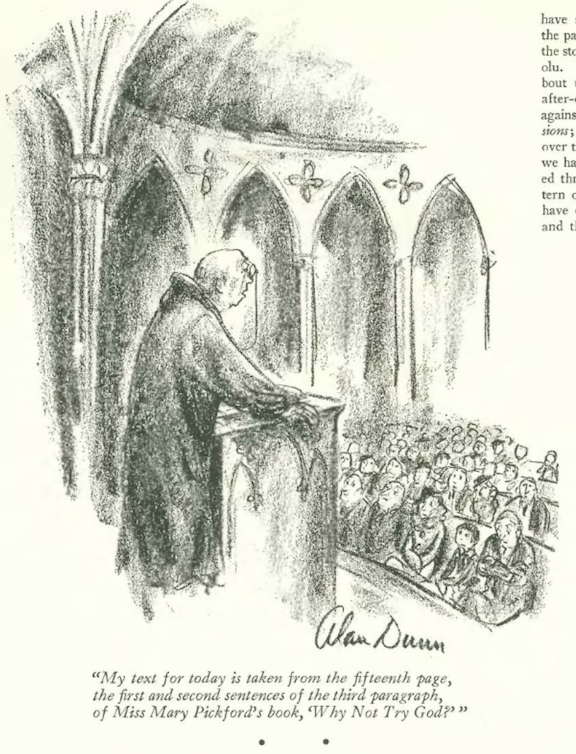
…Alan Dunn offered words of wisdom from the pulpit…
…and we close with Barbara Shermund, and a familiar face…
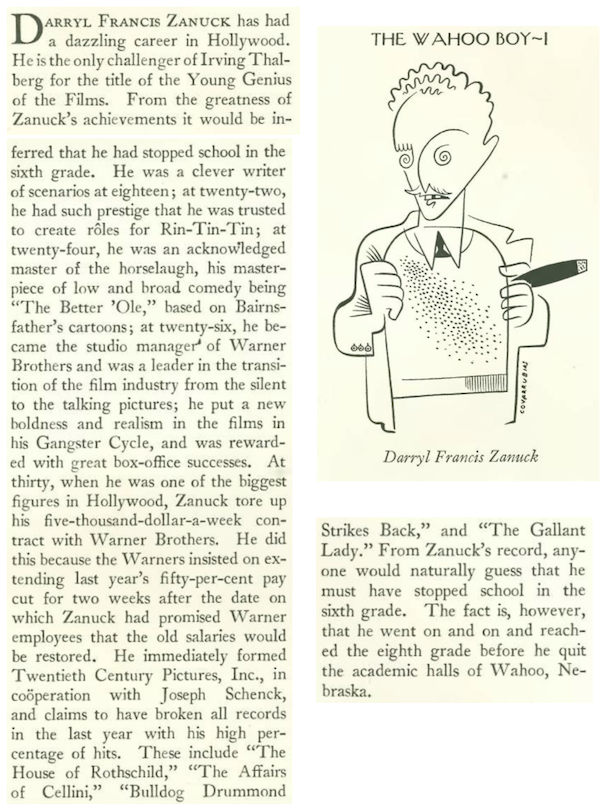
Darryl F. Zanuck (1902–1979) was an unlikely Hollywood mogul. Born in a small Nebraska town with an unusual name (both his and the town), Zanuck dropped out of school in the eighth grade, apparently bitten by the acting bug during a brief childhood sojourn in Los Angeles.
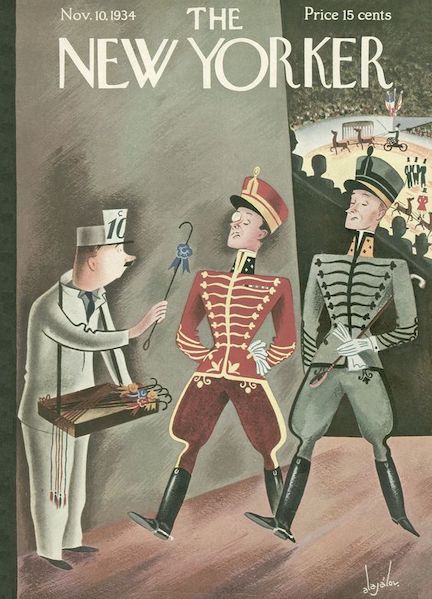
Nov. 10, 1934 cover by Constantin Alajalov.
In the first part of a two-part profile, Alva Johnston began to probe the mystery of the boy from Wahoo who would rise to become one of Hollywood’s most powerful studio executives.
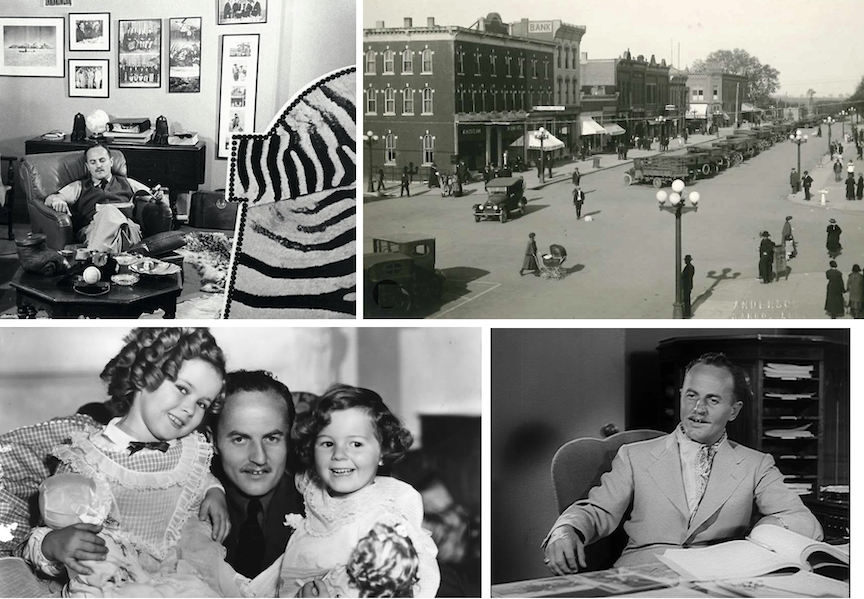
MAKING OF A MOGUL…Clockwise, from top left: Darryl F. Zanuck relaxing with trophies from his hunting excursions, circa 1940 (detail from a Margaret Bourke-White photo); Zanuck’s home town, Wahoo, Nebraska, 1920s; screenshot from a trailer for The Grapes of Wrath, 1940; Zanuck with child star Shirley Temple (left) and his first-born daughter Darrylin (mother was silent-screen actress Virginia Fox) in the 1930s. (Robin Pineda Zanuck via The Hollywood Reporter/Saunders County Historical Society/Wikipedia)
Johnston took a quick look at Zanuck’s humble origins, including his first encounter with the film industry at age eight. There must have been something in the water at Wahoo, a town of just 2,100 residents when Zanuck was born. Other Wahoo notables contemporary to Zanuck included Nobel Prize laureate and geneticist George Beadle, Pulitzer Prize–winning composer Howard Hanson, and Hall of Fame baseball player Sam Crawford, among others.
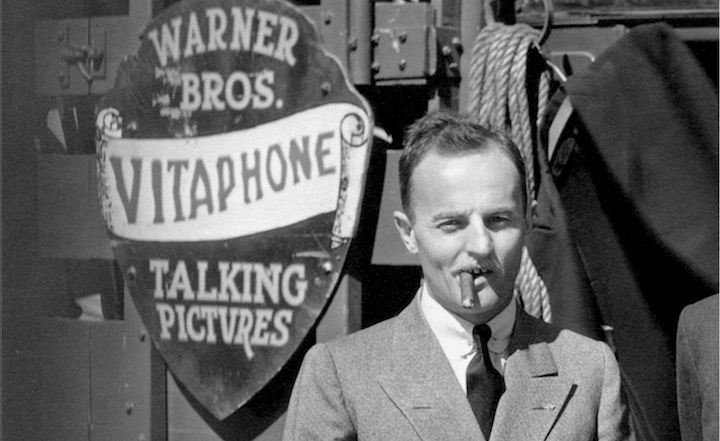
After writing dozens of scripts for Warner Brothers (including many for their popular canine star, Rin Tin Tin), in 1933 Zanuck would leave Warner and form 20th Century Pictures with Joseph Schenck. By the time Johnston penned the New Yorker profile, 20th Century had risen to be the most successful independent movie studio of its time.
* * *
One-Way Street
It goes without saying that the interwar years of the 20th century were a time of extreme foment; Bolsheviks, communists, anarchists, fascists and other political agitators seemed to be constantly at each other’s throats as Europe prepared for its second act of self-annihilation. In the middle of it all was the Balkans, its many feuds always simmering near the boiling point.
After the assassination of Archduke Franz Ferdinand in 1914 (which, along with other factors, triggered World War I), you would have thought Europeans would have abandoned the practice of parading dignitaries through crowded streets. In 1934 they were reminded of its risks.
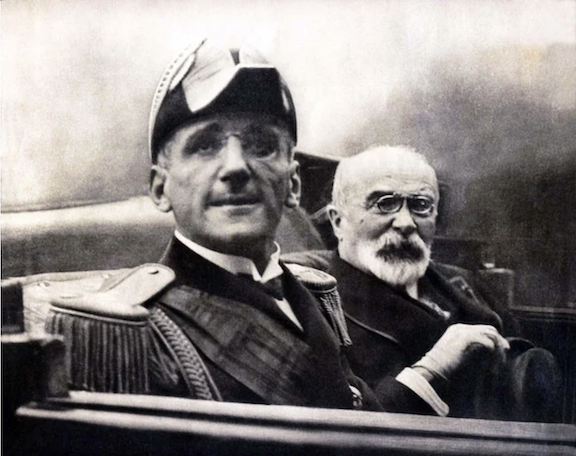
That year was King Alexander I of Yugoslavia’s thirteenth on the throne, but his time was running short in a country constantly beset by civil war. Fearing that the German Nazis and Italian Fascists would take advantage of the instability, on Oct. 9, 1934 French Foreign Minister Louis Barthou invited Alexander I to Marseille to sign a Franco-Yugoslav solidarity agreement. While Alexander and Barthou were being slowly driven in an open car through the city’s streets, a Bulgarian gunman, Vlado Chernozemski, stepped from the crowd, hopped onto the car’s running board, and shot Alexander along with his chauffeur. Barthou also died in the melee, killed by a stray bullet fired by French police (three women and a boy in the crowd were also fatally wounded by stray police bullets). Struck down by a policeman’s sword, Chernozemski was subsequently beaten to death by the enraged crowd. It was one of the first assassinations to be captured on film.
Paris correspondent Janet Flanner offered some thoughts about the incident in her “Paris Letter.” Excerpt:
WHAT A DIFFERENCE A DAY MAKES…King Alexander I of Yugoslavia (left) and French Foreign Minister Louis Barthou just moments before an assassin fired two fatal shots into the king. Barthou would die an hour later from a stray police bullet that would enter his arm and sever an artery. (Still image from YouTube video)
* * *
The Traffic Machine
In his “A Reporter at Large” column, Morris Markey sang praises for the Triborough Bridge project, which was making visible progress on the massive public work that commenced in 1930. City officials had dreamed for years about a project that would at once connect Manhattan, Queens and the Bronx, but it wasn’t until the power broker Robert Moses got involved as the Triborough Bridge and Tunnel Authority chairman that things really started to move. Moses biographer Robert Caro wrote that “Triborough was not a bridge so much as a traffic machine, the largest ever built.” A brief excerpt:
As noted by Markey, the “people in charge” were forthright about the bridge’s completion date of July 1, 1936. And they kept their word. The bridge was substantially complete by June 1936, and would be dedicated on July 11, with Moses serving as master of ceremonies.
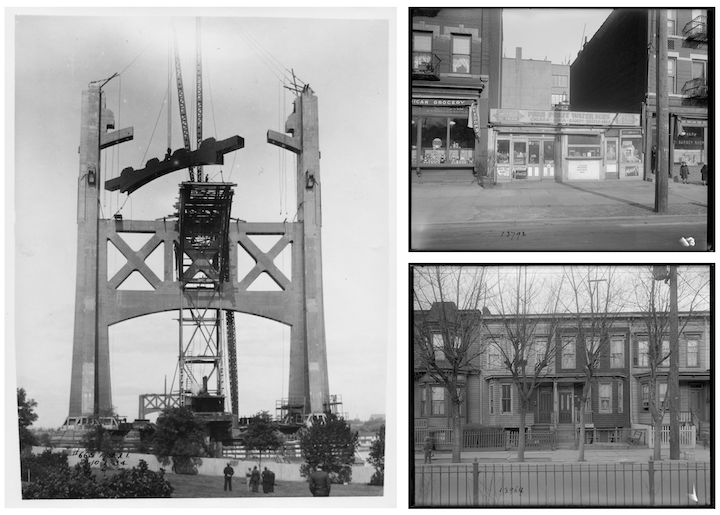
MAKE WAY FOR THE GIANTS…City engineers had been kicking around plans since 1916 to build bridges to connect Manhattan, Queens and the Bronx, but the massive Triborough Bridge project finally got off the ground in 1930. By 1934 the bridge’s Queens tower (left) would loom over Ward’s Island, visible in the background; at right, views of buildings in Astoria (Hoyt Ave.) that were slated for demolition to make way for the bridge, photographed by Eugene de Salignac in early 1931. (MTA Bridges and Tunnels Special Archives/NYC Municipal Archives)
* * *
From Our Advertisers
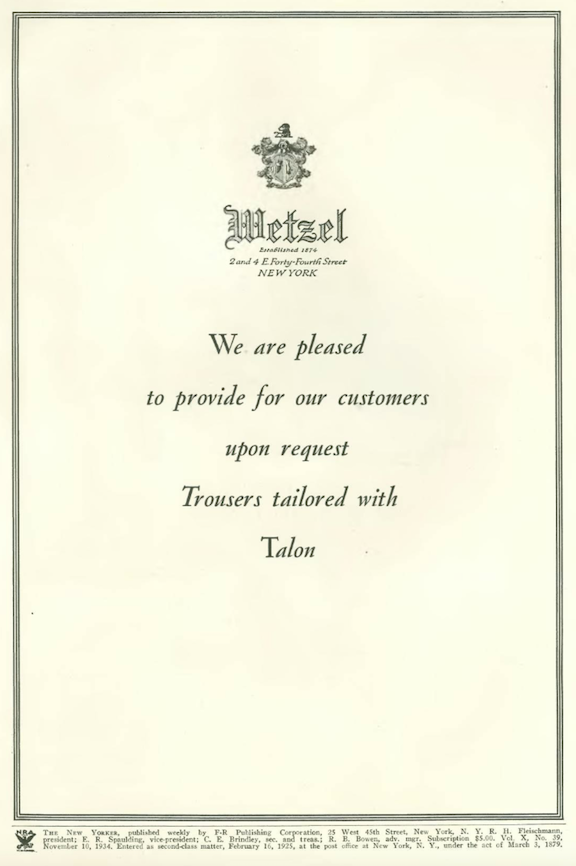
The common zipper was a relatively new invention in 1934. It had been more or less perfected by 1920, and in 1923 the B. F. Goodrich Company would coin the onomatopoetic word to describe the newfangled fastener on its galoshes, but it would take a while for the fashion industry to adopt the zipper as a replacement for buttons on garments, including men’s trousers. And so we get this staid-looking ad from Wetzel that signaled its entry into the brave new world of zippers (Talon was the dominant U.S. producer of zippers for many years)…
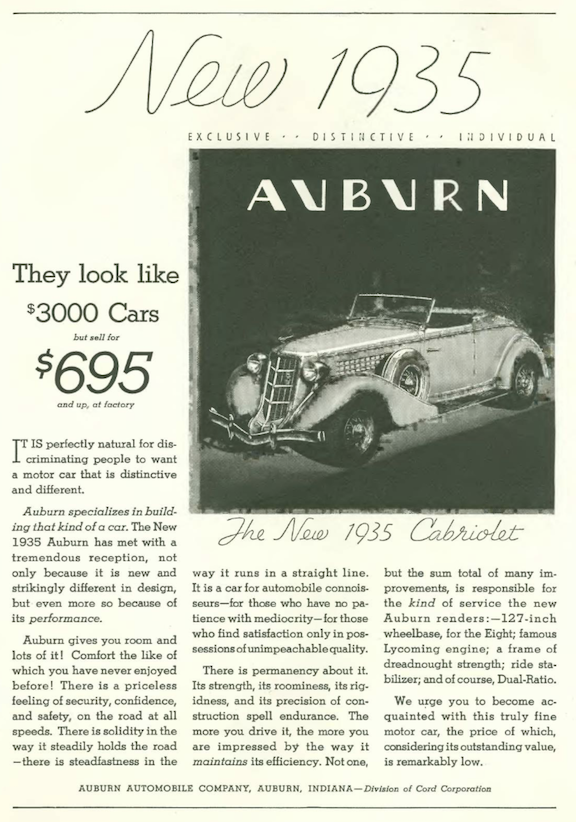
…this next ad is kind of amazing, a 1935 Auburn for only $695, which roughly translates to $15,000 or so today—still a bargain…known for cars that were fast, good-looking and expensive (and favored by Hollywood elite), Auburn struggled mightily during the Depression…along with its sister marques Duesenberg and Cord, the company would fold in 1937…
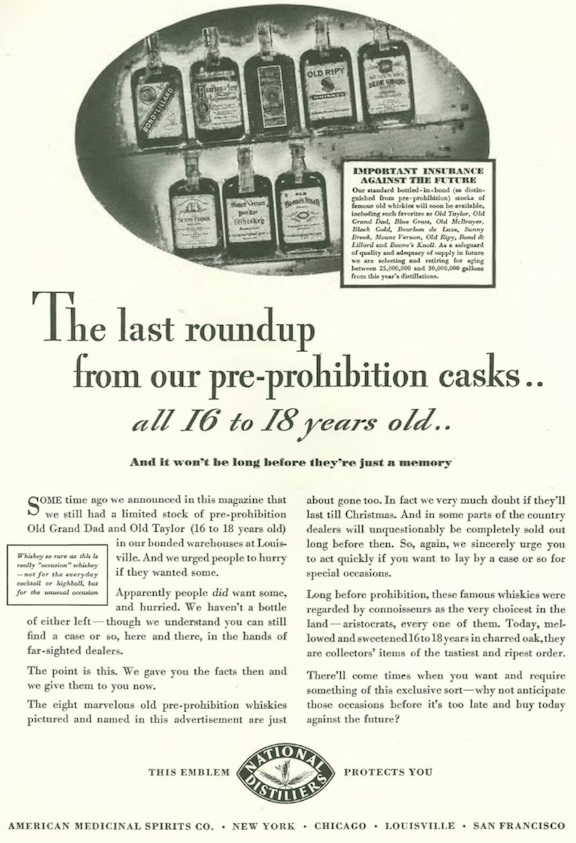
…during Prohibition distillers were allowed to keep stocks of whiskies produced before the 18th Amendment went into force…some of these were distributed through pharmacies during Prohibition for “medicinal purposes”…what was left over was sold after repeal, a stock of “pre-prohibition casks” that would be exhausted before Christmas, or so the ad rather alarmingly suggested…
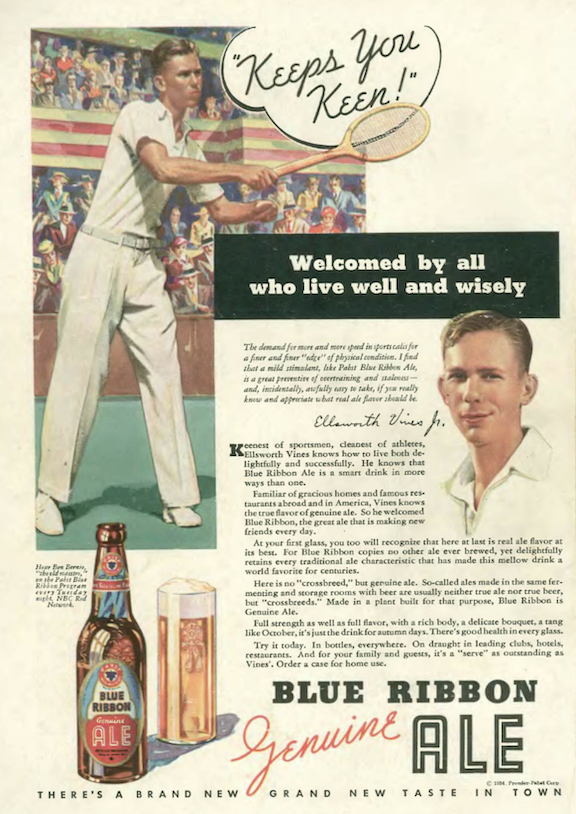
…we first met tennis star Ellsworth Vines Jr a few issues ago when he was touting the health and energy benefits of Camel cigarettes…here he promotes an unlikely “stimulant”—Pabst Blue Ribbon ale…Vines testified that “the demand for more and more speed in sports calls for a finer and finer ‘edge’ of physical condition” and observed that PBR was “a great preventive of overtraining and staleness”…yep, after a few brewskies who feels like doing anything, let alone play tennis?…
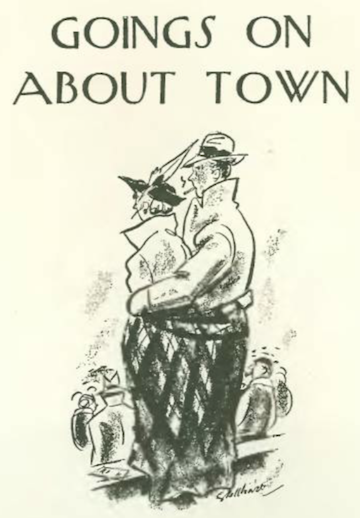
…on to our cartoonists we open with a couple of spots by George Shellhase…
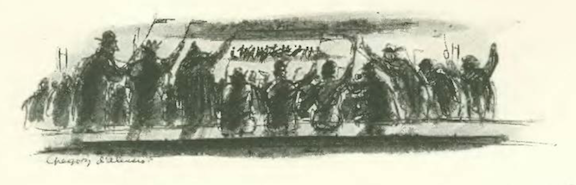
…and Gregory d’Alessio…
…William Crawford Galbraith gave us a fish out of water (the caption reads: You New Yorkers didn’t know we were so sophisticated in Detroit, did you?)…
…George Price still hadn’t come back to earth in his latest installment…
…Gardner Rea illustrated the results of charitable acts by the Junior League…
…and we close with James Thurber, and kindness from a stranger…
Otto Klemperer rehearsing at the Hollywood Bowl in September 1937. (Los Angeles Philharmonic)
The 20th century was an age of big personalities in classical music, among them Otto Klemperer (1885-1973), a German-born protégé of the composer and conductor Gustav Mahler. Klemperer was already an established conductor in opera houses around Germany when the rise of the Nazis prompted the maestro to emigrate with his family in 1933. He was soon appointed chief conductor of the Los Angeles Philharmonic.
Oct. 13, 1934 cover by Rea Irvin.
Klemperer also guest conducted a number of orchestras in the U.S., including the New York Philharmonic, where his larger than life presence caught the attention of “The Talk of the Town.” Excerpts:
MAESTRO…Top left, Otto Klemperer with Czech composer Leoš Janáček in 1927; at right, with Austrian-American classical pianist and composer Artur Schnabel in 1933; bottom photo, with wife Johanna Geisler, son Werner and daughter Lotte in Los Angeles, 1936. (operaplus.cz/Otto Klemperer Film Foundation/ottoklemperer.nl)
Lauded internationally as a great orchestral commander, in 1939 Klemperer would begin experiencing balance issues. After a tumor the size of a small orange was removed from his brain, he would be left partially paralyzed on his right side; bouts of depression and a manic phase would later land him in a mental hospital. However, by 1946 he would recover his health enough to return to conducting in a career that would last until 1971.
The conductor’s daughter, Lotte Klemperer (1923–2003), would serve as her father’s secretary, negotiator and administrator until his death in 1973. Otto’s son, Werner Klemperer (1920–2000), would become a stage, screen and television actor, most notably portraying Colonel Klink in the 1960s comedy Hogan’s Heroes. Although the role would garner Werner two Emmys, his father never fully understood the series or even the concept of a sitcom. Reluctant to pursue a musical career while his father was alive, Werner would later join the Metropolitan Opera Company in the 1970s, appear in Broadway musicals, and serve as a narrator with a number of American symphony orchestras.
TO THEM HE WAS DAD…At left, daughter Lotte Klemperer with her famous father in 1954. She would serve as his caretaker and business partner after her mother’s death in 1956. At right, son Werner Klemperer acted on Broadway and in films before taking on the role of the bumbling Colonel Klink in the 1960s comedy Hogan’s Heroes, which garnered the actor two Emmys. Although Werner Klemperer was musically inclined, he avoided work in music until the death of his father in 1973. (Otto Klemperer Film Foundation/CBS)
* * *
Vanished in the Haze
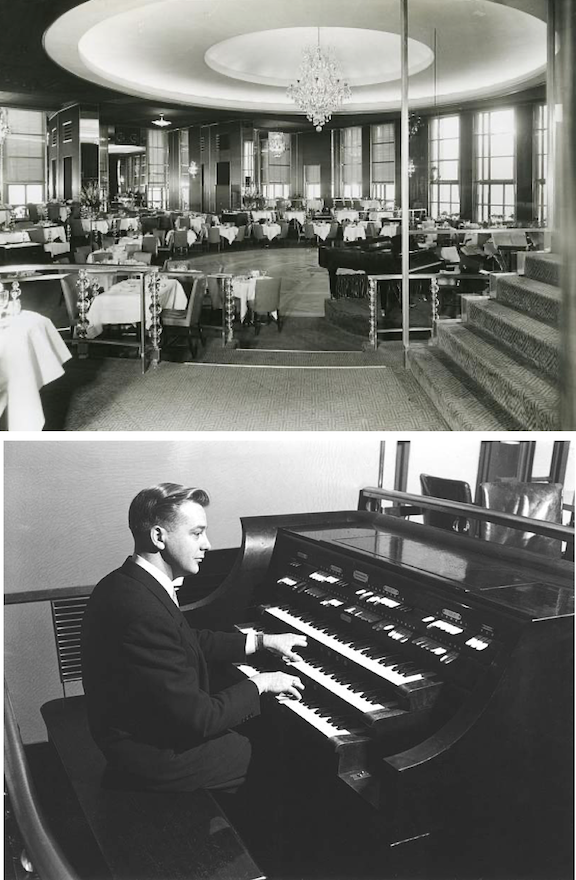
In his “Notes and Comment,” E.B. White lamented what appeared to be the transformation of the familiar night club; high above Manhattan in the Rockefeller Center’s Rainbow Room, the comforting haze of “cigarette smoke, talc, waiter’s venom” had been displaced by air conditioning, and to add to the horror, an organ had been installed that tinged the fox trot “with an odd piety.”
NOWHERE TO HIDE…E.B. White found the lack of haze in the new Rainbow Room disconcerting, not to mention the addition of a Wurlitzer organ, its wonders demonstrated here by organist Ray Bohr in 1934. (Library of Congress/nycago.org)
* * *
There Oughta Be a Law
While E.B. White was mourning the demise of the smoky nightclub, art and design critic Lewis Mumford continued his tirade against the pretentious and mediocre buildings that were popping up all over the city, including the new Federal Court Building on Centre Street that was, in Mumford’s words, a supreme example of bad design and fake grandeur.
A CRIMINAL CASE…Cass Gilbert’s Federal Courthouse building (United States courthouse) was completed in 1936, two years after Gilbert’s death. In 2001 it was designated as the Thurgood Marshall United States Courthouse. Critic Lewis Mumford called the design, which combined “two unlovely and unrelated forms”…”nothing short of a major crime.” (Wurts Brothers Photography Collection, National Building Museum)
* * *
Crime of the Century
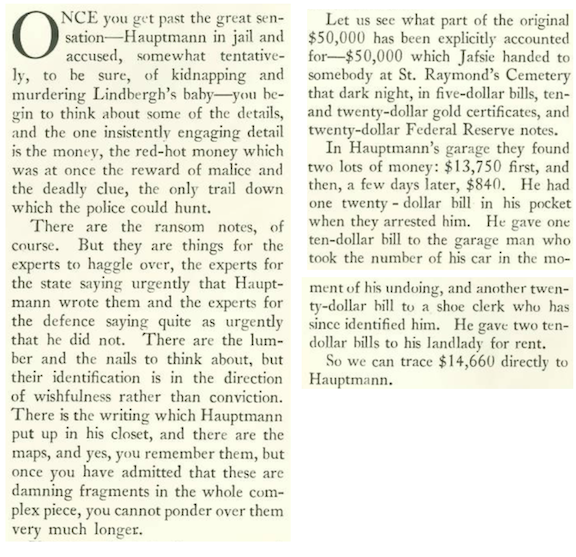
That is what the press called the kidnap and murder of the infant son of Charles Lindbergh and Anne Morrow. In September 1934 a German immigrant carpenter named Bruno Hauptmann was arrested for the crime, and a trial date was set for the following January. In his “A Reporter at Large” column, Morris Markey examined the ransom money trail that led to Hauptmann’s ultimate arrest. Excerpts:
DON’T SAY “CHEESE”…Bruno Hauptmann sits for a mug shot following his arrest for the abduction and murder of the 20-month-old son of Charles Lindbergh and Anne Morrow Lindbergh. (Leslie Jones, Boston Public Library)
* * *
Should Have Stayed Lost
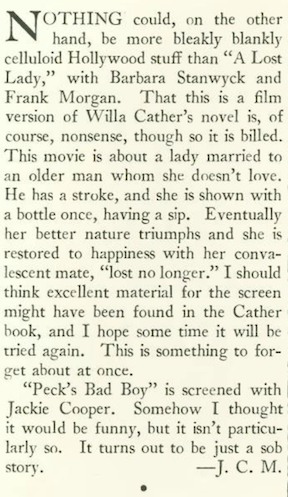
A film version of Willa Cather’s 1923 novel A Lost Lady was first made as a silent by Warner Brothers in 1924 (the film itself is lost) but in 1934 Warner had another go at the novel with a sound version starring starring Barbara Stanwyck, who was emerging as a major star. But Stanwyck’s talents could not overcome a script that critic John Mosher described as bleak, blank nonsense. Cather was so dismayed by the film that she refused to permit another adaptation of any of her novels during her lifetime.
LOST IN TRANSLATION…Barbara Stanwyck and Ricardo Cortez in A Lost Lady (1934). (IMDB)
* * *
From Our Advertisers
We kick off our sponsors with this two-page center spread from Hiram Walker & Sons, who introduced their new line of playing card-inspired whiskies…
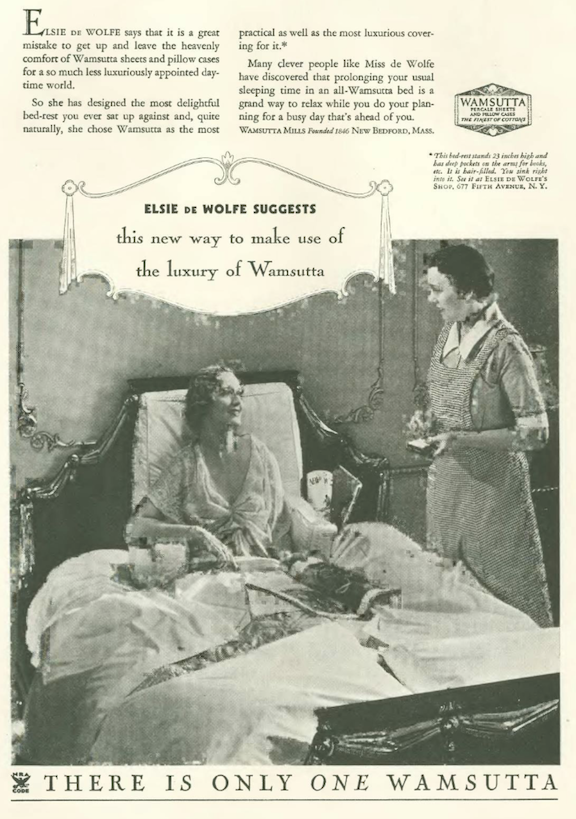
…the New Yorker’s Janet Flanner wrote in 1938 that Elsie de Wolfe invented interior design as a profession, so who was to argue with de Wolfe’s suggestion that the leisure class should linger in bed with the aid of a Wamsutta bed-rest…the small print beneath the logo indicated that the bed-rest was “hair-filled,” which I assume was horse hair, still used today in some luxury brands…
…if de Wolfe was queen of interior designers, then Hattie Carnegie was the “First Lady of Fashion,” or so this ad claimed…
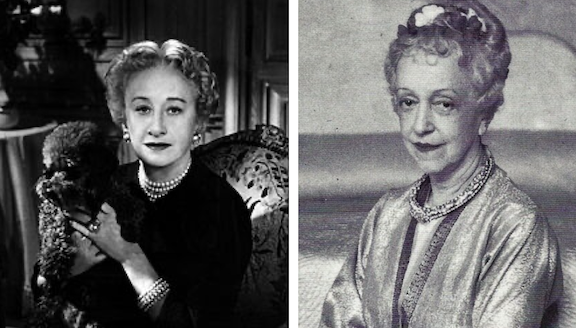
…here are images of the two titans of fashion and good taste…
TASTEMAKERS…At left, Hattie Carnegie aka Henrietta Kanengeiser (1880-1956), and Elsie de Wolfe, aka Lady Mendl (1859–1950). (americacomesalive.com/bureauofinteriors.com)
…and speaking of fashion, here is a llama cloth coat from B. Altman, trimmed in silver raccoon, suitable for Yale football games…based on inflation, that coat today would set you back at least $2,000…
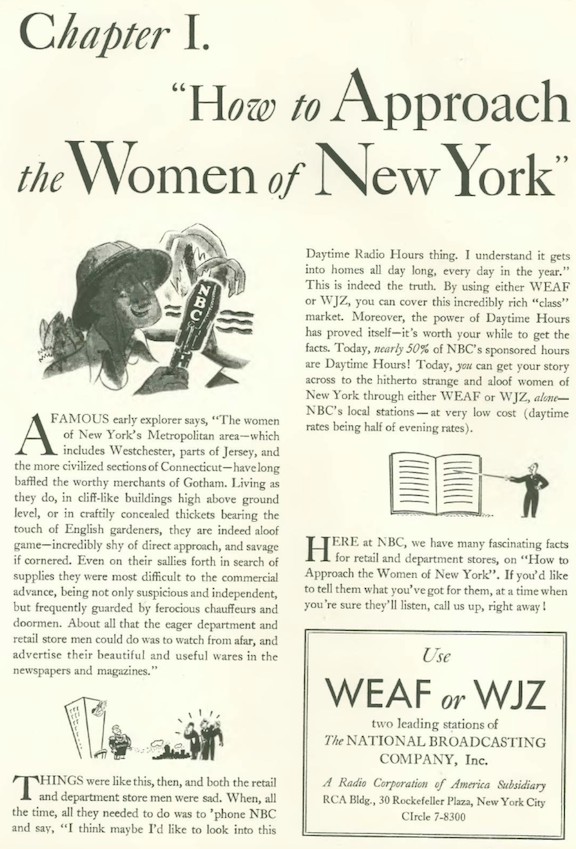
…this condescending ad offered merchants a way to reach the “hitherto strange and aloof women of New York” through daytime advertising…
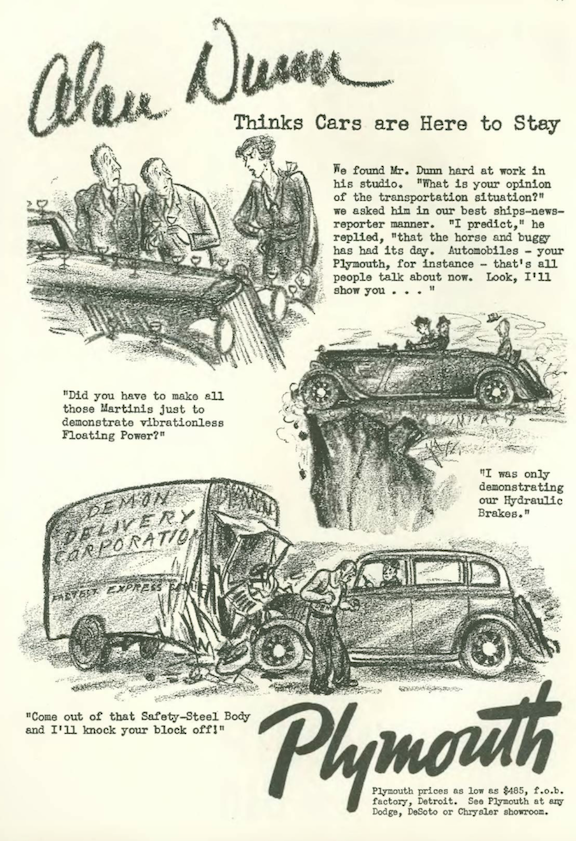
…Plymouth enlisted the talents of Alan Dunn to tout their car’s ride and durability…
…and on to our cartoonists, another from Dunn, a bit of spot art featuring a not so subtle commentary on Lawrence Lee Bazley Angas’s book The Coming American Boom…
…and some spot art from Isadore Klein…
…Miguel Covarrubias contributed to the theater review section…
…James Thurber entertained a house guest…
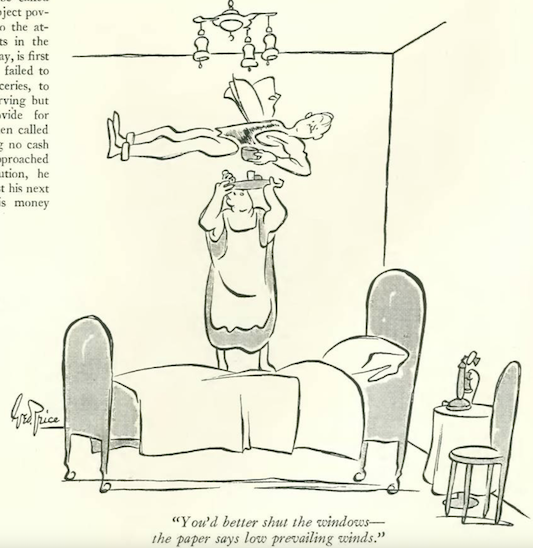
…George Price was still up in the air…
…Helen Hokinson took a spin with a celebrity look-alike…
…and Barbara Shermund offered another glimpse into the life of a modern woman…
…on to Oct. 20, 1934…
Oct. 20, 1934 cover by Helen Hokinson.
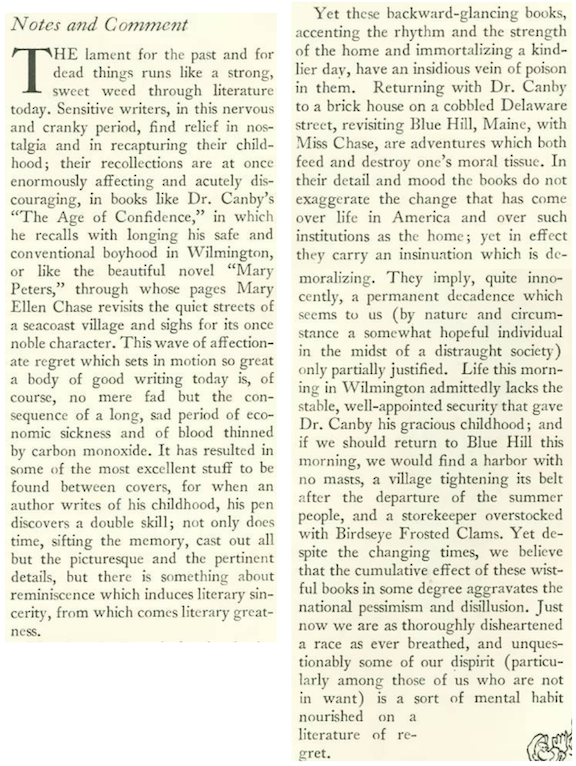
…in which E.B. White offered up a new lament, namely the pervasiveness of nostalgia and sentiment in contemporary literature…
HARKING BACK TO THOSE DAYS OF YORE…E.B. White simply had no stomach for the nostalgic stylings of Mary Ellen Chase (left) or Henry Seidel Canby, seen here on the cover of the May 19, 1924 issue of Time. (U of Maine/Time Inc)
* * *
Fifty Years Young
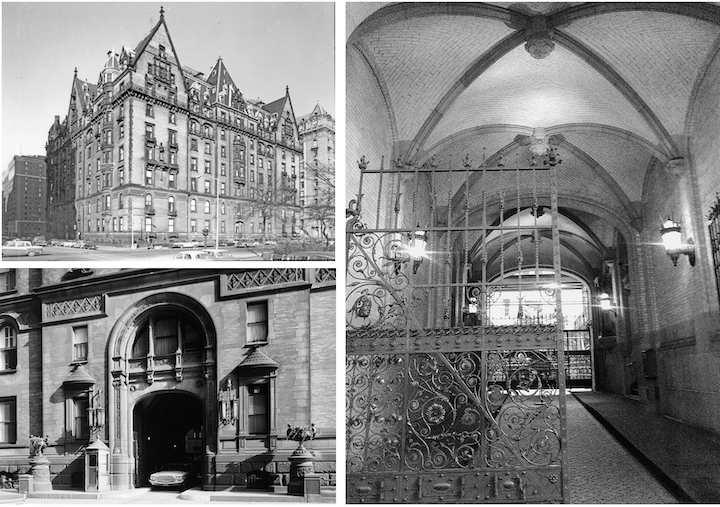
“The Talk of the Town” marked the Dakota’s 50th year at Central Park West, and made note of its loyal and prominent clientele…back in the day it served as a residence for actors such as Lillian Gish, Boris Karloff, and Teresa Wright, and in later years such luminaries as Lauren Bacall, Judy Garland, Rudolf Nureyev, and, of course, John Lennon and Yoko Ono.
THE STORIES IT COULD TELL…At left, the facade and main entrance of the Dakota in the 1960s; at right, inside the main entrance. (Pinterest/Wikipedia)
* * *
More From Our Advertisers
The Matson-Oceanic Line offered a “millionaire’s idea of a vacation” at an affordable price, and offered this sumptuous image as proof…
…E.B. White wasn’t crazy about the smokeless dazzle of the Rainbow Room, but it proved to be popular among the city’s elite…
…in case one was concerned about the provenance of one’s mink coat, Saks posted this helpful ad. Their high-end, natural-skin minks were priced at $8,000 (roughly $180,000 today); there was, however, a caveat regarding the cheaper models…
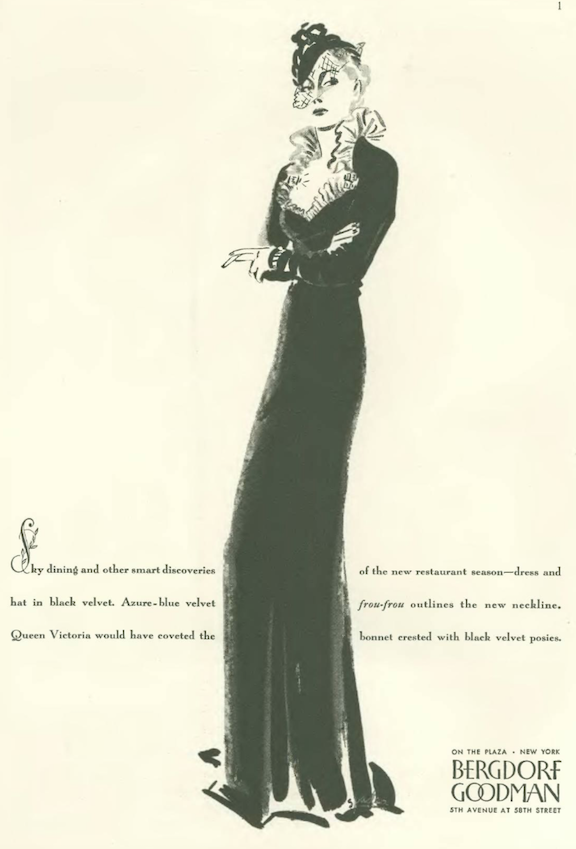
…Bergdorf Goodman offered up another ad featuring an impossibly attenuated model posed with a cigarette, her defiant gaze suggesting her modernity and individualism…
…Plymouth went back to the stable of New Yorker cartoonists, this time featuring the adventures of Helen Hokinson’s “girls”…
…and we segue to the rest of our cartoonists, including this spot by Constantin Alajalov…
…and this by George Price…
…who also gave us another update on the trials and tribulations of his floating man…
… James Thurber occasionally ignored scale in rendering his characters, which didn’t really matter in his strange world…
…Jack Markow had some bad news for two sign painters (the caption size is increased for readability)…
…and we close with Peter Arno, and the winner of most original Halloween costume…
…and before I go…this is being posted on Halloween, 2023, so here are a few images from 1934 to get you in the spirit, including a Saturday Evening Post cover, a 1934 party ideas magazine, and a page from Popular Mechanics featuring a smoking robot costume you could make yourself…in the 1930s, Popular Mechanics often featured Halloween party ideas that were downright lethal, usually involving electric shocks, pistols loaded with blanks, that sort of thing.
McSorley’s Old Ale House is probably best known to New Yorker readers through the work of Joseph Mitchell, who was noted for his distinctive character studies in The New Yorker and who in 1943 published McSorley’s Wonderful Saloon, which was later included in a 1992 collection of Mitchell’s works, Up In the Old Hotel.
Sept. 15, 1934 cover by Rea Irvin.
Among New York’s oldest saloons, McSorley’s was one of the last of the “Men Only” pubs, finally admitting women in 1970 after the state required the saloon to comply with the U.S. Constitution’s Equal Protection Clause. McSorley’s was visited by many famous patrons in its long history, a mixed bunch that included Abraham Lincoln, Teddy Roosevelt, Harry Houdini and John Lennon. Nine years before Mitchell would pen his account of the saloon, “The Talk of the Town” took a look.
MORE THAN A BAR…Folks were (and still are) drawn to McSorley’s Old Ale House for its rustic atmosphere—apparently no piece of memorabilia has been removed from its the walls since 1910. Clockwise, from top left, McSorley’s in 1942; 1937 Berenice Abbott photo of the interior; and two paintings by John Sloan—McSorley’s Bar, 1912; and Cats in McSorley’s, 1928. Sloan was among the Ashcan School of artists that included Stuart Davis and John Luks—all regulars at McSorley’s. (keithyorkcity.wordpress.com)
* * *
Of the People
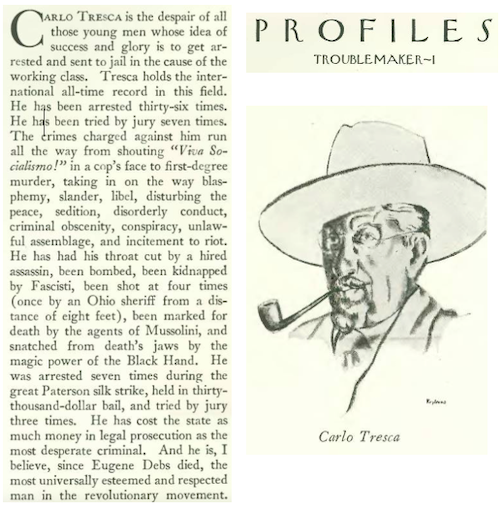
The Italian-American labor organizer Carlo Tresca was a gifted orator and outspoken critic of anyone who stood in his way in his quest for workers’ rights. As political activist and writer Max Eastman pointed out in the lead paragraph of a two-part profile, speaking truth to power also prompted a number of deadly assaults on Tresca (1879–1943), whose campaign for justice was ultimately cut short by an assassin’s bullet in 1943. A brief excerpt:
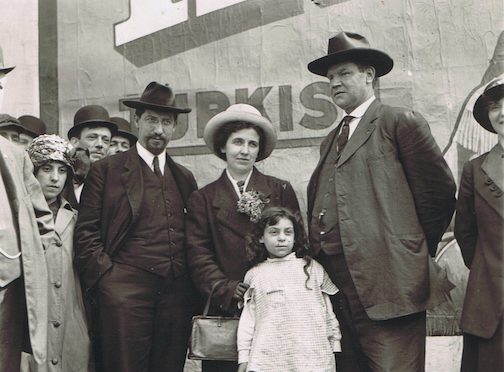
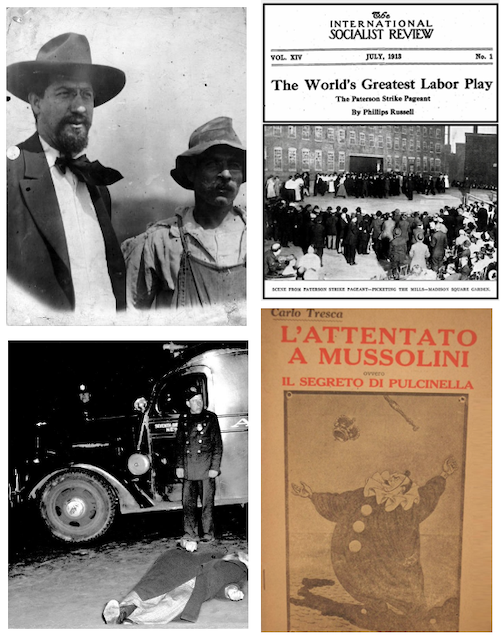
STANDING FIRM…Leaders of the International Workers of the World who led the 1913 Paterson (N.J.) mill strike included, left to right, Carlo Tresca, Elizabeth Gurley Flynn and William D. Haywood. (Photo: News Dept. American Press Association)UP TO THE FINAL CURTAIN…Clockwise, from top left: Carlos Tresca with an unidentified worker in the 1910s; labor activists often staged theatrical works to get their point across—in 1913 The International Socialist Review covered a play at Madison Square Garden about the Paterson N. J. mill strike, which featured more than a thousand amateur actors; cover of a 1926 theatrical work, L’attentato a Mussolini, that attacked the fascist dictatorship of Benito Mussolini; police officer guards Tresca’s body after his 1943 assassination. Tresca was crossing Fifth Avenue at 15th Street when an unidentified assailant jumped out of a black Ford and shot him in the back of the head, killing him instantly. (Wikipedia/weneverforget.org/wetheitalians.com)
* * *
Up In Smoke
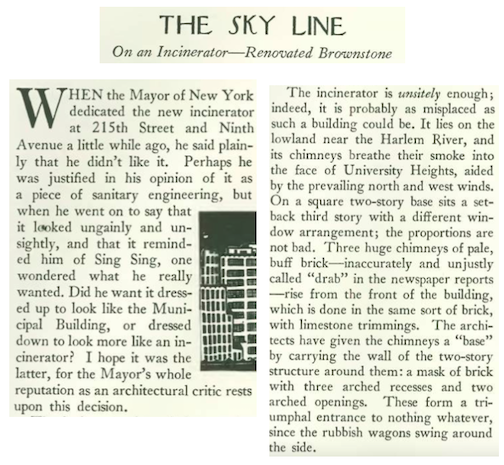
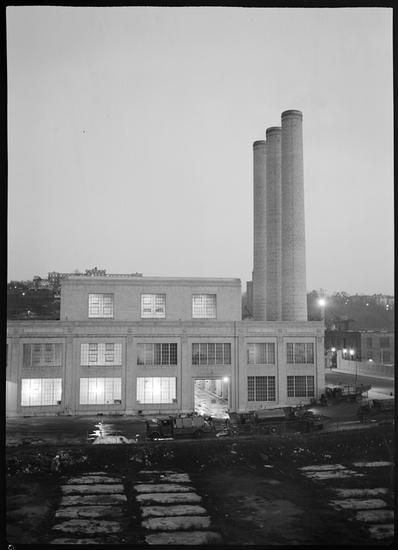
Lewis Mumford sniffed at much of the new architecture popping up around his city, but he took an especially big whiff of the new incinerator that rose above the neighborhoods at 215th Street and Ninth Avenue. When the incinerator opened in 1934 the city stopped dumping its garbage into the sea (it was fouling the beaches) and began burning the stuff around the clock in Harlem, where residents had put up with the smoke and cinders that were emitted from the supposedly “odorless” plant. Cole Thompson’s website My Inwood is a great place to read more about it.
ASHES TO ASHES…New York’s municipal incinerator, located in Harlem, as seen in 1937. The plant closed in 1970 when the city’s rubbish was re-directed to the Fresh Kills landfill on Staten Island. The smokestacks, which had become something of a landmark, were demolished in 2022. (Museum of the City of New York)
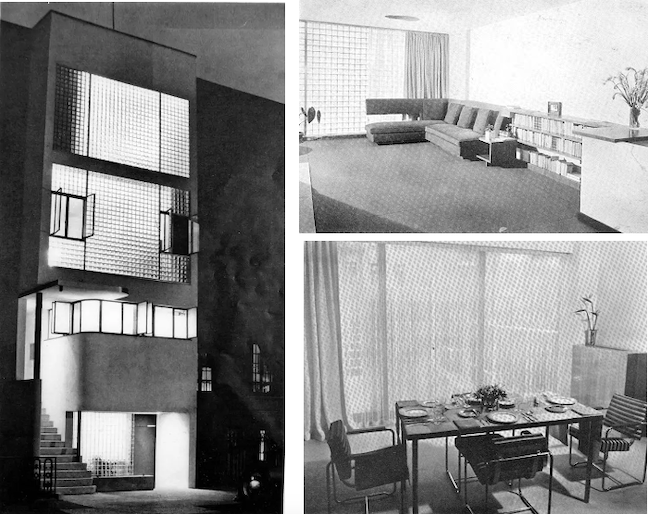
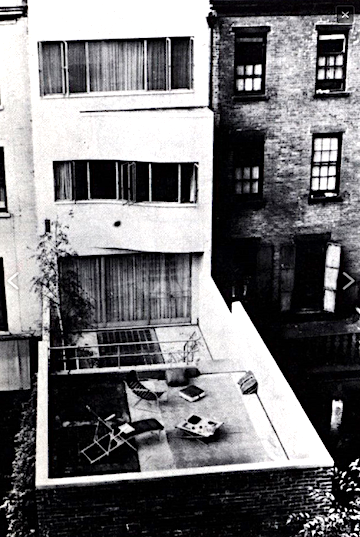
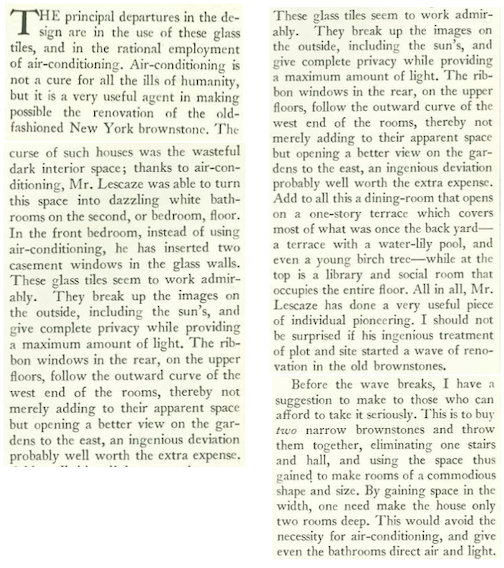
Mumford brightened, however, at another development in the Turtle Bay neighborhood, where architect William Lescaze (1896–1969) had slipped a bright, modernist house in between two dusky brownstones on East 48th Street. The house featured extensive use of glass block in its construction, an architectural first in the city.
RADICAL CHIC…William Lescaze’s four-story house, inserted between the brownstones on East 48th Street, is considered to be the first modernist house in city; at right, the Swiss-born American architect, city planner and industrial designer endorses highballs mixed with Lord Calvert Whiskey in a 1948 advertisement. (Wikipedia)ALL AGLOW…The Lescaze house at night, and two interior views. (From the 1936 issue of Decorative Art, the Annual Issue of the Studio Yearbook via djhuppatz.blogspot.com)GLASSY EYED…The Lescaze House’s glass block facade, the first to be used on a building in New York City, were installed to provide insulation and privacy while also allowing extensive illumination. At right, the front entrance to the lower level, which contained Lescaze’s office. (6sqft.com)THINK PAD…Lescaze situated the most important rooms to the back of the house (dining, master bedroom and living) to isolate them from street noise and bathe them in northern light. His basement office extended under the back terrace. (hiddenarchitecture.net)
Mumford noted that the recent invention of home air-conditioning systems made it possible for Lescaze to bring light deep into the central core of the building…
HIGH AND LOW…Lescaze’s works in the early 1930s included the 1932 PSFS Building in Philadelphia (today: Loews Philadelphia Hotel); at top, PSFS interior view showing board room conference table; below, the 1930-31 Fredrick Vanderbilt Field House in Connecticut. (Hagley Museum and Library/Wikipedia/djhuppatz.blogspot.com)
* * *
Poser
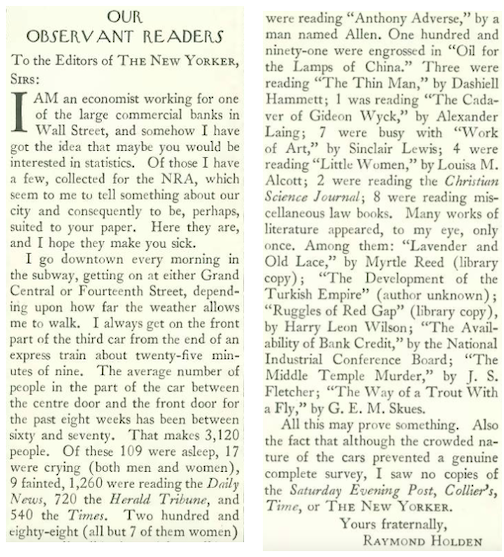
The novelist and poet Raymond Holden (1894–1972) was a regular contributor to The New Yorker from 1929 to 1943. For the Sept.15 issue he assumed the guise of an economist to pen this cheeky letter to the editors:
* * *
Head in the Clouds
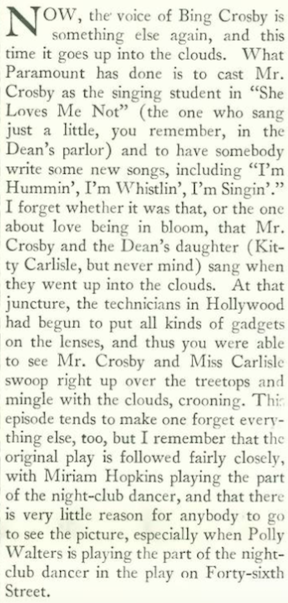
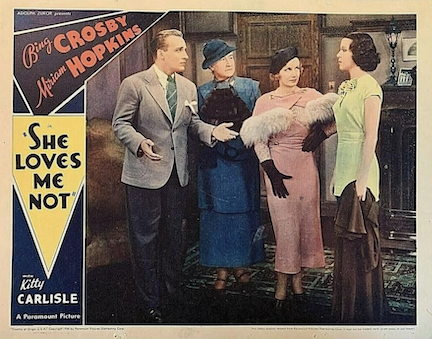
Film critic John Mosher thought Bing Crosby was a fine singer, but he couldn’t quite fathom why the movie-makers at Paramount thought the singer would be even more attractive if he was sent aloft using various camera tricks.
COME FLY WITH ME…Lobby card advertising 1934’s She Loves Me Not starring, from left, Bing Crosby, Maude Turner Gordon, Miriam Hopkins and Kitty Carlisle. (IMDB)
* * *
From Our Advertisers
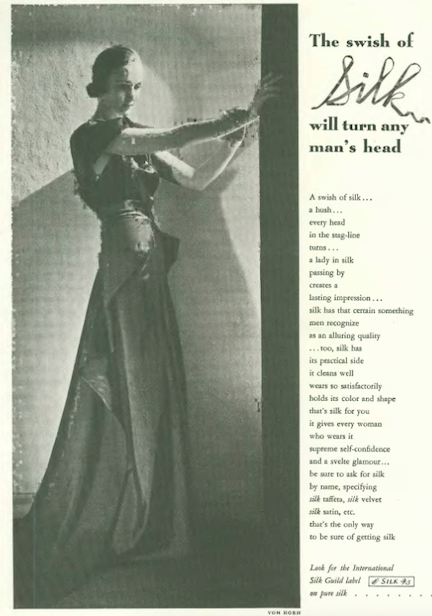
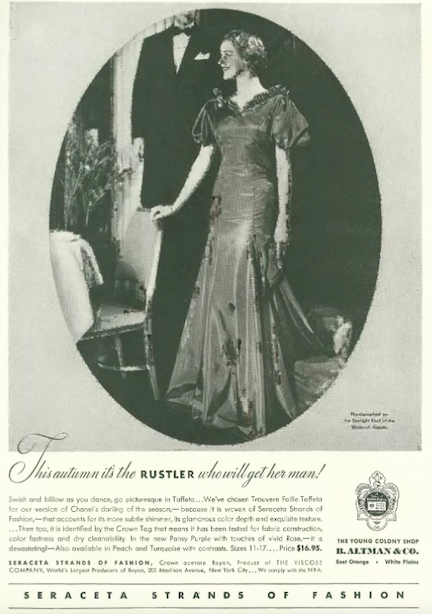
The advertising department must have been thrilled with the flurry of ads that announced the fall and winter fashions…here are three examples, the first two focused on styles supposedly designed attract the opposite sex…the International Silk Guild promised that the “swish” of silk would turn any man’s head…
…while B. Altman’s “Young Colony Shop” claimed you could get your man with the “swish and billow” of taffeta…
…B. Altman ran a second full-page ad to catch a bit older demographic, less concerned with landing a man and more concerned with sending the proper signals to fellow Anglophiles…
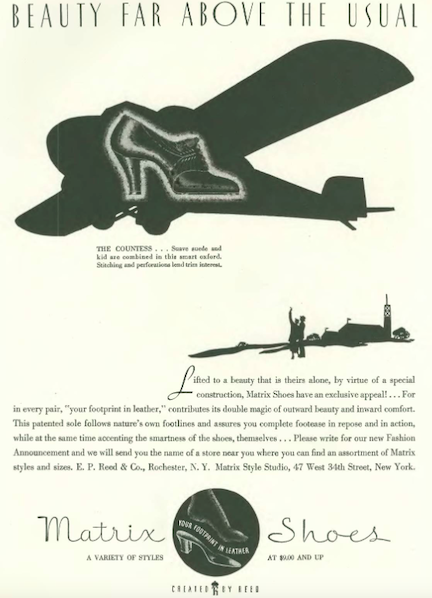
…the folks at Matrix shoes were looking for a way to associate their “Countess” model with modern living, but what they got was an image of people waving farewell to some flying footwear…
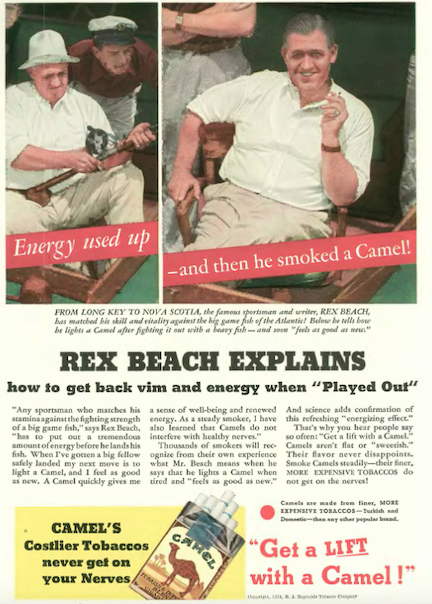
…and here is another in a continuing series of ads from R.J. Reynolds that claimed “science” had confirmed the refreshing, energizing effect of its Camel cigarettes…
…we clear the air with this attractive ad beckoning New Yorkers to sun-kissed Bermuda…
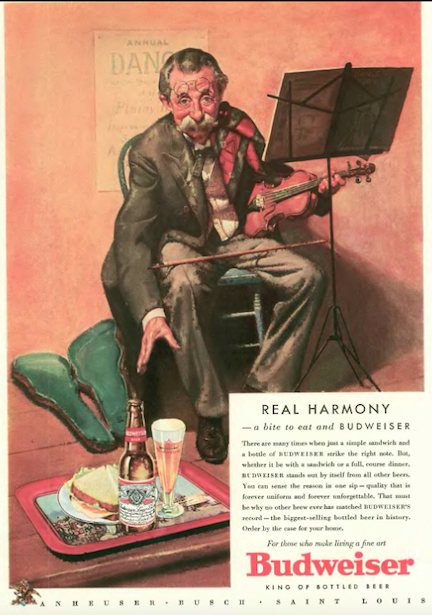
…Budweiser continued its series of Rockwellesque portraits of old men enjoying its product…
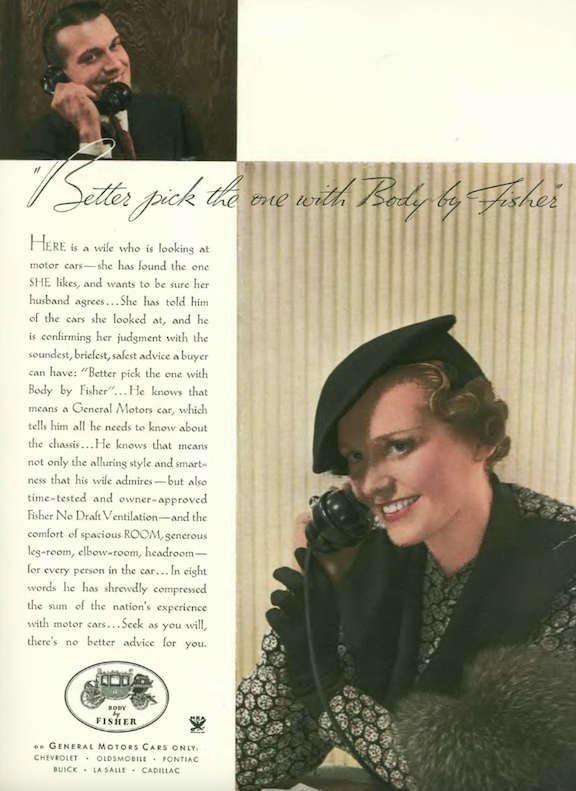
…and this two-page spread from Fisher—maker of car bodies for General Motors—shows us how young tots travelled in the days before plastic car seats and other restraining devices…
…on to our cartoonists we begin with a couple examples of spot illustrations from the opening pages…
…on to Peter Arno…the caption reads, “I adore driving at night. Once I caught my foot in a bear trap, though”…the humor is lost on me…I suppose she is referring to a speed trap, perhaps set by an amorous cop…
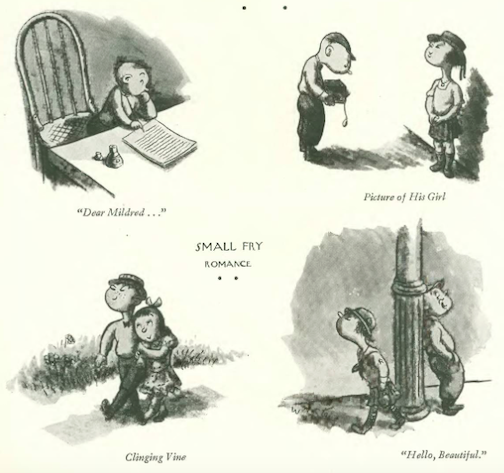
…speaking of amorous, William Steig explored the subject amongst his “Small Fry”…
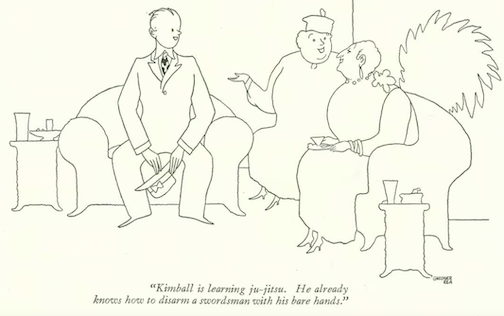
…Gardner Rea sat in on an unlikely boast…
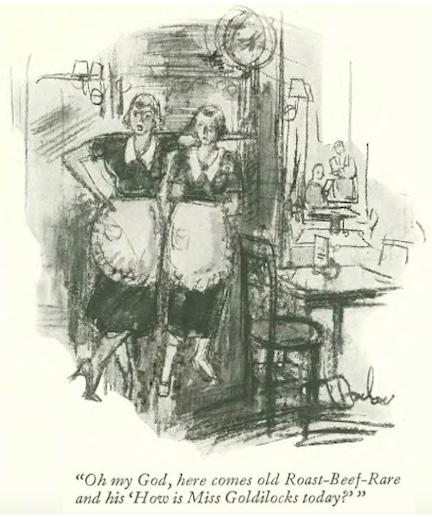
…Perry Barlow illustrated the doldrums associated with waitressing…
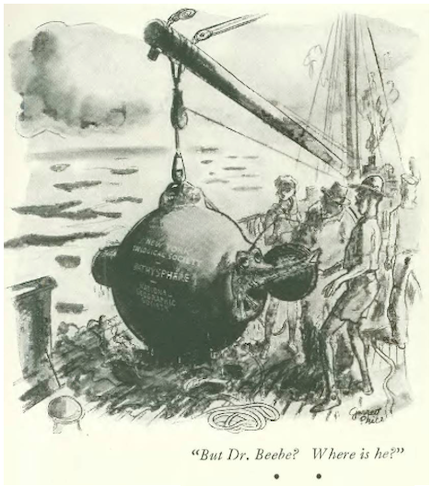
…Garrett Price checked in on the latest developments in deep sea exploration…
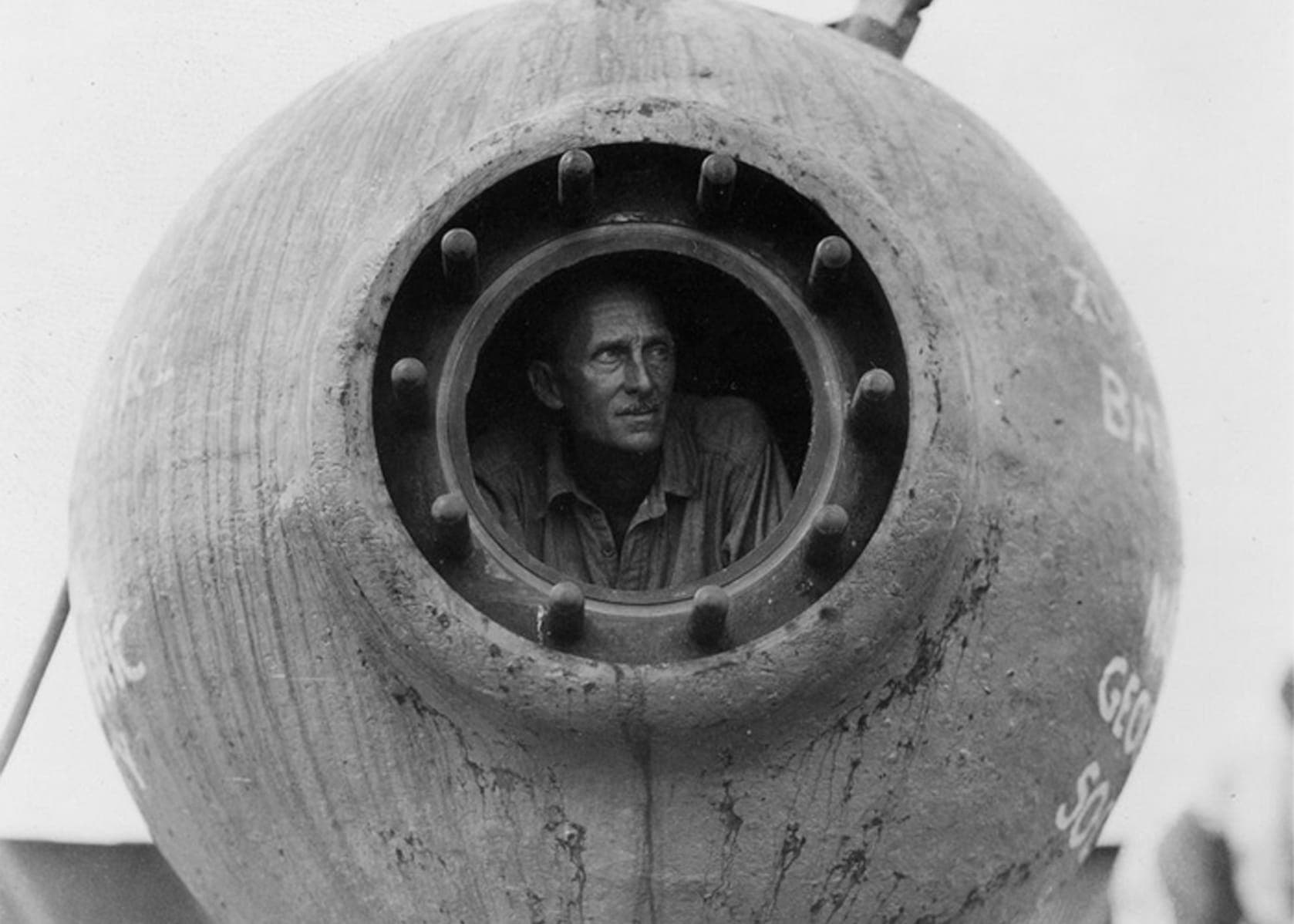
…the cartoon refers to the explorations of William Beebe, who along with engineer Otis Barton descended in a bathysphere to a record 3,028 feet (923 m) on Aug. 15, 1934…
SIT TIGHT…Naturalist William Beebe poses inside the bathysphere in the early 1930s. (msmocean.com/)
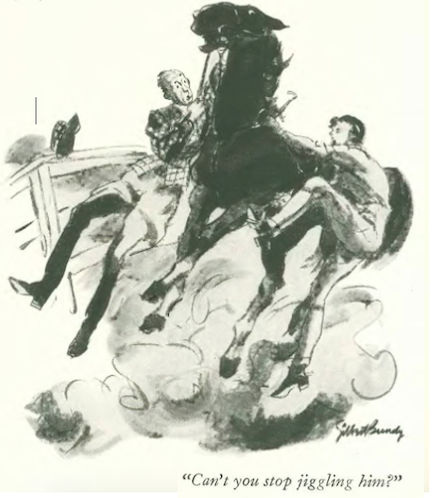
…and we close with Gilbert Bundy, and a couple of horse wranglers…
Photo above circa 1930 via mensfashionmagazine.com.
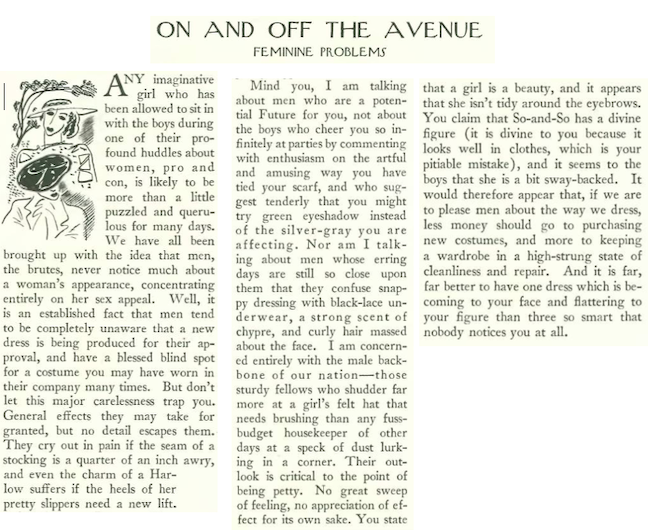
Lois Long took a break from reviewing the latest fashions to offer some thoughts on the relations between men and women, and more specifically, what was expected of women if they ever hoped to land the type of man who represented a “potential Future” for them.
August 4, 1934 cover by Otmar. Likely Otmar Gaul, sometimes spelled “Ottmar.”
Based on what we know about Long, this column has a strong “tongue-in-cheek” quality. It should also be noted that the 32-year-old Long had been divorced from cartoonist Peter Arno for three years, and was possibly contemplating the dating scene (she would marry newspaper ad man Donaldson Thorburn in 1938). In this excerpt, Long dispelled the notion that “the brutes” never notice a woman’s appearance:
THEY MIGHT BE BRUTES, but they notice the little things, according to Lois Long. (fashionhistory.fitnyc.edu)
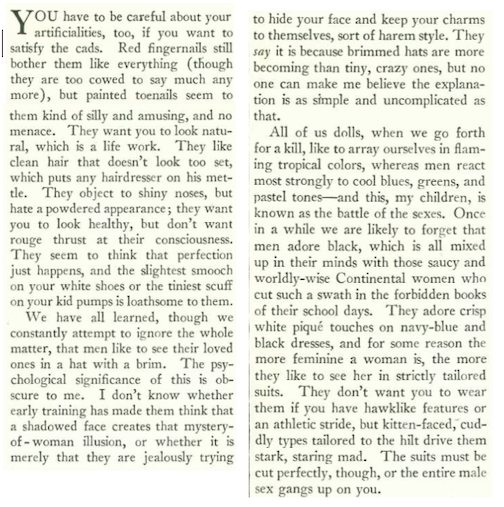
SEEING RED…According to Long, discerning men preferred women in brimmed hats (actress Sylvia Sidney models above), but found red fingernails to be disturbing. (glamourdaze.com/vintagehairstyling.com)SEEING RED in women’s clothes, however, wasn’t a problem, according to Long, who wrote that men liked to see women in bright, tropical colors. (clickamericana.com)
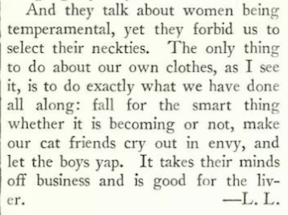
Long concluded that in the end, it didn’t matter what men thought about women’s clothes, but letting them “yap” about such things was a good way for them to blow off some steam.
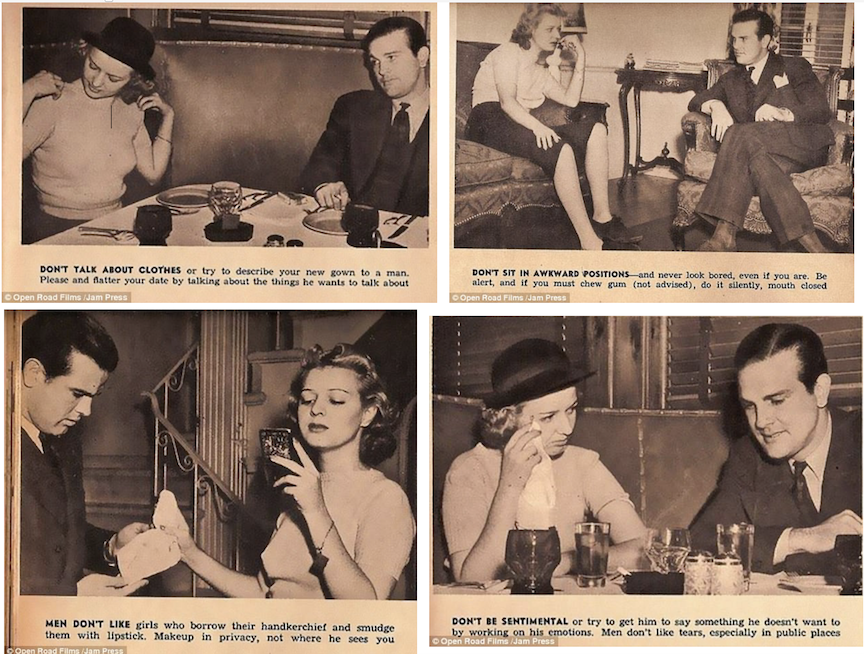
Check out these patronizing examples from an illustrated guide for women published in 1938 by Click Parade magazine. It gives us some idea of what Long, and millions of other women, were up against…
(dailymail.co.uk)
* * *
Fifth Avenue Remnant
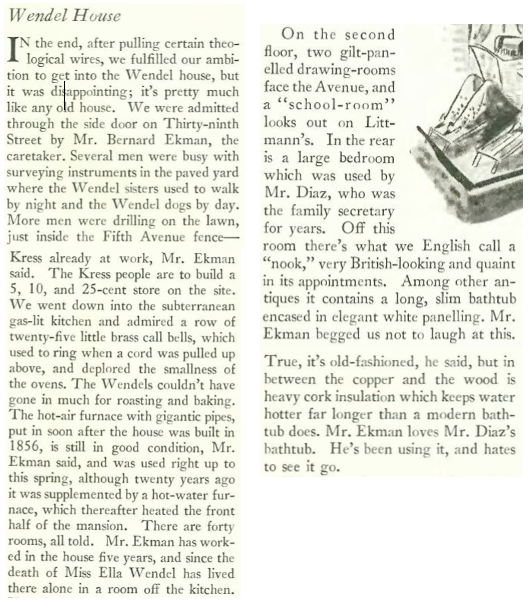
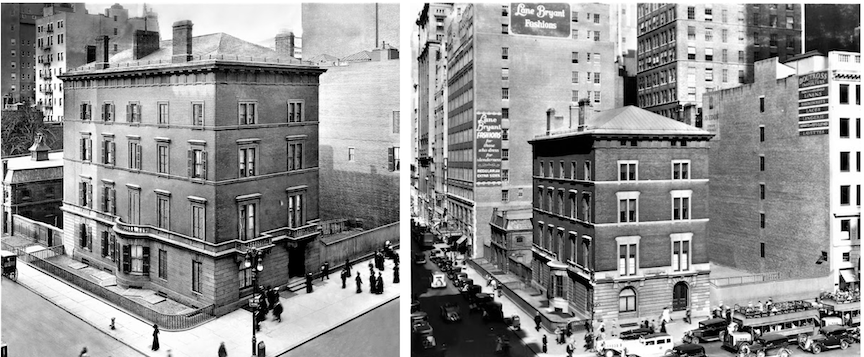
The first years of The New Yorker coincided with some of the most transformational years in Manhattan’s urban fabric, including the replacement of Gilded Age mansions with upscale commercial buildings. One of the last remaining mansions was the Wendel house, featured in “The Talk of the Town.”
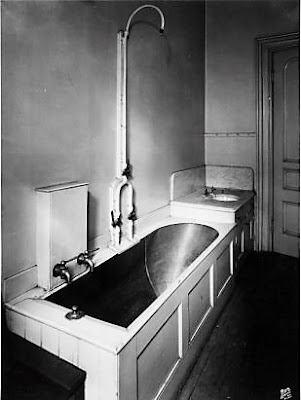
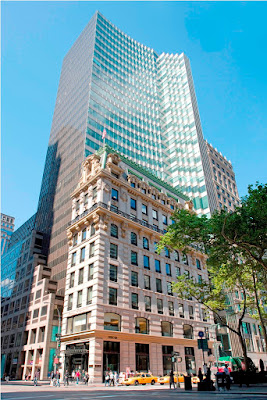
A ONCE GRAND MANSION becomes diminished as the city grows around it. At left, the Wendel mansion as it appeared circa 1901; at right, shorn of its balconies and shutters, the mansion shrinks in contrast to the city around it, circa 1930. (Wendel Family Papers, Special Collections and Archives, Drew University Library)WHAT HO!…A “very British-looking” zinc-lined bathtub (with shower) was state-of-the-art when installed at the Wendel mansion. (New York Public Library)BARELY A MEMORY….The glass-and-steel structure towering above the former Knox Hat Building sits on the site of the Wendel mansion. (Photo by Nicolson & Gallowy via Daytonian in Manhattan)
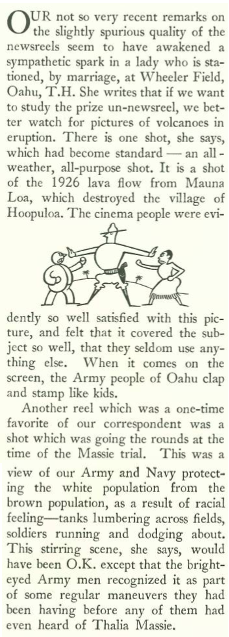
In his “Notes and Comment,” E.B. White noted the spurious nature of cinema newsreels, including one featuring the case of Thalia Massie, a navy wife stationed in Hawaii whose immature behavior and trail of lies would implicate five men in a crime they could not have committed (one would even be killed by vigilantes) and would cast Hawaii into a state of racial turmoil. (You can read more about it at the PBS site for American Experience.
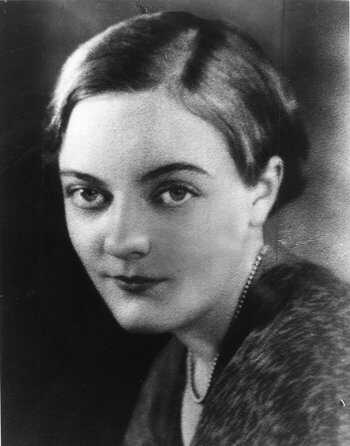
FATAL FEMME…Thalie Massie, circa 1930. (Library of Congress)
* * *
Blunders, Part II
Howard Brubaker commented on the twentieth anniversary of the outbreak of the Great War. Today we call it World War I, and as we know, the blunders did not cease with the Armistice.
* * *
RIP Madame Curie
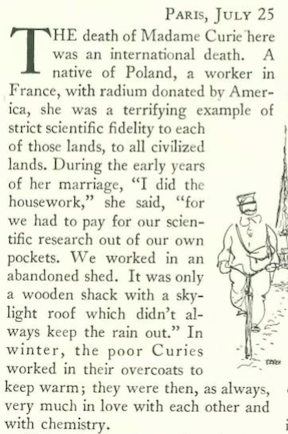
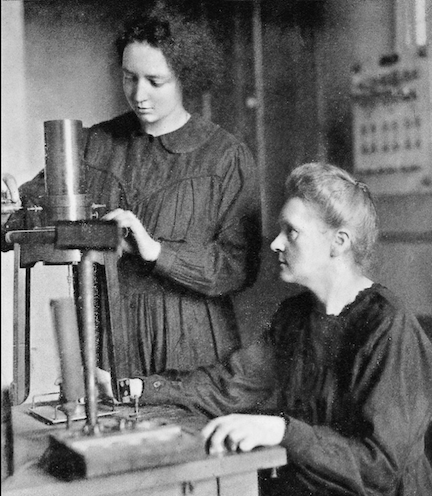
Janet Flanner, Paris correspondent for The New Yorker, noted the passing of Marie Curie, a pioneer in field of radioactivity.
THE CURIE CURE…Marie Curie and daughter Irène, 1925. (Wikipedia)
* * *
From Our Advertisers
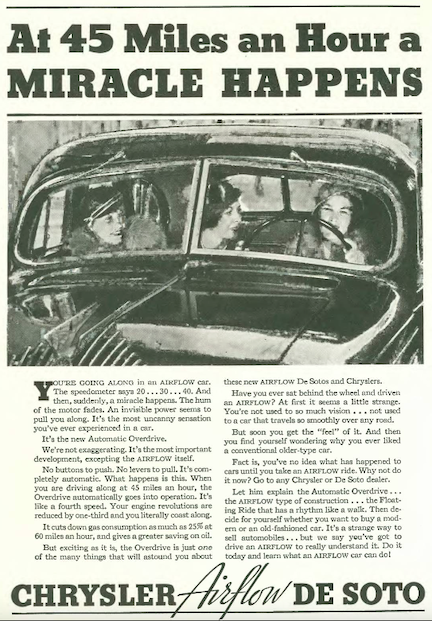
The folks at Chrysler were trying every angle to get car buyers interested in the Airflow—although the car offered a number of advanced features, consumers just weren’t ready for its radical aerodynamic design…note how the ad downplays the car’s sweeping curves…
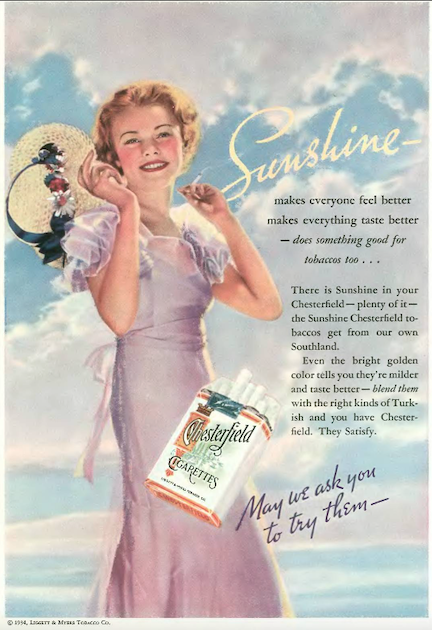
…and we have more deception from the cigarette industry, including claims that cigarettes gave you more energy and improved the performance of top athletes…
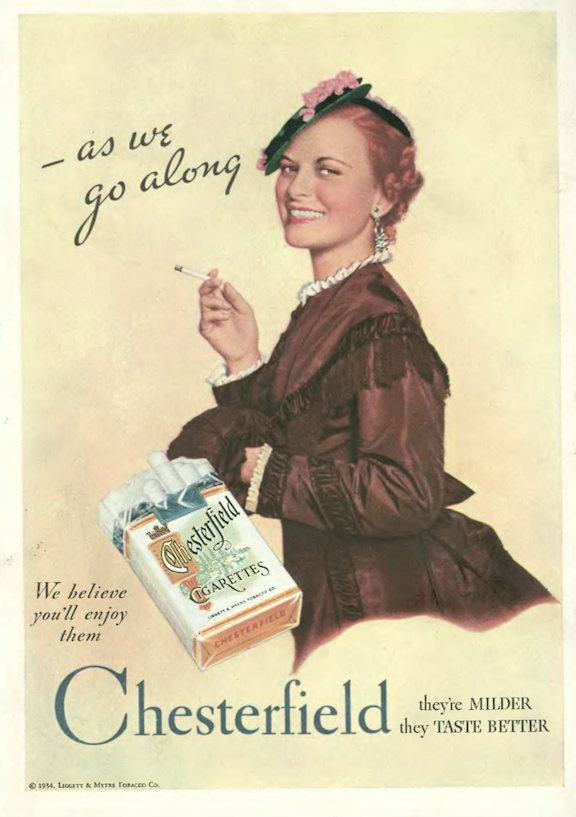
…the makers of Chesterfields gave us this sunny picture of health…indeed, there was sunshine in every pack…
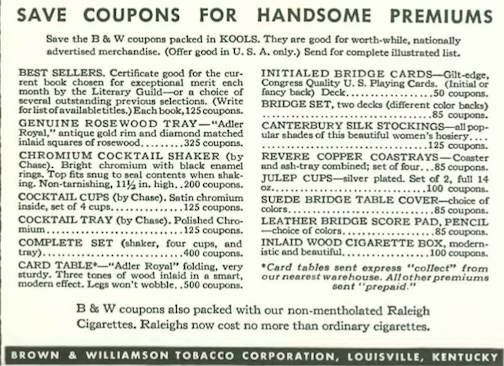
…The Brown & Williamson Tobacco Company launched KOOL cigarettes in 1933 as the sole competitor to the other menthol brand, Spud, which was a big advertiser in the early New Yorker. Maybe it was the coupons, or the modern brand name, that helped KOOL knock Spud from the market by the 1940s. As for those coupons, it appears each pack contained only one of them…
…so you would have to smoke a ton of those things to get one of these swell prizes…
…early Budweiser ads often featured images of the Old South…here they conjured up the ghost of Mark Twain (who had been dead only 24 years), putting the great humorist and writer on par with their bottled beer…
…Canada Dry didn’t have Mark Twain, but what they did have was a beer (Hupfel’s) lacking “that queer yeasty taste that beer usually has”…
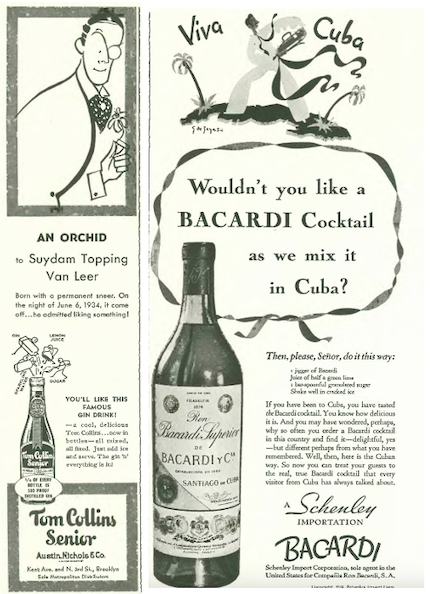
…a couple of ads from the back pages featured, at left, an ad for a pre-mixed Tom Collins, which must have been awful, and at right, a spot for Bacardi rum, which was actually made in Cuba before the revolution…
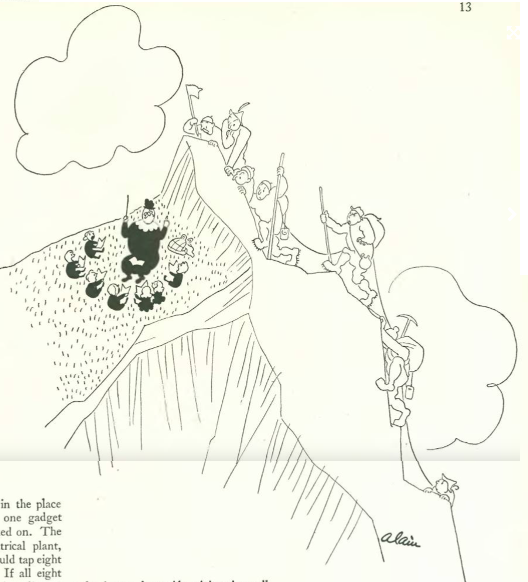
…on to our cartoons, we begin with Alain (Daniel Brustlein) and some not-so-intrepid mountain climbers…
…Otto Soglow’s Little King sought a glimpse of the street life…
…William Steig took a dip with his Small Fry…
…Isadore Klein gave us a glimpse of sensationalist radio reporting…
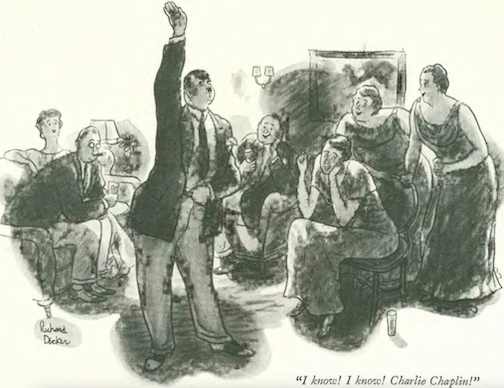
…and we close with Richard Decker, and a game of charades…
The penitentiary on Blackwell's Island, later named Welfare Island, in the 1910s. Today it is known as Roosevelt Island. (NYC Municipal Archives)
Until the reform Mayor Fiorello La Guardia took up the reigns at City Hall in 1934, weak or non-existent leadership in city government, coupled with Tammany graft and corruption, had allowed all sorts of institutions to go off the rails.
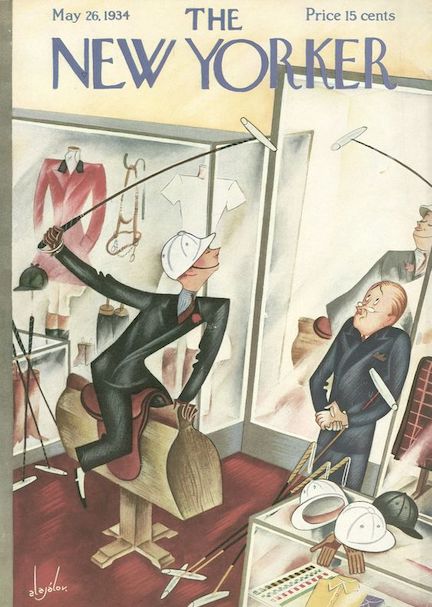
May 26, 1934 cover by Constantin Alajalov.
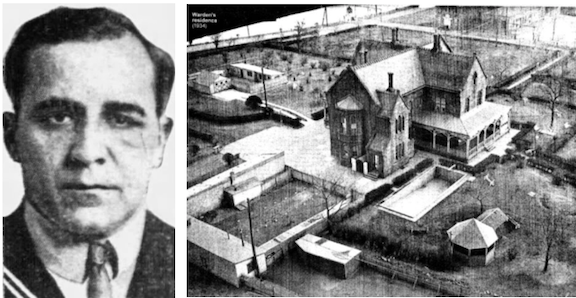
The New York City Department of Corrections was a prime example, so La Guardia tapped the no-nonsense assistant director of the Federal Bureau of Prisons, Austin H. MacCormick (1893–1979) to clean up Corrections, and MacCormick didn’t waste any time going after the No. 1 target: Welfare Island. Previously known as the notorious Blackwell’s Island, MacCormick described its cellblocks as a “vicious circle of depravity” unfit for humans, a place where some inmates lacked basic food and shelter while others, including a pack of gangsters and thugs who essentially ran the place, lived in grand style.
In late January, 1934, MacCormick led a well-organized raid on Welfare Island, finding littered cells full of drug addicts and large caches of weapons. According to an account in Time (Feb. 5, 1934), sixty-eight prisoners virtually ran the place. “They cowed their guards through outside political influence. They sold to some 500 inmates the best of vegetables and meats. Star boarders prepared this food in their own cells, and the prison library of more than 1,000 volumes had entirely vanished as cooking fuel. Since the food was looted from the prison commissary, the other 1,200 prisoners virtually starved on greasy cold stews.”
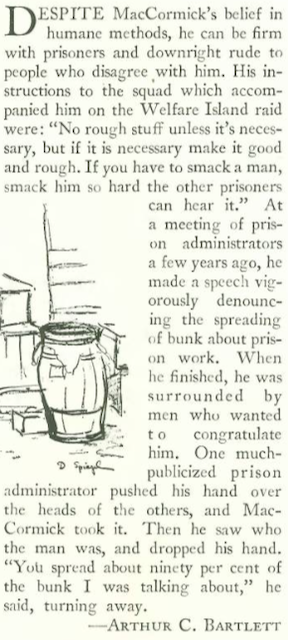
In his profile of the “The Four-Eyed Kid,” Arthur C. Bartlett attempted to shed some light on what made this stubborn Scotsman tick. Excerpts:
KIBOSH…After taking office in January 1934, New York’s Commissioner of Corrections Austin H. MacCormick wasted no time in cracking down on the vice and corruption that was rampant on Welfare Island (pictured at right in 1934). (ceanational.org/NYPL)INSIDE JOB…Mobster Joie Rao lived a lavish lifestyle while incarcerated at Welfare Island. Wielding more power and authority than the warden himself, Raio fed steak to his pet dog and maintained a staff of servants to cater to his every whim. Not that the warden had it all that rough; his home (at right) featured an in-ground pool. (Pinterest/rihs.us)READ ALL ABOUT IT…The New York Daily News (left) and the New York Times offered extensive coverage of the raid in their Jan 25, 1934 editions. (Pinterest/NY Daily News/NYT)
MacCormick literally wrote the book on prison reform. His The Education of Adult Prisoners (1931) called for the introduction of fundamental academic education in prison systems that would provide inmates with the intellectual tools needed for everyday life. His “four goals” included vocational, health, cultural and social education.
MacCormick broke up the gangster ring at Welfare Island and eventually transported its remaining inmates to the newly built prison at Rikers Island. The Welfare Island prison was torn down and replaced by Goldwater Hospital, today the Coler Specialty Hospital on Roosevelt Island. For a little more insight into MacCormick’s tactics, here is the conclusion to Bartlett’s profile:
ALL ABOARD…Welfare Island (now Roosevelt Island) was once accessible by taking a trolley halfway across the Queensboro bridge, where passengers would take an elevator (contained in the structure in the top image) down to the island. (Greater Astoria Historical Society/rooseveltislander.blogspot.com)
* * *
You’re Next
Last week we looked at Robert Moses’s plans for Riverview Park, which would quickly sweep away the yacht clubs on the Hudson. Another playground for the rich, the Central Park Casino, would soon be next, as E.B. White correctly surmised.
STICKER SHOCK…It has been suggested that Robert Moses determined to tear down the Central Park Casino after being presented a $27 dinner bill for four persons (roughly $500 today), but in reality Moses hated the Casino’s most famous denizen, the deposed Mayor Jimmy Walker. It’s too bad Moses didn’t appreciate the Joseph Urban’s stunning interiors (the ballroom, right), that crumbled with the building when it was razed in 1936. (NYC Department of Parks & Recreation)
* * *
Schenck’s Schlock
In the 1920s and 30s documentary and docudrama filmmaking was still in its infancy, and for every Nanook of the North (1922)—still considered one of the best documentary films of all time—there were dozens of schlocky films like Harry Schenck’sBeyond Bengal, reviewed here by John Mosher for the New Yorker.
The film must have made quite an impression around the New Yorker’s offices, or at least one particular scene that depicted a British scientist, a “Miss Joan Baldwin,” coming down with a fever, rather unconvincingly. Both Mosher and E.B. White (below) found her performance intriguing:
WHAT A CROC…Clockwise, from top left, movie poster for Beyond Bengal; early in the film a scientist, “Miss Joan Baldwin,” is suddenly (and unconvincingly) seized by tropical fever—the remainder of the film entails Harry Schenck’s attempt to return Baldwin to civilization; Schenck accompanies Baldwin across a crocodile-infested river, shooting at anything that moves while the “natives” swim ahead, perilously clearing a path through the sea of crocs; back in civilization, Schenck and Baldwin prepare to head home. The whole film is available on YouTube, if you’re up for that sort of thing. (IMDB/YouTube)
* * *
From Our Advertisers
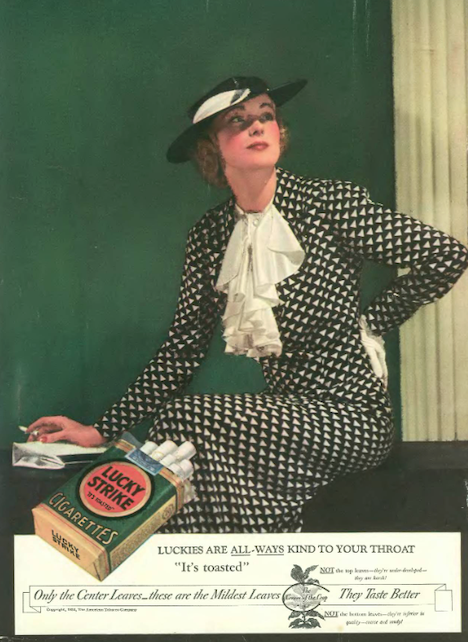
We kick off with the latest installment from Lucky Strike, and another smartly dressed customer…
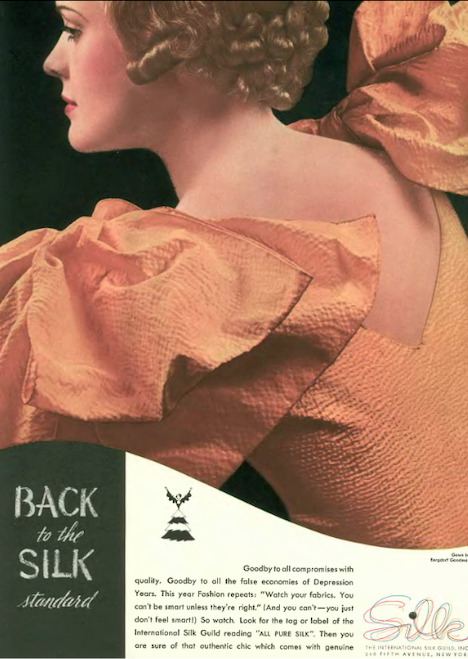
…the silk merchants struck back against the synthetics with this splash of color…
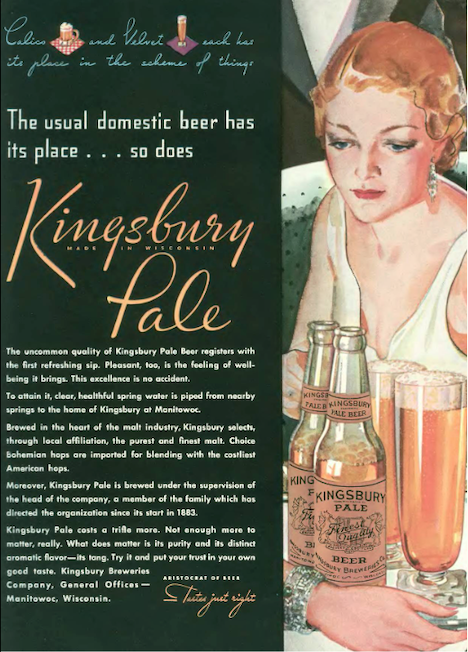
…the makers of Kingsbury Pale offered up some color of their own, although the illustration itself is a bit strange, what with the molten bubbles in the beer bottles, the bejeweled, disembodied arm that somehow supports them, and the woman who isn’t even looking at the beer…perhaps she was hoping for a cocktail or Champagne…
…there’s no doubting this fellow’s enthusiasm for a glass of Rheingold…
…Wamsutta Mills enlisted the aid of a “fat man” to prove the durability of their sheets…
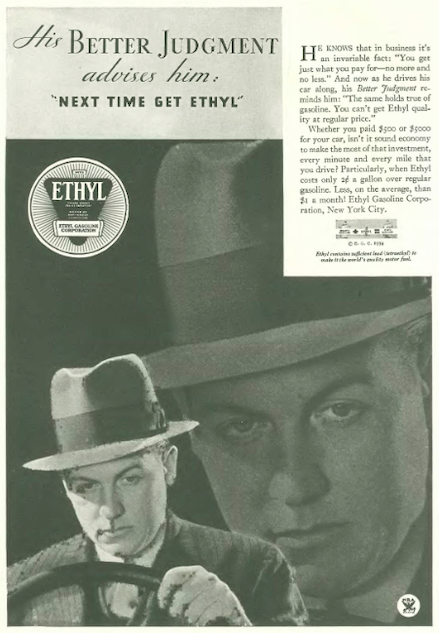
…and what drives a man to commit murder? In this case, neglecting to pay the extra two cents for leaded gasoline…
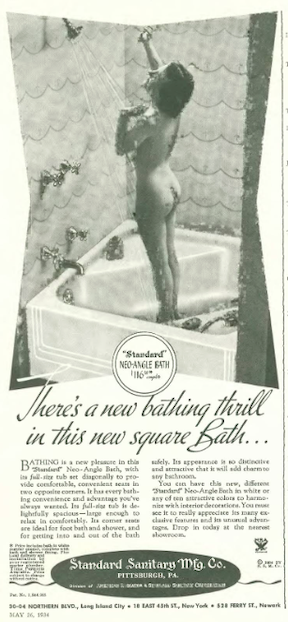
…I wonder if the Hays Code extended to advertising…looks like the new “Neo-Angle Bath” caused the folks at Standard Sanitary Manufacturing to lose their inhibitions…
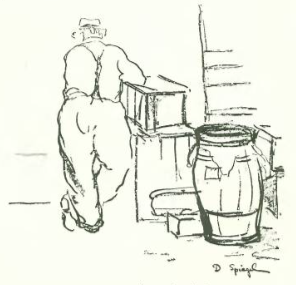
…on to our cartoonists, we begin with some spot art by Doris Spiegel (1901-1996), who was especially known for her depictions of street life…
…George Price supplied this bit of merriment for the event listings…
as did James Thurber…
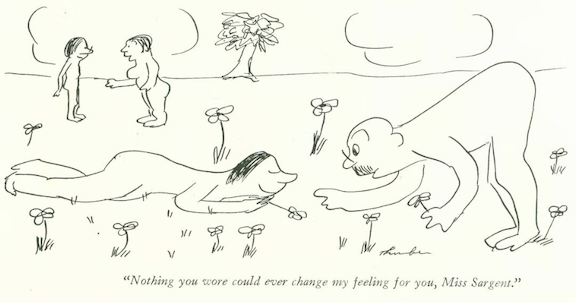
…Thurber again, this time baring it all…
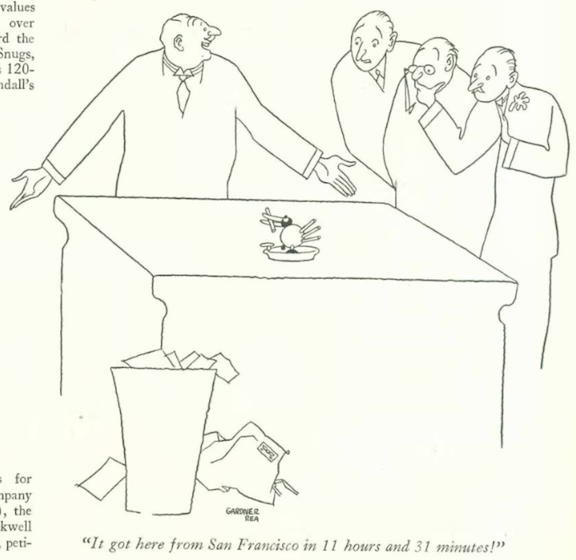
…it appears that same day delivery, for even a mere trifle, is nothing new…per Gardner Rea…
…Alain (Daniel Brustlein) gave us a film editor with the sad task of censoring Joan Blondell…
…tame by today’s standards, this 1932 promotional photo of Blondell for the film Three on a Match was later banned by the Motion Picture Production Code…
…and we close with Perry Barlow, and more wisdom from the mouth of babes…
Above: British architect Norman Foster's 2010 recreation of R. Buckminster Fuller's 1933 Dymaxion car. (Wikipedia)
Despite the limitations of 1930s technology, a few architects and designers were hell-bent on building a streamlined future that until then was mostly the stuff of movies and science fiction magazines.
May 5, 1934 cover by Rea Irvin.
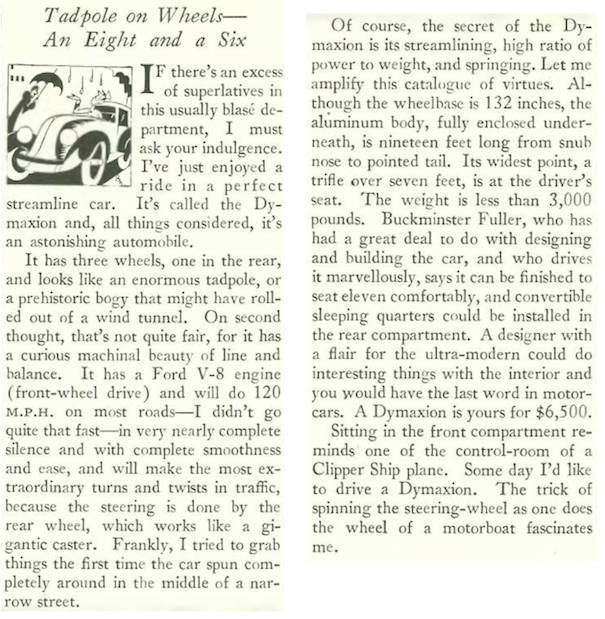
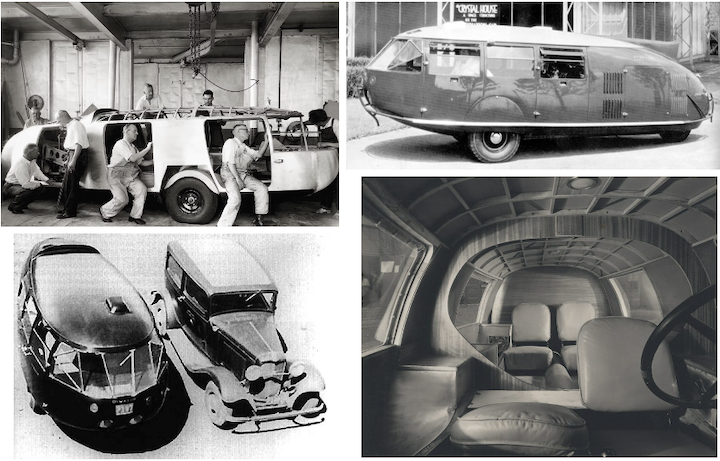
One of them was R. Buckminster Fuller (1895–1983), architect, designer, and futurist probably best known today as the inventor of the geodesic dome (think Disney’s Epcot Center). In the 1930s Fuller was all about a concept he called Dymaxion. Derived from the words dynamic, maximum, and tension, when applied to architecture and design it would supposedly deliver maximum gain from minimal energy input. The writer of the New Yorker article (pseud. “Speed”) was fascinated by the Dymaxion’s motorboat-type steering, no coincidence since Fuller intended to adapt his futuristic car for use on and under the water, as well as in the air.
THE SHAPE OF THINGS TO COME…Clockwise, from top left: Workers at a Bridgeport, Conn., plant creating the first of three Dymaxion cars; the Dymaxion at Chicago’s 1933 Century of Progress exposition—the car was involved in a fatal accident at the fair; interior view of the Dymaxion; using the same engine and transmission as a Ford sedan (pictured), the Dymaxion offered three times the interior volume with half the fuel consumption and a 50 percent increase in top speed. (Buckminster Fuller Institute/Poet Architecture)THINKING WITHOUT THE BOX…In 1927 R. Buckminster Fuller (pictured) developed a Dymaxion House, a “Dwelling Machine” that would be the last word in self-sufficiency. Although the aluminum house was intended to be mass-produced, flat-packaged and shipped throughout the world, the design never made it to market (however its ideas influenced other architects); at right, a Fuller geodesic dome at Disney’s Epcot Center in Florida. (archdaily.com/Wikipedia)
The 1933 Century of Progress exposition in Chicago was supposed to be a major showcase for Fuller, but when professional driver Francis Turner was killed while demonstrating the first prototype of the Dymaxion, the car’s prospects dimmed considerably. According to an article by Stephanie d’Arc Taylor (cnn.com Oct. 30, 2019), during the demonstration a local politician tried to drive his own car close to the Dymaxion—to get a better look—and ended up crashing into the unwieldy prototype, which rolled over, killing the driver and injuring its passengers. “The politician’s car was removed from the fracas before police arrived, so the Dymaxion was blamed for the accident,” writes Taylor, who notes that the rear wheel–powered car, though unconventional, was not necessarily the problem. However, “the thing that made the Fuller death-mobile singularly deadly was the fact it was also steered by the rear wheel, making it hard to control and prone to all kinds of terrifying issues.”
That history did not stop architect Norman Foster from building a replica of the Dymaxion in 2010. Foster worked with Fuller from 1971 to 1983, and considers Fuller a design hero.
GIVING IT ANOTHER GO…Architect Norman Foster with his 2010 recreation of the Dymaxion. To build a new Dymaxion, Foster sent a restorer to the National Automobile Museum in Reno, Nevada (home of the only surviving Dymaxion, Car No. 2), and after thousands of photos and measurements Foster had the car recreated using only materials available in 1933: Foster’s Dymaxion consists of an ash frame sheathed in hand-beaten aluminum, mounted on the chassis of an old 1934 Ford Tudor Sedan. (CNN/The Guardian)
According to Taylor, Foster cleaved so closely to Fuller’s original designs that he refers to his creation as a fourth genuine Dymaxion—not a replica. “The car is such a beautiful object that I very much wanted to own it, to be able to touch as well as contemplate the reality for its delight in the same spirit as a sculpture,” said Foster. “Everything in (the car) was either made in 1934, or recreated using techniques and materials that Bucky would have had access to in that period.”
* * *
Meanwhile, At The Tracks…
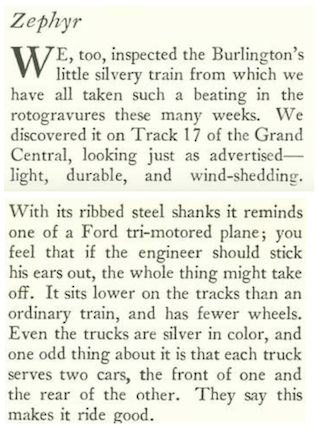
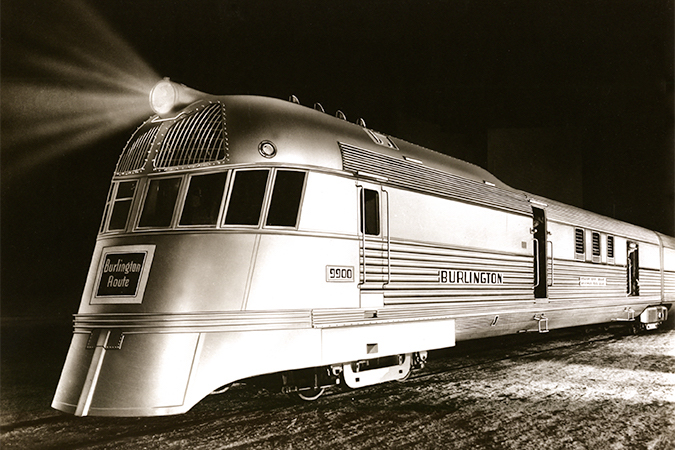
If Fuller’s attempt at the streamlined future was a bit of bust, the Burlington railroad was making a splash with its gleaming new Zephyr. E.B. White reported:
ZOOM ZOOM…The Burlington Zephyr set a speed record for travel between Denver and Chicago when it made a 1,015.4-mile (1,633 km) non-stop “Dawn-to-Dusk” dash in 13 hours 5 minutes at an average speed of almost 78 mph (124 km/h). In one section of the run it reached a speed of 112.5 mph. Following a promotional tour that included New York, it was placed in regular service between Kansas City, Missouri, and Omaha and Lincoln, Nebraska, on November 11, 1934. Other routes would be added later in the Midwest and West. (BNSF)
…we continue with E.B. White, here with some observations regarding Mother’s Day and bank robber/murderer John Dillinger, who had escaped from prison in March 1934 and was on the FBI’s Most Wanted List…
I REMEMBER MAMA…John Dillinger posed with Lake County prosecutor Robert Estill, left, in the jail at Crown Point, Ind. while he awaited his trial for murder in January 1934. Dillinger would escape from the jail in March and would be on the lam until July, when FBI agents would gun him down outside a Chicago movie theatre. (NY Daily News)
…and a last word from White, about an important change at Radio City:
* * *
Voice In The Wilderness
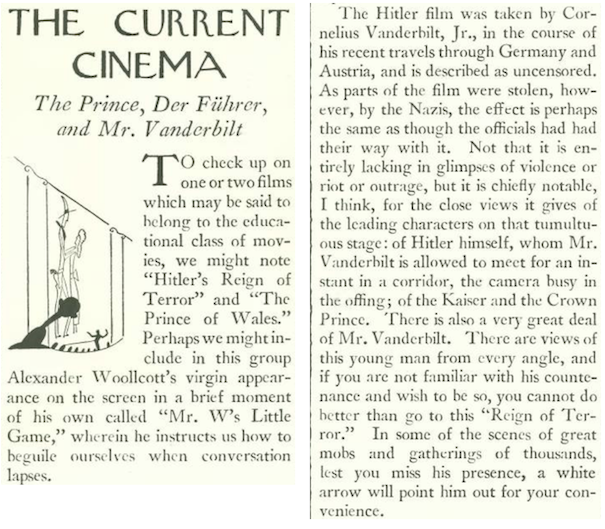
A combination of newsreel footage, documentary, and reenactment, Cornelius Vanderbilt Jr’sHitler’s Reign of Terror played to capacity crowds for two weeks in New York City, despite the refusal of the state’s censor to license the film. Disinherited by his parents when he became a newspaper publisher, Vanderbilt was a determined journalist, covertly filming scenes in Nazi Germany and even briefly encountering Adolf Hitler outside the Reichstag, where Vanderbilt yelled to Der Führer, “And what about the Jews, Your Excellency?” (Hitler ignored the question and referred Vanderbilt to one of his lackeys). Unfortunately, Vanderbilt wasn’t much of a filmmaker, and although he warned Americans about the emerging threat in Germany, few took the film, or his warning, seriously, including John Mosher:
UNHEEDED…Audiences flocked to see Cornelius Vanderbilt Jr’sHitler’s Reign of Terror, but critics dismissed the rather amateurish film—Film Daily scoffed at the film’s prediction that Hitler’s Germany was a future threat to world peace; at right, in the film Vanderbilt confronted “Hitler” in a recreation. (TMDB/Library of Congress)
* * *
From Our Advertisers
It wouldn’t seat eleven people like a Dymaxion, but a Body by Fisher (coach builder to General Motors) certainly impressed this young woman…but better check with the hubby just in case…
…in this next ad, we find what looks like the same woman, perhaps celebrating her decision with a nice smoke…
…this spot seems out of place in the New Yorker, like it snuck over from Better Homes & Gardens...
…on to our cartoons…with James Thurber’s war of the sexes over, life returned to normal…
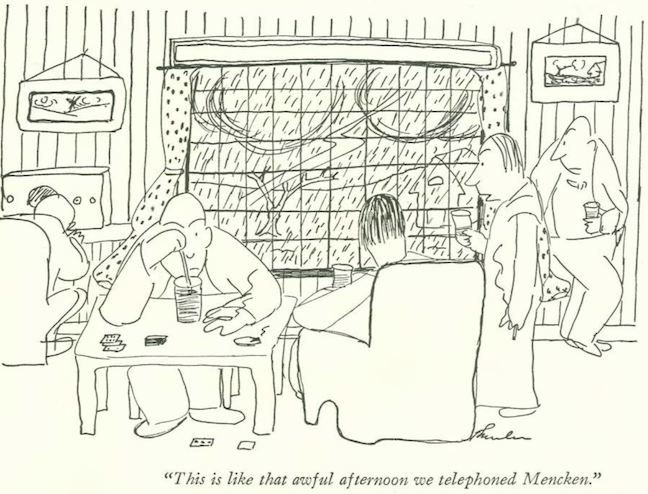
…and both sides shared in the gloom of a rainy afternoon…
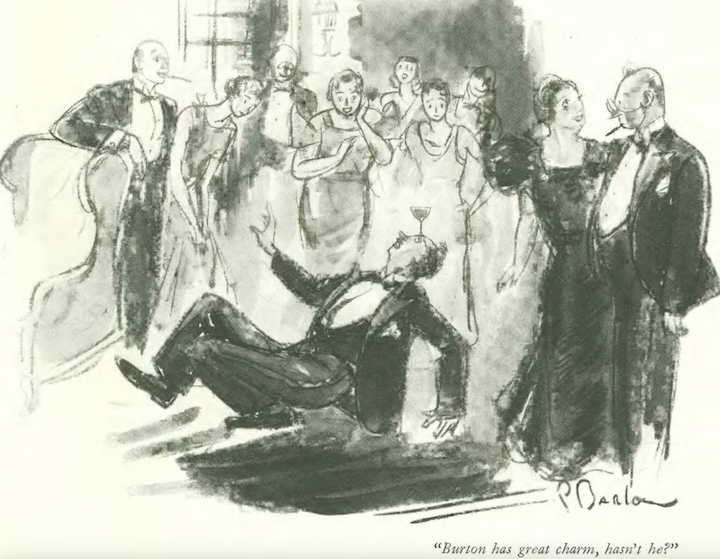
…by contrast, Perry Barlow brightened things up with this life of the party…
…but a good time doesn’t always translate over the airwaves, per George Price…
…Alain illustrated the consequences of losing one’s nest egg…
…Peter Arno didn’t leave any room for dessert…
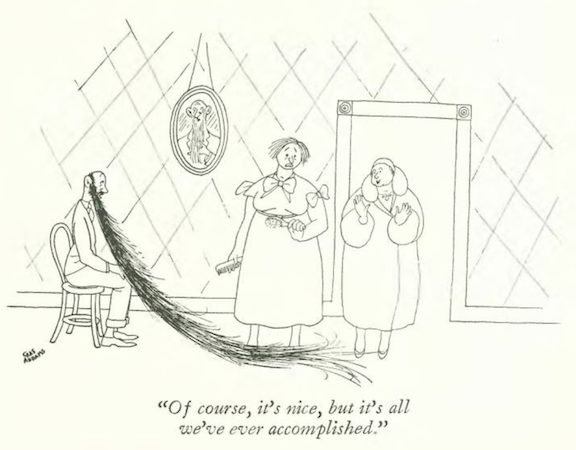
…and Charles Addams returned, a macabre cast of characters still percolating in his brain…
…on to May 12, 1934…
May 12, 1934 cover by Leonard Dove.
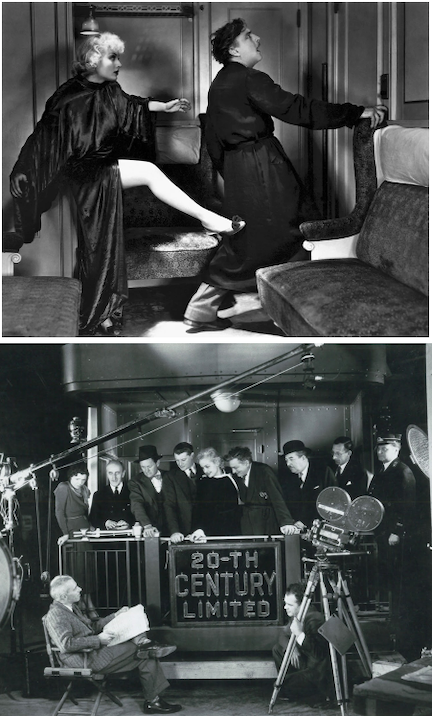
…and back to the movies, this time critic John Mosher found more cheery fare in 20th Century, a pre-Code screwball comedy directed by Howard Hawks and starring John Barrymore and Carole Lombard. Battling alcohol abuse since age 14, Barrymore nevertheless managed to display his rare genius as a comedian and turned in what is considered to be his last great film performance.
GETTING HER KICKS…Top, Carole Lombard delivers a swift one to John Barrymore in the screwball comedy 20th Century. Below, director Howard Hawks with the cast. (greenbriarpictureshows.blogspot.com)
* * *
Playing the Ponies
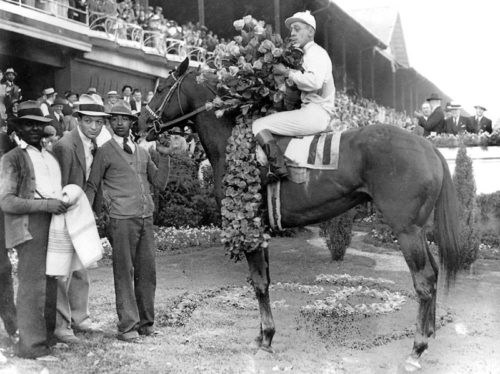
Horse racing correspondent George F. T. Ryall (pseud. “Audax Minor”) considered a losing wager at the Kentucky Derby in his column, “The Race Track.”
A HORSE OF COURSE…Jockey Mack Garner rode Cavalcade to victory at the 1934 Kentucky Derby. (Appanoose County Historical Society)
* * *
More From Our Advertisers
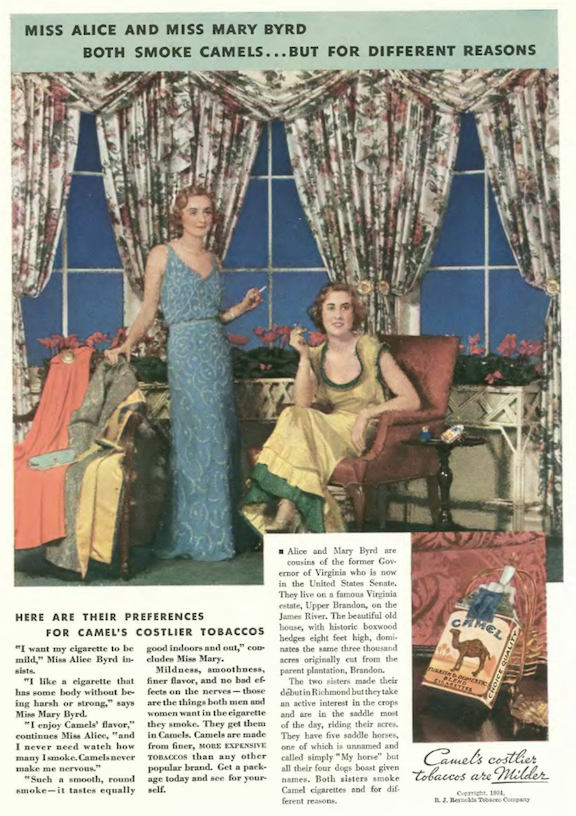
We begin with Camel cigarette endorsers Alice and Mary Byrd, residents of Virginia’s famous Brandon plantation and cousins of Virginia Senator and Governor Harry F. Byrd, known for his fights against the New Deal and his “massive resistance” to federally mandated school desegregation...
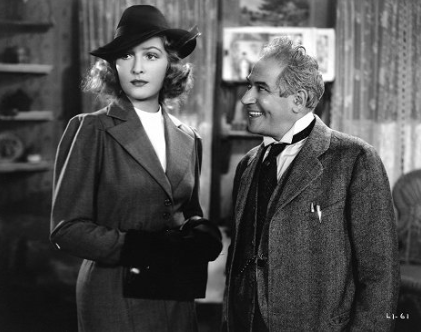
…also to the manor born, Whitney Bourne, a New York deb who would go on to a brief stage and film career that would end when she married her first husband (diplomat Stanton Griffis) in 1939…
AN EYE FOR STYLE…Whitney Bourne in a scene with Solly Ward in 1937’s Flight From Glory. Named in 1933 as one of America’s best dressed women, Bourne was a noted New York socialite, skier, golfer and tennis player as well as an occasional actress.
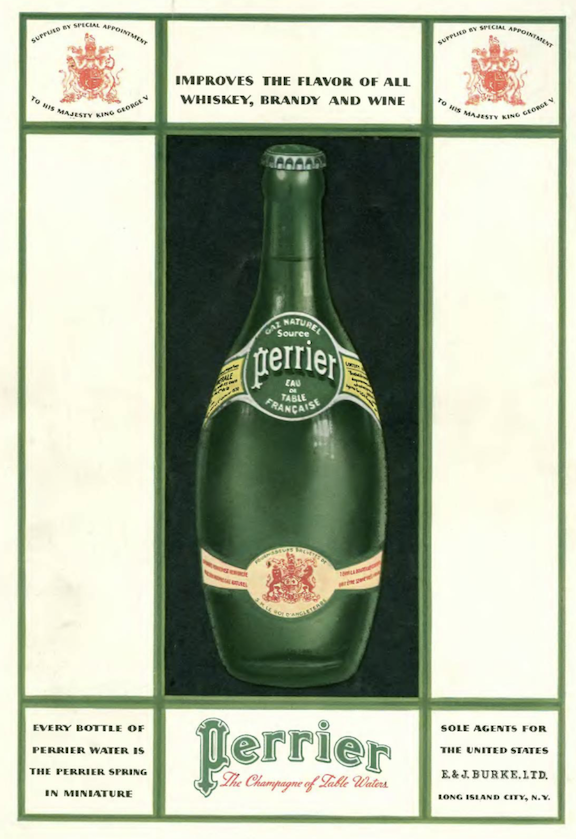
…we move along from the effervescent Whitney Bourne to the sparkling waters of Perrier…
…Gardner Rea followed other New Yorker cartoonists by illustrating an ad for Heinz…
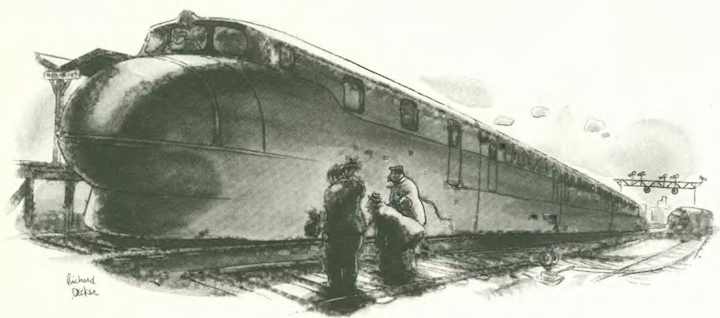
…which brings is to more cartoons, where according to Richard Decker, the move to streamlined trains wasn’t welcomed by everyone…
…Carl Rose illustrated this two-page spread with an imagined right-wing response to the recent left-wing May Day parades…
…William Steig eavesdropped onto a saucy little conversation…
…Barbara Shermund continued her explorations into the trials of the modern woman…
…James Thurber was back to his old tricks…
…and we conclude our cartoons with Eli Garson, and a new perspective…
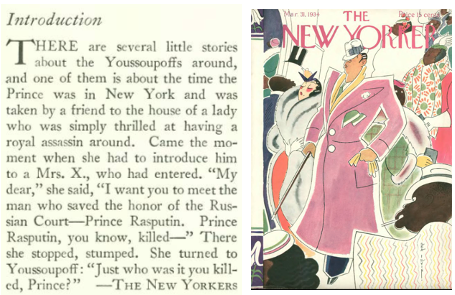
Before I close, a bit of housekeeping. The first issues in 1925 sometimes ended “The Talk of the Town” with…
…but on May 23, 1925, “Talk” signed off with —The New Yorkers. That continued until the March 31, 1934 issue (below), the last time the New Yorker signed off “The Talk of the Town” with —The New Yorkers:























































































































 A New Yorker State of Mind