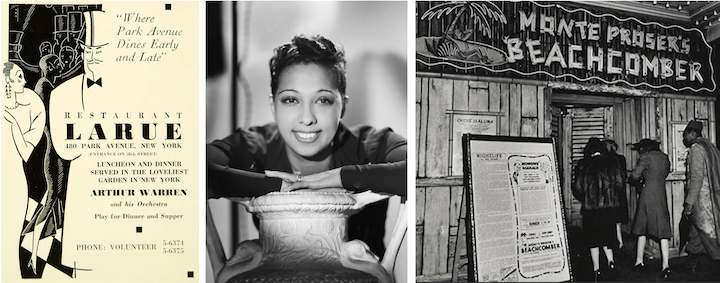
Above: Nightlife correspondent Lois Long checked out the latest clubs as well as old-time favorites in her column "Tables for Two." From left, advertisement for Restaurant Larue; Josephine Baker in 1937; and the entrance to Monte Proser's Beachcomber, an early iteration of the tiki bar that would become ubiquitous in midcentury America. (eBay.com/Wikipedia/mytiki.life)
Part three of Janet Flanner’s profile of Adolf Hitler can be found below, but it’s time to lead with something more pleasant, namely Manhattan nightlife through the eyes of Lois Long.
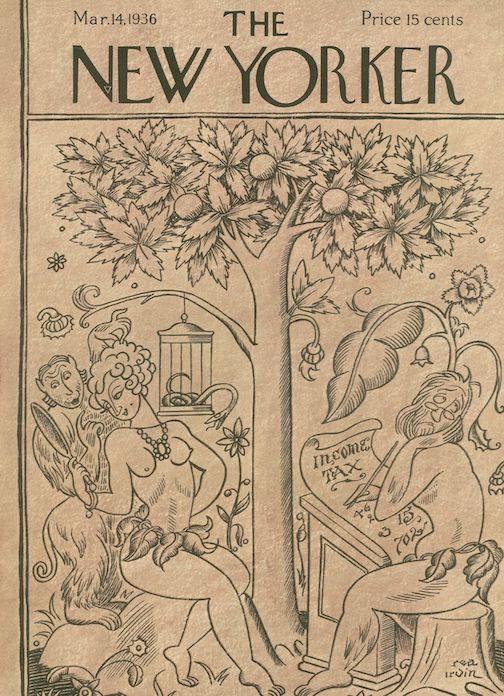
March 14, 1936 cover by Rea Irvin.
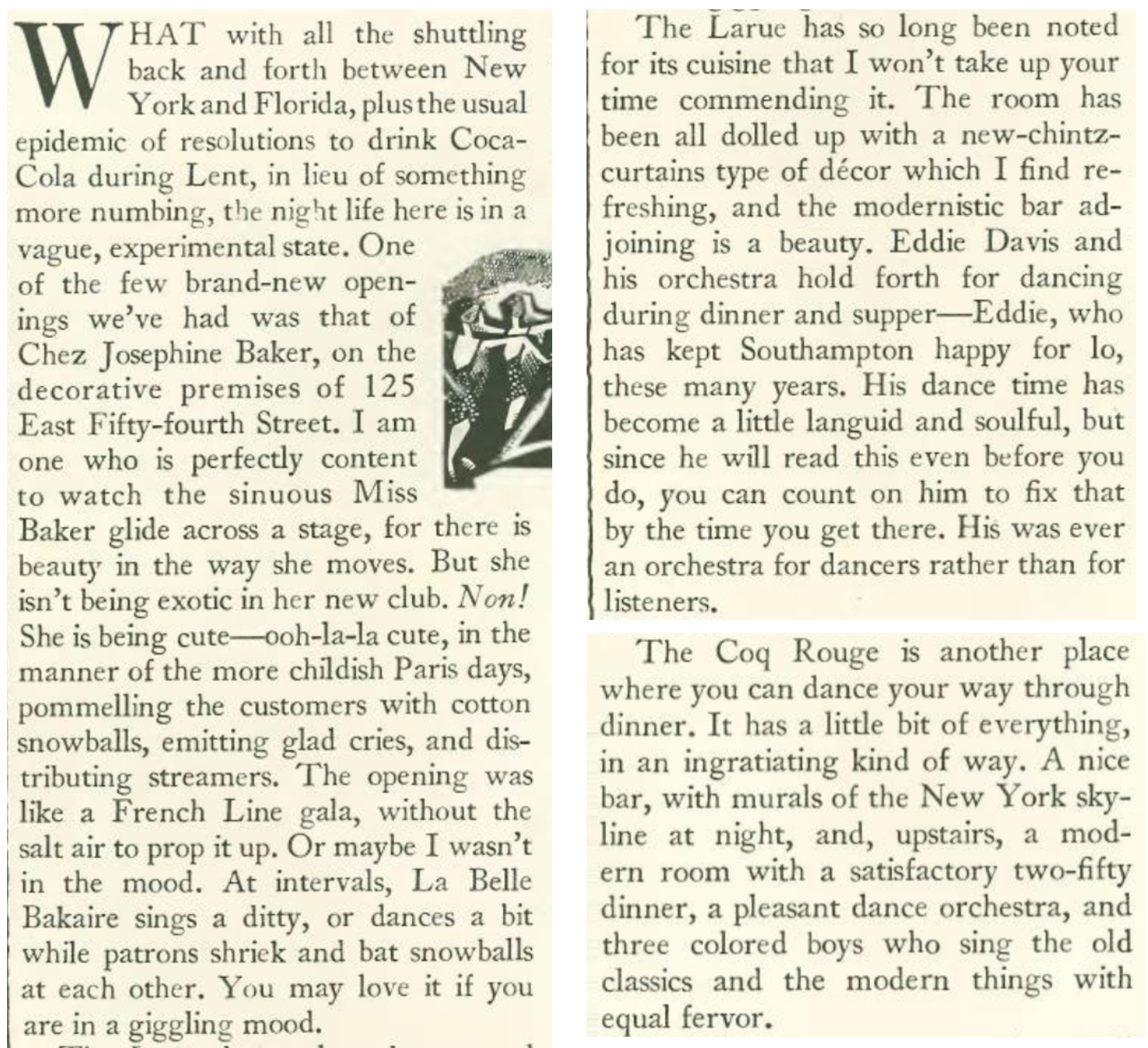
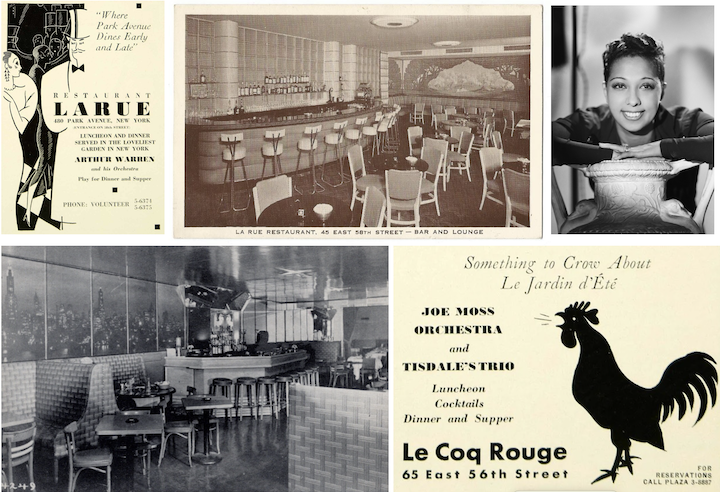
In her “Tables for Two” column headlined “Nostalgic Notes,” Long checked out the new Chez Josephine Baker, the garden-like delights of Restauarnt Larue, and the French-themed Le Coq Rouge.
NEW NIGHTLIFE…Clockwise from top left, ad for Restaurant Larue; 1930s postcard showing interior of Larue; Josephine Baker, proprietor of Chez Josephine Baker; ad for Le Coq Rouge; interior of Le Coq Rouge, 1930s. (eBay/Wikipedia)
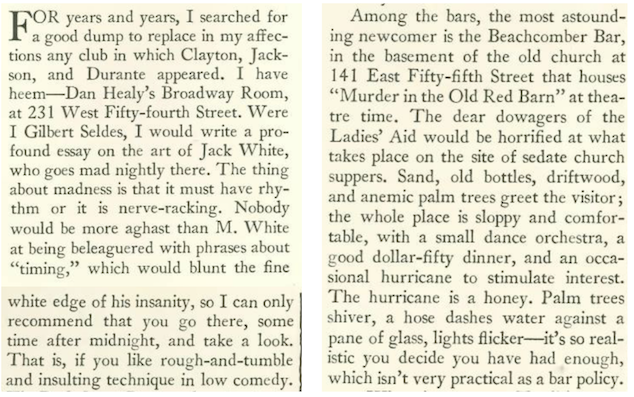
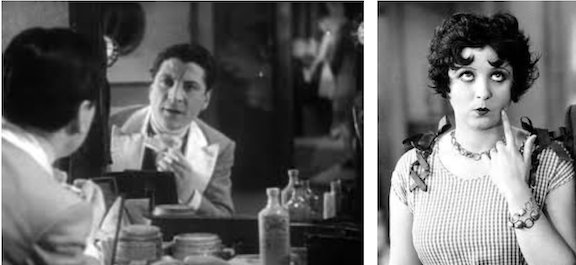
Long also noted the Beachcomber Bar, which originated in the basement of an old church, and actor Dan Healy’sBroadway Room.
MAN ABOUT TOWN…Dan Healy was a well-known master of ceremonies in the Manhattan nightlife scene. He married the famed “boop-boop-a-doop” singer (and possible Betty Boop inspiration) Helen Kane in 1939—they later opened a New York restaurant together called Healy’s Grill. (whosdatedwho.com/Facebook)
* * *
Bummed Out
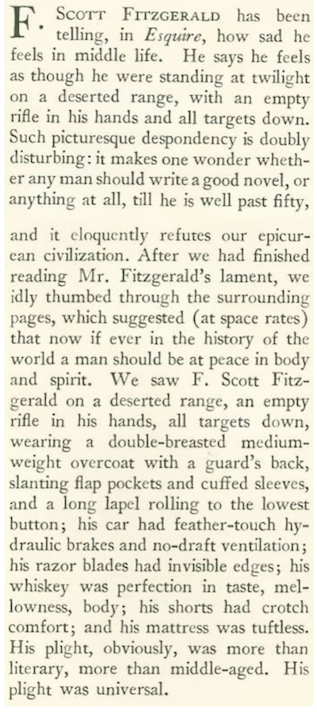
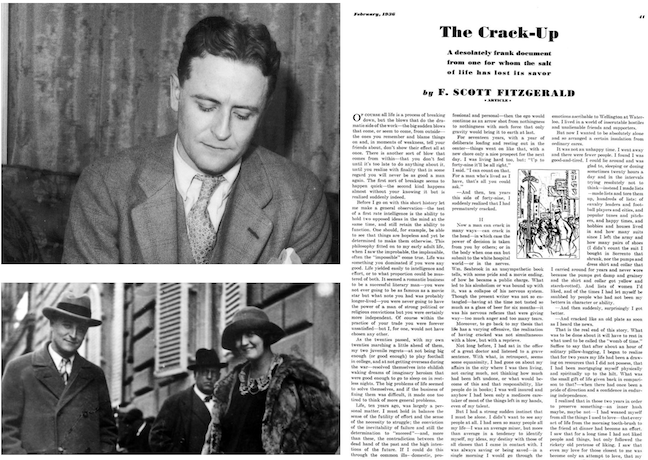
E.B. White (in “Notes and Comment”) referred to confessional essays published in Esquire magazine by F. Scott Fitzgerald that frankly described his struggles with alcoholism and the decline of his literary reputation. The confessional tone of the essays (three in all, published in February, March and April 1936) proved controversial at the time.
In his first essay, “The Crack-Up,” Fitzgerald famously observed that “the test of a first-rate intelligence is the ability to hold two opposed ideas in the mind at the same time, and still retain the ability to function.”
A CRY FOR HELP?…At left, F. Scott Fitzgerald in the 1930s (top), and, apparently during happier days (below, with wife Zelda); at right, the opening page of “The Crack-Up.” (esquire.com/pbs.org)
* * *
Say What?
New Yorker writers rarely missed an opportunity to poke fun of Time magazine’s unique ways with the English language. E.B. White again, in an excerpt:
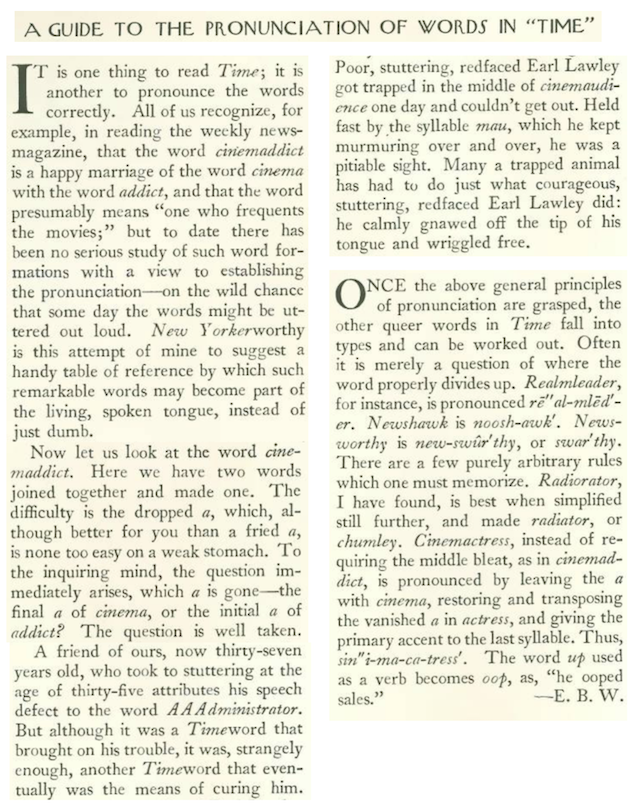
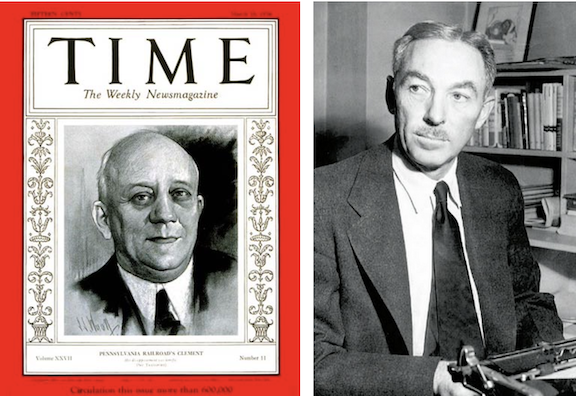
TIMEWORDS…The March 16, 1936 issue of Time, and E.B. White. (time.com/imdb.com)
* * *
Dying to Know
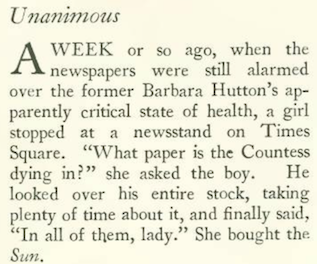
“The Talk of the Town” made brief mention of a rumor regarding Woolworth heiress Barbara Hutton’s health. Reports of her demise were premature; she died in 1979.
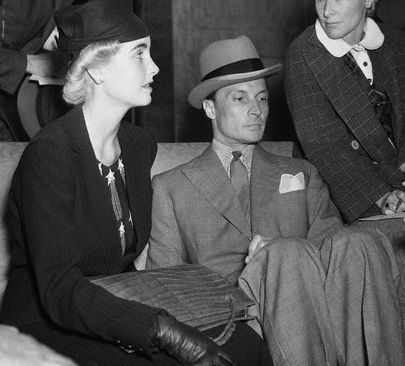
HANGING IN THERE…Barbara Hutton with husband no. 2, Count Kurt von Haugwitz-Reventlow, circa 1936. Hutton married seven times, including a brief marriage to actor Cary Grant, who was husband no. 3. (whosdatedwho.com)
* * *
Part Three
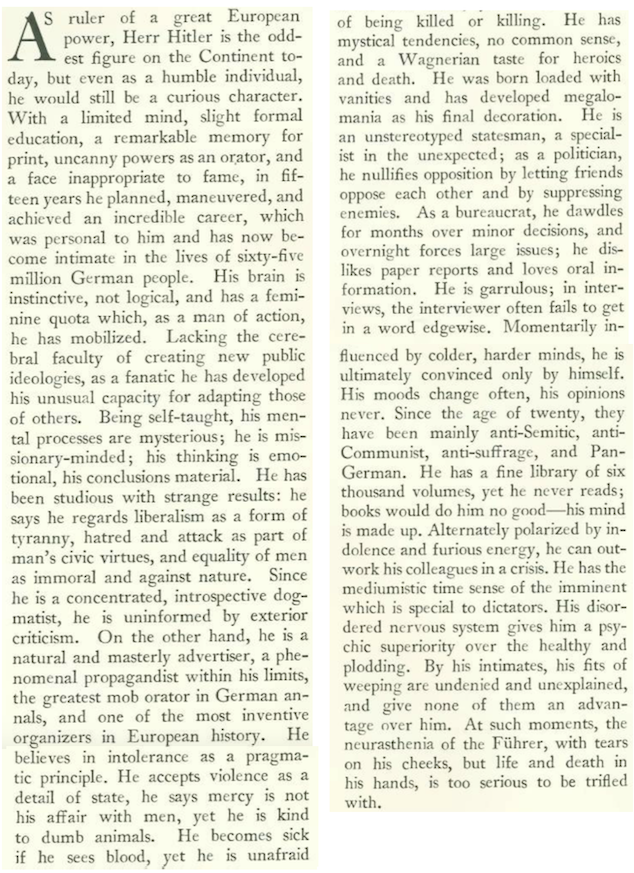
Janet Flanner completed her three-part profile of Adolf Hitler by looking into the man’s mind, if that was even possible.
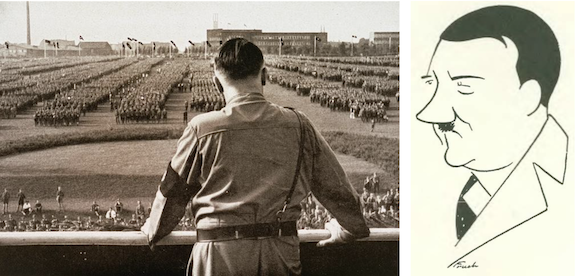
OBEDIENT MASSES…Nazi dictator Adolf Hitler addresses soldiers at a rally in Dortmund, Germany, 1933. (encyclopedia.ushmm.org)
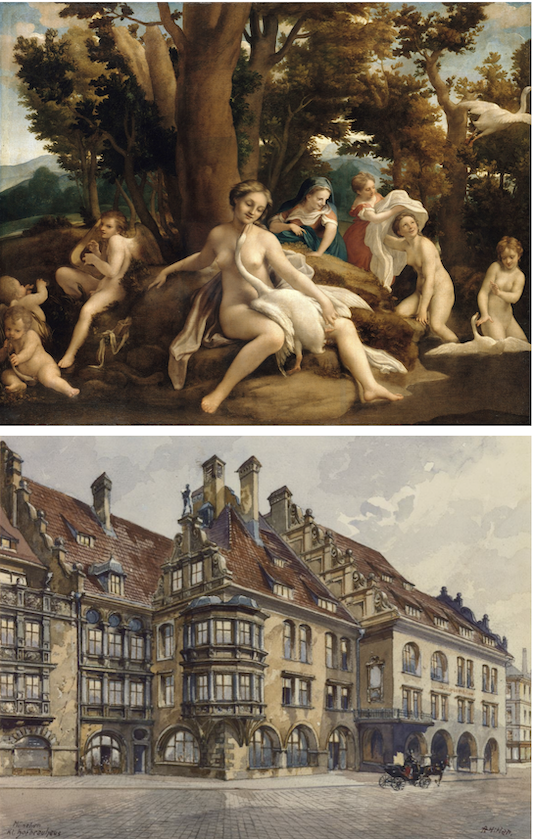
Flanner also noted the Führer’s early days as an unsuccessful painter, and an odd wedding gift to his buddy Hermann Göring:
GOOSED…Top, Adolf Hitler presented a specially painted copy of Correggio’s Leda with the Swan as a wedding gift to Hermann Göring and actress Emmy Sonnemann on April 10, 1935; below, Hitler painted this watercolor during his pre-WWI time in Munich, from May 1913 to August 1914. (Wikipedia)
* * *
China Syndrome
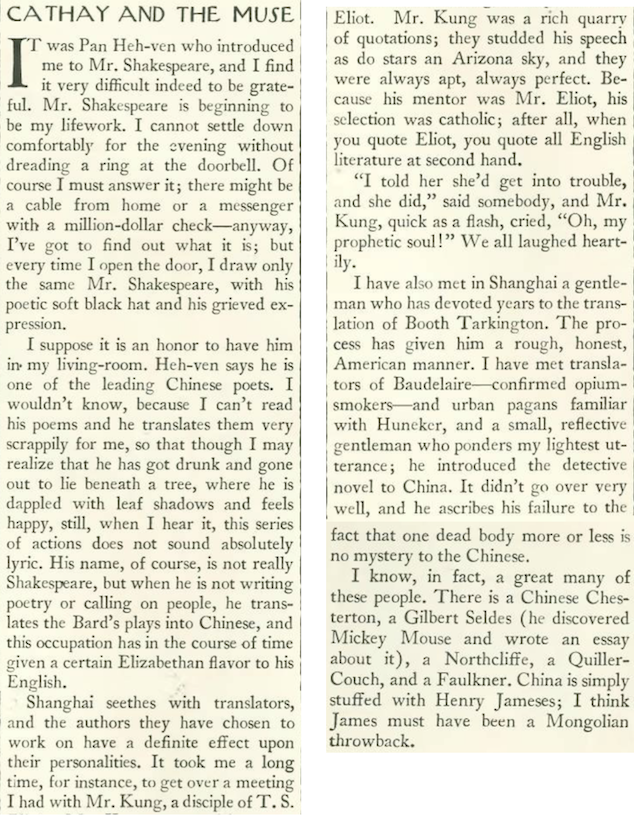
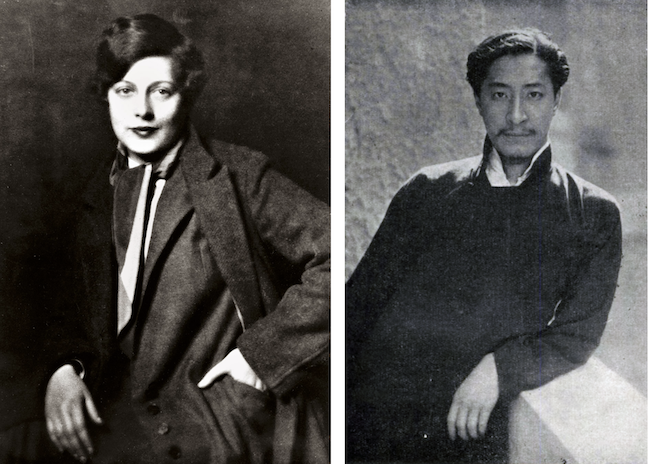
Supporting herself as a writer for The New Yorker, Emily Hahn’s years in Shanghai, China (1935 to 1941) were tumultuous. Living in the city’s red light district, she became romantically involved with the Chinese poet and publisher Shao Xunmei (aka Sinmay Zau) and became addicted to opium. In this excerpted short essay, Hahn described her literary encounters with Shao Xunmei (here referred to as “Pan Heh-ven”) and a passel of translators.
ENOUGH OF THAT…Emily Hahn became romantically involved with the Chinese poet and publisher Shao Xunmei (aka Sinmay Zau), but ultimately left him in order to break her opium addiction. (Wikipedia)
* * *
At the Movies
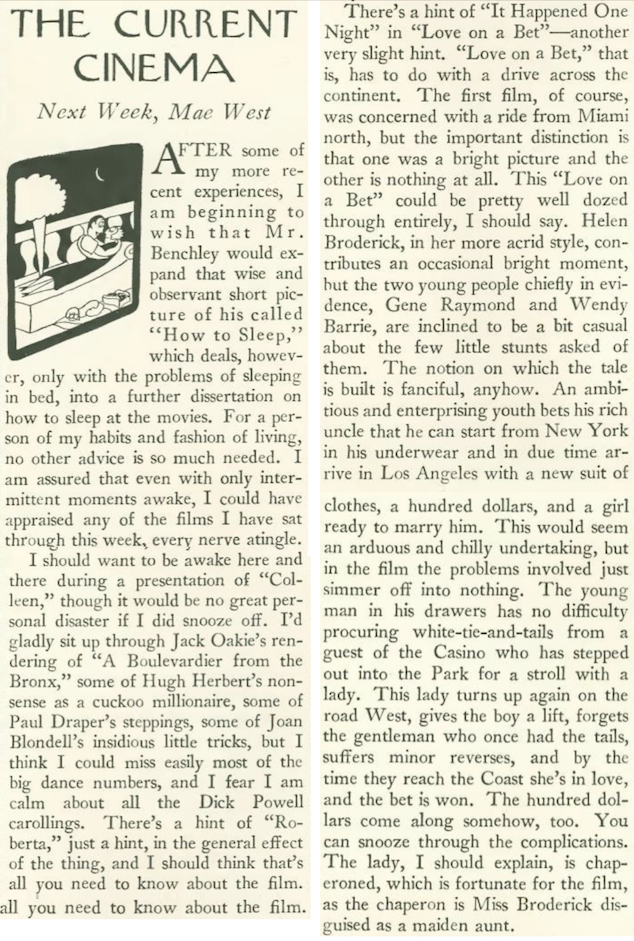
Critic John Mosher did his best to stay awake during the latest fare from Hollywood…
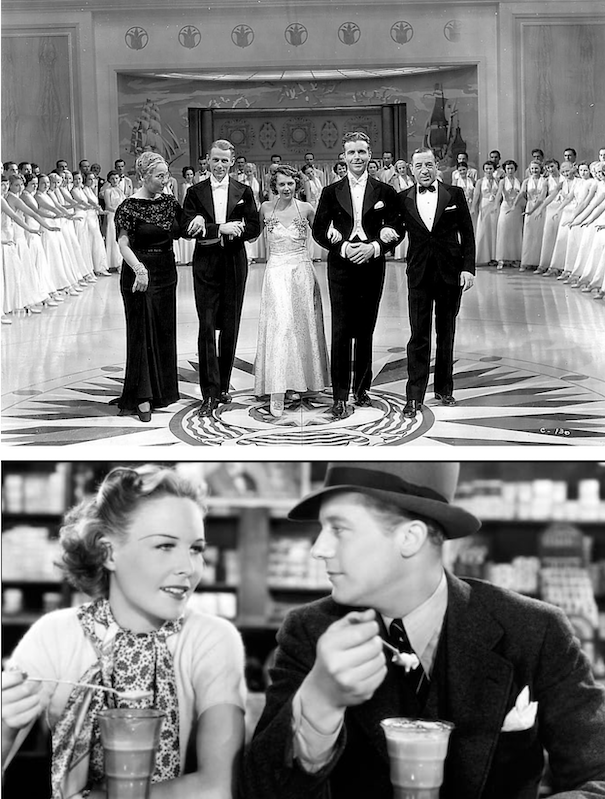
SPECIOUS SPECTACLE…Top, from left, Louise Fazenda, Paul Draper, Ruby Keeler, Dick Powell and Hugh Herbert in Colleen; below, Wendy Barrie and Gene Raymond in Love on a Bet. (cometoverhollywood.com/imdb.com)
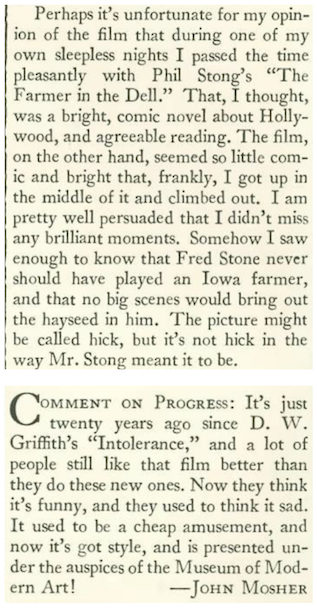
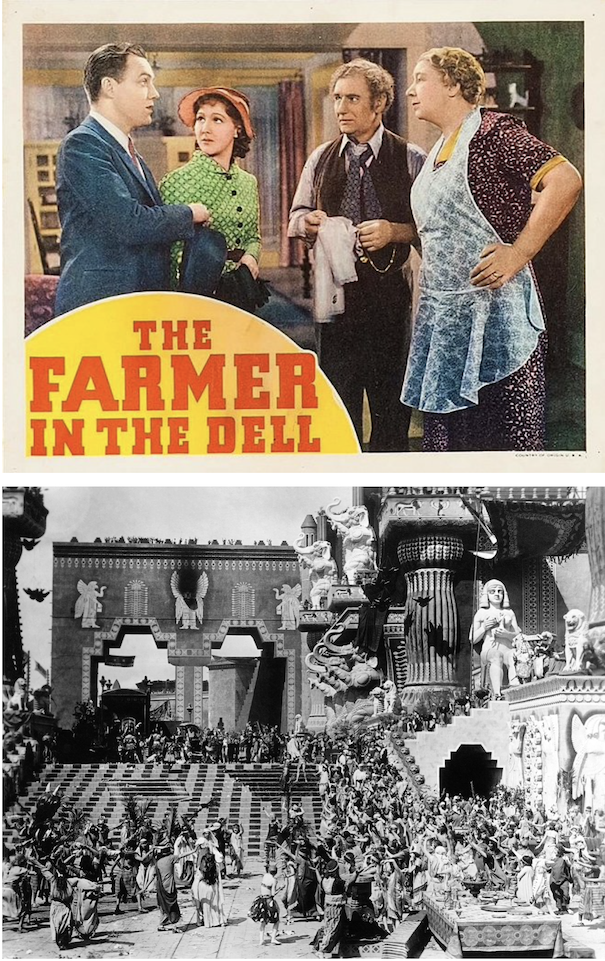
Mosher also commented on a film he walked out on (The Farmer in the Dell), and considered the twentieth anniversary of Intolerance, a 1916 drama that had become a “cheap amusement.”
HO HUM…Critic John Mosher walked out of The Farmer in the Dell, mostly due to boredom—above, Frank Albertson, Jean Parker, Fred Stone and Esther Dale in the romcom The Farmer in the Dell; below, scene from D.W. Griffith’s epic silent film from 1916, Intolerance. (imdb.com/cinemafromthespectrum.com)
* * *
From Our Advertisers
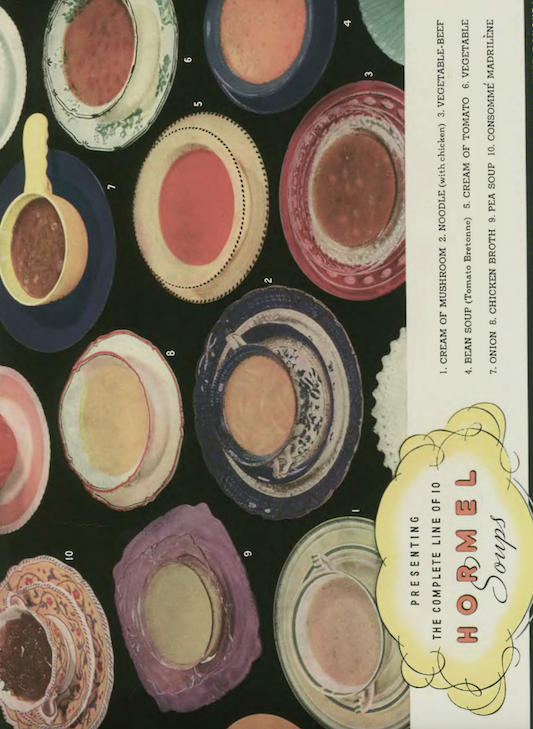
The folks at Hormel once again claimed the inside front cover with this array of soups featured sideways, in full color…
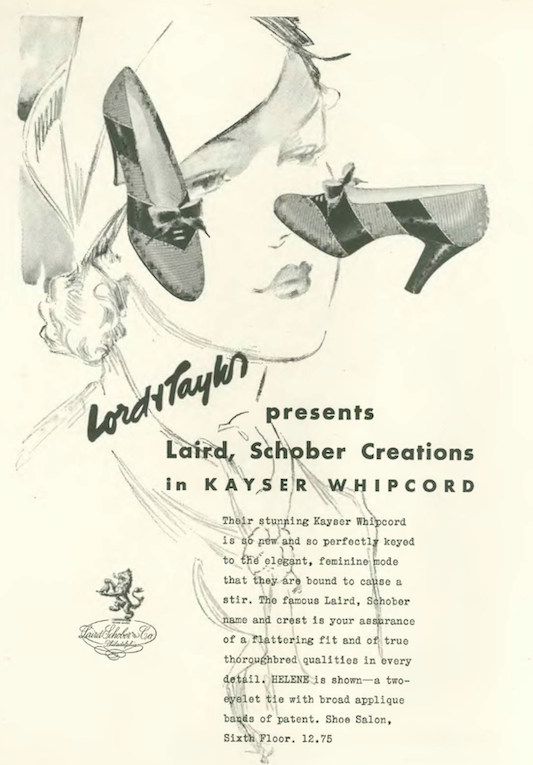
…the illustrator of this Lord & Taylor advertisement hoped to superimpose a pair of shoes over a woman’s face, with less than convincing results…
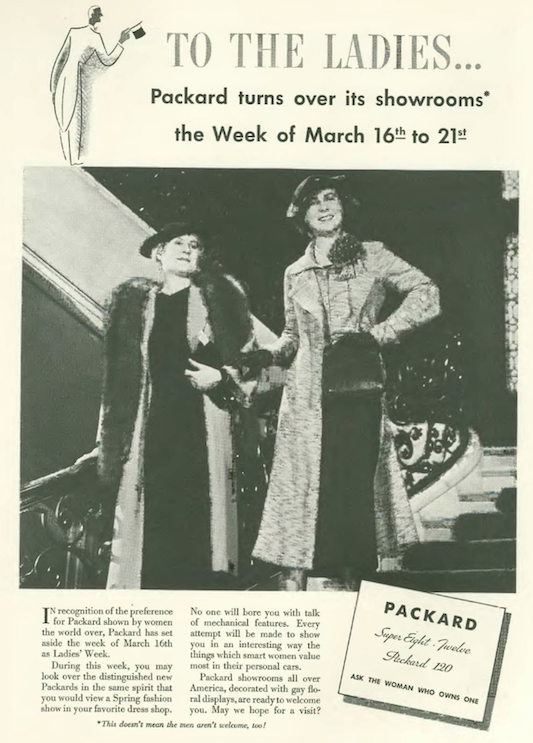
…the makers of Packard automobiles sent a condescending message “To The Ladies,” promising not to “bore them” with talk of mechanical features…
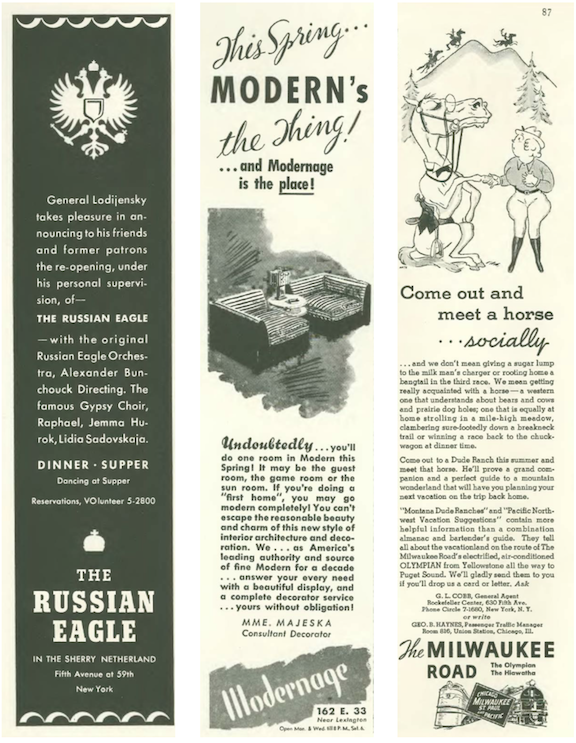
…a sampling of one-column ads featured, from left, the renowned Russian Eagle cafe-bar at the Sherry-Netherland, the Modernage furniture store on East 33rd, and the Milwaukee Road railroad, which offered adventure at such places as a Montana dude ranch…
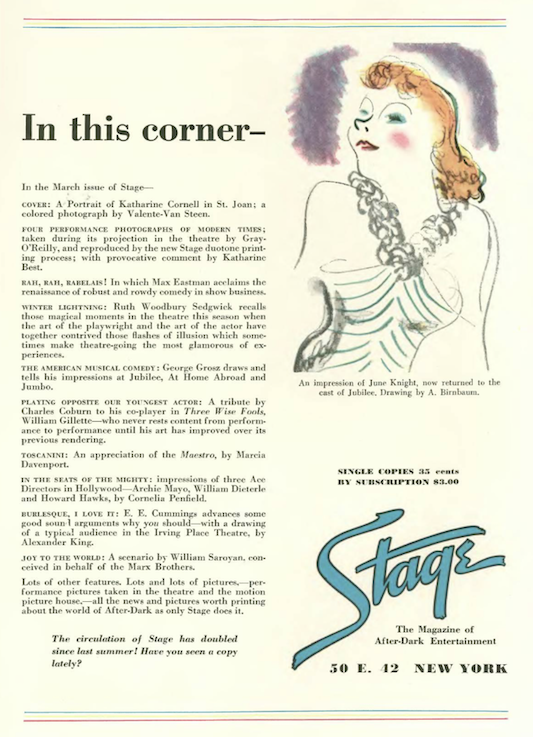
…the inside back cover featured this drawing of actress/dancer/singer June Knight by Abe Birnbaum…
…Birnbaum was a terrific artist, but his portrait of Knight was not terribly flattering…this is what she looked like in the 1930s…
June Knight (1913–1987) circa 1930s. (reddit.com)
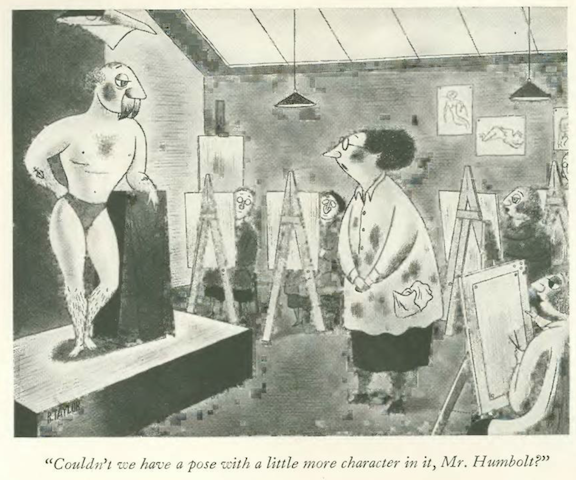
…on to the cartoons, we kick off the issue with Canadian cartoonist Richard Taylor…
…and Taylor again, striking a pose…
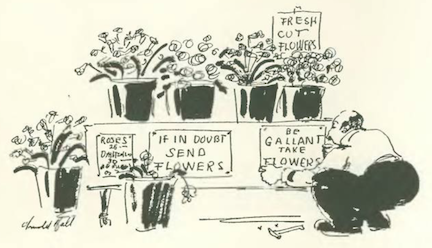
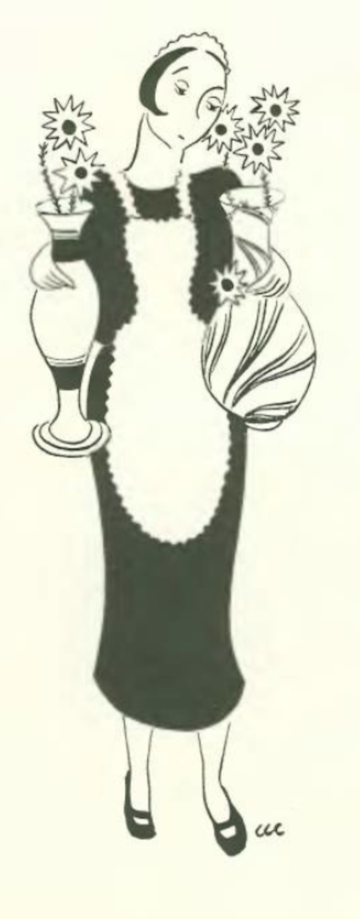
…Arnold Hall contributed an example of floral marketing…
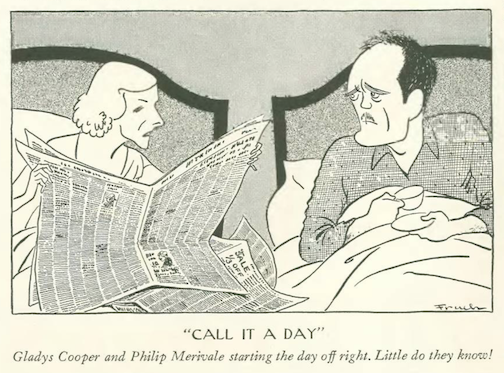
…Al Frueh contributed to “The Theatre” section…
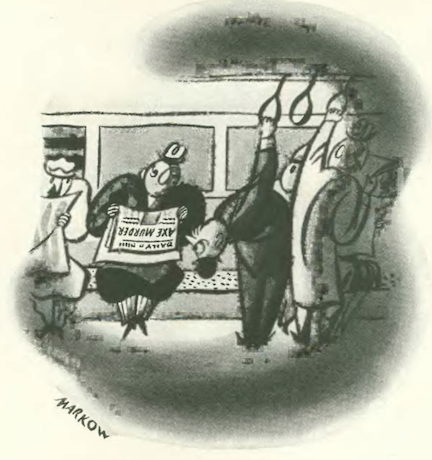
…Jack Markow did some rubbernecking…
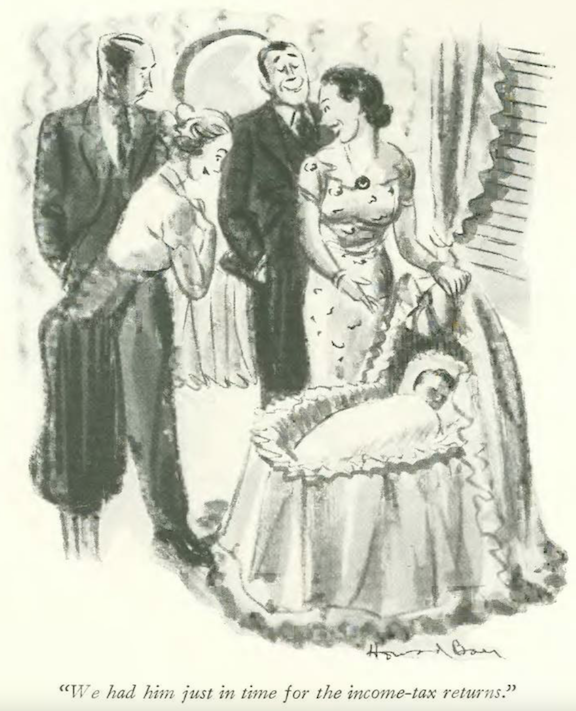
…Howard Baer welcomed a new tax deduction to the world…
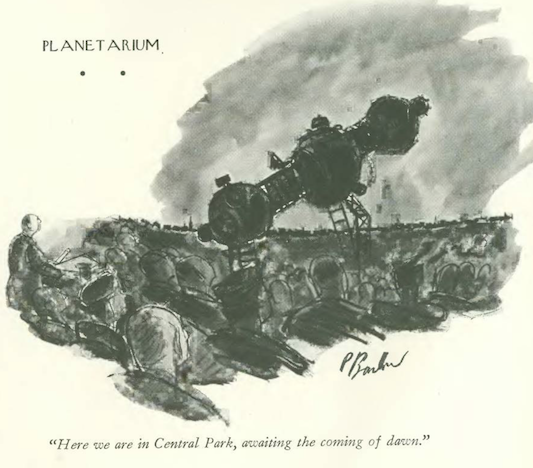
…Perry Barlow drew up impressions of a field trip to the Hayden Planetarium…
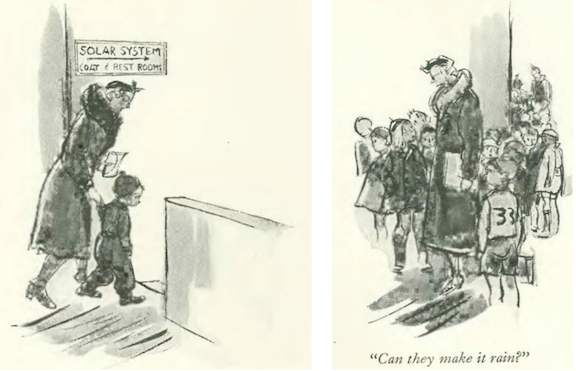
…Barlow again…
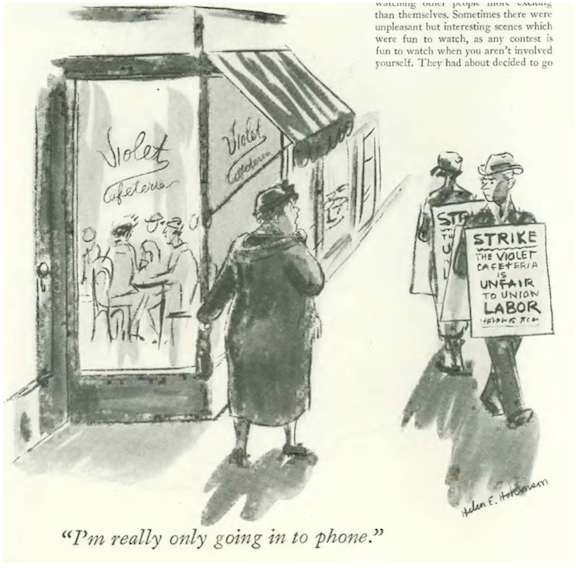
…one of Helen Hokinson’s “girls” explained herself…
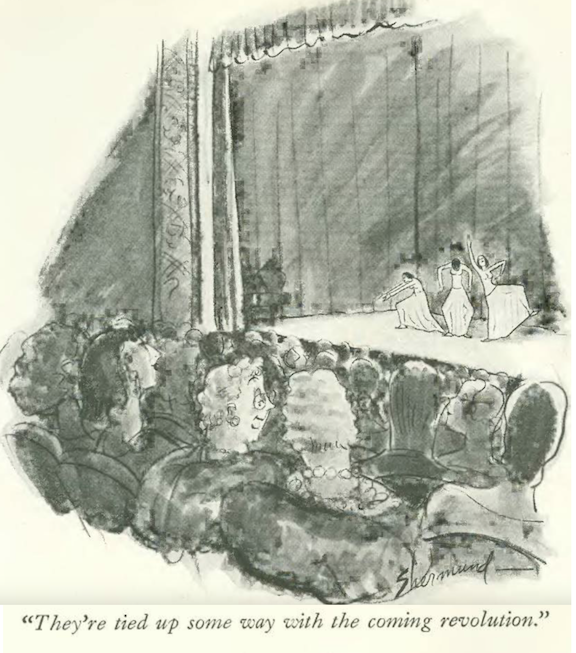
…Barbara Shermund interpreted modern dance…
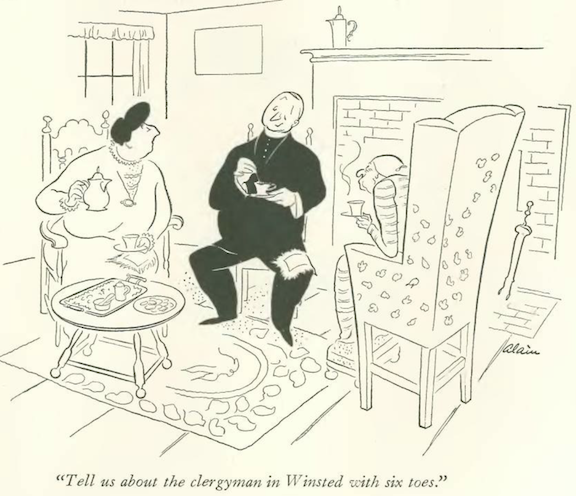
…Alain sought some dish over tea with the vicar…
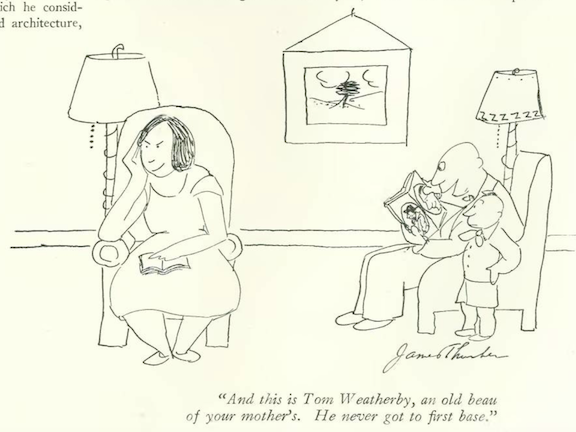
…and we close with James Thurber, and a penny for her thoughts…
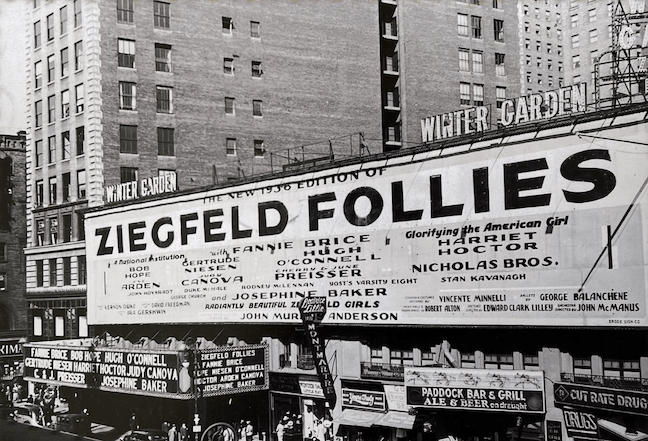
Above: The 1936 Ziegfeld Follies premiered on Broadway at the Winter Garden Theatre on January 30, 1936 and closed on May 9, 1936 after 115 performances. (Hulton Archive)
Broadway impresario Florenz Ziegfeld Jr died in 1932, but his famous theatrical revue lived on for years with revivals including one in 1936 that Robert Benchley praised for being better than the originals.
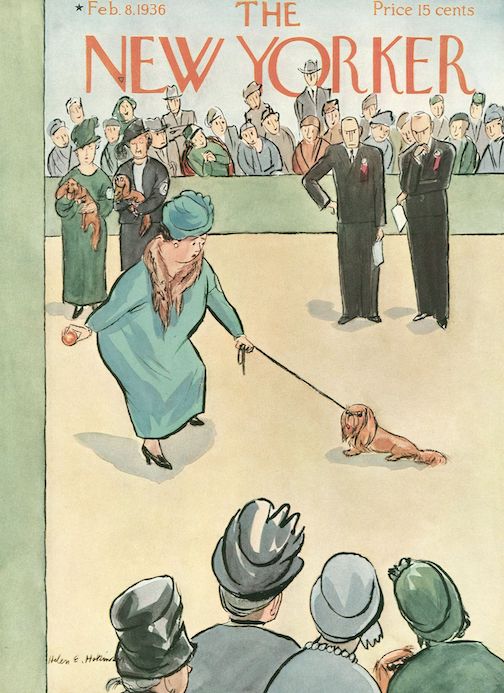
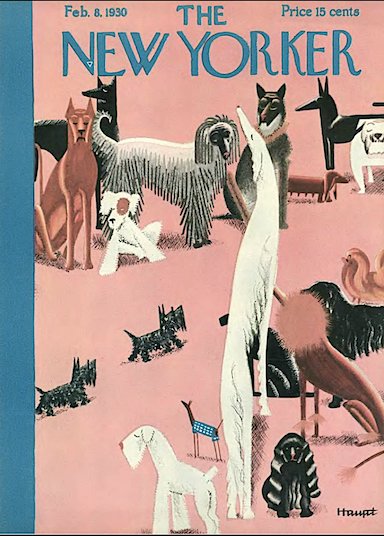
February 8, 1936 cover by Helen Hokinson, marking the opening of the Westminster Kennel Club Dog Show at Madison Square Garden. According to Michael Maslin’s always enlightening Ink Spill, the first dog-themed New Yorker cover was Feb. 8, 1930, by Theodore Haupt (below).
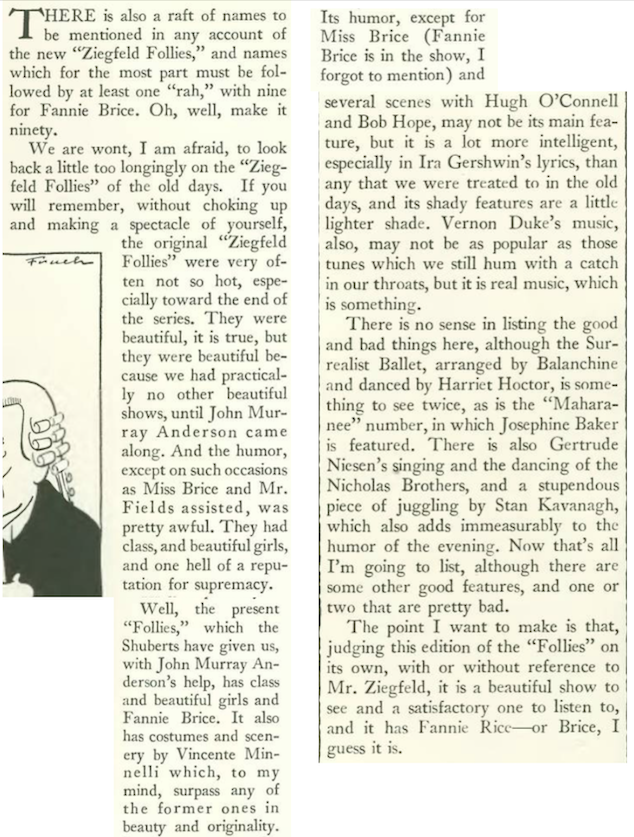
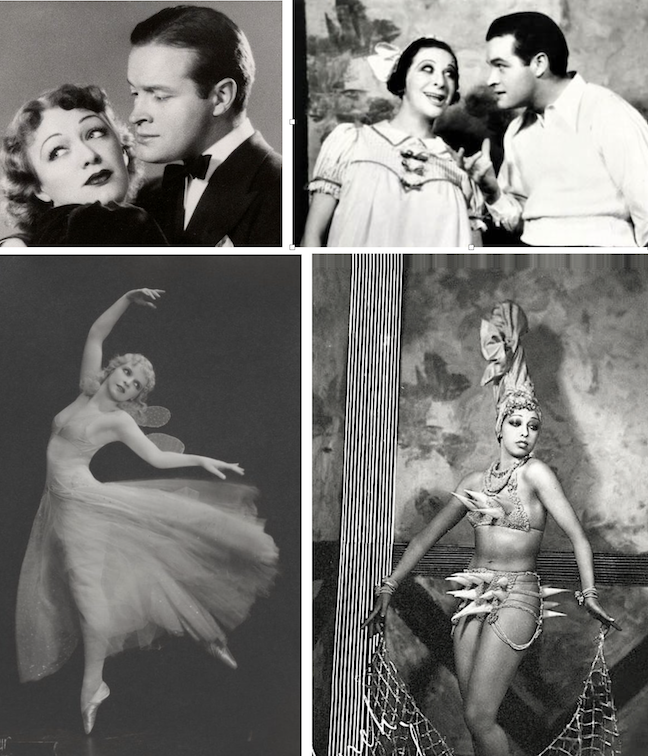
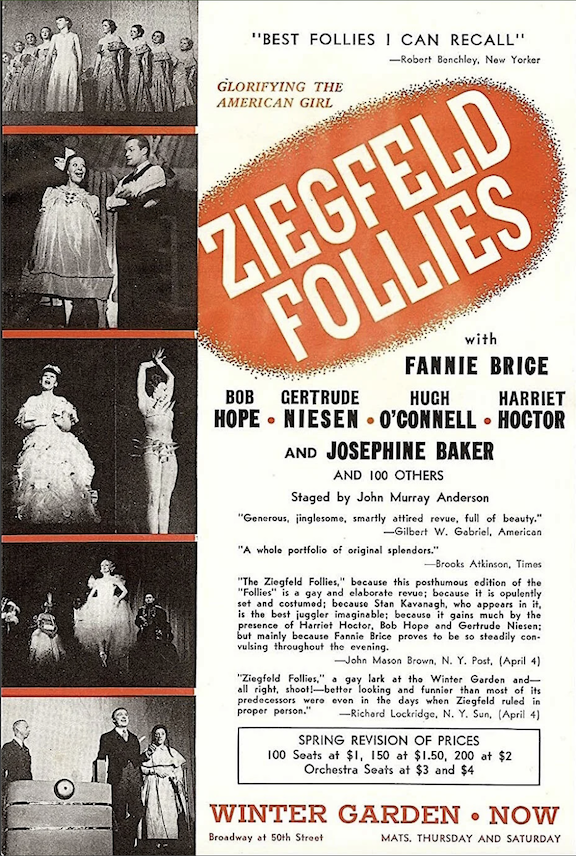
Now on with the show. Brought back to life by Ziegfeld’s widow Billie Burke and theatre operators Lee and J. J. Shubert,The Ziegfeld Follies of 1936 was loaded with talent, with lyrics by Ira Gershwin, choreography by George Balanchine, and sets and costumes by Vincente Minnelli. What really brought people in was the star of the show, Fannie Brice, who was supported by cast members Bob Hope, Eve Arden, Josephine Baker, and the Nicholas Brothers, among others. Benchley wrote:
FANNIE AND THE REST…Clockwise, from top left: Bob Hope and Eve Arden performed the popular tune “I Can’t Get Started With You”; Hope with Fannie Brice in the sketch “Baby Snooks Goes Hollywood”; Josephine Baker premiered “The Conga” at the Follies, and Harriet Hoctor performed her “Night Flight.” (gershwin.com/uneicone-josephinebaker.webador.fr/libraryofcongress,org)
This ad for the 1936 Follies prominently featured Benchley’s endorsement:
(uneicone-josephinebaker.webador.fr)
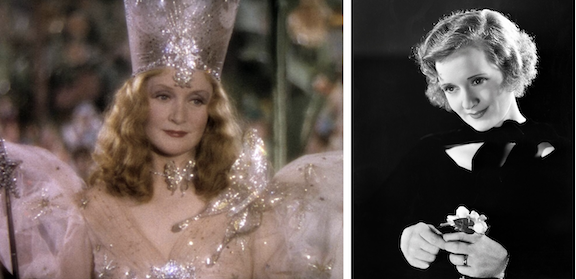
Billie Burke (1884–1970) authorized Follies revivals with the Shuberts in 1934, 1936 and 1943, with the Shubert family producing a final revival in 1957. In 1936 MGM also filmed a Ziegfeld biopic, The Great Ziegfeld (which won two Academy Awards), casting William Powell as Ziegfeld and Myrna Loy as Burke. Burke wanted to play herself in the film, but at age 51 she was deemed too old for the part.
ZIEGFELD MAGIC…Florenz Ziegfeld’s widow Billie Burke kept the Follies going after her husband’s death in 1932. She is best known today for her portrayal of Glinda the Good Witch of the North in 1939’s The Wizard of Oz. (oscars.org/Wikipedia)
Fannie Brice (1891–1951) was the biggest star of the Follies and so dominated the show that when she became ill in May 1936 the production closed. Brice returned to the Winter Garden that September for 112 more performances.
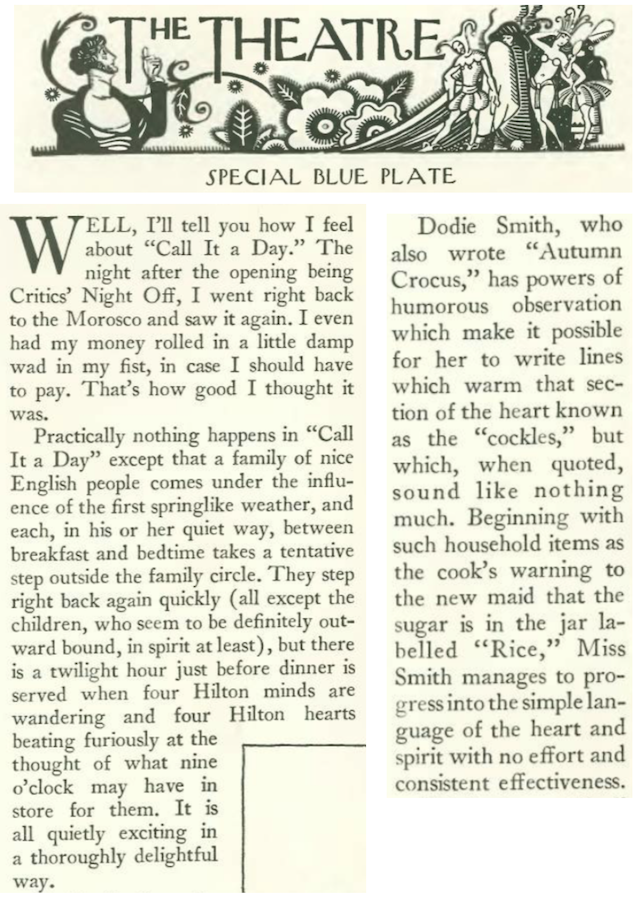
Benchley also praised Call it a Day, a 1935 play by British writer Dodie Smith that ran for 194 performances at the Morosco Theatre. Benchley thought it was so good he saw it twice.
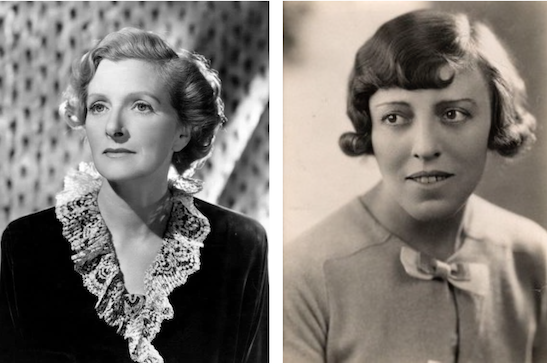
SPRING FEVER drove the action in Dodie Smith’s (right) hit comedy Call it a Day. The play chronicles a single spring day in the lives of the Hilton family, during which each member encounters unexpected romantic temptations and complications. Gladys Cooper, left, starred as Dorothy Hilton. The play was adapted to a Hollywood film in 1937. (vocal.media/Wikipedia)
* * *
At the Movies
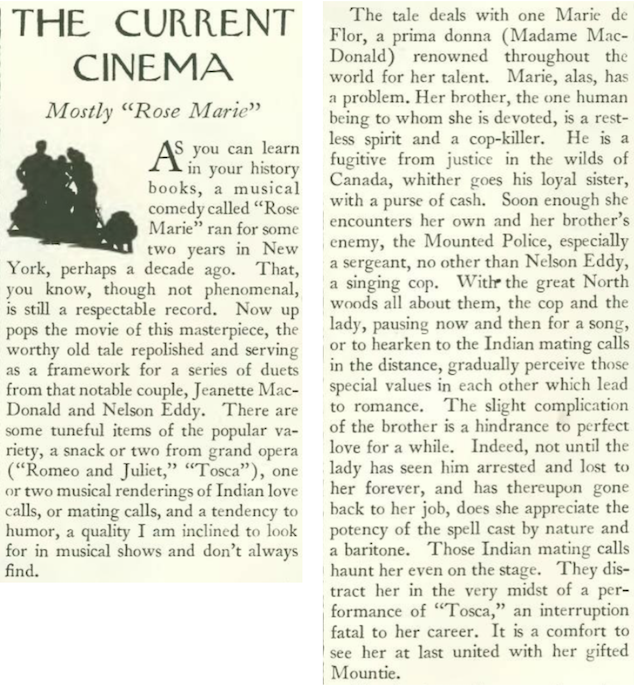
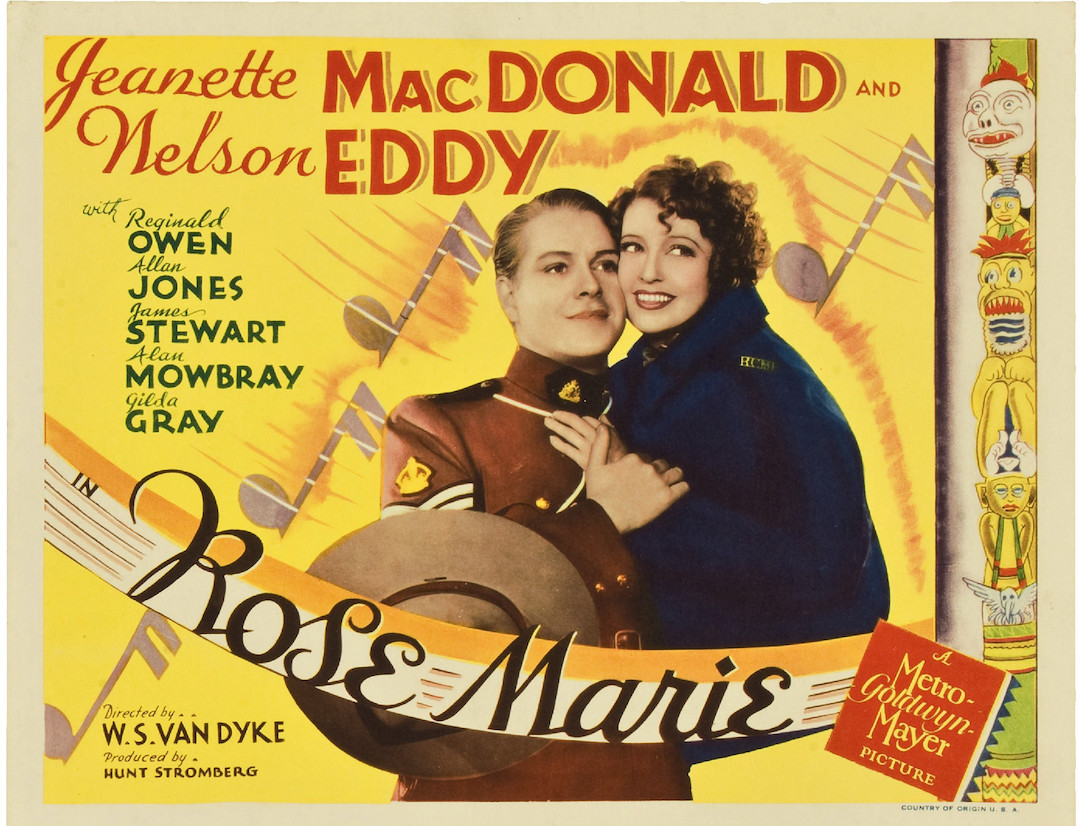
We go from the stage to the screen, where John Mosher took in Rose Marie, a musical comedy based on a popular 1924 Broadway play. The film “repolished” the old play and used it as a framework for a series of duets between Jeanette MacDonald and Nelson Eddy.
MELODIOUS MOUNTIE…Lobby card for Rose Marie, a musical romcom about a singing Mountie and a world-renowned prima donna, joined in love by a haunting “Indian mating call.” (Wikipedia)
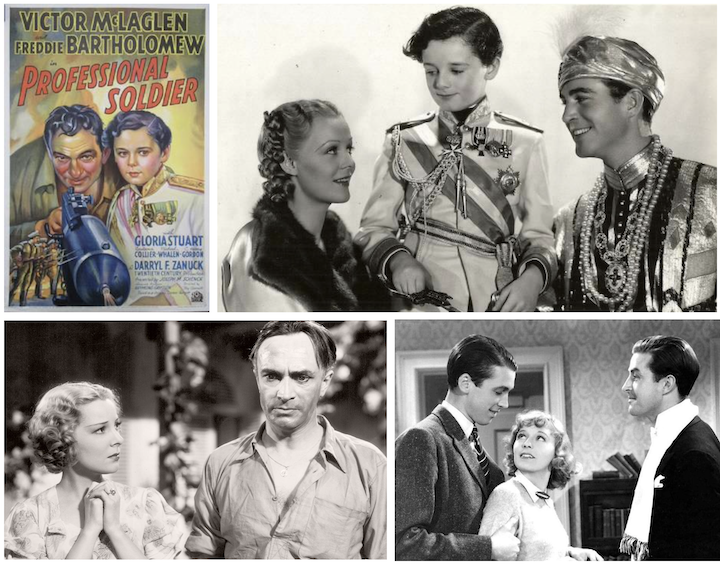
Mosher reviewed three other films that could have used some of Rose Marie’s cheer:
CHEERLESS FARE…Clockwise, from top: Gloria Stuart, Freddie Bartholomew, and Michael Whalen in Professional Soldier; James Stewart, Margaret Sullavan and Ray Milland in Next Time We Love; Helen Vinson and Conrad Veidt in King of the Damned. (Wikipedia/imdb.com/letterboxd.com/silversirens.co.uk)
* * *
Miscellany
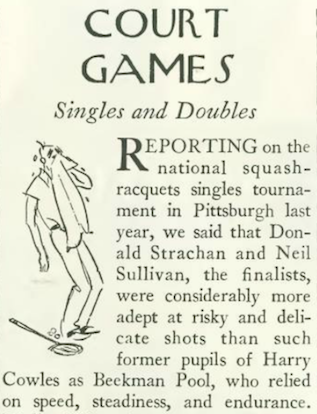
I strive to keep these posts at a readable length, and (hopefully) lively and enjoyable to read, which means that I cannot include absolutely everything that appears in each issue. For example, there are a number of regular features from the sports world—ranging from major attractions like hockey and college football (no coverage yet of baseball—which for some reason Harold Ross hated—or basketball) to more niche pursuits, such as squash (below) or indoor polo. From time to time I will include these under “Miscellany” as a way to give readers a more complete picture, and to assuage my fear that I am leaving something important out. Here is a very brief snippet of a regular feature, “Court Games,” by staff writer Geoffrey T. Hellman.
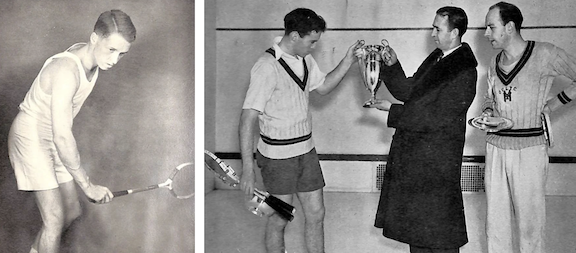
RACKETEERS…At left, Beekman Pool of the Harvard Club was the 1936 singles champion of the Metropolitan Squash Racquets Association; at right, Edwin Bigelow of the U.S. Squash Racquets Association presents the National Trophy to Germain Glidden. To the far right is runner-up Andrew Ingraham, who looks a bit miffed about getting a plate rather than a trophy cup. (thecarycollection.com)
* * *
From Our Advertisers
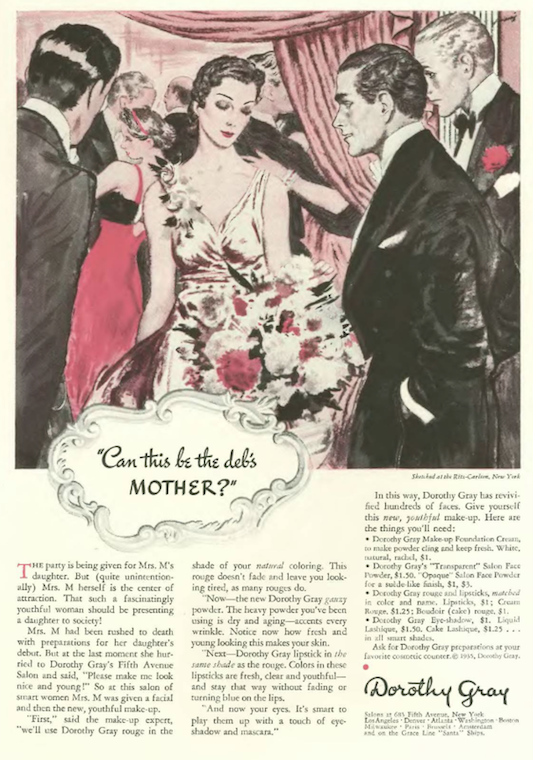
Let’s start with the inside front cover…advertisements from Dorothy Gray salons were all about the restoration of youth in older women…apparently the treatments were so successful that “Mrs. M” was a bigger attraction at a Ritz-Carlton debutante party than her society-bound daughter…note the young gents at right checking out mom, and not the deb…
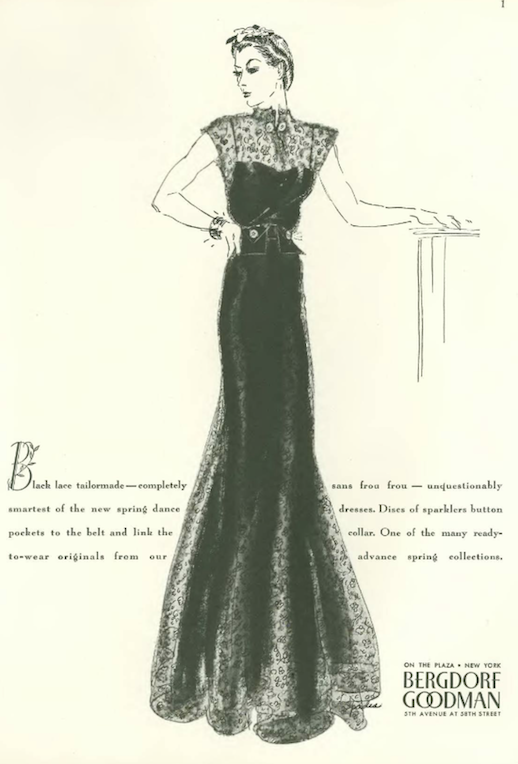
…opposite Dorothy Gray was this elegant appeal from Bergdorf Goodman…ads aimed at more refined tastes almost always featured these attenuated figures (whether they were people or luxury automobiles)…I guess I would hold onto something too with stilts like those…
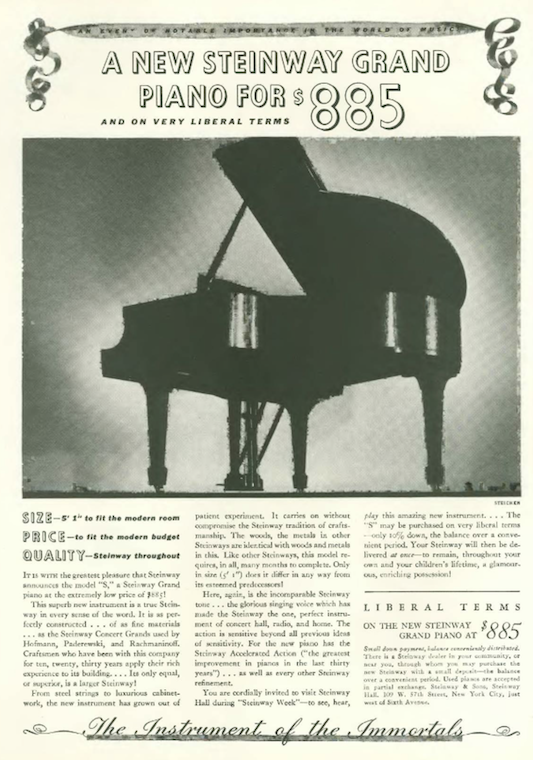
…here’s a Steinway grand for less than a grand…$885 in 1936 is roughly equivalent to $20,000 or so today, but that’s still a bargain—Steinway grand pianos currently start at around $85,000…
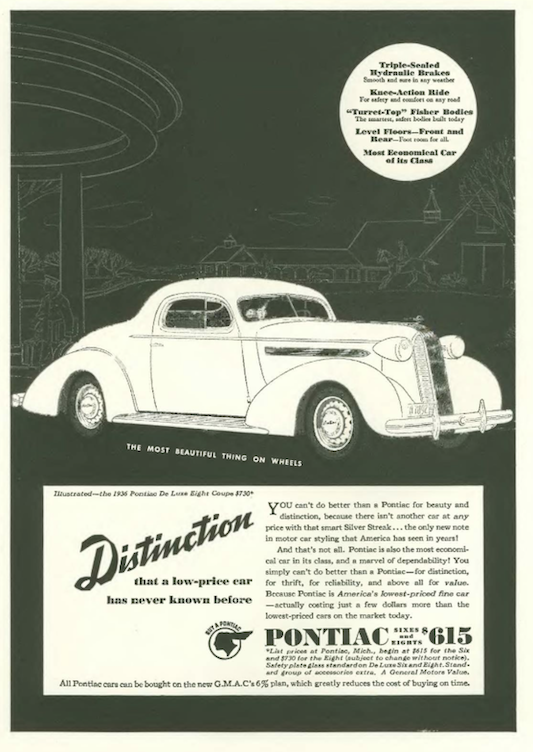
…speaking of bargains, you could own “The Most Beautiful Thing on Wheels” (according to this ad) for a mere $615…
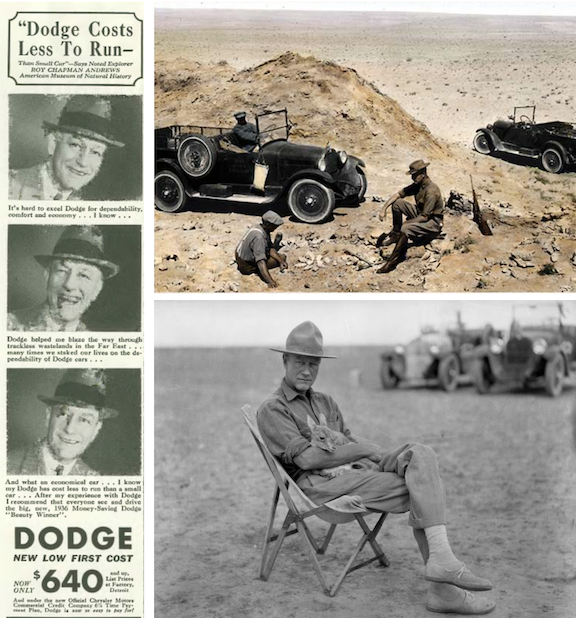
…and for an extra twenty-five bucks you could own a durable Dodge like the one endorsed by Roy Chapman Andrews (1884–1960), a globetrotting explorer who discovered fossilized dinosaur eggs in the Gobi Desert in the 1920s…
THE REAL INDY…Roy Chapman Andrews gained national fame as an explorer for New York’s American Museum of Natural History (AMNH). The discovery of a nest of complete dinosaur eggs in Mongolia in 1923 (above) provided the first proof that the critters hatched out of eggs. Named AMNH’s director in 1934, Andrews is thought to be an inspiration for the film hero Indiana Jones. (amnh.org/roychapmanandrewssociety.org)
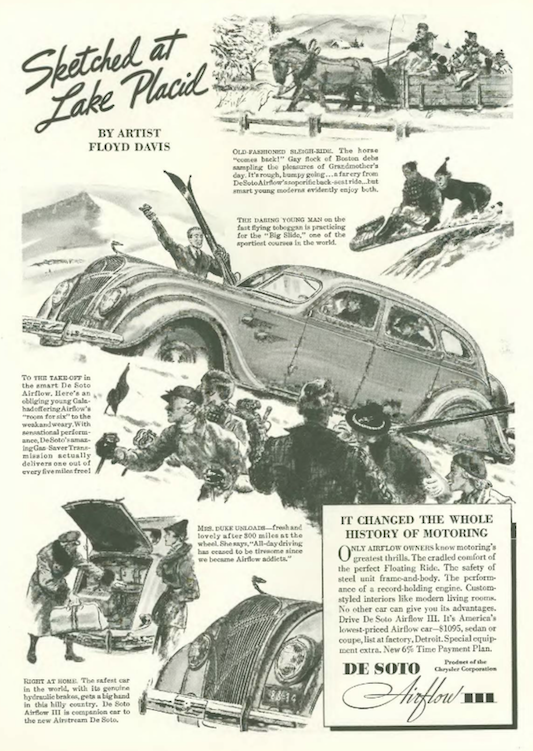
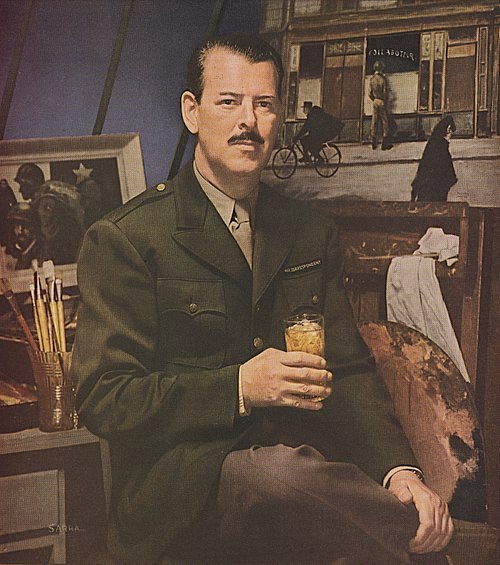
…the folks at Chrysler were doing everything they could to get people interested in buying their Airflows—despite its technological advances, the car’s streamlined design (toned down in later models) was just too radical for mass market tastes…note how the ad draws attention to the work of “Artist Floyd Davis”…
…here’s a photo of Floyd Davis…
CHEERS…Illustrator Floyd Davis (1896–1966) poses in an ad for Lord Calvert whiskey, 1946. In 1943 Life magazine called him the “#1 Illustrator in America.” (Wikipedia)
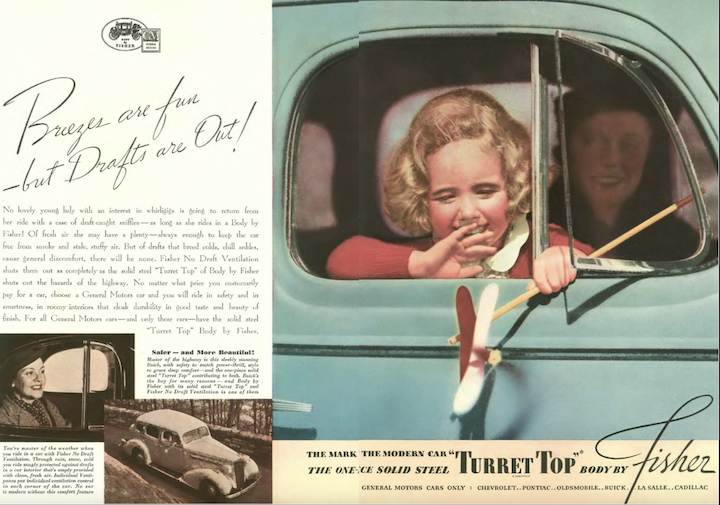
…the Fisher company, makers of car bodies for General Motors, liked to emphasize the safety of their “Turret Top,” although it didn’t seem to occur to anyone that a child dangling from a car window was problematic…
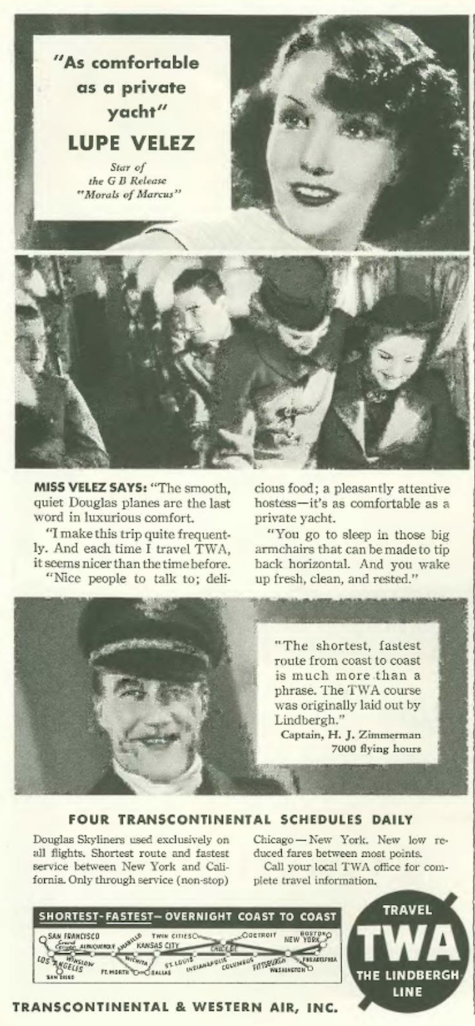
…actress Lupe Vélez made the unlikely claim that flying on a 1930s airliner was “as comfortable as a private yacht”…
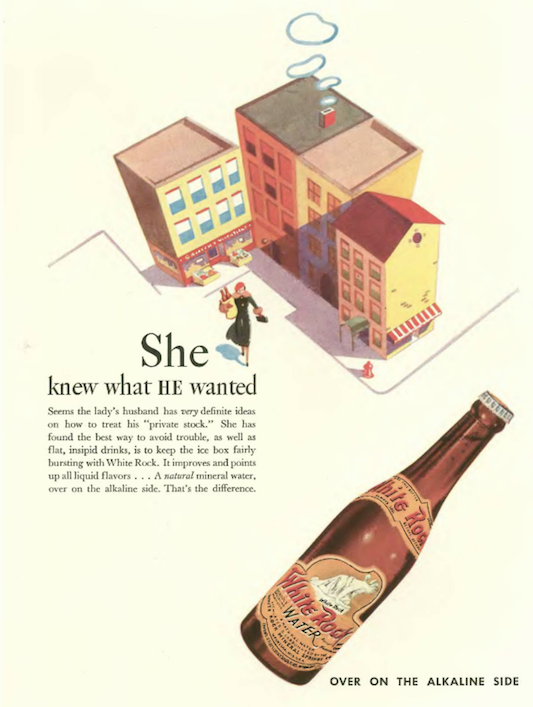
…ads for White Rock were among the more colorful found in the early New Yorker…
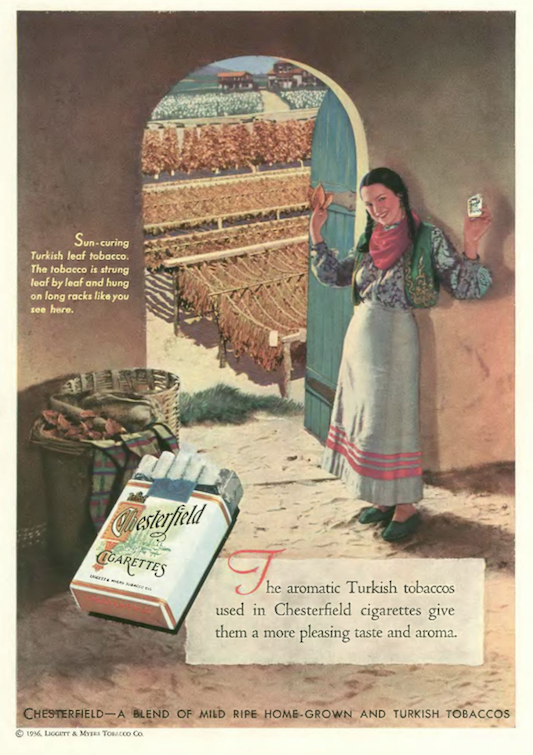
…on the back cover, Liggett & Myers tobacco company shifted gears from elegant to homespun with an ad that emphasized the high quality of Turkish leaf tobacco…
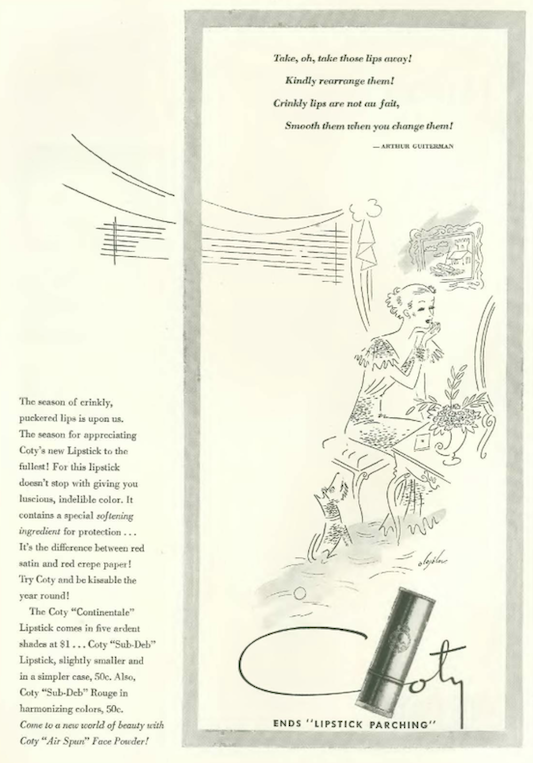
…the folks at Coty hired two New Yorker contributors, poet Arthur Guiterman and illustrator Constantin Alajalov, to promote their line of lipsticks…
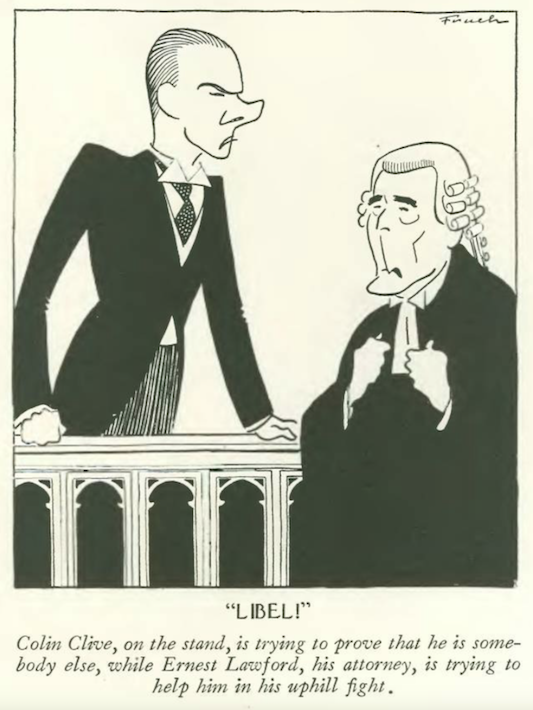
…which brings us to the cartoonists, beginning with Al Frueh…
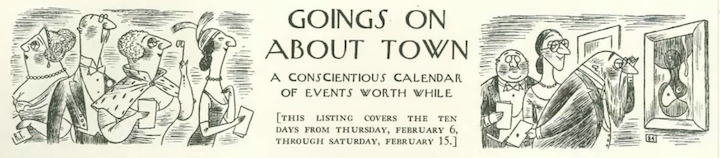
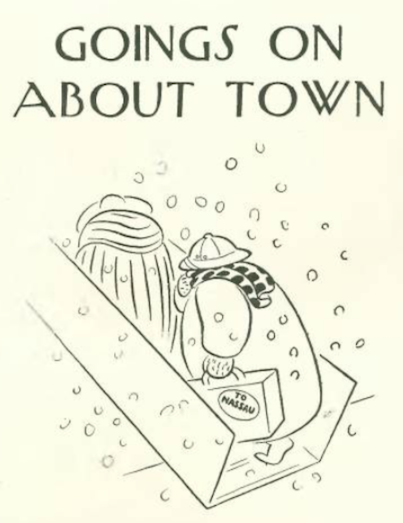
…Richard Taylor opened things up in “Goings On”…
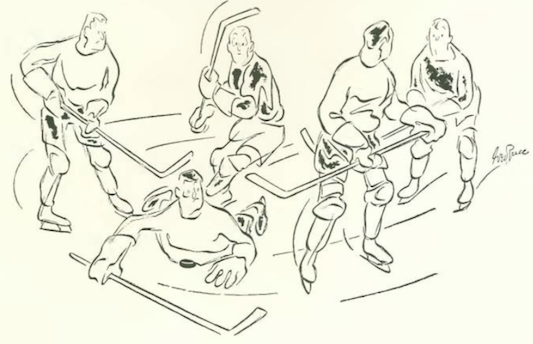
…and George Price added this bit of action to the calendar section…
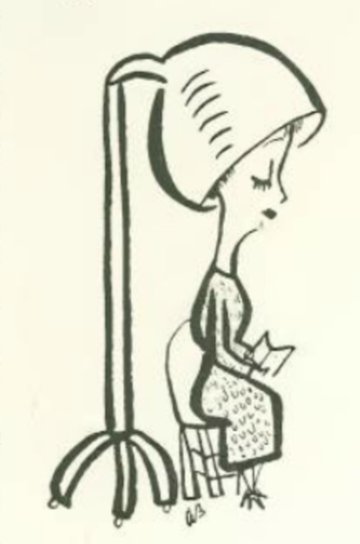
…Abe Birnbaum contributed this delightful spot drawing…
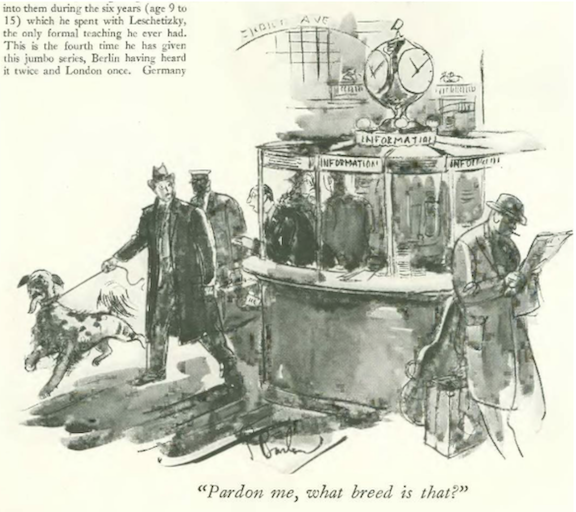
…the Westminster dog show was the talk of the town, and at Grand Central, per Perry Barlow…
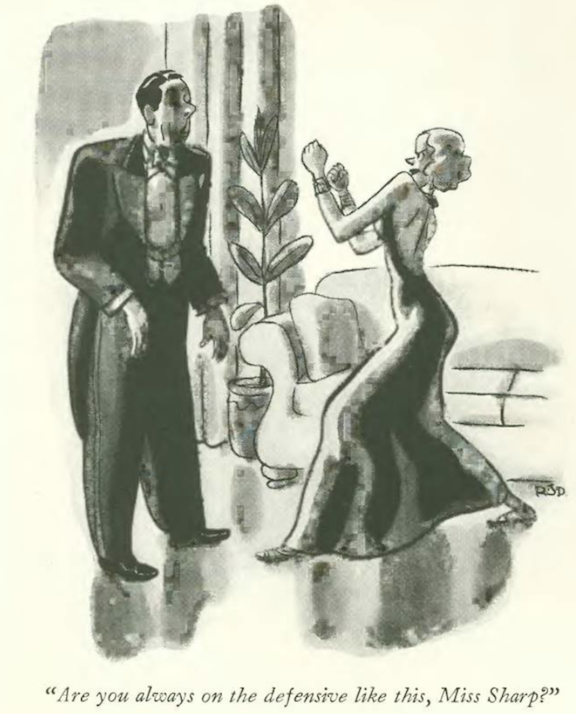
…Robert Day had a fight on his hands…
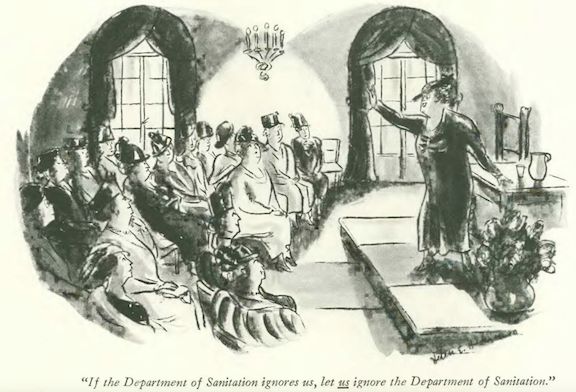
…Helen Hokinson’s “girls” were out to snub the sanitation department…
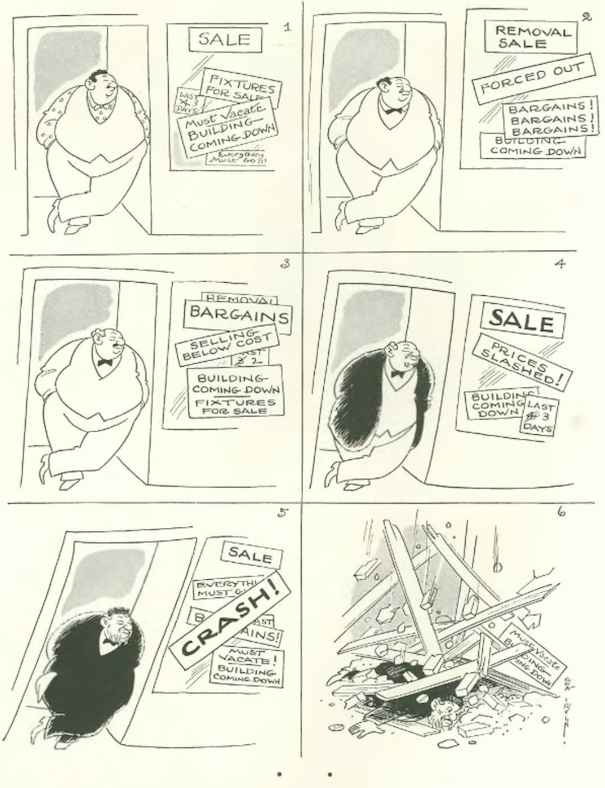
…Rea Irvin drew up the literal downfall of one business…
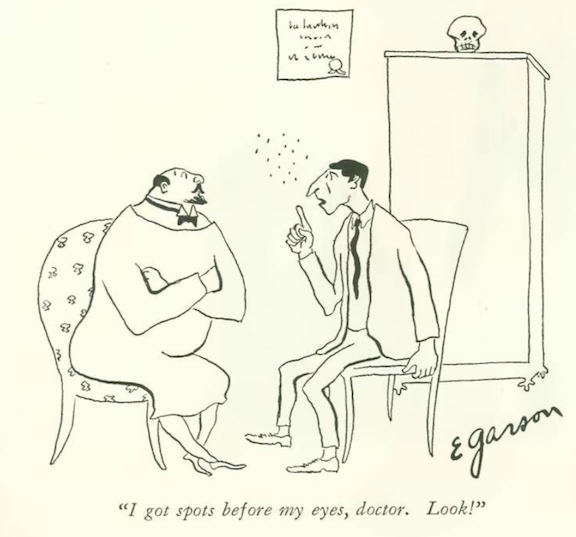
…Eli Garson had us seeing spots…
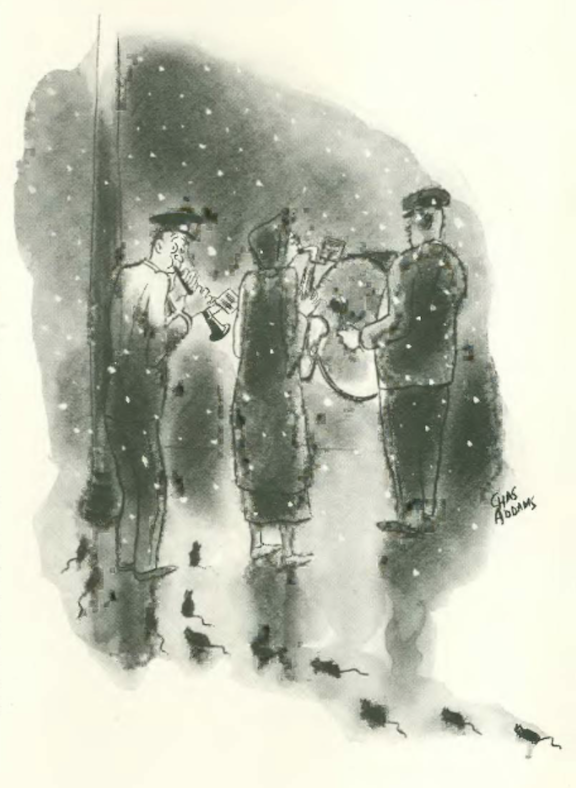
…Charles Addams found the Pied Piper in a Salvation Army band…
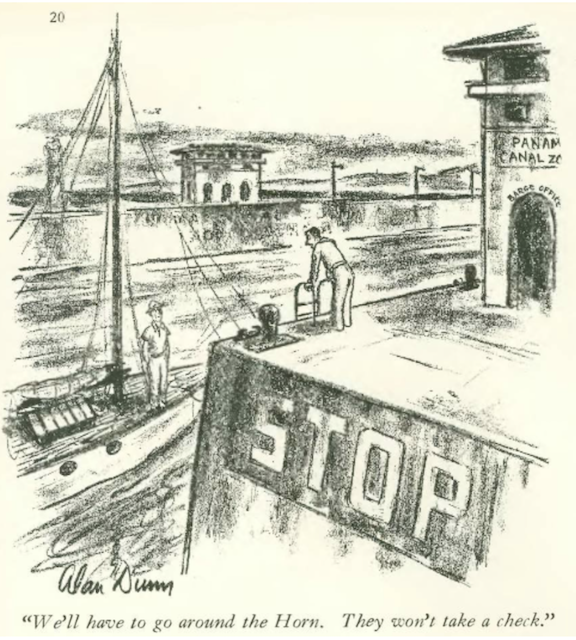
…Alan Dunn gave new meaning to “taking a detour”…
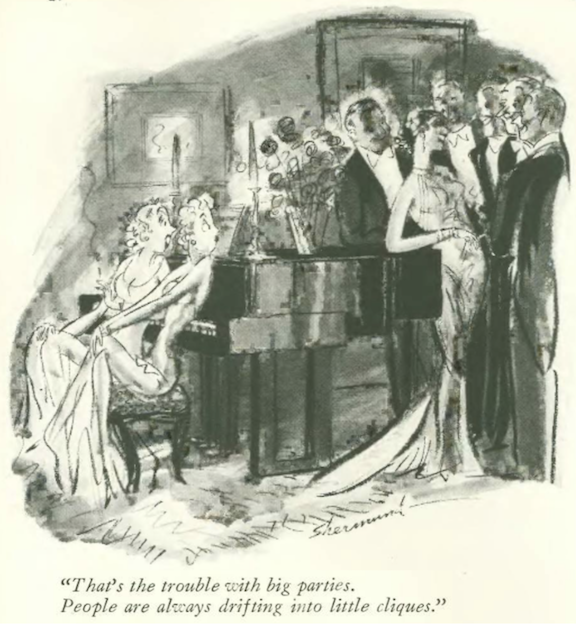
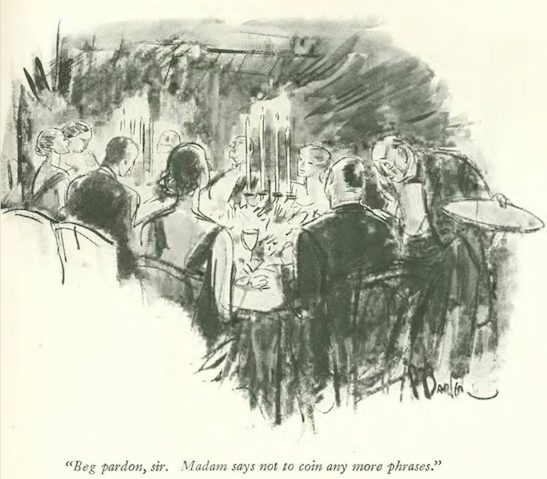
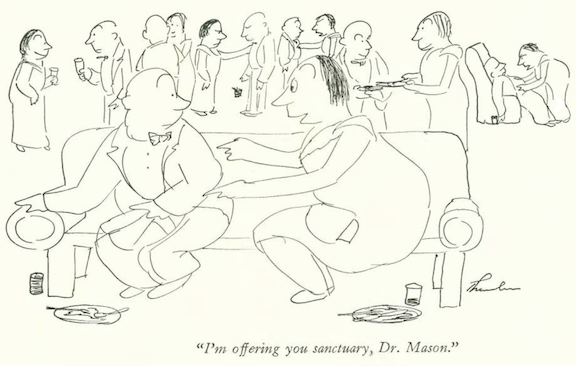
…Barbara Shermund illustrated one of the perils of cocktail parties…
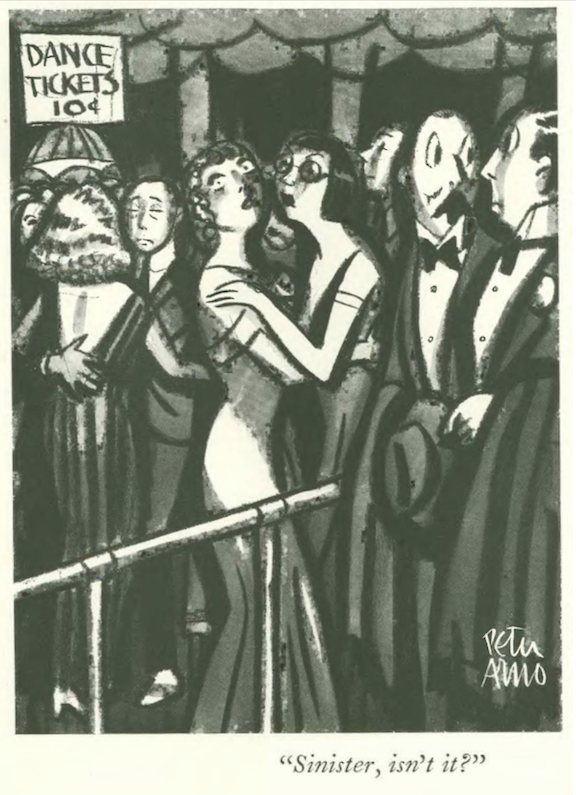
…and we close with Peter Arno, and the sinister world of taxi dancers…
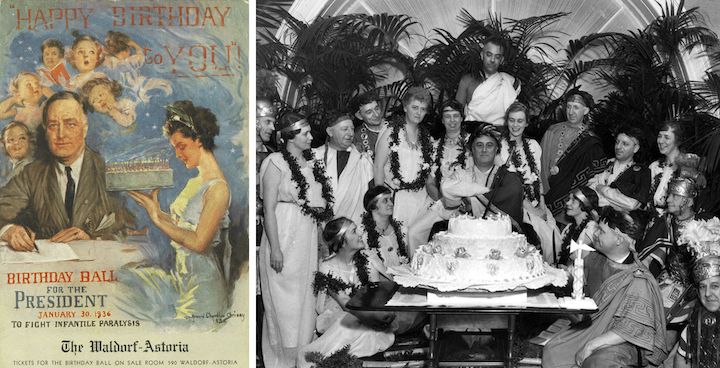
Above: Beginning in 1934, the President’s Birthday Balls became annual fundraisers for polio research. The Waldorf-Astoria's 1936 event (left) featured dance bands, celebrities, and formal dress. At right, a 1934 "Toga Party" birthday with FDR's Cuff Link Gang, Washington D.C. (fdrlibrary.org)
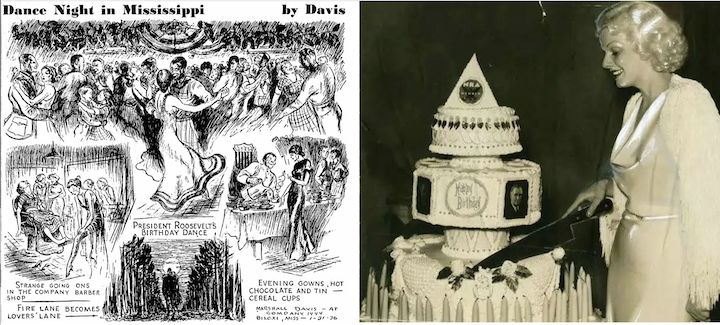
President Franklin D. Roosevelt’s birthday was a cause for annual celebration throughout the country, where cities and towns both large and small used the occasion to raise money for polio research.
February 1, 1936 cover by Roger Duvoisin.
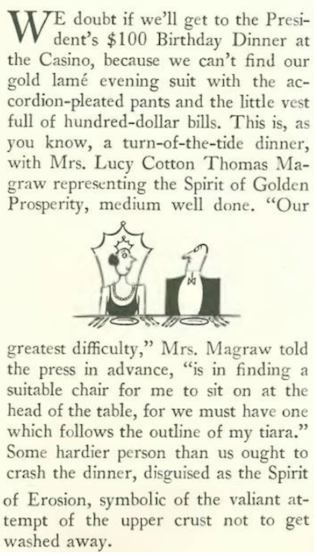
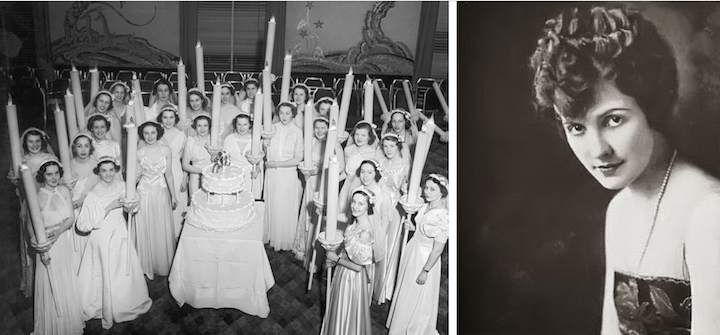
The Jan. 30, 1936 President’s Birthday Ball marked FDR’s 54th year, featuring celebrities, dances, and a national radio address. The Waldorf-Astoria hosted an event, as did the Central Park Casino, where E.B. White found the one-hundred-dollar price tag and the dress code a bit too rich for his tastes, but not too rich for Lucy Cotton Thomas Magraw, a Manhattan social climber who represented the “Spirit of Golden Prosperity” at the Casino event.
LIKE MOTHS TO FLAME…At left, debutantes mark FDR’s birthday fundraiser at the Waldorf-Astoria in the 1930s; at right, Lucy Cotton Thomas Magraw (1891–1948) was a chorus girl from Houston who appeared in several silent films, but was best known as a Manhattan social climber and for her marriages to a series of prominent men. (wwd.com/davidkfrasier.com)
FDR himself was diagnosed with polio in 1921, which left him paralyzed from the waist down. To counter the effects of the disease, Roosevelt explored the potential benefits of hydrotherapy, establishing a rehabilitation center at Warm Springs, Georgia. Proceeds from the charity balls went to Warm Springs until Roosevelt founded the National Foundation for Infantile Paralysis in 1938. Funds raised by the foundation supported the development of a vaccine by the 1950s.
A NIGHT OF MERRIMENT…Celebrations in CCC camps in honor of FDR’s birthday became annual events, such as the one at left (illustrated by Marshall Davis) that depicted various happenings at the 1936 President’s Birthday Dance in Biloxi, Mississippi; at right, actress Jean Harlow cutting FDR’s birthday cake at the Eastbay Birthday Ball in Oakland, CA, in 1934. (newdealstories.com/facebook.com)
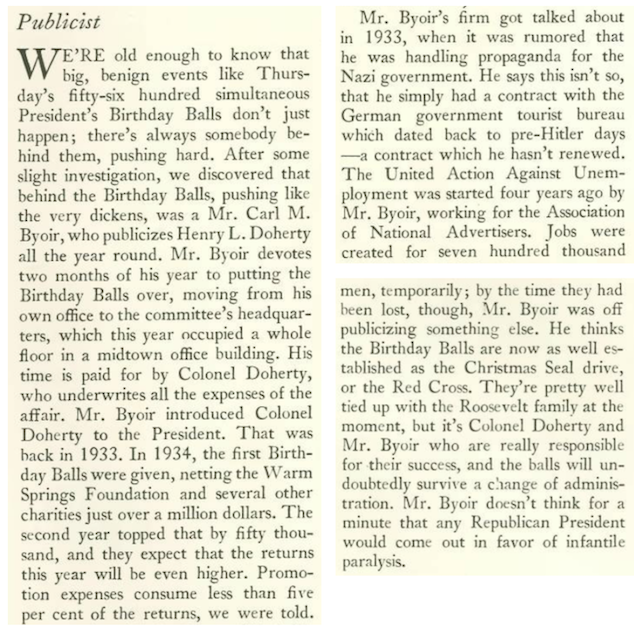
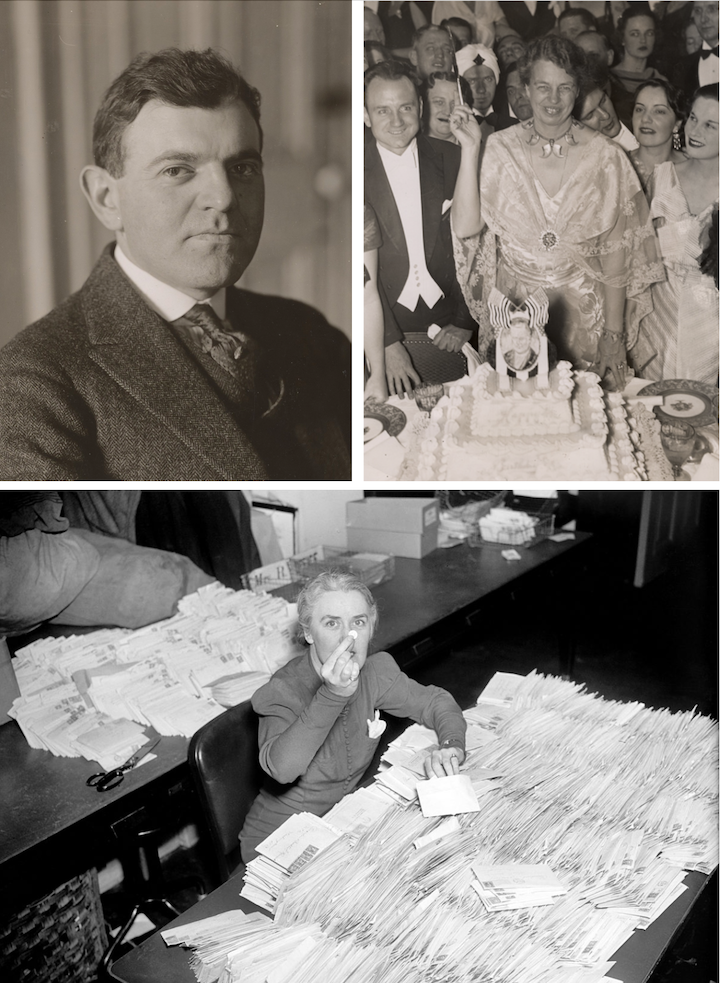
“The Talk of the Town” noted the role of Carl M. Byoir, a pioneering publicist, in creating the buzz around the yearly birthday balls.
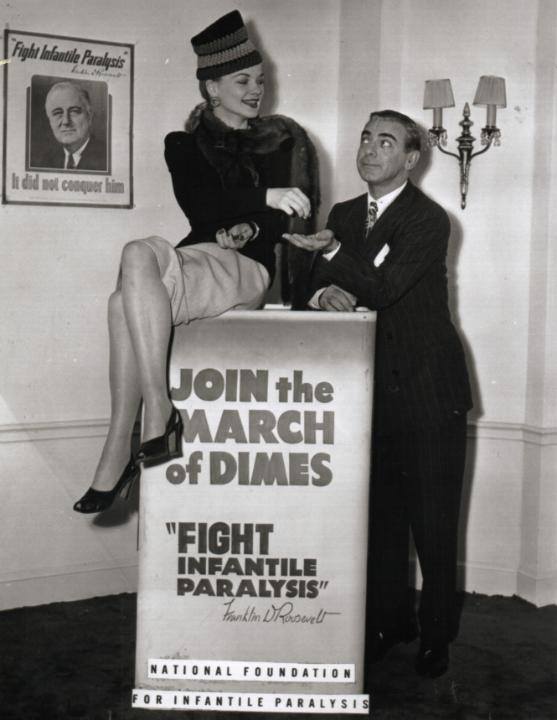
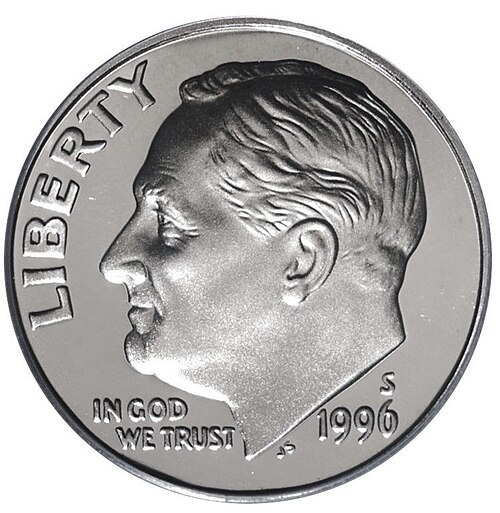
CAN YOU SPARE A DIME?…Clockwise, from top left, Carl Byoir created and organized one of the world’s largest public relations firms in 1930, and was a force behind making the FDR Birthday Balls a major national event; Eleanor Roosevelt cuts the cake at a Birthday Ball, Washington, D.C., Jan. 30, 1936; Margaret Lehand, personal secretary to President Roosevelt, holds up one of the 30,000 dimes received on the morning of Jan. 28, 1938 for FDR’s National Foundation for Infantile Paralysis, which would later become the March of Dimes. (Wikipedia)COIN FOR A CAUSE…As we saw in the previous post, it was comedian Eddie Cantor who coined the phrase “March of Dimes” for the annual fundraiser for polio research. The phrase later became the official name of the National Foundation for Infantile Paralysis. (Facebook)
The Roosevelt Dime went into circulation in 1946, commemorating FDR’s role in inspiring the March of Dimes.
* * *
Rap on Scrap
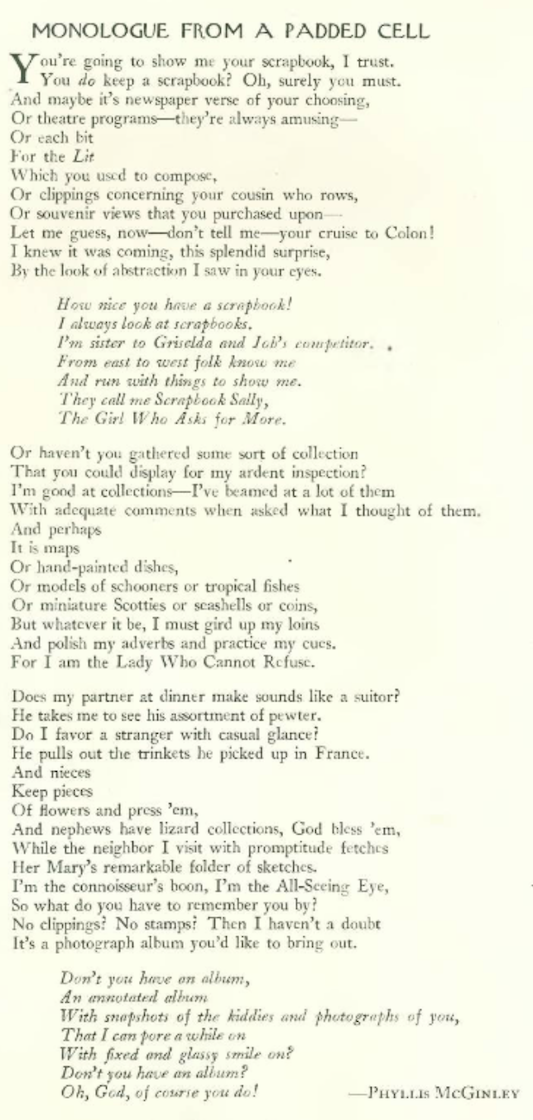
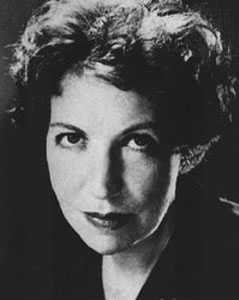
Poet and author Phyllis McGinley apparently had her fill of social occasions that included interminable, tedious viewings of the hosts’ scrapbooks, photo albums, and various tchotchkes.
SPARE ME YOUR VACATION SLIDES…Phyllis McKinley would have hated Facebook. (Wikipedia)
* * *
Wise Guy
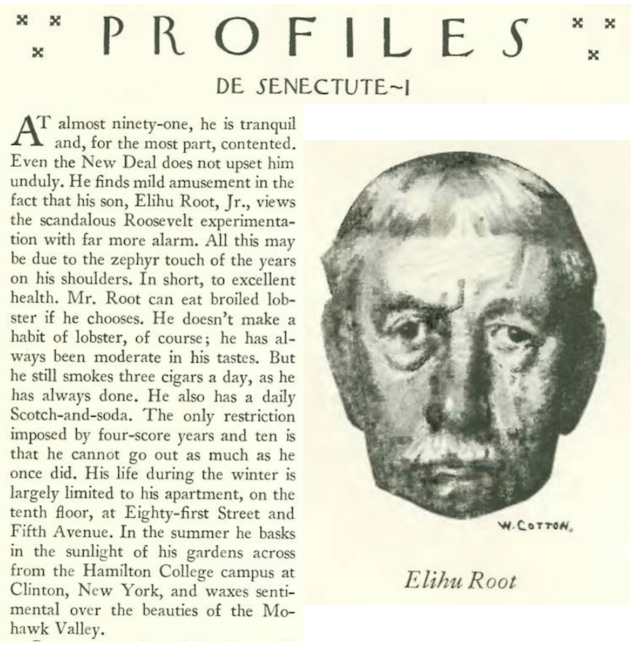
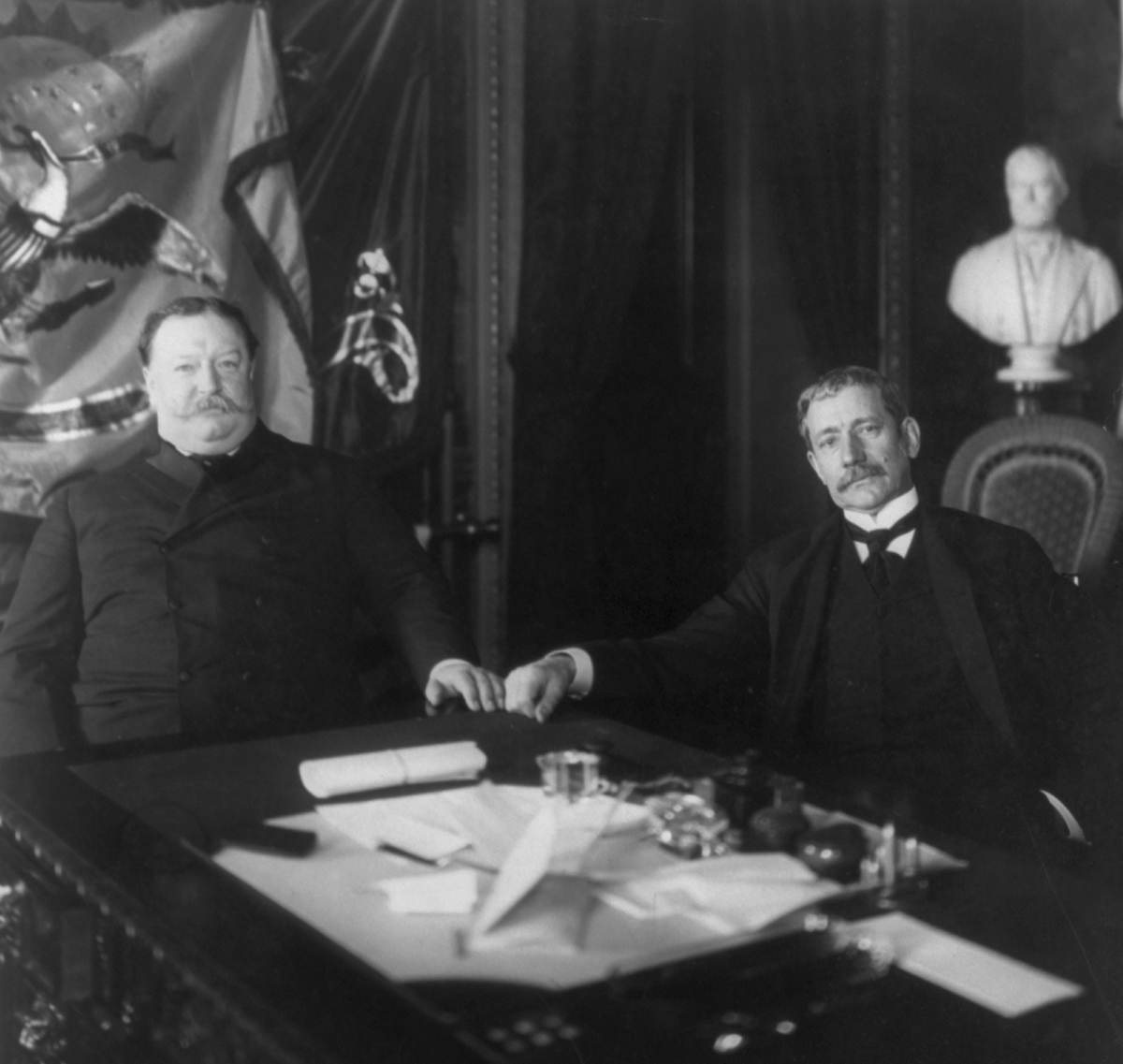
Henry F. Pringle published the first part of a three-part profile on Elihu Root, making much of the fact that Root (1845–1937) was still kicking at ninety after a lifetime of public service including two stints as Secretary of War and serving as Secretary of State under President Theodore Roosevelt. Unofficially, he advised a number of presidents and other leaders on foreign and domestic issues, giving him the imprimatur of a political “wise man.” A brief excerpt (with caricature by William Cotton):
WAR BUDDIES…U.S. Secretary of War Elihu Root (right) and his successor, William Howard Taft, c. 1904. Taft was elected U.S. President in 1908, and in 1912 Root would receive the Nobel Peace Prize. (Wikipedia)
* * *
Devastating Irony
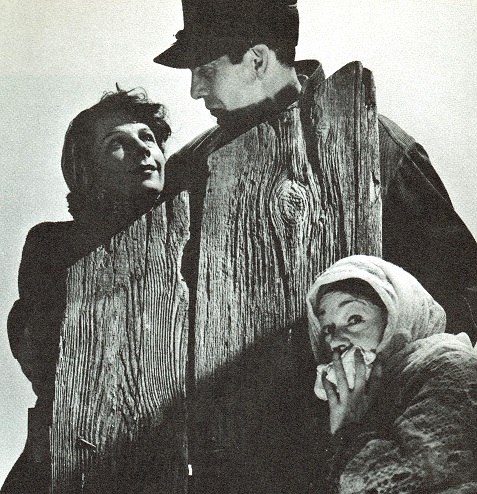
According to critic Robert Benchley, the adaptation of Edith Wharton’s novel Ethan Frome to the stage required a precise hand, and apparently director Max Gordon delivered when it opened at the National Theatre. Excerpt:
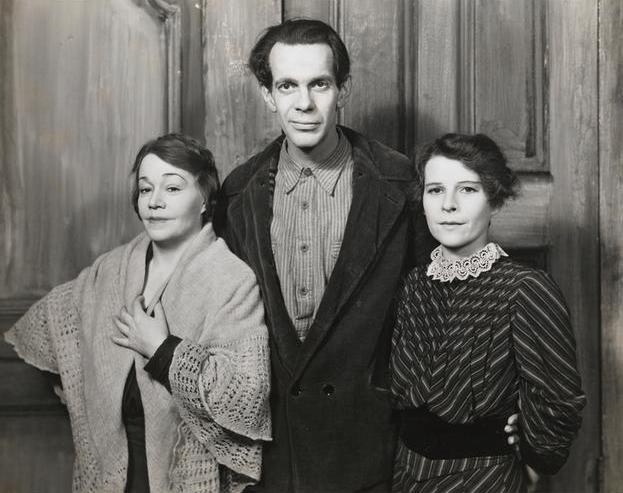
EDITH WHARTON WOULD HAVE BEEN PROUD, according to Robert Benchley, of the stage adaptation of Ethan Frome. The cast, from left, included Pauline Lord, Raymond Massey, and Ruth Gordon. Benchley would have been well acquainted with Gordon, who was a familiar face at the Algonquin Round Table. (Facebook)
Benchley praised the performances of the principal actors Pauline Lord, Raymond Massey, and Ruth Gordon.
IN FINE FORM…Pauline Lord, Raymond Massey, and Ruth Gordon in a publicity still for Ethan Frome. (witness2fashion.com)
* * *
At the Movies
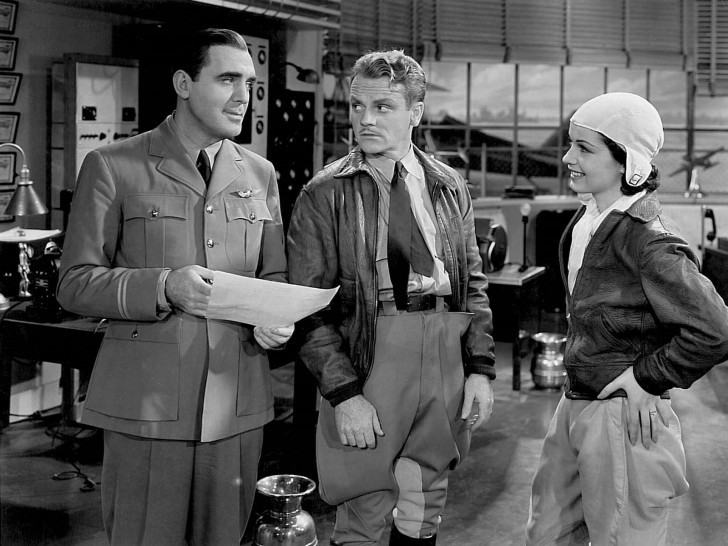
We take to the air with Howard Hawks’ Ceiling Zero, which featured an odd mix of screwball dialogue and nerve-wracking flight scenes. Critic John Mosher found the film to be well done, even though most of its action took place on the ground.
GROUNDED…Shot a shoestring budget, Warner Brothers’ Ceiling Zero, directed by Howard Hawks, staged most of the action at an airline’s headquarters rather than up in the air. From left are Pat O’Brien, James Cagney, and June Travis. (Harvard Film Archive)
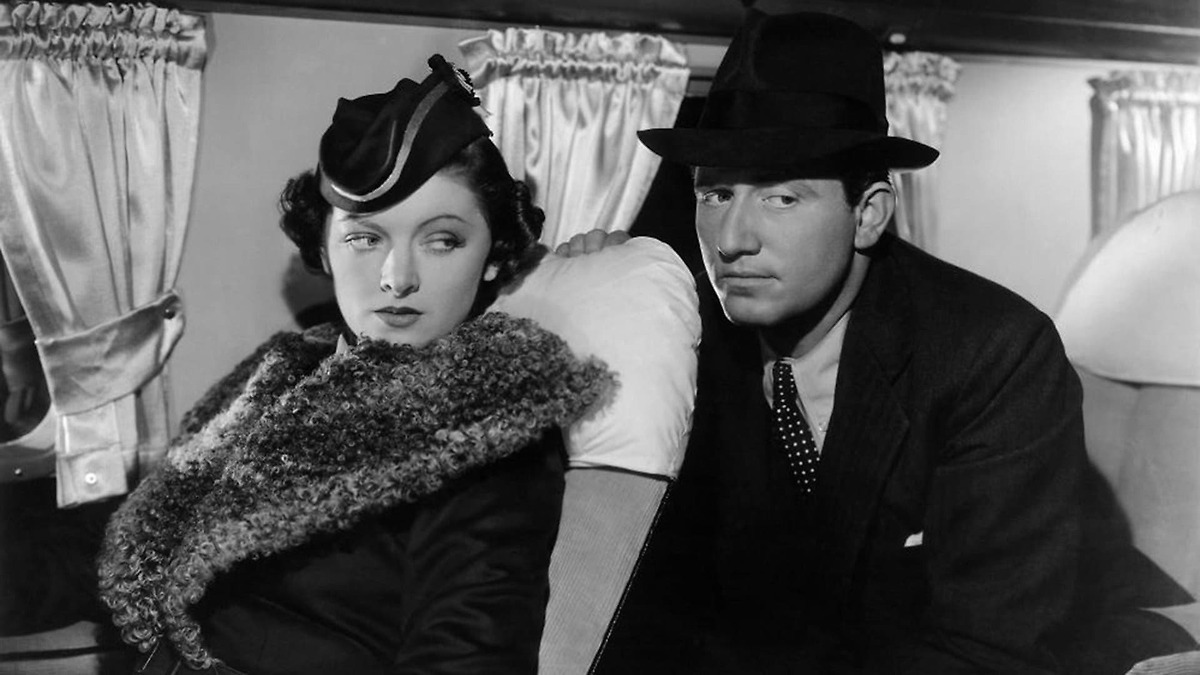
Mosher was also happy to welcome Myrna Loy back to the silver screen in the “agreeable” Whipsaw.
HUSTLE AND BUSTLE…Myrna Loy and Spencer Tracy starred in action-packed crime drama Whipsaw. (Letterboxd.com)
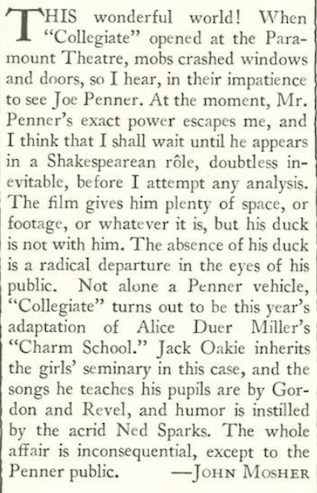
Mosher was at a loss to explain the popularity of comedian Joe Penner, whose presence in the film Collegiate inspired impatient “mobs” to crash the windows and doors of the Paramount Theatre.
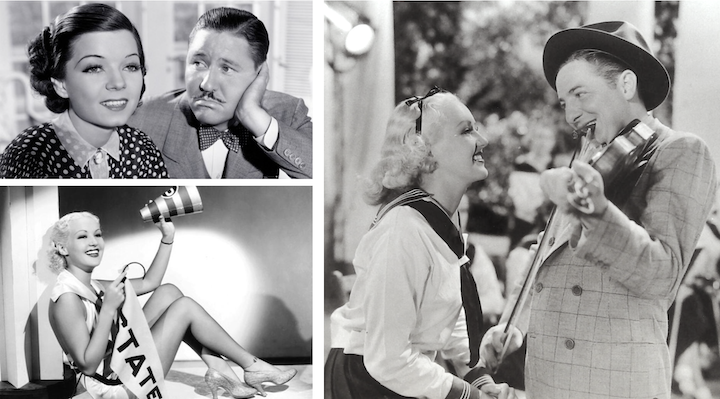
INCONSEQUENTIAL was the word John Mosher used to describe Collegiate. Clockwise, from top left, Frances Langford and Jack Oakie in a scene from Collegiate—Oakie played a man who inherits an all-girls school from his aunt; Betty Grable with Joe Penner; Grable shows off her school spirit and her famous legs in a publicity photo. (rottentomatoes.com/imdb.com)
About Joe Penner (1904–1941): Broadcast historian Elizabeth McLeod sums up Penner’s popularity as “the ultimate Depression-era zany.” Mostly forgotten today, Penner was a national craze in the mid-1930s. “There is no deep social meaning in his comedy, no shades of subtlety,” writes McLeod, “just utter slapstick foolishness, delivered in an endearingly simpering style that’s the closest thing the 1930s had to Pee-wee Herman.”
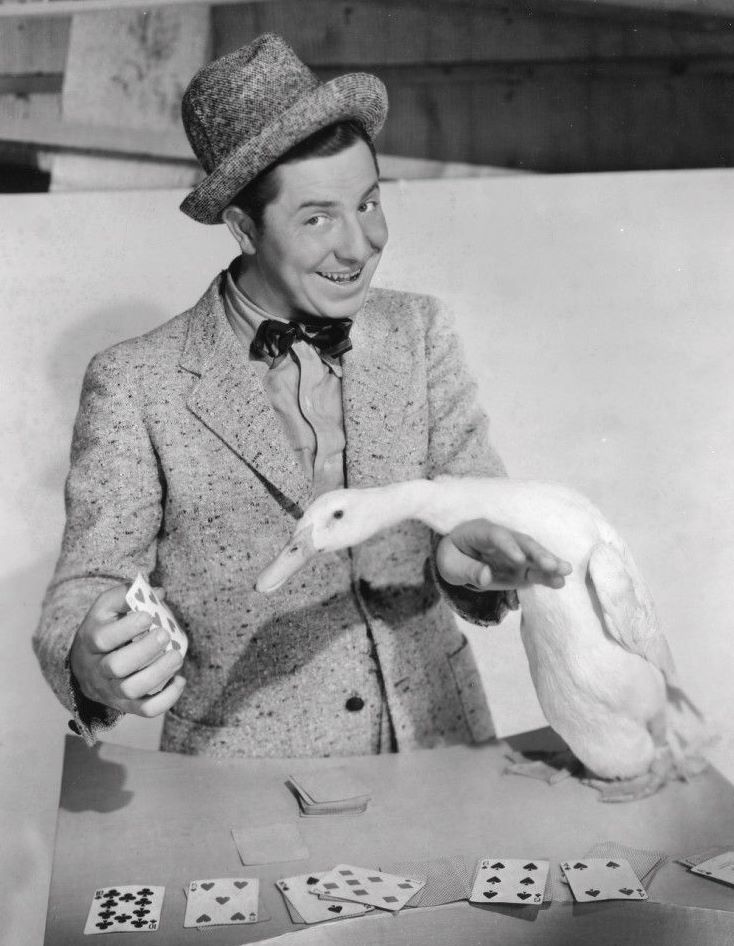
WANNA BUY A DUCK? was Joe Penner’s catchphrase. Born József Pintér in what is now Serbia, he is shown here with his ubiquitous duck, Goo Goo. According to historian Elizabeth McLeod, Penner was doomed to an early decline by the sheer repetitiveness of his format. He died in his sleep, of a heart attack, at age 36. (imdb.com)
* * *
Something Completely Different
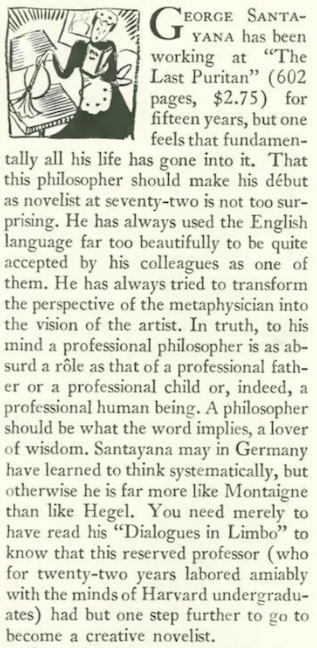
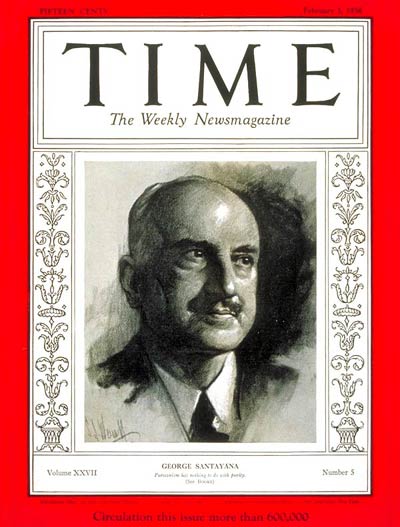
We go from Joe Penner to George Santayana, who finished the six-hundred-page The Last Puritan after laboring on the novel for fifteen years. A brief excerpt from a Clifton Fadiman review:
WHEN WRITERS MADE THE COVER…George Santayana on the cover of Time, Feb. 3, 1936. (Time.com)
* * *
From Our Advertisers
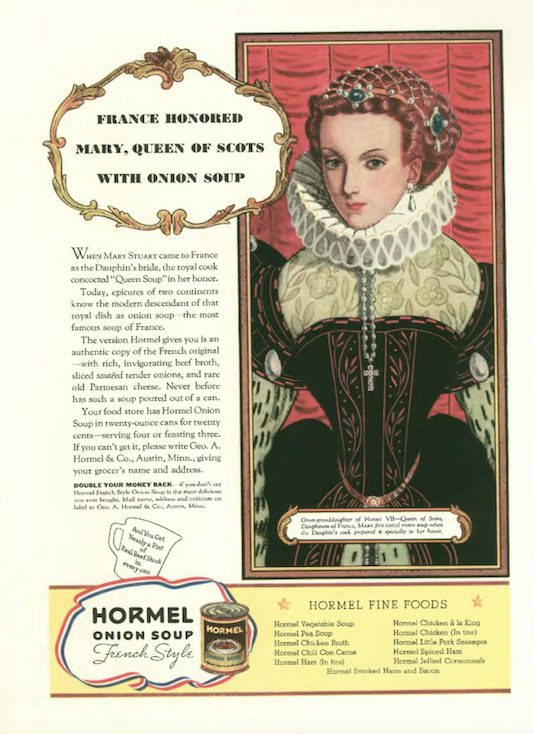
The folks at Hormel continued their ad series pairing Hormel French Style onion soup with notable historic figures…apparently Mary, Queen of Scots was honored with some onion soup when she married the Dauphin in 1558…nearly three decades later she would lose her head under the reign of Elizabeth I…
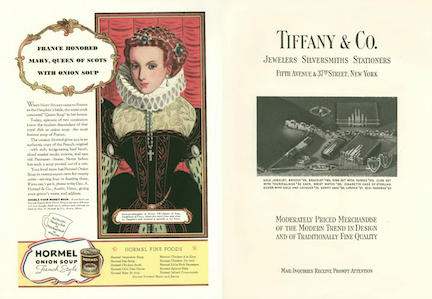
…the opening spread of the magazine sometimes offered odd juxtapositions…
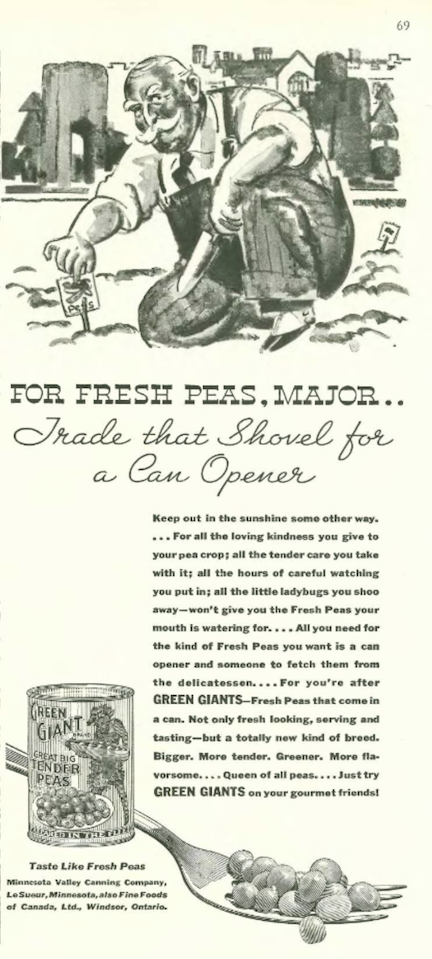
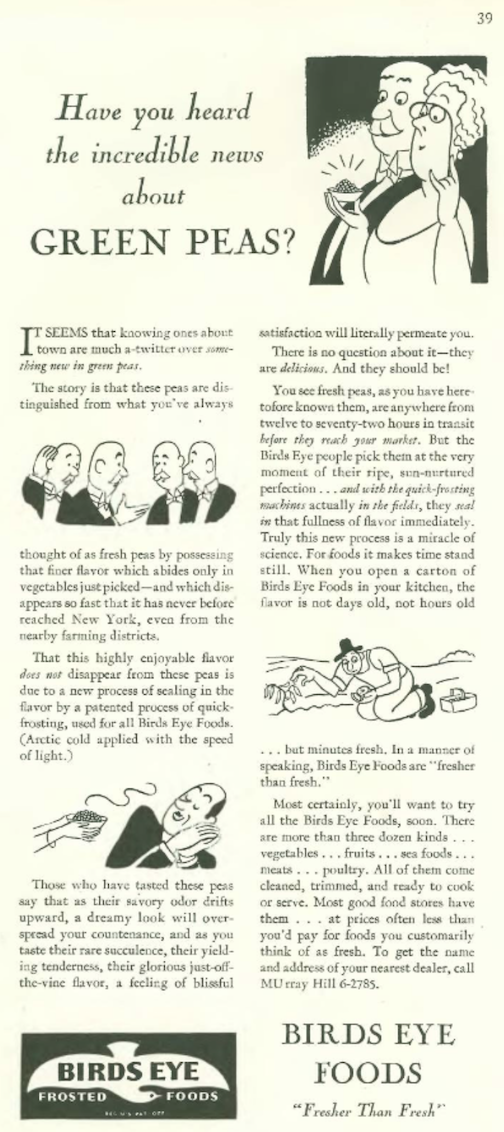
…and what was this obsession with peas?…last week (and previous weeks) the makers of Green Giant canned foods featured a “Major” obsessed with fresh peas…
…in this issue, the folks at Birds Eye presented frozen peas as a fresher alternative to canned…the ad featured their own version of a “Major,” here sharing the wonderful news about frozen peas with his cronies…
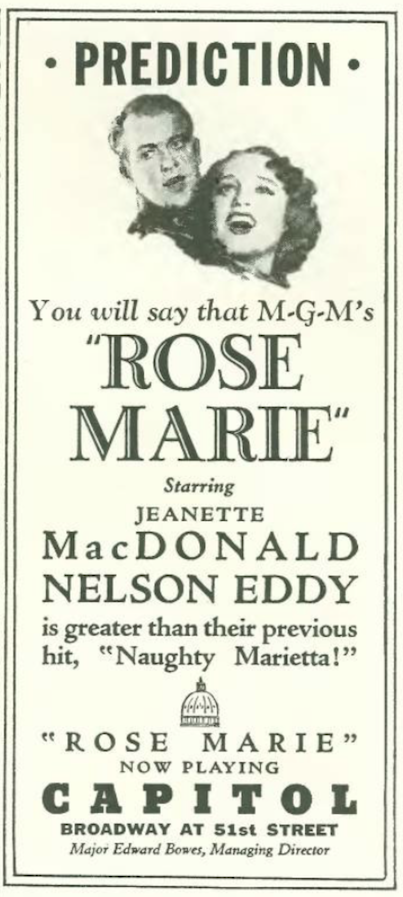
…Capitol Theatre predicted that their latest feature, Rose Marie, would be even better than Naughty Marietta…
…and apparently it was…
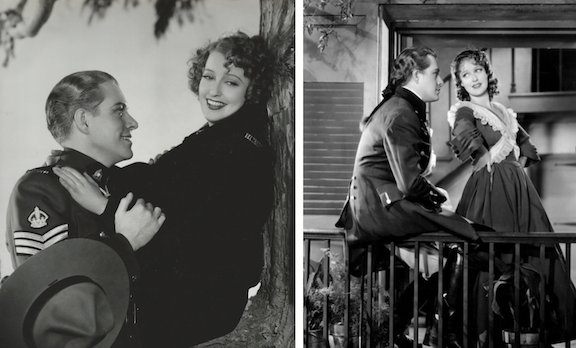
WHEN I’M CALLING YOOOOUUUU…The Capitol Theatre’s prediction came true—Rose Marie was a big hit, as was the duet “Indian Love Call” (it remained a signature song for both actors); at left, Nelson Eddy and Jeanette MacDonald in Rose Marie; at right, Eddy and MacDonald in 1935’s Naughty Marietta. “America’s Singing Sweethearts” made eight films together. (MGM)
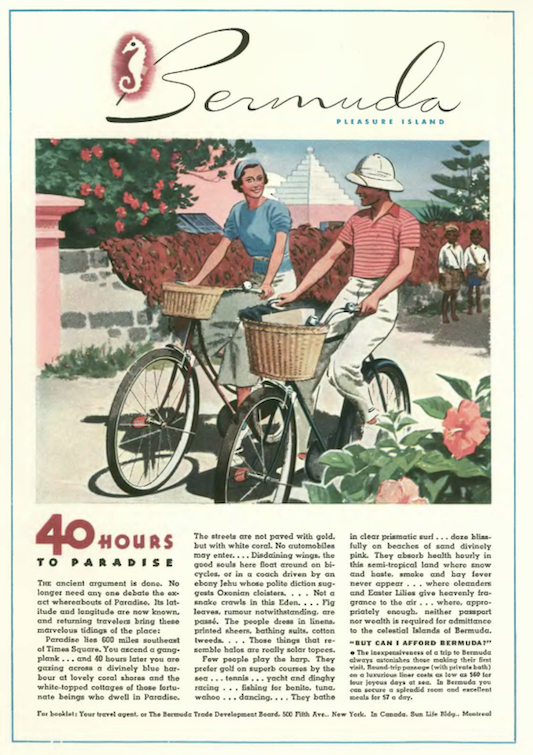
…only forty hours to paradise, claimed this ad on the inside back cover…
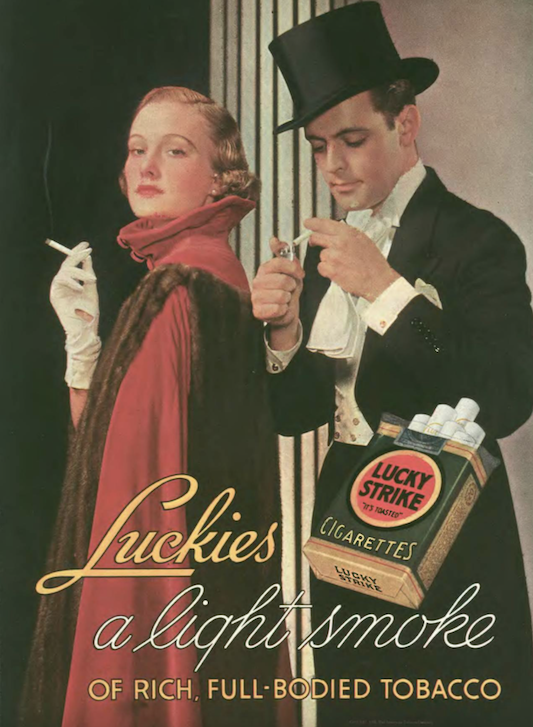
…and on the back cover, readers were greeted by a smug, almost withering look—a fashionable woman striking a pose, one that was doubtless imitated by many in the smart set who would soon realize they were hopelessly addicted to nicotine…
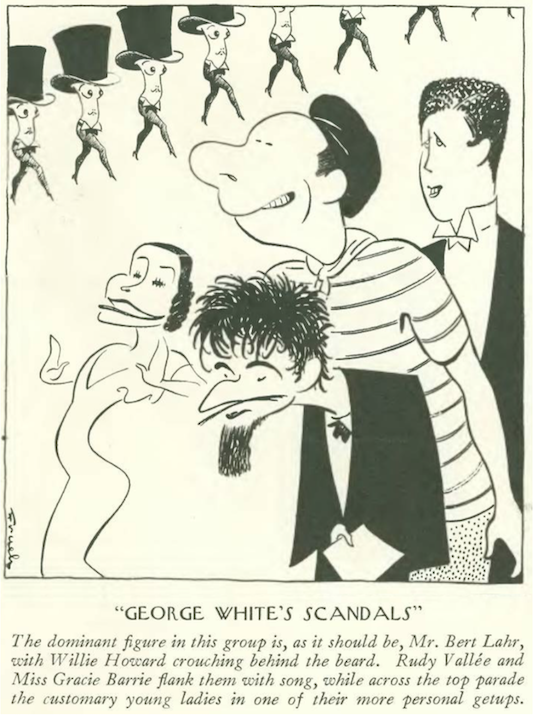
…on to our cartoonists, we begin with Al Frueh and his topless tribute to George White’sScandals…
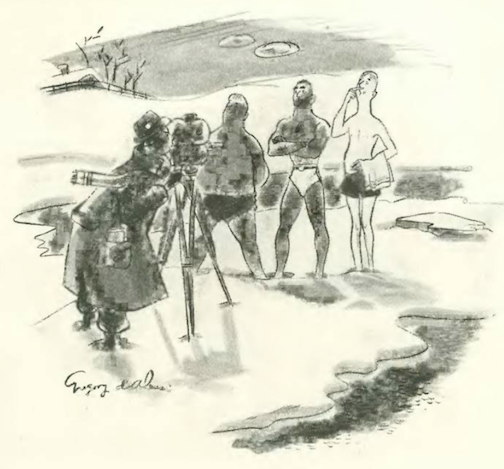
…Gregory d’Alessio drew up this trio—endomorph, mesomorph, ectomorph—for the opening pages…
…here’s a spot by Robert Day, dreaming of warmer climes…
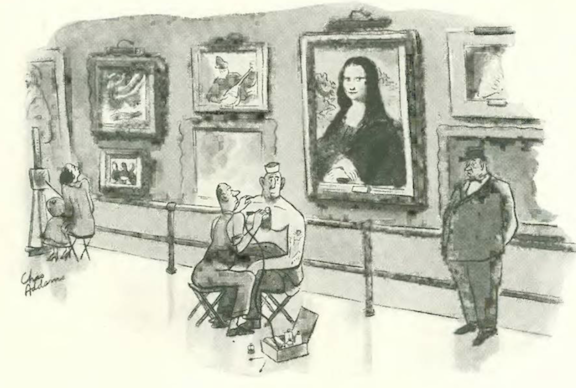
…we join Charles Addams at the Louvre…
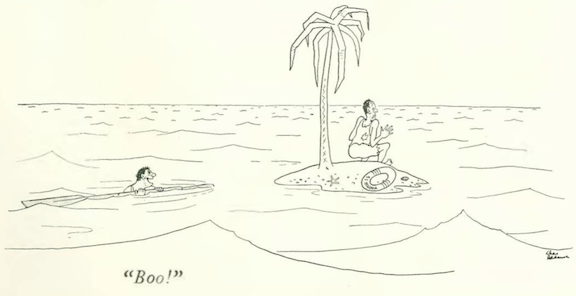
…and on a desert island…
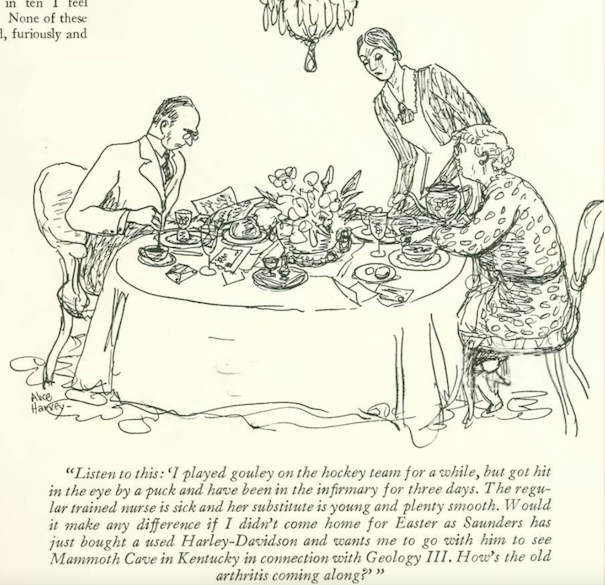
…a rather strange entry by Alice Harvey, with the longest caption I’ve come across so far…
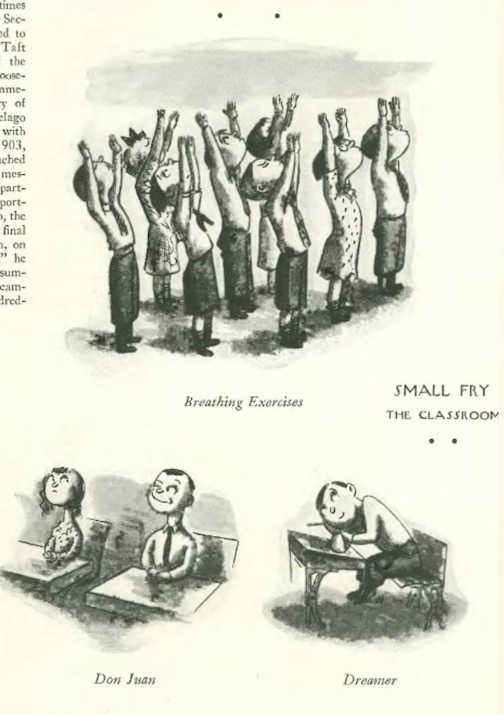
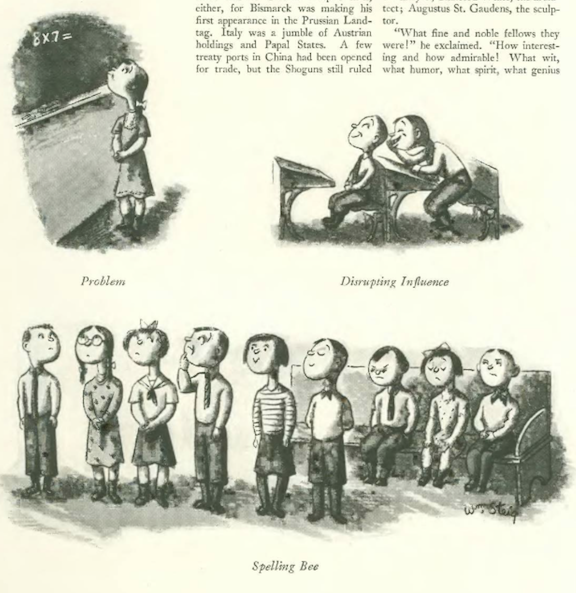
…we join William Steig’s “Small Fry” during a school day, beginning on page 24…
…and continuing onto page 25…
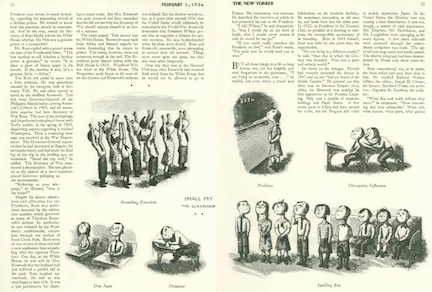
…here is how it originally appeared…
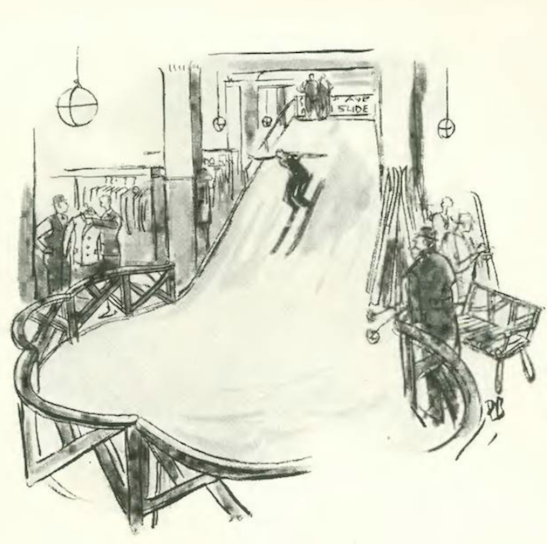
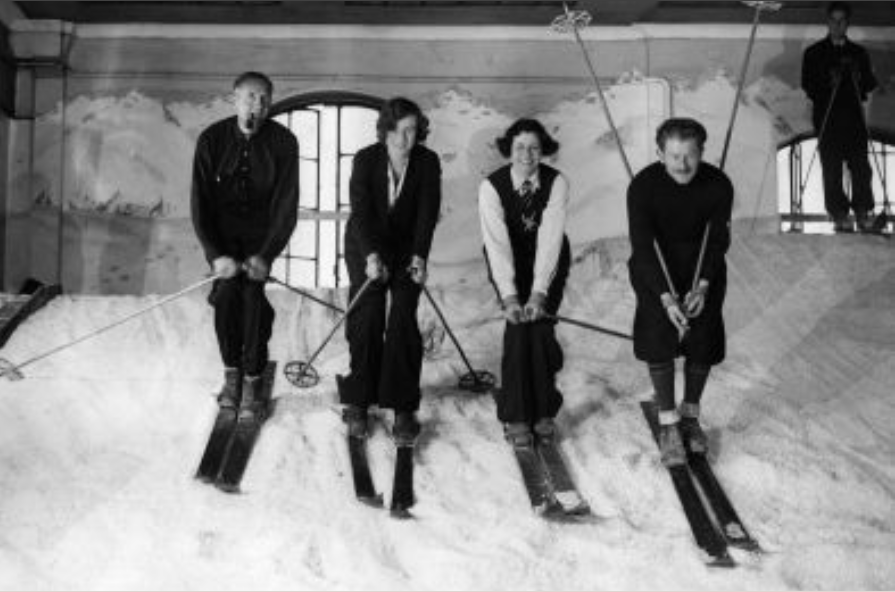
…In 1935, Saks Fifth Avenue installed an indoor ski slope on the men’s floor of its New York City flagship store, here illustrated by Perry Barlow…
IT WAS A THING…Ski slope inside Saks Fifth Avenue, New York, 1935. (CNN.com)
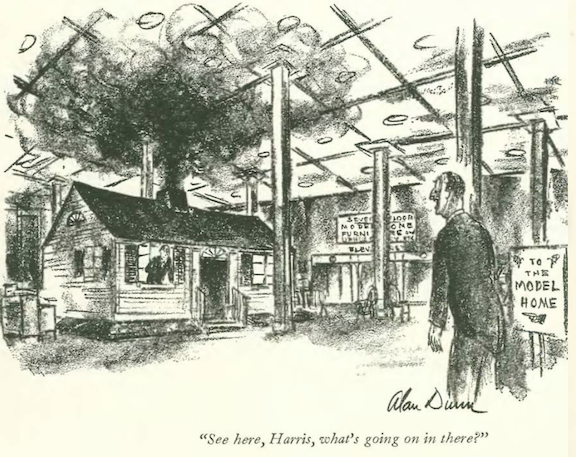
…department stores such as Macy’s often featured model homes in their household departments…Alan Dunn added a bit of color, or rather, soot, to this one…
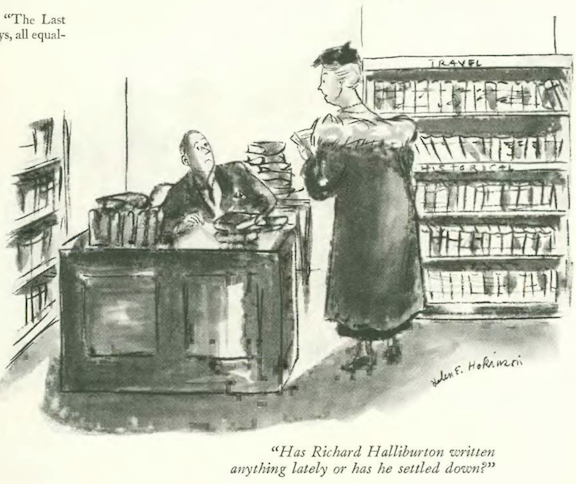
…Helen Hokinson looked for answers at a book shop…
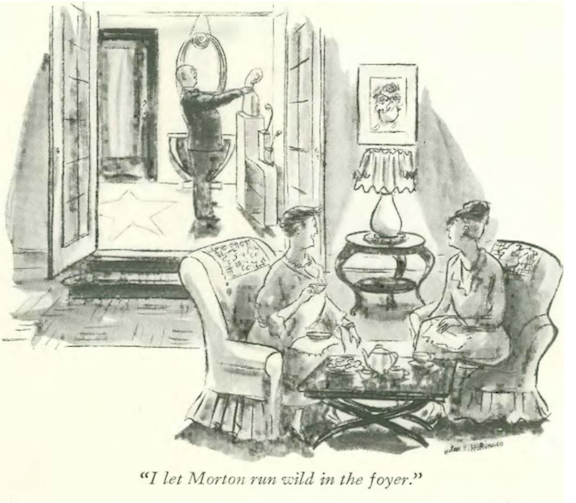
and Hokinson again, doing a bit of home decorating…
…it appears Morton was displaying a copy of Constantin Brancusi’s Princess X…
(sheldonartmuseum.org)
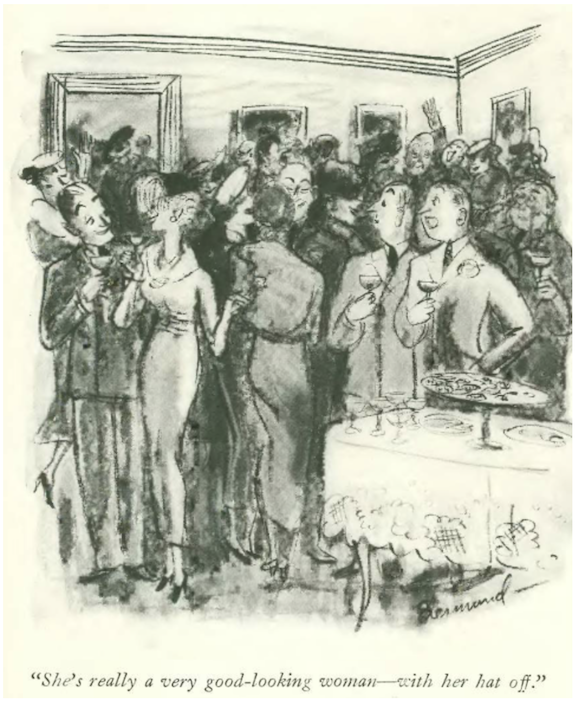
…Barbara Shermund engaged in some light banter at a cocktail party…
…and we close with a surprise visit from William Crawford Galbraith…
Above: Portrait of Georgia O'Keeffe, 1935, by Alfred Stieglitz, gelatin silver print; at right, O'Keeffe's Ram's Head, White Hollyhock-Hills, 1935. Oil on canvas. (National Gallery/Brooklyn Museum)
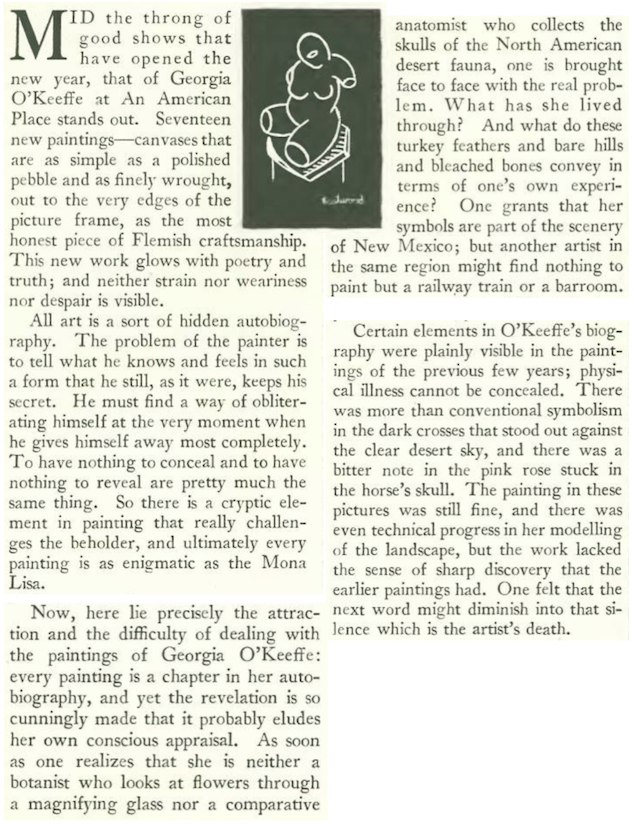
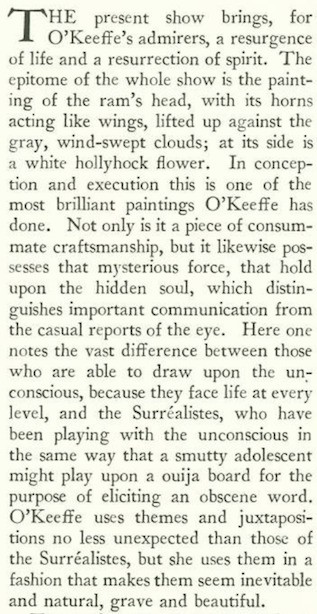
Over the seven decades of her career, Georgia O’Keeffe created works that did not necessarily follow the art movements of the 20th century. Critic Lewis Mumford referred to these works as “autobiographies in paint,” every painting “as enigmatic as the Mona Lisa.”
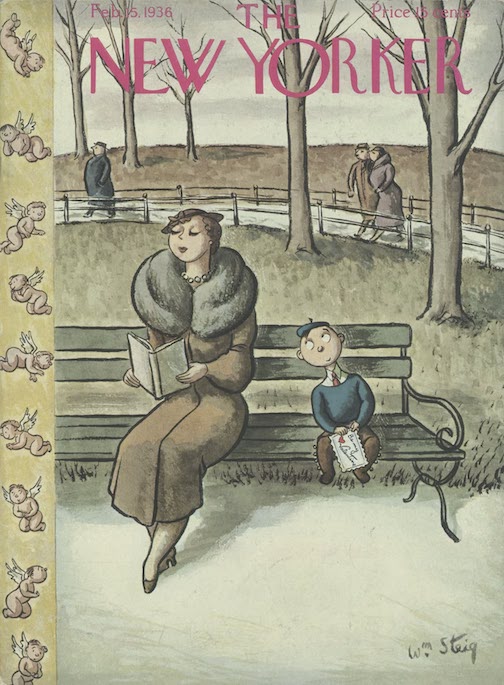
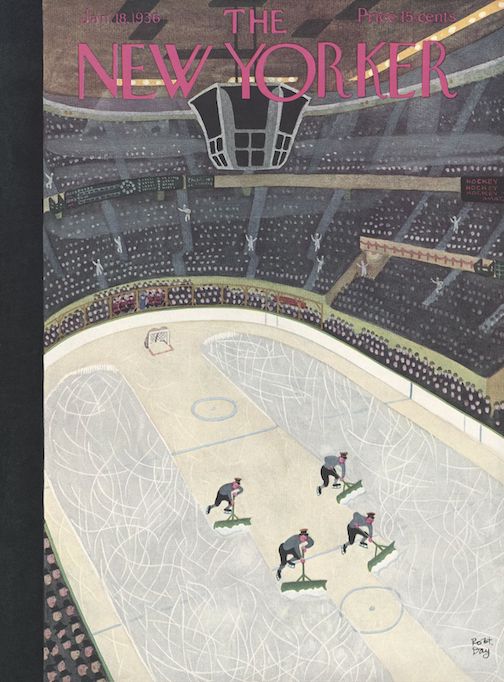
January 18, 1936 cover by Robert Day, illustrating the days before the invention of the Zamboni (in 1949).
O’Keeffe was married to art dealer and photographer Alfred Stieglitz, who exhibited her works at his “An American Place” gallery at 53rd and Madison. The couple had a complex, open relationship (Stieglitz had a number of affairs) that proved painful to O’Keeffe, and in 1933 she was hospitalized for two months after experiencing a nervous breakdown; she did not paint again until the following year. Although Mumford did not directly reference this episode in O’Keeffe’s life, he did note that “Certain elements in O’Keeffe’s biography were plainly visible” in her paintings.
PAINED PAINTINGS…Clockwise, from top left, Georgia O’Keeffe’sEagle Claw and Bean Necklace, 1934; Jack-in-the-Pulpit No. IV, 1930; Purple Hills, 1935. (MoMA/Phillips Collection/San Diego Museum of Art)
Mumford noted that O’Keeffe’s newer works revealed a “resurrection of spirit,” such as the painting of a ram’s skull, “with its horns acting like wings, lifted up against the gray, wind-swept clouds…”
GLOWING WITH POETRY AND TRUTH is how Lewis Mumford described Georgia O’Keeffe’s latest work. Clockwise, from top left: Ram’s Head suggested to Mumford “a resurgence of life and a resurrection of spirit” in the artist; other bright works included Sunflower, New Mexico 1, 1935; and Hill, 1935. (National Gallery/Cleveland Museum of Art/ Denver Art Museum)
* * *
Lights Out
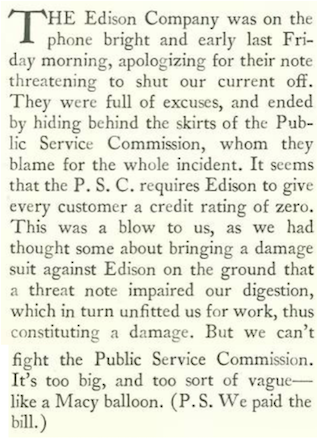
In the previous issue E.B. White noted that the Edison Company was threatening to cut off electric service to the magazine’s offices due to nonpayment. This “Notes and Comment” update cleared up the matter.
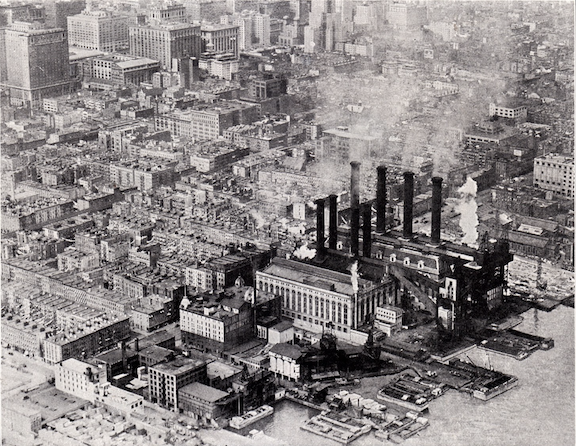
THE PRICE FOR POWER…Above, an aerial view from 1926 of New York Edison’s East River Power Station at 38th Street. In 1936 it was powered by coal, which burned pungently and created problems with soot throughout the area. (tudorcityconfidential.com)
* * *
Revisiting a Pint-size Poet
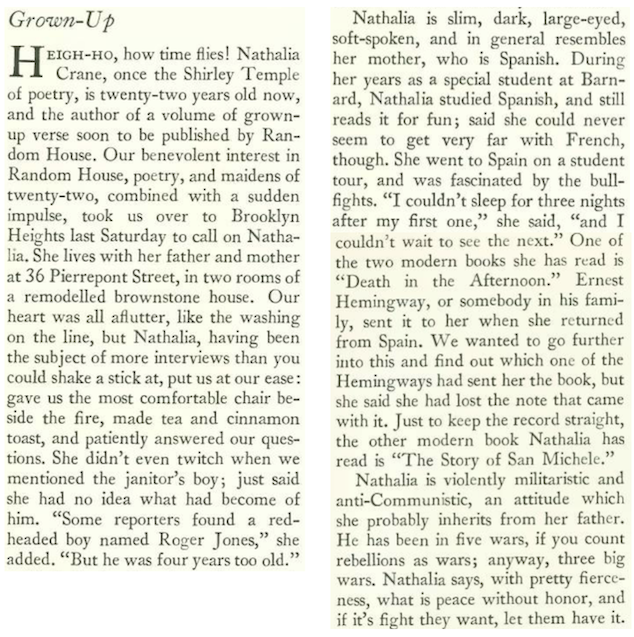
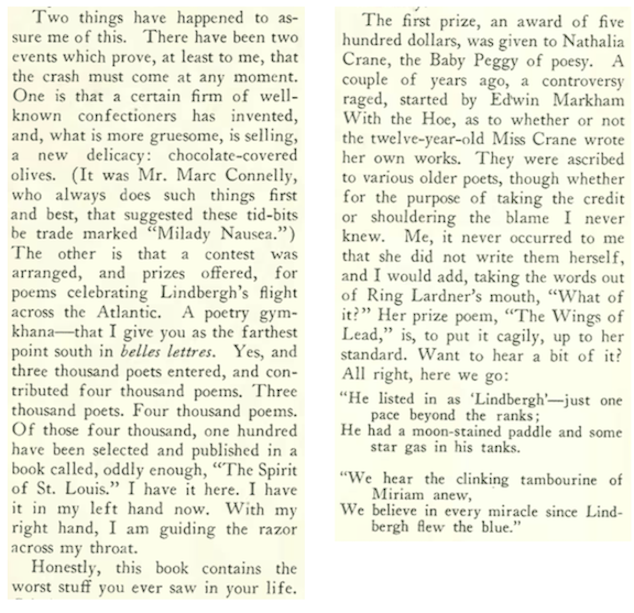
“The Talk of the Town” paid a visit to Nathalia Crane (1913–1998), who became famous after the 1924 publication of her first book of poetry, The Janitor’s Boy, at the age of ten. Excerpts:
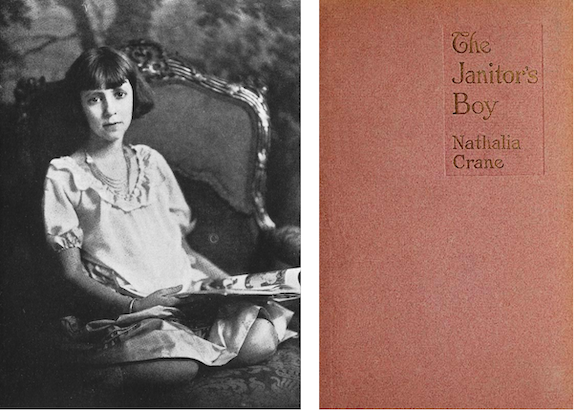
PIXIE POET…Nathalia Crane published her first poems in The New York Sun when she was only nine years old, the paper unaware that she was a child. She later became a professor of English at San Diego State University. (gutenberg.org)
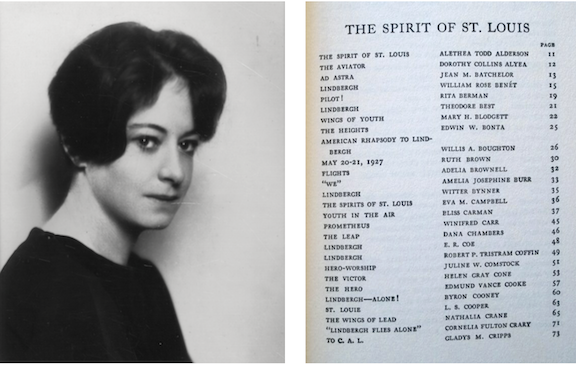
The fledgling Crane received a very different New Yorker reception in 1928, when Dorothy Parker took her to task for contributing to the collapse of grammar and civilization in general. Here’s an excerpt from Parker’s Jan. 7, 1928 “Reading & Writing” column:
GRUESOME was the word Dorothy Parker chose to describe chocolate-covered olives and bad poetry. At left, Parker in 1928. At right, a contents page from The Spirit of St. Louis, a collection of one hundred poems selected from thousands in a poetry contest celebrating Charles Lindbergh’s flight across the Atlantic. (literaryladiesguide.com/ebay.com)
* * *
Order in the Court
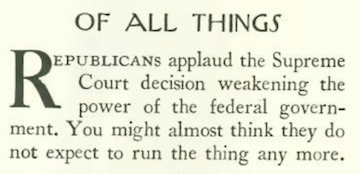
Howard Brubaker commented on a recent ruling by the Supreme Court regarding the ongoing fight by Republicans to curtail FDR’s New Deal.
* * *
Cinderella Stories
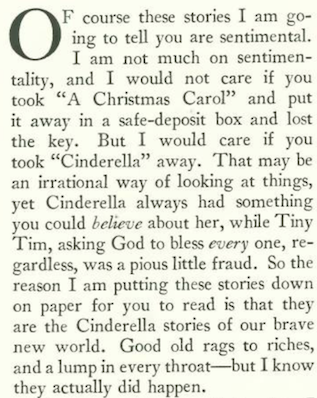
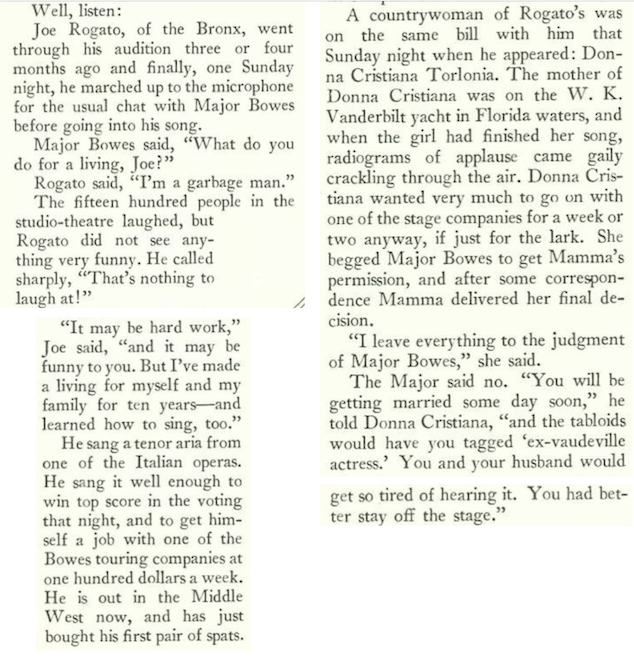
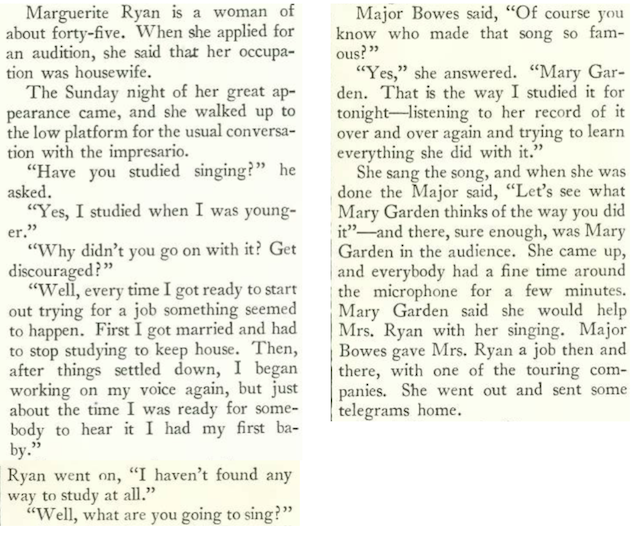
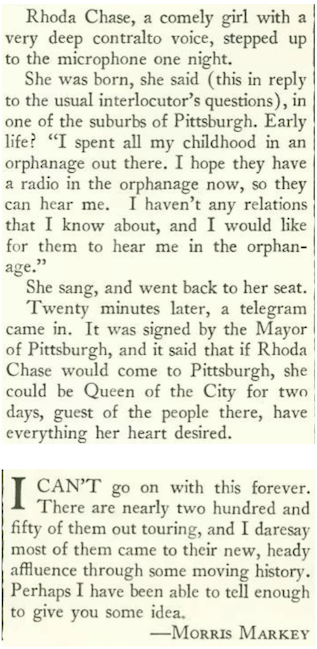
For his Jan. 4, 1936 “A Reporter at Large” column Morris Markey visited “Major Bowe’s Amateur Hour” at NBC’s Rockefeller Center radio studios. He was so impressed by the rags-to-riches stories that he shared a few in his Jan. 18 column, titled “The Crystal Slipper.” He warned readers that the stories were “sentimental,” but not in the vein of A Christmas Carol: “Tiny Tim, asking God to bless every one, regardless, was a pious little fraud,” Markey noted. Excerpts:
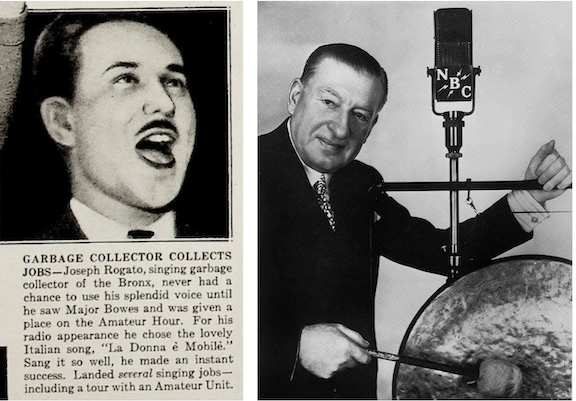
Markey shared the story of a garbage collector turned opera tenor, and a wealthy debutante who was encouraged to “stay off the stage” by “Major” Edward Bowes himself.
CUT THE TRASH TALK…Joseph Rogato told the Amateur Hour audience that his job as a “garbage man” was no laughing matter, and went on to wow them with his singing voice. At left, a detail from an ad for Chase & Sanborn coffee, the show’s sponsors. At right, show founder and host “Major” Edward Bowes with the gong he used to abruptly end acts he deemed poor—he soon abandoned the practice after listeners objected. (eBay.com/Facebook)
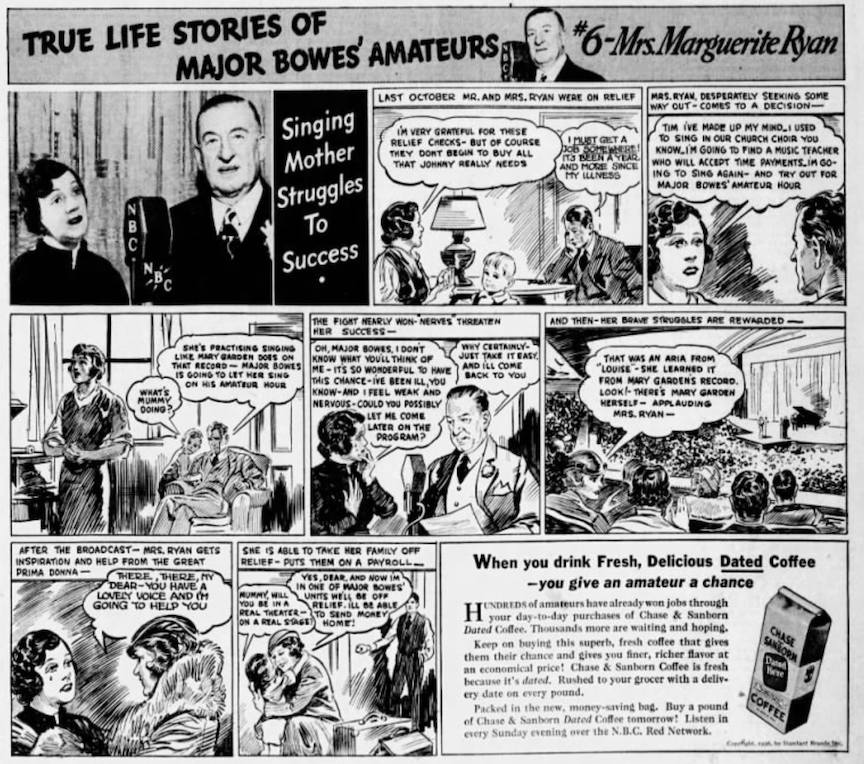
Markey next told the story of Marguerite Ryan, the “Singing Housewife”…
FROM RELIEF TO RICHES…This Chase & Sanborn advertisement described Marguerite Ryan’s brush with fame and her deliverance from poverty thanks to her appearance on the Amateur Hour. (newspapers.com)
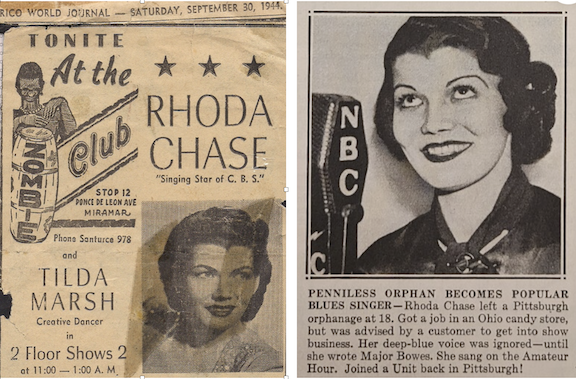
Finally, the story of Rhoda Chase, whom Bowes promoted as a “penniless orphan.” Born Anna Blanor, her stage name, Rhoda, was selected by a psychic, while her last name was inspired by sponsors Chase & Sanborn.
VELVET VOICE…At right, detail from a Chase & Sanborn ad that promoted Rhoda Chase as a “Penniless Orphan” who made the big time thanks to the Amateur Hour. At left, a 1944 newspaper ad for the Zombie Club in San Juan, Puerto Rico. Known as “The Blue Velvet Voice”, Chase was a radio, stage, nightclub and USO blues singer. (Wikimedia Commons/eBay)
* * *
At the Movies
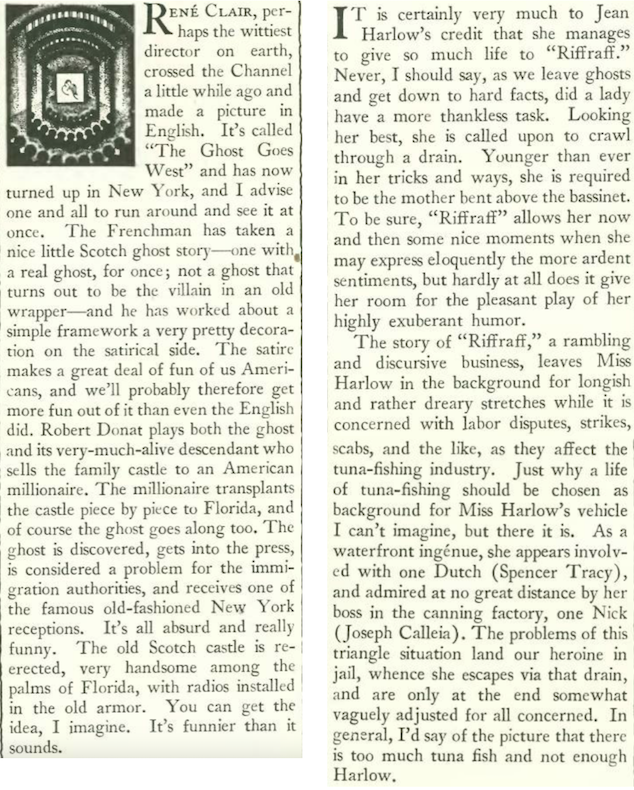
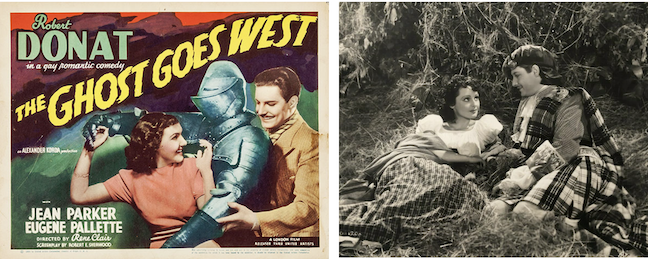
Film critic John Mosher found some bright spots at the movies, praising René Clair’s The Ghost Goes West but feeling sorry for Jean Harlow in her “thankless” role in Riffraff, a film about the tuna-fishing industry.
THE FRIENDLY GHOST…Robert Donat and Patricia Hilliard in the romantic comedy The Ghost Goes West. (IMDB)FISH OUT OF WATER…Spencer Tracy, Jean Harlow, and Joseph Calleia in Riffraff, a drama about a strike at a tuna fishery. “Just why a life of tuna-fishing should be chosen as background for Miss Harlow’s vehicle I can’t imagine, but there it is,” wrote critic John Mosher. (IMDB)
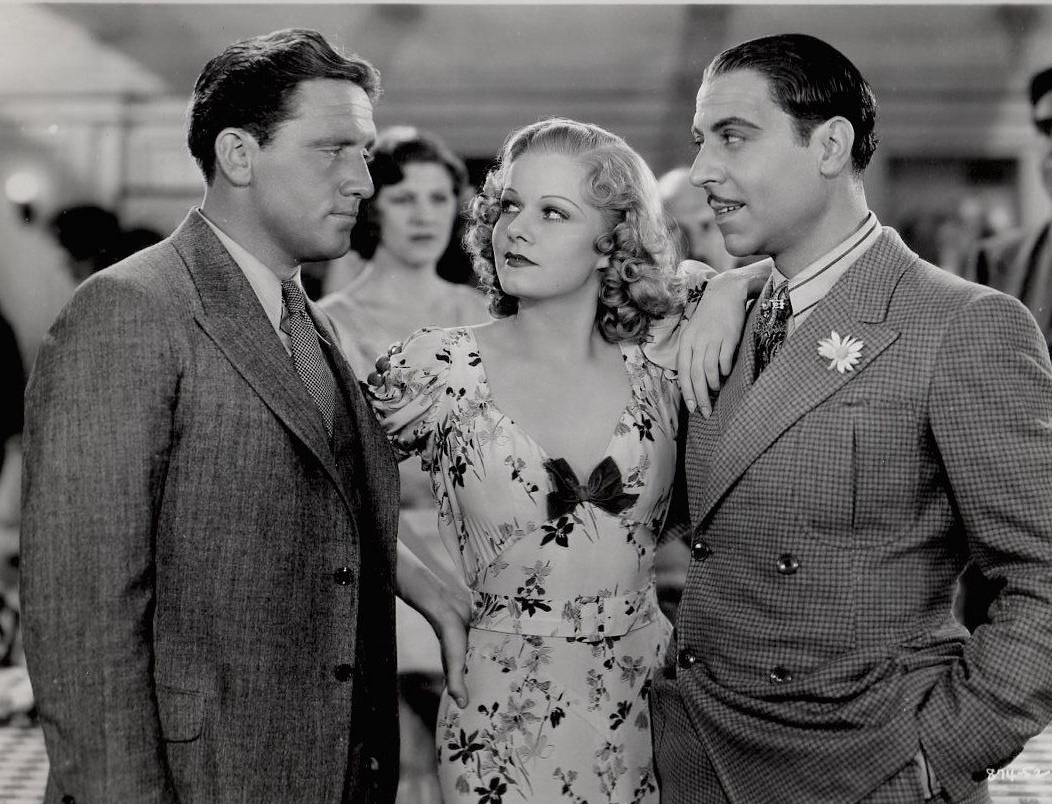
Mosher didn’t know what to make of Katharine Hepburn’s latest film, Sylvia Scarlett, in which she portrayed a con artist disguised as a boy hiding from the police. Despite its major star power and George Cukor as director, the film was a flop.
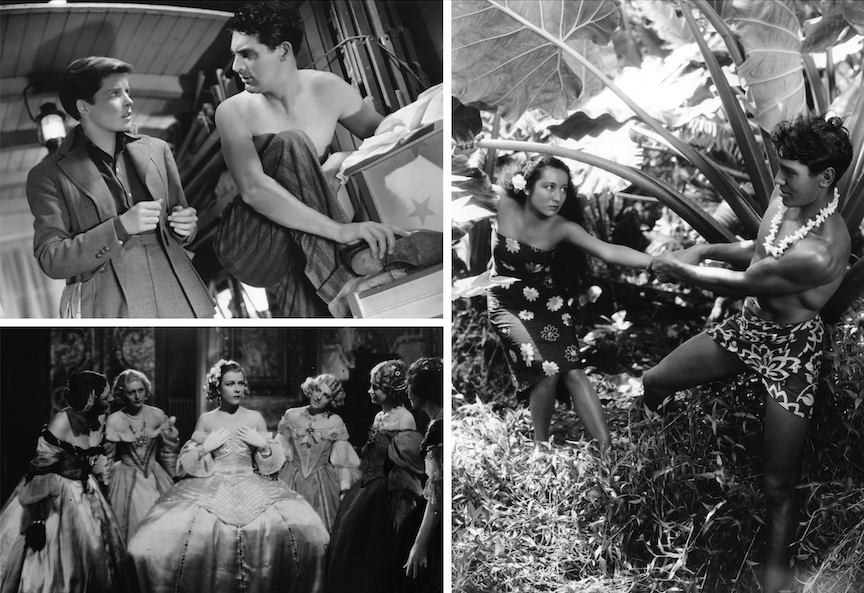
Mosher also reviewed Last of the Pagans (also about a labor dispute!) and The Private Life of Louis XIV (released in Germany in 1935 as Liselotte von der Pfalz).
SHE’S A MAN, MAN…Clockwise, from top left, Katharine Hepburn and Cary Grant in Sylvia Scarlett; Lotus Long and Mala in Last of the Pagans;Renate Müller in The Private Life of Louis XIV (Liselotte von der Pfalz). Müller would die in 1937 at age 31 under mysterious circumstances. Many believe the Nazis had her killed because she refused to appear in their propaganda films. (academymuseum.org/MGM/IMDB)
* * *
From Our Advertisers
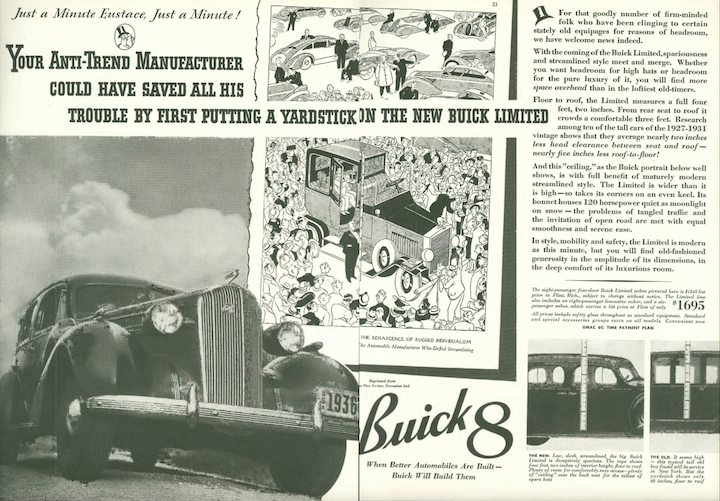
General Motors promoted their Buick Eight in a two-page advertisement that called out Eustace Tilley and reprinted a Carl Rose cartoon from the Nov. 2, 1935 issue…
…here is the original cartoon…
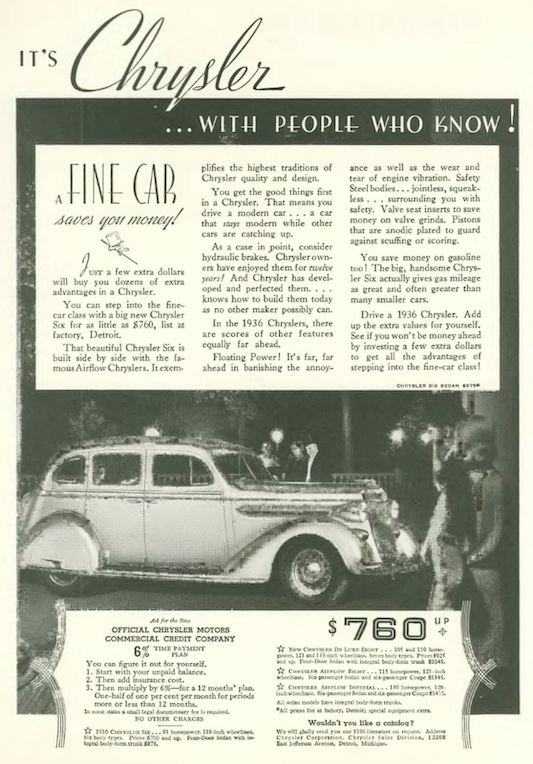
…with the holidays a memory and the Depression still lingering, most of the automobile ads touted economy over luxury, however Chrysler claimed you could have both with this $760 model…
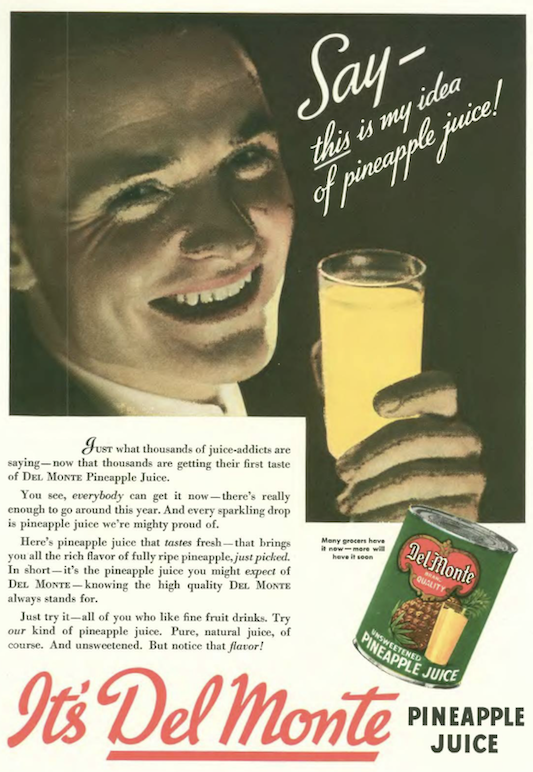
…by the looks of this guy, he probably added three fingers of vodka to his pineapple juice…
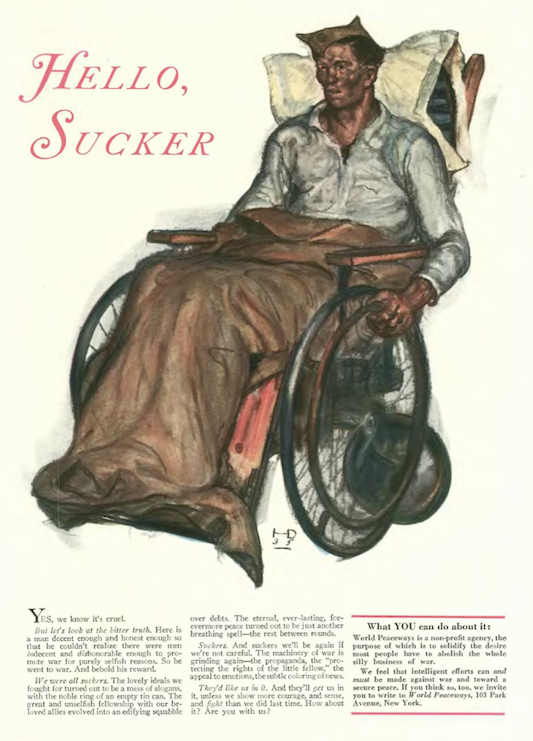
…as noted before, the folks at World Peaceways pulled no punches with their anti-war appeals…
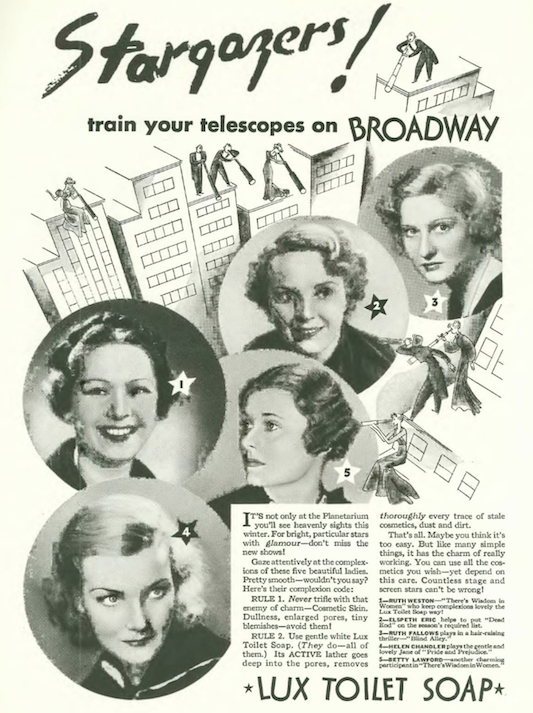
…the makers of Lux were still rolling out Broadway stars to endorse their toilet soap…(Betty Lawford, #5, was an English film and stage actress and a cousin of actor Peter Lawford)…
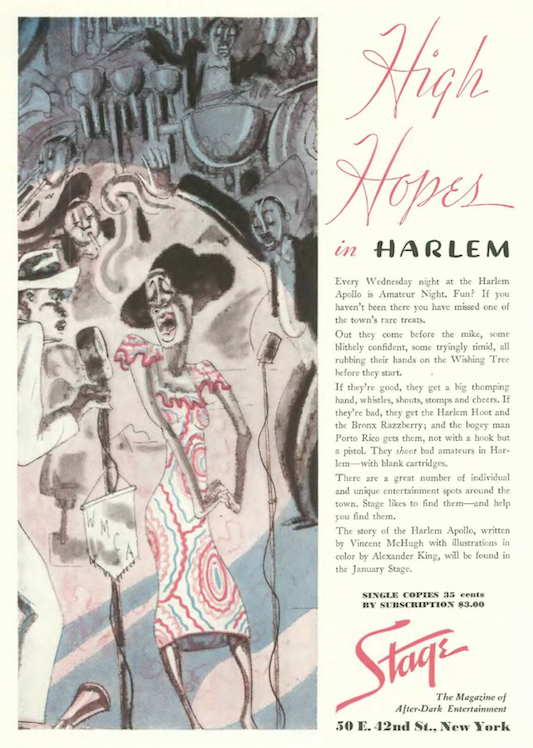
…the inside back cover belonged to Stage magazine…the illustration, “Amateur Night at the Apollo,” is by Alexander King…
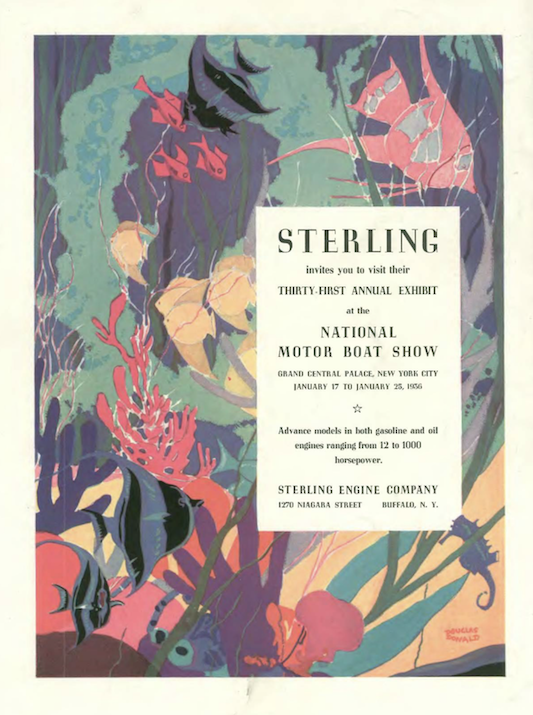
…the Grand Central Palace was hosting the thirty-first annual National Motor Boat Show, a rare back cover not taken by a tobacco company…
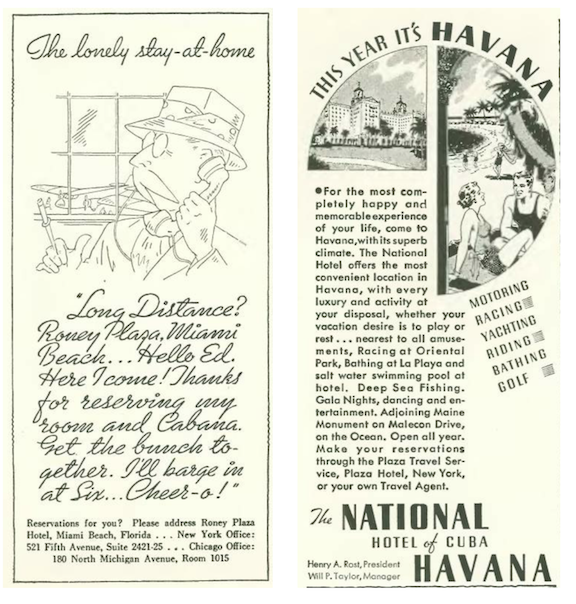
…a couple of ads from back of the book…at left, an Anglophilic appeal from Miami’s Roney Plaza Hotel, and, at right, pre-revolutionary days at the National Hotel in Havana (I had a drink there a few years ago during the Obama thaw…the lobby is beautiful, a classic from another era still hanging on thanks to Canadian and European tourists)…
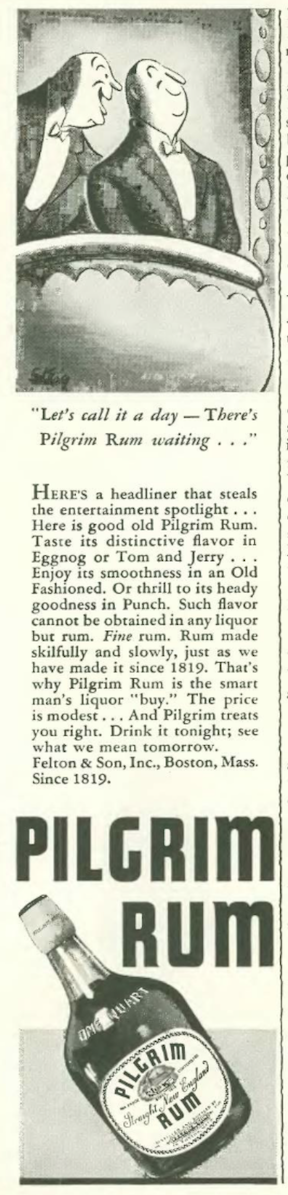
…William Steig continued to illustrate these one-column ads from Pilgrim Rum…
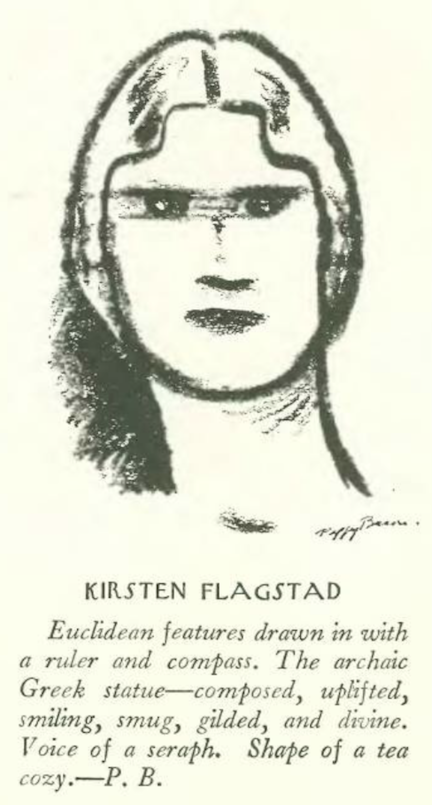
…which segues to our cartoonists…on the bottom of page 3 was this one-column drawing by Peggy Bacon…
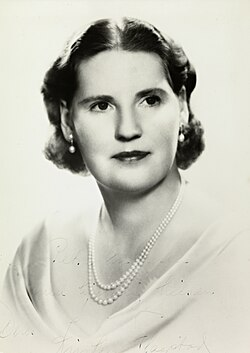
…Norwegian opera singer Kirsten Flagstad (1895–1962) was a famous Wagnerian soprano who made a triumphant debut at the Metropolitan Opera in 1935…
Kirsten Flagstad circa 1940. (Wikipedia)
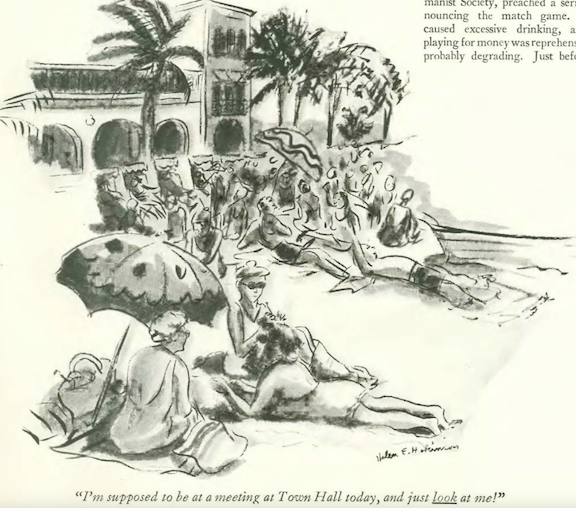
…we continue with Helen Hokinson soaking up some sun…
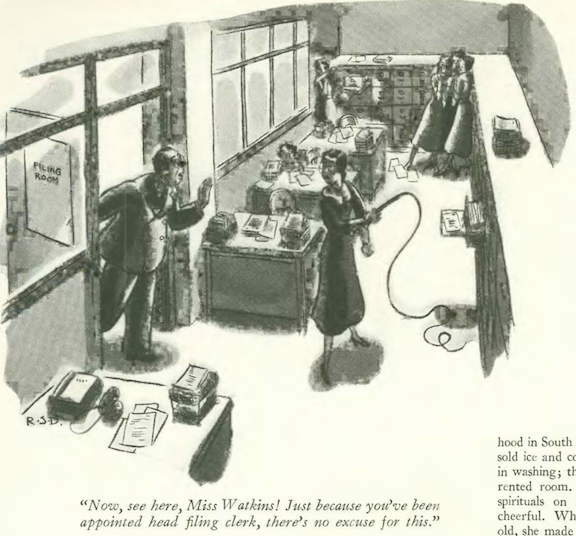
…Robert Day cracked the whip in the steno pool…
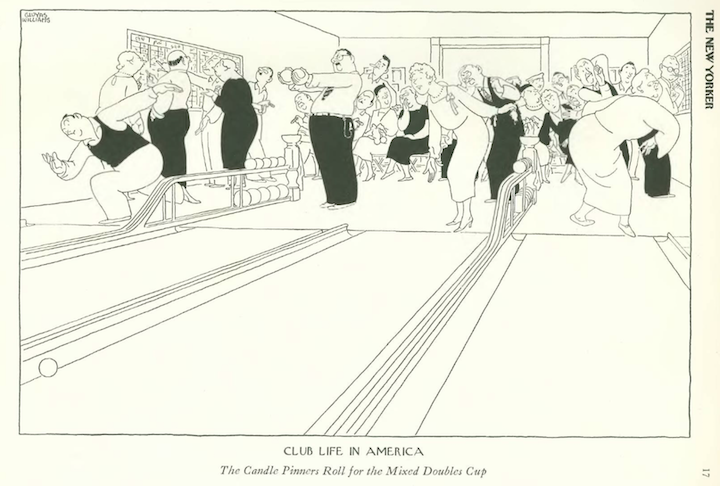
…originally published sideways, another look at club life by Gluyas Williams...
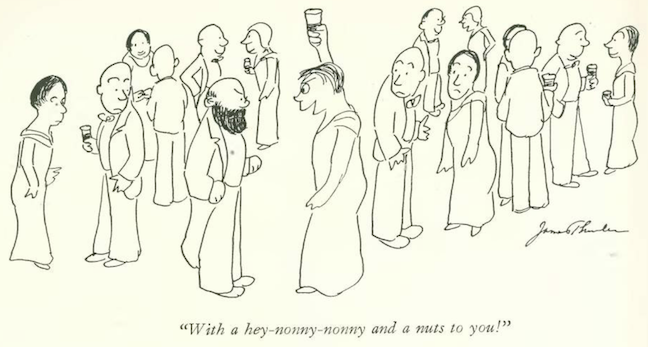
…James Thurber offered up a toast…
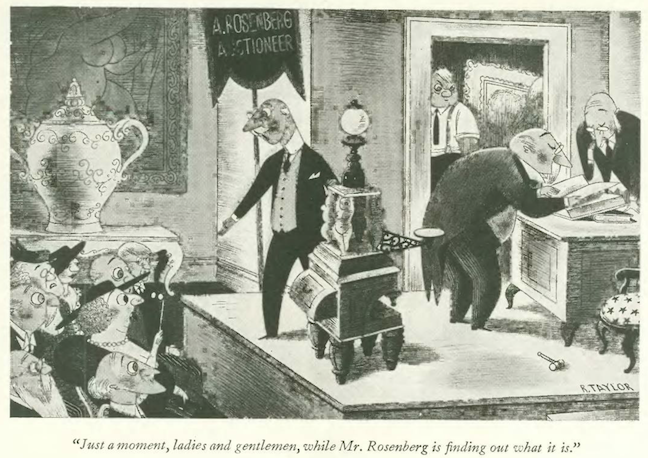
…Richard Taylor looked into an auction mystery…
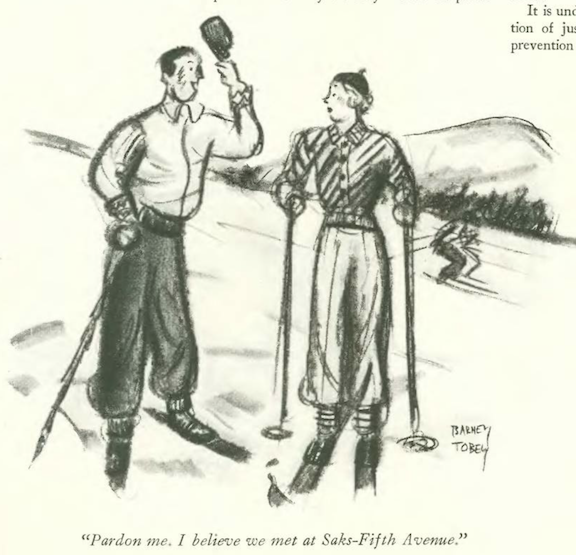
…Barney Tobey gave us a friendly greeting on the slopes…
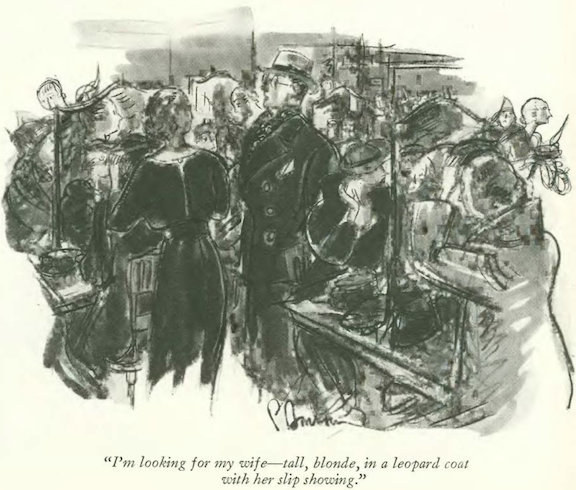
…Perry Barlow was lost in a department store…
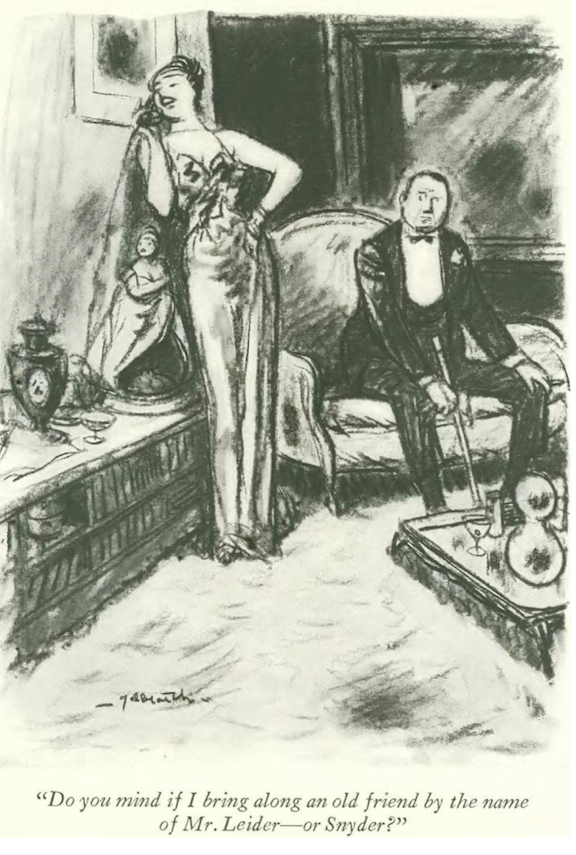
…William Crawford Galbraith continued to probe the woes of sugar daddies…
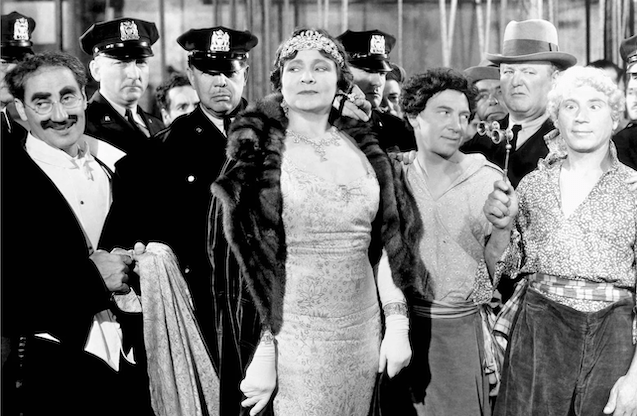
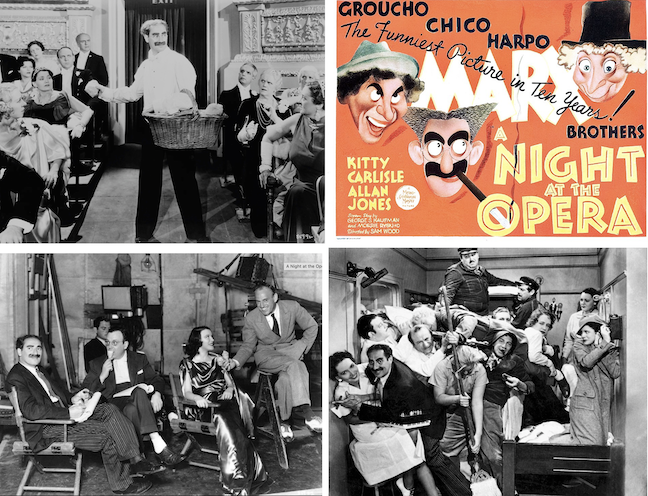
Above: Margaret Dumont with Groucho, Chico and Harpo Marx in A Night at the Opera. A trained operatic singer, Dumont portrayed wealthy, regal women as comic foils to the Marx Brothers in seven of their films. Groucho once referred to her as "the fifth Marx brother." (Britannica.com)
If you were looking for a break from the doldrums of winter or the mad rush of the holidays, a ticket to the Marx Brothers’ A Nightat the Opera could fit your bill.
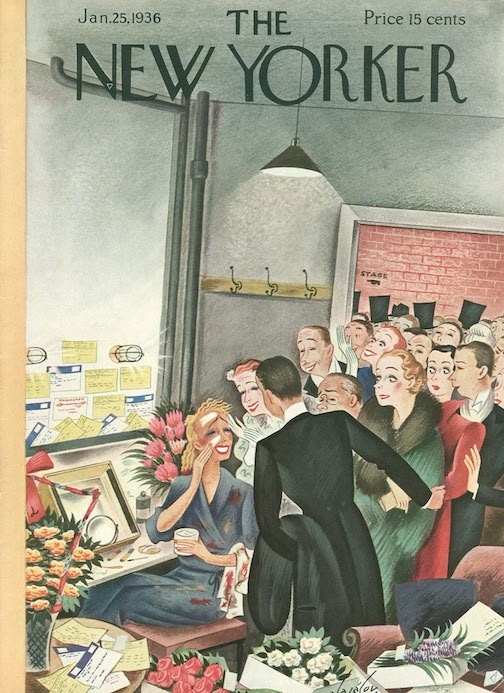
December 14, 1935 cover by William Crawford Galbraith. A New Yorker contributor from 1929 to 1940, Galbraith (1894–1978), illustrated 151 drawings and seven covers for the magazine.
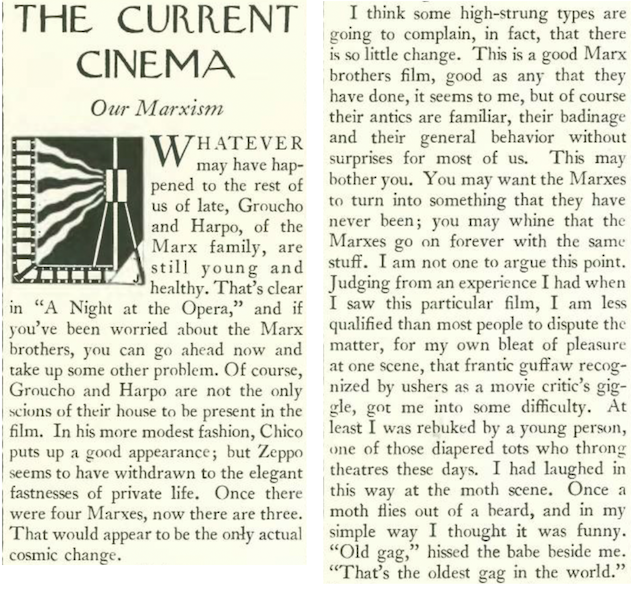
With their move from Paramount to MGM, Groucho, Chico and Harpo Marx launched a new style of comedy with A Night at the Opera, one of 1935’s biggest hits. Critic John Mosher was pleased to see the trio’s familiar antics on the screen, but with more story structure than their previous films.
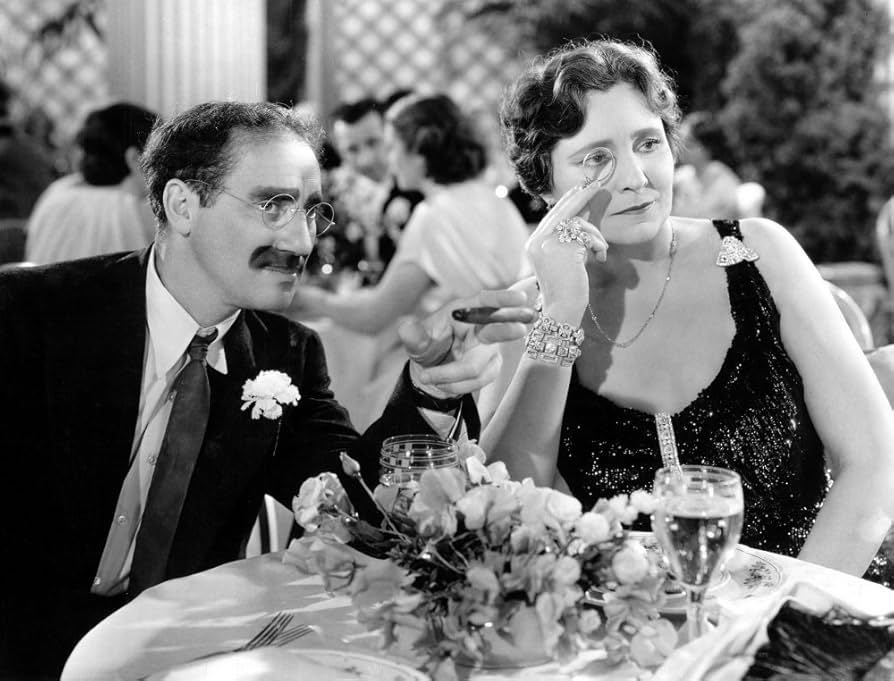
SWEET TALKER…In Night at the Opera, Groucho Marx (as Otis B. Driftwood) advises Margaret Dumont (as Mrs. Claypool) on how to be inducted into high society—Driftwood: “I have arranged for you to invest $200,000 in the New York Opera Company. You’ll be a patron…Then you can marry me and they’ll kick you out of society and all you’ve lost is $200,000.” (amazon.com)
Sure, there were some old gags, as one “youngster”—seated next to Mosher—noted, but even this newbie pronounced the film “excellent.” As Mosher observed, “It may not be new or surprising, but it’s quick and funny.”
OH WHAT A NIGHT…Clockwise, from top left, during the overture to Verdi’s Il Trovatore, the sheet music is switched to “Take Me Out to the Ballgame,” and Otis B. Driftwood (Groucho Marx) responds by hawking peanuts to the startled audience; lobby card for the film; the famous “Stateroom Scene,” written by gag man Al Boasberg; taking a break on the set are, from left, Groucho, Boasberg, Kitty Carlisle, and director Sam Wood. (onset.shotonwhat.com)
Mosher also reviewed the underworld thriller Show Them No Mercy!, which displayed some of the effects of the Hays Code…
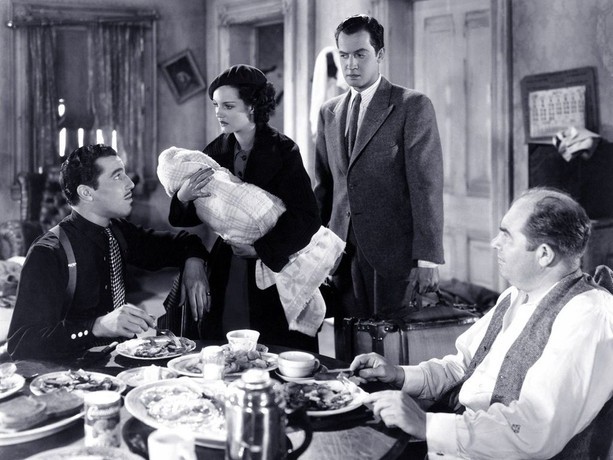
TONE IT DOWN, WOULD YA?…From left, Cesar Romero, Rochelle Hudson, Bruce Cabot, and Edward Brophy in Show Them No Mercy! (rotten tomatoes.com))
* * *
Fond Memories
In his “Notes and Comment,” E.B. White recalled the good old days at a place called Tony’s on 49th Street. I couldn’t find any record of the place (or images), but apparently the new Tony’s lacked the smoke-filled charm of the original. Not to mention that the air-conditioning gave an earache to one of White’s acquaintances:
* * *
Gun Shy
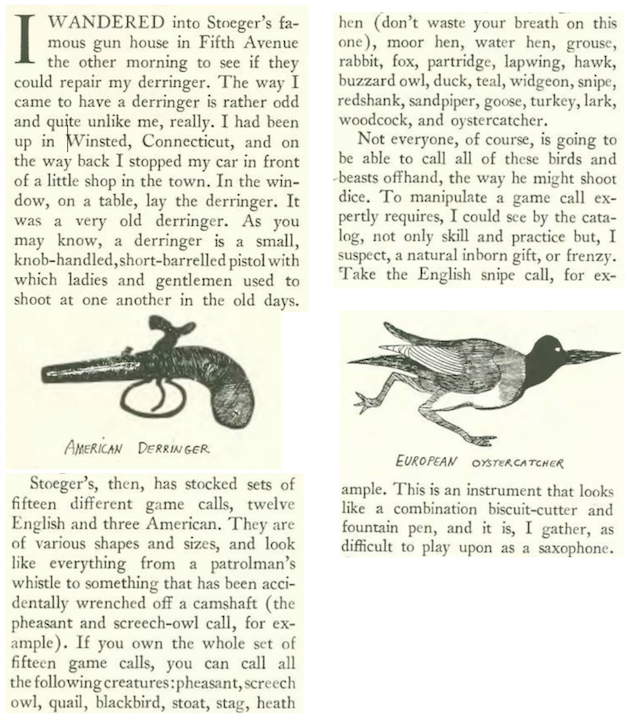
James Thurber was also facing the challenges of the modern world, being the unlikely owner of a very old derringer and hoping to possibly get it repaired. He stopped in at Stoeger’s gun store on Fifth Avenue, where a salesman tried to sell him a newer model. Instead, Thurber opted for a copy of the catalog (which he found fascinating), and pondered the store’s various game calls, which he thought might make suitable holiday gifts. Some brief excerpts:
GUNS ON FASHION ROW…View from inside Stoeger’s Fifth Avenue gun store with manager John T. Meechan, undated; cover of the store’s 1936 catalog. (Facebook/ebay.com)
* * *
Hello Dolly
Dolls of all sorts—ranging from Popeye to the Dionne quintuplets—were all the rage for the holidays, according to the magazine’s third installment of its exhaustive Christmas lists.
RARE COLLECTIBLES TODAY, toys popular at New York’s department stores in 1935 included, clockwise, from top left, Ideal’s Shirley Temple baby doll, fashioned after a photo of the young actress at age six months; the Dionne Quintuplets craze continued with the growing quints now standing up; a Skippy velocipede; Buck Rogers Rocket Skates. (theriaults.com/ebay.com/MidwestModern via X/grandoldtoys.com)
* * *
Some Light Holiday Verse
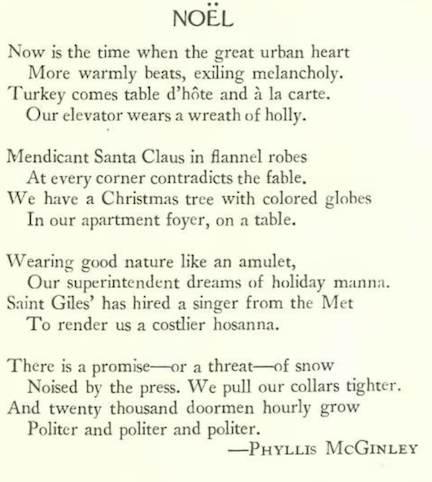
This poem comes courtesy of Phyllis McKinley (1905–1978), a children’s author and poet who lovingly satirized her suburban life, publishing in both popular as well as literary magazines, including The New Yorker.
* * *
From Our Advertisers
Mixed in with the advertisements for last-minute Christmas gifts were a slew of ads beckoning those with wealth and leisure time to head south for the winter…
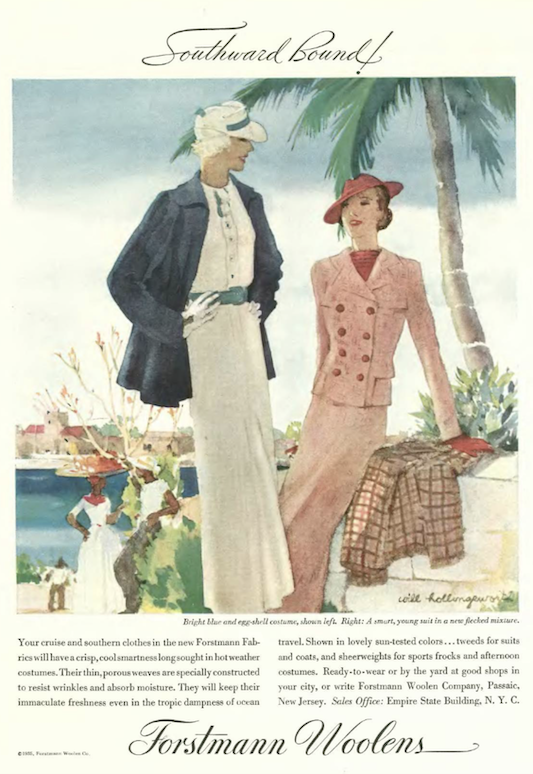
…Forstmann Woolens switched gears, replacing their lovely seasonal ads (featuring fall and winter fashions) with the latest in tropical togs…
…Bermuda beckoned to those fashionable folks…
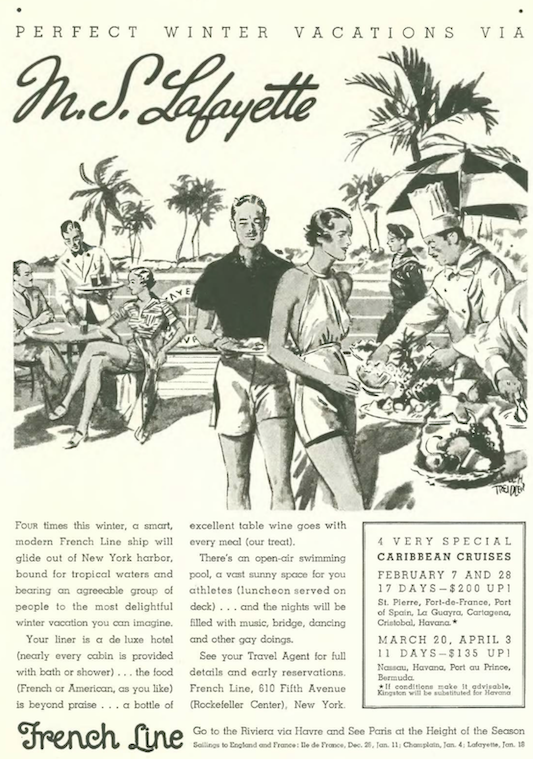
…as did the cruise lines heading south…
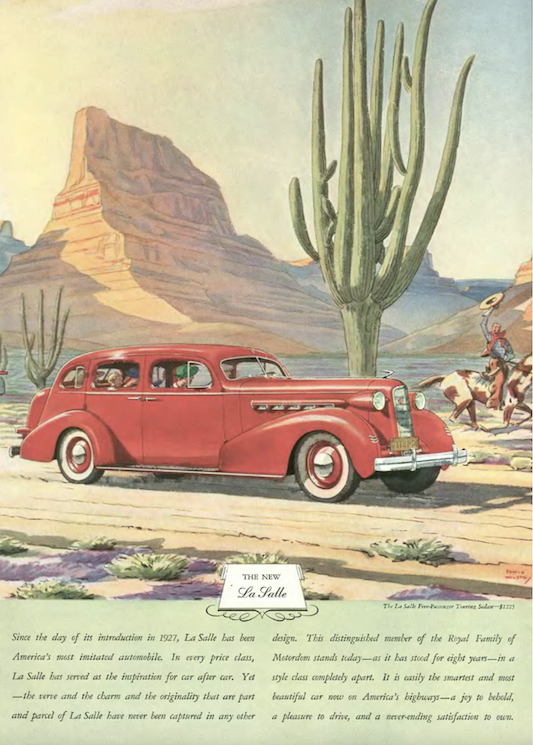
…even the makers of the La Salle (Cadillac) were feeling the warmth with this image of the sunny Southwest (this was the left panel of a two-page spread)…
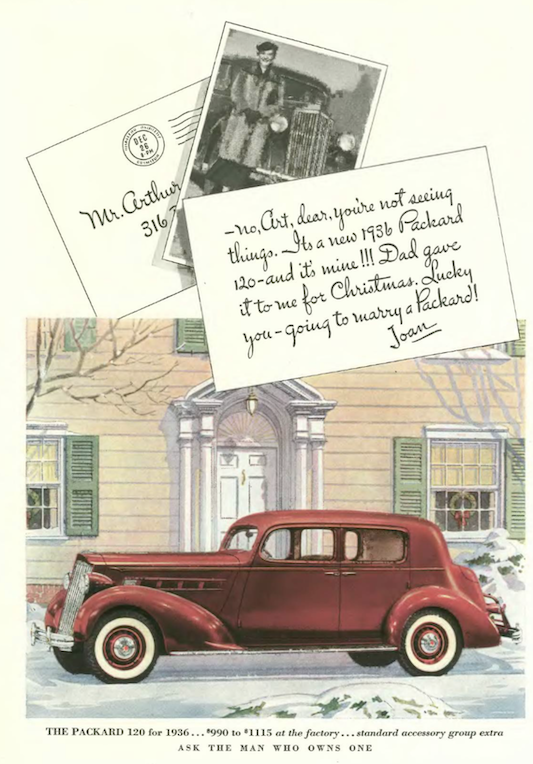
…Packard could sweeten a woman’s dowry, according to this holiday message…
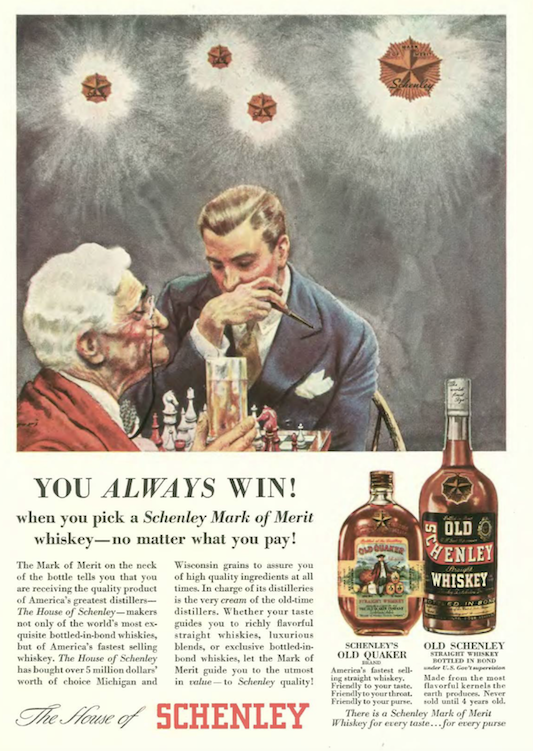
…it looked like Grandpa had a bit too much of the Old Schenley…
…according to this Heinz ad, modernism should play a “minor role” on Christmas, so for a real “olden time” treat, you could enjoy some of their figgy pudding…out of a can…
…and leave it to good old St. Nick to push his bagful of cigarrettes…
…Old Gold also employed Santa for this GeorgePetty-illustrated ad…
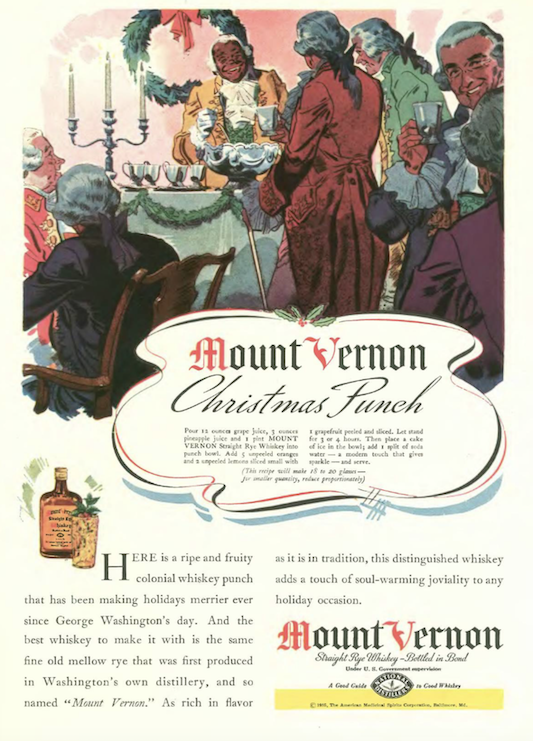
…Mount Vernon continued its series of ads that idealized the days before Emancipation…
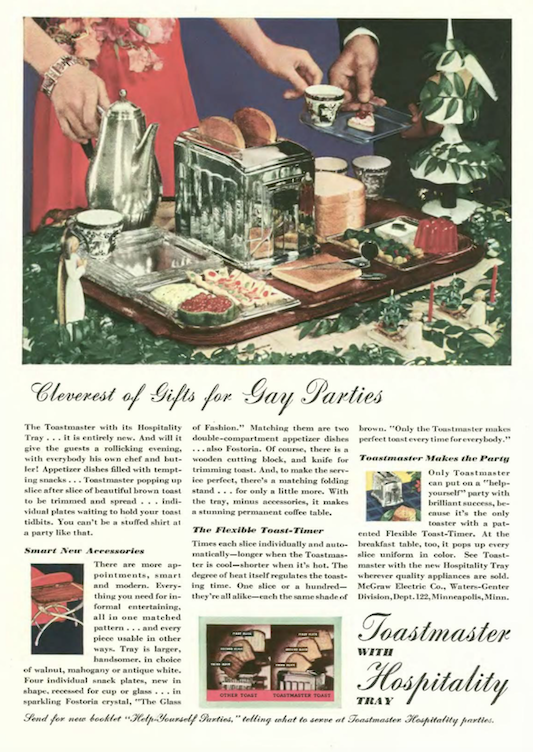
…the automatic toaster, still something of a novelty, was front and center at this holiday gathering…
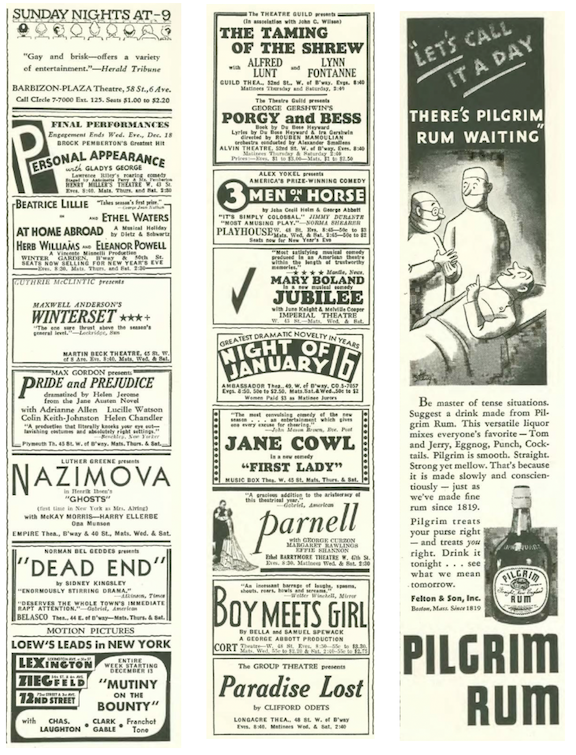
…back of the book, single-column ads featured delights of the stage and screen and an appeal for Pilgrim Rum aided by the talents of WilliamSteig…
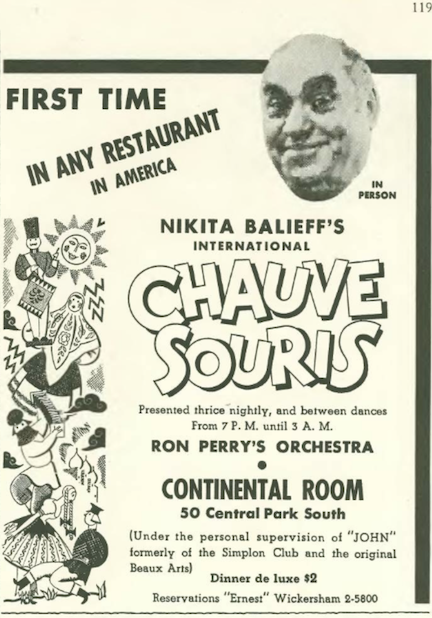
…Nikita Balieff’s La Chauve-Souris had seen better days when it showed up at the Continental Room…
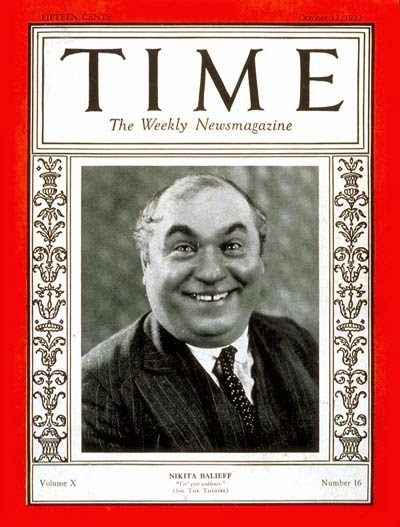
…Balieff (1877–1936) was a Russian Armenian performer best known as the creator and master of ceremonies of the theatre group LaChauve-Souris. The company toured the U.S. six times from 1922–1929—including appearances on Broadway—presenting a variety of songs, dances and sketches based on Russian stories and legends. The troupe’s popularity even landed Balieff on the cover of Time (Oct. 17, 1927)…
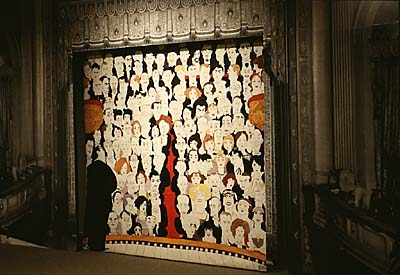
The New Yorker’s Ralph Barton designed a curtain for the 1922 Chauve-Souris, and AlexanderWoollcott heaped praise on the performances. However, his fellow Algonquin Round Table wit, DorothyParker, was not impressed: it has come to the stage where these poor nerves jangle nastily every time the local cognoscenti hail as incomparable art any bit of literature, play, writing or stagecraft that comes out of Russia. ….. what I don’t really grasp is just why “Russian” and “great” should have come to be looked upon as synonyms…
Ralph Barton painted this celebrity curtain in 1922 for Chauve-Souris. (National Portrait Gallery)
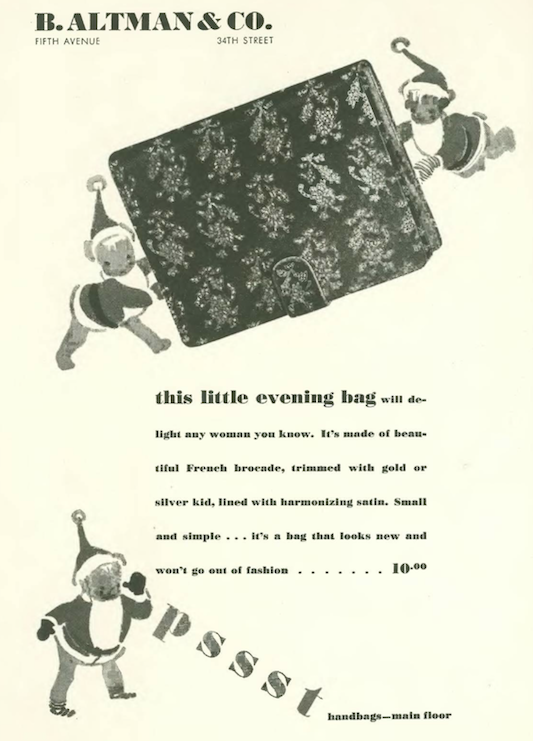
…back to our ads…B. Altman had a suggestion for the last-minute shopper…
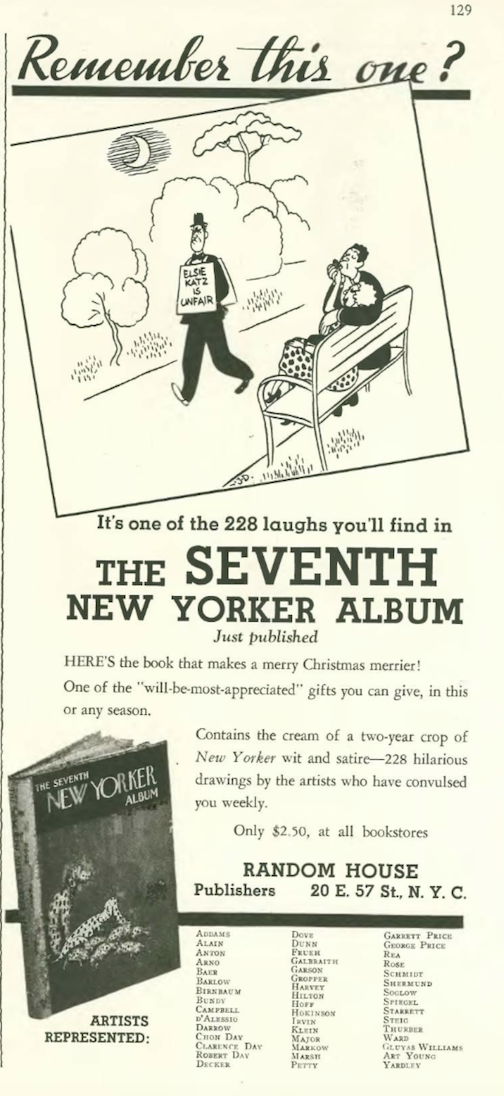
…a Robert Day cartoon was employed to advertise the latest New Yorker Album…
…Thomas Eastwood opens up our cartoon section…
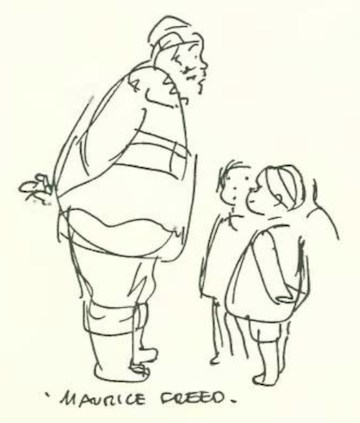
…Maurice Freed tossed in this spot drawing…
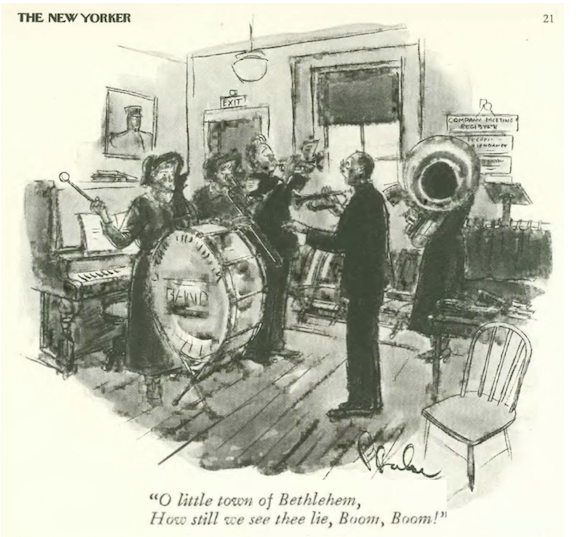
…Perry Barlow got into the rhythm with the Salvation Army…
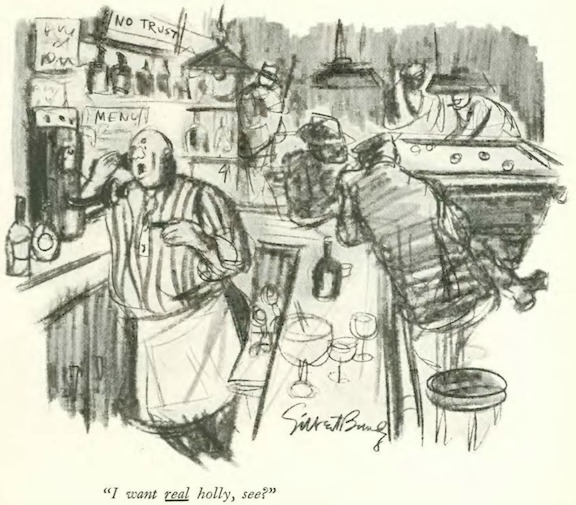
…Gilbert Bundy looked for some holiday cheer at a neighborhood tavern…
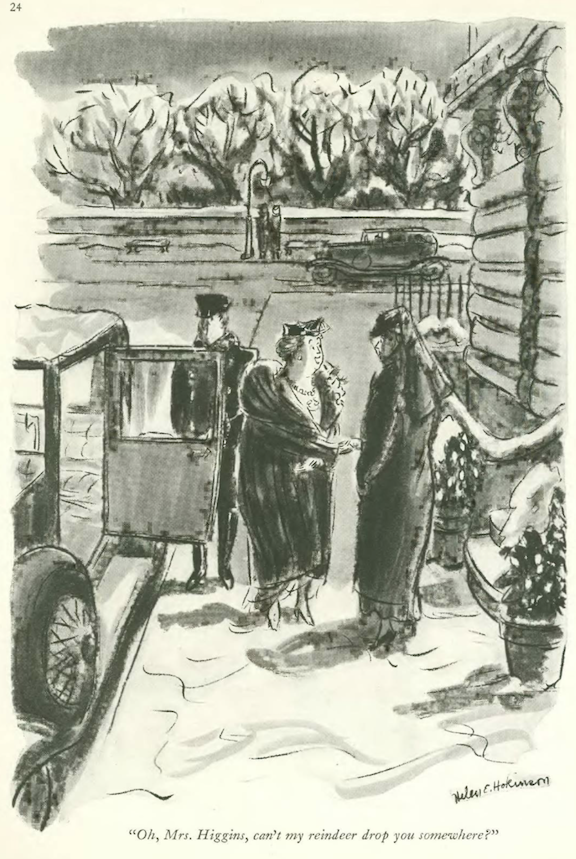
…Helen Hokinson gave us a generous spirit…
…Walter Lippmann’s column raised eyebrows at George Price’s breakfast table…
…Price again, on an urgent request…
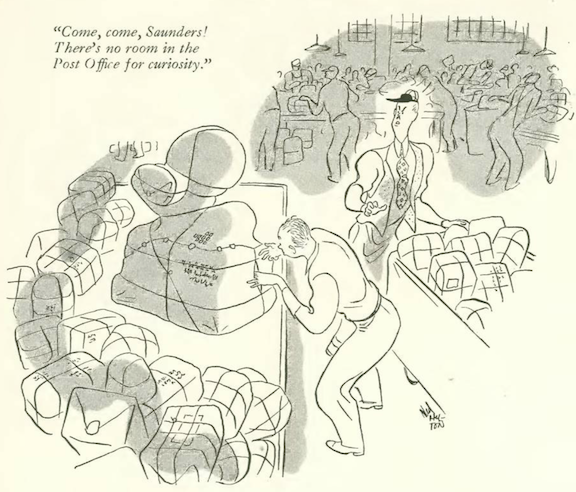
…Ned Hilton did some peeking…
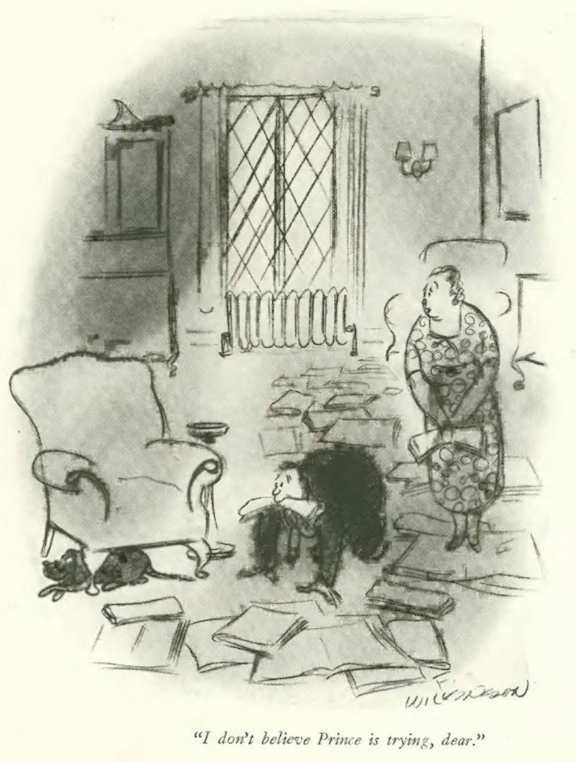
…Fritz Wilkerson showed us a couple in need of a dog whisperer…
…Carl Rose unmasked an imposter…
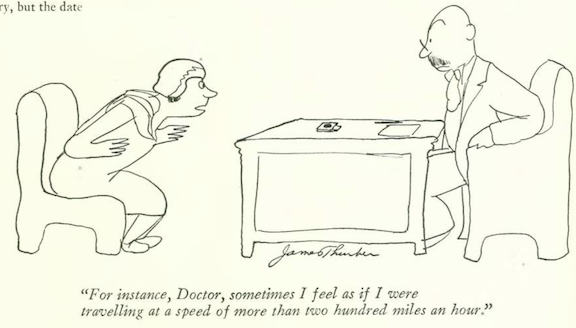
…and James Thurber presented a medical challenge…
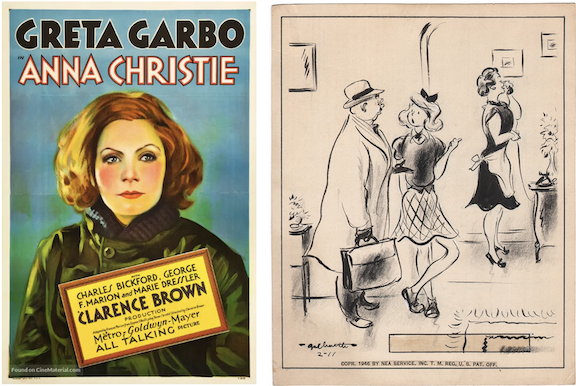
…and before we go, another word on our cover artist, William Crawford Galbraith, who also created posters for MGM from the 1920s to the 1940s and drew cartoons for Harper’s Bazaar, Redbook, Vanity Fair, the Saturday EveningPost, and Cosmopolitan. He took over the nationally syndicated “Side Glances” comic panel from George Clark in 1939 and worked on it for two decades.
At left, Galbraith’s poster for Anna Christie, 1930; right, a 1946 Side Glances comic panel. The caption reads: “No, I’m not curious – I just like to hear Mom on the phone because her voice sounds so mellow compared to when she’s talking to us around the house!” (IMDB/comicartfans.com)
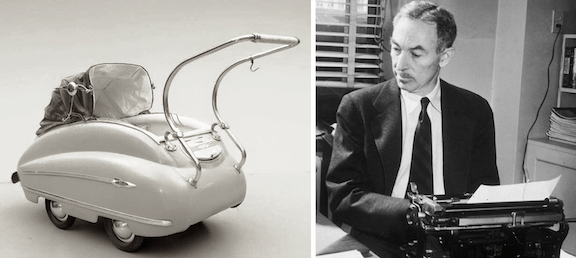
Above: Among E.B. White's notable happenings in the fall of 1935 was a streamlined baby carriage for the toddler of tomorrow. (Pinterest)
Occasionally, E.B. White would allow his seemingly random thoughts to fill out his “Notes and Comment” column, observing in no particular order various happenings of the day.
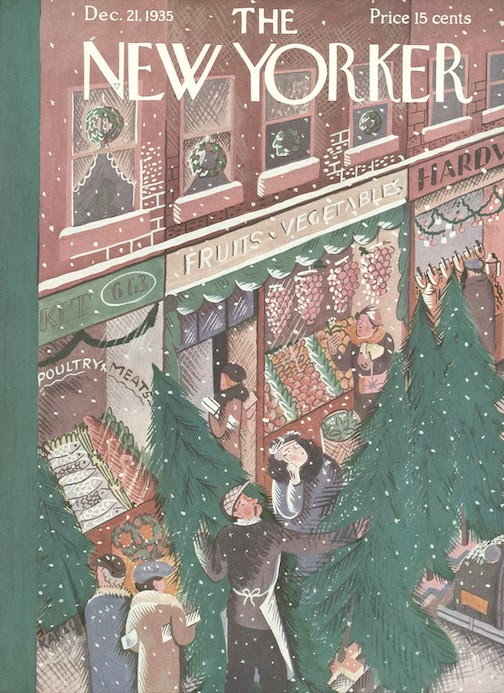
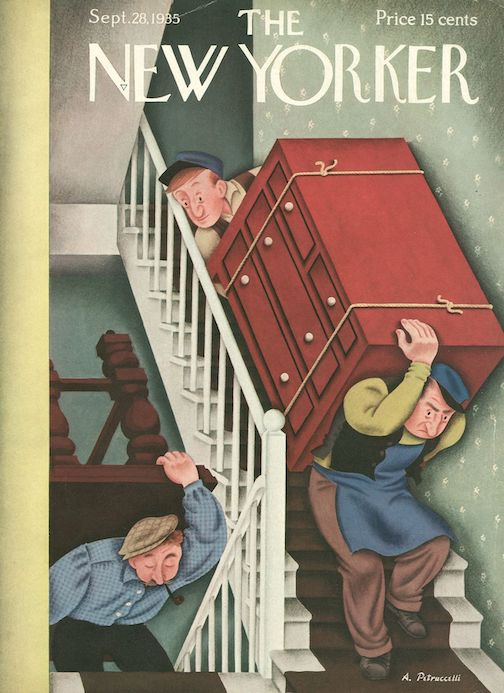
Sept. 28, 1935 cover by Antonio Petruccelli, who began his career as a textile designer. In addition to four New Yorker covers, Petruccelli (1907-1994) illustrated twenty-four Fortune magazine covers as well as several covers for House Beautiful, Collier’s, Life and other magazines.
What he accomplished, however, was a collection of snapshots of life in Manhattan and abroad. Here is the first part of E.B. White’s “Notes and Comment” for Sept. 28…
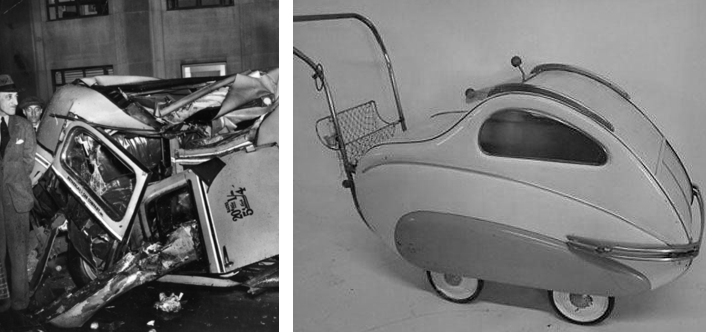
PERENNIAL PROBLEM…E.B. White noted that more than 51,000 Americans died in car accidents in an 18-month span, a number that is oddly similar to today’s statistics (although the U.S. has more than double the population today). At left, photo by Weegee (aka Arthur Fellig) of a wrecked taxicab in New York City, circa 1930s; at right, a streamlined baby buggy, 1930s. (Instagram/Pinterest)
…White also noted a number of cultural events, from airmailed lobsters to a new slogan for the State of Maine…
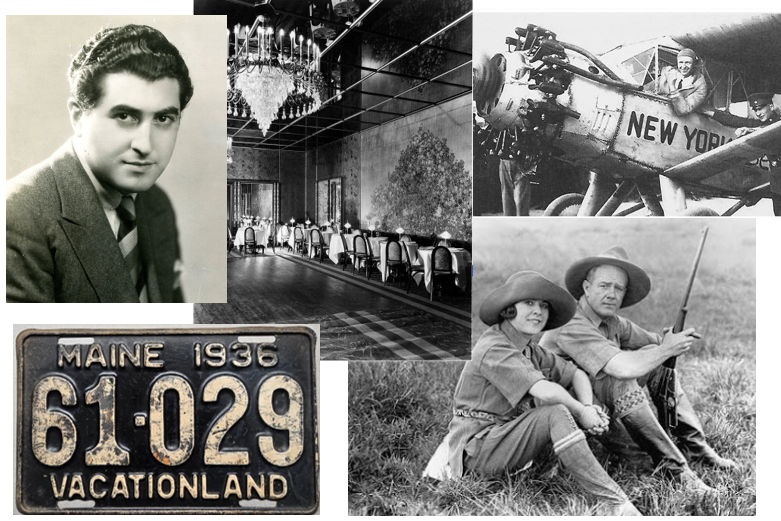
HODGEPODGE…Clockwise, from top left, Leo Reisman brought the sound of music to the beautiful Central Park Casino ballroom (adjoining photo), which was designed by Joseph Urban; in 1927 Clarence Chamberlain became the second man to pilot a fixed-wing aircraft across the Atlantic and the first to carry a transatlantic passenger—in 1935 he accepted a contract from boxer/restauranteur Jack Dempsey to fly two-hundred Maine lobsters to NYC; safari film celebrities Osa and Martin Johnson bought a picnic basket at Abercrombie & Fitch; the state of Maine announced plans to add “Vacationland” to license plates—a slogan still in use today. (IMDB/centralpark.org/alchetron.com/ebay)
* * *
Class Acts
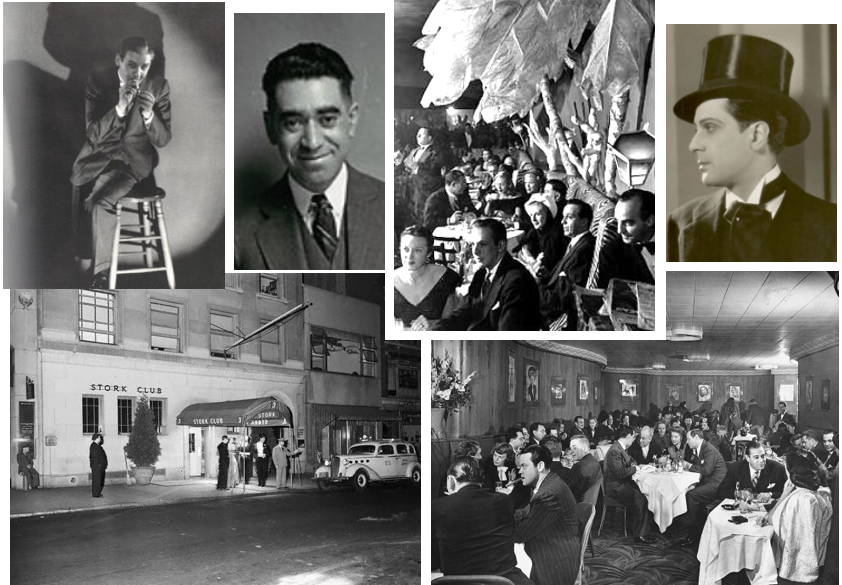
Lois Long continued to chronicle the nightlife scene in her “Tables For Two” column, observing the efforts of nightclub impresarios to promote their establishments as epitomes of sophistication.
WHY GO HOME?…Lois Long noted the many reasons why New Yorkers might stay out into the wee hours. Clockwise, from top left: Gossip columnist Walter Winchell as photographed by Edward Steichen in 1930; nightclub impersario and former Village speakeasy king Barney Gallant; the exclusive confines of El Morocco; Romanian-born American crooner and actor Georges Metaxa made the society ladies swoon at the Stork Club; the Stork Club’s Cub Room in 1944 occupied by Orson Welles (left) among other notables; entrance to the club, 1930s. (CondeNast/boweryboyshistory.com/Pinterest/Wikipedia/NYPL)
* * *
From Rough to Refined
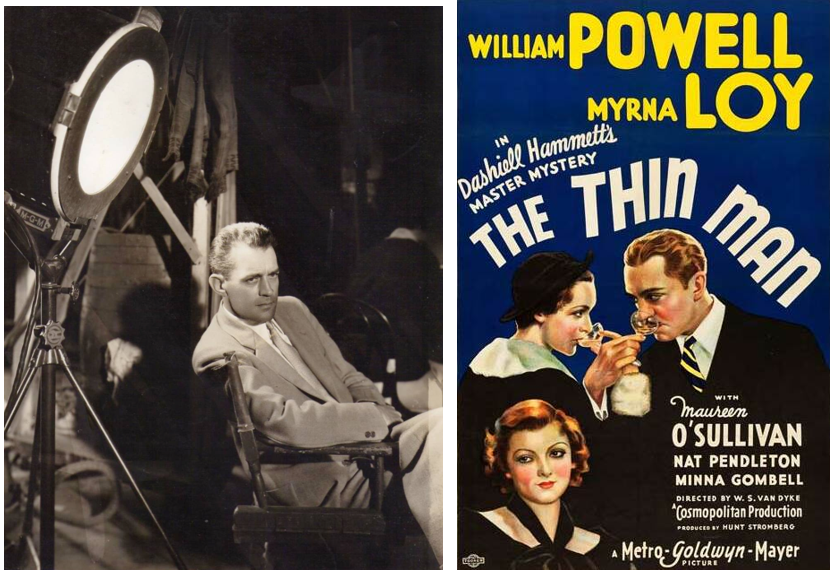
Alva Johnston profiled acclaimed film director W.S. Van Dyke (1889–1943), whom Johnston portrayed as a tough guy who slipped effortlessly from the rough and tumble world of Westerns to the sophisticated heights of high society films such as 1934’s The Thin Man.
LOW TO HIGH…W.S. Van Dyke moved from making Westerns to more sophisticated fare including 1934’s The Thin Man. (Facebook/Wikipedia)
* * *
Silly Mystification
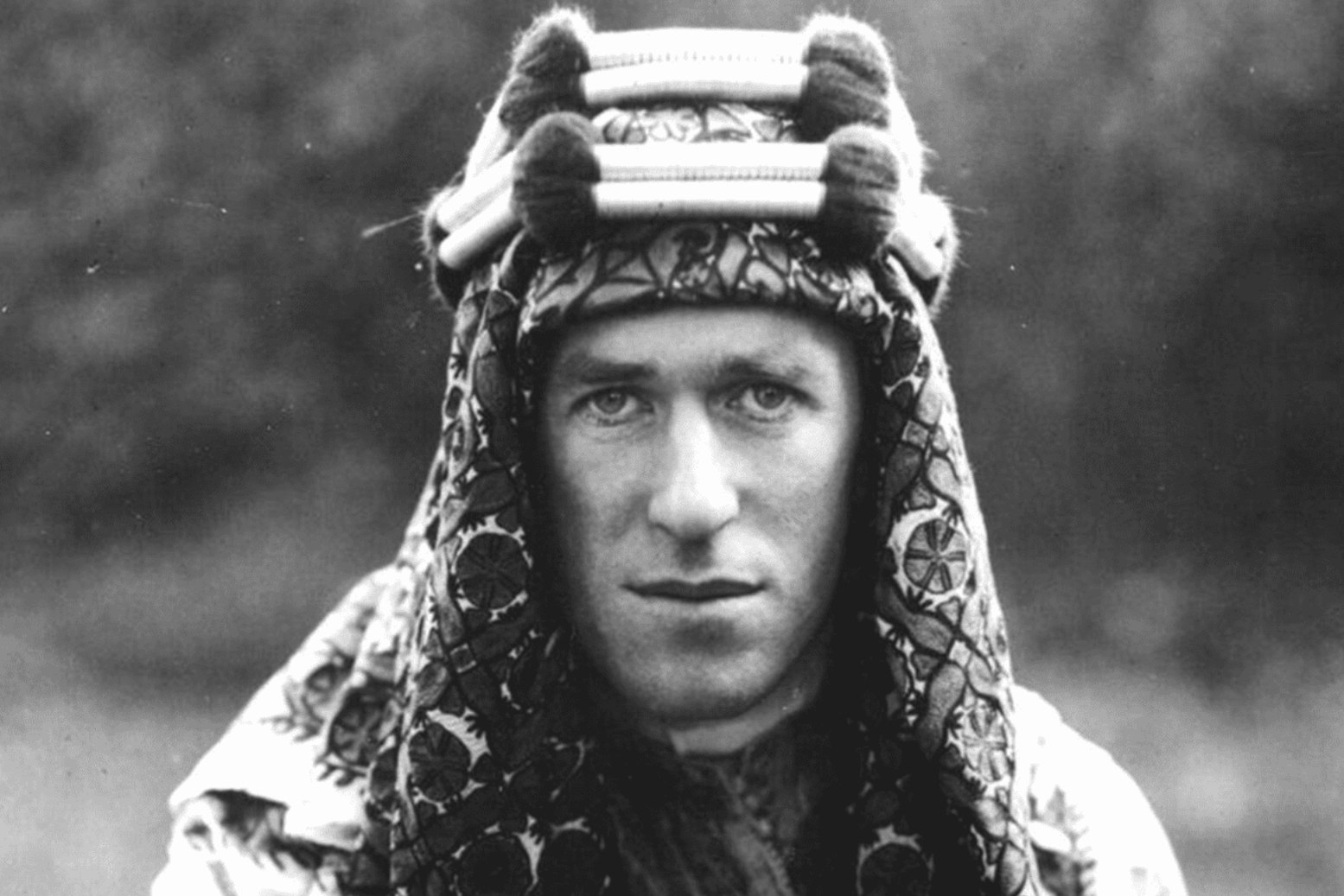
Book reviewer Clifton Fadiman began his review of T.E. Lawrence’sSeven Pillars of Wisdom by first clearing the air about the enigmatic writer and diplomat who had recently died in a motorcycle accident. “Wittingly or unwittingly, willingly or unwillingly, he exhaled during his lifetime a vapor of silly mystification,” Fadiman wrote about Lawrence, who was known to embellish accounts of his adventures in the Arab world. Here is an excerpt of the review:
LITERARY COSPLAY…T.E. Lawrence (1888-1935) in an undated photo. Writing for the New Criterion,David Fromkin noted the importance of Lawrence’s prestige to the British Empire. “T. E…was of his time and ours. Of all the public figures of the twentieth century, across a wide range of interests, issues, and attitudes, he best expresses the century. ” (The New Criterion)
* * *
At the Movies
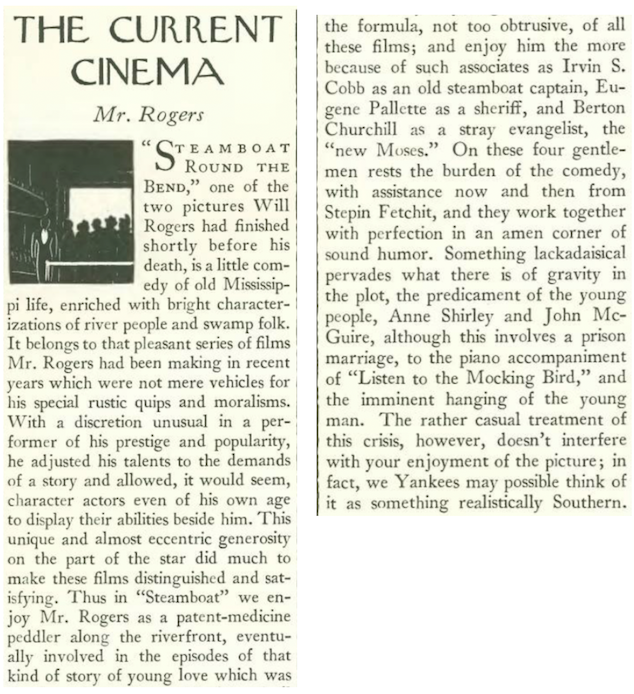
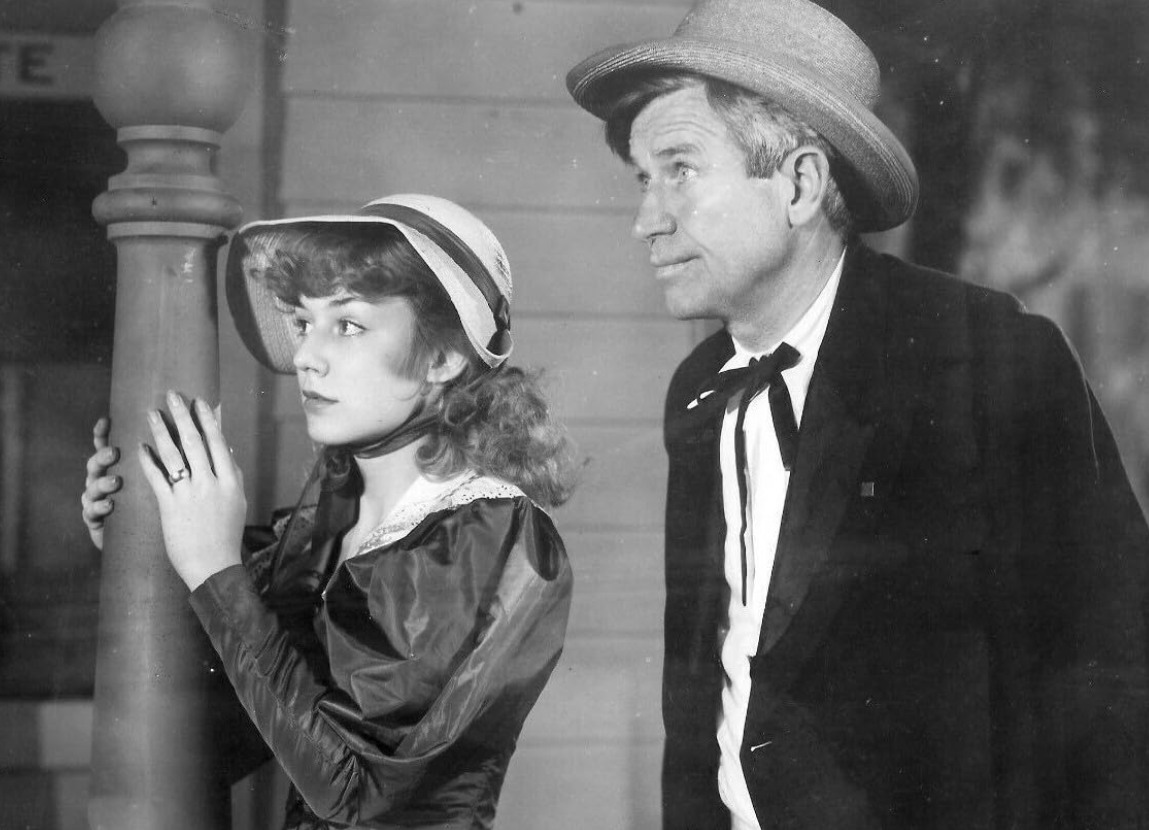
Critic John Mosher reviewed one of Will Rogers’ final films, Steamboat Round the Bend, released just weeks after Rogers’ death in an Alaska plane crash. Mosher found the film “satisfying.”
SOUTHERN CHARM was laid on thick in Steamboat Round the Bend, which featured Anne Shirley and Will Rogers in one of his final film roles (Rogers filmed In Old Kentucky before Steamboat, but In Old Kentucky wasn’t released until Nov. 22, 1935).
Mosher also took in another “revue” film, Broadway Melody of 1936, which served as a showcase of MGM’s star power.
THE MGM STABLE OF STARS showcased in Broadway Melody of 1936 included, at top, the elegant Eleanor Powell; below, Powell (left) joins brother-sister dancing team Buddy and Vilma Ebsen in a down-home skit. Buddy Ebsen’s “carefully preserved homeliness” (quoting John Mosher) served him well 27 years later when he was cast as Jed Clampett in TV’s The Beverly Hillbillies. (IMDB)
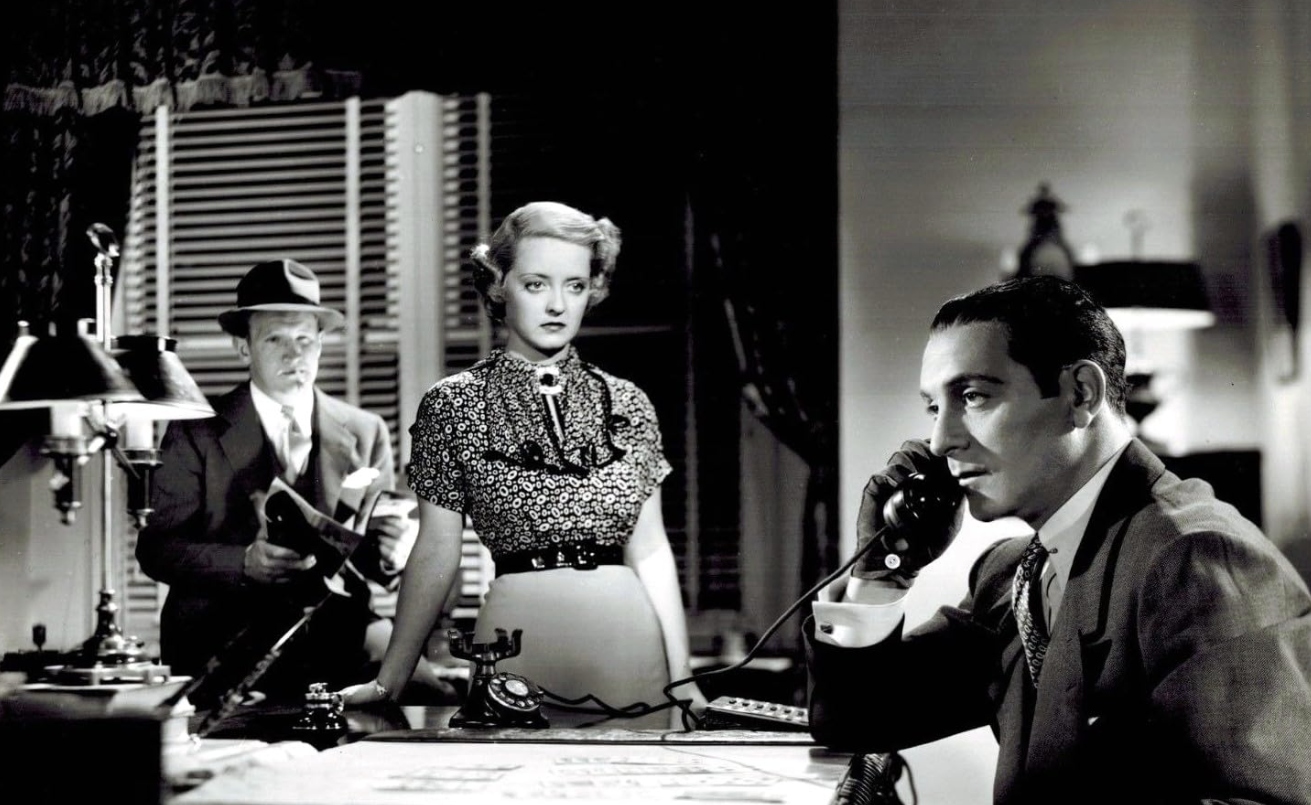
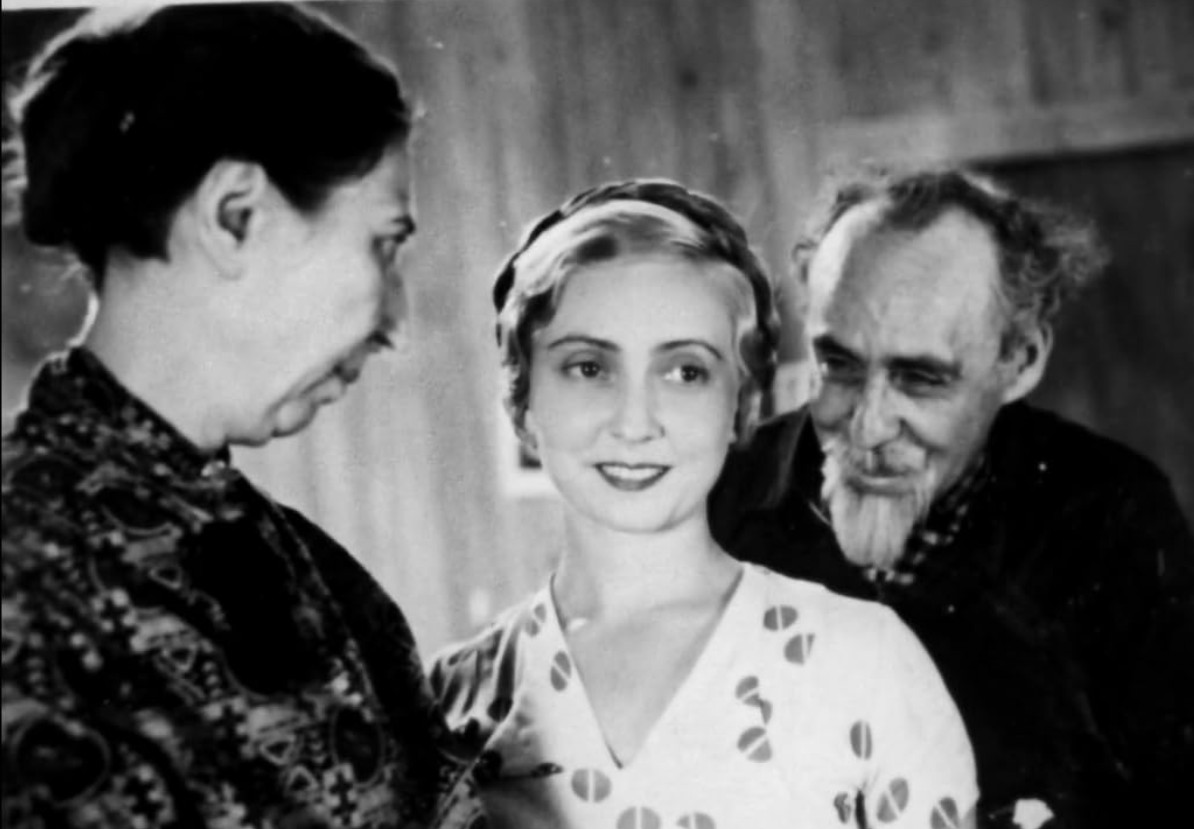
Mosher also endured a “perfunctory” performance by Bette Davis in Special Agent, and a “mousy” Madeleine Renaud in Maria Chapdelaine.
PHONING IT IN…Joe Sawyer, Bette Davis and Ricardo Cortez in Special Agent. (IMDB)NOT GAGA-WORTHY…Critic John Mosher thought French actress Madeleine Renaud (center) was too “mousy” to be cast against the rugged beauty of the Canadian frontier in 1934’s Maria Chapdelaine. Based on a romance novel written in 1913 by the French writer Louis Hémon, the film cast Renaud as a young woman enduring the hardships of rural Quebec while she is pursued by three suitors. An IMDB reviewer writes that this early Julien Duvivier film “is mostly of pictorial interest: the location shooting in Quebec is impressive, but the story is thin-to-nonexistent. Madeleine Renaud is cute but not magnetic enough to have three men going absolutely gaga over her.” (IMDB)
* * *
From Our Advertisers
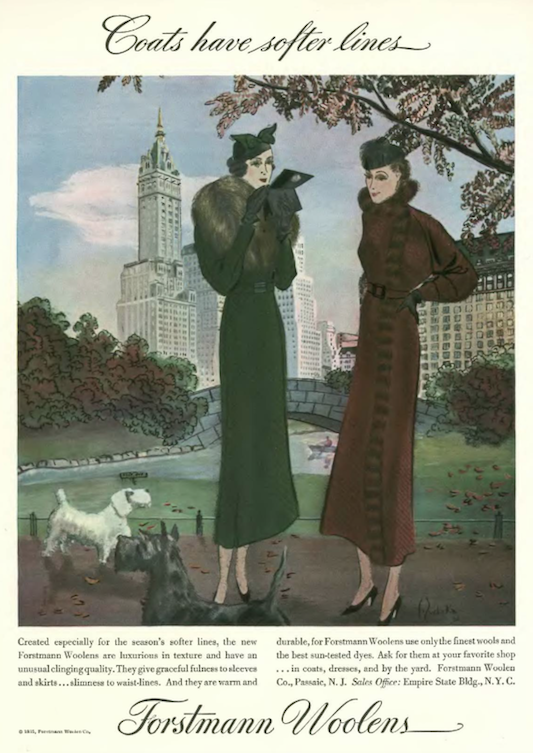
Forstmann Woolens kicks off our advertisements with this image of attenuated women posed in the autumnal landscape of Central Park…
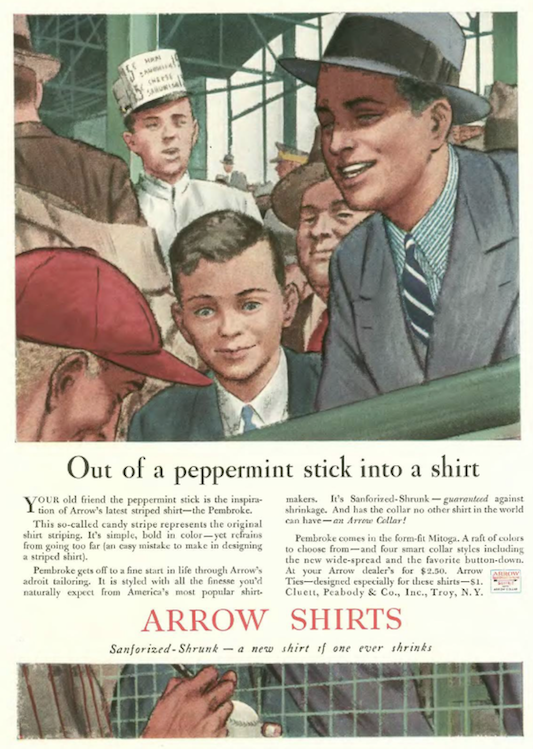
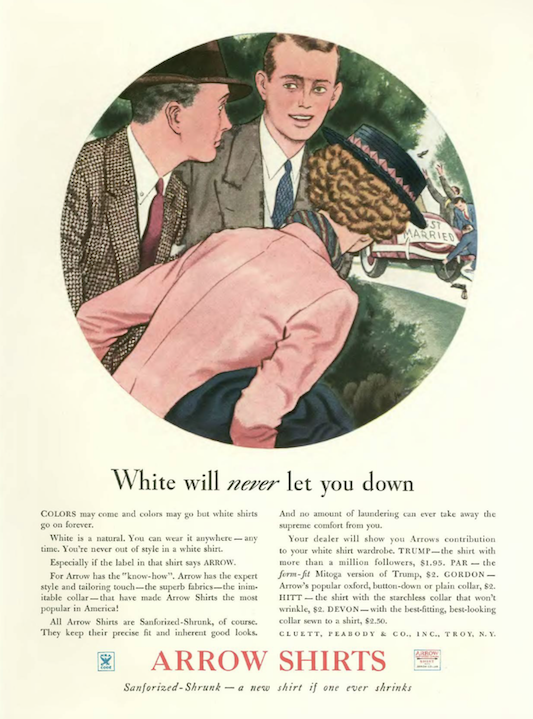
…what is notable about this Arrow Shirts ad is the formal attire of father and son at a baseball game, not at all unusual in 1935…
…Seagram’s continued its aggressive campaign to promote its lineup of seven “masterpieces”…
…Coca-Cola also had a substantial war chest, marketing its product for home consumption, which still seemed to be somewhat novel…
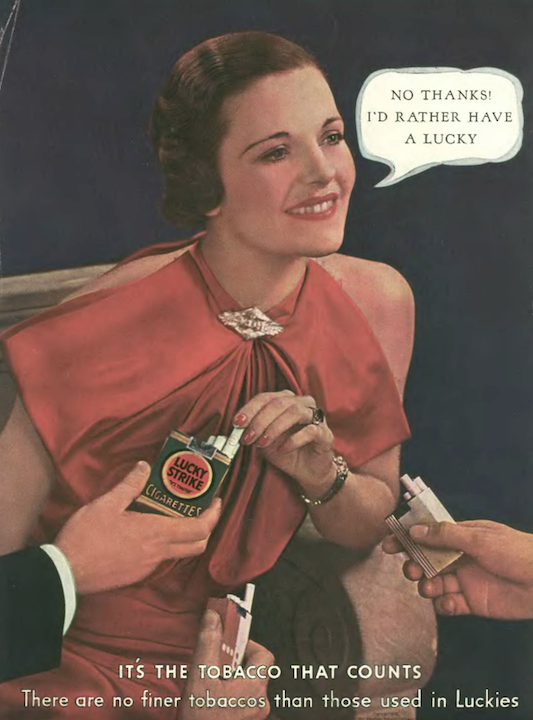
…the back page ad went to the makers of Lucky Strike, pursuing that growing market of women smokers…
…Richard Decker drew up an ad for a more wholesome product…
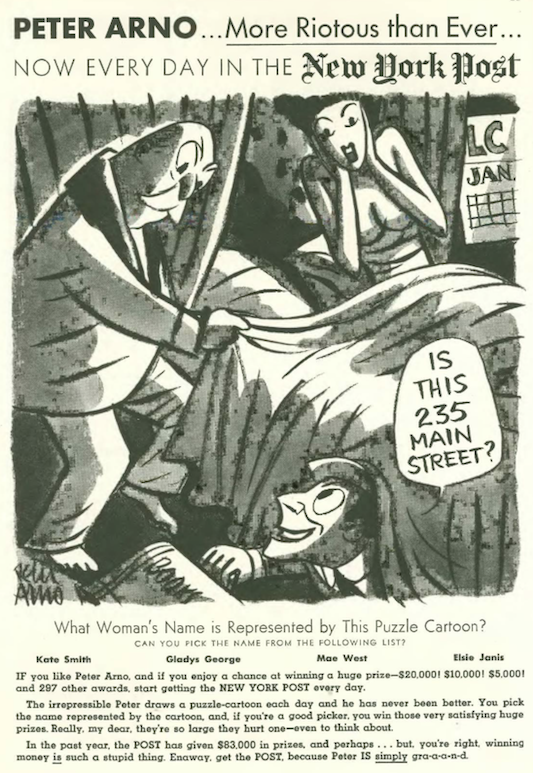
…while Peter Arno put pen to paper to promote his “puzzle-cartoons” in the New York Post…
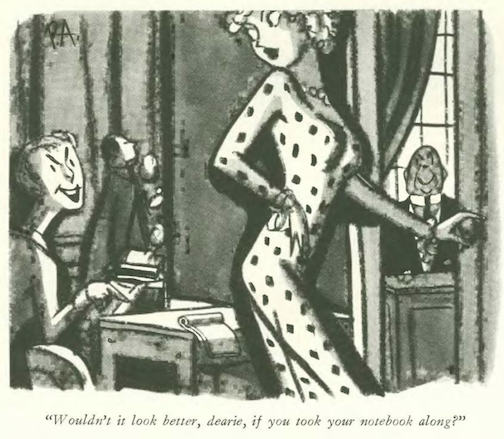
…which segues to our cartoon section, and Arno again with some office hijinks…
…Christina Malman’s wonderfully unique spot art was making regular appearances in the magazine’s pages…
…Perry Barlow served up some dinnertime etiquette…
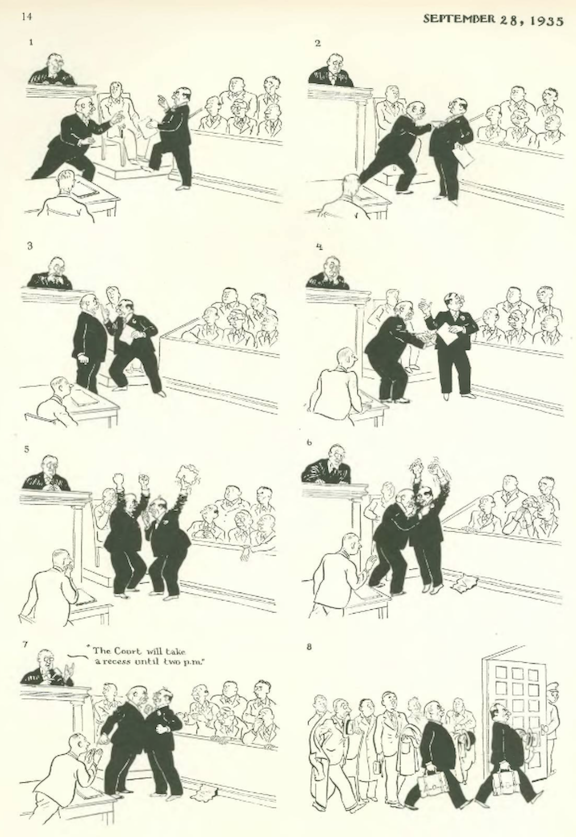
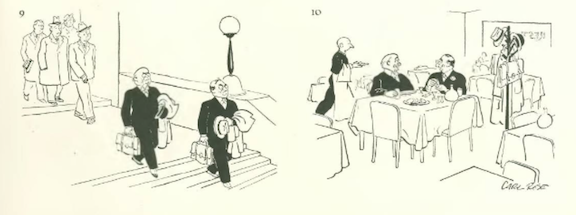
…Carl Rose found order in the court…
…James Thurber continued to mesmerize…
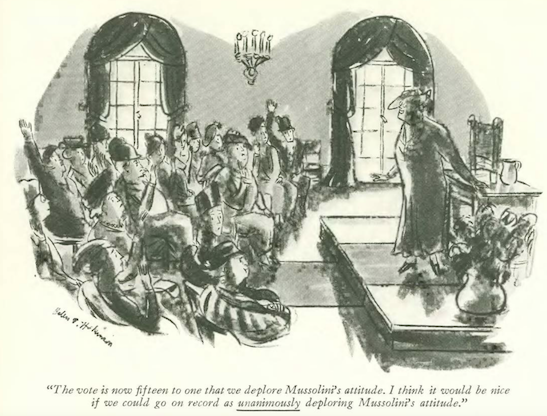
…Helen Hokinson’s Ladies Club took a stand against fascism…
…Alan Dunn looked in on a polite perp…
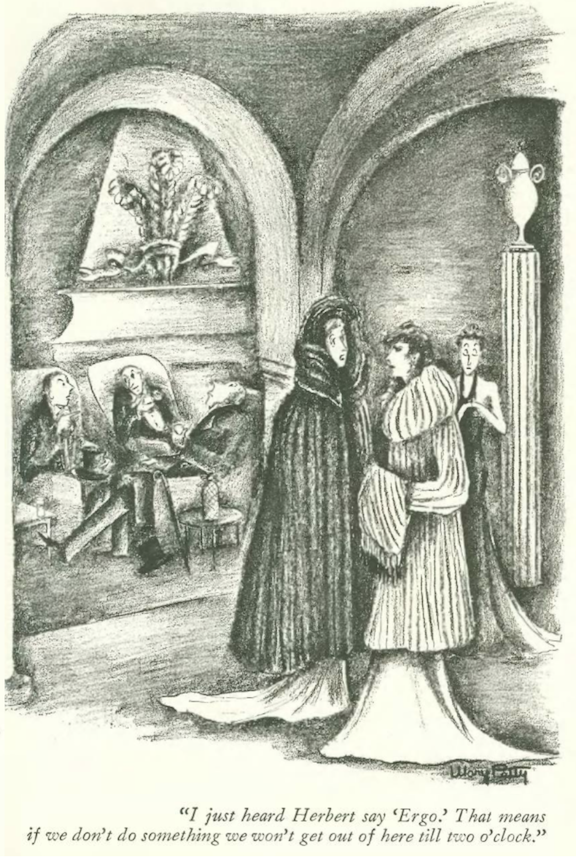
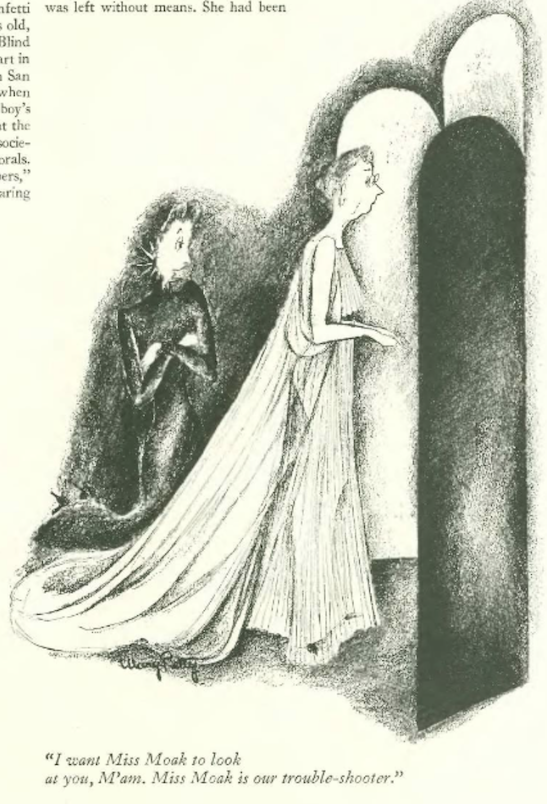
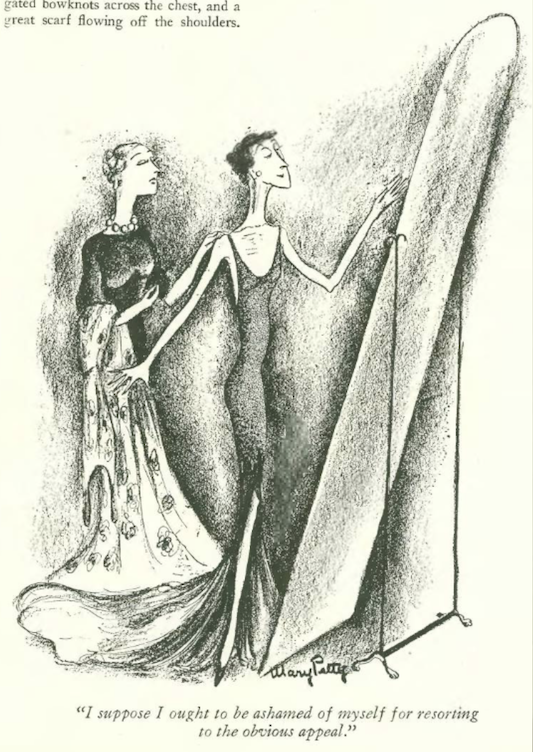
…Mary Petty encountered a challenge in a dress shop…
…Gilbert Bundy revealed an odd duck among the fox hunters…
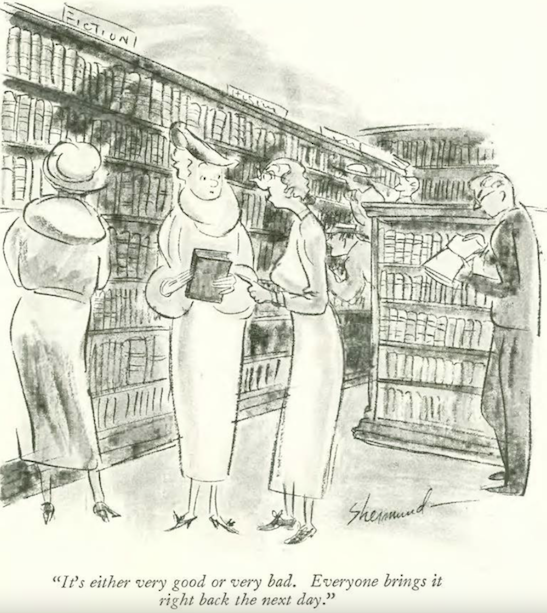
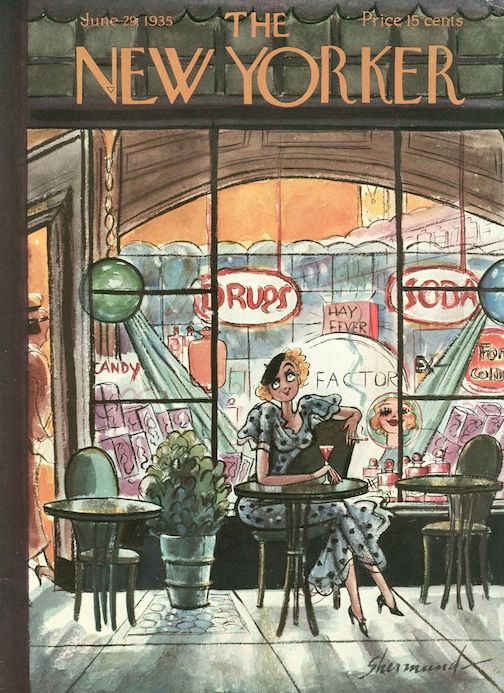
…and we close with Barbara Shermund, ready to curl up with a good (or bad) book…
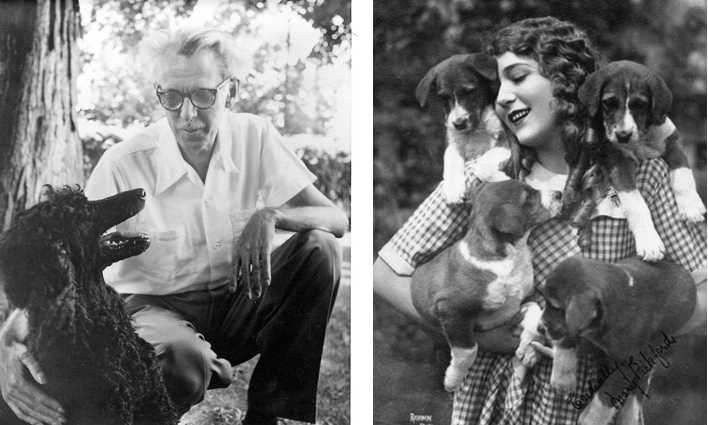
Above: James Thurber with his beloved Christabel, circa 1950s, and Mary Pickford enjoying some puppy love, circa 1920. (The Thurber Estate/Pinterest)
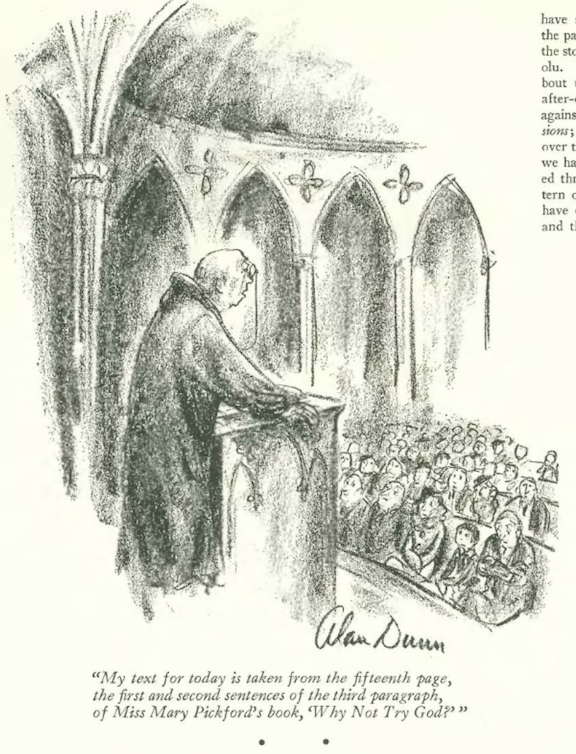
James Thurber and silent film star Mary Pickford had one thing in common; they loved their dogs.
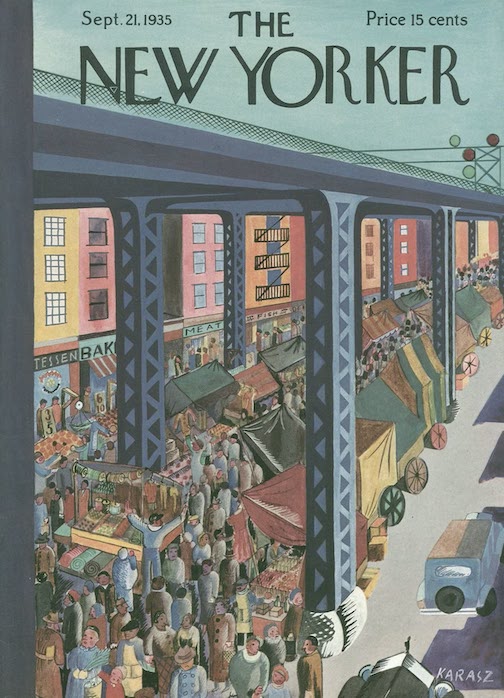
September 21, 1935 cover by Ilonka Karasz. Antiques magazine (March 8, 2018) described Karasz’s covers as “leafy modernism,” evolving from “dynamic modern depictions of urban life to enchanting, peaceful images of leisure activities…recording details like family picnics or the insects and flowers in her garden.” Many depict scenes around Brewster, New York, where she lived with husband, Willem Nyland, a Dutch-American chemist and pianist. Karasz contributed 186 covers across six decades, beginning with her first on April 4, 1925.
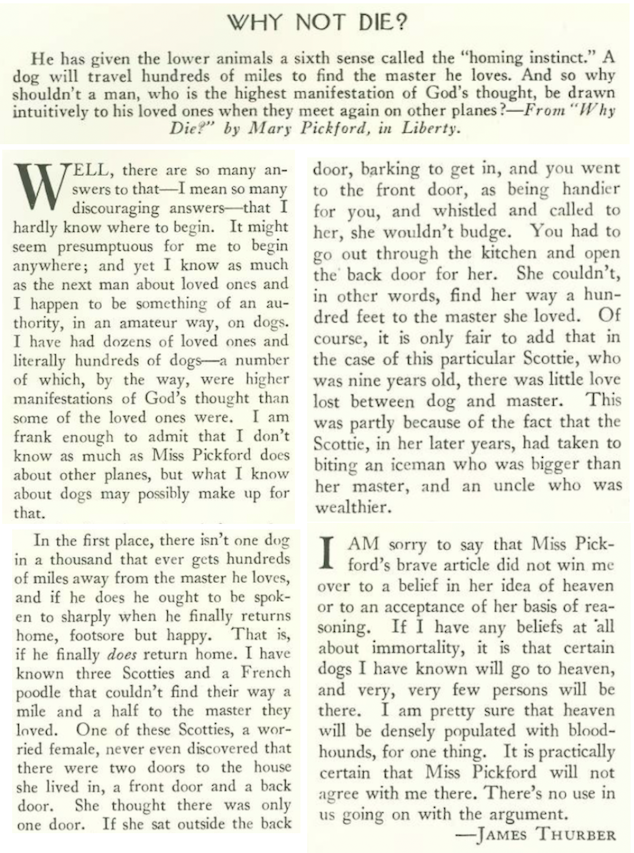
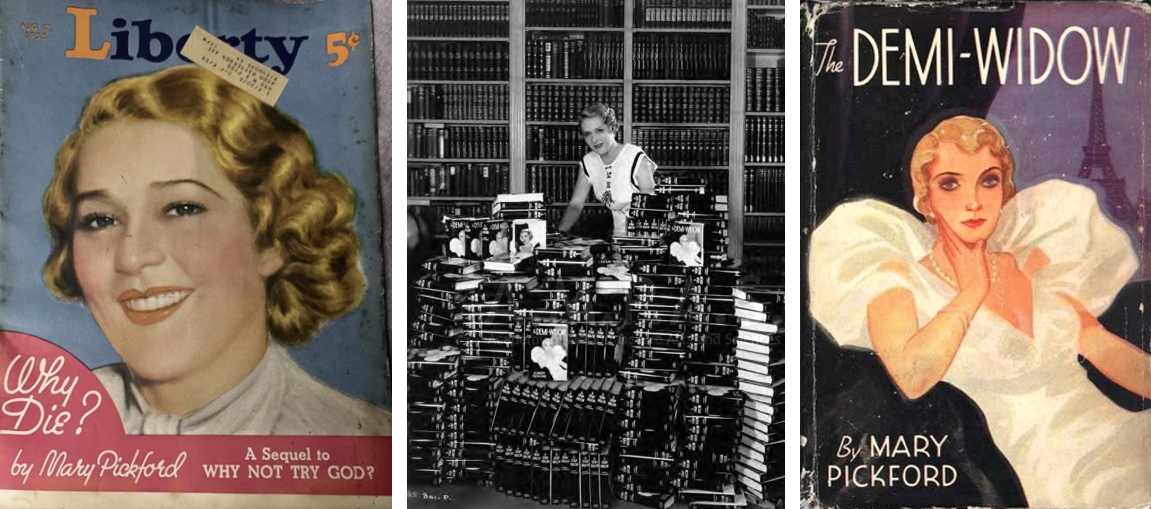
From that point of agreement, however, these contemporaries (Pickford was born in 1892; Thurber in 1894) diverged. Consider Thurber’s response (excerpted) to Pickford’s spiritual musings in a Liberty magazine article titled “Why Die?”
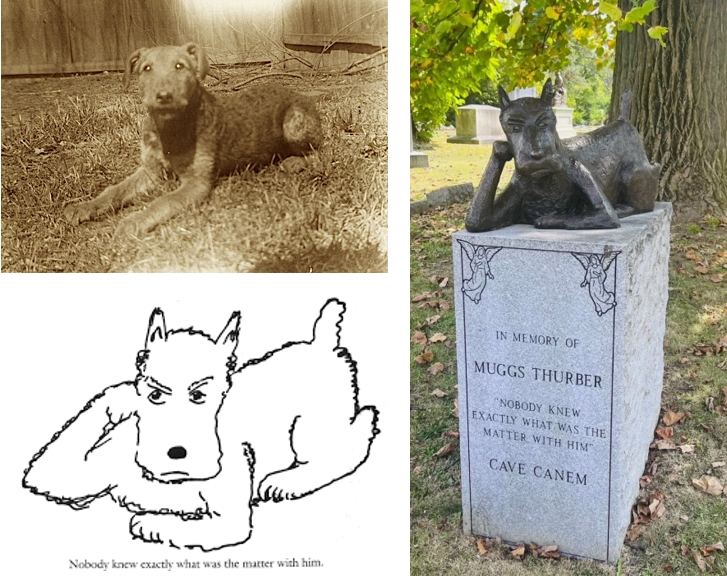
…Thurber contributed this spot drawing for his rebuttal…
ONE OF A KIND…James Thurber immortalized his Airdale, Muggs, in a 1933 story, “The Dog that Bit People.” Muggs, who died in 1928, has his own monument in Green Lawn Cemetery, Columbus, Ohio, installed in 2021. The inscription, taken from Thurber’s short story, reads, “Nobody knew exactly what was the matter with him.” (https://www.dispatch.com/Facebook)AMERICA’S SWEETHEART was well-known as animal lover. At left, Mary Pickford in 1916; at right, with husband Douglas Fairbanks at their mansion, Pickfair, in the 1920s. (Wikipedia/Pinterest)SECOND LIFE…Mary Pickford gave up acting in 1933 to pursue her writing career. In 1934 she penned the tract, Why Not Try God?, followed in 1935 by another spiritual bestseller, My Rendezvous with Life. That same year she also published a novel, The Demi-Widow. From left, cover of Liberty magazine with her essay, “Why Die?,” Aug. 18, 1935; Pickford posing with copies of The Demi-Widow, ca. 1935. Kirkus Reviews (Aug. 1, 1935) dubbed The Demi-Widow “Good hammock reading for hot days — light and not too dreadful froth…” (picclick.com.au/digitalcollections.oscars.org/Goodreads)
* * *
Rumble Humbled
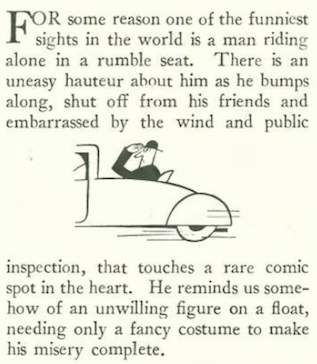
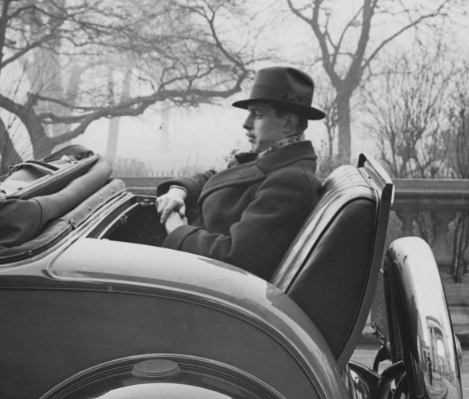
In his “Notes and Comment” E.B. White observed the absurdity of a grown man riding alone in a rumble seat. These seats were phased out by 1939 in American autos (the British, who called them “dickies,” abandoned them a decade later). Rumble seats were unsafe, to be sure, but it was also unpleasant to sit near the exhaust pipe and collect the dust, grit and bugs that would merrily dance around one’s eyes, nose and mouth.
BONE RATTLER…Detail from a photo of man riding in a rumble seat, 1935. (General Photographic Agency/Hulton Archive/Getty Images)
A Red By Any Other Name
White also considered the intentions behind a new book by Robert Forsythe, Redder Than a Rose. Kyle Crichton (1896-1960) used the Forsythe nom de plume whenever he wrote for communist publications such as the Daily Worker. A former coal miner and steel worker, Crichton was also a writer and editor for Collier’s magazine.
* * *
Fight Night
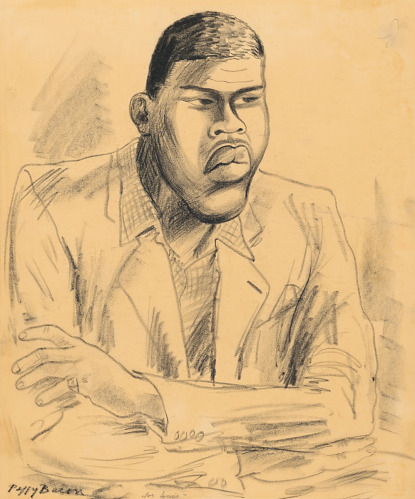
In anticipation of the boxing match between Joe Louis and Max Baer, The New Yorker featured a Peggy Bacon portrait of Louis at the bottom of its events section, which also contained a listing under “Sports” of the upcoming fight at Yankee Stadium. The caption below the Louis portrait was a quote attributed to Bacon: An out-size in juveniles, simple, unruffled, a shade sullen, practically expressionless, hoarding his energies with the inarticulate dignity and pride of some monster vegetable.–P.B.
a better view of Peggy Bacon’s portrait of Joe Louis…
(Smithsonian National Portrait Gallery)
* * *
At the Movies
Well, the fun couldn’t last forever, as critic John Mosher discovered with the latest batch of films to roll out of Tinseltown. Here he tried to make sense of The Big Broadcast of 1936, and gave a closing nod to Dorothy Parker.
A LITTLE OF THIS, A LITTLE OF THAT…Theatre card promoting the appearances of Gracie Allen and George Burns in The Big Broadcast of 1936. These films were essentially long promo pieces for Paramount’s stable of stars. (IMDB)
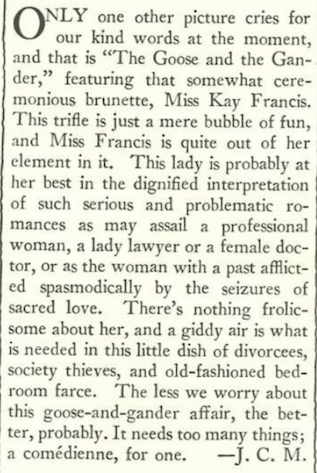
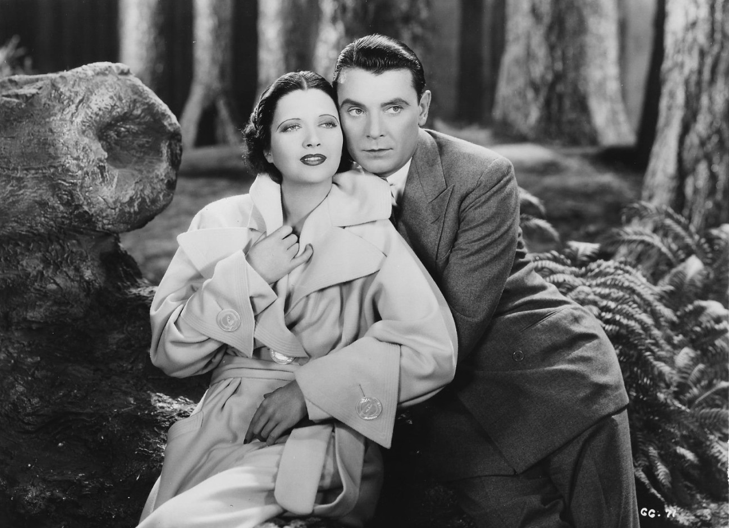
Mosher also took in The Goose and the Gander, featuring Kay Francis, one of Warner Brothers’ biggest stars and one of Hollywood’s highest-paid actors. Known for her roles as a long-suffering heroine and her lavish wardrobes, Mosher found Francis ill-suited to a comedic role.
NEEDED A BIT MORE GOOSE…Kay Francis and George Brent in The Goose and the Gander. (IMDB)
* * *
From Our Advertisers
The 1920s and 30s saw a proliferation of all sorts of electric gadgets, one of them being the toaster, here serving as a centerpiece for a cocktail party…
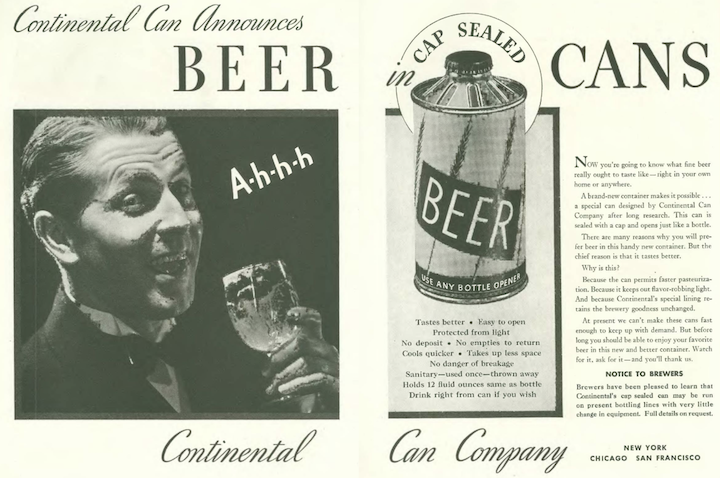
…before 1935 beer cans were not feasible because they couldn’t withstand the internal pressure of a carbonated liquid…it was the American Can Company (not Continental) that solved the problem by developing an internally-lined can that could contain the pressure…the lining also prevented the beer from tasting metallic…
…R.J. Reynolds continued to build its tobacco empire by lining up scads of famous athletes to endorse the health benefits of their Camel cigarettes…
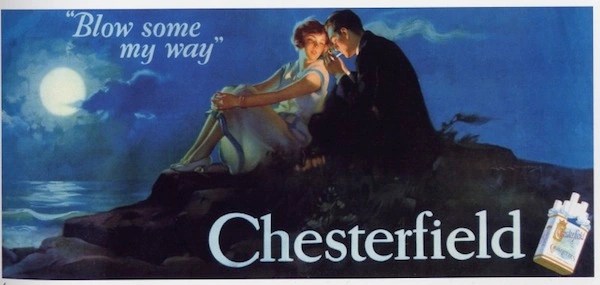
… Liggett & Myers, who in 1926 launched their “Blow some my way” advertising campaign to target women smokers, continued to employ images of young lovers in romantic settings to push their Chesterfields…
…for reference, a Chesterfield ad from 1931…
…on to our cartoons, we start with this spot from Perry Barlow…
…Alain looked in on a tender moment between father and son…
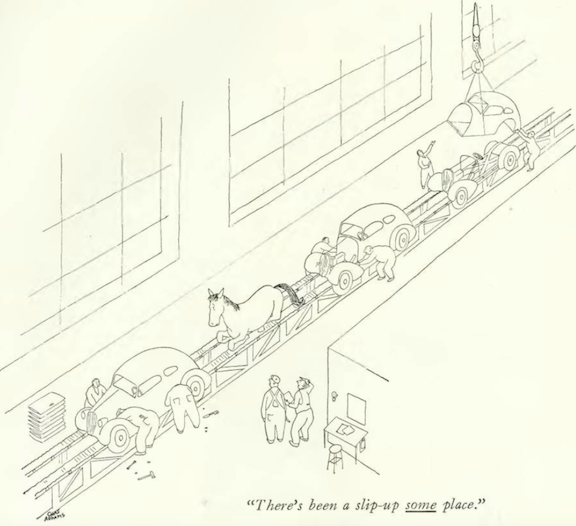
…Charles Addams found a glitch on the assembly line…
…Peter Arno drew up two old toffs looking for some adventure…
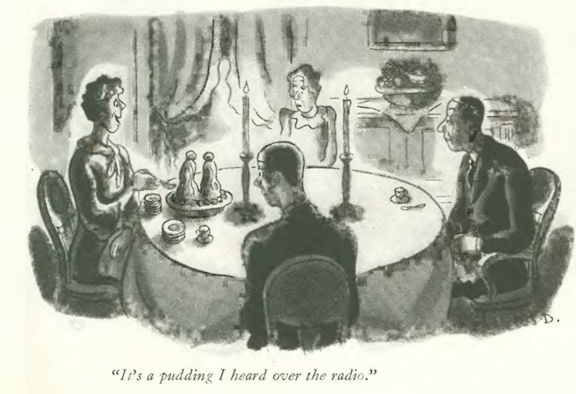
…Robert Day offered up the latest twist in the culinary arts…
…and we close with Helen Hokinson, who was just passing the time…
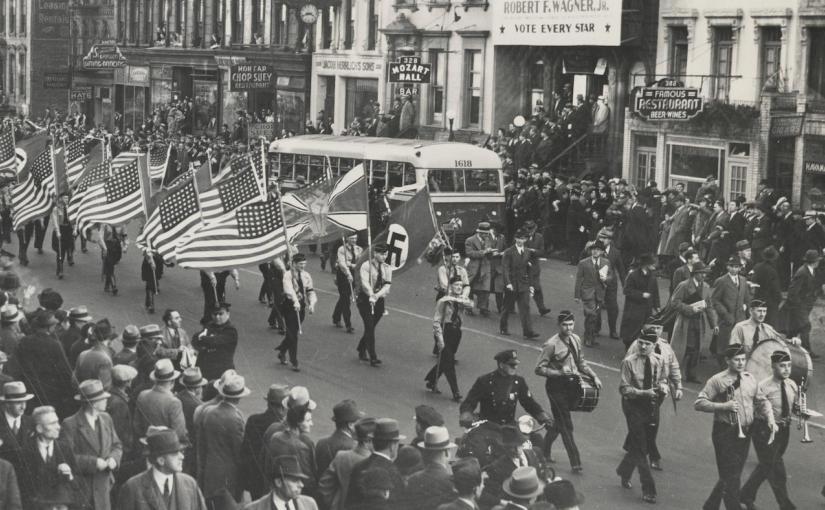
Above: A German American Bund parade in New York City on East 86th Street. Oct. 30, 1937. (Library of Congress)
Among the many ethnic enclaves of 1930s New York City was a neighborhood that was feeling the influence of world events, and not necessarily in a good way.
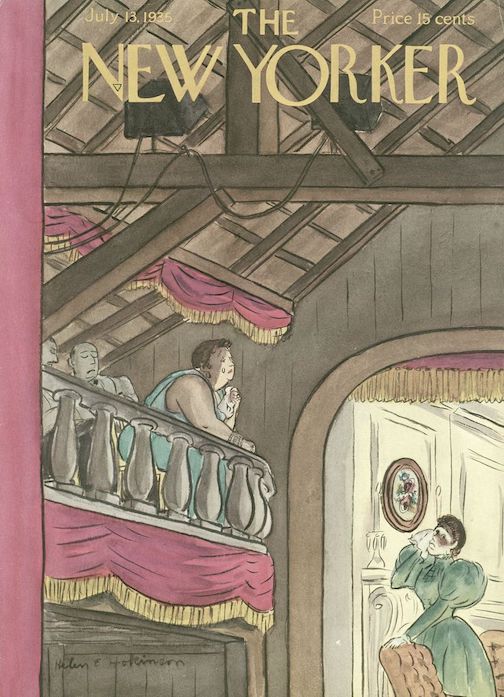
July 13, 1935 cover by Helen Hokinson. One of the first cartoonists to be published in The New Yorker, she appeared in the magazine for the first time in the July 4, 1925 issue. She contributed 68 covers and more than 1,800 cartoons to the magazine.
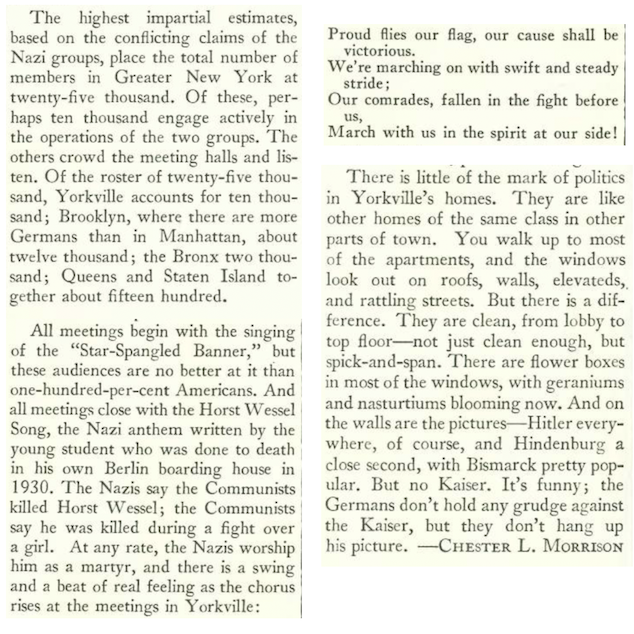
Journalist Chester L. Morrison looked at life among German immigrants on the Upper East Side for “A Reporter at Large.” Under the title “Muenchen Im Kleinen” (Little Munich), Morrison examined the everyday life of the Yorkville district between East 79th and East 96th streets.
Germans had settled in New York City almost from its first days, and by 1885 the city had the third-largest German-speaking population in the world, outside of Vienna and Berlin, the majority settling in what is today the East Village. Following the General Slocum disaster in 1904, German settlement migrated to Yorkville, which was commonly referred to as Germantown. Here are excerpts of Morrison’s observations:
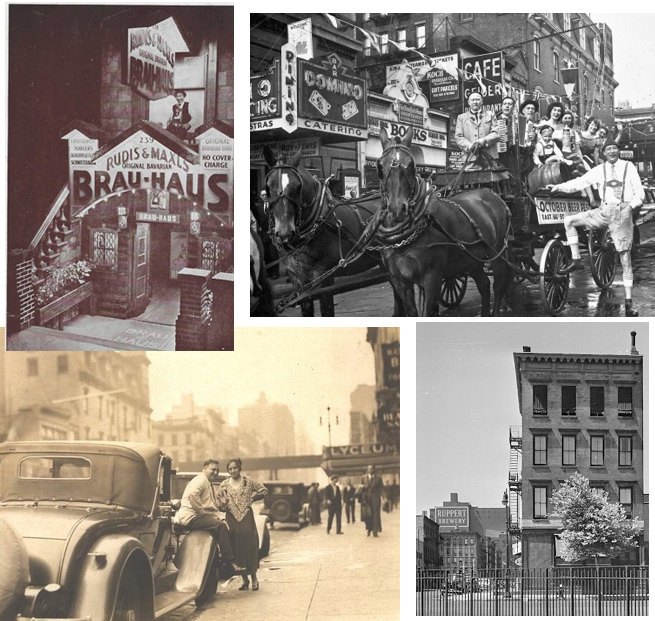
ENCLAVE…Clockwise, from top left, Rudi and Maxl’s Brau-Haus at 239 East 86th; Oktoberfest celebration in Yorkville, undated; Walker Evans photo with Rupert Brewery sign in the background; the Yorkville neighborhood in the 1930s with the old Third Avenue El in the background. (postcardhistory.net/boweryboyshistory.com/metmuseum/gothamcenter.org)
With the rise of the Nazi Party in Germany in the 1930s, a pro-Hitler group called the German-American Bund began to organize street rallies and marches on 86th Street and on 2nd Avenue. Although they represented a minority of German settlers, the Bund made itself visible in parades and other public events that culminated in a mass demonstration at Madison Square Garden in 1939. The Bund also organized training camps for young men outside of the city, such as Camp Siegfried in Yaphank, L.I.
Morrison noted that Yorkville homes looked like many others across the city, that is until you saw the pictures on their walls.
SCOUT’S HONOR?…At a German-American Bund camp in Andover, New Jersey, young campers stand at attention as the American flag and the German-American Youth Movement flag are lowered at sundown, July 21, 1937. (AP)THE MADNESS OF CROWDS…A German-American Bund color guard marches through Madison Square Garden, Feb. 20, 1939. (AP)
* * *
Garden Varieties
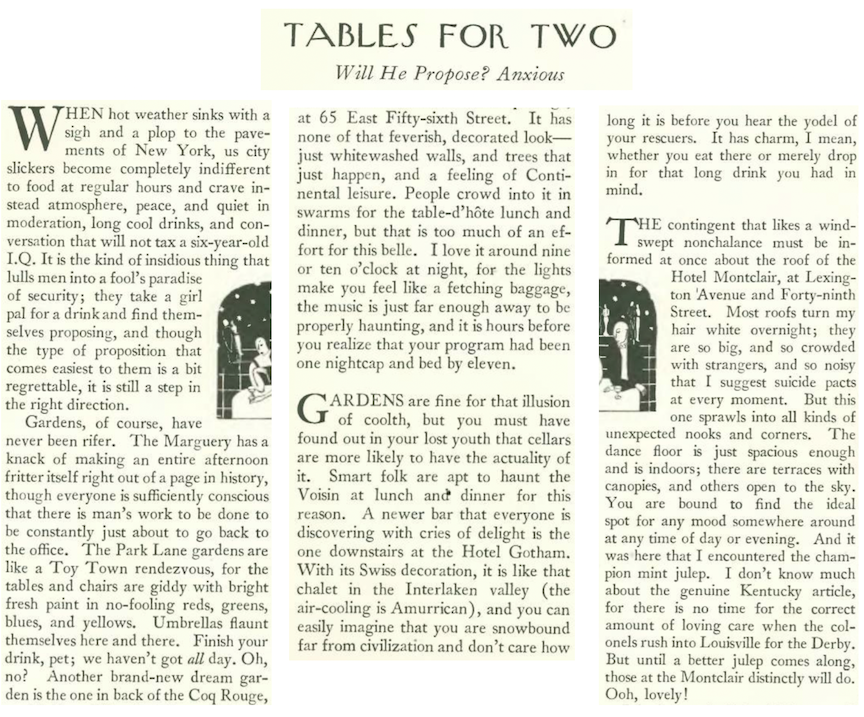
Now for a palate cleanser as we turn to Lois Long and her “Tables For Two” column, in which she examined the confluence of hotel gardens and marriage proposals. Excerpts:
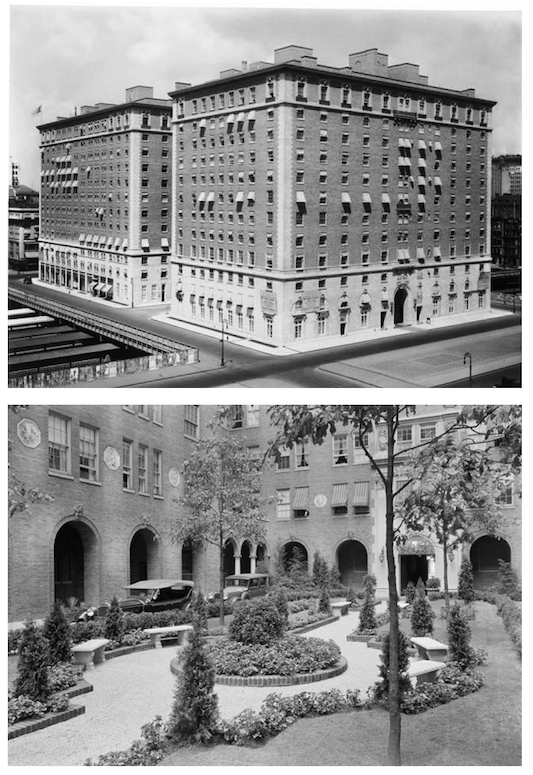
OASIS…Lois Long recommended the Hotel Marguery’s formal garden as a place to “fritter away” an afternoon. The hotel was demolished in 1957 to make way for the Union Carbide Building. (Museum of the City of New York)A COOL, SWISS CHALET was how Long described the new Alpine Room in the basement of the Gotham Hotel. (daytoninmanhattan.blogspot.com)
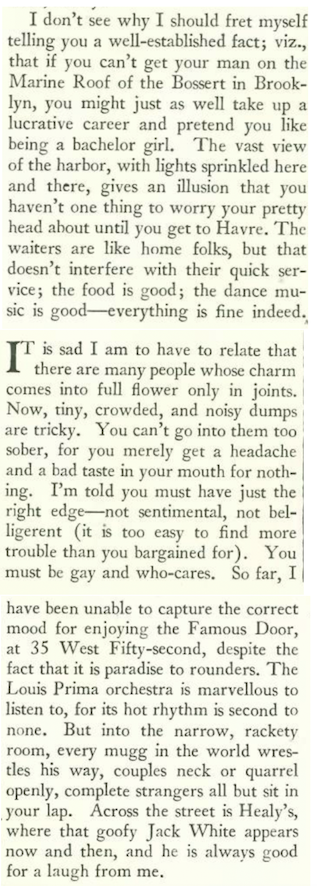
Long continued as she set her sights on Brooklyn…
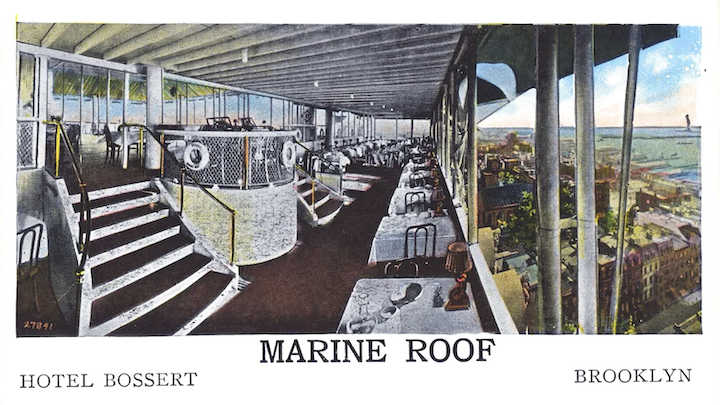
HE WILL LIKELY SAY YES, according to Long, if you got your beau to accompany you to the roof of the Hotel Bossert in Brooklyn. (brownstoner.com)THE TUNEFUL SURROUNDINGS of the Famous Door were a bit too crowded for Long, however this group seems to have had plenty of room to enjoy the greats Ben Webster, Eddie Barefield, Buck Clayton, and Benny Morton on stage at the Famous Door in 1947. (Wikipedia)
* * *
Monster Mash-up
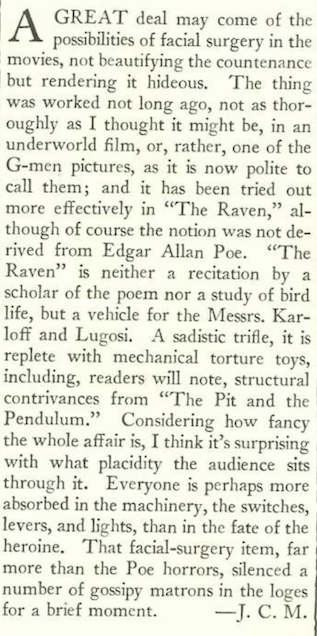
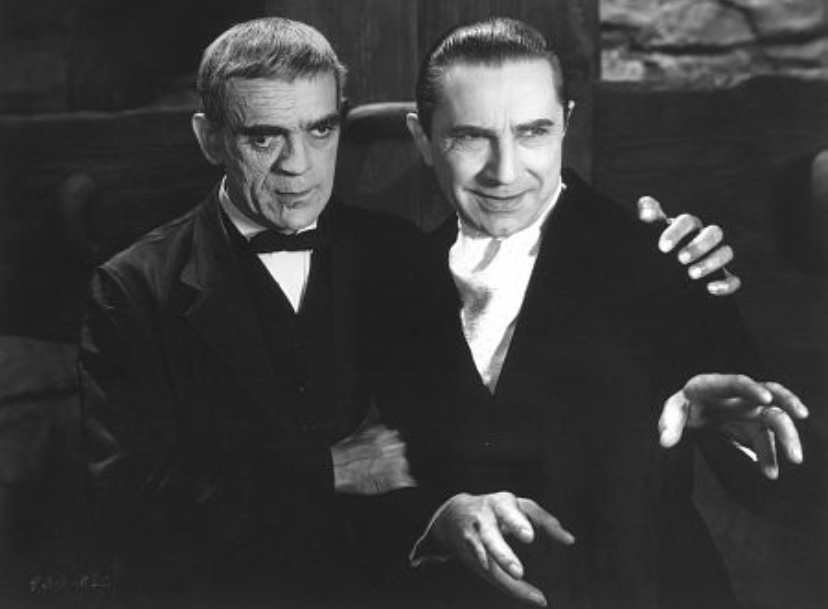
Boris Karloff and Bela Lugosi are synonymous with 1930s monster flicks (they did eight together) but their latest outing, The Raven, left critic John Mosher wondering where the Poe was in the midst of this “sadistic trifle.”
BUDDY FILM…The Raven (which had almost nothing to do with Edgar Allen Poe’s famous narrative poem) was the third of eight films that featured Boris Karloff and Bela Lugosi. According to film historian Karina Longworth, thanks to a wave of monster movie hits in the 1930s, these two middle-aged, foreign, struggling actors became huge stars. (cerealatmidnight.com)TYPECAST? WHO CARES?…Bela Lugosi and Boris Karloff in 1932. Despite being monster movie rivals, the two seemed get along well off-screen, perhaps appreciating their mutual good fortune. (beladraculalugosi.wordpress.com)
* * *
Ode to Education
Clarence Day, best known for his Life With Father stories, also contributed a number of cartoons to The New Yorker that were accompanied by satirical poems…here he examines attempts at education in the arts and sciences…
* * *
From Our Advertisers
We start at the back of the book, and a couple of one-column ads (appearing on the opposite sides of the same page) that catered to very different clientele…
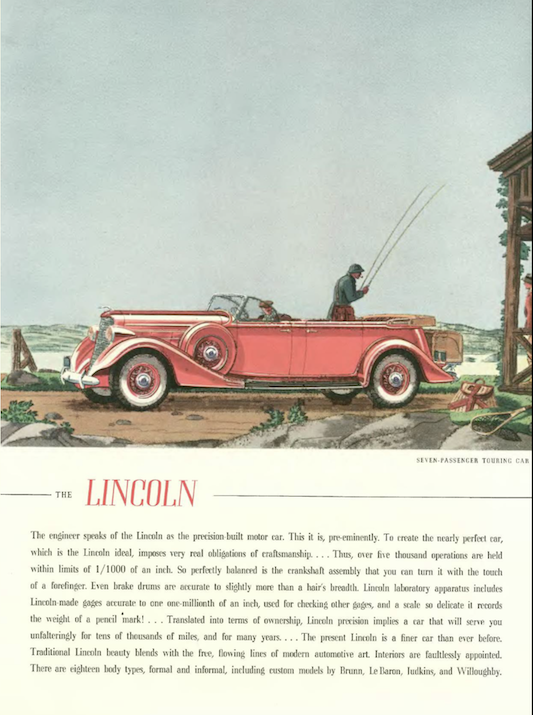
…the makers of Lincoln luxury cars knew the type of client they were fishing for here…
…pin-up artist George Petty continued exploring his beauty and the beast theme on behalf of Old Gold cigarettes…
…and Camel offered more reasons why you should smoke your way to athletic glory…
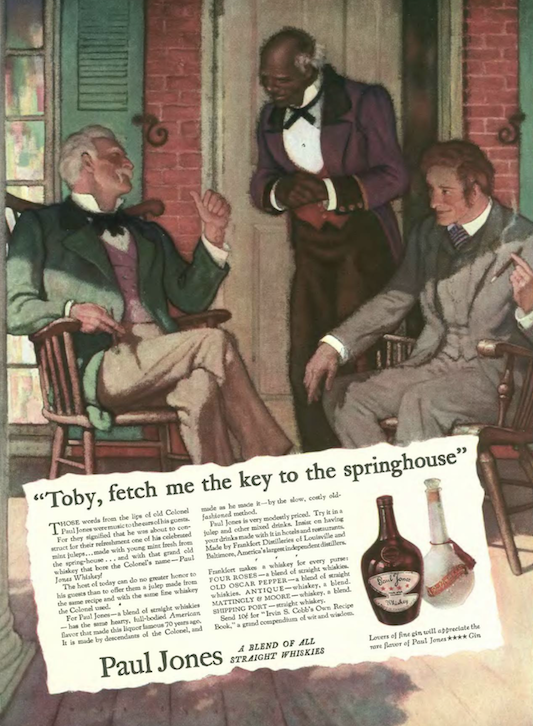
…this inside back cover advertisement reminds us that we are indeed back in 1935…
…as does this one from Dr. Seuss, with a shot of insecticide for a talking toddler…
…on to our cartoonists, beginning with Charles Addams and some Navy hijincks…
…Gluyas Williams offered his latest take on American club life…
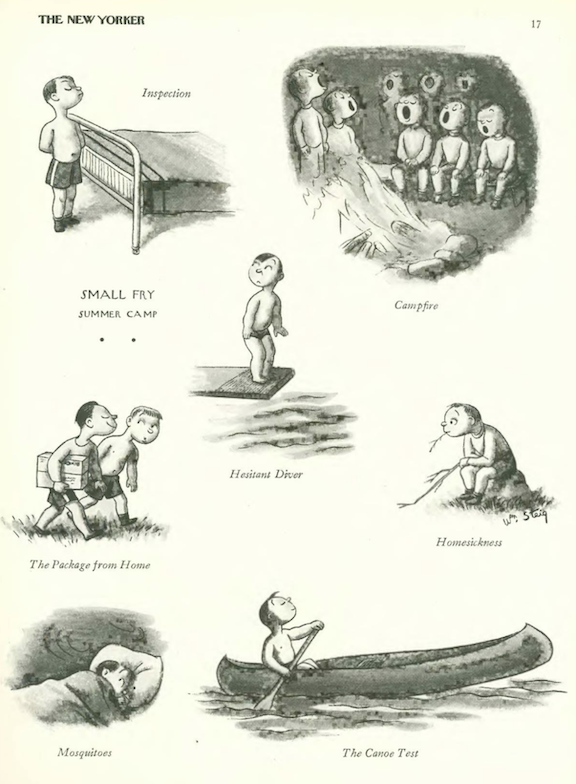
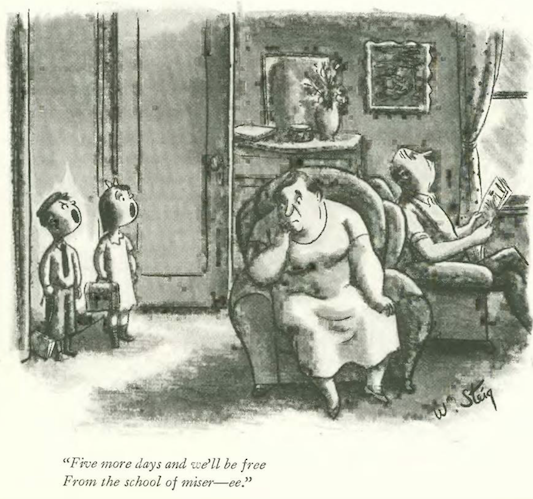
…William Steig took us to summer camp…
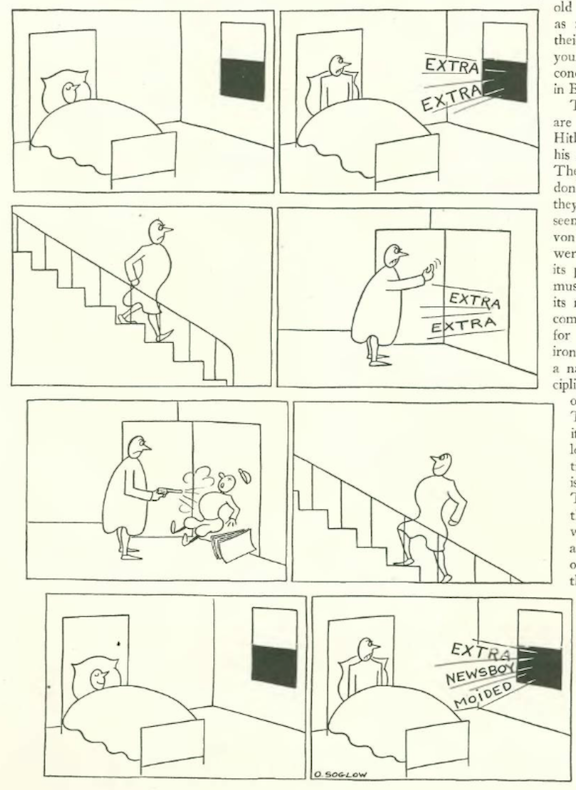
…Otto Soglow looked for a good night’s rest…
…Mary Petty explored the latest in bathing fashions…
…Perry Barlow introduced us to some proud parents…
…and to close with Helen Hokinson, who showed us some innocents abroad…
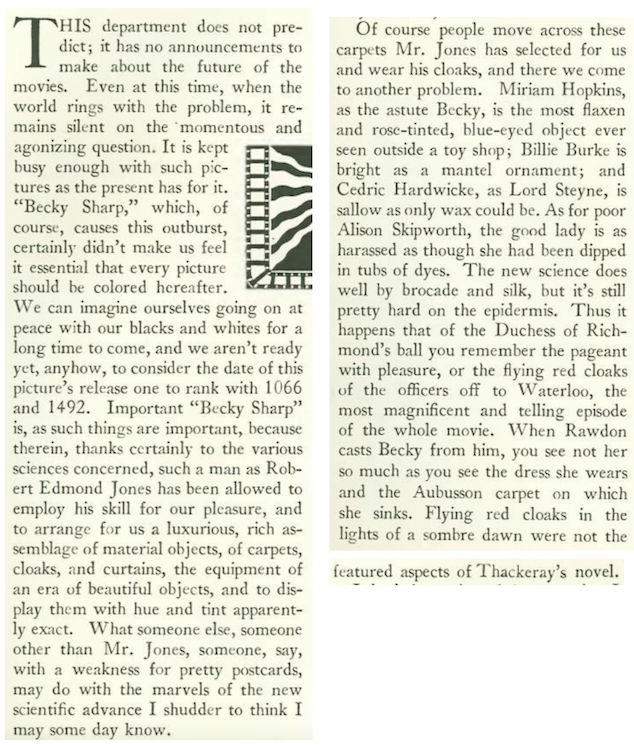
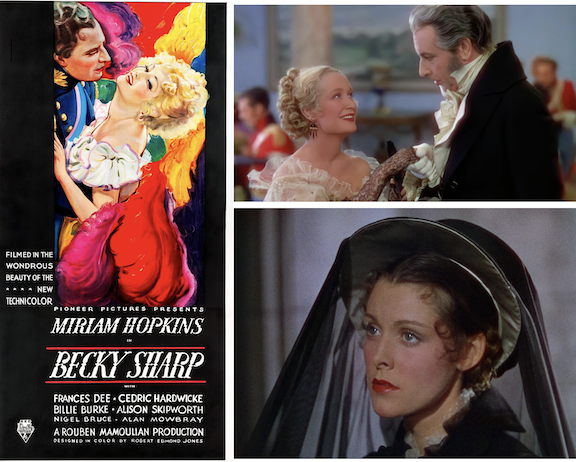
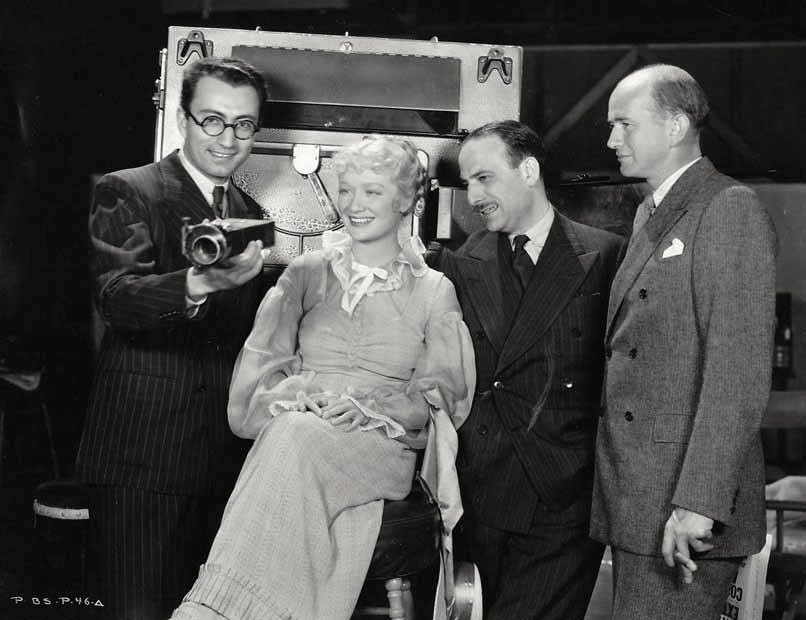
Above: Seated in front of a massive Technicolor camera, Rouben Mamoulian directs Miriam Hopkins (also inset) in Becky Sharp, the first feature shot entirely in three-color Technicolor. The film was based on character from William Makepeace Thackeray's 1848 novel Vanity Fair. (UCLA Film & Television Archive)
Rouben Mamoulian’s 1935 production of Becky Sharp wasn’t the first color film, but it was the first feature film to use the newly developed three-strip Technicolor process throughout, setting a standard for color films to come.
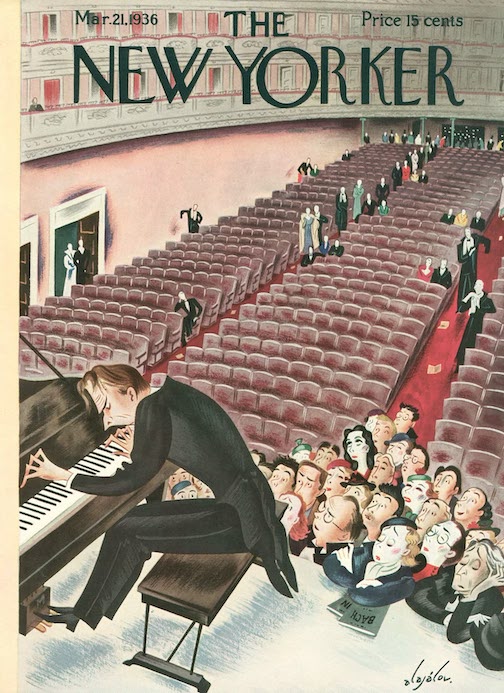
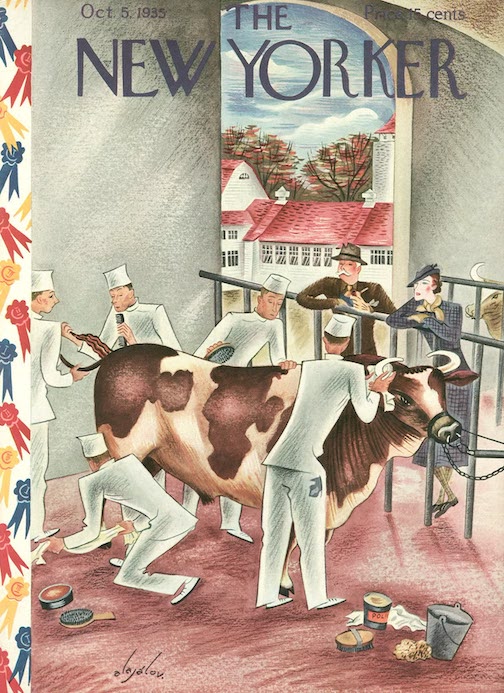
June 22, 1935 cover by Constantin Alajalov. A New Yorker contributor for thirty-four years, Alajalov (1900–1987) illustrated 170 covers for the magazine. Check out the treasure trove at Ink Spillfor more on Alajalov and all things New Yorker.
Earlier color processes included films that were hand-tinted. Others used various dyes and techniques that included photographing a black-and-white film behind alternating red/orange and blue/green filters, and then projecting them through red and green filters. The inability to reproduce the full color spectrum, among other issues, had many critics dismissing the idea of color films altogether.
Mamoulian was fascinated by the possibilities of color film; by producing (and later directing) the film, he showcased the advancements in Technicolor. Film critic John Mosher had these observations:
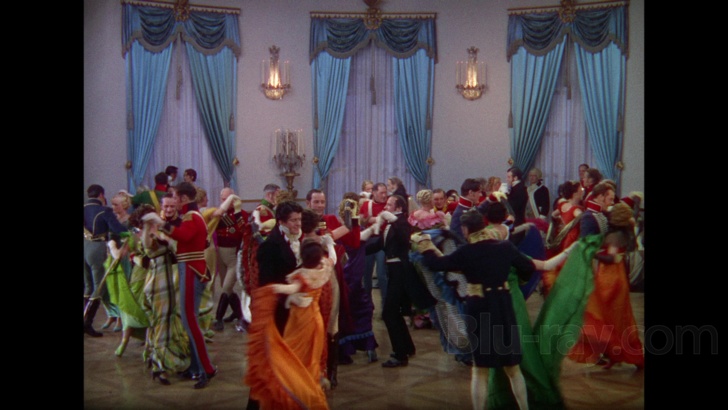
THIS IS A TEST…Considered a landmark in cinema as the first feature film to use the newly developed three-strip Technicolor production throughout, in many ways the film validated this advanced color technology. Top photo, Miriam Hopkins portrayed Becky Sharp, a socially ambitious woman (seen here with Cedric Hardwicke) who climbs the British social ladder with the help of her best friend, Amelia Sedley (Frances Dee, bottom photo). (Wikipedia/Amazon)IT WAS FUN ANYWAY…Critic John Mosher was thrilled by the swirl of colors in the ballroom scene, even if flying red cloaks weren’t an aspect of William Makepeace Thackeray’s 1848 novel Vanity Fair. The film, however, was actually based on an 1899 play by Langdon Mitchell, who named his play after one of the characters in Thackeray’s novel. (blu-ray.com)WHOLE NEW WORLD…Rouben Mamoulian, Miriam Hopkins, visitor Michael Balcon, and Kenneth Macgowan on the set of Becky Sharp. According to film historian Marc Spergel, “Mamoulian was fascinated by color…He saw in the color process another opportunity for innovations that would set a standard for the new technology…His interest lay in choosing color for psychological effect rather than mere realistic reproduction or decorative dividends. With the advent of color processing, particularly Technicolor processing—with its non-realistic, supersaturated color—Mamoulian could approach the film medium like a painter with a palette.” (Wikipedia)
Mosher also checked out the latest from Robert Montgomery and Joan Crawford, who exchanged marital banter in No More Ladies, while George Raft went all gangster in Dashiell Hammett’sThe Glass Key.
HIGH FIDELITY…Top photo, socialite Marcia (Joan Crawford) is determined to keep her husband (Robert Montgomery) faithful in No More Ladies; below, George Raft does what he does best (playing a gangster) in The Glass Key. (jacksonupperco.com/notesoncinematograph.blogspot.com)
* * *
Astor’s Risk
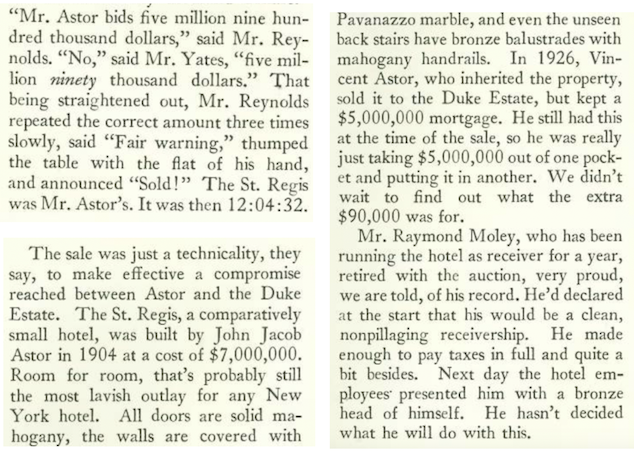
“The Talk of the Town” paid a visit to the Real Estate Exchange, where Vincent Astor re-acquired the St. Regis Hotel for five million and change. He then sunk another $500,000 (roughly $12 million today) into the hotel to further its luxurious status (including adding air-conditioning). The hotel’s famed King Cole Room and the Maisonette Russe restaurant opened in October 1935. Excerpts:
GOOD INVESTMENT…At left, Fifth Avenue facade of the St. Regis as seen in 2022. Right, entrance to the King Cole bar in the 55th Street annex. Thanks in part to the repeal of Prohibition, the hotel’s restaurant business increased by 300 percent between 1935 and 1937. (Wikipedia)
* * *
School Days
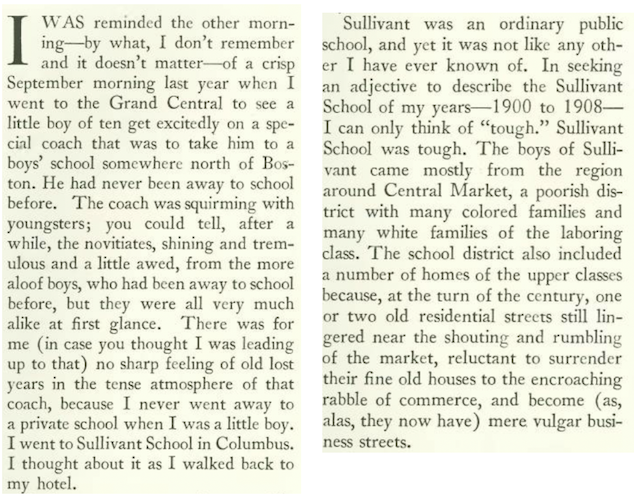
James Thurber recalled his “tough” years at Sullivant School in Columbus, Ohio, in the essay, “I Went to Sullivant.” Brief excerpts:
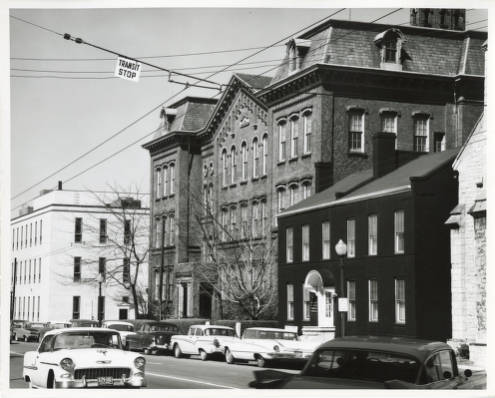
ALMA MATER…The Sullivant School James Thurber attended was completed in 1871 and was a school until 1923 when it became the offices for Columbus City Schools. This photo was taken shortly before it was demolished in 1961. (columbuslibrary.org)
* * *
Avril en juin
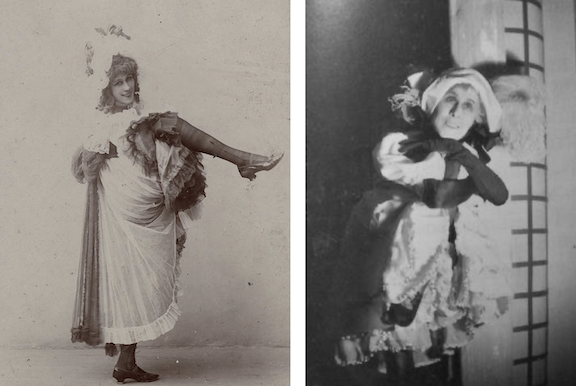
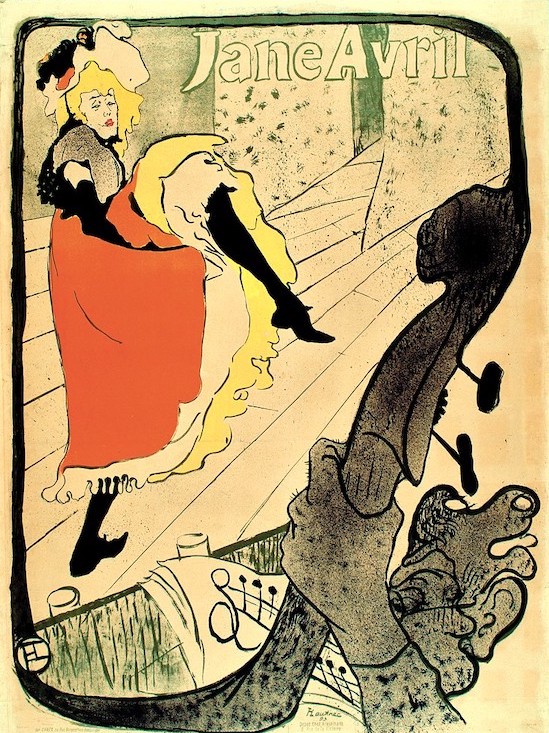
Paris correspondent Janet Flanner gave a rundown on the latest happenings, including the Toulouse-Lautrec costume ball that attracted none other than Jane Avril, the famed French can-can dancer of the 1890s who could still kick up her heels. Flanner gave Avril’s age at 80, but records indicate she was closer to 70.
STILL KICKING…Jane Avril (1868–1943) was a French can-can dancer at the Moulin Rouge in Paris and a frequent subject of painter Henri de Toulouse-Lautrec. The wispy Avril, known for her jerky movements and sudden contortions, was nicknamed La Mélinite, after an explosive. At top left, Avril in her heyday circa 1890s; at right, Avril at the 1935 Toulouse-Lautrec costume ball. Read more about Avril’s strange life at one of my favorite “rabbit hole” sites, Messy Nessy. (messynessychic.com/Pinterest)An 1893 Toulouse-Lautrec lithograph featuring Jane Avril, a lifelong friend of the artist. Avril commissioned this print to advertise her cabaret show at the Jardin de Paris. (met museum.org)
* * *
From Our Advertisers
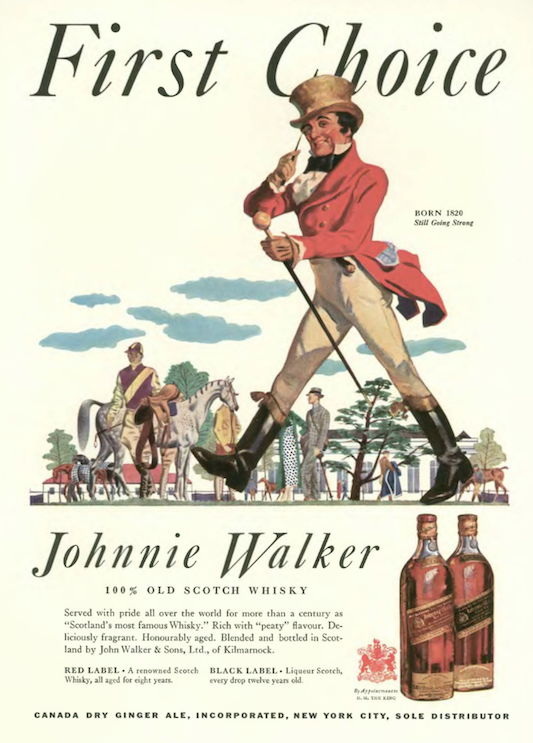
We begin with the inside front cover, Johnnie Walker strutting along at the horse races…
…the inside back cover belonged to Arrow Shirts…
…and no surprise that the back cover featured a stylish woman enjoying a cigarette, in this case a Lucky…
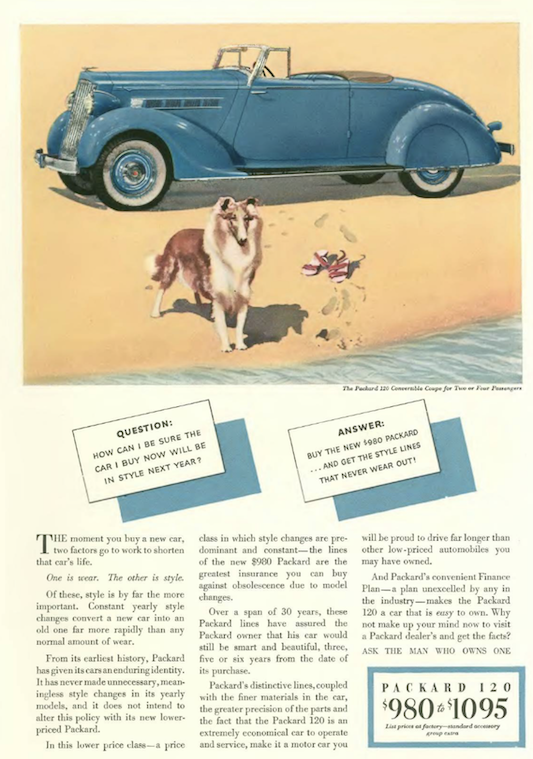
…Packard continued to run these colorful, wordy ads that made the case for owning a lower-priced Packard, which I’m sure was a fine automobile…
…John Hanrahan, who early on served as The New Yorker’s policy council and guided it through its lean first years, became the publisher of Stage magazine (formerly The Theatre Guild Magazine) in 1932. In 1933 Stage became part of the Ultra-Class Magazine Group’s line-up that included Arts & Decoration and The Sportsman. Stage published its last issue in 1939, and I don’t believe the other two survived the 1930s either…this Mark Simonson site looks at the striking design elements of an issue from 1938…
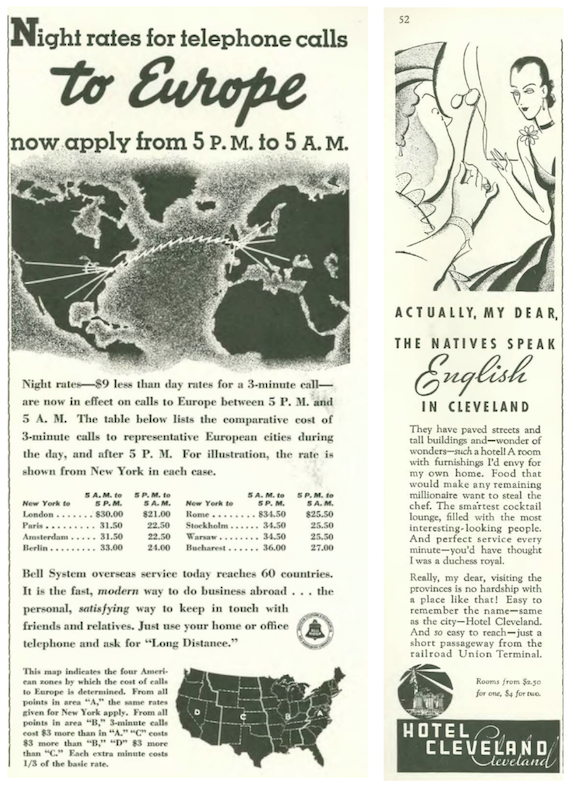
…a couple from back of the book…calling Europe by telephone in 1935 was an impressive feat, however it could cost you roughly $700 in today’s dollars to make a three-minute call to London…the one-column ad at right offered an Anglophilic appeal to those visiting Cleveland…
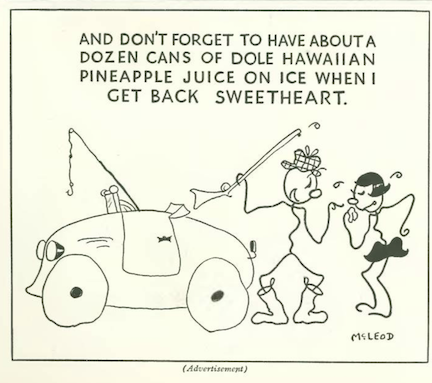
…this simple spot for Dole pineapple juice caught my eye because it was illustrated by Norman Z. McLeod (1898–1964), who drew Christie Comedy title cards during the Silent Era…
McLeod was also an acclaimed director of Marx Brothers comedies Monkey Business (1931) and Horse Feathers (1932), W.C. Fields’It’s a Gift (1934), Danny Kaye’sThe Secret Life of Walter Mitty (1947) and two of the Topper films.
HE GOT AROUND…Clockwise, from top left, director Norman Z. McLeod on the set of 1941’s Lady Be Good with actress Ann Sothern; Young’s familiar stick figure drawings on title cards for the 1928 silent short Loose Change; Cary Grant and Constance Bennett with Roland Young in 1937’s Topper. (TCM.com/silentology.wordpress.com/charlesmatthews.blogspot.com)
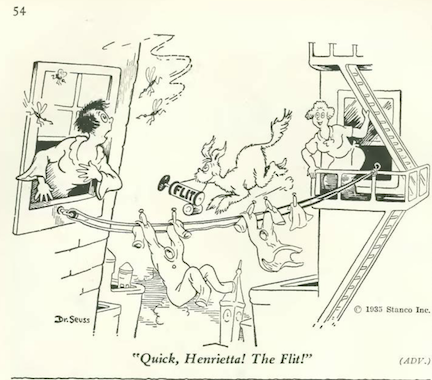
…Dr. Seuss was back with his Flit advertisements…
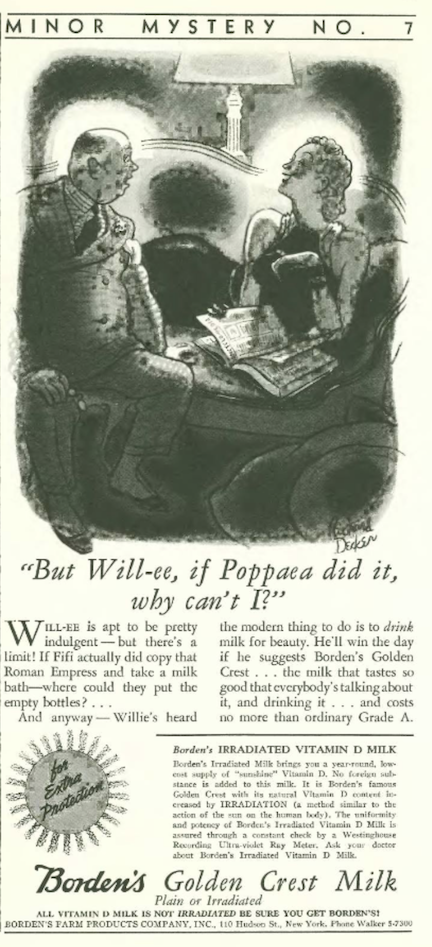
…Richard Decker illustrated this ad for Borden’s “Golden Crest” Farm Products…
…which segues into our cartoonists, and this curious spot drawing by James Thurber…
…Perry Barlow gave us the early days of the “Bed and Breakfast”…
…Peter Arno, and no rest for the titans of industry…
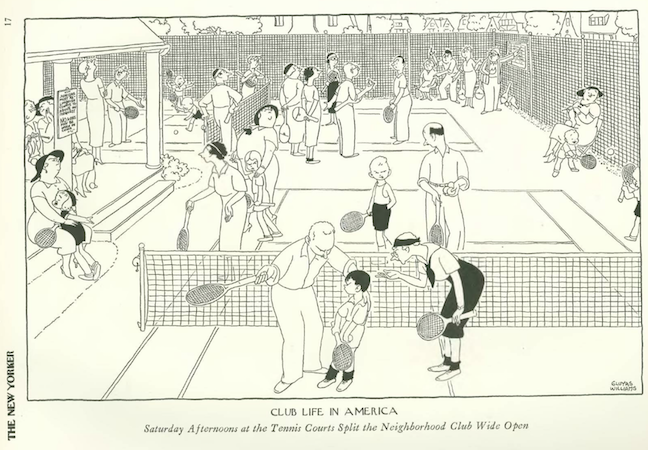
…Gluyas Williams continued to take a sideways glance at Club Life in America”…
…from George Price…back in the day, tattoos were usually confined to sailors and longshoreman…this particular fellow found himself with some outdated ink…
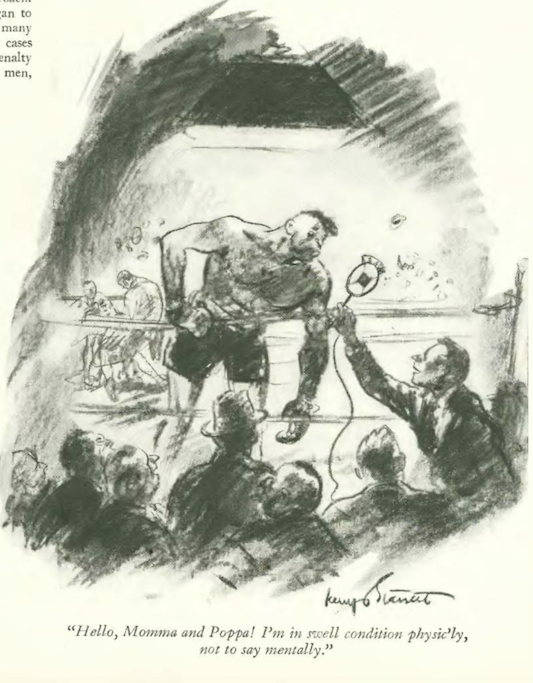
…Kemp Starrett took us ringside…
…Mary Petty reflected on a bit of narcissism…
…and we close with William Steig, and mixed feelings about the summer season…
Above: Illustration and article on "Typhoid Mary" that appeared in 1909 in The New York American. At right, Mary Mallon with other quarantined inmates on North Brother Island. (Wikipedia)
The Irish-born Mary Mallon (1869–1938) lived a simple life as a maid and a cook, and it would have been a life of anonymity save for a sad twist of fate on the day she was born.
Jan. 26, 1935 cover by Perry Barlow.
History knows Mary Mallon as Typhoid Mary. From 1901 to 1907 she would cook for seven wealthy New York families that would later contract typhoid. Mallon was born to a mother who was infected with typhoid, which offers a possible explanation as to why she became an asymptomatic carrier of the disease. Forcibly quarantined on North Brother Island (near Long Island) from 1907 to 1910, Mallon agreed upon her release to take hygienic precautions, including ending her occupation as a cook.
When other jobs failed to pan out, Mallon returned to cooking—this time in restaurants and hotels—infecting many more while evading investigators who were desperately trying to track her down (it is estimated she infected up to 122 people, resulting in as many as four-dozen deaths). When she was finally arrested in 1915, she was returned to North Brother Island, where she would live out her days. Stanley Walker (1898–1962), a native Texan, longtime editor of the New York Herald Tribune, and a New Yorker contributor from 1925 to 1956, featured Mallon in a profile for the Jan. 26, 1935 issue. Some brief excerpts:
* * *
The Latest Sensation
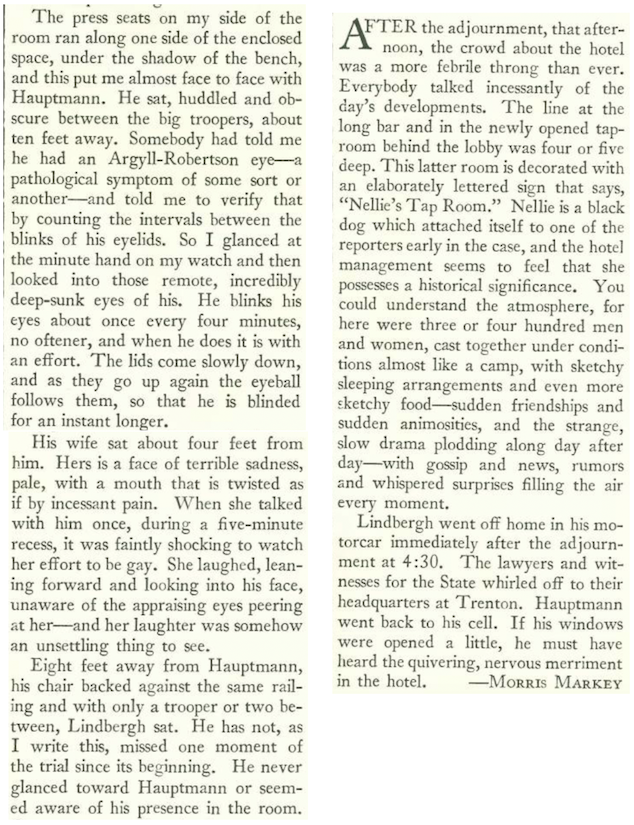
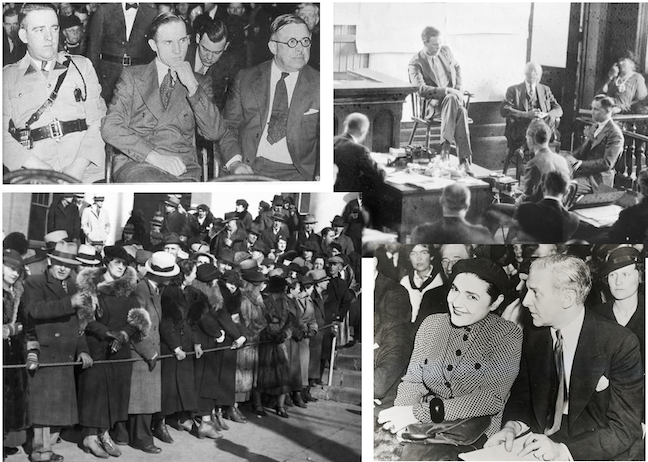
Mary Mallon was the source of sensational headlines in the early 1900s, but even she couldn’t top the media frenzy prompted by the Lindbergh baby kidnapping and the trial of accused murderer Bruno Hauptmann.The New Yorker’s Morris Markey went to the courthouse in Flemington, New Jersey, to file this report for “A Reporter at Large.” Excerpts:
TRIAL OF THE CENTURY…Clockwise, from top left: Bruno Hauptmann (center) at his murder trial, which ran from Jan. 2 to Feb. 13, 1935, in Flemington, New Jersey; Charles Lindbergh takes the witness stand; novelist Fanny Hurst and gossip columnist Walter Winchell at the trial on Jan. 30, 1935—the “Trial of the Century” was followed by more than 700 reporters; police ropes contained the large crowds gathered at the courthouse. (Library of Congress/umass.edu/Courier Post)
Hauptmann would be convicted of the crime and immediately sentenced to death. On April 3, 1936, he would meet his end in an electric chair at the New Jersey State Prison, maintaining his innocence to the very end.
* * *
From Our Advertisers
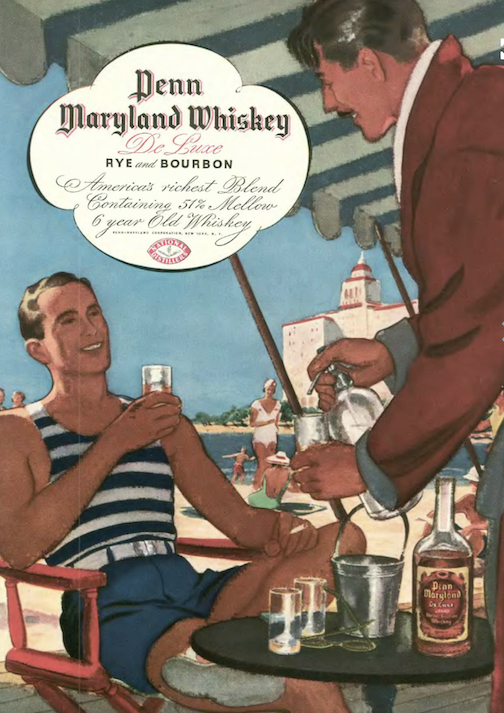
On to our ads, we begin with another colorful spot from Penn Maryland, and jolly times on Miami Beach…
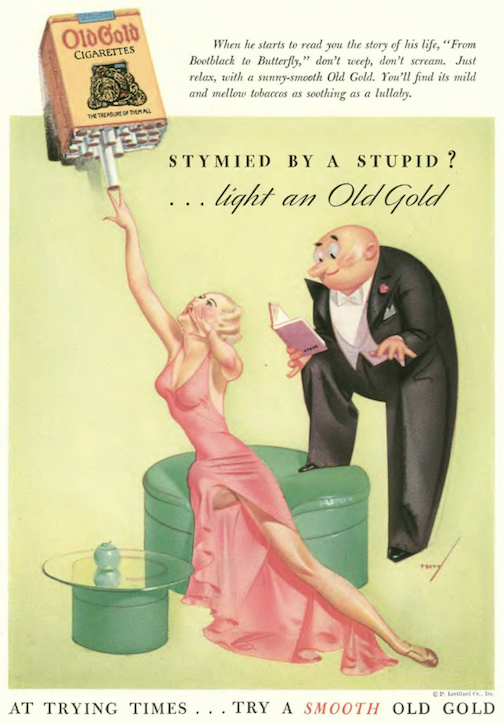
…here is the first in a series of ads that the makers of Old Gold cigarettes (Lorillard) began running in 1935, featuring a sugar daddy and his leggy mistress…they were drawn by George Petty (1884–1975), famed for his “pin-up girls” featured on many magazine covers as well as in ads for Old Gold, Jantzen swimsuits, and TWA, among others…
…here is Petty at work in 1939…
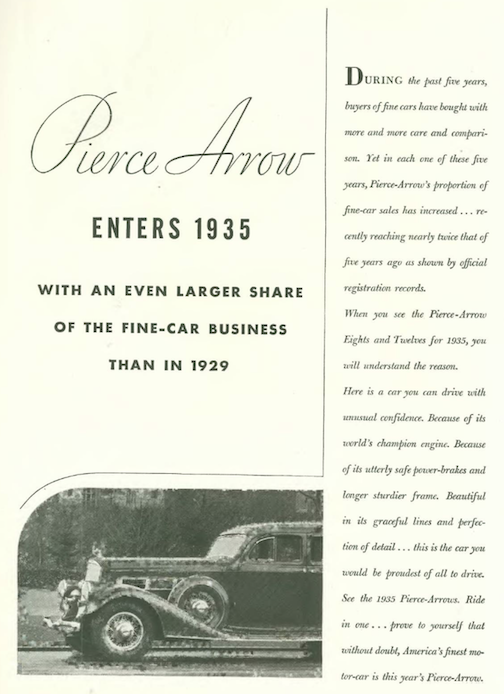
…Buffalo-based Pierce-Arrow was known for its expensive luxury cars, which were not exactly hot sellers during the Great Depression; moreover, Pierce was the only luxury brand that did not offer a lower-priced car to provide cash flow to the company, and contrary to the claims in this ad, Pierce-Arrow would close its doors by 1938…
…one thing alive and well in the 1930s was sexism, and here is a good example from the makers of a popular line of soups…
…The Theatre Guild called upon the talents of James Thurber to promote their latest production…
…and we continue with Thurber as move into the cartoons…
…where Robert Day found some miscasting in a Civil War epic…
…George Price’s floating man seemed to be coming back to earth…
…Day again, with a sure-fire way to defend one’s goal…
…Alan Dunn offered words of wisdom from the pulpit…
…and we close with Barbara Shermund, and a familiar face…











































































 A New Yorker State of Mind