Bad Hootch

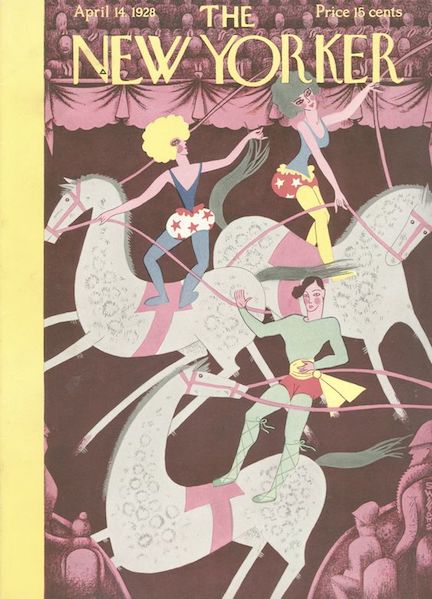
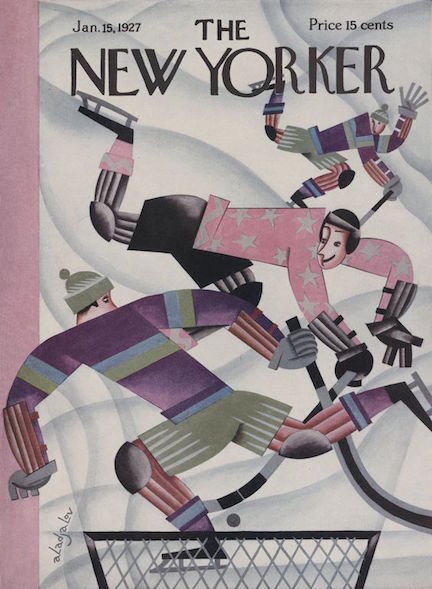
Despite Prohibition, perhaps a few champagne corks were popped for the January 15, 1927, edition of the New Yorker. This is Issue # 100.

8d2aebbb715d1dad58142be9b1bce88f
January 15, 1927–Issue # 100. The cover art by Constantin Alajalov.

Prohibition was on the minds of the editors of the issue, which featured a highly critical piece by Morris Markey (“A Reporter at Large”) on the hysteria surrounding the government’s attempt to poison supplies of bootleg alcohol. The editors of “The Talk of the Town” also made this observation:

Screen Shot 2016-06-07 at 12.52.51 PM

Before we get more into Markey’s piece, a little background is in order. In an article for Time magazine (Jan. 14, 2015) Lily Rothman writes that for years prior to Prohibition industrial alcohol had been “denatured” by adding toxic or unappetizing chemicals to it. This was done so folks couldn’t escape beverage taxes by drinking commercial-use alcohol instead — but it was still possible to re-purify the liquid so that it could be consumed.

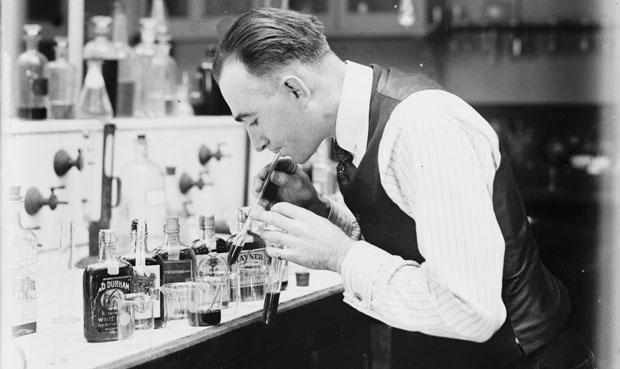
HOME CHEMISTRY KIT…A bootlegger at work in the 1920s. (oldmagazinearticles.com)

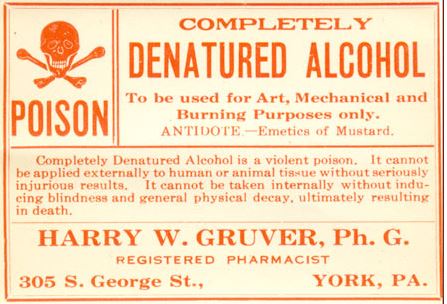
Rothman cites a Time article from Jan. 10, 1927, which reported that Prohibition forces in the government were introducing a new formula that year for denaturing industrial-grade alcohol that doubled the poisonous content: “4 parts methanol (wood alcohol), 2.25 parts pyridine bases, 0.5 parts benzene to 100 parts ethyl alcohol.” The article noted that “Three ordinary drinks of this may cause blindness.”

denatured-alcohol-vickyloebel.com
Warning label from the 1920s (vickyloebel.com)

Although some opposed the practice as legalized murder, Rothman cites Seymour M. Lowman, who as Assistant Secretary of the Treasury (1927-33) was in charge of Prohibition enforcement. Lowman told citizens that those on the fringes of society who continued to drink were “dying off fast from poison ‘hooch’” and that if the result was a sober America, “a good job will have been done.”

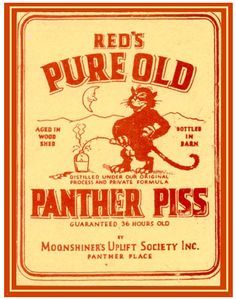
c61f5ce7ad01e577ee48eaff7470a61f
DRINK AT YOUR OWN RISK…1920s label for bootleg moonshine. (googleuk)

Thousands died from consuming poisoned alcohol. Rothman writes that 33 people died in Manhattan alone in a three-day period in 1928, mostly from drinking wood alcohol.

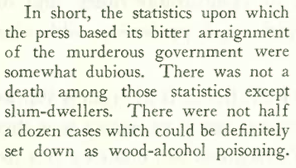
Markey’s stance in his New Yorker article is somewhat unique, if not cold-hearted. Instead of taking the government to task for the practice, he assured his well-heeled readers that they had nothing to fear as long as they procured their alcohol from reputable bootleggers at top prices. Markey seemed to care not at all for the poor “slum-dwellers” who died from consuming the cheap stuff:

Screen Shot 2016-06-07 at 1.02.58 PM

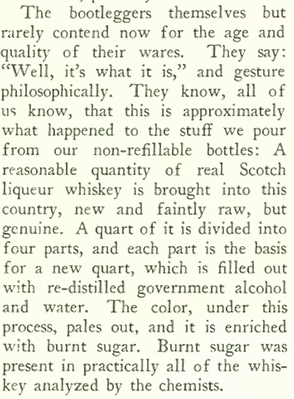
If anything, Markey’s sympathies seemed to lie with those who had to drink the safe, albeit diluted hootch. He explained how four bottles of bootleg Scotch could be fashioned from a single bottle of the real deal:

Screen Shot 2016-06-07 at 1.07.13 PM

And if you had money, there was no need to fear death from drink…

Screen Shot 2016-06-07 at 1.11.16 PM

…that is, unless you were careless:

Screen Shot 2016-06-07 at 1.11.25 PM

* * *

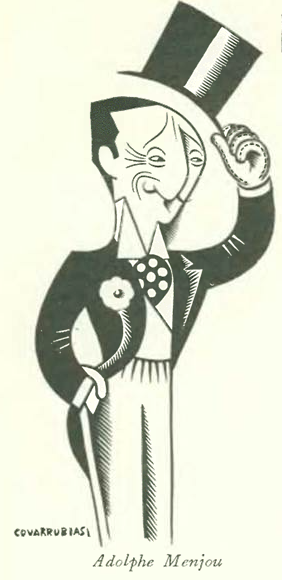
Helena Huntington Smith wrote a profile on the actor Adolphe Menjou, described by IMDB as Hollywood’s epitome of suave and debonair style: “Known for his knavish, continental charm and sartorial opulence, Menjou, complete with trademark waxy black mustache, evolved into one of Hollywood’s most distinguished of artists and fashion plates, a tailor-made scene-stealer.” Interestingly, Menjou was born in Pittsburgh, and not in France as many a fan assumed (his father, however, was a French émigré).

Screen Shot 2016-06-07 at 12.56.18 PM

Screen Shot 2016-06-07 at 12.56.30 PM

Glass_lantern_advertising_slide_for_1927_silent_film_A_Gentleman_of_Paris
Glass lantern advertising slide for Adolphe Menjou’s 1927 silent film A Gentleman of Paris.

In other items, New Yorker architecture critic George S. Chappell (aka T-Square) once again set his sights on the city’s changing skyline. He began with the new General Motors building at Columbus Circle:

Screen Shot 2016-06-07 at 1.13.34 PM

He was thrilled by the push-button automation of the building’s elevators:

Screen Shot 2016-06-07 at 1.14.21 PM

20gm.span
The General Motors building, left, as it originally appeared on Columbus Circle. It was designed by Shreve & Lamb, who would soon go on to design the Empire State Building. At right, the building became known as the Newsweek Building. (Drawing by J. W. Golinkin in Towers of Manhattan, 1928, and photo by David W. Dunlap/The New York Times)

If Chappell thought the General Motors building had some issues in 1927, he should see it today, wrapped in tacky reflecting glass and renamed 3 Columbus Circle:

AAGAAS14-03
WHY? WHY ON EARTH? (nyc-architecture.com)

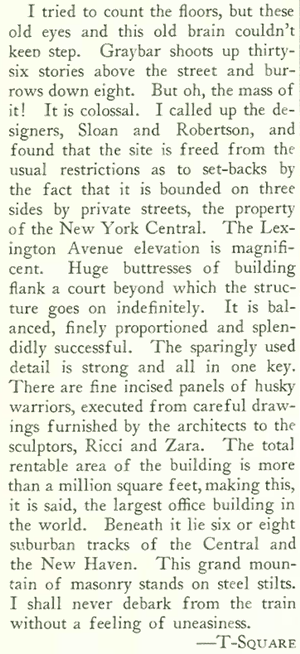
Elsewhere, Chappell was agog at Sloan & Robertson’s massive Graybar Building:

Screen Shot 2016-06-07 at 1.15.54 PM

af1e2749ea5c762147dd77145765bce2
Sloan & Robertson’s Graybar Building at 420 Lexington. (history.graybar.com)

And to close, this ad on the back page for Chesterfield cigarettes, featuring the company’s famous Atlantic City sign. Note the point of pride: “There are 13,000 lamps” in the sign, but four times that many Chesterfields are smoked every minute…koff…koff…

Screen Shot 2016-06-07 at 1.20.42 PM

Next Time: Upstairs, Downstairs…

015737c92d9c339b44b3805c311dd478


A Royal Flush

Perhaps because they’ve never had a monarchy, Americans have always been a little nuts over European royalty, even the lesser kings and queens.

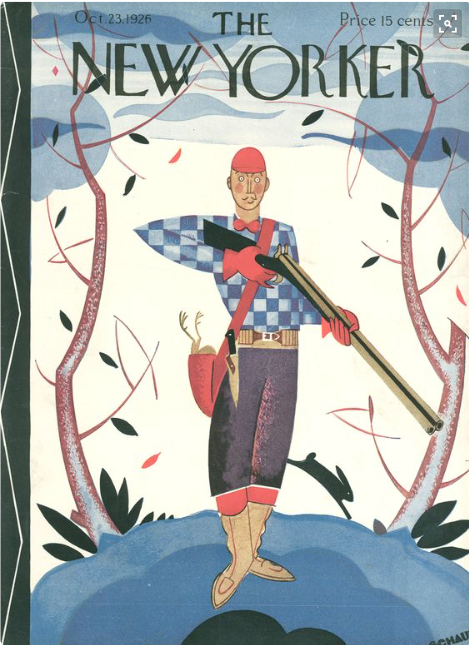
Screen Shot 2016-03-31 at 9.58.22 AM
October 23, 1926 cover by Andre De Schaub.

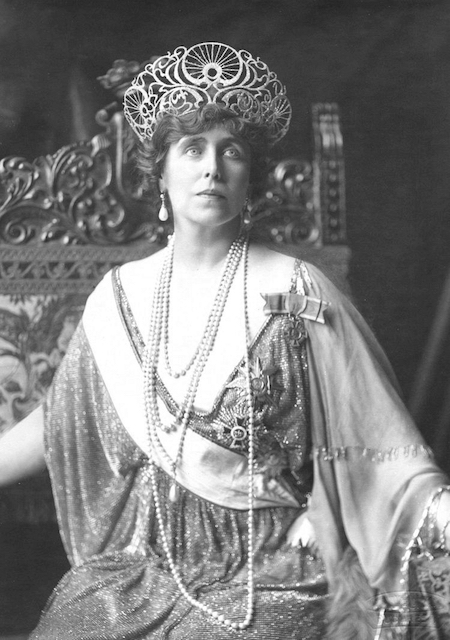
In the lesser category was the Queen Marie of Romania, whose name and exploits appeared frequently in the pages of the early New Yorker. As early as Issue #4 (March 14, 1925), the magazine was reporting that New Yorkers were “agog” about a possible visit from Her Majesty, and that the North American Newspaper Alliance had offered her a contract to write her impressions of the United States.

queen-marie-of-romania-photo-232
Queen Marie of Romania (Library of Congress)

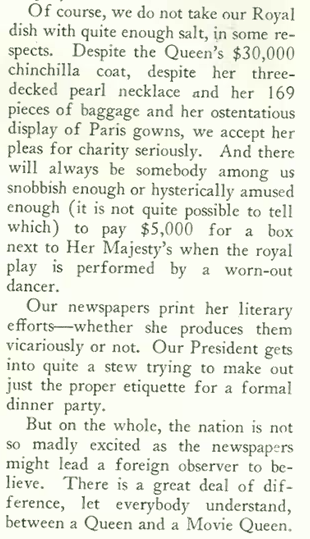
The Queen filled the pages of both the Oct. 23 and Oct. 30 issues as she finally made her way to the American shores. “Of All Things” observed…

1
“Trudy” referred to above was New Yorker Gertrude Ederley, still basking in her fame as the first woman to swim the English Channel.

Now some background on The Queen: She born into the British royal family, titled Princess Marie of Edinburgh at birth. After refusing a proposal from her cousin (the future King George V), she was chosen as the future wife of Crown Prince Ferdinand of Romania, the heir apparent of King Carol I, in 1892. She was the last Queen consort of Romania, and her trip to the U.S. would prove to be the last months of her reign (her husband, Crown Prince Ferdinand, would die shortly after her return). Her 5-year-old grandson, Michael, the son of Prince Carol, would ascend to the throne, only to be usurped by his father in 1930 (at this writing Michael is still living. He is currently 94 years old).

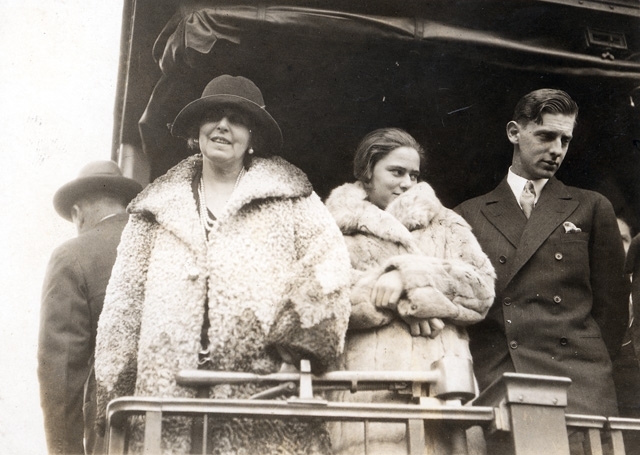
Things seemed fairly rosy in October 1926, as Americans awaited the queen and two of her children, Prince Nicholas and Princess Ileana, who were said to be seeking matrimonial matches in the States.

1926-1
Queen Marie, Princess Ileana, and Prince Nicholas of Romania on their American tour, 1926. (Henley Hamilton)

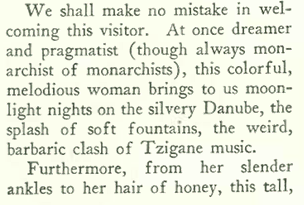
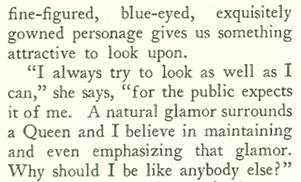
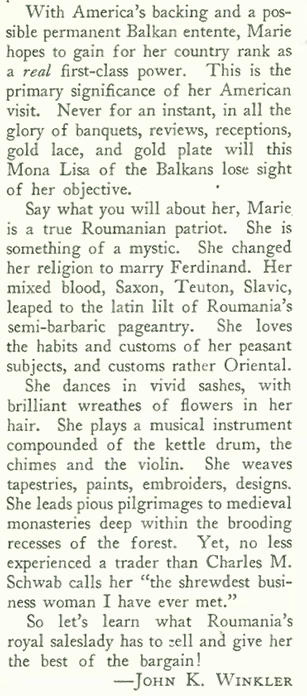
The issue’s “Profile” by John Winkler featured a mostly glowing account of Queen Marie…

2

3

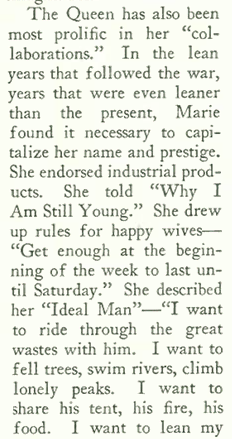
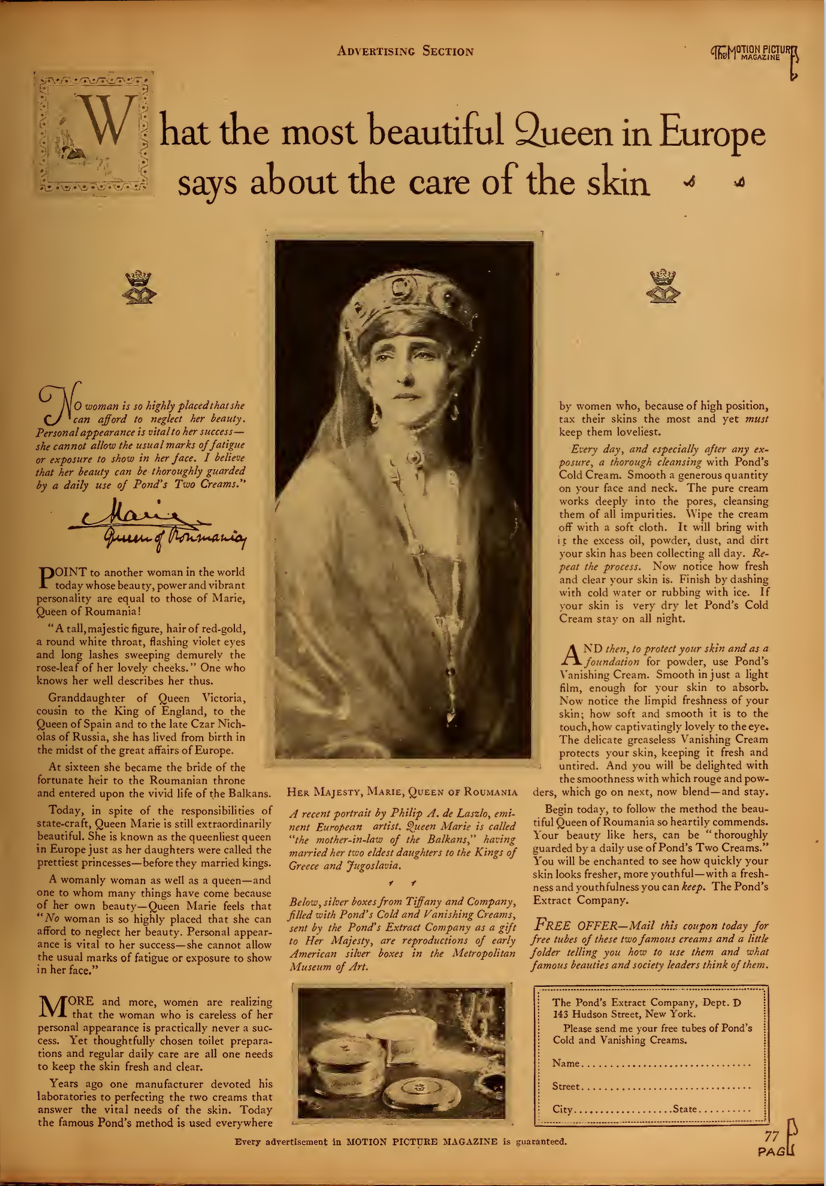
…although it was noted that Queen has to stoop to writing articles and endorsing products for a little extra cash…

4

5

Screenshot 2015-04-21 13.18.41
The “Queen of Roumania” and her Pond’s Cold Cream endorsement were featured in this April 1925 ad in Motion Picture magazine. (Image scan)

And the Queen would also be seeking a few bucks from Uncle Sam…

6

The Queen’s visit was even on the mind of one cartoonist (still trying ID):

Screen Shot 2016-04-01 at 1.27.00 PM

The following week, in the Oct. 30, 1926 issue…

a3dbcac2108e4dce47a2ca56e55b1e62
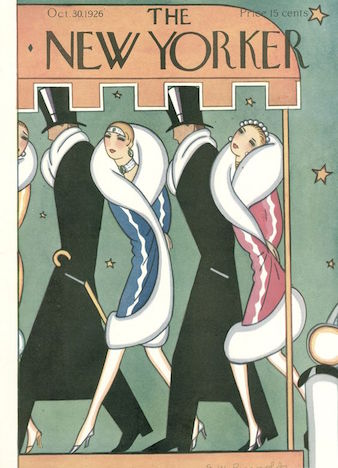
October 30, 1926 cover by Stanley W. Reynolds.

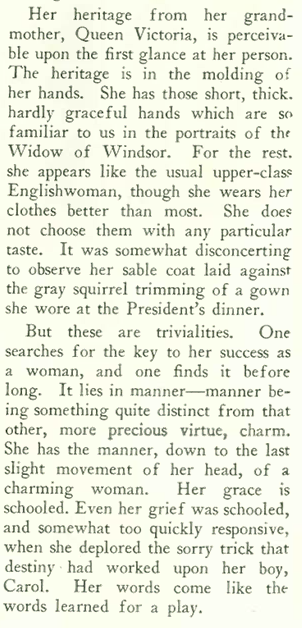
…the magazine offered an account of the Queen’s arrival, courtesy of writer Morris Markey:

1

Note the observation about the “sorry trick” played on the Queen’s son, Carol. Markey is referring the fact that Carol had waived his rights to succession. Little did anyone know that “her boy” would one day seize the throne and work to discredit her name.

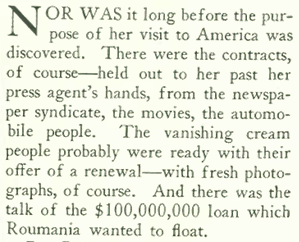
Markey also wryly noted the Queen’s objective to gain financial support from the U.S., even if her outstretched hand was covered in jewels:

S2

3

No Movie Queen, but she did have a flair for theatrics…

qmf20
(Kent State University)

Next Time: Fun With Harold…

Screen Shot 2016-04-01 at 3.03.49 PM

Tarnished Tinseltown

Screen Shot 2016-01-14 at 9.54.46 AM
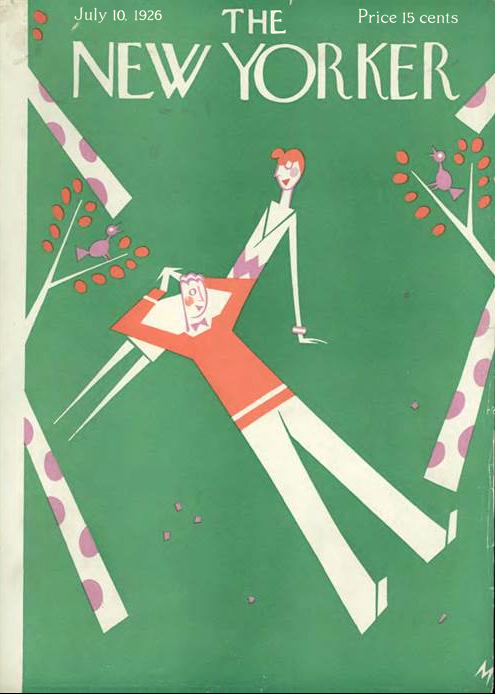
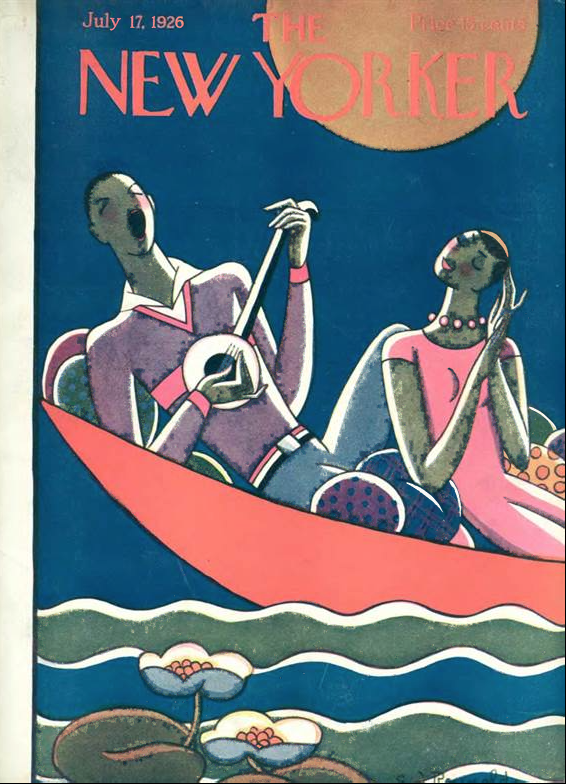
July 10, 1926 cover by Julian de Miskey.

Although there are some good indie and foreign films being made these days, not to mention some decent stuff on cable and streaming services, we still have plenty of bland popcorn fare coming out of Hollywood that combines the worst of unscrupulous producers and their fawning writers and directors.

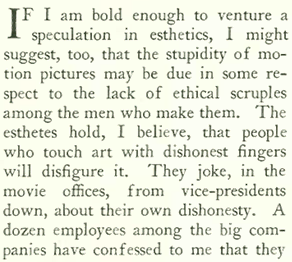
That’s how The New Yorker viewed Hollywood 90 years ago. Movie critic Theodore Shane weekly voiced his disappointment over American cinematic fare (while generally praising the work of European, and particularly German directors), and writer Morris Markey took the industry to task in the July 10, 1926 edition of the magazine, finding the whole lot of Hollywood to be a cesspool of mediocrity and dishonesty. It also didn’t help that Will H. Hays, president of the Motion Picture Producers, was trying to enforce his morality code on the motion picture industry:

Screen Shot 2016-01-15 at 3.55.27 PM

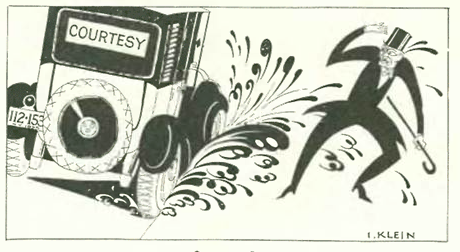
Here’s the full illustration by Isadore Klein that was cut off above, because it’s worth a look:

Screen Shot 2016-01-15 at 3.38.49 PM

Later in the article Markey laid into the men in charge of the studios:

Screen Shot 2016-01-15 at 3.59.02 PM

Screen Shot 2016-01-15 at 3.59.10 PM

Markey also leveled scorn at the media, and gullible audiences, for supporting this tawdry spectacle:

Screen Shot 2016-01-15 at 4.03.43 PM

Screen Shot 2016-01-15 at 4.03.54 PM

Screen Shot 2016-01-15 at 4.28.38 PM
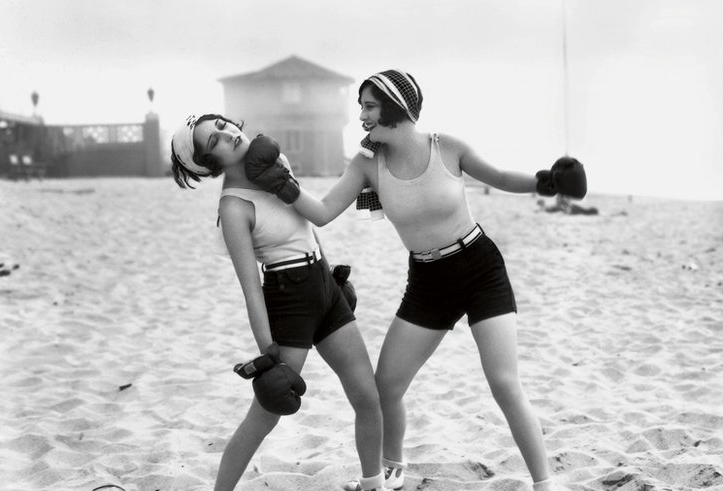
Publicity still of Hollywood starlets Dorothy Sebastian (left) and Joan Crawford (on a Santa Monica beach) most likely used to promote the 1928 film Our Dancing Daughters. (BBC)

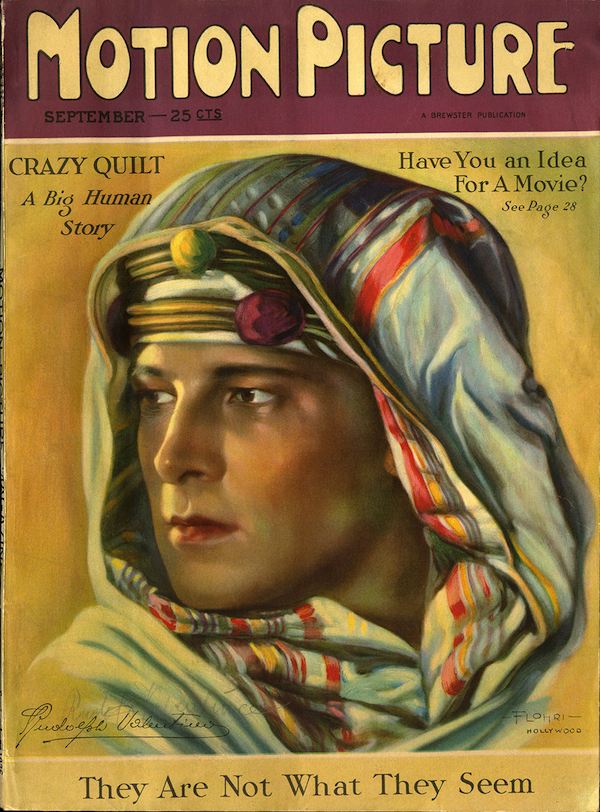
Motion Picture magazine and others of this ilk were the US magazines of the 1920s:

Valentino_Flohri-scan
Rudolph Valentino on the cover of the September 1926 issue of Motion Picture magazine. (archive.org)

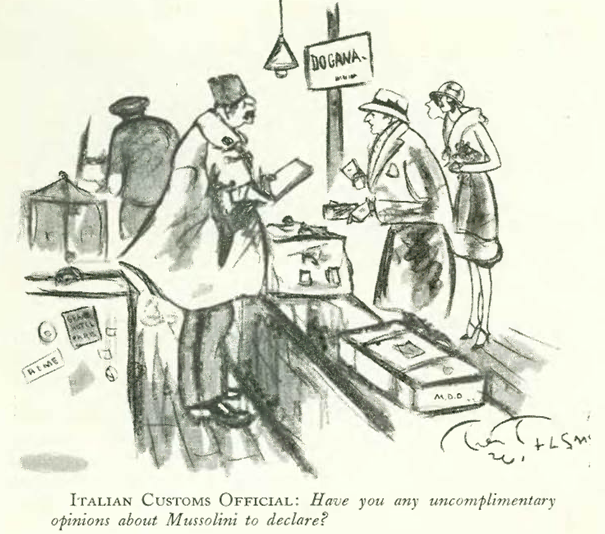
And finally, a couple of bits for my “They Didn’t Know What Was Coming” department. Generally people were having too good of a time in the Roaring Twenties to take this fascism thing very seriously. From the section “Of All Things:”

Screen Shot 2016-01-14 at 10.02.38 AM

And from “The  Talk of the Town” section, a cartoon by W.P. Trent:

Screen Shot 2016-01-14 at 9.57.47 AM

Next Time: The Good Old Summertime…

Screen Shot 2016-01-15 at 4.05.58 PM


Nize & Not So Nize

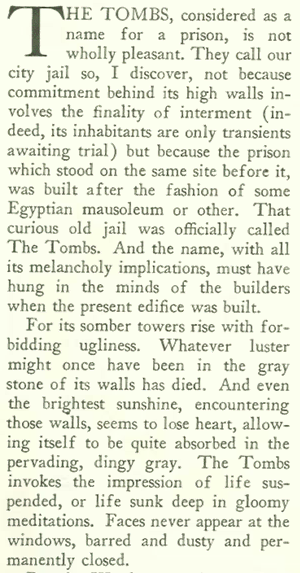
This entry opens with a “Nize Baby” comic illustration by Milt Gross, since Milt’s book by the same title was advertised in the May 22 issue (featured later in this entry). I thought it better to begin with a bright comic than with a depressing image of NYC’s “The Tombs” prison, which was featured in the May 15 issue’s “Reporter at Large” piece written by Morris Markey.

Screen Shot 2015-12-11 at 9.44.03 AM
May 15 cover by Ronald McRae.

The somber, colloquial name of the prison was actually derived from a previous prison that had occupied the area, designed in a fashion that resembled an “Egyptian mausoleum.” The original Tombs (pictured below) was built in 1838:

The-Tombs-First
(daytoninmanhattan)

The first Tombs was notorious as a place of extreme cruelty—most of the prisoners were simply detainees awaiting their hearings and few had been convicted of actual crimes. Nevertheless some remained imprisoned for up to ten months in horrible conditions. The city’s answer to the problem was simply to demolish the prison in 1897 and replace it in 1902 with a Châteauesque-style structure. This was the prison to which Markey paid his visit:

The_Tombs-built_1902
The prison (left) that replaced The Tombs connected to the 1892 Manhattan Criminal Courts Building with a “Bridge of Sighs” crossing four stories above Franklin Street. (Wikipedia)

The prison may have been an improvement over the original Tombs, but Markey nevertheless found it a gloomy place:

Screen Shot 2015-12-17 at 1.30.44 PM

Now on to something a bit cheerier. It is springtime in New York, after all:

Screen Shot 2015-12-17 at 1.33.44 PM
May 22, 1926 cover by Julian de Miskey.

“The Talk of the Town” briefly commented on Sinclair Lewis’s refusal to accept the Pulitzer Prize for his novel Arrowsmith. Lewis said he did not agree with contests where one book or author was praised over another. In the “Profile” section, Waldo Frank looked at the life of philosopher and education reformer John Dewey…through a jaded lens:

Screen Shot 2015-12-17 at 1.42.00 PM

The issue featured this advertisement for a new book by cartoonist Milt Gross. He was best known for his comic characters who spoke a Yiddish-inflected English dialogue.

Screen Shot 2015-12-17 at 1.47.28 PM

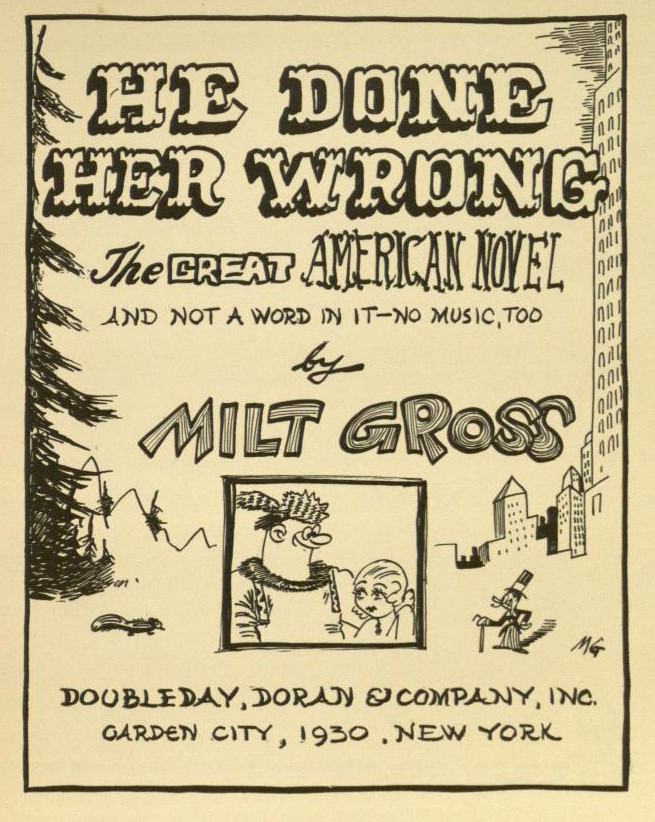
Gross is perhaps one of the first comic artists to publish (in 1930) what today we call a graphic novel—his pantomime tale He Done Her Wrong: The Great American Novel and Not a Word in It — No Music, Too. At nearly 300 pages, it was composed entirely of pen-and-ink cartoons.

Milt_Gross_(1930)_He_Done_Her_Wrong_(title_page)
Cover for He Done Her Wrong (Wikipedia)

And The New Yorker took its usual blasé tone in reporting on the latest world news, namely Admiral Richard Byrd’s attempted flight over the North Pole.

web_Byrd7739_6
Pathé cameraman filming the Josephine Ford as it was being prepared for flight to the North Pole. (The Ohio State University Archives)

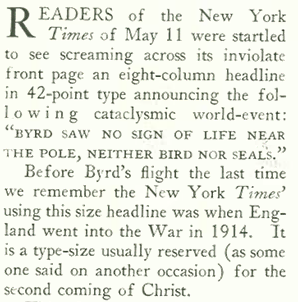
New Yorker editors had some fun taking jabs at The New York Times for its sensational headlines regarding the event:

Screen Shot 2015-12-17 at 1.43.41 PM

And to close, the first of what would be a series of ads for Grebe radios, including the weird testimonials by Confucius and “Doctor Wu”…

Screen Shot 2015-12-17 at 2.02.48 PM

Next Time: What to Drink During Prohibition…

Screen Shot 2015-12-17 at 1.51.20 PM


A Fine Mess

Screen Shot 2015-10-27 at 4.32.20 PM
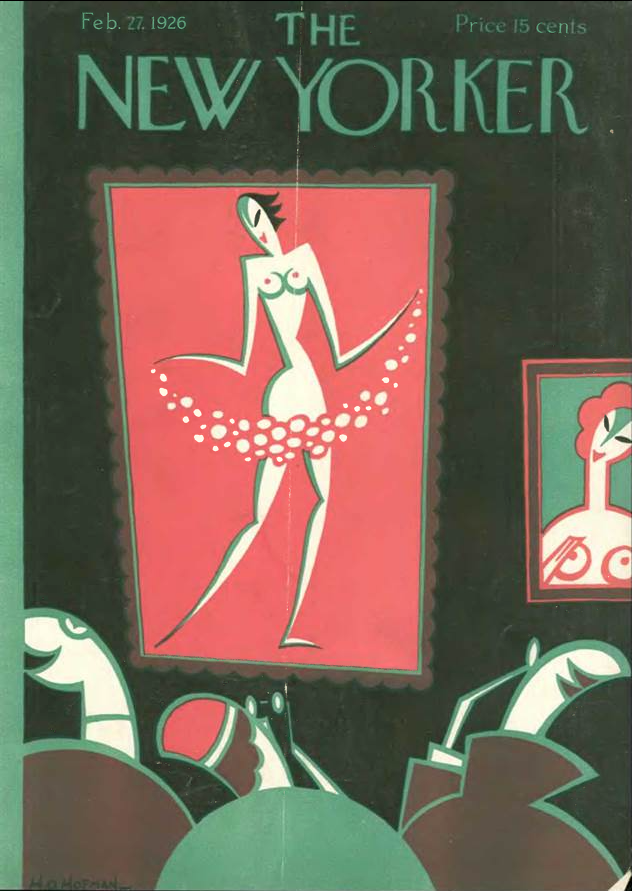
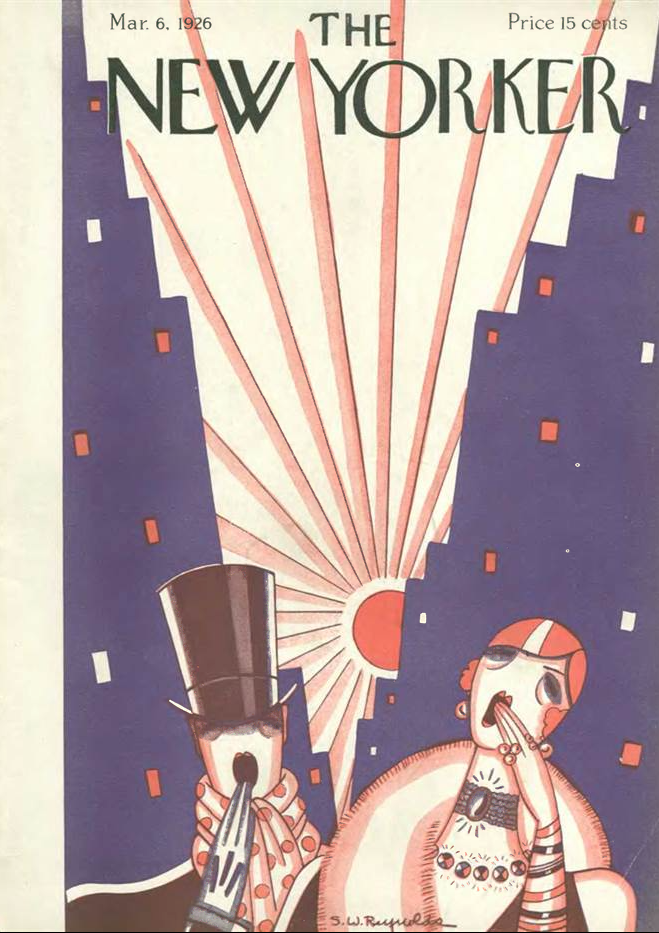
Feb. 27, 1926 cover by H.O. Hofman.

The month of February 1926 must have been miserable in New York City. A massive blizzard made a mess of the streets, which were then topped by a soot-laden smog. The smog was the result of homes and businesses burning soft coal, which produced far more smoke than the hard variety (which was in short supply).

The photo above, from the Daily News archive, shows a chaotic scene on Orchard Street (Manhattan’s Lower East Side) after the storm.

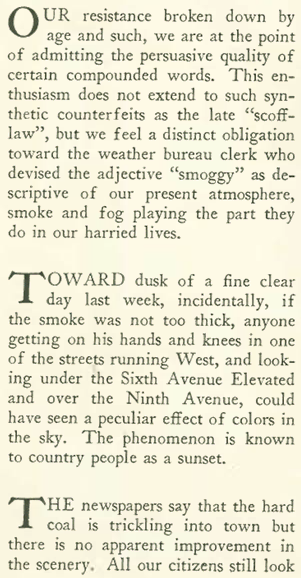
As could be expected, The New Yorker editors tried their best to make light of the situation, although they couldn’t resist making a racist remark regarding the effects of soot on the population. It is also interesting to note that the word “smoggy” was considered by the editors to be a relatively new term:

Screen Shot 2015-10-30 at 9.51.38 AM

Screen Shot 2015-10-30 at 9.51.50 AM

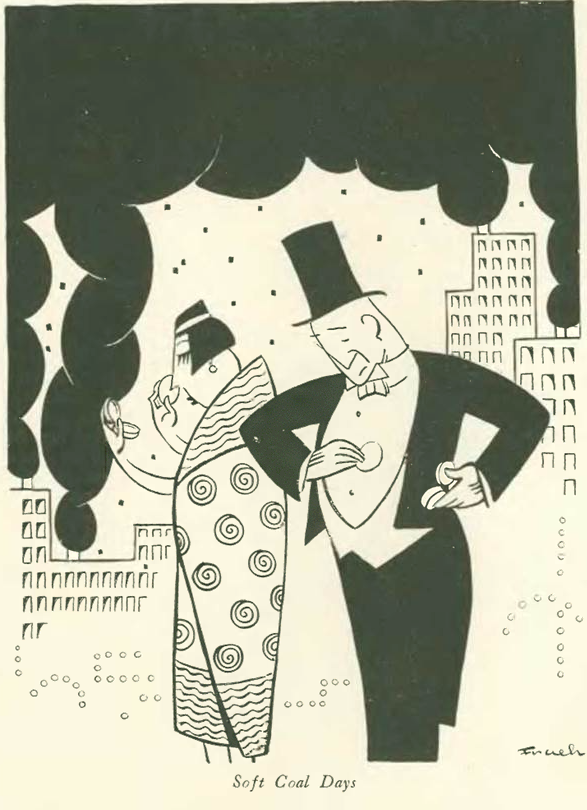
Al Frueh showed us how the toffs dealt with the situation…

Screen Shot 2015-10-30 at 9.52.10 AM

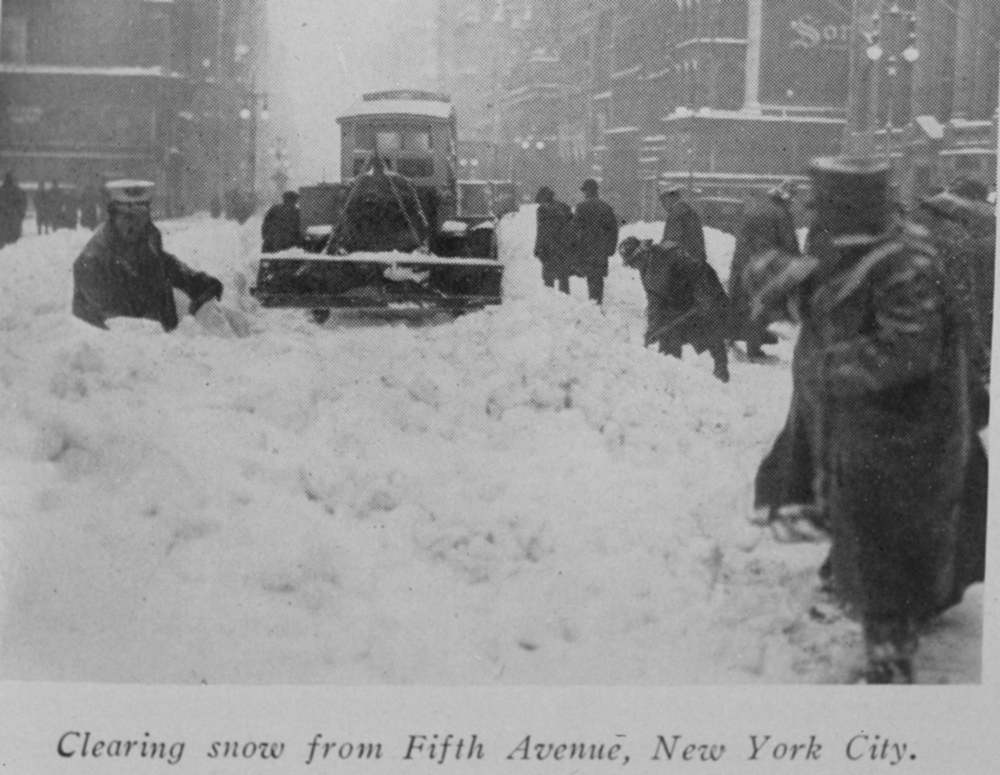
…and Fifth Avenue was not the best place for a fashionable stroll…

nycsnowshoveling
Shovelers were hired to clear the streets after 1926 blizzard (National Oceanic and Atmospheric Administration)

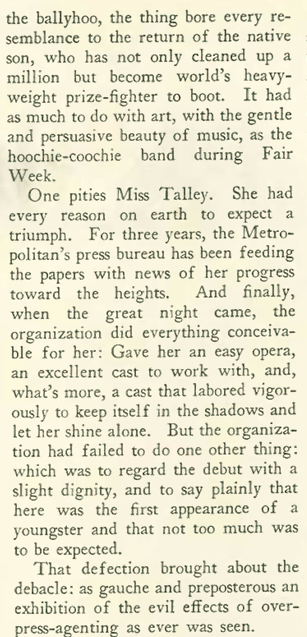
No doubt the foul weather contributed to the mood of the writers and critics at The New Yorker, who reacted rather sourly to the much ballyhooed Feb. 17, 1926 debut of young Marion Talley at the Metropolitan Opera. At the tender age of 19, she was the youngest prima donna to sing at the Met at that time.

In his “A Reporter at Large” column, Morris Markey scoffed at the hype and small-town boosterism that accompanied the young singer from rural Missouri:

Screen Shot 2015-10-30 at 10.00.32 AM

Screen Shot 2015-10-30 at 10.00.47 AM

Talley’s debut performance was as Gilda, the daughter of the title character in Giuseppe Verdi’s Rigoletto. The Metropolitan Opera’s general manager, Giulio Gatti-Casazza, hoped Talley’s debut would be low-key and not overshadow the production. However, a delegation of two hundred leading citizens of Kansas City, including the mayor, arrived via a special train for the event.

Adding to the chaos, a noisy telegraph machine was set up backstage so Talley’s father could send dispatches to the Associated Press.

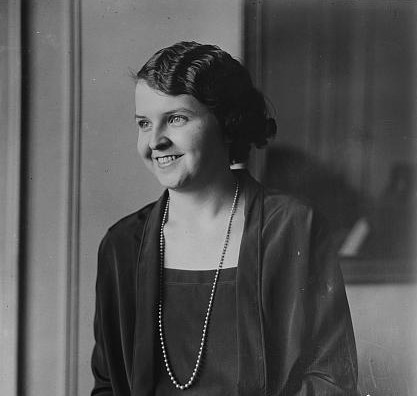
Marion_Talley_crop
OVER EXPOSED: Marion Talley in 1926. (Library of Congress)

Talley’s swift rise to fame would be followed by a relatively quick return to obscurity. After appearing in seven productions at the Met, her contract was not renewed for the 1929 season.

Next Time: Life of a Rum Runner…

Screen Shot 2015-10-30 at 10.13.15 AM