In 1933 the U.S. economy began a slow recovery from the 1929 market crash, but the recovery stalled in 1934 and 1935, and folks including E.B. White were looking for any indication of brighter days ahead.
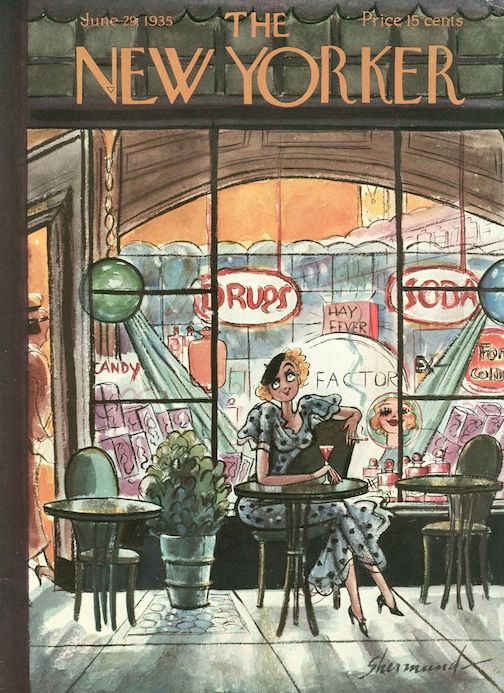
June 29, 1935 cover by Barbara Shermund. A prolific contributor of cartoons to The New Yorker (600 in all), Shermund also illustrated eight covers, including this charmer.
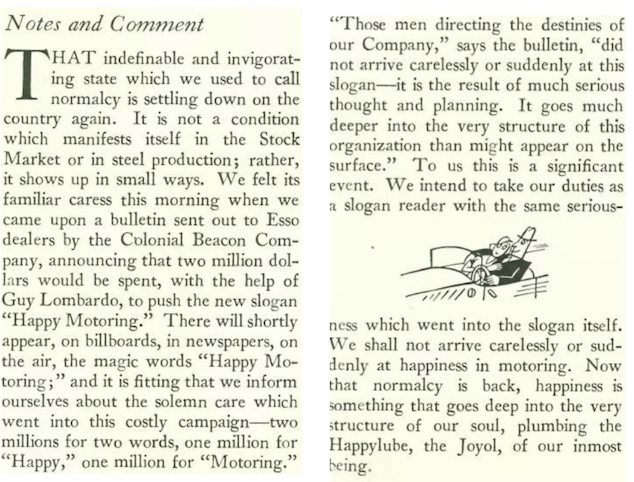
White suggested that Americans look for smaller signs of normalcy, such as the new slogan, “Happy Motoring,” that was being rolled out by Standard Oil’s Esso.
IT’S A GAS…At left, Gasoline Station, Tenth Avenue, photo by Berenice Abbott, 1935; at right, newspaper ad, May 1935. (metmuseum.org/wataugademocrat.com)
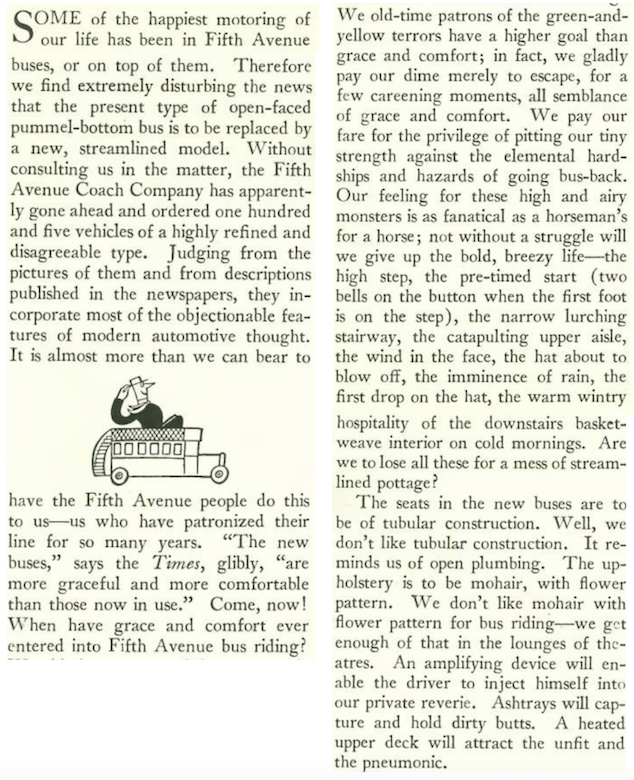
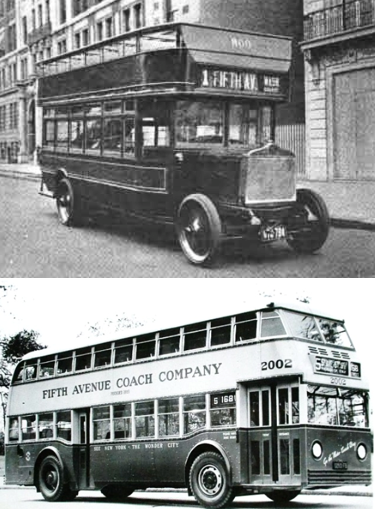
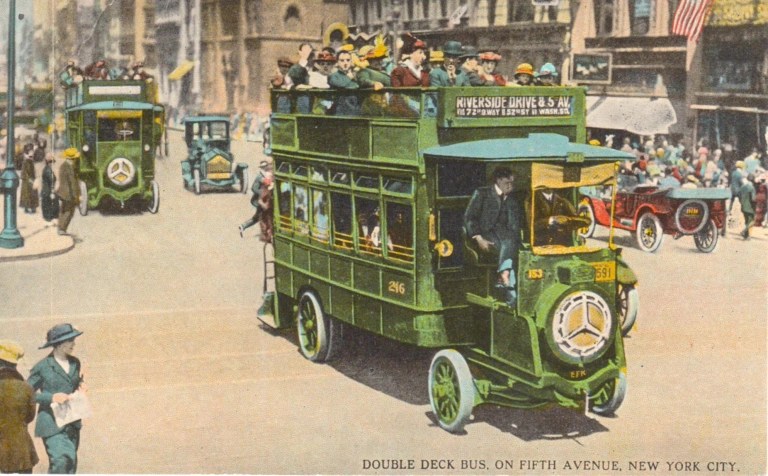
Like many of us, White was a study in contradictions, enthusiastically embracing the age of air travel while rejecting the style and comforts of modern automobiles (he famously loved his Model T). It is no surprise that he also preferred Fifth Avenue’s spartan green and yellow omnibuses over the new streamlined buses that would soon be plying the streets of Manhattan.
NO THANKS…E.B. White preferred the spartan accommodations of the old Fifth Avenue buses to the comforts of their replacements. (coachbuilt.com)
White elaborated on the advantages of the older buses:
STYLE OVER COMFORT…Of the old Fifth Avenue buses, E.B. White wrote that he preferred the “hard wooden benches on the sun deck, conducive to an erect posture, sparkling clean after a rain.” (Ephemeral New York)
* * *
Cinderella Story
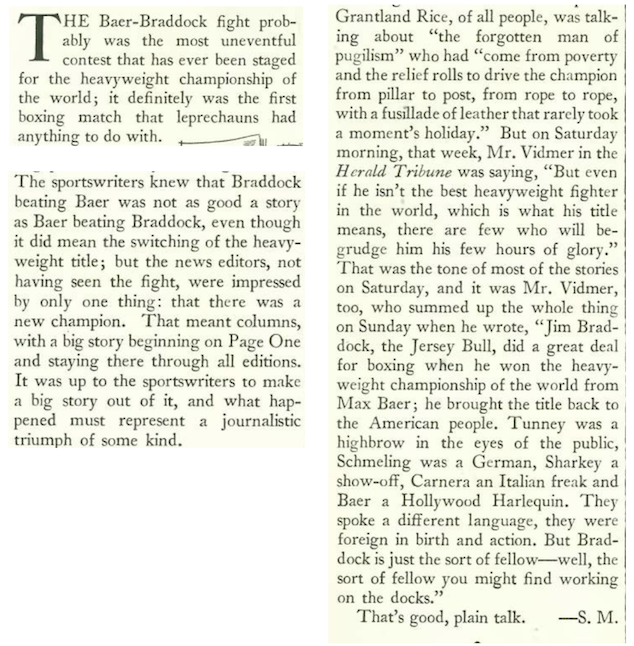
Challenger James J. Braddock achieved one of boxing’s greatest upsets by defeating the heavily favored (and reigning champ) Max Baer. For this feat he was given the nickname “Cinderella Man” by journalist Damon Runyon. The writer of the “Wayward Press” (byline “S.M.”) seemed less impressed, and mocked the national media for their sudden pivot on the bout’s unlikely outcome.
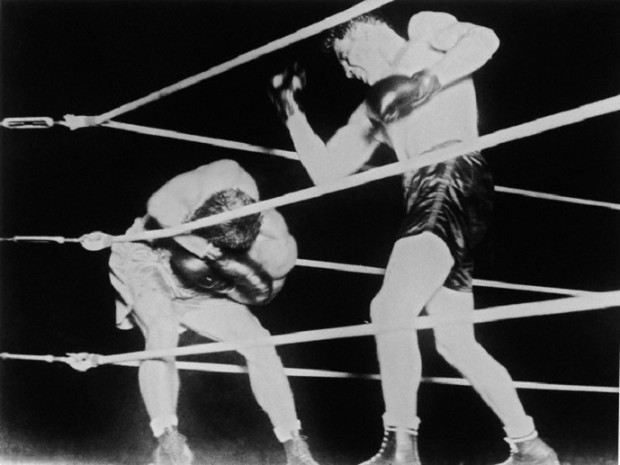
BRINGING THE FIGHT…Challenger James J. Braddock lays into defending champ Max Baer during a heavyweight boxing title match on June 13, 1935, at the Madison Square Garden Bowl in Long Island City. Although the national media dismissed Braddock’s chances of winning, Braddock trained hard for the fight while Baer spent more time clowning around than training. Braddock won by unanimous decision, eight rounds to six. (thefightcity.com)
* * *
Seemed Like a Nice Guy
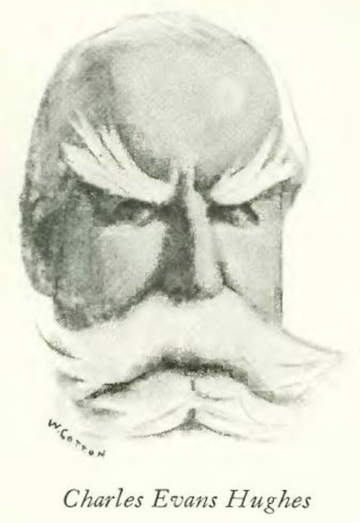
Henry Pringle penned the first part of a three-part profile of Supreme Court Chief Justice Charles Evans Hughes (1862–1948), who was also a former New York governor and U.S. secretary of state. William Cotton rendered a rather severe-looking Hughes in this caricature for the profile…
…although in reality he tended to look more like this…
PROGRESSIVE THINKER…Supreme Court Chief Justice Charles Evans Hughes in 1931. Known as a reformer who fought corruption, Hughes was a popular public figure in New York. (Wikipedia)
* * *
From Our Advertisers
We begin with an advertisement that goes down easy, with its minimal style…
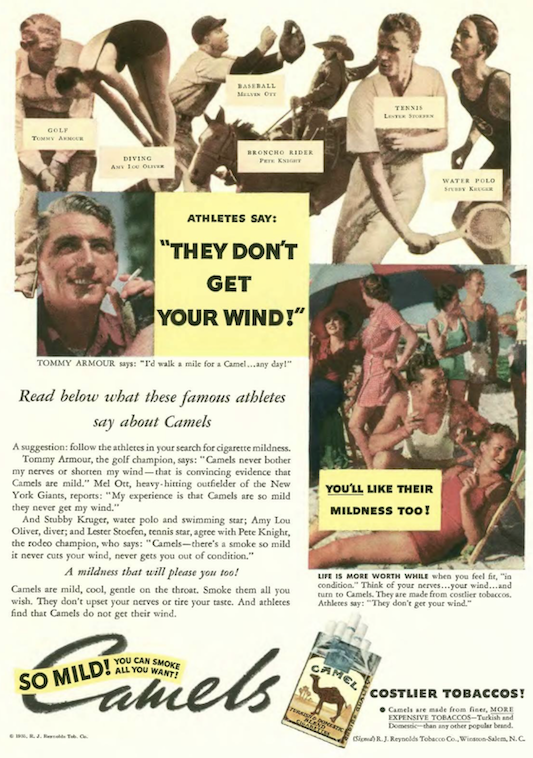
…by contrast, a busy Camel advertisement…R.J. Reynolds alternated full-page ads featuring society women with these health-themed spots that linked smoking with athletic prowess…
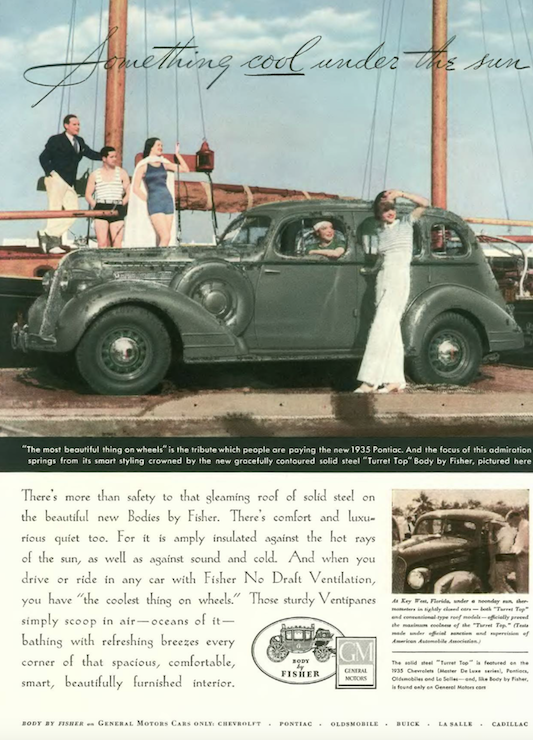
…this advertisement by Fisher claimed the 1935 Pontiac was “The most beautiful thing on wheels,” however here it looks perfectly ancient…
…as does this Nash on the inside back cover…
…the back cover was claimed by Highland Queen, a blend of some very fine distilleries…
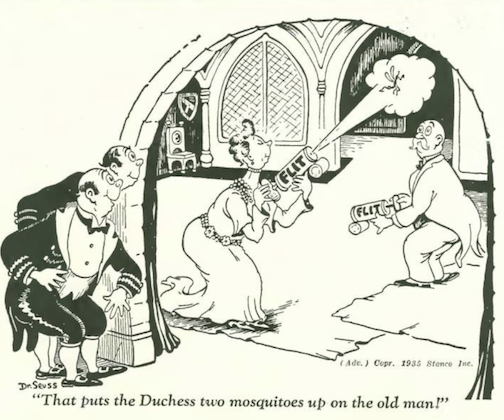
…Theodore Seuss Geisel continued his ongoing saga against the mighty mosquito…
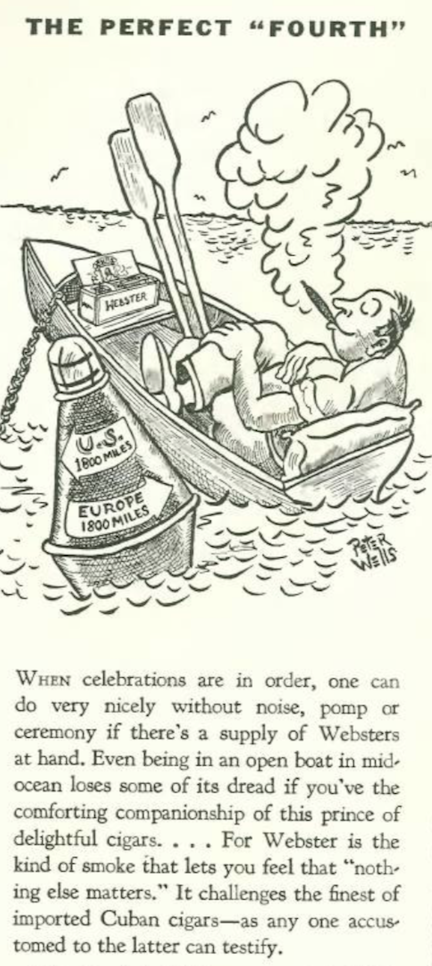
…and we have this back of the book ad for Webster cigars, who enlisted the talents of Peter Wells…
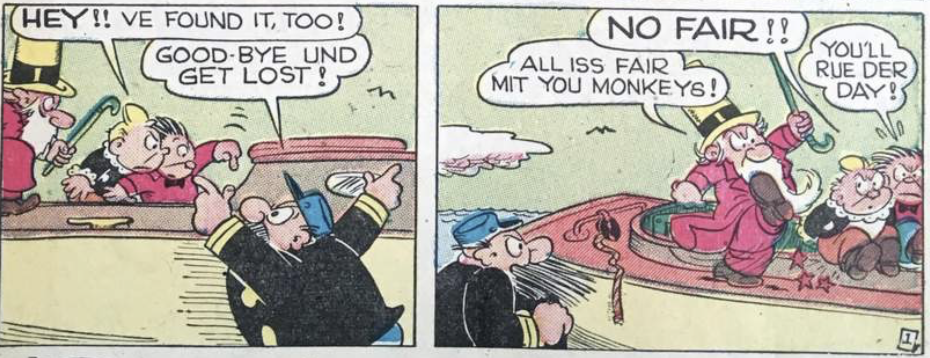
…Wells (1912–1995) was also a children’s book writer, most famous for contributing drawings to the Katzenjammer Kids comic strip …
Peter Wells, detail from the opening page from “The Katzenjammer Kids,” #16, Spring 1951, King Features Syndicate, Inc.
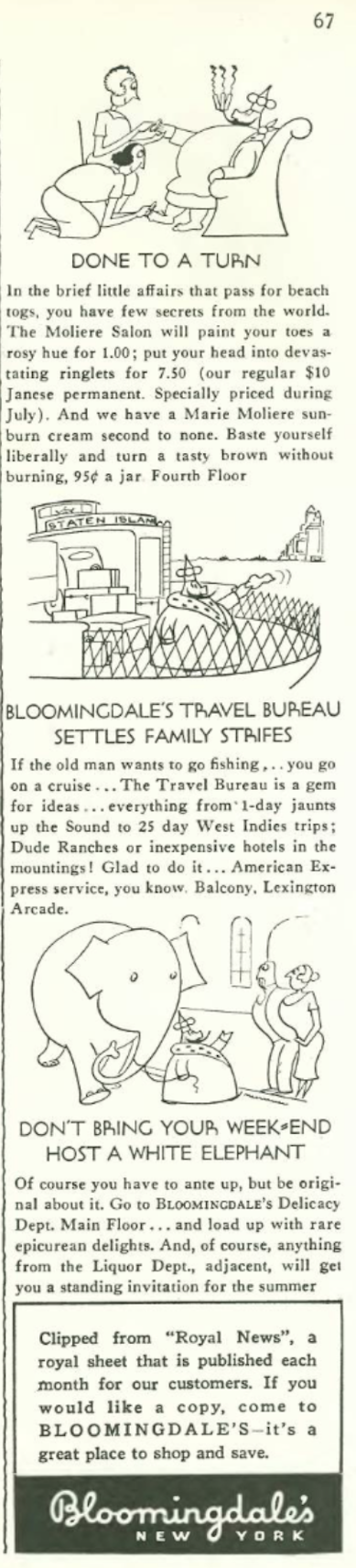
…and of course we are all familiar with Otto Soglow, who sold his beloved Little King to Hearst (and made a pile) but was still able to feature his diminutive potentate in the The New Yorker in a series of ads for Bloomingdales…
…which brings us to our cartoonists, and a familiar torment for our beloved James Thurber…
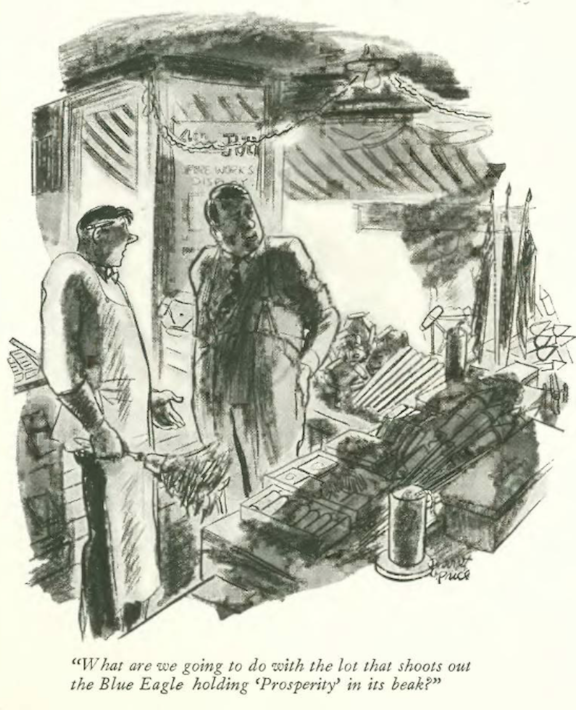
…Independence Day offered a marketing challenge to these shopkeepers, per Garrett Price…
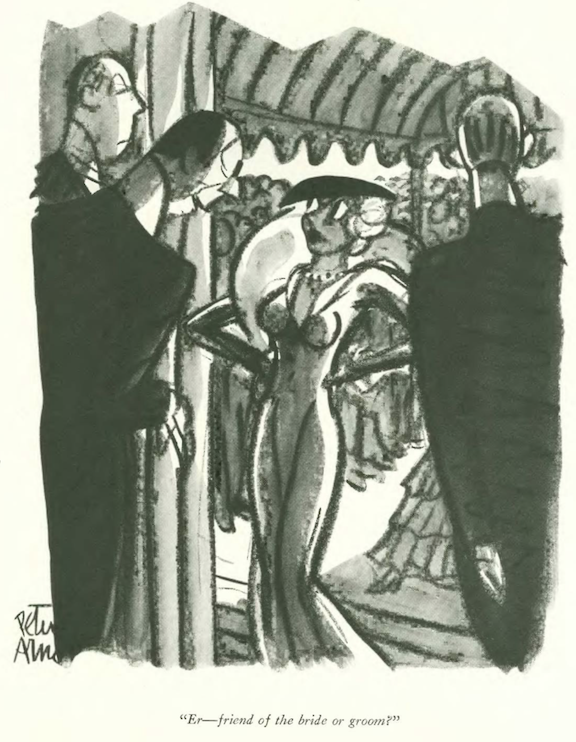
…Peter Arno was at his best, in his element…
…Charles Addams explored the unnatural, which would become his calling card…
…Robert Day offered a new twist to the tonsorial arts…
…William Steig gave examples of some budding “tough guys”…
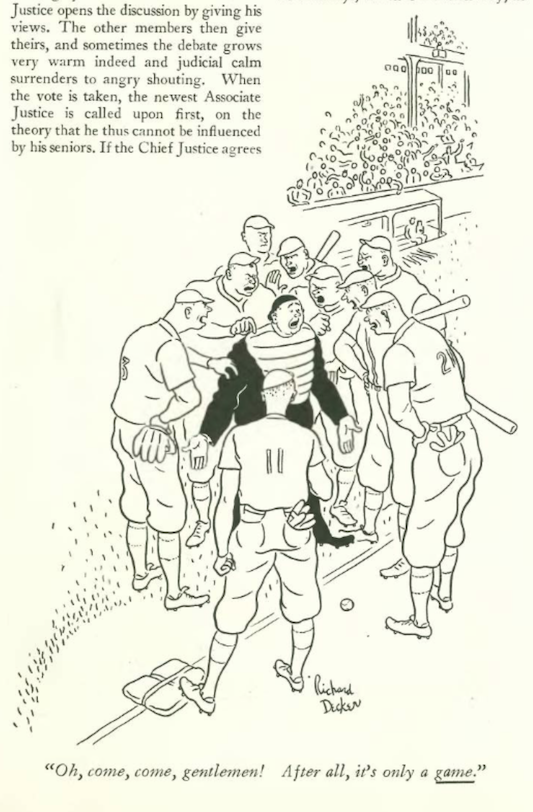
…a rare baseball-themed cartoon from Richard Decker (editor Harold Ross was not a baseball fan)…
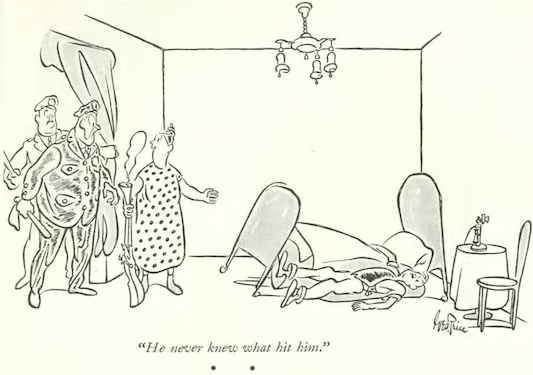
…from George Price, what appears to be the end of his “floating man” series, which began in September 1934…
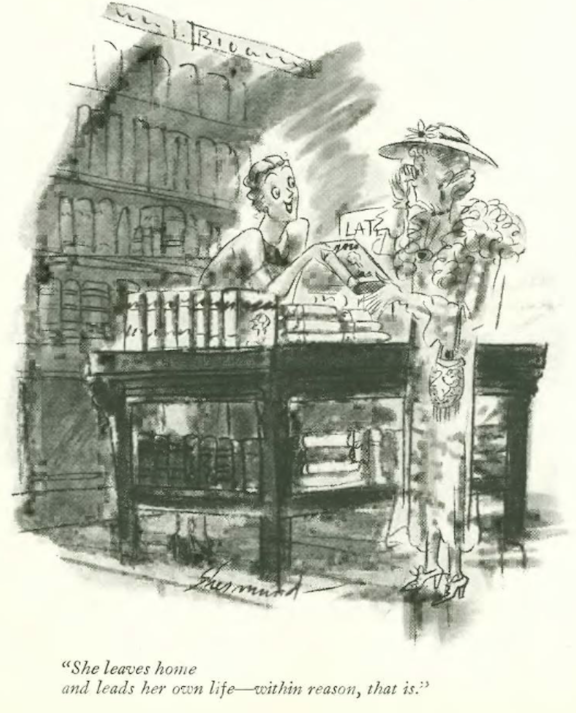
…and we close with one my favorite cartoonists, Barbara Shermund, here at the bookstore…
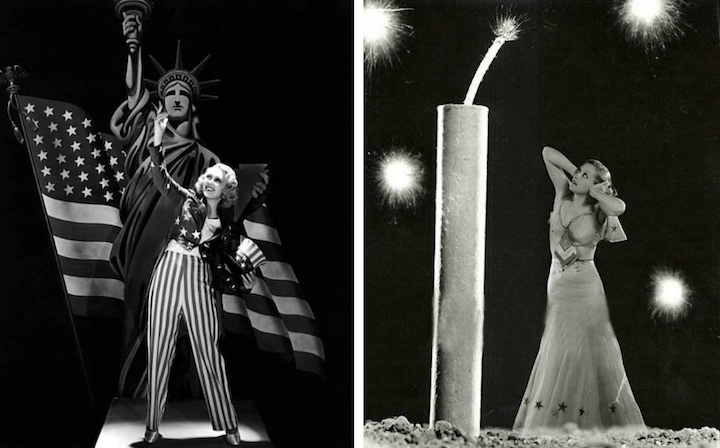
Above: For this Hollywood-heavy post we feature stars of the 1930s—the two Joans, Joan Blondell (left) and Joan Crawford, marking the Fourth of July holiday.
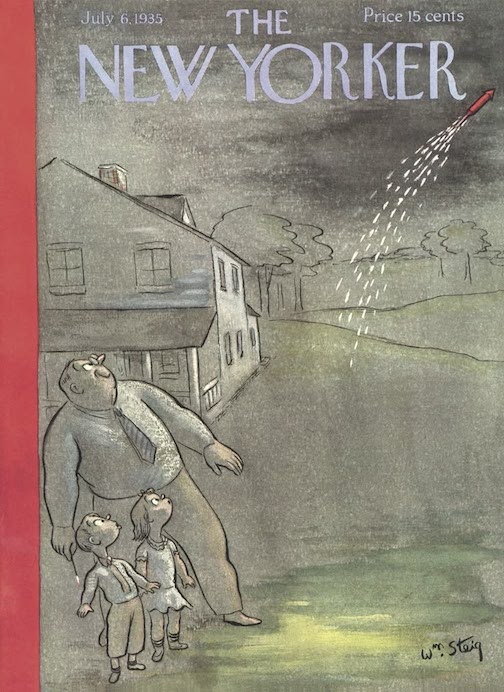
The New Yorker marked the Fourth of July with this William Steig cover featuring a patriotic “strap” along the binding and one of his precocious “Small Fry”…
June 30, 1934 cover by William Steig.
We’ve been looking at ways New Yorkers kept their cool in the hot summer of 1934, and one way to beat the heat was to escape into the air-conditioned darkness of a movie theater. It was not uncommon for folks to remain seated after the credits rolled and watch the feature all over again, just enjoy some cold comfort.
Film critic John Mosher no doubt enjoyed this particular perk, and perhaps this made him a bit more agreeable to whatever was playing on the big screen, including three rather dull pictures featuring actresses Marion Davies, Kay Francis and Elissa Landi.
Marion Davies (1897–1961) was the veteran of the group, beginning her film career in 1917 and appearing in thirty silent films before breaking into sound movies. Sadly, her talents as an actress and comedian were overshadowed by her reputation as William Randolph Hearst’s mistress. Known for her aristocratic bearing, Austrian-American actress Elissa Landi (1904–1948) appeared in several British silents and on Broadway before signing with Fox Films in 1931. Kay Francis (1905–1968) began her film career with the advent of sound movies in 1929. A major box-office draw for Warner Brothers, by 1935 Francis was one of Hollywood’s highest-paid actors (she was also a former roommate and longtime friend of The New Yorker’s Lois Long).
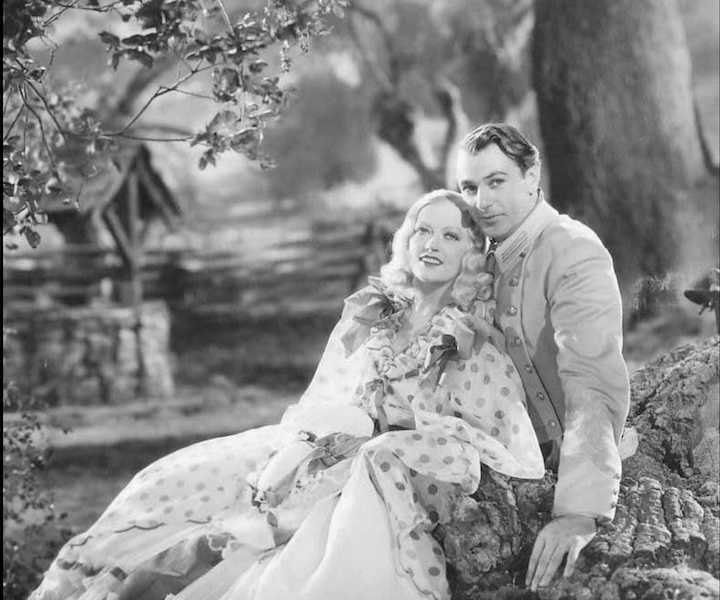
BEFORE SCARLETT AND RHETT…Gary Cooper and Marion Davies as star-crossed lovers in the 1934 Civil War drama Operator 13. Davies portrayed actress Gail Loveless, recruited by the Union to infiltrate a Confederate camp, where she falls for Capt. Jack Gailliard, a Confederate officer played by Cooper. (IMDB)
Perhaps one of the more notorious examples of a white actor in blackface, Operator 13 featured Davies as a Union spy who poses as a Black maid to infiltrate a Confederate camp…
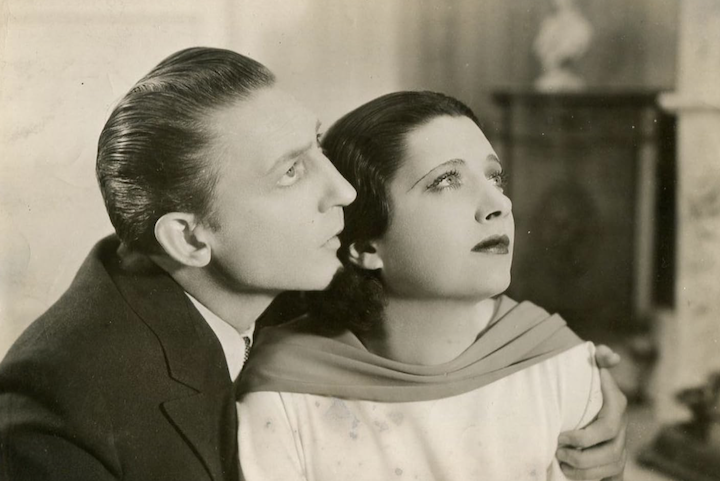
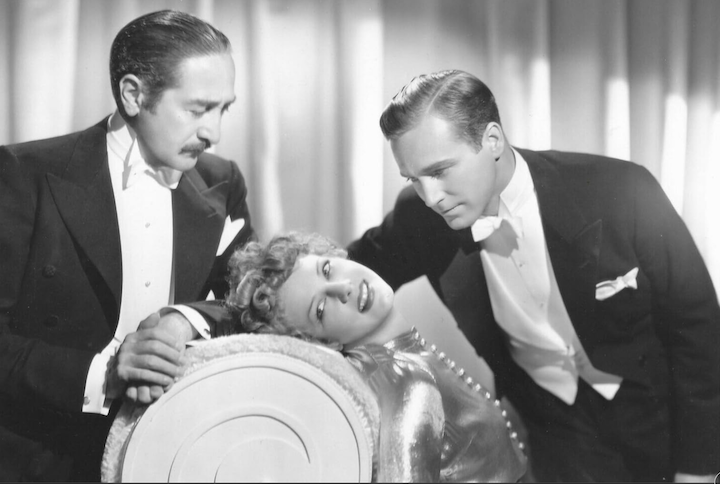
FOOLING NO ONE…Marion Davies, in blackface, with Sam McDaniel in Operator 13. (IMDB)PLAYING DOCTOR…Kay Francis and Warren William in the 1934 Pre-Code drama Dr. Monica. (IMDB)JUST KEEP PRETENDING UNTIL THE CREDITS…From left, Adolphe Menjou, Elissa Landi, and David Manners in the 1934 romantic comedy The Great Flirtation. (IMDB)
* * *
Sentimental Journey
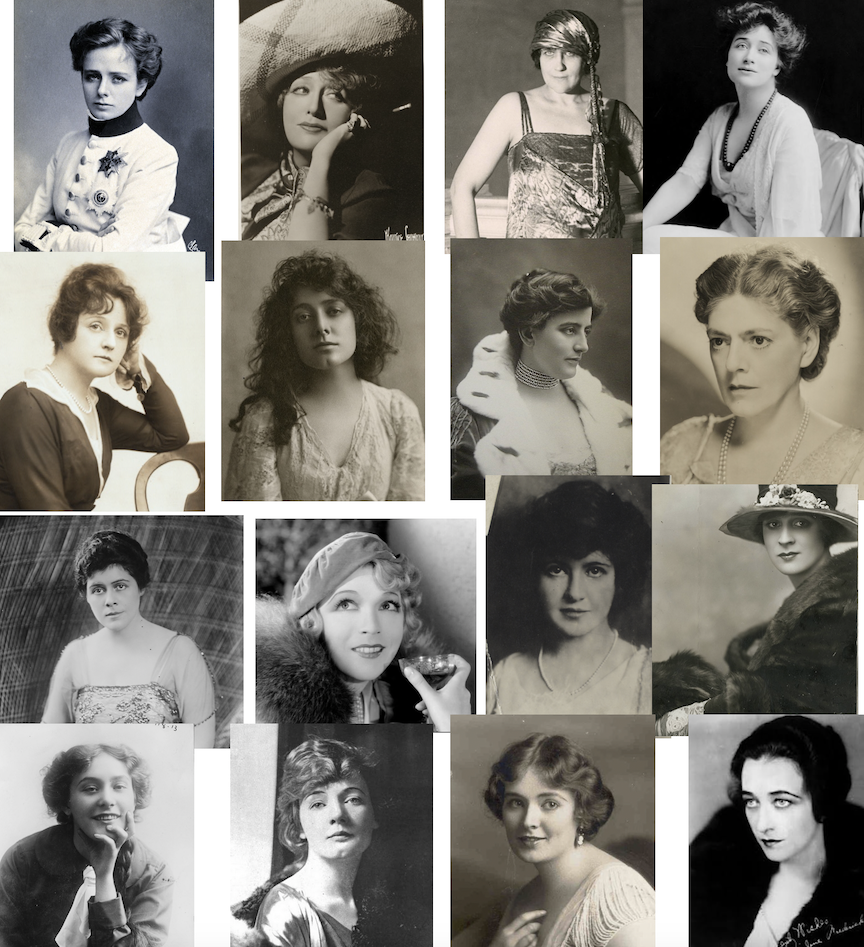
Another critic enjoying the cool of the theater was Robert Benchley, who used this break in the Broadway season to reveal his passions regarding a number of stage actresses. An excerpt:
BENCHLEY’S BROADWAY…Robert Benchley’s all-time favorite Broadway actresses included, from top row, left to right, Maud Adams, Florence Reed, Gladys Hanson, and Charlotte Walker; second row, from left, Laura Hope Crews, Julia Marlowe, Maxine Elliott, and Ethel Barrymore; third row, Janet Beecher, Ina Claire, Marguerite Clark, and Jane Cowl; fourth row, Elsie Ferguson, Martha Hedman, Marjorie Rambeau, and Pauline Frederick. (NYPL/Wikipedia/IMDB)
* * *
A Poke at Palooka
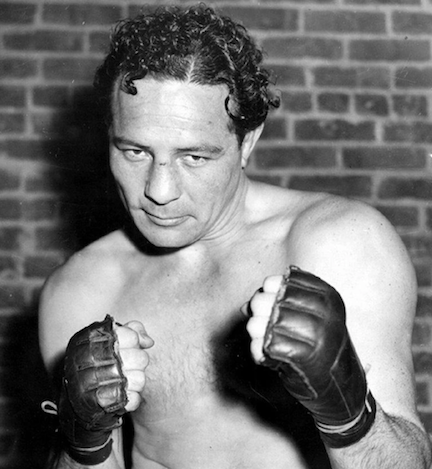
In his column “Of All Things,” Howard Brubaker took a shot below the belt at the new heavyweight boxing champ, Max Baer.
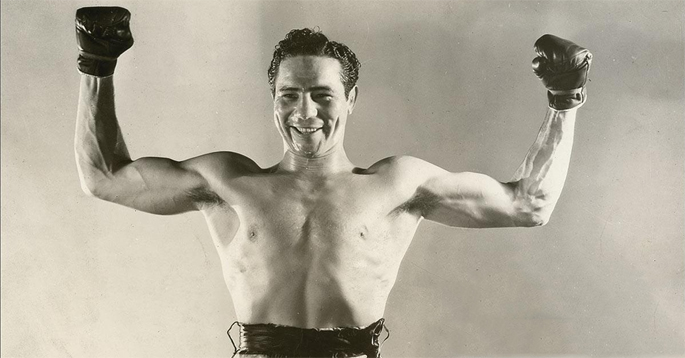
WHO SEZ I CAN’T READ?…Max Baer in the 1930s. (boxing.fandom.com/wiki)
* * *
From Our Advertisers
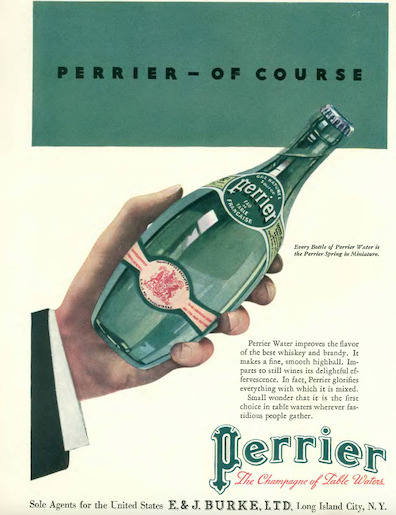
It was hot outside, folks were cooling off with their favorite beverages, and advertisers responded in kind…we begin with a familiar green bottle, and with apologies to Max Baer, you didn’t need to know how to read to know this was a bottle of Perrier…
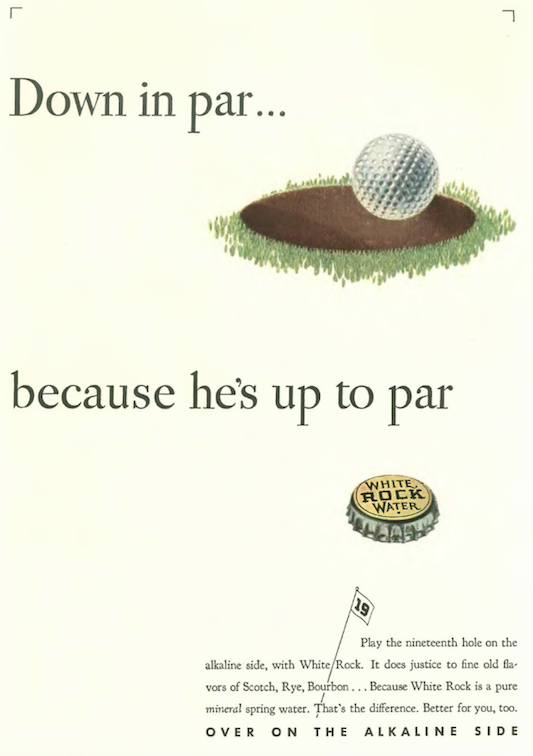
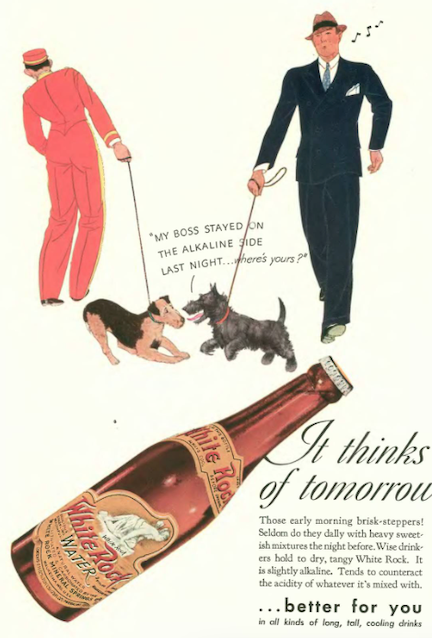
…if your taste was more on the domestic side, there was White Rock…
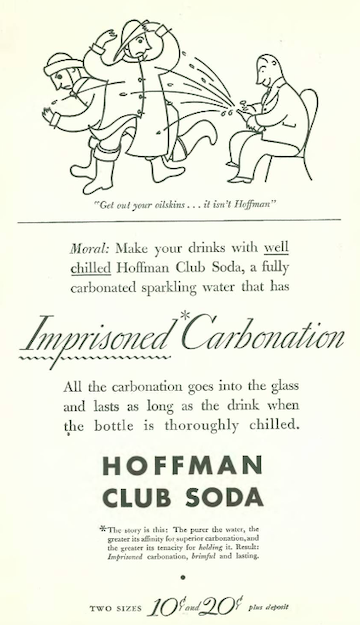
…a series of Hoffman Club Soda ads sought to convince consumers about their superior carbonation…
…or how about a brandy, perhaps lightly chilled, especially if it’s late in the evening, and you happen to be sitting on a breezy hotel rooftop…
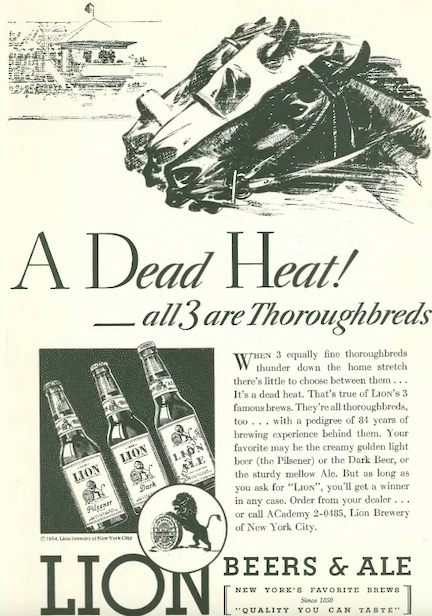
…or you could cool down with a Lion beer…considered a heritage brewery, Lion Brewery is one of only ten pre-Prohibition breweries that has independently and continuously operated since the repeal of Prohibition…
…a fairly new brand of cigarettes, Marlboro, was still taking out these bargain-sized ads to build brand recognition…Flit insecticide, on the other hand, was well-known thanks to these ubiquitous Dr. Seuss ads…
…the folks at General Tire & Rubber were the latest advertiser to tie their product to the glamour of aviation…
…and on to our cartoons, we begin with another installment of native birds via Rea Irvin…
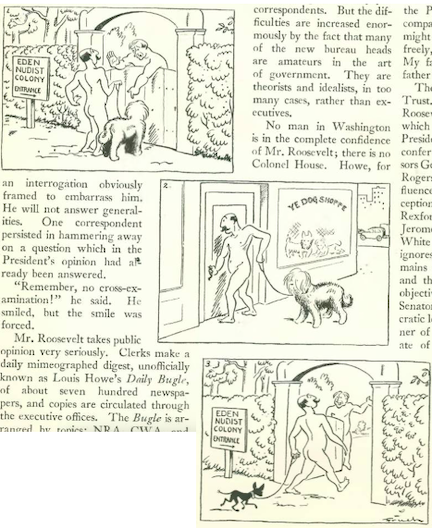
…Al Frueh chimed in with this three-panel encounter at a nudist colony…
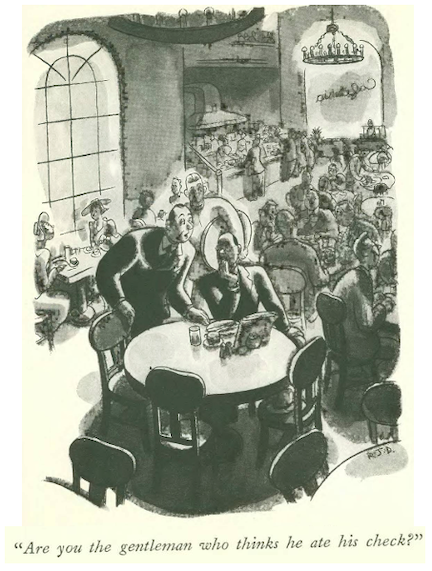
…Robert Day presented a case of indigestion…
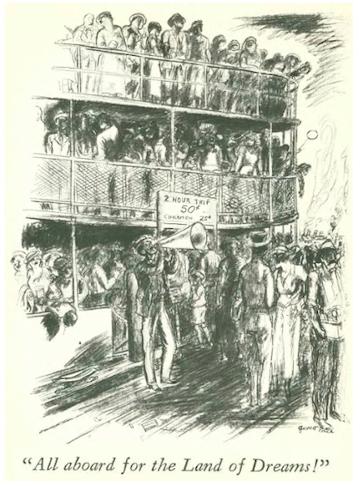
…Garrett Price welcomed us aboard a dream cruise…
…George Price gave us this gem in the “Goings On About Town” section,,,
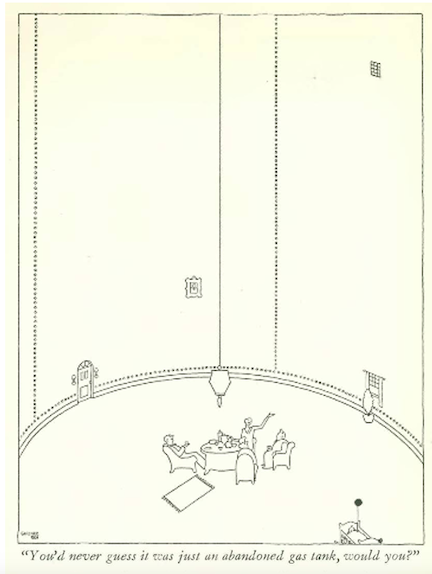
…Gardner Rea gave us his spare line to illustrate an enormous space…one of his specialties…
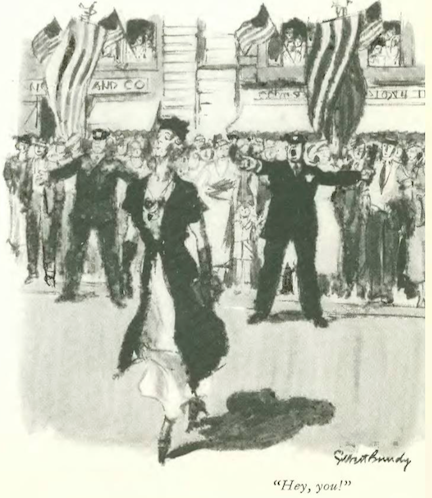
…Gilbert Bundy marked the Fourth with an entitled jaywalker…
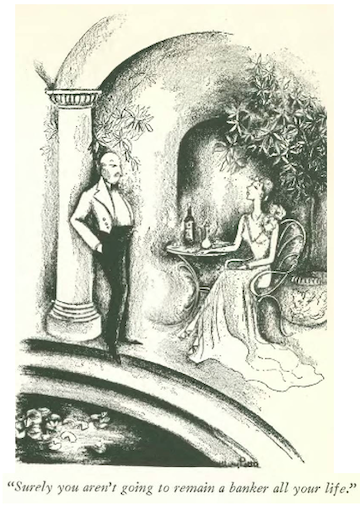
…and we close with Mary Petty, and a banker’s contentment…
Back in the days before we had a zillion different entertainment options, almost anyone with a pair of ears would tune in to hear the radio broadcast of a heavyweight title fight.
June 23, 1934 cover by Rea Irvin.
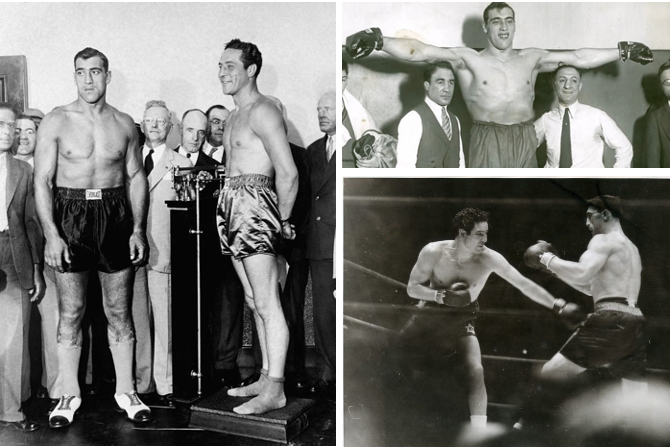
Jack Dempsey and Gene Tunney dominated the late 1920s, while Joe Louis, Max Schmeling and Jack Sharkey were marquee names in the 1930s along with Max Baer and Primo Carnera, who met on June 14, 1934 at the outdoor Madison Square Garden Bowl in Long Island City. The reigning champ Carnera (1906–1967), who stood six-and-a-half feet tall and weighed in at 260 pounds, had won more fights by knockout than any other heavyweight champion. But Baer (1909–1959) was known as a knockout puncher who beat one opponent so savagely that he died the following day.
DEADLY DUEL…Max Baer (right) fought Frankie Campbell on Aug. 25, 1930, in San Francisco for the unofficial title of Pacific Coast champion. In the fifth round Baer got Campbell against the ropes and hammered him senseless. Campbell died the next day. An autopsy revealed that Campbell’s brain was “knocked completely loose from his skull.” Baer was profoundly affected by Campbell’s death, and donated purses from succeeding bouts to Campbell’s family. (thefightcity.com)
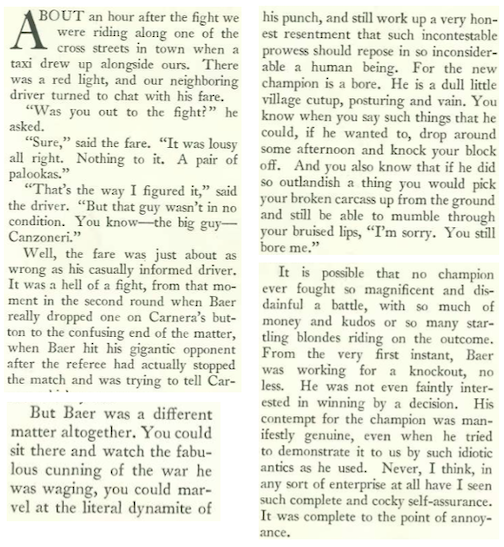
Baer was also something of a showboater, a quality Morris Markey found distasteful when he wrote about the Baer–Carnera bout in “A Reporter at Large.”
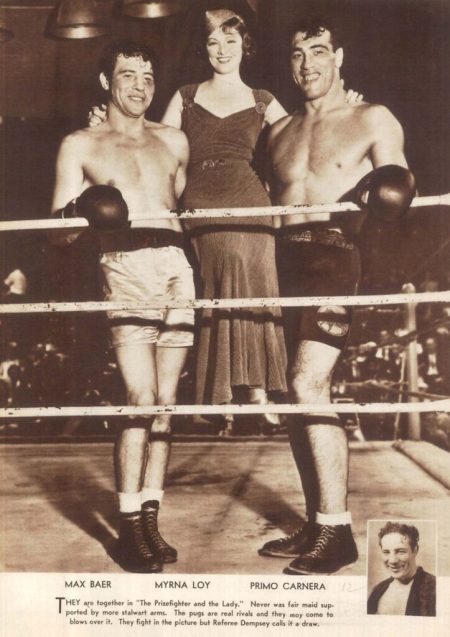
ALL SMILES…A year before their championship bout Max Baer (left) and Primo Carnera starred with Myrna Loy in The Prizefighter and the Lady. (theusaboxingnews.com)
GIANT SLAYER…The Italian prizefighter and wrestler Primo Carnera, nicknamed the “Ambling Alp,” was the reigning heavyweight champion when he faced Max Baer on June 14, 1934 at the Madison Square Garden Bowl. Baer felled the champion eleven times before the fight was stopped in the eleventh round. Baer would only hold the title for a year, losing to James J. Braddock on June 13, 1935, in what has been called one of the greatest upsets in boxing history. (theusaboxingnews.com)
Markey further explained why Baer’s behavior in the ring was so bothersome, and how it differed from the comic antics of other famous athletes:
RETIRING TYPES…Both Primo Carnera and Max Baer acted in films during their boxing careers, and continued acting after their retirements (Carnera in 1944, Baer in 1941). At left, Carnera with Bob Hope in the 1954 American comedy Casanova’s Big Night (Carnera appeared in eleven Italian films and in a half-dozen American films); at right, Max Baer and brother Buddy Baer (also a boxer) with Lou Costello in the 1949 comedy Africa Screams. Baer would appear in more than 20 films.(theusaboxingnews.com/monstermoviemusic.blogspot.com)
Complications from diabetes would take Carnera down for good at age 60. Baer would die even younger, from a heart attack, at age 50. His last words reportedly were, “Oh God, here I go.” Baer’s son, actor and director Max Baer Jr. (best known as Jethro Bodine from TV’s The Beverly Hillbillies) is still with us, at age 85.
We aren’t quite finished with the Baer–Carnera fight…E.B. White led his “Notes and Comment” with this observation regarding the fight’s mass appeal and seeming universality:
* * *
Apologies to Ms. Winslow
I seem to have given short shrift to author Thyra Samter Winslow (1886–1961) who published more than 200 stories during her career in magazines such as The Smart Set and The American Mercury. She published more than thirty in TheNew Yorker, from 1927 to 1942, including the serialization of her short story collection, My Own, My Native Land. The story “Poodles” was featured in the June 23 issue.
According to the Encyclopedia of Arkansas, Winslow’s early life in Fort Smith (Ark.) “provided background for her view of small towns as prejudiced, hypocritical, and suffocating places…many stories expose the hypocrisy, prejudice, and carefully maintained social structures of both small town and urban life. She was particularly adept at portraying women of every social class, often in an unfavorable light. Money, especially the pursuit of it as a means to happiness or status, is an important theme throughout her work.”
THE PURSUIT OF HAPPINESS…Thyra Samter Winslow with friend, 1937. (findagrave.com)
* * *
Hot Enough For Ya?
So what did New Yorkers do when the summer heat set in? The next few items offer some clues, beginning with this poem by E.B. White:
SUMMER STOCK…Theatergoers fled to shady villages in New York, New Jersey and New England in the 1920s and 30s when summer stock theater was at its height. The above photo shows theatergoers leaving a performance at the Lakewood Theatre near Skowhegan, Maine. The theater was claimed to be the oldest and finest summer stock company in America with a Broadway cast. Nearby Lakewood Inn provided recreation, camping, and tourist bungalows. (mainememory.net)
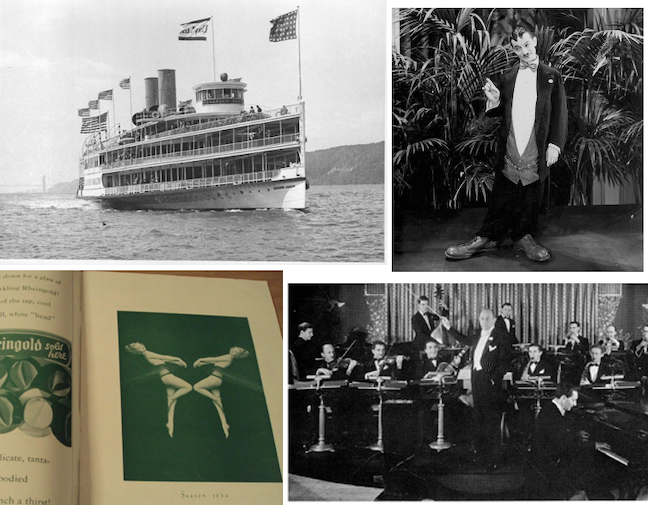
You could also take in some entertainment while enjoying the cooling breezes of the Hudson River. Robert Benchley hopped aboard the Alexander Hamilton to enjoy Bobby Sanford’s showboat revue:
SOME REAL SHOWBOATING…Clockwise, from top left, the steamboat Alexander Hamilton hosted Bobby Sanford’s showboat revue; comedian Lester Allen served as emcee for the show; the Meyer Davis Orchestra supplied the music; the revue featured the “exotic” DuVal sisters (image from program) among other diversions. (Hudson River Maritime Museum/IMDB/vintagebandstand.blogspot.com/Worthpoint)
“Tables for Two” took a look at summer dining options, from sidewalk cafes to hotel rooftops featuring dinner and dancing—this “Tables” was not written by Lois Long, but by Margaret Case Harriman, who knew a thing or two about nightlife (she was the daughter of the Hotel Algonquin’s owner, Frank Case)…
DANCING WITH THE STARS…The Waldorf-Astoria’s “Starlight Roof” was a popular summer restaurant for dining and dancing. Image from a 1935 publication The Waldorf-Astoria by Richard Averill Smith. (The Waldorf-Astoria)
* * *
Doing Swimmingly
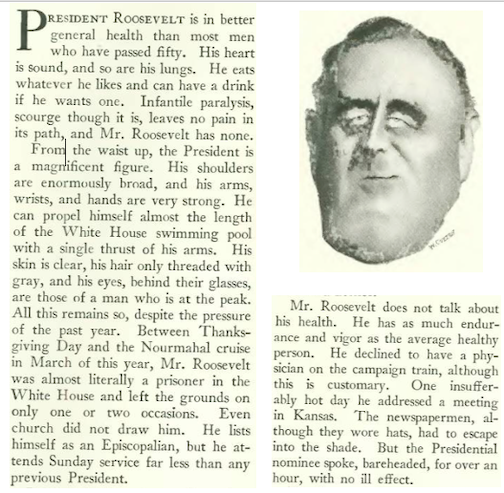
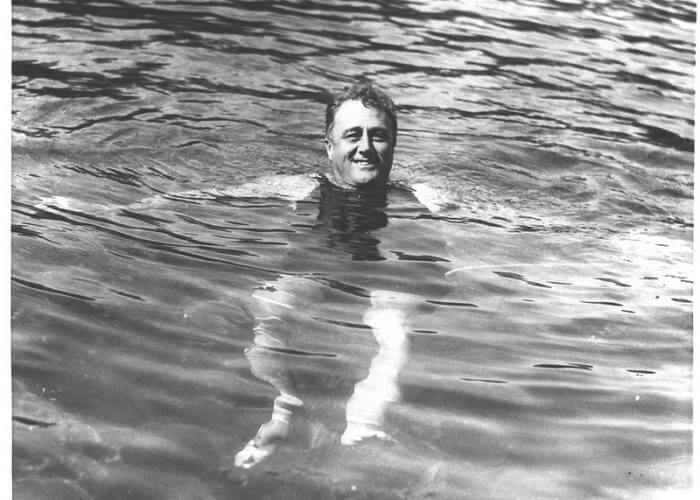
Historian Henry F. Pringle published part two of his series on President Franklin D. Roosevelt, here marveling at the president’s health despite his serious bout with polio (drawing by William Cotton).
TAKING THE WATERS…President Franklin D. Roosevelt took to swimming for therapy and exercise. (FDR Presidential Library and Museum)
* * *
Get Yourself to Chi-Town
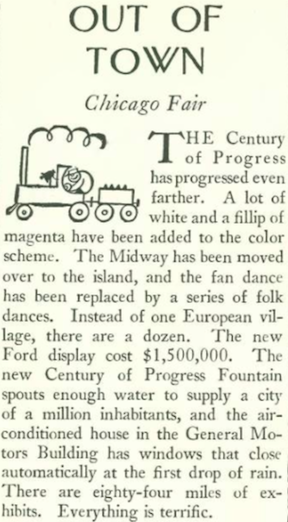
The Chicago World’s Fair (The Century of Progress) was in its second and final year, and The New Yorker found everything “terrific.” Excerpt:
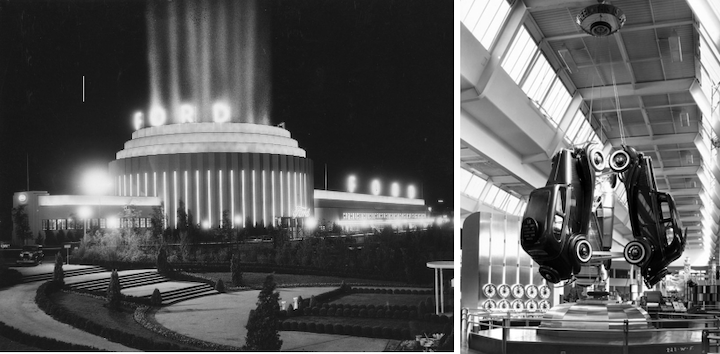
MAKING A SPECTACLE OF ITSELF…The 11-acre Ford Motor Company exhibit at Chicago’s Century of Progress became the most talked-about exhibit of 1934, featuring a central rotunda designed to simulate graduated clusters of gears. At right, Proof of Safety Exhibit in the Ford Building. (chicagology.com)
* * *
From Our Advertisers
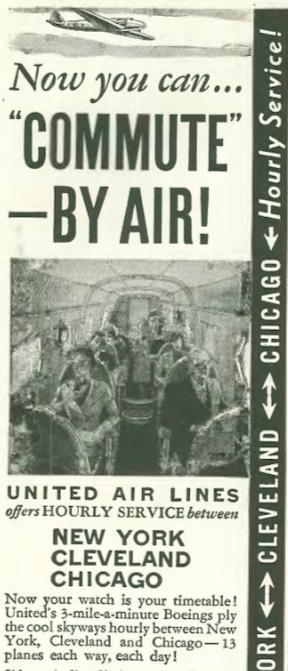
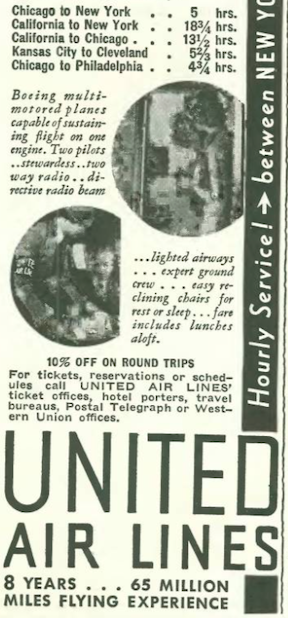
Just a couple of entries this week…You could take a plane to the Chicago World’s Fair on a United Airlines Boeing 247…
…the lower section of the ad claimed you could fly to Chicago in about five hours in planes featuring “Two pilots…stewardess…two-way radio…directive radio beam”…
TSA? WHAT’S A TSA?…United Airlines Boeing 247-D at an airport terminal with passengers and crew. (digitalcollections.lib.washington.edu)COZY CONFINES…Passengers enjoy a game of checkers aboard a Boeing 247 in 1933. (digitalcollections.lib.washington.edu)
…and what would our advertising section be without two fashionable people lighting up?…
…on to our cartoonists, we begin with Reginald Marsh’s illustration of a Rep Theatre production…
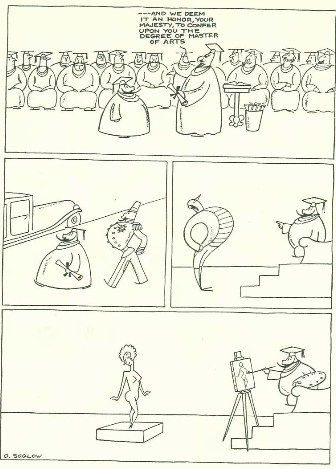
…Otto Soglow’s Little King found his artistic side…
…Rea Irvin continued his examination of native fauna…
…Gardner Rea correctly predicted the global domination of Mickey Mouse…
…Peter Arno showed the dizzying effects of a Coney Island ride…
…however at the altar the thrill was gone, per Garrett Price…
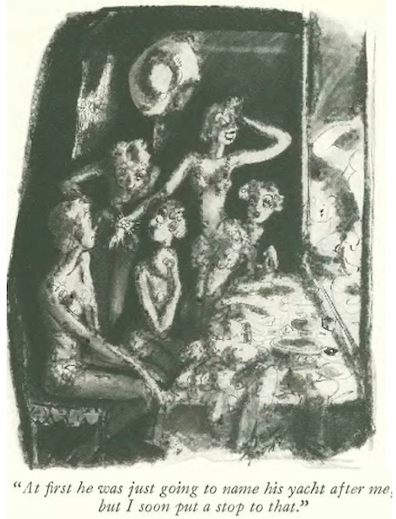
…another take on the ways of love, with Barbara Shermund...
…the newfangled diagonal bathtub continued to dazzle, with George Price…
…Gardner Rea offered up some subtle irony on the farm…
…and we close with James Thurber, in a poetic moment…
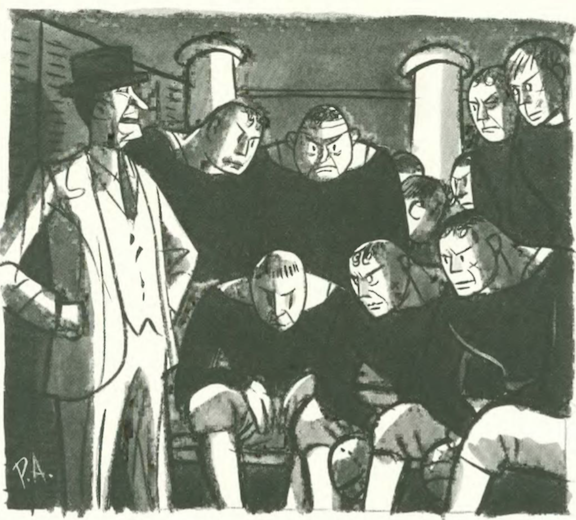
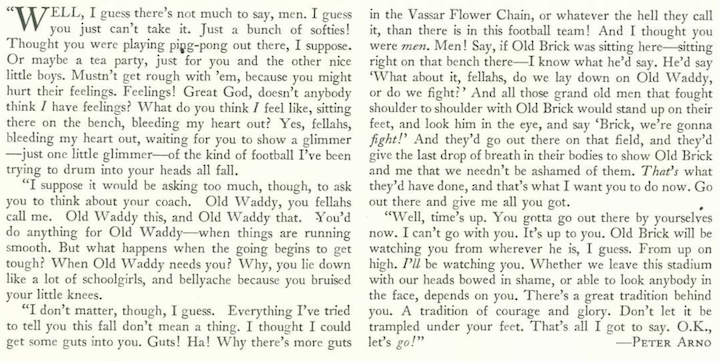
Peter Arno departed from his usual one-liners in the Nov. 18, 1933 issue with a football-themed cartoon that featured a four-paragraph caption…
Nov. 18, 1933 cover by Abner Dean.
…that consisted of a pep talk from a football coach—”Old Waddy”…
…Arno had visited the football theme before, notably in this early cover from 1928…
Arno cover from Oct. 7, 1928.
…and he referenced it again in the years ahead…
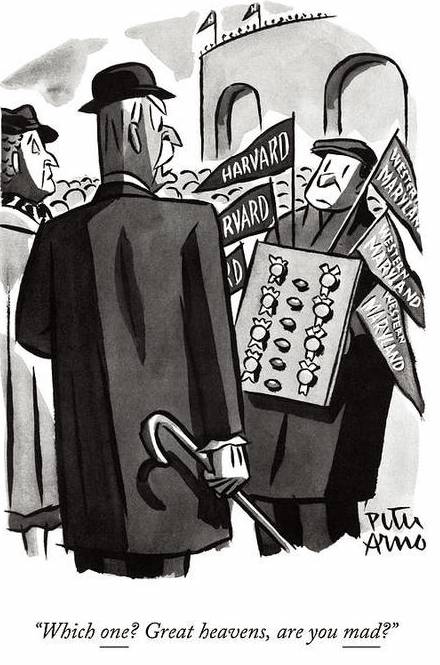
HAIL VARSITY…Peter Arno delivered another, much shorter pep talk in a cartoon (left) from the Nov. 20, 1937 issue; at right, Arno’s last football-themed gag, published in The New Yorker of November 25, 1967, just three months before the cartoonist’s death. Check out one of my favorite New Yorker sites, Attempted Bloggery, for more on the 1937 cartoon.
…and one more from Arno, a classic from September 27, 1947…
* * *
Pre-emptive Nostalgia
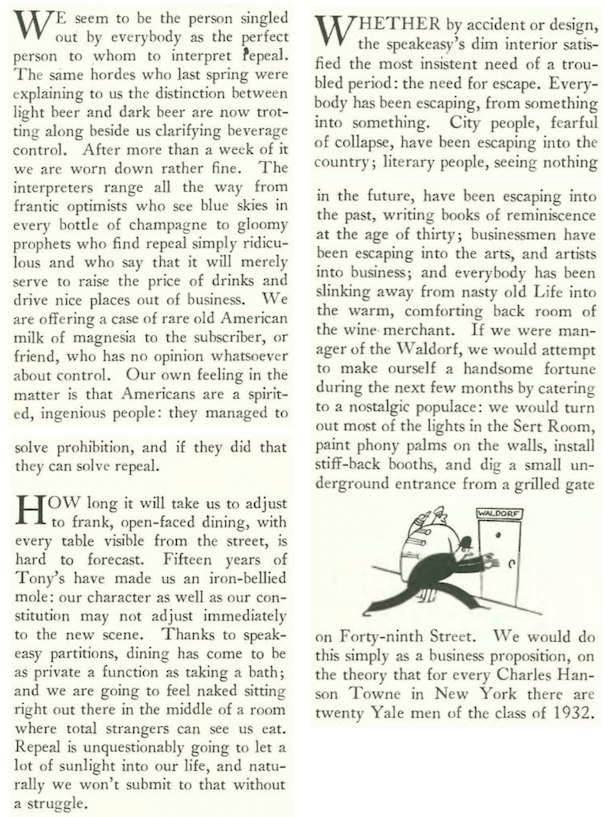
Although E.B. White welcomed the end of Prohibition with open arms, he also wondered what could be lost when drinkers emerged from the shadows of the speakeasy world…
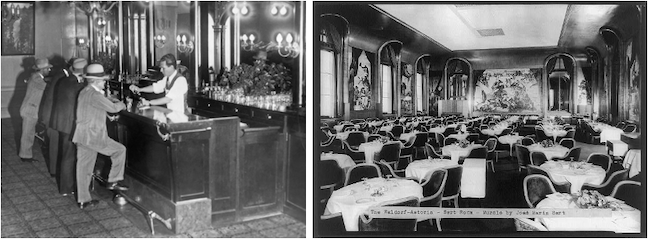
THAT HOMEY FEELING…E.B. White suggested transforming the Waldorf-Astoria’s Sert Room (right) into a dingy dive to help ease drinkers back into the world of legal alcohol. (Britannica/Library of Congress)
White also referenced his many years at Tony’s, a speakeasy and Italian restaurant popular with writers and others in the New Yorker’s orbit. Tony Soma operated the speakeasy until 1929, when John D. Rockefeller bought Soma’s building along with other properties to make way for Rockefeller Center. Soma would later open another popular (and legit) restaurant and also become known as a yoga practitioner and the grandfather of actress Angelica Huston. You can read more about Soma at The Speakeasy King.
* * *
The French Underground
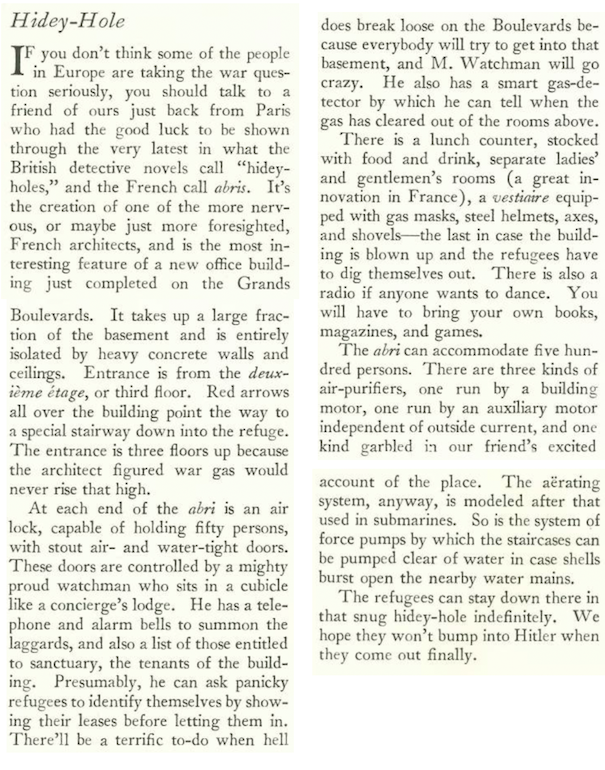
Although war seemed like a distant rumor to most Americans, the French were busy preparing for that likelihood, according to this “Talk of the Town” piece attributed to Europe-based documentary filmmaker Richard de Rochemont and New Yorker stalwart James Thurber.
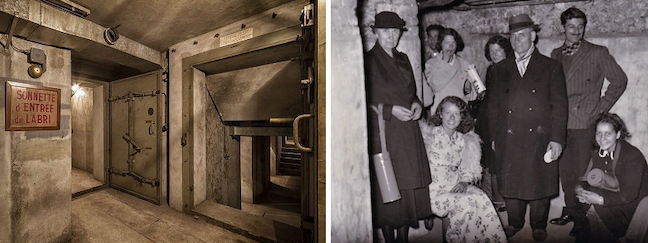
LOOK OUT BELOW…At left, a preserved WWII abris can be found below platforms 2 and 3 at Paris’ Gare de l’Est; right, Parisians take shelter in an abris in 1939. (Trip Adviser/Ebay)
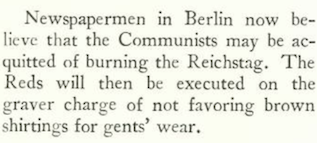
…in his column, “Of All Things,” Howard Brubaker mused on the latest rumblings from Berlin…
DEMOCRACY IN ASHES…An arson attack on the Reichstag (home of the German parliament) on February 27, 1933 was used by Adolf Hitler as pretext to suspend civil liberties and conduct a ruthless pursuit of “communists,” both real and imagined. (Wikipedia)
* * *
Little Women, Big Film
On the brighter side, we turn to Hollywood and John Mosher’s review of George Cukor’s critically acclaimed Little Women, which featured a cast led by Katharine Hepburn and Joan Bennett.
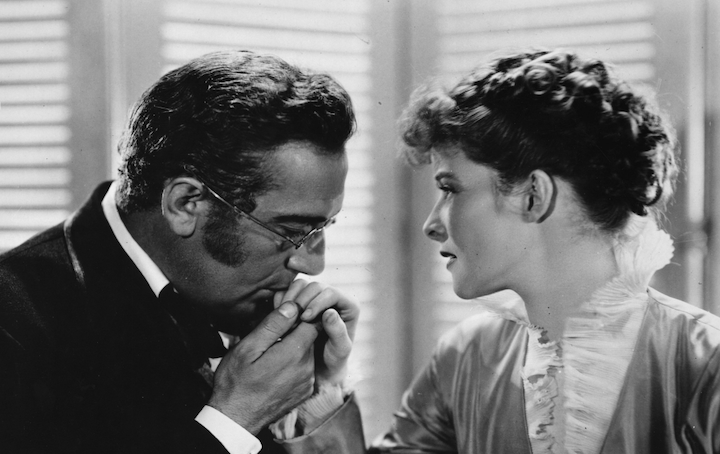
MEINE LIEBCHEN…Impoverished German linguist Professor Bhaer (Paul Lukas) proposes to Jo (Katharine Hepburn) in 1933’s Little Women. (IMDB)SEW WITH JO…From left, the March family as portrayed by Jean Parker (as Beth), Joan Bennett (Amy), Spring Byington (Marmee March), Frances Dee (Meg), and Katharine Hepburn (Jo) in the George Cukor-directed Little Women. (IMDB)
…Mosher also found something to like in the MGM romance The Prizefighter and the Lady, which starred Myrna Loy along with professional boxers Max Baer, Primo Carnera, and Jack Dempsey.
THE NEW “IT” MAN was how MGM publicists promoted professional boxer Max Baer in his film debut. Top right, Baer in a scene with Myrna Loy; bottom right, professional boxer Primo Carnera with Loy and Baer—Carnera was the world heavyweight boxing champion at the time of the film’s release, however Baer would defeat the Italian giant in their real-life 1934 fight; bottom center, Baer’s son, Max Baer Jr., would also find Hollywood fame in the 1960s playing Jethro Bodine on TV’s The Beverly Hillbillies. (IMDB/Wikipedia)
* * *
Sausage Factory
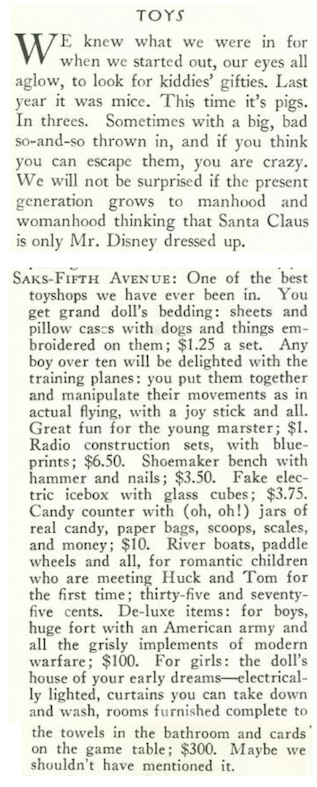
We’ve previously looked at the smashing success of Walt Disney’sThree Little Pigs cartoon and its theme song, which took the country by storm in the fall of 1933. So it was no surprise that the piggies could be found in toy departments across the metropolis as the Christmas season approached. These are brief snippets from a lengthy holiday shopping column that was appended annually to Lois Long’s “On and Off The Avenue” every November and December.
HOG HAVEN…You could help the Three Little Pigs find their way to safety in this 1933 Disney board game. As in the film, the final leg of the board game’s journey has the wolf landing in a cauldron of boiling water. As if that wasn’t bad enough, the Disney film also featured one of the pigs adding turpentine to the cauldron. (Ebay)
This being America in the 1930s, and early Disney, the Three Little Pigs cartoon contained an offensive scene in which the Big Bad Wolf disguises himself as a Jewish peddler, complete with a fake nose, glasses, and beard (accompanied by a fiddle, the wolf also adopts a Yiddish accent).* The character was included in the above board game:
* The film was finally edited in 1948 with a redesign of the Wolf’s disguise—as a Fuller Brush salesman.
* * *
From Our Advertisers
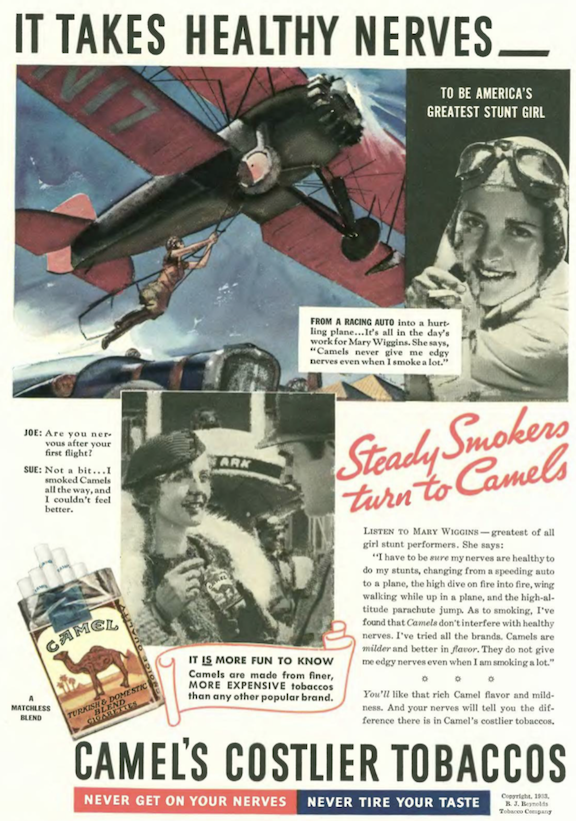
We kick off our ads with more “healthy nerves” testimonials from Camel smokers, including stuntwoman/pilot Mary Wiggins…
…Caron Paris also went aloft with one of their famed “En Avion” adverts…
…back on the ground, this hapless couple found themselves taking a slow car to a soaking…although wearing a fur coat while riding in a rumble seat probably wasn’t a good idea, regardless of the weather…
…for those rainy days, you could get yourself a Salisbury overcoat from Brooks Brothers…this sports-themed illustration was a new twist for the usually staid BB…
…and there’s always one or two really weird ads, like this one from The Sun newspaper that touted baloney sales at Gimbels as proof of advertising prowess…
…collectors of Art Deco are well-acquainted with the work of Hans Flato, who did a series of ads (and related merchandise) for New York-based Ruppert’s Beer in the early 1930s…Flato (1887-1950) worked in a variety of styles, but the characters he created for Ruppert’s stand out…for reasons known only to the Flato, the feet of the Ruppert’s characters were always attached to yellow disks, like toy dolls…
…James Thurber was keeping busy illustrating ads aimed at folks wanting to escape the cold…
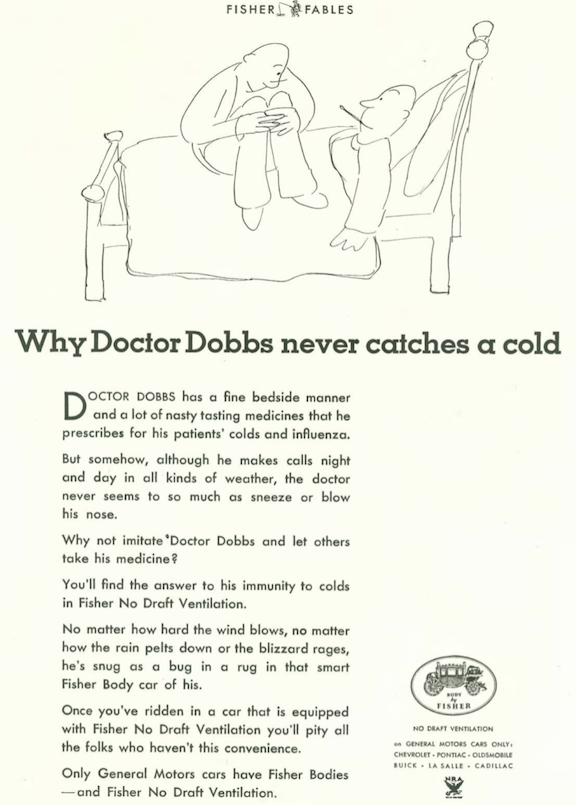
…as well as those who caught a cold in a drafty automobile…
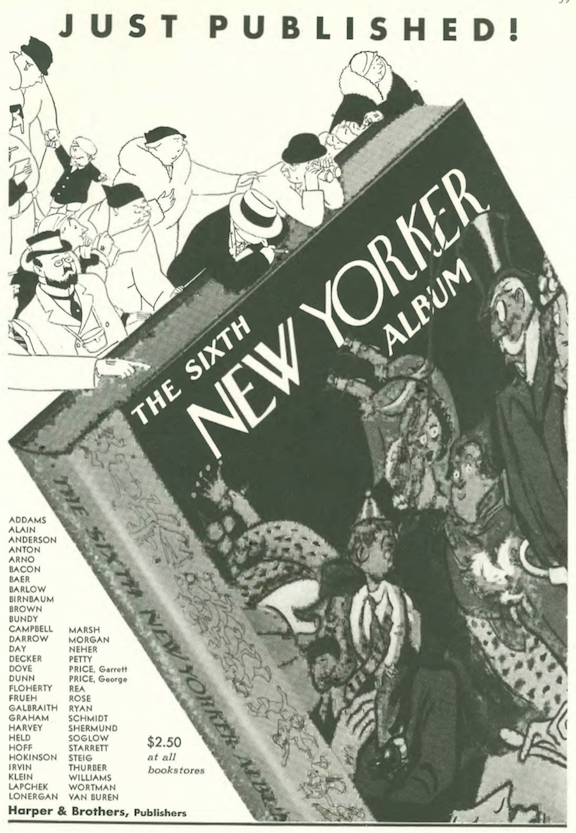
…The New Yorker announced the publication of its sixth album, with an illustration by Gluyas Williams…
…while Otto Soglow, in a much smaller back-page ad, proclaimed the publication of his first The Little King collection…Soglow had just ten months left on his contract with The New Yorker—his Little King would relocate to William Randolph Hearst’s King Features Syndicate in September 1934…
…speaking of Soglow, we kick off the cartoons with his potentate’s latest adventure…
…William Steig gave us a sneeze and a chorus…
…and we close with Eli Garson, and a tale from the Almost Wanted…
















































 A New Yorker State of Mind