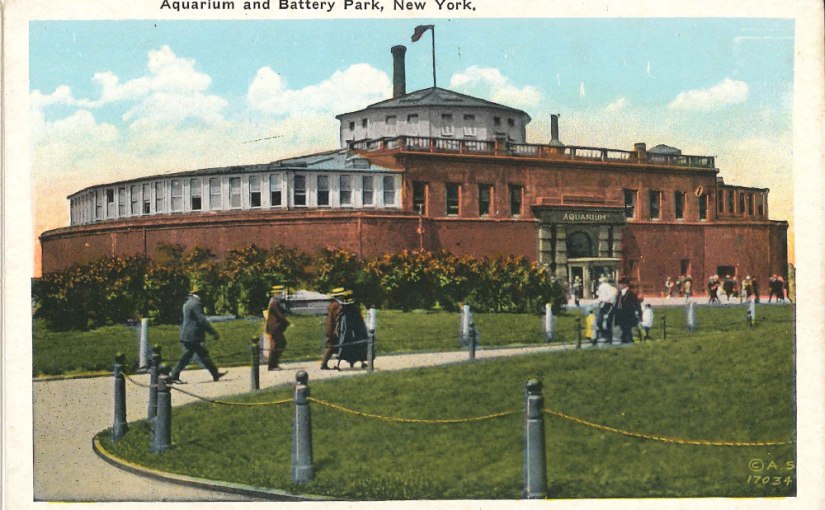
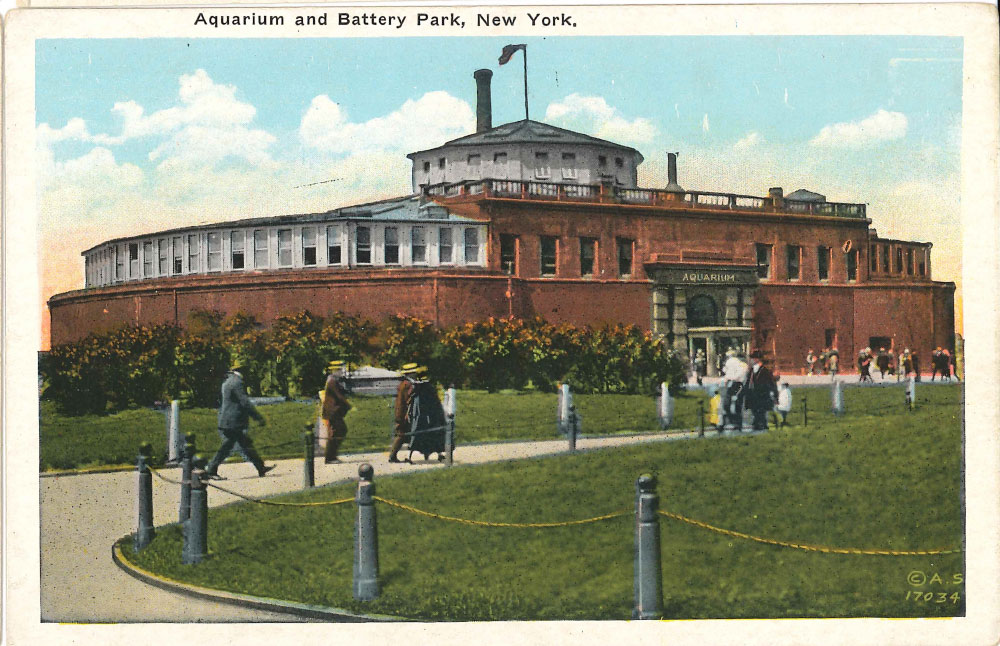
Battery Park’s Castle Clinton was a fort, a popular entertainment complex, and an immigration depot before the architectural firm of McKim, Mead, and White transformed it into the New York Aquarium in 1896.
Sept. 26, 1931 cover by Rea Irvin.
The Aquarium’s beginnings were modest, but under the direction of zoologist Charles Haskins Townsend it became one of lower Manhattan’s biggest attractions. “The Talk of the Town” looked in on its latest acquisitions, including the first display of live piranha (here spelled paranha) in America:
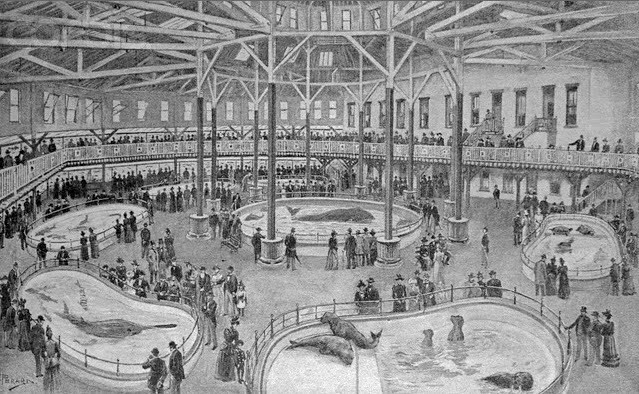
When the Aquarium opened it was marvel of late 19th century technology; its enormous glass tanks and pools — holding more than 300,000 gallons of water — were controlled by an elaborate behind-the-scenes operation that ensured each species had the right kind of water conditions and food to survive, at least for awhile; the Aquarium in its early days, like the Central Park Zoo we visited recently, displayed its creatures as curiosities in decidedly unnatural surroundings…
DE-NATURED…In the New York Aquarium’s early days, fish and other aquatic animals were displayed in glass tanks that lined the out walls as well as in concrete ponds below the expansive trussed ceiling. If this rendering is accurate, then these creatures, especially the whales, had miserable, short lives. (thebattery.org)
…and this is a promotion for the Aquarium you would not see today…
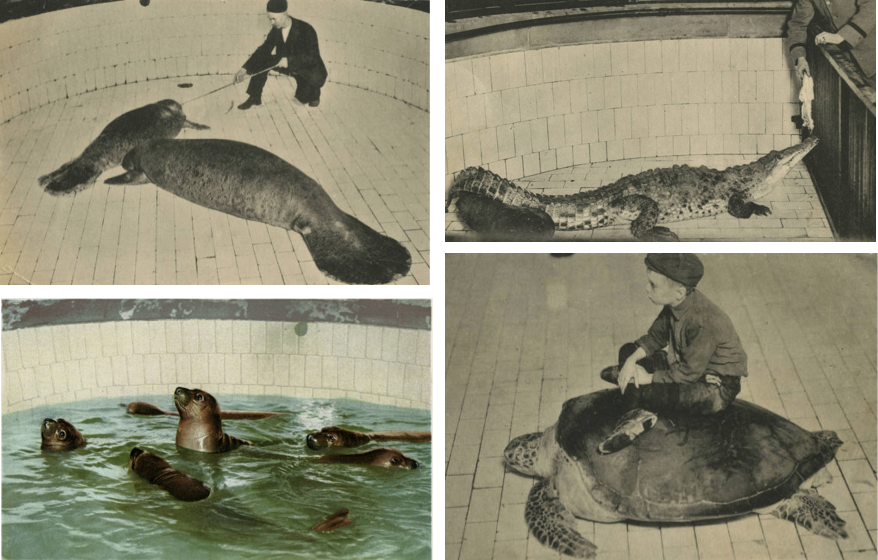
…and here are a few images from the early years…more than 100 years old but still not easy to look at…
DRY-DOCKED…these are images used on postcards to promote the Aquarium — the black and white ones are from 1909, the color image circa 1925-30. Clockwise, from top left, Aquarium worker poking at a manatee with a stick (yeah fella, they’re not happy, and probably dying); a crocodile gets some dinner; image common from yesteryear of a child (or groups of children) sitting on a hapless turtle or tortoise; seals in a pool that contained water but nothing else remotely similar to their natural environment. (nyheritage.org)
…it’s easy for us to pass judgment on the unfortunate actions of our forebears, but to his credit Charles Haskins Townsend, director of the Aquarium from 1902 to 1937, advocated for bans on whaling and constantly worked to improve conditions at the Aquarium…
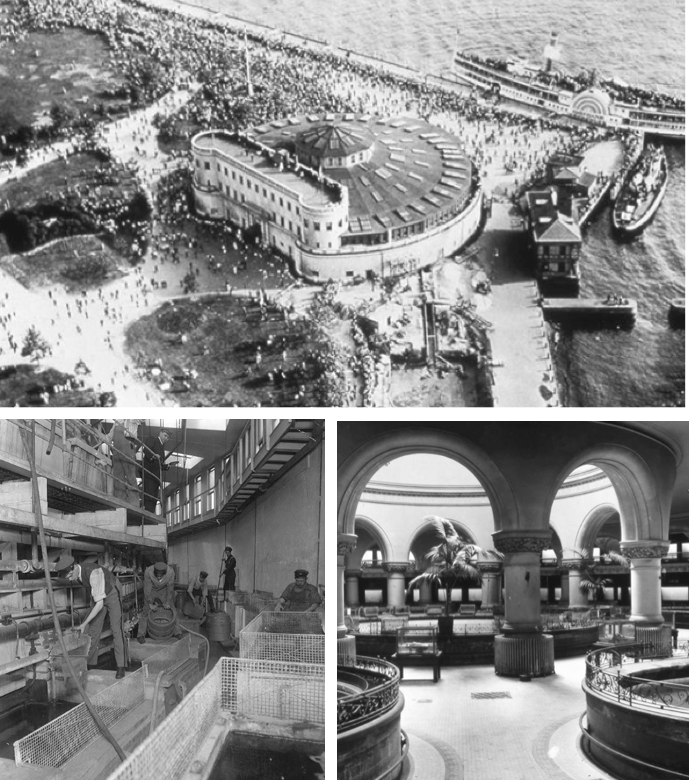
POPULAR DESTINATION…Whether folks were visiting the Aquarium or jumping on a riverboat or ferry, Battery Park was a place to go in the early 20th century. Top and bottom right, exterior and interior views of the Aquarium. Bottom left, the care and feeding took place behind the outer walls. (wcsarchivesblog.org)
…and Aquarium staff tried their best to keep fish alive during relocation, even using train cars specially designed for the purpose…
(Popular Mechanics 1931)
…once at the Aquarium, teams were ready to put the animals into their proper places…
LONELY NO MORE…Paddlewings, the lonely penguin apparently famous enough to be mentioned in the “Talk” piece, is pictured at right in this 1931 article. (Modern Mechanics, August 1931) click to enlarge.
The end came for the Battery Park aquarium when NYC Parks Commissioner Robert Moses proposed construction of the Brooklyn–Battery Tunnel under Castle Clinton. Moses also thought the aquarium was an eyesore, and had it demolished in 1941…
(thebattery.org)
…preservationists managed to stop the demolition before the walls of Castle Clinton were razed. It is now a national monument…
Castle Clinton, circa 1970s. (Flickr)
* * *
Flying High
Attitudes toward drunken driving — or drunken flying — were very different 89 years ago. Case in point was this “Epitaph” written by Morris Markey marking the passing of Carter Leigh, who carried the air mail while flying under the influence (Reginald Marsh contributed the portrait) …
* * *
Exit, Stage Left
The glitzy showgirl revues continued on Broadway with George White’sScandals, which featured such headliners as singers Ethel Merman and Rudy Vallée, and hoofer Ray Bolger. Reviewer Robert Benchley wrote that the show gave him “the feeling of having a good time,” but the same could not be said for Mae West’s The Constant Sinner; Benchley thought the glare of West’s stardom upstaged the play itself:
SIMULACRUM OF A GOOD TIME…Robert Benchley questioned his own enjoyment of George White’sScandals of 1931; from top, left, program from the show; singers Rudy Vallée and Ethel Merman were popular stars, as were hoofer Ray Bolger (who in 1939 would portray the Scarecrow in The Wizard of Oz) and actress Luella Gear (photo from the 1934 play Life Begins at 8:40); chorus girls in costume during a Scandals performance. (Playbill/Heritage Auctions/gershwin.com/Pinterest)A STAR IS WORN…Benchley thought Mae West upstaged herself in The Constant Sinner. At right, West in a publicity photo with co-star Walter Petrie. (Playbill/Heritage Auctions)
* * *
Play Ball
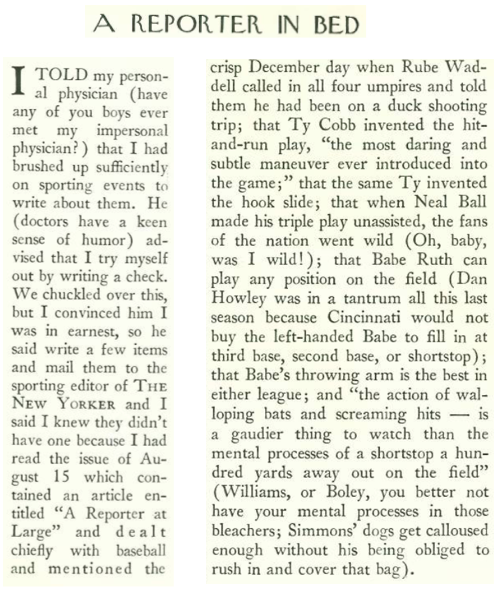
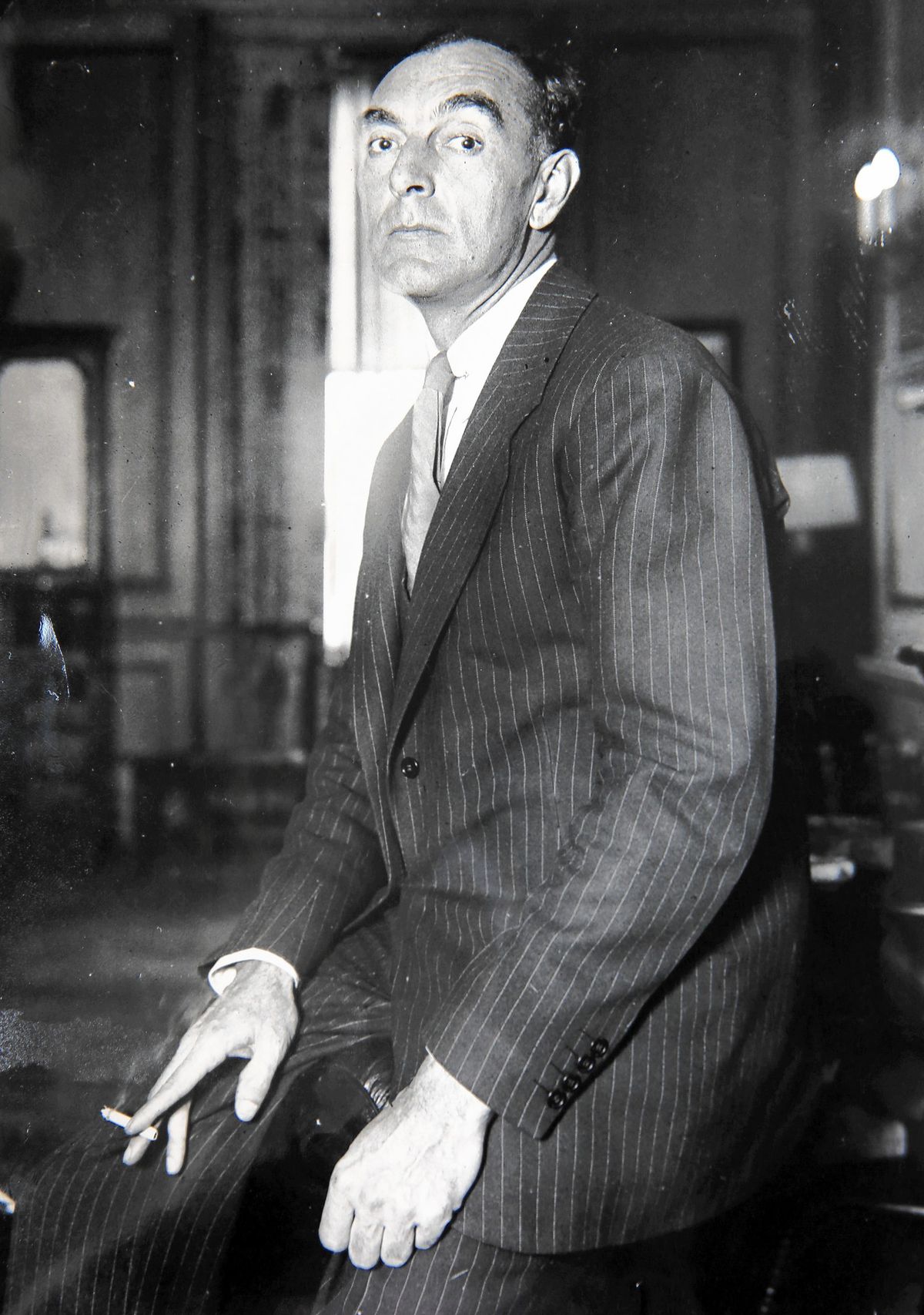
Sports columnist and occasional New Yorker contributor Ring Lardner enjoyed poking fun at revered institutions including Morris Markey’s “A Reporter at Large” column. Lardner rambled through several subjects but mostly reminisced about great baseball players of the past. Two brief excerpts:
BEDTIME STORIES…the great American sports writer and satirist Ring Lardner, circa 1930. (Chicago Tribune)
* * *
From Our Advertisers
We have yet another somewhat misleading ad from the makers of Lux Toilet Soap featuring an older actress who looked deceptively young for her age…
…the Russian-American actress Alla Nazimova (1879 – 1945) was actually 52 years old when this ad appeared, but the photo featured at left was taken in early 1923, when she was 43, so in a sense the ad was somewhat truthful…
Photo of Alla Nazimova taken by Nickolas Muray on Feb. 1, 1923 for Vanity Fair magazine. (Conde Nast)
…Park Avenue would never be the same with the opening of the grand Art Deco Waldorf Astoria, at 47 stories and 625 feet, it was the world’s tallest hotel from 1931 until 1963…
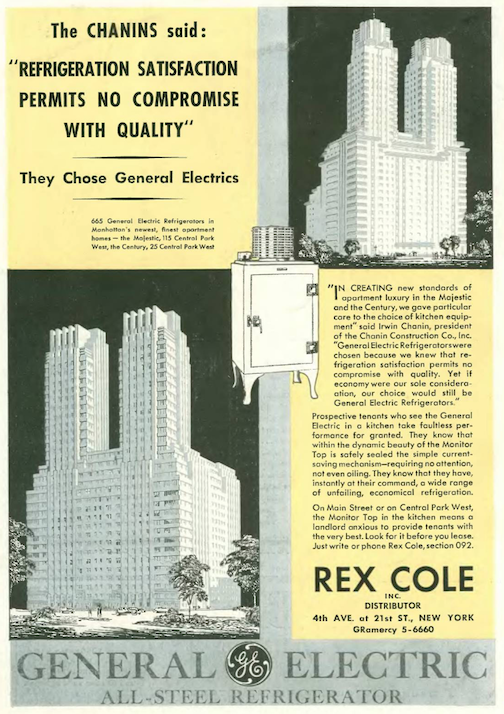
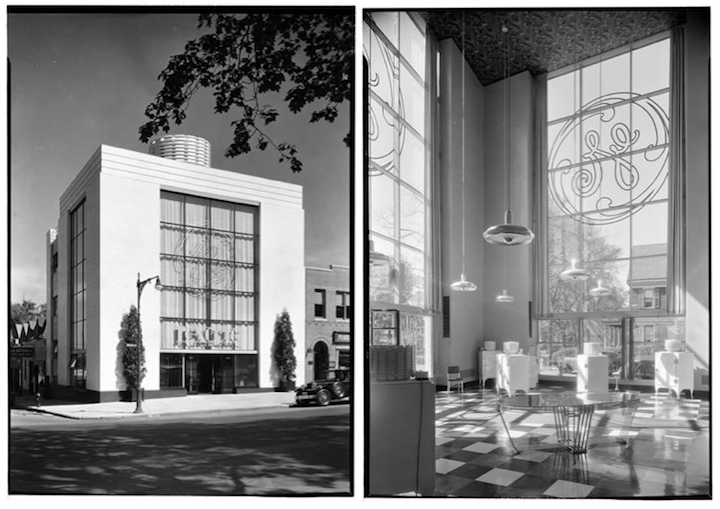
…nor would the skyline at Central Park West be the same with the addition of Irwin Chanin’s modern “Majestic” and “Century” apartments that featured GE refrigerators sold by Rex Cole, who himself was keen on architecture and design…
…and who hired Raymond Hood to create distinctive refrigerator showrooms in Manhattan, Brookyn and Queens…
Rex Cole Showroom in Flushing, Queens, crowned with a replica of the GE refrigerator’s disintictive “Monitor Top.” With their spare, open plan, the modern showrooms were ahead of their time. (Museum of the City of New York, Photo by Samuel H. Gottscho, 1931)
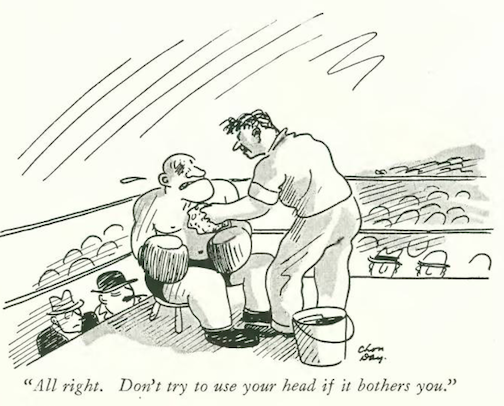
…on to our cartoonists, we have Chon Day at ringside…
…Kemp Starrett eavesdropped on some science-minded shoppers…
…Garrett Price gave us a maid’s refreshing perspective on a game of chess…
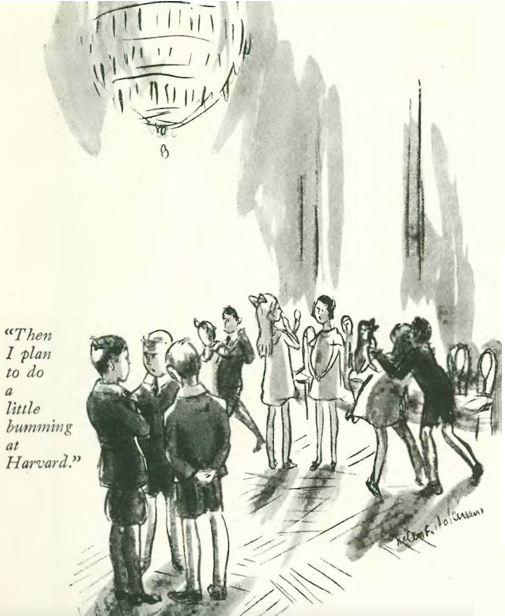
…Helen Hokinson found some serious talk among the younger posh set…
…and we end with another from Garrett Price, and the challenges of renting a room near Times Square…
There’s good reason why one of Broadway’s finest theatres is named after Alfred Lunt and Lynn Fontanne; no couple has lit up the stage quite like this husband-wife team.
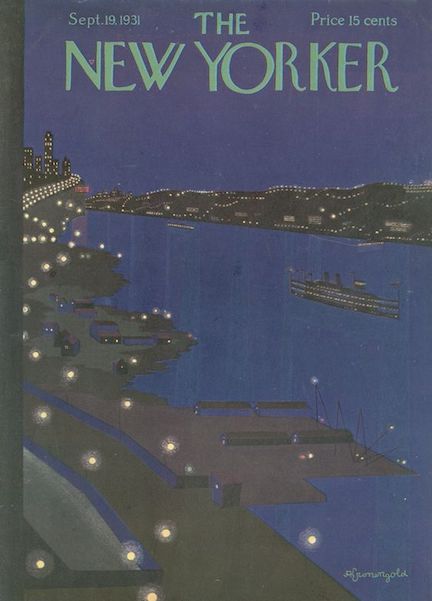
Sept. 19, 1931 cover by Adolph K. Kronengold.
Some say Richard Burton and Elizabeth Taylor were modern successors, but they only appeared together on Broadway once (a 1983 revival of Noël Coward’sPrivate Lives, at the Lunt-Fontanne Theatre of all places), and they shared a tempestuous, on-and-off relationship that sharply contrasted with Lunt and Fontanne, who were inseparable both on and off the stage during their 55-year marriage. And unlike Burton and Taylor, Lunt and Fontanne appeared in just a handful of films, including a 1931 adaptation of their 1924 Broadway play, The Guardsman. John Mosher filed this review:
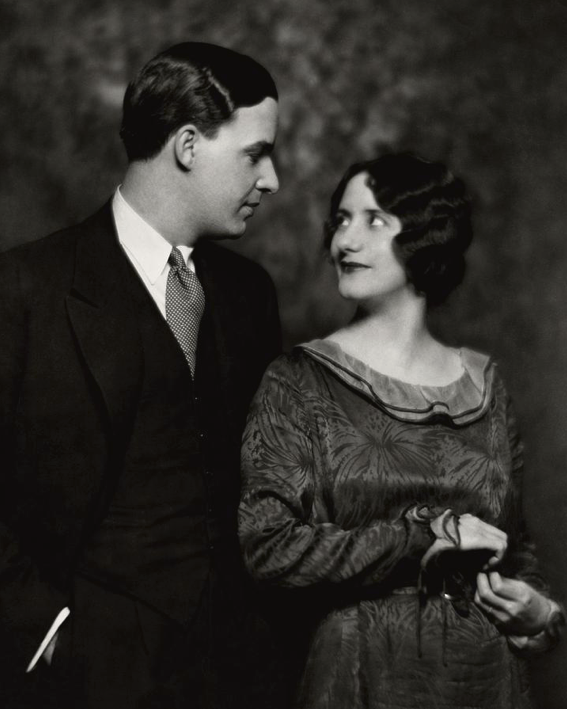
INSEPARABLE…Alfred Lunt and Lynn Fontanne pose for photographer Nickolas Muray in this 1924 portrait for Vanity Fair magazine. They married in 1922, and were inseparable until Lunt’s passing in 1977. (Conde Nast)
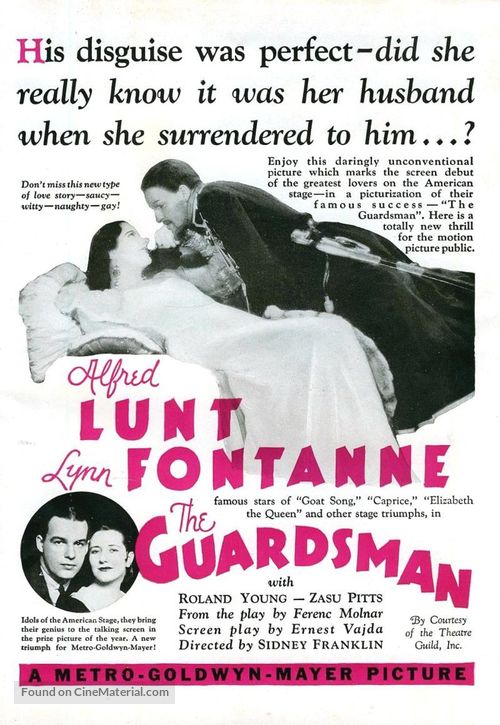
NAUGHTY, NAUGHTY!…These were Pre-Code times, so MGM played up the film’s “saucy” and “unconventional” themes. (IMDB)
I’VE GROWN ACCUSTOMED TO YOUR FACE…Although Lunt and Fontanne appeared together numerous times on Broadway, the 1931 film adaptation of their 1924 stage play, The Guardsman, would be their only film appearance together. (Museum of the City of New York/IMDB)
STAGE TO SCREEN…at top, Lunt and Fontanne in 1924’s The Guardsman on Broadway; below, a scene from the 1931 film adaptation featuring, from left, Alfred Lunt, Lynn Fontanne, MaudeEburne and Zasu Pitts; at right, Fontanne reviews fashions for the film designed by Adrian Adolph Greenburg. Lunt and Fontanne would be nominated for Academy Awards as Best Actor in a Leading Role and Best Actress in a Leading Role, respectively. (Museum of the City of New York/IMDB)
* * *
One Giant Leap
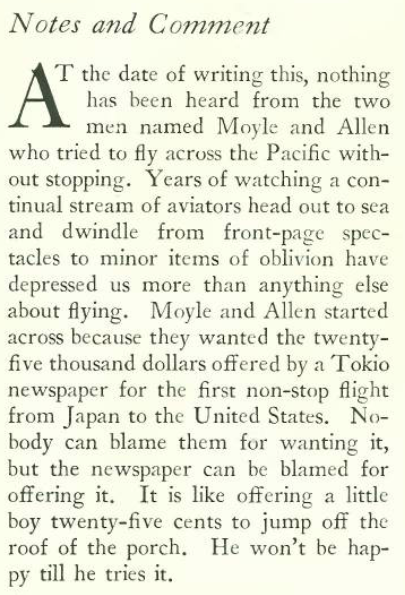
Charles Lindbergh crossed the Atlantic without stopping in 1927, but it would take four more years before anyone could accomplish the same feat across the Pacific. Don Moyle and Cecil Allen took up the challenge, hoping to fly their plane, Clasina Madge, 4,400 miles from Japan to Seattle to win a $25,000 prize from a Japanese newspaper. The lads took off from Tokyo in early September, but then went missing. E.B. White wrote:
As it turned out, Moyle and Allen were caught in a storm between Japan and Alaska that forced them to land on a small, uninhabited island in the Aleutian chain. Stranded for more than a week, the flyboys were finally able to make contact through a U.S. Coast Guard patrol and report they were safe.
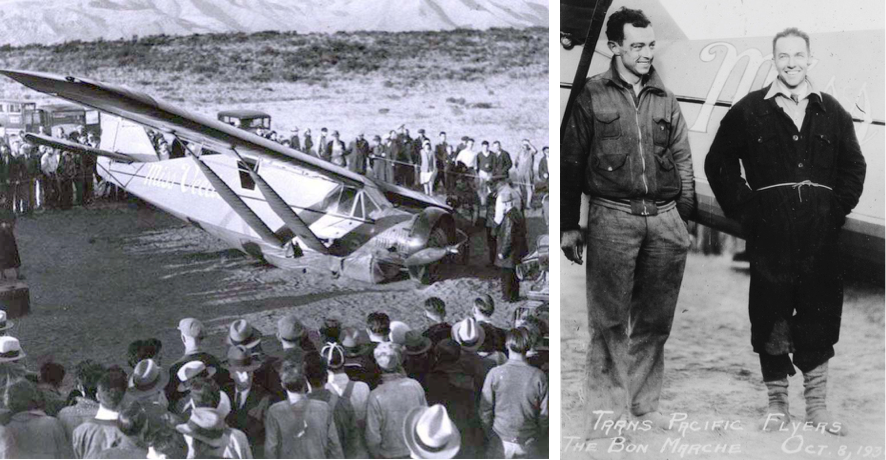
THESE ARE MY BOYS…at left, Cecil Allen and Don Moyle standing with financial backer John Buffelin and Buffelin’s daughter, Clasina Madge, the namesake for their hopefully record-setting airplane; At right, Moyle and Allen with a Japanese official, possibly before one of their attempts, or perhaps they are looking at their consolation prize (see below). (University of Washington)
Moyle and Allen sent word that they would return to Washington and prepare for another attempt. They flew back home by way of Nome, Alaska, where they landed on Sept. 21, 1931. Five days later they reached Fairbanks, and after weather delays finally made it to Tacoma, Washington, on Oct. 6. There they learned that Clyde Pangborn and Hugh Herndon Jr. had already won the $25,000 prize, having arrived from Japan the day before. The Tokyo newspaper did, however, give Moyle and Allen $2,500 for their efforts.
SPOILERS…at left, Hugh Herndon, Jr. and Clyde Pangborn pose next to their crash-landed plane in the hills of East Wenatchee, Washington, after becoming the first to fly non-stop across the northern Pacific Ocean. The 41-hour flight from Japan won them the 1931 Harmon Trophy and $25,000 from a Japanese newspaper. The crash-landing of their plane was deliberate — before the flight it was modified to carry 930 gallons of fuel. They had jettisoned the landing gear after takeoff to save fuel. (historylink.org/imagesofoldhawaii.com)
* * *
Thurber Gets Serious
We know James Thurber as a humorist, both for his writings and his cartoons. In the Sept. 19 issue, however, Thurber offered this touching remembrance of a subway newsstand proprietor, who he later learns is killed in the crossfire of a robbery. Here are the opening passages:
* * *
Did You Miss Me?
After a long absence (in Europe, presumably), Alexander Woollcottreturned to his “Shouts and Murmurs,” column, offering this “Triple Warning” that included his observations of H.G. Wells, who wondered if all his musings for the future would fall to swarms of lowly insects…
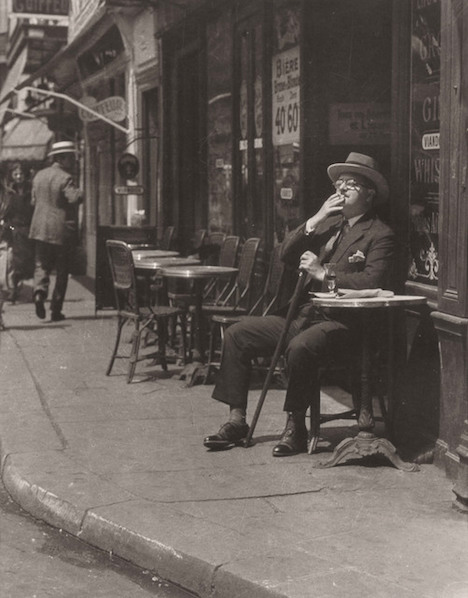
WORK CAN WAIT…Alexander Woollcott relaxes in front of a Paris bar, late 1920s. Photo by James Abbe. (artsy.net)
* * *
From Our Advertisers
With the arrival of fall come new fashions…these “wearables” below are suggested by B. Altman as suitable attire for attending a football game…
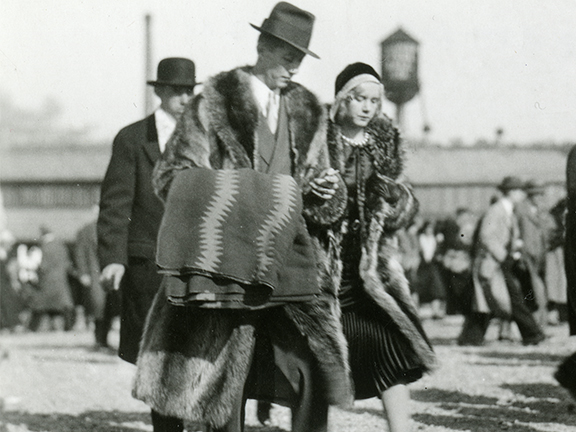
…smart fashions for young people weren’t confined to New York…this is how students at the University of Michigan dressed for a 1930 homecoming game against Illinois…
…well, times have changed, but folks still wear fur of a sort…
Jan 1, 201USA TODAY Sports
…wearing a real fur these days will draw the ire of animal rights advocates almost everywhere, but in 1931 few had problems with turning leopards and seals into coats for fashionable young women…
…then as now, folks enjoyed their pork sausage…the Jones Family of Wisconsin apparently saw a market for their products among New Yorker readers…
…after 131 years in business, the Jones Family and their sausages are still going strong…as is their farmhouse logo (the old farmhouse is real and still stands)…
…another back pages ad promoted Helen Hokinson’s first cartoon collection, So You’re Going to Buy a Book!…
…the collection including Hokinson’s beloved dowagers, but it also featured this gem…
(attemptedbloggery.blogspot.com)
…on to our cartoons from the Sept. 19 issue, we begin with William Steig and a couple of would-be renters…
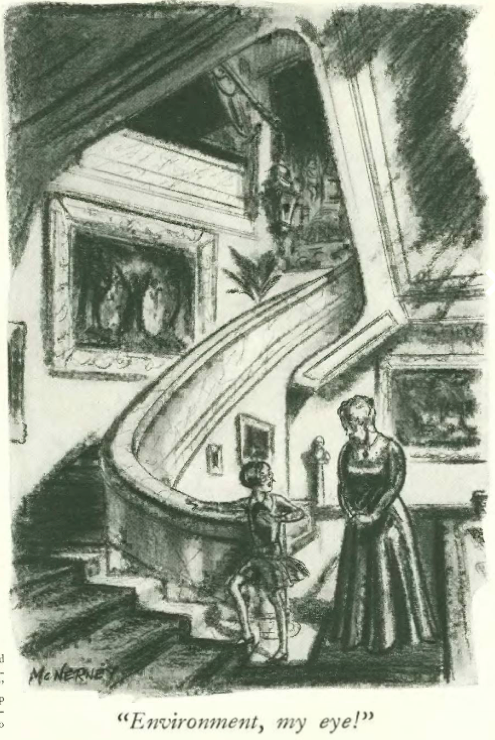
…E. McNerney explored the trials of teenage life…
…Leonard Dove drew a crowd in a packed subway car…
…Otto Soglow displayed the playful side of his Little King…
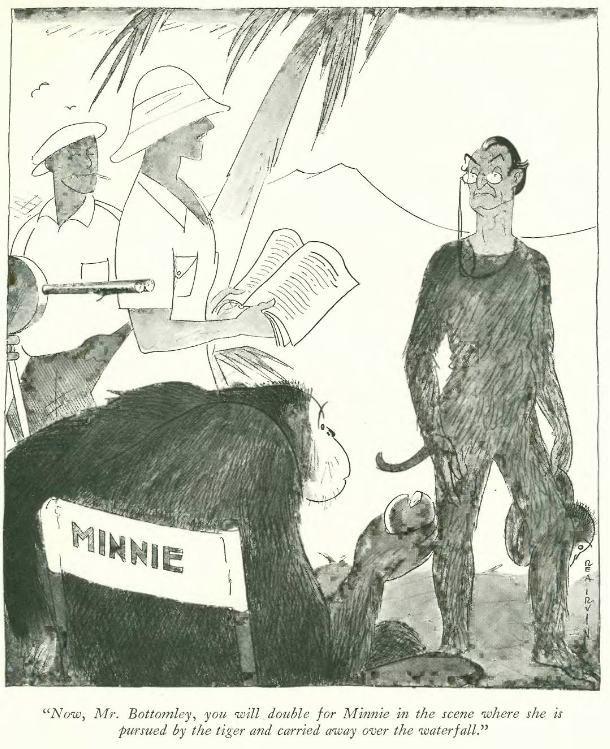
…and Rea Irvin found an actor upstaged by an unlikely rival…
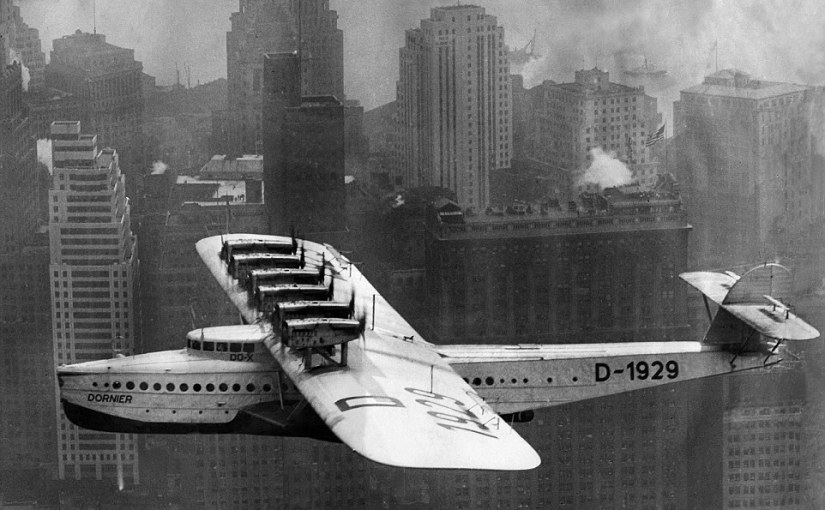
I wonder what the French or the British thought when, in 1929—just a little over a decade after the Great War—their former enemies were able to fly a 56-ton aircraft, carrying 169 passengers, into the skies above Switzerland.
Sept. 12, 1931 cover by Helen Hokinson.
And I wonder what some Americans thought in 1931 when this same aircraft toured Europe and Africa before breezing across the Atlantic—just four years after Lindbergh’s famous flight—making publicity stops from Brazil to New York.
Why, you might ask, did the WWI Allies allow Germany to build something that could easily be converted into a long-range bomber? The Treaty of Versailles forbade the development of such an aircraft, but the German Transport Ministry circumvented the treaty by building the Dornier Do-X on the Swiss side of Lake Constance. It was above this lake the Do-X made its 1929 record flight with 169 passengers and crew, including nine stowaways.
A New York visit by the Do-X was the event of fall 1931, and Morris Markey was there to file a story for his “Reporter at Large” column. Markey joined 71 other passengers on a flight around the city:
A CLOSER LOOK…Morris Markey found it difficult to comprehend the sheer scale of the Do-X until his launch approached this “monstrous craft” with a 157-foot wingspan. Gazing up at the underside of the wing, Markey wrote that it looked like “the roof of some factory building, lifted off to serve a new, fantastic purpose.” (Mashable)
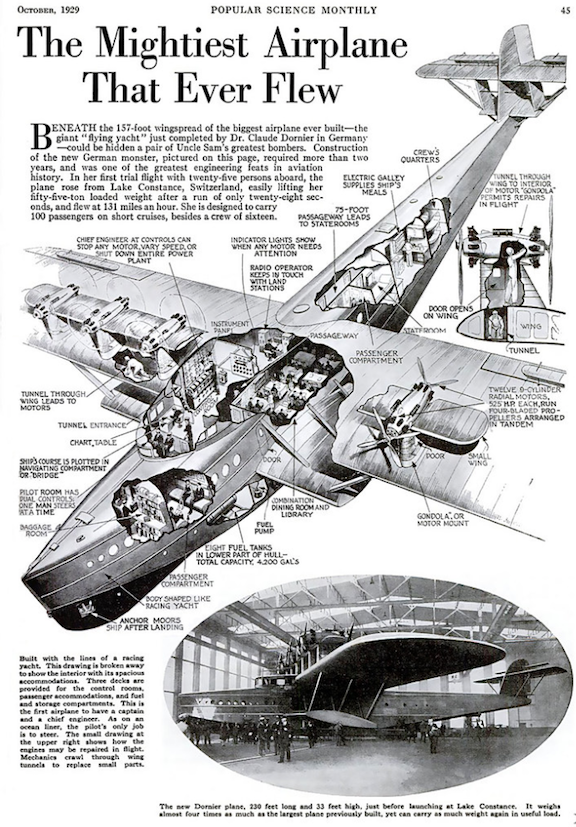
Conceived by German airplane designer Claude Dornier in 1924, the flying ship was launched for its first test flight on July 12, 1929, and later that year Popular Science reported on “The Mightiest Airplane”…
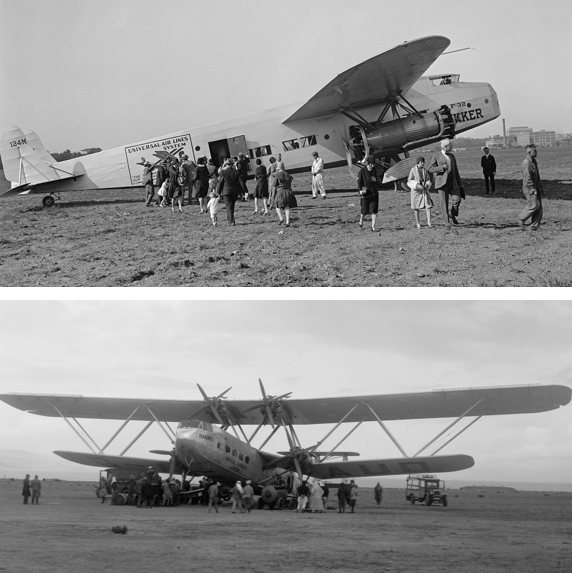
At a time when American and British planes carried no more than 20 or so passengers, the Do-X seemed like something out of a sci-fi-magazine…
DREAM BECOMES REALITY. Although an image of pure fantasy, this July 1922 Popular Science magazine seemed to anticipate the Do-X. (Google Books)
LITTLE COUSINS…These American and British planes were seen as giants until the Do-X came to town. At top, an American-built Fokker F.32; below, although smaller than the Do-X, the Handley Page H.P. 42 held the distinction of being the largest airliner in regular use when it was introduced in 1931. The plane was a workhorse for Britain’s Imperial Airways, keeping the island nation connected to its vast empire. (Wikipedia)
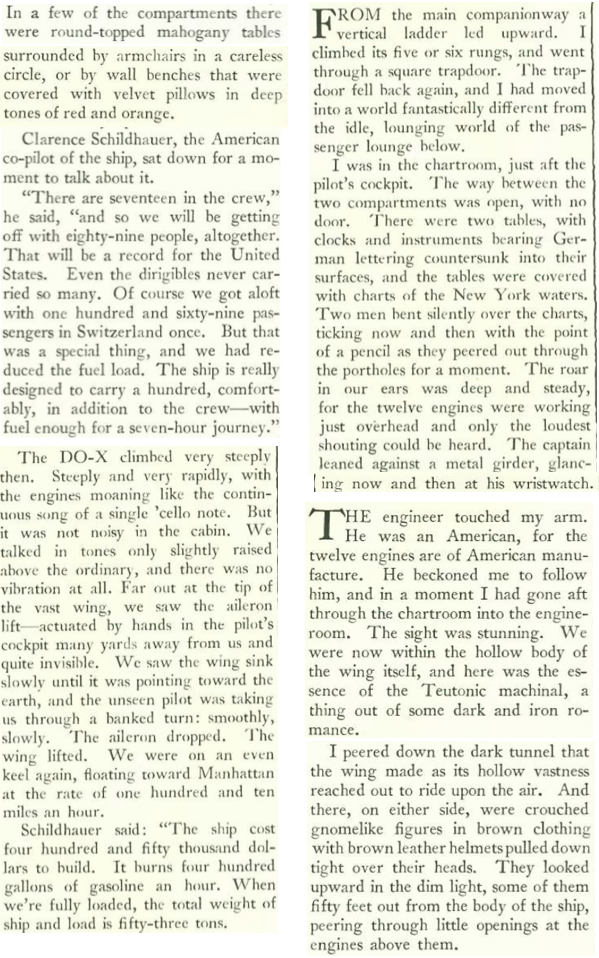
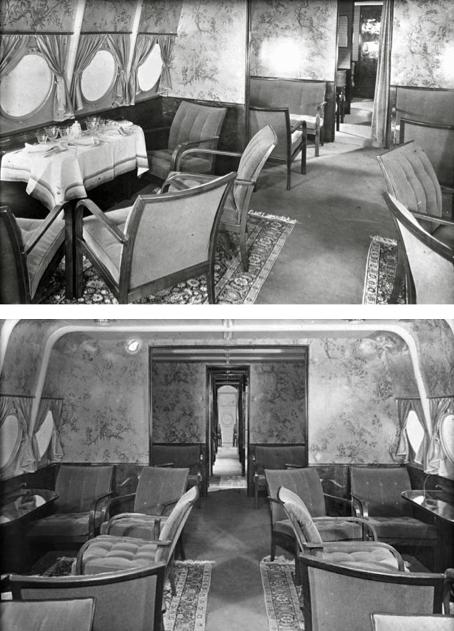
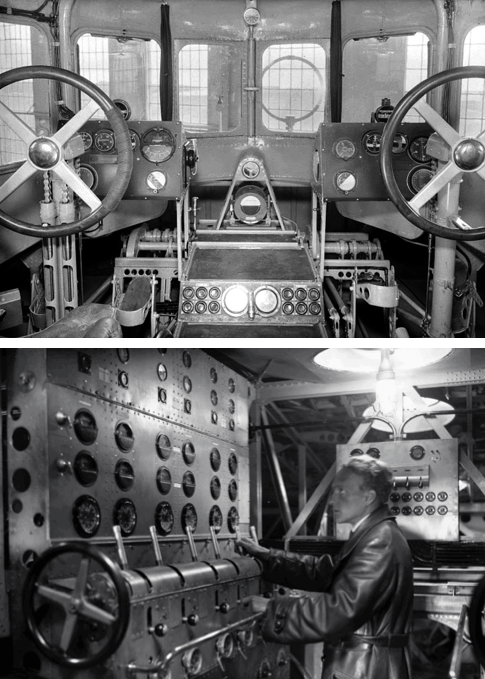
Markey described the Do-X’s sumptuous interior, decked out like an ocean liner with plush chairs and mahogany tables. He was also allowed into the plane’s cockpit and chartroom, where tables “were covered with charts of the New York waters.” Behind the chartroom Markey also took in the stunning sight of men moving within the hollow wings, maintaining the plane’s twelve engines while it was in flight:
FLY THE FRIENDLY SKIES, REALLY…Interior views of the Do-X show armchairs arranged in “careless circles,” a far cry from the spine crushers we experience today. (Mashable)
NO SEATBELTS?…British journalist Lady Grace Drummond Hay and Hearst correspondent Karl von Wiegand enjoy a flight aboard the Dornier DO-X in November 1930. (Pinterest)
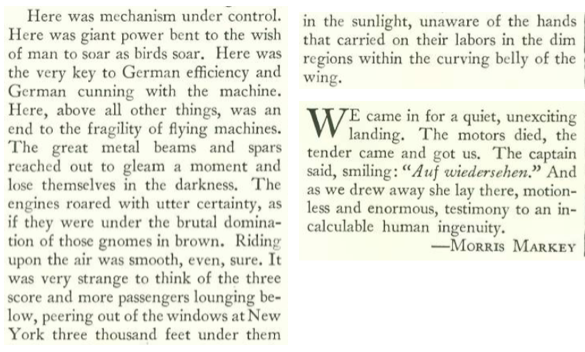
Markey concluded his column with this lyrical tribute to the Do-X:
A STEAMPUNK’S DREAM…at top, the Dornier Do-X cockpit; below, a machinist in the engine room of the flying boat. (Mashable)
In the previous issue of The New Yorker (Sept. 5), E.B. White filed this report about the Do-X and its visiting delegation. I was surprised that Markey, and not White, took the flight around the city, given White’s unbridled enthusiasm for flying machines.
To get some idea of what it was like to fly on the Do-X, here is a short film from YouTube. The first three minutes (with some weird lounge-y background music) feature a 1929 flight during which the DO-X carried 169 passengers—a world record not broken for 20 years. The New York visit is at the 3:00 mark.
* * *
Back to Earth
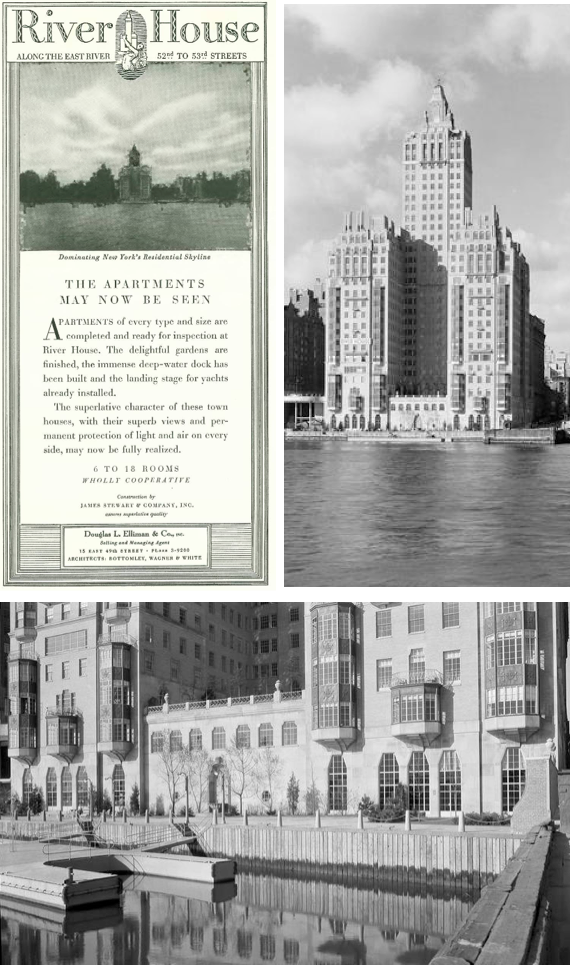
Our feet firmly back on terra firma, we turn to The New Yorker’s review of the new River House on the East River, where residents once parked the yachts they would use to sail to their Long Island estates. This luxury was short-lived thanks to Robert Moses, who reigned over public works and plowed the East River Drive (now FDR Drive) between River House and the river, effectively ending any practical use of the docks.
FUN WHILE IT LASTED…Top left, advertisement in the Sept. 12, 1931 New Yorker announcing the new River House. At top, River House around the time of its completion, and below, a view of the short-lived docks. (Museum of the City of New York)
* * *
Something’s Fishy
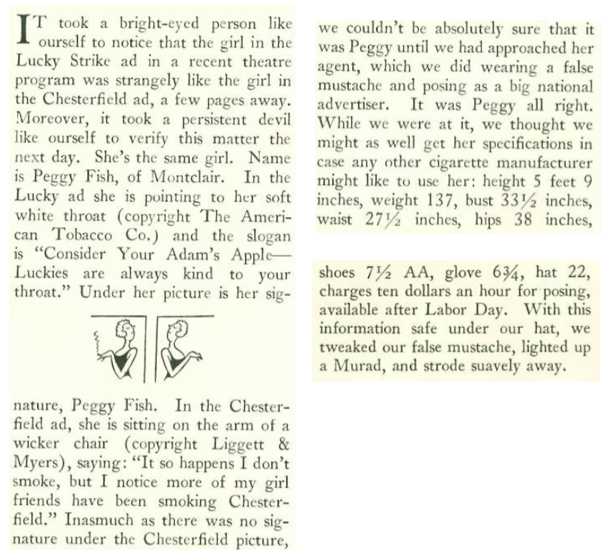
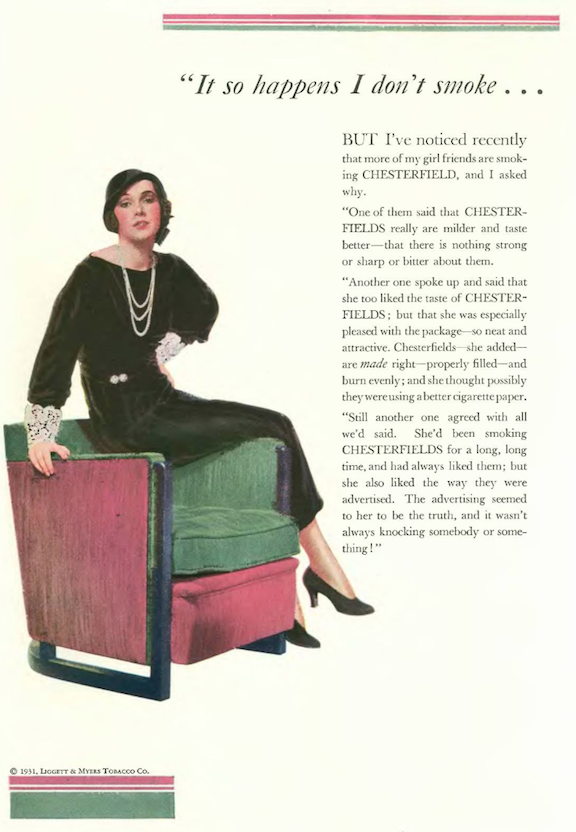
In his “Notes and Comment,” E.B. White reveled in his powers of observation, having spotted the same model, Peggy Fish, in ads for competing cigarette brands:
DOUBLE TAKE…A 1931 Chesterfield ad (left) referred to by E.B. White featuring Peggy Fish, who apparently was a go-to model for fashion magazines in the 1920s and 30s; at right, Fish modeling a dress in the January 1928 issue of Vogue, photo by Edward Steichen. Bottom image, another version of the ad, which appeared in the Oct. 3 issue of The New Yorker. (April 1931 Cosmopolitan via Stanford University/Conde Nast)
* * *
From Our Advertisers
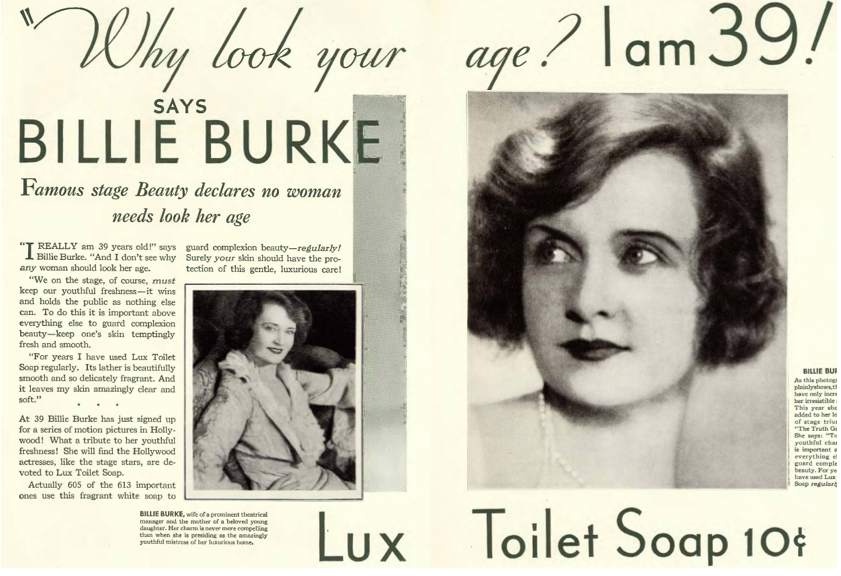
We kick off our advertising section with this two-page spread for Lux Toilet Soap. What is curious about this ad is not that Billie Burke (1884 – 1970) looked great at 39, but that she looked great at 47, her actual age when she made this endorsement for Lux. You would think the greater age would be an even better selling point for the soap makers, but either they decided 39 sounded better or maybe she just fooled Lux, and everyone else, about her true age…
BROADWAY BILLIE…at left, Billie Burke with her husband, Broadway impresario Florenz Ziegfeld, in a 1927 portrait by Edward Steichen that was featured in Vanity Fair. Burke never remarried after Ziegfeld’s death in 1932; at right, Burke as Glinda the Good Witch with Judy Garland and Toto in 1939’s The Wizard of Oz. (Pinterest)
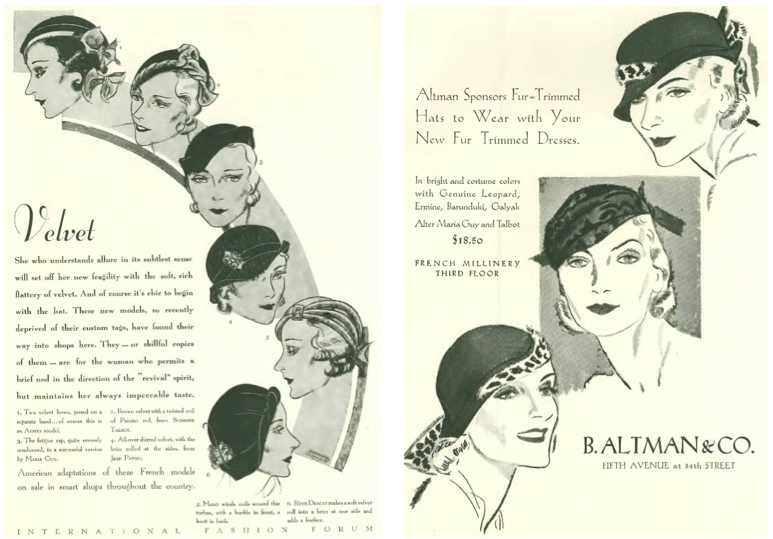
…fall fashions abounded, as did ads for hats — these two were from different advertisers on separate pages…apparently hats looked good on women displayed in angled formations…
…Alcoa was expanding its market for aluminum products with a line of chairs it touted as being “in perfect taste” (note the snotty-looking butler at right)…my parents had a set of these, relegated to the basement as knock-about furniture…
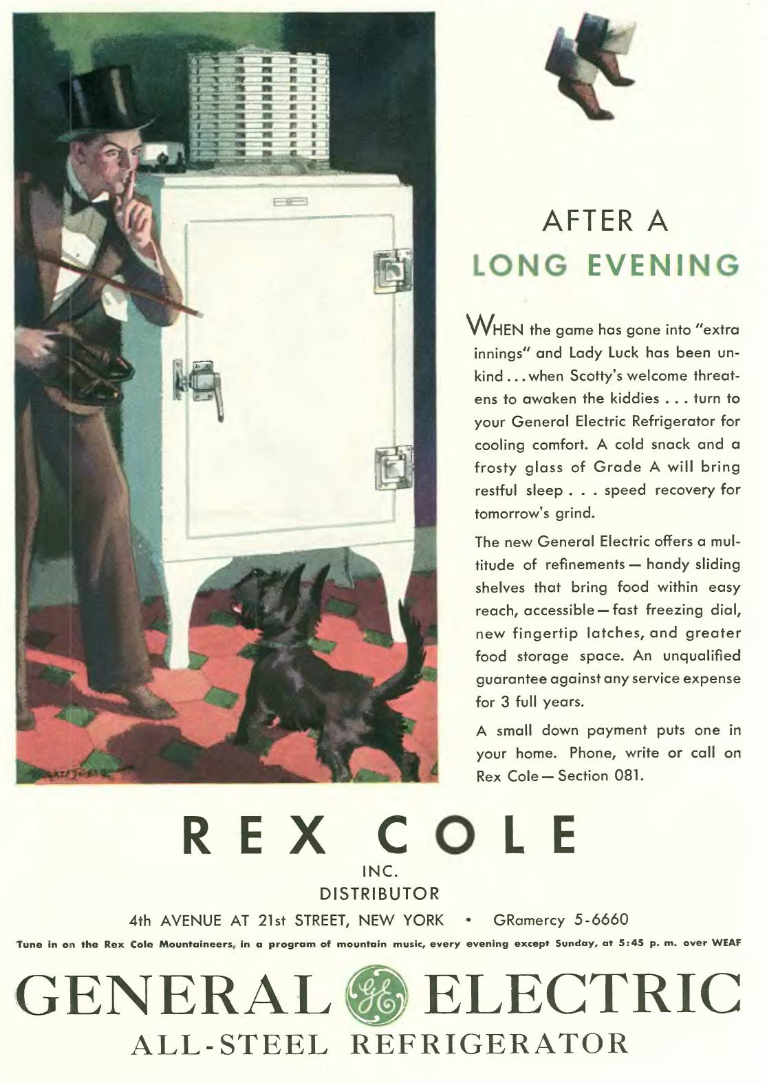
…I love these ads by Rex Cole that elevate the lowly icebox to heroic heights (perhaps this is how Ayn Rand viewed her kitchen)…
…and we move on to our cartoons, where famed gold digger Peggy Joyce is the focus of a Peter Arno cartoon (Joyce was married six times, and claimed she was engaged about fifty times). After publishing a ghostwritten “tell-all,” Men, Marriage and Me in 1930, Joyce purportedly wrote a column for a spicy New York rag about various scandals in New York and London. It is possible or even likely these columns were also ghostwritten: after meeting Joyce in the late 1920s, Harpo Marx concluded she was illiterate…
ILLITERARY?…Peggy Joyce, circa 1922. (famousfix.com)
…E. McNerney showed us a girl with little appreciation for her silver spoon…
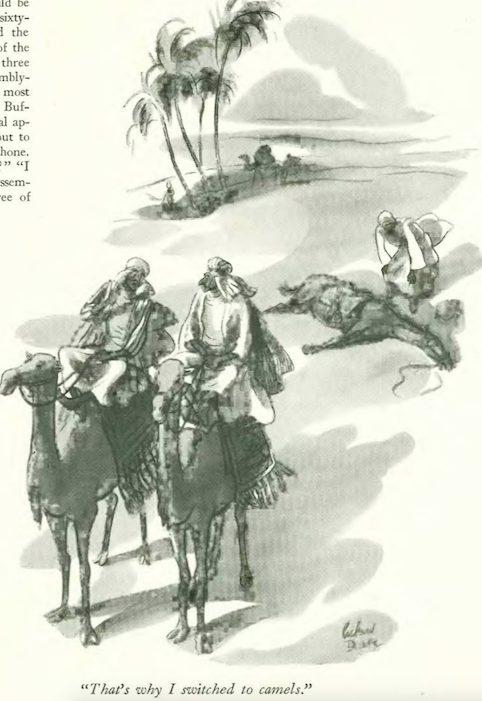
…Richard Decker found humor in the desert sands…
…Barbara Shermund was back with some juicy gossip…
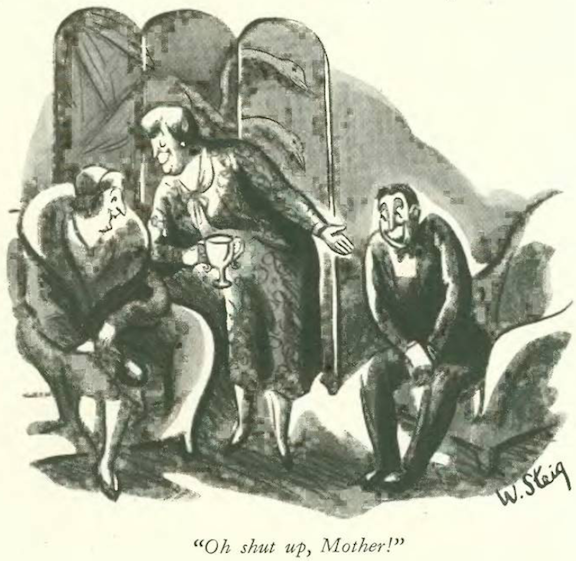
…and we close with two by William Steig…the awkward suitor…
The zoos of yesteryear were joyless places, that is, if you were one of the animals. Children squealed with fear and delight at the sight of a caged lion, and many an adult had fun tossing peanuts at elephants or teasing enraged gorillas locked behind bars; but if you were a zoo animal in 1931, life was endless hours of boredom, sprinkled with moments of terror and humiliation.
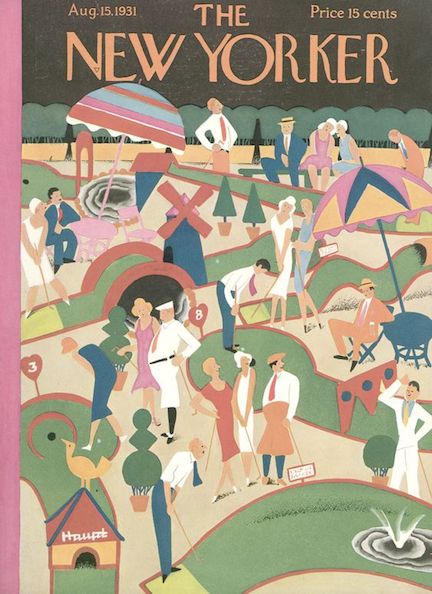
Aug. 15, 1931 cover by Theodore Haupt.
It is instructive to look back 89 years and see how far we’ve come, and how far we still have to go, to see our fellow creatures as more than curiosities and amusements to be captured and gawked at, and to see their environments as something to be preserved, not only for their survival but for ours as well.
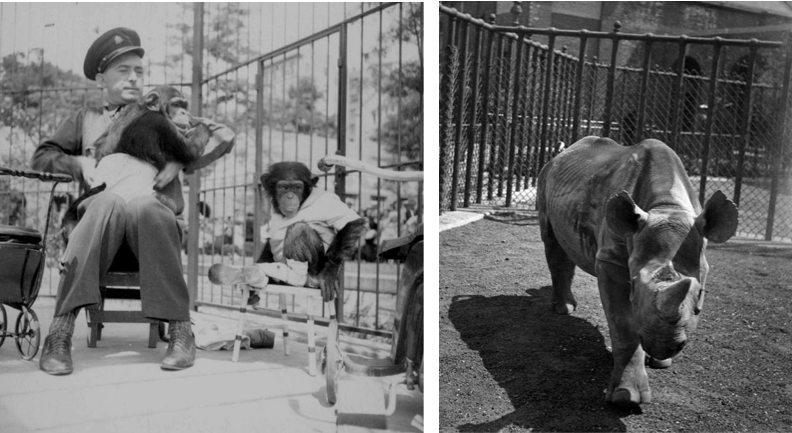
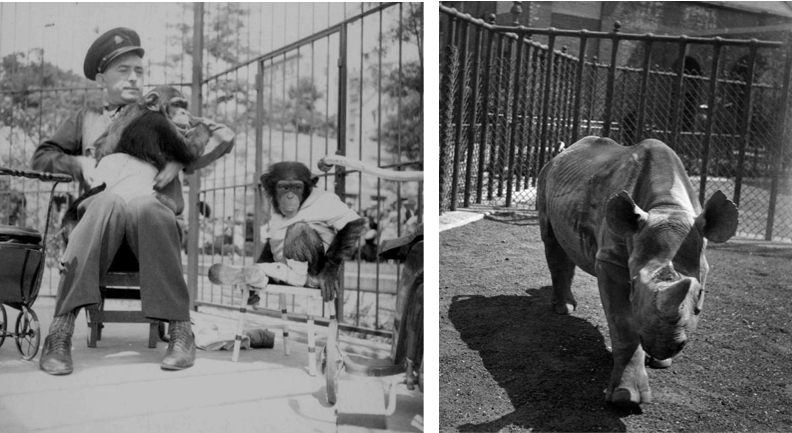
LIFE BEHIND BARS…Left, a zookeeper with chimps at the Central Park Zoo, 1936. Right, a rhino paces in a barred enclosure, 1937. (nycgovparks.org)
E.B. White paid a visit to the Central Park Zoo, and found it wanting in a number of respects:
Many zoos back then were more collections of curiosities than places where you could learn about various habitats. So when David Sarnoff, president of RCA, bagged a live opossum in the South, the critter was given a new home in an antelope enclosure, per this item in the Dec. 20, 1931 New York Times:
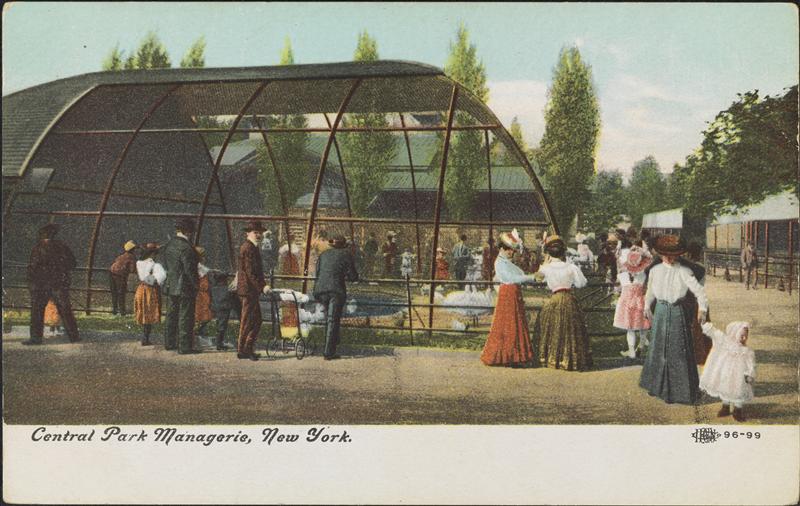
The Central Park Zoo was established in the 1860s as a “menagerie” behind the Arsenal, and by the turn of the century attracted millions of visitors to its displays of exotic animals.
GETTING AWAY FROM IT ALL…Postcard image of the Menagerie in Central Park, New York, 1905. (Museum of the City of New York—MCNY)
ANIMAL ATTRACTION…Postcard image of folks enjoying caged birds at the Menagerie, 1905. (MCNY)
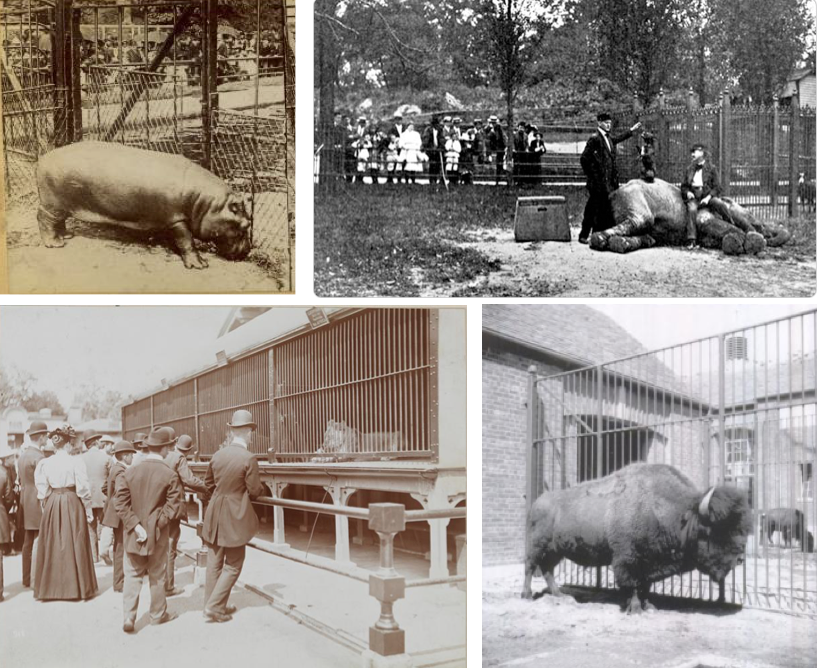
O GIVE ME A HOME…In the early days of zoos, animals were presented in cages and fenced enclosures with no hint as to what their natural habitat might look like. Clockwise, from top left, “Fatima” the hippo, image from an 1896 stereograph card; a 1911 photo of a trainer and a dog perched on top of a hapless elephant; a bull bison around the turn of the century; a group of people observe animals in cages at the Central Park Menagerie, 1895. (Library of Congress/nycgovparks.org/MCNY)
* * *
He’s Your Future
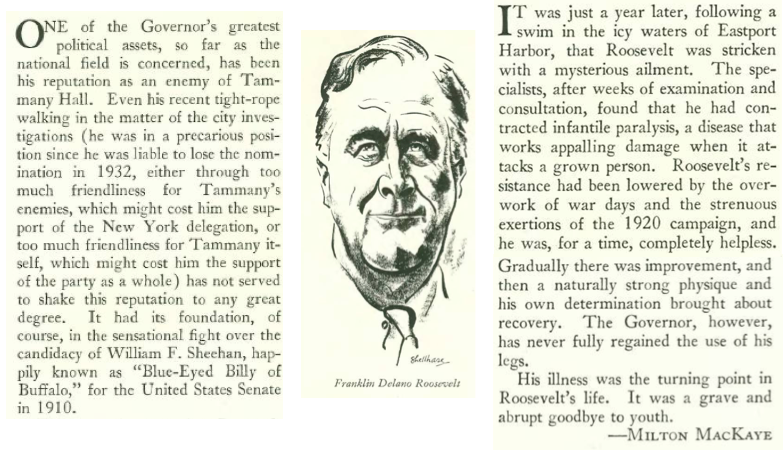
The New Yorker featured two-part profile of the governor of New York, Franklin D. Roosevelt, who unbeknownst to writer Milton MacKaye would soon become the next president of the United States. Two excerpts (not continuous)…
* * *
From Our Advertisers
Ah yes, the first time I visited the Empire State Building’s observation deck (in the 1970s) a heavy smog enveloped the city (the air is much cleaner today). I like how the promoters spin disappointment into an opportunity — “The mysterious beauty of the city has a million constantly changing aspects”…
…if you were looking for bluer skies, Bermuda could have been an option if you had the means…
…or you could have stayed closer to home at a Long Island beach resort, as Helen Hokinson illustrated, and as we segue into our cartoons…
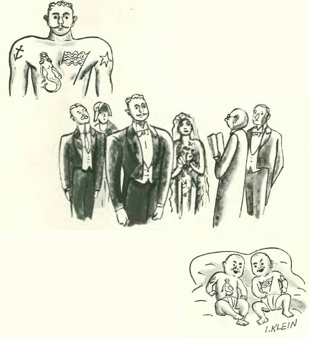
…Isadore Klein gave us a very unscientific, albeit humorous view of genetics…
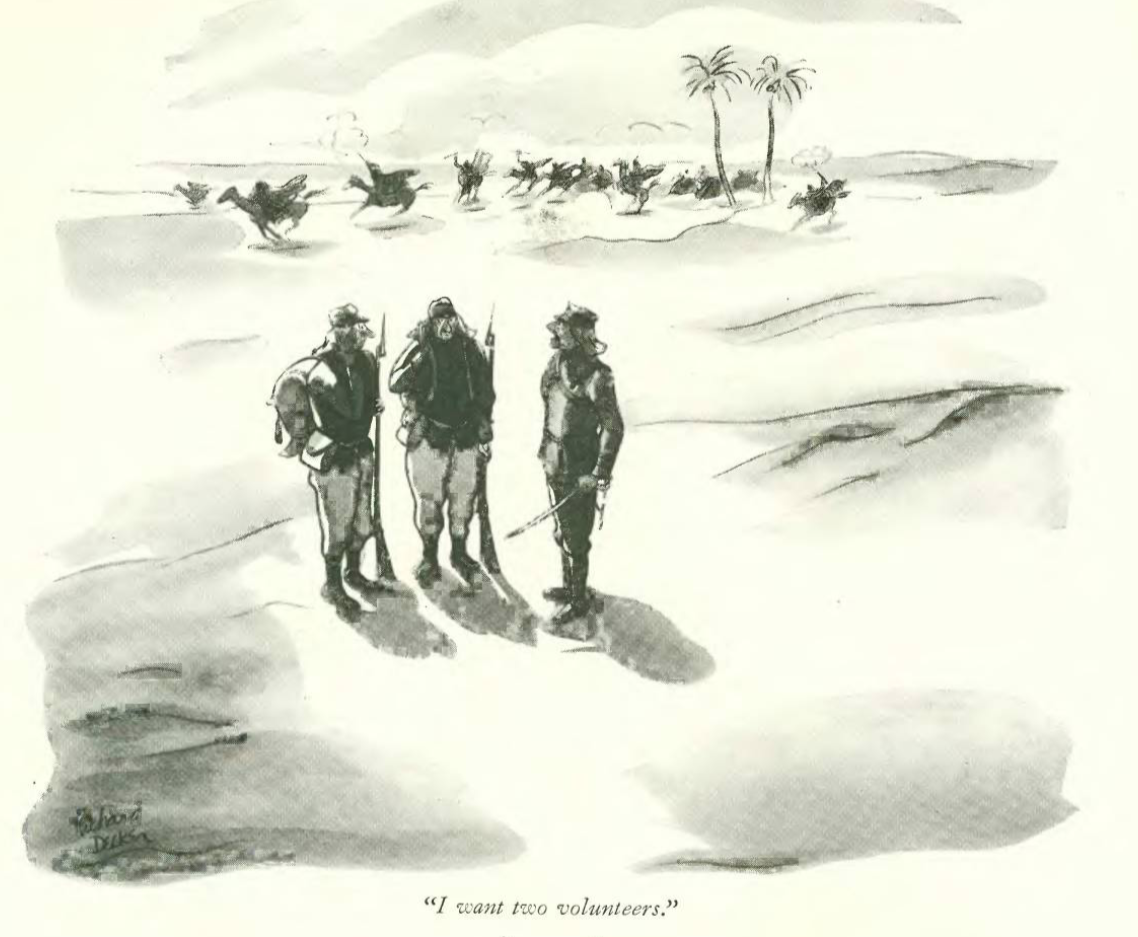
…Richard Decker redefined the meaning of “volunteers”…
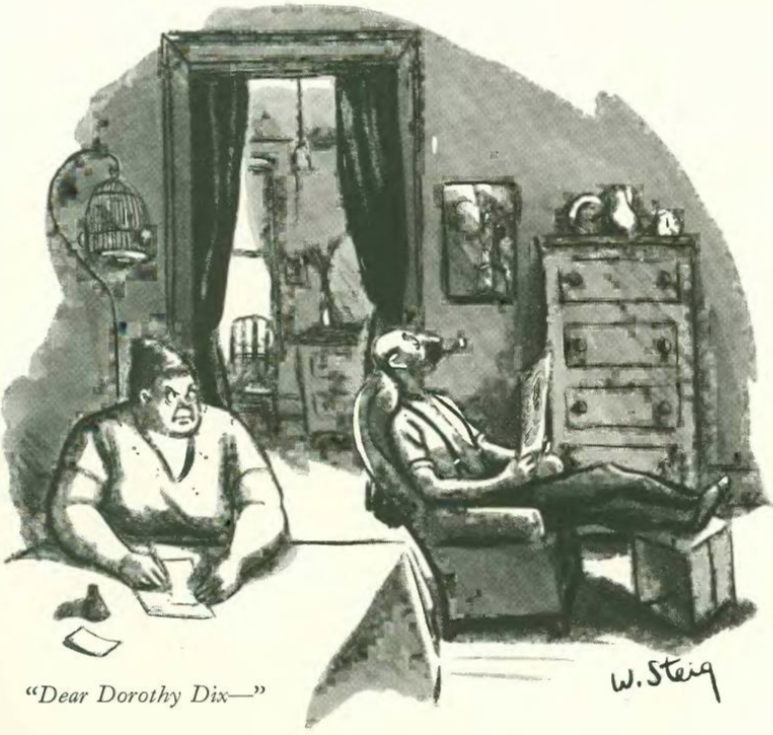
…and William Steig summoned the advice of Dorothy Dix, a forerunner of “Dear Abby” who was the most widely read female journalist of her time…
We move on to the Aug. 22, 1931 issue…
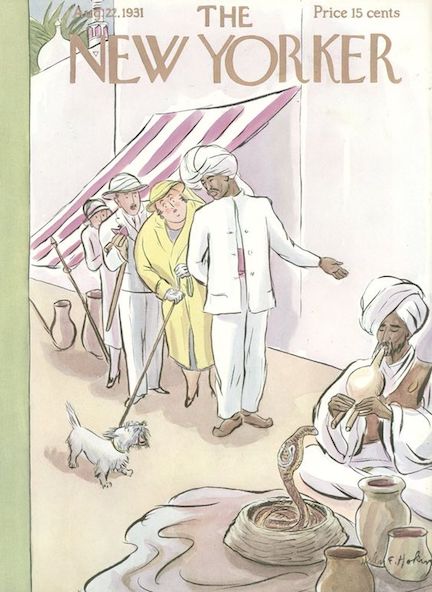
Aug. 22, 1931 cover by Helen Hokinson.
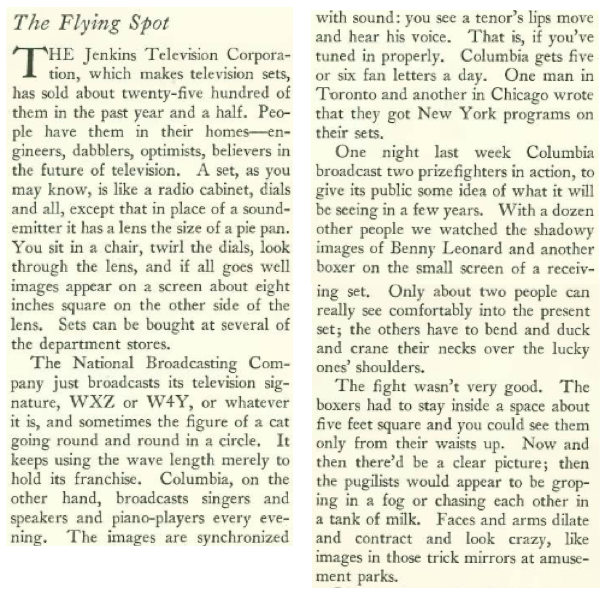
…in which James Thurber wrote about his experience with early television in “The Talk of the Town”…
NO CABLE BILL, YET…Charles Francis Jenkins demonstrates his “Radiovisor” console television in 1929. At right, the inner workings featured a rotating disc punctured with tiny holes, each projecting a line across the glass screen to compose an image. As Thurber noted, the pictures commonly were too dark for viewers to see anything more than silhouettes. Not to mention Thurber’s eyesight was also terrible. (earlytelevision.org)
* * *
The Other Moving Pictures
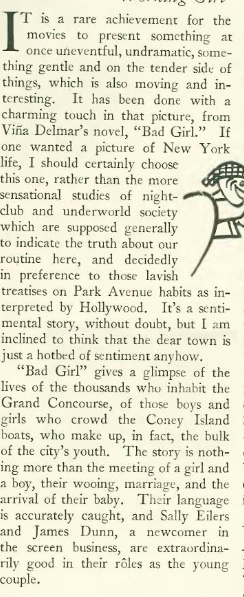
The movies still had nothing to fear from television in 1931, and Hollywood continued to draw large audiences to “Pre-Code” films that featured doses of sex and violence. Novelist Viña Delmar gained famed in 1928 with her suggestively titled book Bad Girl, so when it was adapted into a film, audiences came running—even if the screen adaptation proved to be a bit tamer than the novel that inspired it. Critic John Mosher observed:
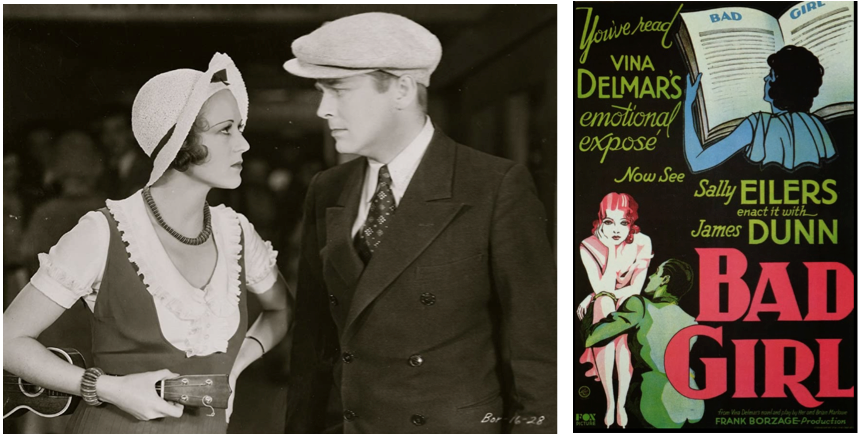
I’M JUST A LITTLE BAD…Sally Eilers played the title character in Bad Girl with co-star James Dunn. The film won two Oscars in 1932 for Best Director (Frank Borzage) and Best Writing, Adaptation (Edwin J. Burke). (IMDB)
* * *
Chic Chapeau
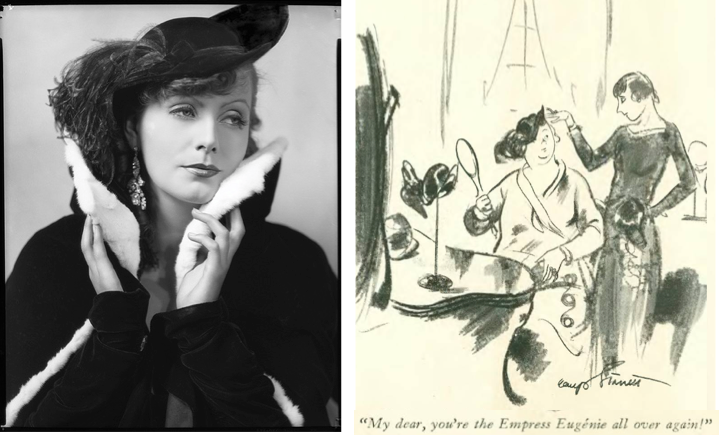
The Empress Eugénie hat was named for 19th century French empress Eugénie de Montijo, who was known as a fashion trendsetter. The hat was revived in 1930 after Greta Garbo was seen wearing a version of one in the popular film Romance. E.B. White was not exaggerating when he noted (in his “Notes and Comment”) that the jaunty hat was seen on “every other head” in the city.
LOOK WHAT YOU STARTED…Greta Garbo sported an Empress Eugénie hat in the 1930 film Romance, setting off a fashion craze that persisted through much of the decade. At right, Kemp Starrett referenced the trend in this Aug. 8, 1931 cartoon in The New Yorker. (Pinterest)
* * *
From Our Advertisers
Speaking of trends, these “roughies” were all the rage among the young folks, in the dorms and on the beach…
…one trend I wasn’t aware still persisted in 1931 was a top hat and tails for an evening out among the smart set…
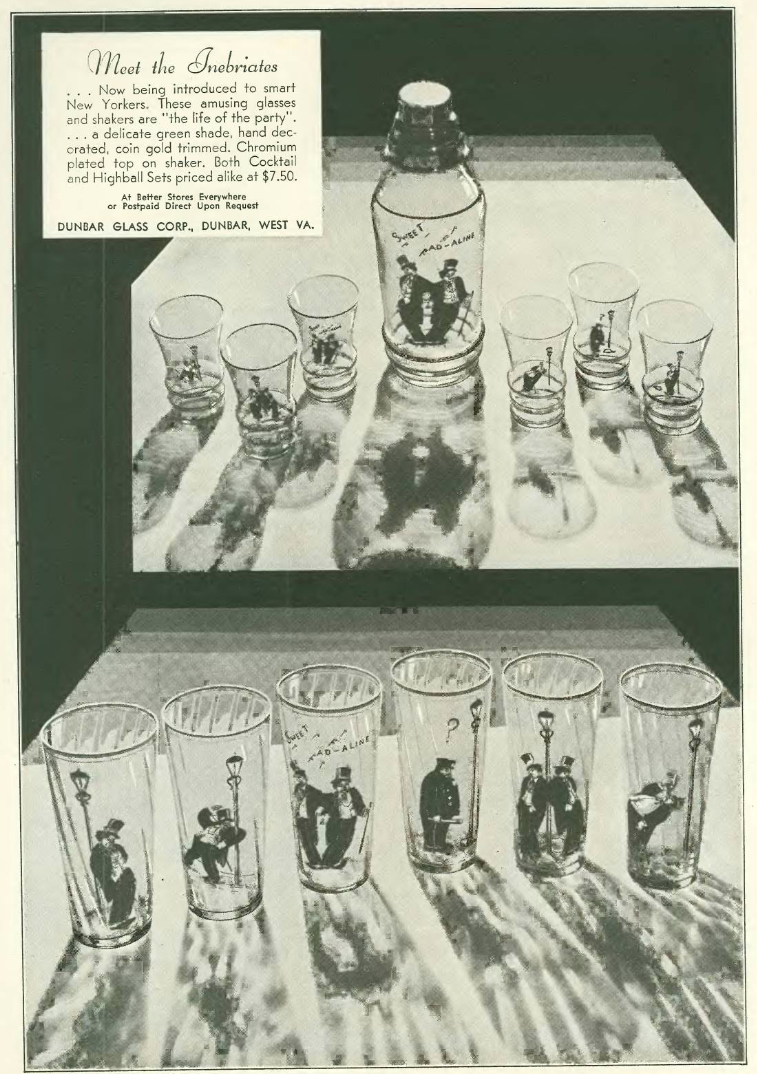
…according to this ad, if you were a “smart” and fashionable New Yorker, then you needed an “Inebriates” themed cocktail set…
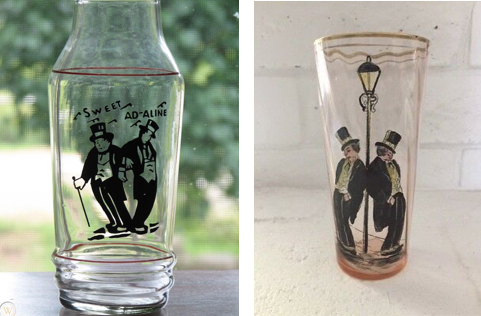
…examples of the glassware for sale on Worthpoint…
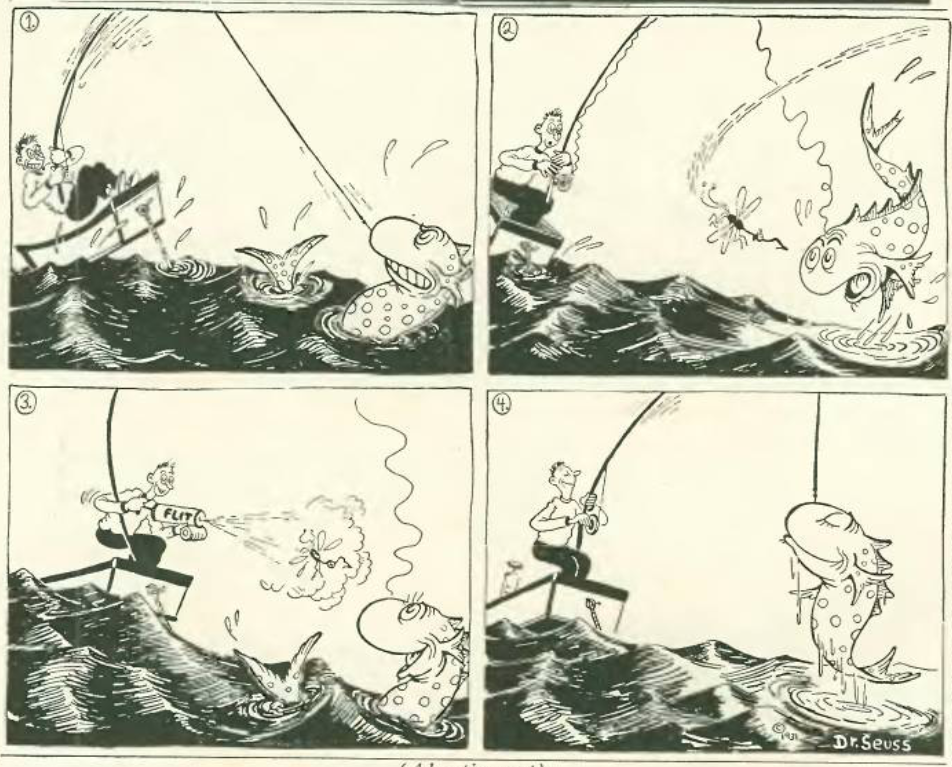
…Dr. Seuss was still busy selling pesticide with this four-panel ad…
…on to the cartoons, we start with James Thurber…
…and Rea Irvin continued to experiment with various motifs, this time an Egyptian-themed cartoon referencing the “wine bricks” sold by enterprising vineyards during Prohibition…
…Peter Arno found a big surprise during a mansion tour…
…and we end with Otto Soglow…
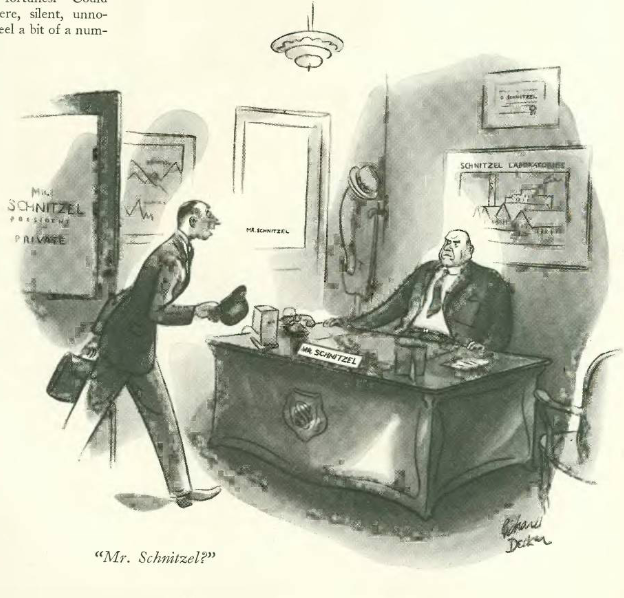
…and Richard Decker…both cartoons reminded me of Al Jaffee’sSnappy Answers to Stupid Questions…
…I grew up reading Mad magazine, and always looked forward to Jaffee’s fold-ins…he just retired from Mad at the young age of 99, so we conclude with one of his Snappy Answers panels from Mad #98, Oct. 1965…
“Everyone in this life draws bad cards with the good. The great trouble with most of us is that we do not know when to discard quickly,” observed New York Mayor Jimmy Walker.
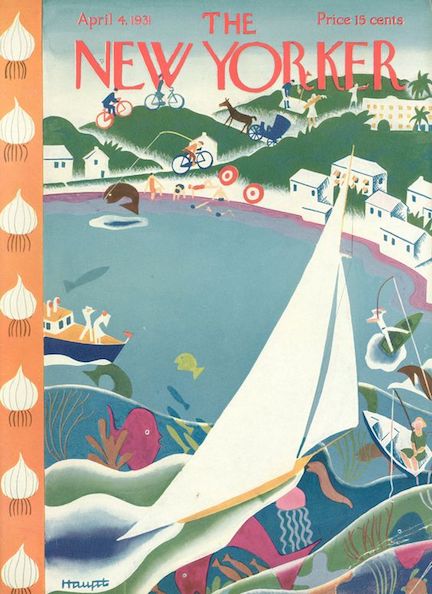
April 4, 1931 cover by Theodore Haupt.
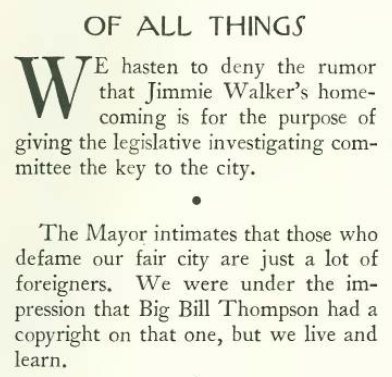
Signs that the first bad card was being turned were apparent in the April 4, 1931 edition of The New Yorker. In his weekly collection of quips — “Of All Things” — Howard Brubaker suggested that Walker — known for his frequent trips and general lack of attention to governance — had a different sort of homecoming awaiting his return from California…
…Walker was no doubt hobnobbing with the Hollywood crowd back in the Golden State…the mayor loved donning fine attire (thus the nickname “Beau James”) and enjoyed throwing lavish events for famous people…
MIGNIGHT MAYOR was one of the many nicknames New Yorkers bestowed on Mayor Jimmy Walker, known for his love of nightlife, fine clothes, and beautiful people (another nickname was “Beau James”). Although he was married at the time, he conducted a very open affair with actress Betty Compton (left), who later became his wife. At right, in his element, Walker (center) accompanies actress Colleen Moore to the October 1928 premiere of her film, Lilac Time. (IMDB/konreioldnewyork.blogspot.com)
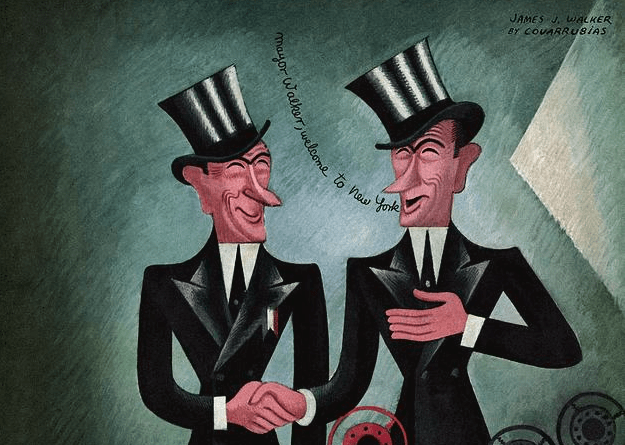
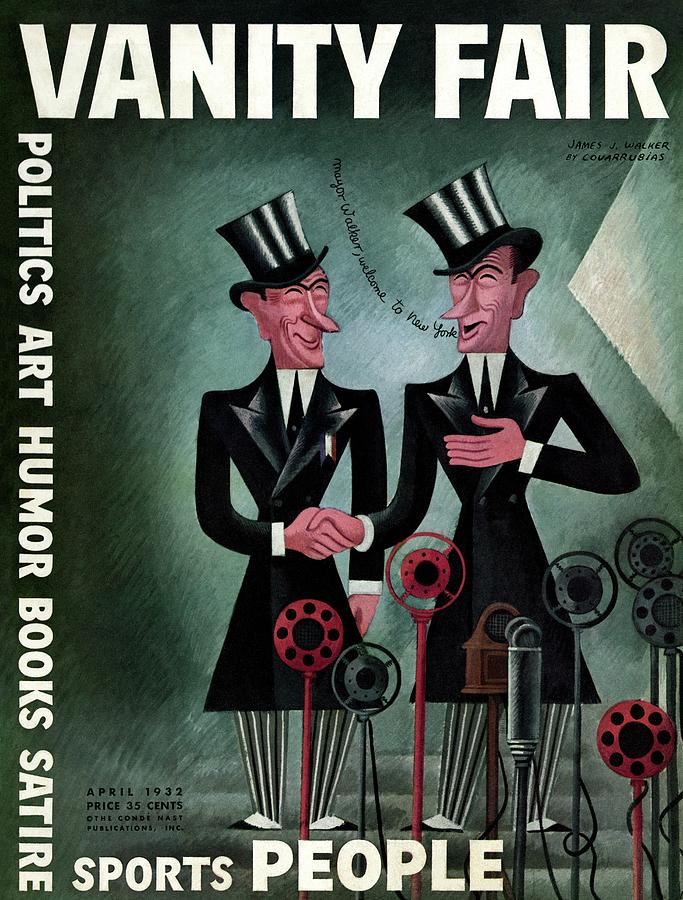
…which made him an easy target for parody, such as this 1932 Vanity Fair cover, where the mayor even welcomes himself to the city…
(Conde Nast)
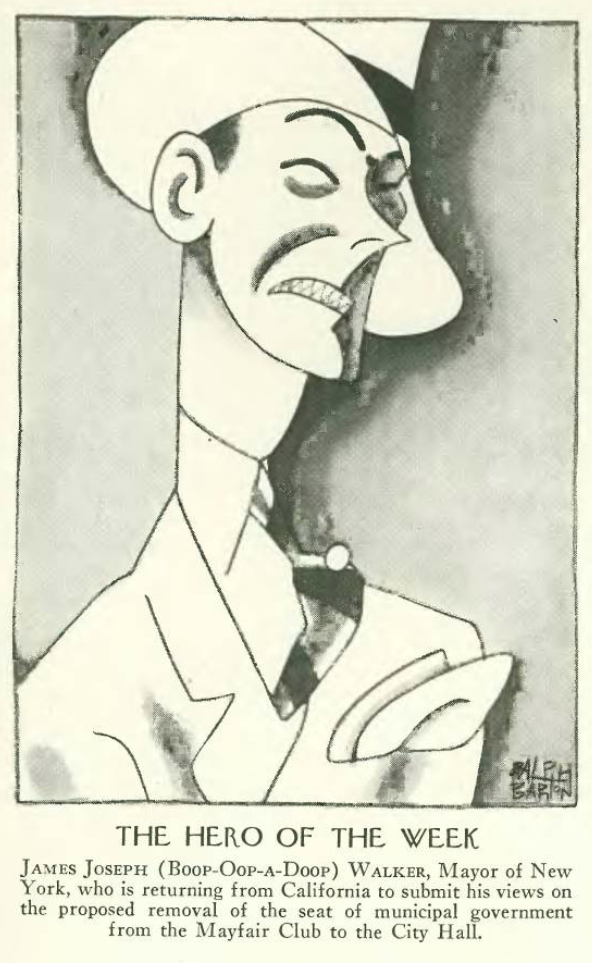
…Ralph Barton revived his “Hero of the Week” feature to welcome the mayor back to the city…Barton alluded to the fact that Walker preferred conducting his office outside of the official confines:
Walker (1881-1946) made a far more interesting personality than an effective mayor. When he took office in 1926 he proved to be a terrible administrator, partying at speakeasies late into night, sleeping till noon, and leaving city matters (except the lavish ceremonies) to Tammany Hall cronies. This didn’t seem to bother voters when the economy boomed in the 1920s, and indeed they re-elected him by an overwhelming margin in 1929.
The 1929 market crash quickly changed things. The Roaring Twenties abruptly ended, and with people losing their jobs (and fortunes), the mayor’s antics didn’t seem so amusing anymore. Reform was in the air, and leading the charge was Gov. Franklin Roosevelt, who was no fan of Walker’s.
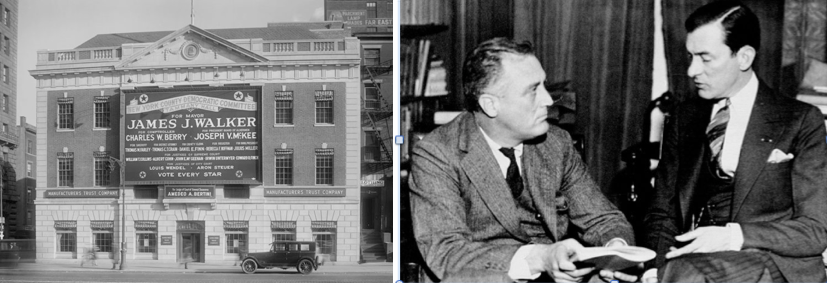
IF LOOKS COULD KILL…Gov. Franklin D. Roosevelt meets with Mayor Jimmy Walker in conference at Roosevelt’s home on E. 65th St. in December 1928; at left, campaign banner for Walker on Tammany Hall, 4th Avenue and 17th Street, Oct. 28, 1929. Walker was a product of the Tammany Hall political machine, and much of the mayor’s backroom dealings were conducted there, as well as at various speakeasies and nightclubs. (NYC Municipal Archives/NY Daily News)
Investigations into corruption in Walker’s administration landed Walker before an investigative committee of led by Judge Samuel Seabury in 1931…
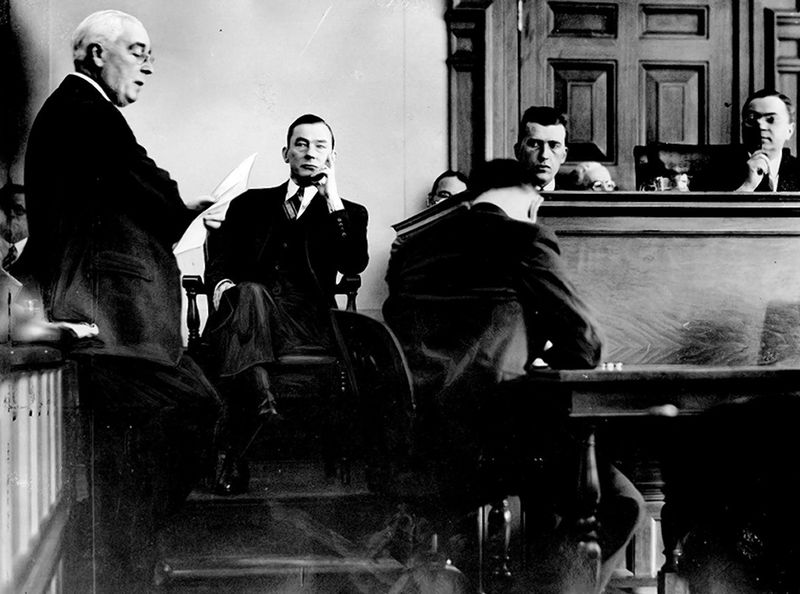
IN THE COLD LIGHT OF DAY…Mayor Jimmy Walker takes the stand in the New York County Courthouse on May 25, 1932, to answer questions from Judge Samuel Seabury (left). Thousands of New Yorkers showed up to cheer the mayor when he entered the courthouse, but those cheers soon became jeers as details of the administration’s corruption were made public. (NY Daily News).
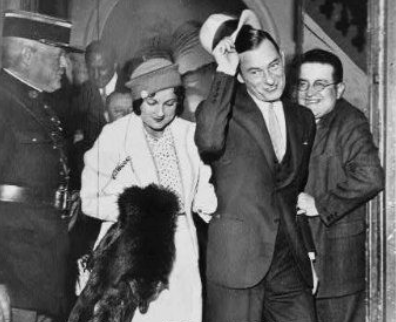
…Mayor Walker resigned the following year and fled to Europe, where he married his mistress, Betty Compton (1904-1944) in Cannes, France, on April 19, 1933. We will revisit this tale in later issues…
SEE YA…
* * *
On the Lighter Side
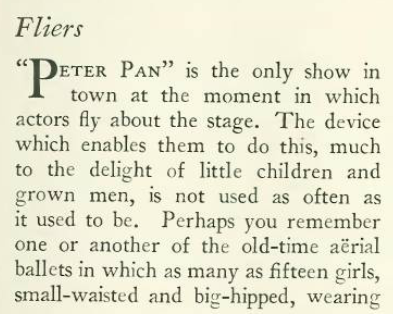
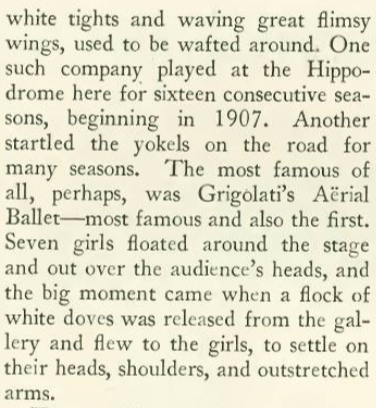
“The Talk of the Town” included this note about the play Peter Pan, which was being staged at the Fourteenth Street Theatre. Much was made of the wizardry that enabled actors to float above the audience.
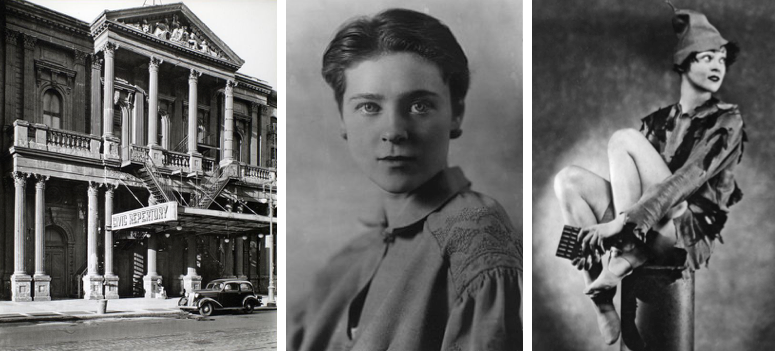
Eva Le Gallienne (1899-1991), who portrayed the title character, made the theatre home of her stage company in 1926, and renamed it the Civic Repertory Theatre. Le Gallienne played the role of Peter Pan 129 times, and although the flying effects were quite hazardous, she said she “took to flying like the proverbial duck to water.”
NO STAGE FRIGHT HERE…The Fourteenth Street Theatre, originally constructed in 1866, was dubbed the Civic Repertory Theatre when Eva Le Gallienne (center) made it the home of her stage company. Le Gallienne played the role of Peter Pan 129 times on the theatre’s stage, and loved performing the dangerous flying stunts. Images of Le Gallienne from Bruce K. Hanson’s book, Peter Pan on Stage and Screen, 1904-2010. (Wikipedia/Bruce K. Hanson).
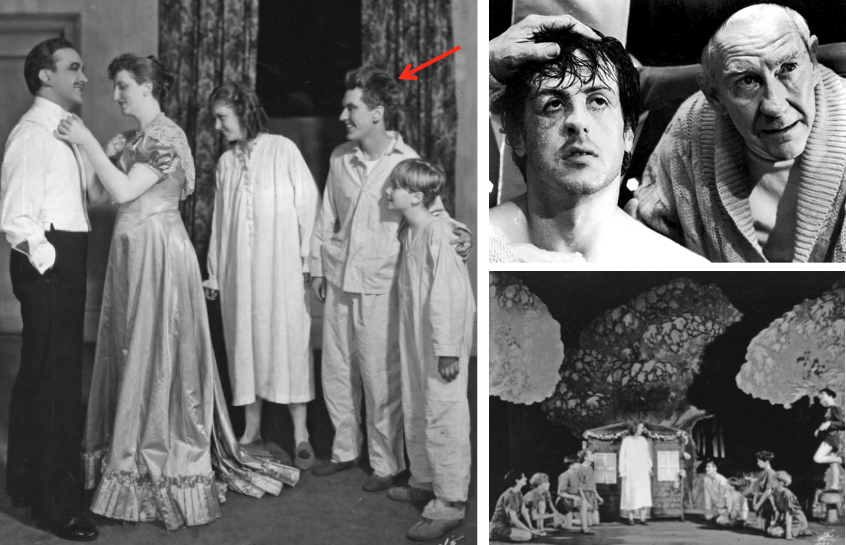
DARLINGS…The Darling family as portrayed in the Civic Repertory Theatre’s production of Peter Pan. At bottom, right, “The Wendy House” as it appeared on stage. And a bit of trivia: the young lad who portrayed John Darling (see arrow) was none other than Burgess Meredith, who would go on to a long and successful career on the stage, television (he played the Penguin in the 1960s Batman TV series), and in film, seen top right as Sylvester Stallone’s trainer Mickey in 1976’s Rocky. (Bruce K. Hanson/IMDB)
Eva Le Gallienne lived 92 years, and Burgess Meredith made it to 89. Such was not the fate of the Civic Repertory Theatre, which closed in 1934 due to the Depression. The 1866 building was demolished in 1938. Not a trace remains.
* * *
Fightin’ Words
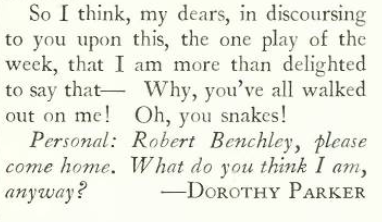
It’s really too bad Dorothy Parker didn’t stay on as theatre critic for The New Yorker (she was subbing for her friend, Robert Benchley) because her weekly forays into the middlebrow world of Broadway produced some of her most entertaining writing. For the April 4 issue Parker offered some thoughts about The Silent Witness, which ran from March to June at the Morosco Theatre.
Instead of turning cartwheels, Parker took aim at actress Kay Strozzi, “who had the temerity to wear as truly horrible a gown as ever I have seen on the American stage. … Had she not luckily been strangled by a member of the cast while disporting this garment, I should have fought my way to the stage and done her in, myself.”
She ended the review with another plea to Benchley, who was traveling abroad:
WHAT ABOUT THIS OUTFIT, DOROTHY?…I don’t have a photo of the “horrible” gown worn by Kay Strozzi (left) in The Silent Witness, so you’ll have to settle for this image of Ms. Strozzi from the 1931 film Captain Applejack. At right, and dressed to kill, Dorothy Parker posed for Edward Steichen in this 1931 portrait. (IMDB/Pinterest)
* * *
Tipsy Tots
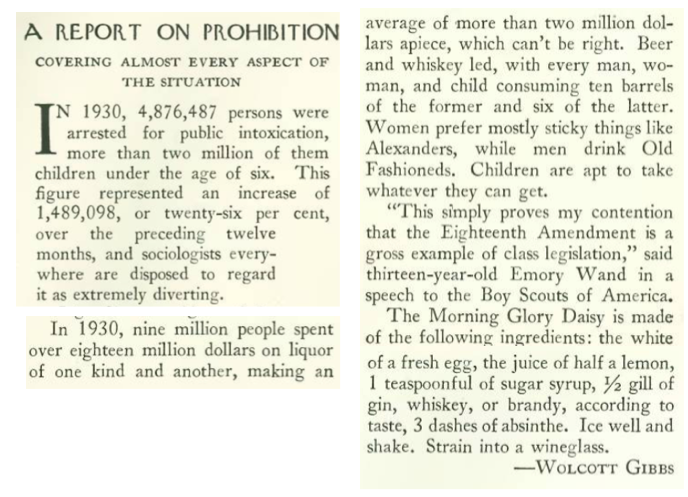
Tired of Prohibition, and its farcical enforcement, Wolcott Gibbs had some fun with the official Wickersham Report’s conclusions regarding the success of the 18th Amendment:
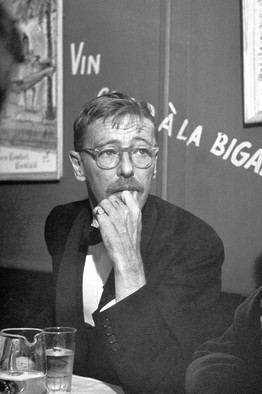
Wolcott Gibbs (wsj.com)
On a loftier note, we have this ode to the new Empire State Building from Price Day, Pulitzer Prize-winning reporter and noted editor of the Baltimore Sun:
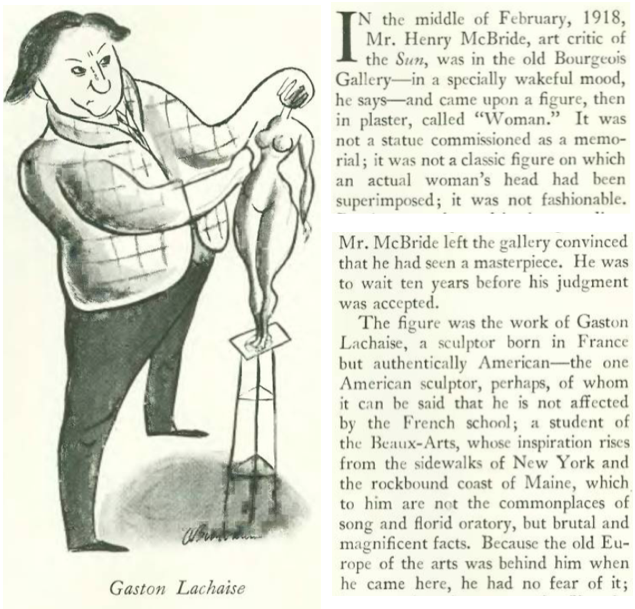
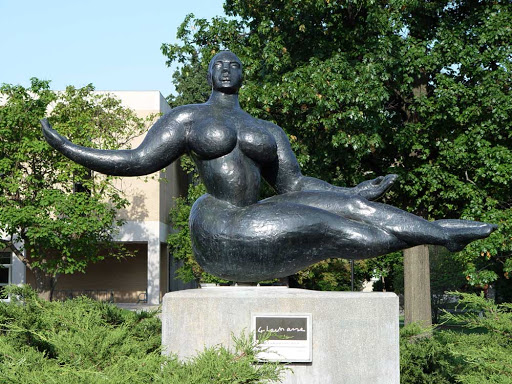
The profile, written by Gilbert Seldes, featured artist Gaston Lachaise…I include a brief excerpt for personal reasons, because I first encountered this artist in the Sheldon Memorial Art Gallery’s sculpture garden in Lincoln, Nebraska (my hometown), many years ago, via his “Floating Figure”…
WEIGHTLESS…”Floating Figure” by Gaston Lachaise was cast in bronze at the end of 1934 after a retrospective held in January 1935 at the Museum of Modern Art, New York. This is one of seven casts, at the University of Nebraska’s Sheldon Memorial Art Gallery. (Lincoln Arts Council)
* * *
From Our Advertisers
Pierce Arrow would struggle to promote its luxury cars in the Great Depression (and they would go under by the mid-1930s) but their advertising still harked back to the carmaker’s early days of refined travel…
…the folks at Ethyl would make that car run smoother, thanks to the lead they added to gasoline (and to the air folks were breathing)…
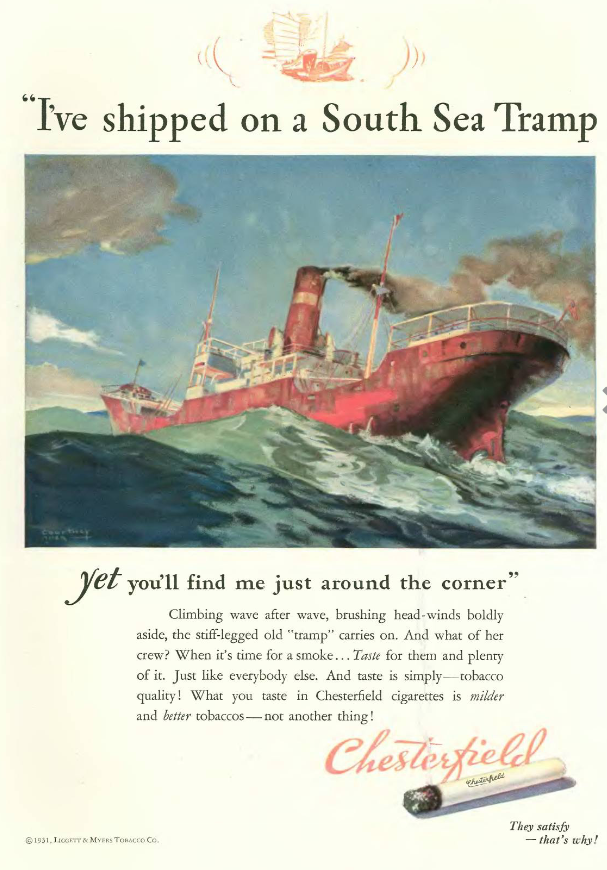
…tired of driving? Then hop a freighter and fire up a Chesterfield…
…or go for a more cushy ride on the French Line…
…we turn to our cartoons, and Ralph Barton’s revival of his old “Graphic Section”…
…Helen Hokinson showed us the nuances of the DMV…
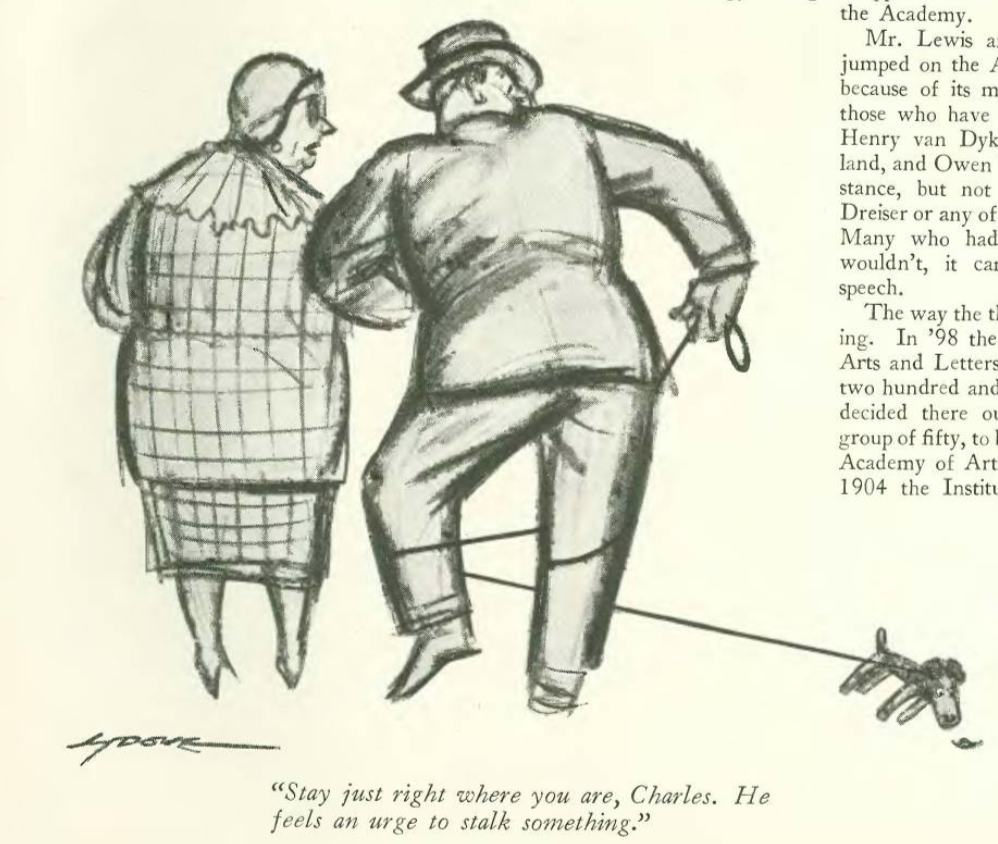
…Leonard Dove showed us a pet on the wild side…
…thanks to the typography skills of The New Yorker’s layout artist Popsy Whitaker, Otto Soglow zigzagged across the pages with his Little King…
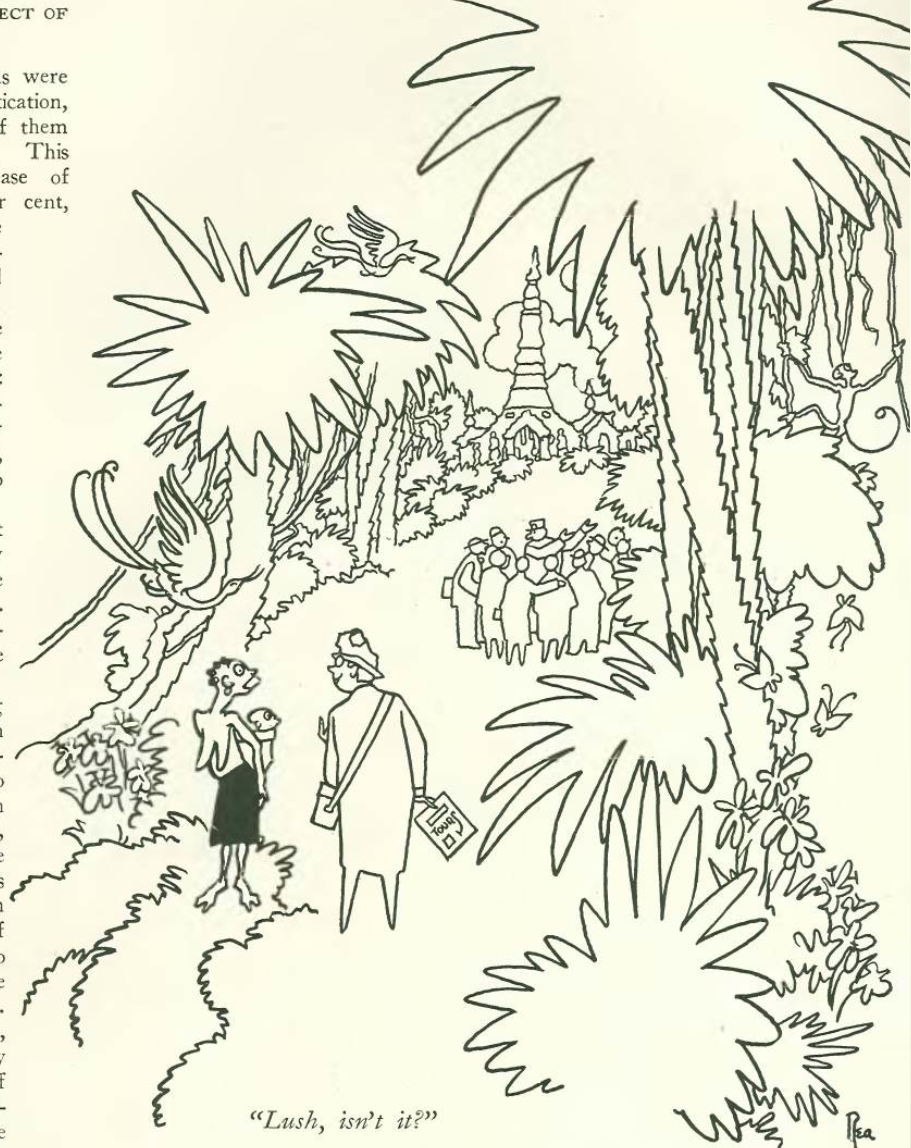
…and Gardner Rea revealed the wonders of world travel…
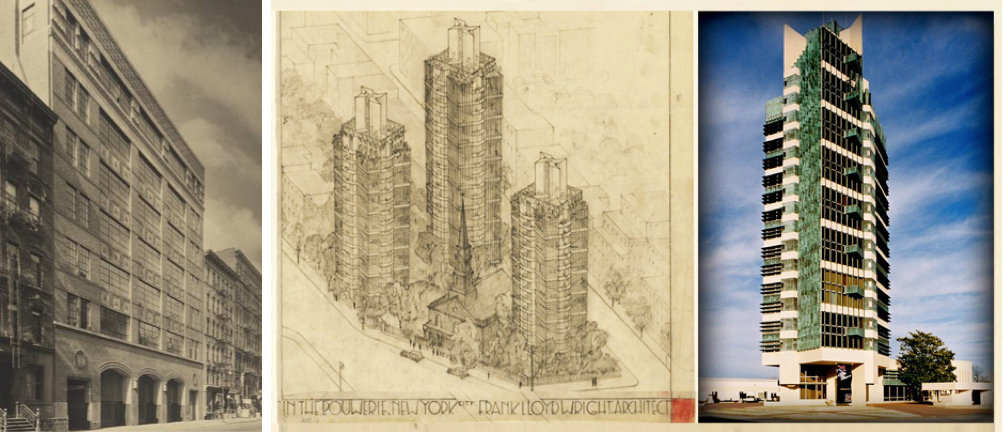
The New Yorker, via the pen of E.B. White, looked to the metropolis of the future in the Oct. 19, 1929 issue — to a city of glass towers that were ready to move from drafting table to reality. That is, until the stock market crash, just days away, which would put a heavy damper on those visions.
Oct. 19, 1929 cover by Rea Irvin.
White reported in “The Talk of the Town” that several “all-glass” buildings were in the works, including “four apartment houses of glass” designed by Frank Lloyd Wright:
The 1926 Pinaud cosmetics factory designed by Ely Jacques Kahn and Albert-Buchman was poised to get a three-story addition (by Kahn) constructed entirely of glass block, but the market crash likely killed the project. The Depression probably didn’t help Wright’s project either, which would have constituted his first buildings in New York City, and the first with all-glass exteriors.
BEST-LAID PLANS…The 1926 Pinaud factory (left), now home to The School of Visual Arts, did not get its Ely Jacques Kahn-designed glass block addition in 1929; center and at right, Frank Lloyd Wright’s 1929 design for three skyscrapers surrounding St. Mark’s Church-in-the-Bowery. A single tower of similar design was eventually built in 1956—not in NYC—but out on the prairies in Bartlesville, Oklahoma. Click images to enlarge. (collectingvintagecompacts.blogspot.com; 6sqft.com)
Thanks to the Depression, and World War II, Gotham would have to wait 23 years for its houses of glass…
LATE ARRIVALS…Left, the 1952 Lever House, by Gordon Bunshaft and Natalie de Blois of SOM; right, the 1959 Seagram Building, by Mies van der Rohe. (Shorpy/ArchDaily)
and let’s not forget one of the most important post-war modernist statements to rise near the East River…
INTERNATIONAL STYLE…The 505-foot-tall United Nations Secretariat Building, constructed between 1947 and 1952. The building was designed by the Brazilian architect Oscar Niemeyer and the Swiss-French architect Le Corbusier. (United Nations)
* * *
Rising From the Ashes
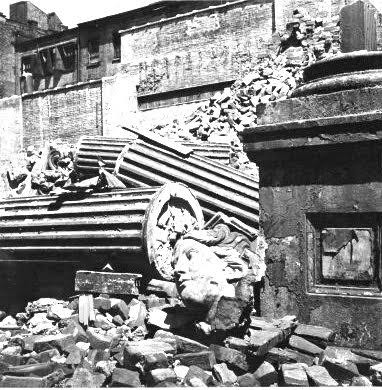
While most architects were looking to the future, some still gazed into the past, and in the case of Whitney Warren, rather bitterly. It was Warren who designed a new library in Louvain, Belgium, to replace one that was burned to ground by invading German troops during World War I. Around three hundred thousand books and a thousand manuscripts were destroyed in the fire, not to mention thousands of civilians who died during the invasion and occupation. TheNew Yorker seemed ready to forgive, but given the scale of the atrocity just fifteen years earlier, one could understand Warren’s obstinance:
And to add insult to injury, the second library designed by Warren was also destroyed by the Germans in the World War II. What stands today is a restoration of that building.
A TALE OF TWO LIBRARIES…Clockwise, from top left, a comparison of the Louvain university library in 1913, and after its destruction by the Germans in 1914 (the postcard photo at top right became almost instantly famous around the world). At bottom, left, the replacement designed by Warren, which was also destroyed by the Germans in World War II. Inset, Whitney Warren, circa 1915. (Associated Press/Wikipedia)
* * *
Belles Lettres? Non!
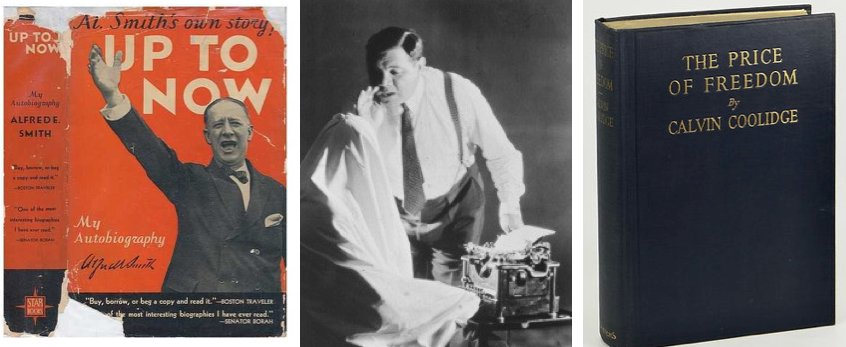
E.B. White, in his “Notes and Comment,” noted a new trend in the world of letters: celebrity authors. White lamented that the job of writing books and newspaper articles was being usurped by politicians, actors and athletes:
ASPIRING SCRIBBLERS…Former New York Gov. Al Smith, slugger Babe Ruth (dictating to his “ghost” writer) and former President Calvin Coolidge all got in on the act of book publishing. (Amazon/ourgame.mlblogs.com)
* * *
Where Babies Come From
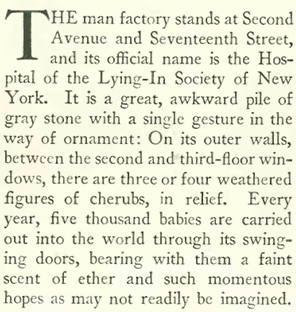
For his “A Reporter at Large” column, Morris Markey paid a visit to the Lying-In Society of New York, amaternity hospital now known asRutherford Place. I include a few excerpts below to give some idea how times have changed in the past 89 years…
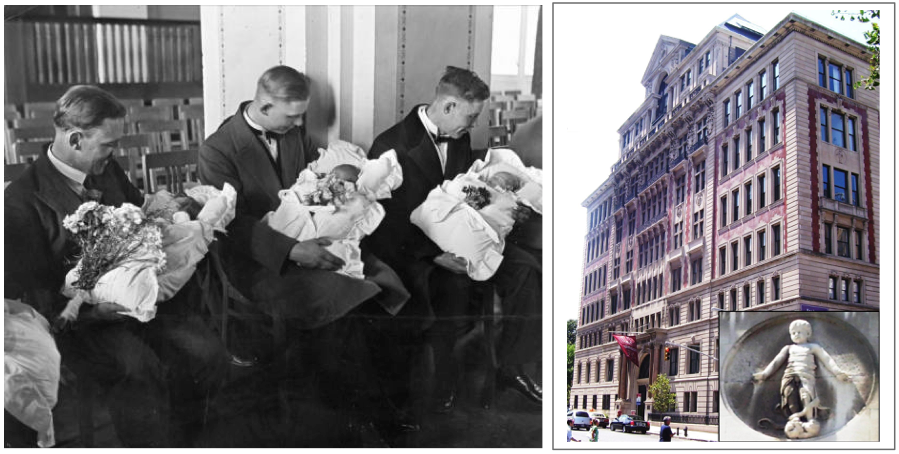
THE EASY PART…Fathers admire their newborns in this circa 1920s photo. At right, the building that housed the Lying-In Society of New York. Inset, one of the cherubs carved into the building’s facade. (Wikipedia)
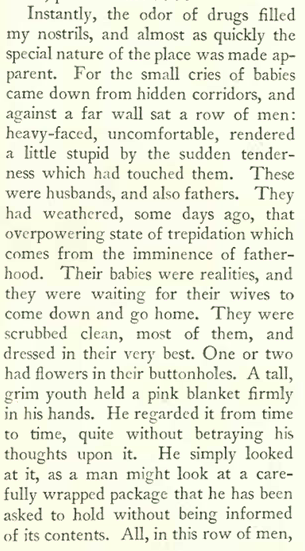
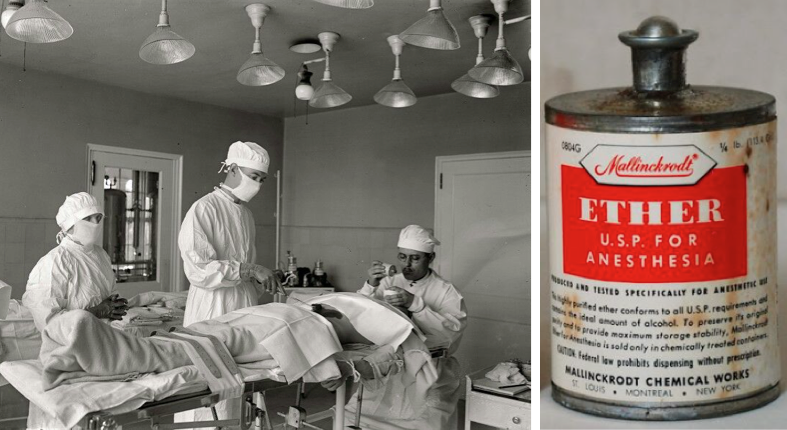
…imagine, if you will, the scent of ether (then commonly used as an anesthetic) and other drugs as you entered the hospital (no air-conditioning or HVAC to whisk those odors away!)…
NIGHTY NIGHT…Anesthesiologist administers ether and nitrous oxide to a patient before surgery in a Washington hospital, 1922. (Internet Archive: archive.org)
…not to mention the sweat of anxious fathers banished from delivery or recovery rooms…
WELCOME TO THE WORLD…Nurse learning to care for infants, Philadelphia General Hospital, c. 1930; nurses caring for infants at Long Hospital, Indiana University, in the 1920s. Note row of cribs fastened to the wall, which seemed to be a standard design back then. (upenn.edu/comet.soic.iupui.edu)
…or hospital stays for mothers that averaged ten days…
* * *
Should Have Stayed Home
Dorothy Parker was dealing with a “baby’ of her in own, in this case a grown man with the conversational skills of brick wall. She related her experience in a casual titled, “But the One on the Right…” An excerpt:
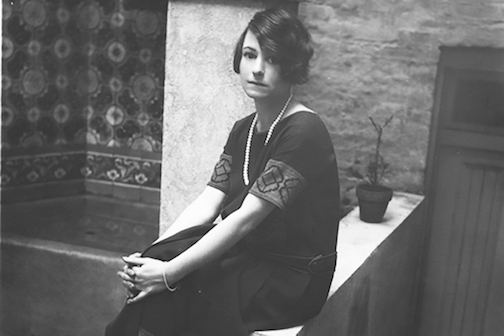
Dorothy Parker, happily at home, in 1924. (New York Public Library)
* * *
More Applause for Helen
The New Yorker continued to shine an approving light on the work of nightclub singer Helen Morgan, this time in her first talking picture, Applause:
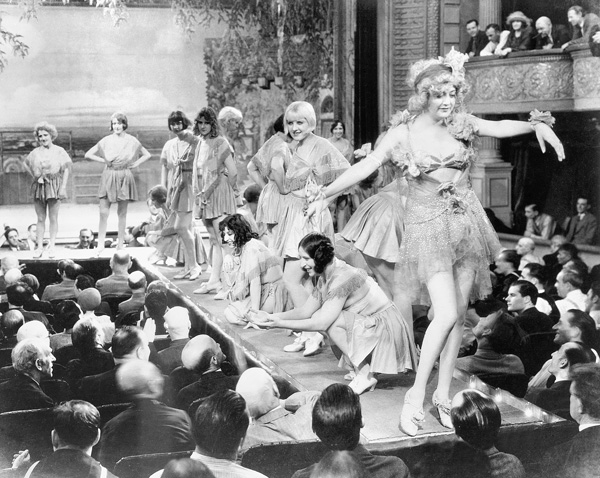
FALLING STAR…Helen Morgan (foreground, right) portrayed a fading burlesque star named Kitty Darling in 1929’s Applause, Morgan’s first all-talking picture. (MOMA)
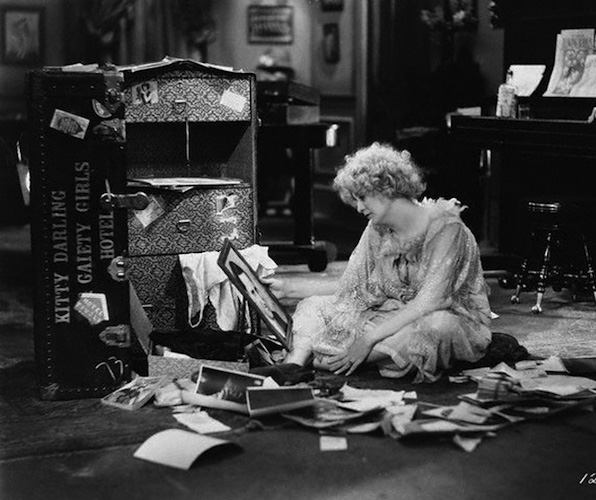
On a sad note, Morgan’s real life had parallels to the film, including the abandonment of a child and a death due to alcohol and drugs — in the film Kitty overdoses on sleeping pills before a show; in real life Morgan would collapse onstage during a Chicago performance of George White’s Scandals. She would die of cirrhosis of the liver in 1941, at age 41.
IMITATING LIFE…Helen Morgan as Kitty Darling in Applause. Her best days behind her, Darling becomes an alcoholic who lives in the past. Sadly, Morgan’s real life had parallels to the movie. (art fuse.org)
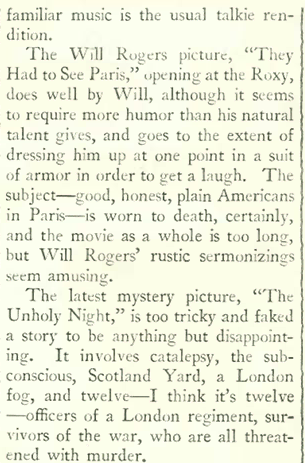
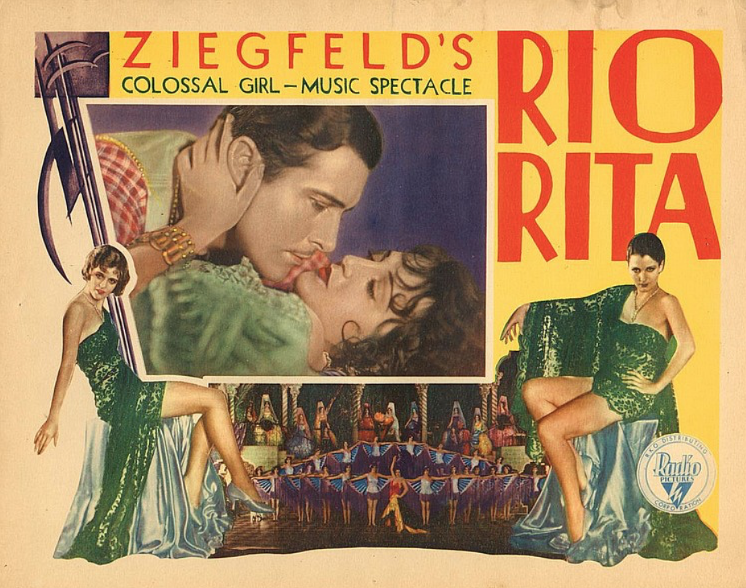
There was no such applause from The New Yorker for another talkie, the screen adaptation of the popular Ziegfeld Broadway stage show Rio Rita:
BEEN THERE, DONE THAT…Lobby Card for Rio Rita, featuring John Boles and Bebe Daniels. (IMDB)
* * *
From Our Advertisers
The Stewart fashion shop on Fifth Avenue featured a series of attractive, modern ads, these two appearing in the Oct. 19 and 26 issues…
According to the terrific website Driving for Deco, “Stewart and Company broke away from the traditional department store layout. Instead of aisle after aisle of display cases the new store comprised many shops. These “shops” were not individually owned as in a present day mall. They were rooms or alcoves devoted to specific merchandise. The design of the shops and floors fell to several different interior design firms…”
Clockwise, from top, artist rending of the Stewart women’s shoe department; Stewart and Company building at 721 5th Avenue; Stewart Millinery Shop. (Vogue/Museum of the City of New York, all via drivingfordeco.com)
The Depression brought an end to Stewart and Company, which went out of business in the spring of 1930. Later that year Bonwit Teller opened in the former Stewart Building. They would close their doors to business 49 years later.
Sadly the building was demolished in 1980 to make way for a monument to a massive ego: Trump Tower.
Demolition of the former Stewart & Company building in 1980. The Rene Paul Chambellan bas-relief sculptures on the building’s facade were supposedly destined to the Metropolitan Museum of Art. Developer Donald Trump thought the removal of the sculptures was cost-prohibitive, so they were smashed by jackhammers. (drivingfordeco.com)
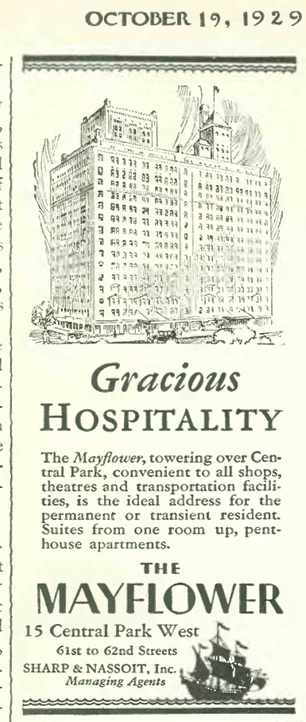
…back to the ads, we have another image of a building that is now but a ghost (I am writing this on Halloween)…
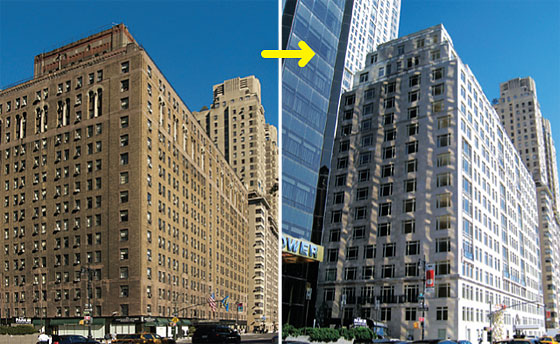
The Mayflower Hotel, left, a 1926 building designed by Emery Roth, was demolished in 2005 to make way for Robert A.M. Stern’s luxury condominiums, 15 Central Park West. (nymag.com)
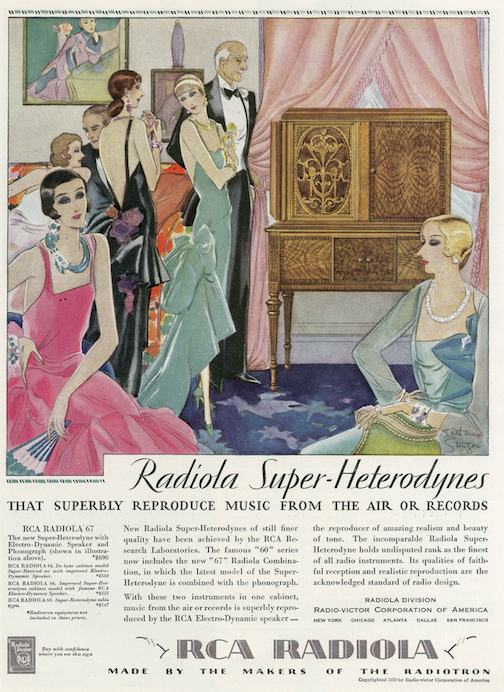
…speaking of luxury, these posh types seem to be almost lulled to sleep by RCA’s “Radiola Super-Heterodyne”…
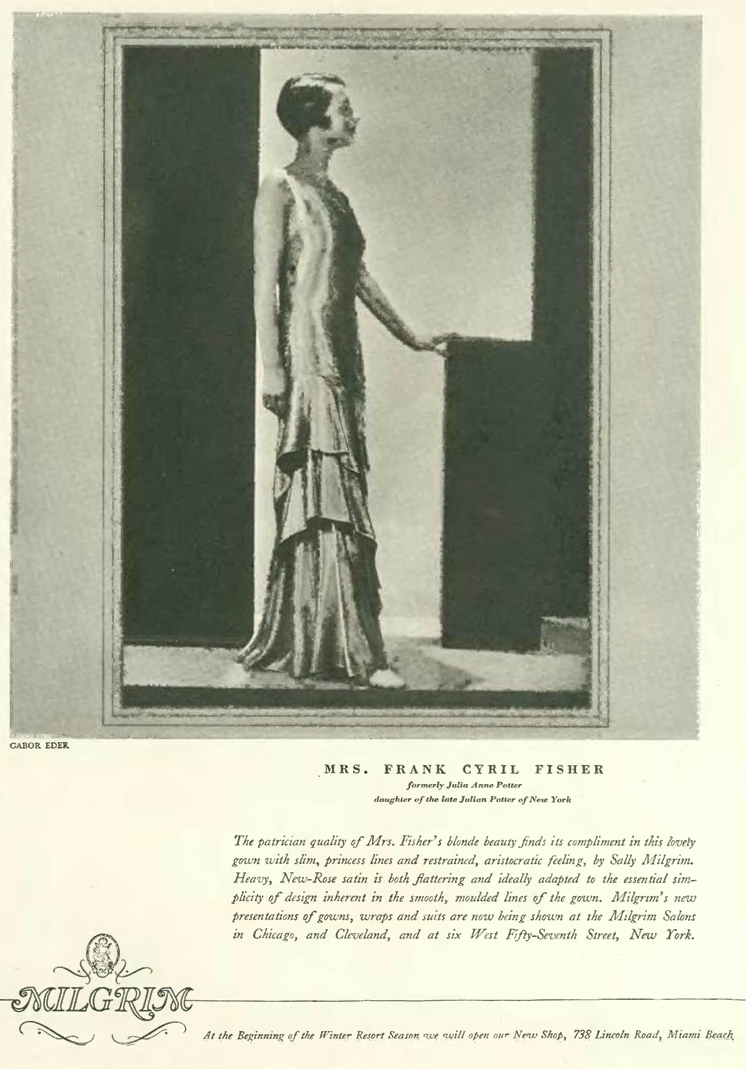
…and I throw in this ad from Milgrim for its use of the word “patrician” to appeal to the aristocratic yearnings of some New Yorker readers…
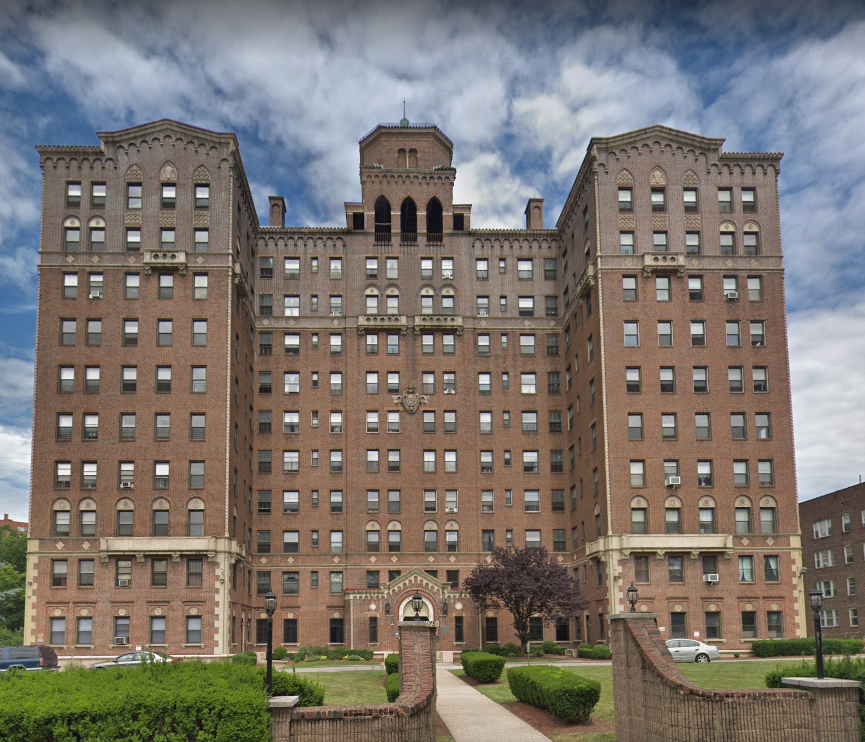
…perhaps those patricians would have preferred a move to “aristocratic” Scarsdale, as the middle ad below suggests, or perhaps they would have chosen something more “unusual” in East Orange…
…for reference, here is a Google street view image of 75 Prospect in East Orange, New Jersey…
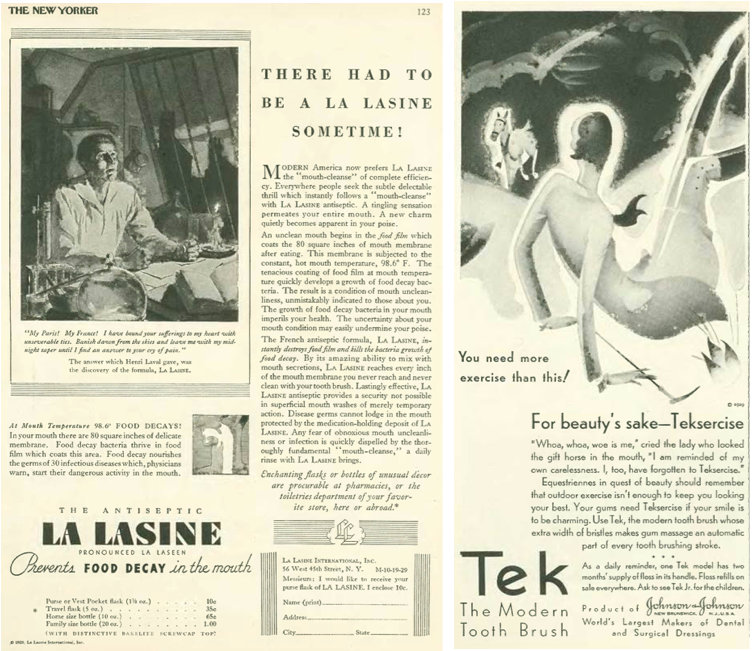
…and if you were of the upper classes, you probably would have wanted the latest in toothbrushes and “French” mouthwashes…
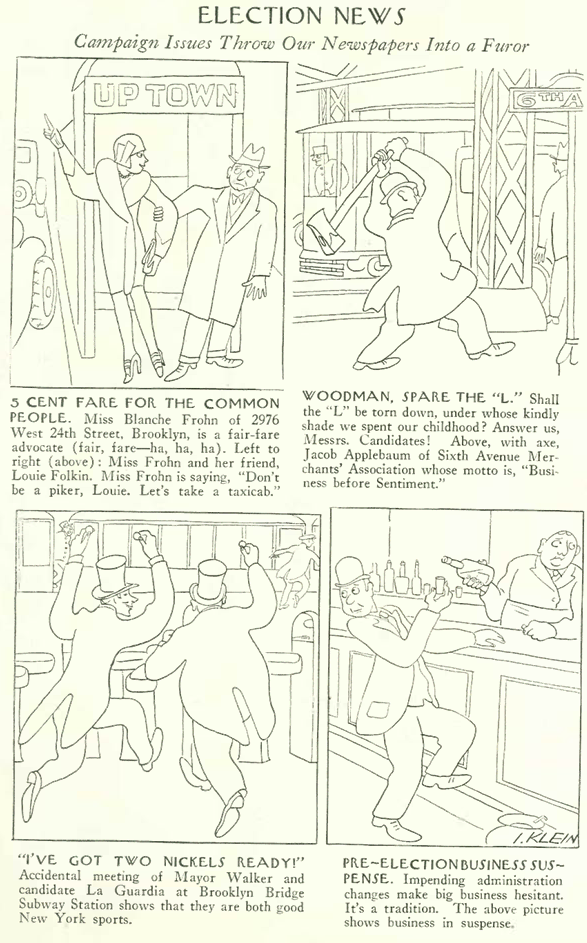
…on to our illustrators and cartoonists, Isadore Klein looked in on the elections…
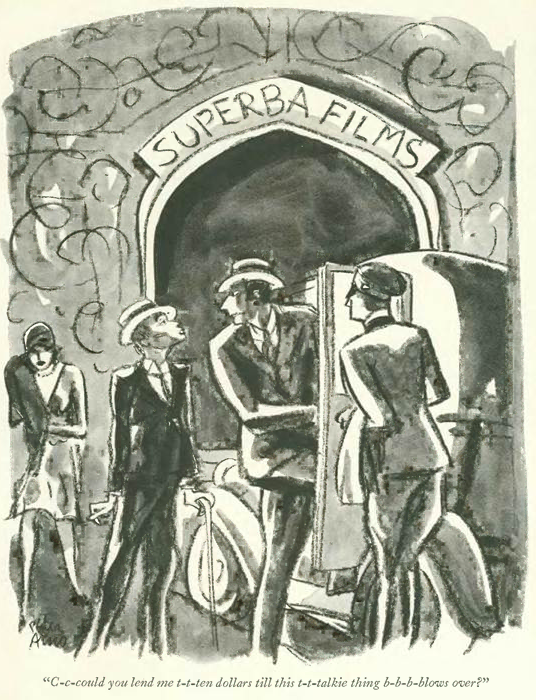
…Peter Arno illustrated the plight of a hapless silent film actor…
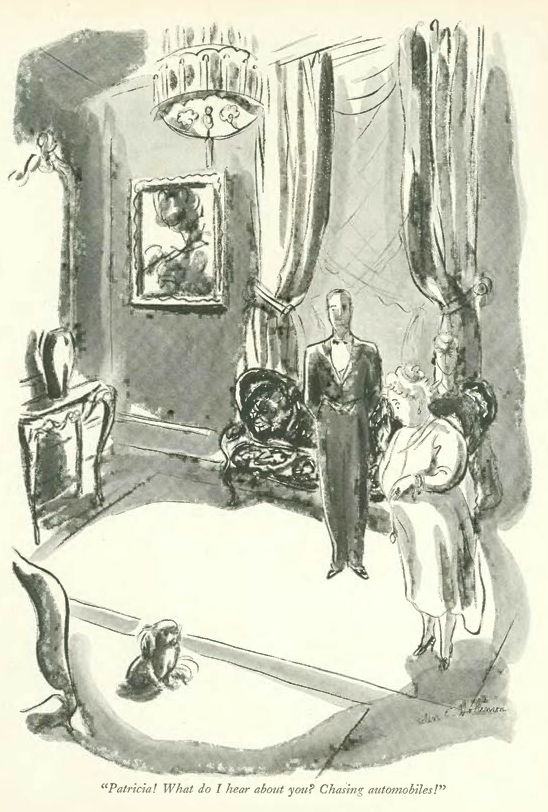
…and Helen Hokinson eavesdropped on a canine faux pas…

















































 “
“






















 A New Yorker State of Mind