Seeking Decorative People

Above: New Year’s Eve at the “El Morocco” Night Club at 154 E. 54th Street, New York, 1935. (Posted on Reddit)

Lois Long took her nightlife seriously, and when it didn’t live up to her standards—defined by the wild speakeasy nights she wrote about after joining The New Yorker in 1925 —she was crestfallen, to say the least.
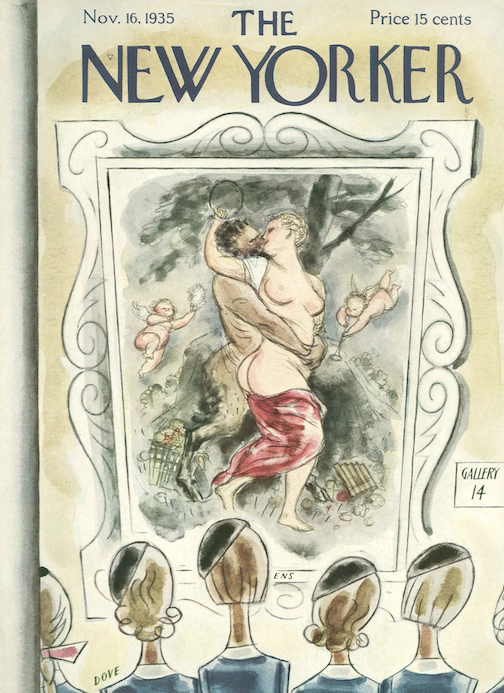
November 16, 1935 cover by Leonard Dove. This is one of Dove’s fifty-seven New Yorker covers; he also contributed 717 cartoons to the magazine.
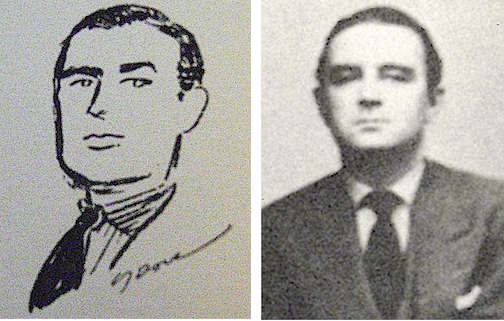
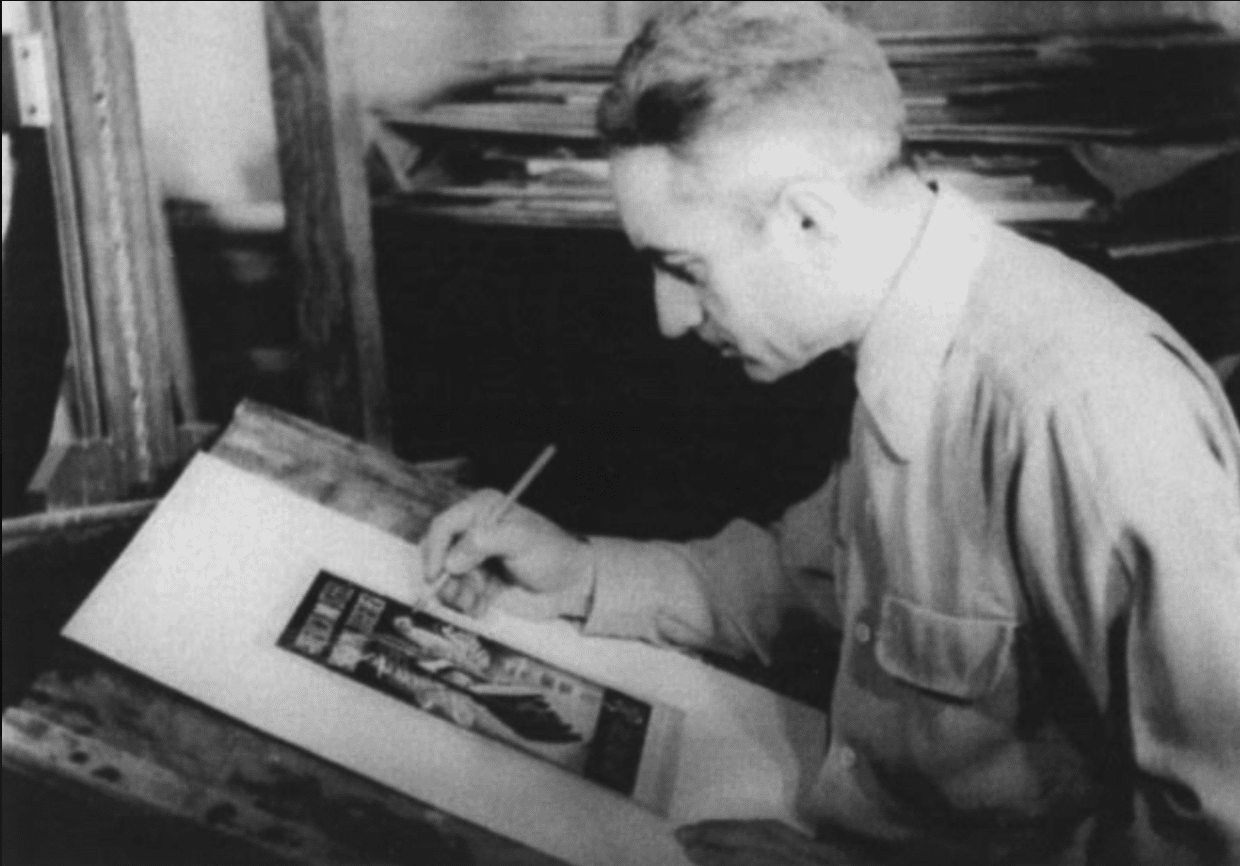
Above: Leonard Dove’s self portrait, 1941; photo: 1947. Born 1906, Great Yarmouth, England. Died, Gramercy Hotel, New York City, 1972. (Thanks to Michael Maslin’s indispensable Ink Spill)

 *

When Long joined The New Yorker she was a 23-year-old Vassar graduate, and at age 34 she was not expecting to re-live those heady days; but nightlife in 1935 made her wonder where all the interesting people had gone. Instead of the smart and beautiful speakeasy set, she found people who couldn’t hold a conversation, who cared more about being mentioned in the newspapers by “Cholly Knickerbocker” (a pseudonym used by society columnists)—they simply lacked the “sparkle” she so craved. In this excerpt from her column, “Tables for Two,” she explained:

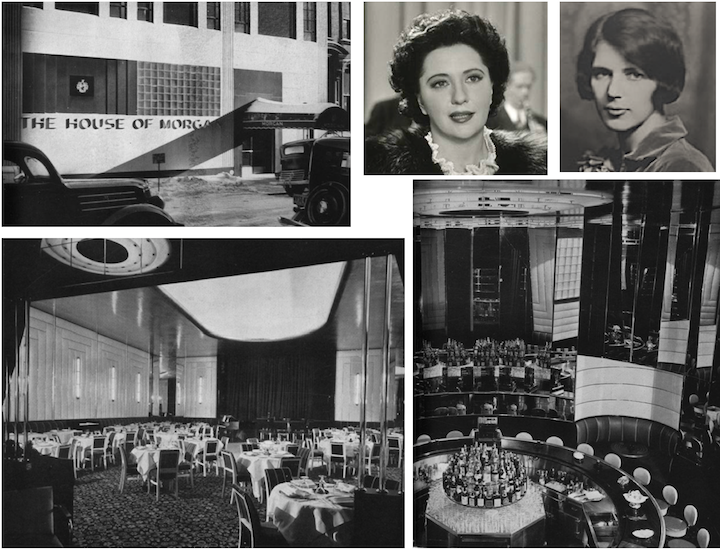
ALL SHOW, NO GO…Lois Long recalled the heady days of the original torch singer Helen Morgan, but her new club, The House of Morgan, offered up tired vaudeville instead of the singer herself. Above, images of the club from Christopher Connelly’s The Helen Morgan Page. Top, center, detail of Morgan from the 1935 film Sweet Music. Next to Morgan is a photo of Long from the PBS documentary Prohibition. (helen-morgan.net/PBS.org)

 * * *

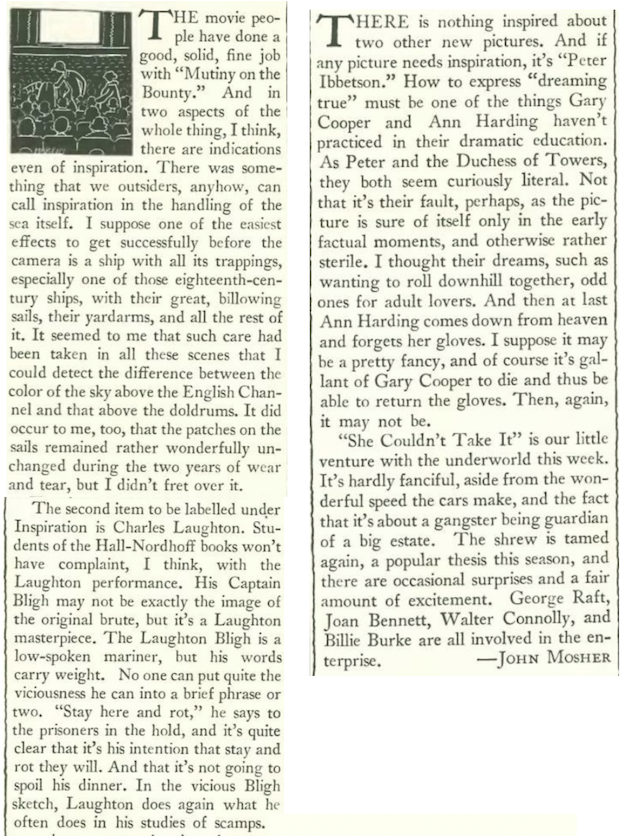
At the Movies

Our film critic John Mosher was in good spirits after taking in MGM’s Mutiny on the Bounty, and especially the inspired performance by Charles Laughton as the cruel, tyrannical Captain Bligh…
LET’S HAVE A STARING CONTEST…Clark Gable (left) portrayed Fletcher Christian, the Bounty’s executive officer, who disapproved of the cruel leadership of Captain Bligh, portrayed by Charles Laughton (right) in Mutiny on the Bounty. (theoscarbuzz.com)

…two other pictures reviewed by Mosher were less than inspired, but at least the George Raft/Joan Bennett gangster film, She Couldn’t Take It, offered a car chase, and the occasional surprise.
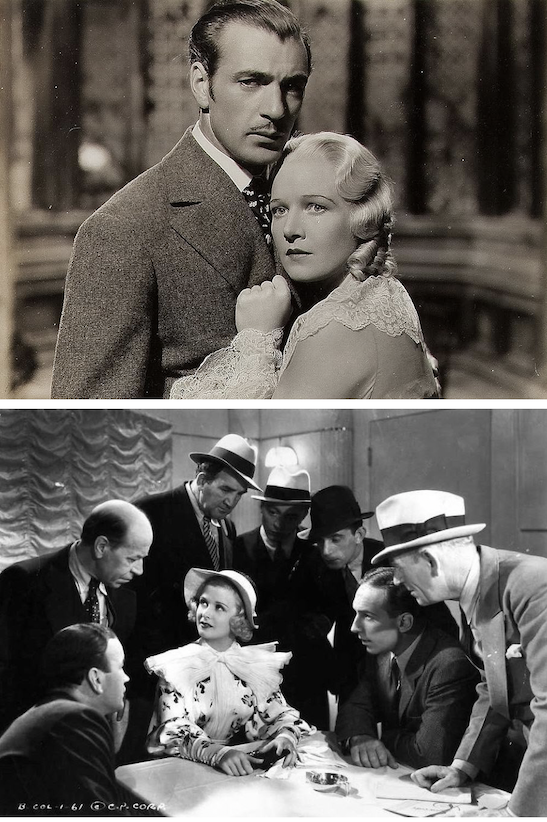
STERILITY ISSUES…Top, Gary Cooper and Ann Harding needed a bit more life in Peter Ibbetson; at least Joan Bennett (bottom photo) found some action in She Couldn’t Take It. (IMDB)

 * * *

From Our Advertisers

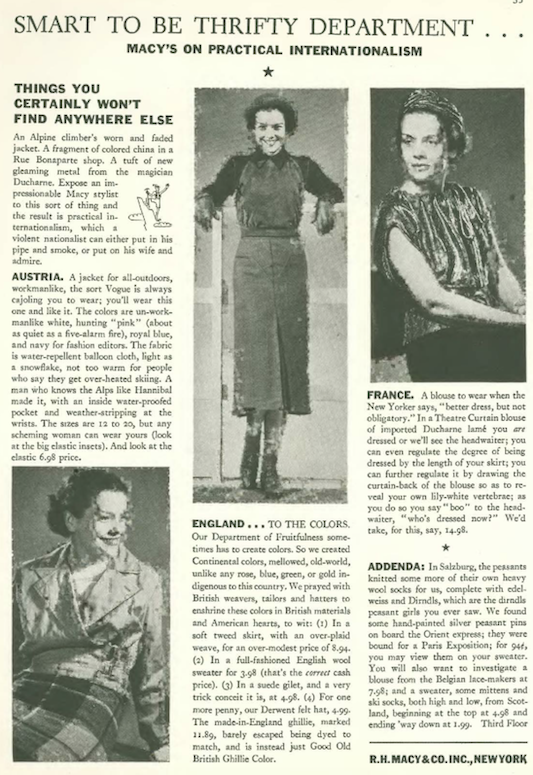
Not all fashion advertisements in The New Yorker were aimed at the posh set…Macy’s offered some thrifty selections, including a French-inspired “Theatre Curtain Blouse” that could be opened in the back “so as to reveal your own lily-white vertebrae”…
…I am puzzled by the “Duchess” types that appeared in food and beverage ads in the back of the magazine…we’ve seen some angry duchesses in ads for tomato and pineapple juice, and here we have one who has stooped so low as to shell her own peas…

…a side note, the Duchess’s peas came in a can bearing the old Green Giant logo, a savage, bearskin-clad figure…he was redesigned by ad executive Leo Burnett in 1935 to become the friendlier “Jolly Green Giant”…

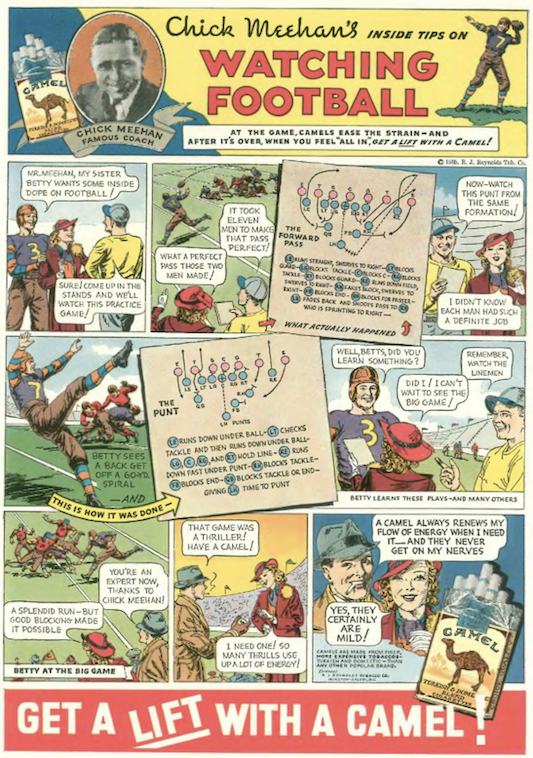
…the makers of Camels presented football coach Chick Meehan in cartoon form to extol the wonders of football and smoking to a young woman…Meehan coached football at Syracuse, NYU and Manhattan College…
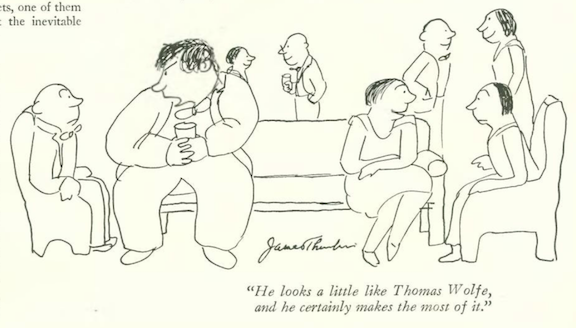
…the football theme segues to our cartoon section, beginning with this spot art by James Thurber

Christina Malman’s spot drawings could now be found in every issue, and usually more than one…
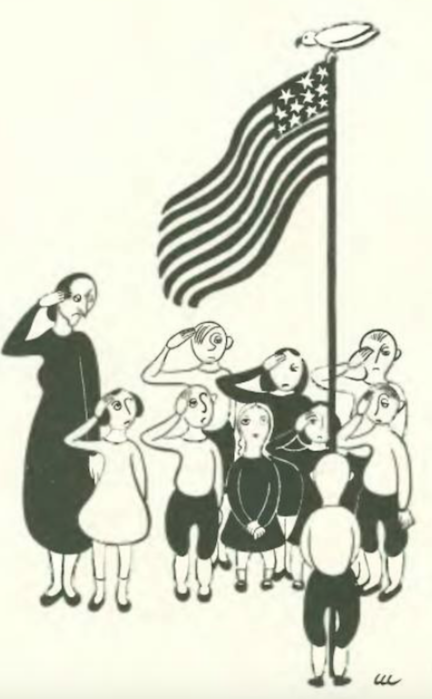
…this one by Robert Day also caught my eye, maybe because I like chickens, and dogs too…

…Day again, on the streets of Manhattan…

Barbara Shermund showed us a wolf in wolf’s clothing…

Alan Dunn seemed to be channelling Barbara Shermund here…or maybe Dunn’s wife Mary Petty had some influence…

William Crawford Galbraith eavesdropped on some wagering waiters…

Carl Rose found an outlier at the modern Walker-Gordon Dairy Farm…
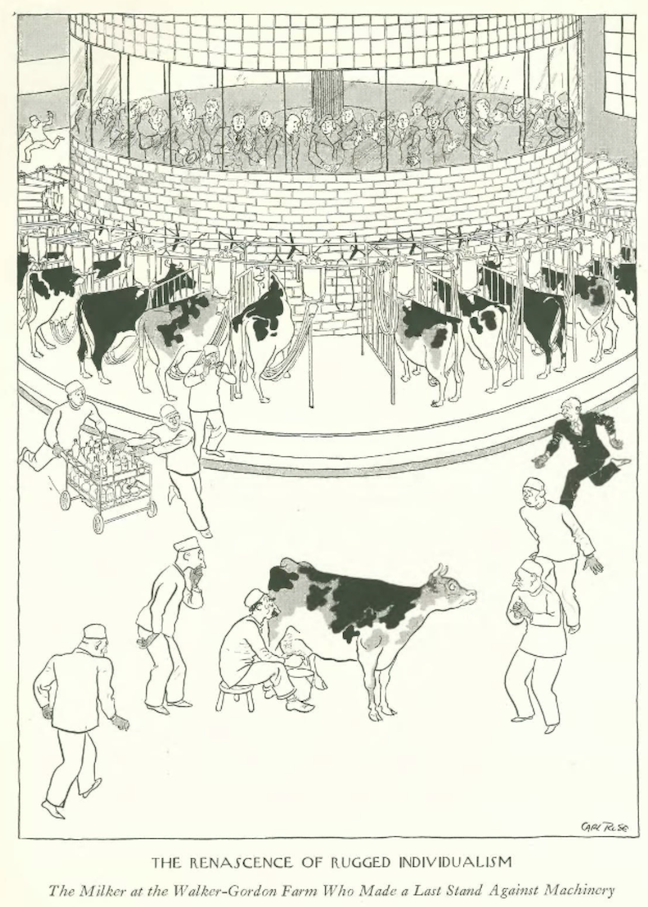
…The Rotolactor featured in Rose’s cartoon was a mostly automatic machine used for milking a large number of cows successively on a rotating platform…first used at the Walker-Gordon Laboratories and Dairy in Plainsboro, New Jersey (pictured below), the Rotolactor held fifty cows at a time, and hosted about 250,000 visitors annually…
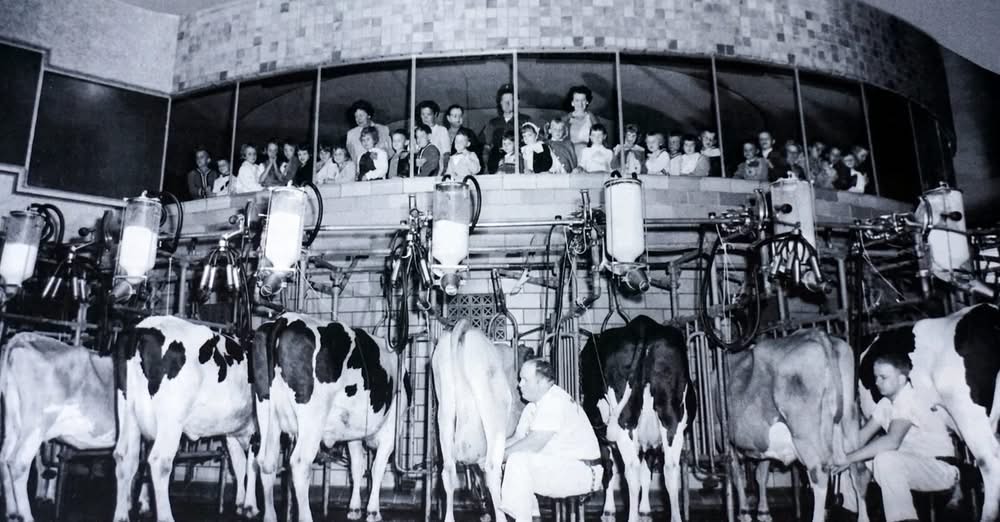
(rawmilkinstitute.org)

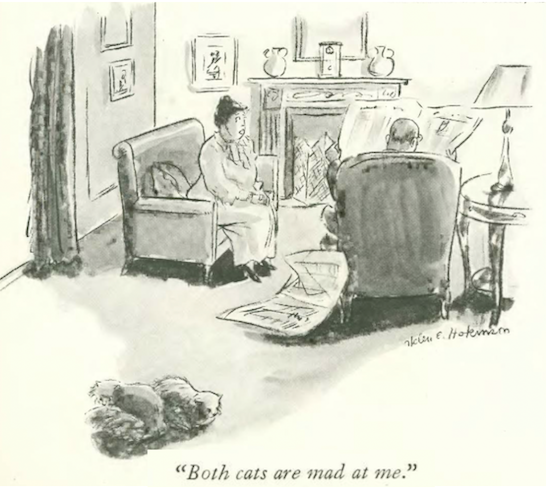
…and we go from cows to cats, courtesy Helen Hokinson

…and Charles Addams booked an unusual perp…

…on to the November 23 issue…

November 23, 1935 cover by Antonio Petruccelli. Petruccelli (1907-1994) began his career as a textile designer, becoming a freelance illustrator in 1932 after winning several House Beautiful cover contests. This is one of four covers he produced for The New Yorker.
Antonio Petruccelli. Here are samples of Petruccelli’s remarkable work. (Helicline Fine Art)

 *

Worth the Wait

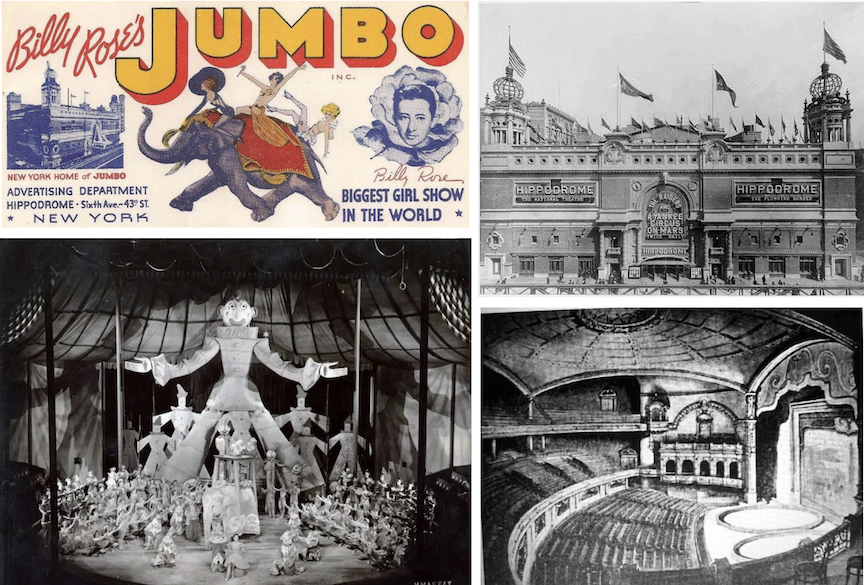
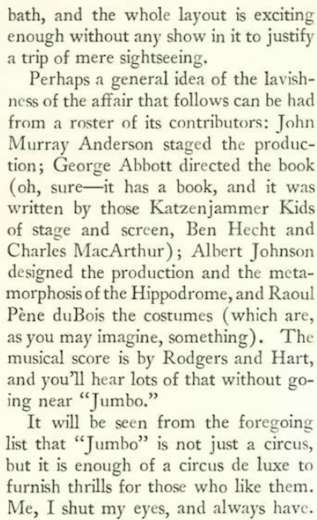
The highly-anticipated circus-themed spectacle Jumbo finally opened at the Hippodrome. In his That’s Entertainment! blog, Jackson Upperco observes that Billy’s Rose’s Jumbo was “more circus than musical comedy,” a production that “was largely an excuse for Mr. Rose to present a circus.” It was headlined by comedian Jimmy Durante and bandleader Paul Whiteman, with a score by Rodgers & Hart. Here are excerpts from a review by Wolcott Gibbs:

JUMB0-SIZED ENTERTAINMENT…Clockwise, from top left, Hippodrome billboard promoting Jumbo; built in 1905, the Hippodrome provided entertainment to thousands who couldn’t afford a Broadway ticket; a circus tent was erected inside the 5,300-seat theatre for the spectacle; Jumbo was one of the most expensive theatrical events of the first half of the 20th century. (Facebook/Library of Congress/Broadway Magazine/jacksonupperco.com)

 * * *

At the Movies

Fyodor Dostoevsky’s 1866 novel Crime and Punishment was adapted to film by both French and American producers in 1935, but critics including The New Yorker’s John Mosher mostly preferred the French version, titled Crime et châtiment.
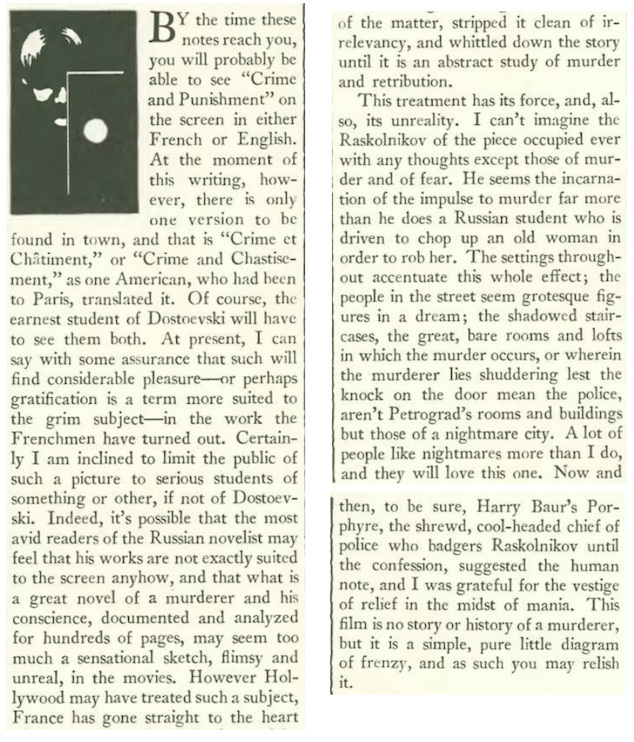
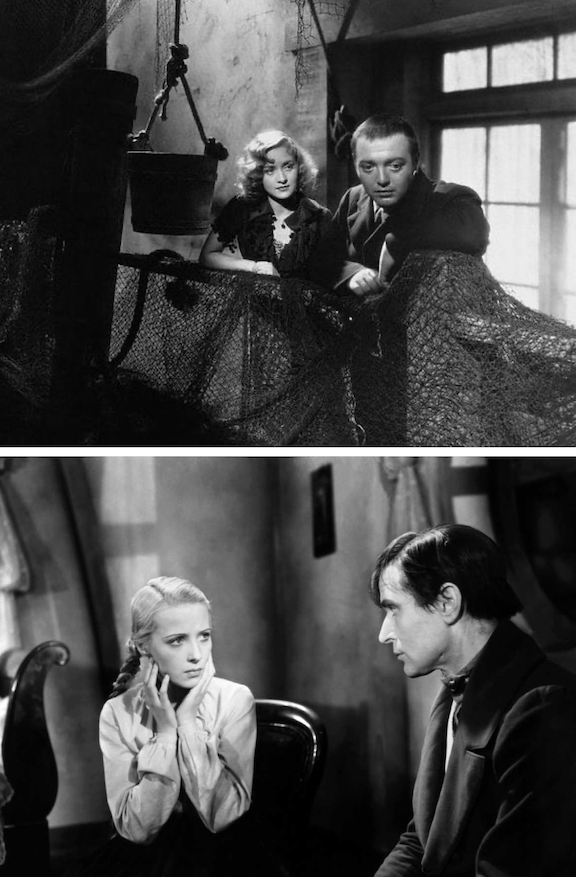
DOUBLE FEATURE…American and French producers each turned out a film adaption of Fyodor Dostoevsky’s novel Crime and Punishment. Top photo, Marian Marsh as Sonya and Peter Lorre as Roderick Raskolnikov in Columbia’s Crime and Punishment; bottom photo, Madeleine Ozeray as Sonia and Pierre Blanchar as Rodion Raskolnikov in Crime et châtiment. (silverscreenmodes.com/SensCritique.com)

…Mosher reviewed another crime thriller, Mary Burns, Fugitive, but found some comic relief in two other films…
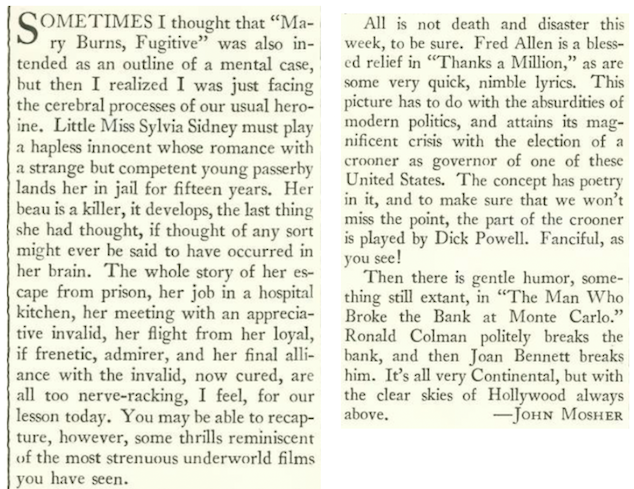
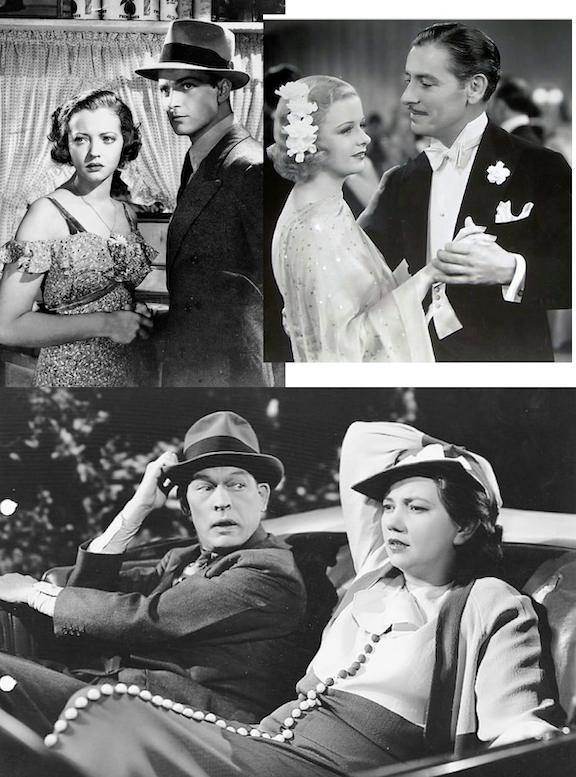
BAD CHOICE IN BOYFRIENDS was the theme of Mary Burns, Fugitive, starring (top left) Sylvia Sidney and Alan Baxter; top right, Joan Bennett and Ronald Colman in the romcom The Man Who Broke the Bank at Monte Carlo; bottom, Fred Allen and Patsy Kelly provided some laughs in musical comedy Thanks a Million. (IMDB)

* * *

From Our Advertisers

Readers of the Nov. 23 issue opened to this lovely image…

…which sharply contrasted with the clunky Plymouth ad on the opposite page…

…not so clunky was this colorful illustration promoting Cadillac’s economy model, the La Salle…

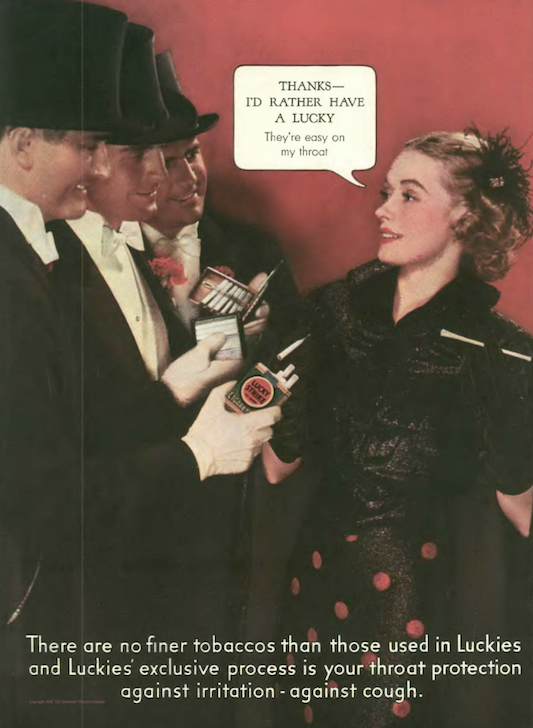
…the back cover was no surprise, with yet another glamorous cigarette ad…
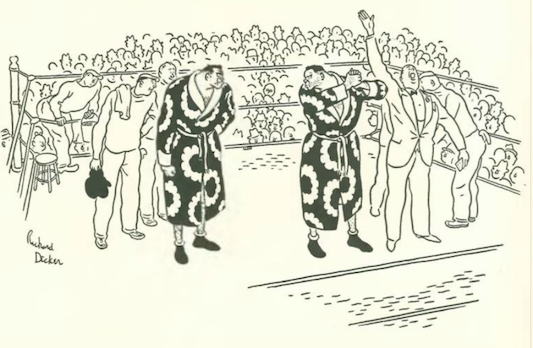
…our cartoonists included Richard Decker, and a fashion faux pas to open a boxing match…
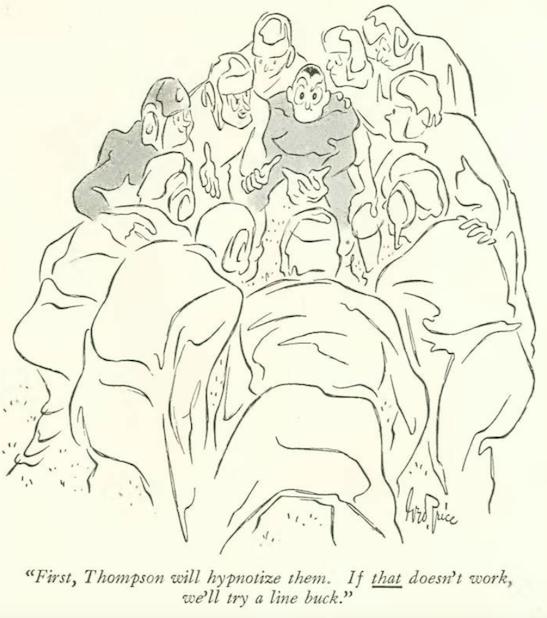
George Price eavesdropped into some football strategy…
Carl Rose spotted a canine unbeliever…

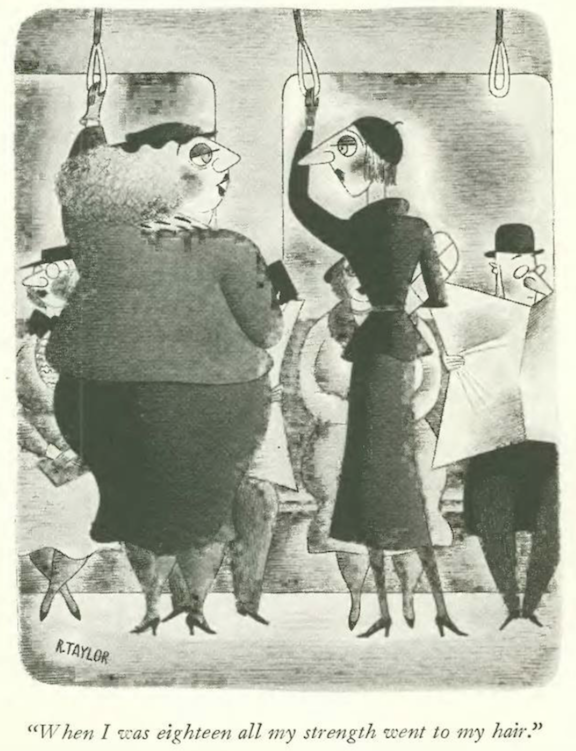
Richard Taylor was back with his distinctive style…
Al Frueh continued to illustrate the latest fare on Broadway…

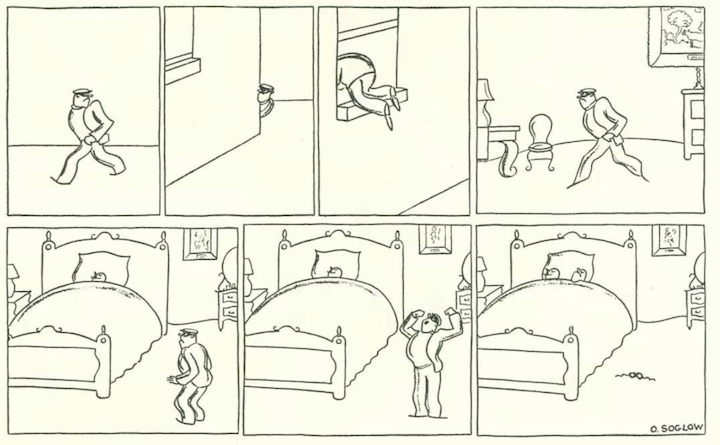
Otto Soglow crept in for a snooze…

…and we close with James Thurber, and some literary cosplay…
Next Time: Some Holiday Shopping…

Home Sweet Motohome

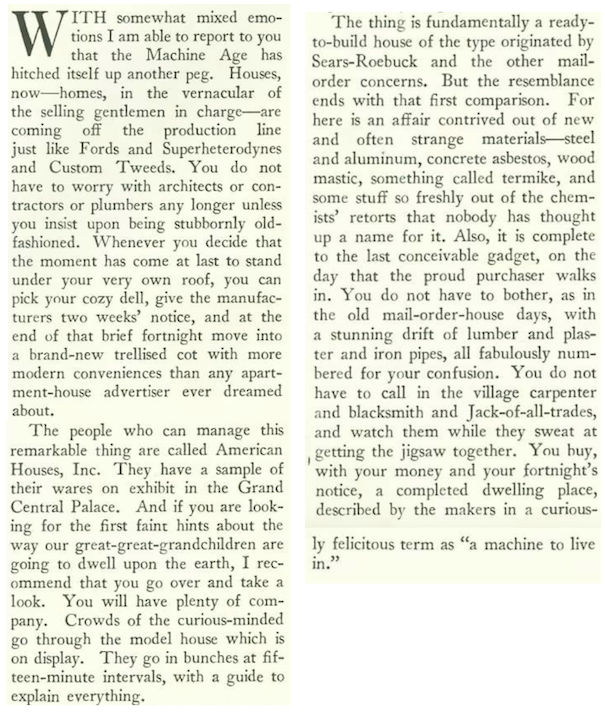
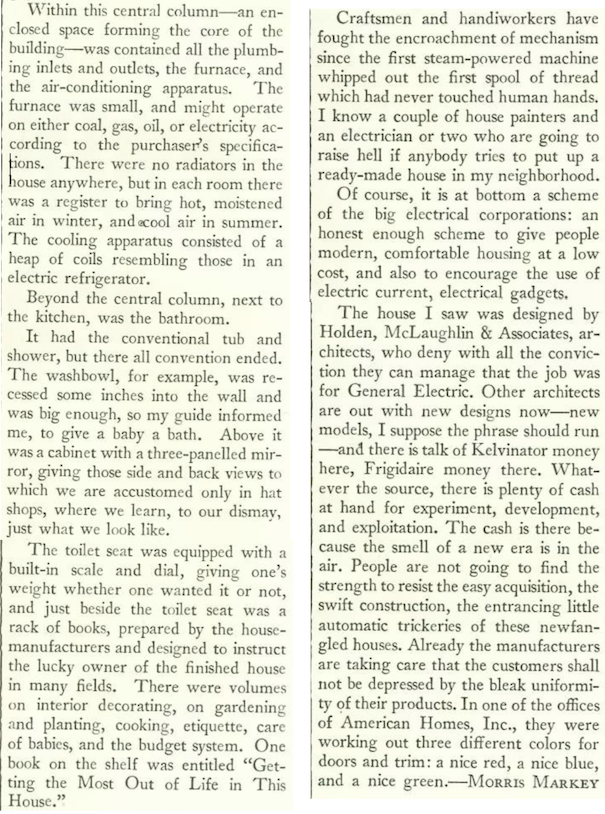
Morris Markey thought he was getting a glimpse of the future when he attended an exhibit of “machines to live in” at New York’s Grand Central Palace.

March 16, 1935 cover by Constantin Alajalov.

The Great Depression created a housing shortfall in the U.S. of nearly two million units, so many idled architects and builders turned to industrialized housing as a way to boost the building industry. In “A Reporter At Large,” Markey described his encounter with one type of “machine to live in”––the Motohome.

The idea of pre-fab living wasn’t exactly new in 1935, originating in the 1920s with the German Bauhaus school and with notables such as Swiss architect Le Corbusier.

NOT THRILLED WITH FRILLS…Charles-Édouard Jeanneret (1887-1965), better known as Le Corbusier, stated in 1923 that “a house is a living machine.” He believed the world had evolved beyond the need for decorative frills, and that homes and furnishings should reflect their functions. Top left, Corbu’s 1929 Villa Savoye in Poissy, France; at right, his 1947-52 Unité d’habitation de Marseille. (Fondation Le Corbusier/Architectural Digest/Le Corbusier World Heritage)

Markey correctly surmised that the American twist on Le Corbusier’s vision was largely driven by big corporations, and in the case of the Motohome, by General Electric.

GET YOUR MOTO RUNNING…Clockwise, from bottom left, New York’s Grand Central Palace; the Eggiman House in Madison, Wisconsin, a 1936 Motohome listed in the National Register of Historic Places; Long Island Motohome featured on a brochure; Popular Mechanics article on the Motohome. A common wall “core” was prefabricated with all kitchen and bath fixtures, as well as the HVAC system. (Wikipedia/makeitmidcentury.com/books.google.com)

 * * *

Strange and Wonderful

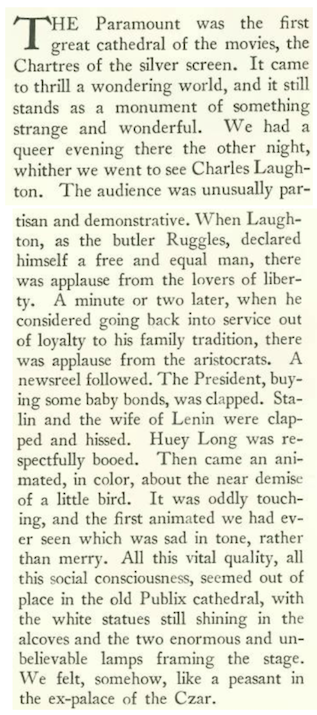
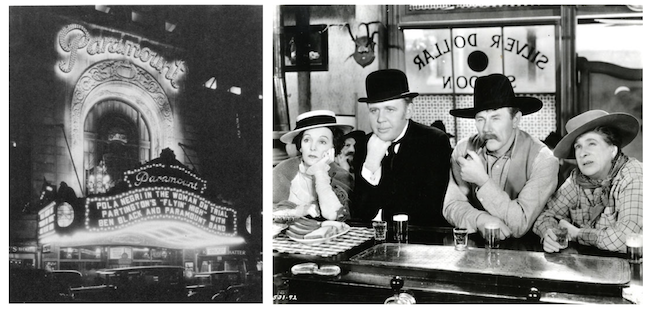
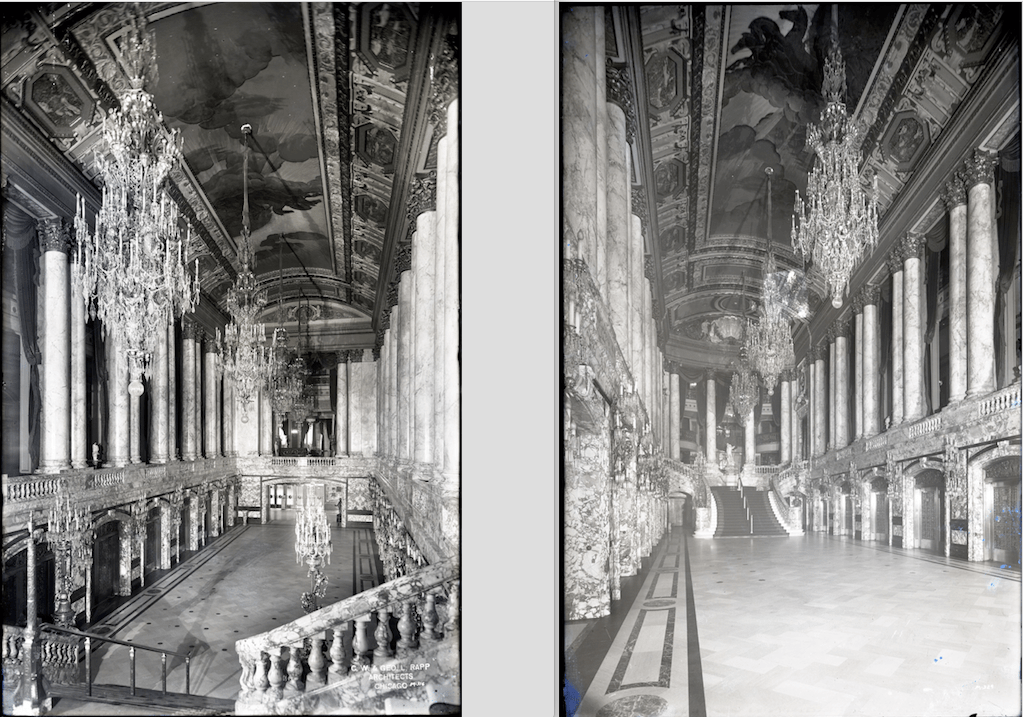
That is how E.B. White described the 3,664-seat Paramount Theatre, which opened on 43rd and Broadway in 1926. After nine years White was still in awe of its palatial trappings. In his “Notes and Comment,” White offered some thoughts after an evening at the movies.

CINEMA GLORY DAYS…E.B. White visited the Paramount Theatre to take in Charles Laughton’s hit film, Ruggles of Red Gap. From left, Zasu Pitts, Laughton, Charles Ruggles and Maude Eburne in Ruggles. (nyc.gov/TCM)
PALACE FOR THE PICTURES…The Paramount Theatre’s Grande Hall featured a 75-foot-long ceiling mural by artist Louis Grell above the Italian marble-lined entrance. In 1966, after a run of the James Bond film Thunderball, the Paramount was closed for good and later gutted and turned into retail and office space. (Louis Grell Foundation)

 * * *

Bad Guys

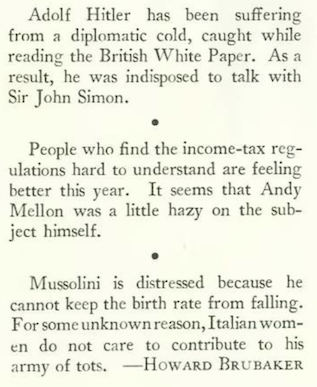
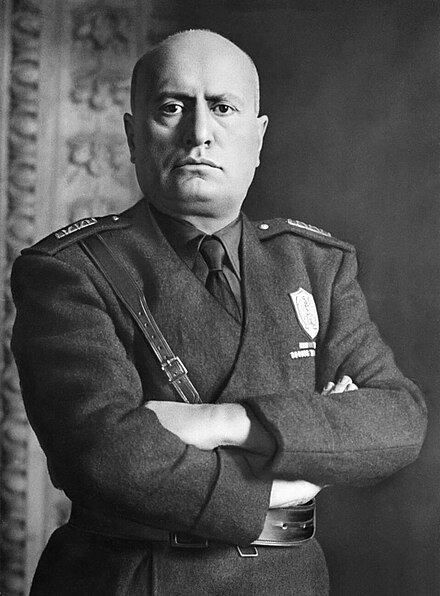
Andrew Mellon’s tax fraud troubles were sandwiched between the woes of a fascist bromance in Howard Brubaker’s “Of All Things”…Mellon would soon be dead, Adolf Hitler would lie his way around the Brits, and Benito Mussolini would struggle to inspire Italian women to produce his “army of tots”…

NOT TONIGHT, WE HAVE A HEADACHE…Little wonder fascist dictator Benito Mussolini couldn’t inspire a baby boom. (Wikipedia)

 * * *

Zoom Zoom

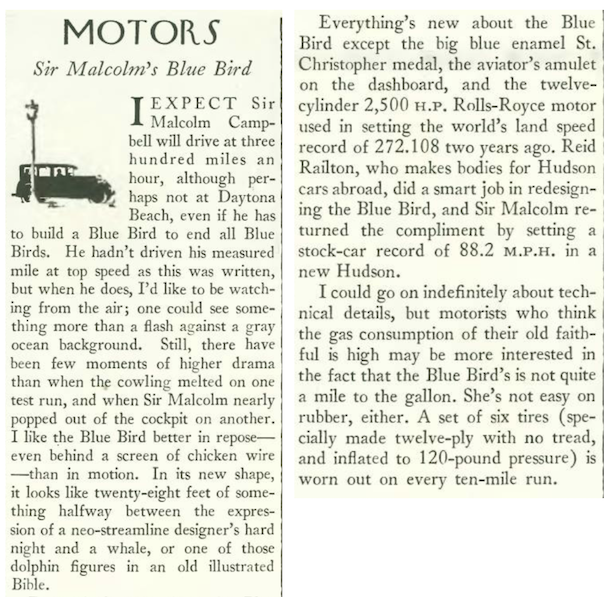
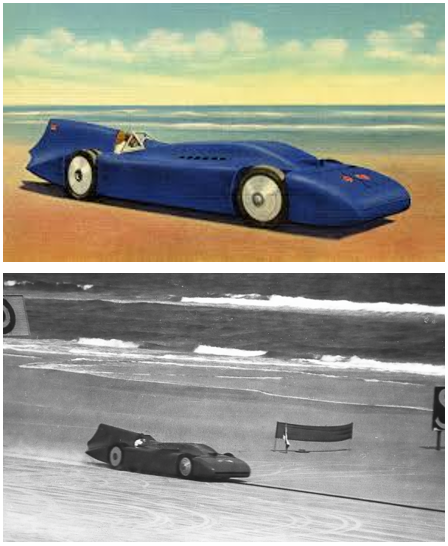
In his “Motors” column, writer “Speed” looked in on Sir Malcolm Campbell (1885-1948), who was attempting to break the 300-mph mark at Daytona in his 2,500-horsepower Blue Bird.

BLUE STREAK…Sir Malcolm Campbell’s bid for a land speed record surpassing 300 mph began at Daytona Beach in March 1935 in his Campbell-Railton Blue Bird, powered by a 2,500 hp supercharged Rolls-Royce V-12. He managed to hit 276 mph (combined runs in each direction), but conditions at the beach (bottom photo) left him short of his goal. He found a smoother, longer run at Utah’s Bonneville Salt Flats in September, where he would average 301.337 mph (484.955 km/h) in two passes to set the new record. (floridamemory.com/oldmachinepress.com)
ONCE IS NOT ENOUGH…Sir Malcolm Campbell MBE was a British racing motorist and motoring journalist. He gained the world speed record on land and on water several times. He was also one of the few land speed record holders of his era to die of natural causes. (Wikipedia)

 * * *

From Our Advertisers

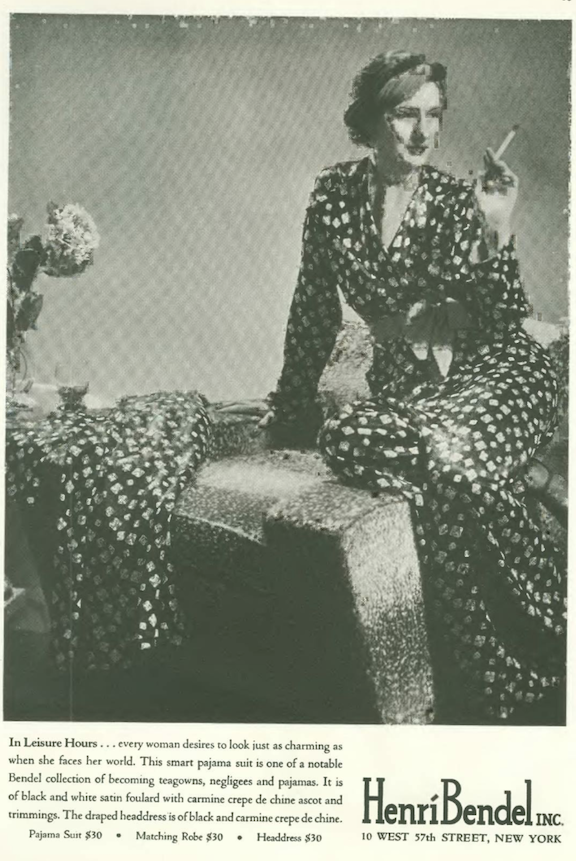
For ninety bucks you could get this swell pajama suit and matching robe (plus headdress) at Henri Bendel, the perfect ensemble for having a leisurely smoke after a day facing the world…For more than 100 years, Henri Bendel’s flagship and only store was located at 10 West 57th Street…it closed in 2018…

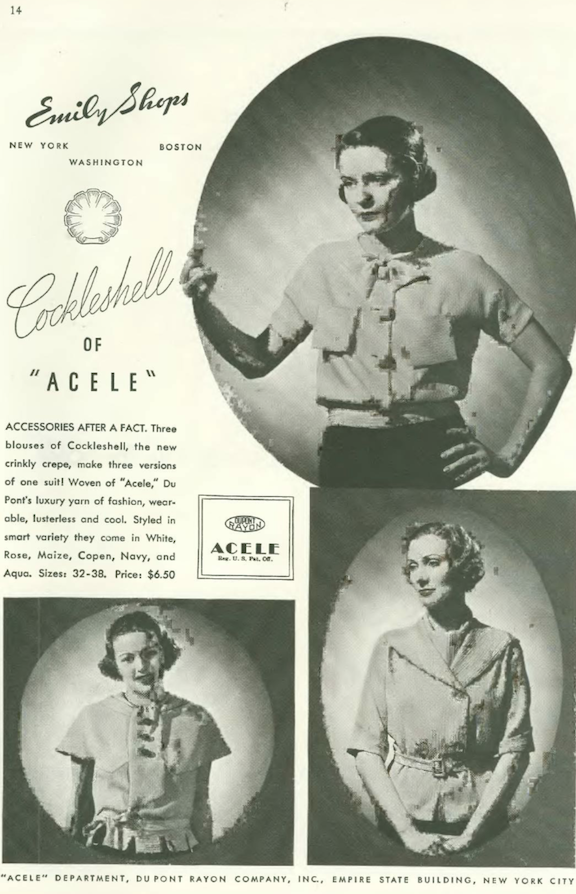
…I doubt the woman in the Bendel ad would have been interested in clothes made with Acele…it was without question that the uppers only wore clothes derived from living things…

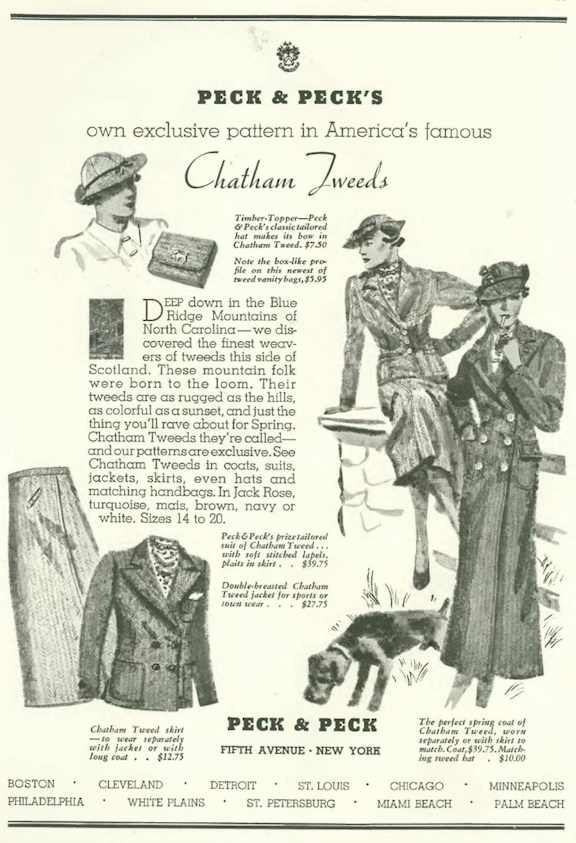
…this Anglophilic Peck & Peck ad is notable for its condescending reference to the “mountain folk” in Appalachia who “were born to loom”…

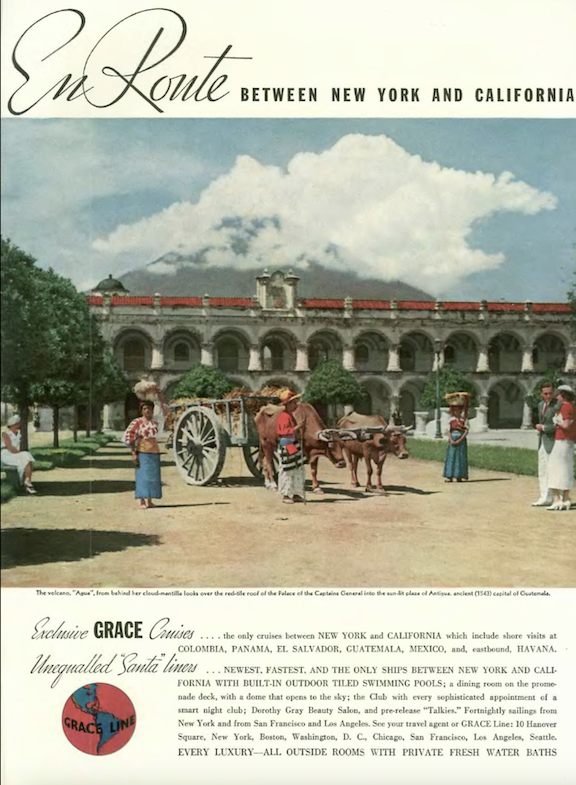
…while we are on the subject, check out this ad for Grace Cruises…this was a common theme in mid-century travel advertising, Westerners dressed in their Sunday best while having a gander at the colorful natives…

…who are just part of the scenery…

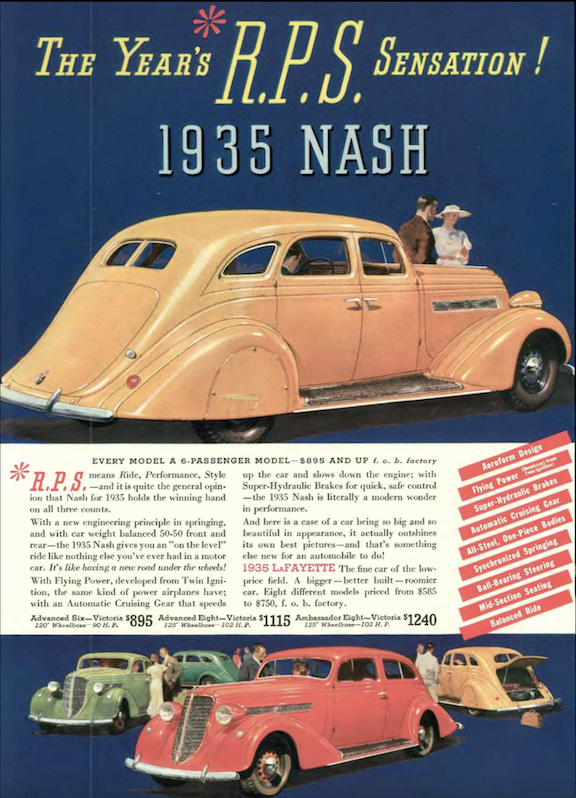
…all four of the automobile ads in this issue come from long-gone companies…the luxury carmaker Packard made beautiful, quality cars that outsold Cadillacs up until 1950, but competition from the Big Three (GM, Ford, Chrysler) plus Packard’s decision in 1954 to buy failing Studebaker led to Packard’s demise four years later…

…a more successful merger took place in 1954 between Nash…

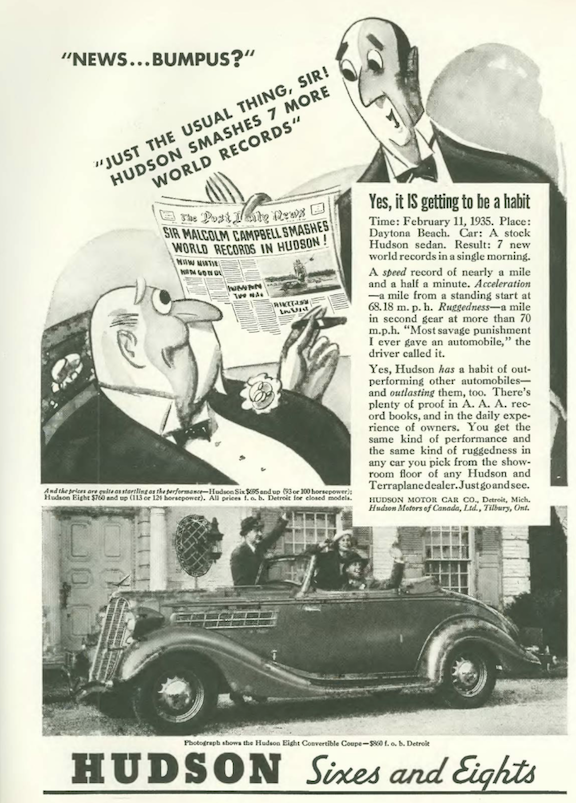
…and Hudson, the two forming the new American Motors Corporation…

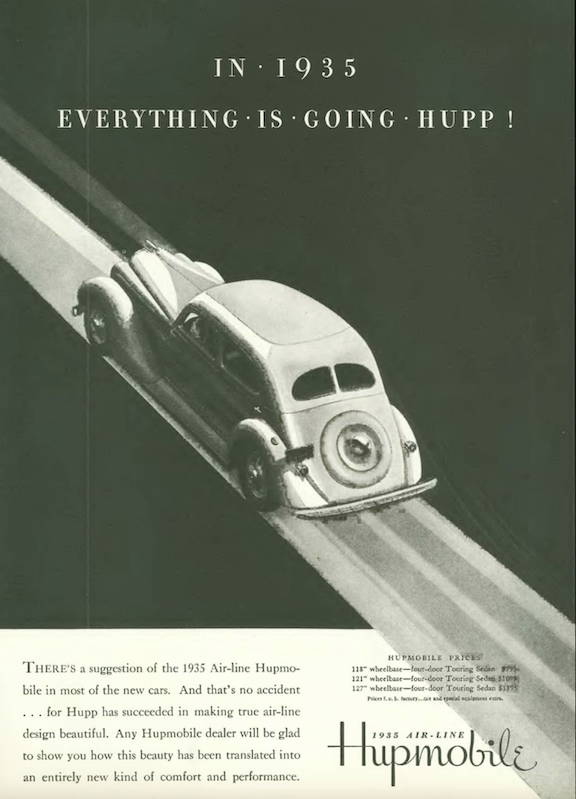
…contrary to this ad’s tagline, everything was actually going down for Hupmobile, which would go out of business in 1939…

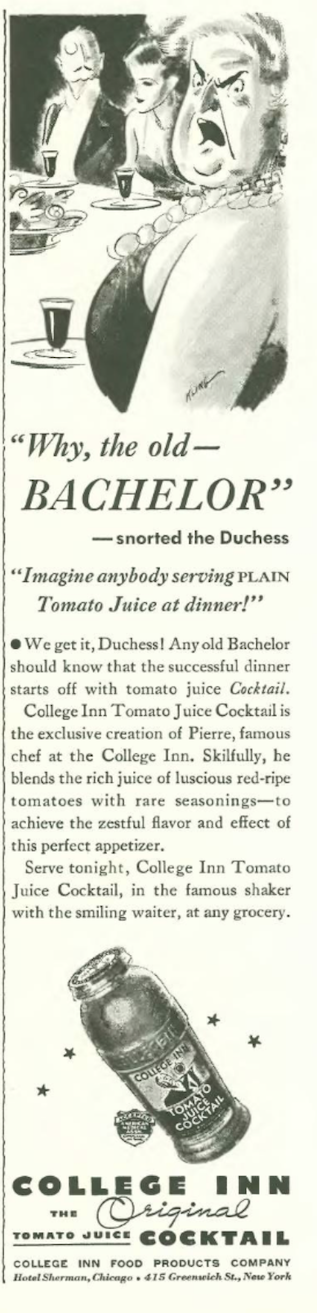
…the makers of College Inn Tomato Juice Cocktail apparently thought an angry old “Duchess” would boost sales…she first appeared in the Feb. 23 issue…

…in the March 16 issue she appears to be psychotic, threatening, “I’ll teach her not to serve PLAIN tomato juice before dinner!” Will she break the glass on the table and lunge at her host (the old WITCH) with a glass shard?…Stay tuned…

…better to calm down and have a Guinness, which, by Jove, was affordable and good for you!…

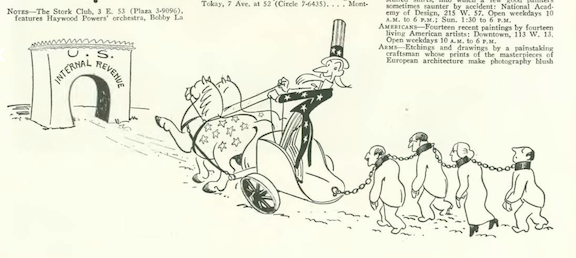
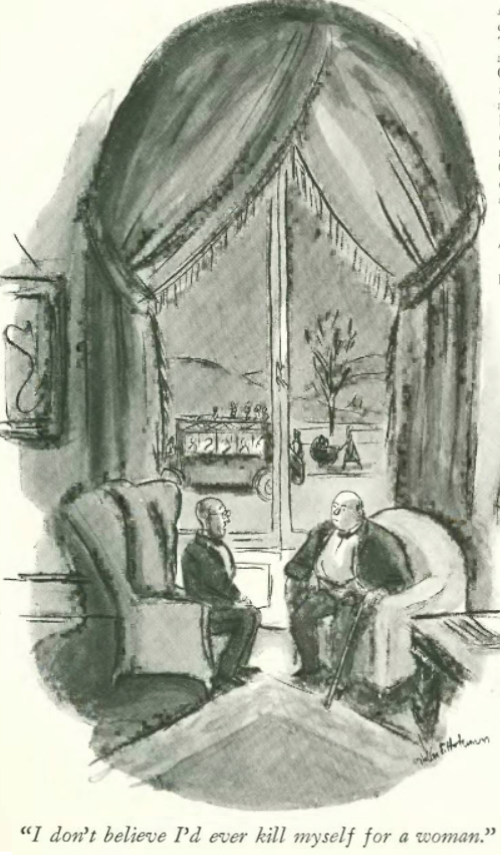
New Yorker cartoons are also good for you, and we begin with Al Frueh and this taxing illustration at the bottom of page 4…

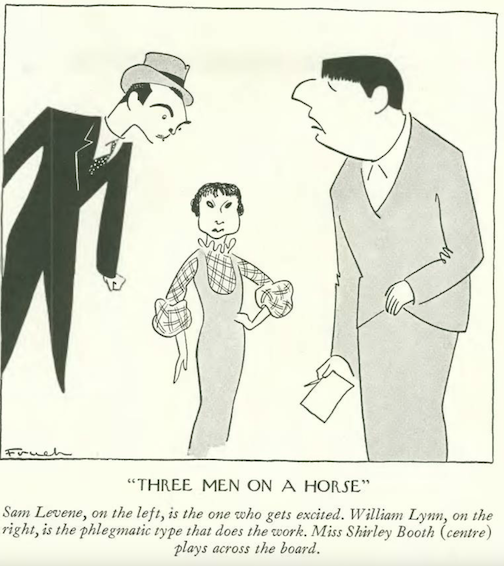
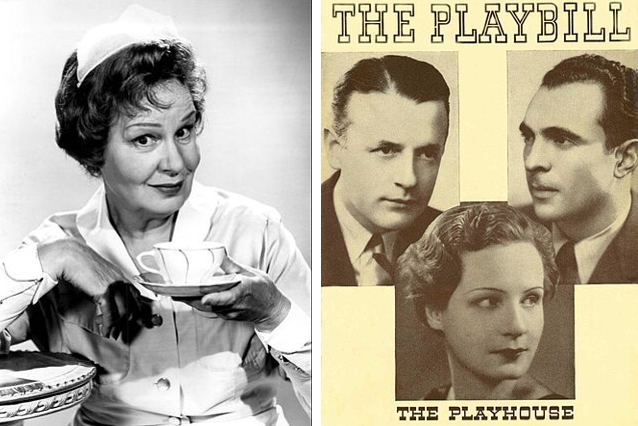
…Frueh again, for the theater review section…in the center is Shirley Booth, known to Baby Boomers as the star of the old TV series Hazel (1961-66)…

…Booth was much more than a sitcom star, achieving the Triple Crown of Acting––an Academy Award, two Primetime Emmy Awards and three Tony Awards…

ACTING CHOPS…Shirley Booth (1898-1992) as Hazel in 1962; on the cover of the 1935 Playbill featuring Three Men on a Horse. (Wikipedia)

…we continue with Daniel ‘Alain’ Brustlein, and a term of endearment from someone well known to the police…

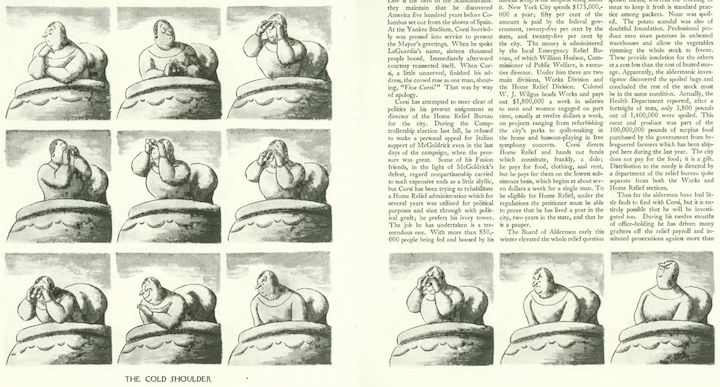
William Steig took up two pages to give one opera patron the cold shoulder…

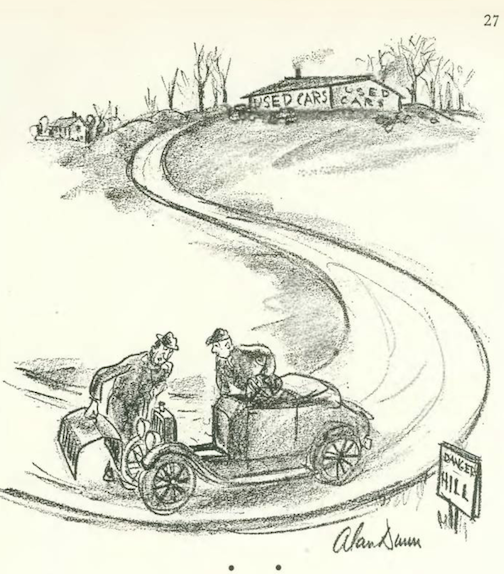
Alan Dunn cautioned against car dealers perched on high hills…

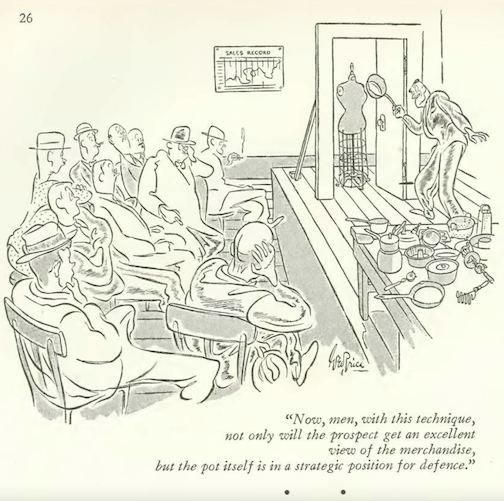
George Price examined the finer points of salesmanship…

Helen Hokinson headed for the high seas…

…and we close with an all-time classic from James Thurber

Next Time: Something Frivolous…

As Millions Cheer

Proposed by the 72nd Congress on February 20, 1933, the 21st Amendment to end national prohibition needed ratification from at least thirty-six states—by the end of October twenty-nine had ratified the amendment, and with passage seeming imminent…

Oct. 21, 1933 cover by Harry Brown.

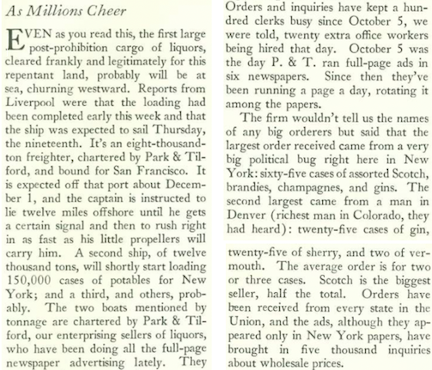
…Manhattan’s venerable grocer turned national wine and spirits distributor Park & Tilford began shipping tens of thousands of cases of “potables” to New York, according to “The Talk of the Town.” Excerpt:

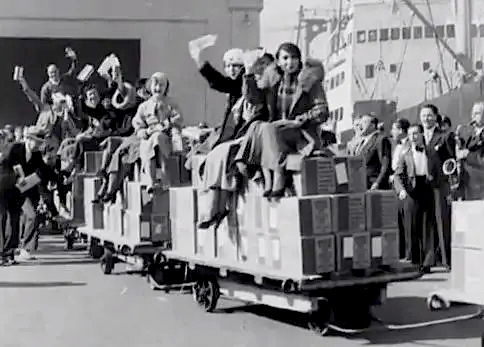
ON THE OFF WAGON…Parched, jubilant Americans ride on carts loaded with liquor prepared for distribution at the end of Prohibition. (Still from Universal News)

Edward Angly, who at the time was a journalist at the Herald-Tribune, tempered the celebratory mood in “A Reporter at Large” by considering the supply and demand issues (and higher prices) consumers would likely face upon ratification.

In early 1934 the Washington Post reported cocktail prices ranged from twenty-five cents (roughly $5.50 today) to forty cents. Whisky by the drink was selling from fifteen cents for blends to twenty-five cents for bonded varieties. One of the “higher priced” stores quoted a price of $3.80 for a quart of Four Roses (roughly eighty bucks today) while you could grab a quart of Crab Orchard straight Bourbon whisky for $1.40.

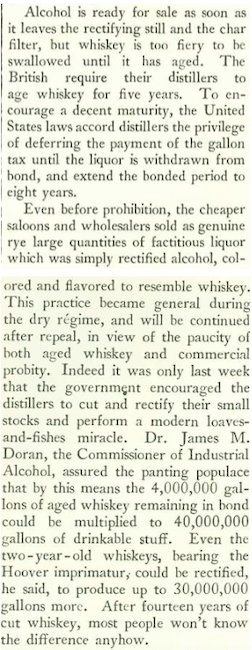
Until supplies could satisfy demand, distillers were encouraged to perform a “modern loaves-and-fishes miracle” and rectify their small stocks by cutting them with colored and flavored straight alcohol.

YOU CAN COME OUT NOW…With the end of Prohibition, bootleggers considered other career options. (floridamemory.com)

Who else would feel the pinch? In addition to the thousands of speakeasies that would close shop, legions of bootleggers would have to go legit or find another line of vice to keep themselves fed and occupied.

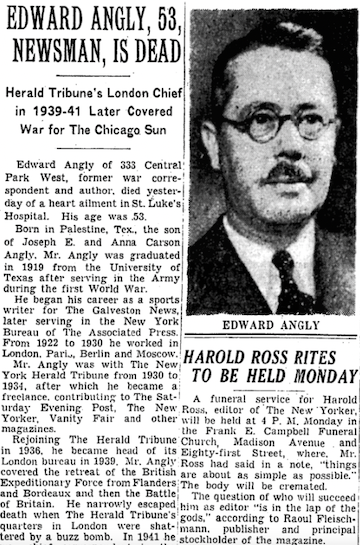
…before I close out this lead story, I came across this obituary for Edward Angly in the Dec. 8, 1951 edition of The New York Times. Note that this clip also features the funeral notice for New Yorker founding editor Harold Ross.

 * * *

Name Your Fears

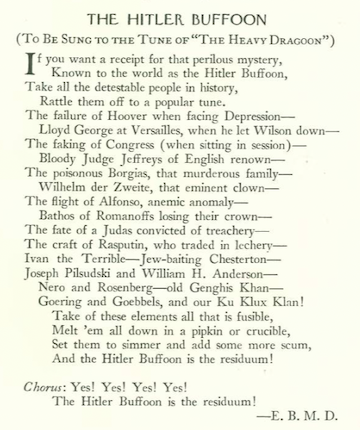
Irish writer and critic Ernest Boyd was for a time connected to the consular service and probably had a pretty good sense of what was to come in Europe. Turning to verse he pondered the origin of the Hitler curse.

 * * *

Fat and Happy

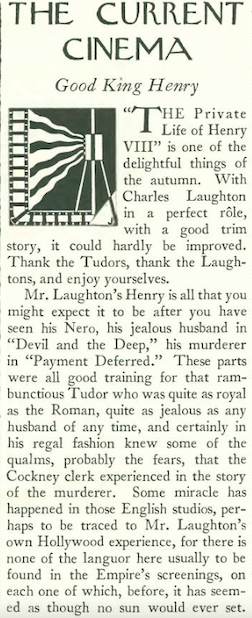
Premiered to record-breaking crowds at New York’s Radio City Music Hall, The Private Life of Henry VIII was a smash hit in both the UK and the US and established Charles Laughton as a box office star. Although the film played fast and loose with the historical record, it was a critical success for director/producer Alexander Korda. The New Yorker’s John Mosher was among those praising the British film.

SINKING HIS TEETH INTO A ROLE…Charles Laughton’s portrayal of Henry VIII in The Private Life of Henry VIII is credited with creating the popular image of the king as a fat, lecherous glutton. Top photo features Wendy Barrie as Jane Seymour (wife #3); below, Binnie Barnes as Katherine Howard (wife #5). (moma.org/tcm.com)
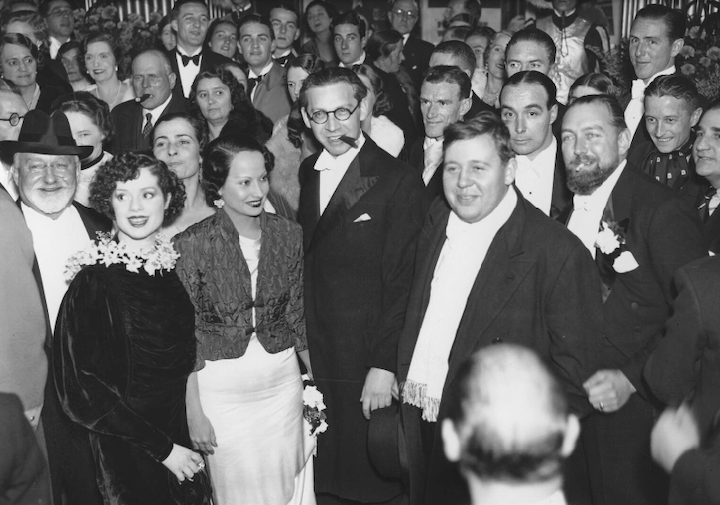
HAIL TO THE KING…Opening night in London for The Private Life of Henry VIII, Oct. 24, 1933. From left are Elsa Lanchester, who portrayed wife #4 Anne of Cleves; Merle Oberon (who portrayed wife #2 Anne Boleyn), producer/director Alexander Korda, and Charles Laughton. (Science & Society Picture Library / National Portrait Gallery, London)

 * * *

Kid’s Stuff

In her latest “Tables for Two” column, Lois Long bemoaned the state of ballroom dancing, which seemed to be appealing more to juvenile tastes.

SUITABLE FOR ADULT AUDIENCES…Lois Long recalled the cool allure of dancers Leonora Hughes (at left, with dance partner Maurice Mouvet in 1924) and Irene Castle (in a 1929 photo). Both photographs by Edward Steichen for Vanity Fair. (Conde Nast)

 * * *

From Our Advertisers

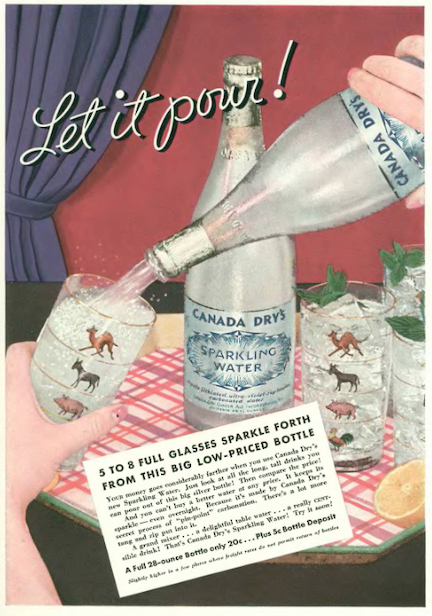
Let it pour indeed, as advertisers anticipated the end of Prohibition…

…Brooklyn-based Piel’s joined other brewers in targeting women as a new growth market, and as in previous New Yorker ads also appealed to those who fancied themselves among the smart set…

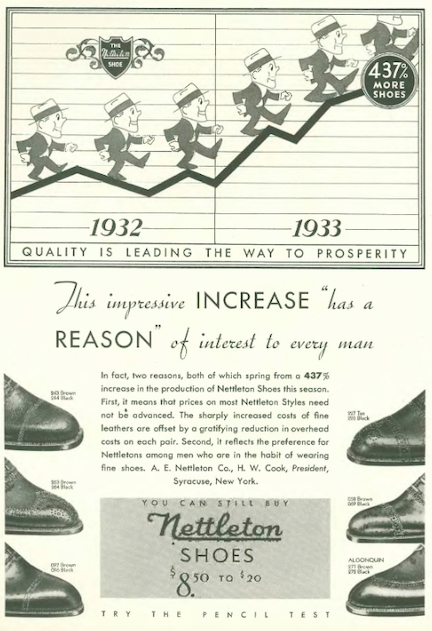
…looking for signs of optimism after four years of economic depression? Look no further than luxury shoemaker Nettleton…

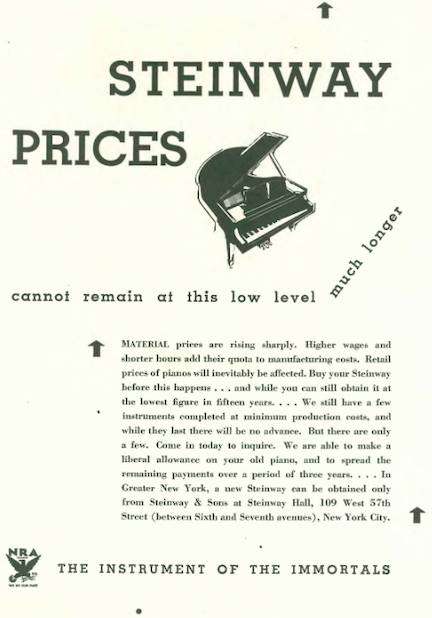
…while Nettleton held steady on its prices, the makers of Steinway pianos posted this gentle reminder about rising material costs, but what can you expect if you are purchasing “The Instrument of the Immortals”…

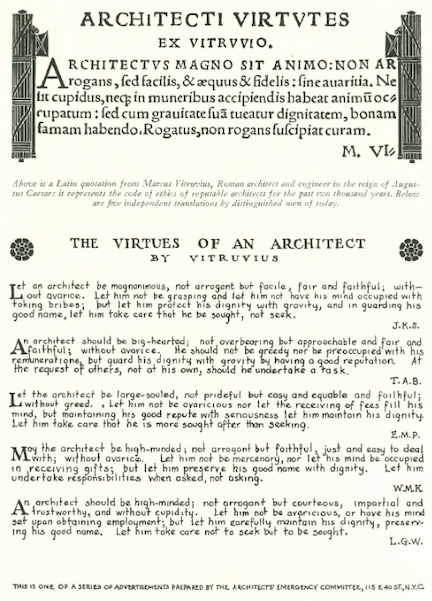
…the Architect’s Emergency Committee continued its campaign to promote the hiring of unemployed architects…in this ad the committee went back to the profession’s ancient origins, Marcus Vitruvius’ Virtues of an Architect

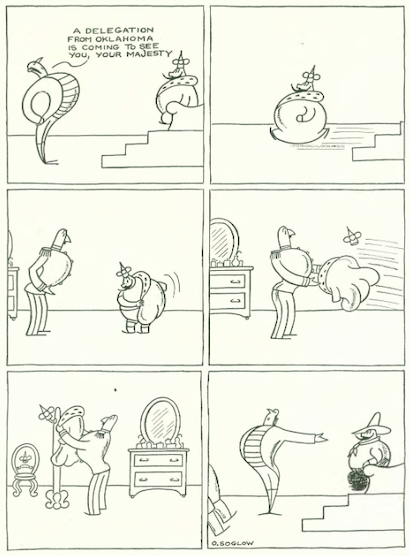
…on to our cartoonists, we begin with more adventures of The Little King, courtesy Otto Soglow

William Crawford Galbraith was still stuck on his theme of seductive women either paired with sugar daddies or clueless suitors…

…speaking of clueless, James Thurber gave us this party pooper…

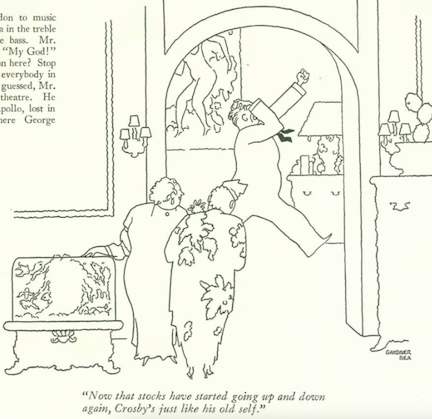
Gardner Rea checked the economic temperature of the upper crust…

…and we close with William Steig, and an enterprising paperboy…

Next Time: The Bombshell…

The Wayward Press

Robert Benchley is remembered today as an American humorist, and his funny side was on display in his New Yorker theater reviews and other contributions. It was his background as a journalist, however, that shown through in his column “The Wayward Press.”

Oct. 10, 1931 cover by Theodore Haupt.

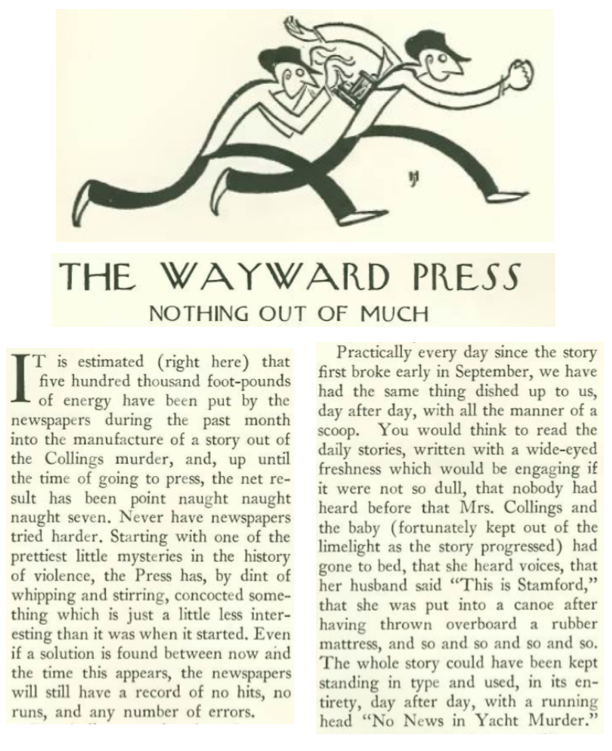
Benchley’s more serious side as a reporter (though still sprinkled with wit) demonstrated his ability to expose the conspiratorial nature of the 1930s press — which seemed to be in bed with moneyed interests — and decry its insatiable appetite for sensationalism. His October 10 column took aim at the coverage of the death of banking heir Benjamin Collings, who was murdered on Long Island Sound while aboard his yacht, Penguin. The investigation went on for weeks with scant developments, but that didn’t stop the newspapers from trying to squeeze every ounce of blood from this turnip.

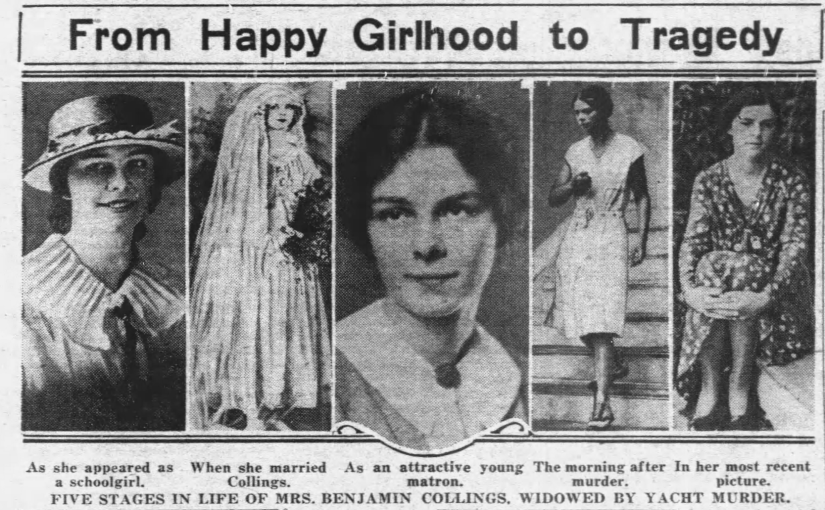
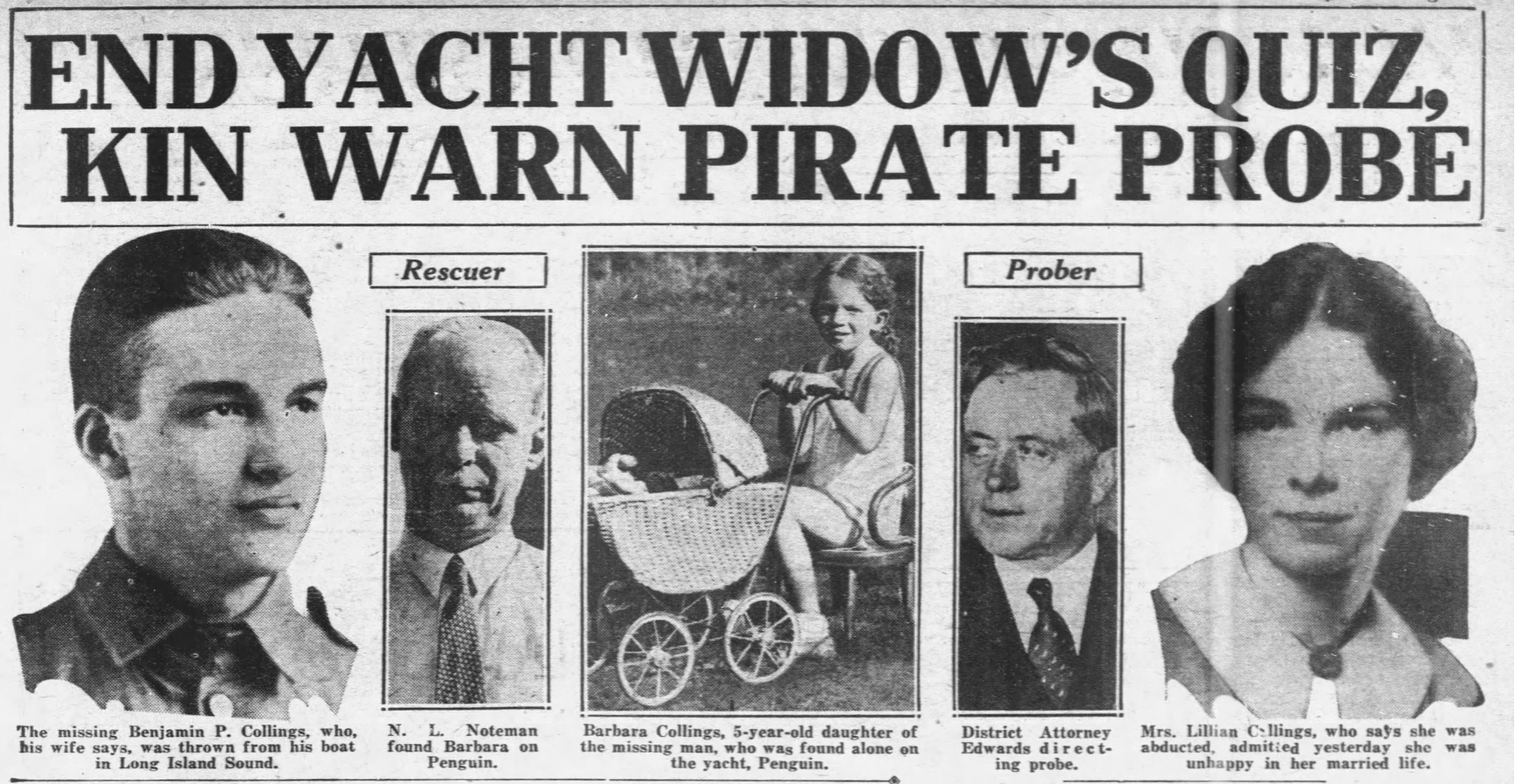
The New York Daily News milked the incident for all its worth, the heading of this first article featuring photos of the slain Benjamin Collings (far left), his widow (and briefly a suspect) Lillian Collings, as well as an image of their five-year-old daughter, Barbara. According to Lillian, all three were sleeping aboard the family yacht Penguin when two men paddled a canoe up to their boat. When Ben went on deck to confront the pair, these “pirates” (as she called them) seized control of the boat, and threw Ben overboard. According to Lillian, the men forced her into the canoe, then cut the Penguin’s anchor and set it adrift with little Barbara still on board. While the girl was quickly rescued by another yachtsman, the “pirates” deposited Lillian in a moored motorboat on Oyster Bay before disappearing into the night. The Suffolk County DA found Lillian’s account unbelievable, and newspapers subsequently described her story as bizarre and illogical. The Daily News headline below indicates Lillian’s family wanted her interrogation to end…

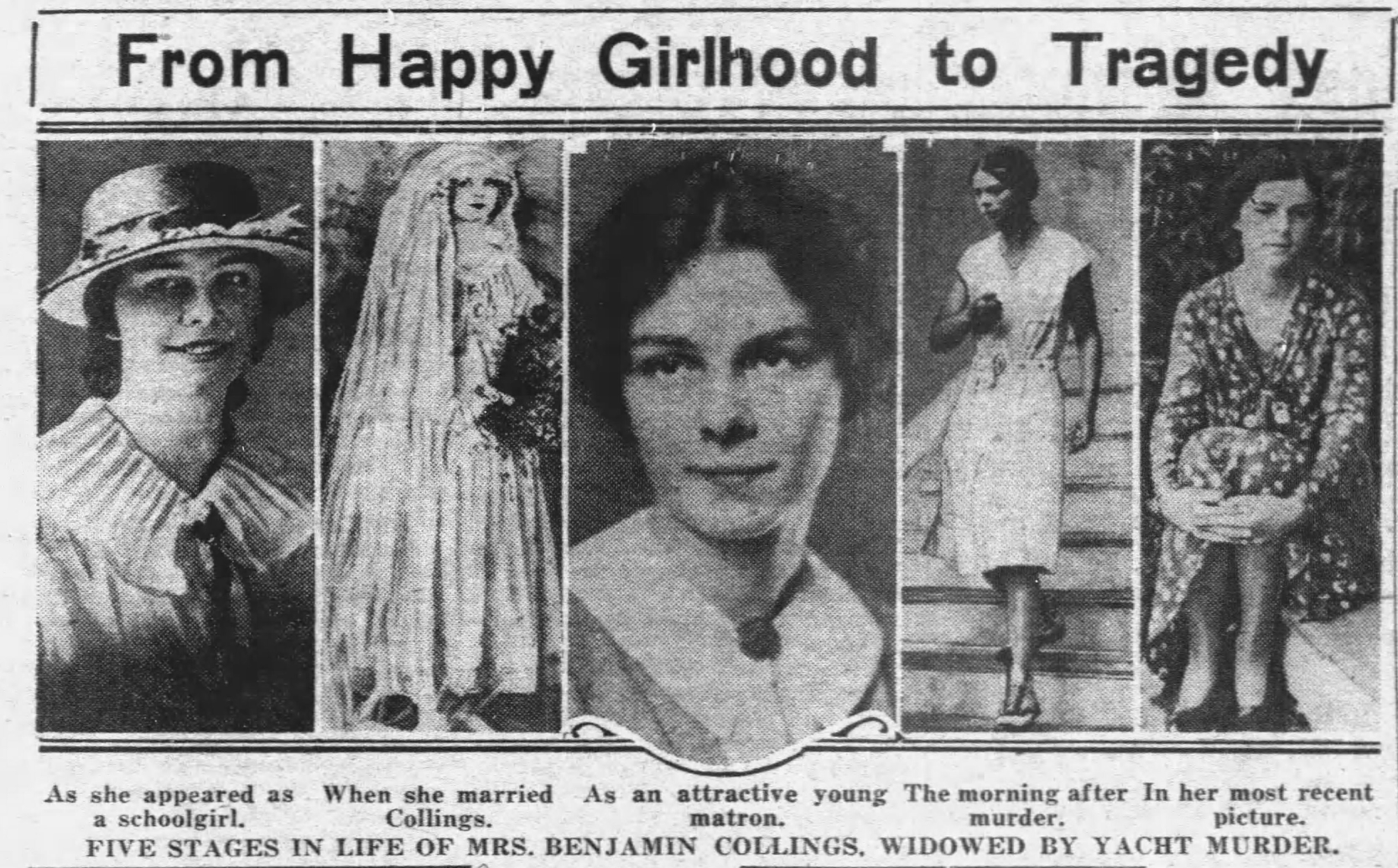
…lacking any other details, the Daily News nevertheless kept the story alive with features such as this one below that described Five Stages in Life of Mrs. Benjamin Collings, Widowed by Yacht Murder

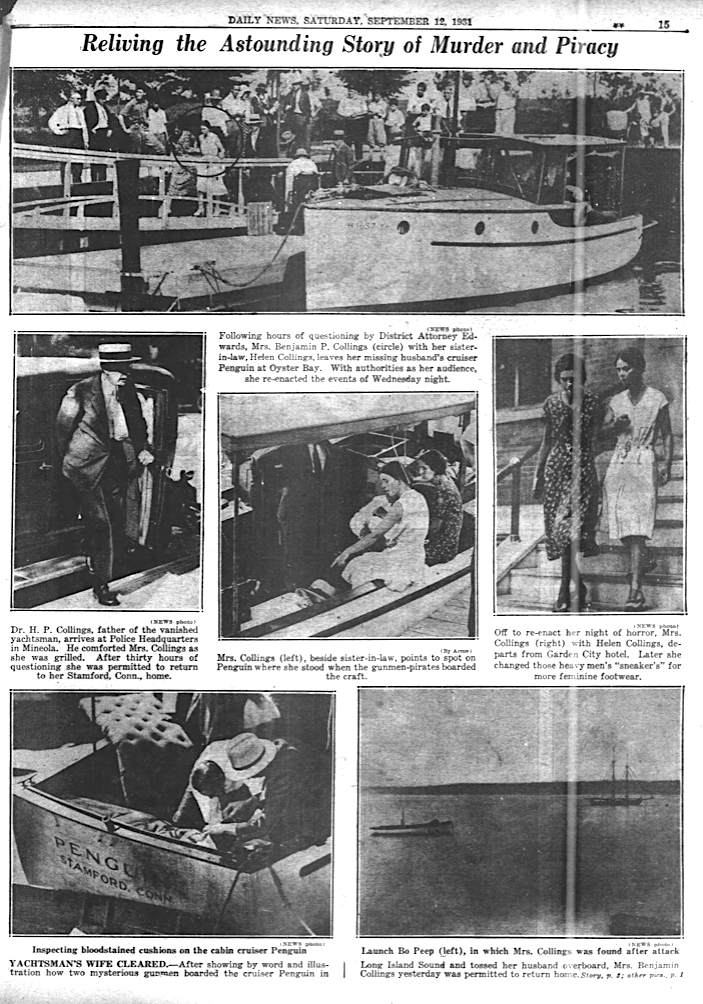
…and in case readers still wanted more, the paper rehashed the whole thing in photos in its Sept. 12 edition…

A few days after the yacht incident the body of Ben Collings washed up on the North Shore, his hands bound and his skull bashed in. The Suffolk County DA then began hauling in pairs of suspects who somewhat matched Lillian’s description—a 50-year-old man with gray hair and a skinny teenager—but none were quite right. The crime has never been solved.

Benchley concluded his column with some quotations which he “did not believe”…

 *  *  *

And Now For Something Ironic…

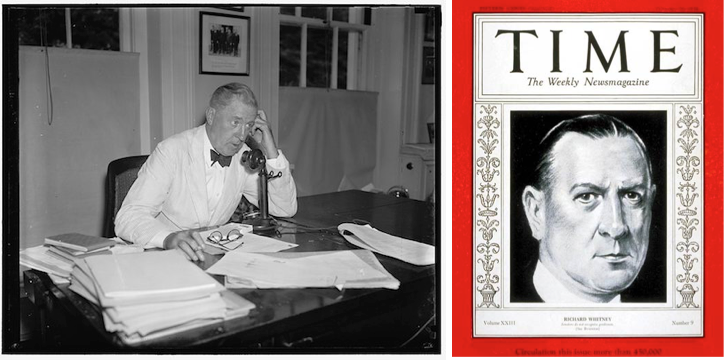
In his “Notes and Comment,” E.B. White teased New York Stock Exchange President Richard Whitney for blaming the market crash on “human vanity and selfishness,” when it was indeed those qualities that drove the markets in the first place. Before the decade was out Whitney would succumb to the very vices he named, and would serve three years and four months at Sing Sing for embezzlement.

HE DID TIME, THEN HE DID SOME MORE TIME…Richard Whitney made the cover of the Feb. 26, 1934 issue of Time magazine for his work as president of the New York Stock Exchange. At left, Whitney in 1937. He was sentenced to five to ten years for embezzlement, but was released early from Sing Sing for good behavior. He went on to a simpler life, managing a dairy farm and then a textile company before his death in 1974 at age 86. (Wikipedia/Time)

 *  *  *

The What Goes Up Department

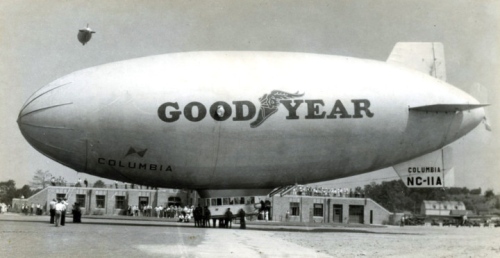
E.B. White also commented on the latest edition of the Goodyear Blimp, christened Columbia, which he spotted hanging around the Empire State Building. Note E.B. White’s last line

Columbia was flying around the Empire State Building because Goodyear was running a sightseeing service in which passengers paid $3 for a 15-minute flight around Manhattan. The blimp also performed publicity stunts such as delivering newspapers to a man standing on the Empire State’s mooring mast—that particular stunt was supposedly a test to see if airships could anchor on the mast for passenger loading and unloading (and as we know, they couldn’t and wouldn’t).

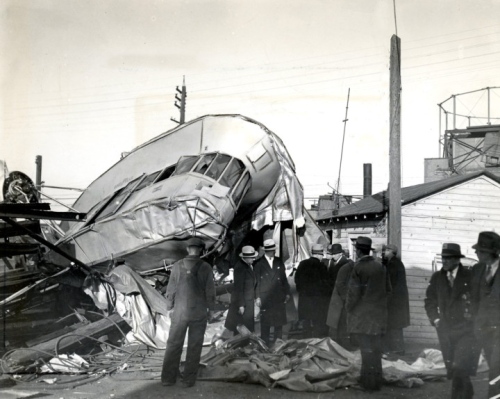
Just four months after White watched Columbia hover over Manhattan, the airship would indeed bust into a thousand pieces, meeting its demise near the Queens airport (today’s LaGuardia). Caught in unexpected high winds, Columbia dipped into the ground, tearing off its landing gear and bending its propellers. The ground crew tried to secure the blimp but an updraft ripped the airship from their hands and sent it sailing over Flushing Bay.

As Columbia once again drifted back over land, the 23-year pilot Prescott Dixon ordered his chief mechanic, John Blair, to pull a rip cord that would release most of the air from the blimp. As Blair reached from the cabin for the cord the blimp shifted, and Blair fell to his death. Columbia then knocked two men off a warehouse roof (injuring them), then struck a factory and some power lines before crashing along the tracks of the Long Island Railroad. Dixon survived after being extricated from the crumpled gondola.

CHRISTENED WITH A BOTTLE OF LIQUID AIR, the Goodyear Blimp Columbia was readied for its inaugural flight over Akron, Ohio, in July 1931.
A SHORT LIFE…Just seven months after its inaugural flight, Columbia crashed near Flushing Bay on Feb. 12, 1932. (kathrynsreport.com)

 *  *  *

When Bridges Were Crowd-Pleasers

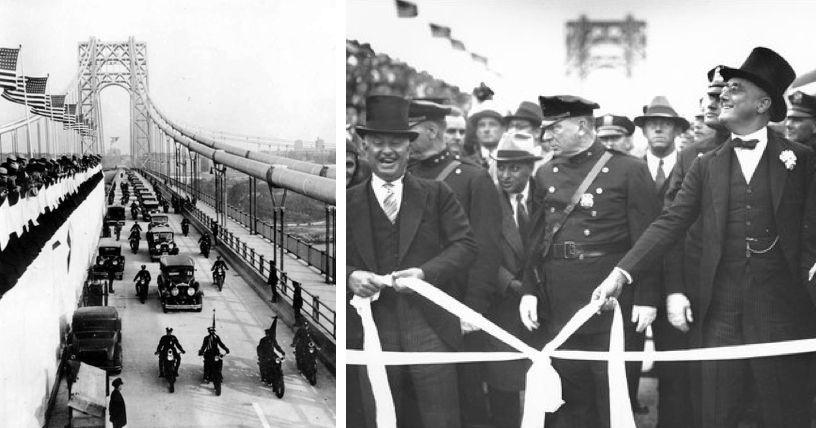
“The Talk of the Town” announced the imminent opening of the Jeffreys Hook Bridge, to be known thence as the George Washington Bridge:

BREAK OUT YOUR TOP HAT…New Yorkers turned out in droves to mark the official opening of the George Washington Bridge on Oct. 24, 1931. Gov. Morgan F. Larson of New Jersey, left, and Gov. Franklin D. Roosevelt of New York, right, did the ribbon honors at the dedication. (New Haven Register/AP)

 *  *  *

They Couldn’t Say ‘Hooters’ Either

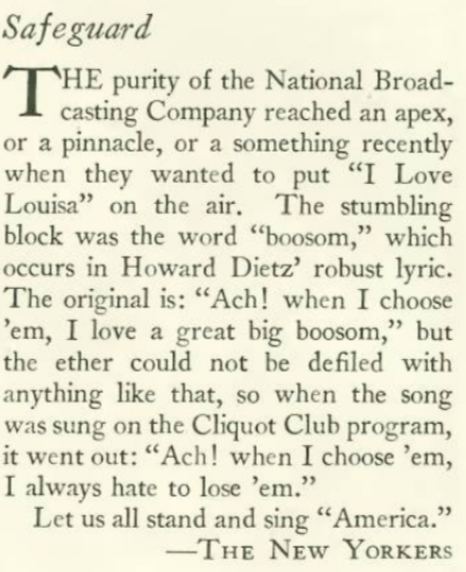
In these coarser times it is hard to believe that 89 years ago the word “bosom” was a “no-no” on the nation’s airwaves, per this “Talk” item…

 *  *  *

An Actor’s Actor

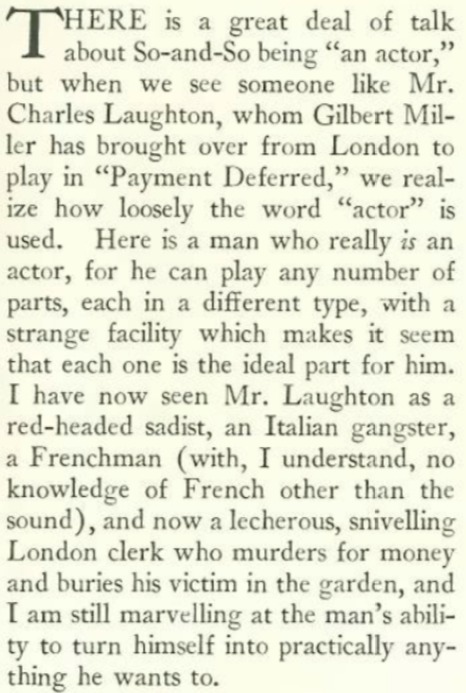
Theater critic Robert Benchley wasn’t the only one who noticed the talents of newcomer Charles Laughton in his New York stage debut — Hollywood would immediately come calling for the 32-year-old English actor:

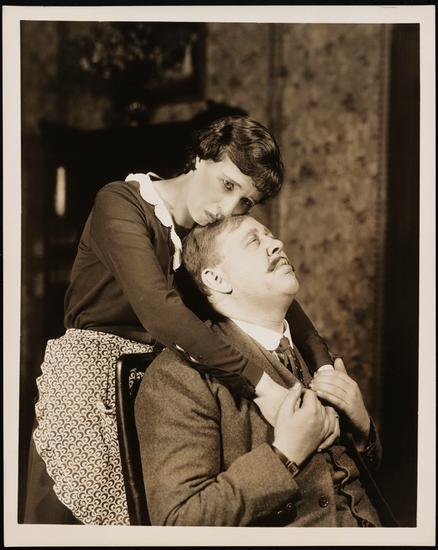
WE’LL KEEP HIM…Cicely Oates as Annie Marble and Charles Laughton as William Marble in the 1931 play Payment Deferred. (Museum of the City of New York)

 *  *  *

Kinda Long For Being Short

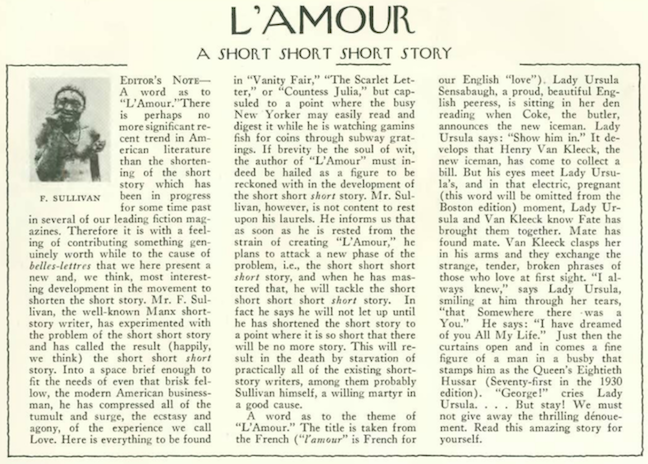
Humorist Frank Sullivan claimed to be following the trend for shorter short stories by turning in this piece with an editor’s note longer than the story itself:

 *  *  *

Lurid Lit

Our dear Dorothy Parker is back with another of her entertaining book columns, and in this installment we have her taking on the world of literary and not-so-literary sex romps. Excerpts:

DIRTY LITTLE BOOKS?…The three books featured in Dorothy Parker’s column included, from left, Young and Healthy by Donald Henderson Clarke (issued here under a different title in a pulp 1948 Novel Library edition); Theodore Wilde’s Moonblind, which featured a hermaphrodite character and homosexual encounters; and although attributed to Anonymous, Lady Chatterley’s Husbands was actually written by Anthony Gudaitis, aka Anton Gud, who often wrote anonymously for erotica publisher Samuel Roth. Although it was publicized as a sequel to D.H. Lawrence’s Lady Chatterley’s Lover, Gud’s book actually had less sex than the Lawrence original. After all, in the sequel Lady Chatterley gets tired of horny old Mellors. (Goodreads/Amazon)

…and before we leave Dorothy, please note her last line in the review, where she quotes Carl Rose’s famed 1928 cartoon (with caption by E.B. White)…

 *  *  *

From Our Advertisers

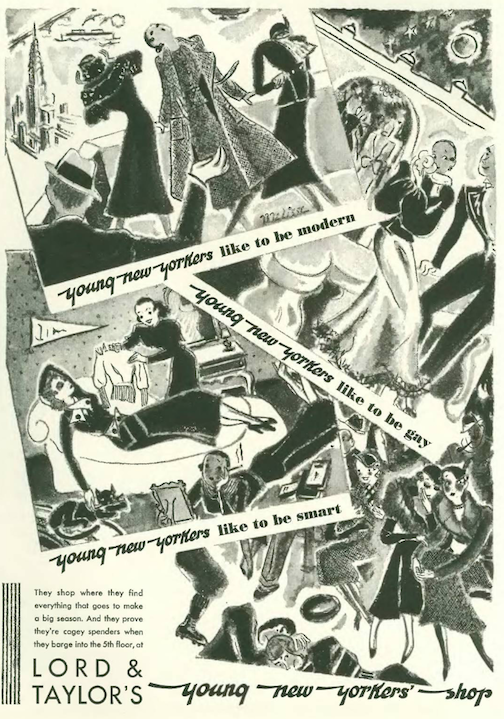
Just a couple quick ones (I will have more in the next installment)…this Lord & Taylor ad (illustrated by Mildred Oppenheim Melisse) showed young New Yorkers how to look smart for the fall (Lord & Taylor, the oldest department store in the United States (founded 1826), recently closed all 38 of its stores due to the pandemic, and it was announced in August that Lord & Taylor would be liquidated. Apparently its name will continue as an online-only business…

…and Helen Hokinson offered this illustration of one of her “girls” shilling for Frigidaire refrigerators…

…and two more from Helen in the Oct. 10 cartoons…

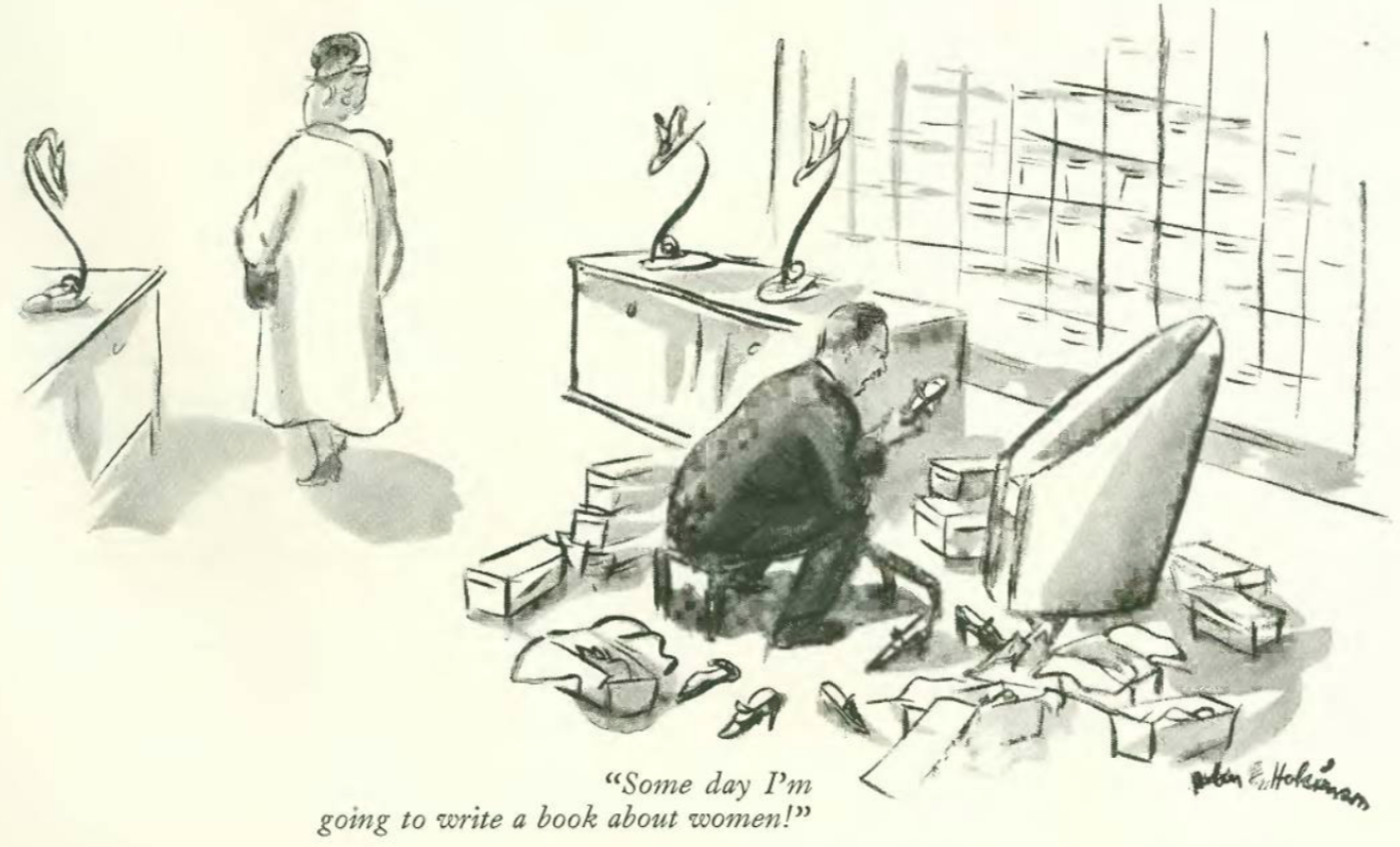
…exploring men’s attitudes toward the opposite sex…

Garrett Price visited a seemingly unappetizing banquet…

Kemp Starrett gave us a man looking at life on the bright side…

William Steig explored home decor…

Barbara Shermund found some bedtime gossip…

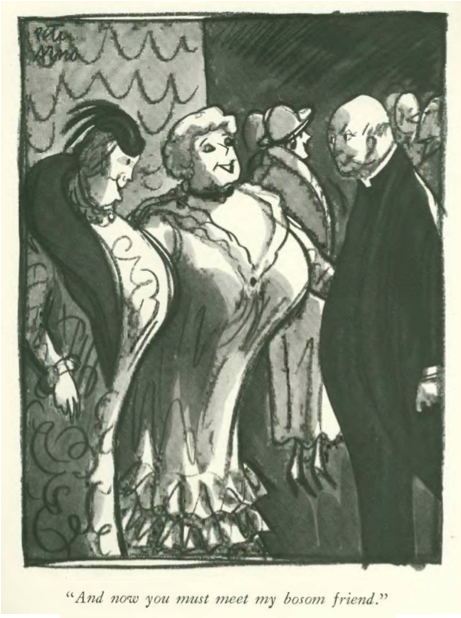
…and recalling our earlier “Talk” item regarding bosoms, here’s Peter Arno

Next Time: Monkey Business…