Settling Down

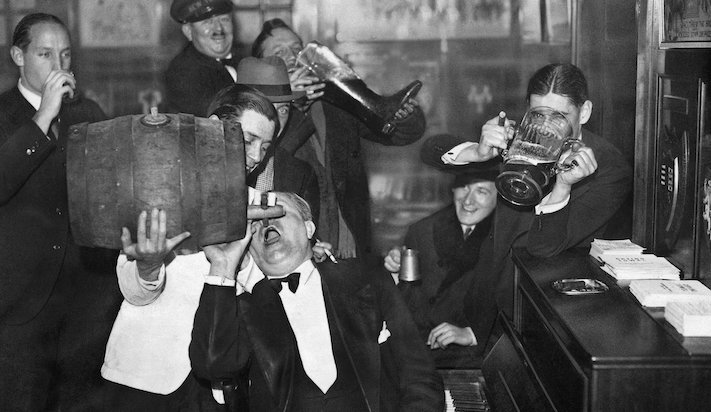
Above: Celebrating the repeal of the 18th Amendment, 1933. (New York Times)

“Settling Down” was the title given to Morris Markey’s examination of the post-Prohibition world, which to no one’s surprise heartily embraced (and imbibed) everything this world had to offer.
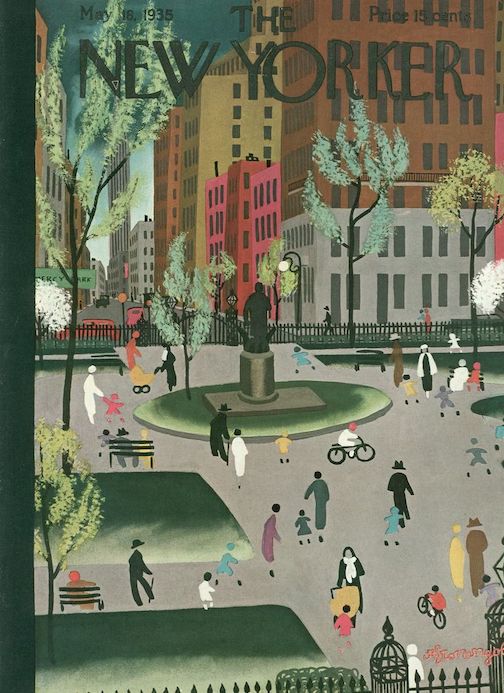
May 18, 1935 cover by Adolph K. Kronengold.

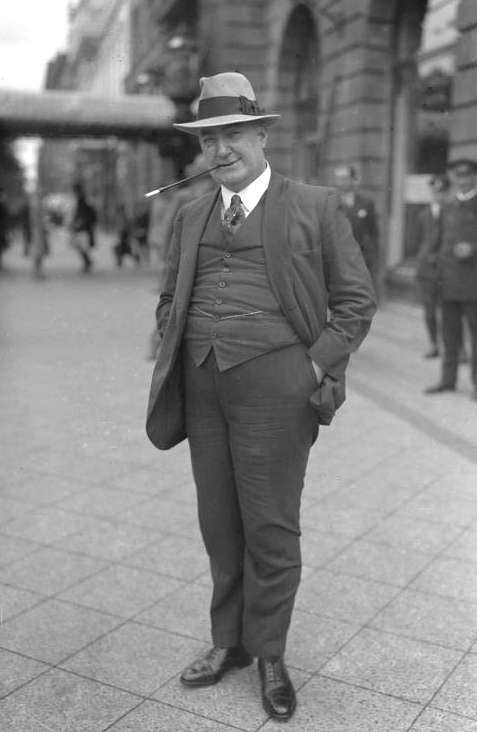
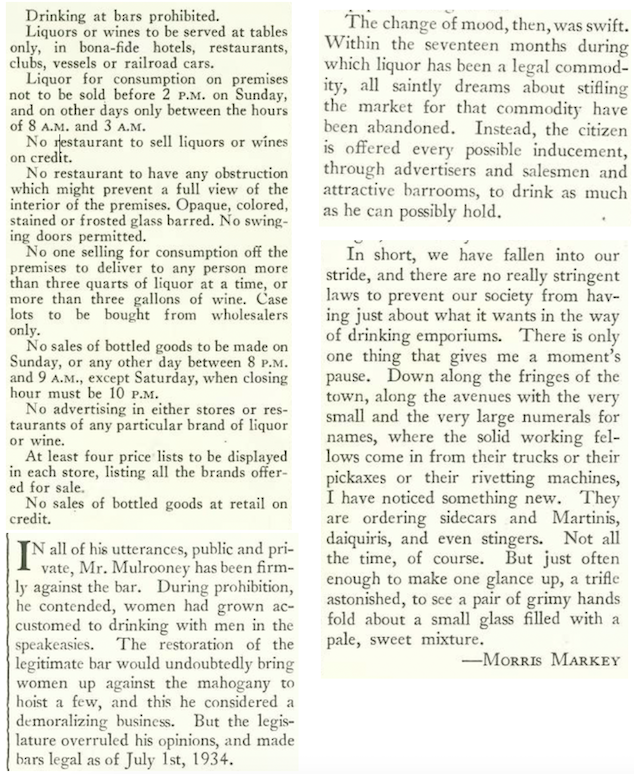
In his column, “A Reporter at Large,” Markey examined the challenges faced by local and federal governments in reestablishing old liquor control laws, in many cases creating new ones to address the technological, economic and social changes that transpired during the fourteen years of Prohibition. Facing this challenge in New York was Edward P. Mulrooney (1874-1960), a former police commissioner tapped in 1933 to head the State Alcoholic Beverage Control Board. Markey explained how Mulrooney and New York regulators tried to create new standards for alcohol consumption that would encourage moderation. Excerpts:

CAN’T HAVE A BELT IN THE BIBLE BELT…Published by The United States News on Nov. 11, 1933, this map shows how liquor laws varied by state following Prohibition. After Prohibition ended with the ratification of the 21st Amendment, states gained the authority to regulate alcohol sales, leading to a wide variety of state and local laws. Many states adopted local option laws, allowing cities and counties to decide whether to allow alcohol sales, resulting in “wet,” “dry,” and “moist” jurisdictions. (us news.com)

Seventeen chief provisions for moderating alcohol use were published in The New York Times on Nov. 10, 1933, but ten of those provisions were quickly abandoned. Less than a year and a half after repeal, Markey noted that “the citizen is offered every inducement…to drink as much as he can possibly hold.”
SO MUCH FOR RULES…Celebrations for the repeal of Prohibition in bars and former speakeasies began when Franklin Roosevelt signed the Cullen-Harrison Act on March 22, 1933; the president himself was known to enjoy a dry martini; former New York Police Commissioner Edward P. Mulrooney had the unlucky task of figuring out how to regulate the juice of the grape and the grain. In the end, people seemed to be drinking more than ever. (themobmuseum.org/thrillist.com/Condé Nast)

 * * *

Hordes From the Hinterland

There was a time, long ago, when Broadway catered mostly to New Yorkers, but with the advent of mass media and better transportation options folks from the hinterlands (from beyond the Hudson) began to descend on the Great White Way. Then as now, certain shows attracted thousands, including The Great Waltz, a musical based on the works of Johann Strauss I and Johann Strauss II. It opened in September 1934 at the Center Theatre and ran for 289 performances. “The Talk of the Town” sniffed that “People who literally have never seen a play before in their lives turn up at Sixth Avenue and Forty-ninth Street, ready for anything.”

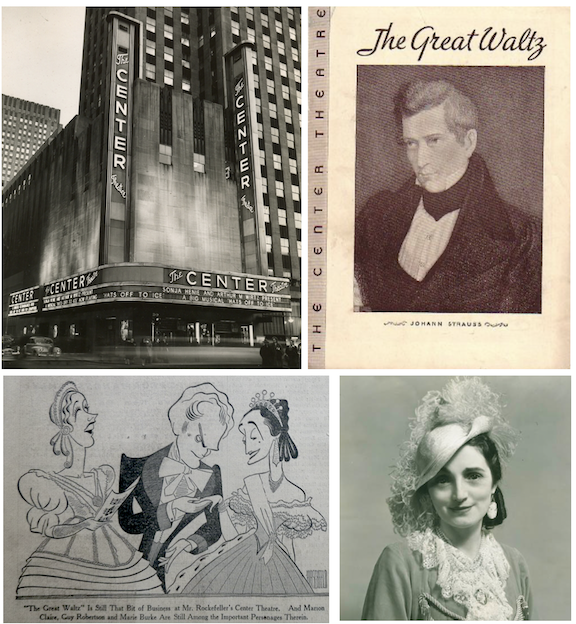
MANY AMERICANS WERE AGOG over the The Great Waltz…Clockwise, from top left, the play was performed at the Center Theatre (formerly the RKO Roxy Theatre) at 49th Street and 6th Avenue—sadly, it was demolished in 1954, the only building to ever be demolished from the original Rockefeller Center complex; cover of the Playbill; actress Marie Burke portrayed Countess Olga Baranskaja; Al Hirschfeld illustration of Burke and fellow actors Guy Robertson (as Johann Strauss) and Marion Claire as Therese. (cinematreasures.org/playbill.com/nyt.com)

 * * *

From Our Advertisers

Appropriately, this full-page advertisement for Gordon’s Gin appeared opposite the opening page of Morris Markey’s exploration of the post-Prohibition world…

…and business was booming in the liquor trades…most of the full-color ads in The New Yorker were placed by liquor companies, cigarette manufacturers, and automakers…the inside back cover shilled for Penn Maryland…

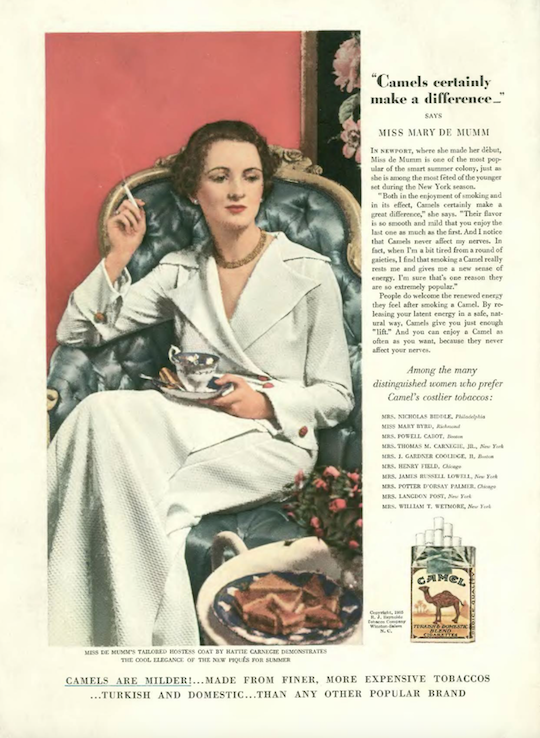
…while the back cover was once again claimed by big tobacco…here we have Newport deb Mary De Mumm expounding on wonders of Camel cigarettes, which somehow helped her feel both restful and energetic…
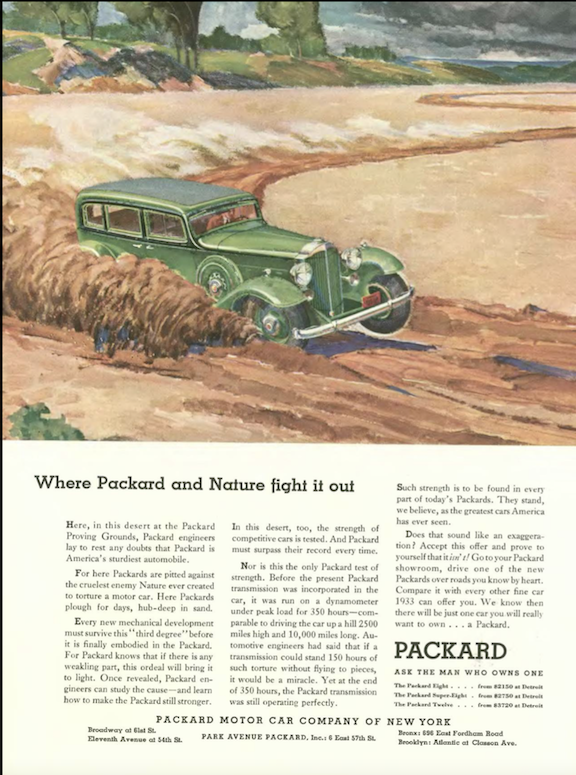
…those who enjoyed the finer things could buy this Packard for about $3,000 (nearly $90K today).

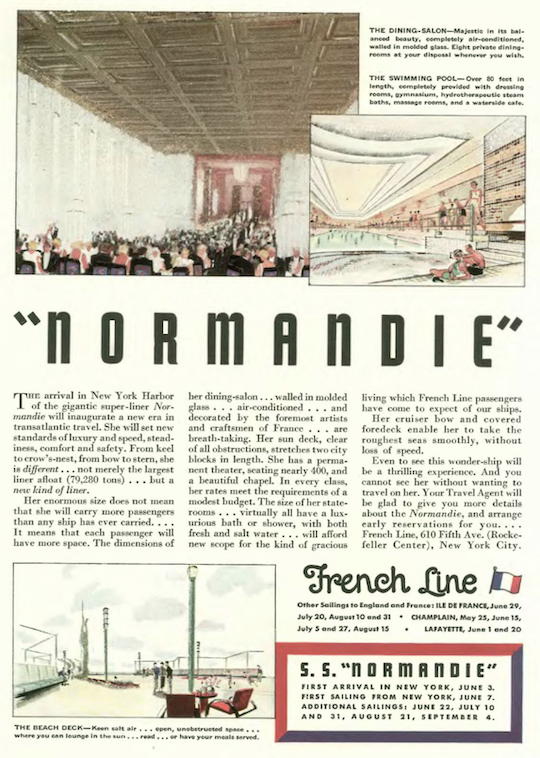
…anticipation was building for the June arrival of the new French liner S.S. Normandie, the largest and fastest passenger ship afloat…
S.S. Normandie on the high seas. (Wikipedia)

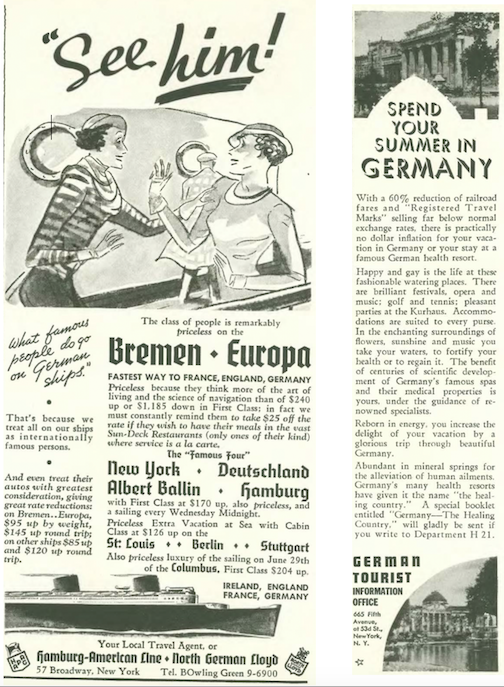
…the Hamburg-American Line was another way to get across the pond, and it promised a ship filled with famous and classy people (and likely more than a few Nazis)…the single-column ad on the right suggested you could spend your summer in Germany…the tourist bureau claimed that Germany was known as “the healing country,” and doubtless many needed healing after being beaten by Brownshirts…
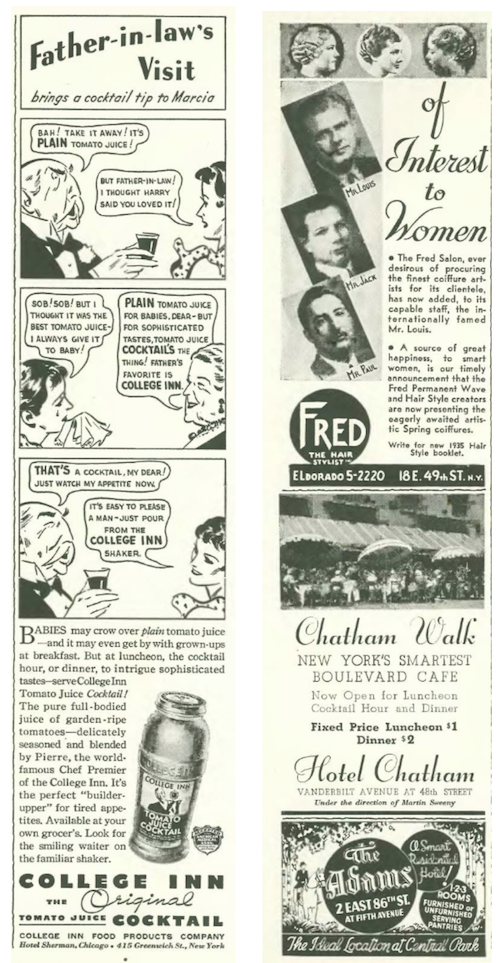
…a couple more single-column ads, first from our friends at College Inn, who dumped the furious Duchess in favor of a dyspeptic father-in-law who brings his daughter-in-law to tears over her choice of tomato juice…the ad at right advertised the services of Mr. Louis, Mr. Jack, and Mr. Paul at the hair stylist Fred, while a tiny ad at the bottom offered a luncheon for a buck at New York’s “Smartest Boulevard Cafe”…
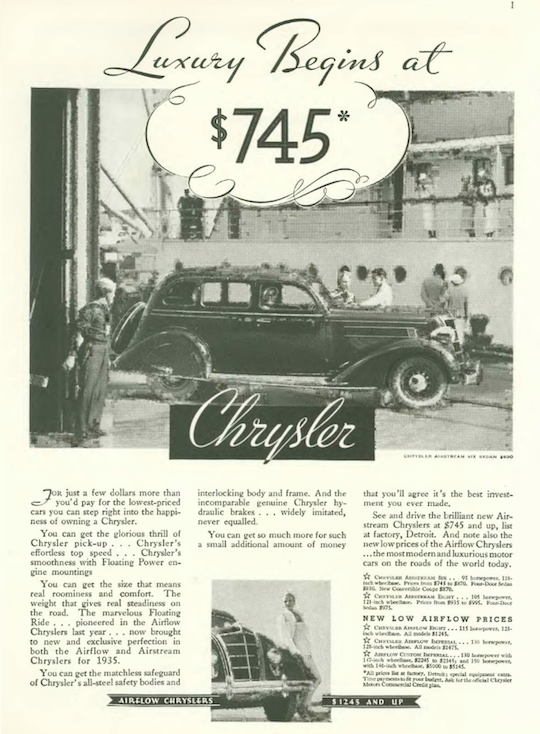
…the key word in many New Yorker advertisements was luxury, and for a fraction of what you would pay for a Packard, you could, apparently, experience luxury for as little as $745…
…or you could enjoy a bit of elegance by opening a some cans of Heinz soup, chili sauce, stuffed olives and other delectables…here a couple of shady-looking butlers are serving nothing but canned goods at a swanky party, much to the annoyance of the cook, who appears poised to take a cleaver to the scheming pair…

…and look what else you can get from a can, some soup with a “personality”…

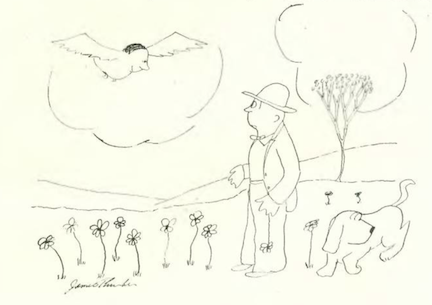
…enough of that nonsense, on to our cartoonists, with two spots from James Thurber

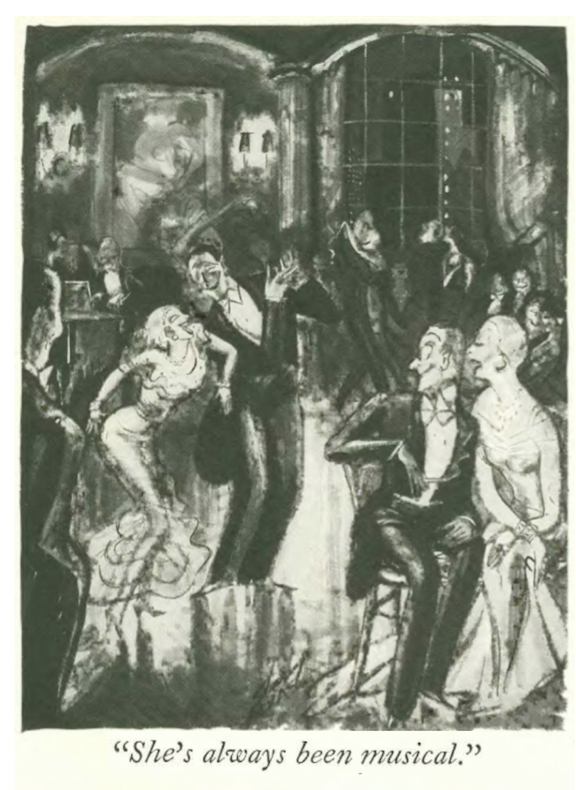
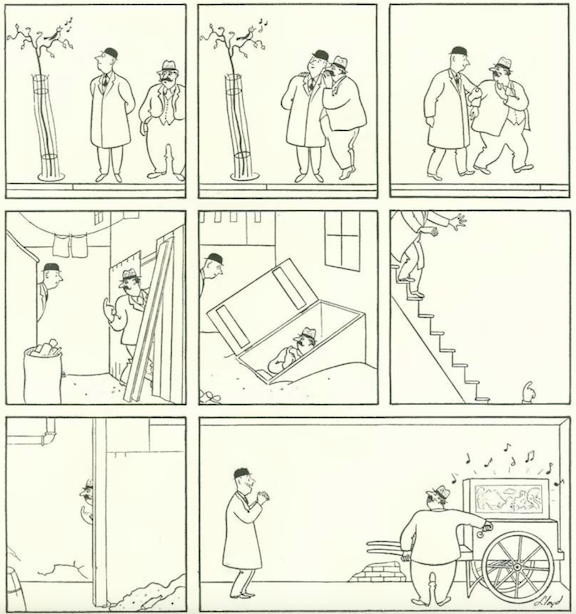
...Lloyd Coe gave us this musical multi-panel…
Leonard Dove looked in on the complex world of young love…
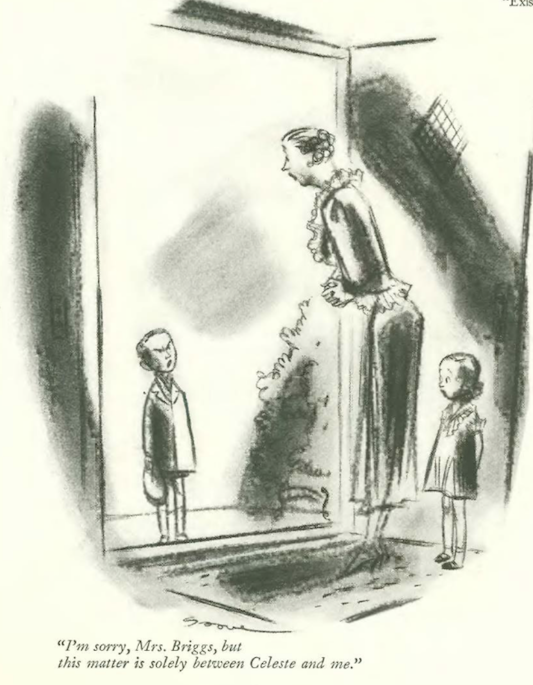
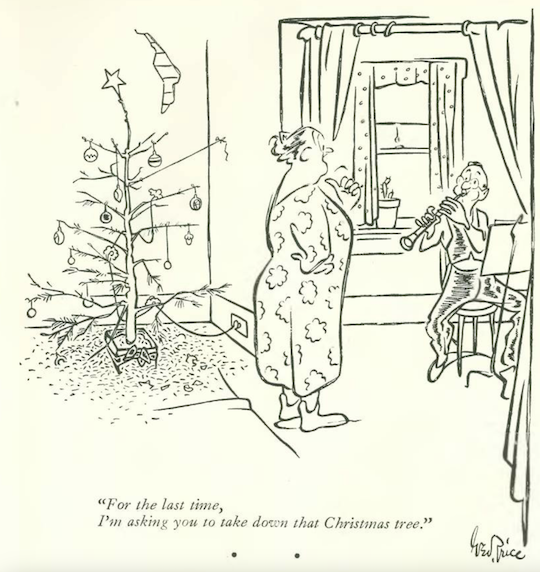
George Price found the Yuletide spirit still alive among procrastinators…
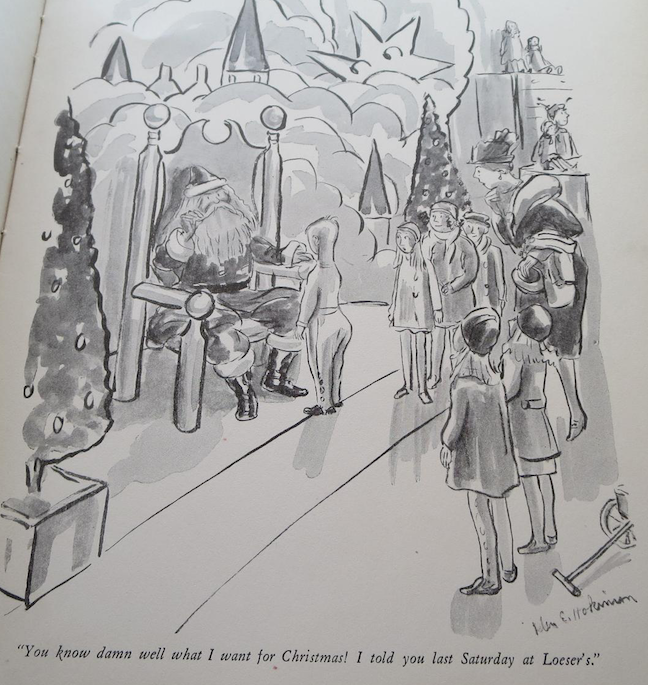
…and we close with Alan Dunn, and some earthy reading…

Next Time: Vive La Normandie…

A Light in Darkness

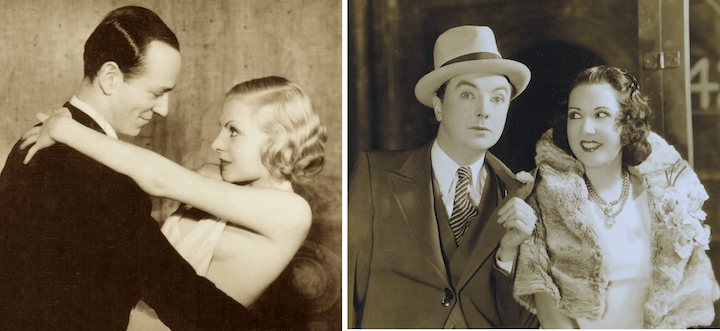
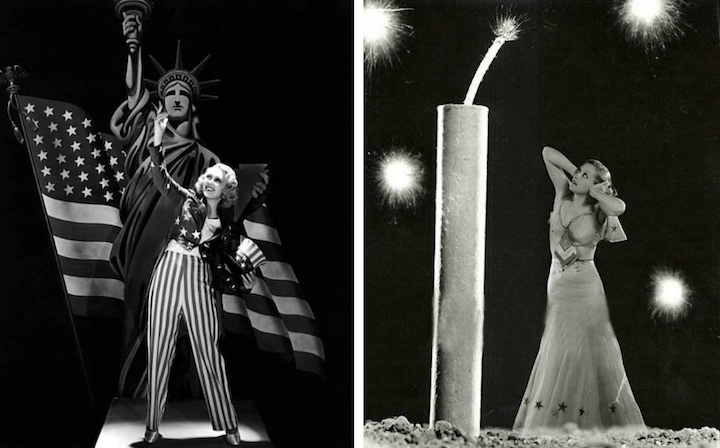
Above: For this Hollywood-heavy post we feature stars of the 1930s—the two Joans, Joan Blondell (left) and Joan Crawford, marking the Fourth of July holiday.

The New Yorker marked the Fourth of July with this William Steig cover featuring a patriotic “strap” along the binding and one of his precocious “Small Fry”…

June 30, 1934 cover by William Steig.

We’ve been looking at ways New Yorkers kept their cool in the hot summer of 1934, and one way to beat the heat was to escape into the air-conditioned darkness of a movie theater. It was not uncommon for folks to remain seated after the credits rolled and watch the feature all over again,  just enjoy some cold comfort.

Film critic John Mosher no doubt enjoyed this particular perk, and perhaps this made him a bit more agreeable to whatever was playing on the big screen, including three rather dull pictures featuring actresses Marion Davies, Kay Francis and Elissa Landi.

Marion Davies (1897–1961) was the veteran of the group, beginning her film career in 1917 and appearing in thirty silent films before breaking into sound movies. Sadly, her talents as an actress and comedian were overshadowed by her reputation as William Randolph Hearst’s mistress. Known for her aristocratic bearing, Austrian-American actress Elissa Landi (1904–1948) appeared in several British silents and on Broadway before signing with Fox Films in 1931. Kay Francis (1905–1968) began her film career with the advent of sound movies in 1929. A major box-office draw for Warner Brothers, by 1935 Francis was one of Hollywood’s highest-paid actors (she was also a former roommate and longtime friend of The New Yorker’s Lois Long).

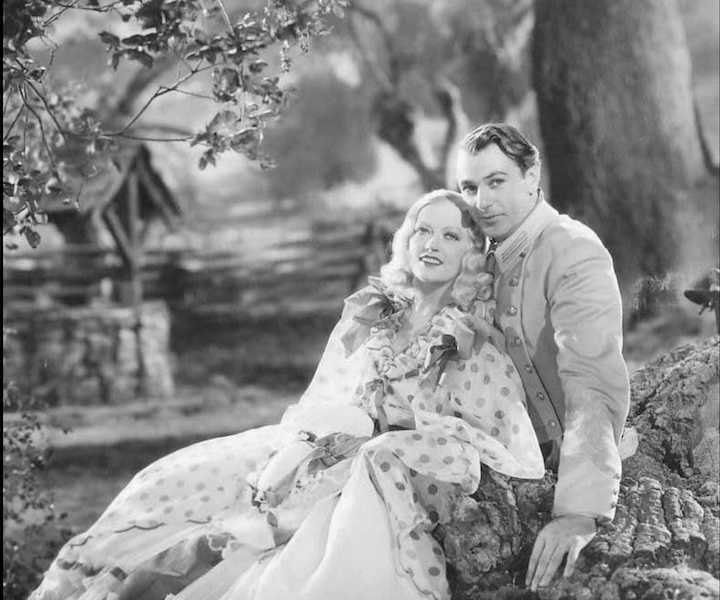
BEFORE SCARLETT AND RHETT…Gary Cooper and Marion Davies as star-crossed lovers in the 1934 Civil War drama Operator 13. Davies portrayed actress Gail Loveless, recruited by the Union to infiltrate a Confederate camp, where she falls for Capt. Jack Gailliard, a Confederate officer played by Cooper. (IMDB)

Perhaps one of the more notorious examples of a white actor in blackface, Operator 13 featured Davies as a Union spy who poses as a Black maid to infiltrate a Confederate camp…

FOOLING NO ONE…Marion Davies, in blackface, with Sam McDaniel in Operator 13. (IMDB)
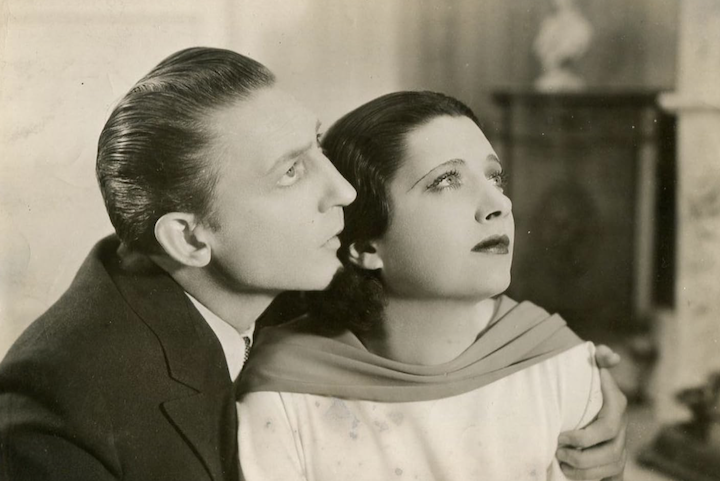
PLAYING DOCTOR…Kay Francis and Warren William in the 1934 Pre-Code drama Dr. Monica. (IMDB)
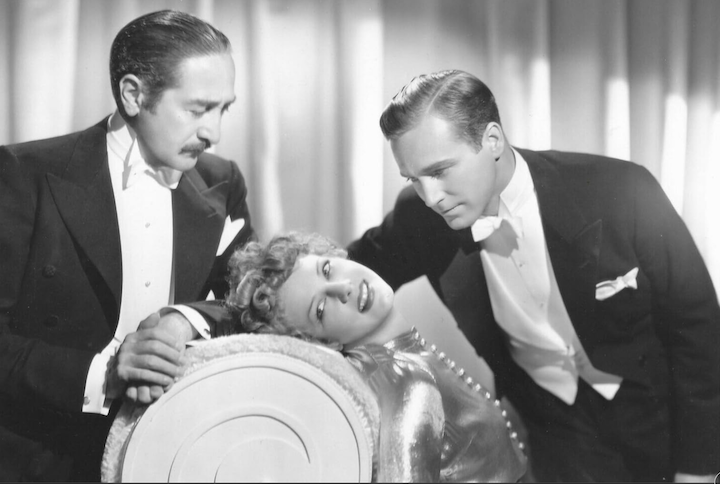
JUST KEEP PRETENDING UNTIL THE CREDITS…From left, Adolphe Menjou, Elissa Landi, and David Manners in the 1934 romantic comedy The Great Flirtation. (IMDB)

 * * *

Sentimental Journey

Another critic enjoying the cool of the theater was Robert Benchley, who used this break in the Broadway season to reveal his passions regarding a number of stage actresses. An excerpt:

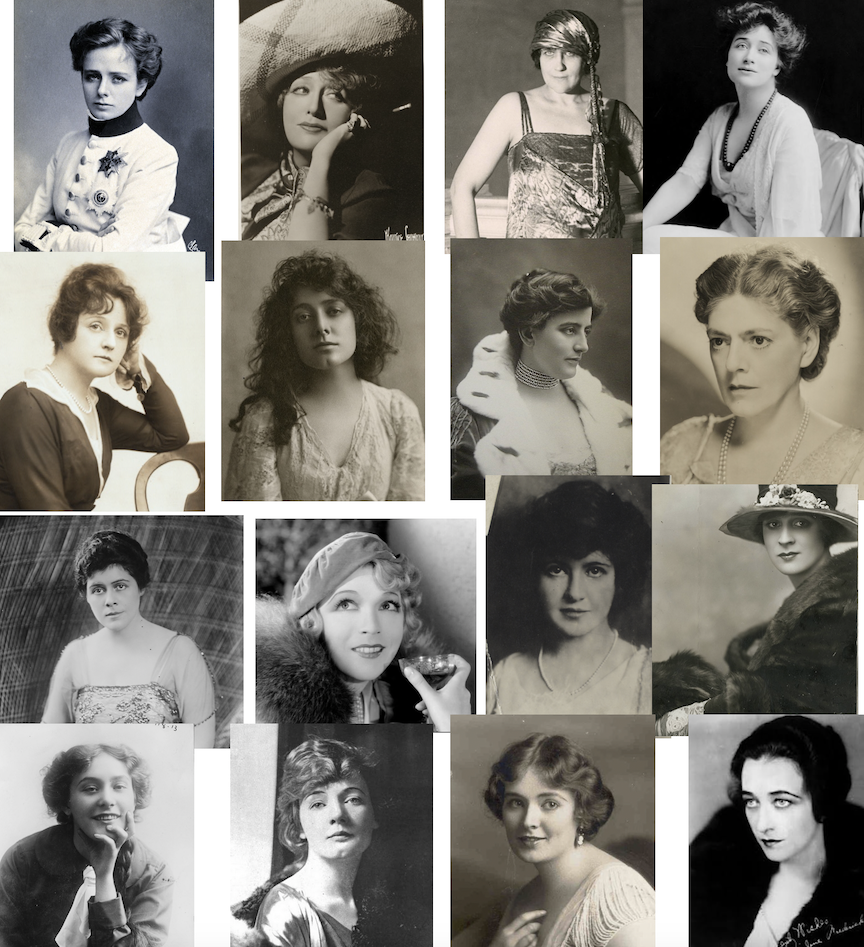
BENCHLEY’S BROADWAY…Robert Benchley’s all-time favorite Broadway actresses included, from top row, left to right, Maud Adams, Florence Reed, Gladys Hanson, and Charlotte Walker; second row, from left, Laura Hope Crews, Julia Marlowe, Maxine Elliott, and Ethel Barrymore; third row, Janet Beecher, Ina Claire, Marguerite Clark, and Jane Cowl; fourth row, Elsie Ferguson, Martha Hedman, Marjorie Rambeau, and Pauline Frederick. (NYPL/Wikipedia/IMDB)

 * * *

A Poke at Palooka

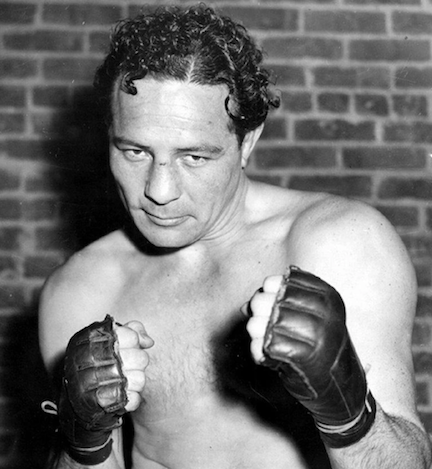
In his column “Of All Things,” Howard Brubaker took a shot below the belt at the new heavyweight boxing champ, Max Baer.

WHO SEZ I CAN’T READ?…Max Baer in the 1930s. (boxing.fandom.com/wiki)

 * * *

From Our Advertisers

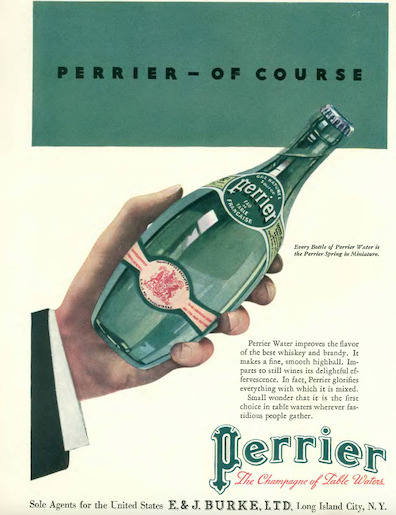
It was hot outside, folks were cooling off with their favorite beverages, and advertisers responded in kind…we begin with a familiar green bottle, and with apologies to Max Baer, you didn’t need to know how to read to know this was a bottle of Perrier…

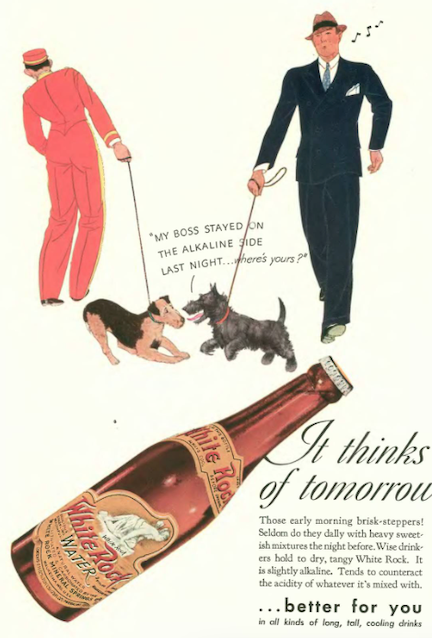
…if your taste was more on the domestic side, there was White Rock…

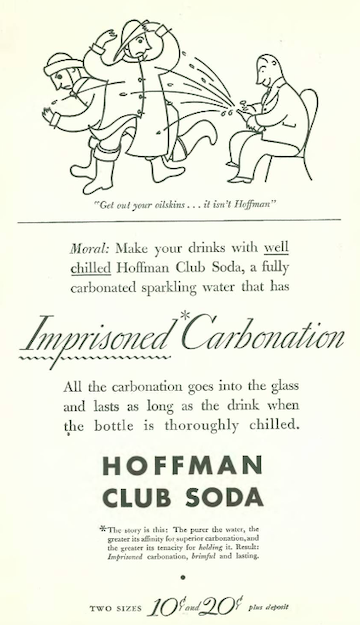
…a series of Hoffman Club Soda ads sought to convince consumers about their superior carbonation…

…or how about a brandy, perhaps lightly chilled, especially if it’s late in the evening, and you happen to be sitting on a breezy hotel rooftop…

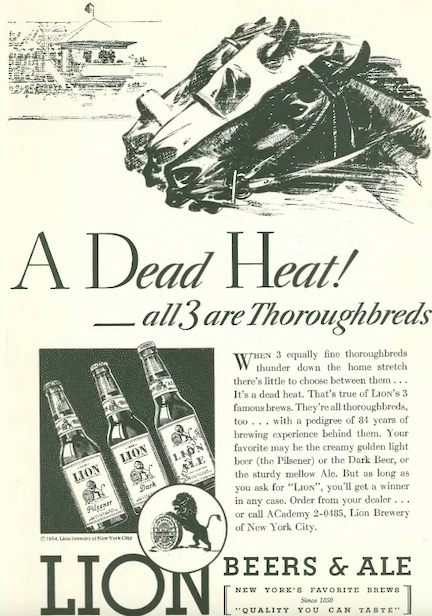
…or you could cool down with a Lion beer…considered a heritage brewery, Lion Brewery is one of only ten pre-Prohibition breweries that has independently and continuously operated since the repeal of Prohibition…

…a fairly new brand of cigarettes, Marlboro, was still taking out these bargain-sized ads to build brand recognition…Flit insecticide, on the other hand, was well-known thanks to these ubiquitous Dr. Seuss ads…

…the folks at General Tire & Rubber were the latest advertiser to tie their product to the glamour of aviation…

…and on to our cartoons, we begin with another installment of native birds via Rea Irvin

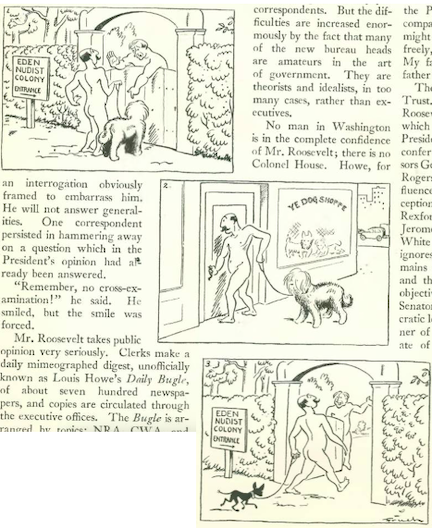
Al Frueh chimed in with this three-panel encounter at a nudist colony…

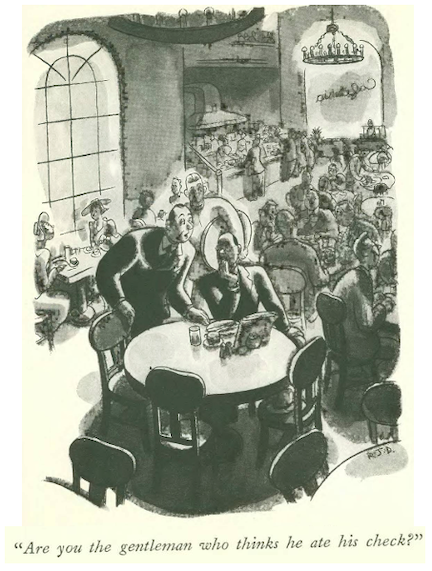
Robert Day presented a case of indigestion…

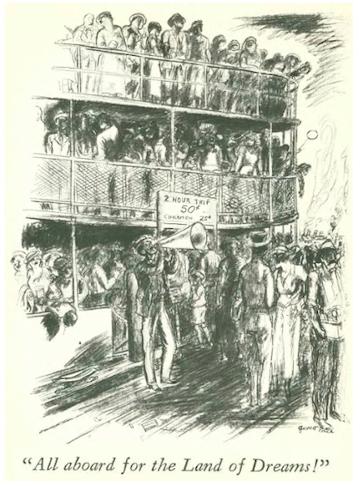
Garrett Price welcomed us aboard a dream cruise…

George Price gave us this gem in the “Goings On About Town” section,,,

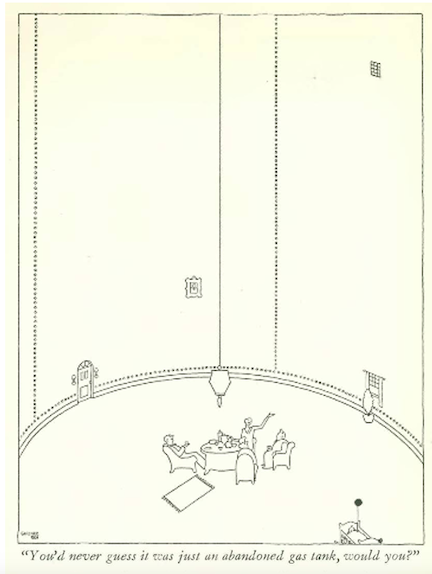
Gardner Rea gave us his spare line to illustrate an enormous space…one of his specialties…
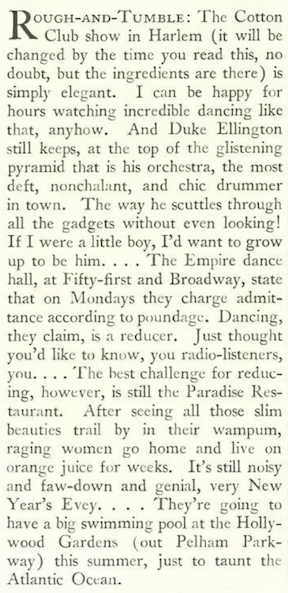
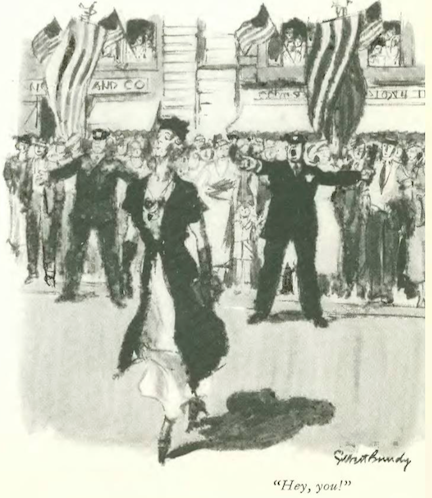
Gilbert Bundy marked the Fourth with an entitled jaywalker…

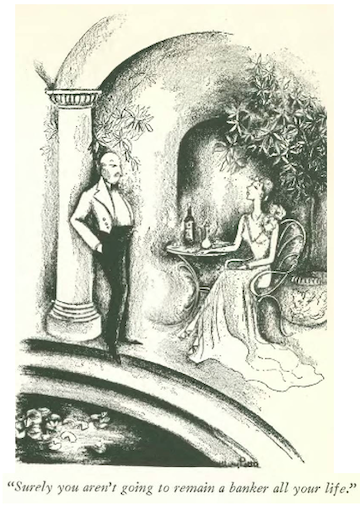
…and we close with Mary Petty, and a banker’s contentment…

Next Time: London Calling…

Not Worth a Dime

First performed in Berlin in 1928, The Threepenny Opera was Bertolt Brecht’s socialist critique of capitalist society and was a favorite (somewhat ironically) of that city’s bourgeois “smart set.” However when it landed on the Broadway stage in 1933, it famously flopped, and closed after just twelve performances.

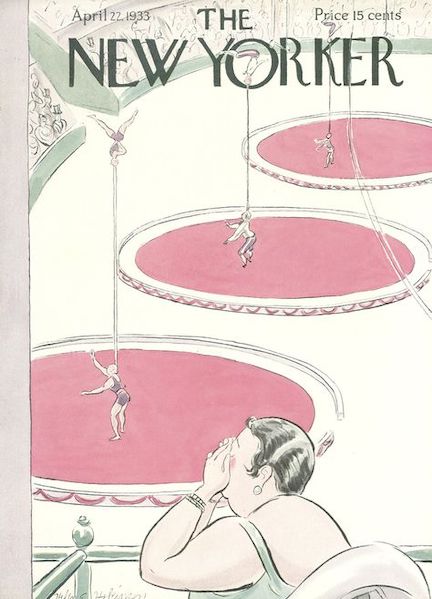
April 22, 1933 cover by Helen Hokinson.

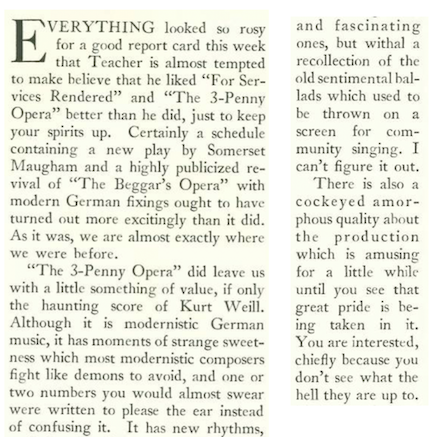
The first American production, adapted by Jerrold Krimsky and Gifford Cochran, opened April 13, 1933, at the Empire Theatre, featuring Robert Chisholm as Macheath (“Mack the Knife”) and Steffi Duna as his lover, Polly. Critic Robert Benchley found value in the play’s “modernistic” music, but seemed puzzled by its enigmatic production, an opinion shared by other contemporary critics.

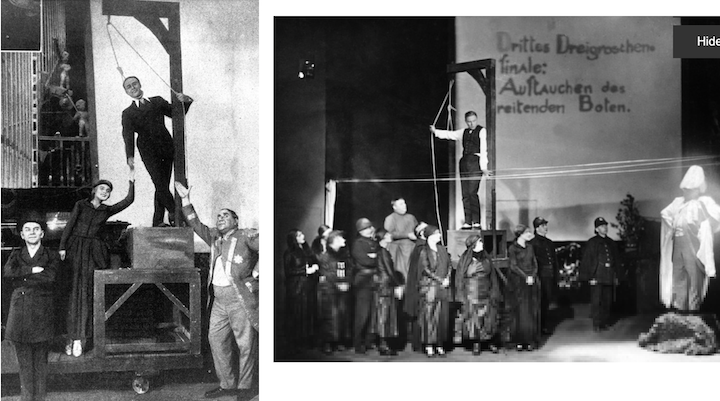
HANGING IN THERE…Scenes from the 1928 Berlin premiere of Bertolt Brecht’s musical, The Threepenny Opera. At left, Macheath (tenor/baritone Harald Paulsen) is spared the noose during the closing act, much to the relief of his lover, Polly (soprano Roma Bahn); at right, in a deus ex machina moment, a messenger arrives at the hanging and announces that Macheath has been pardoned by the queen. (British Library)

Some critics today defend the 1933 American production, noting that the Krimsky–Cochran adaptation was quite faithful to the Brecht original. Perhaps something was lost in translation, or maybe the world in which the play was conceived no longer held much relevance to Depression-era Americans.

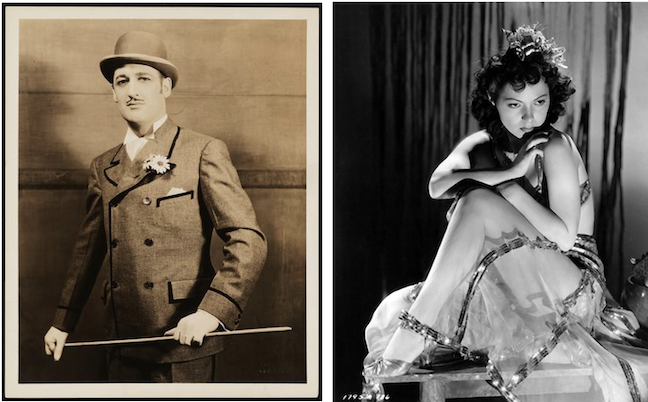
THE FINAL CURTAIN fell after just twelve performances of the first American production of The Threepenny Opera at Broadway’s Empire Theatre. The production featured Robert Chisholm as Macheath and Steffi Duna as Polly. (discogs.com/bizzarela.com)

Benchley half-heartedly concluded that the play was probably worth seeing, for no other reason than to experience something different for a change.

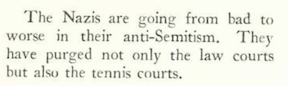
By 1933 the world that had conceived The Threepenny Opera was long gone—Brecht fled Nazi Germany two months before his play opened in New York, fearing persecution for his socialist leanings. Things were quickly going “from bad to worse” under Adolf Hitler’s new regime, as Howard Brubaker observed in his “Of All Things” column:

 * * *

Look Ma, No Net!

Karl Wallenda (referred to as “Carl” here) was born to an old circus family in Germany in 1905, and by 1922 he would put together a family-style high-wire act (with brother Herman) that would come to be known as “The Flying Wallendas.” They debuted at Madison Square Garden in 1928, notably without their safety net, which had been lost in transit. So they performed without it, much to the acclaim of the adoring crowd. They soon became known for their daring high-wire acts, often performed without safety nets. E.B. White filed this (excerpted) report for “The Talk of the Town.”

In the years that followed Karl developed some of troops’ most startling acts, including the famed seven-person chair pyramid. They performed this incredibly dangerous stunt until their appearance at the Detroit Shrine Circus in January 1962; the wire’s front man, Dieter Schepp, faltered, causing the pyramid to collapse. Schepp, who was Karl’s nephew, was killed, as was Richard Faughnan, Karl’s son-in-law. Karl injured his pelvis, and his adopted son, Mario, was paralyzed from the waist down.

DON’T TRY THIS AT HOME…The Wallenda family practices the seven-person pyramid just prior to the Shrine Circus in Detroit, where the group fell, killing Dieter Schepp (far right, bottom row) and Dick Faughnan (second from left, on bottom). (Sarasota Herald-Tribune)

Karl’s own luck finally ran out on March 22, 1978, on a tightrope between the towers of Condado Plaza Hotel in San Juan, Puerto Rico. High winds, and an improperly secured wire, caused the 73-year-old Wallenda to wobble, and then fall, one hundred feet to the ground. He was dead on arrival at a local hospital.

THE SHOW ENDED for Karl Wallenda on March 22, 1978, on a tightrope between the towers of Condado Plaza Hotel in San Juan, Puerto Rico. The 73-year-old high-wire legend fell one hundred feet to his death. (esquire.com)

 * * *

Safer Entertainments

Lois Long continued to file nightlife reports in her “Tables for Two” column, reveling in the sights and sounds (and rhythms) of the Cotton Club’s orchestra, led by Duke Ellington…but the real attraction was Ellington’s unnamed drummer, whom I assume was the great Sonny Greer

JAZZ GREAT Sonny Greer wowed Lois Long and the rest of the crowd at Harlem’s Cotton Club in April 1933. (jazz.fm)

 * * *

From Our Advertisers

Given the news Howard Brubaker shared earlier in this post, I wouldn’t use the word Gemütlichkeit (basically, warmth and friendliness) to describe the state of things in Nazi Germany…

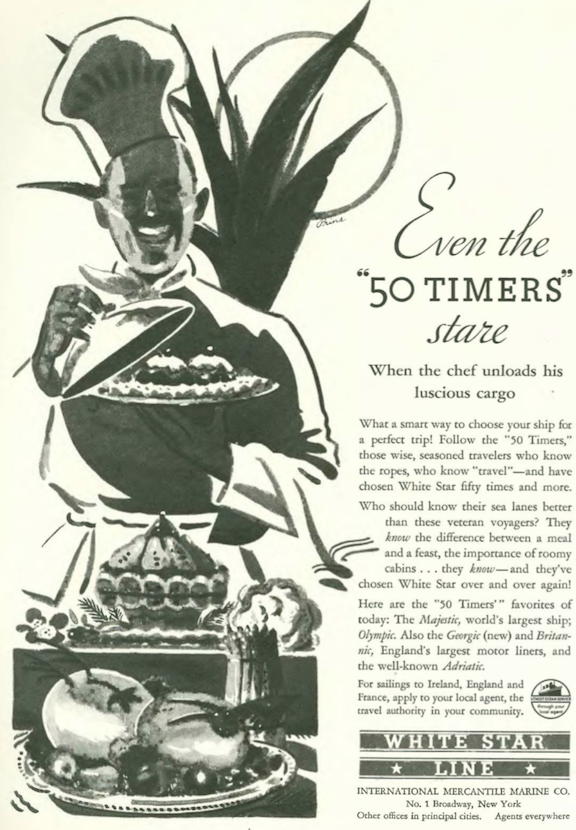
…a better option would be a trip to the British Isles or France on the White Star lines, nicht wahr?…

…RCA’s mascot, Nipper, appeared to contemplating fatherhood in this two-page ad for the company’s new “baby sets”…

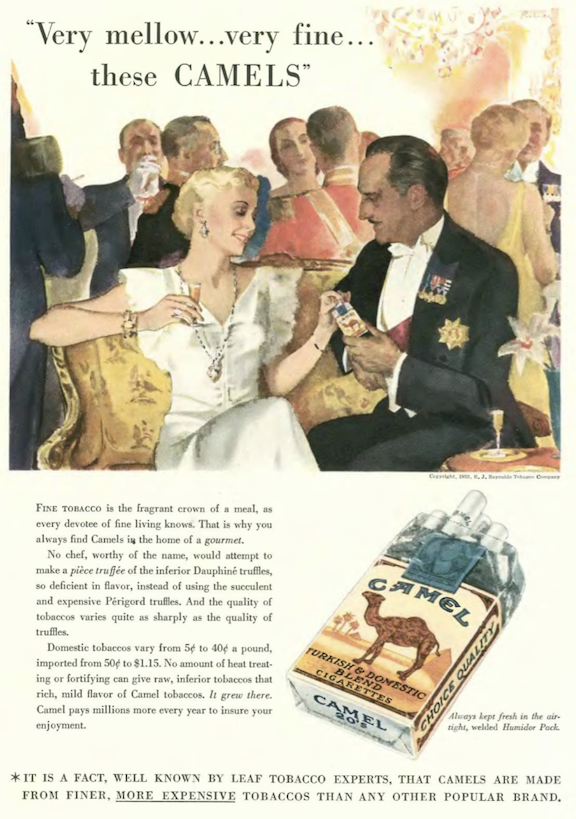
…Camel took a break from its magician-themed “It’s Fun to be Fooled” ads to run another elegant Ray Prohaska-illustrated spot…

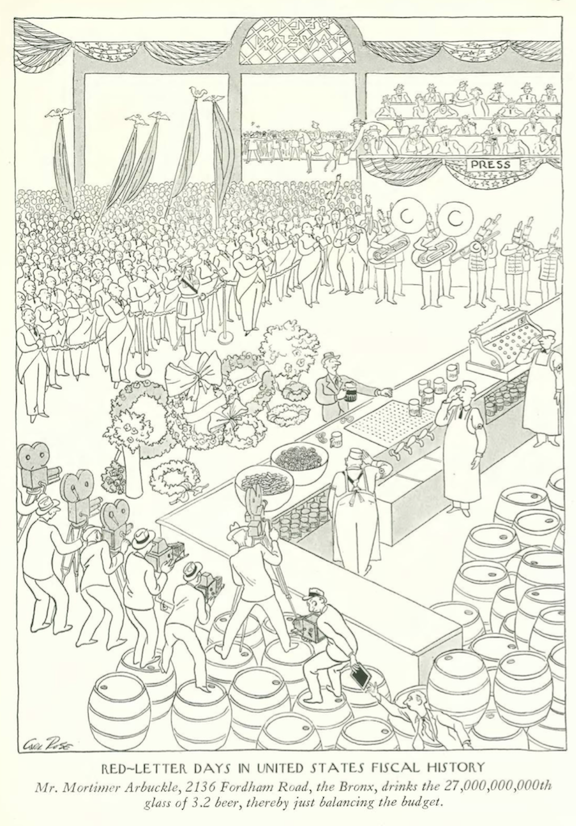
…on to our cartoons, Carl Rose demonstrated the economic benefits of legal beer…

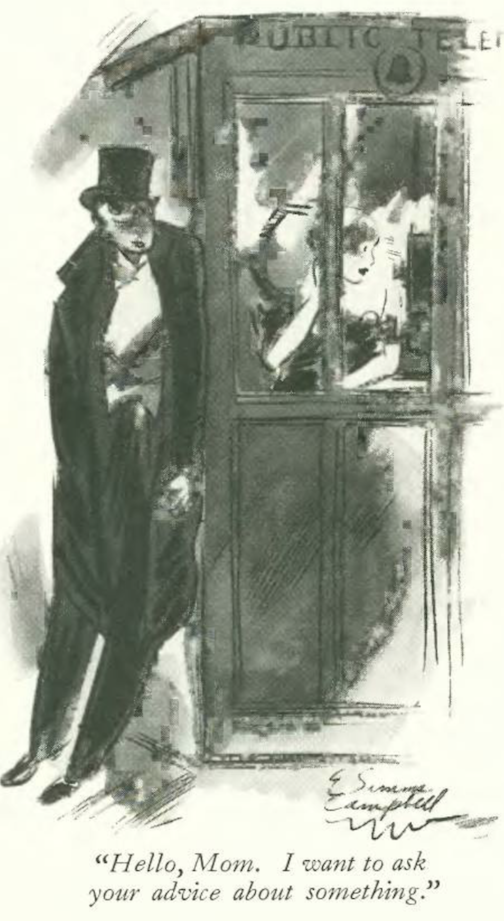
E. Simms Campbell showed us a woman seeking a bit of motherly wisdom…

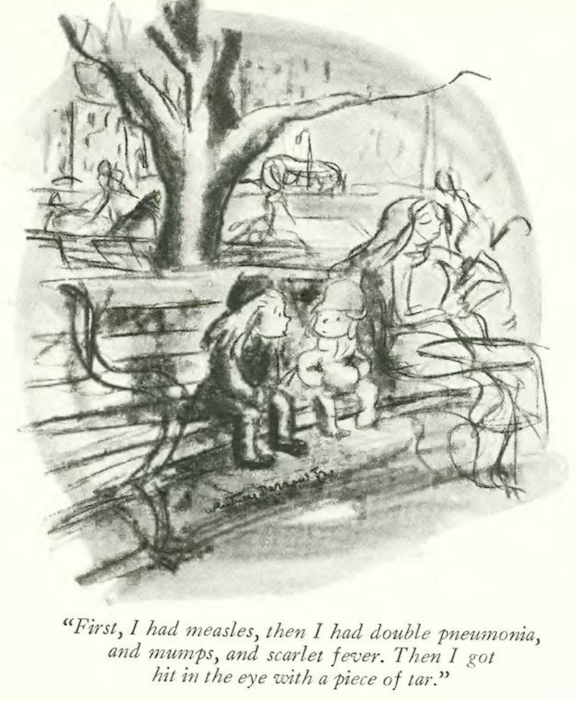
Whitney Darrow Jr (1909–1999), who began his 50-year career at The New Yorker on March 18, 1933, offered this look at childhood’s hard knocks…

James Thurber drew up an odd encounter at a cocktail party…

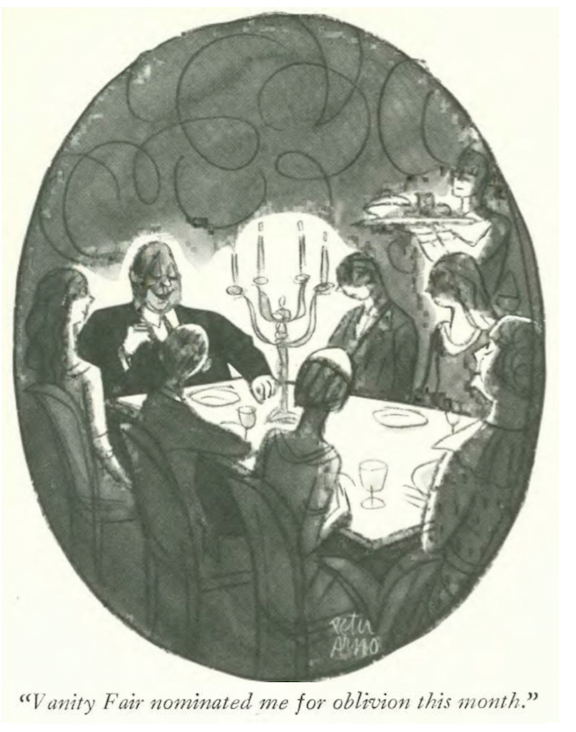
Peter Arno served up a proud patriarch…

…and William Steig explored the perils of somnambulism…

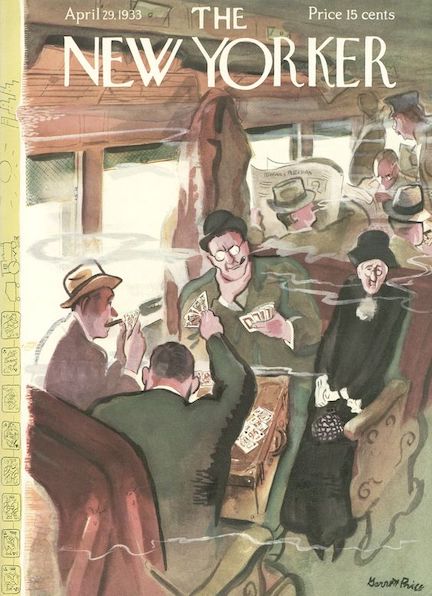
…on to our April 29, 1933 issue with a cover by Garrett Price…although we’ve already seen many cartoons by Price, we haven’t seen many covers (he did two covers in the magazine’s first year, 1925). Price would ultimately produce 100 covers for The New Yorker, in addition to his hundreds of cartoons…

April 29, 1933 cover by Garrett Price. Note the little train illustration along the spine (or strap, as it is called).

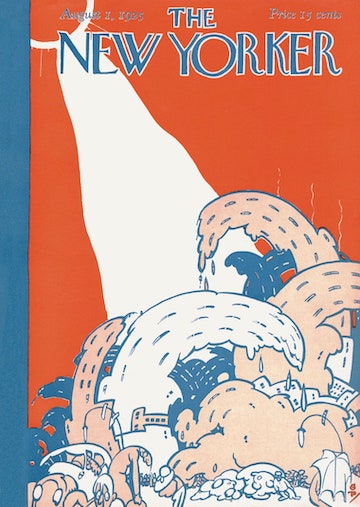
…for the record, here is Price’s first New Yorker cover from Aug. 1, 1925…

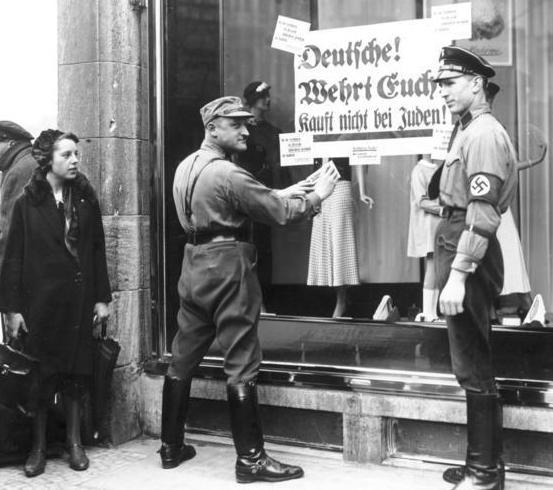
…there was more troubling news from Nazi Germany, this time from Paris correspondent Janet Flanner in her “Letter from Paris” column…Flanner would later gain wider fame as a war correspondent…

THUGS…SA members stick a poster to the window of a Jewish store in Berlin on April 1, 1933. The poster is inscribed, “Germans, Defend yourselves, Do not buy from Jews”. (Bundesarchiv, Berlin)

 * * *

From Our Advertisers

Camel followed up its elegant ad from the previous issue with another “Fun to be Fooled” spot, this time presented as a multi-panel comic strip…

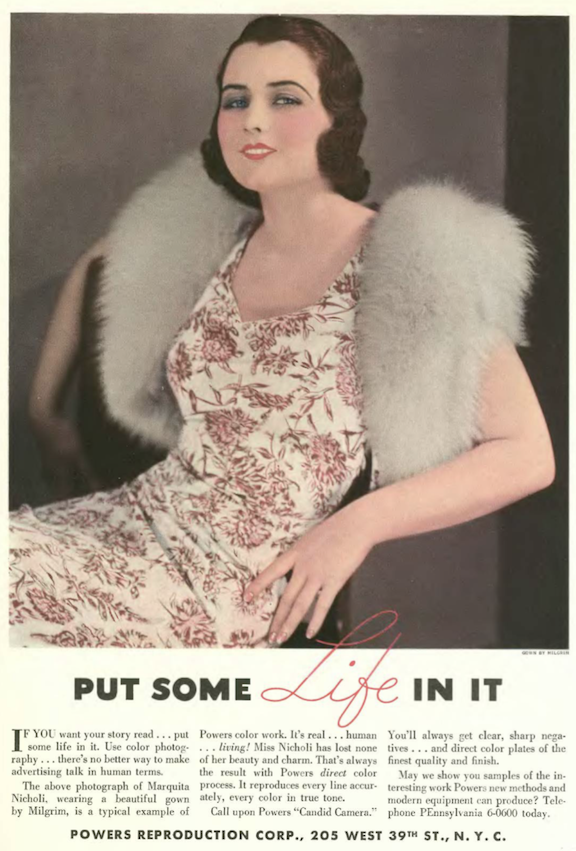
…Powers Reproduction was a frequent advertiser in the early New Yorker, touting the “realism” of their color photography, but in this case the model looked more like a department store mannequin…

Otto Soglow continued to ply a lucrative sideline illustrating ads for Sanka decaf…

…as we segue to our cartoonists, the opening section featuring work by both James Thurber and George Price

Gardner Rea’s snake charmer expressed her belief that all men are created equal…

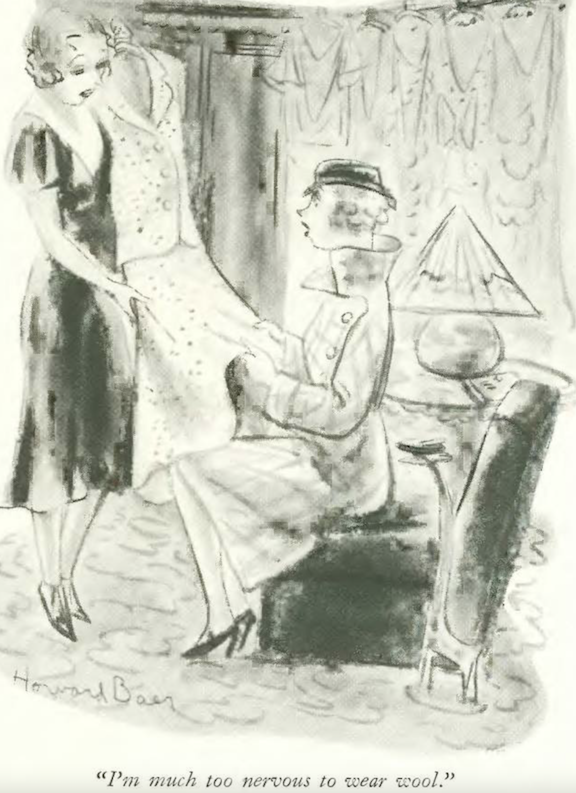
…here is a cartoon by a new artist, Howard Baer, who contributed to The New Yorker between 1933 and 1937…

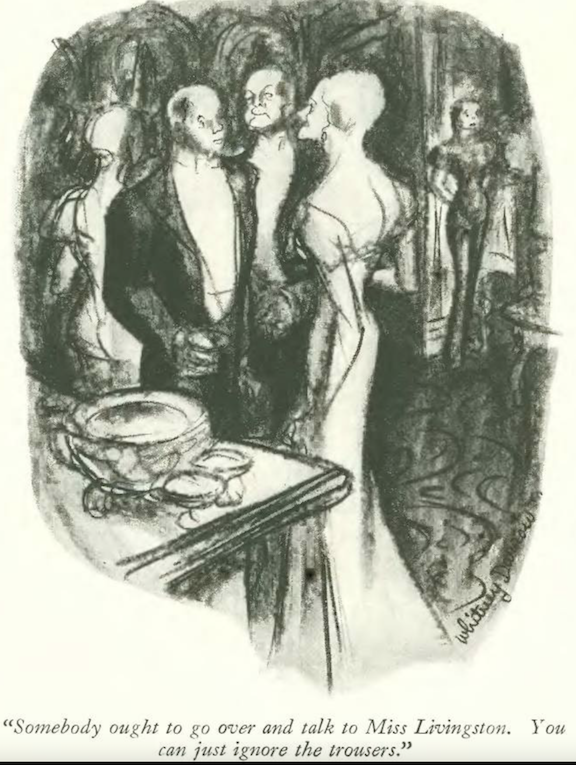
…and another by newcomers Whitney Darrow Jr.

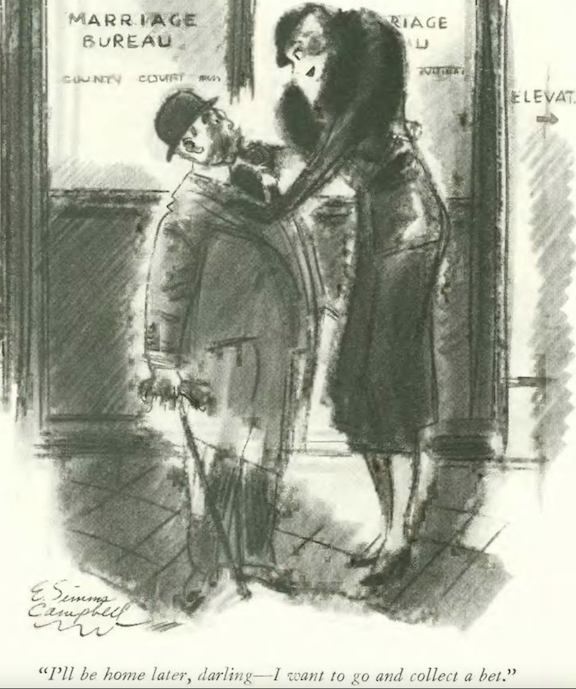
…and E. Simms Campbell

Barbara Shermund continued to rollick with her modern women…

…and we end with the ever-reliable Peter Arno

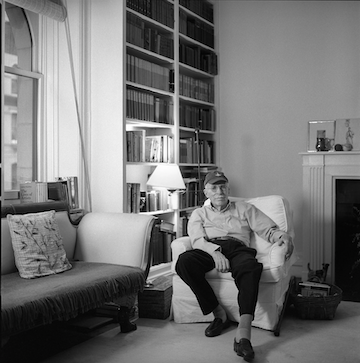
Before we close I want to remember Roger Angell, who died last week at age 101. A literary legend and a great baseball writer to be sure, but also one of the last living links to the first days of The New Yorker. Rest in Peace.

Photo by Brigitte Lacombe, for The New Yorker.

Next Time: Bohemian Rhapsody…


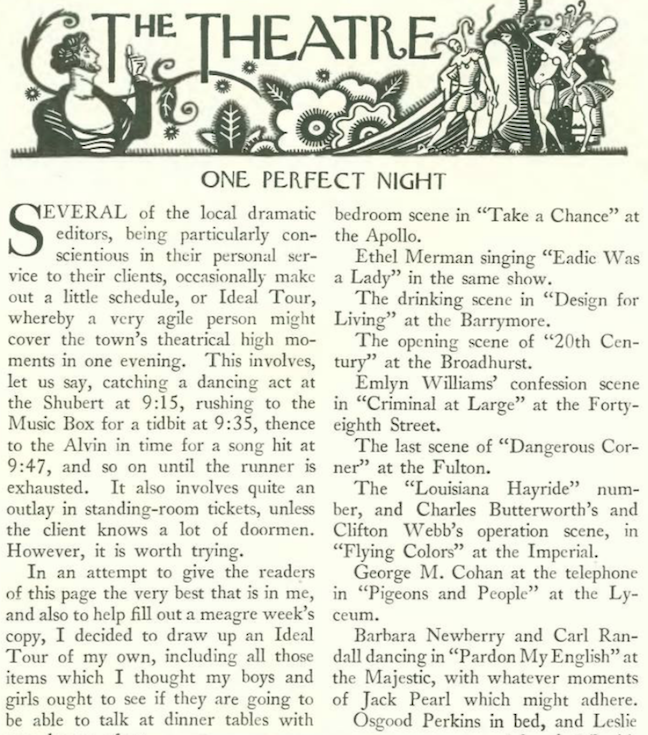
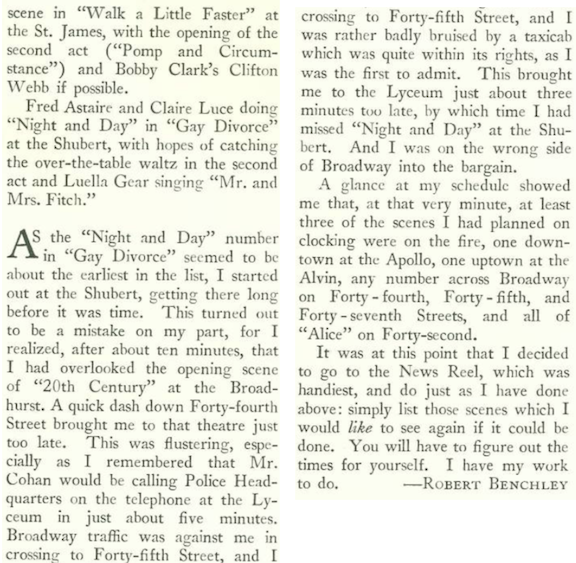
One Perfect Night

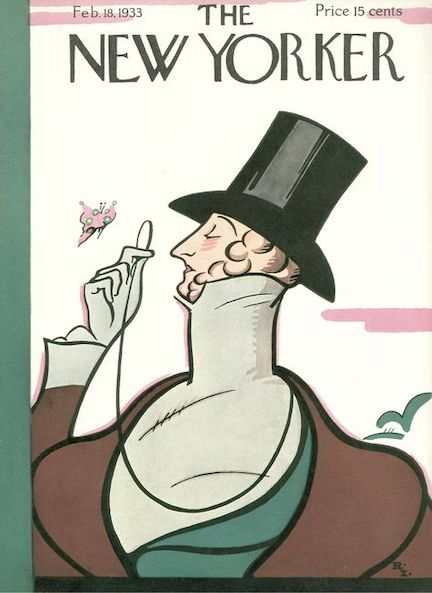
Once again The New Yorker marked its anniversary—the eighth—with a repeat of its very first cover, a tradition that would last until 1993. Unlike previous years, E.B. White made no special mention of the occasion in his “Notes and Comment,” no doubt feeling confident about the magazine’s prospects despite the challenges of the Depression. In 1933 The New Yorker could count on nearly 117,000 readers.

Feb. 18, 1933 cover by Rea Irvin.

And so we look to another of the magazine’s star contributors, humorist and stage critic Robert Benchley, who was rarely impressed with Broadway’s middlebrow fare. It was in such an environment that Benchley found himself separating the wheat from the chaff, listing a selection of scenes from various plays that together might represent a “perfect night” of entertainment:

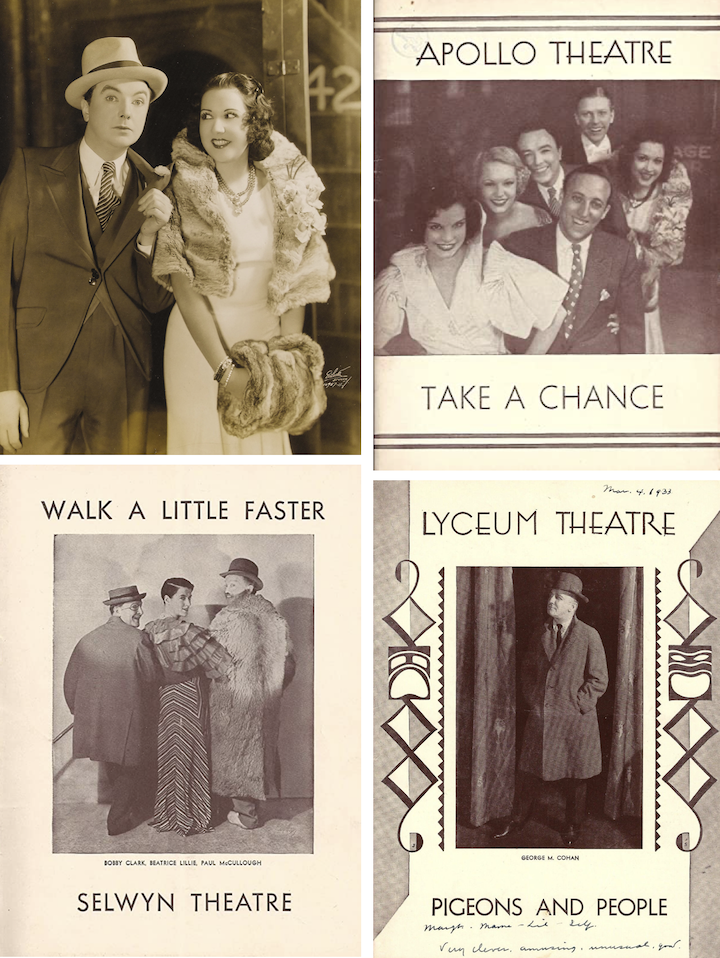
A BROADWAY BUFFET…Clockwise, from top left, Robert Benchley recommended Jack Haley’s bedroom scene and Ethel Merman’s rendition of “Eadie Was a Lady” in Take a Chance as worthy of a look; he also found George M. Cohan’s telephone call to police HQ in Pigeons and People memorable, and Beatrice Lillie was apparently a delight in the dressing room scene from Walk a Little Faster. (playbill.com)
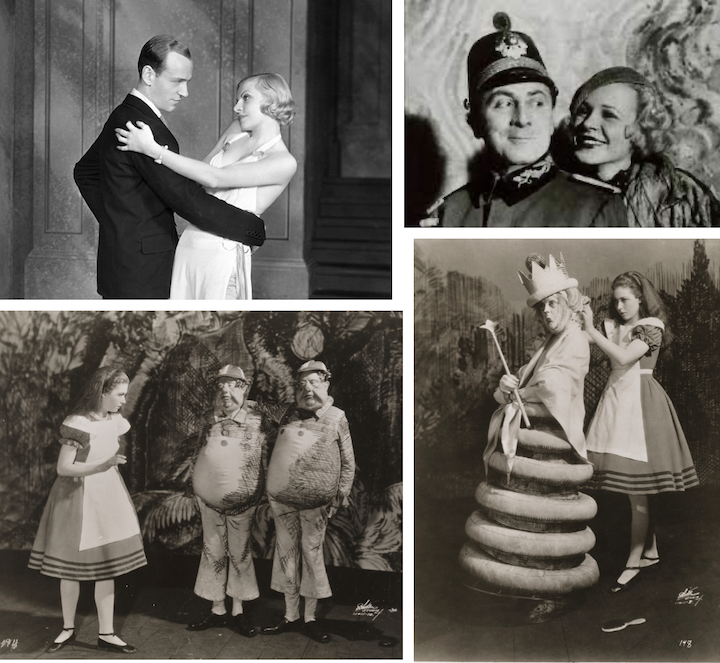
TRIPPING THE LIGHT FANTASTIC in Cole Porter’s musical Gay Divorce were Claire Luce and Fred Astaire, dancing to the hit song “Night and Day.” It was Astaire’s last Broadway show before he headed to Hollywood for even greater stardom; Jack Pearl and Barbara Newberry in Pardon My English; Eva Le Gallienne as the White Queen and Josephine Hutchinson as Alice in the 1932-33 production of Alice in Wonderland at Le Gallienne’s own Civic Repertory Theatre; Alice (Hutchinson) encounters Tweedledee (Burgess Meredith) and Tweedledum (Landon Herrick) in Alice in Wonderland. (Pinterest/gershwin.com/blog.mcny.org)

 *  *  *

Spring Cleaning

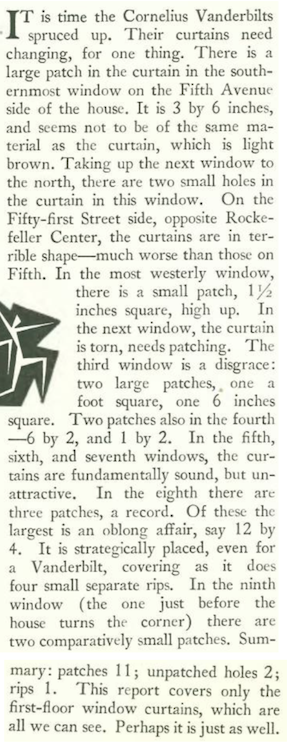
While passing by the Vanderbilts’ “Triple Palace” on 51st and Fifth Avenue, E.B. White (“Notes and Comment”) noted signs of neglect at the famed mansion:

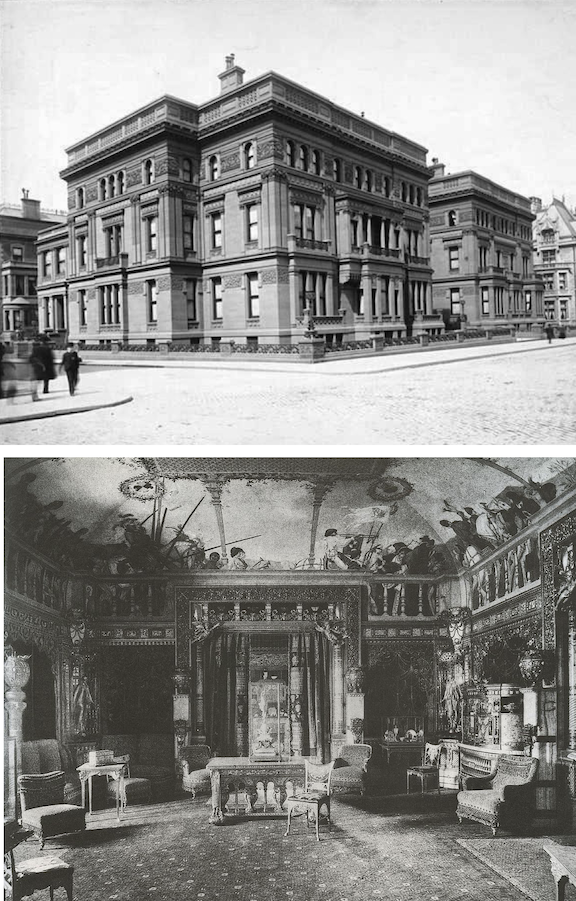
HOME  SWEET HOME…At top, Alva Vanderbilt engaged Richard Morris Hunt to build a “Petite Chateau” on the northwest corner of 52nd Street; below, the drawing room. The Triple Palace was demolished in 1947-49. (mcny.org/Wikimedia Commons)

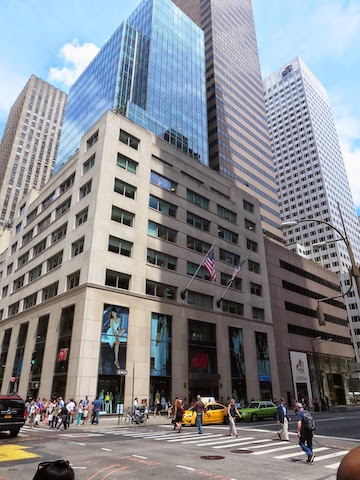
The Triple Palace site today:

(daytoninmanhattan.blogspot.com)

*  *  *

Going Round and Round

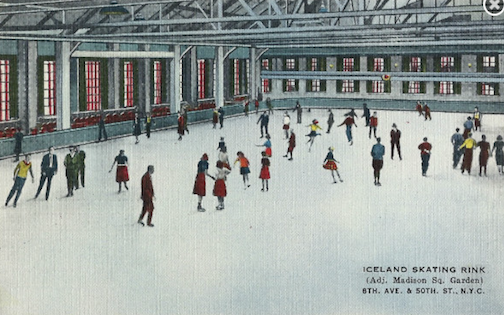
No one was landing quad flips at New York’s Ice House in 1933, but for ice skating enthusiasts it was the place to be for both figure skating competitors as well as for those just interested in a leisurely skate to the strains of a live orchestra. “The Talk of the Town” explains in this excerpt:

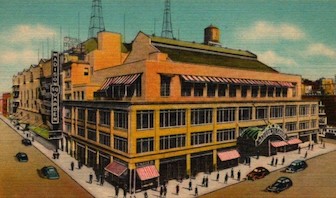
CHILLING SIGHT…Top and below, the Ice House was located on the top floor of a four-story building attached to Madison Square Garden. (Pinterest)

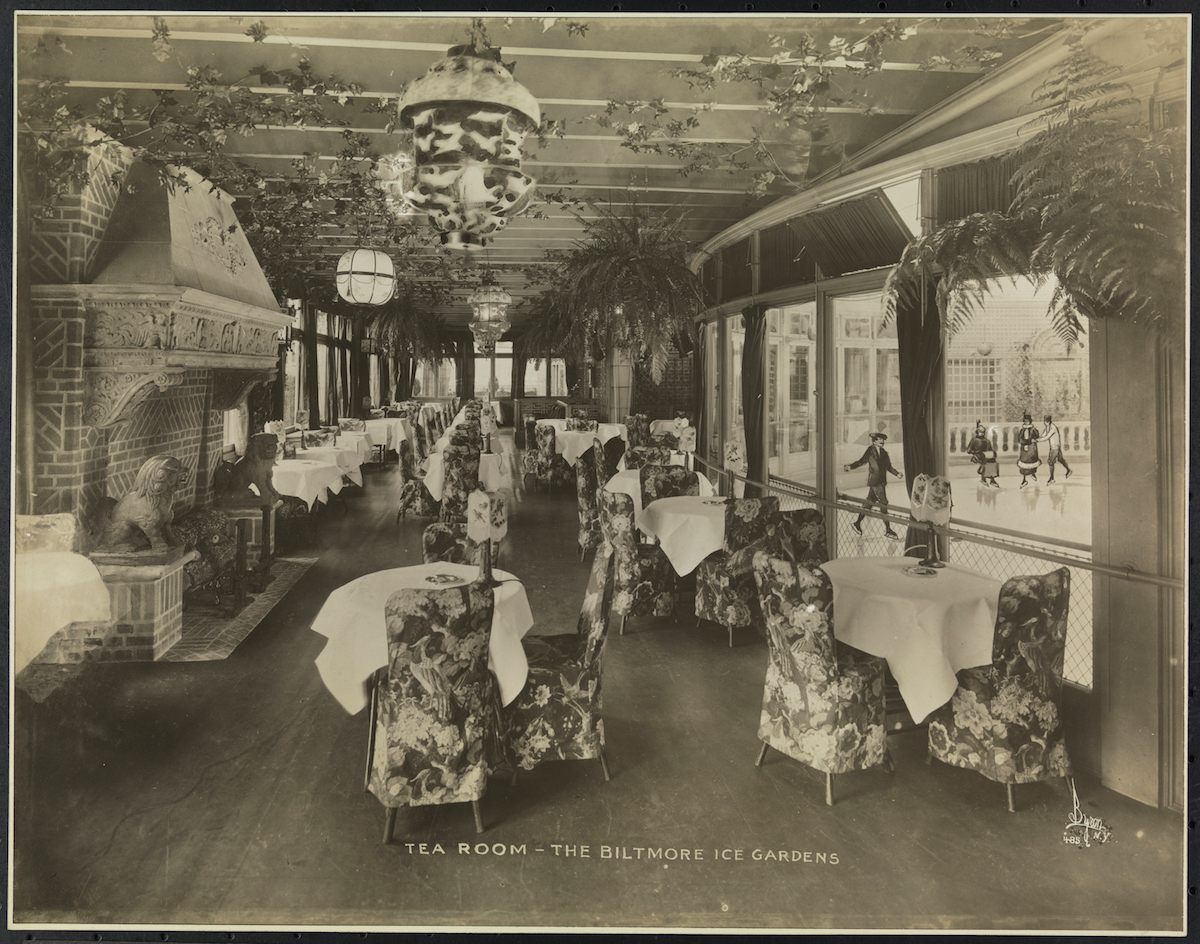
In both Europe and America ice skating in the 19th and early 20th century was something of an elaborate ritual in urban areas; skating rinks included tea rooms as well as places to dance or ice skate to the gentle rhythms of a live orchestra…

TEA COSY…The Biltmore Hotel Ice Gardens offered guests a warm place to watch the cold weather fun of the hotel’s outdoor ice skating rink, circa 1915. (mcny.org)

*  *  *

The Jig Is Up

Jigsaw puzzles have been around since the late 1700s (they were handmade then), but their popularity really took off in the 20th century with advancements in manufacturing and especially during the Depression when folks sought affordable forms of entertainment they could enjoy at home. The 1930s also saw jigsaw puzzles become more complex. “The Talk of the Town” observed:

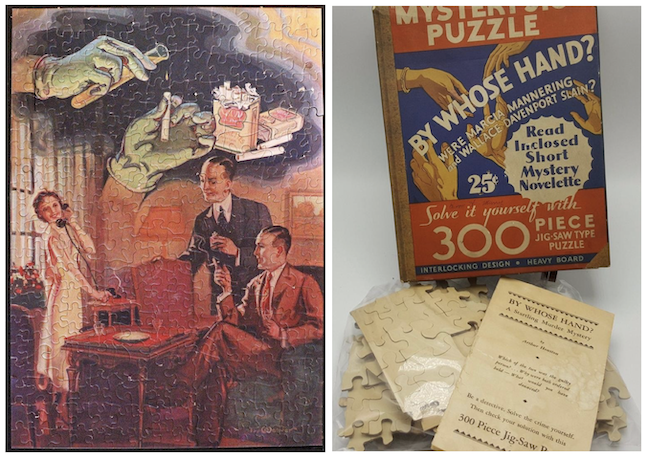
In 1933 the Long Island City-based puzzle manufacturer Einson-Freeman introduced a line of puzzles that included clues to solving mysteries described in an accompanying novelette…
(worthpoint.com)

*  *  *

Small But Deadly

Howard Brubaker’s “Of All Things” column, which ran from 1925 to 1951, was a series of brief, satirical comments on the events of the day, including some that to modern eyes point to the catastrophic events that awaited Brubaker’s world (reader Frank W. notes that “the ‘aged piano-player’ was Ignacy Paderewski, who had served as Prime Minister in the immediate aftermath of WWI, and who was the nearest thing the Poles had to a national-unity figure”):

*  *  *

Her Protégé

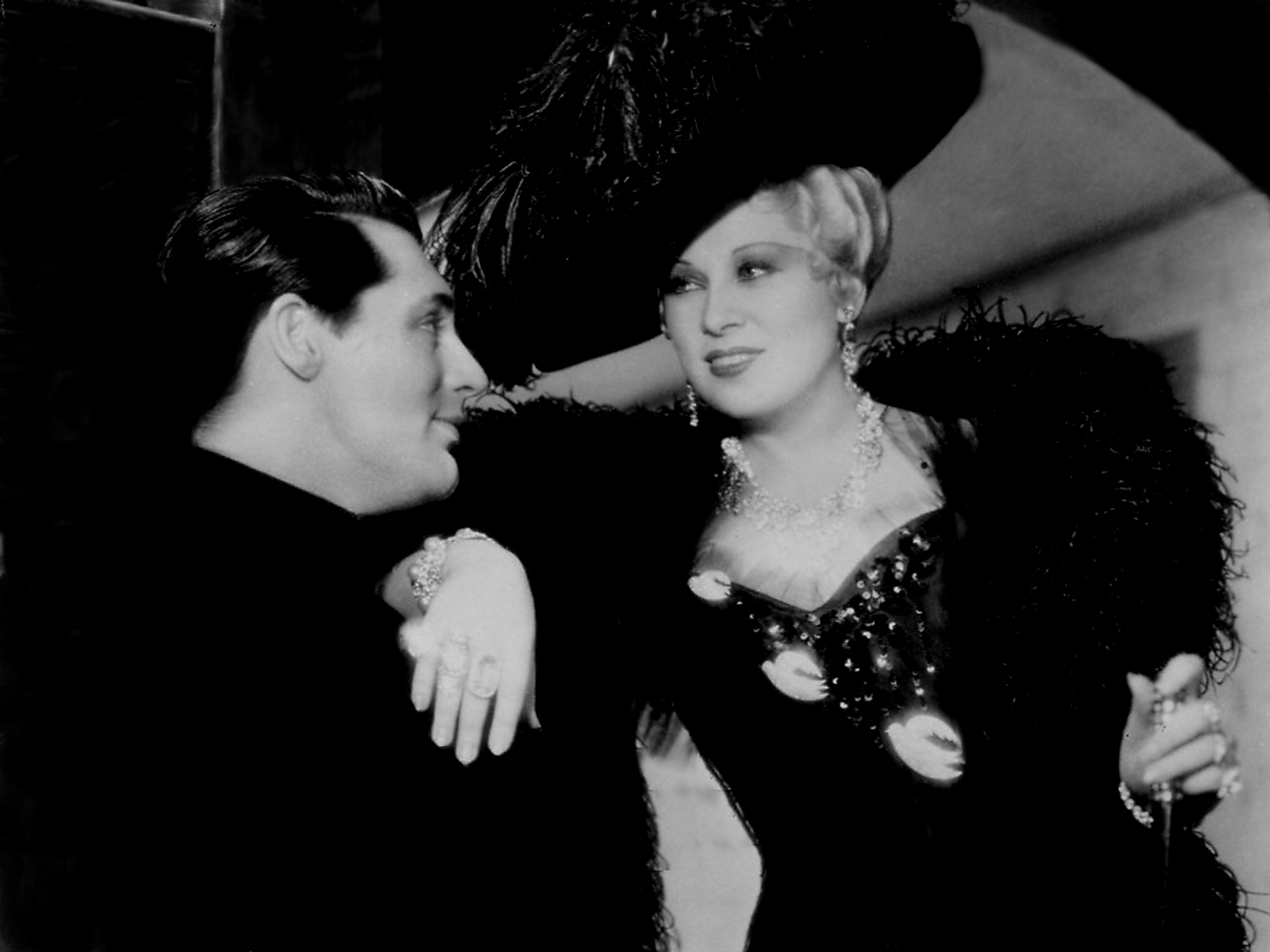
When Mae West adapted her 1928 Broadway play Diamond Lil into the 1933 film She Done Him Wrong, the puritanical backers of the Hays Code (which would be enforced in 1934) demanded that the film make no reference to the “scandalous” play. But because it was still the pre-Code era, West’s film featured many double entendres and her famous (and famously misquoted) quip, “Why don’t you come up sometime and see me?” That line was spoken to Cary Grant—whom West would later claim as her discovery even though Grant had drawn considerable attention in the previous year for his work opposite Marlene Dietrich in Blonde Venus. For the record, Grant, who would be paired again with West in 1933’s I’m No Angel, would later credit West, and She Done Him Wrong, for giving his career a major boost. New Yorker critic John Mosher lauded the film for the much-needed laughs it provided to Depression-weary audiences.

SHOWING HIM THE ROPES…The nearly forty-year-old Mae West was 11 years older than Hollywood newcomer Cary Grant when they appeared together in 1933’s She Done Him Wrong. The film was nominated for an Academy Award (Best Picture), and in 1996 was selected for preservation in the National Film Registry by the Library of Congress. (filmreference.com)

*  *  *

From Our Advertisers

The folks at Packard took a new advertising tack by demonstrating the durability of their luxury automobile…
…hopefully the Packard was riding on “Double Eagle” tires by Goodyear…however, this is an odd illustration to emphasize a child’s safety, when the kid’s posh mum seems more concerned about her appearance than anything else…also, does she plan to drive home with the windshield down?…

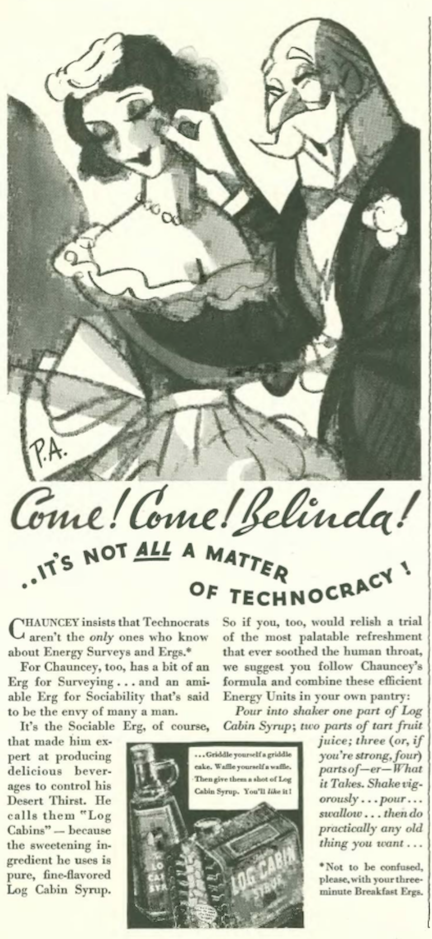
…Log Cabin continued its series of ads featuring New Yorker cartoonists…here Peter Arno lends one of his dirty old walruses to the cause of syrupy waffles and pancakes…

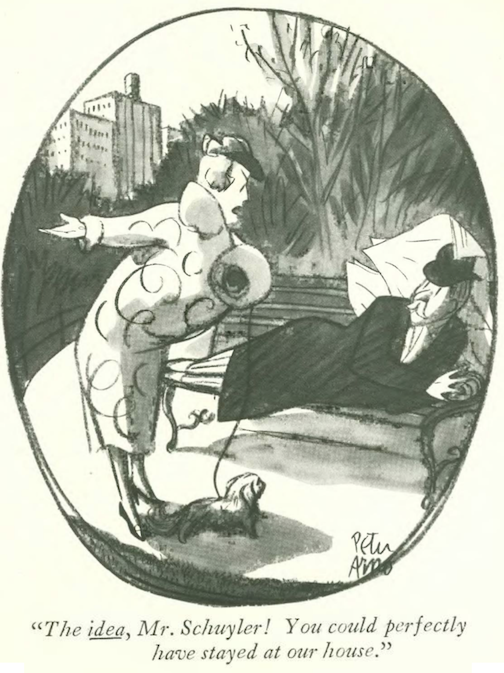
…on to our cartoonists, we have Arno again, keeping up appearances among high society…

Gluyas Willams demonstrated his knack for illustrating the foibles of his fellow citizens…

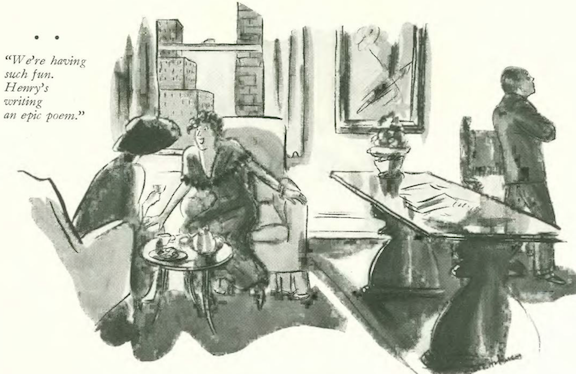
Helen Hokinson looked in on a man aspiring to become the next T.S. Eliot…

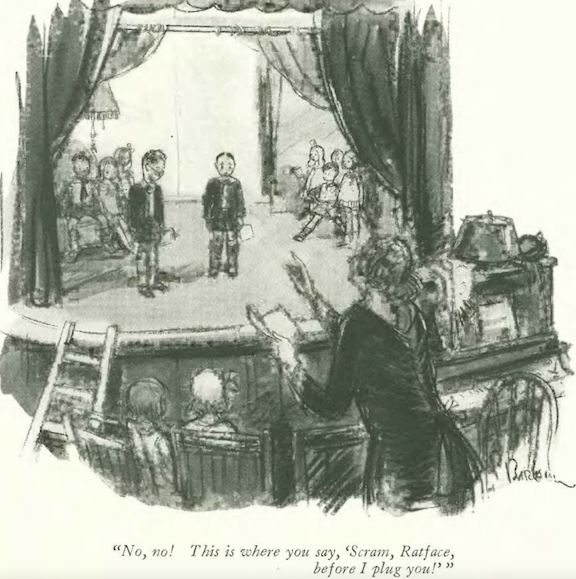
…the growing popularity of the gangster film knew no bounds, according to Perry Barlow

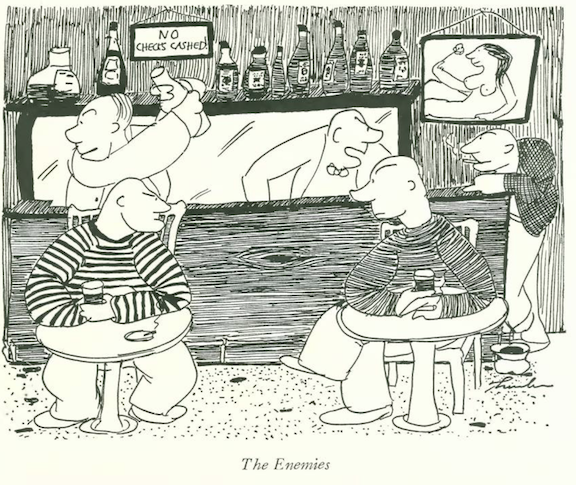
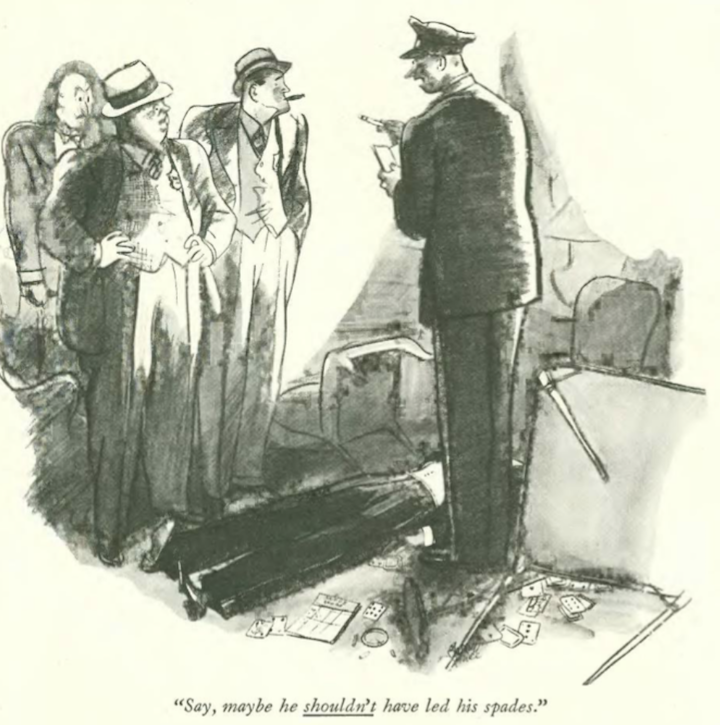
…and we close with James Thurber, and a speakeasy standoff…

Next Time: Deskey’s Deco…

A Visit to Minskyville

During the 1930s few people could afford the luxury of a Broadway show, but a trip to “Minskyville” was in reach of nearly anyone looking to escape the gloom of the Depression, at least for a few hours.

May 28, 1930 cover by Constantin Alajalov.

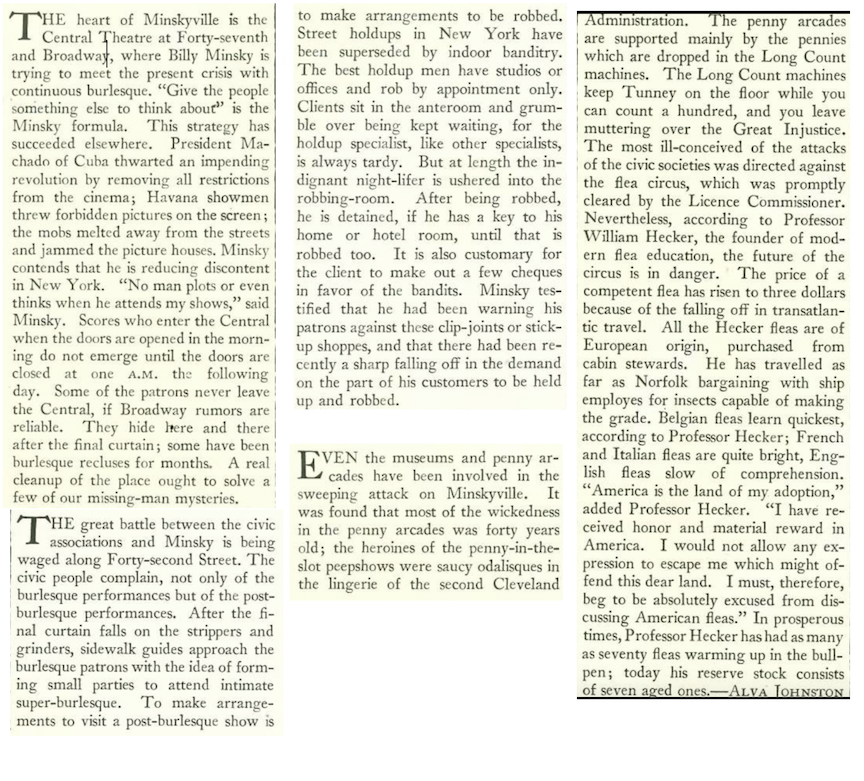
The Minsky family—brothers Billy, Herbert, Morton and Abe—built the beginnings of a New York burlesque empire, writes actress, author and documentarian Leslie Zemeckis: “Abe, the eldest, started showing racy films in a nickelodeon theater on the Lower East Side. His father—believing that if his son was gonna be a perv, he might as well make real money at it—bought the National Winter Garden theater on Houston Street near Second Avenue (where a Whole Foods stands today), and gave Abe the sixth floor to run his burlesque shows.” Alva Johnson paid a visit to Houston Street and environs for the “A Reporter at Large” column:

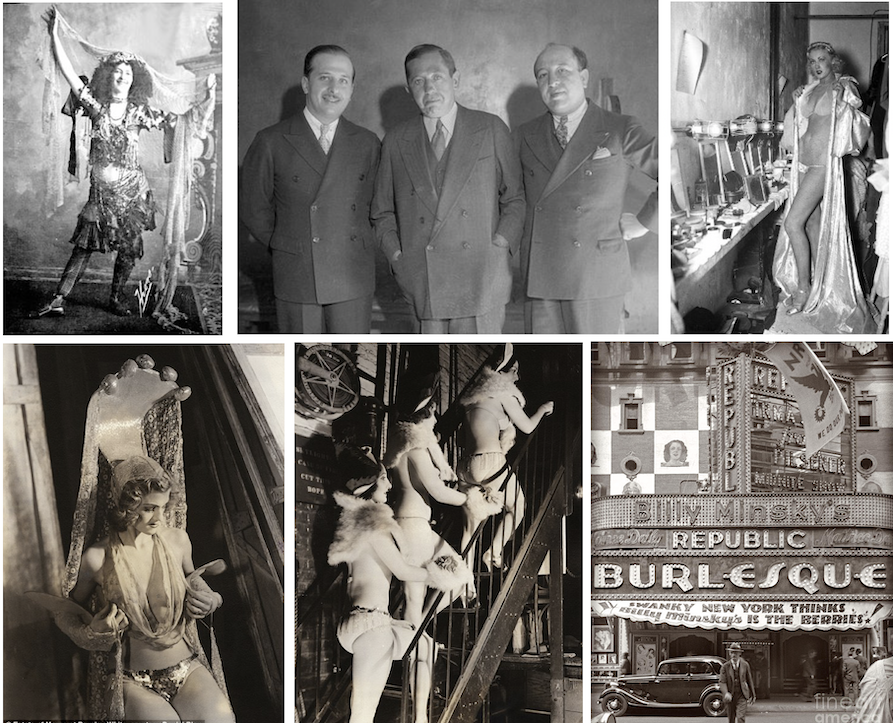
LITTLE EGYPT, aka Farida Mazar Spyropoulos, top left, both titillated and scandalized crowds at the 1893 Chicago World’s Fair (really?); clockwise, from center top, three of Minsky Brothers – Billy, Morton and Herbert; the Minsky Brothers owned several burlesque theaters in New York, including Minsky’s Oriental on 51st Street and Broadway, where stripper Julie Bryan was a top draw in 1936; Billy Minsky brought the Minsky brand to Broadway when he leased the Republic Theatre on 42nd Street in 1931; the last two images are by Margaret Bourke-White, backstage at the Republic in 1936. (Wikipedia/Daily News/Estate of Margaret Bourke-White)
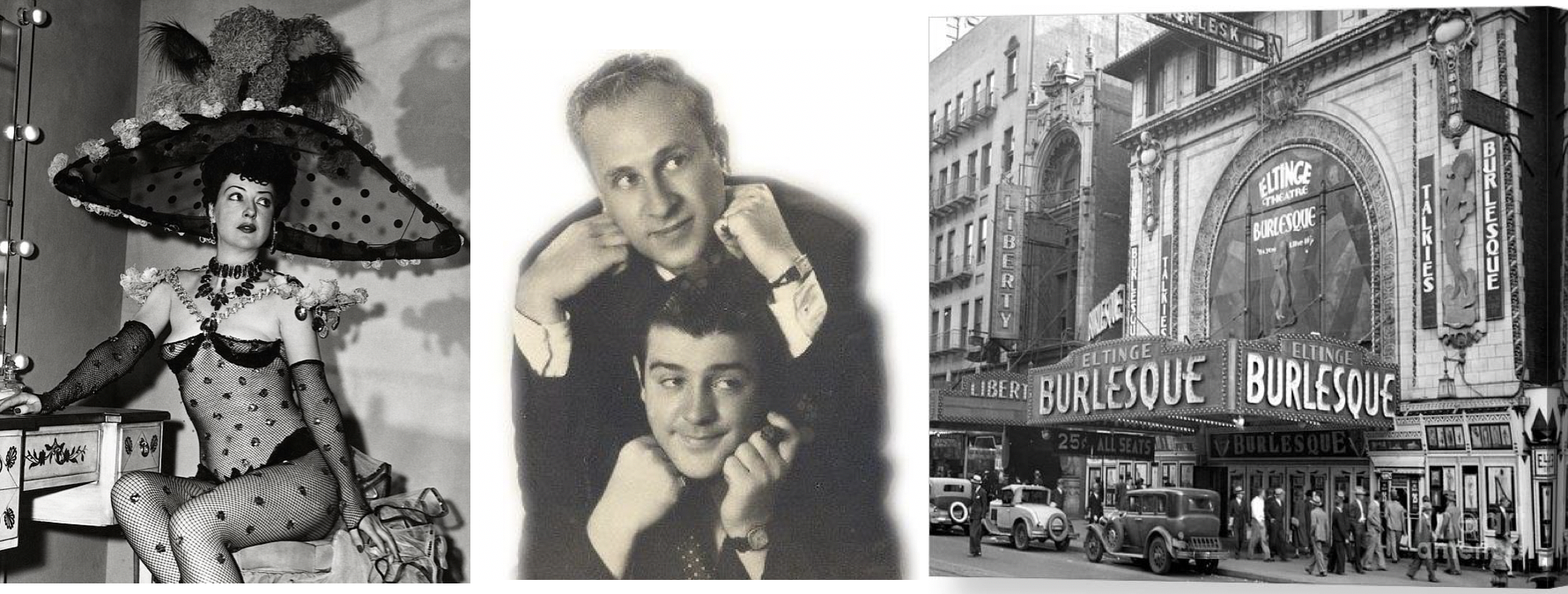
NEED A CAREER?…Well, in the 1930s an aspiring dancer or comedian could earn some chops on the burlesque stage. Gypsy Rose Lee (aka Rose Louise Hovick), left, who became the world’s most famous stripper (as well as an actress, author and playwright), was one of the biggest stars of Minsky’s Burlesque; breaks between burlesque performances were commonly filled by comedians, including Abbott and Costello (pictured above in their 1930s burlesque days), who first worked together in 1935 at the Eltinge Burlesque Theater on 42nd Street, at right.

According to Zemeckis, “burlesque caught on among the recent immigrants of the Lower East Side. The shows were cheap, the humor broad, and the allure of beautiful, barely-clothed women transcended language barriers.” But if striptease wasn’t your thing, Minskyville offered plenty of other diversions:

ONE LUMP OR TWO?…Minskyville’s entrepreneurs (top images) added a modern twist to the study of head bumps and cranium size — called Phrenology — with the electronic “Psycograph” (sic); at bottom, Prof. William Heckler’s Trained Flea Circus at Hubert’s Museum on West 42nd Street attracted some gents itching to see Heckler’s fleas in action; according to Alva Johnston, Minskyville’s penny arcade peepshows (such as the one at bottom right) would take your penny or nickel in exchange for photos of a woman old enough to give your grandpa the glad eye. (Museum of Questionable Medical Devices/sideshowworld.com)
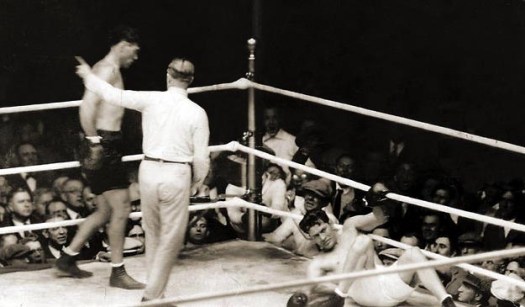
LET’S SEE THAT AGAIN…Folks who didn’t want to look at forty-year-old photos of bathing beauties could check out the most popular attraction at Minskyville’s penny arcades — a clip from the famed Long Count Fight, a 1927 rematch between world heavyweight champion Gene Tunney and former champ Jack Dempsey, which Tunney won in a unanimous decision despite being knocked down in the seventh round. It was, and is, the subject of endless debate. (www.wbaboxing.com )

*  *  *

Not a Gearhead

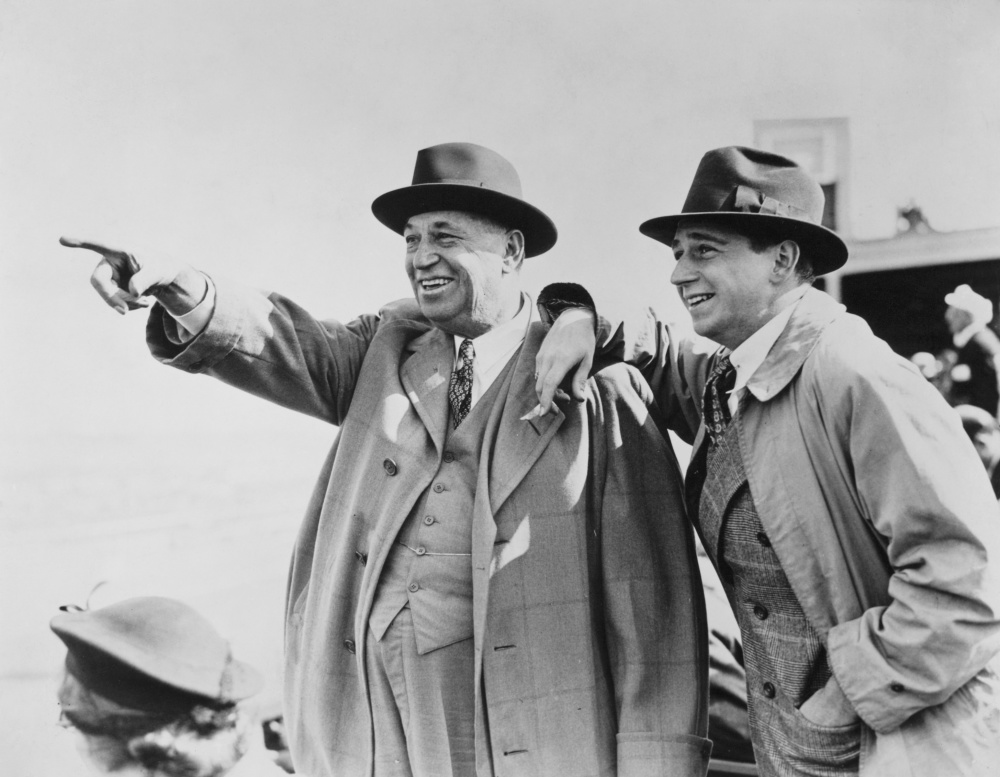
“The Talk of the Town” noted that young Walter P. Chrysler, Jr. preferred arts and literature over things that went zoom:

SOMEDAY THIS WILL ALL BE YOURS, RIGHT?…Walter P. Chrysler Sr. and Walter P. Chrysler Jr. share a father-son moment in 1930. Junior Chrysler devoted much of his life to building a multimillion-dollar collection of paintings (some of which were later found to be forgeries) and made substantial forays into collecting stamps, rare books and glassworks. He also produced a movie, The Joe Louis Story, released in 1953. (chrysler.org)

 *  *  *

Rat-a-tat

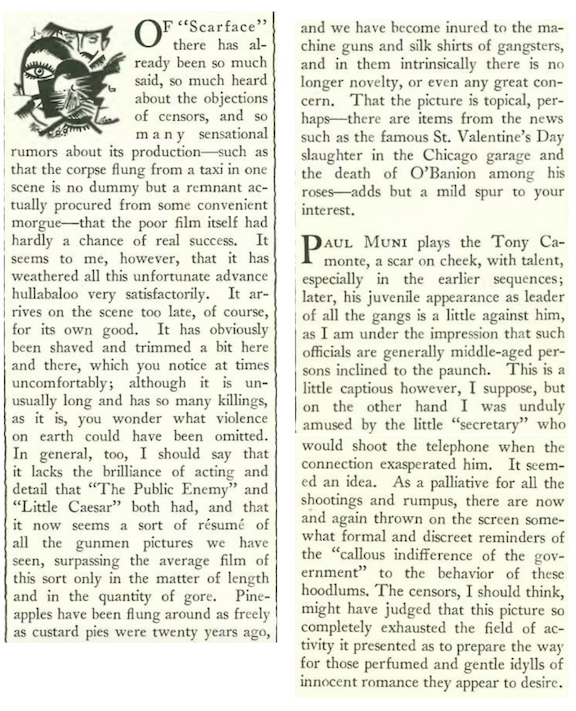
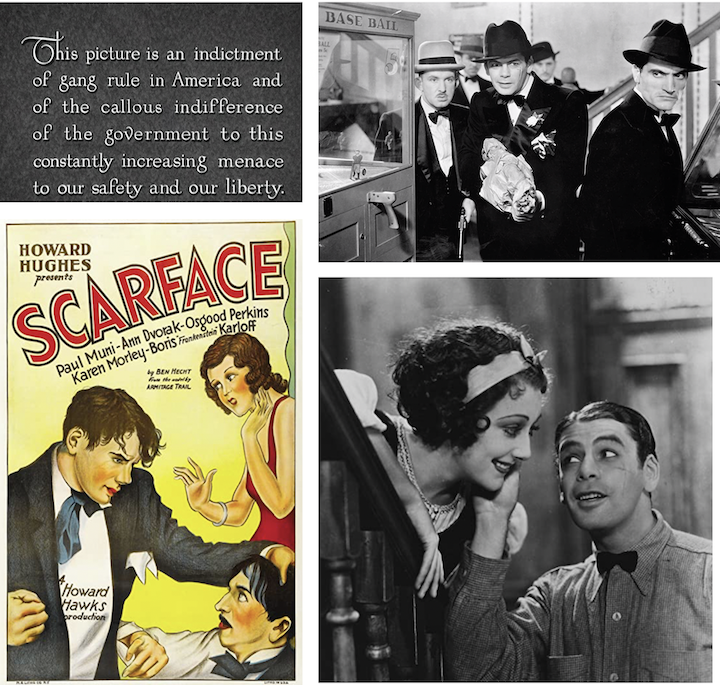
Today most movie lovers associate Scarface with the 1983 Brian DePalma film (starring Al Pacino), but the original Scarface in 1932 was far more influential in that it helped define the American gangster film genre. Directed by Howard Hawks and produced by Hawks and Howard Hughes, the screenplay was penned by early New Yorker contributor Ben Hecht. Mild by today’s standards, the film’s violent scenes caused it to be banned by many theaters around the country. Along with 1931’s Little Caesar and The Public Enemy, Scarface is regarded as among the most significant gangster films. Here is what critic John Mosher thought of it:

JUST IN CASE YOU GET THE WRONG IDEA…Also known as Scarface: The Shame of the Nation, this 1932 gangster film opened with some cautionary words (top left). Clockwise, from top right, gangster “Tony” Camonte (Paul Muni) is flanked by his cronies during a hit on a rival; Tony (Muni) shows his softer side with his dear sister Francesca (Ann Dvorak). United Artists promotional poster (note how Boris Karloff was billed with a reference to his 1931 Frankenstein role). (IMDB)

 *  *  *

From Our Advertisers

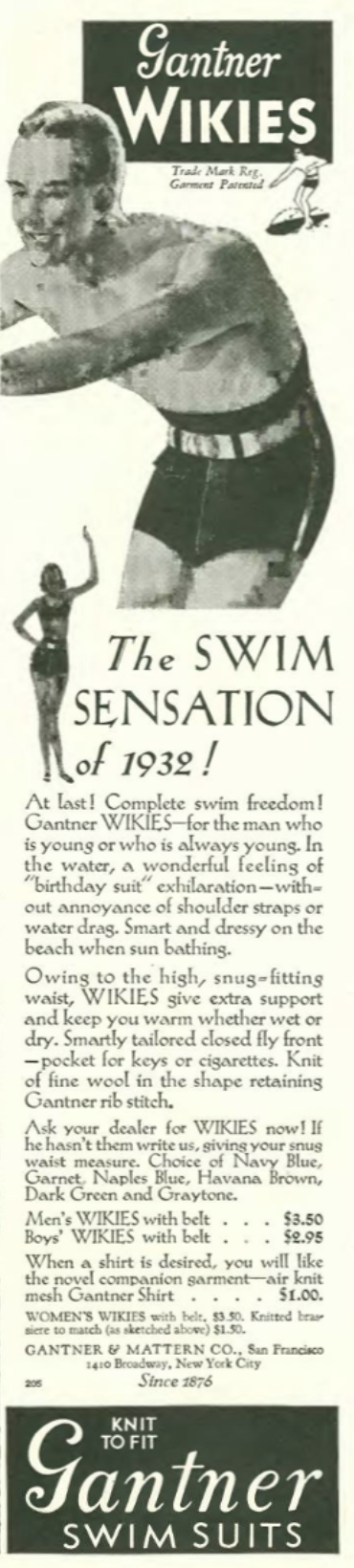
Just when I thought it was safe to go back into the water, out comes another line of wool swimsuits. I honestly can’t imagine how they must have felt, especially when wet and clinging to your skin after you left the water…

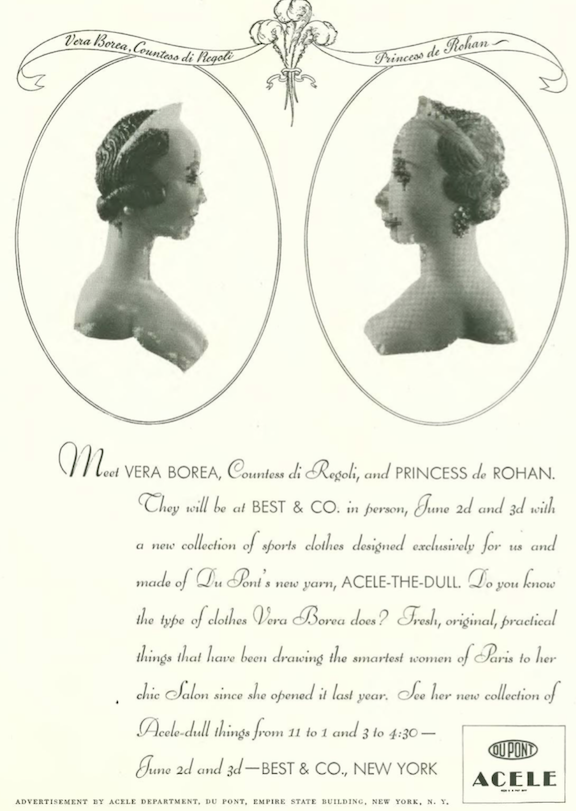
…the ad below from DuPont was just the sort of thing that drove New Yorker fashion critic Lois Long nuts…a couple of downscale royals shilling their fashion lines to an unsuspecting public…the paychecks from DuPont must have been substantial enough for these bluebloods to publicly embrace synthetics…

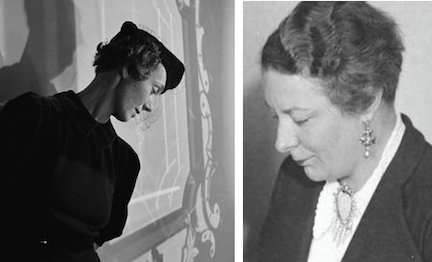
TWO HEADS ARE BETTER THAN ONE…Here is the real Countess Borea de Buzzaccarini Regoli, left, and the Princess de Rohan, who played to America’s insatiable thirst for nobility while shilling for a chemical company. (Wikimedia)

…if you had the money and the steady nerves, you could have hopped aboard an almost 32-hour flight to the West Coast assured that a “coordinated mechanism” of men and machine would get you there in one piece…

…perhaps you could have steadied your nerves by dragging on a Tally-Ho — for some weird reason the Lorillard Tobacco Company (who also made Old Gold) thought some folks might prefer an oval-shaped cigarette (I include the remainder of the back-page ads for context)…

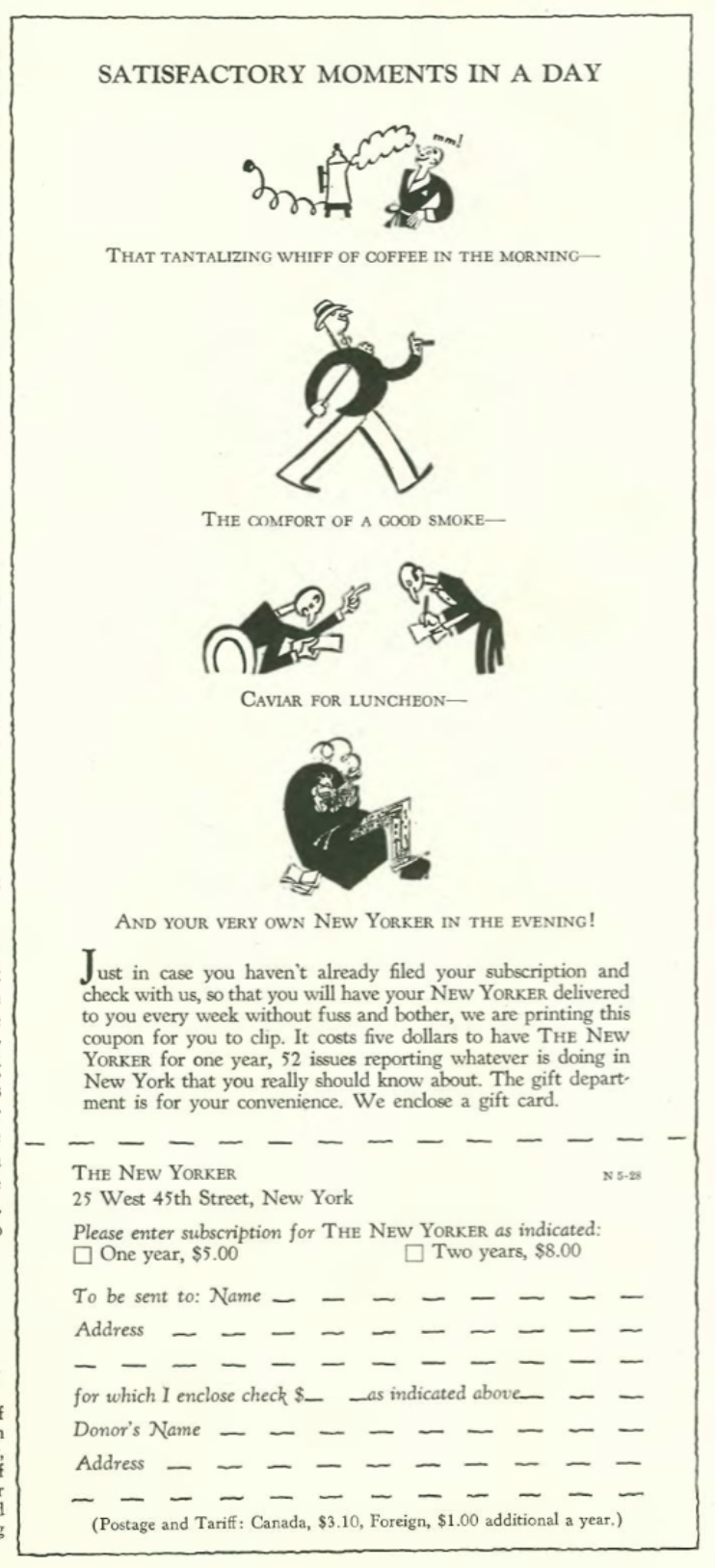
…despite the Depression, The New Yorker was holding its own in sales and subscriptions, but it never hurt to place a house ad every now and then to convince a few who might be holding out…

…on to our cartoons, Garrett Price showed us the result of a bad hand…

James Thurber offered up this spot illustration in the opening pages…

…and this terrific cartoon…

Gardner Rea demonstrated the perils of summoning the dead…

…the departed soul mentioned in Rea’s cartoon was prolific British crime writer, journalist and playwright Edgar Wallace (1875-1932), who wrote 175 novels, 24 plays, and countless articles in newspapers and journals in his relatively short life. He is most famous today as the co-creator of the film King Kong…

PRODUCTIVE SCRIBBLER…Edgar Wallace. (Wikipedia)

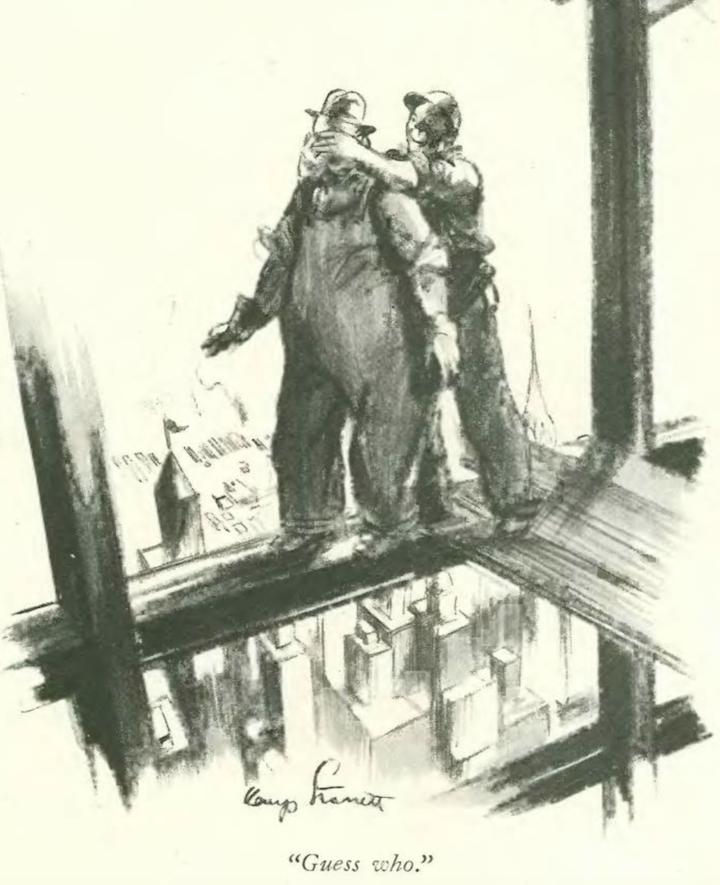
…and we end with this gem from Kemp Starrett, and some high-jinks…

Next Time: Jimmy’s Jam…


From Stage to Screen

There’s good reason why one of Broadway’s finest theatres is named after Alfred Lunt and Lynn Fontanne; no couple has lit up the stage quite like this husband-wife team.

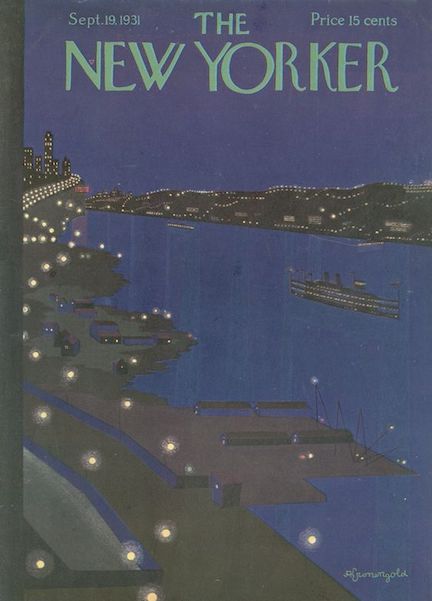
Sept. 19, 1931 cover by Adolph K. Kronengold.

Some say Richard Burton and Elizabeth Taylor were modern successors, but they only appeared together on Broadway once (a 1983 revival of Noël Coward’s Private Lives, at the Lunt-Fontanne Theatre of all places), and they shared a tempestuous, on-and-off relationship that sharply contrasted with Lunt and Fontanne, who were inseparable both on and off the stage during their 55-year marriage. And unlike Burton and Taylor, Lunt and Fontanne appeared in just a handful of films, including a 1931 adaptation of their 1924 Broadway play, The Guardsman. John Mosher filed this review:

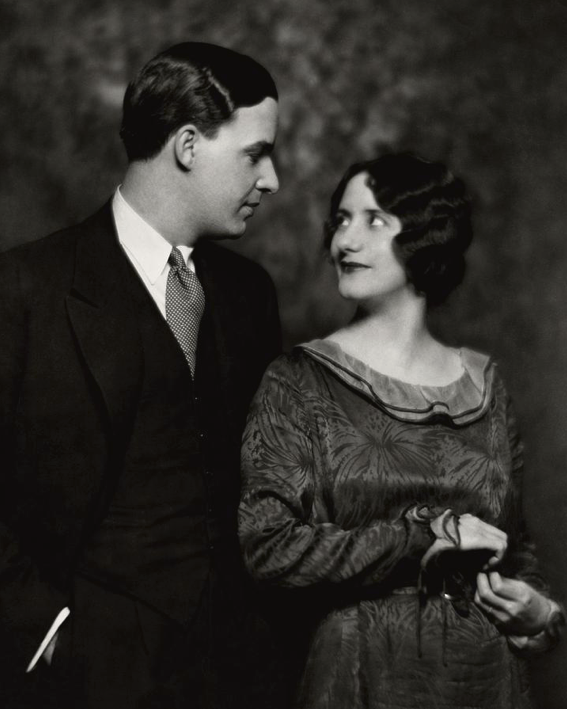
INSEPARABLE…Alfred Lunt and Lynn Fontanne pose for photographer Nickolas Muray in this 1924 portrait for Vanity Fair magazine. They married in 1922, and were inseparable until Lunt’s passing in 1977. (Conde Nast)
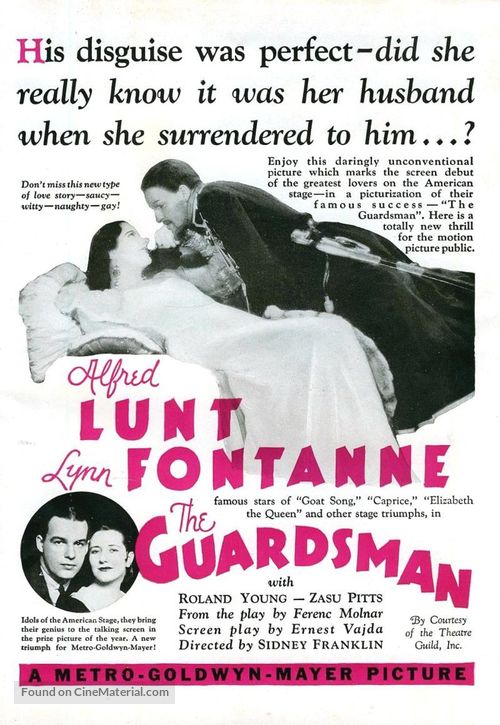
NAUGHTY, NAUGHTY!…These were Pre-Code times, so MGM played up the film’s “saucy” and “unconventional” themes. (IMDB)
I’VE GROWN ACCUSTOMED TO YOUR FACE…Although Lunt and Fontanne appeared together numerous times on Broadway, the 1931 film adaptation of their 1924 stage play, The Guardsman, would be their only film appearance together. (Museum of the City of New York/IMDB)
STAGE TO SCREEN…at top, Lunt and Fontanne in 1924’s The Guardsman on Broadway; below, a scene from the 1931 film adaptation featuring, from left, Alfred Lunt, Lynn Fontanne, Maude Eburne and Zasu Pitts; at right, Fontanne reviews fashions for the film designed by Adrian Adolph Greenburg. Lunt and Fontanne would be nominated for Academy Awards as Best Actor in a Leading Role and Best Actress in a Leading Role, respectively. (Museum of the City of New York/IMDB)

 *  *  *

One Giant Leap

Charles Lindbergh crossed the Atlantic without stopping in 1927, but it would take four more years before anyone could accomplish the same feat across the Pacific. Don Moyle and Cecil Allen took up the challenge, hoping to fly their plane, Clasina Madge, 4,400 miles from Japan to Seattle to win a $25,000 prize from a Japanese newspaper. The lads took off from Tokyo in early September, but then went missing. E.B. White wrote:

As it turned out, Moyle and Allen were caught in a storm between Japan and Alaska that forced them to land on a small, uninhabited island in the Aleutian chain. Stranded for more than a week, the flyboys were finally able to make contact through a U.S. Coast Guard patrol and report they were safe.

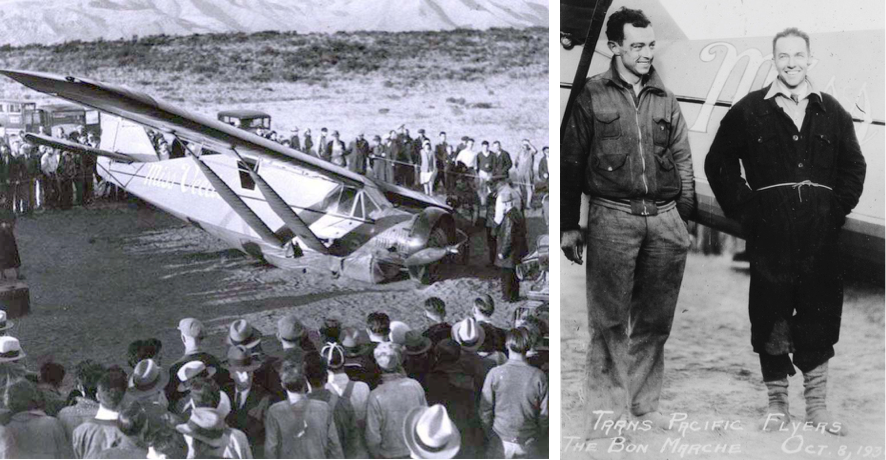
THESE ARE MY BOYS…at left, Cecil Allen and Don Moyle standing with financial backer John Buffelin and Buffelin’s daughter, Clasina Madge, the namesake for their hopefully record-setting airplane; At right, Moyle and Allen with a Japanese official, possibly before one of their attempts, or perhaps they are looking at their consolation prize (see below). (University of Washington)

Moyle and Allen sent word that they would return to Washington and prepare for another attempt. They flew back home by way of Nome, Alaska, where they landed on Sept. 21, 1931. Five days later they reached Fairbanks, and after weather delays finally made it to Tacoma, Washington, on Oct. 6. There they learned that Clyde Pangborn and Hugh Herndon Jr. had already won the $25,000 prize, having arrived from Japan the day before. The Tokyo newspaper did, however, give Moyle and Allen $2,500 for their efforts.

SPOILERS…at left, Hugh Herndon, Jr. and Clyde Pangborn pose next to their crash-landed plane in the hills of East Wenatchee, Washington, after becoming the first to fly non-stop across the northern Pacific Ocean. The 41-hour flight from Japan won them the 1931 Harmon Trophy and $25,000 from a Japanese newspaper. The crash-landing of their plane was deliberate — before the flight it was modified to carry 930 gallons of fuel. They had jettisoned the landing gear after takeoff to save fuel. (historylink.org/imagesofoldhawaii.com)

 *  *  *

Thurber Gets Serious

We know James Thurber as a humorist, both for his writings and his cartoons. In the Sept. 19 issue, however, Thurber offered this touching remembrance of a subway newsstand proprietor, who he later learns is killed in the crossfire of a robbery. Here are the opening passages:


 *  *  *

Did You Miss Me?

After a long absence (in Europe, presumably),  returned to his “Shouts and Murmurs,” column, offering this “Triple Warning” that included his observations of H.G. Wells, who wondered if all his musings for the future would fall to swarms of lowly insects…

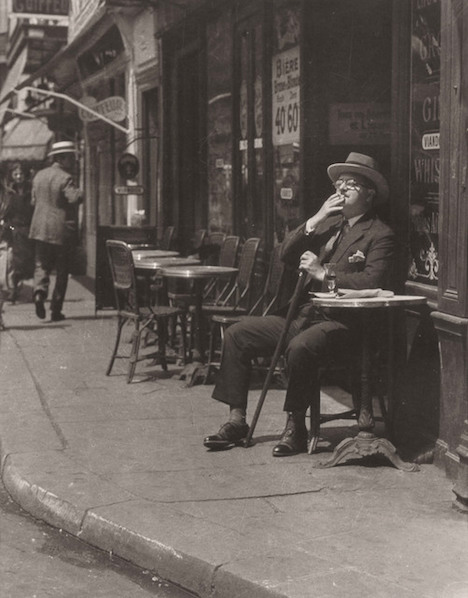
WORK CAN WAIT…Alexander Woollcott relaxes in front of a Paris bar, late 1920s. Photo by James Abbe. (artsy.net)

 *  *  *

From Our Advertisers

With the arrival of fall come new fashions…these “wearables” below are suggested by B. Altman as suitable attire for attending a football game…

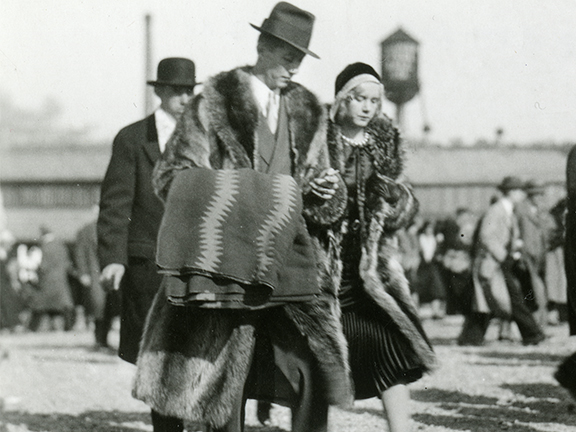
…smart fashions for young people weren’t confined to New York…this is how students at the University of Michigan dressed for a 1930 homecoming game against Illinois…

…well, times have changed, but folks still wear fur of a sort…

Jan 1, 201USA TODAY Sports

…wearing a real fur these days will draw the ire of animal rights advocates almost everywhere, but in 1931 few had problems with turning leopards and seals into coats for fashionable young women…

…then as now, folks enjoyed their pork sausage…the Jones Family of Wisconsin apparently saw a market for their products among New Yorker readers…

…after 131 years in business, the Jones Family and their sausages are still going strong…as is their farmhouse logo (the old farmhouse is real and still stands)…

…another back pages ad promoted Helen Hokinson’s first cartoon collection, So You’re Going to Buy a Book!

…the collection including Hokinson’s beloved dowagers, but it also featured this gem…

(attemptedbloggery.blogspot.com)

…on to our cartoons from the Sept. 19 issue, we begin with William Steig and a couple of would-be renters…

E. McNerney explored the trials of teenage life…

Leonard Dove drew a crowd in a packed subway car…

Otto Soglow displayed the playful side of his Little King…

…and Rea Irvin found an actor upstaged by an unlikely rival…

Next Time: Big Fish, Little Fish…