Lighter Than Air

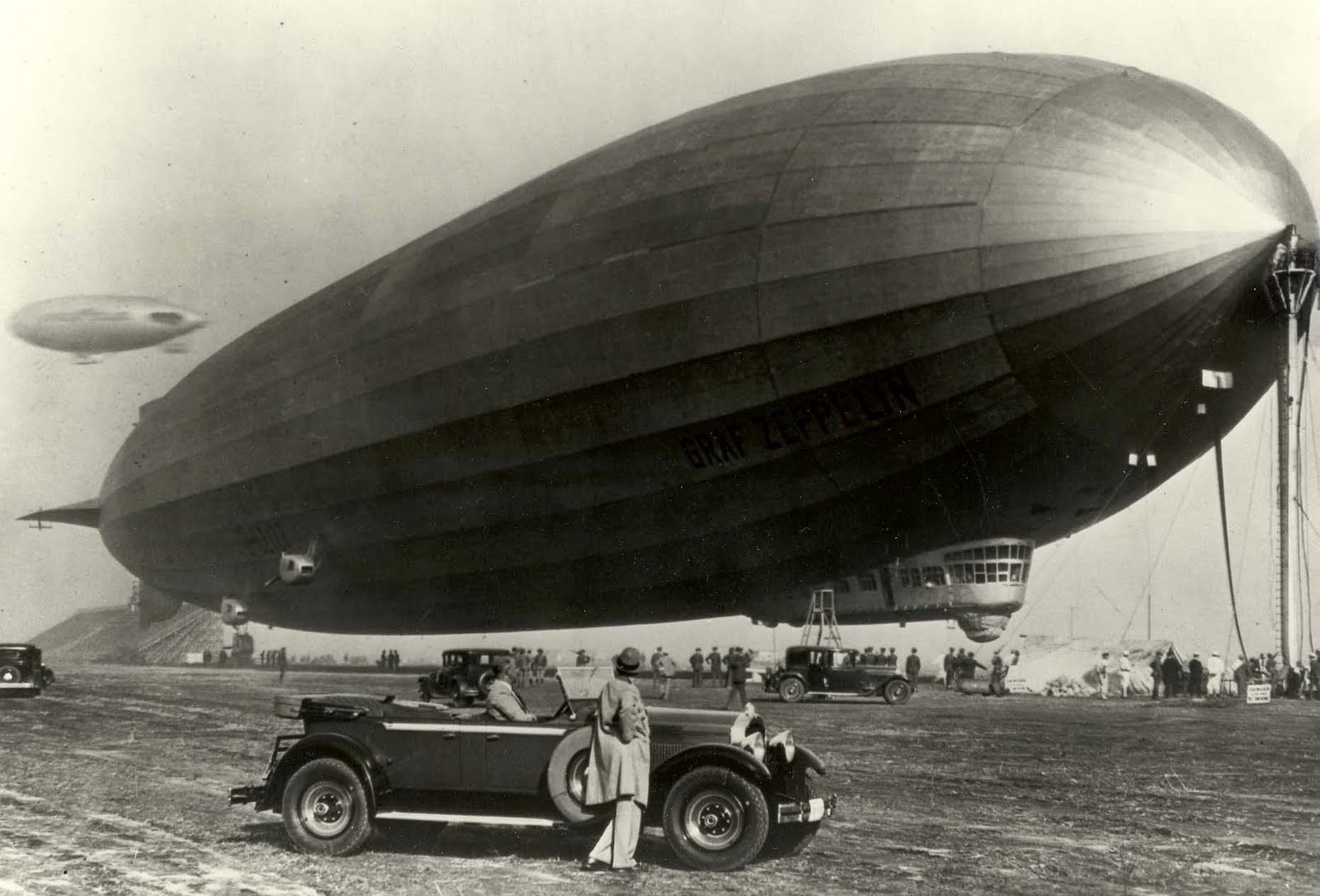
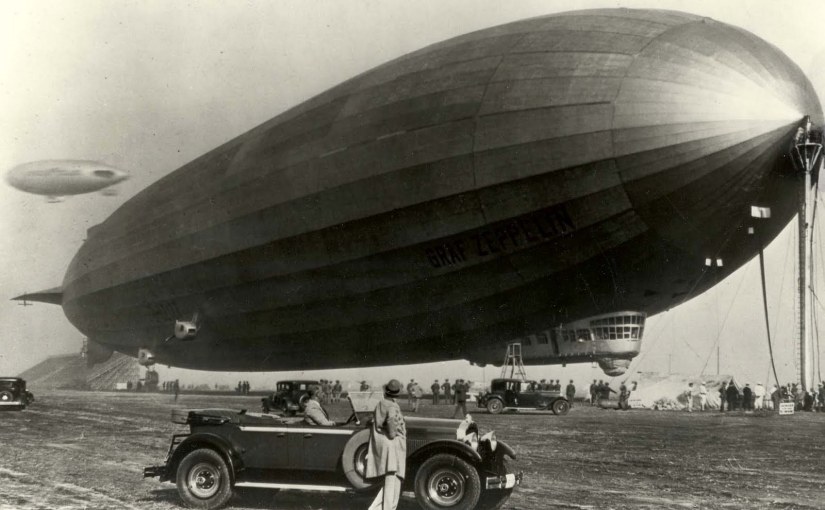
Just a decade after German Zeppelins sowed terror across the skies of Europe and Great Britain, Germany’s new Graf Zeppelin was enthusiastically welcomed by a throng gathered at Lakehurst, New Jersey, the massive airship having completed its first intercontinental trip across the Atlantic.
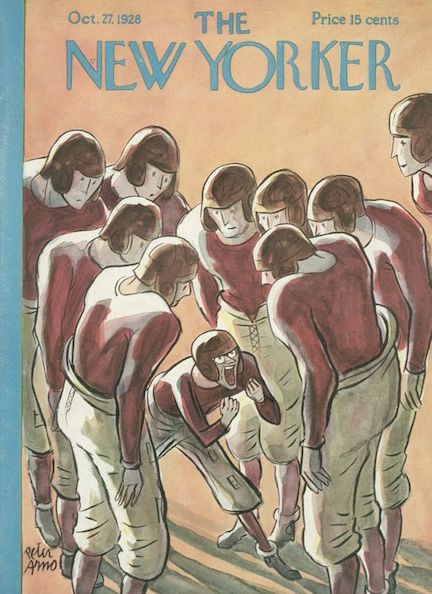
Oct. 27, 1928 cover by Peter Arno.

It had been only ten years and two months since German Zeppelins dropped their last bombs on the British, which had dubbed the airships “baby killers” for the mostly civilian casualties they inflicted. Beginning in 1915, Zeppelin raids on London killed nearly 700 and seriously injured almost 2,000 over the course of more than 50 attacks. It must have been a terrifying sight, something straight out of science fiction — flying ships more than the length of two football fields, blotting out the stars as they loomed overhead. Their size, however, was also their downfall, as Britain soon developed air defenses (searchlights, antiaircraft guns, and fighter planes) that shot many of these hydrogen gasbags out of the sky (77 of Germany’s 115 airships were either shot down or disabled).

TERROR IN THE SKIES…Image from a German postcard celebrating the bombing of Warsaw by the Zeppelin Schütte Lanz in 1914. Here’s a weird fact: There was a shortage of sausages in Germany during WWI, since cow intestines normally used for casings were instead used to create special bags to hold the hydrogen gas that kept Zeppelins aloft. It took more than 250,000 cows to make one airship. (Wikipedia)

So when the 776-foot Graf Zeppelin loomed over the New York City skyline on Oct. 15, 1928, the reaction was one of awe rather than terror. The New York Times heralded its safe arrival on the front page…
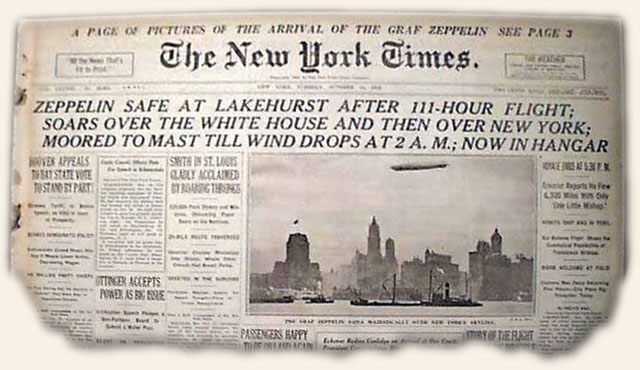
(rarenewspaper.com)
The Graf Zeppelin at Lakehurst, N.J., 1929. (rarehistoricalphotos.com)

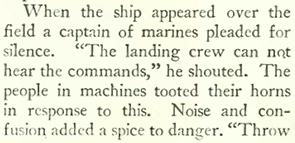
…and The New Yorker’s James Thurber (writing in “The Talk of the Town”) was on hand to assess the welcoming crowds gathered at Lakehurst, N.J….

…who in their enthusiasm could have easily destroyed the vessel, which had already sustained damage during a storm over Bermuda…
OLD GAS BAG…The Graf Zeppelin arriving at Mines Field (now Los Angeles International Airport) on August 26, 1929. Newspaper magnate William Randolph Hearst sent the Graf Zeppelin dirigible on a 20-day flight that circumnavigated the world in 1929. (martinturnbull.com)
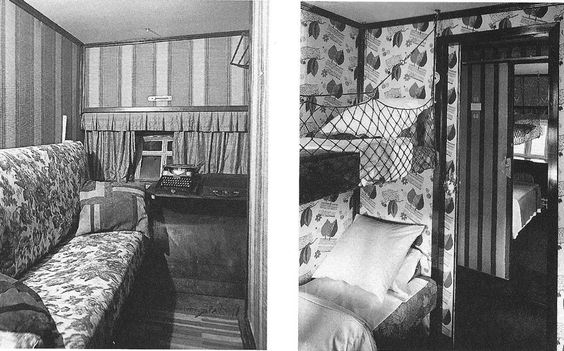
Living quarters of the Graf Zeppelin. Cozy, if you could forget that your room was contained within an envelope of highly explosive hydrogen gas. (airships.net)

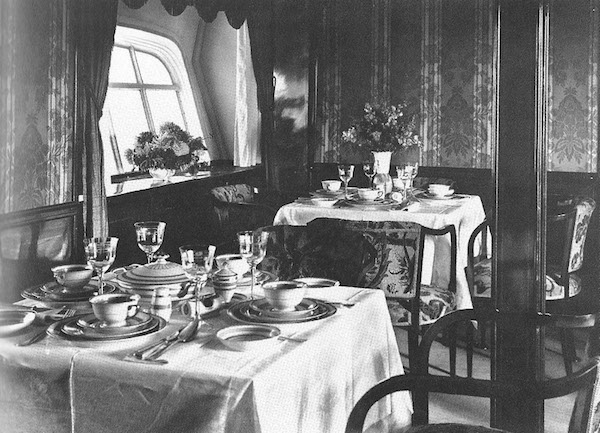
Dining aboard the Graf Zeppelin. (Top, airshipsonline.com, bottom, airships.net)

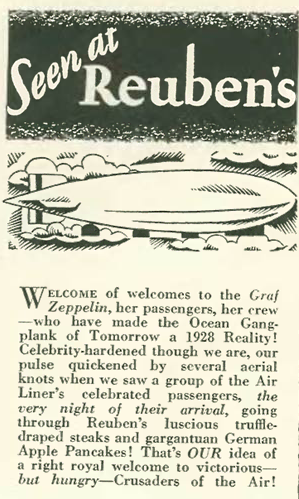
Reuben’s restaurant in New York seized the opportunity to cash in on the spectacle, boasting (in this hastily placed ad in the Oct. 27 issue) that the Graf Zeppelin’s passengers dined at their establishment on the very night of their arrival…
A final note: Considering the hazards of flying these ungainly, flammable machines (e.g. the Hindenburg in 1937) Graf Zeppelin flew more than one million miles in its career (the first aircraft in history to do so), making 590 flights (144 of them oceanic crossings, including one across the Pacific), and carrying more than 13,000 passengers — all without injury to passengers or crew.

 *  *  *

Rough Riders

Back on the ground, “The Talk of the Town” looked in on a somewhat less exotic form of long-distance travel — the recently inaugurated coast-to-coast bus service from New York to Los Angeles:
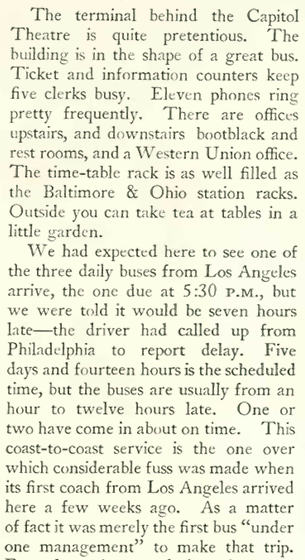
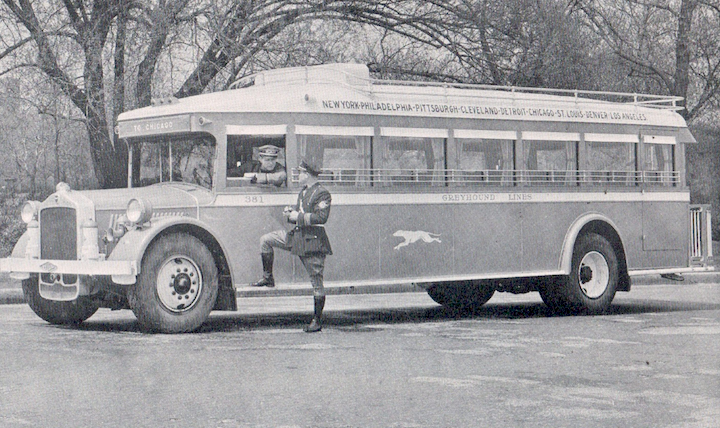
LONG HAUL…This Greyhound bus from 1929 was probably similar to those leaving the New York bus stations for points west in 1928. (flickr)

 *  *  *

From Our Advertisers

On the subject of rolling transportation, Buick trumpeted the introduction of “adjustable front seats” in its silver anniversary model. Curiously, this improvement was touted as a convenience solely for women drivers…

Our cartoon (a two-pager) for Oct. 27 comes from Gardner Rea, the latest among The New Yorker’s staff to mock the quality of sound motion pictures. The cartoon is labeled at the bottom: “The Firtht One Hundred Per Thent Thound Movie Breakth All Houth Recordth.” (click image to enlarge)

 *  *  *

If you wanted to get a glimpse of New York’s “royalty” in 1928, you could secure a seat at the Metropolitan Opera, especially one with a view of its famed “Diamond Horseshoe” seats.

November 3, 1928 cover by Julian de Miskey.

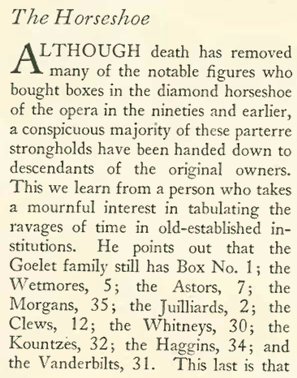
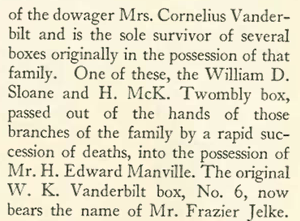
The “Diamond Horseshoe” described a ring of seats at the Metropolitan Opera House occupied by New York’s social elite. Not unlike today’s stadium skyboxes, the Met reserved these boxes for purchase by the wealthy. “The Talk of Town” for Nov. 3, 1928 noted how many of these were still held by the same families that had secured spots after the Met opened in 1883:
CULTURAL LANDMARK…The Metropolitan Opera House at Broadway and 39th Street circa 1905. (Wikipedia)
SEE AND BE SEEN…The Diamond Horseshoe at the Metropolitan Opera House, as seen from the rear of the stage for a concert by pianist Josef Hofmann, November 28, 1937. (newyorksocialdiary.com)

“Talk” also noted that some of the boxes in the Diamond Horseshoe were coming into new ownerships among the newly rich (E.F. Hutton) and even (gasp) immigrants such as Otto Kahn:

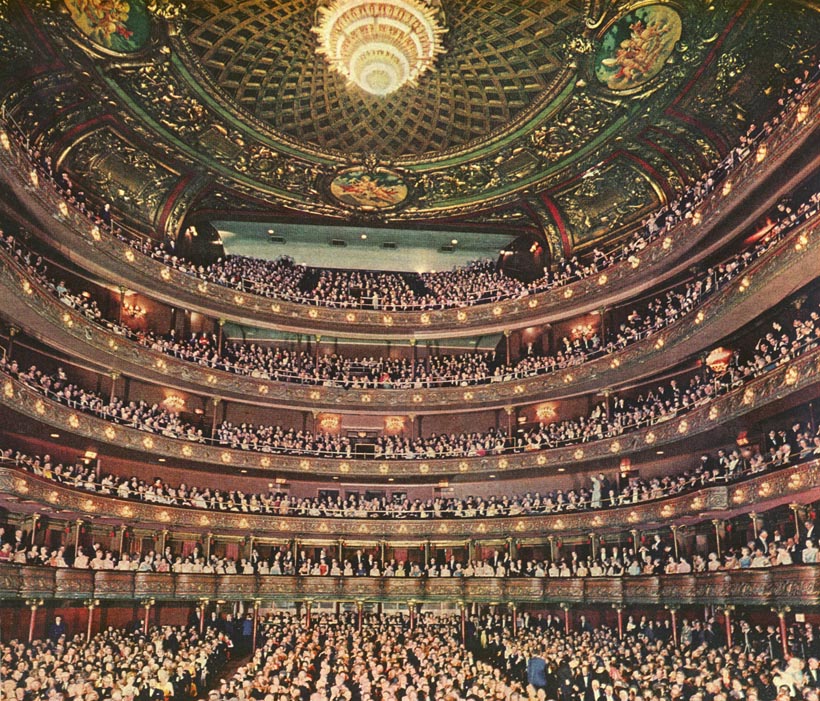
DUST TO DUST…Above, a view of the “Diamond Horseshoe” at the Metropolitan Opera’s gala farewell performance on April 16, 1966. Below, patrons say goodbye to the old house at Broadway at the farewell performance. The building was torn down in 1967 and replaced by a 40-story office tower. (Time/Life)

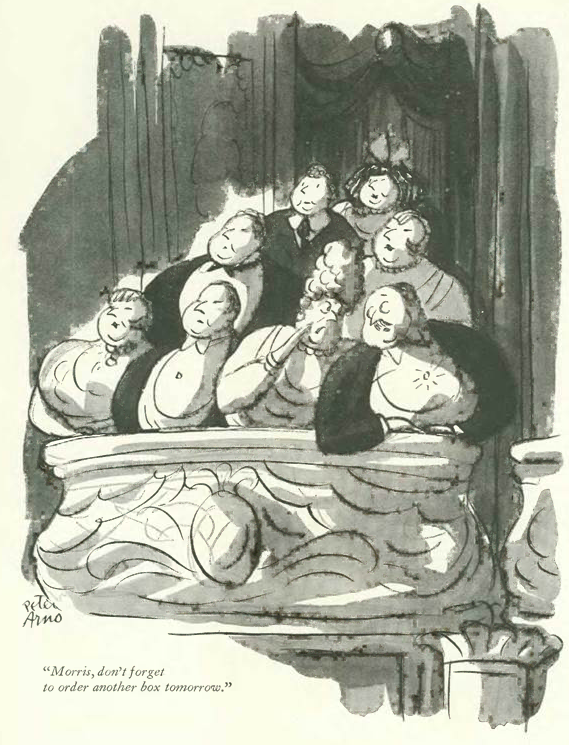
Also in the Nov. 3 issue was this cartoon by Peter Arno depicting one of the Met’s boxes stuffed with overfed toffs:
 *  *  *

Poet With a Green Thumb

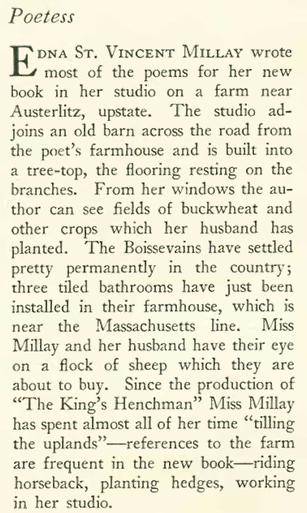
The Nov. 3 “Talk” also featured a bit by James Thurber on American poet and playwright Edna St. Vincent Millay, a major figure in New York’s Greenwich Village literary scene as well as a feminist leader. A Pulitzer-Prize winner (1923), Millay was also an avid gardener who preferred the solitude of her farm, Steepletop, to the limelight usually accorded a literary star:
RARE PHOTOGRAPH…Edna St. Vincent Millay raised her own vegetables at Steepletop, a former blueberry farm located near Austerlitz, New York that she owned with her husband Eugen Jan Boissevain. Photo is circa 1928. (Library of Congress)

Thurber noted that even her publisher, Harper & Sons, had to use an old photo of the publicity-shy poet for a new book release:

On the topic of photography, “Profiles” (written by film historian Terry Ramsaye) looked in on the quiet life of photography pioneer George Eastman, who founded the Eastman Kodak Company and popularized the use of roll film.

A quintessential “mamma’s boy,” Eastman never married…

…and by all accounts died a celibate less than four years after this profile was written, taking his own life at age 77. Suffering from intense pain caused by a spinal disorder, Eastman shot himself in the heart on March 14, 1932, leaving a note which simply read, “To my friends: my work is done. Why wait?”

Odds and Ends

Other items of note from the Nov. 3 issue included a humorous piece by Rube Goldberg, “The Red Light District,” in which the president of the Blink Stop-Go Traffic Company summons a doctor to treat a strange malady. The doctor gets held up by traffic lights on the way to the “emergency,” and when he discovers the problem is only hives, he shoots the patient. The piece was headlined by this artwork, also by Goldberg (shades of George Herriman and R. Crumb, yes?)…

Goldberg is still known today thanks to his series of cartoons depicting deliberately complex contraptions invented to perform simple tasks, such as the “Self-Operating Napkin” below, from 1931:

1931 (Wikipedia)

Cartooning’s highest honor, The Reuben Award, was named after Goldberg, who was a longtime honorary president of the National Cartoonists Society.

 *  *  *

The Roaring 20s saw a rapid transformation of the New York skyline, with massive skyscrapers rising from the dust of old 18th and 19th century institutions. But few would signal the new age more than the Chrysler Building, an Art Deco landmark that would stand as the world’s tallest building for nearly a year (knocked from the top spot in May 1931 by the Empire State Building). Architecture critic George S. Chappell (“T-Square”) had this observation about the planned building:

EVOLUTION OF AN ICON…Stages in the design for the Chrysler building, from the July-December 1929 issue of Progressive Architecture.

*  *  *

More from our advertisers…in the Nov. 3 issue Hawaii beckoned well-heeled New Yorkers who were contemplating the coming winter…

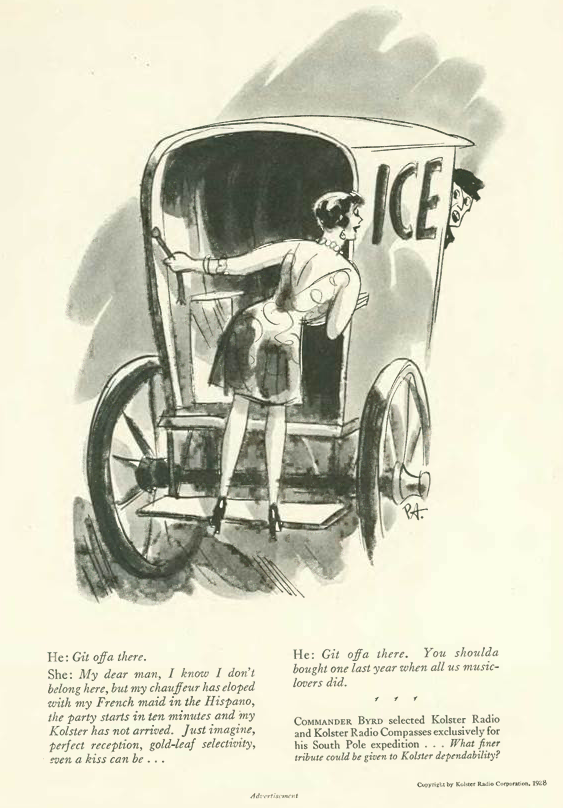
…and then there was this poorly executed ad for Kolster radios, the whole point seeming to be the drawing they commissioned from New Yorker cartoonist Peter Arno:
And finally, a cartoon by Alan Dunn, who looked in on an Ivy League football huddle:

Next Time: Diamond Lil…

 

A Bird’s Eye View

The New Yorker’s E.B. White was an aviation enthusiast who rhapsodized about his flights into the clouds, but also had prescience to see the darker side of this modern thrill ride.

October 6, 1928 cover by Ilonka Karasz.

Writing in the “Reporter at Large” column for the Oct. 6, 1928 issue, White described his visit to Curtiss Field, where he inquired about a pilot who could fly him over New York City. He was told someone named Bill would take him up.

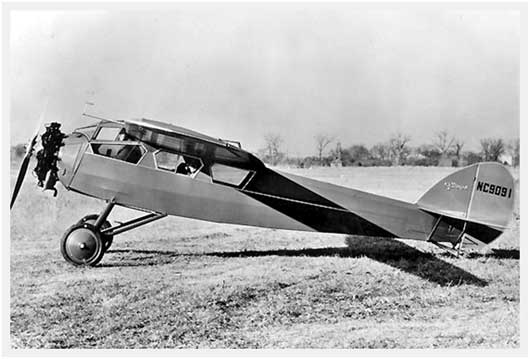
EARLY BIRD…This Fairchild FC-2 Cabin Monoplane, with strut-supported wing, was probably similar to the plane E.B. White rode in his flight over New York City. (Quora)

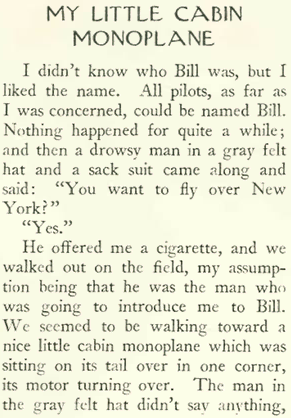
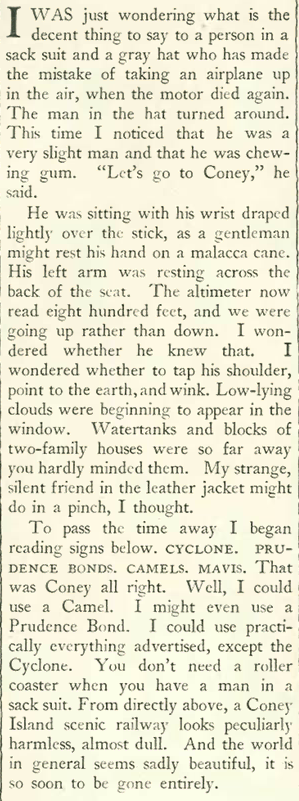
After a half hour wait, a man in a gray felt hat and sack suit offered White a cigarette and said, “You want to fly over New York?” Although the man didn’t look like a pilot, White followed him to a “little cabin monoplane.” Without saying another word the man took the plane up into the air, much to White’s surprise:

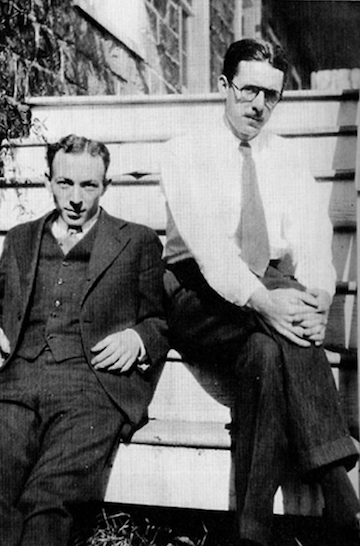
FLYBOY…E.B. White (left) with friend and New Yorker colleague James Thurber in 1929. (University of Virginia)

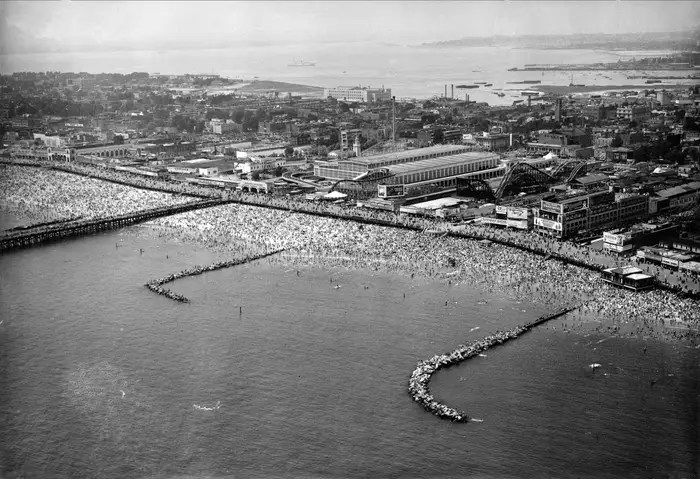
White described the various sites from 800 feet up, including Coney Island, a view at once beautiful and foreboding…
Aerial view of Coney Island, 1937. (AP/lunaparknyc.com)

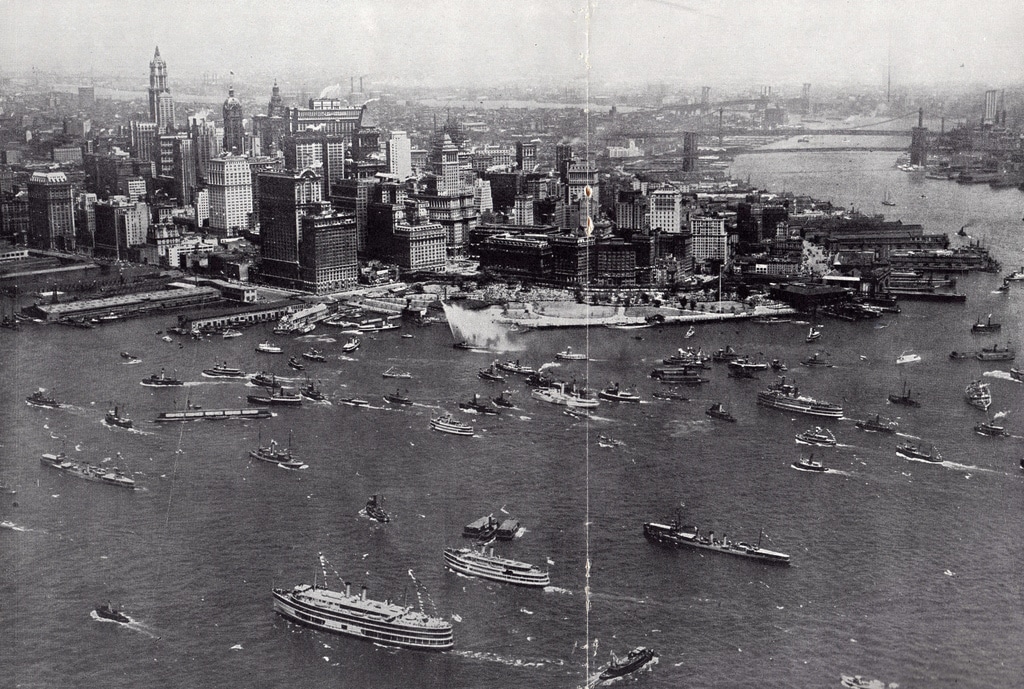
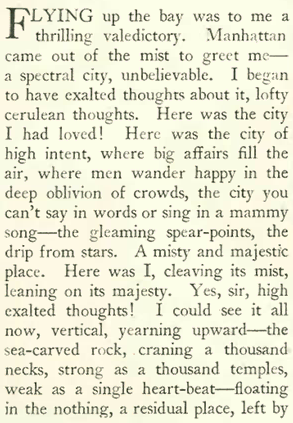
…and the thrill of the approaching city skyline as his plane soared up the Bay toward Manhattan:

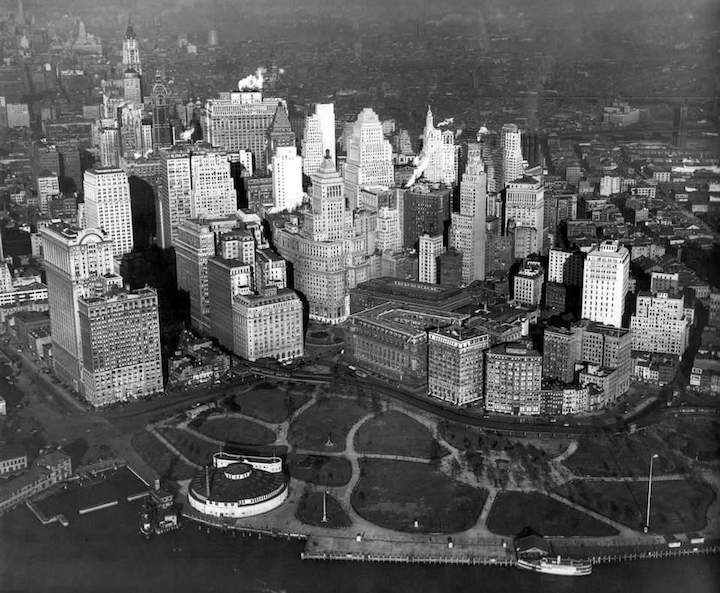
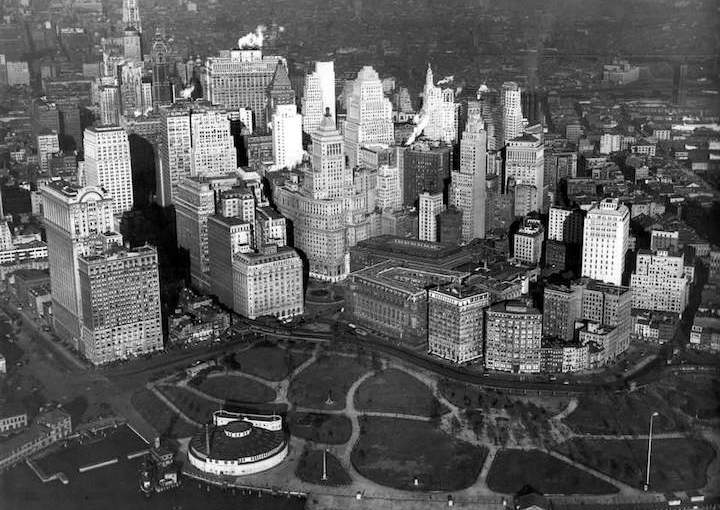
Lower Manhattan looking northeast from the Bay in July 1927. This is approximately the view described by E.B. White as his plane approached Manhattan. (Favrify.com)
A closer view of lower Manhattan as it would have appeared to E.B. White on his 1928 flight over New York City. (Fairchild Aerial Survey photo, 1928)

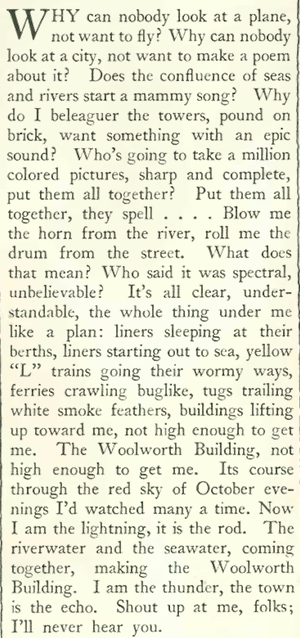
Once over the city, White could not help but contain his exuberance, soaring high above the towering spires and teeming crowds below:

And yet as I noted earlier, his observations were tinged with melancholy and foreboding. In describing his flight over Coney Island, for example, White concluded that “the world in general seems sadly beautiful, it is so soon to be gone entirely.”

Perhaps he referred to the rapid changes seen daily in the city during the 1920s, when nothing seemed permanent. Or did this bird’s eye view suggest something else to White? Twenty years later, in his 1948 essay “Here is New York,” White would write:

A single flight of planes no bigger than a wedge of geese can quickly end this island fantasy, burn the towers, crumble the bridges, turn the underground passages into lethal chambers. The intimation of mortality is part of New York now: in the sound of jets overhead, in the black headlines of the latest edition.

Unlike 1928, White had the hindsight of World War II, of entire cities leveled by waves of heavy bombers, or in the case of Hiroshima and Nagasaki, just a single bomb. The foreshadowing of 9/11 is contained in his words as well.

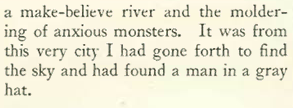
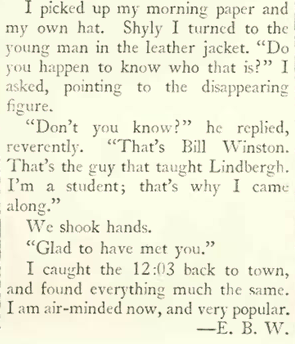
Back on the ground at Curtiss Field, White would finally learn the identity of the man who didn’t look like a pilot, but had just flown him over the city:

Another Vantage Point

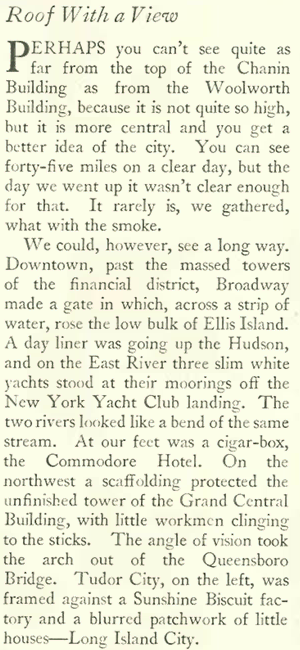
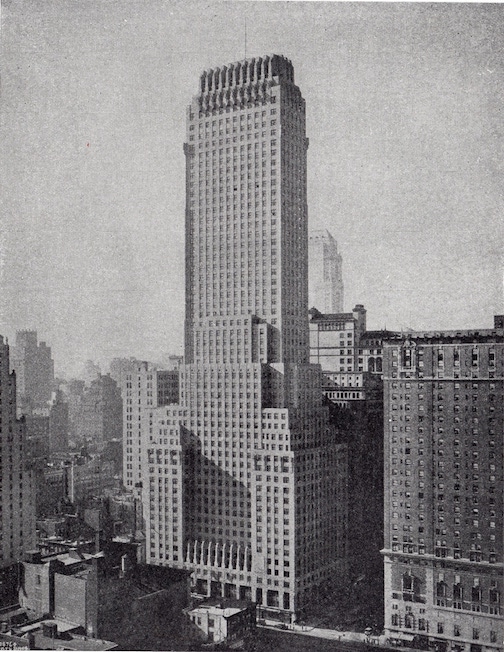
With buildings rising ever higher in Manhattan, you could get a pretty good view of the surrounding city by taking an elevator to the rooftop of the latest skyscraper. The Oct. 6 “Talk of the Town” found a good perch atop the 680-foot-tall Chanin building on the southwestern corner of Lexington Avenue and 42nd Street.

THINGS ARE LOOKING UP…The Chanin Building at Lexington and 42nd. Sloan & Robertson Architects, 1928. (New York Public Library)

 *  *  *

From Our Advertisers

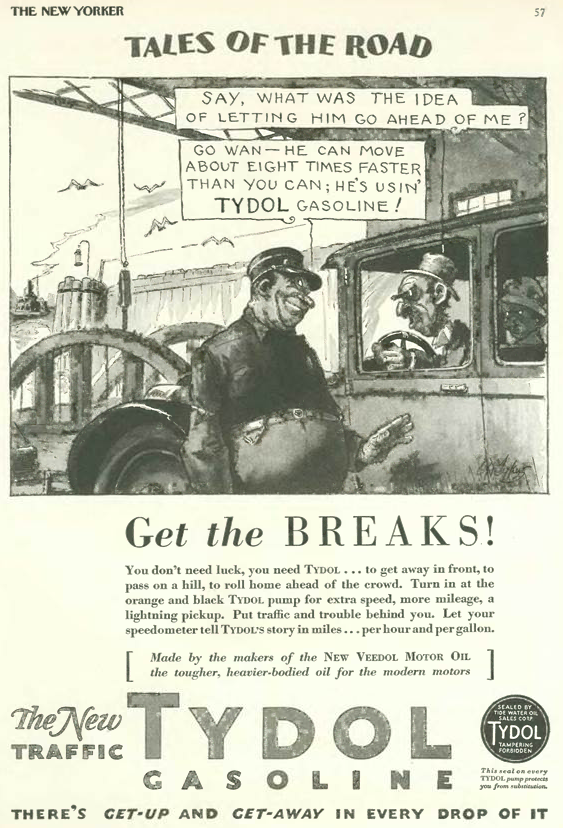
Something you never see in The New Yorker anymore, or in most magazines for that matter, are ads promoting various brands of gasoline. This one touts the benefits of Tydol, produced by the (now defunct) Tide Water Oil Company of New York:

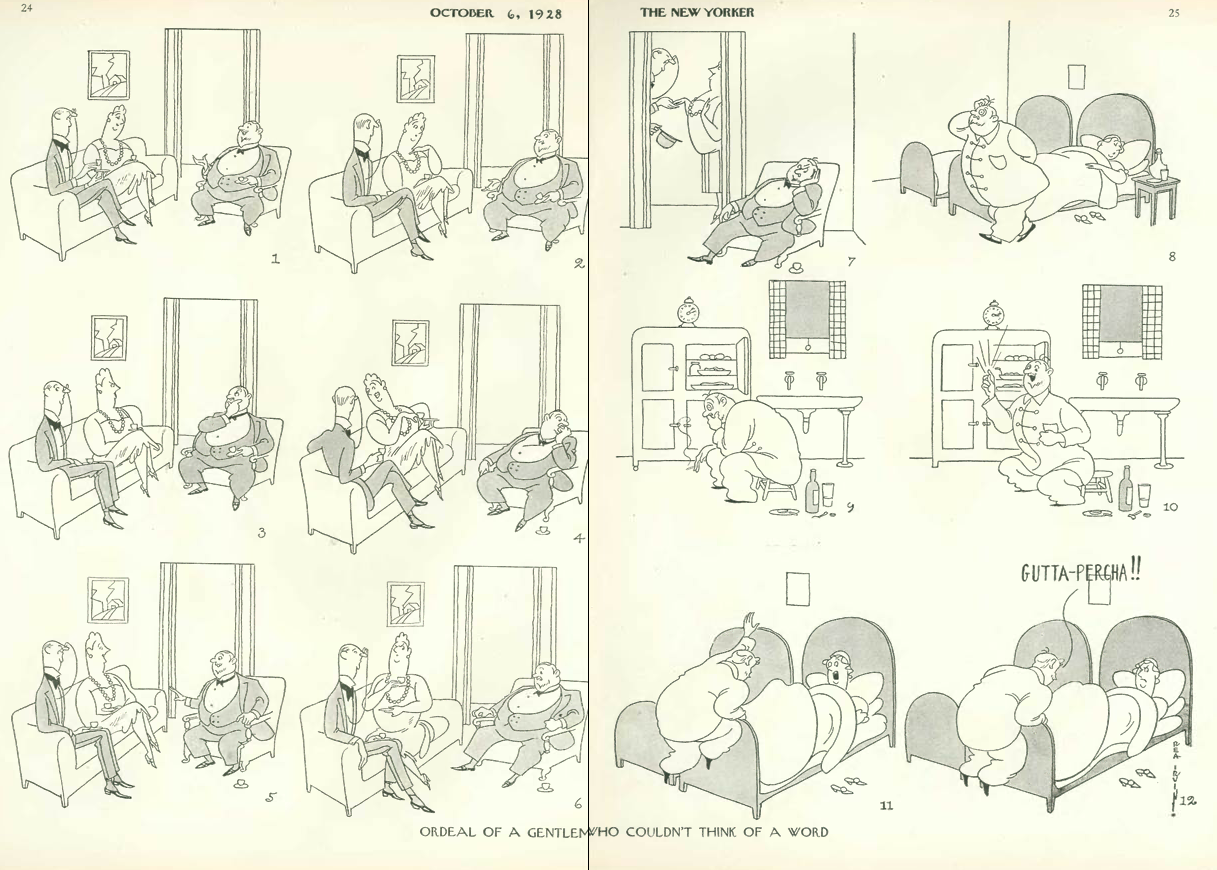
For our Oct. 6 cartoon, here is one of Rea Irvin’s occasional multi-panel, two-page comic spreads, this one exploring the ordeal of a man who couldn’t think of the word for a type of natural plastic used in the 1920s (click to enlarge image):

 *  *  *

The Oct. 13, 1928 issue featured a notable short story by Thyra Samter Winslow, a writer who contributed nearly a dozen pieces to The New Yorker in 1927 and 1928.

October 13, 1928 cover by Julian de Miskey.

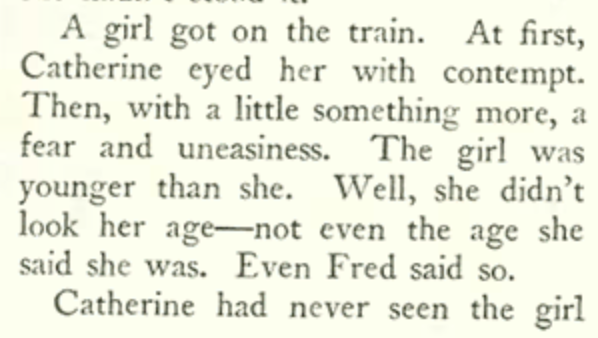
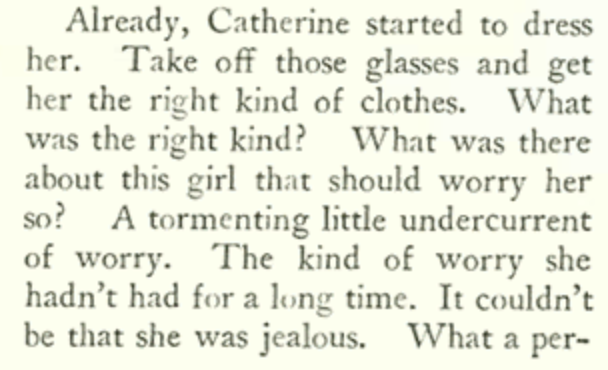
Her short story on page 25, “But for the Grace of God,” was a “key transitional work” for the magazine, according to Ben Yagoda in his book About Town: The New Yorker and the World It Made. He writes: “Realistic fiction thrives in periods of social ambiguity and flux, and the attention to class was on of the factors working to propel New Yorker writing from two-dimensional sketches to fleshed out short stories.” Yagoda observes that Winslow’s story, “in its carefully selected details, its mild epiphany, and its attention to the potency of class…is an accomplished and poignant piece of short fiction.” Excerpts:

Thyra Samter Winslow, in 1936. (findagrave.com)

* * *

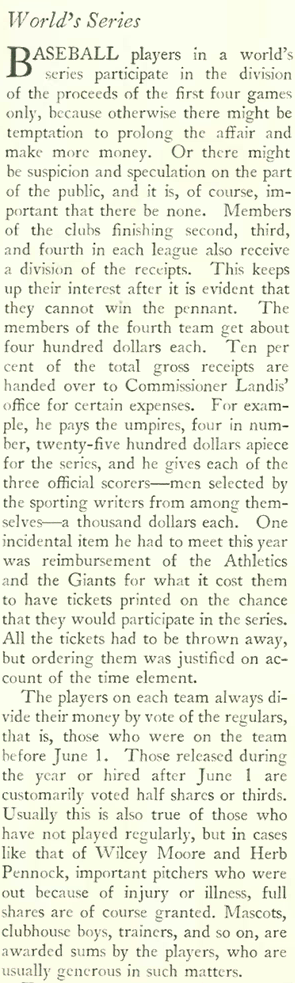
The New Yorker continued its stubborn refusal to report on baseball in its sports section, even though the Yankees were in the process of taking their second consecutive World Series title with a 4-0 sweep over the favored St. Louis Cardinals. The magazine did, however, mention the game in the Oct. 13, 1928 “Talk of the Town” — not on how it was played, but rather on how the championship money was distributed among players and assistants:

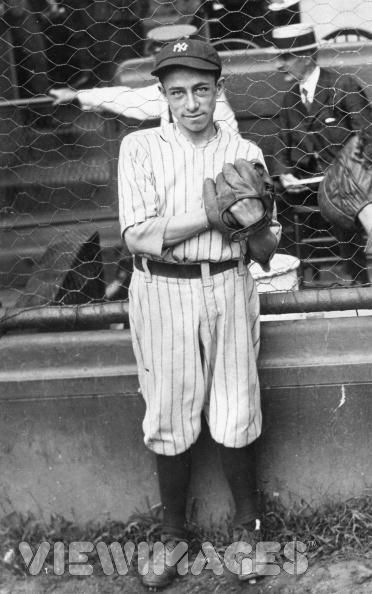
Money matters in the game of sport were more informal 90 years ago, with players themselves divvying up money to other players, trainers, mascots and batboys. For example, in 1927 Yankees batboy Eddie Bennett received $700 for the one-eighth World Series share voted him by the team. This sum earned over the four days of the series nearly equalled a batboy’s pay for a full year.

GOOD LUCK CHARM…Yankee batboy Eddie Bennett in the 1920s. Although a spinal injury as an infant left him hunchbacked, Bennett would serve as Yankee batboy for 12 years — a period that would include seven pennants and four World Series titles. (sabr.org)

 *  *  *

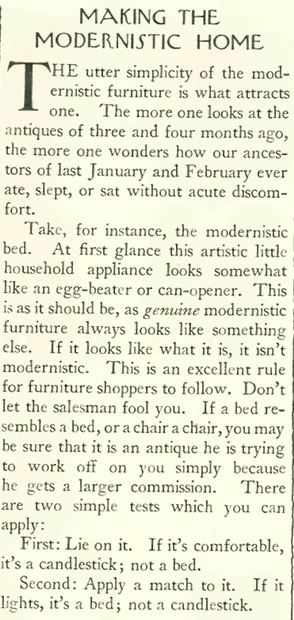
Although European-inspired modern furniture was all the rage among certain members of the New York smart set, writer Joseph Fulling Fishman (best known for his writing on contemporary prison conditions) offered a dissenting view in the Oct. 13 edition. An excerpt:

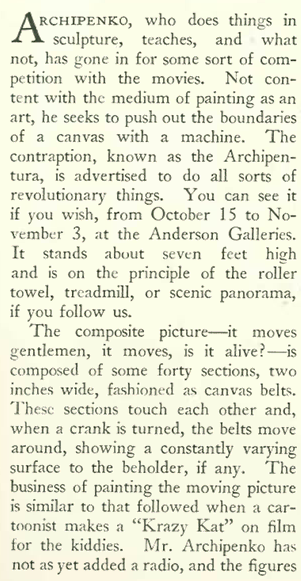
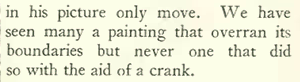
In the art review section, critic Murdock Pemberton also seemed a bit perplexed by modern design, in this case by the work of Ukrainian-born avant-garde artist Alexander Archipenko. His Archipentura was an electronic machine that displayed pre-loaded images of a female undressing by rolling painted canvas through a complex system of sprockets and belts. He intended the machine “to do for painting what the motion picture did for photography.” Pemberton observed:

THINK DIFFERENTLY…Alexander Archipenko (right, circa 1920), intended his intended his Archipentura machine (pictured in front and side views) “to do for painting what the motion picture did for photography.” (Wikipedia/Archipenko Foundation)

*  *  *

From Our Oct. 13 Advertisers

Yet another endorsement for cigarettes from the posh set. This time Melachrino Cigarettes got in on the action with this endorsement by Augusta Barney Harriman.

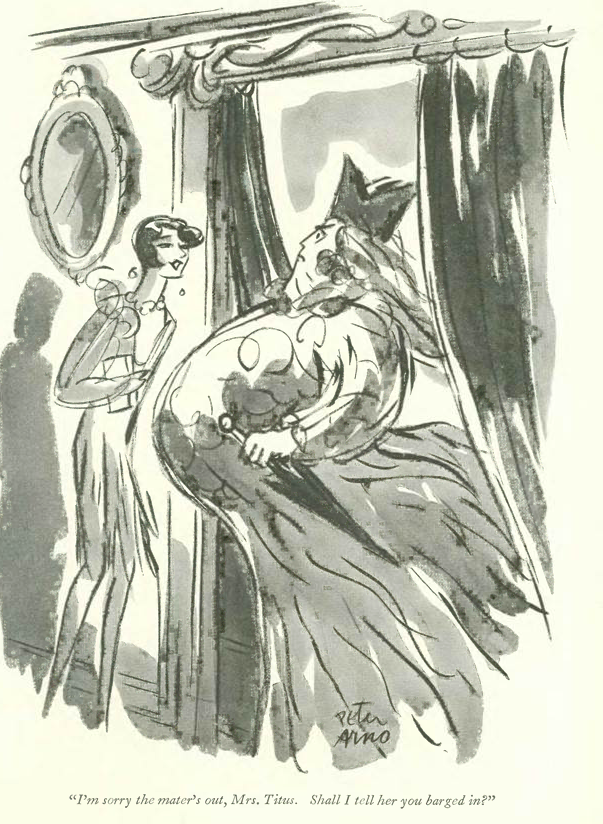
For our cartoon, Peter Arno once again looked in on the mannerisms of the upper class, contrasting a lithe young flapper with the imposing presence of a battle-axe. Note how the young woman uses the archaic British “mater” in reference to her mother…
Next Time: The Prohibition Portia…

Hit of the Century

NINETY YEARS AGO, when former Chicago reporters Ben Hecht and Charles MacArthur sat down to write The Front Page, they might have sensed they had a Broadway hit in the making, but probably had no idea their play would still grace a Broadway stage well into the 21st century.

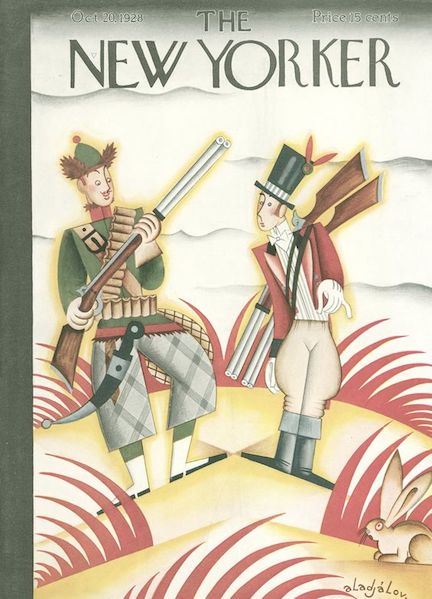
August 25, 1928 cover by Leonard Dove.

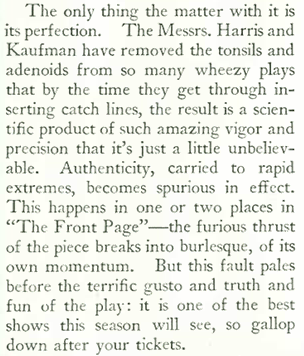
The Front Page made a big splash on the Great White Way when it premiered on August 14, 1928 at Times Square Theatre. Featuring a story about tabloid newspaper reporters on the police beat, the play’s wisecracking, rapid-fire dialogue (which would become a staple of Hollywood’s screwball comedies), was a big hit with audiences, and with E.B. White, who reviewed the play in the Aug. 25, 1928 New Yorker:

DREAM TEAM…The Front Page was written by former Chicago reporters Ben Hecht (left) and Charles MacArthur (center) and produced by Jed Harris (at right, in a 1928 photo used on the cover of Time magazine). Hecht, an occasional New Yorker contributor, would go on to a successful career as a screenwriter, director, producer and playwright. Like Hecht, screenwriter/playwright MacArthur was friends with members of the Algonquin Round Table. He was married to actress Helen Hayes, with whom he adopted a son, James MacArthur (“Danno” on TV’s Hawaii 5-0). Harris was responsible for some of Broadway’s most successful productions in the ’20s and ’30s including Uncle Vanya, Our Town and The Crucible. (IMDB, Kentucky Digital Library, Time)
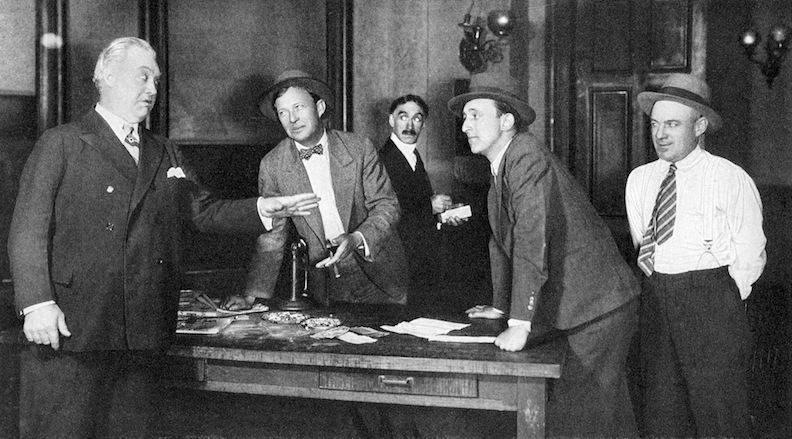
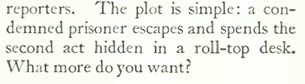
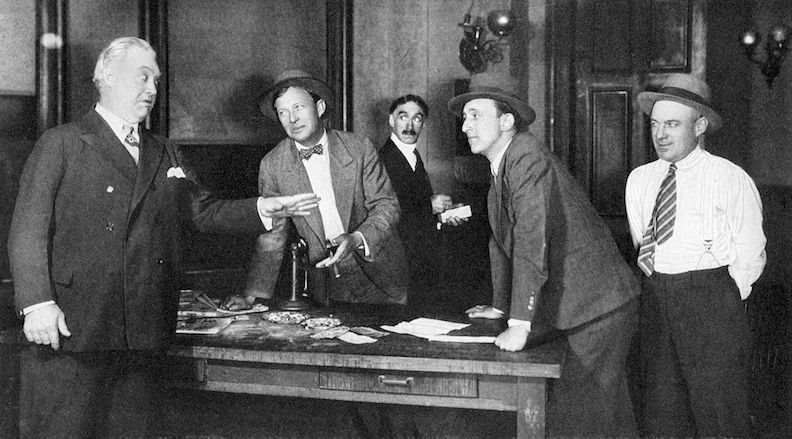
TROUBLE IN WINDY CITY…Set entirely in a dingy press room of Chicago’s Criminal Courts Building, The Front Page featured reporters who passed the time playing poker and exchanging wisecracks—until a convicted killer escapes jail and makes things lively. Worried about his chances for re-election, the crooked Mayor, played by George Barbier, far left, confronts three reporters — Murphy (Willard Robertson), Endicott (Allen Jenkins), and McCue (William Foran). In the background is Claude Cooper, as the crooked Sheriff Hartman. (Theatre Magazine, August 1928) 

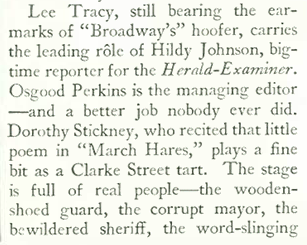
White was so taken by the play, in fact, that he found it to be nearly perfect, like a scientific instrument of exacting precision. And considering how many times the play has been adapted to stage and screen (most recently on Broadway in 2016), he was probably right. It still plays pretty well after all these years:

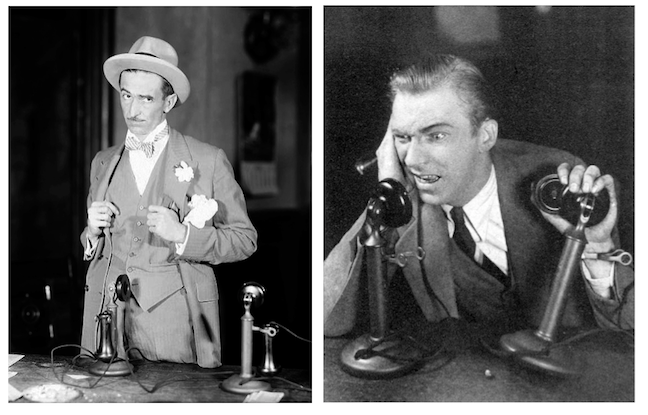
WISE GUYS…Promotional photographs of Osgood Perkins as Walter Burns (left) and Lee Tracy as Hildy Johnson in the 1928 Broadway production of The Front Page. (Theatre Magazine, August 1928) 
ENTER, STAGE RIGHT…Escaped prisoner Earl Williams (George Leach) surprises reporter Hildy Johnson (Lee Tracy) in The Front Page. (Theatre Magazine, August 1928) 

The play was restaged four more times on Broadway — 1946, 1969, 1986 and 2016 — the 2016 production starred Nathan Lane as Walter Burns, John Slattery as Hildy Johnson and John Goodman as Sheriff Hartman. Film adaptions included The Front Page in 1931 and His Girl Friday (directed by Howard Hawks) in 1940 — the latter added a twist to the play by changing the Hildy character to a woman, played by Rosalind Russell as the ex-wife of Walter Burns (Cary Grant). The play returned to the big screen in 1974 as The Front Page, directed by Billy Wilder and starring Jack Lemmon as Hildy and Walter Matthau as Walter Burns.

Still Some Fight Left in Him

Although boxer Gene Tunney had retired from the ring, he was still making headlines fighting off a different foe: the paparazzi.

Tunney’s engagement to Connecticut socialite and Carnegie heiress Polly Lauder was front-page news across the country, and photographers were eager to capture a photo of the couple, who up until the announcement had enjoyed a mostly secret romance. “The Talk of the Town” described the couple’s attempts to elude a persistent press:

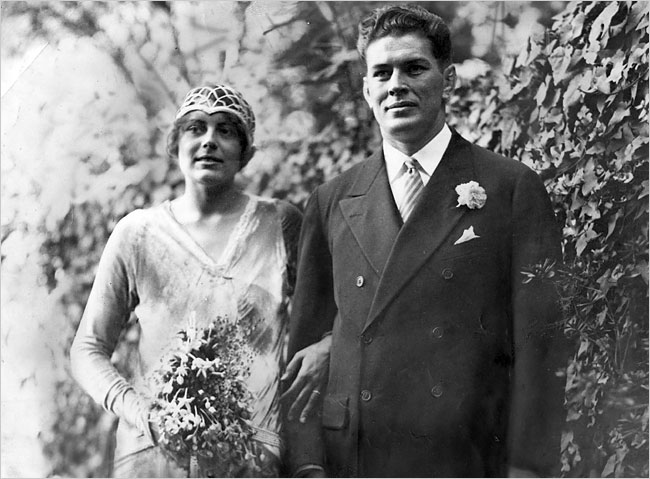
MAYBE IT’S QUIETER OVER HERE…21-year-old Polly Lauder Tunney and 31-year-old Gene Tunney after marrying in Rome on Oct. 3, 1928. The marriage would last 50 years. (Wikipedia)

In September 1928 the couple took separate trips to Rome and married in a small ceremony on Oct. 3. Unfortunately, they attracted the attentions of Rome’s original paparazzi: According to The New York Times “the scene after the wedding looked mighty like a riot as clothes were torn and cameras smashed in a melee of photographers jostling to capture images of the couple.”

After traveling in Europe they returned to the U.S. and made their home in North Stamford, Connecticut, where they restored an 18th century farmhouse and raised Hereford cattle and sheep. They would be married 50 years until Tunney’s death at age 81 in 1978. Polly continued to live at her home in Stamford until her death in 2008 at age 100.

 *  *  *

Dorothy Recuperates

Dorothy Parker’s “Constant Reader” signature at the end of the book review section was absent during part of the summer of 1928 as she was recuperating from an appendectomy. Fortunately her rapier wit remained intact when she returned in the Aug. 25 issue…

Dorothy Parker in 1928 (natedsanders.com)

…where she found the strength to skewer The Lion Tamer, the latest novel by romance writer E.M. Hull:

I’D RATHER BE IN SURGERY…E.M. Hull’s The Lion Tamer. Dodd, Mead and Co. 1928. (yesterdaysgallery.com)

*  *  *

Long Before Starbucks

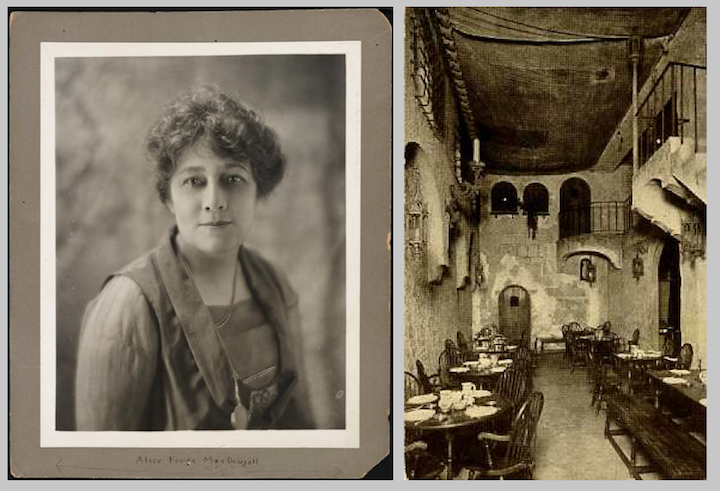
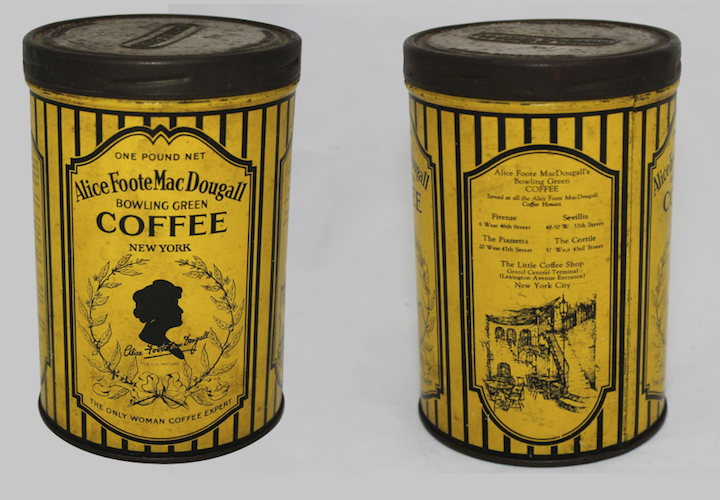
If you were a New Yorker in the 1920s, this cartoon by Rea Irvin would make perfect sense, because nearly everyone knew that Alice Foote MacDougall was the queen of New York’s coffee scene, a one-woman Starbucks of her day.

According to Jan Whitaker, writing for the blog Restaurant-ing Through History, MacDougall kept a carefully crafted persona. In numerous magazine stories crafted by her publicity agent, “she was widely known as the poor widow with three children who built a coffee wholesaling and restaurant empire on $38.”

MacDougall was actually from a distinguished New York City family, and her coffee wholesaling career began in 1909 after her husband’s death. Whitaker writes: “In the 1920s she was said to be the only woman expert in coffee grading and blending in the U.S. She opened her first eating place, The Little Coffee Shop, in Grand Central Station in New York in December 1919. Waffles were the specialty in her homey café which was decorated with a plate rail and shelves holding decorative china. (Evidently tips were good, because MacDougall had the nerve to charge her waitresses $10 a day to work there.) By 1927 she had signed a $1 million lease for her fifth coffee house, Sevillia, at West Fifty-seventh Street. Her places became known for their Italian-Spanish scene setting. The reason, she said, was that it provided a way to disguise long, narrow spaces.”

BEANS TO RICHES…Alice Foote MacDougall, ca. 1910. At right, Sevillia, at West Fifty-seventh Street, in the late 1920s. (restaurant-ingthroughhistory.com)
TIN GOLD…Canisters of Alice Foote MacDougall’s famed coffee, ca. 1927. (ruby lane.com)

 *  *  *

The Friendly Skies

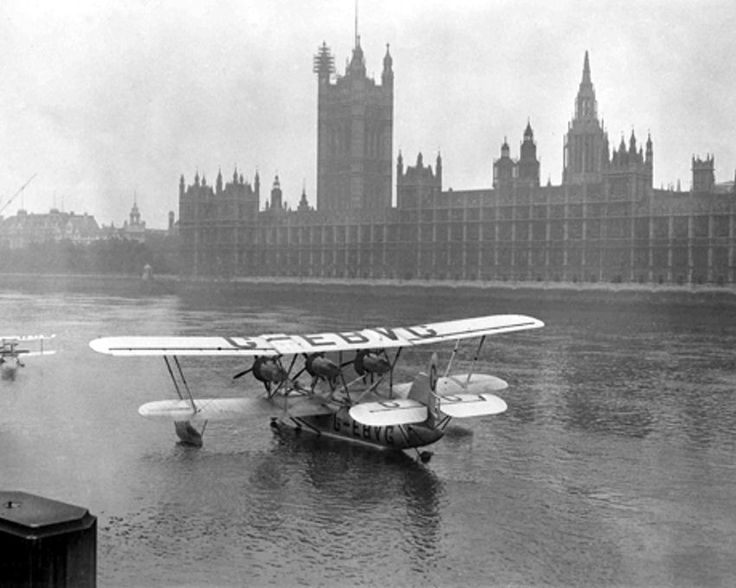
E.B. White made another appearance in the Aug. 25 issue, this time with a poem describing his recent flight from London to Paris aboard an Imperial Airways trimotor biplane. If White seems to rhapsodize a bit here (especially to jaded fliers of the 21st century), it is understandable, considering that White’s flight to France was only 25 years removed from the Wright Brothers at Kitty Hawk. It was still something miraculous:

TOP, the Imperial Airways “Calcutta” trimotor flying boat on the Mediterranean, 1928. Below, the “Calcutta” moored on the River Thames in 1928. (Claude Boullevraye de Passillé / AP)

 *  *  *

Missing the Boys of Summer

The New Yorker continued to ignore the sport of baseball in its pages, even though it enthusiastically covered almost everything else: college football, hockey, tennis, golf, lacrosse, polo, rowing and yacht racing. Strange because the New York Yankees had one of the winningest lineups in baseball (Murderer’s Row, with sluggers Babe Ruth and Lou Gehrig), had won the 1927 World Series, and were poised to win it again in 1928. Unless I missed something, the first mention of baseball in the 1928 New Yorker was this bit in Howard Brubaker’s Aug. 25 “Of All Things” column:

The Yankees would sweep the favored St. Louis Cardinals in the ’28 World Series.

From Our Advertisers

This creepy advertisement from the Aug. 25 issue comes courtesy of the Clark Lighting Company. The tagline, “Clark Always Works,” has a double meaning, the ad copy suggesting that a woman is so simple (described here as a “little minx”) that she will be captivated by the very flick of a lighter:

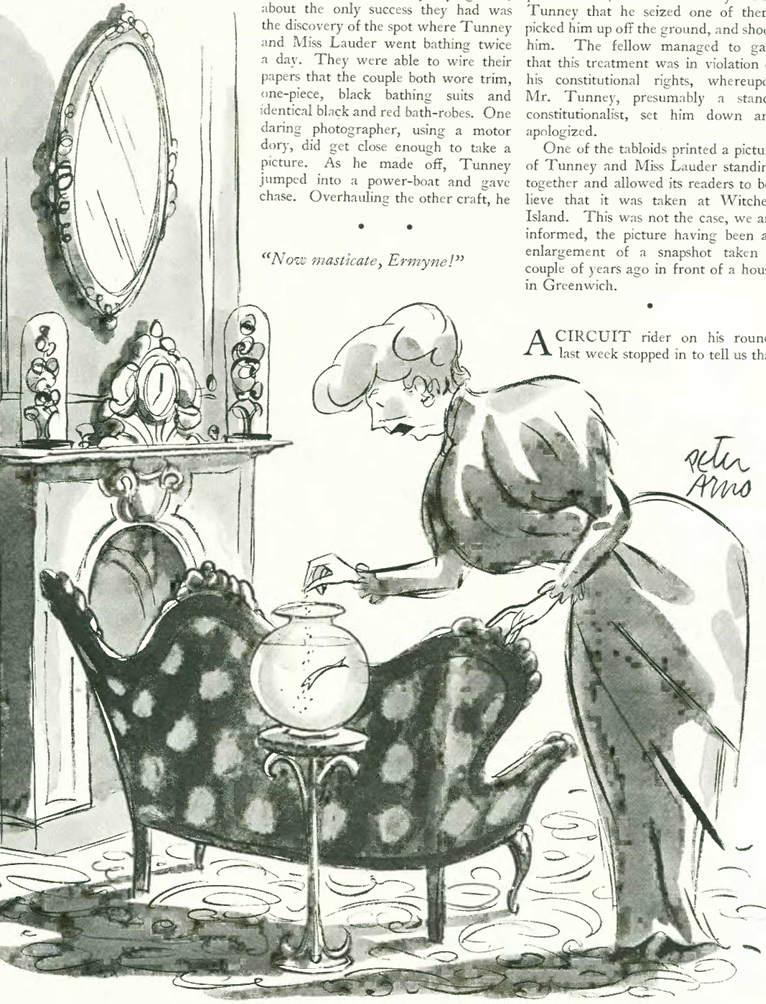
Our cartoon is by Peter Arno, who was making light of a diet fad from the late 19th and early 20th century (hence the woman’s age and dress) made famous by Horace Fletcher, who was known as the “Great Masticator” for his diet that involved chewing each mouthful of food a minimum of 100 times. The cartoon’s caption reads: “Now masticate, Ermyne!”

Next Time: Dorothy Parker Goes to the Movies…

To the Air

New Yorker writers in the 1920s by and large displayed a resistance to popular enthusiasms when they looked around at the changing the world, but when it came to advancements in aviation, they tended to drop the casual pose and get all dreamy-eyed.

June 2, 1928 cover by Sue Williams.

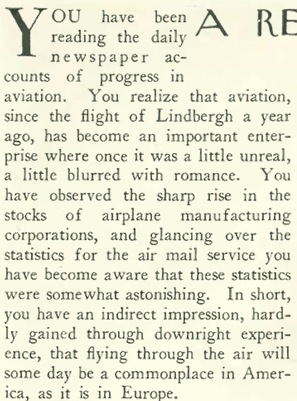
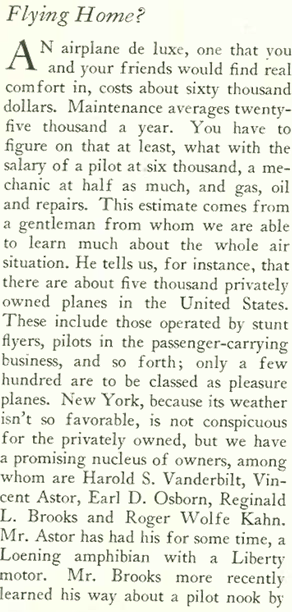
Such was the case with even a clear-headed writer like Morris Markey, who in his “A Reporter at Large” column looked at our progress in aviation. Public interest in air travel grew dramatically after Charles Lindbergh’s 1927 Atlantic crossing, as did the expansion of air mail and passenger service and the growth of private plane ownership. As Markey noted in this opening paragraph, for all the advances in American aviation, the Europeans were well ahead in establishing regular passenger service, as it had become “commonplace”:

FORERUNNER…In 1920s the Boeing Model 40 served as a U.S. mail plane. The single-engined biplane was also the first aircraft built by the Boeing company to carry passengers. Note the pilot was still seated in the open air, behind the passenger compartment. Many early pilots were unhappy when the next generation of planes forced them into an enclosed cockpit. (Boeing)

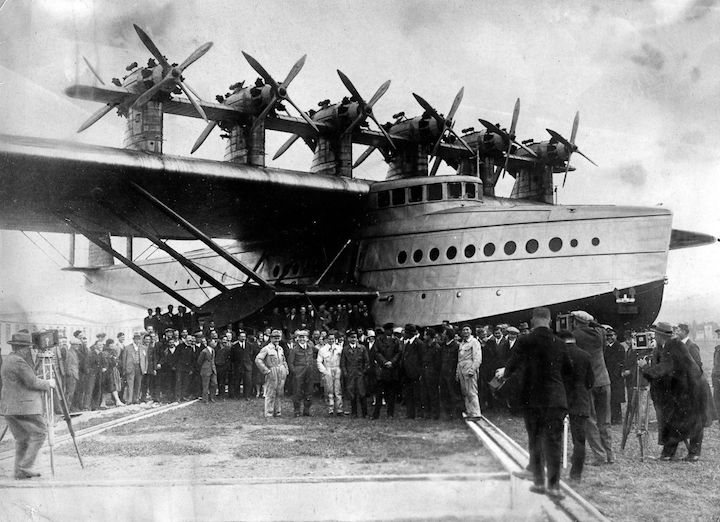
To get some sense of European (and specifically German) aviation superiority, look no further than the Dornier Do-X, a massive seaplane developed by the Germans in the mid-1920s that began regular passenger service in July 1929. While America’s biggest planes could carry 12 to 18 passengers, the spacious and luxurious Do-X could comfortably seat 70 to 100 passengers and included a dining salon, smoking lounge and wet bar. A few months after its first flight the Do-X broke a world record by carrying 169 passengers—astonishing when one considers only 25 years had passed since the Wright Brothers at Kitty Hawk.

BEHEMOTH…169 people flew aboard the Dornier Do-X on October 21, 1929. The plane’s hull was made of aluminum, but the sides were made of heavy duty linen cloth coated with aluminum paint. (Ullstein Bild)
MAKING HISTORY…Excited passengers—169 of them—await take-off on October 21, 1929. Powered by a dozen engines, take-off weight for the Do-X was more than 61 tons. Note the crew members atop the craft manually turning the propellers—all 12 of them—to circulate the oil in the engines prior to take-off. (Ullstein Bild)
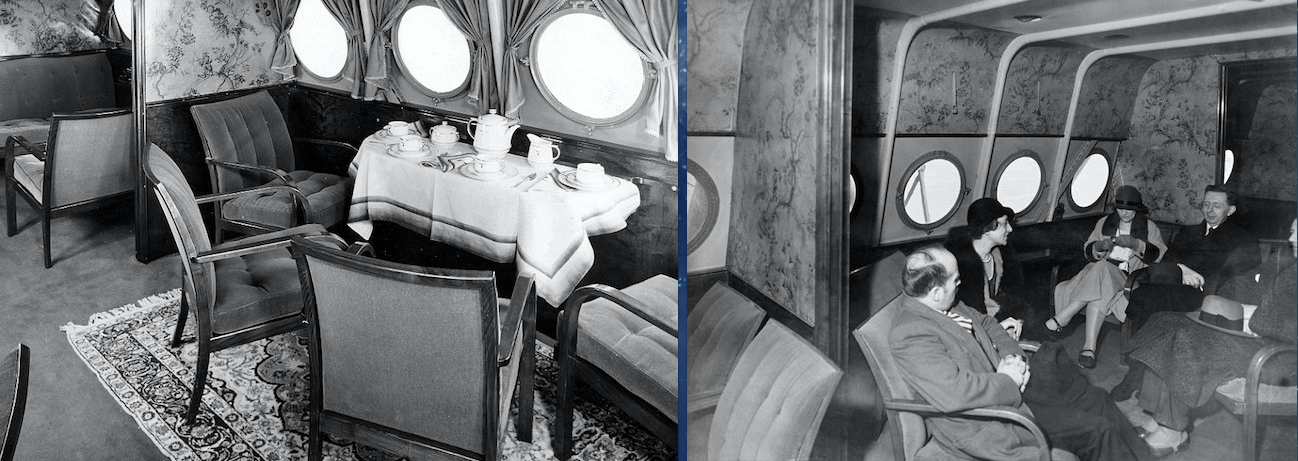
LEGROOM NOT OPTIONAL…The dining salon (left) and a passenger compartment in the Dornier Do-X. (Ullstein Bild)
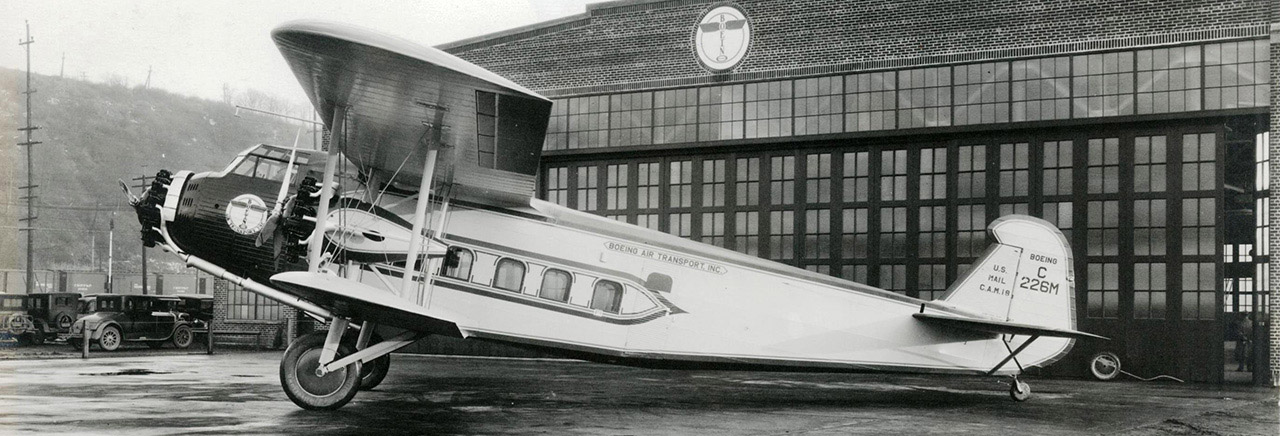
MODEST, BUT NICE…Over in America, the 1928 Boeing Model 80 carried passengers in a spacious cabin appointed with leather upholstery, reading lamps, forced-air ventilation, and hot and cold running water. The first version carried 12 people, and it was followed by a larger, 18-passenger Model 80A, which made its first flight on Sept. 12, 1929. The plane’s fuselage was made of welded-steel tubing covered with fabric, and its wooden wingtips were removable so the airplane could fit into the primitive hangars along its route. (Boeing)
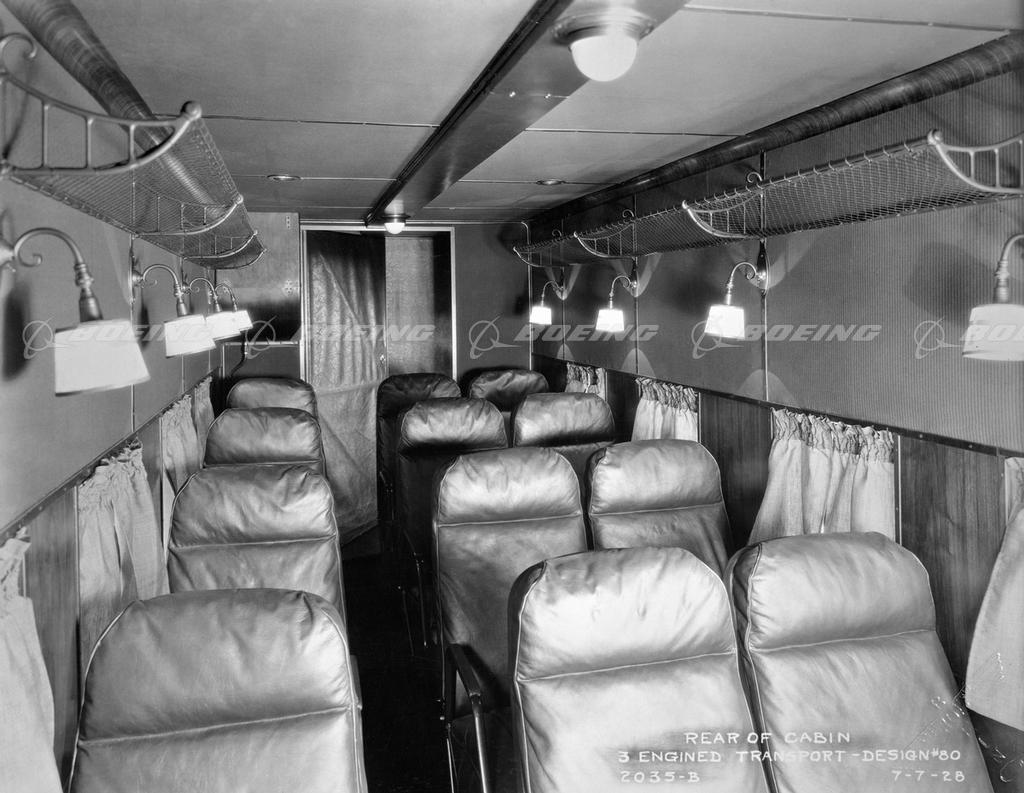
COZY…Interior of the Boeing Model 80. Ellen Church, a registered nurse, convinced Boeing managers that women could work as stewards, so nurses serving aboard the Model 80A became aviation’s first female flight attendants. (Boeing)

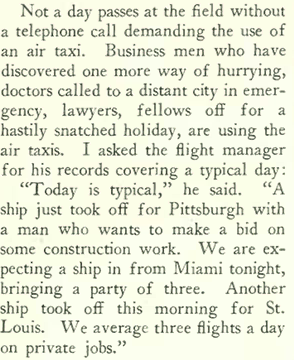
Markey noted the growing interest in commuter flights among business executives. What seemed like a high demand to Markey was an average of three commuter flights a day.

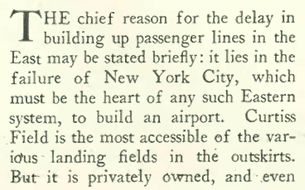
Markey also lamented New York’s lag in building up passenger service, especially when air travel was growing leaps and bounds in the Midwest and West, and especially in rival Chicago:

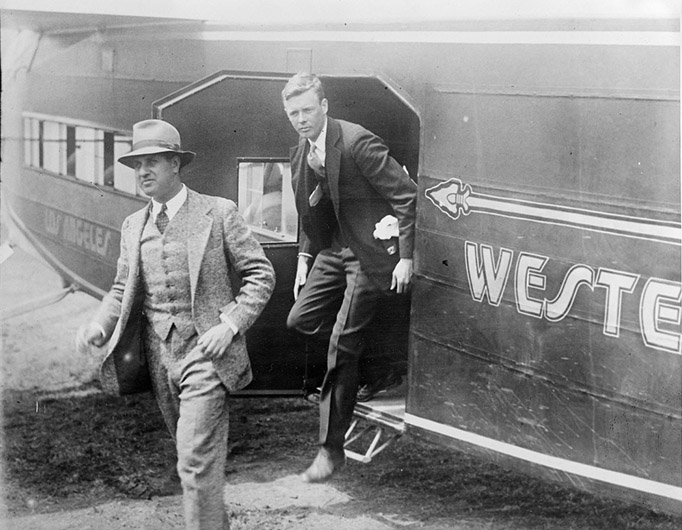
BIRTH OF TWA…Harry Guggenheim and Charles Lindbergh step off a Western Air Express Fokker F-10 in 1928. Diplomat, publisher and philanthropist, Guggenheim provided funding to mail carrier Western Air Express in 1927 in an effort to create a “model airline” that was safe, dependable and economically feasible. By 1930 Western was the nation’s largest airline. It was short-lived, however; in 1930 Postmaster General William Folger Brown forced it to merge with Transcontinental Air Transport, creating Transcontinental and Western Airlines, or TWA. (Boston Public Library)
NO TSA LINES HERE…Passengers board a Western Air Express Fokker F-10 in the late 1920s. The Fokker F-10 was called “The Queen of the Model Airline,” but it fell out of favor after a much-publicized March 31, 1931 crash in Kansas that killed eight people, including football coaching legend Knute Rockne. (birthofaviation.org)
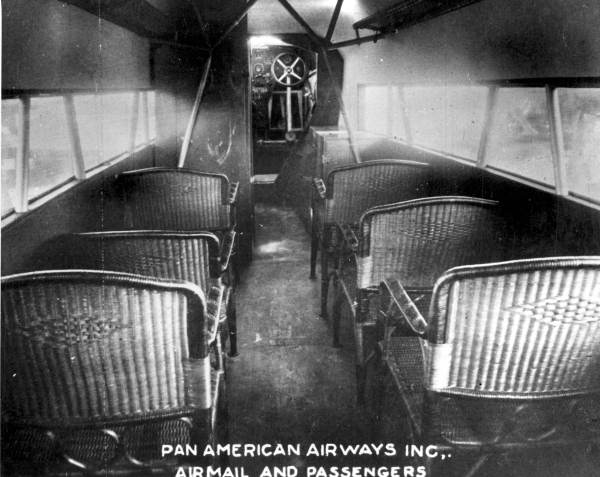
NO FRILLS…Passenger compartment of a Fokker F-10. (birthofaviation.org)
HERE’S LUCY…Actress Lucille Ball was all smiles after a flight on a Western Air Express Fokker F-10. (birthofaviation.org)

Markey also noted the modest number of planes in private hands, but expected private ownership to increase dramatically in the coming months:

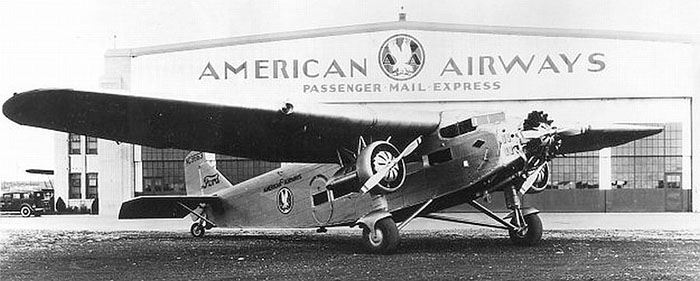
TIN GOOSE…Henry Ford briefly got into the aviation business with his company’s popular Ford Trimotor. Dubbed the “Tin Goose,” it was the first all-metal, multi-engine transport in the United States and the first plane designed primarily to carry passengers (12) rather than mail. It was the first plane to be used for transcontinental passenger service, as well as the first plane to fly over the South Pole. The Great Depression would end the plane’s short but successful run—a total of 199 were produced. (birthofaviation.org)
BE YOUR OWN LINDBERGH…Looking for your own set of wings? The 1929 Cessna Model AW was just around the corner. (airpigz.squarespace.com)

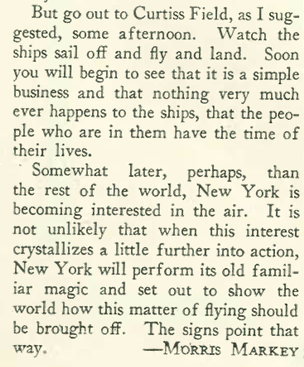
Although Markey lamented the slow growth of New York aviation, he was nevertheless dazzled by the “ships” taking to the skies at Curtiss Field.

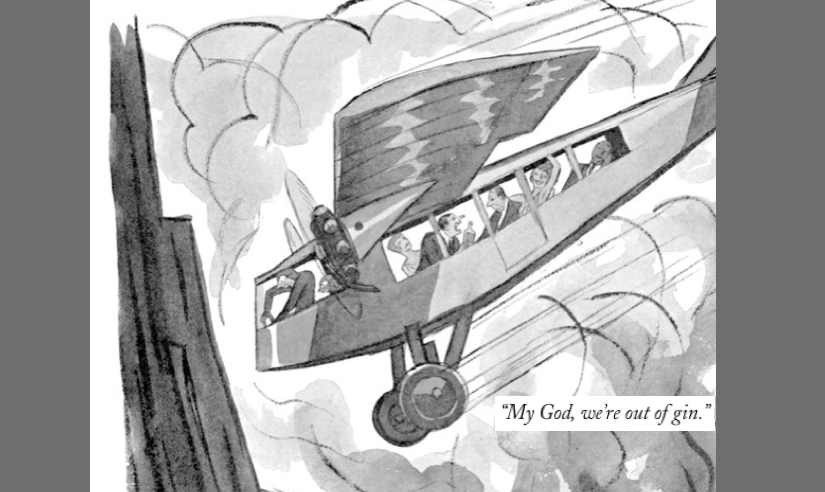
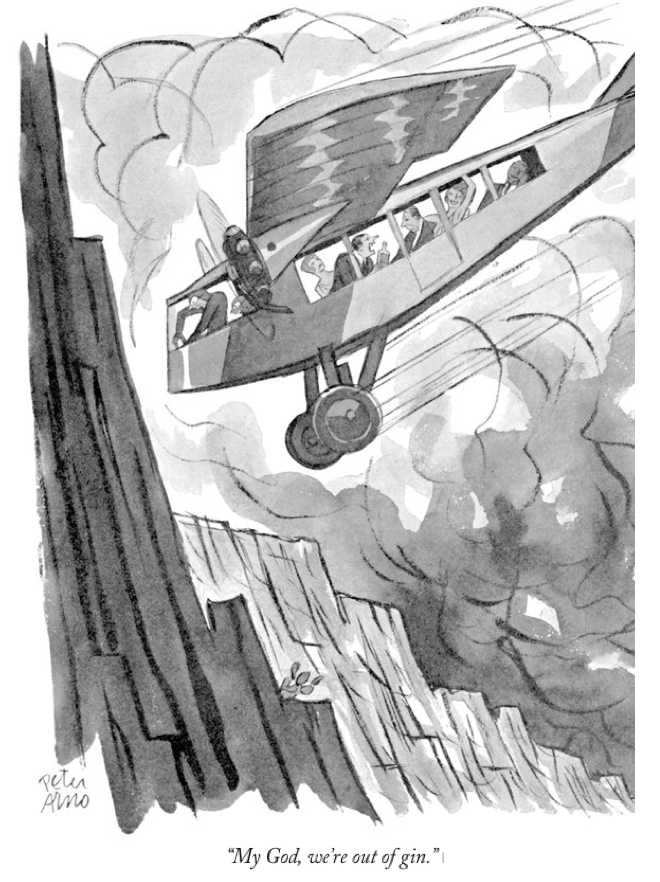
Jumping ahead a couple of years, New Yorker cartoonist Peter Arno offered this view of passenger flight (in a Fokker F-10), the passengers in this case a bunch of silly toffs (April 12, 1930).

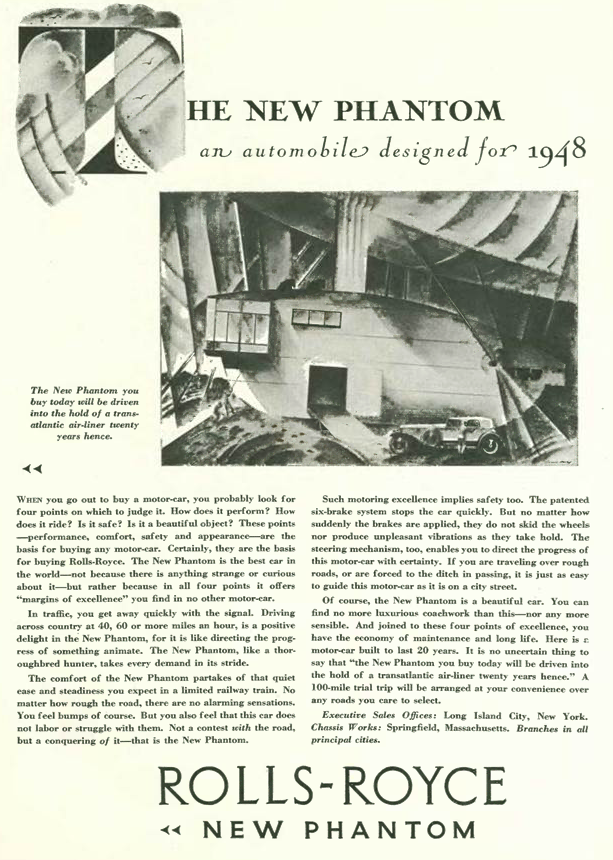
And back to the June 2, 1928 issue, we find this ad for Rolls Royce that offered a vision of a future airliner—in the year 1948. Since the artist had no clue what the future would hold, he conjured up this contraption that looked like a streamlined Noah’s Ark attached to a huge zeppelin.

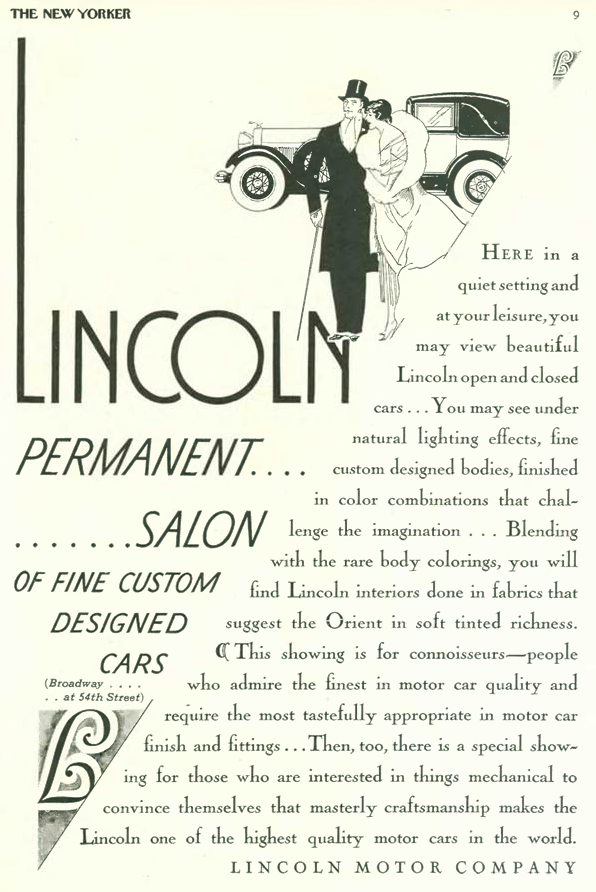
And just for kicks (and contrast), this ad for Lincoln was all about tradition, except for the nice typographical flourish on the letter “L” —a definite nod to modernism.

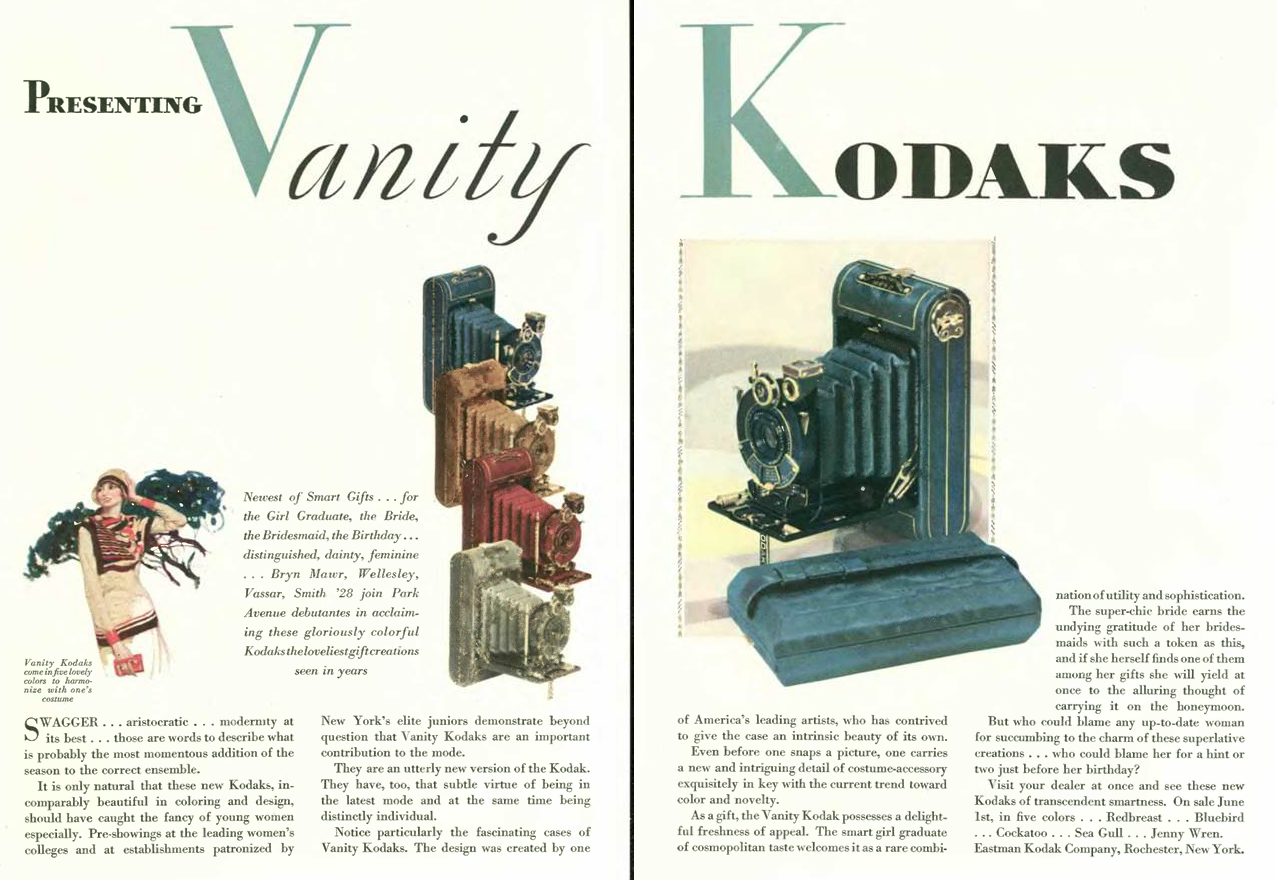
And if you thought novelty in our gadgets is a fairly recent thing, check out these portable Kodak cameras that were available in five colors. From automobiles to typewriters, manufacturers in the 1920s were discovering that color distinguished their products and even drove demand (click image to enlarge).

Advertisers could also create demand by appealing to readers’ cravings for status. The following ad for a Lord and Burnham greenhouse is an especially egregious example of the use of status shaming to sell a product. Note how the foursome in the illustration, presumably all greenhouse owners, look at the man without a greenhouse as though he’s a child molester or worse.

Before Green Eggs and Ham

In 1928 ads for Flit insecticide began to appear in the New Yorker, illustrated by none other than Theodore “Dr. Seuss” Geisel. This is the first Flit ad to appear in the magazine, in the June 2, 1928 issue:

In the 1920s people didn’t seem too concerned about the toxicity of the products they used (for example, we’ve seen Lysol used in feminine hygiene and as a birth control method). Although the Flit ads aimed to be humorous, it still seems odd to imply that one might gargle with the insecticide. As we shall see, subsequent Flit ads will show the product being sprayed indiscriminately over food, children, pets etc.

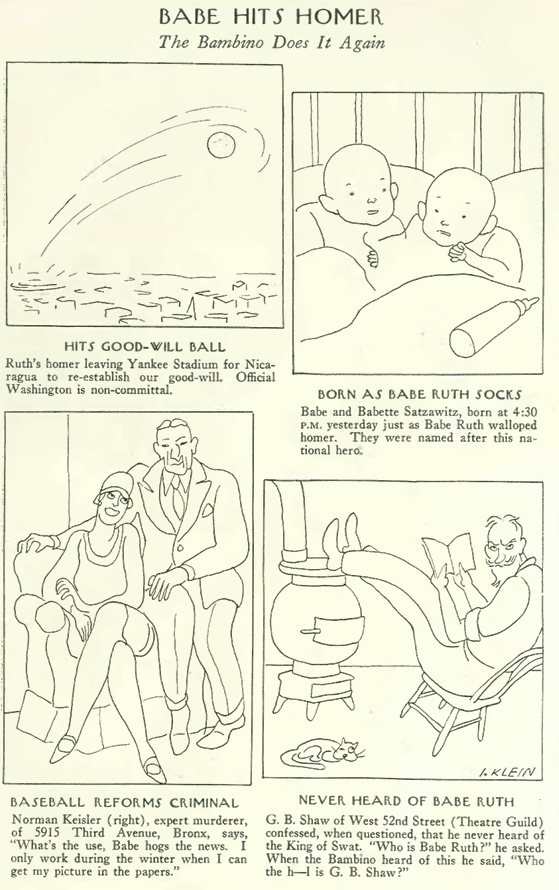
Taking a Shot at the Babe

The cartoonist Isadore Klein had some fun with the hyperbole often attached to the athletic feats of the Sultan of Swat:

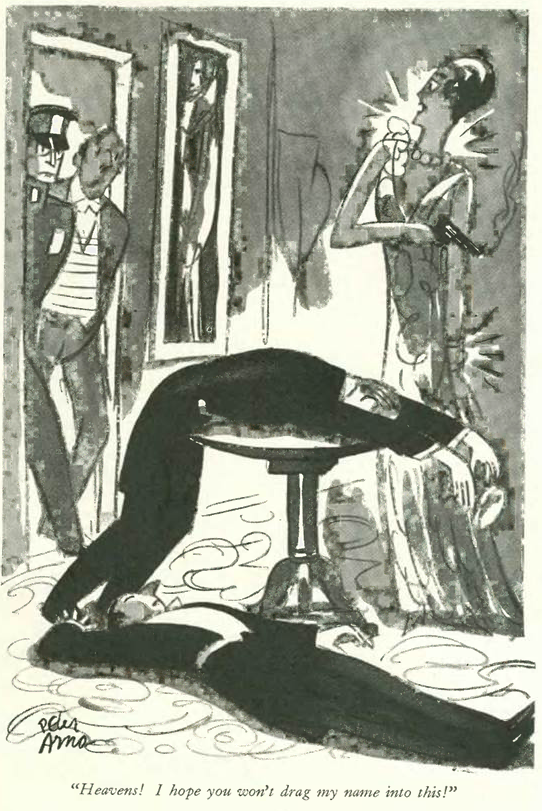
And finally, Peter Arno looked at murder among the upper classes:

Next Time: The Russians Are Coming…


Distant Rumblings

As I’ve previously noted, reading back issues of periodicals often gives one a feeling of omniscience; as I thumb through week after week of late 1920s New Yorkers, I realize that for all their cleverness and worldly wisdom, even that magazine’s writers and editors could not see with any clarity into the future. But neither can any of us…one wonders what readers 89 years hence will surmise from today’s magazines, that is, if our civilization lasts that long.

January 28, 1928 cover by Theodore G. Haupt.

Howard Brubaker (in his column “Of All Things”) might have spotted something brewing on the horizon, even if it wouldn’t become perfectly clear until Dec. 7, 1941. Here is a clip from his Jan. 28, 1928 column in The New Yorker:

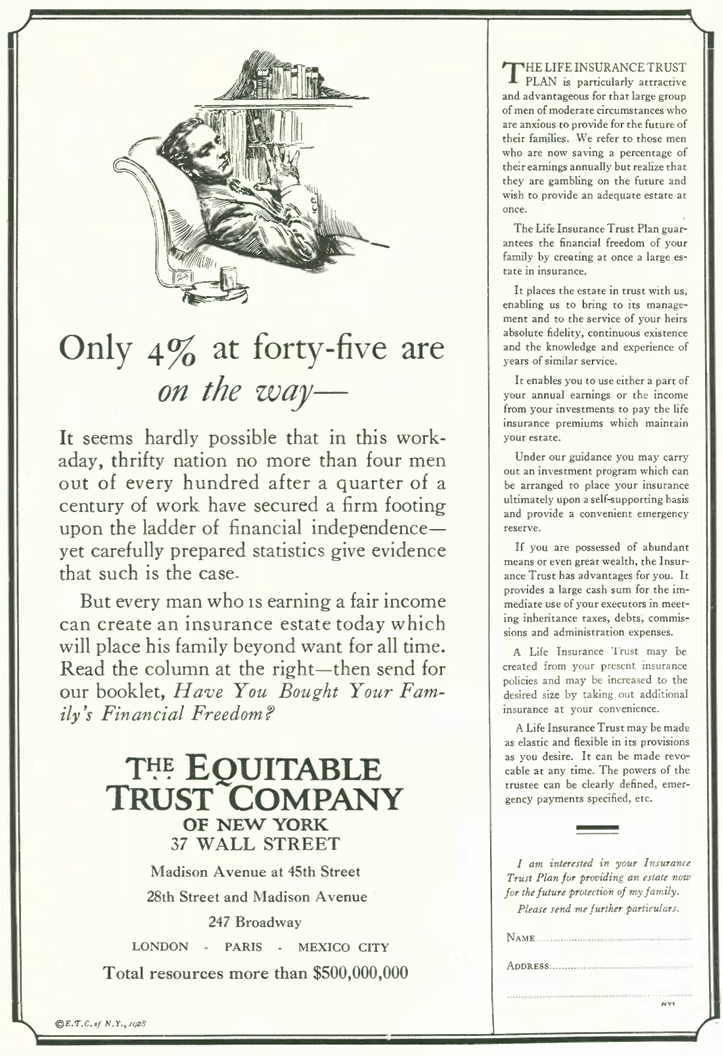
Two other major events in U.S. history, the Stock Market Crash of 1929 and the Great Depression that would follow, were less than two years away. But this was the Roaring Twenties, and some thought the fun would never end…except perhaps Equitable Trust, which placed this advertisement in the Jan. 28 issue:

Apparently the folks at Equitable Trust weren’t assured of their own financial freedom—after the Crash they would be acquired by Chase National Bank, making Chase the largest bank in the world at that time.

Despite the overheated economy of the 1920s, there still were plenty of poor and unemployed people in the city. One man, Urbain Ledoux (known as Mr. Zero in order to hide his identity), often arranged protests and demonstrations to bring attention to the poor and unemployed, and opened a number of bread lines and soup kitchens to feed the hungry, including the “Tub,” depicted in this two-page illustration by Constantin Alajalov along the bottom of the “Talk” section of the Jan. 28 issue (click image to enlarge).

 *  *  *

Not All Gloom and Doom

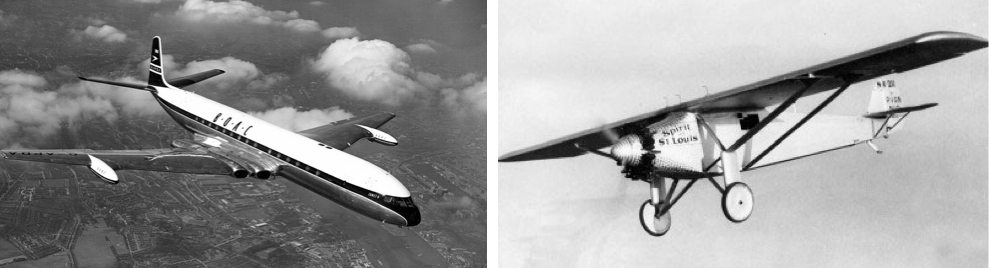
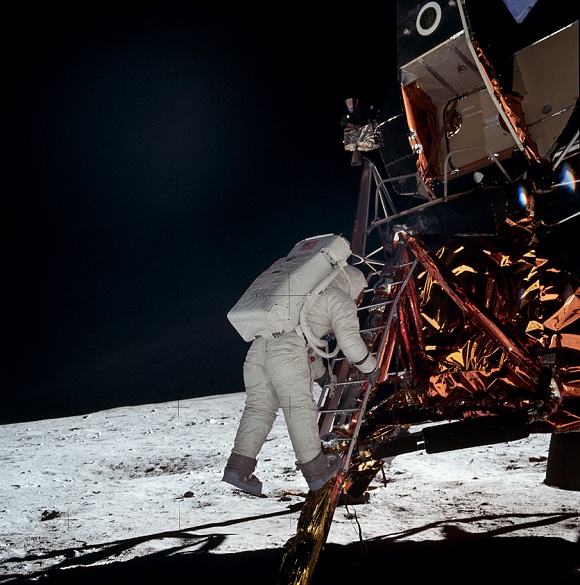
Hindsight also reveals the trajectory of the 20th century’s great accomplishments. Charles Lindbergh’s transatlantic flight in 1927, for example, fueled the imaginations of those who would usher in the jet age and space travel. Just 31 years after Lindbergh’s flight, the British Overseas Airways Corporation (BOAC) would begin operation of its first transatlantic passenger jet service. And only 42 years would separate Lindbergh’s flight from Neil Armstrong’s moonwalk.

JUST 31 YEARS would separate Lindbergh’s flight from the first transatlantic jet service. At left, the DeHavilland Comet 4 (1958), and at right, Lindbergh’s Spirit of St. Louis (1927). (warthunder.com/howstuffworks.com)

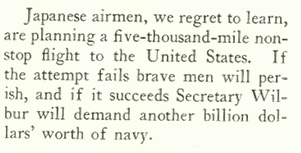
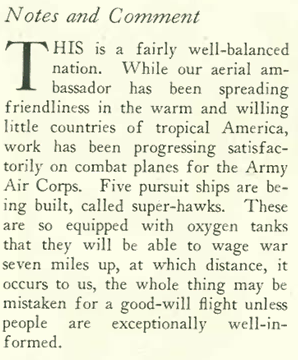
Like the rest of America, The New Yorker was an enthusiastic follower of developments in aviation after Lindbergh (the “aerial ambassador” referred to below). The January 28 “Talk of the Town” led with this item about pilots soaring to ever greater heights.

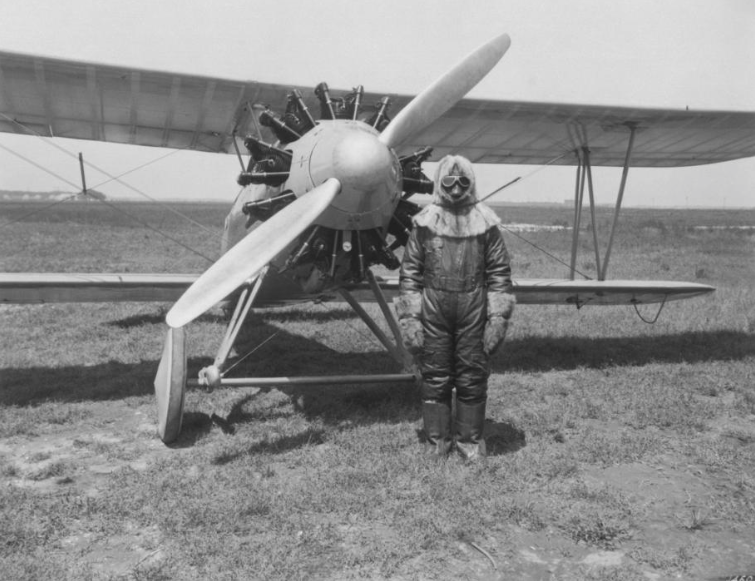
Consider that a mere 41 years separated this…

YETI, SET, GO!…A pilot in high altitude flying gear next to a Wright Apache biplane, January 1, 1928. In September 1926 the Apache set the world altitude record for seaplanes (38,500 ft) and in April 1930 it set the land-plane altitude record of 43,166 ft. (NASA)

…from this…

LEAVE THE FUR COAT AT HOME…The second man on the moon, Buzz Aldrin, prepares to step onto the lunar surface, July 20, 1969. (Neil Armstrong/NASA)

 *  *  *

While Back on Earth…

Big events in America always seem to involve the appearance of showgirls, whether it is the introduction of a new car or some techno gadget. As this “Talk” item indicates, much was the same 89 years ago…

 *  *  *

Silent Giant

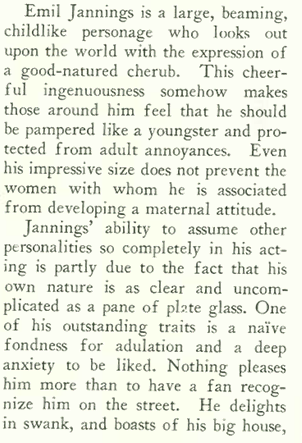
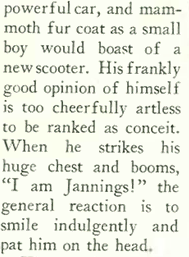
German film actor Emil Jannings was lauded for his performances on the screen in both Germany and America in films, and he was particularly adept at portraying of the pathos of middle-aged men. The New Yorker disliked most of Hollywood’s output (and usually praised the much-artier German films), so when Jannings landed on these shores he was lauded by the magazine, which dedicated a profile (written by Elsie McCormick) to him in the Jan. 28 issue, accompanied by a Hugo Gellert illustration. Some excerpts:

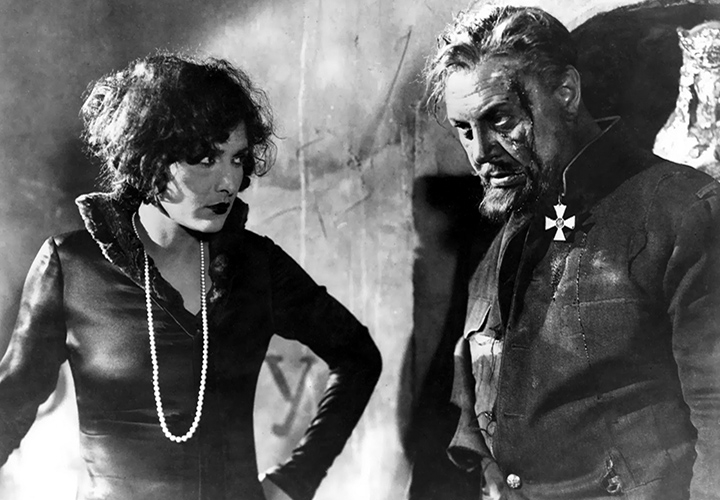
LIFE IS HARD…Evelyn Brent and Emil Jannings star in The Last Command. In the first Academy Awards, Jannings would win best actor for two films, The Last Command and The Way of All Flesh. (silentfilm.org)

At the first Academy Awards in 1929, Jannings would win a Best Actor Oscar for two of his 1928 films, The Last Command and The Way of All Flesh. An interesting side note from writer Susan Orlean: In her 2011 book, Rin Tin Tin: The Life and The Legend, Jannings was not actually the winner of the first best actor vote, but the runner-up. The famous dog actor Rin Tin Tin actually won the vote. The Academy, worried about not being taken seriously, gave the award to the human instead.

Janning’s thick German accent would bring his Hollywood career to an end with sound pictures. He would return to Germany, and during the Third Reich he would star in several films that promoted the Nazis. According to Wikipedia, the shooting of his last film, Wo ist Herr Belling? was aborted when Allied troops entered Germany in Spring 1945. Jannings reportedly carried his Oscar statuette with him as proof of his former association with Hollywood.

From the Advertising Department

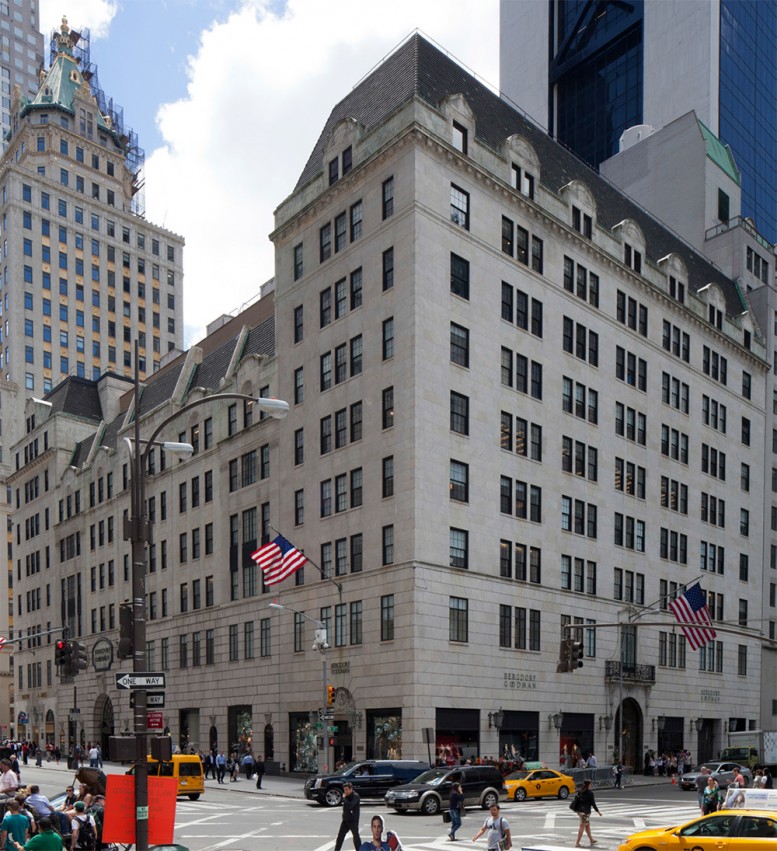
This advertisement from the Jan. 28 issue caught my eye because Bergdorf Goodman is one of the few stores in Manhattan still operating at its original site:

Bergdorf Goodman today. (Photo courtesy LPC)

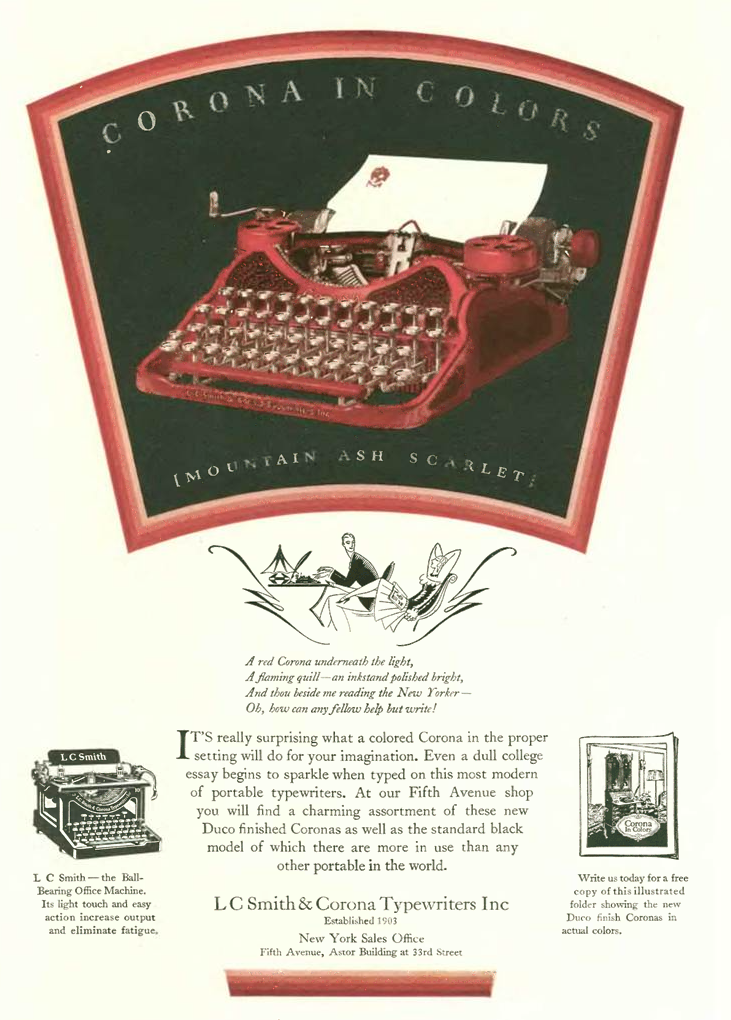
And here we have perhaps the iMac of its day, standing  apart from the competition with its colorful, bold new look…

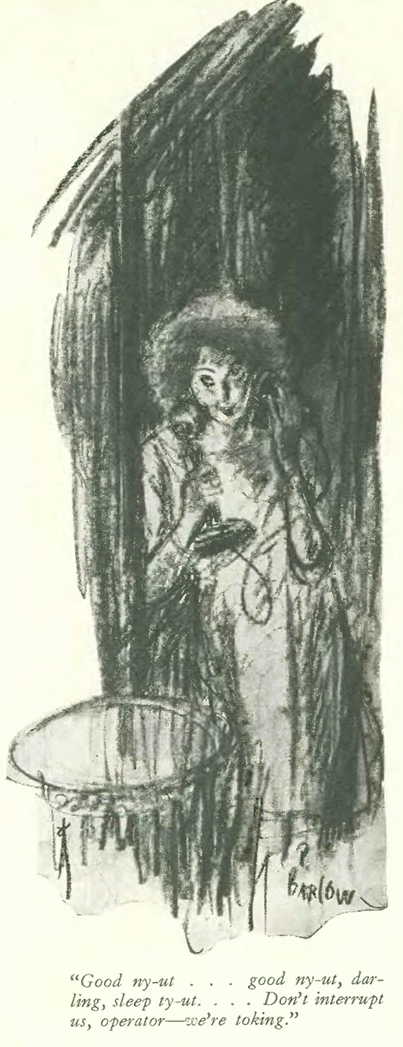
And finally, this early cartoon from longtime New Yorker cartoonist Perry Barlow having some fun at the expense of New York’s working class…

Next Time: Good Vibrations…


More Funny Business

My last entry featured cartoonist Bud Fisher, inventor of the comic “strip” (Mutt & Jeff) and the subject of The New Yorker’s Nov. 26, 1927 “Profile.” It was something of a surprise, then, to open the next issue, Dec. 3, and find literary critic Dorothy Parker offering her observations on the funny papers, including Sidney Smith’s comic strip, The Gumps.

dec-3
December 3, 1927 cover by Constantin Alajalov.

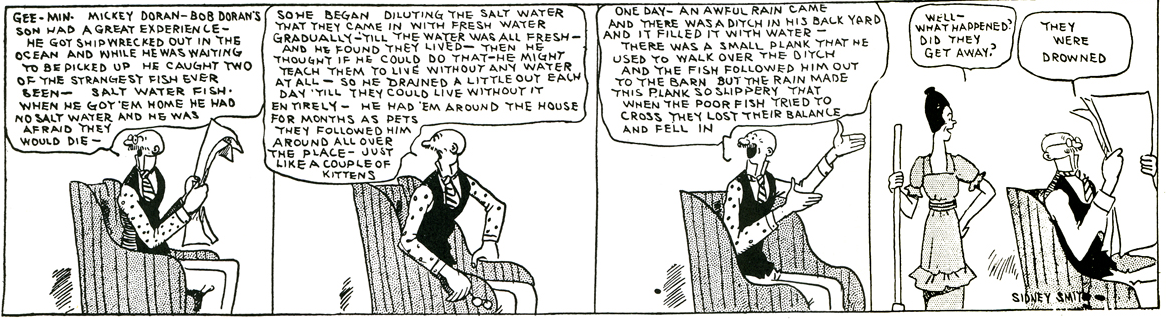
Before we get to Dorothy Parker, let’s have a look at The Gumps, created by Sidney Smith in 1917. Although that strip had plenty of slapstick, it was wordier than Mutt & Jeff and somewhat more realistic (Smith was the first cartoonist to kill off a regular character, in 1929–it caused a national outcry). An example of the strip from around 1920:

screen-shot-2017-01-31-at-12-37-37-pm
(michaelspornanimation.com) Click image to enlarge

Like Bud Fisher, Smith would become wealthy from the merchandising of Gump toys, games, songs, food products, etc…

9eef3c685e113a5712ce4c353729044a
The image of Andy Gump even graced cigar boxes. (kenlevine.blog)

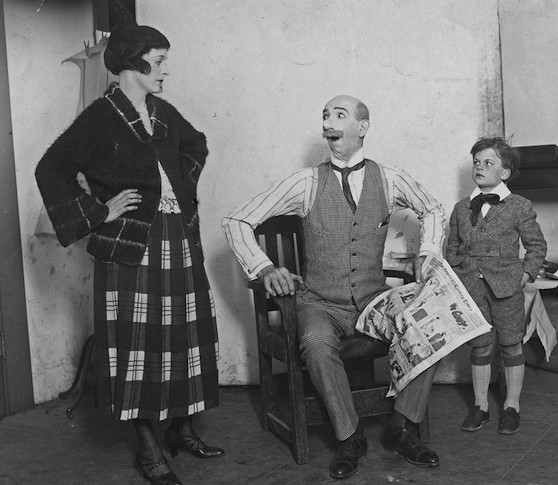
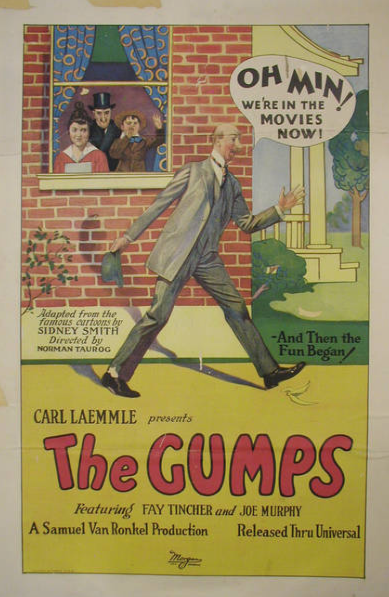
The Gumps were also featured in nearly 50 animated shorts, and between 1923 and 1928 Universal produced dozens of two-reel comedies starring Joe Murphy (one of the original Keystone Cops) as Andy Gump, Fay Tincher as Min and Jack Morgan as Chester (two-reelers were usually comedies, about 20 minutes in length). The director of these short films, Norman Taurog, would go on to become the youngest director to win an Academy Award (Skippy 1931). He would also direct such films as Boy’s Town (1938) and nine Elvis Presley movies from 1960 to 1968.

His comic strip barely five years old, in 1922 Smith famously signed a 10-year, one million-dollar contract. In 1935 he would sign an even more lucrative contract, but on his way home from the signing he would die in a car accident.

574451a661b35824488062388d2a1939
OH MIN!…A publicity still from Universal’s two-reel comedy series featuring The Gumps. From left, Fay Tincher (Min), Joe Murphy (Andy Gump) and Jackie Morgan (Chester). The actress Fay Tincher is a bit of a mystery…an enterprising young comedienne who started her own production company in 1918, she dropped from public view by 1930, and little is known of her life since that time, even though she lived to see the year 1983, and died at age 99. (younghollywoodhof.com)
screen-shot-2017-02-01-at-9-26-09-am
Theatre poster announced the coming of what would be dozens of two-reelers produced by Universal between 1923 and 1928 featuring The Gumps. (imdb.com)

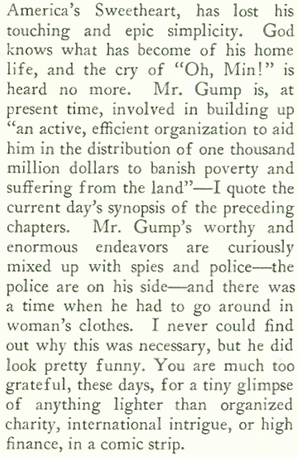
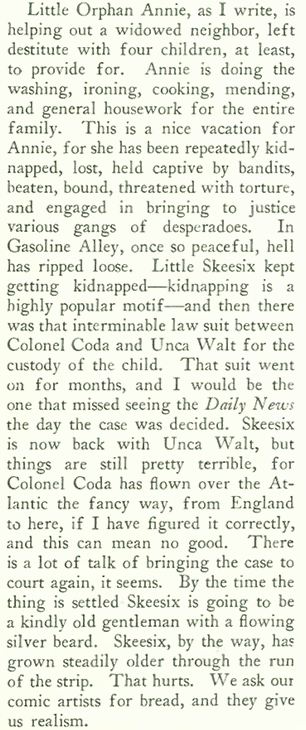
In her column, “Reading and Writing,” Dorothy Parker (writing under the pen name “Constant Reader”) lamented the fact that the comic strips were abandoning simple, light horseplay in favor of “melodramas.” Apparently even Andy Gump wasn’t exempt:

screen-shot-2017-01-30-at-10-06-30-am

screen-shot-2017-01-30-at-10-06-42-am

thegumpsintro21217

screen-shot-2017-01-31-at-9-55-35-am
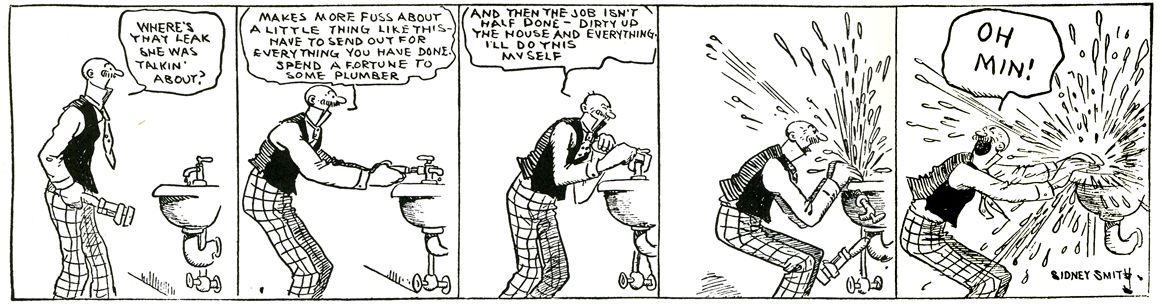
GUMPS IN THE DUMPS…in late 1927 Dorothy Parker longed for the antics of the old, dimwitted Andy Gump and his much-brainier wife, Minerva. Above, the first strip from 1917 that introduced The Gumps. Below, a circa 1920 strip featuring a typical Andy Gump mishap and his trademark “Oh Min!” (newspapers.com) Click images to enlarge.

Parker also bemoaned the likes of Little Orphan Annie and the gang from Gasoline Alley, where everyday hijinks were replaced by melodrama:

screen-shot-2017-01-30-at-10-07-07-am

screen-shot-2017-01-31-at-1-02-47-pm
I LOVE YA, TOMORROW…but I’m gonna kick your ass today! Annie gets rough in this 1927 strip. Hugely popular, the strip (begun in 1924) inspired a ton of merchandise, films, a radio show and the musical Annie. The strip Little Orphan Annie made creator Harold Gray a very rich man. (ha.comics.com) Click image to enlarge.
ga23nov1927
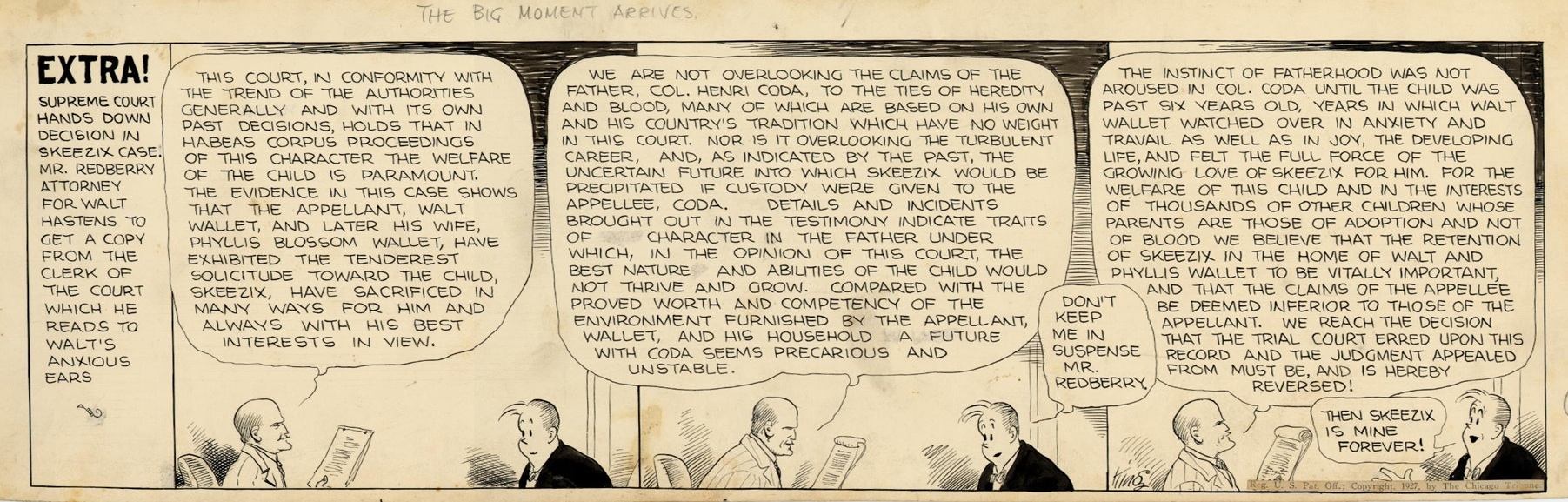
SORRY, NO PIE IN THE FACE HERE…In this series of turgid word balloons, Walt gets full custody of the orphan Skeezix in this Gasoline Alley strip from 1927, ending what Dorothy Parker called “an interminable law suit.” First published November 24, 1918 by Frank King (who drew the strip until 1959), Gasoline Alley is still going and is the second-longest-running comic strip in the U.S. As Parker noted in her column, the characters in Gasoline Alley were allowed to age naturally. Skeezix is currently 97 years old. (hoodedutilitarian.com) Click image to enlarge.

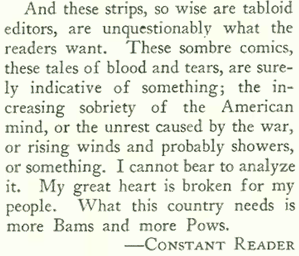
Parker suffered throughout her life from depression, and no doubt turned to the funnies for respite. However, she wrote that she hadn’t “seen a Pow or a Bam in an egg’s age,” and sadly concluded that melodrama was what the readers wanted.

screen-shot-2017-01-31-at-9-27-56-am

When Minerva Was a Car

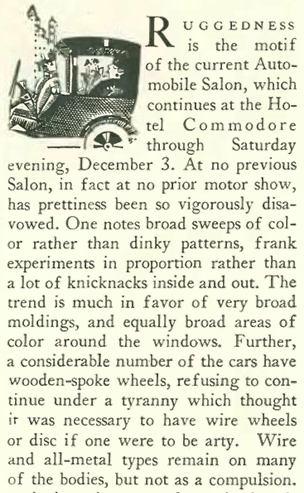
The New Yorker’s Nicholas Trott visited the Automobile Salon at the Hotel Commodore and noted that the latest trend favored an automobile’s “ruggedness” over its “prettiness.” Given the condition of roads in the 1920s, that probably wasn’t a bad thing…

the-automobile-salon

In the early days of the auto industry there were thousands of different manufacturers that eventually went broke or merged with other companies. Trott’s article mentioned new offerings from Chrysler, Mercedes, and Cadillac as well as from such makes as Erskine, Sterns-Knight, Minerva, Holbrook Franklin, Stutz, and Brewster.

In “The Talk of the Town,” however, the editors wrote about another car with a far less colorful name: The Ford Model A. After 18 years of the ubiquitous black Model T, Ford buyers were ready for something different…

screen-shot-2017-01-30-at-9-38-36-am

1928_model_a_ford
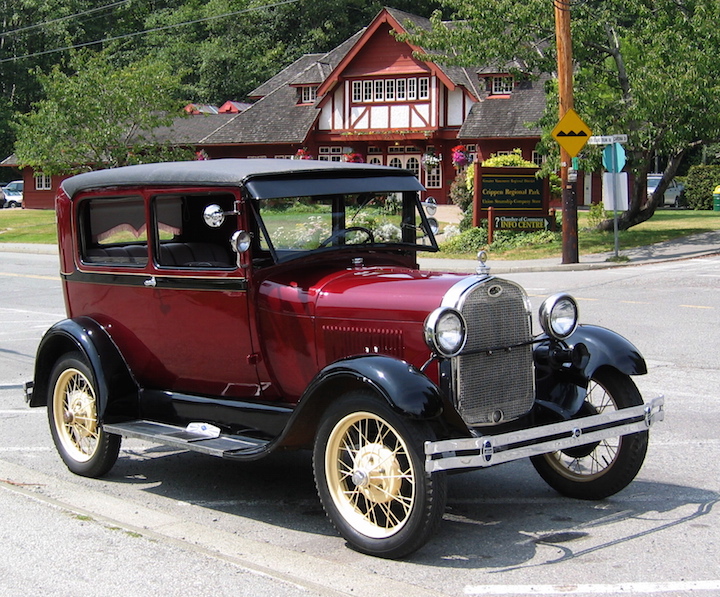
GOOD ENOUGH…The 1928 Ford Model A Tudor Sedan (Wikipedia)

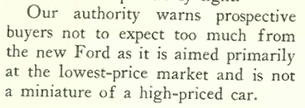
New Yorker editors cautioned, however, that buyers of the Model A should “not expect too much” from a car aimed at more modest pocketbooks. In a little more than a year Ford would sell one million of the things, and by the summer of 1929, more than two million.

screen-shot-2017-01-30-at-9-39-30-am

When Model A production ended in early 1932, nearly five million of the cars had been produced.

German Atrocities?

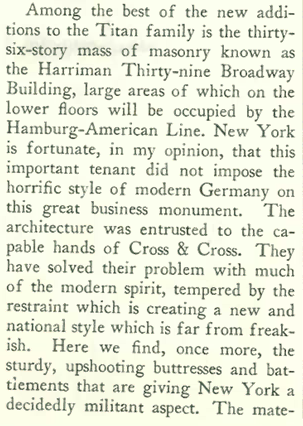
It’s seemed a bit of an “about face” for New Yorker architecture critic George S. Chappell to write of the “horrific style of modern Germany” after previously writing admiringly of the Bauhaus movement and “International Style” promulgated by Le Corbusier. Chappell’s column “The Sky Line” included this subhead, “German Atrocities Neatly Escaped.” In a few years “German Atrocities” would refer to something very different…

screen-shot-2017-01-30-at-10-02-36-am

screen-shot-2017-01-30-at-10-03-44-am

mny325559
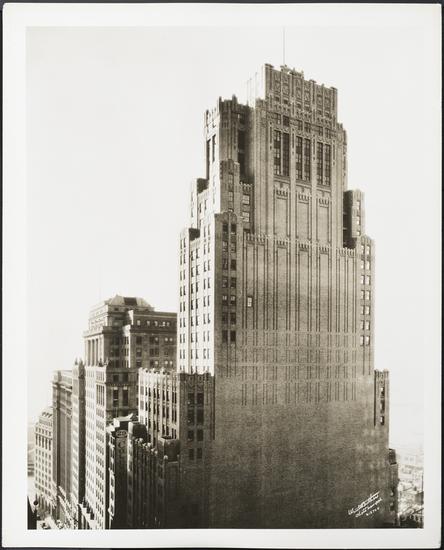
TEN-HUT!…The New Yorker’s George Chappell liked the Harriman Building at 39 Broadway despite its “militant aspect.” Designed by Cross & Cross, it opened in 1928. (Museum of the City of New York)

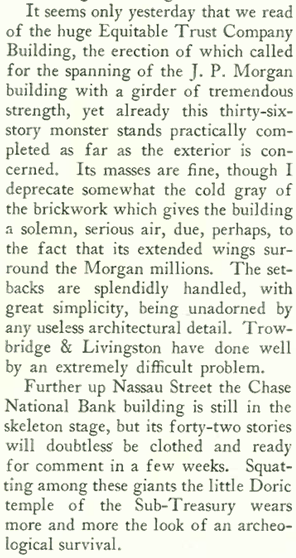
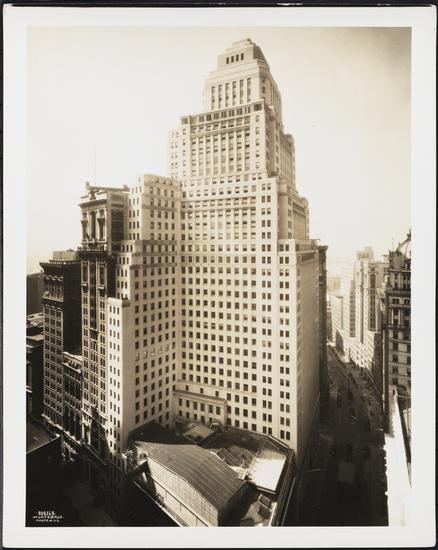
Another monstrous building of note in Chappell’s column was the “huge” Equitable Trust Building at 15 Broad Street…

screen-shot-2017-01-30-at-10-03-56-am

mny323767
Equitable Trust Building at 15 Broad Street. Designed by Trowbridge & Livingston, completed in 1928. (Museum of the City of New York)

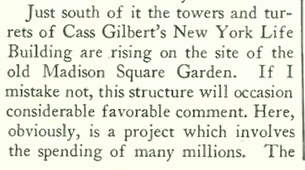
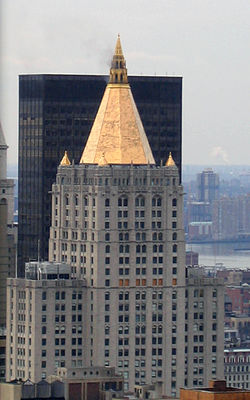
To save the best for last, Chappell also wrote of Cass Gilbert’s landmark New York Life Building, rising on the site of the old Madison Square Garden…

screen-shot-2017-01-30-at-10-04-22-am

screen-shot-2017-01-30-at-10-04-42-am

The distinctive pyramidal gilded roof of the New York Life Insurance Building, (Wikipedia)

 *  *  *

She Nearly Made It

Morris Markey wrote about the exploits of pilot and actress Ruth Elder (1902–1977) in his “Reporter at Large” column. Known as the “Miss America of Aviation,” on Oct. 11, 1927, Elder and her co-pilot, George Haldeman, took off from New York in her attempt to become the first woman to make a transatlantic crossing to Paris. Mechanical problems in their airplane (a Stinson Detroiter dubbed American Girl) caused them to ditch into the ocean 350 miles northeast of the Azores. Fortunately they were rescued by a Dutch oil tanker in the vicinity.

elder_trip_4_500
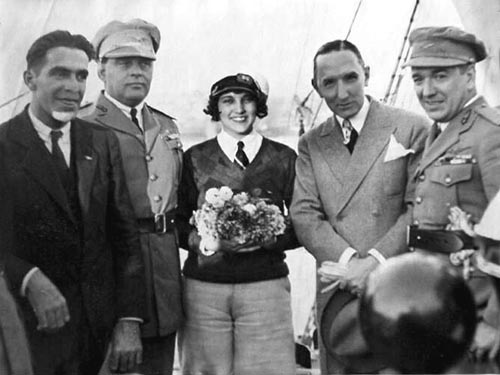
NO WORSE FOR WEAR…Ruth Elder, center, and George Haldeman, far left, on board their rescue ship, the Barendrecht, Oct. 25, 1927. (ctie.monash.edu)
wt81_hootandlady
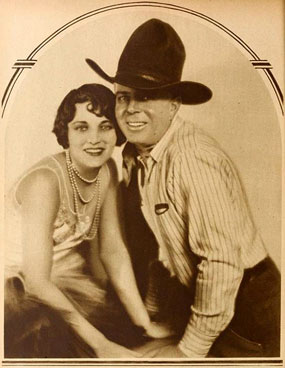
WHAT A HOOT…Ruth Elder and Hoot Gibson in a promotional pose for the 1929 film Winged Horseman (usc.edu).

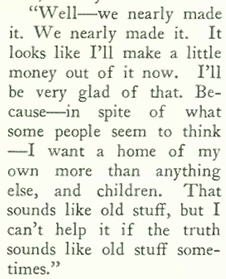
Although they were unable to duplicate Charles Lindbergh’s feat, Elder and Haldeman nevertheless established a new over-water endurance flight record of 2,623 miles–the longest flight ever made by a woman. They were honored with a ticker-tape parade upon their return to New York. Despite her derring-do, Elder suggested that she longed for a simpler, more domestic life…

morris-markey-a-reporter-at-large-ruth-elder

Whether or not she found the simple life it is hard to say. She married six times, perhaps looking for the right “old stuff” and not quite finding it.

 *  *  *

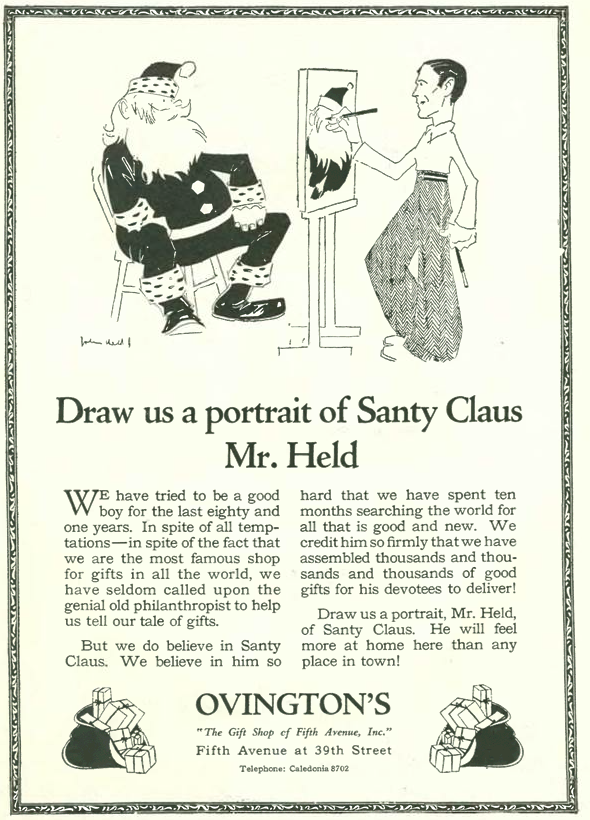
And finally, this ad from the Dec. 3 issue featuring the art of New Yorker contributor John Held Jr…

screen-shot-2017-01-30-at-9-37-40-am

…and this cartoon by Otto Soglow, depicting how one toff bags his “trophy”…

screen-shot-2017-01-30-at-9-51-46-am

Next Time: The Perfect Gift for 1927…

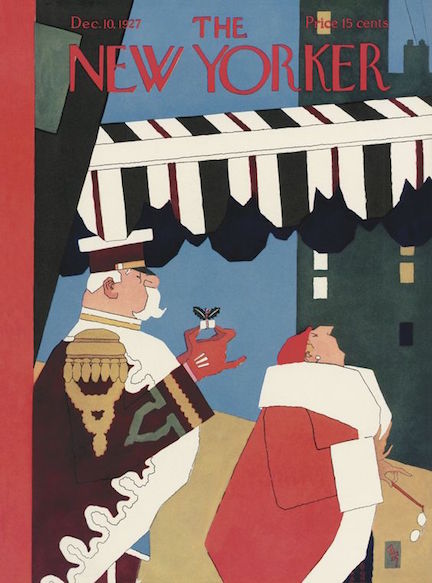
dec-10

Mutt & Jeff

We close out November 1927 by looking at a hugely popular comic strip—Mutt & Jeff—that made cartoonist Bud Fisher both famous and wealthy.

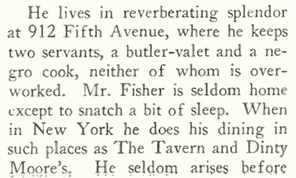
screen-shot-2017-01-26-at-10-05-52-am
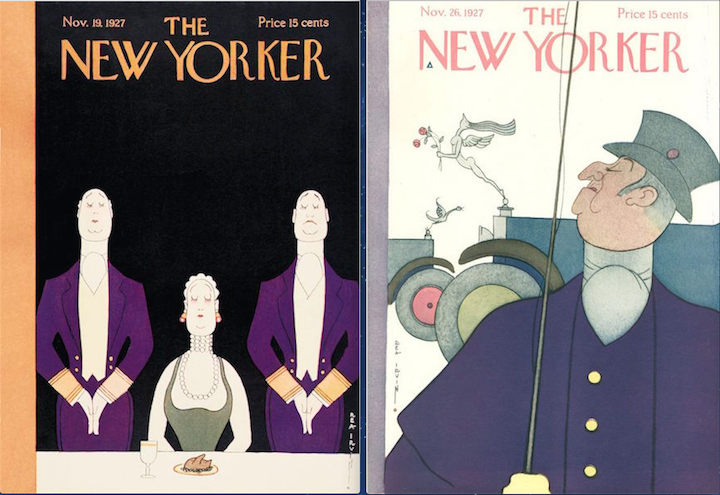
Nov. 19 and Nov. 26, 1927 covers by Rea Irvin.

The editors of the Nov. 26, 1927 issue of The New Yorker thought Fisher interesting enough to feature in a lengthy “Profile,” written by Kelly Coombs. A brief excerpt:

screen-shot-2017-01-24-at-1-50-02-pm

screen-shot-2017-01-24-at-1-50-10-pm

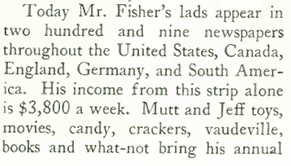
According to John Adcock’s terrific Yesterday’s Papers blog, by 1916 Bud Fisher was the highest paid cartoonist on earth. The New Yorker suggested his annual income was $300,000 (roughly equivalent to more than $4 million today). In addition to the strips, created by Fisher and a team of ghost illustrators/writers, Mutt & Jeff were featured in vaudeville engagements, theatrical shows, animated cartoons, comic books and toys.

muttmagicdark1380
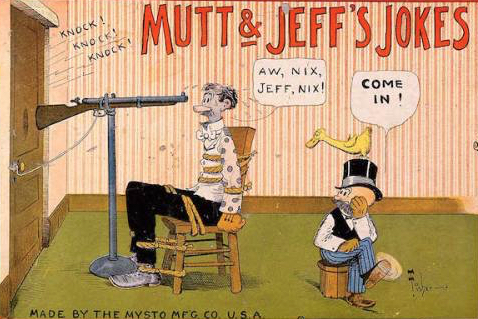
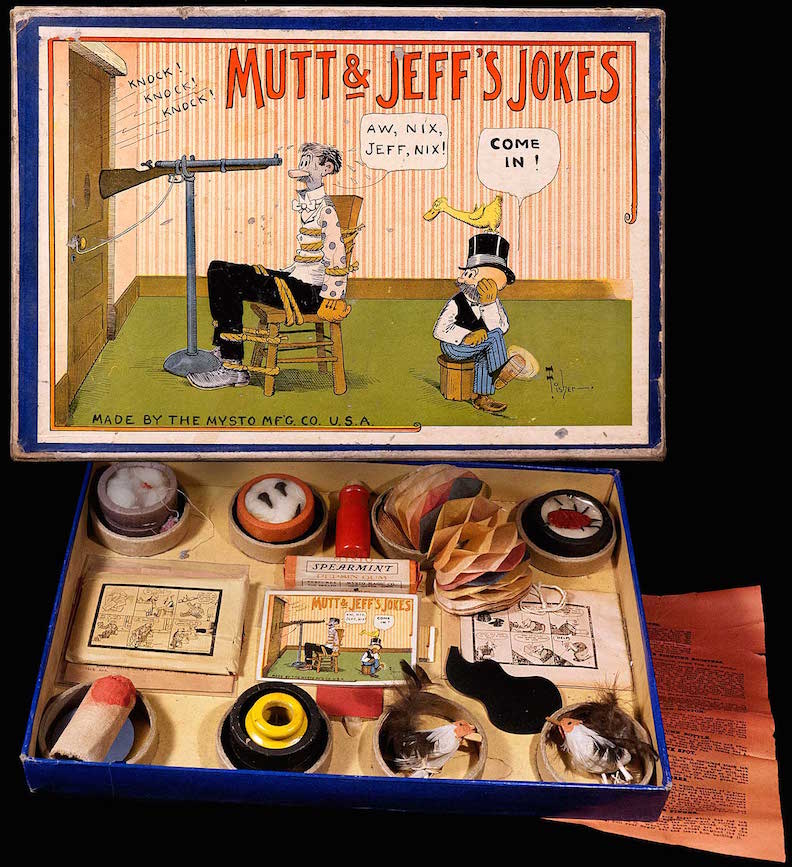
DIE LAUGHING…Mutt & Jeff themed toys included this joke kit from Mysto Manufacturing. I don’t quite get the joke featured on the cover, depicting Jeff’s casually twisted approach to murdering poor Mutt. (Copyright MEL BIRNKRANT via melbirnkrant.com—a truly amazing collection)
m902d5g
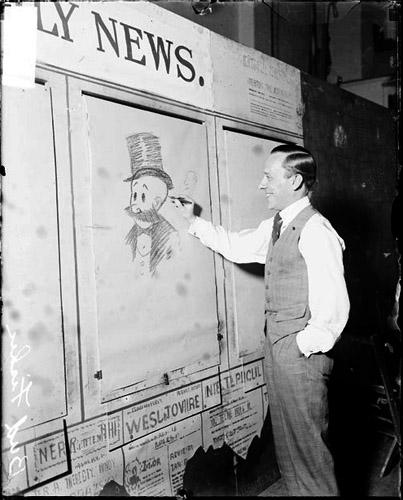
IT’S A LIVING…Harry Conway (Bud) Fisher, drawing a likeness of the character “Jeff” at a Chicago Daily News event in 1915. (Chicago History Museum)

Fisher began his career as a sports cartoonist for the San Francisco Chronicle and started his strip about “two mismatched tinhorns” in 1907. It went into syndication the following year. Mutt and Jeff, originally titled A. Mutt, is regarded as the first American newspaper cartoon published as a strip of panels, making it the first “comic strip.”

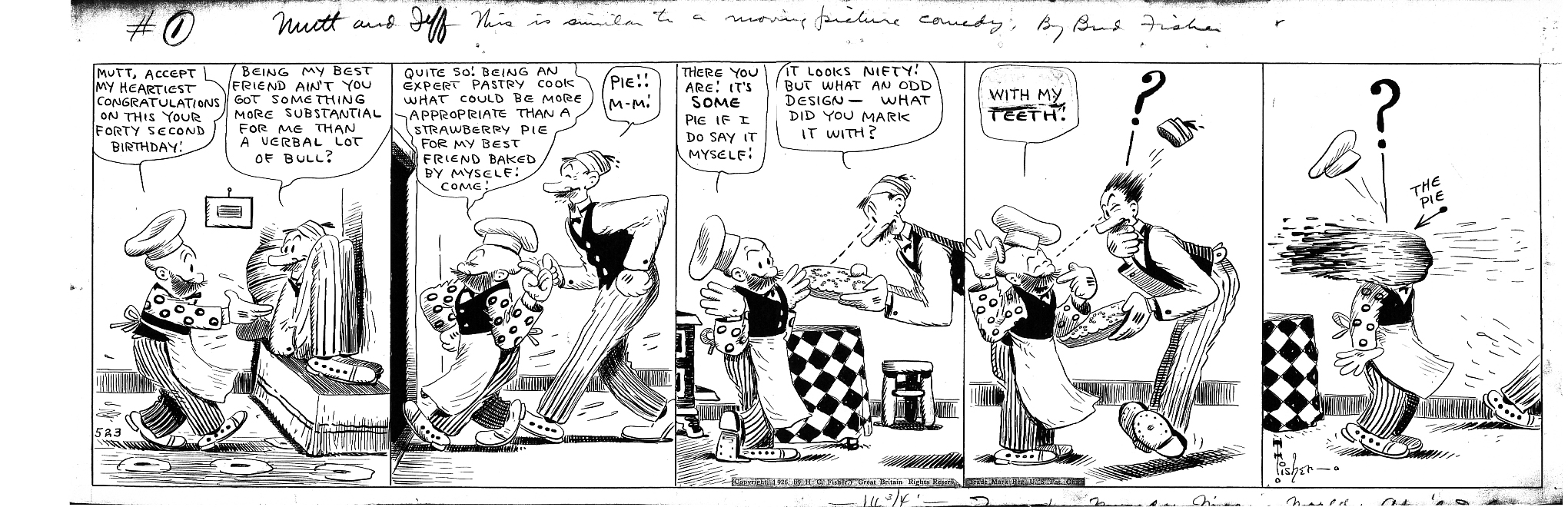
There was obviously a time when American readers thought Mutt & Jeff hilarious, but I don’t quite get its appeal. In this strip from 1926, Jeff gets a pie in the face. The giant question mark was frequently employed by Fisher, as were the dotted eye lines and explanatory arrows like the one in the last panel. No, Jeff didn’t get his brains blown out by Mutt. It is only a pie! Hah!

muttjeff052326b
Click on image to enlarge

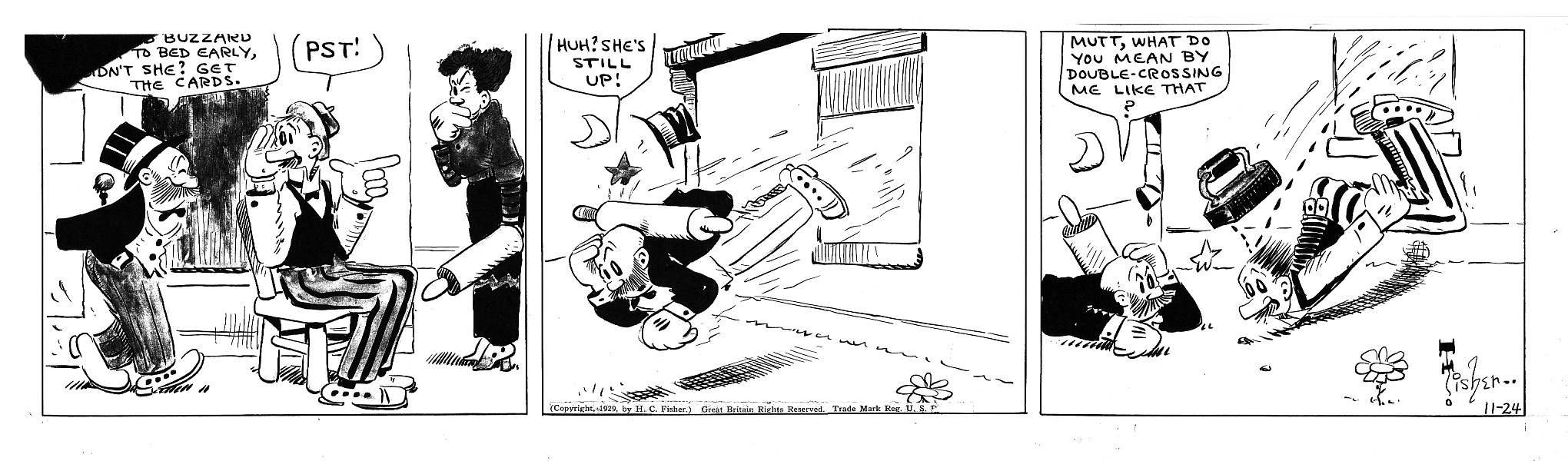
Another visual cliché from comics of yore was the angry wife wielding a rolling pin. Apparently Jeff refers to Mutt’s wife as an “Old Buzzard” and assumes she is already in bed (sorry about the poor quality of the reproduction). Jeff subsequently gets whacked with the rolling pin, and Mutt takes it on the bean with a flatiron. That is quite a feat, throwing a grown man through a window while simultaneously hitting him on the head with a flatiron…

muttjeff112429a
Click on image to enlarge (Both strips courtesy University of Michigan)

The duo were also featured in more than 300 animated “half-reelers” produced between 1913 and 1926, including Mutt and Jeff: On Strike from 1920. The short film (which can be viewed here) even includes rare footage of Bud Fisher himself, since the story–sort of a film within a film–involves the penniless Mutt and Jeff going on strike after they see a movie featuring Fisher’s lavish home.

screen-shot-2017-01-26-at-12-50-34-pm
STRIKEBREAKER…Still images from the silent half-reeler, Mutt and Jeff: On Strike. Bud Fisher is shown at home discussing terms over the phone with his striking characters. They lose. (www.filmpreservation.org)

Coombs concluded the profile with these observations concerning Fisher’s personal habits:

screen-shot-2017-01-24-at-1-50-19-pm

screen-shot-2017-01-24-at-1-50-30-pm

Fisher employed a number of assistants on the strip, including George Herriman (Krazy Kat) and a high-school boy named Maurice Sendak (Where the Wild Things Are). When Fisher appeared to lose interest in the strip in the 1930s, assistant Al Smith took over and drew the strip for nearly fifty years (but Smith didn’t sign his own name on the strip until after Fisher’s death in 1954).

In Yesterday’s Papers, Adcock notes that Fisher “was the unlikeliest person you could think of to draw Mutt and Jeff…along with most of his contemporary cartoonist-journalists pals, (he) enjoyed fights, chorus girls, gambling, and saloons. Fisher liked to shoot up hotel rooms with his pistols, one of which was a gift from Pancho Villa, indoors when he was drunk.”

Heads in the Clouds

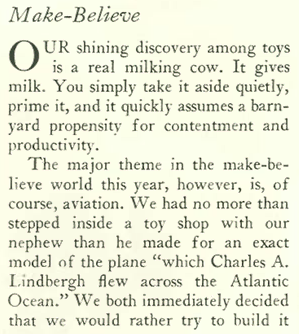
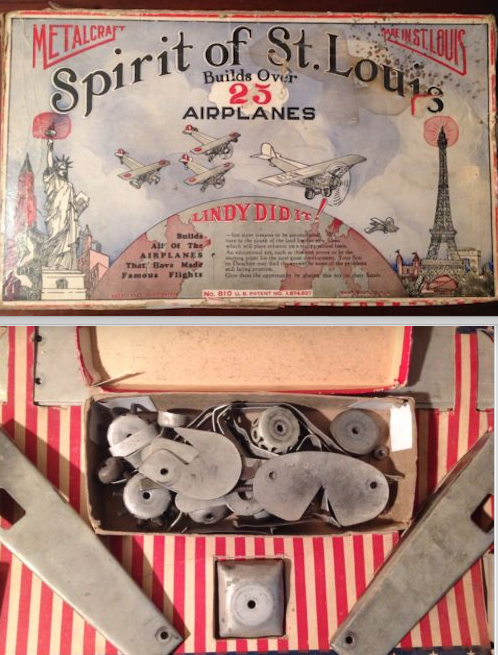
Thanks to the race to fly across the Atlantic, toy models of Charles Lindbergh’s Spirit of St. Louis and other planes were in high demand for the Christmas season, according to this item in the Nov. 26, 1927, “Talk of the Town:”

screen-shot-2017-01-24-at-1-42-51-pm

screen-shot-2017-01-24-at-1-42-56-pm

screen-shot-2017-01-27-at-9-48-40-am
BUILT TO LAST…A Metalcraft model kit (box, upper image, contents below) from the late 1920s. It was all metal in the days before plastic model kits. (eBay)

 *  *  *

At a Loss For Words

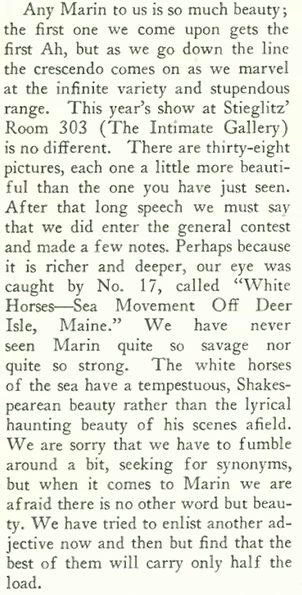
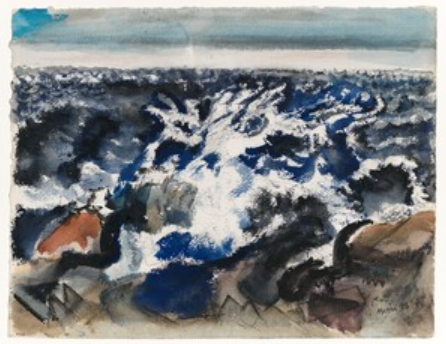
Jumping back to the Nov. 19, 1927 issue, we go from the low art of Bud Fisher to the high art of John Marin featured in “The Art Galleries” section. Art critic Murdock Pemberton wrote:

the-art-galleries-marin-1

screen-shot-2017-01-27-at-10-01-51-am
SAVAGE WORK…John Marin, White Horses – Sea Movement off Deer Isle, Maine, 1926. (Whitney Museum of American Art)

But perhaps “high art” is not an accurate description of Marin’s paintings, since Marin himself wasn’t into “highfalutin words” to describe his work…

marin-2-signed-mp

12032401444_4bb042eb04_b
HAUNTING BEAUTY…John Marin, Echo Lake Franconia Range White Mountain Country, 1927 (National Gallery of Art, Washington DC.)

 *  *  *

In the previous week’s issue (Nov. 12) the Marmon 8 was advertised as an ideal car for women. Not to be outdone, the folks at Buick shot back with this colorful ad in the Nov. 19 issue:

screen-shot-2017-01-24-at-1-19-18-pm

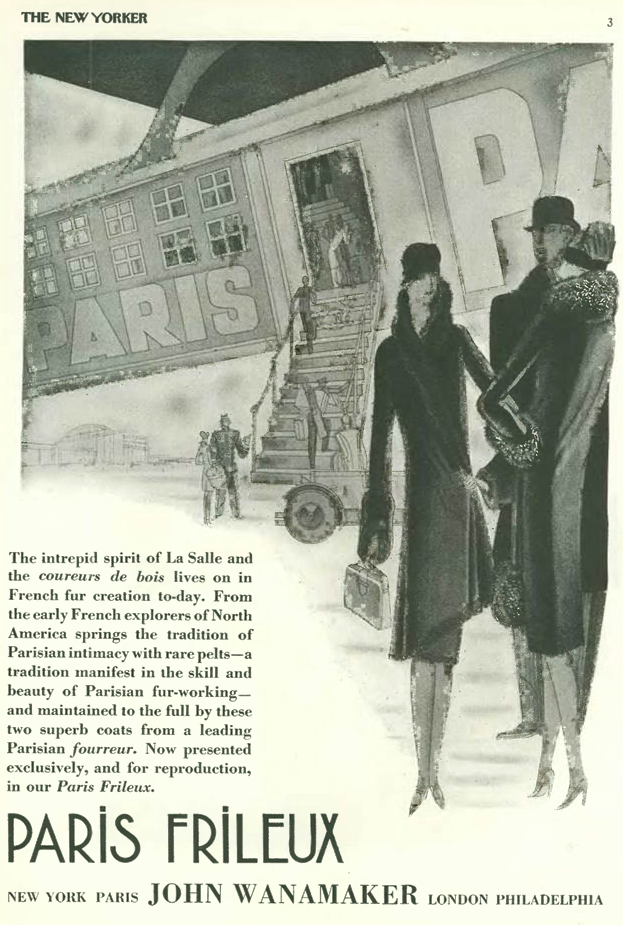
The Nov. 19 issue also featured this strange advertisement from the famed Wanamaker department store. Strange mainly because of the illustration, which features a fashionable woman departing a fanciful aircraft studded with mullioned windows(!) and a stairway that stretches to improbable depths…oh, and in case the reader might miss the snob appeal associated with French furs, the words Paris, Parisian or French are featured ten times…

screen-shot-2017-01-24-at-1-20-53-pm

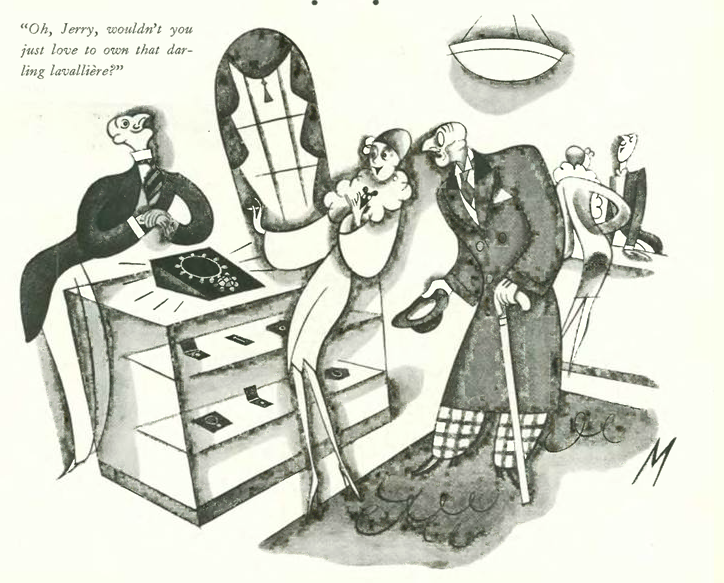
And finally, the ubiquitous New Yorker cartoon featuring the humorous mismatch of rich old sugar daddy and ditzy young mistress, courtesy of Julian de Miskey

screen-shot-2017-01-24-at-1-25-20-pm

Next Time: More Funny Business…

dec-3


Age of the Talkies

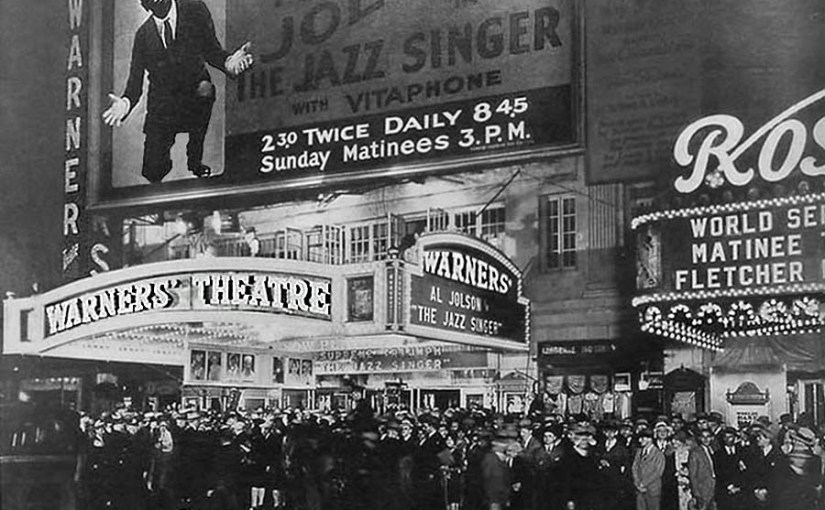
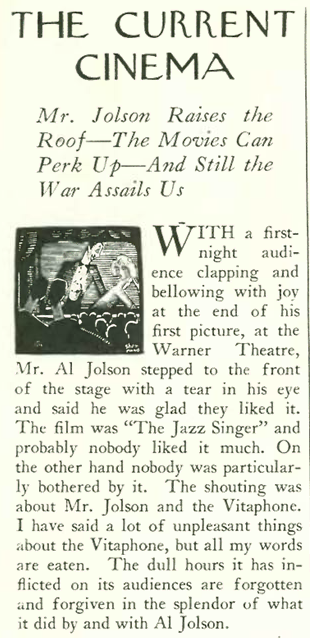
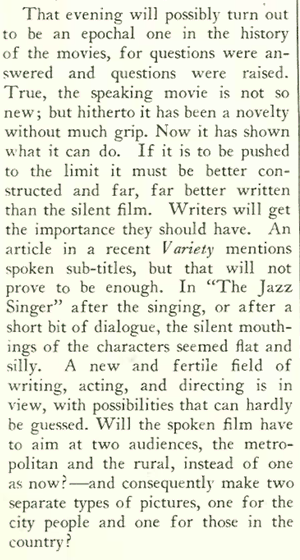
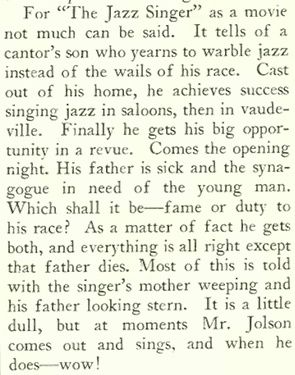
The Oct. 15, 1927 issue featured the premiere of the film The Jazz Singer. Although The New Yorker found the story a bit dull, it also recognized that the film’s use of sound marked a significant turning point in the short history of cinema.

cca81fb3c6aeb61c01f52c8dc5c3c05b
October 15, 1927 cover by Theodore G. Haupt.

The Jazz Singer was not the first film to employ sound, but as the New Yorker review pointed out, it was the first to effectively use synchronized sound (the industry standard Vitaphone technique) in a way that improved the motion picture.

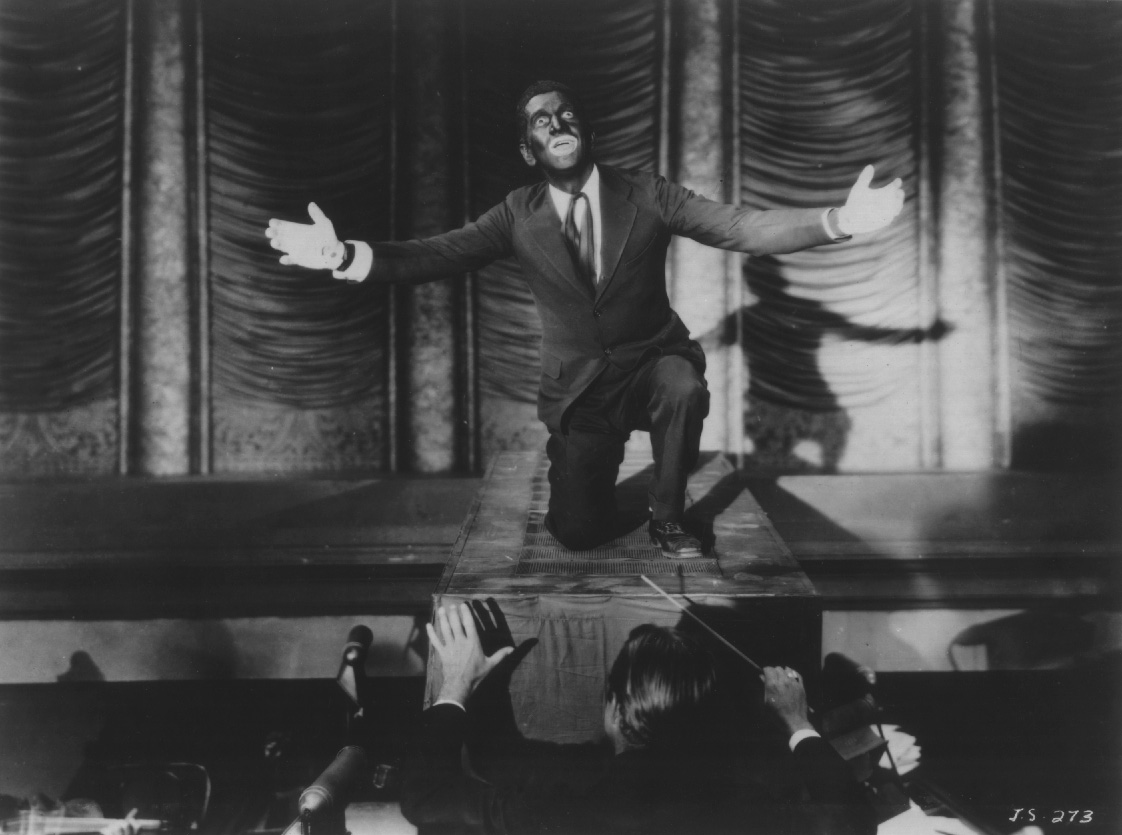
The film featured only two minutes worth of sound dialogue, so most of the spoken lines were still presented on intertitle cards commonly used in silent films. But it was Al Jolson’s recorded voice, belting out popular tunes including “Toot, Toot, Tootsie,” that really wowed audiences. At the end of the film Jolson himself appeared on stage before an audience “clapping and bellowing with joy”…

jazz-siner-1

jazz-singer2

jazz_singer_f
IT SINGS! IT TALKS!!!…Al Jolson as Jack Robin and Eugenie Besserer as his mother, Sara Rabinowitz, in The Jazz Singer. One attendee at the premiere recalled that when Jolson and Besserer began their dialogue scene, “the audience became hysterical.” (wired.com)

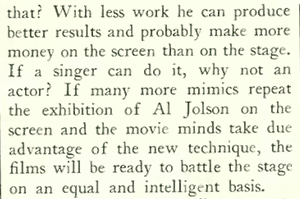
It is interesting that as early as 1927, and even with the relatively crude sound of Vitaphone, The New Yorker was already predicting the advent of a new kind of star (and the decline of the stage actor)…

screen-shot-2016-12-09-at-12-26-53-pm

screen-shot-2016-12-09-at-12-27-04-pm

VitaphoneDemo
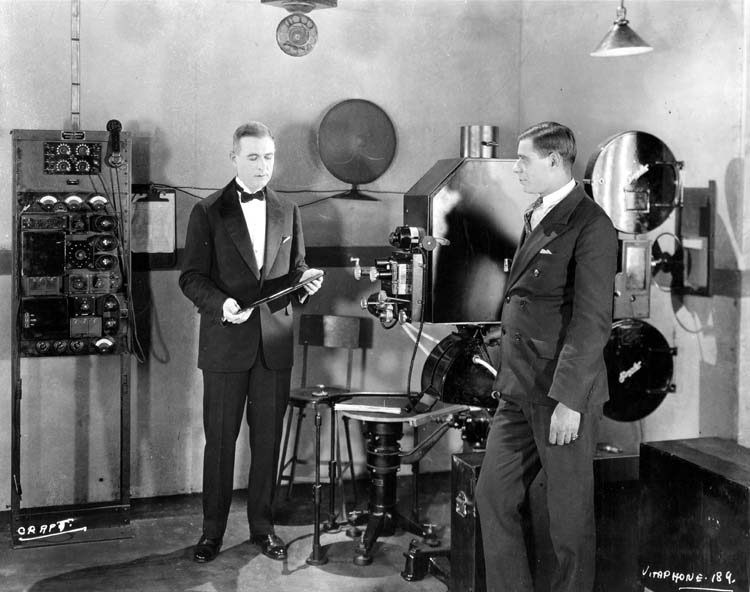
BLACK TIE EVENT…A Vitaphone projection setup at a 1926 demonstration. Western Electric engineer E. B. Craft, left, is holding a soundtrack disc, which was essentially a phonograph record. The turntable, on a thick tripod base, is at lower center. (Wikipedia)

As for the movie itself, well, there was Jolson, beloved by many. Perhaps it’s the sound quality, or the 89 years of changing tastes, but I cannot for life of me understand what audiences (or The New Yorker) saw that was so appealing about the hammy Jolson as a performer.

screen-shot-2016-12-09-at-12-27-12-pm

017-the-jazz-singer-theredlist
THAT WAS THEN…Al Jolson as Jack Robin in The Jazz Singer. Although performing in blackface is considered racist today, Jolson’s use of blackface was integral to the film in that it was tied to Jack’s own Jewish heritage and his struggle for identity. Of course that doesn’t make it any less offensive. (YouTube clip)

*  *  *  *  *

Absent-minded Ambassador

The New Yorker’s “Talk of the Town” offered some curious observations about the new ambassador to Mexico, Dwight Morrow.

morrows_1931
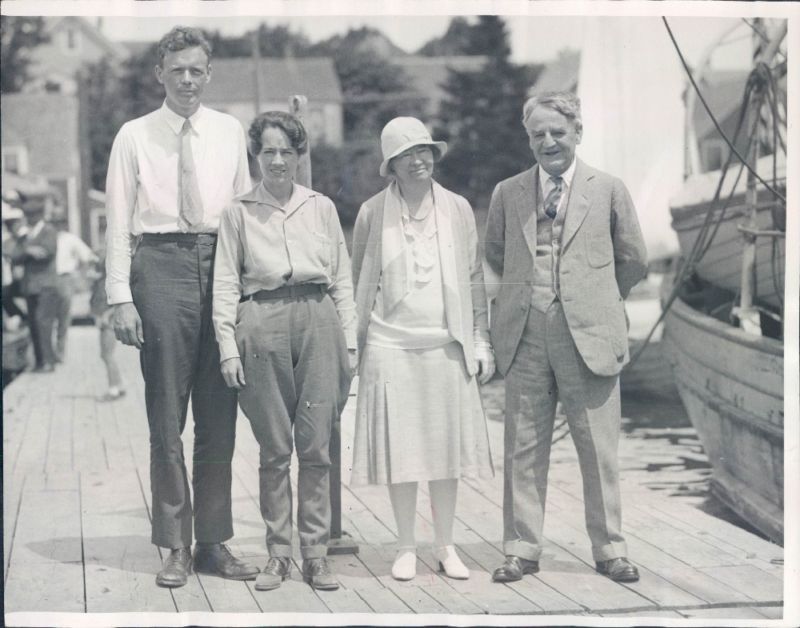
SON-IN-LAW…Aviator Charles Lindbergh would marry Dwight Morrow’s daughter, Anne, in 1929. in this photo from 1931 are, from left, Charles Lindbergh, Anne Morrow Lindbergh, Elisabeth Morrow, and Dwight Morrow. (kaiology.wordpress.com)

Morrow has been widely hailed as a brilliant ambassador with a keen intellect. The New Yorker, however, offered some additional perspective on the man:

screen-shot-2016-12-09-at-11-59-33-am

screen-shot-2016-12-09-at-11-59-38-am

Flight of Fancy

In the wake of Charles Lindbergh’s famous flight, The New Yorker (and the rest of the country) continued its fascination with air travel, which at this point was confined to military and commercial pilots, stunt flyers and the well-to-do.

screen-shot-2016-12-09-at-11-55-12-am

screen-shot-2016-12-09-at-11-55-19-am

screen-shot-2016-12-09-at-11-55-28-am

f7a-2a

f12cabindown
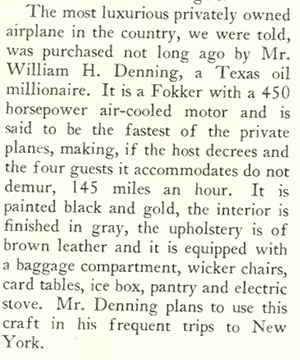
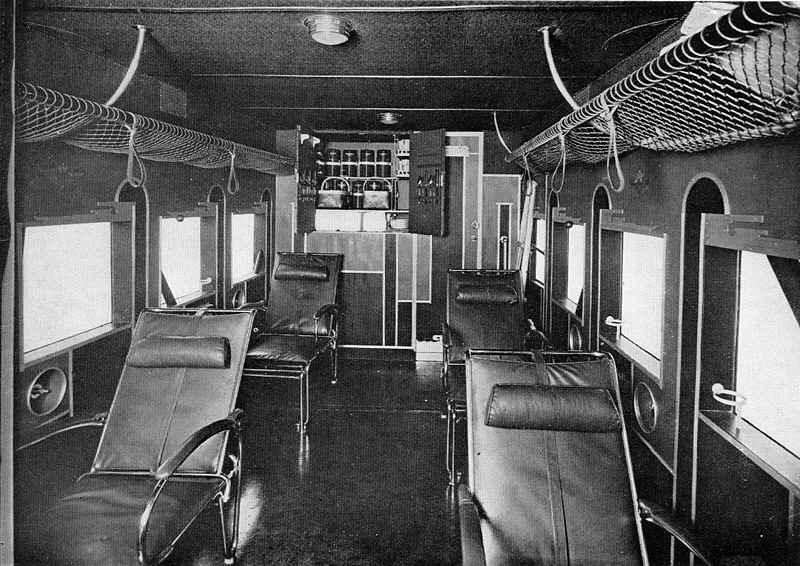
EXTRA LEGROOM…The Fokker F.VII pictured above is likely the same plane or very similar to the one owned by Texas oilman William Denning. The interior depicted below is also similar to what is described in The New Yorker. (aviation-history.com)

 *  *  *  *  *

RIP Isadora Duncan

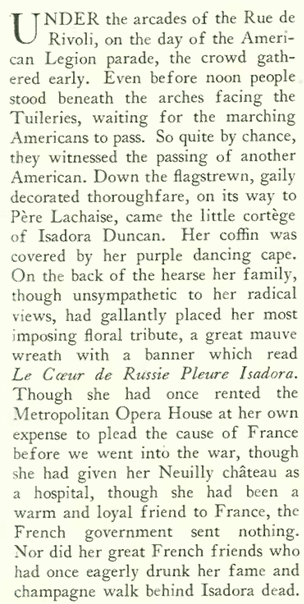
The New Yorker’s Paris correspondent, Janet Flanner, wrote about the funeral of famed modern dancer Isadora Duncan in her column, “Letter from Paris.” Duncan was killed in a freak accident on the night of Sept. 14, 1927, when her silk scarf, draped around her neck, became entangled around the open-spoked wheels of the car in which she was riding, breaking her neck.

screen-shot-2016-12-09-at-12-23-34-pm

screen-shot-2016-12-09-at-12-24-54-pm

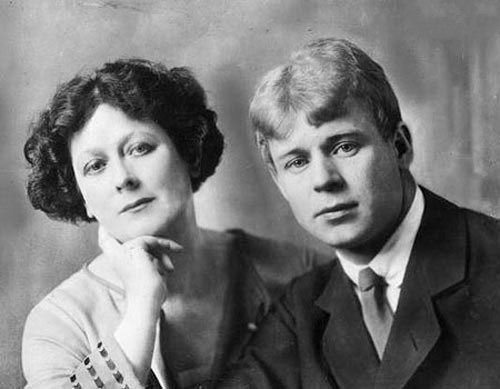
Isadora Duncan with her husband, poet Sergei Esenin, in 1922. (Wikimedia)

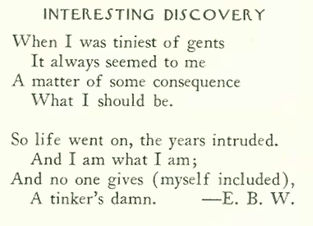
Other items of note from the Oct. 15 issue, E.B. White contributed this ditty…

screen-shot-2016-12-09-at-12-13-06-pm

…and Corey Ford, who gave the fictional Eustace Tilley his persona, wrote of Tilley’s feat crossing Broadway in a parody of adventure stories popular at the time. An excerpt:

croey-ford

And finally, Peter Arno explored childhood angst among the smart set (note reference to “Uncle Thurber”)…

screen-shot-2016-12-09-at-12-08-56-pm

Next Time: Electric Wonders…

6ed825c70c3fd789a666a63ecc376b5d


The Movies Take Wing

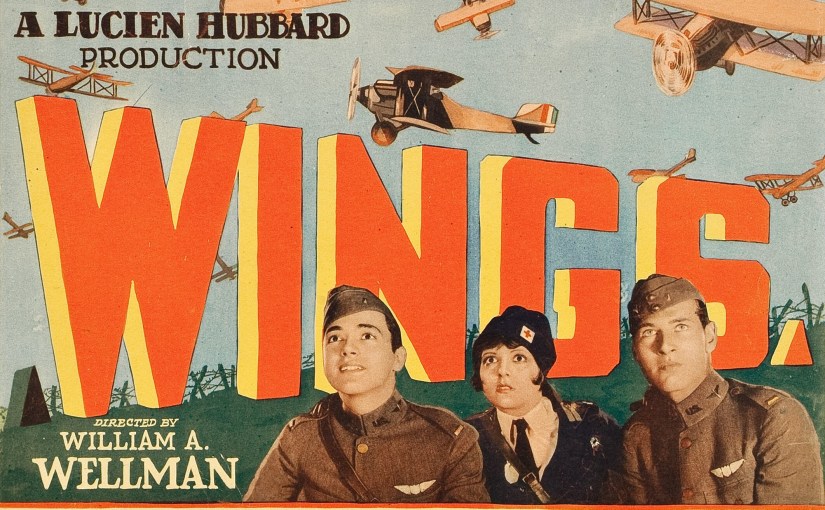
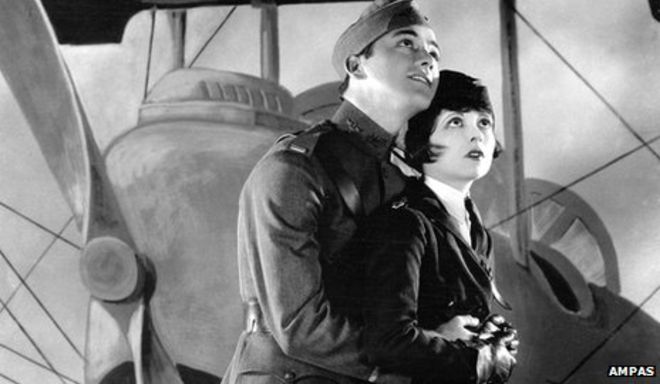
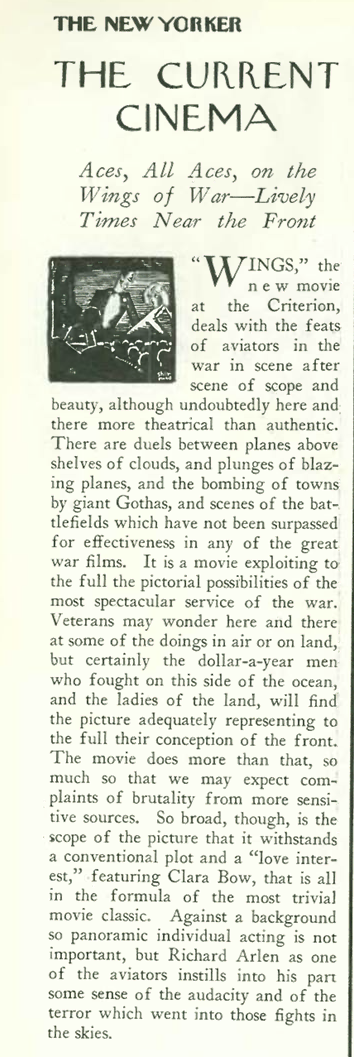
The First Academy Award for Best Picture went to Wings, a romantic action-war picture directed by William Wellman and featuring Paramount’s biggest star at the time, the “It Girl” Clara Bow and a young Gary Cooper in a role that would launch his Hollywood career.

31163f0a903d36d43f89b8495fe4e9a4
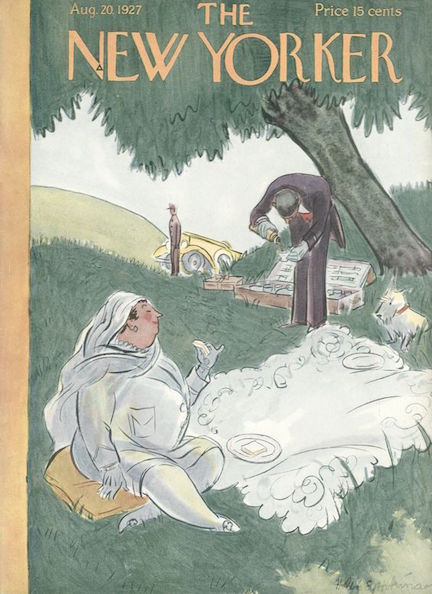
August 20, 1927 cover by Helen Hokinson.

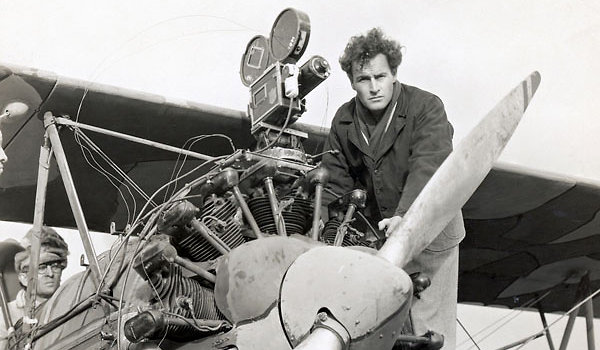
The film was shot on location at Kelly Field in San Antonio, Texas, on a budget of $2 million (about $27 million today). About 300 pilots were involved in filming  realistic (and dangerous) air-combat sequences using both mounted and hand-held cameras.

_57942979_wings_pose_hi
LOFTY AMBITIONS…Charles “Buddy” Rogers and Clara Bow in Wings, 1927. (BBC)

wings

william-wellman
NO CGI HERE…Director William Wellman, during production of Wings, 1927. (Paramount Pictures via New York Times)
photo33chic_0632
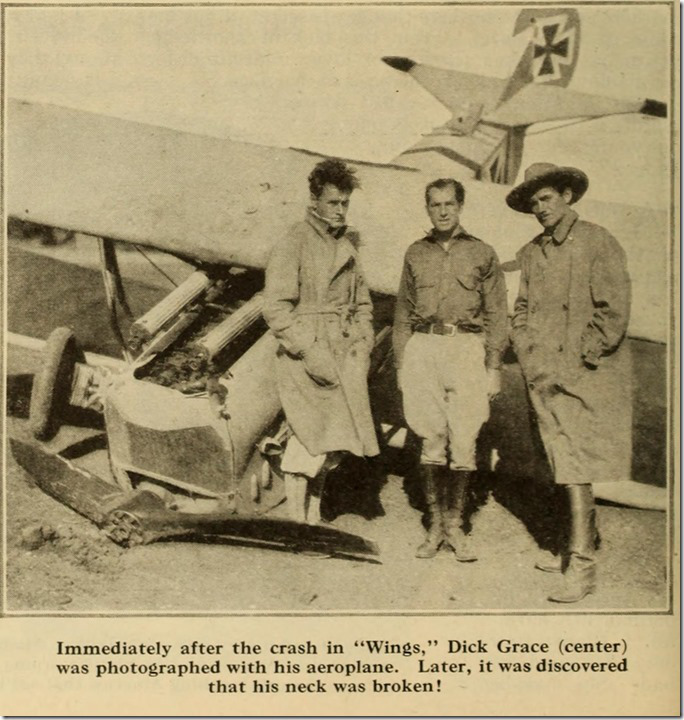
INSURANCE RISK…Stunt pilot Dick Grace specialized in crashing planes for films, and was one of the few stunt pilots who died of old age. (ladailymirror)

 *  *  *

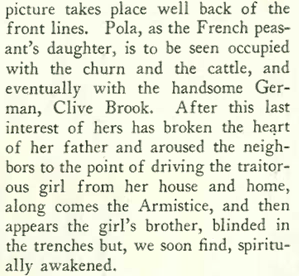
We leave the skies for the trenches in another World War I film–Barbed Wire–that was entertaining New Yorkers in 1927…

barbed-wire-1927-image-10
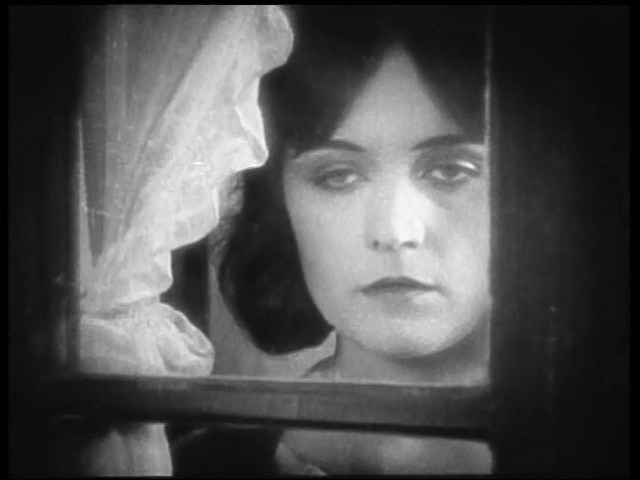
LOOKS MORE INTERESTING OUT THERE…Pola Negri watches the Germans in Barbed Wire, 1927. (Wikipedia)

screen-shot-2016-11-15-at-12-53-17-pm

screen-shot-2016-11-15-at-12-53-28-pm

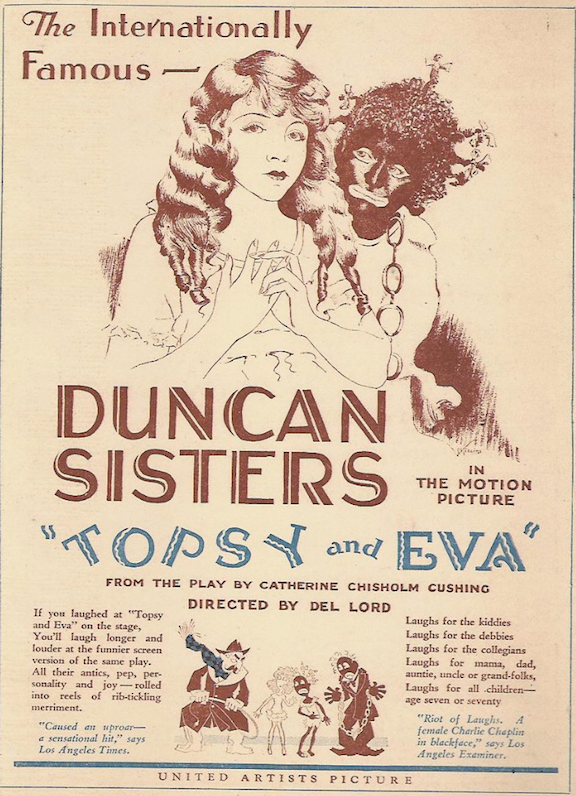
The Duncan Sisters were back, this time on the silver screen in an adaptation of their Broadway hit play, Topsy and Eva. One of the sisters performed in blackface, which was acceptable to white audiences of the time (including New Yorker critics). You can read more about this duo in my recent blog entry, Fifteen Minutes is Quite Enough.

screen-shot-2016-11-21-at-4-24-40-pm
Advertisement for the film, Topsy and Eva, 1927. (nilsasther.blogspot.com)

screen-shot-2016-11-15-at-12-53-42-pm

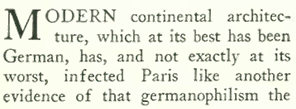
Meanwhile, Paris correspondent Janet Flanner was noting some modern influences in the city thanks to the influence of the German Bauhaus…

screen-shot-2016-11-15-at-12-55-16-pm

genet-mod-arch

002_mallet_stevens_rue_mallet_stevens_paris_theredlist
Rue Mallet Stevens was designed by Paris-based architect, designer and production designer Robert Mallet-Stevens, who founded the Union of Modern Artists (UAM) in 1929. (theredlist.com).

*  *  *

From the “they couldn’t see it coming” department, this item in “The Talk of the Town” caught my eye. We have since learned that carbon emissions are indeed taking a toll on human life…

screen-shot-2016-11-15-at-12-39-27-pm

screen-shot-2016-11-15-at-12-39-36-pm

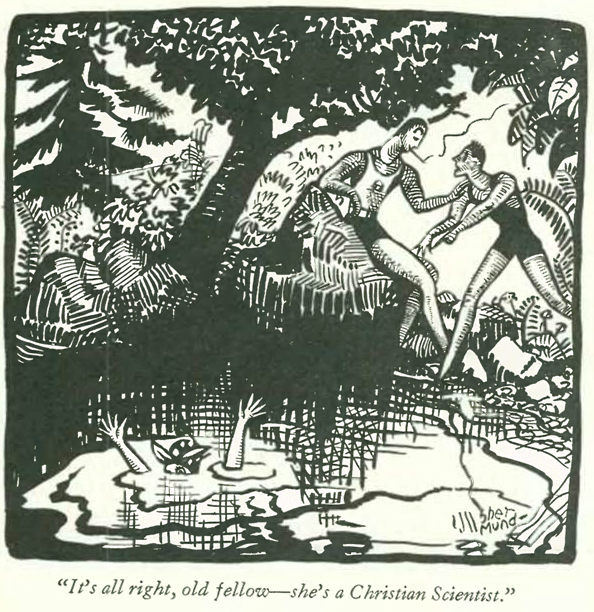
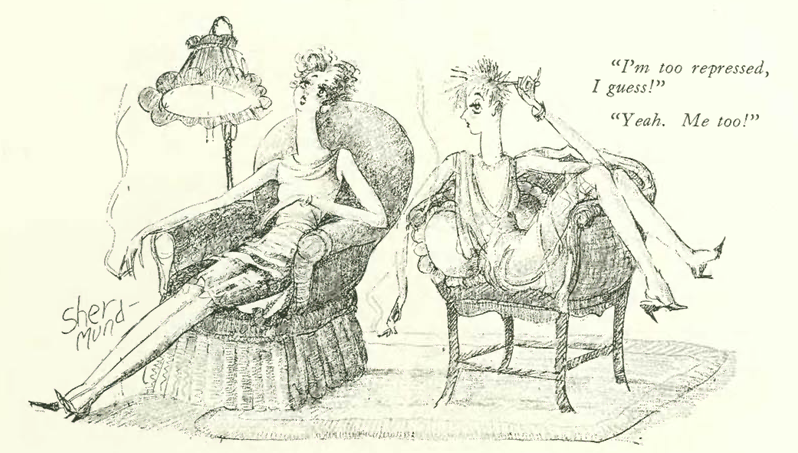
…and a couple of cartoons from this issue, this one courtesy of Barbara Shermund

screen-shot-2016-11-15-at-12-40-32-pm

…and this from an unidentified cartoonist (Dussey?) that gives us a glimpse of the world to come thanks to merger of technology and tedious, proud parents…

screen-shot-2016-11-15-at-12-46-17-pm

*  *  *

And to end on a “Wings” theme, the following week’s issue…

029648b8835cd8a9600d9dc4caf29b32
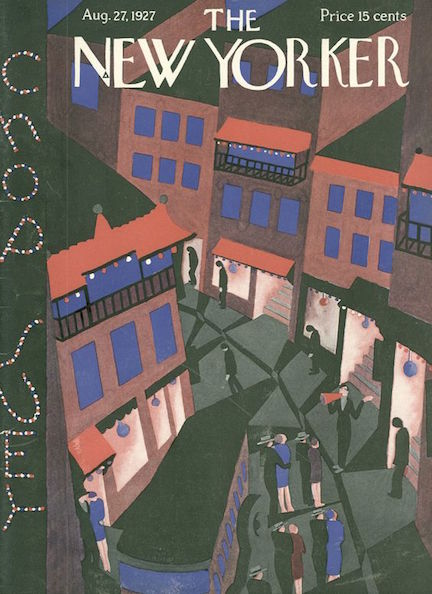
August 27, 1927 cover by Theodore G. Haupt.

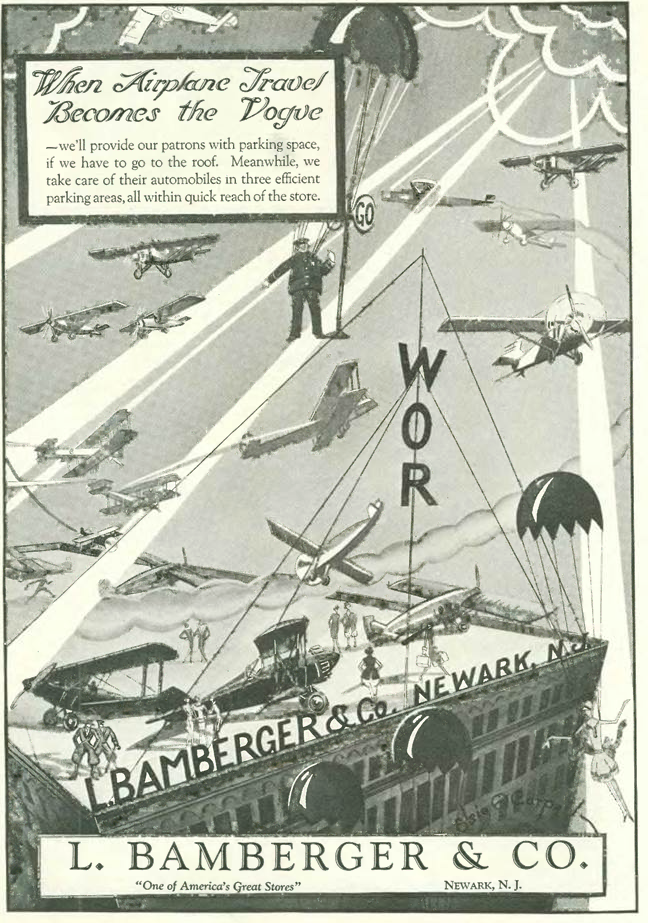
…offered this advertisment from L. Bamberger & Co. that gave us a tongue-in-cheek glance at the future of aviation…

screen-shot-2016-11-15-at-12-58-09-pm

Next Time: The Wages of Beauty…

Babe Comes Home

After months of reporting on polo, golf, tennis and yacht races, The New Yorker finally mentioned baseball–sort of–reviewing a movie featuring Babe Ruth and penning a brief piece about Lou Gehrig in “The Talk of the Town.”

447032a734d61215ca61a95a205dd7da
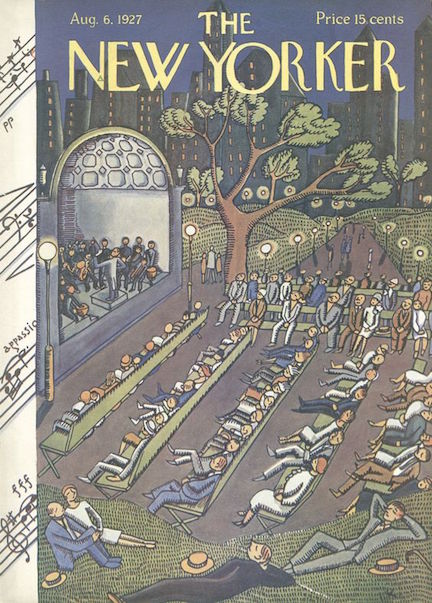
August 6, 1927 cover by Ilonka Karasz.

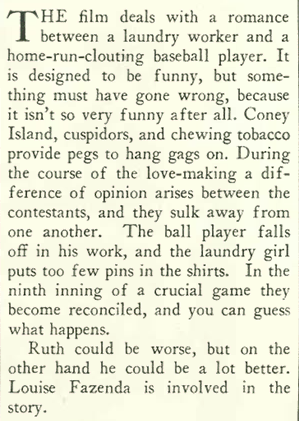
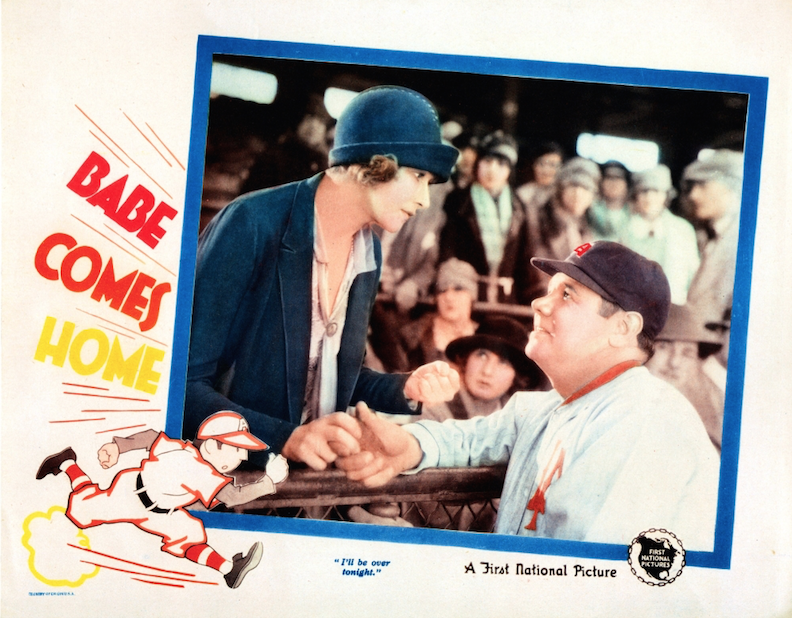
But the magazine still made no mention of the incredible season that was shaping up for the legendary 1927 New York Yankees, or the feats of its feared  “Murderer’s Row” lineup. Although widely considered to be the best baseball team in the history of major league baseball, The New Yorker up to this point had given more ink to the game of ping pong. But we’ll take what we can get, namely Babe Ruth’s acting performance in Babe Comes Home…

screen-shot-2016-11-07-at-12-50-00-pm

screen-shot-2016-11-07-at-12-50-10-pm

screen-shot-2016-11-11-at-12-51-20-pm
BETTER STICK TO BASEBALL…Lobby card for the 1927 film, Babe Comes Home, featuring Anna Q. Nilsson and The Bambino himself. (posterscancollections.com)

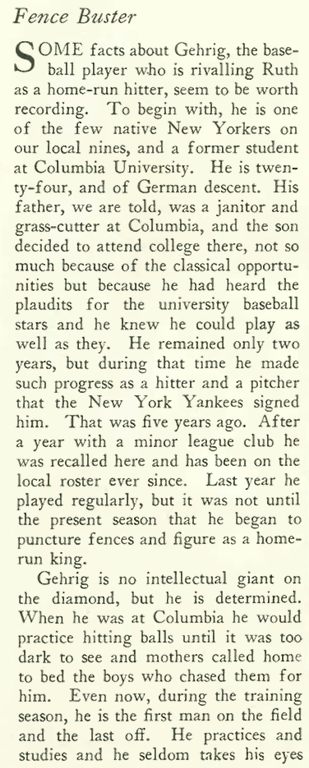
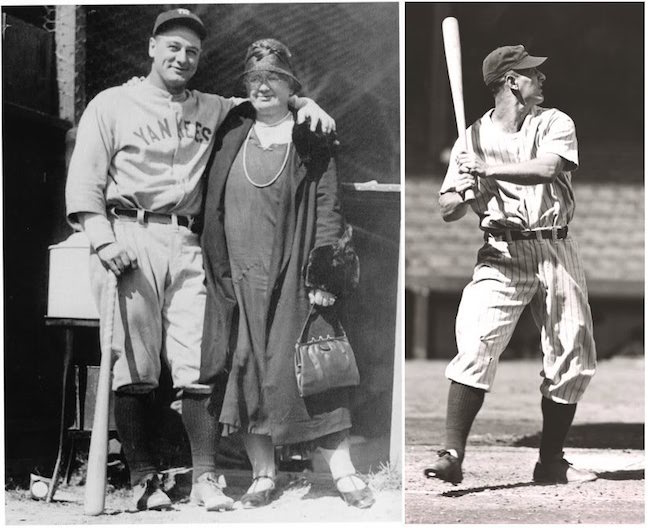
…and over in “The Talk of the Town” section the editors looked at another Yankee slugger, Lou Gehrig, who besides his hitting ability was Ruth’s opposite…

screen-shot-2016-11-07-at-12-32-32-pm

screen-shot-2016-11-07-at-12-32-51-pm

image5-9
MOM & APPLE PIE…Lou Gehrig and his mother, Christina, in 1927. (baseballfever.com)

 *  *  *

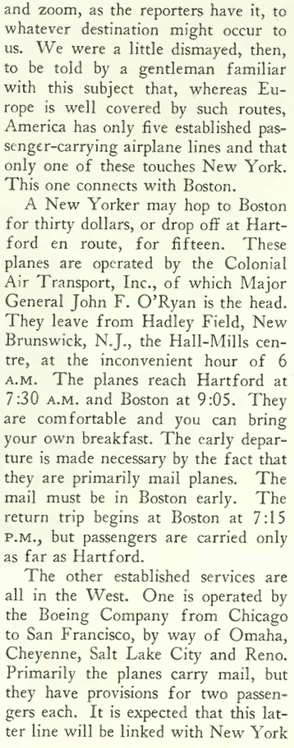
With the hullabaloo over Charles Lindbergh’s transatlantic flight, more Americans were becoming interested in flying as an actual travel option, although in August 1927 New York City had only one established passenger line:

screen-shot-2016-11-07-at-12-37-24-pm

screen-shot-2016-11-07-at-12-37-30-pm

screen-shot-2016-11-07-at-12-37-45-pm

eastbostonairport018-2562
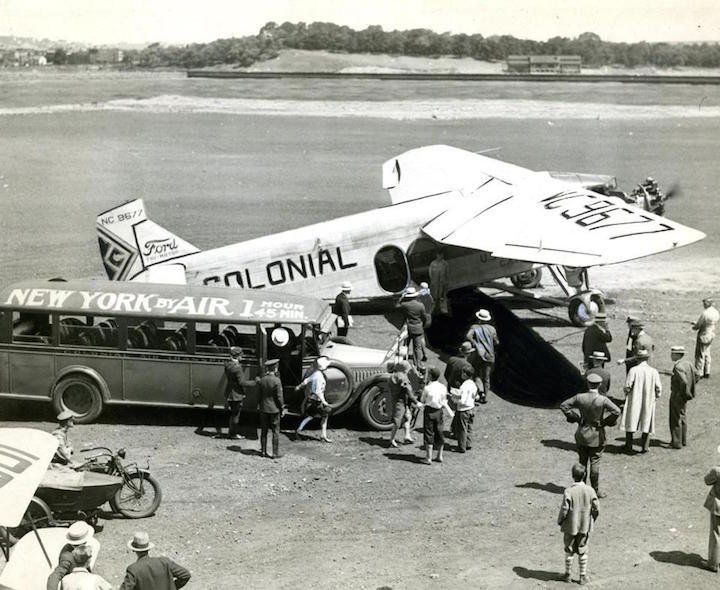
HUMBLE BEGINNINGS…On April 15, 1927, Colonial Air Transport (a predecessor of American Airlines) began passenger service between Boston and New York City. (Boston Globe)
pic04
SORRY, NO WI-FI…National Air Transport, a predecessor of United Airlines and a prime mail carrier, brought the Travelair 5000 to their minimal fleet in 1927 to add passenger revenue to its Midwestern and Western hops that linked Chicago, Omaha, Cheyenne, Salt Lake City, Reno and San Francisco. (traveler.com)

 *  *  *

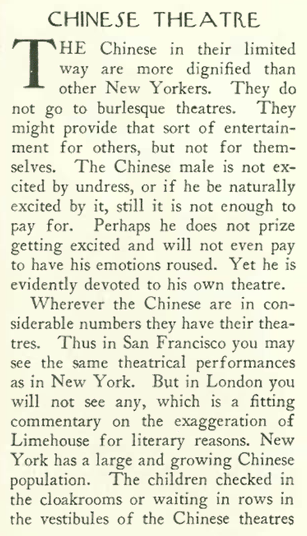
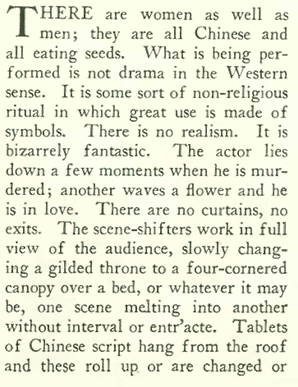
The August  6 issue also featured this strange little review in “Talk” about the popularity (or fad) of attending Chinese theater. Note how the writer described it as an exotic curiosity, as though the Chinese actors were as unknowable as Martians. I suppose it didn’t occur to the writer that you could actually speak to these performers, and have them explain the meanings of the various rituals.

7d5022414f367319b77659cba19591ac
OFF-BROADWAY…Actor Ma Shi-tsang posing with a riding crop in a 1920s publicity photo. Chinese theater actors performed in U.S. cities with large Chinese populations, including San Francisco and New York. (cdlib.org)

chinese-stephen-graham

screen-shot-2016-11-07-at-12-43-42-pm

screen-shot-2016-11-07-at-12-44-19-pm

screen-shot-2016-11-07-at-12-44-28-pm

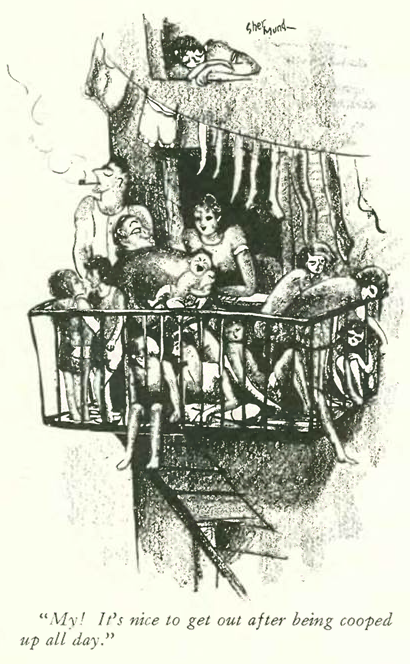
And to close, a couple of cartoons from the issue by Barbara Shermund that illustrated two very different aspects of New York society:

screen-shot-2016-11-02-at-1-15-19-pm

screen-shot-2016-11-02-at-1-14-57-pm

Next Time: An Office Romance…

30e6d833482958226738b30ce4244558