Fracking the Frick

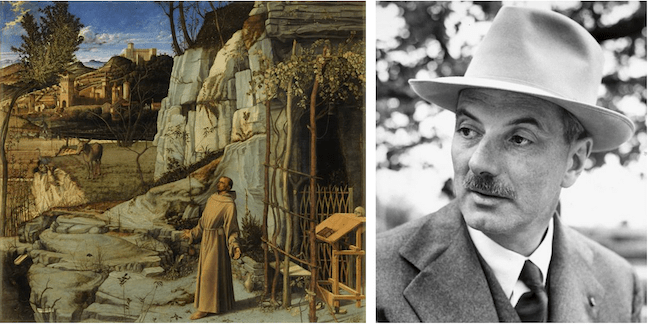
Above: Critic Lewis Mumford was not ecstatic about his visit to the newly opened Frick Collection, unhappy with the museum's crowd-control regulations that limited his view of Giovanni Bellini's masterpiece, St Francis in Ecstasy, among other things. (wikiart.org/communitydevelopmentarchive.org)

Considered one of the finest museums in the U.S., the Frick Collection on the Upper East Side of Manhattan was established in 1935 to preserve steel magnate Henry Clay Frick’s priceless 14th- to 19th-century European paintings as well as the Frick house and its furnishings. When it opened to the public on Dec. 16, 1935, museum staff distributed timed-entry tickets to prevent crowding, and therein lay the rub for New Yorker critic Lewis Mumford.

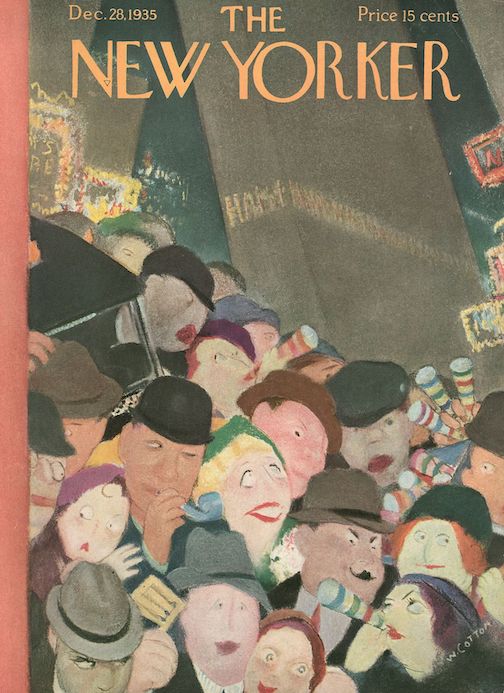
December 28, 1935 cover by William Cotton. Exclusively a cover artist for The New Yorker, Cotton (1880–1958) produced fifty-five covers for the magazine.

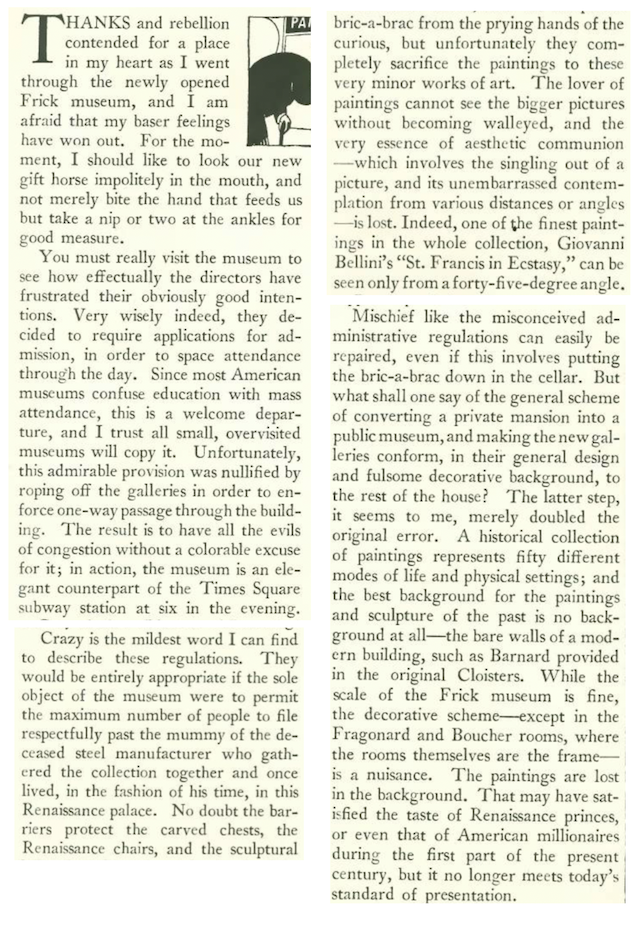
The timed tickets, along with ropes that forced visitors to follow a defined path, spoiled the museum’s debut for Mumford, who was one of its few detractors. In these excerpts Mumford addressed the crowd control measures, and criticized the furniture and other “bric-a-brac” that further served to obstruct his viewing pleasure:

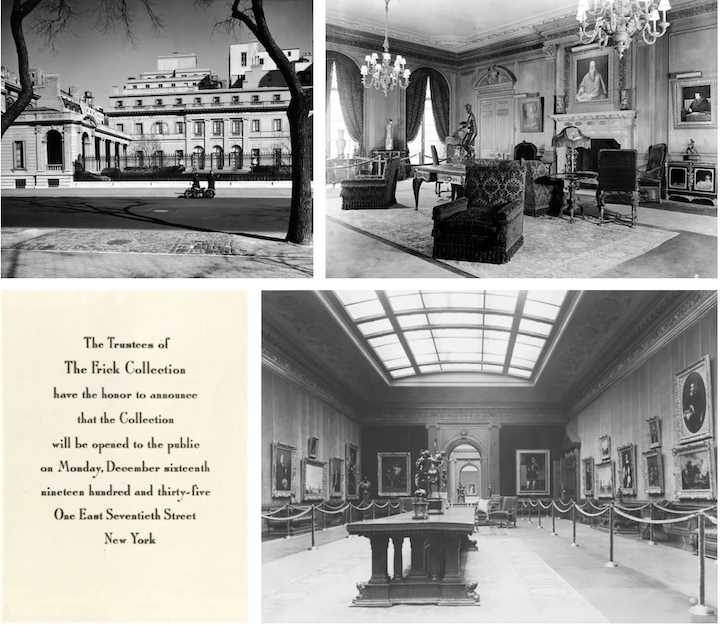
ROPES AND BRIC-A-BRAC presented obstacles to Mumford’s visit at the opening of the Frick Collection. Clockwise, from top left, view of the Frick mansion, circa 1935; installation view of the Living Hall, 1935; West Gallery, 1935; invitation to the opening of The Frick Collection, 1935. (businessinsider.com/Frick Art Reference Library Archives)

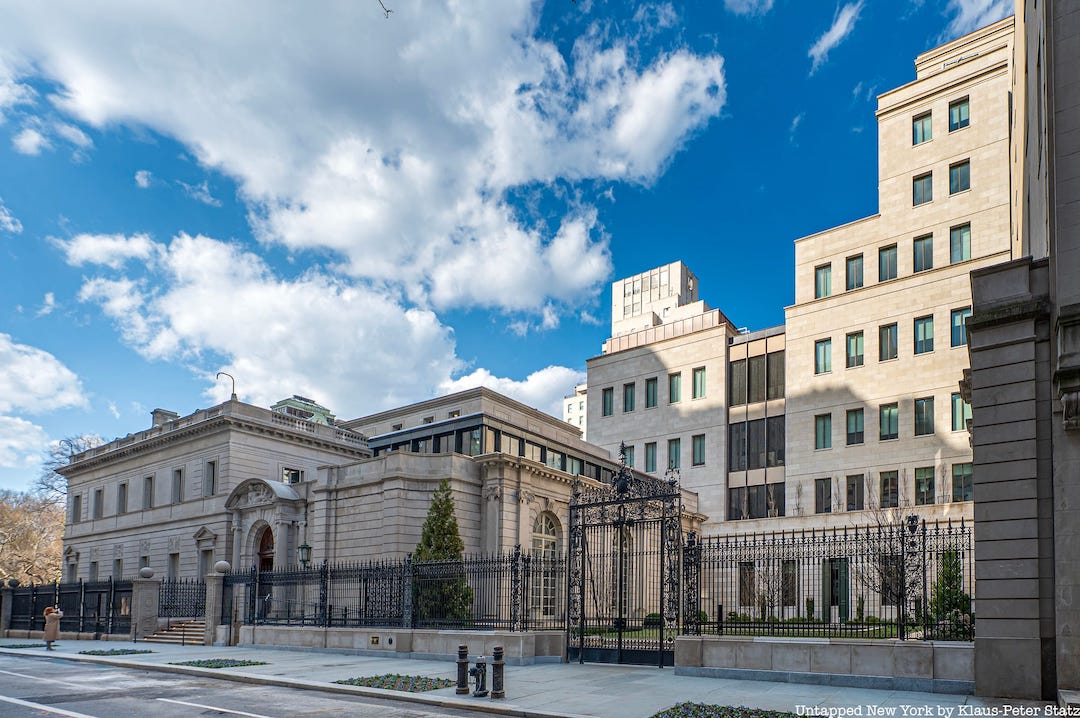
The Frick’s recent renovation and expansion has also had its detractors; after enduring a long and contentious proposal review process and five years of renovation and construction, the Frick reopened to the public in April 2025. It seems most attendees appreciate the changes.

OLD AND NEW…The Frick Collection’s home today, with expansion to the right. (untappedcities)

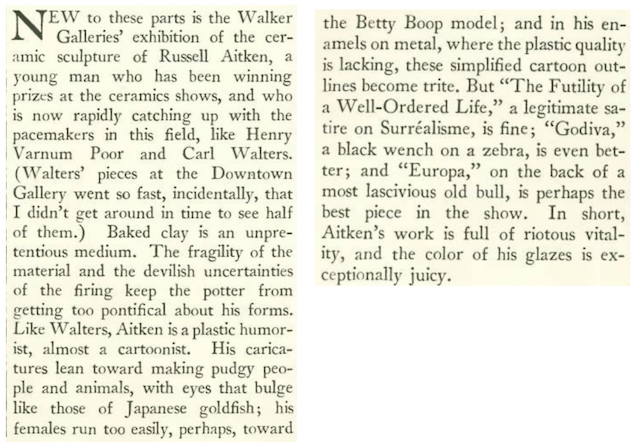
Mumford also took a look at the latest work by ceramic sculptor Russell Aitken (1910-2002), comparing his work to that of a cartoonist. Aitken was a rather odd duck in the art world, renowned both for his quirky sculptures as well as for his exploits as a big game hunter.

KILLER ARTWORK…Russell Aitken had eclectic tastes, to say the least, ranging from creating cutesy ceramics and cartoonish enamels to murdering Cape buffalo. Top left, Virgins of Mogambo, enamel on metal, 1935; bottom left, The Cactus Kid, ceramic, 1932. At right, midcentury whiskey ad featuring Aiken as a big game hunter. (Cleveland Museum of Art/findagrave.com)

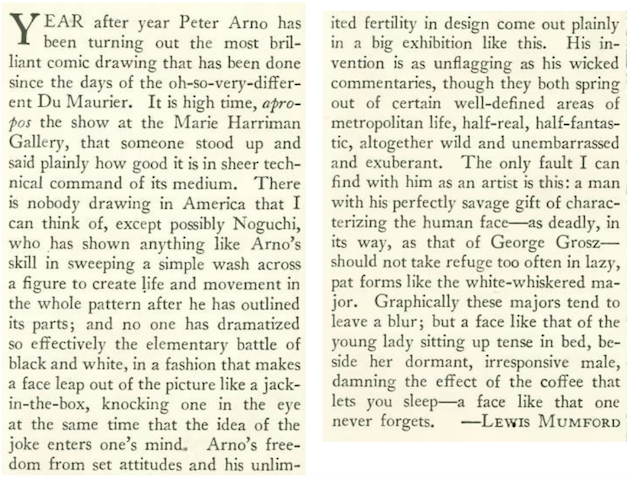
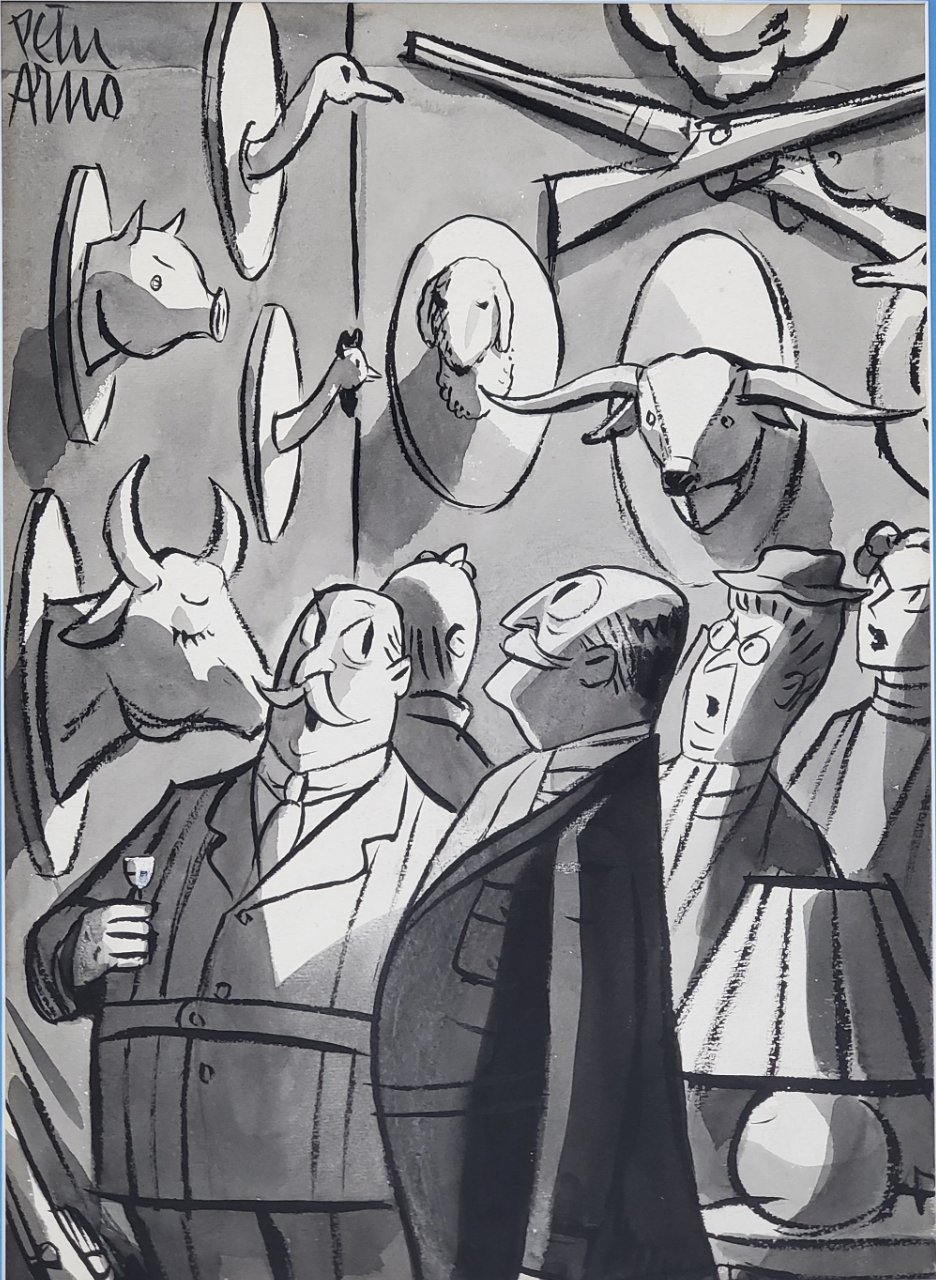
It’s always a little dicey to review the work of a colleague, but in the case of Peter Arno, Mumford had mostly praise, some of it quite high, that is except for Arno’s “white-whiskered major” which Mumford characterized as a “lazy, pat form.”

Thankfully Arno ignored Mumford’s criticism and continued to draw his “white-whiskered major.” Here he is in a delightful 1937 cartoon featured on one of my favorite New Yorker-related sites, Attempted Bloggery:

Caption reads: “I Only Kill For Food.”

 * * *

Shock of the New

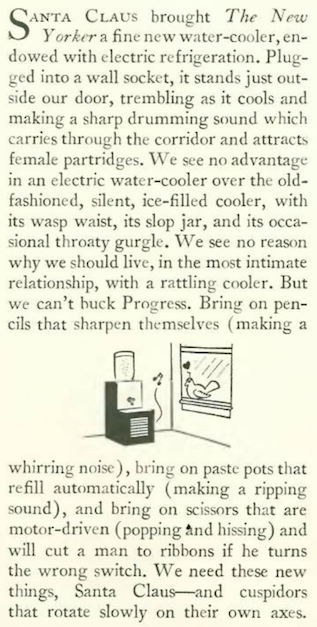
E.B. White, ever skeptical of newfangled inventions, saw no reason why The New Yorker’s old ice-filled water cooler needed to be replaced by a “rattling” electric one:

* * *

O Tannenbaum

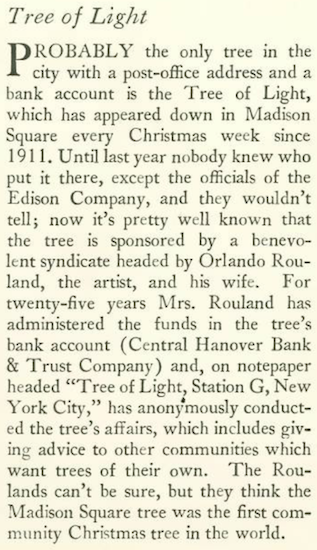
Two decades before Rockefeller Plaza raised its giant Christmas tree (or before Rockefeller Center even existed), New Yorkers gathered around a “Tree of Light” at Madison Square. “The Talk of the Town” remembered:

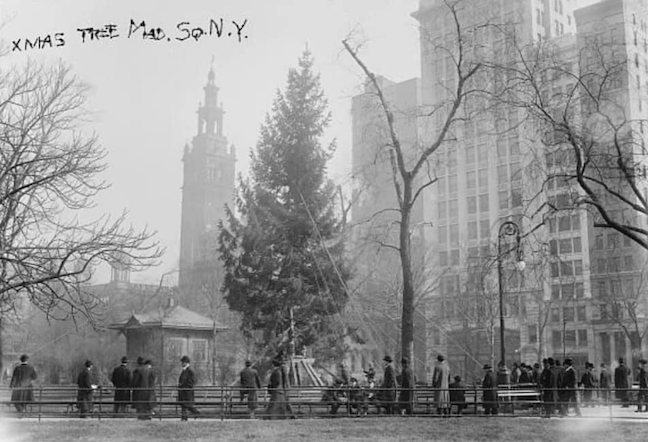
TREE OF LIGHT…America’s first outdoor Christmas tree lighting apparently occurred in Madison Square Park in 1912 (the “Talk” excerpt cited 1911). Bowery Boys History notes that “the organizers knew they were doing something unique, but probably did not realize the special significance of the event. Their 70-foot-tall imported tree from the Adirondacks, festooned with lights from the Edison Company, would be the first outdoor community Christmas tree in the United States.” (Library of Congress )

According to Bowery Boys History, in 1912 “this ‘Tree of Light’, mounted in cement, was such a novelty that almost 25,000 people showed up that night [Christmas Eve] to witness it and enjoy an evening-long slate of choral entertainment.” The following year, The New York Times reported that the Salvation Army took over the event, offering up “10,000 hot sausages and 10,000 cups of hot coffee” for the crowds.

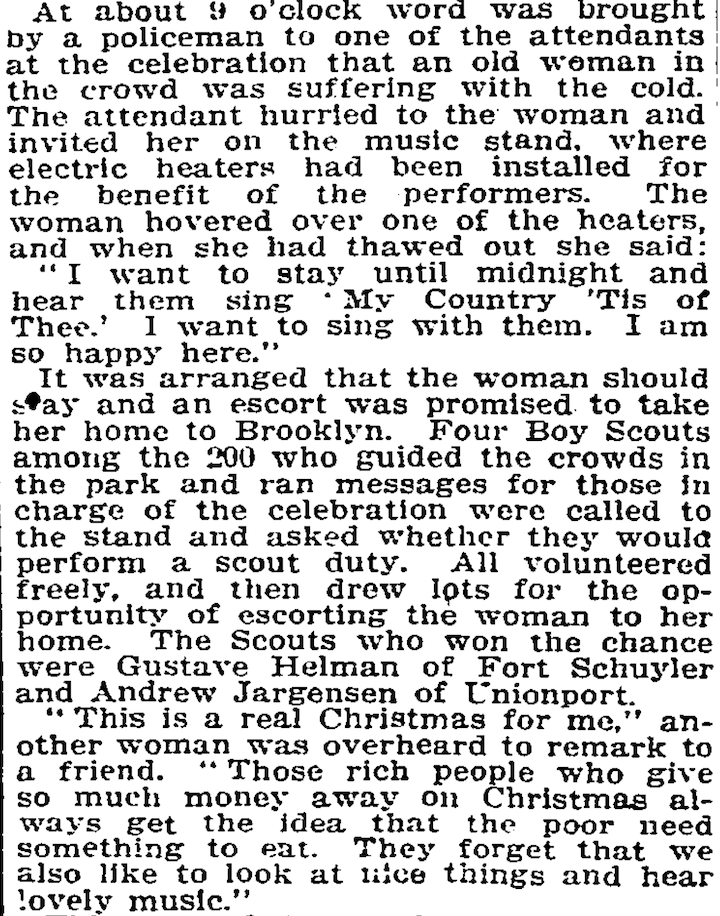
The celebration was sparked by social activists seeking to draw attention to the needs of the city’s poor. On Christmas Day, 1912, the Times ran extensive coverage, and noted the charitable tone of the event in this excerpt:

 * * *

Honor Roll

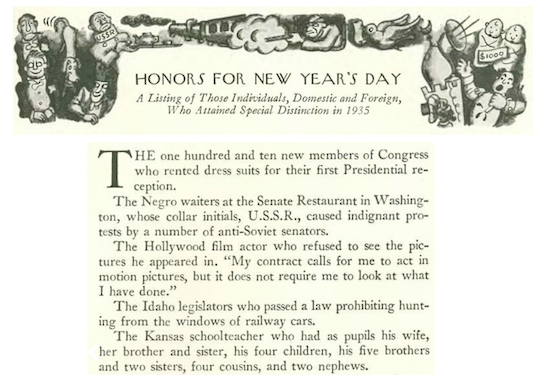
Joseph P. Pollard and W.E. Farbstein covered a two-page spread, listing individuals of “Special Distinction” in honor of the New Year…here is a brief excerpt:

 * * *

Best (and Worst) of Broadway

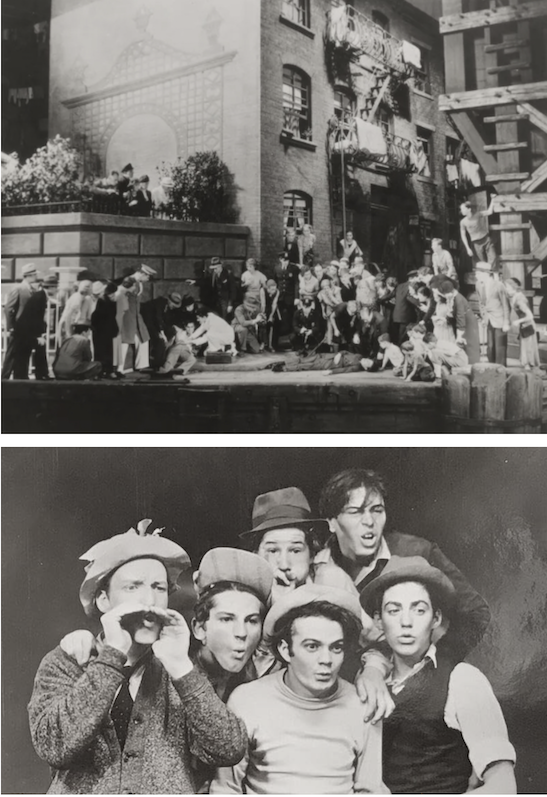
Robert Benchley reviewed the hits and misses of the fall Broadway season, and admitted he had become something of a softhearted theatre critic after spending six months in Hollywood.

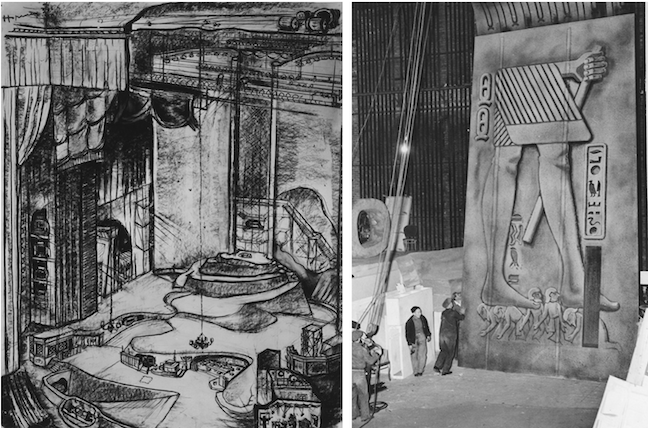
MEET THE GANG…Among the plays recommended by Robert Benchley was Dead End, which opened at the Belasco Theatre on Oct. 28,1935 and ran for 687 performances before closing on June 12, 1937. The play featured an impressive set design by Norman Bel Geddes (top) and introduced the Dead End Kids (aka the Bowery Boys), various teams of young actors who made 89 films and three serials for four different studios during their 21-year film career. The photo above shows the original six Dead End Kids—front row, from left, Huntz Hall, Gabriel Dell, Leo Gorcey and Billy Halop; back row, Bobby Jordan and Bernard Punsly. (deadendmusical.com)

 * * *

At the Movies

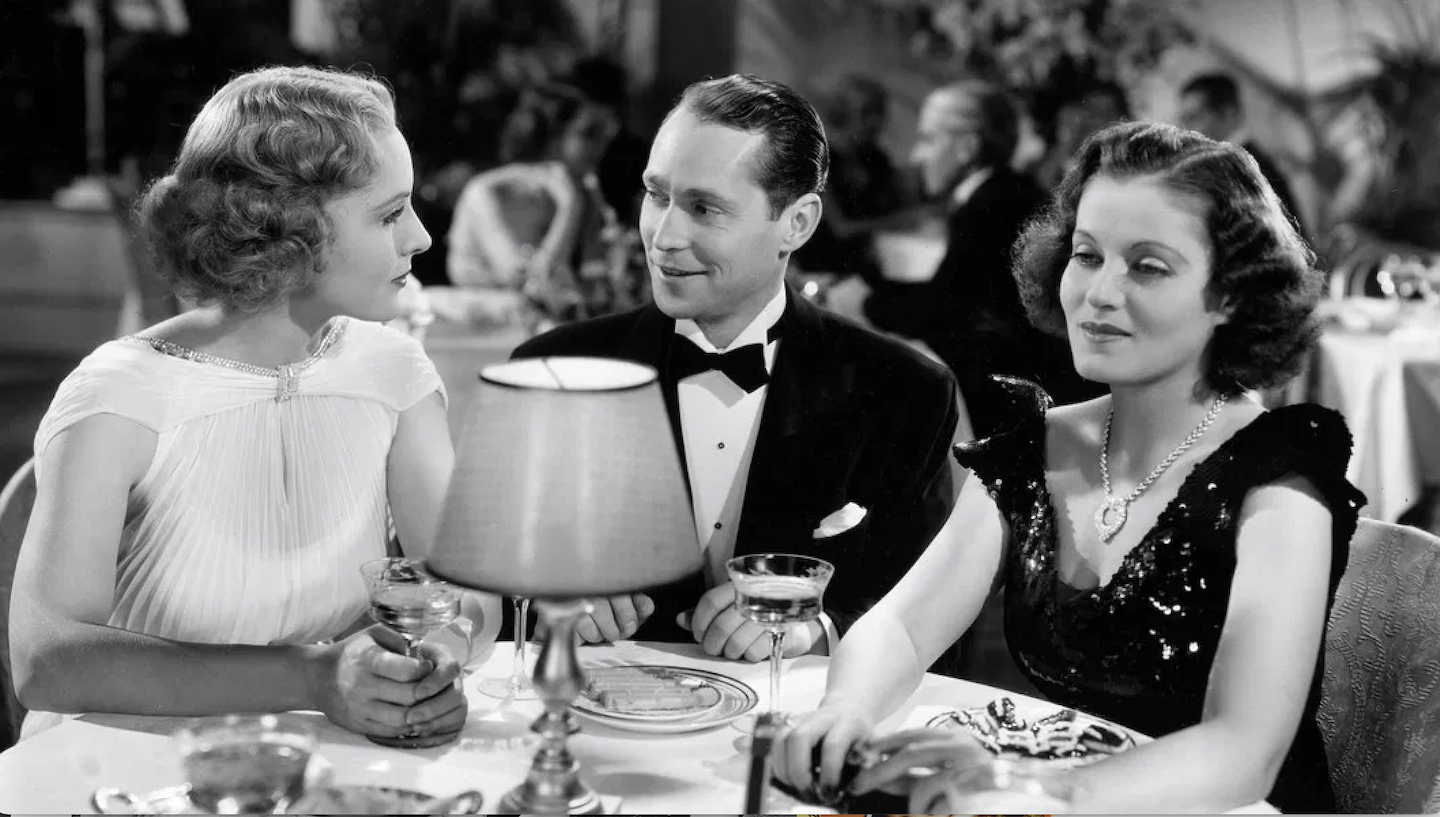
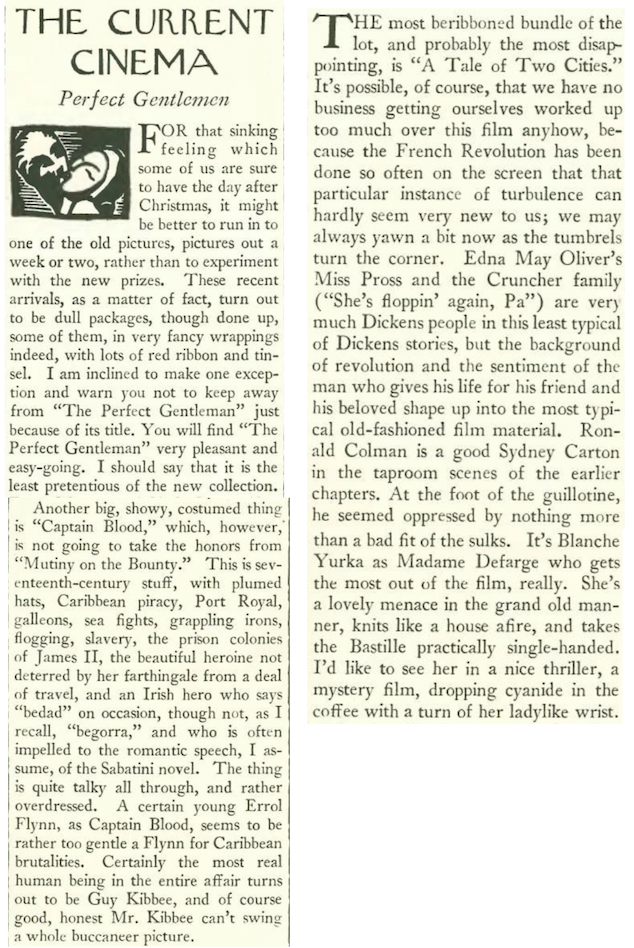
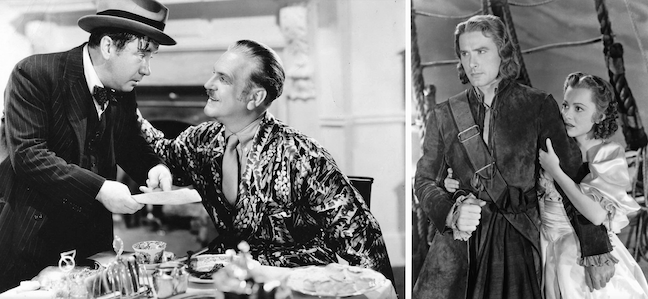
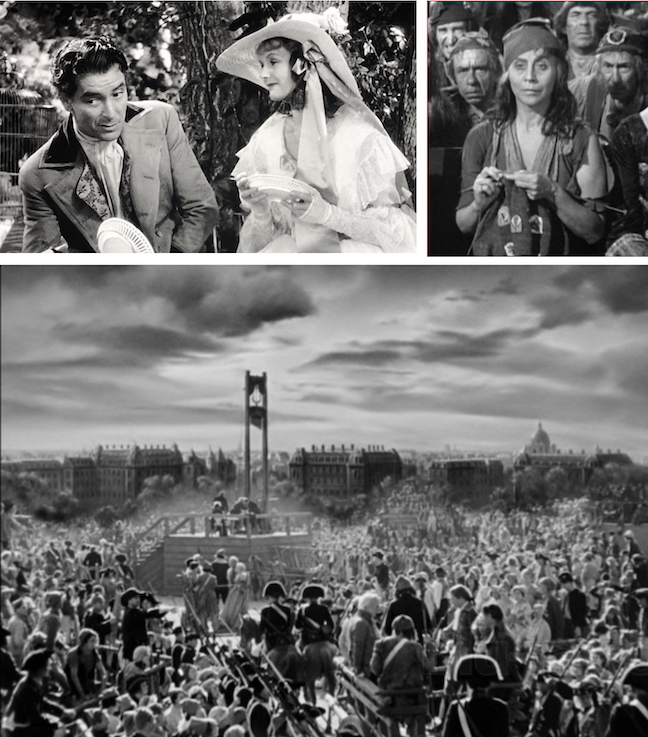
New Yorkers could nurse their holiday hangovers with a variety of films, ranging from the “very pleasant” The Perfect Gentleman to the “overdressed” Captain Blood, which featured a young Errol Flynn as a rather gentle pirate. As for the late year’s most anticipated film, A Tale of Two Cities, critic John Mosher found a few bright spots between his yawns, including praise for Blanche Yurka’s standout performance as Madame DeFarge.

GENTLE MAN AND GENTLE PIRATE…At left, Forrester Harvey and Frank Morgan in The Perfect Gentleman; at right, Errol Flynn and Olivia de Havilland in Captain Blood. The film launched the 26-year-old Flynn and the 19-year-old de Havilland into Hollywood stardom, and marked the beginning of Flynn’s swashbuckler image. (MGM/IMDB)
I’M LOSING MY HEAD OVER YOU…Clockwise, from top left, Sydney Carton (Ronald Colman) would lose his noggin to the guillotine in a scheme to save Lucie Manette (Elizabeth Allan) in A Tale of Two Cities; veteran theater actress Blanche Yurka, who learned to knit for her acclaimed role as Madame Defarge, is shown here in a front row seat before the guillotine—it was Yurka’s first film role; at the bottom, the execution scene at the Place de la Révolution. (bluray.com/michaelbalter.substack.com)

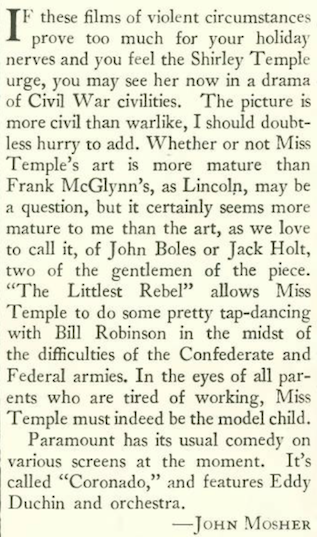
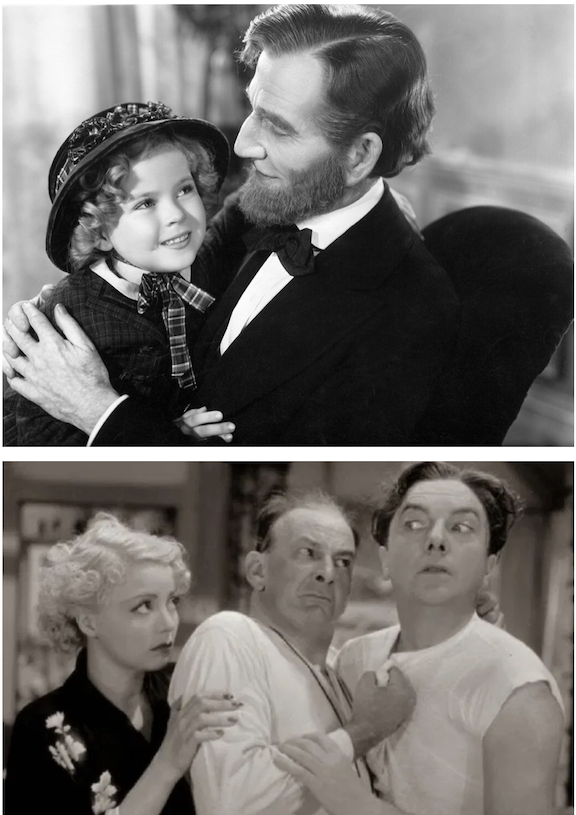
If piracy and revolution were “too much for your holiday nerves,” Mosher suggested the latest Shirley Temple film, The Littlest Rebel, featuring the superstar moppet dancing her way through the Civil War (and, unfortunately, performing a scene in blackface). Also on tap was the the musical comedy, Coronado.

SEEKING A PRESIDENTIAL PARDON, little Virgie Cary (Shirley Temple) asks President Lincoln (Frank McGlynn Sr.) to bestow mercy on her Confederate father in The Littlest Rebel; below, Alice White, Leon Errol and Jack Haley in the musical comedy Coronado. Haley is best known today as the Tin Man in 1939’s The Wizard of Oz. (whitehousehistory.org/themovieb.org)

 * * *

From Our Advertisers

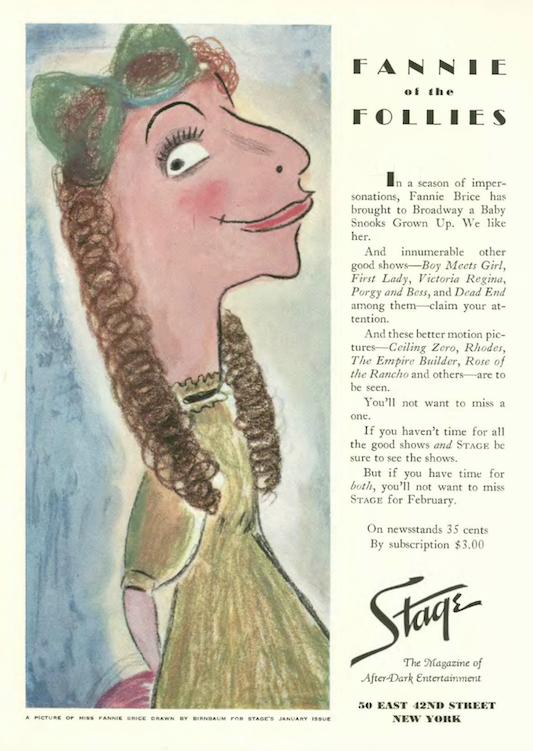
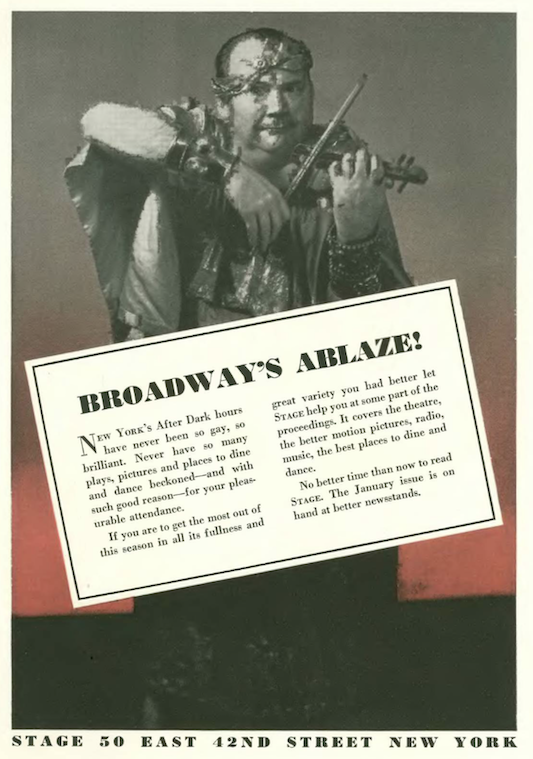
We look in on our advertisers, beginning with this from Stage magazine…the actor portraying Nero is likely from the play Achilles Had a Heel, which closed after just eight performances…

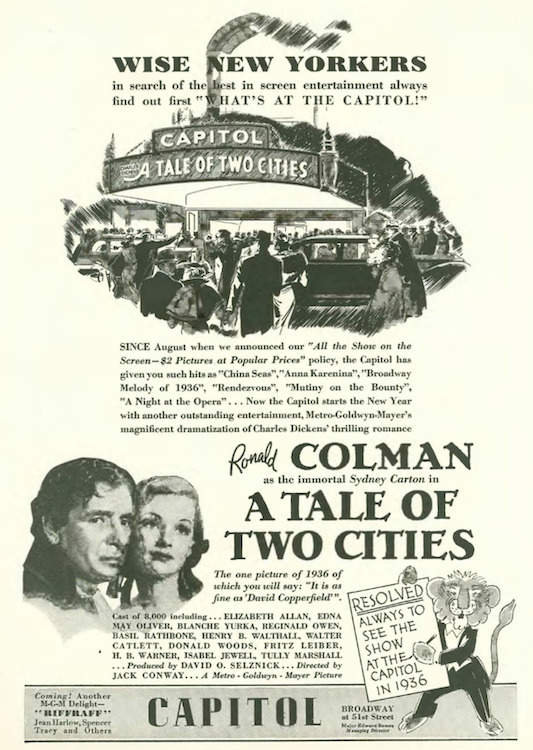
John Mosher wasn’t wowed by MGM’s A Tale of Two Cities, even if the Capitol Theatre promised a spectacle with “a cast of 8,000″…

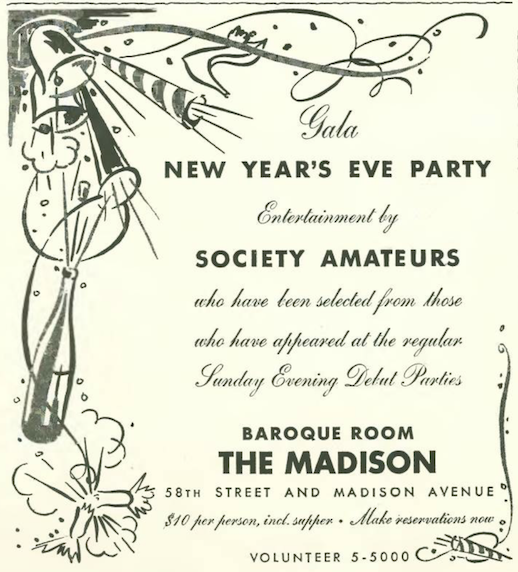
…this back of the book ad promised entertainment by “Society Amateurs” selected from the “Sunday Evening Debut Parties”…

…the brewers of Guinness promoted the health benefits of their product for the New Year…

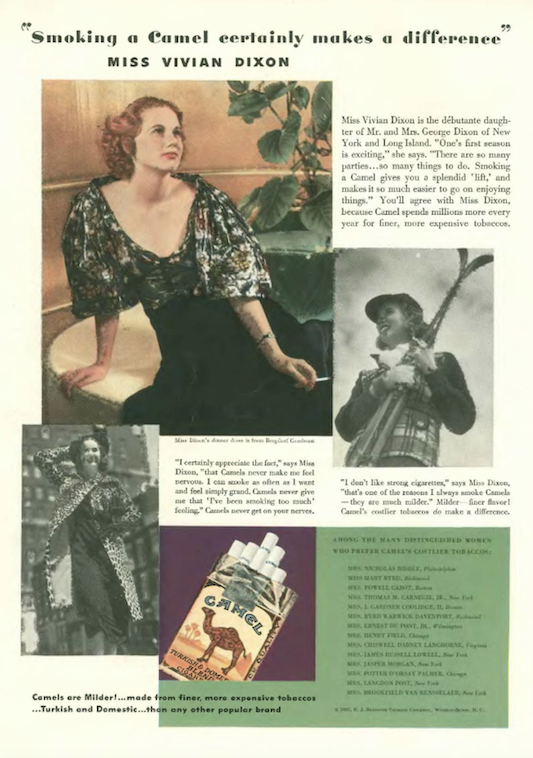
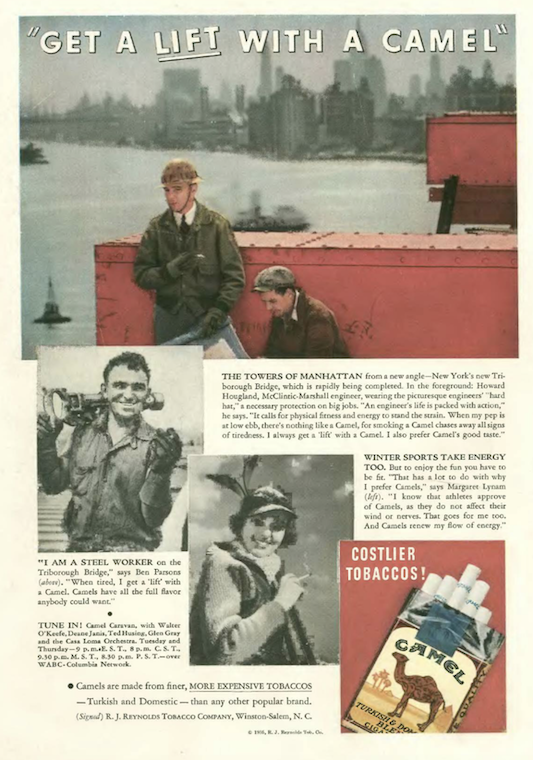
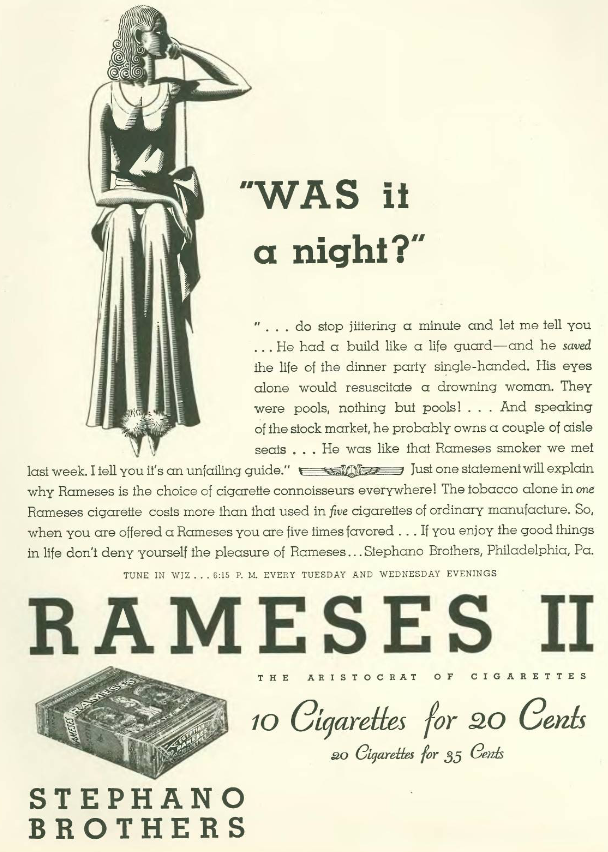
…and the makers of Camels continued to print testimonials touting the invigorating effects of their cigarettes…

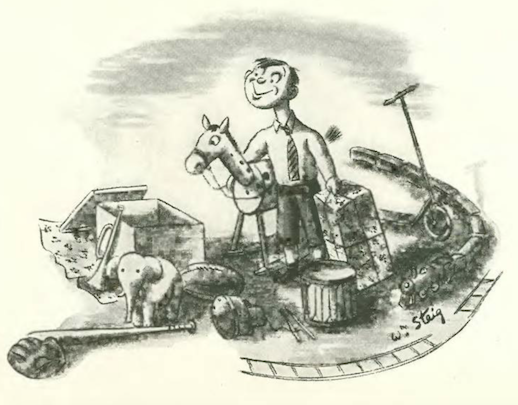
…on to our cartoonists, with William Steig taking stock of the Christmas haul…
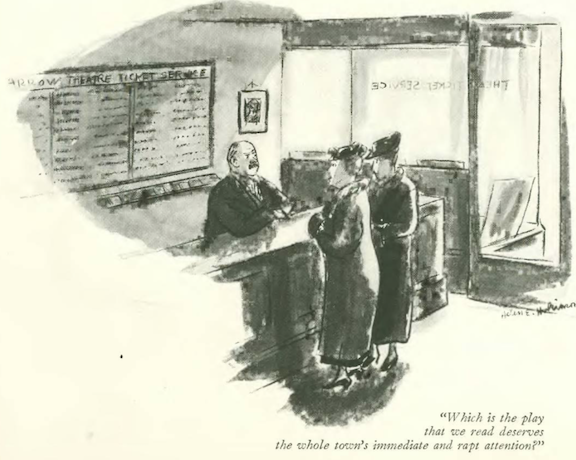
Helen Hokinson’s girls were looking for the hottest show in town…

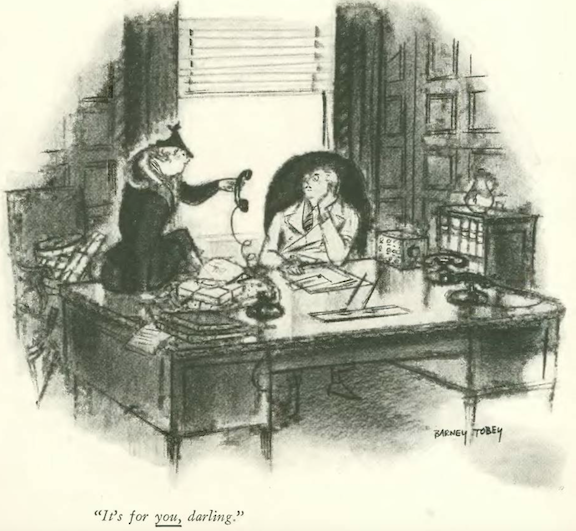
Barney Tobey was the latest cartoonist to take a shot at the boss-secretary trope…

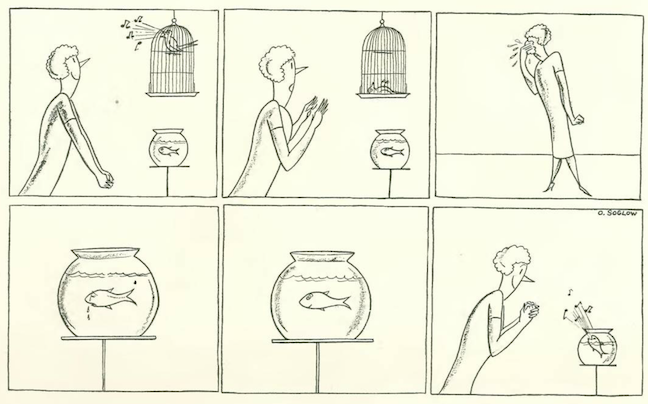
Otto Soglow gave us a singing fish…

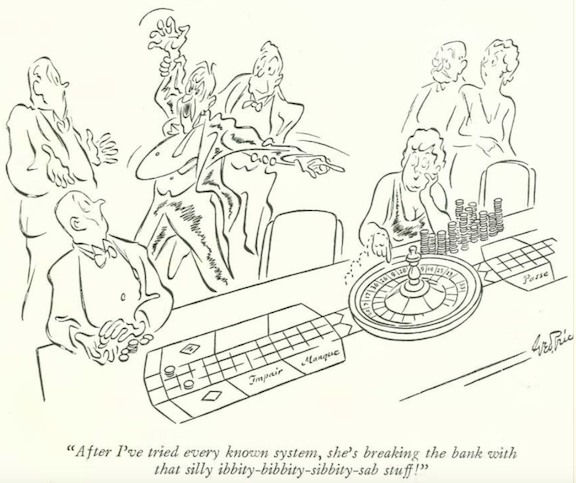
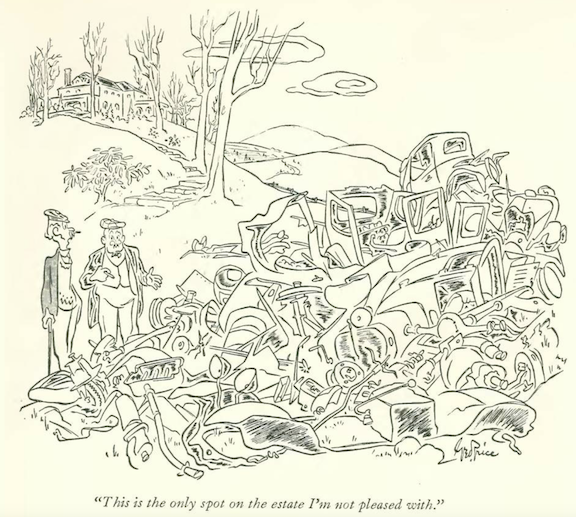
George Price came across a landscaping challenge…

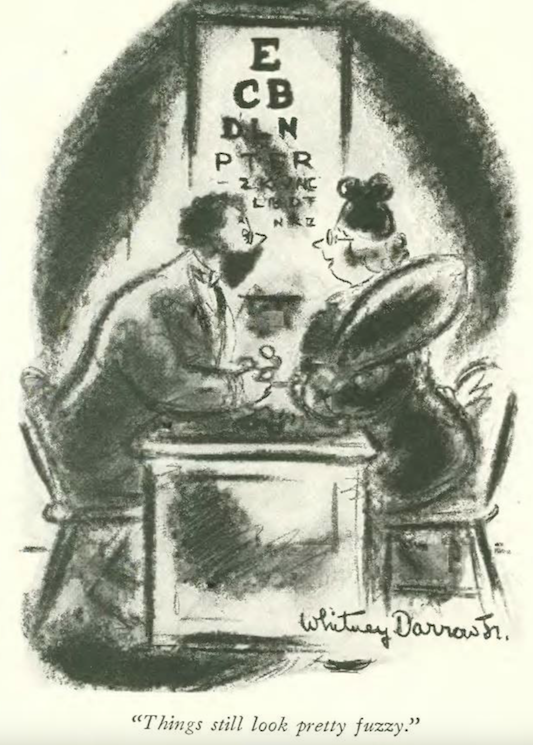
Whitney Darrow Jr focused on a visit to the optometrist…

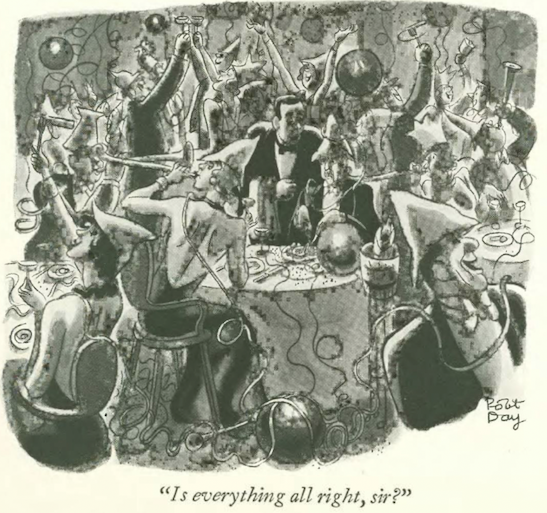
Robert Day gave us a party pooper too pooped to party…

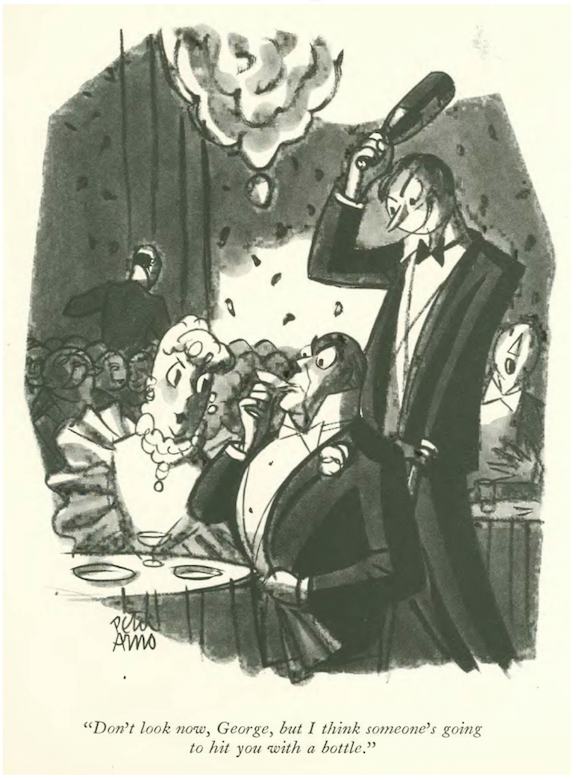
…and Peter Arno offered a glimpse into his active nightlife…

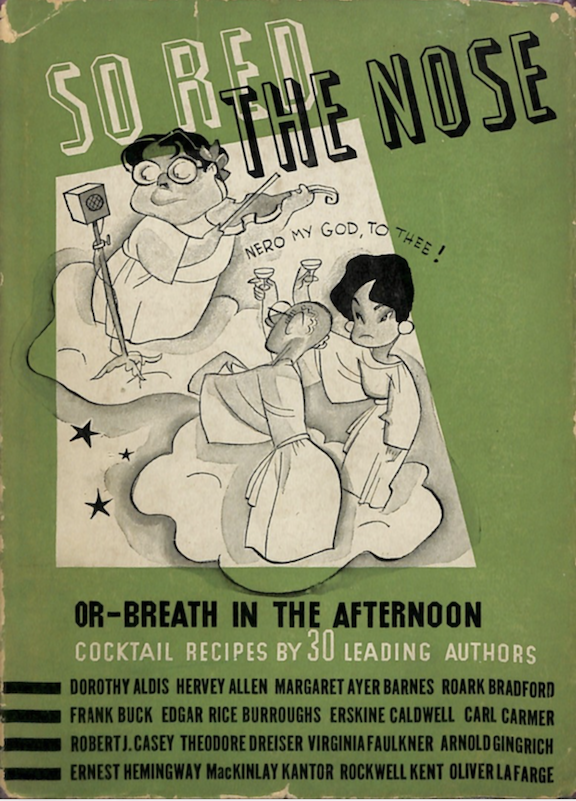
…before we go, I ran across this cocktail book, So Red the Nose, at Messy Nessy’s Cabinet of Curiosities

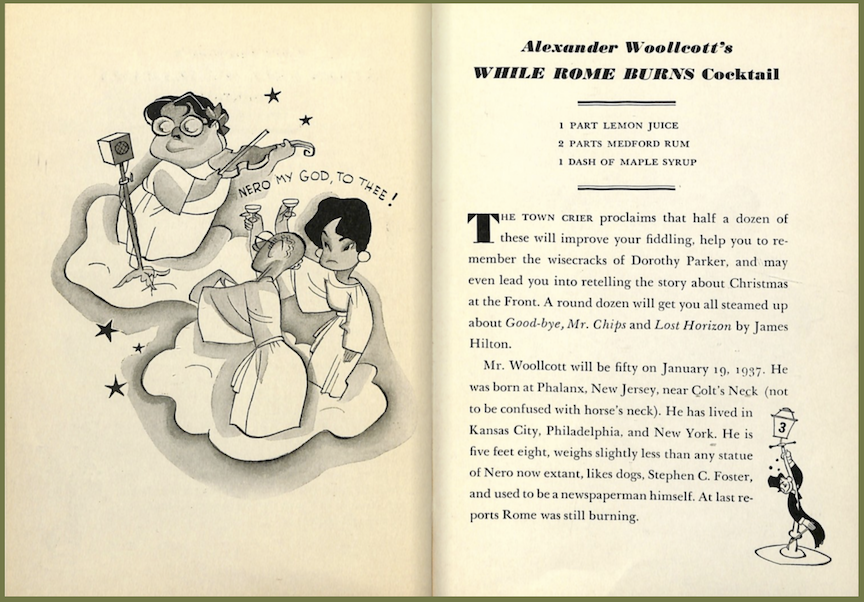
…this particular tome featured an Alexander Woollcott recipe for a cocktail called “While Rome Burns”…

…you can flip through the entire book at this site

Next Time: The Major’s Amateur Hour …

All That Glitters Is Not Gold

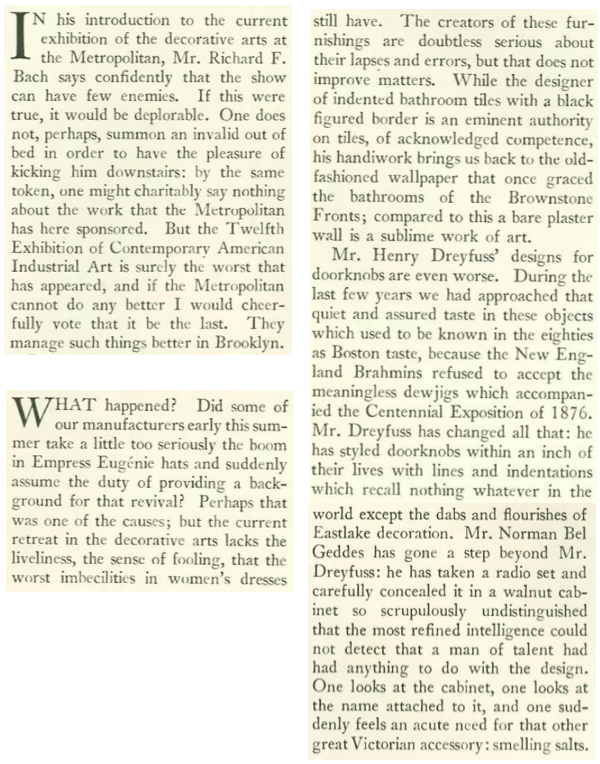
We first encountered critic Lewis Mumford in the June 30, 1931 issue of The New Yorker when he roundly excoriated plans for Rockefeller Center. The Nov. 14 issue once again found him in a surly mood, this time regarding the decorative arts and how they had been poorly displayed at the otherwise esteemed Metropolitan Museum.

Nov. 14, 1931 cover by B.H. Jackson.

To say that Mumford was displeased with the Met’s decorative arts exhibition would be an understatement:

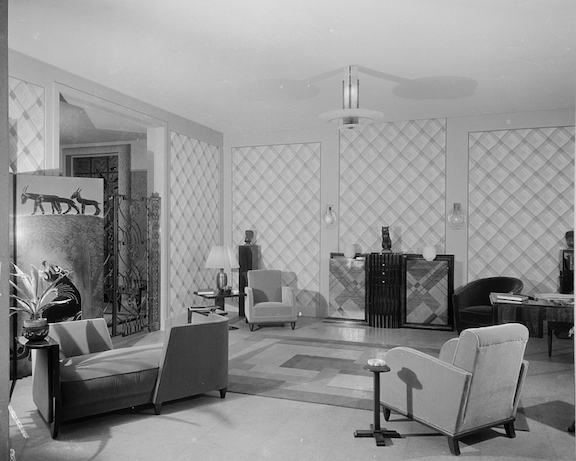
BED, BATH AND BEYOND…Let’s just say Lewis Mumford probably needed a stiff drink after strolling through the Met’s latest displays of the decorative arts. (Library of Congress)
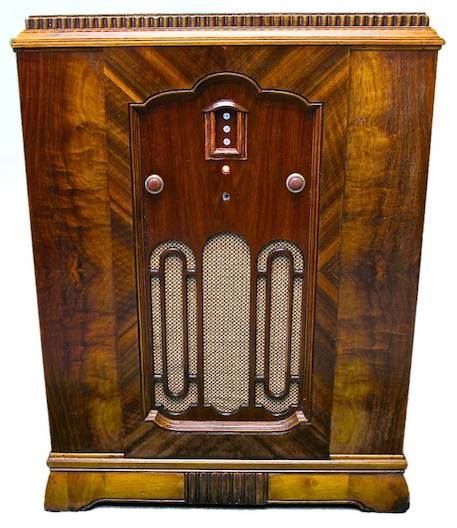
PAST IMPERFECT…Norman Bel Geddes was known for his theatrical, futuristic visions of streamlined everything, but the radio he exhibited at the Met was more Queen Victoria’s speed in Mumford’s view. (Pinterest)

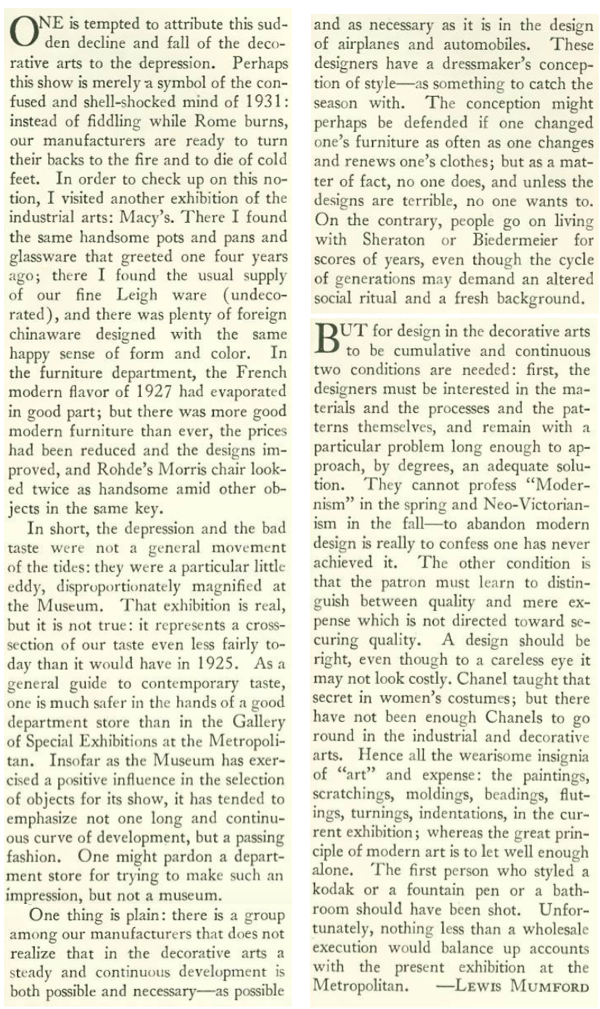
Mumford pondered this sudden decline: was it the Depression, or just a streak of bad taste? And what could be done with the purveyors of bad taste, short of shooting them? Let’s read on…

MIRACLE ON 34TH STREET…Mumford suggested that Macy’s International Exposition of Art in Industry in the late 1920’s had more vision than the Met’s 1931 offering. Above, living room furniture designed by Houbert et Petit exhibited in a showroom during the 1928 “International Exposition of Art in Industry” at Macy’s department store. (Library of Congress)
LESS THAN A PRETTY FACE?…The streamlined form of Norman Bel Geddes’ “House of Tomorrow” probably wowed a few readers of Ladies Home Journal in April 1931, but critic Lewis Mumford was likely not among them, as he often criticized Bel Geddes for his theatricality at the expense of good taste and functionality (see first excerpt above). Mumford was especially critical of Bel Geddes’ glorification of the automobile and the highway at the expense of livable cities. (Pinterest)

 *  *  *

Peter, We Have Your Back

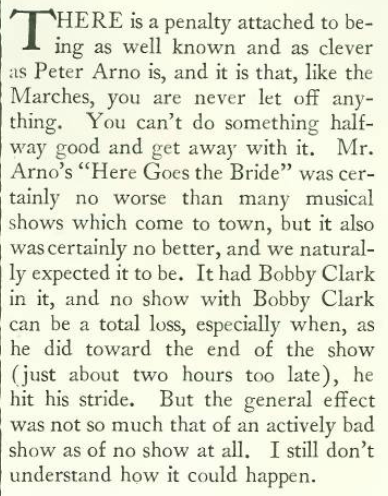
When your colleague has a play made from his book, and it closes after just seven performances, what can you say, especially if you are theater critic for The New Yorker? Well, here is what Robert Benchley did:

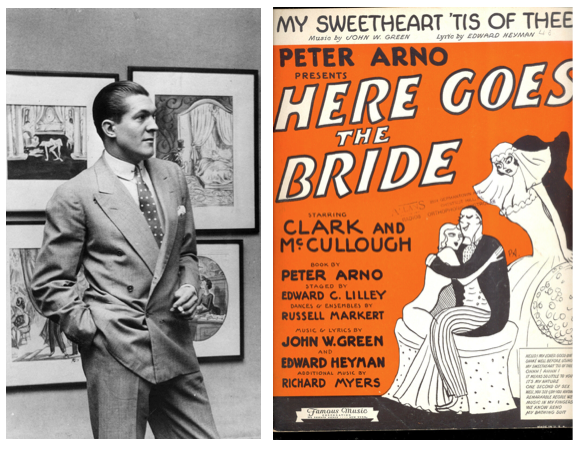
THAT’S SHOW BIZ…Here Goes The Bride, based on a Peter Arno book, closed after just seven performances. However, as a cartoonist, Arno was at the top of his game. (Britannica/Ebay)

 *  *  *

From Our Advertisers

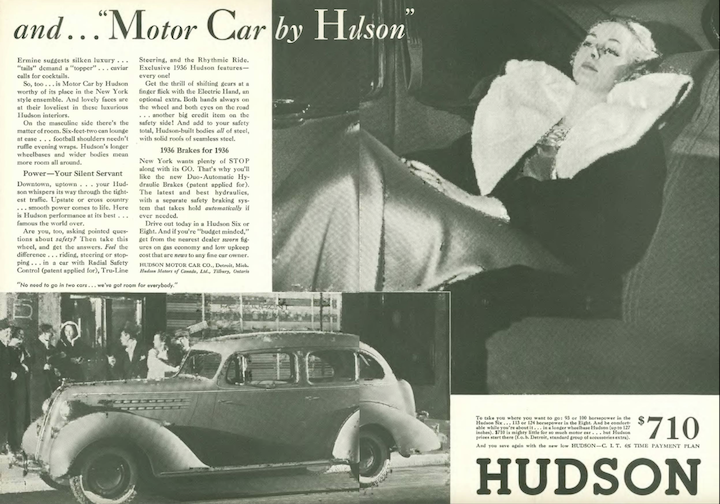
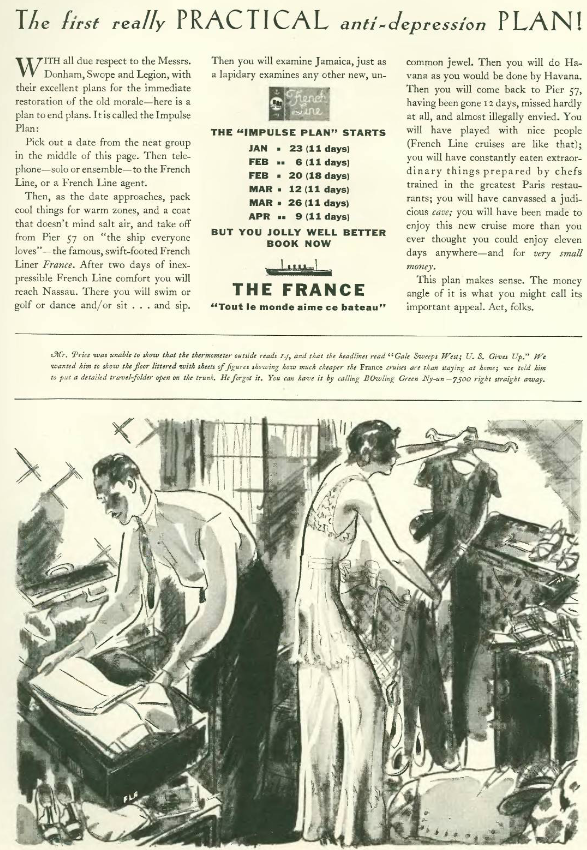
Depression? Who needs it? If you had the means, and didn’t lose your shirt in the 1929 crash, you could get away from it all and book passage to the Bahamas, where you could drink legally, soak up some sun, and forget about those lengthening bread lines you occasionally glanced from the window of your town car…

…well, that bootleg gin was a mind eraser…

Helen Hokinson continued to offer her cartooning skills to the folks at Frigidaire…

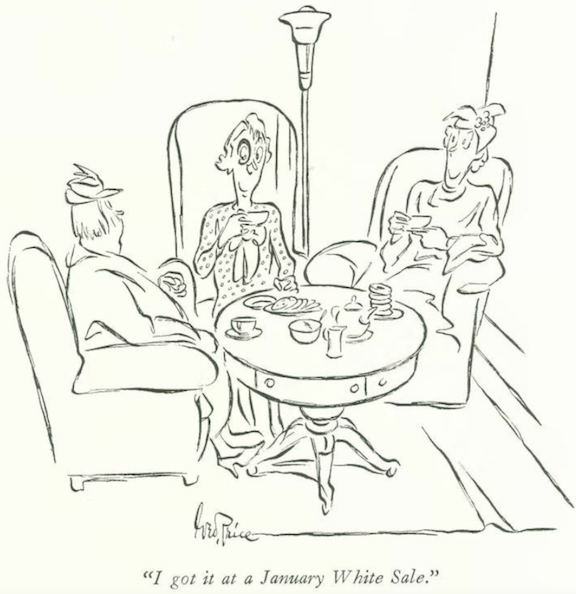
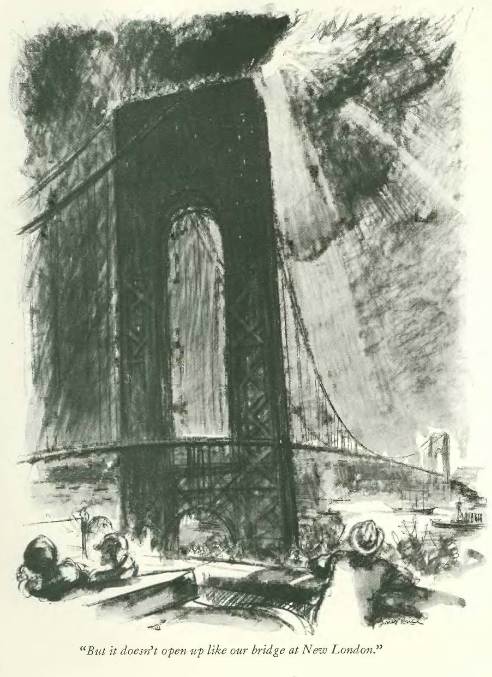
…on to our cartoons, the George Washington Bridge drew the envy of some out-of-towners, as illustrated by Garrett Price

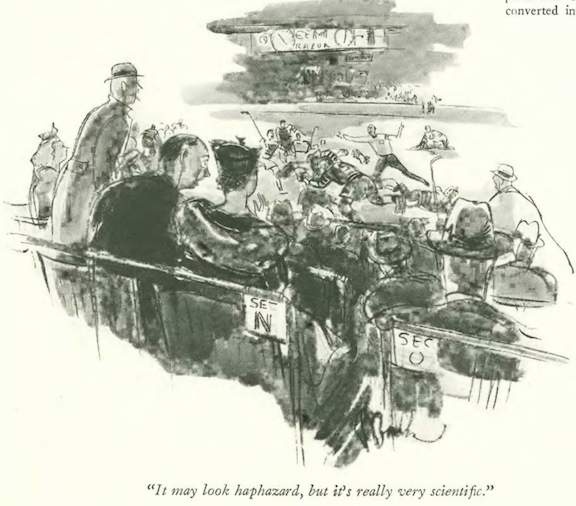
…nearly 90 years ago folks were almost as nuts about college football as they are now, except for Perry Barlow’s lone dowager, who would rather be sitting in her parlor with a cup of tea…

Gardner Rea explored the wonders of heredity…

Otto Soglow’s Little King employed a guard ready for any emergency…

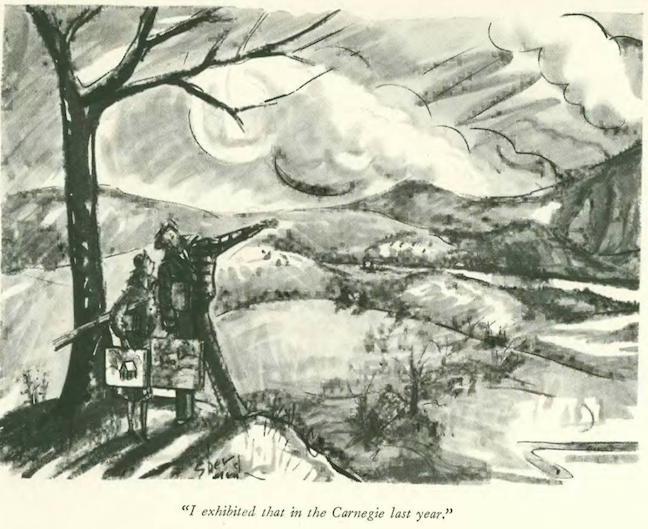
Barbara Shermund gave us an artist with a god complex…

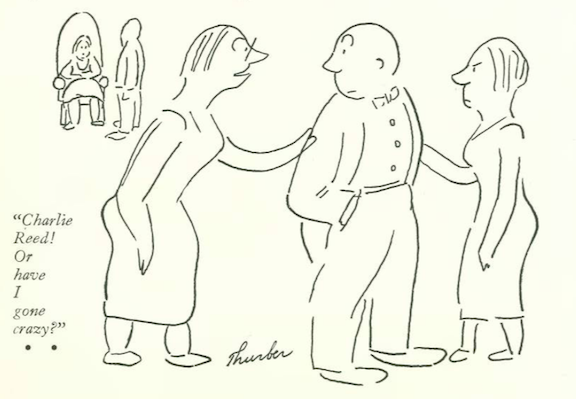
James Thurber continued to probe the nuances of the sexes…

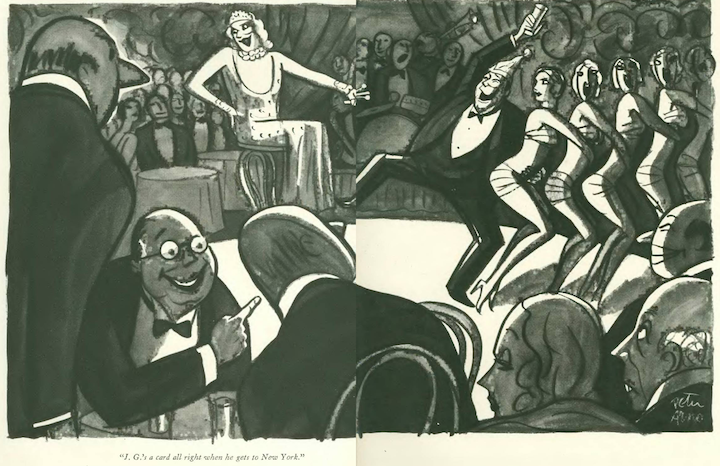
Peter Arno sketched this two-page spread with the caption: J.G’s a card all right when he gets to New York

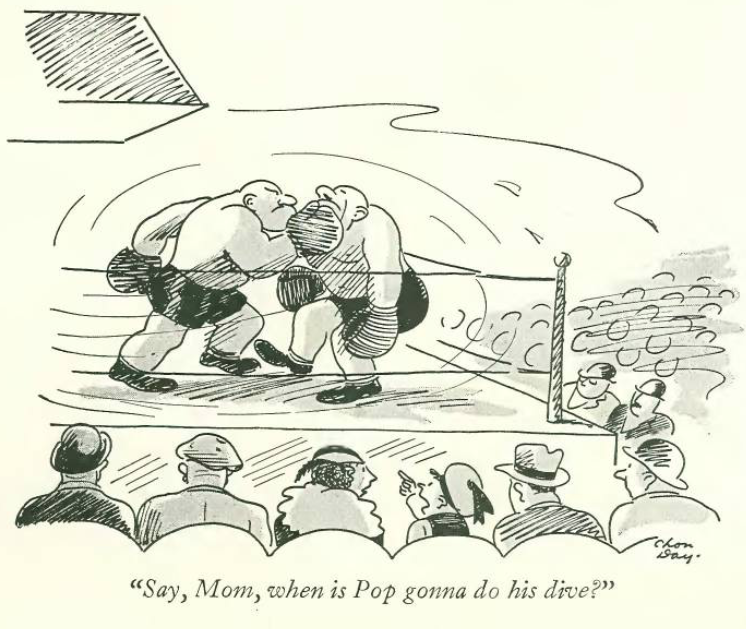
…and from the mouth of babes, we have these observations of the underworld from Chon Day

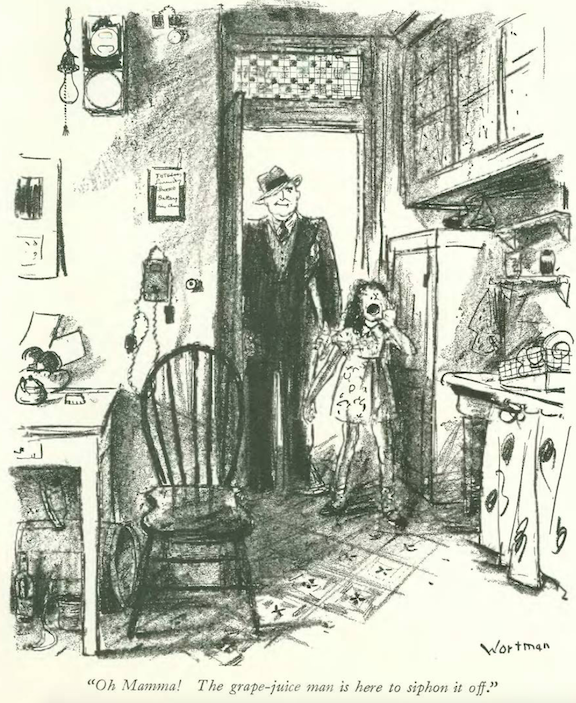
…and Denys Wortman

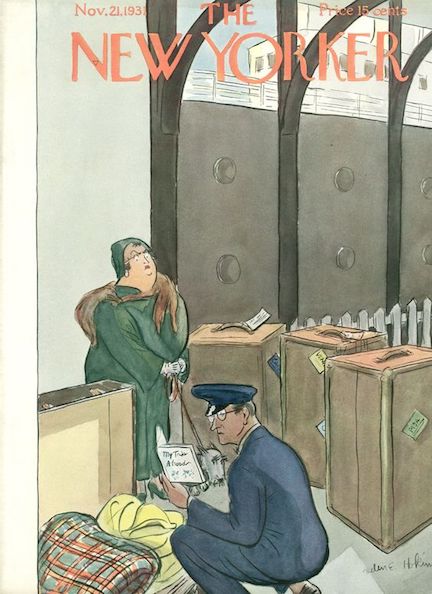
On to the Nov. 21 issue, which featured the last in a series of eleven covers Helen Hokinson contributed to The New Yorker in 1931. The covers featured one of Hokinson’s “Best Girls”—a plump, wealthy, society woman—on an around-the-world cruise, which began with the March 2 issue and ended on Nov. 21 with a stop at the customs office, and a nosy customs officer…

Nov. 21, 1931 cover by Helen Hokinson.

Bread & Circuses

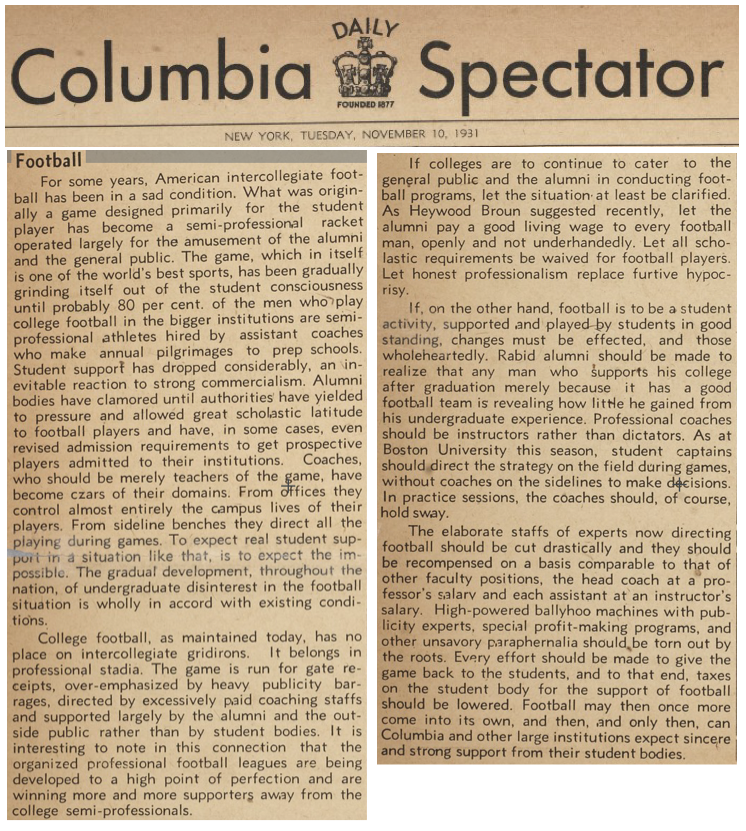
In his “Notes and Comment,” E.B. White reported on a recent editorial in the Columbia Spectator, that university’s student newspaper, which took issue with the professionalization and “furtive hypocrisy” of college football (if only they could see us now). White observed:

In 1931, Columbia was a football power, and the Ivy League was a big-time conference. To the editors of the Spectator, this was not a point of pride, which they made clear in this 89-year-old editorial that could have been written yesterday:

Clippings from Columbia Spectator Archive
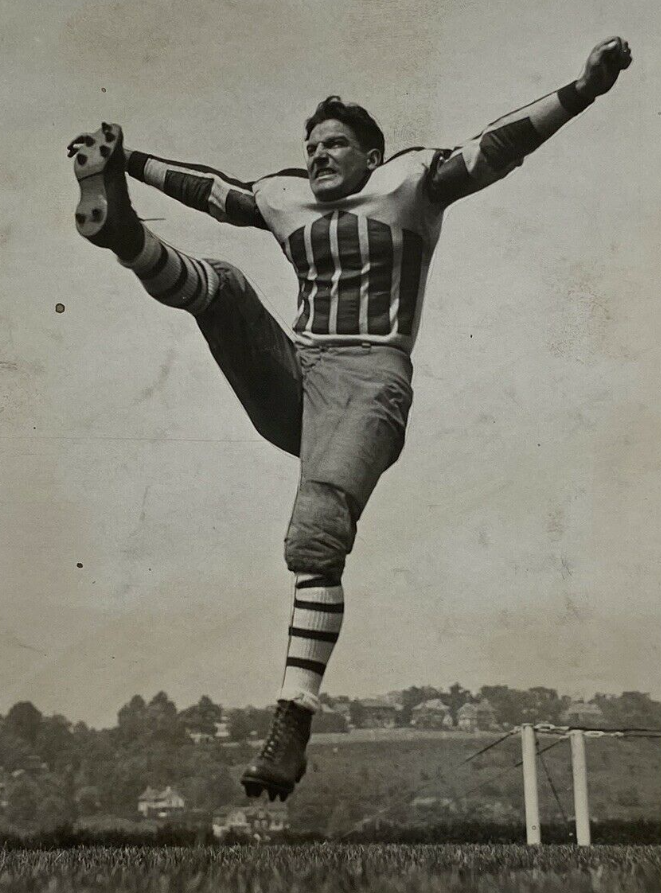
JUST GETTING MY KICKS…1931 press photo of Columbia University football star Ralph Hewitt, who still holds the school record for the longest field goal — a 53-yarder he dropped kicked in a 1930 upset victory over Cornell. Hewitt went on to coach high school sports.

 *  *  *

Sorry, Charlie

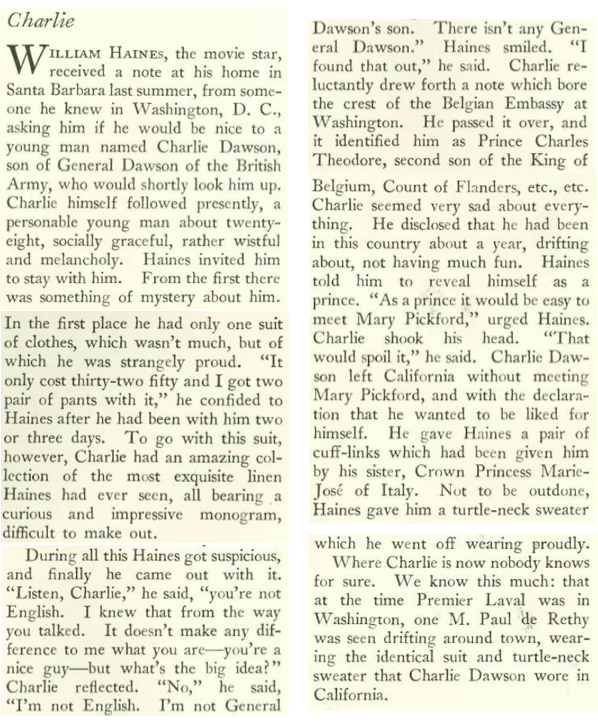
William “Billy” Haines was a top-five box-office star from 1928 to 1932, portraying arrogant but likable characters in a string of pictures that ended abruptly when Haines refused to deny his homosexuality and was cut loose by MGM. “The Talk of the Town” looked in on Haines at his Santa Barbara home, where he entertained a mysterious visitor:

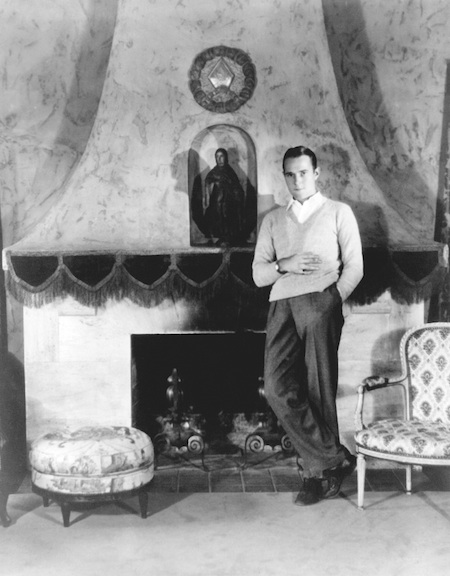
THE INTERIOR LIFE…The actor William Haines in a 1926 publicity shot taken at his Hollywood home. Haines would abandon acting in the 1930s and take up a successful career as an interior designer. (Photofest)

 *  *  *

Coveted Coiffeur

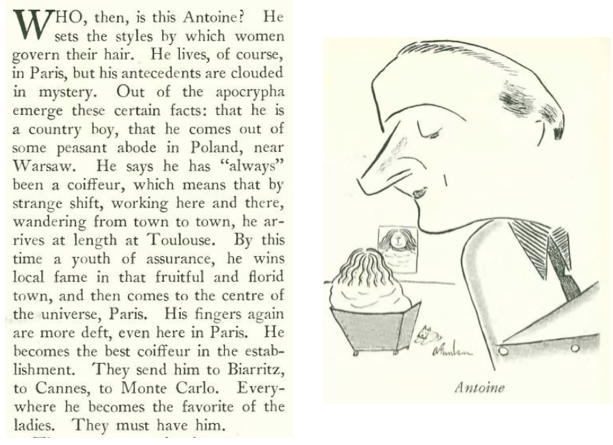
Writer Bessie Breuer wrote an admiring profile of Polish hairdresser Antoine (aka Antoni Cierplikowski), considered the world’s first celebrity hairdresser. The opening paragraph:

A CUT ABOVE…In 1914 famed hairdresser Antoine (aka Antoni Cierplikowski) invented the “shingle cut” (at left, sported by actress Louise Brooks in the 1920s), which was all the rage during the Roaring Twenties. (Pinterest)

 *  *  *

The Look of Relief

In “The Talk of the Town” E.B. White noted that a familiar face was gracing advertisements for President Herbert Hoover’s Unemployment Relief Agency:

I NEVER FORGET A FACE…E.B. White referred to this ad featuring an unnamed woman who had a familiar look about her. (period paper.com)

 *  *  *

More His Style

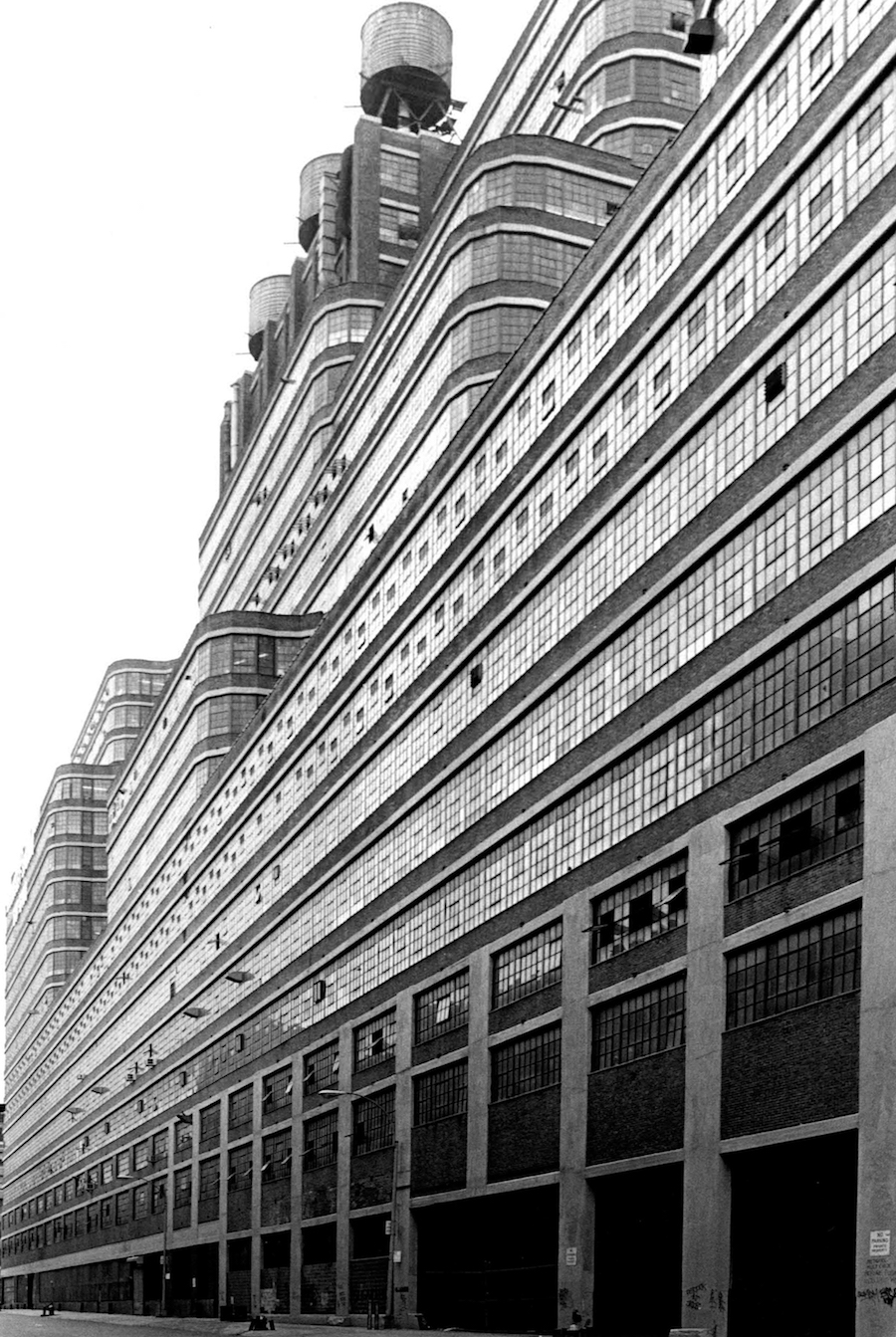
We return again to Lewis Mumford, this time cheered by the sight of the new Starrett-Lehigh Building in Chelsea, designed by Cory & Cory. An excerpt from “The Sky Line” column:

THAT’S MORE LIKE IT…Lewis Mumford praised the striking effect of the Starrett-Lehigh Building’s alternating bands of brick, concrete and steel. (Atlas of Places)

 *  *  *

The Chump

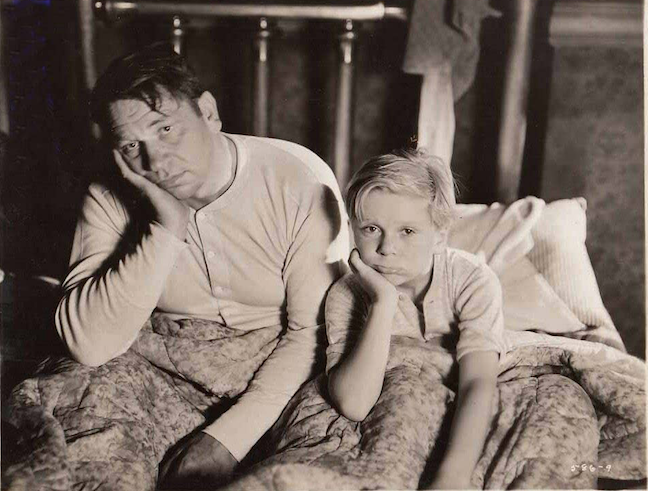
John Mosher was neither moved nor charmed by the appearance of little Jackie Cooper in The Champ, a tearjerker story of an alcoholic ex-boxer (Wallace Beery) struggling to provide for his son. He did, however, appreciate the boy’s ability to carry “on his little shoulders a heavy and tedious and lengthy story.”

BUMMER…John Mosher had little to like about King Vidor’s The Champ, featuring Wallace Beery and Jackie Cooper. Mosher was no doubt a bit dismayed when Beery received an Academy Award for his performance. (IMDB)

 *  *  *

A Wishful Christmas List

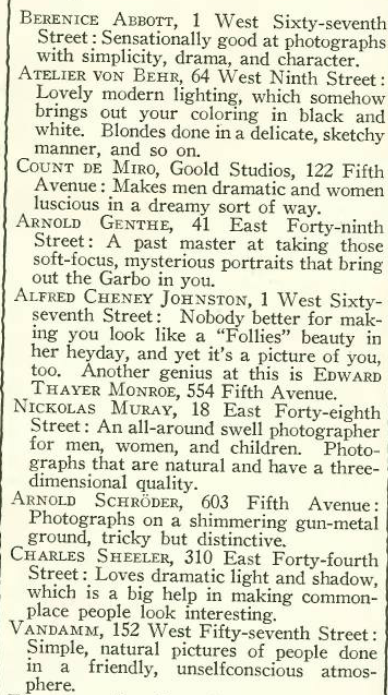
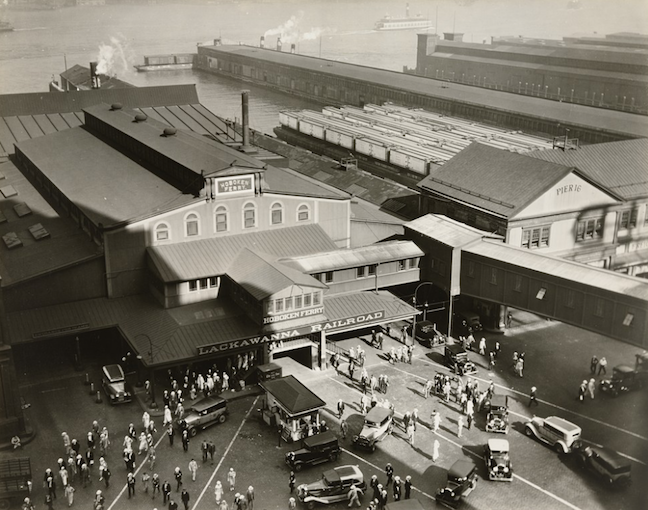
It was that time of the year when the New Yorker began running its lengthy features on possible gifts for Christmas. This excerpt caught my eye for what might have been possible in 1931 — buying a photographic print directly from Berenice Abbott or Nickolas Muray:

NO LUMP OF COAL, THIS…In 1931 it might have been quite possible to buy this print directly from photographer Berenice Abbott. Barclay Street, Hoboken Ferry 1931, is in MoMA’s photography collection.

*  *  *

From Our Advertisers

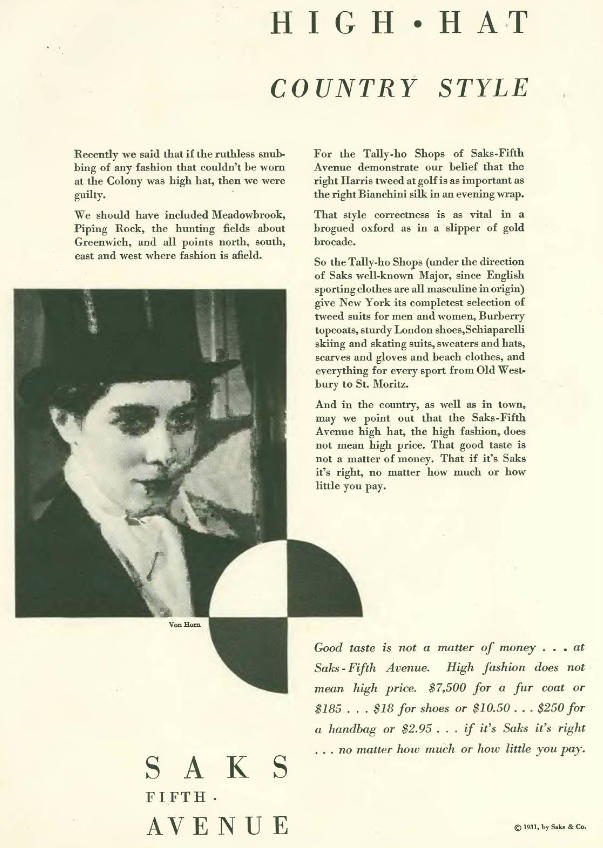
It has been well-established in previous posts that Anglophilia ran rampant among New York’s smart set, and this advertisement from Saks provides everything we need to underscore the point…

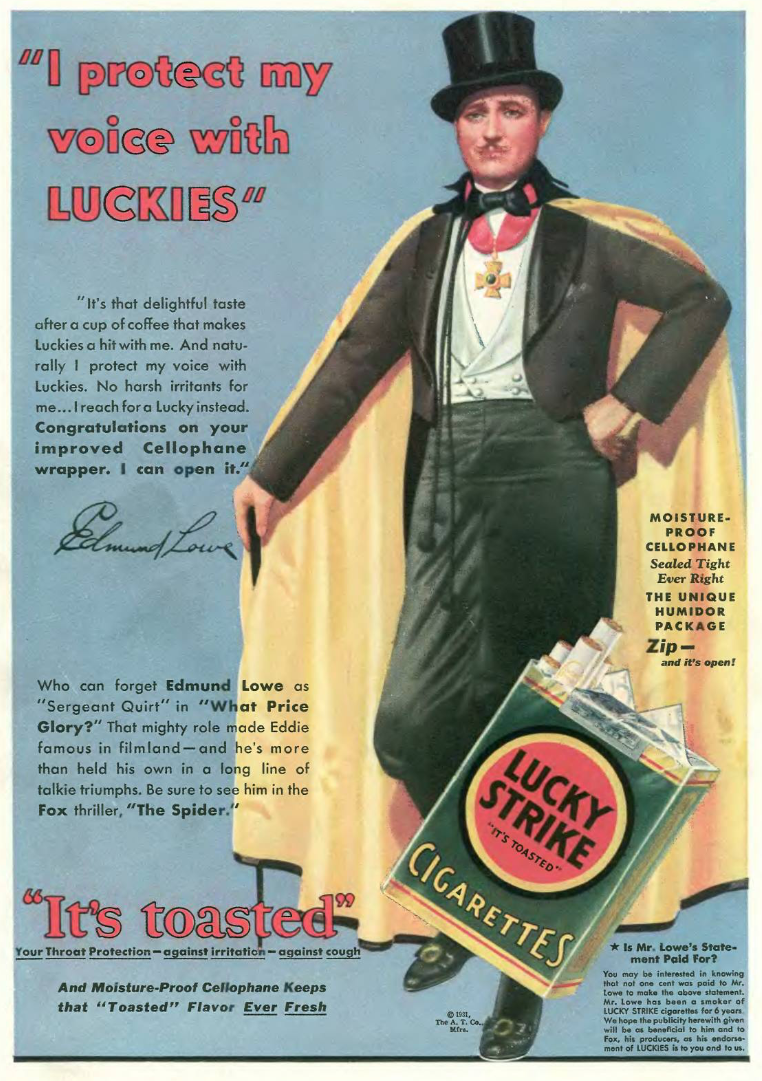
…and the top hat mades another appearance in this spot for Lucky Strike, featuring an endorsement from actor Edmund Lowe...

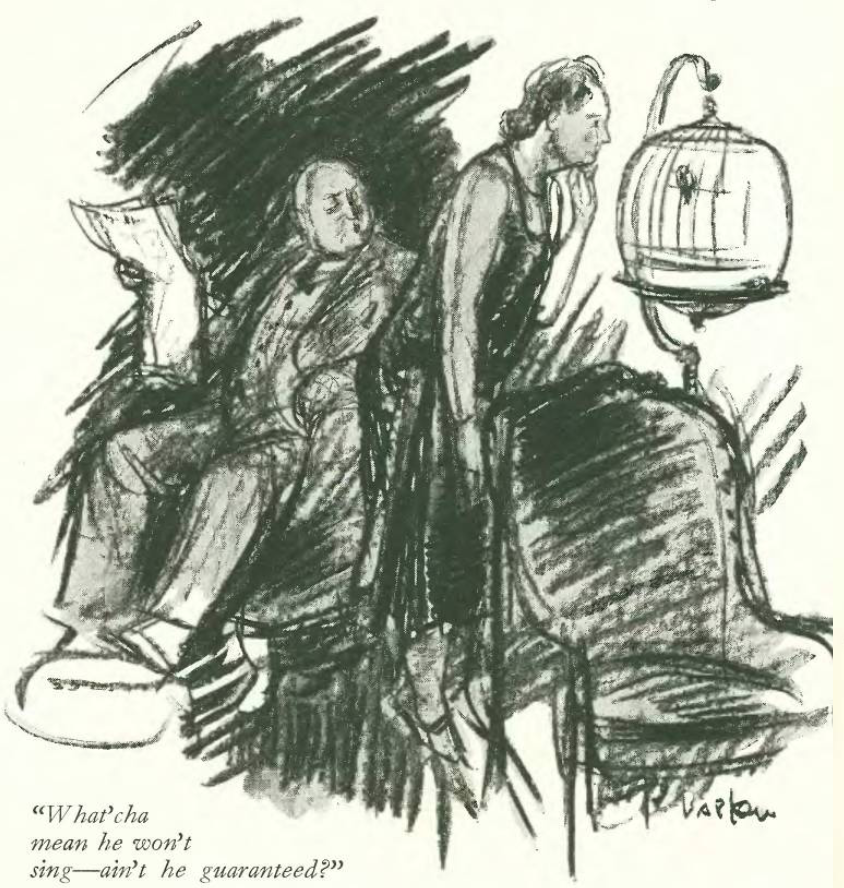
…our cartoons featured a song-less songbird courtesy of Perry Barlow

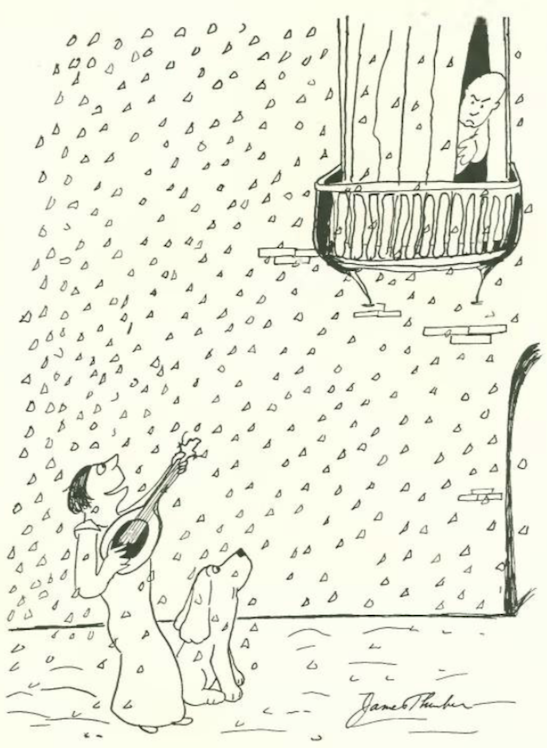
…and from James Thurber, another creature with little appetite for song, let alone wine and women…

William Steig brought us back to the bleachers with another nonconformist…

Gluyas Williams gave us this sad sack all alone in the crowd…

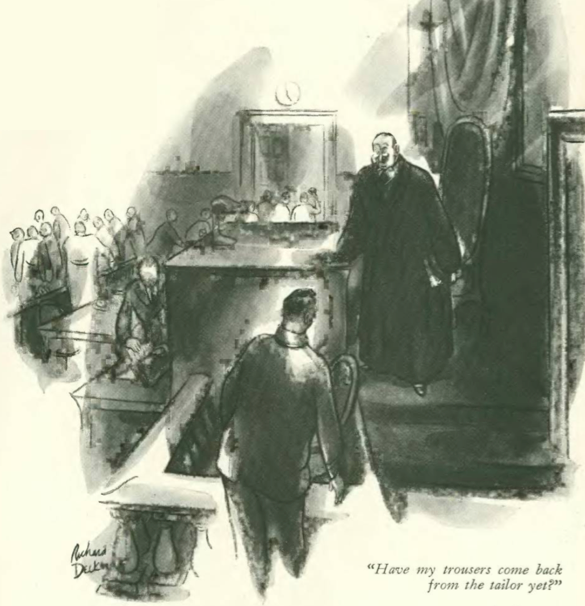
Richard Decker sought to bring order to this court…

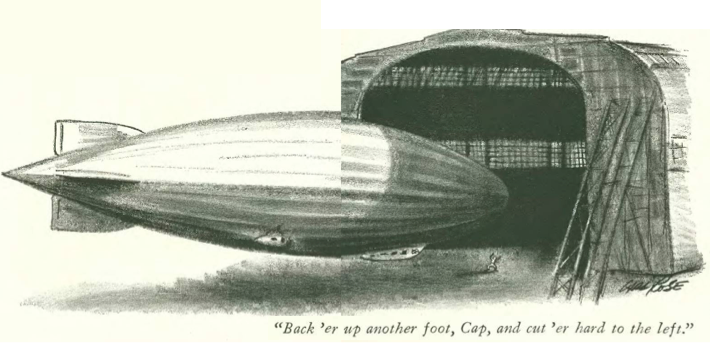
…and we end with Carl Rose, and this two-page cartoon illustrating a dicey parking challenge…

Next Time: Yankee Doodles…