The New Yorker’s art and architectural critic Lewis Mumford found much to dislike about urban life, from pretentious ornamentation to the gigantic scale of skyscrapers popping up all over Manhattan. Technology and progress were fine, but when coupled with unbridled capitalism, Mumford believed they created inhuman environments in which the average citizen struggled to survive, let alone thrive.
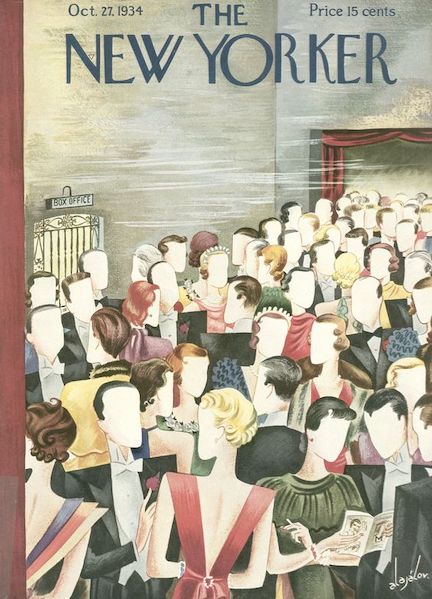
Oct. 27, 1934 cover by Constantin Alajalov.
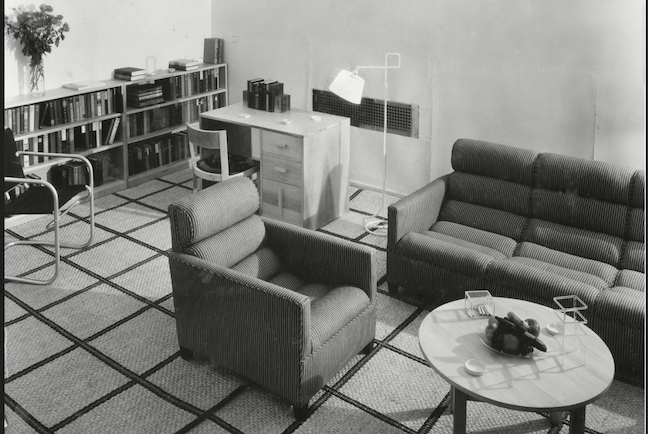
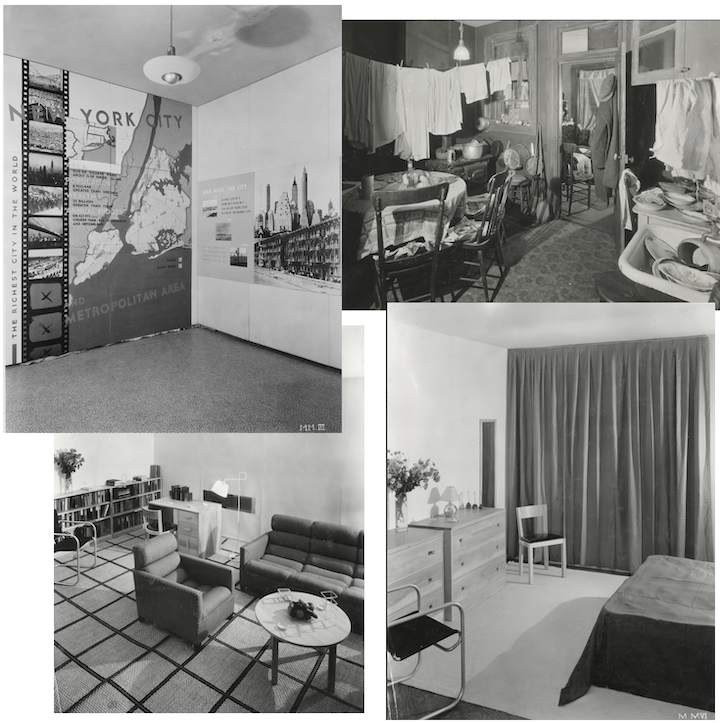
A housing exhibit at the Museum of Modern Art proposed policy and design solutions that addressed housing for the masses in “a human environment,” with European innovations leading the way. The Romanian-born Carol Aronovici (1881-1957), a well-known expert in city planning and public housing, was editor of a companion book to the exhibit, America Can’t Have Housing, in which he included seventeen essays by such experts as architect Walter Gropius, public housing advocate Catherine Bauer, and The New Yorker’s Mumford.
GIVE ME SHELTER…At left, Carol Aronovici’s companion book to the exhibition, with a cover image of the Siemensstadt Housing Development in Berlin, by Walter Gropius; above, excerpts from Lewis Mumford’s essay in the book; below, entrance to the exhibit. (MoMA)
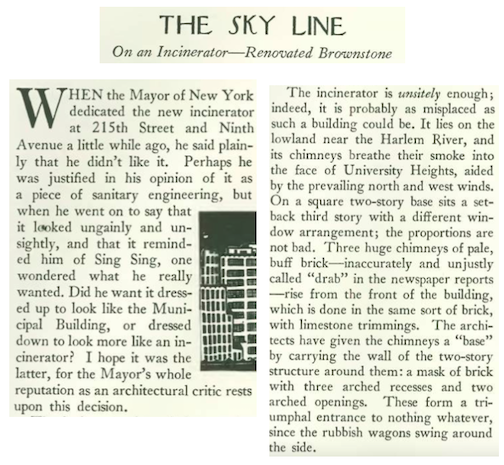
Mumford reviewed the exhibit in his regular column, “The Sky Line.” Excerpts:
BETTER HOMES…Images from the exhibit included the squalor of a tenement (top right) that offered a stark contrast to the clean, modern look inspired by European designers. (MoMA)
* * *
From Our Advertisers
We once again open the magazine to an odd juxtaposition of canned soup and high fashion…Hormel was pushing their onion soup by linking the product to French nobility (a previous ad featured Napoleon)…at right, illustrator Lyse Darcy created many ads for Guerlain products from the 1930s through the 1950s…
…the Macbeth-Evans Glass Company introduced Americans to a revolution in coffee brewing—the drip method…
…the folks who made Arrow Shirts wanted men to know that its “Thor” model would make them as confident as this man at a business conference…so confident, in fact, that he can appear mildly disinterested as he engages in a game of tic-tac-toe…
…purveyors of high fashion Lord & Taylor offered up a new design twist with this ad rendered in the Courier font…
…Pond’s continued to featured the rich and famous, women who apparently defied age itself with a few dabs of cold cream…the ad featured Alice Erdman, the wife of politician and theater producer Francis Cleveland (President Grover Cleveland’s son) and Long Island society maven Xenia Georgievna of Russia…
BELIEVER…Xenia Georgievna of Russia (1903–1965) was an influential member of New York’s Long Island North Shore society. She is best known for her belief that the imposter Anna Anderson was actually the Grand Duchess Anastasia. (Pinterest)
…Newton D. Baker mobilized and presided over the United States Army during World War I, and during the Depression he led a “National Citizens Committee” that he mobilized for human needs…
…this detail from an ad for Webster cigars offered an image of a football game almost unimaginable today…
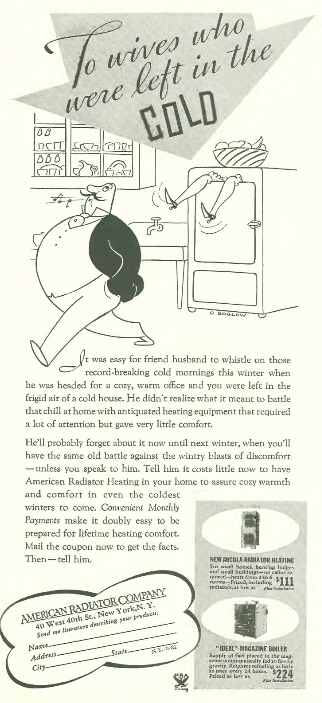
…William Steig offered his cartooning services to the local gas company…
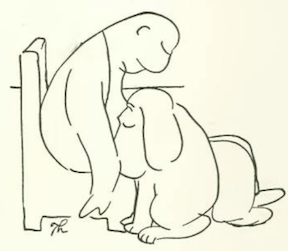
…which segues into more cartoons from the Oct. 27 issue, beginning with this spot from James Thurber…
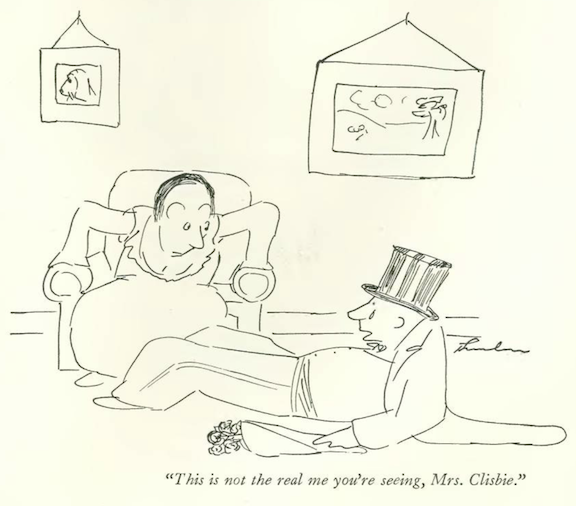
…and a cartoon…
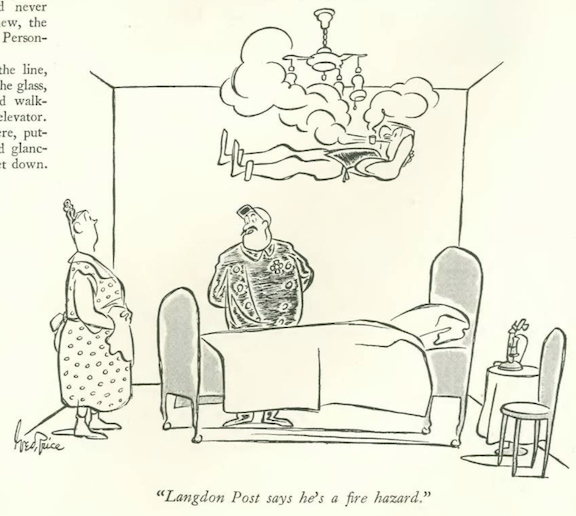
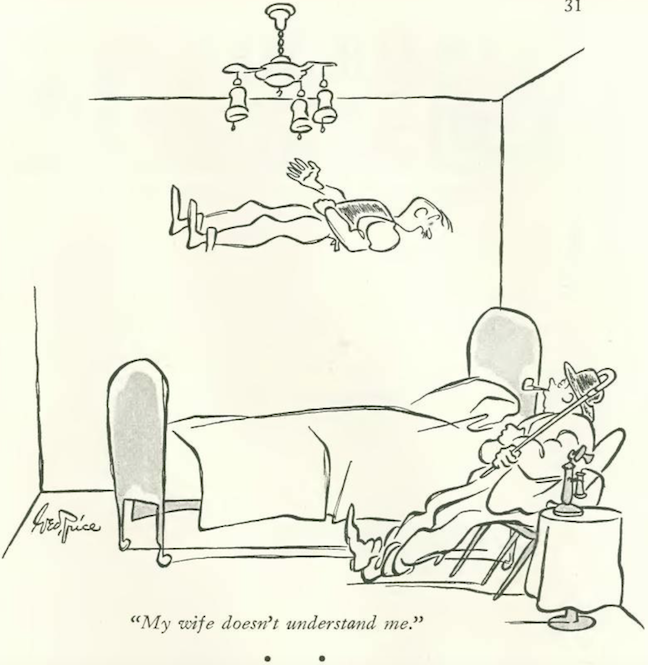
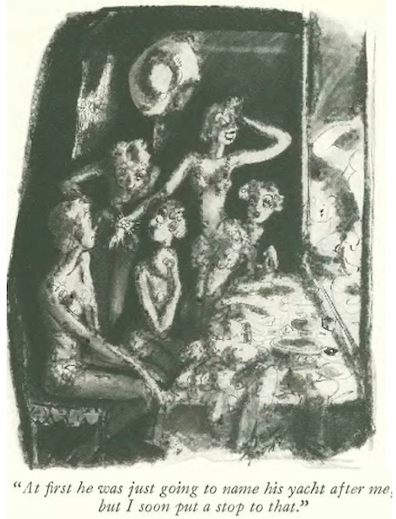
…another in the floating man series by George Price…
…and one from Peter Arno, with a classic clueless cuckold…
…on to Nov. 3, 1934…
Nov. 3, 1934 cover by Richard Decker.
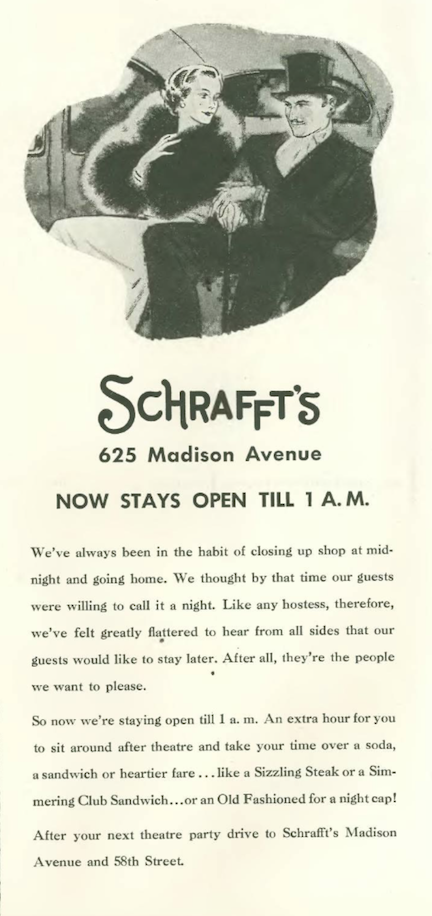
…and straight to the ads, beginning with this one from Schrafft’s, which was a chain of high-volume, moderately priced restaurants in the New York area…despite its affordability, Schrafft’s dining rooms were known for their gentility, an idea conveyed through this ad…
…and here we have another image of a posh couple savoring their downscale dining experience…perhaps they should ask their cook to stop using real turtles…
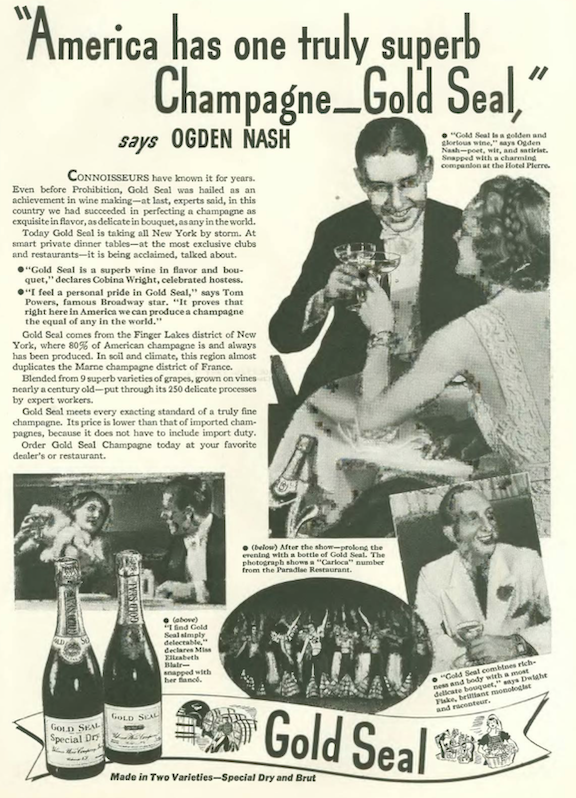
…the makers of Gold Seal “Champagne” lined up poet Ogden Nash to endorse what had to be some pretty awful stuff, even if Dwight Flake, “brilliant monologist and raconteur,” enjoyed its “delicate bouquet”…
…New York debutante Mimi Richardson joined the growing list of distinguished women who preferred puffing on a Camel…
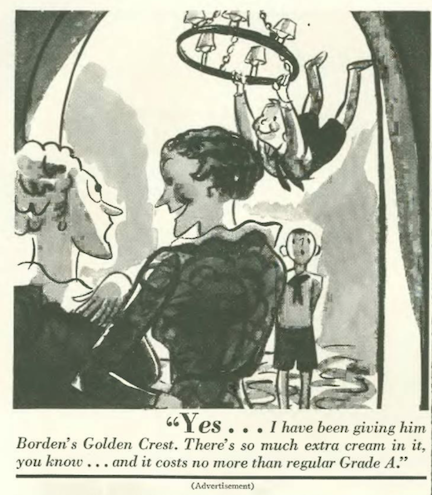
…this back-page ad featured an Arno-esque illustration touting the wonders of Borden’s Golden Crest milk…
…while the real Garrett Price drew up this image for the folks at Heinz…
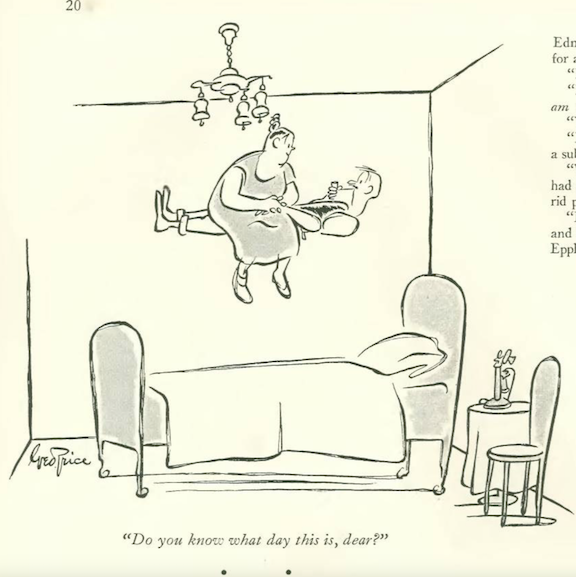
…which brings us to more cartoons, still up in the air with George Price…
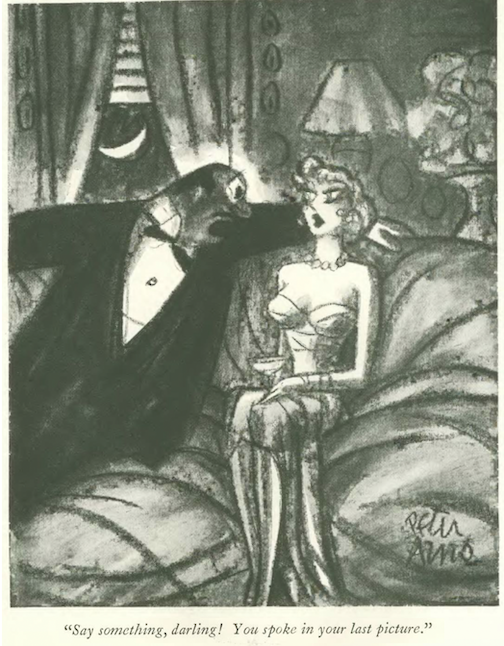
…Peter Arno gave us a suitor who was no fan of the silents…
…and we close with James Thurber, and some scandalous dish…
Above: Bill "Bojangles" Robinson demonstrating his famous stair dance, which involved a different rhythm and pitch for each step. At left, Robinson in Broadway's Blackbirds of 1928; at right, publicity photo circa 1920s. (Vandamm collection, New York Public Library/bet.com)
Bill “Bojangles” Robinson (1878–1949) is considered one of the greatest tap dancers of all time, introducing a style of remarkable lightness and complexity that was perhaps best represented by his famous stair dance.
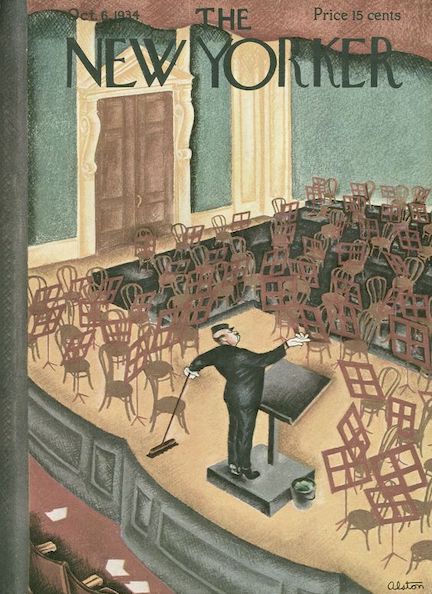
Oct. 6, 1934 cover by Charles Alston. This was Alston’s only New Yorker cover. Active in the Harlem Renaissance, Alston was also a painter, sculptor and muralist (see more on Alston at the conclusion of this post).
St. Clair McElway wrote about the 57-year-old Robinson in a two-part profile that examined his personal life and habits, including his propensity for getting shot. Two brief excerpts:
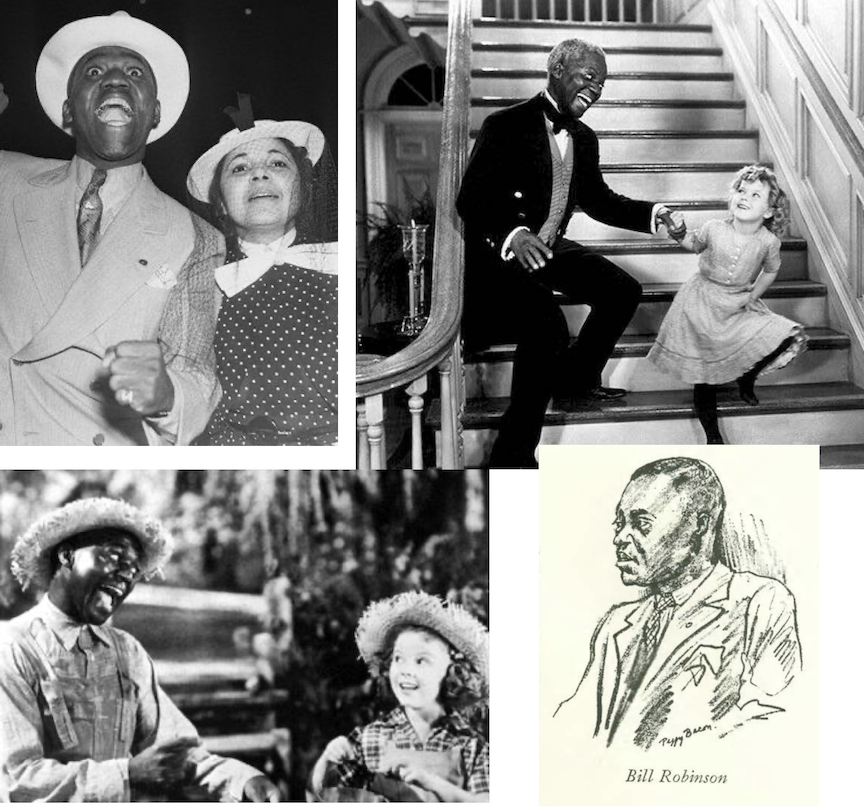
The New Yorker profile coincided with Robinson’s rising career in films, including four he made with Shirley Temple. For the 1935 film The Little Colonel, Robinson taught the stair dance to the child star, modifying his routine to mimic her movements. Robinson and Temple became the first interracial dance partners in Hollywood history (however, the step dance scene was cut from the film shown to Southern audiences). Temple and Robinson, who became lifelong friends, also appeared together in 1935’s The Littlest Rebel, 1938’s Rebecca of Sunnybrook Farm and 1938’s Just Around the Corner.
DANCING WITH THE STAIRS…Bill Robinson was also known as Bojangles, a nickname from his childhood in Richmond, Virginia. Clockwise, from top left, with his second wife Fannie Clay in 1933; performing the stair dance with Shirley Temple in The Little Colonel (1935); profile illustration by Peggy Bacon; Robinson with Temple in 1938’s Rebecca of Sunnybrook Farm. (blackpast.org/Wikipedia)
Robinson is remembered for his generous support of fellow dancers including Fred Astaire, Eleanor Powell, Lena Horne, Sammy Davis Jr and Ann Miller, as well as his support for the career of 1936 Olympics star Jesse Owens.
FAST IN BOTH DIRECTIONS…Robinson befriended Jesse Owens (left) after the track & field great returned from the 1936 Olympics (where Owens won four golds). Known for his generosity to his friends, Robinson helped Owens establish a successful post-Olympics career. Robinson himself was also something of a runner, having set the world record for running backward in 1922 (100 yards in 13.5 seconds). (Public domain image)
Although Robinson was the highest paid black performer of his time, his generosity with friends as well as his gambling habits left him penniless at his death from heart failure in 1949. Longtime friend Ed Sullivan paid for Robinson’s funeral, and more than 30,000 filed past his casket to pay their respects.
I’VE STILL GOT IT…Bill Robinson with Lena Horne in 1943’s Stormy Weather, a film loosely based on Robinson’s own life. (MoMA)
* * *
In a Romantic Mood
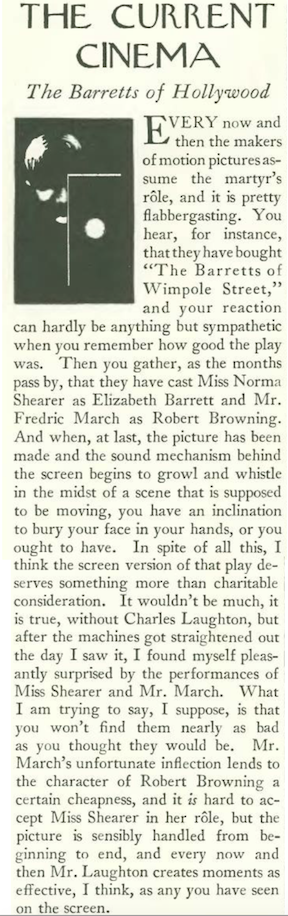
That is how St. Clair McKelway found Hollywood in two of its latest offerings, The Barretts of Wimple Street and Caravan. To his relief, he found the Hollywood version of Barretts quite “sensible”…
LET’S BE SENSIBLE…The Barretts of Wimpole Street (1934) starred Fredric March and Norma Shearer in the lead roles. (TCM)
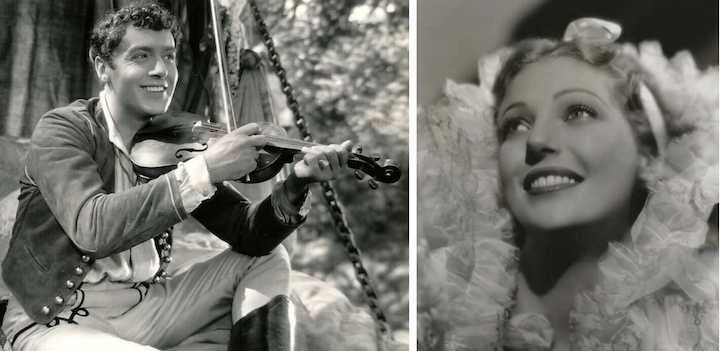
…as for Caravan, McKelway wrote that he’d “never seen a picture with so much grinning in it.” He found the “peculiar, unreal gleam” of the actors’ teeth a real distraction in closeup shots.
THAT PEPSODENT SMILE…Charles Boyer and Loretta Young showed off their pearly whites in 1934’s Caravan. (IMDB/TCM)
* * *
From Our Advertisers
The Oct. 6 issue opened with a study in contrasts: an image of two Civil War veterans swapping stories over whiskey on the inside front cover, paired with an illustration of a lithe model sheathed in the latest fashion from Bergdorf…
…the folks at Campbell’s continued to suggest that their canned soup was a delight of the elite…
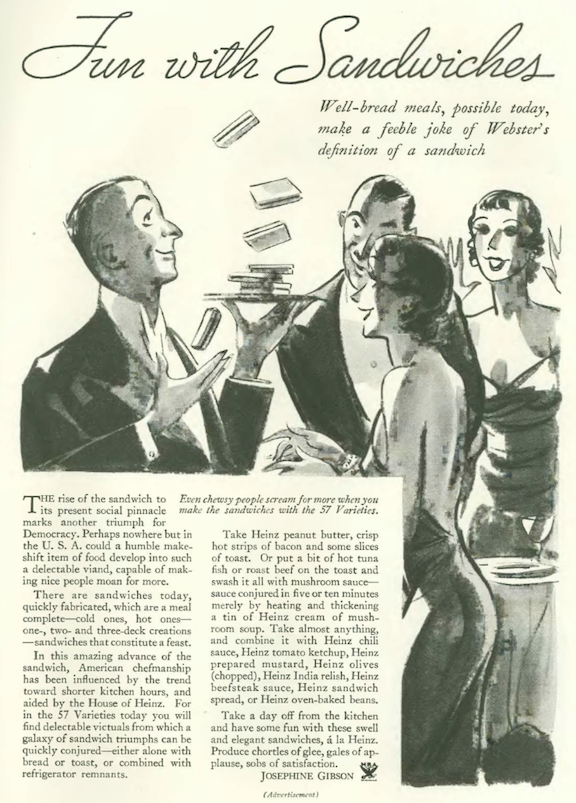
…Heinz took a similar tack, showing the smart set having fun with their sandwich spreads…
…Lord & Taylor touted its “tomorrow look” in furniture…
…R.J. Reynolds continued its series of “distinguished women who preferred Camel’s “costlier tobaccos,” adding to their growing list a the “charming debutante” Evelyn Cameron Watts, who later became Evelyn Watts Fiske (1915–1976)…
…in contrast to Camel’s fashionable ads, the upstart menthol brand Kool offered a series of cheap, back-page ads featuring a smoking penguin, here in the Halloween spirit (detail)…
…another recurring back page ad was this weird spot from Satinmesh, a product that apparently helped close a woman’s “gaping pores”…those pores apparently prompted one man to ponder the eternal why…
…on to our cartoonists, we begin with a two-page spot by Carl Rose…
…James Thurber spiced up a game of ping-pong…
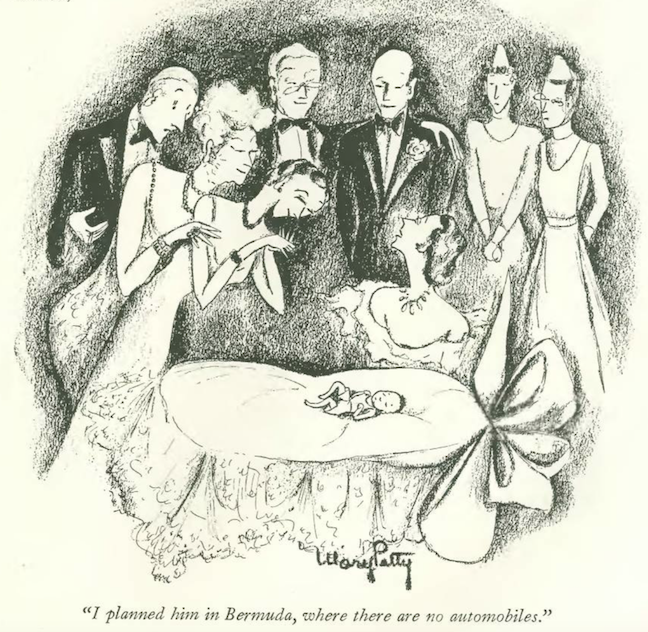
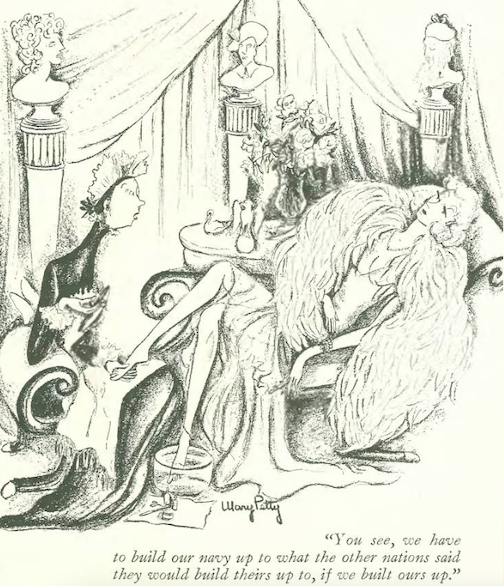
…Mary Petty explored the miracle of birth…
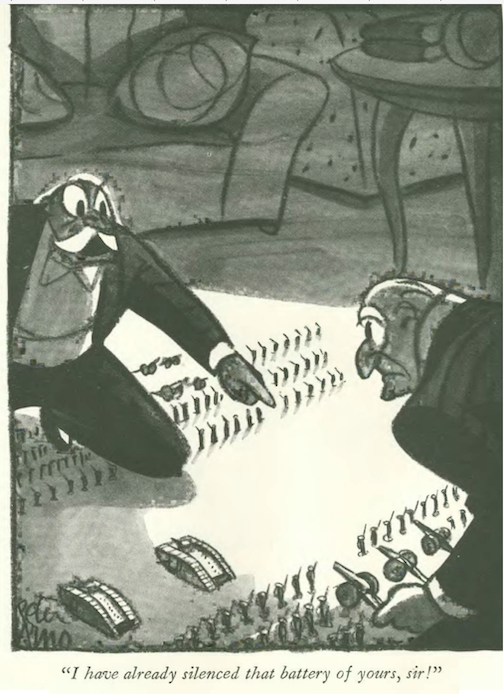
…Peter Arno discovered you’re never too old to play with toys…
…Garrett Price offered a young man’s perspective on a father’s avocation…
…Alain (Daniel Brustlein) gave us a disappointed plutocrat on vacation in Mexico…
…George Price continued to mine the humor of his “floating man” series…
…and contributed a second cartoon that featured some office hijinks…
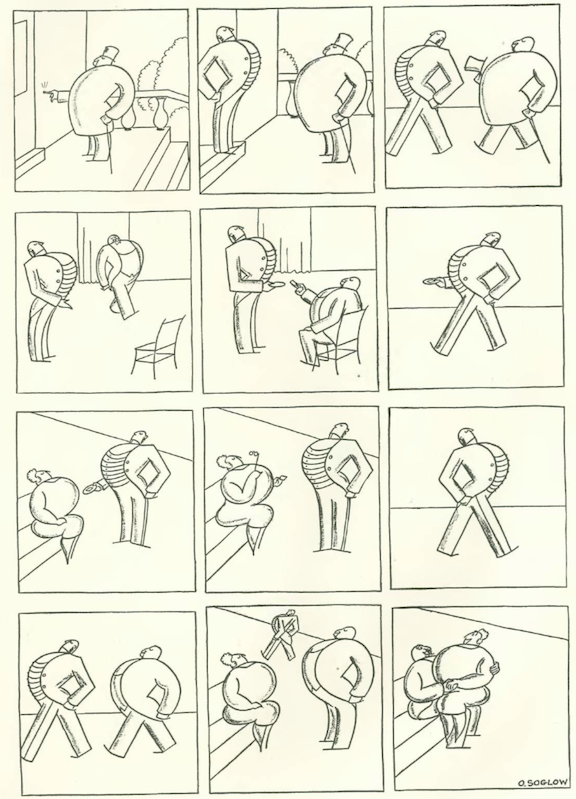
…and Otto Soglow returned without The Little King, offering in its stead the closest thing to royalty in America…
Before we sign off, a note on the Oct. 6 cover artist, Charles Henry Alston (1907–1977). A Harlem-based painter, sculptor, illustrator, muralist and teacher, Alston was active in the Harlem Renaissance and was the first Black supervisor for the Works Progress Administration’s Federal Art Project. In 1990, Alston’s bust of Martin Luther King Jr. became the first image of an African American displayed at the White House.
Clockwise, from top left, Charles Henry Alston’s 1970 bust of Martin Luther King Jr; Walking 1958; Andrew Herman photo of Alston, 1939; Midnight Vigil, 1936. (Smithsonian/Wikipedia/Columbia.edu)
McSorley’s Old Ale House is probably best known to New Yorker readers through the work of Joseph Mitchell, who was noted for his distinctive character studies in The New Yorker and who in 1943 published McSorley’s Wonderful Saloon, which was later included in a 1992 collection of Mitchell’s works, Up In the Old Hotel.
Sept. 15, 1934 cover by Rea Irvin.
Among New York’s oldest saloons, McSorley’s was one of the last of the “Men Only” pubs, finally admitting women in 1970 after the state required the saloon to comply with the U.S. Constitution’s Equal Protection Clause. McSorley’s was visited by many famous patrons in its long history, a mixed bunch that included Abraham Lincoln, Teddy Roosevelt, Harry Houdini and John Lennon. Nine years before Mitchell would pen his account of the saloon, “The Talk of the Town” took a look.
MORE THAN A BAR…Folks were (and still are) drawn to McSorley’s Old Ale House for its rustic atmosphere—apparently no piece of memorabilia has been removed from its the walls since 1910. Clockwise, from top left, McSorley’s in 1942; 1937 Berenice Abbott photo of the interior; and two paintings by John Sloan—McSorley’s Bar, 1912; and Cats in McSorley’s, 1928. Sloan was among the Ashcan School of artists that included Stuart Davis and John Luks—all regulars at McSorley’s. (keithyorkcity.wordpress.com)
* * *
Of the People
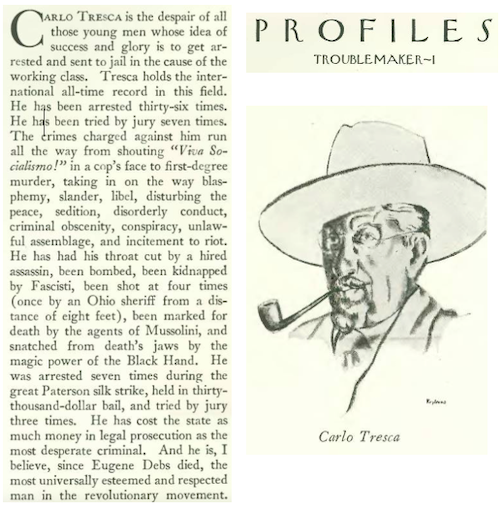
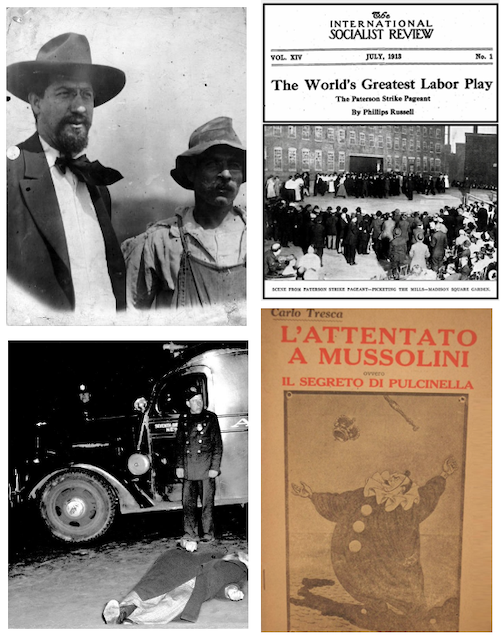
The Italian-American labor organizer Carlo Tresca was a gifted orator and outspoken critic of anyone who stood in his way in his quest for workers’ rights. As political activist and writer Max Eastman pointed out in the lead paragraph of a two-part profile, speaking truth to power also prompted a number of deadly assaults on Tresca (1879–1943), whose campaign for justice was ultimately cut short by an assassin’s bullet in 1943. A brief excerpt:
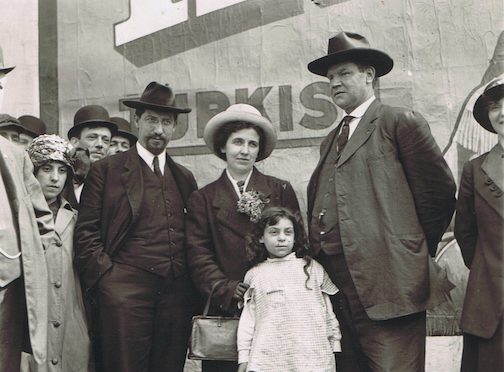
STANDING FIRM…Leaders of the International Workers of the World who led the 1913 Paterson (N.J.) mill strike included, left to right, Carlo Tresca, Elizabeth Gurley Flynn and William D. Haywood. (Photo: News Dept. American Press Association)UP TO THE FINAL CURTAIN…Clockwise, from top left: Carlos Tresca with an unidentified worker in the 1910s; labor activists often staged theatrical works to get their point across—in 1913 The International Socialist Review covered a play at Madison Square Garden about the Paterson N. J. mill strike, which featured more than a thousand amateur actors; cover of a 1926 theatrical work, L’attentato a Mussolini, that attacked the fascist dictatorship of Benito Mussolini; police officer guards Tresca’s body after his 1943 assassination. Tresca was crossing Fifth Avenue at 15th Street when an unidentified assailant jumped out of a black Ford and shot him in the back of the head, killing him instantly. (Wikipedia/weneverforget.org/wetheitalians.com)
* * *
Up In Smoke
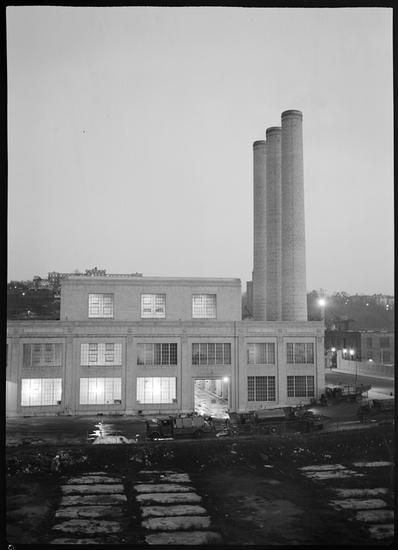
Lewis Mumford sniffed at much of the new architecture popping up around his city, but he took an especially big whiff of the new incinerator that rose above the neighborhoods at 215th Street and Ninth Avenue. When the incinerator opened in 1934 the city stopped dumping its garbage into the sea (it was fouling the beaches) and began burning the stuff around the clock in Harlem, where residents had put up with the smoke and cinders that were emitted from the supposedly “odorless” plant. Cole Thompson’s website My Inwood is a great place to read more about it.
ASHES TO ASHES…New York’s municipal incinerator, located in Harlem, as seen in 1937. The plant closed in 1970 when the city’s rubbish was re-directed to the Fresh Kills landfill on Staten Island. The smokestacks, which had become something of a landmark, were demolished in 2022. (Museum of the City of New York)
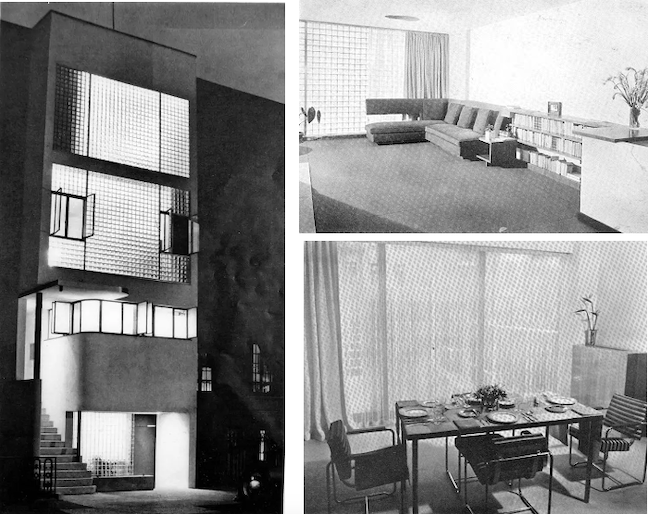
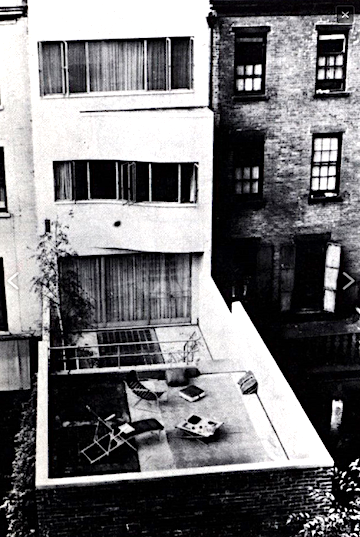
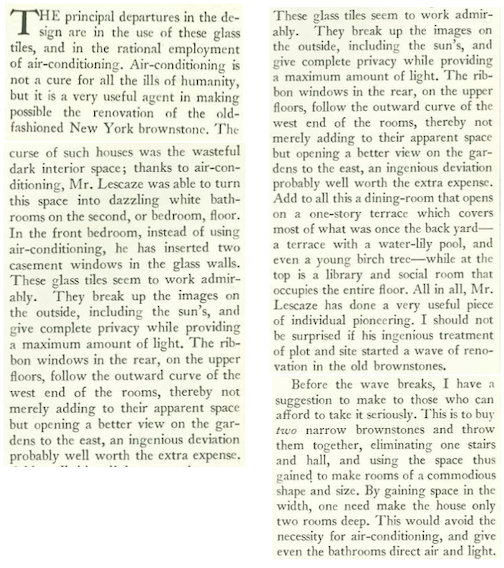
Mumford brightened, however, at another development in the Turtle Bay neighborhood, where architect William Lescaze (1896–1969) had slipped a bright, modernist house in between two dusky brownstones on East 48th Street. The house featured extensive use of glass block in its construction, an architectural first in the city.
RADICAL CHIC…William Lescaze’s four-story house, inserted between the brownstones on East 48th Street, is considered to be the first modernist house in city; at right, the Swiss-born American architect, city planner and industrial designer endorses highballs mixed with Lord Calvert Whiskey in a 1948 advertisement. (Wikipedia)ALL AGLOW…The Lescaze house at night, and two interior views. (From the 1936 issue of Decorative Art, the Annual Issue of the Studio Yearbook via djhuppatz.blogspot.com)GLASSY EYED…The Lescaze House’s glass block facade, the first to be used on a building in New York City, were installed to provide insulation and privacy while also allowing extensive illumination. At right, the front entrance to the lower level, which contained Lescaze’s office. (6sqft.com)THINK PAD…Lescaze situated the most important rooms to the back of the house (dining, master bedroom and living) to isolate them from street noise and bathe them in northern light. His basement office extended under the back terrace. (hiddenarchitecture.net)
Mumford noted that the recent invention of home air-conditioning systems made it possible for Lescaze to bring light deep into the central core of the building…
HIGH AND LOW…Lescaze’s works in the early 1930s included the 1932 PSFS Building in Philadelphia (today: Loews Philadelphia Hotel); at top, PSFS interior view showing board room conference table; below, the 1930-31 Fredrick Vanderbilt Field House in Connecticut. (Hagley Museum and Library/Wikipedia/djhuppatz.blogspot.com)
* * *
Poser
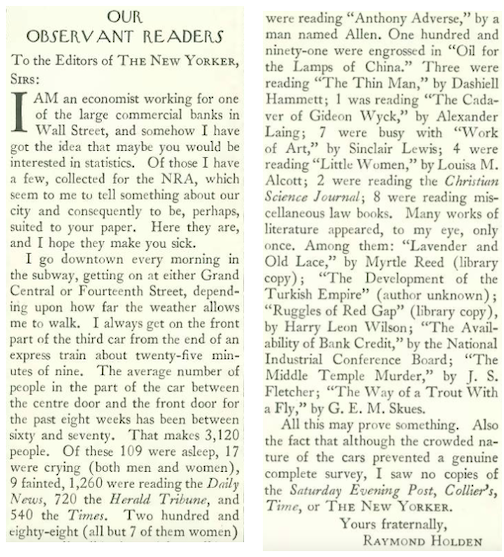
The novelist and poet Raymond Holden (1894–1972) was a regular contributor to The New Yorker from 1929 to 1943. For the Sept.15 issue he assumed the guise of an economist to pen this cheeky letter to the editors:
* * *
Head in the Clouds
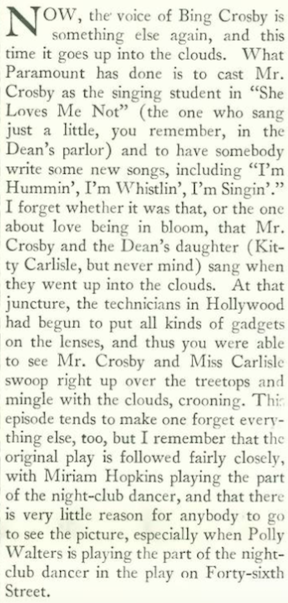
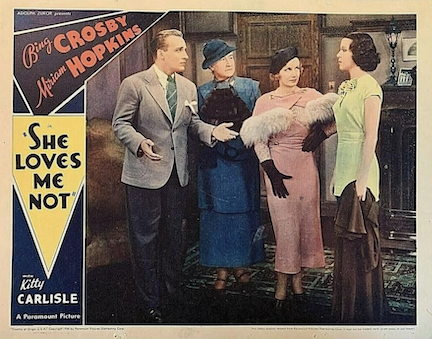
Film critic John Mosher thought Bing Crosby was a fine singer, but he couldn’t quite fathom why the movie-makers at Paramount thought the singer would be even more attractive if he was sent aloft using various camera tricks.
COME FLY WITH ME…Lobby card advertising 1934’s She Loves Me Not starring, from left, Bing Crosby, Maude Turner Gordon, Miriam Hopkins and Kitty Carlisle. (IMDB)
* * *
From Our Advertisers
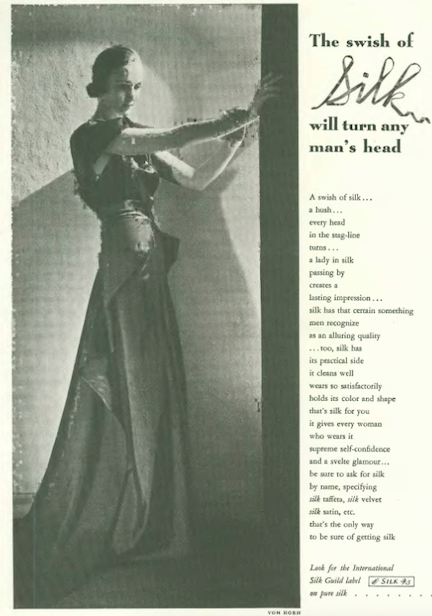
The advertising department must have been thrilled with the flurry of ads that announced the fall and winter fashions…here are three examples, the first two focused on styles supposedly designed attract the opposite sex…the International Silk Guild promised that the “swish” of silk would turn any man’s head…
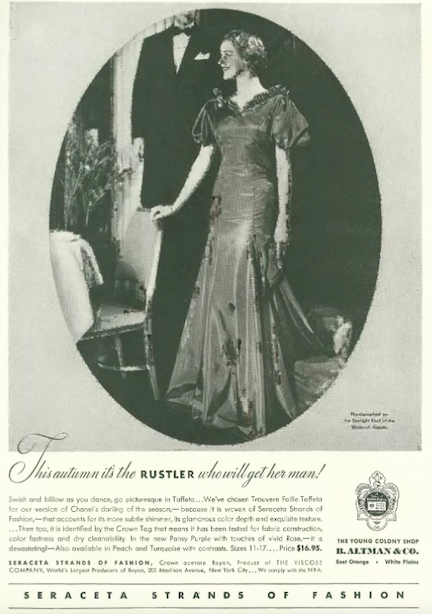
…while B. Altman’s “Young Colony Shop” claimed you could get your man with the “swish and billow” of taffeta…
…B. Altman ran a second full-page ad to catch a bit older demographic, less concerned with landing a man and more concerned with sending the proper signals to fellow Anglophiles…
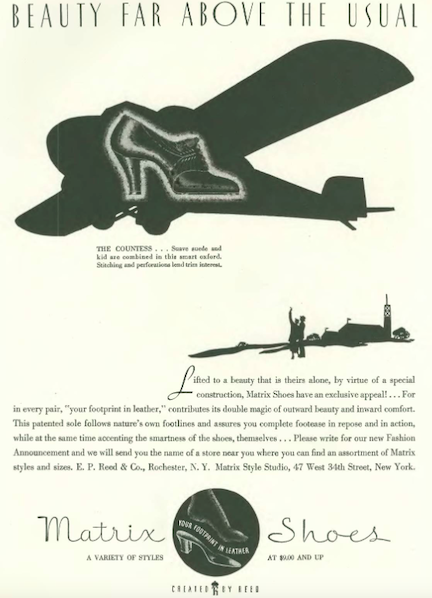
…the folks at Matrix shoes were looking for a way to associate their “Countess” model with modern living, but what they got was an image of people waving farewell to some flying footwear…
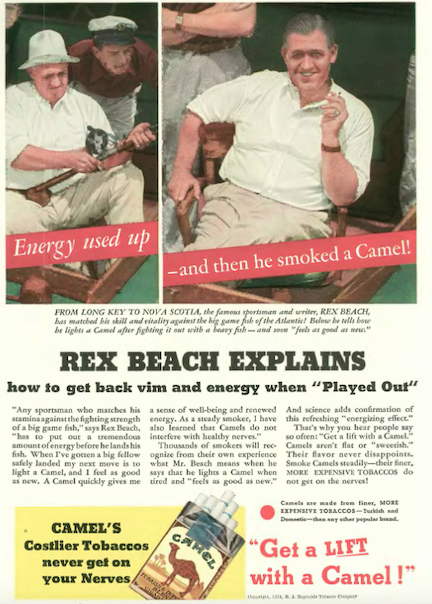
…and here is another in a continuing series of ads from R.J. Reynolds that claimed “science” had confirmed the refreshing, energizing effect of its Camel cigarettes…
…we clear the air with this attractive ad beckoning New Yorkers to sun-kissed Bermuda…
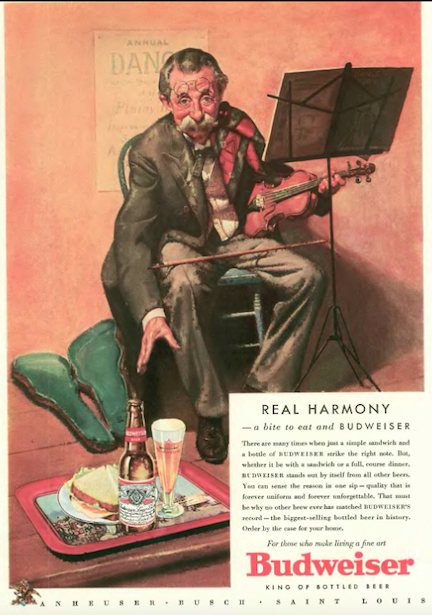
…Budweiser continued its series of Rockwellesque portraits of old men enjoying its product…
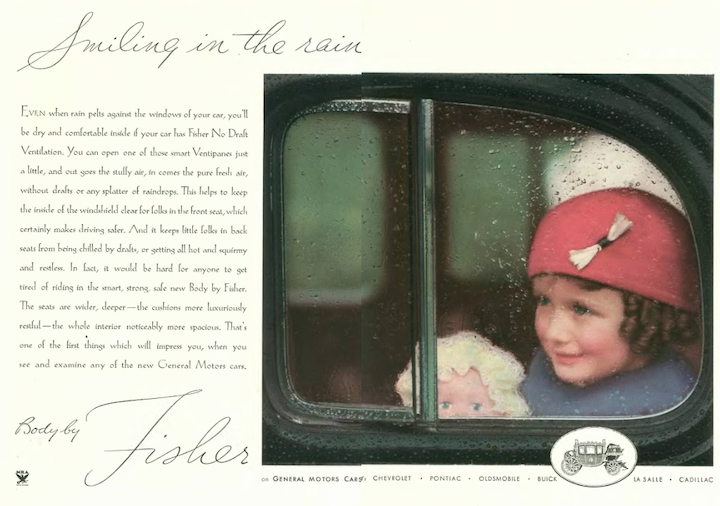
…and this two-page spread from Fisher—maker of car bodies for General Motors—shows us how young tots travelled in the days before plastic car seats and other restraining devices…
…on to our cartoonists we begin with a couple examples of spot illustrations from the opening pages…
…on to Peter Arno…the caption reads, “I adore driving at night. Once I caught my foot in a bear trap, though”…the humor is lost on me…I suppose she is referring to a speed trap, perhaps set by an amorous cop…
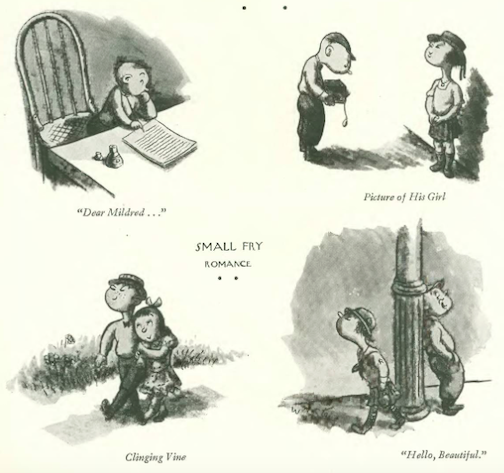
…speaking of amorous, William Steig explored the subject amongst his “Small Fry”…
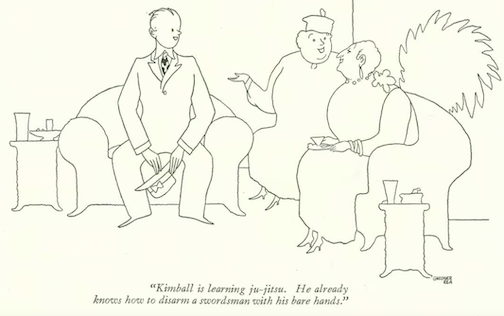
…Gardner Rea sat in on an unlikely boast…
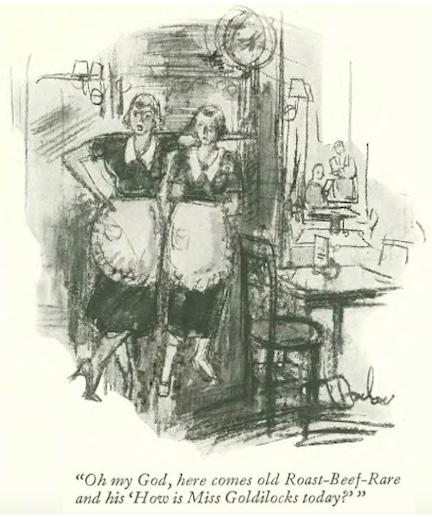
…Perry Barlow illustrated the doldrums associated with waitressing…
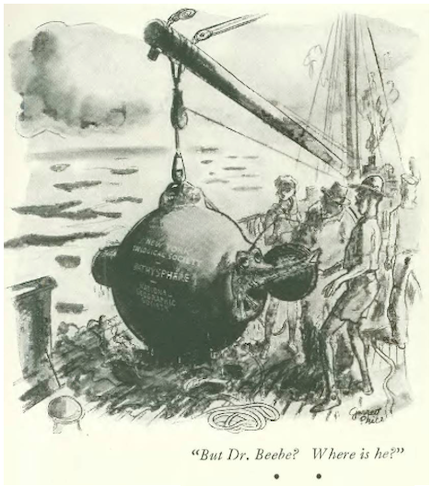
…Garrett Price checked in on the latest developments in deep sea exploration…
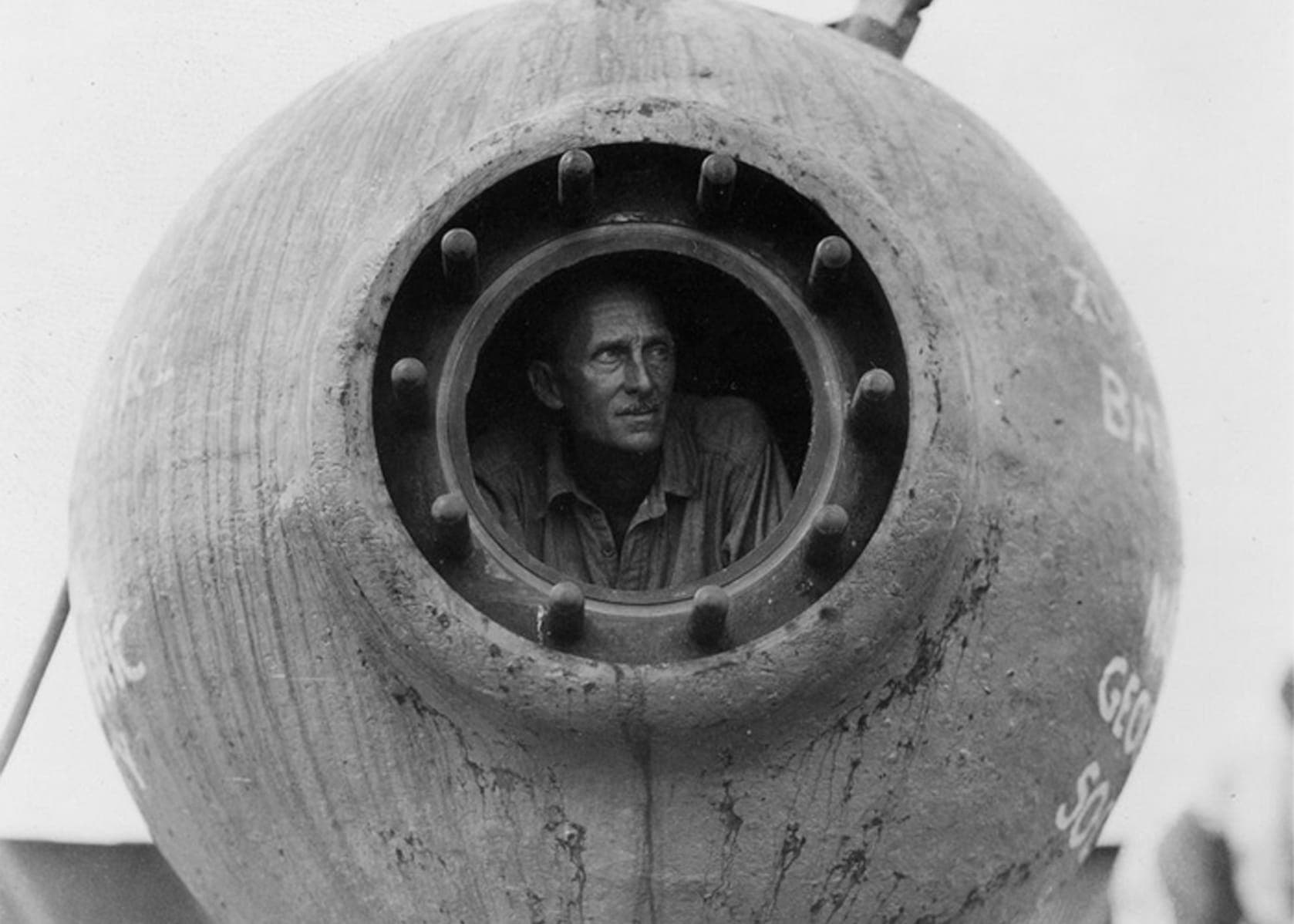
…the cartoon refers to the explorations of William Beebe, who along with engineer Otis Barton descended in a bathysphere to a record 3,028 feet (923 m) on Aug. 15, 1934…
SIT TIGHT…Naturalist William Beebe poses inside the bathysphere in the early 1930s. (msmocean.com/)
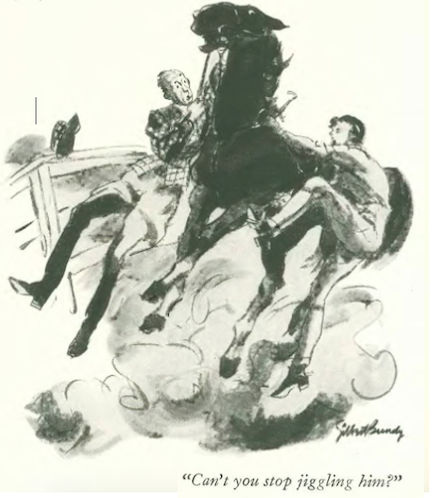
…and we close with Gilbert Bundy, and a couple of horse wranglers…
Claudette Colbert and Henry Wilcoxon in 1934's "Cleopatra." (cecilbdemille.com)
New Yorker film critic John Mosher was in the mood for one of Cecil B. DeMille’s big, splashy epic movies, but was disappointed to find a relatively restrained effort in DeMille’s latest flick, Cleopatra.
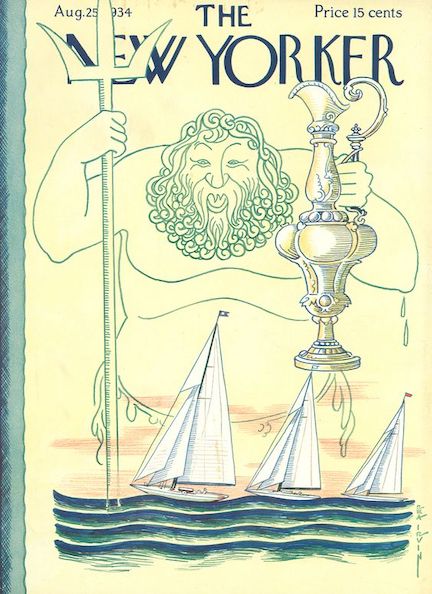
August 25, 1934 cover by Rea Irvin.
Perhaps Mosher would have preferred a silent version of the film, finding the dialogue “the worst I have ever heard in the talkies.” Among examples cited by Mosher was Warren William’s Caesar, who utters the word “Nope” to one of his senators.
CLEO BRIO…Clockwise, from top left, Paramount’s trailer for Cleopatra made a bold claim; Cleopatra (Claudette Colbert) hails Caesar after emerging from a rolled up rug that had been presented to the Roman court; Julius Caesar (Warren William) acts unimpressed, but eventually falls for the Egyptian queen before meeting his demise; Marc Antony (Henry Wilcoxon) is the next to fall for Cleopatra’s seductions. It ends badly for both of them. (pre-code.com/obscurehollywood.net)
Despite Mosher’s grumbles, Cleopatra would receive five Academy Award nominations (winning for Best Cinematography) and would become the highest-grossing film released in North America in 1934. That year Claudette Colbert (1903-1996) would appear in three films that were all nominated for the Academy Award for Best Picture—she is the only actress ever to do so.
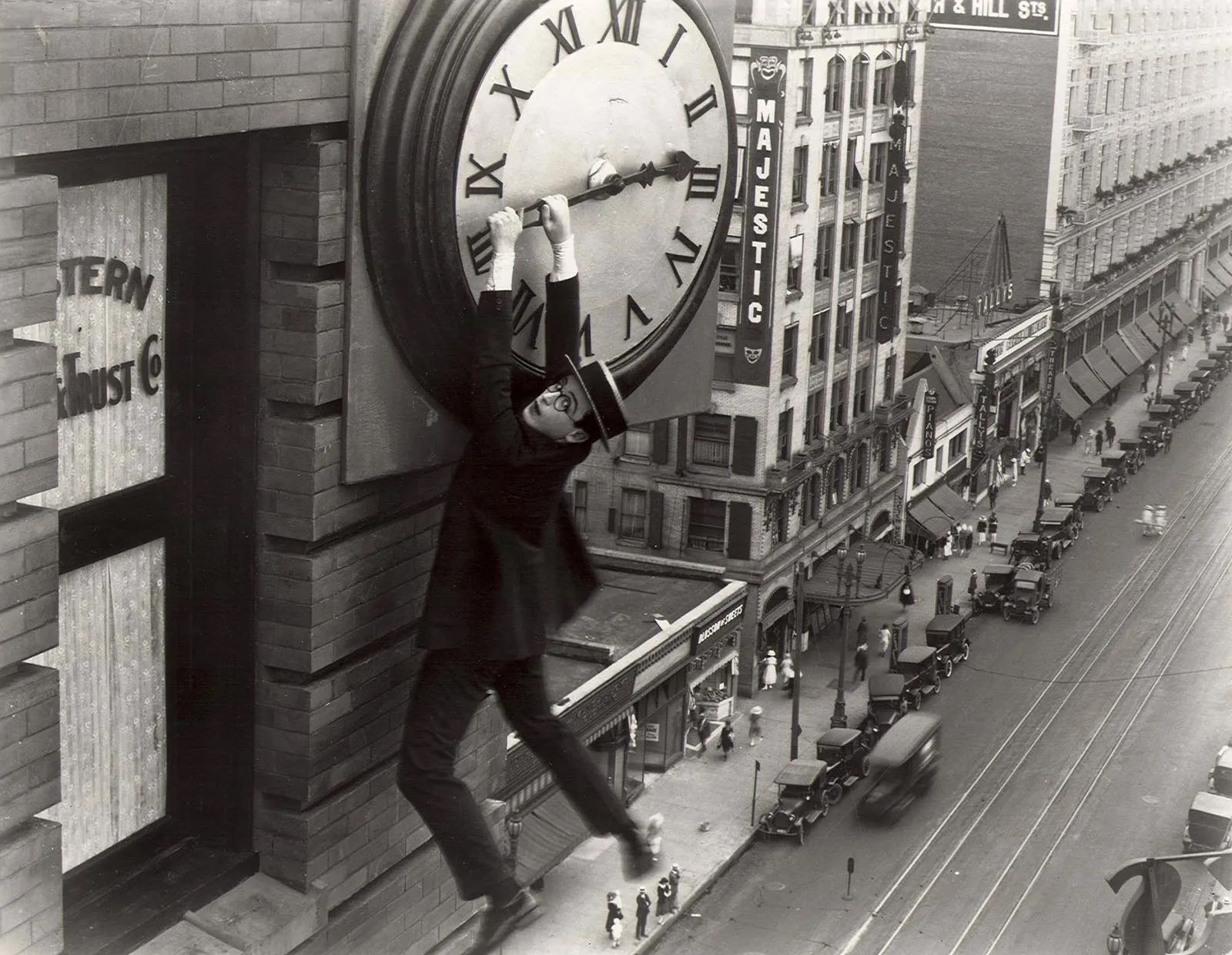
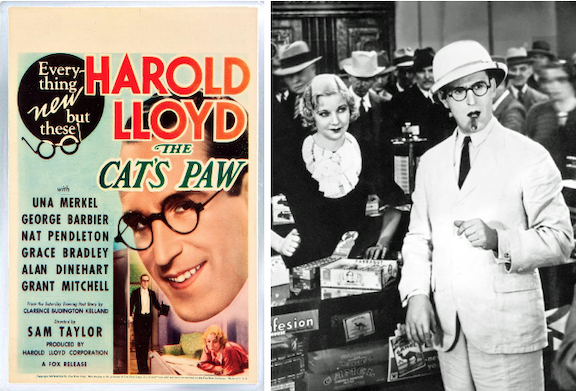
On the lighter side, Mosher took a liking to Harold Lloyd’s latest picture, The Cat’s Paw, which marked a sharp departure from Lloyd’s trademark slapstick. Lloyd adopted to a calmer pace, “touched with the delicate bloom of satire.”
Moviegoers who associated Lloyd with such pictures as 1923’s Safety Last…
(britannica.com)
…would have to settle for this new version of Lloyd, which was even touted on the movie’s promotional poster…
STAYING ON HIS FEET…Fox Pictures touted a “new” Harold Lloyd (except for his trademark glasses) in The Cat’s Paw. At right, Lloyd with co-star Una Merkel. (IMDB/criterionchannel.com)
* * *
Fun With Philately
After reading a column in The Herald Tribune that concerned interesting stamps and envelopes…
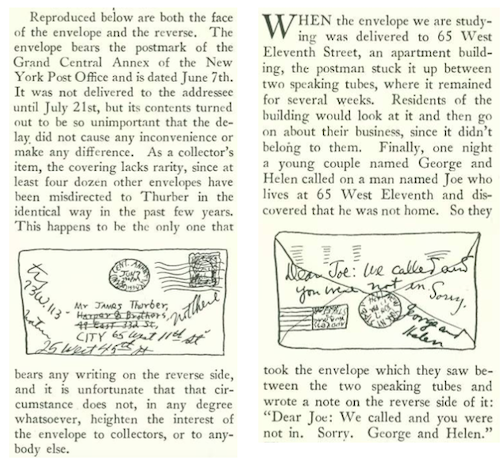
…James Thurber found himself inspired to make a brief examination of the “Thurber envelope”…
…which proved to be neither interesting nor unusual (excerpts):
* * *
From Our Advertisers
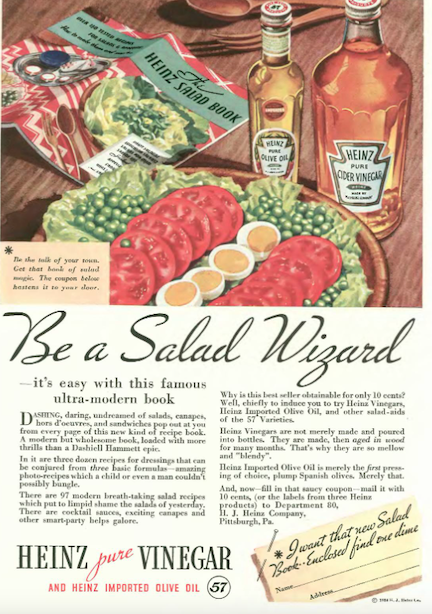
A couple of colorful advertisements, the first from the folks at Heinz, who invited New Yorker readers to become “Salad Wizards”…
…if being a salad wizard wasn’t good enough, you could pop open a bottle of Cora vermouth and feel downright aristocratic…
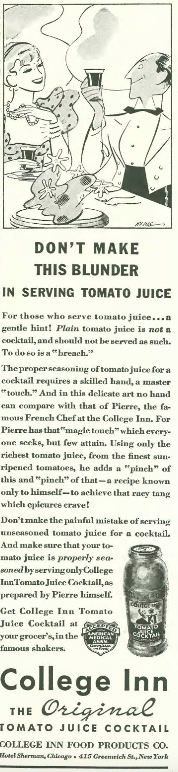
…and if you wanted to maintain that aristocratic pose, you’d better know how to serve your tomato juice, and make sure it is prepared by a “famous French Chef”…
…more libations in the back pages…here’s a sampling of three…there must have been a reason why all of the one-column ads featured mixers and spirits on the top and ads for hotels and apartments on the bottom…
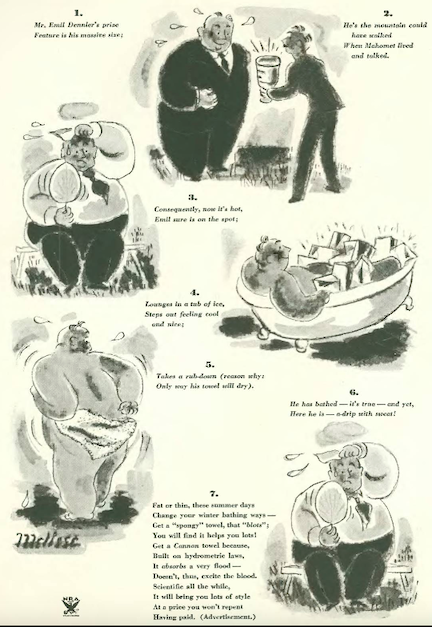
…and before we jump into the cartoons, a brief look at illustrator Mildred Oppenheim, who worked under the pseudonym “Melisse.” Her work was seen in the early New Yorker mostly in ads for Lord & Taylor, however she also did work for others including the makers of Cannon towels (seen below). In 1931 The New York Times described her as “a wicked and telling satirist—almost a feminine counterpart of Peter Arno”…
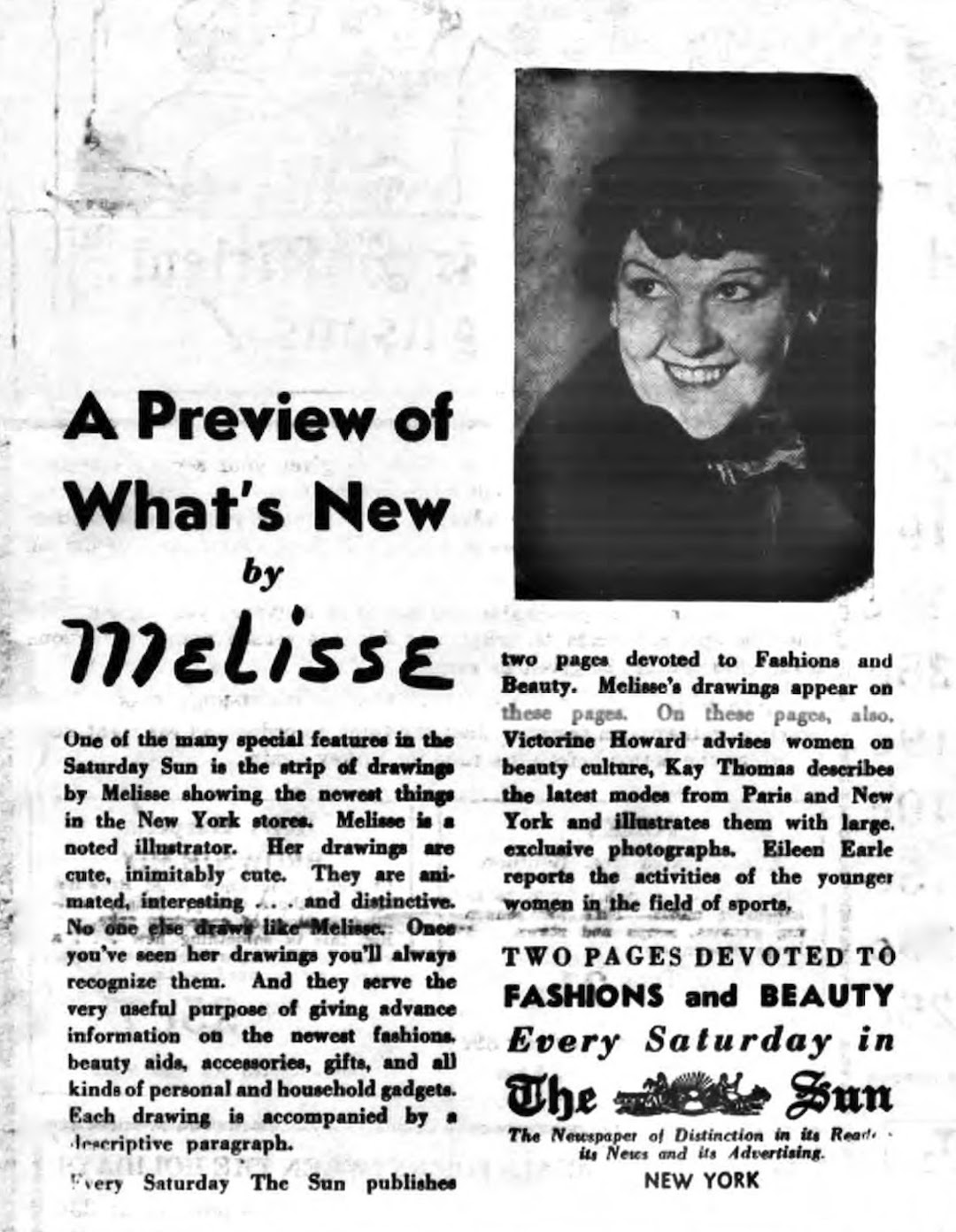
…Melisse ran a cartoon strip, “Real News of New York…A Preview of What’s New,” in the New York Sun from 1933 to 1935. Melisse seemed to be flying high, but in 1940 she declared bankruptcy. However she quickly rebounded in 1941 with an advertising panel for Orbachs—“Around Town…with Melisse”—which became a nationally syndicated feature:
(strippersguide.blogspot.com)
…in the 1940s Melisse also produced a variety of drawings and paintings, designed mannequins for window and counter displays, and even produced designs for handkerchiefs and other clothing items. But for all her fame as a commercial illustrator, very little is known about her personal life, or what became of her after 1950. According to Alan Jay of the Stripper’s Guide, Melisse was born in Newark in 1905 and died in Miami in 1993, and was briefly married to another commercial artist in the early 1930s. A December 14, 1934 ad for her “Real News” strip in the Pelham Sun featured her photo:
(strippersguide.blogspot.com)
…on to our well-known New Yorker cartoonists, we begin with the stalwart Rea Irvin…
…accompanying part two of a three-part profile of New Deal Administrator Hugh Samuel Johnson was this terrific caricature by Miguel Covarrubias…
…never too early to get ready for winter…spot drawing in the opening pages by Alan Dunn…
…but there was enough summer left for William Steig’s “Small Fry” to enjoy some leisurely pursuits…
…William Crawford Galbraith continued to ply his familiar waters…
…while Al Frueh turned in this gem…
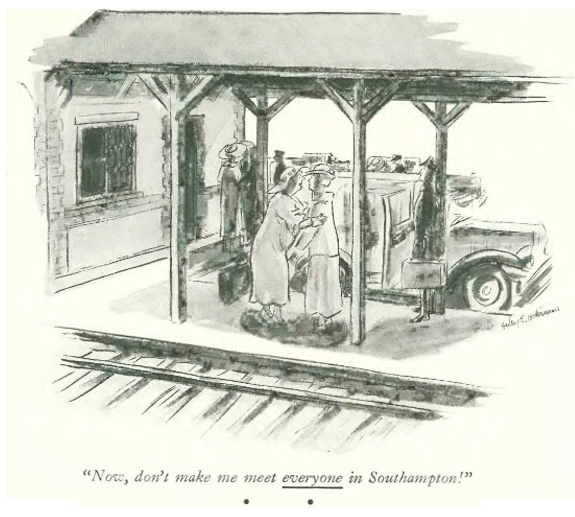
…Helen Hokinson found some lively anticipation at the train station…
…Garrett Price took us to the seashore…
…while Barbara Shermund kept us abreast of current events…
Above: Final Design of Grand Central Terminal, ca. 1910. (New York Transit Museum)
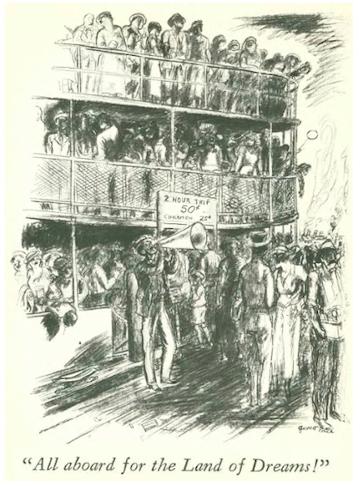
The heat wave of 1934 spread misery from the Midwest to the East Coast. The temperature in New York City hit 101 degrees F (38.3 C) on June 29, and July recorded at least ten days of temps in the mid- to upper 90s. It must have been miserable in the days before air-conditioning, and since no adult would dare be seen in public wearing shorts and a t-shirt, an outing on a crowded tour boat, as illustrated below by William Cotton, must have been hellish.
July 21, 1934 cover by William Cotton.
…putting a fine point on it, recall this wryly captioned cartoon from the June 30 issue by Garrett Price…
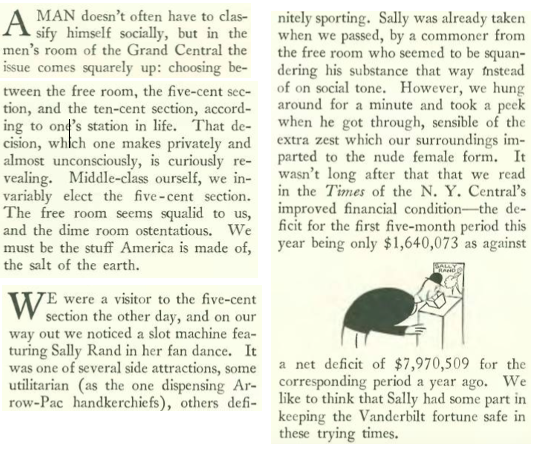
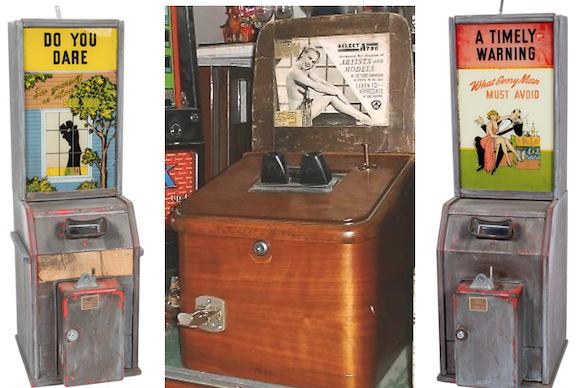
…but let us move ahead to the July 28 issue, where E.B. White was hopefully keeping his cool in the men’s waiting room at Grand Central Station, where he plunked down a nickel to cool his heels in the “middle class” section, where he observed side attractions including a vending machine that dispensed handkerchiefs and a coin-operated peep show featuring burlesque star Sally Rand.
NO MASHERS ALLOWED…Separate men’s and ladies’ rooms were available in three classes at Grand Central Station—free, five cents and ten cents. Top, the Ladies’ room, Grand Central Terminal (Central Lines), and below, a men’s room at the station. A nickel back then was worth about a dollar today. (Library of Congress)NICKEL AND DIMED…Machines similar to these could be found in some men’s waiting rooms at train stations in the 1930s. (pinballhistory.com/comics.ha.com)
…White referred to a peep show that featured famed fan dancer Sally Rand…
DOING HER DEEP KNEE BENDS…Sally Rand in the 1930s. (www.vintag.es)
White also commented on the growing number of travelers, still pinched by the Depression, opting for the free section:
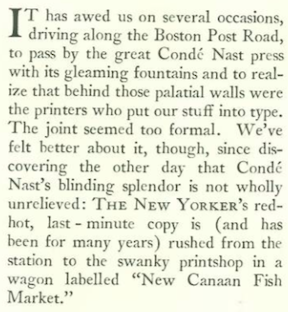
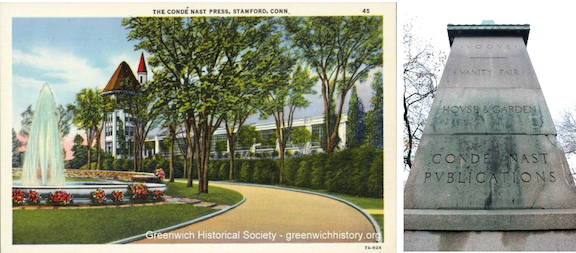
We settle in with the June 21 issue (which leads this post) with White once again, this time enjoying a drive to Stamford, Conn., where he admired the “splendor” of the Condé Nast printing plant (apparently the plant also printed The New Yorker, although the magazine itself would not be acquired by Condé Nast’s parent company, Advance Publications, until 1985).
ONLY A MEMORY…Postcard image of the Condé Nast printing plant; at left, a relic of the long-gone plant, one of two pillars that flanked the road to the plant. (Greenwich Historical Society/greenwichtime.com)
* * *
Disney’s Other Mouse
Film critic John Mosher was a fan of Disney’s “Silly Symphony” cartoon shorts, which were produced between 1929 and 1939. Animation, and especially color animation, was in its infancy, so these doubtless had an uplifting effect on many moviegoers.
DON’T CALL ME TINKERBELL…The Butterfly Fairy brought some Disney magic to 1934’s The Flying Mouse. (disney.fandom.com)
* * *
The Great McGonigle
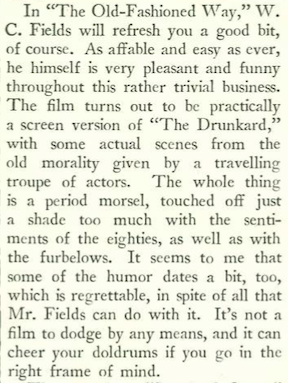
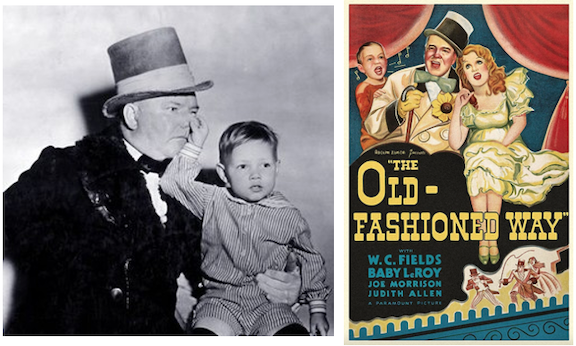
W.C. Fields appeared in more than a dozen silent films before making his first talkie, 1930’s The Golf Specialist, and it was in sound films that Fields was able to truly express his vaudevillian wit. It was also in the sound era that Fields teamed up with Baby LeRoy for three films (in 1933 and 1934), including The Old Fashioned Way, in which Fields portrayed “The Great McGonigle,” leader of a traveling (and perpetually underfunded) theater troupe who was always a step ahead of police and creditors. Critic John Mosher found the film’s riff on an old morality play, The Drunkard, to be a bit dated, but overall thought it a cheerful diversion.
HONK…Baby LeRoy, aka Ronald Le Roy Overacker (1932–2001), was just 16 months old when he became the youngest person ever put under term contract by a major studio. He is best known for his appearances in three W. C. Fields films: Tillie and Gus (1933), The Old Fashioned Way (1934) and It’s a Gift (1934). (Rotten Tomatoes/IMDB)
* * *
From Our Advertisers
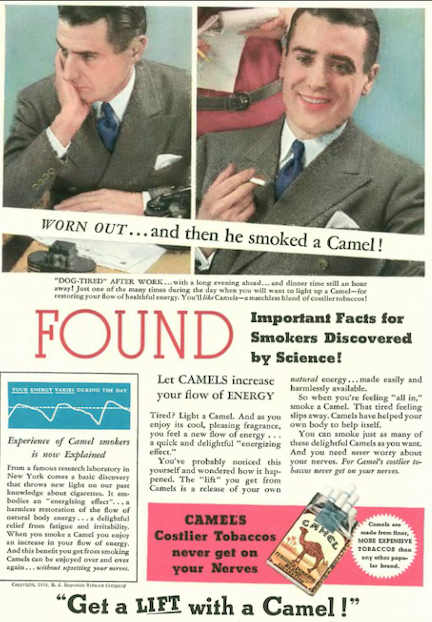
We begin with scientific proof (from a “famous research laboratory in New York”) that Camel cigarettes increased one’s flow of energy…
…if that crackpot claim doesn’t get you, here’s one that recommended downing a PBR before a big meeting, a sure remedy for that “listless, tired-out feeling”…
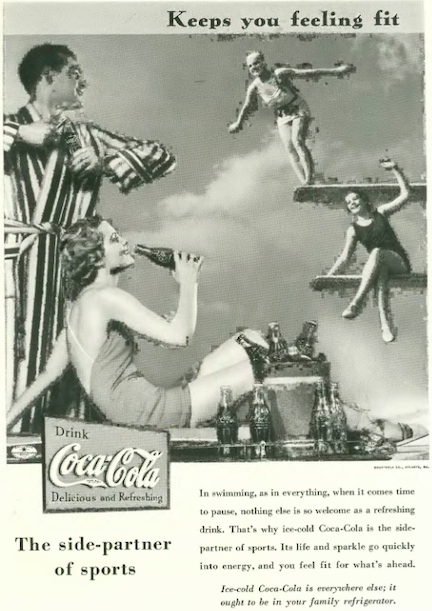
…of course we all know that a few sugary Cokes will get you going…back then they were taking it in six- and ten-ounce bottles, not 30- to 50-ounce Big Gulps…
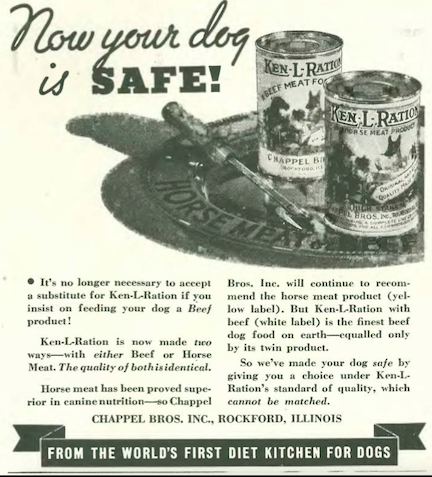
…it’s not every day you see a dog food ad in The New Yorker…in the 1930s there was no secret to where ol’ Sparky ended up…
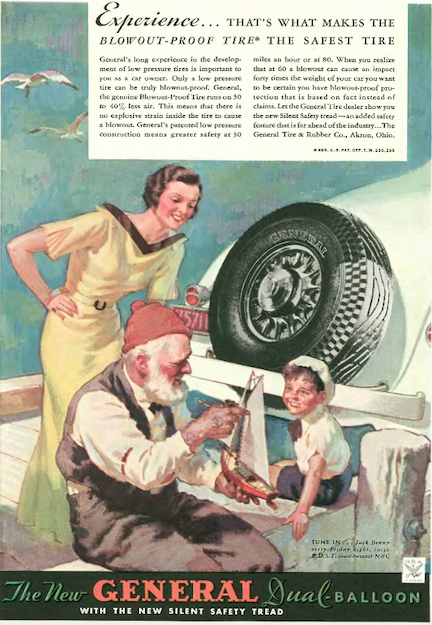
…popular were these Rockwellian ads that equated various products with happy and wholesome (and safe) living, in this case a massive “Dual-Balloon” tire that dominated this tableau featuring a stylish mommy and her little boy slumming with an old sea salt…
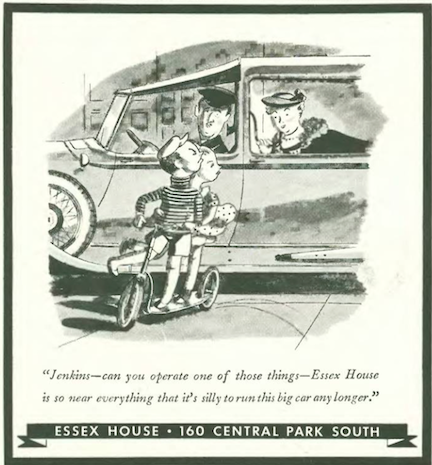
…the folks at Essex House hired an illustrator who did his or her best to channel Helen Hokinson and William Steig for this New Yorker ad…as we have seen before, Essex House ads walked a fine line between thrift and snob appeal…
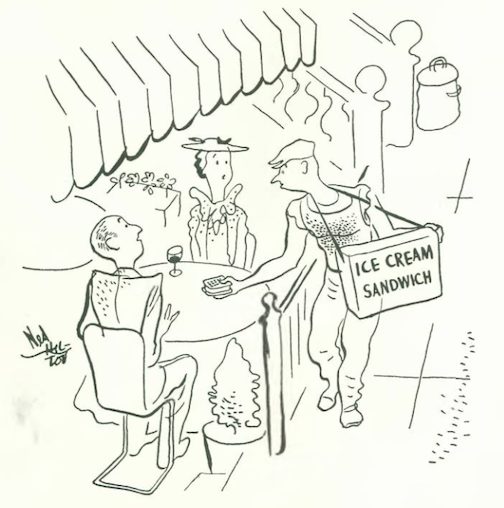
…on to our cartoons, beginning with Ned Hilton, whose work appeared in The New Yorker from 1934 to 1957…
…Mary Petty recorded some sweet nothings by the seaside…
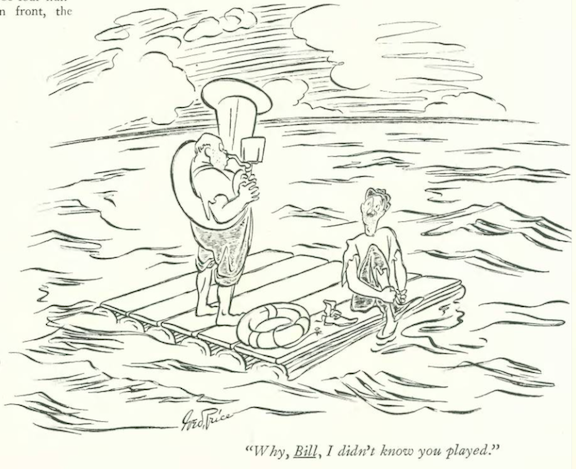
…George Price drifted along with two men and tuba…
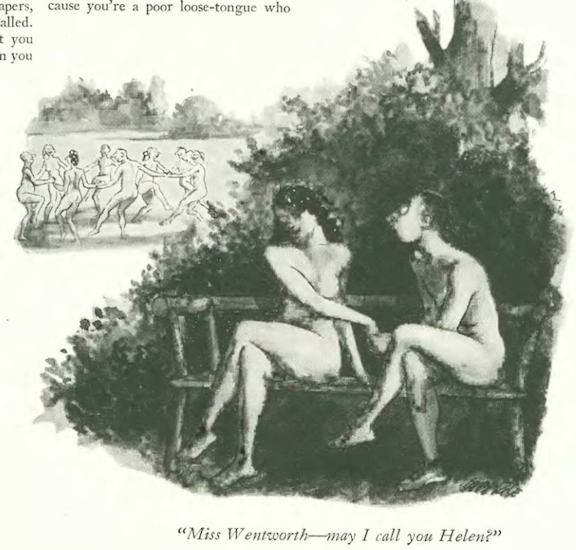
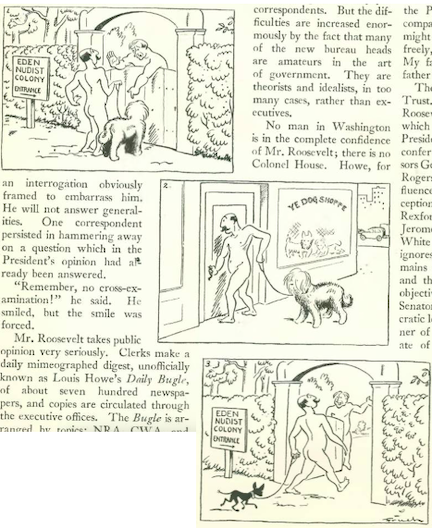
…Carl Rose revealed a modest side to life at a nudist colony…
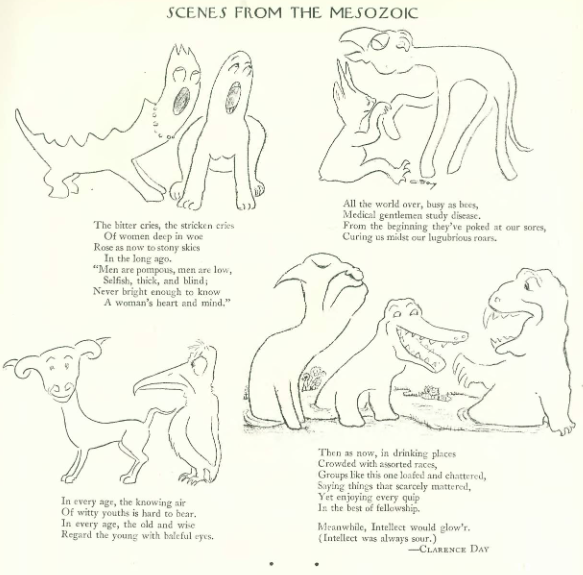
…we know Clarence Day for his Life With Father series, but on occasion he also contributed illustrated poems such as this one from the July 21 issue…
…on to July 28…
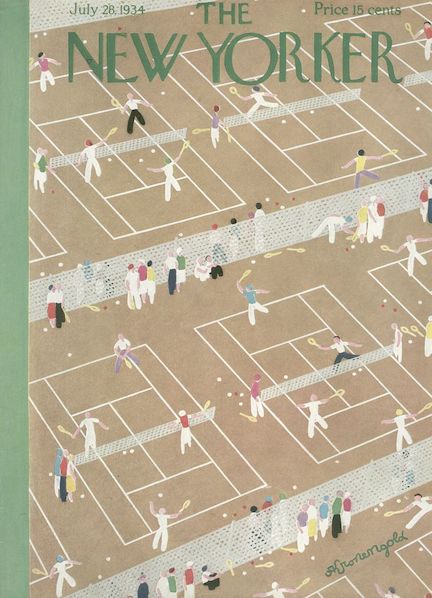
July 28, 1934 cover by Adolph K. Kronengold.
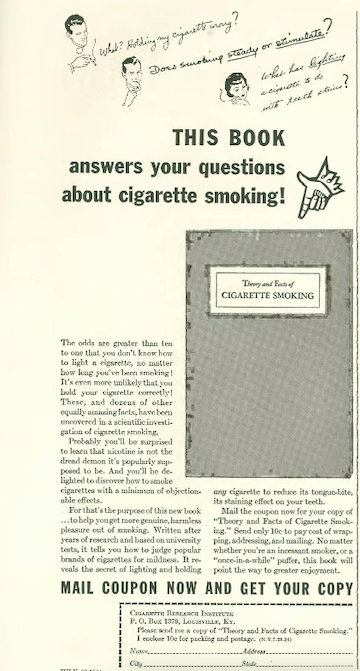
…where we encounter more “scientific research” that encouraged folks to smoke…This ad was placed on the very last page of the July 28 issue by the Cigarette Research Institute, based in Louisville, Kentucky…
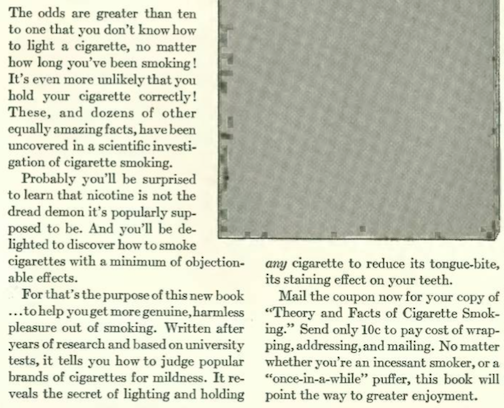
…the booklet was filled with “amazing facts” uncovered in a “scientific investigation,” facts did not address the health effects of smoking, but rather such important topics as how to hold a cigarette the right way and how to reduce staining on your teeth…it also helpfully debunked the notion that nicotine was a “dread demon”…
…take for example this woman smoking a Lucky…now she knew how to hold a cigarette!…
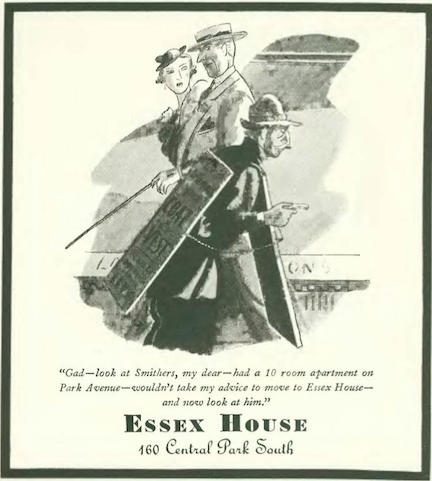
…the folks at Essex House were back, aggressively playing the class/caste card…apparently if you lived there you were entitled to kick your old friends to the curb…
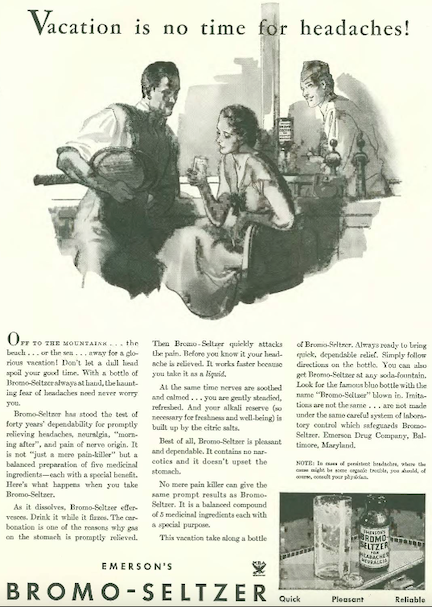
…the antacid and pain reliever Bromo-Seltzer was ubiquitous in 1930s medicine cabinets, but after the recipe was changed in the 1970s (all Bromides were withdrawn from the U.S. market in 1975) the brand slowly fizzled away…
…Mildred Oppenheim Melisse was a popular illustrator of ads for department stores and various household goods, including Cannon towels, here guaranteed to absorb even this man’s sweaty “flood”…
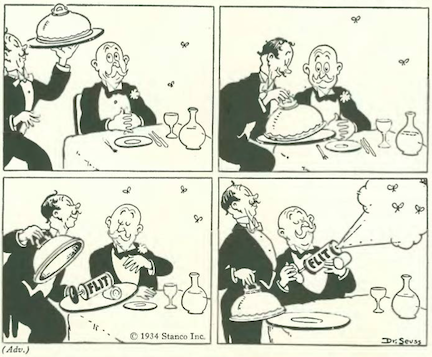
…Dr. Seuss back again for Flit, once again having no issues mixing insecticide with food preparation…
…Rea Irvin kicks off the cartoons with his Double Breasted Dowager…
…Helen Hokinson found some misplaced pity at a garden party…
…Garrett Price offered some unsolicited advice…
…Reginald Marsh filled two pages with a scene from Central Park…
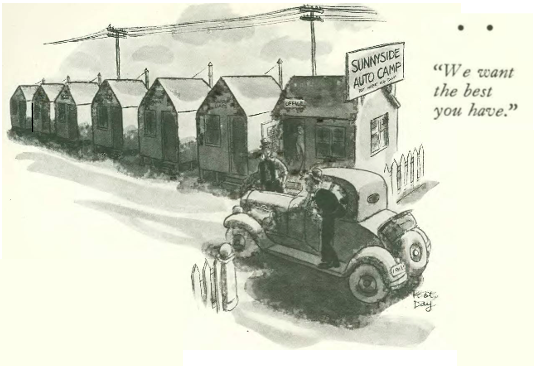
…Robert Day looked for a unique experience at an auto camp…
…and we close with Barbara Shermund, and some alarming news on the domestic front…
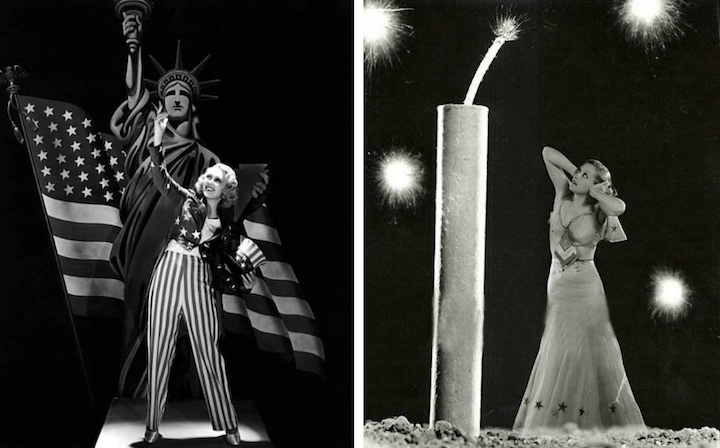
Above: For this Hollywood-heavy post we feature stars of the 1930s—the two Joans, Joan Blondell (left) and Joan Crawford, marking the Fourth of July holiday.
The New Yorker marked the Fourth of July with this William Steig cover featuring a patriotic “strap” along the binding and one of his precocious “Small Fry”…
June 30, 1934 cover by William Steig.
We’ve been looking at ways New Yorkers kept their cool in the hot summer of 1934, and one way to beat the heat was to escape into the air-conditioned darkness of a movie theater. It was not uncommon for folks to remain seated after the credits rolled and watch the feature all over again, just enjoy some cold comfort.
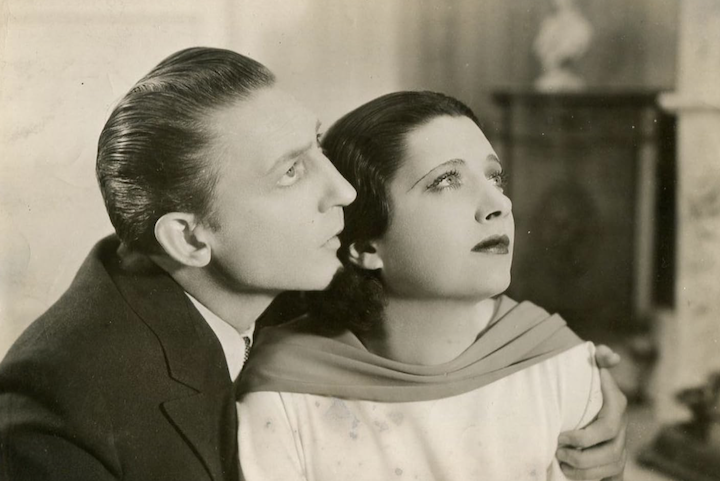
Film critic John Mosher no doubt enjoyed this particular perk, and perhaps this made him a bit more agreeable to whatever was playing on the big screen, including three rather dull pictures featuring actresses Marion Davies, Kay Francis and Elissa Landi.
Marion Davies (1897–1961) was the veteran of the group, beginning her film career in 1917 and appearing in thirty silent films before breaking into sound movies. Sadly, her talents as an actress and comedian were overshadowed by her reputation as William Randolph Hearst’s mistress. Known for her aristocratic bearing, Austrian-American actress Elissa Landi (1904–1948) appeared in several British silents and on Broadway before signing with Fox Films in 1931. Kay Francis (1905–1968) began her film career with the advent of sound movies in 1929. A major box-office draw for Warner Brothers, by 1935 Francis was one of Hollywood’s highest-paid actors (she was also a former roommate and longtime friend of The New Yorker’s Lois Long).
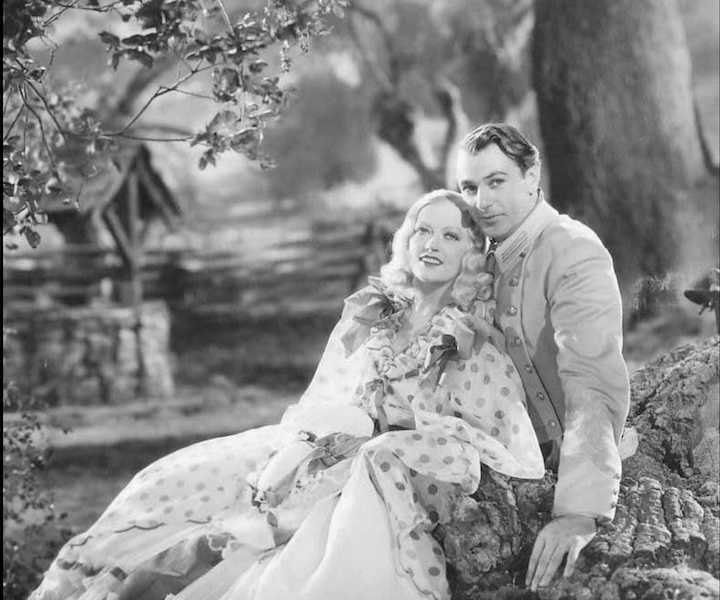
BEFORE SCARLETT AND RHETT…Gary Cooper and Marion Davies as star-crossed lovers in the 1934 Civil War drama Operator 13. Davies portrayed actress Gail Loveless, recruited by the Union to infiltrate a Confederate camp, where she falls for Capt. Jack Gailliard, a Confederate officer played by Cooper. (IMDB)
Perhaps one of the more notorious examples of a white actor in blackface, Operator 13 featured Davies as a Union spy who poses as a Black maid to infiltrate a Confederate camp…
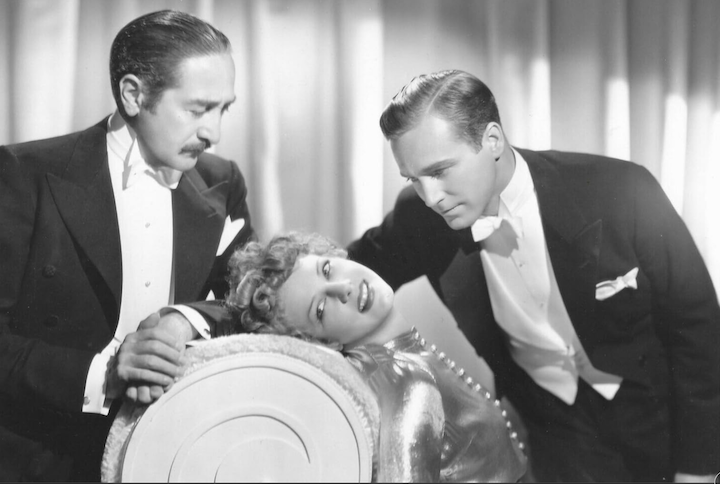
FOOLING NO ONE…Marion Davies, in blackface, with Sam McDaniel in Operator 13. (IMDB)PLAYING DOCTOR…Kay Francis and Warren William in the 1934 Pre-Code drama Dr. Monica. (IMDB)JUST KEEP PRETENDING UNTIL THE CREDITS…From left, Adolphe Menjou, Elissa Landi, and David Manners in the 1934 romantic comedy The Great Flirtation. (IMDB)
* * *
Sentimental Journey
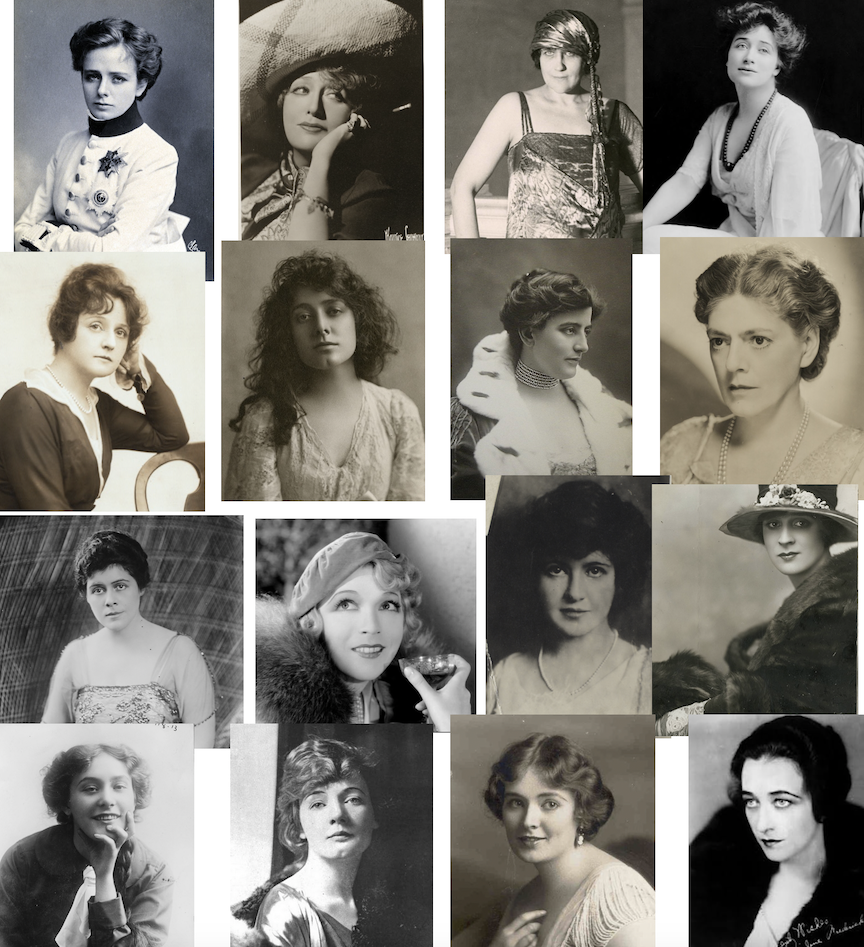
Another critic enjoying the cool of the theater was Robert Benchley, who used this break in the Broadway season to reveal his passions regarding a number of stage actresses. An excerpt:
BENCHLEY’S BROADWAY…Robert Benchley’s all-time favorite Broadway actresses included, from top row, left to right, Maud Adams, Florence Reed, Gladys Hanson, and Charlotte Walker; second row, from left, Laura Hope Crews, Julia Marlowe, Maxine Elliott, and Ethel Barrymore; third row, Janet Beecher, Ina Claire, Marguerite Clark, and Jane Cowl; fourth row, Elsie Ferguson, Martha Hedman, Marjorie Rambeau, and Pauline Frederick. (NYPL/Wikipedia/IMDB)
* * *
A Poke at Palooka
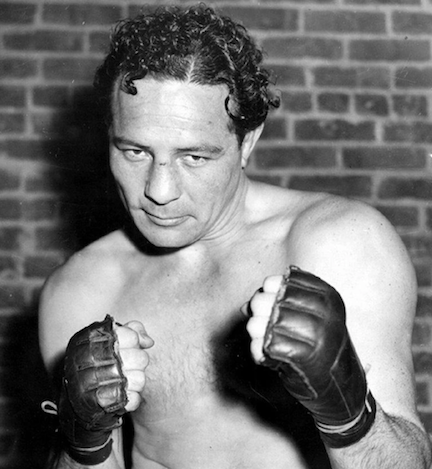
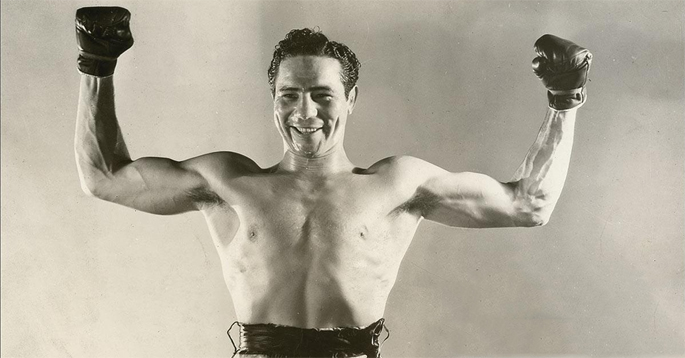
In his column “Of All Things,” Howard Brubaker took a shot below the belt at the new heavyweight boxing champ, Max Baer.
WHO SEZ I CAN’T READ?…Max Baer in the 1930s. (boxing.fandom.com/wiki)
* * *
From Our Advertisers
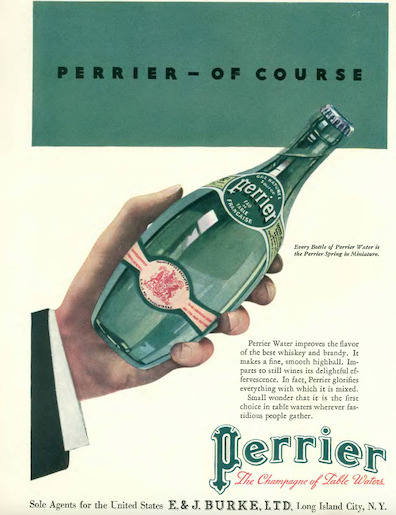
It was hot outside, folks were cooling off with their favorite beverages, and advertisers responded in kind…we begin with a familiar green bottle, and with apologies to Max Baer, you didn’t need to know how to read to know this was a bottle of Perrier…
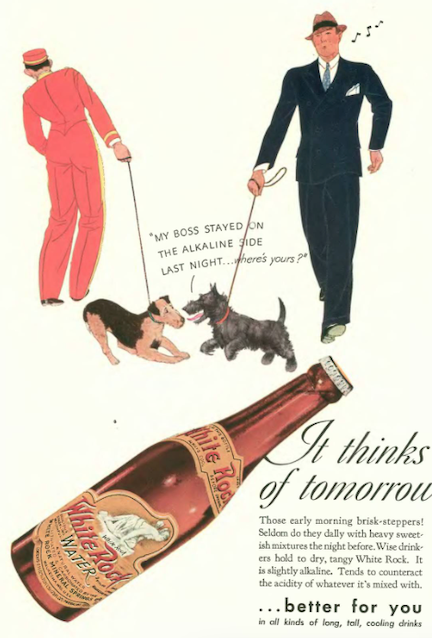
…if your taste was more on the domestic side, there was White Rock…
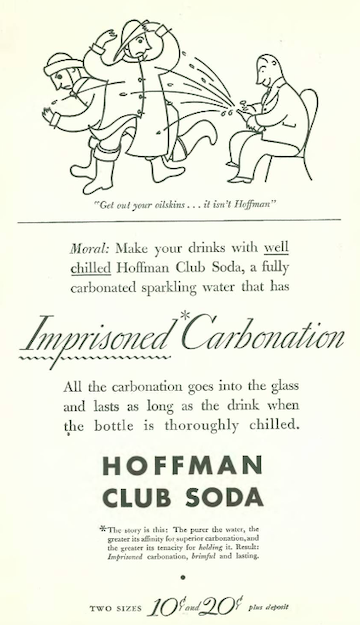
…a series of Hoffman Club Soda ads sought to convince consumers about their superior carbonation…
…or how about a brandy, perhaps lightly chilled, especially if it’s late in the evening, and you happen to be sitting on a breezy hotel rooftop…
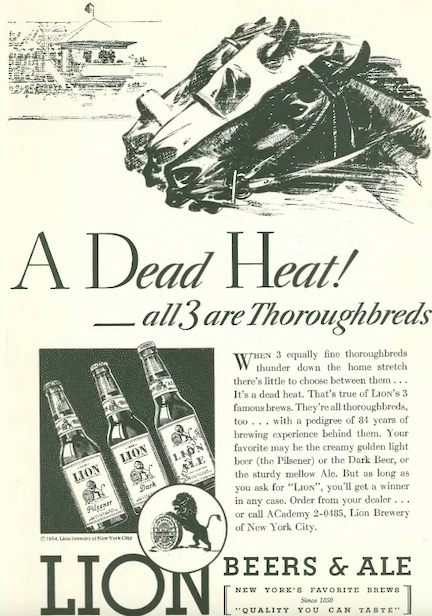
…or you could cool down with a Lion beer…considered a heritage brewery, Lion Brewery is one of only ten pre-Prohibition breweries that has independently and continuously operated since the repeal of Prohibition…
…a fairly new brand of cigarettes, Marlboro, was still taking out these bargain-sized ads to build brand recognition…Flit insecticide, on the other hand, was well-known thanks to these ubiquitous Dr. Seuss ads…
…the folks at General Tire & Rubber were the latest advertiser to tie their product to the glamour of aviation…
…and on to our cartoons, we begin with another installment of native birds via Rea Irvin…
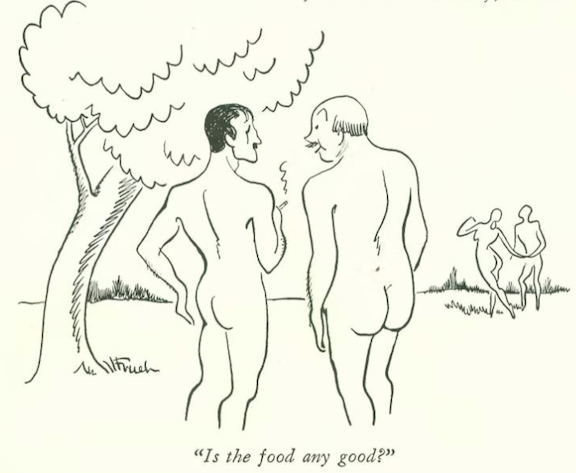
…Al Frueh chimed in with this three-panel encounter at a nudist colony…
…Robert Day presented a case of indigestion…
…Garrett Price welcomed us aboard a dream cruise…
…George Price gave us this gem in the “Goings On About Town” section,,,
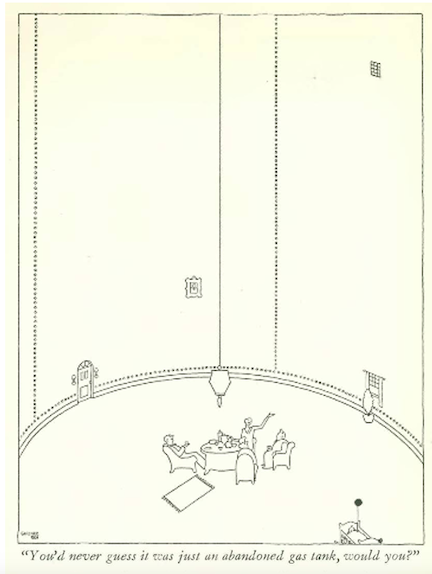
…Gardner Rea gave us his spare line to illustrate an enormous space…one of his specialties…
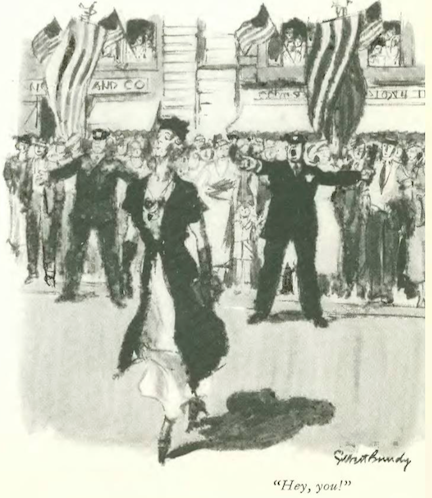
…Gilbert Bundy marked the Fourth with an entitled jaywalker…
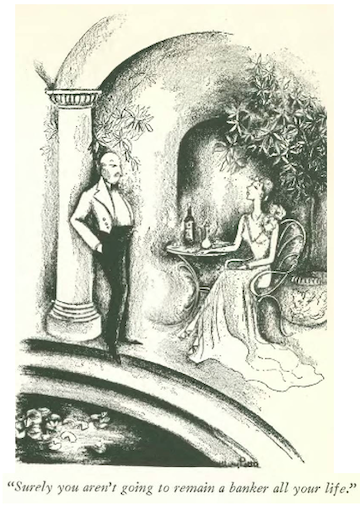
…and we close with Mary Petty, and a banker’s contentment…
Back in the days before we had a zillion different entertainment options, almost anyone with a pair of ears would tune in to hear the radio broadcast of a heavyweight title fight.
June 23, 1934 cover by Rea Irvin.
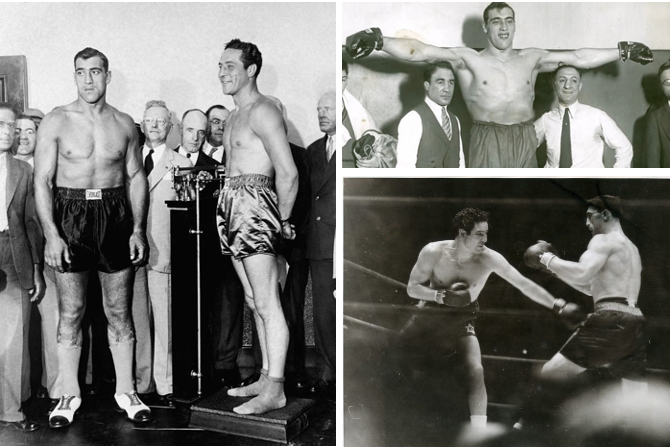
Jack Dempsey and Gene Tunney dominated the late 1920s, while Joe Louis, Max Schmeling and Jack Sharkey were marquee names in the 1930s along with Max Baer and Primo Carnera, who met on June 14, 1934 at the outdoor Madison Square Garden Bowl in Long Island City. The reigning champ Carnera (1906–1967), who stood six-and-a-half feet tall and weighed in at 260 pounds, had won more fights by knockout than any other heavyweight champion. But Baer (1909–1959) was known as a knockout puncher who beat one opponent so savagely that he died the following day.
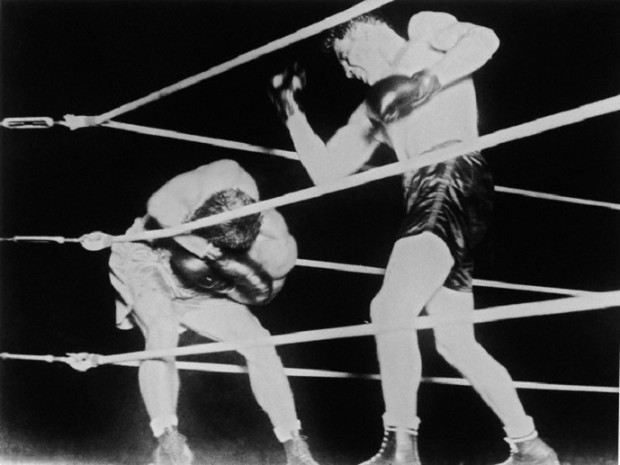
DEADLY DUEL…Max Baer (right) fought Frankie Campbell on Aug. 25, 1930, in San Francisco for the unofficial title of Pacific Coast champion. In the fifth round Baer got Campbell against the ropes and hammered him senseless. Campbell died the next day. An autopsy revealed that Campbell’s brain was “knocked completely loose from his skull.” Baer was profoundly affected by Campbell’s death, and donated purses from succeeding bouts to Campbell’s family. (thefightcity.com)
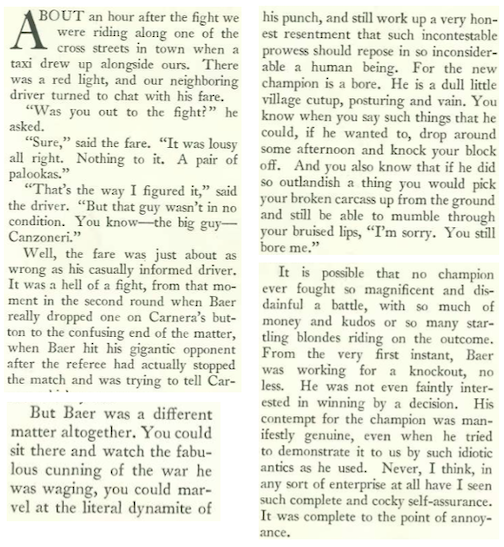
Baer was also something of a showboater, a quality Morris Markey found distasteful when he wrote about the Baer–Carnera bout in “A Reporter at Large.”
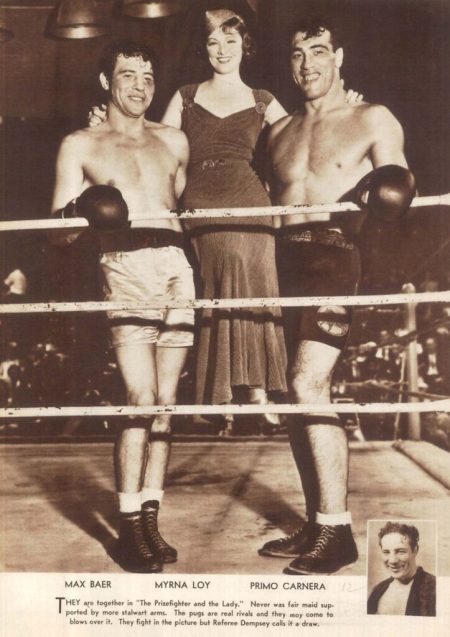
ALL SMILES…A year before their championship bout Max Baer (left) and Primo Carnera starred with Myrna Loy in The Prizefighter and the Lady. (theusaboxingnews.com)
GIANT SLAYER…The Italian prizefighter and wrestler Primo Carnera, nicknamed the “Ambling Alp,” was the reigning heavyweight champion when he faced Max Baer on June 14, 1934 at the Madison Square Garden Bowl. Baer felled the champion eleven times before the fight was stopped in the eleventh round. Baer would only hold the title for a year, losing to James J. Braddock on June 13, 1935, in what has been called one of the greatest upsets in boxing history. (theusaboxingnews.com)
Markey further explained why Baer’s behavior in the ring was so bothersome, and how it differed from the comic antics of other famous athletes:
RETIRING TYPES…Both Primo Carnera and Max Baer acted in films during their boxing careers, and continued acting after their retirements (Carnera in 1944, Baer in 1941). At left, Carnera with Bob Hope in the 1954 American comedy Casanova’s Big Night (Carnera appeared in eleven Italian films and in a half-dozen American films); at right, Max Baer and brother Buddy Baer (also a boxer) with Lou Costello in the 1949 comedy Africa Screams. Baer would appear in more than 20 films.(theusaboxingnews.com/monstermoviemusic.blogspot.com)
Complications from diabetes would take Carnera down for good at age 60. Baer would die even younger, from a heart attack, at age 50. His last words reportedly were, “Oh God, here I go.” Baer’s son, actor and director Max Baer Jr. (best known as Jethro Bodine from TV’s The Beverly Hillbillies) is still with us, at age 85.
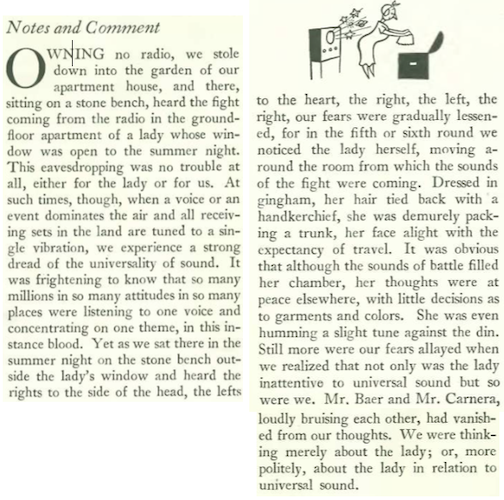
We aren’t quite finished with the Baer–Carnera fight…E.B. White led his “Notes and Comment” with this observation regarding the fight’s mass appeal and seeming universality:
* * *
Apologies to Ms. Winslow
I seem to have given short shrift to author Thyra Samter Winslow (1886–1961) who published more than 200 stories during her career in magazines such as The Smart Set and The American Mercury. She published more than thirty in TheNew Yorker, from 1927 to 1942, including the serialization of her short story collection, My Own, My Native Land. The story “Poodles” was featured in the June 23 issue.
According to the Encyclopedia of Arkansas, Winslow’s early life in Fort Smith (Ark.) “provided background for her view of small towns as prejudiced, hypocritical, and suffocating places…many stories expose the hypocrisy, prejudice, and carefully maintained social structures of both small town and urban life. She was particularly adept at portraying women of every social class, often in an unfavorable light. Money, especially the pursuit of it as a means to happiness or status, is an important theme throughout her work.”
THE PURSUIT OF HAPPINESS…Thyra Samter Winslow with friend, 1937. (findagrave.com)
* * *
Hot Enough For Ya?
So what did New Yorkers do when the summer heat set in? The next few items offer some clues, beginning with this poem by E.B. White:
SUMMER STOCK…Theatergoers fled to shady villages in New York, New Jersey and New England in the 1920s and 30s when summer stock theater was at its height. The above photo shows theatergoers leaving a performance at the Lakewood Theatre near Skowhegan, Maine. The theater was claimed to be the oldest and finest summer stock company in America with a Broadway cast. Nearby Lakewood Inn provided recreation, camping, and tourist bungalows. (mainememory.net)
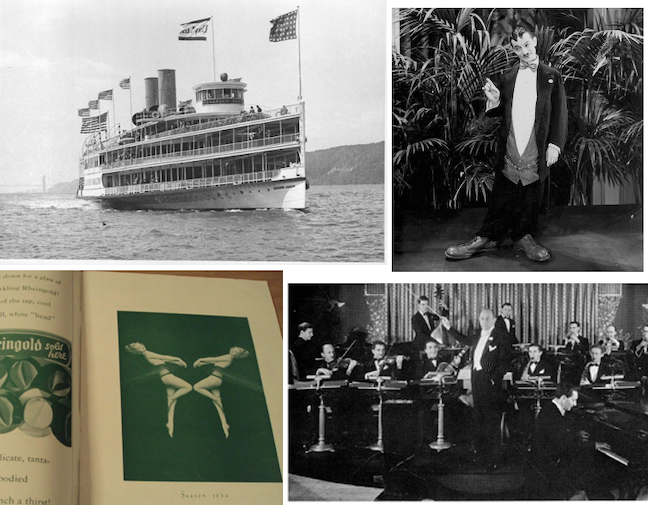
You could also take in some entertainment while enjoying the cooling breezes of the Hudson River. Robert Benchley hopped aboard the Alexander Hamilton to enjoy Bobby Sanford’s showboat revue:
SOME REAL SHOWBOATING…Clockwise, from top left, the steamboat Alexander Hamilton hosted Bobby Sanford’s showboat revue; comedian Lester Allen served as emcee for the show; the Meyer Davis Orchestra supplied the music; the revue featured the “exotic” DuVal sisters (image from program) among other diversions. (Hudson River Maritime Museum/IMDB/vintagebandstand.blogspot.com/Worthpoint)
“Tables for Two” took a look at summer dining options, from sidewalk cafes to hotel rooftops featuring dinner and dancing—this “Tables” was not written by Lois Long, but by Margaret Case Harriman, who knew a thing or two about nightlife (she was the daughter of the Hotel Algonquin’s owner, Frank Case)…
DANCING WITH THE STARS…The Waldorf-Astoria’s “Starlight Roof” was a popular summer restaurant for dining and dancing. Image from a 1935 publication The Waldorf-Astoria by Richard Averill Smith. (The Waldorf-Astoria)
* * *
Doing Swimmingly
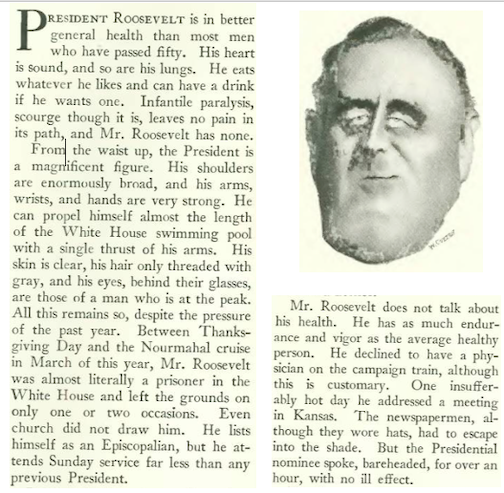
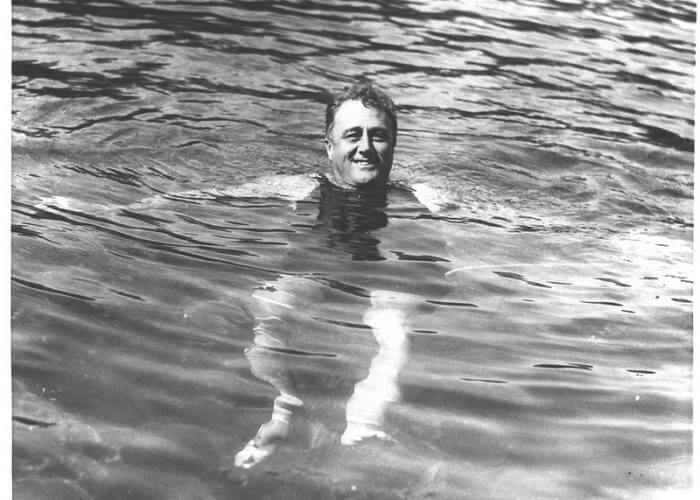
Historian Henry F. Pringle published part two of his series on President Franklin D. Roosevelt, here marveling at the president’s health despite his serious bout with polio (drawing by William Cotton).
TAKING THE WATERS…President Franklin D. Roosevelt took to swimming for therapy and exercise. (FDR Presidential Library and Museum)
* * *
Get Yourself to Chi-Town
The Chicago World’s Fair (The Century of Progress) was in its second and final year, and The New Yorker found everything “terrific.” Excerpt:
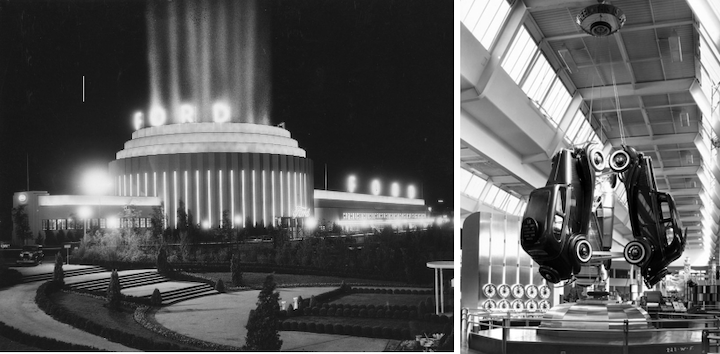
MAKING A SPECTACLE OF ITSELF…The 11-acre Ford Motor Company exhibit at Chicago’s Century of Progress became the most talked-about exhibit of 1934, featuring a central rotunda designed to simulate graduated clusters of gears. At right, Proof of Safety Exhibit in the Ford Building. (chicagology.com)
* * *
From Our Advertisers
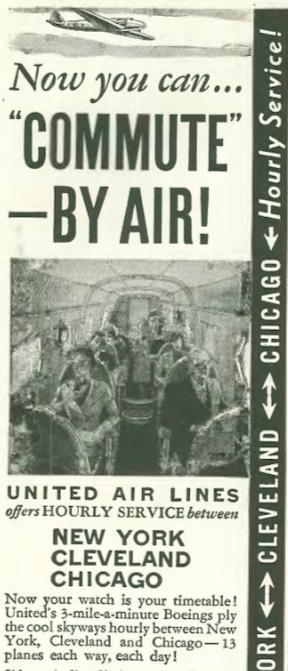
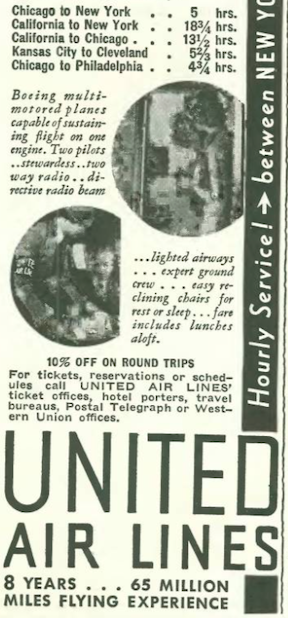
Just a couple of entries this week…You could take a plane to the Chicago World’s Fair on a United Airlines Boeing 247…
…the lower section of the ad claimed you could fly to Chicago in about five hours in planes featuring “Two pilots…stewardess…two-way radio…directive radio beam”…
TSA? WHAT’S A TSA?…United Airlines Boeing 247-D at an airport terminal with passengers and crew. (digitalcollections.lib.washington.edu)COZY CONFINES…Passengers enjoy a game of checkers aboard a Boeing 247 in 1933. (digitalcollections.lib.washington.edu)
…and what would our advertising section be without two fashionable people lighting up?…
…on to our cartoonists, we begin with Reginald Marsh’s illustration of a Rep Theatre production…
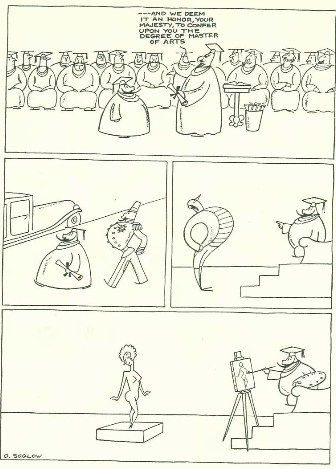
…Otto Soglow’s Little King found his artistic side…
…Rea Irvin continued his examination of native fauna…
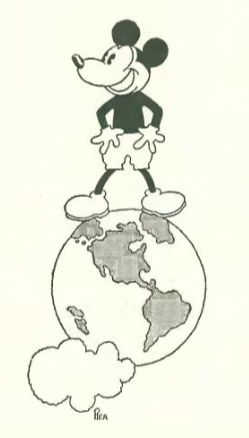
…Gardner Rea correctly predicted the global domination of Mickey Mouse…
…Peter Arno showed the dizzying effects of a Coney Island ride…
…however at the altar the thrill was gone, per Garrett Price…
…another take on the ways of love, with Barbara Shermund...
…the newfangled diagonal bathtub continued to dazzle, with George Price…
…Gardner Rea offered up some subtle irony on the farm…
…and we close with James Thurber, in a poetic moment…
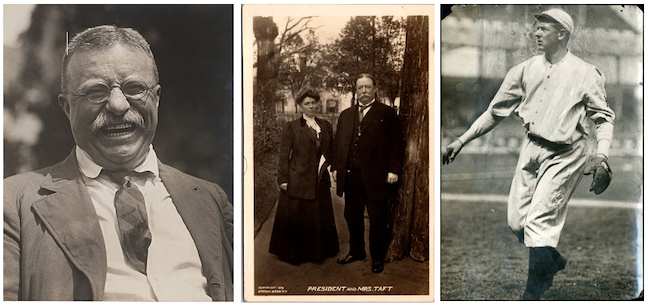
Above, from left: When Teddy Roosevelt announced in 1912 that he would run for president against his former VP, William Howard Taft, Brown Brothers sent photographer Charles Duprez to Oyster Bay to take this famous photo; President Taft and his wife, Helen “Nellie” Taft, in 1909; famed New York Giants pitcher Christy Mathewson warms up before a game, circa 1912. (liveauctioneers.com/cabinetcardgallery.com/psacard.com)
Before there were photo agencies like Magnum or archives such as Getty Images there was a company named Brown Brothers, the world’s first stock photo agency founded by Arthur and Charles Brown in New York City in 1904.
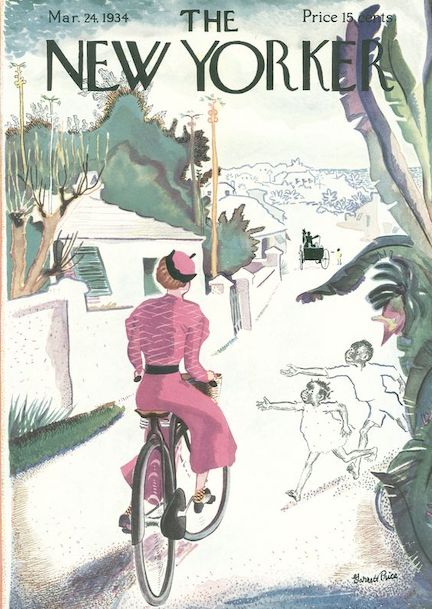
March 24, 1934 cover by Garrett Price.
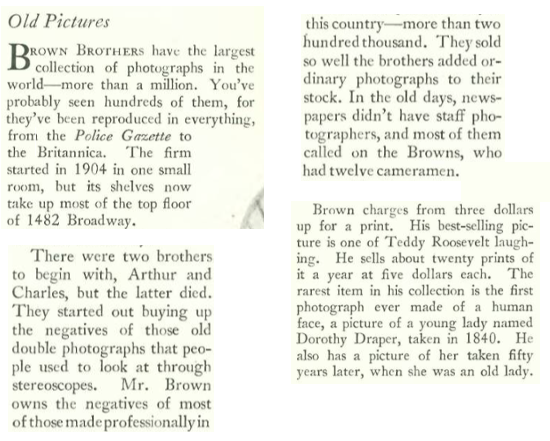
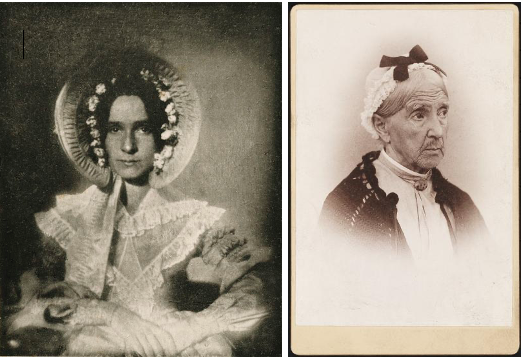
“The Talk of the Town” looked in on Brown Brothers, “the largest collection of photographs in the world—more than a million,” including a famous image of Teddy Roosevelt and the first photographic portrait of a woman’s face.
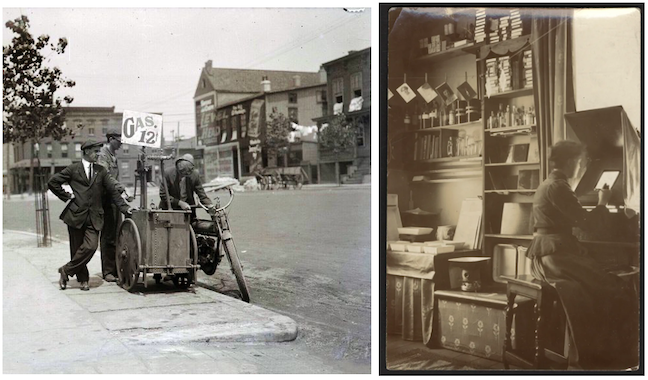
Brown Brothers photos could be seen everywhere in the early 20th century—their staff of twelve photographers provided images to New York newspapers at a time when the technology for publishing photos in the dailies was in its infancy and most papers didn’t employ staff photographers. Even the venerable New York Times hired the Browns to cover news events until they established their own team of photographers.
LITTLE DID DOROTHY DRAPER KNOW that she would become world famous when she sat for this photo (left) taken by her brother Dr. John W. Draper in his Washington Square studio at NYU in 1839 or 1840. Dorothy had to sit unblinking for the 65-second exposure—apparently her brother dusted her face with white flour to enhance the contrast. The Drapers still go down in history as creators of the oldest photo of a woman; at right, Dorothy Draper in the 1890s, in a photograph taken by her nephew. (boweryboyshistory.com/MCNY)ONE IN A MILLION…The early 20th century image at left is just one of as many as three million images amassed in the Brown Brothers archive; at right, a Brown Brothers archivist at work. (Pinterest/sportscollectorsdigest.com)
Note: The Brown Brothers’ archive of photos and negatives went up for sale in 2014, and was ultimately acquired by Leland’s in 2020.
* * *
De Terraplane!
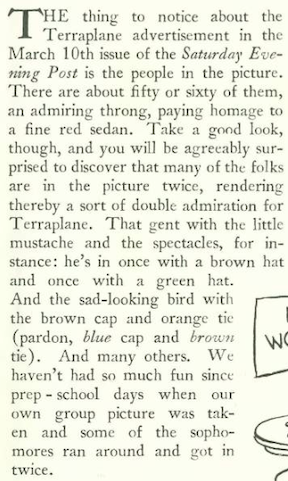
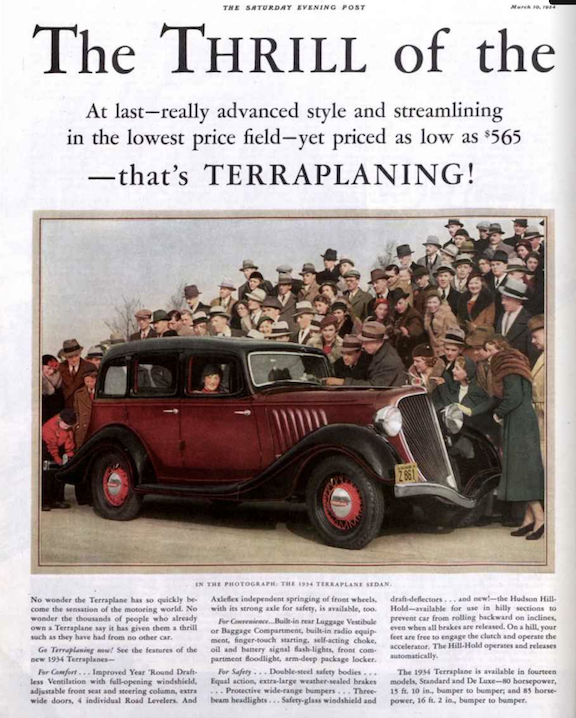
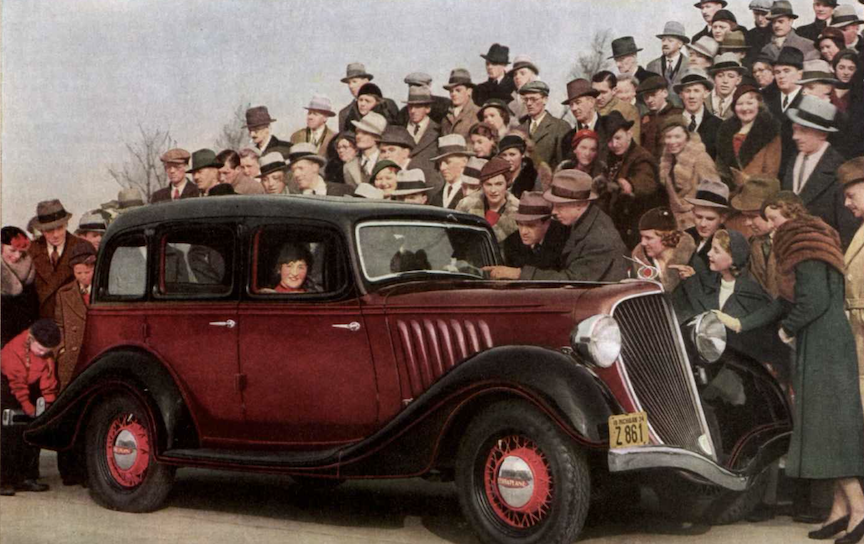
E.B. White (in “Notes and Comment”) was also looking at a photo, or rather scrutinizing one that was featured in a Saturday Evening Post advertisement for Hudson’s Terraplane:
…here is the ad from the Post…
…and a closer look at the image, which had White seeing double.
(Both images courtesy The Saturday Evening Post)
* * *
Escape Artist
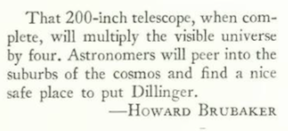
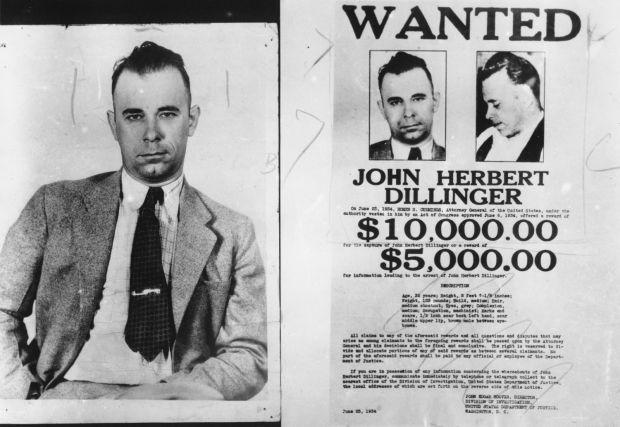
In his “Of All Things” column, Howard Brubaker included the following item about a new telescope, ostensibly to set up a quip about John Dillinger’s recent prison break (his second):
YOUR DAYS ARE NUMBERED…The FBI issued this “Wanted” poster of gangster John Dillinger— “Public Enemy No. 1″—in June 1934. The Feds gunned him down a month later. (AP Photo)
* * *
Playing Nice
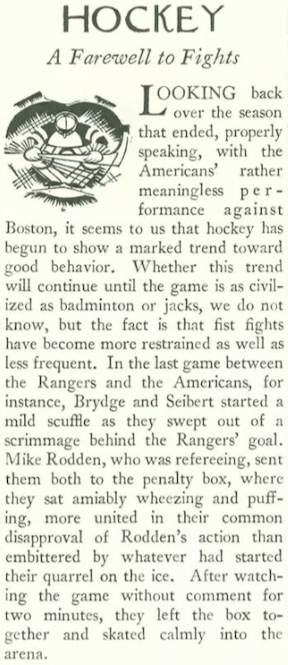
The New Yorker commented on the trend toward fewer fights in the world of hockey, and although fighting in general ebbed a bit through mid-century, it nevertheless remained a staple of the game. Indeed the New York Rangers founder, Tex Rickard, who also promoted boxing at Madison Square Garden, knew quite well that hockey fights were one reason folks attended the games.
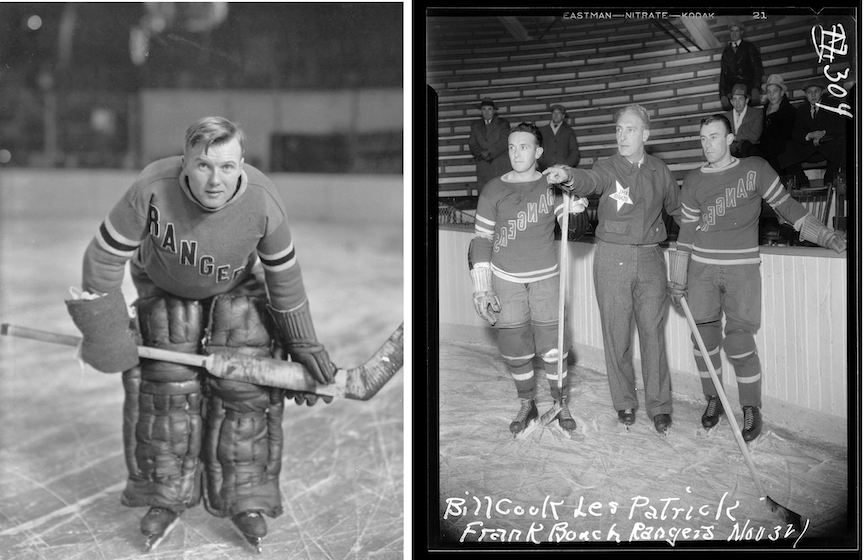
FACE OFF?…At left, goaltender Andy Aitkenhead of the New York Rangers padded his legs and arms but put his clean-shaven mug on the line in December 1934— it wasn’t until 1959, 42 years into the NHL’s existence, that a league goalie wore a mask on the ice. At right, New York Rangers captain Bill Cook (right) flanks coach and manager Lester Patrick alongside Frank Boucher on the ice at the Chicago Stadium in November of 1934. (Pinterest)
* * *
From Our Advertisers
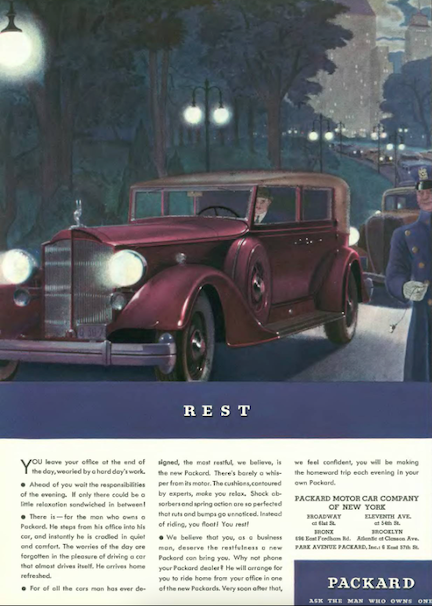
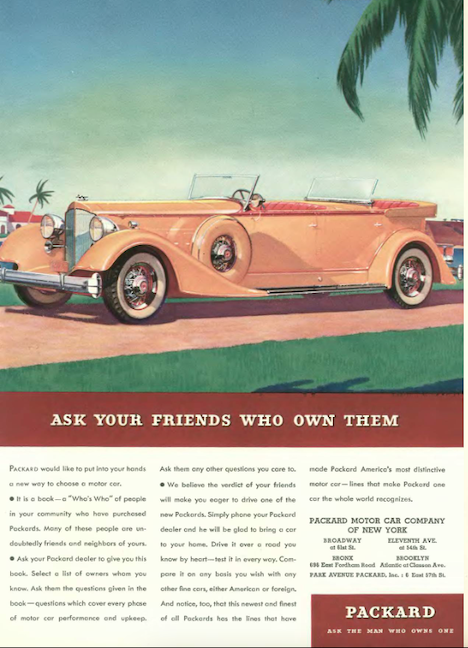
We begin with this sumptuous ad from Packard, appealing to those who could afford to own this luxury brand…
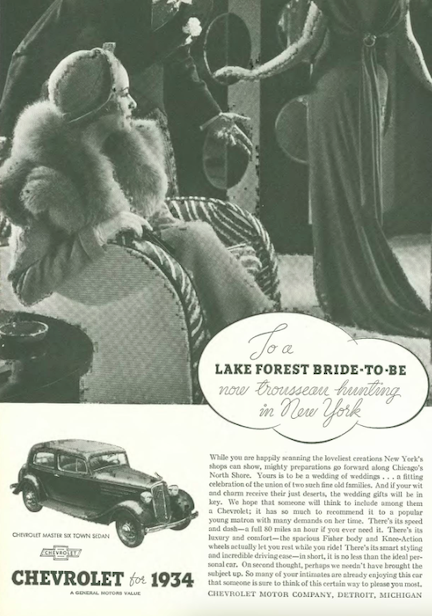
…if you couldn’t afford a Packard, you could rest assured that even a well-heeled deb could be happy with a Chevy…
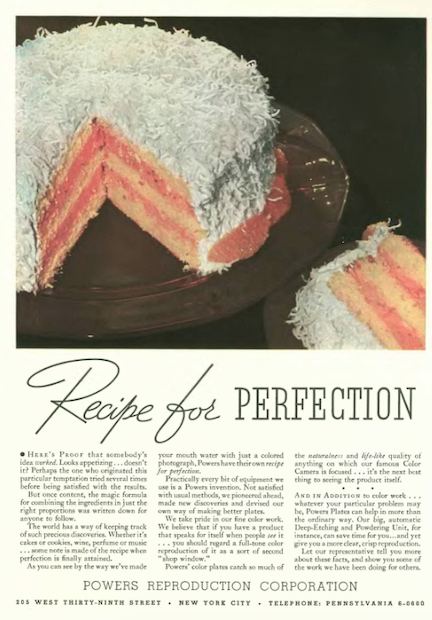
…the folks at Powers Reproduction continued to tout the wonders of their color photography, even if their cake looked less than appetizing…
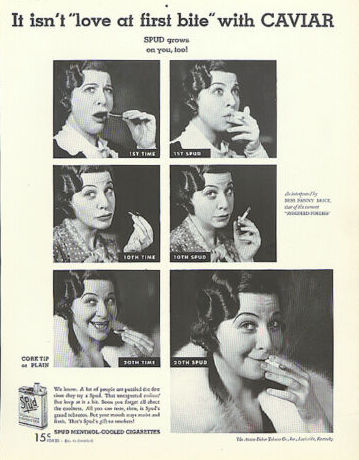
…Fanny Brice was appearing with the 1934 Ziegfeld Follies on Broadway, so the folks at Spud jumped on her celebrity bandwagon…
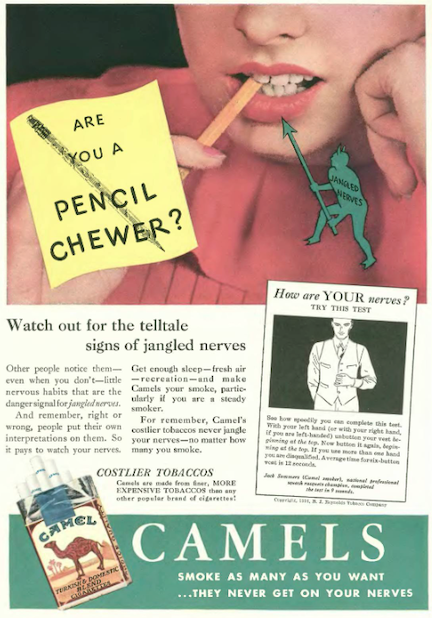
…while R.J. Reynolds was suggesting we replace our chewed up pencils with a nice Camel cigarette…now, don’t you feel better?…
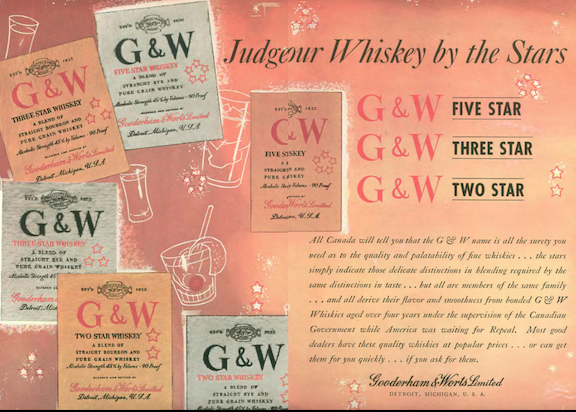
…the Canadian distillery giant Gooderham & Worts offered all sorts of options to calm our jangled nerves in this two-page spread…
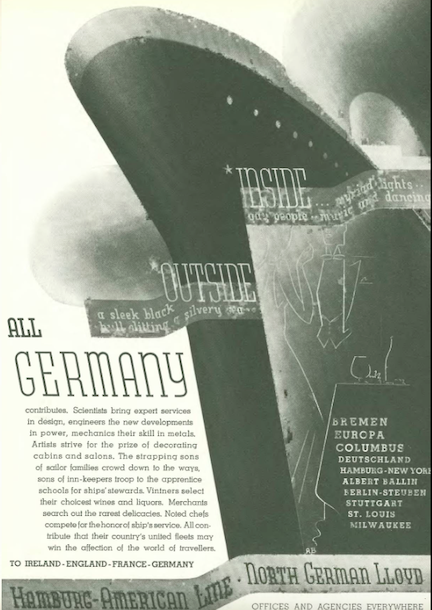
…while the Germans continued to entice us onto their cruise ships perfected by science and featuring “the strapping sons of sailor families”…hmmm…
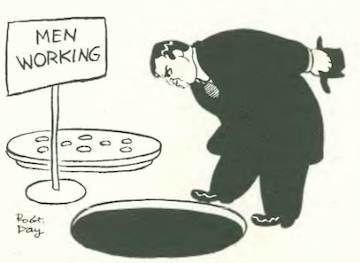
…in 1934 the New Yorker began featuring mostly wordless cartoons on the opening page of “The Talk of the Town,” including this one by Robert Day featuring Mayor Fiorello LaGuardia checking up on city employees…
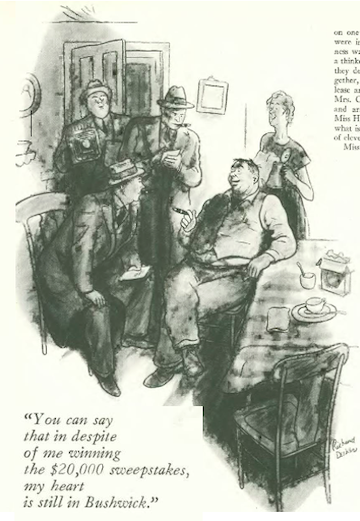
…Richard Decker gave us an Irish Sweepstakes winner from Brooklyn who displayed some modesty and media savvy…
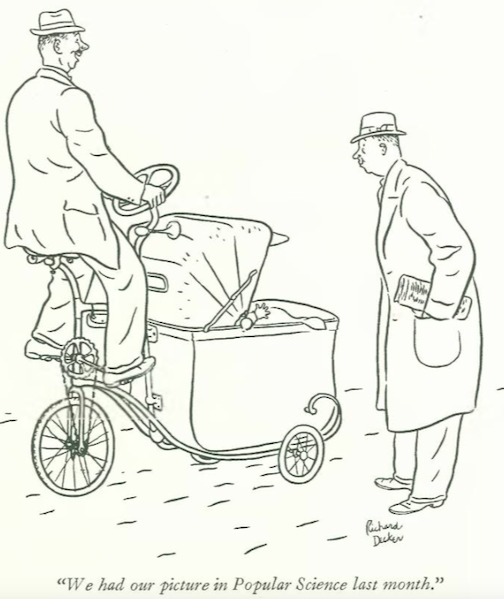
…Decker again, with the latest in perambulators…
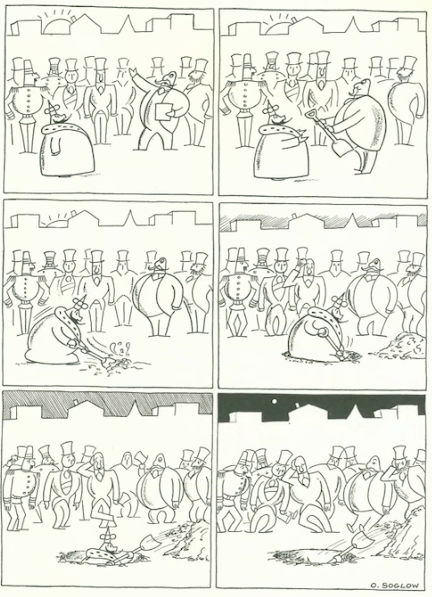
…Otto Soglow’s Little King put his back into a ceremonial groundbreaking…
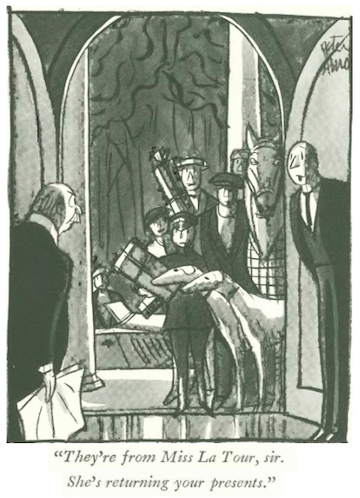
…Peter Arno’s sugar daddy received some not-so-happy returns…
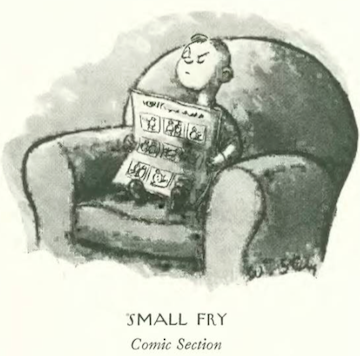
…one of William Steig’s “Small Fry” was doing some serious reading…
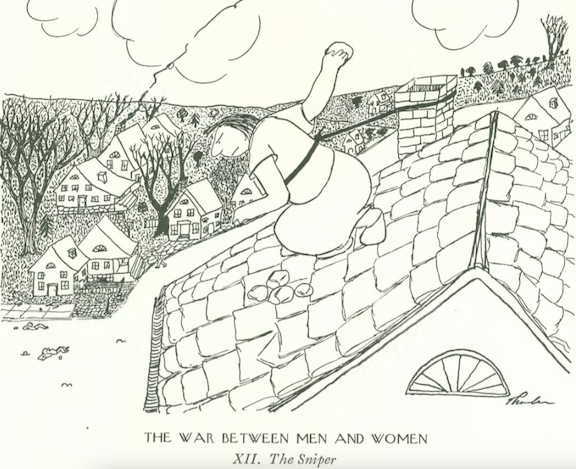
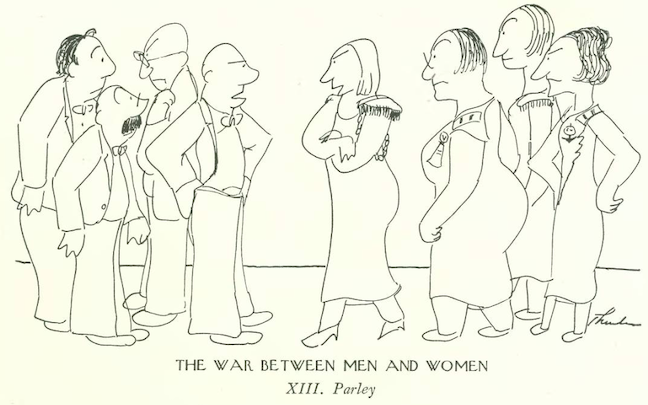
…and James Thurber’s war continued from the rooftops…
…on to March 31, 1934…
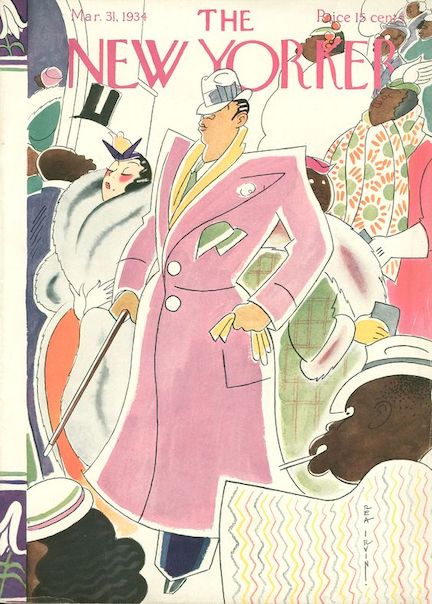
March 31, 1934 cover by Rea Irvin.
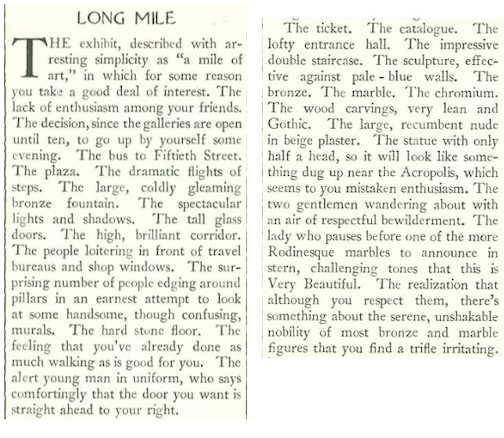
…where we find Alice Frankforter covering an exhibition dubbed “A Mile of Art.” I’m guessing critic Lewis Mumford passed on this opportunity to offer some blistering commentary. As for Frankforter, she found the spectacle puzzling, if not irritating. An excerpt:
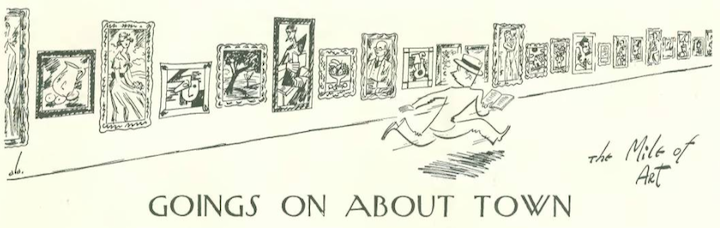
Constantin Alajalov offered his perspective on the art world stunt with this bit of spot art…
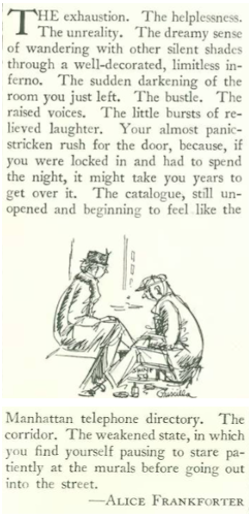
…and more from Frankforter, now reaching a state of exhaustion and near-delirium as she approached the end of the exhibit:
* * *
Biblical Babbitts
Frank Buchman’s First Century Christian Fellowship (aka the Oxford Group) meeting in New York featured a lot of people chuckling and bubbling, but all that forced conviviality left critic Edmund Wilson feeling “quite morose.” Writing for the “A Reporter at Large” column, Wilson looked in on the group as they awaited Buchman’s arrival at a preliminary rally. The column was subtitled, “Saving the Better Classes and Their Butlers.” An excerpt:
Like other critics at the time, Wilson saw “Buchmanism” as bourgeois optimism and boosterism, interested more in converting the souls of the wealthy and celebrated rather than serving the needs of poor.
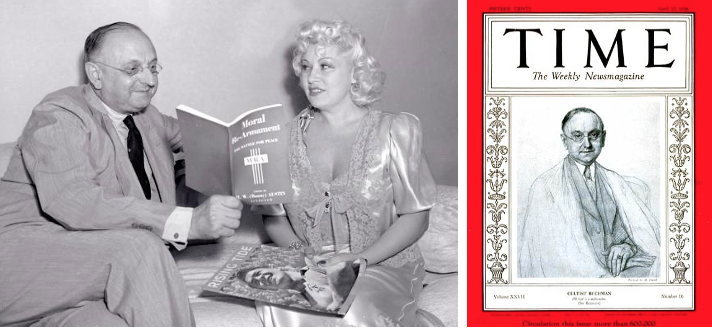
ODD COUPLE…Frank Buchman liked to be seen with the rich and famous. In 1939 he asked for a half hour of Mae West’s time, ostensibly to get this photo of him sharing some wisdom from his “Moral Re-assessment” booklet. West seems less than enamored by the encounter, regarding Buchman as some sort of alien creature; right, Buchman on the cover of April 20, 1936 edition of Time, which identified him as “Cultist Buchman.” (maewest.blogspot.com/Time)
* * *
Carnegie’s Couture
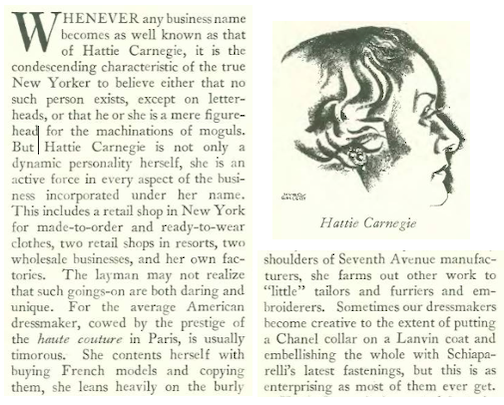
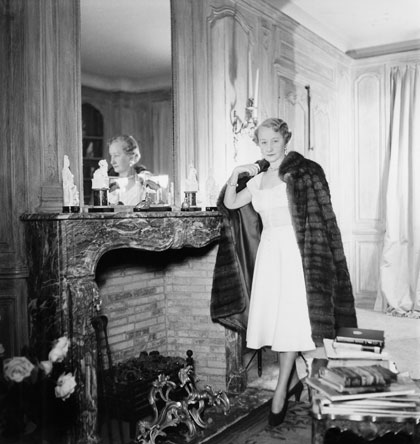
Vogue magazine fashion editor Nancy Hardin and the New Yorker’s fashion editor Lois Long teamed up on a profile about Hattie Carnegie (1889 -1956) titled “Luxury, Inc.” Born Henrietta Kanengeiser in Vienna, Carnegie immigrated with her family to New York in 1900; nine years later she adopted the name “Carnegie” after Andrew Carnegie, the richest person in America. Through hard work and an inherent instinct for what American women desired, she built a fashion design business that thrived in Depression and catered to stars and celebrities including Tallulah Bankhead, Joan Fontaine, Lucille Ball, and Joan Crawford. An excerpt, with illustration by Hugo Gellert:
FUR SURE…Hattie Carnegie posing for a 1951 Vogue magazine photo. (Vogue)
* * *
Steampunk Dream
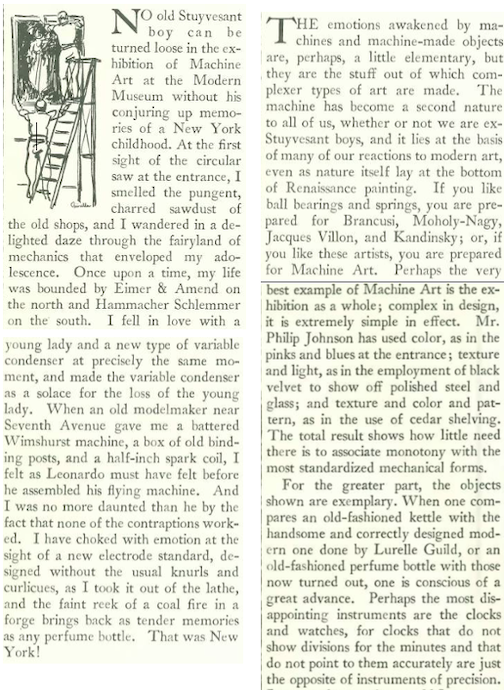
In my previous entry I featured Robert Coates’s observations on the new Machine Art exhibition at the Museum of Modern Art. For the March 31 issue critic Lewis Mumford, celebrant of the simple and unpretentious, waxed nostalgic over the novel exhibit:
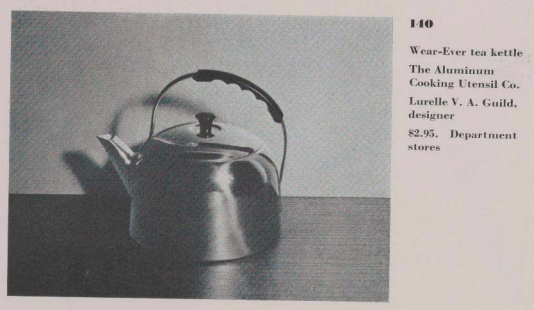
I’M A LITTLE TEAPOT that made a big advance in the design world, according to critic Lewis Mumford. (MoMA)
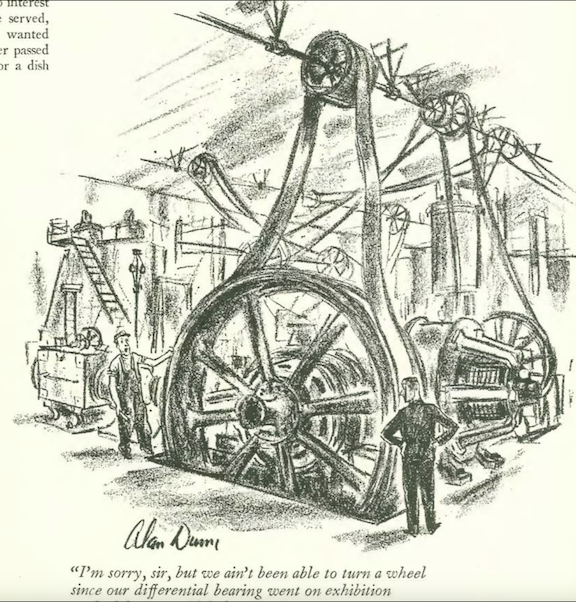
Alan Dunn was also inspired by the exhibit, as evidenced in this cartoon from the April 7 issue…
* * *
More From Our Advertisers
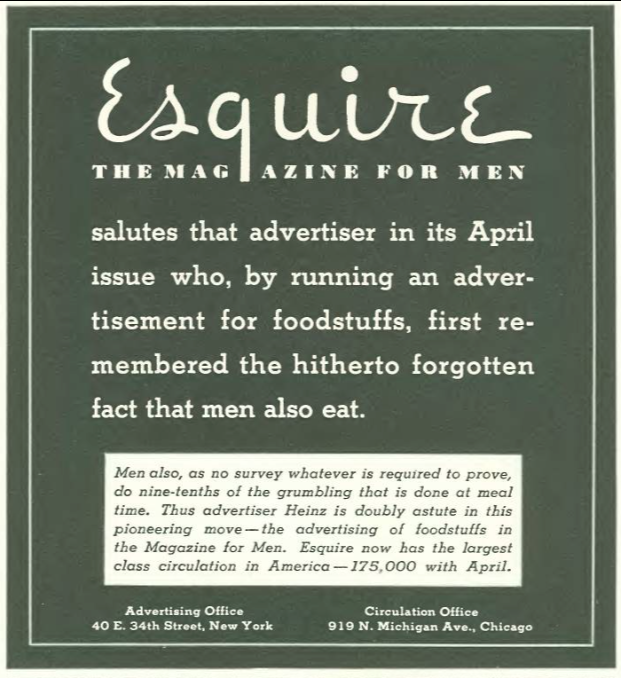
Founded in October 1933, the men’s magazine Esquire took off with a bang, and the publishers were not shy about boasting of its early success…
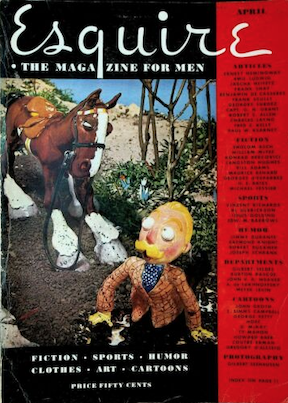
…cover of the April 1934 issue, featuring the mustachioed mascot Esky…based on a drawing by cartoonist E. Simms Campbell, Esky was featured on the cover in various situations until 1961…
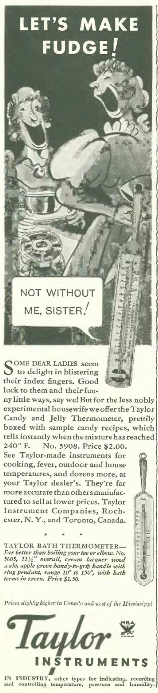
…Peter Arno’s “Whoops Sisters” appeared sixty-three times in the New Yorker between 1926 and 1927 before Arno retired them (they occasionally popped up in other publications, and in a 1931 Cunard ad)…it seems odd that they would make an appearance in a cheap thermometer ad in 1934…at any rate, it is difficult to tell if this is by Arno or by a clever forger…
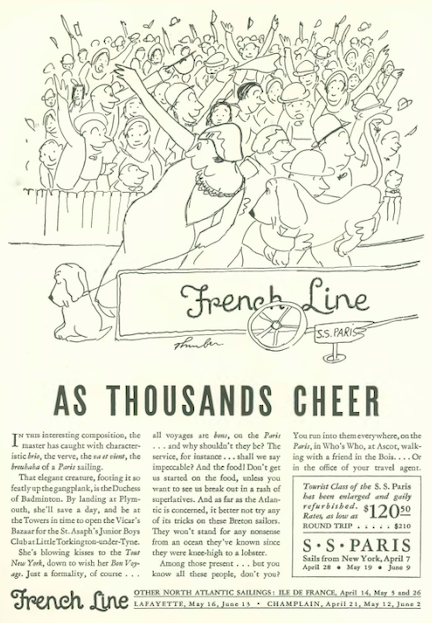
…there’s no mistaking the cartoonist behind this ad…
…and this one by Otto Soglow…
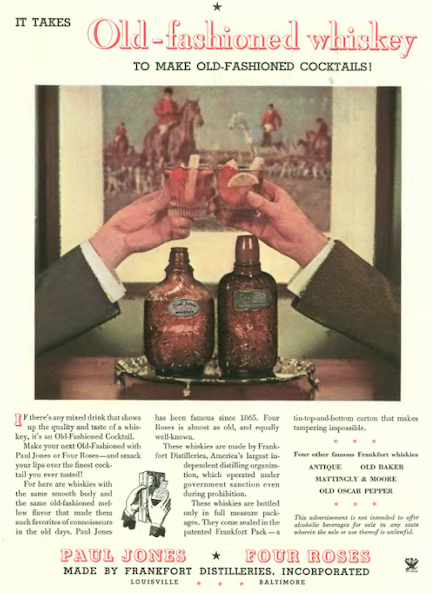
…and we close our advertising section by raising a glass to Frankfort Distilleries…
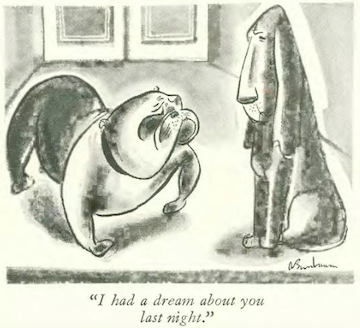
…on to our March 31 cartoons, and a lineup of New Yorker regulars Abe Birnbaum…
Above: Robert Moses in 1939 with a model of his proposed Battery Bridge Park Reconstruction; at right, 1934 Bryant Park renovation, view to the south on 6th Avenue from 42nd Street. (Wikipedia/NYC Parks Department)
The title for this entry comes from Robert Caro’s landmark 1974 biography of Robert Moses, The Power Broker: Robert Moses and the Fall of New York, which questioned the benefit of Moses’s monumental projects.
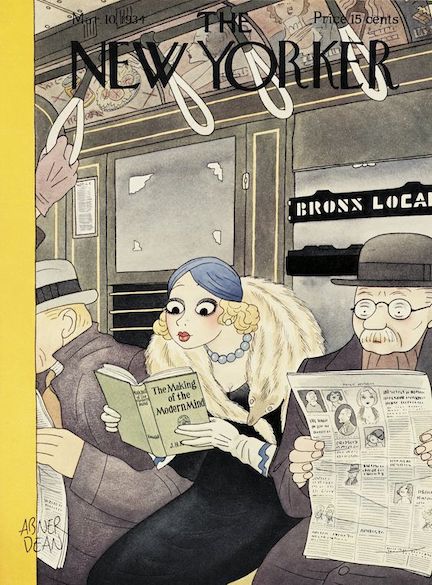
March 10, 1934 cover by Abner Dean.
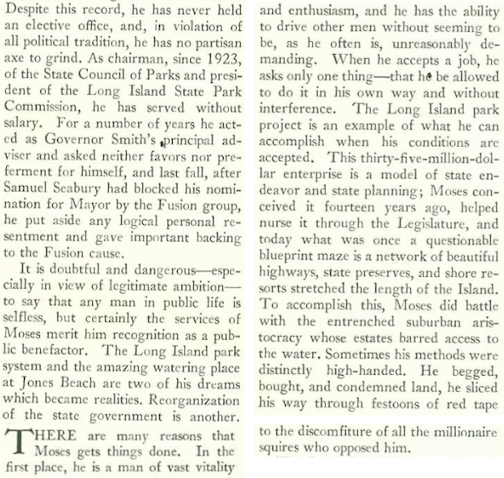
Like him or not, few unelected officials have wielded more power than Moses, who through various appointed positions, including New York City Parks Commissioner, he was able to impose his will on mayors, legislators, congressmen, wealthy burghers, and even, on occasion, The White House. In turn he imposed his will on the city itself, clearing whole neighborhoods to lay down new roads that extended from Manhattan to the tip of Long Island, where neither farmer nor landed gentry could stand in his way. A profile written by Milton MacKaye examined what made Moses tick. An excerpt:
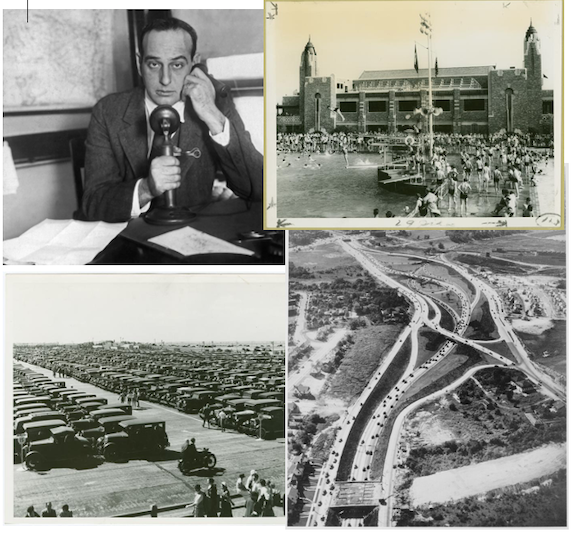
DON’T YOU DARE PUT ME ON HOLD…Relentless doesn’t begin to describe Robert Moses’s pursuit of power. Clockwise, from top left, Moses circa 1930; one of the swimming pools at the west bathhouse at Long Island’s Jones Beach, a project that helped launch Moses’s road to power; Long Island Expressway, which transformed Long Island from farm country (and a retreat for the rich) into a land of bedroom communities and public parks; the east parking field at Jones Beach. (Britannica/Library of Congress/U.S. National Archives)
In another excerpt, MacKaye noted that Moses had been named a member of the Triborough Bridge Authority; Moses would ultimately become chairman, and through this position would possess enormous, unchecked power and influence. Moses was skilled at creating legal structures that would favor his ambitions, burying language into legislative bills and other documents that would make him impervious to influence from mayors, legislators, governors and other elected officials.
A DIFFERENT KIND OF PLAYGROUND…Moses intensely disliked former New York Mayor Jimmy Walker, who used the Central Park Casino (top left) as his personal playground. Moses exacted his vengeance by having the historic casino razed in 1935 and replaced with the Rumsey Playground; at right, the 1936 Triborough Bridge (Berenice Abbot photo), a cluster of three separate spans connecting the Bronx, Manhattan, and Queens. It was developed through Moses’s Triborough Bridge Authority, which was impervious to influence from mayors, legislators and governors. While the city and state were strapped for funds, Moses reaped millions from tolls, which financed his other ambitions; bottom left, Moses in 1938. (Wikipedia/transalt.org/Library of Congress)
Final note, I highly recommend Caro’s The Power Broker—it’s a doorstop of a book, but also one of the best biographies of the 20th century and a must-read for anyone who wishes to understand how present-day New York came to be, and how it really works.
* * *
Let’s Talk About the Weather
Robert Benchley, writing under the pseudonym Guy Fawkes, took a turn at “The Wayward Press” column, commenting on the sensationalistic coverage of the weather by the local press. In all fairness to the press, New York City had endured a blizzard as well as the coldest temperature ever recorded for the city: 15 below zero (Fahrenheit) on Feb. 9, 1934. (According to newspaper accounts, it was 14.3 below).
Benchley also commented on journalist Ernest Gruening (1887–1974), who was the editor of the New York Post for only four months in 1934, but during those four months he really shook things up.
EASY BOSS…Ernest Gruening was editor of the New York Post for only four months in 1934, but during that time he made life better for his newsroom employees by implementing an unheard of 40-hour work week. Gruening went on to serve as the governor of the Alaska Territory from 1939 until 1953, and as a U.S. Senator from Alaska from 1959 until 1969. (Photo from 1935 via Wikipedia)
Robert Benchley thought the press made too much of the city’s snowy weather, but these newsreels tell a different story:
* * *
Punch Drunk
Critic John Mosher found slim pickings at the local movie houses, opting for Jimmy Durante’sPalooka as the best of crop:
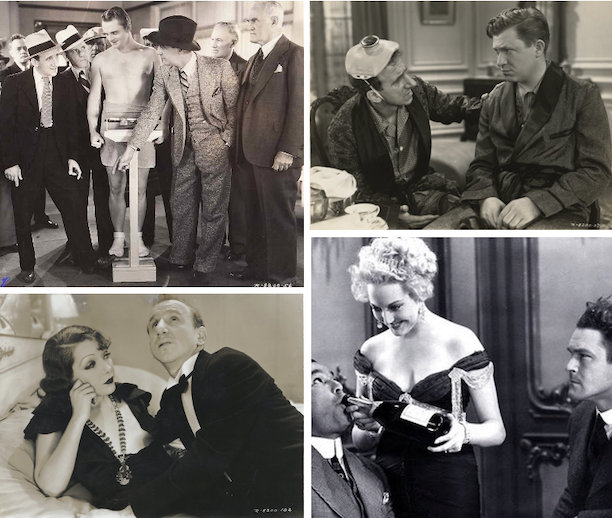
RIBALDRY AT RINGSIDE…Clockwise from top left, Knobby Walsh (Jimmy Durante) tries to press his advantage during the weigh-in of boxer Al McSwatt (portrayed by William Cagney, the look-alike younger brother of James Cagney) in 1934’s Palooka; Durante thinks he’s found a winning fighter in Joe Palooka (Stuart Erwin); Joe’s father, Pete Palooka (Robert Armstrong) demonstrates why he’s nicknamed “Goodtime” with the help of Trixie (Thelma Todd); Durante with Lupe Vélez, who portrayed glamorous cabaret singer and fortune hunter Nina Madero. (IMDB)
* * *
From Our Advertisers
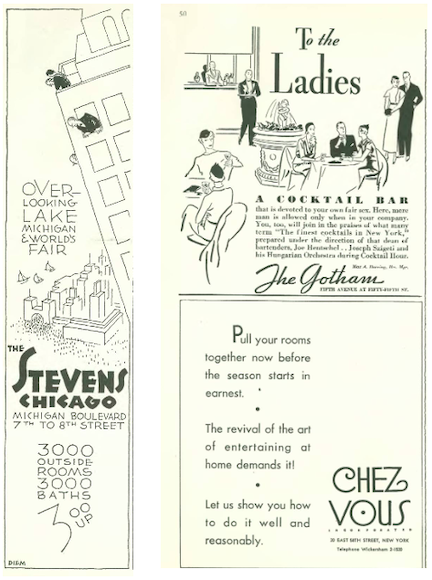
We start with a couple ads from the back pages…the promoters of Chicago’s famed Stevens Hotel offered a unique perspective as they appealed to New Yorkers to come check out the “Century of Progress” World’s Fair, which proved so popular that it planned to reopen in May for a second year…at right, The Gotham catered to the ladies with a special cocktail bar that only allowed men in the company of a woman…
NICE DIGS…At left, The Stevens Hotel (now Hilton Chicago) and, at right, The Gotham (now The Peninsula) are happily still with us today. (Wikipedia)
…cigarette manufacturers continued to work on their biggest growth market with ads like this one from the Lorillard Tobacco Company…here a perceptive woman chooses to ignore the “brazen claims” of other tobacco companies and makes an informed decision to inhale an Old Gold…
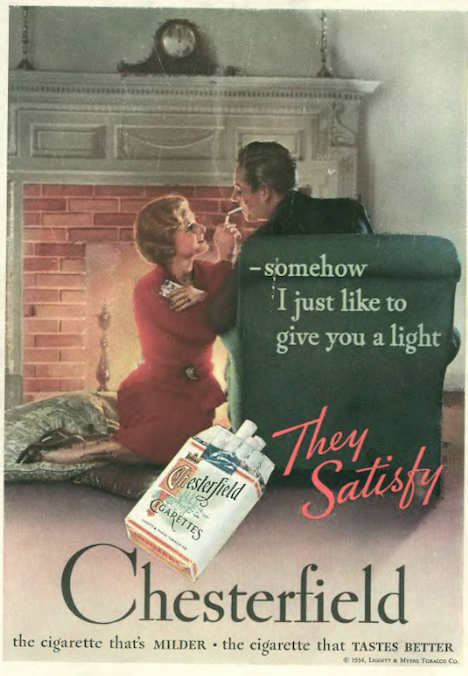
…Liggett & Myers, on the other hand, stuck with this subservient pose, suggesting both are happy with their cigarette, and their station in life…
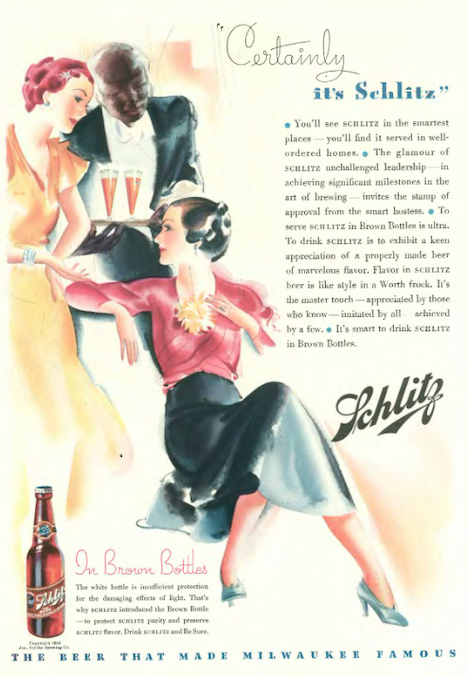
…another colorful ad from the makers of Schlitz beer…following the end of Prohibition Schlitz quickly became the world’s top-selling brewery, a position it would hold into the 1960s until it switched to cheaper brewing methods…
…the makers of Fisher car bodies (owned by General Motors) continued their lavish two-page spreads touting the homey comforts of their interiors…
…and no more staid ads from luxury carmaker Packard, who ran this full-color, full-bleed spot…
…it’s almost springtime for Hitler, and Germany welcomed American tourists with promises of “Dreaming Villages” (whatever those are), charming health spas and places of romance and beauty…hmmm, no mention of swastika flags hanging from every building, or parades of goose-stepping thugs…
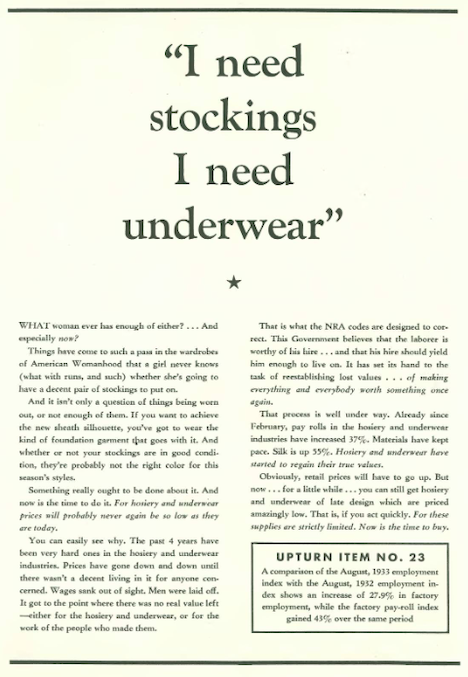
…this public service ad promoted the effectiveness of the National Recovery Act, offering the uptick in underwear sales as a sure sign of economic growth…
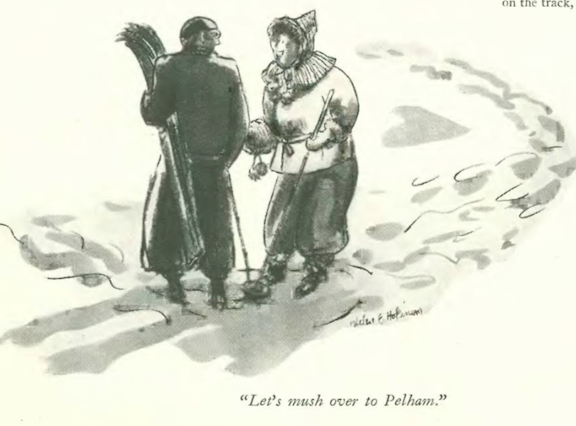
…on to our cartoonists, we begin with Helen Hokinson experiencing the results of the recent blizzard…
…as did Henry Anton, with a befuddled meteorologist…
…Alain (Daniel Brustlein) gave us this wordless gem…
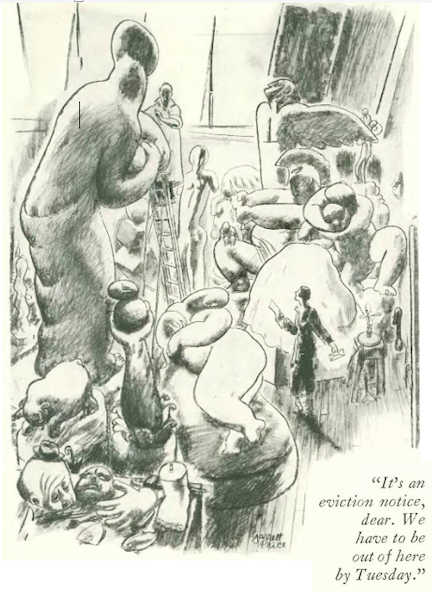
…while Garrett Price presented a sculptor’s greatest challenge…
…Alan Dunn gave us two women who expected more pizzazz from a recent funeral…
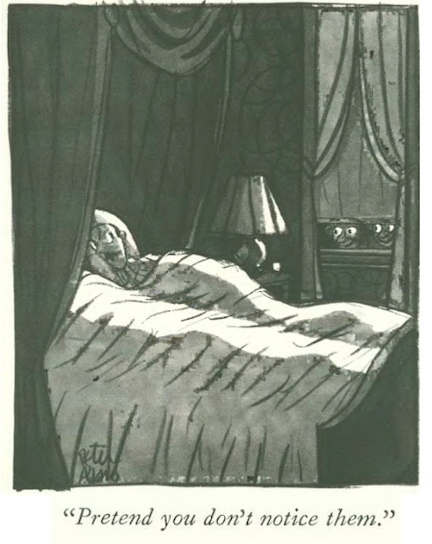
…Peter Arno contended with some Peeping Toms…
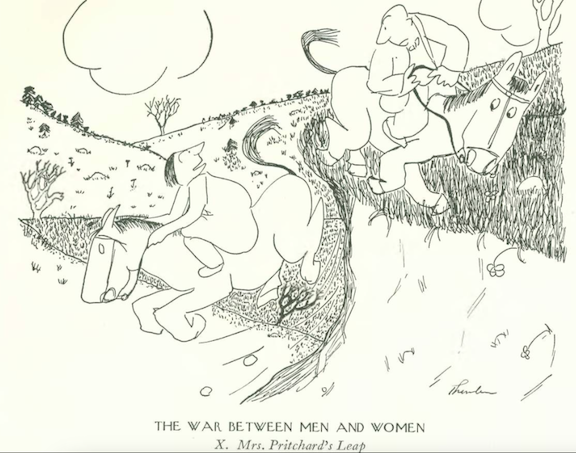
…and James Thurber looked in on recent maneuvers in his war between the sexes…
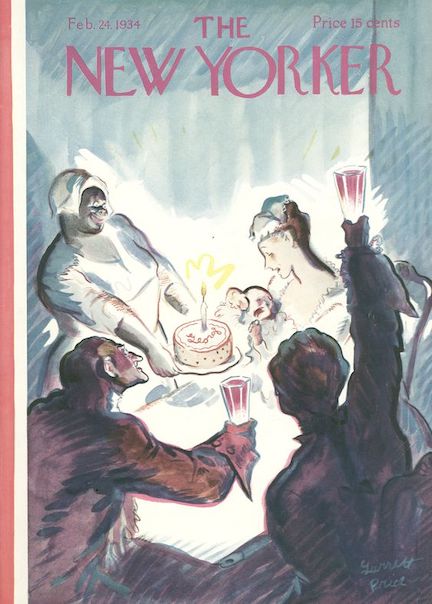
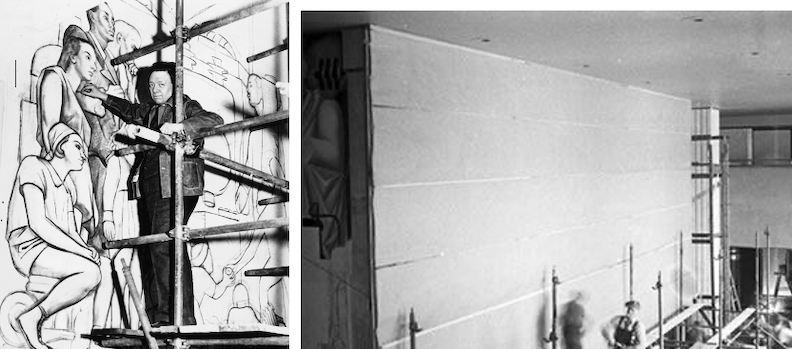
On April 28, 1933, just two days before the RCA Building was to open to new tenants, artist Diego Rivera added a portrait of Vladimir Lenin to the mural he was painting in the building’s lobby.
Feb. 24, 1934 cover by Garrett Price.
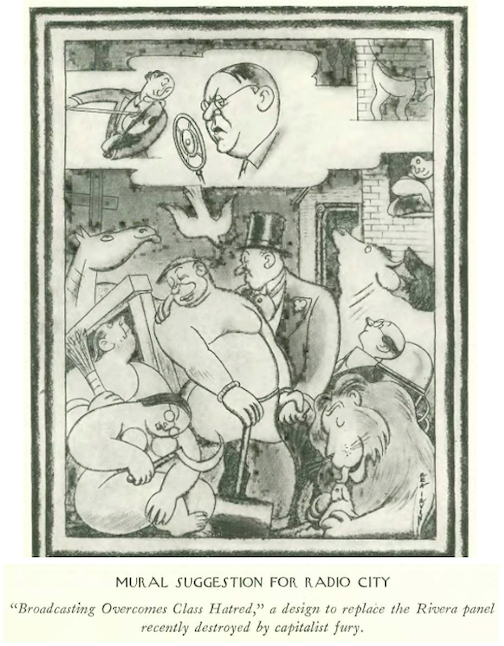
When Nelson Rockefeller asked Rivera to replace Lenin with a portrait of an “everyman,” Rivera refused, stating that he would prefer to see the whole mural destroyed than to alter it. Two weeks later Rivera was paid and dismissed from the job; carpenters immediately covered the mural in a white cloth. Fast forward to Saturday, February 10, 1934, when workers showed up late in the evening and began chipping away at the plaster bearing the mural, reducing Rivera’s artwork to dust. E.B. White, in his “Notes and Comment,” had this to say about that fateful night:
DUST TO DUST…Diego Rivera working on his mural, Man at the Crossroads, in the RCA Building lobby in 1933. At right, workers quickly covered up the mural after Rivera was dismissed from the job. One of Rivera’s artist assistants, Lucienne Bloch, clandestinely took the photo before she was escorted from the building. (Wikipedia/6sqft.com)ARTEM INTERRUPTUS…Mexican artist Diego Rivera stands with a copy of the mural he painted at Rockefeller Center that was eventually destroyed. (A. Estrada /Courtesy of Museo Frida Kalho)
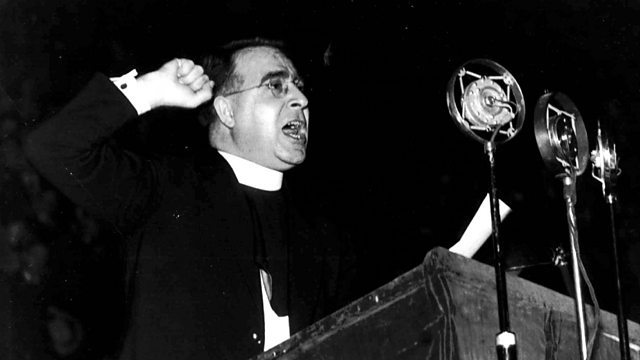
Rea Irvin shared his own thoughts on the issue with this illustration below, which referenced the hateful rhetoric of Charles Coughlin, a Canadian-American Catholic priest and populist leader and one of the first public figures to make effective use of the airwaves to spew his invective.
FAMILIAR RING…Charles Coughlin, a Catholic priest and populist leader, promoted antisemitic and pro-fascist views while also acting as a champion to the poor and a foe of big business. In the midst of the Depression he spoke to the hopes and fears of lower-middle class Americans throughout the U.S. One supporter recalled: “When he spoke it was a thrill like Hitler. And the magnetism was uncanny. It was so intoxicating, there’s no use saying what he talked about…” (BBC/NPR)
* * *
Dog Days
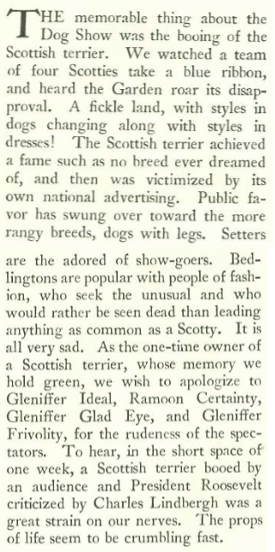
E.B. White also chimed in about boorish behavior he witnessed at the Westminster Kennel Club show at Madison Square Garden. Terriers had dominated Westminster; the fox terrier that ultimately won the 1934 competition represented the 21st terrier of any type to win Best of Show since that category was introduced in 1907.
YOU AGAIN? Ch Flornell Spicy Bit of Halleston, a Wire Fox Terrier, took Best of Show at Madison Square Garden in 1934. (westminsterkennelclub.org)
* * *
Anybody Home?
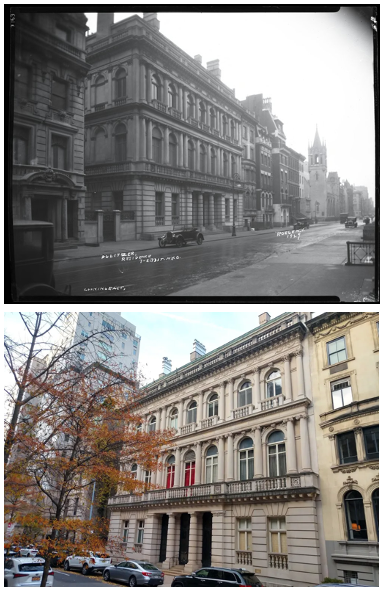
After the wealthy owner of the New York World, Joseph Pulitzer, died in 1911, his family moved out of his lavish East 73rd Street mansion, which was designed by Stanford White to resemble an Italian palazzo. The building sat empty until 1930, when investors planned to knock it down and replace it with an apartment building. The Depression foiled their plans, and another attempt to raze the mansion in the 1950s also miraculously failed, and the building was eventually converted into a co-op with sixteen apartments. Writing in “The Talk of the Town,” James Thurber pondered the Pulitzer mansion’s expected fate. An excerpt:
THEN AND NOW…With so many buildings reduced to dust these days in NYC, it’s good to see the Pulitzer mansion still standing. You can buy one of its sixteen apartments for roughly $6 million, if and when they become available. (ephemeralnewyork.wordpress.com)
* * *
From Our Advertisers
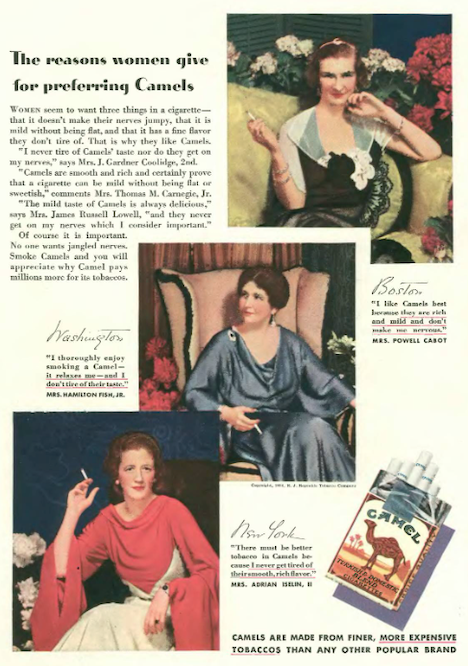
The makers of Camel cigarettes combined three previous ads into one, featuring endorsements from society matrons in Boston, Washington, D.C., and New York…
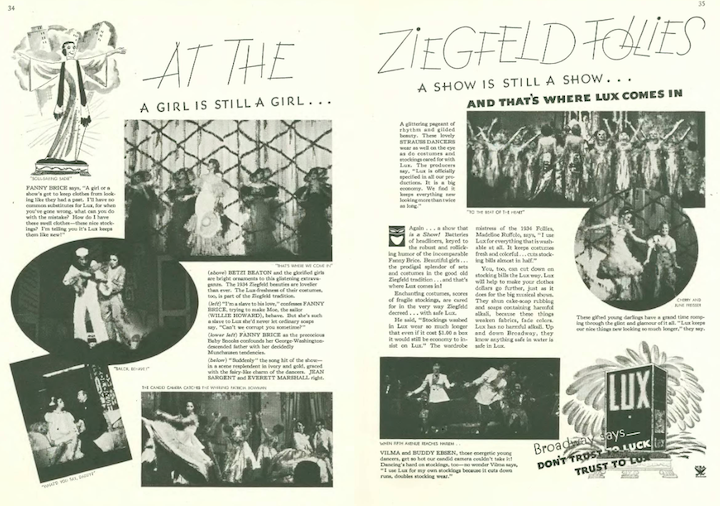
…while Fanny Brice and the cast of the 1934 Ziegfeld Follies offered a chorus of endorsements for Lux detergent in this two-page spread…
…the Graham-Paige Motors Corporation is long gone, but in the early 1930s the company was still going strong, introducing many innovations (described in the ad below) that would be copied by other carmakers…
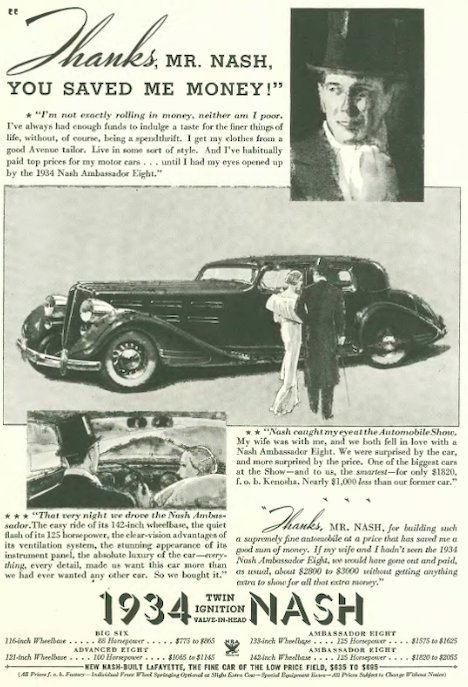
…in the 1930s an exiled Russian noble, Count Alexis de Sakhnoffsky, was known for his streamlined automobile designs…he influenced the look of the 1934 Nash Ambassador Eight, which was touted here as the choice of the budget-minded toff…note how the illustrator exaggerated the car’s length in this ad…
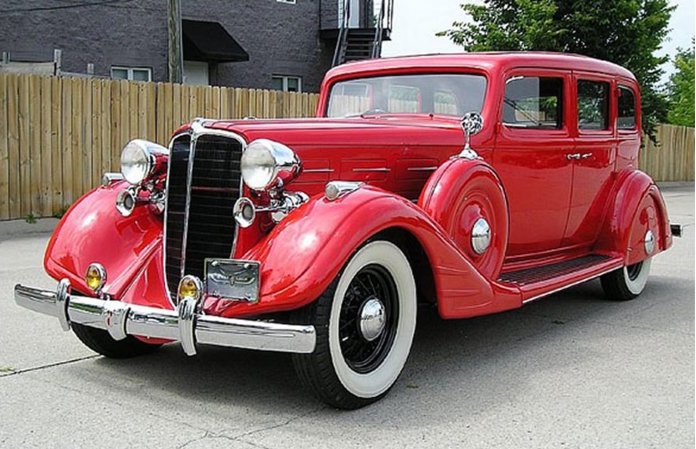
…as compared to an actual model of a Nash Eight…
A restored 1934 Nash Ambassador Eight. (classiccars.com)
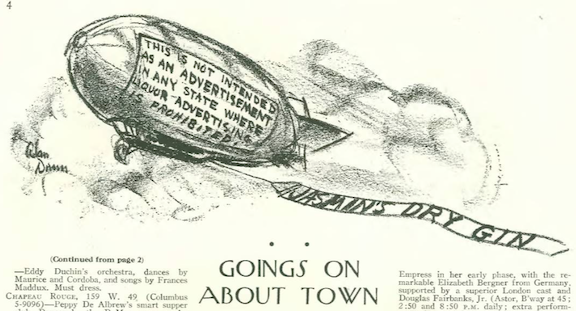
…on to our cartoonists, Alan Dunn floated above the “Goings On About Town” section…
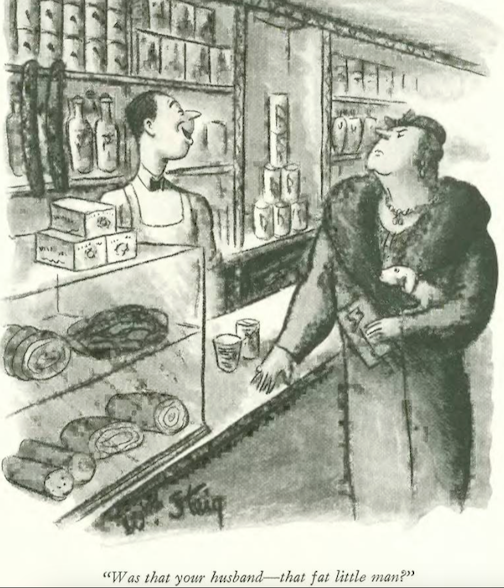
…William Steig gave us a tactless grocer…
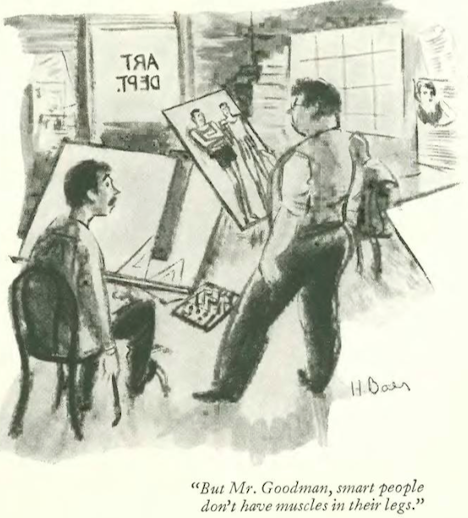
…Howard Baer offered up some finer points from Madison Avenue…
…Gardner Rea illustrated a very special delivery…
…and James Thurber’s war continued to be waged on a snowy battlefield…
…on to our March 3, 1934 issue…
March 3, 1934 cover by Harry Brown.
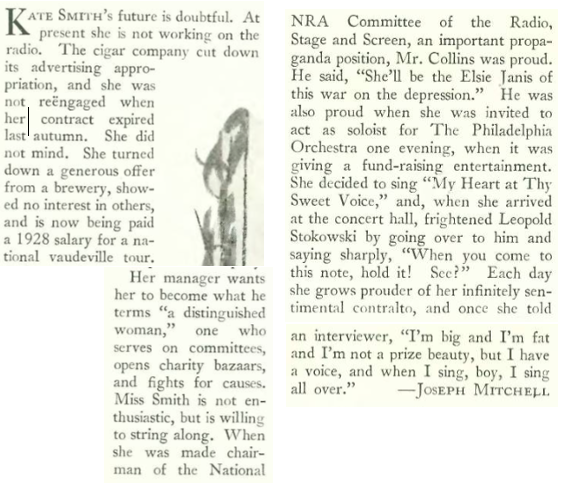
…which featured a profile of singer Kate Smith (1907–1986), written by none other than Joseph Mitchell (1908-1996), who began his career at The New Yorker in 1933. Smith was an American contralto often referred to as “The First Lady of Radio,” well known for her renditions of When the Moon Comes over the Mountain and Dream a Little Dream of Me. She was enormously popular during World War II for her rendition of God Bless America among other patriotic tunes.
Smith got her start in New York in 1926 when she appeared on Broadway in Honeymoon Lane. That year also saw the emergence of countless humiliating wisecracks about her weight that would dog her long career. A reviewer in The New York Times (Oct. 31, 1926) wrote, “A 19-year-old girl, weighing in the immediate neighborhood of 200 pounds, is one of the discoveries of the season…” In 1930, when Smith appeared in George White’sFlying High, she served as the butt of Bert Lahr’s often cruel jokes about her size.
An excerpt from the opening lines of Mitchell’s profile:
RISING STAR…At left, Kate Smith performing in the 1932 Paramount Pictures musical, Hello Everybody!; at right, on the cover of the October 1934 issue of Radio Mirror. (medium.com)
Toward the conclusion of the profile Mitchell suggested that Smith’s future was “doubtful.” She would prove that prediction wrong, however…
…23 years after her death her rendition of God Bless America would be discontinued pretty much everywhere when it was revealed that in the early 1930s she recorded such songs as That’s Why Darkies Were Born and Pickaninny Heaven (which was featured in Hello, Everybody!).
CANCELLED STAR…Since the late 1960s a rendition of God Bless America by Kate Smith served as a good luck charm for the Philadelphia Flyers hockey team. “The team began to win on nights the song was played,” The New York Times wrote in Smith’s 1986 obituary. Smith sang the tune live during game six of the 1974 Stanley Cup finals, which the Flyers went on to win against the Boston Bruins. When Smith’s racist songs were rediscovered in 2019, a statue of the singer that stood outside the Flyers’ arena was covered and ultimately removed. (Daily Mail)
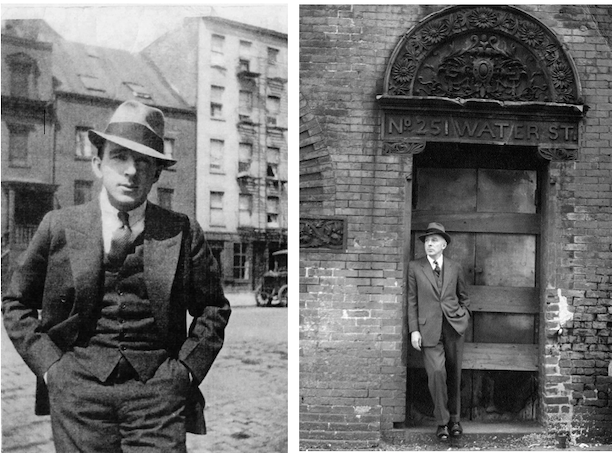
A note on Joseph Mitchell, whose first credited piece in The New Yorker was a Nov. 11, 1933 “A Reporter at Large” column titled “They Got Married in Elkton.” The article described a small Maryland border town that became known for discrete “quicky” marriages. Mitchell would become known for his finely crafted character studies and expressive stories found in commonplace settings. His 1943 McSorley’s Wonderful Saloon is a prime example.
MAN ABOUT TOWN…At left, Joseph Mitchell circa 1930, wearing a brown fedora he was rarely seen without; at right, Mitchell in Lower Manhattan near the old Fulton Fish Market, as photographed by his wife, Therese Mitchell, circa 1950. (Estate of Joseph Mitchell)
* * *
Acquired Taste
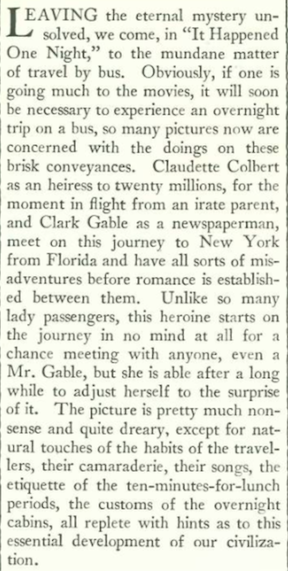
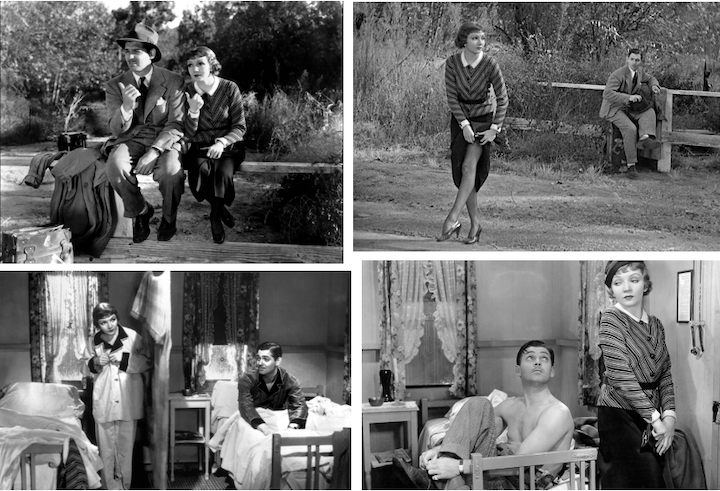
Occasionally New Yorker film critic John Mosher found himself at odds with other reviewers, and such was the case when Mosher sat down to watch Frank Capra’s It Happened One Night. While he described the 1934 pre-Code romantic comedy as “nonsense” and “dreary,” other critics found it generally enjoyable, and although it took audiences awhile to catch on, the film eventually became a smash hit.
In all fairness to Mosher, even the film’s co-star, Claudette Colbert, complained to a friend after the film wrapped, “I just finished the worst picture in the world.” As it turned out, It Happened One Night became the first of only three films to win all five major Academy Awards: Best Picture, Best Director, Best Actor, Best Actress, and Best Adapted Screenplay. It is now widely considered one of the best films ever made. Go figure.
Back to Mosher, who thought so little of the film he didn’t even lead his column with the picture’s review:
PRE-CODE AND TOPLESS…An heiress (Claudette Colbert) and a reporter (Clark Gable) find themselves hitchhiking (and sharing a motel room) after their bus breaks down in It Happened One Night. The film famously featured a scene in which co-star Gable undresses for bed and takes off his shirt to reveal that he is bare-chested. An urban legend claims that, as a result, sales of men’s undershirts declined noticeably. (IMDB)
* * *
More From Our Advertisers
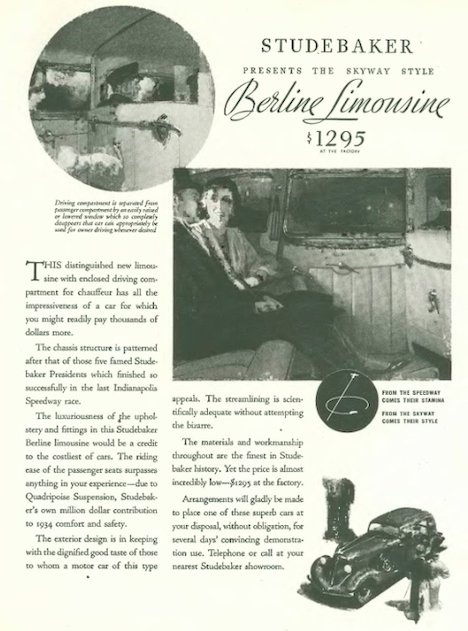
If you wanted luxury with the price, you could buy a Nash Ambassador Eight for $1,800 (about thousand less than other luxury models) or opt for Studebaker’s Berline Limousine, practically a steal at $1,295…
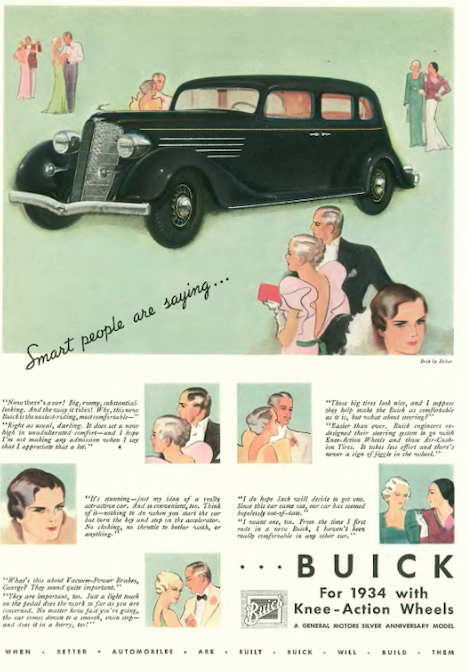
…or you could opt for this fancy-looking Buick with “Knee-Action wheels”…Knee Action was a GM marketing term for independent front suspension, which made for a smoother ride…
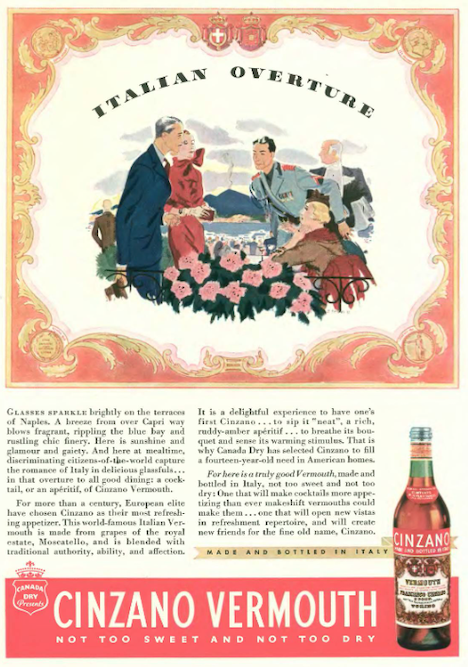
…always colorful, the makers of Cinzano vermouth made their splash in The New Yorker…
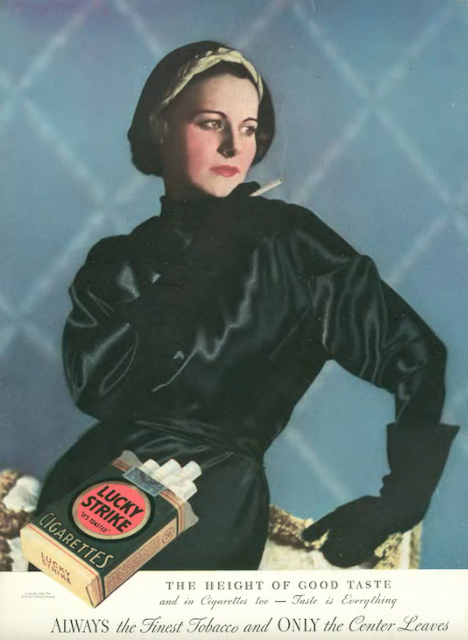
…the folks at Lucky Strike continued their theme of colorful ads featuring attractive women enjoying their cigs…
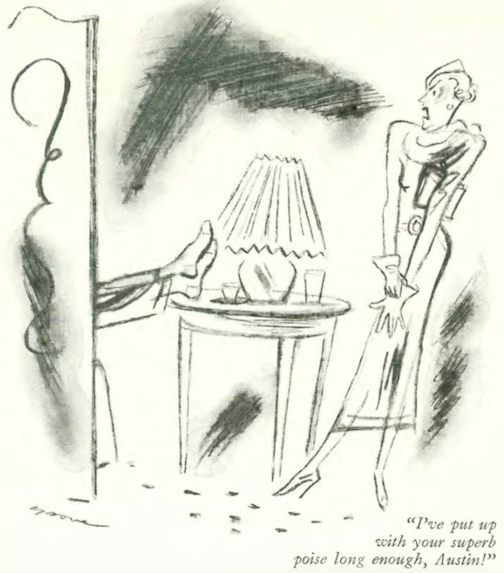
…on to our cartoonists, Leonard Dove illustrated a domestic spat…
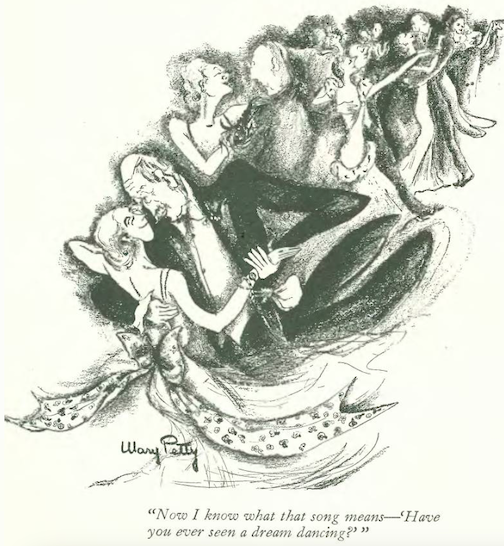
…Mary Petty captured a romantic interlude on the dance floor…
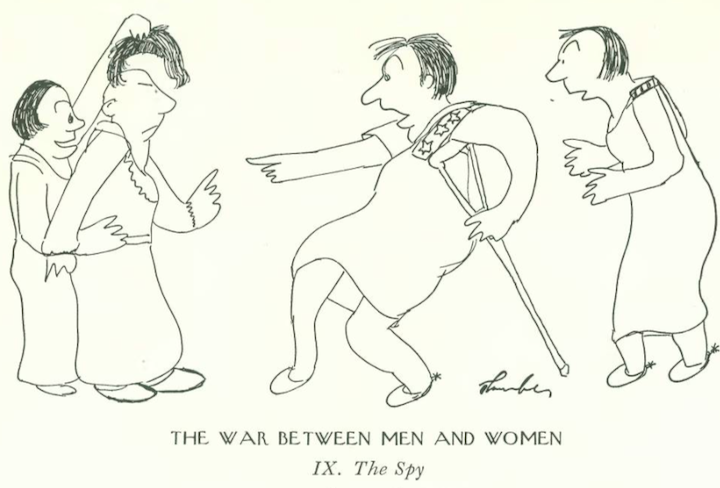
…and James Thurber introduced a new twist—espionage—into his “war”…













































































































 A New Yorker State of Mind