Hit of the Century

NINETY YEARS AGO, when former Chicago reporters Ben Hecht and Charles MacArthur sat down to write The Front Page, they might have sensed they had a Broadway hit in the making, but probably had no idea their play would still grace a Broadway stage well into the 21st century.

August 25, 1928 cover by Leonard Dove.

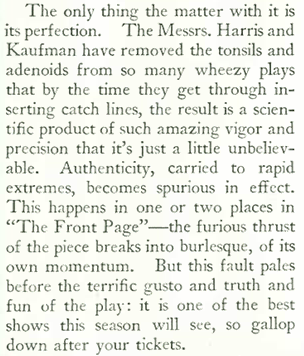
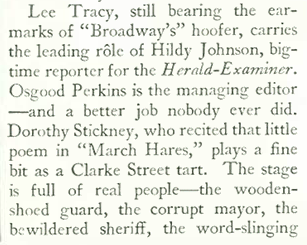
The Front Page made a big splash on the Great White Way when it premiered on August 14, 1928 at Times Square Theatre. Featuring a story about tabloid newspaper reporters on the police beat, the play’s wisecracking, rapid-fire dialogue (which would become a staple of Hollywood’s screwball comedies), was a big hit with audiences, and with E.B. White, who reviewed the play in the Aug. 25, 1928 New Yorker:

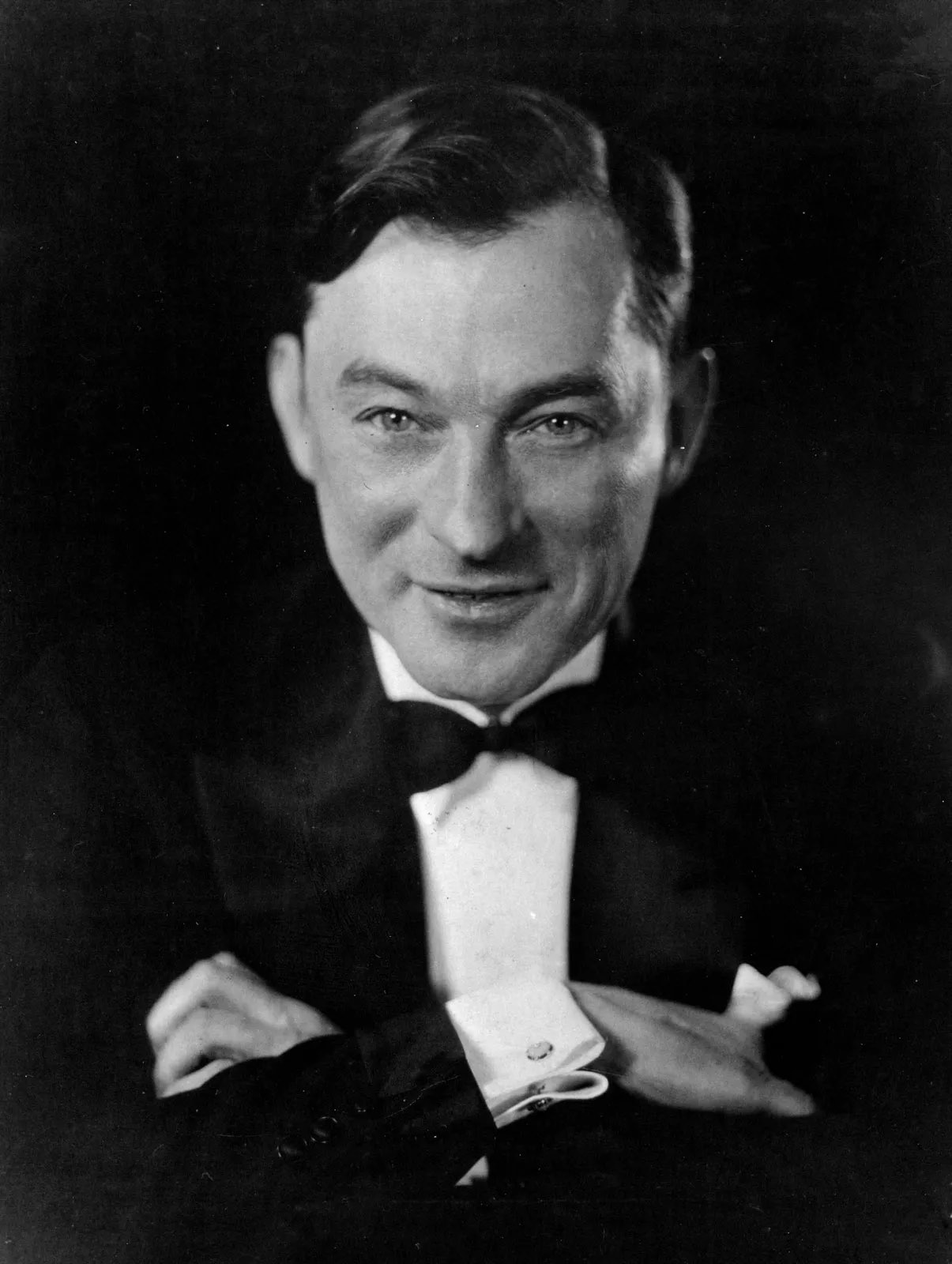
DREAM TEAM…The Front Page was written by former Chicago reporters Ben Hecht (left) and Charles MacArthur (center) and produced by Jed Harris (at right, in a 1928 photo used on the cover of Time magazine). Hecht, an occasional New Yorker contributor, would go on to a successful career as a screenwriter, director, producer and playwright. Like Hecht, screenwriter/playwright MacArthur was friends with members of the Algonquin Round Table. He was married to actress Helen Hayes, with whom he adopted a son, James MacArthur (“Danno” on TV’s Hawaii 5-0). Harris was responsible for some of Broadway’s most successful productions in the ’20s and ’30s including Uncle Vanya, Our Town and The Crucible. (IMDB, Kentucky Digital Library, Time)
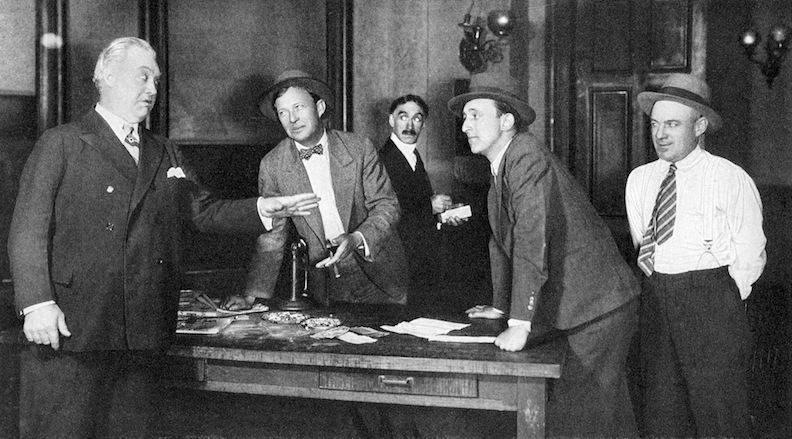
TROUBLE IN WINDY CITY…Set entirely in a dingy press room of Chicago’s Criminal Courts Building, The Front Page featured reporters who passed the time playing poker and exchanging wisecracks—until a convicted killer escapes jail and makes things lively. Worried about his chances for re-election, the crooked Mayor, played by George Barbier, far left, confronts three reporters — Murphy (Willard Robertson), Endicott (Allen Jenkins), and McCue (William Foran). In the background is Claude Cooper, as the crooked Sheriff Hartman. (Theatre Magazine, August 1928) 

White was so taken by the play, in fact, that he found it to be nearly perfect, like a scientific instrument of exacting precision. And considering how many times the play has been adapted to stage and screen (most recently on Broadway in 2016), he was probably right. It still plays pretty well after all these years:

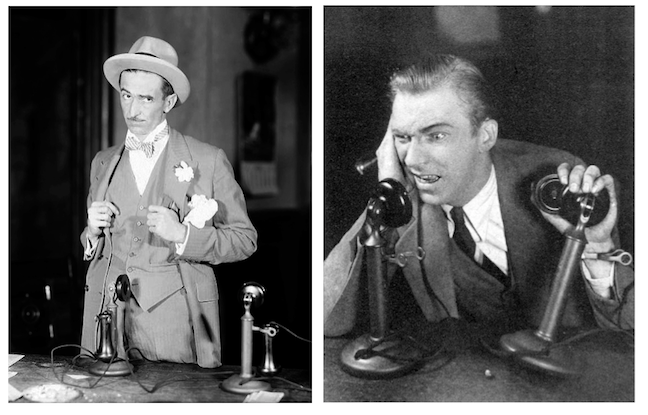
WISE GUYS…Promotional photographs of Osgood Perkins as Walter Burns (left) and Lee Tracy as Hildy Johnson in the 1928 Broadway production of The Front Page. (Theatre Magazine, August 1928) 
ENTER, STAGE RIGHT…Escaped prisoner Earl Williams (George Leach) surprises reporter Hildy Johnson (Lee Tracy) in The Front Page. (Theatre Magazine, August 1928) 

The play was restaged four more times on Broadway — 1946, 1969, 1986 and 2016 — the 2016 production starred Nathan Lane as Walter Burns, John Slattery as Hildy Johnson and John Goodman as Sheriff Hartman. Film adaptions included The Front Page in 1931 and His Girl Friday (directed by Howard Hawks) in 1940 — the latter added a twist to the play by changing the Hildy character to a woman, played by Rosalind Russell as the ex-wife of Walter Burns (Cary Grant). The play returned to the big screen in 1974 as The Front Page, directed by Billy Wilder and starring Jack Lemmon as Hildy and Walter Matthau as Walter Burns.

Still Some Fight Left in Him

Although boxer Gene Tunney had retired from the ring, he was still making headlines fighting off a different foe: the paparazzi.

Tunney’s engagement to Connecticut socialite and Carnegie heiress Polly Lauder was front-page news across the country, and photographers were eager to capture a photo of the couple, who up until the announcement had enjoyed a mostly secret romance. “The Talk of the Town” described the couple’s attempts to elude a persistent press:

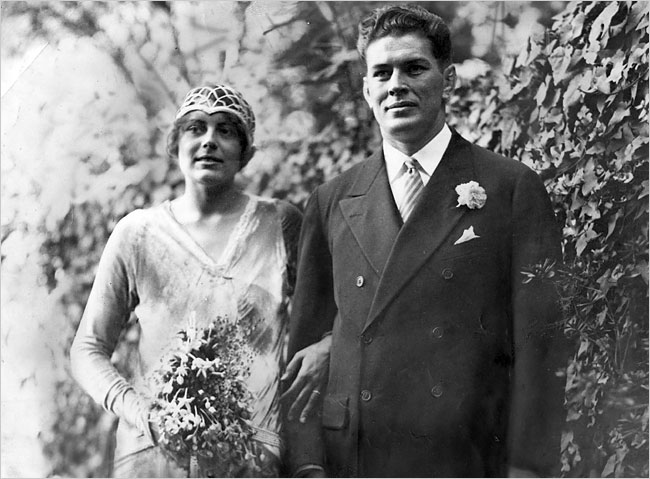
MAYBE IT’S QUIETER OVER HERE…21-year-old Polly Lauder Tunney and 31-year-old Gene Tunney after marrying in Rome on Oct. 3, 1928. The marriage would last 50 years. (Wikipedia)

In September 1928 the couple took separate trips to Rome and married in a small ceremony on Oct. 3. Unfortunately, they attracted the attentions of Rome’s original paparazzi: According to The New York Times “the scene after the wedding looked mighty like a riot as clothes were torn and cameras smashed in a melee of photographers jostling to capture images of the couple.”

After traveling in Europe they returned to the U.S. and made their home in North Stamford, Connecticut, where they restored an 18th century farmhouse and raised Hereford cattle and sheep. They would be married 50 years until Tunney’s death at age 81 in 1978. Polly continued to live at her home in Stamford until her death in 2008 at age 100.

 *  *  *

Dorothy Recuperates

Dorothy Parker’s “Constant Reader” signature at the end of the book review section was absent during part of the summer of 1928 as she was recuperating from an appendectomy. Fortunately her rapier wit remained intact when she returned in the Aug. 25 issue…

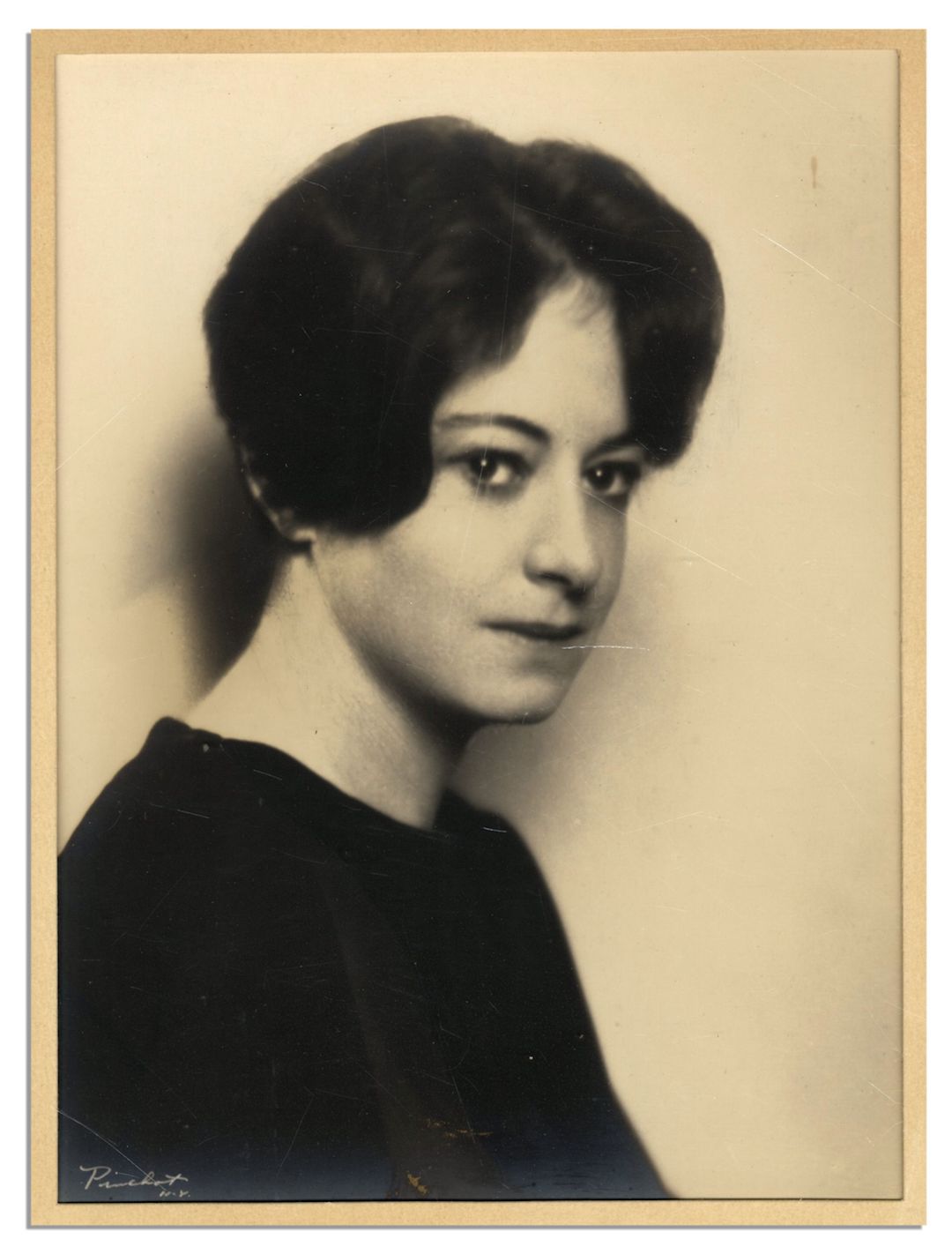
Dorothy Parker in 1928 (natedsanders.com)

…where she found the strength to skewer The Lion Tamer, the latest novel by romance writer E.M. Hull:

I’D RATHER BE IN SURGERY…E.M. Hull’s The Lion Tamer. Dodd, Mead and Co. 1928. (yesterdaysgallery.com)

*  *  *

Long Before Starbucks

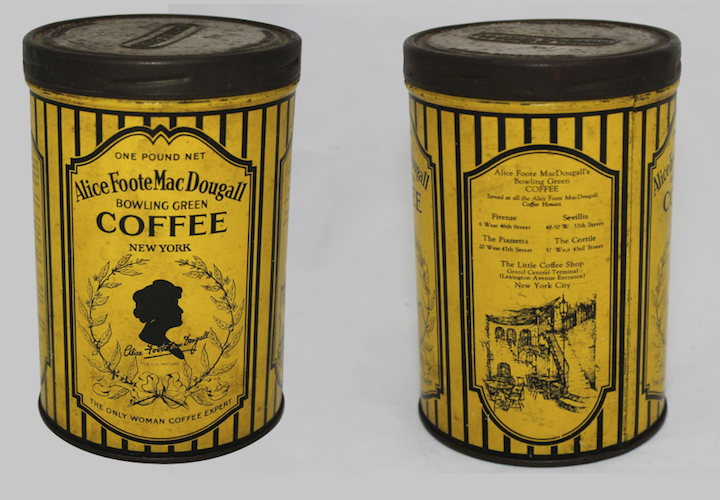
If you were a New Yorker in the 1920s, this cartoon by Rea Irvin would make perfect sense, because nearly everyone knew that Alice Foote MacDougall was the queen of New York’s coffee scene, a one-woman Starbucks of her day.

According to Jan Whitaker, writing for the blog Restaurant-ing Through History, MacDougall kept a carefully crafted persona. In numerous magazine stories crafted by her publicity agent, “she was widely known as the poor widow with three children who built a coffee wholesaling and restaurant empire on $38.”

MacDougall was actually from a distinguished New York City family, and her coffee wholesaling career began in 1909 after her husband’s death. Whitaker writes: “In the 1920s she was said to be the only woman expert in coffee grading and blending in the U.S. She opened her first eating place, The Little Coffee Shop, in Grand Central Station in New York in December 1919. Waffles were the specialty in her homey café which was decorated with a plate rail and shelves holding decorative china. (Evidently tips were good, because MacDougall had the nerve to charge her waitresses $10 a day to work there.) By 1927 she had signed a $1 million lease for her fifth coffee house, Sevillia, at West Fifty-seventh Street. Her places became known for their Italian-Spanish scene setting. The reason, she said, was that it provided a way to disguise long, narrow spaces.”

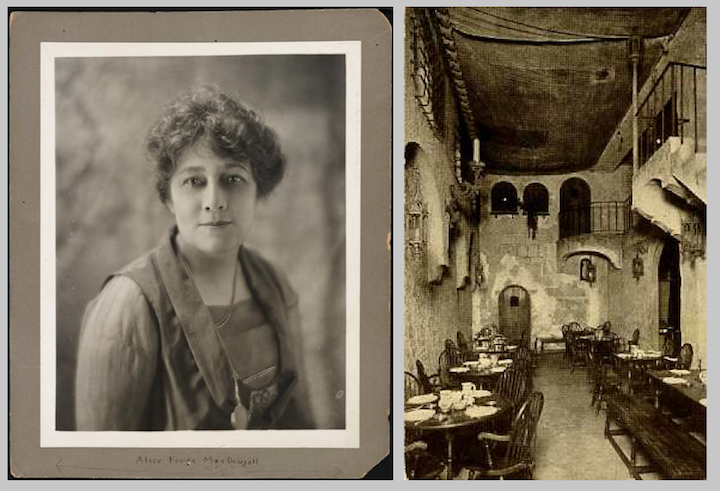
BEANS TO RICHES…Alice Foote MacDougall, ca. 1910. At right, Sevillia, at West Fifty-seventh Street, in the late 1920s. (restaurant-ingthroughhistory.com)
TIN GOLD…Canisters of Alice Foote MacDougall’s famed coffee, ca. 1927. (ruby lane.com)

 *  *  *

The Friendly Skies

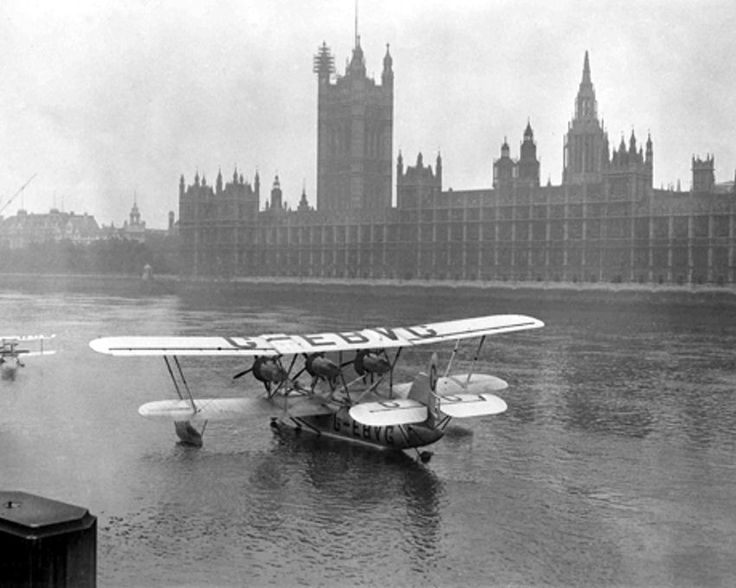
E.B. White made another appearance in the Aug. 25 issue, this time with a poem describing his recent flight from London to Paris aboard an Imperial Airways trimotor biplane. If White seems to rhapsodize a bit here (especially to jaded fliers of the 21st century), it is understandable, considering that White’s flight to France was only 25 years removed from the Wright Brothers at Kitty Hawk. It was still something miraculous:

TOP, the Imperial Airways “Calcutta” trimotor flying boat on the Mediterranean, 1928. Below, the “Calcutta” moored on the River Thames in 1928. (Claude Boullevraye de Passillé / AP)

 *  *  *

Missing the Boys of Summer

The New Yorker continued to ignore the sport of baseball in its pages, even though it enthusiastically covered almost everything else: college football, hockey, tennis, golf, lacrosse, polo, rowing and yacht racing. Strange because the New York Yankees had one of the winningest lineups in baseball (Murderer’s Row, with sluggers Babe Ruth and Lou Gehrig), had won the 1927 World Series, and were poised to win it again in 1928. Unless I missed something, the first mention of baseball in the 1928 New Yorker was this bit in Howard Brubaker’s Aug. 25 “Of All Things” column:

The Yankees would sweep the favored St. Louis Cardinals in the ’28 World Series.

From Our Advertisers

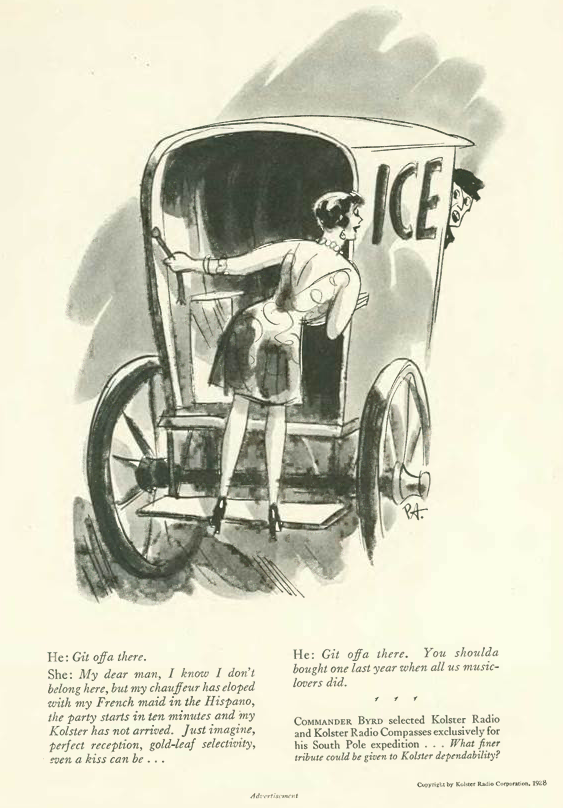
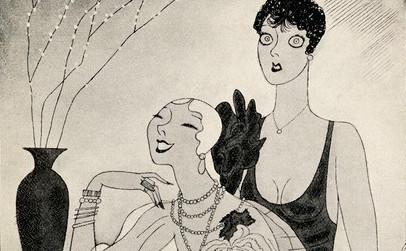
This creepy advertisement from the Aug. 25 issue comes courtesy of the Clark Lighting Company. The tagline, “Clark Always Works,” has a double meaning, the ad copy suggesting that a woman is so simple (described here as a “little minx”) that she will be captivated by the very flick of a lighter:

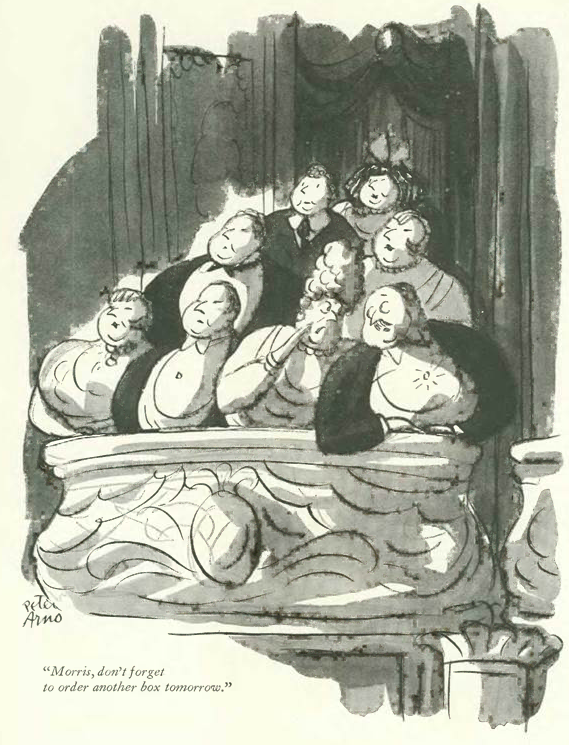
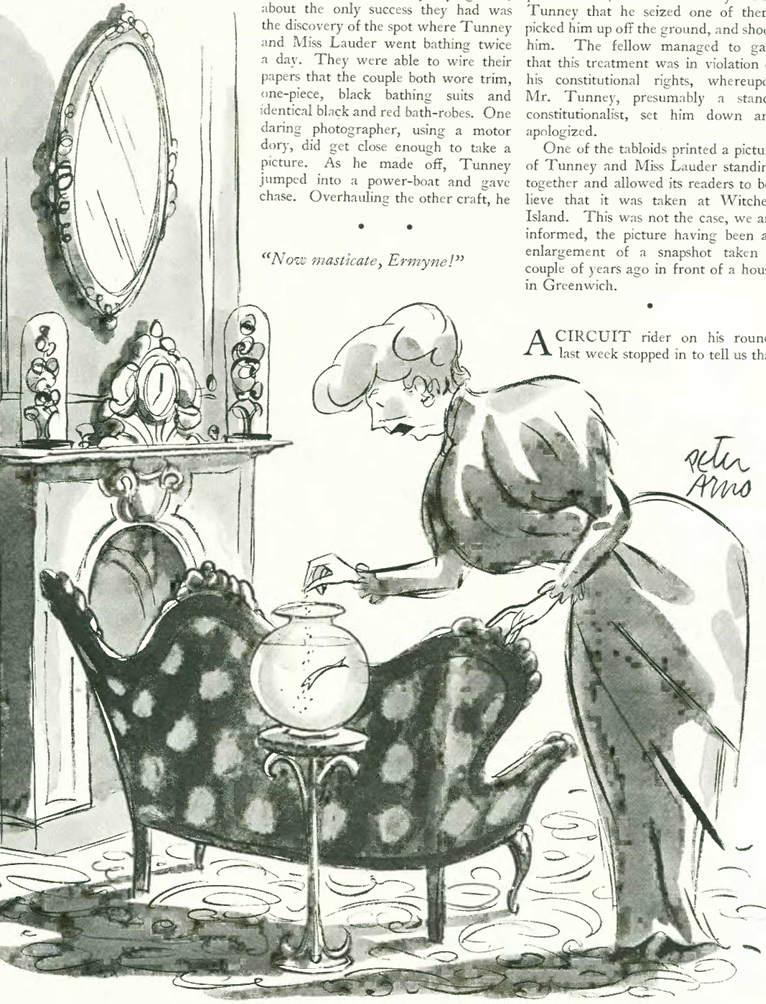
Our cartoon is by Peter Arno, who was making light of a diet fad from the late 19th and early 20th century (hence the woman’s age and dress) made famous by Horace Fletcher, who was known as the “Great Masticator” for his diet that involved chewing each mouthful of food a minimum of 100 times. The cartoon’s caption reads: “Now masticate, Ermyne!”

Next Time: Dorothy Parker Goes to the Movies…

Gentlemen Prefer Blondes?

Despite The New Yorker’s taste for the finer things–polo, opera, classical music–its editors couldn’t resist the pull of popular culture as both spectacle and fodder for mockery of the hoi polloi.

848d031119e0d470956ce963e6e7fb62
Oct. 9, 1926 cover by Julian de Miskey.

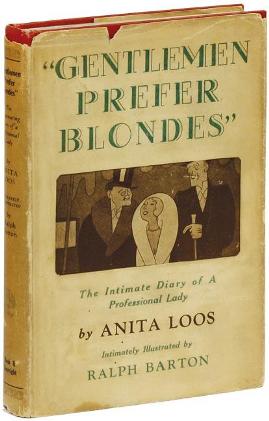
And so we have the Oct. 9, 1926 issue with a review of the much-anticipated Broadway play Gentlemen Prefer Blondes, which was based on a surprise bestselling novel by Anita Loos (and illustrated by The New Yorker’s own Ralph Barton). Despite garnering lukewarm reviews from critics, the public loved the adventures of gold-digging flapper Lorelei Lee.

GentlemenPreferBlondes
First edition of Gentlemen Prefer Blondes, by Anita Loos, illustrated by Ralph Barton (Wikipedia)
tumblr_l7eu7x4QVv1qcl8ymo1_500
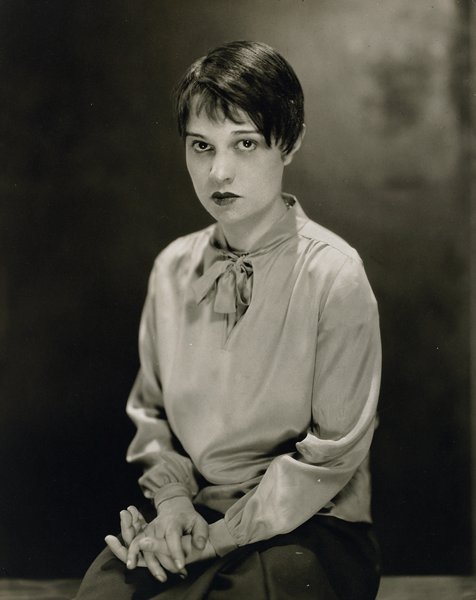
Edward Steichen portrait of Anita Loos, 1926. The New Yorker would feature a lengthy, admiring “Profile” of Loos in its Nov. 6, 1926 issue. (Minneapolis Institute of Art)

According to Wikipedia, the book was one of several famous novels published in 1925 to chronicle the Jazz Age, including F. Scott Fitzgerald’s The Great Gatsby (which ironically didn’t do so well) and Carl Van Vechten’s Firecrackers. Loos was inspired to write the book after watching a sexy blonde “turn intellectual H. L. Mencken into a lovestruck schoolboy.” Mencken, a close friend of Loos, actually enjoyed the work and saw to it that it was published.

nypl.digitalcollections.ab6c9cc0-81c6-da79-e040-e00a1806702e.001.w
Gold-digging flapper Lorelei Lee (June Walker, second from left), Henry Spofford (Frank Morgan, second from right), and the rest of the cast tussle in the stage production Gentlemen Prefer Blondes, Times Square Theatre, 1926. Another “blonde,” Marilyn Monroe, would famously portray Lorelei Lee in the 1953 Howard Hawks film. (New York Public Library)

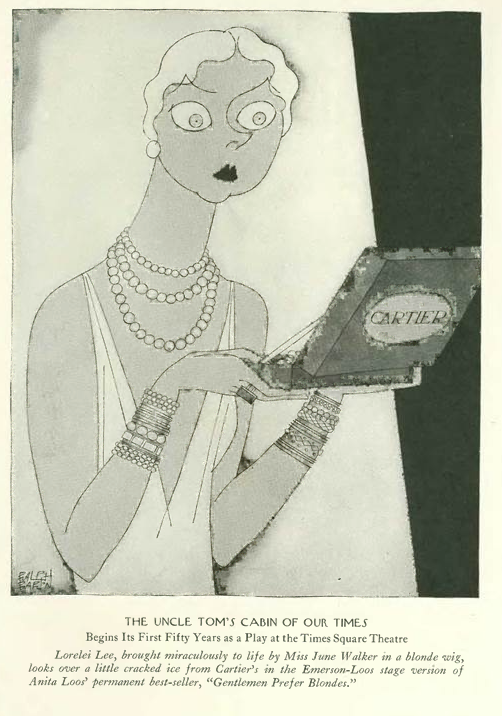
Ralph Barton contributed this drawing of June Walker for the magazine’s review:

Screen Shot 2016-02-29 at 9.26.56 AM

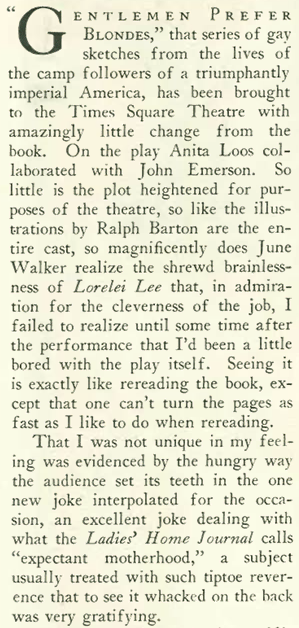
And a bit of the review itself…

Screen Shot 2016-02-29 at 9.28.33 AM

In other items, Lois Long paid a visit to Texas Guinan’s 300 Club on 54th Street, which apparently was still the place to go for a roaring good time:

Screen Shot 2016-02-29 at 9.30.16 AM

Screen Shot 2016-02-29 at 9.30.33 AM

texasguinanpolice
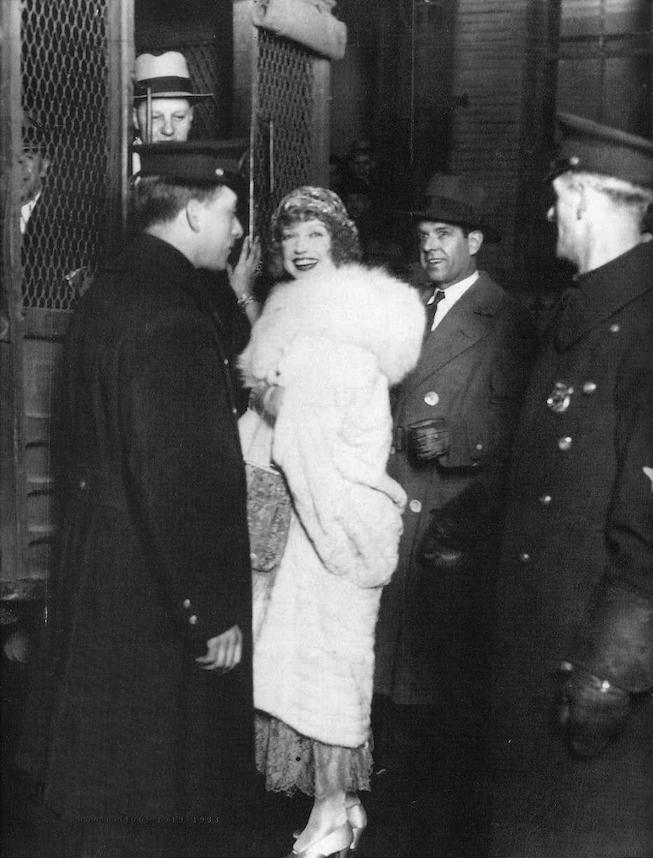
JUST HAVING FUN…According to the blog Ephemeral New York, Texas Guinan’s 300 Club at 151 West 54th Street hosted the likes of John Barrymore, George Gershwin, and Clara Bow. The club was targeted by prohibition officials, who were constantly padlocking the door and arresting Texas. Guinan’s clever rejoinder to the officials: The 300 Club’s patrons brought liquor with them, and because the place was so small, the showgirls were forced to dance close to customers. (Ephemeral New York)

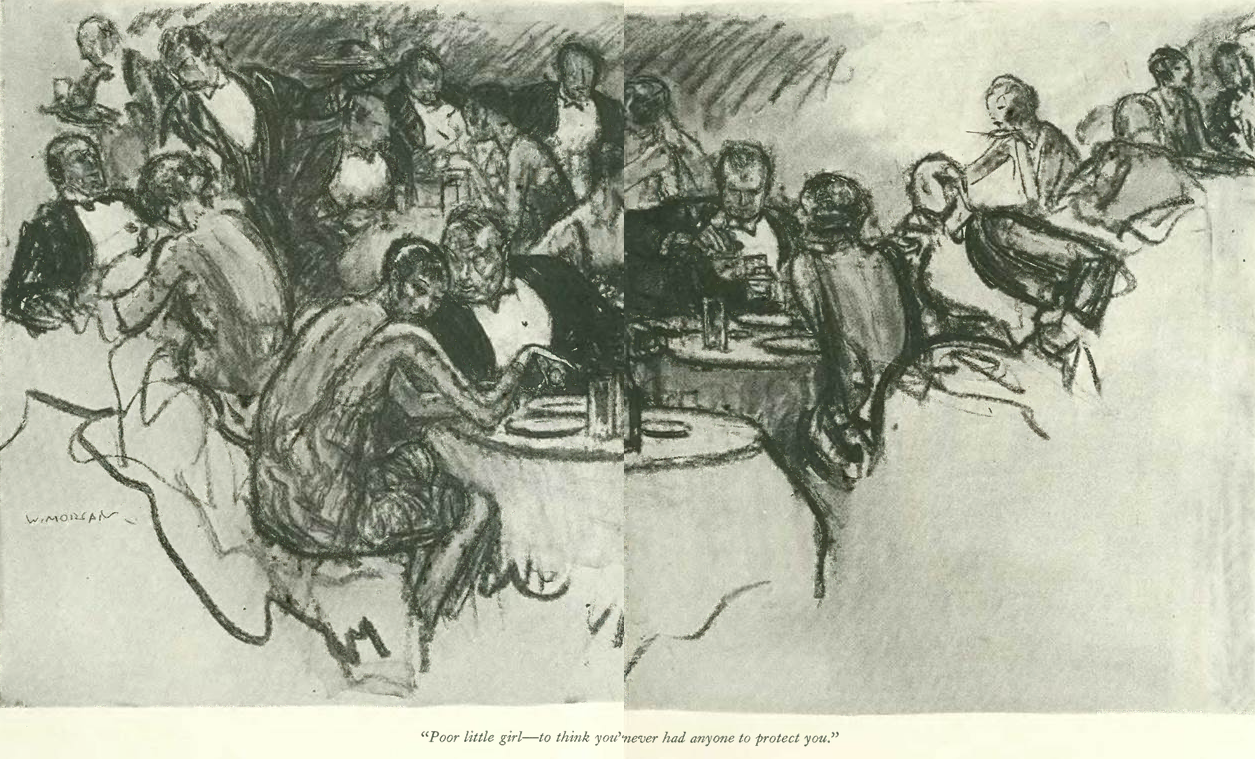
The magazine’s cartoons continued to mine the humor of rich old men out on the town with their young flapper mistresses. The one below was a center spread illustration by Wallace Morgan with the caption: “Poor little girl–to think you’ve never had anyone to protect you.”

Screen Shot 2016-02-29 at 9.21.32 AM

Finally, a look back at one of my earlier blog posts (Cuban Idyll) that featured Americans in Havana. I recently traveled to Cuba and visited some of the old haunts, including the famed Sloppy Joe’s:

IMG_1549
(Photo by David Ochsner)

Next Time: The Changing Skyline…

c37832e544c79a83494d91ea68c0329b


Wild & Woolly

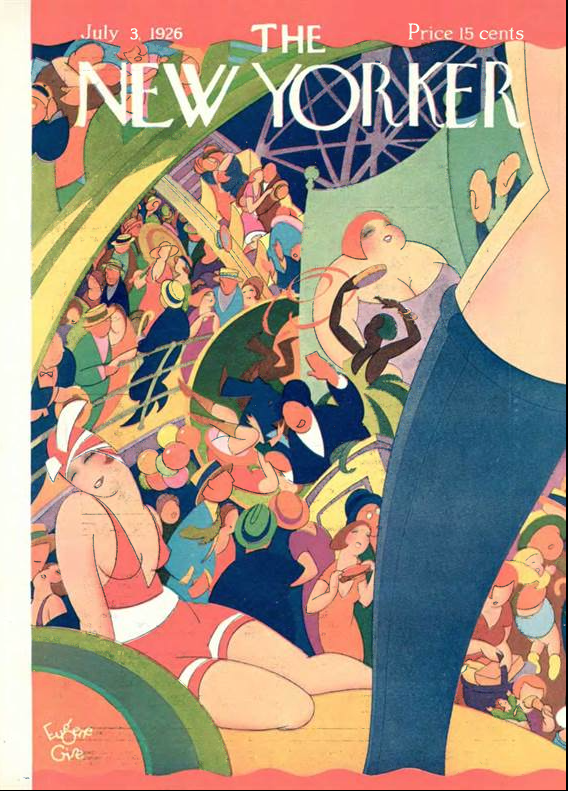
Eugene Gise threw a beach party on the July 3, 1926 cover of The New Yorker with an explosion of color that was a departure from the somewhat spare covers of previous issues. It had been an unseasonably cool June, so folks were ready to frolic in the sun.

Screen Shot 2016-01-12 at 11.17.43 AM
July 3, 1926 cover by Eugene Gise.

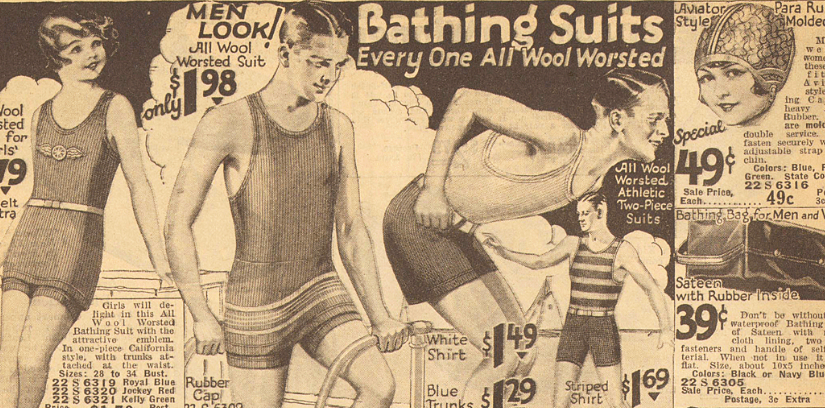
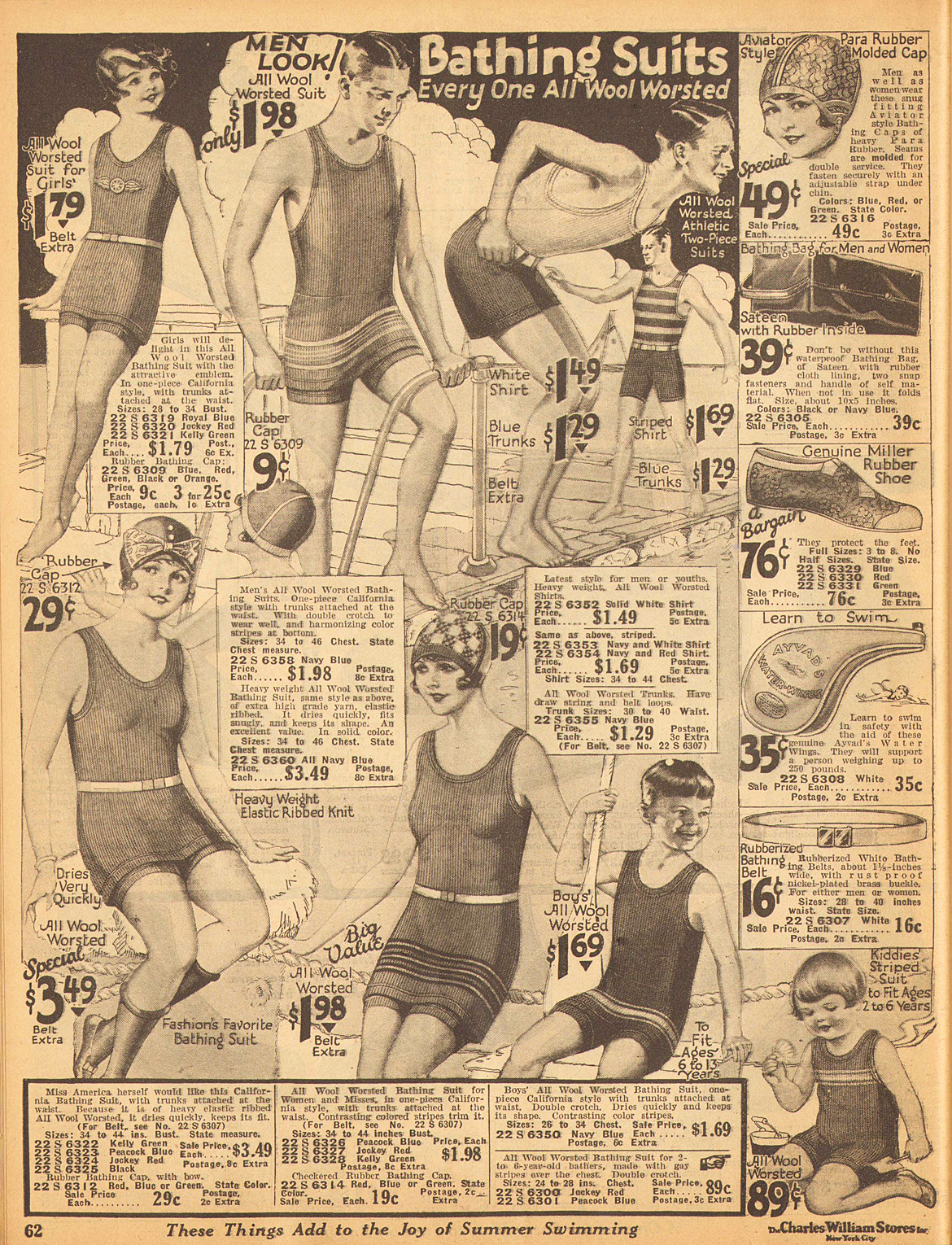
It should be noted that the woman in the foreground basking in the sun is most likely wearing a wool bathing suit. Although Jantzen was making suits you could actually swim in, these wool numbers were still the norm. As the website Vintage Dancer notes, “functionality in swimwear was not as important as fashion, so the prevailing theory was that wool would help keep you warm.” Check out this newspaper advertisement from 1926:

1926-CW-3_Page_19-mens-swimsuit
(Vintage Dancer)

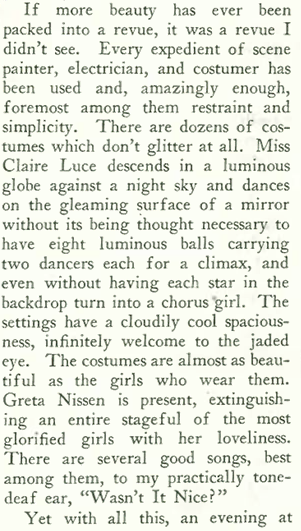
In the previous issue (June 26, 1926) theatre critic Charles Brackett looked at all the fuss over the opening of George White’s Scandals revue, so in this issue he gave the Ziegfeld Follies—the revue show that inspired the Scandals—its proper due.

Screen Shot 2016-01-12 at 12.07.00 PM

Screen Shot 2016-01-12 at 12.07.12 PM

20130923214629-2288ec2c-me
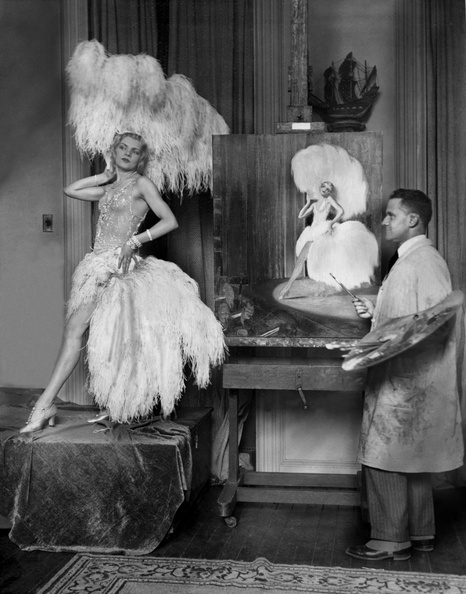
Claire Luce was a star attraction at the Ziegfeld Follies. Here Clarence F. Busch paints her portrait in an ostrich costume she wore for the Follies (Historical Ziegfeld Group)

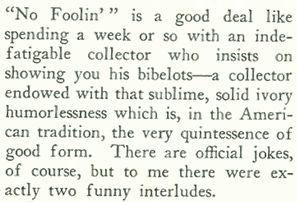
Needless to say, Brackett found the Ziegfeld Follies as pointless as its imitator:

Screen Shot 2016-01-12 at 12.07.30 PM

Moving on to other things, I found this tidbit in “The Talk of Town” interesting. Even 90 years ago city dwellers were complaining about having to sort their garbage:

Screen Shot 2016-01-12 at 12.02.07 PM

Screen Shot 2016-01-12 at 12.02.22 PM

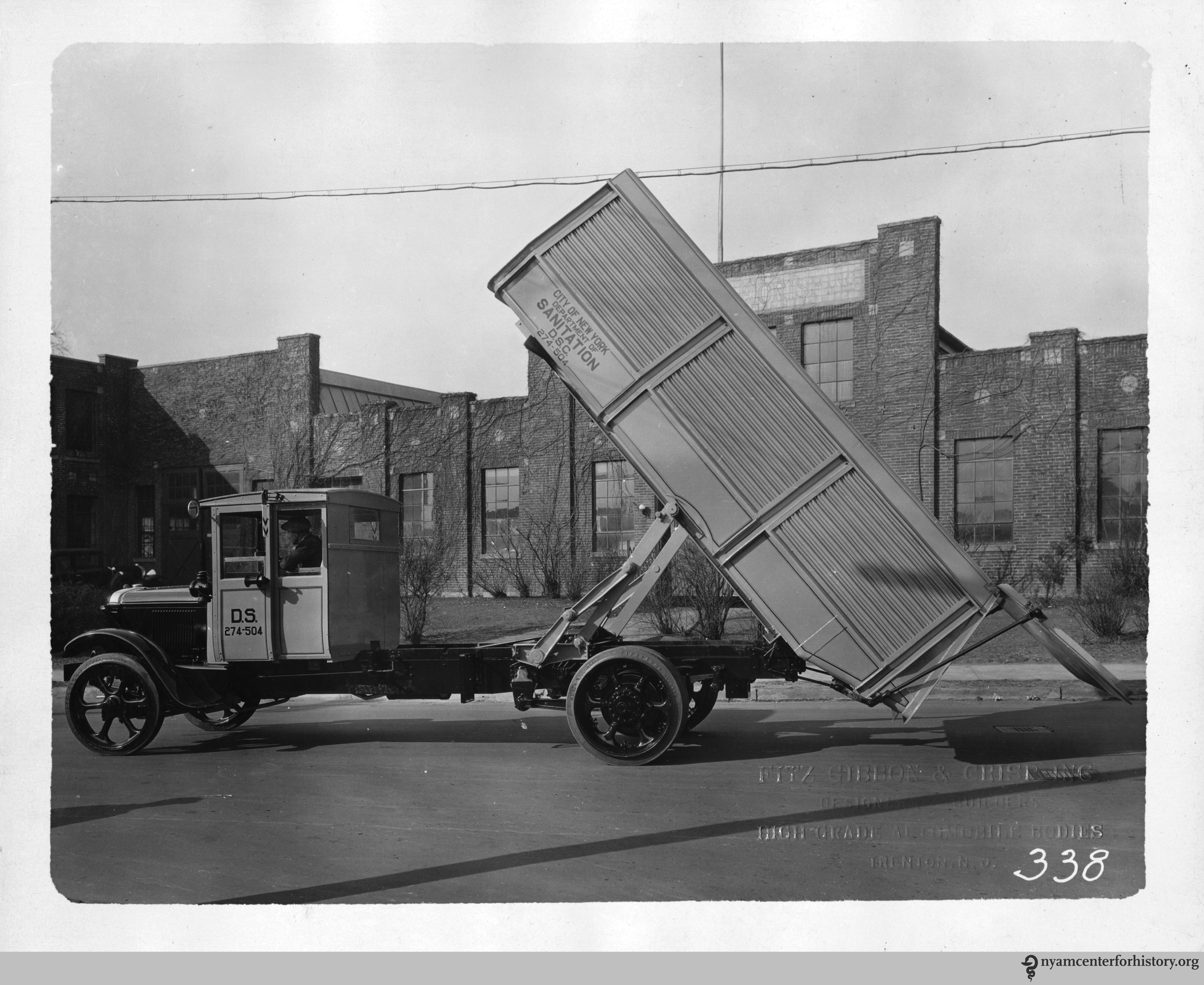
A state-of-the-art garbage truck in 1920s NYC looked like this…

garbagenewtruck
(nyamcenterforhistory.org)

…and since the 1890s the city had employed street sweepers known as “White Wings” to keep things tidy, apparently even in the middle of traffic:

24-BOOK-articleLarge
(The New York Times)

After decades of petticoats, the Roaring Twenties marked the beginning of androgynous fashion in America, with actress Marlene Dietrich leading the way in defying standards of femininity. Cartoonist Raymond Thayer took a humorous look at the trend in the July 3 issue:

Screen Shot 2016-01-12 at 12.00.05 PM

Next Time: A Tarnished Tinseltown…

Screen Shot 2016-01-14 at 9.54.46 AM

Black Bottom & Other Scandals

The Roaring Twenties were all about fads and crazes, ranging from flagpole sitting to dances such as “The Shimmy,” “The Charleston,” or “The Black Bottom.” These dances were appropriated from Black culture, with many New Yorkers getting their first exposure in places such as Harlem’s famed Cotton Club.

Screen Shot 2016-01-08 at 1.35.03 PM
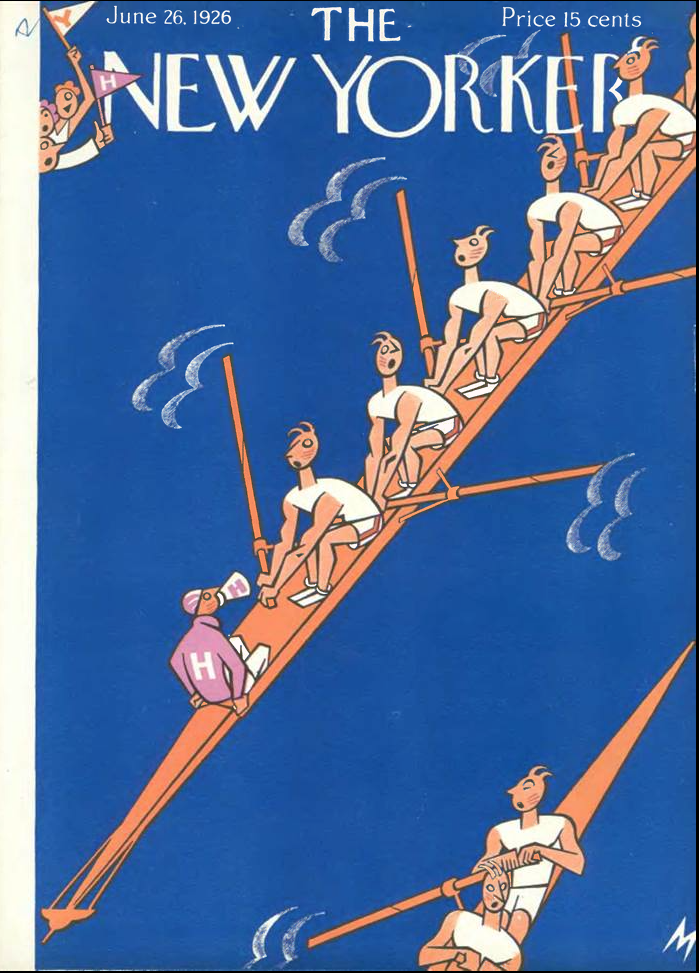
June 26, 1926 cover by Julian de Miskey.

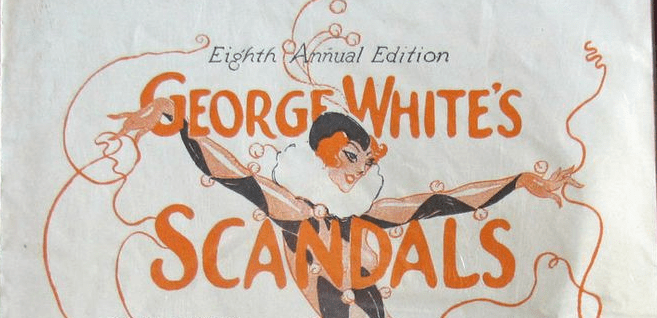
The June 26, 1926 issue of The New Yorker was all abuzz over the Broadway debut of George White’s eighth annual Scandals. The Scandals were a long-running string of Broadway revues that ran from 1919-1939. Modelled after the Ziegfeld Follies, the Scandals launched the careers of many entertainers, including W.C. Fields, the Three Stooges, Rudy Vallée and Louise Brooks. Composer George Gershwin’s early work also appeared in the earliest editions of the show.

a257e06b8b87fdf0d0f851e9b7586642
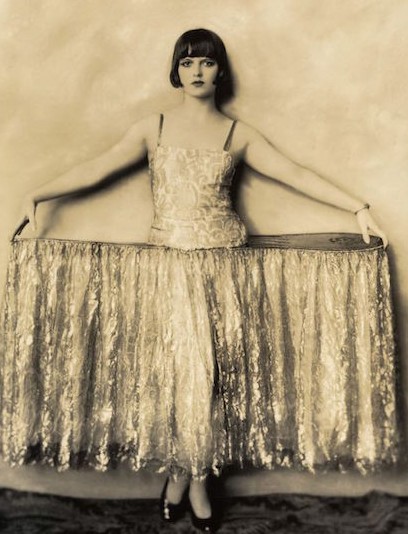
Actress Louise Brooks got her start in the Scandals and later the Ziegfeld Follies. Here she portrays the “Duchess of Sidebottom” in George White’s Scandals of 1924. By 1925 Brooks would have a movie contract with Paramount, and go on to become a popular star of the late silent era and gain fame as the iconic symbol of the flapper. (Flickr)

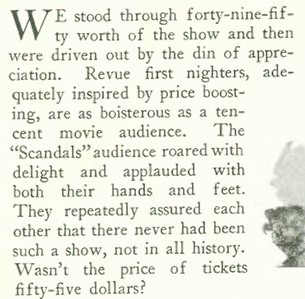
Like Florenz Ziegfeld, White must have been a master at marketing, since tickets for the Scandals opening sold for $55, which today would be the equivalent of about $725:

Screen Shot 2016-01-11 at 4.42.50 PM

The editors of “The Talk of the Town” were a bit skeptical of all the hype:

Screen Shot 2016-01-11 at 4.44.15 PM

The 1926 Scandals show featured “The Black Bottom,” danced by Ziegfeld Follies star Ann Pennington and Tom Patricola. In this dance-crazed era, “The Black Bottom” became a national phenomenon and even surpassed “The Charleston” in popularity.

It_illustrates_the_Black_Bottom_dance_and_features_Ann_Pennington,_George_White_and_Tom_Patricola,_all_of_whom_are_Wiki,_as_is_GEORGE_WHITE%22S_SCANDALS
Tom Patricola and Ann Pennington dance “The Black Bottom” in 1926 as Scandals producer George White looks on (Wikipedia)
Ann-Pennington-and-Felix2
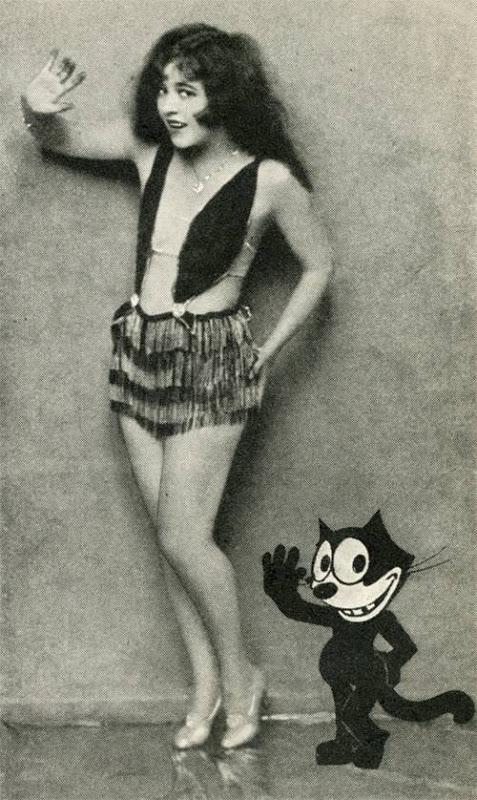
Ann Pennington “teaching” Felix the Cat how to dance “The Black Bottom.” Image scan from Photoplay magazine spread, January 1927.

“The Black Bottom” was popularized in New York by the 1924 Harlem stage show show Dinaah. Although the dance moves originated in New Orleans in the early 20th century, Jelly Roll Morton gave it a name when he wrote Black Bottom Stomp in 1925, referring to Detroit’s Black Bottom district.

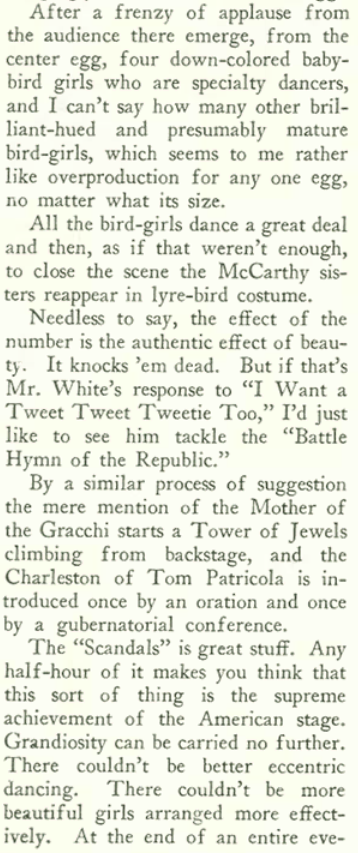
In typical fashion, The New Yorker was less than impressed with the spectacle. In his theatre review column, Charles Brackett made this observation:

Screen Shot 2016-01-11 at 4.52.53 PM

Screen Shot 2016-01-11 at 4.53.12 PM

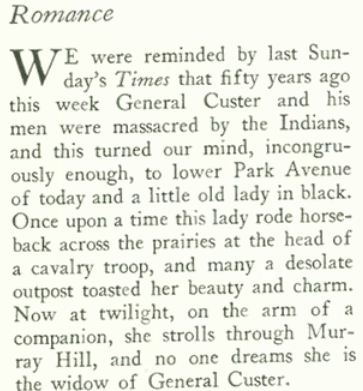
On to other things, “The Talk of the Town” also featured this curious note about George Custer’s widow, reminding us that 1926 was a very long time ago. Here are excerpts:

Screen Shot 2016-01-11 at 4.46.36 PM

Screen Shot 2016-01-11 at 4.46.54 PM

aow.img.RG3126-2-58
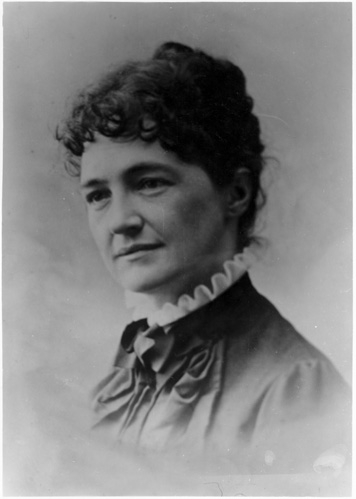
Elizabeth Bacon Custer in 1876, the year of the Battle at Little Bighorn (Nebraska State Historical Society)

The New Yorker editors continued to remark on the changing face of Fifth Avenue…

Screen Shot 2016-01-11 at 4.38.59 PM

…and on the progress of the city’s infrastructure improvements, as in this excerpt from a humorous piece by the Robert Benchley:

Screen Shot 2016-01-11 at 4.50.40 PM

holland-tunnel-1926
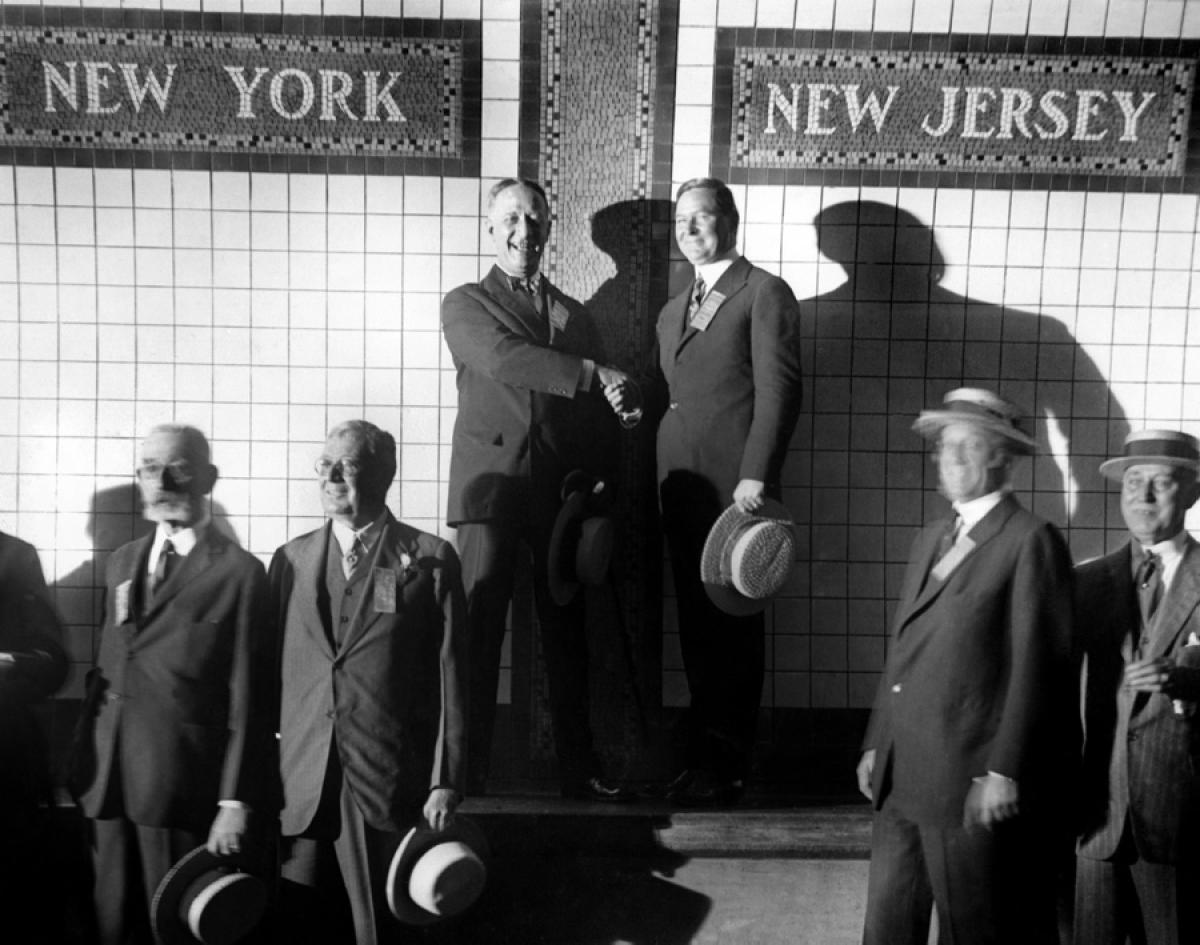
New York Governor Al Smith and New Jersey Governor A. Harry Moore shake hands at the state border inside the Holland Tunnel in 1926. (grayflannelsuit.net)

Next Time: Wild & Woolly…

Screen Shot 2016-01-12 at 11.17.43 AM