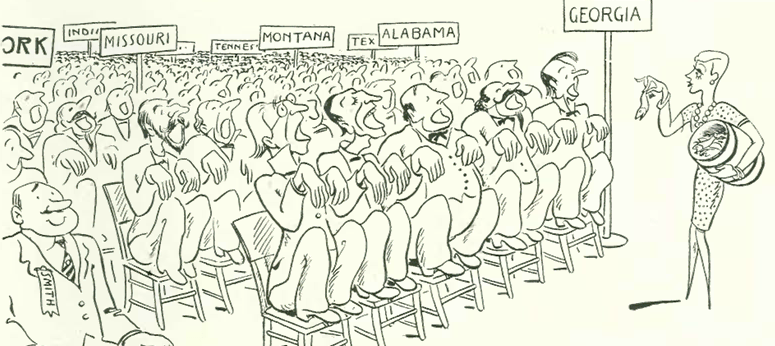
U.S. presidential elections have long provided fodder for the nation’s humorists, and the 1928 contest between Herbert Hoover and Al Smith was no exception.

In the March 31, 1928 issue of the New Yorker writer Frank Sullivan and cartoonist Al Frueh took particular delight in skewering the party nominating conventions. As Sullivan observed:
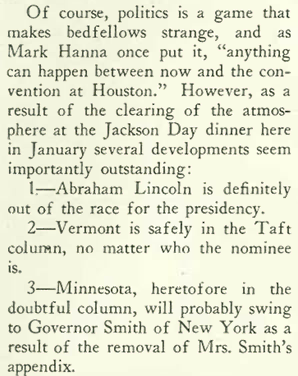
Regarding item No. 3, Sullivan was referring to Minnesota’s famed Mayo Clinic, and the related pride that was doubtless associated with the removal of an appendix from Catherine Dunn, the wife of Al Smith, four-term governor of New York and nominee to lead the Democratic ticket.
The candidates could not have been more different. The first Catholic to be nominated for president, Smith was a crowd-loving, charismatic personality, a Tammany Hall politician and a committed “wet” who opposed Prohibition. He attracted strong support from Catholics, women, drinkers and those who were tired of the crime and corruption associated with dry America.

Hoover, on the other hand, was deliberately dull and humorless, as stiff as his heavily starched collars and committed to keeping the country dry. But the economy under fellow Republican Calvin Coolidge was booming, and it didn’t hurt that many Protestants believed the Catholic Church would dictate Al Smith’s policies if he were elected. Sullivan had some fun with this perceived religious prejudice:

In light of the recent 2016 elections and the prominence of “Islamophobia” in the political rhetoric, Sullivan’s joke regarding the role of “Mohammedans” in the 1928 election is noteworthy:


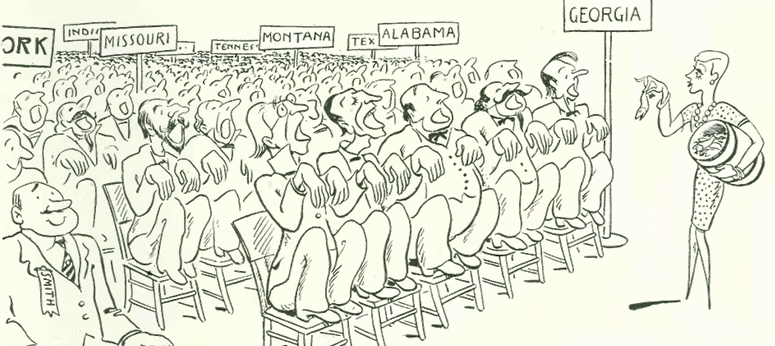
Illustrations by Al Frueh, both top and bottom, aptly captured the picture Sullivan painted of the nominating process:
 Smith would lose in a landslide. Journalists at the time attributed his defeat to the three P’s: Prohibition, Prejudice and Prosperity. Rural voters, who favored Hoover, also had a bigger say than their urban brethren: Republicans would benefit from a failure to reapportion Congress and the electoral college following the 1920 census, which had registered a 15 percent increase in the urban population. After the election, Smith became the president of Empire State Inc., the corporation that would build the the Empire State Building in 1930-31.
In his piece Sullivan also took at parting shot at President Coolidge…
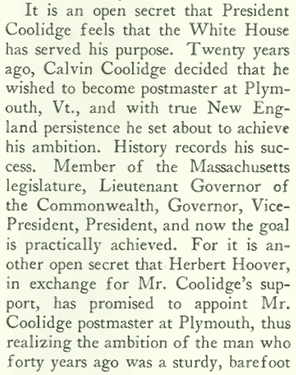

…as did cartoonist John Price in the same issue…

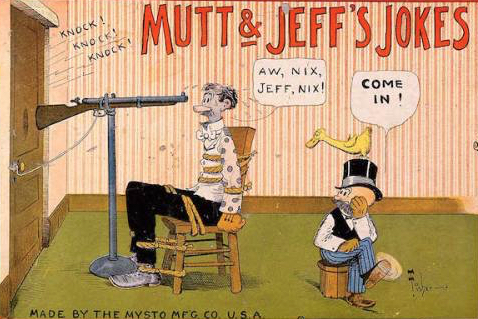
For reference, the image that inspired Price:

* * *
New Yorker Monotypes
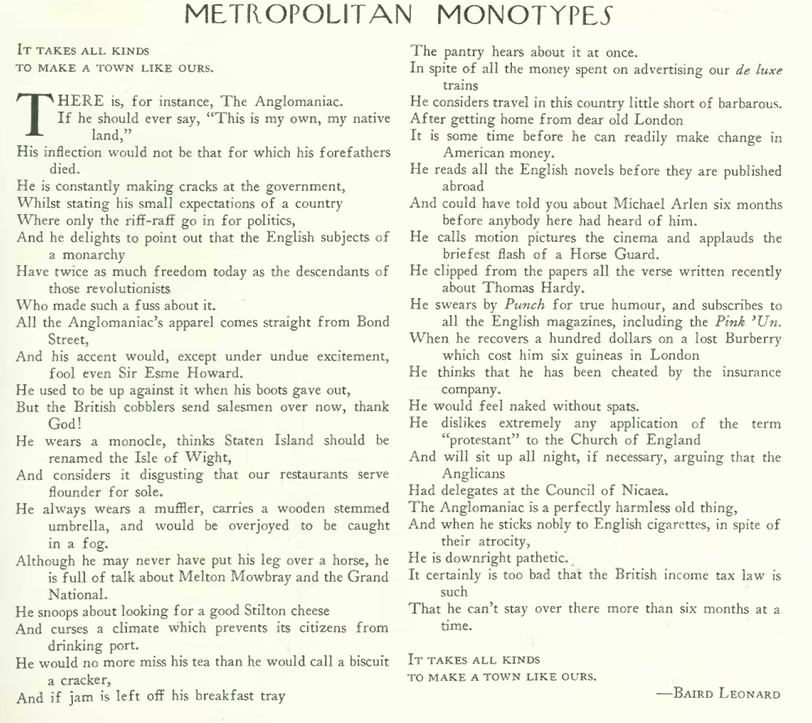
Another humorist who regularly contributed to The New Yorker was Baird Leonard, who beginning with the second issue of the magazine (Feb. 28, 1925) wrote a series titled “Metropolitan Monotypes.” Over five years and 36 installments Leonard wrote free-verse characterizations of various New York “types,” from debutantes to aesthetes to “The Anglomaniac” as described below in this installment from March 31, 1928:
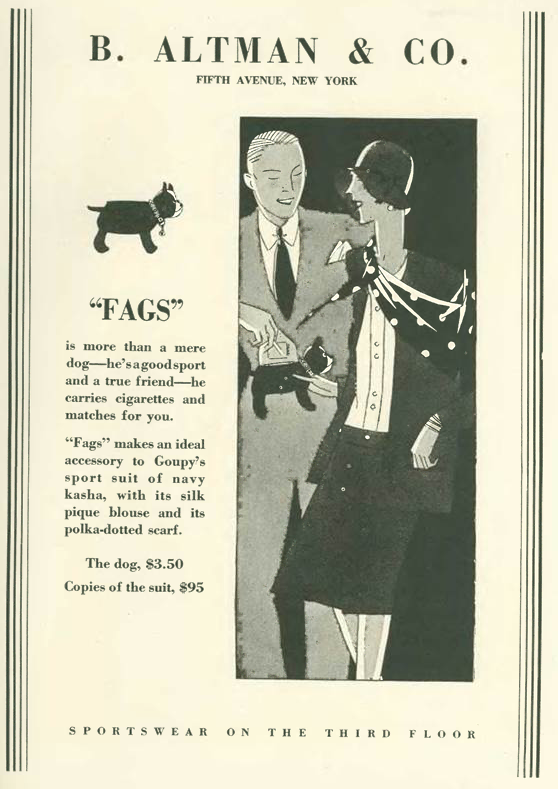
As noted before, Anglophilia oozed from The New Yorker ads, particularly those directed at the male reader (France was a common lure in ads for women). Every issue from the 1920s is rife with examples, but sticking to the March 31 issue we find this ad employing the British slang for cigarettes to market a silly, dog-shaped cigarette case to fashionable women:
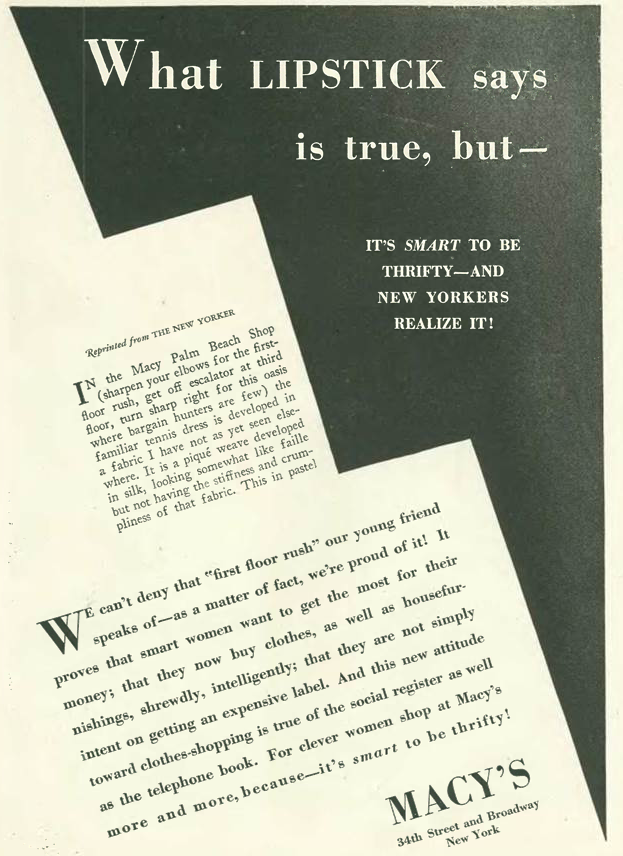
In the same issue this ad from Macy’s appealed to participants of a famous cultural event for the posh set—the annual Easter Parade on Fifth Avenue. A tradition dating back to the 1870s, in its first decades the “parade” was a display of wealth and beauty, as the well-to-do strolled from church to church to check out various floral displays.

In 1928, the poor and middle classes were merely observers of the passing parade, perhaps hoping to learn something about the latest fashions. The April 14 “Talk of the Town” suggested as much:

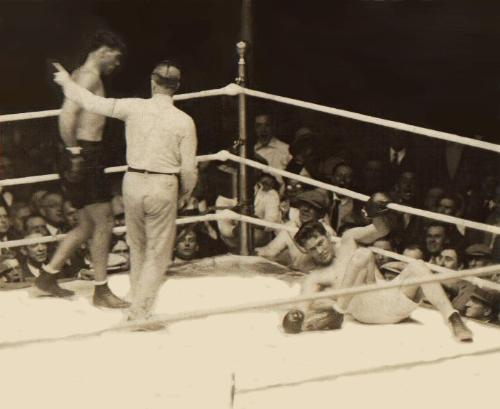
And finally, our cartoon comes courtesy of Leonard Dove, who explores the lighter side of boxing…

Next Time: We Americans…

































































 A New Yorker State of Mind