City life is a noisy life, especially in places like Manhattan, one of the most densely populated places in the world.
August 24, 1935 cover by Rea Irvin.
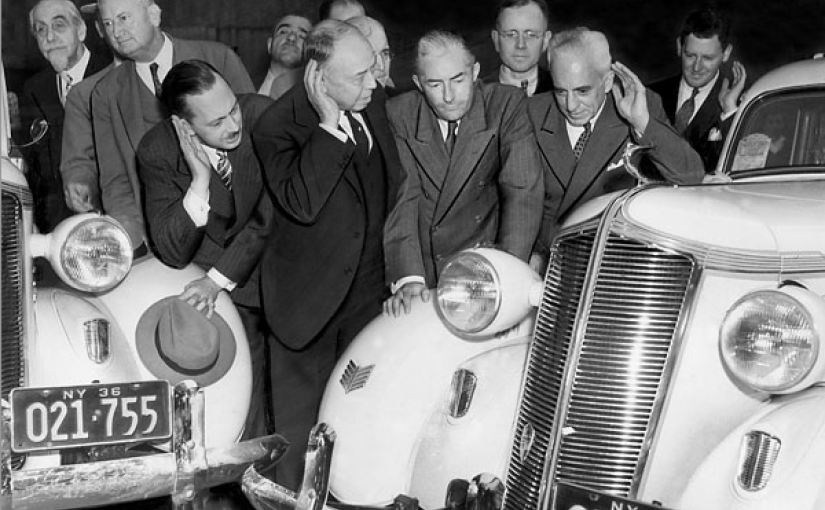
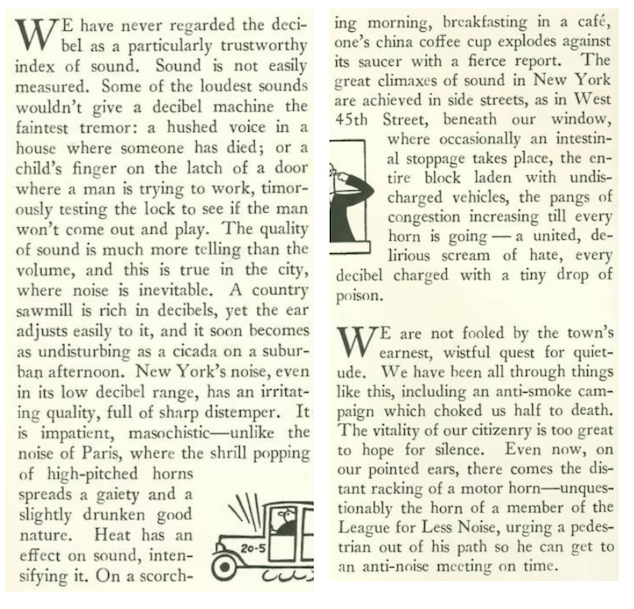
In his “Notes and Comment” column, E.B. White described the occasional “intestinal stoppage” of traffic outside The New Yorker’s offices at West 45th Street, an entire block “laden with undischarged vehicles, the pangs of congestion increasing till every horn is going—a united, delirious scream of hate, every decibel charged with a tiny drop of poison.”
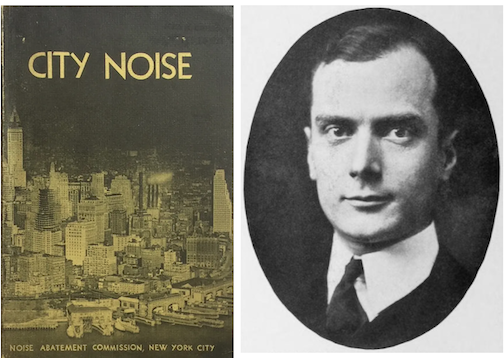
ABOVE THE FRAY…E.B. White with his pet dachshund Minnie at the West 45th Street offices of The New Yorker. (New York Times)AND DON’T CALL ME SHIRLEY…New York City’s Commissioner of Health, Shirley Wynne (right), created a Noise Abatement Commission in 1929. After eight months of research the Commission published City Noise, which included recommendations for a quieter city. (Wikipedia/trevianbooks.com)
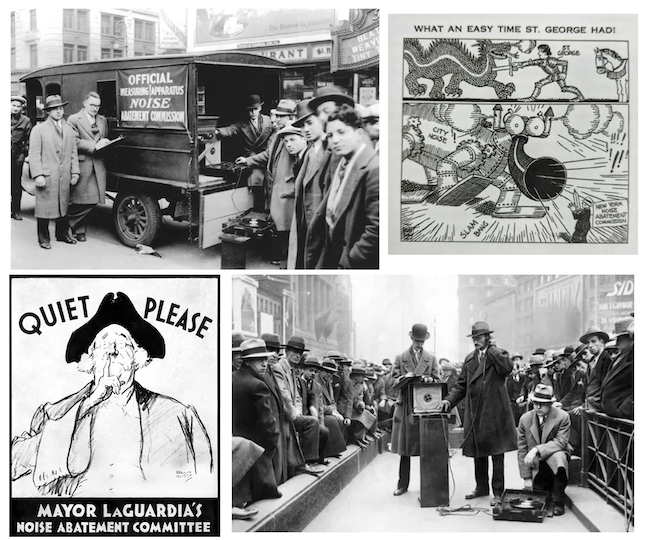
The city began addressing the problem in 1929, when New York City’s Commissioner of Health, Shirley Wynne (1882-1942), created a Noise Abatement Commission, likely the first such commission in the U.S. The Commission cited the “mounting roar and crash of traffic, building, manufacture and sundry other noises which have accompanied the growth of the city.” After eight months of research the Commission published City Noise, which included recommendations for a quieter city.
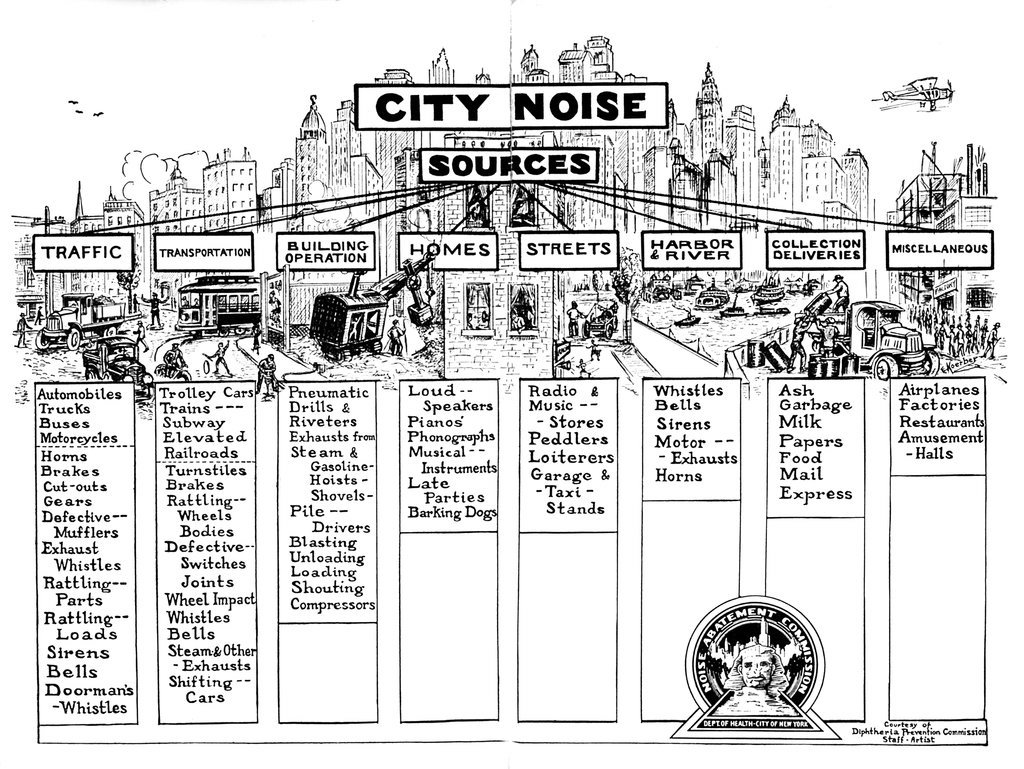
URBAN CHORUS…A chart featured in City Noise depicted some of sources of noise in New York City.PIPE DOWN!…Clockwise, from top left: The Noise Abatement Commission took to the streets with a municipal acoustics-measuring truck in 1930; cartoon in the New York Herald Tribune illustrated the challenge ahead; Commission officials conducting noise tests in Times Square, circa 1930; poster circa 1936 promoted Mayor Fiorello La Guardia’s anti-noise drives. A 1936 noise code put sound restrictions on everything from radios to the “prolonged and unreasonable blowing of a horn.” A first offense cost $1; the second, if committed within the next year, $2. (hii-mag.com/Bloomberg.com/NYTimes.com)
Not one to leave a stone unturned, White also added this note about the noisy doors on Pullman train car toilets…
Here are the Otto Soglow spot drawings that accompanied the “Talk” piece:
Final note: A colorful exploration of sound can be found on the One Thousand Birds site,Hii Magazine.Check it out!
* * *
Puff Pushers
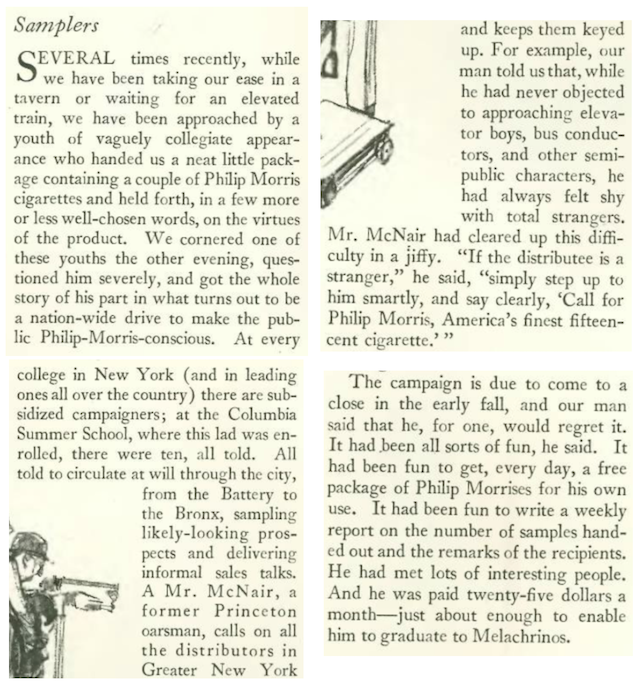
Tobacco companies like Philip Morris have long been savvy in finding ways to expand their market, including taking their product directly to the consumer, as “The Talk of the Town” explained in this entry:
SMOKE FREE…Sample pack of Philip Morris cigarettes, circa 1930s. (Ebay)
* * *
A Rare Glimpse
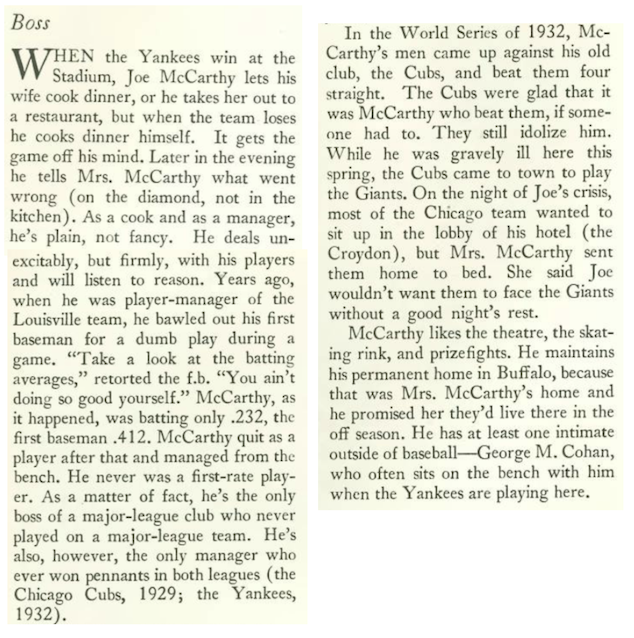
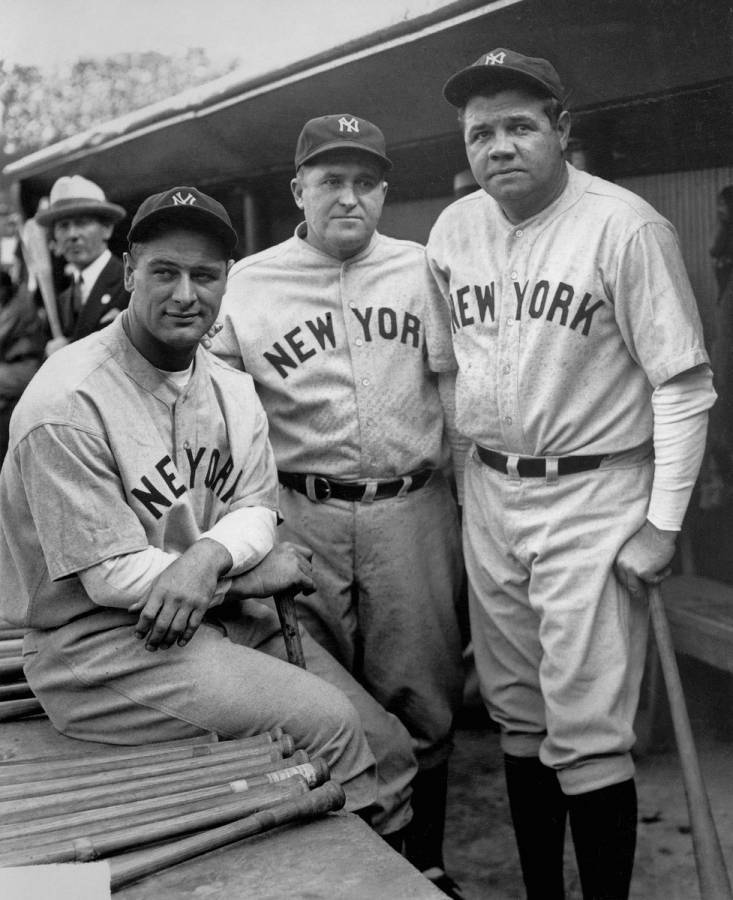
Before Roger Angell started writing about baseball in 1962, there wasn’t a whole lot written about the sport in the pages of The New Yorker. In the magazine’s early years, the game was probably perceived as too low-brow, while other athletic pursuits such as golf, tennis, and polo were more in line with the desired or perceived readership. Early contributors such as Ring Lardner had also soured on the sport, thanks to the Black Sox Scandal of 1919 and the greed of team owners. So here is a rare look at baseball, and Yankee coach Joe McCarthy (1887-1978), in “The Talk of the Town.” Excerpts:
BRONX BOMBERS…Coach Joe McCarthy (center) with sluggers Lou Gehrig, left, and Babe Ruth during the 1932 World Series. The first manager to win pennants in both the National and American leagues, McCarthy’s teams would win a total nine league pennants and seven World Series championships. (CARLI Digital Collections)
* * *
Music Under the Stars
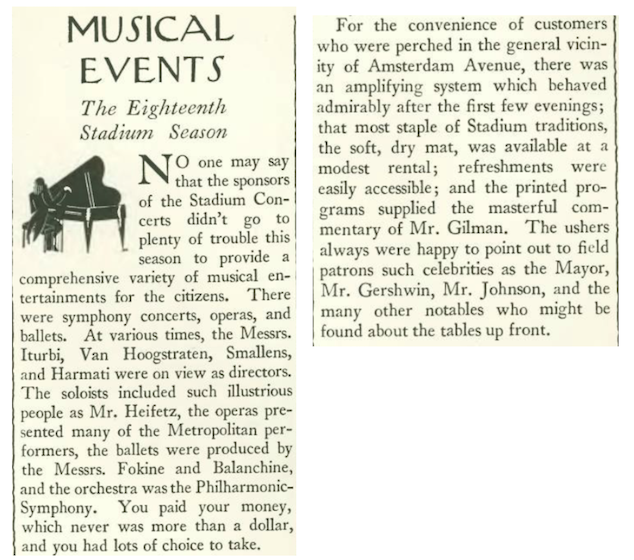
The monumental Lewisohn Stadium was a popular classical music venue on the City College of New York campus until its unfortunate demolition in 1973. According to BBC Music Magazine, “for nearly half a century, Lewisohn Stadium gave people from all walks of life the chance to hear performances by the likes of violinist Fritz Kreisler, soprano Leontyne Price and clarinettist Benny Goodman for as little as 25 cents admission. The New Yorker paid a visit during eighteenth season of the Stadium Concerts. Excerpts:
CLASSICAL MASSES…At left, cover of the 1935 Stadium Concerts Review; at right, Andre Kostelanetz conducts before a crowd of thousands at Lewisohn Stadium in 1939. The stadium was demolished in 1973 to make way for City College of New York’s North Academic Center. SeeThe New York Philharmonic Archive for the complete digital version of the 1935 Stadium Concerts Review. (NY Philharmonic Archive/PressReader.com)
* * *
At the Movies
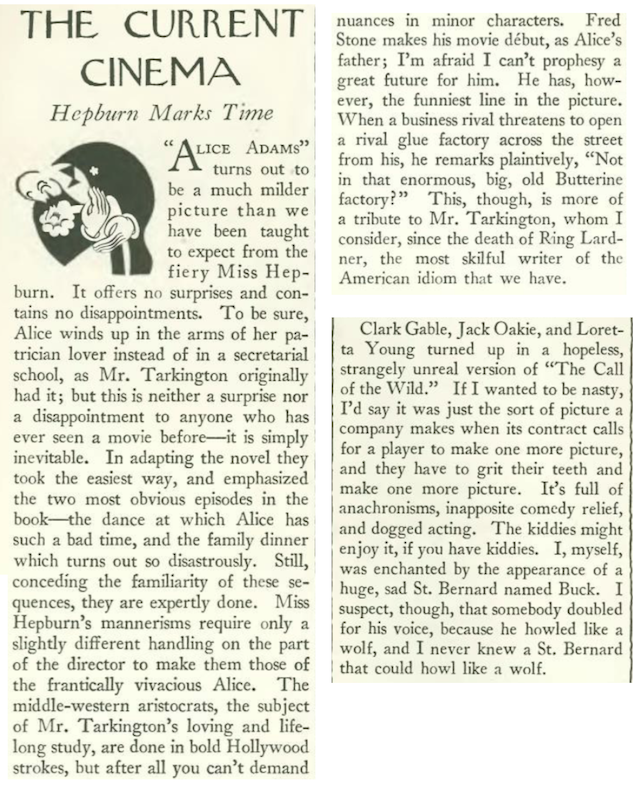
Film critic John Mosher continued to search in vain for a film he could endorse, but he came away empty-handed after screening a star-studded screen adaptation of Jack London’s novel The Call of the Wild. Star power also fell short for Mosher in the screen version of Booth Tarkington’sAlice Adams.
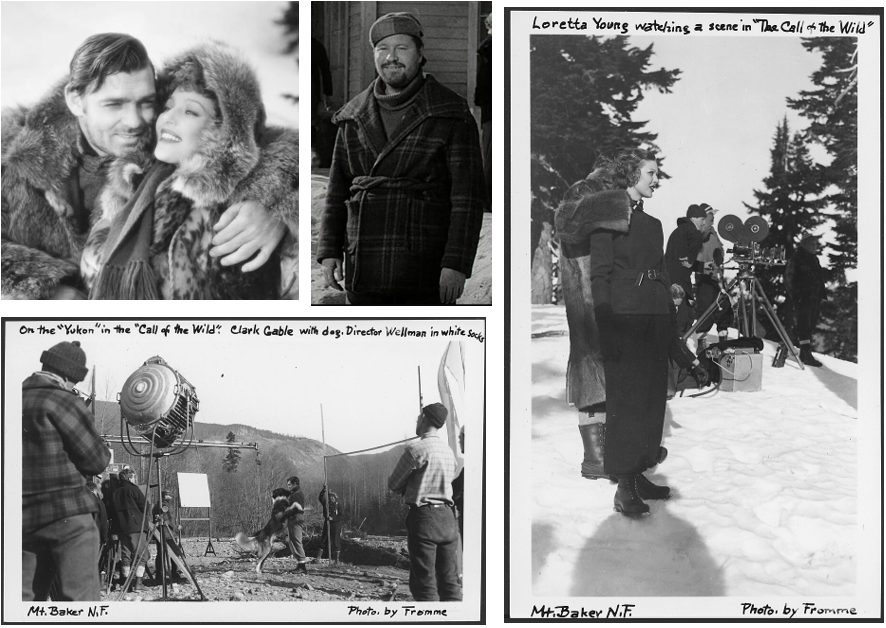
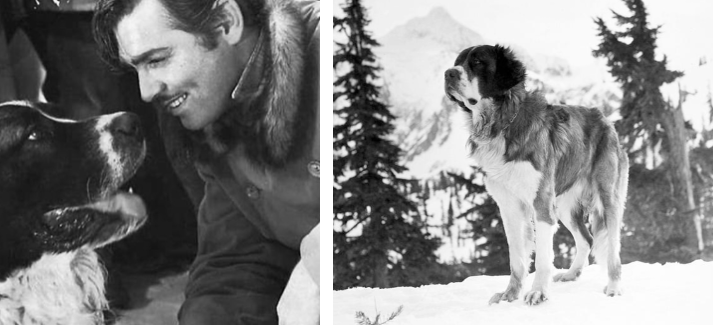
SMALL TALK…The film adaption of Booth Tarkington’sAlice Adams seemed to have all of the right elements in place, including director George Stevens and stars Katharine Hepburn and Fred MacMurray (left), but critic John Mosher found it somewhat average. In a 1991 retrospective review, however, The New Yorker’sPauline Kael deemed the romantic comedy “a classic” and stated that “Hepburn gives one of her two or three finest performances.” At right, the character of Alice Adams was first portrayed on the silver screen by Florence Vidor in a 1923 silent film. (Toronto Film Society/Wikipedia)THE BIG CHILL…Clockwise, from top left, Clark Gable and Loretta Young brave the Yukon wilds (actually Washington State) in The Call of the Wild; Jack Oakie provided comic relief as Gable’s sidekick Shorty Hoolihan; Young watches the filming of a scene on location at Mt. Baker National Forest; Gable shoots a scene with the St. Bernard Buck. (IMDB/Wikimedia)CLARK’S BEST FRIEND…Dog lover Clark Gable became very close with Buck during the filming of The Call of the Wild. Buck appeared in seven more films from 1935 to 1940, even receiving star billing as “Buck the Wonder Dog.” (Facebook/Pinterest)
* * *
From Our Advertisers
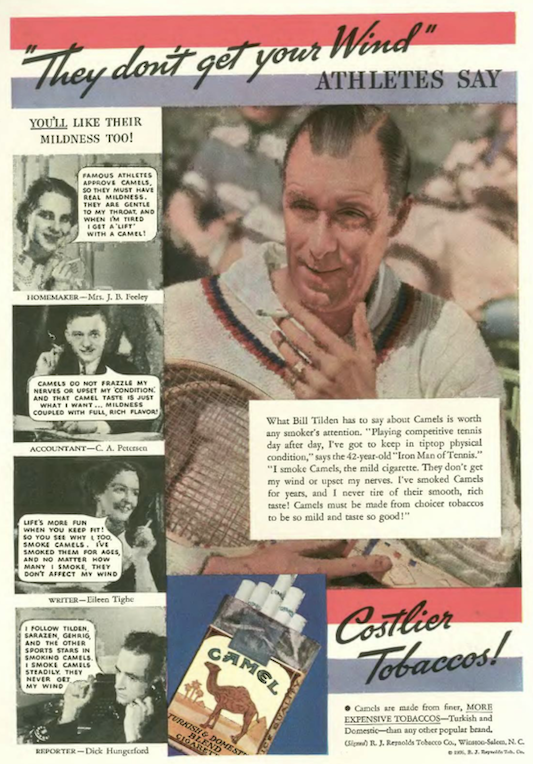
Colorful ads returned to the August 24 issue, featuring familiar sponsors who could afford full-page, full-color spots, namely tobacco and liquor producers…Camel was back with their athletic theme, however they might have chosen someone other than Bill Tilden, who looked perfectly ancient…
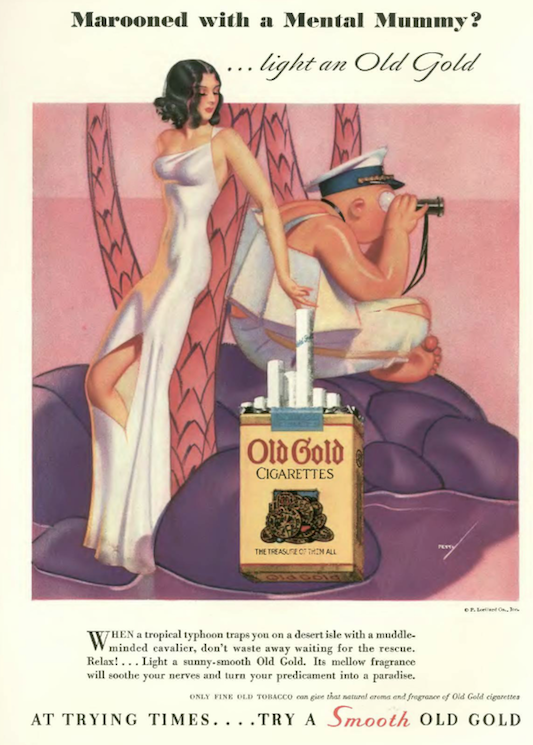
…Old Gold returned with another George Petty-illustrated ad…
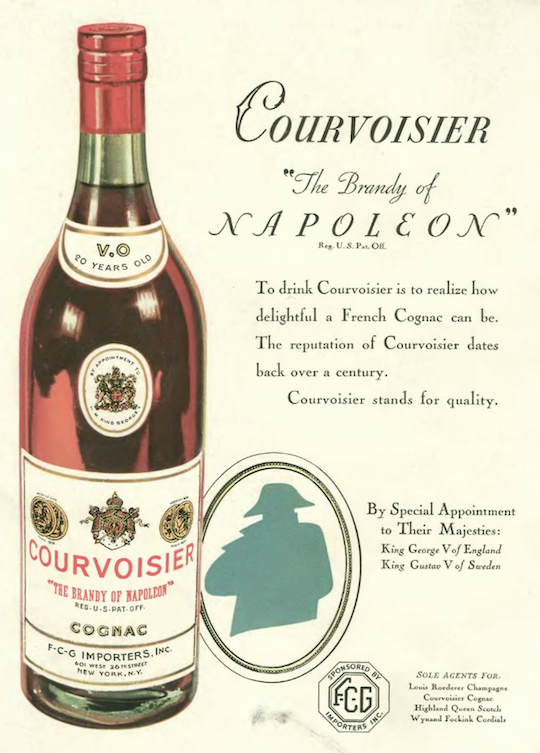
…Courvoisier cognac took the back page spot…
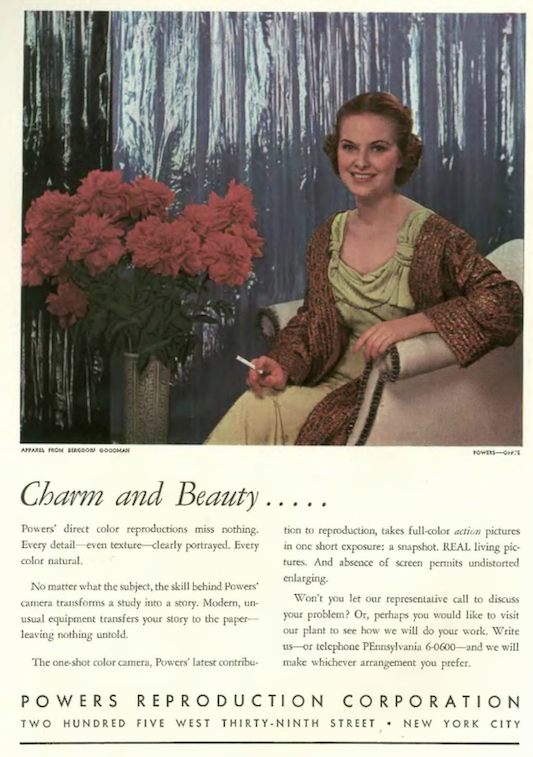
…Powers Reproduction showed off their color printing expertise…I wonder if that is a Lucky she is smoking…
…because I believe she is the same woman who appeared in this ad from the July 27 issue:
…back to August 24, where we were encouraged to enjoy a Johnny Walker highball to stave off the late summer heat…
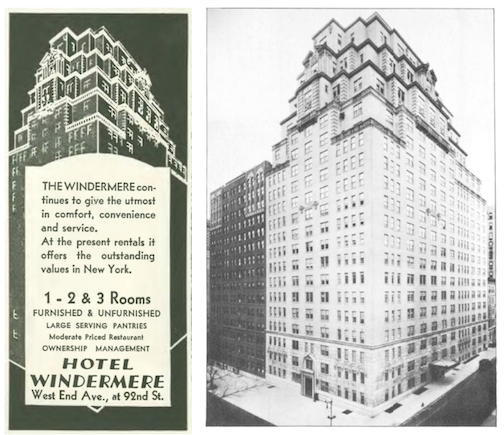
…the distinctive crown of Hotel Windemere on the Upper West Side was an eye-catcher even in this one-column ad from the back of the book…photo at right from around the time it was completed, 1927…
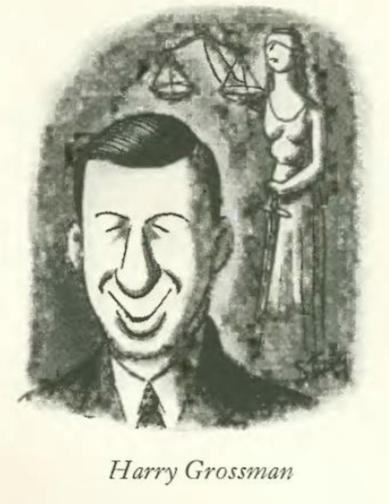
…on to our cartoonists, an unexpected profile caricature by William Steig (this two-part profile featured process-server Harry Grossman)…
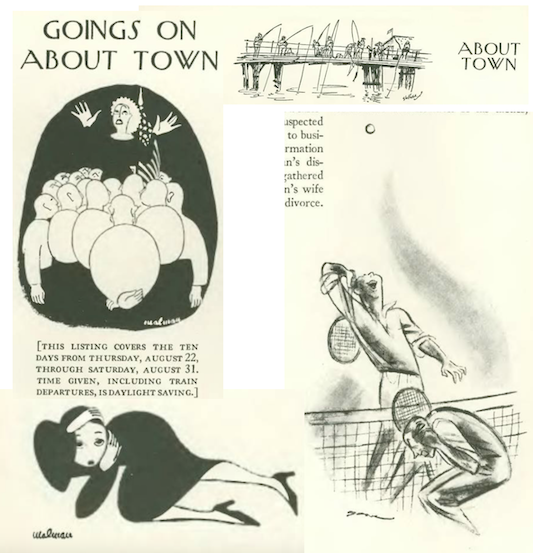
…interesting spot drawings by George Shellhase (top) and Leonard Dove (bottom right), and at left, two by Christina Malman…
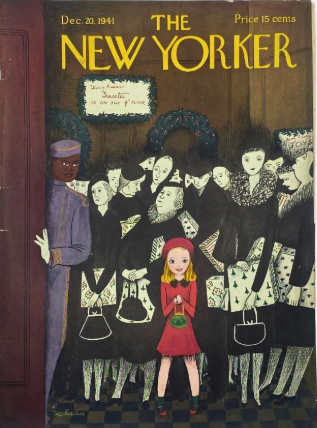
…Malman (1912-1959) produced at least two-dozen covers for The New Yorker between 1937 and 1956, including this gem from 1941:
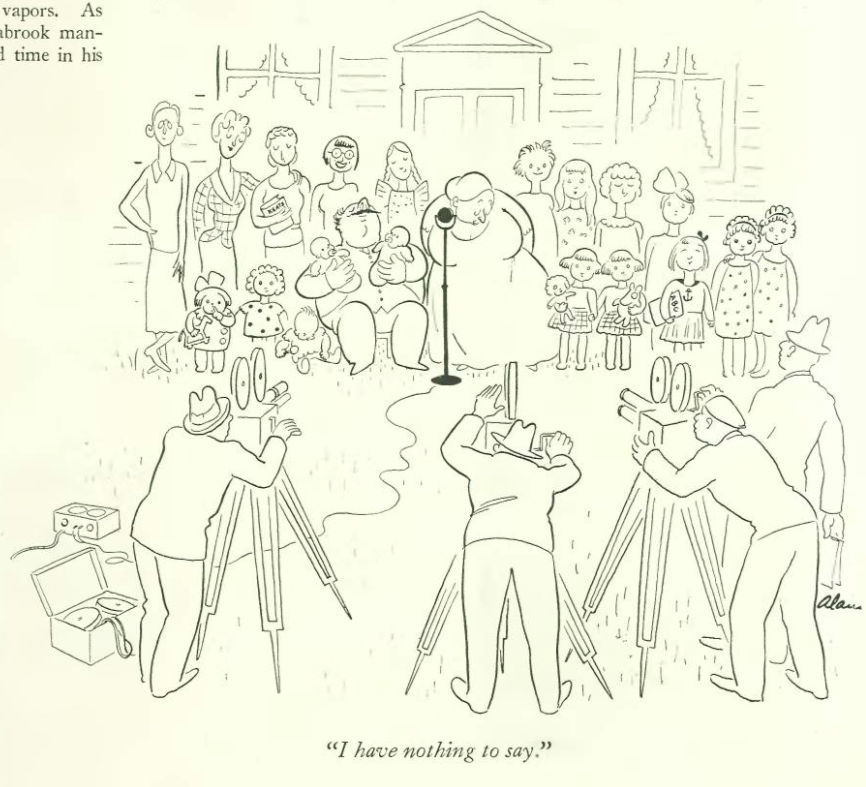
…some baby names have real meaning, according to Alan Dunn…
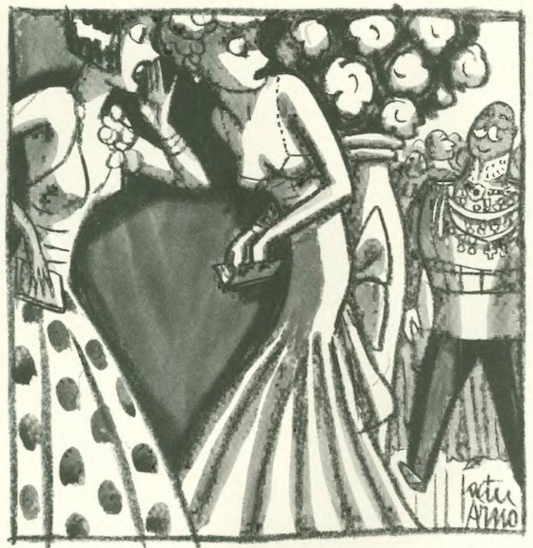
…Peter Arno offered caution about dancing with a prickly Colonel…
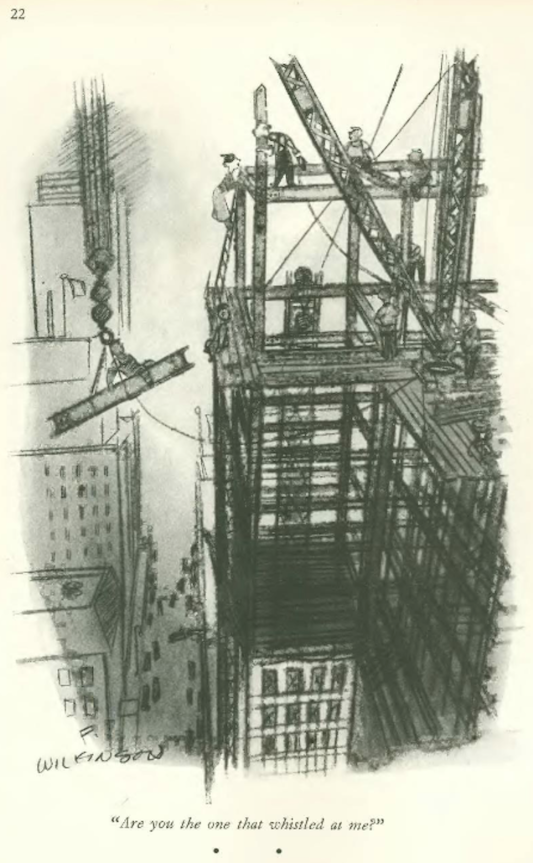
…Fritz Wilkinson answered one cat call high above the city…
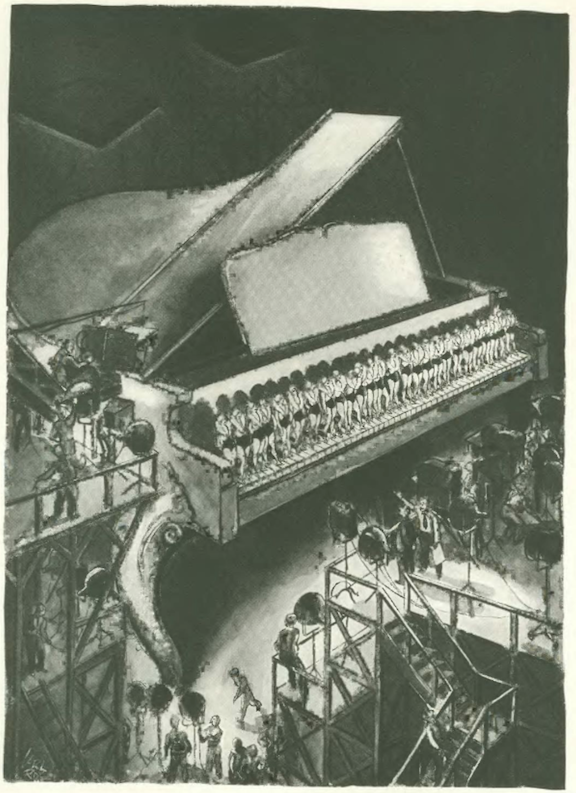
…Franz Shubert met Busby Berkeley, via Carl Rose…
…George Price persisted in threading a needle…
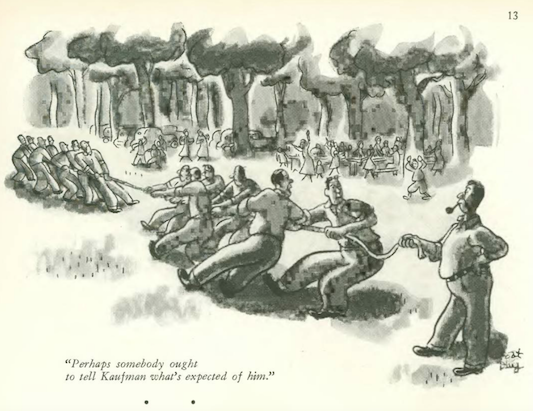
…Robert Day gave us a pacifist of sorts in a game of tug-of-war…
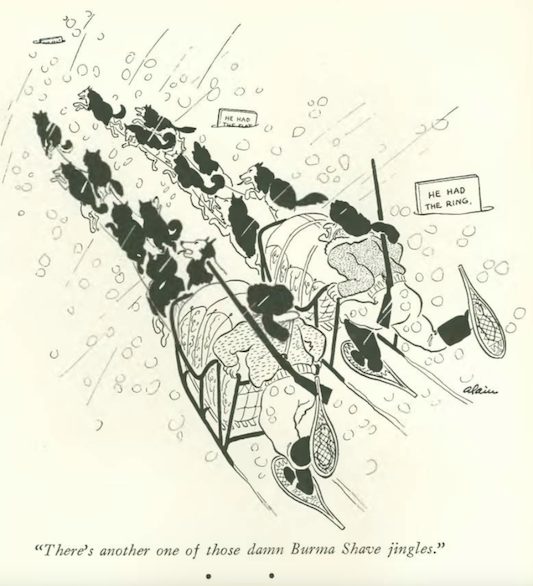
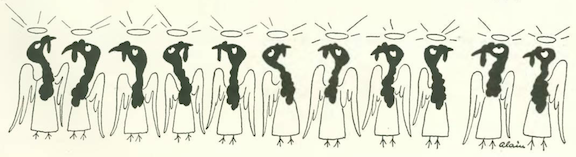
…Burma Shave jingles seemed to be everywhere in the 1930s, per Alain…
…An example of replica Burma Shave signs along Route 66:
(roadsideamerica.com)
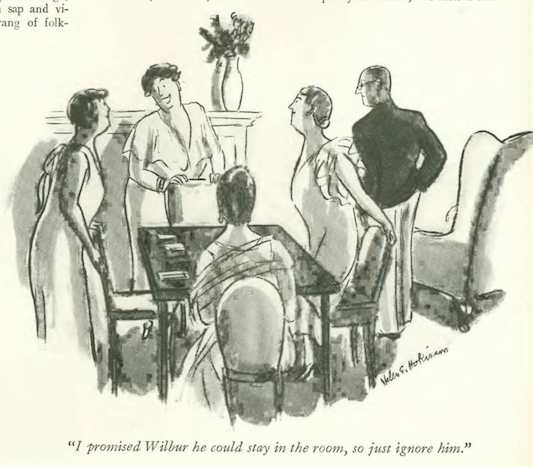
…some parenting tips came our way via Helen Hokinson…
The 1935 film She was one of those old movies you’d see on television during the 1970s when there were only three or four channels (plus UHF) and local stations would tap into the “B” movie vault to fill airtime. One of those films was She.
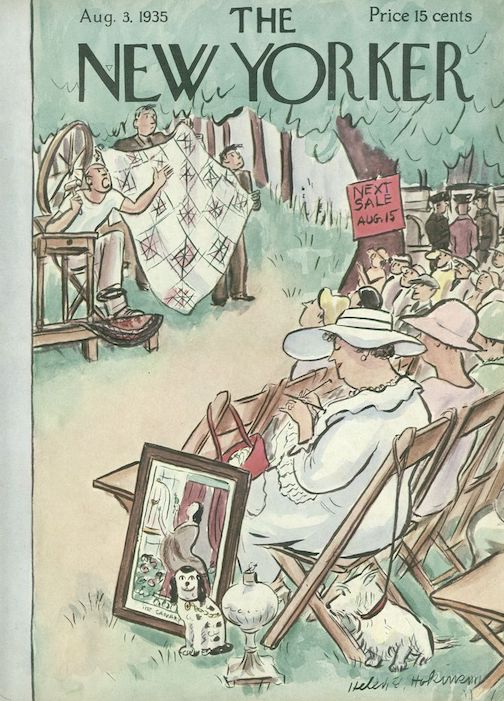
August 3, 1935 cover by Helen Hokinson.
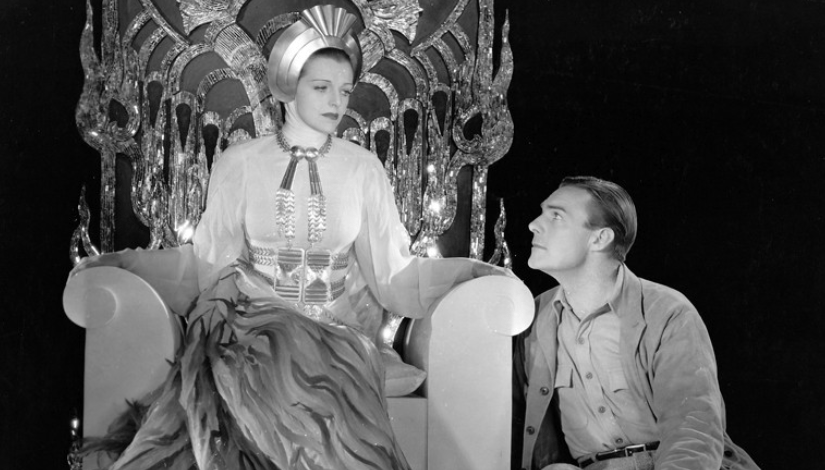
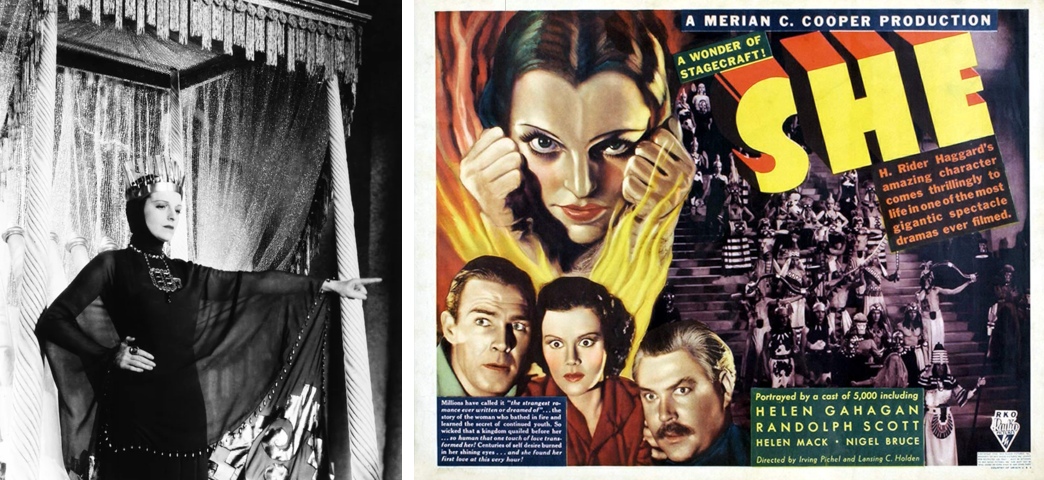
Film critic John Mosher felt a bit sorry for Helen Gahagan, who portrayed “She Who Must Be Obeyed” (aka “She”)—an immortal who ruled an exotic, lost civilization near the Arctic Circle. The challenge for Gahagan was to seem imperious before her co-stars Randolph Scott and Helen Mack, who seemed more suited to the high school hijinks of an Andy Hardy picture. The film was a pretty standard adventure tale, in the mold of producer Marian C. Cooper’s 1933 King Kong, with two explorers falling in love during a perilous journey.
ARCHETYPE…At left, Helen Gahagan as “She” (Who Must Be Obeyed). Her costume possibly inspired the Evil Queen in Disney’s 1937 animated Snow White and the Seven Dwarfs. At right, lobby card that promoted the film. (Scifist.net/Reddit)WHEN YOU PLAY WITH FIRE…She Who Must Be Obeyed (Helen Gahagan), believing that the explorer Leo Vincey (Randolph Scott) was a reincarnation of his ancestor (whom she loved), and jealous of his girlfriend Tanya (Helen Mack), invites Leo to join her in the eternal flame. Unfortunately, her re-entry into the flame that gave her immortality turned her into a dying, withered crone. (The Nitrate Diva/Scifist.net)
The 1887 H. Rider Haggard novel, She, inspired eponymous silent films in 1908, 1911, 1916, 1917, and 1925. The 1935 film reviewed here received tepid reviews and lost money on its first release, however in a 1949 re-release it fared much better. She was re-made in 1965 with Ursula Andress in the lead role, and again in 1984 in a post-apocalyptic film that had virtually nothing to do with Haggard’s novel.
SHE THROUGH THE YEARS…Clockwise, from top left, “She” (Marguerite Snow) offers a dagger to Leo Vincey (James Cruze) in a 1911 two-reel (24 min.) adaptation; Valeska Suratt as “She” in the 1917 film (now lost); Betty Blythe took the title role in the 1925 production, considered to be the most faithful to the 1887 H. Rider Haggard novel; Sandahl Bergman appeared dressed for a Jazzercise video in the 1984 post-apocalyptic She; and finally, Ursula Andress and John Richardson in the 1965 CinemaScope production of She. (Wikipedia / digitalcollections.lib.washington.edu / cultcelebrities.com / Reddit)
* * *
Colonial Ambitions
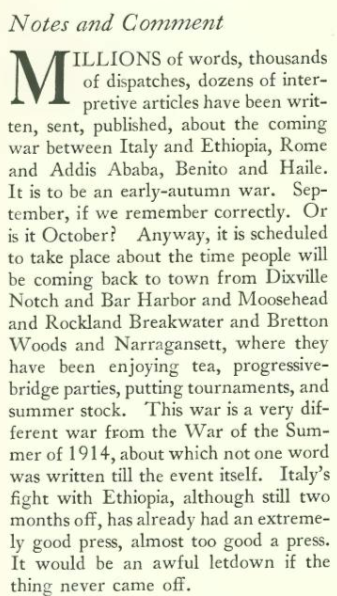
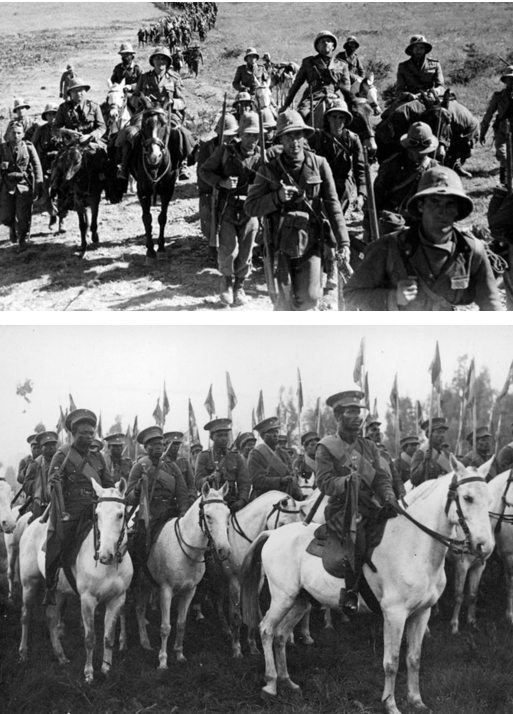
With most of Africa carved up by other European powers (Britain, France, Belgium etc.) in the 19th century, Italy set its sights on Ethiopia, which by the end of the 19th century was the only independent country left on the continent. Ethiopia fought off Italy’s first attempt at conquest in the Battle of Adwa (1896), but with the rise of fascist dictator Benito Mussolini, Italy paid a return visit, this time with heavy artillery and airstrikes that included chemical weapons. E.B. White tried to make sense of this latest invasion in his opening comments.
THOSE GUYS AGAIN…Italy invaded Ethiopia on October 3, 1935, a significant act of aggression in the lead up to World War II. Despite facing a technologically superior Italian army (top) equipped with modern weapons, including tanks, aircraft, and chemical weapons, the Ethiopian forces (bottom photo) mounted a strong resistance. (Wikipedia)
In his weekly column, Howard Brubaker mused on the Italian aggressions and other rumblings of the coming European war.
* * *
Author, Author
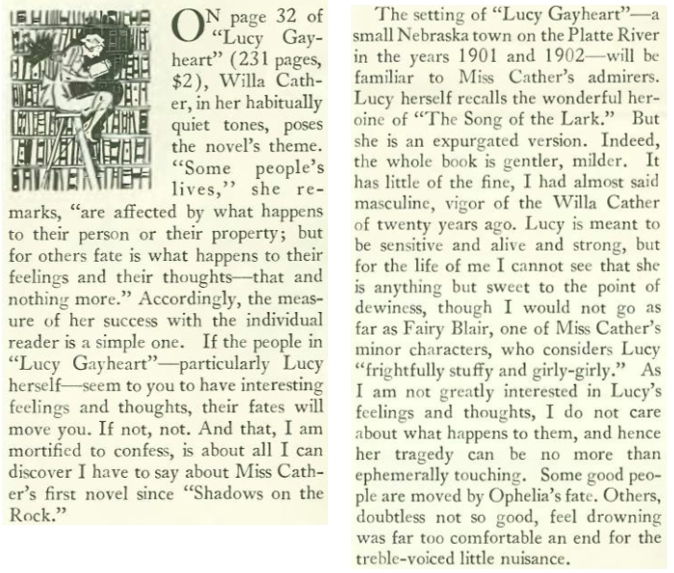
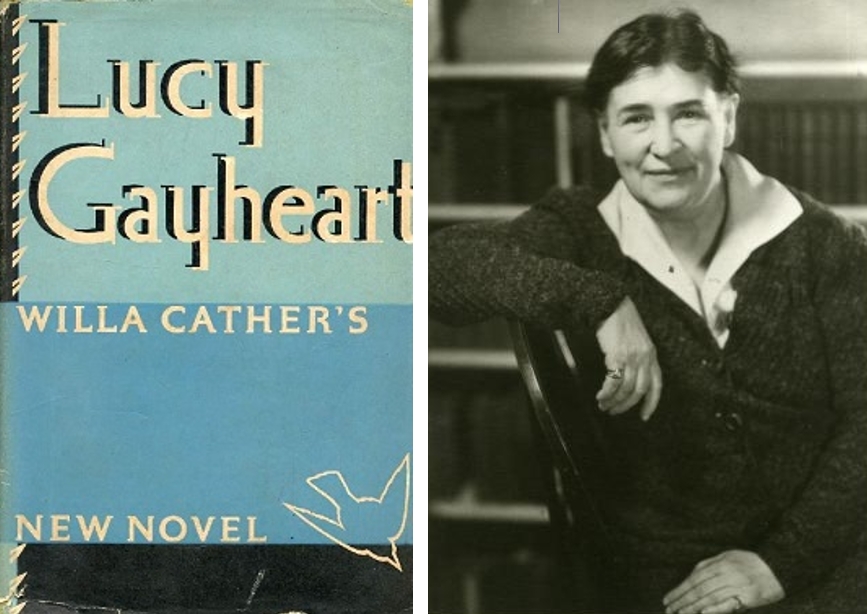
The writer Willa Cather was a favorite of New Yorker critics, including Clifton Fadiman, however her latest novel was a bit too mild for his tastes.
HERE’S LUCY…Clifton Fadiman confessed he was “mortified” to admit that he found Willa Cather’s latest novel a bit too gentle. At right, portrait of Cather on her birthday, December 7, 1936. (willacather.org)
* * *
From Our Advertisers
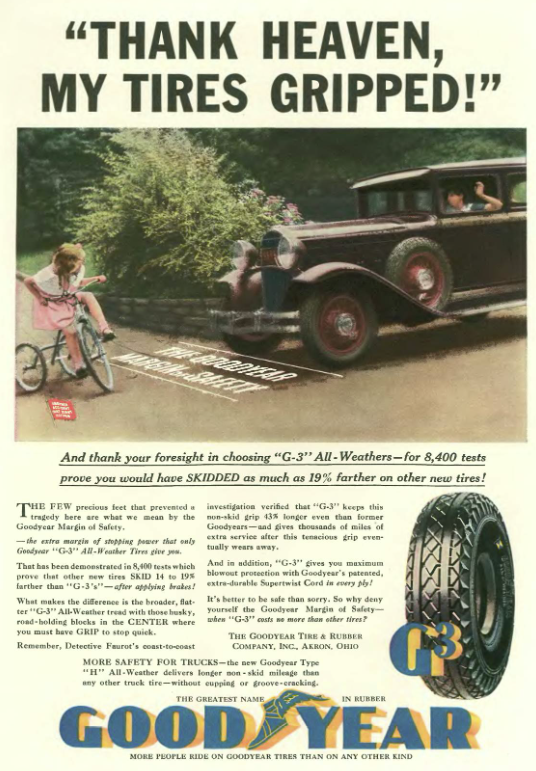
We begin with more fearmongering from the folks at Goodyear, who offered weekly reminders of the perils of not choosing their all-weather tires…
…the Liggett and Myers Tobacco Company conjured up this “naughty maiden” to encourage even timid souls to take up the habit…
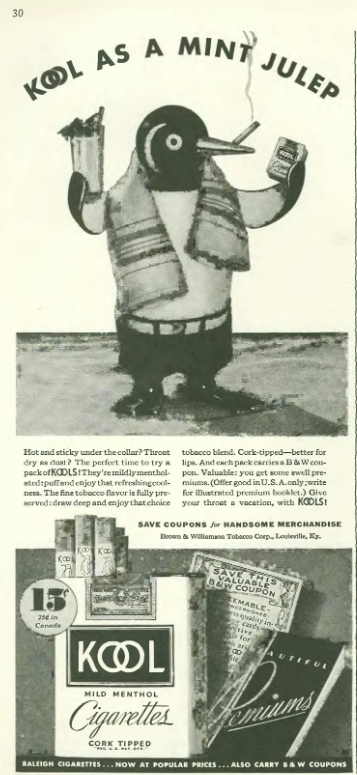
…on the other hand, the makers of the upstart KOOL brand kept it simple with their chain-smoking penguin, who was grabbing ever more market share from rival menthol pusher SPUD…
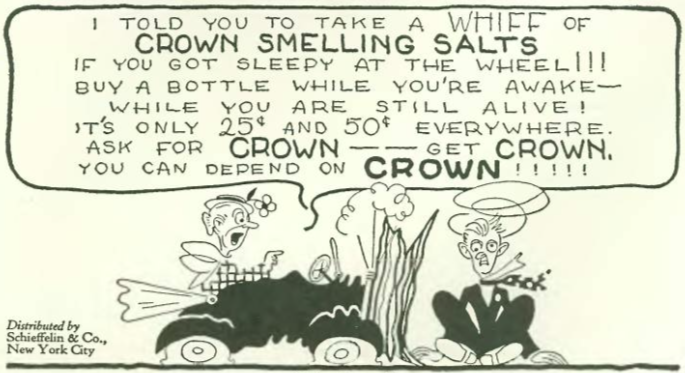
…ads in the back of the book offered up even less sophisticated products, such as Crown Smelling Salts…
…while Dr. Seuss and Norman Z. McLeod continued to make a living with their distinctive illustrations…
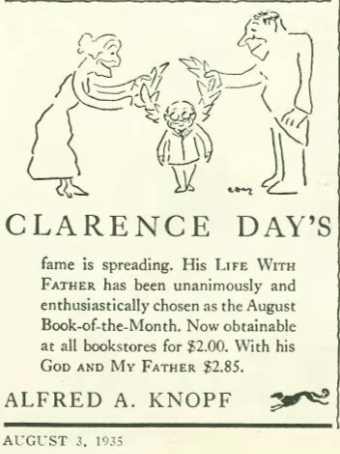
…at the very back of the magazine, this tiny ad from Knopf promoted Clarence Day’sLife With Father, published just months before Day’s death on Dec. 28…
…which brings us to our cartoonists…Constantin Alajalov kicked us off with this happy number…
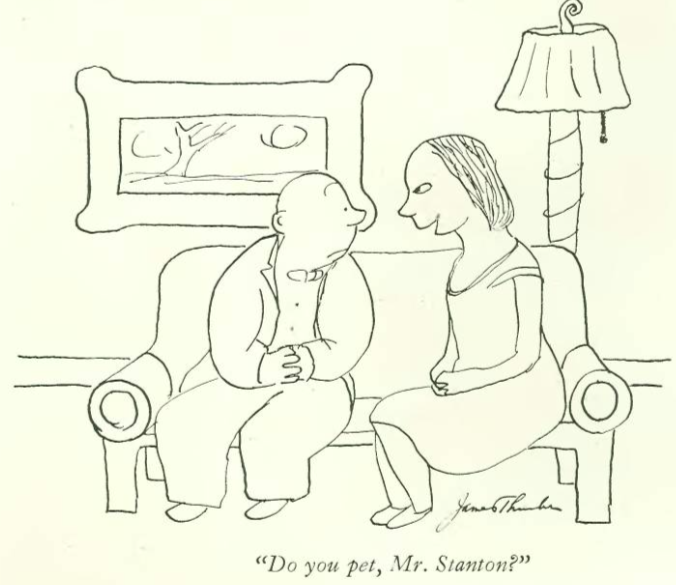
…James Thurber found steamy goings on in the parlor…
…Charles Addams came down to earth with this pair…
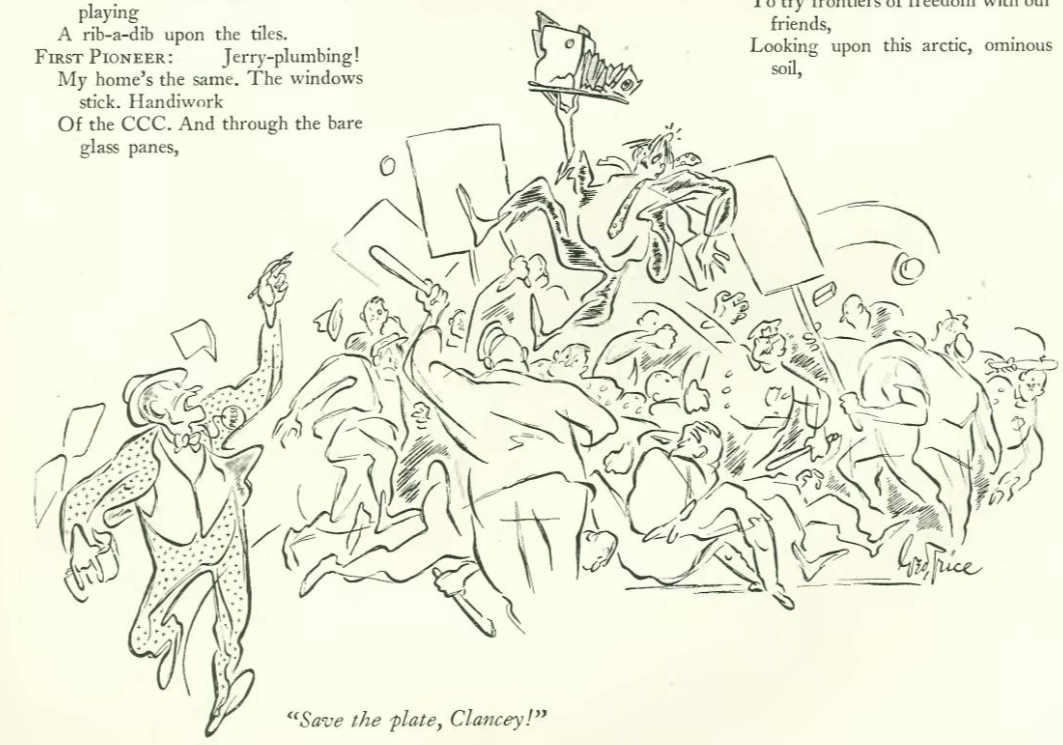
…George Price showed us the rough and tumble of news reporting…
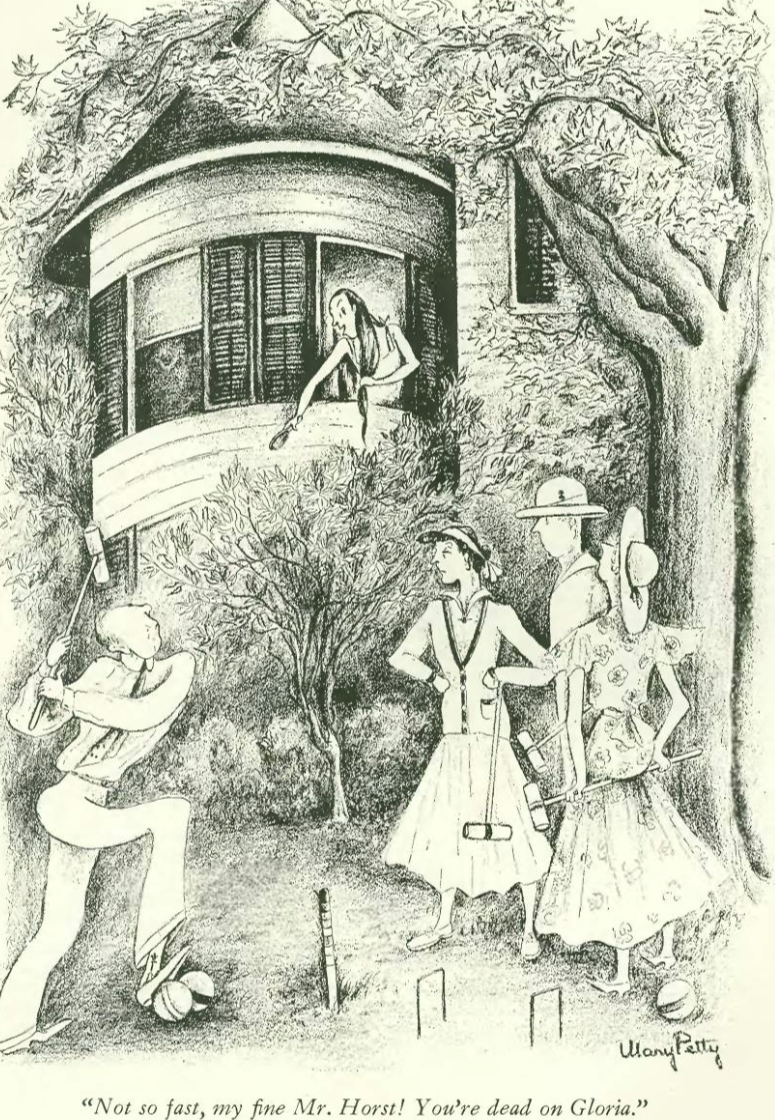
…Mary Petty contributed this sumptuous drawing of a croquet match…
…Helen Hokinson was in a transcendental mood…
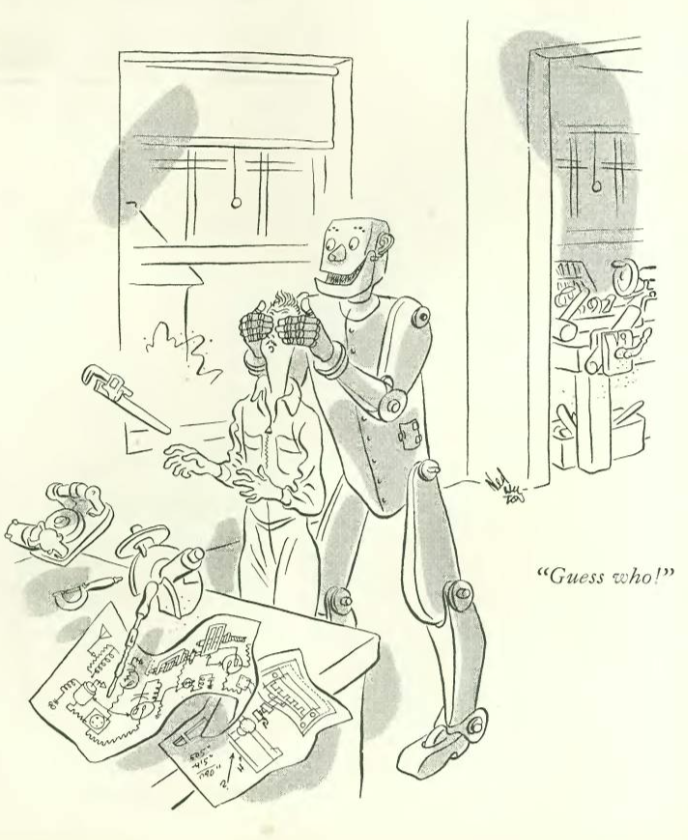
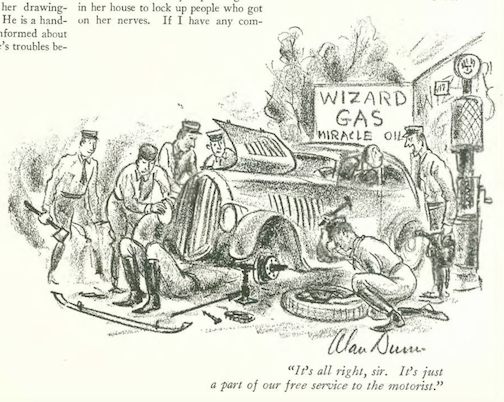
…and Ned Hilton had a big surprise for one garage tinkerer…
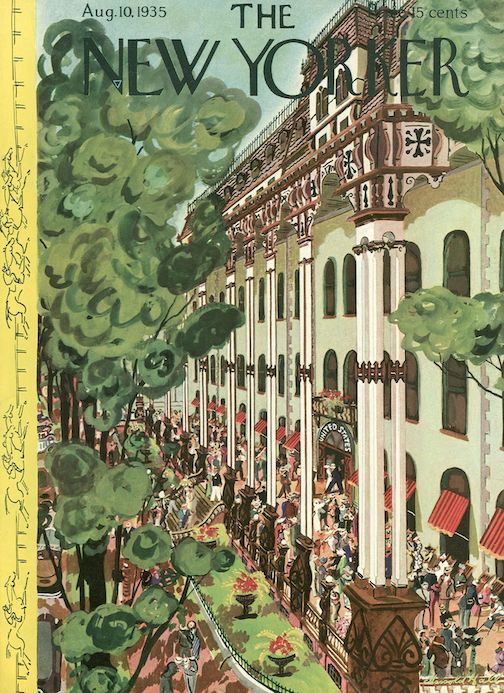
…on to August 10 and a rich summer scene by Arnold Hall:
August 10, 1935 cover by Arnold Hall.
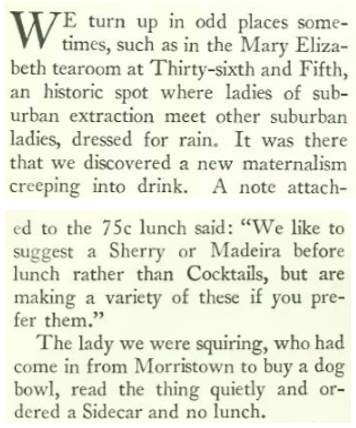
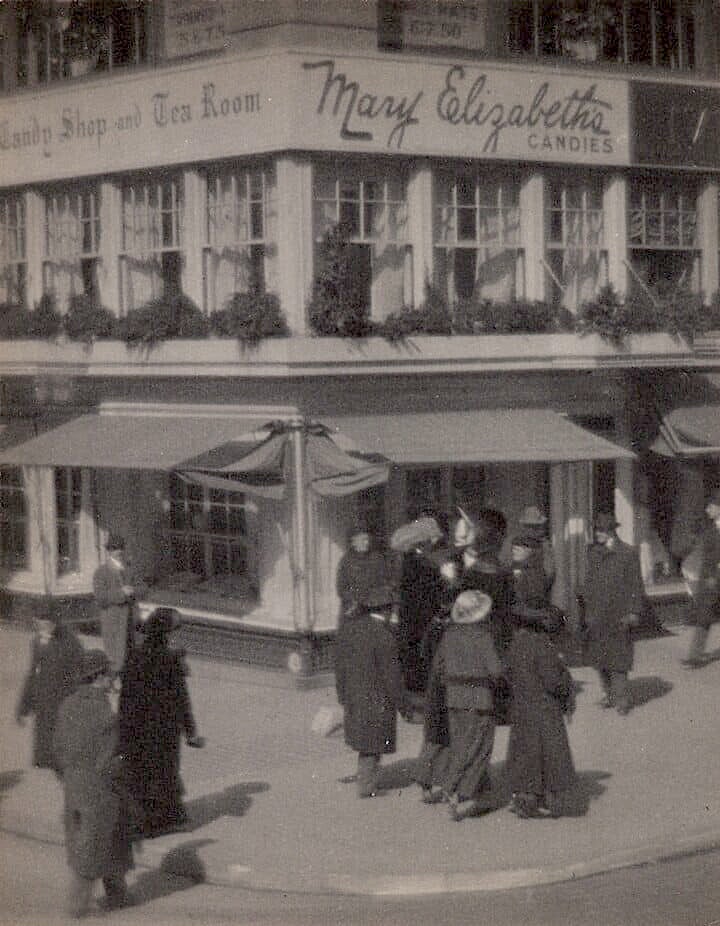
“The Talk of the Town” checked the lunch crowd at Mary Elizabeth’s Tea Room, where some preferred to drink their lunch.
TEA AND SWEETS (and cocktails) were among the offerings at Mary Elizabeth’s Tea Room at 36th and Fifth, seen here circa 1912. (Photo by Karl Struss via Facebook)
* * *
Comic Relief
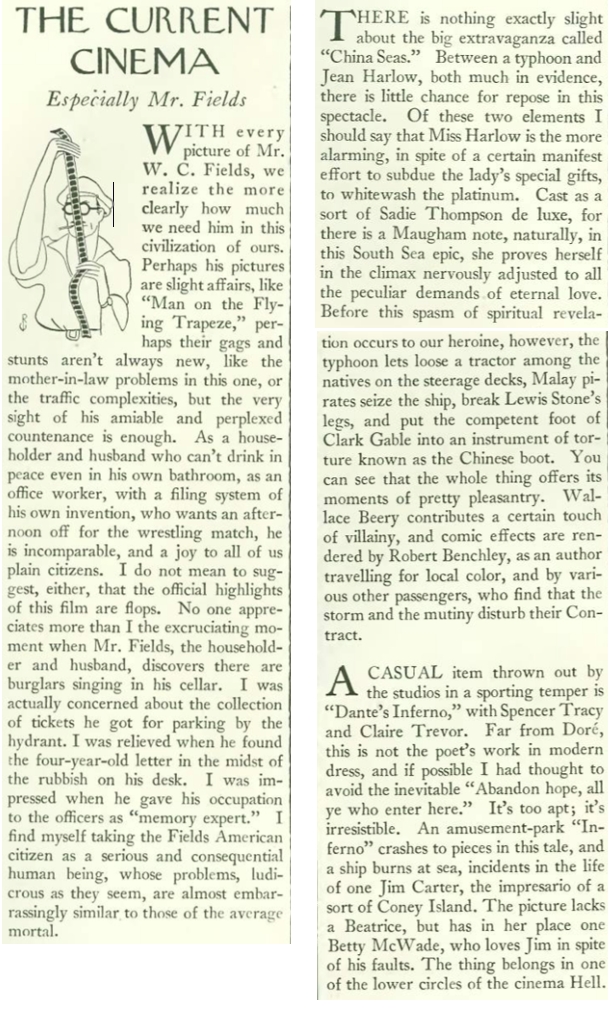
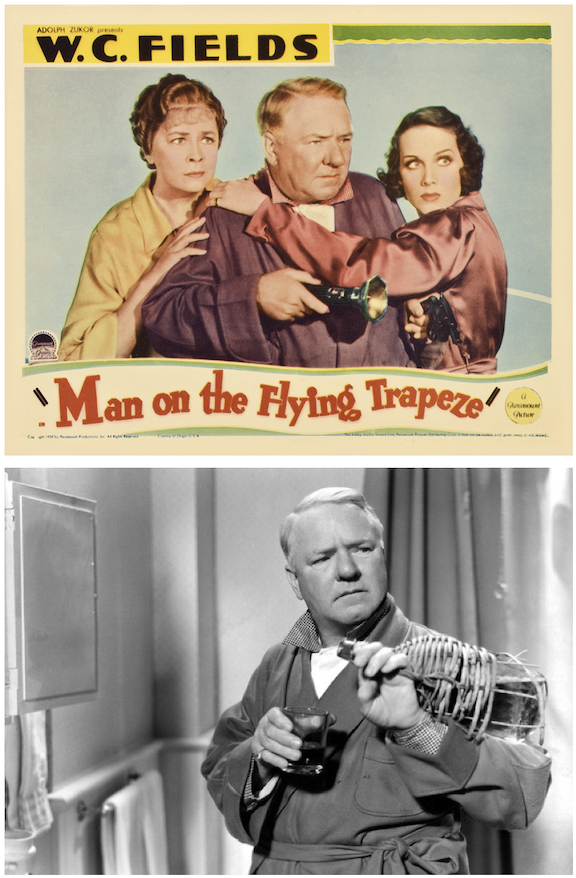
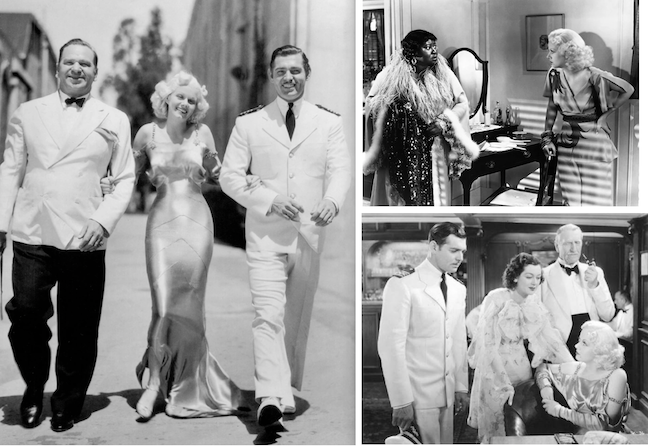
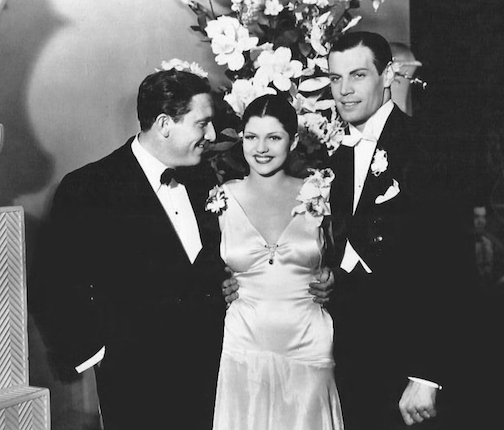
Film critic John Mosher offered an appreciation of W.C. Fields, noting that civilization needed films like Man on the Flying Trapeze during those hard years. Mosher also found some worthy distractions in the Jean Harlow vehicle China Seas, but was prepared to consign Spencer Tracey’s latest offering to the “lower circles of cinema hell.”
ANSWERING HIS NATION’S CALL…W.C. Fields brought joy to millions during the Depression in movies such as Man on the Flying Trapeze. Above, from left, Kathleen Howard, Fields, and Mary Brian. (IMDB/Rotten Tomatoes)SHORE LEAVE…At left, Wallace Beery, Jean Harlow, and Clark Gable on the set of China Seas; top right, Hattie McDaniel with Harlow in a scene from the film; below, Gable, Rosalind Russell, and C. Aubrey Smith with Harlow in China Seas. (musingsofaclassicfilmaddict.wordpress.com / Pinterest)FRESH FACE…Cinema newcomer Rita Hayworth was credited as Rita Cansino (she was born Margarita Carmen Cansino) in Dante’s Inferno. Here she is flanked by Spencer Tracy and Gary Leon. Dante’s Inferno was Spencer Tracy’s final film for 20th Century Fox. It was at MGM where his career really took off. (IMDB)
* * *
All Wet
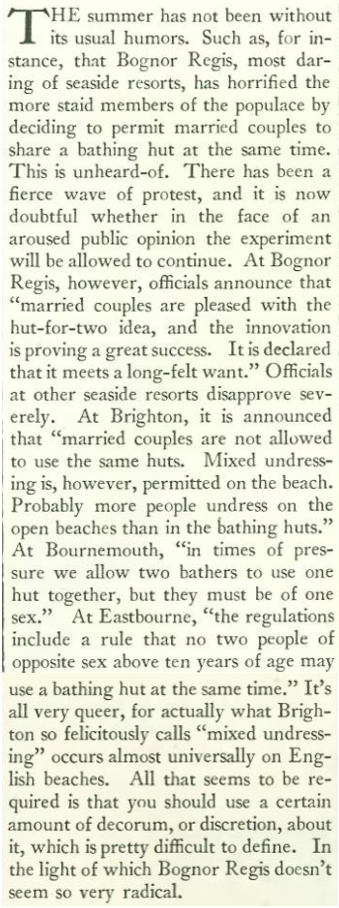
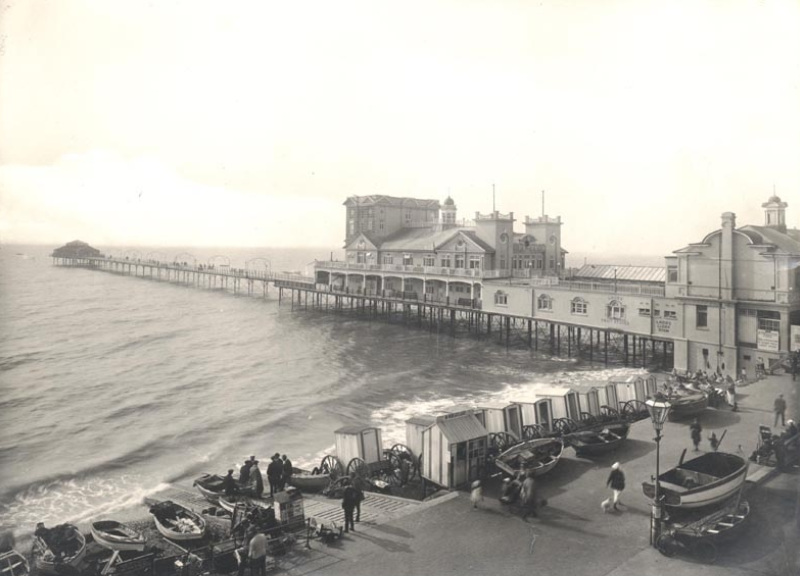
In his London Letter, Conrad Aiken (pen name Samuel Jeake Jr) examined the priggish ways of England’s seaside resorts.
SITE OF SCANDAL…Bathing huts at Bognor Regis, circa 1921. (bognorregistrails.co.uk)
* * *
Beware the Bachelor
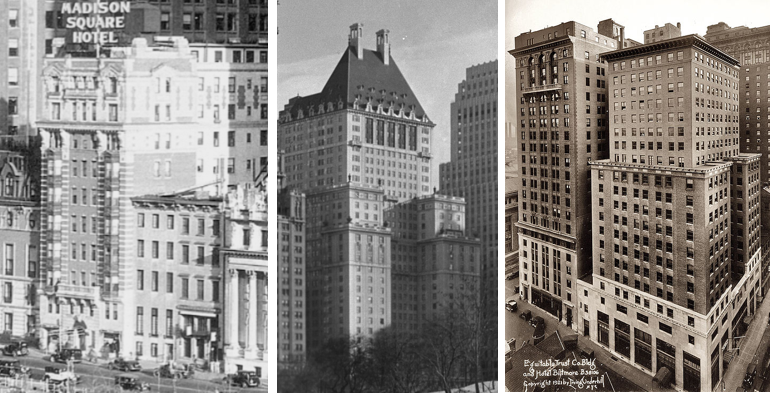
In her “Tables for Two” column, Lois Long examined some of the city’s seasonal escapes for “summer bachelors.”
GHOSTS OF THE PAST…Lois Long recommended the air-conditioned lounges of the Madison Square Hotel and the Savoy Plaza (center) or the cooling breezes of the Biltmore roof (right), which featured music by Morton Downey. Sadly, all three of these beautiful buildings have been demolished. (geographicguide.com/Wikipedia)
Other more casual venues recommended by Long included Nick’s Merry-Go-Round…
…a menu from Nick’s dated 1937…
(nypl.org)
…and its cryptic back cover…
From Our Advertisers
…speaking of the Biltmore and Morton Downey, we kick off our advertising section…
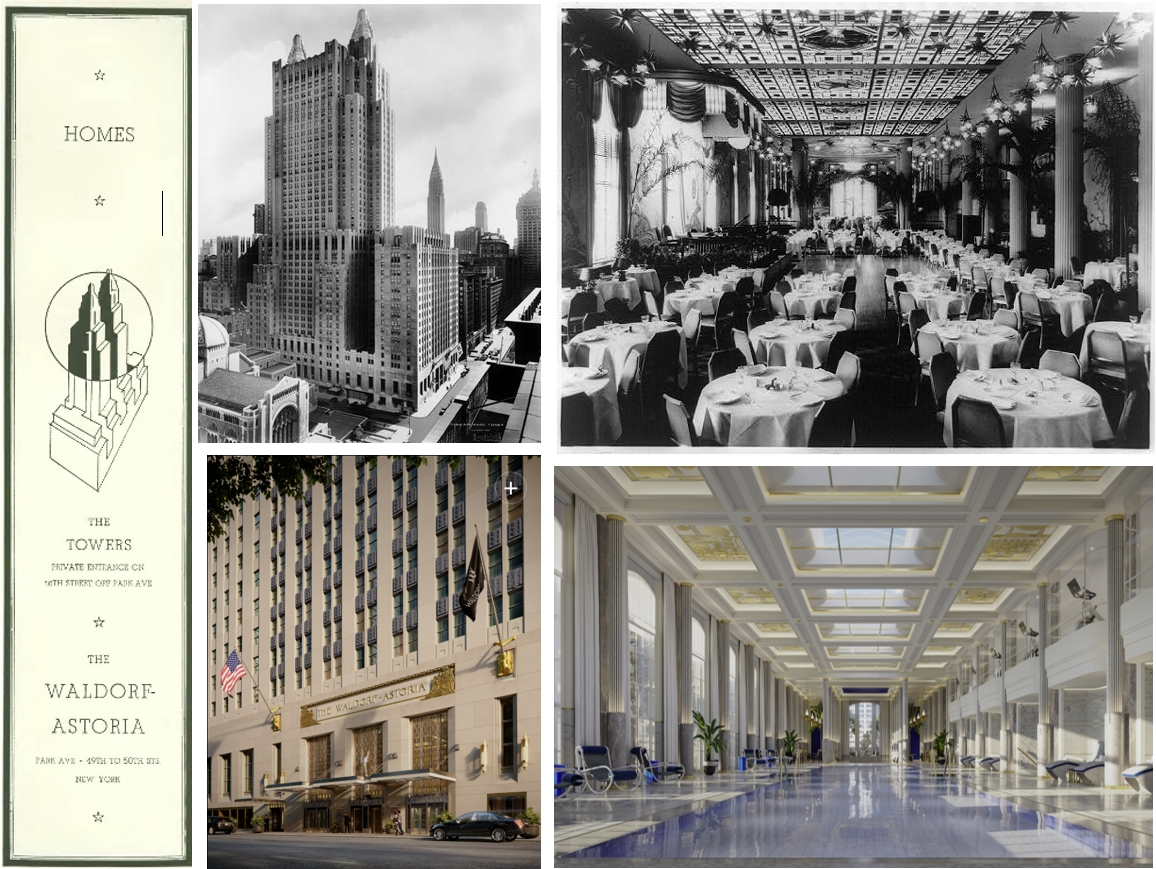
…the ad on the left announced the private residences at the Waldorf-Astoria…
Clockwise, from top left, the Waldorf Astoria circa 1930; the Waldorf’s Starlight Roof in the 1930s; after eight years and billions in restorations and renovations, the hotel has seen many changes including the transformation of the Starlight Roof into a swimming pool. Decades of grime were also cleaned from the building’s exterior. (mcny.org/loc.gov/som.com)
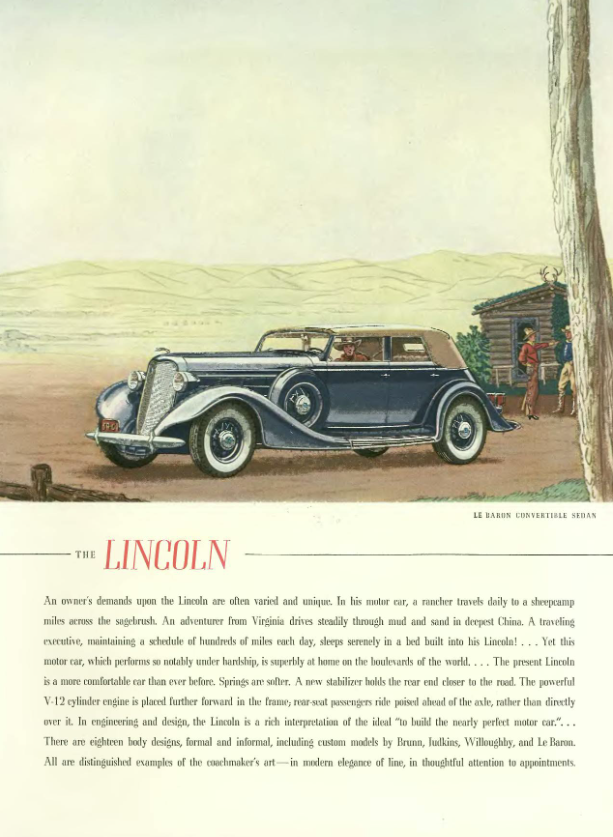
…another ad from the makers of Lincoln suggesting that the market for their luxury auto wasn’t confined to citified execs…
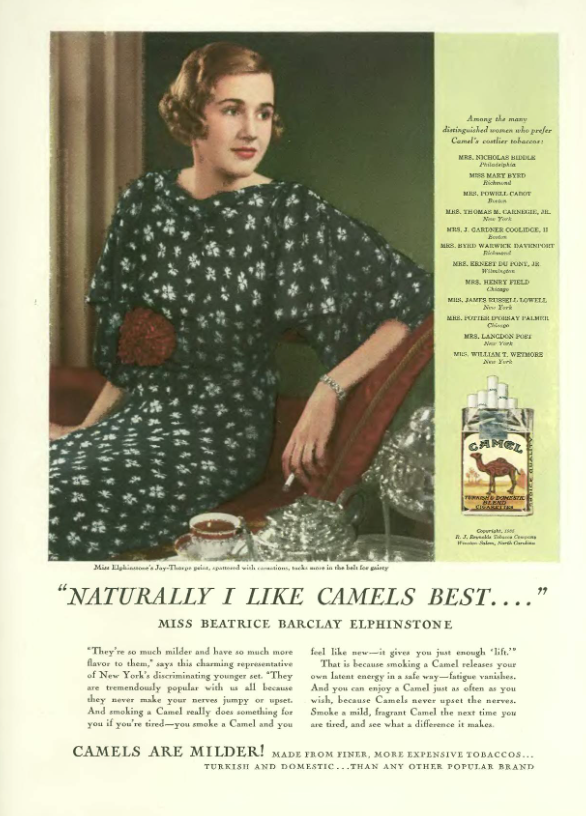
…the Camel folks introduced us to their latest society shill…
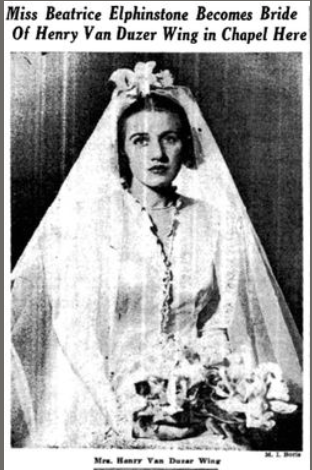
…I didn’t find much about Beatrice Barclay Elphinstone (1916-1977), described in the Camel ad as a “charming representative of New York’s discriminating younger set”…she did make the Times‘ Dec. 10, 1937 society wedding announcements, however…
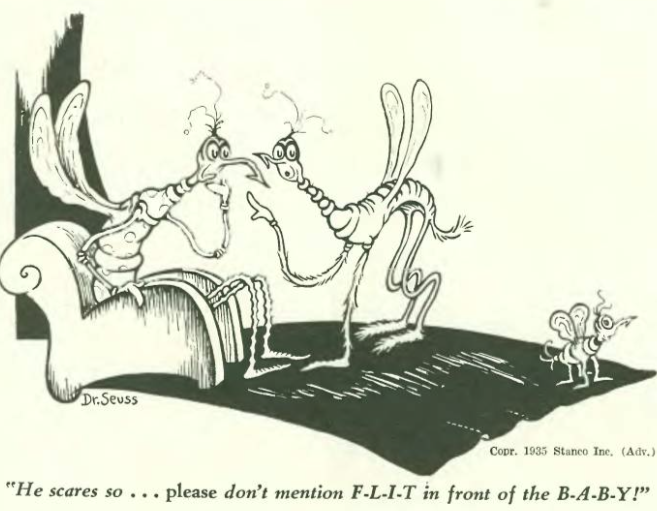
…Dr. Seuss was back with another twist on Flit insecticide…
…on to our illustrators and cartoonists, a nice charcoal by Hugo Gellert for a profile titled “Yankee Horse Trader,” written by Arthur C. Bartlett…the harness horse racing legend Walter Cox (1868-1941) was known in New England as “the king of the half-milers”…
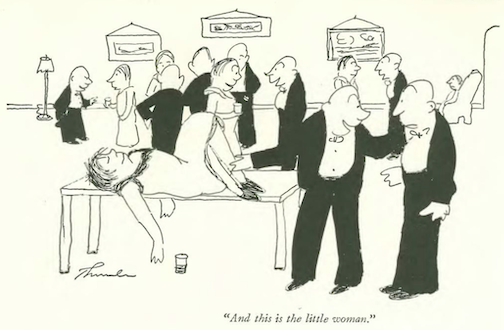
…James Thurber contributed this cat and dog face-off to the opening pages…
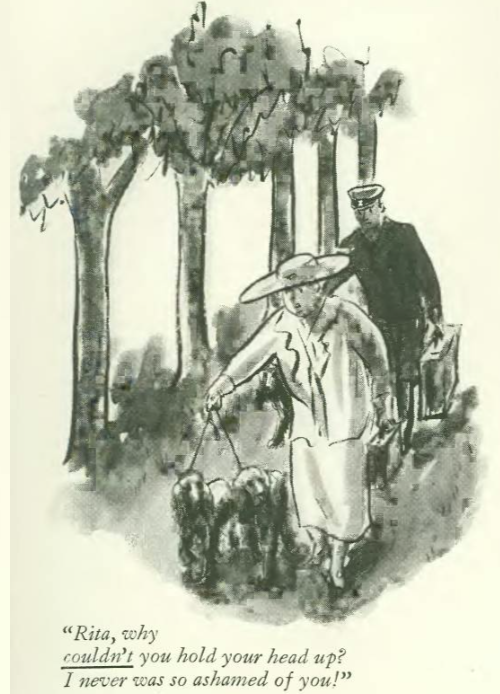
…Helen Hokinson offered her perspectives on the summer dog show across pages 16-17…
…and for a closer look…
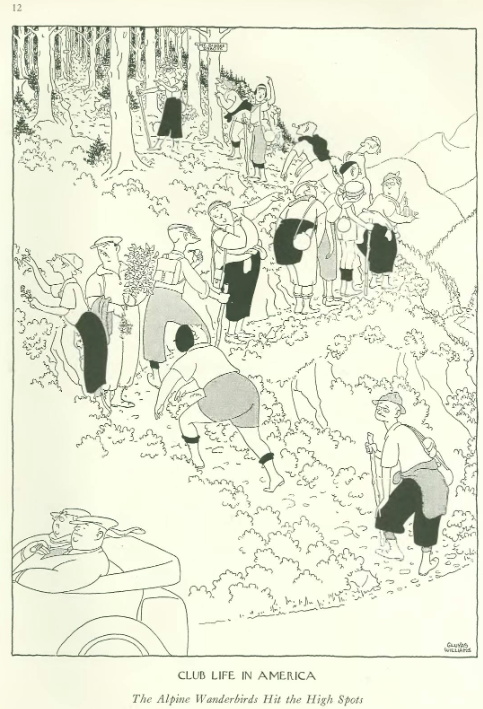
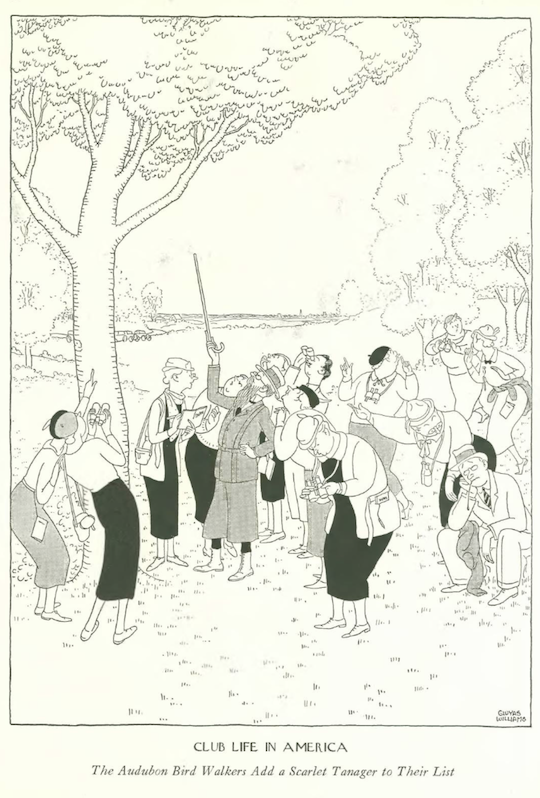
…Gluyas Williams went back to nature in his “Club Life” series…
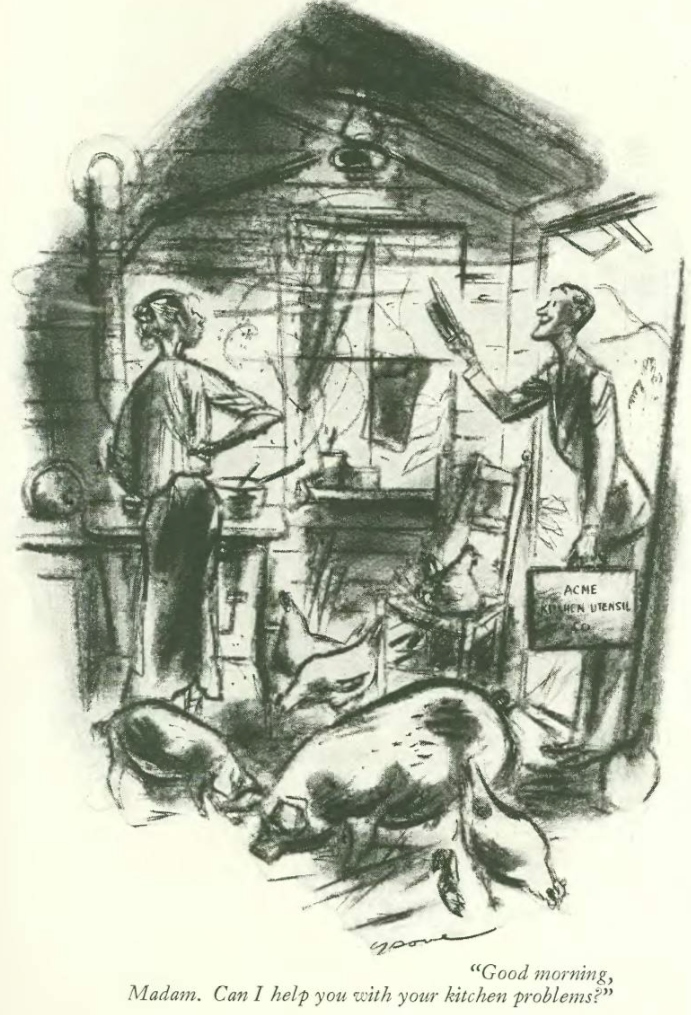
…Leonard Dove introduced us to an undaunted salesman…
…in the world of George Price, crime didn’t pay…
…Barbara Shermund gave us a rare glimpse into the secret lives of men…
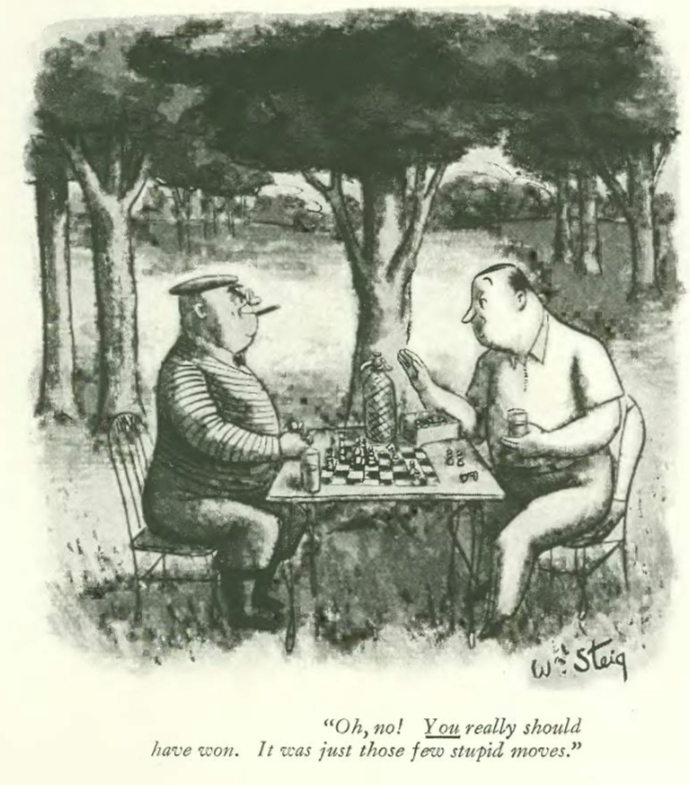
…patronizing words were unwelcome at this chess match, per William Steig…
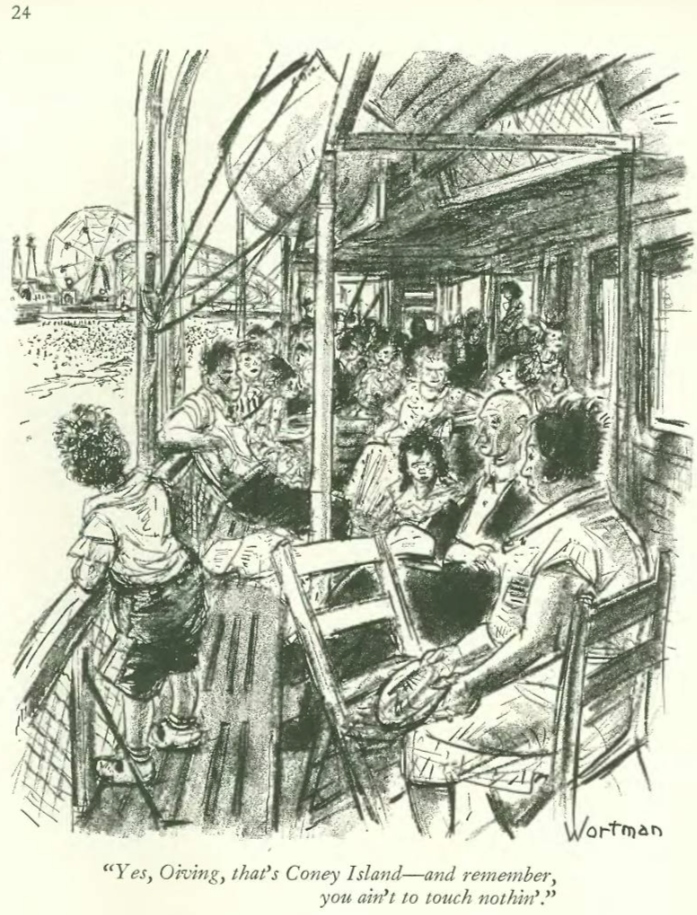
…Denys Wortman took us on a family outing…
…and we close with Alain, and a mother of multiples…except words…
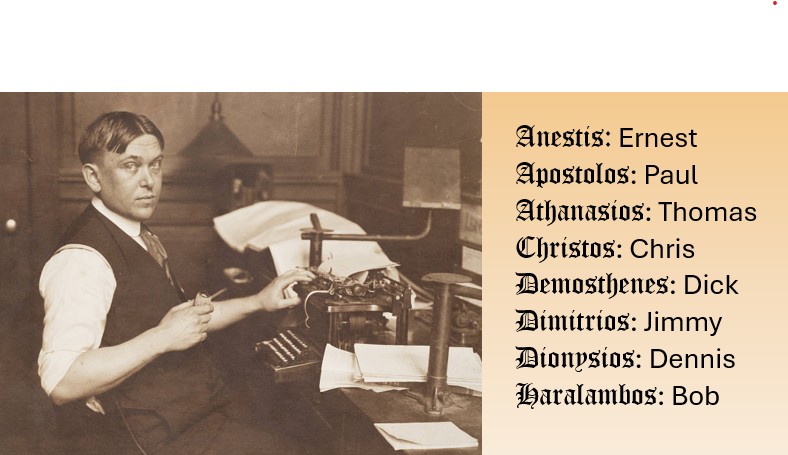
Above: H.L. Mencken at the Baltimore Sun, circa 1930. From April 1934 to September 1949, Mencken contributed more than fifty articles to The New Yorker.
The American journalist Henry Louis Mencken (1880–1956) was well-known as a biting satirist and cultural critic, but he was also a noted scholar of the English language and its various quirks.
May 11, 1935, Mother’s Day cover by William Cotton.
One of those quirks was explored in Mencken’s essay, “The Advance of Nomenclatural Eugenics In the Republic,” for the column “Onward & Upward With The Arts.” Broadly defined, eugenics refers to the discredited belief that selective breeding could be used to improve the human race. Mencken used the term satirically to describe the anglicization of immigrant names, either to conform to English spellings or, in many cases, to avoid racial and ethnic discrimination. An excerpt:
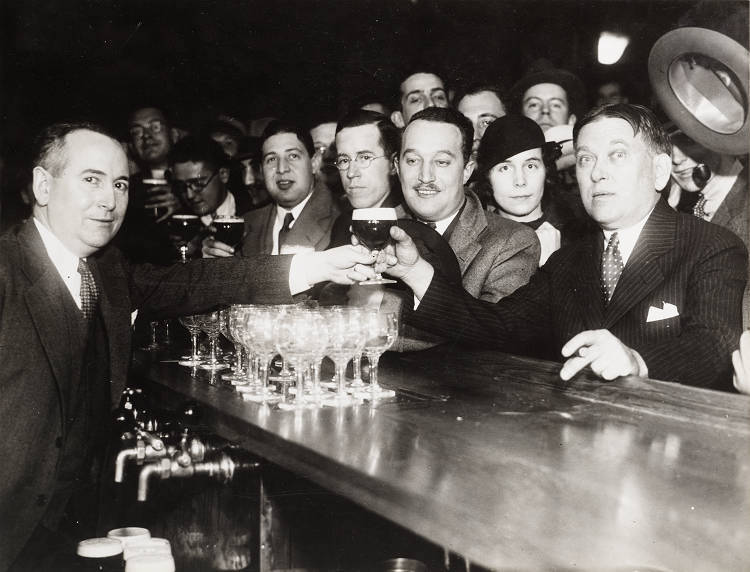
A PERFECT PAIRING, for H. L. Mencken, was a beer and a cigar. Here he is accepting “his first public glass of post-Prohibition beer” at the Rennert Hotel in Baltimore on April 7, 1933. In 1924 Mencken wrote: “Five years of Prohibition have had, at least, this one benign effect: they have completely disposed of all the favorite arguments of the Prohibitionists.” (digitalmaryland.org)
Many Jewish immigrants also abandoned their surnames, seeking to blend in and avoid discrimination. Historian and author Kirsten Fermaglich (A Rosenberg by Any Other Name, 2016) found that persons with Jewish-sounding last names made up 65 percent of all name change requests in New York in the first quarter of the 20th century. Mencken observed:
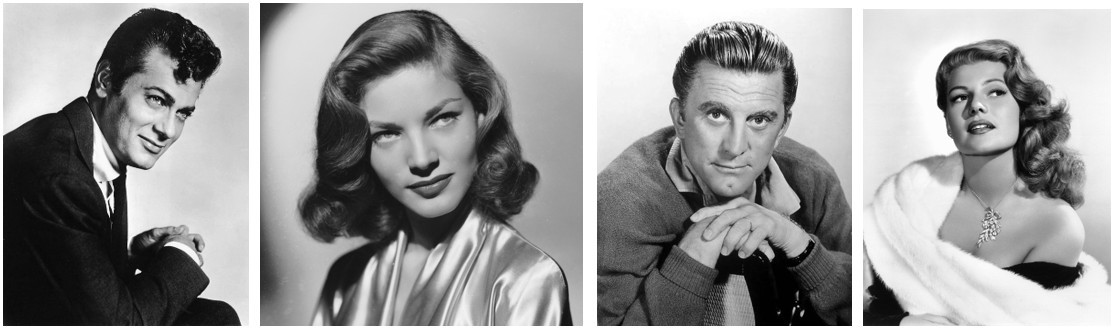
MEET BERNARD, BETTY, ISSUR AND MARGARITA…Some more famous examples of name changes in the first half of the 20th century. From left, actors (and New Yorkers) Tony Curtis (Bernard Schwartz), Lauren Bacall (Betty Joan Perske), Kirk Douglas (Issur Danielovitch Demsky), and Rita Hayworth (Margarita Carmen Cansino). (Wikipedia)
* * *
Canada Dry
In his column, “Of All Things,” Howard Brubaker noted the “well-merited spanking” FDR gave to military leaders who were talking about fortifying the border with Canada. Brubaker agreed with FDR’s action, observing how Canadians came to the aid of thirsty Americans during Prohibition.
* * *
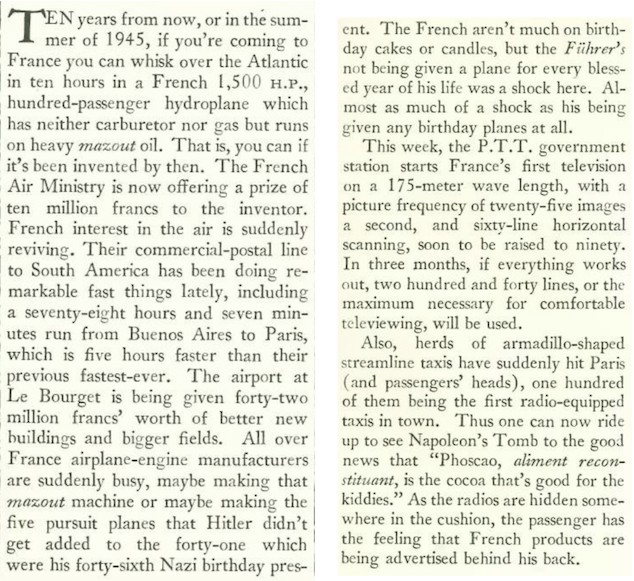
Air France
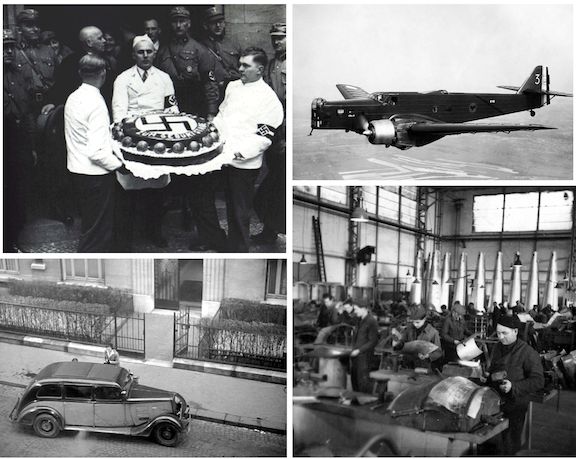
Paris correspondent Janet Flanner considered the state of French aviation as well as signs of war preparation. She also noted the birthday of German dictator Adolf Hitler, the birth of French television, and the streamlined taxis that had suddenly appeared on the streets of Paris. Excerpts:
SOME ICE CREAM WITH YOUR SLICE OF HATE?…Clockwise, from top left, bakers carefully carry Adolf Hitler’s birthday cake in April 1935; the French, meanwhile, were ramping up war production including the manufacture of the M210 bomber; airplane factory workers fashion sheet metal in a factory in Châteauroux-Déols; streamlined Peugeot 401 taxis hit the Paris streets in 1935. (reddit.com/dassault-aviation.com/imcdc.org)
* * *
Vamps and Vampires
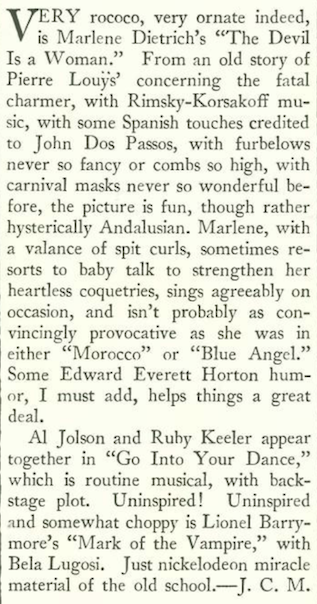
John Mosher offered mixed reviews of Hollywood’s latest fare, finding Marlene Dietrich’s latest vehicle “fun,” and the singing and dancing of husband/wife Al Jolson and RubyKeeler “uninspired,” a term he also applied to Bela Lugosi’s latest vampire flick.
TAKE YOUR PICK…Critic John Mosher sampled some very different films including, left, Marlene Dietrich and Lionel Atwill in The Devil Is a Woman; top, Ruby Keeler with her then-husband Al Jolson in Go Into Your Dance; and Bela Lugosi did his vampire schtick with the help of Carroll Borland (who played Dracula’s daughter) in Mark of the Vampire. (MoMA/Pinterest/Instagram)
* * *
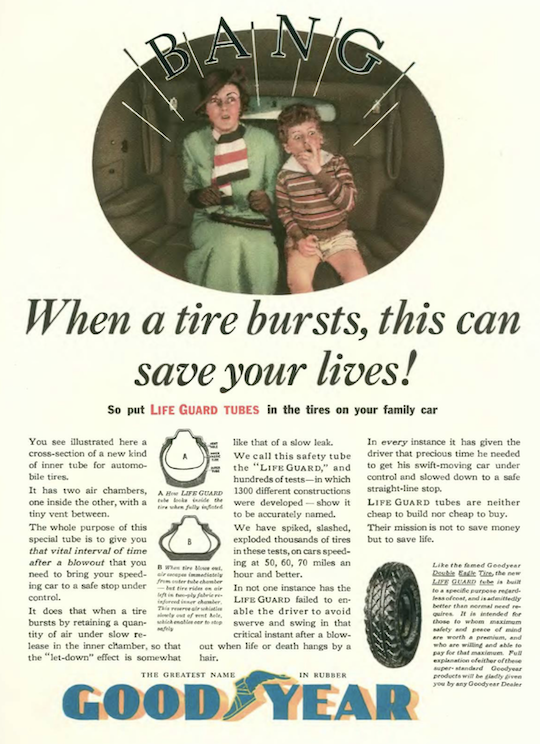
From Our Advertisers
We start off with a bang from Goodyear…tire blowouts were common in the 1930s as tire technology could not keep pace with the increasing speed of automobiles, nor the poor condition of many roads…
…after many weeks, the back cover went to something other than cigarette manufacturers…
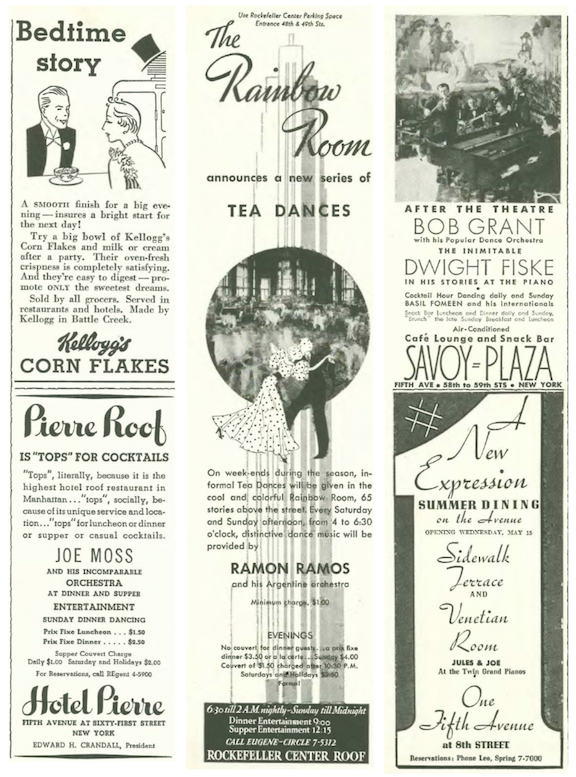
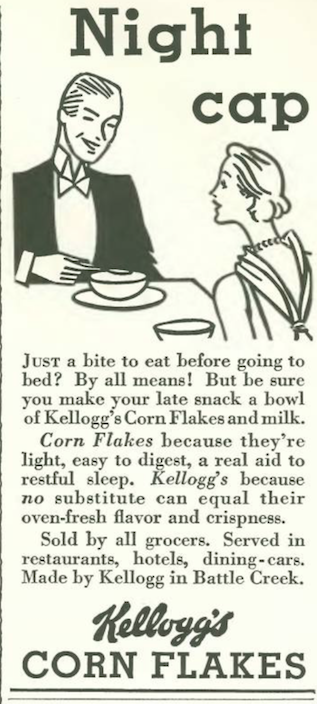
…let’s take a look at some of the one-column ads from the back pages…many of them highlighted the various nighttime entertainments, from the rooftop of Hotel Pierre to the air-conditioned lounge at the Savoy-Plaza (plus that weird ad that suggested Corn Flakes as a nightcap)…
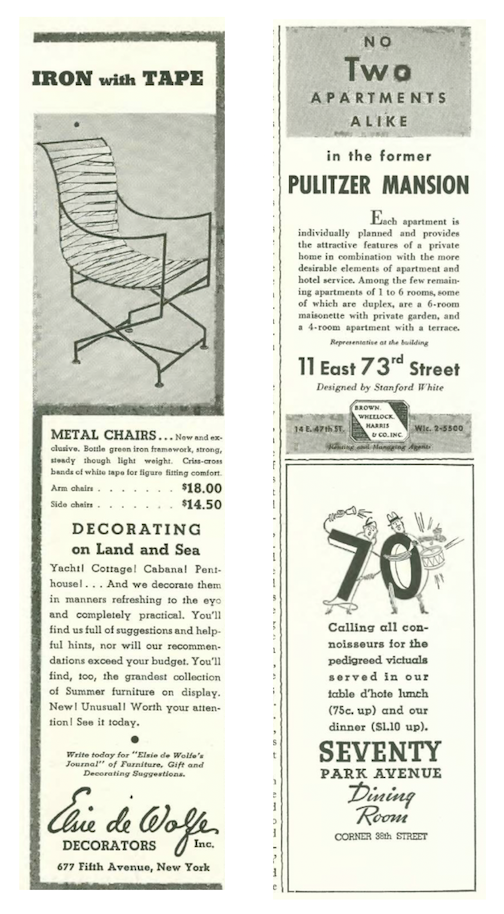
…interior designer Elsie de Wolfe rolled out “Iron with Tape” chairs, which might be the first example of what would become the ubiquitous webbed lawn chair…also advertised were apartments in the former Pulitzer mansion…
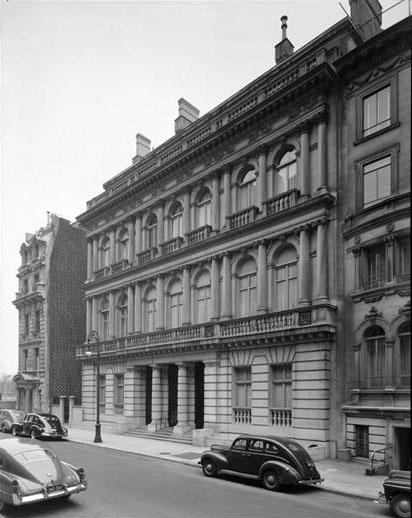
…the Pulitzer apartments were one happy outcome of the Great Depression, which foiled the plans of investors to demolish the house in 1934 and erect an apartment building…
The Pulitzer mansion still stands today, now divided into high-class coops. (daytoninmanhattan.blogspot.com)
…here’s something new from the Jay Thorpe shop, “noted for unusual sportswear”…
…perhaps inspired by Hollywood…
Ruby Keeler in 1935’s Shipmates Forever. (Reddit)
…illustrator Lyse Darcy created many of these distinctive ads for Guerlain products from the 1930s through the 1950s…
…on to our cartoonists, we begin with spot art from James Thurber…
…and Thurber again…
…and we have two from George Price…
…Otto Soglow continued with his multi-panel tricks…
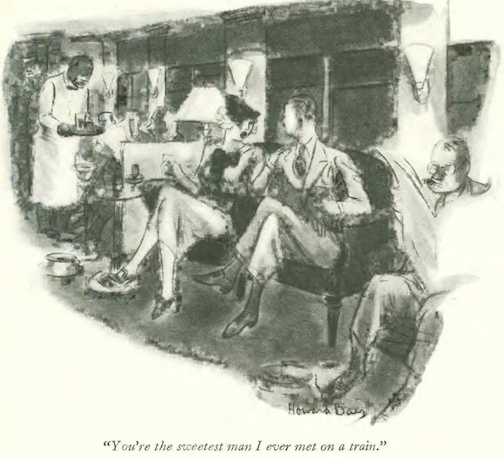
…Howard Baer did some eavesdropping on the rails…
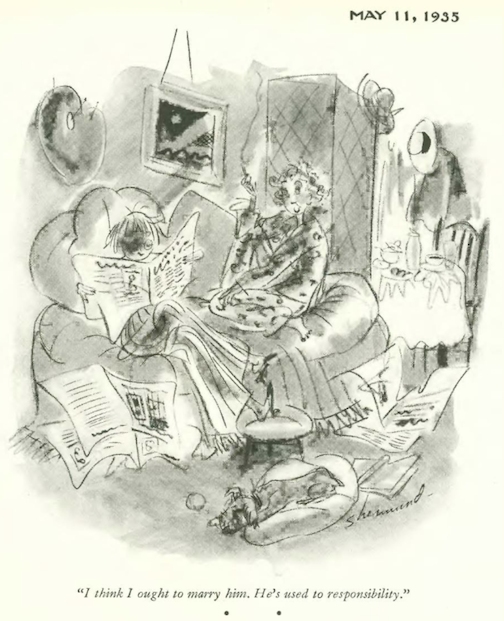
…while Barbara Shermund checked in on her modern women…
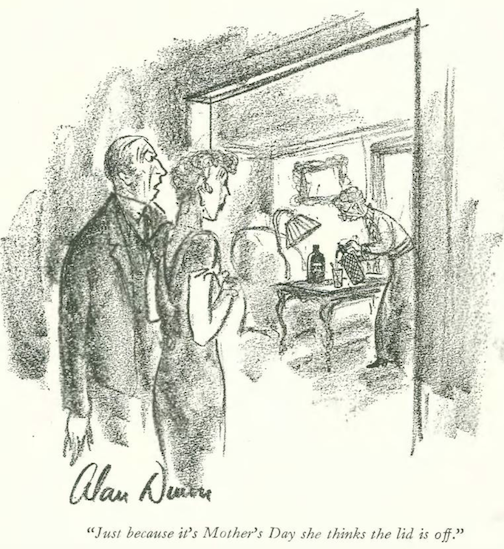
…Alan Dunn gave us a mother who took care of herself on Mother’s Day…
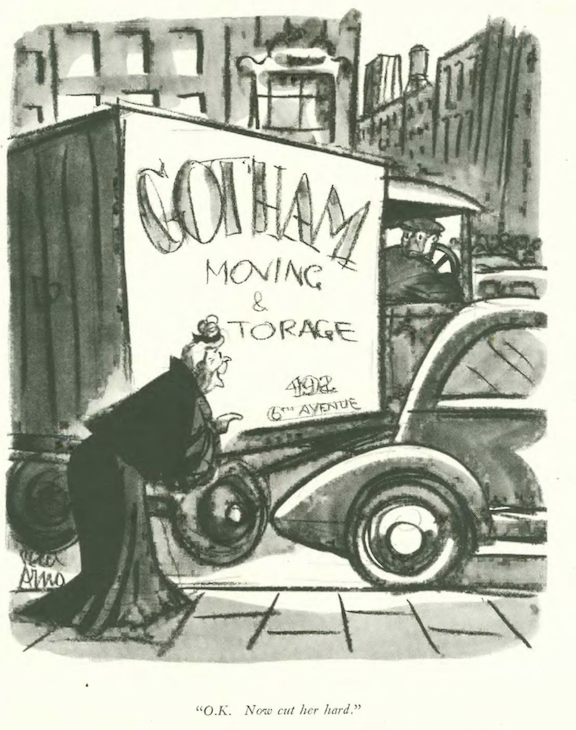
…Peter Arno found some kindly advice in the crowded city…
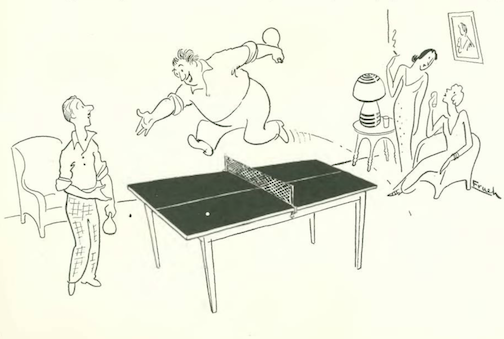
…Al Frueh put the “tennis” back into table tennis…
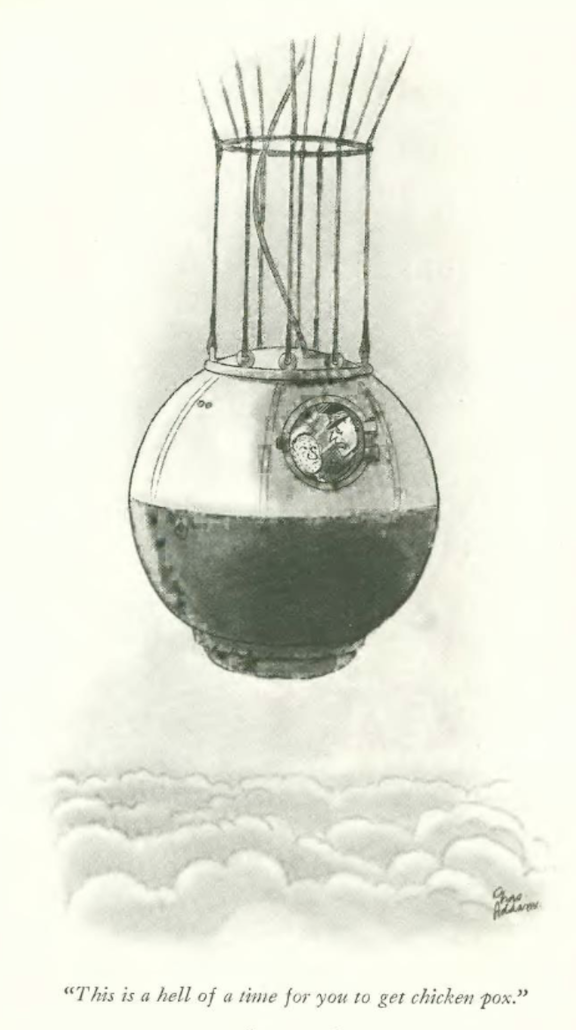
…and we close with Charles Addams, who had become a regular contributor but was still more than three years away from launching his “Addams Family” cartoons…
Above: King George V and Queen Mary posed for portraits by John St Helier Lander to commemorate the king’s Silver Jubilee in 1935. (Wikipedia)
The British Royal Family has never been my cup of tea, but its hard to deny their influence on world affairs, even if today it is mostly ceremonial. The king and queen were also figureheads back in 1935, however they could still claim to lead a vast empire, albeit one badly fraying at the seams.
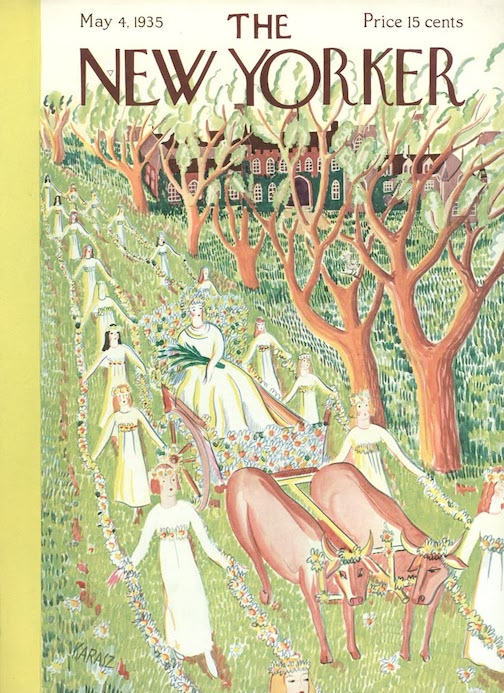
May 4, 1935 cover by Ilonka Karasz.
Then as now, the power of the royals lay largely in their ability to boost the political and economic fortunes of their island nation. Such was observed by The New Yorker’s Paris correspondent Janet Flanner, who penned a two-part profile of Queen Mary (nee Mary of Teck or more formally Victoria Mary Augusta Louise Olga Pauline Claudine Agnes; Queen of the United Kingdom and the British Dominions, and Empress of India). Flanner wrote the profile of Queen Mary (1867-1953) in anticipation of the Silver Jubilee of her husband, King-Emperor George V (1865-1936). Excerpts:
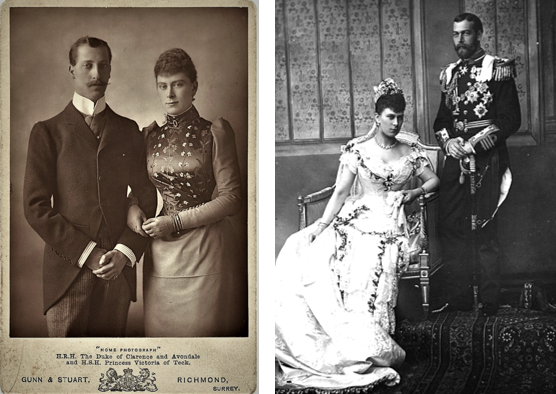
A DEB AND A DUKE…In 1886 Mary was a an unmarried British princess who was not descended from Queen Victoria, so she was a suitable candidate for the royal family’s most eligible bachelor, Mary’s second cousin Prince Albert Victor, Duke of Clarence and Avondale. In early December 1891 Albert Victor (left photo) proposed marriage to Mary, but he died six weeks later in the Russian flu pandemic. Less than two years later (July 1893) Albert Victor’s brother, Prince George, Duke of York, would wed Mary—at right, their wedding day photo. (Wikipedia)
Flanner noted that the King George V and Queen Mary were rated by British industrialists as the Empire’s “two best salesmen,” however it was Mary who proved the most influential whether she was buying a hat or a refrigerator. Excerpts:
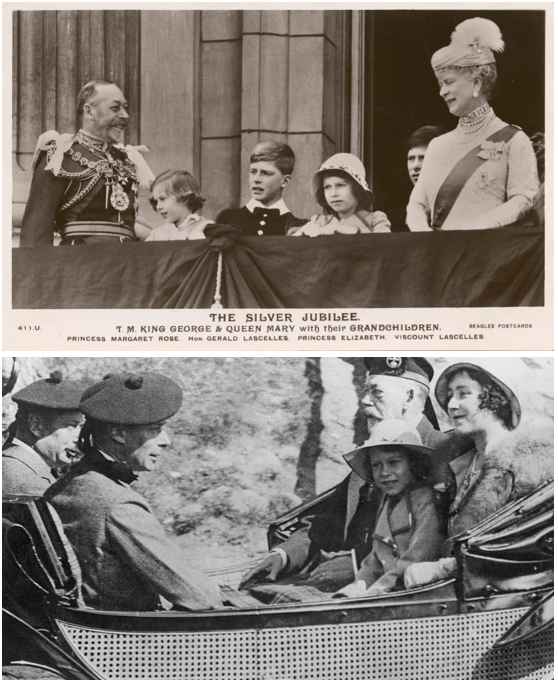
SILVER AND GOLD…Top photo: to mark the king’s Silver Jubilee on May 6, 1935, King George V and Queen Mary greet their subjects from a balcony at Buckingham Palace with their grandchildren, (from left) Princess Margaret Rose, Hon. Gerald Lascelles, Princess Elizabeth, and Viscount Lascelles. Below, King George V, the Duke and Duchess of York, and Princess Elizabeth take a trip in the royal carriage, 1933. The Duke and Duchess would succeed the throne upon the death of King George in 1936 and the abdication of the Duke’s brother, Edward, that same year. (Reddit/Town & Country)
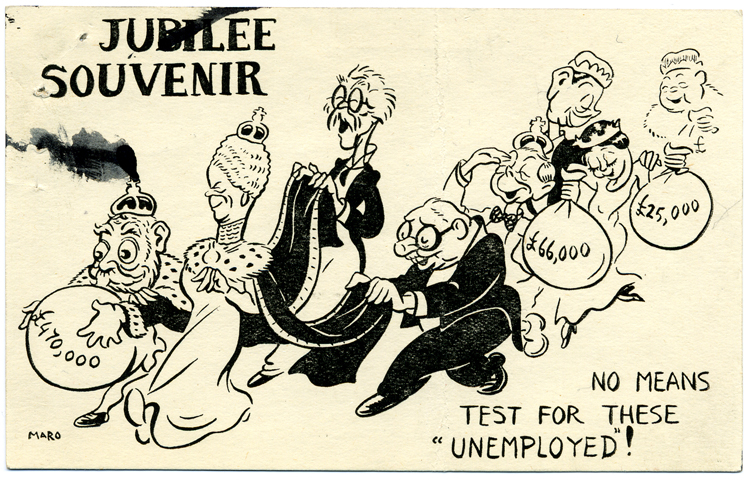
Naturally, not everyone in the kingdom was thrilled by the Silver Jubilee…
OPPOSING VIEWPOINT…The anti-monarchist cartoonist Desmond Rowney commemorated the Silver Jubilee with this cartoon in the Daily Worker. The public expense for the Silver Jubilee in the midst of a financial depression caused some controversy. (National Archives UK)
* * *
Corn-fed Canvasses
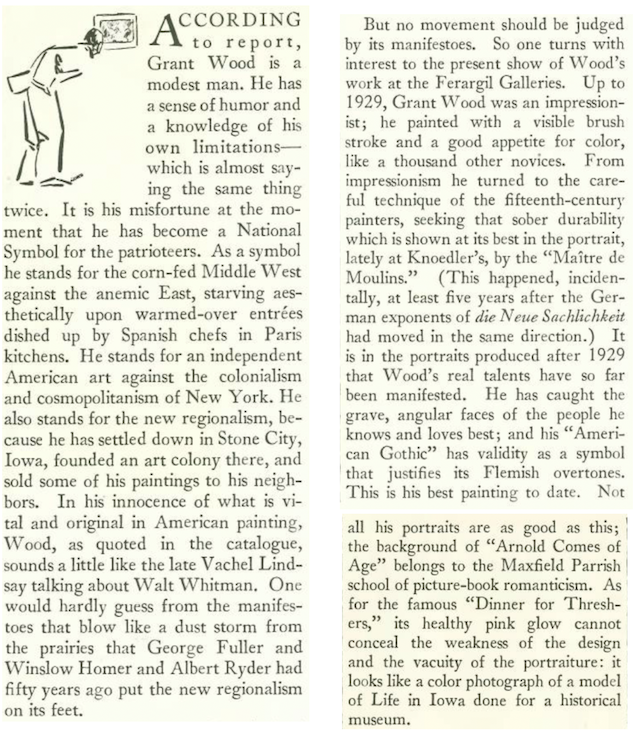
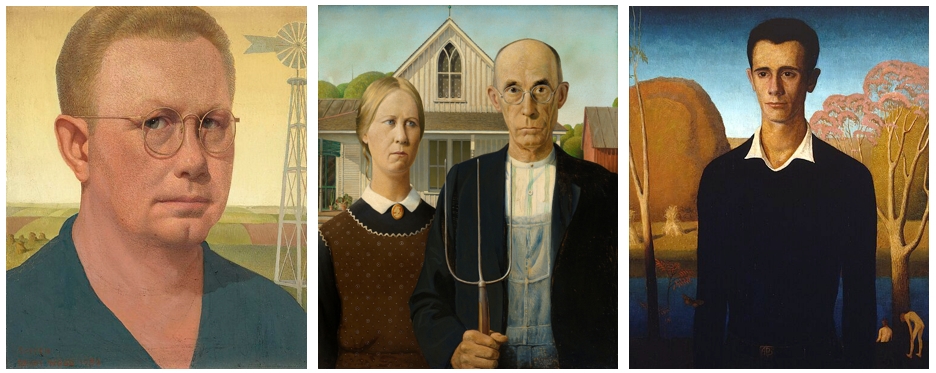
Critic Lewis Mumford, like many East Coast intellectuals, was allergic to the over-patriotic and the sentimental, so when it came to assessing the work of the regionalist painter Grant Wood (1891-1942), Mumford found himself perplexed but hopeful that Wood would one day “find himself” and produce “first rate” art.
FLANKING THE ICONIC painting American Gothic (1930) are Grant Wood’s Self Portrait (1932) and, at right, Arnold Comes of Age (1930). Lewis Mumford considered American Gothic to be Wood’s best work. (figgeartmuseum.org/whitney.org/sheldonartmuseum.org)
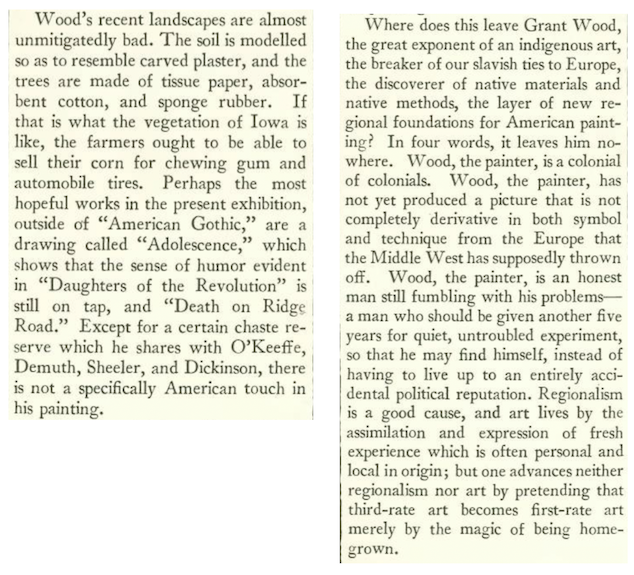
Mumford did not mince words, however, when it came to Wood’s contemporary landscapes, which he called “unmitigatedly bad…If that is what the vegetation of Iowa is like, the farmers ought to be able to sell their corn for chewing gum…”
BUBBLEGUM TREES…From 1919 to 1925, Grant Wood taught junior high art in Cedar Rapids, Iowa. The seasonal nature of teaching allowed Wood to take summer trips to Europe to study art, and his early work showed strong post-impressionist influences, including his impressionistic Vegetable Farm (top) from 1924; below, Mumford thought Grant’s later landscapes looked like they were made of cotton and sponge rubber, including Near Sundown, from 1933. (wikiart.org)HOPE AND NOPE…Mumford wrote that Wood’s more “hopeful” works included, top left, Death on Ridge Road and, top right, Adolescence. On the other hand, he found the portraiture in Dinner for Threshers (bottom) vacuous, suggesting “a color photograph of a model of Life in Iowa done for a historical museum.” (wikiart.org/figgeartmuseum.org)
* * *
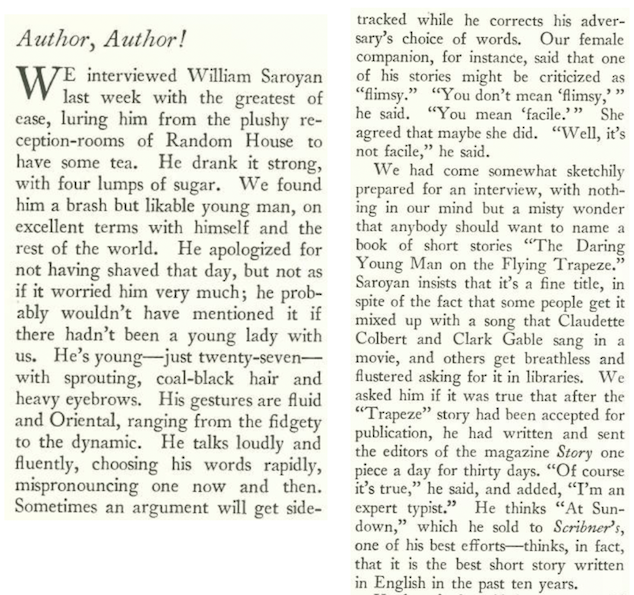
Daring Young Man
“The Talk of the Town” paid a visit to William Saroyan (1908–1981), an Armenian-American novelist, playwright, and short story writer who would go on to receive a Pulitzer Prize for Drama in 1940 and a 1943 Academy Award for Best Story for the film The Human Comedy. An excerpt:
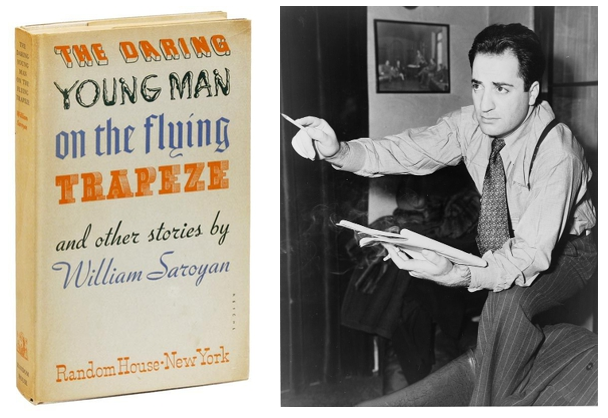
HIGH WIRE ACT…The Daring Young Man on the Flying Trapeze and Other Stories (1934) was the first collection of 26 short stories by William Saroyan (pictured here in 1940). The book became an immediate bestseller. (Wikipedia)
* * *
Not Long For Long
In his column “Of All Things,” Howard Brubaker noted that the “loose talk” of Huey Long, a U.S. Senator from Louisiana and prominent critic of the New Deal, could be squelched by a Senate vote. As it turned out, it wouldn’t be necessary; Long was felled by an assassin’s bullet four months later.
* * *
Ode to Abode
E.B. White turned to verse to offer his thoughts on where one should live:
* * *
Tough Guys
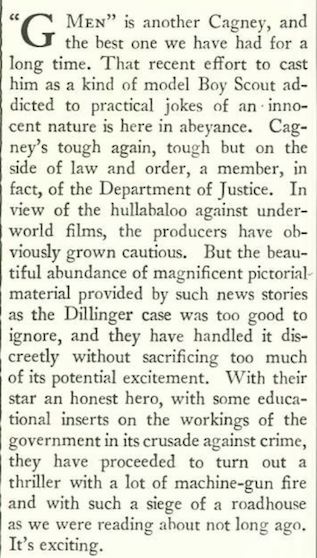
After a musical comedy, a Shakespeare adaptation (A Midsummer Night’s Dream), and another comedy, James Cagney returned to familiar form with an exciting crime drama, G Men. Critic John Mosher was pleased that Cagney was back to tap-dancing with machine guns rather than showgirls.
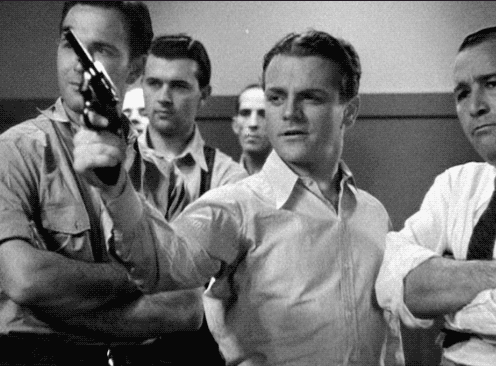
CRIME PAYS…AT THE BOX OFFICE… James Cagney takes aim at his new role as a federal agent James “Brick” Davis in G Men. With the Hays Code in force, Warner Brothers made the film to counteract what many leaders claimed was a disturbing trend of glorifying criminals in gangster films. (Still from film)
* * *
From Our Advertisers
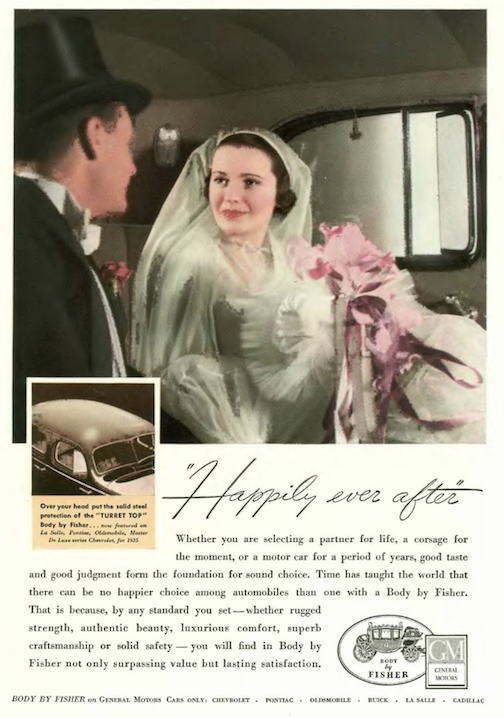
According to General Motors’ Fischer division, good taste was in order whether you were choosing a spouse or an automobile…
…New Yorker ads continued to display bright colors to sell everything from cars to whiskey to sparkling water (with apparent health benefits)…
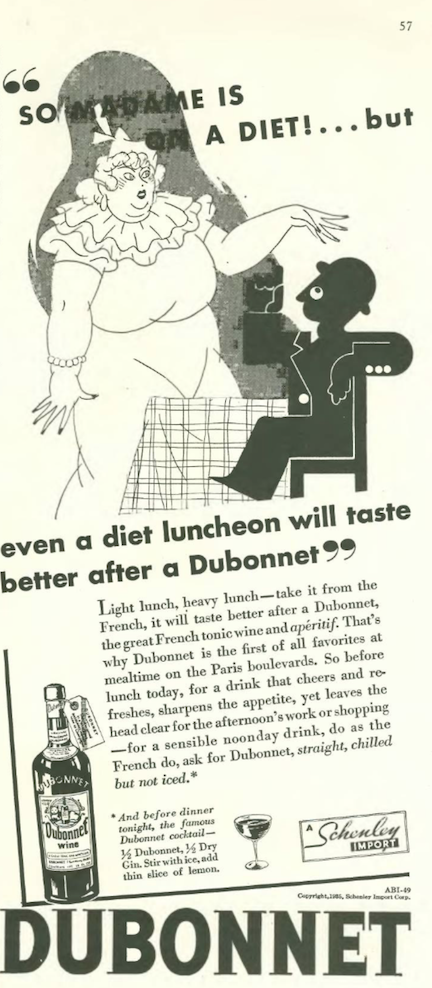
…the shadowy Dubonnet mascot was back, here making the claim (against the wisdom of the ages) that a lunchtime drink will clear your head for the afternoon ahead…
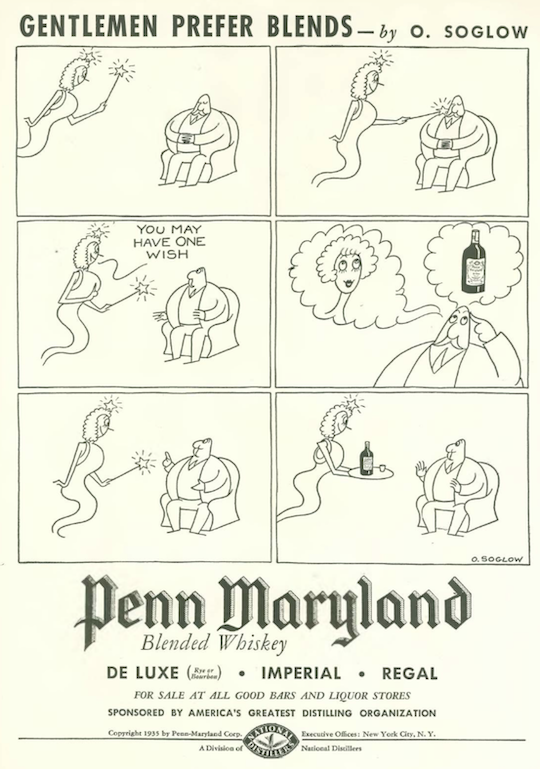
…no health claims here from Penn Maryland, just pure magic as depicted by Otto Soglow…
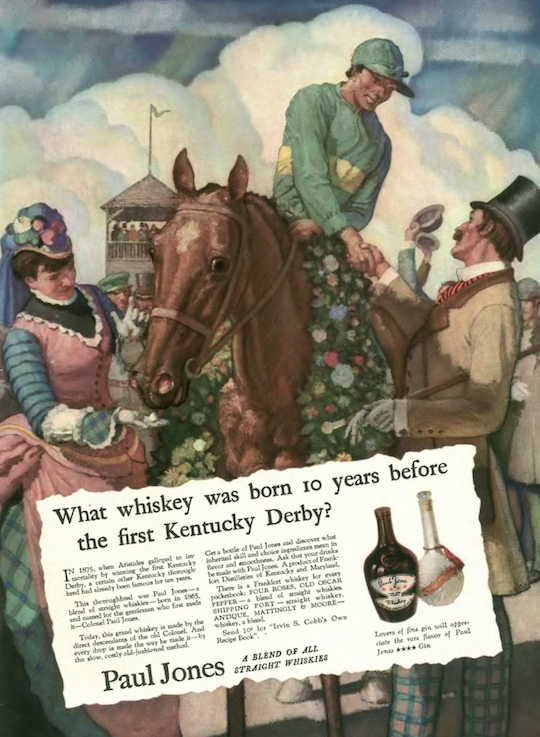
…and what goes better with whiskey than the Kentucky Derby…
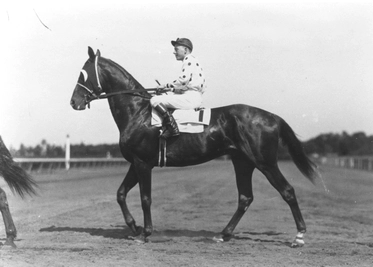
…the 1935 Kentucky Derby was won by Omaha, a three-year-old Thoroughbred; he was the third horse to ever win the Triple Crown (Omaha was the son of Gallant Fox, the 1930 U.S. Triple Crown winner)…
Omaha in 1935 (Wikipedia)
…on the subject of Thoroughbreds, Camel offered up testimonials from top athletes in a variety of sports…they all agreed that the cigarettes “don’t get your wind”…so what did that mean?…according to R.J. Reynolds, “It means you can smoke Camels all you want”…
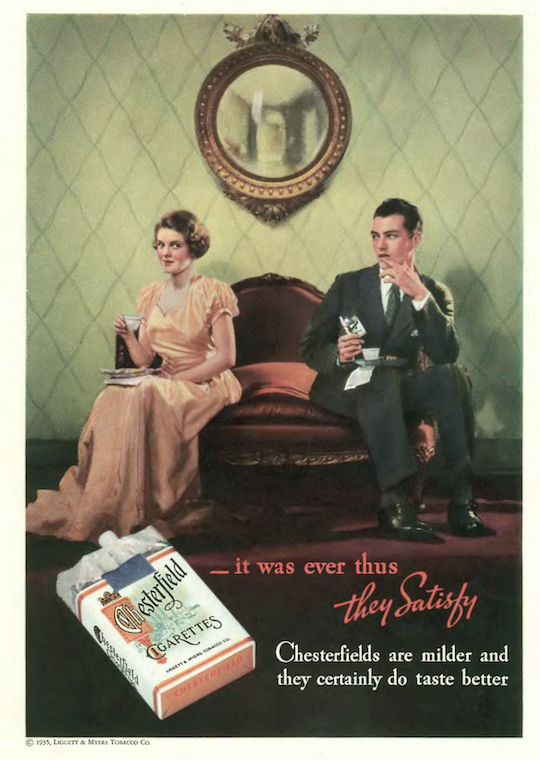
…Camels also calmed the nerves, and so apparently did Chesterfields…
…on to our cartoonists, we begin with a spot by Charles Addams at the top of page 2…
…later in the issue James Thurber contributed this drawing to stretch across the bottom of page 62 (“On and Off the Avenue”)…
…Thurber again, with the life of the party…
…William Steig offered up a page-full of wits…
…plus one more on the preceding page…
…Gluyas Williams continued to follow the strange ways of club life in America…
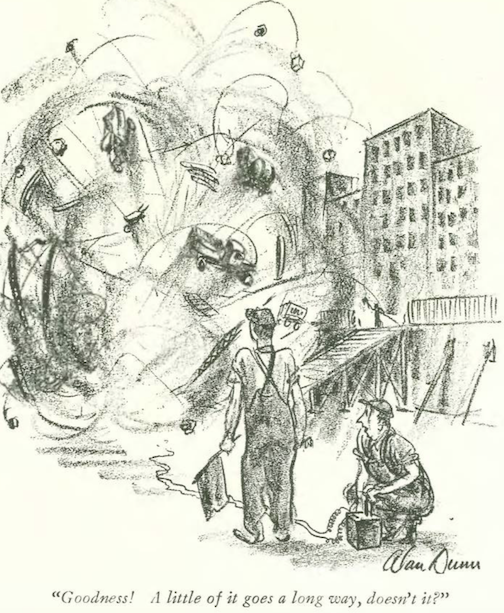
…and we close with Alan Dunn, and service with a smile…
William Penn Adair Rogers, aka Will Rogers (1879–1935), was a man of many talents. Today he is mostly referred to as a humorist, but he was also an actor, a social and political commentator, a trick roper and a vaudeville performer. To Americans he was a national icon.
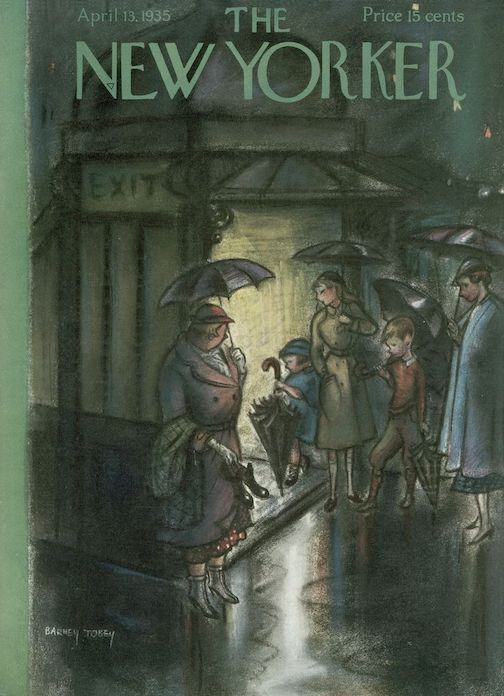
April 13, 1935 cover by Barney Tobey.
Rogers was also internationally famous, having traveled around the world three times and appearing in 71 films (50 of those silent). He also wrote more than 4,000 newspaper columns—nationally syndicated by The New York Times—that reached 40 million readers, and there were also magazine articles, radio broadcasts and personal appearances. He seemed to be everywhere.
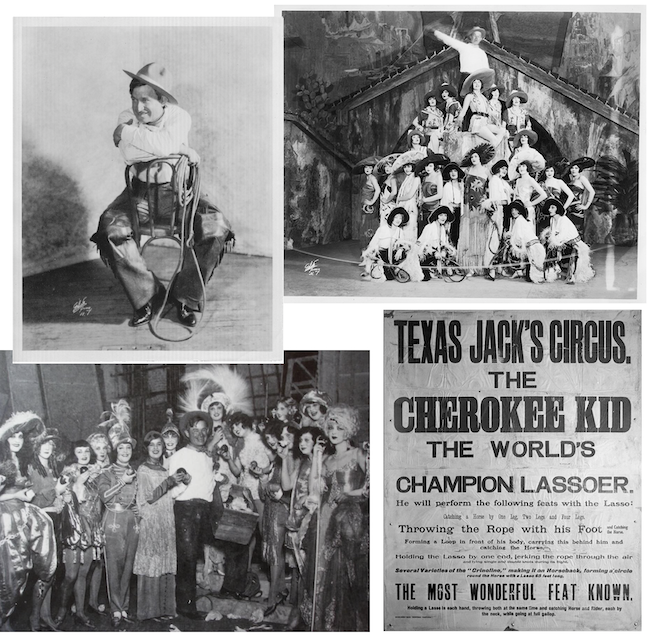
ROPING THEM IN…In 1902, Will Rogers joined Texas Jack’s Wild West Show & Circus in South Africa as the “Cherokee Kid”—he was born as a citizen of the Cherokee Nation, in the Indian Territory that is now part of Oklahoma. By 1910, he had created a sensational vaudeville act by mixing trick roping with witty monologues. Clockwise, from top left, Rogers in a publicity photo from 1916, the year he joined the Ziegfeld Follies; on stage with the Follies in 1924; poster from his circus days; backstage with the 1924 Follies cast. (National Portrait Gallery)MULTIMEDIA MULTI-TALENT…Left, Rogers catches a few moments to write one of his 4,000 nationally syndicated newspaper columns; from 1929 to 1935 he used the exciting new medium of radio to broadcast his newspaper pieces. His weekly Sunday evening show, The Gulf Headliners, sponsored by Gulf Oil, ranked among the top radio programs in the country. (National Portrait Gallery)
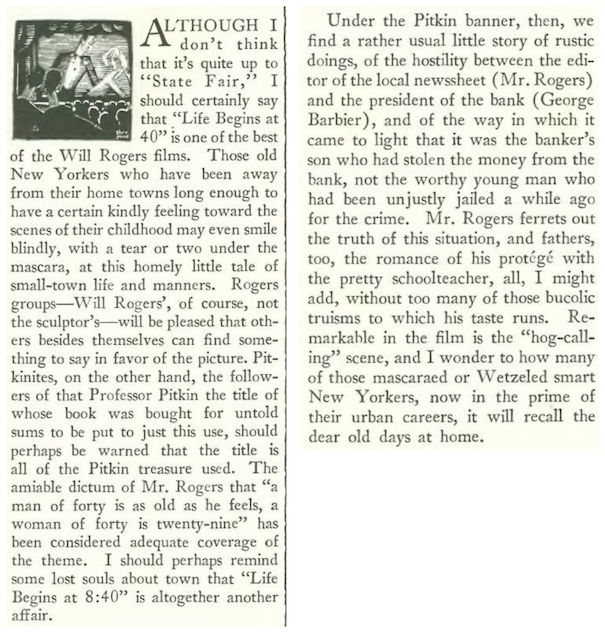
When John Mosher reviewed Rogers’ latest film, Life Begins At Forty, he found it to be one of Rogers’ best. It would also prove to be one of his last. On August 15, 1935, a small airplane carrying Rogers and aviator Wiley Post would crash on takeoff near Point Barrow, Alaska, claiming the lives of both men. Rogers would appear in three more films in 1935, the last two posthumously.
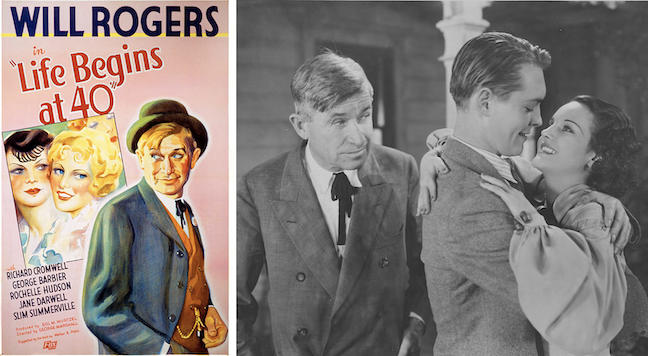
THAT’S LIFE…Will Rogers with Richard Cromwell and Rochelle Hudson in Life Begins at 40. Rogers’ film took its title from a 1932 self-help book by Walter B. Pitkin. Pitkin maintained that keeping a positive attitude toward life could give a person many fulfilling years after age 40. By the time of his death in 1935, the 55-year-old Rogers was Hollywood’s highest paid actor. (Wikipedia/IMDB)
* * *
Not Toying Around
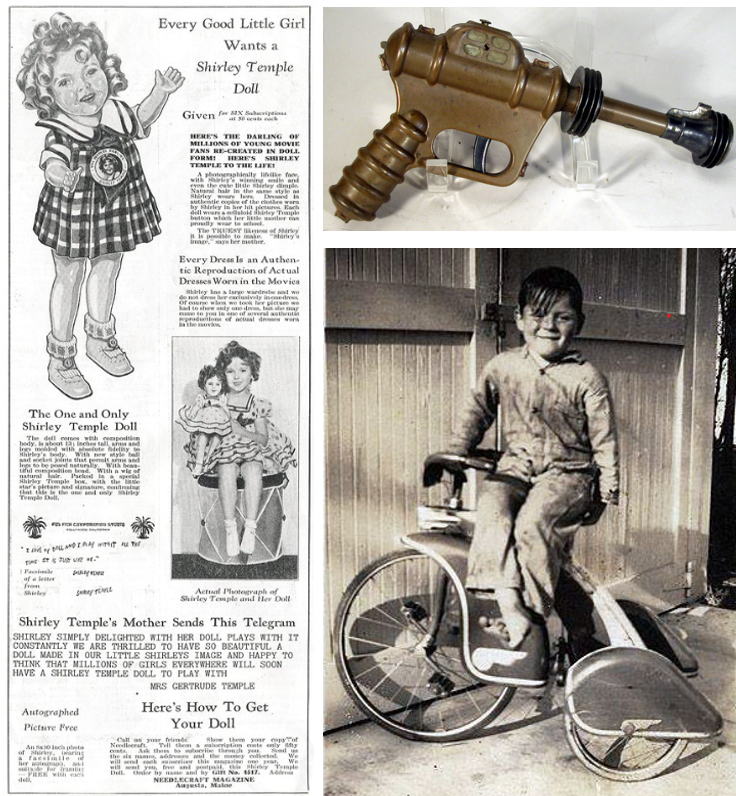
“The Talk of the Town” looked in on the serious business of toymakers, with 1935 being the year of streamlined tricycles, Buck Rogers disintegrator pistols, and, of course, Shirley Temple dolls.
RIVALED ONLY BY MICKEY MOUSE, Shirley Temple was the most popular celebrity to endorse merchandise for children and adults, including the “one and only” Shirley Temple Doll (left, ad from 1935); the Buck Rogers XZ-38 Disintegrator Pistol (top) was produced in 1935 by Daisy, and was available in both copper and nickel finishes–it was also offered as a premium from Cream of Wheat cereal; at bottom, the American National Streamline Velocipede Tricycle (1935), just one example of the hundreds of products receiving the streamlining treatment in the 1930s. (flickr/airandspace.si.edu/onlinebicyclemuseum.co.uk)
* * *
Literary Spirits
E.B. White welcomed the return of literary tea party, which thanks to the repeal of the 18th Amendment had been re-dubbed the “literary cocktail party.” He shared his thoughts in “Notes and Comment”…
AMUSING MUSES…Actress, writer and socialite Peggy Hopkins Joyce hosted literary “teas” in the 1920s, while former Cosmopolitan editor Ray Long inspired a book on adventures in the South Seas shortly before his death; from left, Joyce in 1923; photogravure of Long, 1925. (Wikipedia/photogravure.com)
* * *
Proto Feminist
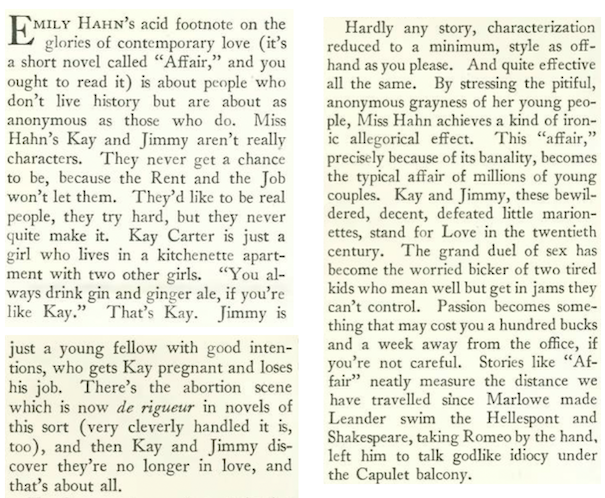
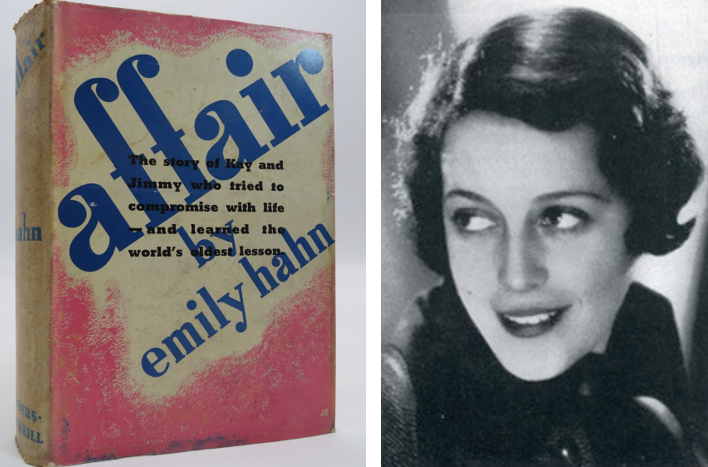
Emily Hahn was one of the more lively figures in The New Yorker’s stable of journalists and writers, leading an adventurous life that included a hike across Central Africa in the 1930s and getting into all kinds of trouble during the Japanese invasion of China. According to Roger Angell, Hahn was, “in truth, something rare: a woman deeply, almost domestically, at home in the world. Driven by curiosity and energy, she went there and did that, and then wrote about it without fuss.” It is no surprise that Hahn’s latest novel, Affair, didn’t shy away from topics like abortion. According to reviewer Clifton Fadiman, the novel’s “anonymous grayness” exposed the banality of love in the twentieth century.
If Hollywood is looking for a new biopic, Hahn would make a fascinating subject (Kristen Stewart would be perfect for the part). According to IMDB, there is an “Untitled Emily ‘Mickey’ Hahn Project”—a TV series—that has been in development since 2022, but so far nothing has come of it.
DOWN ON LOVE?…Emily Hahn’s 1935 novel Affair exposed the banality of love in the twentieth century. (abebooks.com/susanbkason.com)
* * *
From Our Advertisers
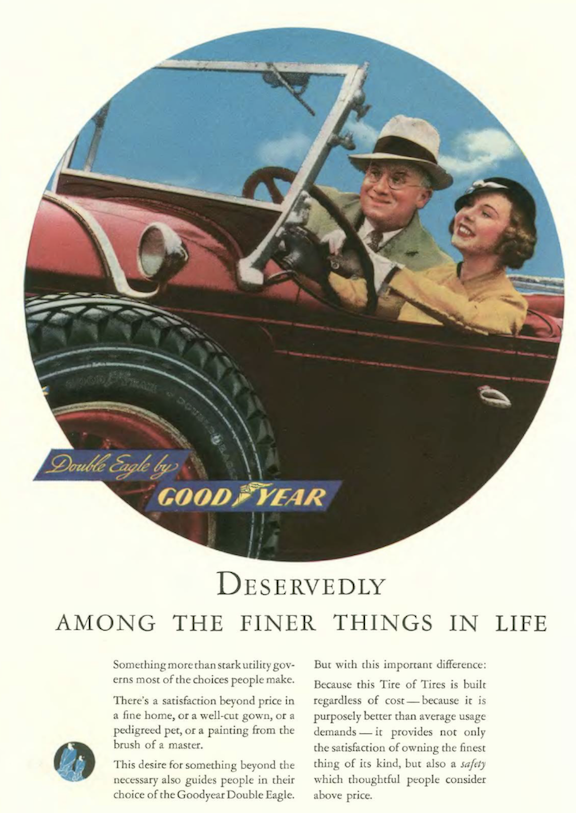
We begin with this advertisement from Goodyear, featuring what appears to be a father teaching his daughter how to drive, or in this case, fly, just like Chitty Chitty Bang Bang…
…and we stay airborne with the makers of the streamlined Nash, who claimed their automobile had “flying power”…
…and we return to earth with Cadillac’s budget model, the LaSalle, which featured “flashing performance”…
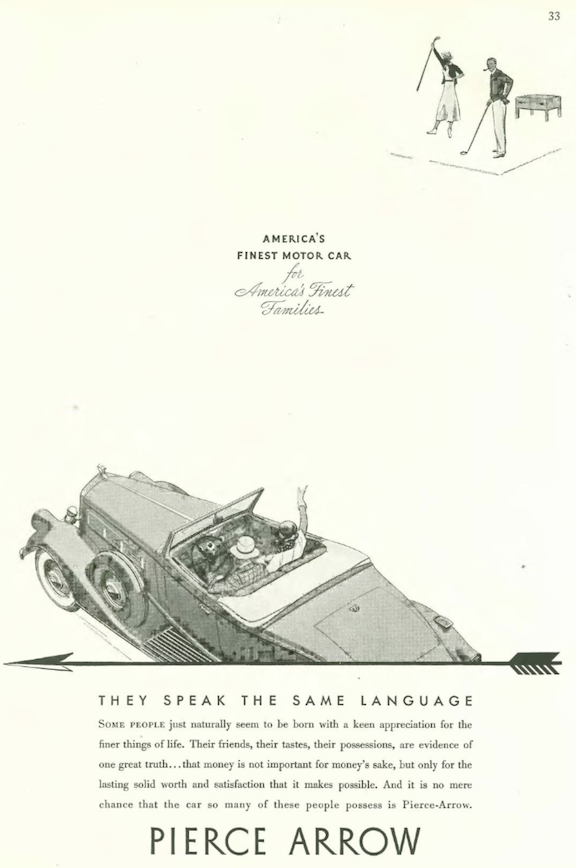
…by contrast, Pierce Arrow took a minimalist approach, gimmicks and splashy colors being reserved for the lower orders…
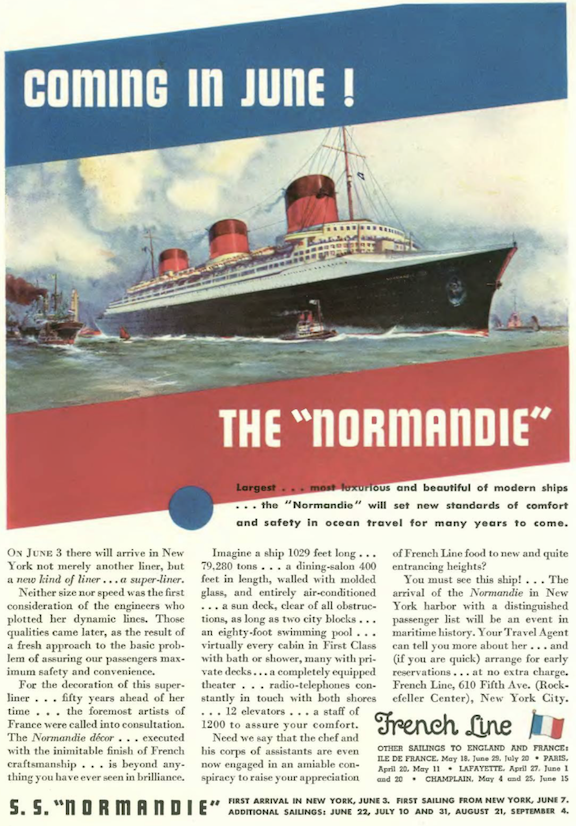
…one of the world’s most iconic ocean liners took to the sea with much fanfare in 1935. The SS Normandie was the largest and fastest passenger ship afloat; it remains the most powerful steam turbo-electric-propelled passenger ship ever built…
…if you happened to smoke Webster cigars, it could have been a sign that you were favored by the heavens…
…the “20-year rule” in fashion suggests that trends have a tendency to re-emerge every two decades, and that seems to be the case here…
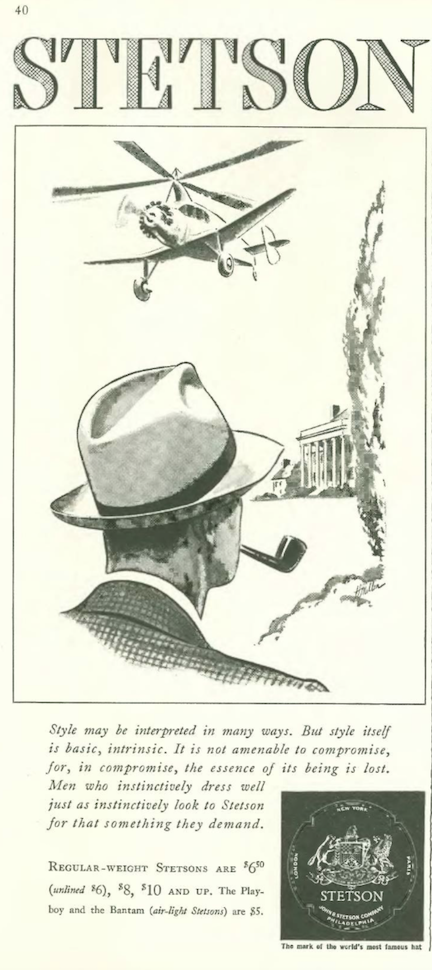
…this next ad tells us everything we need to know about the Stetson wearer: he is a wealthy country gentleman who values tradition but who is also a man of the future…from the 1920s to midcentury the autogyro was thought to be the answer to the long-dreamed of flying car…
…whoever coined the term “night cap” probably wasn’t thinking about cold cereal…
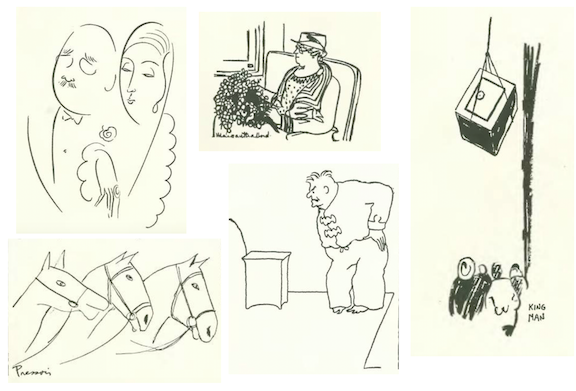
…although Harold Ross’s old high school friend, John Held Jr., contributed many woodcut-style cartoons and faux maps to The New Yorker from 1925 to 1932, Held was more famous for his shingle-bobbed flappers and their slick-haired boyfriends in puffy pants, a style more apparent in this ad for Peychaud’s Bitters (the original was a one-column ad, split here for clarity)…
…Held provides a segue to our illustrators and cartoonists, beginning with a sampling of spot art from the April 13 issue…
…James Thurber got things going on page 2…
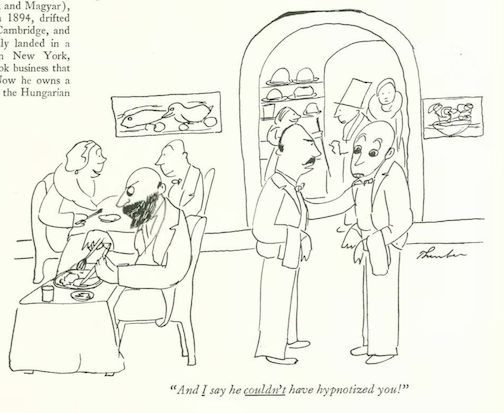
…and also contributed this observation of the hypnotic arts…
…Otto Soglow did some careful surveying (this originally appeared across two pages)…
…Alain looked in on some Vatican gossip…
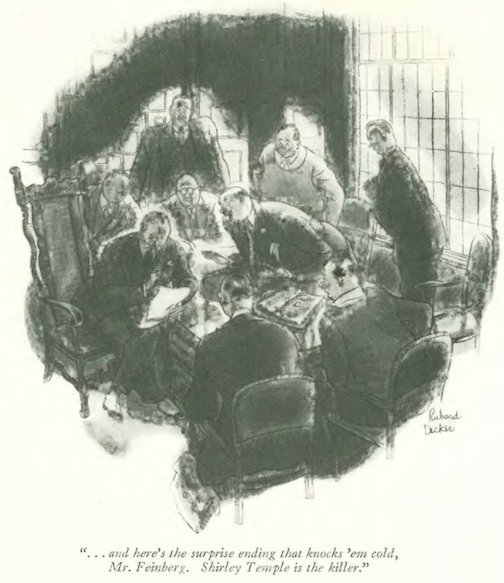
…Richard Decker pitched a Shirley Temple murder caper…
…Carl Rose gave us a sweet send-off…
…and we close out with a big bang, courtesy of Alan Dunn…
Above: Illustration and article on "Typhoid Mary" that appeared in 1909 in The New York American. At right, Mary Mallon with other quarantined inmates on North Brother Island. (Wikipedia)
The Irish-born Mary Mallon (1869–1938) lived a simple life as a maid and a cook, and it would have been a life of anonymity save for a sad twist of fate on the day she was born.
Jan. 26, 1935 cover by Perry Barlow.
History knows Mary Mallon as Typhoid Mary. From 1901 to 1907 she would cook for seven wealthy New York families that would later contract typhoid. Mallon was born to a mother who was infected with typhoid, which offers a possible explanation as to why she became an asymptomatic carrier of the disease. Forcibly quarantined on North Brother Island (near Long Island) from 1907 to 1910, Mallon agreed upon her release to take hygienic precautions, including ending her occupation as a cook.
When other jobs failed to pan out, Mallon returned to cooking—this time in restaurants and hotels—infecting many more while evading investigators who were desperately trying to track her down (it is estimated she infected up to 122 people, resulting in as many as four-dozen deaths). When she was finally arrested in 1915, she was returned to North Brother Island, where she would live out her days. Stanley Walker (1898–1962), a native Texan, longtime editor of the New York Herald Tribune, and a New Yorker contributor from 1925 to 1956, featured Mallon in a profile for the Jan. 26, 1935 issue. Some brief excerpts:
* * *
The Latest Sensation
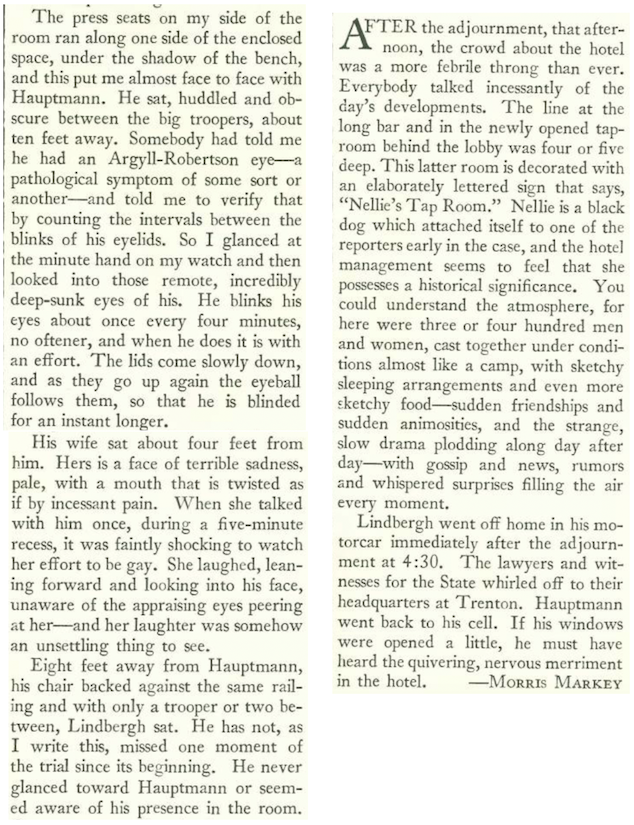
Mary Mallon was the source of sensational headlines in the early 1900s, but even she couldn’t top the media frenzy prompted by the Lindbergh baby kidnapping and the trial of accused murderer Bruno Hauptmann.The New Yorker’s Morris Markey went to the courthouse in Flemington, New Jersey, to file this report for “A Reporter at Large.” Excerpts:
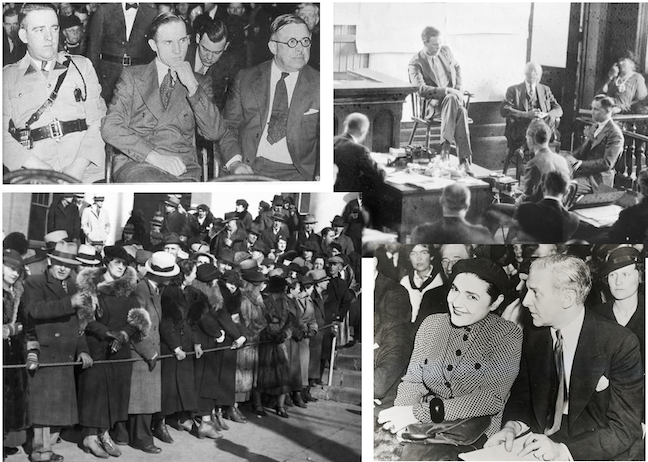
TRIAL OF THE CENTURY…Clockwise, from top left: Bruno Hauptmann (center) at his murder trial, which ran from Jan. 2 to Feb. 13, 1935, in Flemington, New Jersey; Charles Lindbergh takes the witness stand; novelist Fanny Hurst and gossip columnist Walter Winchell at the trial on Jan. 30, 1935—the “Trial of the Century” was followed by more than 700 reporters; police ropes contained the large crowds gathered at the courthouse. (Library of Congress/umass.edu/Courier Post)
Hauptmann would be convicted of the crime and immediately sentenced to death. On April 3, 1936, he would meet his end in an electric chair at the New Jersey State Prison, maintaining his innocence to the very end.
* * *
From Our Advertisers
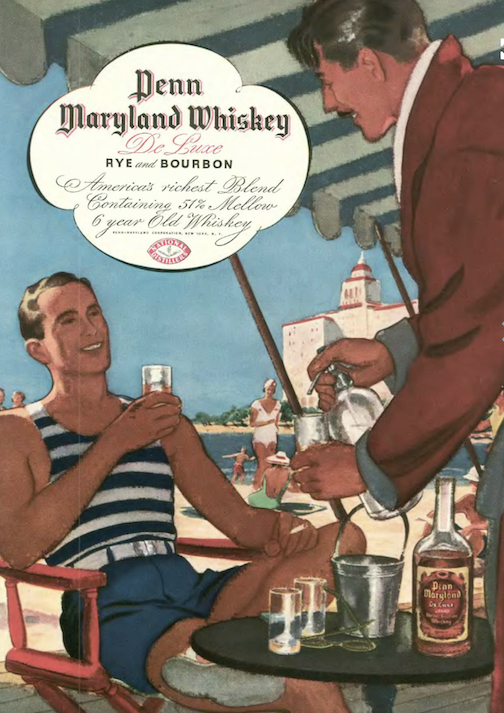
On to our ads, we begin with another colorful spot from Penn Maryland, and jolly times on Miami Beach…
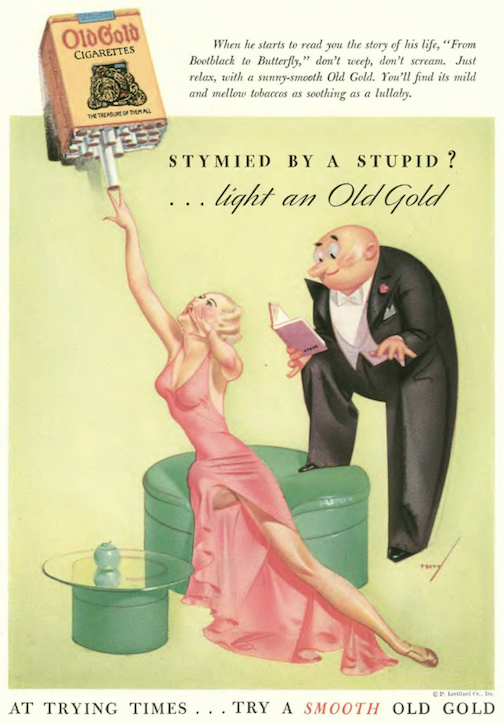
…here is the first in a series of ads that the makers of Old Gold cigarettes (Lorillard) began running in 1935, featuring a sugar daddy and his leggy mistress…they were drawn by George Petty (1884–1975), famed for his “pin-up girls” featured on many magazine covers as well as in ads for Old Gold, Jantzen swimsuits, and TWA, among others…
…here is Petty at work in 1939…
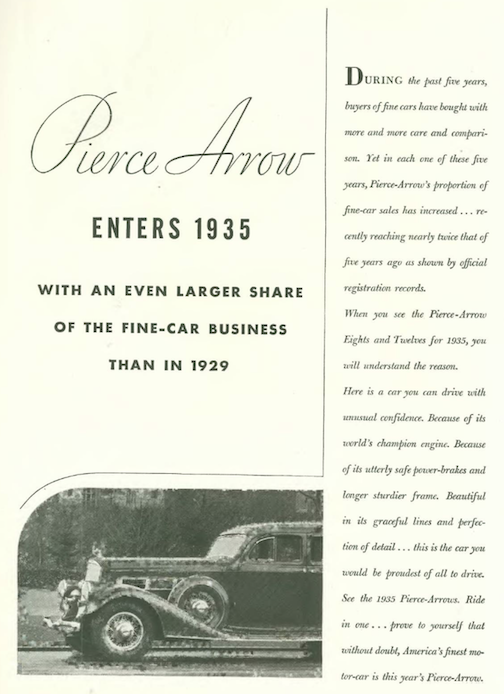
…Buffalo-based Pierce-Arrow was known for its expensive luxury cars, which were not exactly hot sellers during the Great Depression; moreover, Pierce was the only luxury brand that did not offer a lower-priced car to provide cash flow to the company, and contrary to the claims in this ad, Pierce-Arrow would close its doors by 1938…
…one thing alive and well in the 1930s was sexism, and here is a good example from the makers of a popular line of soups…
…The Theatre Guild called upon the talents of James Thurber to promote their latest production…
…and we continue with Thurber as move into the cartoons…
…where Robert Day found some miscasting in a Civil War epic…
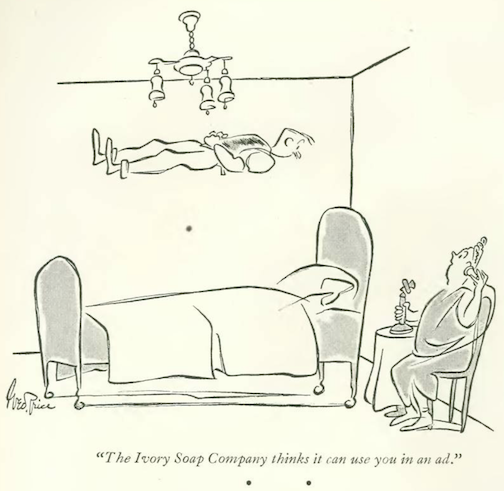
…George Price’s floating man seemed to be coming back to earth…
…Day again, with a sure-fire way to defend one’s goal…
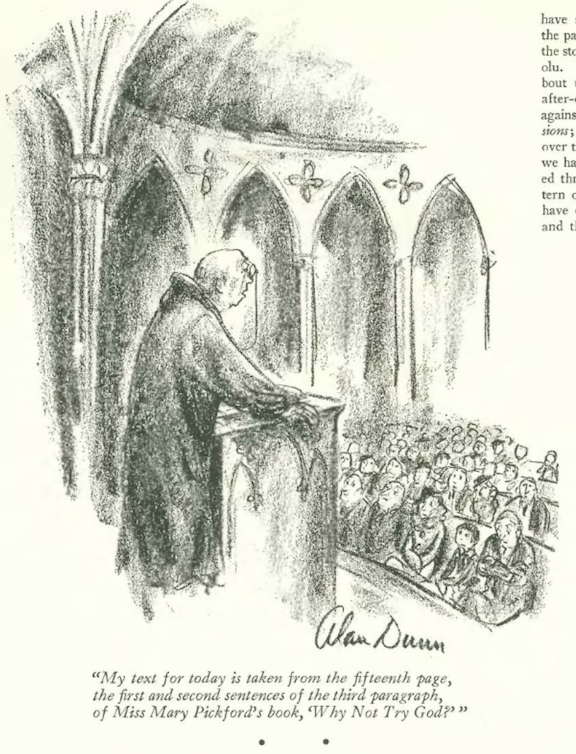
…Alan Dunn offered words of wisdom from the pulpit…
…and we close with Barbara Shermund, and a familiar face…
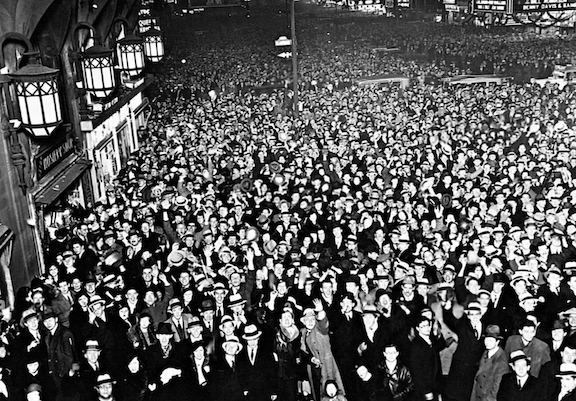
Above: Ringing in the New Year at Times Square, 1934.
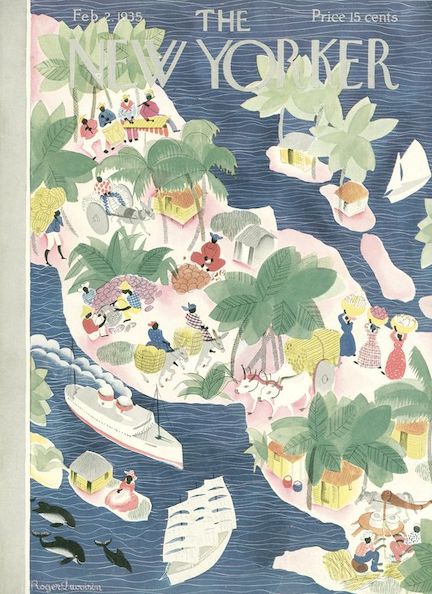
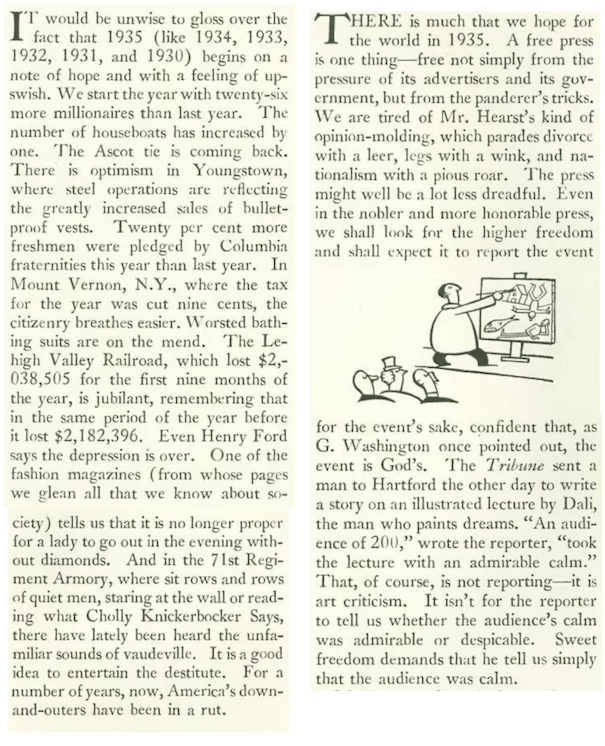
We bid adieu to 1934 with some odds and ends, beginning with E.B. White’s observations for the upcoming year, which if anyone had noticed the uptick in Ascot tie purchases, just might be a bit rosier than previous years of the decade.
Dec. 29, 1934 cover by S. Liam Dunn.
White was also hopeful for a new year with a less dreadful press, particularly the pandering type promulgated by William Randolph Hearst.
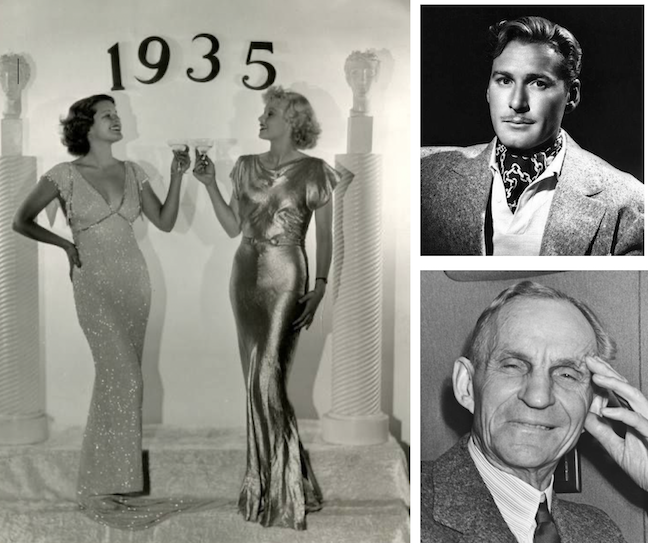
GOOD RIDDANCE…E.B. White wryly noted the positive signs heading into 1935. While actresses Billie Seward and Lucille Ball rang in the New Year, Erroll Flynn was sporting an ascot tie and Henry Ford was proclaiming that the Depression was over. (Pinterest)
* * *
Dr. Peeper
“The Talk of the Town” noted that Dr. Allan Dafoe, the country doctor who gained fame for delivering the Dionne Quintuplets, expressed a desire to see Sally Rand perform her bubble dance during his visit to Gotham. “Talk” also looked in on the some of the technical aspects of the burlesque dancer’s signature act:
DON’T BURST MY BUBBLE…Dr. Allan Dafoe of Dionne Quintuplet fame looked forward to taking in the sights of New York, including Sally Rand’s famed bubble dance. (Image from the 1936 book The Country Doctor/Sally Rand via stuffnobodycaresabout.com)
* * *
Leading Ladies
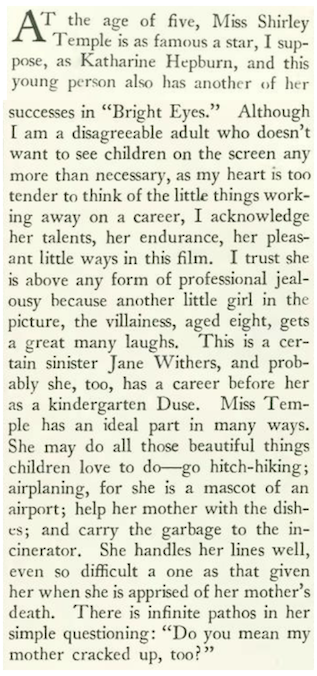
Film Critic John Mosher noted the continued rise of two leading female stars, twenty-seven-year-old Katharine Hepburn and six-year-old Shirley Temple. Mosher recalled Hepburn’s recent performance in Little Women, and proclaimed that she “succeeds again” in The Little Minister.
OPPORTUNITY KNOCKS...Katharine Hepburn and John Beal in The Little Minister. Hepburn portrayed Babbie, a member of the nobility who disguises herself as a gypsy to protect villagers from a tyrannical lord. In the process she falls in love with the good Rev. Gavin Dishart (Beal). (IMDB)
Although Mosher admitted he was a “disagreeable adult” who doesn’t enjoy seeing children on the screen “more than necessary,” he acknowledged Shirley Temple’s talents as well as those of child actor Jane Withers in Bright Eyes.
BRIGHT EYES, BRIGHT STARS…Jane Withers, Shirley Temple, and Terry in Bright Eyes. (IMDB)
* * *
That Youthful Feeling
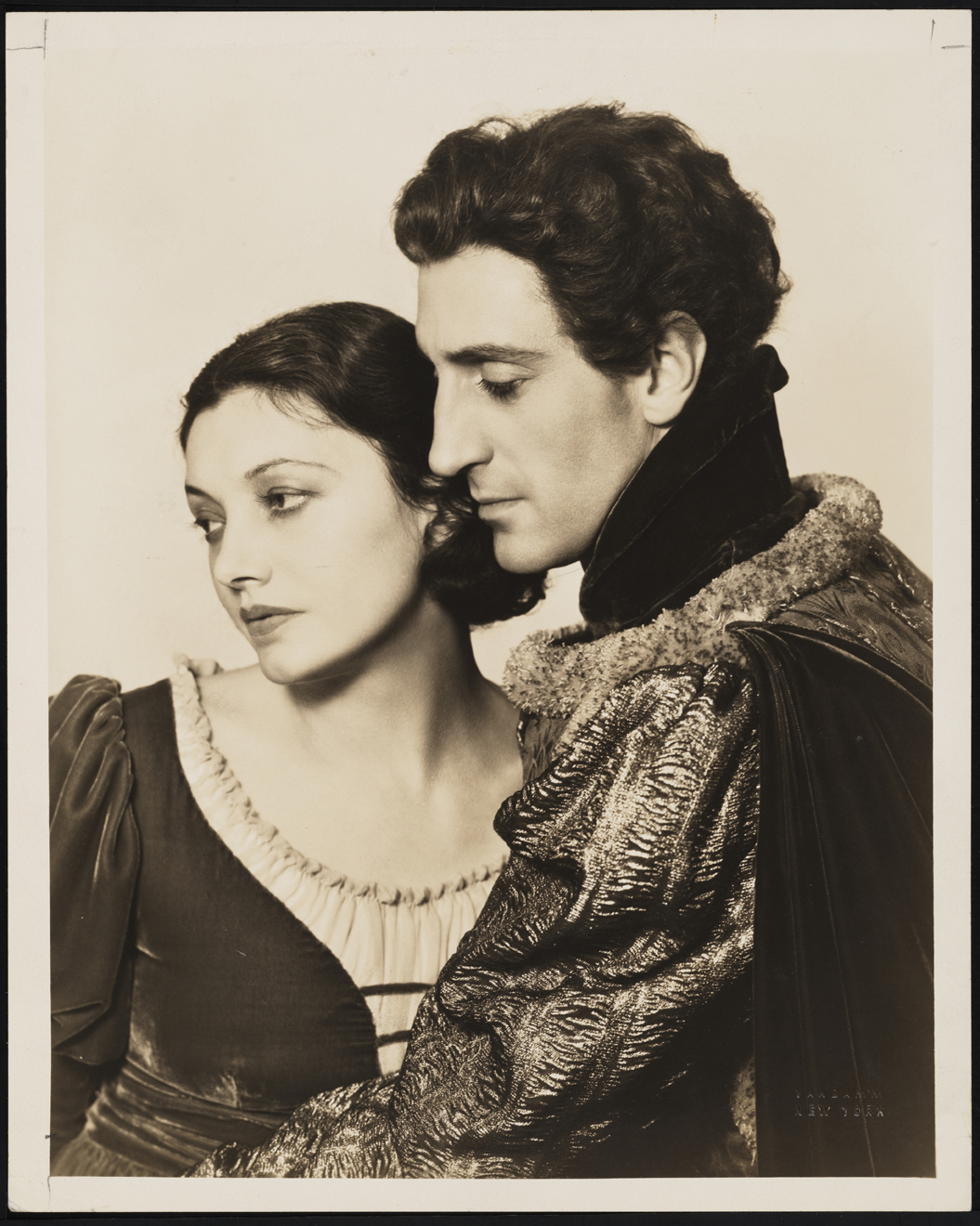
Given that William Shakespeare’s star-crossed lovers Romeo and Juliet were mere teenagers (the ages 13 and 16 were given to Juliet and Romeo, respectively), many productions featured actors more than twice that age. That was the case in 1933 when the play was revived by actress Katharine Cornell and her director husband Guthrie McClintic, who took the play on a seven-month nationwide tour before it was revised and opened on Broadway in December 1934. Critics dubbed the 41-year-old Cornell “the greatest Juliet of her time,” and it seems Robert Benchley heartily agreed in this excerpt from his stage review:
AGE IS JUST A NUMBER…The 41-year-old Katharine Cornell and 42-year-old Basil Rathbone in a promotional photo for Romeo and Juliet. Cornell was the first performer to receive the Drama League’s Distinguished Performance Award, which became the oldest and most exclusive theatrical honor in North America. (Vandamm photo, Museum of the City of New York)
* * *
The New Yorkiest Place
In 1930 gossip columnist Walter Winchell called the new Stork Club “New York’s New Yorkiest place on W. 58th,” and when it relocated to 3 East 53rd Street in 1934 it further defined itself as the ultimate New York night club. In her “Tables for Two” column, Lois Long found the new location much to her liking. An excerpt:
THE STORK DELIVERS…The Stork Club truly became the New Yorkiest nightclub when it relocated to 3 East 53rd Street in 1934. Clockwise, from top left: the club entrance in the 1930s; Cary Grant was one of the many celebrities who favored the nightclub, circa 1935; a 1930’s club menu; Lita Grey, the former teen bride of actor Charlie Chaplin, was a featured singer at the club during Lois Long’s visit. (Gibbes Museum of Art/Pinterest/vintagemenuart.com/IMDB)
* * *
So Long?
Clarence Day, best known for his Life with Father stories, also contributed a number of cartoons to the magazine, accompanied by satirical poems and humorous shorts. Day would die at the tender age of 61—after a bout with pneumonia—in December 1935, about a year after this cartoon was published in The New Yorker. I assume he was signing off from the magazine in order to arrange publication of his Life with Father book, which was published shortly after his death.
* * *
From Our Advertisers
Sunny California beckoned those who had the means and leisure to head to warmer climes during the New York winter…
…for those who stayed behind, they could wrap themselves in a chic winter coat such as this one sported by Camel endorser Mrs. Langdon Post (Janet Kirby)…
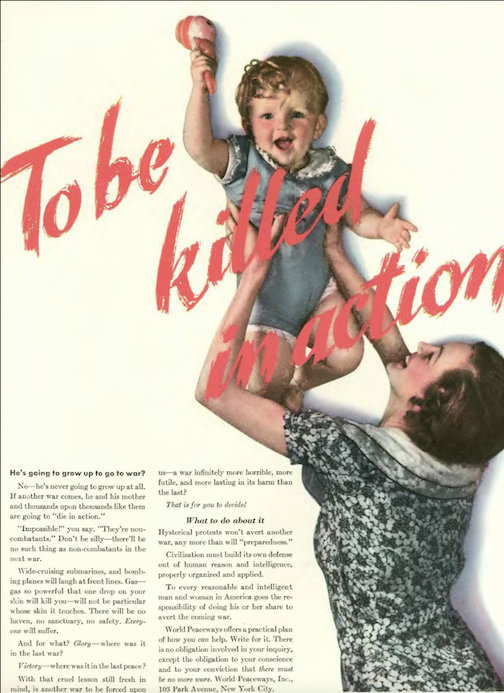
…another colorful ad with a not-so-colorful message from World Peaceways, a 1930s anti-war organization that characterized soldiers (and future soldiers, seen here) as pawns in the corrupt games of the rich and powerful…
…the distributors of French champagne rang in the New Year by suggesting that Doyen was worth your very last cent…
…we kick off our cartoons by welcoming the New Year with George Price…
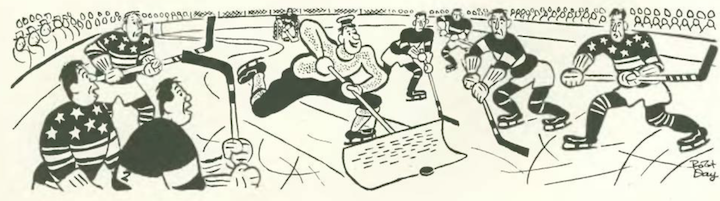
…Robert Day contributed a spot drawing that offered a new twist to ice hockey…
…I should know this artist, but it escapes me for the moment…nevertheless, a great illustration to stretch across the bottom of an opening page…
…a closeup of the signature…
…another from George Price, still up in the air in the final issue of 1934…
…Garner Rea introduced us to the life of the party…
…”Miss Otis Regrets” is a 1934 Cole Porter song about the lynching of a society woman after she murders her unfaithful lover. Porter wrote the song as a parody of a sad cowboy song he heard on the radio. The song was further workshopped for fun at “smart set” cocktail parties…on to our next cartoon, and a moment of keen insight from James Thurber…
…Garrett Price went on the town with some students of anatomy…
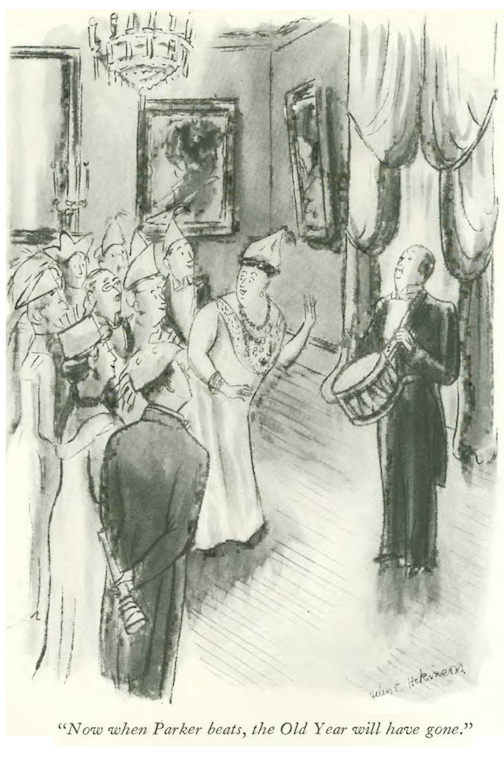
…and we say Happy New Year with the help of Helen Hokinson…
Above: The Cat and the Fiddle (Pete Gordon) and Mickey Mouse (a monkey in a very creepy costume) were featured in 1934's Babes In Toyland.
We close out the old year and ring in the new with a bit of song and dance from three musicals that entertained New Yorkers in the waning days of 1934.
Dec. 22, 1934 cover by Arnold Hall.
The work of composer Jerome Kern and lyricist Oscar Hammerstein II were prominent in two of those films, adapted from successful Broadway productions—the romantic comedy Music in the Air and the sentimental Sweet Adeline. Success on the stage did not necessarily translate to the screen in either case, according to critic John Mosher.
SOUR NOTES…The famed silent movie star Gloria Swanson showed off her singing chops in Music in the Air, but it wasn’t enough to save the film from becoming a box office failure. The film centered on the stormy relationship between opera star Frieda Hotzfelt (Swanson) and librettist Bruno Mahler (John Boles, pictured). (TCM)TALL ORDER…For those who recalled Helen Morgan’s tragedy-tinged Broadway performance as Addie in Sweet Adeline, Irene Dunn’s more comical take, although delivered with authority, could not hold up the pallid performances of her co-stars, including Donald Woods, right. (TCM)
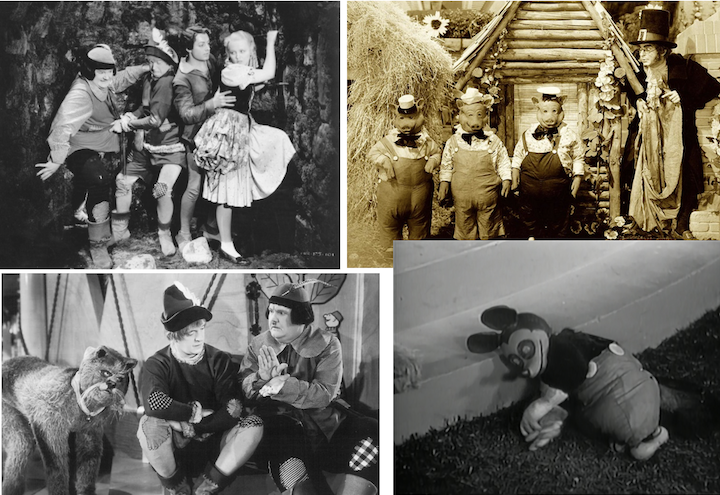
And there was Babes in Toyland, a Hal Roach film headlined by the comedy duo Stan Laurel and Oliver Hardy. The film was well received by critics, including Mosher, who wrote that Babes in Toyland “was far more successful than [1933’s] Alice in Wonderland, and the children will probably be far less bored by it than they generally are by those films designed especially for them.” However, similar to Alice the costumes seem creepily crude, such as the weird rubber pig costumes and the almost terrifying Mickey Mouse, portrayed by a hapless monkey dressed to resemble the big-eared icon. It was apparently the first and last time Walt Disney allowed the Mickey Mouse character to be portrayed outside of a Disney film. No wonder.
Clockwise, from top left, Stan Laurel and Oliver Hardy with Felix Knight (Tom-Tom) and Charlotte Henry (Bo-Peep); the Three Little Pigs with the villain Silas Barnaby, portrayed by Henry Brandon; a very creepy Mickey Mouse (a monkey in costume); and Laurel and Hardy with The Cat and the Fiddle (Pete Gordon). (eofftvreview.wordpress.com/psychotronicaredux.wordpress.com/YouTube/MUBI)
* * *
Alms for the Poor
Woolworth store heiress Barbara Hutton was one of the richest women in the world in the 1930s, and her lavish lifestyle in the midst of Depression attracted the attention, and the ire, of newspaper columnist Ed Sullivan. In his “Notes and Comment,” E.B. White made this observation:
COUGH IT UP, LADY…Ed Sullivan, who in 1934 was a well-known Daily News show business columnist, thought Woolworth dime store heiress Barbara Hutton should show more concern for the needy. Known for her lavish spending during the Great Depression, in 1934 Hutton was married to a self-styled Georgian prince named Alexis Mdivani—Mdivani would be the first of Hutton’s seven husbands. Sullivan would go on to greater fame on television with the Ed Sullivan Show. (clickamericana.com/npg.org.uk)
* * *
Oh Baby
Most of us know something about the weird and somewhat tragic tale of the Dionne quintuplets, raised from infancy before the public gaze and exploited to sell everything from dolls and books to soap and toothpaste. When E.B. White made this brief mention in his “Notes and Comment,” the story of the quintuplets was still a jolly one, and their delivering physician, Dr. Allan Roy Dafoe had gone from being a country doctor to one of North America’s most trusted medical authorities. Dafoe would become the childrens’ guardian and impresario, and make a fortune marketing their story and images.
QUINTUPLE YOUR MONEY…After he delivered the Dionee quintuplets, Dr. Allan Roy Dafoe went from being a country doctor to one of North America’s most trusted medical authorities. That later translated into big profits from companies eager to cash in on the quint’s popularity, as these 1937 ads attest. (Pinterest)
* * *
In the Year 2400
“The Talk of the Town” examined the “Buck Rogers” craze, fed by a cartoon strip, a radio show, and an array of toys.
YESTERDAY’S TOMORROW…A Buck Rogers “pop-up” book was just one of the many formats that could be consumed by avid followers of the early sci-fi hero. Also pictured are a themed pocket watch and the “must have” sci-fi toy of 1934, Buck’s XZ-31 Rocket Pistol. (Pinterest/Bullock Museum)
* * *
What’s It All About, Alfie?
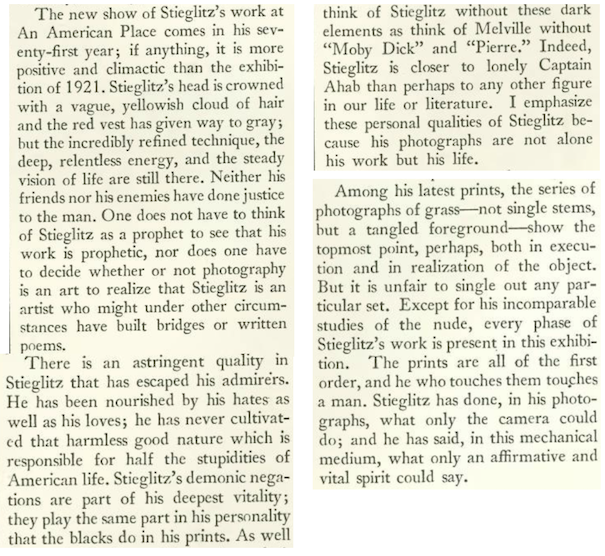
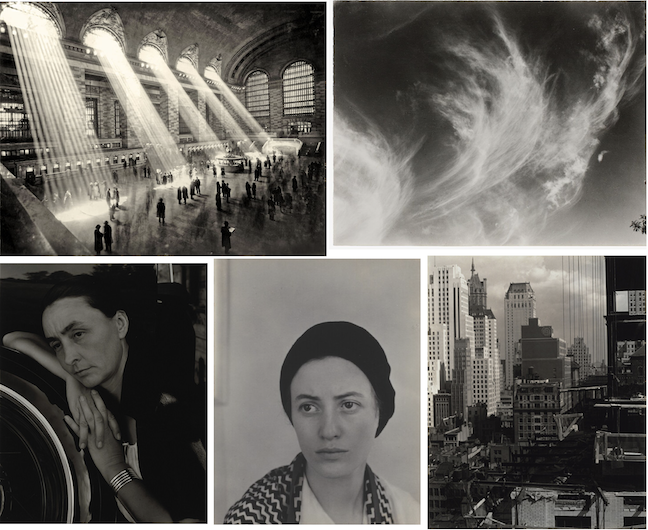
Art and architecture critic Lewis Mumford offered praise for Alfred Stieglitz’s latest exhibition at the photographer’s gallery, An American Place. Mumford noted Stieglitz’s “astringent quality” that rose above the philistine tastes and “stupidities” of American life.
LIFE AND WORK INTERTWINED…Clockwise, from top left: Alfred Stieglitz’s famed 1930 image of Grand Central Terminal; one of the photographer’s many images of clouds under the title Equivalent, 1930; image taken from Stieglitz’s studio/gallery window titled From My Window at An American Place, North, 1931; Dorothy Norman, circa 1931; Georgia O’Keeffe, 1933. Stieglitz, who was married to Georgia O’Keeffe, became Dorothy Norman’s mentor and lover in the late 1920s. (National Gallery of Art/Art Institute of Chicago)
* * *
From Our Advertisers
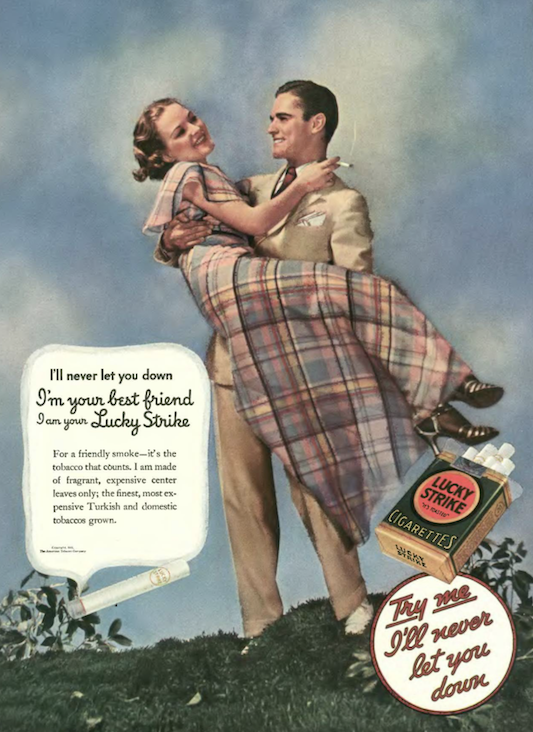
The back cover of The New Yorker was coveted by tobacco companies, the makers of Camels and Lucky Strikes (seen here) both featuring sumptuous photos of stylish women using their product, women being a key growth market for the companies…
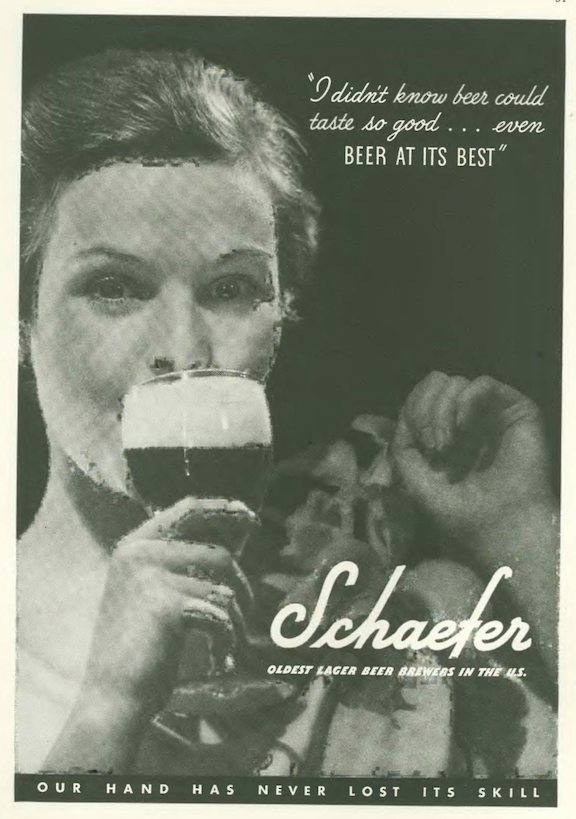
…same for the brewers, who also sought out female consumers to bolster sales of their brands…
…Ponds continued to roll out the seeming legions of socialites and lower-tier royalty to sell their jars of cold cream…
…the magazine’s ads were often directed at middlebrow class anxieties, as we see here…
…by constrast, this ad from Bonwit Teller (graced by fashion illustrator W. Mury) took us out of the stuffy parlor and onto the beckoning beaches of the Caribbean…
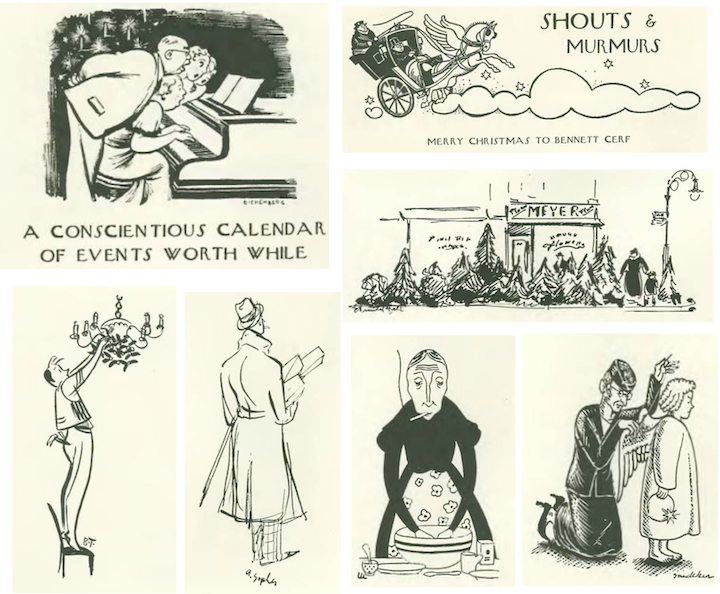
…we move on to our cartoonists…all of the spot illustrations in the issue were holiday-themed, and here are a few choice examples…
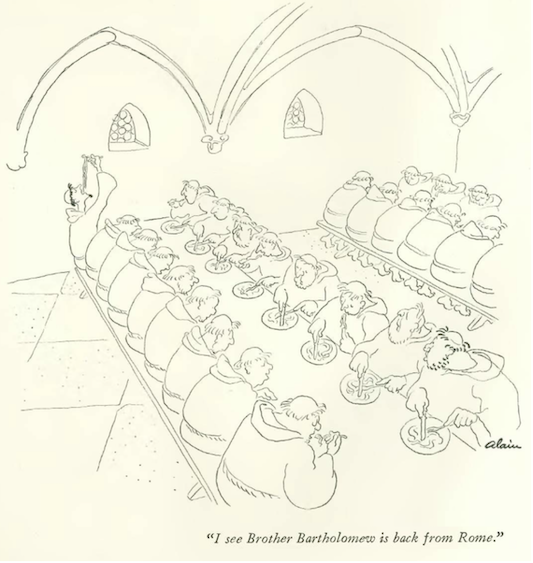
…Daniel ‘Alain’ Brustlein introduced a bit of color to a monastery’s dining hall…
…James Thurber continued to explore the dynamics between the sexes…
…Barbara Shermund did a bit of dreaming with her modern women…
…Carl Rose gave us Christmas cheer, with some reservations…
…and lastly, Perry Barlow with something for the holiday procrastinator…
Above, left, a 1935 portrait of Gertrude Stein by Carl Van Vechten; right, Gertrude Stein and Alice B. Toklas arriving in New York aboard the French Line’s SS Champlain in 1934. (Library of Congress/AP)
Much of America’s literary world was abuzz about the arrival of Gertrude Stein in New York after her nearly three-decade absence from the States. Audiences were mostly receptive to Stein’s lectures, even if they were largely unintelligible, but The New Yorker would have none of it.
Nov. 17, 1934 cover by Rea Irvin.
Stein (1874–1946) visited the U.S. at the urging of friends who suggested that a lecture tour might help her gain an American audience for her work. She crisscrossed the country for 191 days, delivering seventy-four lectures in thirty-seven cities.
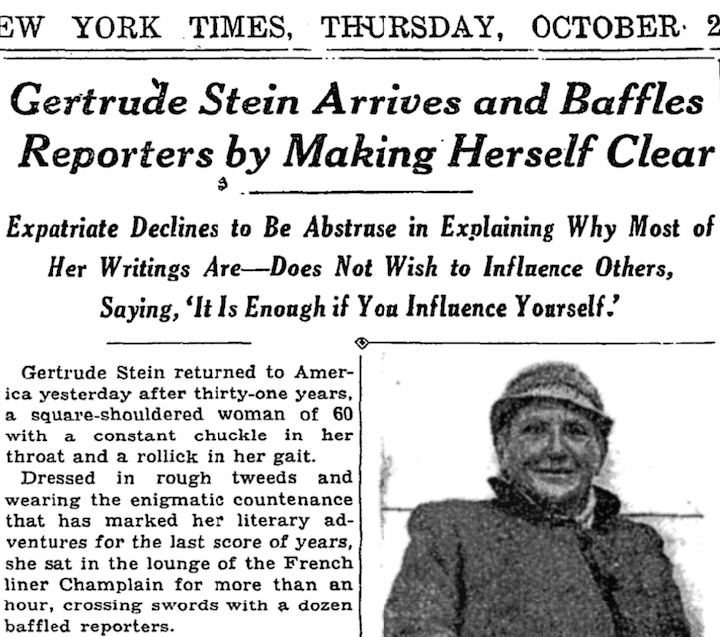
Writing for the Smithsonian Magazine (October 2011), Senior Editor Megan Gambino notes that publishing houses regarded Stein’s writing style as incomprehensible (Gambino writes that shortly after her arrival in the U.S., “psychiatrists speculated that Stein suffered from palilalia, a speech disorder that causes patients to stutter over words or phrases”), but in 1933 “she at last achieved the mass appeal she desired when she used a clearer, more direct voice” in The Autobiography of Alice B. Toklas. However, Stein was still best known in the U.S. for her “insane” writings, as one New York Times reporter described Stein’s work upon the writer’s arrival in New York. Excerpts from the Oct. 25, 1934 edition of the Times:
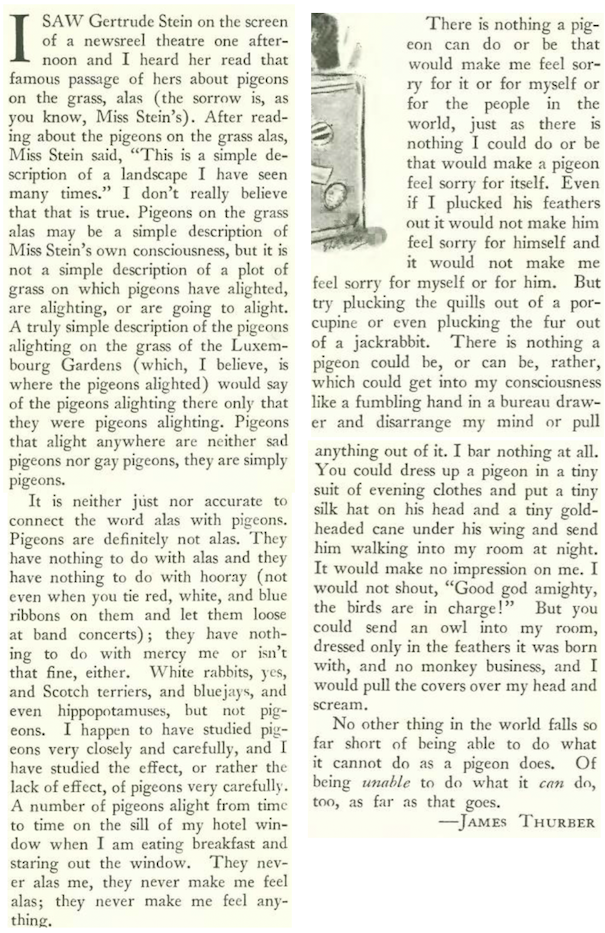
Stein had also achieved success in America via her libretto to Virgil Thomson’s opera Four Saints in Three Acts. Prior to her visit, Stein was featured in a newsreel reading the “pigeon” passage from the libretto, which James Thurber satirized in this piece titled “There’s An Owl In My Room.” Excerpts.
Here is a YouTube clip of the newsreel satirized by Thurber. Stein begins her “pigeon” reading at the 30-second mark:
If Thurber found the libretto ridiculous, it was an opinion not necessarily shared by audiences who attended Four Saints in Three Acts, which premiered in Hartford, Connecticut, before making a six-week run on Broadway.
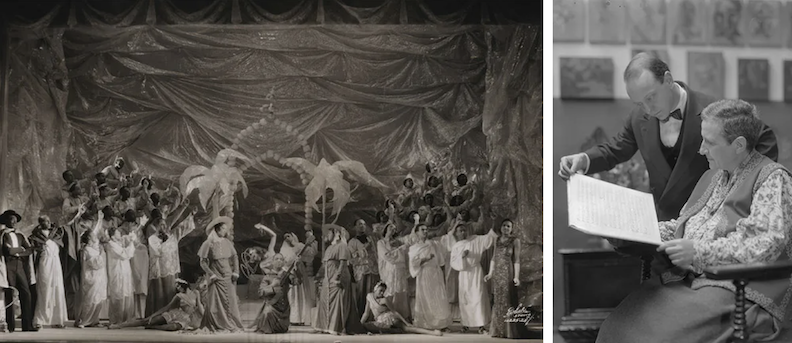
SAINTS AND PIGEONS…The original cast of Four Saints in Three Acts, onstage at the Wadsworth Atheneum, Hartford, 1934; at right, Gertrude Stein reviews the libretto for Four Saints with American composer Virgil Thomson, 1934. (Harold Swahn/Bancroft Library, UC Berkeley)
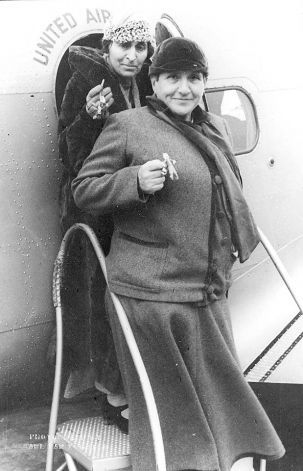
Since Stein had never seen the opera performed, writer and photographer Carl Van Vechten convinced Stein and Toklas to fly on an airplane for the first time in order to be able to see the play in Chicago.
FLIGHT INSURANCE…Stein and Toklas were anxious about flying, so Van Vechten gave each a small Zuni fetish—a good luck charm as they prepared to board their plane at Newark. (Boatwright Memorial Library, The University of Richmond)
Thurber wasn’t the only New Yorker writer to throw shade on Stein’s visit. In his “Books” column, Clifton Fadiman described Stein as a “mamma of dada” and a “Keyserling in divided skirts” (Hermann Keyserling was a non-academic German philosopher known for his platitudinous, obscure writings). Excerpt:
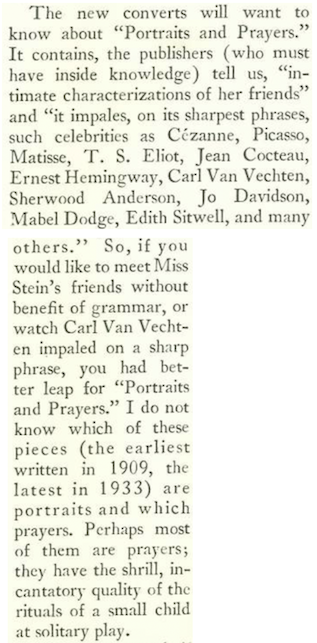
Fadiman continued by excoriating Stein’s latest book, Portraits and Prayers, likening its “shrill, incantatory” quality to “the rituals of a small child at solitary play.”
* * *
Over the Rainbow
We leave Gertrude Stein for the time being and check in with Lois Long, who was sampling the fall attractions of the New York nightclub scene in “Tables for Two.” In these excerpts, the 32-year-old Long continued her pose as a much older woman (“about to settle down with a gray shawl”) as she bemoaned the bourgeoisie excess of places like the Colony, once known for its boho, speakeasy atmosphere. And then there was the Rainbow Room, with its organ blaring full blast to the delight of gawking tourists.
LOST IN NEW YORK…Lois Long lamented the demise of cafe life in Manhattan; from left, the Colony, circa 1940, which went from boho to upscale; the 21 Club, a favorite Prohibition-era haunt of Long’s where she was suddenly a nobody; and high above the city, the Rockefeller Center’s Rainbow Room, and its interminable organ music. (Pinterest/Alice Lum via Daytonian in Manhattan/nycago.org)
* * *
From Our Advertisers
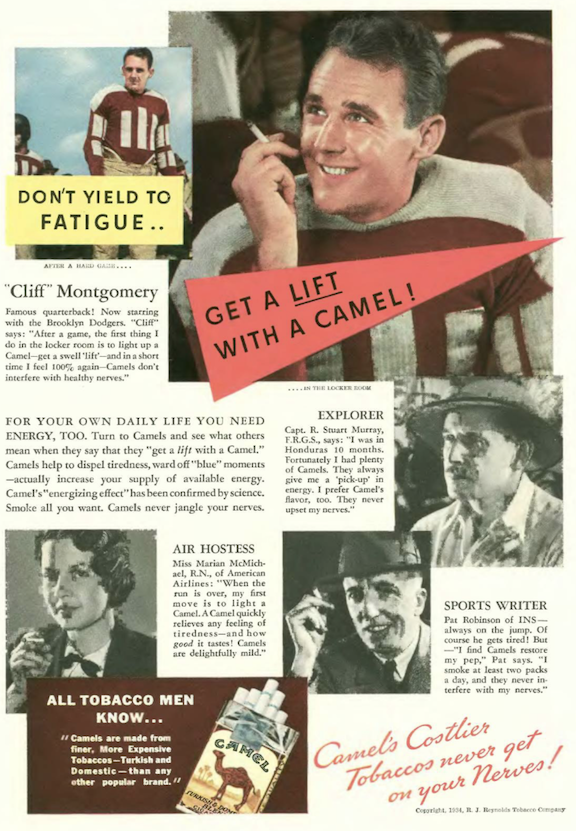
Just one ad from the Nov. 17 issue (more to come below)…the latest athlete to attest to the energizing effects of Camel cigarettes…Cliff Montgomery (1910–2005) was famed for a hidden ball trick play that led one of the greatest athletic upsets—Columbia’s 7-0 win over Stanford in the 1934 Rose Bowl. Montgomery would play one year with the NFL Brooklyn Dodgers, and would later earn a Silver Star for his heroism during World War II…
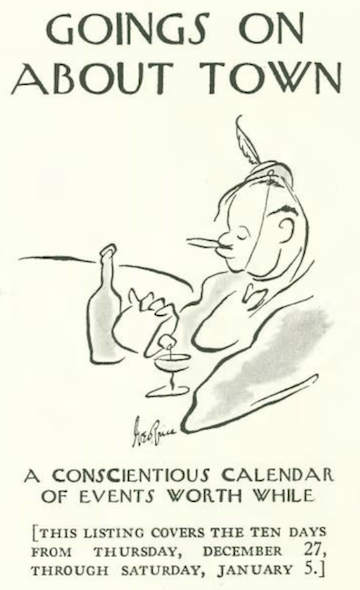
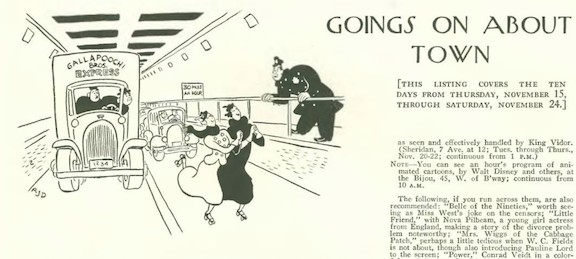
…on to our cartoonists, we begin with Robert Day’s jolly illustration for the “Goings On About Town” section…
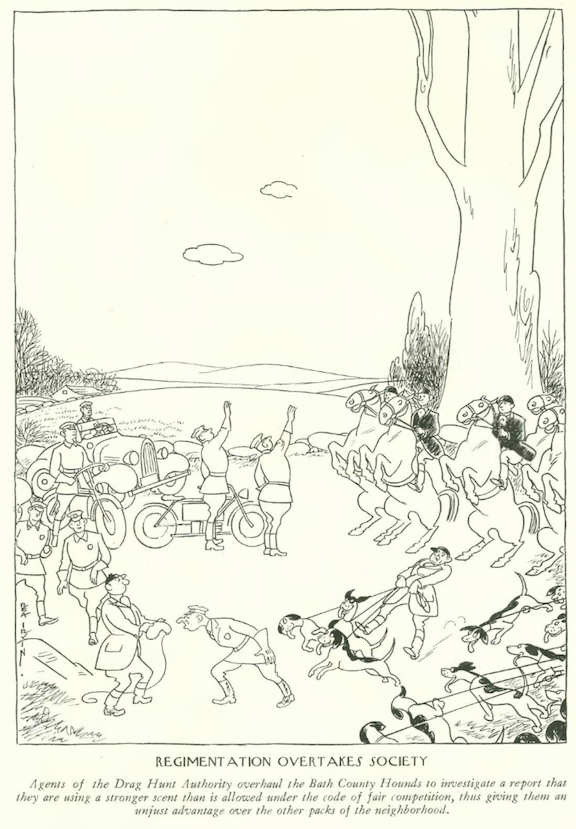
…Rea Irvin looked into fair play among the fox hunting set…
…Garrett Price gave us a tender moment among the bones at the American Museum of Natural History…
…and Peter Arno introduced two wrestlers to an unwelcoming hostess…
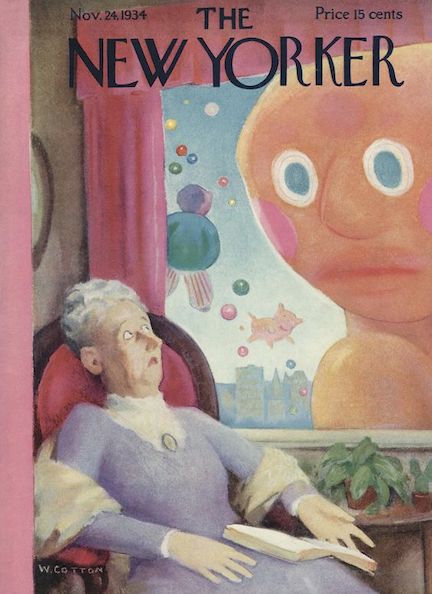
…on to Nov. 24, 1934 issue, and the perils of the Macy’s Thanksgiving Day Parade as illustrated on the cover by William Cotton…
Nov. 24, 1934 cover by William Cotton.
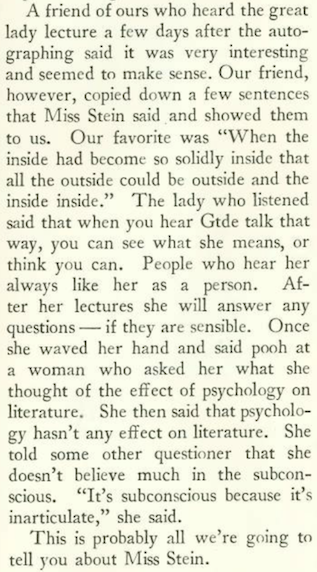
…where we find still more scorn being heaped upon Gertrude Stein. “The Talk of the Town” offered this observation (excerpt):
…and E.B. White had the last word on Stein in his Dec. 1, 1934 “Notes and Comment” column:
* * *
There Goes the Neighborhood
Returning to the Nov. 24 issue, Alberta Williams penned a lengthy “A Reporter at Large” column, titled “White-Collar Neighbors,” about the new Knickerbocker Village development in the Lower East Side. Real estate developer Fred French razed roughly one hundred buildings to build what has since been criticized as an example of early gentrification in Manhattan. Williams assessed the development after more than a year of construction, finding that despite federal funding, the leasing company had yet to rent any apartments “to Negroes or Orientals.” Although the development was meant to serve some of the families it displaced, the vast majority were forced to move back into slums due to escalating rents.
BREATHING ROOMS…Knickerbocker Village in 2019. To make way for the development, one hundred buildings were razed in the “Lung Block,” so named because of its high tuberculosis mortality rate. The development continues to be designated as affordable housing. (Wikipedia)
* * *
Dollmaker
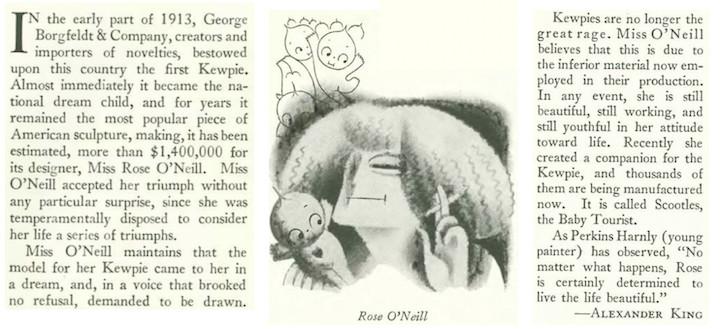
Raised in rural Nebraska, at an early age Rose O’Neill (1874–1944) demonstrated an artistic bent, and was already a published illustrator and writer when she drew her first images of “Kewpie” around the year 1908. A German doll manufacturer began producing a doll version of Kewpie in 1913, and they became an immediate hit, making O’Neill a millionaire and for a time the highest-paid female illustrator in the world. When Alexander King penned a profile of O’Neill, Kewpies were no longer the rage, but O’Neill was nevertheless determined to find success in a new doll line. Excerpts:
QP QUEEN…Clockwise from top left, Rose O’Neill circa 1910, just before her Kewpie dolls made it big; Kewpie doll in original box, undated; as the Kewpie craze faded in the 1930s, O’Neill tried to launch a new line called Little Ho Ho, a laughing baby Buddha, but before production plans were finalized the doll factory burned to the ground; a 1935 ad for a Rose O’Neill-branded “Scootles” doll, another attempt at a comeback. (Wikipedia/Pinterest/museumobscura.com)
* * *
Last Call
Lois Long was back with another installment of “Tables for Two” and in these excerpts she found the Central Park Casino a welcome place to hang out, apparently unaware that Parks Commissioner Robert Moses had already served an eviction notice to the Casino’s owners (Moses would tear down the Casino in 1936, mostly to settle a personal vendetta). Long also found respite at the Place Piquale, which featured the musical stylings of Eve Symington.
BYE BYE…The Central Park Casino was not long for the world when Lois Long paid an enjoyable visit in November 1934. Long also found a good time at the Place Piquale, which featured the “startling,” deep voice of cabaret singer Eve Symington. (centralpark.org/Pinterest)
At the Place Piquale, Long was “grateful” to see that silent film star Louise Brooks was also a good dancer. An icon of Jazz Age flapper culture, Brooks loathed the Hollywood scene and the mediocre roles it offered, and after a stint making films in Europe she returned to the States, appearing in three more films before declaring bankruptcy in 1932. A former dancer for the Ziegfeld Follies, Brooks had turned back to dancing in nightclubs to make a living.
IT’S A LIVING…Promotional photo for the Place Piquale featuring Louise Brooks (sans her familiar flapper bob) and Dario in “Spectacular Interpretive Dances,” April 17, 1934. (books0977.tumblr.com)
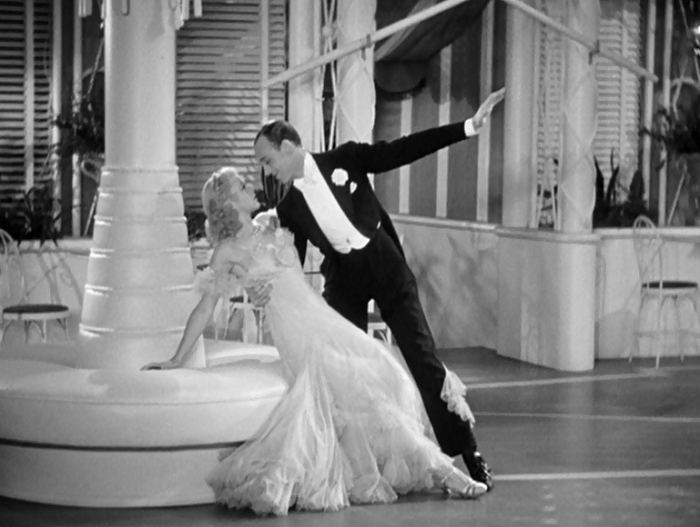
…and dance remains a theme with John Mosher’s film review of the Fred Astaire and Ginger Roger musical The Gay Divorcee, which was based on the 1932 Broadway musical Gay Divorce starring Astaire and Claire Luce.
YOU WILL HAVE TO DANCE BACKWARD, IN HEELS…Ginger Rogers and Fred Astaire trip the light fantastic in The Gay Divorcee. (precode.com)
* * *
Using Her Heads
Clifton Fadiman praised Peggy Bacon’s collection of caricatures, Off With Their Heads!, which included drawings of fellow New Yorker contributors as well as various Algonquin Hotel acolytes. Excerpt:
HEAD HUNTER…Peggy Bacon offered up caricatures of forty celebrities in her new book, Off With Their Heads! Bacon (1895–1987) contributed cartoons as well as poetry and fiction to The New Yorker from 1927 to 1950. Clockwise, from top left, title page with Bacon’s self-portrait; undated photo of Bacon, likely circa 1930; caricatures of Dorothy Parker, Carl Sandburg and Heywood Broun. (villagepreservation.org/printmag.com/Wikipedia–Peter A. Juley & Son)
* * *
More From Our Advertisers
“Beautiful Vanderbilts” Mrs. Reginald Vanderbilt and Miss Frederica Vanderbilt Webb wowed one unnamed dermatologist who discovered that both had 20-year-old skin even though they were seven years apart! “Mrs. Reginald” was Gloria Morgan Vanderbilt, who was thirty when this ad was produced (Miss Frederica was apparently twenty-three). We’ve met Gloria Morgan Vanderbilt before, shilling for Pond’s—she was the maternal grandmother of television journalist Anderson Cooper, and earned her “bad mom” rep from Vanderbilt vs. Whitney, one of America’s most sensational custody trials…
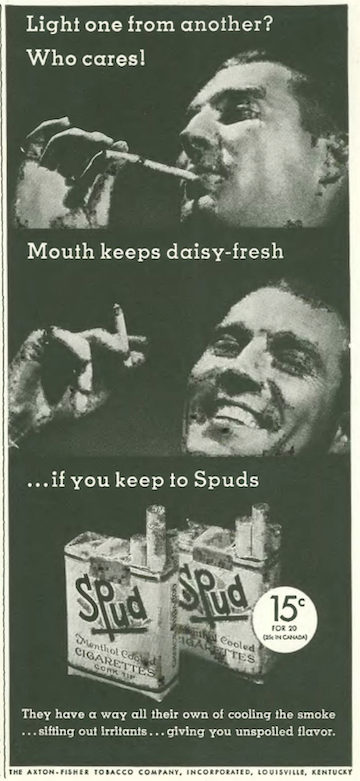
…we move from skin care to who cares…in this case how many Spud cigs you smoke…hell, smoke three packs a day if you like, the cooling menthol will always keep you feeling fresh even as your lungs gradually darken and shrivel up…
…and here’s a lesson from the makers of Inecto hair dye, no doubt a company solely run by men, who schooled wives with the advice that you’d better color that gray hair pronto or your hubby will kick you to the curb…
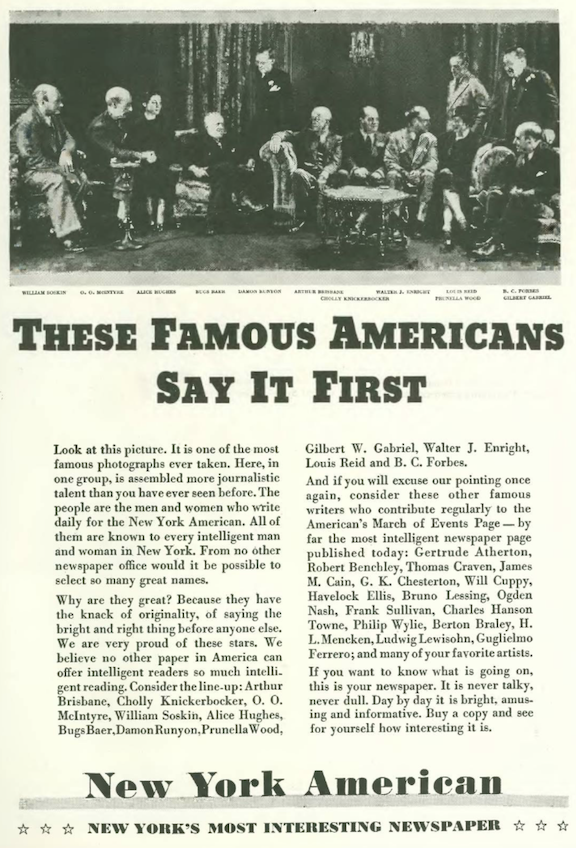
…the New York American was a Hearst broadsheet known for its sensationalism, however it did claim Damon Runyon, Alice Hughes, Robert Benchley and Frank Sullivan among its contributors…the morning American merged with the New York Evening Journal to form the American and Evening Journal in 1937. That paper folded in 1966…
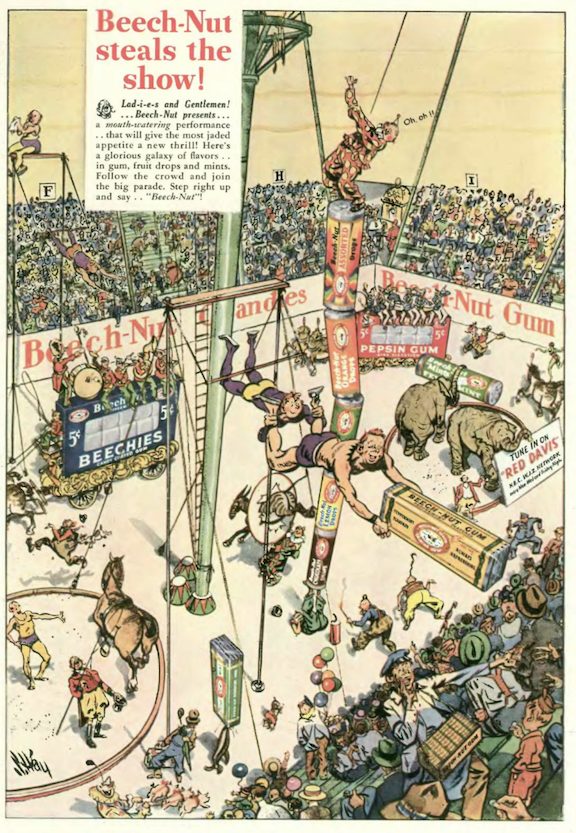
…illustrator Stuart Hay drew up this full page ad for the makers of Beech-Nut candy and chewing gum…when I was a kid we used to call this “grandpa gum”…
…on to our cartoonists, we begin with a Thanksgiving spot by Alain (Daniel Brustlein)…
…Barbara Shermund delivered another life of the party…
…George Price was finally bringing his floating man back to earth…
…Otto Soglow gave us an unlikely detour…
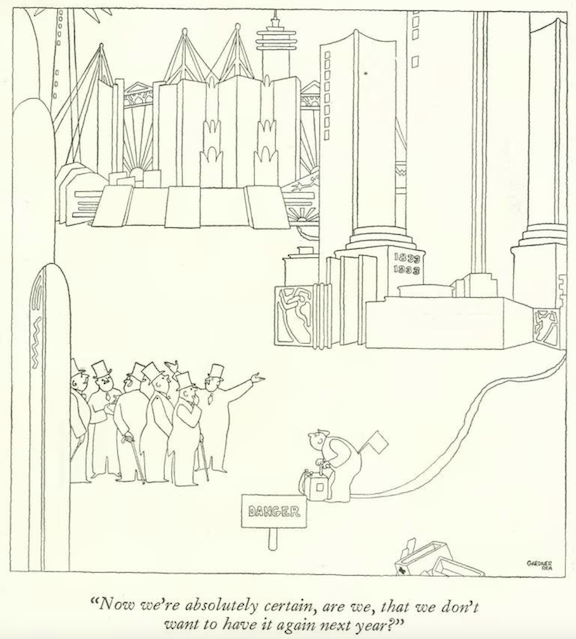
…Gardner Rea signaled the end to the 1933-34 Chicago World’s Fair…with a boom…
…Leonard Dove dialed up a familiar trope…
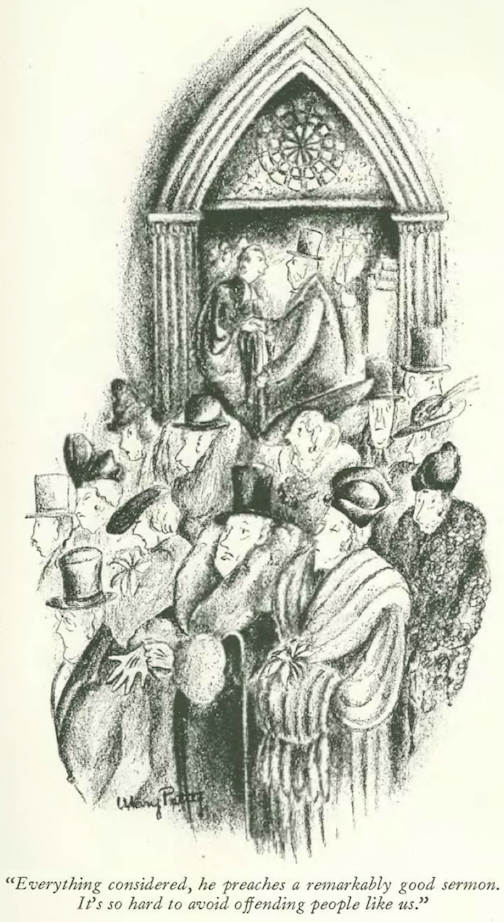
…and we close on a more pious note, with Mary Petty…
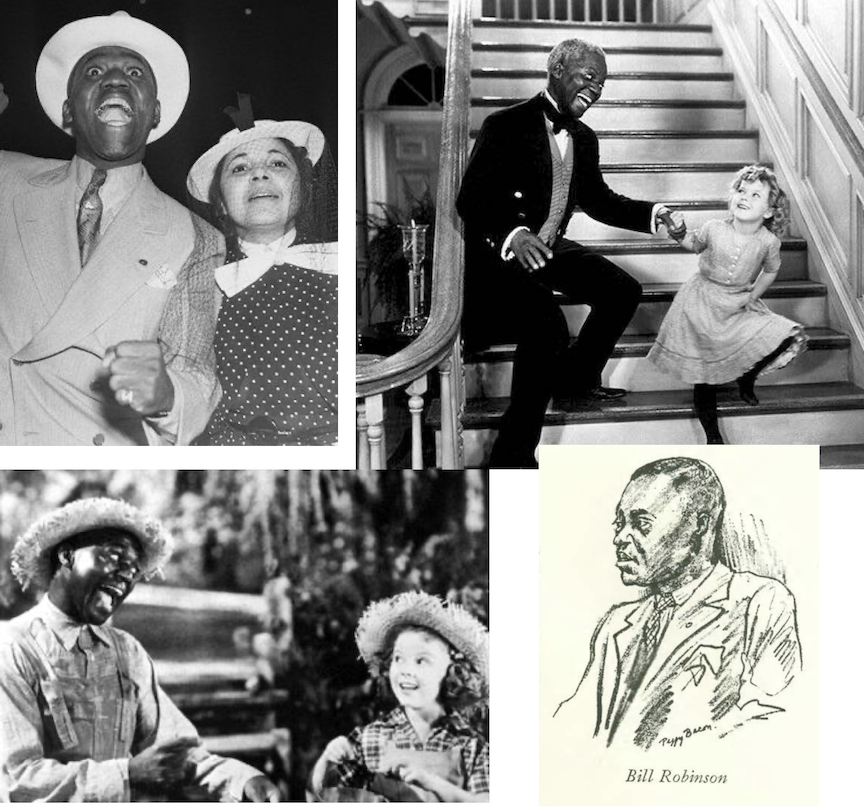
Above: Bill "Bojangles" Robinson demonstrating his famous stair dance, which involved a different rhythm and pitch for each step. At left, Robinson in Broadway's Blackbirds of 1928; at right, publicity photo circa 1920s. (Vandamm collection, New York Public Library/bet.com)
Bill “Bojangles” Robinson (1878–1949) is considered one of the greatest tap dancers of all time, introducing a style of remarkable lightness and complexity that was perhaps best represented by his famous stair dance.
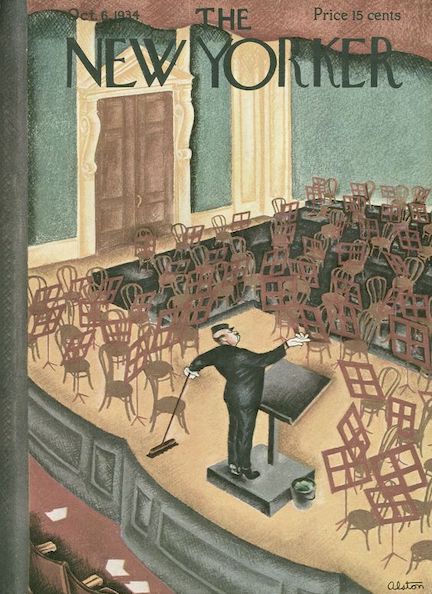
Oct. 6, 1934 cover by Charles Alston. This was Alston’s only New Yorker cover. Active in the Harlem Renaissance, Alston was also a painter, sculptor and muralist (see more on Alston at the conclusion of this post).
St. Clair McElway wrote about the 57-year-old Robinson in a two-part profile that examined his personal life and habits, including his propensity for getting shot. Two brief excerpts:
The New Yorker profile coincided with Robinson’s rising career in films, including four he made with Shirley Temple. For the 1935 film The Little Colonel, Robinson taught the stair dance to the child star, modifying his routine to mimic her movements. Robinson and Temple became the first interracial dance partners in Hollywood history (however, the step dance scene was cut from the film shown to Southern audiences). Temple and Robinson, who became lifelong friends, also appeared together in 1935’s The Littlest Rebel, 1938’s Rebecca of Sunnybrook Farm and 1938’s Just Around the Corner.
DANCING WITH THE STAIRS…Bill Robinson was also known as Bojangles, a nickname from his childhood in Richmond, Virginia. Clockwise, from top left, with his second wife Fannie Clay in 1933; performing the stair dance with Shirley Temple in The Little Colonel (1935); profile illustration by Peggy Bacon; Robinson with Temple in 1938’s Rebecca of Sunnybrook Farm. (blackpast.org/Wikipedia)
Robinson is remembered for his generous support of fellow dancers including Fred Astaire, Eleanor Powell, Lena Horne, Sammy Davis Jr and Ann Miller, as well as his support for the career of 1936 Olympics star Jesse Owens.
FAST IN BOTH DIRECTIONS…Robinson befriended Jesse Owens (left) after the track & field great returned from the 1936 Olympics (where Owens won four golds). Known for his generosity to his friends, Robinson helped Owens establish a successful post-Olympics career. Robinson himself was also something of a runner, having set the world record for running backward in 1922 (100 yards in 13.5 seconds). (Public domain image)
Although Robinson was the highest paid black performer of his time, his generosity with friends as well as his gambling habits left him penniless at his death from heart failure in 1949. Longtime friend Ed Sullivan paid for Robinson’s funeral, and more than 30,000 filed past his casket to pay their respects.
I’VE STILL GOT IT…Bill Robinson with Lena Horne in 1943’s Stormy Weather, a film loosely based on Robinson’s own life. (MoMA)
* * *
In a Romantic Mood
That is how St. Clair McKelway found Hollywood in two of its latest offerings, The Barretts of Wimple Street and Caravan. To his relief, he found the Hollywood version of Barretts quite “sensible”…
LET’S BE SENSIBLE…The Barretts of Wimpole Street (1934) starred Fredric March and Norma Shearer in the lead roles. (TCM)
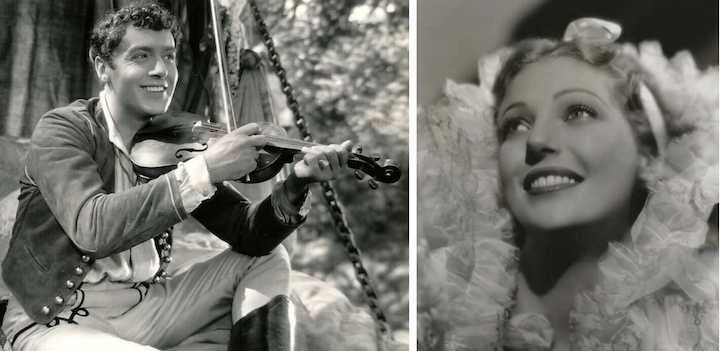
…as for Caravan, McKelway wrote that he’d “never seen a picture with so much grinning in it.” He found the “peculiar, unreal gleam” of the actors’ teeth a real distraction in closeup shots.
THAT PEPSODENT SMILE…Charles Boyer and Loretta Young showed off their pearly whites in 1934’s Caravan. (IMDB/TCM)
* * *
From Our Advertisers
The Oct. 6 issue opened with a study in contrasts: an image of two Civil War veterans swapping stories over whiskey on the inside front cover, paired with an illustration of a lithe model sheathed in the latest fashion from Bergdorf…
…the folks at Campbell’s continued to suggest that their canned soup was a delight of the elite…
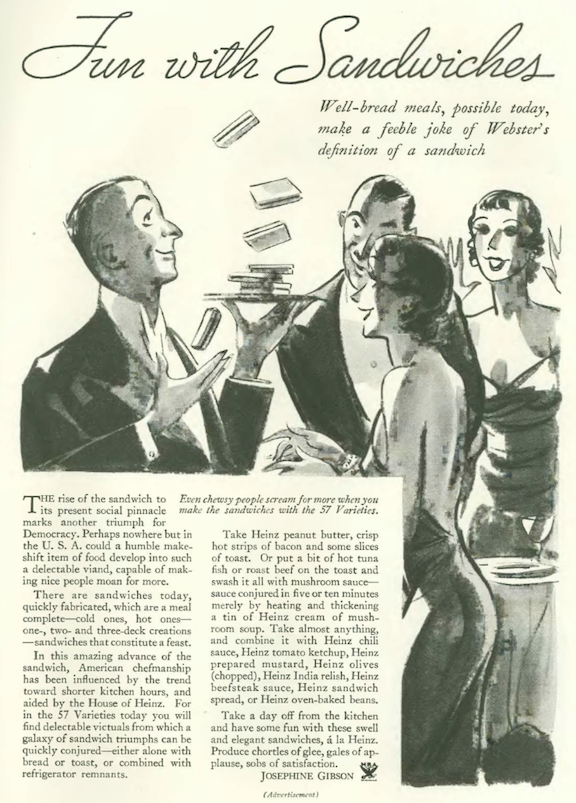
…Heinz took a similar tack, showing the smart set having fun with their sandwich spreads…
…Lord & Taylor touted its “tomorrow look” in furniture…
…R.J. Reynolds continued its series of “distinguished women who preferred Camel’s “costlier tobaccos,” adding to their growing list a the “charming debutante” Evelyn Cameron Watts, who later became Evelyn Watts Fiske (1915–1976)…
…in contrast to Camel’s fashionable ads, the upstart menthol brand Kool offered a series of cheap, back-page ads featuring a smoking penguin, here in the Halloween spirit (detail)…
…another recurring back page ad was this weird spot from Satinmesh, a product that apparently helped close a woman’s “gaping pores”…those pores apparently prompted one man to ponder the eternal why…
…on to our cartoonists, we begin with a two-page spot by Carl Rose…
…James Thurber spiced up a game of ping-pong…
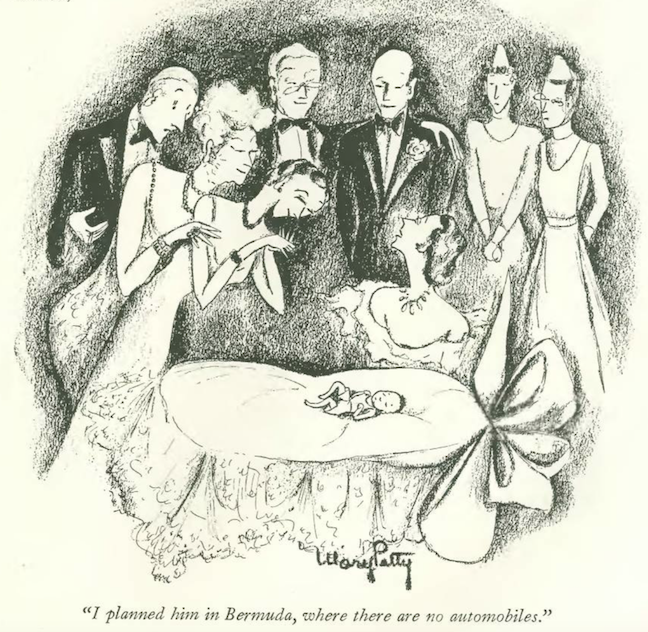
…Mary Petty explored the miracle of birth…
…Peter Arno discovered you’re never too old to play with toys…
…Garrett Price offered a young man’s perspective on a father’s avocation…
…Alain (Daniel Brustlein) gave us a disappointed plutocrat on vacation in Mexico…
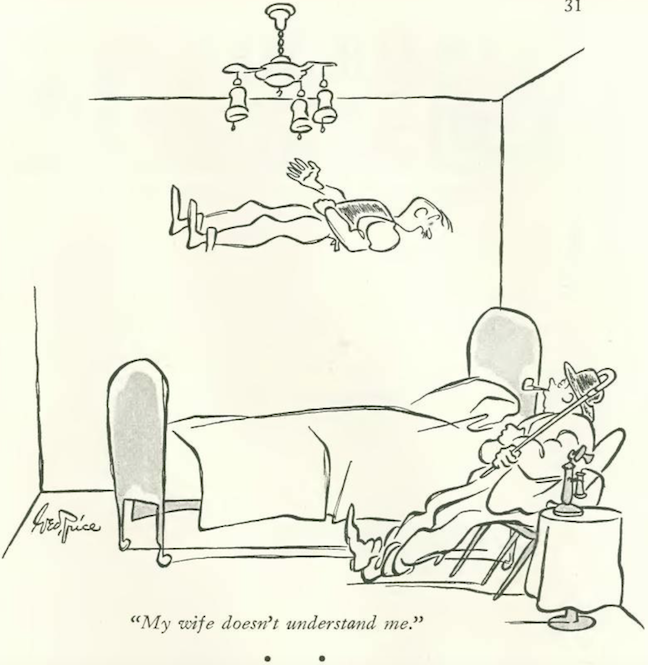
…George Price continued to mine the humor of his “floating man” series…
…and contributed a second cartoon that featured some office hijinks…
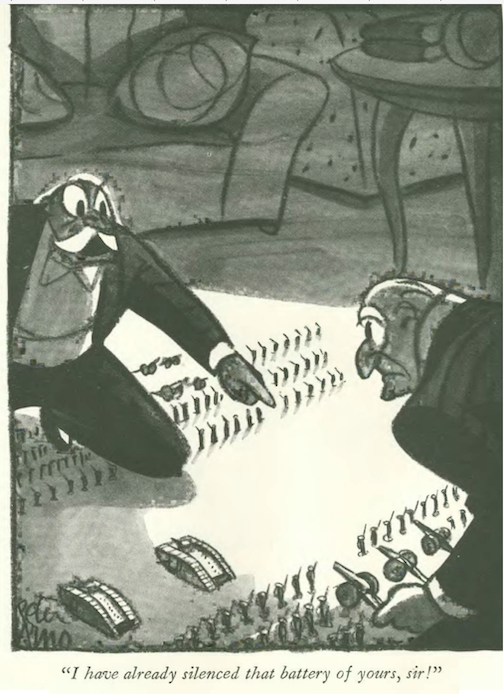
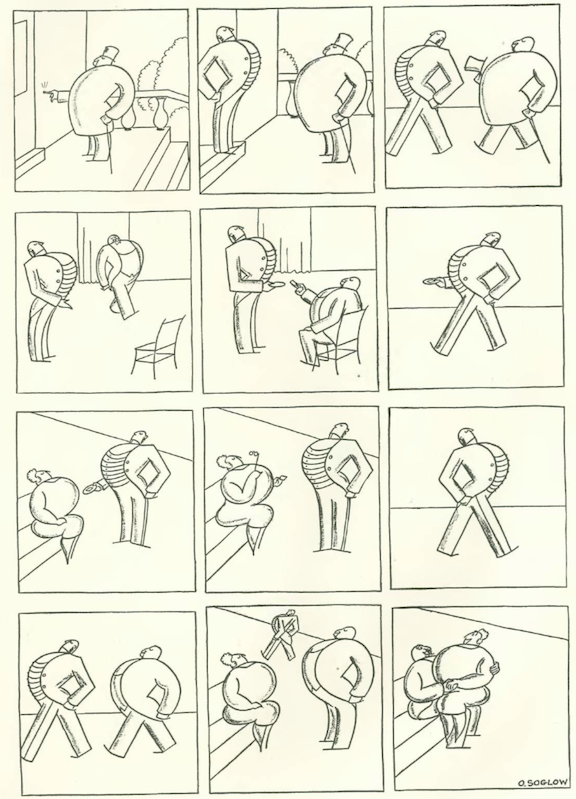
…and Otto Soglow returned without The Little King, offering in its stead the closest thing to royalty in America…
Before we sign off, a note on the Oct. 6 cover artist, Charles Henry Alston (1907–1977). A Harlem-based painter, sculptor, illustrator, muralist and teacher, Alston was active in the Harlem Renaissance and was the first Black supervisor for the Works Progress Administration’s Federal Art Project. In 1990, Alston’s bust of Martin Luther King Jr. became the first image of an African American displayed at the White House.
Clockwise, from top left, Charles Henry Alston’s 1970 bust of Martin Luther King Jr; Walking 1958; Andrew Herman photo of Alston, 1939; Midnight Vigil, 1936. (Smithsonian/Wikipedia/Columbia.edu)
































































































































 A New Yorker State of Mind