The Major’s Amateur Hour

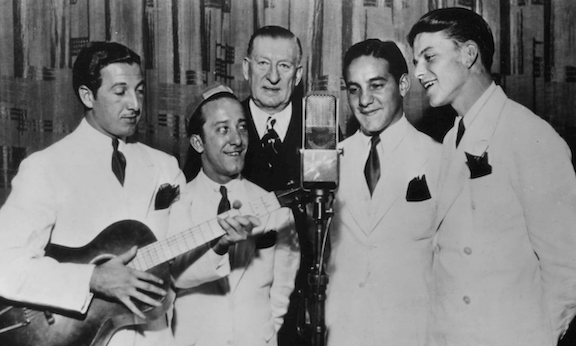
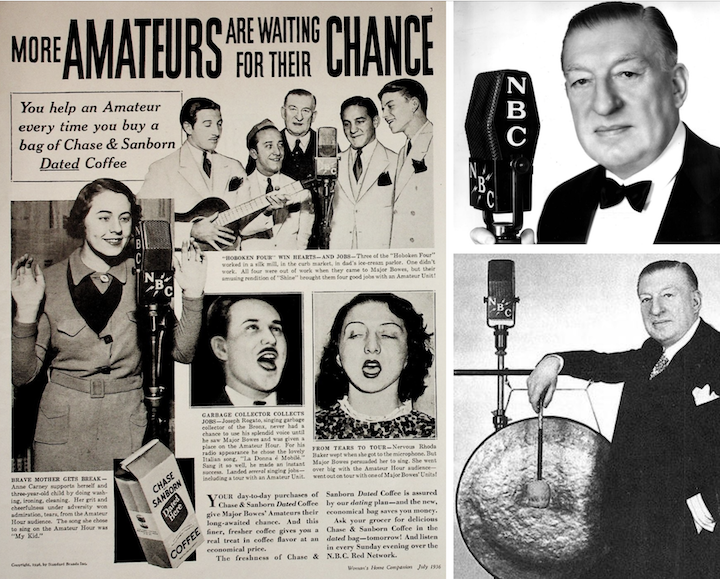
Above: Photo of the Hoboken Four as they appeared on the "Amateur Hour with Major Bowes" in 1935. At center is "Major" Edward Bowes, and at right is Frank Sinatra. The other three members of the Hoboken Four were Frank Tamburro, Patty Prince and Jimmy Petro. (knkx.org)

Nearly seventy years before American Idol appeared on our TV screens, a hugely successful and influential talent show filled the airwaves from NBC’s radio studios at Rockefeller Center.

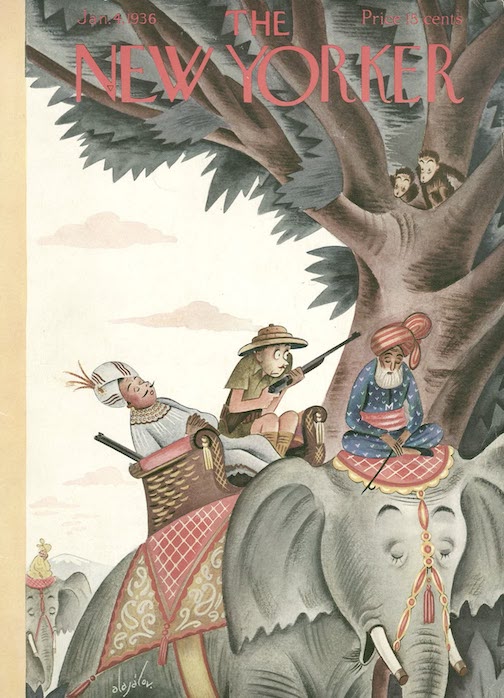
January 4, 1936 cover by Constantin Alajalov.

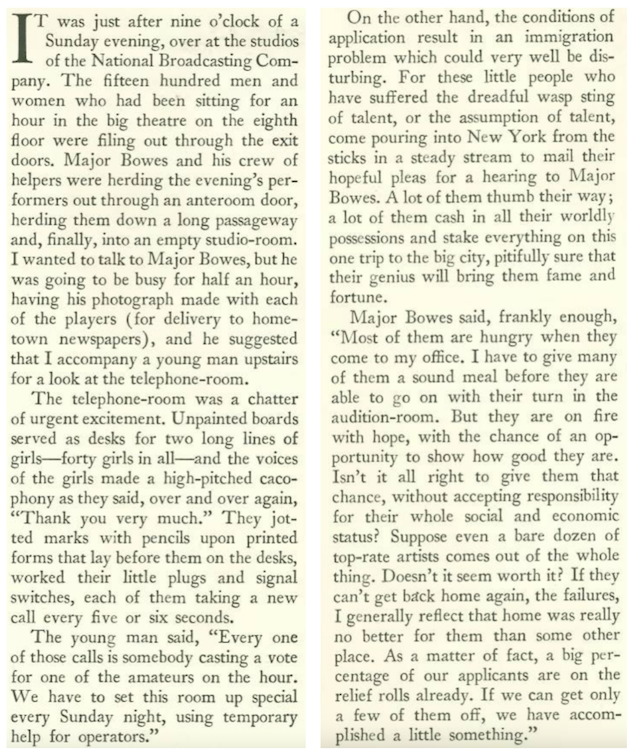
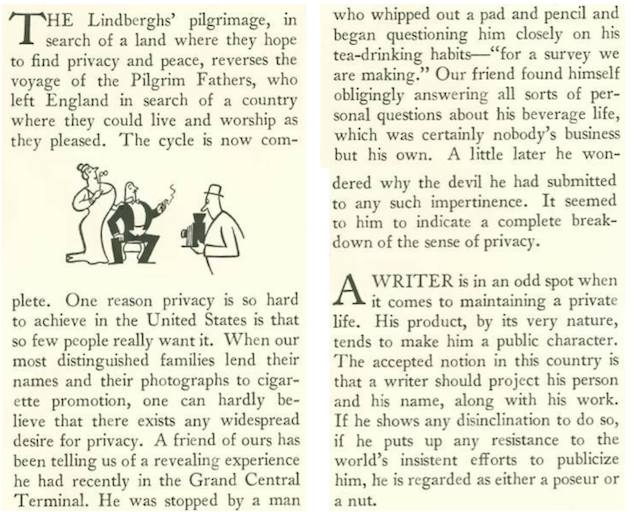
Millions tuned in each week to the Major Bowes Amateur Hour, which got its start in 1934 at radio station WHN before moving to NBC the following year. Created and hosted by “Major” Edward Bowes (1874–1946), Bowes would chat with contestants before listening to their performances, which could be cut short by the Major’s gong (see below). For his “A Reporter at Large” column, Morris Markey paid a visit to Bowes during evening auditions at the NBC studios. Excerpts:

THE GONG SHOW…At bottom right, Edward Bowes with the gong he used to abruptly end acts he deemed poor or inept—he abandoned the prop in 1936 after receiving thousands of letters from listeners who objected to the premature termination of acts (apparently the concept was a direct inspiration for Chuck Barris’s 1970s TV program, The Gong Show). At left, a July 1936 Women’s Home Companion advertisement from the show’s sponsor, Chase & Sanborn. The ads highlighted the rags-to-riches stories of the more successful contestants. (eBay.com/Wikipedia)

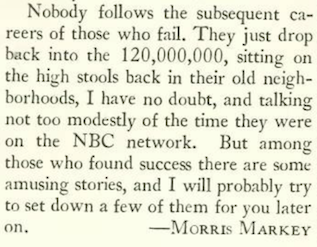
Markey ended his piece noting the reality of the many contestants who, unlike Frank Sinatra, would not go on to successful entertainment careers.

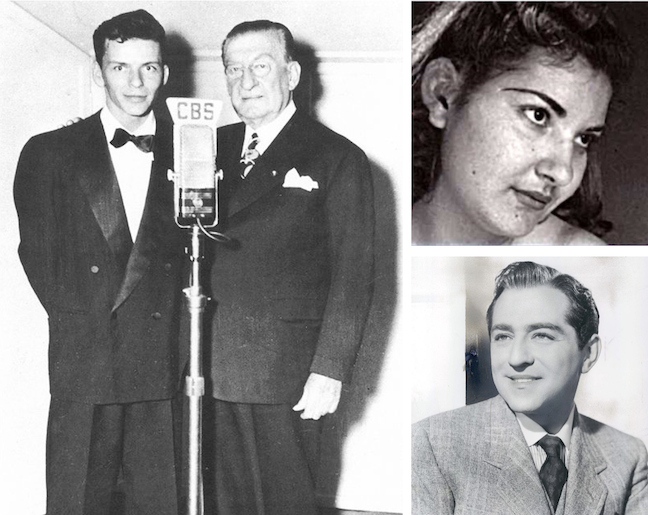
STARMAKER…Clockwise, from left: Major Edward Bowes and returning Amateur Hour performer Frank Sinatra in 1943; in 1935 eleven-year-old Maria Callas performed the Madama Butterfly aria “Un bel dì vedremo,” on the Amateur Hour; actor/baritone Robert Merrill performed on the show in 1936. (winnetoba.com/mariacallasestate.com/Wikipedia)

 * * *

Fleeing the Limelight

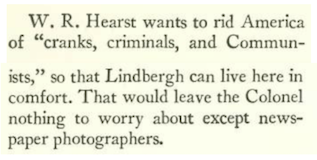
In December 1935 Charles and Anne Morrow Lindbergh secretly boarded a ship in New York and headed to England, seeking to escape the media frenzy that followed their son’s kidnapping and the subsequent trial. Thanks to connections through Anne’s family, they were able to move into a secluded estate in the Kent countryside. In his “Notes and Comment,” E.B. White explained:

HIDEOUT…From 1936 to 1938 Charles and Anne Morrow Lindbergh lived in a secluded English estate called “Long Barn.” The estate in County Kent was owned by a friend of Anne’s family. (waverlyhs.weebly.com)
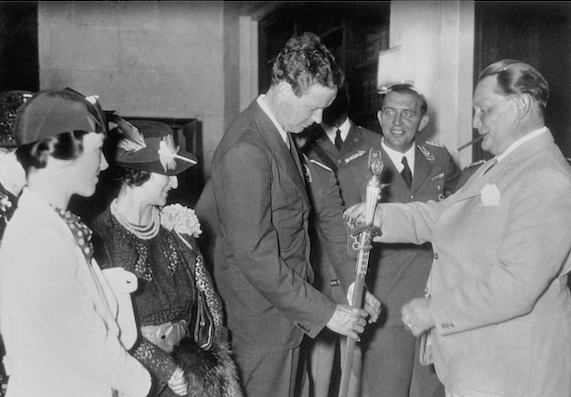
NOT HIS FINEST HOUR…In July 1936 Luftwaffe commander Hermann Goering (right) presented the Sword of Honor of the German Air Force to Charles Lindbergh during a visit to Berlin. Anne Morrow Lindbergh is to the far left. Goering would also present Lindbergh with a high-ranking Nazi-era civilian medal, the Service Cross of the German Eagle, during a 1938 visit. Anne presciently referred to the medal as “the albatross.” (Library of Congress)

According to White, Mayor Fiorello La Guardia cited lax police control of the media in the case of the fleeing Lindberghs. In turn, White attempted to explain the unique temperaments of Irish police officers.

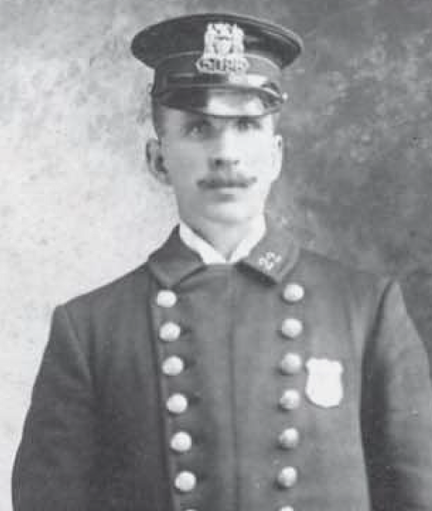
GIVE US A BREAK…E.B. White noted the courage and wisdom of Irish cops, but also found their lassitude “almost theatrical.” Pictured above is Irish immigrant Patrick Leddy, who joined the NYPD in 1910 and remained on the force for more than thirty-five years. (Courtesy of Margaret Fitzpatrick Leddy via nyirishhistory.us)

A final note on the Lindberghs from Howard Brubaker, a snippet from his “Of All Things” column.

 * * *

Italian Swashbuckler

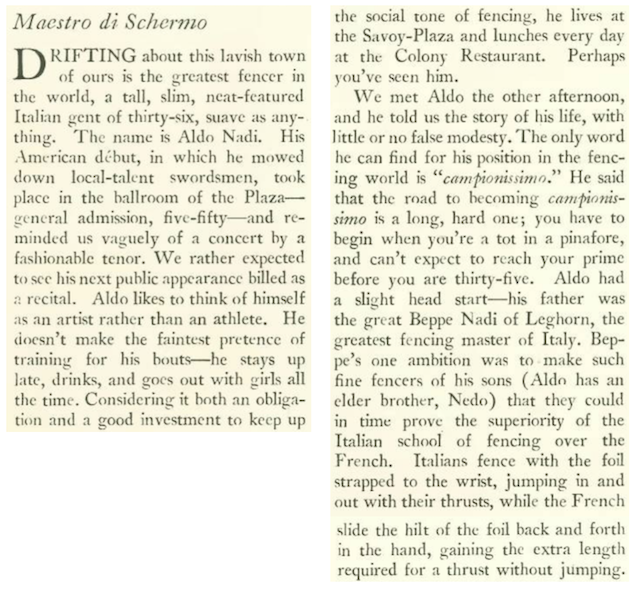
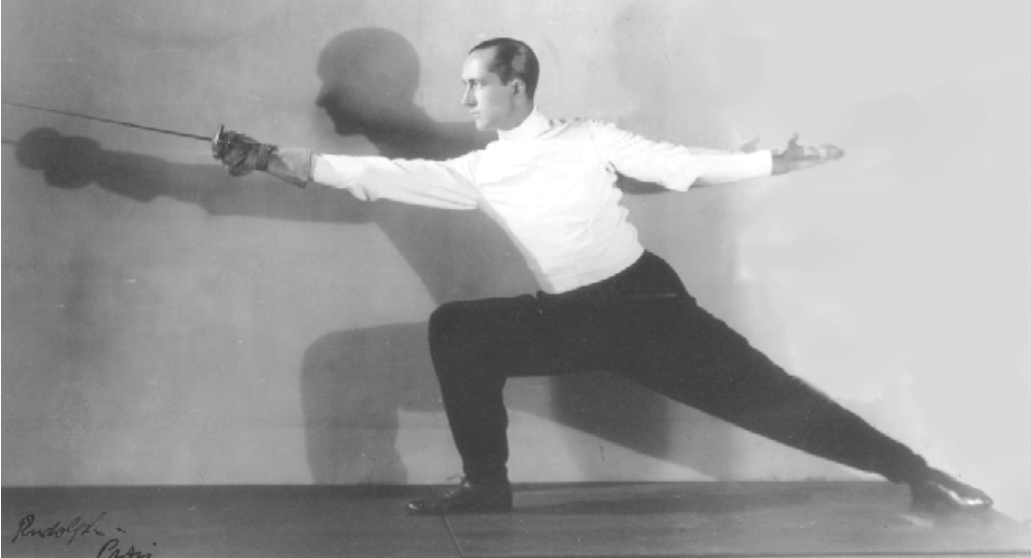
The Italian fencer Aldo Naldi (1899-1965) won three gold medals and one silver at the 1920 Olympics before turning professional. According to West Coast Fencing, Aldo traveled Europe like a prizefighter, “competing in well-attended matches for cash purses…in a world of travel, glamour, drinking, womanizing, gambling and fencing, Aldo Nadi reigned supreme, going nearly eight years without a defeat.” “The Talk of the Town” was on hand for his American debut. Excerpts:

EN GARDE!…During the interwar years Aldo Nadi reigned supreme, going nearly eight years without a defeat. (dennishollingsworth.us)

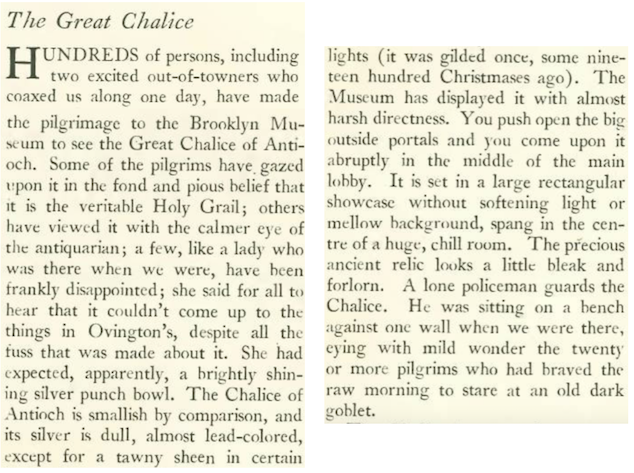
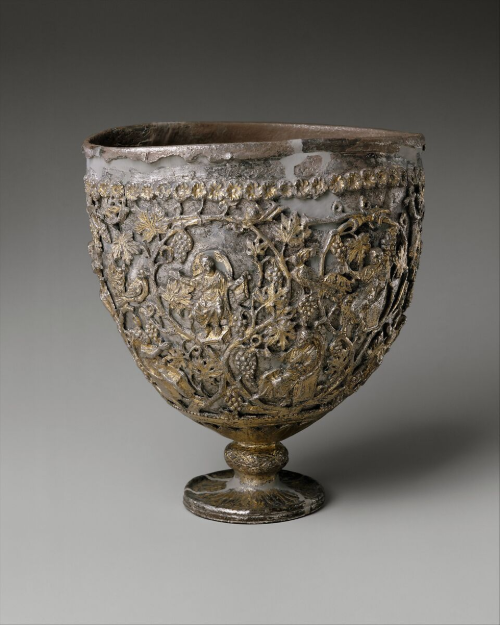
“Talk” also examined the fuss being made over the Great Chalice of Antioch, which was on display at the Brooklyn Museum. Excerpts:

COULD IT BE?…Claimed to have been found in Antioch around 1900, this chalice’s plain silver bowl was ambitiously identified by some as the Holy Grail, the cup used by Christ at the Last Supper. It is displayed with the Metropolitan Museum’s Byzantium collection. (metmuseum.org)

* * *

Year, Schmear

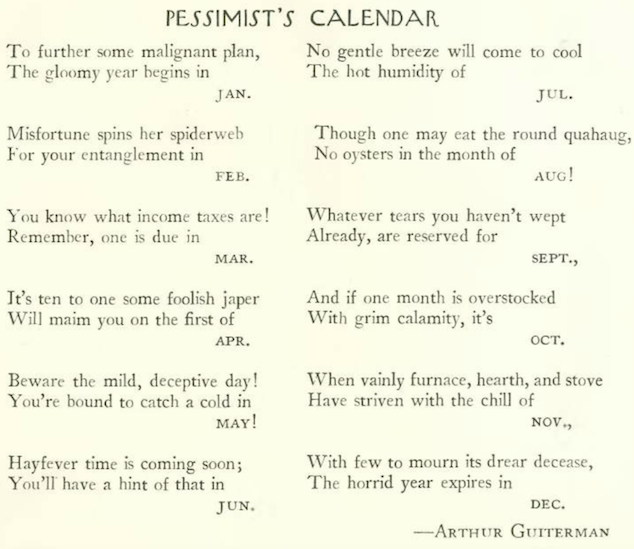
To mark the New Year, Arthur Guiterman offered up one his humorous poems…

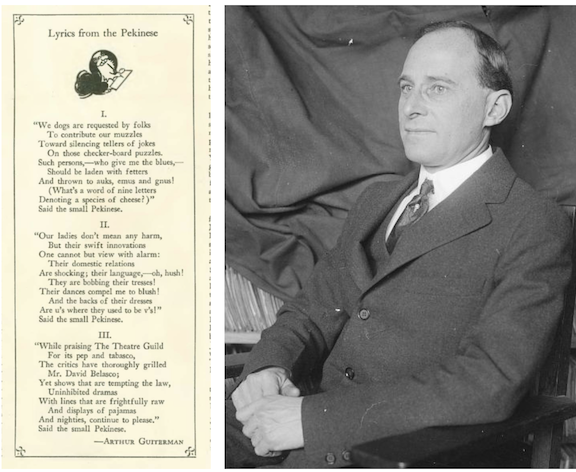
…Guiterman (1871–1943) was an early contributor to The New Yorker—the magazine’s very first issue, Feb. 21, 1925, featured the first installment of Guiterman’s recurring “Lyrics from the Pekinese,” which ran through the first eleven issues.

MEOW…Arthur Guiterman’s “Lyrics from the Pekinese,” featured in the first issue of The New Yorker. At right, Guiterman in an undated photo. (Library of Congress)

 * * *

Before He Was Spooky

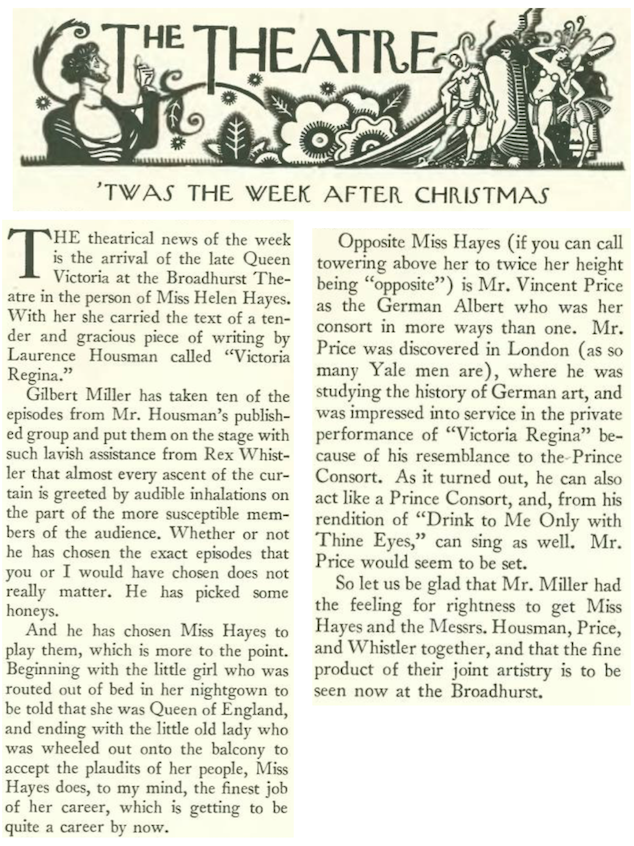
Robert Benchley’s review of the stage began on a bright note with Victoria Regina, which starred Vincent Price as Prince Albert and Helen Hayes as Queen Victoria. Benchley praised the realism Price and Hayes lent to the production. Excerpts:

A MATCH MADE ON BROADWAY…The 24-year-old Vincent Price and the 35-year-old Helen Hayes portrayed Prince Albert and Queen Victoria in Victoria Regina, which ran for 203 performances at the Broadhurst Theatre. Robert Benchley thought their casting was ideal. (Pinterest)

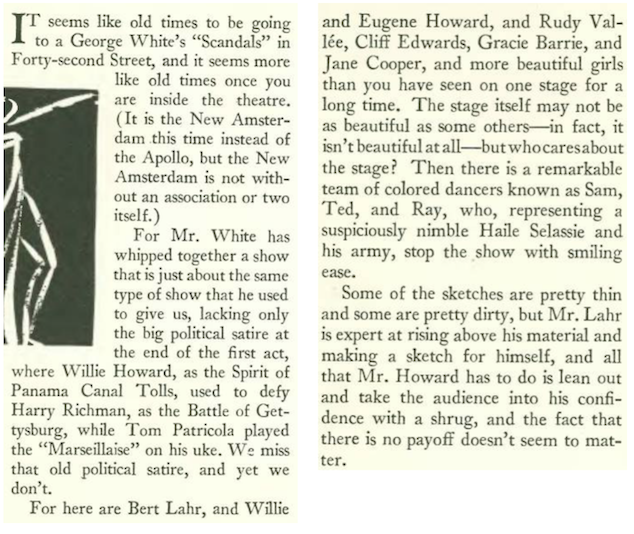
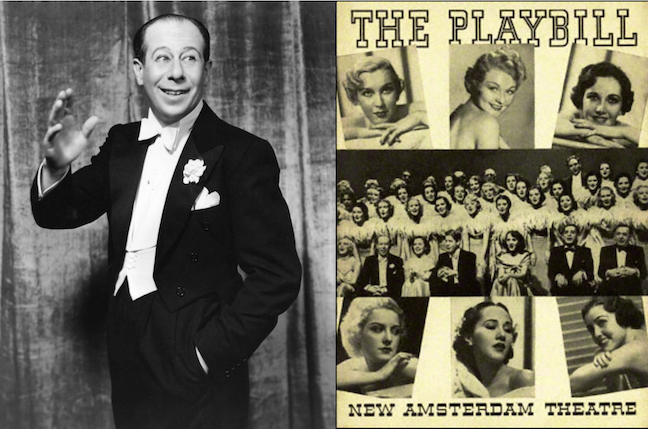
Benchley also sat through George White’s latest Scandals revue, finding it similar to White’s older shows—beautiful showgirls, various singers and dancers, and assorted comedians—with Bert Lahr shining above it all.

IT SEEMED LIKE OLD TIMES to Robert Benchley as he took in the latest edition of George White’s Scandals. Bert Lahr (left) was among the headliners for the 1936 revue, which ran for 110 performances at the New Amsterdam Theatre before taking to the road. (Wikipedia/Playbill.com)

 * * *

At the Movies

John Mosher had a busy week at the movies, finding “considerable pleasure” in the screen adaptation of Eugene O’Neill’s Ah Wilderness!…

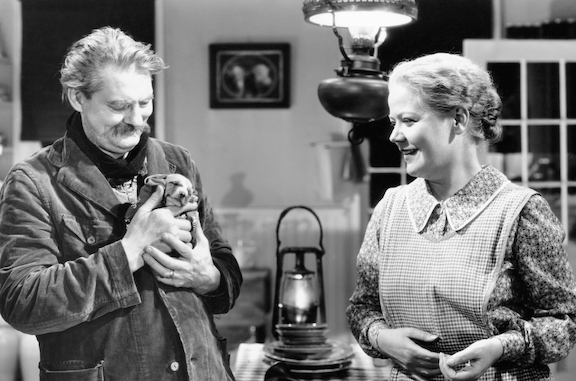
MILLER TIME…The Miller family attends a commencement ceremony that helps kick off the action in Ah Wilderness! From left, Aline MacMahon, Mickey Rooney, Spring Byington, and Bonita Granville. (IMDB)

Mosher also looked at films featuring leading actresses of the day—Barbara Stanwyck in Annie Oakley, Bette Davis in Dangerous, and Claudette Colbert in The Bride Comes Home.

A TRIO OF TALENTS…Clockwise, from top left, Claudette Colbert had her hands full with Robert Young and Fred MacMurray in The Bride Comes Home; Barbara Stanwyck took aim in Annie Oakley; and Bette Davis portrayed a down-and-out actress with trouble on her mind in Dangerous. For her performance, Davis won the Academy Award for Best Actress. (laurasmiscmusings.blogspot.com/girlswithguns.org/vanguardofhollywood.com )

 * * *

Gaming the Games

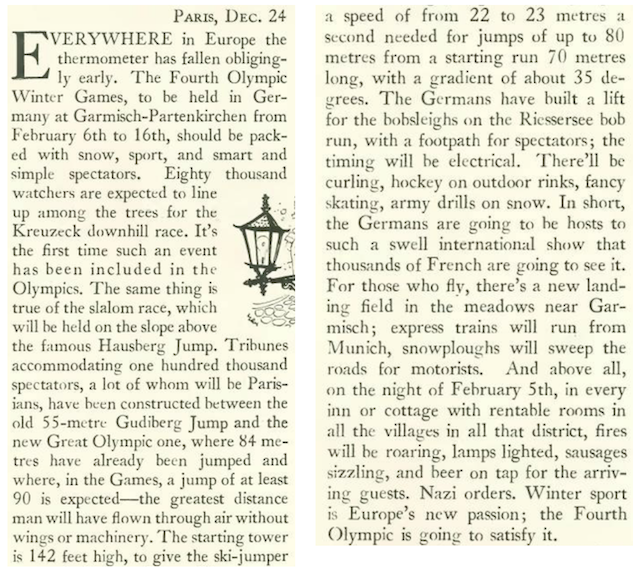
In her “Paris Letter,” Janet Flanner noted the preparations for the Fourth Olympic Winter games to be held in Garmisch-Partenkirchen, Germany.

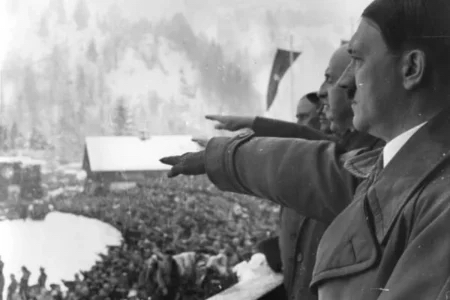
WINTER HAS ARRIVED…Adolf Hitler and his fellow Nazi thugs brought a certain chill to the 1936 Winter Games in Garmisch-Partenkirchen. Garmisch and Partenkirchen were separate communities until Hitler forced them to merge in anticipation of the games. (arolsen-archives.org)

 * * *

From Our Advertisers

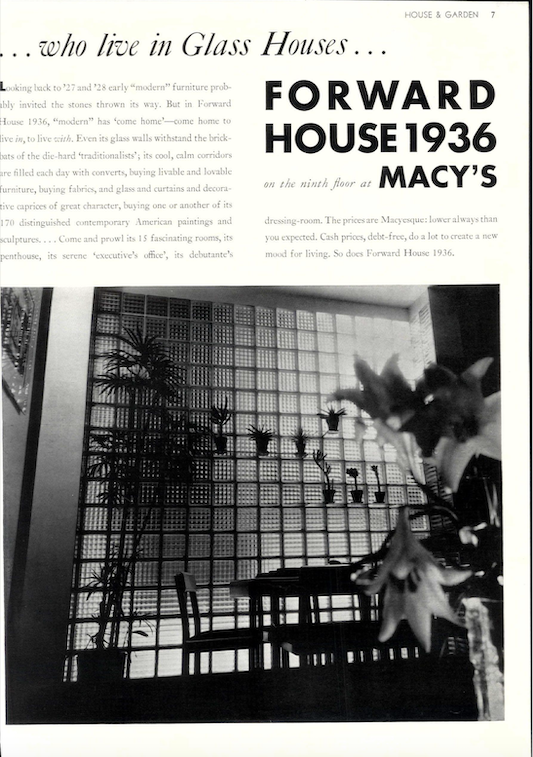
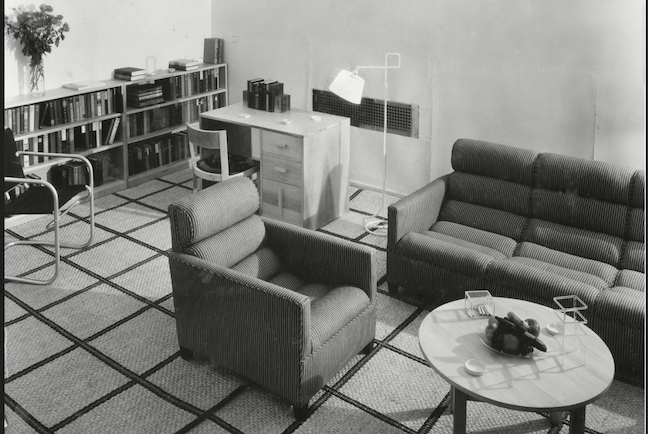
From 1933 to 1939, Macy’s hosted a series of unique design exhibitions under the title “Forward House” that showcased contemporary furniture, decor, and architectural ideas…

…for reference, here is another “Forward House” advertisement from the February 1936 House & Garden magazine…

…the folks at Robbins Island Oysters employed the legend of Giacomo Casanova to market their tasty little rocks…apparently Casanova claimed that he consumed more than fifty oysters each morning to sustain his amorous adventures…

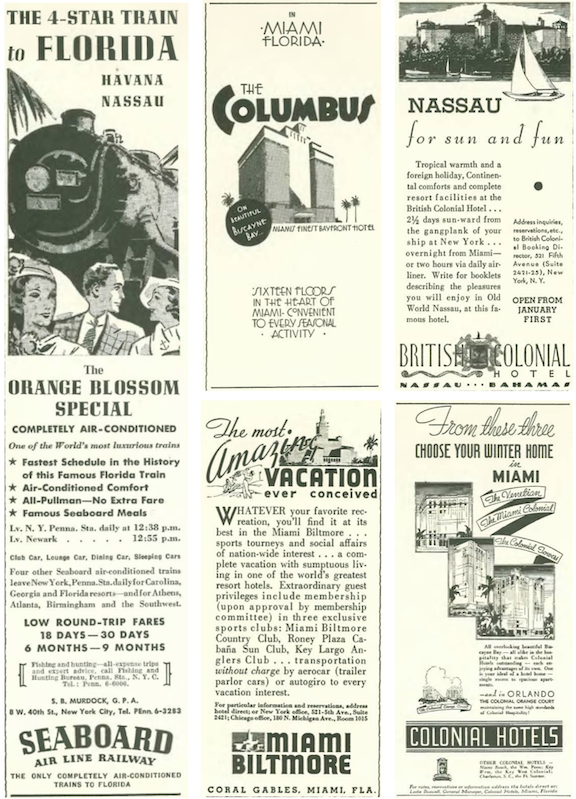
…with the holidays over, the number of ads decreased significantly, leaving readers with a mere sixty pages—less than the half the length of the fat pre-Christmas editions…the theme in the Jan. 4 issue was travel to warmer climes, these examples culled from several back of the book pages…

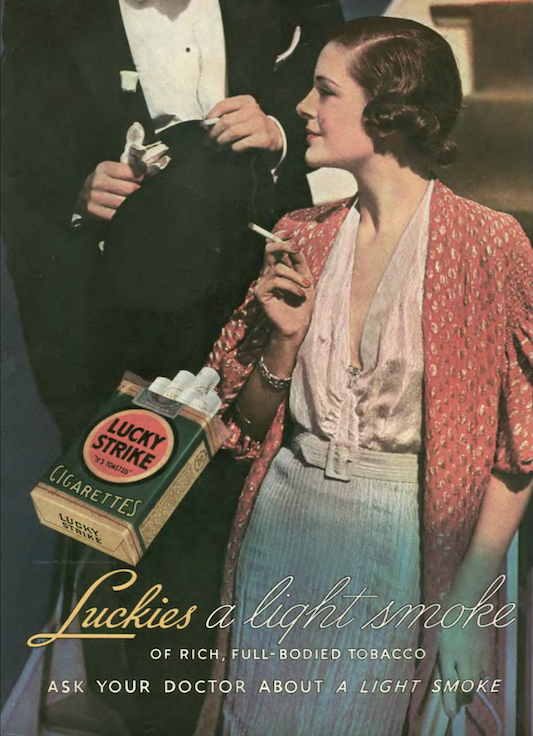
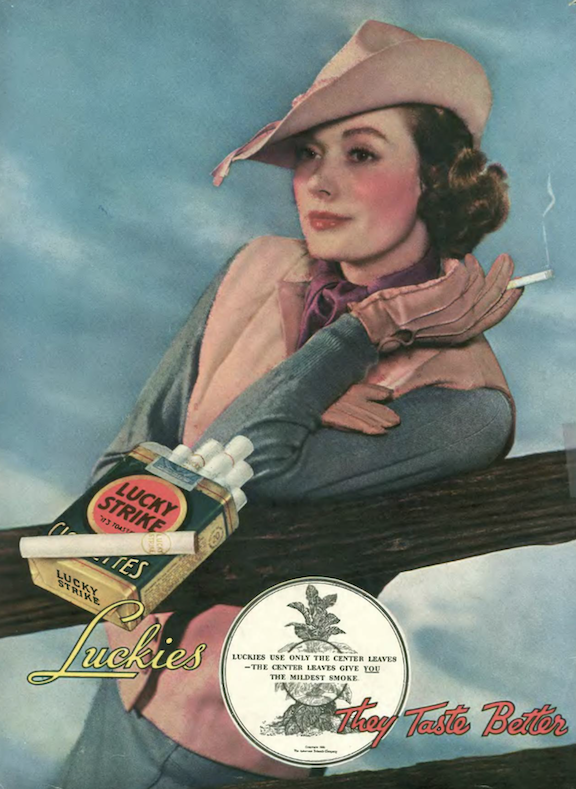
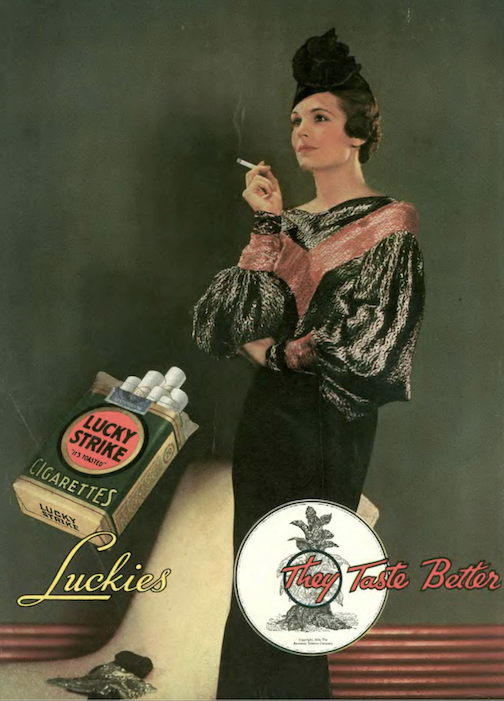
…the end of the holiday season did not stop tobacco companies from taking out lavish full-page advertisements targeting women smokers, this one gracing the back cover…note the implied medical endorsement at the bottom…

…we clear the air and move on to our cartoonists, beginning with spot drawings by D. Krán

…and Christina Malman

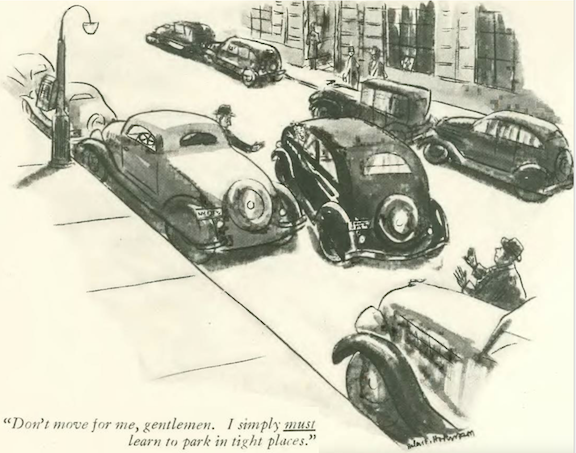
…one of Helen Hokinson’s girls sought an impromptu parking lesson…

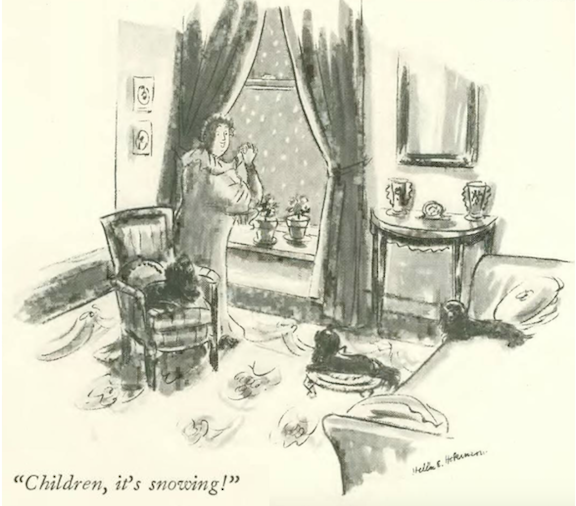
…while another welcomed winter with her furry charges…

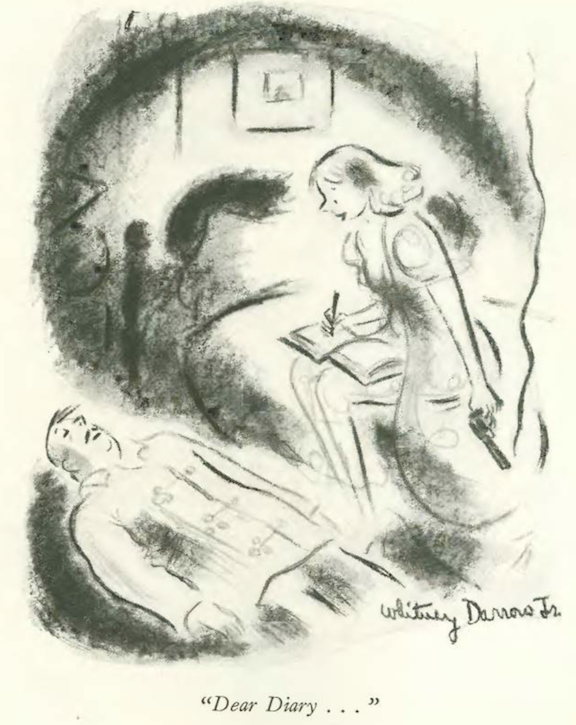
Whitney Darrow Jr gave us a full-service information booth…

Mary Petty illustrated a dowager with simple tastes…

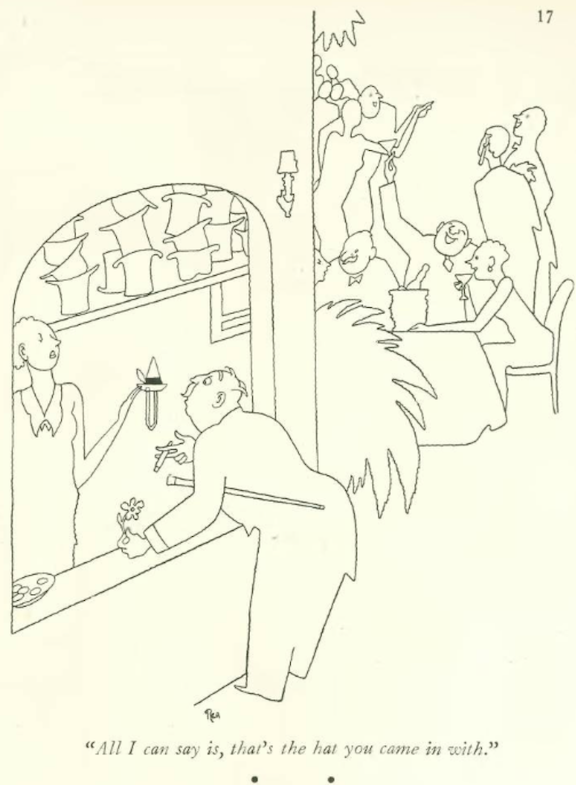
Gardner Rea was confounded at the hat check…

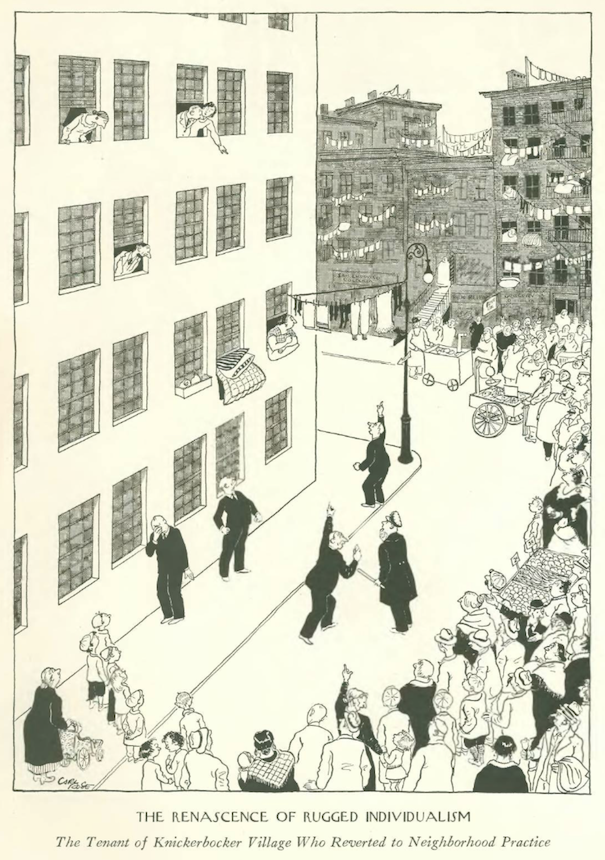
Carl Rose offered up another example of rugged individualism…

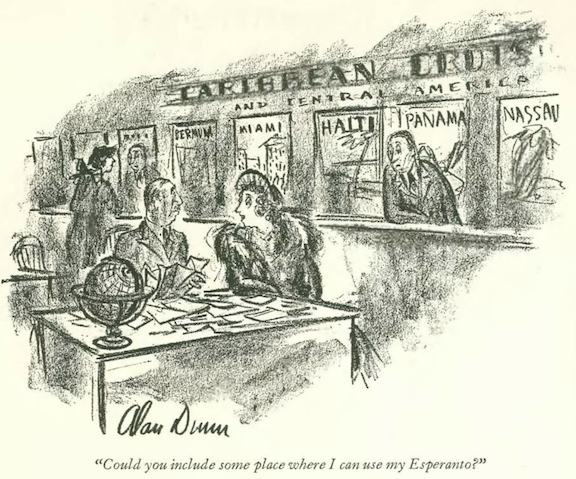
Alan Dunn served up a unique language challenge…

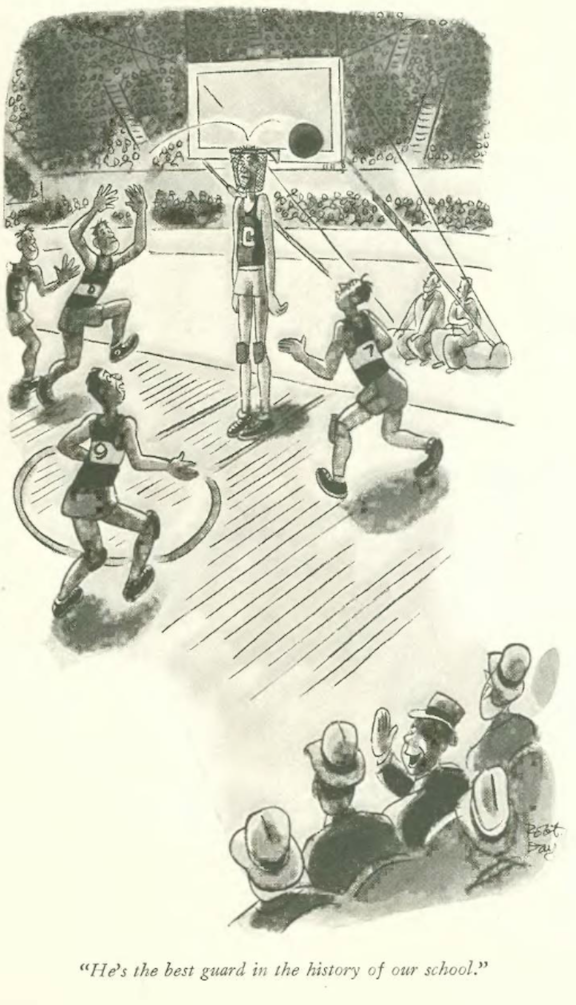
Robert Day stood tall at a basketball game…

William Crawford Galbraith was horsing around…

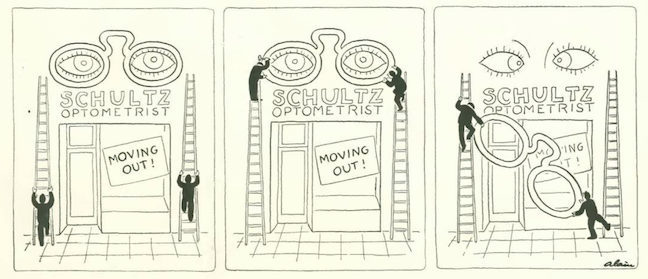
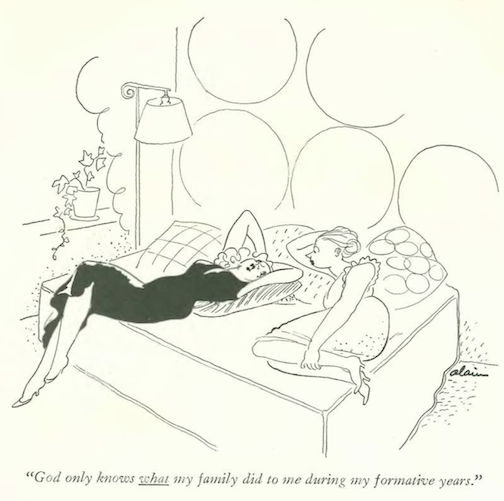
Alain looked crosseyed at a store closing…

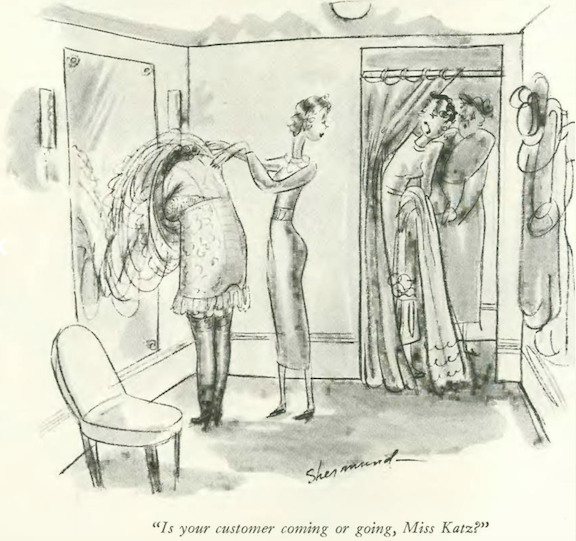
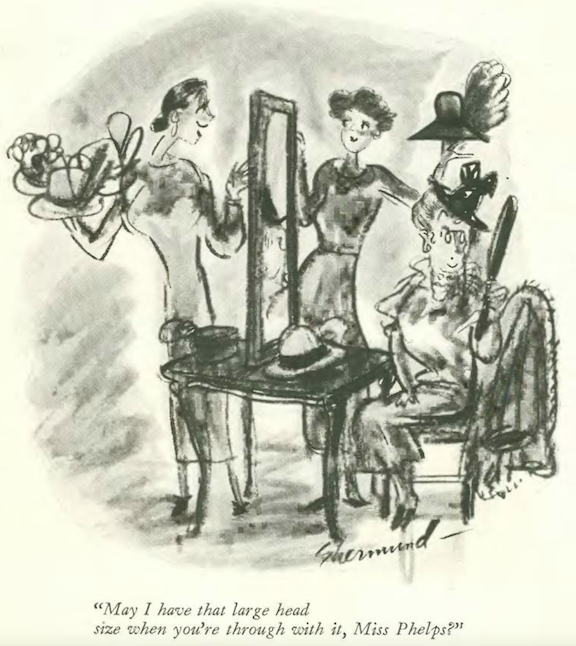
…and we close with Barbara Shermund, who sized up things at a hat shop…

Next Time: Obsessed at the Movies…
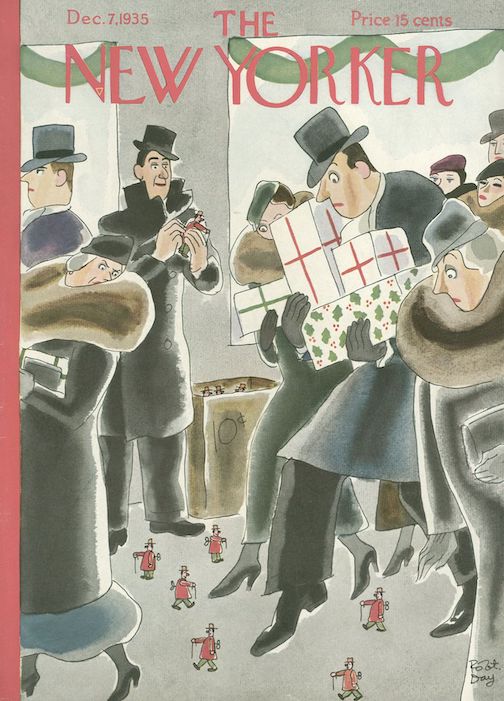
Some Holiday Shopping

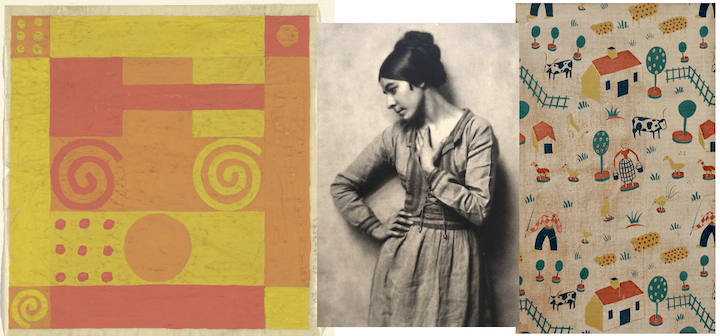
Above: Ilonka Karasz designed six children's rooms for a holiday display at Saks Fifth Avenue, featuring colorful rugs (left) and nursery screens (detail at right) among other items. In a House and Garden article, Karasz wrote: "Through new theories of design, production and distribution, [these rooms] have more vision than the manufacturer who still insists upon Little Bo-Peep." (MoMA.org/1stdibs.com)

In the Days of Yore, Christmas celebrations were largely adult- or family-centered affairs, that is until the Industrial Age enabled the mass production of toys and other goodies. Beginning in the 1870s, Macy’s began offering impressive toy displays, and even children in the hinterlands could get in on the action with a Sears catalog, the company raising its game in 1933 with the introduction its Wish Book.

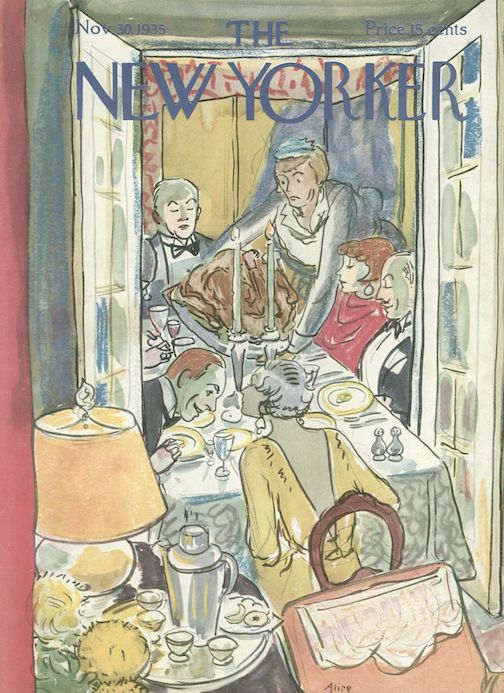
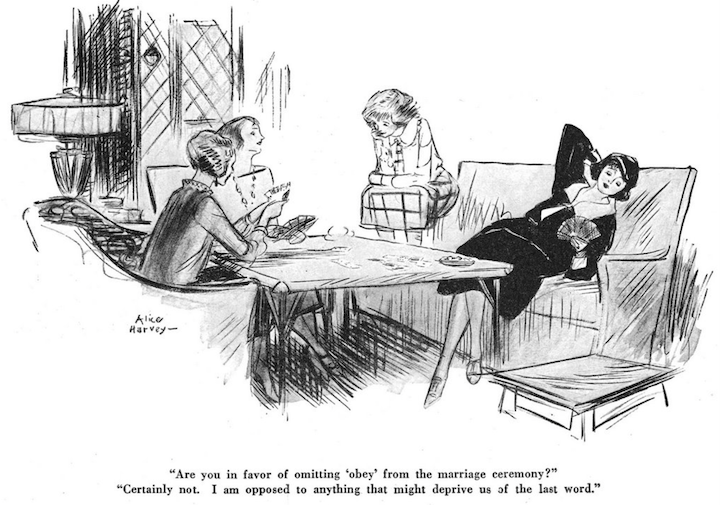
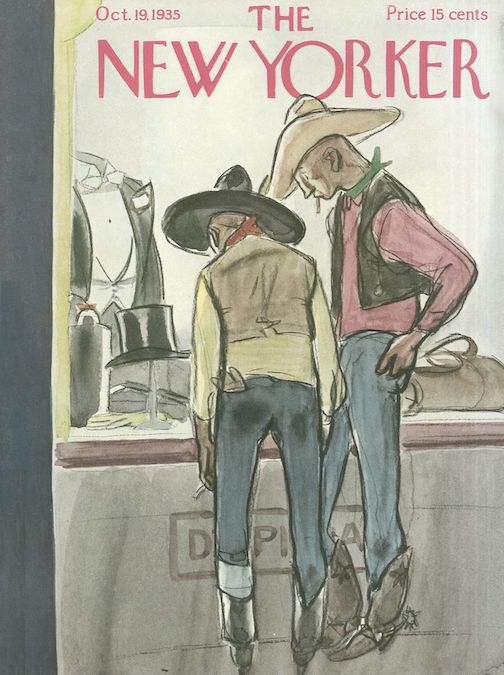
November 30, 1935 cover by Alice Harvey. From 1925 to 1943, Harvey (1894–1983) contributed three covers and more than 160 drawings to The New Yorker. I highly recommend Liza Donnelly’s Very Funny Ladies for more about Harvey and other women cartoonists.
Alice Harvey came to New York from Chicago with her friend Helen Hokinson in the early 1920s, finding early success submitting to Life, Judge and other publications before she and Hokinson joined the fledgling New Yorker in 1925. (Photo from Michael Maslin’s essential Ink Spill).

 *

The New Yorker was no exception when it came to toy shopping, featuring exhaustive lists of toys, games and other items for children available at the city’s major retailers.

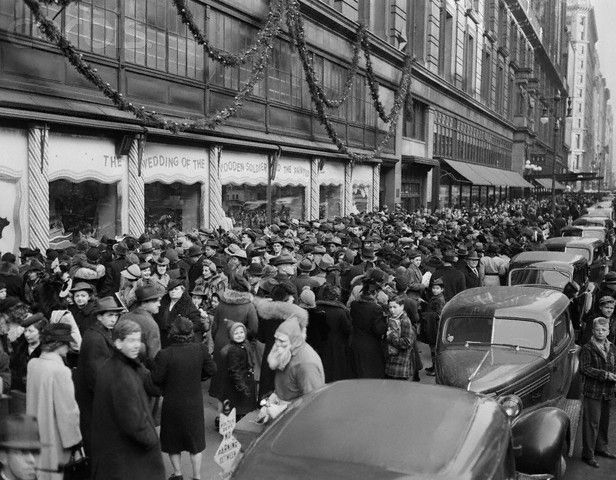
BEFORE ONLINE SHOPPING…A crowd of holiday shoppers outside New York’s Macy’s department store, 1939. (Vintage.es)

These lists were in the back of the book, following Lois Long’s “On and Off the Avenue” fashion column. Here are some excerpts:

KEEP THE KIDDOS BUSY…Clockwise, from top left: Bloomingdale’s offered an Optics Set, while Macy’s featured Lester Gaba’s soap sculptures (including Popeye, Olive Oyl and Wimpy), 8mm Mickey Mouse and Silly Symphony cartoons, and “Jack & Jill” portable children’s record players. (scrappyland.com/acghs.org/etsy.com/worthpoint.com)

Of course it wouldn’t be Christmas in New York without F.A.O. Schwarz, and if you shopped at Saks you could be dazzled by children’s rooms designed by Ilonka Karasz.

GIFTS FOR THE MODERN KID…At F.A.O. Schwarz you could find Foxblox and Buck Rogers costumes, while Saks featured children’s rooms and furnishings designed by Ilonka Karasz, including a colorful nursery screen. (Pinterest/invaluable.com/worthpoint.com/cooperhewitt.org/reddit.com)

 * * *

Pouting Plutocrat

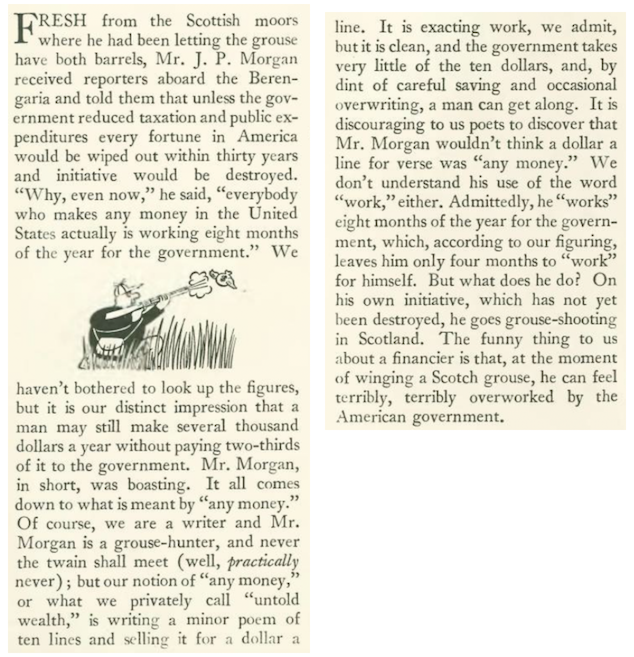
In his “Notes and Comment,” E.B. White took issue with J.P. Morgan’s gripes about taxation while grouse hunting in Scotland.

 * * *

A City Resurrected

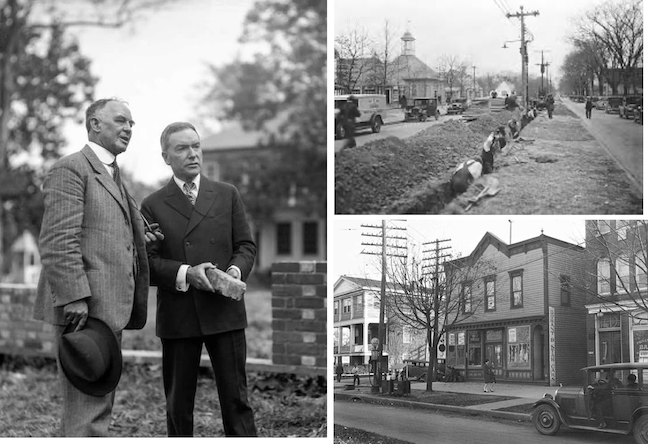
Founded in 1632, Williamsburg, Virginia played an important role in colonial and revolutionary America, but by the 20th century it had become a quiet and rather neglected little town. Then in 1924 the town’s rector, Rev. W.A.R. Goodwin—bolstered by the successful restoration of his parish church—approached oil tycoon John D. Rockefeller Jr. for funds to restore the entire colonial capital. As John Peale Bishop noted in these excerpts from “Onward & Upward With The Arts,” the project left some residents scratching their heads.

MY VISION, YOUR MONEY…The Rev. W.A.R. Goodwin (left), rector of Bruton Parish Church, shared his vision for Williamsburg with philanthropist John D. Rockefeller Jr; top photo, paved streets and modern utility lines were removed as part of the restoration, circa 1930; bottom photo, pre-restoration photo of Duke of Gloucester Street—all businesses located on Market Square, including these, were demolished during the restoration. (colonialwilliamsburg.org)
RENEWED OR REMOVED…Clockwise, from top left, the 18th-century John Crump House was in a sad state in this 1895 photograph; the Crump House after its 1941-42 restoration; workers examine the old foundation walls of the Governor’s Palace; Williamsburg High School was demolished to make way for the Governor’s Palace reconstruction, seen in the background.(yourhistorichouse.com/colonialwilliamsburg.org)

 * * *

At the Movies

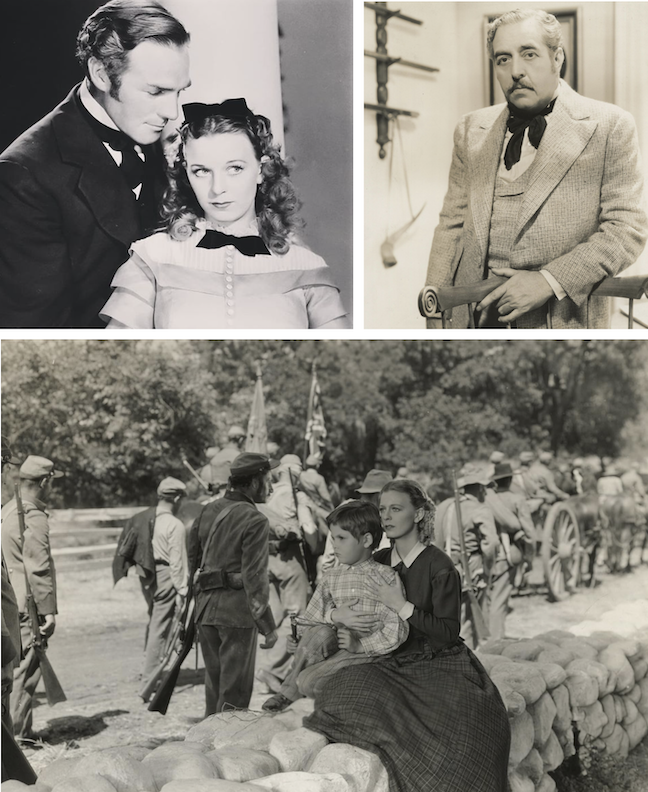
John Mosher had high praise for King Vidor’s Civil War romance, So Red the Rose. Although it did not have the epic sweep (or epic length) of 1939’s Gone With The Wind, Mosher and other critics praised the film’s human qualities. It did not, however, do well at the box office.

FRANKLY, MY DEAR…a line that would have to wait for another Civil War romance…clockwise, from top left: Randolph Scott and Margaret Sullavan play kissing cousins in So Red the Rose; Mosher singled out Walter Connolly for his performance as the family patriarch; child star Dickie Moore and Sullavan in a scene from the film. (IMDB/Letterboxd.com)
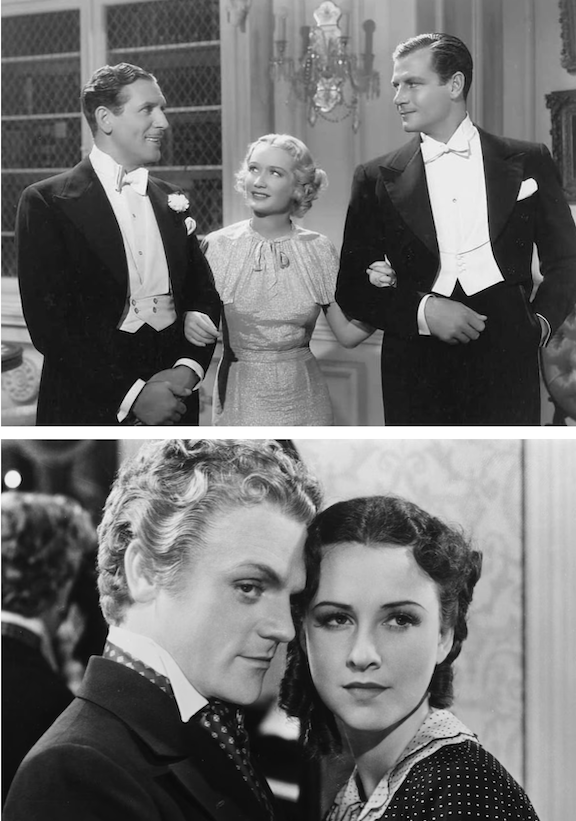
HIDDEN TALENTS…In two other films, Mosher found the performances of the lead actors to either be upstaged or muffled in period costume. Top, Paul Cavanagh, Miriam Hopkins, and Joel McCrea in Splendor. Below, James Cagney and Margaret Lindsay in Frisco Kid. (IMDB/TCM)

 * * *

From Our Advertisers

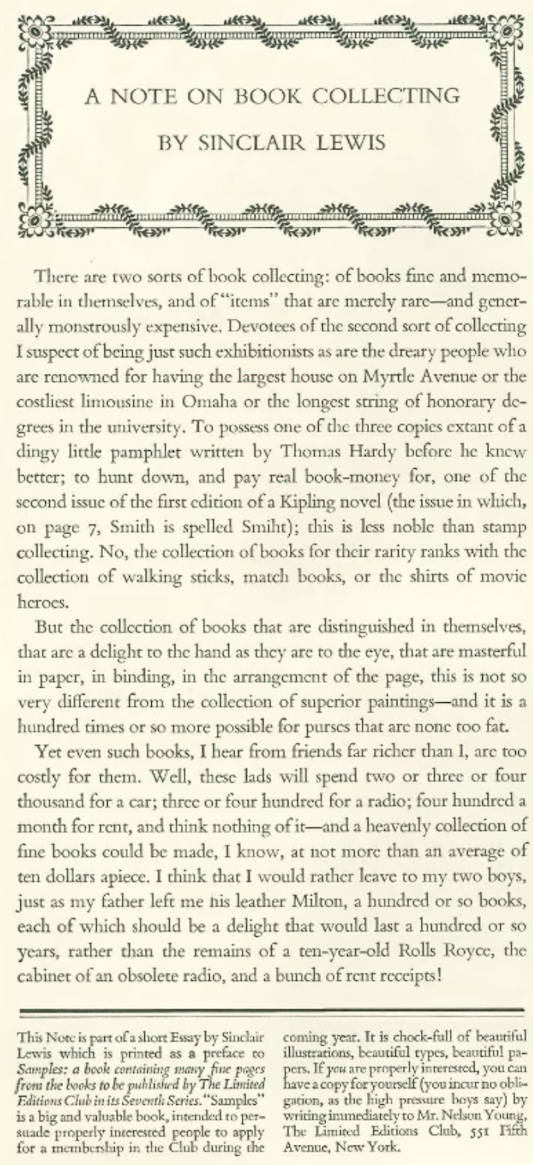
We start with this advertisement from The Limited Editions Club, founded in New York by George Macy in 1929. The 29-year-old Macy, determined to make his living from books, focused on publishing beautifully illustrated classic titles in limited quantities, available to subscription-paying members. Illustrators of the editions have included Pablo Picasso, Henri Matisse, Reginald Marsh, Norman Rockwell and many other noted artists. The ad below includes an excerpt from a Sinclair Lewis essay that extolled the virtues of investing in fine books.

Above, frontispiece from The Limited Editions Club’s 1930 publication of Thomas De Quincey’s Confessions of an English Opium-Eater, illustrated by Zhenya Gay. (librarything.com)

…as the holidays grew near the automobile ads grew more luxurious…this Cadillac spot featured an illustration of posh tots driven by their chauffeur…

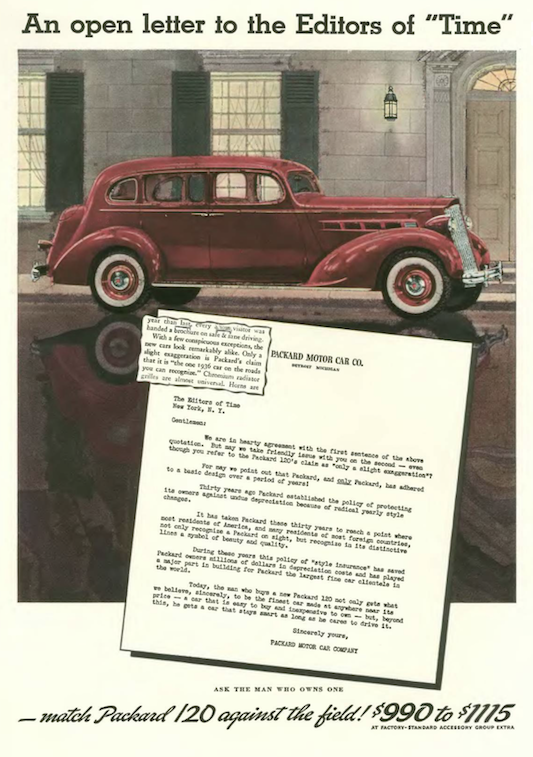
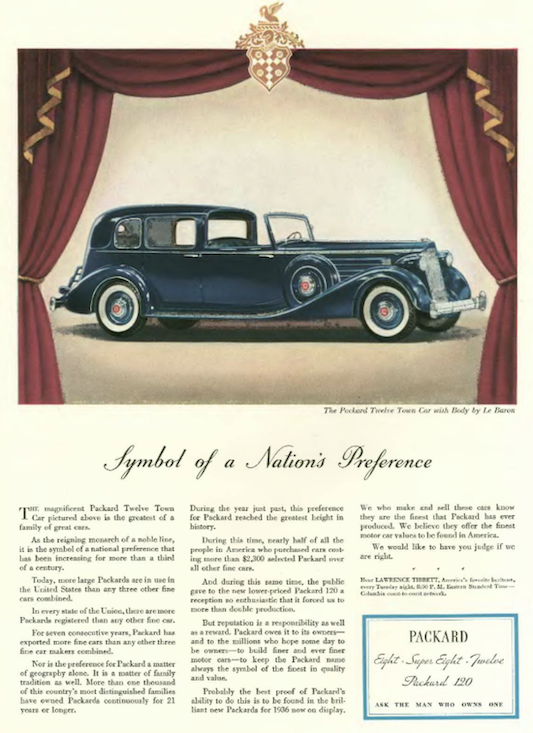
…and from Packard, an automobile designed with the assumption that you already had a liveried driver…

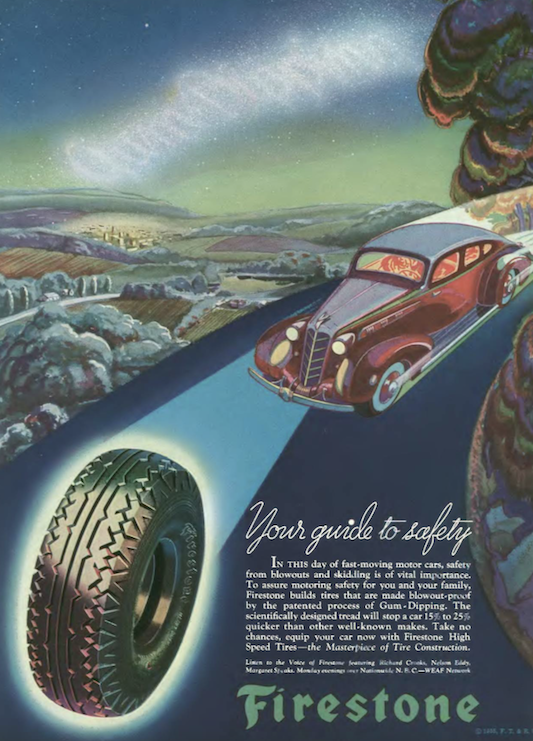
…colorful ads also came our way from Firestone…

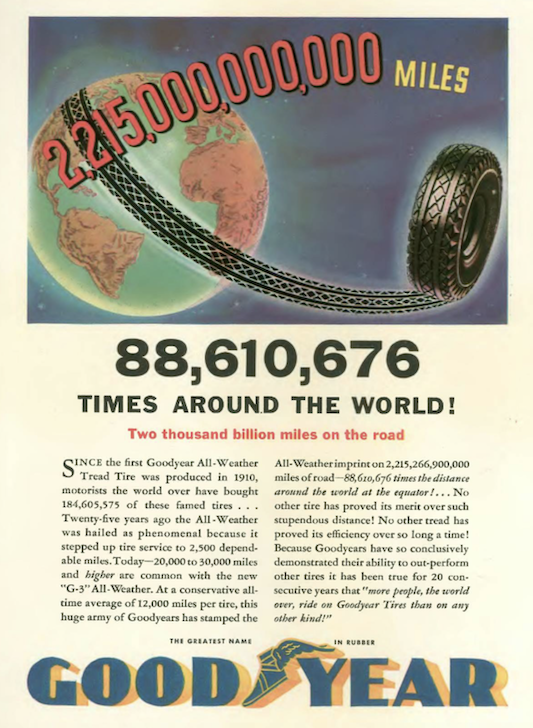
…and Goodyear…these two companies were the largest suppliers of automotive tires in North America for more than 75 years…
…World Peaceways continued their series of provocative anti-war advertisements…

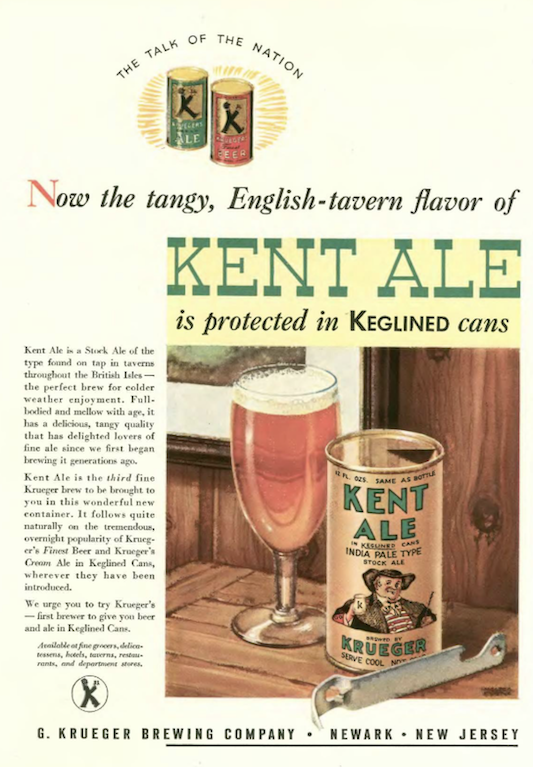
…Kent Ale was produced by Krueger Brewing Company, one of the first breweries to use cans that were coated with some substance referred to as “Keglined”…

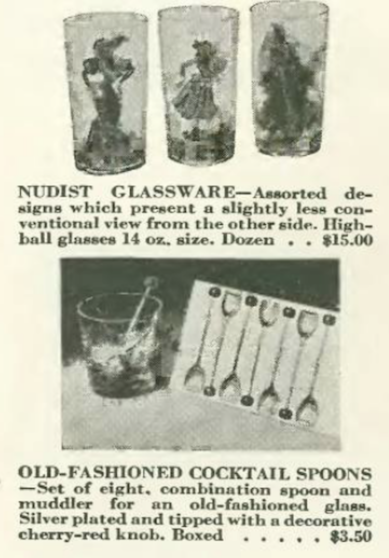
…a detail from an Abercrombie & Fitch advertisement, which suggested “Nudist Glassware” as a unique gift idea for the holidays…

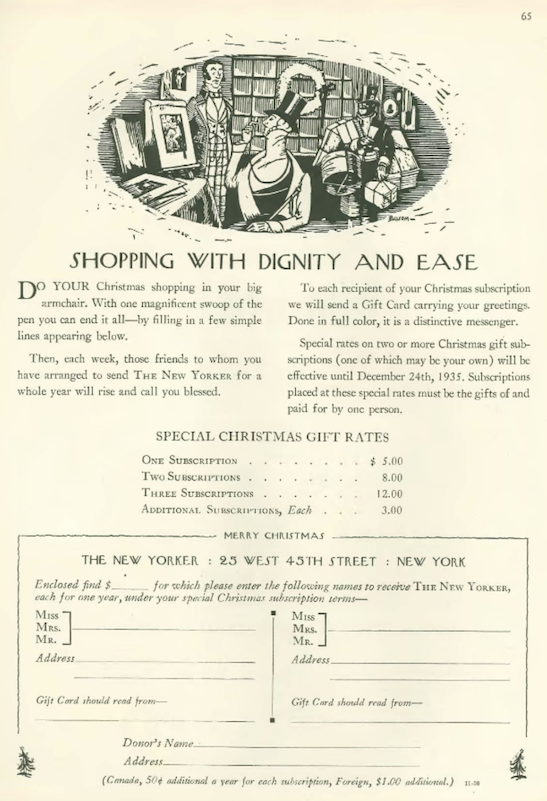
…while The New Yorker suggested a subscription (or three) as a gift that keeps on giving…curiously, the magazine used the talents of artist Lowell Leroy Balcom (1887-1938) to render this woodcut illustration of Eustace Tilley…

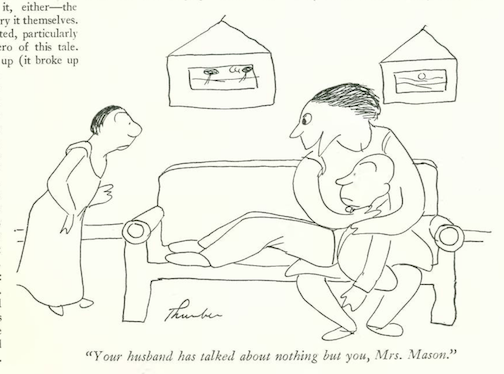
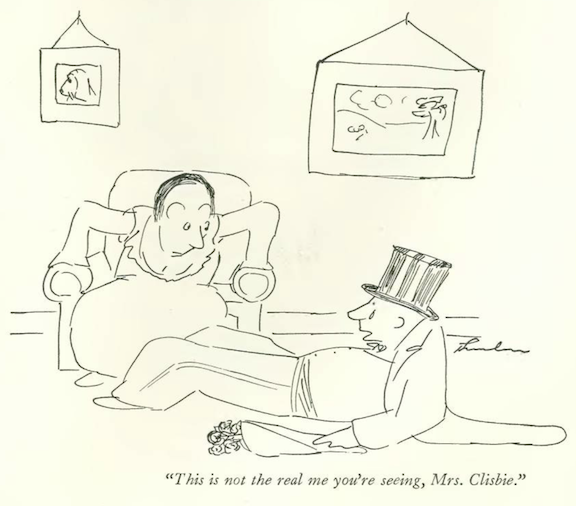
James Thurber kicked off our cartoons with a familiar theme…

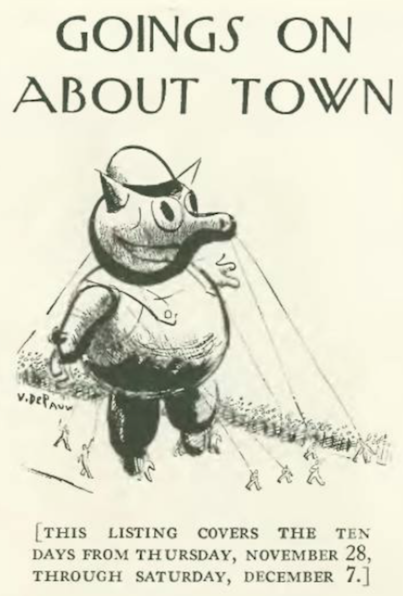
…and Victor de Pauw offered up this Macy’s Thanksgiving Day parade image to calendar section…

…what de Pauw illustrated…

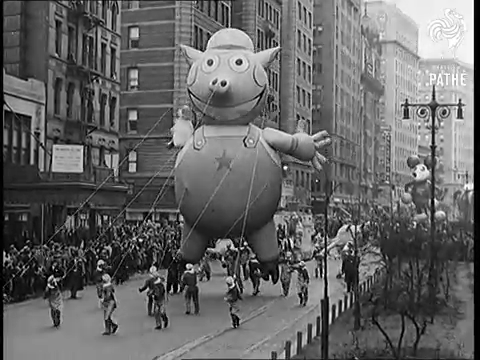
To promote his Silly Symphonies animated short, “The Three Little Pigs”, Walt Disney designed a balloon based on Practical Pig (the one with the brick house). The balloon was featured in the 1934 and 1935 Macy’s Thanksgiving Day parades. (YouTube)

William Steig stepped in for Al Frueh in providing the illustration for the “Theatre” section…

…and Steig again…

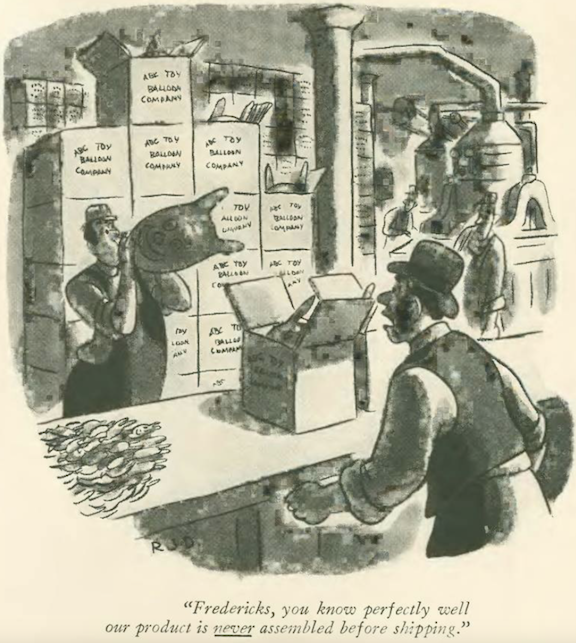
Robert Day gave us an airhead at a balloon factory…

…Day again, with some evicted ghosts…

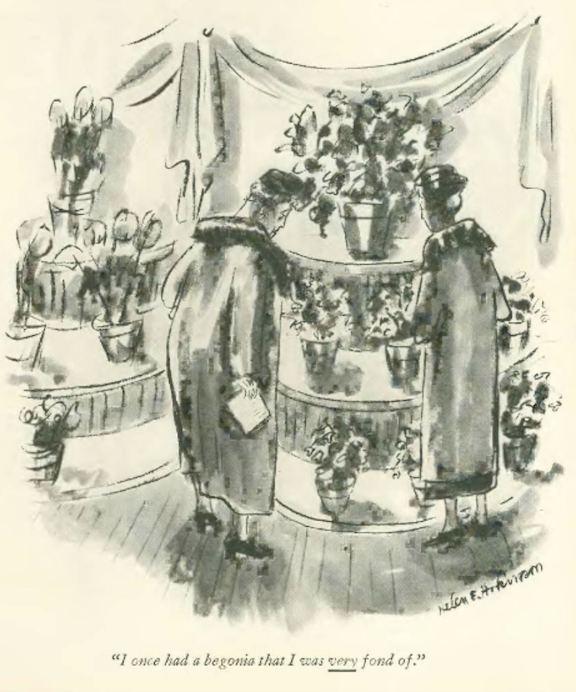
Helen Hokinson went plant shopping…

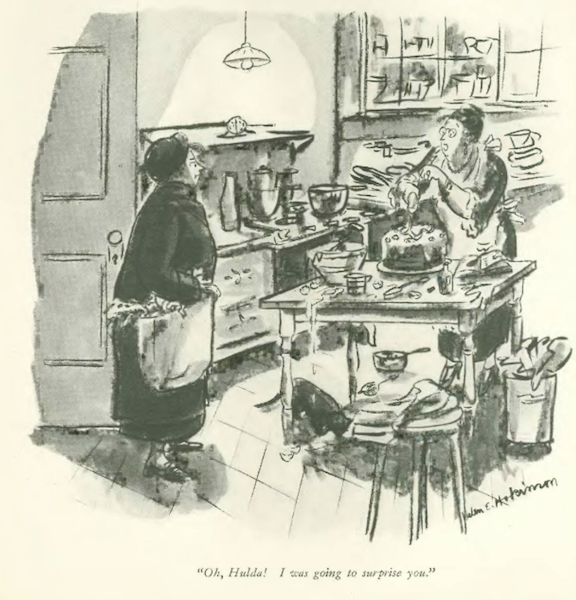
…and found a surprise in the kitchen…

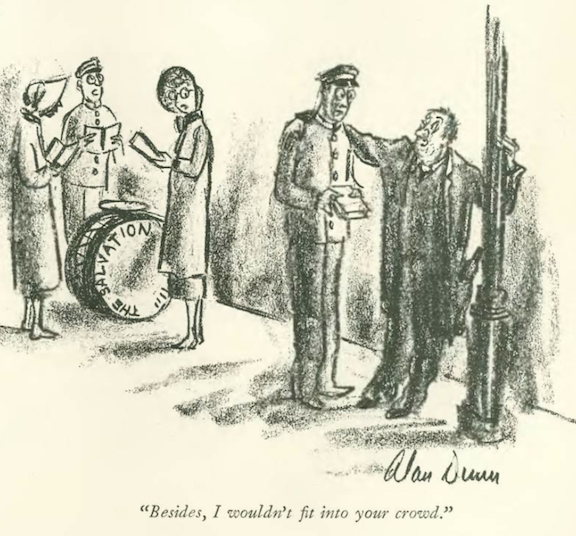
Alan Dunn offered a challenge to the Salvation Army…

Alain received a special layout for this cartoon…

…which was arranged thusly…

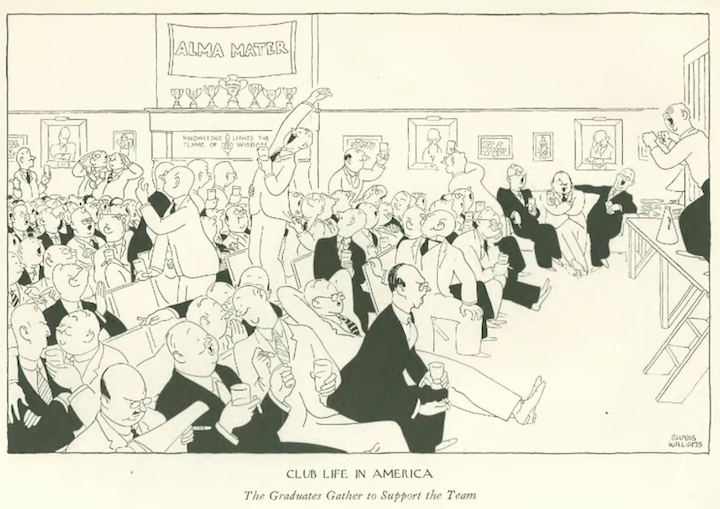
Gluyas Williams was back with his look at club life…

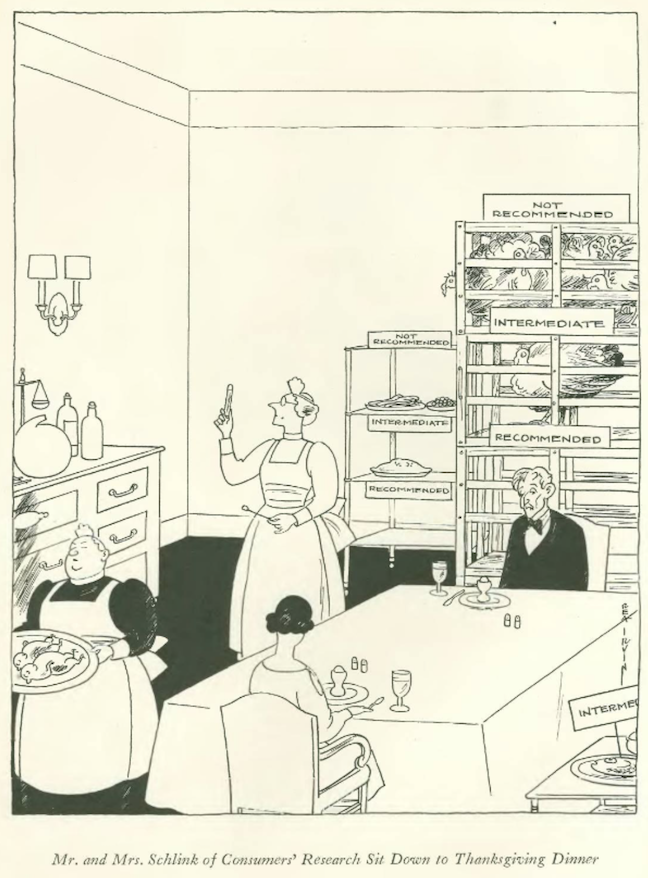
…and we close with Rea Irvin, and the science behind a holiday feast…

…and before we go, our cover artist, Alice Harvey, was publishing New Yorker-style cartoons in Life magazine at least three years before the New Yorker got off the ground. Here is an example of her early work, published 103 years ago on December 28, 1922:

Next Time: Two Nights at the Opera…


Jimmy Comes Home

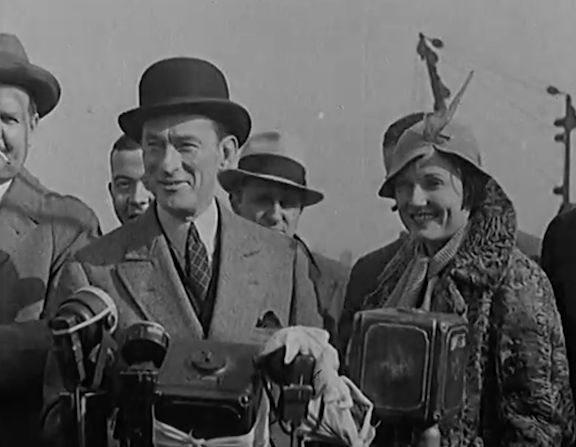
Above: Former New York Mayor Jimmy Walker and wife Betty Compton, aboard the S.S. Manhattan in 1935. (New York Daily News Archive)

The Roaring Twenties and Jimmy Walker seemed made for each other. A dandy with a taste for fine clothes, late-night parties, and Broadway showgirls, the 97th mayor of New York was a darling of the media…until the market crashed; as nest eggs evaporated along with jobs, folks quickly lost their taste for such frivolity.

November 9, 1935 cover by Daniel “Alain” Brustlein. This was the first of nine covers Brustlein created for the magazine. An Alsatian-born American artist, cartoonist, illustrator, and author of children’s books, Brustlein (1904–1996) contributed to The New Yorker under the pen name “Alain” from the 1930s through the 1950s.
Daniel “Alain” Brustlein, in an undated photo. During the height of Abstract Expressionism Brustlein became a reputable painter, exhibiting his work in New York and Paris. (derfner.org)

 *

The fall of 1935 marked three years since Walker had left office, and for nearly two of those years the city had been governed by the reformist Mayor Fiorello La Guardia. New Yorkers, it seemed, were ready for a dose of Jimmy when he returned from his European exile, hailed by a throng of media and well-wishers.

Writing for Airmail, longtime New York journalist Sam Roberts observes that the city loved Walker, “a charming hellion, a witty, self-effacing, glib humanist, far more flawed, too, and compassionate than pictured previously, a man elevated and condemned by his own character, created and ultimately consumed by his times. He conjures up the anti-Trump—a dodgy philanderer who governed by making people feel good rather than angry.”

WHERE’S THE PARTY?…Former Mayor Jimmy Walker and his wife, Betty Compton, returned to New York in the fall of 1935 amid tremendous fanfare. The New Yorker’s Morris Markey noted that at least 160 media representatives were on hand for the couple’s arrival. (YouTube)

Walker (1881-1946) fled to Europe in November 1932 amid a bribery scandal that had prompted his resignation. Accompanied by Ziegfeld Follies singer Betty Compton (1906–1944)—whom he would marry in Cannes the following April—they would bounce around the continent until Walker determined that the danger of criminal prosecution had passed.

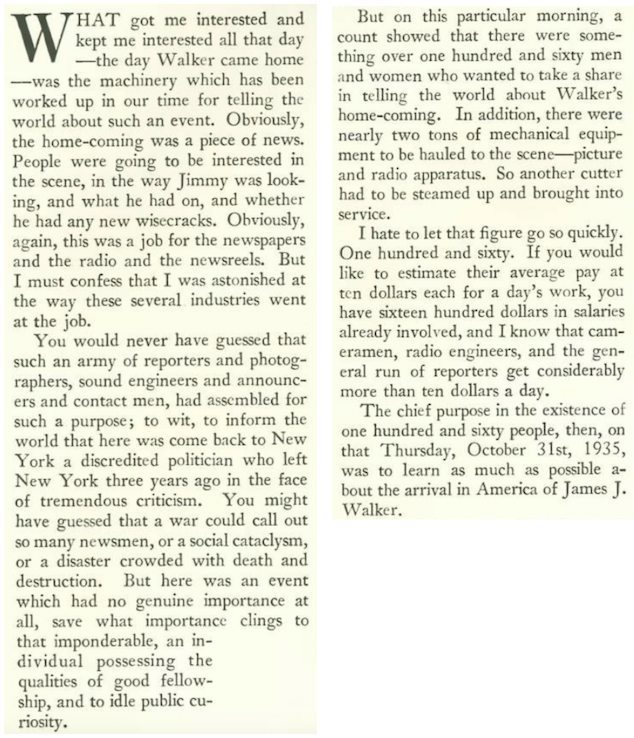
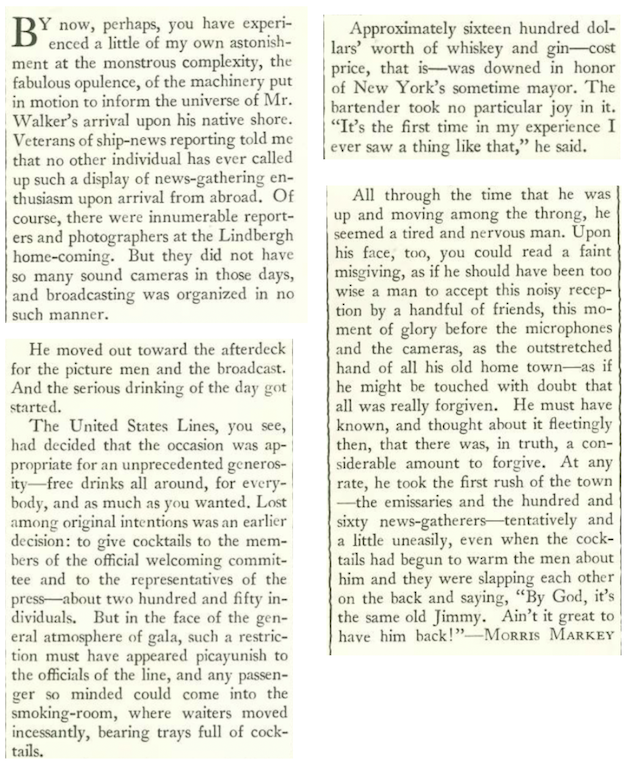
In his “A Reporter at Large” column, Morris Markey wrote about the media’s reception of the exiled mayor, “an army of reporters and photographers, sound engineers and announcers and contact men”…all assembled to inform the world of the return of a “discredited politician.”

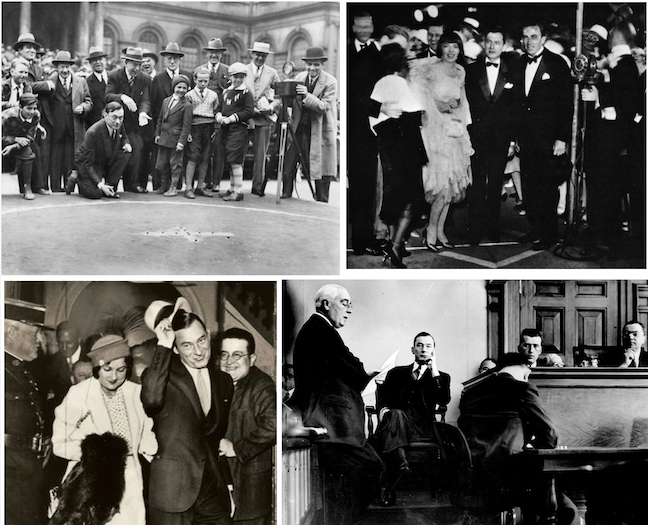
HE GOT AROUND…During his time in office from 1926 to 1932, Mayor Jimmy Walker never seemed to miss a moment in the spotlight. Clockwise, from top left, Walker presided over the first shot in the city’s annual marble tournament on June 3, 1928; with actress Colleen Moore at the 1928 premiere of her latest film, Lilac Time;  testifying on bribery charges before the investigative committee of Judge Samuel Seabury, 1932; with Betty Compton following their 1933 wedding in Cannes. (New York Times/konreioldnewyork.blogspot.com/villagepreservation.org)

Markey continued to convey his astonishment at “the monstrous complexity, the fabulous opulence, of the machinery put in motion to inform the universe of Mr. Walker’s arrival upon his native shore.” This included a massive cocktail party—hosted by The United States Lines—for more than two hundred press representatives and other officials.

After all the commotion, Walker would settle into a job as head of Majestic Records, adopt two children with Compton, and host his own radio series on WHN, Jimmy Walker’s Opportunity Hour.

Compton would divorce Walker in 1941 and remarry. Becoming ill after the birth of a son, she would die at age 38 in 1944. Walker would die two years later at age 65 of a brain hemorrhage.

CALLING ON THE ROOSEVELTS…Jimmy Walker and Betty Compton at the White House in 1937. It was pressure from FDR that led to Walker’s resignation in 1932. (Wikipedia)

 * * *

High-flying Hooplah

While New Yorkers were going gaga over Walker, folks in the Bay Area were all atwitter over the first air-mail flight across the Pacific, loading a Pan Am Clipper to the gills with all manner of collectables. E.B. White noted:

BELLYFUL…On Nov. 22, 1935, Pan American Airways made aviation history as the China Clipper lifted off from Alameda, beginning the world’s first trans-Pacific airmail service. Captained by Edwin Musick and crewed by famed navigator Fred Noonan, the Martin M-130 opened a new era of long-distance flight across the Pacific. Noonan, who charted many commercial routes across the Pacific, would go missing along with Amelia Earhart during their ill-fated flight in July 1937. (Library of Congress)

* * *

Wise Men From the East

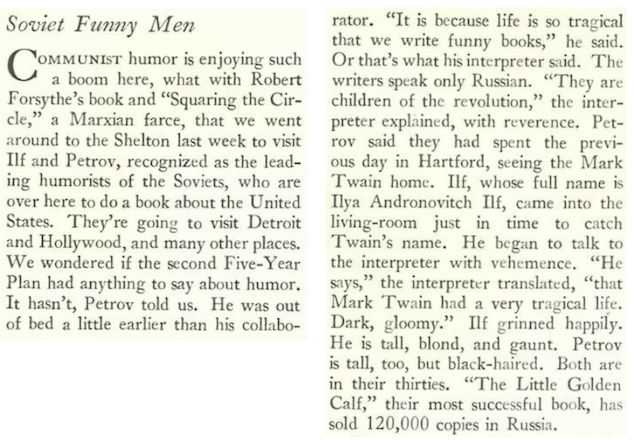
“The Talk of the Town” visited with Soviet satirists Ilya Ilf (1897–1937) and Evgeny Petrov (1903–1942), who were in New York preparing for a ten-week road trip to California and back. On assignment as special correspondents for the newspaper Pravda, they later published a series of illustrated articles, “American Photographs,” as well as a book titled Single-Storied America (the summer 2004 issue of Cabinet Magazine features an account of their journey as well as a number of their photographs).

AMERICA WAS A GAS…Soviet satirists Ilya Ilf (left) and Yevgeni Petrov check out New York before heading into the American heartland on a ten-week road trip, a highlight being the countless full-service gas stations they encountered along the way. After seeing skyscrapers and mountains and other wonders, the pair agreed that the most enduring image was the one at right: “an intersection of two roads and a gasoline station against a (back)ground of wires and advertising signs.” Sadly, Ilf died two years later from tuberculosis; Petrov died in a plane crash in 1942 while working as a war correspondent. (Aleksandra Ilf archive/Cabinet Magazine)

 * * *

A Jumbo Career

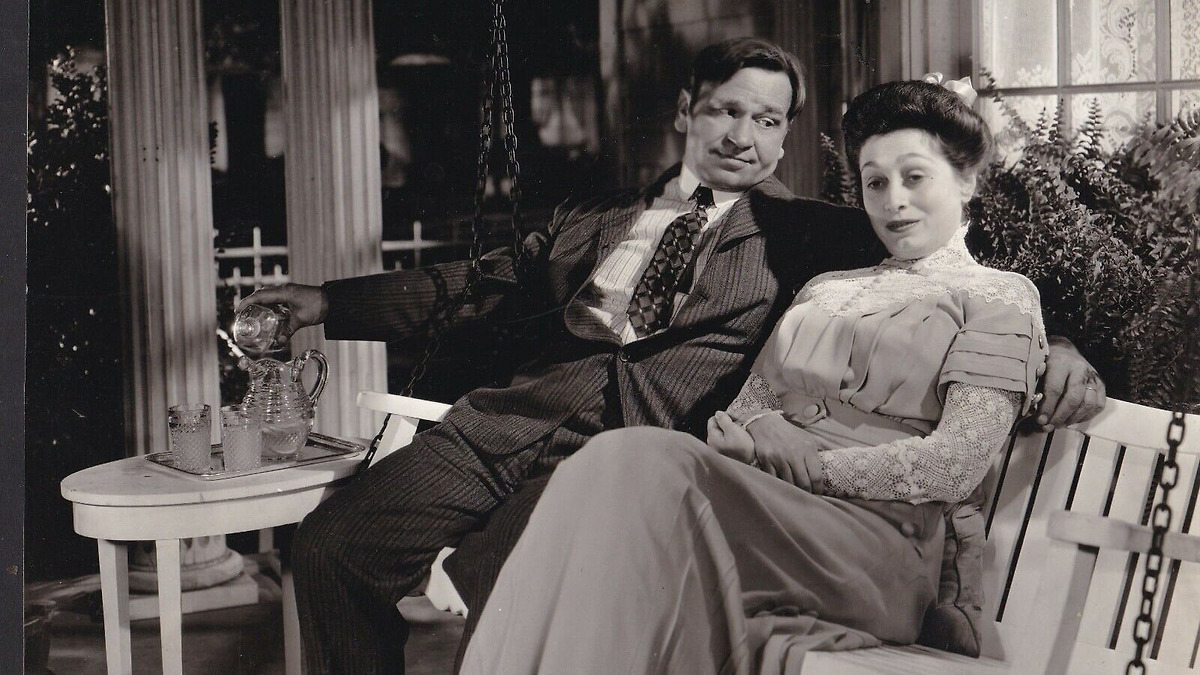
Wallace Beery (1885–1949) got his start in the comedy silents of the 1910s and became a star before the sound era made him an even bigger one; by 1932 he was the world’s highest-paid actor. Alva Johnston’s profile (titled “Jumbo”) took a look at Beery’s life and career (illustration by Al Frueh). Excerpts:

COURTING AND SPARKING…Sid Miller (Wallace Beery) spikes the lemonade as he woos Lily Davis (Aline MacMahon) in a scene from the 1935 film, Ah Wilderness! (letterboxd.com)

 * * *

A View and Corbu

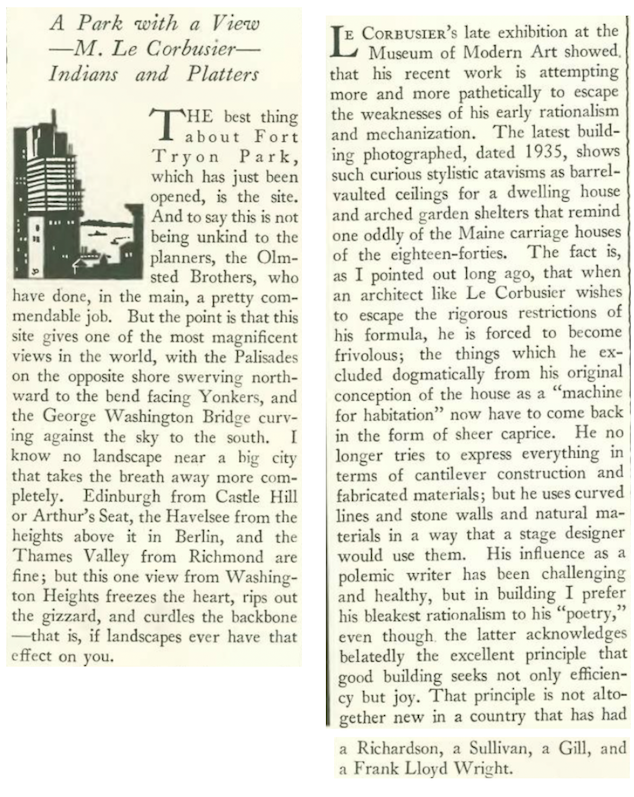
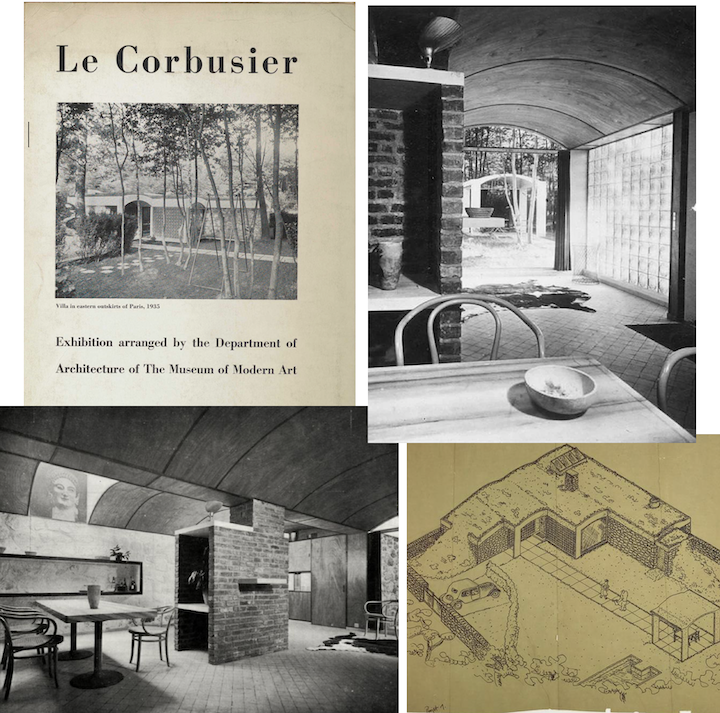
Art and design critic Lewis Mumford was well-known for his hypercritical eye, but occasionally he could be moved to rhapsodize, in this case about the opening of Fort Tryon Park, and particularly about the view it afforded visitors. He reserved his criticism for one of the latest works by Le Corbusier (aka Charles-Édouard Jeanneret), on exhibit at MoMA.

MAGNIFICENT is the word Lewis Mumford used to describe the view from Fort Tryon Park. This scene is taken from Linden Terrace to the west: a barge on the Hudson River and the Hudson Palisades beyond, with the Englewood Cliffs campus of Saint Peter’s University on the top. (Wikipedia)
IRRATIONAL?…Mumford was not pleased with Le Corbusier’s latest work, Le Petite Maison de Weekend (Villa Henfel), which was featured on the cover of the MoMA exhibition catalogue (upper left). Mumford saw the design as a pathetic escape from the architect’s renown rationalism. (MoMA/Fondation Le Corbusier)

* * *

At the Movies

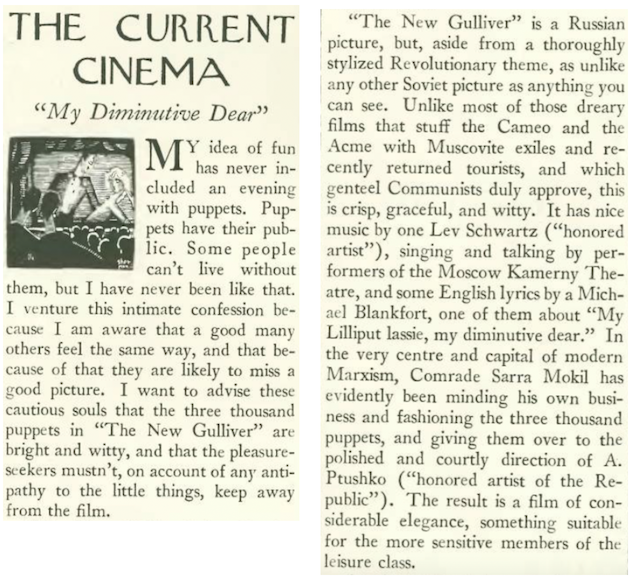
It was a mixed bag at the movies for critic John Mosher, who was delighted by a Soviet take on Gulliver’s Travels, rendered with puppets engaged in a proletarian struggle…

KOMRADE GULLIVER…The Soviet stop motion-animated fantasy film, The New Gulliver, was a communist re-telling of Jonathan Swift’s 1726 novel. The film depicted Lilliput suffering under capitalist inequality and exploitation, with Gulliver enabling a proletarian revolution against the Lilliputian monarchy. (revolutionsnewstand.com)

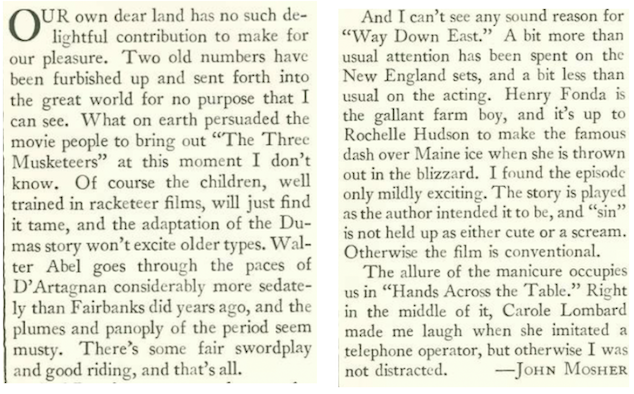
…but Mosher was less than delighted with the latest from Hollywood, including a sedate The Three Musketeers, a “conventional” remake of D.W. Grifffith’s 1920 melodrama Way Down East, and the romcom Hands Across the Table, which the Times called “uproariously funny” but Mosher deemed barely worth a chuckle.

OUTCLASSED BY PUPPETS…John Mosher found the latest from Hollywood underwhelming. Clockwise, from top, Onslow Stevens, Moroni Olsen, and Paul Lukas in The Three Musketeers; Rochelle Hudson and Henry Fonda in Way Down East; Fred MacMurray and Carole Lombard in Hands Across the Table. (mabumbe.com/zeusdvds.com/Wikipedia)

 * * *

From Our Advertisers

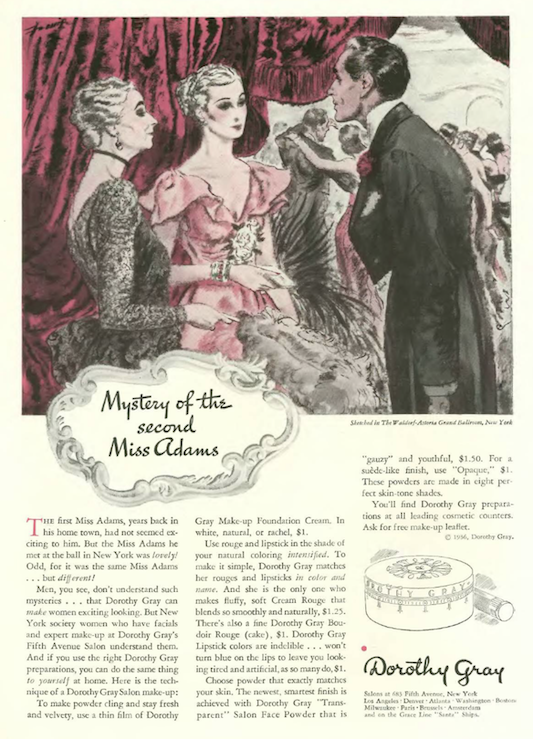
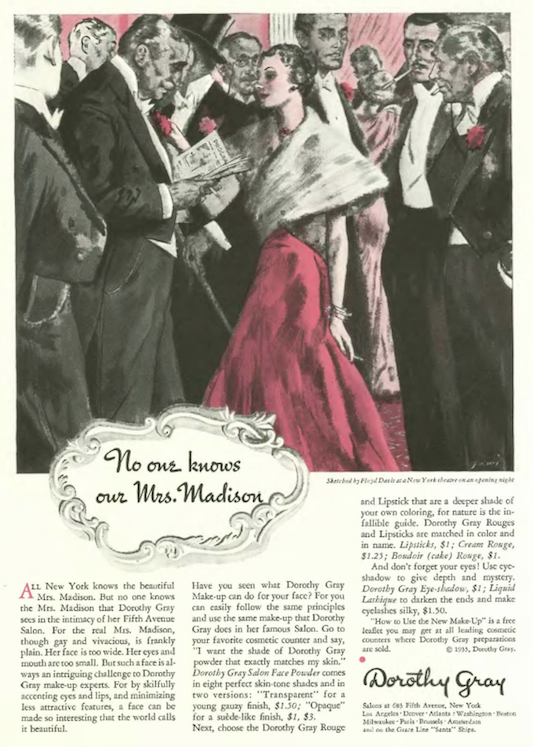
The Dorothy Gray salons didn’t mince words when it came to a woman’s beauty regimen…without their help, claimed this ad, the poor “Mrs. Madison” would be “frankly plain,” with a face too wide and eyes and mouth too small…

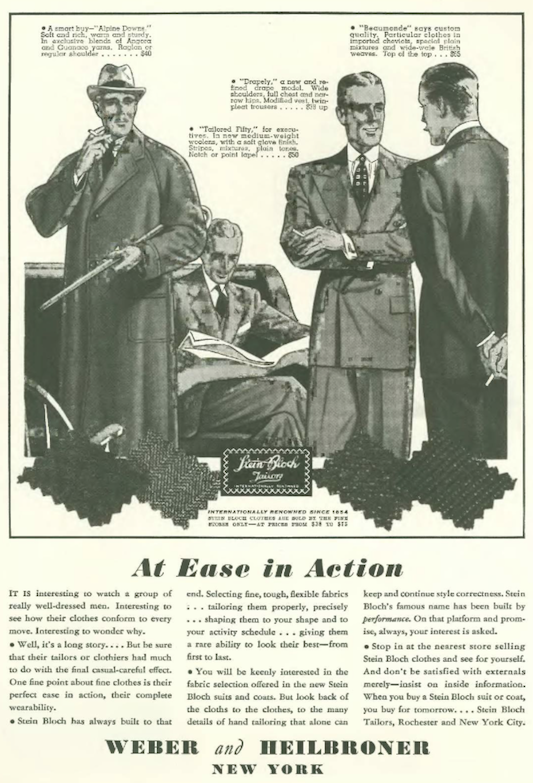
…notable in ads for men’s and women’s clothes were the presence of cigarettes…all three of the men in this spot are having a smoke in their smart attire…

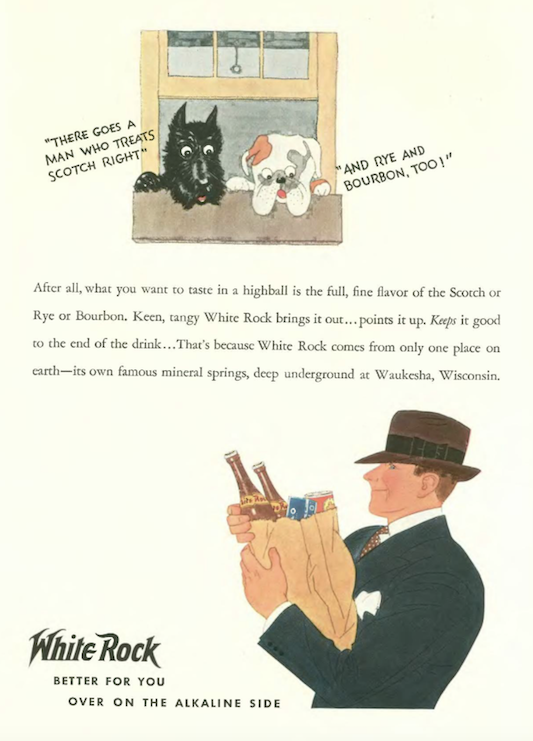
…White Rock gave their logo-bearer Psyche a rest in 1935 with a variety of ads including this one…

…the makers of Bisquit assumed their customers could read the French dialogue, or at least pretend to…

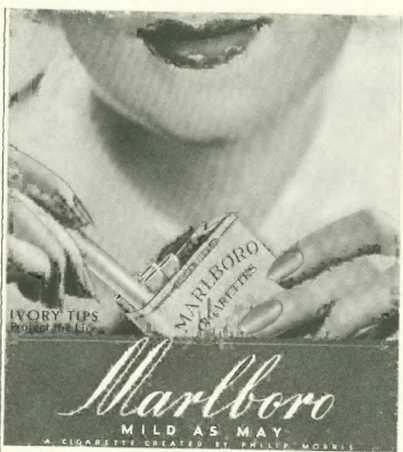
…when we (of a certain age) think of Marlboro we think of the rugged Marlboro Man, but in 1935 the brand was exclusively marketed to women…

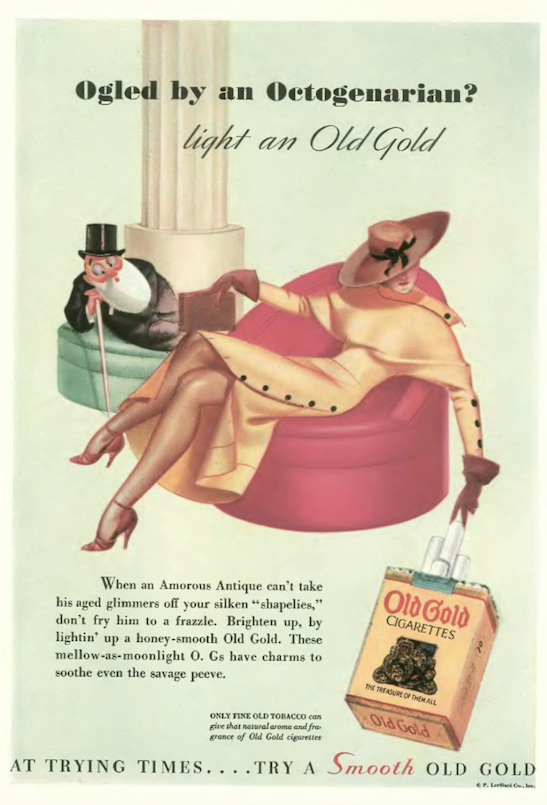
…and who knows what Old Gold’s target was here…definitely women smokers, who were the growth market, but men would take notice of the George Petty pin-up…

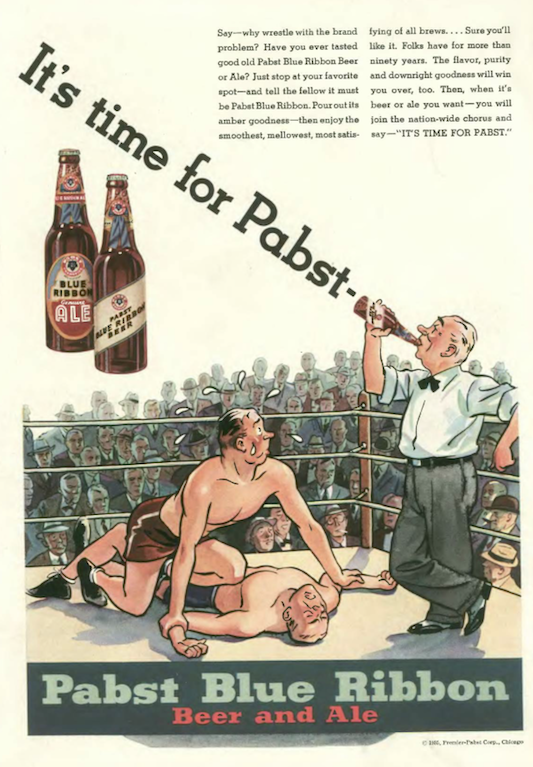
…the makers of Pabst Blue Ribbon Beer, who endured Prohibition by offering products like Pabst-ett cheese spread, were ready to grab a big market share after Repeal…

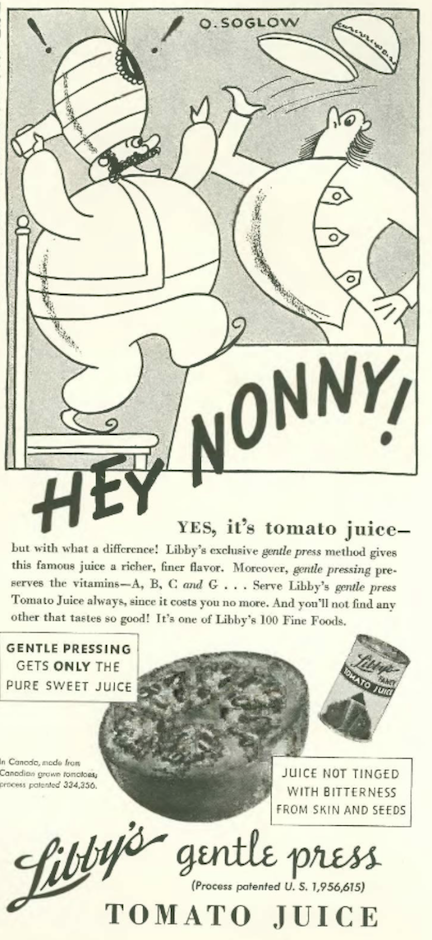
Otto Soglow, still contributing to The New Yorker despite taking his Little King to Hearst, drew up this potentate for a tomato juice spot…

…which segues to our other cartoonists, beginning with Al Frueh and his take on the latest  Broadway hit, Jubilee!

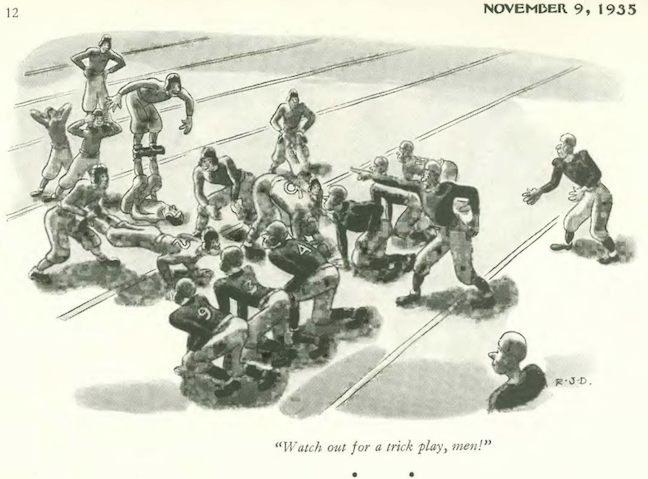
Robert Day saw action on the gridiron…

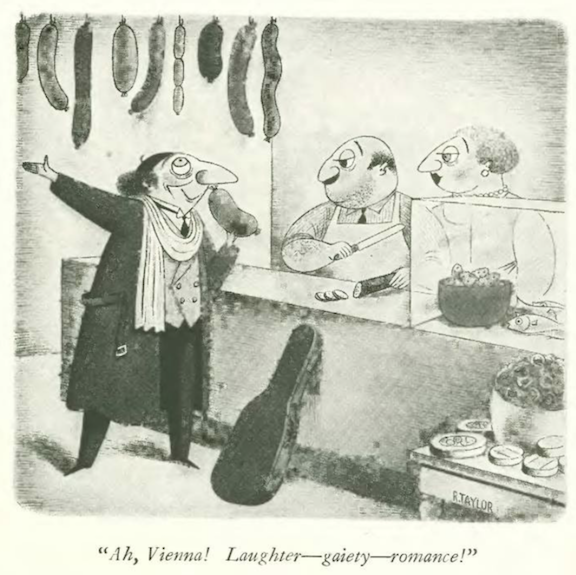
…unless I missed something, this might be Richard Taylor’s first New Yorker cartoon…

James Thurber put a unique spin on a bowling ball…

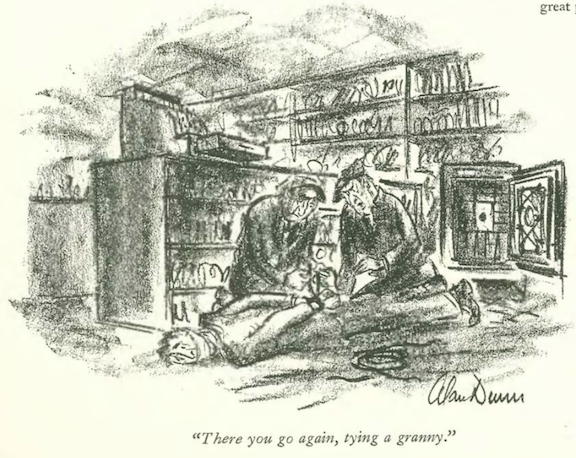
Alan Dunn was all in knots at a crime scene…

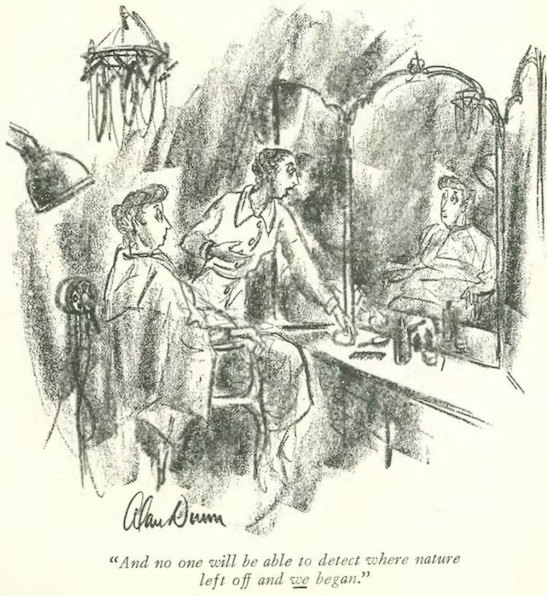
…Dunn again, pondering the wonders of a makeover…

Barney Tobey eavesdropped on a Downtown subway…

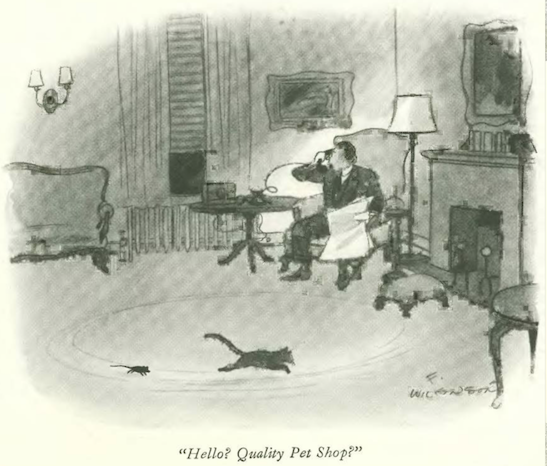
Fritz Wilkinson looked to return a defective pet…

Carl Rose needed two pages to illustrate his epic cartoon (caption added at the bottom for readability)…

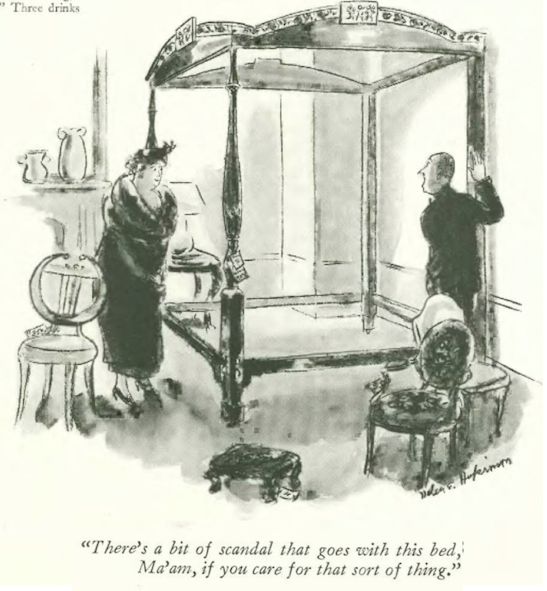
…and we close with Helen Hokinson, and a whiff of scandal…

Next Time: Seeking Decorative People…


Planes, Trains and Automobiles

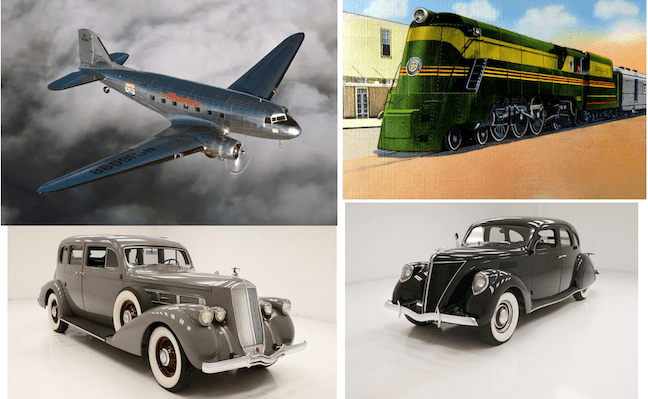
Above: Clockwise from top left—the Douglas DC-3 was introduced to airlines in 1935; Seaboard streamlined locomotive, c. 1930s; 1936 Lincoln-Zephyr; 1936 Pierce Arrow. (hushkit.net/Wikimedia/classicautomall.com)

As we’ve seen in previous issues, E.B. White often served as The New Yorker’s unofficial aviation correspondent; despite his sometimes anachronistic views on progress, he never missed a chance to hop aboard an airplane and marvel at the scene far below.

November 2, 1935 cover by Constantin Alajalov.

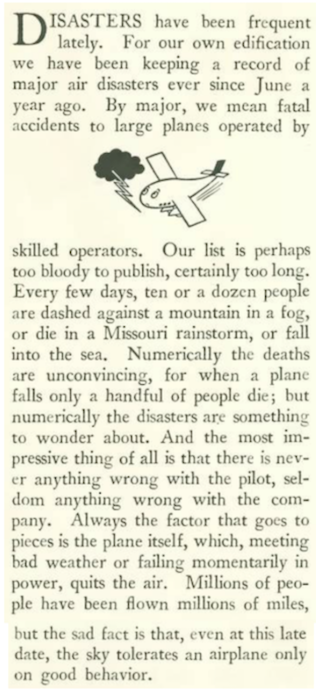
White’s enthusiasm, however, was tempered with doubts about air safety, including observations he made in an August 31, 1935 column following the deaths of Wiley Post and Will Rogers in an Alaska plane crash. Here is what he wrote then:

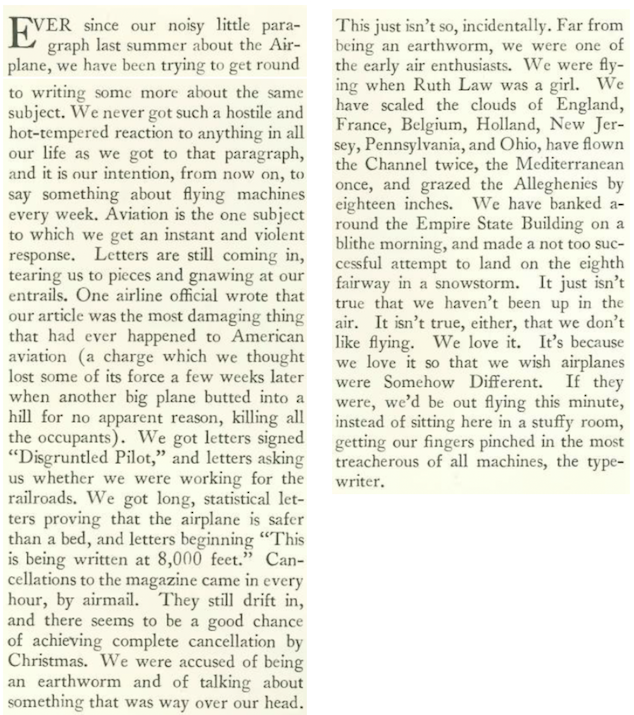
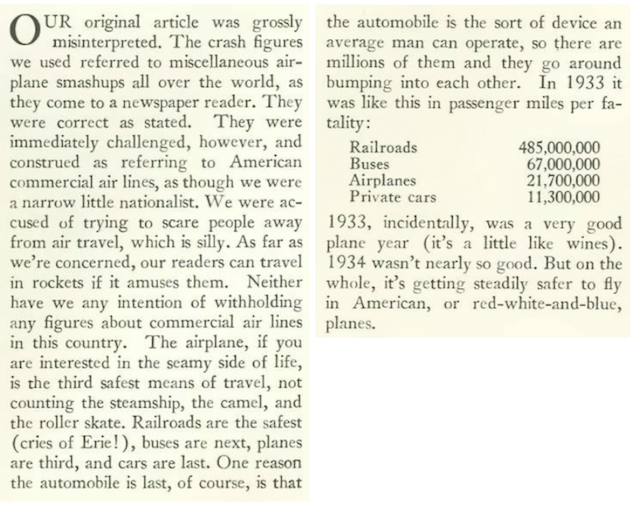
The aviation industry’s strong reaction to that “noisy little paragraph” apparently led to a number of subscription cancellations, prompting White to return to the topic in his Nov. 2 “Notes and Comment” column:

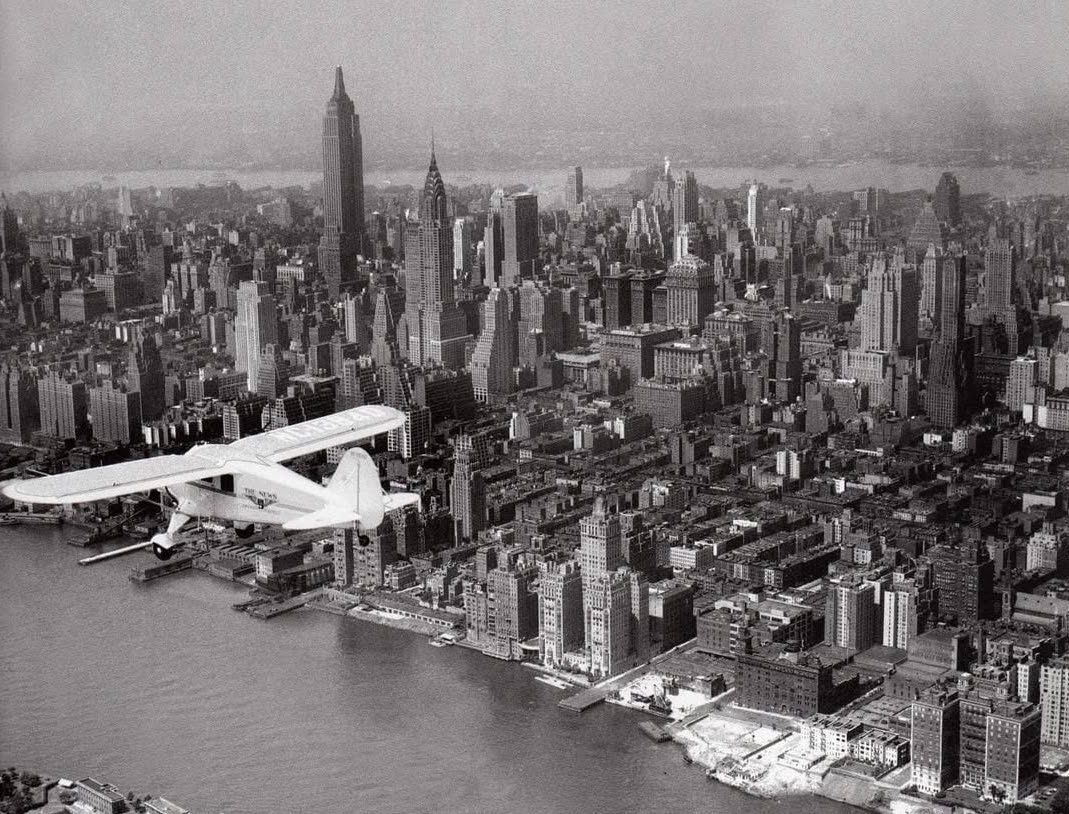
HE’D BEEN AROUND…E.B. White supported his comments on air safety by citing his many flying experiences, including soaring around the Empire State Building “on a blithe morning.” Pictured above is a New York Daily News plane flying over Manhattan in 1934. (NY Daily News)

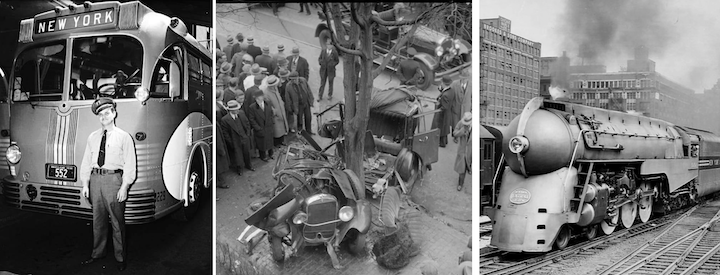
White also turned to statistics for his defense, finding that per passenger mile, railroads were still the safest mode of transportation in the country.

HOP ABOARD…According to 1933 statistics shared by E.B. White, trains were the safest mode of transportation per passenger mile, followed by buses. Automobiles were the least safe, a fact that still holds true today. From left, Greyhound bus and driver, 1937; automobile wreck, 1930s; New York Central’s 20th Century Limited leaving Chicago’s LaSalle Street station in 1938. (Facebook/Reddit/Wikipedia)

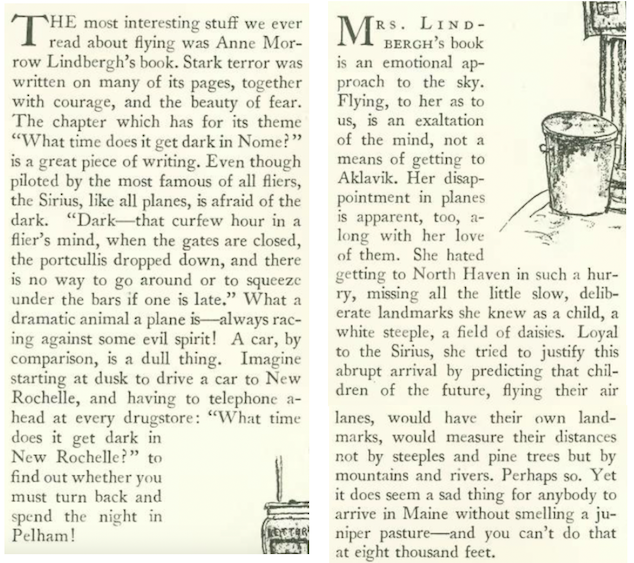
With that, White still wasn’t done with the topic, turning to none other than Anne Morrow Lindbergh for her thoughts on flying, which she shared in her latest book, North to the Orient. White noted Lindbergh’s mixed feelings about flying, about getting to places quickly and missing familiar landmarks. He also suggested that someday airline passengers would use mountains and rivers as landmarks…(I still try to do that when I fly, but at 35,000 feet it is a challenge). Today most folks are content with plugging in their earbuds and tuning out completely.

NOT YOUR EVERYDAY OUTING…In July 1931 Charles and Anne Morrow Lindbergh embarked in their Lockheed Model 8 Sirius on an often treacherous 7,100-mile journey across Canada, Alaska, Siberia and Japan in an attempt to find a commercial route to Asia for Pan American Airways. Top photo, Charles (standing on pontoon) and Anne (in the cockpit) make final preparations before the flight; bottom photo, enthusiastic crowds greet the Lindberghs upon their arrival in Japan. The Siberia-to-Japan leg was the most dangerous due to heavy fog. (historynet.com)

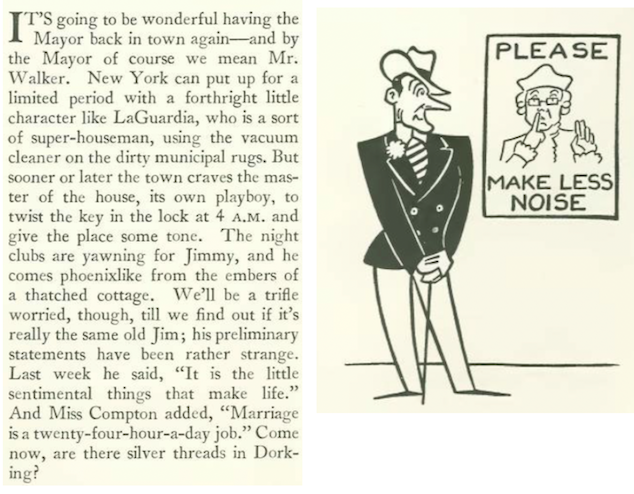
E.B. White also announced the return to the city of former Mayor Jimmy Walker, who had fled to Europe in 1932 amid corruption charges. White noted that New York’s nightclubs were eager to welcome the fun-loving Walker back to town.

SECOND ACT…Still image from a 1935 British Pathé newsreel shows the triumphant return from Europe of former Mayor Jimmy Walker and his wife, Betty Compton. (YouTube)

 * * *

A Zephyr Blows In

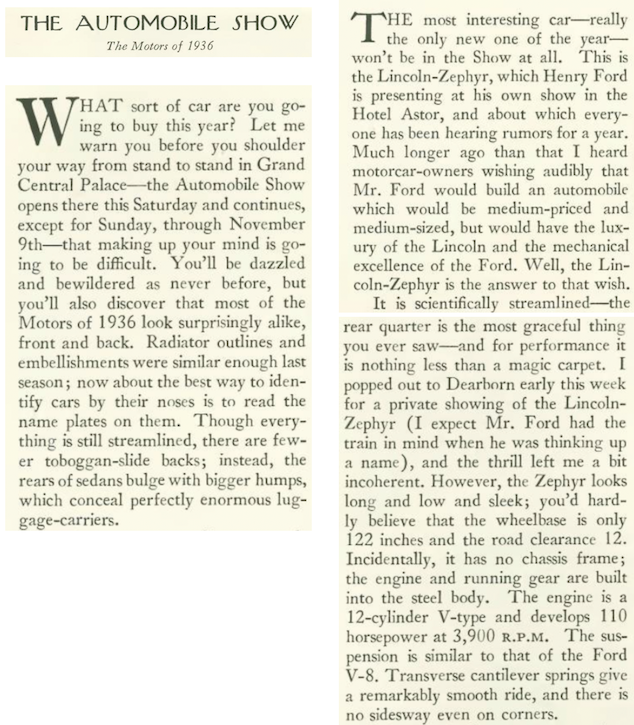
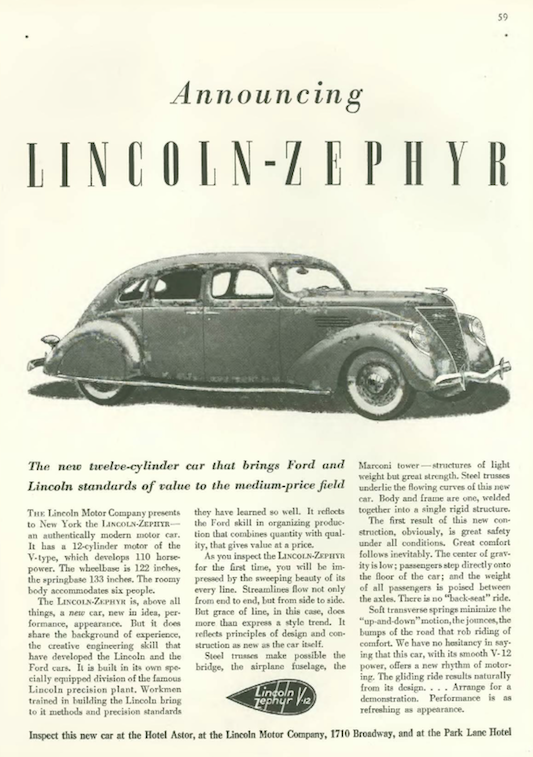
The magazine’s “Motors” correspondent (pen name “Speed”) noted the dazzling display of 1936 models at the New York Automobile Show, singling out the Lincoln-Zephyr as the year’s biggest innovation.

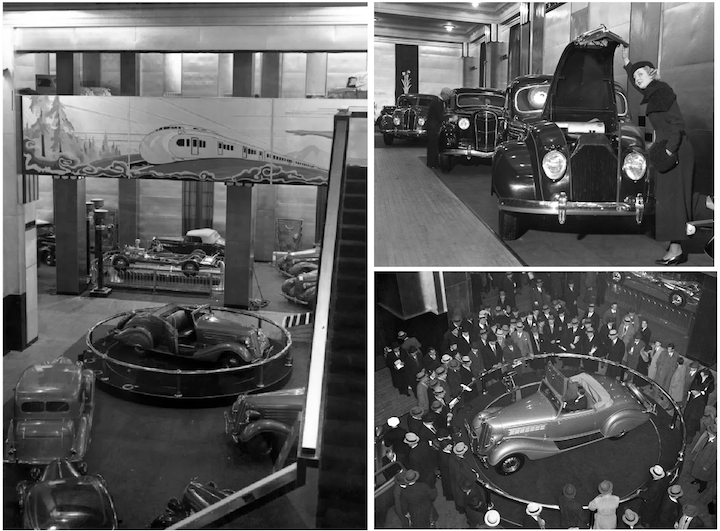
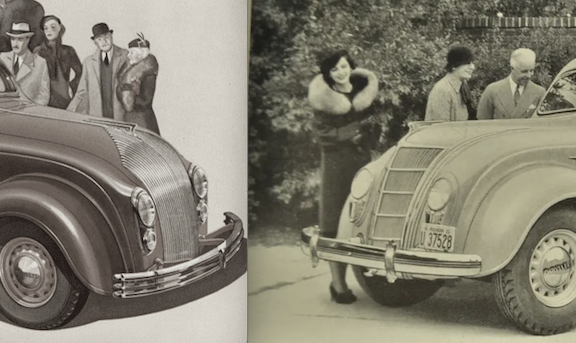
DECO DREAMSCAPE…Streamlining was all the rage at the 1935 New York Automobile Show at Grand Central Palace. Upper right, a woman opens the hood of a streamlining pioneer, the Chrysler Airflow. (New York Daily News)
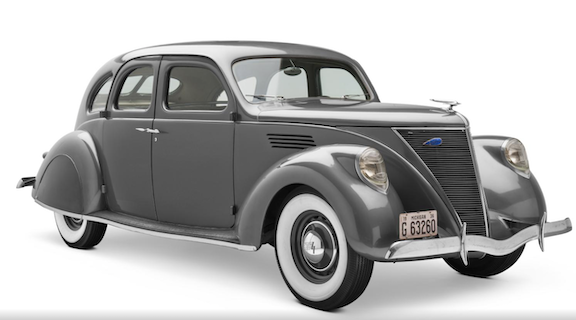
LEADER OF THE PACK…The 1936 Lincoln-Zephyr had tongues wagging at the New York Automobile Show.  (thehenryford.org)

 * * *

At the Movies

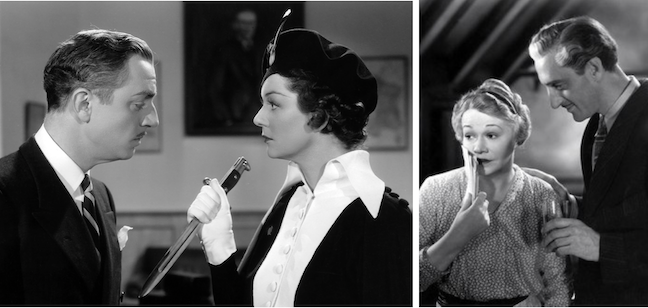
William Powell and Hollywood newcomer Rosalind Russell blessed film critic John Mosher with their spy caper, Rendezvous, while Pauline Lord got lost in the London fog with Basil Rathbone in A Feather in Her Hat.

A CAPER AND A WEEPER…At left, William Powell starred with Hollywood newcomer Rosalind Russell in Rendezvous; at right, Broadway stage actress Pauline Lord appeared opposite Basil Rathbone in A Feather in Her Hat. (1935)

Mosher also screened a French comedy, René Clair’s Le Dernier Milliardaire (The Last Billionaire), finding its slapstick approach to satire a bit dated.

DURABLE AND ADORABLE…Renée Saint-Cyr as Princess Isabelle in the French comedy Le Dernier Milliardaire (The Last Billionaire). Known for her chic comedies, Saint-Cyr (1904–2004) was a major French film star for seven decades. (Film Forum)

Finally, Mosher turned his critical eye toward a British sci-fi film, Transatlantic Tunnel. Looking forward to seeing a gee-whiz Jules Verne-type story, what Mosher found instead was a lot of sentimental “padding” and very little gee-whiz.

UNDERWATER…John Mosher looked forward to an undersea adventure, but instead got a lot of sentimental fluff in the British sci-fi film, Transatlantic Tunnel. Clockwise, from top left, movie poster for the American release; scene from the film depicting the tunnel entrance; the film showcased such futuristic conveniences as video phones (called “televisors”); a group of wealthy industrialists gather at the home of a Mr. Lloyd, a millionaire investor who used a motorized wheelchair. (Wikipedia/Reddit/cinemasojourns.com)

 * * *

No Thanks, Ernie

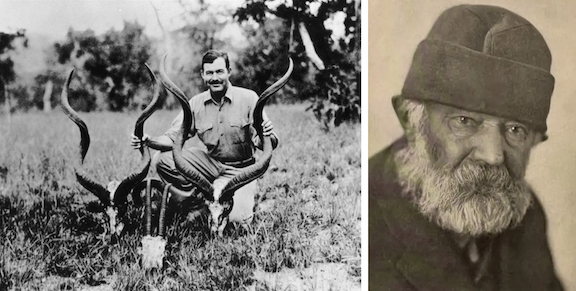
Clifton Fadiman had an armload of books to review, including an autobiography by Andre Gide (If I Die), novels by Mikhail Sholokhov (Seeds of Tomorrow) and Mari Sandoz (Old Jules), and an Ernest Hemingway tale about big game hunting (Green Hills of Africa) that Fadiman did not care for at all. Here are excerpts from a couple of the reviews:

RUGGED TYPES…At left, Ernest Hemingway poses with skulls of kudu and female of sable antelope in East Africa, 1934, part of his hunting trip described in Green Hills of Africa; at right, photo of Jules Sandoz from the frontispiece of Old Jules, a biography written by his daughter Mari Sandoz. (JFK Library/U of Nebraska)

 * * *

From Our Advertisers

With the National Automobile Show in full swing at the Grand Central Palace, the issue was jammed with ads for every type and price range…the Chrysler Corporation took out this full-page spot on the opening spread to promote one of the lowest priced cars on the market…

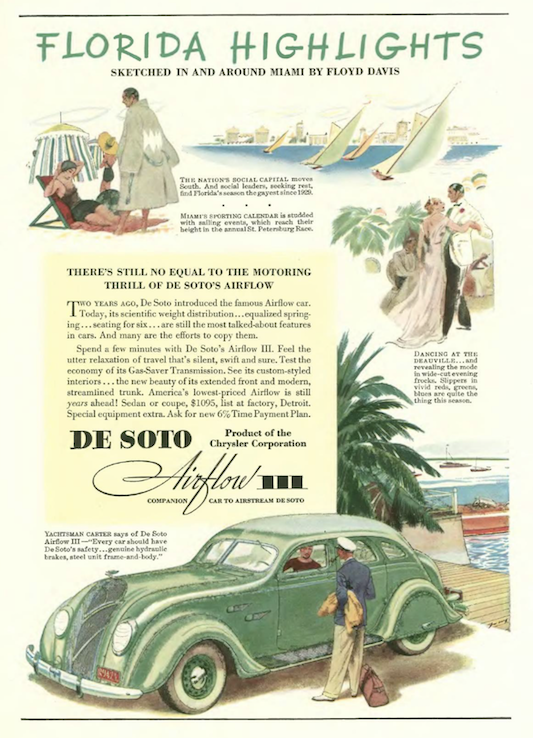
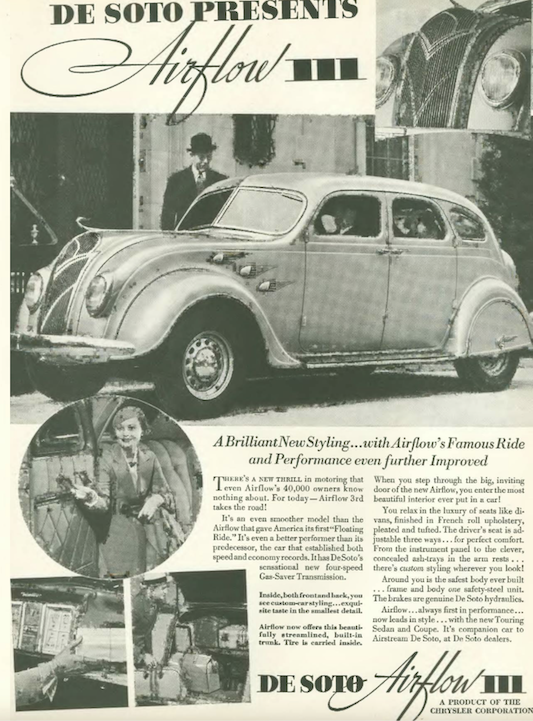
…Chrysler/DeSoto continued to tout its streamlined Airflow models…introduced in 1934, the Airflow was the first full-size American production car to use streamlining, and it featured a number of other innovations, but consumers just weren’t ready for something this radical…even with the streamlining toned down after its first year, only 55,000 units were produced during the model’s four-year run…

…on a side note, Chrysler has revived the Airflow nameplate for an electric car concept due to the marketplace in 2028…

…mentioned in Speed’s review of the Automobile Show, the Lincoln-Zephyr would find success with its aerodynamic design…

…most manufacturers were in on the streamlining trend, noticeable in the tilted grilles, low rooflines, and sweeping fenders…

…unlike the other car companies, Pierce Arrow did not produce an economy model to keep its luxury line afloat during the Depression…emphasizing its handmade quality, this American rival to Rolls-Royce went out of business by 1938…

…Goodyear got in on the Auto Show action promoting its tires for the “new and faster cars”…

…the folks at Campbell’s continued their ad series featuring upper-class women covertly serving canned soup to their society friends…in this ad, however, the hostess reveals her secret…

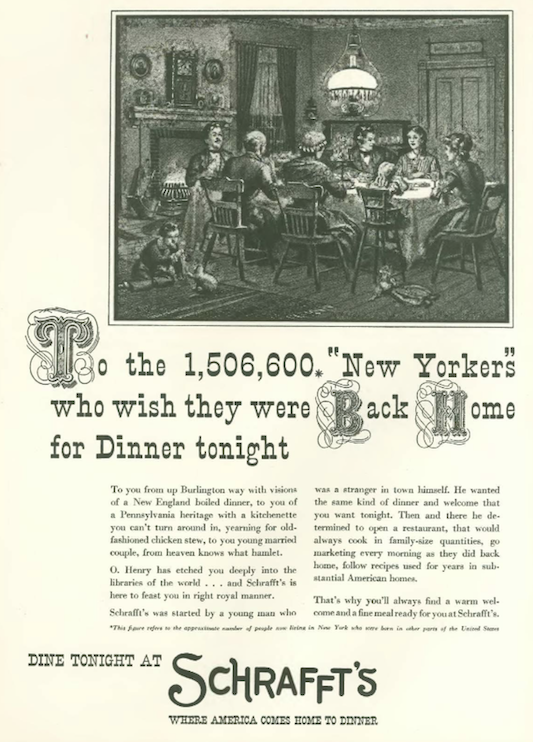
…there were no secrets to be found at Schrafft’s—its popularity increased during the Depression, when more than forty locations in the New York metro offered moderately priced “home-style” meals in an atmosphere that suggested upper-middle-class gentility…

…Long Island’s Lido Country Club tried to drum up some autumn business by promoting the “warm and lazy” sunshine of “Indian Summer”…

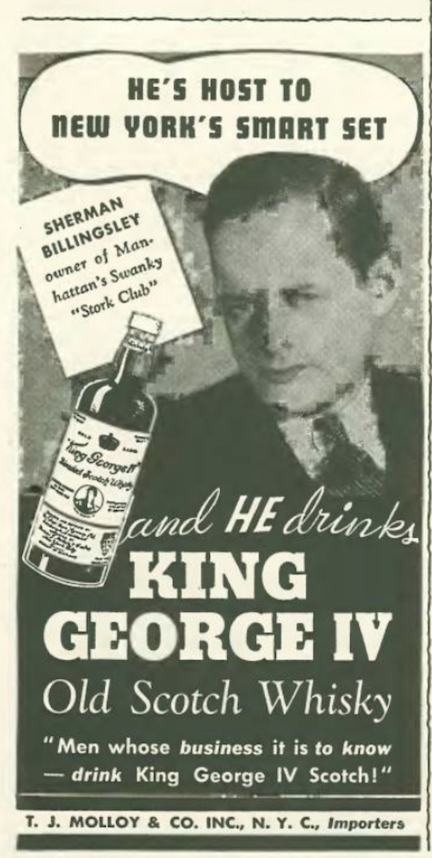
…the makers of King George IV Scotch used the face of Stork Club owner Sherman Billingsley to lend some nightlife cachet to their product…here’s an odd little fact: his nephew, Glenn Billingsley, was married to Leave It to Beaver actress Barbara Billingsley, who played June Cleaver on the TV series…

…this week the back cover belonged to R.J. Reynolds, with various aviators testifying to the calming effects of Camel cigarettes…the lead endorser in the ad, Frank Hawks, was famous for breaking aviation speed records until he perished in the crash of an experimental plane in 1938…

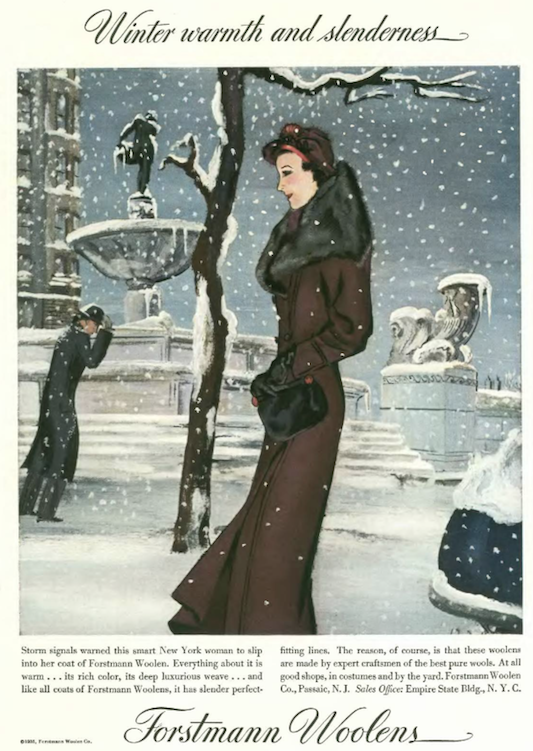
…Forstmann ads were a regular feature on the inside front cover during the fall/winter fashion season, rendered in a style made popular by illustrator Carl “Eric” Erickson

…on to our cartoonists, we open the magazine with Maurice Freed

James Thurber was busy in this issue, writing a touching character sketch of a medicine show man he greatly admired (“Doc Marlowe”)…and contributing this spot art for “Goings On About Town”…

…he also turned in this terrific cartoon…

Christina Malman livened up the Auto Show review with this spot art…

Carl Rose also paid tribute to the annual event…

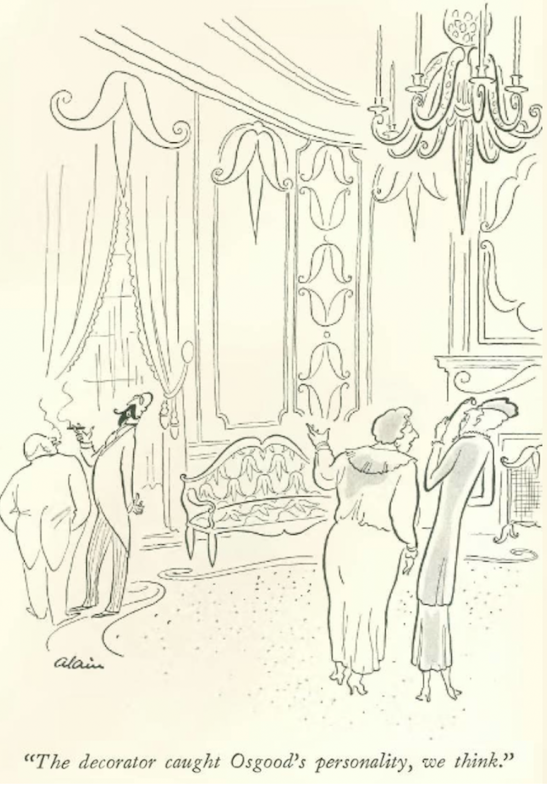
Daniel ‘Alain’ Brustlein did a bit of home decorating…

Robert Day was ready to call it a night…

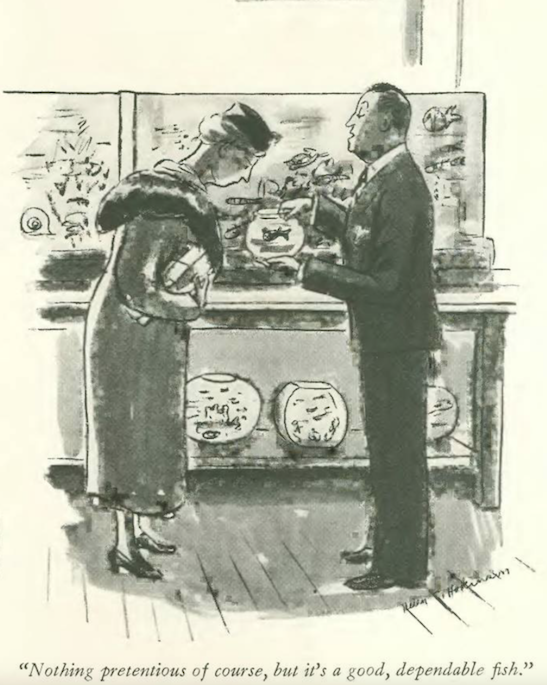
Helen Hokinson contributed two cartoons, shopping for a pet fish…

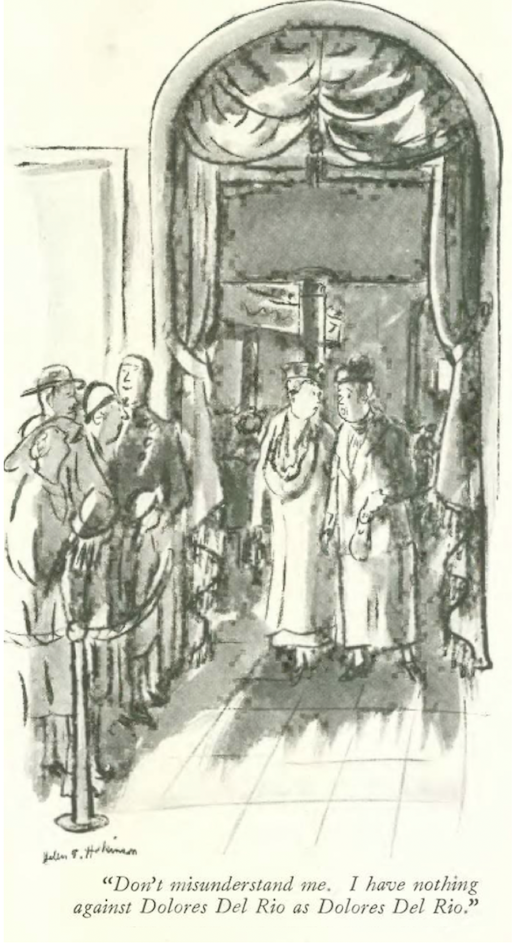
and taking in a Dolores Del Rio picture…

…no doubt Hokinson’s “girls” were commenting on the 1935 musical comedy In Caliente, featuring Mexican actress Dolores Del Rio (1904–1983)…Del Rio was the first Mexican actress to achieve mainstream success in Hollywood…

Dolores Del Rio in a scene from In Caliente. (Reddit)

…we continue with George Price, and a dedicated lumberjack…

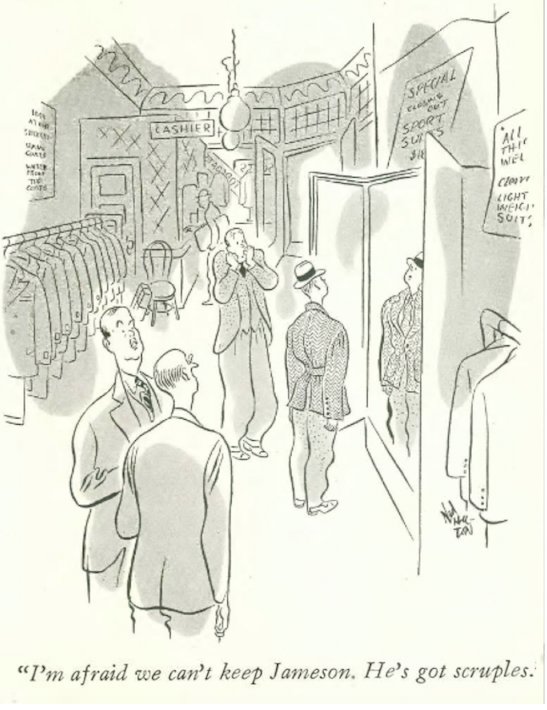
Ned Hilton discovered some honesty in the Men’s Department…

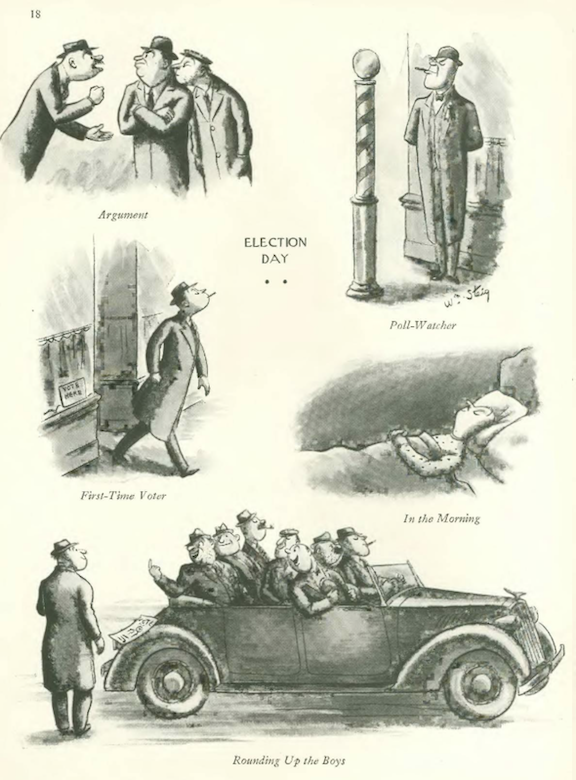
William Steig took a look around on Election Day…

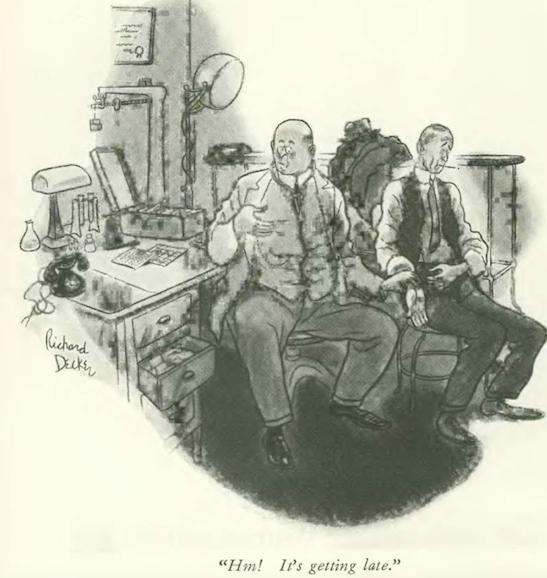
Richard Decker took the pulse of the medical profession…

…and we close with another by Decker, where seeing is not believing…

Next Time: Jimmy Comes Home…


A Merry Menagerie

It has been a while since we’ve heard from art and design critic Lewis Mumford, who often cast a censorious eye at the rapidly changing world around him.

October 12, 1935 cover by William Steig. From 1930 until his death in 2003 at age 95, Steig contributed 121 covers and 1,676 drawings to The New Yorker.

In his column “The Sky Line,” Mumford cast an envious gaze north toward Brooklyn’s Prospect Park Zoo, which he believed had greatly improved upon the recently rebuilt Central Park Zoo.

HE HAD OPINIONS…Lewis Mumford (1895-1990).

Brooklyn’s advantage, according to Mumford, was the superior design of Prospect Park, which offered a better location for a zoo than Central Park. We’ll let Mumford explain in these excerpts:

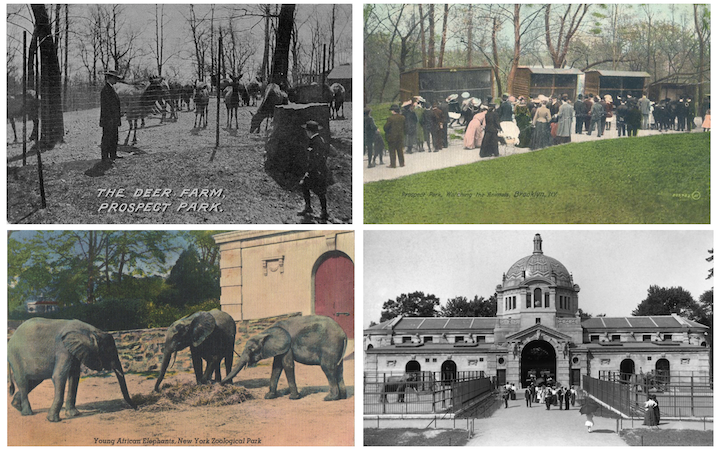
CURIOSITIES, MOSTLY…Clockwise, from top left: Animals were on display at Prospect Park as early as 1866, as seen in this photo of the “Deer Farm”; circa 1900 postcard of Prospect Park’s rather distressing “Menagerie,” which opened around 1890; the park’s Elephant House opened in 1908—modeled after the Hippo Palace at the Antwerp Zoo, the Elephant House also featured rhinoceroses, hippopotamuses, and tapirs; baby elephants (postcard circa 1940s) were a popular attraction until the zoo moved on to smaller creatures in the 1990s. (bklynlibrary.org/untappedcities.com/blog.wcs.org/nycgovparks.org)
LEWIS MUMFORD PRAISED the 1934 plan for the Prospect Park Zoo, designed by architect Aymar Embury II and approved by Parks Commissioner Robert Moses. The zoo was built, in large part, through Civil Works Administration and Works Progress Administration labor and funding. (Brooklyn Public Library)
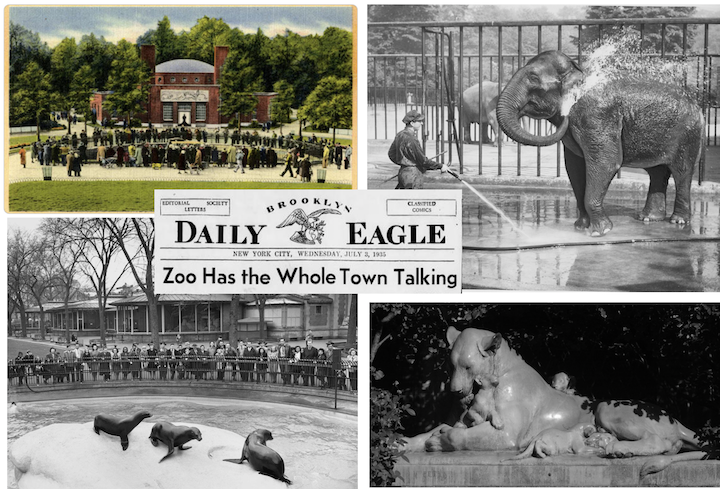
FLATBUSH FAUNA…Clockwise, from top left: Postcard image of Prospect Park Zoo circa 1935; zoo keeper sprays an elephant with a hose, circa 1940; an 1899 bronze sculpture depicting a mother lion nursing her cubs was created by French artist Victor Peter; seal pool, undated photo. (nycgovparks.org/Center for Brooklyn History/Facebook)
CARING OVER CAGES…Prospect Park Zoo today. The zoo closed in 1988 for five-year, $37 million renovation program that, except for the exteriors of the 1930s-era buildings, completely replaced the original zoo. With an emphasis on education and conservation, current exhibits house smaller species rather than elephants, tigers, and lions. (Prospect Park Alliance)

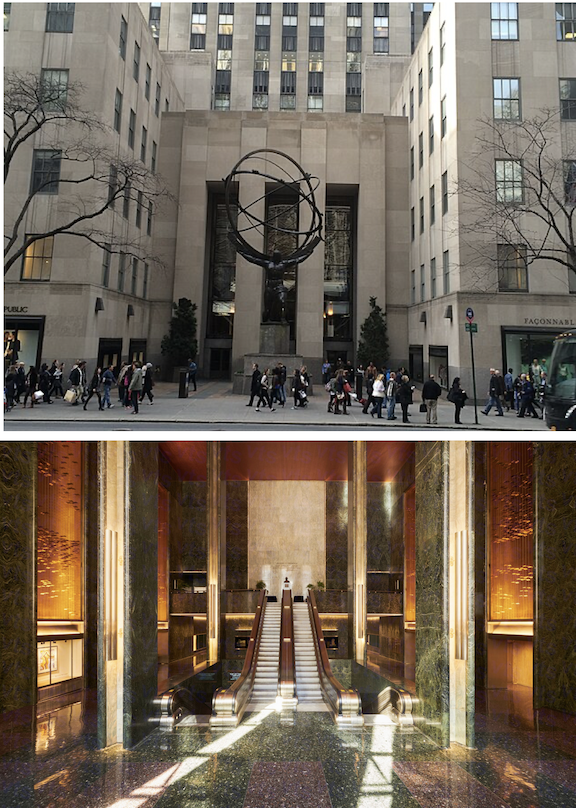
Mumford also looked at the latest developments at Rockefeller Center. As we’ve seen before, he favored smaller-scale developments that were organic and community-focused, and therefore was a strong critic of projects like Rockefeller Center. At its inception he called it a dehumanizing “megamachine,” a product of corporate greed, a “reckless, romantic chaos” that represented the capitalist jungle. Harsh words indeed, so it was something of a surprise to see his approval of the latest piece of the complex—the International Building at 630 Fifth Avenue:

SIMPLE AND CORRECT were the words Lewis Mumford used to describe the interior entrance to 630 Fifth Avenue. (Wikiwand/newyorkoffices.com)

 * * *

Bad Benito

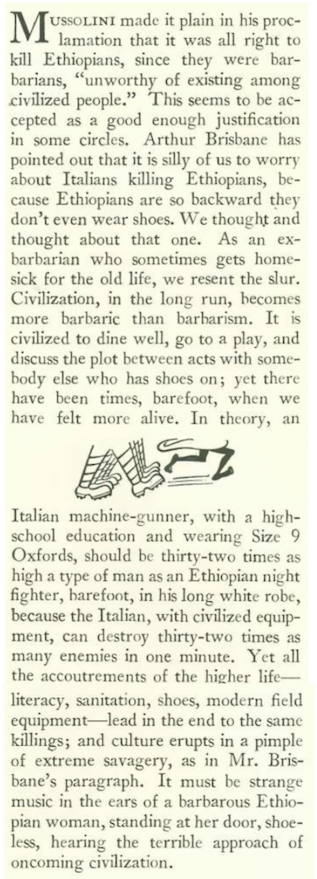
In his “Notes and Comment,” E.B. White had some choice words for the murderous Italian dictator Benito Mussolini and for the newspaper columnist Arthur Brisbane, both unconcerned with the slaughter of “backward” Ethiopians by invading Italian forces:

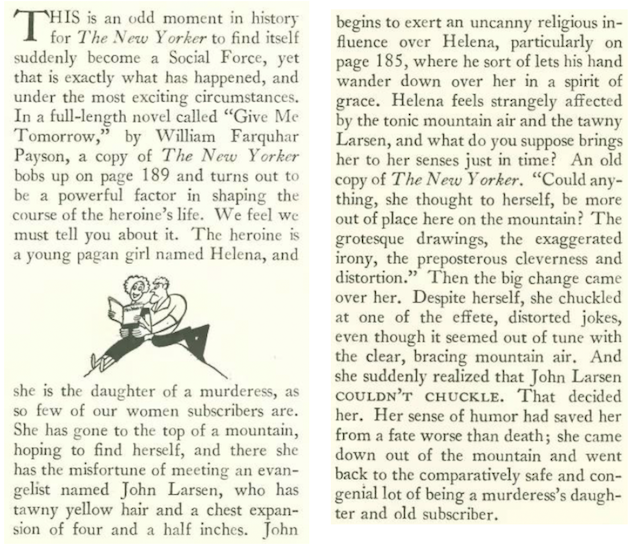
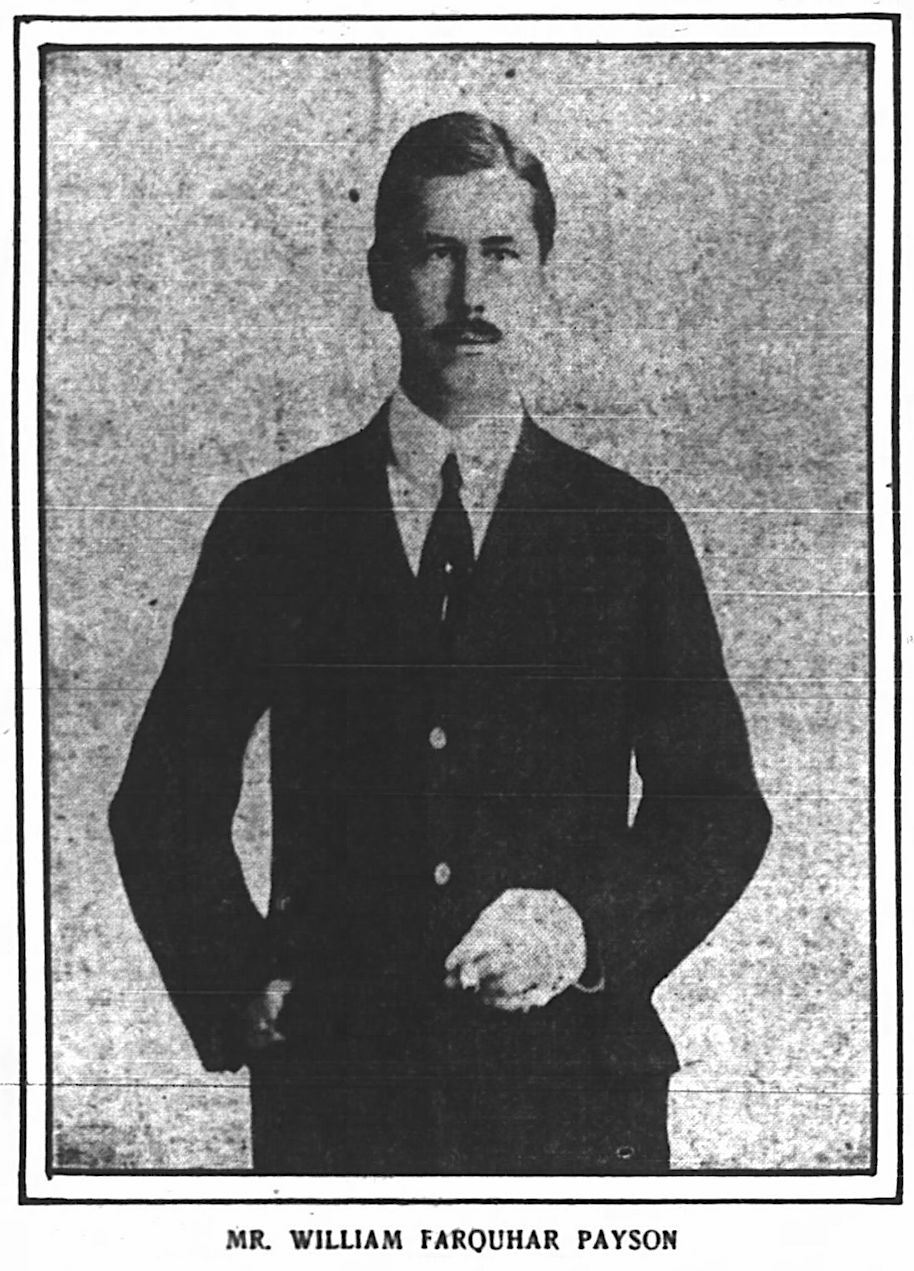
White also noted the role played by The New Yorker in a new novel by William Farquhar Payson (1876–1939) titled Give Me Tomorrow. Apparently the novel credited the magazine’s unique humor for revealing the banality of an evangelist and delivering a young woman from his clutches…

THE NEW YORKER TO THE RESCUE…William Farquhar Payson deployed a copy of the magazine for a pivotal scene in his novel Give Me Tomorrow. (findagrave.com)

 * * *

A Star Is Born

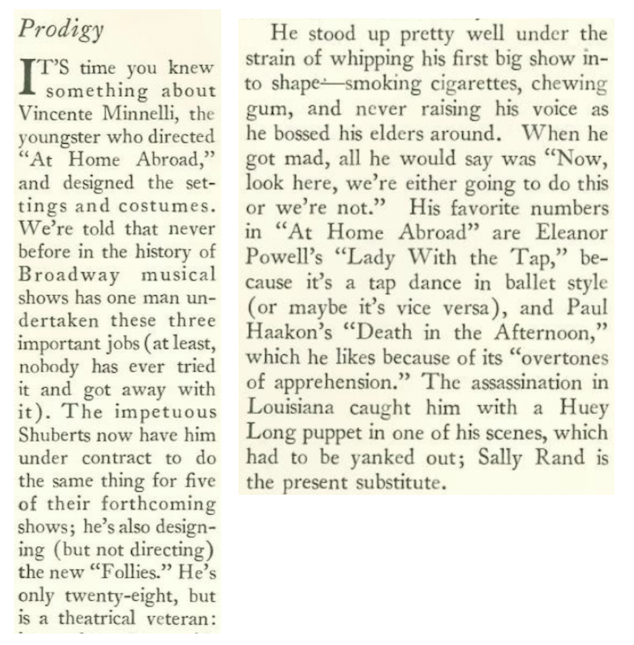
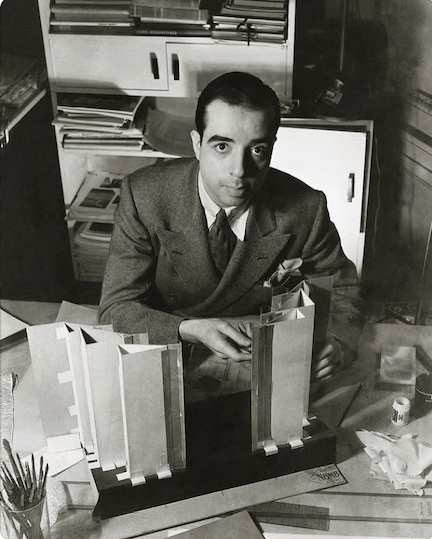
Stage and film director Vincente Minnelli (1903-1986) moved from Chicago to New York in 1931, where he worked as a stage designer for Earl Carroll’s Vanities and costume and set designer for the Ziegfeld Follies before becoming art director at Radio City Music Hall. He got his big break in 1935 when he directed, to critical acclaim, the Broadway musical At Home Abroad. “The Talk of Town” took notice of the rising star (excerpts):

AN EYE FOR DESIGN…Photographer Lusha Nelson photographed Vincente Minnelli at his desk with a miniature stage on Feb. 1, 1936. (James Grissom via threads.com)

 * * *

A Safe Space

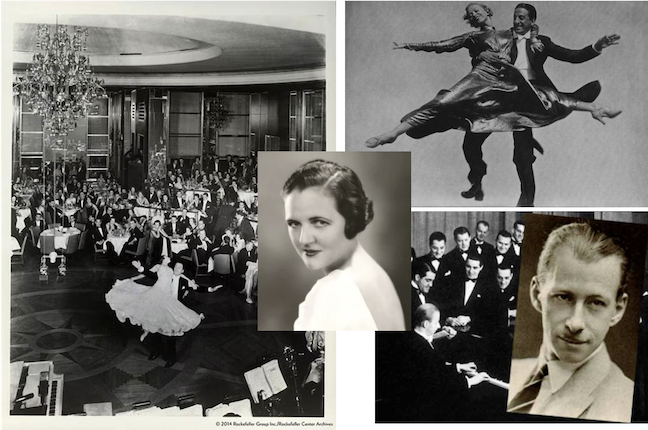
Lois Long had mixed feelings regarding the Rockefeller Center’s Rainbow Room, fearing that it was a tourist magnet but also desiring to take in its sumptuous floor shows. In the first excerpt, Long continued her comment on the heated competition she perceived among nightclub owners.

FEAR FACTOR…The entertainment lineup at Rockefeller Center’s Rainbow Room helped Lois Long overcome her fear of encountering tourists. Clockwise, from left, the Rainbow Room in 1934; Ramon and Renita lit up the dance floor (photo from Nov. 1935 Harper’s Bazaar); Ray Noble and his orchestra provided “all-around beauty”; and (inset) cabaret singer Frances Maddox offered her sophisticated warble to the glittering affair. (Rockefeller Center Archives/Pinterest/Shedd Institute)

 * * *

An Untamed Shrew

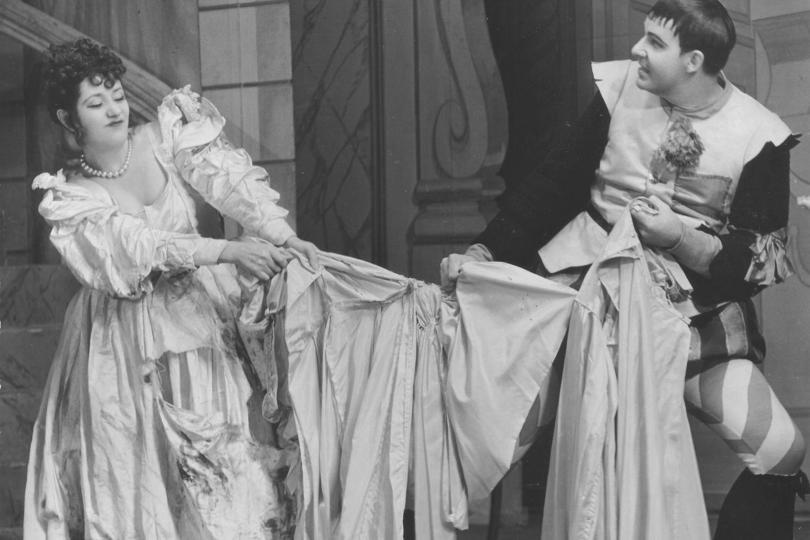
Theatre critic Wolcott Gibbs had a good time watching Alfred Lunt and Lynn Fontanne take on Shakespeare’s The Taming of the Shrew at the Guild Theatre, especially Lunt’s uproarious take on the play.

FUN WITH SHAKESPEARE…Alfred Lunt and Lynn Fontanne matched wits in the Theatre Guild’s presentation of The Taming of the Shrew. (minnesotaplaylist.com)

 * * *

At the Movies

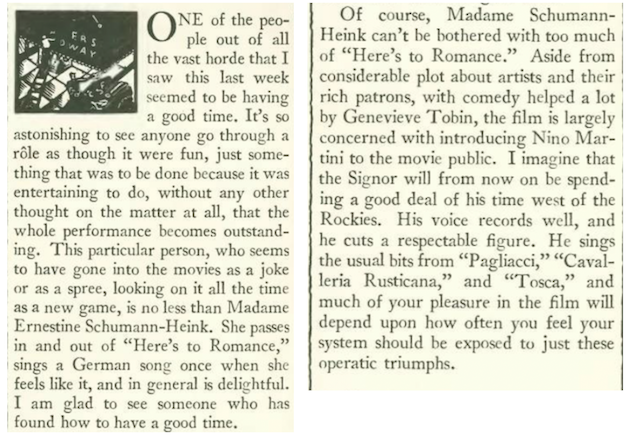
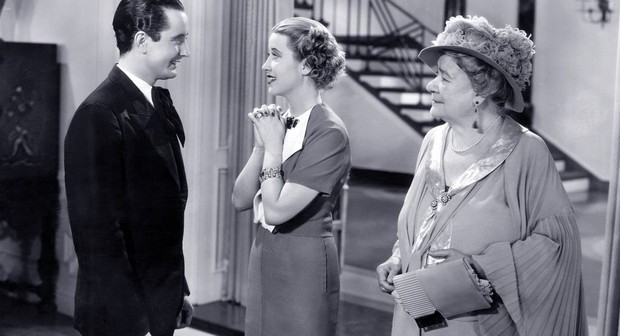
Our film critic John Mosher didn’t have much to say about Here’s To Romance, which seemed contrived to introduce the Italian tenor Nino Martini (1905–1976) to a wider audience. To Mosher, the highlight of the film was the appearance of Ernestine Schumann-Heink (1861–1936), the Austrian-American operatic dramatic contralto, who appeared to be having a good time.

SINGER SANDWICH…Genevieve Tobin (center) stands between tenor Nino Martini and dramatic contralto Ernestine Schumann-Heink in a scene from Here’s to Romance. (rottentomatoes.com)

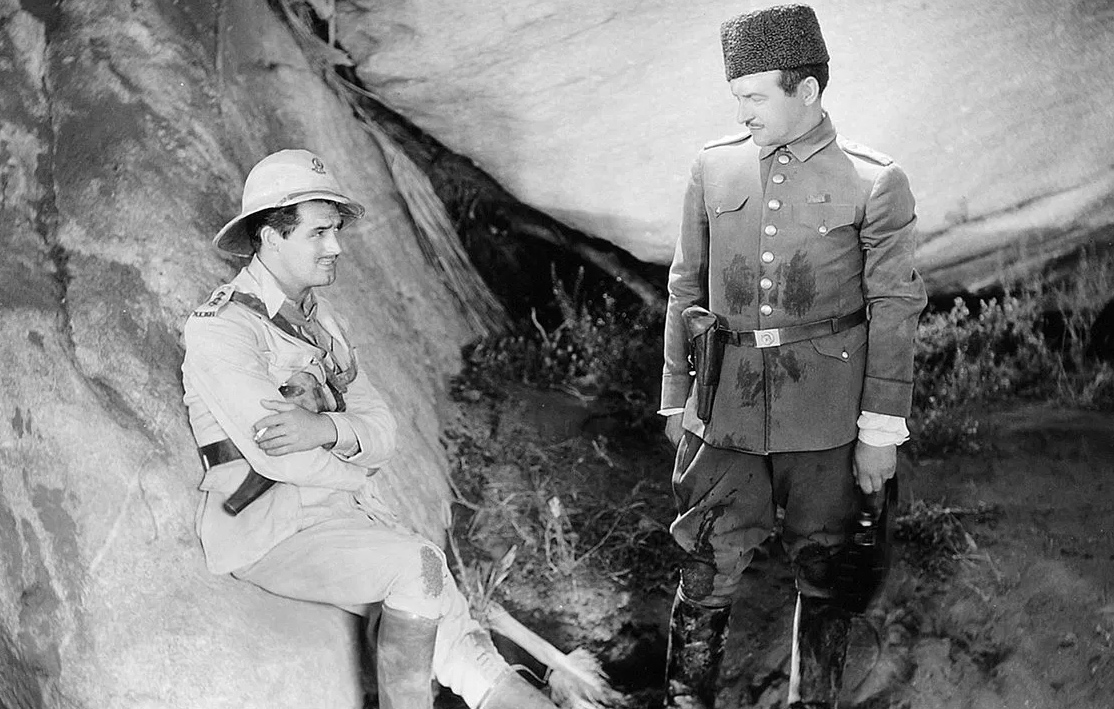
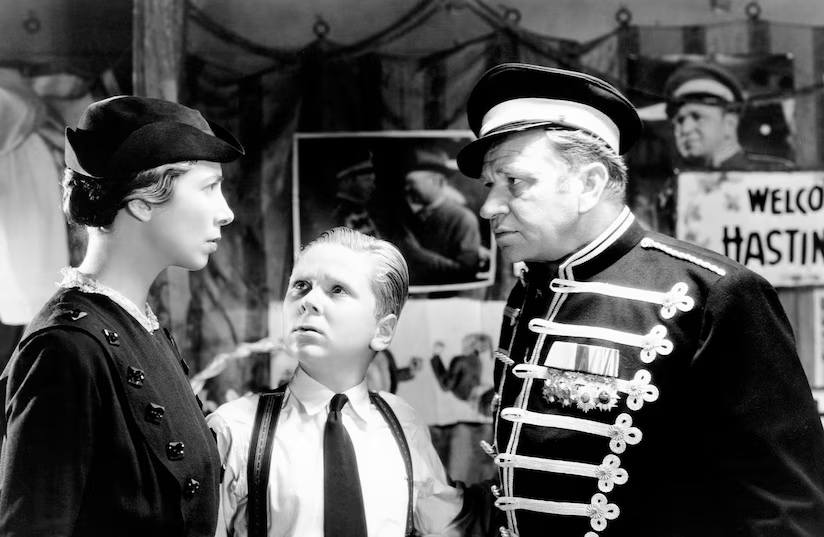
Mosher reviewed two other films that were a bit more dismal: The Last Outpost was a war-themed melodrama starring Cary Grant and Claude Rains; O’Shaughnessy’s Boy featured Wallace Beery as a circus animal trainer who loses his arm as well as his family.

DUELING MUSTACHES…Cary Grant (left) sported a rare mustache in a role opposite Claude Rains in The Last Outpost. (mabumbe.com)
A TOUGH ACT…Sara Haden played a skeptical aunt who sees a one-armed circus animal tamer (Wallace Beery) regain his son (Jackie Cooper) and the confidence he lost along with his wife in O’Shaughnessy’s Boy. (tcm.com)

 * * *

From Our Advertisers

I find these advertisements oddly appealing, because this kind of travel no longer exists. Today there is exactly one ocean liner left in the world—the Queen Mary 2; the cruise ships that rule the 21st century seas are essentially hotel/amusement parks stacked on top of a huge barges…water slides, Vegas-style entertainments, and all-you-can-stuff-into-your-face buffets…

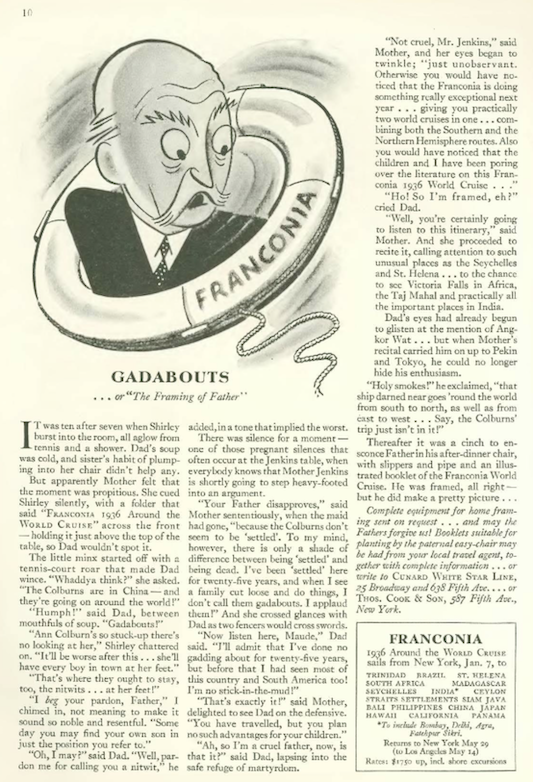
…this curious ad on page 10 mimicked the look of a New Yorker short in the vein of Clarence Day…what it promoted was an around-the-world cruise that would take two-hundred (well-heeled) passengers to more than twenty destinations including Malaysia, Bali and Singapore…

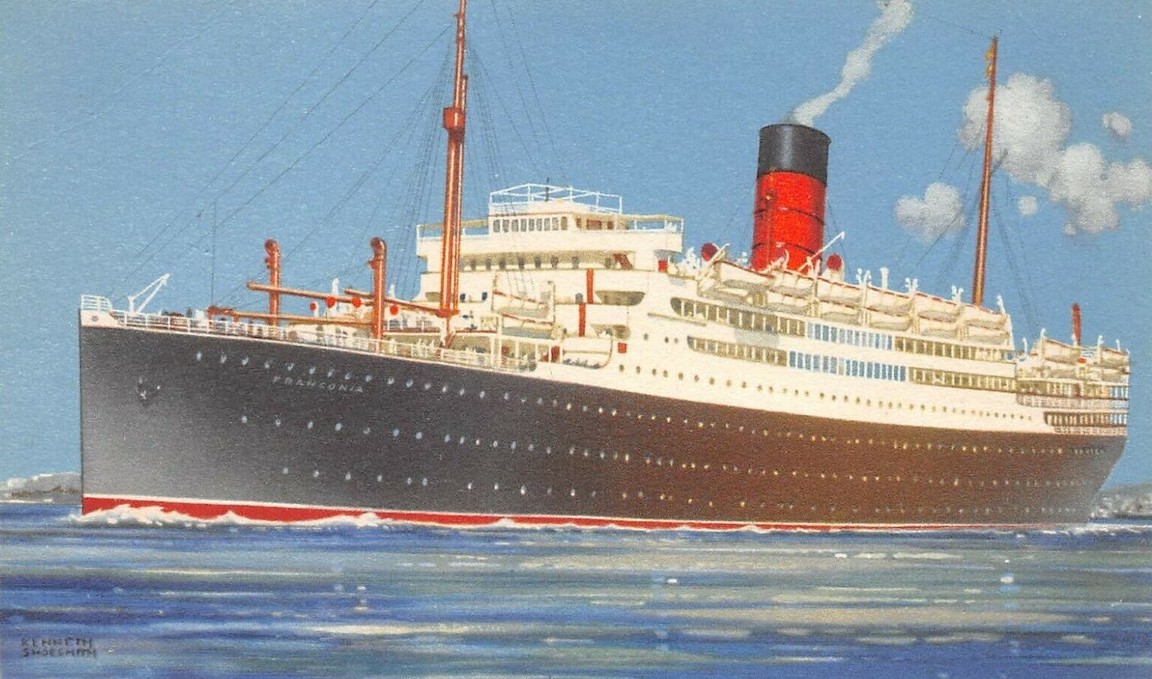
Postcard image of the Franconia. (Pinterest)

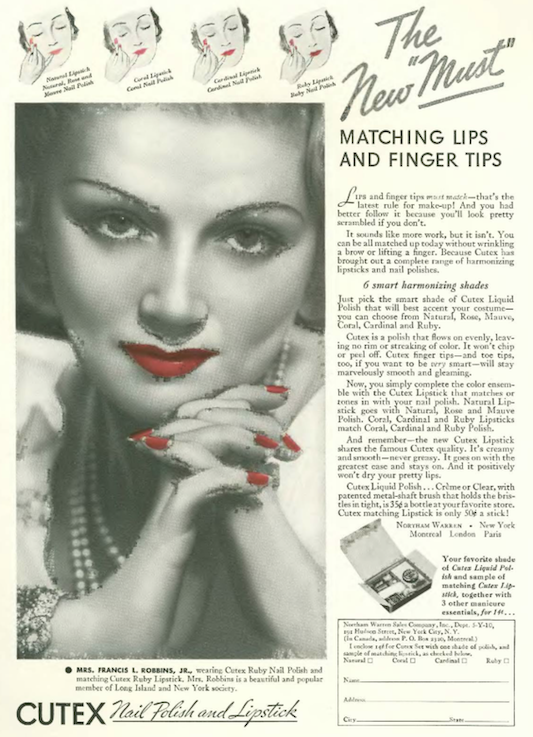
…society women could be counted on to endorse all sorts of things from cigarettes to cold cream…here a “Mrs. Francis L. Robbins, Jr” (I couldn’t find her given name) endorses Cutex nail polish and lipstick…the ad noted that Mrs. Robbins “is a beautiful and popular member of Long Island and New York society”…

…the makers of Spud menthol cigarettes entered the realm of the surreal with a talking cigarette that encouraged chain smoking…

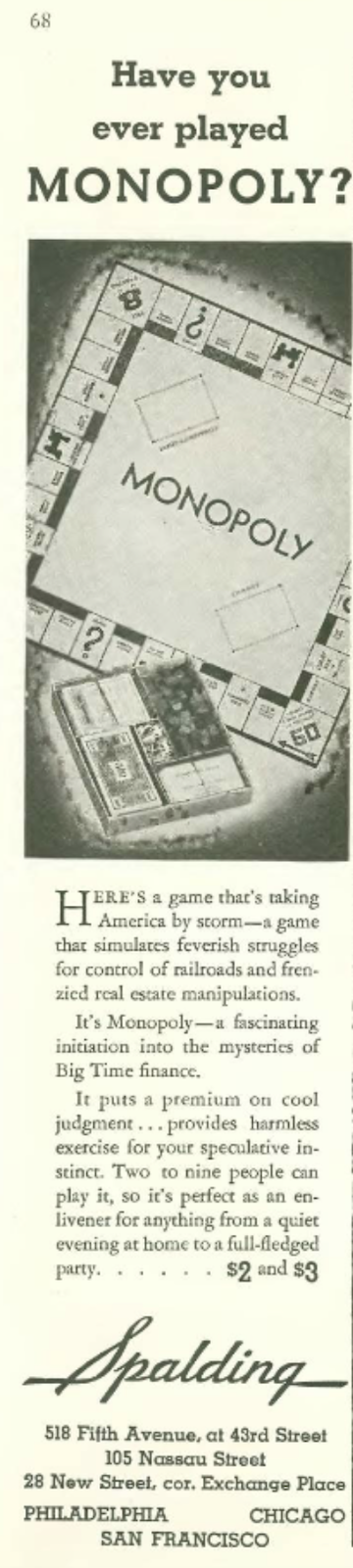
…the board game Monopoly had its origins in The Landlord’s Game, created in 1903 by an anti-monopolist named Lizzie Magie…over the years variants of the game were introduced until Parker Brothers bought the rights from Magie and another inventor and began mass-marketing the game in the fall of 1935…

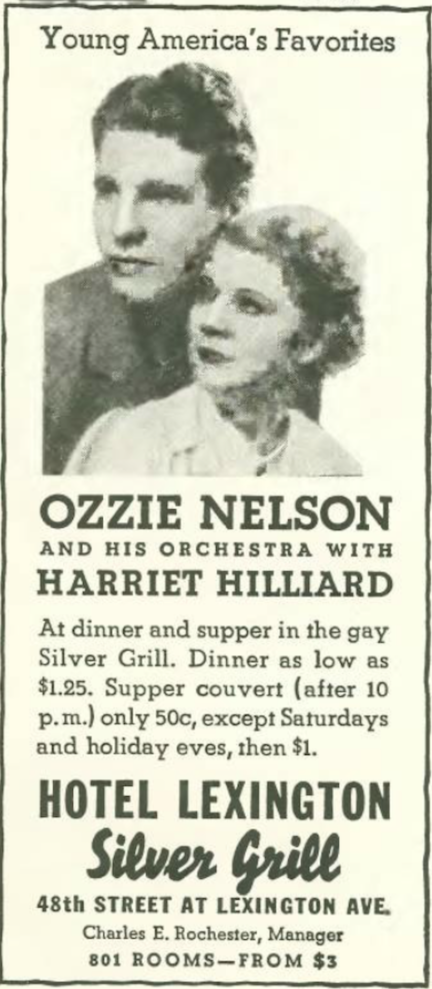
Peggy Lou Snyder was performing in vaudeville when she met the saxophone-playing bandleader Ozzie Nelson in 1932. Nelson hired her to sing with his band (under the name Harriet Hilliard) and then married her three years later…in 1944 the couple would launch a comedy series for radio, The Adventures of Ozzie and Harriet, which made a successful transition to television, appearing on ABC from 1952 to 1966…

…here we have some old-timers offering hunting advice and promoting octane-boosting Ethyl gasoline, which helped prevent engine knock…it also contained the highly toxic additive tetraethyllead, which could cause severe neurological damage, particularly in children…it was completely banned in the U.S. by 1996…

…on to our cartoonists, we start with this delightful spot art by Christina Malman that graced the bottom of the calendar and events page…

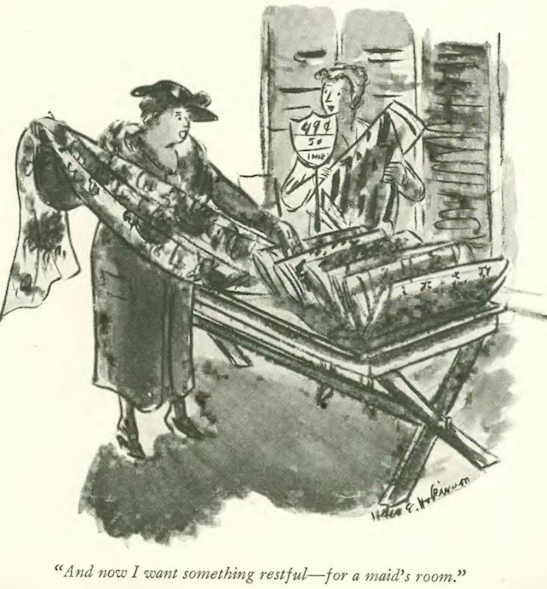
Helen Hokinson appeared twice, first at the vet’s…

…and later shopping for the maid at a department store…

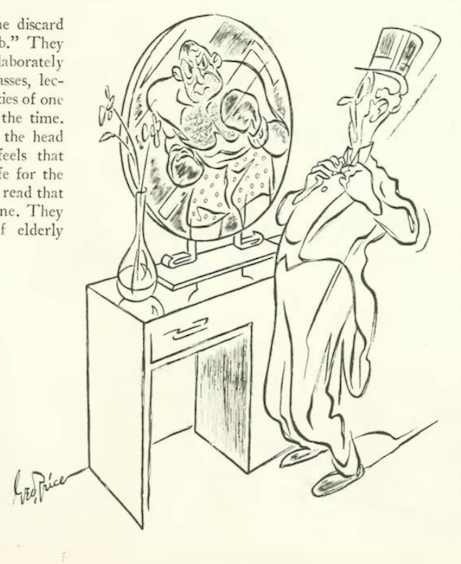
George Price had a surprise in store for this mirror-gazer…

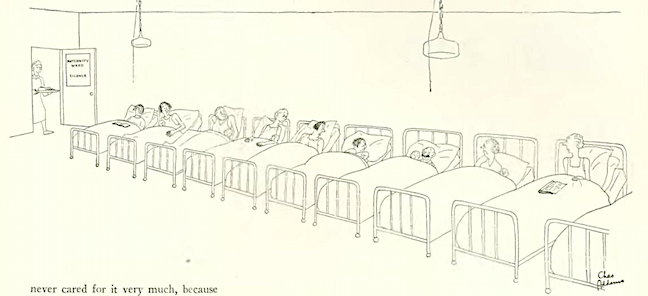
…Charles Addams took the top of page 29 to show us a proud papa in a maternity ward…

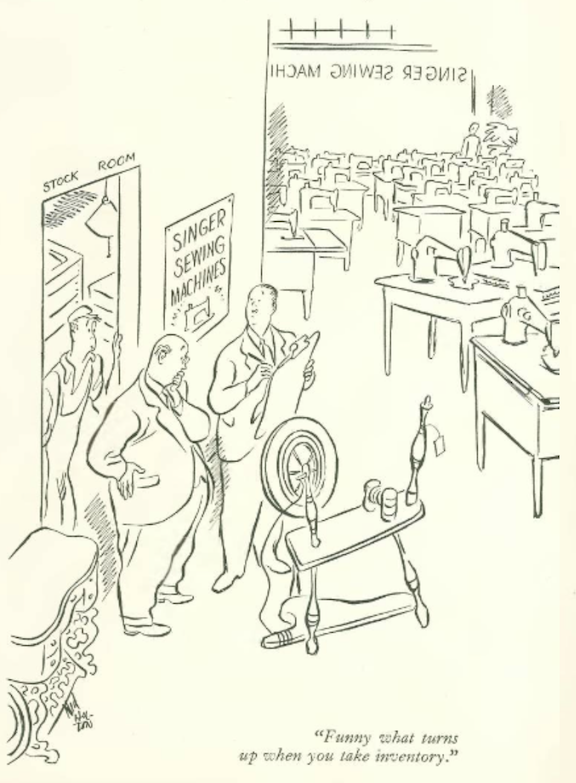
…Ned Hilton uncovered some history at the Singer Building…

…Mary Petty eavesdropped on a tactless toff…

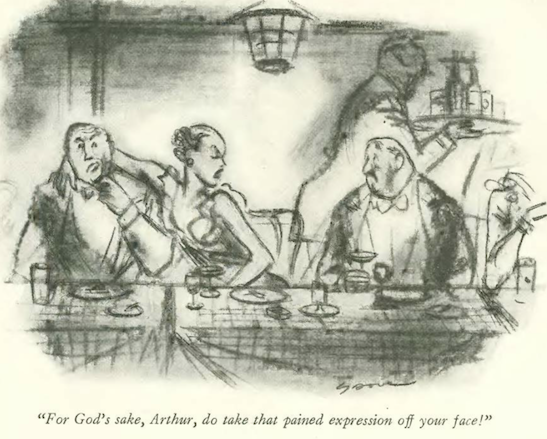
…Leonard Dove showed us that being a sugar daddy wasn’t so sweet…

…and we close with William Steig, one of his “Small Fry” speaking up for the old man…

Next Time: On Catfish Row…


Broadacre City

Above: Detail from Spanish architect David Romero's computer-generated model of Frank Lloyd Wright's Broadacre City, complete with an "aerotor" flying car.

To be sure, architect Frank Lloyd Wright was a visionary, creating a uniquely American vernacular that influences architecture and design to this day. That might also true for his Broadacre City concept, which demonstrated how four square miles (10.3 km2) of countryside might be settled by 1,400 families. Wright unveiled this escape to the countryside in the middle of Manhattan.

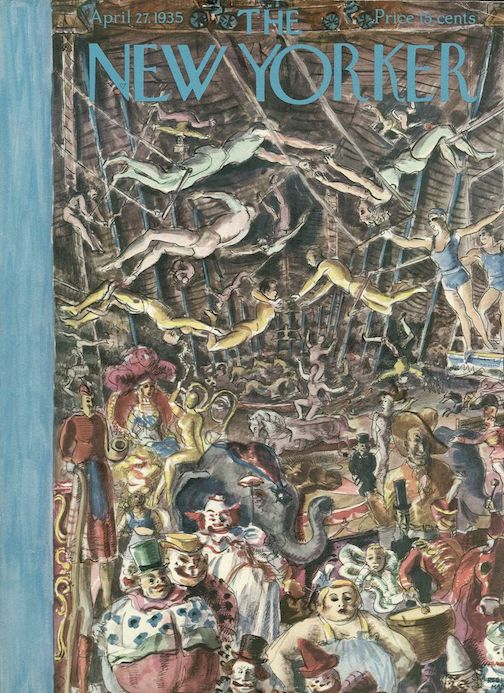
April 27, 1930 cover by Reginald Marsh.

On April 15, 1935, the Industrial Arts Exposition opened at Rockefeller Center, and Wright (1867-1959) was front and center with his audacious proposal to resettle the entire population of the United States onto individual homesteads. Critic Lewis Mumford observed that Wright “carries the tradition of romantic isolation and reunion with the soil” by putting every American family on a minimum of five acres of land.

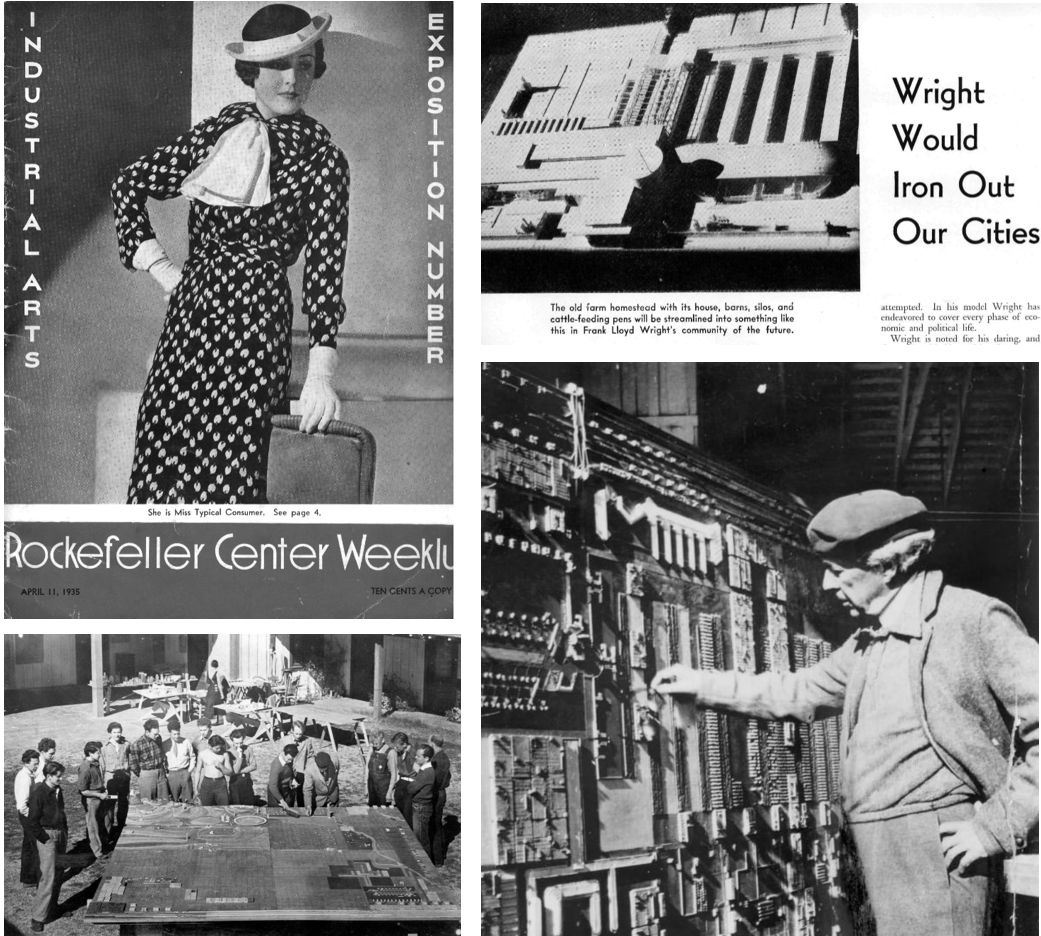
FLAT EARTH…Clockwise, from top left, cover of Rockefeller Center Weekly featuring the Industrial Arts Exposition—the model on the cover is identified as “Miss Typical Consumer”; detail from the magazine depicting a “streamlined farmstead” in Broadacre City; Frank Lloyd Wright examining the Broadacre City model, circa 1935; Wright students who crafted the 12×12-foot model, circa 1935. (digital.hagley.org/franklloydwright.org)

Wright first presented the idea of Broadacre City in his book The Disappearing City in 1932…

ROMANTIC ISOLATION…Broadacre City as depicted in Wright’s 1932 book The Disappearing City. (Wikipedia)

…note how the above drawing is reflected in one of Wright’s last designs, the Marin County Civic Center:

(visitmarin.org)

A detailed 12×12-foot scale model of Broadacre City—crafted by Wright’s student interns at Taliesin, was unveiled at the Industrial Arts Exposition:

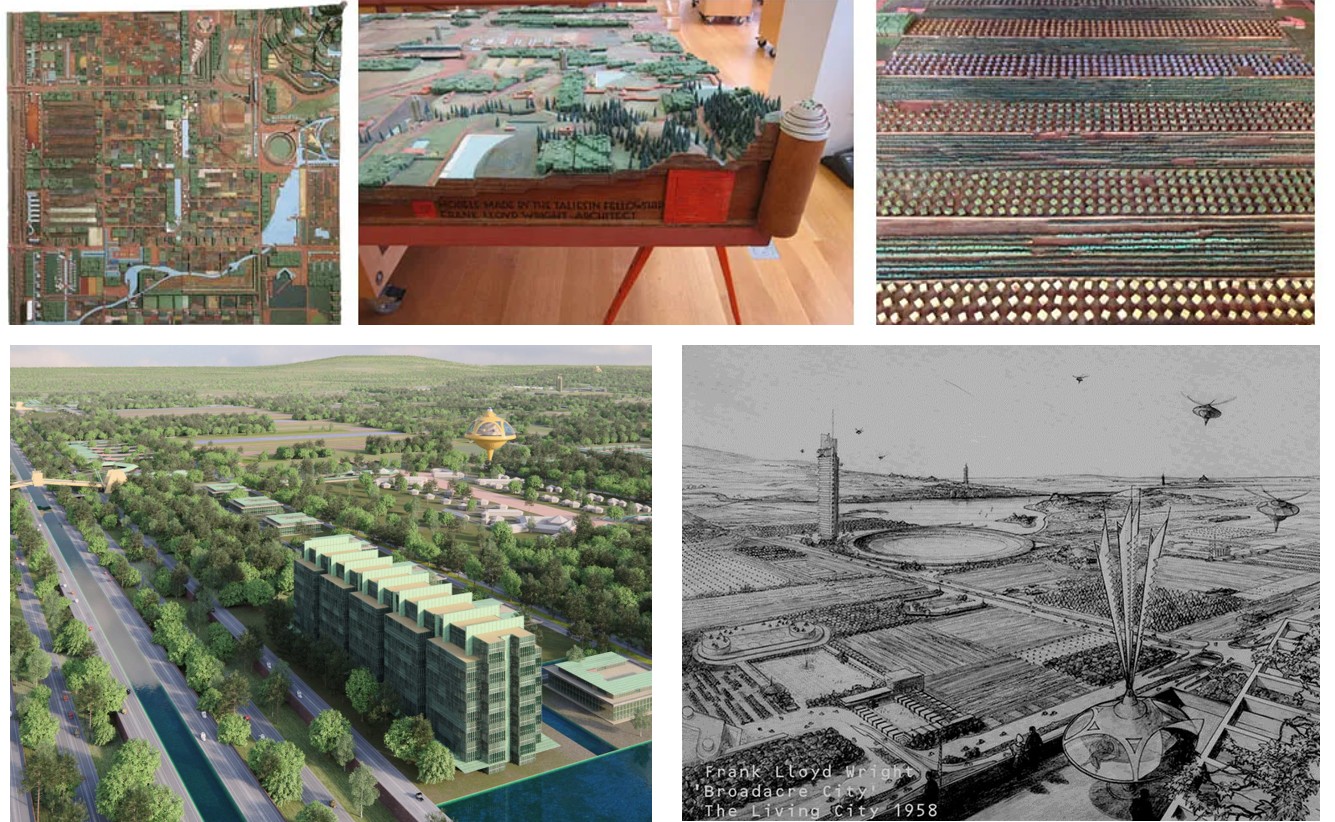
GREEN ACRES…The 12×12-foot model (top images) crafted by student interns who worked for Wright at Taliesin is now housed at the Museum of Modern Art (MoMA); bottom right, Wright’s rendering of Broadacre City, and at left, detail from Spanish architect David Romero’s computer-generated model of Broadacre City (more images below). (MoMA/David Romero via Smithsonian)

For the most part Mumford reacted favorably to Wright’s vision, which is no surprise considering that Mumford derided the dehumanizing skyscrapers popping up all over his city (including Rockefeller Center).

Despite his patrician demeanor, Wright envisioned an egalitarian Broadacre City, with every family having access to cars, telephones and other appliances. Power would come from solar and electric energy, and any technological advances would be applied at a local level toward the common good.

VIRTUAL REALITY…In 2018 Spanish architect David Romero created computer-generated models to see what Wright’s unrealized structures might have looked like. At left, cars (based on Wright concepts) in Broadacre City, and an aerial view featuring a tower that bears a strong resemblance to Wright’s 1956 Price Tower in Bartlesville, Oklahoma. Modeling Broadacre took Romero more than eight months to complete—it contains more than one hundred detailed buildings, one hundred ships, two hundred “aerotors” (based on the autogyros of the day), 5,800 cars, and more than 250,000 trees. (David Romero via Smithsonian and openculture.com)

What Mumford (and perhaps Wright) didn’t fully anticipate was the urban sprawl such a vision would help inspire, the suburban and exurban landscape that would lead to a car-dominated world of congested, multi-lane highways and housing developments that continue to encroach on our woodlands and wetlands. And we didn’t get those groovy aerotors either.

(Christoph Gielen, webcolby.edu)

 * * *

Little House on the Avenue

E.B. White, in his “Notes and Comment,” also offered some observations on housing trends, noting the manufactured “Motohome” displayed at Wanamaker’s as well as “America’s Little House,” plopped down at the corner of 39th and Park Avenue.

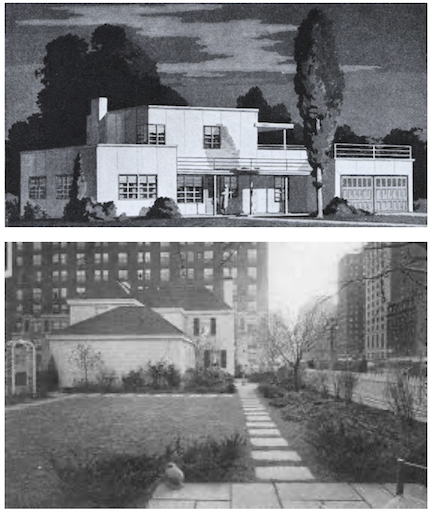
SETTING A STANDARD…Above, the factory-manufactured Motohome (above) was touted as the solution to the nation’s housing shortage. The federal Better Homes in America organization built a model house (“America’s Little House,” below) at 39th and Park Avenue to illustrate how standardized components and methods could make home improvement easier. (Google Books/Johns Hopkins)

* * *

Horsing Around

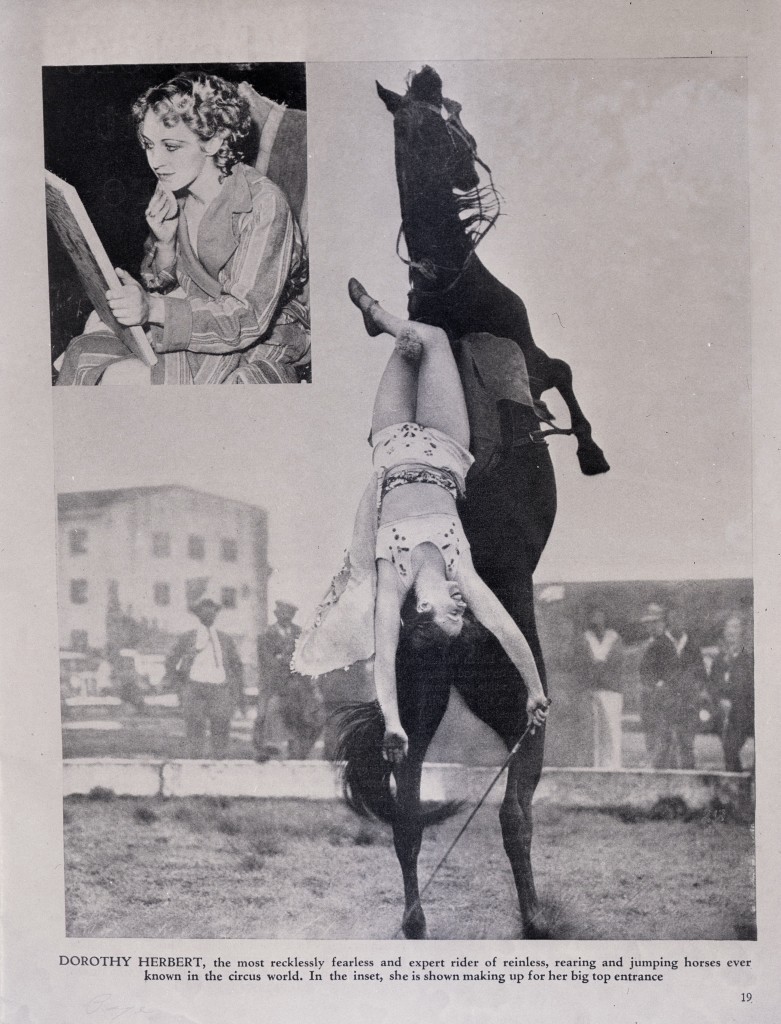
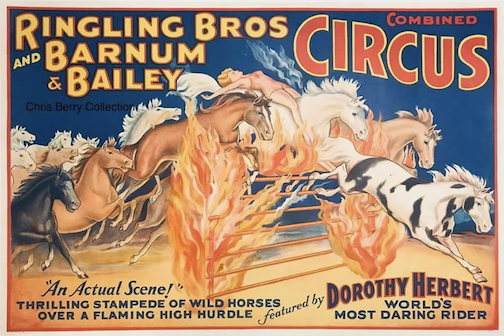
Although known for their nonchalance, New Yorkers could still find some enthusiasm when the circus came to town. “The Talk of the Town” looked in on the star of the circus, Dorothy Herbert (1910-1994), a trick rider with the Ringling Bros. and Barnum & Bailey Circus.

WHOA NELLY…One of Dorothy Herbert’s signature moves was her layback on a rearing horse. Here she demonstrates the move in 1939. (equineink.com)
HOT STUFF…Circus poster touts Herbert’s ride over flaming hurdles in the company of twelve riderless horses. (circushistory.org)

 * * *

Don’t Call Him ‘Tiny’

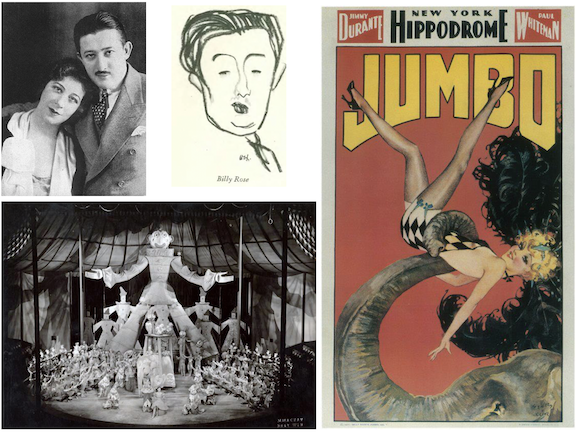
He was known as “The Little Napoleon of Showmanship,” but there was nothing small about Billy Rose’s accomplishments as an impresario, theatrical showman, composer, lyricist and columnist. Here are excerpts from Alva Johnston’s profile:

JUMBO-SIZED ENTERTAINMENT…Clockwise, from top left, Billy Rose and his first wife, comedian-actress Fanny Brice; illustration of Rose for the profile; poster announcing Rose’s 1935 stage spectacle Jumbo at the Hippodrome; described as more circus than musical comedy, Jumbo was one of the most expensive theatrical events of the first half of the 20th century. (jacksonupperco.com)

 * * *

On Guard

We shift gears and turn to more sobering events of the 1930s, namely the rise of fascism in Europe. In his column “Of All Things,” Howard Brubaker pondered the possibilities of fascism in his own country…

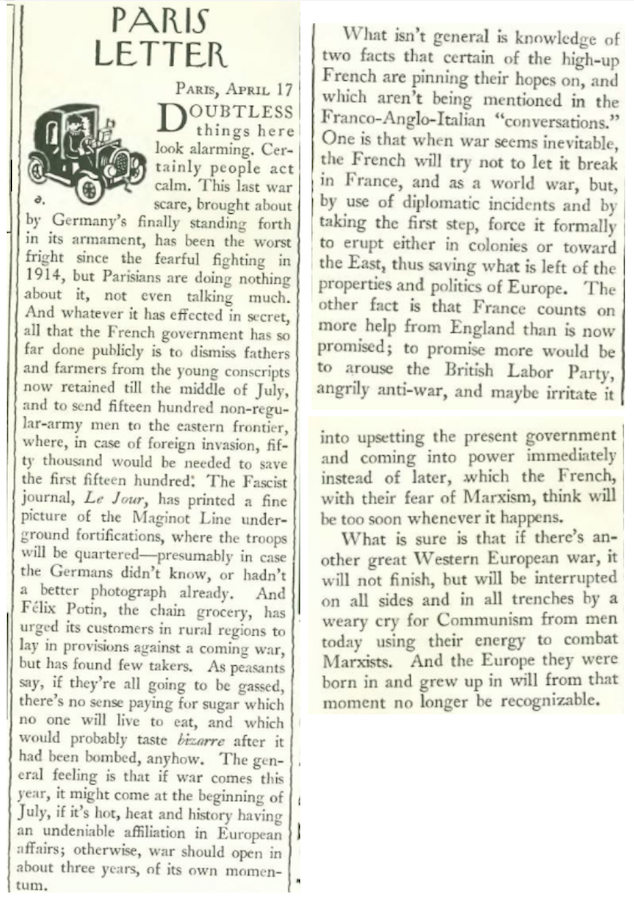
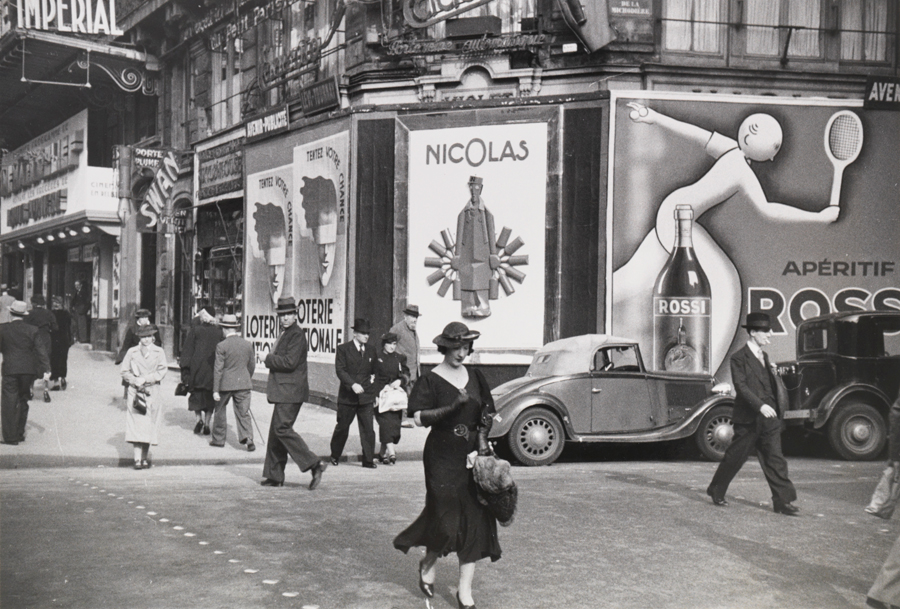
…meanwhile, Paris correspondent Janet Flanner was finding nothing funny about the uneasy calm among Parisians as war with Germany seemed likely.

C’EST LA VIE…Janet Flanner found Parisians resigned to whatever fate awaited them in 1935. (unjourdeplusaparis.com)

Flanner also remarked on Leni Riefenstahl’s Nazi propaganda film Triumph des Willens (Triumph of the Will). Flanner’s assessment of this “best recent European pageant” wryly underscored the horrors the film portends.

 * * *

News From An Old Friend

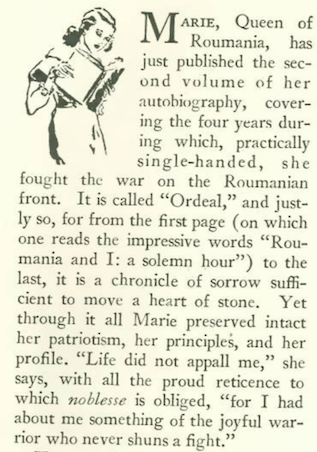
Longtime readers may recall one of my earliest entries on Queen Marie of Romania (1875-1938); the March 14, 1925 edition of The New Yorker (issue #4) found New Yorkers “agog” over her planned 1926 visit to the city. Her comings and goings were followed for a time (she also appeared in a Pond’s Cold Cream ad in the June 6, 1925 issue), but then she abruptly disappeared. Here she is again, courtesy of a glowing book review by Clifton Fadiman. An excerpt:

A PROGRESSIVE THINKER for her time, Marie of Romania was immensely popular in America. Born into the British royal family, she was the last queen of Romania from 1914 to 1927. At left, portrait from 1920; at right, during her 1926 visit to the States, Marie received a headdress from two American Indian tribes. They named her “Morning Star” and “Winyan Kipanpi Win”—“The Woman Who Was Waited For.” (Wikipedia/brilliantstarmagazine.org)

 * * *

From Our Advertisers

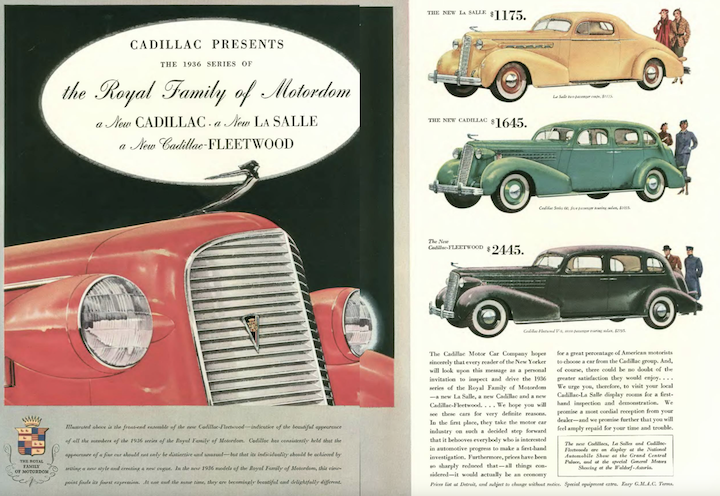
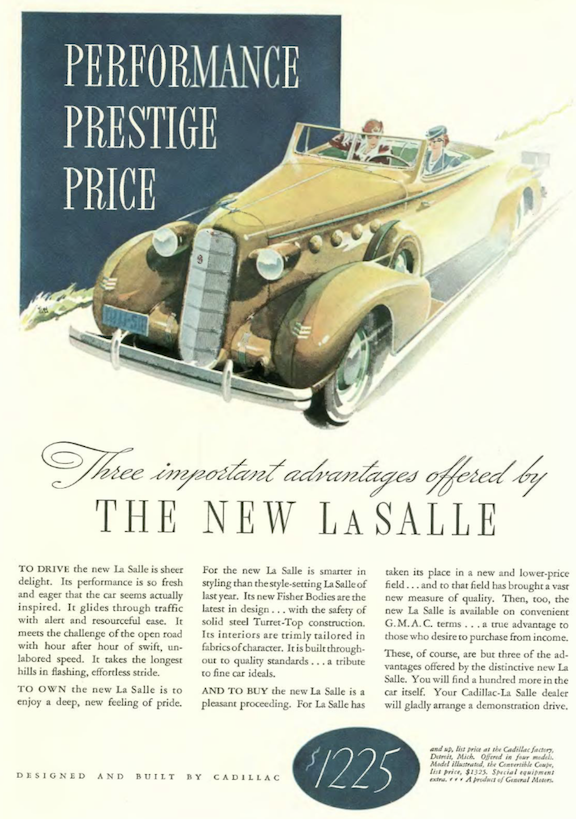
Although we’ve seen plenty of ads from prestige automakers such as Packard, it was clear that companies found their sweet spot in lower-priced models that still suggested “prestige”…here’s an example from Cadillac’s budget line LaSalle…

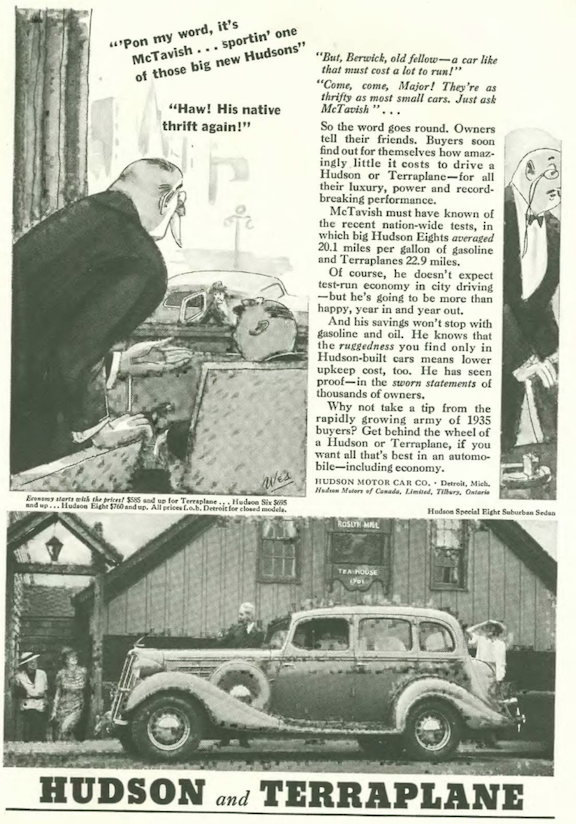
…for less than half the price of a LaSalle you could get behind the wheel of Hudson, its makers suggesting that prestige doesn’t preclude thrift…this ad seems to have been hastily produced–note the right side of ad, with just a slice of some toff squeezed next to the copy…

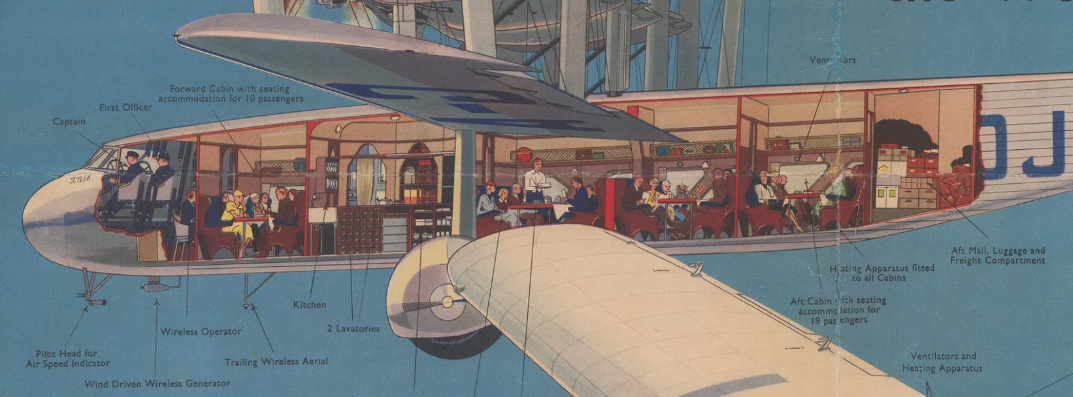
…this advertisement would only appeal to those who were among the tiny minority who could afford to fly…from 1924 to 1939 this early long-range airline served British Empire routes to South Africa, India, Australia and the Far East…

…for reference, detail below of a Scylla-class airliner used by Imperial Airways…

…and what would the back cover be without a photo of a stylish woman having a smoke?…

…a few advertisers referenced the circus in town to drum up business…

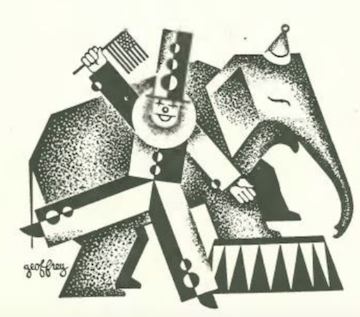
…and we segue to our cartoonists and illustrators, and this circus-themed spot from an illustrator signed “Geoffrey”…

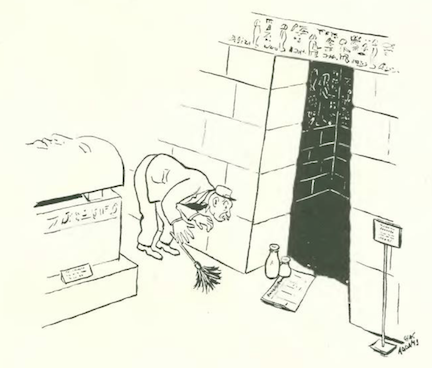
…a more familiar name is found at the bottom of page 4…namely Charles Addams…the milk order outside the tomb hints at things to come…

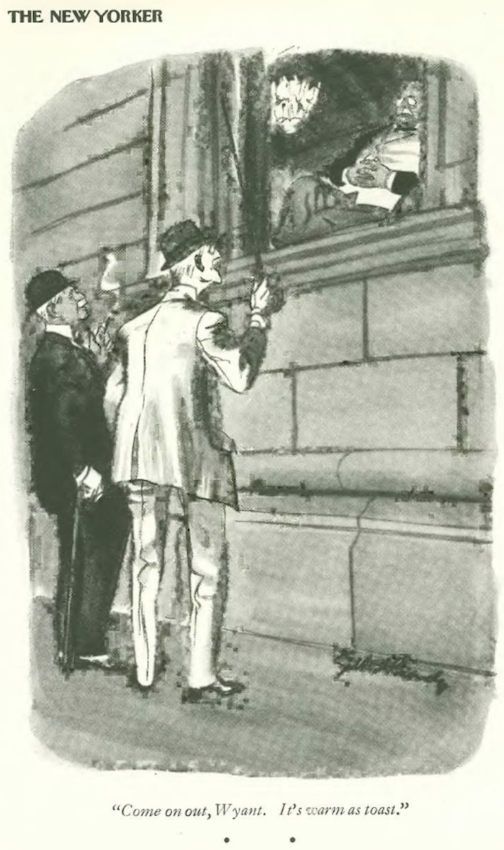
…Addams again, going from Bacchus to beige…

George Price, and well, you know…

Robert Day was aloft with a speculative builder…

William Steig typecast his Small Fry…

Leonard Dove made a sudden exit…

Gilbert Bundy found one old boy unaffected by spring fever…

Alain channeled Barbara Shermund to give us this gem…

…and we close with a typical day in James Thurber’s world…

Next Time: The Royal Treatment…


Home Sweet Motohome

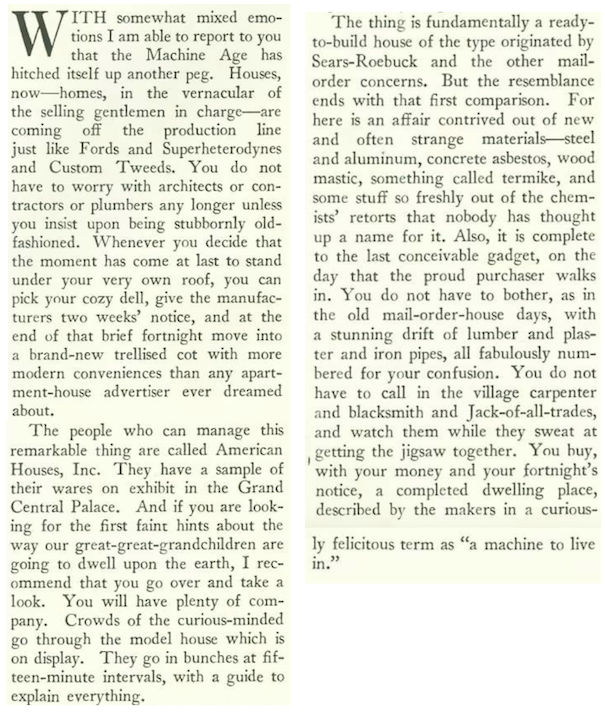
Morris Markey thought he was getting a glimpse of the future when he attended an exhibit of “machines to live in” at New York’s Grand Central Palace.

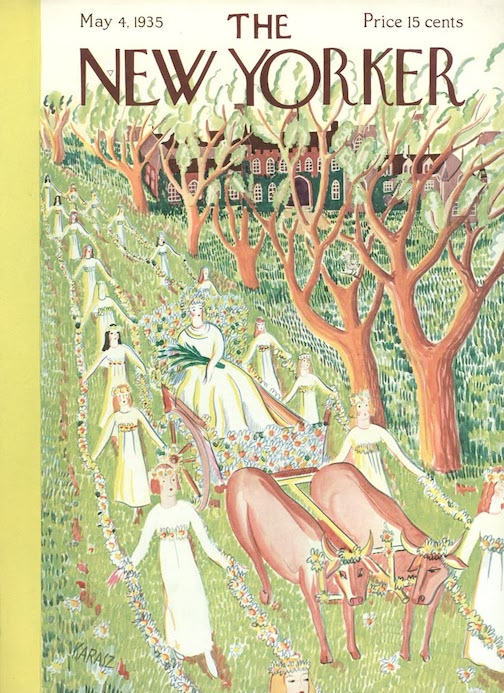
March 16, 1935 cover by Constantin Alajalov.

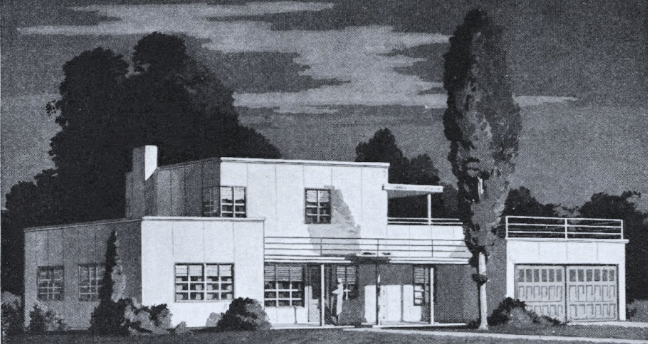
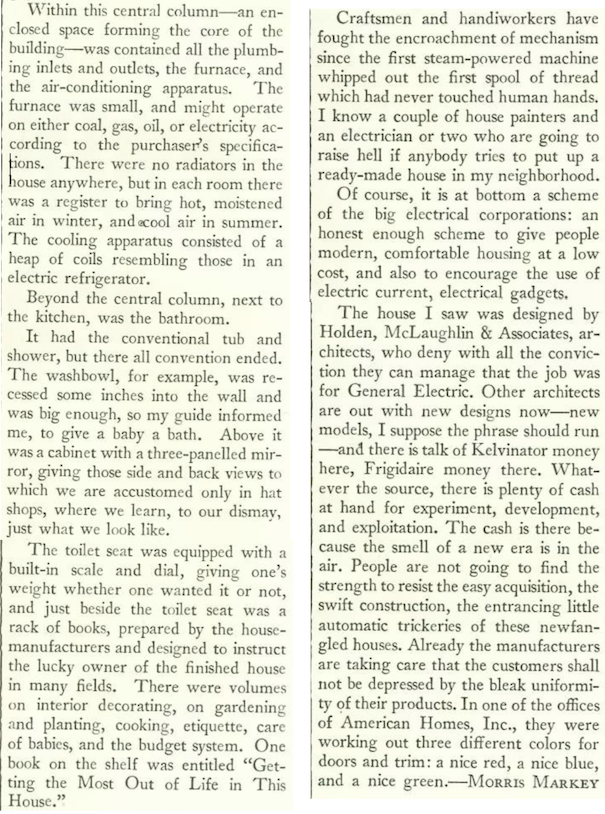
The Great Depression created a housing shortfall in the U.S. of nearly two million units, so many idled architects and builders turned to industrialized housing as a way to boost the building industry. In “A Reporter At Large,” Markey described his encounter with one type of “machine to live in”––the Motohome.

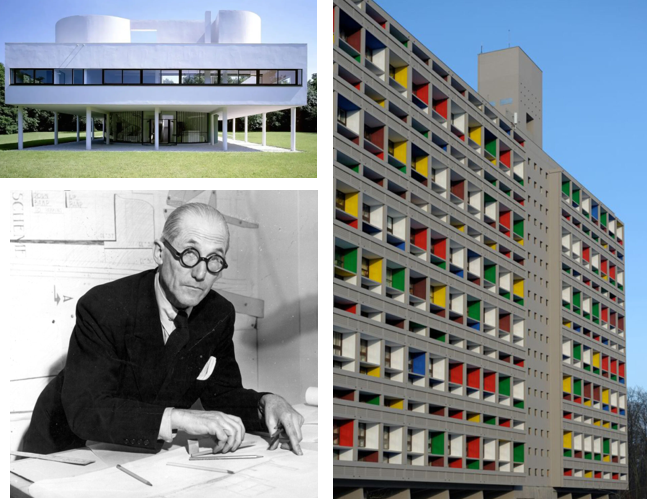
The idea of pre-fab living wasn’t exactly new in 1935, originating in the 1920s with the German Bauhaus school and with notables such as Swiss architect Le Corbusier.

NOT THRILLED WITH FRILLS…Charles-Édouard Jeanneret (1887-1965), better known as Le Corbusier, stated in 1923 that “a house is a living machine.” He believed the world had evolved beyond the need for decorative frills, and that homes and furnishings should reflect their functions. Top left, Corbu’s 1929 Villa Savoye in Poissy, France; at right, his 1947-52 Unité d’habitation de Marseille. (Fondation Le Corbusier/Architectural Digest/Le Corbusier World Heritage)

Markey correctly surmised that the American twist on Le Corbusier’s vision was largely driven by big corporations, and in the case of the Motohome, by General Electric.

GET YOUR MOTO RUNNING…Clockwise, from bottom left, New York’s Grand Central Palace; the Eggiman House in Madison, Wisconsin, a 1936 Motohome listed in the National Register of Historic Places; Long Island Motohome featured on a brochure; Popular Mechanics article on the Motohome. A common wall “core” was prefabricated with all kitchen and bath fixtures, as well as the HVAC system. (Wikipedia/makeitmidcentury.com/books.google.com)

 * * *

Strange and Wonderful

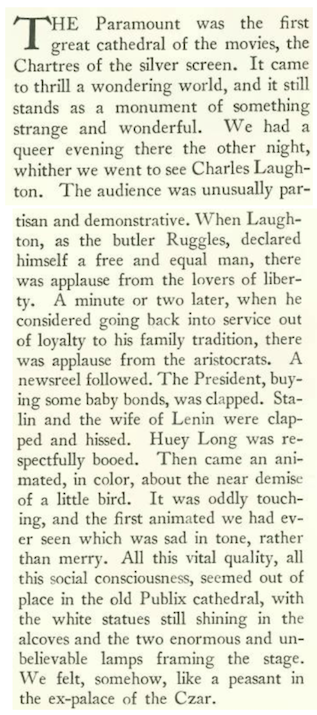
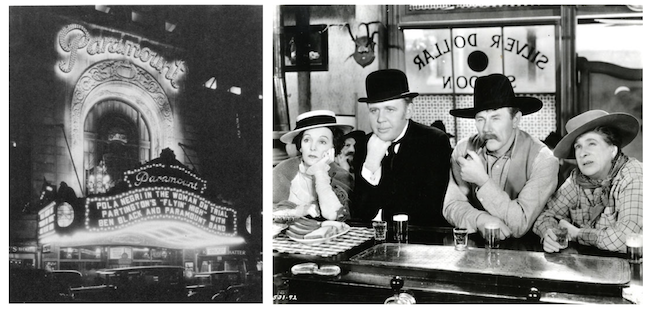
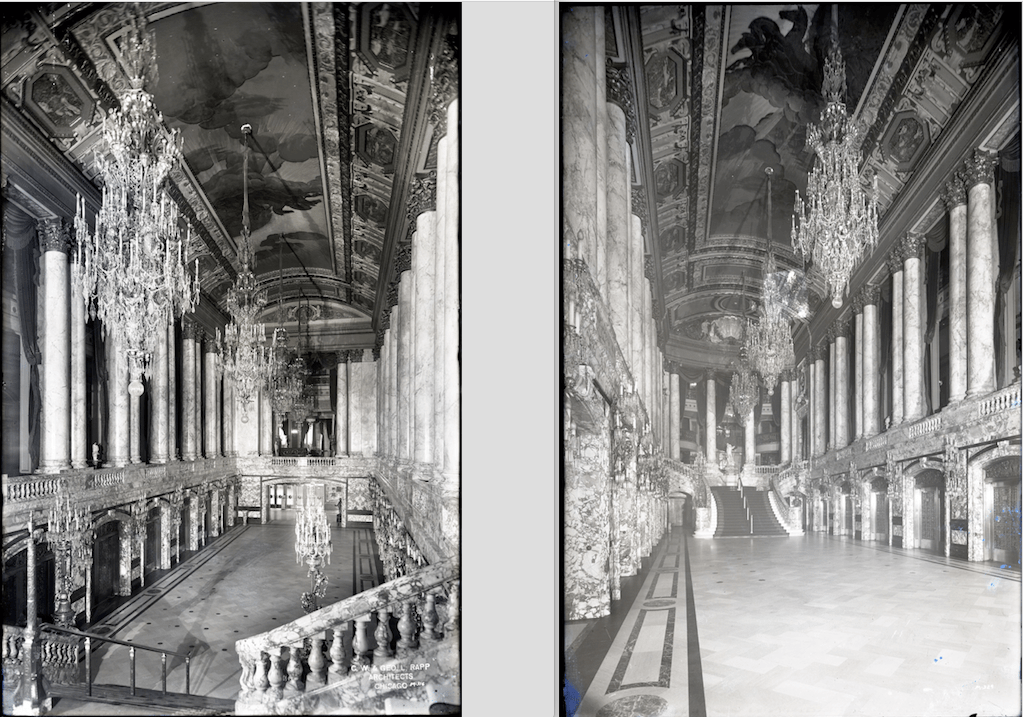
That is how E.B. White described the 3,664-seat Paramount Theatre, which opened on 43rd and Broadway in 1926. After nine years White was still in awe of its palatial trappings. In his “Notes and Comment,” White offered some thoughts after an evening at the movies.

CINEMA GLORY DAYS…E.B. White visited the Paramount Theatre to take in Charles Laughton’s hit film, Ruggles of Red Gap. From left, Zasu Pitts, Laughton, Charles Ruggles and Maude Eburne in Ruggles. (nyc.gov/TCM)
PALACE FOR THE PICTURES…The Paramount Theatre’s Grande Hall featured a 75-foot-long ceiling mural by artist Louis Grell above the Italian marble-lined entrance. In 1966, after a run of the James Bond film Thunderball, the Paramount was closed for good and later gutted and turned into retail and office space. (Louis Grell Foundation)

 * * *

Bad Guys

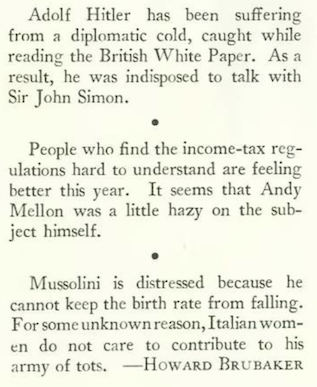
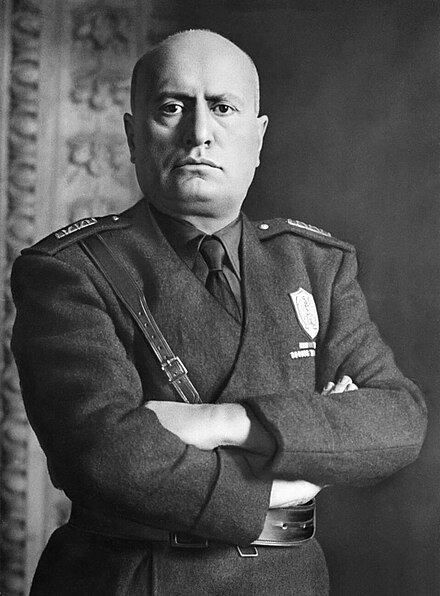
Andrew Mellon’s tax fraud troubles were sandwiched between the woes of a fascist bromance in Howard Brubaker’s “Of All Things”…Mellon would soon be dead, Adolf Hitler would lie his way around the Brits, and Benito Mussolini would struggle to inspire Italian women to produce his “army of tots”…

NOT TONIGHT, WE HAVE A HEADACHE…Little wonder fascist dictator Benito Mussolini couldn’t inspire a baby boom. (Wikipedia)

 * * *

Zoom Zoom

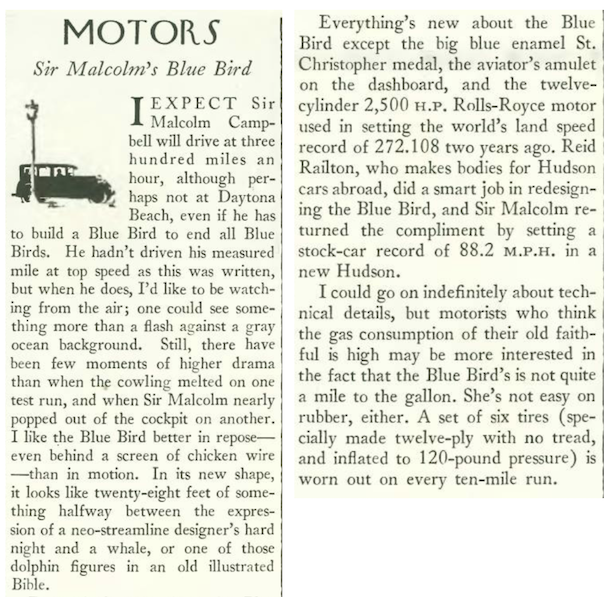
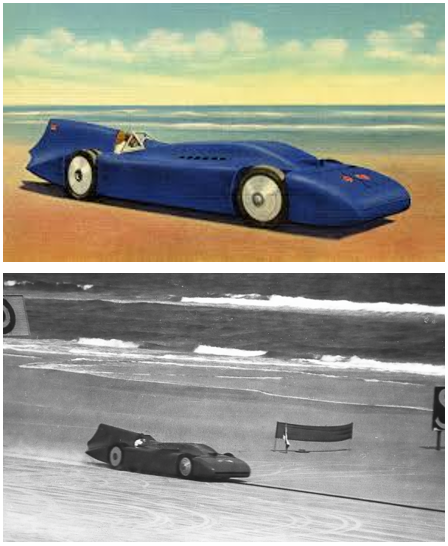
In his “Motors” column, writer “Speed” looked in on Sir Malcolm Campbell (1885-1948), who was attempting to break the 300-mph mark at Daytona in his 2,500-horsepower Blue Bird.

BLUE STREAK…Sir Malcolm Campbell’s bid for a land speed record surpassing 300 mph began at Daytona Beach in March 1935 in his Campbell-Railton Blue Bird, powered by a 2,500 hp supercharged Rolls-Royce V-12. He managed to hit 276 mph (combined runs in each direction), but conditions at the beach (bottom photo) left him short of his goal. He found a smoother, longer run at Utah’s Bonneville Salt Flats in September, where he would average 301.337 mph (484.955 km/h) in two passes to set the new record. (floridamemory.com/oldmachinepress.com)
ONCE IS NOT ENOUGH…Sir Malcolm Campbell MBE was a British racing motorist and motoring journalist. He gained the world speed record on land and on water several times. He was also one of the few land speed record holders of his era to die of natural causes. (Wikipedia)

 * * *

From Our Advertisers

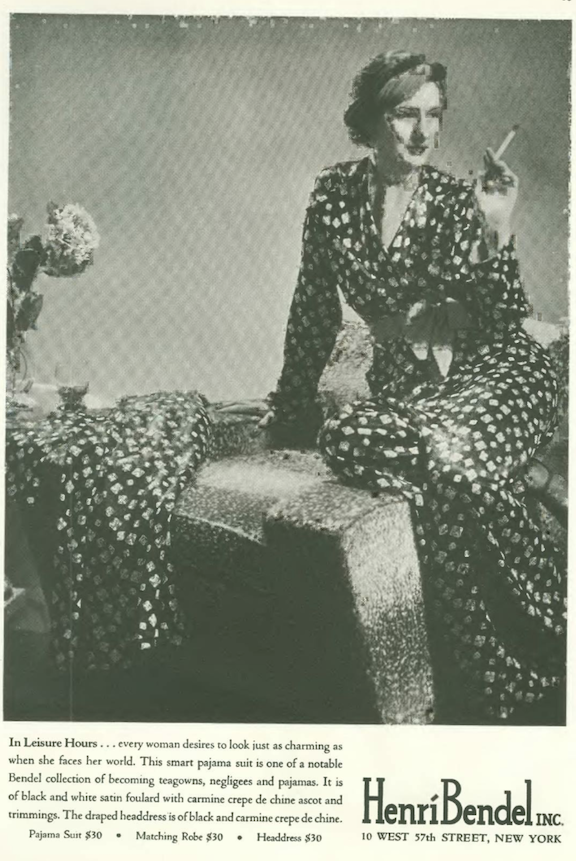
For ninety bucks you could get this swell pajama suit and matching robe (plus headdress) at Henri Bendel, the perfect ensemble for having a leisurely smoke after a day facing the world…For more than 100 years, Henri Bendel’s flagship and only store was located at 10 West 57th Street…it closed in 2018…

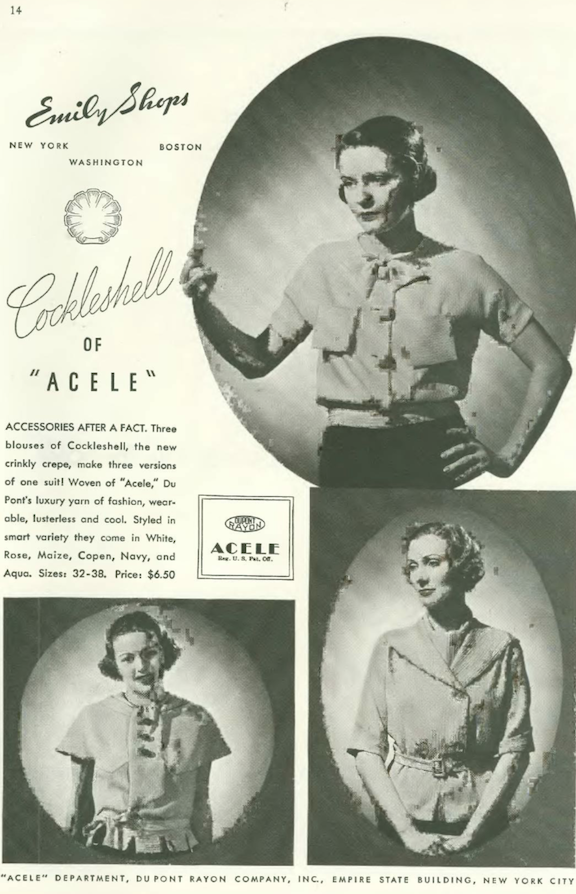
…I doubt the woman in the Bendel ad would have been interested in clothes made with Acele…it was without question that the uppers only wore clothes derived from living things…

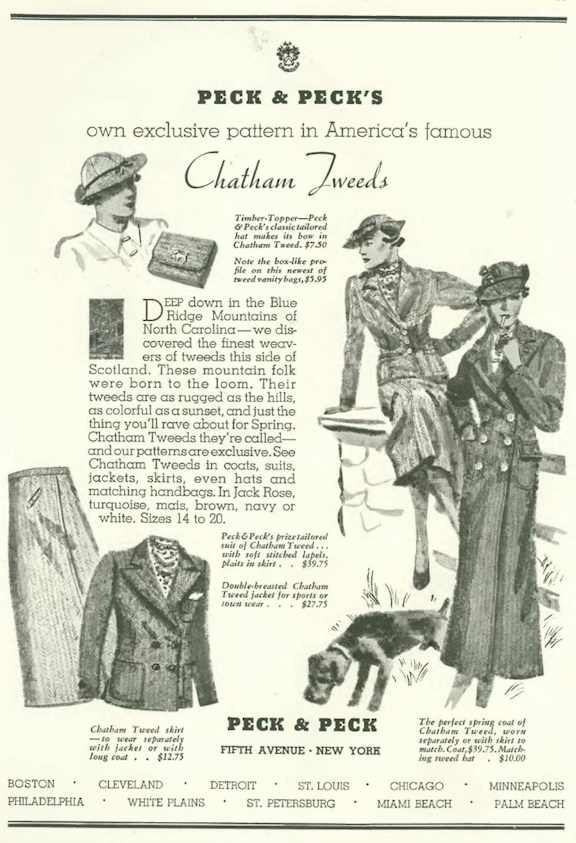
…this Anglophilic Peck & Peck ad is notable for its condescending reference to the “mountain folk” in Appalachia who “were born to loom”…

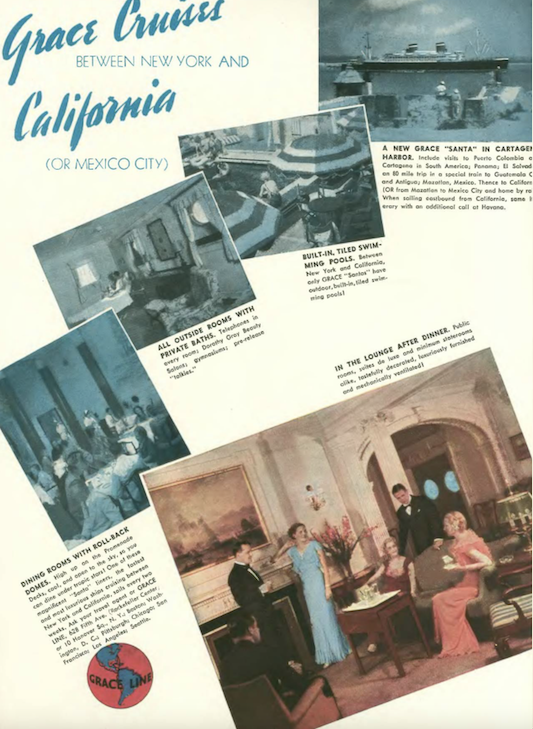
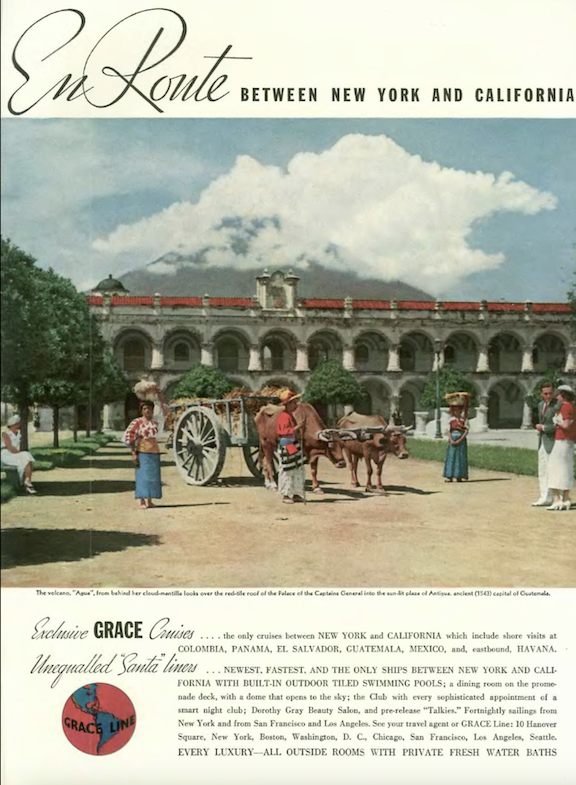
…while we are on the subject, check out this ad for Grace Cruises…this was a common theme in mid-century travel advertising, Westerners dressed in their Sunday best while having a gander at the colorful natives…

…who are just part of the scenery…

…all four of the automobile ads in this issue come from long-gone companies…the luxury carmaker Packard made beautiful, quality cars that outsold Cadillacs up until 1950, but competition from the Big Three (GM, Ford, Chrysler) plus Packard’s decision in 1954 to buy failing Studebaker led to Packard’s demise four years later…

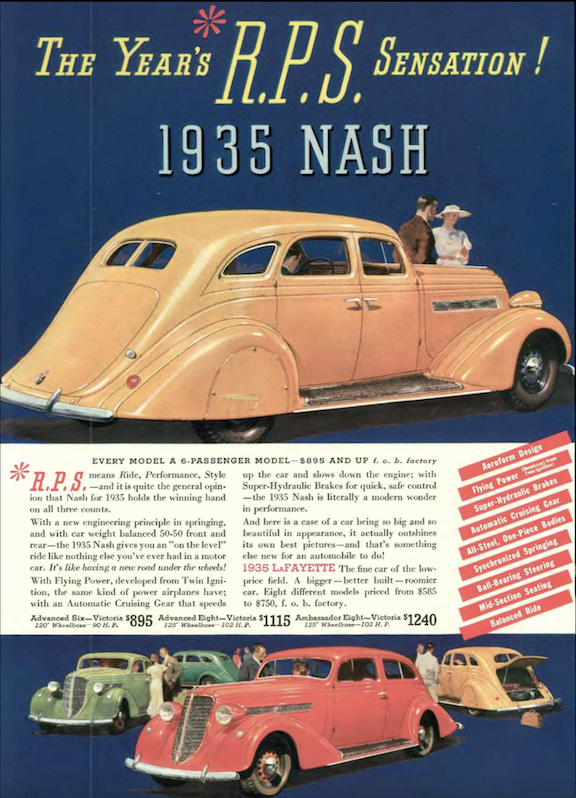
…a more successful merger took place in 1954 between Nash…

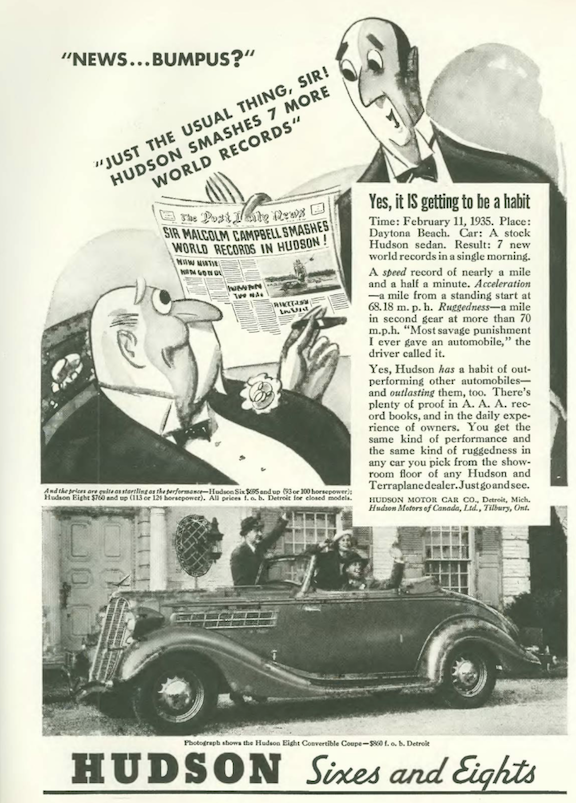
…and Hudson, the two forming the new American Motors Corporation…

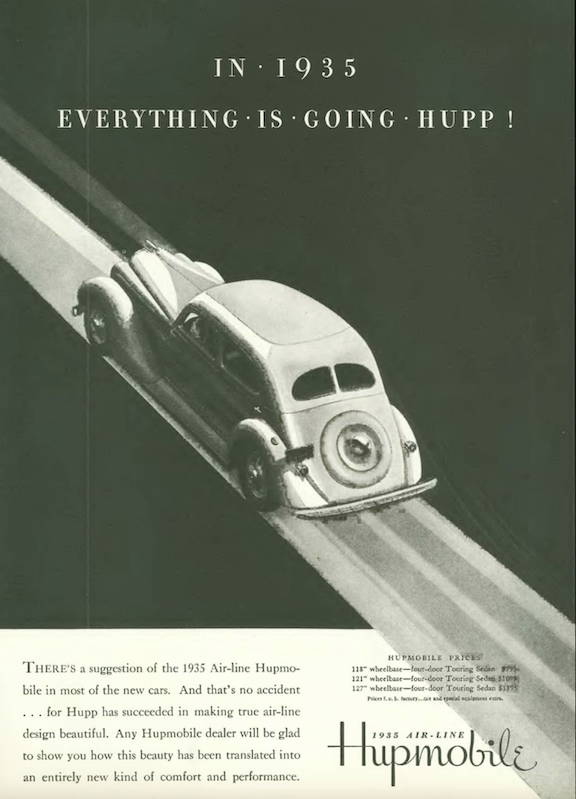
…contrary to this ad’s tagline, everything was actually going down for Hupmobile, which would go out of business in 1939…

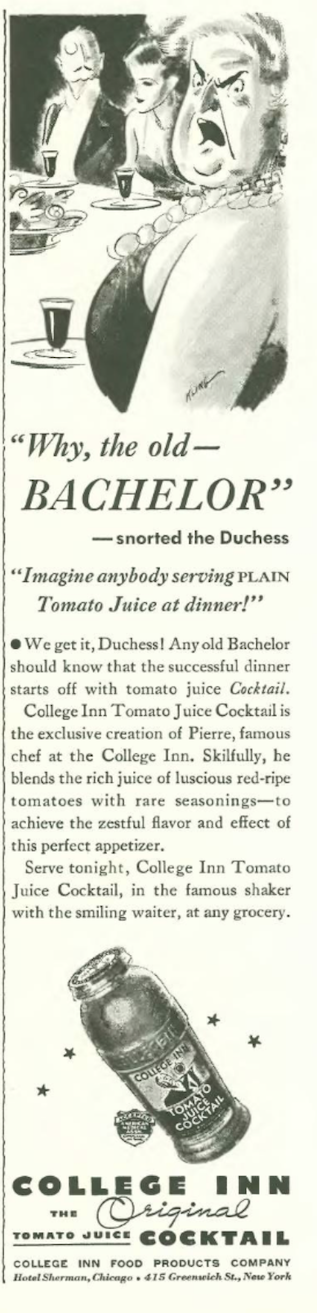
…the makers of College Inn Tomato Juice Cocktail apparently thought an angry old “Duchess” would boost sales…she first appeared in the Feb. 23 issue…

…in the March 16 issue she appears to be psychotic, threatening, “I’ll teach her not to serve PLAIN tomato juice before dinner!” Will she break the glass on the table and lunge at her host (the old WITCH) with a glass shard?…Stay tuned…

…better to calm down and have a Guinness, which, by Jove, was affordable and good for you!…

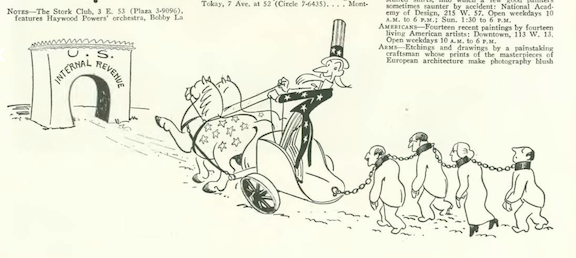
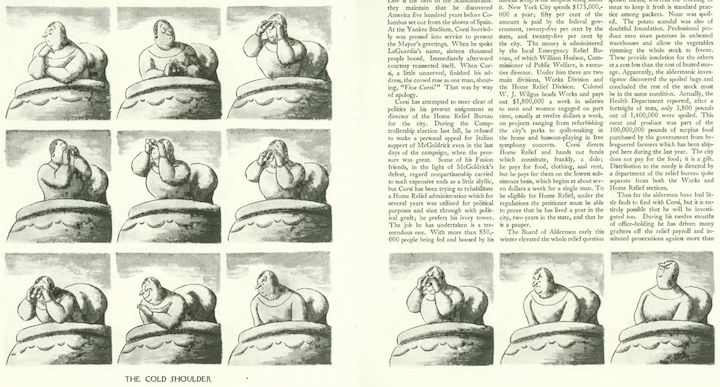
New Yorker cartoons are also good for you, and we begin with Al Frueh and this taxing illustration at the bottom of page 4…

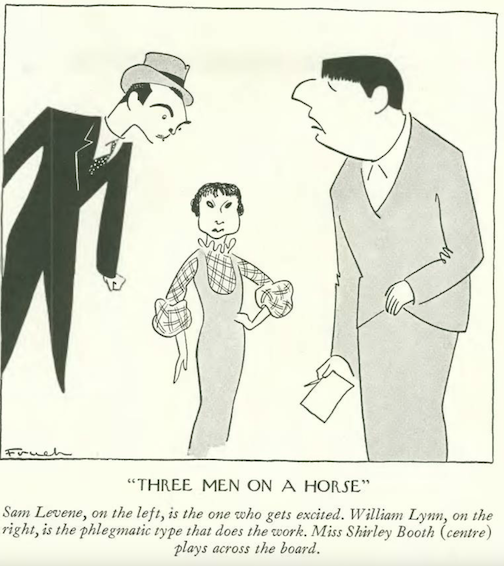
…Frueh again, for the theater review section…in the center is Shirley Booth, known to Baby Boomers as the star of the old TV series Hazel (1961-66)…

…Booth was much more than a sitcom star, achieving the Triple Crown of Acting––an Academy Award, two Primetime Emmy Awards and three Tony Awards…

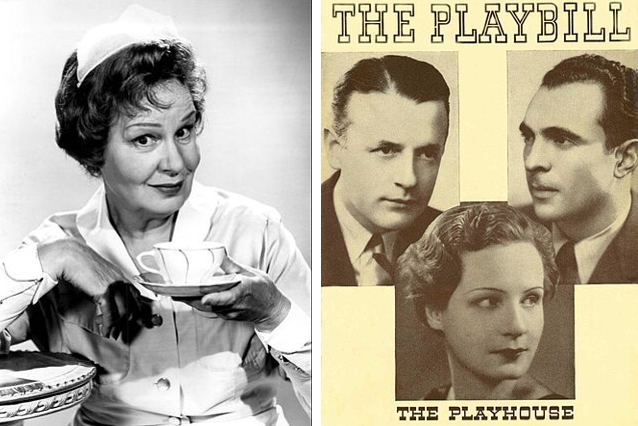
ACTING CHOPS…Shirley Booth (1898-1992) as Hazel in 1962; on the cover of the 1935 Playbill featuring Three Men on a Horse. (Wikipedia)

…we continue with Daniel ‘Alain’ Brustlein, and a term of endearment from someone well known to the police…

William Steig took up two pages to give one opera patron the cold shoulder…

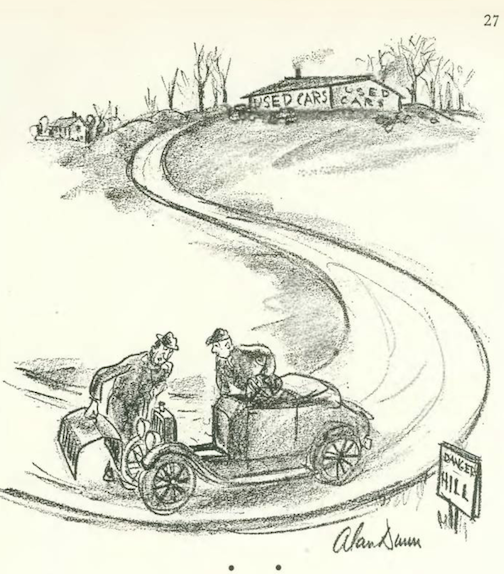
Alan Dunn cautioned against car dealers perched on high hills…

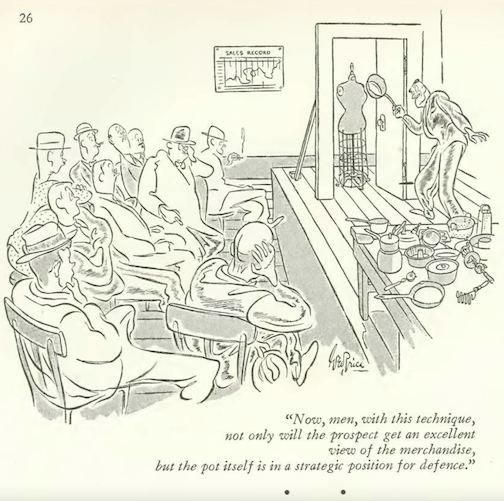
George Price examined the finer points of salesmanship…

Helen Hokinson headed for the high seas…

…and we close with an all-time classic from James Thurber

Next Time: Something Frivolous…

Easy Riders

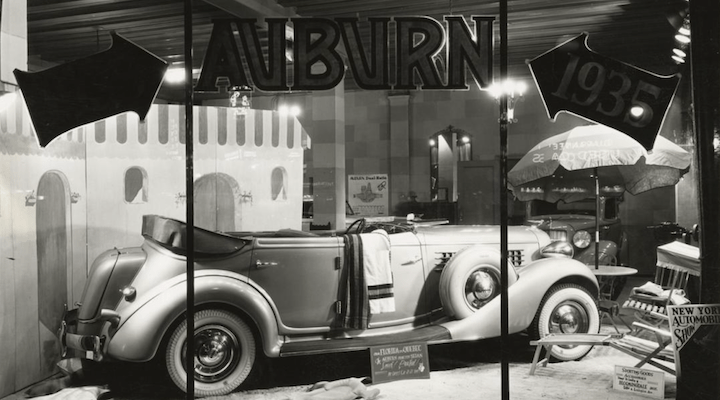
Above: Manhattan auto dealer's window display promoting the 1935 Auburn's appearance at the New York Automobile Show. (Detroit Public Library)

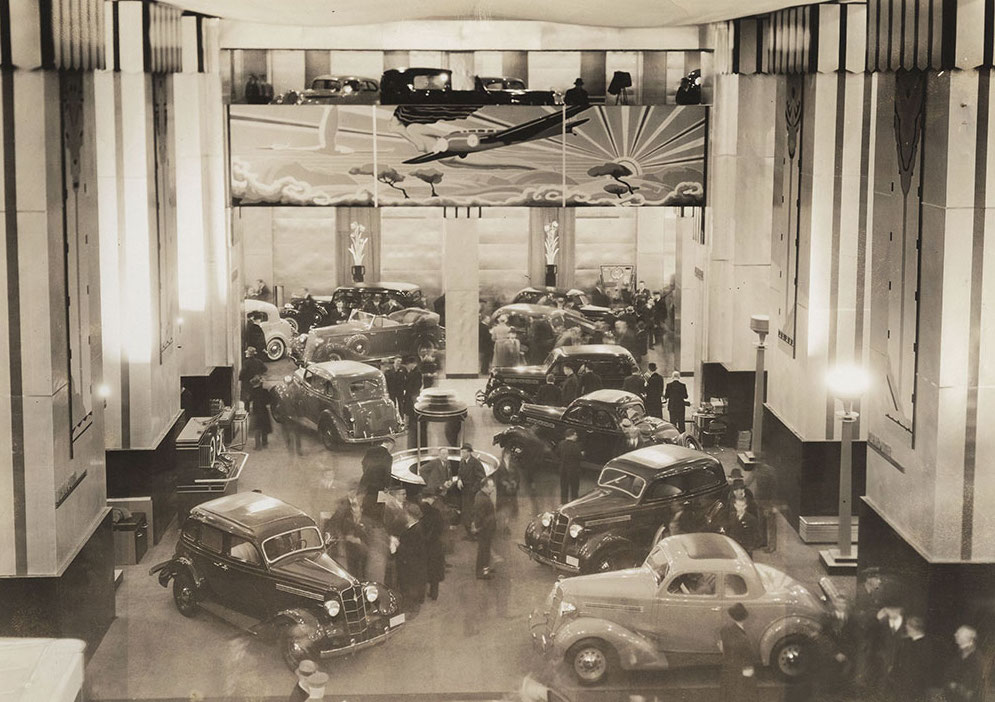
Manhattan’s first big event of 1935 was the annual automobile show at the Grand Central Palace, where New Yorkers chased away the winter blues (and the lingering Depression) in a dreamscape crammed with gleaming new cars.

January 5, 1935 cover by Rea Irvin.

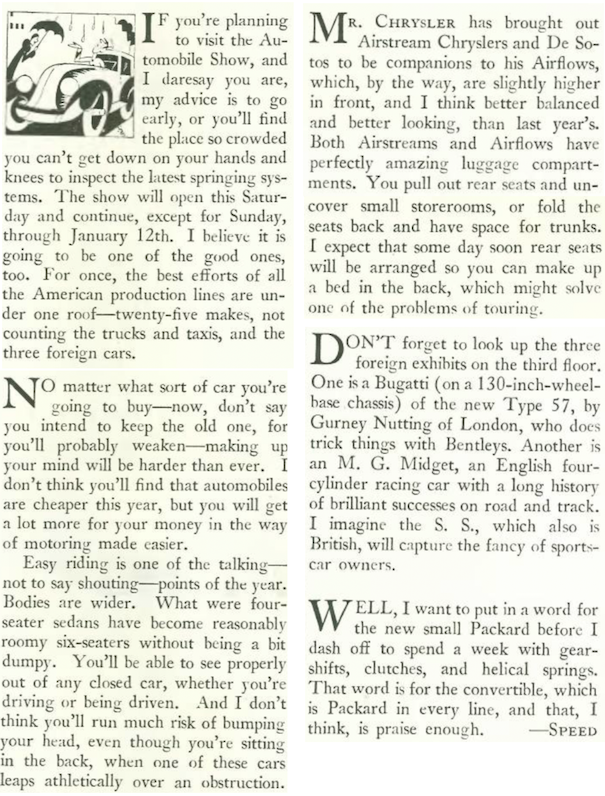
The exhibition included mostly domestic models with wider bodies and, in the case of Chrysler, a dialing back of a radical, streamlined design that was too advanced for American tastes in the 1930s.

CROWD SOURCING…New Yorker correspondent “Speed” observed that the Grand Central Palace was so crowded with new cars that “you can’t get down on your hands and knees to inspect the latest springing systems.” (forums.aaca.org)
SAFE ROOM…This Ford dealer postcard touted safety, durability and roominess rather than style to market a V-8 sedan to Depression-strapped car buyers. (Pinterest)
BACK TO BASICS…The DeSoto display showcased more traditional designs (top) after the disappointing debut of the 1934 Airflow. Below, three foreign makes were on display, including Great Britain’s sporty MG Midget. (forums.aaca.org)

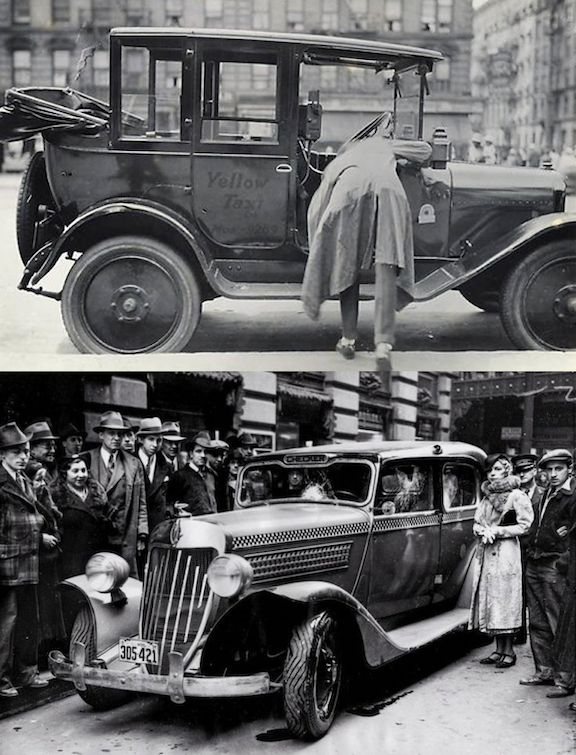
It is no surprise that E.B. White was once again disappointed with new line of cars, still preferring the boxy Model T to the lower-slung streamlined models. That distaste extended to the new taxi cabs hitting the streets of Manhattan, where White saw absolutely no need for wind resistance. An excerpt from his “Notes and Comment:”

IF IT AIN’T BROKE…E.B. White preferred to old Yellow Taxis (seen at top, circa 1932), to the new streamlined Model Y Checker Cabs that were introduced to the streets of Manhattan in 1935. (Metropolitan Museum of Art/Pinterest)

 * * *

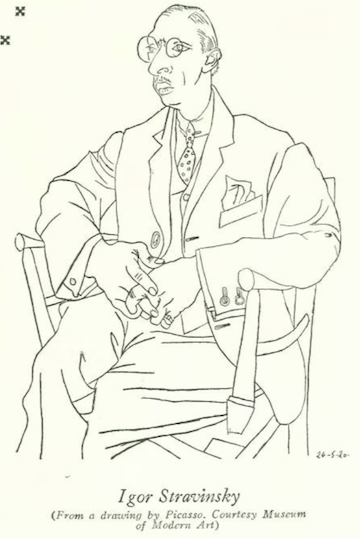
Elsewhere, The New Yorker added a new twist to its “Profile” section by featuring an illustration derived from a drawing by Pablo Picasso

 * * *

From Our Advertisers

The New Yorker’s advertising department padded its revenue from the Christmas season with a slew of ads from automobile companies touting the wonders of their latest models, which were on display at the New York Auto Show…former makers of horse-drawn carriage bodies, the Fisher brothers (Fred and Charles) began making bodies for automobiles in 1908, and the company was later incorporated as part of General Motors…as noted earlier, safety and durability (rather than style) were the calling cards of many automakers during the Depression…

…as is also evidenced here in this ad from Plymouth, part of a continuing series that touted the crash-worthiness of their sedan…

…Plymouth’s parent company Chrysler, still stinging from the lack of consumer interest in their boldly aerodynamic Airflow (introduced in 1934), made modifications to the Airflow’s body, replacing the bold “waterfall” grille with a more traditional peaked unit…the company also offered an even more traditional “Airstream” model that outsold the Airflow 4 to 1…

Consumers in 1934 found the Chrysler Airflow’s bold design (left) too advanced for the times, so Chrysler responded by making the grille on the 1935 model (right) a bit more traditional. That didn’t help sales, either.

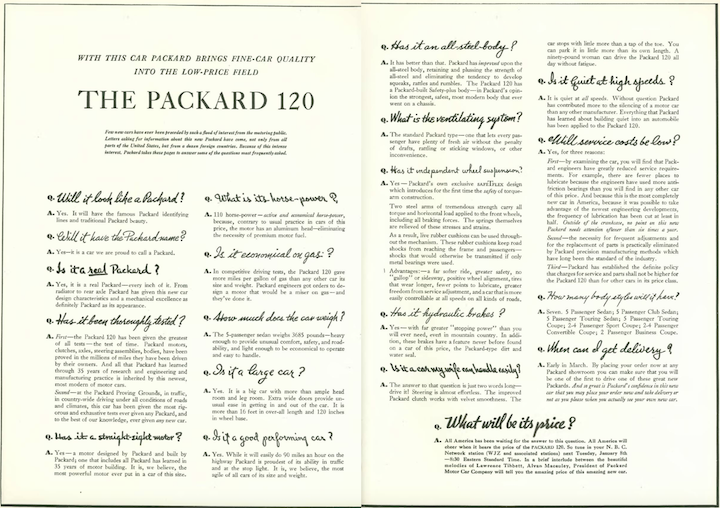
…luxury car maker Packard addressed the challenges of the Depression by introducing a low-priced car (under $1,000) named the 102…it was teased here on the first page of a three-page ad…

…that provided some answers to a “flood” of questions the folks at Packard claimed they had received from across the country and around the world…

…but the ad kept readers in suspense about the car’s actual cost, which was to be announced during Lawrence Tibbett’s NBC radio program…

…Hupmobile was still hanging in there with the innovative, Raymond Loewy-designed Model J, but behind the scenes the company, already beset with sagging sales, was fighting a hostile takeover and would stop making cars altogether by 1938…

…Auburn was also on its last legs, its cars known more for being fast, good-looking and expensive rather for being than safe and economical…although the supercharged Speedster shows here would become a legend in automotive history, and although Auburn began selling more affordable models, the Depression had already taken its toll…

…other luxury brands, such as Cadillac, could survive because they were buoyed by the scale and largesse of a huge corporation, in this case General Motors…

…the folks at Hudson marketed their “Terraplane” with this cartoon ad that quite possibly was illustrated by Wesley Morse, who in 1953 would create the Bazooka Joe comic strip for Topps…

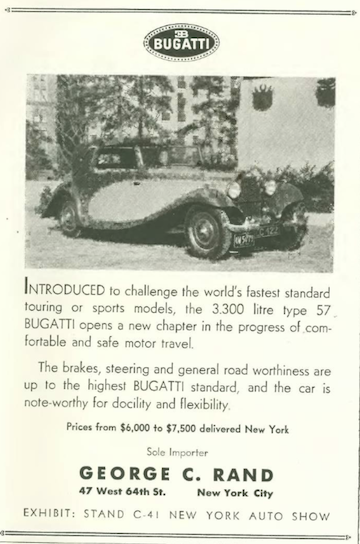
…only three foreign makes were displayed at the exhibition, including Bugatti, which promoted its type 57 in this modest ad placed by a local dealer…at prices ranging as high as $7,500 (nearly $170k today), it was a definitely not a car for the thrifty minded…

…some non-car ads included beachwear from Bonwit Teller…

…while Burdine’s offered men’s suits men that apparently could be worn comfortably while relaxing on the sand…

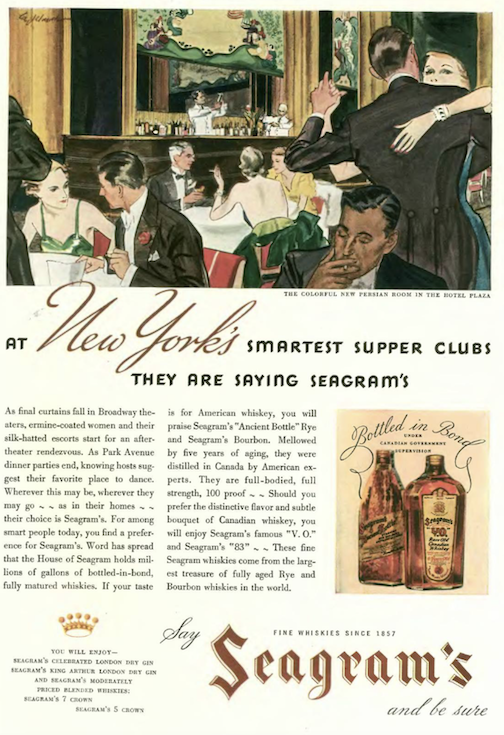
…besides the car companies, others who possessed the means to run full-page color ads included the makers of spirits…

…chewing gum…

…and, of course, cigarettes…
…on to our cartoons, we begin with a spot and a panel by James Thurber

Al Frueh, whom we haven’t seen in awhile, gave us an elaborate joke conjured up by some bored astronomers…

Kemp Starrett looked in on an unlikely Packard customer…

Perry Barlow predicted a hot time for these two young lads…

…and to close, Gardner Rea offered a cure for a New Year’s hangover…

Next Time: It’s A Gift…

House & Home

The New Yorker’s art and architectural critic Lewis Mumford found much to dislike about urban life, from pretentious ornamentation to the gigantic scale of skyscrapers popping up all over Manhattan. Technology and progress were fine, but when coupled with unbridled capitalism, Mumford believed they created inhuman environments in which the average citizen struggled to survive, let alone thrive.

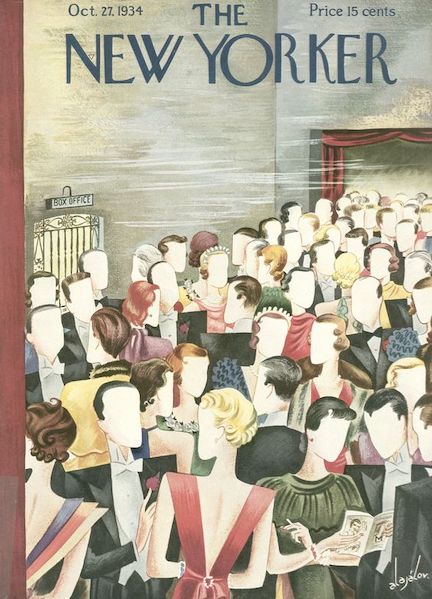
Oct. 27, 1934 cover by Constantin Alajalov.

A housing exhibit at the Museum of Modern Art proposed policy and design solutions that addressed housing for the masses in “a human environment,” with European innovations leading the way. The Romanian-born Carol Aronovici (1881-1957), a well-known expert in city planning and public housing, was editor of a companion book to the exhibit, America Can’t Have Housing, in which he included seventeen essays by such experts as architect Walter Gropius, public housing advocate Catherine Bauer, and The New Yorker’s Mumford.

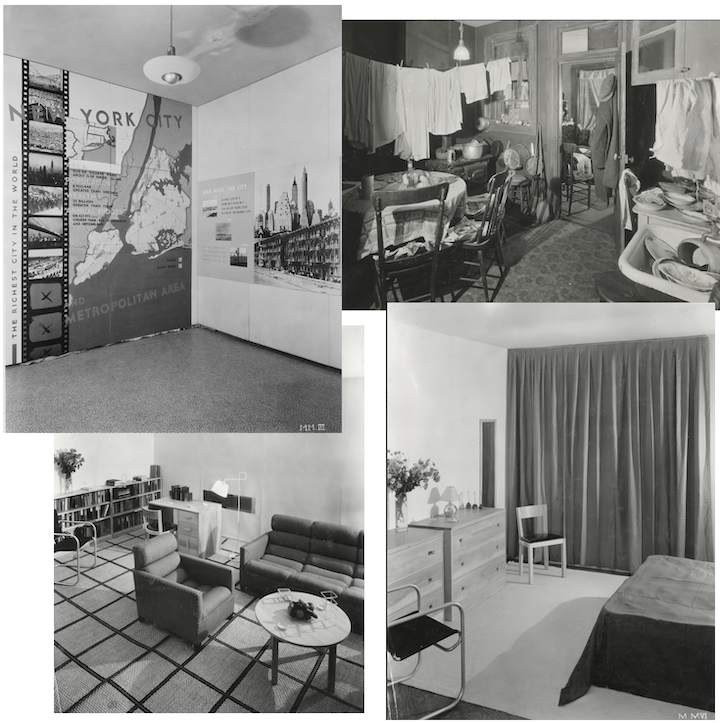
GIVE ME SHELTER…At left, Carol Aronovici’s companion book to the exhibition, with a cover image of the Siemensstadt Housing Development in Berlin, by Walter Gropius; above, excerpts from Lewis Mumford’s essay in the book; below, entrance to the exhibit. (MoMA)

Mumford reviewed the exhibit in his regular column, “The Sky Line.” Excerpts:

BETTER HOMES…Images from the exhibit included the squalor of a tenement (top right) that offered a stark contrast to the clean, modern look inspired by European designers. (MoMA)

 * * *

From Our Advertisers

We once again open the magazine to an odd juxtaposition of canned soup and high fashion…Hormel was pushing their onion soup by linking the product to French nobility (a previous ad featured Napoleon)…at right, illustrator Lyse Darcy created many ads for Guerlain products from the 1930s through the 1950s…

…the Macbeth-Evans Glass Company introduced Americans to a revolution in coffee brewing—the drip method…

…the folks who made Arrow Shirts wanted men to know that its “Thor” model would make them as confident as this man at a business conference…so confident, in fact, that he can appear mildly disinterested as he engages in a game of tic-tac-toe…

…purveyors of high fashion Lord & Taylor offered up a new design twist with this ad rendered in the Courier font…

…Pond’s continued to featured the rich and famous, women who apparently defied age itself with a few dabs of cold cream…the ad featured Alice Erdman, the wife of politician and theater producer Francis Cleveland (President Grover Cleveland’s son) and Long Island society maven Xenia Georgievna of Russia…

BELIEVER…Xenia Georgievna of Russia (1903–1965) was an influential member of New York’s Long Island North Shore society. She is best known for her belief that the imposter Anna Anderson was actually the Grand Duchess Anastasia. (Pinterest)

Newton D. Baker mobilized and presided over the United States Army during World War I, and during the Depression he led a “National Citizens Committee” that he mobilized for human needs…

…this detail from an ad for Webster cigars offered an image of a football game almost unimaginable today…

William Steig offered his cartooning services to the local gas company…

…which segues into more cartoons from the Oct. 27 issue, beginning with this spot from James Thurber

…and a cartoon…

…another in the floating man series by George Price

…and one from Peter Arno, with a classic clueless cuckold…

…on to Nov. 3, 1934…

Nov. 3, 1934 cover by Richard Decker.

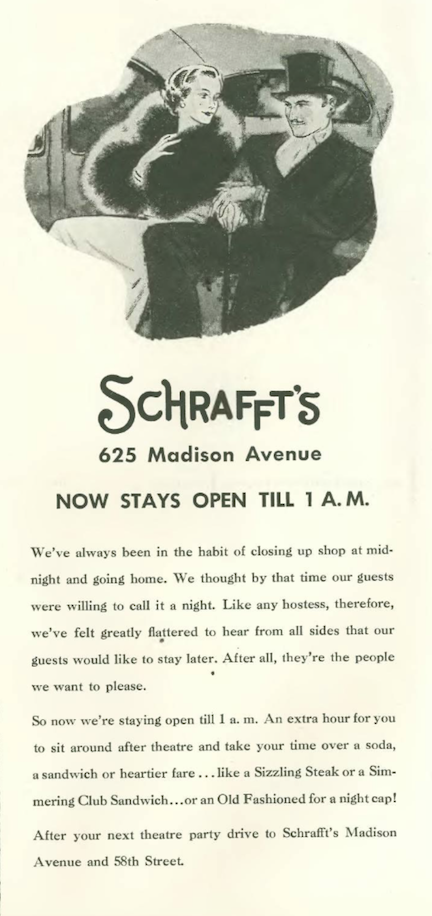
…and straight to the ads, beginning with this one from Schrafft’s, which was a chain of high-volume, moderately priced restaurants in the New York area…despite its affordability, Schrafft’s dining rooms were known for their gentility, an idea conveyed through this ad…

…and here we have another image of a posh couple savoring their downscale dining experience…perhaps they should ask their cook to stop using real turtles…
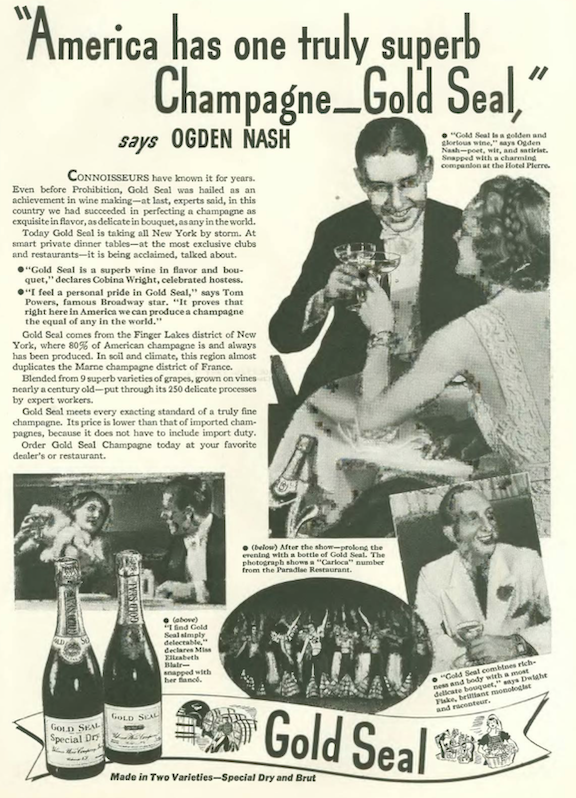
…the makers of Gold Seal “Champagne” lined up poet Ogden Nash to endorse what had to be some pretty awful stuff, even if Dwight Flake, “brilliant monologist and raconteur,” enjoyed its “delicate bouquet”…

…New York debutante Mimi Richardson joined the growing list of distinguished women who preferred puffing on a Camel…

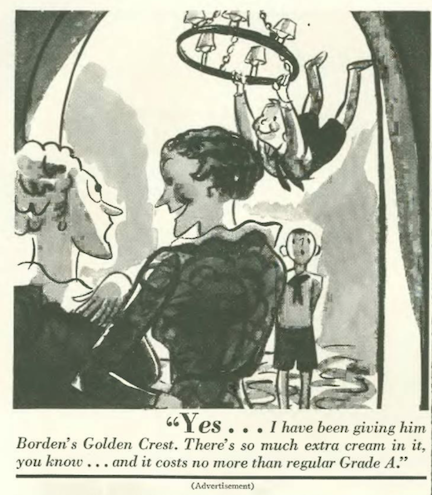
…this back-page ad featured an Arno-esque illustration touting the wonders of Borden’s Golden Crest milk…

…while the real Garrett Price drew up this image for the folks at Heinz…

…which brings us to more cartoons, still up in the air with George Price

Peter Arno gave us a suitor who was no fan of the silents…

…and we close with James Thurber, and some scandalous dish…
Next Time: The Wahoo Boy…

A Tadpole on Wheels

Above: British architect Norman Foster's 2010 recreation of R. Buckminster Fuller's 1933 Dymaxion car. (Wikipedia)

Despite the limitations of 1930s technology, a few architects and designers were hell-bent on building a streamlined future that until then was mostly the stuff of movies and science fiction magazines.

May 5, 1934 cover by Rea Irvin.

One of them was R. Buckminster Fuller (1895–1983), architect, designer, and futurist probably best known today as the inventor of the geodesic dome (think Disney’s Epcot Center). In the 1930s Fuller was all about a concept he called Dymaxion. Derived from the words dynamic, maximum, and tension, when applied to architecture and design it would supposedly deliver maximum gain from minimal energy input. The writer of the New Yorker article (pseud. “Speed”) was fascinated by the Dymaxion’s motorboat-type steering, no coincidence since Fuller intended to adapt his futuristic car for use on and under the water, as well as in the air.

THE SHAPE OF THINGS TO COME…Clockwise, from top left: Workers at a Bridgeport, Conn., plant creating the first of three Dymaxion cars; the Dymaxion at Chicago’s 1933 Century of Progress exposition—the car was involved in a fatal accident at the fair; interior view of the Dymaxion; using the same engine and transmission as a Ford sedan (pictured), the Dymaxion offered three times the interior volume with half the fuel consumption and a 50 percent increase in top speed. (Buckminster Fuller Institute/Poet Architecture)
THINKING WITHOUT THE BOX…In 1927 R. Buckminster Fuller (pictured) developed a Dymaxion House, a “Dwelling Machine” that would be the last word in self-sufficiency. Although the aluminum house was intended to be mass-produced, flat-packaged and shipped throughout the world, the design never made it to market (however its ideas influenced other architects); at right, a Fuller geodesic dome at Disney’s Epcot Center in Florida. (archdaily.com/Wikipedia)

The 1933 Century of Progress exposition in Chicago was supposed to be a major showcase for Fuller, but when professional driver Francis Turner was killed while demonstrating the first prototype of the Dymaxion, the car’s prospects dimmed considerably. According to an article by Stephanie d’Arc Taylor (cnn.com Oct. 30, 2019), during the demonstration a local politician tried to drive his own car close to the Dymaxion—to get a better look—and ended up crashing into the unwieldy prototype, which rolled over, killing the driver and injuring its passengers. “The politician’s car was removed from the fracas before police arrived, so the Dymaxion was blamed for the accident,” writes Taylor, who notes that the rear wheel–powered car, though unconventional, was not necessarily the problem. However, “the thing that made the Fuller death-mobile singularly deadly was the fact it was also steered by the rear wheel, making it hard to control and prone to all kinds of terrifying issues.”

That history did not stop architect Norman Foster from building a replica of the Dymaxion in 2010. Foster worked with Fuller from 1971 to 1983, and considers Fuller a design hero.

GIVING IT ANOTHER GO…Architect Norman Foster with his 2010 recreation of the Dymaxion. To build a new Dymaxion, Foster sent a restorer to the National Automobile Museum in Reno, Nevada (home of the only surviving Dymaxion, Car No. 2), and after thousands of photos and measurements Foster had the car recreated using only materials available in 1933: Foster’s Dymaxion consists of an ash frame sheathed in hand-beaten aluminum, mounted on the chassis of an old 1934 Ford Tudor Sedan. (CNN/The Guardian)

According to Taylor, Foster cleaved so closely to Fuller’s original designs that he refers to his creation as a fourth genuine Dymaxion—not a replica. “The car is such a beautiful object that I very much wanted to own it, to be able to touch as well as contemplate the reality for its delight in the same spirit as a sculpture,” said Foster. “Everything in (the car) was either made in 1934, or recreated using techniques and materials that Bucky would have had access to in that period.”

 * * *

Meanwhile, At The Tracks…

If Fuller’s attempt at the streamlined future was a bit of bust, the Burlington railroad was making a splash with its gleaming new Zephyr. E.B. White reported:

ZOOM ZOOM…The Burlington Zephyr set a speed record for travel between Denver and Chicago when it made a 1,015.4-mile (1,633 km) non-stop “Dawn-to-Dusk” dash in 13 hours 5 minutes at an average speed of almost 78 mph (124 km/h). In one section of the run it reached a speed of 112.5 mph. Following a promotional tour that included New York, it was placed in regular service between Kansas City, Missouri, and Omaha and Lincoln, Nebraska, on November 11, 1934. Other routes would be added later in the Midwest and West. (BNSF)

…we continue with E.B. White, here with some observations regarding Mother’s Day and bank robber/murderer John Dillinger, who had escaped from prison in March 1934 and was on the FBI’s Most Wanted List…

I REMEMBER MAMA…John Dillinger posed with Lake County prosecutor Robert Estill, left, in the jail at Crown Point, Ind. while he awaited his trial for murder in January 1934. Dillinger would escape from the jail in March and would be on the lam until July, when FBI agents would gun him down outside a Chicago movie theatre. (NY Daily News)

…and a last word from White, about an important change at Radio City:

 * * *

Voice In The Wilderness

A combination of newsreel footage, documentary, and reenactment, Cornelius Vanderbilt Jr’s Hitler’s Reign of Terror played to capacity crowds for two weeks in New York City, despite the refusal of the state’s censor to license the film. Disinherited by his parents when he became a newspaper publisher, Vanderbilt was a determined journalist, covertly filming scenes in Nazi Germany and even briefly encountering Adolf Hitler outside the Reichstag, where Vanderbilt yelled to Der Führer, “And what about the Jews, Your Excellency?” (Hitler ignored the question and referred Vanderbilt to one of his lackeys). Unfortunately, Vanderbilt wasn’t much of a filmmaker, and although he warned Americans about the emerging threat in Germany, few took the film, or his warning, seriously, including John Mosher:

UNHEEDED…Audiences flocked to see Cornelius Vanderbilt Jr’s Hitler’s Reign of Terror, but critics dismissed the rather amateurish film—Film Daily scoffed at the film’s prediction that Hitler’s Germany was a future threat to world peace; at right, in the film Vanderbilt confronted “Hitler” in a recreation. (TMDB/Library of Congress)

 * * *

From Our Advertisers

It wouldn’t seat eleven people like a Dymaxion, but a Body by Fisher (coach builder to General Motors) certainly impressed this young woman…but better check with the hubby just in case…

…in this next ad, we find what looks like the same woman, perhaps celebrating her decision with a nice smoke…

…this spot seems out of place in the New Yorker, like it snuck over from Better Homes & Gardens...

…on to our cartoons…with James Thurber’s war of the sexes over, life returned to normal…

…and both sides shared in the gloom of a rainy afternoon…

…by contrast, Perry Barlow brightened things up with this life of the party…

…but a good time doesn’t always translate over the airwaves, per George Price

Alain illustrated the consequences of losing one’s nest egg…

Peter Arno didn’t leave any room for dessert…

…and Charles Addams returned, a macabre cast of characters still percolating in his brain…

…on to May 12, 1934…

May 12, 1934 cover by Leonard Dove.

…and back to the movies, this time critic John Mosher found more cheery fare in 20th Century, a pre-Code screwball comedy directed by Howard Hawks and starring John Barrymore and Carole Lombard. Battling alcohol abuse since age 14, Barrymore nevertheless managed to display his rare genius as a comedian and turned in what is considered to be his last great film performance.

GETTING HER KICKS…Top, Carole Lombard delivers a swift one to John Barrymore in the screwball comedy 20th Century. Below, director Howard Hawks with the cast. (greenbriarpictureshows.blogspot.com)

 * * *

Playing the Ponies

Horse racing correspondent George F. T. Ryall (pseud. “Audax Minor”) considered a losing wager at the Kentucky Derby in his column, “The Race Track.”

A HORSE OF COURSE…Jockey Mack Garner rode Cavalcade to victory at the 1934 Kentucky Derby. (Appanoose County Historical Society)

 * * *

More From Our Advertisers

We begin with Camel cigarette endorsers Alice and Mary Byrd, residents of Virginia’s famous Brandon plantation and cousins of Virginia Senator and Governor Harry F. Byrd, known for his fights against the New Deal and his “massive resistance” to federally mandated school desegregation...

…also to the manor born, Whitney Bourne, a New York deb who would go on to a brief stage and film career that would end when she married her first husband (diplomat Stanton Griffis) in 1939…

AN EYE FOR STYLE…Whitney Bourne in a scene with Solly Ward in 1937’s Flight From Glory. Named in 1933 as one of America’s best dressed women, Bourne was a noted New York socialite, skier, golfer and tennis player as well as an occasional actress.

…we move along from the effervescent Whitney Bourne to the sparkling waters of Perrier…

Gardner Rea followed other New Yorker cartoonists by illustrating an ad for Heinz…

…which brings is to more cartoons, where according to Richard Decker, the move to streamlined trains wasn’t welcomed by everyone…

Carl Rose illustrated this two-page spread with an imagined right-wing response to the recent left-wing May Day parades…

William Steig eavesdropped onto a saucy little conversation…

Barbara Shermund continued her explorations into the trials of the modern woman…

James Thurber was back to his old tricks…

…and we conclude our cartoons with Eli Garson, and a new perspective…

Before I close, a bit of housekeeping. The first issues in 1925 sometimes ended “The Talk of the Town” with…

…but on May 23, 1925, “Talk” signed off with —The New Yorkers. That continued until the March 31, 1934 issue (below), the last time the New Yorker signed off “The Talk of the Town” with —The New Yorkers:

Next Time: Moses Parts a Yacht Club…