A Profile in Paint

Above: Portrait of Georgia O'Keeffe, 1935, by Alfred Stieglitz, gelatin silver print; at right, O'Keeffe's Ram's Head, White Hollyhock-Hills, 1935. Oil on canvas. (National Gallery/Brooklyn Museum)

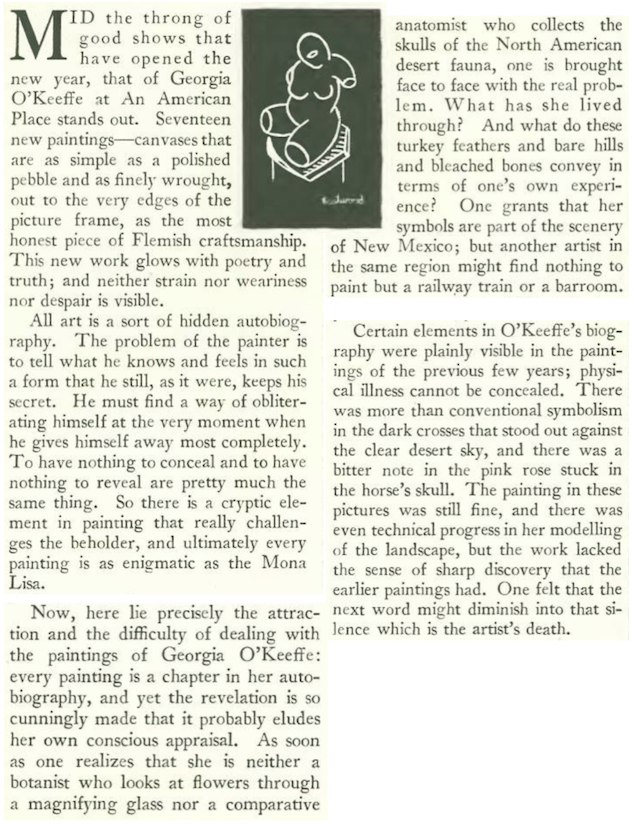
Over the seven decades of her career, Georgia O’Keeffe created works that did not necessarily follow the art movements of the 20th century. Critic Lewis Mumford referred to these works as “autobiographies in paint,” every painting “as enigmatic as the Mona Lisa.”

January 18, 1936 cover by Robert Day, illustrating the days before the invention of the Zamboni (in 1949).

O’Keeffe was married to art dealer and photographer Alfred Stieglitz, who exhibited her works at his “An American Place” gallery at 53rd and Madison. The couple had a complex, open relationship (Stieglitz had a number of affairs) that proved painful to O’Keeffe, and in 1933 she was hospitalized for two months after experiencing a nervous breakdown; she did not paint again until the following year. Although Mumford did not directly reference this episode in O’Keeffe’s life, he did note that “Certain elements in O’Keeffe’s biography were plainly visible” in her paintings.

PAINED PAINTINGS…Clockwise, from top left, Georgia O’Keeffe’s Eagle Claw and Bean Necklace, 1934; Jack-in-the-Pulpit No. IV, 1930; Purple Hills, 1935. (MoMA/Phillips Collection/San Diego Museum of Art)

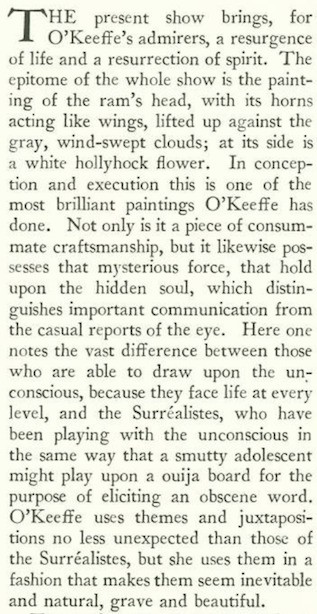
Mumford noted that O’Keeffe’s newer works revealed a “resurrection of spirit,” such as the painting of a ram’s skull, “with its horns acting like wings, lifted up against the gray, wind-swept clouds…”

GLOWING WITH POETRY AND TRUTH is how Lewis Mumford described Georgia O’Keeffe’s latest work. Clockwise, from top left: Ram’s Head suggested to Mumford “a resurgence of life and a resurrection of spirit” in the artist; other bright works included Sunflower, New Mexico 1, 1935; and Hill, 1935. (National Gallery/Cleveland Museum of Art/ Denver Art Museum)

 * * *

Lights Out

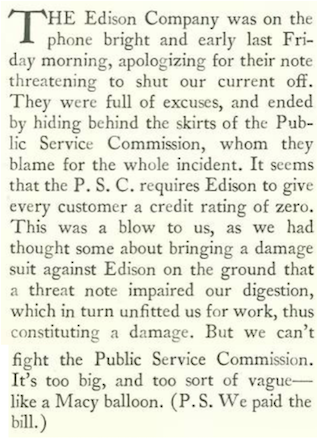
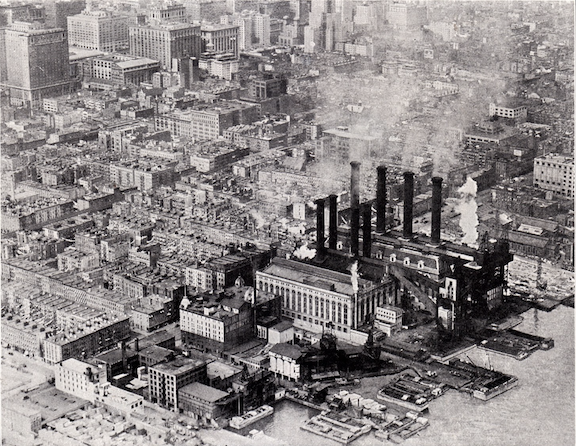
In the previous issue E.B. White noted that the Edison Company was threatening to cut off electric service to the magazine’s offices due to nonpayment. This “Notes and Comment” update cleared up the matter.

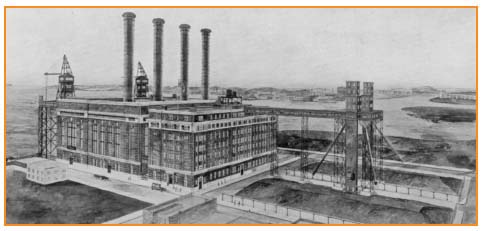
THE PRICE FOR POWER…Above, an aerial view from 1926 of New York Edison’s East River Power Station at 38th Street. In 1936 it was powered by coal, which burned pungently and created problems with soot throughout the area. (tudorcityconfidential.com)

 * * *

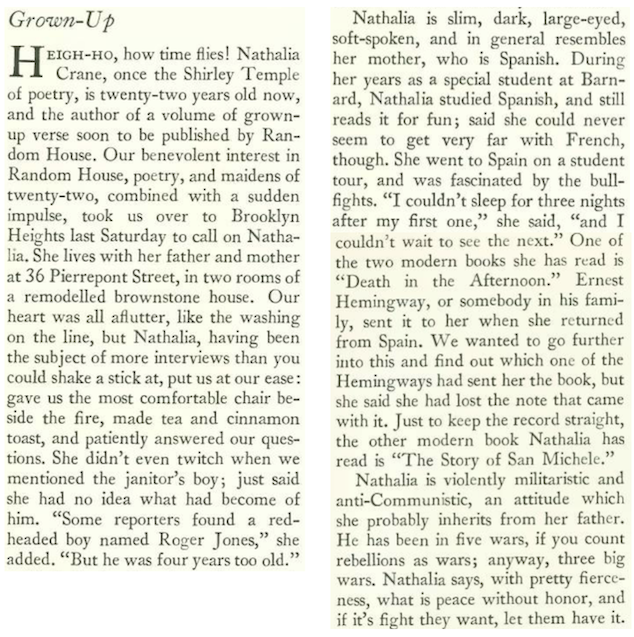
Revisiting a Pint-size Poet

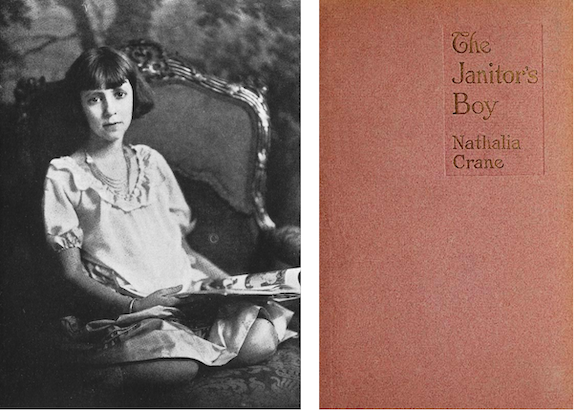
“The Talk of the Town” paid a visit to Nathalia Crane (1913–1998), who became famous after the 1924 publication of her first book of poetry, The Janitor’s Boy, at the age of ten. Excerpts:

PIXIE POET…Nathalia Crane published her first poems in The New York Sun when she was only nine years old, the paper unaware that she was a child. She later became a professor of English at San Diego State University. (gutenberg.org)

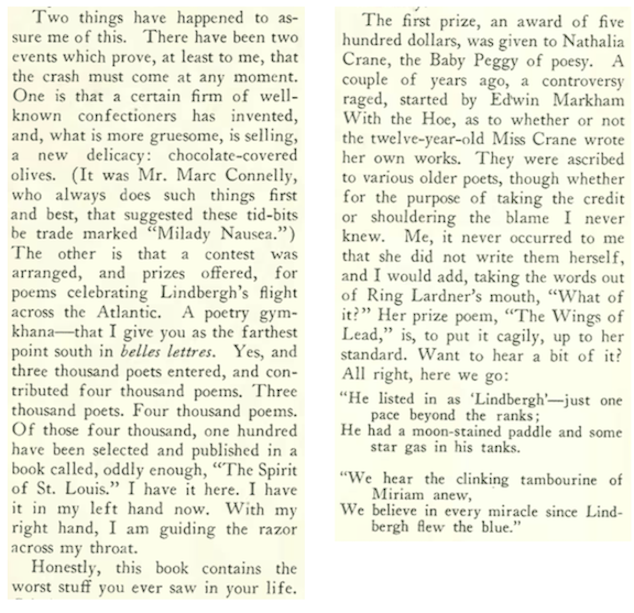
The fledgling Crane received a very different New Yorker reception in 1928, when Dorothy Parker took her to task for contributing to the collapse of grammar and civilization in general. Here’s an excerpt from Parker’s Jan. 7, 1928 “Reading & Writing” column:

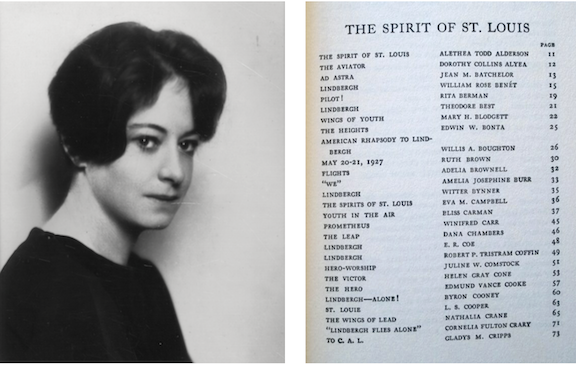
GRUESOME was the word Dorothy Parker chose to describe chocolate-covered olives and bad poetry. At left, Parker in 1928. At right, a contents page from The Spirit of St. Louis, a collection of one hundred poems selected from thousands in a poetry contest celebrating Charles Lindbergh’s flight across the Atlantic.  (literaryladiesguide.com/ebay.com)

 * * *

Order in the Court

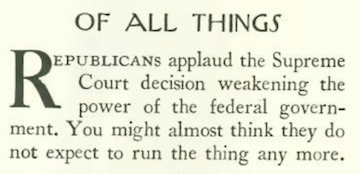
Howard Brubaker commented on a recent ruling by the Supreme Court regarding the ongoing fight by Republicans to curtail FDR’s New Deal.

 * * *

Cinderella Stories

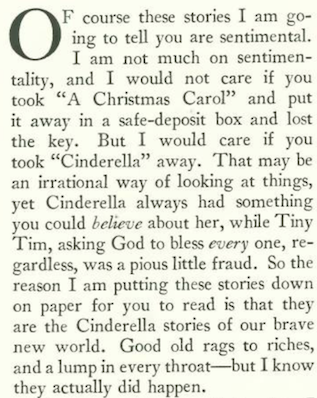
For his Jan. 4, 1936 “A Reporter at Large” column Morris Markey visited “Major Bowe’s Amateur Hour” at NBC’s Rockefeller Center radio studios. He was so impressed by the rags-to-riches stories that he shared a few in his Jan. 18 column, titled “The Crystal Slipper.” He warned readers that the stories were “sentimental,” but not in the vein of A Christmas Carol: “Tiny Tim, asking God to bless every one, regardless, was a pious little fraud,” Markey noted. Excerpts:

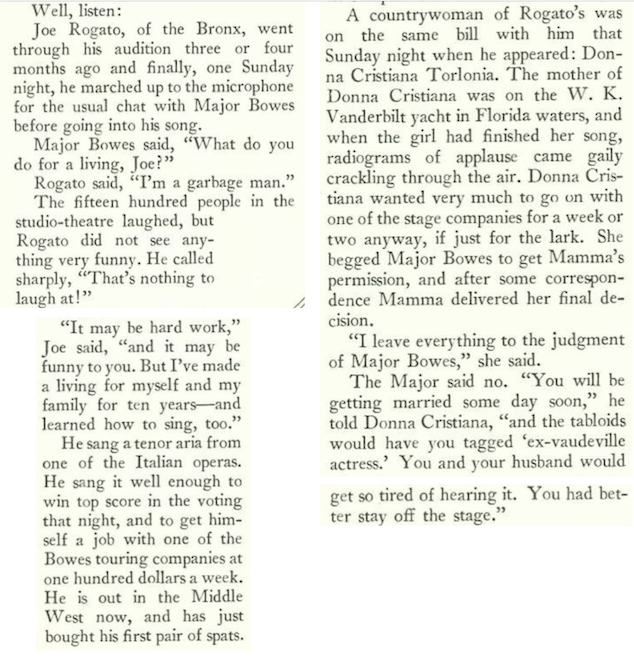
Markey shared the story of a garbage collector turned opera tenor, and a wealthy debutante who was encouraged to “stay off the stage” by “Major” Edward Bowes himself.

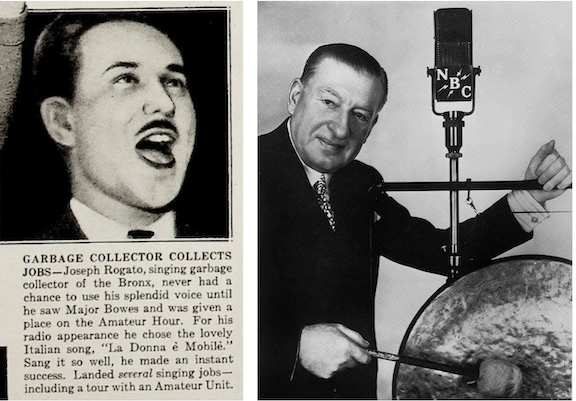
CUT THE TRASH TALK…Joseph Rogato told the Amateur Hour audience that his job as a “garbage man” was no laughing matter, and went on to wow them with his singing voice. At left, a detail from an ad for Chase & Sanborn coffee, the show’s sponsors. At right, show founder and host “Major” Edward Bowes with the gong he used to abruptly end acts he deemed poor—he soon abandoned the practice after listeners objected. (eBay.com/Facebook)

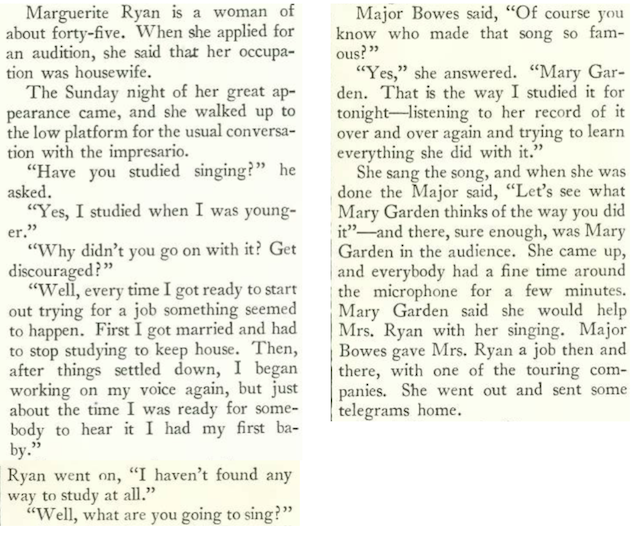
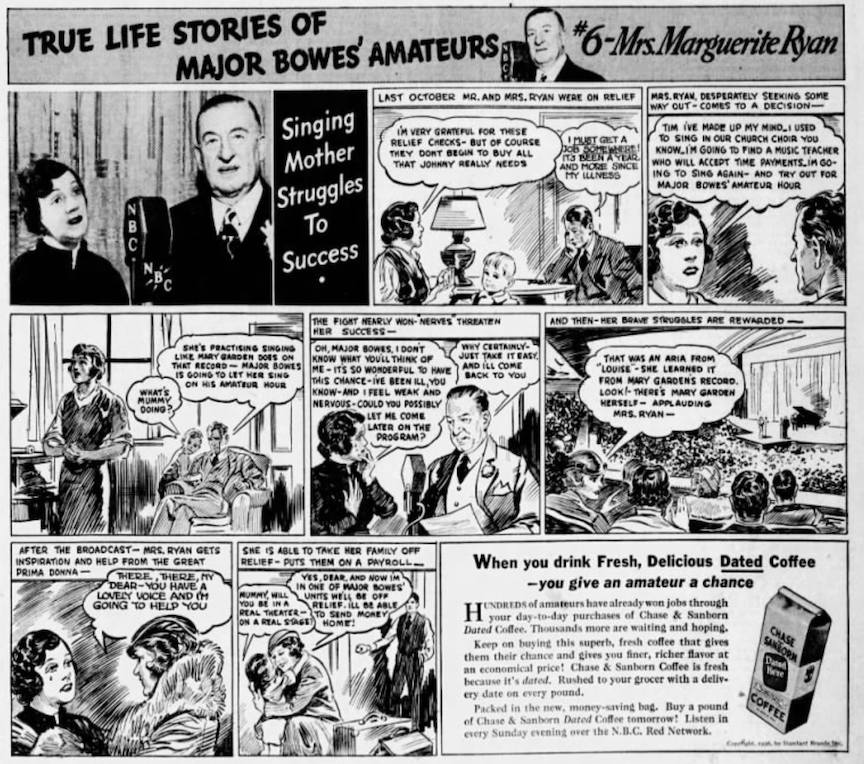
Markey next told the story of Marguerite Ryan, the “Singing Housewife”…

FROM RELIEF TO RICHES…This Chase & Sanborn advertisement described Marguerite Ryan’s brush with fame and her deliverance from poverty thanks to her appearance on the Amateur Hour. (newspapers.com)

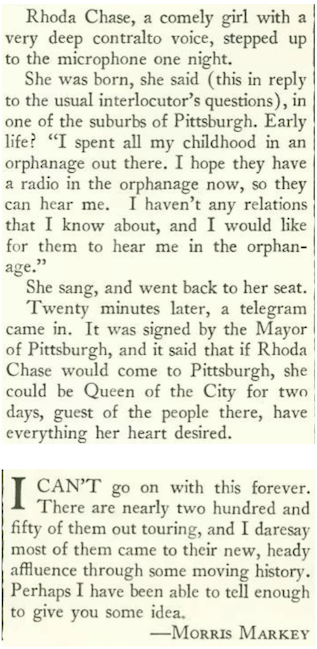
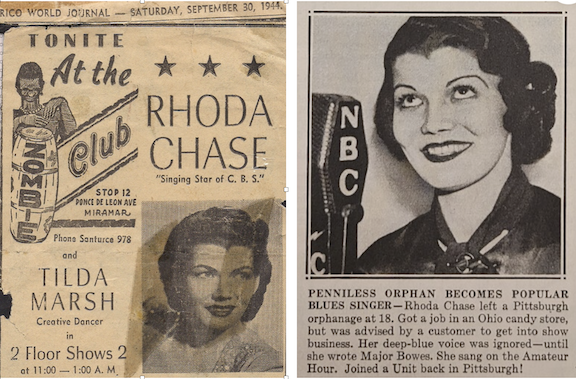
Finally, the story of Rhoda Chase, whom Bowes promoted as a “penniless orphan.” Born Anna Blanor, her stage name, Rhoda, was selected by a psychic, while her last name was inspired by sponsors Chase & Sanborn.

VELVET VOICE…At right, detail from a Chase & Sanborn ad that promoted Rhoda Chase as a “Penniless Orphan” who made the big time thanks to the Amateur Hour. At left, a 1944 newspaper ad for the Zombie Club in San Juan, Puerto Rico. Known as “The Blue Velvet Voice”, Chase was a radio, stage, nightclub and USO blues singer. (Wikimedia Commons/eBay)

 * * *

At the Movies

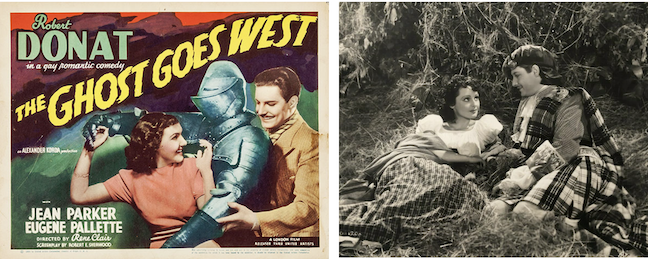
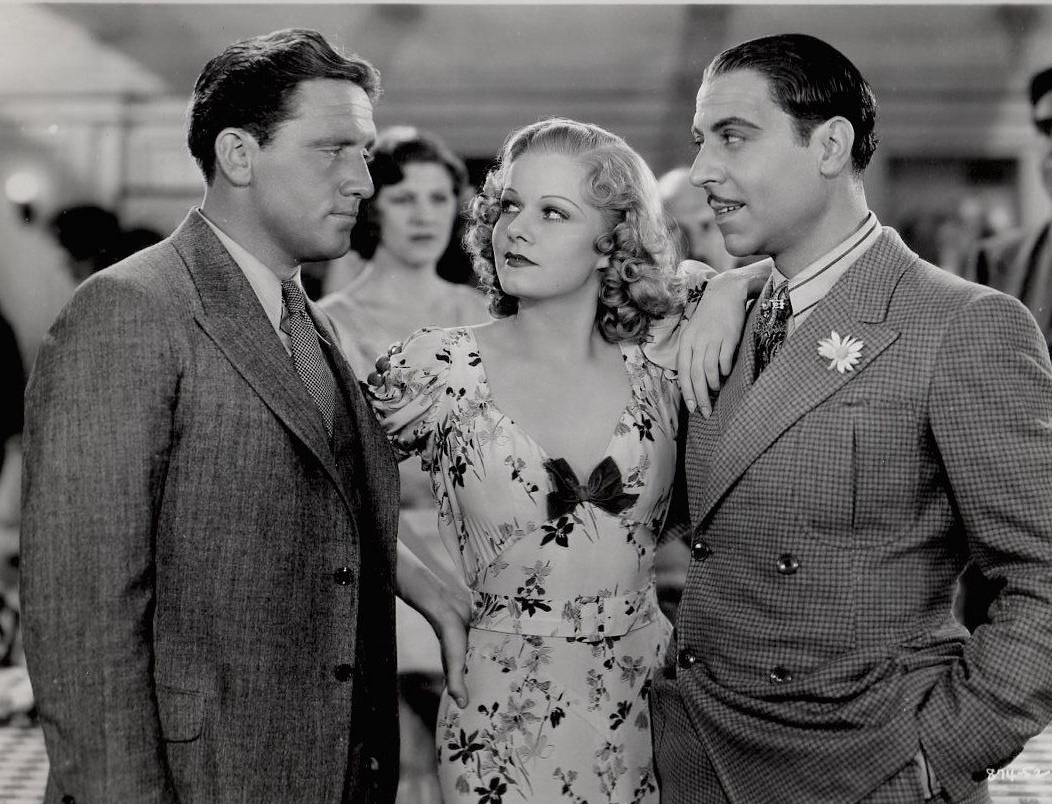
Film critic John Mosher found some bright spots at the movies, praising René Clair’s The Ghost Goes West but feeling sorry for Jean Harlow in her “thankless” role in Riffraff, a film about the tuna-fishing industry.

THE FRIENDLY GHOST…Robert Donat and Patricia Hilliard in the romantic comedy The Ghost Goes West. (IMDB)
FISH OUT OF WATER…Spencer Tracy, Jean Harlow, and Joseph Calleia in Riffraff, a drama about a strike at a tuna fishery. “Just why a life of tuna-fishing should be chosen as background for Miss Harlow’s vehicle I can’t imagine, but there it is,” wrote critic John Mosher. (IMDB)

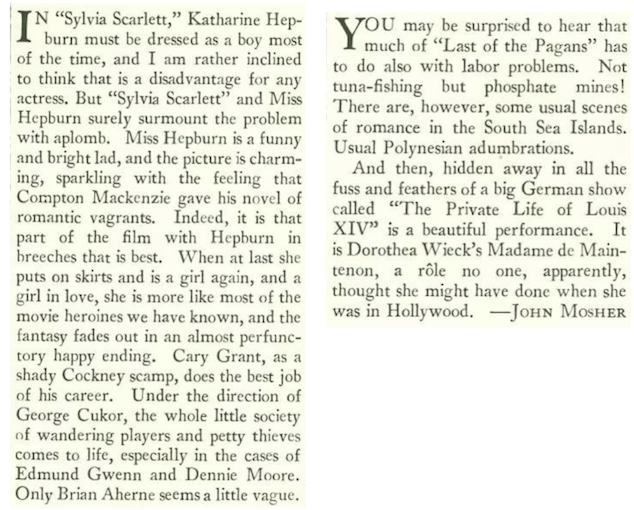
Mosher didn’t know what to make of Katharine Hepburn’s latest film, Sylvia Scarlett, in which she portrayed a con artist disguised as a boy hiding from the police. Despite its major star power and George Cukor as director, the film was a flop.

Mosher also reviewed Last of the Pagans (also about a labor dispute!) and The Private Life of Louis XIV (released in Germany in 1935 as Liselotte von der Pfalz).

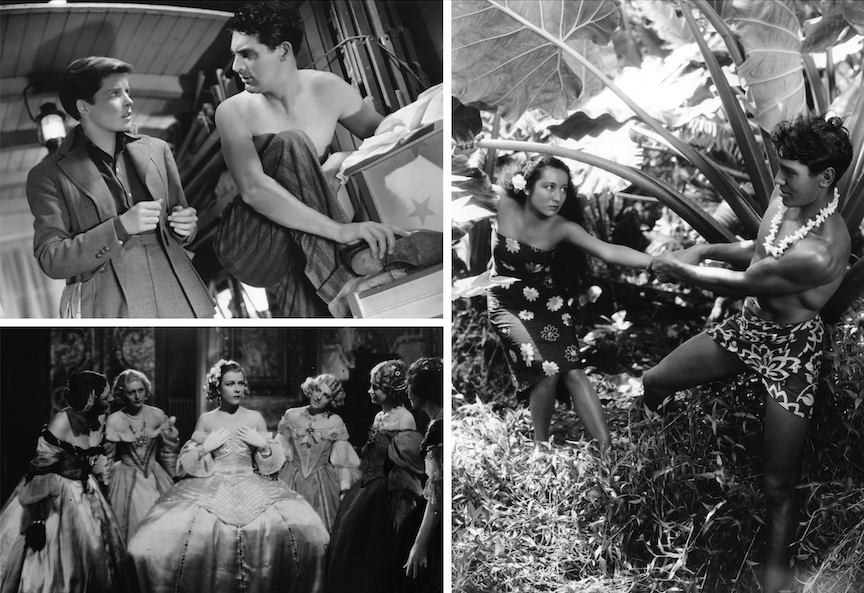
SHE’S A MAN, MAN…Clockwise, from top left, Katharine Hepburn and Cary Grant in Sylvia Scarlett; Lotus Long and Mala in Last of the Pagans; Renate Müller in The Private Life of Louis XIV (Liselotte von der Pfalz). Müller would die in 1937 at age 31 under mysterious circumstances. Many believe the Nazis had her killed because she refused to appear in their propaganda films. (academymuseum.org/MGM/IMDB)

 * * *

From Our Advertisers

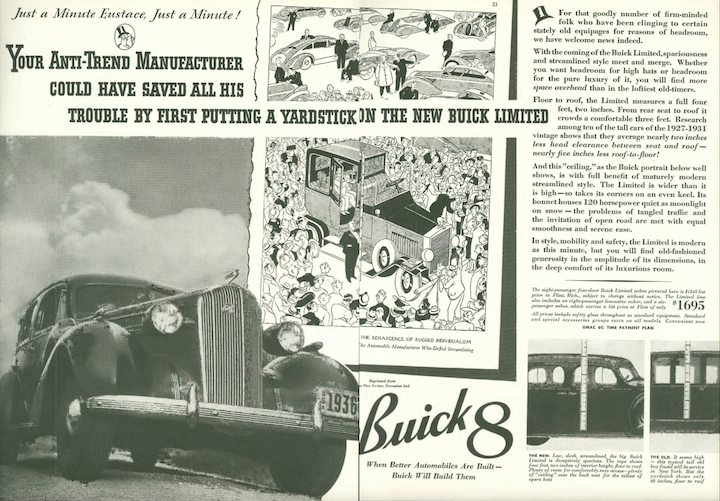
General Motors promoted their Buick Eight in a two-page advertisement that called out Eustace Tilley and reprinted a Carl Rose cartoon from the Nov. 2, 1935 issue…

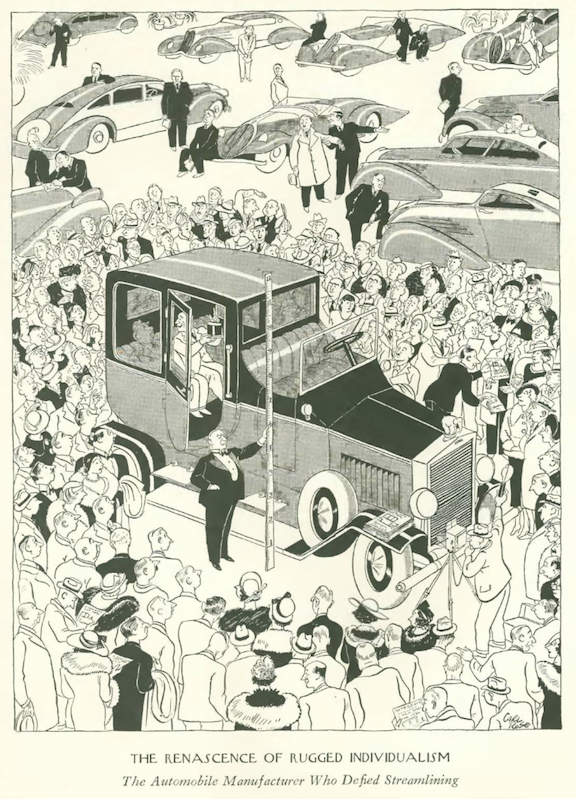
…here is the original cartoon…

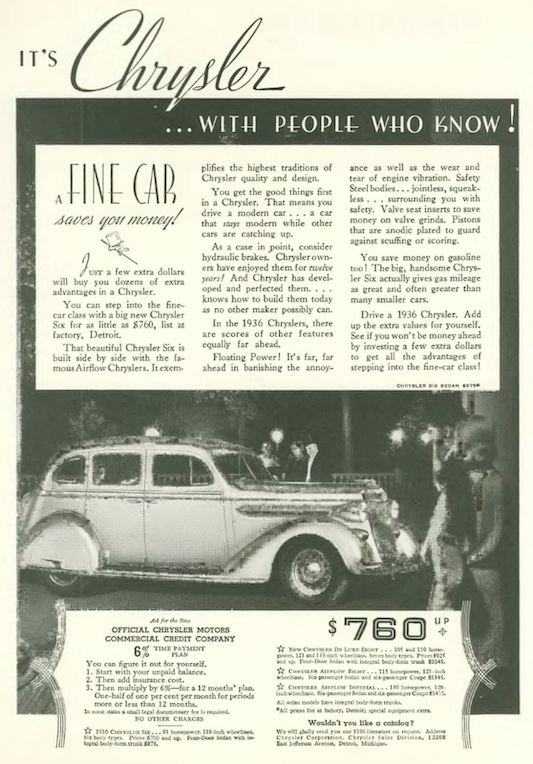
…with the holidays a memory and the Depression still lingering, most of the automobile ads touted economy over luxury, however Chrysler claimed you could have both with this $760 model…

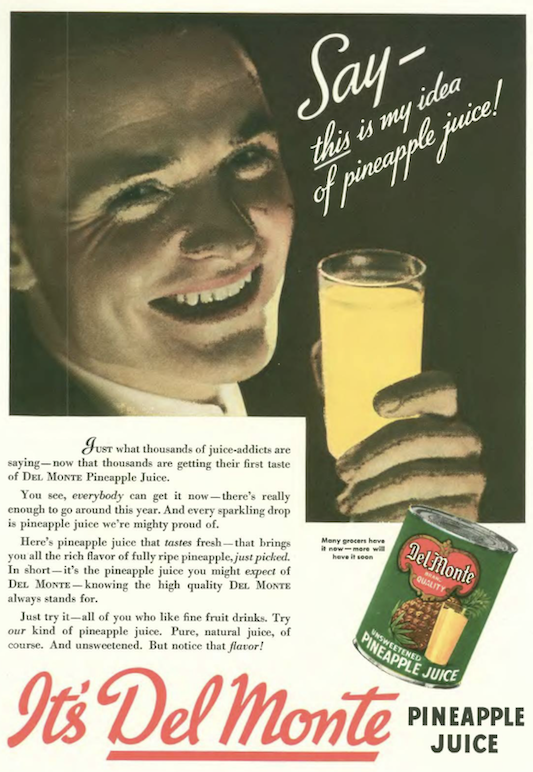
…by the looks of this guy, he probably added three fingers of vodka to his pineapple juice…

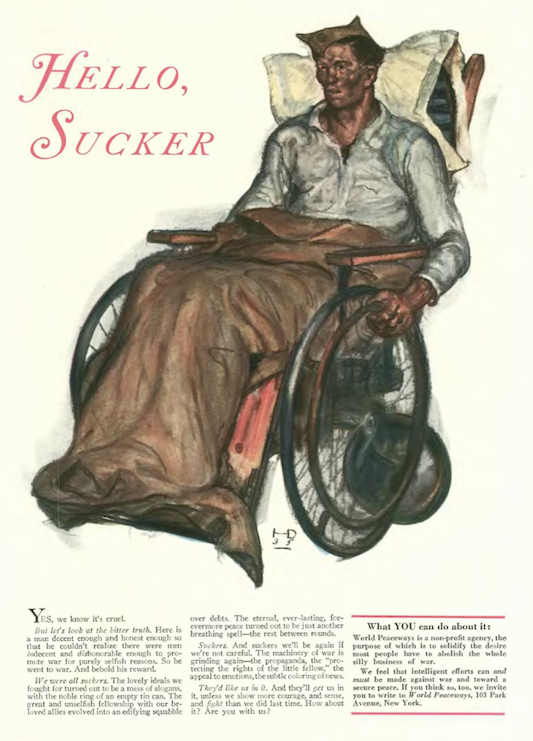
…as noted before, the folks at World Peaceways pulled no punches with their anti-war appeals…

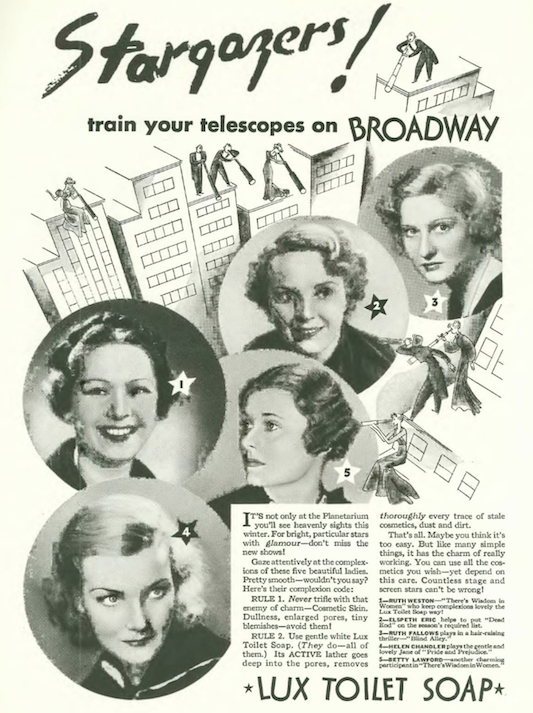
…the makers of Lux were still rolling out Broadway stars to endorse their toilet soap…(Betty Lawford, #5, was an English film and stage actress and a cousin of actor Peter Lawford)…

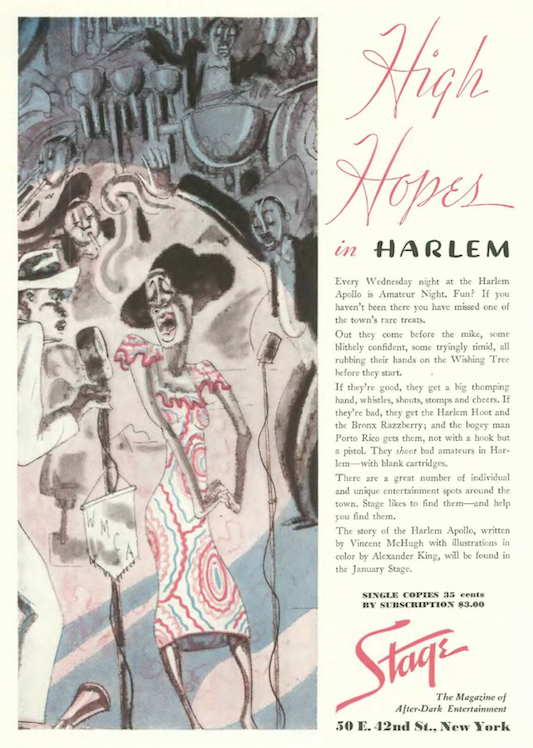
…the inside back cover belonged to Stage magazine…the illustration, “Amateur Night at the Apollo,” is by Alexander King

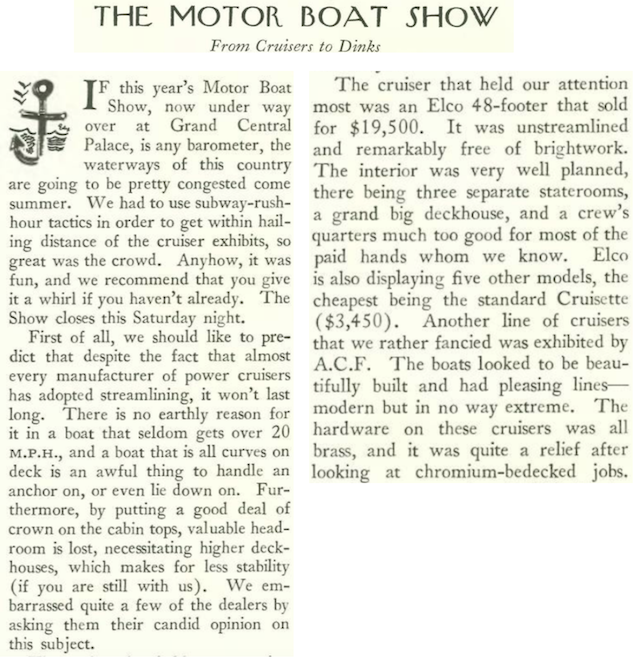
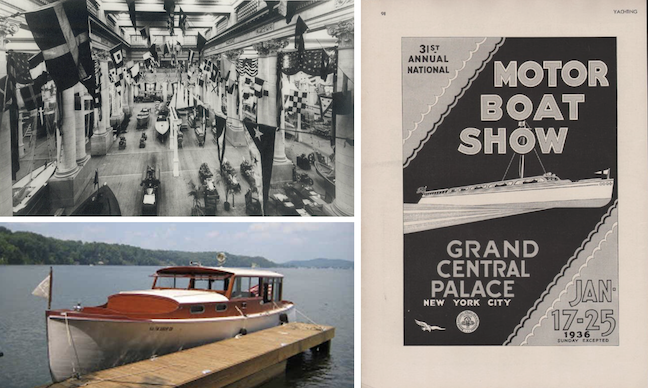
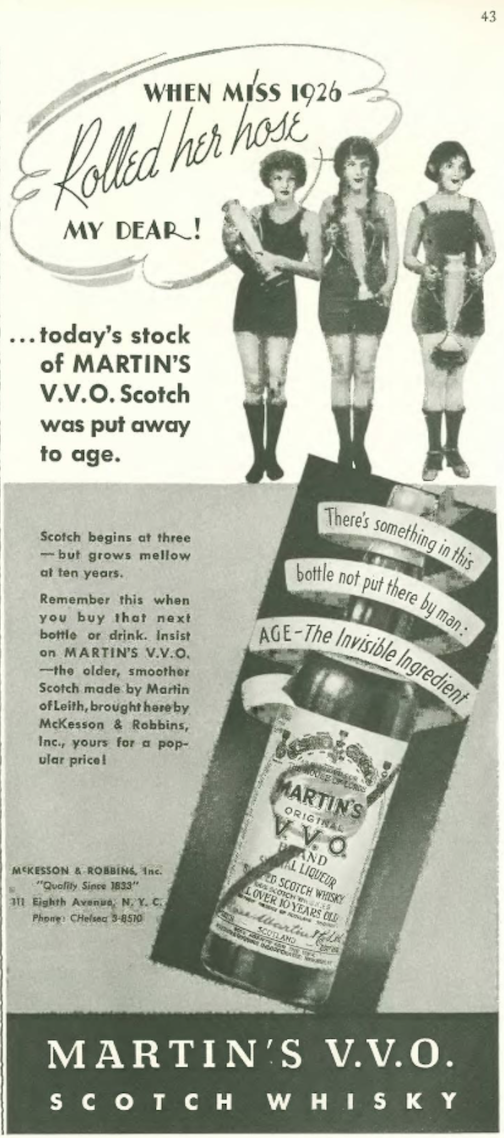
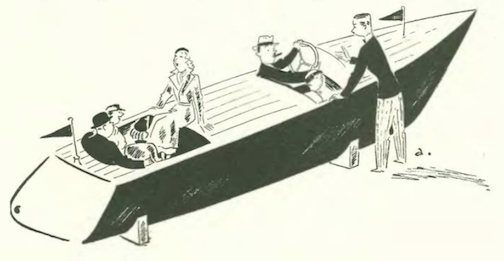
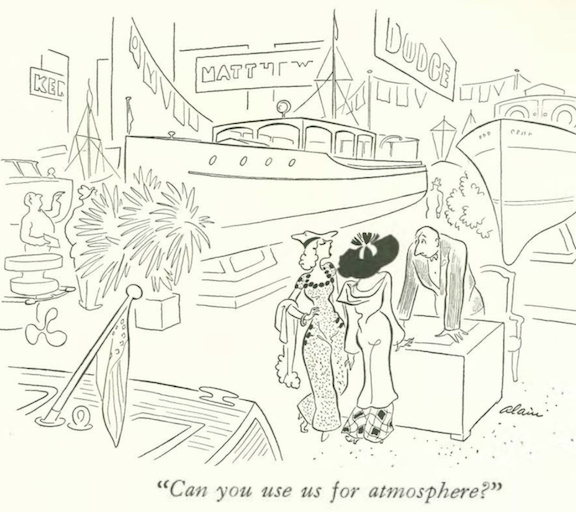
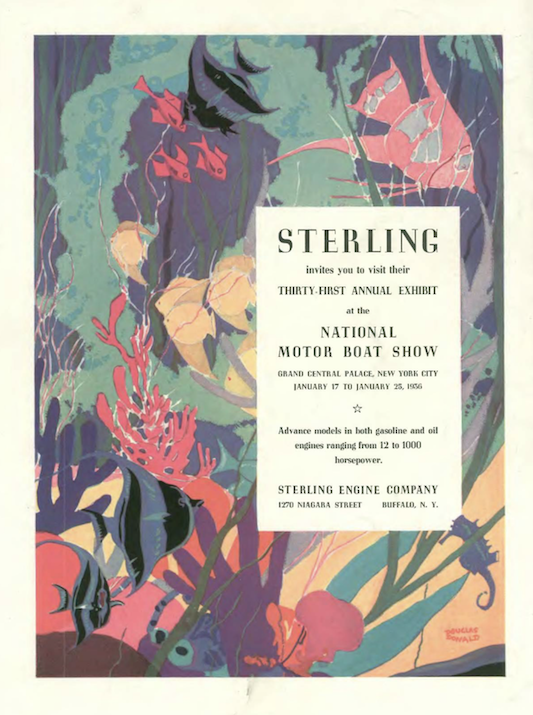
…the Grand Central Palace was hosting the thirty-first annual National Motor Boat Show, a rare back cover not taken by a tobacco company…

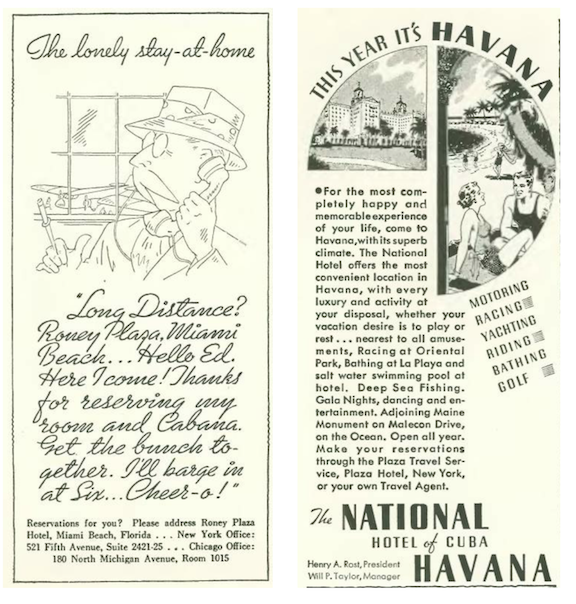
…a couple of ads from back of the book…at left, an Anglophilic appeal from Miami’s Roney Plaza Hotel, and, at right, pre-revolutionary days at the National Hotel in Havana (I had a drink there a few years ago during the Obama thaw…the lobby is beautiful, a classic from another era still hanging on thanks to Canadian and European tourists)…

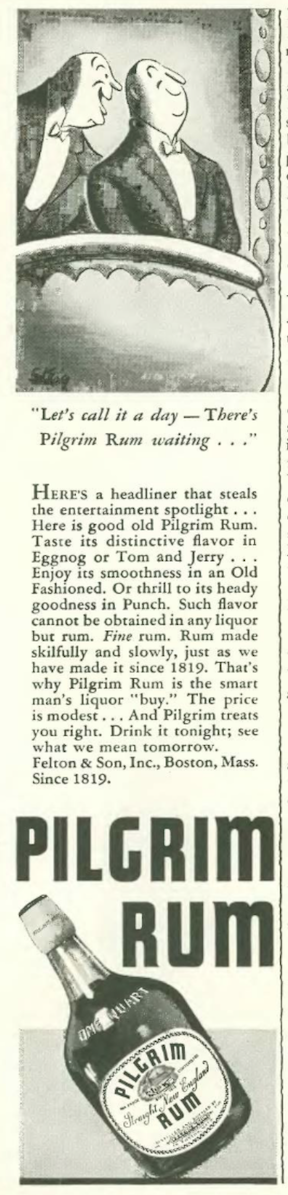
William Steig continued to illustrate these one-column ads from Pilgrim Rum…

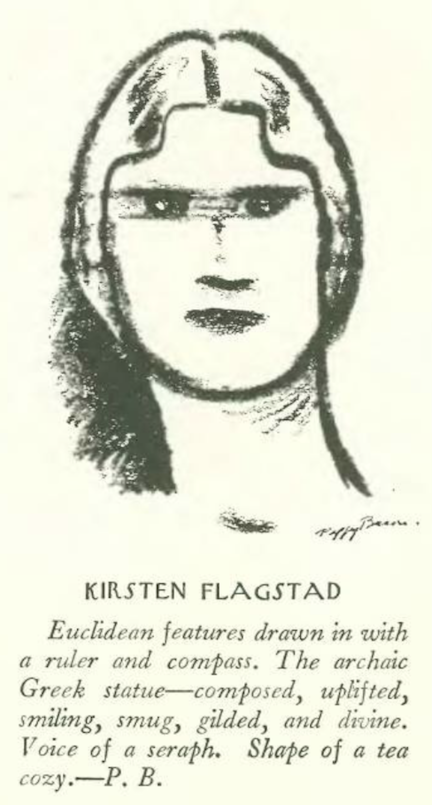
…which segues to our cartoonists…on the bottom of page 3 was this one-column drawing by Peggy Bacon

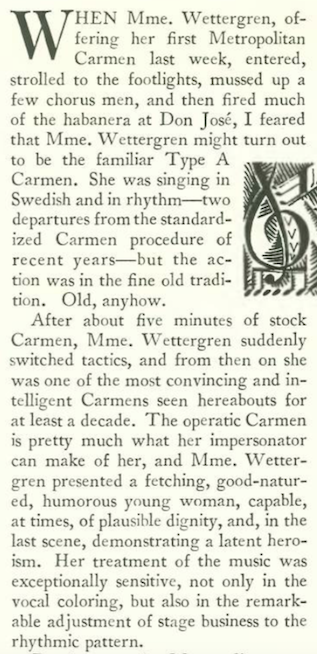
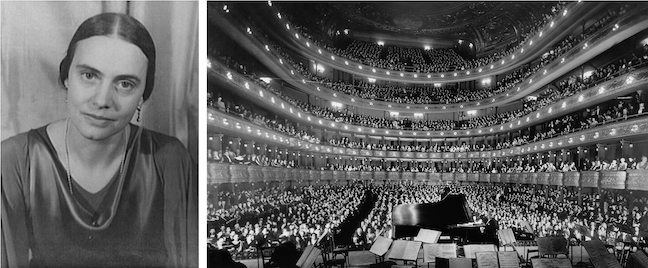
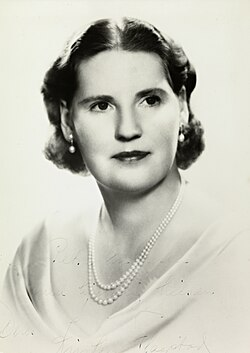
…Norwegian opera singer Kirsten Flagstad (1895–1962) was a famous Wagnerian soprano who made a triumphant debut at the Metropolitan Opera in 1935…

Kirsten Flagstad circa 1940. (Wikipedia)

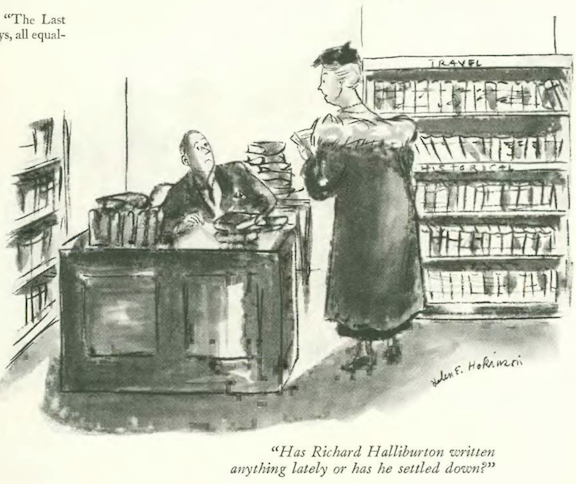
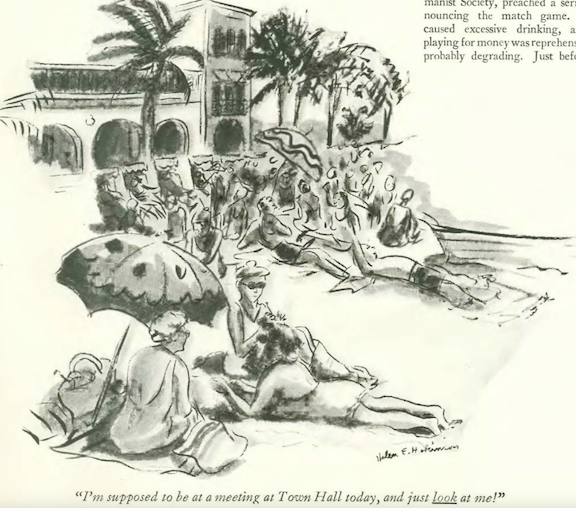
…we continue with Helen Hokinson soaking up some sun…

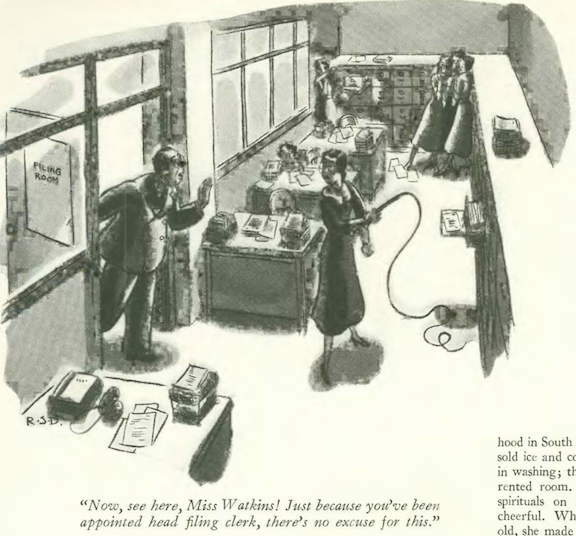
Robert Day cracked the whip in the steno pool…

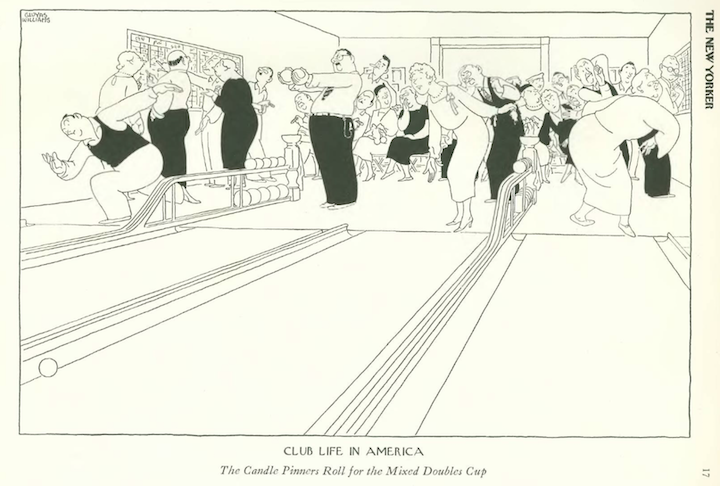
…originally published sideways, another look at club life by Gluyas Williams...

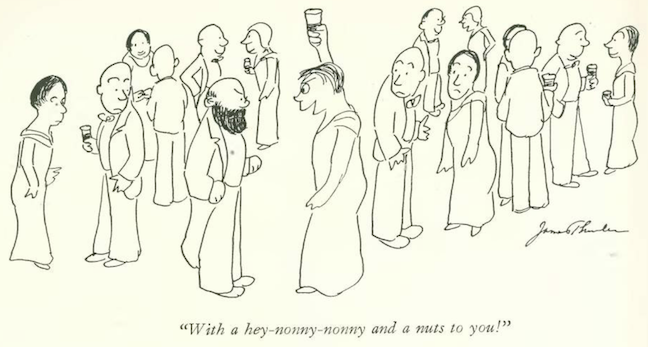
James Thurber offered up a toast…

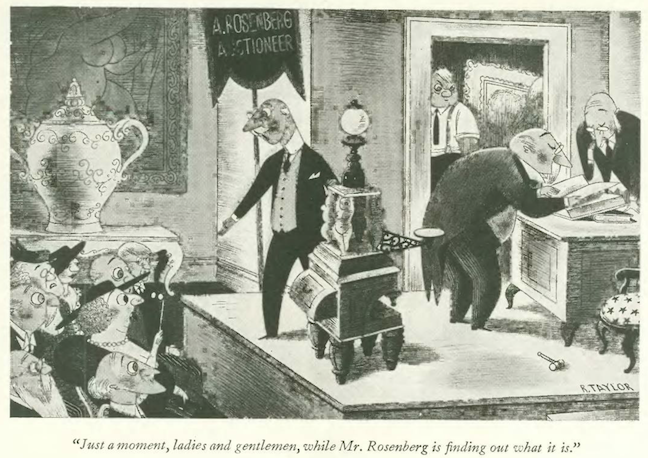
Richard Taylor looked into an auction mystery…

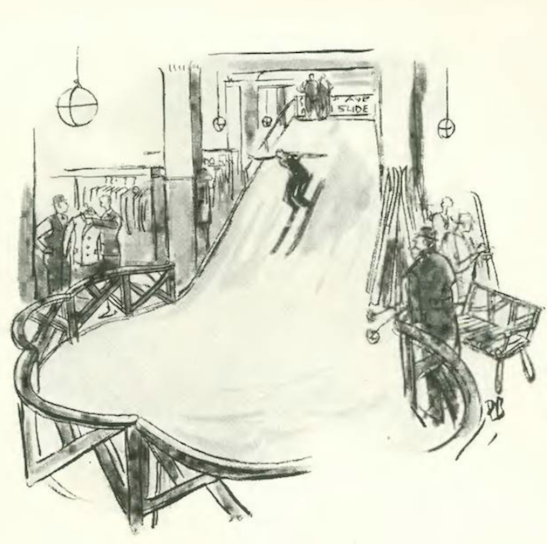
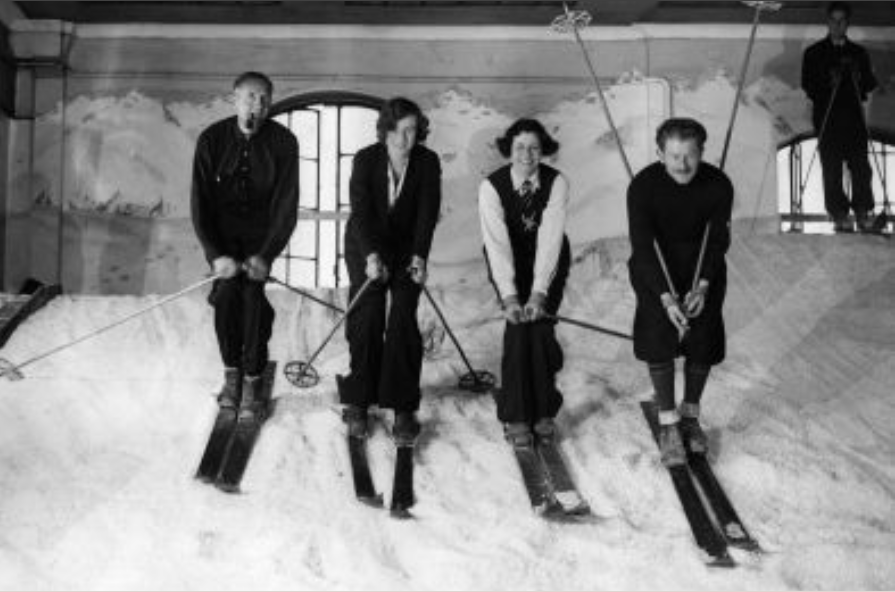
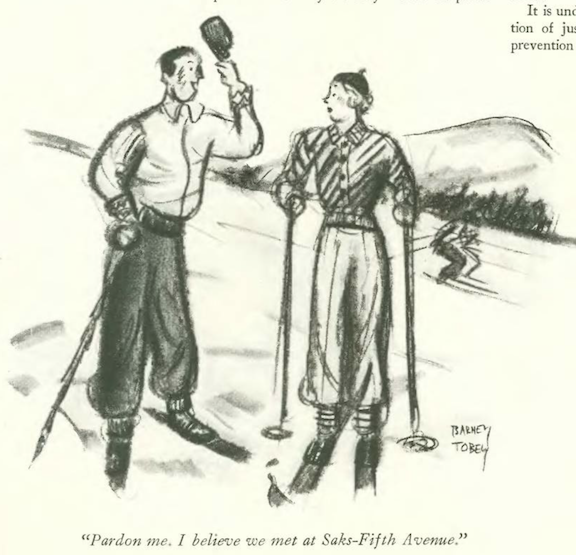
Barney Tobey gave us a friendly greeting on the slopes…

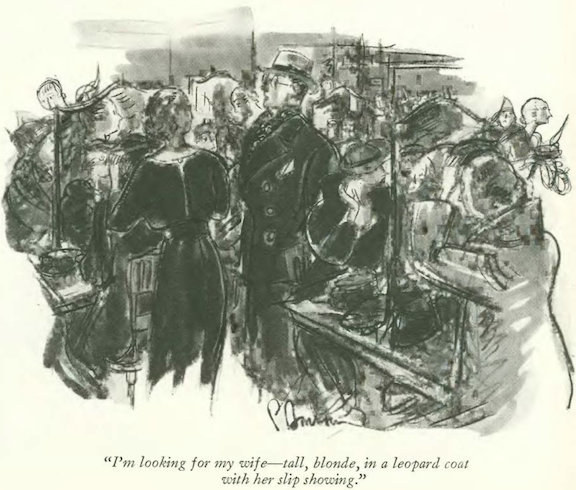
Perry Barlow was lost in a department store…

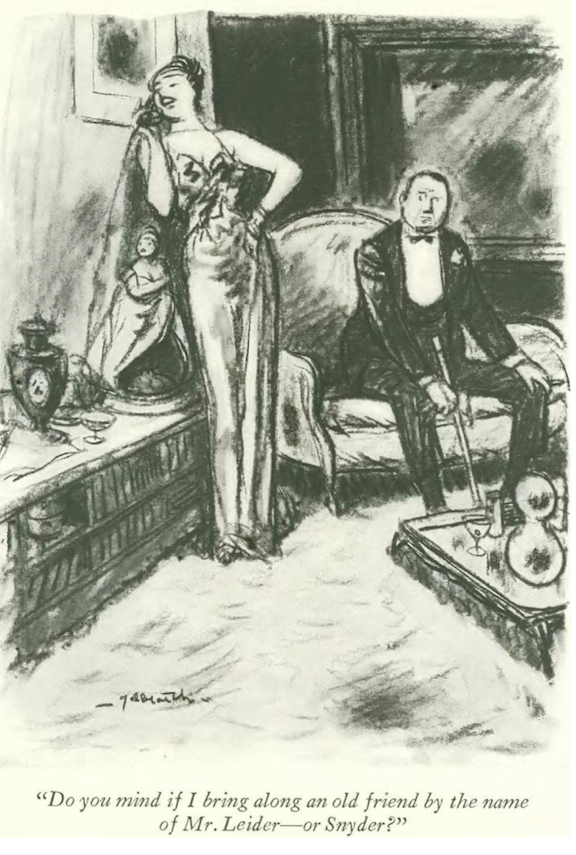
William Crawford Galbraith continued to probe the woes of sugar daddies…

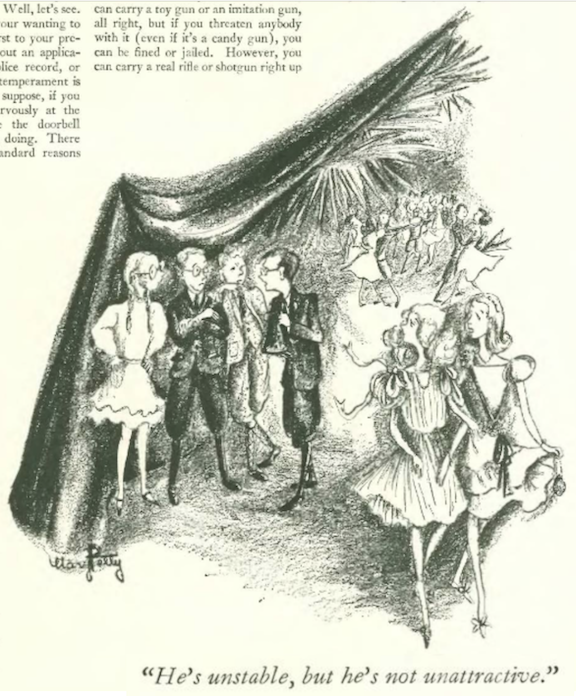
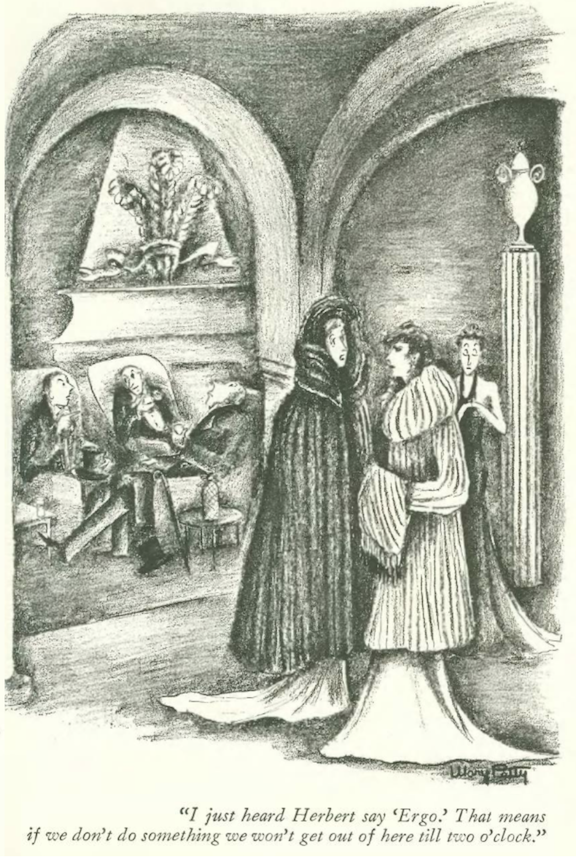
…and we get the last word from Mary Petty

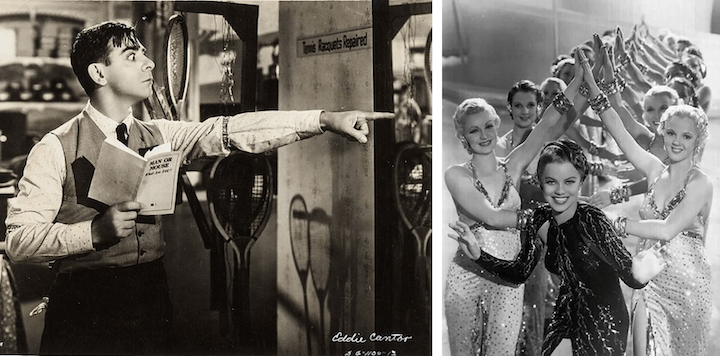
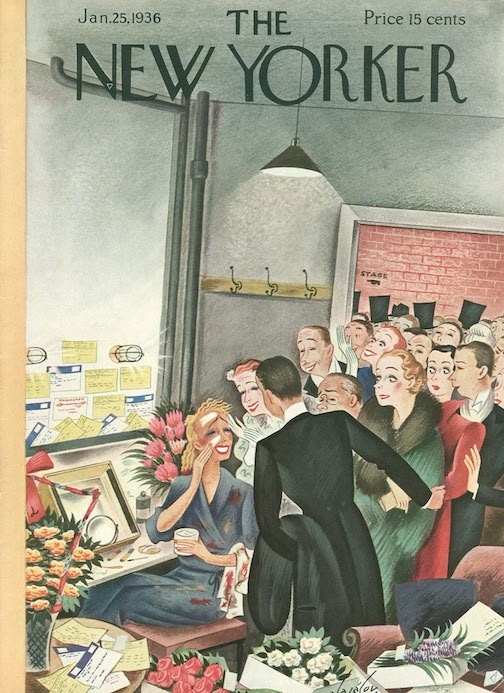
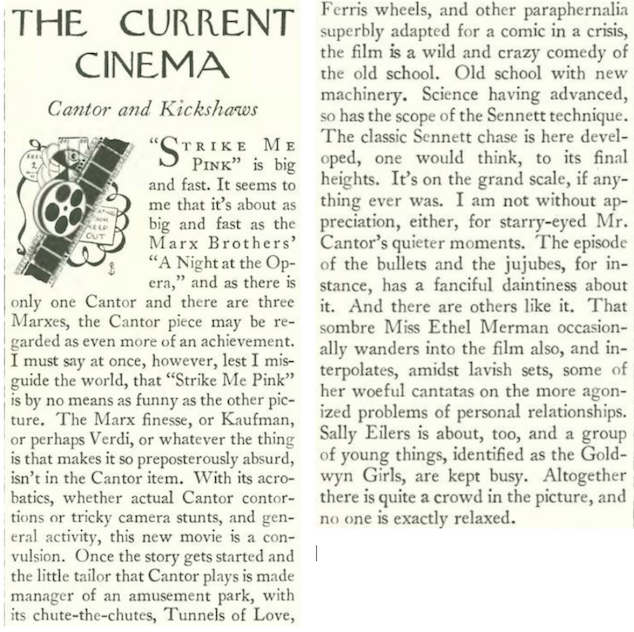
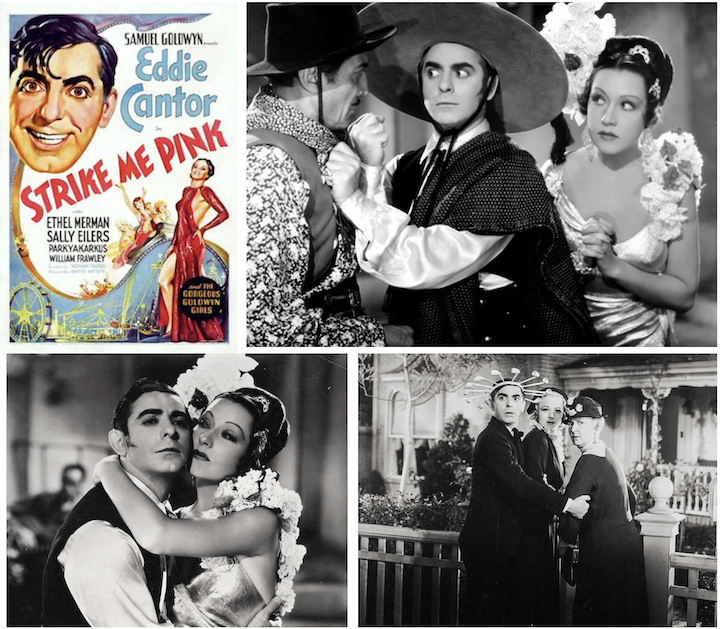
Next Time: Strike Me Pink…

Magnificently Obsessed

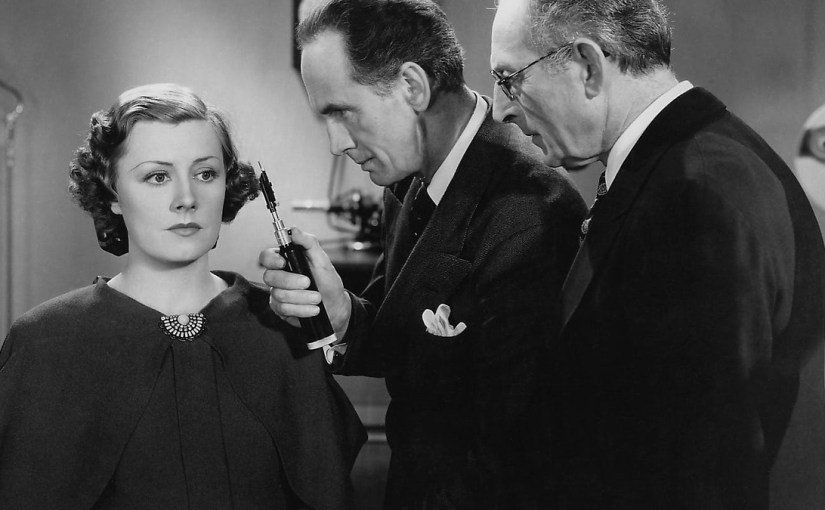
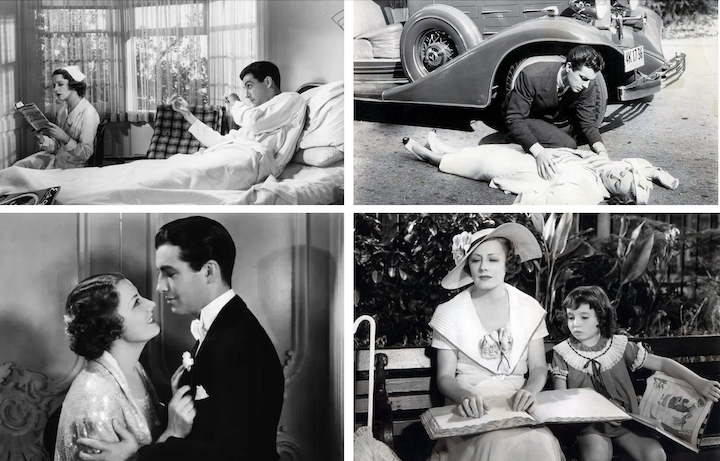
Above: Irene Dunn gets her head examined by Parisian doctors during a scene from the 1935 melodrama Magnificent Obsession. (letterboxd.com)

I can’t think of a better time to escape the world for a few moments and indulge in a bit of frivolity. In this case we take a brief look at a popular film that pushed the envelope of plausibility in true Hollywood style.

January 11, 1936 cover by Helen Hokinson.

Magnificent Obsession featured two of Tinseltown’s leading stars, Irene Dunn and Robert Taylor. Although many critics have called the film’s plot preposterous, it was a fan favorite—at the Radio City Music Hall premiere on Dec. 30, 1935, capacity crowds braved sub-zero weather to see it.

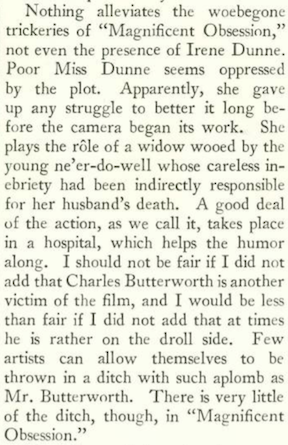
For a film that has been debated and discussed for decades (and remade to some acclaim in 1954 by director Douglas Sirk with Jane Wyman and Rock Hudson in the leads), critic John Mosher barely gave it a glance, feeling sorry for Dunne in her role as a tragically blinded widow.

MAGNIFICENT HAPPENSTANCE…In Magnificent Obsession, Robert Taylor played a spoiled playboy, Robert Merrick, who survives a boating accident at the expense of kindly doctor. Clockwise from top left, Taylor in a scene with Margaret Brayton; Taylor and Irene Dunn in the scene where Dunne’s character, Helen Hudson, is struck by a car and blinded; Dunn with child actor Cora Susan Collins (who incidentally passed away in April 2025 at age 98); the end of the film emphasized Merrick’s transformation from a selfish playboy into a selfless, Nobel Prize-winning man of faith and science. (roberttayloractor.blog/mubi.com/rottentomatoes.com/Facebook)

A brief synopsis: Wealthy playboy Robert Merrick (Robert Taylor) drunkenly capsizes his boat. A hospital’s only pulmotor saves his life at the expense of a beloved surgeon who dies without it. Merrick falls in love with the surgeon’s widow, Helen (Irene Dunn). While driving Helen home he makes a pass at her; she exits the car and is struck by another, losing her eyesight. Merrick conceals his identity while watching over Helen; he then follows her to Paris, where she learns her sight is gone forever. Merrick reveals his identity and proposes. Helen flees. Six years later Merrick, now a Nobel Prize-winning brain surgeon, restores Helen’s sight.

In the film’s defense, plots that stretch credibility have been around since the Greeks and deus ex machina, and consider how many films today employ “portals” of various types to get heroes out of sticky situations. Unless you’re talking about a Werner Herzog film, it’s all make believe.

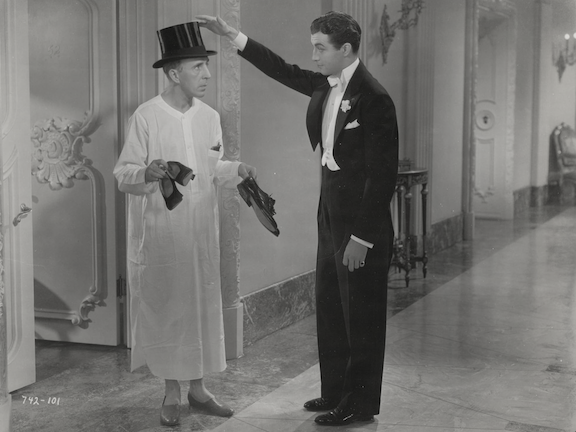
HANDS OFF…John Mosher had particular scorn for the way beloved character actor Charles Butterworth (left) was used in the film. Along with Dunn, Butterworth was another “victim” of Magnificent Obsession, according to Mosher. (IMDB)

 * * *

A Lot On His Mind

E.B. White had a lot to say in his Jan. 11 “Notes and Comment,” beginning with a paragraph about the impending merger of two Condé Nast publications, Vanity Fair and Vogue. The old Vanity Fair magazine, published from 1913 to 1936, was a casualty of the Great Depression, and it essentially disappeared with the merger (Condé Nast revived the title in 1983).

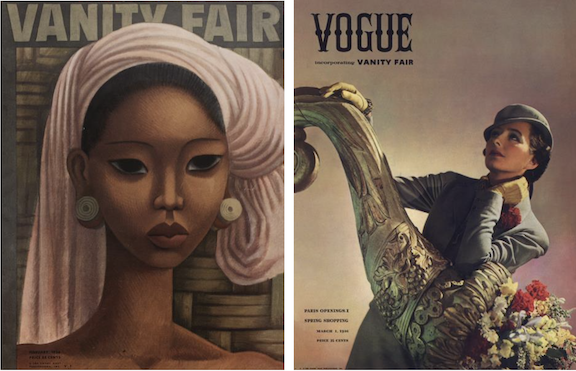
FADE OUT…At left, Bali Beauty by Miguel Covarrubias, on the cover of the final issue of the old Vanity Fair magazine, February 1936. Publisher Condé Nast merged VF with Vogue beginning with its March 1, 1936 issue (at right). The New Yorker, once considered a competitor of the old Vanity Fair, was itself acquired by Condé Nast in 1985. (vanity fair.com/vogue.com)

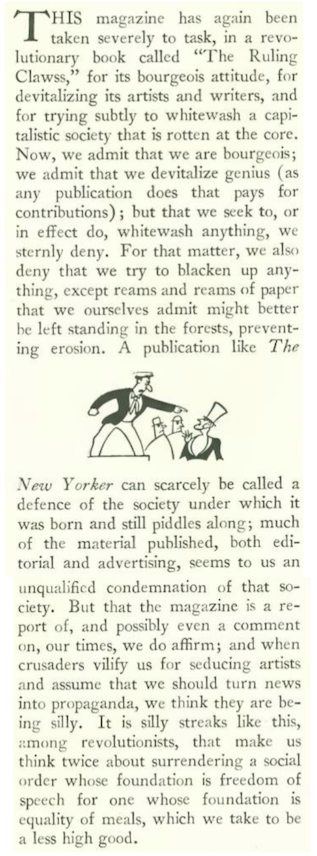
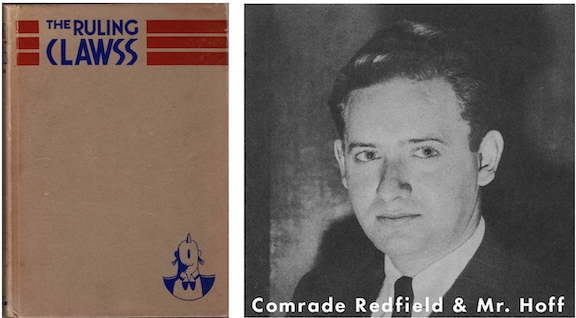
White also commented on a new book, The Ruling Clawss, which criticized The New Yorker for its “bourgeois attitude.” Interestingly, the book was produced by none other than New Yorker cartoonist Syd Hoff, who wrote and illustrated The Ruling Clawss as “A. Redfield,” a pseudonym he used in the 1930s for his contributions to The Daily Worker and other leftist causes.

HOFF IN A HUFF…Cover of the 1935 edition of The Ruling Clawss; frontispiece from a 2023 reprint of the book by The New York Review of Books. Syd Hoff (1912–2004) contributed 571 cartoons to The New Yorker between 1931 and 1975. Hoff also drew cartoons for The Daily Worker under the pseudonym “A. Redfield.” (abebooks.com/nyrb.com)

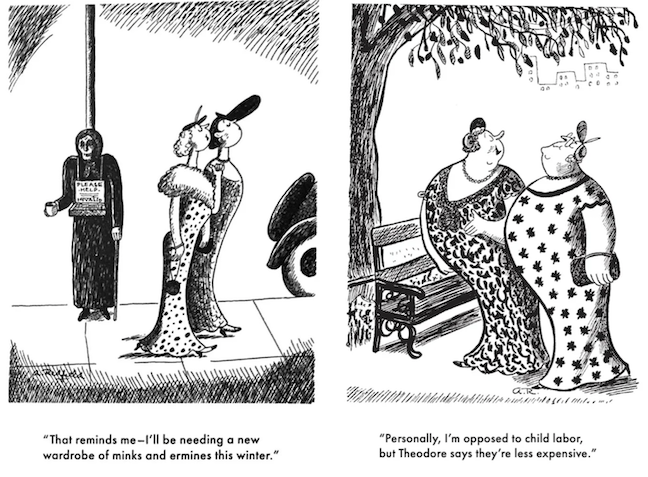
In The Ruling Clawss, Hoff (as Redfield) criticized “bourgeois humor” as an opiate of the masses, citing The New Yorker, Esquire, Judge, and Life as publications that take “the banker boys and politicians, who are the rapers of liberty and democracy,” and present them between perfume ads in whimsical situations. The bourgeoisie makes itself look human, wrote Hoff, “By exposing itself in the boudoir, or the night club, doing foolish things or saying something ‘funny’…In other words, the fascists and warmongers are little lambs who do their parts in contributing to the merriment of a nation.”

Referring to his fellow cartoonists, Hoff concluded: “the Arnos, Soglows, Benchleys and Cantors…are all talented and funny, but…and here, I believe, is the point…their comedy is all too often a whitewash for people and conditions that, in reality, are not funny.”

NO LAUGHING MATTER…Examples of Syd Hoff’s cartoons in The Ruling Clawss. (nyrb.com)

Today Hoff is probably best remembered for his children’s books, especially Danny and the Dinosaur. You can read all about his work at this website.

* * *

A Different Kind of Hoff

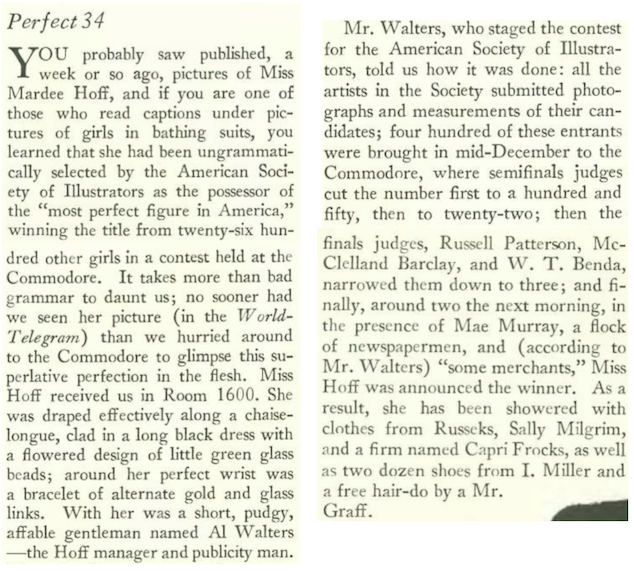
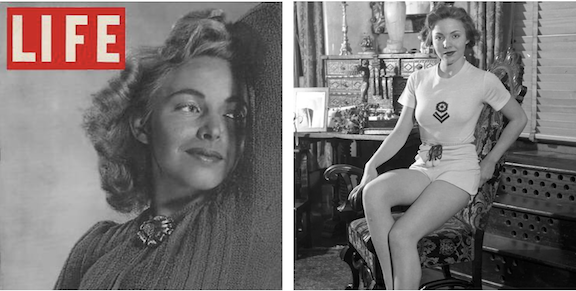
We move on to another Hoff, namely Mardee Hoff, who was “ungrammatically selected” by the American Society of Illustrators as the possessor of the “most perfect figure in America.” Here is an excerpt from “The Talk of the Town.”

HER BODY OF WORK…Mardee Hoff (1914–2004) possessed the best body shape in America, according to the American Society of Illustrators following a contest involving 2,600 women at New York’s Commodore Hotel. At left, Hoff on the cover of Life, Oct. 21, 1940. At right, circa 1936. (findagrave.com/Reddit)

 * * *

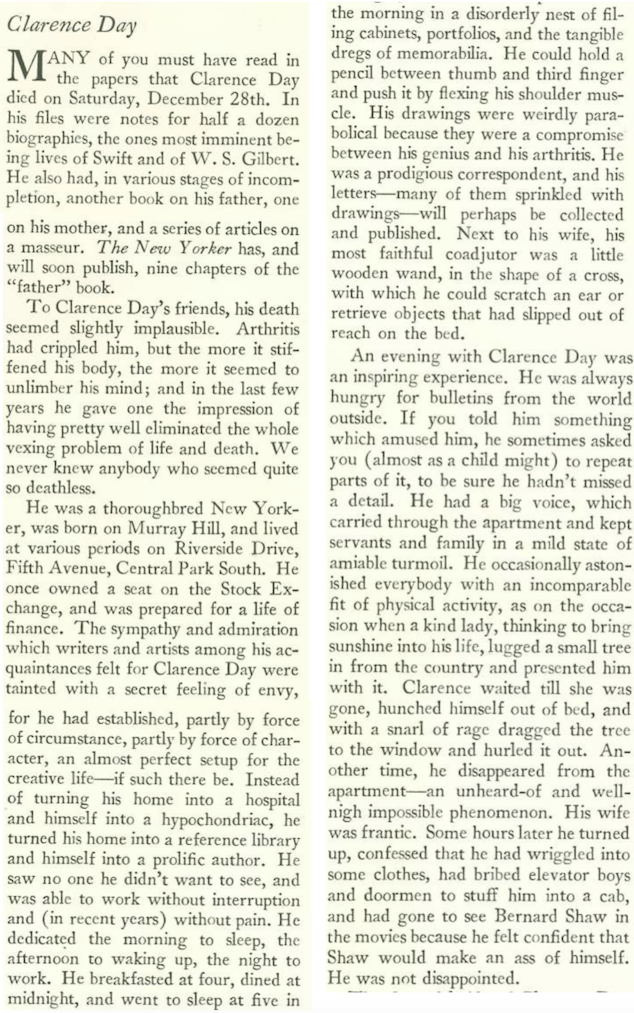
Life With Clarence

“The Talk of the Town” noted the passing of beloved author and cartoonist Clarence Day in a lengthy tribute that highlighted his remarkable output despite crippling arthritis. Excerpts:

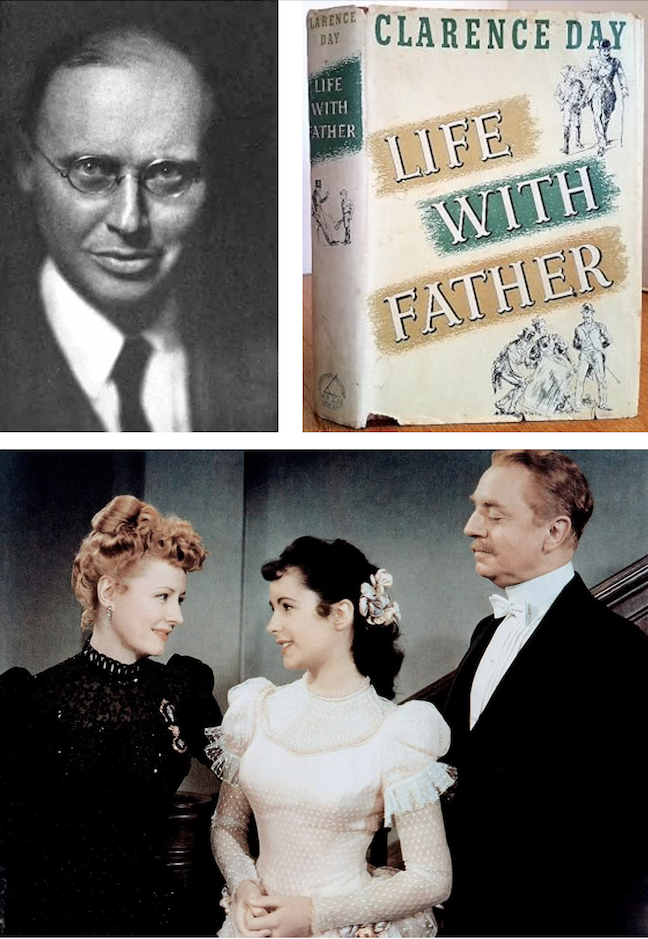
GOOD OLD DAYS…Clarence Day (1874–1935) developed crippling arthritis as a young adult, and spent the remainder of his life as a semi-invalid. Nevertheless, he churned out more than a dozen books, most famously Life With Father, a collection of stories from The New Yorker that were published in book form shortly after Day’s death. The New Yorker continued to publish Day’s stories through August 1937. Above, Day, circa 1920, and a first edition of Life With Father. Below, scene from the 1947 comedy film by the same name featuring William Powell, Irene Dunn, and Elizabeth Taylor. (Wikipedia/abebooks.com/IMDB)

 * * *

At the Movies
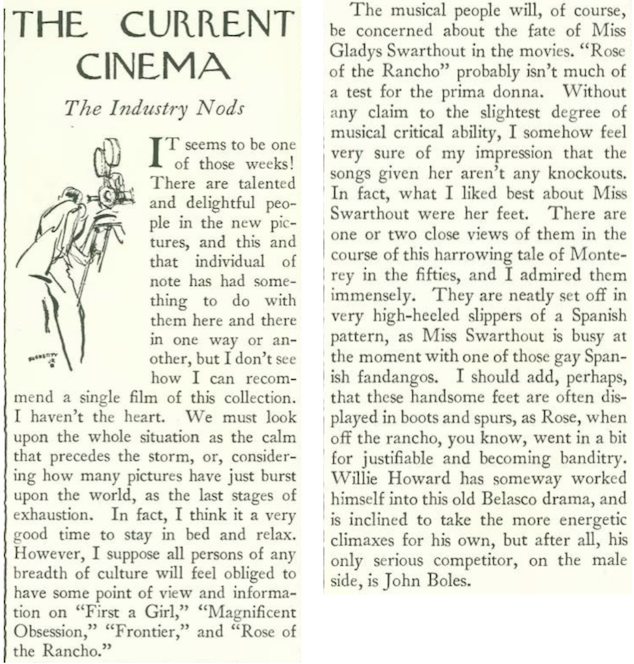
In addition to Magnificent Obsession, John Mosher endured screenings of several other pictures he could not recommend, despite featuring “talented and delightful people”…

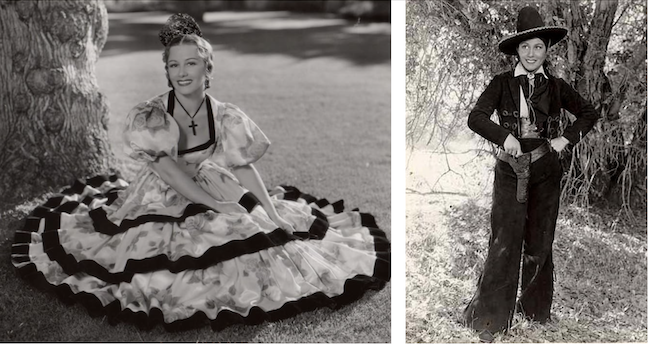
…Mosher thought the best thing about mezzo-soprano Gladys Swarthout in Rose of the Rancho was her, um, feet…

SINGING BANDIT…Gladys Swarthout, a popular Metropolitan Opera mezzo-soprano, portrayed the daughter of landowner besieged by outlaws in Rose of the Rancho. In the film she disguises herself as a man (right) and organizes a band of vigilantes to fight the outlaws. The film was one of five produced by Paramount in the 1930s featuring Swarthout. (IMDB/swarthoutfamily.org)

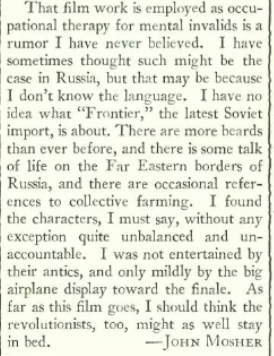
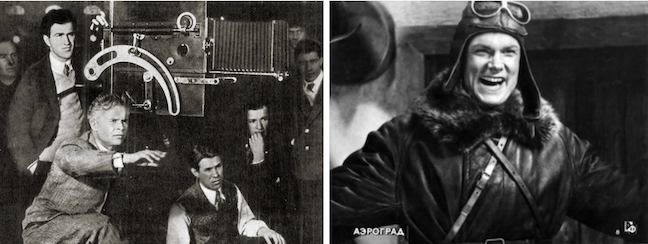
…and he was frankly mystified by the Soviet Russian film Frontier, featuring lots of beards, collective farms, and a big display of airplanes at the finale…

FOR THE FATHERLAND…At left, Aleksandr Dovzhenko directs the Soviet film Frontier (aka Aerograd), about a remote Siberian outpost that comes under threat of attack by the Japanese. At right, Sergey Stolyarov portrayed the pilot Vladimir Glushak, who was filled with wondrous tales about the new city of Aerograd. The film was commissioned by Joseph Stalin. (IMDB/kinorium.com)
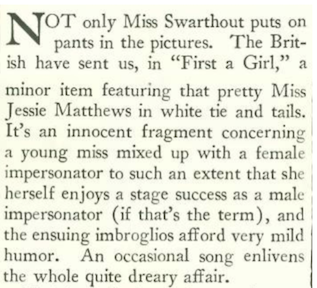
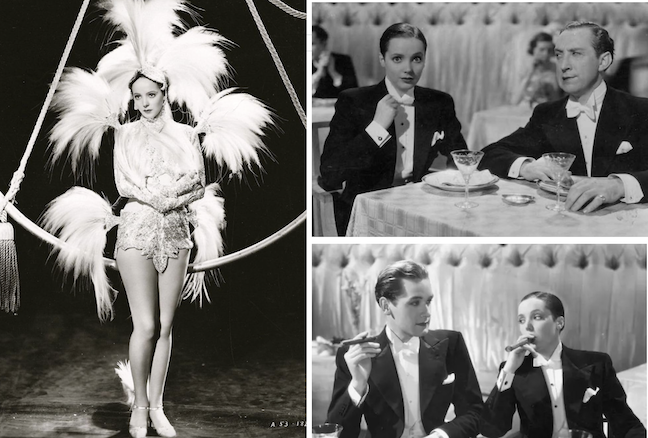
…English actress, dancer and singer Jessie Matthews (1907–1981) also wore the pants in First a Girl, a comedy adapted from the 1933 German film Viktor und Viktoria (which was remade as Victor/Victoria in 1982 with Julie Andrews)…
SHE/HE…At left, Jessie Matthews in First a Girl, a comedy adapted from the 1933 German film Viktor und Viktoria; right top, Matthews with Sonny Hale; and, at bottom, with Griffith Jones. Mosher called the film a “dreary affair.” (IMDB/interwarlondon.com)
* * *
All Aboard
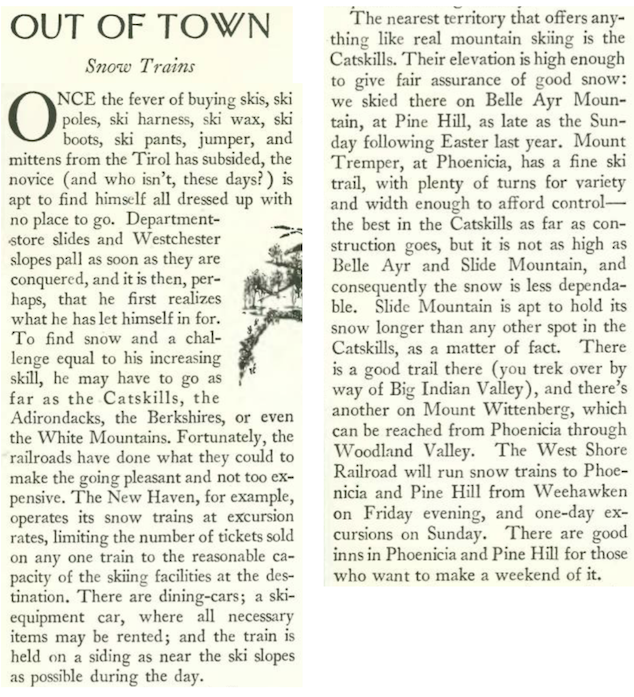
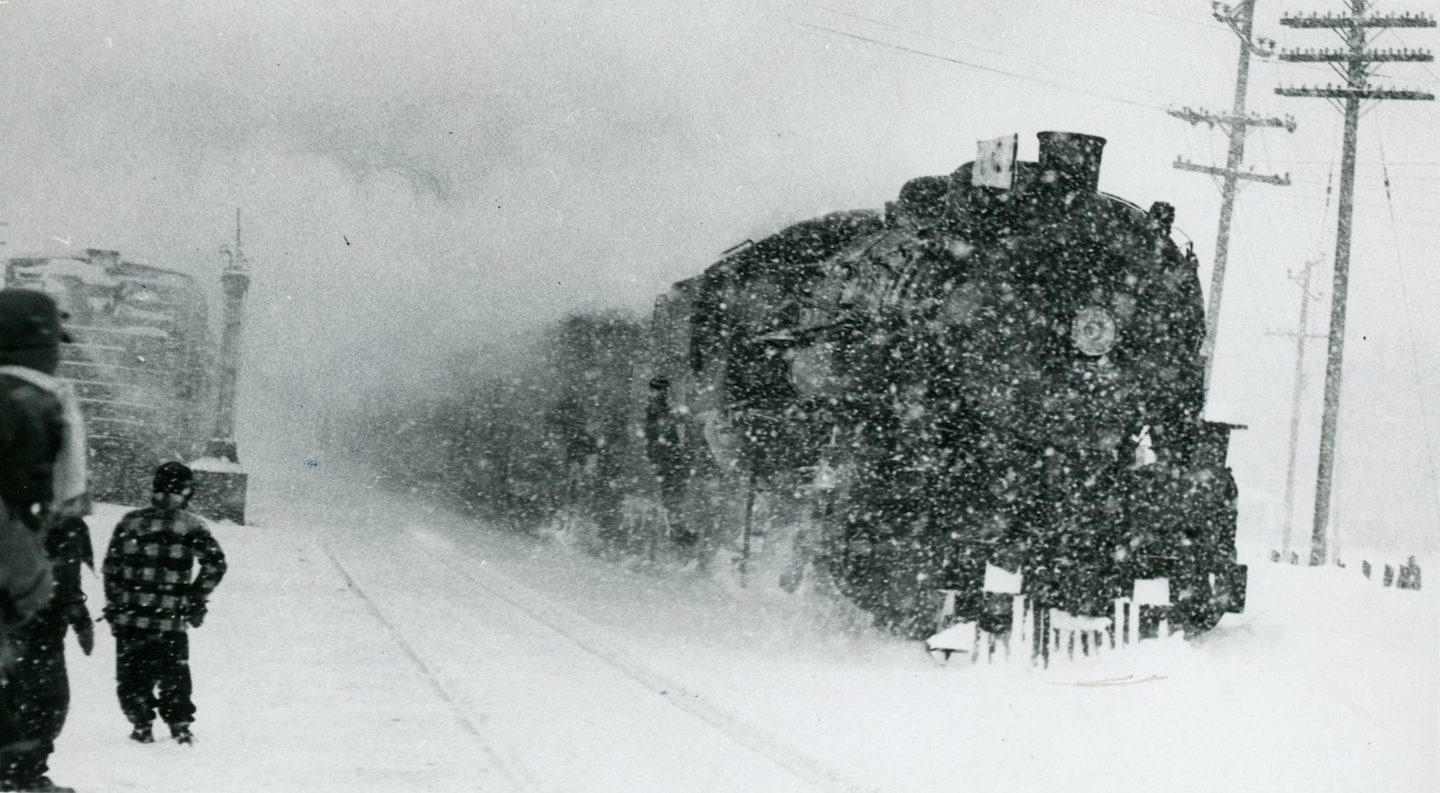
During the 1930s “Snow Trains” carried skiers from Manhattan to the Catskills, the Berkshires and other destinations. Railroads offered travel packages that helped popularize downhill skiing before World War II. Excerpts:

POLAR EXPRESS…A Snow Train arrives at Thendara Station full of skiers headed for the slopes and winter activities in Old Forge. Circa late 1930s. (northcountryatwork.org)

 * * *

From Our Advertisers

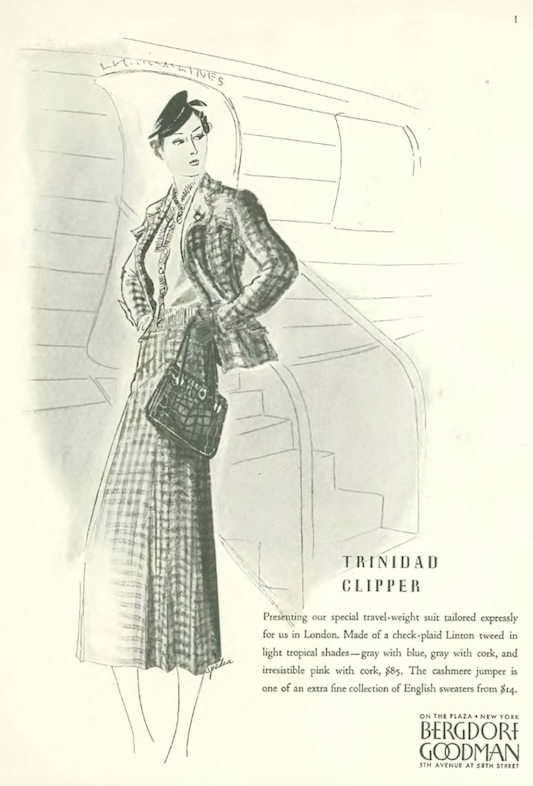
We take wing with Bergdorf Goodman’s stylish “Trinidad Clipper suit…

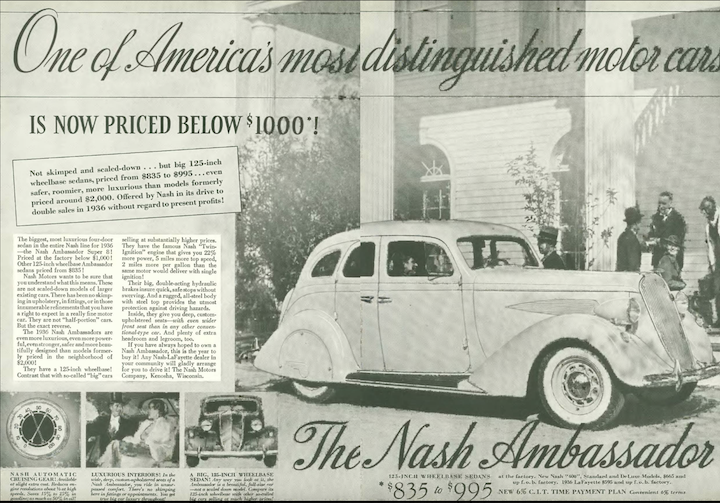
…the folks at Nash took out the center spread to tout their inexpensive yet distinguished Ambassador…

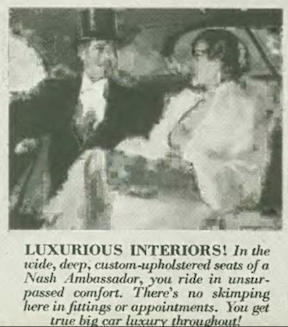
…apparently it was distinguished enough for these toffs…

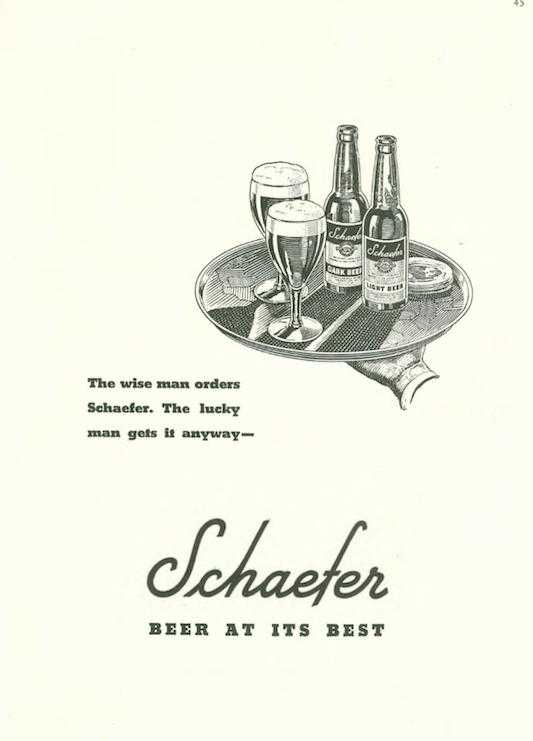
…by contrast, a more spare, minimal style is seen in this ad for Schaefer beer…

…and in this ad for Bloomingdale’s…this was tricky to reproduce, the lightness of the compass against all that black ink…

…here’s a new marketing ploy from R.J. Reynolds…smoke a half a pack of their Camels, and then send back the rest if you don’t like them…I’m guessing most folks finished them off…

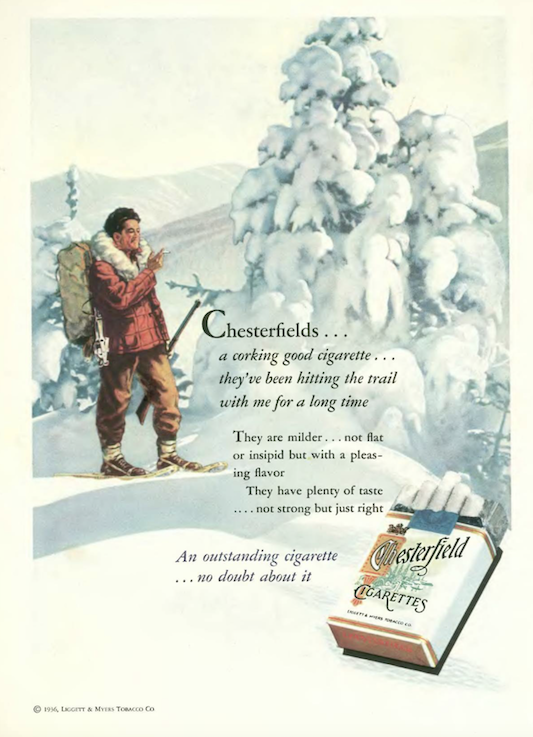
…Liggett & Myers kept it simple, equating smoke in your lungs with clean, crisp winter air…

…on to our cartoonists, we begin with spots by Gregory d’Alessio

Daniel “Alain” Brustlein

and Christina Malman

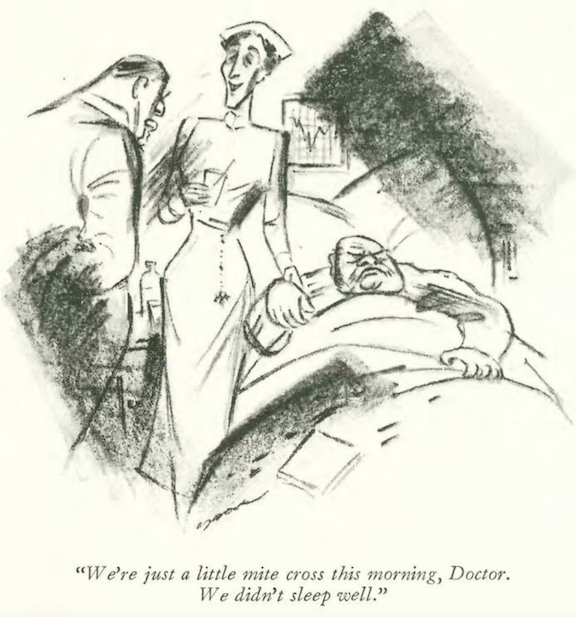
Leonard Dove looked in on an owly patient…

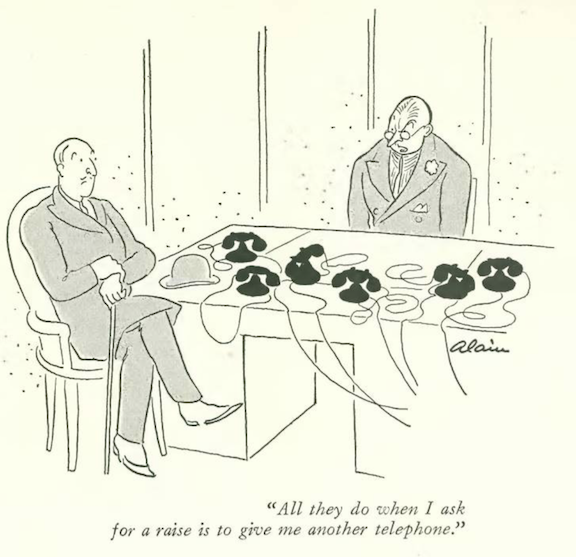
Alain again, seeking an elusive promotion…

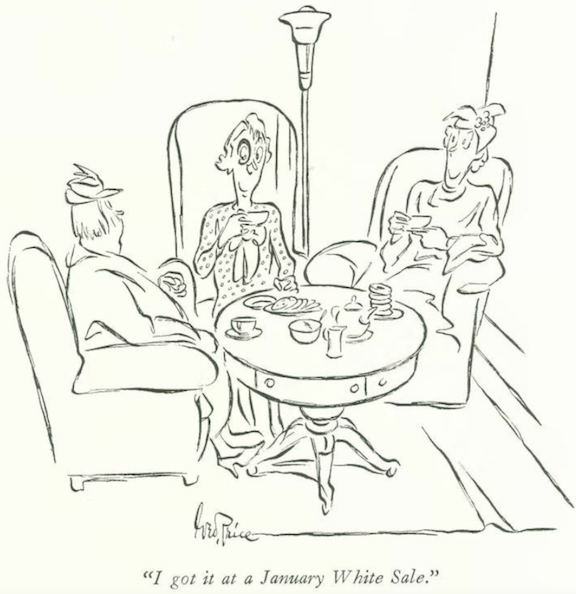
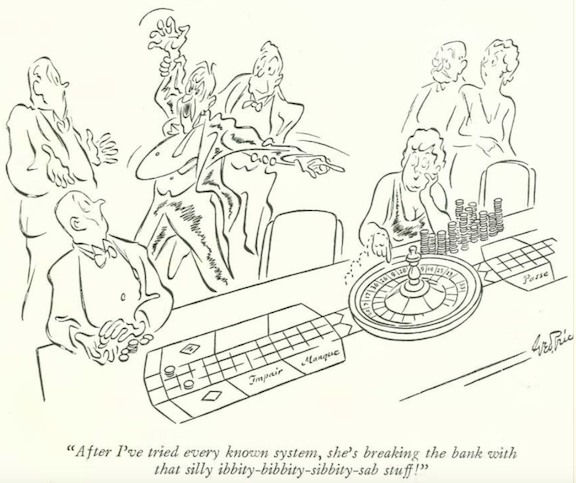
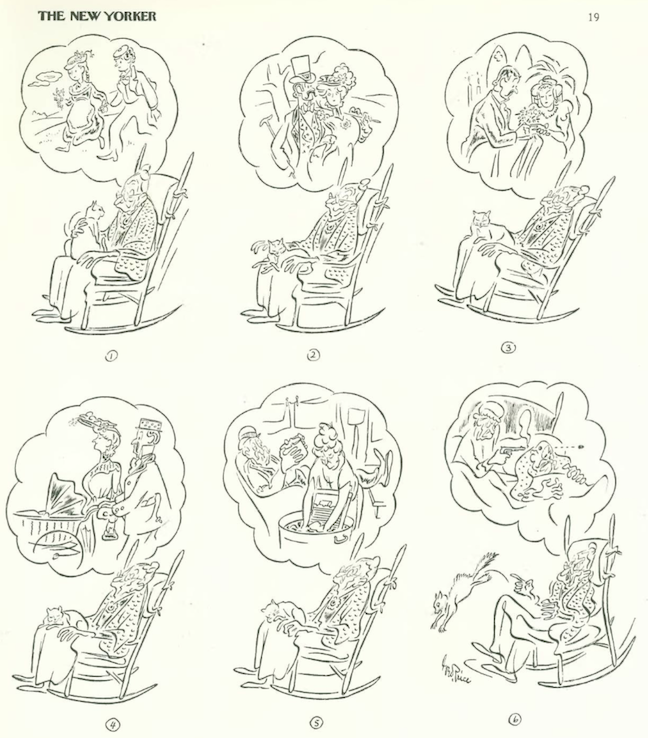
…the stages of love and marriage, per George Price

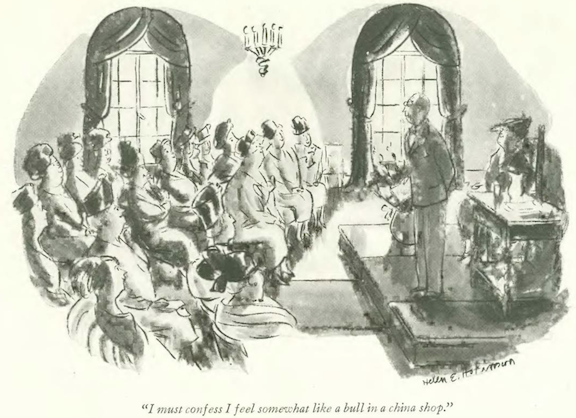
Helen Hokinson reconvened her ladies club…

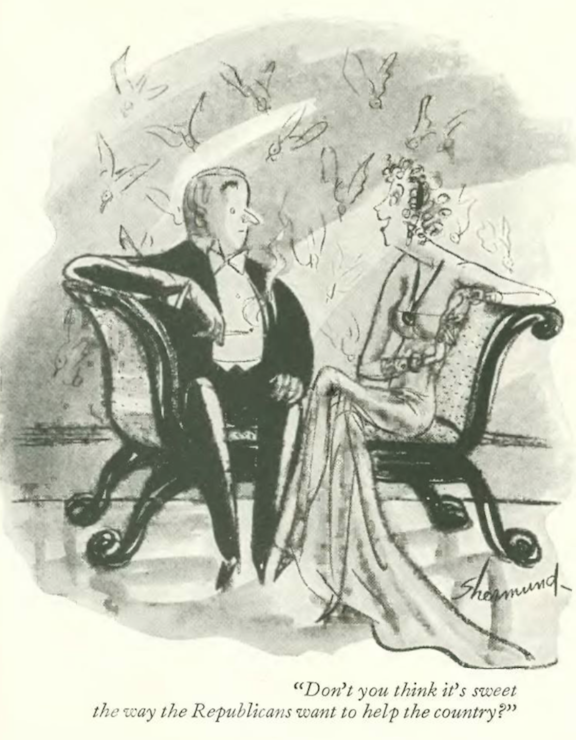
Barbara Shermund discussed politics…

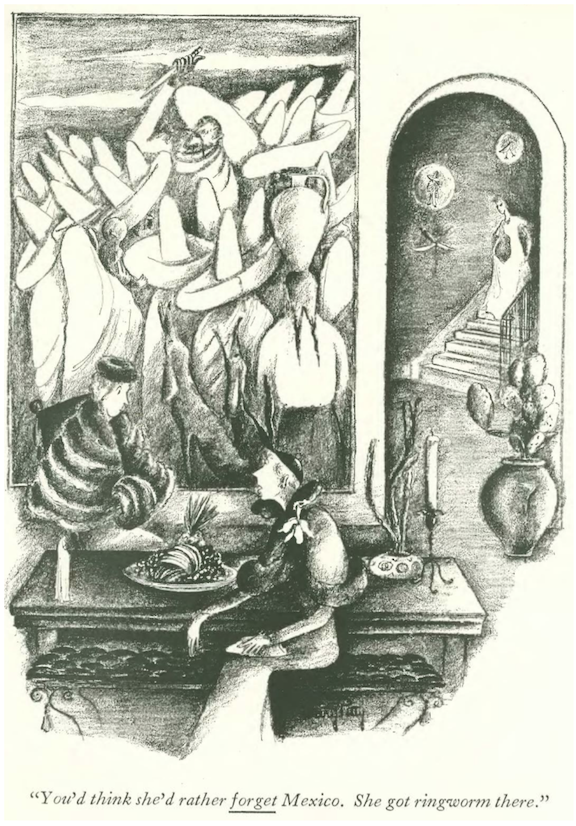
Mary Petty considered the price of great art…

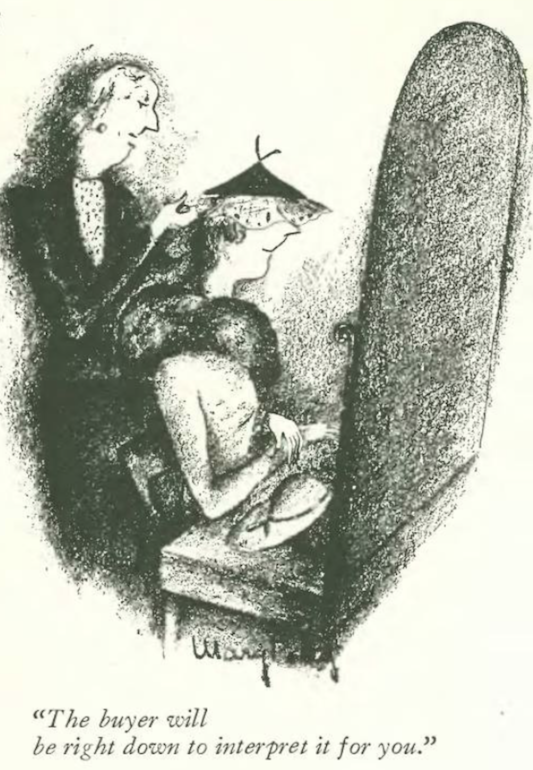
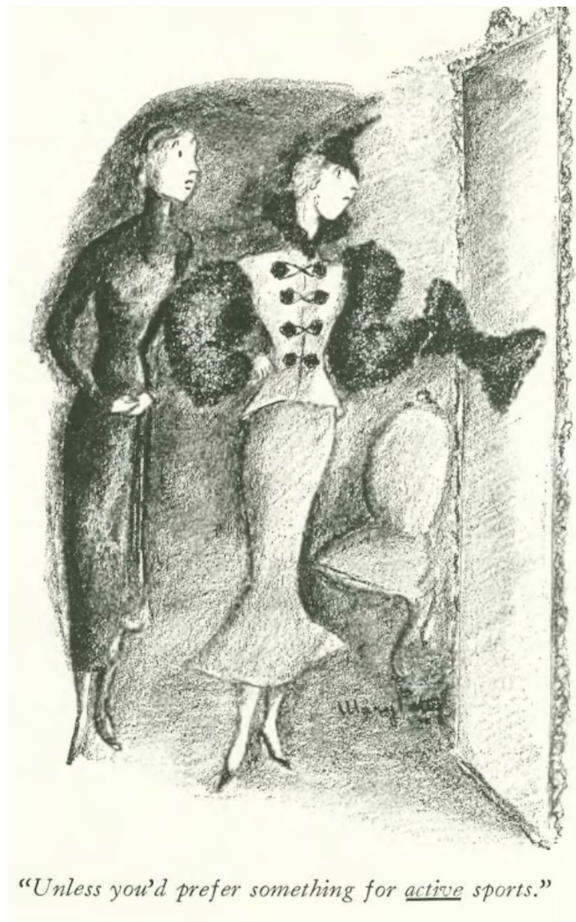
…and Petty again, at the dress shop…

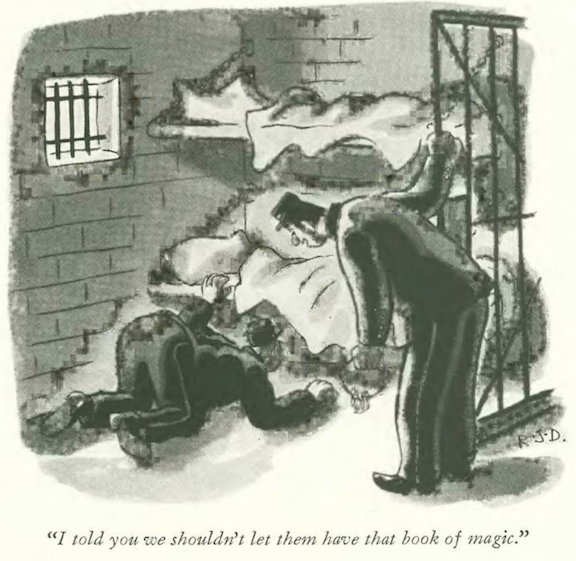
Robert Day illustrated the benefits of “how to” books…

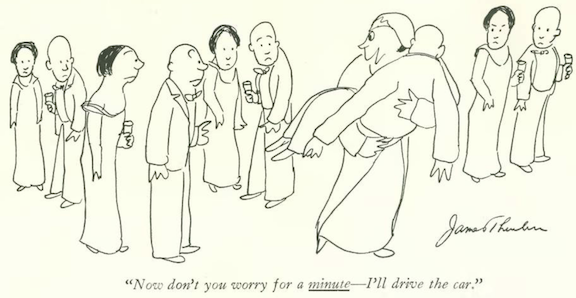
…and we run off with James Thurber...

Next Time: A Profile in the Paint…


The Major’s Amateur Hour

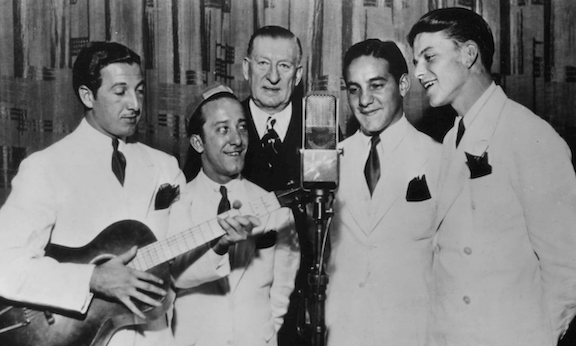
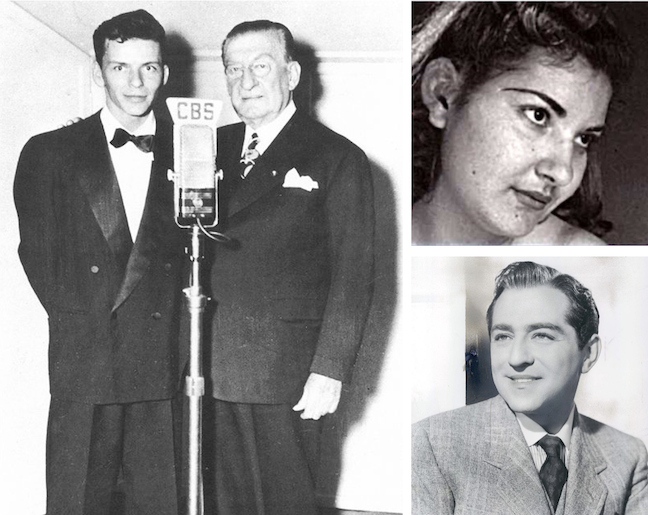
Above: Photo of the Hoboken Four as they appeared on the "Amateur Hour with Major Bowes" in 1935. At center is "Major" Edward Bowes, and at right is Frank Sinatra. The other three members of the Hoboken Four were Frank Tamburro, Patty Prince and Jimmy Petro. (knkx.org)

Nearly seventy years before American Idol appeared on our TV screens, a hugely successful and influential talent show filled the airwaves from NBC’s radio studios at Rockefeller Center.

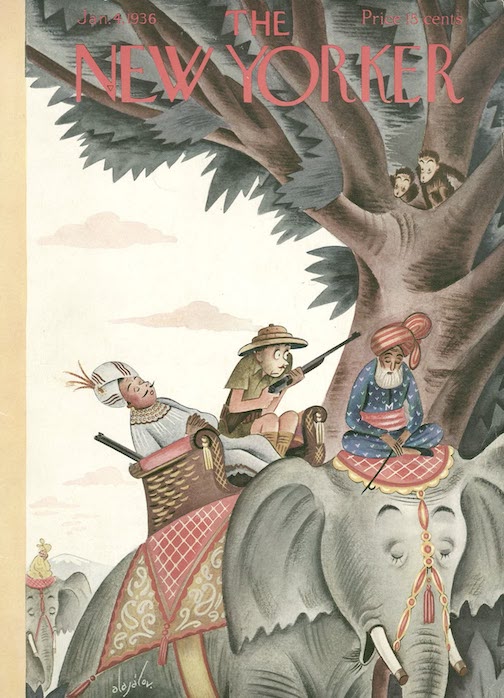
January 4, 1936 cover by Constantin Alajalov.

Millions tuned in each week to the Major Bowes Amateur Hour, which got its start in 1934 at radio station WHN before moving to NBC the following year. Created and hosted by “Major” Edward Bowes (1874–1946), Bowes would chat with contestants before listening to their performances, which could be cut short by the Major’s gong (see below). For his “A Reporter at Large” column, Morris Markey paid a visit to Bowes during evening auditions at the NBC studios. Excerpts:

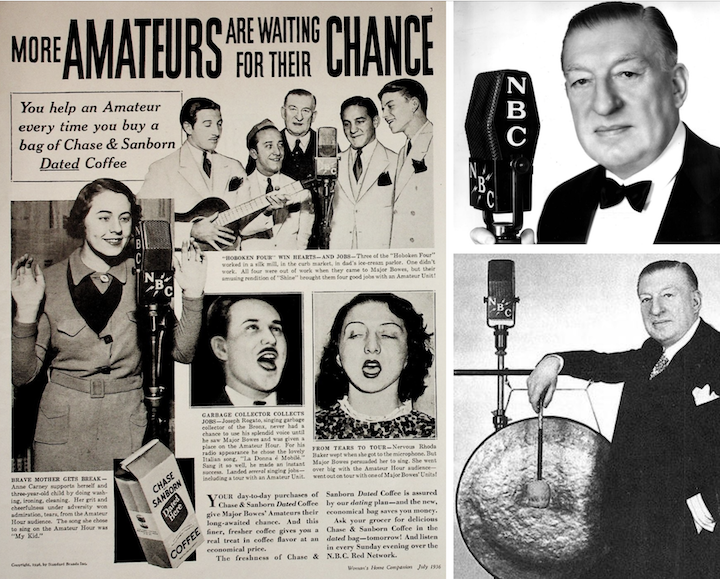
THE GONG SHOW…At bottom right, Edward Bowes with the gong he used to abruptly end acts he deemed poor or inept—he abandoned the prop in 1936 after receiving thousands of letters from listeners who objected to the premature termination of acts (apparently the concept was a direct inspiration for Chuck Barris’s 1970s TV program, The Gong Show). At left, a July 1936 Women’s Home Companion advertisement from the show’s sponsor, Chase & Sanborn. The ads highlighted the rags-to-riches stories of the more successful contestants. (eBay.com/Wikipedia)

Markey ended his piece noting the reality of the many contestants who, unlike Frank Sinatra, would not go on to successful entertainment careers.

STARMAKER…Clockwise, from left: Major Edward Bowes and returning Amateur Hour performer Frank Sinatra in 1943; in 1935 eleven-year-old Maria Callas performed the Madama Butterfly aria “Un bel dì vedremo,” on the Amateur Hour; actor/baritone Robert Merrill performed on the show in 1936. (winnetoba.com/mariacallasestate.com/Wikipedia)

 * * *

Fleeing the Limelight

In December 1935 Charles and Anne Morrow Lindbergh secretly boarded a ship in New York and headed to England, seeking to escape the media frenzy that followed their son’s kidnapping and the subsequent trial. Thanks to connections through Anne’s family, they were able to move into a secluded estate in the Kent countryside. In his “Notes and Comment,” E.B. White explained:

HIDEOUT…From 1936 to 1938 Charles and Anne Morrow Lindbergh lived in a secluded English estate called “Long Barn.” The estate in County Kent was owned by a friend of Anne’s family. (waverlyhs.weebly.com)
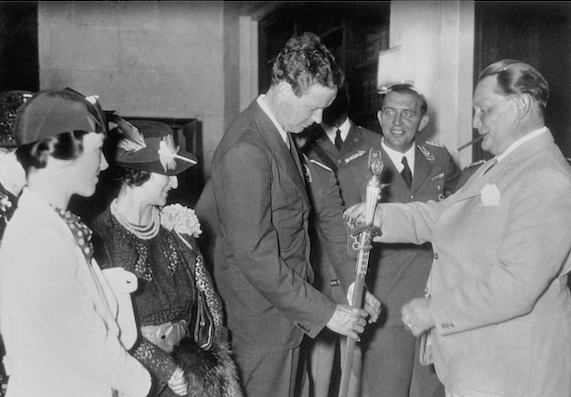
NOT HIS FINEST HOUR…In July 1936 Luftwaffe commander Hermann Goering (right) presented the Sword of Honor of the German Air Force to Charles Lindbergh during a visit to Berlin. Anne Morrow Lindbergh is to the far left. Goering would also present Lindbergh with a high-ranking Nazi-era civilian medal, the Service Cross of the German Eagle, during a 1938 visit. Anne presciently referred to the medal as “the albatross.” (Library of Congress)

According to White, Mayor Fiorello La Guardia cited lax police control of the media in the case of the fleeing Lindberghs. In turn, White attempted to explain the unique temperaments of Irish police officers.

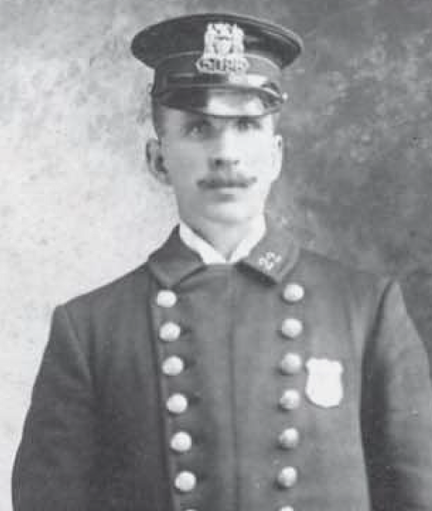
GIVE US A BREAK…E.B. White noted the courage and wisdom of Irish cops, but also found their lassitude “almost theatrical.” Pictured above is Irish immigrant Patrick Leddy, who joined the NYPD in 1910 and remained on the force for more than thirty-five years. (Courtesy of Margaret Fitzpatrick Leddy via nyirishhistory.us)

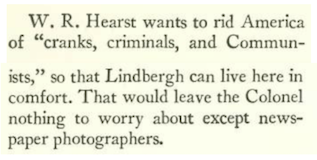
A final note on the Lindberghs from Howard Brubaker, a snippet from his “Of All Things” column.

 * * *

Italian Swashbuckler

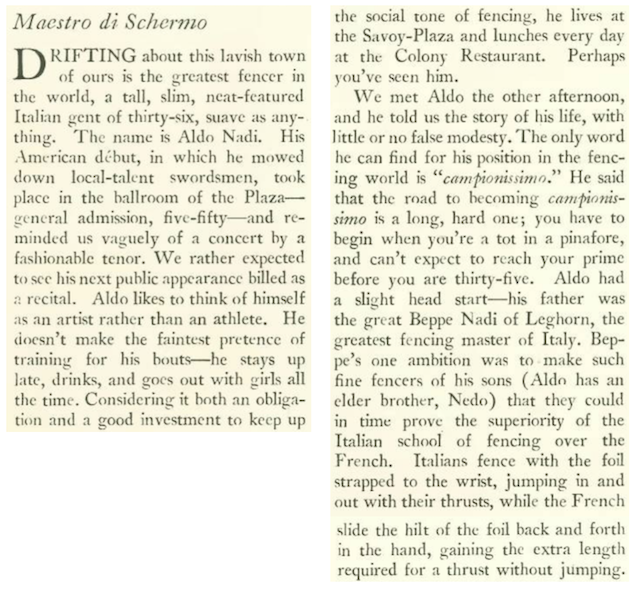
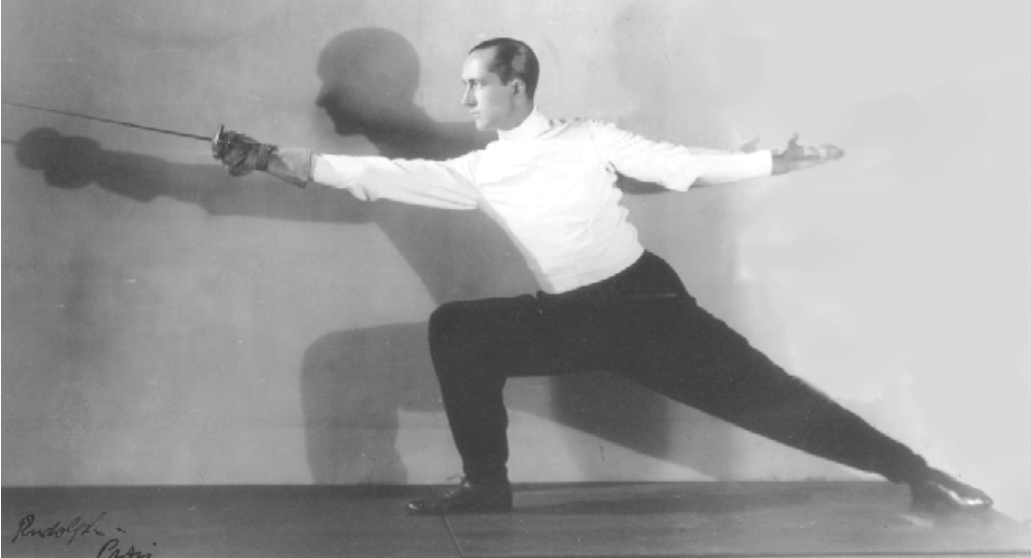
The Italian fencer Aldo Naldi (1899-1965) won three gold medals and one silver at the 1920 Olympics before turning professional. According to West Coast Fencing, Aldo traveled Europe like a prizefighter, “competing in well-attended matches for cash purses…in a world of travel, glamour, drinking, womanizing, gambling and fencing, Aldo Nadi reigned supreme, going nearly eight years without a defeat.” “The Talk of the Town” was on hand for his American debut. Excerpts:

EN GARDE!…During the interwar years Aldo Nadi reigned supreme, going nearly eight years without a defeat. (dennishollingsworth.us)

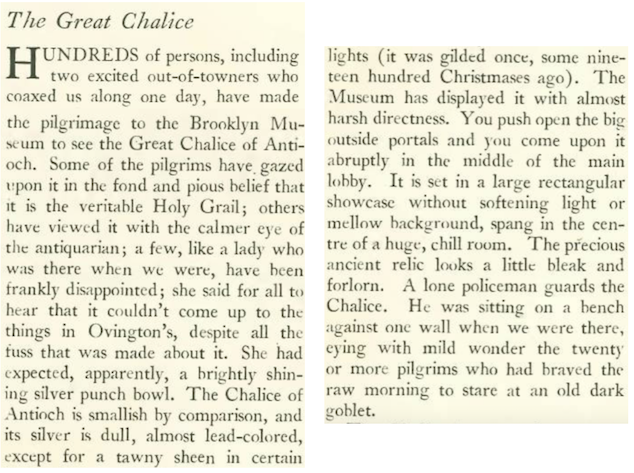
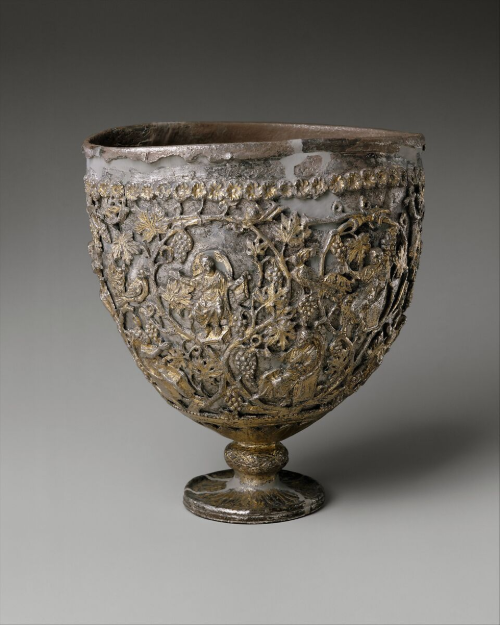
“Talk” also examined the fuss being made over the Great Chalice of Antioch, which was on display at the Brooklyn Museum. Excerpts:

COULD IT BE?…Claimed to have been found in Antioch around 1900, this chalice’s plain silver bowl was ambitiously identified by some as the Holy Grail, the cup used by Christ at the Last Supper. It is displayed with the Metropolitan Museum’s Byzantium collection. (metmuseum.org)

* * *

Year, Schmear

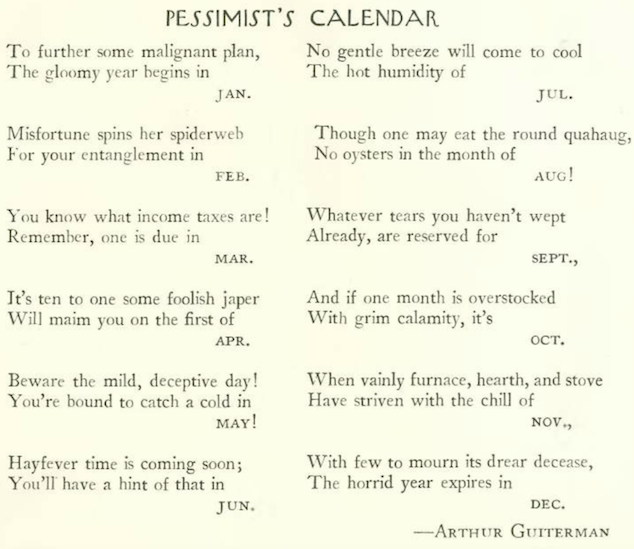
To mark the New Year, Arthur Guiterman offered up one his humorous poems…

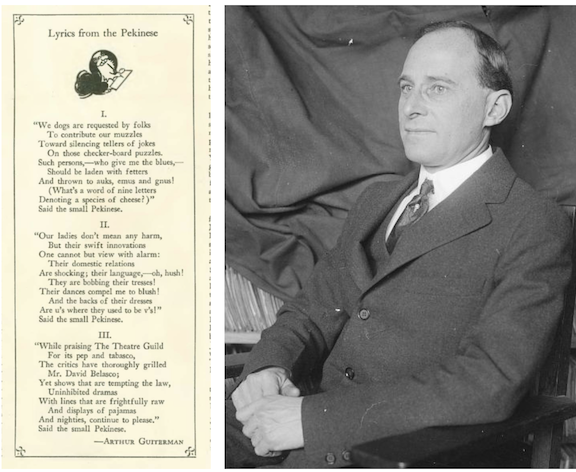
…Guiterman (1871–1943) was an early contributor to The New Yorker—the magazine’s very first issue, Feb. 21, 1925, featured the first installment of Guiterman’s recurring “Lyrics from the Pekinese,” which ran through the first eleven issues.

MEOW…Arthur Guiterman’s “Lyrics from the Pekinese,” featured in the first issue of The New Yorker. At right, Guiterman in an undated photo. (Library of Congress)

 * * *

Before He Was Spooky

Robert Benchley’s review of the stage began on a bright note with Victoria Regina, which starred Vincent Price as Prince Albert and Helen Hayes as Queen Victoria. Benchley praised the realism Price and Hayes lent to the production. Excerpts:

A MATCH MADE ON BROADWAY…The 24-year-old Vincent Price and the 35-year-old Helen Hayes portrayed Prince Albert and Queen Victoria in Victoria Regina, which ran for 203 performances at the Broadhurst Theatre. Robert Benchley thought their casting was ideal. (Pinterest)

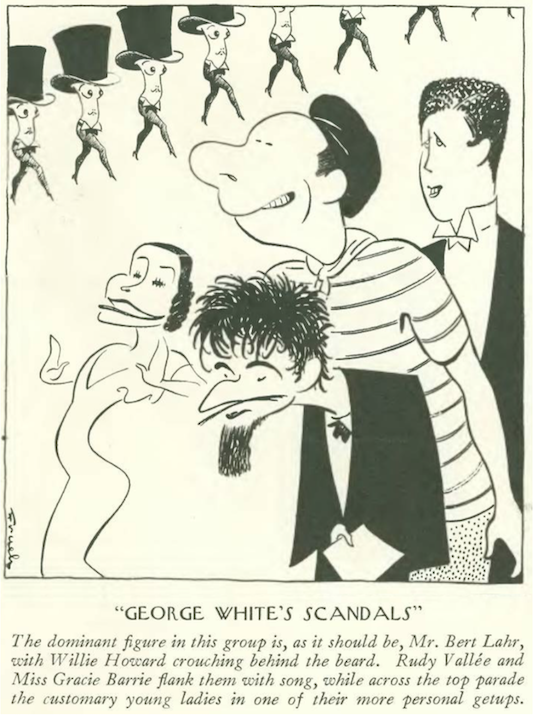
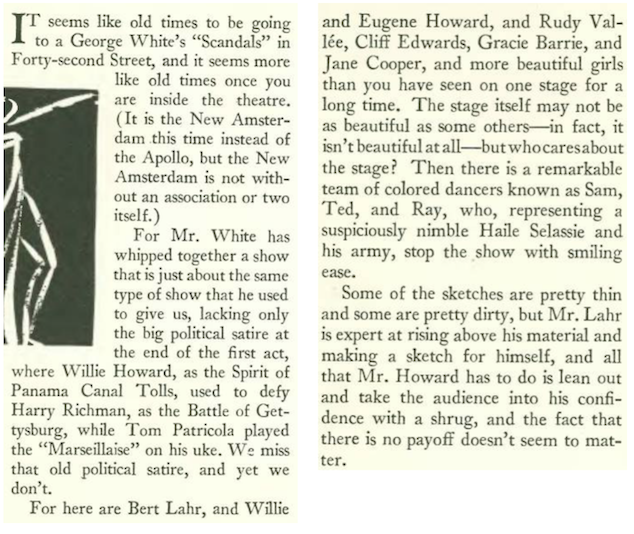
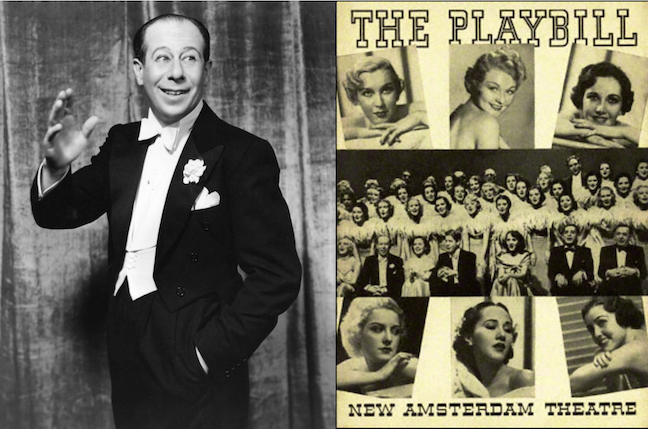
Benchley also sat through George White’s latest Scandals revue, finding it similar to White’s older shows—beautiful showgirls, various singers and dancers, and assorted comedians—with Bert Lahr shining above it all.

IT SEEMED LIKE OLD TIMES to Robert Benchley as he took in the latest edition of George White’s Scandals. Bert Lahr (left) was among the headliners for the 1936 revue, which ran for 110 performances at the New Amsterdam Theatre before taking to the road. (Wikipedia/Playbill.com)

 * * *

At the Movies

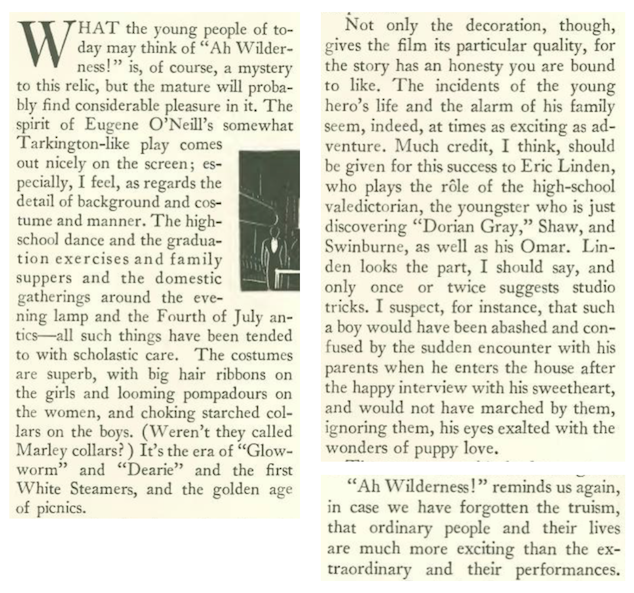
John Mosher had a busy week at the movies, finding “considerable pleasure” in the screen adaptation of Eugene O’Neill’s Ah Wilderness!…

MILLER TIME…The Miller family attends a commencement ceremony that helps kick off the action in Ah Wilderness! From left, Aline MacMahon, Mickey Rooney, Spring Byington, and Bonita Granville. (IMDB)

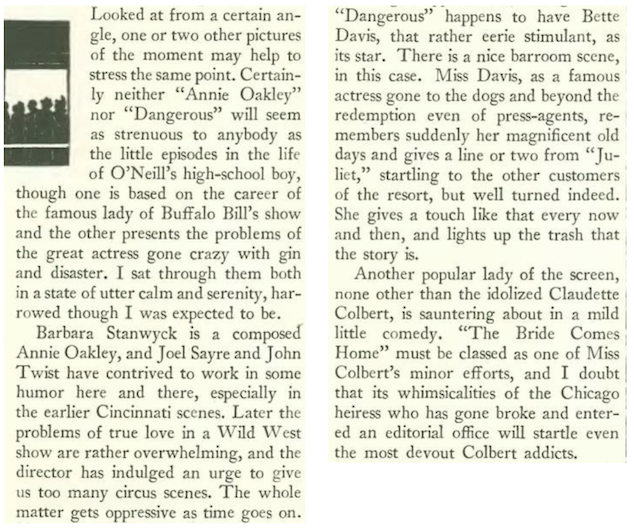
Mosher also looked at films featuring leading actresses of the day—Barbara Stanwyck in Annie Oakley, Bette Davis in Dangerous, and Claudette Colbert in The Bride Comes Home.

A TRIO OF TALENTS…Clockwise, from top left, Claudette Colbert had her hands full with Robert Young and Fred MacMurray in The Bride Comes Home; Barbara Stanwyck took aim in Annie Oakley; and Bette Davis portrayed a down-and-out actress with trouble on her mind in Dangerous. For her performance, Davis won the Academy Award for Best Actress. (laurasmiscmusings.blogspot.com/girlswithguns.org/vanguardofhollywood.com )

 * * *

Gaming the Games

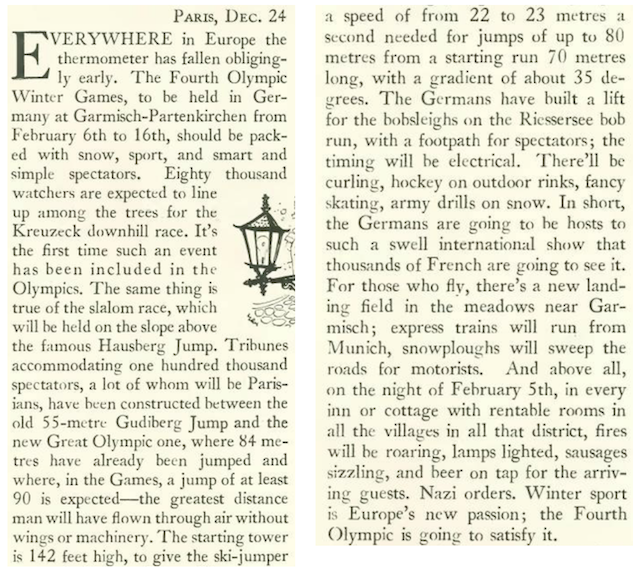
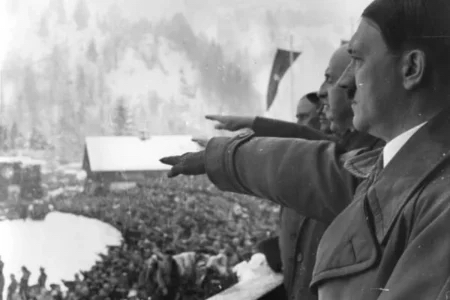
In her “Paris Letter,” Janet Flanner noted the preparations for the Fourth Olympic Winter games to be held in Garmisch-Partenkirchen, Germany.

WINTER HAS ARRIVED…Adolf Hitler and his fellow Nazi thugs brought a certain chill to the 1936 Winter Games in Garmisch-Partenkirchen. Garmisch and Partenkirchen were separate communities until Hitler forced them to merge in anticipation of the games. (arolsen-archives.org)

 * * *

From Our Advertisers

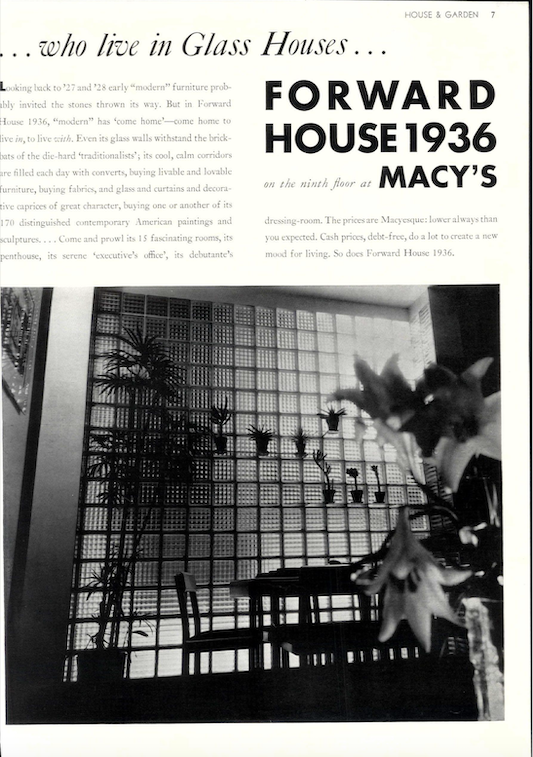
From 1933 to 1939, Macy’s hosted a series of unique design exhibitions under the title “Forward House” that showcased contemporary furniture, decor, and architectural ideas…

…for reference, here is another “Forward House” advertisement from the February 1936 House & Garden magazine…

…the folks at Robbins Island Oysters employed the legend of Giacomo Casanova to market their tasty little rocks…apparently Casanova claimed that he consumed more than fifty oysters each morning to sustain his amorous adventures…

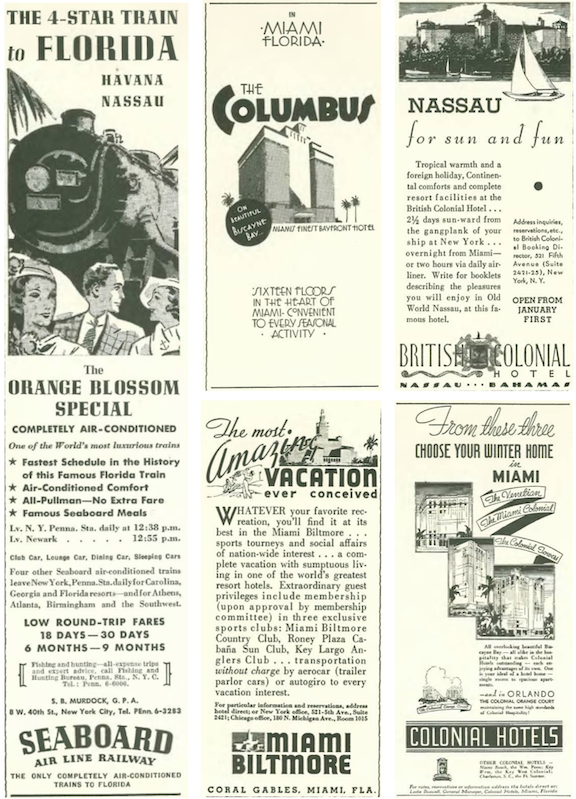
…with the holidays over, the number of ads decreased significantly, leaving readers with a mere sixty pages—less than the half the length of the fat pre-Christmas editions…the theme in the Jan. 4 issue was travel to warmer climes, these examples culled from several back of the book pages…

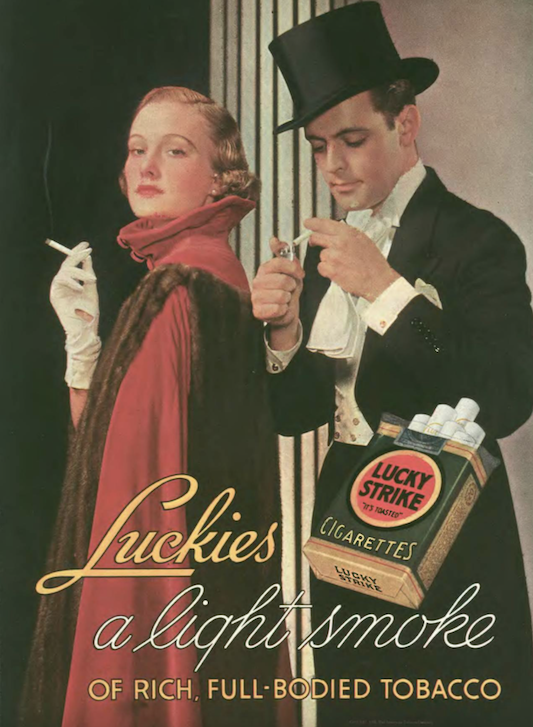
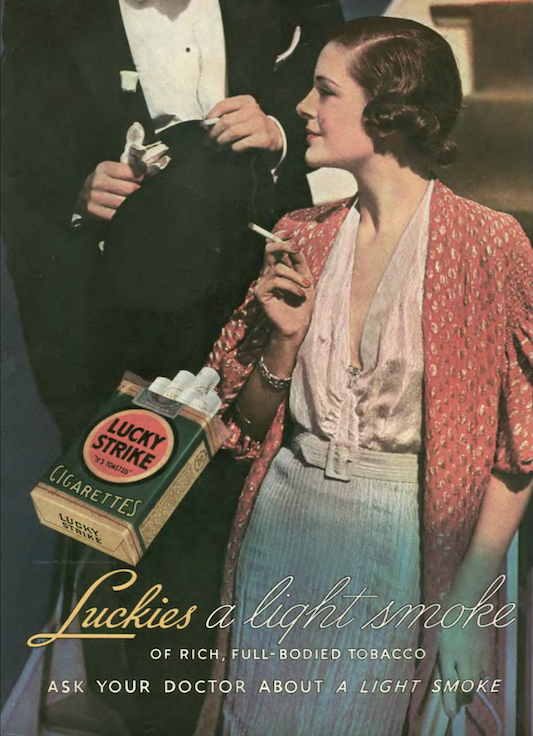
…the end of the holiday season did not stop tobacco companies from taking out lavish full-page advertisements targeting women smokers, this one gracing the back cover…note the implied medical endorsement at the bottom…

…we clear the air and move on to our cartoonists, beginning with spot drawings by D. Krán

…and Christina Malman

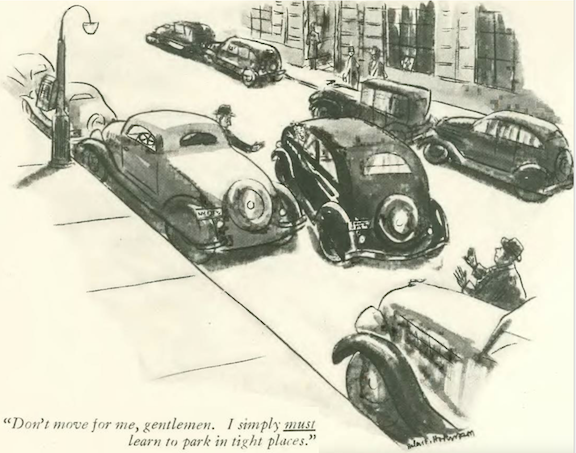
…one of Helen Hokinson’s girls sought an impromptu parking lesson…

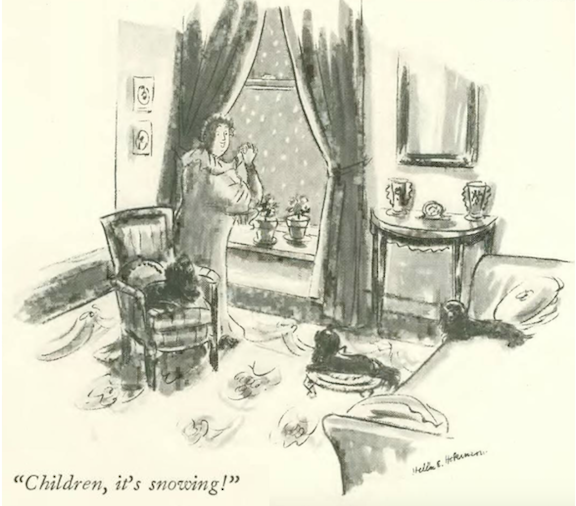
…while another welcomed winter with her furry charges…

Whitney Darrow Jr gave us a full-service information booth…

Mary Petty illustrated a dowager with simple tastes…

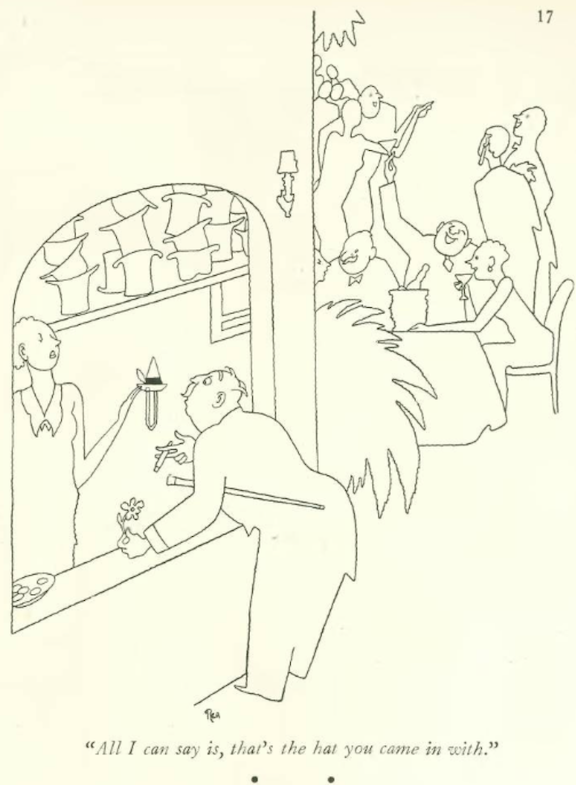
Gardner Rea was confounded at the hat check…

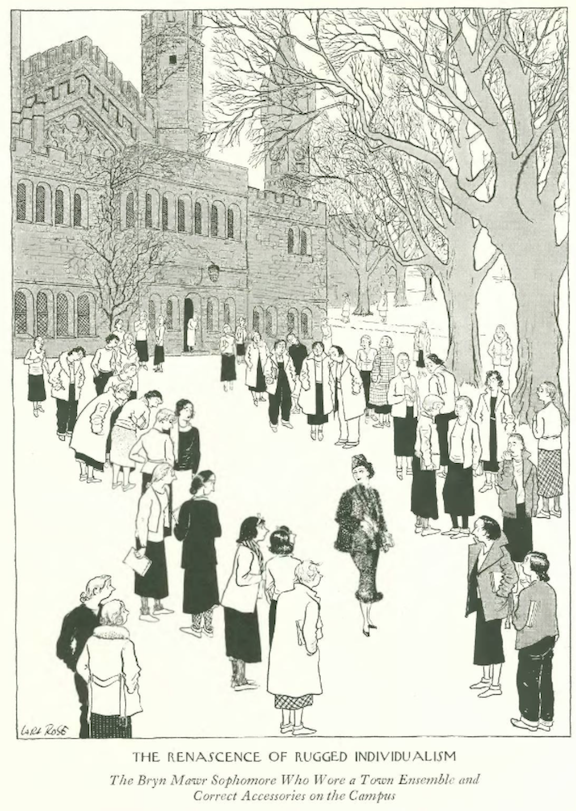
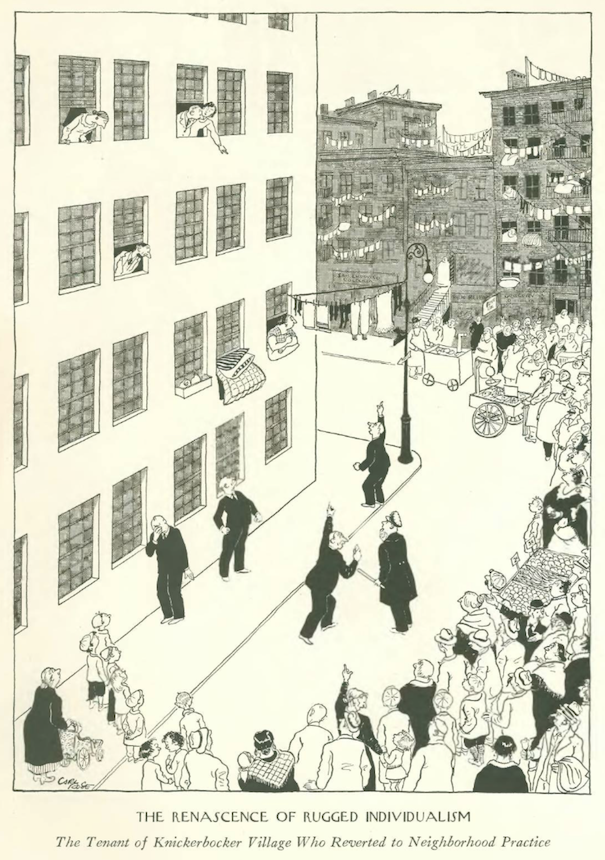
Carl Rose offered up another example of rugged individualism…

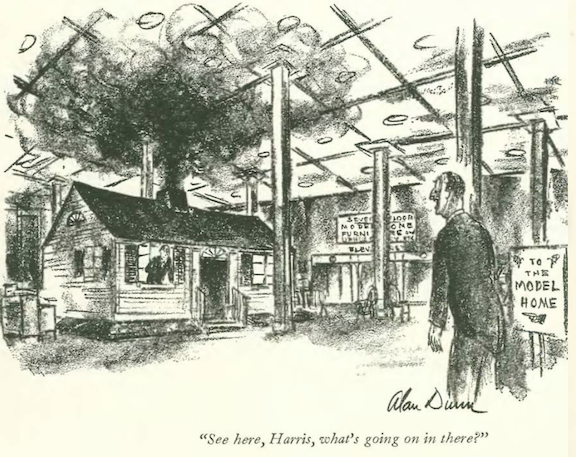
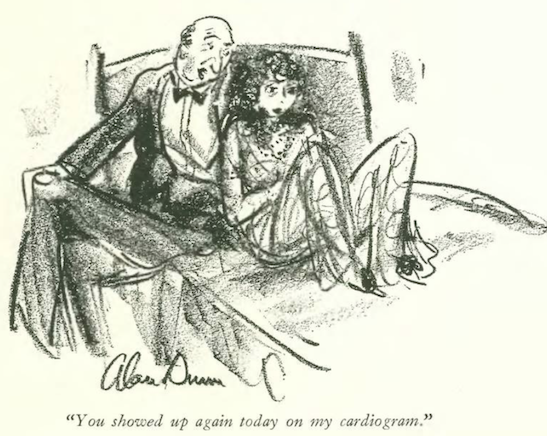
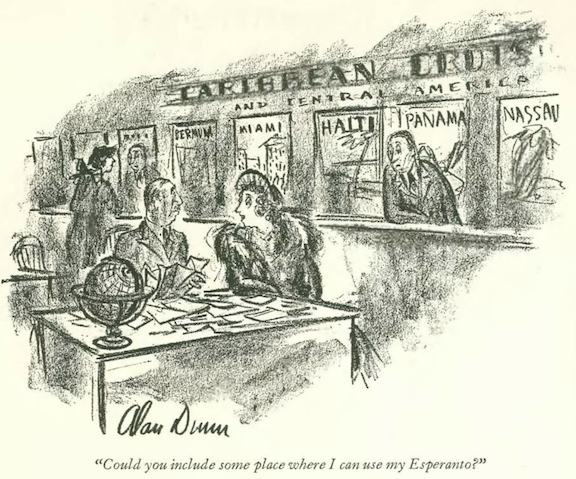
Alan Dunn served up a unique language challenge…

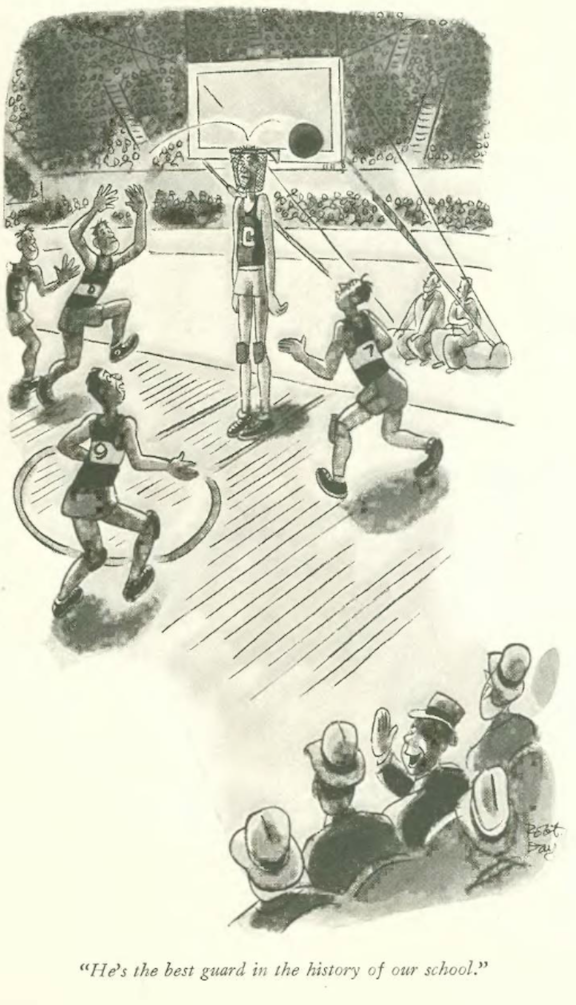
Robert Day stood tall at a basketball game…

William Crawford Galbraith was horsing around…
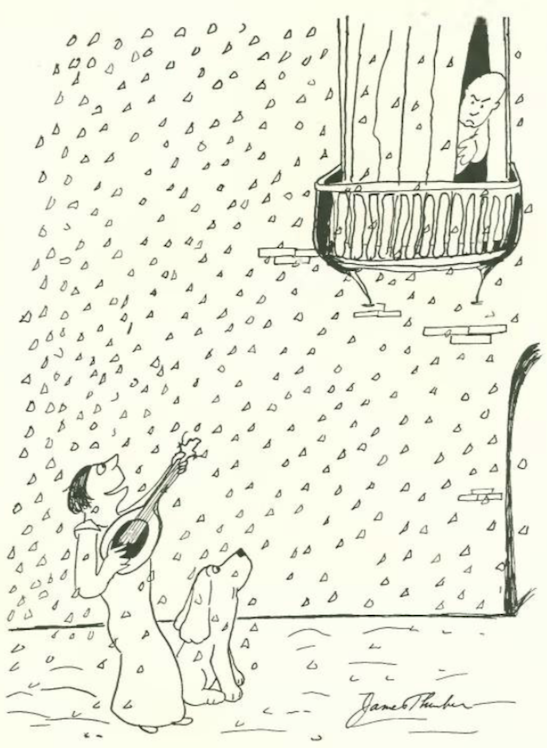
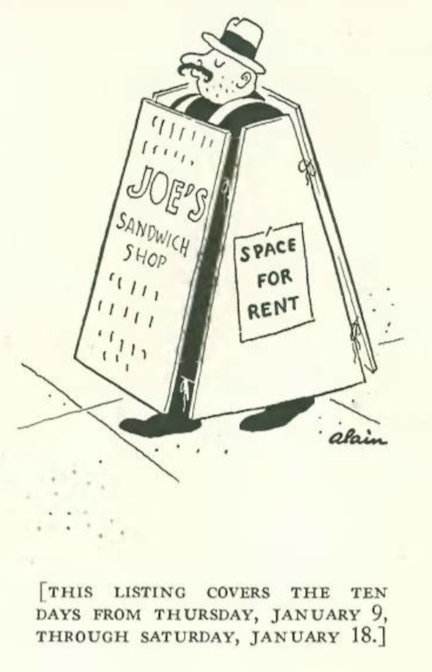
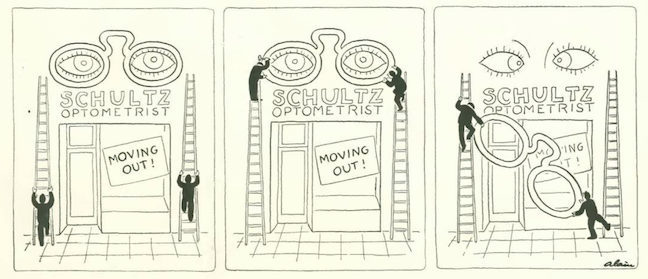
Alain looked crosseyed at a store closing…

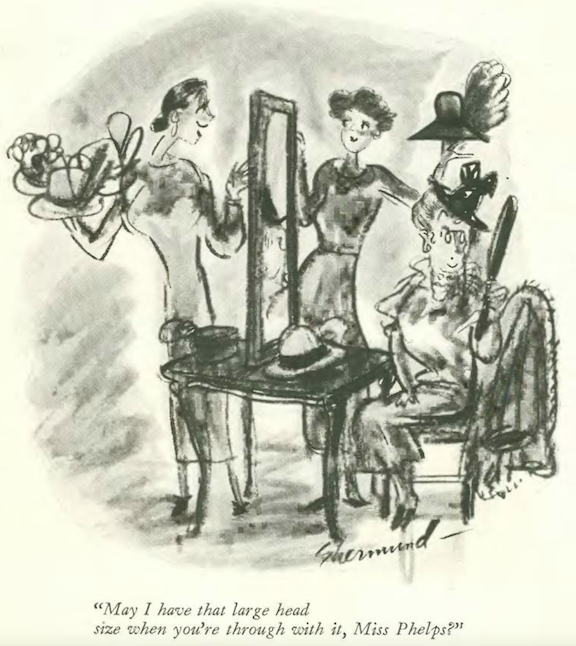
…and we close with Barbara Shermund, who sized up things at a hat shop…

Next Time: Magnificently Obsessed…

Fracking the Frick

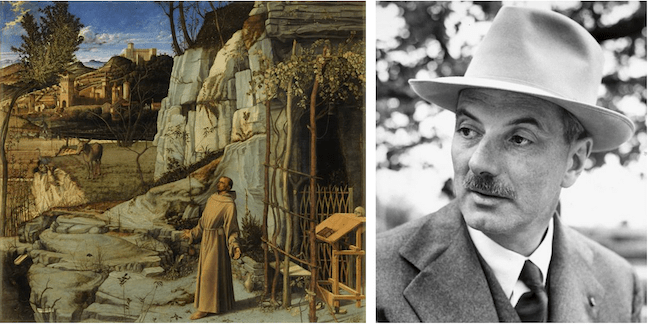
Above: Critic Lewis Mumford was not ecstatic about his visit to the newly opened Frick Collection, unhappy with the museum's crowd-control regulations that limited his view of Giovanni Bellini's masterpiece, St Francis in Ecstasy, among other things. (wikiart.org/communitydevelopmentarchive.org)

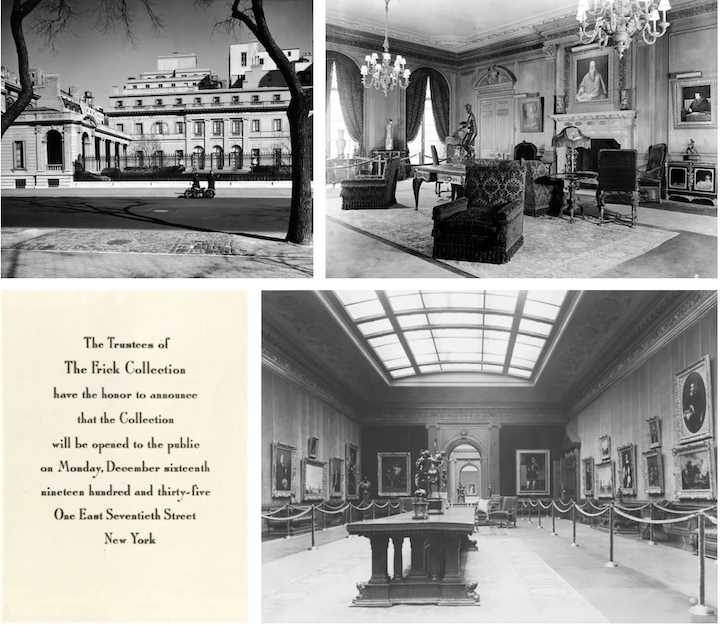
Considered one of the finest museums in the U.S., the Frick Collection on the Upper East Side of Manhattan was established in 1935 to preserve steel magnate Henry Clay Frick’s priceless 14th- to 19th-century European paintings as well as the Frick house and its furnishings. When it opened to the public on Dec. 16, 1935, museum staff distributed timed-entry tickets to prevent crowding, and therein lay the rub for New Yorker critic Lewis Mumford.

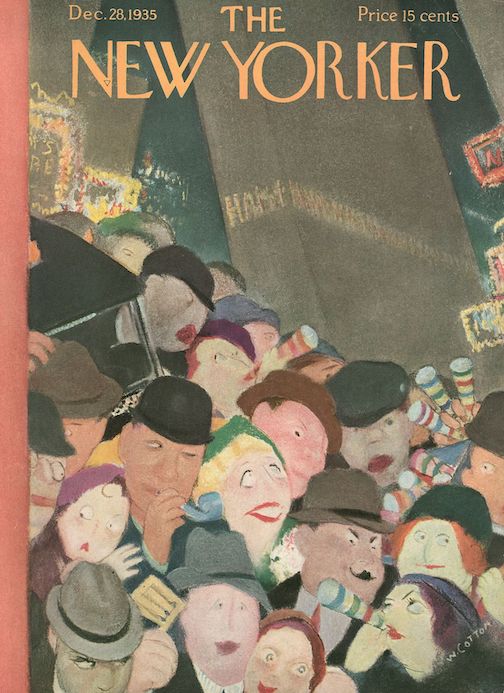
December 28, 1935 cover by William Cotton. Exclusively a cover artist for The New Yorker, Cotton (1880–1958) produced fifty-five covers for the magazine.

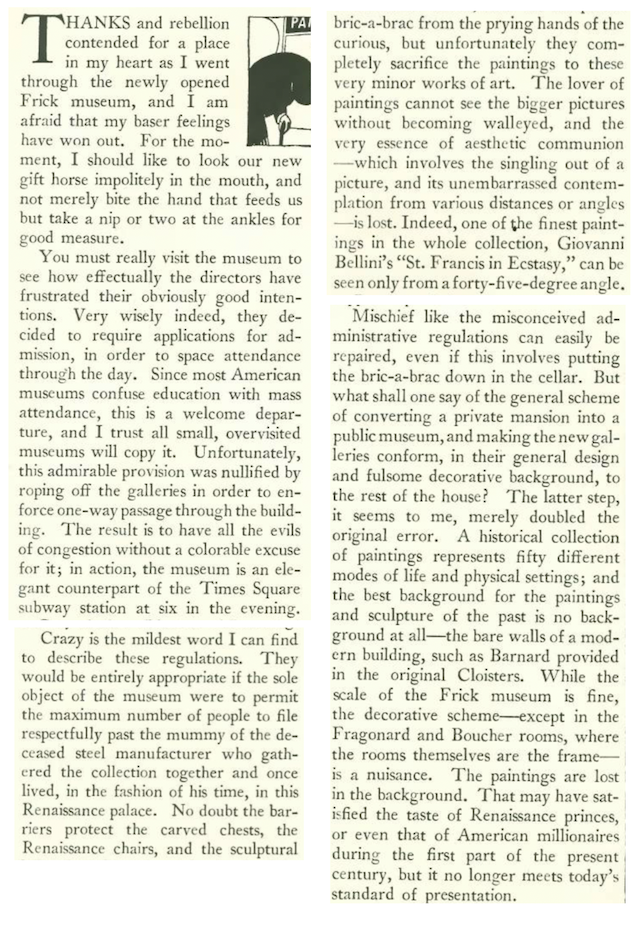
The timed tickets, along with ropes that forced visitors to follow a defined path, spoiled the museum’s debut for Mumford, who was one of its few detractors. In these excerpts Mumford addressed the crowd control measures, and criticized the furniture and other “bric-a-brac” that further served to obstruct his viewing pleasure:

ROPES AND BRIC-A-BRAC presented obstacles to Mumford’s visit at the opening of the Frick Collection. Clockwise, from top left, view of the Frick mansion, circa 1935; installation view of the Living Hall, 1935; West Gallery, 1935; invitation to the opening of The Frick Collection, 1935. (businessinsider.com/Frick Art Reference Library Archives)

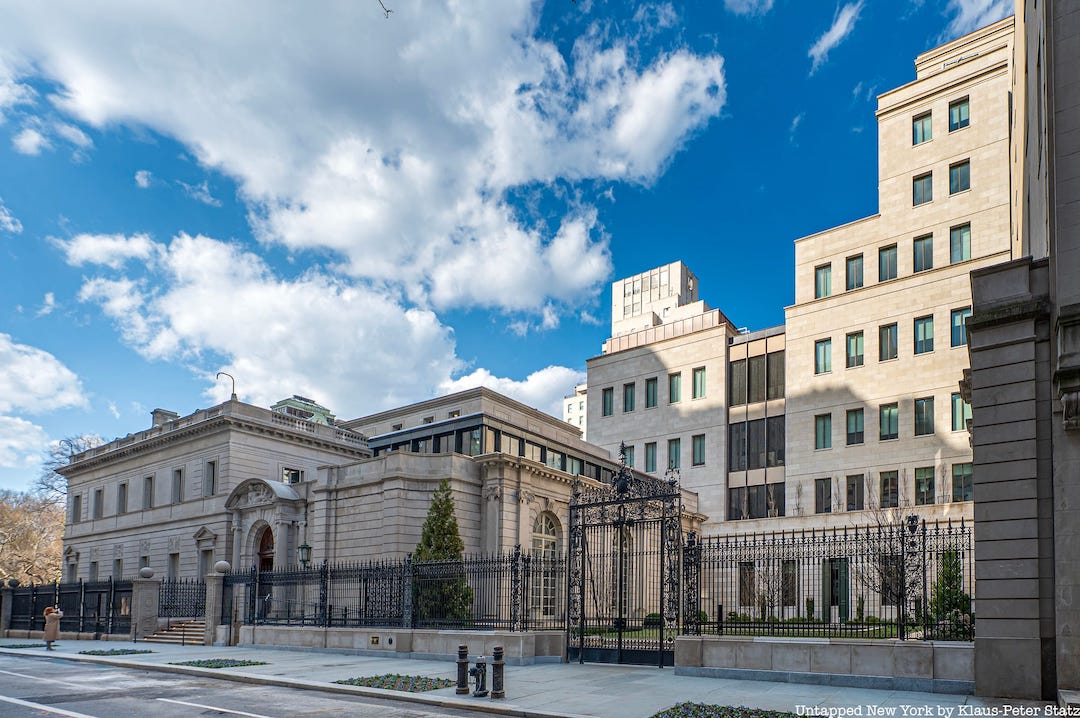
The Frick’s recent renovation and expansion has also had its detractors; after enduring a long and contentious proposal review process and five years of renovation and construction, the Frick reopened to the public in April 2025. It seems most attendees appreciate the changes.

OLD AND NEW…The Frick Collection’s home today, with expansion to the right. (untappedcities)

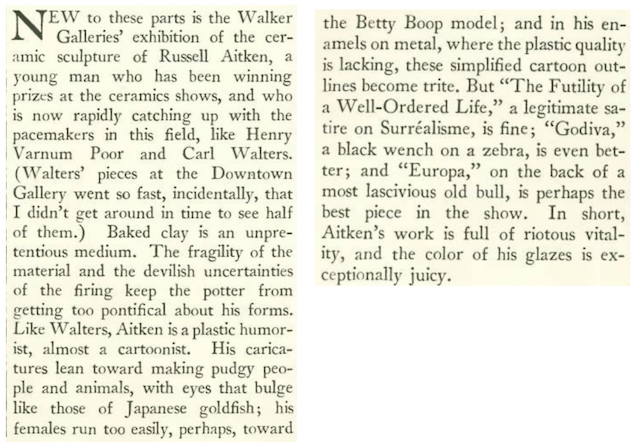
Mumford also took a look at the latest work by ceramic sculptor Russell Aitken (1910-2002), comparing his work to that of a cartoonist. Aitken was a rather odd duck in the art world, renowned both for his quirky sculptures as well as for his exploits as a big game hunter.

KILLER ARTWORK…Russell Aitken had eclectic tastes, to say the least, ranging from creating cutesy ceramics and cartoonish enamels to murdering Cape buffalo. Top left, Virgins of Mogambo, enamel on metal, 1935; bottom left, The Cactus Kid, ceramic, 1932. At right, midcentury whiskey ad featuring Aiken as a big game hunter. (Cleveland Museum of Art/findagrave.com)

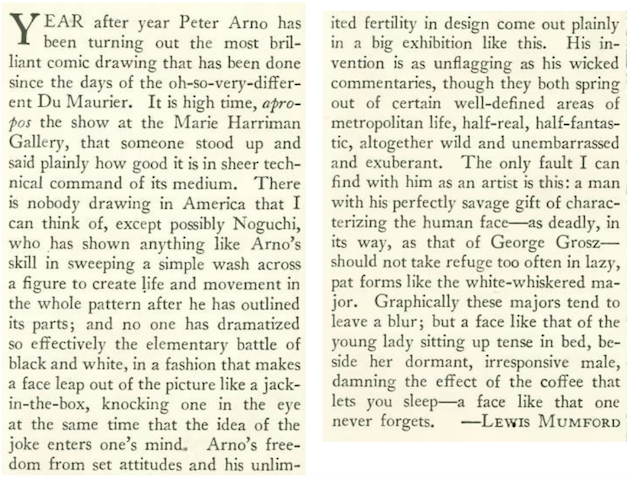
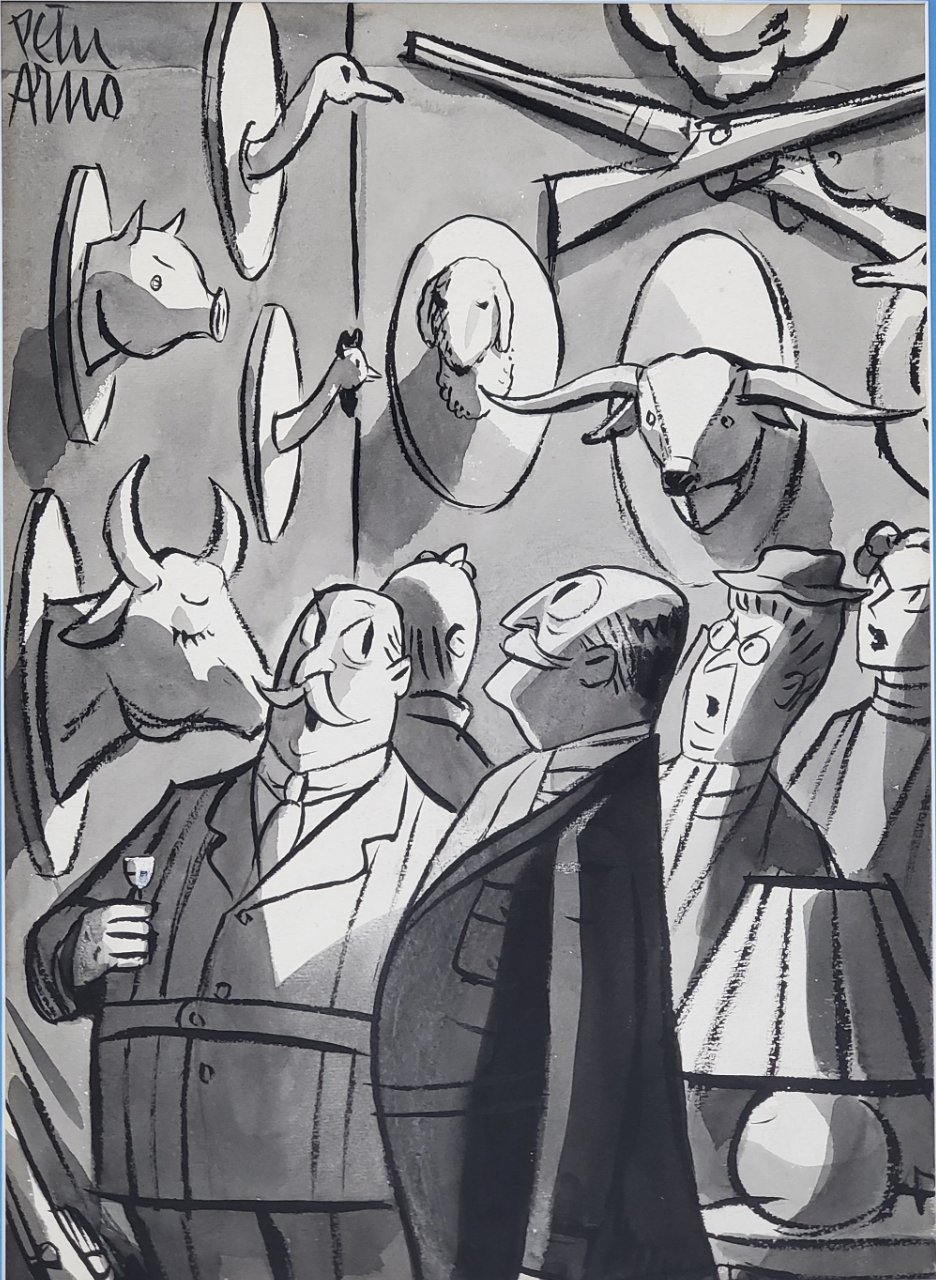
It’s always a little dicey to review the work of a colleague, but in the case of Peter Arno, Mumford had mostly praise, some of it quite high, that is except for Arno’s “white-whiskered major” which Mumford characterized as a “lazy, pat form.”

Thankfully Arno ignored Mumford’s criticism and continued to draw his “white-whiskered major.” Here he is in a delightful 1937 cartoon featured on one of my favorite New Yorker-related sites, Attempted Bloggery:

Caption reads: “I Only Kill For Food.”

 * * *

Shock of the New

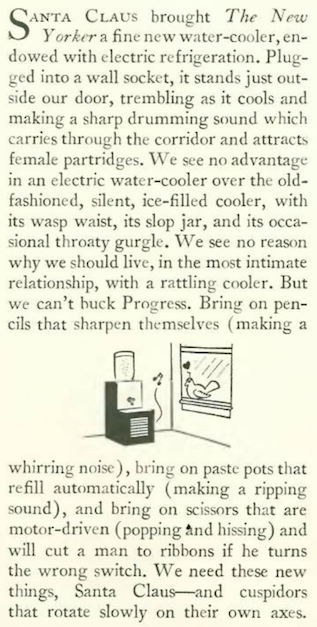
E.B. White, ever skeptical of newfangled inventions, saw no reason why The New Yorker’s old ice-filled water cooler needed to be replaced by a “rattling” electric one:

* * *

O Tannenbaum

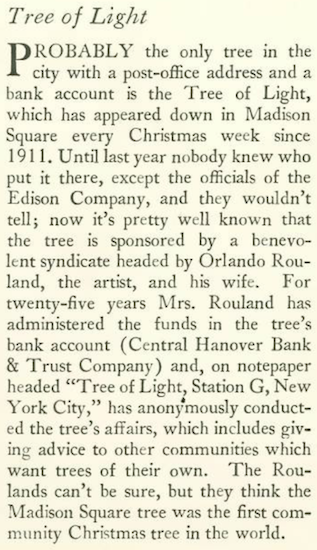
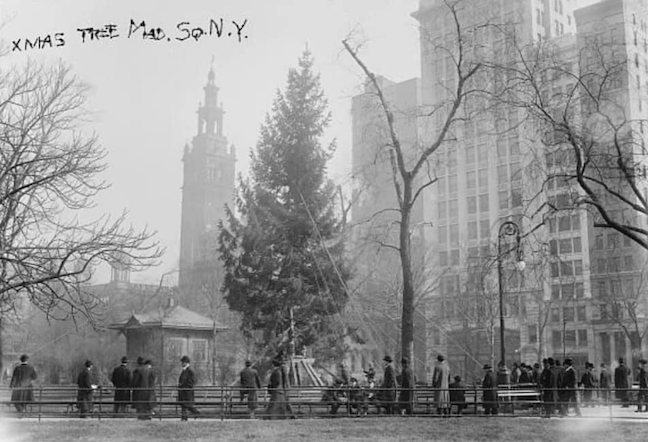
Two decades before Rockefeller Plaza raised its giant Christmas tree (or before Rockefeller Center even existed), New Yorkers gathered around a “Tree of Light” at Madison Square. “The Talk of the Town” remembered:

TREE OF LIGHT…America’s first outdoor Christmas tree lighting apparently occurred in Madison Square Park in 1912 (the “Talk” excerpt cited 1911). Bowery Boys History notes that “the organizers knew they were doing something unique, but probably did not realize the special significance of the event. Their 70-foot-tall imported tree from the Adirondacks, festooned with lights from the Edison Company, would be the first outdoor community Christmas tree in the United States.” (Library of Congress )

According to Bowery Boys History, in 1912 “this ‘Tree of Light’, mounted in cement, was such a novelty that almost 25,000 people showed up that night [Christmas Eve] to witness it and enjoy an evening-long slate of choral entertainment.” The following year, The New York Times reported that the Salvation Army took over the event, offering up “10,000 hot sausages and 10,000 cups of hot coffee” for the crowds.

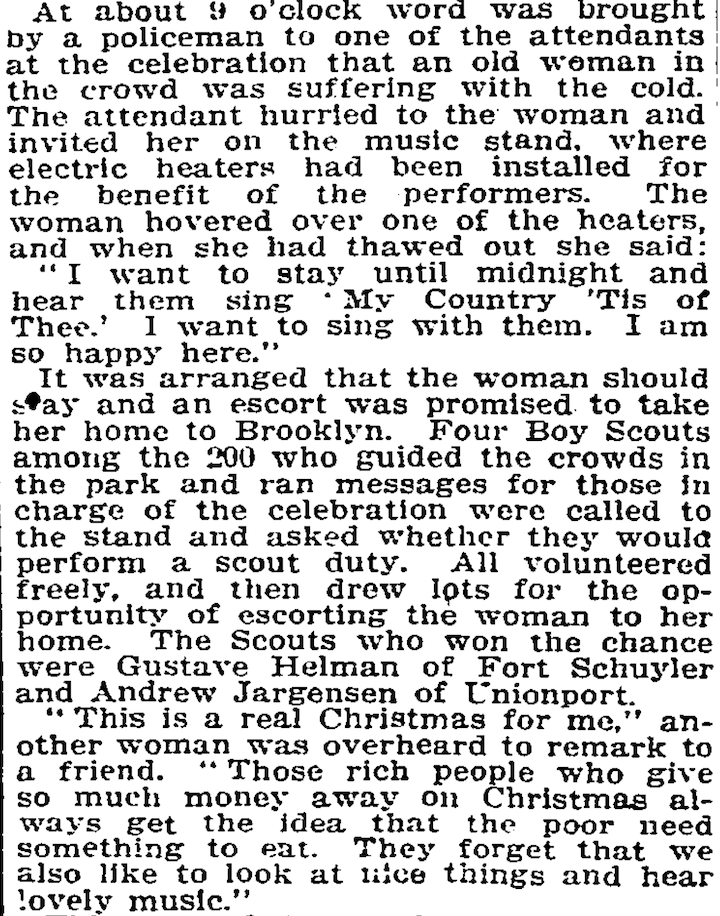
The celebration was sparked by social activists seeking to draw attention to the needs of the city’s poor. On Christmas Day, 1912, the Times ran extensive coverage, and noted the charitable tone of the event in this excerpt:

 * * *

Honor Roll

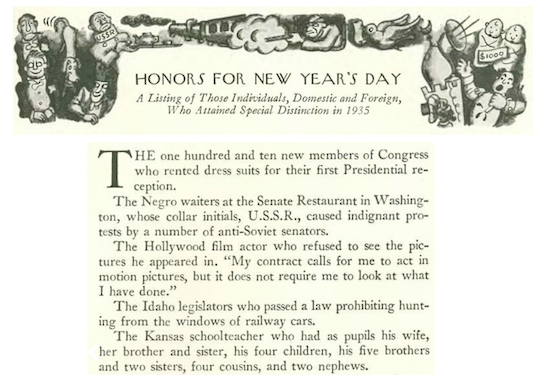
Joseph P. Pollard and W.E. Farbstein covered a two-page spread, listing individuals of “Special Distinction” in honor of the New Year…here is a brief excerpt:

 * * *

Best (and Worst) of Broadway

Robert Benchley reviewed the hits and misses of the fall Broadway season, and admitted he had become something of a softhearted theatre critic after spending six months in Hollywood.

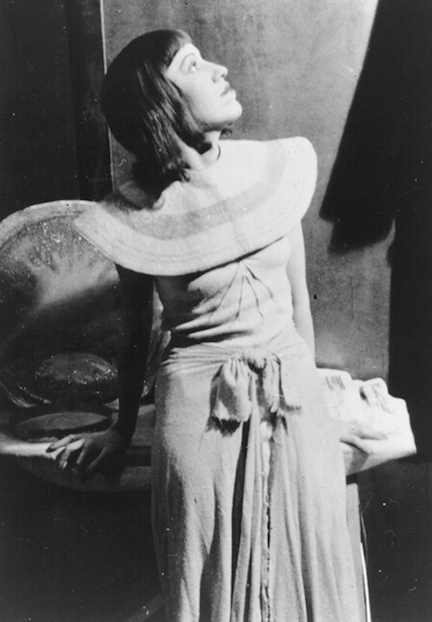
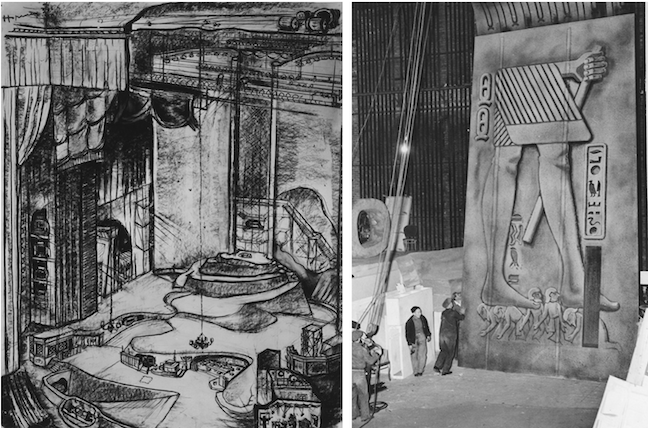
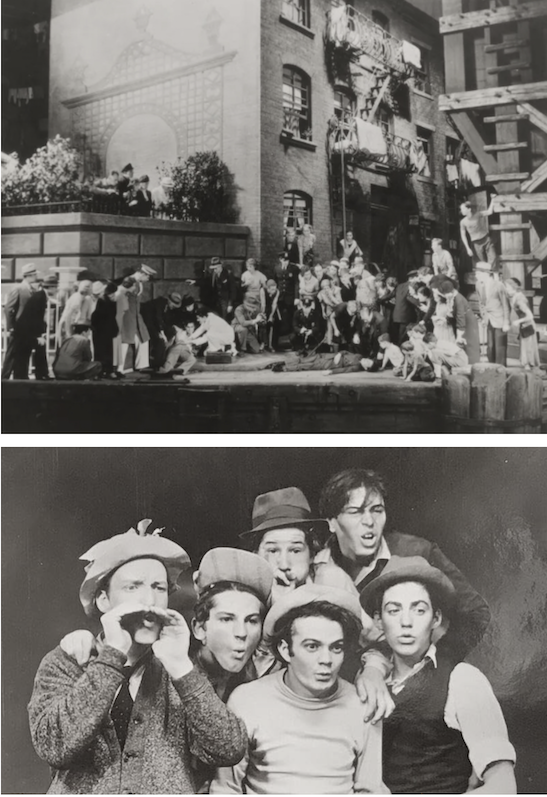
MEET THE GANG…Among the plays recommended by Robert Benchley was Dead End, which opened at the Belasco Theatre on Oct. 28,1935 and ran for 687 performances before closing on June 12, 1937. The play featured an impressive set design by Norman Bel Geddes (top) and introduced the Dead End Kids (aka the Bowery Boys), various teams of young actors who made 89 films and three serials for four different studios during their 21-year film career. The photo above shows the original six Dead End Kids—front row, from left, Huntz Hall, Gabriel Dell, Leo Gorcey and Billy Halop; back row, Bobby Jordan and Bernard Punsly. (deadendmusical.com)

 * * *

At the Movies

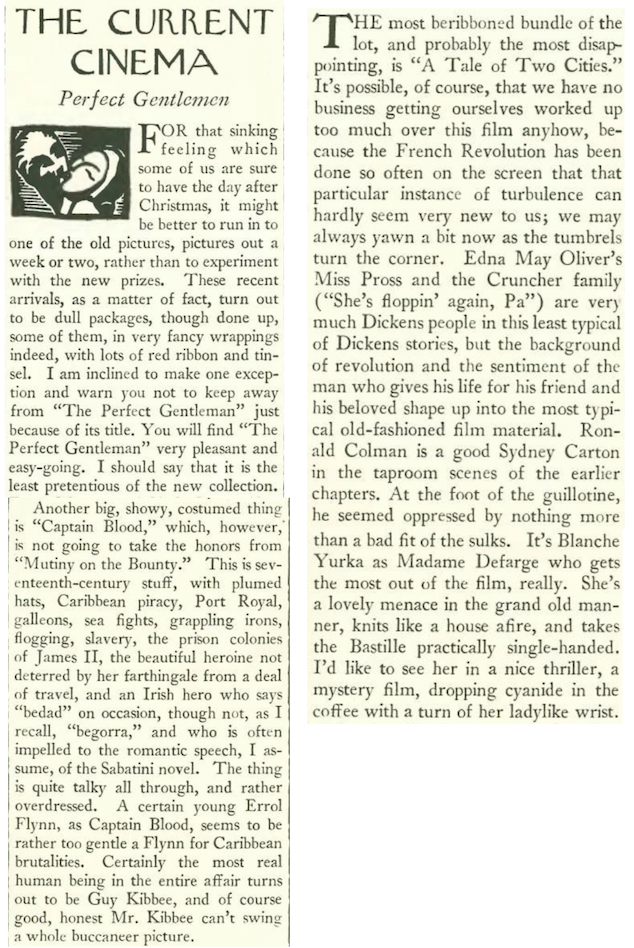
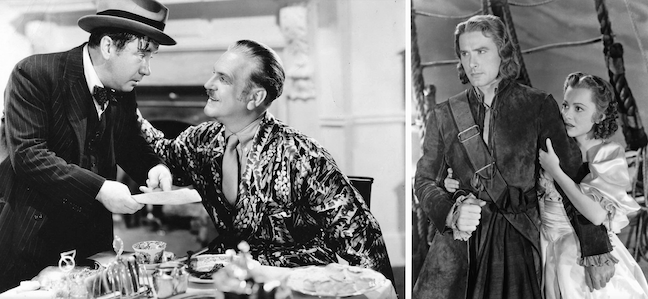
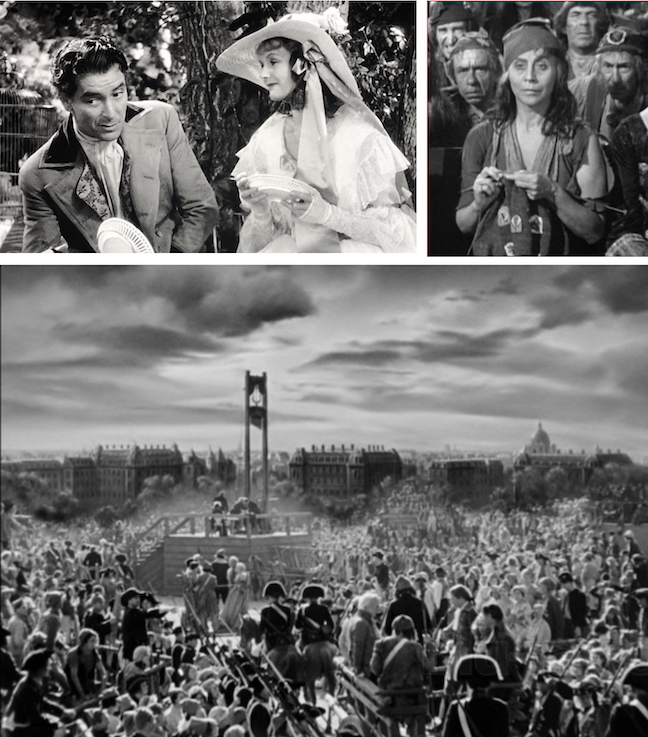
New Yorkers could nurse their holiday hangovers with a variety of films, ranging from the “very pleasant” The Perfect Gentleman to the “overdressed” Captain Blood, which featured a young Errol Flynn as a rather gentle pirate. As for the late year’s most anticipated film, A Tale of Two Cities, critic John Mosher found a few bright spots between his yawns, including praise for Blanche Yurka’s standout performance as Madame DeFarge.

GENTLE MAN AND GENTLE PIRATE…At left, Forrester Harvey and Frank Morgan in The Perfect Gentleman; at right, Errol Flynn and Olivia de Havilland in Captain Blood. The film launched the 26-year-old Flynn and the 19-year-old de Havilland into Hollywood stardom, and marked the beginning of Flynn’s swashbuckler image. (MGM/IMDB)
I’M LOSING MY HEAD OVER YOU…Clockwise, from top left, Sydney Carton (Ronald Colman) would lose his noggin to the guillotine in a scheme to save Lucie Manette (Elizabeth Allan) in A Tale of Two Cities; veteran theater actress Blanche Yurka, who learned to knit for her acclaimed role as Madame Defarge, is shown here in a front row seat before the guillotine—it was Yurka’s first film role; at the bottom, the execution scene at the Place de la Révolution. (bluray.com/michaelbalter.substack.com)

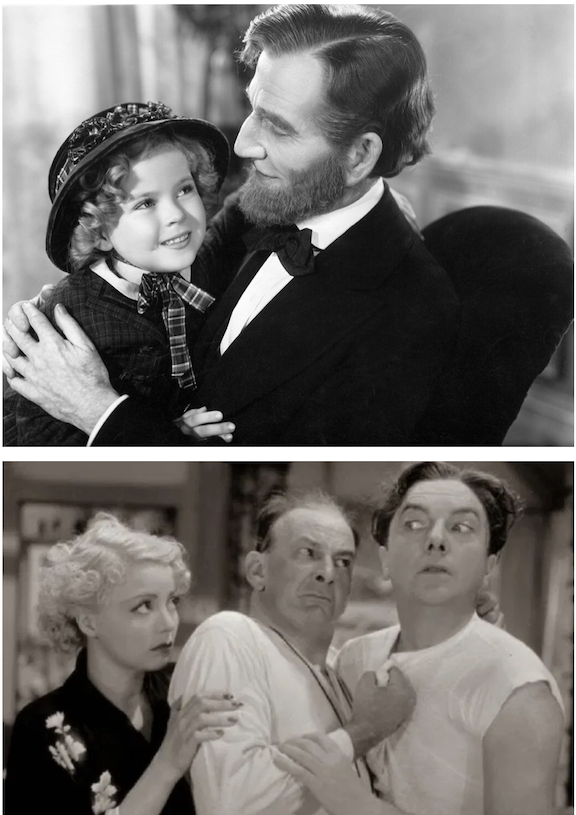
If piracy and revolution were “too much for your holiday nerves,” Mosher suggested the latest Shirley Temple film, The Littlest Rebel, featuring the superstar moppet dancing her way through the Civil War (and, unfortunately, performing a scene in blackface). Also on tap was the the musical comedy, Coronado.

SEEKING A PRESIDENTIAL PARDON, little Virgie Cary (Shirley Temple) asks President Lincoln (Frank McGlynn Sr.) to bestow mercy on her Confederate father in The Littlest Rebel; below, Alice White, Leon Errol and Jack Haley in the musical comedy Coronado. Haley is best known today as the Tin Man in 1939’s The Wizard of Oz. (whitehousehistory.org/themovieb.org)

 * * *

From Our Advertisers

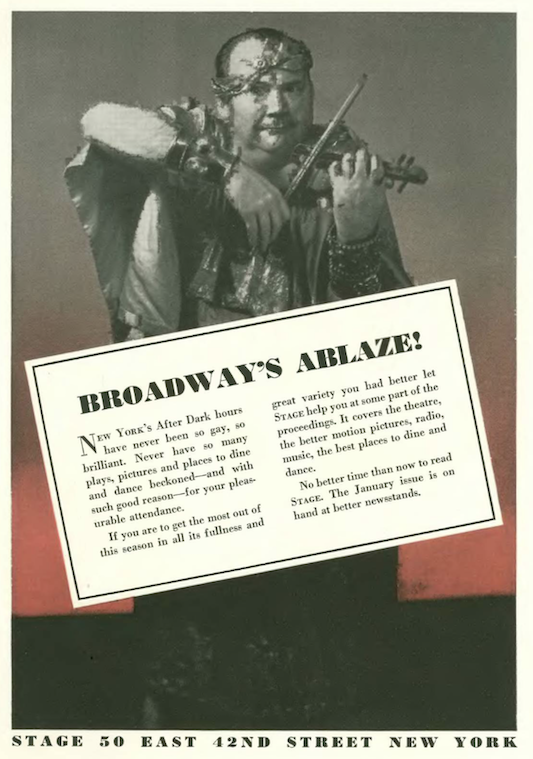
We look in on our advertisers, beginning with this from Stage magazine…the actor portraying Nero is likely from the play Achilles Had a Heel, which closed after just eight performances…
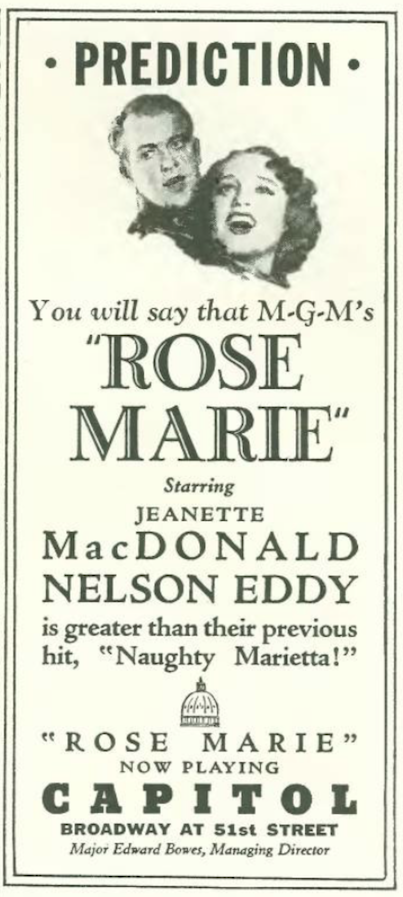
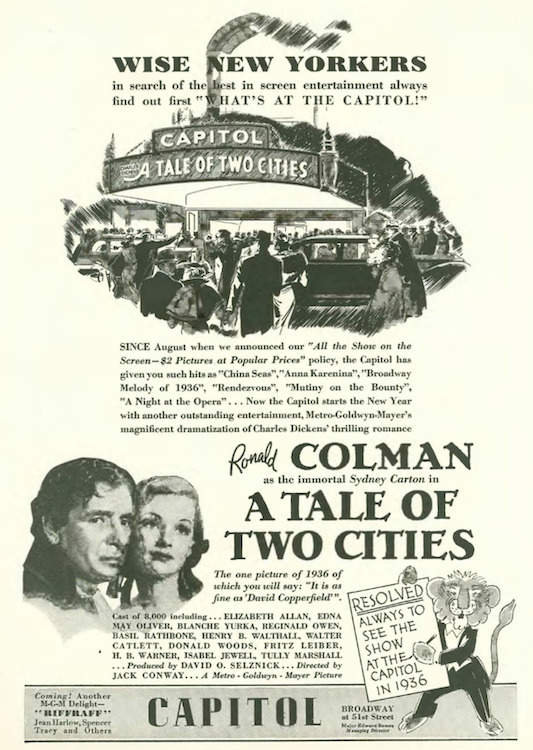
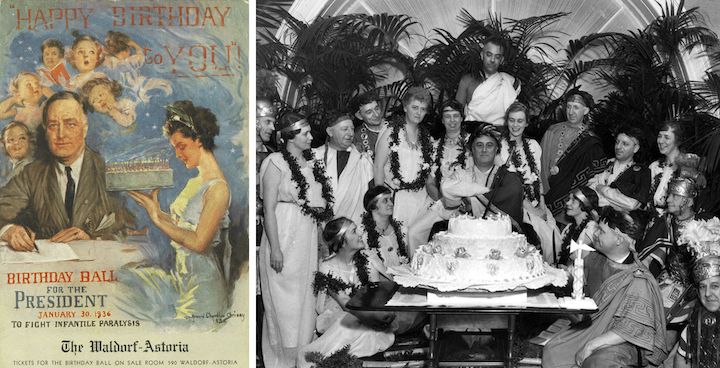
John Mosher wasn’t wowed by MGM’s A Tale of Two Cities, even if the Capitol Theatre promised a spectacle with “a cast of 8,000″…

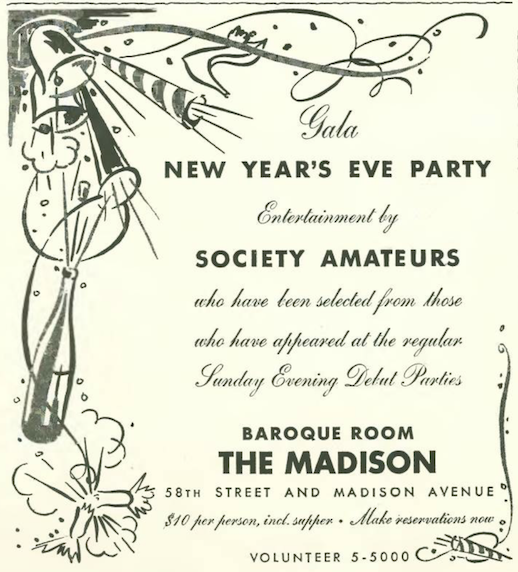
…this back of the book ad promised entertainment by “Society Amateurs” selected from the “Sunday Evening Debut Parties”…

…the brewers of Guinness promoted the health benefits of their product for the New Year…

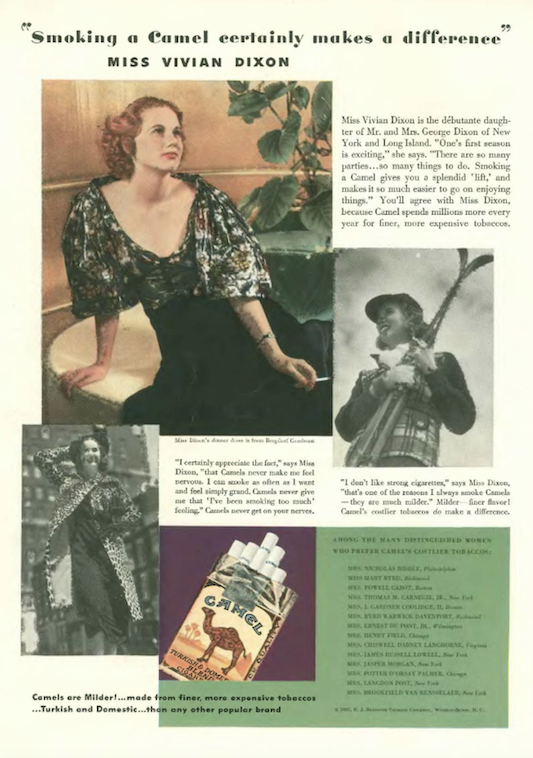
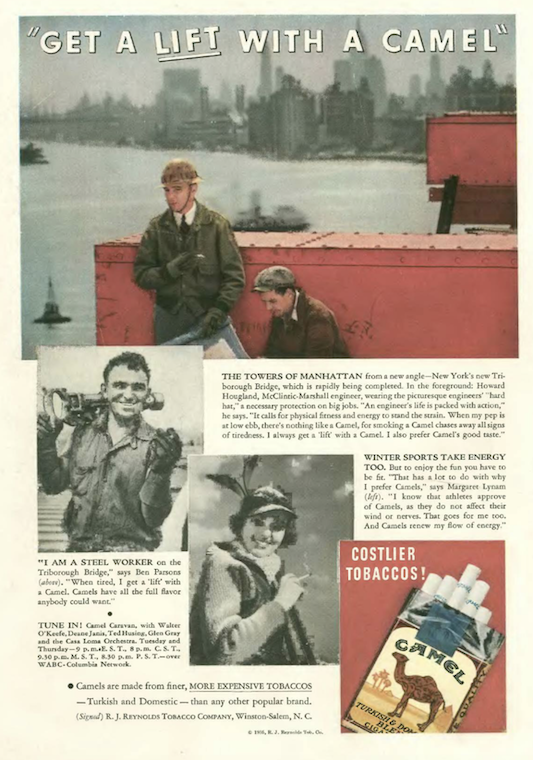
…and the makers of Camels continued to print testimonials touting the invigorating effects of their cigarettes…

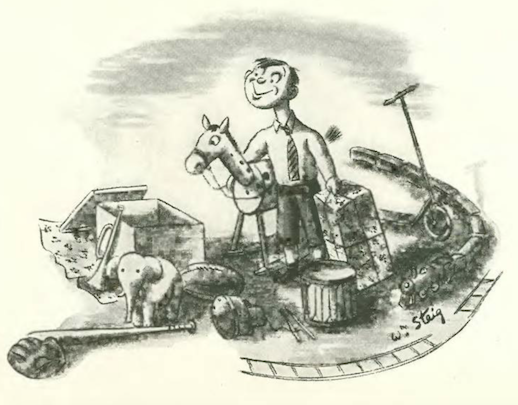
…on to our cartoonists, with William Steig taking stock of the Christmas haul…

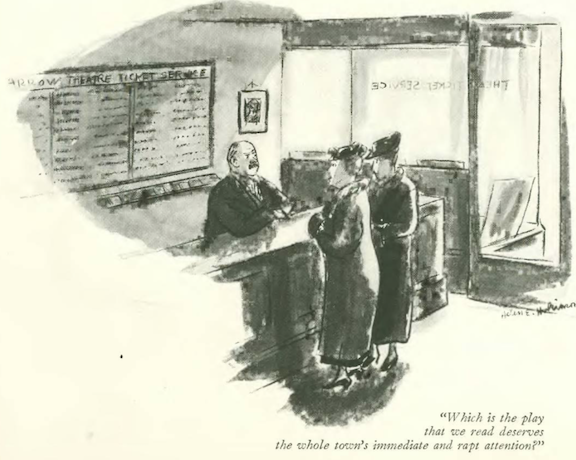
Helen Hokinson’s girls were looking for the hottest show in town…

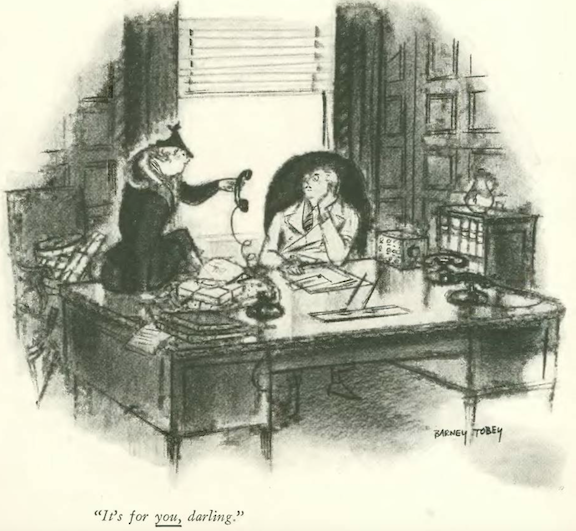
Barney Tobey was the latest cartoonist to take a shot at the boss-secretary trope…

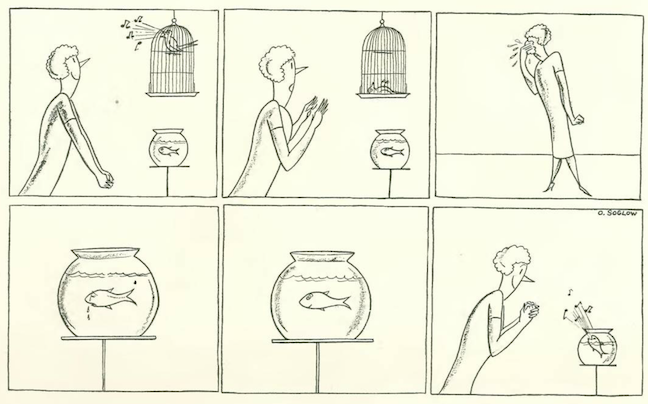
Otto Soglow gave us a singing fish…

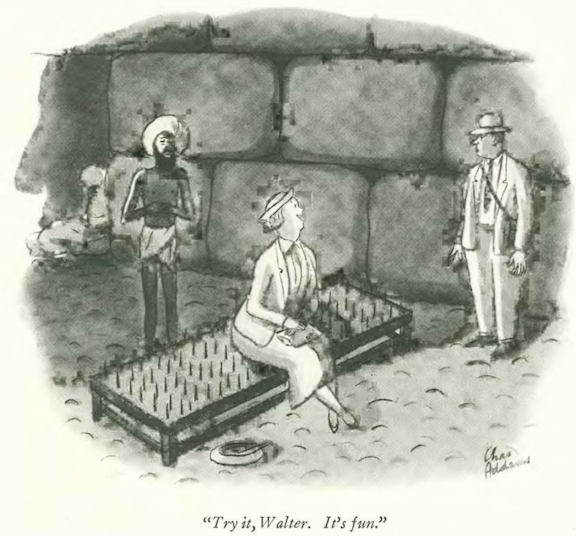
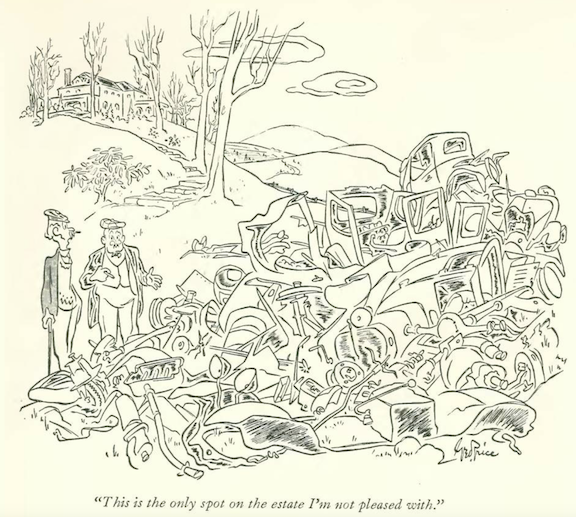
George Price came across a landscaping challenge…

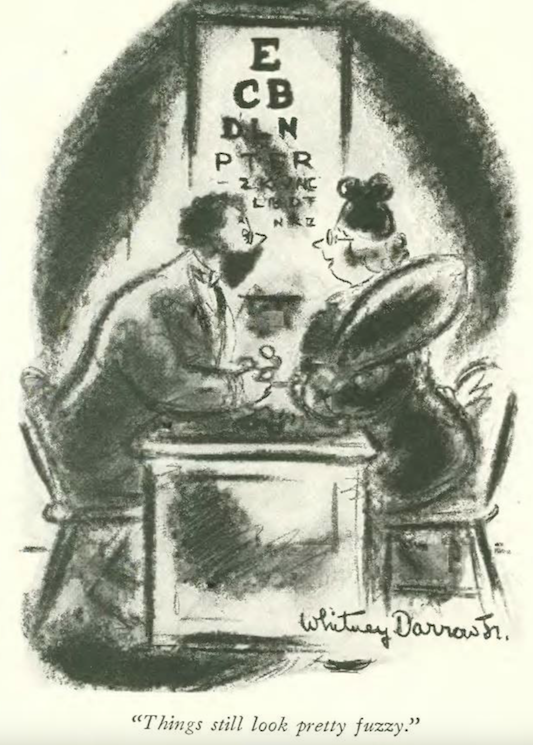
Whitney Darrow Jr focused on a visit to the optometrist…

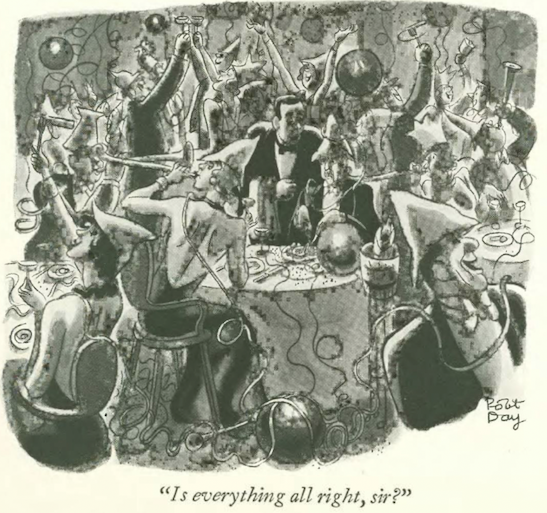
Robert Day gave us a party pooper too pooped to party…

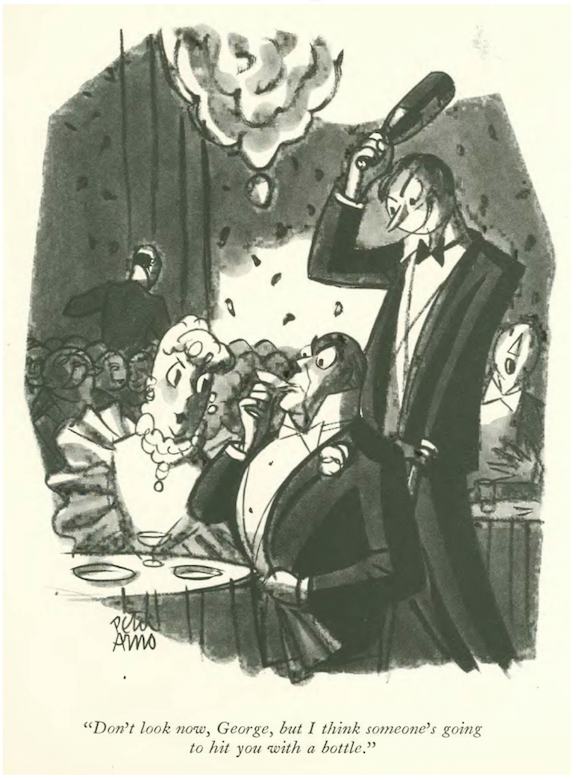
…and Peter Arno offered a glimpse into his active nightlife…

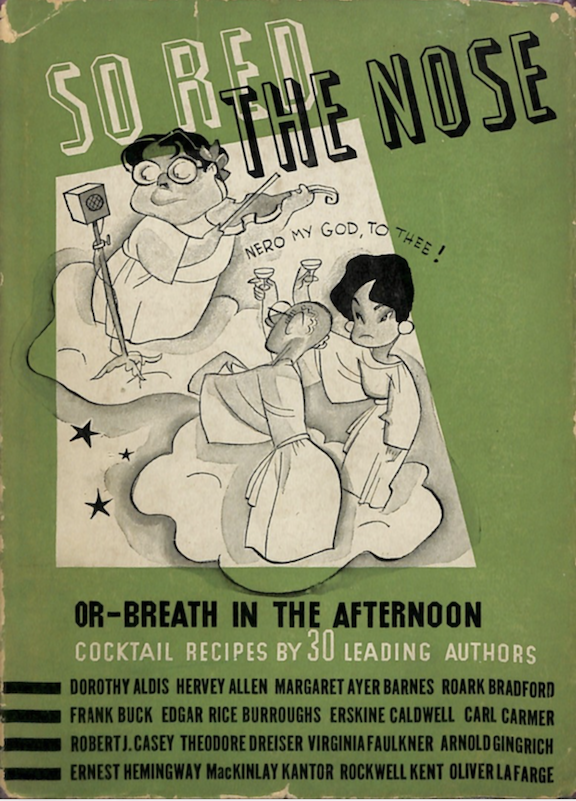
…before we go, I ran across this cocktail book, So Red the Nose, at Messy Nessy’s Cabinet of Curiosities

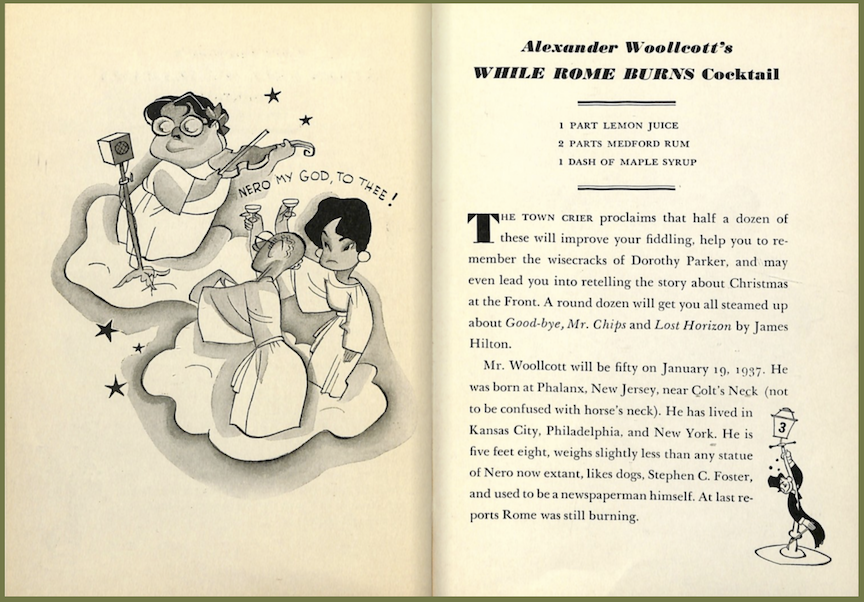
…this particular tome featured an Alexander Woollcott recipe for a cocktail called “While Rome Burns”…

…you can flip through the entire book at this site

Next Time: The Major’s Amateur Hour …