After his famous transatlantic flight, not only did Charles Lindbergh have to endure endless banquets and the sweaty crush of adoring crowds, but he also inspired a lot of kitsch, including some spectacularly bad poetry that Dorothy Parker could’t help but eviscerate in the Jan. 7, 1928 issue.
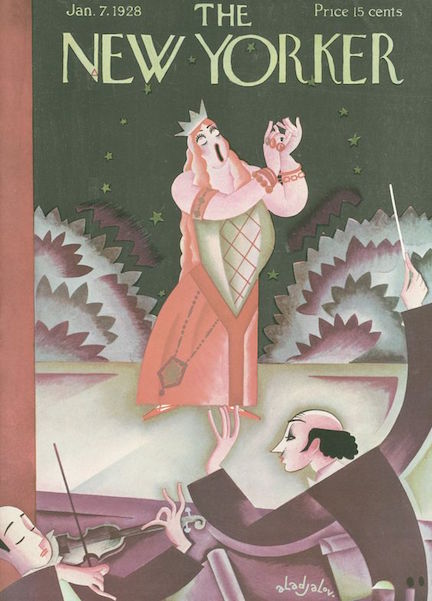
January 7, 1928 cover by Constantin Alajalov.
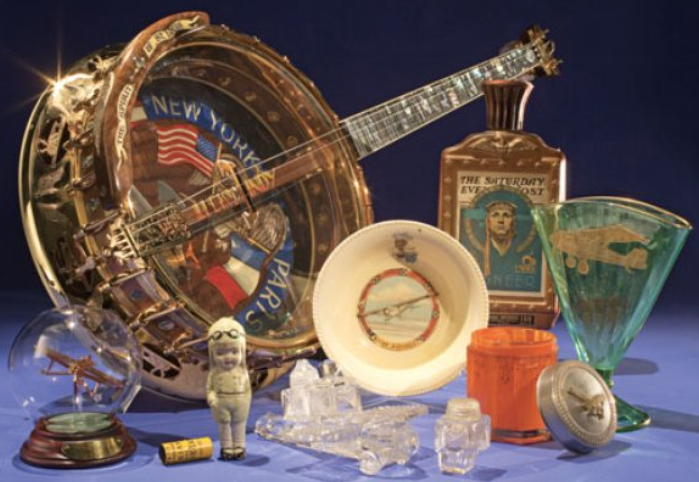
Before we tackle the poetry, here is a sampling of various Lindbergh memorabilia:
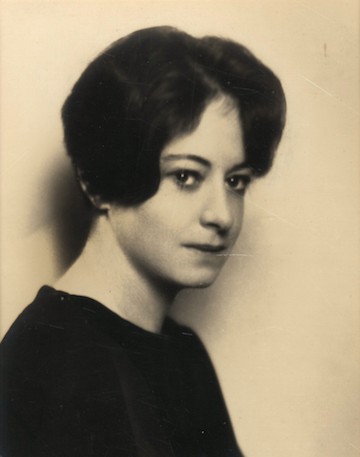
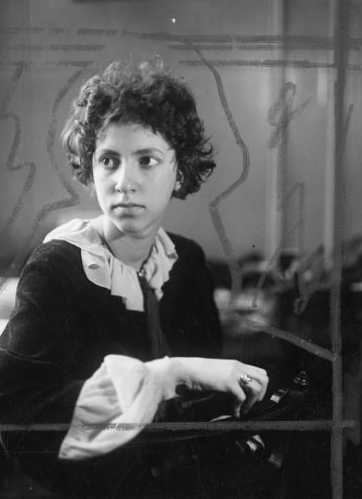
THEY’RE SELLING YOU…Assortment of Lindbergh souvenirs on display at the Smithsonian’s Air & Space Museum. (Eric Long/Smithsonian)SHARPENED TONGUE…Dorothy Parker in 1928. (literaryladiesguide.com)
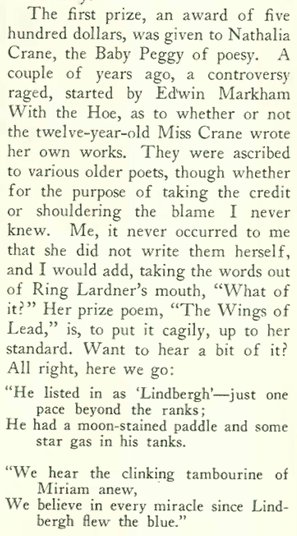
Parker led off her “Reading & Writing” column with this observation about the collapse of grammar and civilization in general…
…and offered two examples—chocolate-covered olives and a new book of poems dedicated to Charles Lindbergh’s heroic solo crossing of the Atlantic…
Parker’s comment about guiding a razor across her throat is a bit unnerving, considering she was chronically depressed and occasionally suicidal throughout her life. But then again, Parker didn’t like ugly things, including bad poetry, and especially bad poetry written by a twelve-year-old “prodigy,” in this case a one Nathalia Crane, who claimed the top prize in the Lindbergh collection. Parker observed:
Little Nathalia Crane (1913–1998) gained fame after the publication of her first book of poetry, The Janitor’s Boy, which she wrote at age ten. After her second book of poetry was published in 1925, American poet Edwin Markham suggested the poems were part of a hoax because they exhibited a maturity of thought beyond the reach of a mere child. (A sidebar: Parker referred to Nathalia as a “Baby Peggy of poesy.” Baby Peggy, whose real name was Diana Serra Cary, was a beloved child silent film star. Still alive at this writing, she is 99 years old–the last living film star of the silent era). Update: Diana Serra Cary, considered the last surviving person with a substantial career in silent films, died February 24, 2020, at age 101.
BAD POET’S SOCIETY?…Nathalia Crane in 1925. She would publish ten volumes of poetry and three novels, and would go on to a long career as a professor of English at San Diego State University. (Wikipedia)
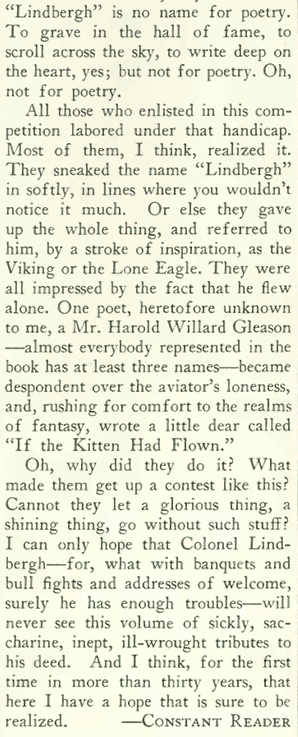
Parker observed that “Lindbergh” was not a name well suited to poetry, and concluded with the hope that the aviator would be spared from having to read the “sickly, saccharine, inept, ill-wrought tributes”…
Tilt Your Vote to Al
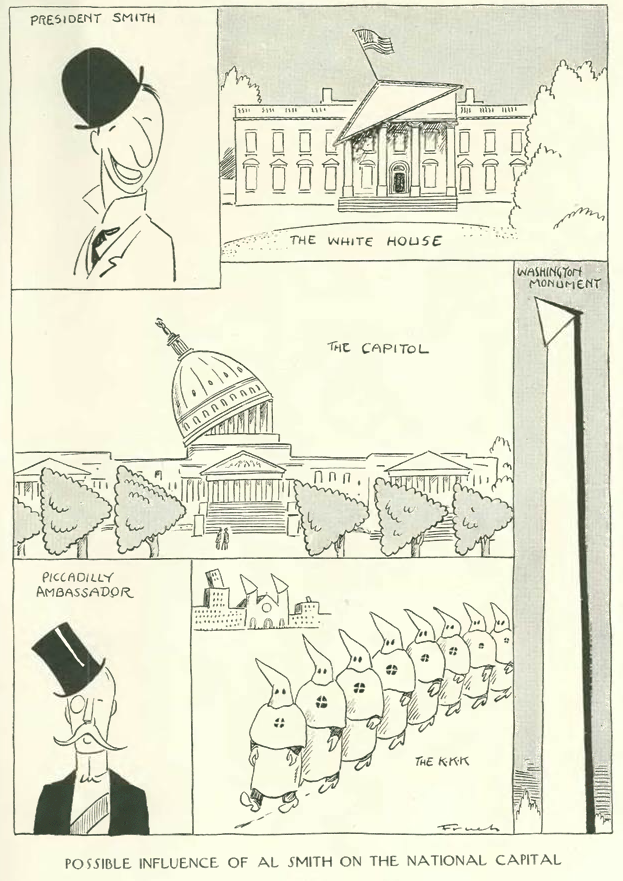
When New York Governor Al Smith announced his candidacy for U.S. President, New Yorker cartoonist Al Frueh had some fun with the governor’s habit of wearing his ever-present bowler hat at a tilt:
They Dropped Like Flies
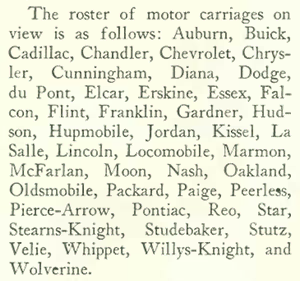
Nicholas Trott visited the 1928 New York Automobile Salon and rattled off this list of 43 car companies that would be displaying their shiny wares:
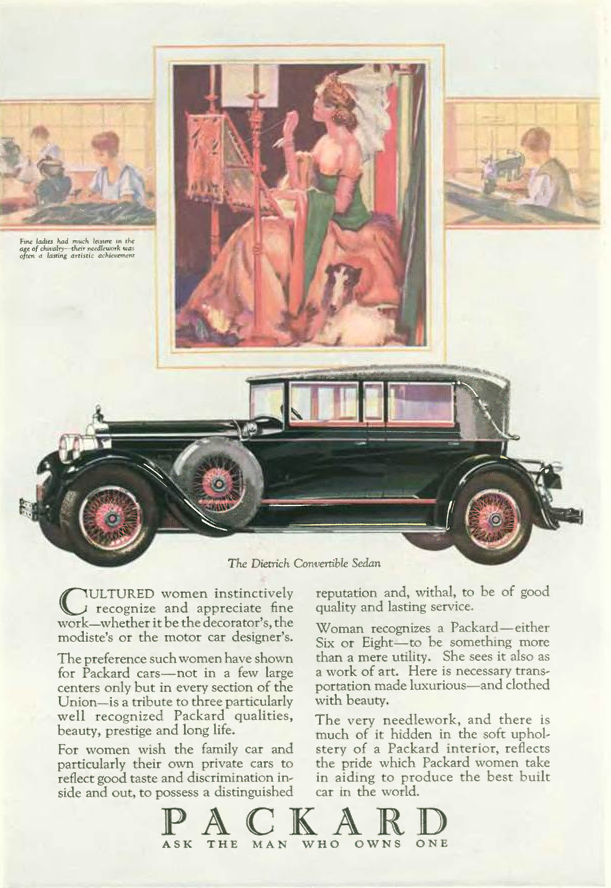
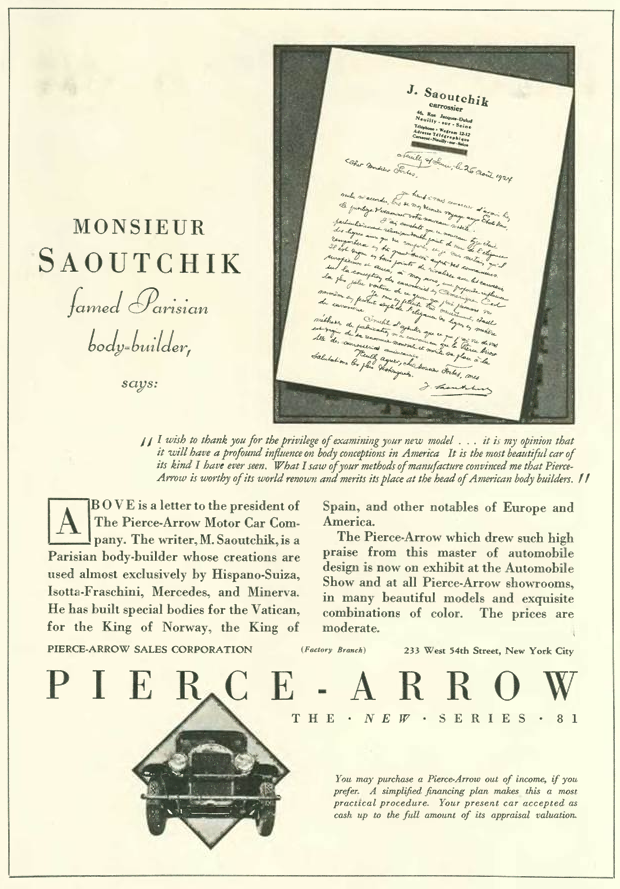
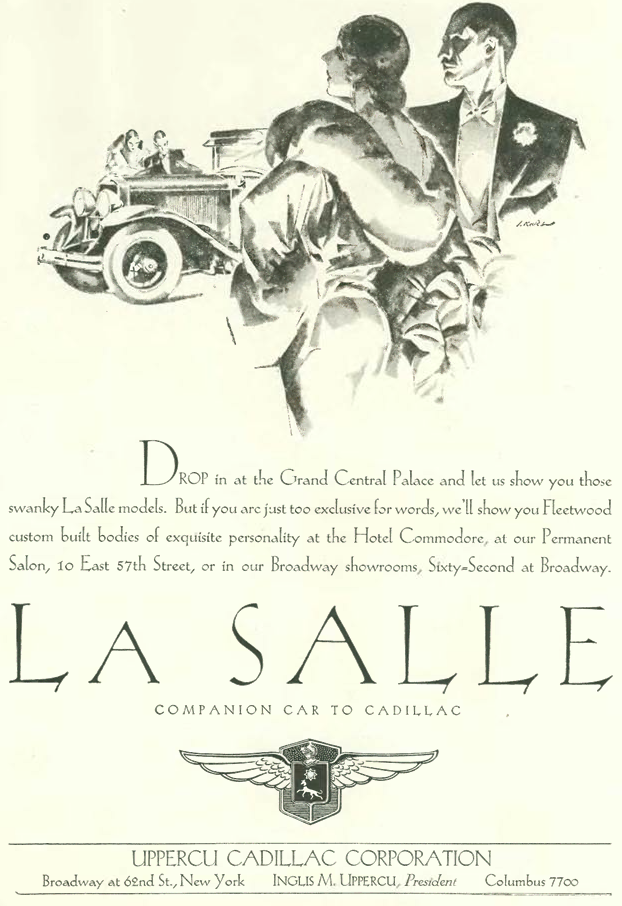
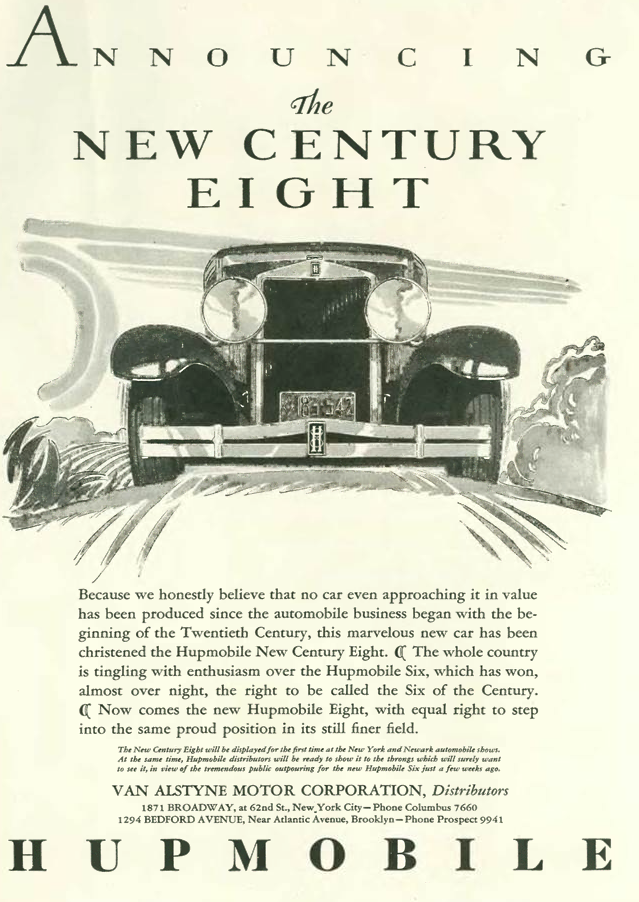
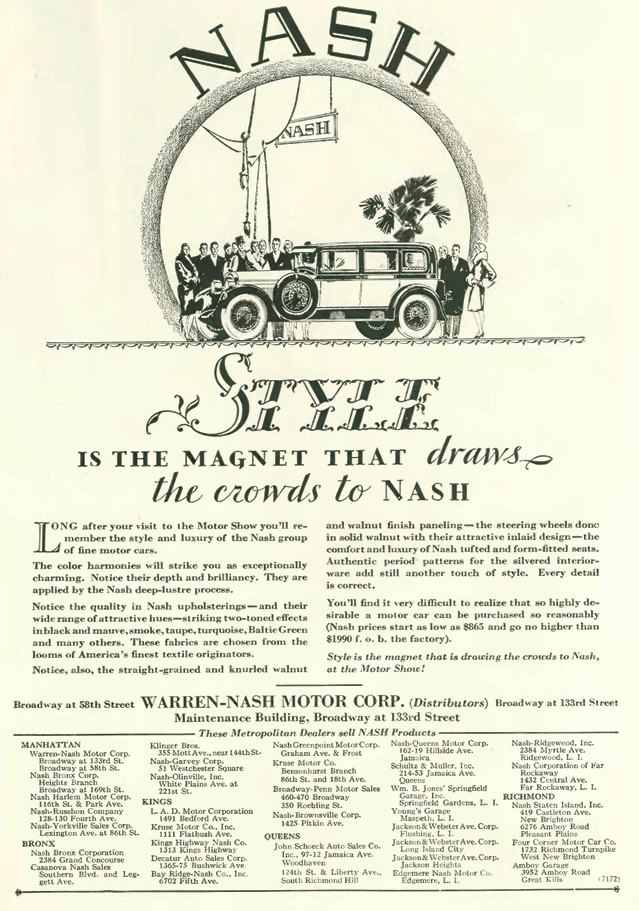
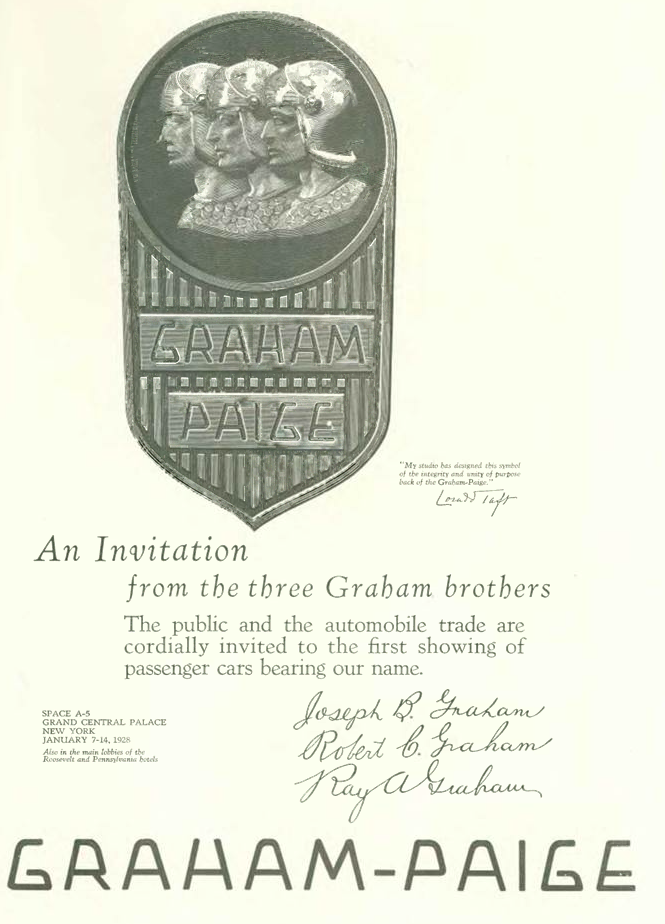
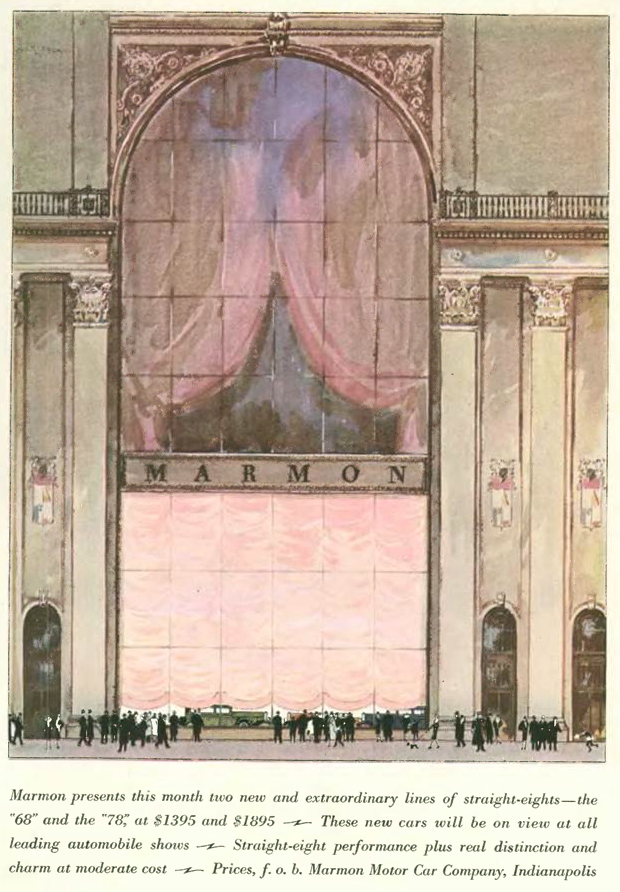
Of those 43 companies, only six are in operation today. Interestingly, the car ads that appeared in the Jan. 7 issue were mostly from companies that are long gone. Here is a sampling:
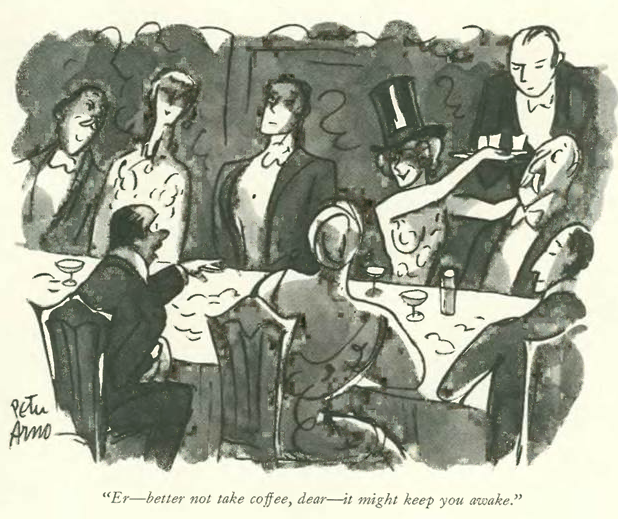
And finally, we close with Peter Arno and some dinner party hijinks…
My last entry featured cartoonist Bud Fisher, inventor of the comic “strip” (Mutt & Jeff) and the subject of The New Yorker’s Nov. 26, 1927 “Profile.” It was something of a surprise, then, to open the next issue, Dec. 3, and find literary critic Dorothy Parker offering her observations on the funny papers, including Sidney Smith’s comic strip, The Gumps.
December 3, 1927 cover by Constantin Alajalov.
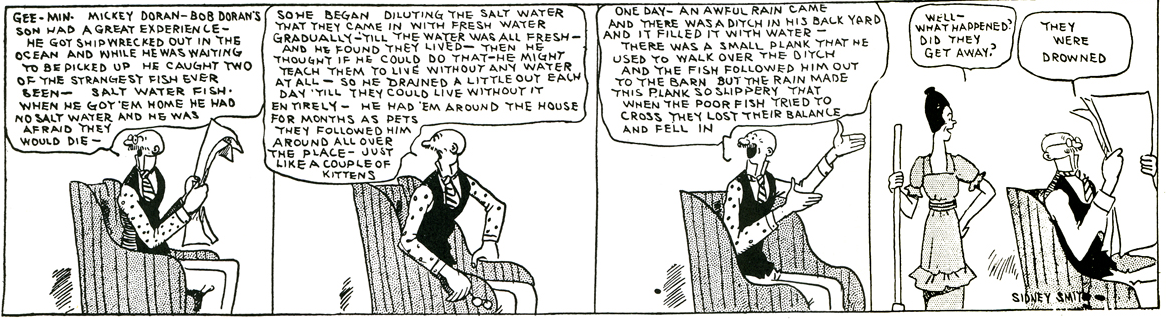
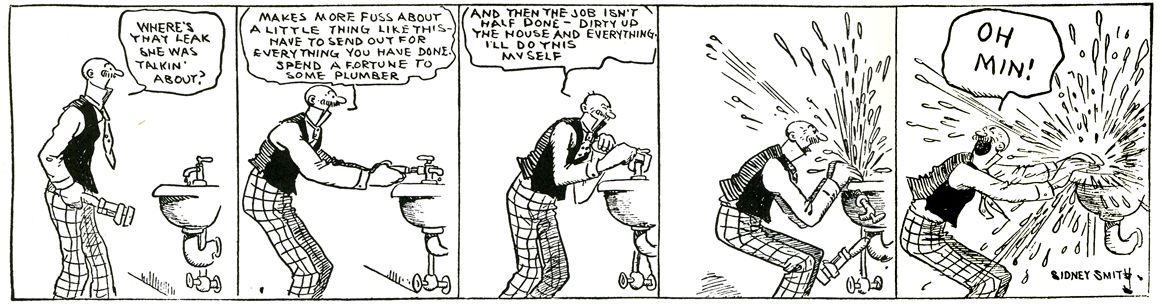
Before we get to Dorothy Parker, let’s have a look at The Gumps, created by Sidney Smith in 1917. Although that strip had plenty of slapstick, it was wordier than Mutt & Jeff and somewhat more realistic (Smith was the first cartoonist to kill off a regular character, in 1929–it caused a national outcry). An example of the strip from around 1920:
(michaelspornanimation.com) Click image to enlarge
Like Bud Fisher, Smith would become wealthy from the merchandising of Gump toys, games, songs, food products, etc…
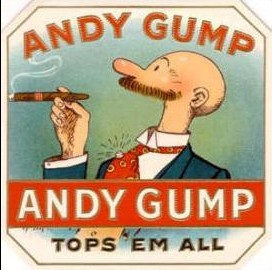
The image of Andy Gump even graced cigar boxes. (kenlevine.blog)
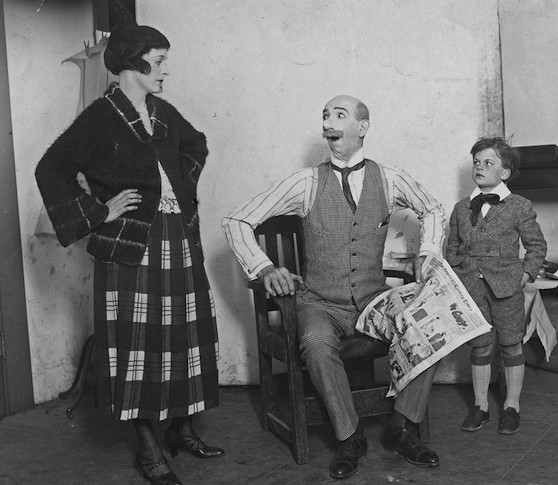
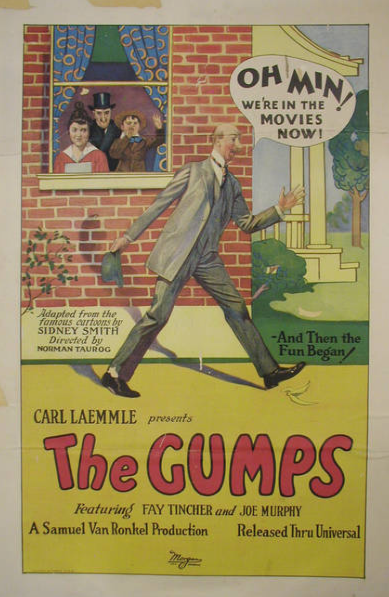
The Gumps were also featured in nearly 50 animated shorts, and between 1923 and 1928 Universal produced dozens of two-reel comedies starring Joe Murphy (one of the original Keystone Cops) as Andy Gump, Fay Tincher as Min and Jack Morgan as Chester (two-reelers were usually comedies, about 20 minutes in length). The director of these short films, Norman Taurog, would go on to become the youngest director to win an Academy Award (Skippy 1931). He would also direct such films as Boy’s Town (1938) and nine Elvis Presley movies from 1960 to 1968.
His comic strip barely five years old, in 1922 Smith famously signed a 10-year, one million-dollar contract. In 1935 he would sign an even more lucrative contract, but on his way home from the signing he would die in a car accident.
OH MIN!…A publicity still from Universal’s two-reel comedy series featuring The Gumps. From left, Fay Tincher (Min), Joe Murphy (Andy Gump) and Jackie Morgan (Chester). The actress Fay Tincher is a bit of a mystery…an enterprising young comedienne who started her own production company in 1918, she dropped from public view by 1930, and little is known of her life since that time, even though she lived to see the year 1983, and died at age 99. (younghollywoodhof.com)Theatre poster announced the coming of what would be dozens of two-reelers produced by Universal between 1923 and 1928 featuring The Gumps.(imdb.com)
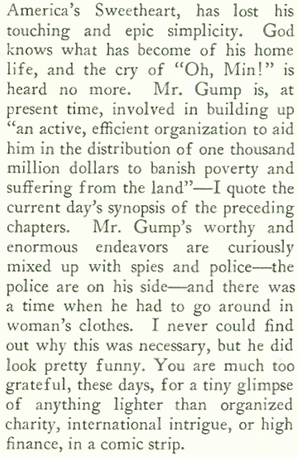
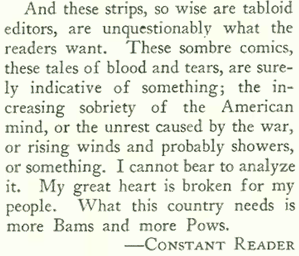
In her column, “Reading and Writing,” Dorothy Parker (writing under the pen name “Constant Reader”) lamented the fact that the comic strips were abandoning simple, light horseplay in favor of “melodramas.” Apparently even Andy Gump wasn’t exempt:
GUMPS IN THE DUMPS…in late 1927 Dorothy Parker longed for the antics of the old, dimwitted Andy Gump and his much-brainier wife, Minerva. Above, the first strip from 1917 that introduced The Gumps. Below, a circa 1920 strip featuring a typical Andy Gump mishap and his trademark “Oh Min!” (newspapers.com) Click images to enlarge.
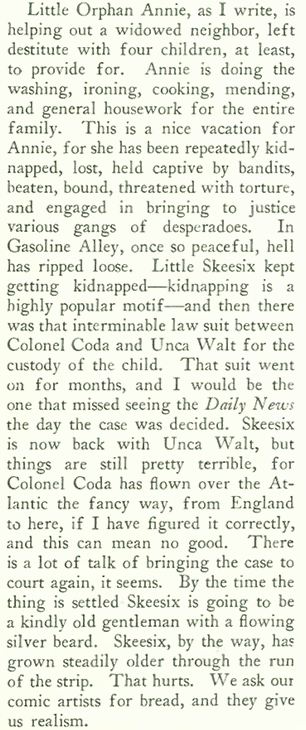
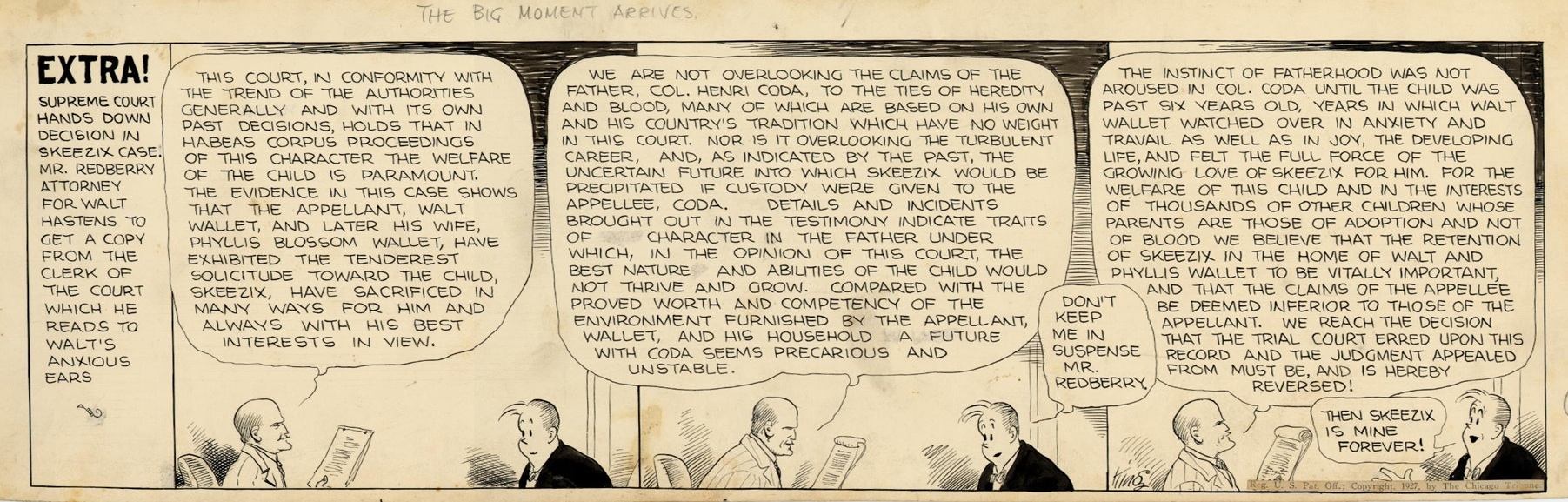
Parker also bemoaned the likes of Little Orphan Annie and the gang from Gasoline Alley, where everyday hijinks were replaced by melodrama:
I LOVE YA, TOMORROW…but I’m gonna kick your ass today! Annie gets rough in this 1927 strip. Hugely popular, the strip (begun in 1924) inspired a ton of merchandise, films, a radio show and the musical Annie. The strip Little Orphan Annie made creator Harold Gray a very rich man. (ha.comics.com) Click image to enlarge.SORRY, NO PIE IN THE FACE HERE…In this series of turgid word balloons, Walt gets full custody of the orphan Skeezix in this Gasoline Alley strip from 1927, ending what Dorothy Parker called “an interminable law suit.” First published November 24, 1918 by Frank King (who drew the strip until 1959), Gasoline Alley is still going and is the second-longest-running comic strip in the U.S. As Parker noted in her column, the characters in Gasoline Alley were allowed to age naturally. Skeezix is currently 97 years old. (hoodedutilitarian.com) Click image to enlarge.
Parker suffered throughout her life from depression, and no doubt turned to the funnies for respite. However, she wrote that she hadn’t “seen a Pow or a Bam in an egg’s age,” and sadly concluded that melodrama was what the readers wanted.
When Minerva Was a Car
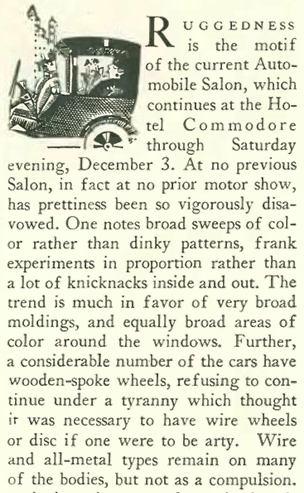
The New Yorker’s Nicholas Trott visited the Automobile Salon at the Hotel Commodore and noted that the latest trend favored an automobile’s “ruggedness” over its “prettiness.” Given the condition of roads in the 1920s, that probably wasn’t a bad thing…
In the early days of the auto industry there were thousands of different manufacturers that eventually went broke or merged with other companies. Trott’s article mentioned new offerings from Chrysler, Mercedes, and Cadillac as well as from such makes as Erskine, Sterns-Knight, Minerva, Holbrook Franklin, Stutz, and Brewster.
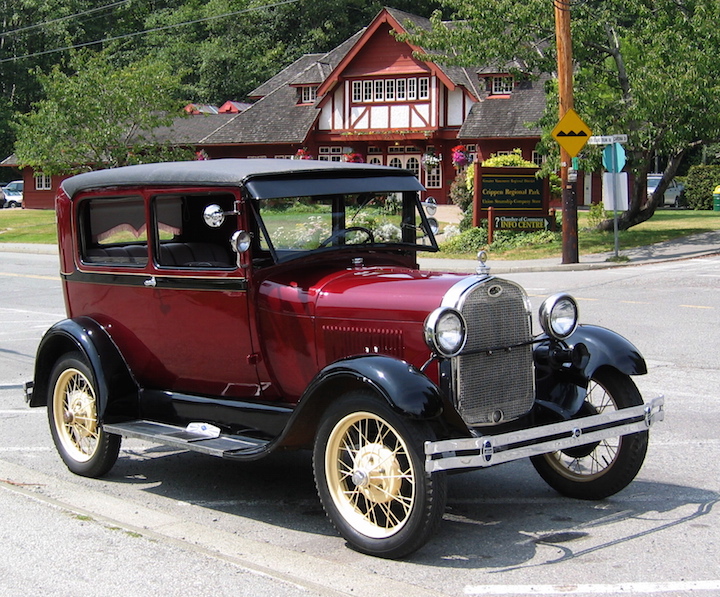
In “The Talk of the Town,” however, the editors wrote about another car with a far less colorful name: The Ford Model A. After 18 years of the ubiquitous black Model T, Ford buyers were ready for something different…
GOOD ENOUGH…The 1928 Ford Model A Tudor Sedan (Wikipedia)
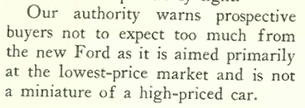
New Yorker editors cautioned, however, that buyers of the Model A should “not expect too much” from a car aimed at more modest pocketbooks. In a little more than a year Ford would sell one million of the things, and by the summer of 1929, more than two million.
When Model A production ended in early 1932, nearly five million of the cars had been produced.
German Atrocities?
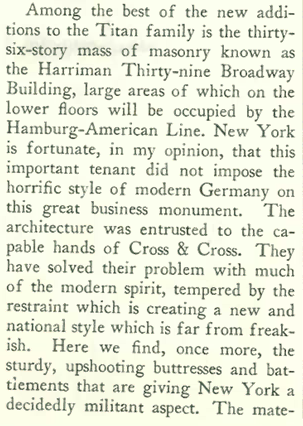
It’s seemed a bit of an “about face” for New Yorker architecture critic George S. Chappell to write of the “horrific style of modern Germany” after previously writing admiringly of the Bauhaus movement and “International Style” promulgated by Le Corbusier. Chappell’s column “The Sky Line” included this subhead, “German Atrocities Neatly Escaped.” In a few years “German Atrocities” would refer to something very different…
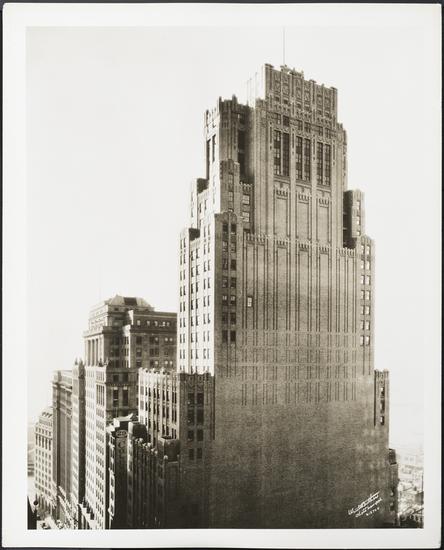
TEN-HUT!…The New Yorker’sGeorge Chappell liked the Harriman Building at 39 Broadway despite its “militant aspect.” Designed by Cross & Cross, it opened in 1928. (Museum of the City of New York)
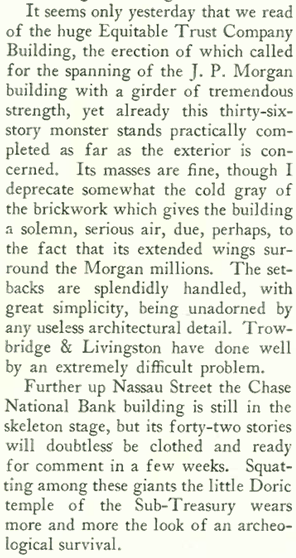
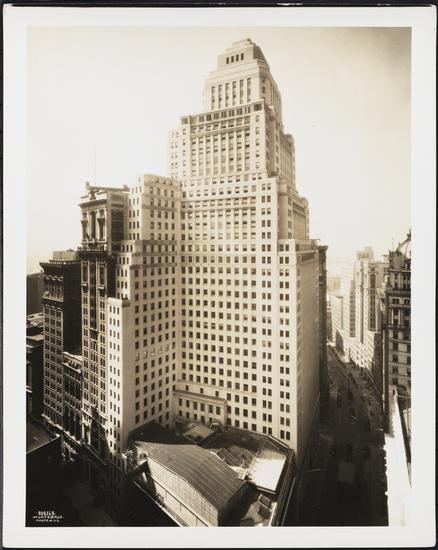
Another monstrous building of note in Chappell’s column was the “huge” Equitable Trust Building at 15 Broad Street…
Equitable Trust Building at 15 Broad Street. Designed by Trowbridge & Livingston, completed in 1928. (Museum of the City of New York)
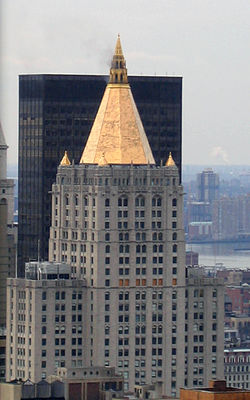
To save the best for last, Chappell also wrote of Cass Gilbert’s landmark New York Life Building, rising on the site of the old Madison Square Garden…
The distinctive pyramidal gilded roof of the New York Life Insurance Building, (Wikipedia)
* * *
She Nearly Made It
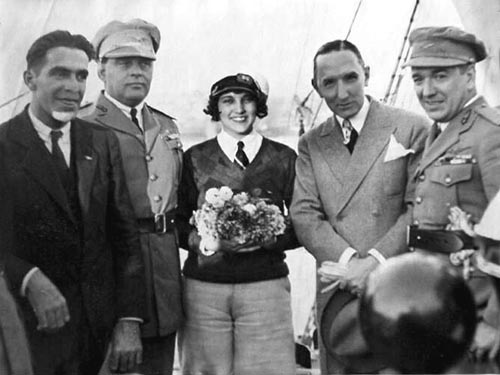
Morris Markey wrote about the exploits of pilot and actress Ruth Elder (1902–1977) in his “Reporter at Large” column. Known as the “Miss America of Aviation,” on Oct. 11, 1927, Elder and her co-pilot, George Haldeman, took off from New York in her attempt to become the first woman to make a transatlantic crossing to Paris. Mechanical problems in their airplane (a Stinson Detroiter dubbed American Girl) caused them to ditch into the ocean 350 miles northeast of the Azores. Fortunately they were rescued by a Dutch oil tanker in the vicinity.
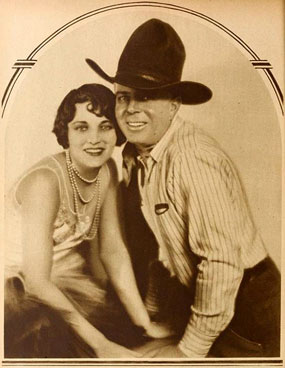
NO WORSE FOR WEAR…Ruth Elder, center, and George Haldeman, far left, on board their rescue ship, the Barendrecht, Oct. 25, 1927. (ctie.monash.edu)WHAT A HOOT…Ruth Elder and Hoot Gibson in a promotional pose for the 1929 film Winged Horseman (usc.edu).
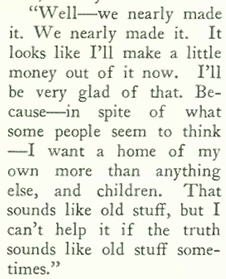
Although they were unable to duplicate Charles Lindbergh’s feat, Elder and Haldeman nevertheless established a new over-water endurance flight record of 2,623 miles–the longest flight ever made by a woman. They were honored with a ticker-tape parade upon their return to New York. Despite her derring-do, Elder suggested that she longed for a simpler, more domestic life…
Whether or not she found the simple life it is hard to say. She married six times, perhaps looking for the right “old stuff” and not quite finding it.
* * *
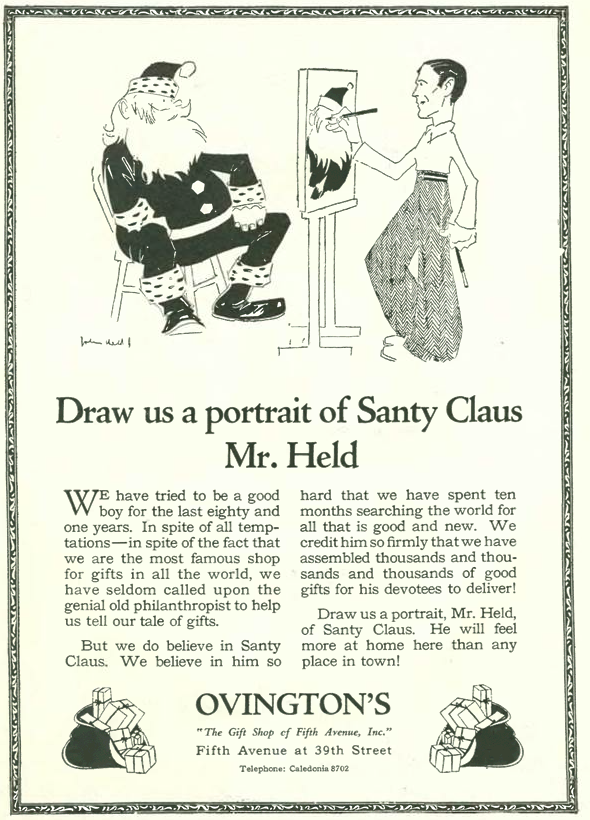
And finally, this ad from the Dec. 3 issue featuring the art of New Yorker contributor John Held Jr…
…and this cartoon by Otto Soglow, depicting how one toff bags his “trophy”…
We close out November 1927 by looking at a hugely popular comic strip—Mutt & Jeff—that made cartoonist Bud Fisher both famous and wealthy.
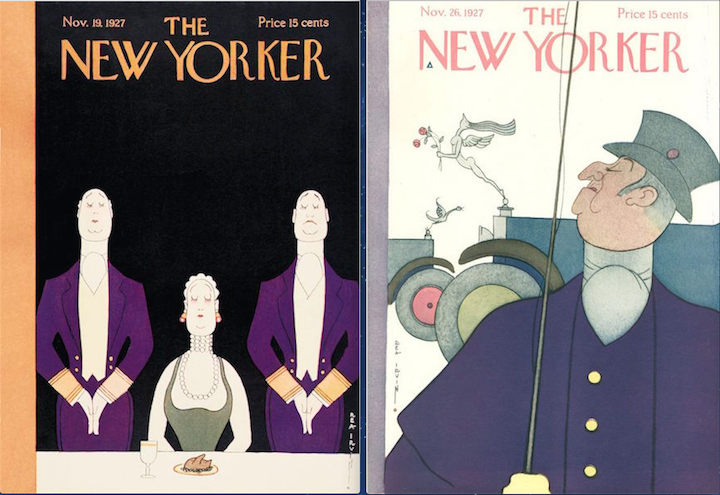
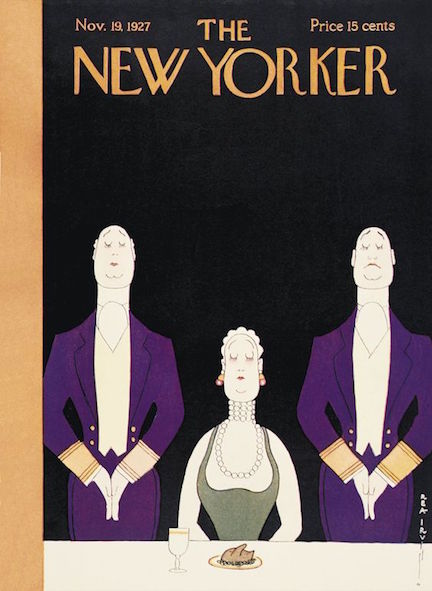
Nov. 19 and Nov. 26, 1927 covers by Rea Irvin.
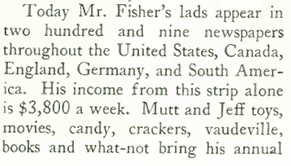
The editors of the Nov. 26, 1927 issue of The New Yorker thought Fisher interesting enough to feature in a lengthy “Profile,” written by Kelly Coombs. A brief excerpt:
According to John Adcock’s terrific Yesterday’s Papers blog, by 1916 Bud Fisher was the highest paid cartoonist on earth. The New Yorker suggested his annual income was $300,000 (roughly equivalent to more than $4 million today). In addition to the strips, created by Fisher and a team of ghost illustrators/writers, Mutt & Jeff were featured in vaudeville engagements, theatrical shows, animated cartoons, comic books and toys.
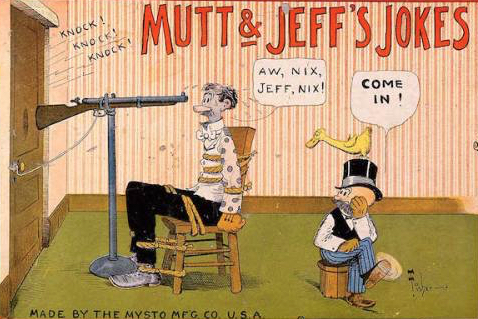
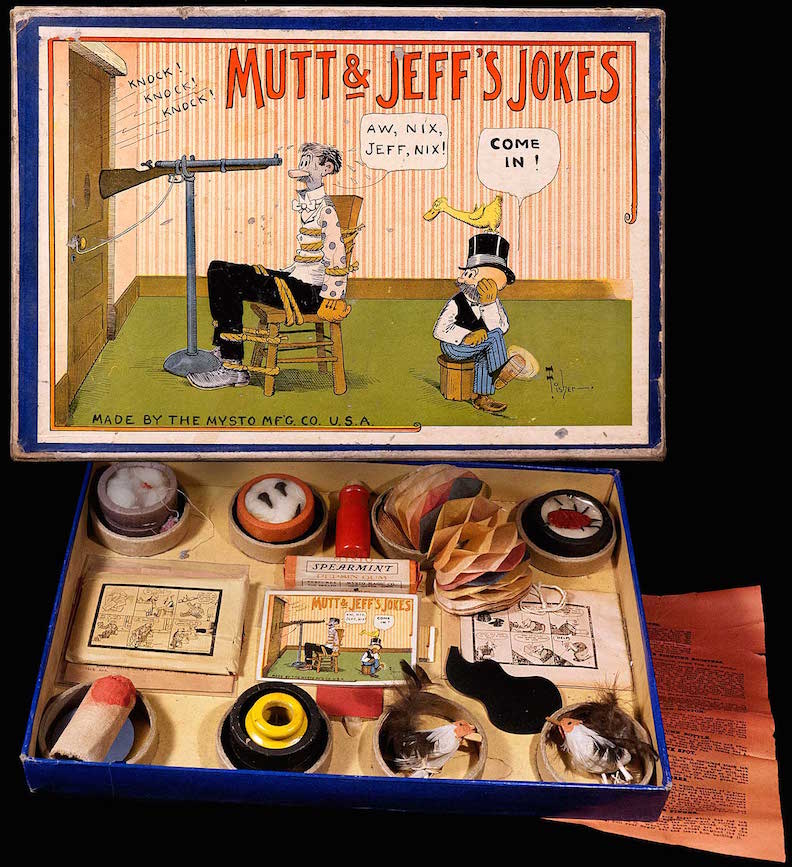
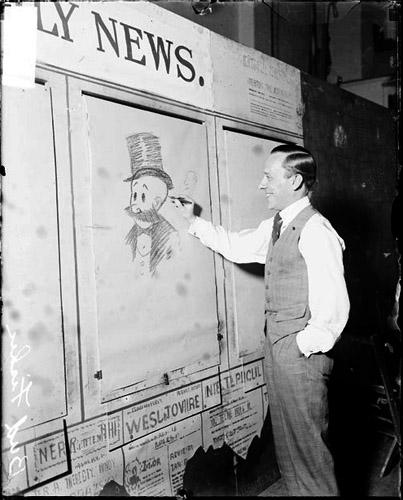
DIE LAUGHING…Mutt & Jeff themed toys included this joke kit from Mysto Manufacturing. I don’t quite get the joke featured on the cover, depicting Jeff’s casually twisted approach to murdering poor Mutt. (Copyright MEL BIRNKRANT via melbirnkrant.com—a truly amazing collection)IT’S A LIVING…Harry Conway (Bud) Fisher, drawing a likeness of the character “Jeff” at a Chicago Daily News event in 1915. (Chicago History Museum)
Fisher began his career as a sports cartoonist for the San Francisco Chronicle and started his strip about “two mismatched tinhorns” in 1907. It went into syndication the following year. Mutt and Jeff, originally titled A. Mutt, is regarded as the first American newspaper cartoon published as a strip of panels, making it the first “comic strip.”
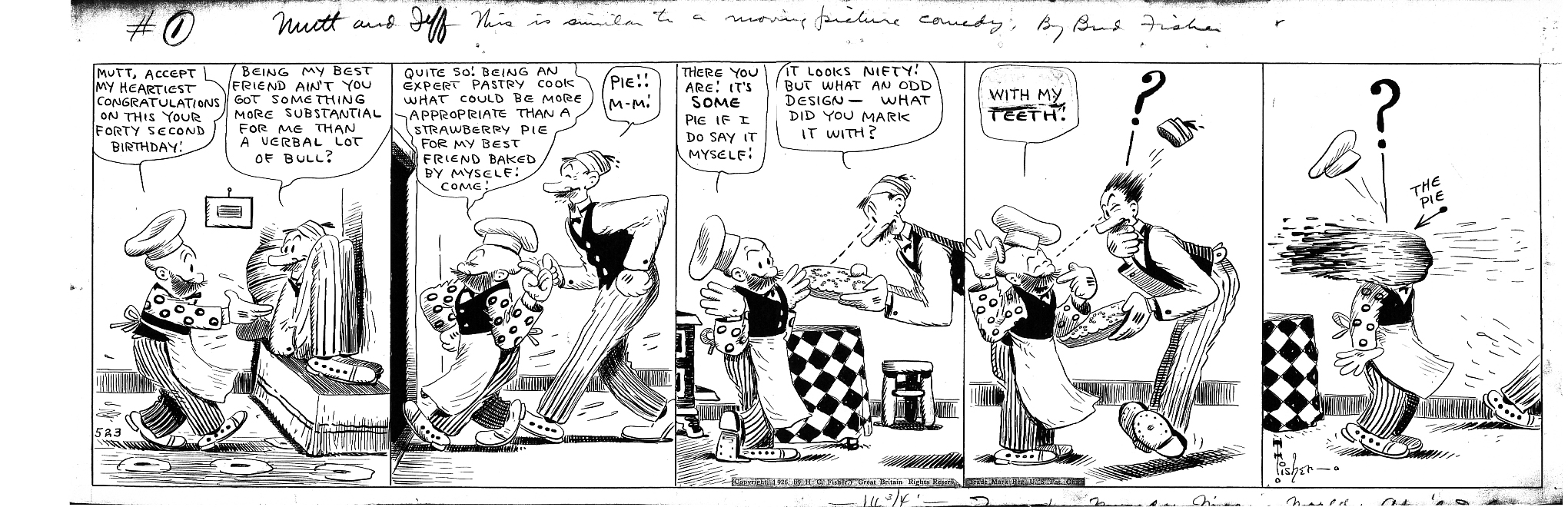
There was obviously a time when American readers thought Mutt & Jeff hilarious, but I don’t quite get its appeal. In this strip from 1926, Jeff gets a pie in the face. The giant question mark was frequently employed by Fisher, as were the dotted eye lines and explanatory arrows like the one in the last panel. No, Jeff didn’t get his brains blown out by Mutt. It is only a pie! Hah!
Click on image to enlarge
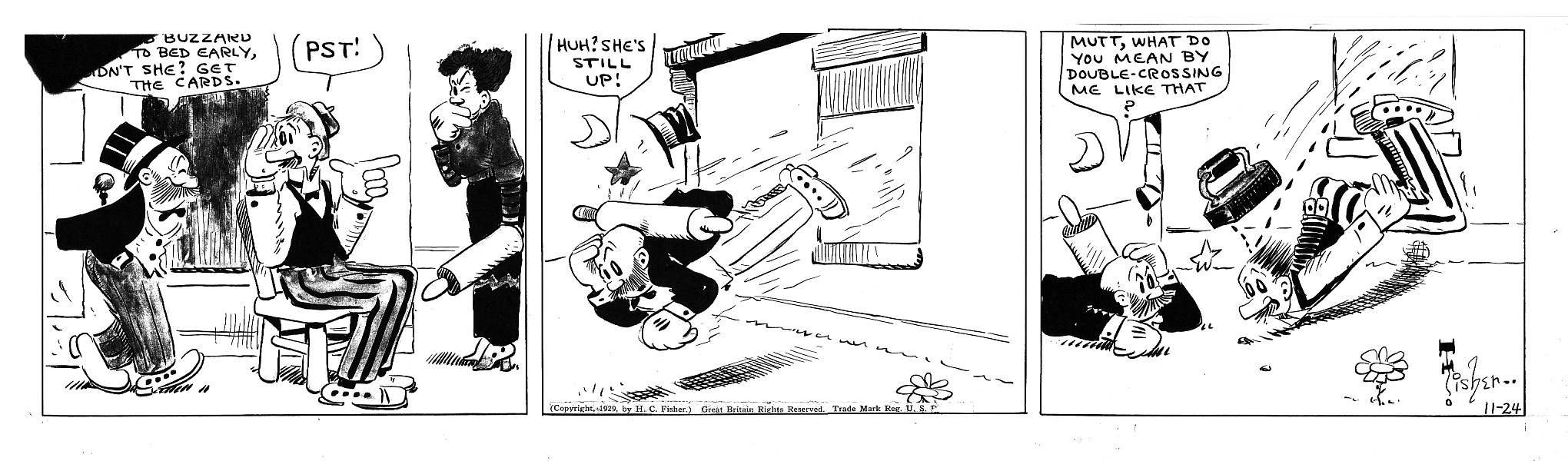
Another visual cliché from comics of yore was the angry wife wielding a rolling pin. Apparently Jeff refers to Mutt’s wife as an “Old Buzzard” and assumes she is already in bed (sorry about the poor quality of the reproduction). Jeff subsequently gets whacked with the rolling pin, and Mutt takes it on the bean with a flatiron. That is quite a feat, throwing a grown man through a window while simultaneously hitting him on the head with a flatiron…
Click on image to enlarge (Both strips courtesy University of Michigan)
The duo were also featured inmore than 300 animated “half-reelers” produced between 1913 and 1926, including Mutt and Jeff: On Strike from 1920. The short film (which can be viewed here) even includes rare footage of Bud Fisher himself, since the story–sort of a film within a film–involves the penniless Mutt and Jeff going on strike after they see a movie featuring Fisher’s lavish home.
STRIKEBREAKER…Still images from the silent half-reeler, Mutt and Jeff: On Strike. Bud Fisher is shown at home discussing terms over the phone with his striking characters. They lose. (www.filmpreservation.org)
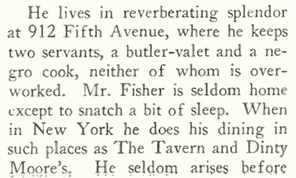
Coombs concluded the profile with these observations concerning Fisher’s personal habits:
Fisher employed a number of assistants on the strip, including George Herriman (Krazy Kat) and a high-school boy named Maurice Sendak (Where the Wild Things Are). When Fisher appeared to lose interest in the strip in the 1930s, assistant Al Smith took over and drew the strip for nearly fifty years (but Smith didn’t sign his own name on the strip until after Fisher’s death in 1954).
In Yesterday’s Papers, Adcock notes that Fisher “was the unlikeliest person you could think of to draw Mutt and Jeff…along with most of his contemporary cartoonist-journalists pals, (he) enjoyed fights, chorus girls, gambling, and saloons. Fisher liked to shoot up hotel rooms with his pistols, one of which was a gift from Pancho Villa, indoors when he was drunk.”
Heads in the Clouds
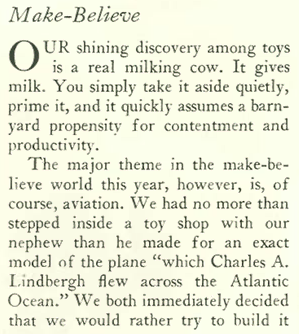
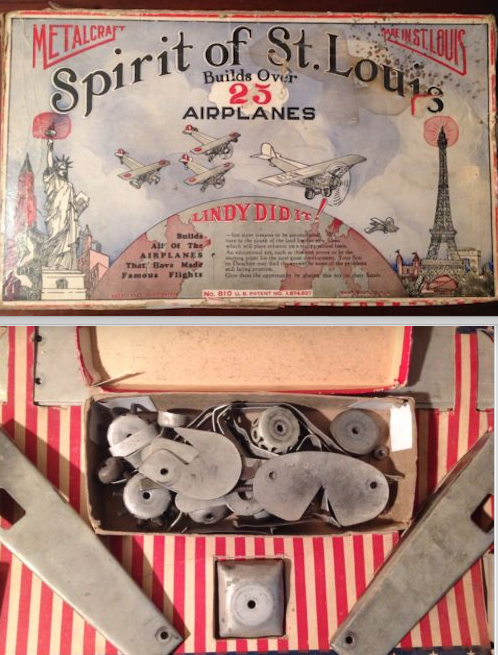
Thanks to the race to fly across the Atlantic, toy models of Charles Lindbergh’sSpirit of St. Louis and other planes were in high demand for the Christmas season, according to this item in the Nov. 26, 1927, “Talk of the Town:”
BUILT TO LAST…A Metalcraft model kit (box, upper image, contents below) from the late 1920s. It was all metal in the days before plastic model kits. (eBay)
* * *
At a Loss For Words
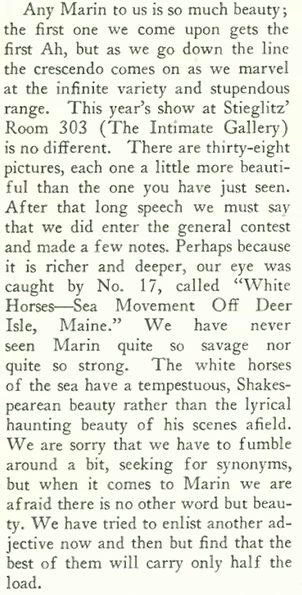
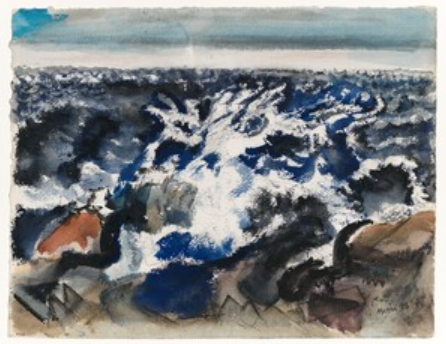
Jumping back to the Nov. 19, 1927 issue, we go from the low art of Bud Fisher to the high art of John Marin featured in “The Art Galleries” section. Art critic Murdock Pemberton wrote:
SAVAGE WORK…John Marin,White Horses – Sea Movement off Deer Isle, Maine, 1926. (Whitney Museum of American Art)
But perhaps “high art” is not an accurate description of Marin’s paintings, since Marin himself wasn’t into “highfalutin words” to describe his work…
HAUNTING BEAUTY…John Marin, Echo Lake Franconia Range White Mountain Country, 1927 (National Gallery of Art, Washington DC.)
* * *
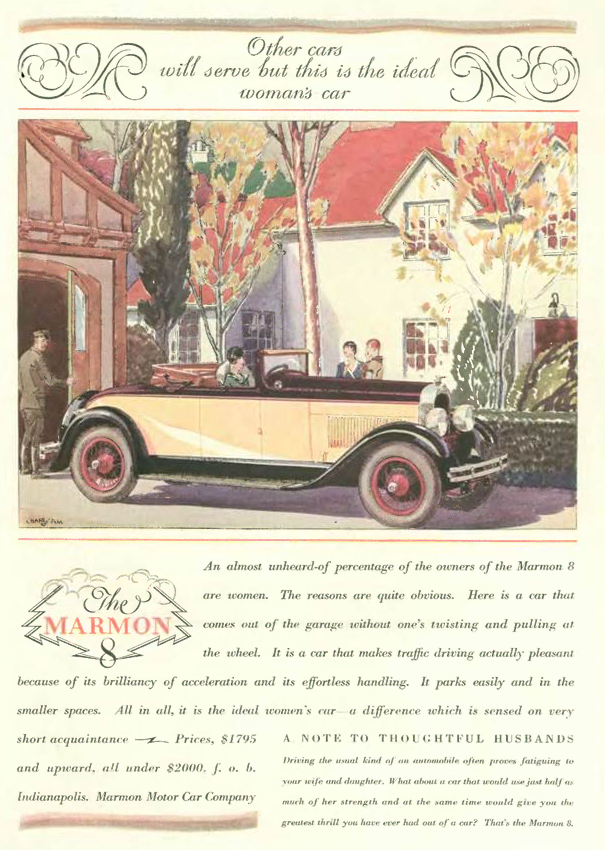
In the previous week’s issue (Nov. 12) the Marmon 8 was advertised as an ideal car for women. Not to be outdone, the folks at Buick shot back with this colorful ad in the Nov. 19 issue:
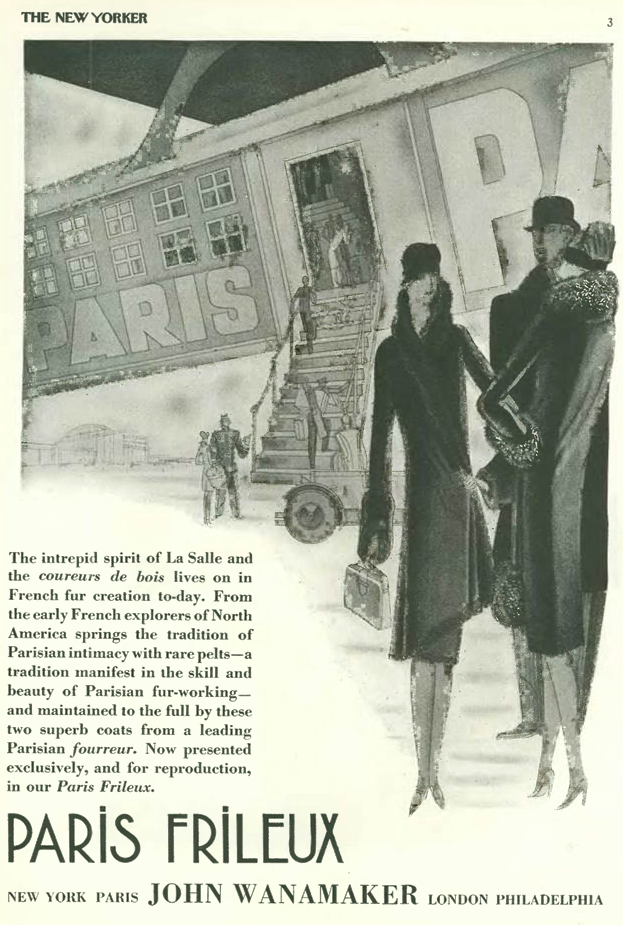
The Nov. 19 issue also featured this strange advertisement from the famed Wanamaker department store. Strange mainly because of the illustration, which features a fashionable woman departing a fanciful aircraft studded with mullioned windows(!) and a stairway that stretches to improbable depths…oh, and in case the reader might miss the snob appeal associated with French furs, the words Paris, Parisian or French are featured ten times…
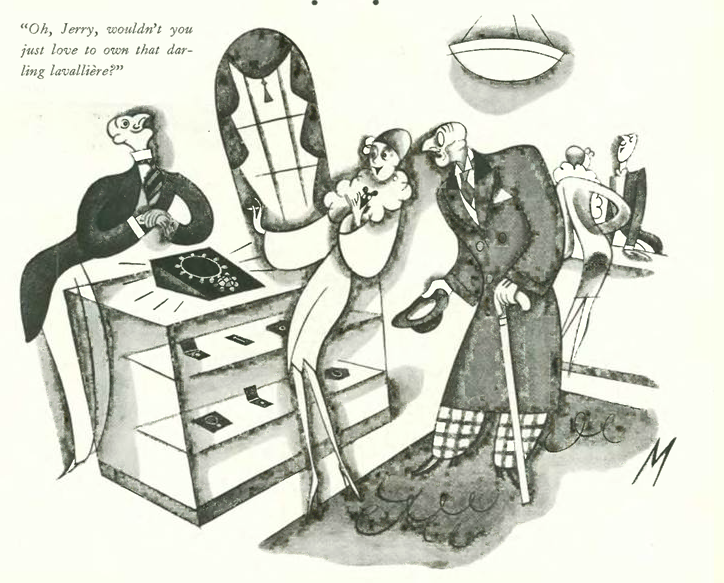
And finally, the ubiquitous New Yorker cartoon featuring the humorous mismatch of rich old sugar daddy and ditzy young mistress, courtesy of Julian de Miskey…
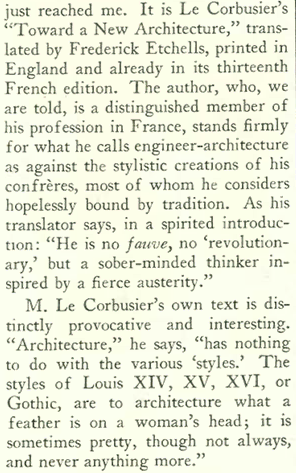
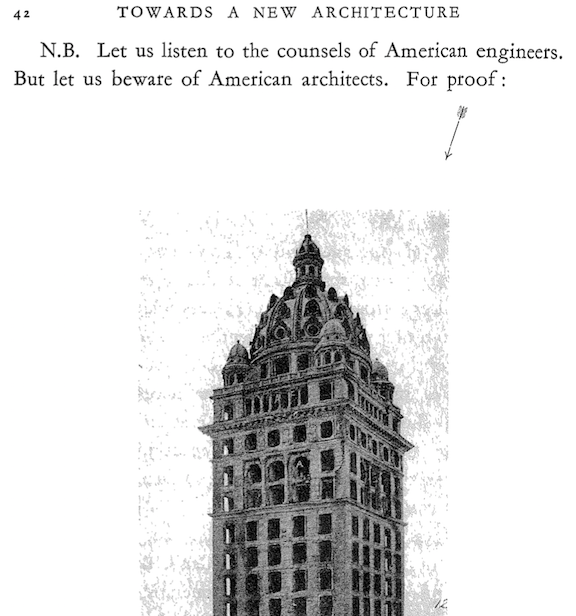
It is often observed that when we look to the past we can see our the future. More than 90 years ago, Swiss architect Le Corbusier (Charles-Édouard Jeanneret) wrote an influential book on modern architecture, Vers une Architecture (1923) that helped to radically change how we looked at our built environment.Translated into English in 1927 under varying titles (Toward an Architecture, or Towards a New Architecture), the book caught the appreciative eye of New Yorker architecture critic George Chappell, who wrote under the pseudonym “T-Square.”
Nov. 12, 1927 cover by Theodore G. Haupt.
Given that most new architecture in Manhattan was adorned in architectural stylings from the past, or gussied up in Jazz Age art deco, Chappell was introducing his readers to something very different, to ideas that would transform their city within two generations.
A SOBER-MINDED THINKER…Le Corbusier at work in his apartment at 20 Rue Jacob, Paris, in the late 1920s. (Brassai Paris)
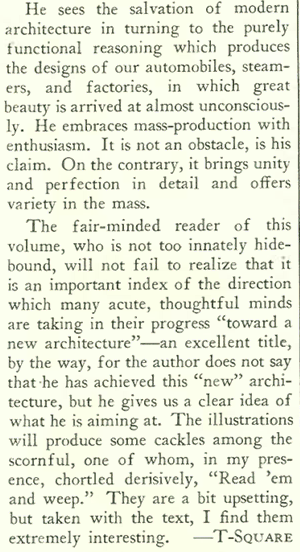
In his embrace of technology and mass production, Corbusier maintained that houses should be built in standardized forms that allowed for continuous refinement, designed as “machines for living” with the same precision as automobiles and airplanes…
In case you doubt the architect’s fervor, here is Corbusier’s manifesto on mass production included in Towards a New Architecture:
MACHINES FOR LIVING…This two-family structure on the outskirts of Stuttgart, Germany, was designed by Le Corbusier and his cousin, Pierre Jeanneret in 1927. It was one of the first built manifestations of Corbusier’s Five Points of a New Architecture, a manifesto written in 1926. The house set an important precedent for the emerging International Style associated with Germany’s Bauhaus movement. (noordinaryhomes.com)
In Towards a New Architecture, Corbusier wrote that while architecture was stifled by custom and lost in the past (“to send architectural students to Rome is to cripple them for life…”), engineers were embracing new technologies and building simple, effective and “honest” structures. Rather than rely on past forms or contemporary trends such as art deco, Corbusier said architecture should fundamentally change how humans interact with buildings.
ALL DRESSED UP WITH NOWHERE TO GO…A photograph from Towards a New Architecture. Corbusier said contemporary architecture was stifled by custom and lost in the past. (monoskop.org)FORM FOLLOWS FUNCTION…Examples of “honest” and functional industrial buildings featured in Towards a New Architecture. (monoskop.org)
Corbusier concluded his book with a moral imperative and an ominous choice for the future: “Architecture or Revolution.” He asserted that the “great disagreement between the modern state of mind…and the stifling accumulation of age-long detritus” would force modern man to live in an “old and hostile environment” and deny him an “organized family life,” ultimately leading to the destruction of the family.
In less than ten years the Nazis would chase the “degenerate” Bauhaus out of Europe and into the embrace of American academe. In short order Corporate America would adopt Corbusier’s International Style, if imperfectly, but most Americans would prove resistant to making their homes into “machines for living.”
Corbusier would doubtless be shocked (and disappointed) to know that 100 years hence people still live in mock Tudors and “Tuscan Villas,” especially in the midst of so much advanced technology.
HOME SWEET HOME…Villa Savoye near Paris, France. Designed by Le Corbusier in 1928, completed in 1931. Named a World Heritage Site in 2016. (Photograph by Flickr user August Fischer)
* * *
AS HE WAS SAYING…
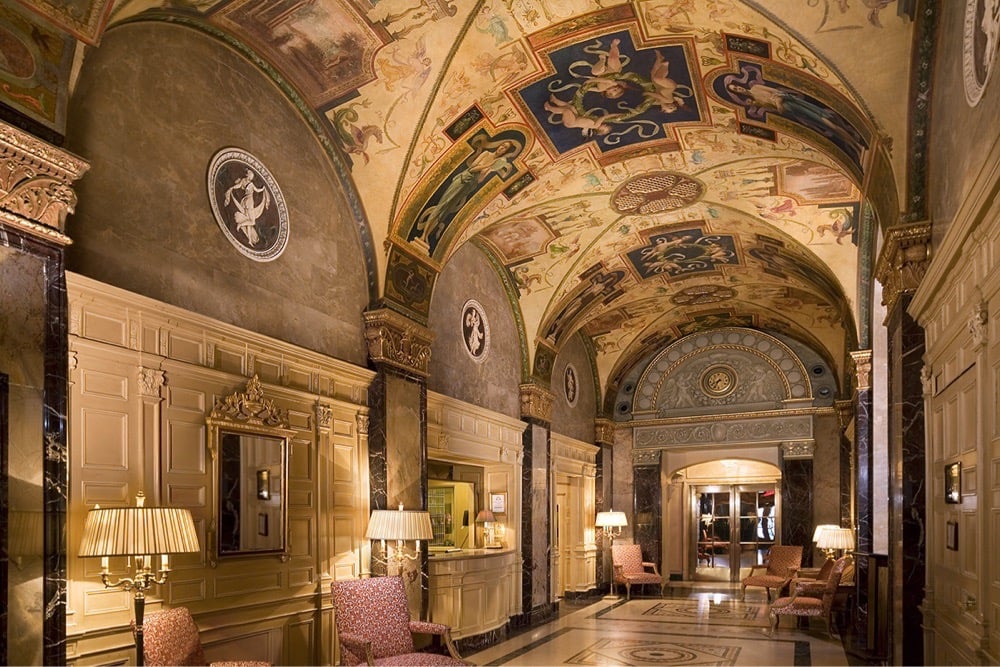
The new Sherry-Netherland apartment hotel near Central Park was exactly the sort of architecture Corbusier detested. “The Talk of the Town,” however, seemed impressed with its elegant appointments…
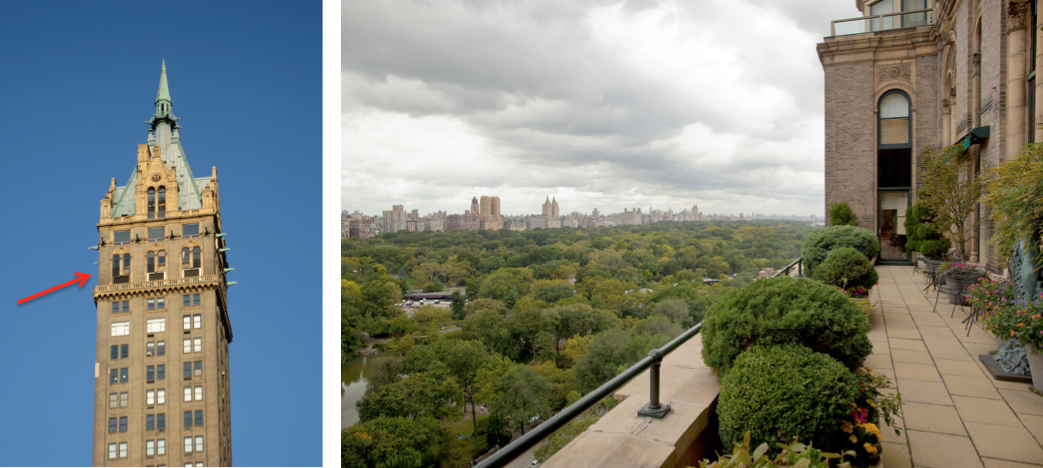
SUMPTUOUS…The foyer of the Sherry-Netherland, restored to its former glory in 2014. (Wikipedia)ROOM WITH A VIEW…The Sherry-Netherland penthouse, priced at $35,000 a year in 1927, is now worth more than $100 million. (TripAdvisor/Robert Caplin for The New York Times)
“Talk” noted that beneath the Sherry-Netherland’s spire the penthouse apartment could be had for $35,000 a year, roughly equivalent to $477,000 today. The building went co-op in the 1950s, and that would have been a good time to buy the penthouse. Today it is valued at more than $100 million.
Poo on Pooh
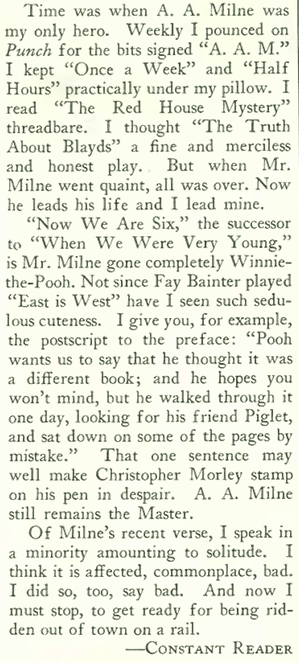
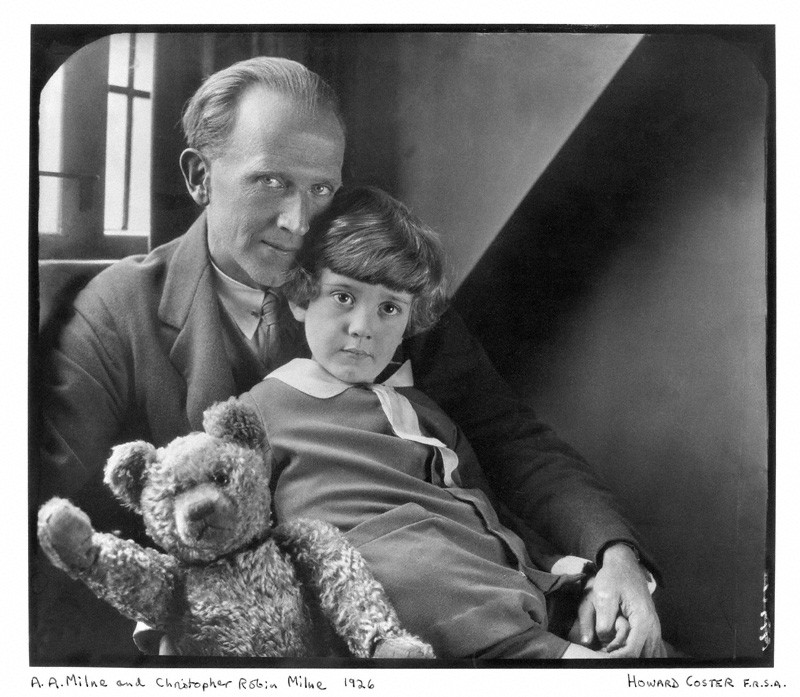
Dorothy Parker lamented the state of children’s literature in the “Books” section, and expressed her displeasure with A.A. Milne, a former humor writer for Punch who “went quaint” with his Winnie the Pooh stories.
OLD SOFTIE…A. A. Milne with his son Christopher Robin and Pooh Bear, at Cotchford Farm, their home in Sussex, in 1926. Photo by Howard Coster. (npg.org.uk)
* * *
New Game in Town
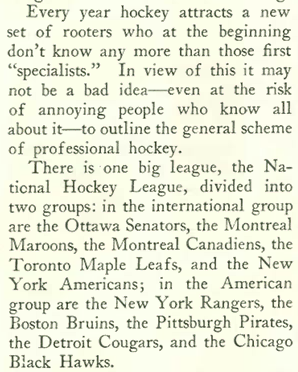
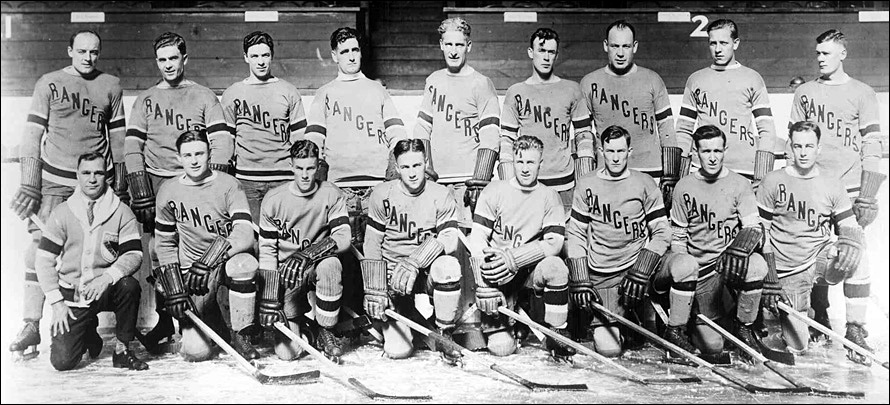
Niven Busch Jr. wrote about the growing popularity of professional hockey. Tex Rickard’s two-year-old franchise, the New York Rangers, were a major draw at the new Madison Square Garden (they would win the Stanley Cup in their second year), and even Texans were into the sport–Busch noted that a game between Dallas and Fort Worth teams drew 20,000 spectators.
ICE MEN…Stanley Cup winners, the 1927-28 New York Rangers. (rangers.ice.nhl.com)
* * *
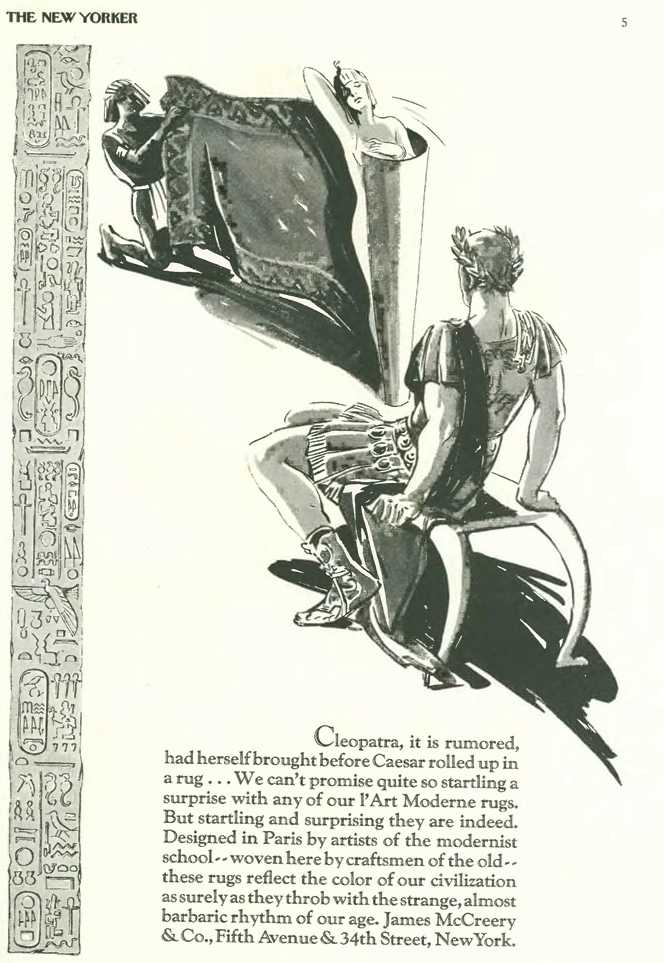
And finally, from the world of advertising, here is one in a series of classically themed ads for the McCreery department store…
…and this advertisement for the Marmon 8, an “ideal woman’s car”…
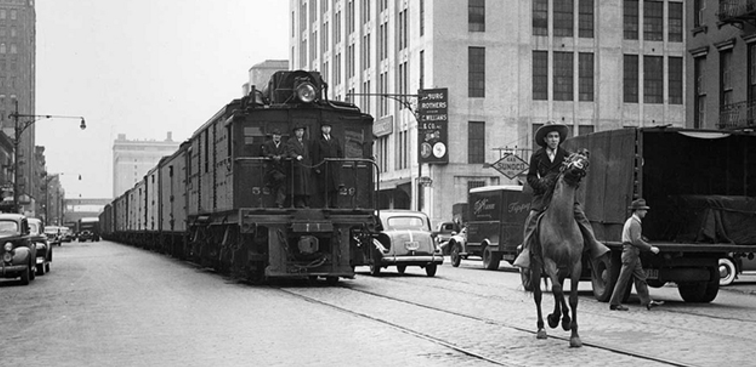
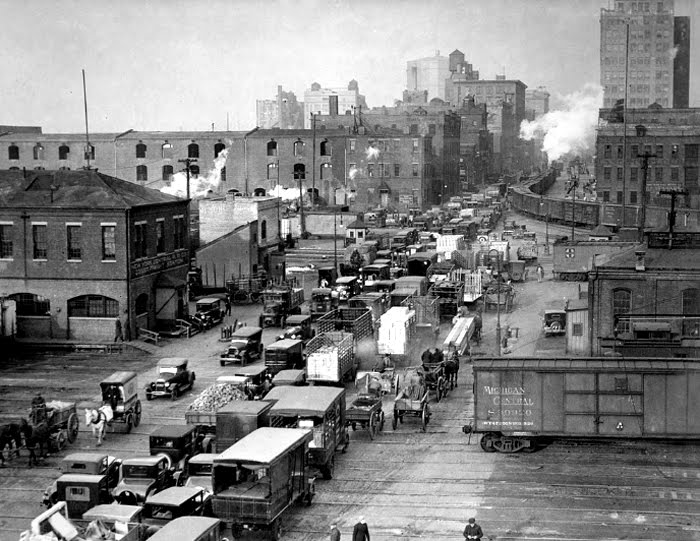
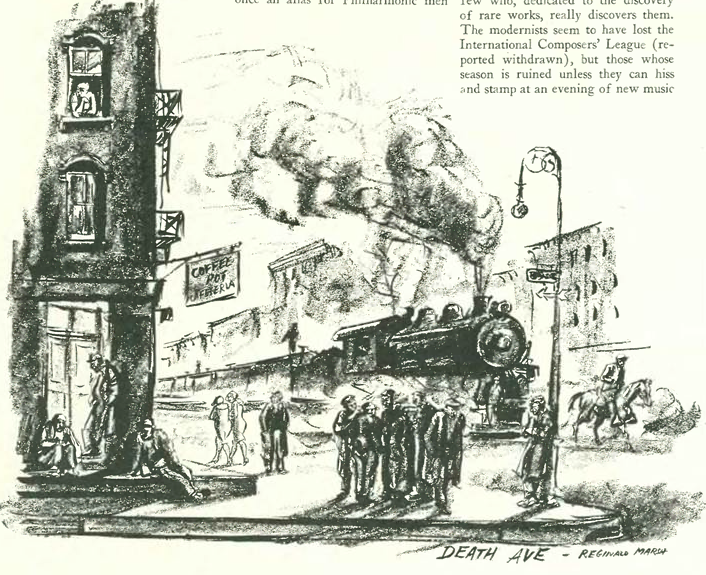
Before the elevated tracks were constructed in the early 1930s in Manhattan’s west side warehouse district (home of today’s popular “High Line”), freight trains rumbled through the city–at street level–on “Death Avenue.”
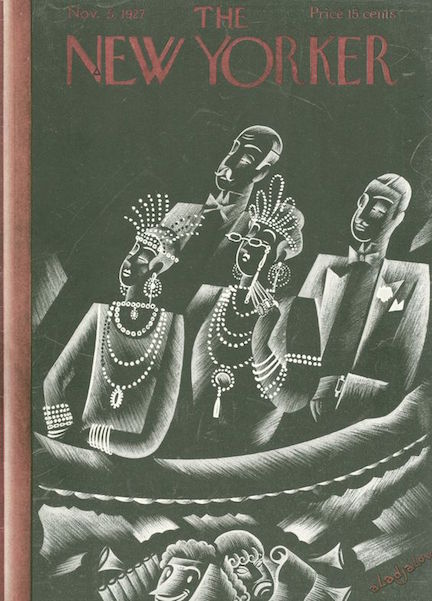
November 5, 1927 cover by Constantin Alajalov.
Freight trains were introduced to the west side warehouse district in 1846, which was a bad plan from the very start. Block-long trains would run through cross streets and congested traffic, maiming and killing along the way.
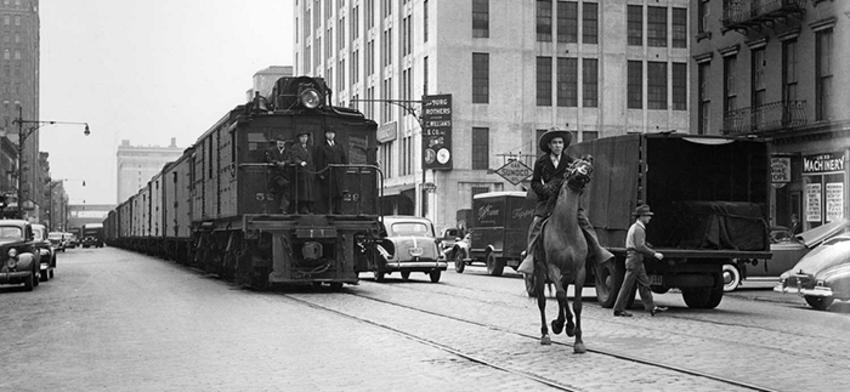
ON YOUR LEFT!…Both diesel and steam locomotives rumbled along Manhattan avenues well into the 20th century. Pictured is a freight train at 11th and 41st Street. Eleventh was known as “Death Avenue.” (Forgotten NY)
According to Friends of the High Line, “an 1892 New York World article referred to the trains as ‘a monster which has menaced them night and day,’ and by 1908 the Bureau of Municipal Research claimed that since 1852, the trains had killed 436 people. A New York Times piece from the same year reported that in the preceding decade there had been almost 200 deaths, mostly of children.”
MIXED USE…This circa 1920 photo shows the congestion that occurred when freight trains, horse-drawn carts, cars, and pedestrians used the same streets. (Kalmbach Publishing Company)SHOWDOWN…Beginning in 1850, the West Side Cowboys rode ahead of oncoming trains to ensure the safety of people on the street, although statistics show that some pedestrians did not heed the warnings. (Friends of the High Line)
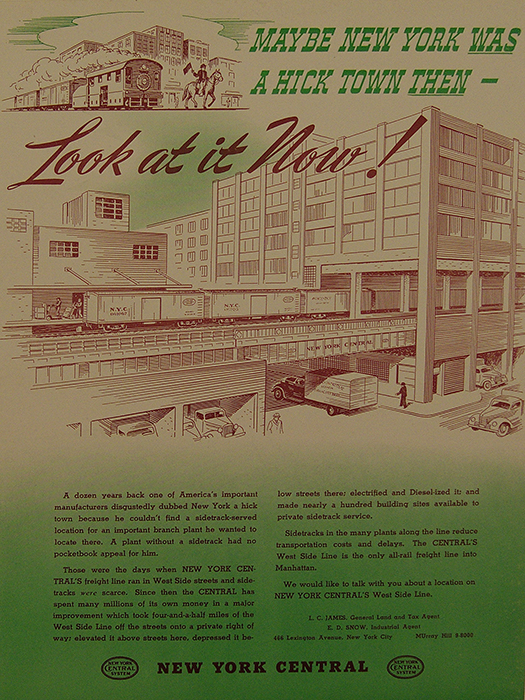
The safety issues on Death Avenue were finally addressed in 1929 when city and state officials reached an agreement with New York Central Railroad to move the rail above street level. New elevated tracks opened in 1934 were novel in the way they bisected city blocks, unloading cargo directly into buildings in the district.
BETTER…The elevated tracks served warehouses including one for the National Biscuit Company (Nabisco), pictured above, which today houses another popular High Line attraction, the Chelsea Market. (Friends of the High Line)A New York Central Railroad advertisement touting the benefits of its elevated West Side Line, which today supports a unique and popular urban park–the High Line. (Friends of the High Line)
The elevated West Side Line’s unique design also complements the current use of the tracks–the High Line, one of New York’s most popular tourist draws and a widely successful example of urban reuse and renewal. Today few visitors to the High Line are aware that the peaceful oasis they now enjoy was once a dangerous and chaotic place that was home to the aptly named Death Avenue…
NOT SO BAD, THIS…Visitors to the High Line enjoy a peaceful oasis above the former “Death Avenue.” (Friends of the High Line)
What prompted my interest in Death Avenue was this illustration by Reginald Marsh in the Nov. 5, 1927 issue of The New Yorker:
Marsh (1898-1954) joined The New Yorker as one of its first cartoonists, and stayed there for seven years. He was practically born an artist, growing up in an artists’ colony in New Jersey where his father worked as a noted muralist and his mother made watercolors. After graduating from Yale he went to work of the Daily News, where he contributed sketches of vaudeville acts and illustrated a column titled “People We’d Like to Kill but Don’t.”
Described as a “Social Realist” painter, Marsh studied painting at the Art Students League, where the prevailing theme was life among the working poor, the unemployed, and the homeless, especially after the market crash in 1929…
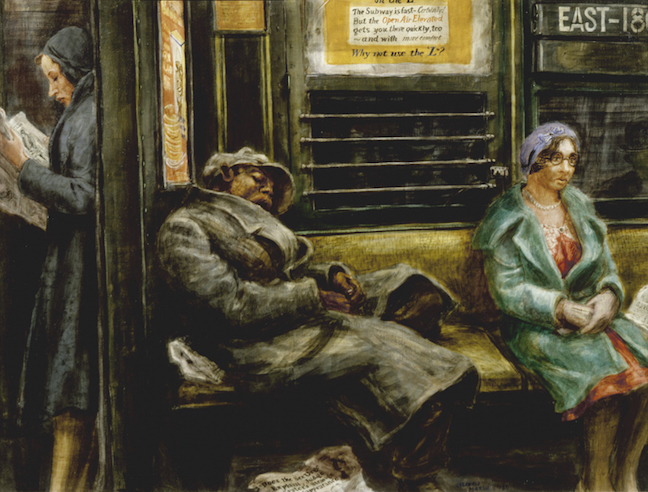
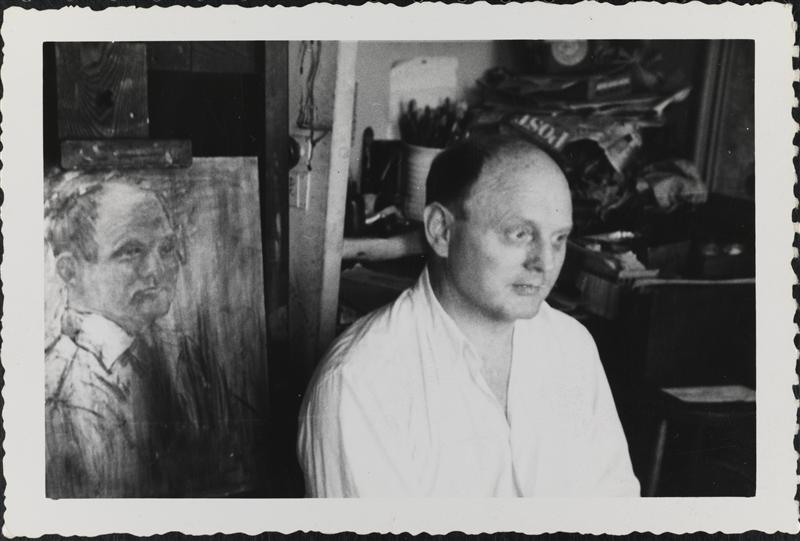
WHY NOT USE THE “L”?…the title of a 1930 work by Reginald Marsh. (Whitney Museum of Art)SELF REFLECTION…Reginald Marsh with one of his self-portraits, circa 1938. (Museum of the City of New York)
* * *
Write What You Know
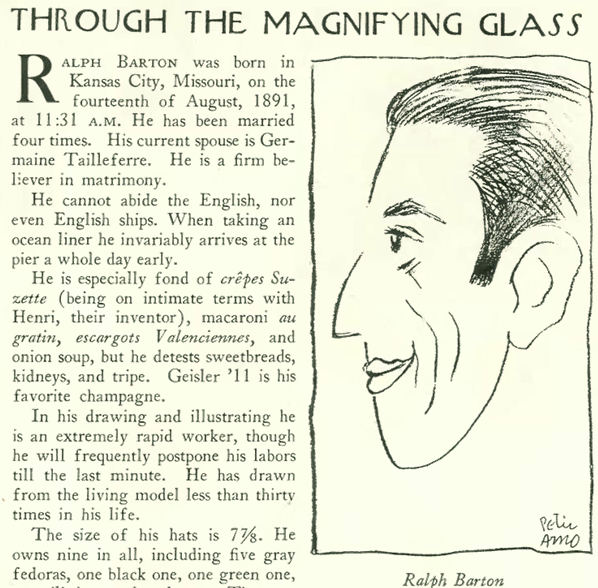
Among other items in the Nov. 5, 1927 issue was this profile written by Charles Shaw of fellow New Yorker contributor (artist and writer) Ralph Barton. An excerpt, with sketch by Peter Arno...
By Any Other Name
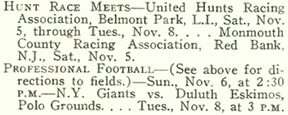
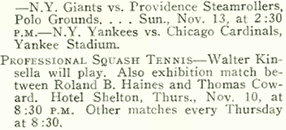
As it still does today, The New Yorker listed area happenings in the front section of the magazine, and in the early days the magazine included extensive listings of sporting events. The excerpt below offers various diversions from a “hunt race” to “squash tennis.” There were also professional football games featuring such mighty foes as the New York Giants and the Duluth Eskimos…
Hope(ful) Chest
Before the age of smart phones, the term “smart” in advertising meant one was on the leading edge of fashion–for aspiring young women this meant all things French–clothes, perfumes, beauty treatments–and for the bride, the all-important trousseaux, or so claimed this advertisement from Franklin Simon & Co. on page five of the Nov. 5 issue…
Couldn’t afford the latest from Paris? In that case you could turn to the back pages of the same issue, where you would find cheaper ads from places like Kathleen, Inc, which sold knock-offs of the latest in haute couture…
* * *
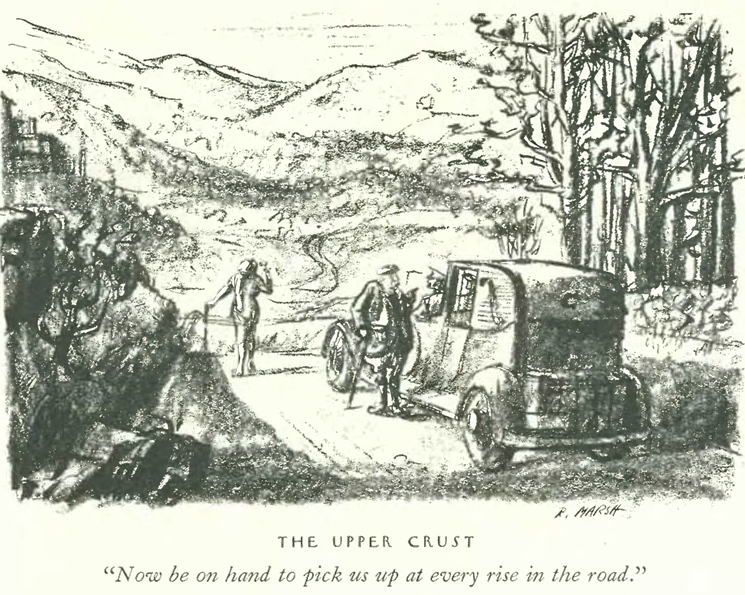
And finally, we return to Reginald Marsh, who contributed this cartoon to the Nov. 5 issue…
Above: Noël Coward and Gertrude Lawrence in a 1930 performance of Coward's Private Lives. Encyclopedia Britannica.
Those of us who still remember cigarette ads on television will recognize the tagline that heads this blog–“You’ve come a long way, baby,” was the jingle for Virginia Slims–which in 1968 was a new, thin cigarette from Phillip Morris marketed specifically to women.
October 29, 1927 cover by Julian de Miskey.
The campaign launched by the Leo Burnett Agency sought to make Virginia Slims an “aspirational” brand for the liberated woman of the Swinging 60s…
These ads from 1968 announced a new cigarette for the liberated woman. (flashbak.com)
Forty years earlier, the folks at Liggett & Myers Tobacco Company also thought they could trade on the image of the Jazz Age’s liberated woman with this famous ad from 1926:
(History News Network)
Although the woman in the ad was not smoking, a taboo had been broken by merely suggesting she might be a smoker. The New Yorker first explored this topic in their July 24, 1926 issue, with this item in “The Talk of the Town”…
In the Oct. 29, 1927 issue they returned to the topic in the “Talk” column, now that advertisers had gone a step further and actually depicted women with lighted cigarettes between their fingers:
BRAZEN…Ads from 1927 depicting women smoking Old Gold and Marlboro cigarettes.
The Oct. 29, 1927, The New Yorker itself featured ads with women smokers, including this installment in a series for Old Gold by cartoonist Clare Briggs…
…and this ad for the tipless Smokador ashtray, which was featured in many issues of The New Yorker…
What Flattery Will Get You
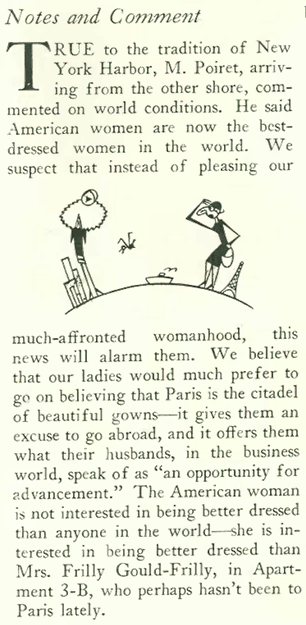
In addition to women smokers, The New Yorker was also agog about a visit to the city by the great French fashion designer Paul Poiret (1879–1944), who upon his arrival proclaimed American women to be the best-dressed in the world:
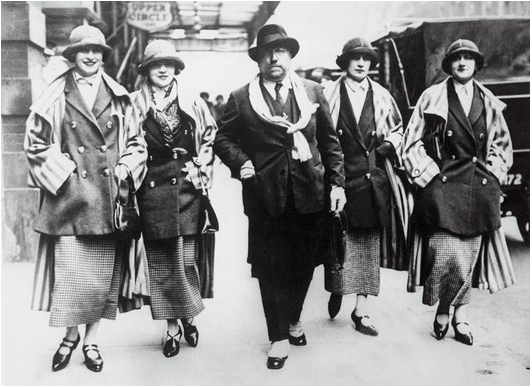
THE LIBERATOR…Paul Poiret on a stroll with models, circa 1930. Poiret led a fashion renaissance that introduced free-flowing dresses and “harem pants.” He is often credited with liberating women from the corset. (trendmano.blog.hu)
Perhaps Poiret’s flattery of American women could be attributed to the fact that his designs had lost popularity in France after World War I, and his fashion empire was on the brink of collapse. (Indeed, his fashion house would close in 1929). However today he is recognized as the first great modernist in fashion design, often compared to Pablo Picasso in terms of the contributions he made to his field.
The New Yorker took advantage of his visit to the city by featuring him in a lengthy profile in the Oct. 29 issue, written by Paris correspondent Janet Flanner under the pseudonym “Hippolyta.” Despite Poiret’s diminished presence in France, Flanner nevertheless understood his enormous contribution to modern fashion design. She concluded her profile with this observation:
Something Fishy
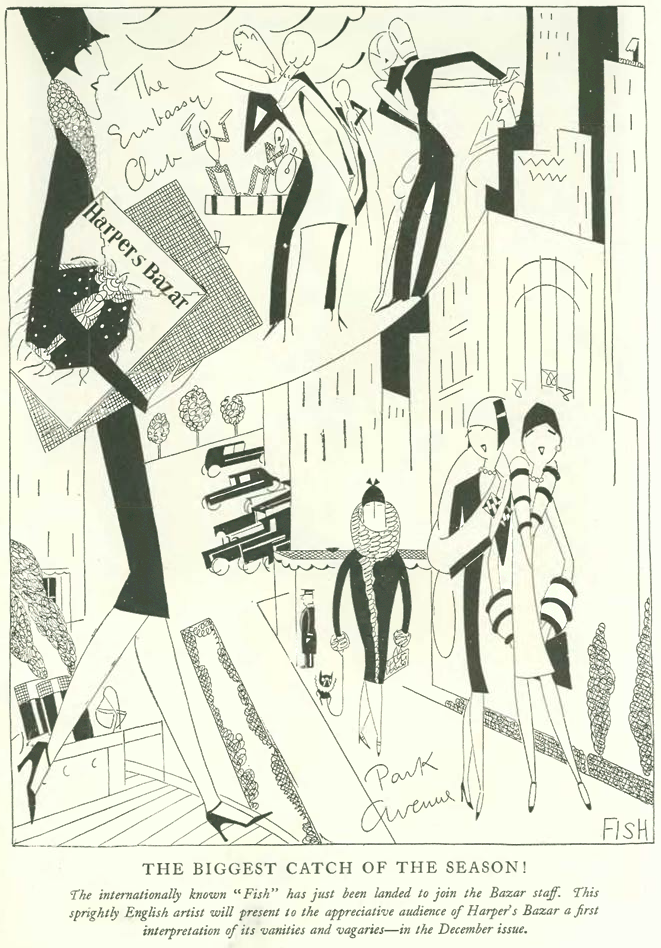
The New Yorker appealed to young, upscale urban dwellers, so it was no wonder that Harper’s Bazar advertised in the magazine, including this ad in the Oct. 29, 1927 issue that announced the debut in its pages of the English artist known as “Fish”…
Anne Harriet Fish (1890-1964) was famed for her witty depictions of high society in Condé Nast’s Vanity Fair and The Tatler, where she began work in 1914. A rival “smart set” magazine, Harper’s Bazar, was eager to boast that it had finally “landed” the Fish.
A February 1916 Vanity Fair cover by A. H. Fish. (Condé Nast)
* * *
Broadway Ballet
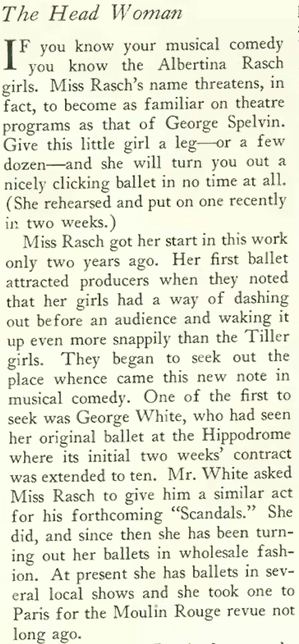
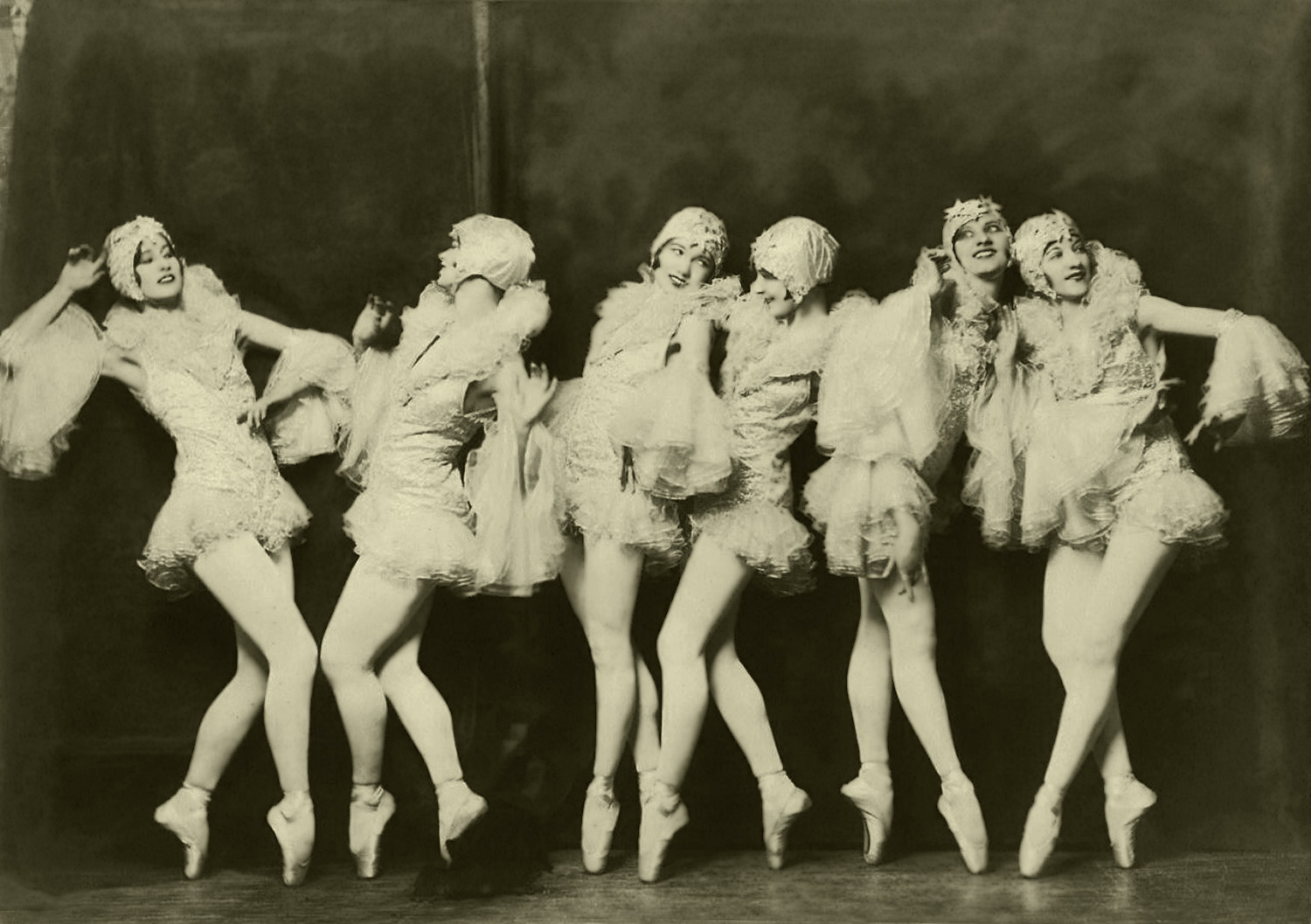
The Oct. 29 “Talk of the Town” noted that Albertina Rasch and her ballet dancers were making quite a splash on Broadway. Her success in staging dances for Flo Ziegfeld’s “Follies” and George White’s “Scandals” would lead to a career in Hollywood, where she would be instrumental in elevating the role of dance director to what we now call a choreographer. Among her many firsts, she is credited with helping to establish Cole Porter’s “Begin the Beguine” as a popular standard by incorporating it into a dance in the 1935 film Jubilee.
The Albertina Rasch Dancers in costume for Rio Rita (1927). (songbook1.wordpress.com)
* * *
Where Were You Last Year?
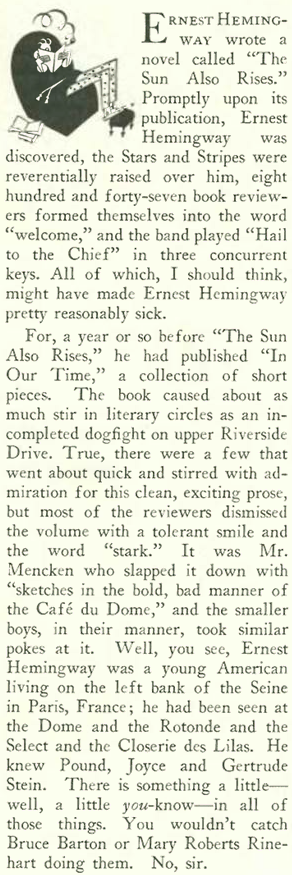
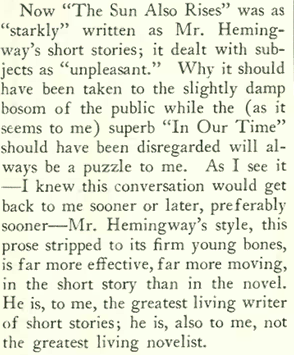
Writing under the pseudonym “Constant Reader,” Dorothy Parker penned a vigorous defense of Ernest Hemingway’s short fiction in the “Books” section of the Oct. 29 issue. Specifically she took issue with critics who continued to rave about Hemingway’s novel The Sun Also Rises, but mostly ignored a collection of short stories he had previously published under the title In Our Time.
HE’S PRETTY GOOD…Ernest Hemingway in 1927, shortly after publication of his novel The Sun Also Rises. At right, Dorothy Parker in the 1920s. (AP/Bookriot)
And finally, Barbara Shermund explored the intersection of high culture and flapper culture in this cartoon…
While Europeans in the 1920s dealt with frayed economies and political strife in the wake of World War I , Americans enjoyed a period of relative peace and prosperity along with an array of new electrical gadgets people didn’t even know they needed.
October 22, 1927 cover by Julian de Miskey.
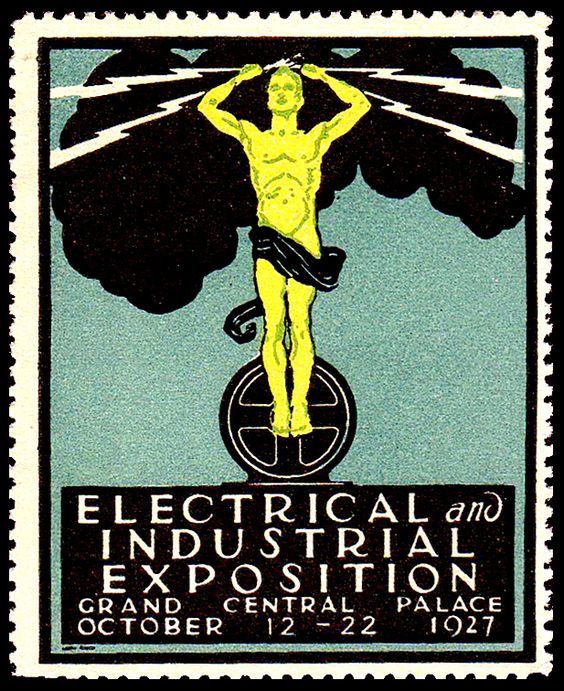
In the column “About The House,” The New Yorker wryly warned “timid souls” about the new push-button world they would encounter at the Electrical and Industrial Exposition at Grand Central Palace…
Poster advertising the Electrical and Industrial Exposition. (public domain image)
WILL WONDERS NEVER CEASE?…The New Yorker marveled over the latest electrical appliances on display at the Electrical and Industrial Exposition at Grand Central Palace including, clockwise from top left, the Toastmaster automatic toaster (which the magazine noted resembled an armored car), an electric washing machine, and the mighty Kitchen Aid mixer, which is still going strong in American kitchens today.
THE ICEMAN COMETH NOT…A saleswoman shows off the features of a GE Monitor Top Refrigerator on display at a product exhibition in the late 1920s. (Public Domain Image)
Nan’s No No
The New Yorker’s “Talk of the Town” featured one of the Roaring Twenties big scandals–Nan Britton’s affair with U.S. President Warren G. Harding (who died at age 57 in 1923) and the debate over the paternity of their love child, Elizabeth Ann. Britton had just published a “tell all” book, The President’s Daughter, which was bringing out the worst in a lot of people…
LIFE WITHOUT FATHER…Nan Britton with her 8-year-old daughter, Elizabeth Ann, in 1927. (New York Times/James Blaesing)
Although at the time Britton was denounced by many (including the Harding family) as a liar who was only out to get money from the President’s estate, genetic tests conducted in 2015 have confirmed that Elizabeth Ann was indeed Harding’s daughter. Britton died in 1991 at the age of 94. Elizabeth Ann would follow in 2005, at age 86.
Porgy Hits the Stage
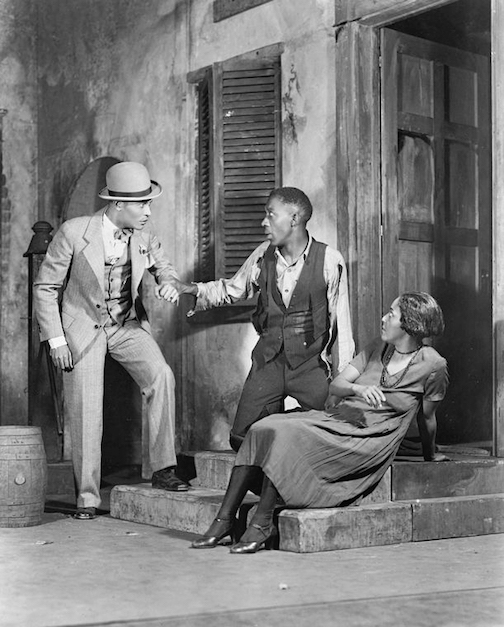
Porgy: A Play in Four Acts opened at the Guild Theatre, and New Yorker reviewer Charles Brackett was there to witness perhaps the first attempt at an authentic presentation of black culture on a Broadway stage. Based on a play by Dorothy and DuBose Hayward, the production was unusual for its time in featuring a cast of African American actors. The play would provide the basis of the libretto for the 1935 folk opera Porgy and Bess, which would feature George Gershwin’s famous score including the popular song “Summertime.” An excerpt from Brackett’s review, which included some unfortunate stereotypes…
SOMETHING NEW ON BROADWAY…Percy Verwayne (Sporting Life), Frank Wilson (Porgy) and Evelyn Ellis (Bess) in Porgy: A Play in Four Acts. October 1929. (Wikipedia)
* * *
Same to You, Fella
In his “Reporter at Large” column, Morris Markey sounded off on the rude behavior he had observed of late among his fellow New Yorkers. In relating a story about the crude behavior of a building’s security guard, Markey pondered the old nature vs. nurture question…
Aw, Shucks…
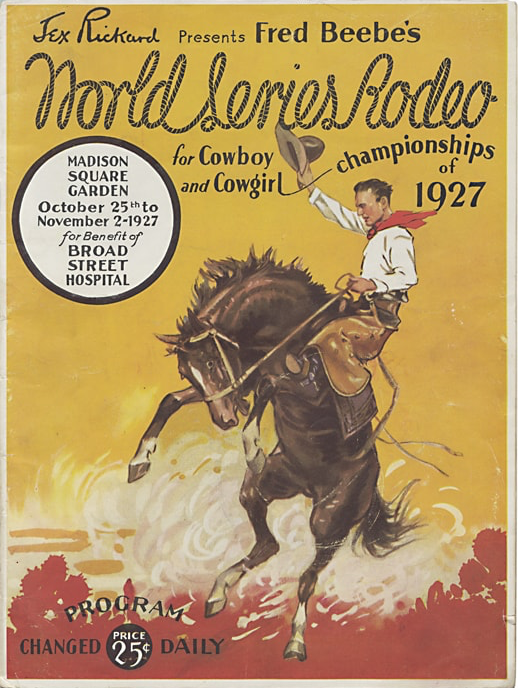
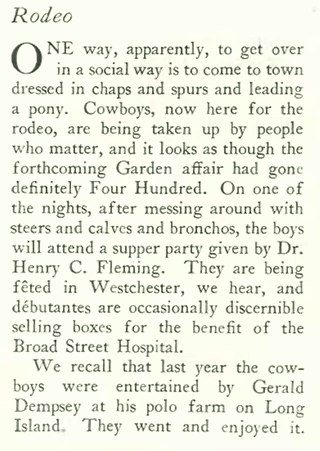
Not all New Yorkers were acting rudely. Some were even treating visiting rodeo cowboys with the utmost courtesy, as noted in the “The Talk of the Town,” although others found the sport to be brutal and unnecessary…
GIDDYAP…Program from the World Series Rodeo at Madison Square Garden, 1927. (Rare Americana)
1927 World Series Rodeo was produced by famed sports promoter, Tex Rickard, in Madison Square Garden as a benefit for the Broad Street Hospital.
The other World Series, the one concerning baseball, was still absent from the pages of The New Yorker, even though the 1927 Yankees would win a record 110 games and sweep the Pittsburgh Pirates in four games to win the World Series title…and Babe Ruth would hit a record 60 home runs.
As I’ve noted before, there was a lot of sports coverage in the early issues of The New Yorker, everything from polo to college football. As for the omission of the Yankees and baseball in general from the pages of the magazine, perhaps the editors felt the game was still tainted by the Black Sox scandal of 1919 and was not worthy of coverage.
How’s the Weather Up There?
The city’s “heat affect” was another “Talk” topic, with editors noting that the city’s buildings and streets not only affected temperatures in the city, but also its air quality…
IN HIS ELEMENT…Futurist poet Vladimir Mayakovsky amid the dusty haze of New York City in 1925. (thecharnelhouse.org)
* * *
In “Of All Things,” Howard Brubaker chimed in on The New Yorker’s continuing criticism of Hollywood films, especially in the age of Will Hays and his continued attempts at film censorship…
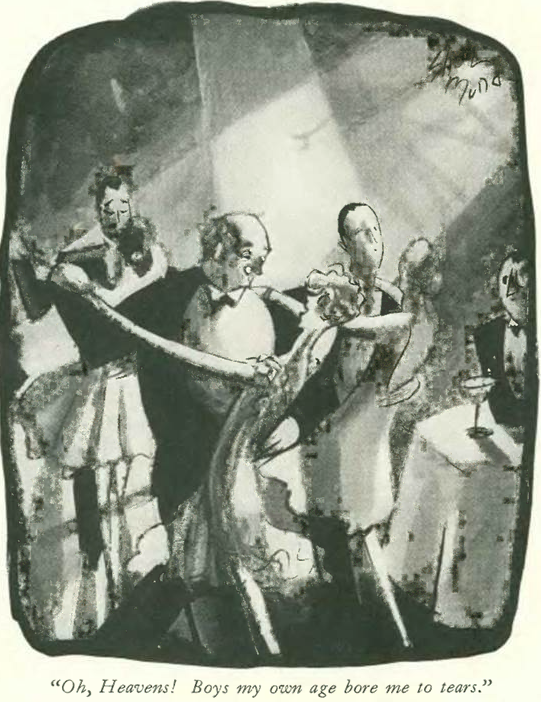
Finally, a couple of cartoons from the Oct. 22 issue, including this one by Barbara Shermund that explores one of the magazine’s continuing themes regarding life among the portly, middle-aged sugar daddies and their ditzy young mistresses…
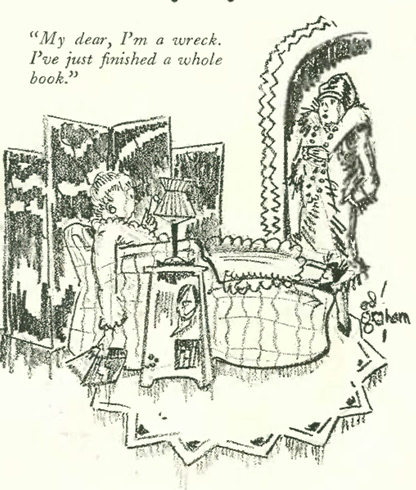
…and this jab at the dim-witted, idle rich by illustrator Ed Graham…
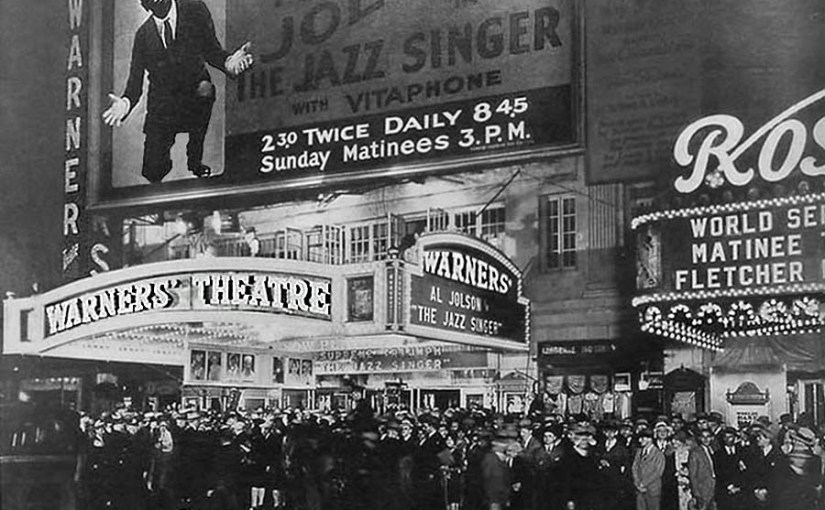
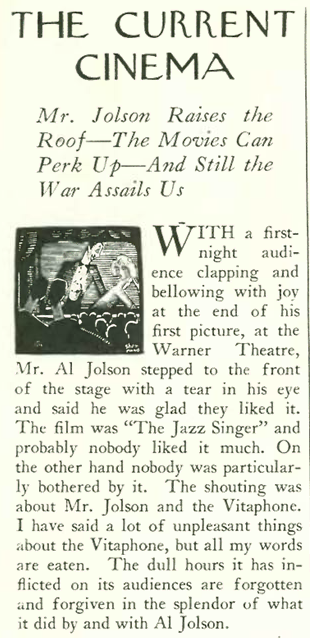
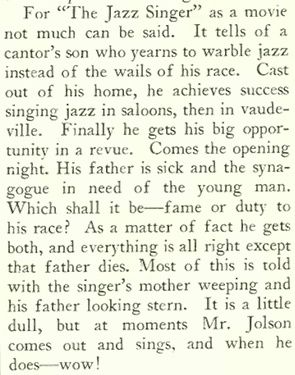
The Oct. 15, 1927 issue featured the premiere of the film The Jazz Singer. Although The New Yorker found the story a bit dull, it also recognized that the film’s use of sound marked a significant turning point in the short history of cinema.
October 15, 1927 cover by Theodore G. Haupt.
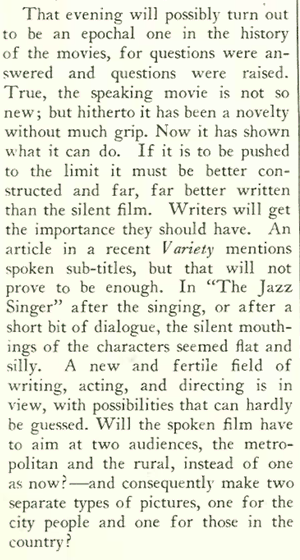
The Jazz Singer was not the first film to employ sound, but as the New Yorker review pointed out, it was the first to effectively use synchronized sound (the industry standard Vitaphone technique) in a way that improved the motion picture.
The film featured only two minutes worth of sound dialogue, so most of the spoken lines were still presented on intertitle cards commonly used in silent films. But it was Al Jolson’s recorded voice, belting out popular tunes including “Toot, Toot, Tootsie,” that really wowed audiences. At the end of the film Jolson himself appeared on stage before an audience “clapping and bellowing with joy”…
IT SINGS! IT TALKS!!!…Al Jolson as Jack Robin and Eugenie Besserer as his mother, Sara Rabinowitz, in The Jazz Singer. One attendee at the premiere recalled that when Jolson and Besserer began their dialogue scene, “the audience became hysterical.” (wired.com)
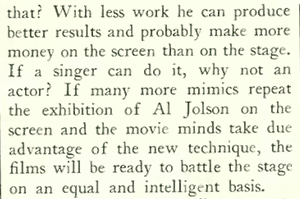
It is interesting that as early as 1927, and even with the relatively crude sound of Vitaphone, The New Yorker was already predicting the advent of a new kind of star (and the decline of the stage actor)…
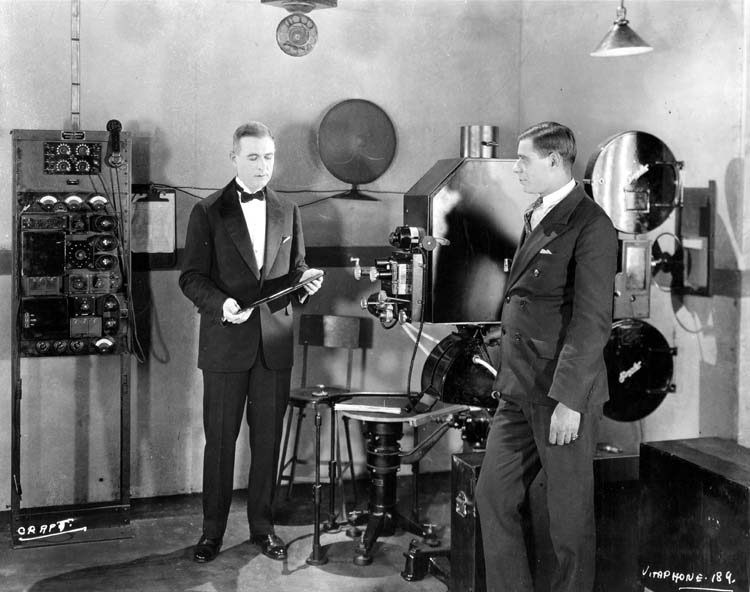
BLACK TIE EVENT…A Vitaphone projection setup at a 1926 demonstration. Western Electric engineer E. B. Craft, left, is holding a soundtrack disc, which was essentially a phonograph record. The turntable, on a thick tripod base, is at lower center. (Wikipedia)
As for the movie itself, well, there was Jolson, beloved by many. Perhaps it’s the sound quality, or the 89 years of changing tastes, but I cannot for life of me understand what audiences (or The New Yorker) saw that was so appealing about the hammy Jolson as a performer.
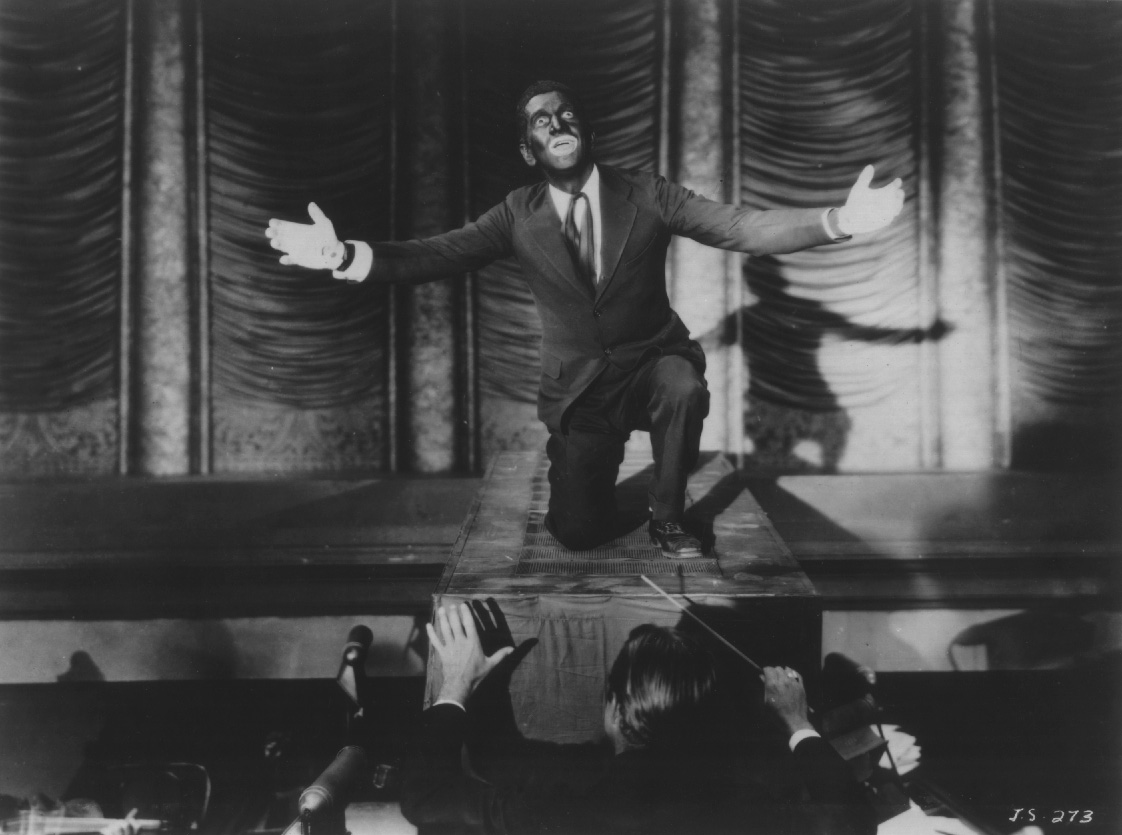
THAT WAS THEN…Al Jolson as Jack Robin in The Jazz Singer. Although performing in blackface is considered racist today, Jolson’s use of blackface was integral to the film in that it was tied to Jack’s own Jewish heritage and his struggle for identity. Of course that doesn’t make it any less offensive. (YouTube clip)
* * * * *
Absent-minded Ambassador
The New Yorker’s “Talk of the Town” offered some curious observations about the new ambassador to Mexico, Dwight Morrow.
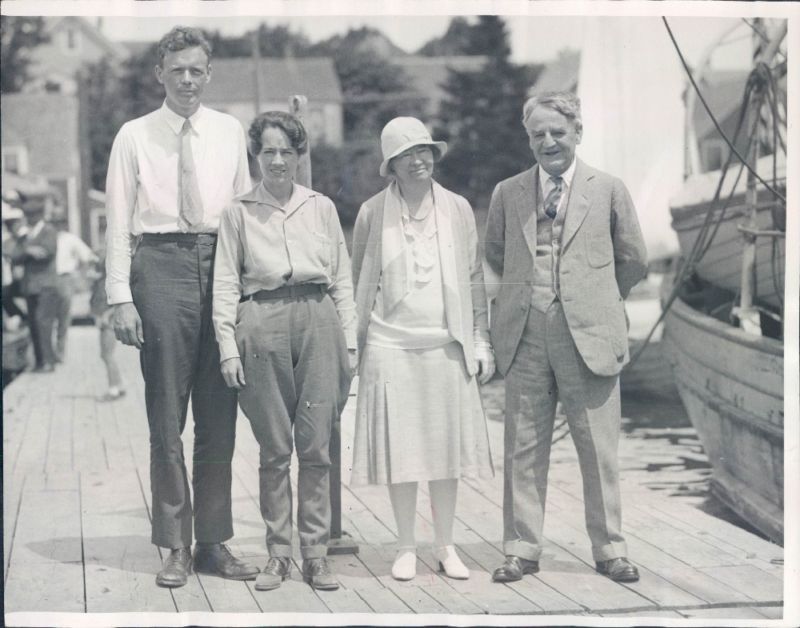
SON-IN-LAW…Aviator Charles Lindbergh would marry Dwight Morrow’s daughter, Anne, in 1929. in this photo from 1931 are, from left, Charles Lindbergh, Anne Morrow Lindbergh, Elisabeth Morrow, and Dwight Morrow. (kaiology.wordpress.com)
Morrow has been widely hailed as a brilliant ambassador with a keen intellect. The New Yorker, however, offered some additional perspective on the man:
Flight of Fancy
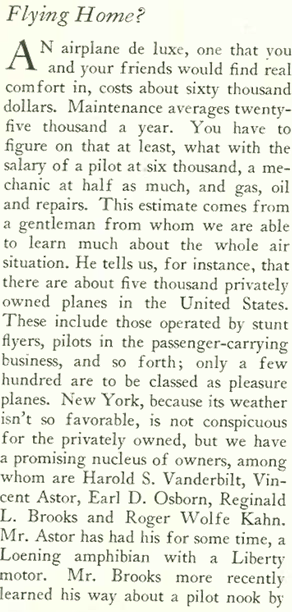
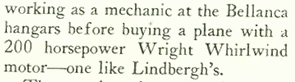
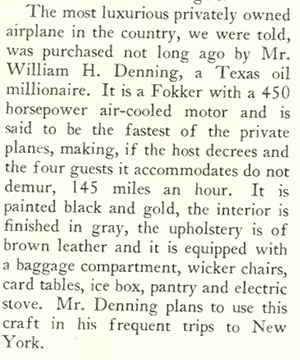
In the wake of Charles Lindbergh’s famous flight, The New Yorker (and the rest of the country) continued its fascination with air travel, which at this point was confined to military and commercial pilots, stunt flyers and the well-to-do.
EXTRA LEGROOM…The Fokker F.VII pictured above is likely the same plane or very similar to the one owned by Texas oilman William Denning. The interior depicted below is also similar to what is described in The New Yorker. (aviation-history.com)
* * * * *
RIP Isadora Duncan
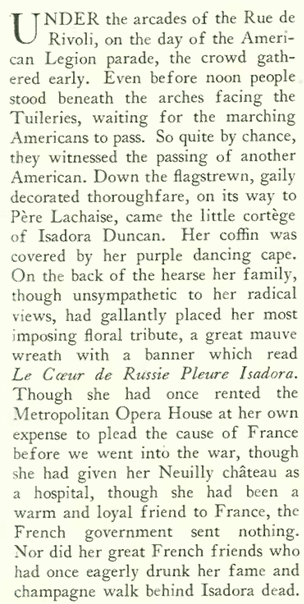
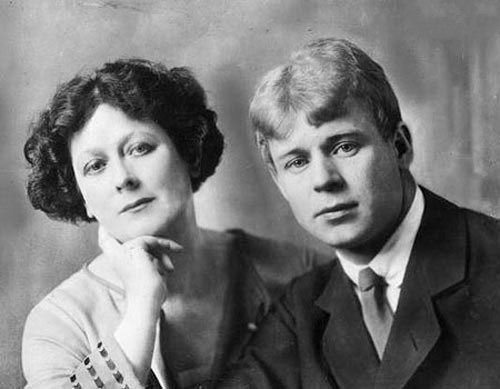
The New Yorker’s Paris correspondent, Janet Flanner, wrote about the funeral of famed modern dancer Isadora Duncan in her column, “Letter from Paris.” Duncan was killed in a freak accident on the night of Sept. 14, 1927, when her silk scarf, draped around her neck, became entangled around the open-spoked wheels of the car in which she was riding, breaking her neck.
Isadora Duncan with her husband, poet Sergei Esenin, in 1922. (Wikimedia)
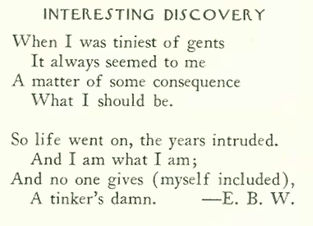
Other items of note from the Oct. 15 issue, E.B. White contributed this ditty…
…and Corey Ford, who gave the fictional Eustace Tilley his persona, wrote of Tilley’s feat crossing Broadway in a parody of adventure stories popular at the time. An excerpt:
And finally, Peter Arno explored childhood angst among the smart set (note reference to “Uncle Thurber”)…
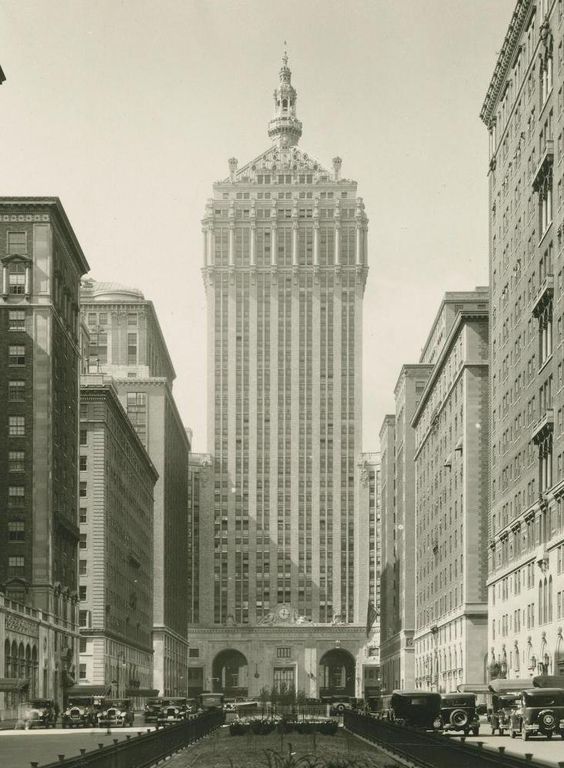
Continuing to explore the Oct. 8, 1927 issue, The New Yorker editors were taking into account the rapid changes around the bustling heart of the city, Grand Central Terminal at 42nd Street and Park Avenue.
EDIFICE…The New York Central Building (now the Helmsley Building) was built in 1929 to span Park Avenue near Grand Central Terminal. The unique design allowed Park Avenue to pass through the building, connect to a divided aerial highway around Grand Central Terminal to 42nd Street, and then back to street level. (skyscrapercity.com)
Their subject was the New York Central Building, which was slated to become the tallest structure in the great “Terminal City” complex.
The New Yorker commented that the new building would “remove a section from the sky.” Just 34 years later, in 1963, more sky would be removed when the massive Pan Am Building would open at 200 Park Avenue and dwarf the New York Central Building.
NEW KID ON THE BLOCK…The once-massive New York Central Building seemed to shrink in the shadow of the Pan Am (now Met Life) building. (skyscrapercity.com/NY Times)
* * * * *
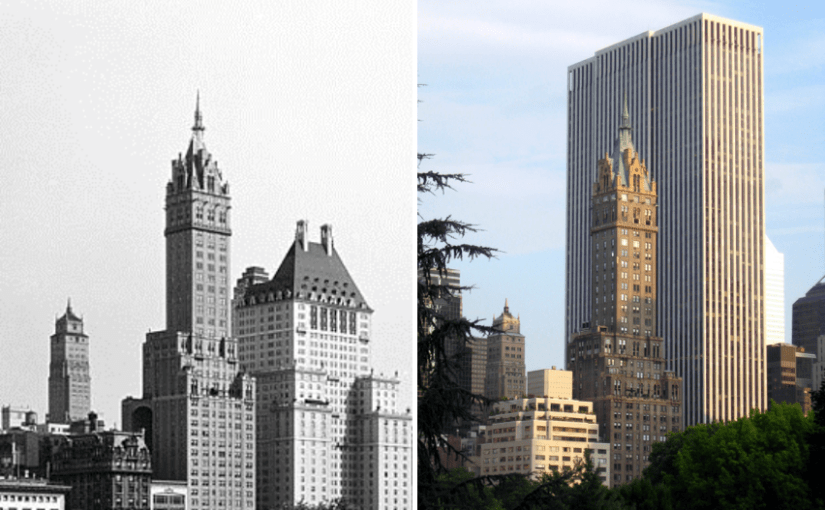
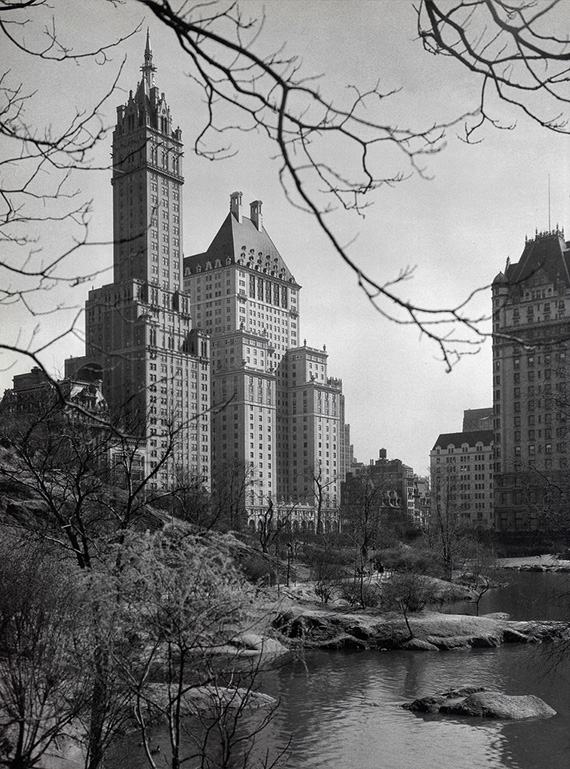
In the same issue The New Yorker lauded the opening of the Savoy-Plaza Hotel, which overlooked Central Park at Fifth Avenue and 59th Street.
GRAND TRIO…The Savoy-Plaza (center) sits grandly between the Sherry-Netherland, left, and the Plaza Hotel (partial, at right) in 1928. (openbuildings.com)
SHE’S STILL THERE…The “nude lady in the fountain” in front of the Savoy-Plaza is Karl Bitter’sAbundance, which sits atop the Pulitzer Fountain. (Museum of the City of New York/Wikipedia)
Harry Black, the owner of the nearby Plaza Hotel, built the Savoy-Plaza on a site previously occupied by the old Savoy Hotel (built in 1890). The Savoy-Plaza, designed by McKim, Mead & White, was intended to serve as a newer and less stuffy companion to the older Plaza Hotel.
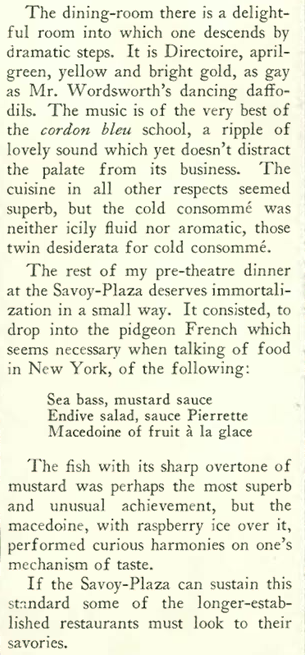
Lois Long paid a visit to the new Savoy-Plaza and offered these observations in Oct. 15 issue’s “Tables for Two”…
In 1958 the Savoy-Plaza was sold to Hilton Hotels and renamed the Savoy Hilton. Hilton sold the hotel to investors in May 1962. In August 1964, the hotel’s planned demolition was announced amid significant public outcry and protests. The hotel remained open during the 1964/1965 New York World’s Fair, but was demolished by early 1966. It was replaced in 1968 with the General Motors Building.
DOWN IN FRONT…the Sherry-Netherland and Savoy Plaza Hotels in 1929 (left). At right, the same view today. (Pinterest/Wikimedia)
* * * * *
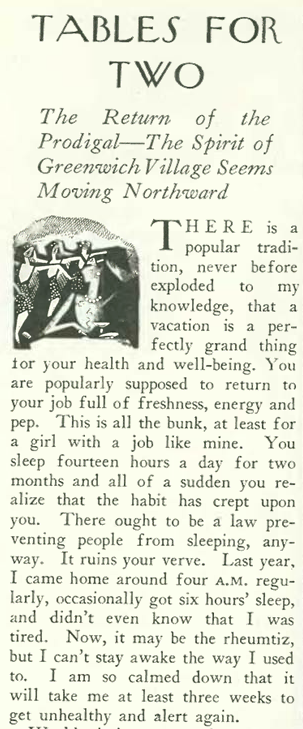
On Oct. 8, 1927 Lois Long revived her “Tables for Two” column after a summer hiatus. She had married her New Yorker colleague Peter Arno in August, and no doubt was returning from a honeymoon. Maintaining her ruse that she was single and possibly middle-aged and writing under her pen name, Lipstick, Long referred to her absence as a “vacation”…
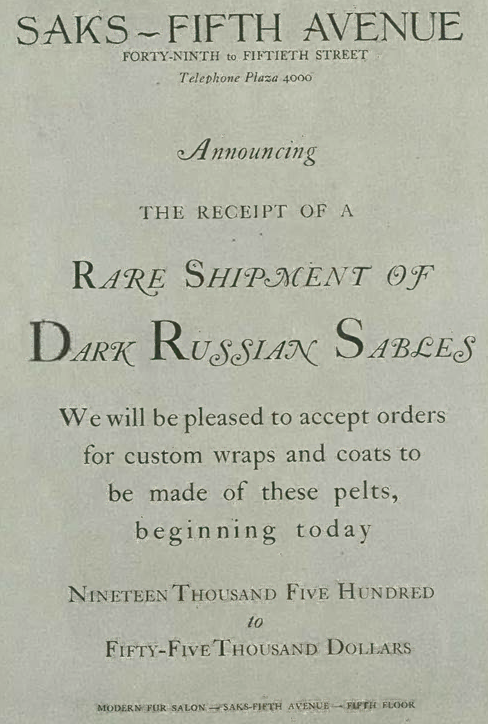
And finally…in the Oct. 8 issue this advertisement from Saks appeared opposite “The Talk of the Town.” In those high times before the market crash some folks apparently had the means to to buy a Russian sable for prices ranging from $19,500 to $55,000–the equivalent range today would be roughly $261,000 to $735,000…
Two big voices from the famed Algonquin Round Table were prominently featured in the Oct. 1 and Oct. 8, 1927 issues of the New Yorker–journalist and champion of the underdog Heywood Broun wrote his own “Profile” under the title, “The Rabbit That Bit the Bulldog,” and Dorothy Parker served up biting satire in “Arrangement in Black and White,” a clever exposé of racism among the fashionably “open-minded” upper classes.
October 1, 1927 cover by Gardner Rea.
The Rabbit That Bit the Bulldog
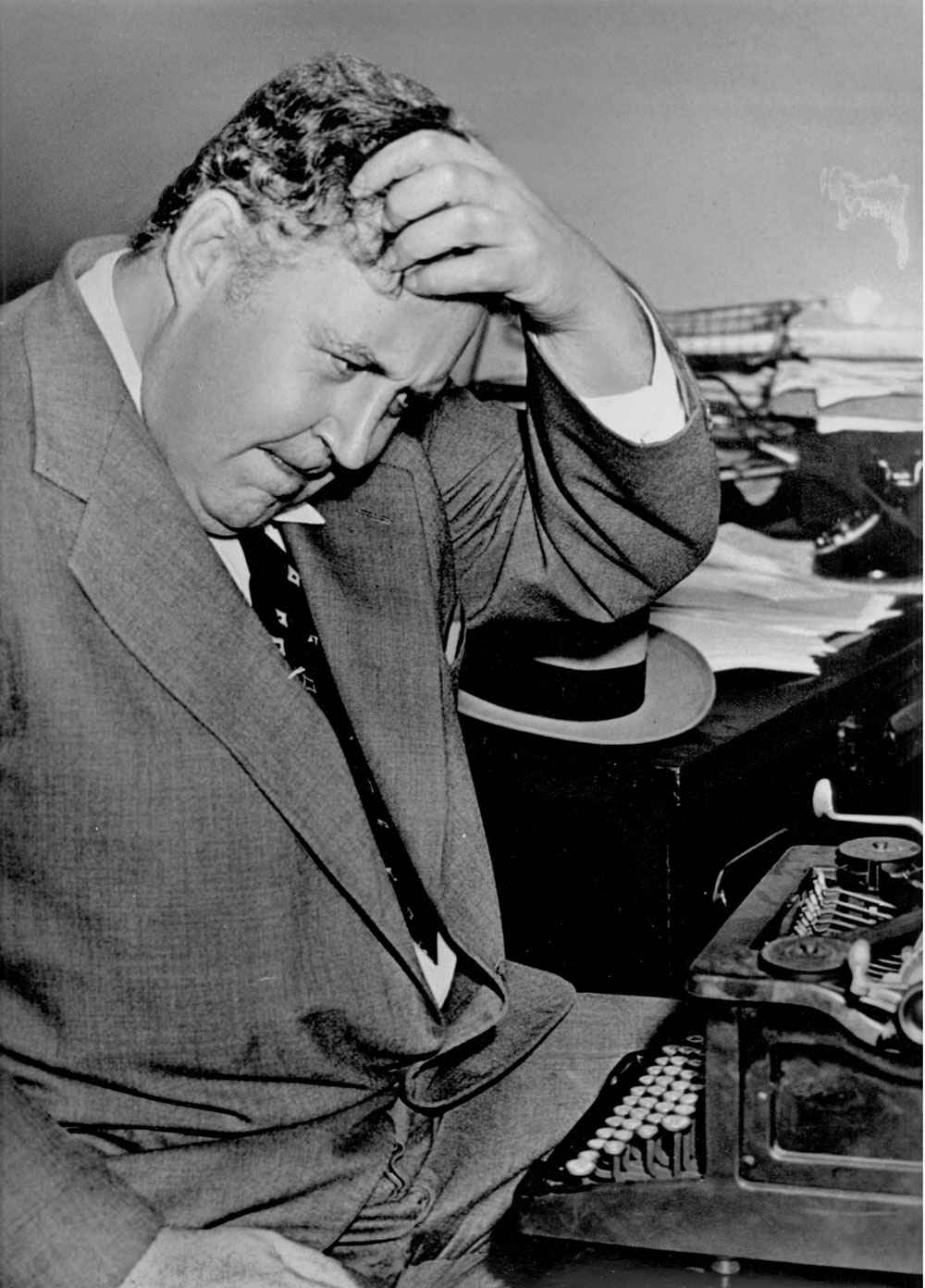
Hiding under the signature “R.A.”, Heywood Broun (1888–1939) was merciless as his own profiler, describing himself as a coward, hypochondriac, and a slob (there is truth to the latter, however, as friends often likened him to “an unmade bed”).
Broun cut his teeth in journalism as a sportswriter and war correspondent. In 1921 he went to work for the New York World, where he penned his popular syndicated column “It Seems to Me.” Broun’s New Yorker “Profile” was written after he was fired from the World following a disagreement with his editor over his critical commentary on the sentencing of anarchists Sacco and Vanzetti. Broun would move on to The Nation, where he would write a regular column, “It Seems to Heywood Broun,” that would offer criticism on a number of topics including his former employer, the World.
Heywood Broun. (Denver Newspaper Guild)
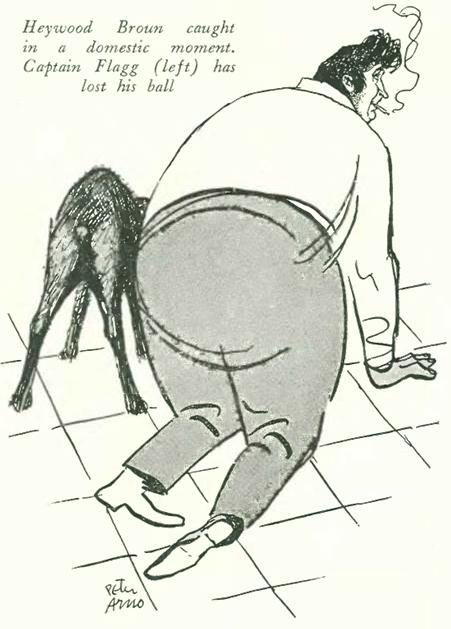
The New Yorker profile included this caricature by Peter Arno…
…a portrayal Broun claimed was inaccurate due to his “habitual stoop,” among other faults…
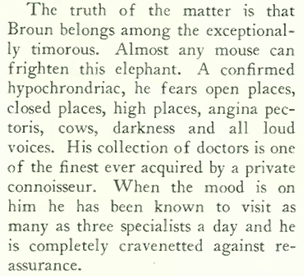
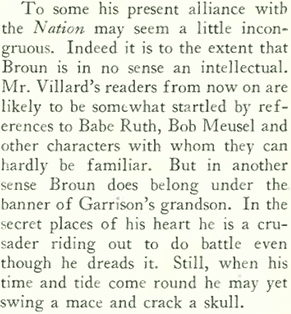
…and he mused about his future with the Nation, and how that august publication would square with his various foibles…
…and as for his personal appearance and habits, Broun weighed in thusly…
Broun married social activist Ruth Hale in 1917. A son born the following year, Heywood Hale Broun, would have a long and successful career as an author, sportswriter, commentator and actor.
* * * * *
The Long Count
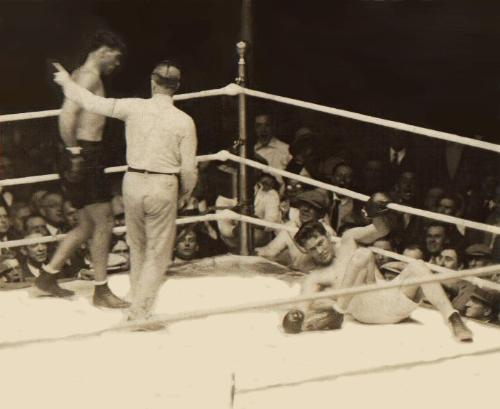
Oddly, The New Yorker had little to say about the famous Chicago rematch between heavyweight boxers Gene Tunney and Jack Dempsey, which Tunney won after the controversial “long count.” The fight took place under new rules that gave a fallen fighter ten seconds to rise to his feet, but the count would not begin until his opponent moved to a neutral corner.
DAZED AND CONFUSED…Referee Dave Barry motions Jack Dempsey to a neutral corner before he begins his count. Gene Tunney got back up and went on to win the fight. (Chicago Tribune archive photo)
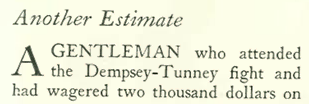
Although Tunney dominated the fight, Dempsey unleashed a flurry in the seventh round that knocked Tunney to the canvas–it was the first time in Tunney’s career that he’d been knocked down. Instead of going immediately to a neutral corner, Dempsey just stood and observed his opponent for several seconds until finally retreating. Those extra seconds proved just enough time to allow Tunney to return to his feet and eventually win the bout. To one observer quoted in “The Talk of Town,” those extra seconds really dragged…
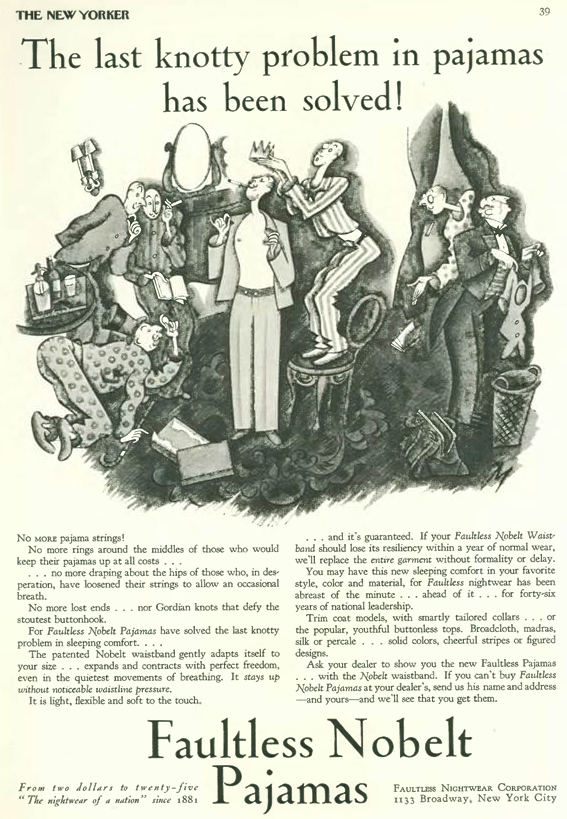
From the Ad Department
We feature this Julian de Miskey-illustrated advertisement for Faultless Nobelt Pajamas. Apparently these special PJs had some sort of newfangled rubber elastic band…
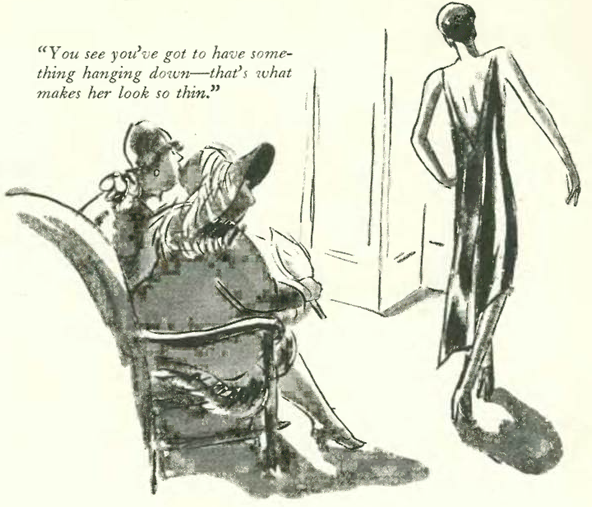
…and this cartoon from the Oct. 1 issue featured Helen Hokinson’s ditsy society women at New York’s Fashion Week…
* * * * *
Dorothy Takes On the Snobs
In the Oct. 8 issue, our other Round Table wit, Dorothy Parker, took aim at the less savory aspects of society women in her short fiction piece, “Arrangement in Black and White.”
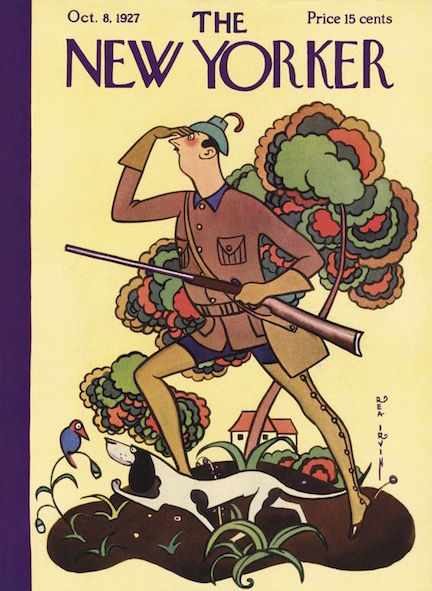
October 8, 1927 cover by Rea Irvin.
Parker began her piece by introducing us to a woman who enters a party wearing a wreath of “pink velvet poppies” in her golden hair. In short order she asks the party’s host to “pretty please” introduce her to the party’s guest of honor, an African American singer named Walter Williams.
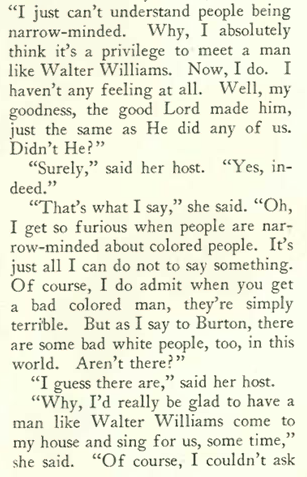
The woman with the pink velvet poppies goes on to tell her host that she came to the party alone because her husband, Burton, preferred not to socialize with “colored people”–but she however was “simply crazy” about some of them. “They’re just like children–just as easy-going, and always singing and laughing and everything.” Before she met the singer she observed to the host:
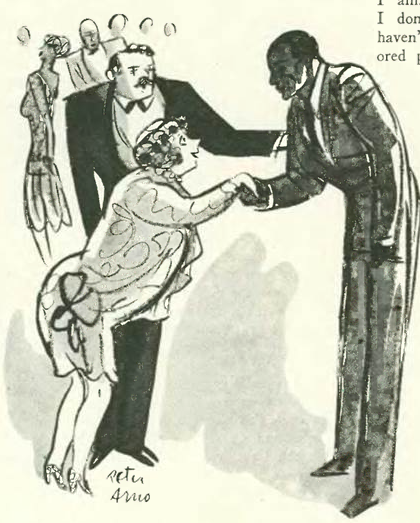
The woman with the pink velvet poppies meets the singer Walter Williams, as illustrated by Peter Arno.
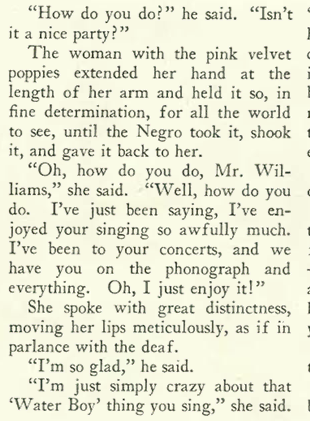
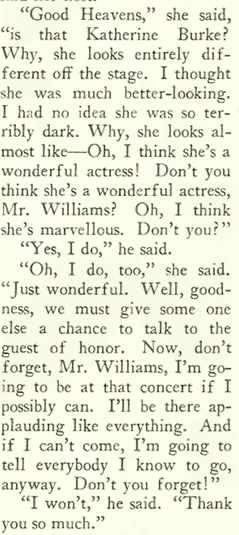
Then the woman with the pink velvet poppies meets Walter Williams:
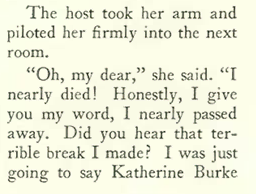
She continues to patronize the guest of honor, then notices a stage actress at the party:
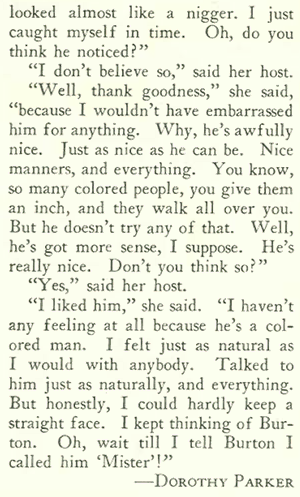
Finally, the host guides the woman with the pink velvet poppies away from Walter Williams…
BITING WIT…Dorothy Parker in the 1920s.
We will see more of Dorothy Parker in issues to come as she continues to take aim at the pretentious, hypocritical, self-absorbed snobs of the Jazz Age and beyond.
Baseball’s Lament
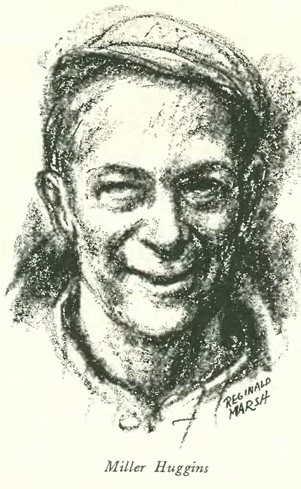
The Oct. 1 and 8 issues covered yacht racing, polo, tennis, golf and college football, but still no baseball. The 1927 New York Yankees would be one of the greatest teams of all time, but as the World Series commenced all we got from The New Yorker was a personality profile of Yankees manager Miller Huggins in the Oct. 8 issue (with a drawing by Reginald Marsh)…
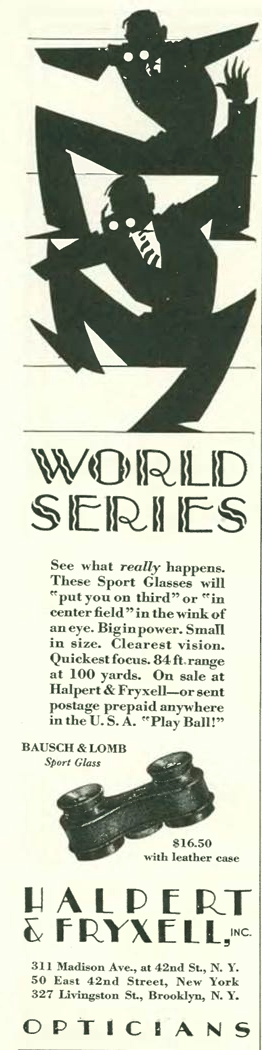
…and this advertisement for “Sport Glasses” for those attending the World Series…
Perhaps The New Yorker had no one on staff who could competently write about baseball. The strangest reference to the game was this article about polo, but for some reason it was illustrated with baseball images. Perhaps the editors felt sheepish about their lack of baseball coverage, and offered these illustrations by Howard Baer as a token acknowledgement…
At any rate, we end with this cartoon by Julien de Miskey, who like his colleagues explored the comic richness of wealthy old men paired with their young mistresses…











































































 A New Yorker State of Mind