Marxist Mayhem

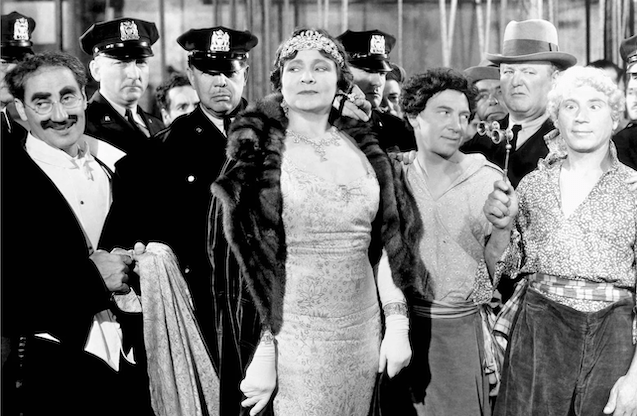
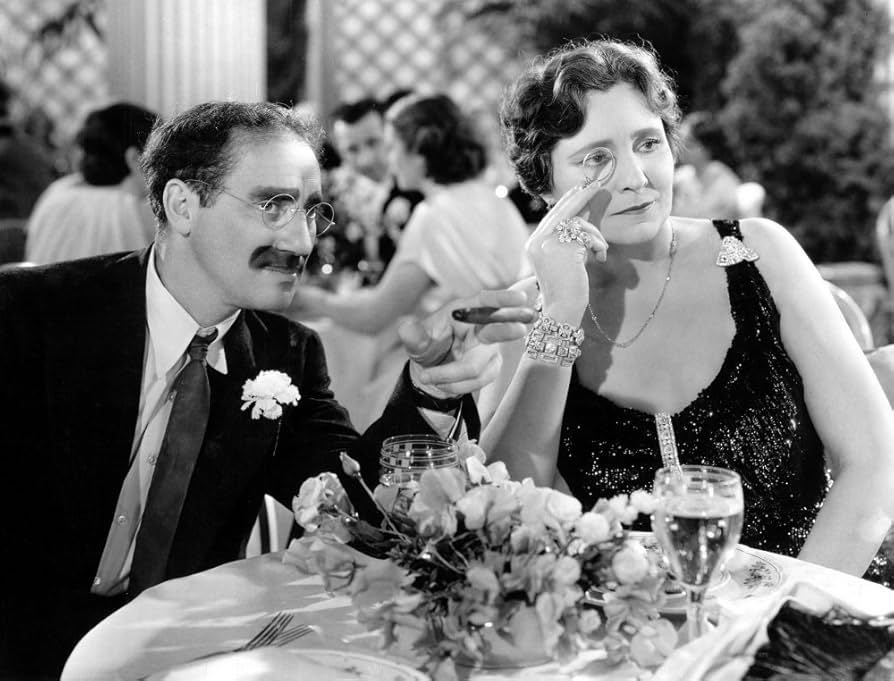
Above: Margaret Dumont with Groucho, Chico and Harpo Marx in A Night at the Opera. A trained operatic singer, Dumont portrayed wealthy, regal women as comic foils to the Marx Brothers in seven of their films. Groucho once referred to her as "the fifth Marx brother." (Britannica.com)

If you were looking for a break from the doldrums of winter or the mad rush of the holidays, a ticket to the Marx BrothersA Night at the Opera could fit your bill.

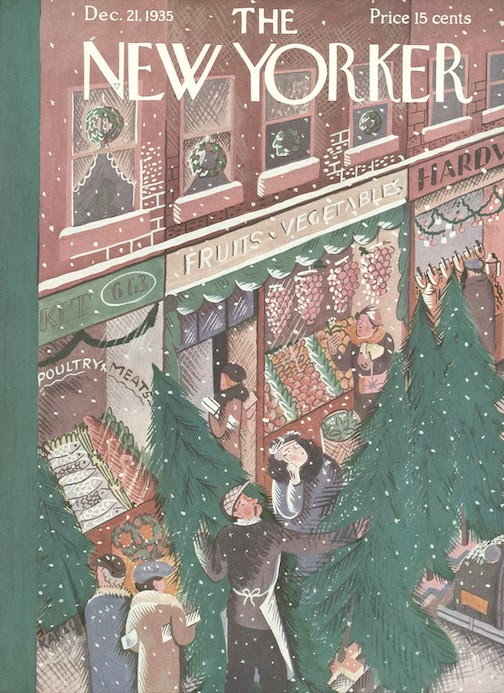
December 14, 1935 cover by William Crawford Galbraith. A New Yorker contributor from 1929 to 1940, Galbraith (1894–1978), illustrated 151 drawings and seven covers for the magazine.

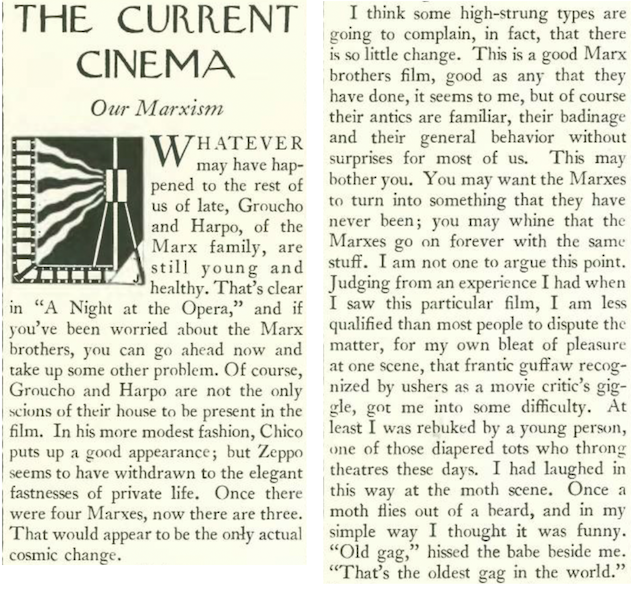
With their move from Paramount to MGM, Groucho, Chico and Harpo Marx launched a new style of comedy with A Night at the Opera, one of 1935’s biggest hits. Critic John Mosher was pleased to see the trio’s familiar antics on the screen, but with more story structure than their previous films.

SWEET TALKER…In Night at the Opera, Groucho Marx (as Otis B. Driftwood) advises Margaret Dumont (as Mrs. Claypool) on how to be inducted into high society—Driftwood: “I have arranged for you to invest $200,000 in the New York Opera Company. You’ll be a patron…Then you can marry me and they’ll kick you out of society and all you’ve lost is $200,000.” (amazon.com)

Sure, there were some old gags, as one “youngster”—seated next to Mosher—noted, but even this newbie pronounced the film “excellent.” As Mosher observed, “It may not be new or surprising, but it’s quick and funny.”

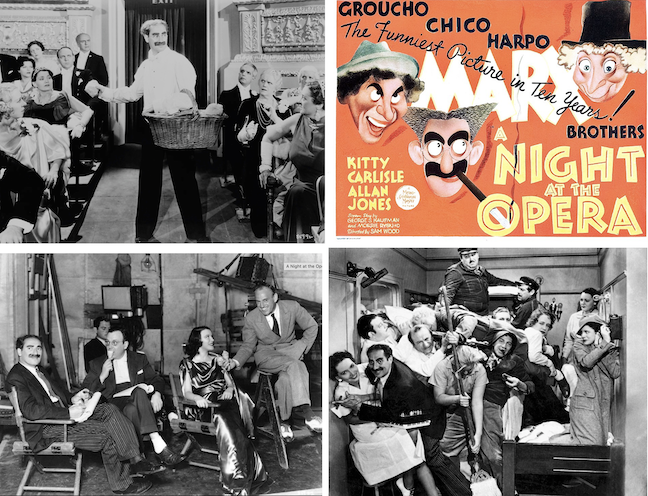
OH WHAT A NIGHT…Clockwise, from top left, during the overture to Verdi’s Il Trovatore, the sheet music is switched to “Take Me Out to the Ballgame,” and Otis B. Driftwood (Groucho Marx) responds by hawking peanuts to the startled audience; lobby card for the film; the famous “Stateroom Scene,” written by gag man Al Boasberg; taking a break on the set are, from left, Groucho, Boasberg, Kitty Carlisle, and director Sam Wood. (onset.shotonwhat.com)

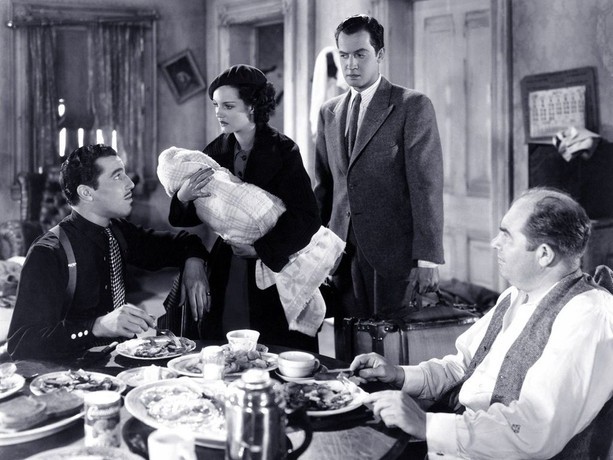
Mosher also reviewed the underworld thriller Show Them No Mercy!, which displayed some of the effects of the Hays Code…

TONE IT DOWN, WOULD YA?…From left, Cesar Romero, Rochelle Hudson, Bruce Cabot, and Edward Brophy in Show Them No Mercy! (rotten tomatoes.com))

 * * *

Fond Memories

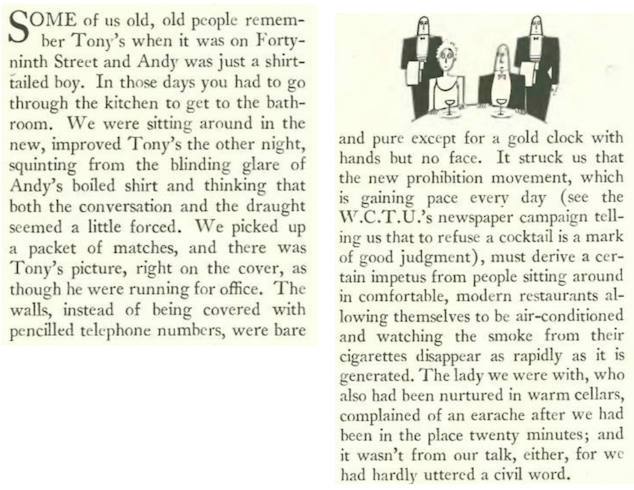
In his “Notes and Comment,” E.B. White recalled the good old days at a place called Tony’s on 49th Street. I couldn’t find any record of the place (or images), but apparently the new Tony’s lacked the smoke-filled charm of the original. Not to mention that the air-conditioning gave an earache to one of White’s acquaintances:

 * * *

Gun Shy

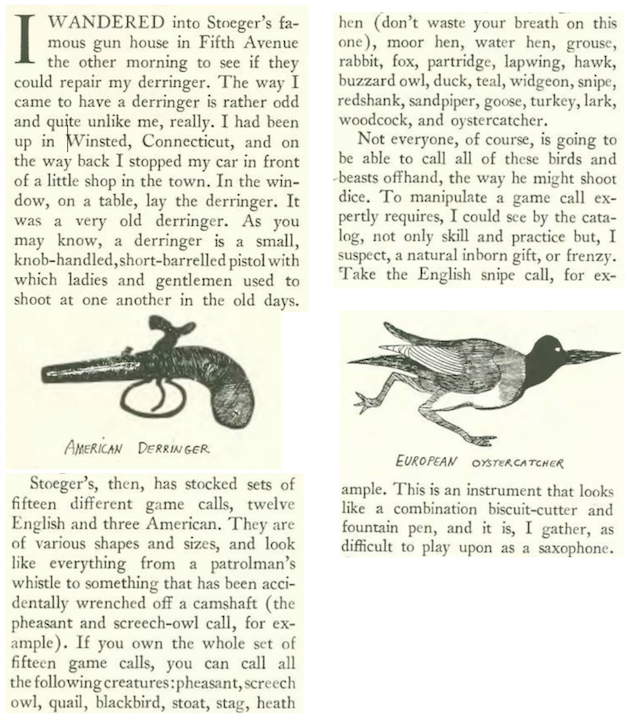
James Thurber was also facing the challenges of the modern world, being the unlikely owner of a very old derringer and hoping to possibly get it repaired. He stopped in at Stoeger’s gun store on Fifth Avenue, where a salesman tried to sell him a newer model. Instead, Thurber opted for a copy of the catalog (which he found fascinating), and pondered the store’s various game calls, which he thought might make suitable holiday gifts. Some brief excerpts:

GUNS ON FASHION ROW…View from inside Stoeger’s Fifth Avenue gun store with manager John T. Meechan, undated; cover of the store’s 1936 catalog. (Facebook/ebay.com)

 * * *

Hello Dolly

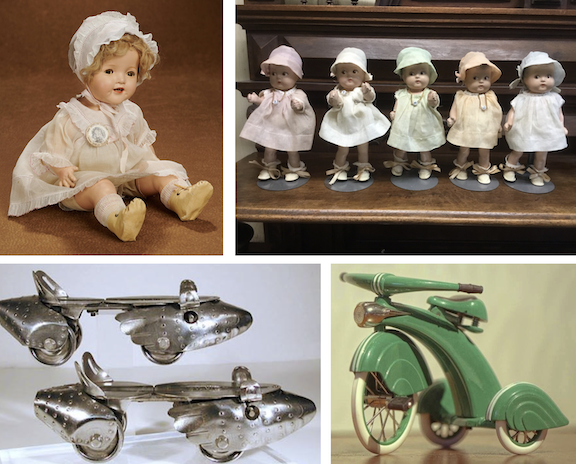
Dolls of all sorts—ranging from Popeye to the Dionne quintuplets—were all the rage for the holidays, according to the magazine’s third installment of its exhaustive Christmas lists.

RARE COLLECTIBLES TODAY, toys popular at New York’s department stores in 1935 included, clockwise, from top left, Ideal’s Shirley Temple baby doll, fashioned after a photo of the young actress at age six months; the Dionne Quintuplets craze continued with the growing quints now standing up; a Skippy velocipede; Buck Rogers Rocket Skates. (theriaults.com/ebay.com/MidwestModern via X/grandoldtoys.com)

 * * *

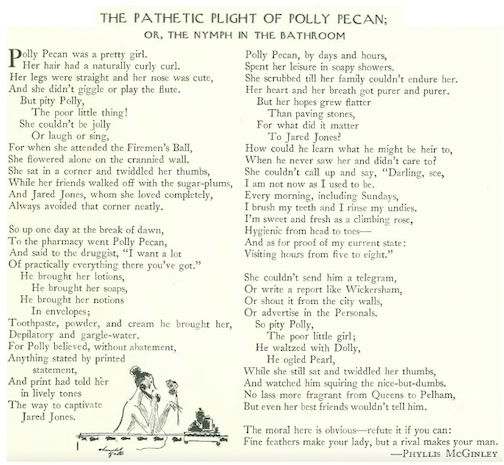
Some Light Holiday Verse

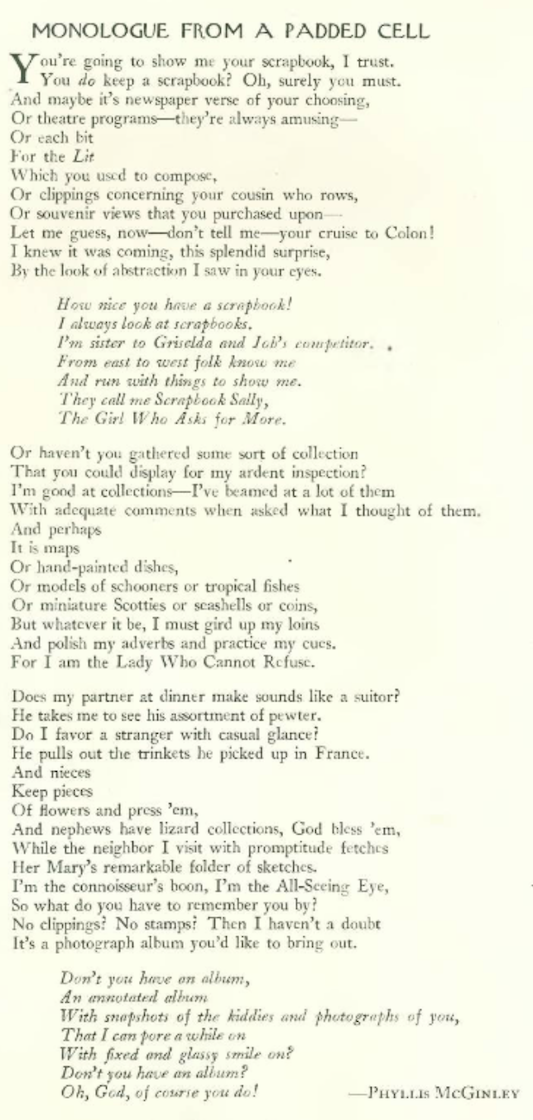
This poem comes courtesy of Phyllis McKinley (1905–1978), a children’s author and poet who lovingly satirized her suburban life, publishing in both popular as well as literary magazines, including The New Yorker.

* * *

From Our Advertisers

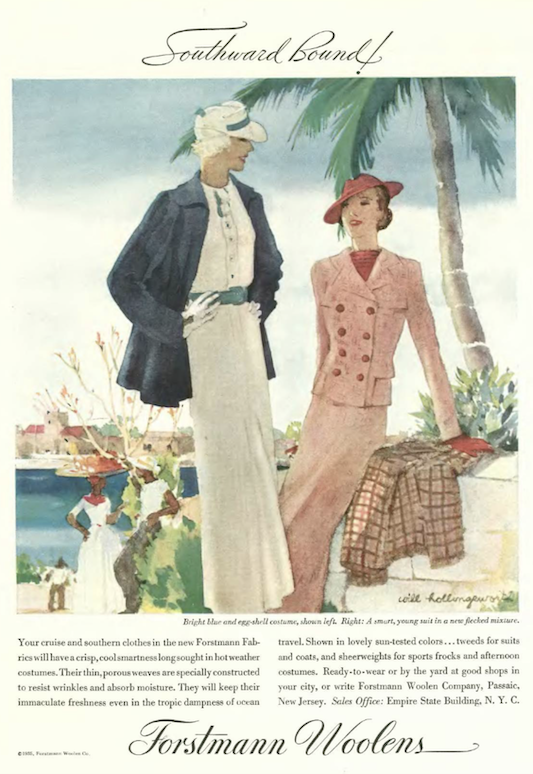
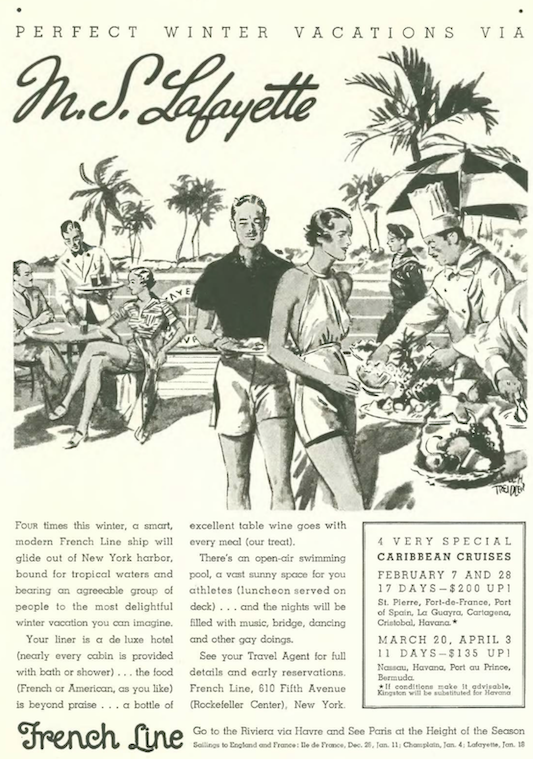
Mixed in with the advertisements for last-minute Christmas gifts were a slew of ads beckoning those with wealth and leisure time to head south for the winter…

…Forstmann Woolens switched gears, replacing their lovely seasonal ads (featuring fall and winter fashions) with the latest in tropical togs…

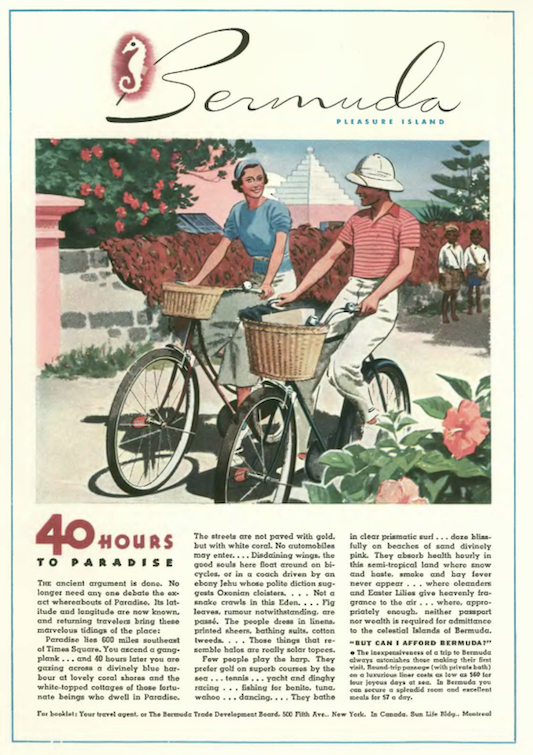
…Bermuda beckoned to those fashionable folks…

…as did the cruise lines heading south…

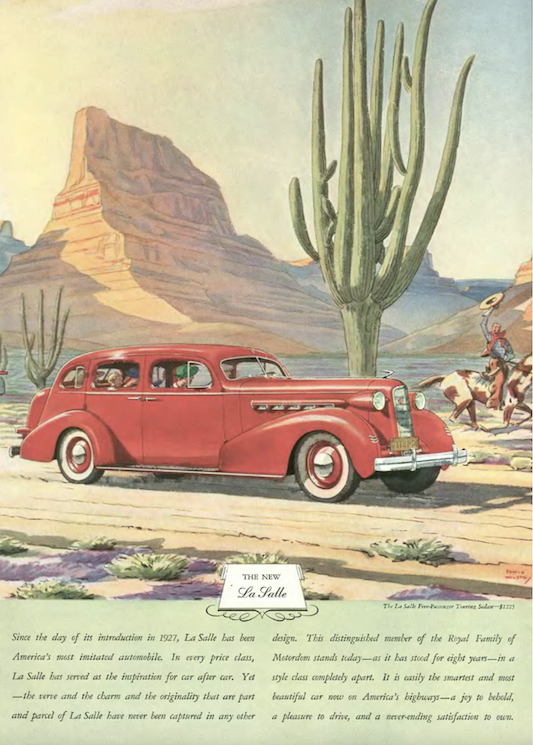
…even the makers of the La Salle (Cadillac) were feeling the warmth with this image of the sunny Southwest (this was the left panel of a two-page spread)…

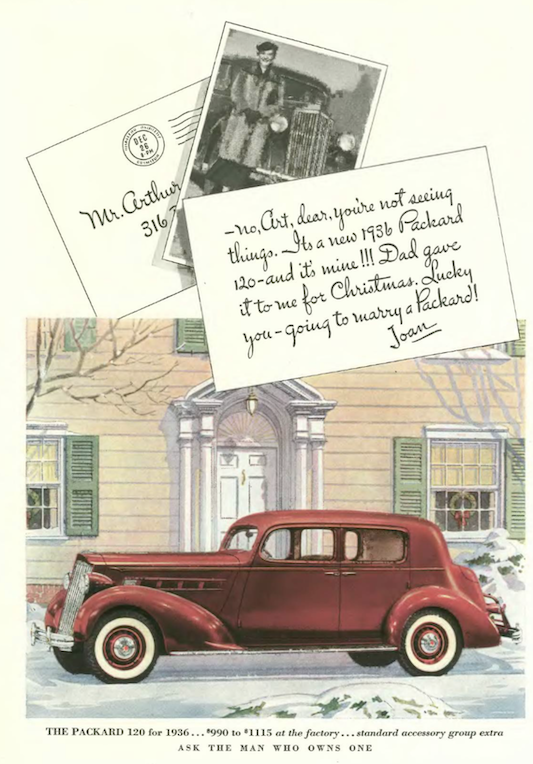
…Packard could sweeten a woman’s dowry, according to this holiday message…

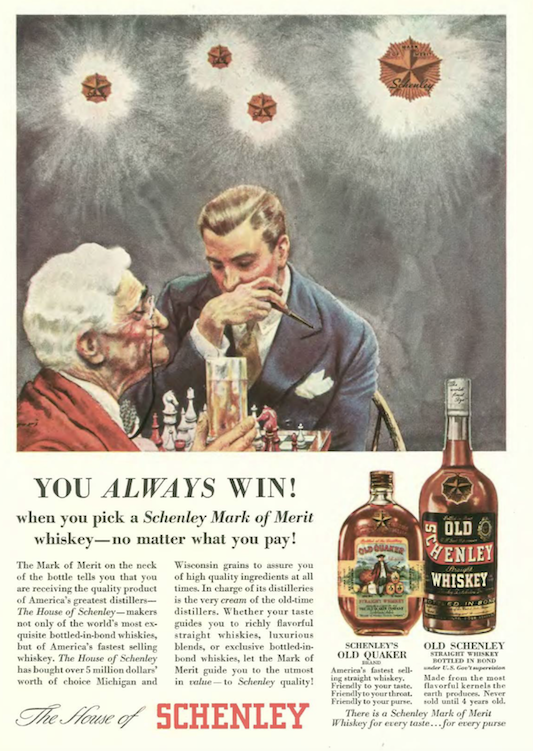
…it looked like Grandpa had a bit too much of the Old Schenley…

…according to this Heinz ad, modernism should play a “minor role” on Christmas, so for a real “olden time” treat, you could enjoy some of their figgy pudding…out of a can…

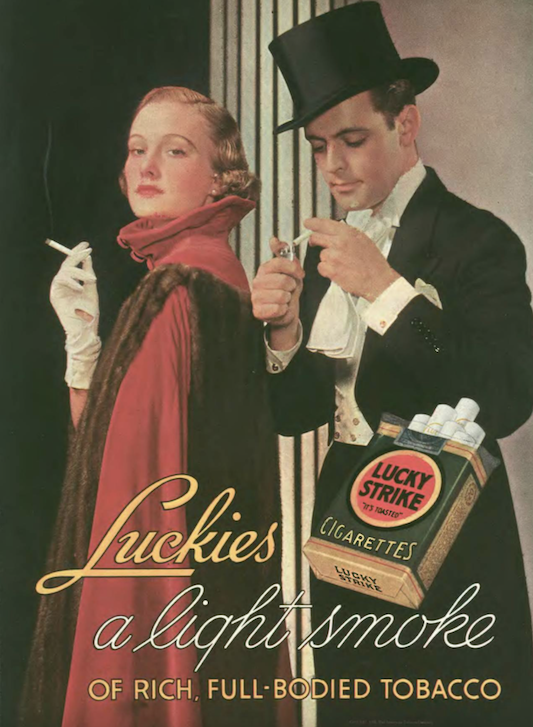
…and leave it to good old St. Nick to push his bagful of cigarrettes…

…Old Gold also employed Santa for this George Petty-illustrated ad…
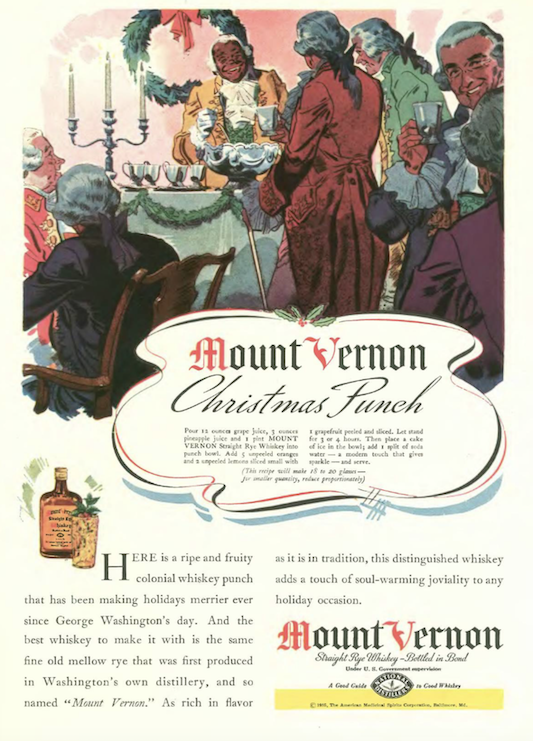
…Mount Vernon continued its series of ads that idealized the days before Emancipation…
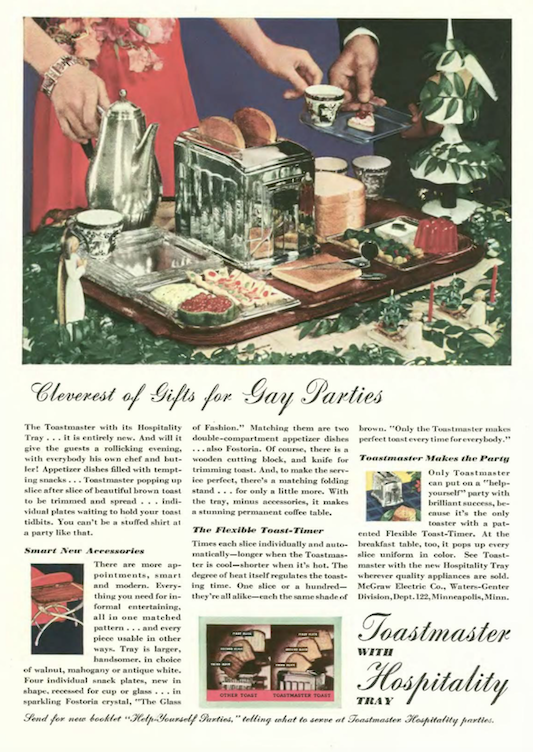
…the automatic toaster, still something of a novelty, was front and center at this holiday gathering…

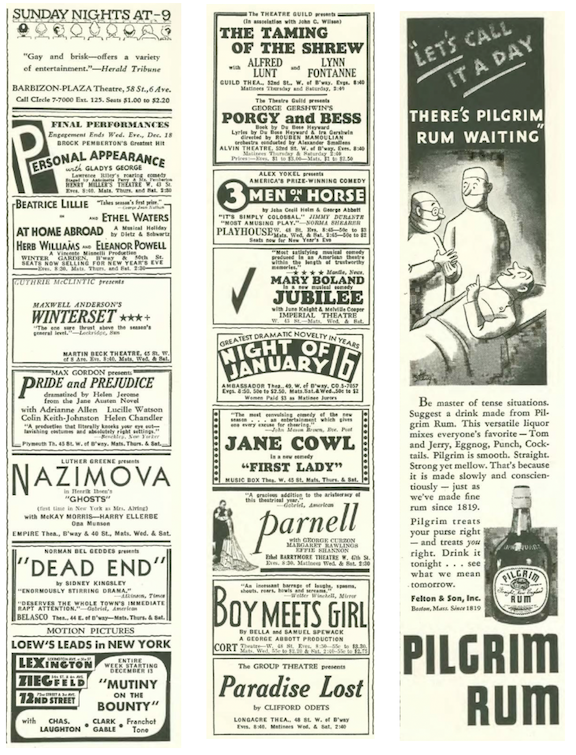
Stage magazine touted Broadway’s hit-filled season…

…back of the book, single-column ads featured  delights of the stage and screen and an appeal for Pilgrim Rum aided by the talents of William Steig

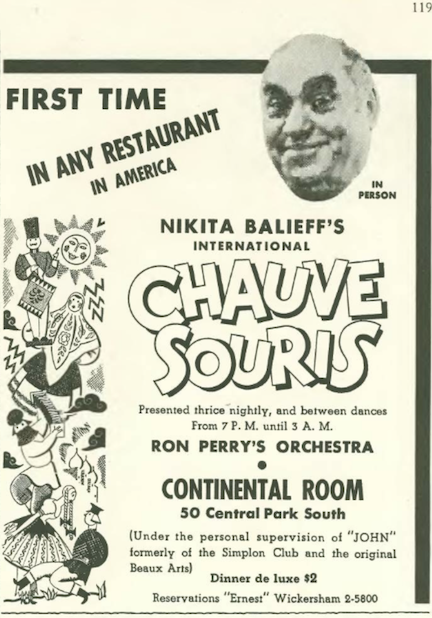
Nikita Balieff’s La Chauve-Souris had seen better days when it showed up at the Continental Room…

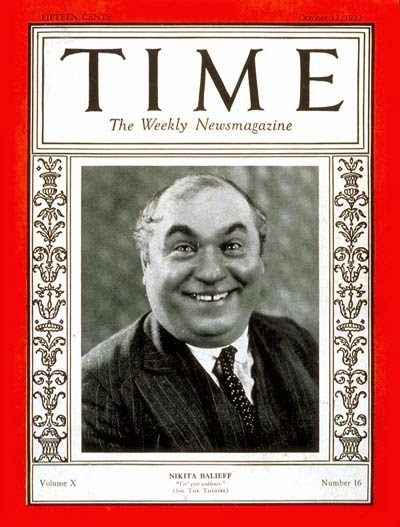
…Balieff (1877–1936) was a Russian Armenian performer best known as the creator and master of ceremonies of the theatre group La Chauve-Souris. The company toured the U.S. six times from 1922–1929—including appearances on Broadway—presenting a variety of songs, dances and sketches based on Russian stories and legends. The troupe’s popularity even landed Balieff on the cover of Time (Oct. 17, 1927)…

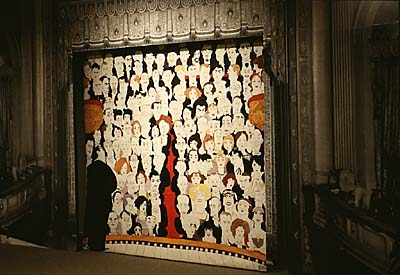
The New Yorker’s Ralph Barton designed a curtain for the 1922 Chauve-Souris, and Alexander Woollcott heaped praise on the performances. However, his fellow Algonquin Round Table wit, Dorothy Parker, was not impressed: it has come to the stage where these poor nerves jangle nastily every time the local cognoscenti hail as incomparable art any bit of literature, play, writing or stagecraft that comes out of Russia. ….. what I don’t really grasp is just why “Russian” and “great” should have come to be looked upon as synonyms…

Ralph Barton painted this celebrity curtain in 1922 for Chauve-Souris. (National Portrait Gallery)

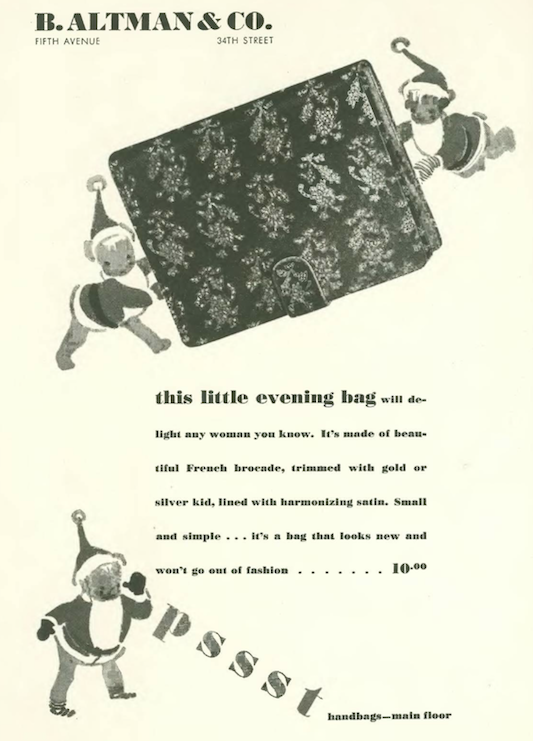
…back to our ads…B. Altman had a suggestion for the last-minute shopper…

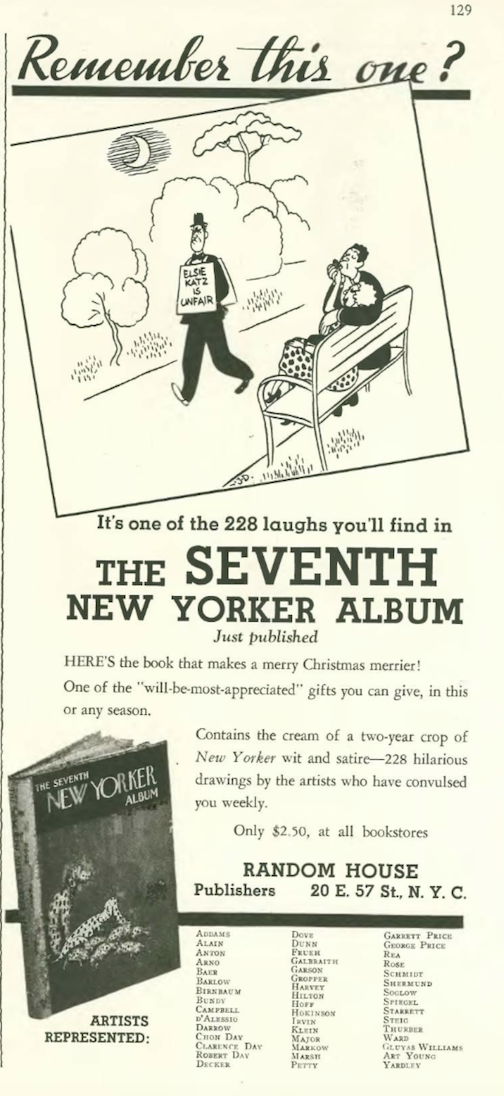
…a Robert Day cartoon was employed to advertise the latest New Yorker Album

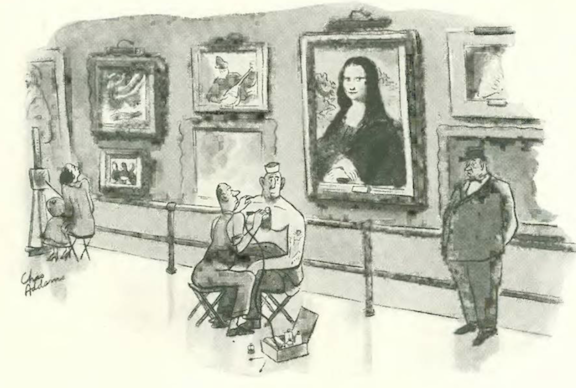
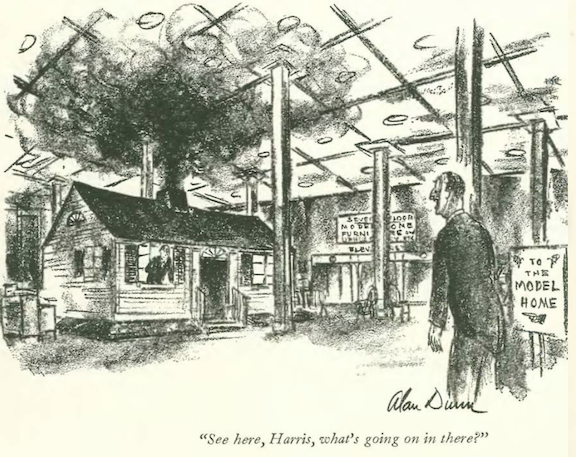
Thomas Eastwood opens up our cartoon section…

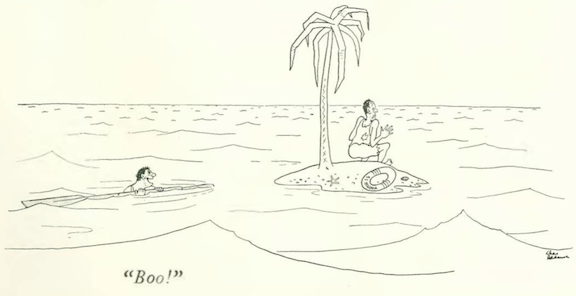
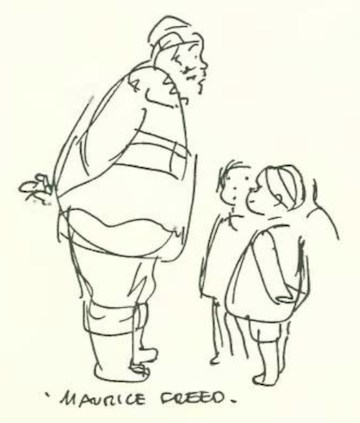
Maurice Freed tossed in this spot drawing…

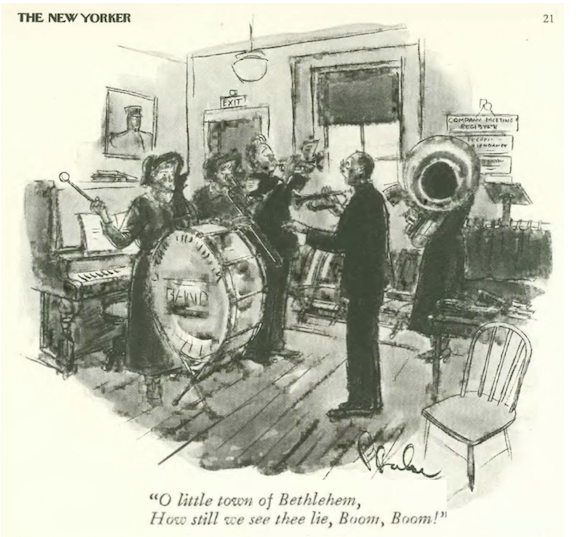
Perry Barlow got into the rhythm with the Salvation Army…

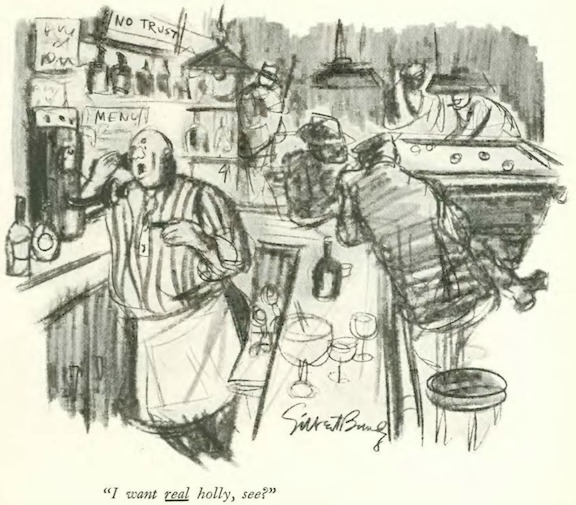
Gilbert Bundy looked for some holiday cheer at a neighborhood tavern…

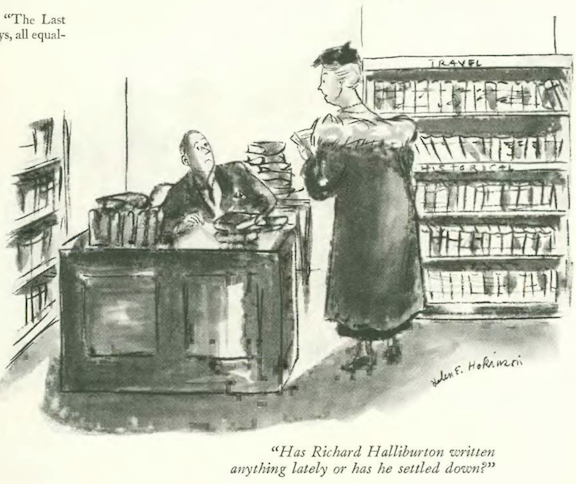
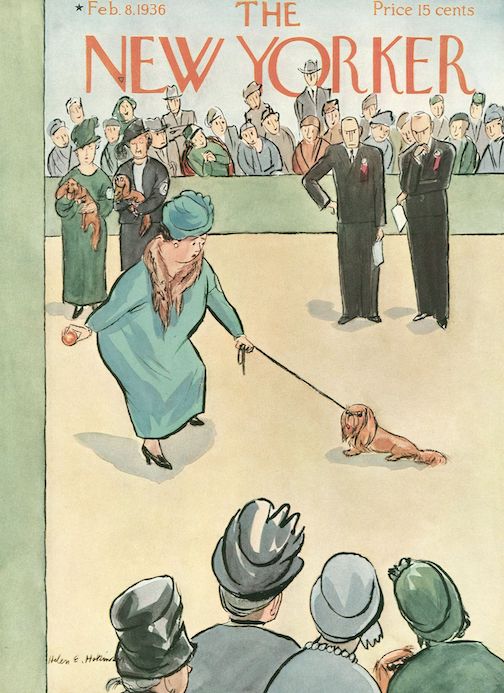
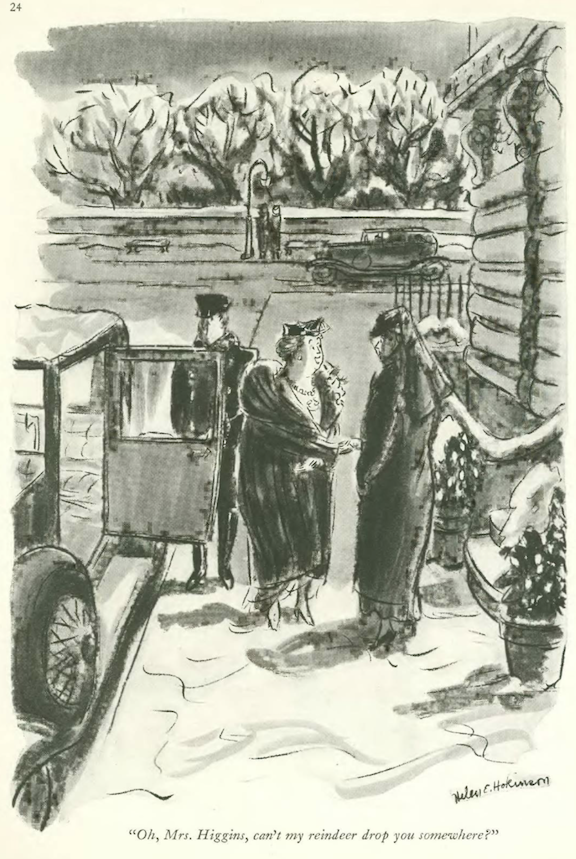
Helen Hokinson gave us a generous spirit…

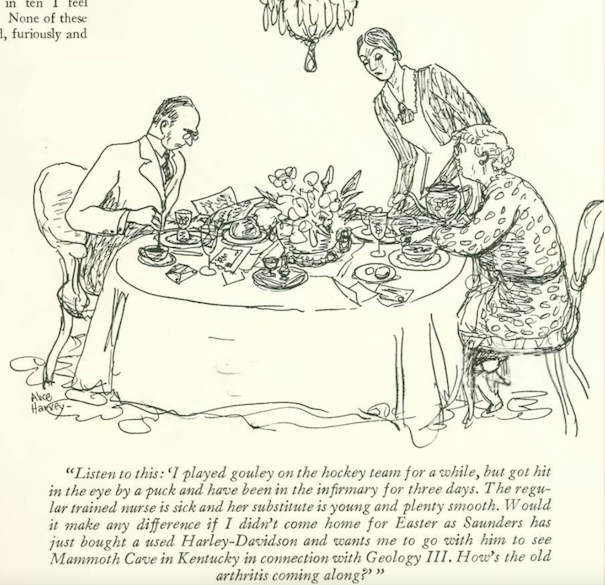
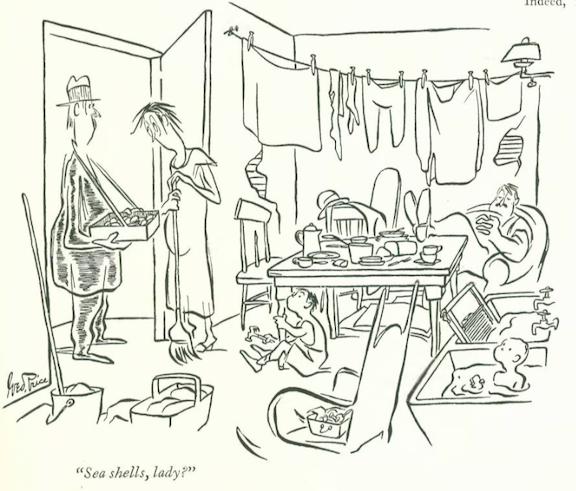
Walter Lippmann’s column raised eyebrows at George Price’s breakfast table…

…Price again, on an urgent request…

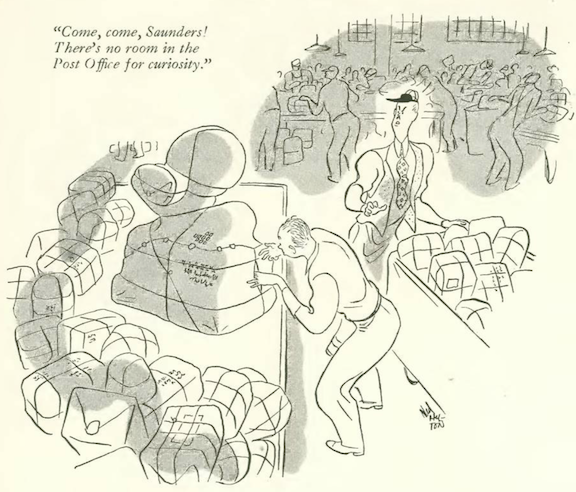
Ned Hilton did some peeking…

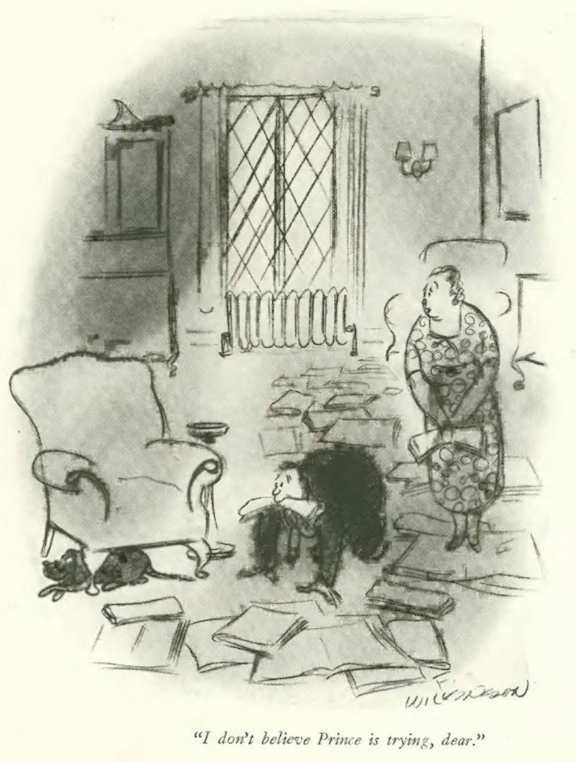
Fritz Wilkerson showed us a couple in need of a dog whisperer…

Carl Rose unmasked an imposter…

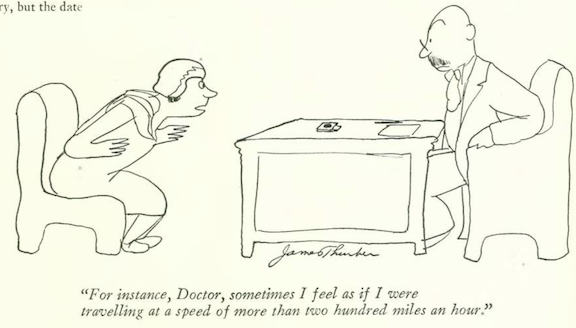
…and James Thurber presented a medical challenge…

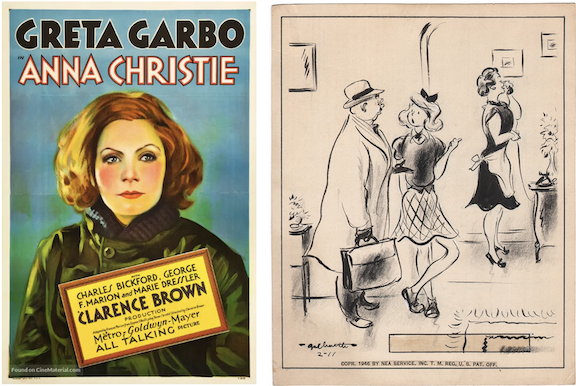
…and before we go, another word on our cover artist, William Crawford Galbraith, who also created posters for MGM from the 1920s to the 1940s and drew cartoons for Harper’s Bazaar, Redbook, Vanity Fair, the Saturday Evening Post, and Cosmopolitan. He took over the nationally syndicated “Side Glances” comic panel from George Clark in 1939 and worked on it for two decades.

At left, Galbraith’s poster for Anna Christie, 1930; right, a 1946 Side Glances comic panel. The caption reads: “No, I’m not curious – I just like to hear Mom on the phone because her voice sounds so mellow compared to when she’s talking to us around the house!” (IMDB/comicartfans.com)

Next Time: Picking on Pickford…

The Radio City

The NBC Studios at 30 Rockefeller Plaza have wowed visitors and performers alike for nearly 90 years. Today we look back at the remarkable foresight of the studios’ designers, who created spaces that would one day accommodate a new medium called television, which was still in its experimental stages.

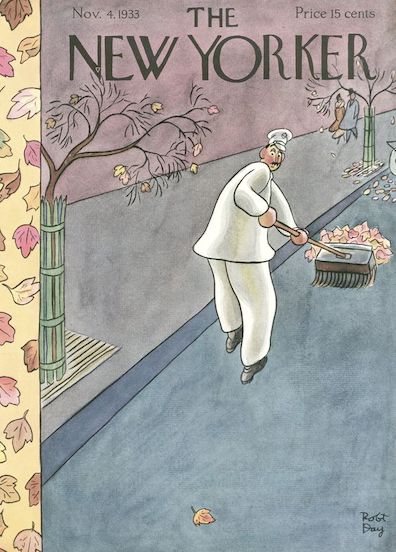
Nov. 4, 1933 cover by Robert Day, who contributed a total of eight covers to The New Yorker.

However, before we jump in, let’s look at Robert Day’s cover for the Nov. 4 issue, which featured a familiar character who made his first appearance on the cover of issue #12 (May 9, 1925), and returned four years later looking much older in the dog days of August…

Cover of issue #12 (May 9, 1925) by Rea Irvin introduced our street sweeper, who returned Aug. 3, 1929 by the hand of Gardner Rea.

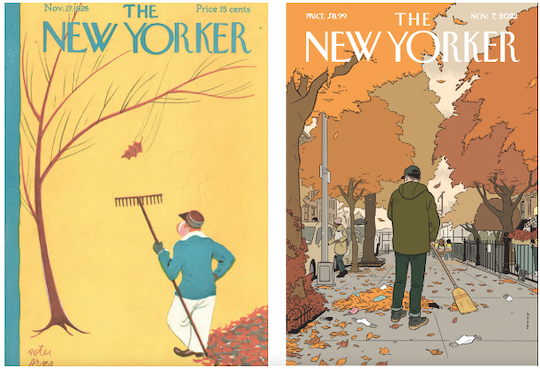
Day’s cover, however, was also a nod to the annual gathering of autumn leaves—an occasional cover theme that began with Peter Arno’s contribution to the Nov. 27, 1926 issue (below, left) and most recently expressed in Adrian Tomine’s cover for the Nov. 7, 2022 issue (with timely pandemic reference)…

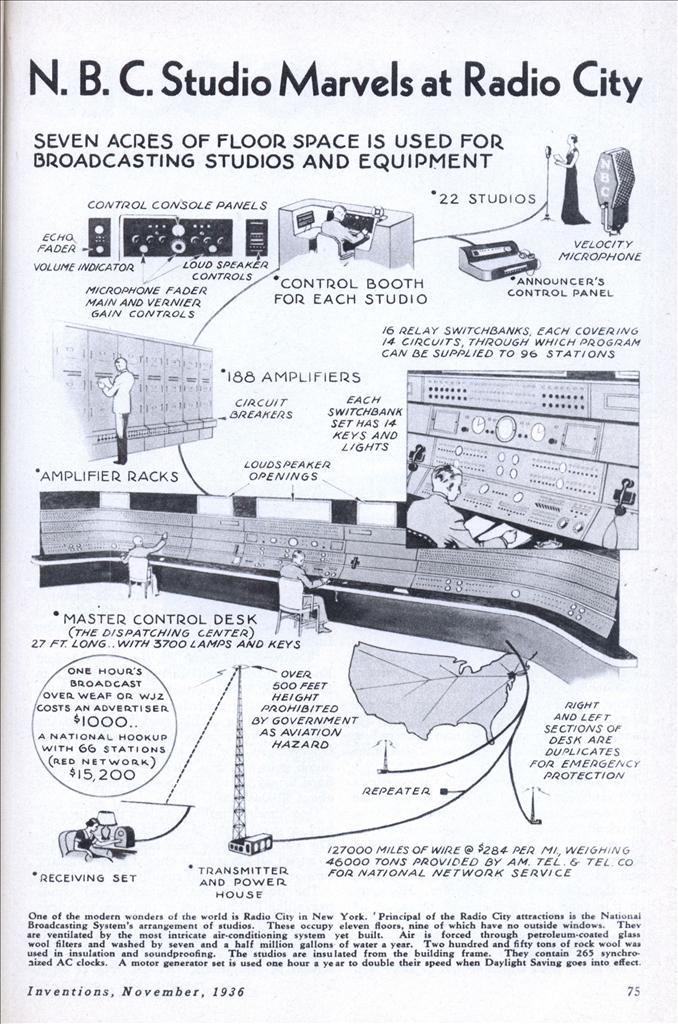
Back to Radio City, Morris Markey recounted the technological wonders of the new NBC studios in his “A Reporter at Large” column, “Marconi Started It.” Markey noted the “fabulous quality” of the facilities, wired for the day when television would arrive. Excerpts:

GEE WHIZ…Morris Markey could be assured that some folks would be “goggled-eyed” by NBC studios, including the technophiles at Popular Mechanics. (westmb.org)
WHERE HISTORY WAS MADE…Studio 8H was the world’s largest radio studio when it opened in 1933. It would be converted for television in 1950. (westmb.org)

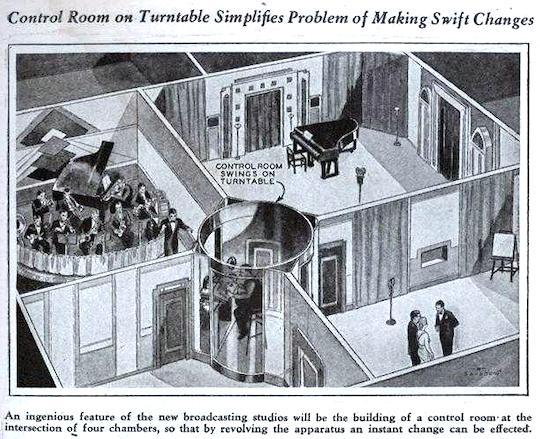
Markey marveled at NBC Studios’ various design innovations, including a revolving control room dubbed the “Clover Leaf”…

(Modern Mechanics, Jan. 1931)

Almost 90 years later, the studios continue to serve the broadcast needs of the 21st century, including Studio 8H…

LIVE FROM NEW YORK…Studio 8H was the world’s largest radio studio when it opened in 1933. Converted to television in 1950, it has been home to Saturday Night Live since 1975. Above, SNL stage manager Gena Rositano, in 2015. Below, longtime SNL director Don Roy King at the controls for Studio 8H, also in 2015. (Dana Edelson/NBC via Directors Guild of America)

 * * *

Leopold!

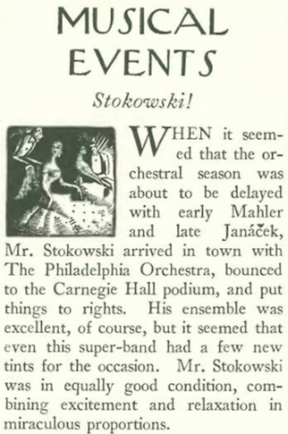
Conductor Leopold Stokowski was no stranger to Studio 8H. From 1941 to 1944 he led the NBC Symphony Orchestra in that venue. One of the leading conductors of the early and mid-20th century, Stokowski (1882–1977) began his musical career in New York City in 1905 as the organist and choir director at St. Bartholomew’s Church, but by 1915 he was conducting the famed Philadelphia Orchestra. Robert Simon reported on Stokowski’s return to New York for a performance at Carnegie Hall. A brief excerpt:

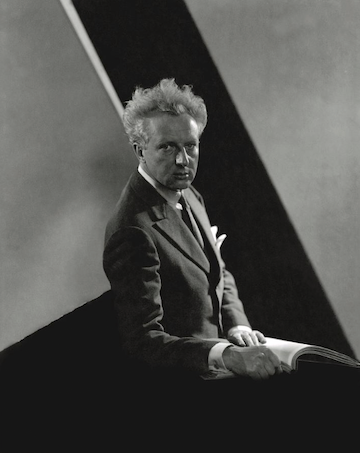
I GET AROUND…Portrait Of Leopold Stokowski by Edward Steichen, Dec. 1, 1933. Married three times and once romantically linked to Greta Garbo, he was married to wife #3, Gloria Vanderbilt, for ten years. (Condé Nast)

Stokowski had the distinct honor of being satirized in a 1949 Looney Tunes cartoon, “Long-Haired Hare,” in which Bugs Bunny disguised himself as the conductor and entered the stage to the astonished whispers of the orchestra…Leopold! Leopold!…

MAESTRO…Bugs Bunny as Stokowski in “Long-Haired Hare.”

Stokowski was no stranger to animation. The conductor appeared in silhouette in Disney’s Fantasia (1940), leading the Philadelphia Orchestra in the film’s score. He even shook hands with Mickey Mouse.

 * * *

Bigga Badda Wolfa

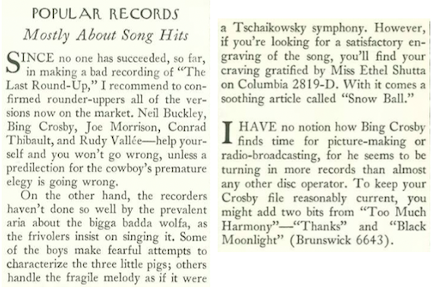
The New Yorker took a look at the popular records of the day, and in addition to tunes by Bing Crosby and Rudy Vallée there was yet another release of “Who’s Afraid of the Big Bad Wolf?”…Ethel Shutta was the latest of seemingly dozens of artists to cash in on the Disney hit…

I’LL HUFF AND I’LL PUFF…Those who couldn’t get enough of “Who’s Afraid of the Big Bad Wolf” could turn to Ethel Shutta’s rendition of the hit song on Columbia records. (discogs.com)

 * * *

Page-Turner

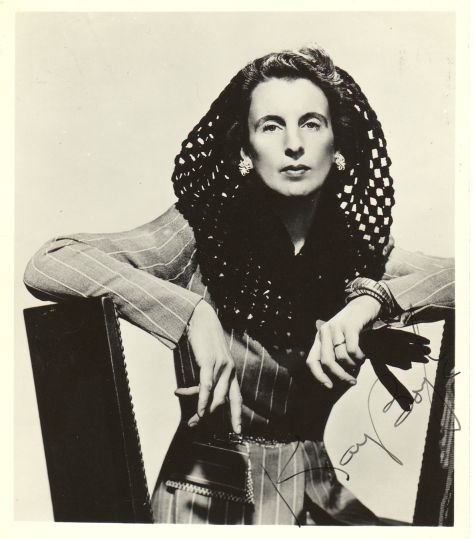
Writer Kay Boyle wasn’t afraid of wolves or any other subject for that matter, according to book reviewer Clifton Fadiman

TOSSING A SALACIOUS SALAD…Kay Boyle, photographed by George Platt Lynes, 1941. (The Kay Boyle Papers, Morris Library, Southern Illinois University)

 * * *

A Grapeful Nation

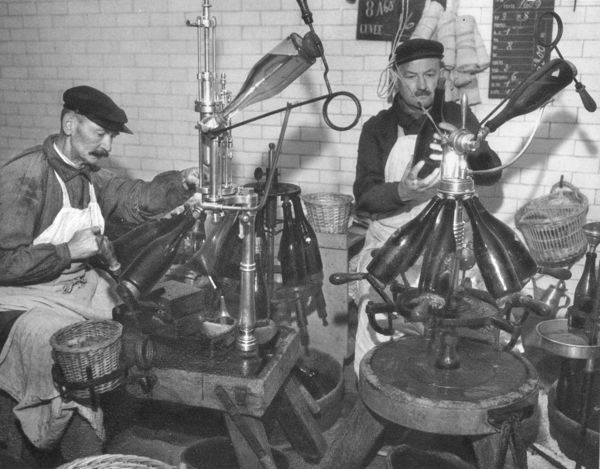
As New Yorkers counted the days until the end of Prohibition, The New Yorker did its part to get readers back up to speed by enlisting the talents of one of the world’s great wine experts, Frank Schoonmaker, who had the enviable job of filing a series of wine reports for the magazine. His first installment of “News From the Wine Country” featured the Champagne region. Excerpts:

THAT FIZZY FEELING…Bottling the good stuff in the Champagne region, circa 1930. (wineterroirs.com)

 * * *

From Our Advertisers

Christmas was just around the corner, and F.A.O. Schwarz was READY with its 64-page catalog…

…White Rock anticipated the end of Prohibition with an ad featuring a miniature colonel who apparently needed a stiff drink to prepare for his wife’s return from abroad…

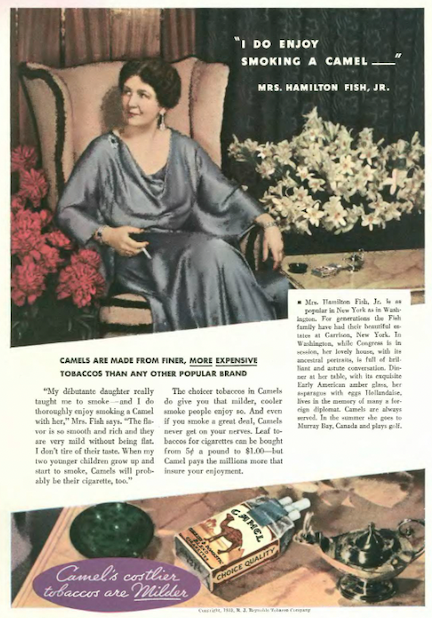
…Mrs. Hamilton Fish Jr, aka Grace Chapin, was married to the New York congressman from 1920 until her death in 1960, apparently enjoying many Camels along the way…her husband would go on living another 31 years and take three more brides before expiring at age 102…

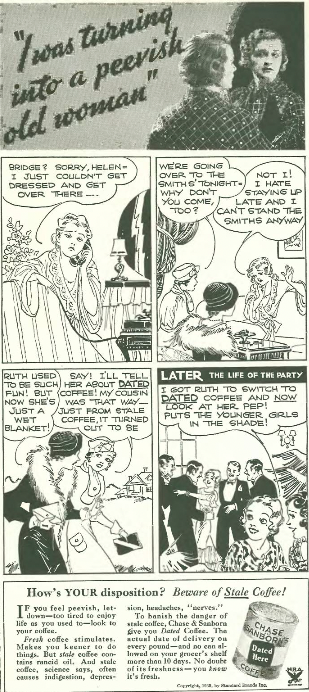
…another cautionary tale from Chase & Sanborne about the perils of undated coffee…

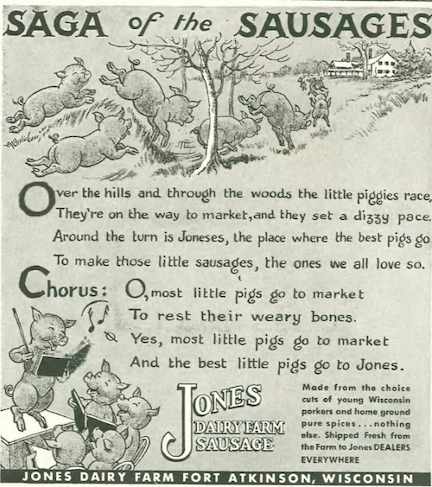
…and with the holidays approaching, a jolly ditty from Jones Dairy Farm, home to little piggies who merrily dash toward their inevitable slaughter…

…and we jump to another back-page ad, this from the stately Plaza, where you could get a single room for five bucks a night…

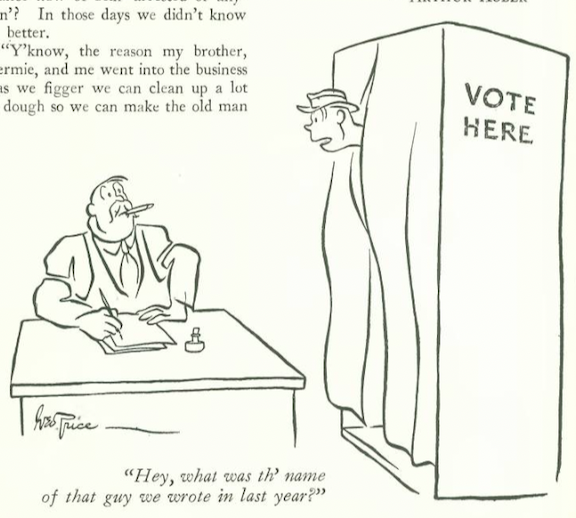
…turning to the cartoons, we find George Price hitting his stride with multiple cartoons in consecutive issues…

…and taking a look at the recent elections…

…on to James Thurber, and continuing struggles on the domestic front…

…and that brings us to our next issue…

Nov. 11, 1933 cover by Constantin Alajalov.

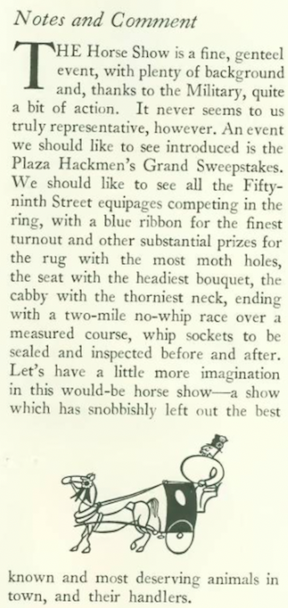
…in which E.B. White had a thing or two to say about the latest edition of the National Horse Show at Madison Square Garden.

HORSE SENSE AND SENSIBILITY…The National Horse Show at Madison Square Garden was a major event on New York’s social calendar; top and bottom right, scenes from the 1936 show; bottom left, undated scene circa 1960. (Stills from YouTube)

 * * *

Versatile Verse

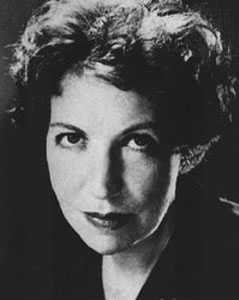
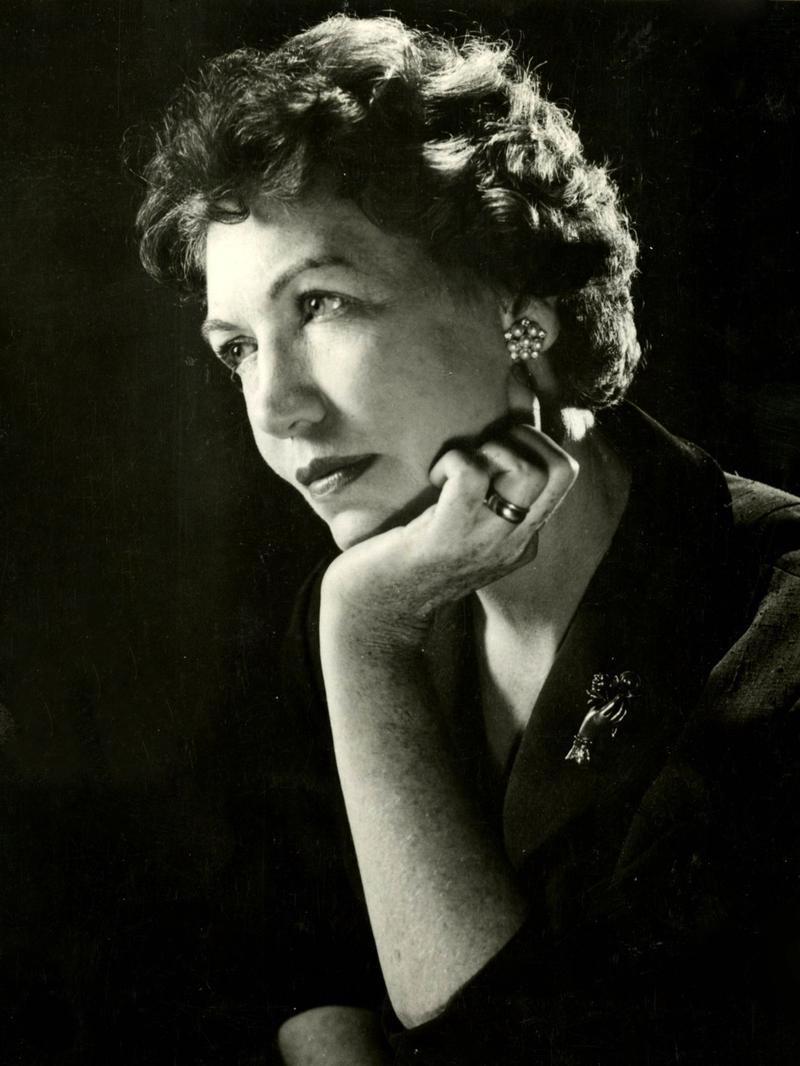
Phyllis McGinley (1905–1978) was the author of children’s books and poetry, the latter genre most notably for The New Yorker. However, she attracted a wide audience for her light verse in other publications ranging from Ladies Home Journal to The Saturday Review.

LIGHT TOUCH…Phyllis McGinley in an undated photo. She received the Pulitzer Prize in 1961 for her book Times Three—the first writer of light verse to receive the prize. (wnyc.org)

 * * *

Oil and Water

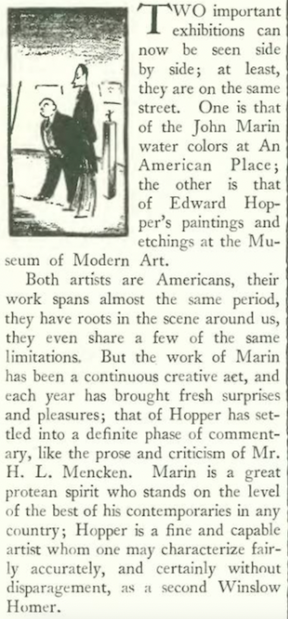
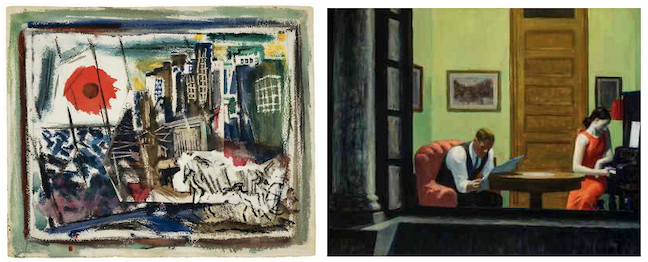
Art and architecture critic Lewis Mumford found two very different visions of America in the works of contemporaries John Marin and Edward Hopper. Marin’s watercolors were featured at An American Place, while Hopper’s oil paintings and etchings were shown down the street at the Museum of Modern Art.

SIDE BY SIDE…Lewis Mumford found different visions of New York and the world at An American Place and MoMA galleries. At left, John Marin’s watercolor From the Bridge, N.Y.C. (1933); at right, Edward Hopper’s Room in New York, also from 1933. (Artists Rights Society/Sheldon Memorial Art Gallery)

 * * *

More From Our Advertisers

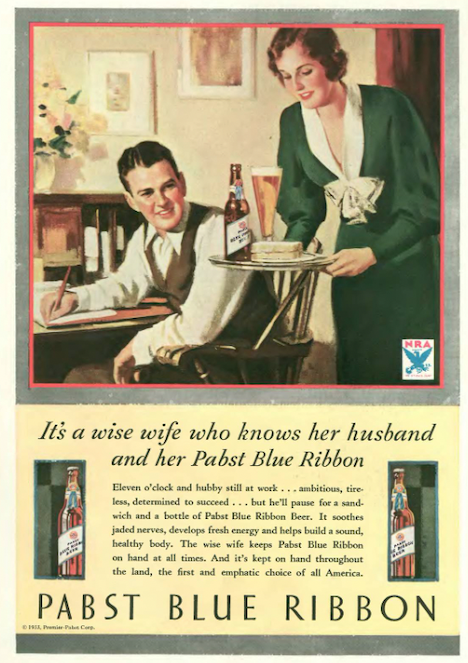
Okay, so I’ll buy the part about PBR’s ability to soothe “jaded nerves,” but I doubt it gave this guy “fresh energy” and “a sound, healthy body”…

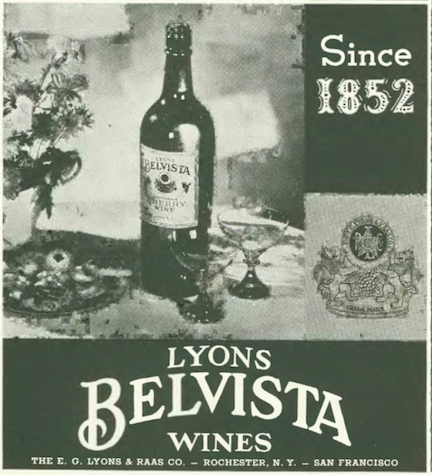
…After thirteen long years, winemakers emerged from their cellars to glimpse the light of a new day…

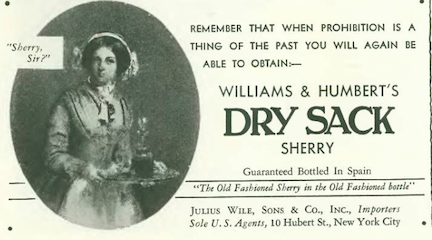
…and yes, after thirteen long years, some folks would be yearning for their DRY SACK Sherry…

…the name Elizabeth Hawes was synonymous with high fashion in the late 1920s and 1930s—she owned one of the most exclusive couture houses in New York…

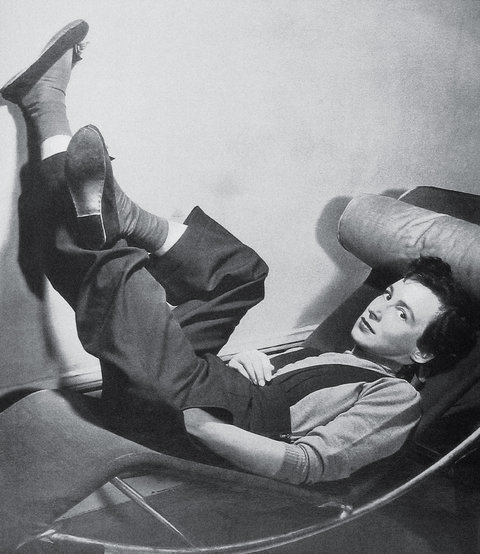
…an outspoken advocate of dress reform, Hawes (1903–1971) was referred to by one historian as “the Dorothy Parker of fashion criticism.” After attacking the fashion industry with her 1938 book, Fashion Is Spinach (Hawes wrote: “I don’t know when the word fashion came into being, but it was an evil day…”), she closed her fashion house and in 1942 took a job as a machine operator at a wartime plant in New Jersey. She became a union organizer, a champion of gender equality, and a critic of American consumerism.

IN A LEAGUE OF HER OWN…Elizabeth Hawes — writer, fashion designer and political activist, poses for a photograph in 1941. (Mary Morris Lawrence)

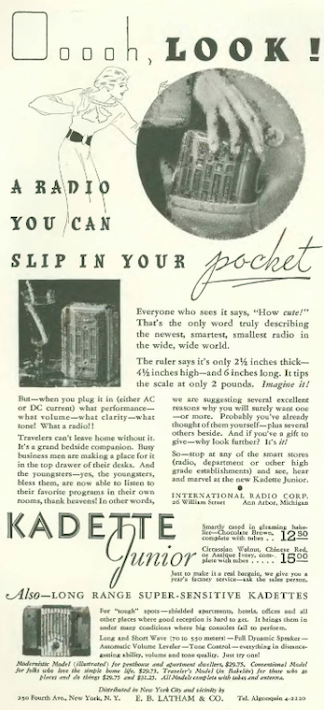
…speaking of consumerism, ooooh look! A radio “you can slip in your pocket,” depending of course on the size of your pocket…

…transistors would not come along until the late 1950s, so the Kadette still depended on tubes, and you had to plug it in somewhere, so no running down the beach with headphones, at least for awhile…

The Kadette Junior. (radiolaguy.com)

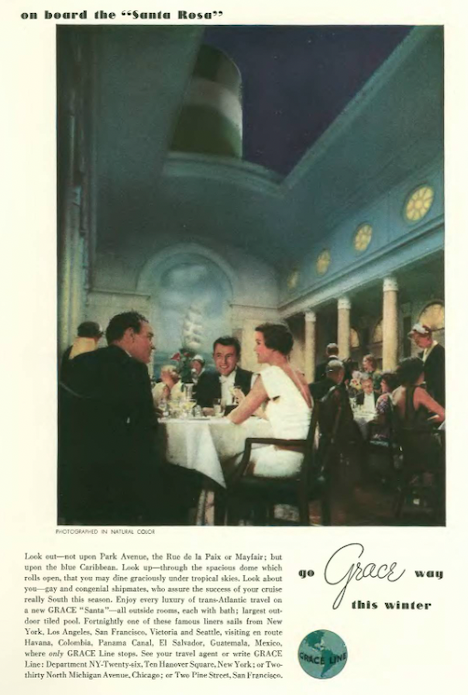
…it must have been a rare treat to sail on a ship like the SS Santa Rosa—situated between the ship’s two funnels, the dining room had an atrium stretching up two-and-a-half decks and featured a retractable roof…

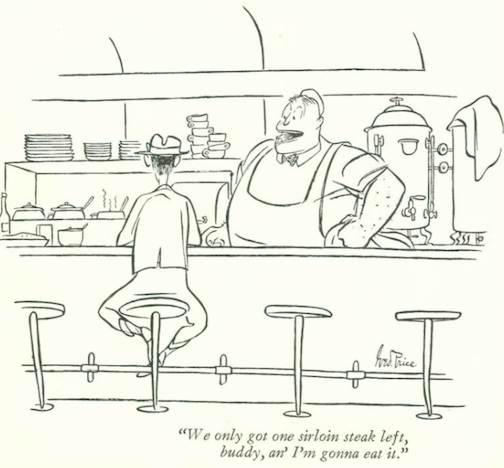
…on to more cartoons, and more George Price

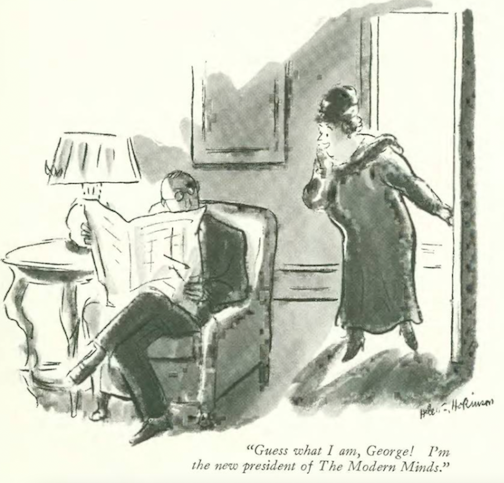
…moving along, we received some big news from one of Helen Hokinson’s “girls”…

…an aside I’ve been meaning to include…in 1952, just three years after Helen Hokinson’s untimely death, a cartoonist for The Cincinnati Enquirer, Franklin Folger, debuted a cartoon called “The Girls.” The cartoon was eventually syndicated and appeared in more than 150 newspapers worldwide before Folger retired it in 1977. Perhaps I am missing something, but I cannot find a single reference to Folger’s obvious appropriation of Hokinson’s “girls”…some examples of Folger’s work from the early 1960s and another from H.H. for comparison:

…and onward to Peter Arno, and the trials of portrait artists…

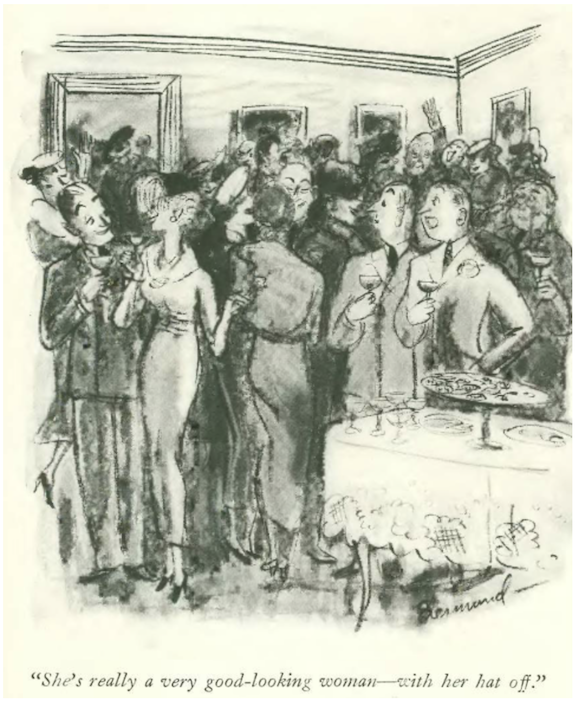
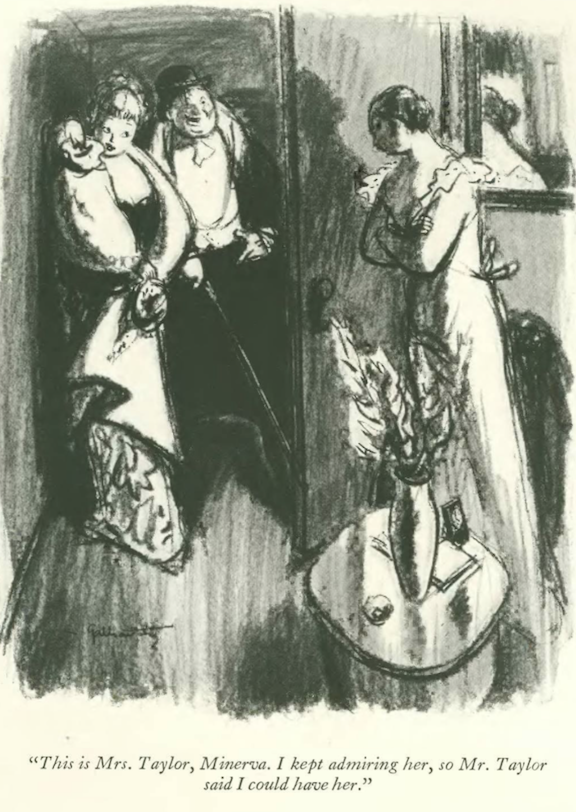
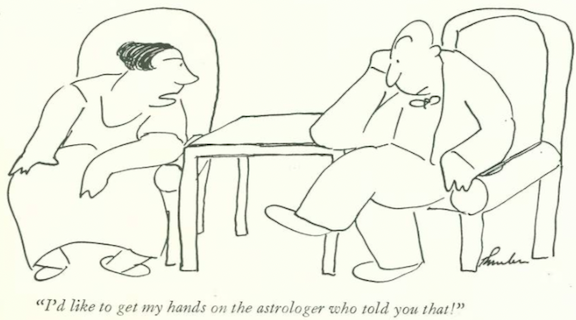
…and we close with two by Barbara Shermund

…rendered in different styles…

Next Time: Coach Arno…