The Art of Peace

In July of 1928, war was officially banned from the earth. Or so it was hoped when the Kellogg–Briand Pact became effective on July 24, 1929.

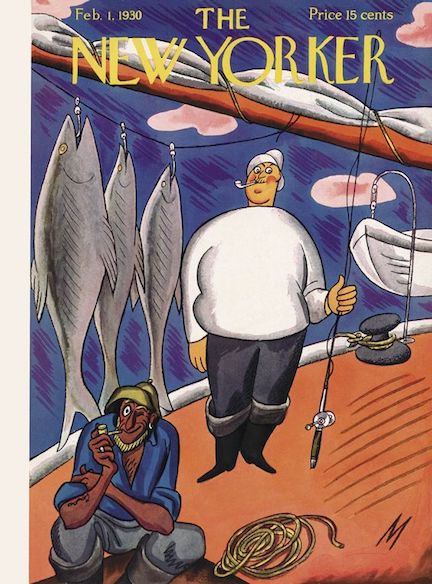
Aug. 3, 1929 cover by Gardner Rea.

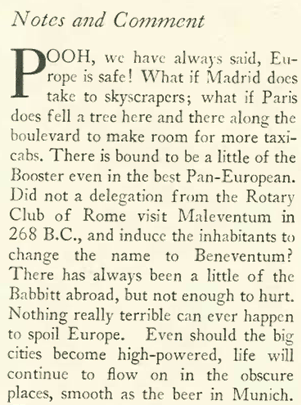
Also known as the “Pact of Paris” and more officially the “General Treaty for Renunciation of War as an Instrument of National Policy,” its authors, United States Secretary of State Frank B. Kellogg and French foreign minister Aristide Briand, gathered world powers in Paris on Aug. 28, 1928 to sign a treaty that denounced the use of war and called for the peaceful settlement of all future disputes. The New Yorker, in the opening “Notes and Comment” section of “The Talk of the Town,” took its usual “What, Me Worry?” approach to world affairs, finding the whole thing unnecessary given that (in its view) Europe was already a peaceful, even benign continent:

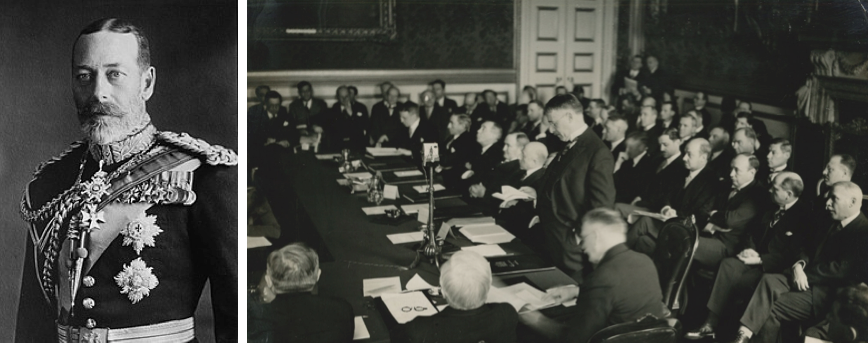
GIVE PEACE A CHANCE…French foreign minister Aristide Briand, Myron T. Herrick (U.S. ambassador to France), and U.S. Secretary of State Frank B. Kellogg meet in the French Foreign Office for the signing of the General Treaty for Renunciation of War as an Instrument of National Policy, August 1928; at right, Briand speaking to the assembly. (theinternationalistsbook.com//Wikipedia)

In January 1929 the U.S. Senate officially ratified the Kellogg–Briand Pact with a nearly unanimous vote, 85-1. John James Blaine, senator from Wisconsin, cast the lone dissenting vote (although four years later Blaine would author another piece of legislation that would have a much greater impact, at least at the time: the 21st Amendment, which ended Prohibition).

SURE, WHY NOT?…The U.S. Senate approved the Kellogg–Briand Pact on Jan. 15, 1929. The treaty went into effect later that year on July 24. (The New York Times)

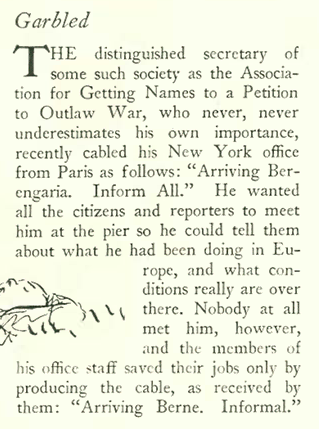
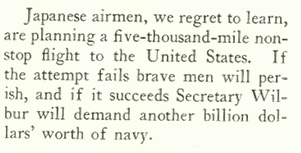
Another item in “The Talk of the Town” made further reference to the pact…

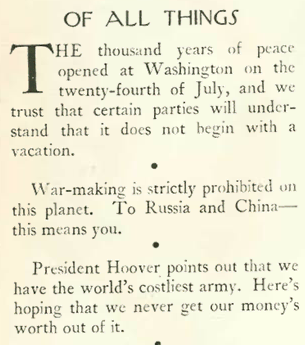
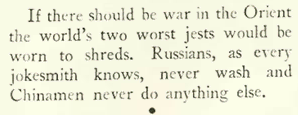
…and Howard Brubaker, in his column “Of All Things,” made special mention of the Sino-Soviet border conflict in referencing the pact:

Brubaker mockingly suggested that the pact marked the beginning of a thousand years of peace, an inadvertently prescient remark considering that in less than four years Hitler would seize power in Germany and announce the beginning of his “Thousand Year Reich” — which we know was quite the opposite of peace. Brubaker was also off the mark with this crude observation:

Just two years after Brubaker wrote those words, Japan would invade Manchuria. And only a decade would pass before Germany and Russia would invade Poland and ignite the biggest war of all time.

PARTY POOPERS…The New Yorker wasn’t alone in poking fun at the Kellogg–Briand Pact. At left, the pact is mocked during the Paris Carnaval in 1929; at right, British cartoonist Sidney Conrad Strube reminded readers of the outcome of America’s earlier efforts at world peace. (Wikipedia/Pinterest) click to enlarge.
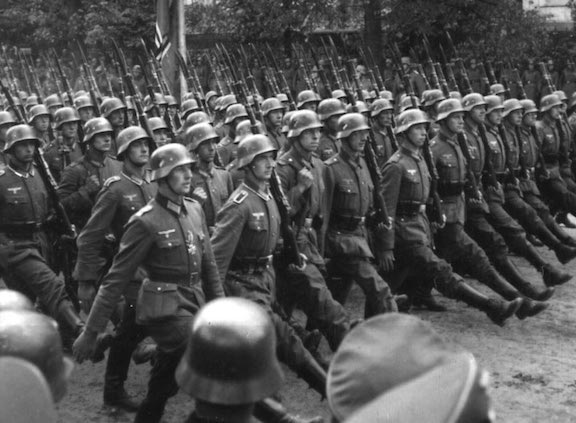
WE JUST CAME TO SAY HELLO…Germany, the first signatory to the Kellogg-Briand Pact banning all war, invaded Poland just ten years after that treaty went into effect. Above, German troops parade through Warsaw after the invasion, September 28-30, 1939. (National Archives and Records Administration)

Although the pact was ridiculed for its perceived naïveté, and for the fact that it did not prevent the largest war in human history, some modern scholars see otherwise. Political scientists Oona A. Hathaway and Scott J. Shapiro observed (in 2017) that the pact “catalyzed the human rights revolution, enabled the use of economic sanctions as a tool of law enforcement, and ignited the explosion in the number of international organizations that regulate so many aspects of our daily lives.” In his recent book Enlightenment Now, Steven Pinker notes “virtually every acre of land that was conquered after 1928 has been returned to the state that lost it. Frank Kellogg and Aristide Briand may deserve the last laugh.”

*  *  *

Gallows Humor

Other items in “The Talk of Town” included this brief anecdote, which I doubt many would find humorous today:

 *  *  *

On The Bowery

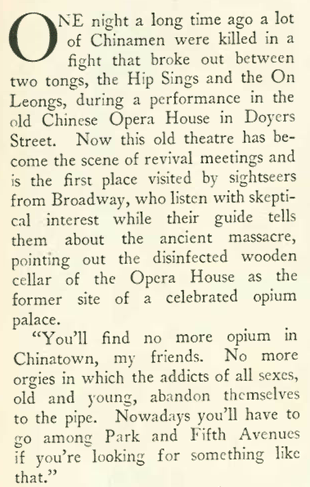
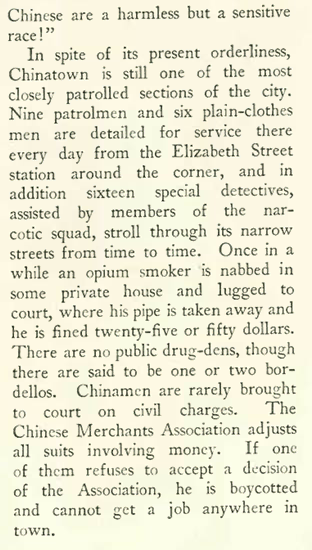
In the “Reporter at Large” column, Niven Busch Jr. paid a visit to “The Yellow Bowery,” as the piece was titled. Notable in this article (and in Brubaker’s quip above) is the use of term “Chinaman,” a term considered offensive today but in the 1920s was used indiscriminately for East Asians. Here it seems pejorative:

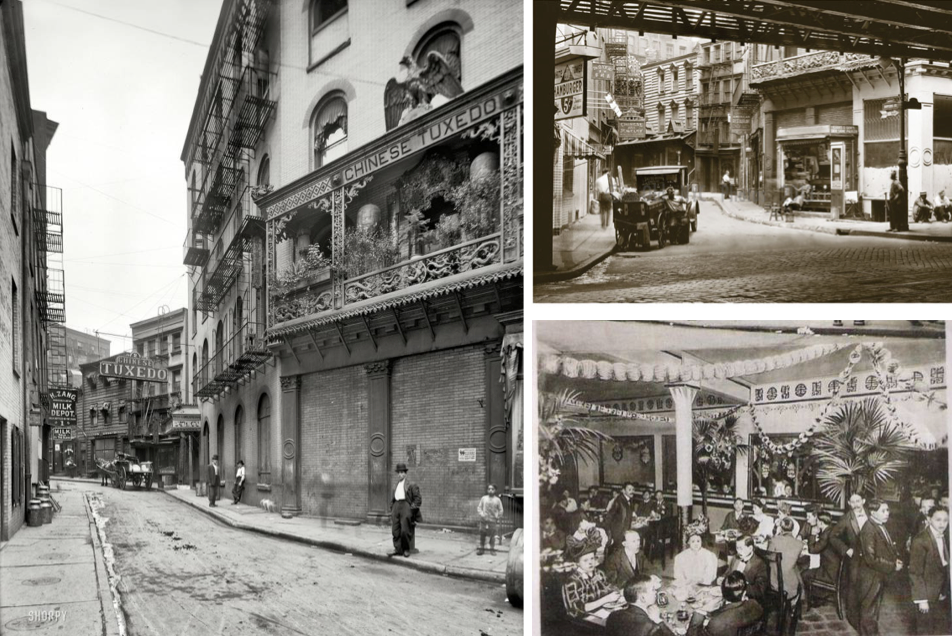
THE BLOODY ANGLE…Clockwise, from top, this bend in Chinatown’s Doyer Street was known as “The Bloody Angle” due to the numerous killings among the Tong gangs that lasted into the 1930s. Hatchets were a popular weapon of choice, leading to the creation of the expression, “hatchet man”; another perspective of Doyer Street from 1932; the street was also the site of the first Chinese language theater in New York City. (boweryboyshistory.com/Museum of the City of New York/Wikipedia)

Busch’s piece was rife with stereotypes…

…and referenced the unsolved Bowery murder of 19-year-old Elsie Sigel, a missionary in Chinatown who was found in a trunk, strangled, in 1909…

THE OTHER SIDE OF THE TRACKS…2 Doyer Street was the address of the Chinese Tuxedo Restaurant. It attracted non-Chinese patrons, particularly those who considered themselves ‘Bohemians’ as well as businessmen looking for an ‘exotic’ night on the town. And it helped that the Tuxedo was near the elevated train. (Courtesy Flickr/straatis/thelodownny.com)

*  *  *

It Grows on You

The rapid demolition of old New York was a recurring theme in The New Yorker of the 1920s, the magazine often wavering between nostalgia and the thrill of the new. No place was perhaps more sacred than the stately row houses of Washington Square. When news circulated that a section consisting of the old Rhinelander mansion would soon fall (for the sake of a new apartment building), “Talk” tried its best to process the change:

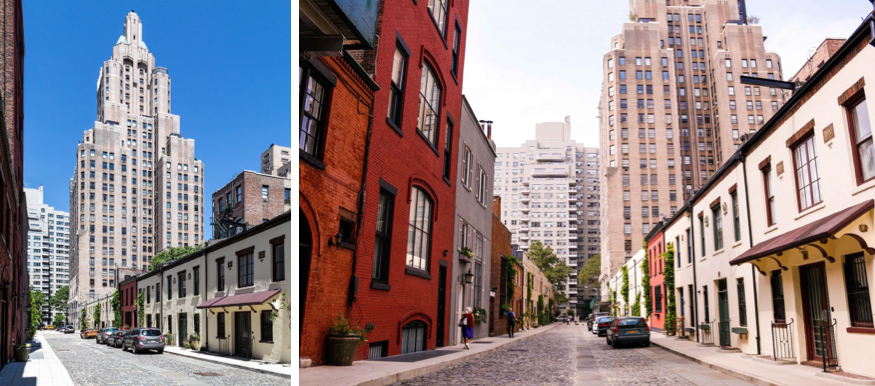
IT LOOMS, BUT WE GOT USED TO IT…The New Yorker once resented the intrusion of the One Fifth Avenue building (built in 1927), looming above the cobbles of the early 19th century Washington Mews. (newyorkitecture.com/Viola Mai, Washington Square News)
MIND THE GAP…Clockwise, from top, just east of this row of houses stood the mansion of William Rhinelander; although The New Yorker noted that its demolition was imminent in 1929, the mansion stood until 1951, when it was demolished and replaced by the 20-story 2 Fifth Avenue; next to the gap between the old row houses and the apartment stands the Roger Shattuck House, No. 19 Washington Square North. The Shattuck House was the scene of one of most sensational robberies in the city’s history—in 1922. (nyc-architecture.com/Google Maps)

 *  *  *

Old Boy

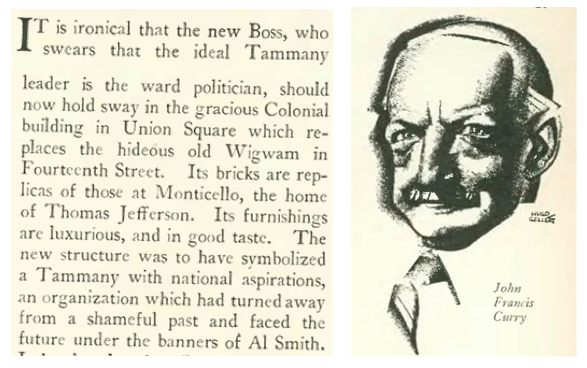
In one of my recent posts (Not Your Grandpa’s Tammany Hall) I noted a “Talk” item that described the new Tammany headquarters. In the August 3 issue the magazine introduced the patriotic society’s new leader, John Francis Curry, in a profile written by Henry F. Pringle. In the piece, titled “Local Boy Makes Good,” Pringle suggested that Curry’s old-fashioned approach to politics stood in contrast to the new image Tammany Hall was attempting to project:

Curry’s tenure would end abruptly in 1934 — the first Tammany boss to be booted out by his own followers. Curry made some bad decisions during a time when the political winds were shifting away from machine politics. It was under his leadership that Tammany backed Al Smith over the reform-minded Franklin Roosevelt for the 1932 Democratic presidential nomination. That same year, Tammany-backed New York Mayor Jimmy Walker would be forced from office amid scandal.

*  *  *

Well, She Didn’t Write the Script

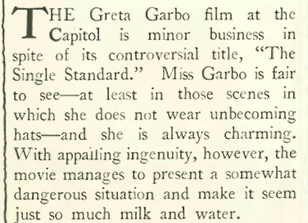
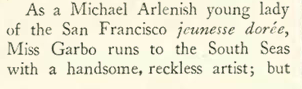
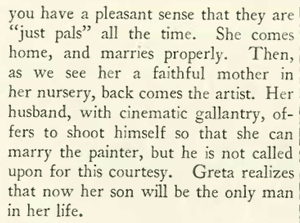
We all know Greta Garbo as one of the greatest film stars of classic Hollywood. Her mysterious aura and subtlety of expression are still lauded by film critics today. The New Yorker, however, never seemed particularly enamored of the star’s performances. Here is a review of her 1929 silent film, The Single Standard:

THE KID STAYS IN THE PICTURE…Little Wally Albright played Greta Garbo’s son in The Single Standard. We just saw four-year-old Wally in my last post, in which he also appeared as Peggy Wood’s son in Wonder of Women. Apparently when a director needed a cute, curly head kid, they went for Wally—he appeared in seven films in 1929 alone. (Rotten Tomatoes)

*  *  *

From Our Advertisers

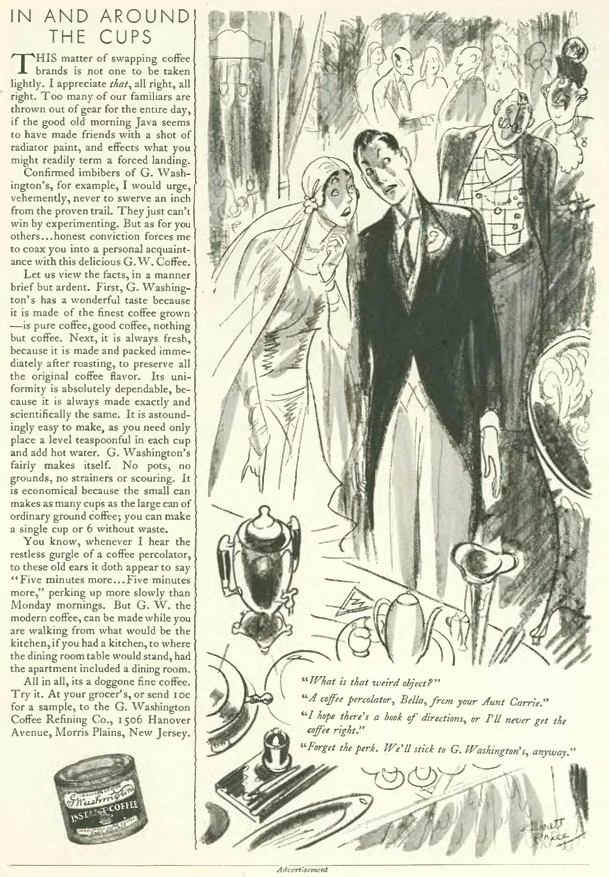
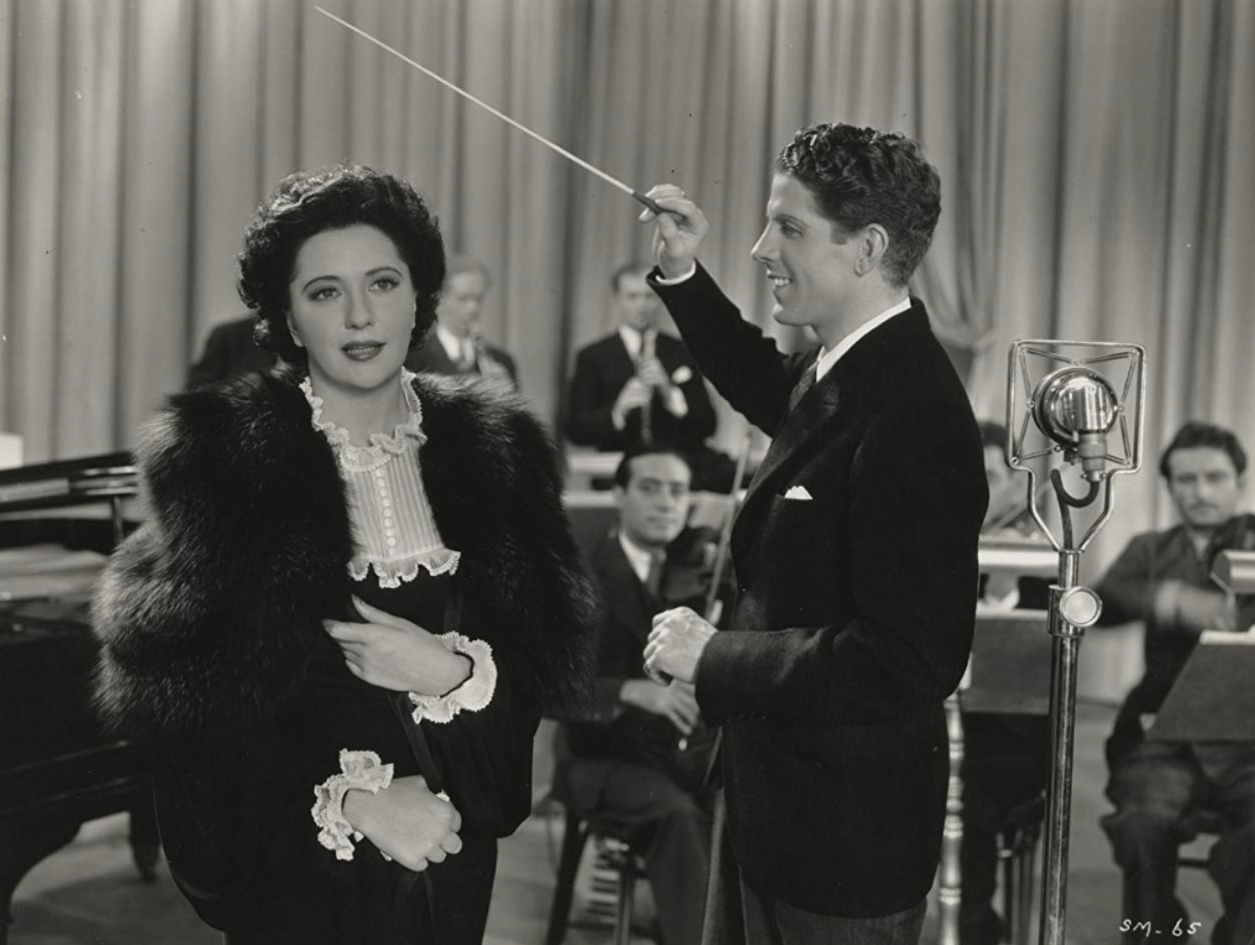
Our first advertisement (image at right) is from the back pages of the Aug. 3 issue. It announced the opening of Long Island’s Atlantic Beach Club, which featured the entertainment of Rudy Vallée and his orchestra…

CAN YOU HEAR ME NOW? Images, top to bottom, aerial view of The Atlantic Beach Club; Rudy Vallée performing with emblematic megaphone, 1929; postcard image of the Nautilus Hotel on the Boardwalk of Atlantic Beach, Long Island. (longbeachlibrary.org/YouTube)

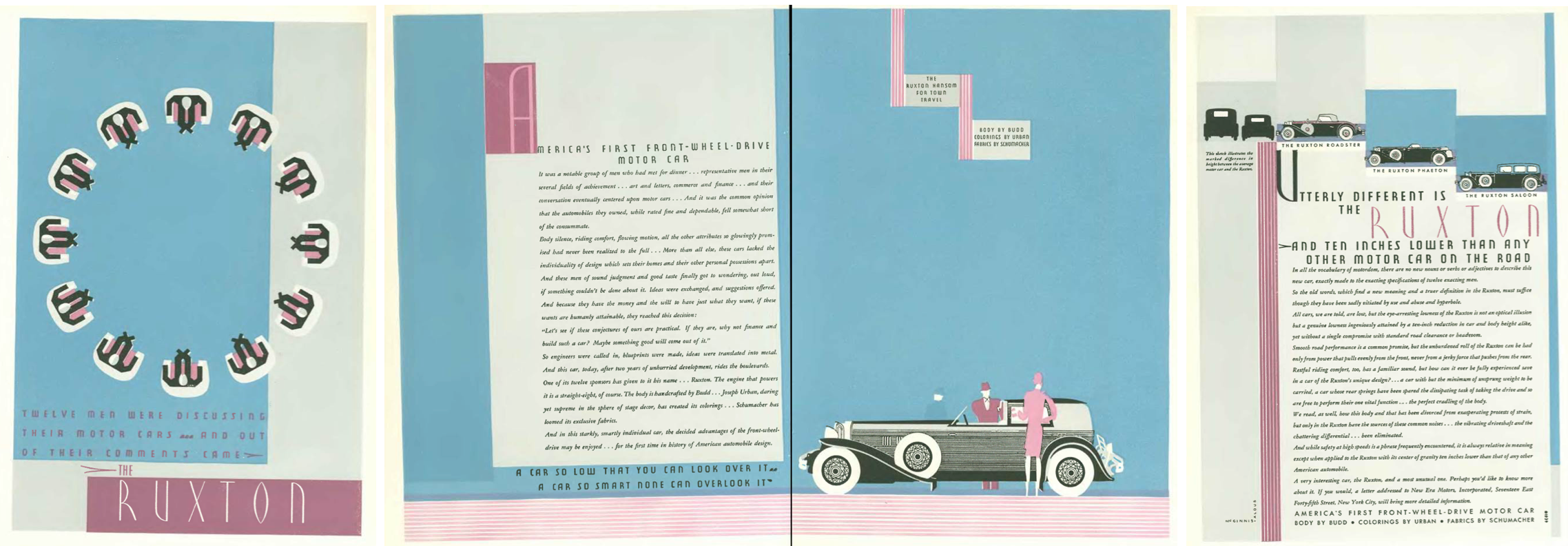
…a brand-new car—The Ruxton— was introduced to New Yorker readers in this color advertisement that spanned four pages (click image to enlarge)…

…produced in 1929-30 by the New Era Motors company of New York, the car was marketed for its innovative front-wheel drive and its distinctive low profile (a feat accomplished by eliminating the drive shaft to the rear wheels). While most cars in the late 1920s had an average height of 6 feet (1.8 meters); the Ruxton was less than 4 and half feet (1.3 meters) high. Producers of the car hoped to sell the rights of the Ruxton to an established car manufacturer. Moon Motors of St. Louis built just 96 of the cars during regular production (from June to October, 1930) before the whole deal fell apart…

SHORT RUN…Clockwise, from top left, Ruxton logo affixed to grille; dancer Rita La Roy poses with her Ruxton, 1930; some models sported Joseph Urban color schemes designed to lengthen the appearance of the car. (allcarcentral.com/Pinterest/hemmings.com)

…if you were one of the fortunate few to own a Ruxton, you might take it for a spin on the Lincoln Highway…or maybe not. Despite the appearance of this ad, a fully paved, transcontinental highway was still an incomplete dream in 1929. Although sections of the road were quite smooth from New York to Omaha, further west things could get a bit bumpy, especially on the unpaved stretches. However, as the ad claims, what really made the road viable was the availability of regularly spaced gas stations along the way…

…I liked this ad for its sheer complexity…

…and then we have this ad from Saks, which somehow conflated new shoes with an intimate encounter with Aphrodite.,,

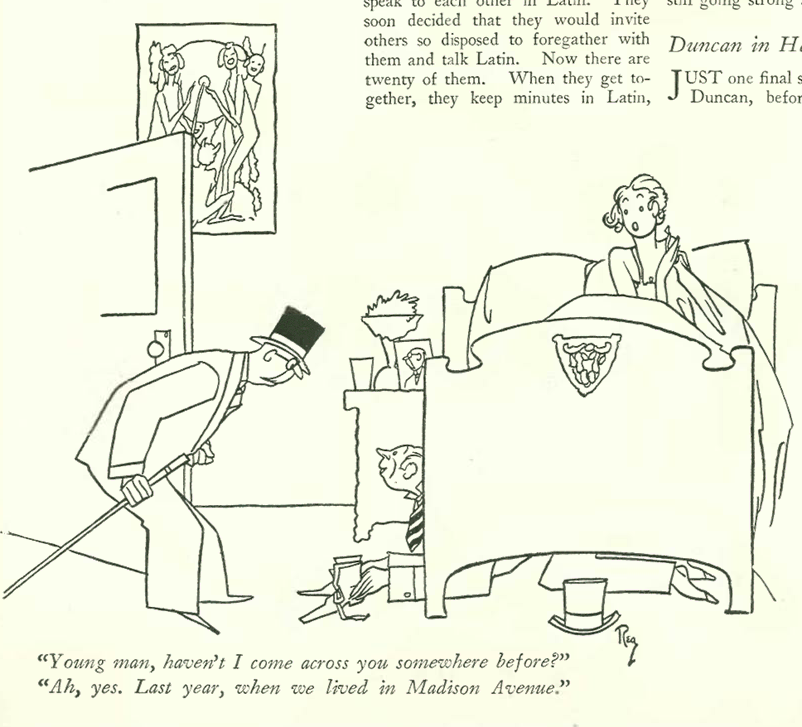
…on to our cartoonists, we have Helen Hokinson’s observations at “Old Narragansett…

…while out to sea, Alan Dunn found humor in a sensitive swabbie…

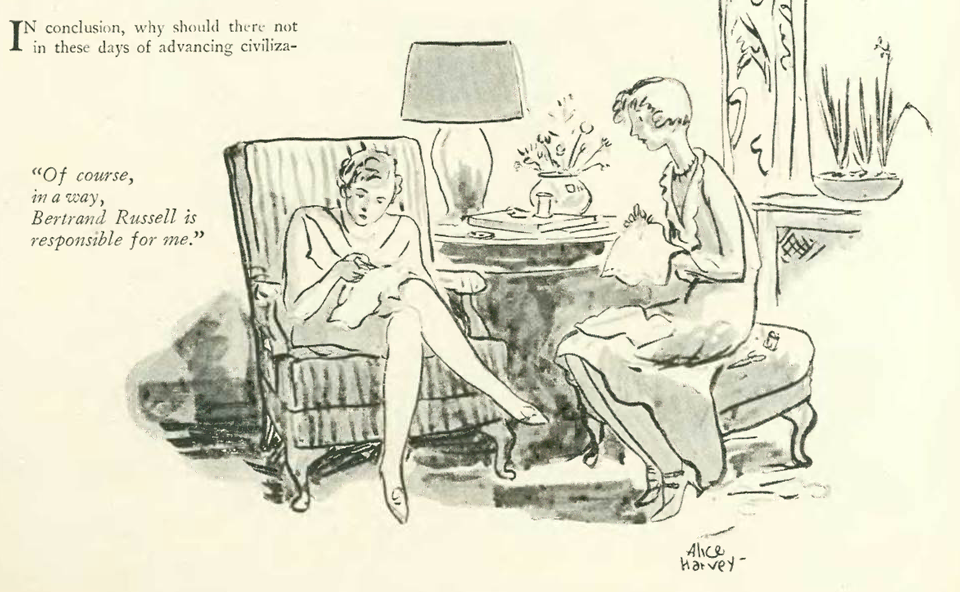
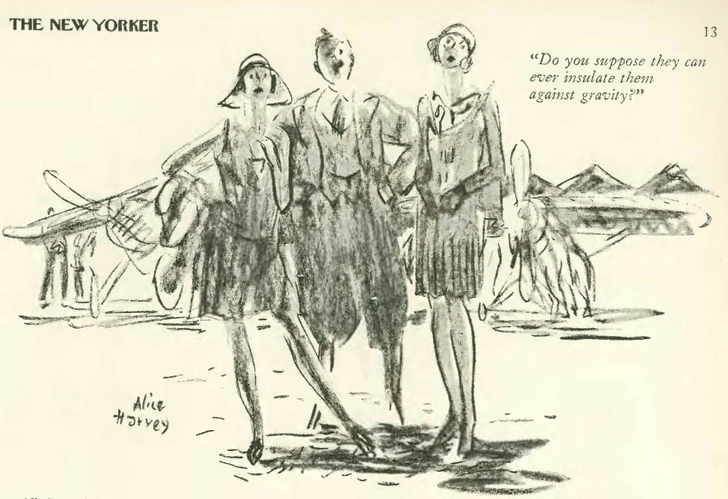
Alice Harvey observed those still skeptical of human flight…

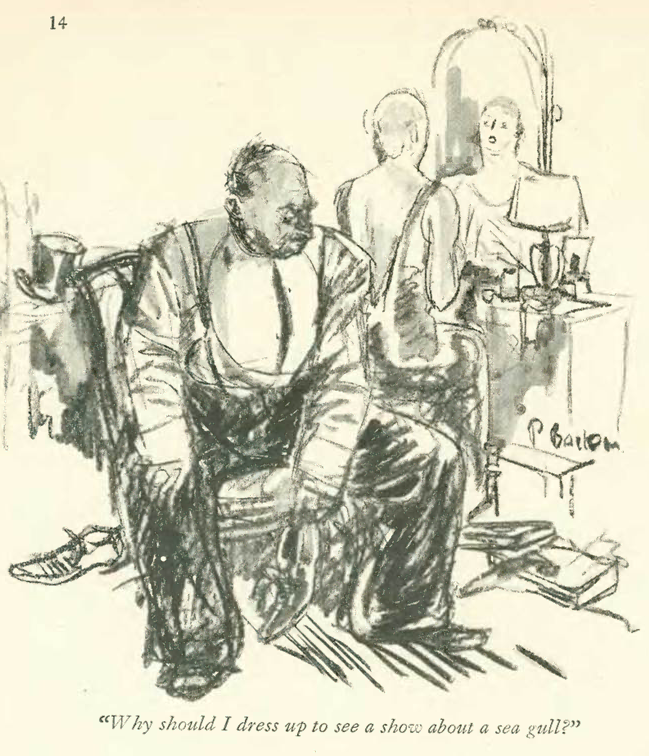
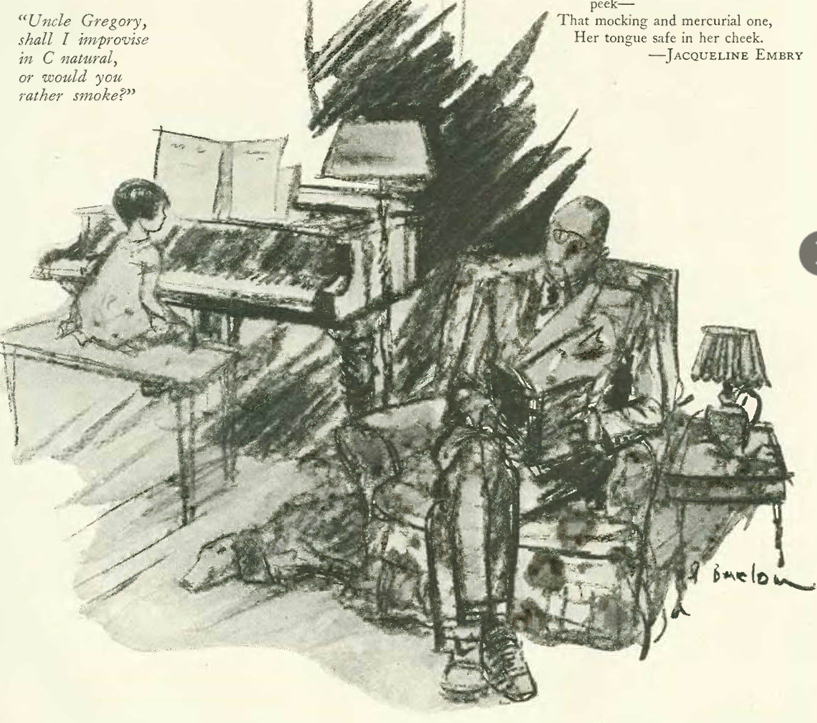
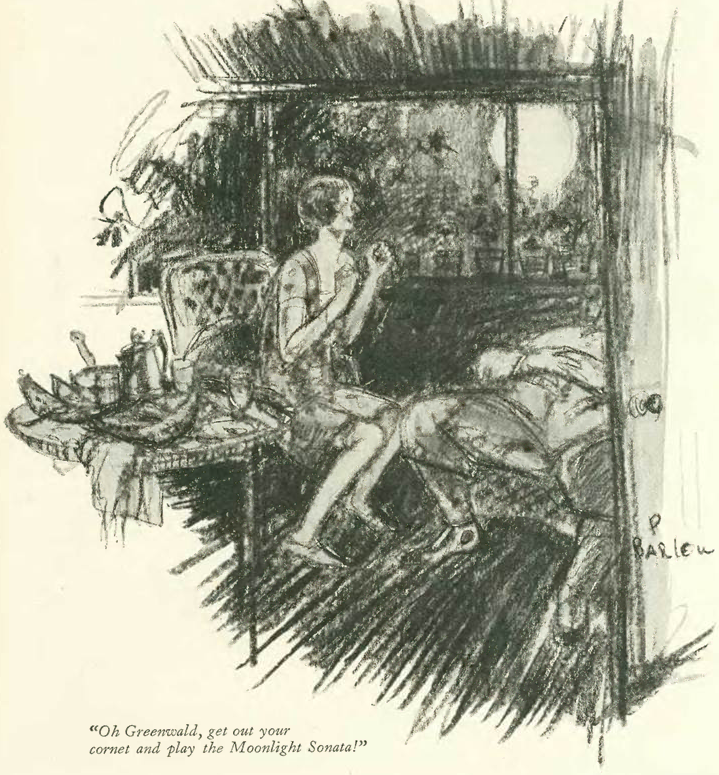
Perry Barlow peeked in on a moonstruck woman…

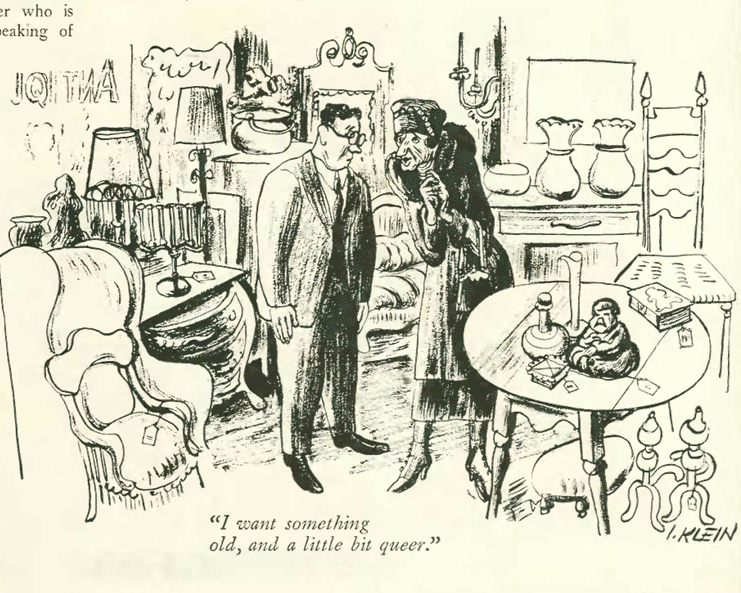
…and finally, Isadore Klein visited an antique shop…

Next Time: The Last Summer…


Ride of the Century

Train travel in the U.S. was at the height of its glory in the late 1920s—you could hop on train in New York City and travel to virtually anywhere in the country, even to some of the remotest towns in America’s vast hinterlands.

July 27, 1929 cover by Theodore G. Haupt.

The New Yorker’s managing editor, Ralph Ingersoll (1900-1985) writing in “The Talk of Town,” climbed aboard the locomotives of outbound 20th Century and an inbound Empire State trains to survey the latest technology in rail travel. What one gleans from reading this account is how much this mode of travel has declined (in the U.S.) over the past 90 years:

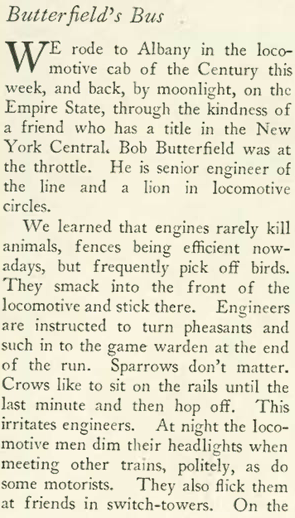
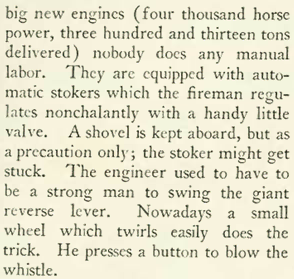
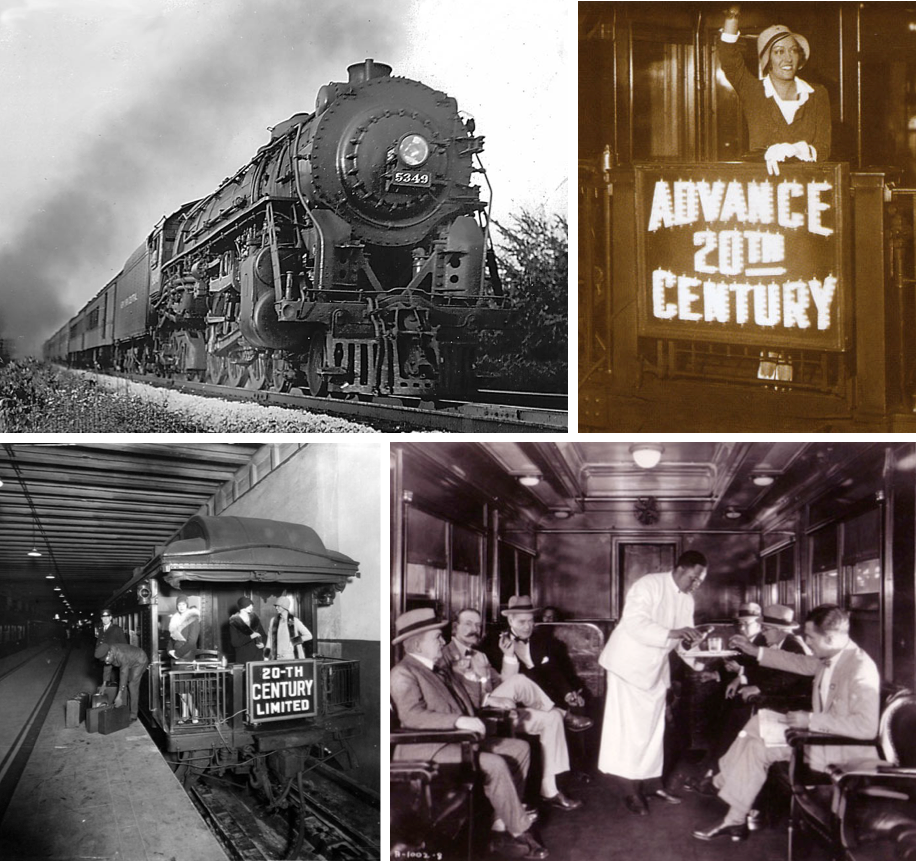
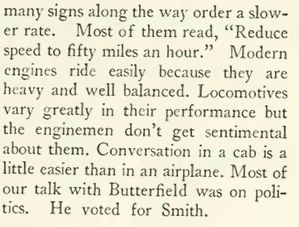
ROMANCE OF THE RAILS…Clockwise, from top left: Hudson locomotives served the Century and Empire State express trains; silent film star Gloria Swanson waves farewell from the observation platform as the 20th Century Limited pulls out of Grand Central during the 1920s; lounge car on the 20th Century during the 1920s; the 20th Century ready to depart Grand Central, circa 1930. (steamlocomotive.com/newyorksocialdiary.com/cruiselinehistory.com)

In terms of speed and safety, it seems little has changed since 1929, and perhaps things have actually gotten worse…

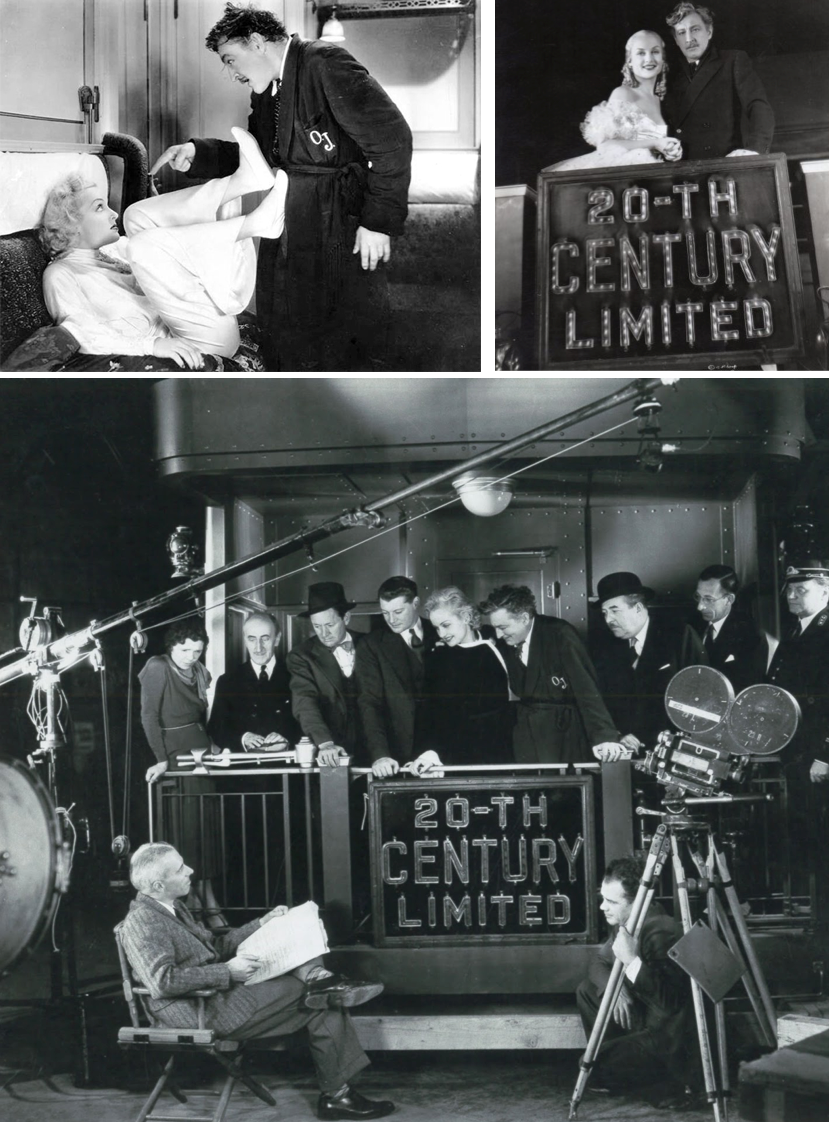
CELEBRATED LINE…The 20th Century was widely celebrated in popular culture through the 1950s. Five years after Ingersoll’s article, Howard Hawks directed the screwball comedy, 20th Century. Clockwise, from top left, the film’s stars, Carole Lombard and John Barrymore in a scene from the film; the stars pose for a publicity shot; with director Hawks along with some of the cast and crew. (austinfilm.org/greenbriarpictureshows.blogspot.com)

* * *

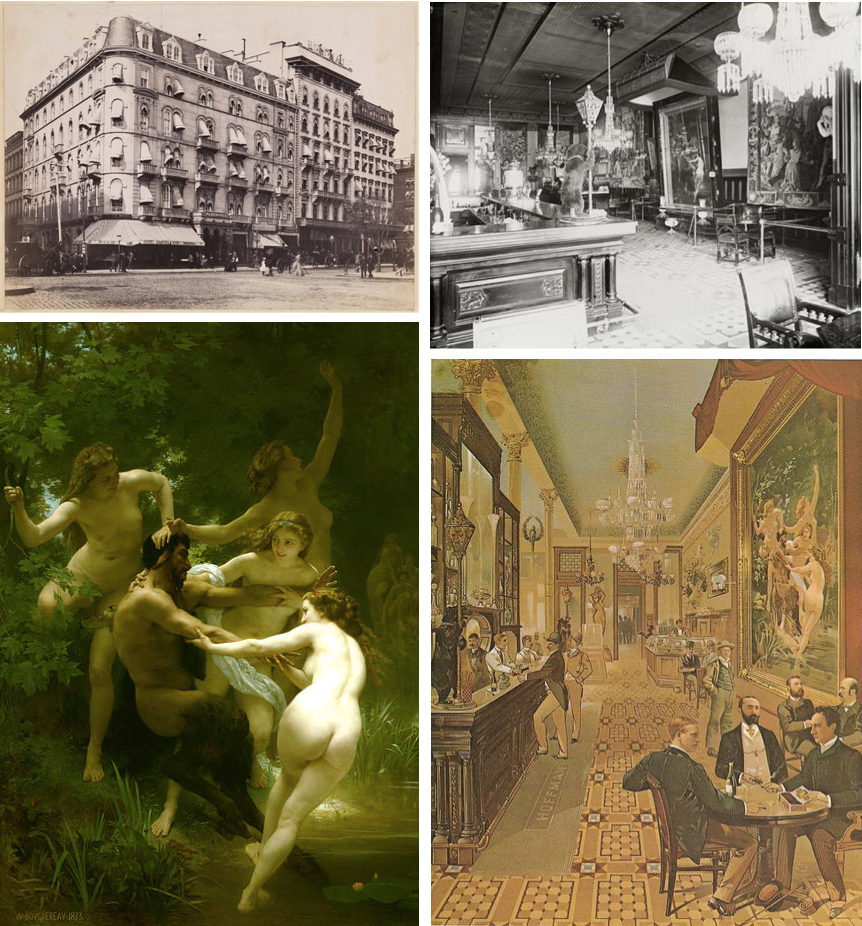
From 1928 until his death in 1950, the journalist Alva Johnston (1888-1950) wrote on a diverse range of topics for The New Yorker, including this “Reporter at Large” piece on the proliferation of barrooms in private residences, hidden from the prying eyes of Prohibition agents and sometimes furnished with the bits and pieces that once graced some of New York’s finest watering holes, including the famed Hoffman House:

POPULAR WATERING HOLE…Clockwise, from top left: The Hoffman House Hotel at Madison Square in 1885; the Hoffman House bar, which prominently displayed William-Adolphe Bouguereau’s painting Nymphs and Satyr. According to Alva Johnston’s article, the painting was the second-most popular decorative motif in New York’s finer drinking establishments; artist’s rendering of the barroom; and Bouguereau’s Nymphs and Satyr. (Museum of the City of New York/Wikipedia)

Johnston noted the clever tricks homeowners used to conceal their secret bars:

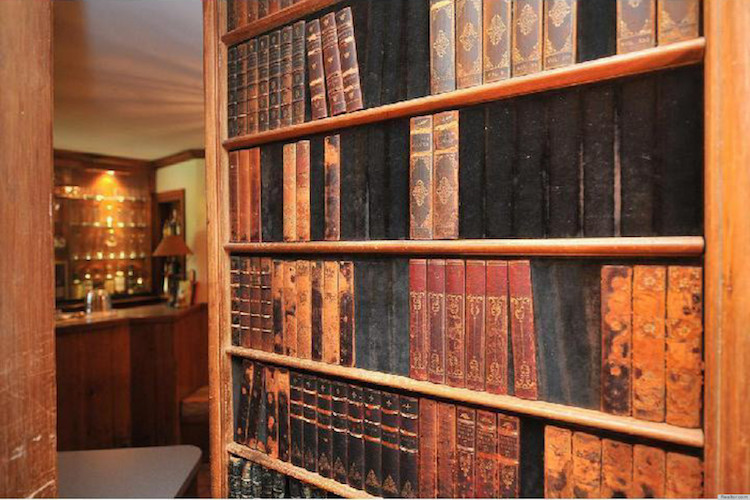
DON’T JUDGE A BOOK BY ITS COVER…Alva Johnston described how one library’s walls “had literature on one side, gin and rye on the other.” (Huffington Post)

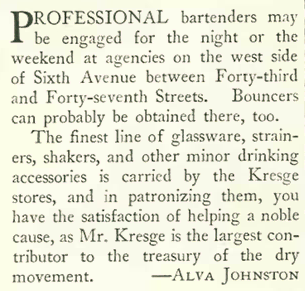
Johnston concluded his piece on an ironic note, pointing out that the finest cocktail sets could be obtained at Kresge department stores, which were owned by one of the biggest supporters of Prohibition, S.S. Kresge:

 *  *  *

The Sound of Peggy Wood

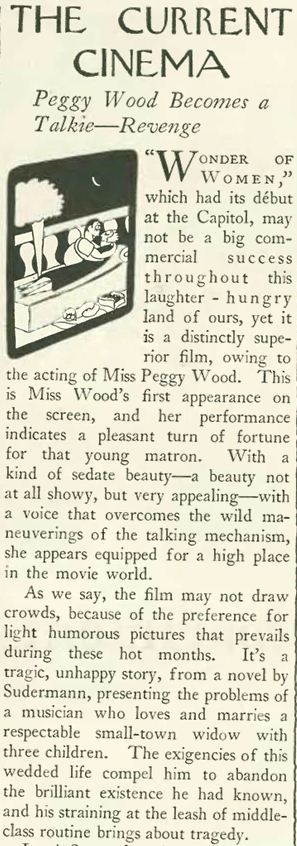
The Brooklyn-born Peggy Wood (1892-1978) made her stage debut in 1910 and was an established Broadway star before she made her first talking picture, Wonder of Women (a film believed to be lost). A member of the Algonquin Round Table, she was well acquainted with the New Yorker crowd. And the magazine in turn was very impressed with her acting talents, even if the picture she was in proved a bit of a downer:

RECOGNIZE HER NOW?…Clockwise, from top left: theatre card for the 1929 film, Wonder of Women; Leila Hyams and Lewis Stone in a tender moment from the film (Stone was romantically paired with much younger women in several films around that time); Peggy Wood in the 1920s; Wood as Mother Abbess in 1965’s The Sound of Music; Stone and Wood in a scene from Wonder of Women, with four-year-old child actor Wally Albright. With his waifish demeanor and curly hair, Albright was highly sought after in films needing a cute kid. He appeared in seven films in 1929 alone. In the 1930s he would appear in several Our Gang/Little Rascal shorts, and would pop up in bit roles through the 1940s and early 50s. Unlike so many other child stars, he seems to have led a normal adult life. He won the Men’s National Track and Ski Championship in 1957, and later started a successful trucking firm. (IMDB/Pinterest)

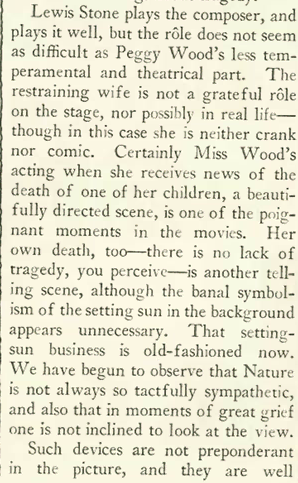
…the review continued, suggesting that Wood’s acting alone carried the picture…

…if you weren’t into weepers like Wonder of Women, you could have instead checked out The Mysterious Dr. Fu Manchu at the Rialto Theatre…

LIKE A SIDESHOW ACT…New York’s Rialto Theatre donned a masked front and door entry wrappers for the premiere of The Mysterious Dr. Fu Manchu; promotional poster; Jean Arthur and Warner Oland in the film. Oland was not the least bit Asian. A Swedish-American actor, his work in the hit film led to three more Fu Manchu movies. Oland would then go on to play another Asian character, Charlie Chan, in a string of popular movies in the 1930s until his death in 1938. (cinematreasures.org)

 * * *

Just Sad

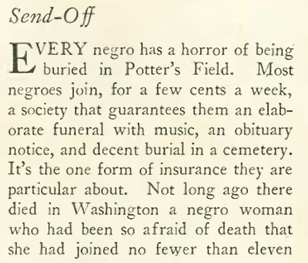
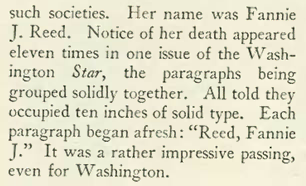
Yet another note in “Talk of the Town” describing the plight of African Americans in segregated America, without a hint of empathy:

Potters Field on Hart Island, New York, circa 1890. (Wikipedia)

 *  *  *

From Our Advertisers

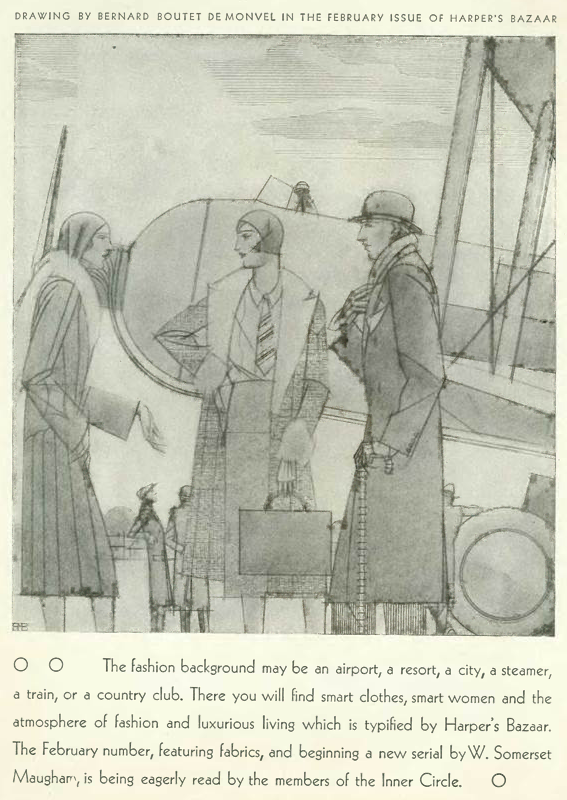
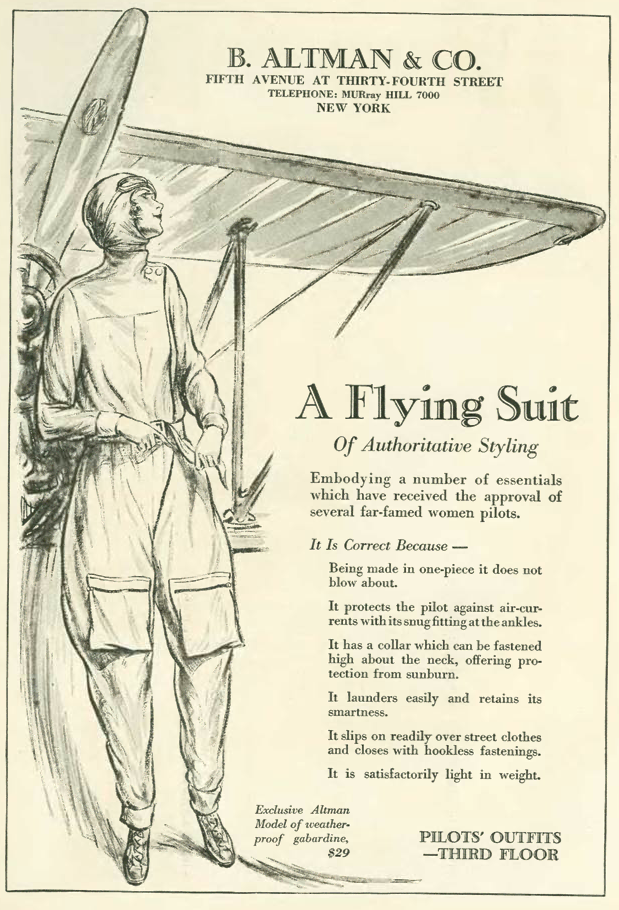
Last week B. Altman offered rugged coats for those brave souls riding in rumble seats. This week Altman rolled out some stylish wear for the enterprising pilot of 1929…

…and while you were up there, you could calm those nerves with a Chesterfield (a two-page ad that appeared regularly in The New Yorker)…

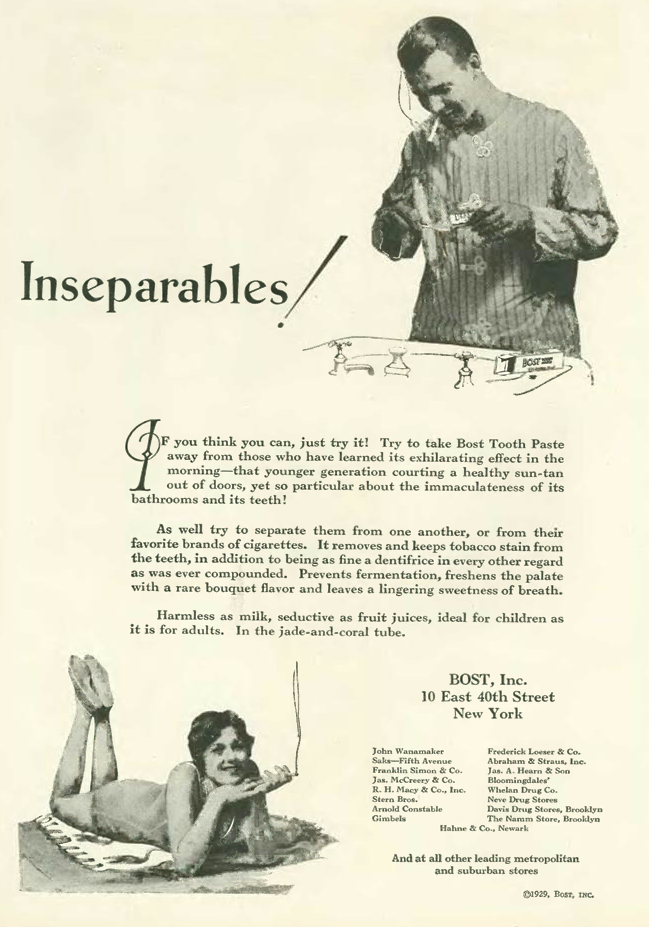
,,,back on the ground, the makers of Most toothpaste reminded readers to brush those tobacco stains off their teeth, apparently even while they’re smoking…

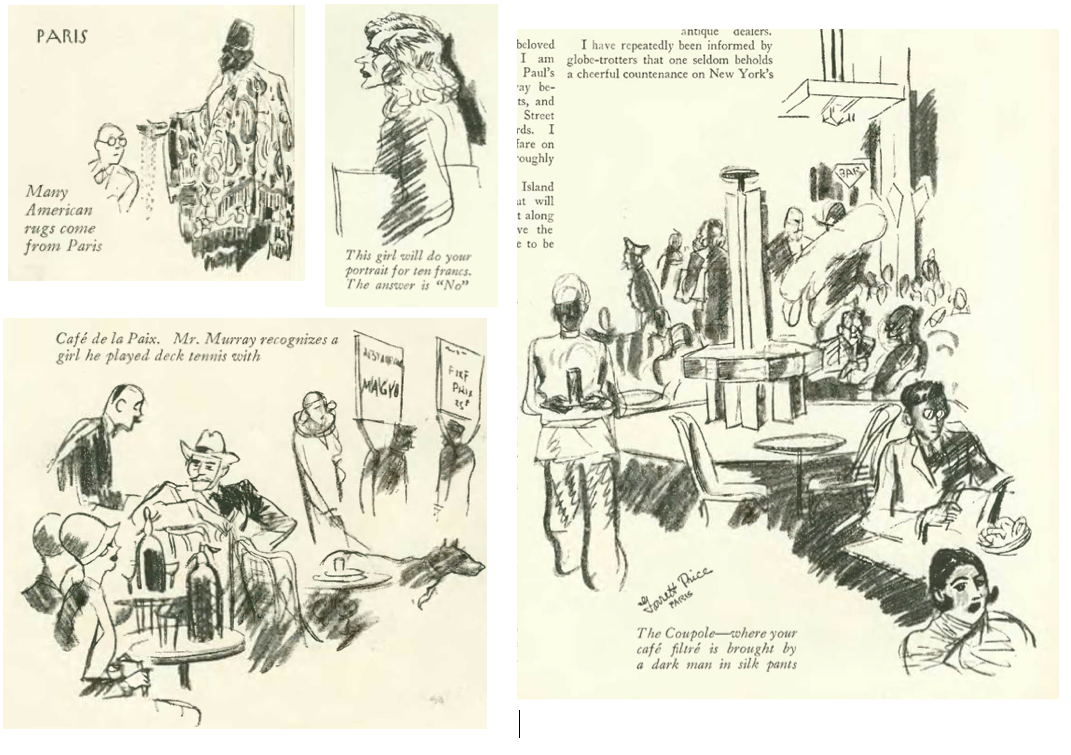
…here is another sampling of drawings by Garrett Price, rendered after a recent trip to Paris…

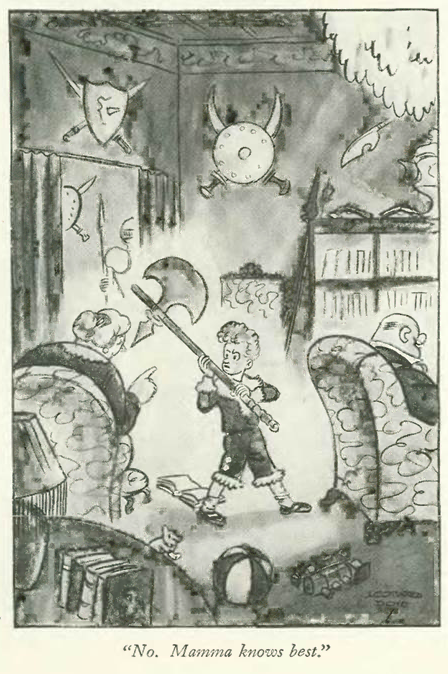
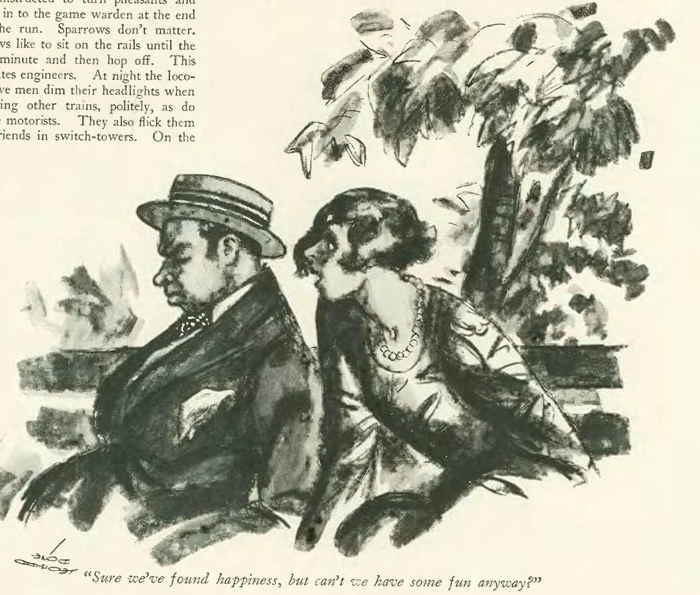
…our cartoons come from Leonard Dove (note the backward signature)…

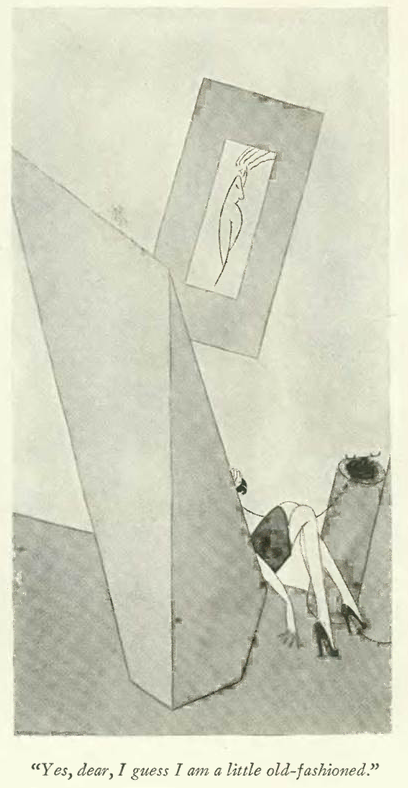
…here we have A. Edwin Macon’s take on modern furniture…

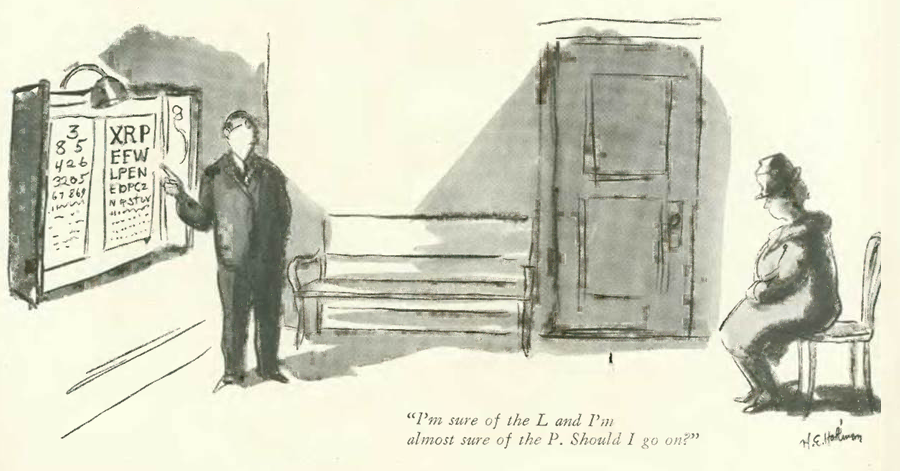
Helen Hokinson looked in on a visit to an eye doctor…

Perry Barlow’s take on the wonders of radio…

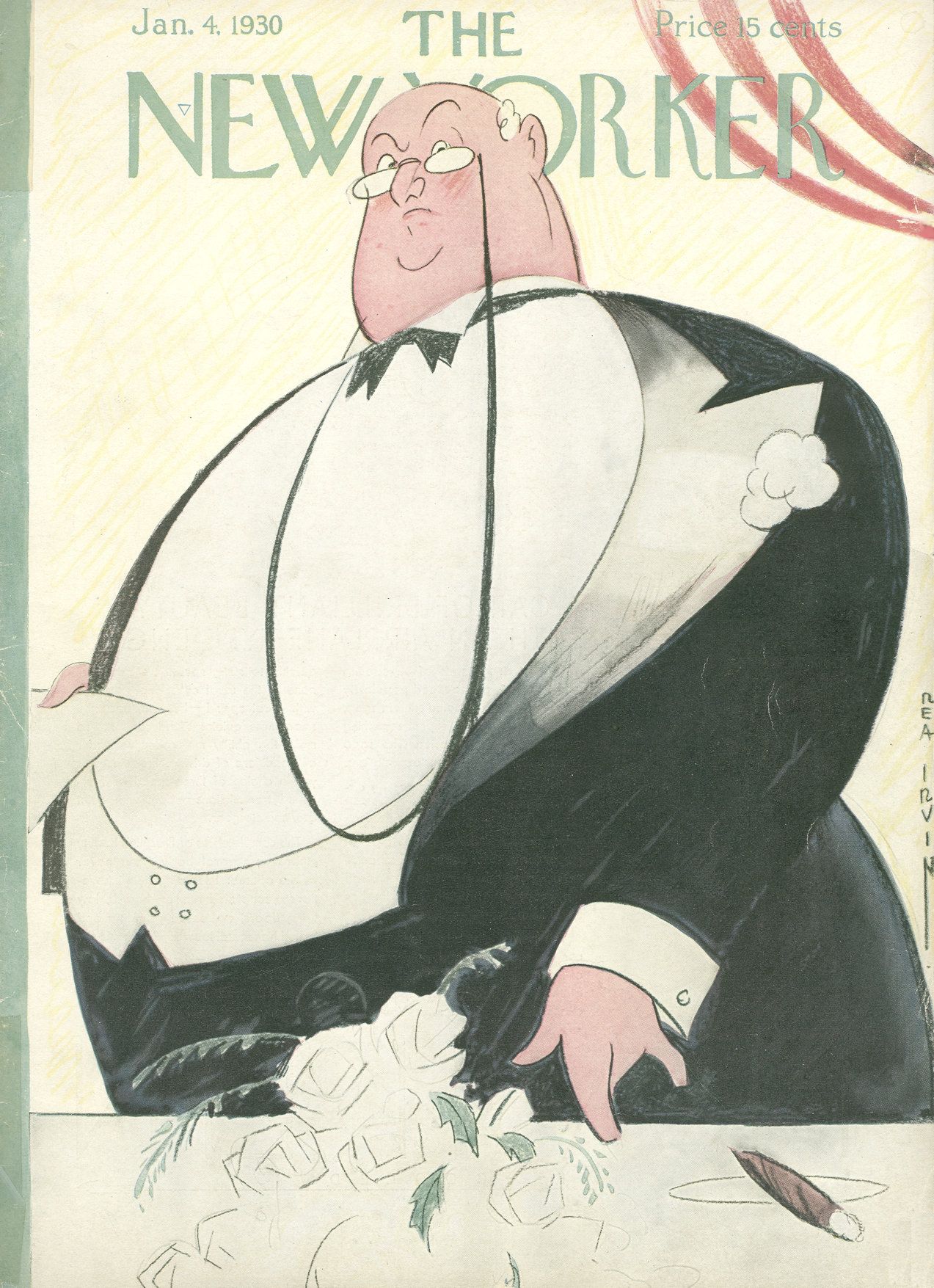
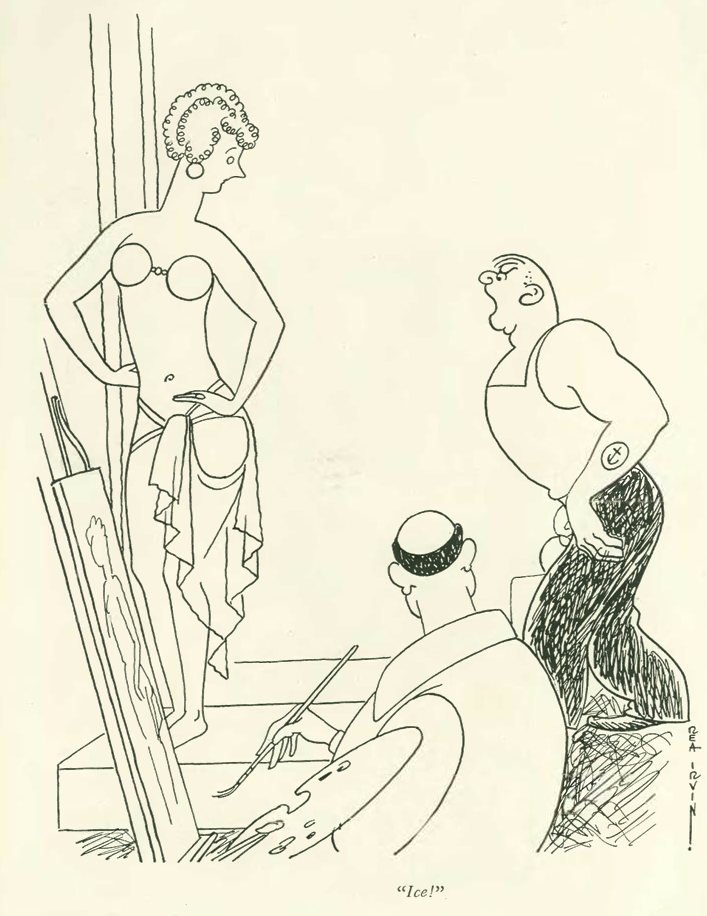
Rea Irvin depicted how timing is everything in an ice delivery…

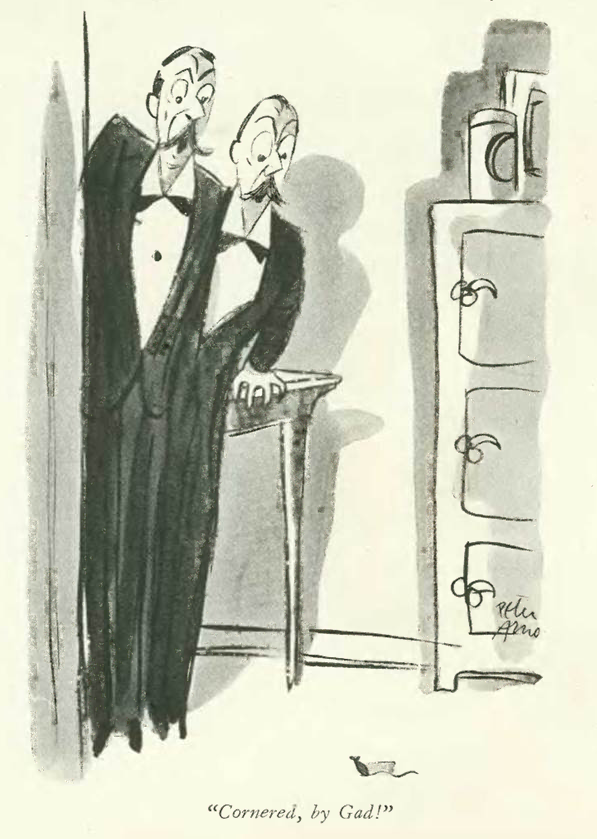
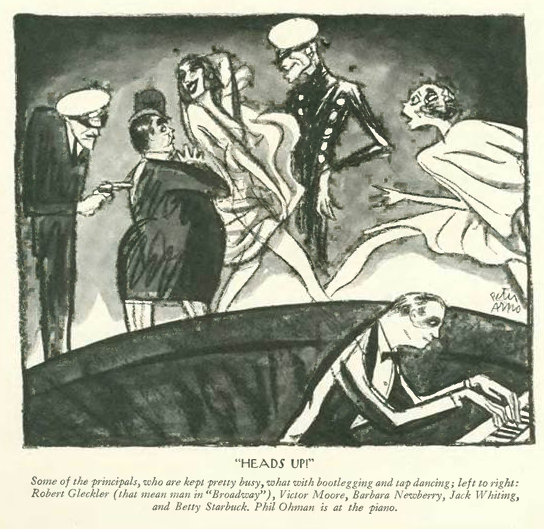
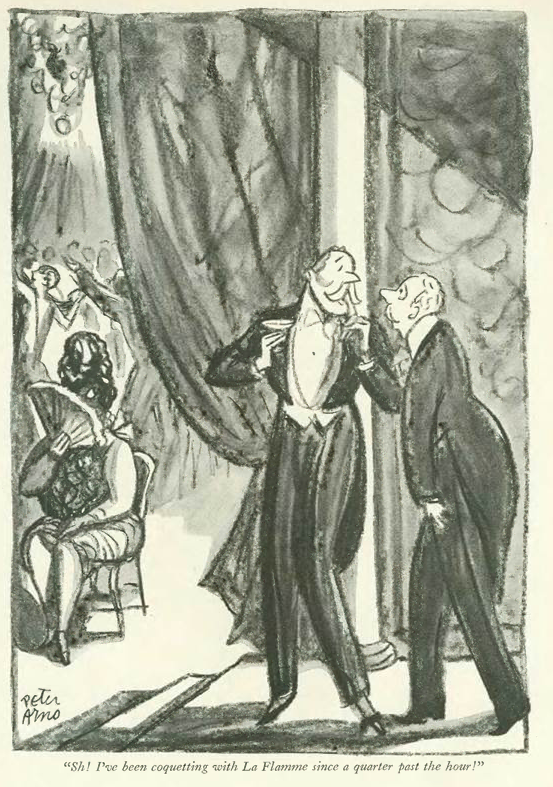
…and Peter Arno peeked in on habits of the idle rich…

Next Time: The Art of Peace…


Let Them Eat Cake

The re-opening of New York’s Central Park Casino in 1929 was in many ways the city’s last big party before the economy came crashing down, along with the exhuberance and frivolity of the Jazz Age.

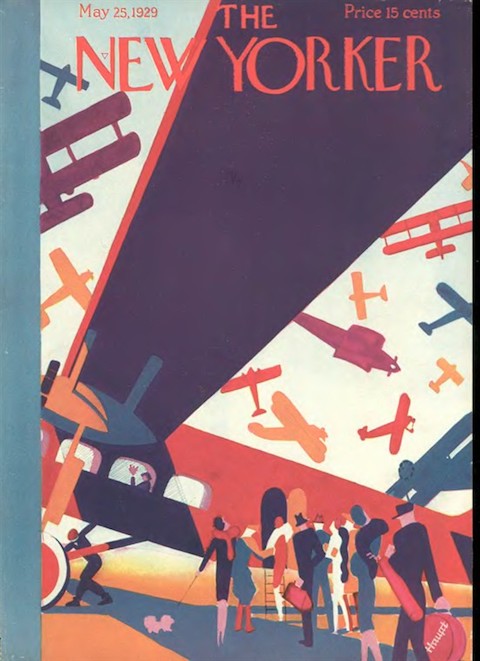
May 25, 1929 cover by Theodore Haupt.

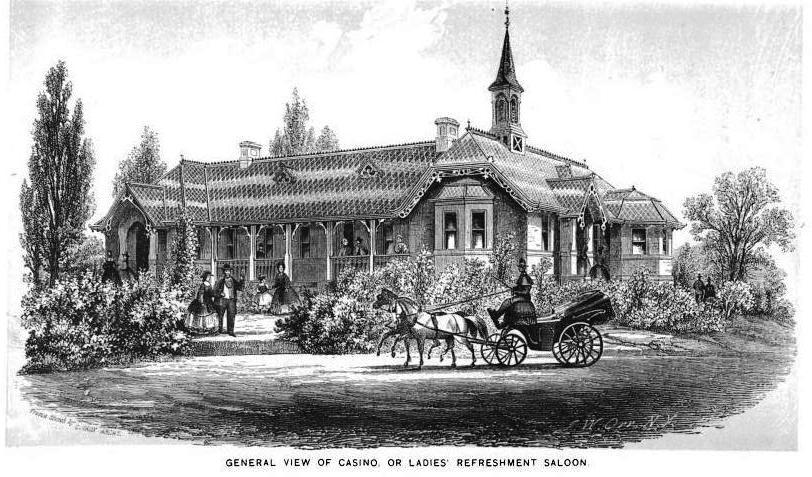
The Casino itself wasn’t new–it opened in 1864 as the Ladies’ Refreshment Salon (sometimes spelled “saloon”), a two-room stone cottage designed by Calvert Vaux. As Susannah Broyles writes in her excellent blog post for the Museum of the City of New York, the Victorian cottage was a place where “unaccompanied ladies could relax during their excursions around the park and enjoy refreshments at decent prices, free of any threat to their propriety.”

Central Park’s Ladies’ Refreshment Saloon opened in 1864. (daytoninmanhattan.blogspot.com)

Broyles writes that by the 1880s the salon had morphed into a far pricier destination, a restaurant called The Casino, open to both sexes. With the rare attraction of outdoor seating, “it was the place to see and be seen.”

By the 1920s the restaurant had grown a bit shabby. Then along came the city’s flamboyant mayor, Jimmy Walker (1881-1946), who saw the potential of the property as a place where he could hob-nob with wealthy and fashionable New Yorkers and openly flaunt Prohibition laws. There were others, however, who found the idea of an exclusive playground for the rich in a public park distasteful. The New Yorker observed as much in the “Notes and Comment” opening of “The Talk of the Town”…

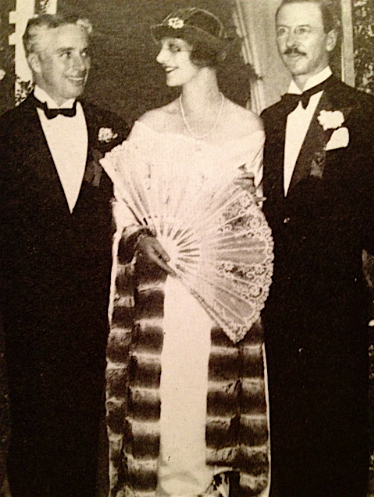
…the “Schuyler L. Parsons” referred to above was a tireless host, prominent decorator, and a society A-lister. He is pictured here (circa 1930) with two of his closest friends, actor Charlie Chaplin and the actress, singer and dancer Gertrude Lawrence

(Tyler Hughes Collections)

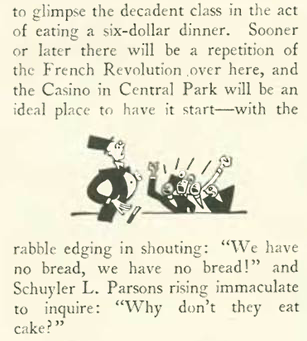
The Central Park Casino reopened its doors on June 4, 1929 at an invitation-only event. The following day it would open to the public, but as New York’s newest and most expensive restaurant it would remain closed to all but the wealthiest. As The New Yorker observed, the city was, after all, a “plutarchy,” and the populace passing by the Casino would at least be allowed “to glimpse the decadent class in the act of eating a six-dollar dinner” (nearly $90 today).

This formal announcement of the opening appeared in the May 6, 1929 issue of The New Yorker, including the time of the event—I suppose for the benefit of the 600 who actually had an invitation, or perhaps to tantalize those without such credentials…

The Casino was a playground for the rich by design, conceived in the image of the flamboyant Mayor Walker—himself a product of the Tammany Hall political machine—and executed by hotelier Sidney Solomon, who obtained the building’s lease via some Tammany-style subterfuge. Solomon hired architect and theatrical set designer Joseph Urban to transform the Casino into a glittering showpiece of Jazz Age nightlife.

Clockwise, from top left, the Central Park Casino; architect Joseph Urban; his Casino ballroom design with black-mirrored ceiling; the Casino lobby. (acontinuouslean.com/Columbia University/centralpark.com/drivingfordeco.com)

The New Yorker continued its observations on the Casino in another “The Talk of the Town” piece titled “Historical Note,” attributing the inspiration for the Casino not to Walker or Solomon, but to socialite Anthony Joseph Drexel Biddle Jr…

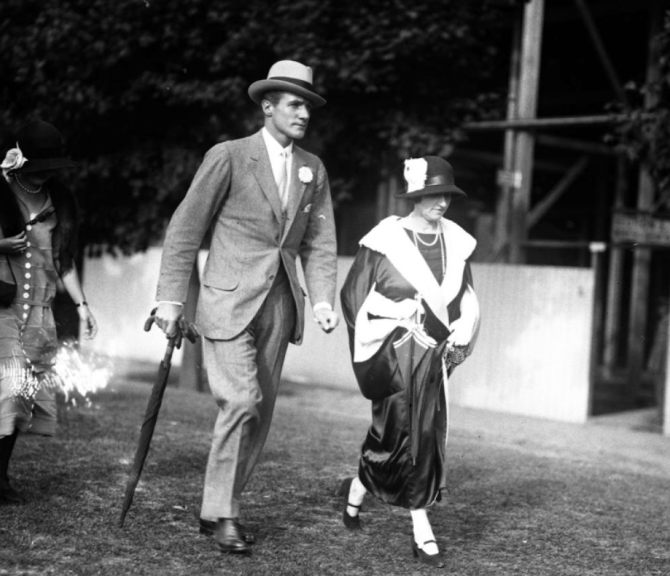
AN EYE FOR THE FINER THINGS…The wealthy socialite A.J. Biddle (pictured here with his first wife, Mary Lillian Duke, in 1924) trained his eye on the Central Park Casino while on the rooftop of the St. Regis Hotel pondering another Joseph Urban project. (voxsartoria.com)
PARTY BOY…New York Mayor Jimmy Walker and his nighttime playground, the Central Park Casino, show here on September 10, 1935. (Britannica/ New York City Department of Parks & Recreation)

Well, as you’ve probably guessed, the party didn’t last forever. After the October 1929 stock market crash, the sight of rich folks stuffing their faces and drinking fine wines in a public park looked even more unseemly. Soon the Casino found itself in the crosshairs of Parks Commissioner Robert Moses, who detested Mayor Walker.

As for Walker himself, a growing financial scandal prompted him to resign from office on Sept. 1, 1932. He promptly fled to Europe with his mistress, Ziegfeld girl Betty Compton, and stayed overseas until the threat of criminal prosecution had passed. For Moses, it wasn’t satisfaction enough to see Walker driven from office. In 1936, despite protests from preservationists, Moses had Urban’s lovely restaurant demolished. It was replaced by a children’s playground the following year.

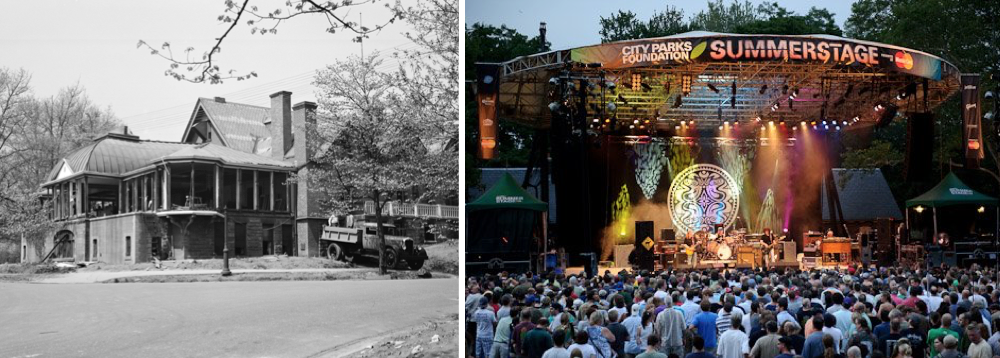
THE PARTY’S OVER…Crews dismantling the Central Park Casino in 1936. In 1937, the Rumsey Playground was built on the site of the Casino, and in the 1980’s the site was razed again and converted into Rumsey Playfield, where the city’s SummerStage events are now held. (Museum of the City of New York/centralpark.com)

*  *  *

A Drinking Life

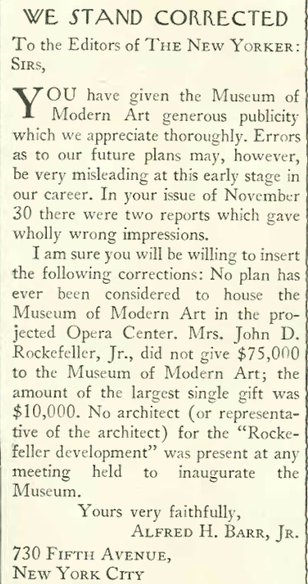
As the Jazz Age was winding down, one of its greatest chroniclers began a brief relationship with The New Yorker. In the March 12, 2017 issue of the magazine, Erin Overbey and Joshua Rothman wrote “There’s a doomed, romantic quality to the relationship between F. Scott Fitzgerald and The New Yorker; they were perfect for each other but never quite got together.” In total, Fitzgerald published just two poems and three humorous shorts for the magazine, beginning with this piece in the May 25, 1929 issue:

Fitzgerald’s last contribution to the New Yorker would appear in the Aug. 21, 1937 issue (“A Book of One’s Own”). Following the author’s death in 1940 the magazine would feature various articles on his life and work, and in 2017—77 years after Fitzgerald’s death—the New Yorker would publish a long lost short story, “The IOU.” A fitting title for an author who sadly did not get his due while he was alive.

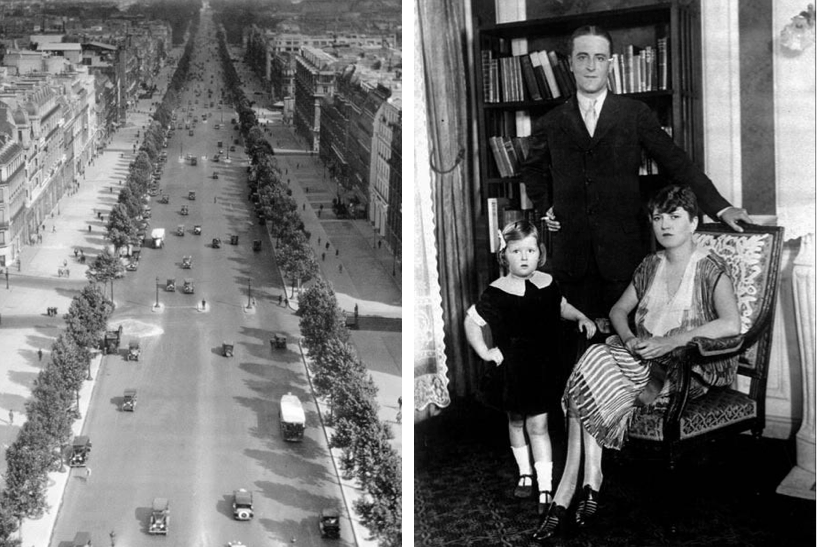
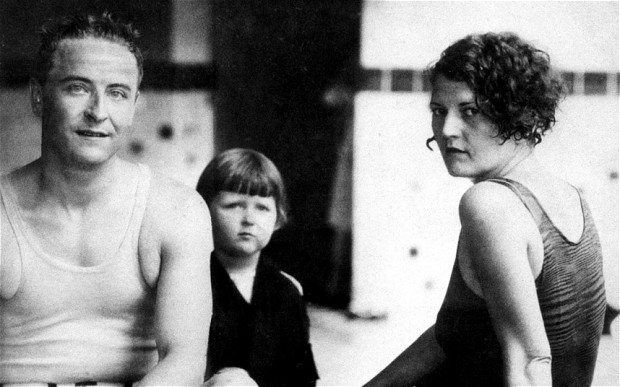
IOU…F. Scott Fitzgerald with daughter “Scottie” and wife Zelda, circa 1927. (The Telegraph)

 *  *  *

One of the Gang

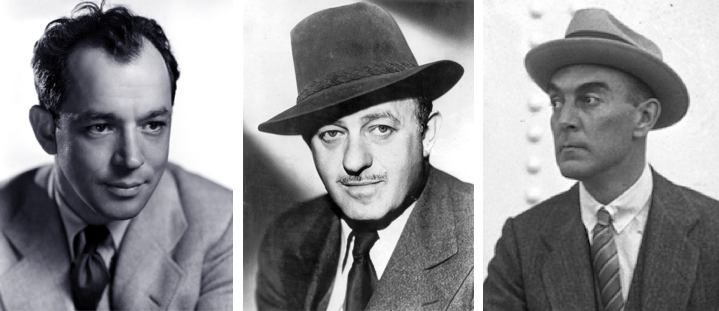
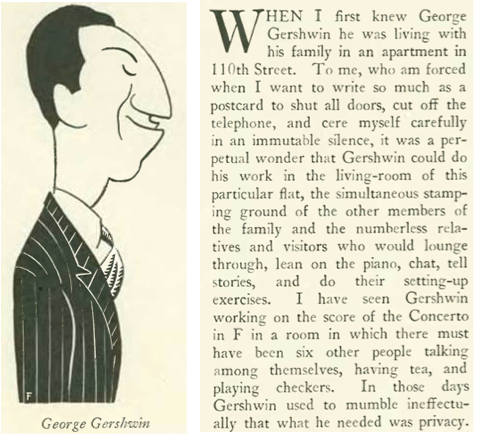
Among the Jazz Age artists and writers who orbited around the Algonquin Round Table (and the Central Park Casino) and chummed with the writers of the New Yorker was musician and composer George Gershwin (1898-1937) who was profiled in the May 25 issue by his friend and longtime New Yorker writer Samuel N. Behrman. The opening paragraph (with caricature by Al Frueh):

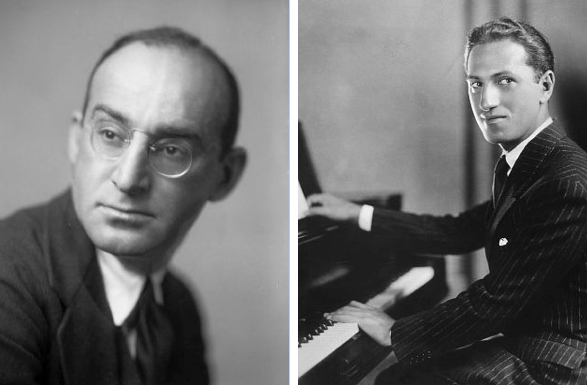
IN THE SAME ORBIT…Samuel Nathaniel Behrman (left), was an American playwright, screenwriter, biographer, and longtime writer for The New Yorker. From the late 1920s through the 1940s, he was considered one of Broadway’s leading authors of “high comedy,”His son is the composer David Behrman. At right, George Gershwin at the piano, 1929. (prabook.com/IMDB)

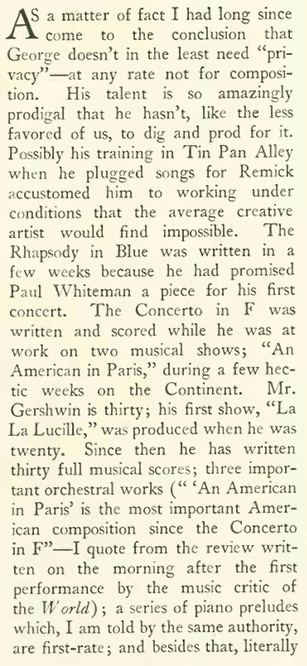
In the profile, Behrman observed that although Gershwin expressed a desire for privacy, he was quite capable of dashing off major works in practically any setting:

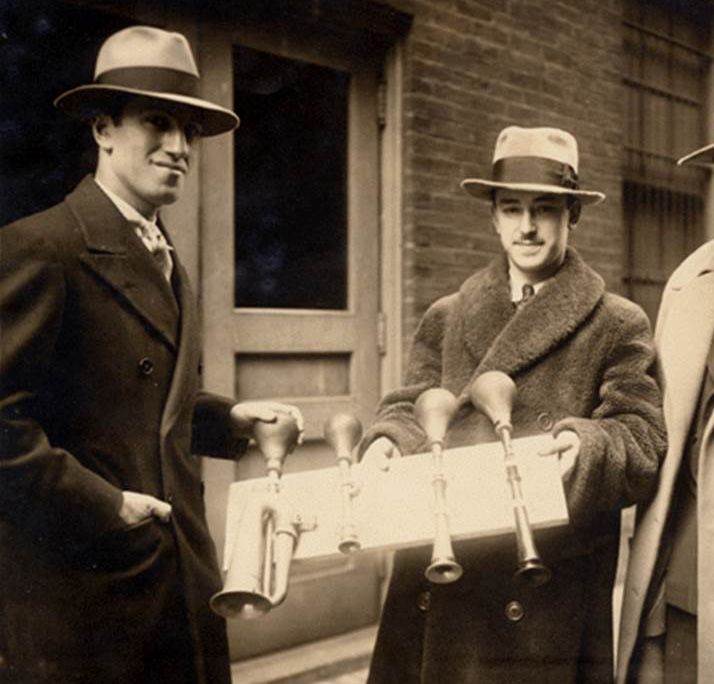
TOOTING HIS OWN HORN…Composer George Gershwin and Cincinnati Symphony Orchestra percussionist James Rosenberg holding four taxi horns used in the orchestra’s performance of An American in Paris, on Feb. 28, 1929. (Photo courtesy of Ira and Leonore Gershwin Trusts)

 *  *  *

Scratching the Surface

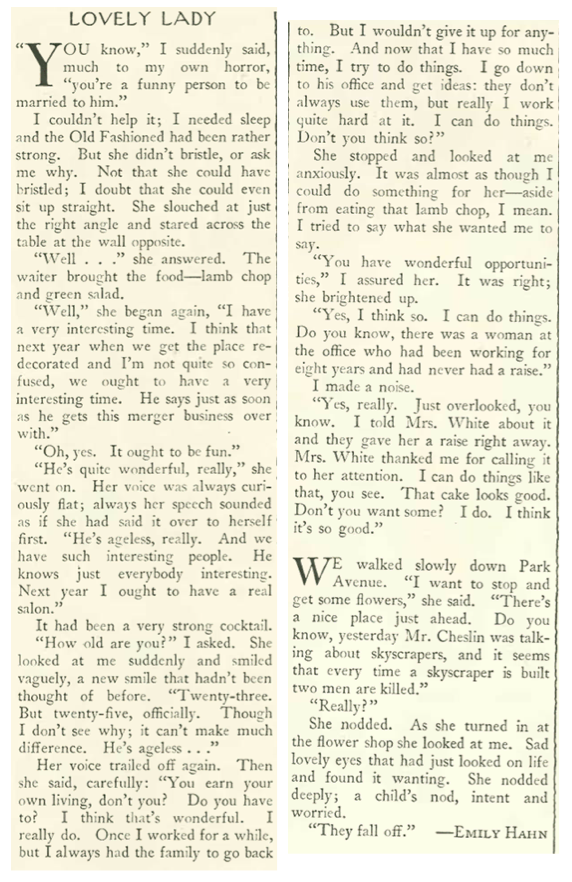
Emily Hahn (1905-1997) was a prolific journalist and author who contributed at least 200 poems, articles and works of fiction to The New Yorker over an astonishing 68-year span—from 1928 to 1996. As the title suggests, I am merely scratching surface, and will devote a post to her in the near future. Here is her contribution to the May 25, 1929 issue:

PROLIFIC…A 1937 portrait of Emily Hahn taken in Shanghai, China, by Sir Victor Sassoon. The author of 54 books, Hahn is credited with playing a significant role in opening up Asia and Africa to the West through her many novels. (DeGolyer Library, SMU)

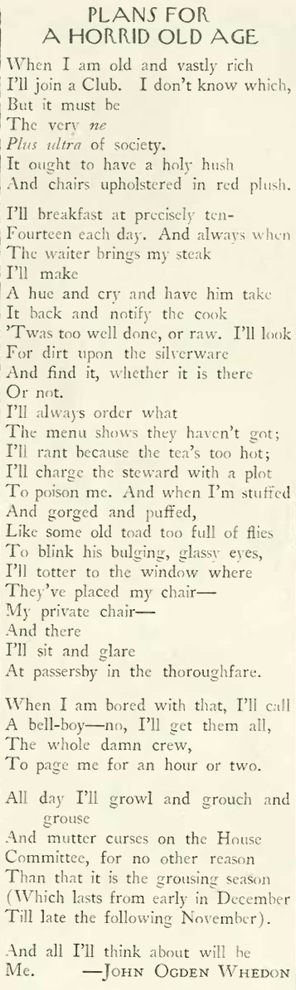
Another frequent contributor to The New Yorker was screenwriter John Ogden Whedon (1905-1991), who offered up mostly shorts from 1928 to 1938. He is best known as a television writer for such shows as The Andy Griffith Show, The Dick Van Dyke Show and Leave It to Beaver. Whedon and his wife, Louise Carroll Angell, were parents and grandparents to a number of screenwriters, including grandson Joss Whedon, creator of Buffy the Vampire Slayer and writer/director of The Avengers (2012) and its sequel Avengers: Age of Ultron (2015). An excerpt of grandpa’s writing from the May 25 issue:

 *  *  *

From Our Advertisers

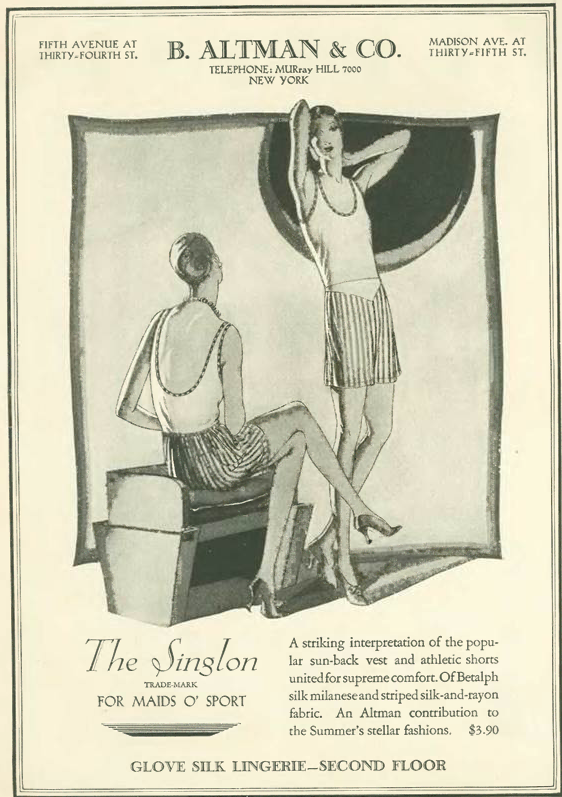
In a recent post (Waldorf’s Salad Days) I noted an ad from Lily of France that proclaimed the straight flapper figure was out, and it was now the “season of curves.” This ad from B. Altman begs to differ…

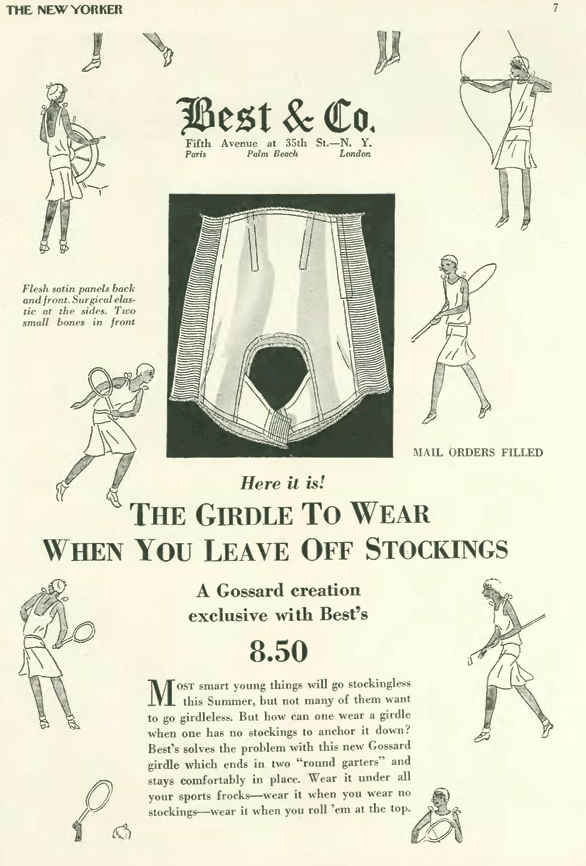
…one way to keep that straight figure was to pull on a girdle, which I’m sure felt great while one played tennis…

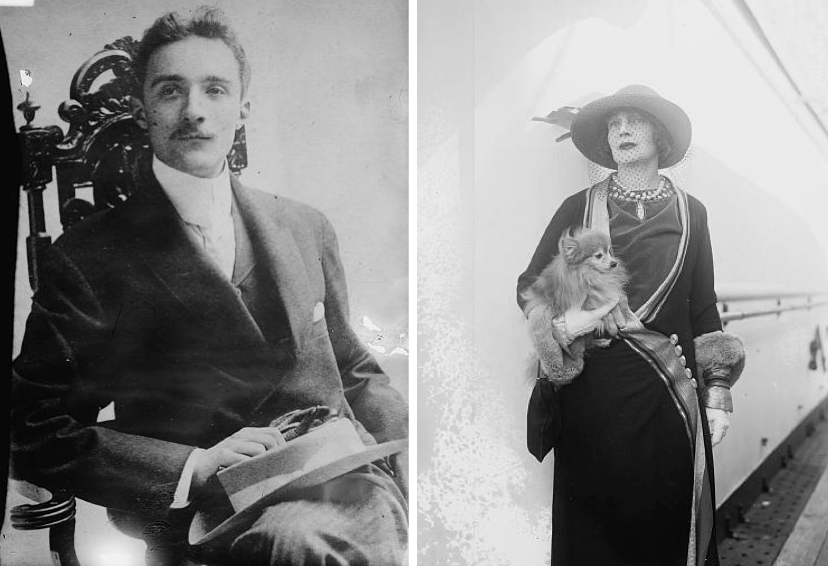
…our latest Lucky Strike endorser is…Mrs. Jerome Napoleon Bonaparte. Never heard of her? Well, “Mrs. Jerome” was actually a one Blanche Pierce (1872-1950) of Rochester, NY. Her second husband, Jerome Napoleon Bonaparte (the great-grandnephew of Emperor Napoleon) was something of a wastrel, having inherited a fortune and never worked at a job or profession. Blanche herself was known as a social climber…

THEY EXISTED…Jerome Napoleon Charles Bonaparte (pictured here circa 1915) was the great-grandnephew of Emperor Napoleon and a man of extreme leisure. His wife, Blanche Pierce Bonaparte (right, in a photo circa 1925), was known as a dog lover, a passion that indirectly led to her second husband’s demise. Jerome died while walking his wife’s dog in Central Park—he apparently stumbled over the dog’s leash and broke his neck. (Library of Congress)

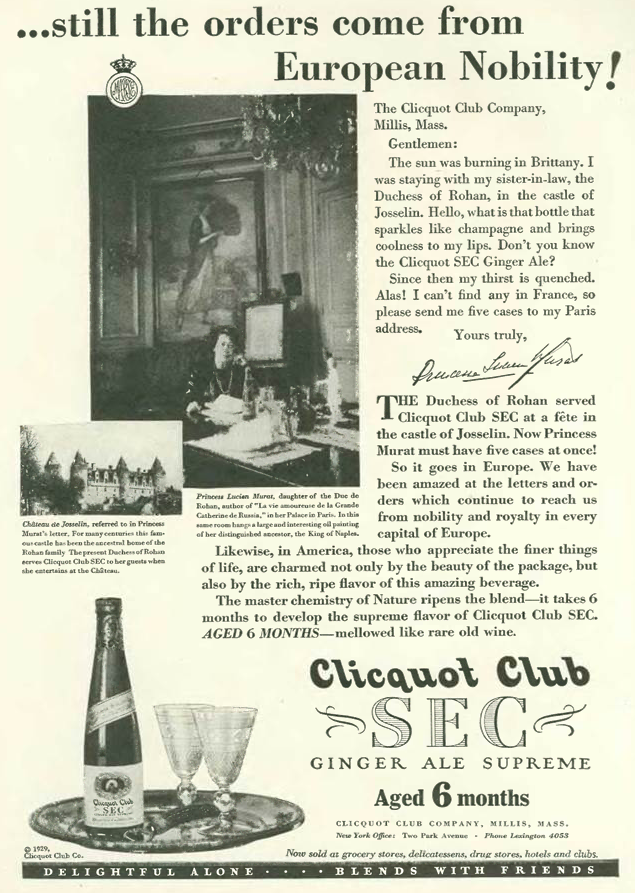
…speaking of European nobility, here is another sad endorsement from a French noble touting the wonders of Clicquot Club ginger ale to Prohibition-strapped Americans…

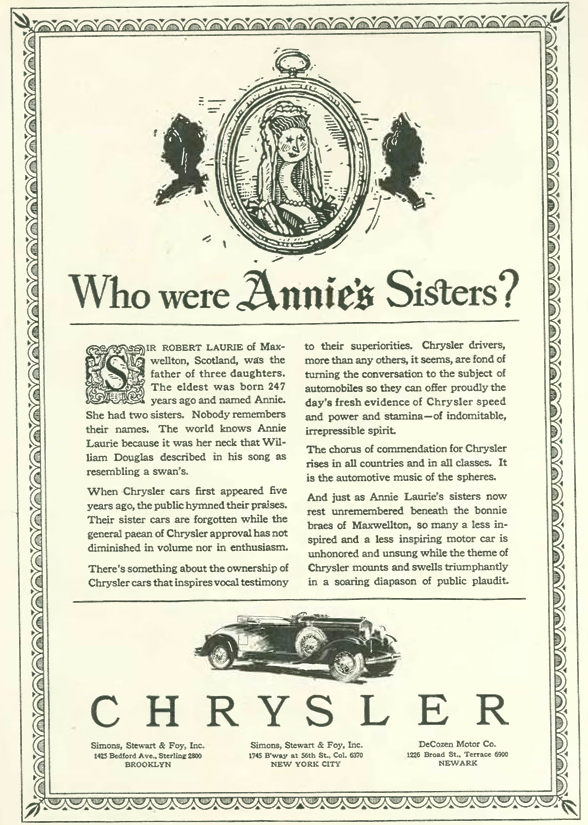
…and then we have this weird “Annie Laurie” analogy used by Chrysler to sell its line of automobiles…

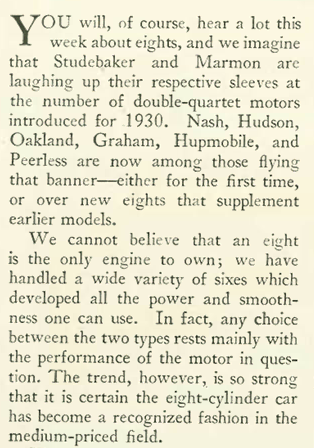
…the manufacturers of Studebaker, on the other hand, opted for a more direct approach, equating its automobiles with the speed and modernity of airplane flight…note how in both ads the cars are pictured with the windshields folded down to emphasize sleekness…

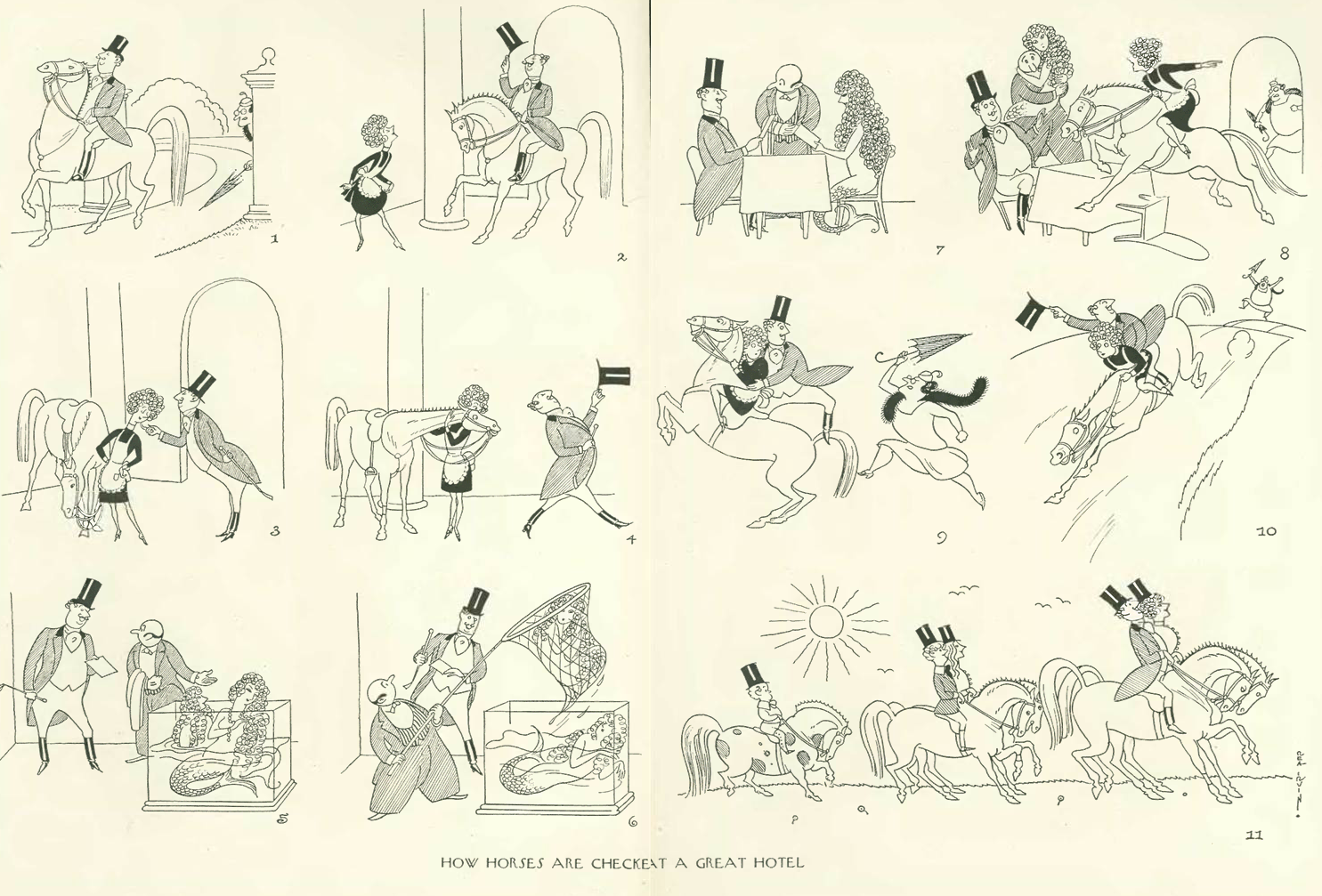
…on to the cartoons: we begin with this two-page entry by Rea Irvin, which makes very little sense…I get the part where the rich old man (stalked by his fearsome wife) finds a mistress (and a new wife) through the process of “checking his horse,” but the whole mermaid thing is lost on me…please click to enlarge—I’d love to have this one explained…

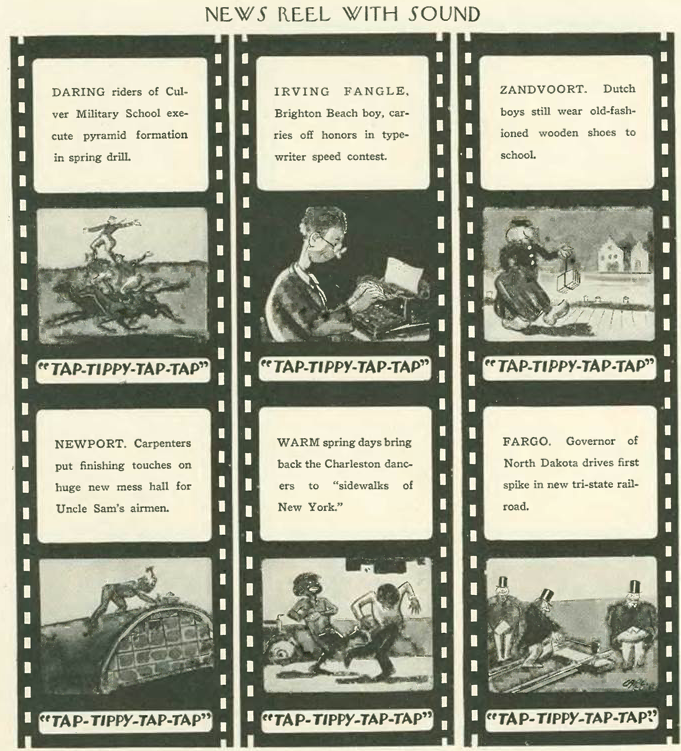
Carl Rose had some fun with newfangled sound effects in the dawning age of the talkies…

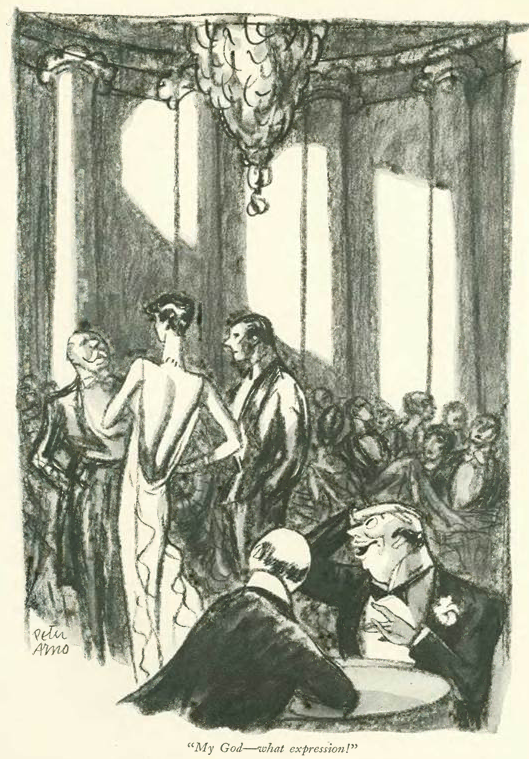
Peter Arno sketched up the cynicism of one New York dowager…

Perry Barlow captured two women who might have been driving home from an auction at the old Waldorf-Astoria Hotel…

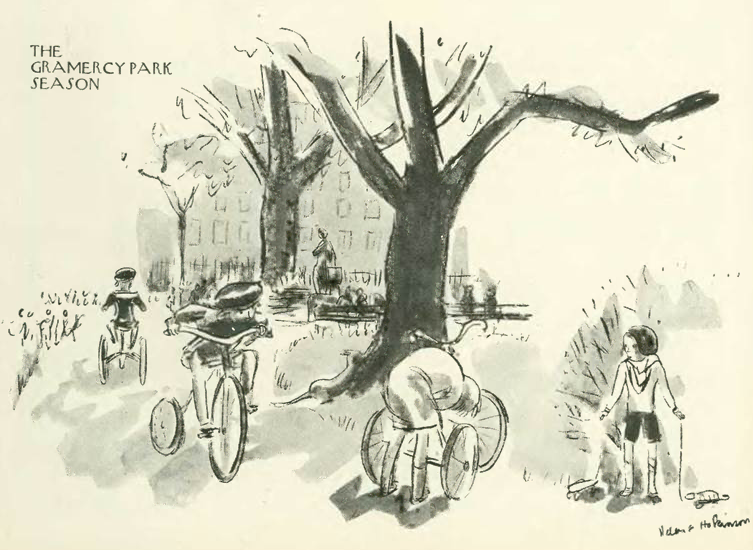
…and finally, a lovely illustration by Helen Hokinson of children at play…

Next Time: The Unspeakables…


Distant Rumblings

As I’ve previously noted, reading back issues of periodicals often gives one a feeling of omniscience; as I thumb through week after week of late 1920s New Yorkers, I realize that for all their cleverness and worldly wisdom, even that magazine’s writers and editors could not see with any clarity into the future. But neither can any of us…one wonders what readers 89 years hence will surmise from today’s magazines, that is, if our civilization lasts that long.

January 28, 1928 cover by Theodore G. Haupt.

Howard Brubaker (in his column “Of All Things”) might have spotted something brewing on the horizon, even if it wouldn’t become perfectly clear until Dec. 7, 1941. Here is a clip from his Jan. 28, 1928 column in The New Yorker:

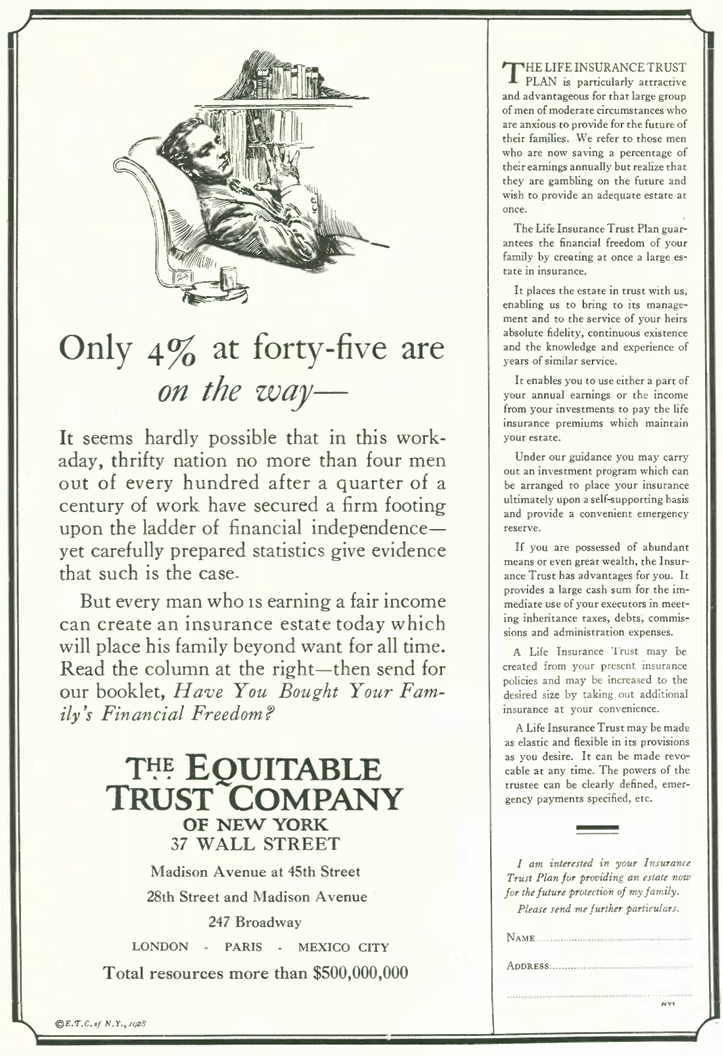
Two other major events in U.S. history, the Stock Market Crash of 1929 and the Great Depression that would follow, were less than two years away. But this was the Roaring Twenties, and some thought the fun would never end…except perhaps Equitable Trust, which placed this advertisement in the Jan. 28 issue:

Apparently the folks at Equitable Trust weren’t assured of their own financial freedom—after the Crash they would be acquired by Chase National Bank, making Chase the largest bank in the world at that time.

Despite the overheated economy of the 1920s, there still were plenty of poor and unemployed people in the city. One man, Urbain Ledoux (known as Mr. Zero in order to hide his identity), often arranged protests and demonstrations to bring attention to the poor and unemployed, and opened a number of bread lines and soup kitchens to feed the hungry, including the “Tub,” depicted in this two-page illustration by Constantin Alajalov along the bottom of the “Talk” section of the Jan. 28 issue (click image to enlarge).

 *  *  *

Not All Gloom and Doom

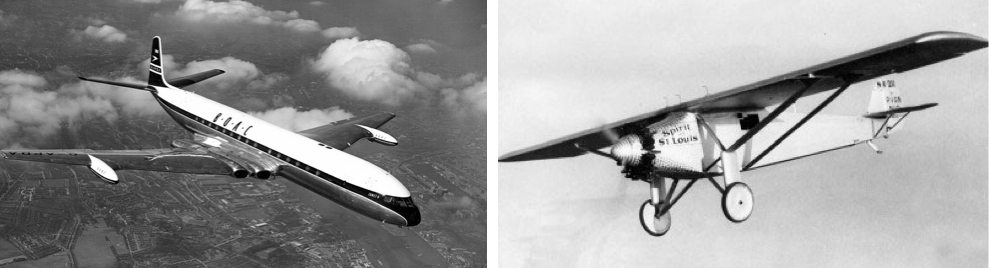
Hindsight also reveals the trajectory of the 20th century’s great accomplishments. Charles Lindbergh’s transatlantic flight in 1927, for example, fueled the imaginations of those who would usher in the jet age and space travel. Just 31 years after Lindbergh’s flight, the British Overseas Airways Corporation (BOAC) would begin operation of its first transatlantic passenger jet service. And only 42 years would separate Lindbergh’s flight from Neil Armstrong’s moonwalk.

JUST 31 YEARS would separate Lindbergh’s flight from the first transatlantic jet service. At left, the DeHavilland Comet 4 (1958), and at right, Lindbergh’s Spirit of St. Louis (1927). (warthunder.com/howstuffworks.com)

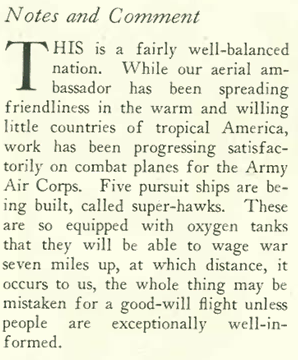
Like the rest of America, The New Yorker was an enthusiastic follower of developments in aviation after Lindbergh (the “aerial ambassador” referred to below). The January 28 “Talk of the Town” led with this item about pilots soaring to ever greater heights.

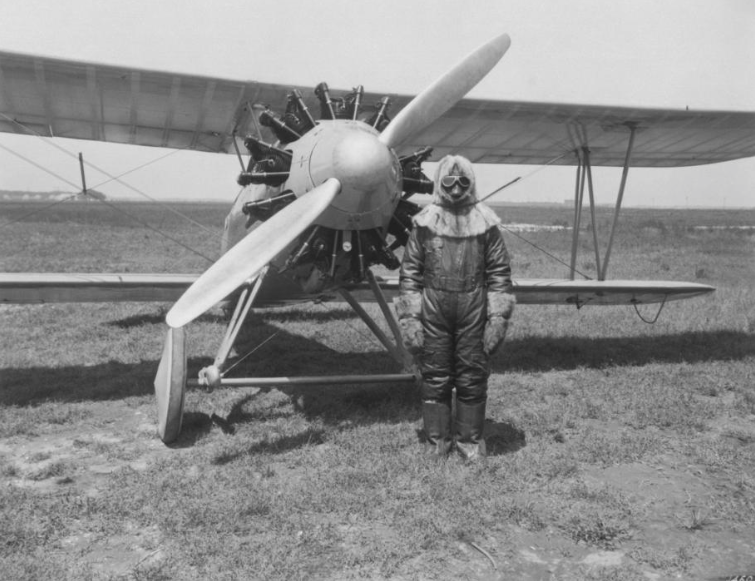
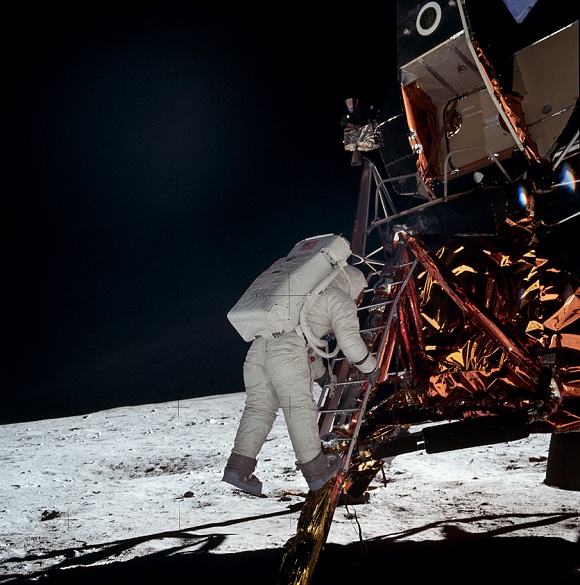
Consider that a mere 41 years separated this…

YETI, SET, GO!…A pilot in high altitude flying gear next to a Wright Apache biplane, January 1, 1928. In September 1926 the Apache set the world altitude record for seaplanes (38,500 ft) and in April 1930 it set the land-plane altitude record of 43,166 ft. (NASA)

…from this…

LEAVE THE FUR COAT AT HOME…The second man on the moon, Buzz Aldrin, prepares to step onto the lunar surface, July 20, 1969. (Neil Armstrong/NASA)

 *  *  *

While Back on Earth…

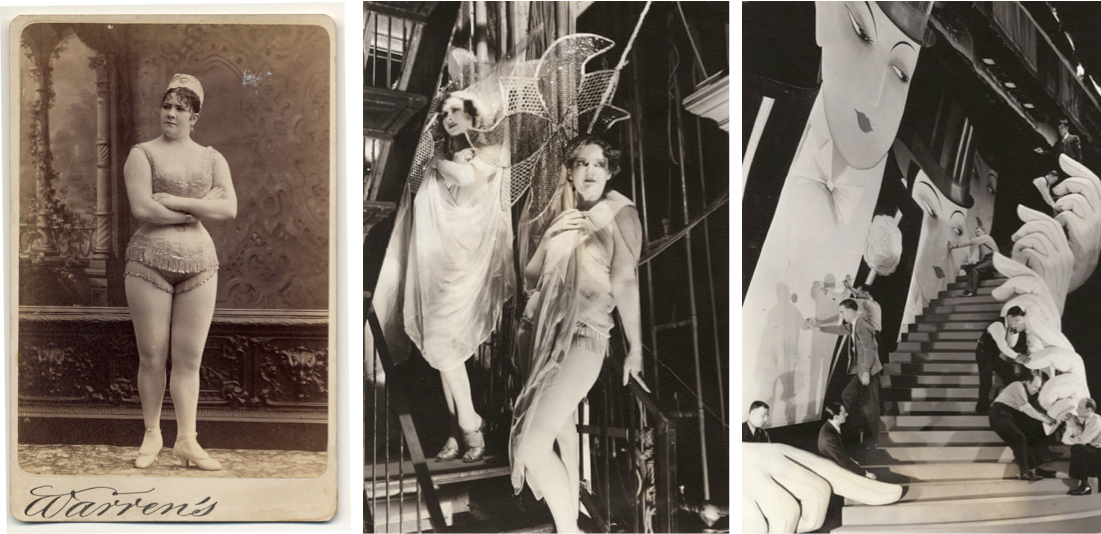
Big events in America always seem to involve the appearance of showgirls, whether it is the introduction of a new car or some techno gadget. As this “Talk” item indicates, much was the same 89 years ago…

 *  *  *

Silent Giant

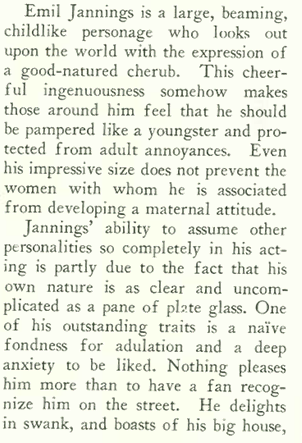
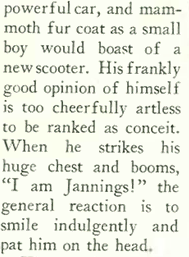
German film actor Emil Jannings was lauded for his performances on the screen in both Germany and America in films, and he was particularly adept at portraying of the pathos of middle-aged men. The New Yorker disliked most of Hollywood’s output (and usually praised the much-artier German films), so when Jannings landed on these shores he was lauded by the magazine, which dedicated a profile (written by Elsie McCormick) to him in the Jan. 28 issue, accompanied by a Hugo Gellert illustration. Some excerpts:

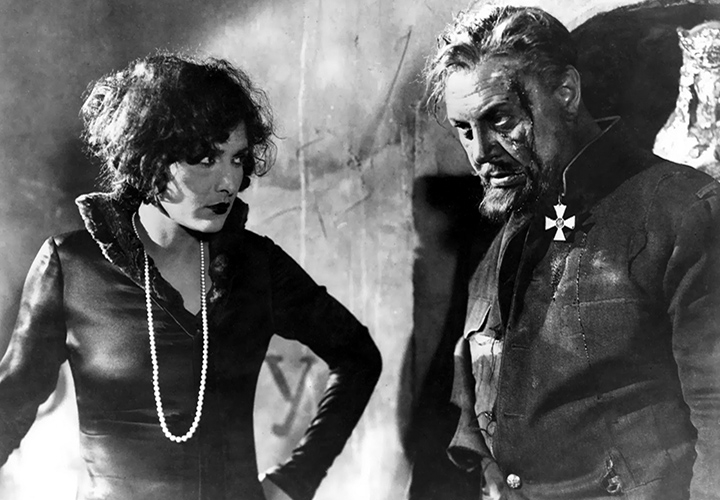
LIFE IS HARD…Evelyn Brent and Emil Jannings star in The Last Command. In the first Academy Awards, Jannings would win best actor for two films, The Last Command and The Way of All Flesh. (silentfilm.org)

At the first Academy Awards in 1929, Jannings would win a Best Actor Oscar for two of his 1928 films, The Last Command and The Way of All Flesh. An interesting side note from writer Susan Orlean: In her 2011 book, Rin Tin Tin: The Life and The Legend, Jannings was not actually the winner of the first best actor vote, but the runner-up. The famous dog actor Rin Tin Tin actually won the vote. The Academy, worried about not being taken seriously, gave the award to the human instead.

Janning’s thick German accent would bring his Hollywood career to an end with sound pictures. He would return to Germany, and during the Third Reich he would star in several films that promoted the Nazis. According to Wikipedia, the shooting of his last film, Wo ist Herr Belling? was aborted when Allied troops entered Germany in Spring 1945. Jannings reportedly carried his Oscar statuette with him as proof of his former association with Hollywood.

From the Advertising Department

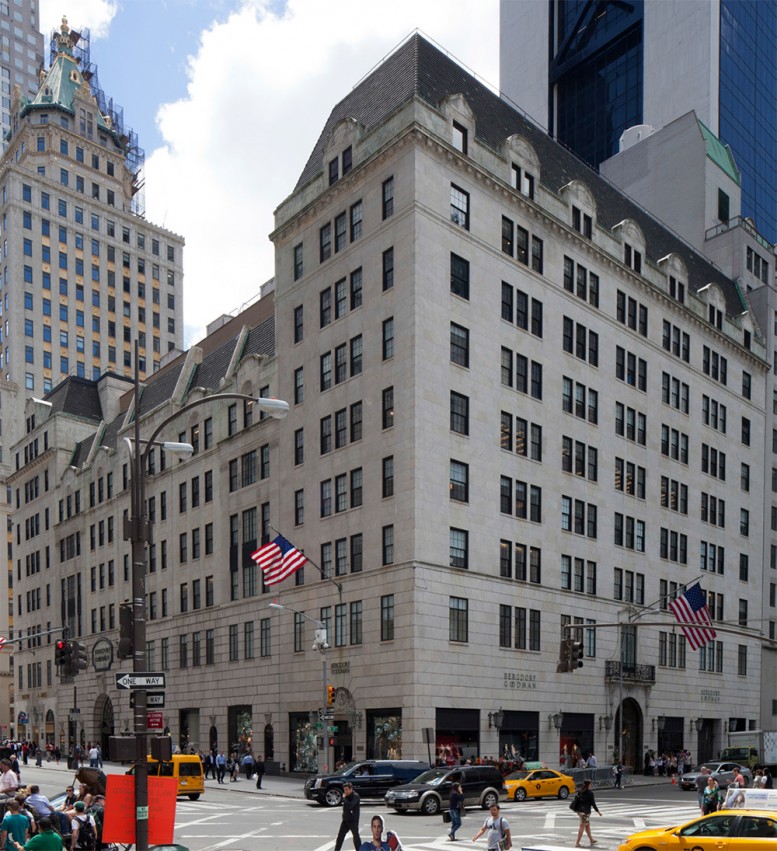
This advertisement from the Jan. 28 issue caught my eye because Bergdorf Goodman is one of the few stores in Manhattan still operating at its original site:

Bergdorf Goodman today. (Photo courtesy LPC)

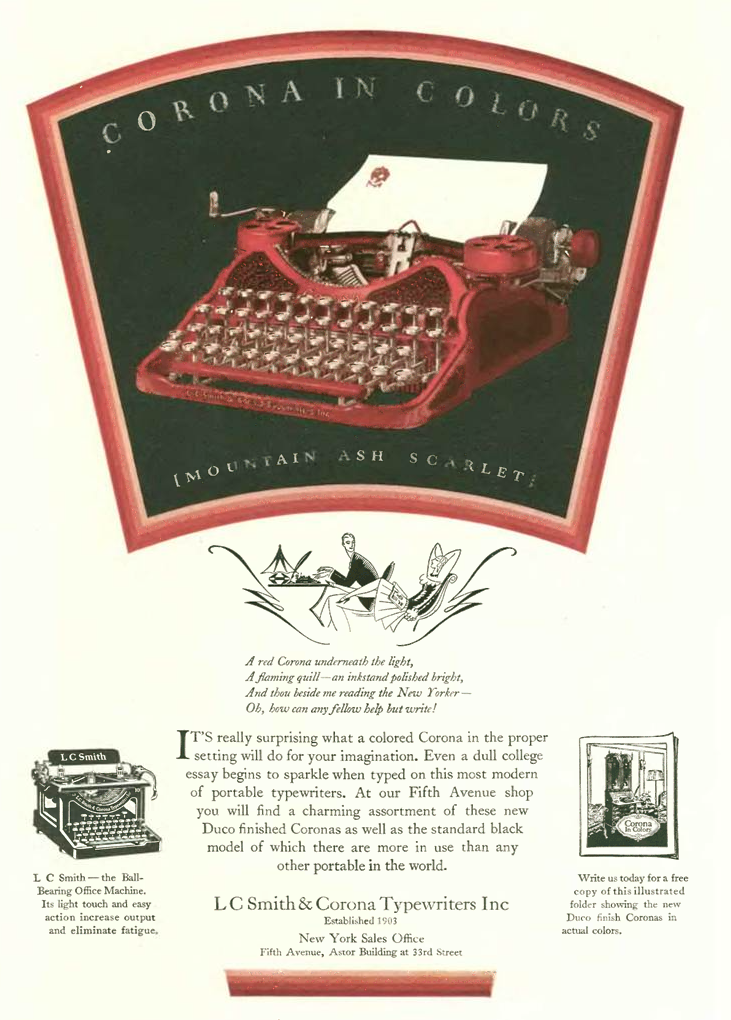
And here we have perhaps the iMac of its day, standing  apart from the competition with its colorful, bold new look…

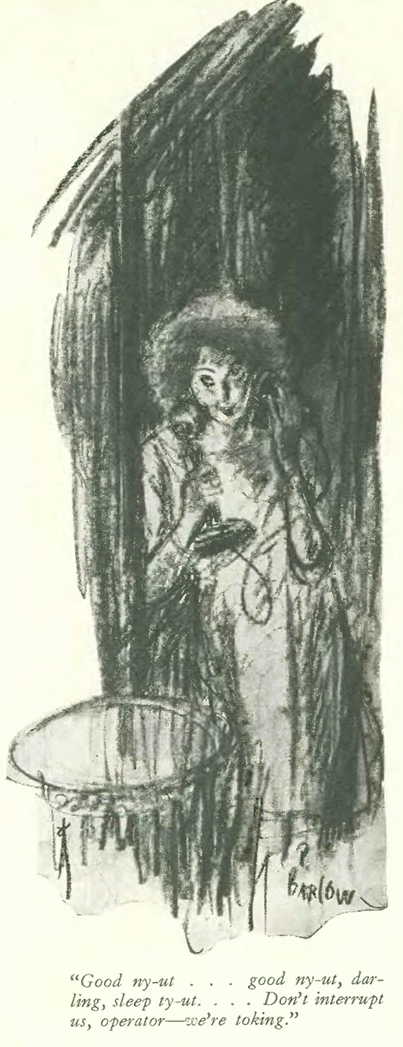
And finally, this early cartoon from longtime New Yorker cartoonist Perry Barlow having some fun at the expense of New York’s working class…

Next Time: Good Vibrations…