Above: Portrait of Georgia O'Keeffe, 1935, by Alfred Stieglitz, gelatin silver print; at right, O'Keeffe's Ram's Head, White Hollyhock-Hills, 1935. Oil on canvas. (National Gallery/Brooklyn Museum)
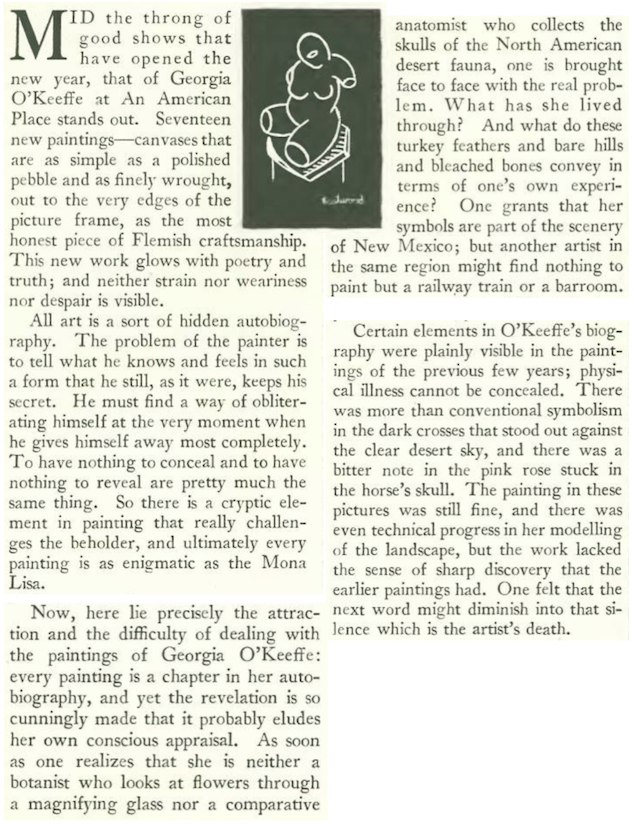
Over the seven decades of her career, Georgia O’Keeffe created works that did not necessarily follow the art movements of the 20th century. Critic Lewis Mumford referred to these works as “autobiographies in paint,” every painting “as enigmatic as the Mona Lisa.”
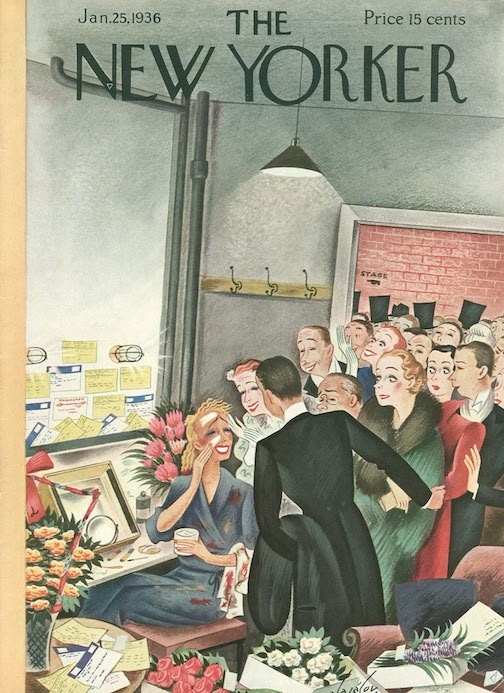
January 18, 1936 cover by Robert Day, illustrating the days before the invention of the Zamboni (in 1949).
O’Keeffe was married to art dealer and photographer Alfred Stieglitz, who exhibited her works at his “An American Place” gallery at 53rd and Madison. The couple had a complex, open relationship (Stieglitz had a number of affairs) that proved painful to O’Keeffe, and in 1933 she was hospitalized for two months after experiencing a nervous breakdown; she did not paint again until the following year. Although Mumford did not directly reference this episode in O’Keeffe’s life, he did note that “Certain elements in O’Keeffe’s biography were plainly visible” in her paintings.
PAINED PAINTINGS…Clockwise, from top left, Georgia O’Keeffe’sEagle Claw and Bean Necklace, 1934; Jack-in-the-Pulpit No. IV, 1930; Purple Hills, 1935. (MoMA/Phillips Collection/San Diego Museum of Art)
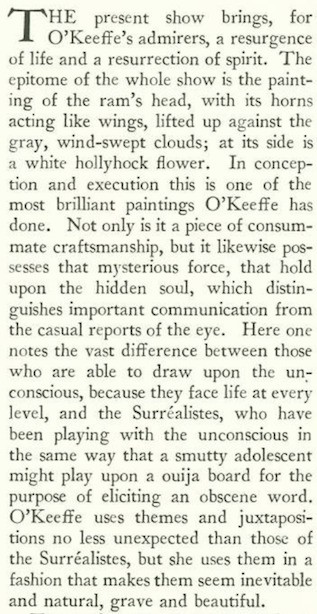
Mumford noted that O’Keeffe’s newer works revealed a “resurrection of spirit,” such as the painting of a ram’s skull, “with its horns acting like wings, lifted up against the gray, wind-swept clouds…”
GLOWING WITH POETRY AND TRUTH is how Lewis Mumford described Georgia O’Keeffe’s latest work. Clockwise, from top left: Ram’s Head suggested to Mumford “a resurgence of life and a resurrection of spirit” in the artist; other bright works included Sunflower, New Mexico 1, 1935; and Hill, 1935. (National Gallery/Cleveland Museum of Art/ Denver Art Museum)
* * *
Lights Out
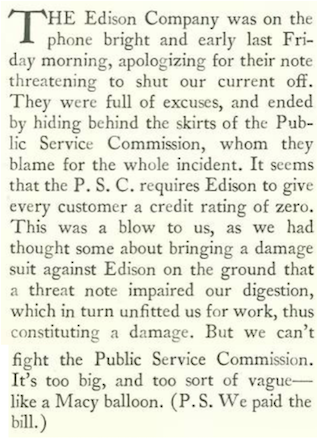
In the previous issue E.B. White noted that the Edison Company was threatening to cut off electric service to the magazine’s offices due to nonpayment. This “Notes and Comment” update cleared up the matter.
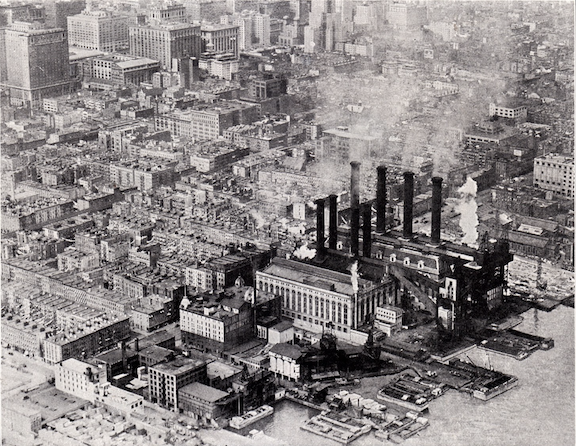
THE PRICE FOR POWER…Above, an aerial view from 1926 of New York Edison’s East River Power Station at 38th Street. In 1936 it was powered by coal, which burned pungently and created problems with soot throughout the area. (tudorcityconfidential.com)
* * *
Revisiting a Pint-size Poet
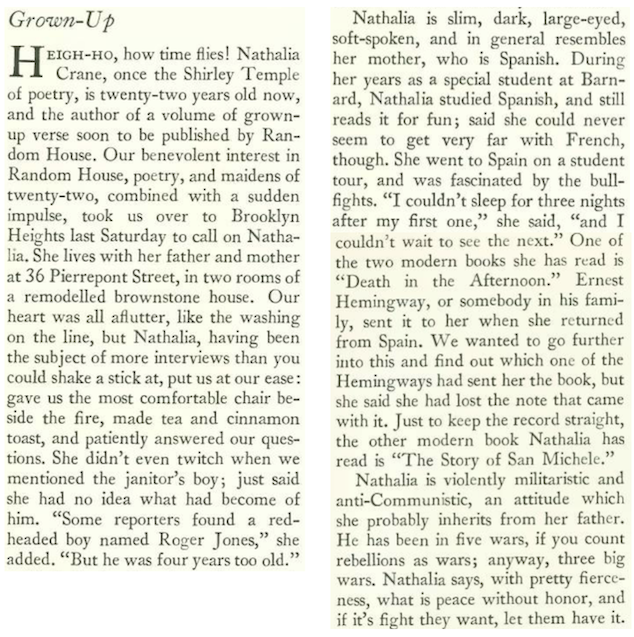
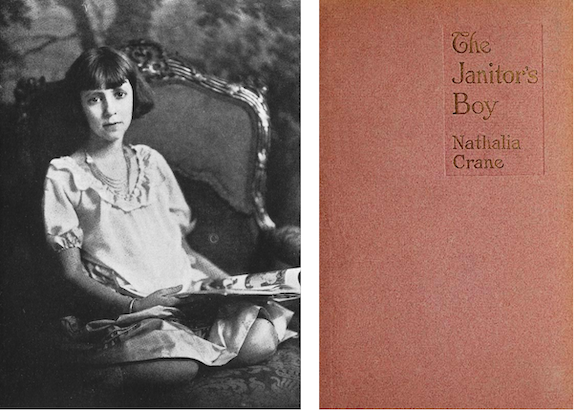
“The Talk of the Town” paid a visit to Nathalia Crane (1913–1998), who became famous after the 1924 publication of her first book of poetry, The Janitor’s Boy, at the age of ten. Excerpts:
PIXIE POET…Nathalia Crane published her first poems in The New York Sun when she was only nine years old, the paper unaware that she was a child. She later became a professor of English at San Diego State University. (gutenberg.org)
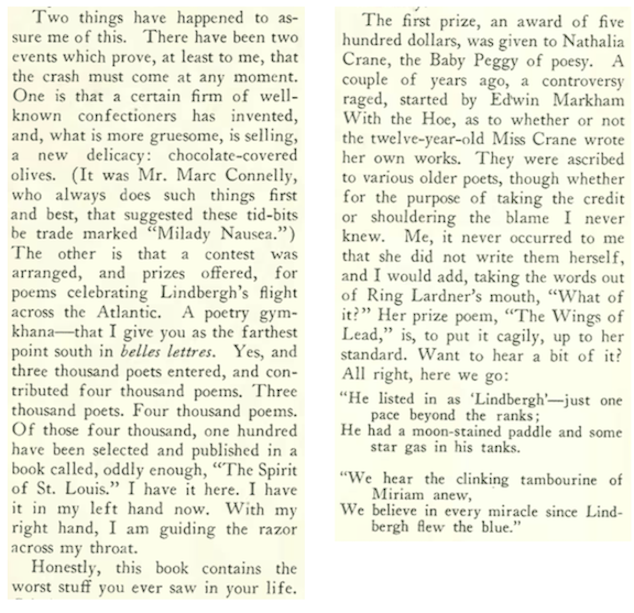
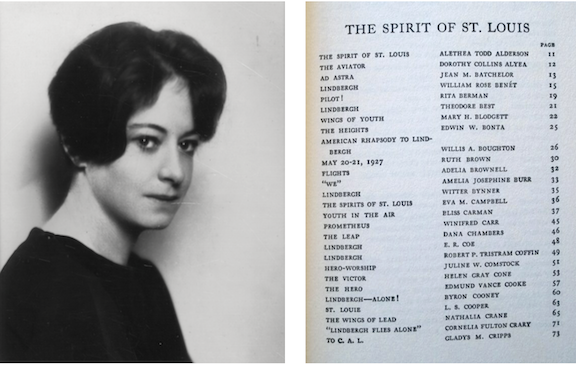
The fledgling Crane received a very different New Yorker reception in 1928, when Dorothy Parker took her to task for contributing to the collapse of grammar and civilization in general. Here’s an excerpt from Parker’s Jan. 7, 1928 “Reading & Writing” column:
GRUESOME was the word Dorothy Parker chose to describe chocolate-covered olives and bad poetry. At left, Parker in 1928. At right, a contents page from The Spirit of St. Louis, a collection of one hundred poems selected from thousands in a poetry contest celebrating Charles Lindbergh’s flight across the Atlantic. (literaryladiesguide.com/ebay.com)
* * *
Order in the Court
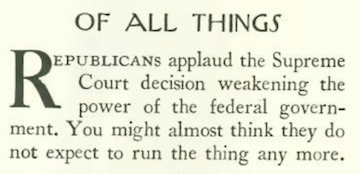
Howard Brubaker commented on a recent ruling by the Supreme Court regarding the ongoing fight by Republicans to curtail FDR’s New Deal.
* * *
Cinderella Stories
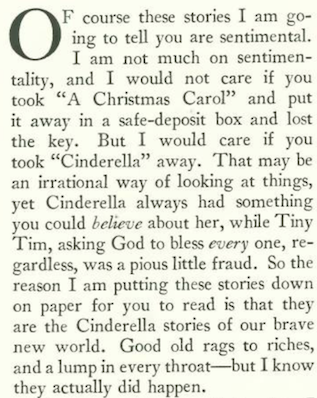
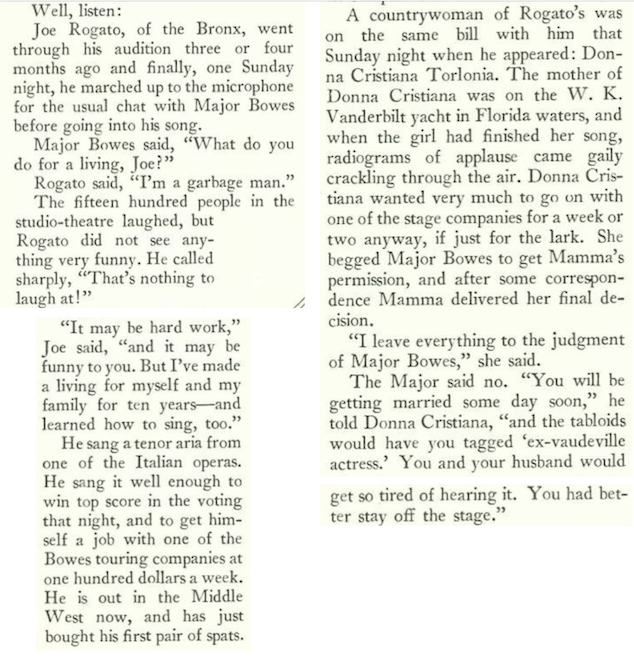
For his Jan. 4, 1936 “A Reporter at Large” column Morris Markey visited “Major Bowe’s Amateur Hour” at NBC’s Rockefeller Center radio studios. He was so impressed by the rags-to-riches stories that he shared a few in his Jan. 18 column, titled “The Crystal Slipper.” He warned readers that the stories were “sentimental,” but not in the vein of A Christmas Carol: “Tiny Tim, asking God to bless every one, regardless, was a pious little fraud,” Markey noted. Excerpts:
Markey shared the story of a garbage collector turned opera tenor, and a wealthy debutante who was encouraged to “stay off the stage” by “Major” Edward Bowes himself.
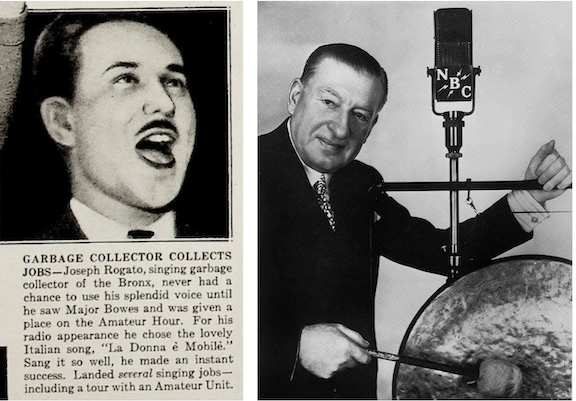
CUT THE TRASH TALK…Joseph Rogato told the Amateur Hour audience that his job as a “garbage man” was no laughing matter, and went on to wow them with his singing voice. At left, a detail from an ad for Chase & Sanborn coffee, the show’s sponsors. At right, show founder and host “Major” Edward Bowes with the gong he used to abruptly end acts he deemed poor—he soon abandoned the practice after listeners objected. (eBay.com/Facebook)
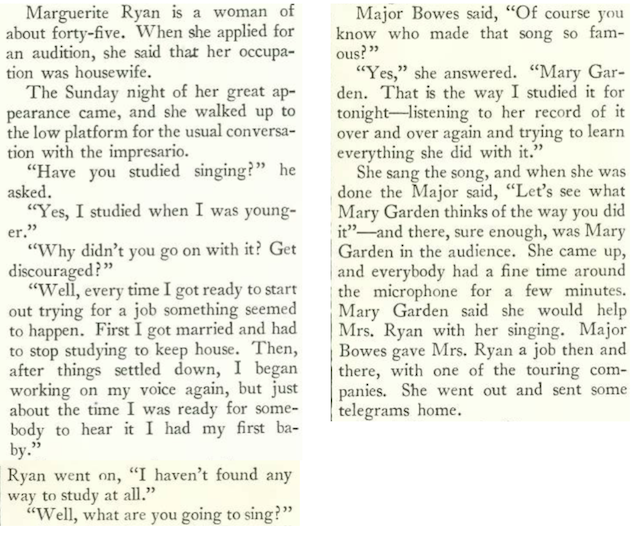
Markey next told the story of Marguerite Ryan, the “Singing Housewife”…
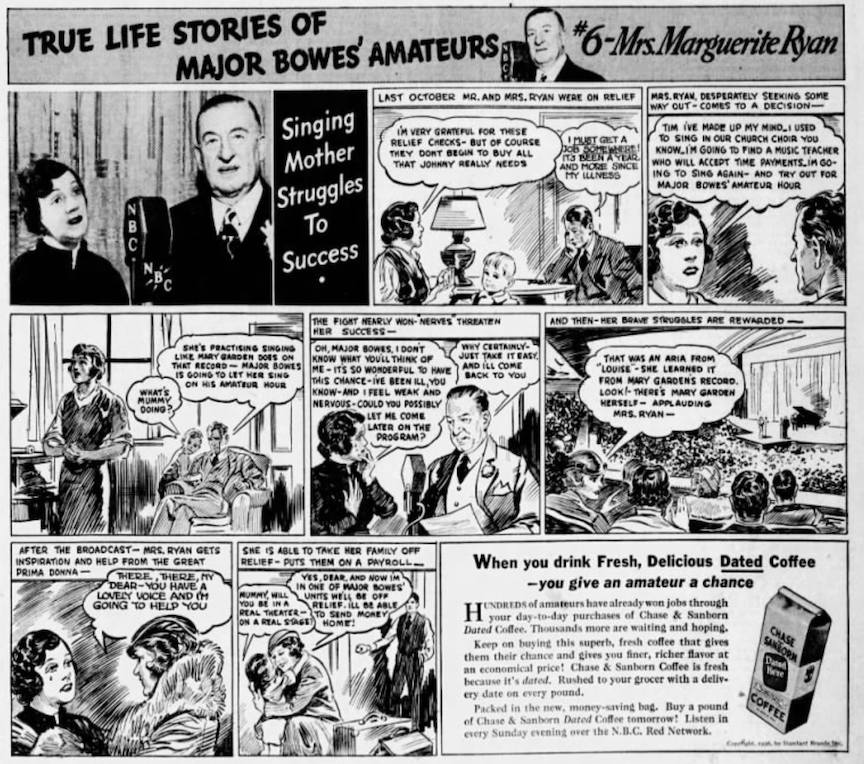
FROM RELIEF TO RICHES…This Chase & Sanborn advertisement described Marguerite Ryan’s brush with fame and her deliverance from poverty thanks to her appearance on the Amateur Hour. (newspapers.com)
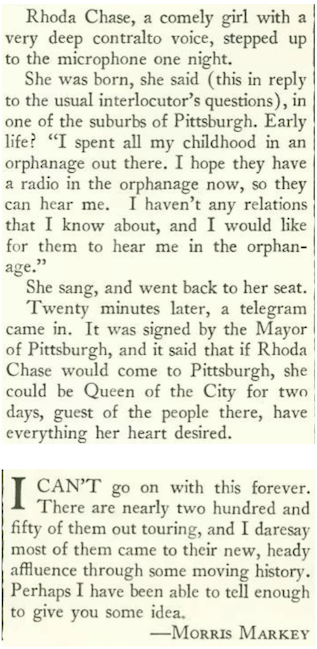
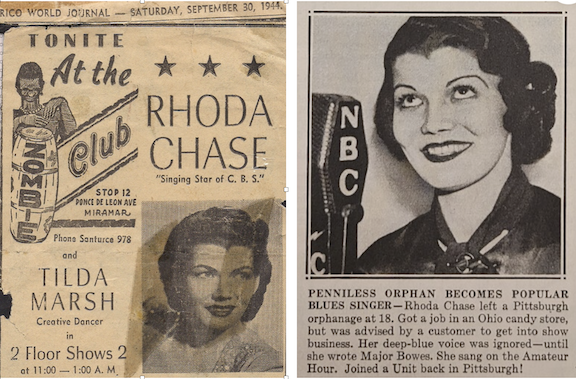
Finally, the story of Rhoda Chase, whom Bowes promoted as a “penniless orphan.” Born Anna Blanor, her stage name, Rhoda, was selected by a psychic, while her last name was inspired by sponsors Chase & Sanborn.
VELVET VOICE…At right, detail from a Chase & Sanborn ad that promoted Rhoda Chase as a “Penniless Orphan” who made the big time thanks to the Amateur Hour. At left, a 1944 newspaper ad for the Zombie Club in San Juan, Puerto Rico. Known as “The Blue Velvet Voice”, Chase was a radio, stage, nightclub and USO blues singer. (Wikimedia Commons/eBay)
* * *
At the Movies
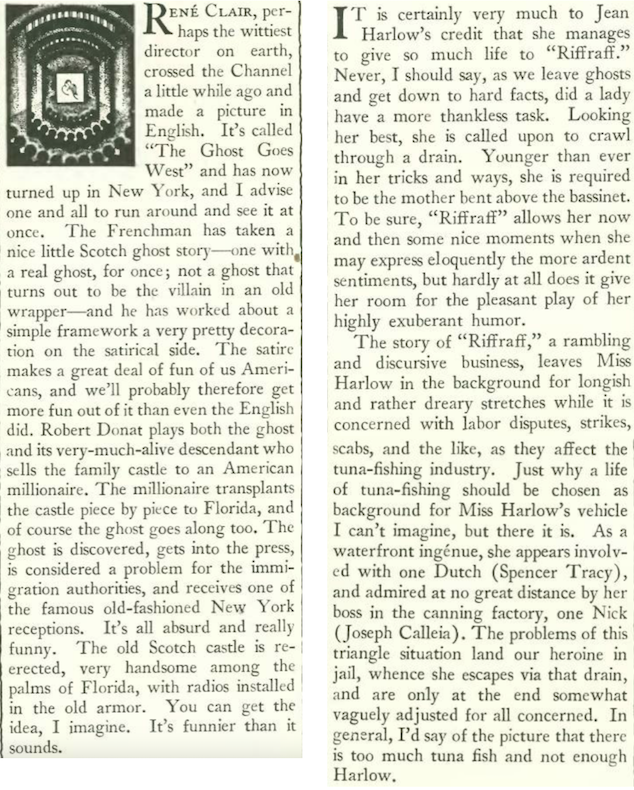
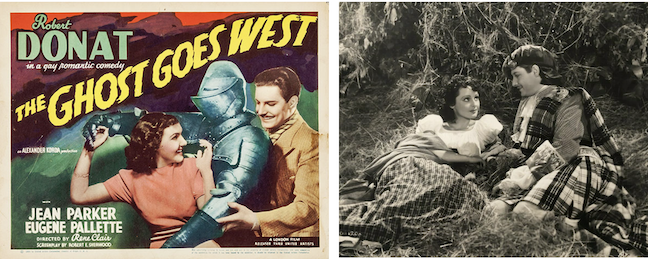
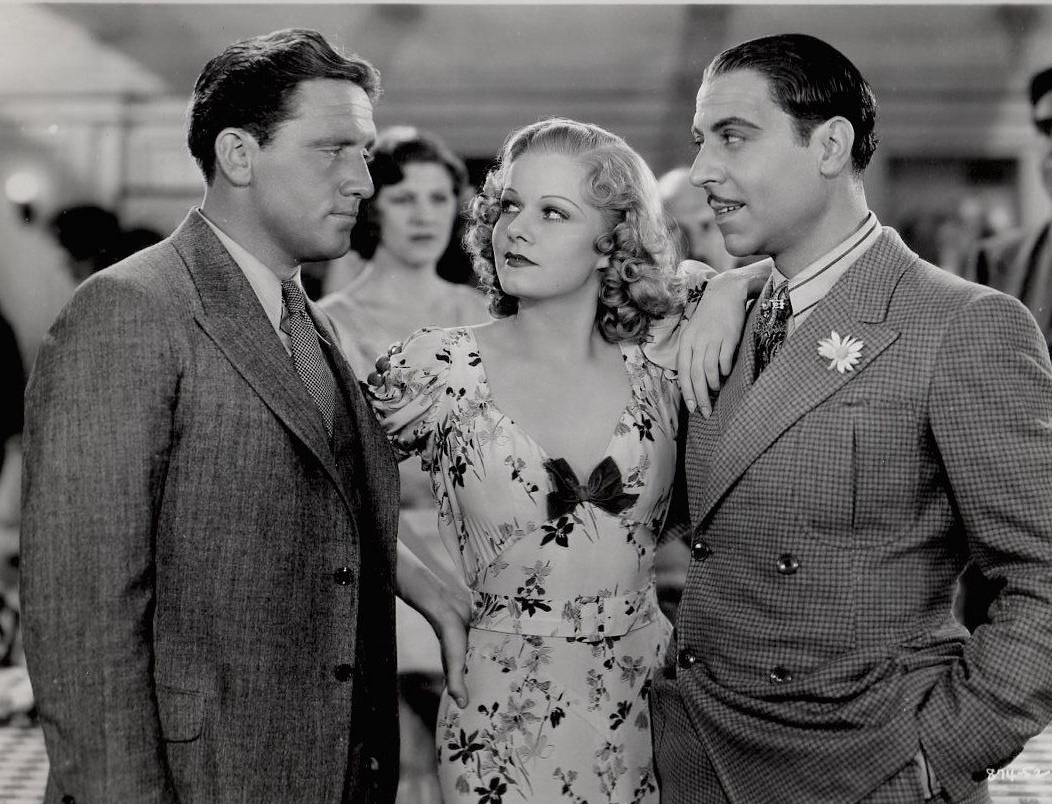
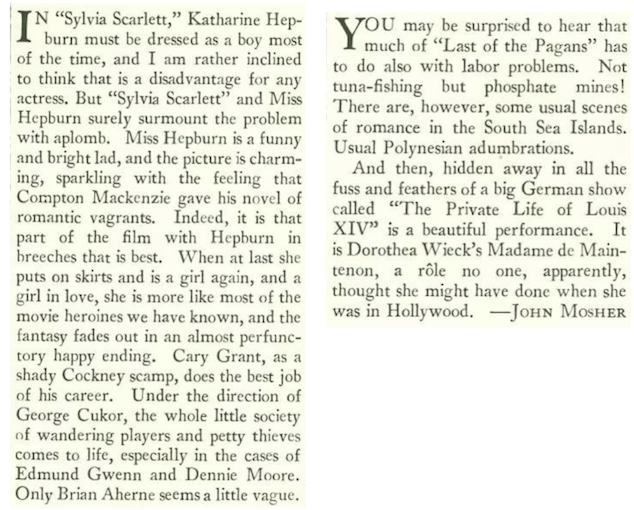
Film critic John Mosher found some bright spots at the movies, praising René Clair’s The Ghost Goes West but feeling sorry for Jean Harlow in her “thankless” role in Riffraff, a film about the tuna-fishing industry.
THE FRIENDLY GHOST…Robert Donat and Patricia Hilliard in the romantic comedy The Ghost Goes West. (IMDB)FISH OUT OF WATER…Spencer Tracy, Jean Harlow, and Joseph Calleia in Riffraff, a drama about a strike at a tuna fishery. “Just why a life of tuna-fishing should be chosen as background for Miss Harlow’s vehicle I can’t imagine, but there it is,” wrote critic John Mosher. (IMDB)
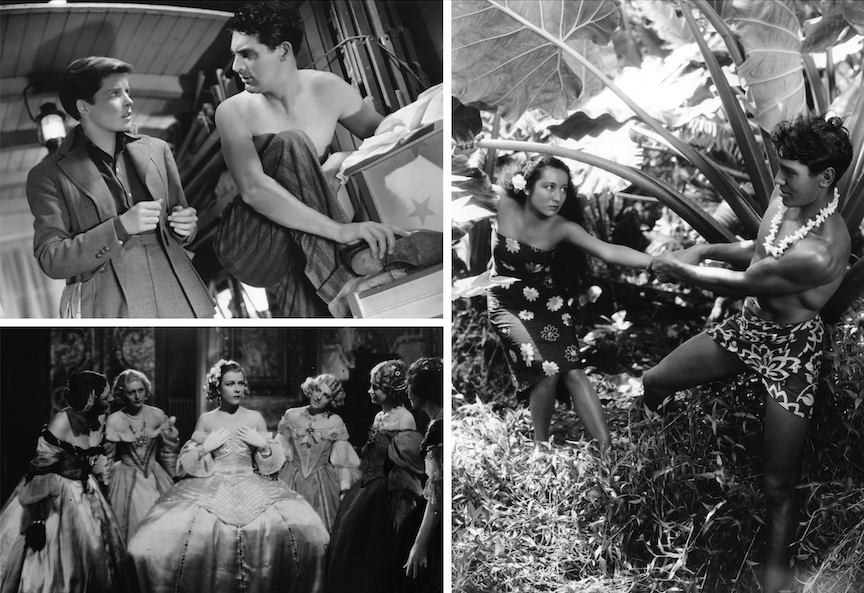
Mosher didn’t know what to make of Katharine Hepburn’s latest film, Sylvia Scarlett, in which she portrayed a con artist disguised as a boy hiding from the police. Despite its major star power and George Cukor as director, the film was a flop.
Mosher also reviewed Last of the Pagans (also about a labor dispute!) and The Private Life of Louis XIV (released in Germany in 1935 as Liselotte von der Pfalz).
SHE’S A MAN, MAN…Clockwise, from top left, Katharine Hepburn and Cary Grant in Sylvia Scarlett; Lotus Long and Mala in Last of the Pagans;Renate Müller in The Private Life of Louis XIV (Liselotte von der Pfalz). Müller would die in 1937 at age 31 under mysterious circumstances. Many believe the Nazis had her killed because she refused to appear in their propaganda films. (academymuseum.org/MGM/IMDB)
* * *
From Our Advertisers
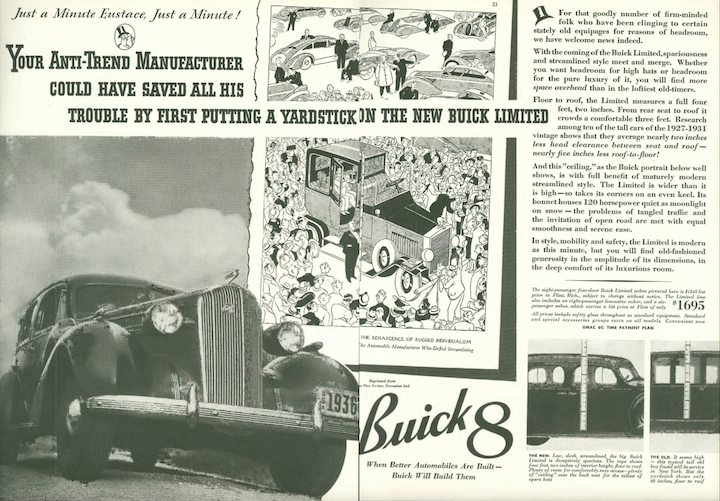
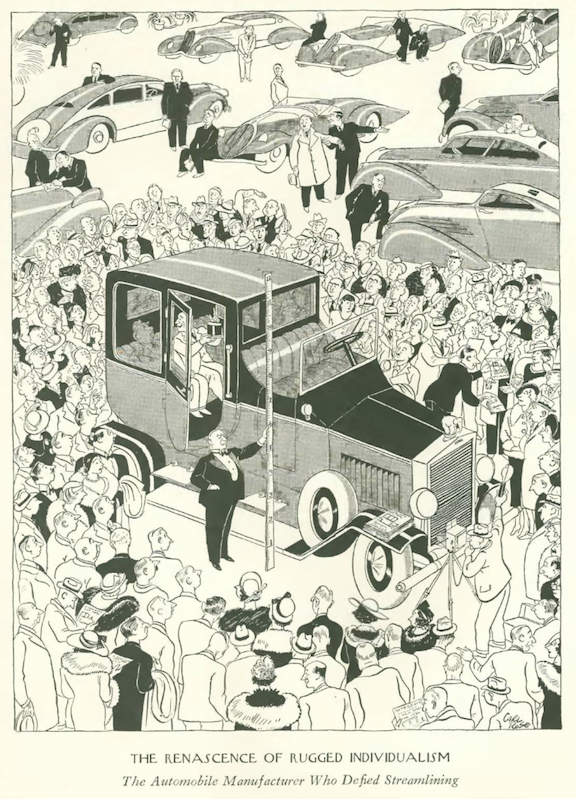
General Motors promoted their Buick Eight in a two-page advertisement that called out Eustace Tilley and reprinted a Carl Rose cartoon from the Nov. 2, 1935 issue…
…here is the original cartoon…
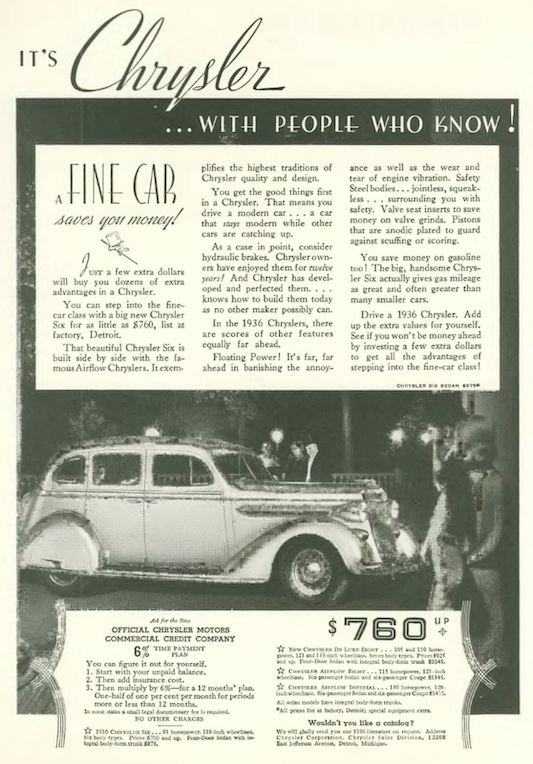
…with the holidays a memory and the Depression still lingering, most of the automobile ads touted economy over luxury, however Chrysler claimed you could have both with this $760 model…
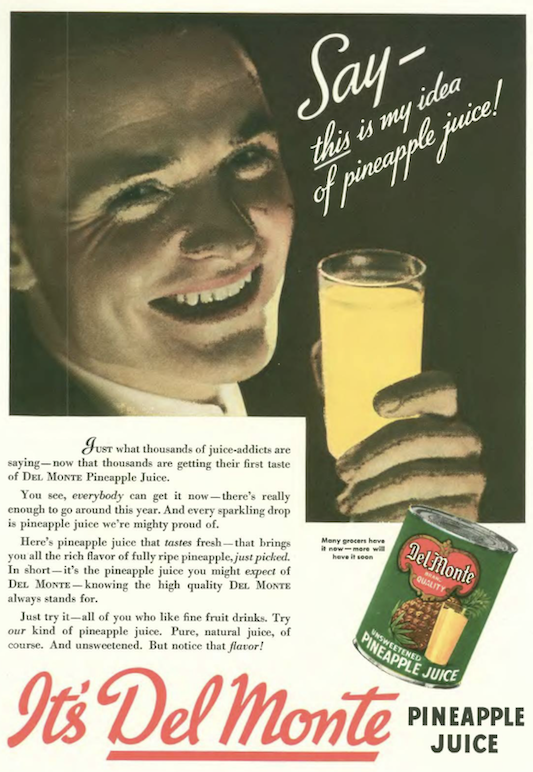
…by the looks of this guy, he probably added three fingers of vodka to his pineapple juice…
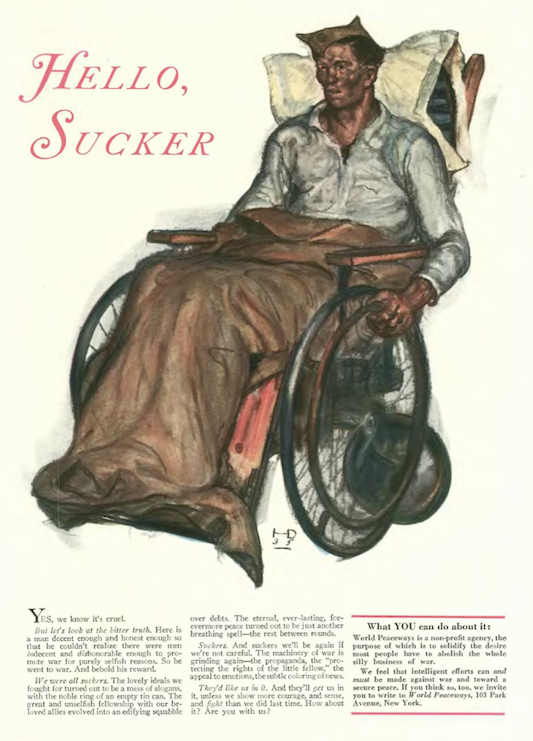
…as noted before, the folks at World Peaceways pulled no punches with their anti-war appeals…
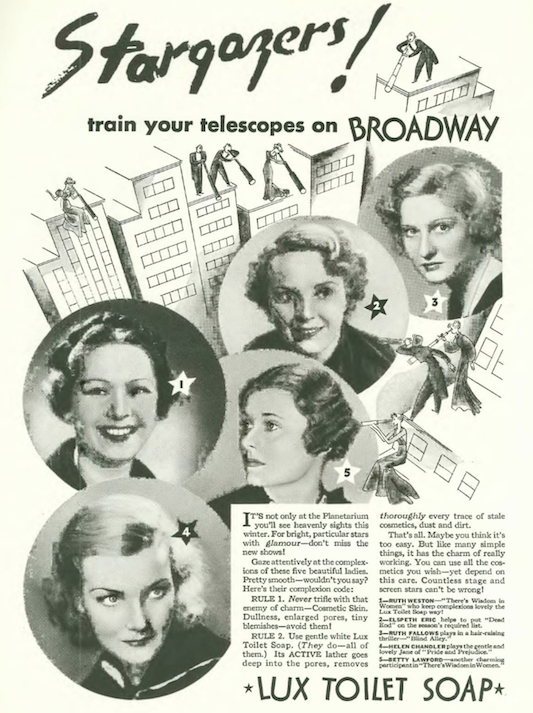
…the makers of Lux were still rolling out Broadway stars to endorse their toilet soap…(Betty Lawford, #5, was an English film and stage actress and a cousin of actor Peter Lawford)…
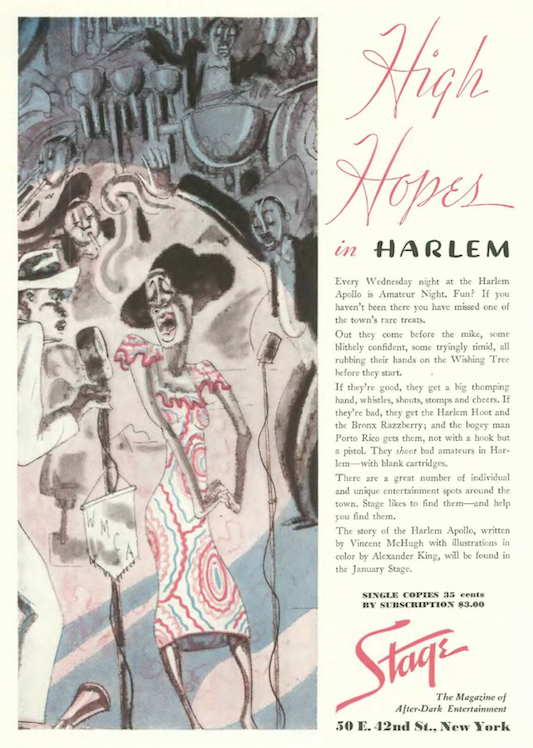
…the inside back cover belonged to Stage magazine…the illustration, “Amateur Night at the Apollo,” is by Alexander King…
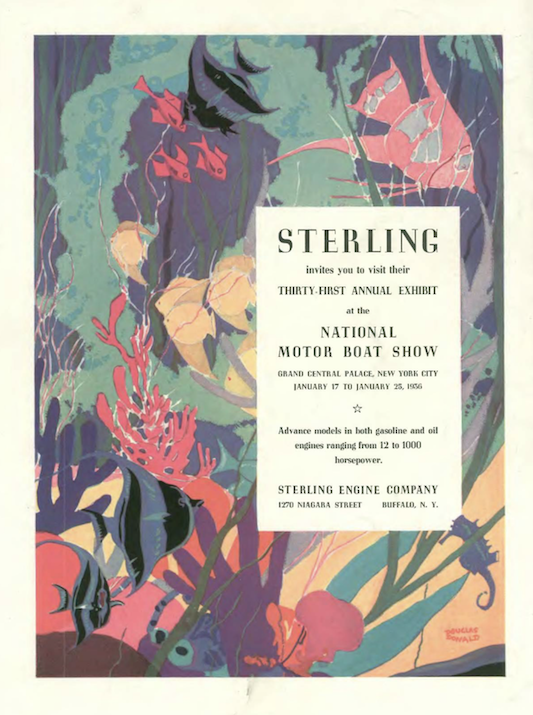
…the Grand Central Palace was hosting the thirty-first annual National Motor Boat Show, a rare back cover not taken by a tobacco company…
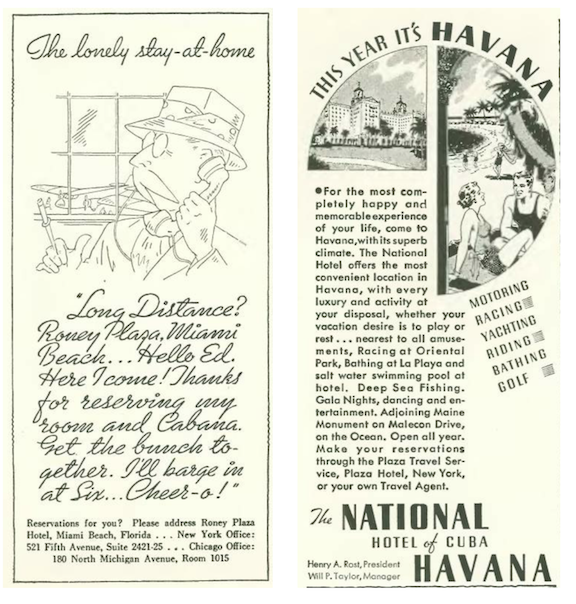
…a couple of ads from back of the book…at left, an Anglophilic appeal from Miami’s Roney Plaza Hotel, and, at right, pre-revolutionary days at the National Hotel in Havana (I had a drink there a few years ago during the Obama thaw…the lobby is beautiful, a classic from another era still hanging on thanks to Canadian and European tourists)…
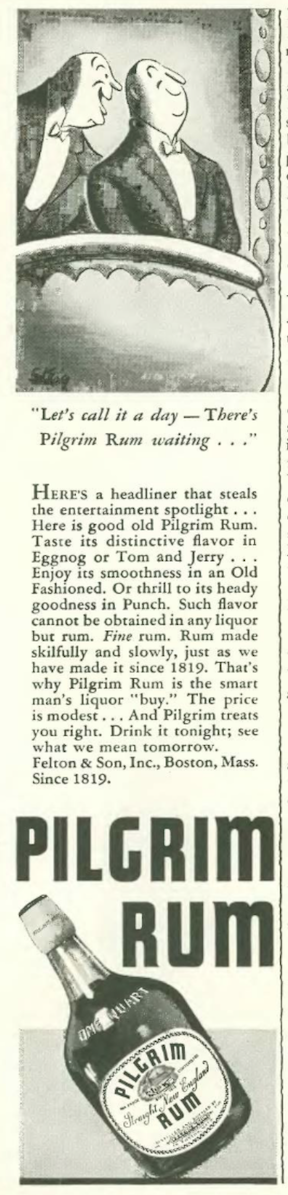
…William Steig continued to illustrate these one-column ads from Pilgrim Rum…
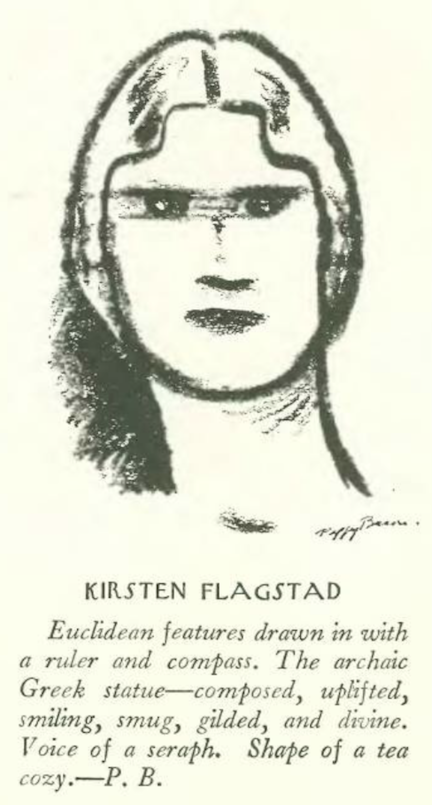
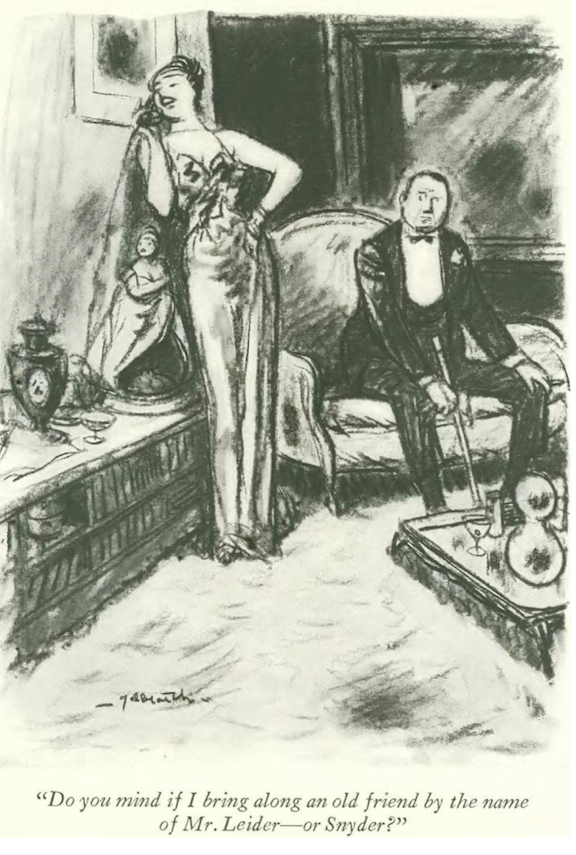
…which segues to our cartoonists…on the bottom of page 3 was this one-column drawing by Peggy Bacon…
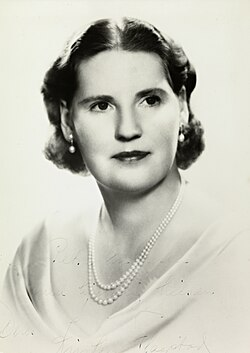
…Norwegian opera singer Kirsten Flagstad (1895–1962) was a famous Wagnerian soprano who made a triumphant debut at the Metropolitan Opera in 1935…
Kirsten Flagstad circa 1940. (Wikipedia)
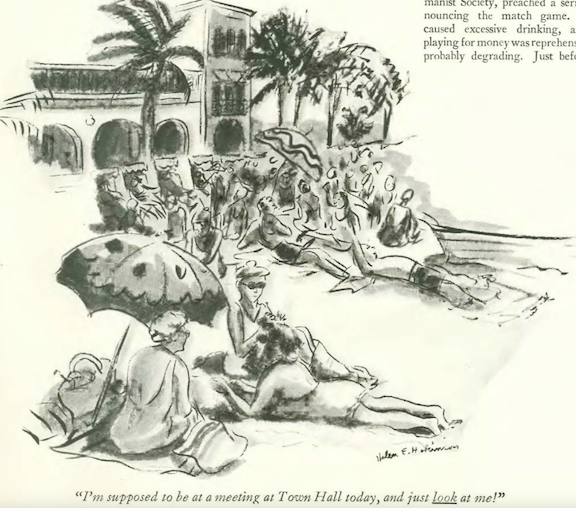
…we continue with Helen Hokinson soaking up some sun…
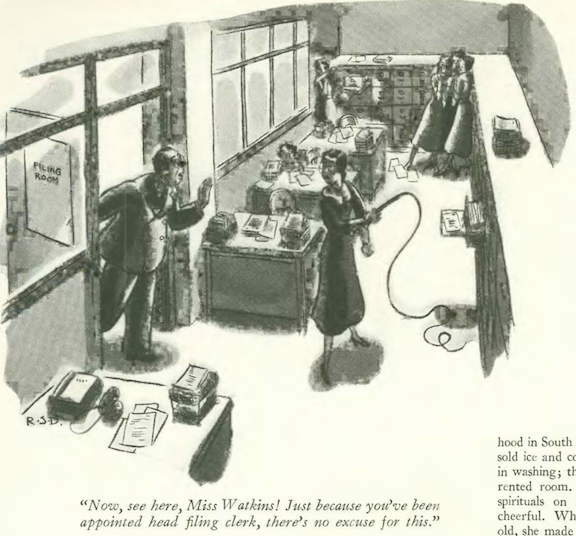
…Robert Day cracked the whip in the steno pool…
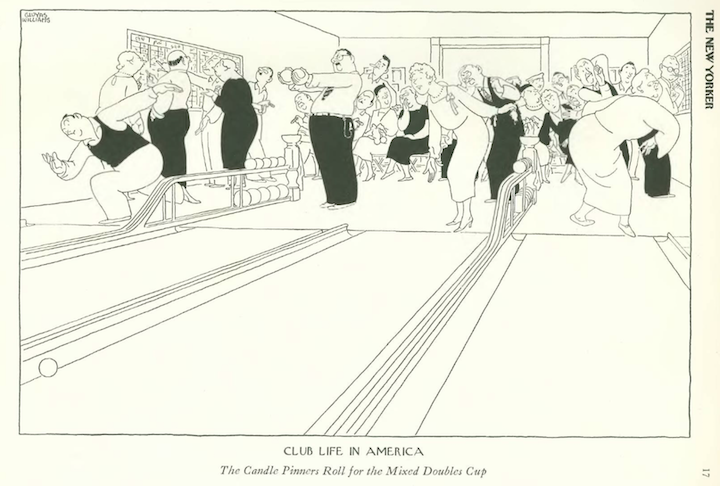
…originally published sideways, another look at club life by Gluyas Williams...
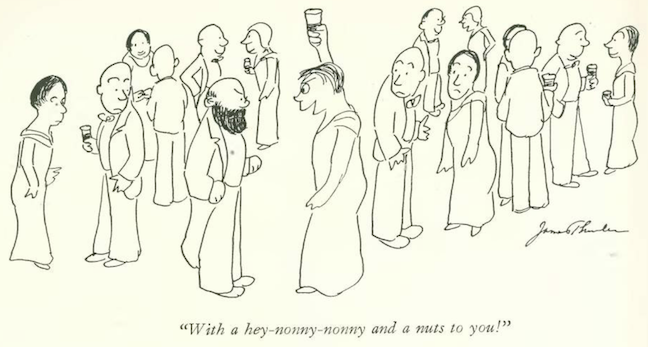
…James Thurber offered up a toast…
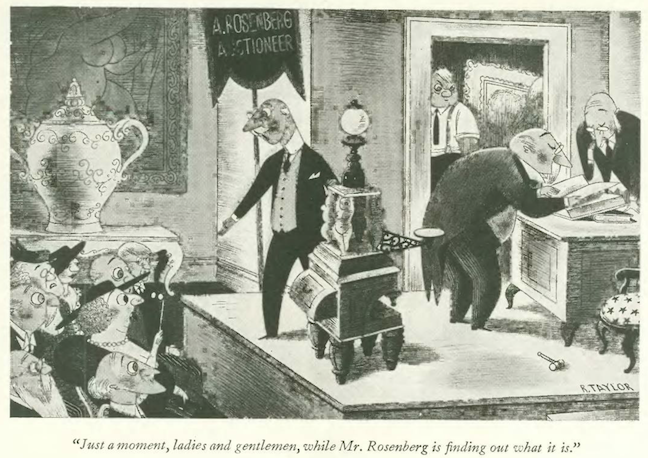
…Richard Taylor looked into an auction mystery…
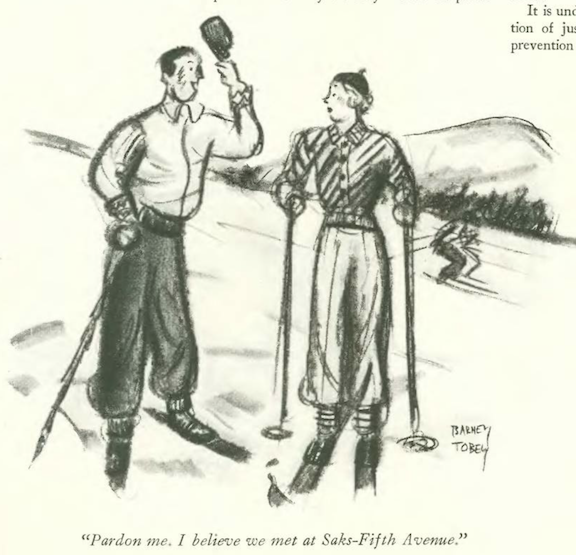
…Barney Tobey gave us a friendly greeting on the slopes…
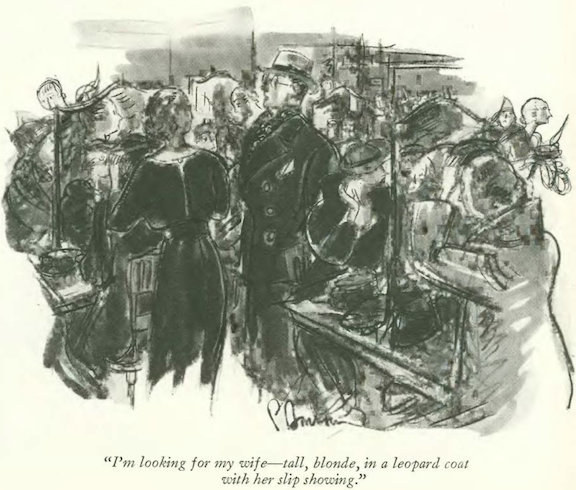
…Perry Barlow was lost in a department store…
…William Crawford Galbraith continued to probe the woes of sugar daddies…
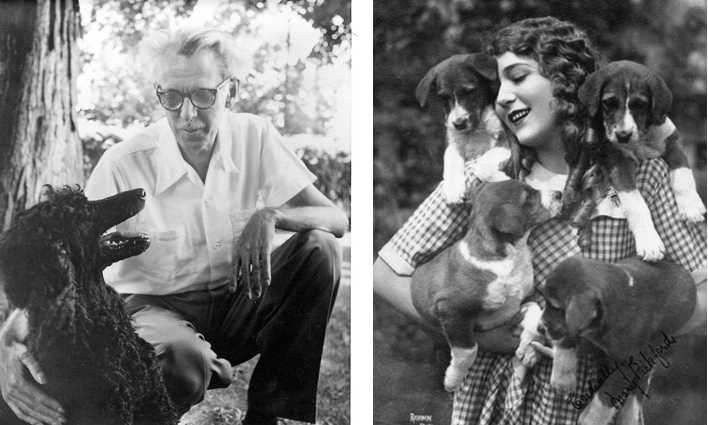
Above: James Thurber with his beloved Christabel, circa 1950s, and Mary Pickford enjoying some puppy love, circa 1920. (The Thurber Estate/Pinterest)
James Thurber and silent film star Mary Pickford had one thing in common; they loved their dogs.
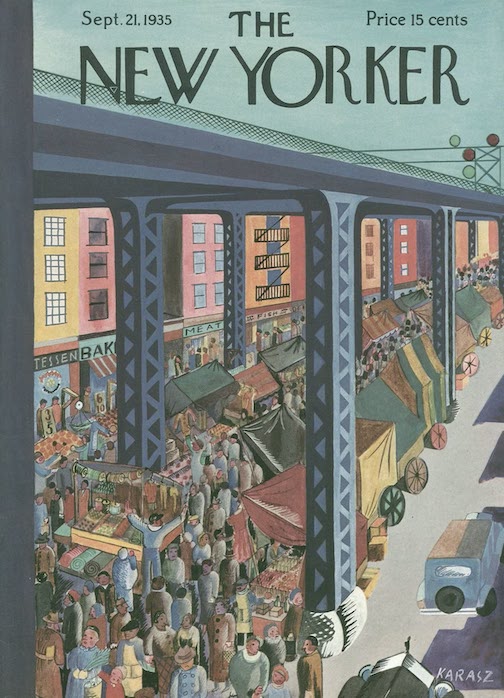
September 21, 1935 cover by Ilonka Karasz. Antiques magazine (March 8, 2018) described Karasz’s covers as “leafy modernism,” evolving from “dynamic modern depictions of urban life to enchanting, peaceful images of leisure activities…recording details like family picnics or the insects and flowers in her garden.” Many depict scenes around Brewster, New York, where she lived with husband, Willem Nyland, a Dutch-American chemist and pianist. Karasz contributed 186 covers across six decades, beginning with her first on April 4, 1925.
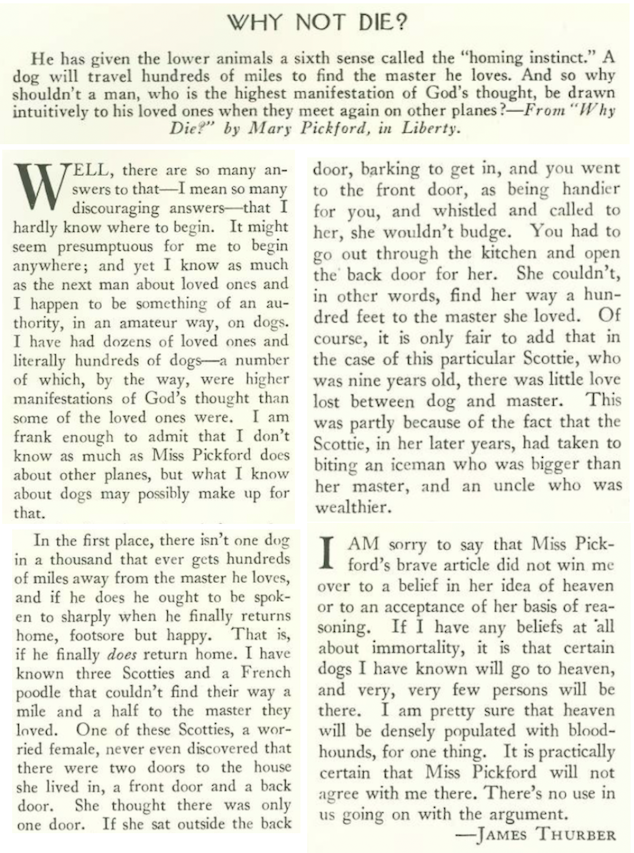
From that point of agreement, however, these contemporaries (Pickford was born in 1892; Thurber in 1894) diverged. Consider Thurber’s response (excerpted) to Pickford’s spiritual musings in a Liberty magazine article titled “Why Die?”
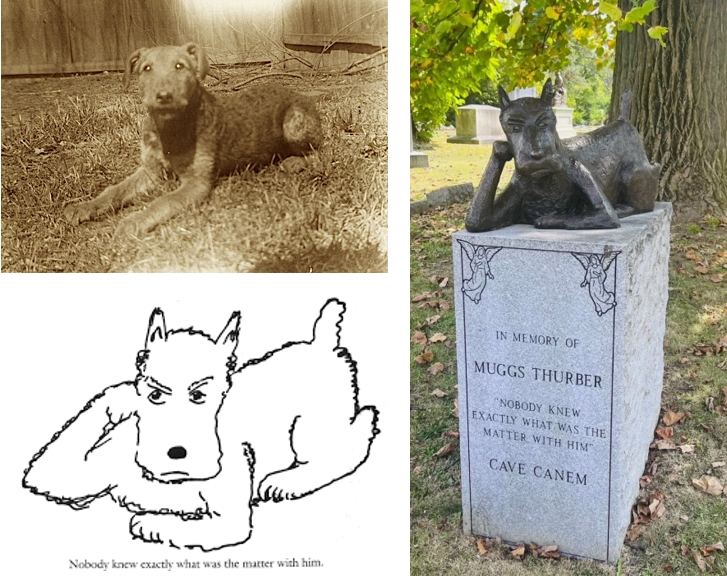
…Thurber contributed this spot drawing for his rebuttal…
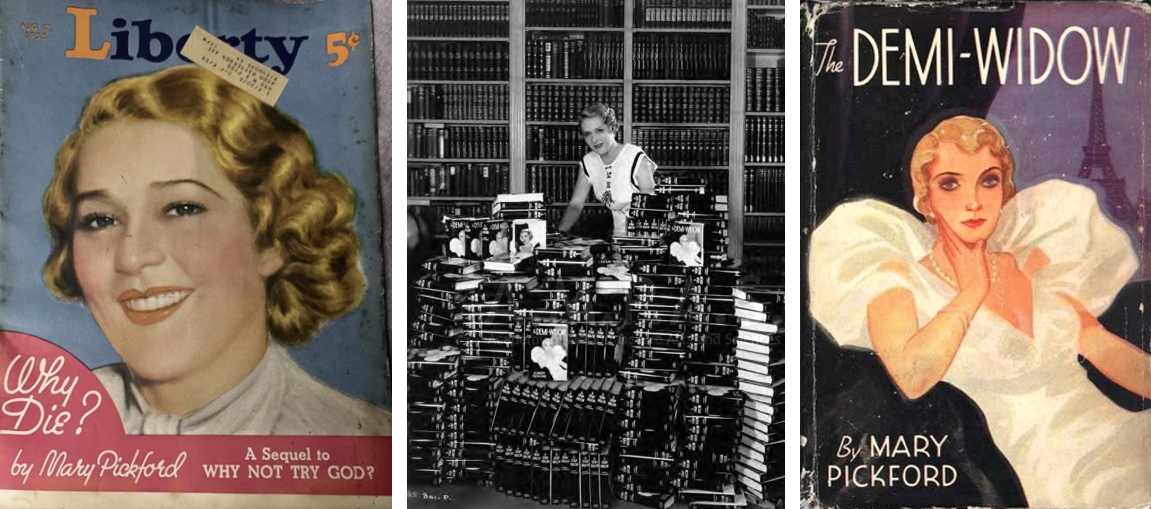
ONE OF A KIND…James Thurber immortalized his Airdale, Muggs, in a 1933 story, “The Dog that Bit People.” Muggs, who died in 1928, has his own monument in Green Lawn Cemetery, Columbus, Ohio, installed in 2021. The inscription, taken from Thurber’s short story, reads, “Nobody knew exactly what was the matter with him.” (https://www.dispatch.com/Facebook)AMERICA’S SWEETHEART was well-known as animal lover. At left, Mary Pickford in 1916; at right, with husband Douglas Fairbanks at their mansion, Pickfair, in the 1920s. (Wikipedia/Pinterest)SECOND LIFE…Mary Pickford gave up acting in 1933 to pursue her writing career. In 1934 she penned the tract, Why Not Try God?, followed in 1935 by another spiritual bestseller, My Rendezvous with Life. That same year she also published a novel, The Demi-Widow. From left, cover of Liberty magazine with her essay, “Why Die?,” Aug. 18, 1935; Pickford posing with copies of The Demi-Widow, ca. 1935. Kirkus Reviews (Aug. 1, 1935) dubbed The Demi-Widow “Good hammock reading for hot days — light and not too dreadful froth…” (picclick.com.au/digitalcollections.oscars.org/Goodreads)
* * *
Rumble Humbled
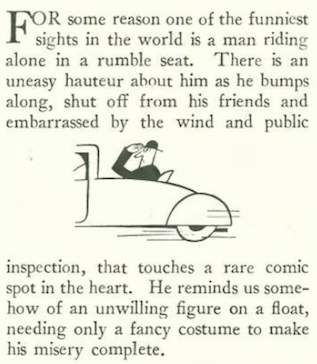
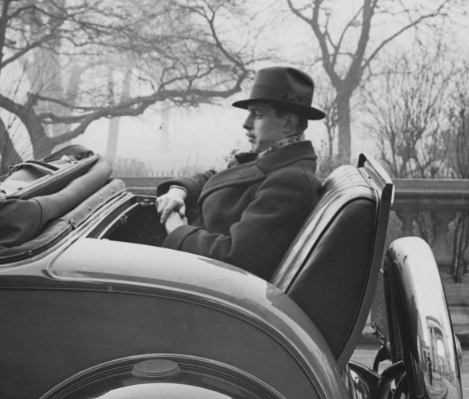
In his “Notes and Comment” E.B. White observed the absurdity of a grown man riding alone in a rumble seat. These seats were phased out by 1939 in American autos (the British, who called them “dickies,” abandoned them a decade later). Rumble seats were unsafe, to be sure, but it was also unpleasant to sit near the exhaust pipe and collect the dust, grit and bugs that would merrily dance around one’s eyes, nose and mouth.
BONE RATTLER…Detail from a photo of man riding in a rumble seat, 1935. (General Photographic Agency/Hulton Archive/Getty Images)
A Red By Any Other Name
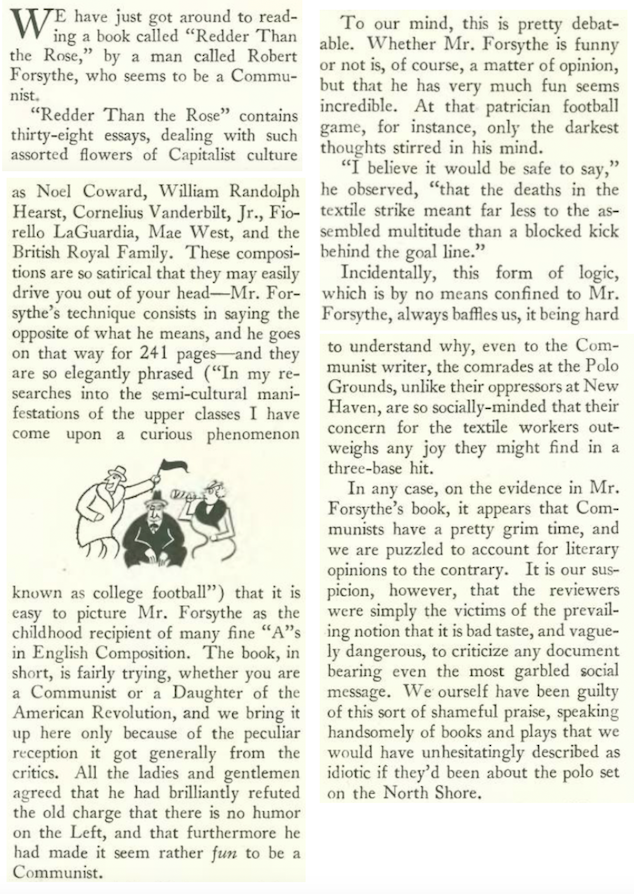
White also considered the intentions behind a new book by Robert Forsythe, Redder Than a Rose. Kyle Crichton (1896-1960) used the Forsythe nom de plume whenever he wrote for communist publications such as the Daily Worker. A former coal miner and steel worker, Crichton was also a writer and editor for Collier’s magazine.
* * *
Fight Night
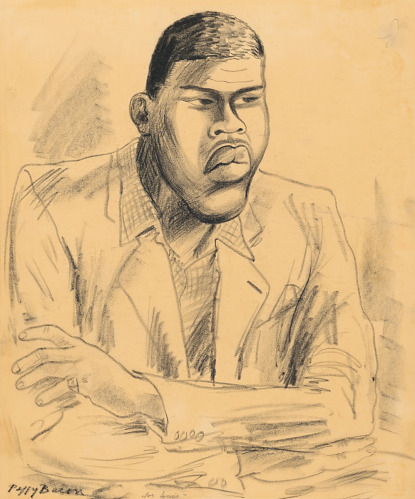
In anticipation of the boxing match between Joe Louis and Max Baer, The New Yorker featured a Peggy Bacon portrait of Louis at the bottom of its events section, which also contained a listing under “Sports” of the upcoming fight at Yankee Stadium. The caption below the Louis portrait was a quote attributed to Bacon: An out-size in juveniles, simple, unruffled, a shade sullen, practically expressionless, hoarding his energies with the inarticulate dignity and pride of some monster vegetable.–P.B.
a better view of Peggy Bacon’s portrait of Joe Louis…
(Smithsonian National Portrait Gallery)
* * *
At the Movies
Well, the fun couldn’t last forever, as critic John Mosher discovered with the latest batch of films to roll out of Tinseltown. Here he tried to make sense of The Big Broadcast of 1936, and gave a closing nod to Dorothy Parker.
A LITTLE OF THIS, A LITTLE OF THAT…Theatre card promoting the appearances of Gracie Allen and George Burns in The Big Broadcast of 1936. These films were essentially long promo pieces for Paramount’s stable of stars. (IMDB)
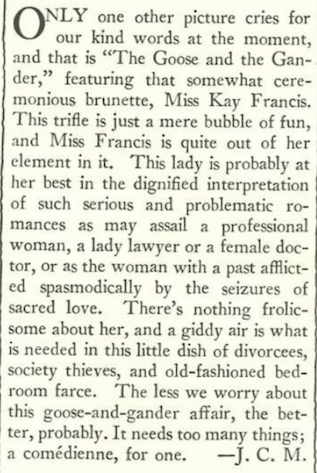
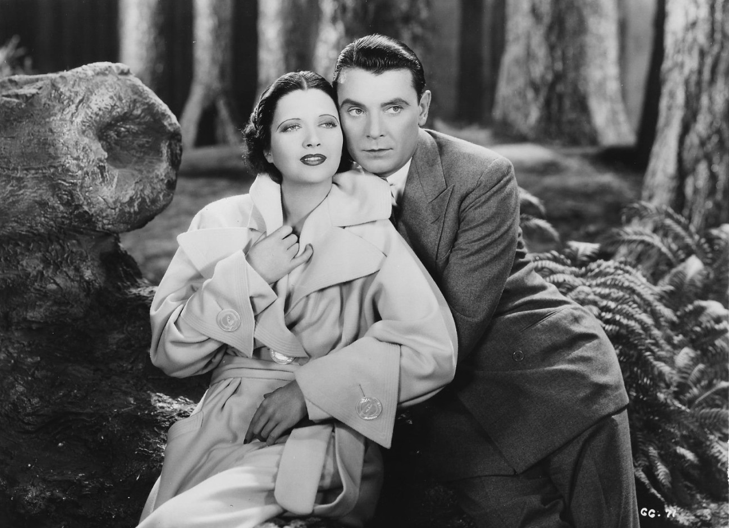
Mosher also took in The Goose and the Gander, featuring Kay Francis, one of Warner Brothers’ biggest stars and one of Hollywood’s highest-paid actors. Known for her roles as a long-suffering heroine and her lavish wardrobes, Mosher found Francis ill-suited to a comedic role.
NEEDED A BIT MORE GOOSE…Kay Francis and George Brent in The Goose and the Gander. (IMDB)
* * *
From Our Advertisers
The 1920s and 30s saw a proliferation of all sorts of electric gadgets, one of them being the toaster, here serving as a centerpiece for a cocktail party…
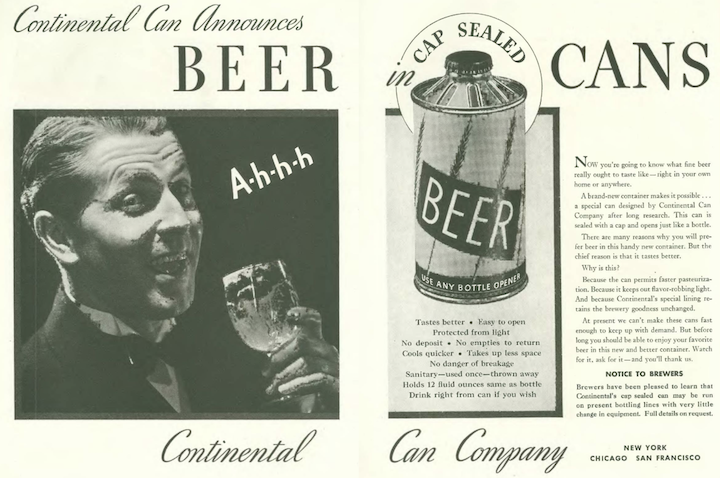
…before 1935 beer cans were not feasible because they couldn’t withstand the internal pressure of a carbonated liquid…it was the American Can Company (not Continental) that solved the problem by developing an internally-lined can that could contain the pressure…the lining also prevented the beer from tasting metallic…
…R.J. Reynolds continued to build its tobacco empire by lining up scads of famous athletes to endorse the health benefits of their Camel cigarettes…
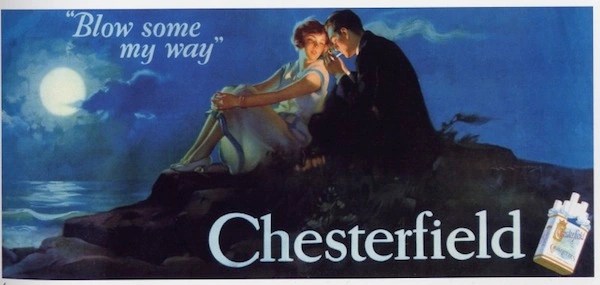
… Liggett & Myers, who in 1926 launched their “Blow some my way” advertising campaign to target women smokers, continued to employ images of young lovers in romantic settings to push their Chesterfields…
…for reference, a Chesterfield ad from 1931…
…on to our cartoons, we start with this spot from Perry Barlow…
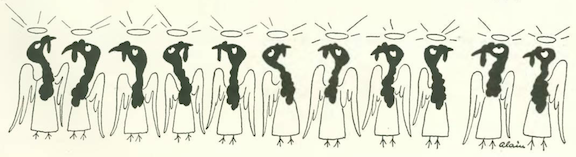
…Alain looked in on a tender moment between father and son…
…Charles Addams found a glitch on the assembly line…
…Peter Arno drew up two old toffs looking for some adventure…
…Robert Day offered up the latest twist in the culinary arts…
…and we close with Helen Hokinson, who was just passing the time…
Above, left, a 1935 portrait of Gertrude Stein by Carl Van Vechten; right, Gertrude Stein and Alice B. Toklas arriving in New York aboard the French Line’s SS Champlain in 1934. (Library of Congress/AP)
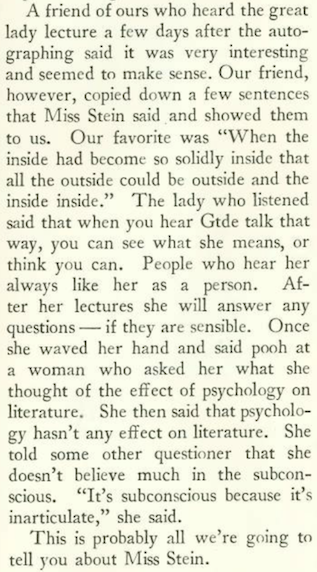
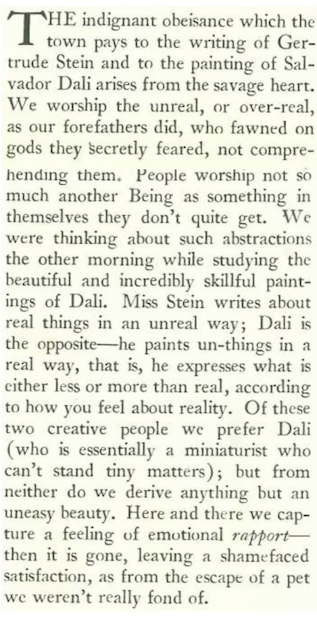
Much of America’s literary world was abuzz about the arrival of Gertrude Stein in New York after her nearly three-decade absence from the States. Audiences were mostly receptive to Stein’s lectures, even if they were largely unintelligible, but The New Yorker would have none of it.
Nov. 17, 1934 cover by Rea Irvin.
Stein (1874–1946) visited the U.S. at the urging of friends who suggested that a lecture tour might help her gain an American audience for her work. She crisscrossed the country for 191 days, delivering seventy-four lectures in thirty-seven cities.
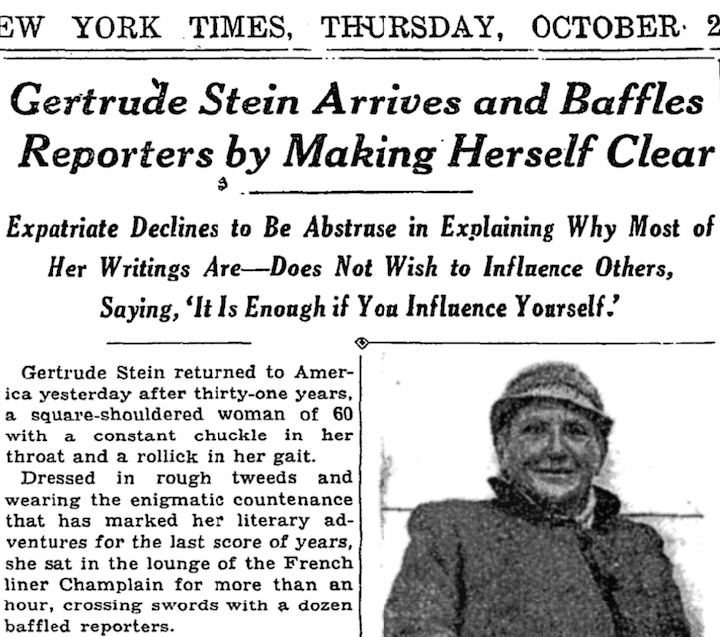
Writing for the Smithsonian Magazine (October 2011), Senior Editor Megan Gambino notes that publishing houses regarded Stein’s writing style as incomprehensible (Gambino writes that shortly after her arrival in the U.S., “psychiatrists speculated that Stein suffered from palilalia, a speech disorder that causes patients to stutter over words or phrases”), but in 1933 “she at last achieved the mass appeal she desired when she used a clearer, more direct voice” in The Autobiography of Alice B. Toklas. However, Stein was still best known in the U.S. for her “insane” writings, as one New York Times reporter described Stein’s work upon the writer’s arrival in New York. Excerpts from the Oct. 25, 1934 edition of the Times:
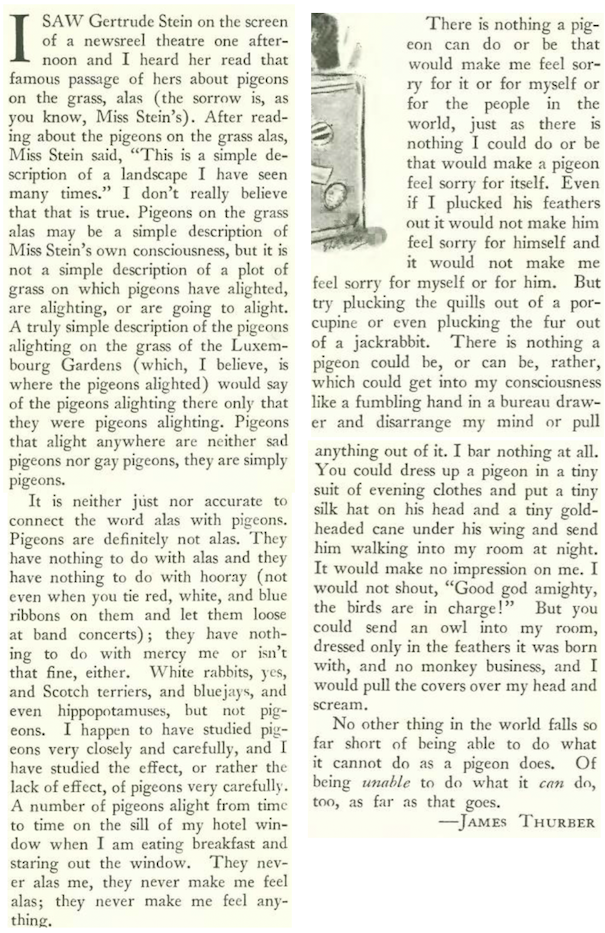
Stein had also achieved success in America via her libretto to Virgil Thomson’s opera Four Saints in Three Acts. Prior to her visit, Stein was featured in a newsreel reading the “pigeon” passage from the libretto, which James Thurber satirized in this piece titled “There’s An Owl In My Room.” Excerpts.
Here is a YouTube clip of the newsreel satirized by Thurber. Stein begins her “pigeon” reading at the 30-second mark:
If Thurber found the libretto ridiculous, it was an opinion not necessarily shared by audiences who attended Four Saints in Three Acts, which premiered in Hartford, Connecticut, before making a six-week run on Broadway.
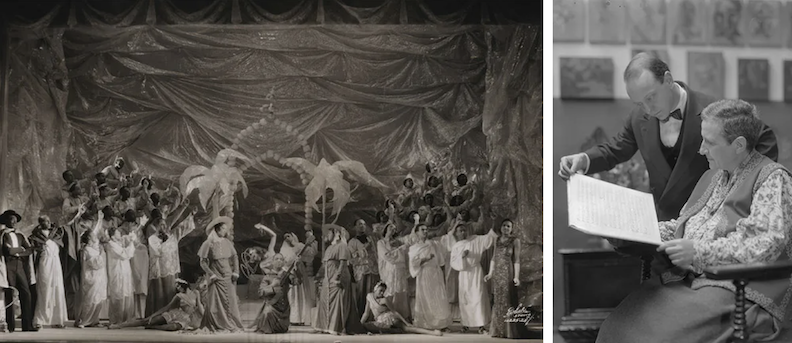
SAINTS AND PIGEONS…The original cast of Four Saints in Three Acts, onstage at the Wadsworth Atheneum, Hartford, 1934; at right, Gertrude Stein reviews the libretto for Four Saints with American composer Virgil Thomson, 1934. (Harold Swahn/Bancroft Library, UC Berkeley)
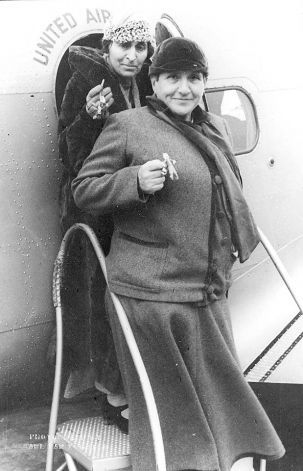
Since Stein had never seen the opera performed, writer and photographer Carl Van Vechten convinced Stein and Toklas to fly on an airplane for the first time in order to be able to see the play in Chicago.
FLIGHT INSURANCE…Stein and Toklas were anxious about flying, so Van Vechten gave each a small Zuni fetish—a good luck charm as they prepared to board their plane at Newark. (Boatwright Memorial Library, The University of Richmond)
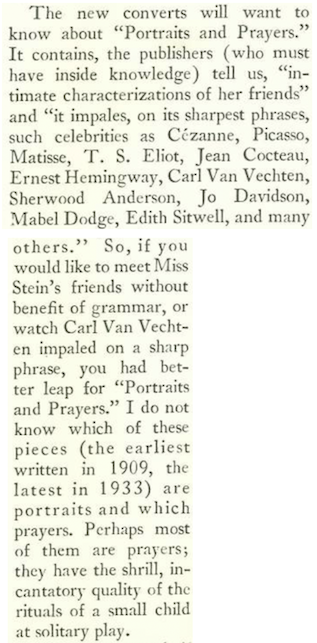
Thurber wasn’t the only New Yorker writer to throw shade on Stein’s visit. In his “Books” column, Clifton Fadiman described Stein as a “mamma of dada” and a “Keyserling in divided skirts” (Hermann Keyserling was a non-academic German philosopher known for his platitudinous, obscure writings). Excerpt:
Fadiman continued by excoriating Stein’s latest book, Portraits and Prayers, likening its “shrill, incantatory” quality to “the rituals of a small child at solitary play.”
* * *
Over the Rainbow
We leave Gertrude Stein for the time being and check in with Lois Long, who was sampling the fall attractions of the New York nightclub scene in “Tables for Two.” In these excerpts, the 32-year-old Long continued her pose as a much older woman (“about to settle down with a gray shawl”) as she bemoaned the bourgeoisie excess of places like the Colony, once known for its boho, speakeasy atmosphere. And then there was the Rainbow Room, with its organ blaring full blast to the delight of gawking tourists.
LOST IN NEW YORK…Lois Long lamented the demise of cafe life in Manhattan; from left, the Colony, circa 1940, which went from boho to upscale; the 21 Club, a favorite Prohibition-era haunt of Long’s where she was suddenly a nobody; and high above the city, the Rockefeller Center’s Rainbow Room, and its interminable organ music. (Pinterest/Alice Lum via Daytonian in Manhattan/nycago.org)
* * *
From Our Advertisers
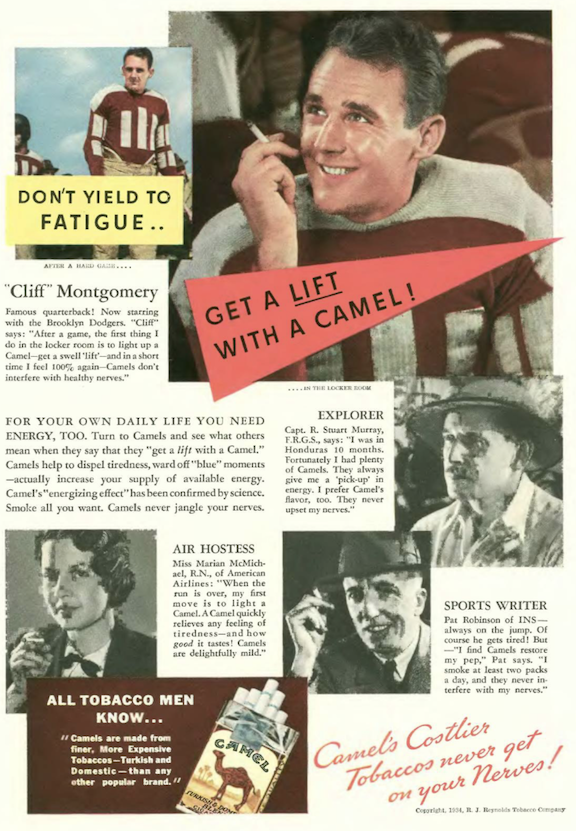
Just one ad from the Nov. 17 issue (more to come below)…the latest athlete to attest to the energizing effects of Camel cigarettes…Cliff Montgomery (1910–2005) was famed for a hidden ball trick play that led one of the greatest athletic upsets—Columbia’s 7-0 win over Stanford in the 1934 Rose Bowl. Montgomery would play one year with the NFL Brooklyn Dodgers, and would later earn a Silver Star for his heroism during World War II…
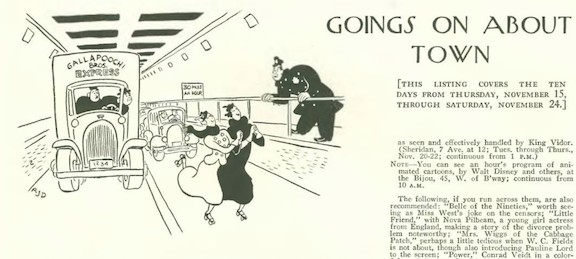
…on to our cartoonists, we begin with Robert Day’s jolly illustration for the “Goings On About Town” section…
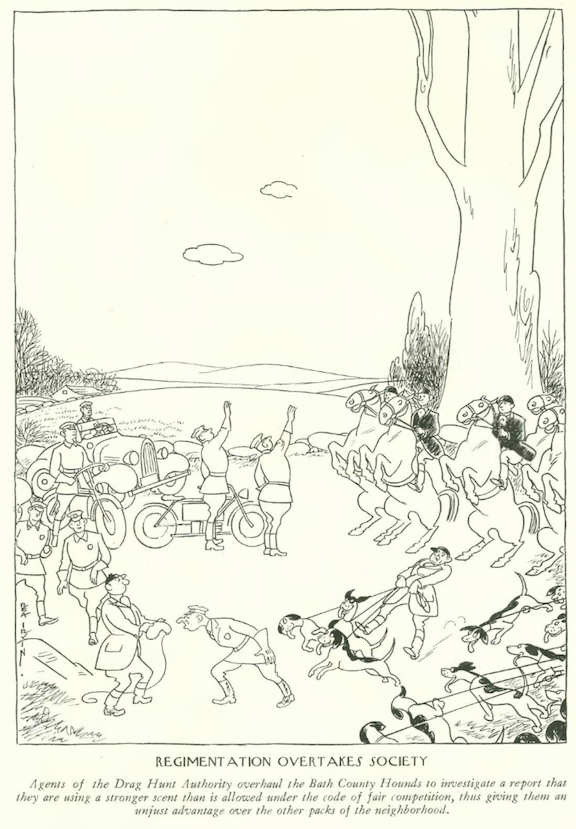
…Rea Irvin looked into fair play among the fox hunting set…
…Garrett Price gave us a tender moment among the bones at the American Museum of Natural History…
…and Peter Arno introduced two wrestlers to an unwelcoming hostess…
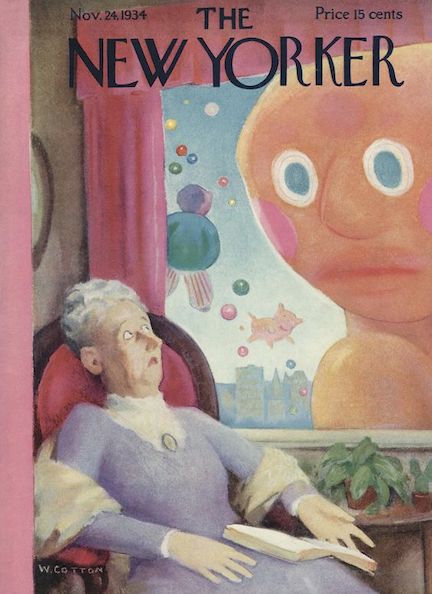
…on to Nov. 24, 1934 issue, and the perils of the Macy’s Thanksgiving Day Parade as illustrated on the cover by William Cotton…
Nov. 24, 1934 cover by William Cotton.
…where we find still more scorn being heaped upon Gertrude Stein. “The Talk of the Town” offered this observation (excerpt):
…and E.B. White had the last word on Stein in his Dec. 1, 1934 “Notes and Comment” column:
* * *
There Goes the Neighborhood
Returning to the Nov. 24 issue, Alberta Williams penned a lengthy “A Reporter at Large” column, titled “White-Collar Neighbors,” about the new Knickerbocker Village development in the Lower East Side. Real estate developer Fred French razed roughly one hundred buildings to build what has since been criticized as an example of early gentrification in Manhattan. Williams assessed the development after more than a year of construction, finding that despite federal funding, the leasing company had yet to rent any apartments “to Negroes or Orientals.” Although the development was meant to serve some of the families it displaced, the vast majority were forced to move back into slums due to escalating rents.
BREATHING ROOMS…Knickerbocker Village in 2019. To make way for the development, one hundred buildings were razed in the “Lung Block,” so named because of its high tuberculosis mortality rate. The development continues to be designated as affordable housing. (Wikipedia)
* * *
Dollmaker
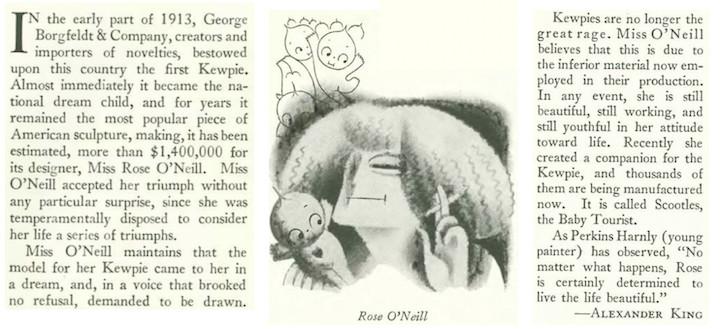
Raised in rural Nebraska, at an early age Rose O’Neill (1874–1944) demonstrated an artistic bent, and was already a published illustrator and writer when she drew her first images of “Kewpie” around the year 1908. A German doll manufacturer began producing a doll version of Kewpie in 1913, and they became an immediate hit, making O’Neill a millionaire and for a time the highest-paid female illustrator in the world. When Alexander King penned a profile of O’Neill, Kewpies were no longer the rage, but O’Neill was nevertheless determined to find success in a new doll line. Excerpts:
QP QUEEN…Clockwise from top left, Rose O’Neill circa 1910, just before her Kewpie dolls made it big; Kewpie doll in original box, undated; as the Kewpie craze faded in the 1930s, O’Neill tried to launch a new line called Little Ho Ho, a laughing baby Buddha, but before production plans were finalized the doll factory burned to the ground; a 1935 ad for a Rose O’Neill-branded “Scootles” doll, another attempt at a comeback. (Wikipedia/Pinterest/museumobscura.com)
* * *
Last Call
Lois Long was back with another installment of “Tables for Two” and in these excerpts she found the Central Park Casino a welcome place to hang out, apparently unaware that Parks Commissioner Robert Moses had already served an eviction notice to the Casino’s owners (Moses would tear down the Casino in 1936, mostly to settle a personal vendetta). Long also found respite at the Place Piquale, which featured the musical stylings of Eve Symington.
BYE BYE…The Central Park Casino was not long for the world when Lois Long paid an enjoyable visit in November 1934. Long also found a good time at the Place Piquale, which featured the “startling,” deep voice of cabaret singer Eve Symington. (centralpark.org/Pinterest)
At the Place Piquale, Long was “grateful” to see that silent film star Louise Brooks was also a good dancer. An icon of Jazz Age flapper culture, Brooks loathed the Hollywood scene and the mediocre roles it offered, and after a stint making films in Europe she returned to the States, appearing in three more films before declaring bankruptcy in 1932. A former dancer for the Ziegfeld Follies, Brooks had turned back to dancing in nightclubs to make a living.
IT’S A LIVING…Promotional photo for the Place Piquale featuring Louise Brooks (sans her familiar flapper bob) and Dario in “Spectacular Interpretive Dances,” April 17, 1934. (books0977.tumblr.com)
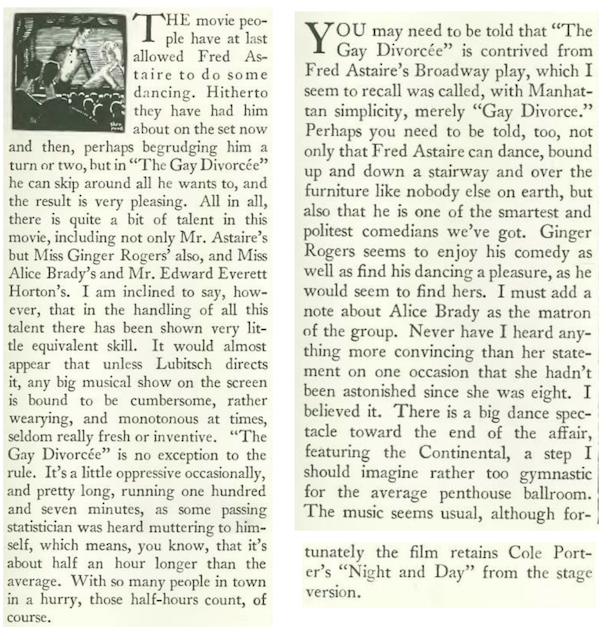
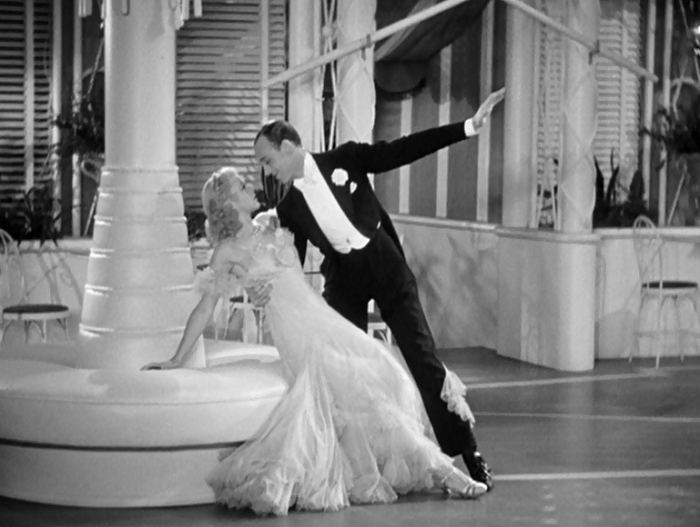
…and dance remains a theme with John Mosher’s film review of the Fred Astaire and Ginger Roger musical The Gay Divorcee, which was based on the 1932 Broadway musical Gay Divorce starring Astaire and Claire Luce.
YOU WILL HAVE TO DANCE BACKWARD, IN HEELS…Ginger Rogers and Fred Astaire trip the light fantastic in The Gay Divorcee. (precode.com)
* * *
Using Her Heads
Clifton Fadiman praised Peggy Bacon’s collection of caricatures, Off With Their Heads!, which included drawings of fellow New Yorker contributors as well as various Algonquin Hotel acolytes. Excerpt:
HEAD HUNTER…Peggy Bacon offered up caricatures of forty celebrities in her new book, Off With Their Heads! Bacon (1895–1987) contributed cartoons as well as poetry and fiction to The New Yorker from 1927 to 1950. Clockwise, from top left, title page with Bacon’s self-portrait; undated photo of Bacon, likely circa 1930; caricatures of Dorothy Parker, Carl Sandburg and Heywood Broun. (villagepreservation.org/printmag.com/Wikipedia–Peter A. Juley & Son)
* * *
More From Our Advertisers
“Beautiful Vanderbilts” Mrs. Reginald Vanderbilt and Miss Frederica Vanderbilt Webb wowed one unnamed dermatologist who discovered that both had 20-year-old skin even though they were seven years apart! “Mrs. Reginald” was Gloria Morgan Vanderbilt, who was thirty when this ad was produced (Miss Frederica was apparently twenty-three). We’ve met Gloria Morgan Vanderbilt before, shilling for Pond’s—she was the maternal grandmother of television journalist Anderson Cooper, and earned her “bad mom” rep from Vanderbilt vs. Whitney, one of America’s most sensational custody trials…
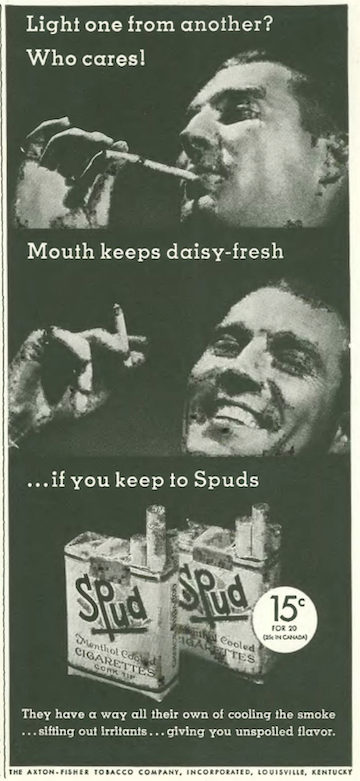
…we move from skin care to who cares…in this case how many Spud cigs you smoke…hell, smoke three packs a day if you like, the cooling menthol will always keep you feeling fresh even as your lungs gradually darken and shrivel up…
…and here’s a lesson from the makers of Inecto hair dye, no doubt a company solely run by men, who schooled wives with the advice that you’d better color that gray hair pronto or your hubby will kick you to the curb…
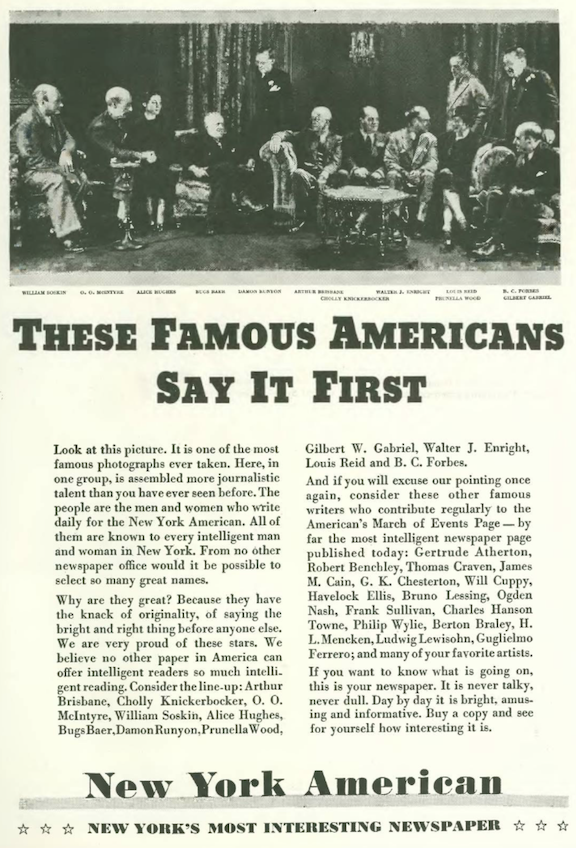
…the New York American was a Hearst broadsheet known for its sensationalism, however it did claim Damon Runyon, Alice Hughes, Robert Benchley and Frank Sullivan among its contributors…the morning American merged with the New York Evening Journal to form the American and Evening Journal in 1937. That paper folded in 1966…
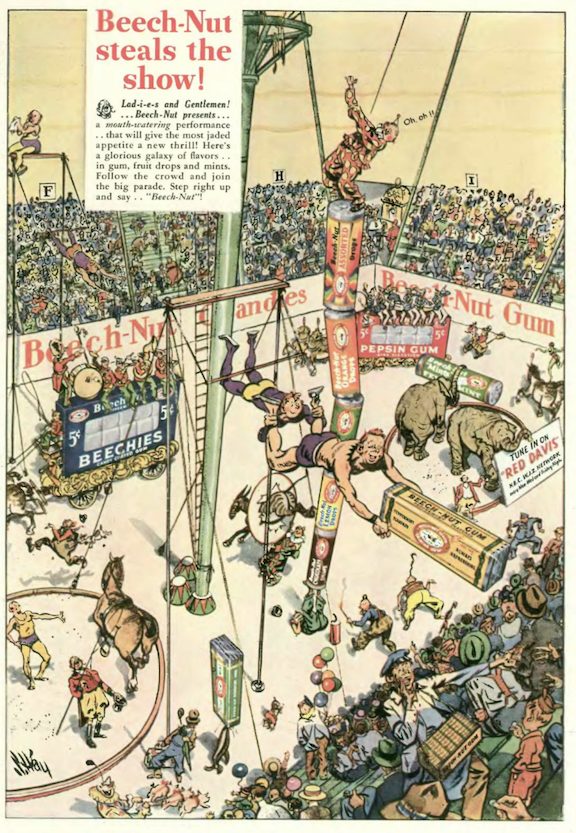
…illustrator Stuart Hay drew up this full page ad for the makers of Beech-Nut candy and chewing gum…when I was a kid we used to call this “grandpa gum”…
…on to our cartoonists, we begin with a Thanksgiving spot by Alain (Daniel Brustlein)…
…Barbara Shermund delivered another life of the party…
…George Price was finally bringing his floating man back to earth…
…Otto Soglow gave us an unlikely detour…
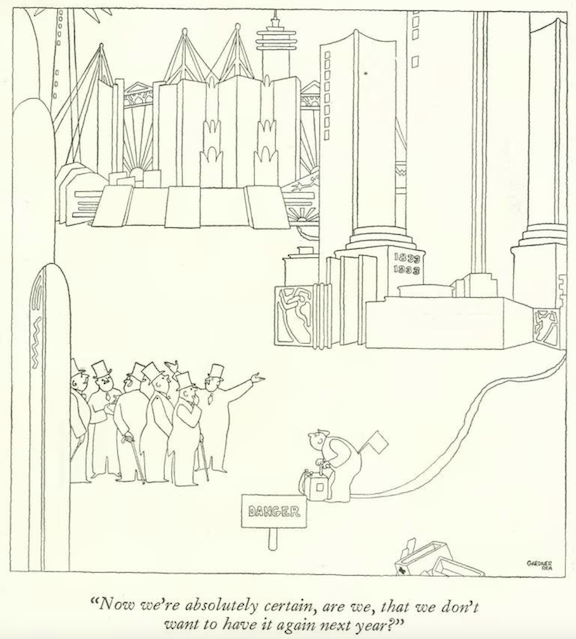
…Gardner Rea signaled the end to the 1933-34 Chicago World’s Fair…with a boom…
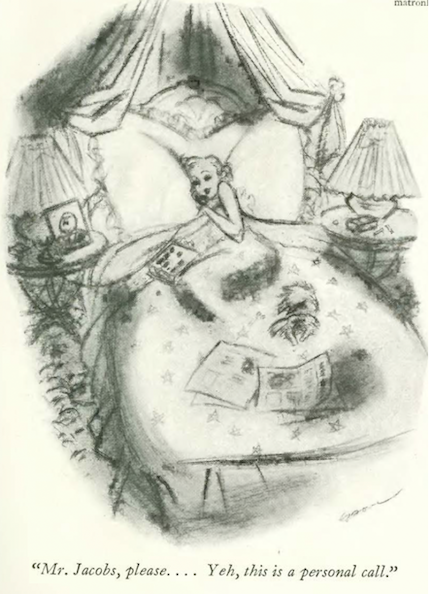
…Leonard Dove dialed up a familiar trope…
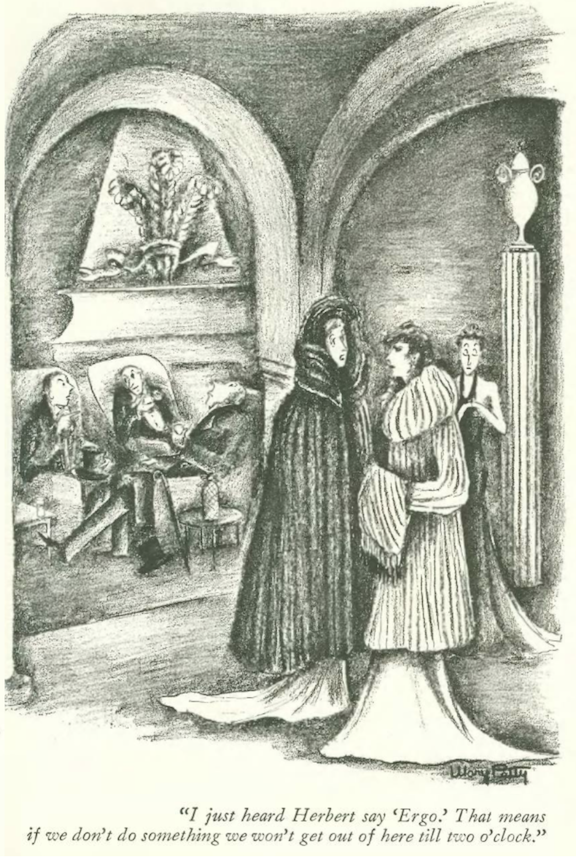
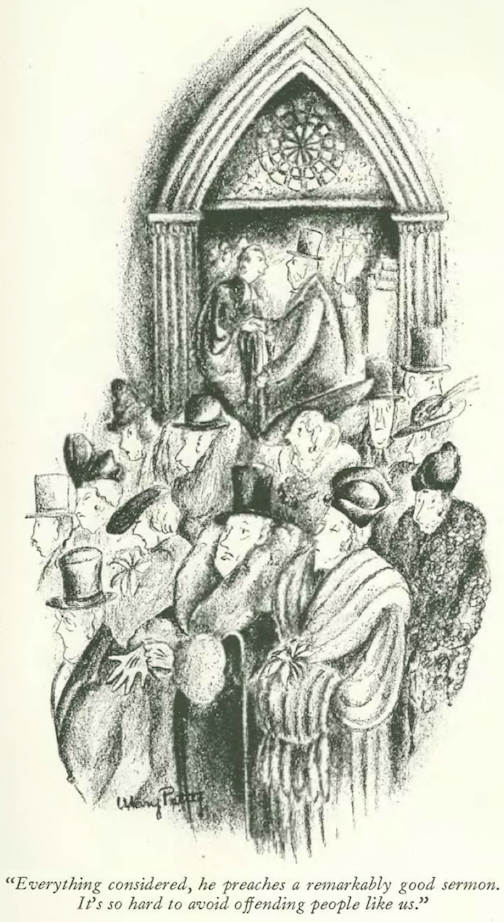
…and we close on a more pious note, with Mary Petty…
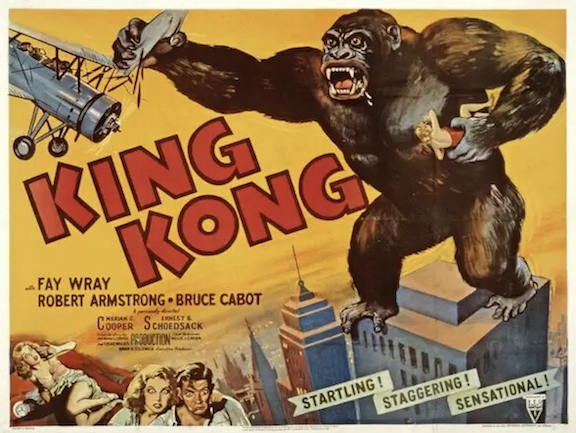
One of Hollywood’s most famous motion pictures was a story about a giant ape that (literally) falls for a beautiful woman.
March 11, 1933 cover by Rea Irvin.
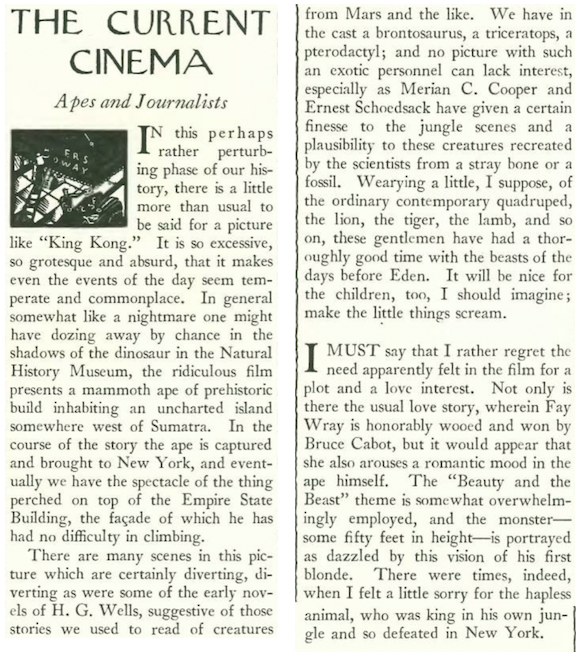
New Yorker film critic John Mosher found the premise of King Kong ridiculous, but he also found many of its scenes diverting, especially those featuring Kong and a number of prehistoric creatures (created by Marcel Delgado), miniature models brought to life through stop-motion animation techniques pioneered by Willis O’Brien and his assistant, Buzz Gibson. Mosher’s review:
THE TRIALS OF GIANT APEHOOD…King Kong battled nature and man in the eponymous 1933 film that featured a silly love story between actors Bruce Cabot and Fay Wray (lower right, with Robert Armstrong); this being a pre-Code film, Wray had trouble keeping on her blouse, although a scene depicting Kong undressing her and sniffing his fingers was cut, as were some of the more gruesome scenes featuring Kong stomping and chomping his way through Manhattan. (IMDB)
By today’s standards the film’s special effects are quite dated, but they astonished audiences in 1933 and again in a 1952 re-release.
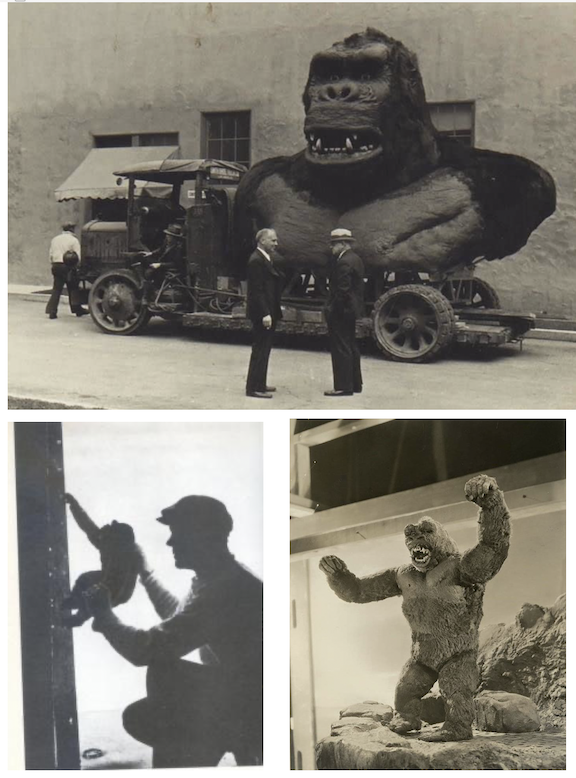
NEW YORK OR BUST…A huge bust of King Kong’s head and torso was fashioned from wood, cloth, rubber and bearskin by Marcel Delgado, Buzz Gibson and Fred Reese. Three operators inside the bust used metal levers, hinges, and an air compressor to manipulate the mouth and facial expressions. In addition, two versions of the ape’s right arm were constructed of steel, rubber and bearskin — one was non-articulated, mounted on a crane, and the other had articulated fingers that allowed Kong to grasp Fay Wray in close-ups (below). A separate non-articulated leg was also mounted on a crane for scenes depicting Kong stomping on villagers. (reddit.com/Pinterest)
* * *
Oh Baby
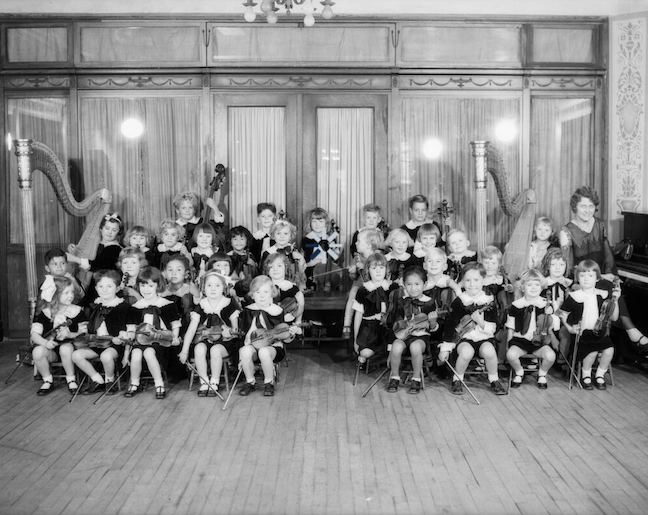
Before child labor laws were finally enforced in the late 1930s, children were routinely exploited for profit, most famously the Dionne quintuplets by Dr. Allan Roy Defoe, not to mention the many child stars fed into the Hollywood meat grinder. For a public seeking novelty as a distraction from the Depression, there were also numerous “baby orchestras” organized by one Karl Moldrem. “The Talk of the Town” commented:
NURSERY SONGS…One of Karl Moldrem’s baby orchestras assembled in Southern California, 1931. (digitallibrary.usc.edu)
* * *
Edible Art
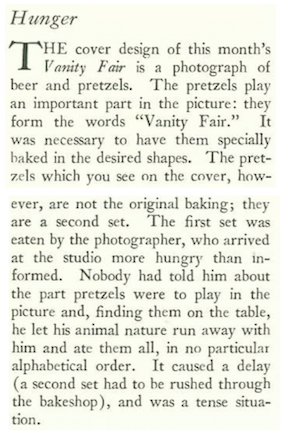
“The Talk of the Town” has always been a source for light anecdotes, including this brief account of a hungry Vanity Fair photographer:
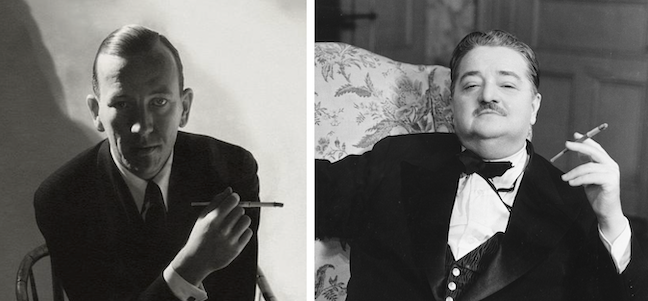
Alexander Woollcott led his “Shouts and Murmurs” column with an account from a recent benefit performance, during which his friend Noël Coward decided to strike up a conversation regarding the survival of the stage in an era of talking films:
TALKING TALKIES… Noël Coward (left) voiced his concerns about the future of stage entertainment with Alexander Woollcott during a benefit performance likely held on behalf of the theatrical world. (npg.org)
* * *
From Our Advertisers
Ah, we begin with signs of spring, glimpsed beyond the gleaming cowl of a 12-cylinder Lincoln…
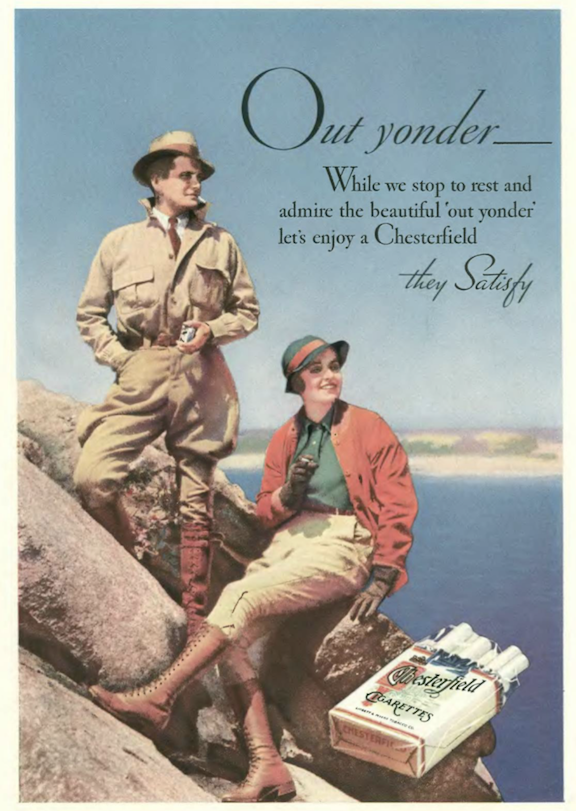
…and catch a whiff of that springtime breeze, savored between puffs of your Chesterfield…
…this guy has some spring in his step thanks to the sparkling water he just splashed into his bootleg gin…
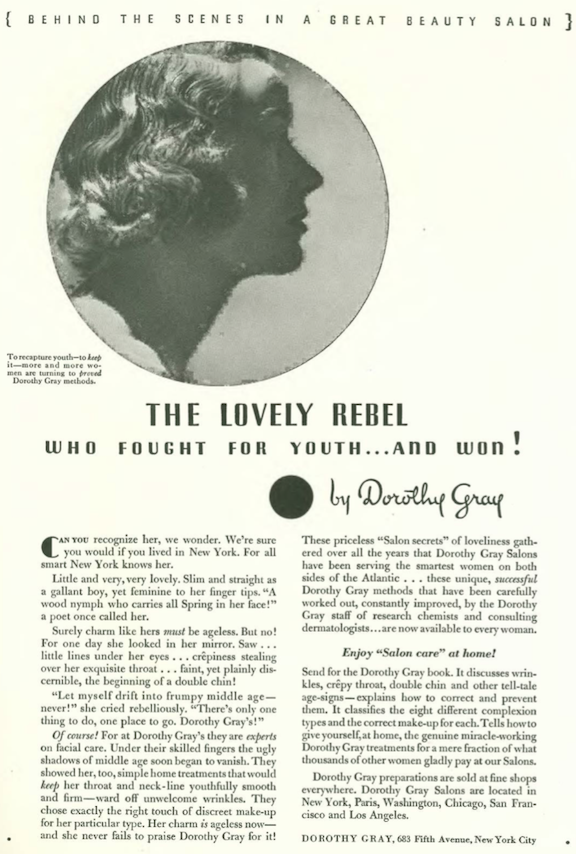
…the folks at Dorothy Gray presented a nameless woman (“slim and straight as a gallant boy, yet feminine to her finger tips”) who was ready to greet spring until she saw those “little lines under her eyes”…the horror indeed…
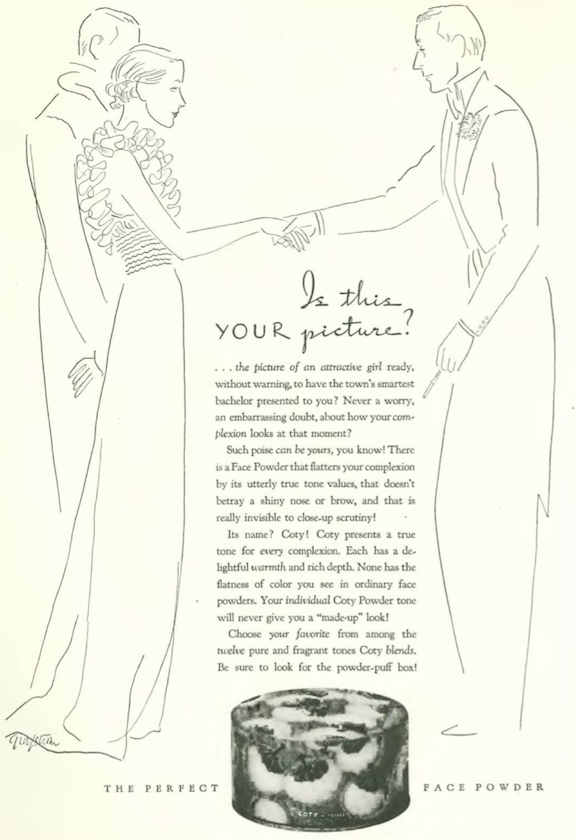
…Coty again presented an attenuated trio in a sexless courtship dance, oozing with anglophilic longing…
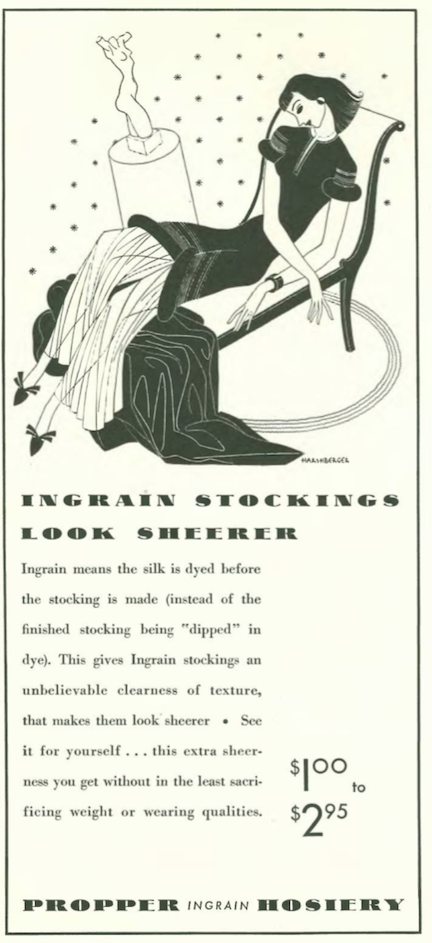
…I include this ad solely for the terrific illustration by Mac Harshberger, famed for his elegant, simplified line…
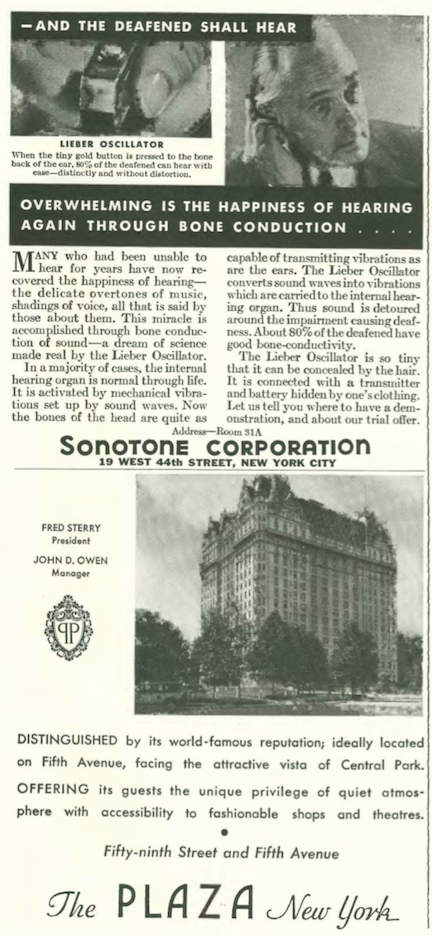
…and a couple of back pagers…thanks to Sonotone, the deafened shall not only hear but will also be stricken by a sudden voiding of the bowels…and below, a surprising ad from the Plaza, one place I never thought would need to advertise…but those were tough times…
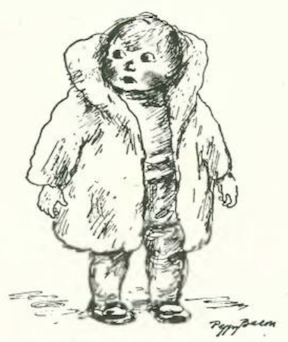
…and on to our cartoons, and this spot drawing from Peggy Bacon, whom we haven’t seen in awhile…
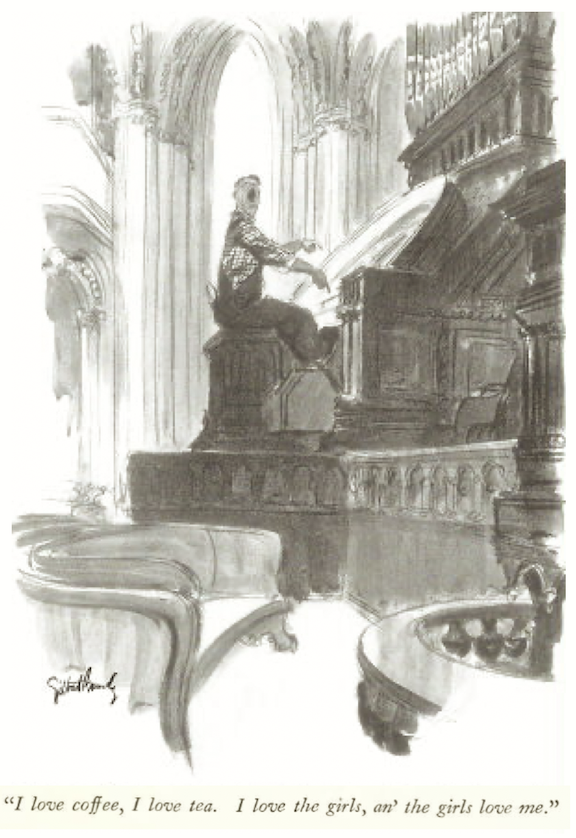
…Gilbert Bundy took us to a sanctuary of song…
…another day with our fellow citizens, and Gluyas Williams…
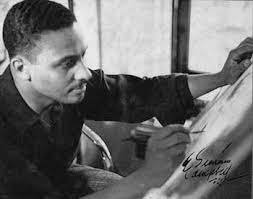
…one from E. Simms Campbell…
…who was the first Black cartoonist published in nationally distributed, “slick” magazines…
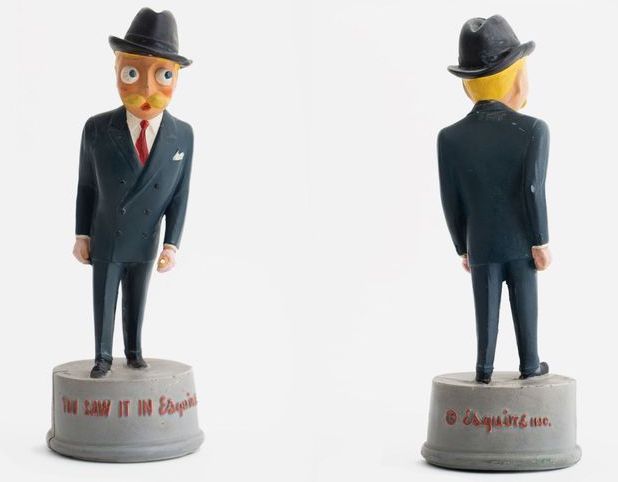
…and also the creator of Esky, the pop-eyed mascot of Esquire magazine…
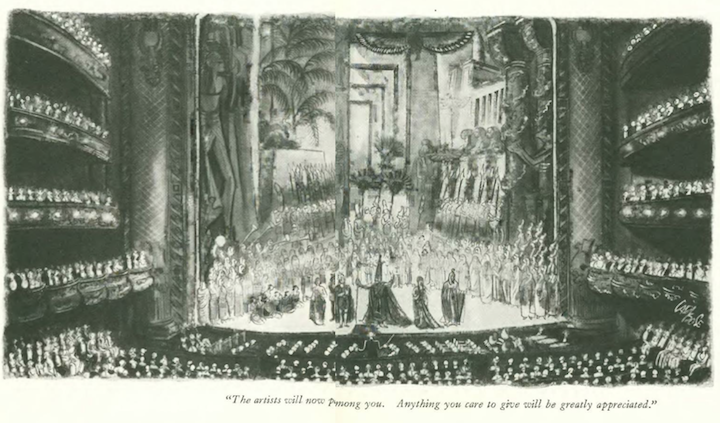
…Carl Rose gave us a night at the opera in this two-page cartoon with the Depression-inspired caption: The artists will now pass among you. Anything you can give will be greatly appreciated….
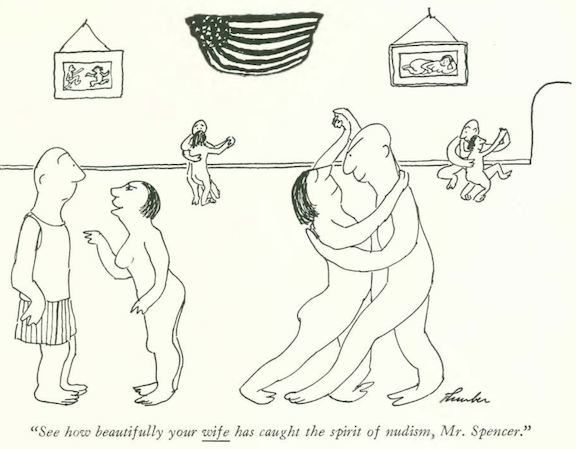
…and James Thurber returned to the nudist colony for another look at the age-old struggle between the sexes…
During the Roaring Twenties New Yorkers took a wrecking ball to much of their past, and at a breathtaking pace that left many residents little time to ponder what was lost.
March 30, 1929 cover by Julian de Miskey.
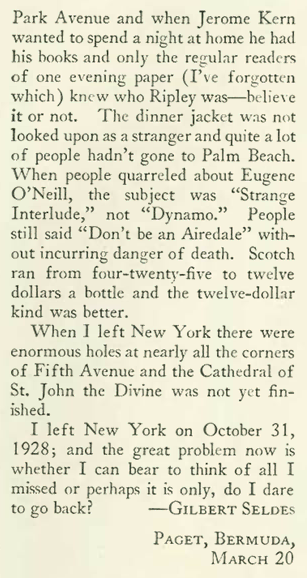
Writer and cultural critic Gilbert Seldes succinctly summed up this spirit of the times in a tongue-in-cheek “reminiscence” of the “old” New York—that is, how the city appeared the previous fall before he left to spend the winter in Bermuda:
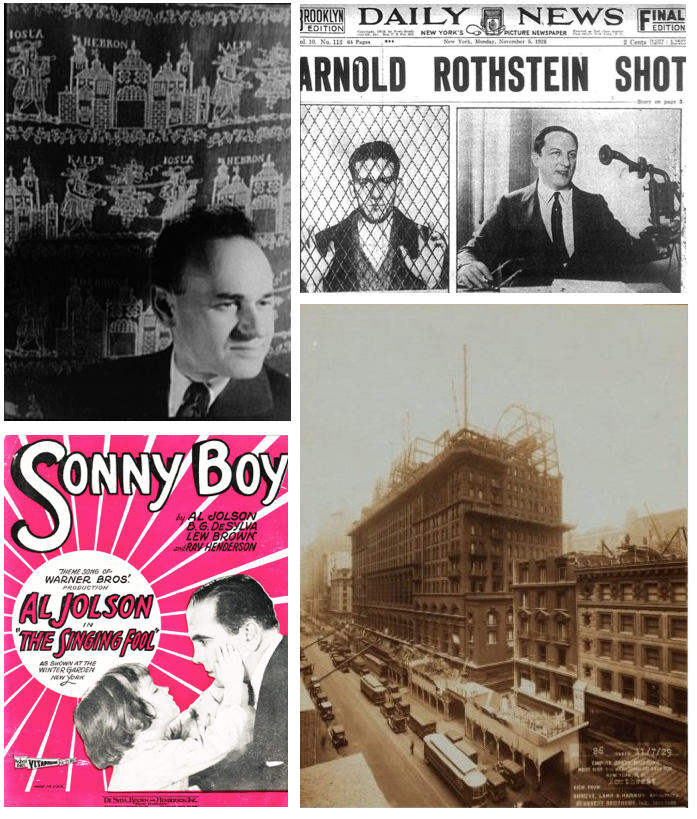
NOW WHERE WILL I GET A WALDORF SALAD? Writer Gilbert Seldes (top left) ticked off some of the many changes to his city while he was away for the winter, including (clockwise, from top right), the murder of racketeer Arnold Rothstein; the planned demolition of the Waldorf Astoria to make room for the Empire State Building (photo of the partially demolished hotel); and perhaps the first song to be overplayed on the radio ad nauseum–Al Jolson’s “Sonny Boy.” (Wikipedia, Daily News, New York Public Library, musicals101.com)
A member of the intellectual elite but also a strong advocate for cultural democracy, Seldes began writing for the New Yorker inlate 1925 and would be a frequent contributor through 1936. In 1937 he would join CBS as its first director of television programs, and would also become one of television’s first critics thanks to his 1937 Atlantic Monthly article, “The ‘Errors’ of Television.” (Note: There were only 50 experimental TV sets in the New York area in 1937, and the first commercially available sets weren’t sold until 1939). In 1958—when there would be 42 million U.S. households with a television—Seldes would serve as the host of NBC’s The Subject is Jazz.
* * *
Peggy Bacon Did It All
Another early contributor to the New Yorker was Peggy Bacon, who displayed her sharp wit in her nearly 50 articles and poems for the magazine from 1926 to 1950. But Bacon was also well-known for displaying her talent and wit in the many paintings and illustrations she created throughout her long career. The New Yorker’s art critic Murdock Pemberton sang her praises in the March 30, 1929 issue after visiting her show at the Weyhe Gallery.
A FEW IDEASwas the title of this 1927 drypoint work featured in Peggy Bacon’s Weyhe Gallery show. At right, Bacon, circa 1920s. (artnet.com/wikipedia)A sampling of Peggy Bacon drypoint works from the 1920s, clockwise, from top: Frenzied Effort, 1925; Vanity, 1929; Penguin Island, 1926. (Brooklyn Museum/Artnet/1stdibs.com)
* * *
The March 30 profile featured aviation innovator Giuseppe Mario Bellanca, who in 1922 designed the first enclosed-cabin monoplane in the U.S. Perhaps even more significant, his design in 1913 of a plane with a propeller in front, a wing in the middle and tail at the end set the standard for all aircraft built since. (Before 1913 many planes were propelled from the rear, with the “tail” projected in front of the craft). The profile writer, William Weimer (with art by Hugo Gellert) admired Bellanca’s ability to stand toe-to-toe with the mighty du Pont family:
Bellanca founded the Roos-Bellanca Aircraft Company in Omaha in 1927, and was featured on the cover of Time. In 1929 he created the Delaware-based Bellanca Aircraft Corporation of America in a financial partnership with the du Ponts.
AVIATION PIONEER Giuseppe Mario Bellanca (center) at the new Bellanca Airfield in New Castle, Delaware, 1928. Bellanca’s planes would establish numerous records for altitude, endurance, and speed. (Delaware Public Archives)
* * *
Showing Some Restraint
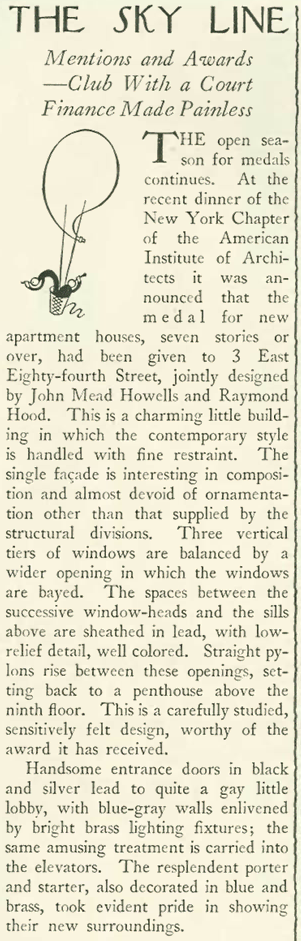
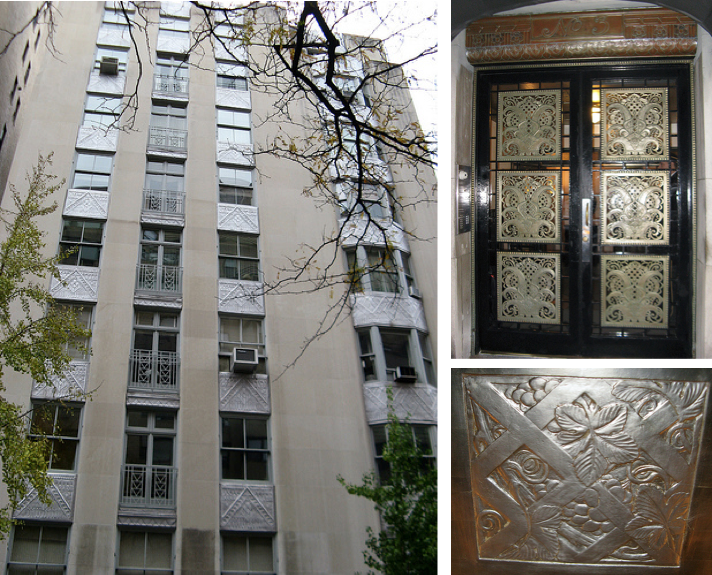
In his “Sky Line” column, the New Yorker architecture critic George S. Chappell (aka “T-Square”) praised an award-winning 1928 apartment at 3 East 84th Street for its contemporary charm and “fine restraint.” Designed by Raymond Hood and John Mead Howells, the 9-story building was commissioned by Joseph Medill Patterson, owner of the New York Daily News. The design would be influential in Hood’s much more ambitious projects two years later—the Daily News Building (1930) and Rockefeller Center (1931).
The Raymond Hood– and John Mead Howells-designed 3 East 84th Street. Top right, the front entrance; and bottom right, ceiling’s silver leaf squares. (Susan DeMark–mindfulwalker.com)
* * *
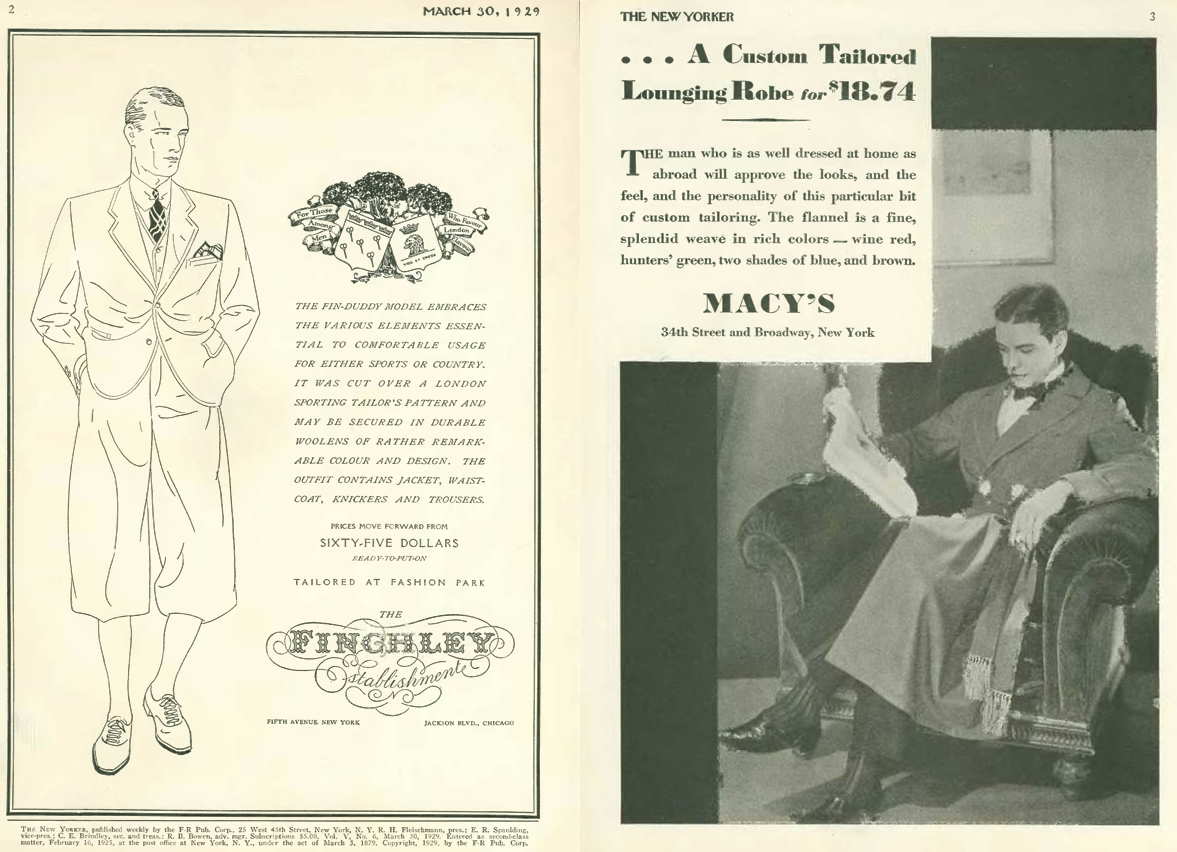
Advertisers in the March 30 issue offered various garments for the gentleman, including this sports-country ensemble at left from Finchley and a custom lounging robe from Macy’s…
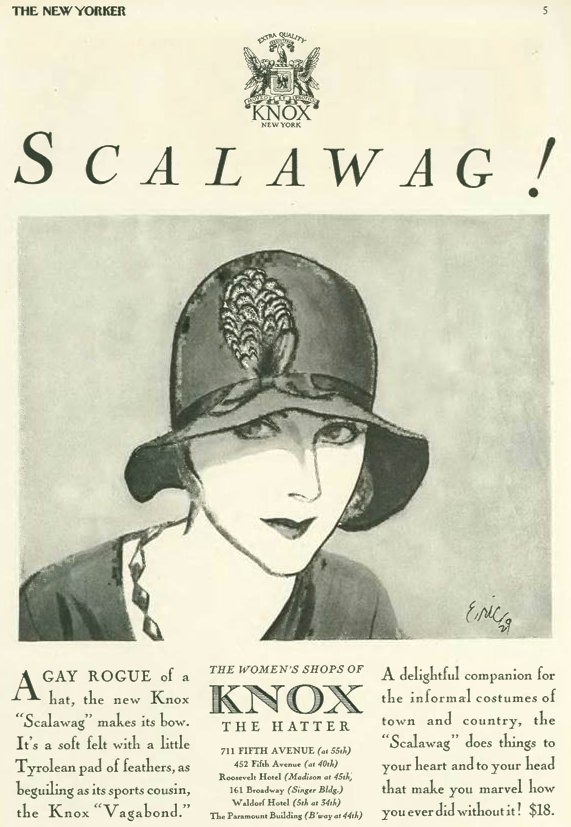
…and for fashionable, amusingly mischievous woman there was the new “Scalawag” hat by Knox (ad illustrated by the great Carl Erickson)…
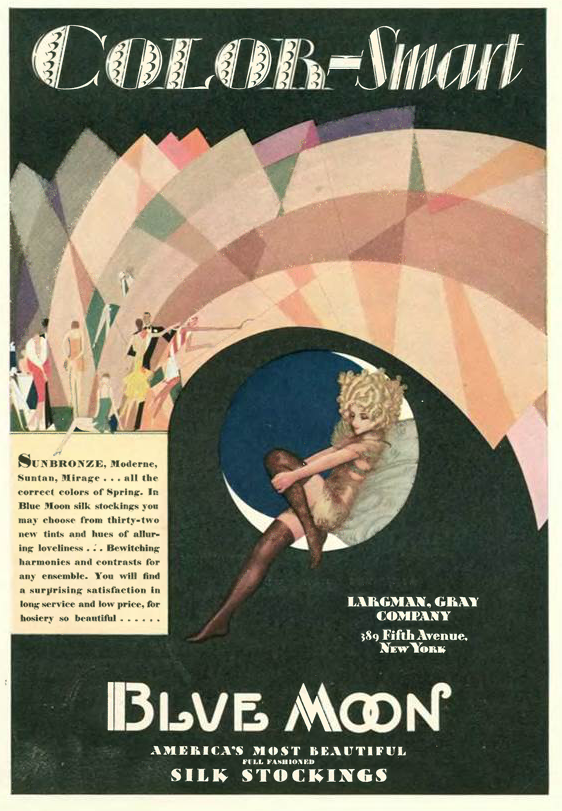
…Blue Moon’s blonde fairy girl was one of the Jazz Age’s most recognizable labels…here she is matched with an Art Deco-inspired spectrum of stocking colors…
…Ligget & Myers Tobacco Company joined the ranks of sophisticated advertisers who touted a product—in this case Fatima cigarettes—without actually showing the product…
…on the other hand, American Tobacco Company, the makers of Lucky Strike, made doubly sure you wouldn’t forget that bright red bullseye, or Rosalie Adele Nelson, “The Original Lucky Poster Girl”…
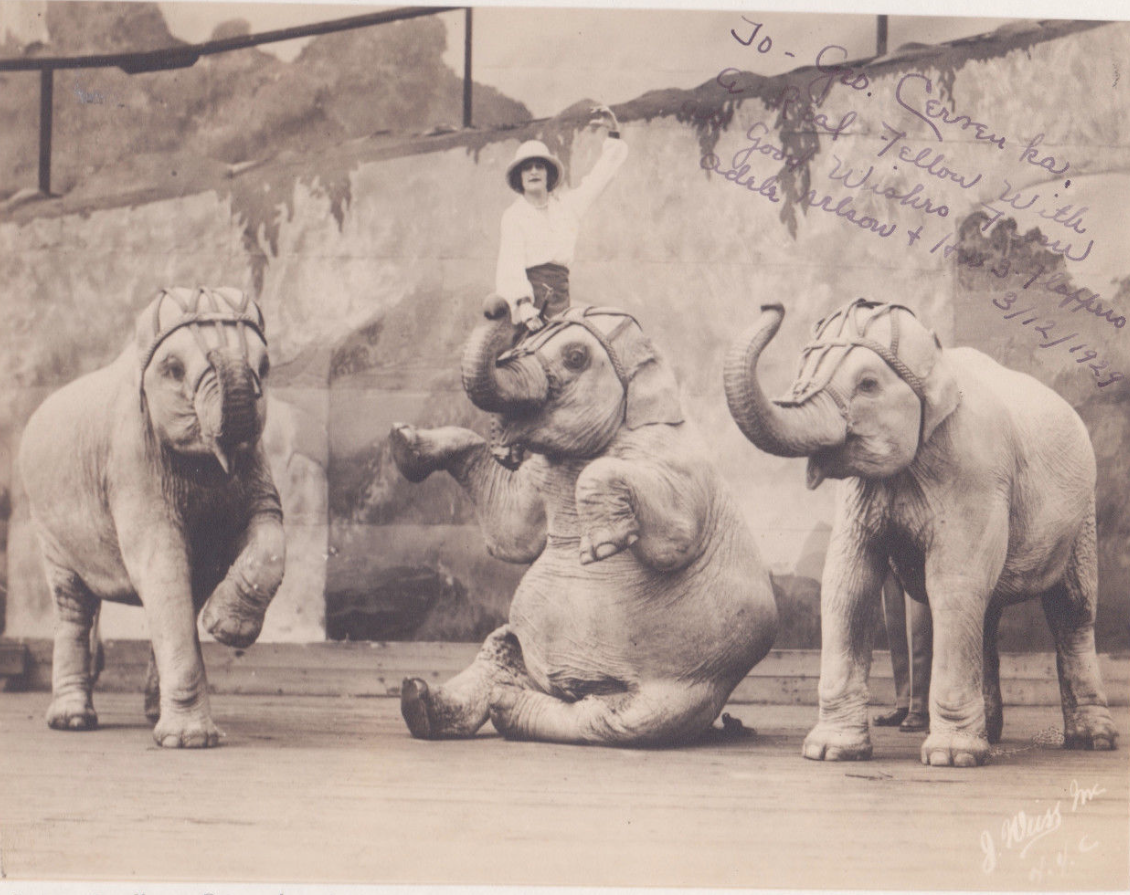
Nelson’s image for Lucky Strike was almost as ubiquitous as the fairy in the Blue Moon ads. Apparently she was also a member the Nelson family of circus acrobats and performed her own signature act with baby elephants:
Rosalie Adele Nelson with her baby elephant act, 1929 (eBay)
Philip Morris took an entirely different (and unusual) approach to selling its relatively new brand of Marlboro cigarettes by touting the achievements of Gretchen Colnik, winner of the “1928 Marlboro Contest for Distinguished Handwriting….”
Like Rosalie Adele Nelson, Gretchen Colnik would go on to minor fame of her own. She was managing editor of the Great Neck, NY, newspaper before returning to her hometown—Milwaukee, Wisconsin. From 1952 to 1966 Gretchen was the Martha Stewart of Milwaukee, hosting a TV show that provided advice on interior design, food and crafts. “The Gretchen Colnik Show” was sponsored by Mrs. Karl’s Bread.
Our cartoon is by Leonard Dove, who looks in on an architect at work:
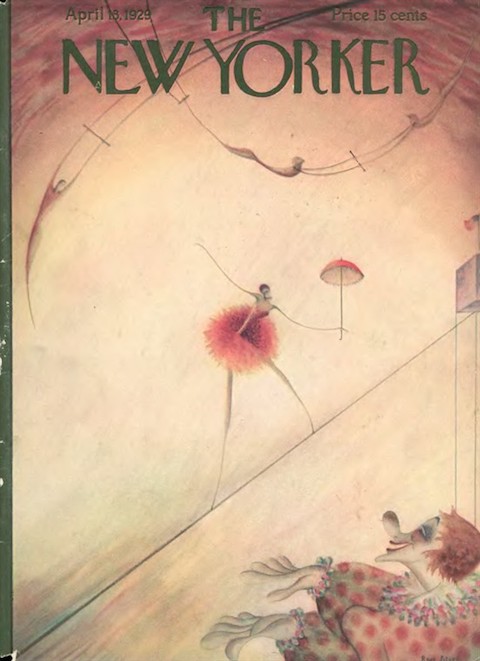
The Cruelest Month
The film reviews for the April 6, 1929 issue found the New Yorker once again at odds with Hollywood and favoring cinematic products from the Old World.
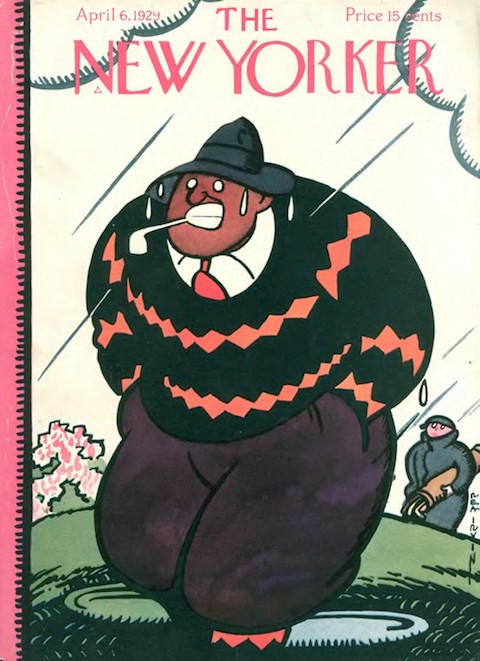
April 6, 1929 cover by Rea Irvin.
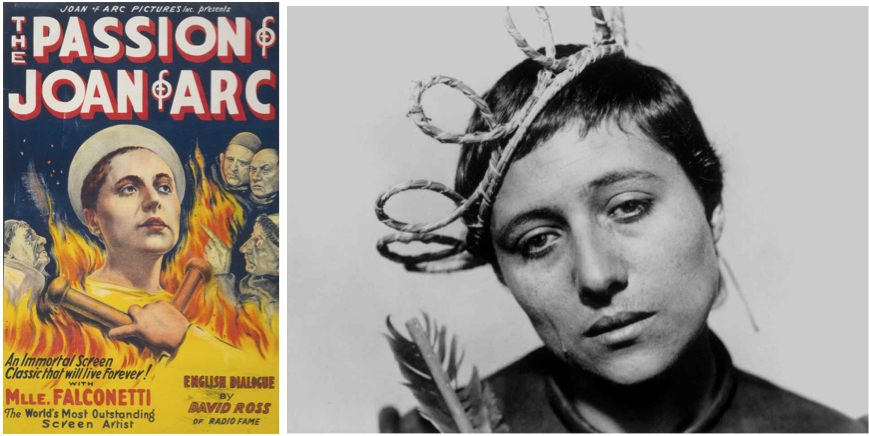
In the case it was a French film, The Passion of Joan of Arc, which even today is regarded as a cinematic landmark.
A LOT AT STAKE…American poster for The Passion of Joan of Arc; at right, Maria Falconetti in the title role. (Wikipedia/Film Forum)
The New Yorker review praised the film as “one of the few of the year which merit serious attention”…
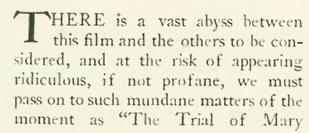
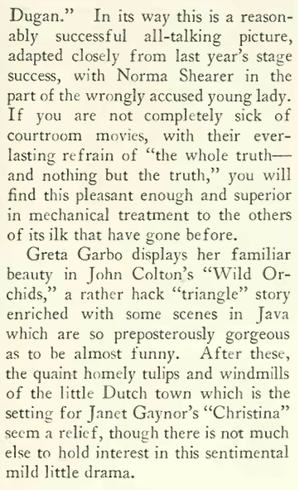
On the other hand, there were the latest products from Hollywood, which stood on the other side of a “vast abyss” from the French film:
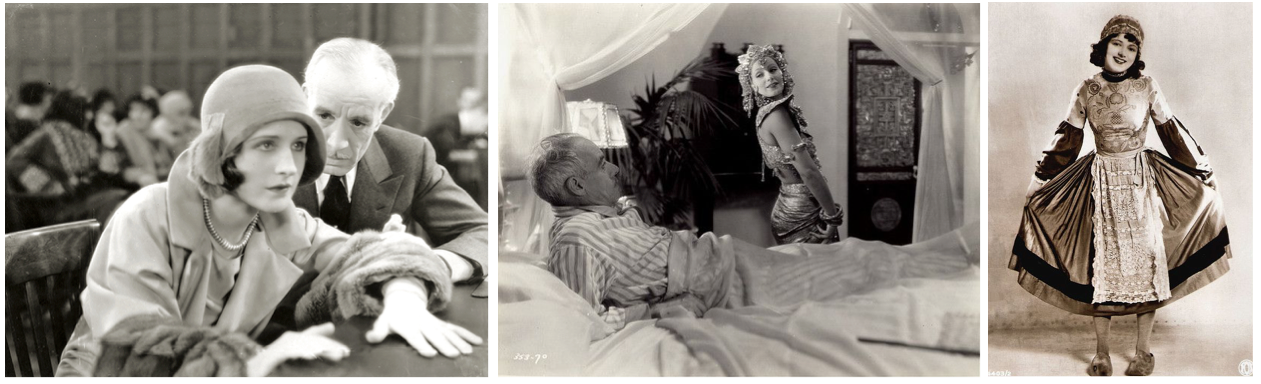
HO HUM FOR HOLLYWOOD…At left, Mary Dugan (Norma Shearer) with her conniving lawyer, Edward West (Lewis Stone) in The Trial of Mary Dugan; Lewis Stone was a apparently a busy man in the late 1920s—here he is again (center image), this time portraying John Sterling, a tea plantation investor lacking the mojo to keep up with his much younger wife, Lillie (Greta Garbo) in Wild Orchids; and at right, Janet Gaynor as a little Dutch girl in Christina, a film now considered lost. Click image to enlarge (normashearer.com/pinterest)
* * *
From Our Advertisers
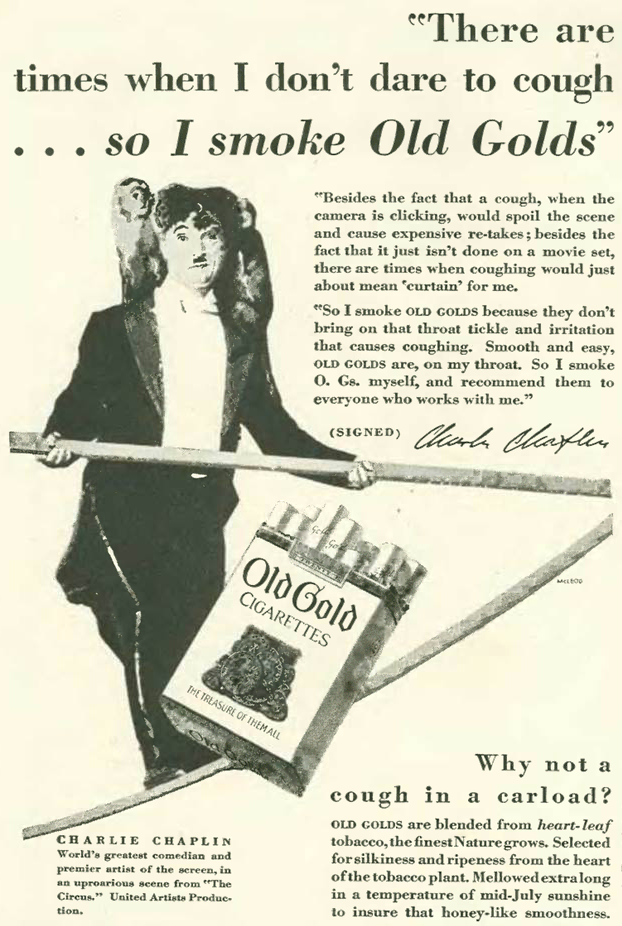
The April 6 issue found Charlie Chaplin getting in on the action of Old Gold cigarette endorsements…
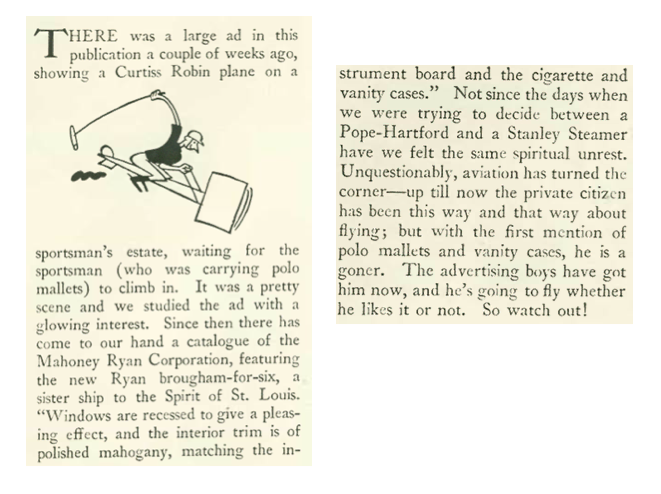
…while Curtiss Flying Service thought it might interest some of the more well-heeled New Yorker readers in the purchase of an airplane…
…a couple weeks later, in the April 20 issue, the New Yorker would make this observation about the ad in “The Talk of the Town”…
…and finally, our cartoon by R. Van Buren, looking in on yet another sugar daddy and his much younger companion on a night out…
We close out The New Yorker’s first year with the magazine on firmer footing and many of its mainstay writers and artists firmly in place.
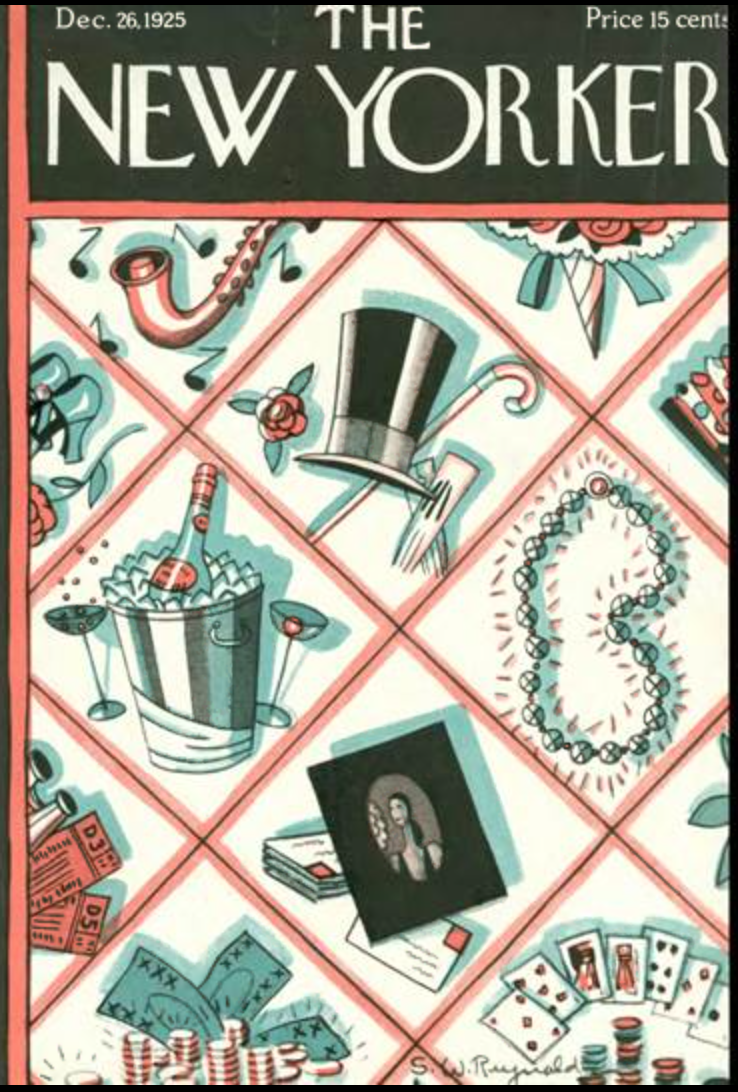
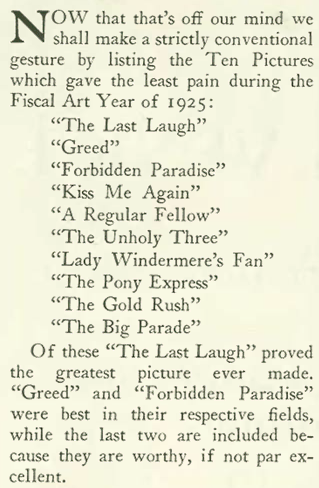
The Dec. 26, 1925 issue was the usual hodgepodge, but some writers did give a nod to the end of the year, including film critic Theodore Shane, who offered his list of the best ten moving pictures of 1925.
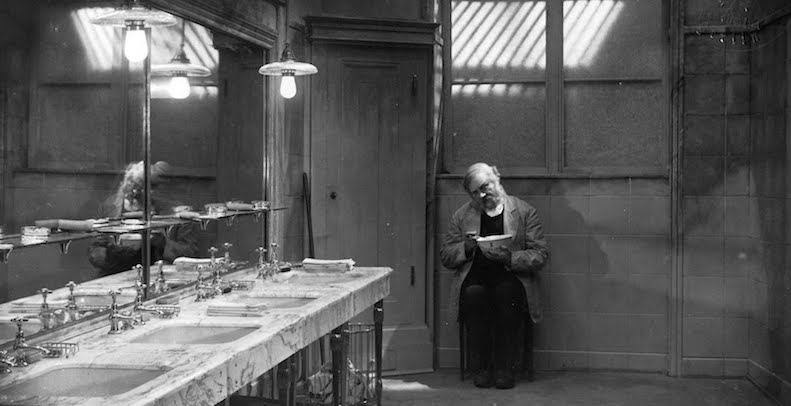
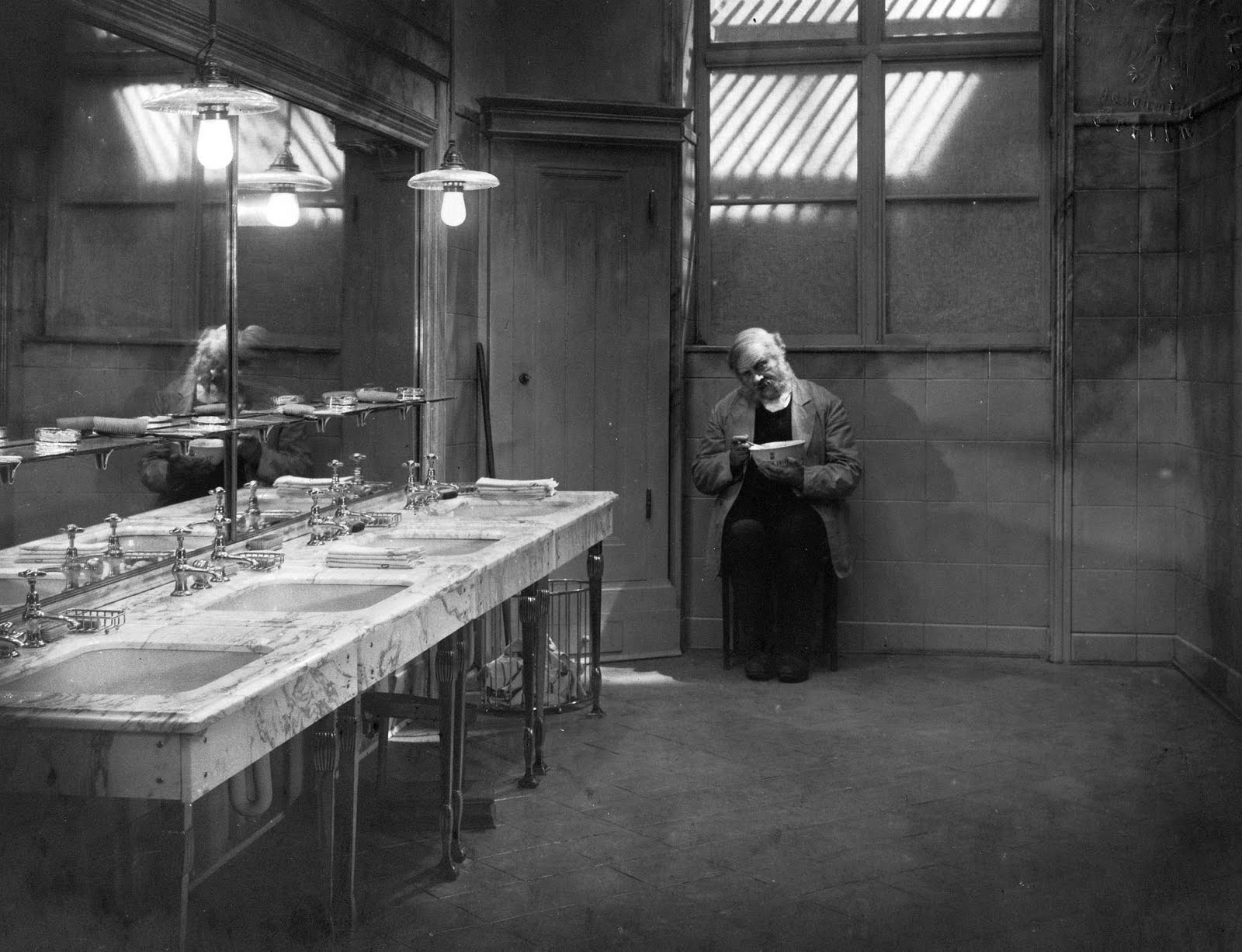
Shane’s favorite film by far was The Last Laugh, (the German title was Der letzte Mann, or The Last Man) a 1924 German film directed by F.W. Murnau and starring Emil Jannings (who would later win the first Academy Award for Best Actor in 1929). Shane referred to it as “the greatest picture ever made.” Released in the U.S. in 1925, the film was about a proud doorman who loses his job and tries to hide the fact from his friends and family. Shane usually reserved his highest praise for German cinema in his columns.
Scene from The Last Laugh (1924) starring Emil Jannings. (Roger Ebert)
Shane’s complete list of the ten best movies of 1925:
For the worst films of the year, Shane suggested a tie between Drusilla With a Million, Lord Jim, Joanna, the Million Dollar Girl or Stella Dallas.
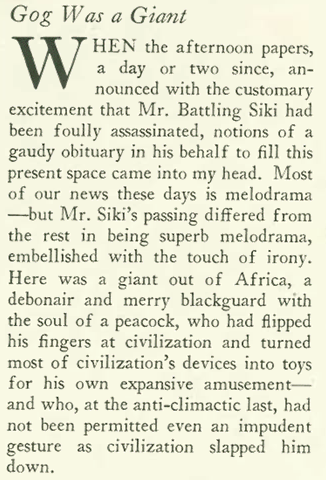
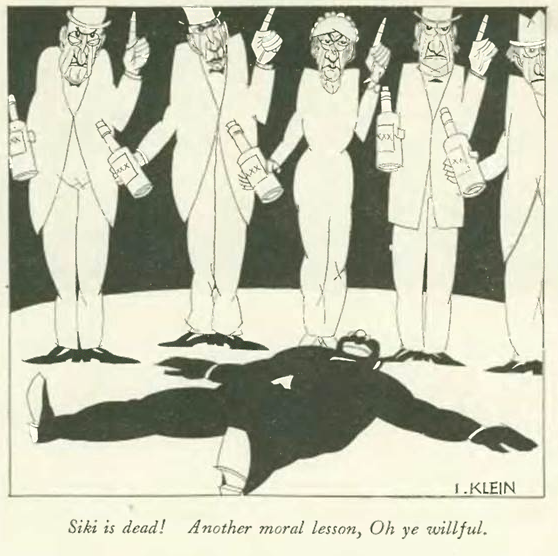
The New Yorker also commented on the murder of the irrepressible boxer Louis Mbarick Fall, popularly known as “Battling Siki.”
“Battling Siki” in his heyday. (Wikipedia)
Born in Senegal, he was a light heavyweight boxer from 1912–1925, and briefly reigned as a light heavyweight champion. Known for his heavy drinking and carousing, on the night of Dec. 15, 1925, he was found dead near his 42nd Street apartment. He had been shot twice in the back at close range. He was 28.
In his column, “A Reporter at Large,” Morris Markey offered this observation on Battling Siki’s passing:
The cartoonist Isadore Klein, on the other hand, contributed this strange stand-alone illustration for “The Talk of the Town” section:
Also in “Talk” was this brief item about the United Fruit Company:
United Fruit would be no laughing matter three years later with the Banana Massacre, which would claim the lives of an unknown number of workers who were striking for better working conditions in Columbia.
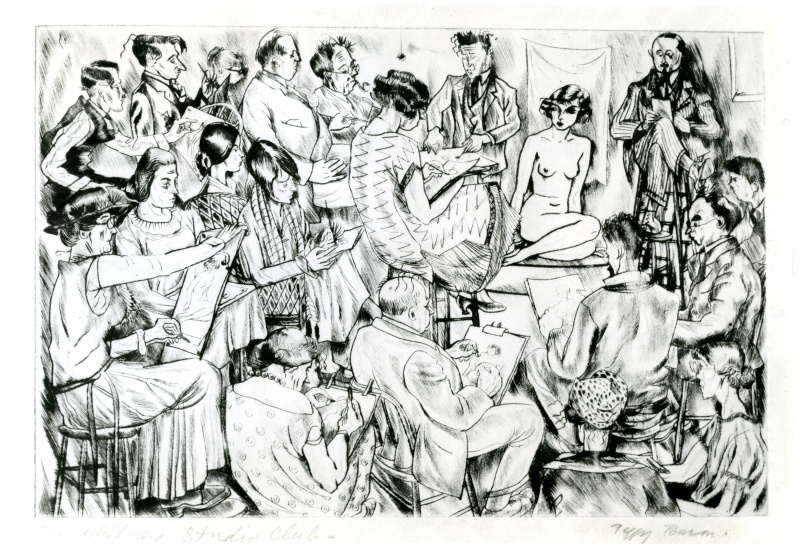
Art critic Murdock Pemberton offered a glowing review of an exhibit at the Montross Galleries by frequent New Yorker contributor Peggy Bacon:
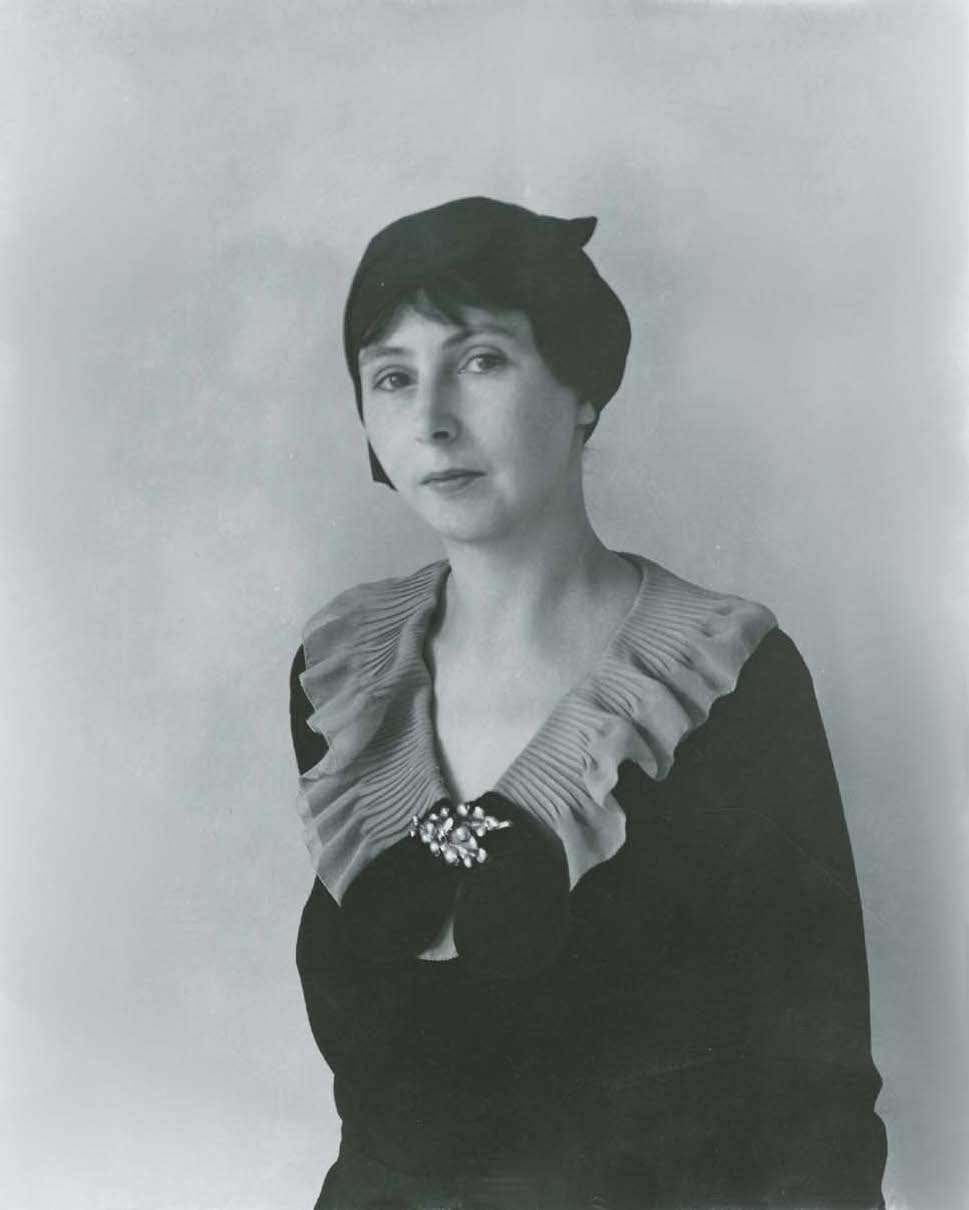
Peggy Bacon, The Whitney Studio Club, 1925. (Whitney Museum of American Art)Peggy Bacon (Smithsonian)
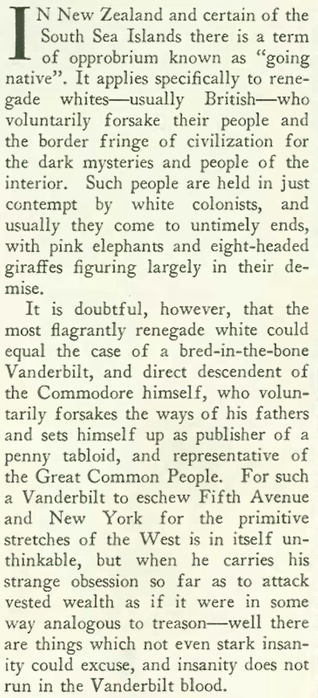
“Profiles” looked at Cornelius Vanderbilt Jr, “The Fifth Avenue Maverick.” William Boardman Knox wrote that the young Vanderbilt “is as alien to his blood as a marmoset to a gorilla.”
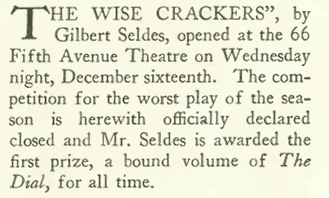
In the “The Theatre,” critic Herman J. Mankiewicz pulled no punches when he declared Gilbert Seldes’ play The Wise Crackers “the worst play of the season” (Seldes was himself a noted critic and sometime New Yorker contributor):
What’s more, the play was about a group of literate New Yorkers who gather to exchange witty barbs and sarcastically comment on the doings of the day. In other words, it was inspired by the Algonquin Round Table, which famously included Mankiewicz as a member.
Another Round Table notable was Robert Benchley, who contributed this piece for the last issue of the year:
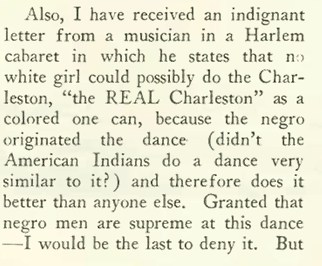
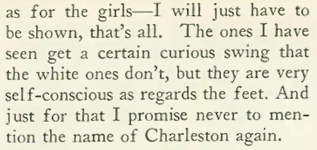
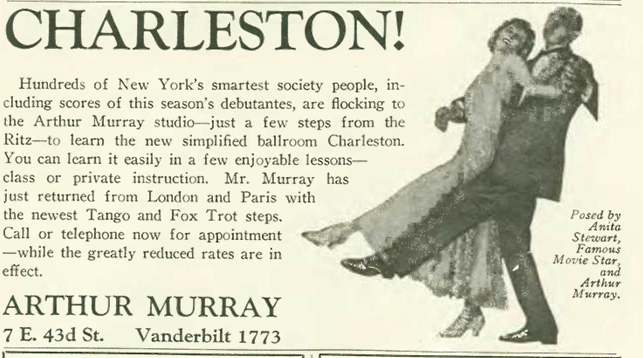
Lois Long offered her regrets for ever bringing up the subject of “The Charleston:”
And just a few pages over, lessons were advertised for…The Charleston!
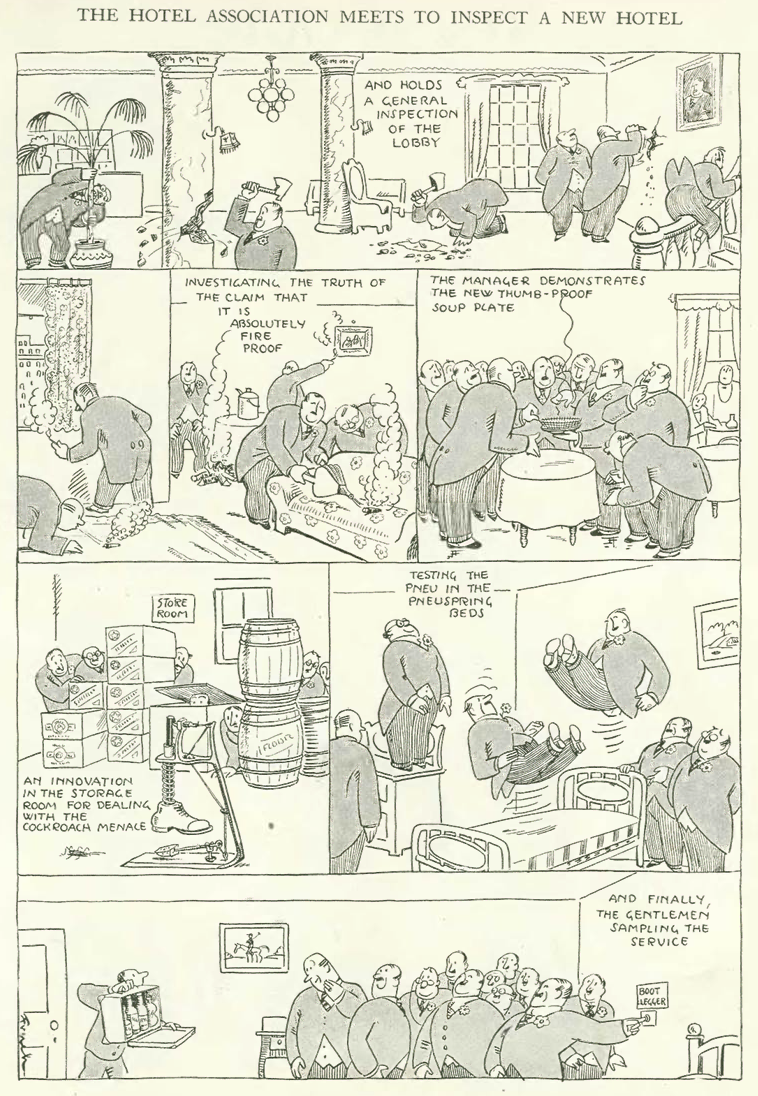
And to close, here’s a little fun with hotel inspectors, courtesy of Al Frueh:
“The Talk of the Town” welcomed midsummer by noting the changes in the “new Summer Social Register…A long, slow swing of the same pendulum-like power which shifts the vogue in night clubs and restaurants is the migration to inland resorts…The Hamptons have fallen off, Newport has weakened and of the coasts only New England, boasting ‘the prestige of the Summer White House,’ has held its own.”
It was thought that perhaps financial pressures on waterfront acreage “had added zeros to the 400” and “The fragments of our battered conservatives turn and twist uneasily, seeking readjustment, new barriers (translation: old money responds to the invasion of new money).
There goes the neighborhood…
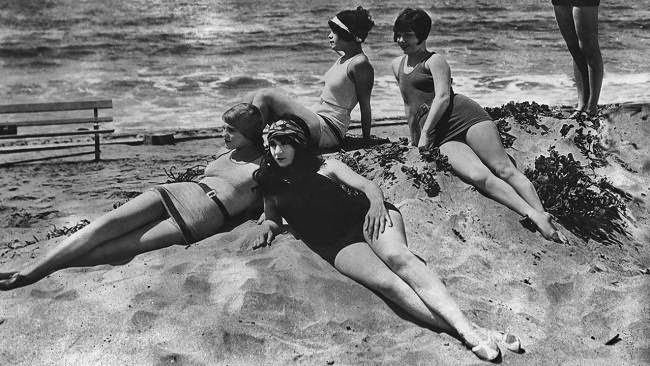
This siege on the sanctity of “the 400” – a reference to the number limited to Mrs. John Jacob Astor’s social circle – included the appearance of “scanty” bathing suits on Southampton beaches:
Corroborative evidence of the storming of the conservative fortresses by Undesirables comes with Southampton’s latest protest against scanty bathing costumes, “usually worn by strangers.”
Just what these costumes were or were not, the Southampton Bathing Corporation did not say, but they ruled that stockings and cape must be worn “while walking down to the water.” This ordinance to apply “especially at week-ends and during tennis week.
Arrowhead Inn Dining Terrace (Museum of the City of New York)
Beginning with this issue, the “When Nights Are Bold” feature was passed from Charles Baskerville (pen name “Top Hat”) to the newly hired Lois Long (pen name “Lipstick”). In her first column for The New Yorker, Long suggested that for those “who can get out of town at will,” the Arrowhead Inn “up Riverdale way” and high on a bluff above the Hudson, was a popular destination for dining and dancing, even if the dancing crowd left something to be desired:
Another recommended Hudson River location was the Claremont (but alas, no dancing!), while for those staying in the city, Long recommended the Embassy Club at 695 Fifth Avenue.
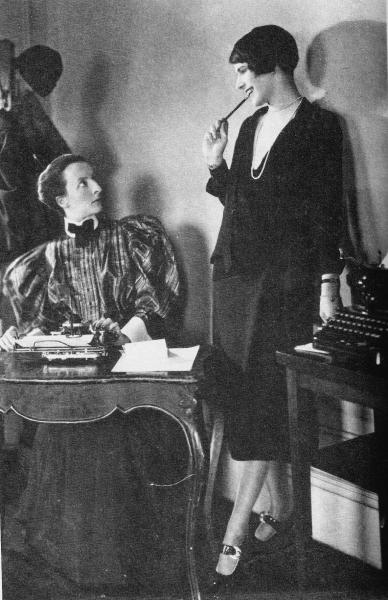
Lois Long at work in the 1920s (Wikipedia)
According to Here At The New Yorker by Brendan Gill, Long chronicled nightly escapades of drinking, dining, and dancing for The New Yorker, and because her readers did not know who she was, she often jested in her columns about being a “short squat maiden of forty” or a “kindly, old, bearded gentleman.” However, in the announcement of her marriage to The New Yorker cartoonist Peter Arno, she revealed her true identity.
Harold Ross hired Long in the summer of 1925 as part of a group of “saviors” he hoped would help boost his struggling magazine. The group included Arno, Katharine Angell, managing editor Ralph Ingersoll, and cartoonist Helen Hokinson.
Although she was a favorite of Ross’s, the two couldn’t be more different, as historian Joshua Zeitz explains in Flapper: A Madcap Story of Sex, Style, Celebrity, and the Women Who Made America Modern (2006), Long knew just how to embarrass the girl-shy editor, and loved to do it:
(Ross) was a staid and proper Midwesterner, and she was absolutely a wild woman. She would come into the office at four in the morning, usually inebriated, still in an evening dress and she would, having forgotten the key to her cubicle, she would normally prop herself up on a chair and try to, you know, in stocking feet, jump over the cubicle usually in a dress that was too immodest for Harold Ross’ liking. She was in every sense of the word, both in public and private, the embodiment of the 1920s flapper. And her readers really loved her.
Julia Lydig Hoyt in 1922 (Wikimedia Commons)
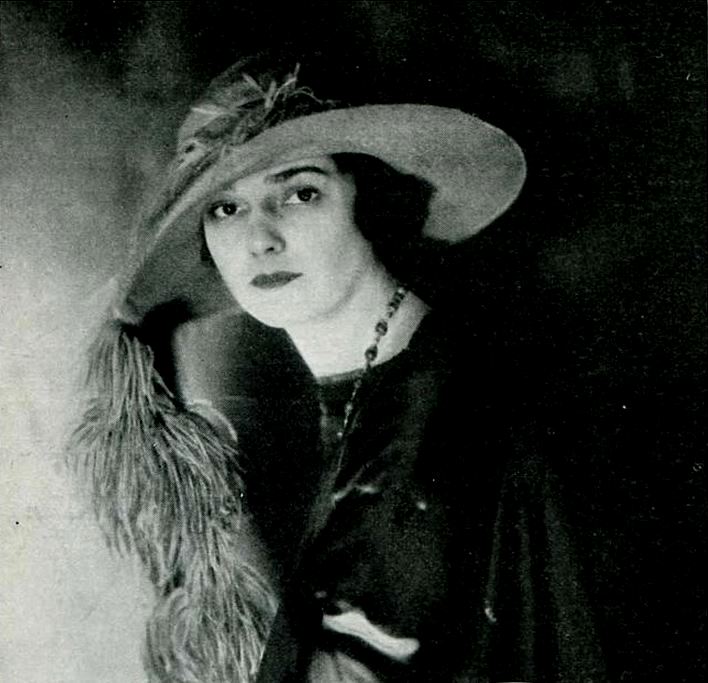
“Talk” also reported that Mrs. (Julia Lydig) Hoyt had “very nearly arrived,” and was capitalizing on her stage career through endorsements for cold creams and articles on social etiquette. “The motion picture industry and stage know her and now she is a designer at highest salary ever paid to an American.”
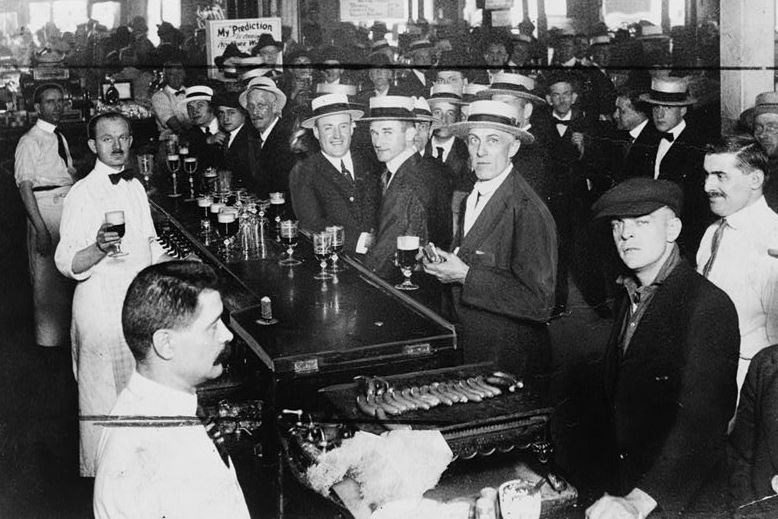
Last Call…A rather dour-looking crowd at a New York City bar moments before midnight, June 30, 1919, when Prohibition went into effect. (Library of Congress Archives)
Prohibition continued to dampen the spirits (pun intended) of New Yorkers, particularly during the summer season. The editors noted that of 36 random summer reminiscences submitted to the magazine, eighteen were “direct references to alcoholic concoctions and all but a few theatrical recollections directly suggested indulgence. Then the editors offered their own wistful recollections:
Of course we remember “The Doctor’s cocktails” mixed by the “Commissioner” at the Astor…the highball sign at Forty-second and Broadway…the “Old Virginia Mountain” between the acts under the smile of Old King Cole…the Sunday afternoon absinthe drips at the Lafayette…Champagne at the Claremont on a June night…the Manhattan bar at cocktail time…the Ancient and Honorables in the Buckingham bar….the Navy in mufti at Shanley’s…the horseshoe bar at the Waldorf…the blue dawn of the West Forties…
Of course…but why bring that up again? It’s merely driving us down the street to that place that gave us the card last week and the rumor has just reached us that they are back serving Scotch in teacups, accompanied by a large earthenware teapot filled with soda.
Left, Delmonico Building at Fifth Avenue and 44th Street (photo from The Brickbuilder, 1899), razed in 1925 and replaced by the building at right (Google Maps screen image)
Also lamented was the loss of renown restaurant Delmonico’s, which had been closed for some time (due mostly to alcohol sales lost to Prohibition; its famous rival across the street, Sherry’s, closed in 1919 for the same reason) but was now yielding to the wrecking ball: “Possibly, Delmonico’s might have been saved as a tradition, but finances and the changes of Fifth Avenue’s complexion forbade…Now we are to see yet another skyscraper, this one on the site where once they dined; where once they danced; across the street from old Sherry’s, long since a bank; orchestraed only by adding machines.”
“The Talk of the Town” concluded with a price list for various bootleg spirits, a feature that would continue through the Prohibition:
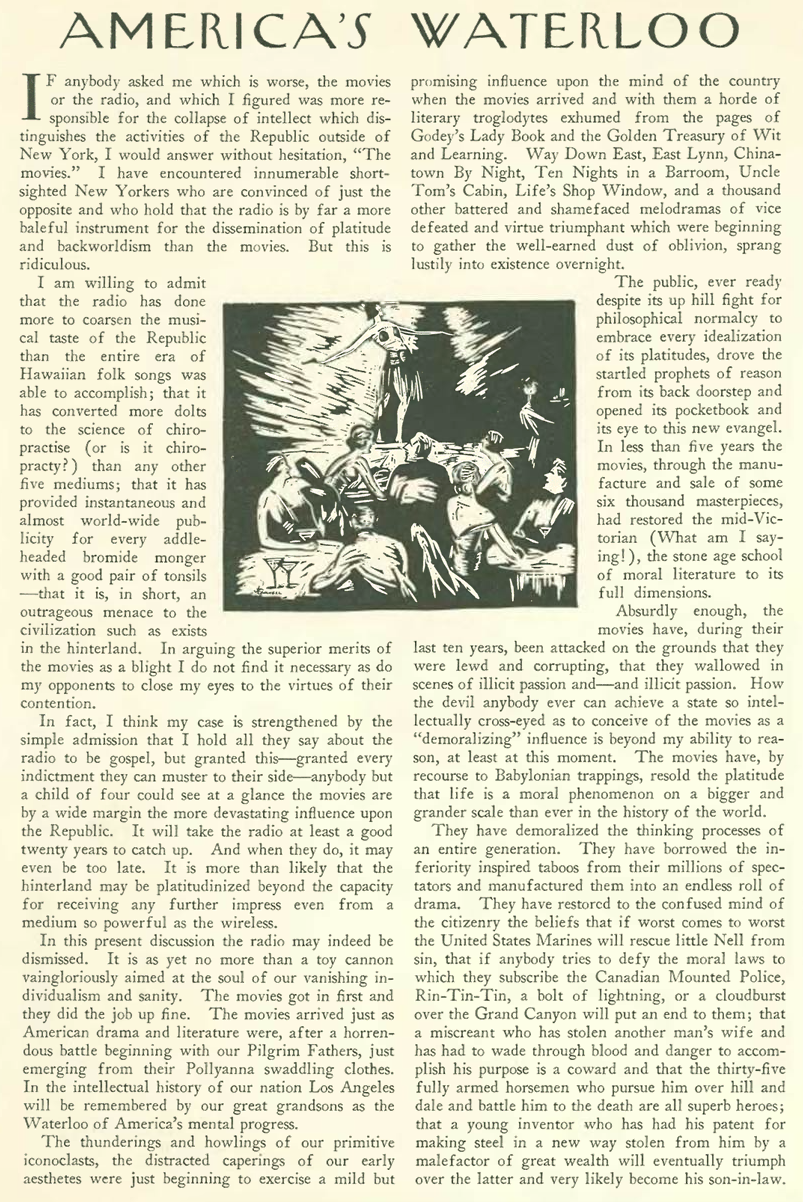
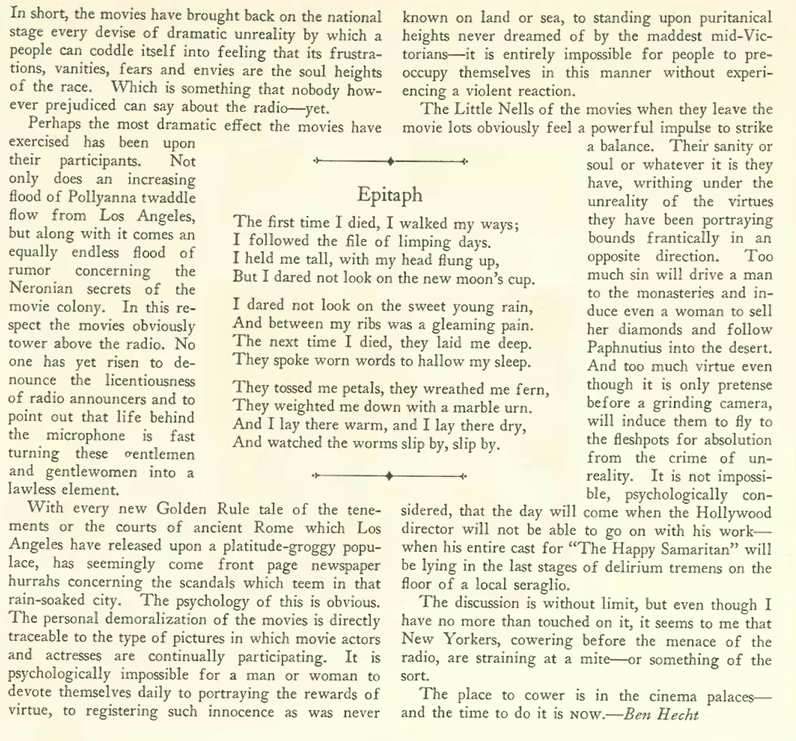
Fresh off his dismantling of those clod-kickers in Chicago, Ben Hecht continued his dyspeptic tirade on the America that lay beyond Gotham, specifically attacking its love of the “Pollyanna twaddle flow” of entertainment from Hollywood:
(New Yorker Digital Archive)
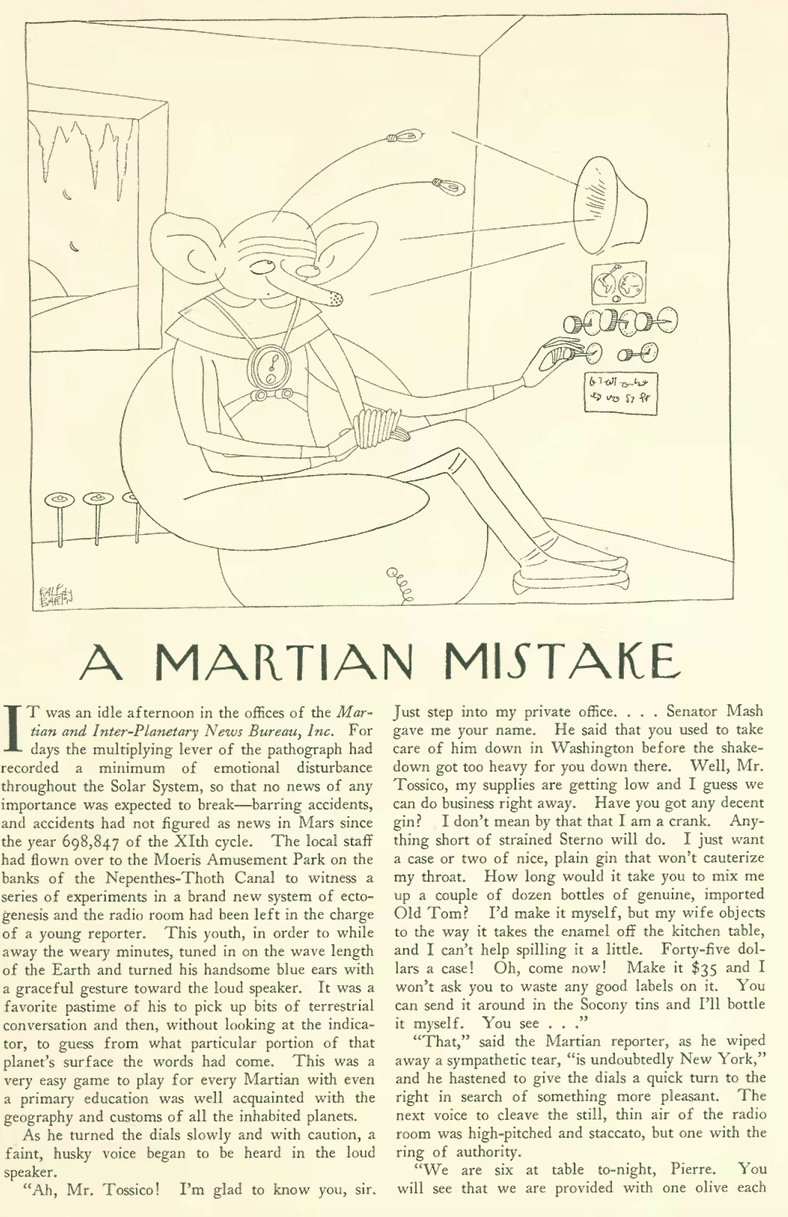
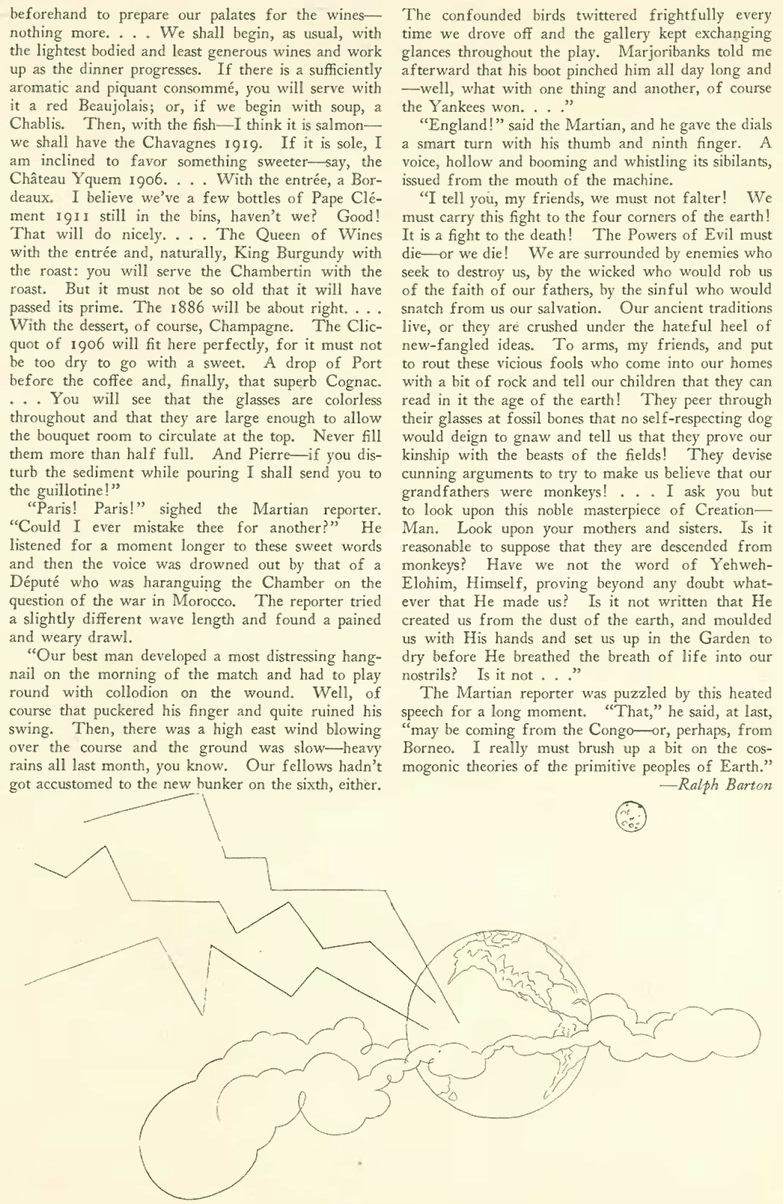
Ralph Barton, on the other hand, offered of a view of the entire earth, from the vantage point of a Martian observer:
(New Yorker Digital Archive)
In “Profiles,” Waldo Frank (writing under the pen-name “Searchlight”) looked askance at the life and work of writer Sinclair Lewis.
Frank offered these observations: “Once upon a time, America created a man-child in her own image…
There’s a strange thing about America. She is passionately in love with herself, and is ashamed of herself…Here was a dilemma, Could not her self be served up to America in such a way that she could love herself—and save her shame? Sinclair Lewis, true American son, was elect to solve it.”
And for those rising young men who did not wish to mix with the unwashed during the summer social season, membership to the Allerton Club Residences was recommended in this back page advertisement:
(New Yorker Digital Archive)
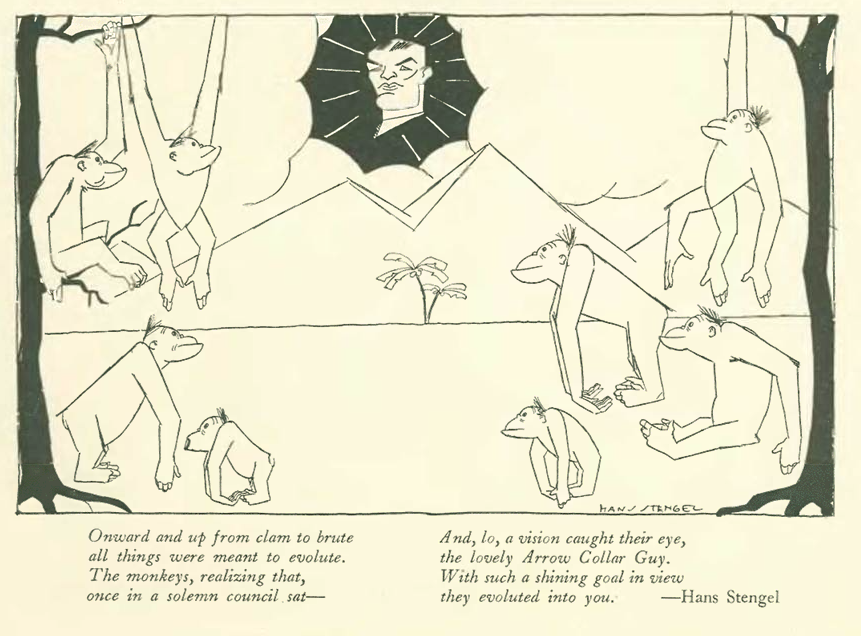
And yes, the Scopes Monkey Trial is still on the minds of the editors:
(New Yorker Digital Archive)
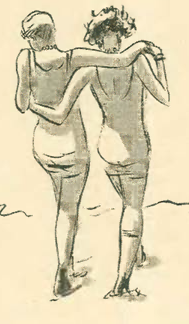
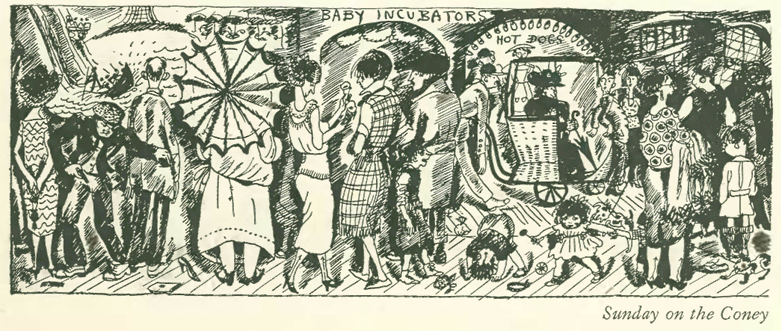
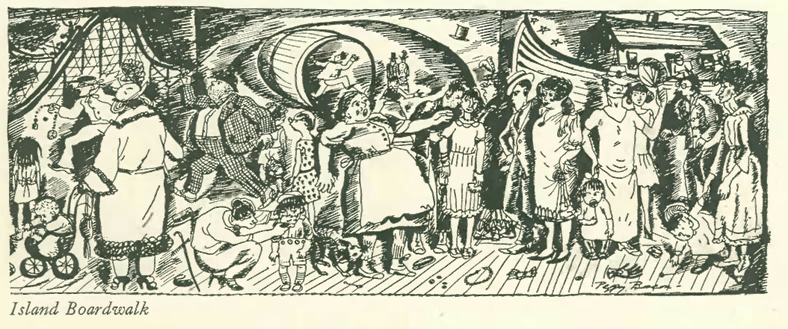
And finally, to close out with a beach theme, a two-page illustration from “The Talk of the Town” section, an early work by illustrator Peggy Bacon:






































































 A New Yorker State of Mind