Comfort Food

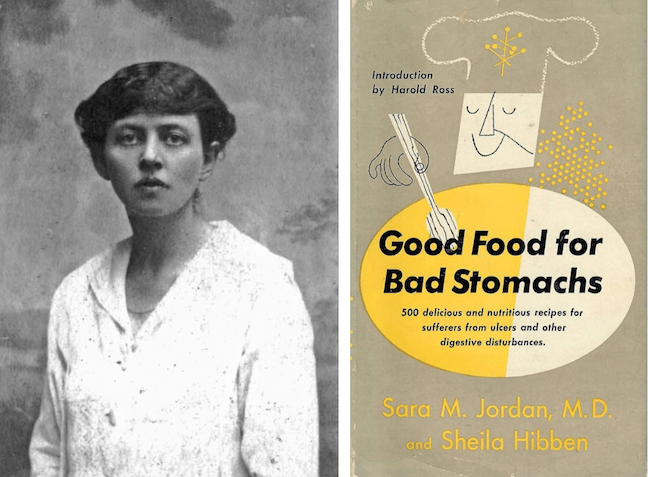
Above: Sheila Hibben became The New Yorker's first food critic in 1934. She also wrote several cookbooks, including Good Food for Bad Stomachs, a book that was suggested by New Yorker founder and editor Harold Ross. Hibben was a pioneering advocate for American regional dishes, and despised food snobbery (she wanted to banish the word "gourmet" from the English language). (Wikipedia/Amazon)

Long overdue is a look at The New Yorker’s first food critic, Sheila Hibben, who wrote frankly about the dining scene in her restaurant reviews and in her column “Markets and Menus.” Decades ahead of her time, she drew attention to America’s regional dishes, persuading readers to embrace the comforts of humble, practical recipes during the lean years of the Depression and the Second World War.
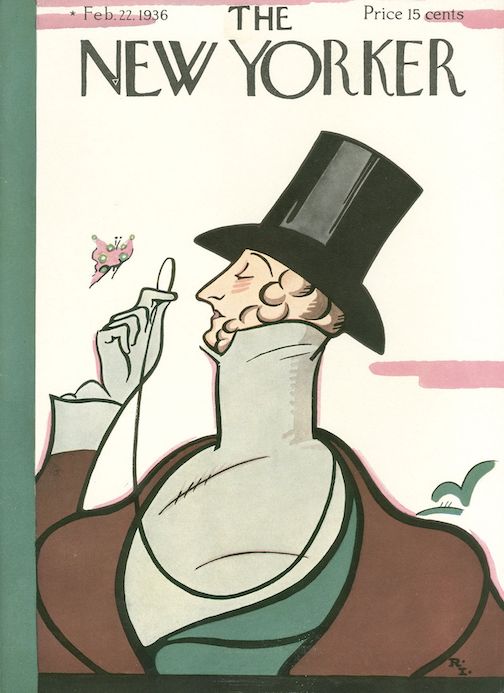
Eleventh anniversary cover by Rea Irvin, February 22, 1936.

Born Cecile Craik, Hibben (1888–1964) detested food snobbery, and through her pioneering work “persuaded housewives to be proud of their American culinary identity, to embrace traditional regional cuisines, and to reject fancier fare for the sake of fashion,” observed Meaghan Elliott in her 2021 dissertation at the University of New Hampshire.

In addition to her “Markets and Menus” column and restaurant reviews, Hibben also wrote several books including Good Food for Bad Stomachs, which was inspired by New Yorker founder and editor Harold Ross. Plagued by ulcers and discouraged by his limited diet, Ross encouraged his gastroenterologist, Sara Murray Jordan, to write a cookbook with Hibben. Good Food for Bad Stomachs was published in 1951, with a laudatory foreword by Ross, who unfortunately did not have long to enjoy the recipes, dying of heart and lung problems that same year.
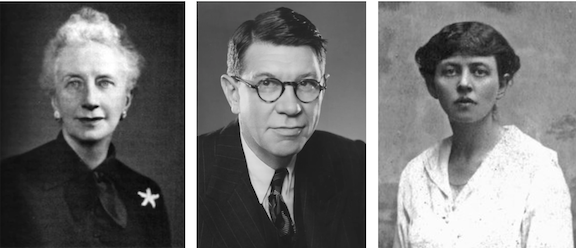
DYSPEPTIC DIETER Harold Ross brought together the talents of his gastroenterologist Sara Murray Jordan, left, with his magazine’s food critic, Sheila Hibben, to publish Good Food for Bad Stomachs. (Wikipedia/The New Yorker)

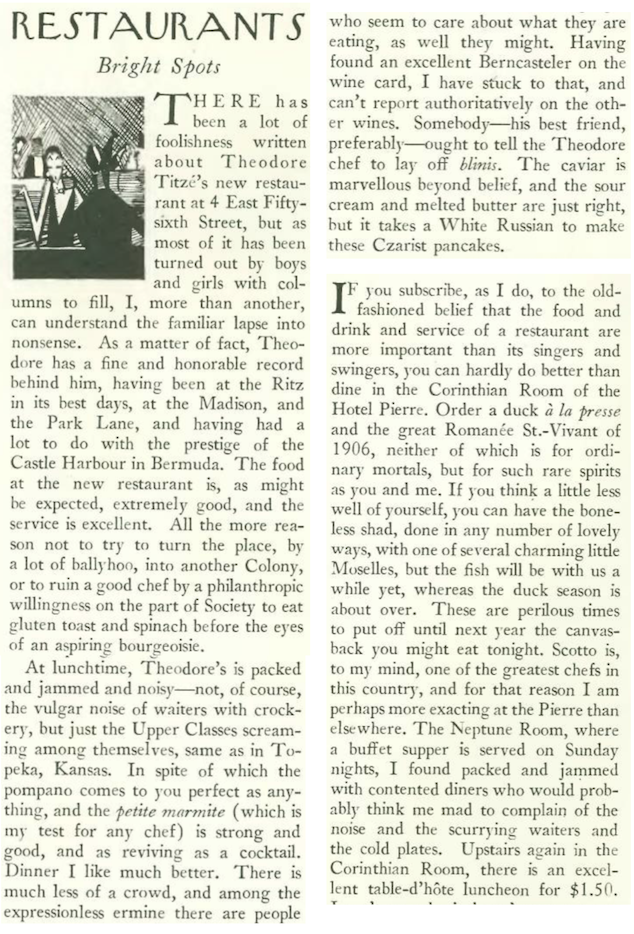
Here are excerpts from Hibben’s “Restaurants” column for the Feb. 22 issue, featuring her takes on a couple of the city’s finer dining establishments, including Theodore Titze’s restaurant on East 56th and the famed fare of Charles Scotto at the Hotel Pierre:
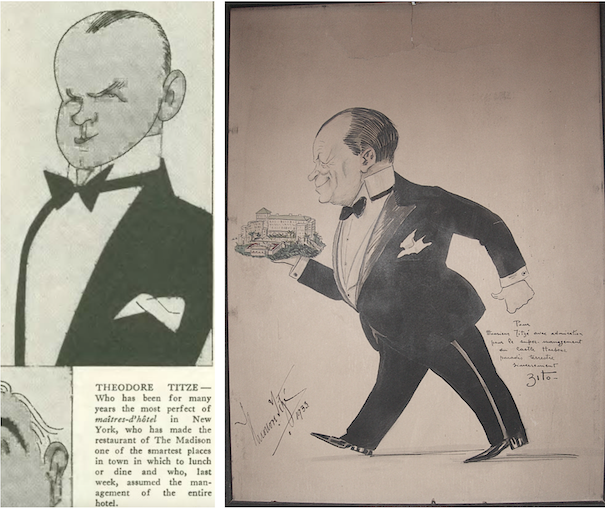
KNOWN AS THEODORE OF THE RITZ, the German-born Theodore Titze (1879–1953) was a well-known maitre d’hotel—at left, Ralph Barton featured Titze as one of his “Heroes of the Week” in the Dec. 12, 1925 issue of The New Yorker; at right, a 1933 drawing of Titze by the cartoonist Vinzento Zito—the image refers to Titze’s 1931 departure from New York to take charge of the Castle Harbor Hotel in Bermuda. He later operated other properties in Bermuda before opening Theodore’s at 4 East Fifty-sixth Street. (wikitree.com)
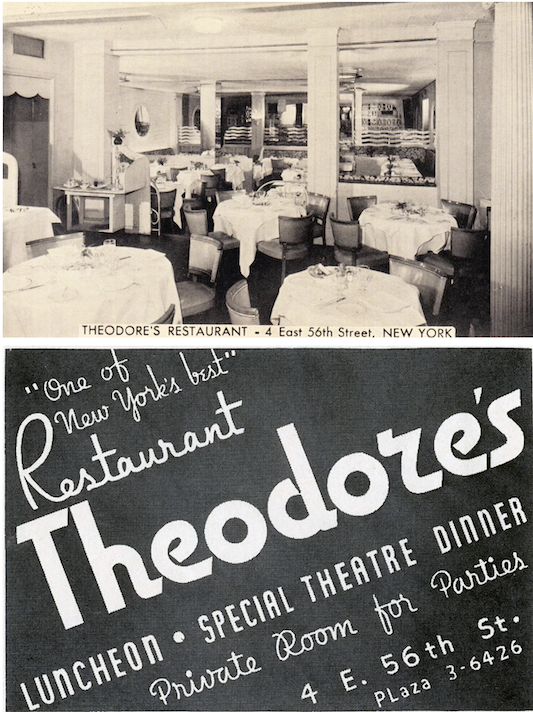
CAN’T MISS IT…Top, postcard image of Theodore’s Restaurant; below, ad for Theodore’s in Stage magazine, February 1938. (Etsy.com)

Hibben also wrote about the excellent fare at the Hotel Pierre, where Chef Charles Scotto, an early protégé of the legendary Chef Auguste Escoffier, reigned supreme.
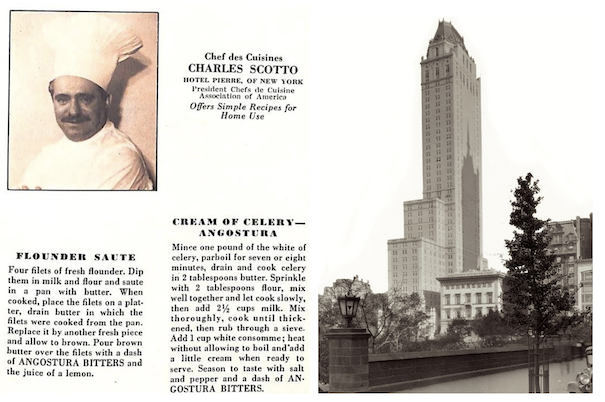
CREAM OF THE CROP…At left, a page from the 1934 booklet Angostura Recipes featuring a recipe by famed Chef Charles Scotto (1887–1937). At right, undated image of the Hotel Pierre. (The Cary Collection/geographicguide.com)

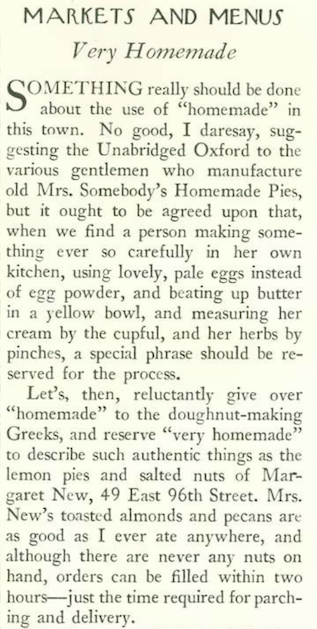
From 1934 to 1962 Hibben wrote the “Markets and Menus” column, which appeared in rotation with several other columns that were tacked onto Lois Long’s weekly “On and Off the Avenue.” Here is an excerpt from Hibben’s Feb. 1, 1936 column:
 * * *

Not Music to His Ears

In his “Notes and Comment,” E.B. White took issue with “the fascism of music” in public places including Grand Central Station and the Central Park skating pond.
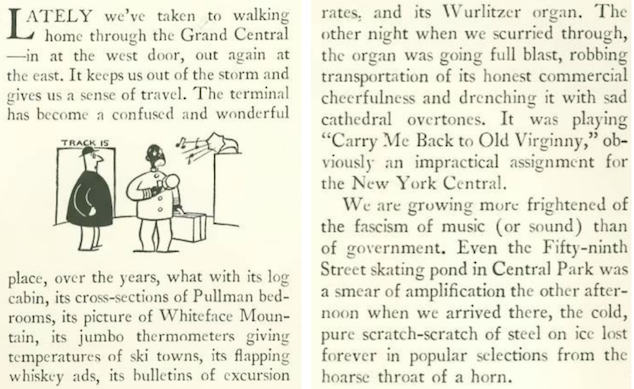
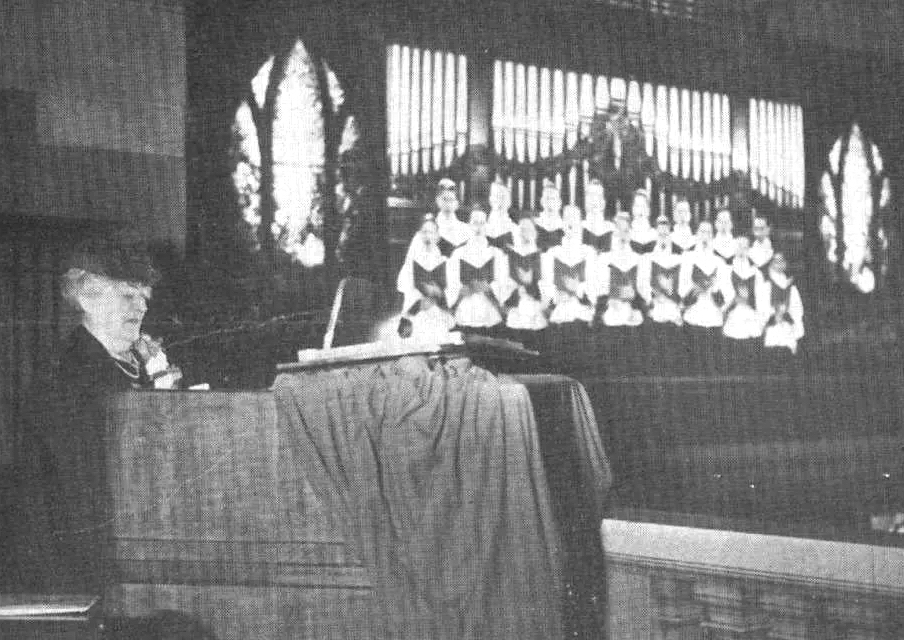
SAD CATHEDRAL OVERTONES is how E.B. White described the organ music of Mary Lee Read, who played organ in Grand Central’s north gallery from 1928 until the late 1950s. On the day after Pearl Harbor was attacked she played “The Star-Spangled Banner;” activity on the concourse ground to a halt, causing commuters to miss their trains. She was forbidden from playing the song after that. She has also been credited with saving the life of a man who was planning to commit suicide until he heard her play a moving hymn. (marthahallkelly.com)

 * * *

At the Movies

Paul Muni was considered one of the best actors of the 1930s, his talents so appreciated by Warner Brothers that he was allowed to choose his own roles, including the lead in The Story of Louis Pasteur. It was a good choice, as it landed him a Best Actor Oscar in 1936. New Yorker critic John Mosher had these observations:
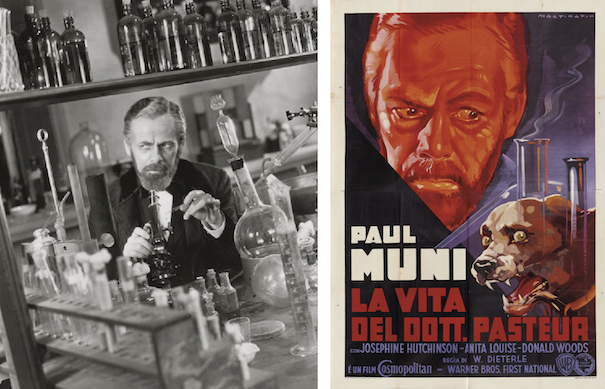
HE’S ON TO SOMETHING…Paul Muni in The Story of Louis Pasteur. One of the best posters for the film was the Italian version at right, the rabid dog promising some some real drama. Muni won the Best Actor Oscar of his portrayal of Pasteur. (researchgate.net/imdb.com)

Mosher also took in The Prisoner of Shark Island, featuring Warren Baxter as a man falsely accused of complicity in the assassination of President Abraham Lincoln.
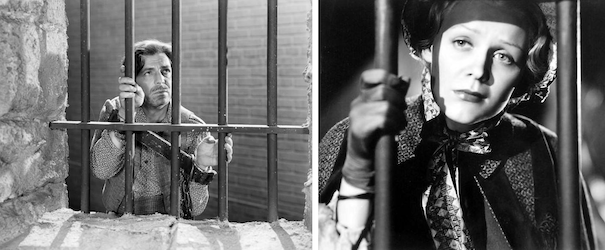
I DIDN’T DO IT…Warren Baxter and Gloria Stuart in The Prisoner of Shark Island. Moviegoers today will remember Stuart (1910–2010) in her portrayal of the aged Rose in 1997’s Titanic. Stuart’s film career would span more than seventy years, 1932–2004. (mubi.com/imdb.com)

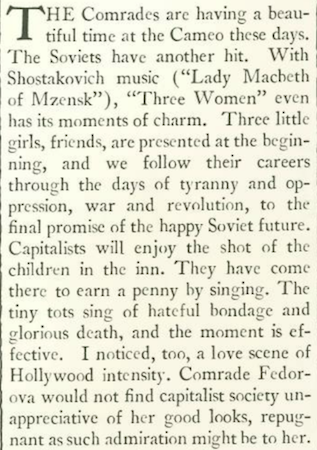
Mosher found much to like in a Soviet film about the struggles and hardships of three childhood friends from Petrograd who become nurses to serve the cause of the Bolshevik Revolution.
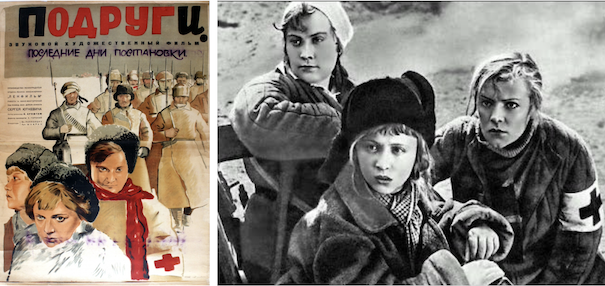
SOVIET SISTERHOOD…At right, Irina Zarubina, Yanina Zhejmo and Zoya Fyodorova in 1936’s Three Women. It was released in the Soviet Union as Girl Friends (Podrugi).

 * * *

From Our Advertisers

If you wanted to visit the land of the Soviet film, Three Women, you could have hopped onto this Reliance cruise to Russia as well as to the Summer Olympics in Berlin…in just a little over three years the Germans would invade Poland and these “wonderlands” would become a living hell for many…
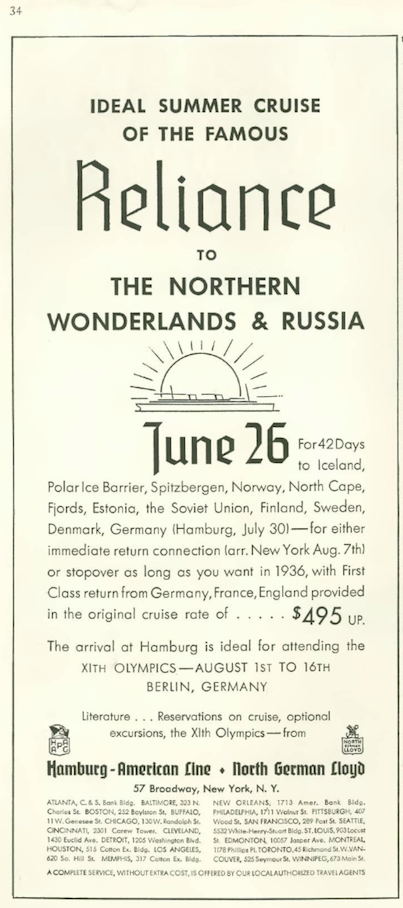
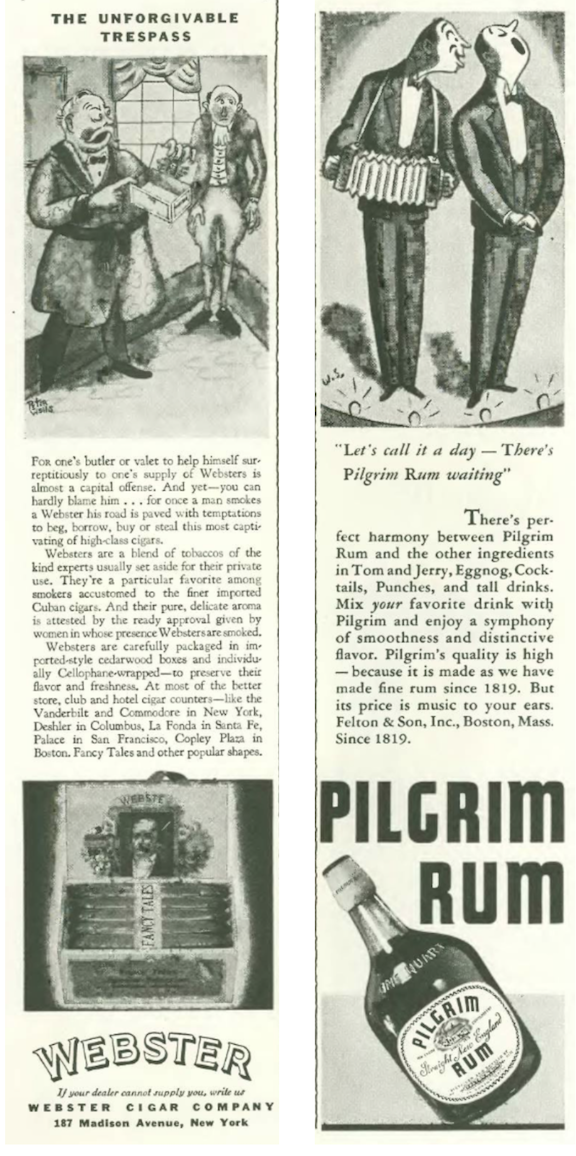
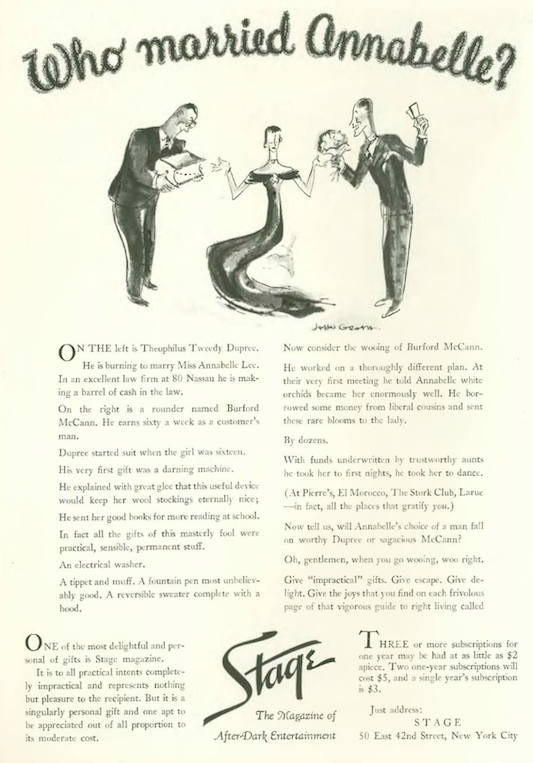
John Groth, who would contribute cartoons to The New Yorker in the 1940s, provided this illustration for a Stage magazine ad…
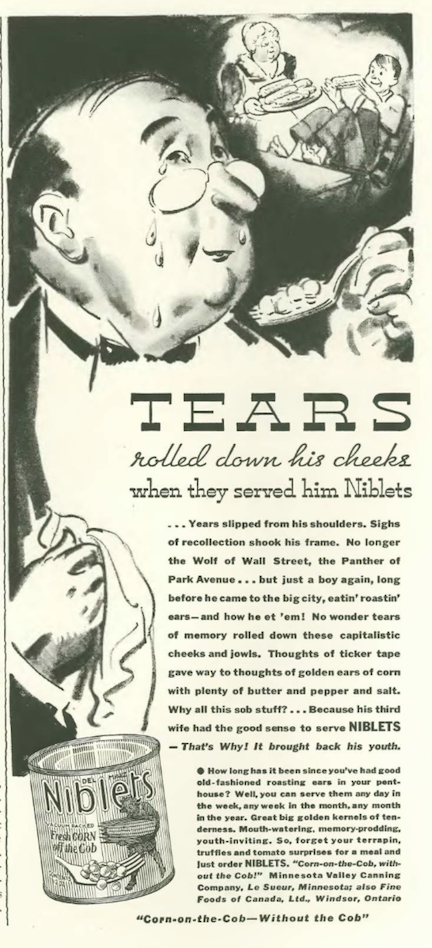
…the folks at Minnesota Valley Canning Company continued the theme of a rich man returning to his humble roots via canned Green Giant vegetables…here the man is brought to tears over “Niblets”…
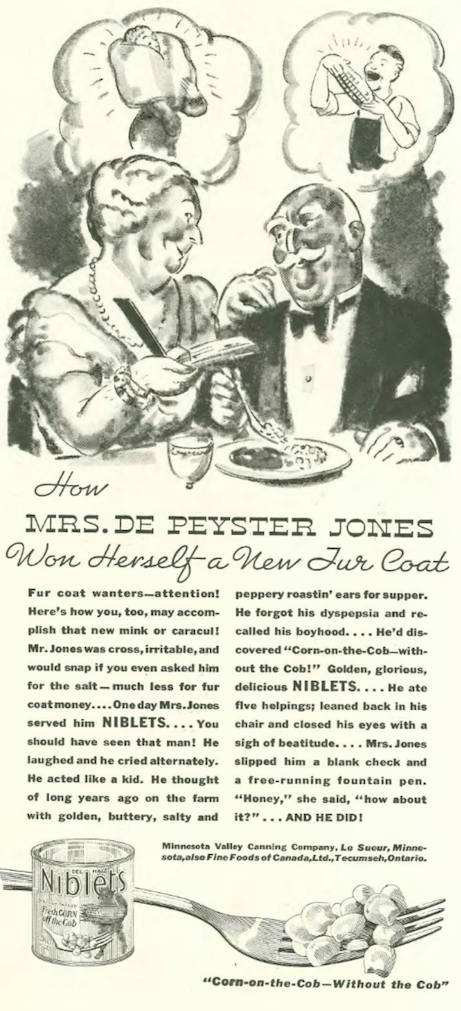
…as you might recall, it was a wealthy “Major” who recently (Dec. 21, 1935) sought to rekindle lost youth through Green Giant Niblets…
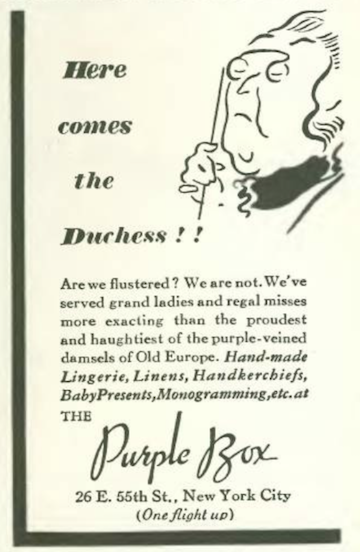
…and what’s the deal with the Duchess trope found in so many ads?…she has been featured in a Green Giant ad for peas, as well as in ads for tomato and grapefruit juice…
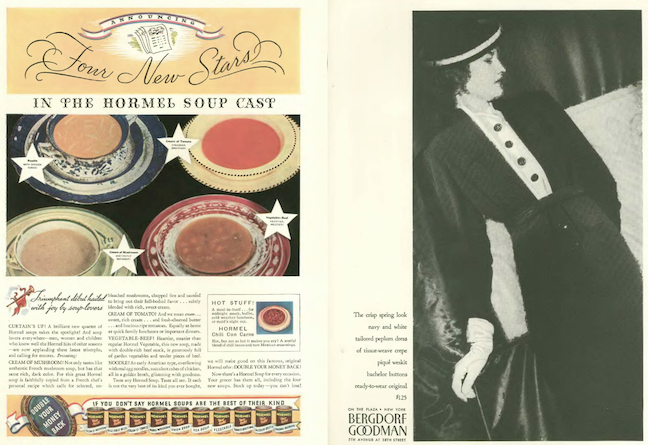
…the magazine’s opening spread once again featured the odd juxtaposition of canned soup and high fashion…
…one-column ads in the back of the book featured illustrations by Peter Wells (at left), and William Steig

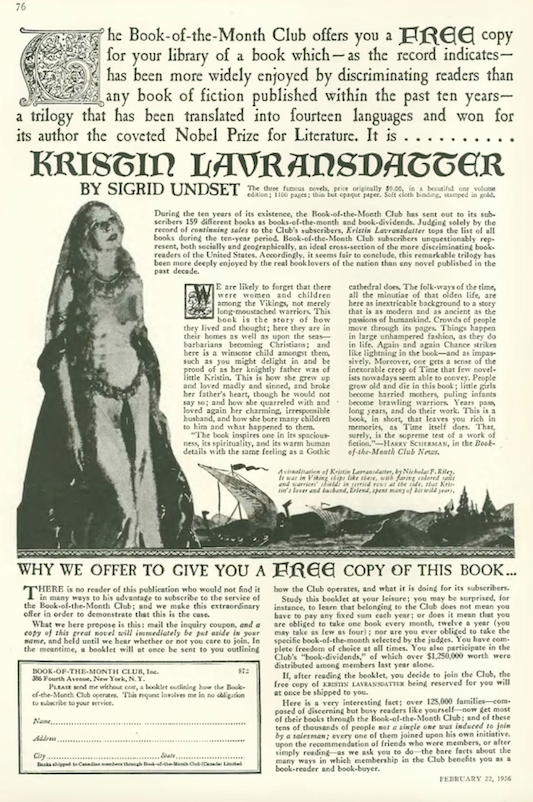
…Book-of-the-Month Club enticed new members with a FREE copy of the Nobel Prize-winning trilogy Kristin Lavransdatter by Danish-Norwegian author Sigrid Undset

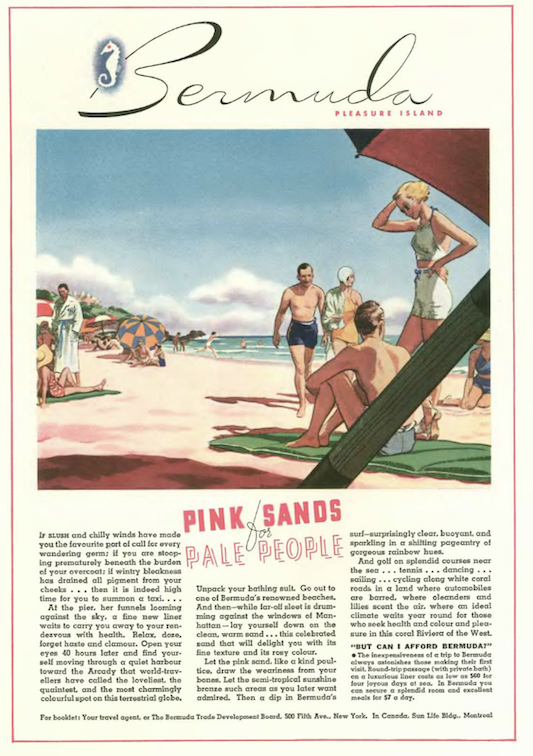
…this colorful ad from the Bermuda Trade Development Board beckoned New Yorkers to trade “slush and chilly winds” for the pink sands of the British island territory…
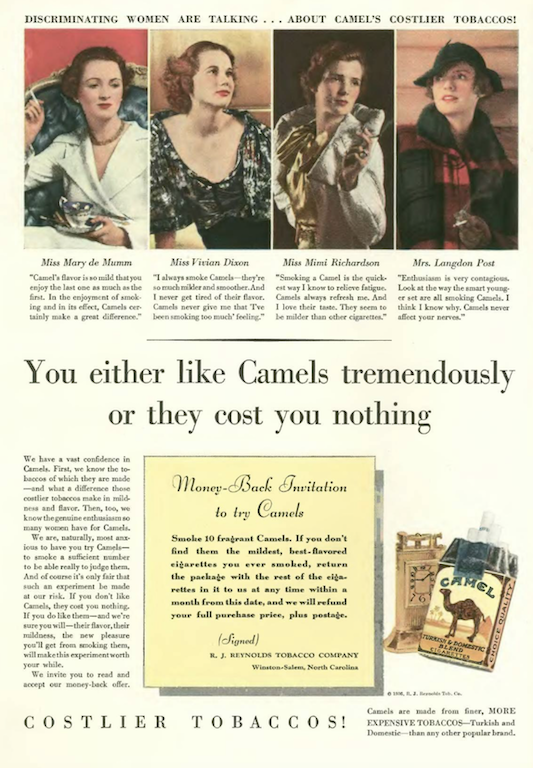
…the back cover cycled back to Camel cigarettes with a lineup of fashionable debs enticing young women to join their ranks…as Camel smokers, at least…
…more one-column ads, featuring the latest in reading material…
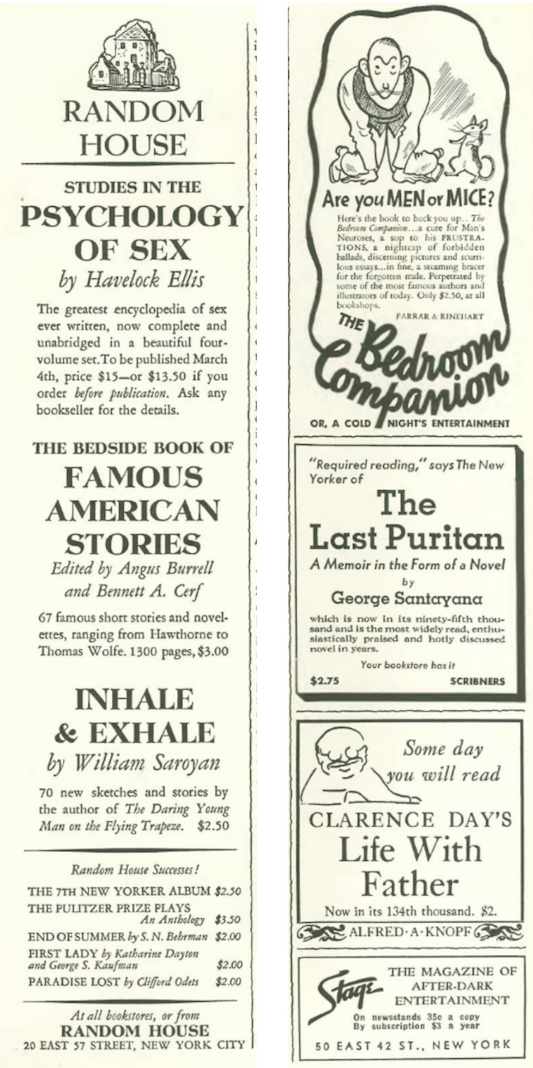
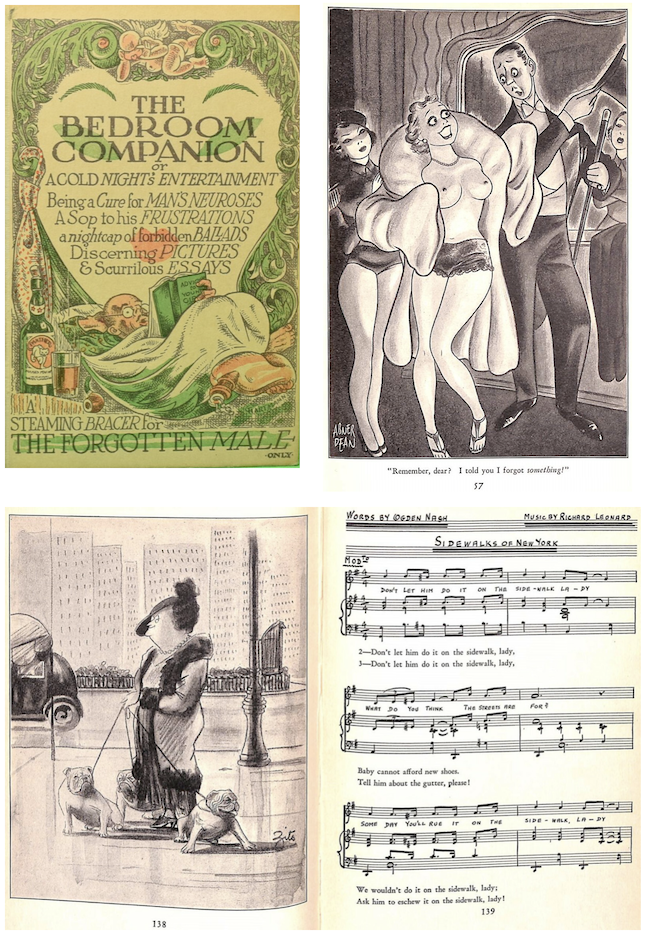
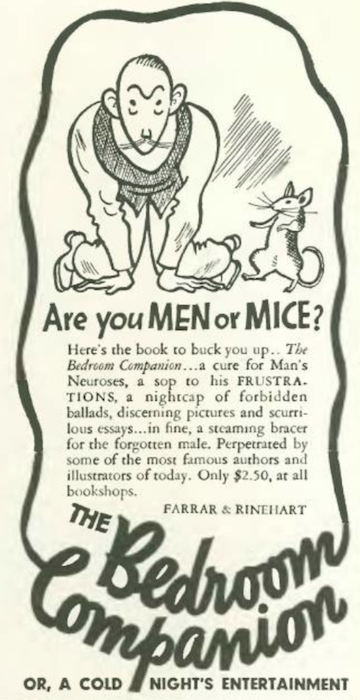
…including the latest edition of The Bedroom Companion…it was one of those “For Men Only” books that compiled some previously published pieces with other contributions…
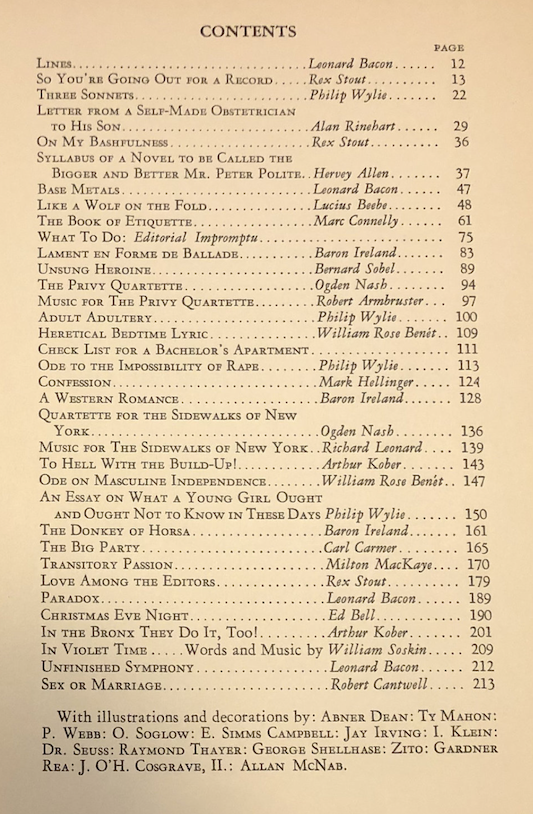
…the index of the 1935 edition included a number of New Yorker regulars…
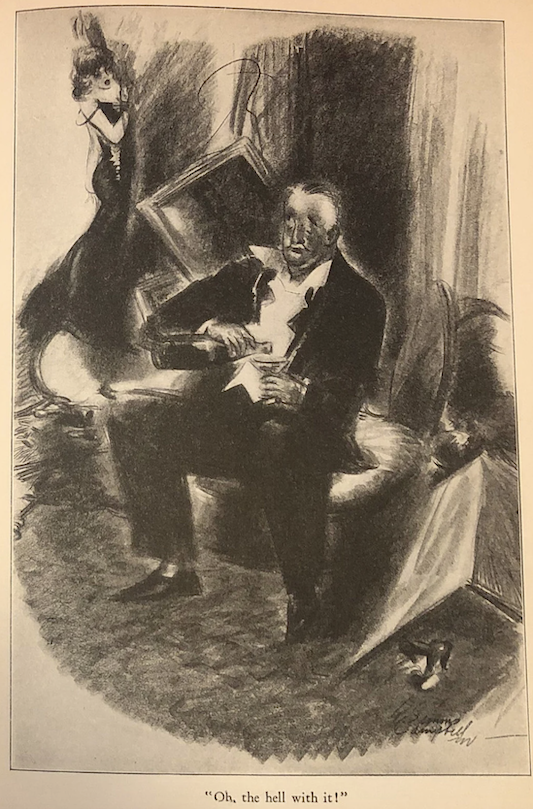
…such as E. Simms Campbell

…and Abner Dean

LATE NIGHT READING…Clockwise, from top left, 1935 edition of The Bedroom Companion; a racy cartoon by Abner Dean; comic lyrics by Ogden Nash; a contribution by Vincenzo Zito, a well-known caricature artist who particularly favored dogs. (etsy.com)

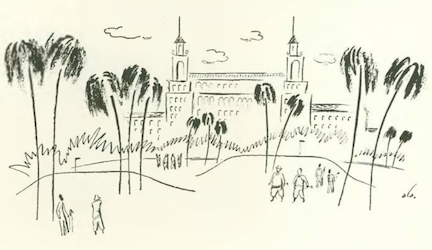
…on to our other cartoonists, we begin with spots by Constantin Alajalov

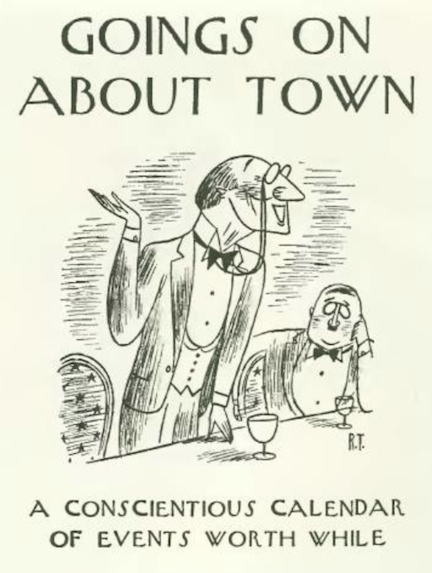
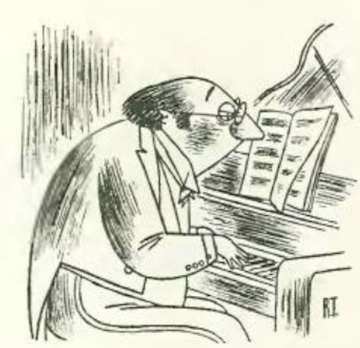
and Richard Taylor

…Taylor again, a spot in the “Musical Events” section…
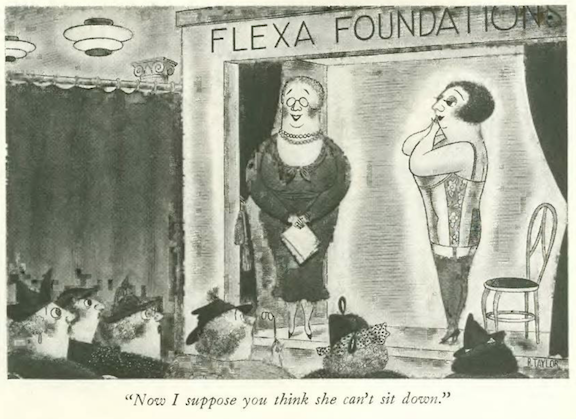
…and a Taylor cartoon…
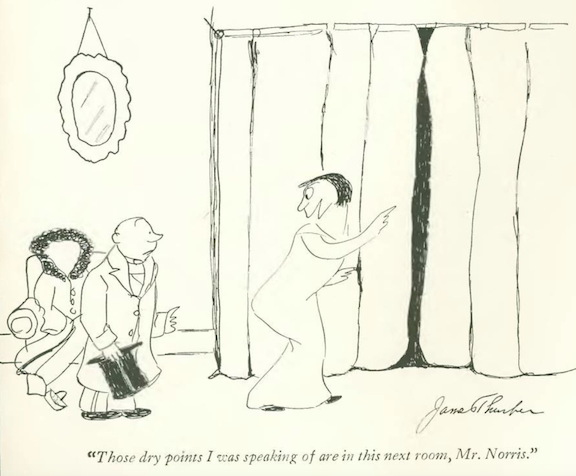
…and we wonder what’s behind the curtain, with James Thurber

William Steig continued to probe the downsides of matrimony…
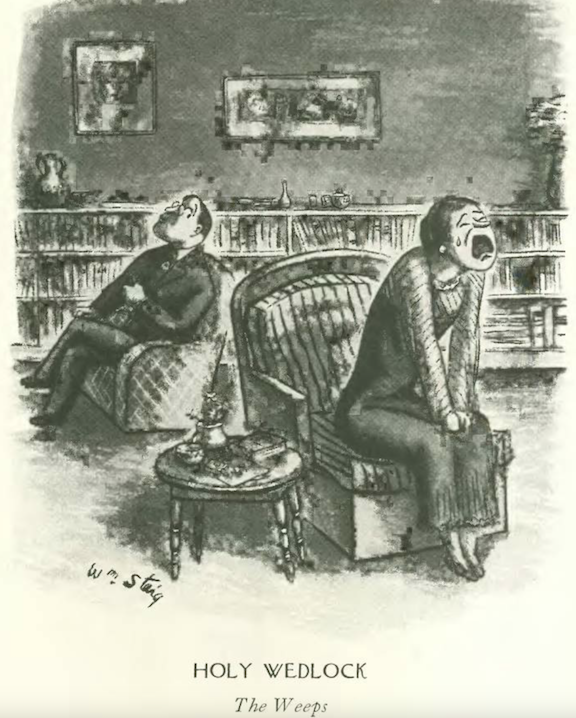
Robert Day showed who’s in charge at the zoo…
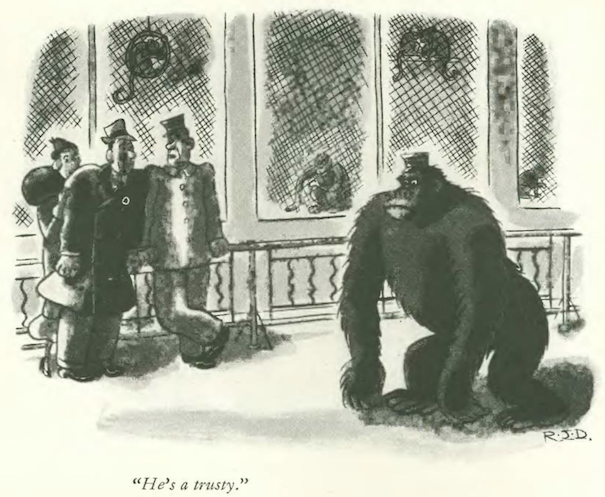
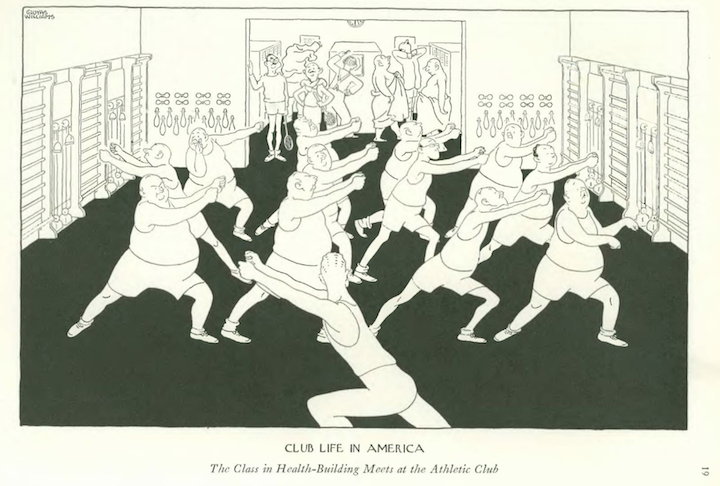
…more club life from Gluyas Williams

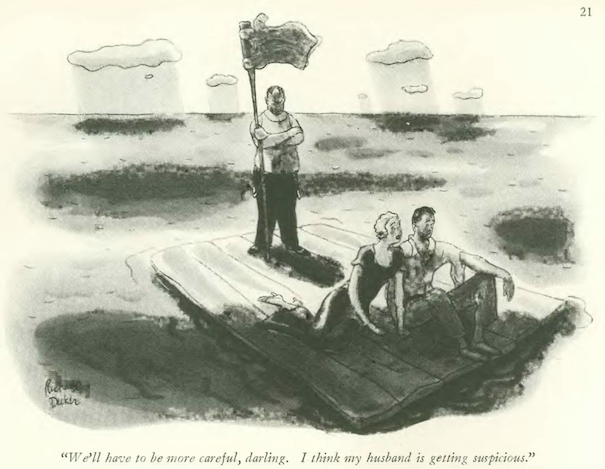
Richard Decker was in a tight situation…
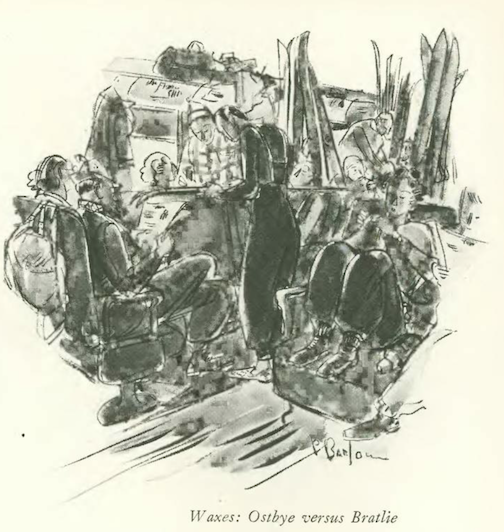
Perry Barlow drew up two pages of scenes from Snow Trains that took thousands of skiers from Grand Central to the Berkshires and Adirondacks…

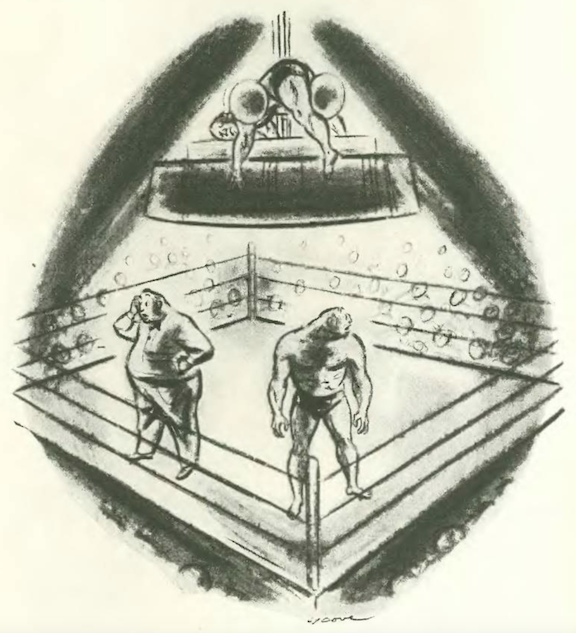
Leonard Dove delivered a knockout punch…
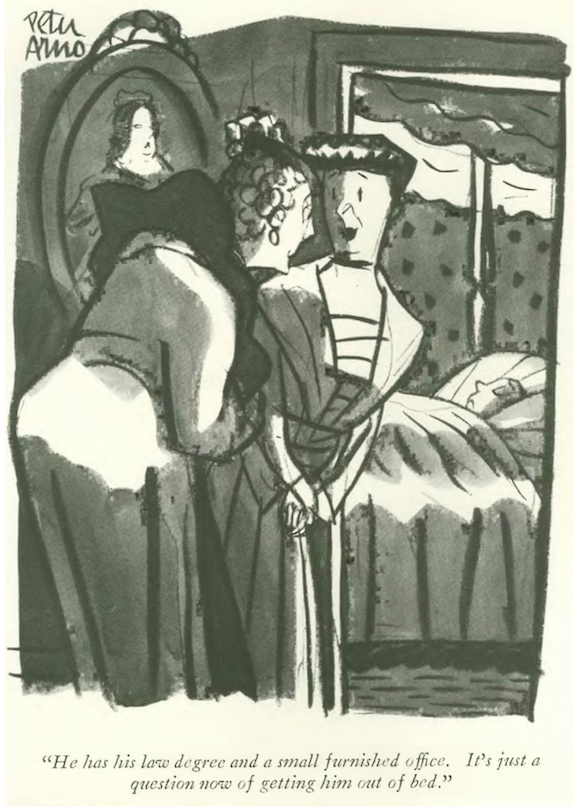
Peter Arno raised a question of initiative…
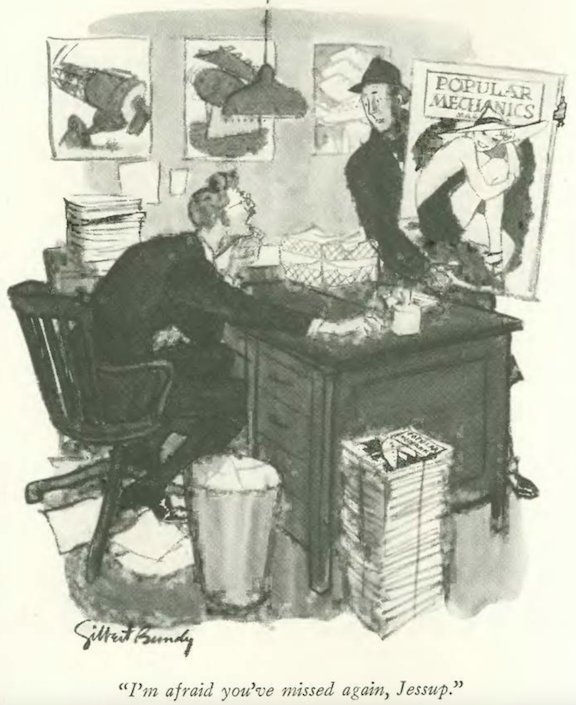
…and Gilbert Bundy sought to spice things up at Popular Mechanics

A final note: Aside from the recurring Rea Irvin cover, this issue made no reference to the eleventh anniversary…except, on the bottom of page 57…
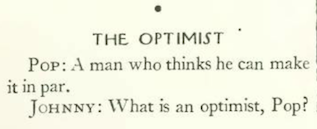
…a recurring column filler, “The Optimist,” appeared in Issue No. 1, and was featured in subsequent issues until Katharine Angell mercifully put an end to it.

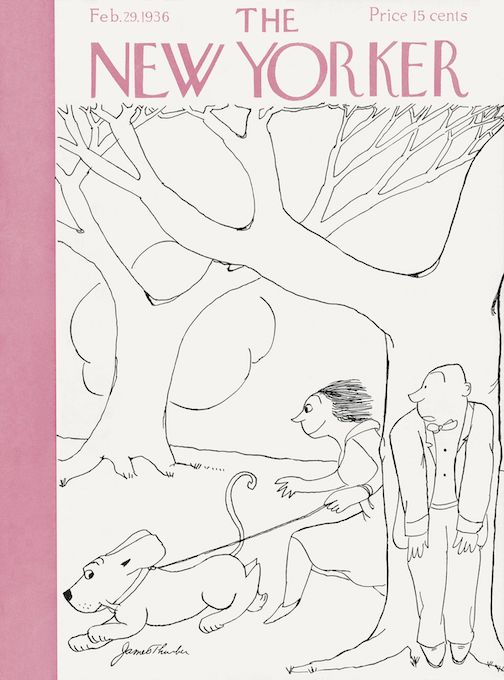
Next Time: Führer Furor…
Hell’s Angels

Among the films in 1930 that marked a new era in motion pictures was Howard Hughes’s epic war film Hell’s Angels. 

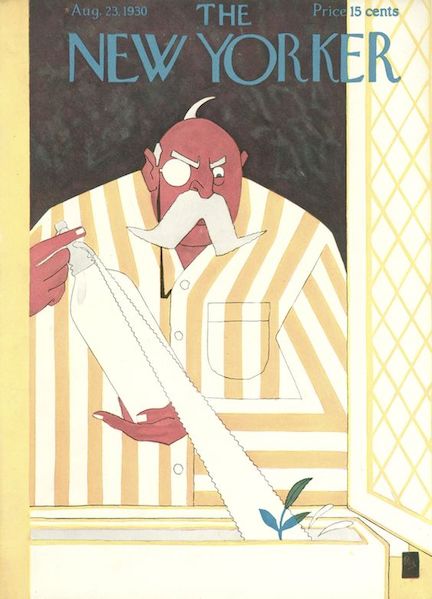
August 23 cover by Gardner Rea.

Originally shot as a silent, Hughes (1905-1976) retooled the film, and over a period of three years (1927-30) poured much of his own money into making what many consider to be Hollywood’s first sound action movie. The film also introduced audiences to 19-year-old Jean Harlow (1911-1937), handpicked by Hughes to replace Norwegian actress Greta Nissen in the lead role (Nissen’s accent posed a problem for the talkies). The film would make Harlow an instant star, propelling her to worldwide fame as the “Platinum Blonde” sex symbol of the 1930s.

Beset by delays due to Hughes’s incessant tinkering, the movie was famously expensive. For example, a total 137 pilots were used in just one flying scene at the end of the film. In addition to monetary costs, the filming also claimed the lives of three pilots and a mechanic, and Hughes himself would fracture his skull during a stunt flying attempt.

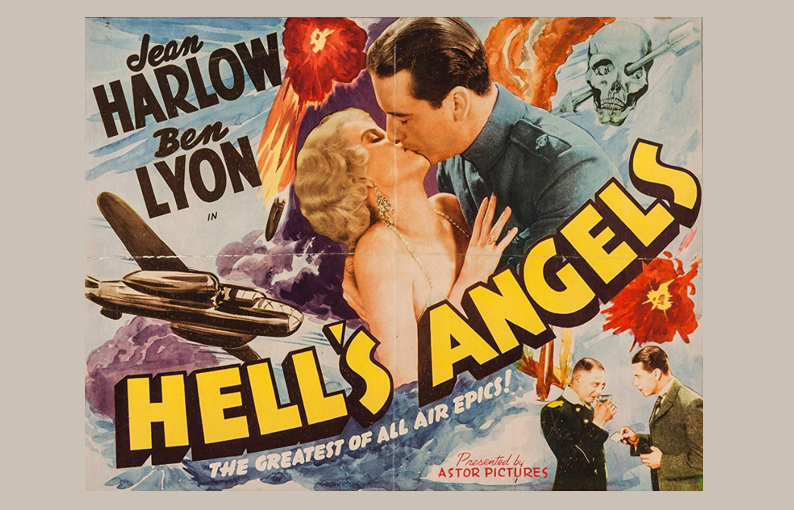
PRE-CODE…Before Will Hays imposed his moral code on Hollywood, films in the early thirties were frank with sexual references, as the image at left attests. When Howard Hughes switched the filming of Hell’s Angels to sound, he replaced Norwegian actress Greta Nissen with 19-year-old Jean Harlow (seen with co-star Ben Lyon). Harlow’s first major film appearance would make her an overnight star; at right, Frank Clarke and Roy Wilson flying an S.E.5A (front) and a Fokker D.VII (back, note camera) in the filming of Hell’s Angels. (Wikipedia)

The New Yorker’s John Mosher found the action scenes enticing, but the acting left something to be desired…

COSTLY VENTURE …This Sikorsky S-29A (left), repainted to represent a German Gotha bomber, would crash into the California hills during filming (right), killing mechanic Phil Jones, who failed to bail out along with the pilot. (Northrop Grumman)
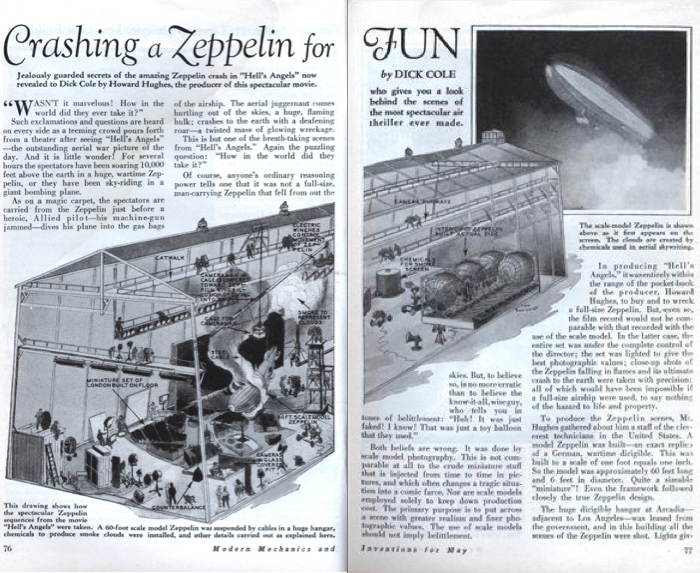
GEE WHIZ…The media often reported on the progress of the film, such as in this May 1930 article in Modern Mechanics and Inventions that detailed a $1 million sequence in which a fighter dives his plane into the top of a Zeppelin, causing it to explode and crash to earth. (Modern Mechanix)

We skip ahead briefly to the Aug. 30 issue, in which “The Talk of Town” featured a mini profile of Howard Hughes and his film. Note how Hughes’s extravagance is described through his frequent use of long-distance telephone calls:

A STAR IS BORN…19-year-old Jean Harlow and Ben Lyon in 1930’s Hell’s Angels. (IMDB/Pinterest)

*  *  *

A Whale of a Movie

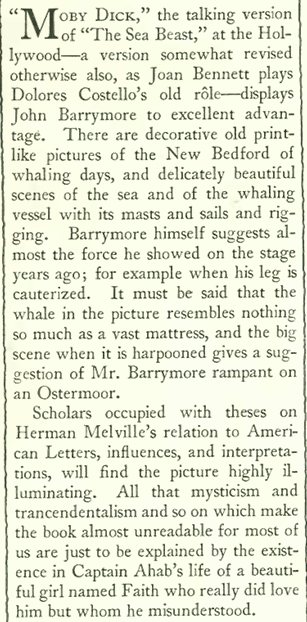
Critic John Mosher also took in a film adaptation of Herman Melville’s Moby Dick, a very loose adaptation that excluded the novel’s central character, Ishmael, and invented a love story for the maniacal Capt. Ahab…

A WHALE OF A STORY…From left, Noble Johnson as Queequeg, John Barrymore as Ahab, and Walter Long as Stubbs in 1930’s Moby Dick. At right, top, the whale puts the hurt on a boat; bottom, Joan Bennett as Faith, a contrived love interest for the old salt. (IMDB)

 *  *  *

Daily Dazzle

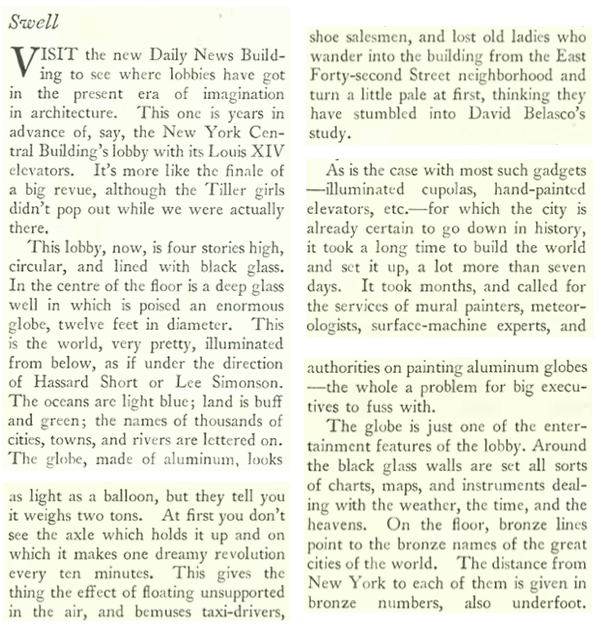
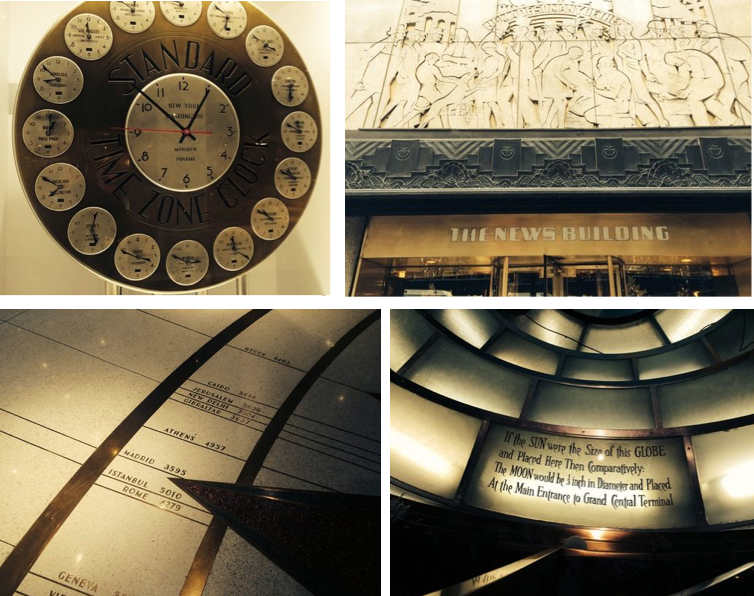
“The Talk of the Town” gushed over the lobby of the new Daily News Building, likening it to the glitz of a Broadway revue:

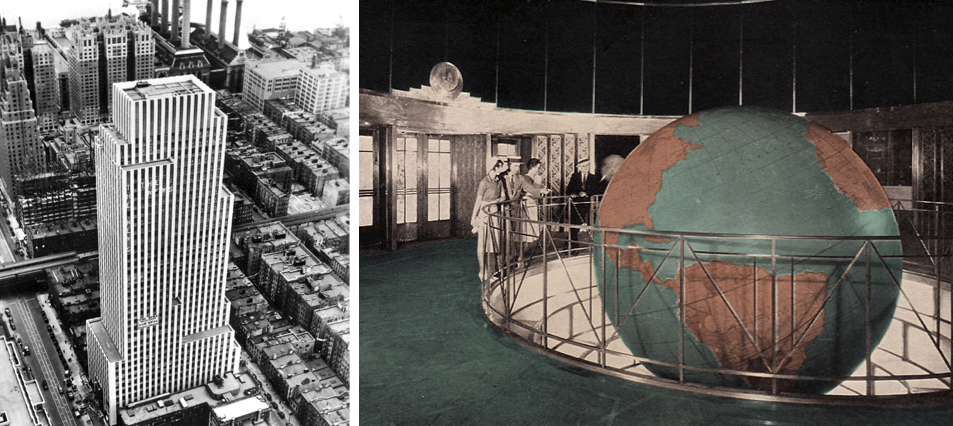
HOME FOR CLARK KENT…The Daily News Building served as the model for the headquarters of the fictional Daily Planet, the building where Superman worked as mild-mannered Clark Kent; at right, an image from 1941 of the lobby, dominated by the world’s largest indoor globe. (Wikipedia/Public Domain)
A LOBBY FOR LEARNING…The lobby includes an array of clocks, top left, that give the time in various global destinations. (Luke J. Spencer via atlasobscura.com)

 *  *  *

A Busboy’s Dream

Charles Pierre Casalasco left his life as a busboy in Corsica and studied haute cuisine in Paris before arriving at the shores of Manhattan in the early 1900s. He became a renowned headwaiter who by 1929 garnered enough financial backing from New York’s most powerful families to construct the exclusive Hotel Pierre. Writing under her pseudonym, “Penthouse,” New Yorker columnist Marcia Davenport described the building’s apartments to eager readers:

FUN WHILE IT LASTED…The 41-story, 714-room Hotel Pierre officially opened in October 1930 to great fanfare. The party would be short-lived, as the deepening Depression would force the hotel into bankruptcy just two years later. At right, photo of the Rotunda, before a 2017 remodeling. (New York Public Library)

 *  *  *

So Much For Title IX

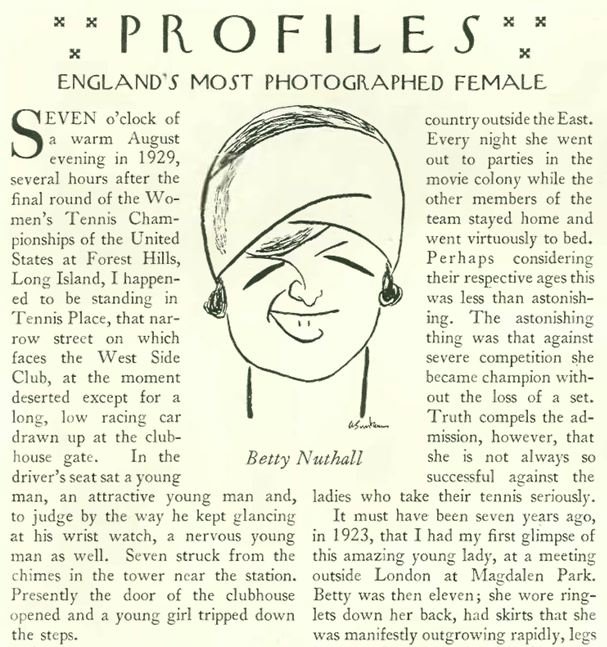
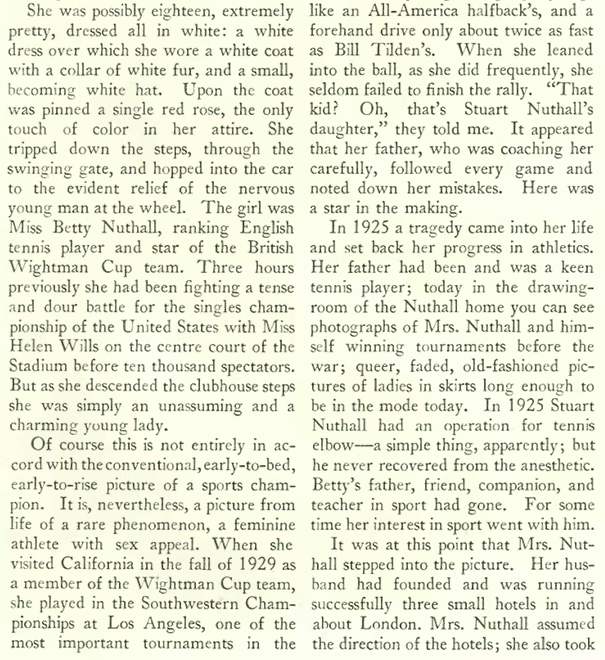
Then as now, women athletes were held to a separate set of standards, not only judged for their athletic abilities, but also for their “sex appeal,” as John Tunis suggests more than a few times in his profile of English tennis champion Betty Nuthall (1911-1983). Excerpts:

HOW’S THAT BACKHAND?…Betty Nuthall greets American tennis star Bill Tilden in September 1930; on the cover of Time after winning the 1930 U.S. Open. (Digital Commonwealth/Time Inc.)

 *  *  *

Free Expression

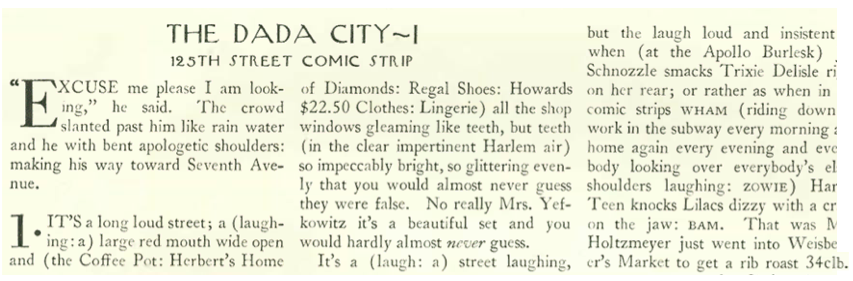
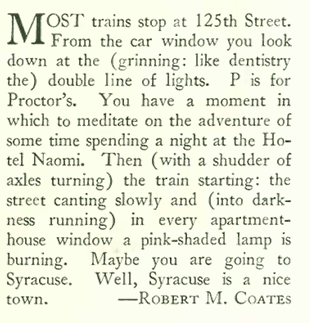
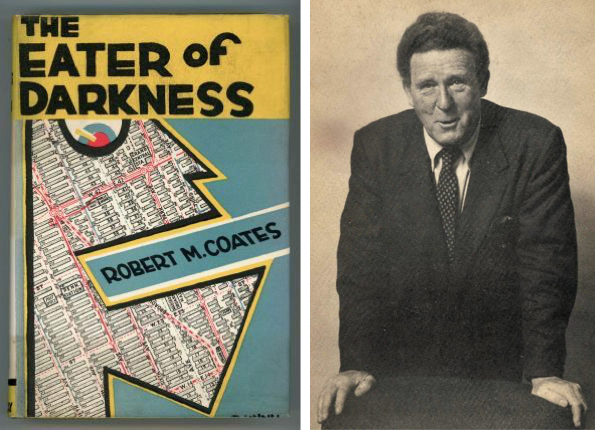
Robert Myron Coates (1897–1973) was a writer of experimental, expressionistic novels who later became a longtime art critic for The New Yorker (he is credited with coining the term “abstract expressionism” in 1946). In the Aug. 23 issue he contributed the first installment of “Dada City,” here describing street life in Harlem. Excerpts:

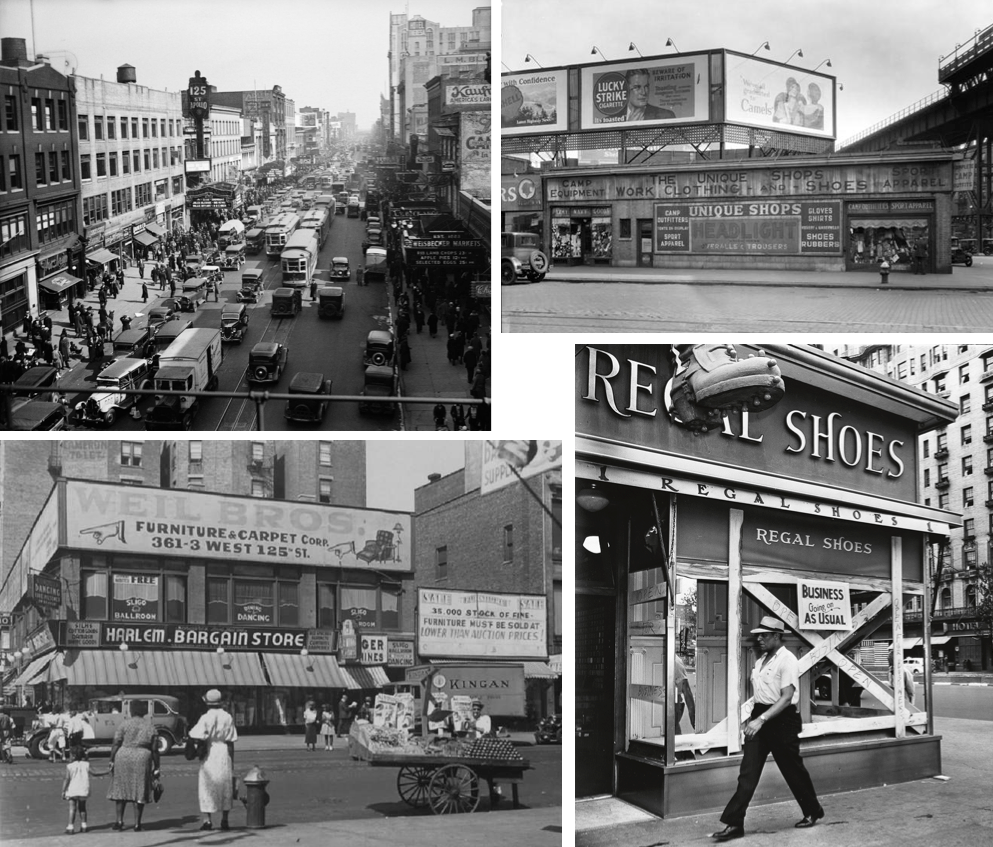
STREET LIFE…Scenes around Harlem’s 125th Street, clockwise from top left: the Apollo Theatre marquee punctuates a busy street scene in 1935; NW corner of 125th and Broadway, 1930; Regal Shoes storefront, 1940s, photo by Weegee; 125th and St. Nicholas Avenue in 1934. (Skyscraper City/Museum of the City of New York)
AMERICAN ORIGINAL…Robert M. Coates’s The Eater of Darkness (1926) has been called the first surrealist novel in English. (Goodreads)

 *  *  *

From Our Advertisers

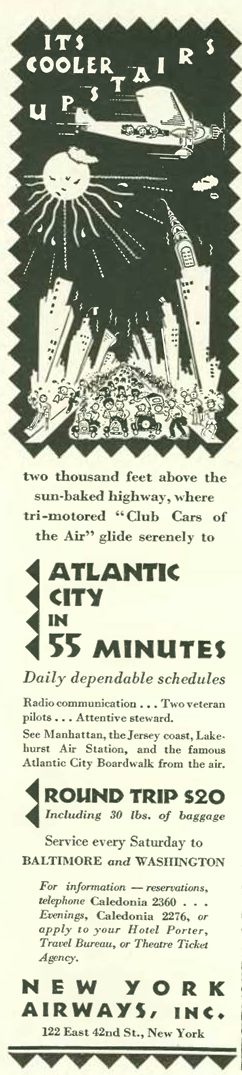
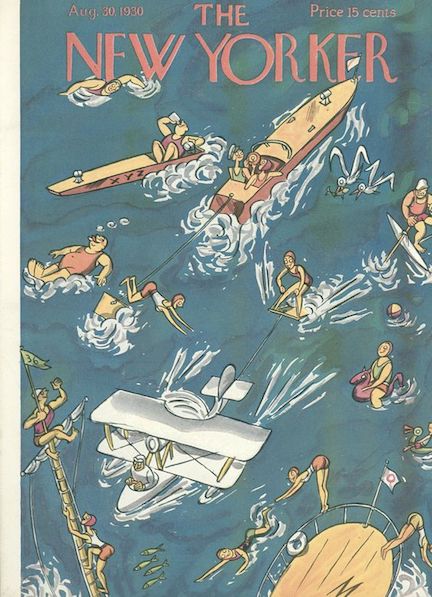
New Yorkers who were still enduring the brutal summer of 1930 could find relief, if they could afford it, on a New York Airways flight…

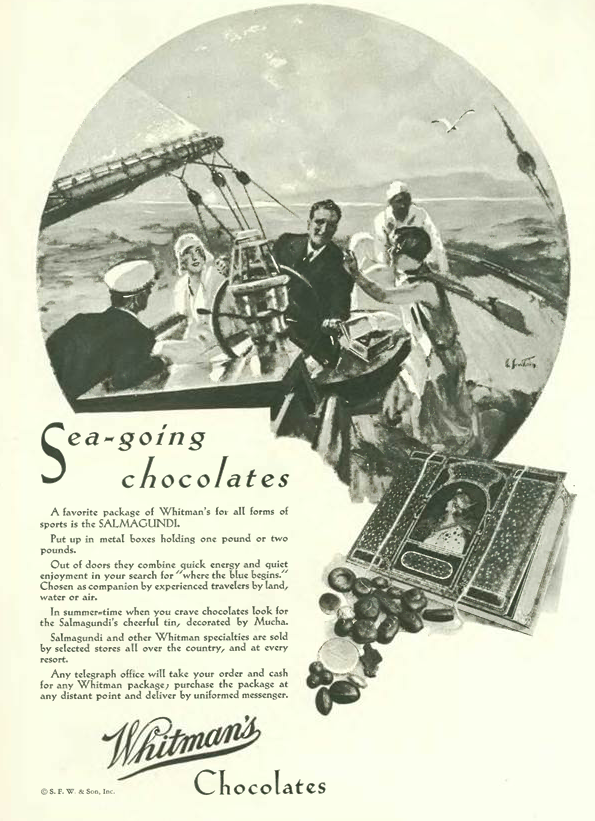
…or if you had the means, you could take your yacht out to sea, like this chap in a coat and tie who calmly steers with one hand while offering a box of chocolates to his guests with the other…
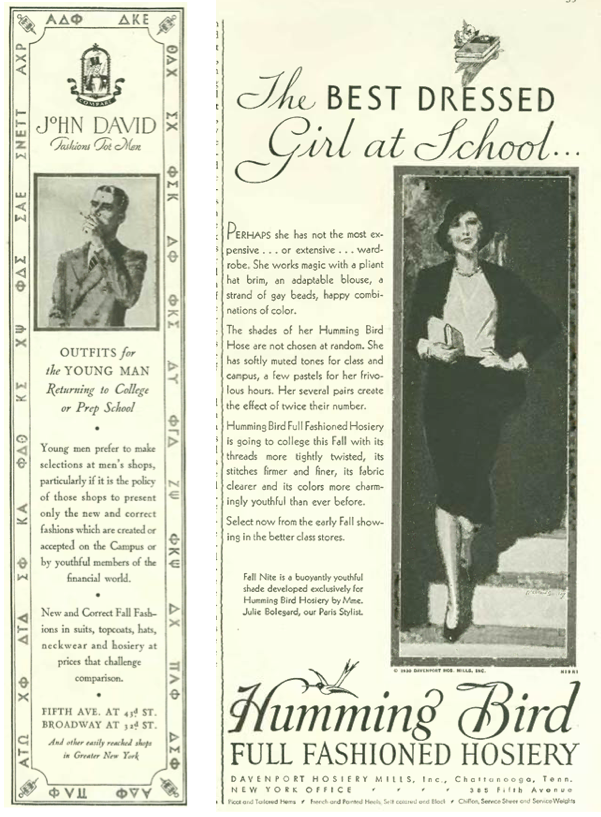
…our sailor wasn’t the only one dressed to nines…here are two ads offering suggestions to young folks returning to college or prep school…
…for comparison, this is how a group of college students at Columbia University dress today…

(Columbia University)

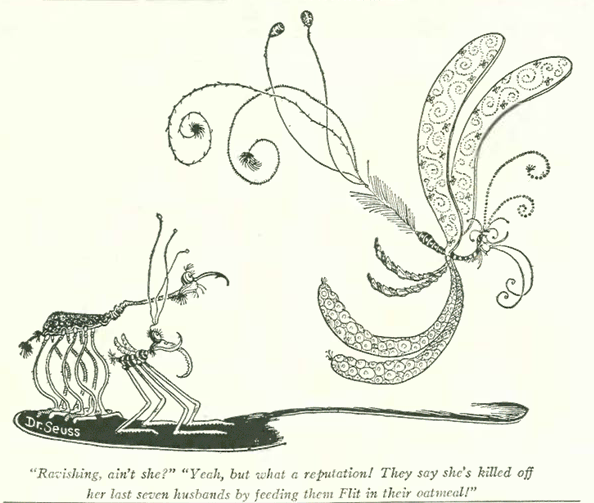
Dr. Seuss continued to crank out drawings on behalf of Flit insecticide…

…and on to cartoons, yet another rerun (the sixth) of this Peter Arno drawing with a new caption (Dorothy Dix was a popular advice columnist)…

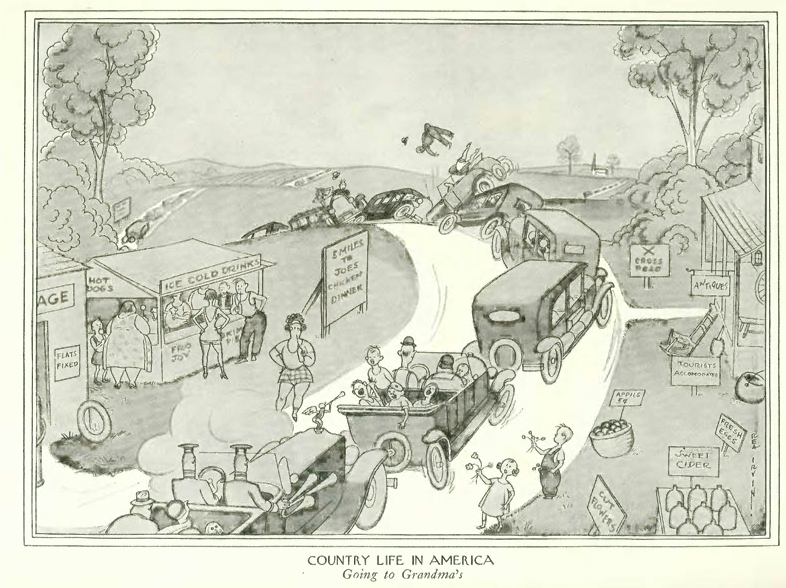
…and another look at country life courtesy Rea Irvin (originally printed sideways on a full page)…

…and another country scene, this time among the toffs, thanks to Garrett Price

…back in the city, some parlor room chatter as depicted by Barbara Shermund

…downtown, Isadore Klein looked at the economic challenges of peep shows…

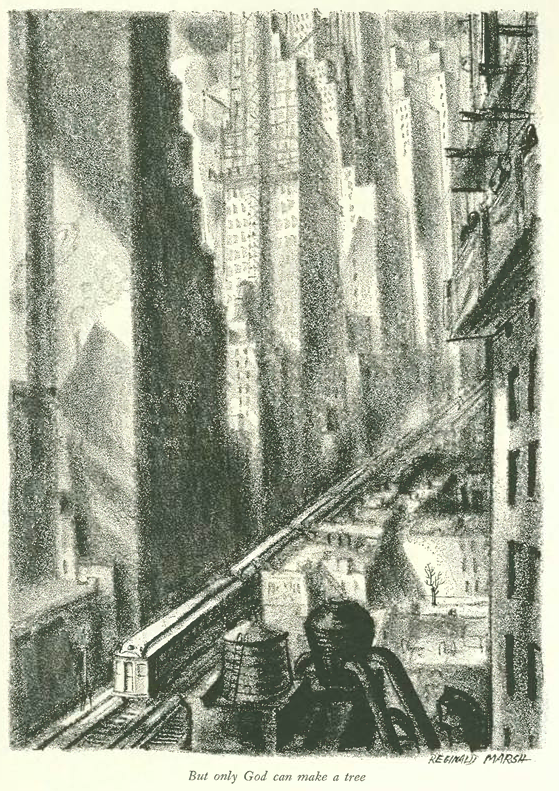
…and we close with this reflection on city life, by Reginald Marsh

Next Time: Marble Halls…

At Home With the Capones

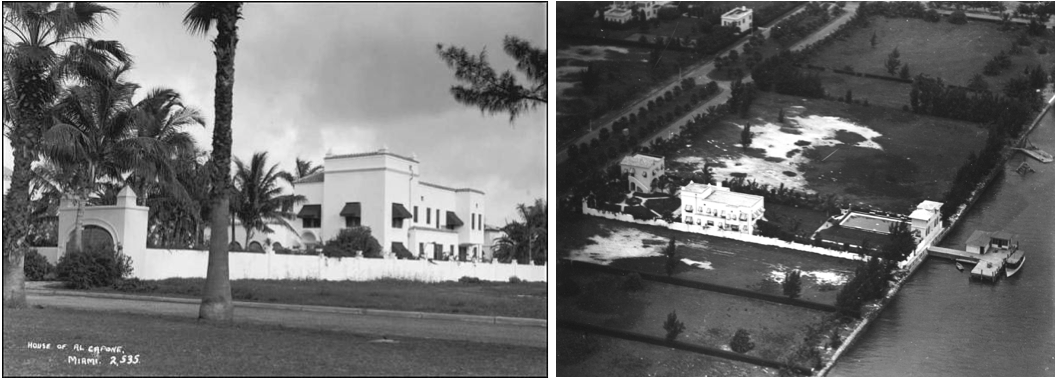
In 1928 Al Capone bought an estate on Miami’s Palm Island as a getaway from the hustle and bustle of Chicago gangster life. He was apparently basking in the Florida sun on Feb. 14, 1929 when four of his associates gunned down seven members of a rival Irish gang on Chicago’s North Side.

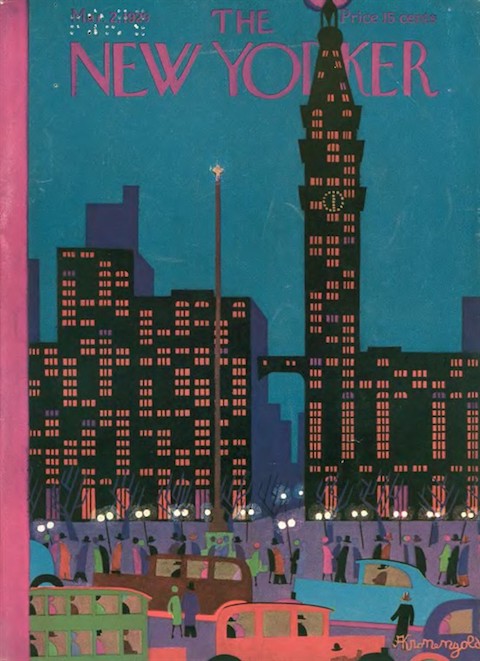
March 2, 1929 cover by Adolph K. Kronengold.
WINTER RETREAT…Al Capone’s estate on Miami’s Palm Island. (miami.curbed.com / sallyjling.org)

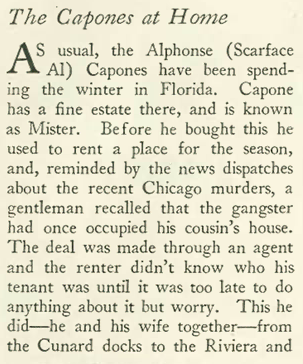
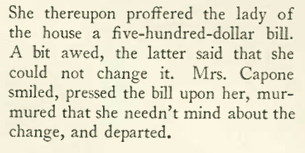
It is widely believed Capone ordered the killings, given that he dominated Chicago’s illegal bootlegging, gambling and prostitution trades and was known for his ruthless elimination of rivals. On the heels of the St. Valentine’s Day massacre, James Thurber contributed this item in the New Yorker’s “Talk of the Town” describing a more mundane side of gangster life:

Shortly after Thurber’s article appeared in the March 2, 1929 New Yorker, Capone would be arrested in Chicago by FBI agents on a contempt of court charge and again in May 1929 on a weapons charge. The following March Capone would be referred to as “public enemy number one” by the Chicago Crime Commission, and a month later he would be arrested on vagrancy charges during a visit to Miami—the Florida governor wanted him out of the state. In 1932 Capone would be sent to Federal Prison for tax evasion.

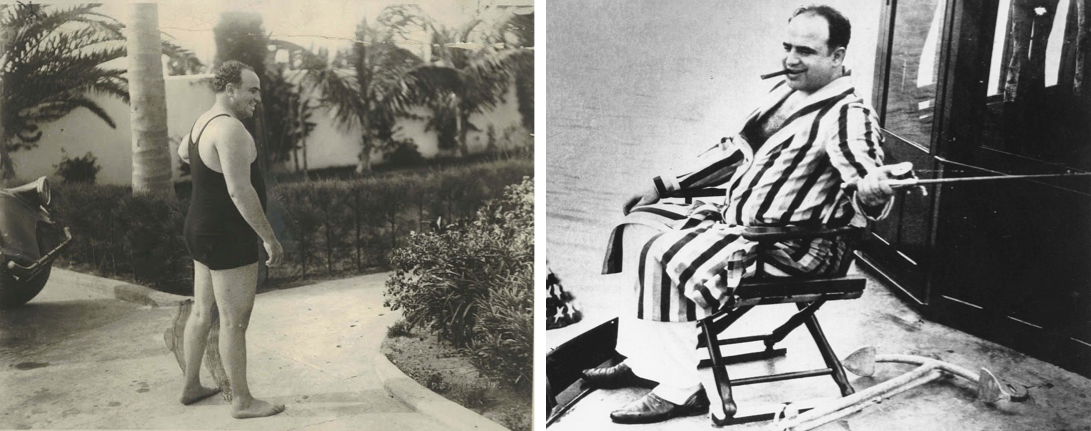
SNOW BIRD OF A DIFFERENT FEATHER…Al Capone relaxes at his Palm Island estate, left, and tries his hand at deep sea fishing off the Florida coast, circa 1929. (miami-history.com)
TEN YEARS LATER…Al Capone and his wife Mae (at right), with their son, Albert and their soon-to-be daughter-in-law Diana Ruth Casey. The photo was taken at Palm Island in 1940 after Al Capone’s release from prison. (Associated Press)

When Capone finally returned to Palm Island in 1940, he was a very different man. When he entered the U.S. Penitentiary in Atlanta in 1932 he was found to be suffering from both syphilis and gonorrhea, and when he was released seven years later his mental capacities were severely diminished due to late-stage syphilis. In 1946 a physician concluded Capone had the mentality of a 12-year-old child. He died on Jan. 25, 1947, having just turned 48 years old.

Another mention of the St. Valentine’s Day massacre could be found in Howard Brubaker’s column “Of All Things”…

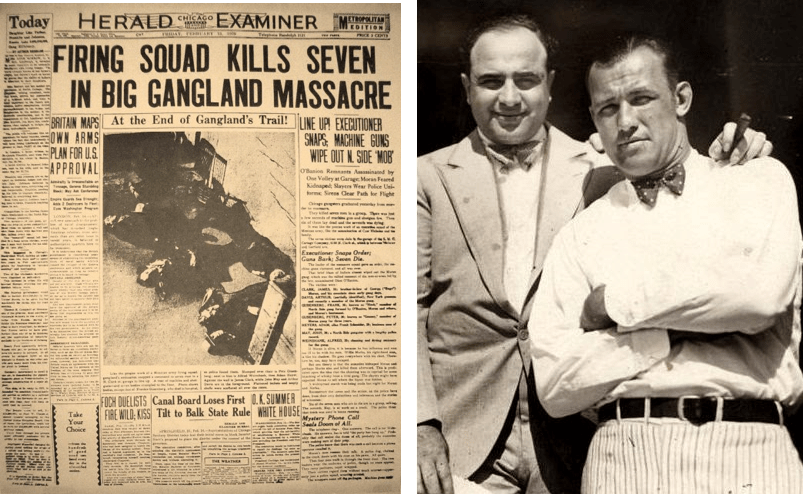
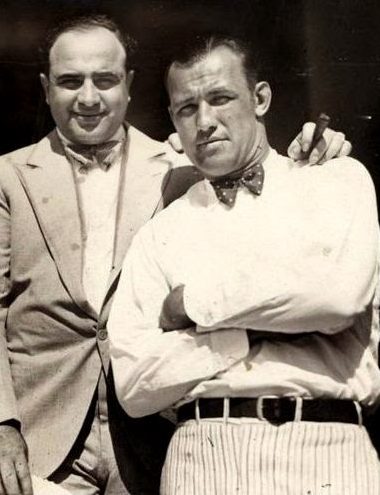
MY ALIBI…Al Capone poses with boxer Jack Sharkey in Miami on Feb 13, 1929, the day before the St. Valentine’s Day Massacre. Sharkey was in training for his bout with Young Stribling. (classicboxingsociety.blogspot.com)
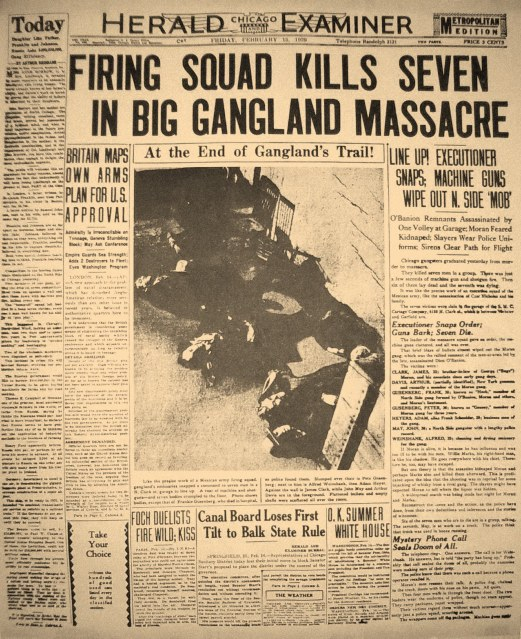
MEANWHILE IN THE WINDY CITY…The Chicago Herald-Examiner’s front page coverage of the St. Valentine’s Day Massacre. (Chicago Public Library)

*  *  *

Pierre’s Hotel

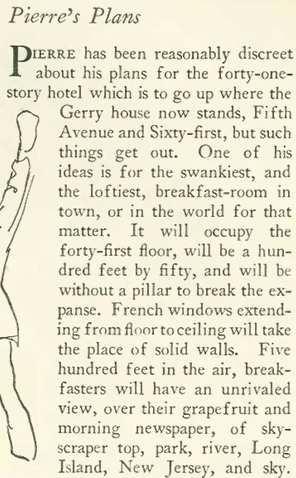
Back in New York, patrons of famed chef Charles Pierre Casalasco were abuzz over his plans for a luxury high-rise hotel. Writing in “Talk of the Town,” Leonard Ware made these observations about Pierre’s big plans:

A BUSBOY’S DREAM…Lloyd Morgan’s 1928 rendering of the Hotel Pierre (left), and the Hotel Pierre today, as viewed from Central Park. The hotel’s builder, Charles Pierre Casalasco, started out as a busboy in his father’s restaurant in Corsica. (Half Pudding Half Sauce / Wikimedia Commons)

Ware recounts how Pierre went from humble busboy to renowned haute cuisine restaurateur:

The Rotunda of the Hotel Pierre. (Wikimedia Commons)
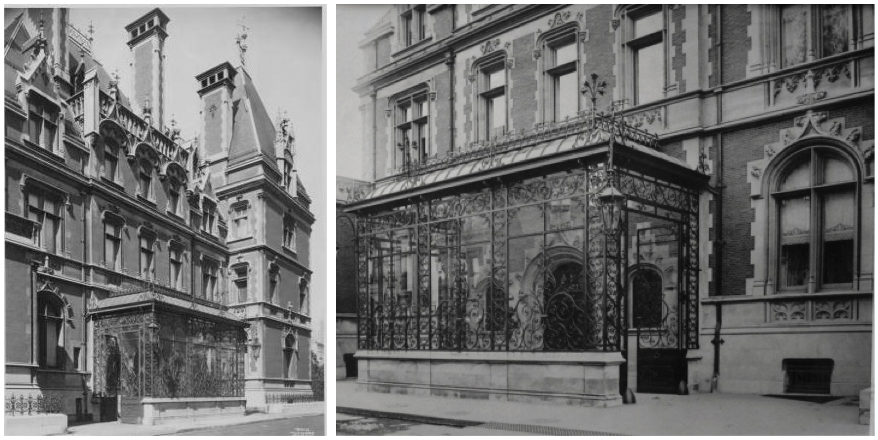
The 1897 Elbridge T. Gerry mansion, designed by Richard Morris Hunt, was torn down to make way for the Hotel Pierre. French artisans were hired to construct the elaborate wrought iron porte-cochere at the main entrance. (New York Public Library / American Architect & Building News)

 *  *  *

Famed Bluestocking

The New Yorker’s Paris correspondent, Janet Flanner, who wrote under the pen name Genêt, wrote under her own byline for the first time in a profile of the famed novelist Edith Wharton, featured in the March 2 issue. Although born a New Yorker, Wharton mostly lived in France after 1914. Below is a drawing of Wharton by Hugo Gellert that accompanied the profile, of which a few excerpts are included below:

VIVE LA FRANCE…Edith Wharton at her spring and winter home in France, Sainte-Claire du Chateau, circa 1930. She finished her novel, The Age of Innocence at Sainte-Claire. (Pinterest)

STILL LOVELY…Sainte-Claire du Chateau today. (sydneynearlydailyphot.blogspot.com)

GOLDEN YEARS…Edith Wharton in her garden at Sainte-Claire du Chateau, circa 1930.

 *  *  *

From Our Advertisers

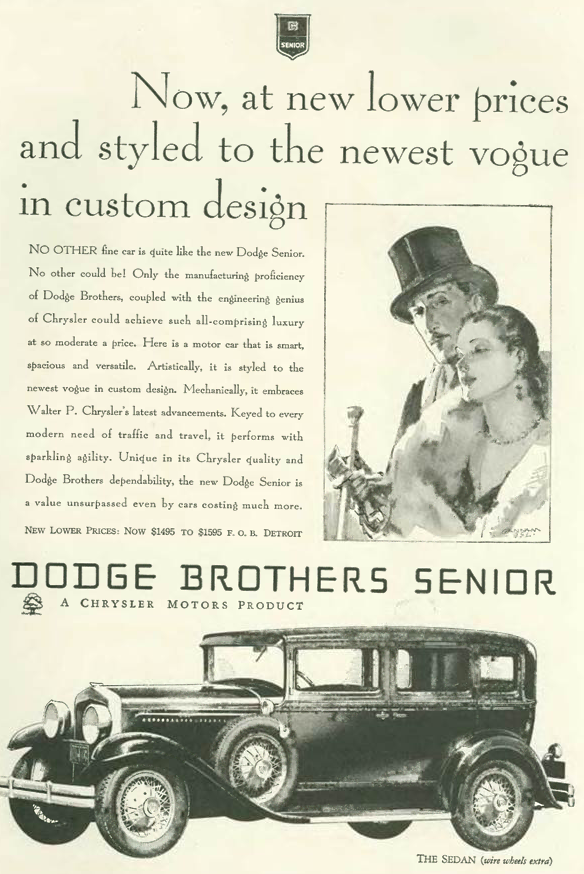
Automobile manufacturers were keen to snob appeal even 90 years ago, as can be seen in this advertisement for Dodge cars—the company had been acquired the previous year by Walter Chrysler. Dodge cars were noted for dependability and value, but this ad suggested even blue bloods would find them appealing…

…Chrysler did however take a more direct aim at the top-hat set with a new model— Imperial—to compete with luxury carmakers such as Lincoln and Cadillac…

…just for kicks, this is what the Chrysler Imperial would look like just 30 years later…

(Kimballstock)

…not to be left out, Cadillac placed its downscale luxury model next to Mont-Saint-Michel in this illustrated advertisement. The LaSalle was comparable in price to the Imperial (around $2,500 to $3000) while top-of-the-line Caddies were priced up to $7000…

…and what do you put in your fine automobile to make it purr? Why gasoline mixed with tetraethyl lead, of course!

Speaking of mixing, I like this advertisement for Cliquot Club, whose manufacturers finally—and not so subtly—hint at how their product is to be enjoyed…

…and finally, this ad for the new Fuller Building, which touted gallery spaces for “superior merchandise” on its first six floors…

ART DECO GEM…The 1928-29 Fuller Building by Walker & Gillette at 41 East 57th St. The crown (at left), and a view of the entrance. The lower floors still serve as gallery spaces for art dealers such as Neuhoff and Emmerich. (nyc-architecture.com)

In the cartoon department, we have I. Klein’s take on recent activities associated with the inauguration of President Herbert Hoover

…and Abe Birnbaum, who provided this sketch of Hoover for the opening pages…

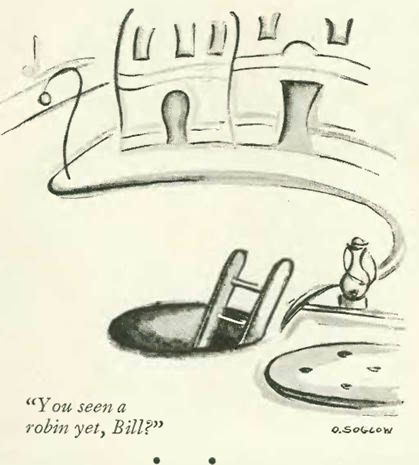
Otto Soglow’s manhole denizens looked for signs of spring…

…and finally, a comment on the diversification of drugstore wares, by a cartoonist signed as “Kinol.” I’ve had no luck tracing this name, so if anyone has the scoop on this artist, please drop me a note!

Next Time…Sky-High Fitness…