Down to Earth

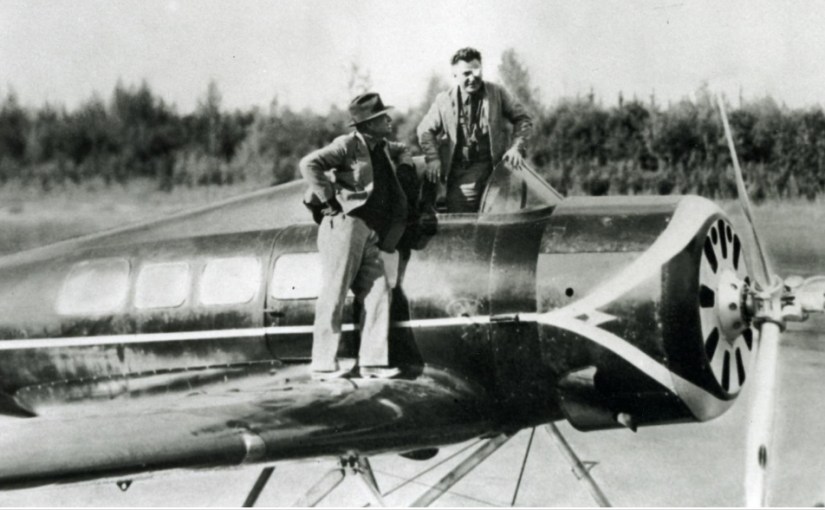
Above: Will Rogers (with hat) visits with pilot Wiley Post near Fairbanks, Alaska, hours before their fatal crash on August 15, 1935. (okhistory.org)

It would be a challenge to find a place for a multi-talented, mega-star like Will Rogers in today’s over-saturated and segmented media landscapehe was a trick roper, vaudevillian, social commentator, comedian, journalist, author, and radio and film celebrity. His early fame on the vaudeville circuit, including the Ziegfeld Follies, would spark a film career in 1918 (he would appear in 71 films), and a 1922 town hall speech would lead to a nationally syndicated newspaper column. When radio became a nationwide phenomenon his voice could heard coast-to-coast. He was seemingly everywhere.

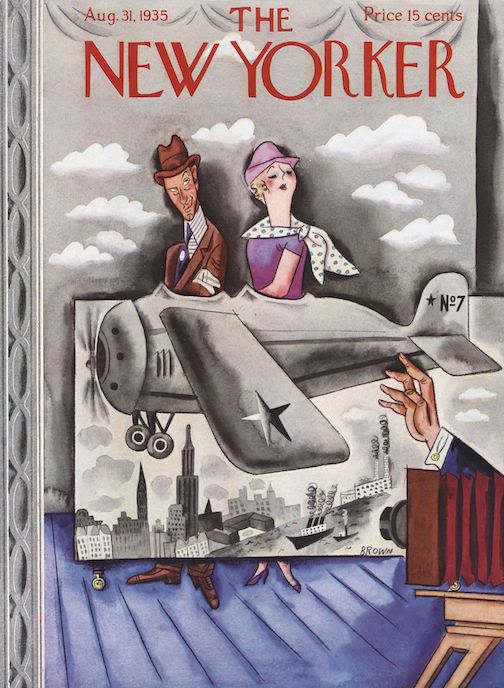
August 31, 1935 cover by Harry Brown. Brown illustrated eighteen covers for The New Yorker.

Rogers (1879-1935) was also a big promoter of aviation, and he gave his audiences many entertaining accounts of his world travels. In the summer of 1935 he announced plans to join famed aviator Wiley Post (1898-1935) on a flight to Alaska and beyond. It appeared to be routine, making the trip’s tragic ending all the more poignant.

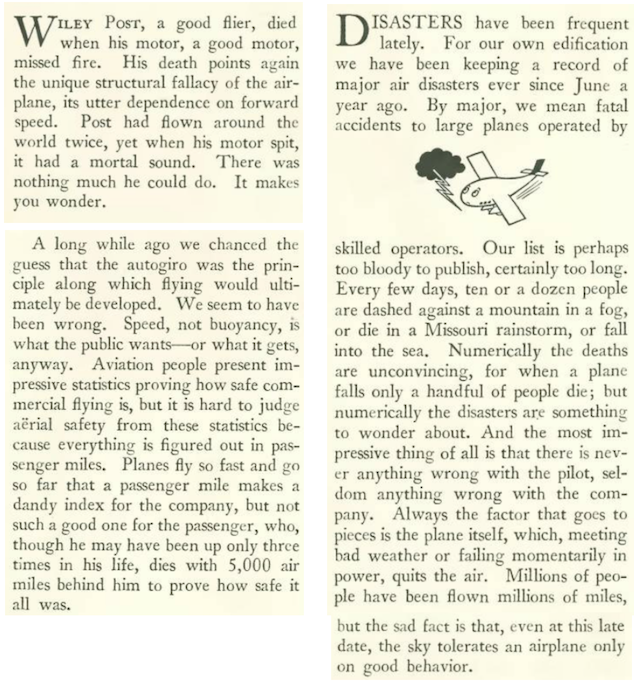
Although E.B. White often seemed stuck in the past—he preferred Model Ts and rattily omnibuses to more more modern conveyances—he was a flying enthusiast, never missing a chance to hop aboard an airplane and marvel at the scene far below. However, when tragedy struck, White would become circumspect. When Notre Dame coach Knute Rockne’s Fokker Trimotor crashed into a Kansas wheatfield, White expressed doubts about air safety and pondered “safer” alternatives such as autogiros (a kind of early helicopter that wasn’t so safe or practical). Such doubts returned in his “Notes and Comment” for August 31, 1935:

The fated aircraft, a Lockheed Orion, was heavily modified by Post into a floatplane; one wing was even salvaged from a wrecked Explorer (an older Lockheed model). The pontoon floats he attached were also designed for a larger aircraft, which made the nose-heavy Orion even more unwieldy.

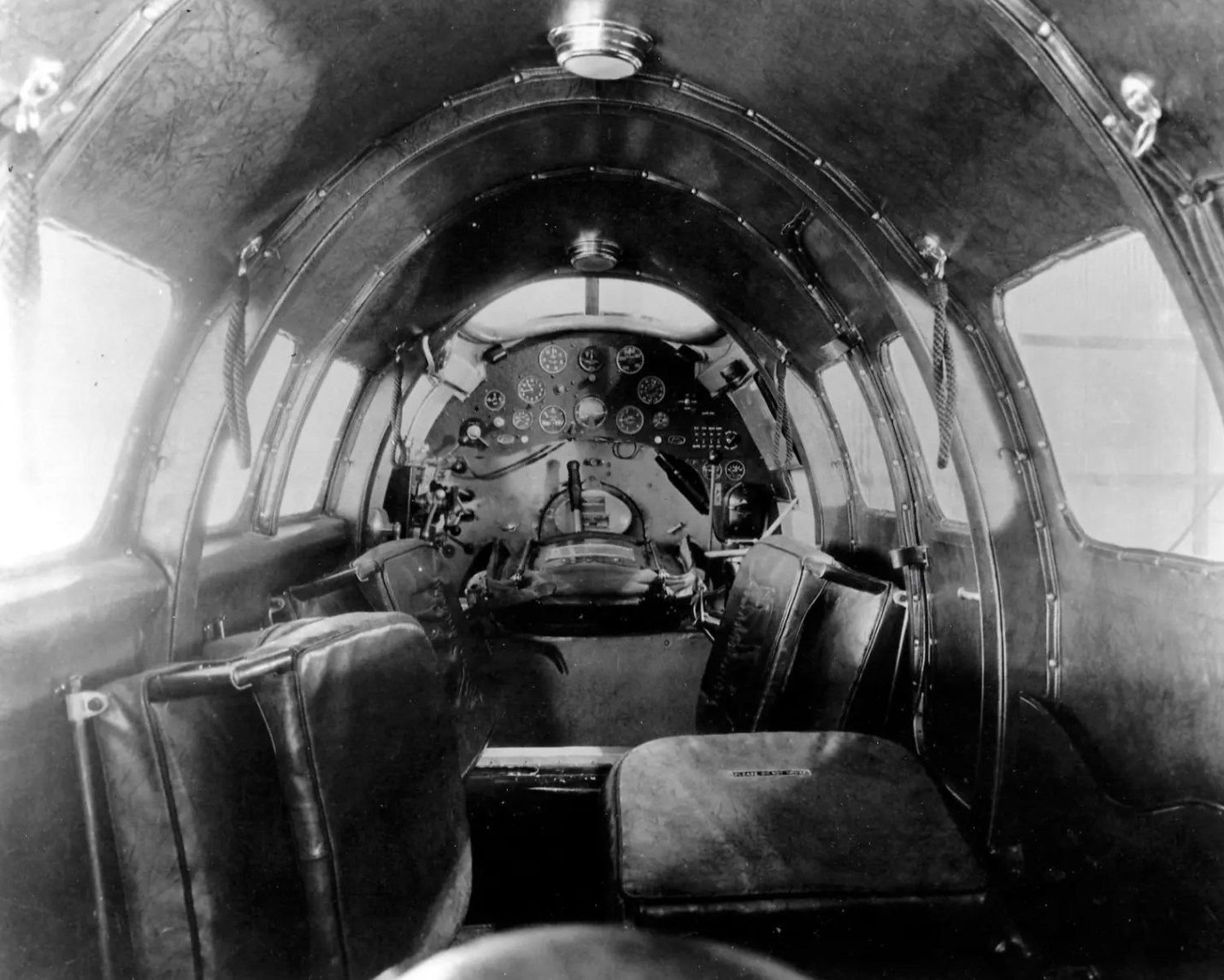
BUILT FOR SPEED…A Lockheed Model 9 Orion parked at Boeing Field, Seattle, in May 1935. With 200-mph speed, the single-engine passenger aircraft (5 to 6 passengers) was faster than any American military aircraft of the time. It was Lockheed’s last aircraft to use wood construction in the frame, which was lightweight but not designed for longevity on major airlines. (James Borden Photography Collection)
TIGHT QUARTERS….Interior view of a Lockheed Orion 9. No doubt much of the passenger space was loaded with gear for the trip to Alaska. (James Borden Photography Collection)

When Post and Rogers arrived in Juneau, local bush pilots doubtfully regarded the Orion and asked Rogers about the flight plan. “Wiley and I are like a couple of country boys in an old Ford—don’t know where we’re going and don’t care,” he said. They were actually headed to Point Barrow, and from there planned to hop over to Siberia.

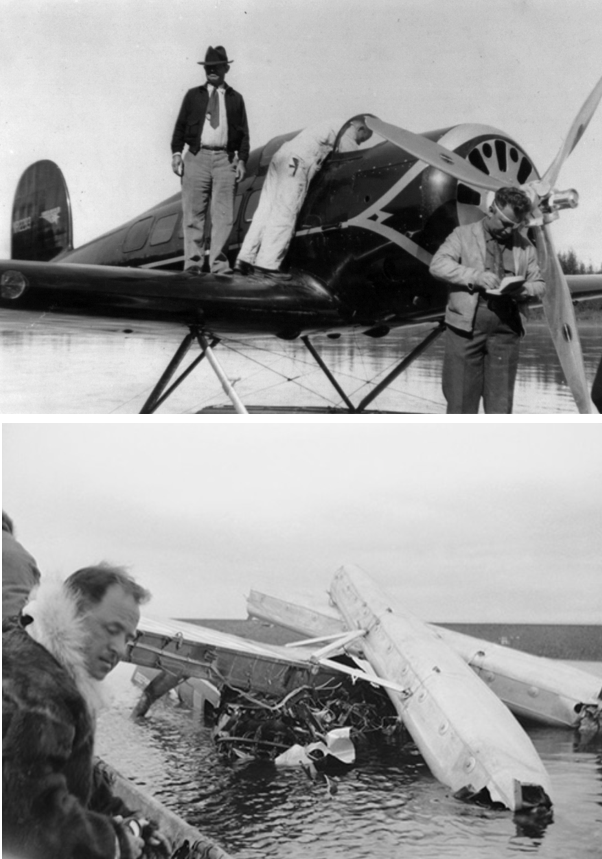
After stopping in Fairbanks they set off for Point Barrow in bad weather. Lost in the murk, they landed short of their destination in the shallow waters of Walakpa Lagoon, fifteen or so miles southwest of Point Barrow. Post and Rogers then took off—despite warnings from locals about the conditions. But the weather wasn’t the worst problem: Post had a bad habit of taking to the air in an abrupt, steep climb, which likely caused the engine to stall. Powerless, the ungainly aircraft plunged into the lagoon and landed on its top. Post and Rogers were killed instantly.

JUST A COUPLE OF COUNTRY BOYS…Top photo, Will Rogers on the wing of the Lockheed floatplane belonging to famed aviation pioneer Wiley Post, hours before their fatal crash on August 15, 1935. Below photo, inverted wreckage of the float plane in Walakpa Lagoon.  (Wikipedia/vintageaviationnews.com)

Rather than eulogize the fallen Rogers, “The Talk of Town” offered up an anecdote about his rise as a newspaper columnist, which was sparked by a backhanded endorsement speech:

A HUMAN FACE…Top left, Will Rogers backstage with the 1924 Ziegfeld Follies cast. At right, Rogers made his film debut in the now lost silent film Laughing Bill Hyde (1918) with co-star Anna Lehr. The magazine ad at right quoted producer Rex Beach, who called Rogers “the most human player who ever faced a camera.” (Will Rogers Memorial Museum/Wikipedia/IMDB)
FINAL CURTAIN…Top photo, Will Rogers with co-star Anne Shirley in Steamboat Round the Bend. Rogers wrapped filming just before heading to Alaska. The film was released posthumously on September 6,1935. Bottom image is a detail from a full-page ad in the October 1935 issue of Picture Play Magazine. Oddly, the ad makes no mention of Rogers’ death, proclaiming that “Will blazes a new path in his screen career as he scores his greatest triumph!”  (theretrorocket.blogspot.com/IMDB)

 * * *

Putting it Mildly

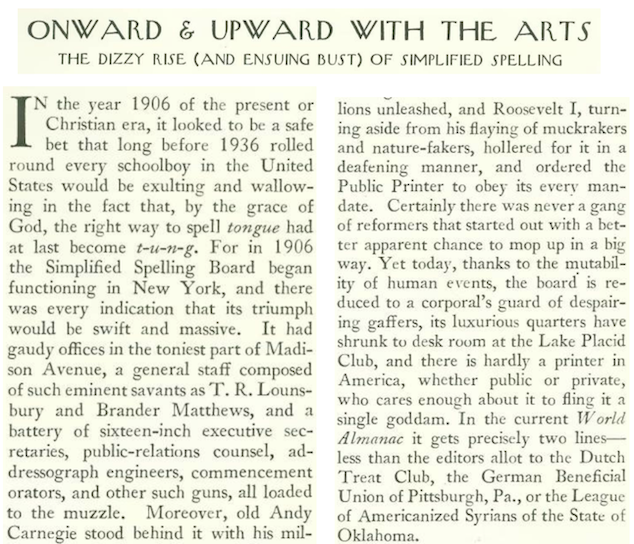
In “Onward & Upward With the Arts,” H.L. Mencken continued to explore the quirks of American language, this time looking at the pervasive (and evasive) use of euphemisms by “professional uplifters.” Excerpts:

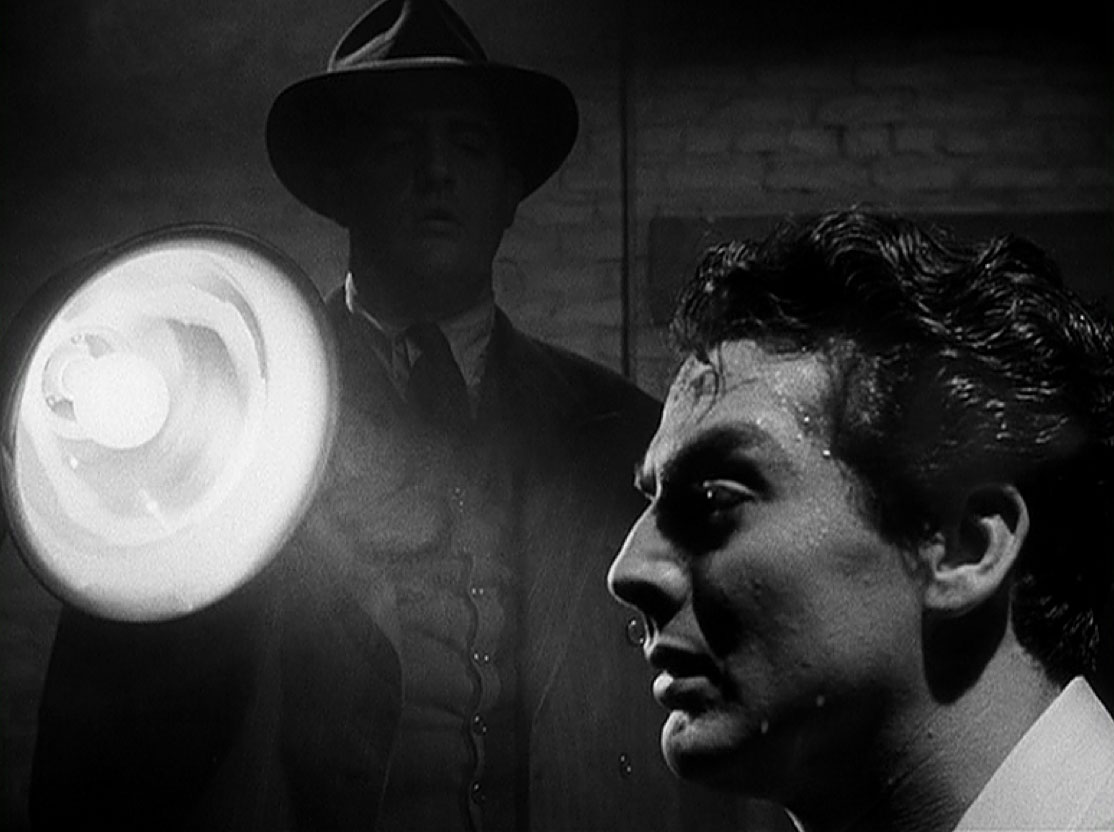
INTELLIGENCE TEST was suggested by “professional uplifters” as a polite replacement for giving someone “The Third Degree.” Image is from the 1941 noir thriller I Wake Up Screaming, starring Victor Mature, pictured here getting his “intelligence test.” (cinematography.com)

 * * *

At the Movies

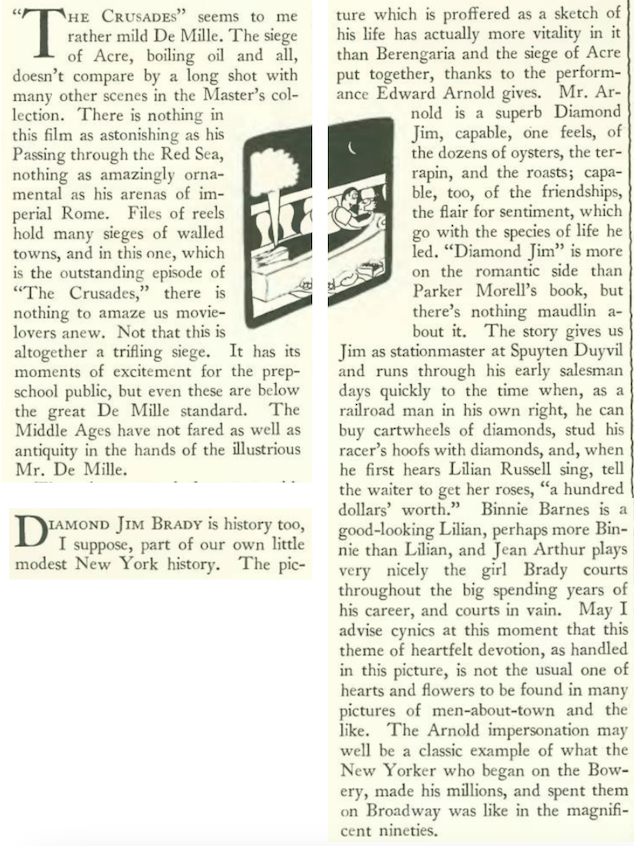
We join film critic John Mosher to take a look at the latest epic from Cecil B. DeMille, The Crusades, which to Mosher’s disappointment was a rather mild epic, with little to astonish. However, our critic did find something to admire in a more recent historical drama, Diamond Jim.

ANTISEPTIC EPIC?…Clockwise, from top left, movie poster for The Crusades offered up an image one typically does not associate with religious warfare, but you had to bring ’em in somehow; Henry Wilcoxon and Ian Keith in a scene from the film; co-stars Loretta Young as Berengaria of Navarre and Wilcoxon as Richard the Lionheart; the film also featured Joseph Schildkraut as Conrad of Montferrat and Katherine DeMille as Princess Alice of France (bottom left). A talented actress, Katherine reportedly landed the role as a Christmas gift from her adoptive father, Cecil B. DeMille. (cecilbdemille.com)
HEY BIG SPENDER…At right, Edward Arnold in the title role (here with Eric Blore) in Diamond Jim. At left, Cesar Romero moves in on Diamond Jim’s love interest, portrayed by Jean Arthur. (Rotten Tomatoes/IMDB)

 * * *

From Our Advertisers

We begin with this advertisement from Lord & Taylor, featuring the latest fall fashions for young women heading to college…notable here is the inclusion of Mickey Mouse in the illustration…the animated rodent was in vogue as much the latest fashions…


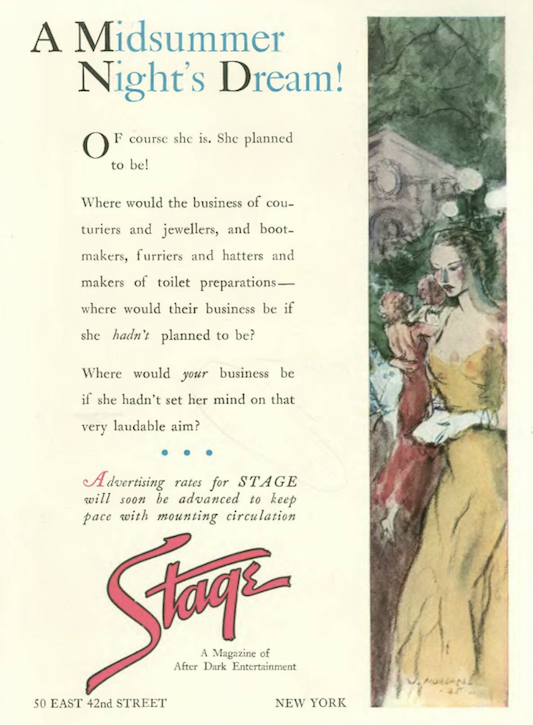
John Hanrahan, whose advertising savvy helped guide The New Yorker through its lean early years, was publisher of the richly designed Stage magazine, promoted here on the inside front cover…
…soft drink giant Coca-Cola recalled its soda fountain origins in this ad that promoted its 6.5-ounce bottled product…

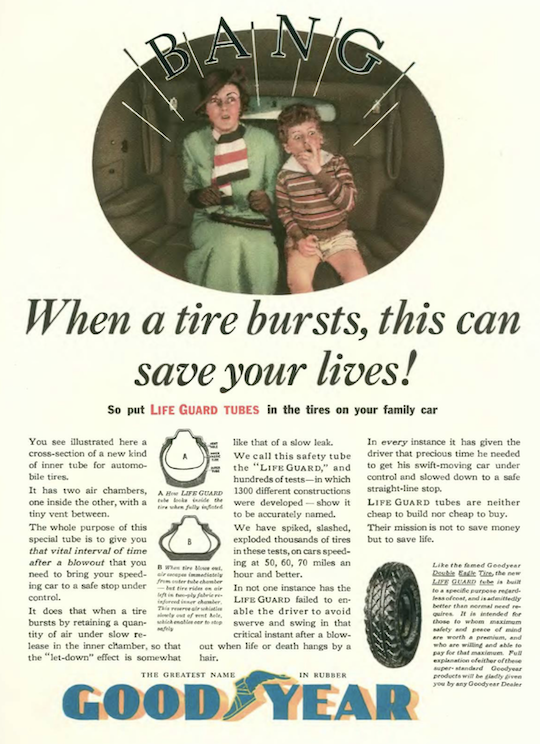
…on the inside back cover Goodyear continued its series of perilous ads illustrating the dangers of tire blowouts (but not the obvious hazard of children riding untethered in a rumble seat, where they doubtless inhaled all manner of noxious fumes)…

…the majority of back covers in 1935 featured tobacco companies…here we learn that Lucky Strikes were more than cigarette; they were your “best friend”…

…on to our cartoonists, we start with this “Profile” illustration by William Steig…the profile was a two-parter featuring a clever summons server…

Adolph Dehn adorned the “Goings On” section with this illustration…

…unsigned, but I’m pretty sure this is H.O. Hofman

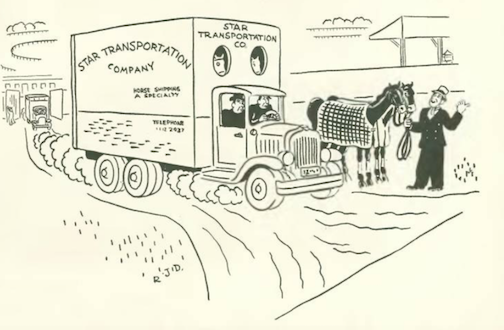
…here we get a lift from Robert Day

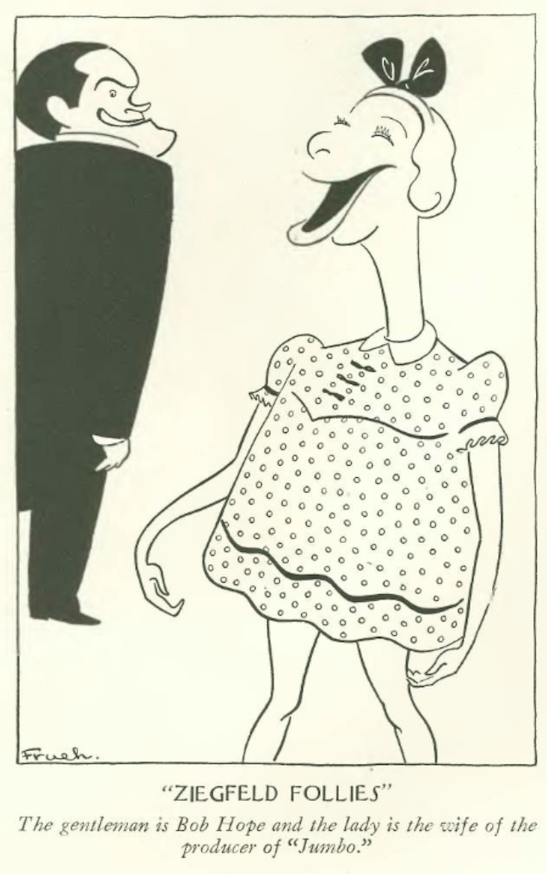
Al Frueh conjured up a nightmare of leaping sheep…

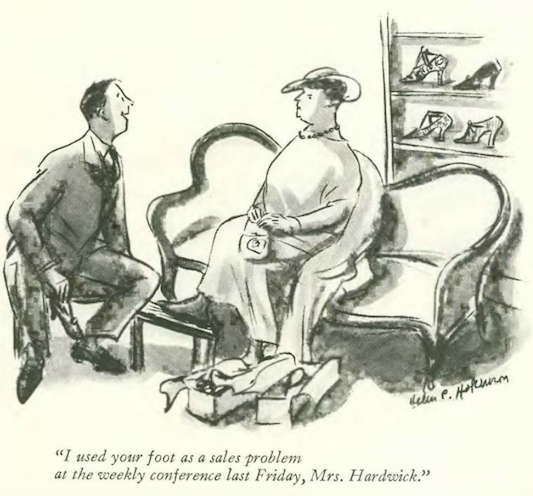
Helen Hokinson gave us some famous footwear…

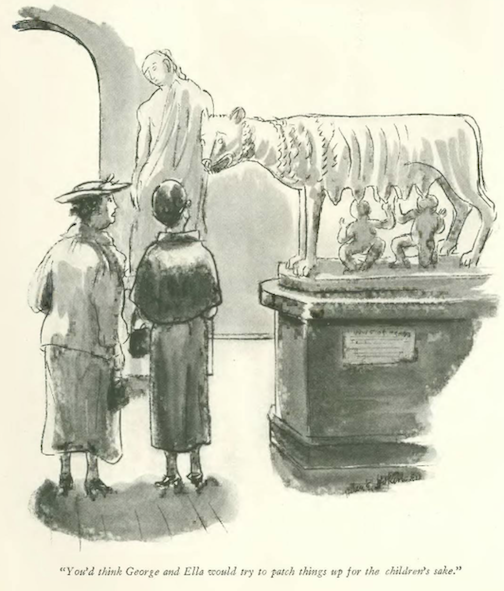
…Hokinson again, with Romulus and Remus providing a convenient metaphor…

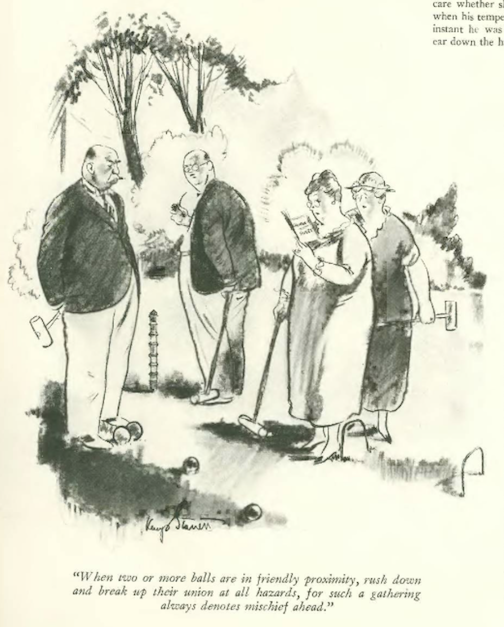
Kemp Starrett was bogged down in the rules of a game…

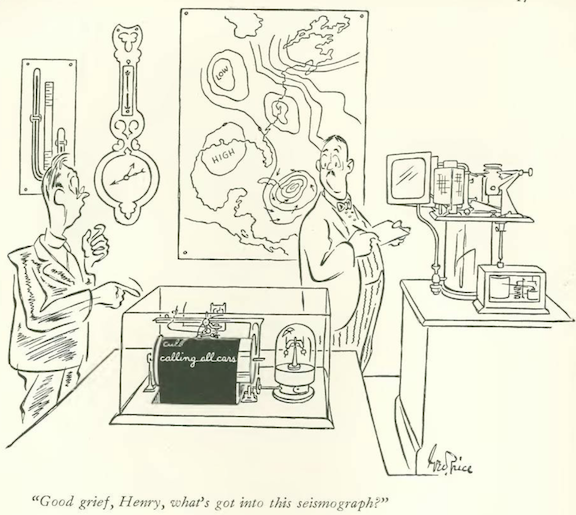
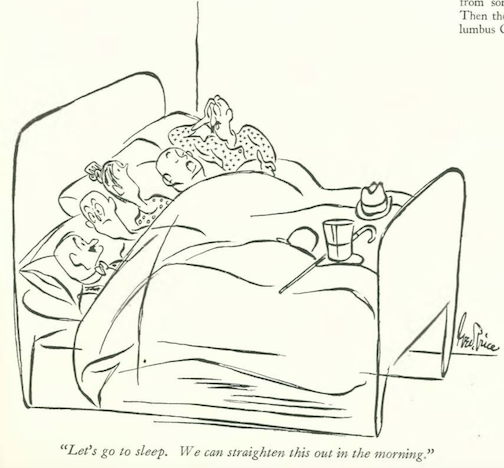
George Price discovered a budding talent…

Richard Decker took to the back roads…(reminds me of a scene from The Long, Long Trailer with Lucy and Desi)…

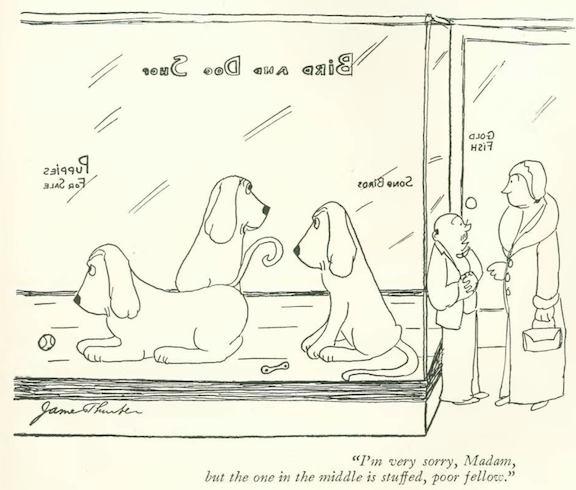
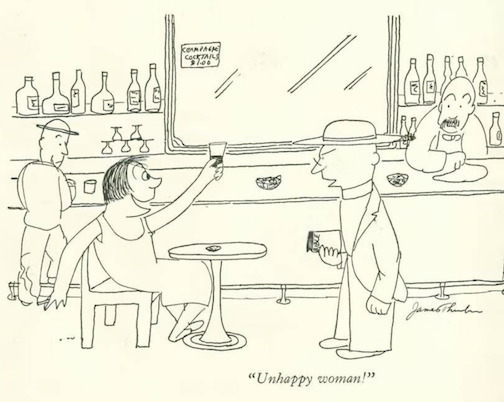
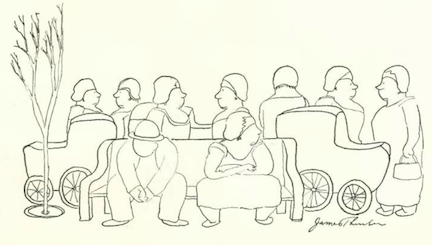
James Thurber raised a glass to a dry do-gooder…

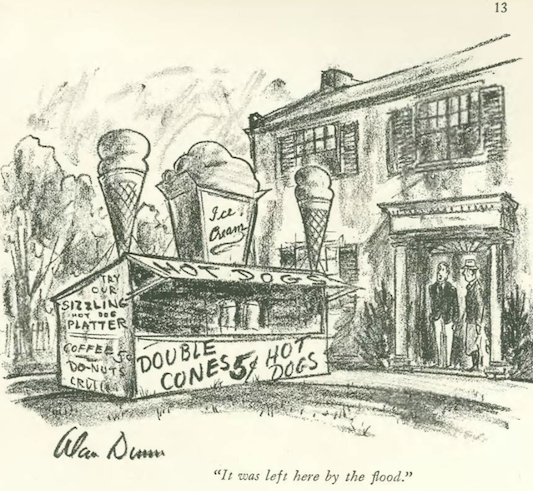
Alan Dunn brought an unexpected windfall to Westchester…

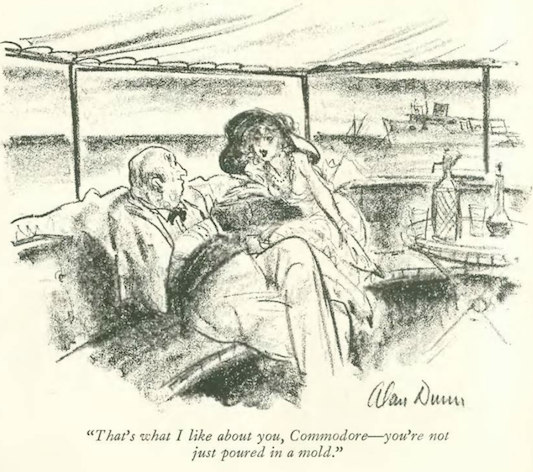
…and to close we Dunn again, and a bit of flattery…

Next Time: A Summer Night…

Hays Hokum

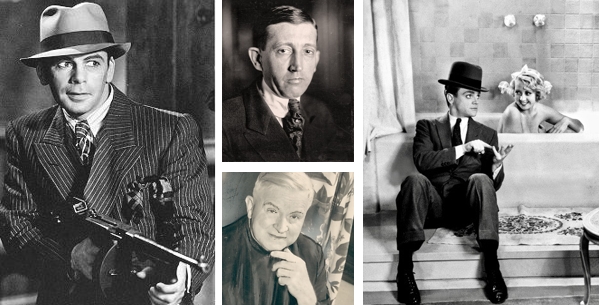
Above: Will Hays (center, top) was the enforcer and Fr. Daniel A. Lord was the author of the Production Code that was rigidly enforced beginning in 1934. They and others were responding to the sex, violence and other forms of "immorality" in such films as 1932's "Scarface" (with Paul Muni, pictured at left) and 1931's "Blonde Crazy" with James Cagney and Joan Blondell. (Wikipedia/cinemasojourns.com)

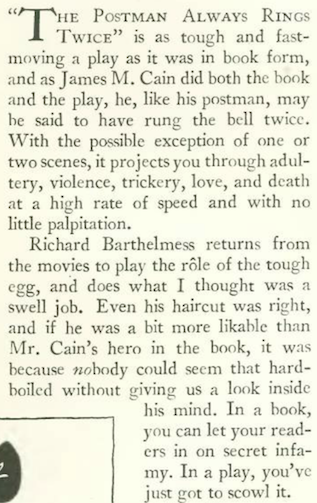
With the Production Code fully enforced, New Yorker film critic John Mosher found even less to get excited about during his visits to Manhattan’s cinemas.

August 17, 1935 cover by Julian de Miskey. He contributed 62 covers to the magazine, as well as 82 cartoons from 1925 to 1962.

The Motion Picture Production Code—a set of industry guidelines for the self-censorship of content—had been around for awhile, but it was mostly ignored until June 13, 1934, when an amendment to the Code required all films released  to obtain a certificate of approval. Hoping to avoid government censorship and preferring self-regulation, studios adopted the Code.

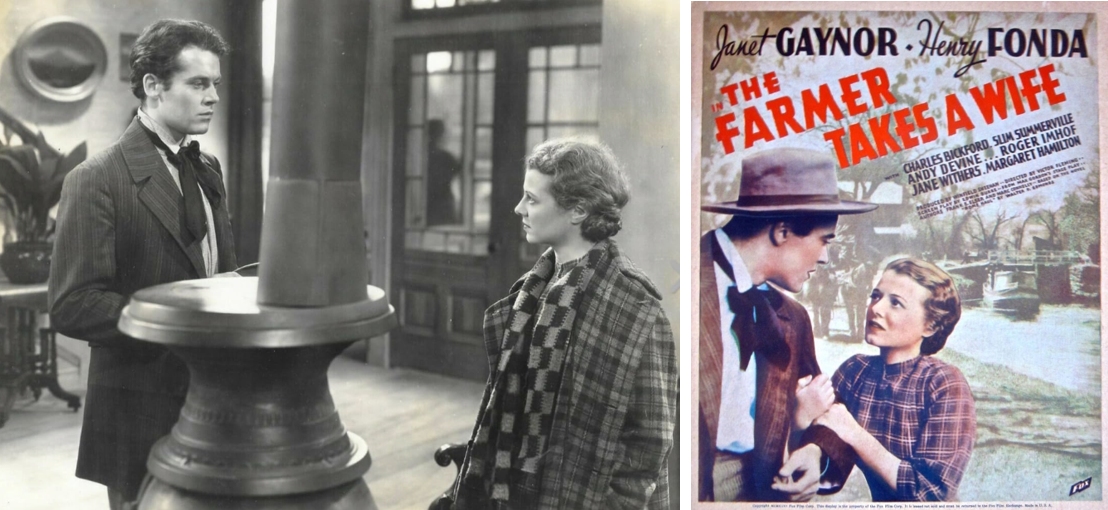
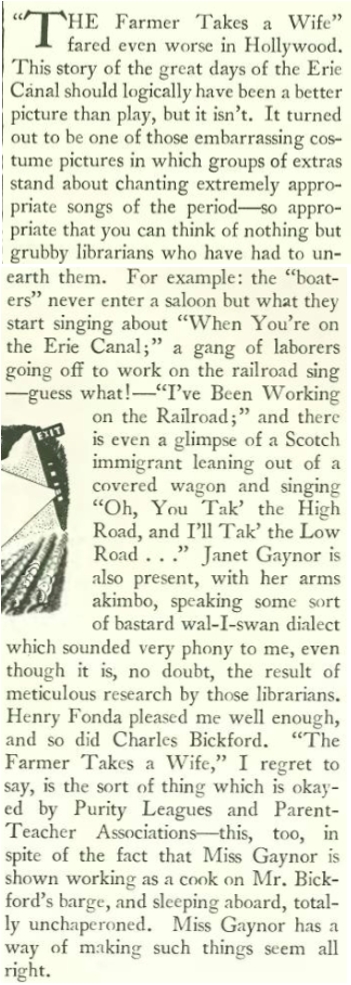
The Code’s effects were felt in such films as The Farmer Takes a Wife, a romantic comedy about a Erie Canal boatman, portrayed by Henry Fonda, who dreams of becoming a farmer (a role reprised by Fonda from the Broadway production of the same name; it was Fonda’s first break in films). Mosher was pleased by Fonda’s performance, but found the film adaptation to be corny and phony, filled with “bastard” dialect and schmaltzy musical numbers. “It is the sort of thing which is okayed by Purity Leagues…” Mosher concluded.

SILVER SCREEN DEBUT…Boatman Dan Harrow (Henry Fonda) woos barge cook Molly Larkins (Janet Gaynor) in a scene from A Farmer Takes a Wife. While it was Fonda’s film debut, Gaynor was an established star known for playing sweet, wholesome characters. One of the few actresses who made a successful transition to sound movies in the late 1920s, Gaynor was the number-one draw at the box office in 1935. (IMDB)
STILL KEEPING IT CLEAN…The Code was still in force when The Farmer Takes a Wife was remade in 1953; however, nineteen years after the Code took effect there was a notable easing of restrictions, as can be seen in the generous display of Betty Grable’s famous gams (seen here with Thelma Ritter). (IMDB/Wikipedia)

To get a clearer idea of what the Code did to the pictures, compare the scene from 1934’s Tarzan and His Mate (left), which was released two months before the Code went into effect, and Tarzan Escapes (right), from 1936.

CLOTHED IN THE CODE…Johnny Weissmuller and Maureen O’Sullivan appeared together in six Tarzan films. In their second outing, 1934’s Tarzan and His Mate, O’Sullivan wore a skimpy halter-top and loincloth (left) and was shown sleeping and swimming in the nude. In their next film, 1936’s Tarzan Escapes (right); Jane is more chastely clad. (mikestakeonthemovies.com/rottentomatoes.com)

 * * *

Noted and Notorious

In his weekly column “Of All Things,” Howard Brubaker offered wry observations on the passing scene, including this latest brief that described the rise and fall of a very unlikely quartet of celebrities.

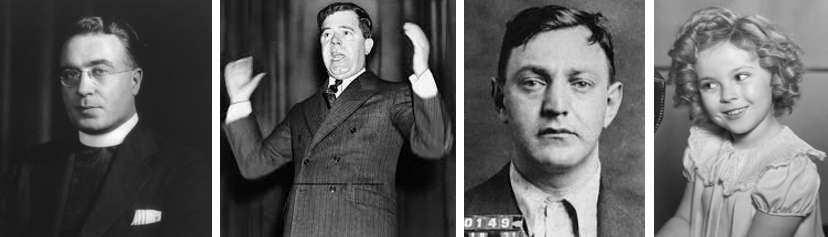
DEMOGOGUES, DUTCH & DIMPLES…(Left to right) Support appeared to be on the wane for radio priest and demagogue Father Charles Coughlin and fellow-fascist Louisiana Sen. Huey Long, while stock was on the rise for mobster Dutch Schultz, who successfully swayed public opinion (while under indictment for tax evasion) by generously donating to various charities. Shirley Temple continued to charm audiences, her films ranking number-one at the box office in 1935 (as well as in 1936, 1937, and 1938). The year 1935 would also be the last for Long and Schultz–both would be assassinated. (Wikipedia)

 * * *

Titlemania

Lacking the strictures of Old World caste systems, Americans have had an anxious relationship with class signifiers. In a land where trade schools become universities overnight and their faculty members refer to one another as “doctor,” there is much confusion and hand-wringing in the honorifics trade. H.L. Mencken examined the proliferation of titles in his country, freely handed out without regard to merit. Excerpts:

 * * *

From Our Advertisers

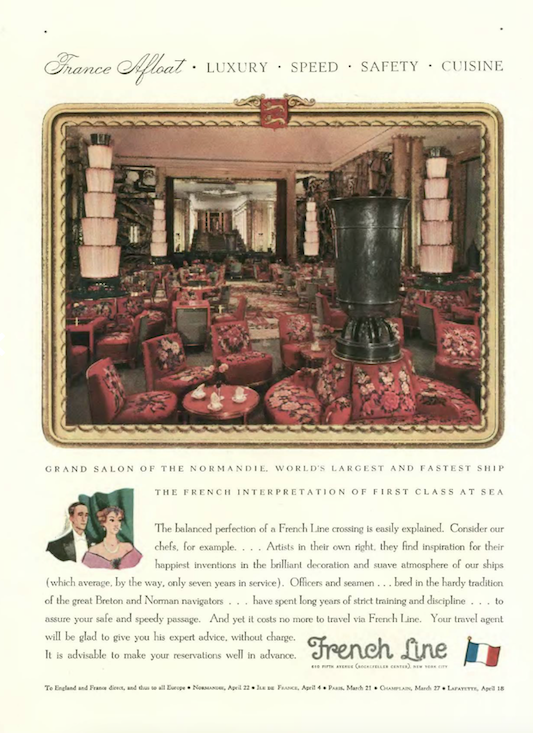
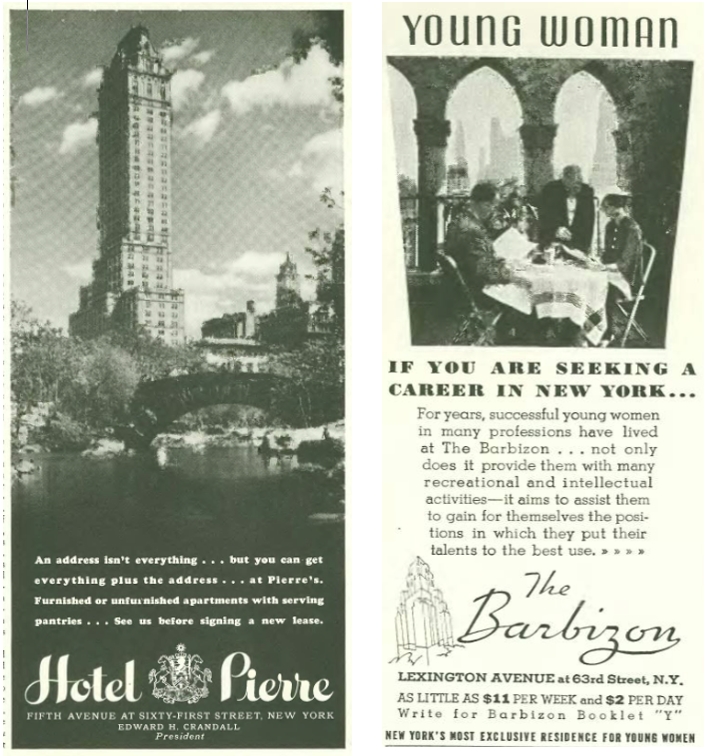
The back of the book was where one could find advertisements for upscale urban living, including these two touting the advantages of the Hotel Pierre and The Barbizon…

…In a joint venture with a group of Wall Street financiers, the former busboy-turned restauranteur Charles Pierre opened the Hotel Pierre in 1930—not the most auspicious time to open a luxury hotel as markets continued to collapse…the Pierre went into bankruptcy in 1932 and was later purchased by oilman J. Paul Getty…the legendary Barbizon Hotel for Women, completed in 1927, was designed as a safe and respectable haven for women seeking to pursue careers in New York, especially in the arts, and would host numerous famous women through the 1970s…
At left, the Barbizon in 1927; right, the Hotel Pierre circa 1930. (loc.gov)

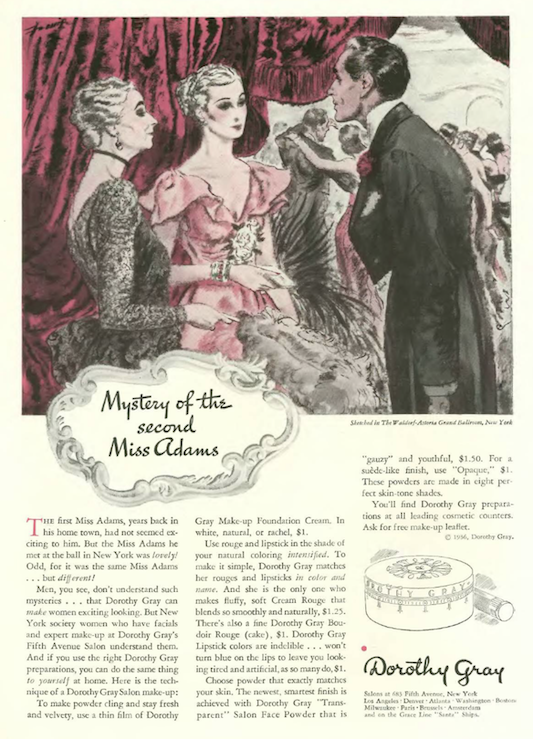
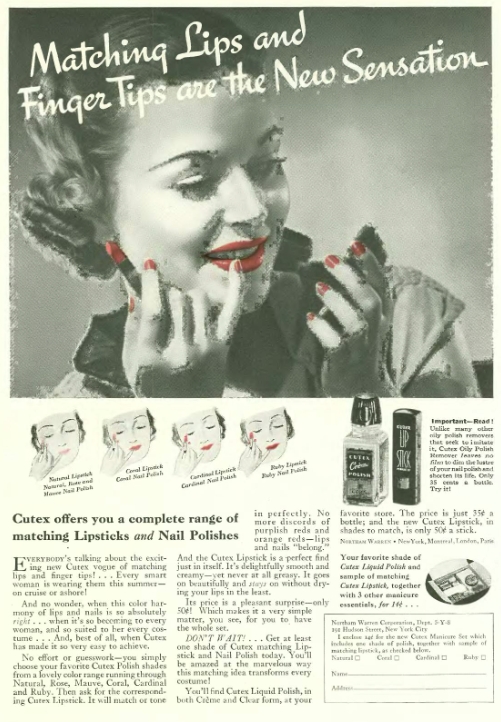
…like the tobacco companies, brewers targeted women as a growth market for a product mostly associated with men…

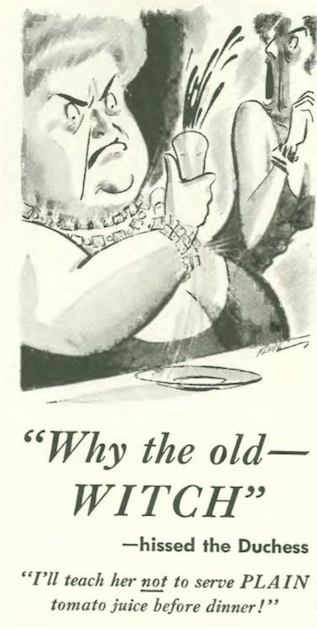
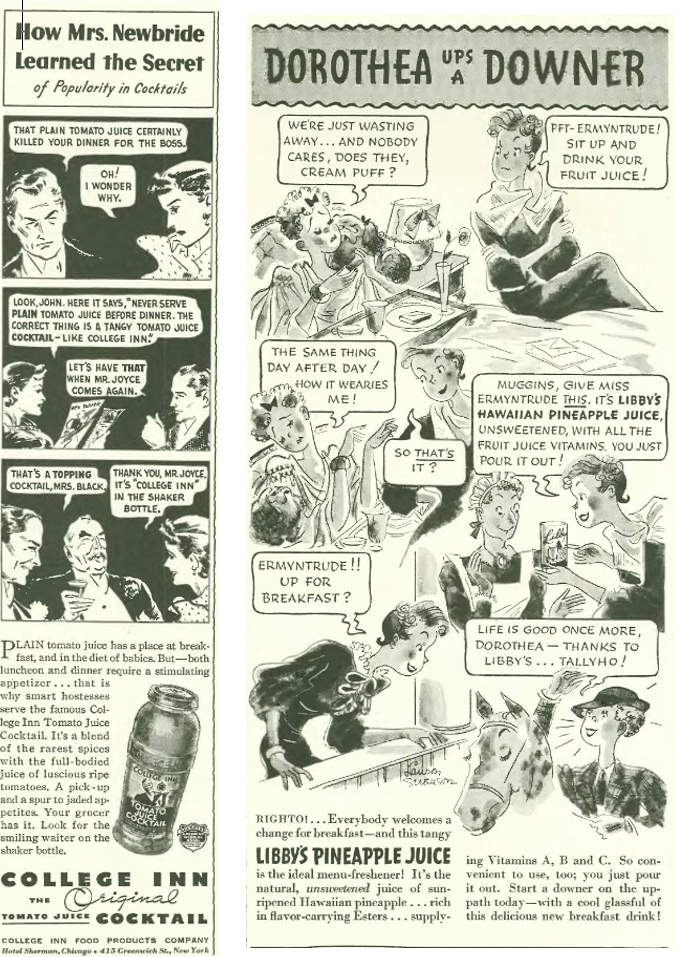
…the makers of juices, meanwhile, created comic strips to promote their products…College Inn still went negative with their ads—recall the violent outbursts of the Duchess…

…here a spiteful husband blames his wife’s choice of tomato juice for his lack of success with the boss…Libby’s, on the other hand, promoted their pineapple juice as a surefire cure for a young woman’s ennui…

…notable in these somewhat thin, late summer issues is the lack of full-color ads…this was on the back inside cover…

…Flit and Dr. Seuss continued to be a weekly presence…

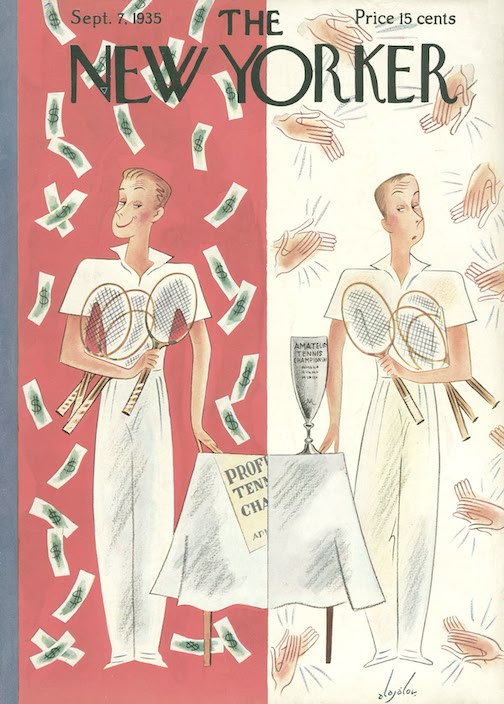
…which brings us to our cartoonists, and a spot drawing by Constantin Alajalov

…also a modest spot by Robert Day, keeping us cool with this polar bear…

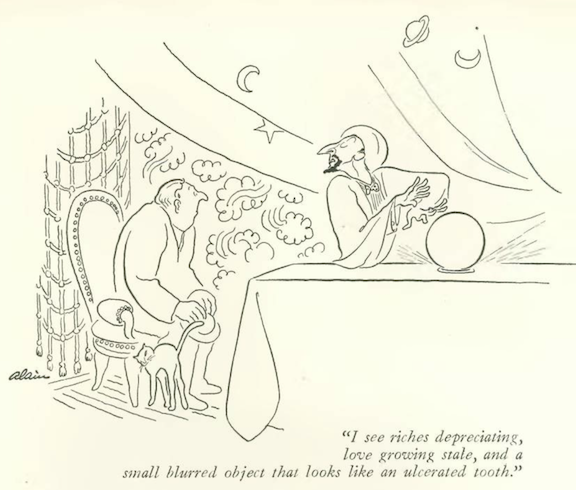
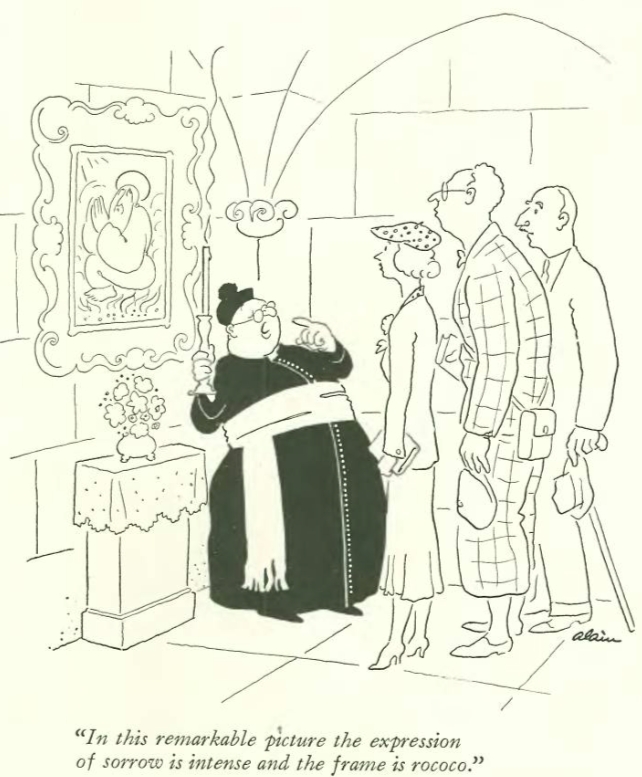
Alain offered a short course in art appreciation…

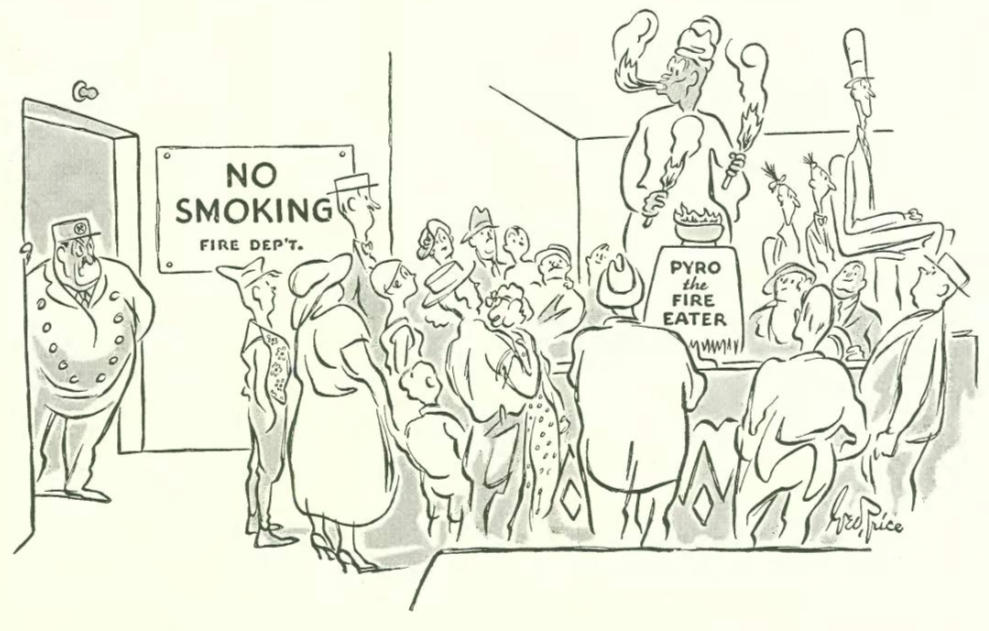
George Price ran afoul of the fire code…

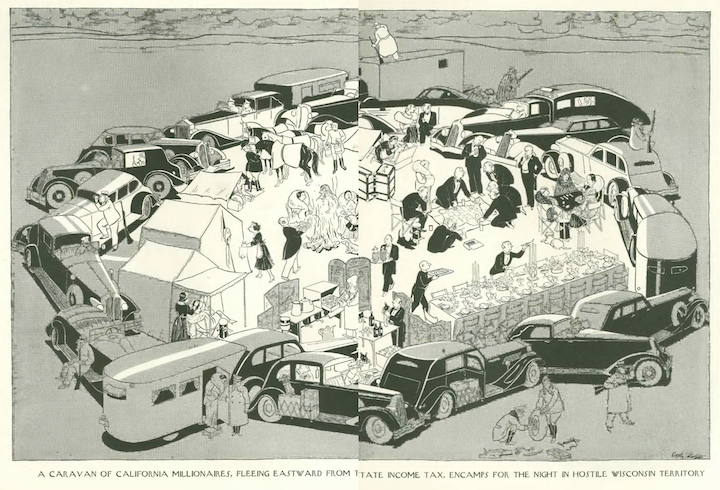
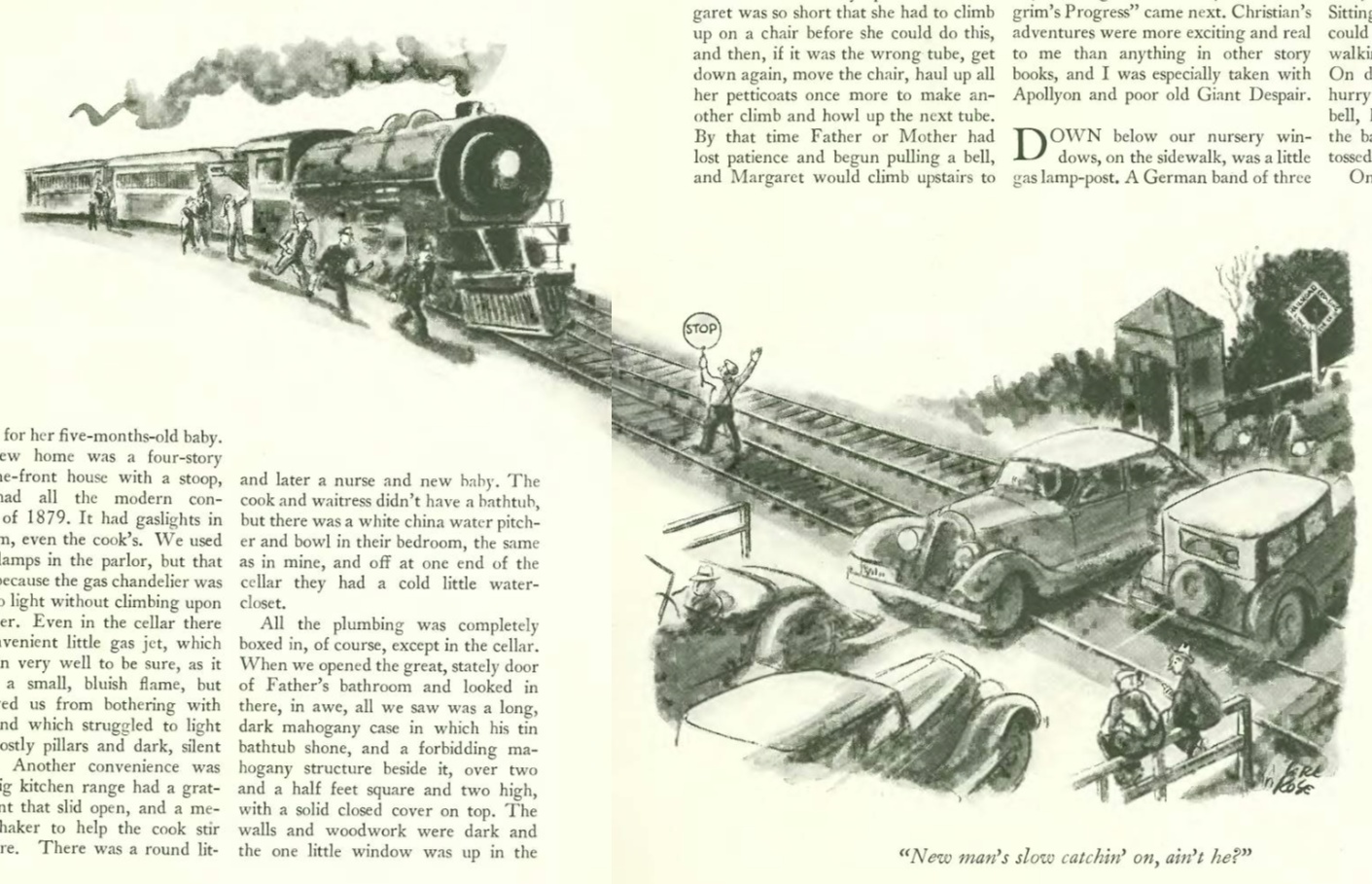
Carl Rose ran his tracks across this two-page spread…

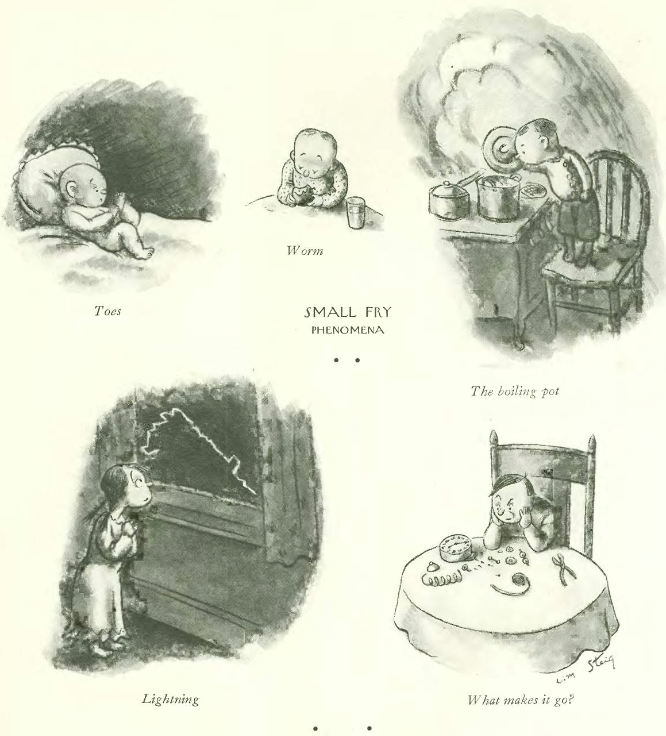
William Steig gave us the small fry’s perspective on the world’s wonders…

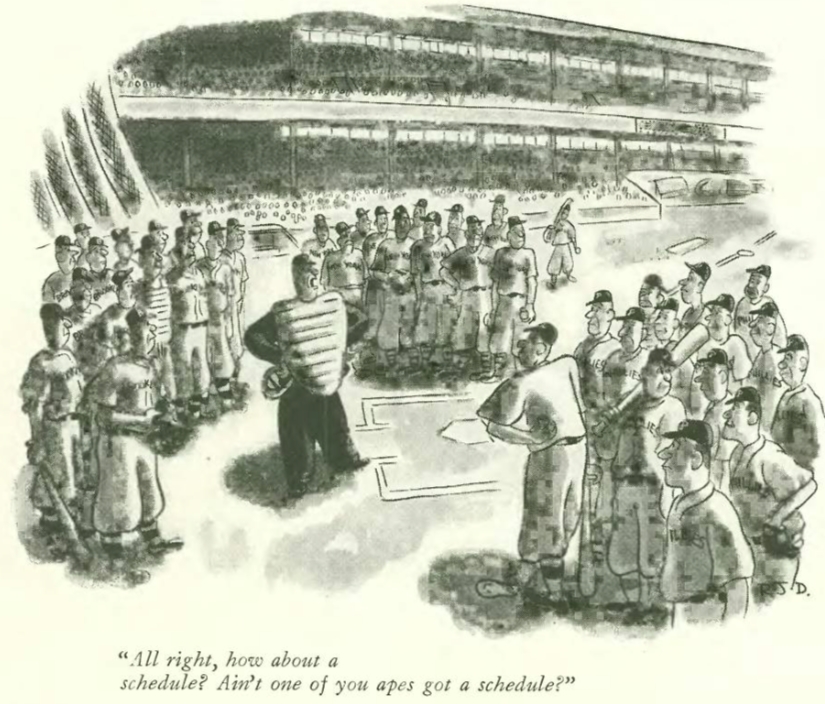
…a rare appearance of baseball in the magazine, thanks to Robert Day...

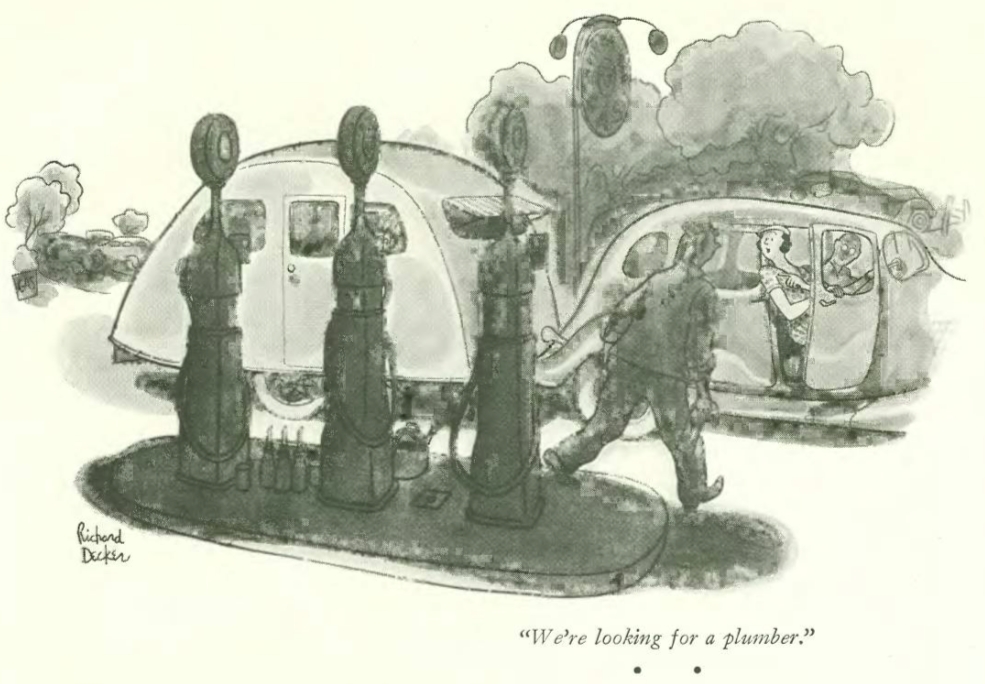
Richard Decker brought a modern world challenge to one filling station…

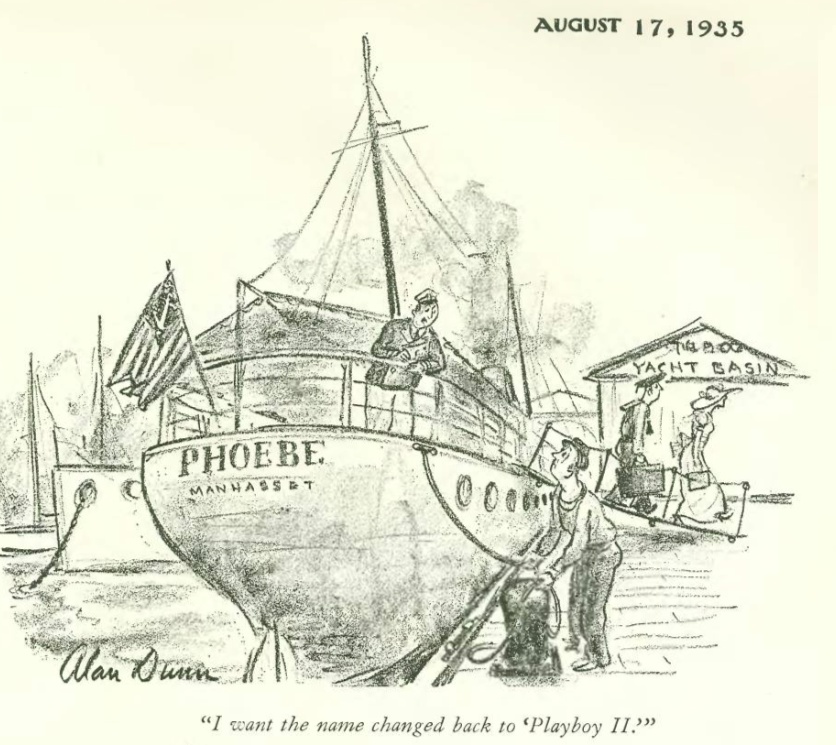
…A sailor’s return to bachelorhood required a new paint job, per Alan Dunn

…and who else but Charles Addams would circle vultures over an amusement park?…

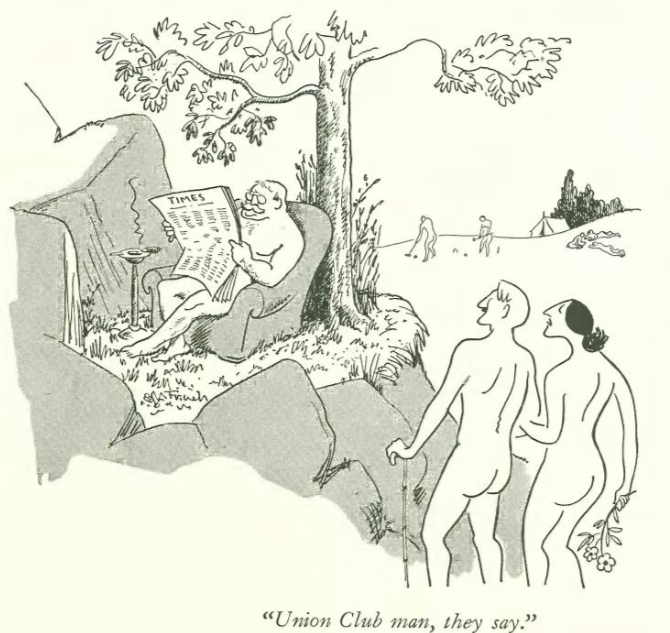
…and we close with Al Frueh, and a Union Club member not concerned with a dress code…

Next Time: The Din and Bustle…


What’s in a Name?

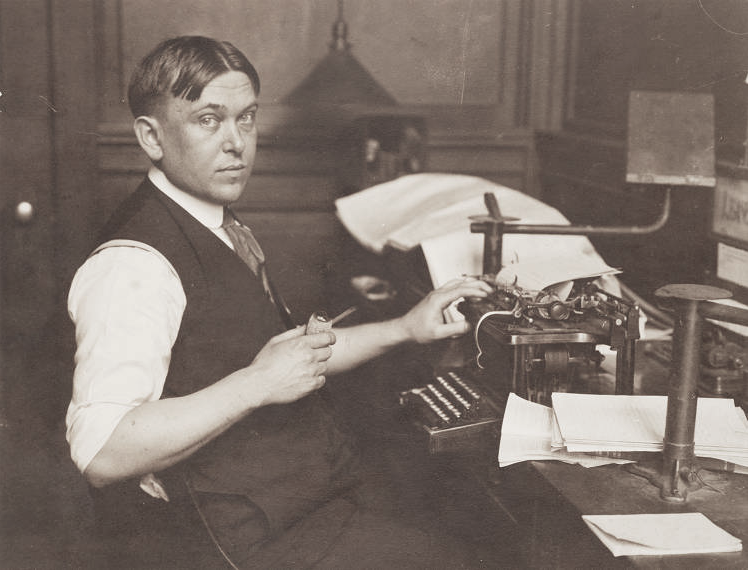
Above: H.L. Mencken at the Baltimore Sun, circa 1930. From April 1934 to September 1949, Mencken contributed more than fifty articles to The New Yorker.

The American journalist Henry Louis Mencken (1880–1956) was well-known as a biting satirist and cultural critic, but he was also a noted scholar of the English language and its various quirks.

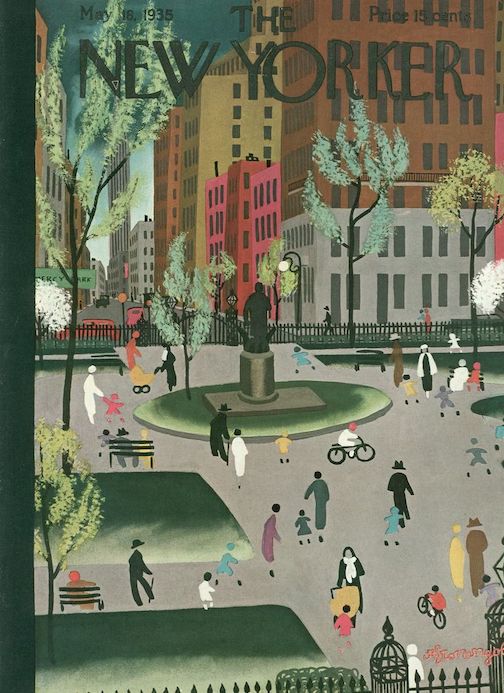
May 11, 1935, Mother’s Day cover by William Cotton.

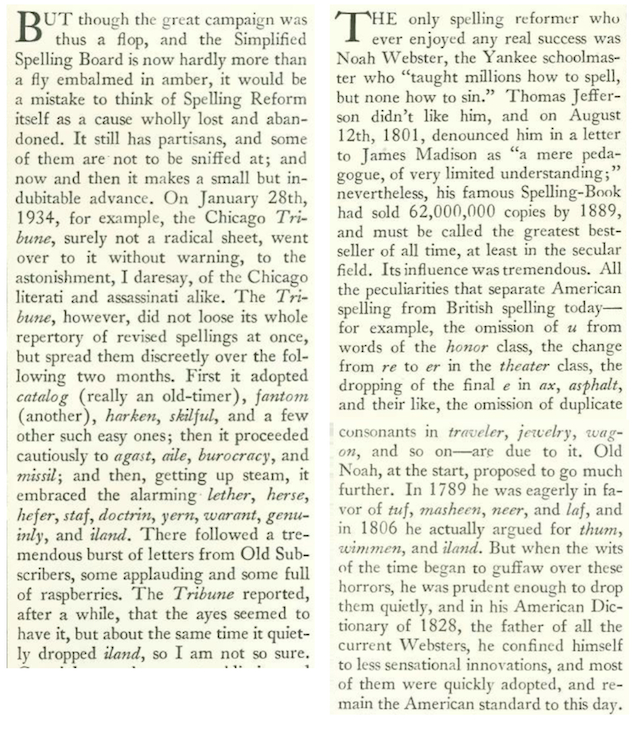
One of those quirks was explored in Mencken’s essay, “The Advance of Nomenclatural Eugenics In the Republic,” for the column “Onward & Upward With The Arts.” Broadly defined, eugenics refers to the discredited belief that selective breeding could be used to improve the human race. Mencken used the term satirically to describe the anglicization of immigrant names, either to conform to English spellings or, in many cases, to avoid racial and ethnic discrimination. An excerpt:

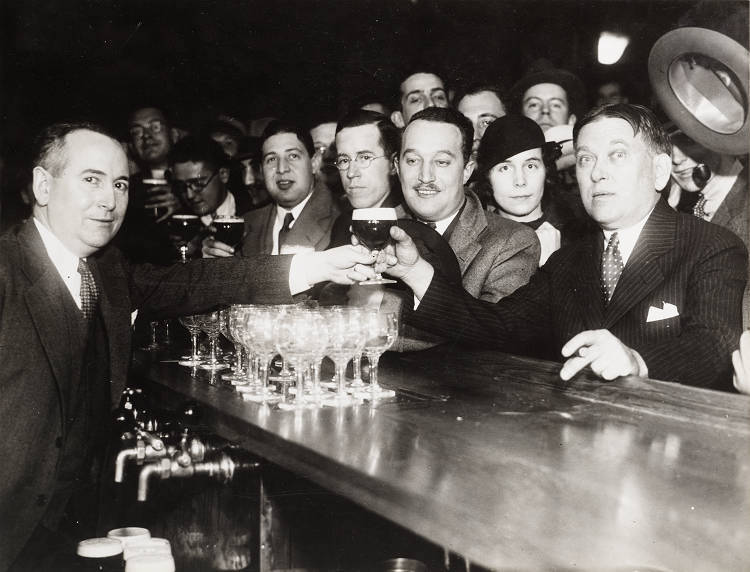
A PERFECT PAIRING, for H. L. Mencken, was a beer and a cigar. Here he is accepting “his first public glass of post-Prohibition beer” at the Rennert Hotel in Baltimore on April 7, 1933. In 1924 Mencken wrote: “Five years of Prohibition have had, at least, this one benign effect: they have completely disposed of all the favorite arguments of the Prohibitionists.” (digitalmaryland.org)

Many Jewish immigrants also abandoned their surnames, seeking to blend in and avoid discrimination. Historian and author Kirsten Fermaglich (A Rosenberg by Any Other Name, 2016) found that persons with Jewish-sounding last names made up 65 percent of all name change requests in New York in the first quarter of the 20th century. Mencken observed:

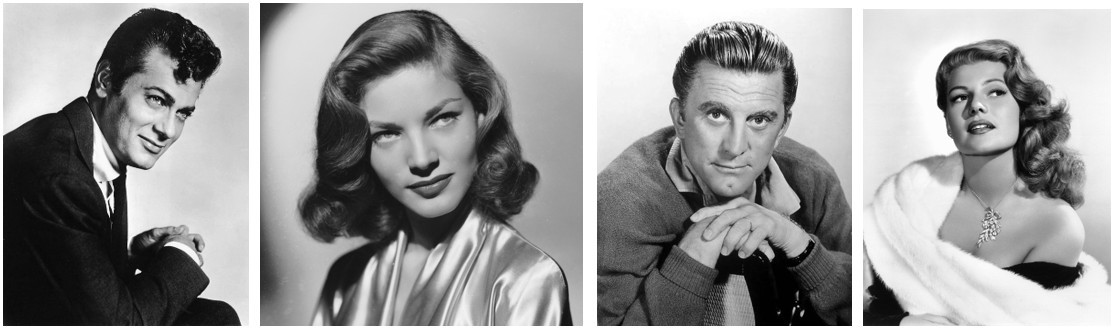
MEET BERNARD, BETTY, ISSUR AND MARGARITA…Some more famous examples of name changes in the first half of the 20th century. From left, actors (and New Yorkers) Tony Curtis (Bernard Schwartz), Lauren Bacall (Betty Joan Perske), Kirk Douglas (Issur Danielovitch Demsky), and Rita Hayworth (Margarita Carmen Cansino). (Wikipedia)

 * * *

Canada Dry

In his column, “Of All Things,” Howard Brubaker noted the “well-merited spanking” FDR gave to military leaders who were talking about fortifying the border with Canada. Brubaker agreed with FDR’s action, observing how Canadians came to the aid of thirsty Americans during Prohibition.

 * * *

Air France

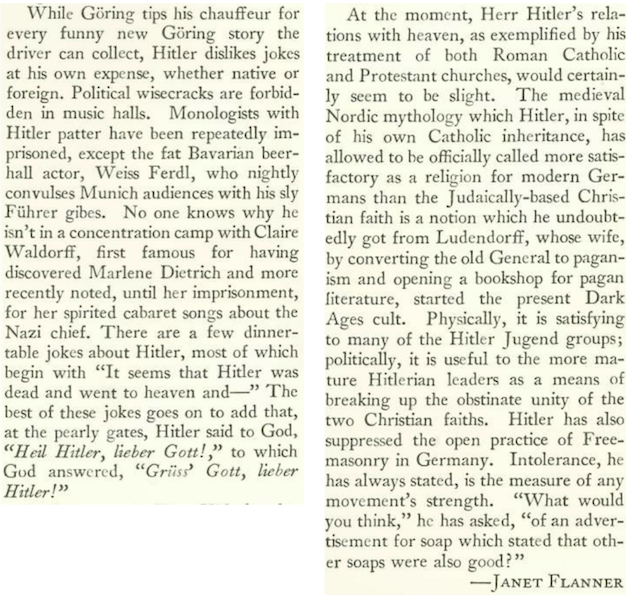
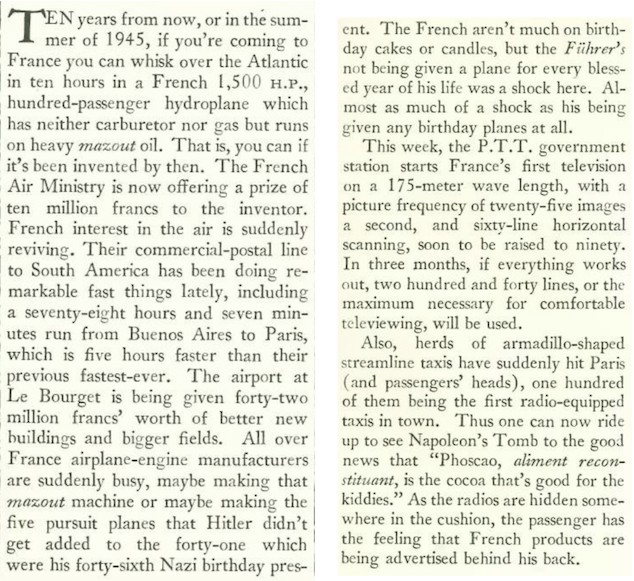
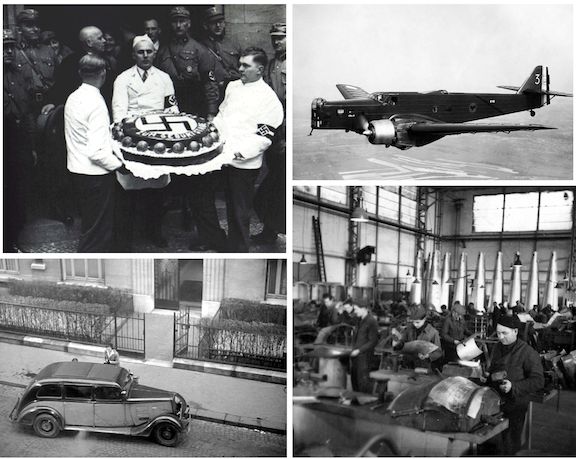
Paris correspondent Janet Flanner considered the state of French aviation as well as signs of war preparation. She also noted the birthday of German dictator Adolf Hitler, the birth of French television, and the streamlined taxis that had suddenly appeared on the streets of Paris. Excerpts:

SOME ICE CREAM WITH YOUR SLICE OF HATE?…Clockwise, from top left, bakers carefully carry Adolf Hitler’s birthday cake in April 1935; the French, meanwhile, were ramping up war production including the manufacture of the M210 bomber; airplane factory workers fashion sheet metal in a factory in Châteauroux-Déols; streamlined Peugeot 401 taxis hit the Paris streets in 1935. (reddit.com/dassault-aviation.com/imcdc.org)

 * * *

Vamps and Vampires

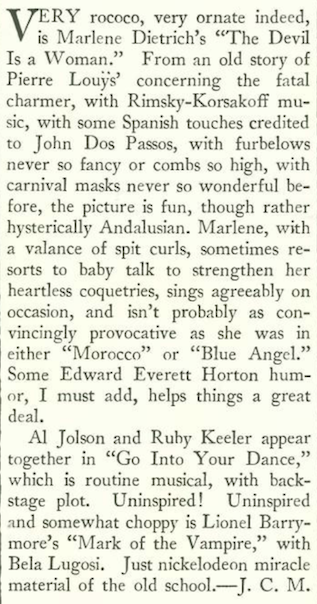
John Mosher offered mixed reviews of Hollywood’s latest fare, finding Marlene Dietrich’s latest vehicle “fun,” and the singing and dancing of husband/wife Al Jolson and Ruby Keeler “uninspired,” a term he also applied to Bela Lugosi’s latest vampire flick.

TAKE YOUR PICK…Critic John Mosher sampled some very different films including, left, Marlene Dietrich and Lionel Atwill in The Devil Is a Woman; top, Ruby Keeler with her then-husband Al Jolson in Go Into Your Dance; and Bela Lugosi did his vampire schtick with the help of Carroll Borland (who played Dracula’s daughter) in Mark of the Vampire. (MoMA/Pinterest/Instagram)

 * * *

From Our Advertisers

We start off with a bang from Goodyear…tire blowouts were common in the 1930s as tire technology could not keep pace with the increasing speed of automobiles, nor the poor condition of many roads…

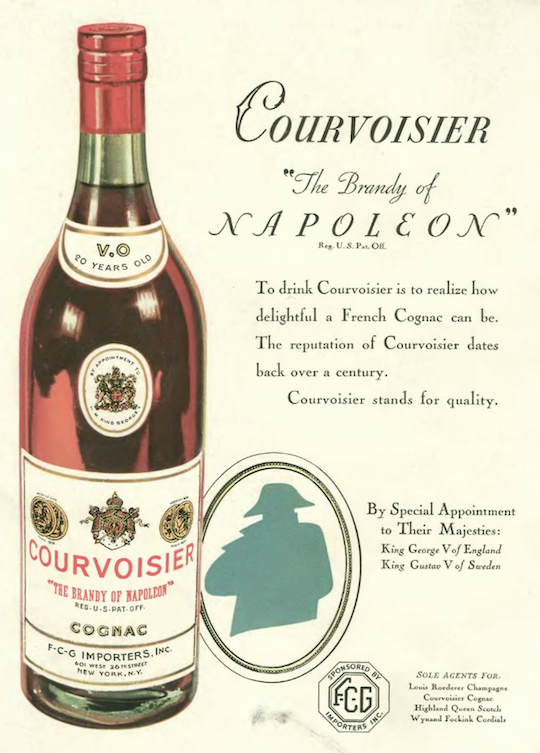
…after many weeks, the back cover went to something other than cigarette manufacturers…

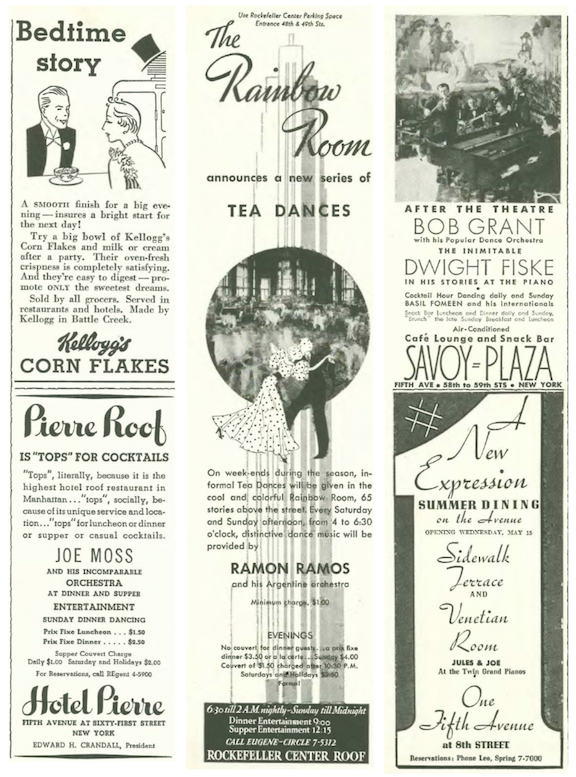
…let’s take a look at some of the one-column ads from the back pages…many of them highlighted the various nighttime entertainments, from the rooftop of Hotel Pierre to the air-conditioned lounge at the Savoy-Plaza (plus that weird ad that suggested Corn Flakes as a nightcap)…

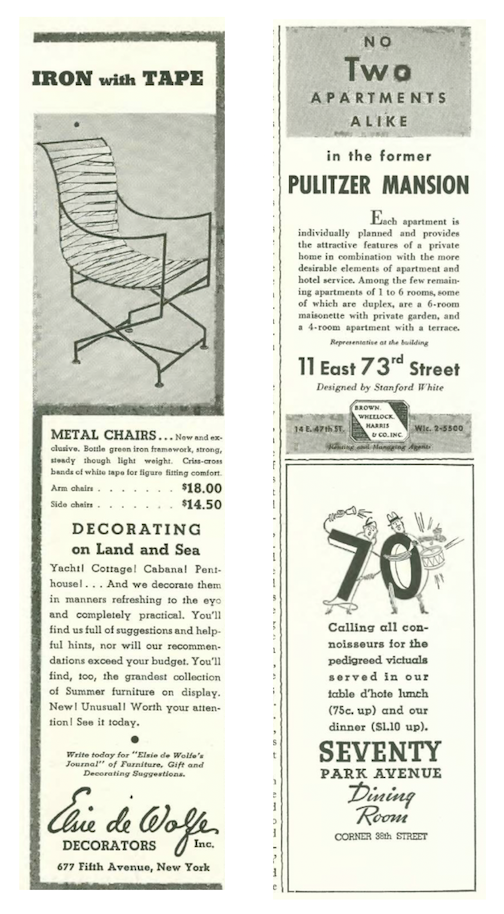
…interior designer Elsie de Wolfe rolled out “Iron with Tape” chairs, which might be the first example of what would become the ubiquitous webbed lawn chair…also advertised were apartments in the former Pulitzer mansion…

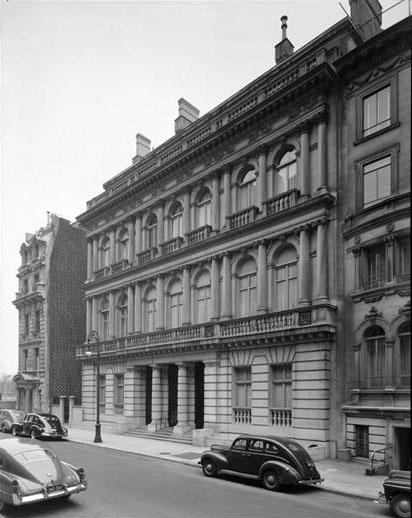
…the Pulitzer apartments were one happy outcome of the Great Depression, which foiled the plans of investors to demolish the house in 1934 and erect an apartment building…

The Pulitzer mansion still stands today, now divided into high-class coops. (daytoninmanhattan.blogspot.com)

…here’s something new from the Jay Thorpe shop, “noted for unusual sportswear”…

…perhaps inspired by Hollywood…

Ruby Keeler in 1935’s Shipmates Forever. (Reddit)

…illustrator Lyse Darcy created many of these distinctive ads for Guerlain products from the 1930s through the 1950s…

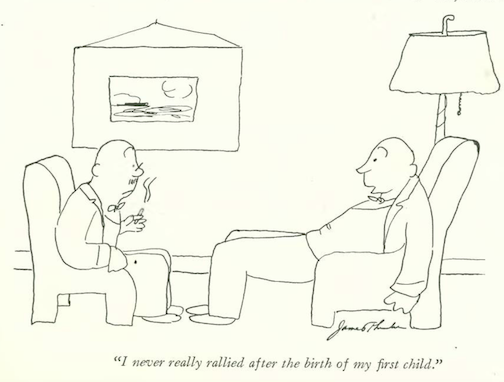
…on to our cartoonists, we begin with spot art from James Thurber

…and Thurber again…

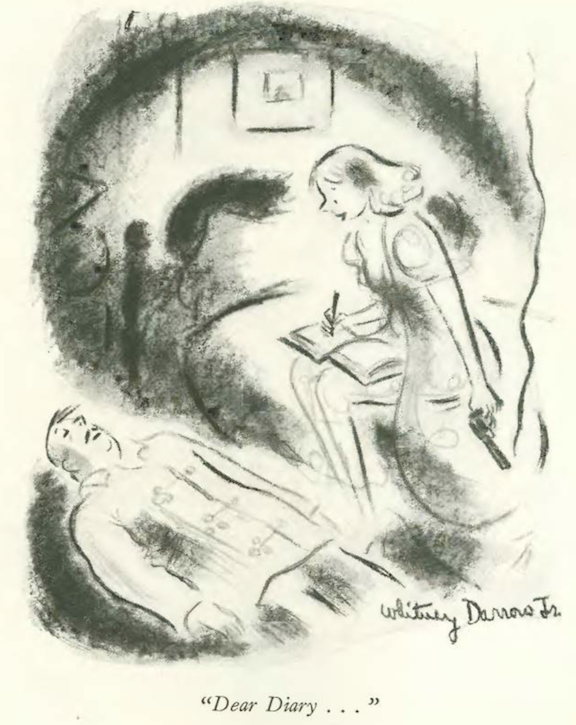
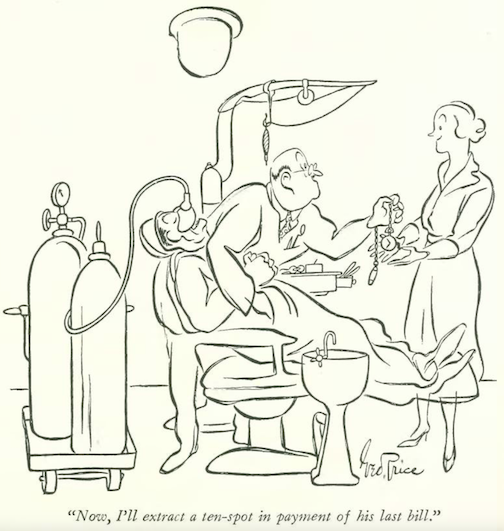
…and we have two from George Price

Otto Soglow continued with his multi-panel tricks…

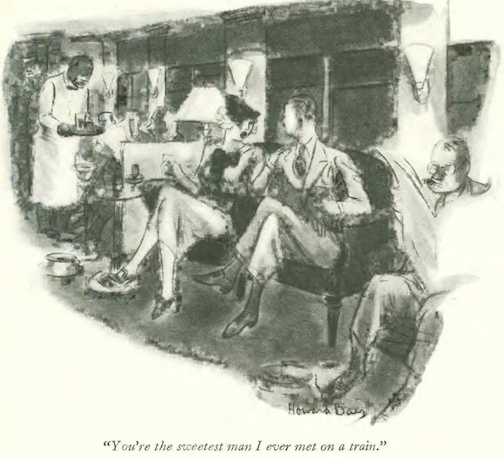
Howard Baer did some eavesdropping on the rails…

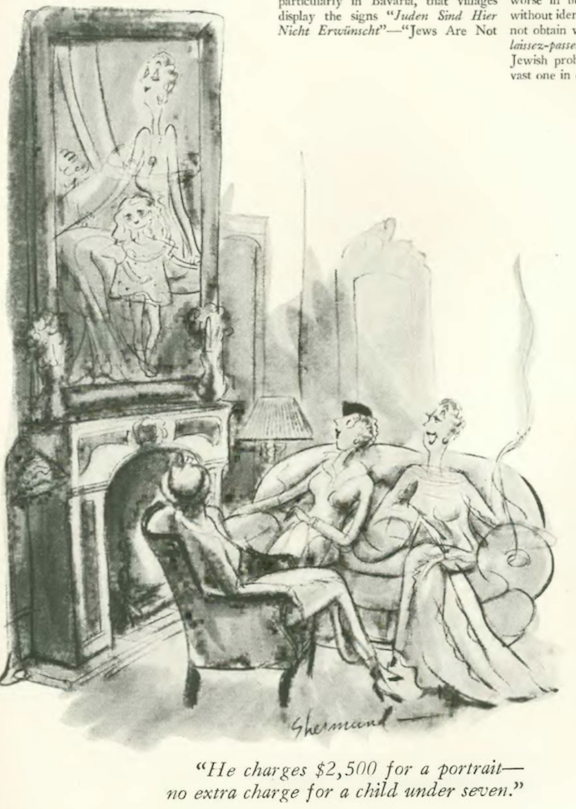
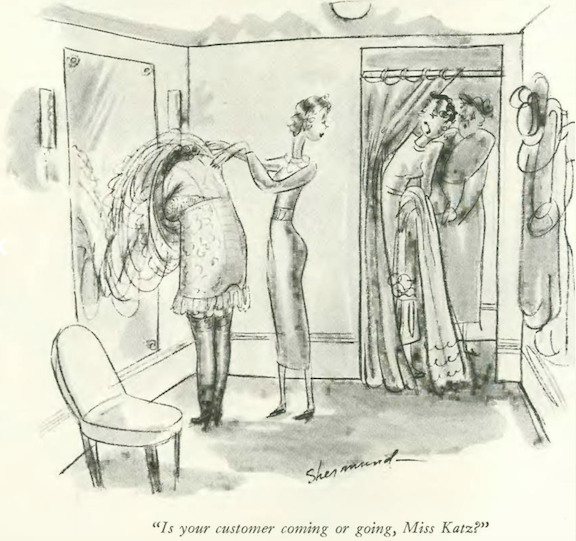
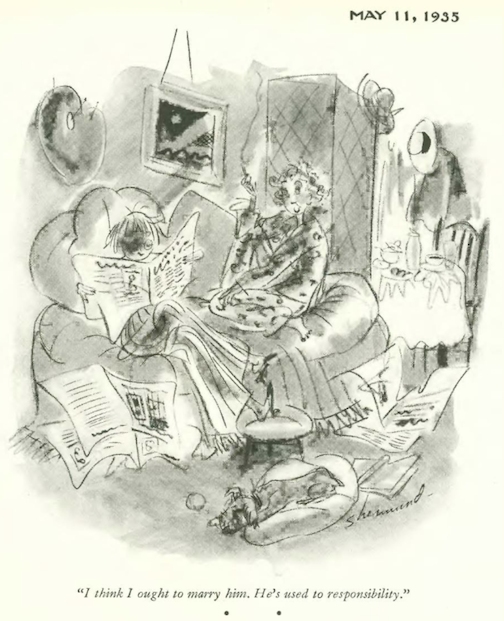
…while Barbara Shermund checked in on her modern women…

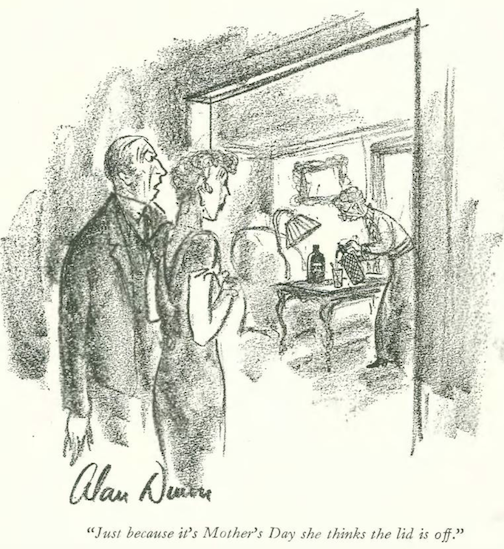
Alan Dunn gave us a mother who took care of herself on Mother’s Day…

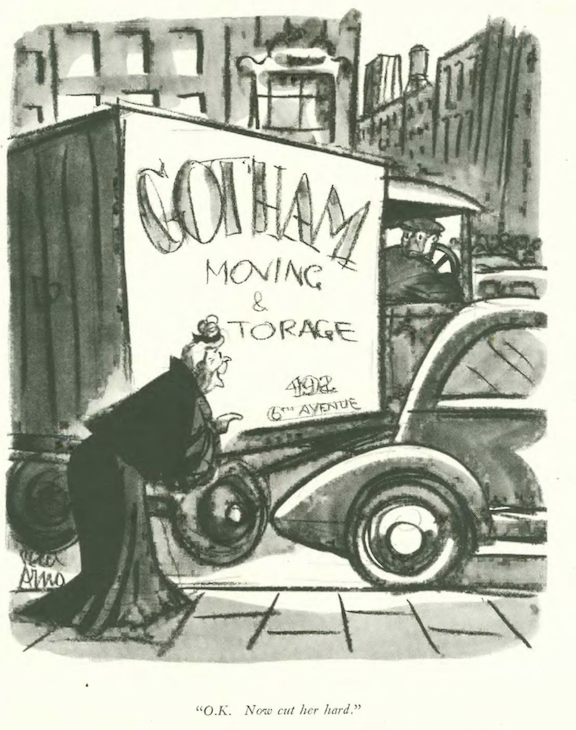
Peter Arno found some kindly advice in the crowded city…

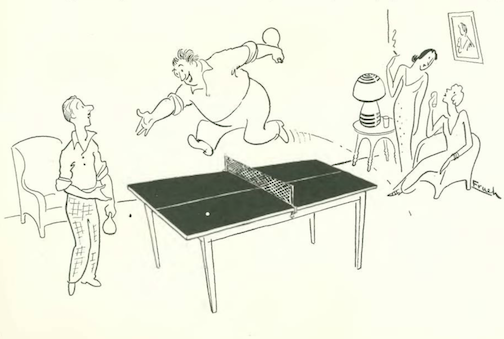
Al Frueh put the “tennis” back into table tennis…

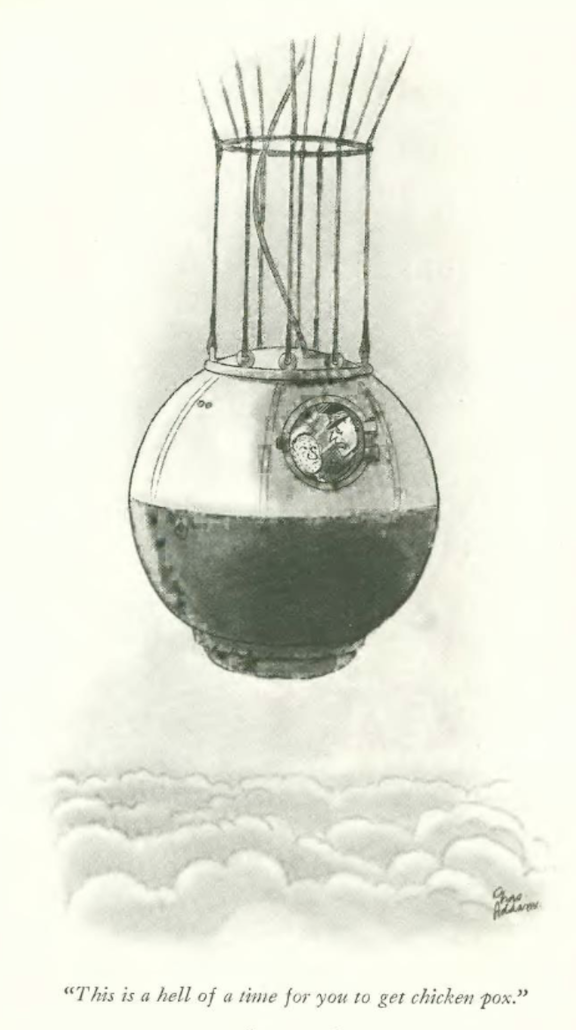
…and we close with Charles Addams, who had become a regular contributor but was still more than three years away from launching his “Addams Family” cartoons…

Next Time: Settling Down, In a Way…


What to Drink During Prohibition

The Roaring Twenties were a strange confluence of the Puritan and libertine, perhaps best represented by Prohibition and the speakeasy night life it inspired. Many if not most of The New Yorker readers of the late 1920s were familiar with these establishments as well as with reliable bootleggers and rum runners. And for those of you following this blog we all know that “Tables for Two” columnist Lois Long was the voice of speakeasy and New York nightlife.

Screen Shot 2015-12-17 at 1.51.20 PM
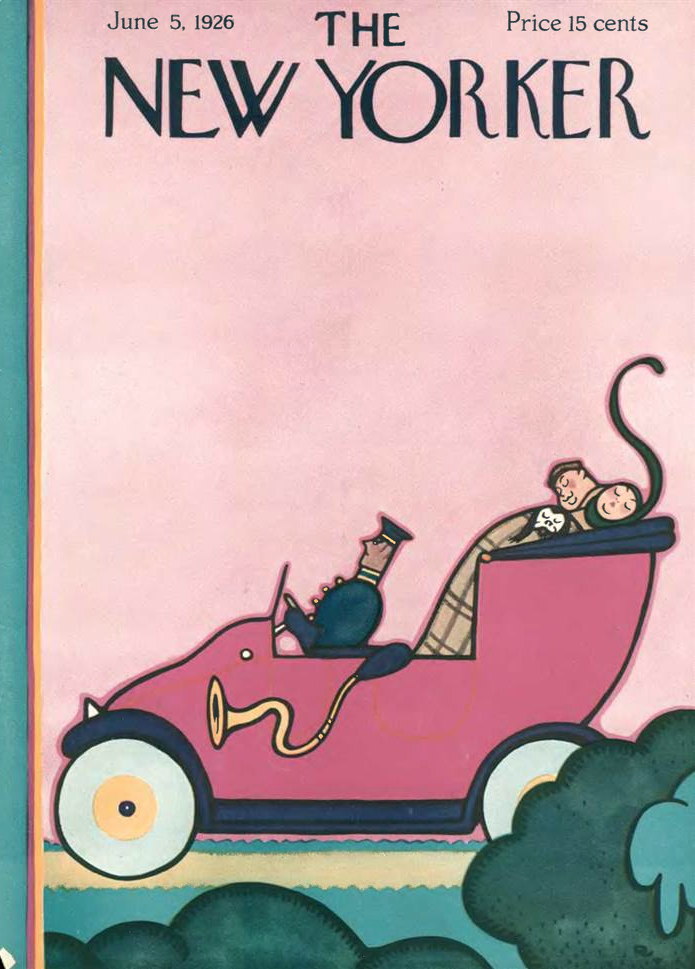
May 29, 1926 cover by Stanley W. Reynolds.

Prohibition did not make consumption of alcohol illegal. The 18th Amendment prohibited the commercial manufacture and distribution of alcoholic beverages, but it did not prohibit their use.

So if you had a connection to a smuggler bringing whisky from Scotland via Canada, for example, you could enjoy a Scotch at home without too much trouble, although the prices could be high. “The Talk of the Town” editors regularly reported black market wine and liquor prices (I include an adjoining Julian de Miskey cartoon):

Screen Shot 2015-12-18 at 11.53.01 AM

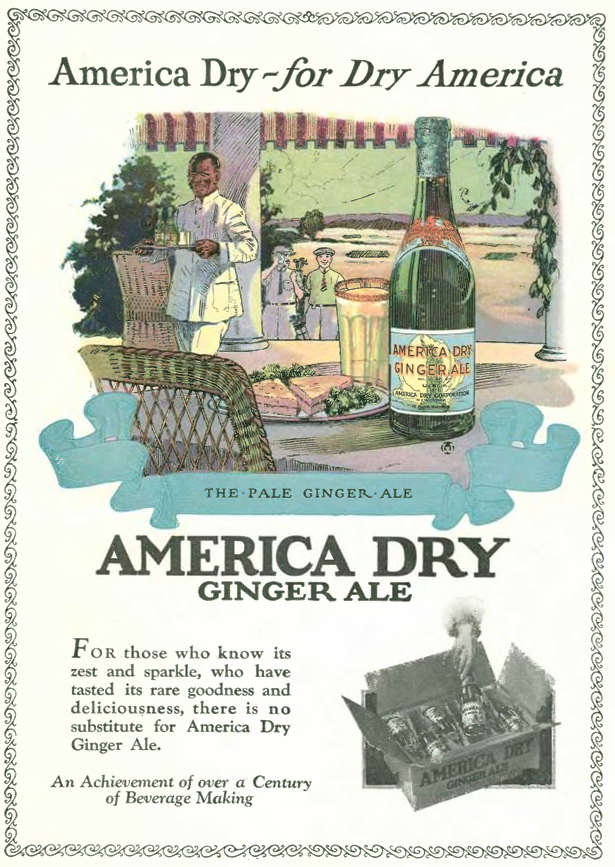
Note the mention of pocket flasks, which were an important item in a purse or vest pocket when one went to a nightclub or restaurant, where White Rock or some other sparkling water was sold as a mixer for whatever you happened to bring with you. You see a lot of this type of advertisement in the Prohibition-era New Yorker:

Screen Shot 2015-12-18 at 12.11.14 PM

I’ll bet those grinning golfers have something in their bags besides clubs.

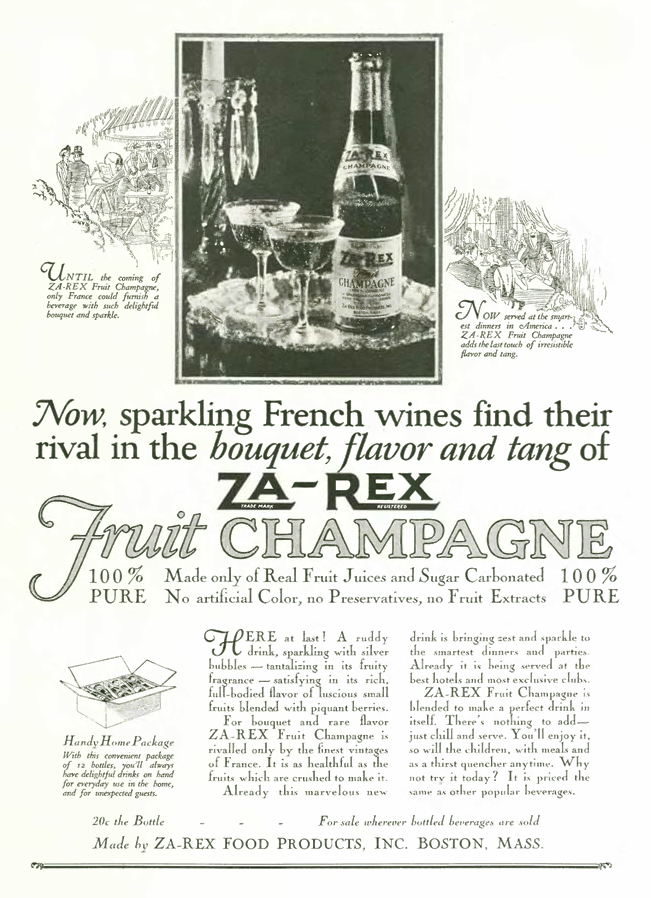
And then there were ads like these, which I find quite sad:

Screen Shot 2015-12-18 at 12.12.11 PM

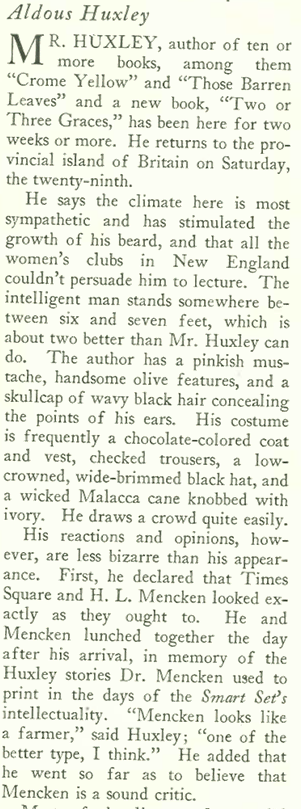
“The Talk of the Town” also commented on the recent visit of British writer Aldous Huxley, who told his New York hosts that he admired American writers Willa Cather and Sherwood Anderson, and he also had praise for writer and critic H.L. Mencken, whom he likened to a farmer “of the better type:”

Screen Shot 2015-12-18 at 11.48.18 AM

Aldous Huxley in the 1920s. (Biography.com)

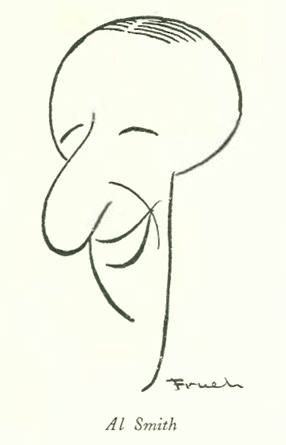
Other odds and ends from this issue…a clever drawing by Al Frueh for the “Profile” feature on New York Governor Al Smith:

Screen Shot 2015-12-18 at 12.06.42 PM

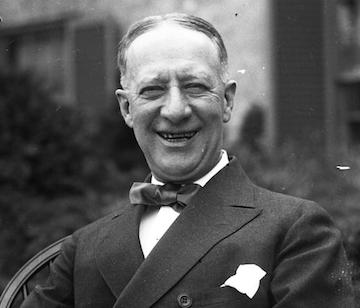
A photo of Al Smith for comparison:

al
New York Gov. Al Smith (IMDB)

And this bit from “Of All Things,” complete with bad pun/racial slur:

Screen Shot 2015-12-18 at 12.05.53 PM

New Yorker readers in 1926 had little reason to believe that in a decade Benito Mussolini would try to make good on his statement and join Adolf Hitler in the next world war.

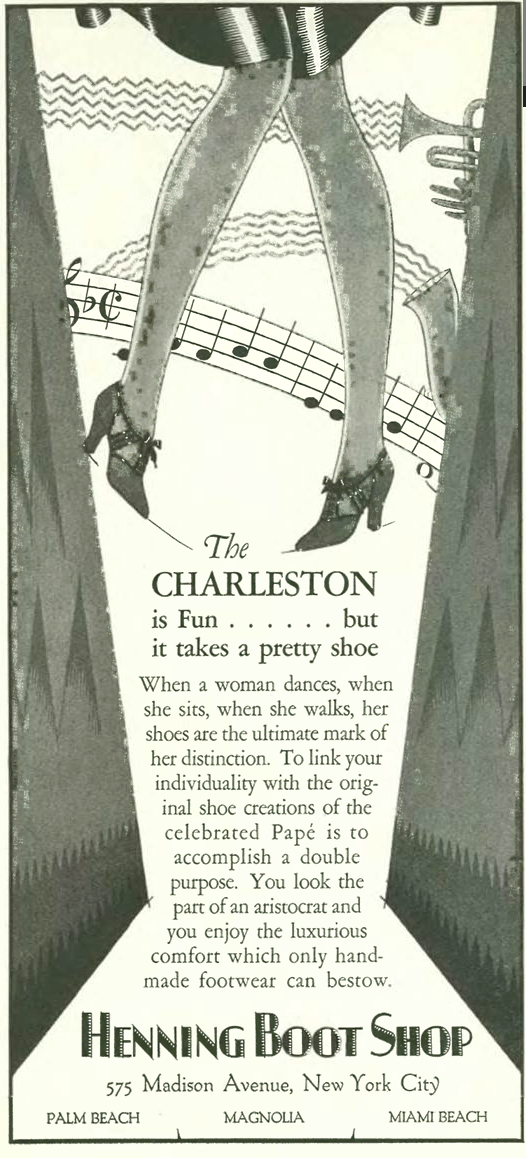
Here’s a couple more ads from the issue that are signs of those times. Note the listing of Florida locations for those New Yorkers who were flocking to that new winter vacation destination:

Screen Shot 2015-12-18 at 12.09.48 PM

And this ad for an electric refrigerator…for those who could afford such newfangled things. The ice man was still plenty busy in 1926, but his days were numbered.

Screen Shot 2015-12-18 at 12.09.15 PM

And finally, a nod to springtime, and this excerpt of an illustration by Helen Hokinson for the “Talk” section:

Screen Shot 2015-12-18 at 12.07.27 PM

Next Time: After a Fashion…

Screen Shot 2015-12-18 at 12.12.38 PM