America’s Sweetheart

Above: A scene from Mary Pickford’s 1922 film Tess of the Storm Country. (Library of Congress)

In today’s celebrity-saturated culture it is difficult to find a parallel to silent film star Mary Pickford, who was dubbed Queen of the Movies more than a century ago. Indeed, during the 1910s and 1920s Pickford was regarded as the most famous woman in the world.

April 7, 1934 cover by Rea Irvin.

Pickford was also known as “America’s Sweet” for her portrayal of gutsy but tenderhearted heroines. In real life she was also a gutsy and shrewd businesswoman who co-founded United Artists in 1919 with Charlie Chaplin, Douglas Fairbanks, and director D. W. Griffith. Commanding a salary only rivaled by Chaplin, her stardom only grew when she married Fairbanks in 1920, forming the first celebrity supercouple; together they ruled Hollywood from their Beverly Hills mansion, Pickfair (apparently staging dull affairs, per the “Profile” excerpt below).

The end of the silent era also put an end to Pickford’s stardom, as well as to her fairytale marriage to Fairbanks. Margaret Case Harriman’s profile of Pickford, simply titled “Sweetheart,” gave readers a glimpse into the decline of a silent superstar. Excerpts:

SINGULAR STAR…Clockwise, from top left, Mary Pickford in a publicity photo, circa 1910; Pickford visits close friend and screenwriter Frances Marion during filming of Straight is the Way (1921); Douglas Fairbanks and Pickford in the early 1920s; Pickford with a movie camera in 1916—in addition to being a shrewd businesswoman, she was also skilled behind the camera. (thehollywoodtimes.today/Time/Library of Congress)

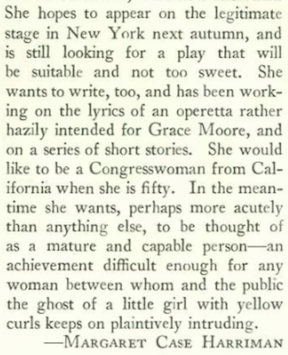
Harriman concluded her profile with some thoughts on Pickford’s future:
THE SOUND BARRIER…With the advent of sound movies Mary Pickford turned to writing books and serving various charities. From left, sharing ice cream with rising star Bing Crosby in 1934; center, Al Frueh’s caricature of Pickford for the profile; Pickford in a 1934 promotional picture supporting The Salvation Army. (Pinterest/Library of Congress)

A note on the profile’s writer, Margaret Case Harriman (1904-1966), who doubtless sharpened her people-watching skills at the Hotel Algonquin (famed birthing ground of the New Yorker), which was owned by her father, Frank Case. Douglas Fairbanks was one of Case’s best friends, and Harriman knew both Fairbanks and Pickford well, since they often stayed at the hotel.

HOME SWEET HOME…Margaret Case Harriman, photographed May 31, 1937 by Carl Van Vechten. Harriman was born in 1904 in room 1206 of the Hotel Algonquin, which was owned by her father, Frank Case. (Philadelphia Museum of Art)

 * * *

Master of Masters

The founder of perhaps the world’s most prestigious golf tournament was an amateur and a working lawyer by profession. When Bobby Jones (1902–1971) co-founded the Masters Tournament in 1934 with investment dealer Clifford Robert, it was called the Augusta National Invitation Tournament (it was Robert’s idea to call it The Masters, a name Jones thought immodest). Jones dominated top-level amateur competition from the early 1920s through 1930—the year he achieved a Grand Slam by winning golf ’s four major tournaments in the same year. However, by the 1934 Jones’s skills began to wane. The New Yorker had little to say about the first Masters (it wasn’t a big deal yet), other than Howard Brubaker making this observation in “Of All Things”…

A SWING INTO HISTORY…Bobby Jones (center) drives during the first-ever Masters Tournament in Augusta, Georgia on March 22, 1934. (augusta.com)

 * * *

From Our Advertisers

Wanna get away? This colorful advertisement beckoned New Yorker readers to take the next boat to sunny Bermuda…

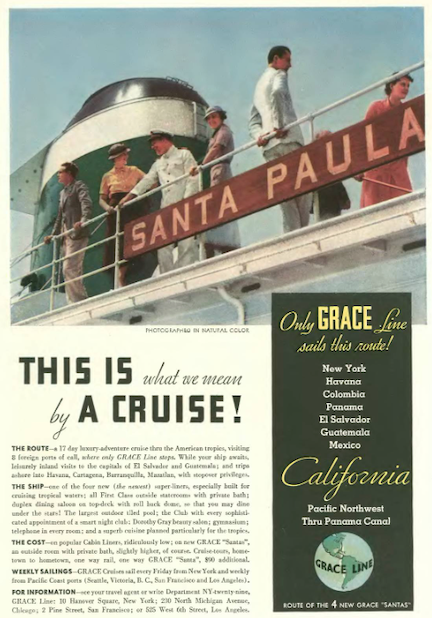
…while the Grace Line offered a southern cruise through the Panama Canal…
…but who needed to travel when you could enjoy a beer that was beloved the world over?…

Mrs. Potter d’Orsay Palmer nee Maria Eugenia Martinez de Hoz was content to stay home in Chicago and smoke a few Camels, apparently…

…we’ve encountered her before—she appeared in a Ponds ad (below) in the Aug. 8, 1931 issue of the New Yorker, where we learned she was wife No. 2 of Potter d’Orsay Palmer, son of the wealthy family of Chicago Palmer House fame…they would divorce in 1937, and the playboy Potter would marry two more times before dying of a cerebral hemorrhage in May 1939—following a drunken brawl in Sarasota, Florida with a meat cutter called Kenneth Nosworthy. Maria Eugenia would remarry and return to her homeland of Argentina to raise a family…

…this ad from Nash looks like a scene from Attack of the 50 Foot Woman, if she had a car to match, that is…

…the Cadillac V-16 was a truly massive automobile, but in contrast to the Nash ad, you can barely see the car as it approaches from the vanishing distance…

E. Simms Campbell got in on the advertising game with this spot that features contrasting images of storm and calm…
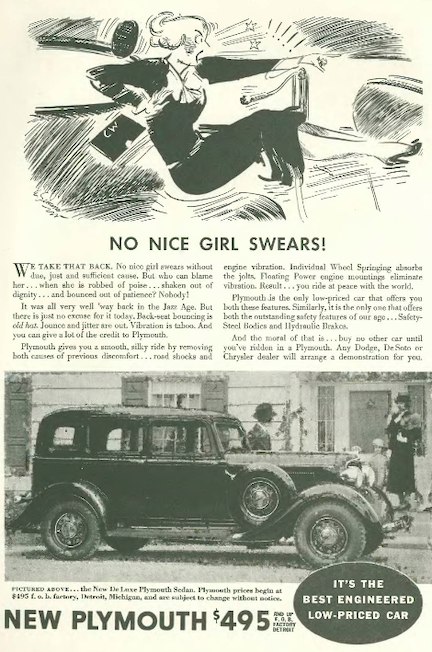
James Thurber offered this cartoon on behalf of Heinz soups…

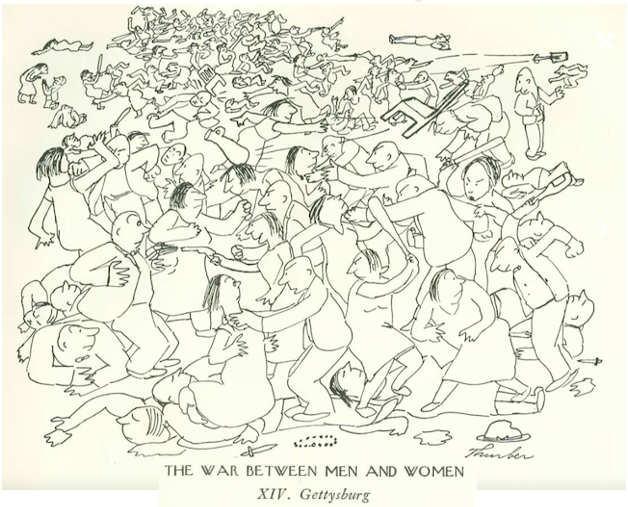
…and Thurber again, as we kick off the cartoons with the ongoing battle…
Adolph Schus made a rare appearance in the New Yorker…according to Ink Spill, he also contributed a cartoon on March 19, 1938, and was editor of Pageant Magazine in 1945… 

Gluyas Williams looked in on the sorrows of moneyed classes…
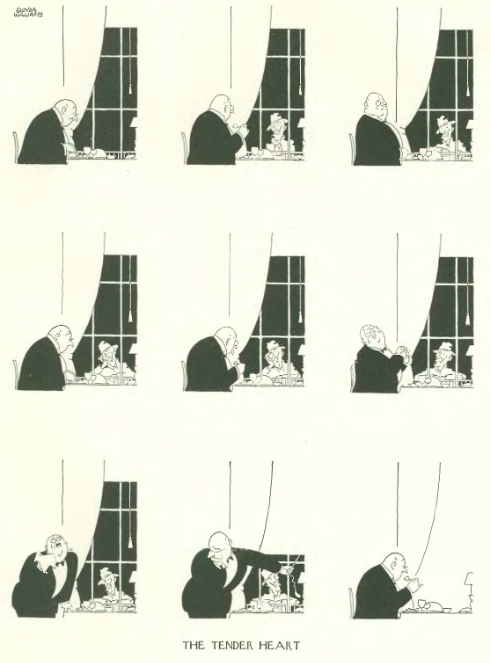
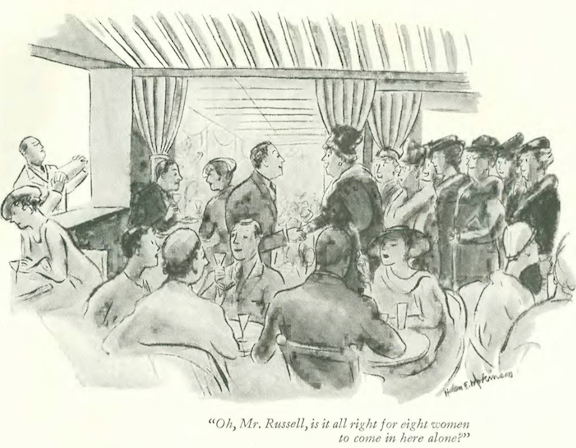
Helen Hokinson’s “girls” were in search of lunch, and propriety…
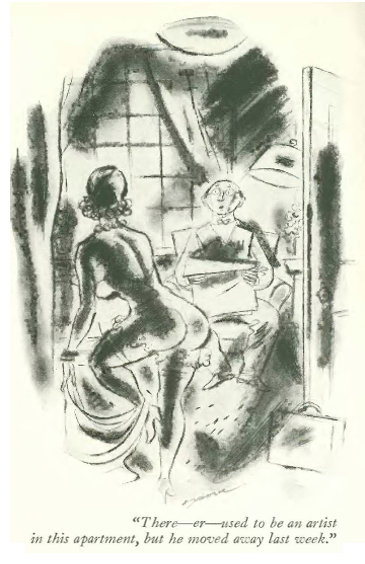
…and Leonard Dove gave us a renter surprised by something not included in his lease…
…on to April 14, 1934…

April 14, 1934 cover by Harry Brown.

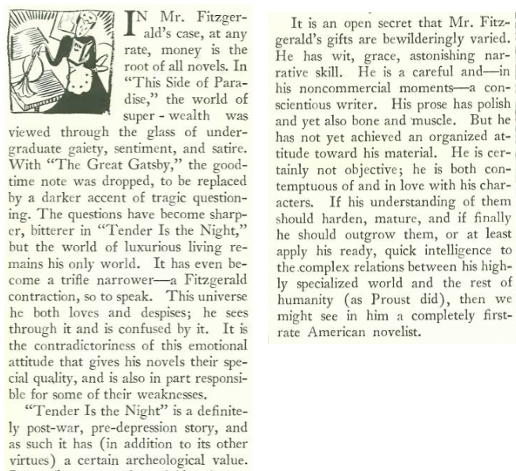
…and book reviewer Clifton Fadiman, who found F. Scott Fitzgerald’s literary gifts “bewilderingly varied”…
A NOT-SO-TENDER RECEPTION…F. Scott Fitzgerald’s status as a symbol of Jazz Age excess hurt his career during the Depression years. Tender Is the Night received mixed reviews, which didn’t help his alcoholism and deteriorating health. When Carl Van Vechten took this photo of Fitzgerald in June 1937, the author had a little over three years to live. (Wikipedia)

…speaking of F. Scott Fitzgerald, fellow author Ernest Hemingway defended Fitzgerald’s writing, arguing that criticism of his Jazz Age settings stemmed from superficial readings. One then wonders what Hemingway thought of E.B. White’s poetic “tribute” to his big game hunting excursions…
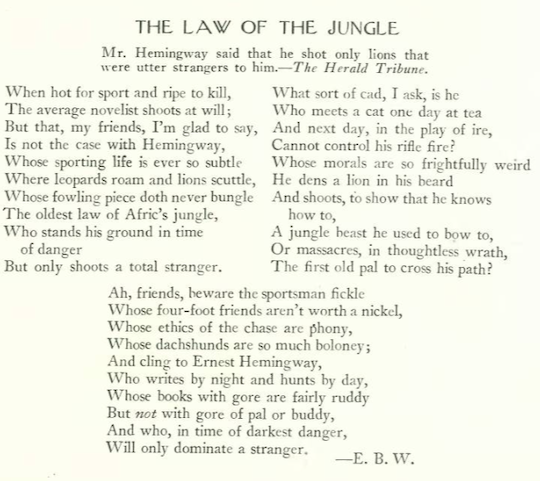
I ONLY SHOOT STRANGERS…Author Ernest Hemingway poses with a lion shot during a safari in Africa in 1934. (MPR News)

 * * *

From History’s Ash Heap

Various reference sources cite “freak shows” as a normal part of American culture in the late 19th to the early 20th centuries, but I have to admit I saw exhibits at state fairs of half-ton humans and conjoined twins when I was a kid in the 1970s (not to mention things in jars at a carnival in St. Louis that should have been given a decent burial).

When Alva Johnston penned the first installment of a three-part profile series titled “Sideshow People,” such attractions could be found across the U.S. and Europe—Coney Island featured “Zip the Pinhead,” who was actually William Henry Johnson (1842–1926), one of six children born to former slaves living in New Jersey. His desperately poor parents agreed to allow P.T. Barnum to display him at a museum and at circus performances billed as a missing link, a “What-Is-It” supposedly caught in Africa.

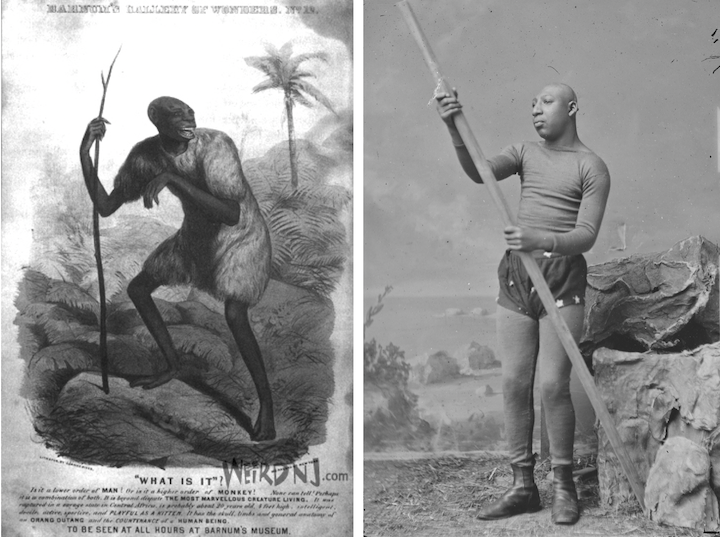
FOR THE SUCKERS…P.T. Barnum exhibited William Henry Johnson as a “wild man”, a “What-Is-It” that subsisted on raw meat, nuts, and fruit, but was learning to eat more civilized fare such as bread and cake. Note the difference between the poster depiction at left and the actual man. Civil War-era photo at right by Mathew Brady’s photography studio in New York City. (National Portrait Gallery)

 * * *

Floating and Sinking

As much as New Yorker cartoonists (and E.B. White) liked to take pokes at Chrysler’s futuristic Airflow, there was much to be admired by the innovations the car represented. Unfortunately, the car’s design was too advanced for the buying public, and despite a big manufacturing and sales push by Chrysler the car was shelved by late 1936.

Writing for Time, Dan Neil noted the Airflow’s spectacularly bad timing. “Twenty years later, the car’s many design and engineering innovations — the aerodynamic singlet-style fuselage, steel-spaceframe construction, near 50-50 front-rear weight distribution and light weight—would have been celebrated. As it was, in 1934, the car’s dramatic streamliner styling antagonized Americans on some deep level, almost as if it were designed by Bolsheviks.”
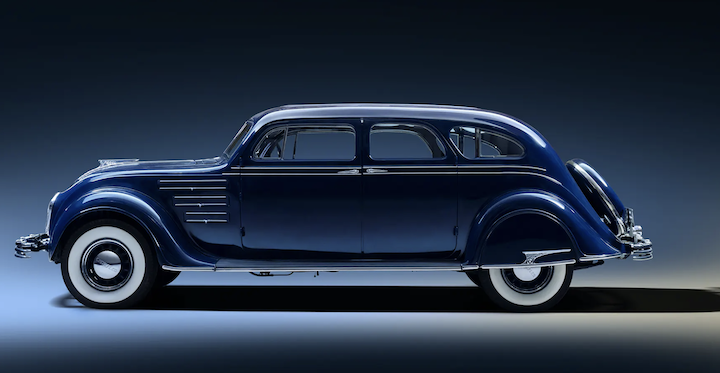
SEEMED LIKE A GOOD IDEA. A restored 1934 Airflow. (Hagerty Media)

* * *

More From Our Advertisers

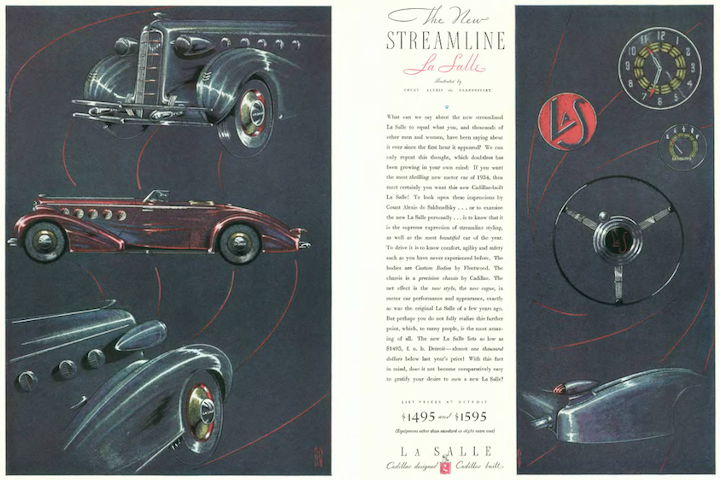
Maybe the buying public wasn’t ready for a car with a sloping hood and embedded headlights, but the folks at Cadillac were eager to unveil concepts for the new streamlined La Salle, which retained the familiar bullet headlights so as not to alarm consumers too much…
…and here’s a lovely image from Goodyear…I assume this woman is merely resting in a rumble seat, since this pose would not be possible above 25 mph…

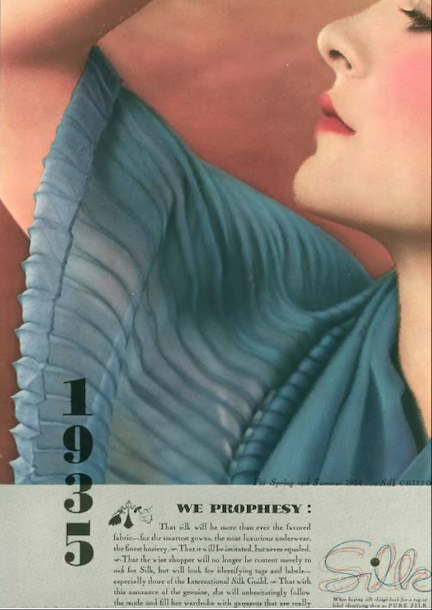
…full-bleed color ads were coming into their own, as demonstrated by this stylish entry from the purveyors of silk garments…
…on the other hand, our well-heeled friends at Ponds stuck with the tried and true copy-heavy approach…here they offer the flawless features of Anne Gould (1913–1962), granddaughter of Gilded Age robber baron Jay Gould

…R.J. Reynolds continued their campaign to convince us that Camels bring success to the average Joe and the champion athlete…

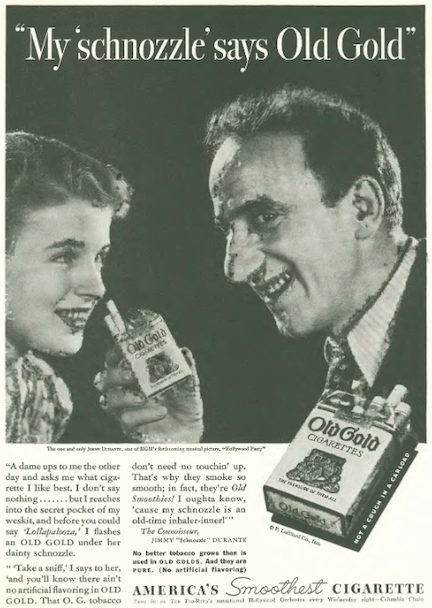
…the makers of Old Gold opted for the super creepy approach, asking entertainer Jimmy Durante to shove a pack of smokes into the face of what appears to be a teenager…
…here’s another ad from World Peaceways, reminding us of the futility of war…

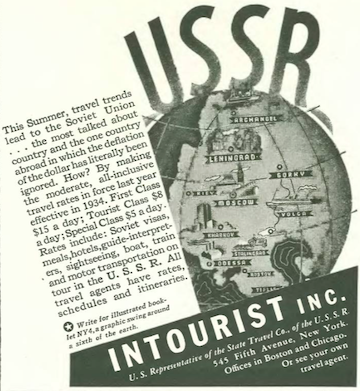
…speaking of futility, you could visit the USSR, which doubtless took great pains to steer tourists away from mass starvation in Ukraine and mass executions of Stalin’s many “enemies”…
…while folks in the USSR were worshiping Lenin and Stalin, Americans were rightly transfixed by the miracle of Kellogg’s Corn Flakes…a producer of industrial and advertising films, Castle Films would become a subsidiary of Universal and would go on to make a line of science-fiction and horror films including The Wolf Man, The Mummy, and Creature from the Black Lagoon.

…on to our cartoons, Alain took on the recent MoMA exhibition of “Machine Art”…

…and speaking of machine art, George Price was to latest cartoonist to take a crack at the Airflow…

James Thurber offered this bit of spot art for the opening pages…

…and returned to a somber scene on the battlefield of the sexes…

Next Time: Model Citizens…

Not Your Grandpa’s Tammany Hall

For more than a century, a political organization known as the Tammany Society ruled New York City politics with an iron fist. Founded in 1786 (and named for Tamanend, a chief in the Lenni-Lenape nation), by the mid 19th century it rapidly expanded its political control by earning the loyalty of the city’s fast-growing immigrant population, particularly the Irish.

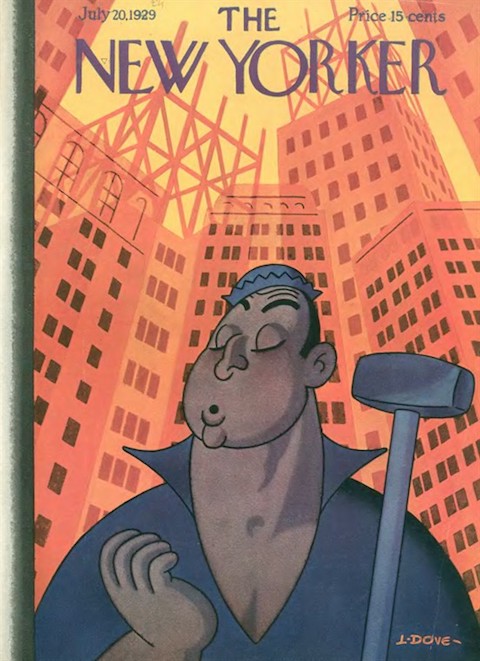
July 13, 1929 cover by Rea Irvin.

The Tammany Society proved an efficient machine for controlling state Democratic politics as well as New York City elections. Through its use of patronage to reward loyal precinct leaders, it also became a center for big-time graft. Most of us know a bit about Tammany thanks to school history books that focused on the deep corruption of William “Boss” Tweed, who was brought down by the press and by Harper’s Weekly cartoonist Thomas Nast in the 1870s. Tammany Hall would survive the scandal, and in the 1920s would still pull the strings of politicians including Gov. Al Smith and New York City Mayor Jimmy Walker.

Tammany had several homes, but during its most notorious years it was located in a circa 1812 hall (then called a “wigwam”) and later in an 1868 building on 14th Street, between Third and Fourth avenues. The July 13, 1929 “The Talk of the Town” noted the recent demolition of that old hall and the opening of a new headquarters on 17th Street:

POLITICAL BAGGAGE…Top, a stereoscope card featuring the 1868 Tammany Hall; below, Thomas Nast cartoons depicting the corruption of Tammany Hall and the downfall of Boss Tweed. (Wikimedia Commons/Smithsonian)

“Talk” found the new building unimpressive; it seemed to signal that the old political machine was losing some of its luster:

EVOLUTION OF THE WIGWAM, as depicted on a poster circa 1920. (nypdhistory.com)
Top left: The old Tammany Hall, decorated for the 1868 Democratic National Convention. Bottom left, the old hall was located at 141 E 14th Street, between 3rd and 4th Avenues. It was demolished in 1927 to make way for expansion of the Consolidated Edison building (right). (NYPL Digital Gallery/mediahistoryny.files.wordpress.com/Wikipedia)

Indeed, “Talk” found the building to be a somewhat austere, hosed-down affair, far removed from its grander past:

I LIKE YOUR NEW HAT…The 1929 Tammany Hall (top left) is currently undergoing a major renovation. Although the interior is being dramatically altered, including the addition of a glass dome, the landmarked exterior will mostly be preserved. When completed, the building—a mix of office and retail—will be known as 44 Union Square. (bkskarch.com)

For further evidence that the more austere Tammany Hall was nevertheless alive and well in 1929, another “Talk” item noted the organization’s continued influence behind the scenes in local politics:

The 1930s marked the beginning of the end for Tammany Hall, when reform-minded Democrats such as President Franklin Roosevelt and New York’s Republican Mayor Fiorello La Guardia (supported by Roosevelt on a “Fusion” ticket) dismantled Tammany’s system of patronage. The Tammany Society abandoned its headquarters in 1943 when it found it no longer had the funds to maintain the hall. Bought by a local affiliate of the International Ladies Garment Workers Union, it later housed the New York Film Academy and the Union Square Theatre until 2016, when it underwent extensive remodeling to make way for new office and retail space.

 *  *  *

Your Two Cents Worth

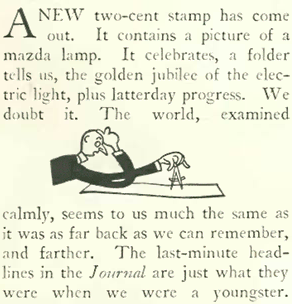
“Talk” also commented on the introduction of a new two-cent stamp that featured an image of Thomas Edison’s Mazda lamp, marking the celebration of fifty years of electric light. The magazine cheekily suggested that in the world of technological progress, there was nothing new under the sun:

(eBay)

 * * *

Americans in Paris

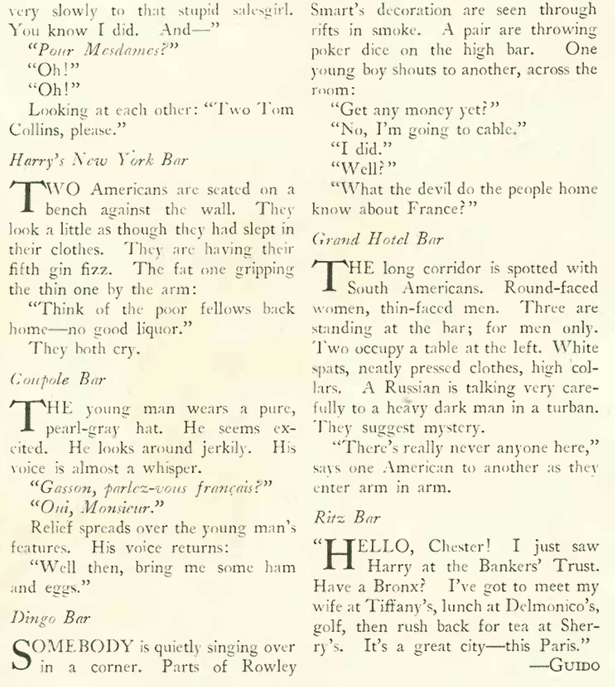
The New Yorker featured this humorous bit by a writer identified as “Guido” (I assume it is one of E.B. White’s many pseudonyms), who looked in on the chatter of various Parisian cafés and bars:

VOLSTEAD CAN’T GET US HERE…Enjoying the good life at a Parisian brasserie, circa 1920s. (National Geographic)

*  *  *

Hit and Miss

The New Yorker generally reveled in the good times Florenz Ziegfeld brought to the stage, but his latest effort, Show Girl, proved a bit of a disappointment (more evidence, in my view, that folks were tiring of the decade-long party known as the Roaring Twenties):

TAP-DANCING ON THE GRAVE OF THE ROARING TWENTIES…Although The New Yorker seemed less than enthused by Flo Ziegfeld’s latest effort, Show Girl, Ruby Keeler (top left) brought her tap shoes and her ‘A’ game to the performance. Clockwise, from top right, Keeler has some fun with the comedy trio Clayton, Jackson and Durante; program cover for Show Girl; the popular Albertina Rasch Girls with Harriet Hoctor in the “An American in Paris” scene of Show Girl, 1929. (Pinterest/jacksonupperco.com/eBay/songbook1.wordpress.com)

*  *  *

One of a Kind

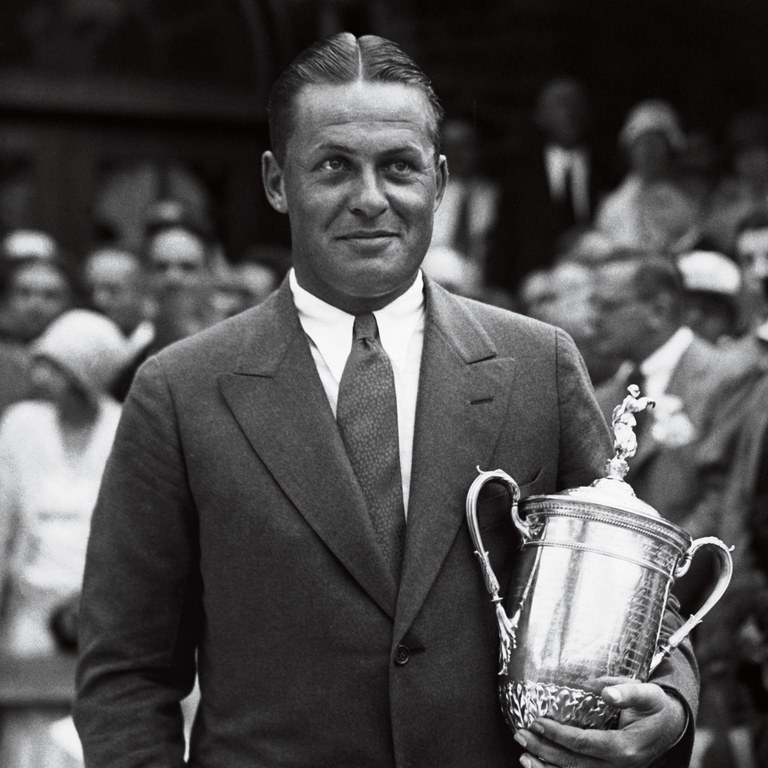
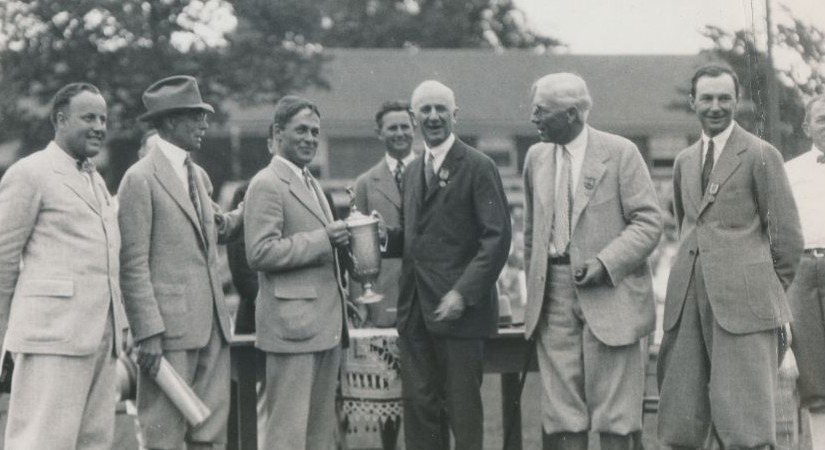
New Yorker sportswriter Niven Busch, Jr. provided a nice write-up on golfer Bobby Jones, the most successful amateur ever to compete in the sport. An attorney by trade, the unassuming Jones had just won his third U.S. Open (he would win again in 1930). In all he would play in 31 majors, winning 13 of them and finishing in the top 10 an incredible 27 times. After retiring at age 28 in 1930 he helped design the Augusta National Golf Club and co-founded the Masters Tournament. An excerpt:

AND HE DID IT WEARING A NECKTIE…Although a lawyer by trade, the amateur golfer Bobby Jones was one of golf’s greatest champions. He pictured here after winning the 1929 U.S.Open in Mamaroneck, New York. (golf digest.com)

 *  *  *

An Odd Bit

Looking around the July 13 issue, let’s see what nighttime diversions were being touted by The New Yorker in their “Going on About Town” section (note the warning on the last item):

*  *  *

From Our Advertisers

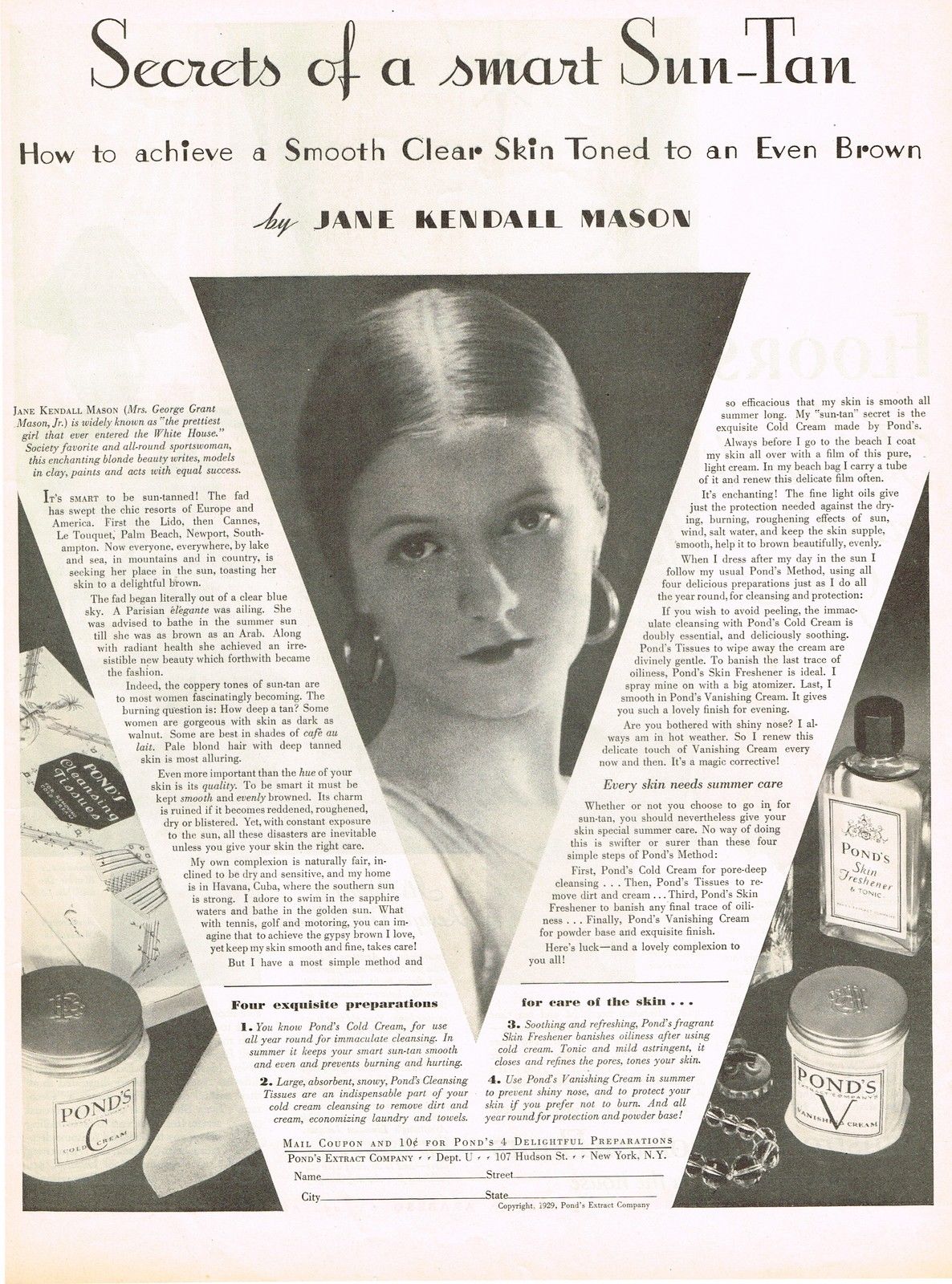
The makers of Pond’s cold cream continued to roll out endorsements from high society with this testimonial from Jane Kendall Mason (1909-1980), the newlywed wife of George Grant Mason, an executive with Pan American Airways in Cuba.

In 1925, the 17-year-old Jane made her formal debut in Washington society. After a visit with Grace Goodhue Coolidge, the first lady famously declared that Jane was “the most beautiful girl ever to enter the White House.”

After their marriage, the Masons became friends with Ernest and Pauline Hemingway, and introduced the Hemingways into Cuban society. Jane could hunt, fish, and hold her liquor, and, according to Ernest Hemingway, she was the most uninhibited person he’d ever met. So naturally they had a torrid, tempestuous, two-month affair that ended with Jane’s attempted suicide (she leapt from a balcony that was not high enough to do the job).

Hemingway supposedly used Jane as a model for the cruel-hearted Margot Macomber in The Short, Happy Life of Francis Macomber, in which the title character—trapped in a sad marriage to a wealthy but spineless American (George?)—accidentally shoots her husband in the head while on safari. She is also considered to be the model for the sex-obsessed Helene Bradley in Hemingway’s novel To Have and Have Not— a character also married to a rich but spineless husband.

Carlos Gutierrez (who served as a boat guide for Ernest Hemingway) and Jane Mason aboard “Sloppy” Joe Russell’s boat Anita in 1933. (Ernest Hemingway Photograph Collection, JFK Presidential Library and Museum, Boston)

…and we segue into our cartoons, featuring a mother and child (drawn by Carl Kindl) probably flying on one of those Sikorskys…
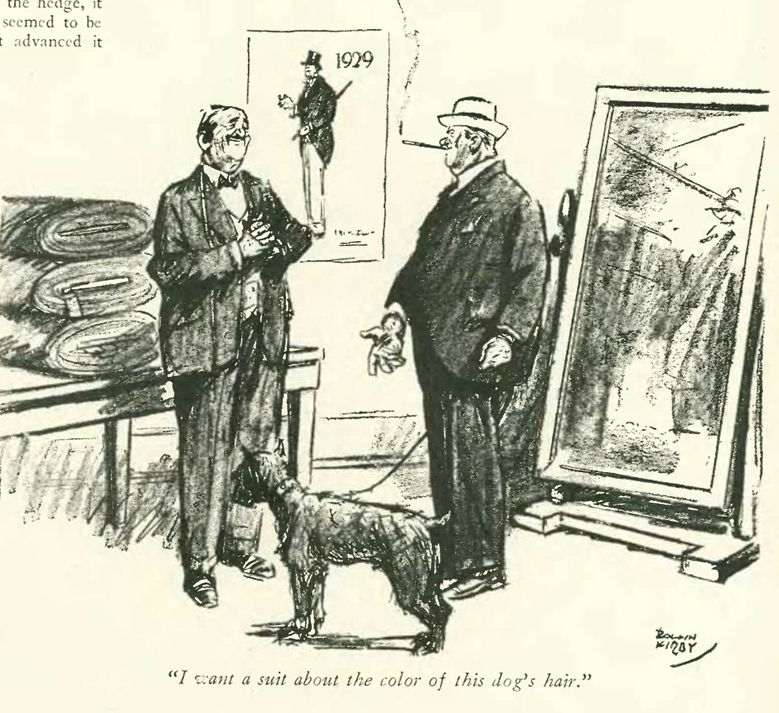
Rollin Kirby looked in on a tailor’s shop (this is one of only two drawings published by Kirby in The New Yorker)…

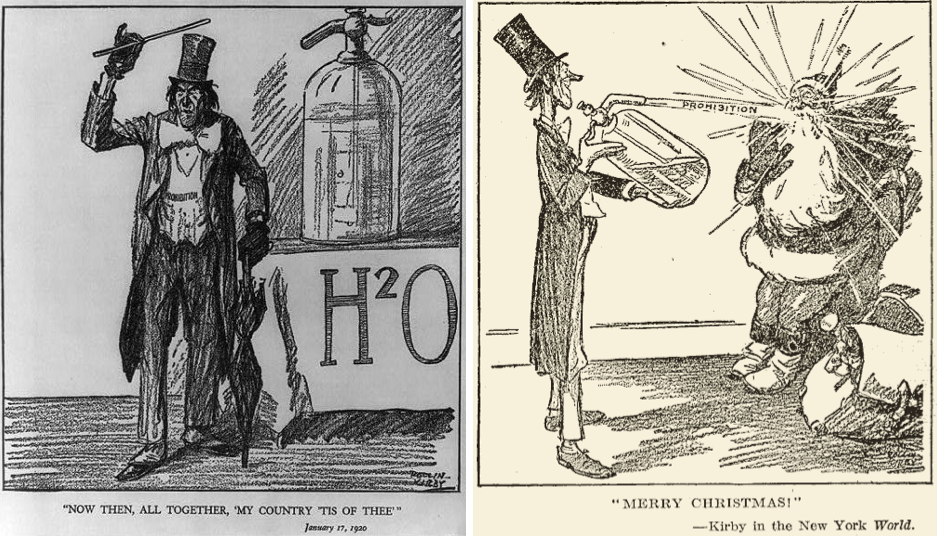
…a note on Kirby, a three-time Pulitzer winner: outraged by the passage of Prohibition laws, Kirby created one of his most famous characters, “Mr. Dry,” which he introduced to readers of the New York World in January 1920…

Rollin Kirby’s miserly, foreboding “Mr. Dry” made his first appearance in the pages of the New York World on Jan. 17, 1920, shortly after Prohibition laws went into effect in the United States. Mr. Dry also made an appearance at the end of 1920, to throw some water on America’s Christmas cheer. (bottlesboozeandbackstories.blogspot.com)

You can read more about Rollin Kirby and Mr. Dry here.

Roland Baum peeked in on a reluctant stargazer…

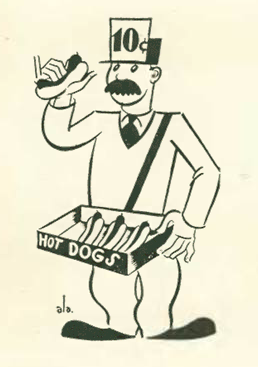
…and to close, this little filler drawing of a hot dog vendor by Constantin Alajalov…

Next Time: On the Flatfoot Beat…

Good Old Summertime

8762fa732414047f1adc968dd860904b
July 17, 1926 cover by Stanley W. Reynolds.

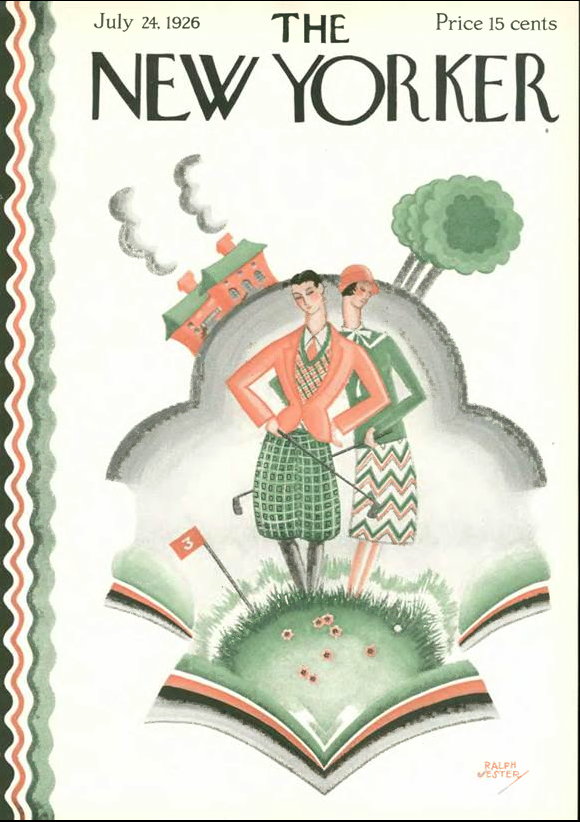
The glories of summertime filled the pages of the July 17, 1926 issue. The cover featured a stylish young couple enjoying a romantic evening on a moonlit lake, while the inside pages were filled with all sorts of outdoor activities ranging from dining and dancing to open air concerts and golf, lots of it.

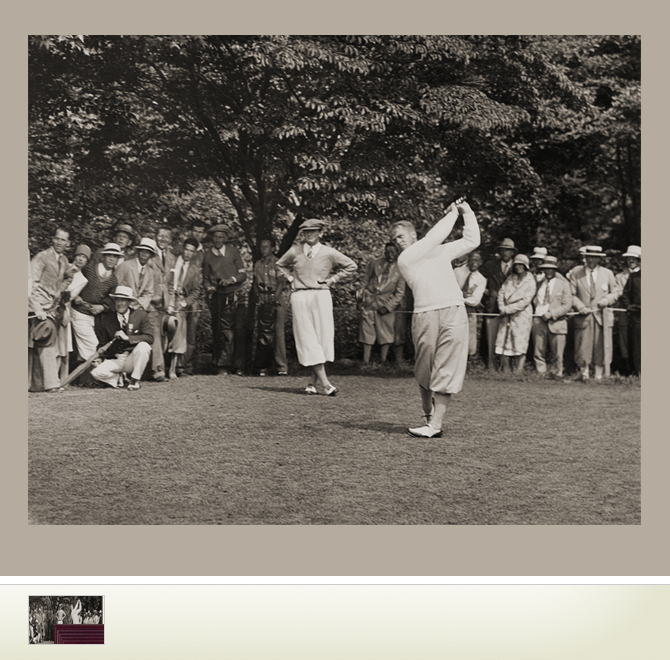
There was a lengthy profile by Herbert Reed on golfing great Bobby Jones, a mere boy of 24 who competed as an amateur but often beat top pros such as Walter Hagen and Gene Sarazen (in a few years Jones would help design the Augusta National Golf Club and co-found the Masters Tournament).

Screen Shot 2016-01-15 at 5.29.23 PM
Rending of Bobby Jones for the “Profile” by illustrator Miguel Covarrubias.

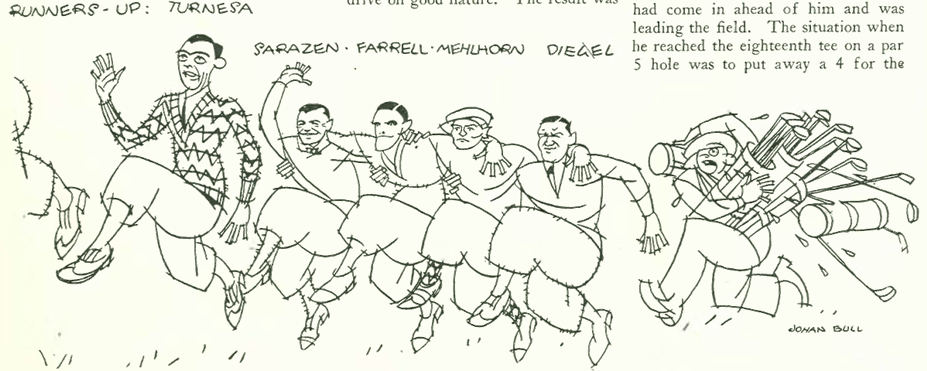
In “Sports of the Week,” Reed wrote about Jones’s second U.S. Open win, in Columbus, Ohio. Johan Bull offered this rendering of the runners-up:

Screen Shot 2016-01-15 at 5.34.15 PM

Jones__Bobby___1_515b19833f0f9
Bobby Jones at the 1926 U.S. Open (golfspast.com)

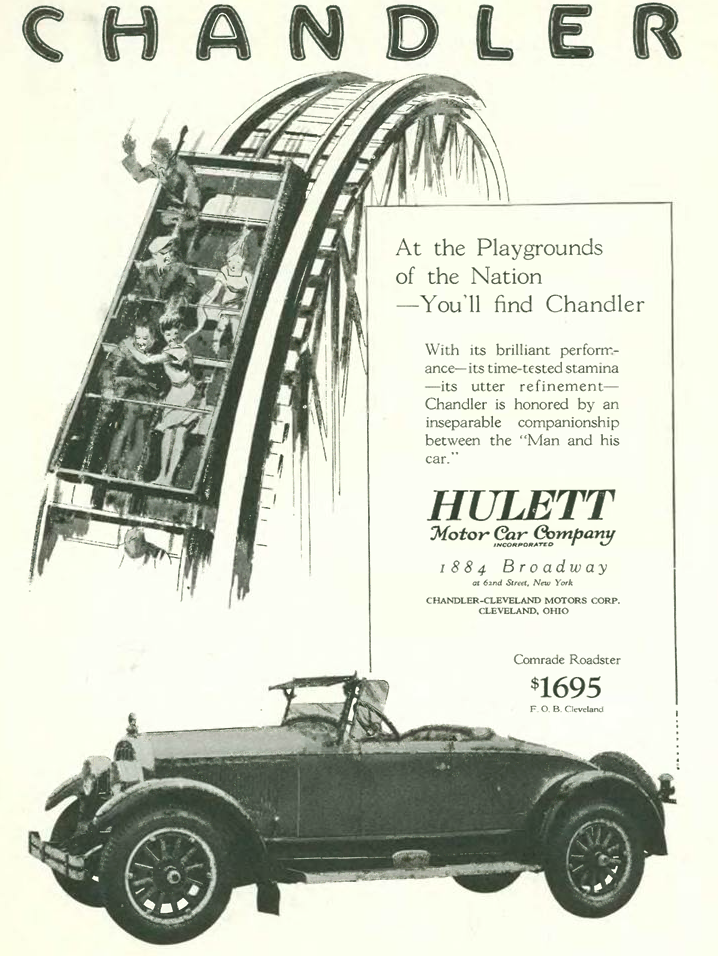
And with the warm weather the tops were open on automobiles for both the rich:

Screen Shot 2016-01-15 at 5.15.46 PM

And the not-so-rich:

Screen Shot 2016-01-15 at 5.36.02 PM

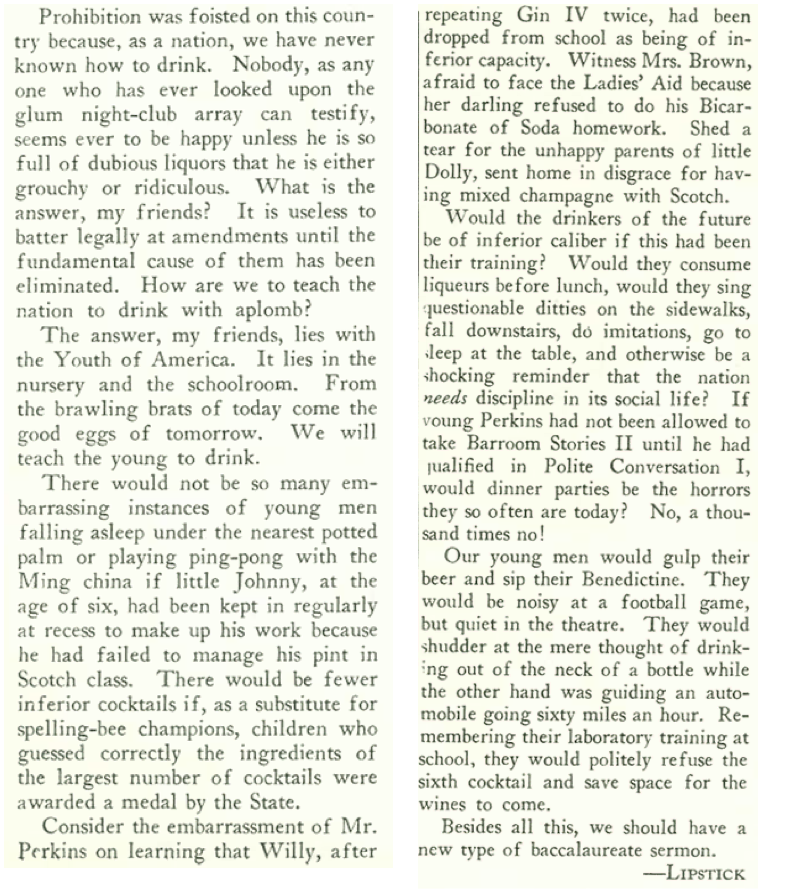
And finally, Lois Long, fed up with reviewing restaurants, fires off a column about the sad state of drinking in America:

Screen Shot 2016-01-15 at 5.47.09 PM

Next Time: Blowing Smoke…

Screen Shot 2016-01-15 at 5.49.44 PM