Machine Age Bromance

American inventor Thomas Edison was a hero to the young Henry Ford, who grew up to become something of a tinkerer himself with his pioneering development of the assembly line and mass production techniques. Over a matter of decades in the late 19th and early 20th century these two men would play outsized roles in transforming the American landscape and our way of life.

986198649aa5ada2614b8158443db596
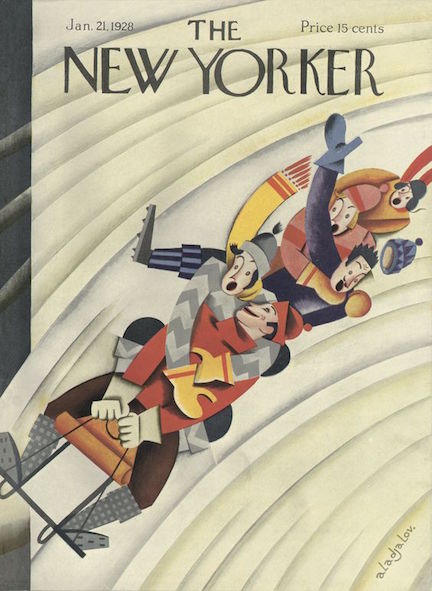
January 21, 1928 cover by Constantin Alajalov.

Ford would first meet Edison in August 1896, at a convention of the Association of Edison Illuminating Companies held at the Oriental Hotel in Brooklyn—it was just two months after the 33-year-old Ford had finished work on his first car—a “quadricycle”—consisting of a simple frame, an ethanol-powered engine and four bicycle wheels. In contrast, by 1896 the 49-year-old Edison was a worldwide celebrity, having already invented the phonograph (1877), the incandescent lamp (1879), public electricity (1883) and motion pictures (1888).

screen-shot-2017-02-21-at-5-05-35-pm
WHAT NEXT, A CAR STEREO?…Thomas Edison (left) with his second phonograph, photographed by Mathew Brady in Washington, D.C., April 1878. At right, Henry Ford sits in his first automobile, the Ford Quadricycle, in 1896. (Wikimedia Commons)
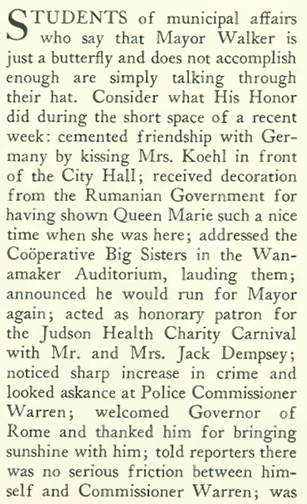
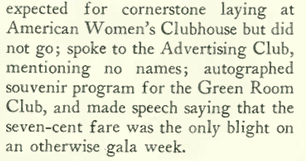
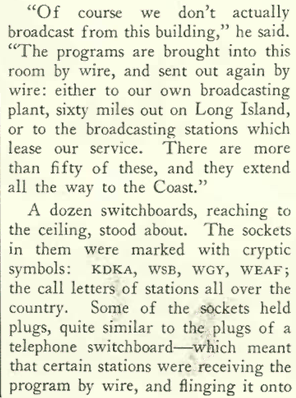
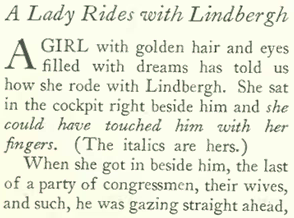
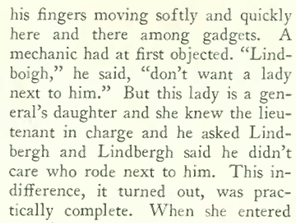
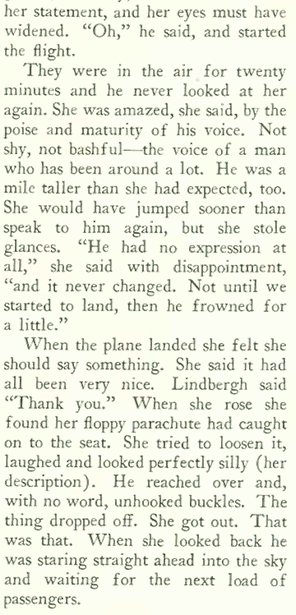
By 1907 the two had forged a close friendship that would endure the rest of their lives. So it was no surprise that these two giants of the machine age would show up together at the New York Auto Show at Madison Square Garden and take a gander at the latest technical marvels, including Ford’s new “Model A.” The New Yorker’s “Talk of the Town” was on hand as witness:

screen-shot-2017-02-15-at-1-26-25-pm

screen-shot-2017-02-15-at-1-27-28-pm

screen-shot-2017-02-15-at-1-27-51-pm

NEAT-O…Thomas Edison and Henry Ford at the 1928 New York Auto Show. (Associated Press)
screen-shot-2017-02-20-at-11-49-56-am
IT SOLD LIKE HOTCAKES…Henry Ford and son Edsel introducing the 1928 Ford Model A at the Ford Industrial Exposition in New York City, January 1928. (thehenryford.org)

*  *  *

E.B. Drives the ‘A’

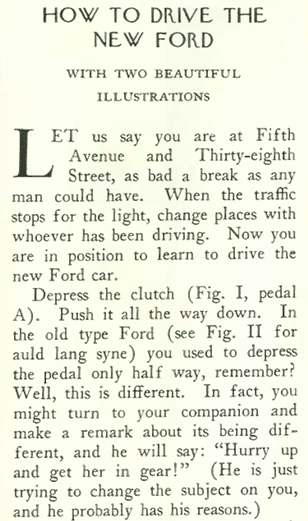
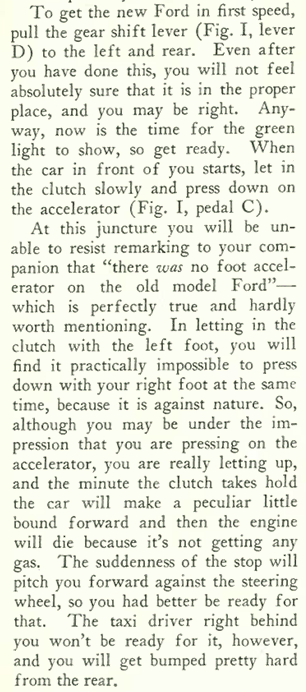
In the same issue (Jan. 21, 1928) E.B. White told readers how to drive the new Model A—in his roundabout way. Some excerpts:

screen-shot-2017-02-15-at-1-44-00-pm

screen-shot-2017-02-15-at-1-44-27-pm

No doubt White was feeling a bit wistful with the arrival of the Model A, which supplanted its predecessor, the ubiquitous Model T. White even penned a farewell to the old automobile under a pseudonym that conflated White’s name with Richard Lee Strout’s, whose original submission to The New Yorker inspired White’s book (illustrated by New Yorker cartoonist Daniel ‘Alain’ Brustlein).

wrclit64451

farewellmodelt_lg_1024x1024
FAREWELL TIN LIZZIE…E.B. and Katharine White driving his beloved Model T.

In Farewell to Model T White recalled his days after graduating from college, when in 1922 he set off across America with his typewriter and his Model T.  White wrote that “(his) own vision of the land—my own discovery of it—was shaped, more than by any other instrument, by a Model T Ford…a slow-motion roadster of miraculous design—strong, tremulous, and tireless, from sea to shining sea.”

The Eternal Debate

In his “Reporter at Large” column, Morris Markey commented on the execution of former lovers and convicted murderers Ruth Snyder and Judd Gray, noting that once again the debate over the death penalty had been stirred, but as usual there was no resolution in sight. Little could Markey know that we would still be holding the debate 89 years later, with no resolution in sight.

screen-shot-2017-02-17-at-4-48-50-pm

screen-shot-2017-02-22-at-9-17-54-am

snyder-and-gray
END OF THE LINE…Mugshots of Ruth Snyder and Henry Judd Gray taken at Sing Sing Prison following their conviction for the murder of Snyder’s husband. They were executed Jan. 12, 1928. (Lloyd Sealy Library, CUNY)

 *  *  *

Ahoy there

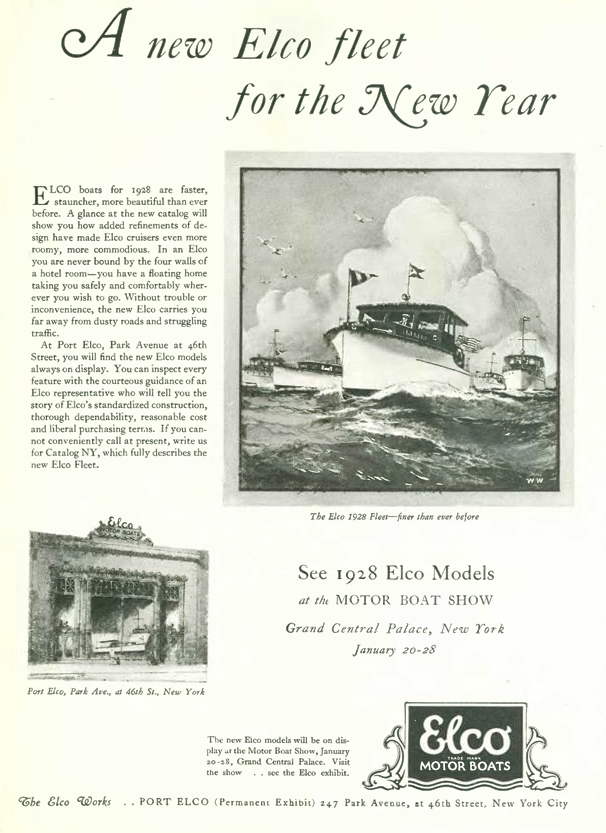
The New York Boat Show was back in town at the Grand Central Palace, enticing both the rich and the not-so-rich to answer the call of the sea. Correspondent Nicholas Trott observed:

screen-shot-2017-02-17-at-4-42-25-pm

An advertisement in the same issue touted Elco’s “floating home”…

screen-shot-2017-02-17-at-4-40-05-pm

But if you aspired to something larger than a modest cruiser, the Boat Show also featured an 85-foot yacht…
screen-shot-2017-02-17-at-4-42-31-pm

But for the rest of the grasping orders, Chris-Craft offered the Cadet, an affordable 22′ runabout sold on an installment plan. Another ad from the issue asking those of modest means to answer “the call of freedom!”

screen-shot-2017-02-17-at-4-37-35-pm

For an affordable boat, the Chris-Craft was really quite beautiful—its mahogany construction puts today’s fiberglass tubs to shame…

1024px-1928_chris_craft_cadet
PRETTY SWEET…A 1928 Chris-Craft Cadet. (Click to enlarge)

 *  *  *

Odds & Ends

The boat show was one indication that spring was already in the air. The various ads for clothing in the Jan. 21 issue had also thrown off the woolens, such as this one from Dobbs on Fifth Avenue, which featured a woman with all the lines of a skyscraper.

screen-shot-2017-02-17-at-4-36-55-pm

And to achieve those lines, another advertisement advised young women to visit Marjorie Dork…

screen-shot-2017-02-17-at-4-38-18-pm

…who seemed to do quite well for herself in the early days of fitness training…

screen-shot-2017-02-20-at-12-38-54-pm
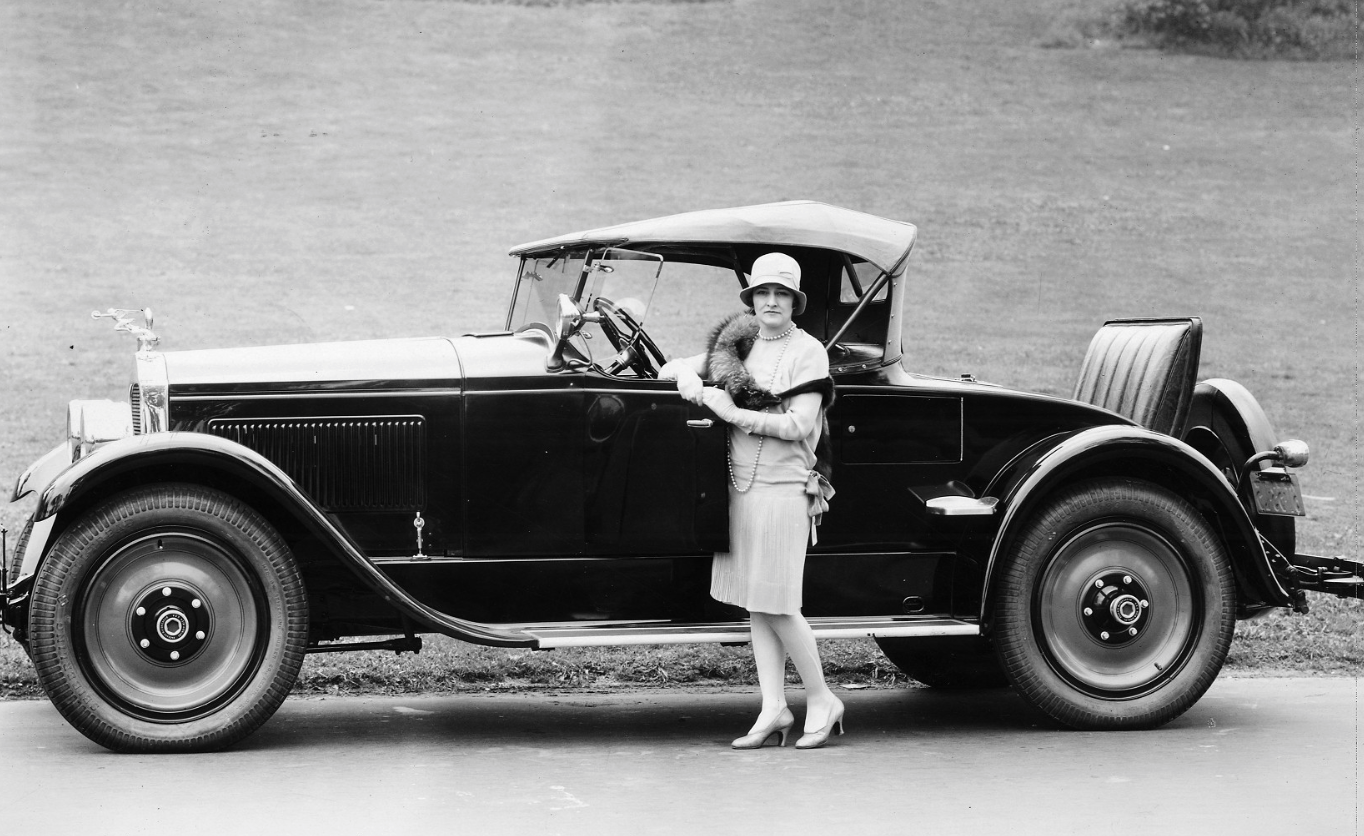
THOROUGHLY MODERN MARJORIE…New York beauty specialist Marjorie Dork, with her Packard, in New York’s Central Park, 1927. Original photo by John Adams Davis, New York. (Detroit Public Library)

And then there was a back page ad that said to hell with healthy living…

screen-shot-2017-02-17-at-4-46-49-pm

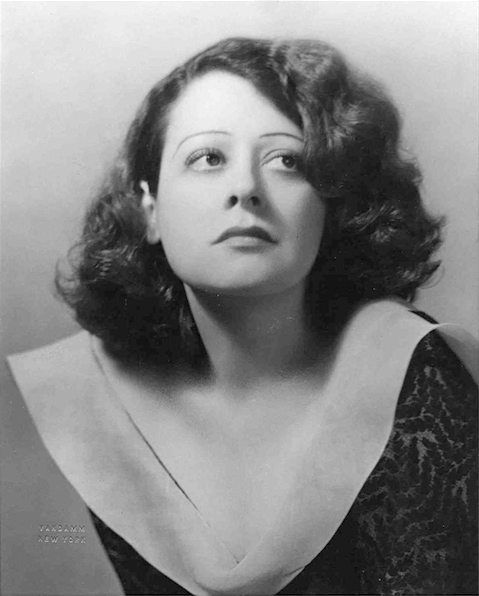
The actress featured in the advertisement, Lenore Ulric, was considered one of the American theater’s top stars. Born in 1892 as Lenore Ulrich in New Ulm, Minnesota, she got her start on stage when she was still a teen, a protégé of the famed David Belasco. Though she primarily became a stage actress, she also made the occasional film appearance, portraying fiery, hot-blooded women of the femme fatale variety.

screen-shot-2017-02-23-at-1-44-41-pm
Portrait of Lenore Ulric by New York’s Vandamm Studio. (broadway.cas.sc.edu)

 *  *  *

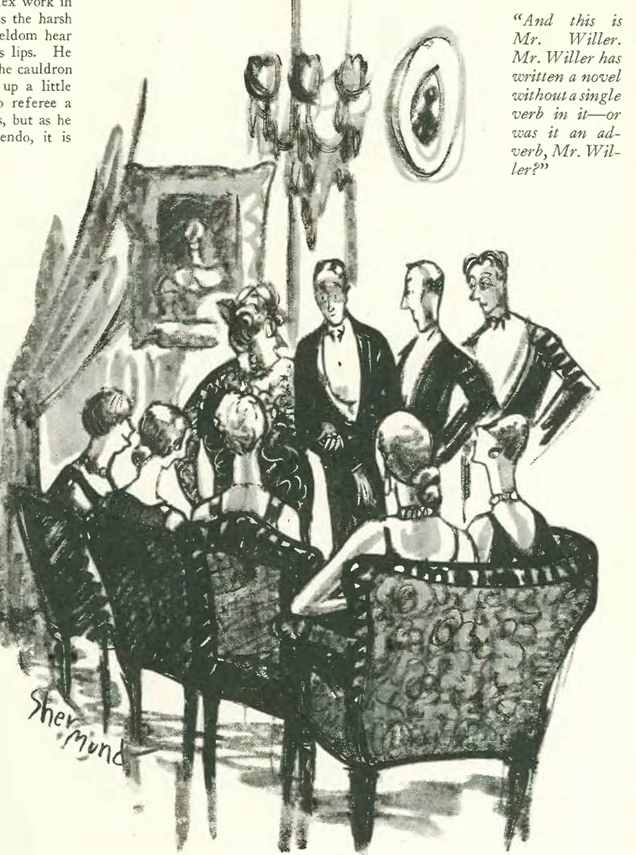
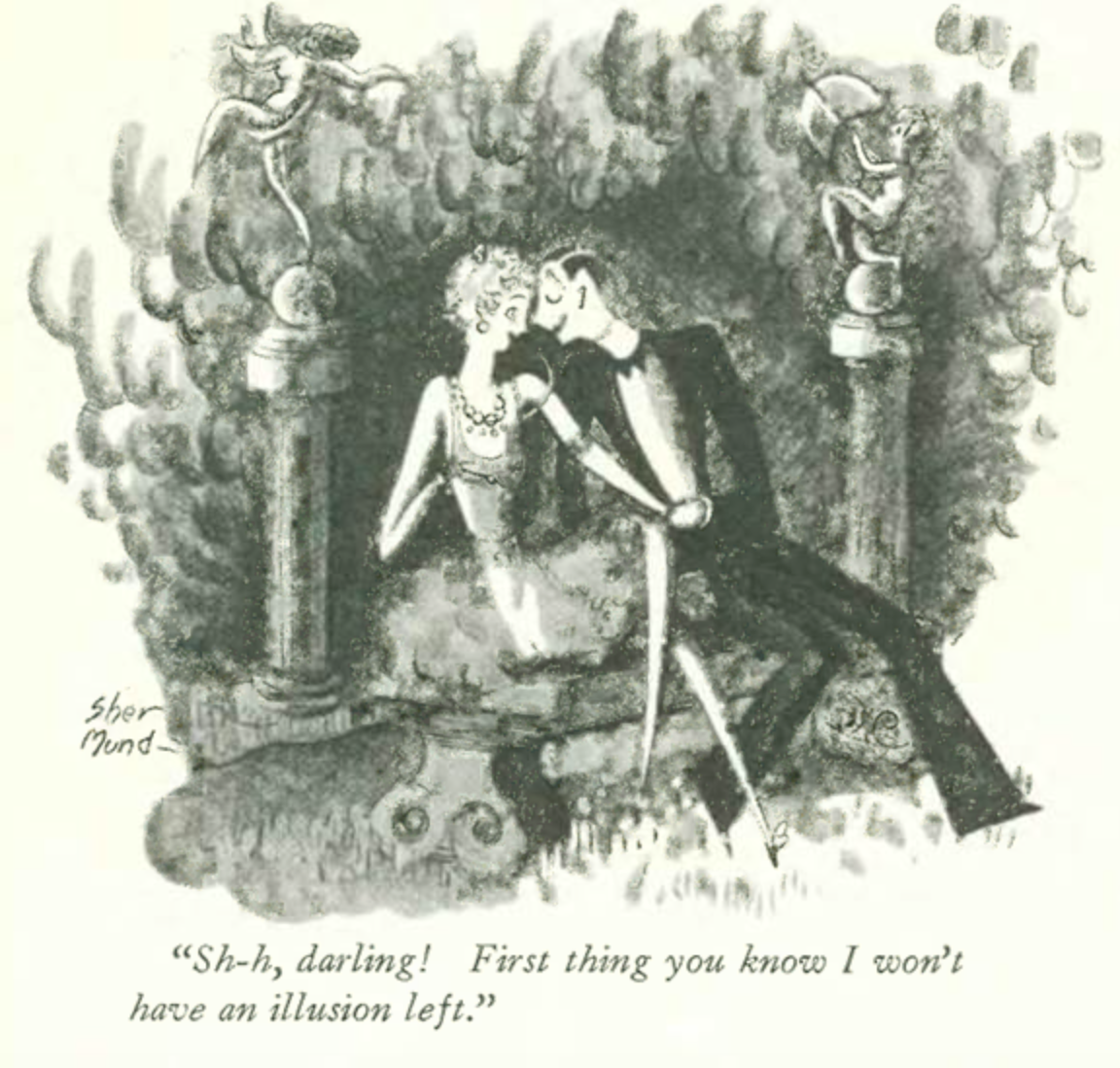
And we close with this post with a peek into the into upper class social scene, courtesy of Barbara Shermund

screen-shot-2017-02-15-at-1-46-26-pm

Next Time: Distant Rumblings…

db7671e6282218c0e4285522e188b05f

You’ve Come a Long Way, Baby

Above: Noël Coward and Gertrude Lawrence in a 1930 performance of Coward's Private Lives. Encyclopedia Britannica.

Those of us who still remember cigarette ads on television will recognize the tagline that heads this blog–“You’ve come a long way, baby,” was the jingle for Virginia Slims–which in 1968 was a new, thin cigarette from Phillip Morris marketed specifically to women.

9983e8cd5c5a373ecc556a6012f32c9a
October 29, 1927 cover by Julian de Miskey.

The campaign launched by the Leo Burnett Agency sought to make Virginia Slims an “aspirational” brand for the liberated woman of the Swinging 60s…

1968-virginia-slims-ad
These ads from 1968 announced a new cigarette for the liberated woman. (flashbak.com)

Forty years earlier, the folks at Liggett & Myers Tobacco Company also thought they could trade on the image of the Jazz Age’s liberated woman with this famous ad from 1926:

154997-chesterfield2
(History News Network)

Although the woman in the ad was not smoking, a taboo had been broken by merely suggesting she might be a smoker. The New Yorker first explored this topic in their July 24, 1926 issue, with this item in “The Talk of the Town”…

Screen Shot 2016-01-20 at 5.48.13 PM

In the Oct. 29, 1927 issue they returned to the topic in the “Talk” column, now that advertisers had gone a step further and actually depicted women with lighted cigarettes between their fingers:

screen-shot-2017-01-04-at-11-07-15-am

screen-shot-2017-01-04-at-3-17-10-pm
BRAZEN…Ads from 1927 depicting women smoking Old Gold and Marlboro cigarettes.

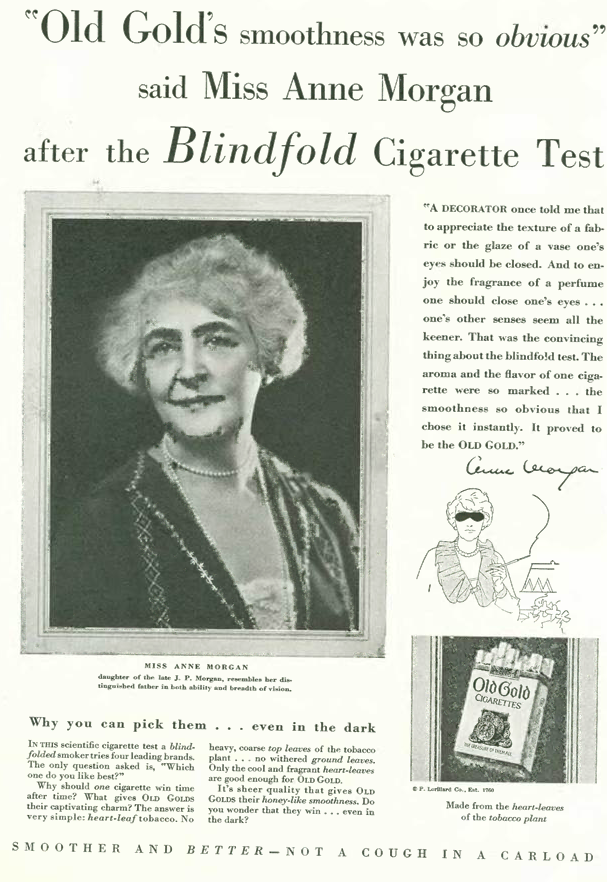
The Oct. 29, 1927, The New Yorker itself featured ads with women smokers, including this installment in a series for Old Gold by cartoonist Clare Briggs

screen-shot-2017-01-04-at-11-30-32-am

…and this ad for the tipless Smokador ashtray, which was featured in many issues of The New Yorker

screen-shot-2017-01-04-at-11-31-24-am

What Flattery Will Get You

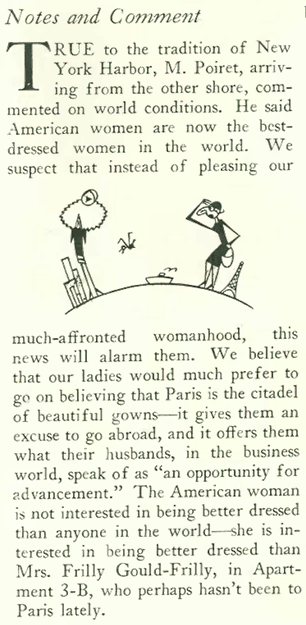
In addition to women smokers, The New Yorker was also agog about a visit to the city by the great French fashion designer Paul Poiret (1879–1944), who upon his arrival proclaimed American women to be the best-dressed in the world:

screen-shot-2017-01-04-at-11-09-18-am

screen-shot-2017-01-04-at-4-00-32-pm
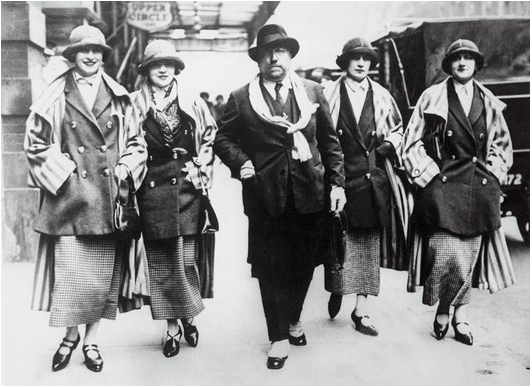
THE LIBERATOR…Paul Poiret on a stroll with models, circa 1930. Poiret led a fashion renaissance that introduced free-flowing dresses and “harem pants.” He is often credited with liberating women from the corset. (trendmano.blog.hu)

Perhaps Poiret’s flattery of American women could be attributed to the fact that his designs had lost popularity in France after World War I, and his fashion empire was on the brink of collapse. (Indeed, his fashion house would close in 1929). However today he is recognized as the first great modernist in fashion design, often compared to Pablo Picasso in terms of the contributions he made to his field.

The New Yorker took advantage of his visit to the city by featuring him in a lengthy profile in the Oct. 29 issue, written by Paris correspondent Janet Flanner under the pseudonym “Hippolyta.” Despite Poiret’s diminished presence in France, Flanner nevertheless understood his enormous contribution to modern fashion design. She concluded her profile with this observation:

screen-shot-2017-01-04-at-11-15-10-am

Something Fishy

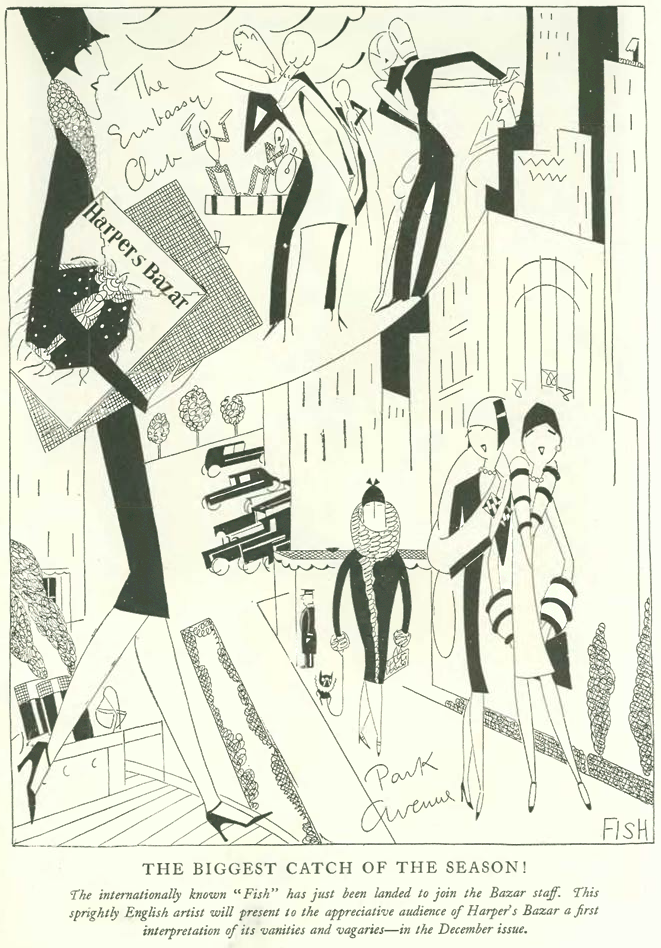
The New Yorker appealed to young, upscale urban dwellers, so it was no wonder that Harper’s Bazar advertised in the magazine, including this ad in the Oct. 29, 1927 issue that announced the debut in its pages of the English artist known as “Fish”…

screen-shot-2017-01-04-at-11-05-54-am

Anne Harriet Fish (1890-1964) was famed for her witty depictions of high society in Condé Nast’s Vanity Fair and The Tatler, where she began work in 1914. A rival “smart set” magazine, Harper’s Bazar, was eager to boast that it had finally “landed” the Fish.

6fb43ab16b45d6f41329fef80bd1baf0
A February 1916 Vanity Fair cover by A. H. Fish. (Condé Nast)

 *  *  *

Broadway Ballet

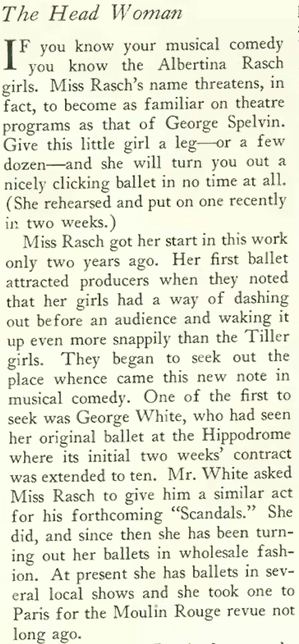
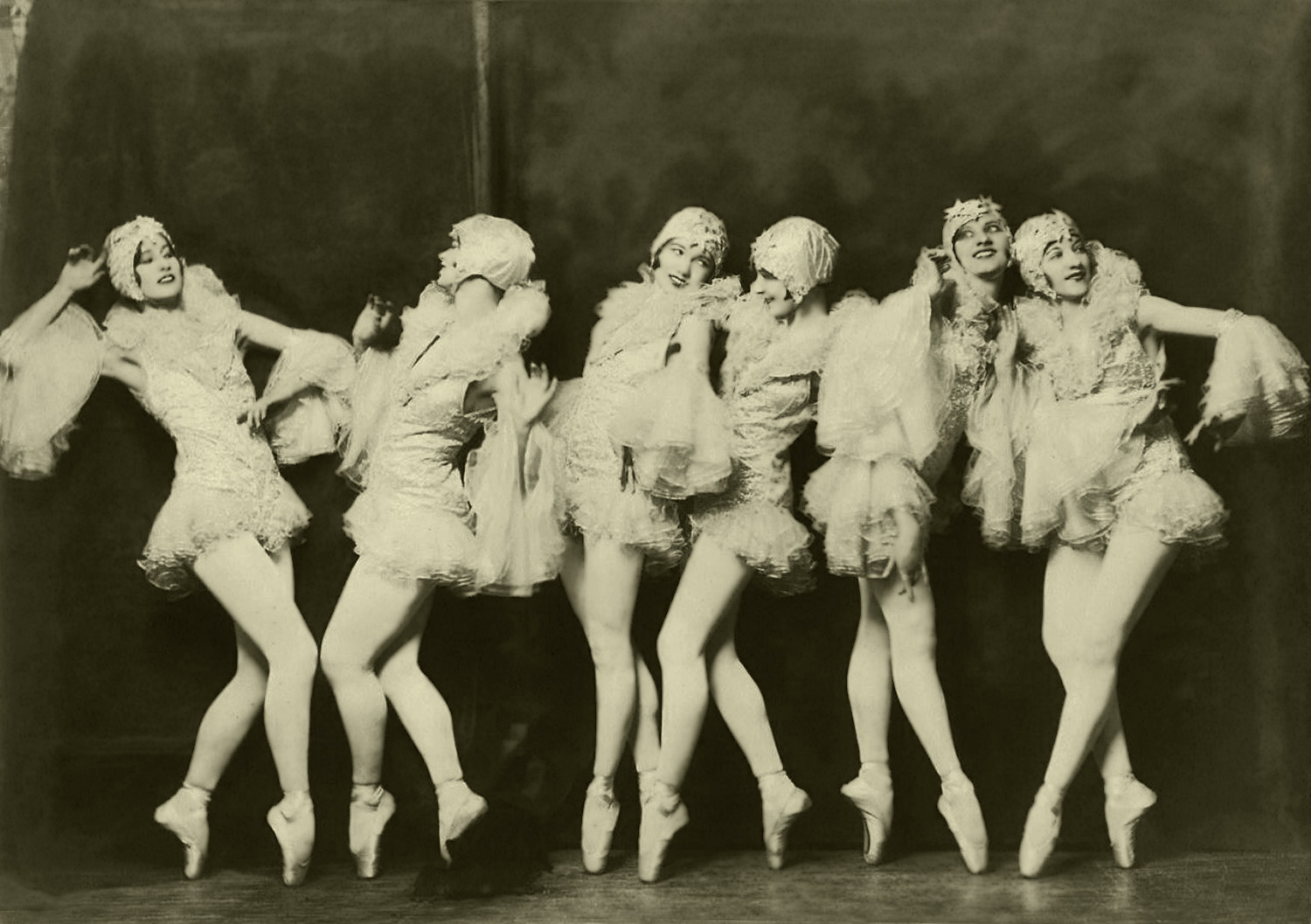
The Oct. 29 “Talk of the Town” noted that Albertina Rasch and her ballet dancers were making quite a splash on Broadway. Her success in staging dances for Flo Ziegfeld’s “Follies” and George White’s “Scandals” would lead to a career in Hollywood, where she would be instrumental in elevating the role of dance director to what we now call a choreographer. Among her many firsts, she is credited with helping to establish Cole Porter’s “Begin the Beguine” as a popular standard by incorporating it into a dance in the 1935 film Jubilee.

screen-shot-2017-01-04-at-11-11-00-am

The Albertina Rasch Dancers in costume for Rio Rita (1927). (songbook1.wordpress.com)

 *  *  *

Where Were You Last Year?

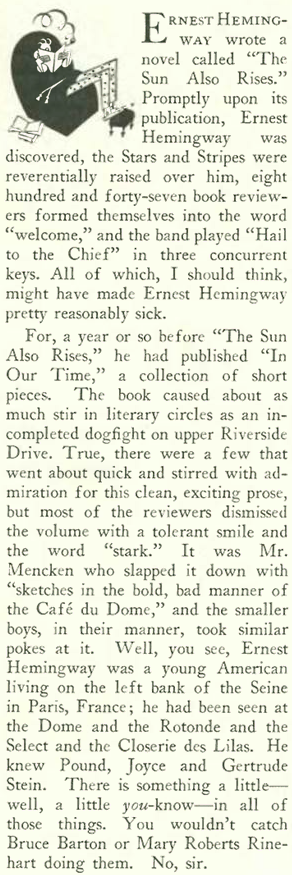
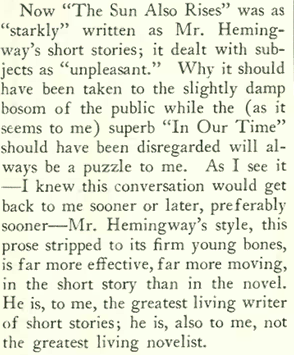
Writing under the pseudonym “Constant Reader,” Dorothy Parker penned a vigorous defense of Ernest Hemingway’s short fiction in the “Books” section of the Oct. 29 issue. Specifically she took issue with critics who continued to rave about Hemingway’s novel The Sun Also Rises, but mostly ignored a collection of short stories he had previously published under the title In Our Time.

screen-shot-2017-01-05-at-1-19-48-pm
HE’S PRETTY GOOD…Ernest Hemingway in 1927, shortly after publication of his novel The Sun Also Rises. At right, Dorothy Parker in the 1920s. (AP/Bookriot)

screen-shot-2017-01-04-at-11-38-39-am

constant-reader

And finally, Barbara Shermund explored the intersection of high culture and flapper culture in this cartoon…

screen-shot-2017-01-04-at-11-13-56-am

Next Time: Death Avenue Days…

8b6d47f5480e534755b5a03ab5ea97a4

Electric Wonders

While Europeans in the 1920s dealt with frayed economies and political strife in the wake of World War I , Americans enjoyed a period of relative peace and prosperity along with an array of new electrical gadgets people didn’t even know they needed.

6ed825c70c3fd789a666a63ecc376b5d
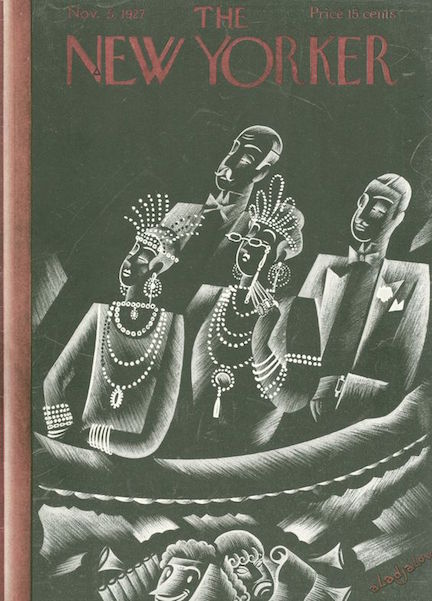
October 22, 1927 cover by Julian de Miskey.

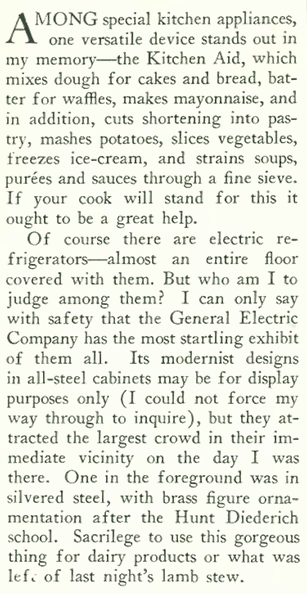
In the column “About The House,” The New Yorker wryly warned “timid souls” about the new push-button world they would encounter at the Electrical and Industrial Exposition at Grand Central Palace…

dffff4f6ca7374d0467ec29453344292
Poster advertising the Electrical and Industrial Exposition. (public domain image)

screen-shot-2017-01-03-at-9-51-20-am

screen-shot-2016-12-16-at-9-06-56-am
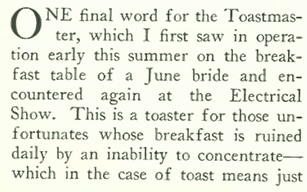
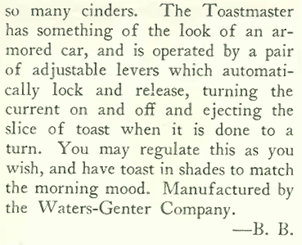
WILL WONDERS NEVER CEASE?…The New Yorker marveled over the latest electrical appliances on display at the Electrical and Industrial Exposition at Grand Central Palace including, clockwise from top left, the Toastmaster automatic toaster (which the magazine noted resembled an armored car), an electric washing machine, and the mighty Kitchen Aid mixer, which is still going strong in American kitchens today.

screen-shot-2017-01-03-at-9-52-15-am

ge
THE ICEMAN COMETH NOT…A saleswoman shows off the features of a GE Monitor Top Refrigerator on display at a product exhibition in the late 1920s. (Public Domain Image)

screen-shot-2017-01-03-at-9-53-04-am

screen-shot-2017-01-03-at-9-53-16-am

Nan’s No No

The New Yorker’s “Talk of the Town” featured one of the Roaring Twenties big scandals–Nan Britton’s affair with U.S. President Warren G. Harding (who died at age 57 in 1923) and the debate over the paternity of their love child, Elizabeth Ann. Britton had just published a “tell all” book, The President’s Daughter, which was bringing out the worst in a lot of people…

screen-shot-2017-01-03-at-10-26-29-am
LIFE WITHOUT FATHER…Nan Britton with her 8-year-old daughter, Elizabeth Ann, in 1927. (New York Times/James Blaesing)

screen-shot-2017-01-03-at-10-47-43-am

screen-shot-2017-01-03-at-10-47-54-am

Although at the time Britton was denounced by many (including the Harding family) as a liar who was only out to get money from the President’s estate, genetic tests conducted in 2015 have confirmed that Elizabeth Ann was indeed Harding’s daughter. Britton died in 1991 at the age of 94. Elizabeth Ann would follow in 2005, at age 86.

Porgy Hits the Stage

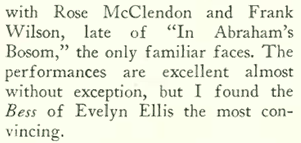
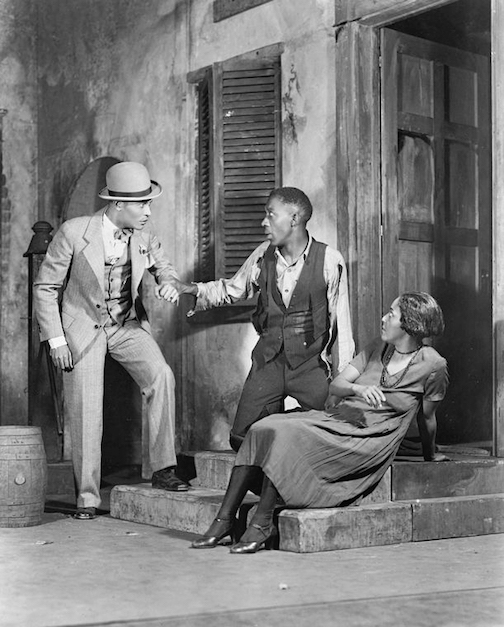
Porgy: A Play in Four Acts opened at the Guild Theatre, and New Yorker reviewer Charles Brackett was there to witness perhaps the first attempt at an authentic presentation of black culture on a Broadway stage. Based on a play by Dorothy and DuBose Hayward, the production was unusual for its time in featuring a cast of African American actors. The play would provide the basis of the libretto for the 1935 folk opera Porgy and Bess, which would feature George Gershwin’s famous score including the popular song “Summertime.” An excerpt from Brackett’s review, which included some unfortunate stereotypes…

screen-shot-2017-01-03-at-10-52-59-am

screen-shot-2017-01-03-at-10-53-09-am

porgy-verwayne-wilson-ellis
SOMETHING NEW ON BROADWAY…Percy Verwayne (Sporting Life), Frank Wilson (Porgy) and Evelyn Ellis (Bess) in Porgy: A Play in Four Acts. October 1929. (Wikipedia)

 *  *  *

Same to You, Fella

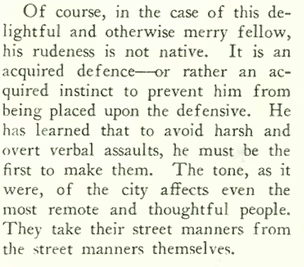
In his “Reporter at Large” column, Morris Markey sounded off on the rude behavior he had observed of late among his fellow New Yorkers. In relating a story about the crude behavior of a building’s security guard, Markey pondered the old nature vs. nurture question…

screen-shot-2017-01-03-at-10-54-54-am

Aw, Shucks…

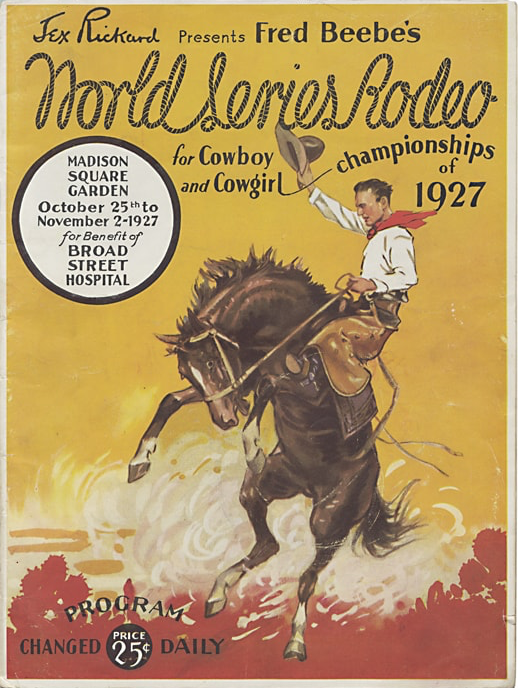
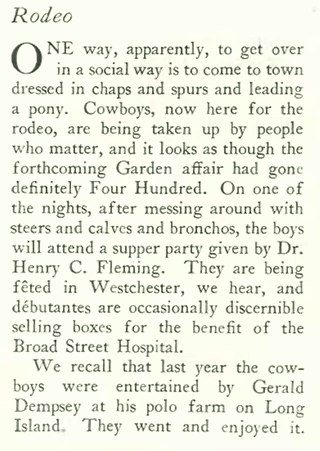
Not all New Yorkers were acting rudely. Some were even treating visiting rodeo cowboys with the utmost courtesy, as noted in the “The Talk of the Town,” although others found the sport to be brutal and unnecessary…

screen-shot-2017-01-03-at-1-30-42-pm
GIDDYAP…Program from the World Series Rodeo at Madison Square Garden, 1927. (Rare Americana)

screen-shot-2017-01-03-at-10-56-25-am

screen-shot-2017-01-03-at-10-56-33-am

1927 World Series Rodeo was produced by famed sports promoter, Tex Rickard, in Madison Square Garden as a benefit for the Broad Street Hospital.

The other World Series, the one concerning baseball, was still absent from the pages of The New Yorker, even though the 1927 Yankees would win a record 110 games and sweep the Pittsburgh Pirates in four games to win the World Series title…and Babe Ruth would hit a record 60 home runs.

As I’ve noted before, there was a lot of sports coverage in the early issues of The New Yorker, everything from polo to college football. As for the omission of the Yankees and baseball in general from the pages of the magazine, perhaps the editors felt the game was still tainted by the Black Sox scandal of 1919 and was not worthy of coverage.

How’s the Weather Up There?

The city’s “heat affect” was another “Talk” topic, with editors noting that the city’s buildings and streets not only affected temperatures in the city, but also its air quality…

screen-shot-2017-01-03-at-10-57-05-am

maiakovskii-in-new-york
IN HIS ELEMENT…Futurist poet Vladimir Mayakovsky amid the dusty haze of New York City in 1925. (thecharnelhouse.org)

 *  *  *

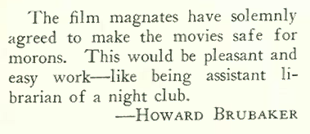
In “Of All Things,” Howard Brubaker chimed in on The New Yorker’s continuing criticism of Hollywood films, especially in the age of Will Hays and his continued attempts at film censorship…

screen-shot-2017-01-03-at-10-53-27-am

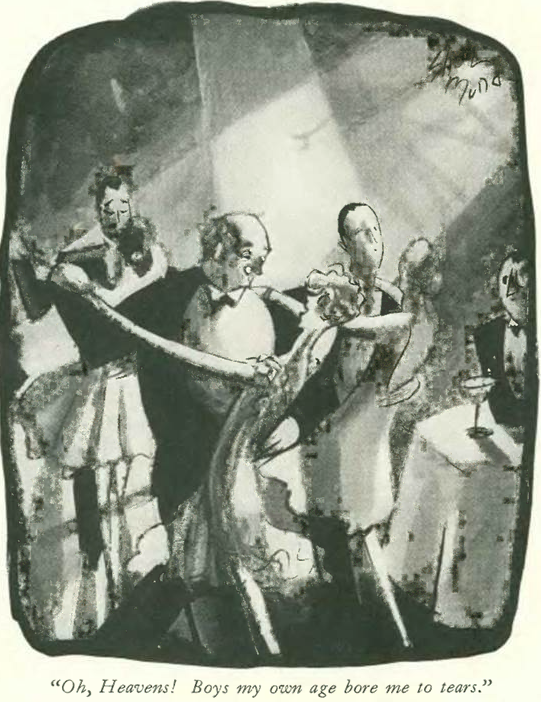
Finally, a couple of cartoons from the Oct. 22 issue, including this one by Barbara Shermund that explores one of the magazine’s continuing themes regarding life among the portly, middle-aged sugar daddies and their ditzy young mistresses…

screen-shot-2017-01-03-at-10-58-25-am

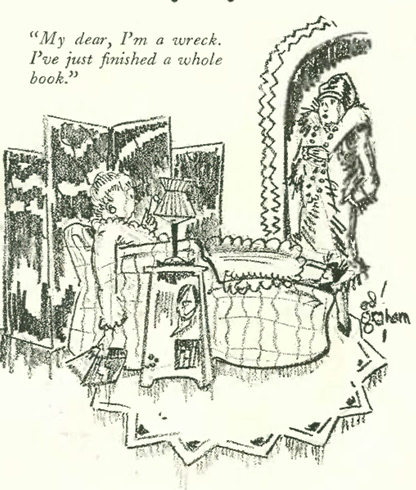
…and this jab at the dim-witted, idle rich by illustrator Ed Graham

screen-shot-2017-01-03-at-10-58-46-am

Next Time: You’ve Come a Long Way, Baby…

9983e8cd5c5a373ecc556a6012f32c9a


The Movies Take Wing

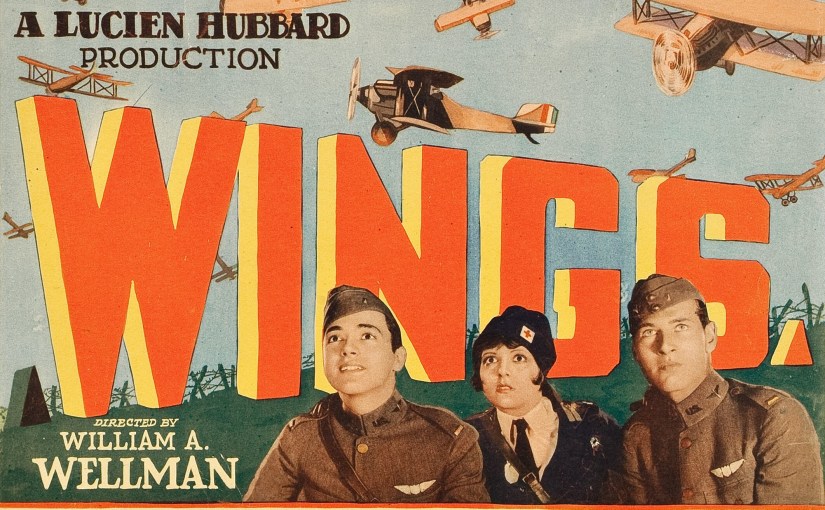
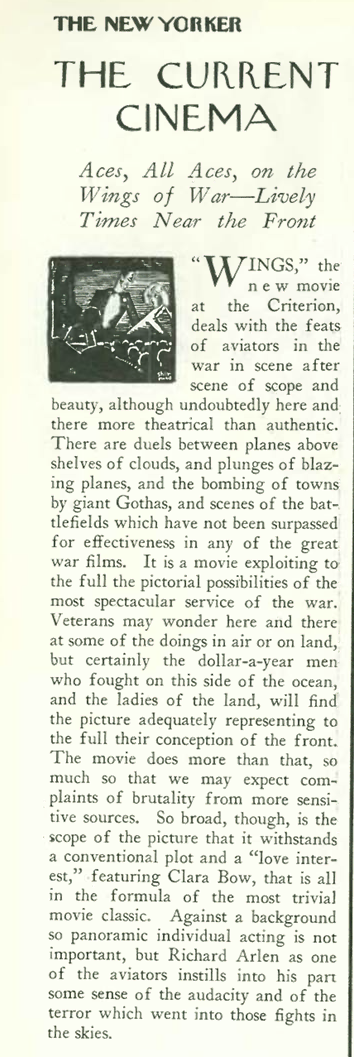
The First Academy Award for Best Picture went to Wings, a romantic action-war picture directed by William Wellman and featuring Paramount’s biggest star at the time, the “It Girl” Clara Bow and a young Gary Cooper in a role that would launch his Hollywood career.

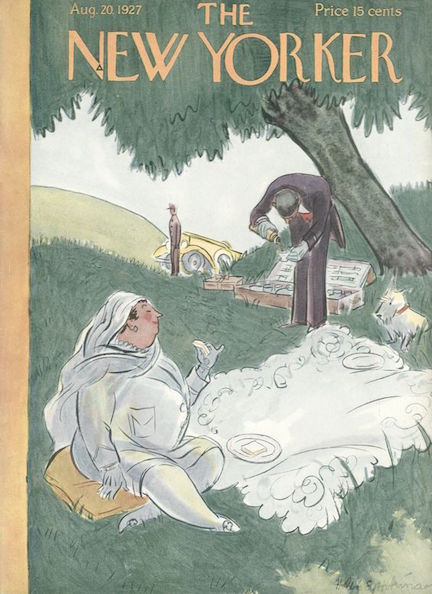
31163f0a903d36d43f89b8495fe4e9a4
August 20, 1927 cover by Helen Hokinson.

The film was shot on location at Kelly Field in San Antonio, Texas, on a budget of $2 million (about $27 million today). About 300 pilots were involved in filming  realistic (and dangerous) air-combat sequences using both mounted and hand-held cameras.

_57942979_wings_pose_hi
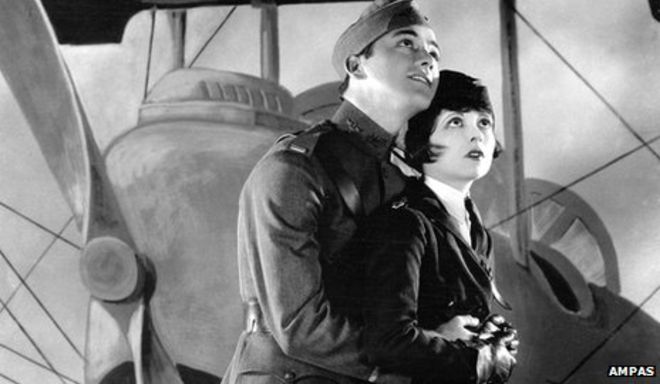
LOFTY AMBITIONS…Charles “Buddy” Rogers and Clara Bow in Wings, 1927. (BBC)

wings

william-wellman
NO CGI HERE…Director William Wellman, during production of Wings, 1927. (Paramount Pictures via New York Times)
photo33chic_0632
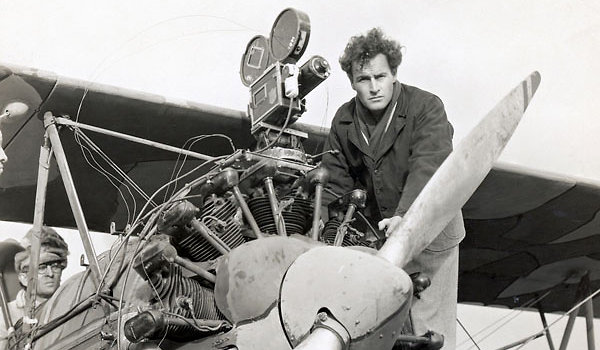
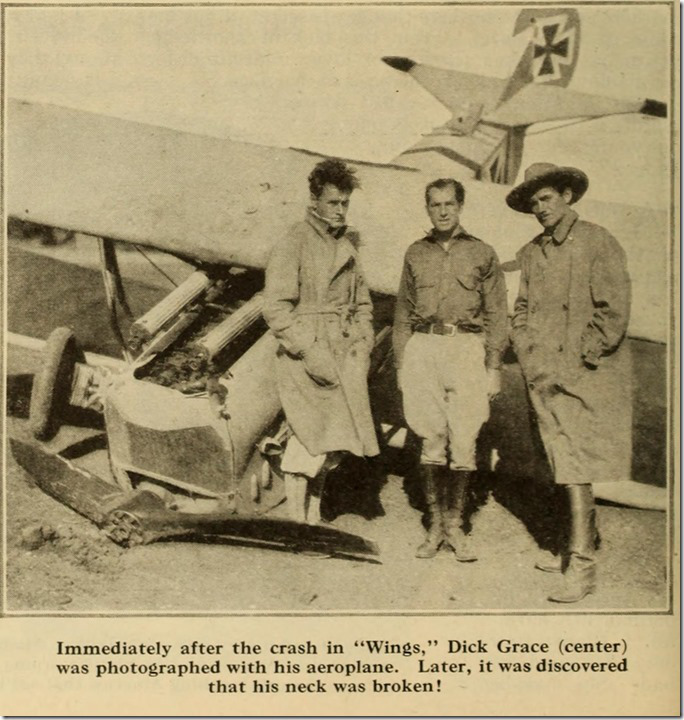
INSURANCE RISK…Stunt pilot Dick Grace specialized in crashing planes for films, and was one of the few stunt pilots who died of old age. (ladailymirror)

 *  *  *

We leave the skies for the trenches in another World War I film–Barbed Wire–that was entertaining New Yorkers in 1927…

barbed-wire-1927-image-10
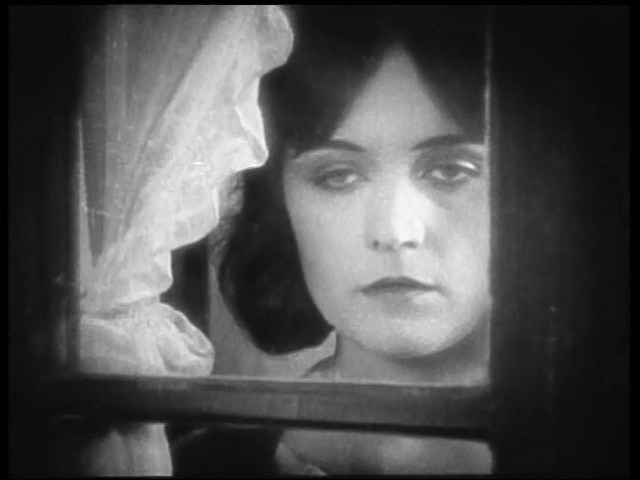
LOOKS MORE INTERESTING OUT THERE…Pola Negri watches the Germans in Barbed Wire, 1927. (Wikipedia)

screen-shot-2016-11-15-at-12-53-17-pm

screen-shot-2016-11-15-at-12-53-28-pm

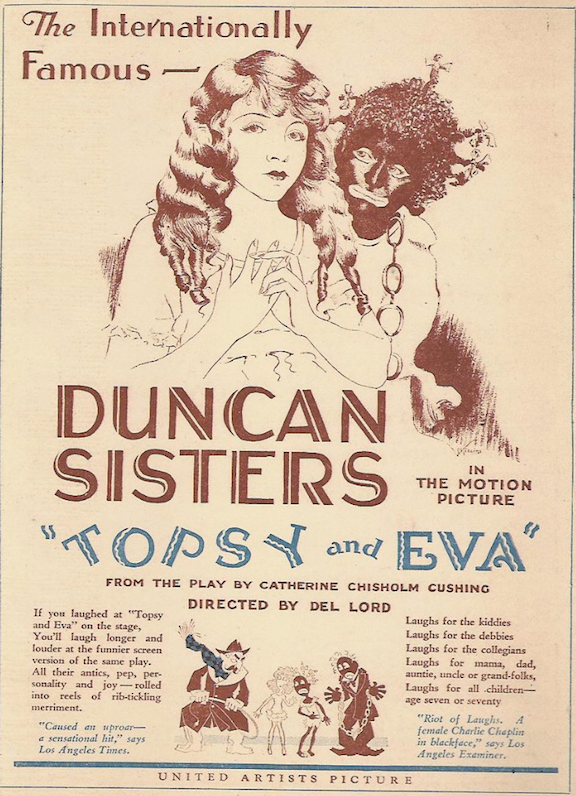
The Duncan Sisters were back, this time on the silver screen in an adaptation of their Broadway hit play, Topsy and Eva. One of the sisters performed in blackface, which was acceptable to white audiences of the time (including New Yorker critics). You can read more about this duo in my recent blog entry, Fifteen Minutes is Quite Enough.

screen-shot-2016-11-21-at-4-24-40-pm
Advertisement for the film, Topsy and Eva, 1927. (nilsasther.blogspot.com)

screen-shot-2016-11-15-at-12-53-42-pm

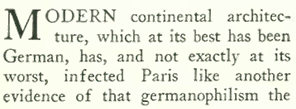
Meanwhile, Paris correspondent Janet Flanner was noting some modern influences in the city thanks to the influence of the German Bauhaus…

screen-shot-2016-11-15-at-12-55-16-pm

genet-mod-arch

002_mallet_stevens_rue_mallet_stevens_paris_theredlist
Rue Mallet Stevens was designed by Paris-based architect, designer and production designer Robert Mallet-Stevens, who founded the Union of Modern Artists (UAM) in 1929. (theredlist.com).

*  *  *

From the “they couldn’t see it coming” department, this item in “The Talk of the Town” caught my eye. We have since learned that carbon emissions are indeed taking a toll on human life…

screen-shot-2016-11-15-at-12-39-27-pm

screen-shot-2016-11-15-at-12-39-36-pm

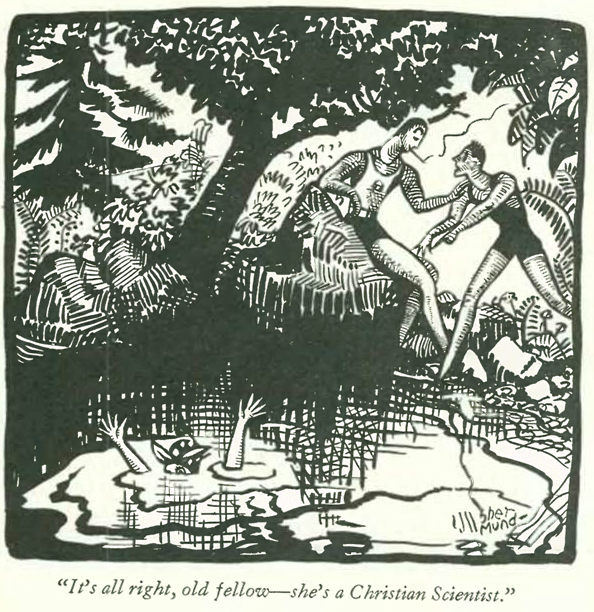
…and a couple of cartoons from this issue, this one courtesy of Barbara Shermund

screen-shot-2016-11-15-at-12-40-32-pm

…and this from an unidentified cartoonist (Dussey?) that gives us a glimpse of the world to come thanks to merger of technology and tedious, proud parents…

screen-shot-2016-11-15-at-12-46-17-pm

*  *  *

And to end on a “Wings” theme, the following week’s issue…

029648b8835cd8a9600d9dc4caf29b32
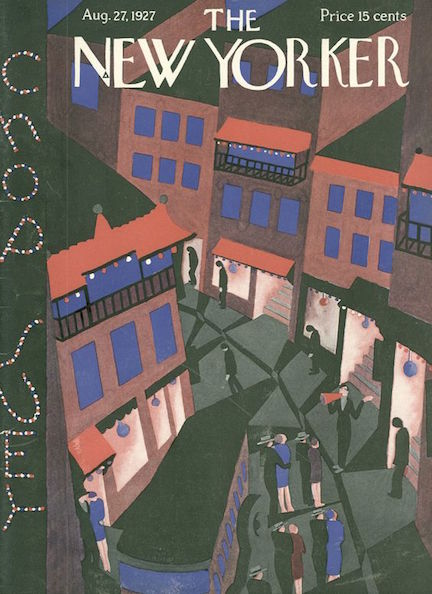
August 27, 1927 cover by Theodore G. Haupt.

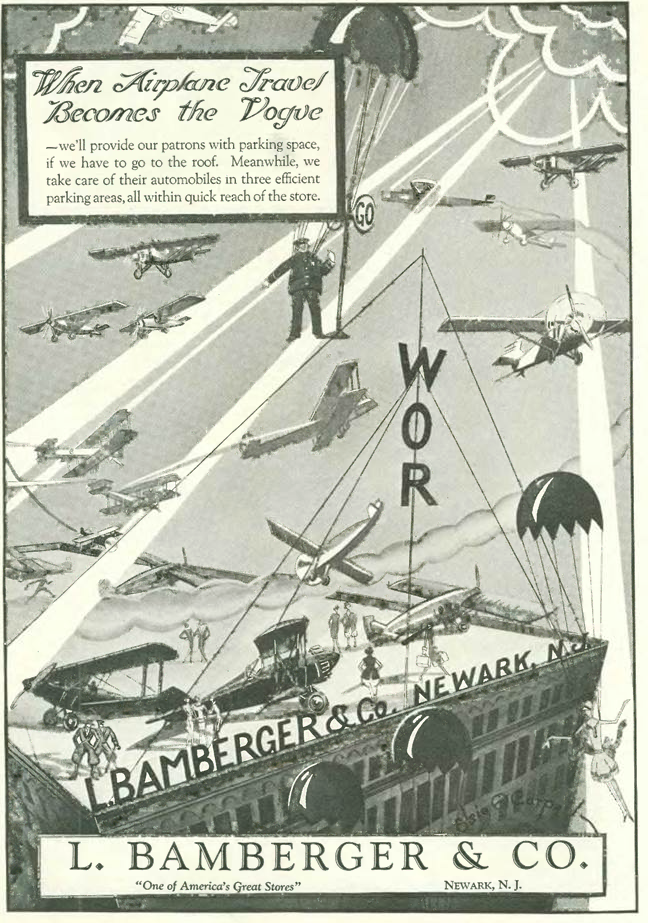
…offered this advertisment from L. Bamberger & Co. that gave us a tongue-in-cheek glance at the future of aviation…

screen-shot-2016-11-15-at-12-58-09-pm

Next Time: The Wages of Beauty…

Babe Comes Home

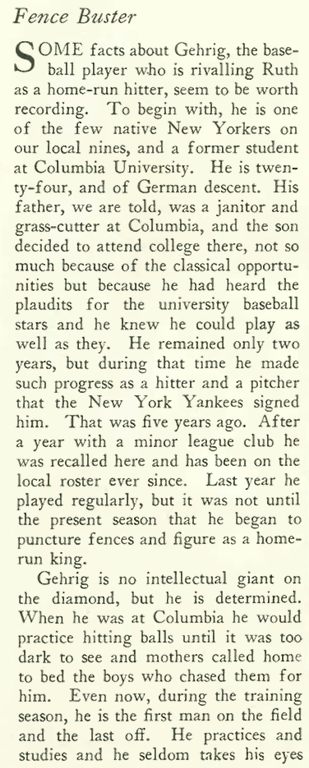
After months of reporting on polo, golf, tennis and yacht races, The New Yorker finally mentioned baseball–sort of–reviewing a movie featuring Babe Ruth and penning a brief piece about Lou Gehrig in “The Talk of the Town.”

447032a734d61215ca61a95a205dd7da
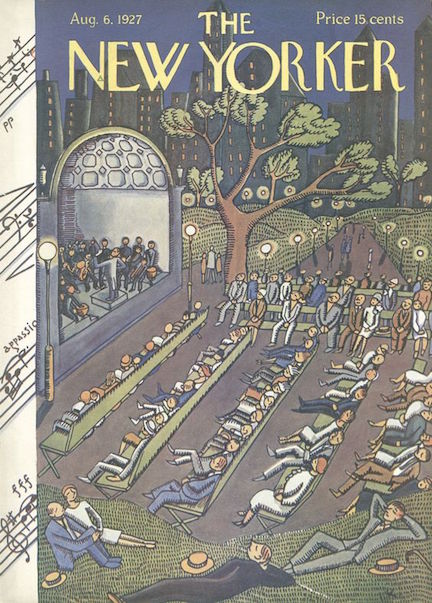
August 6, 1927 cover by Ilonka Karasz.

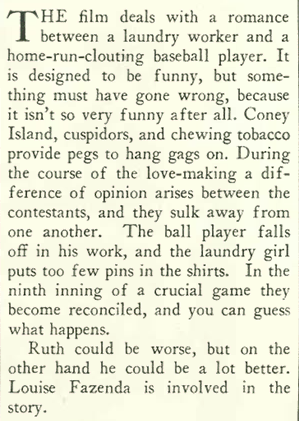
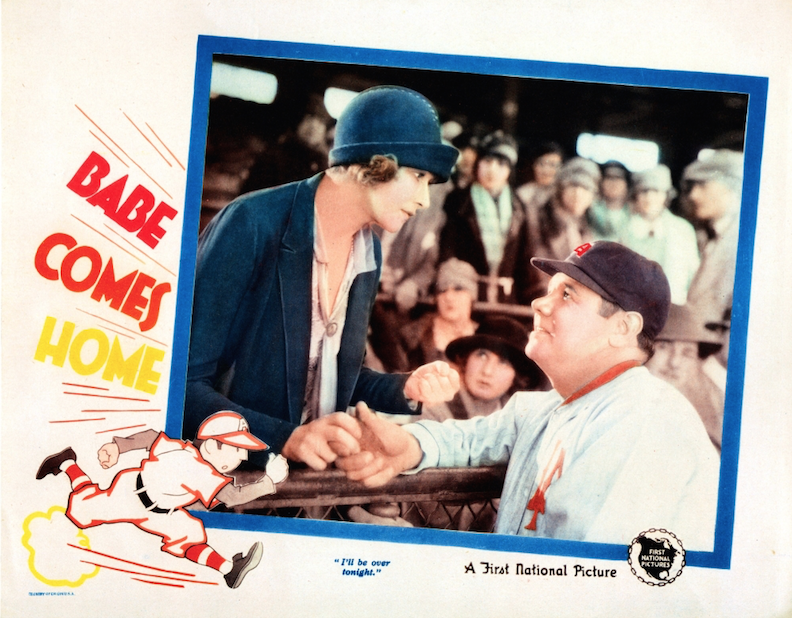
But the magazine still made no mention of the incredible season that was shaping up for the legendary 1927 New York Yankees, or the feats of its feared  “Murderer’s Row” lineup. Although widely considered to be the best baseball team in the history of major league baseball, The New Yorker up to this point had given more ink to the game of ping pong. But we’ll take what we can get, namely Babe Ruth’s acting performance in Babe Comes Home…

screen-shot-2016-11-07-at-12-50-00-pm

screen-shot-2016-11-07-at-12-50-10-pm

screen-shot-2016-11-11-at-12-51-20-pm
BETTER STICK TO BASEBALL…Lobby card for the 1927 film, Babe Comes Home, featuring Anna Q. Nilsson and The Bambino himself. (posterscancollections.com)

…and over in “The Talk of the Town” section the editors looked at another Yankee slugger, Lou Gehrig, who besides his hitting ability was Ruth’s opposite…

screen-shot-2016-11-07-at-12-32-32-pm

screen-shot-2016-11-07-at-12-32-51-pm

image5-9
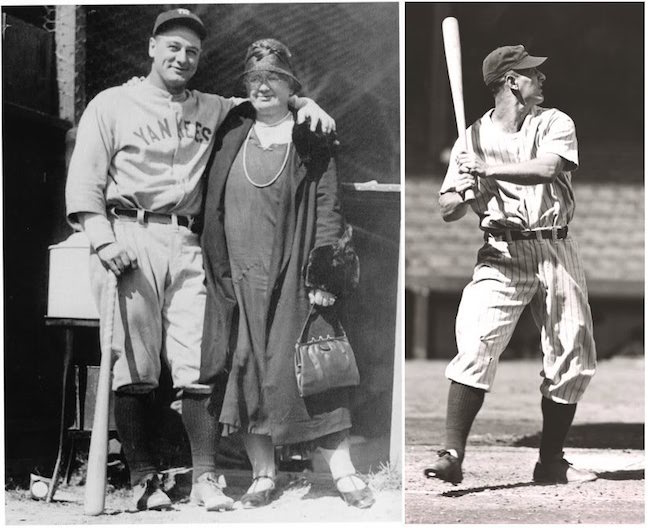
MOM & APPLE PIE…Lou Gehrig and his mother, Christina, in 1927. (baseballfever.com)

 *  *  *

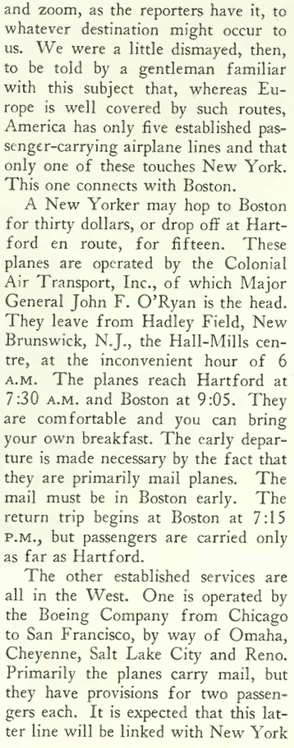
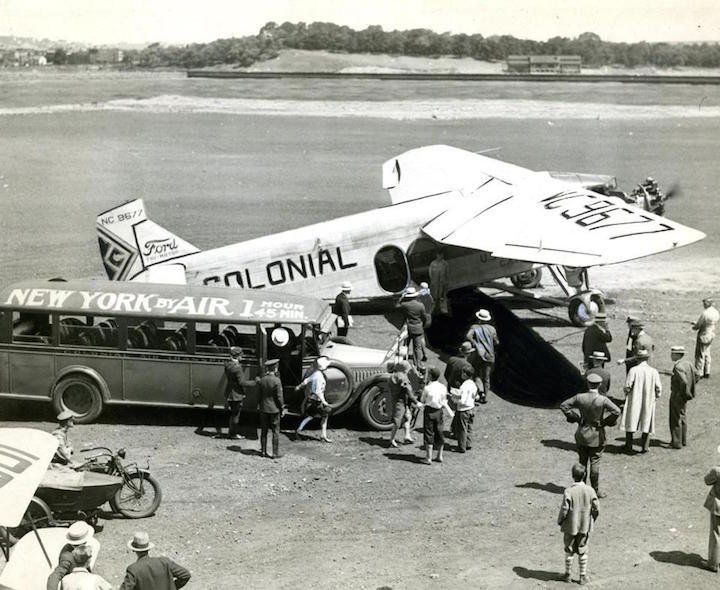
With the hullabaloo over Charles Lindbergh’s transatlantic flight, more Americans were becoming interested in flying as an actual travel option, although in August 1927 New York City had only one established passenger line:

screen-shot-2016-11-07-at-12-37-24-pm

screen-shot-2016-11-07-at-12-37-30-pm

screen-shot-2016-11-07-at-12-37-45-pm

eastbostonairport018-2562
HUMBLE BEGINNINGS…On April 15, 1927, Colonial Air Transport (a predecessor of American Airlines) began passenger service between Boston and New York City. (Boston Globe)
pic04
SORRY, NO WI-FI…National Air Transport, a predecessor of United Airlines and a prime mail carrier, brought the Travelair 5000 to their minimal fleet in 1927 to add passenger revenue to its Midwestern and Western hops that linked Chicago, Omaha, Cheyenne, Salt Lake City, Reno and San Francisco. (traveler.com)

 *  *  *

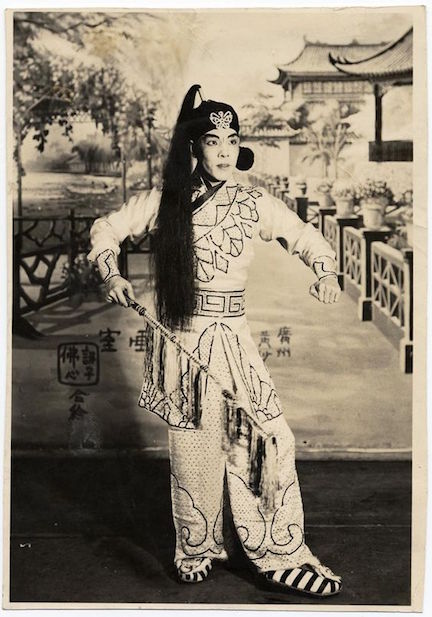
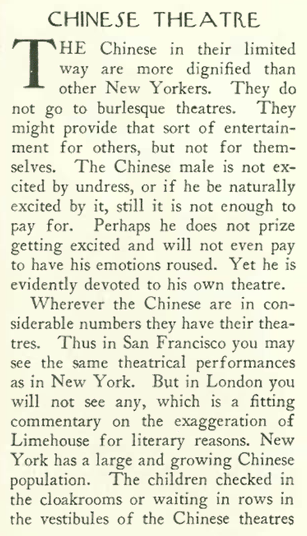
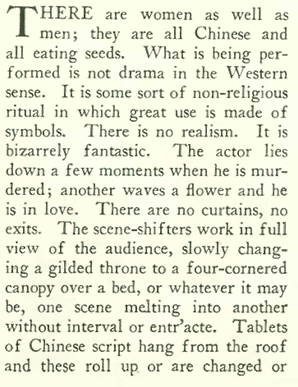
The August  6 issue also featured this strange little review in “Talk” about the popularity (or fad) of attending Chinese theater. Note how the writer described it as an exotic curiosity, as though the Chinese actors were as unknowable as Martians. I suppose it didn’t occur to the writer that you could actually speak to these performers, and have them explain the meanings of the various rituals.

7d5022414f367319b77659cba19591ac
OFF-BROADWAY…Actor Ma Shi-tsang posing with a riding crop in a 1920s publicity photo. Chinese theater actors performed in U.S. cities with large Chinese populations, including San Francisco and New York. (cdlib.org)

chinese-stephen-graham

screen-shot-2016-11-07-at-12-43-42-pm

screen-shot-2016-11-07-at-12-44-19-pm

screen-shot-2016-11-07-at-12-44-28-pm

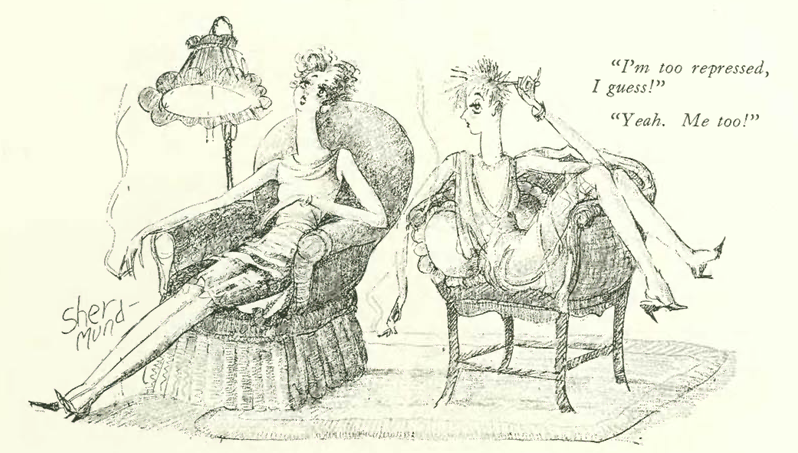
And to close, a couple of cartoons from the issue by Barbara Shermund that illustrated two very different aspects of New York society:

screen-shot-2016-11-02-at-1-15-19-pm

screen-shot-2016-11-02-at-1-14-57-pm

Next Time: An Office Romance…

30e6d833482958226738b30ce4244558


Île-de-France

On June 22, 1927, the legendary French ocean-liner, the Île-de-France, traveled from Le Havre to New York on its maiden voyage, soon to be greeted by the American media and the thousands who would crowd the docks at New York Harbor to see the great ship.

80c5240bf5ffaaff418de94b7e176525
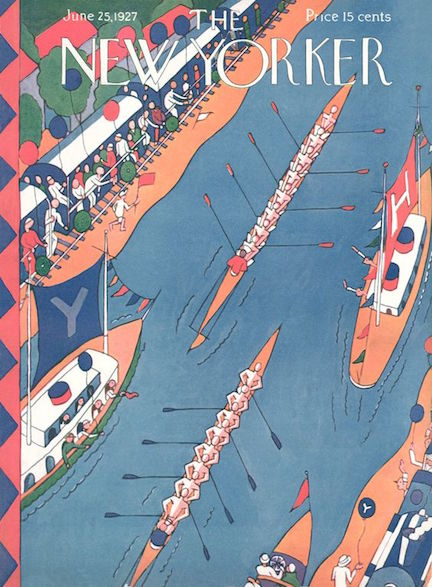
June 25, 1927 cover by Ilonka Karasz.

Among those anticipating the visit was The New Yorker, which offered this account in “The Talk of the Town” for the June 25, 1927 issue:

screen-shot-2016-10-14-at-9-46-05-am

screen-shot-2016-10-14-at-9-46-18-am

screen-shot-2016-10-14-at-9-46-27-am

ss_ile_de_france_c1935
PRIDE OF FRANCE…Postcard image of the Île-de-France from 1935. During a post-war refurbishment, the three funnels were replaced with a pair of stockier, more stylish funnels. (Wikipedia)

The Île-de-France was unique in that it was the first ocean-liner to have an interior design that didn’t imitate “shore-style” interiors that resembled rooms in manor houses or grand hotels. The trend-setting ship sported a modern, art deco look that celebrated the present and the future.

mainfoyer
IN WITH THE NEW…The Main Foyer & Grand Staircase of the Île-de-France,(newyorksocialdiary.com)
c1fe5bedcb3cb40a005ca4aa6672195c
LEAVE YOUR FLIP-FLOPS AT HOME…The first-class dining room in the Île-de-France. (newyorksocialdiary.com)

Note that these photos do not contain images of water slides or all-you-can eat buffets. An ocean voyage, if you could afford it, was an elegant affair. The Île-de-France was especially popular among wealthy Americans who liked its stylish, youthful vibe.

The Île-de-France served as a troop ship during World War II, and in 1956 played a major role in rescuing passengers from the sinking Andrea Doria off the coast of Nantucket.

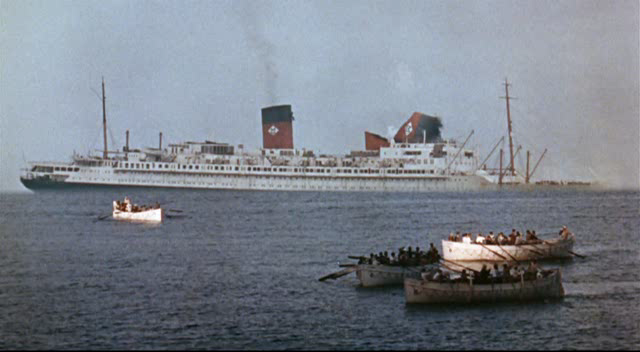
Unfortunately, anything that is youthful soon grows old, and as we all know, style is an ephemeral thing. With the advent of transatlantic jet transport, ships like the Île-de-France fell out of favor, and by 1960 the grand ocean liner was reduced to serving as a floating prop for a disaster movie titled The Last Voyage. The filmmakers partially sunk the poor ship, set fires and detonated explosions in the interior, and in a final act of desecration dropped one for the ship’s smoke stacks onto its deck house.

oceanlinersmagazine
(IMDB)
the-last-votage
NOT A BUFFET IN SIGHT…Still from the 1960 movie, The Last Voyage, shot on board the soon-to-be-scrapped Île-de-France. (Screen shot from movie trailer)
screen-shot-2016-10-20-at-2-20-28-pm
FIERY END…Fires were set in the interior of the Île-de-France during the filming of The Last Voyage. (Screen shot from movie trailer)
the-last-voyage-1960-ship-sinking
BROUGHT TO ITS KNEES…The Île-de-France (named the SS Clarion in the movie) is partially sunk with its forward funnel collapsed in a still from the film, The Last Voyage.

 *  *  *

The Ruth Snyder–Judd Gray murder trial and sentencing captivated Americans in 1927, but another trial and sentencing in the 1920s would bring worldwide attention and spark mass protests.

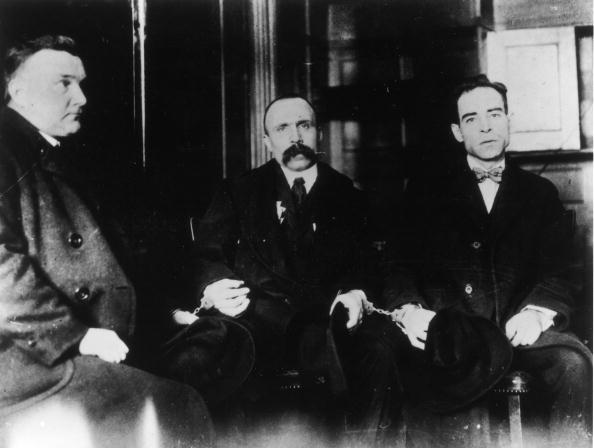
Nicola Sacco and Bartolomeo Vanzetti were Italian-born Americans who were convicted of murdering a paymaster and guard during a robbery of a Boston-area shoe company in 1920. Although convicted of murder the following year, many critics of trial believed Sacco and Vanzetti, who held anarchist views, were innocent of the charges, and the case became one of largest causes célèbres in modern history with protests held on their behalf in major cities across the U.S. and around the world.

Ferdinando Nicola Sacco and Bartolomeo Vanzetti in handcuffs, circa 1920s. (Photo by Fotosearch/Getty Images).
Cause Célèbre…Nicola Sacco and Bartolomeo Vanzetti handcuffed together at the Dedham, Massachusetts Superior Court, 1923. (Boston Public Library).

Sentenced to death in April 1927, they would be executed the following August. The New Yorker, predisposed to look down on Boston as something of a backwater, had this to say about the trial in an article by Gerald Day for the “Reporter at Large” column:

screen-shot-2016-10-22-at-10-18-49-am

The case also rekindled memories of other notorious trials:

screen-shot-2016-10-22-at-10-19-05-am

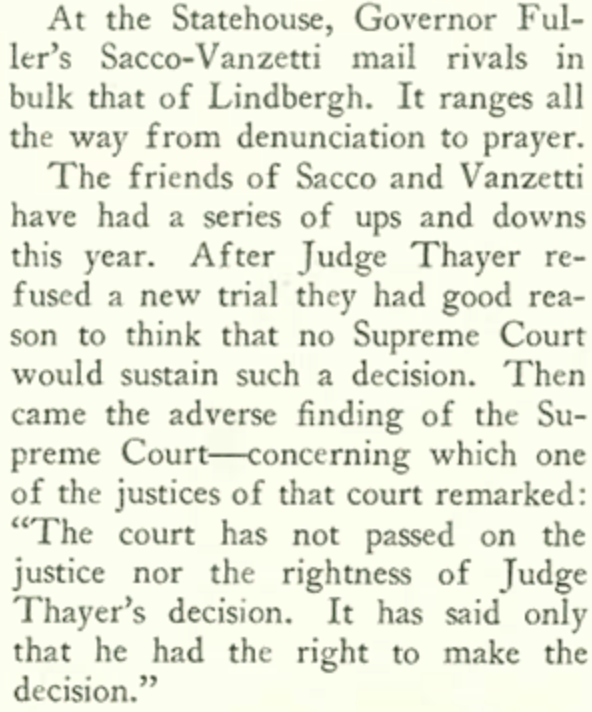
The governor did appoint a commission to review the case, but the final decision was in his hands…

screen-shot-2016-10-22-at-10-19-49-am

And so the only option left for Sacco and Vanzetti was clemency from the governor.

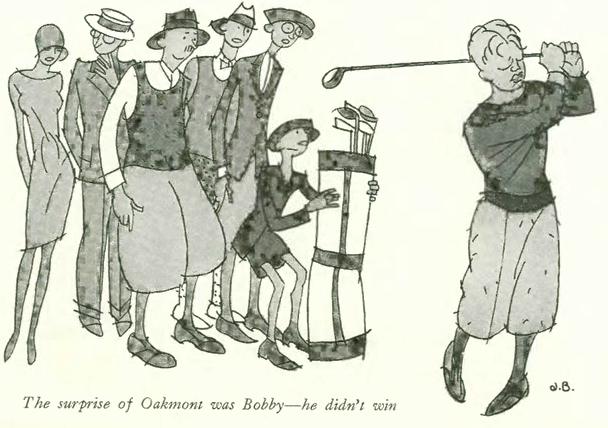
To close, a few illustrations from some of the magazine’s mainstay artists…this one from Johan Bull used to illustrate an article on the U.S. Open featuring amateur Bobby Jones

screen-shot-2016-10-14-at-9-49-23-am

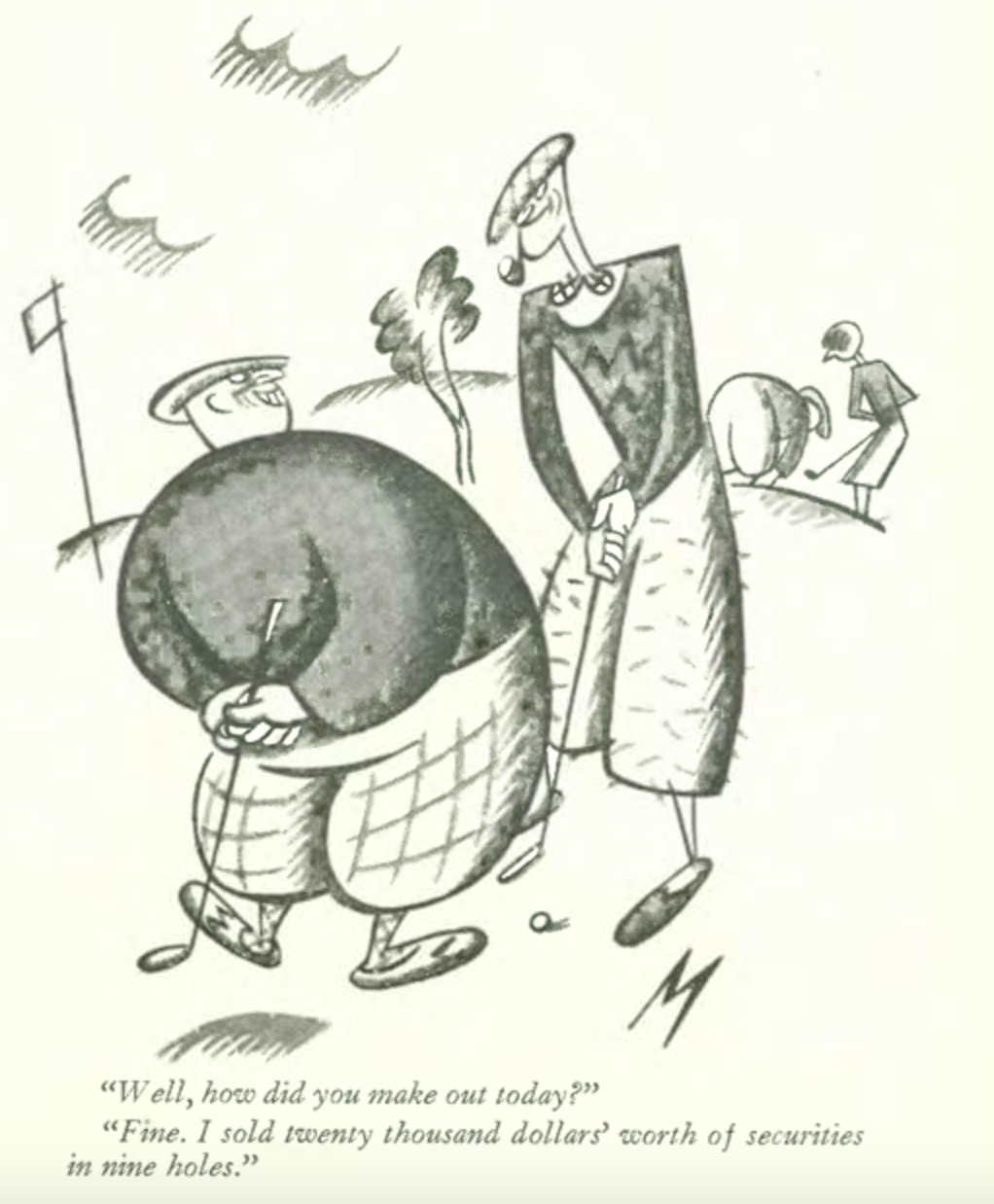
…and keeping with the golf theme, this cartoon by Julian de Miskey

screen-shot-2016-10-22-at-9-36-35-am

…and finally, a little fun with Barbara Shermund and her comment on social mores of the day:

screen-shot-2016-10-22-at-9-37-14-am

Next Time: Fifteen Minutes is Quite Enough…

7b096a824e274d6b7b7c5e0f1a3e85e7


Papa Pens a Parody

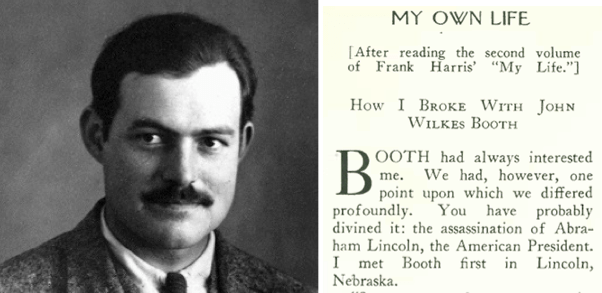
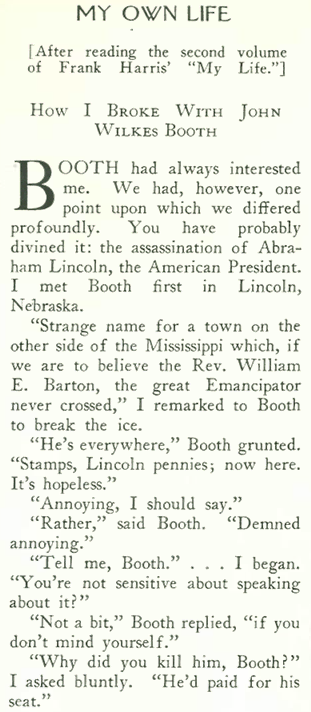
Ernest Hemingway wrote his lone New Yorker piece for the Feb. 5, 1927 issue. Titled “My Own Life,” it was a short parody of the 3-volume My Life and Loves by Irish writer Frank Harris.

7532b3c65dcb4c041db31d7c0c75b4c4
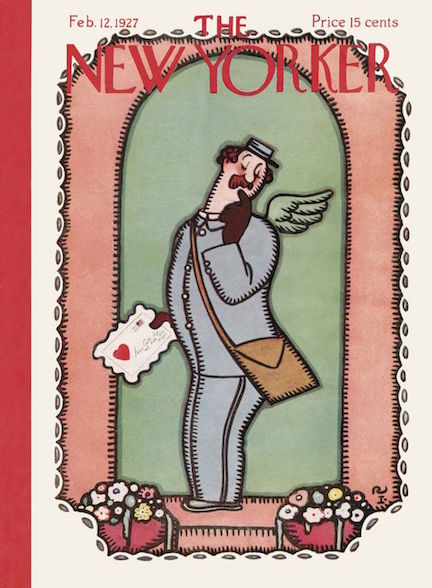
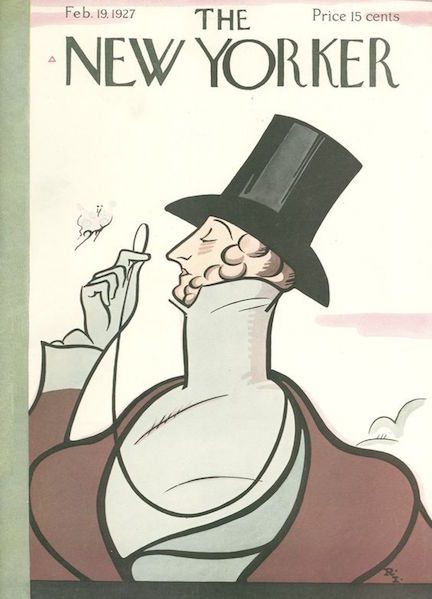
February 12, 1927 cover by Rea Irvin.

Writing for The Hemingway Review (Fall 2001), Francis Bosha notes in “The Harold Ross Files” that Hemingway’s sole contribution to the New Yorker is striking given that the magazine was such a major influence on fiction in the 20th century.

Money, or the shortage thereof, appears to be the main reason why Hemingway was not a regular contributor. Although the young magazine was doing well, Bosha writes that it was not yet ready to compete financially with more established mass market magazines. Indeed, Hemingway’s “My Own Life” landed in the New Yorker because it had already been rejected by both Scribner’s and The New Republic.

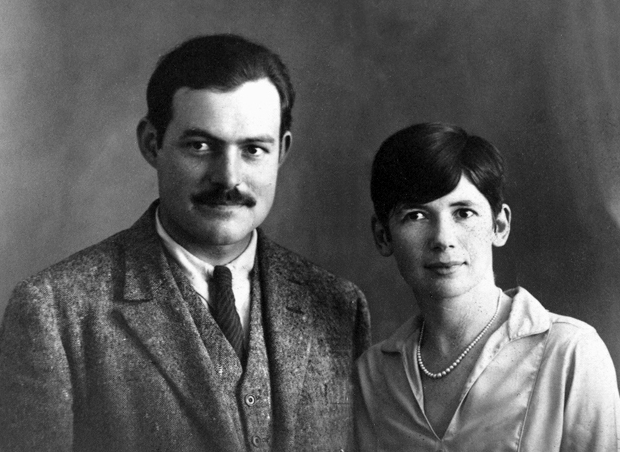
Ernest_and_Pauline_Hemingway,_Paris,_1927
Ernest Hemingway and his second wife, Pauline Pfeiffer, in Paris, 1927. (Wikipedia)

If you read the piece you can see why it was rejected. The famed fiction writer, hot off the success of The Sun Also Rises, was not a great parodist. An excerpt:

Screen Shot 2016-07-20 at 3.24.37 PM

And so on. Hemingway wisely stuck with serious fiction, which might explain his fleeting association with The New Yorker, which in its first years was bent toward humor in the Punch or Judge vein and not toward serious writing.

Nevertheless, the New Yorker’s founding editor, Harold Ross, maintained a friendship and a regular correspondence with Hemingway during the writer’s years in Cuba in the 1940s. On several occasions Ross invited Hemingway to submit something to the magazine, but nothing came of it. It didn’t help that Hemingway publicly stated in 1942 that he “was out of business as a writer,” and was suffering from depression, weight gain, and bouts of heavy drinking.

The Great Ziegfeld Finally Opens His New Theatre

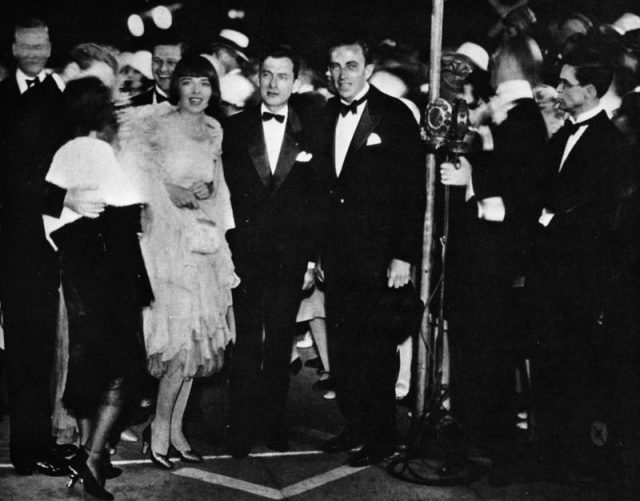
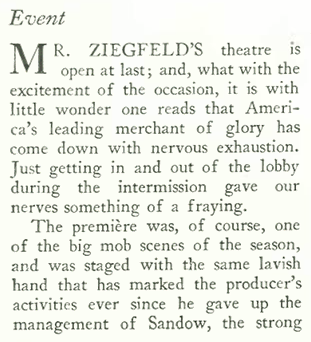
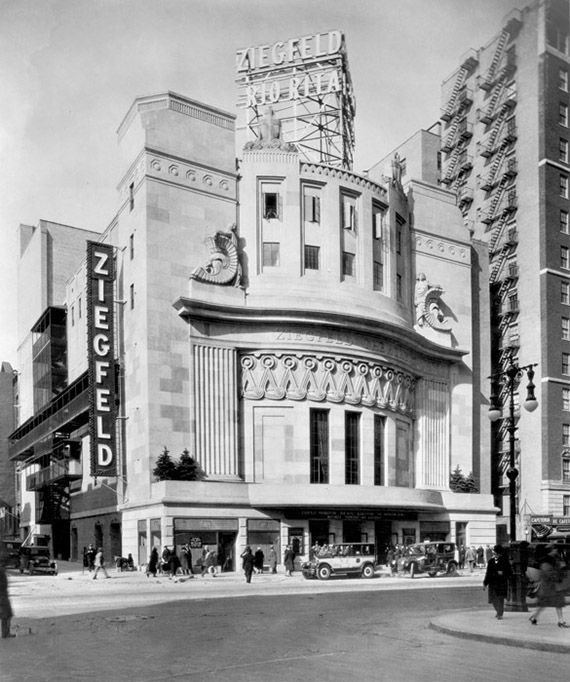
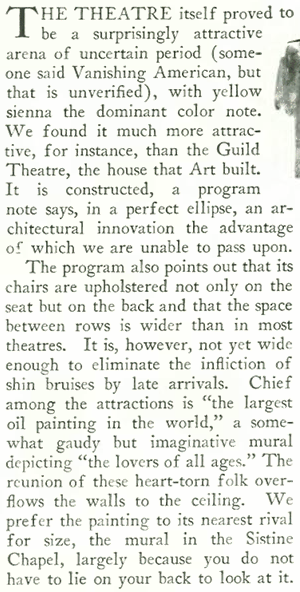
“The Talk of the Town” reported the premiere of Florenz Ziegfeld’s new art deco theatre was “one of the big mob scenes of the season,” attracting celebrities and celebrity-gawkers alike:

110927-GON066-04
Opening Night…

Screen Shot 2016-07-19 at 3.48.51 PM

Screen Shot 2016-07-19 at 3.49.09 PM

wurts_A0810_808013 001
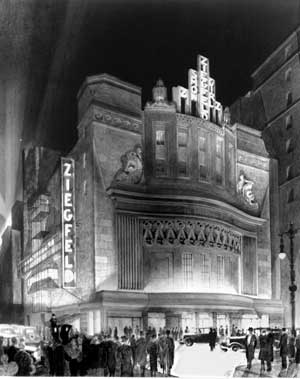
DECKED IN DECO…The Ziegfeld Theatre at Sixth Avenue and 54th Street, 1927. Joseph Urban’s design of the facade suggests open curtains flanking a stage. (nyc-architecture.com)
Screen Shot 2016-07-20 at 4.11.16 PM
HELLO DOLLY…On the Ziegfeld Theatre’s opening night Ada May played Dolly in Rio Rita (Museum of the City of New York)

The opening drew the likes of Charlie Chaplin and polar explorer Roald Amundsen, who perhaps found a line of chorus girls a welcome sight after years of trekking through frozen landscapes.

Screen Shot 2016-07-19 at 3.49.28 PM

Among the attractions of the new theatre was what was claimed to be the largest oil painting in the world:

Screen Shot 2016-07-19 at 3.50.12 PM

110927-GON066-02
AN EYEFUL…A section of the interior wall of the Ziegfeld Theatre, decorated with “the largest oil painting in the world.” (nyc-architecture.com)

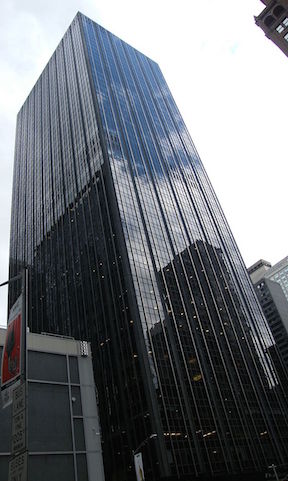
Sadly, despite public protests, the theatre was razed in 1966, bulldozed into rubble. The Burlington House stands on the site today:

800px-Burlington-house-nyc
Burlington House. (Wikipedia)

But we will end on a happier note, a cartoon by Barbara Shermund:

Screen Shot 2016-07-19 at 3.52.59 PM

Next Time: Two Years Young…

e5c3fabc5f1612a71442c78a3c71d654

Spring Fever

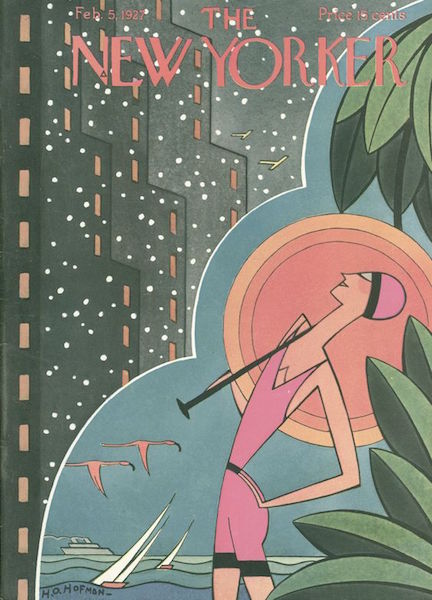
Piles of snow and slushy streets had many New Yorkers dreaming of spring, including H.O. Hofman, who illustrated the cover for the Feb. 5, 1927 issue.

e4051b8c99ab27eb2272f12bb1634373
Feb. 5, 1927 cover by H.O. Hofman.

Another New Yorker illustrator and cartoonist, Barbara Shermund, offered a different take on the idea in this drawing for the “On and Off the Avenue” column on page 56:

Screen Shot 2016-06-29 at 9.44.41 AM

At least New Yorkers had plenty of activities to take their minds off of the weather, including two important balls:

Screen Shot 2016-06-29 at 8.38.15 AM

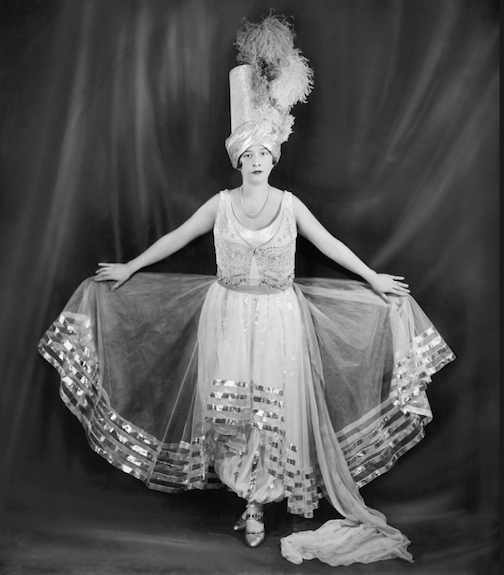
Inspired by the annual springtime costume ball given by the students of the École nationale supérieure des Beaux-Arts in Paris, American students held an annual ball to raise funds for their Beaux-Arts Institute of Design. The balls featured elaborate costumes and performances that were extensively reported in the city’s society pages.

Beuax arts 1928 NYT
LOOK AT ME…Margaret Thaw dressed as a “White Sultana” for the 1928 Beaux Arts Ball held at the Astor Hotel. The theme was “The French Occupation of Northern Africa — 1847.” A doyenne of international high society perennially named to best-dressed lists, Margaret and her husband, Lawrence Copley Thaw, were world-famous explorers of Africa and Asia and correspondents for National Geographic magazine. (New York Times)

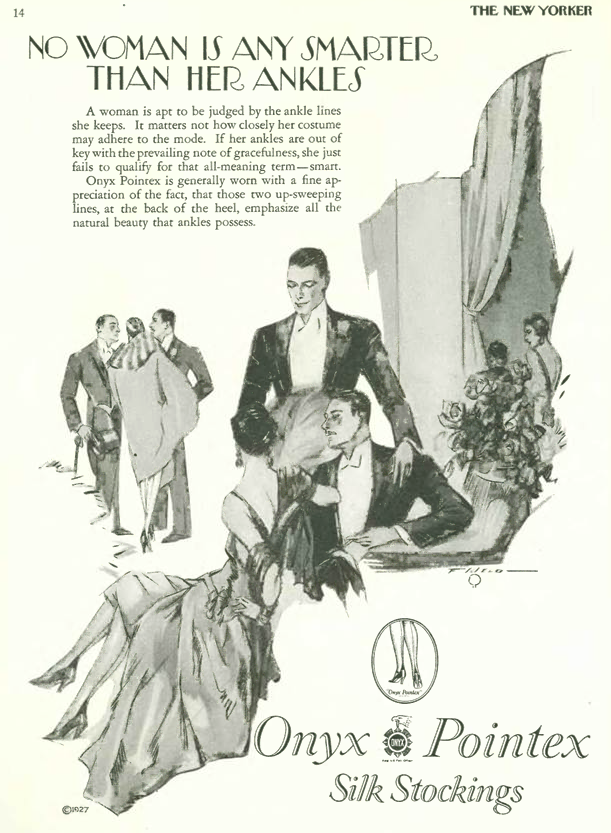
Contrary to the ad pictured below, fashion plate Margaret Thaw was doubtless smarter than her ankles…

Screen Shot 2016-06-29 at 8.36.57 AM

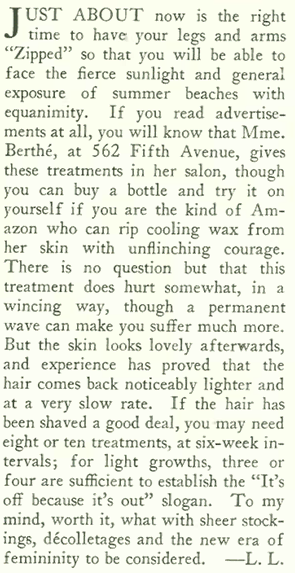
If you were investing in fine Onyx Pointex silk stockings, you probably wanted to get your legs “Zipped” in a new method described by fashion correspondent Lois Long:

Screen Shot 2016-06-29 at 9.46.13 AM

If Lois Long were around today she would have to note that both men and women are getting “Zipped,” waxing everything including their nethers.

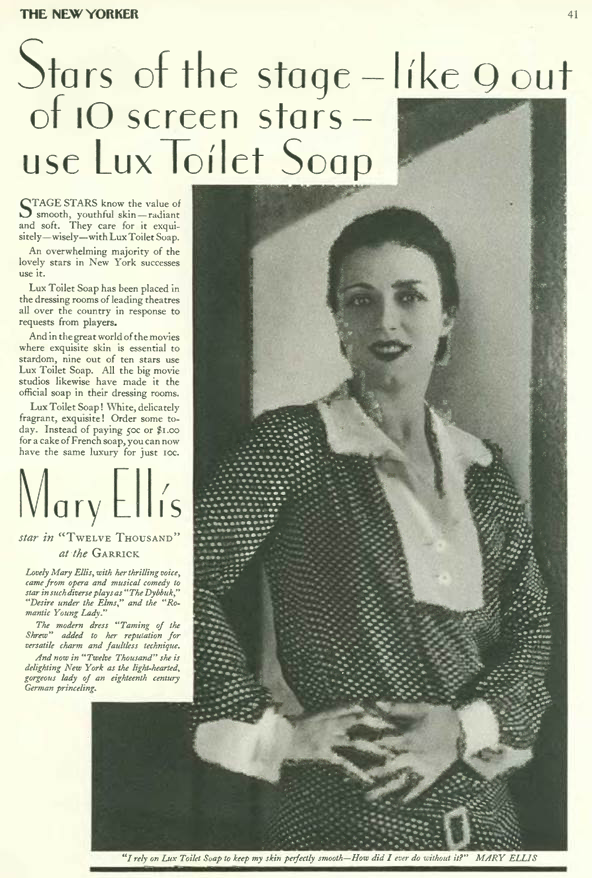
And these days few of us are washing our hair with bar soap, as depicted in the ad below for Lux. Like so many other ads in the early New Yorker, this one makes a strong appeal to Francophile readers; if it’s French then it must be good (note that every paragraph and headline in the ad mentions either France or French at least once):

Screen Shot 2016-06-29 at 9.41.22 AM

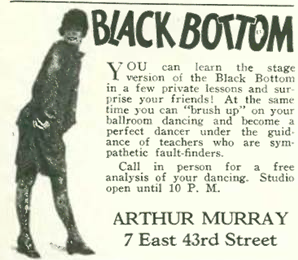
While we are on the topic of advertisements, here is another installment of ads from the back pages of the magazine. Arthur Murray was a frequent advertiser in the magazine, mostly small ads like this that exploited the latest dance craze:

Screen Shot 2016-06-29 at 9.51.23 AM

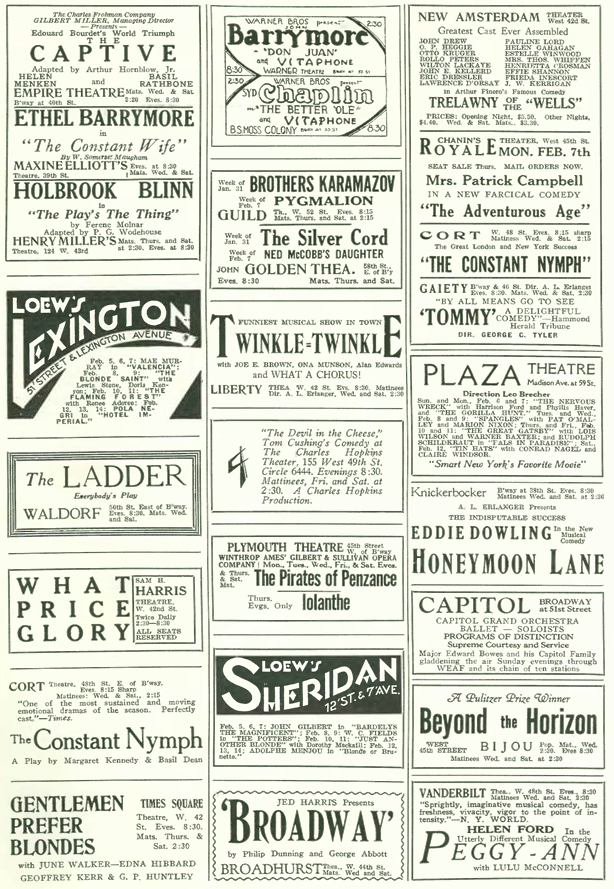
The offerings of the stage and screen were also prominent in the back pages:

Screen Shot 2016-06-29 at 9.48.59 AM

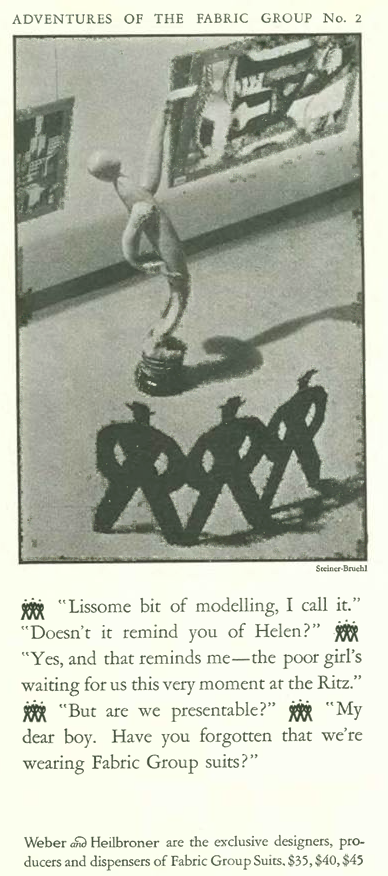
And finally, these strange little ads (run as series) that were designed by photographers Anton Bruehl and Ralph Steiner to promote Weber and Heilbroner suits:

Screen Shot 2016-06-29 at 9.43.00 AM

Specializing in elaborately designed and lit tableaux, Bruehl won top advertising awards throughout the late 1920s and early 1930s. He also co-developed the Bruehl-Bourges color process, which gave publisher Condé Nast a monopoly on color magazine reproduction in the early 1930s.

Next Time: Papa Pens a Parody…

7532b3c65dcb4c041db31d7c0c75b4c4

Fight Night in Philly

We skip ahead to the Oct. 2, 1926 issue to look at one of the big events of that year–the Dempsey-Tunney heavyweight prize fight (I’m not skipping issues…Sept. 25 appears later in this blog).
652f917918402a71eb86f6671c9f228a
Oct. 2, 1926 – Issue # 85 – Cover by Constantin Alajalov. (Once again, note the ongoing comic reference to androgyny in 20’s fashion)
Heavyweight boxing was a big part of the American sports scene in the 1920s, and two giants of the sport, Jack Dempsey and Gene Tunney, dominated the headlines in the late 1920s thanks to much-heralded bouts in Philadelphia in 1926 and a rematch in Chicago the following year (which would include the famous “long count” incident).
Screen Shot 2016-02-26 at 12.30.40 PM
An estimated 135,000 fans packed Sesquicentennial Stadium in Philadelphia for the Dempsey-Tunney bout. (NYTimes)
The New Yorker joined in on the hoopla, publishing a lengthy account of the match by Waldo Frank (aka “Search-light”), who trained his jaded eye on the whole affair:
Screen Shot 2016-02-25 at 4.28.32 PMScreen Shot 2016-02-25 at 4.28.39 PM
MediaStream.ashx
VIEW FROM THE CHEAP SEATS…a rain-soaked throng at the Dempsey-Tunney fight in Philadelphia. (City of Philadelphia)
According to the New York Times, the crowd included such notables as Charlie Chaplin, cowboy movie star Tom Mix and the English Channel swimmer Gertrude Ederle.
Screen Shot 2016-02-26 at 12.13.08 PM
Coverage of Tunney’s victory by unanimous decision took up three-quarters of the front page of The New York Times, and also filled most of pages 2 through 7. (The New York Times)
But in typical fashion, Waldo was less than dazzled, finding the rain an apt metaphor for a spectacle mostly unseen by those in attendance:
Screen Shot 2016-02-25 at 4.27.50 PM
Never one to wallow in tragedy, the magazine made a brief (and oddly droll) reference in “The Talk of the Town” to a hurricane that hit Miami and its environs (it killed 372 people and injured more than 6,000):
Screen Shot 2016-02-25 at 4.16.52 PM
Other items of note in the issue included this examination of country vs. city life by cartoonist Barbara Shermund
Screen Shot 2016-02-25 at 4.21.56 PM
…and this cartoon by Al Frueh commenting on the challenges of Manhattan’s rapidly changing cityscape:
Screen Shot 2016-02-25 at 4.18.53 PM
The changing city was also on the mind of Reginald Marsh in this illustration he contributed to the Sept. 25, 1926 issue of the magazine:
Screen Shot 2016-02-25 at 4.02.32 PM
Back to the Sept. 25 issue, which featured an update from Paris correspondent Janet Flanner
d9f3d5507a7bade4fc28276d12a63260
Sept. 25, 1926 – Issue # 84 – Cover by Constantin Alajalov.
…who commented on the large number of American tourists crowding the city just as the locals were fleeing for their long, late summer holidays:
Screen Shot 2016-02-25 at 4.07.13 PM
She offered some numbers to back up her observations:
Screen Shot 2016-02-25 at 4.07.43 PM
3333095832_f6a6fd78cb_o
Janet “Genêt” Flanner (right) and longtime companion Solita Solano (center) in Paris, 1921. Solano was a well-known writer and drama critic for the New York Tribune. (Vintage Everyday)

And finally, a cartoon by Rea Irvin exploring the trials of the idle rich:

Screen Shot 2016-02-25 at 4.01.32 PM
 Next Time: Do Gentlemen Prefer Blondes?
848d031119e0d470956ce963e6e7fb62

Time for a Facelift

It’s the dog days of summer, and the editors of The New Yorker are seeking various distractions to take their minds off of the broiling late season heat.

db2311e2a9fcb89fc253615846207b55
August 21, 1926 cover by H.O. Hofman.

In the Aug. 21, 1926 issue (bearing an appropriate cover image by H.O. Hofman of bathers taking a refreshing dip), “The Talk of the Town” suggested that it was a good time for even the natives to take a boat tour of their beloved island:

Screen Shot 2016-02-09 at 12.35.36 PM

Screen Shot 2016-02-09 at 12.35.46 PM

enhanced-buzz-27796-1367872781-0
Aerial view of Battery Park Wharf in the early 1920s (Buzzfeed)

In the following Aug. 28 issue, the “Talk” editors ducked out of the sun to visit the American Museum of Natural History.

b3166409b2ab1ea1369e857d009d9b30
Aug. 28, 1926 cover by H.O. Hofman.

There they found curators busy reorganizing displays of dinosaurs and various stuffed beasts of the wild:

Screen Shot 2016-02-09 at 12.14.22 PM

Screen Shot 2016-02-09 at 12.14.28 PM

311585.tif
AMNH staff joining head to body of female elephant in Indian Elephant Group, 1926. (AMNH Digital Special Collections)
2007 METRO Project | ImageDigitizationSpecifications v1.0 | Epson Perfection V750 Pro
The end result of the 1926 reorganization of displays at the AMNH—children viewing Brontosaurus exhibit in 1927. (AMNH Digital Special Collections)

The magazine also profiled New York City native Gertrude Ederle, who became the first woman to swim across the English Channel in August of 1926:

Screen Shot 2016-02-09 at 12.16.16 PM
Gertrude Ederle, as rendered by Peter Arno for the “Profile.”

Even Janet Flanner, the magazine’s Paris correspondent, commented on the event, noting Europe’s jealous reaction to an American’s seizing of the record:

Screen Shot 2016-02-09 at 12.28.51 PM

Ederle would return home to a ticker tape parade along the Canyon of Heroes in the Financial District, and would also be feted by 5,000 people who turned out on West 65th Street for a block party in her honor.

getrudeedlerlecrown
WHAT FOLKS DID BEFORE TELEVISION…Block party celebrates Gertrude Ederle as “Queen of the Waves.” (Ephemeral New York)

According to the excellent blog Ephemeral New York, Ederle received offers from Hollywood and Broadway and was deluged by marriage proposals. But she returned to a quiet life, moving to Queens and working as a swimming instructor for deaf children–Ederle’s hearing was seriously damaged in the water of the Channel, but otherwise swimming must have been good for her health. She died at age 98 in 2003.

Keeping with the summertime theme, the magazine covered the Gold Cup Regatta, complete with illustrations by Johan Bull:

Screen Shot 2016-02-09 at 12.19.14 PM

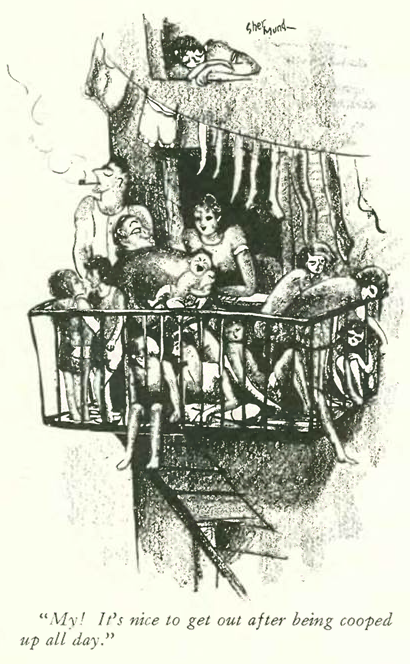
An early Barbara Shermund cartoon, always a delight…

Lois Long took her “On and Off the Avenue” column to Paris, where she cast a jaded eye at the behavior of American buyers of French fashion:

Screen Shot 2016-02-09 at 12.26.32 PM

Screen Shot 2016-02-09 at 12.26.50 PM

Screen Shot 2016-02-09 at 12.27.00 PM

chanel-LBD
Coco Chanel’s “Little Black Dress” debuted in 1926. (homeecologist.com)

And finally, from the advertising department, this strange ad from Ovington’s, which seemed to be more concerned with promoting racial stereotypes than in selling dinnerware:

Screen Shot 2016-02-09 at 12.27.16 PM

Next Time: Come Fly With Me…

60050ce935d82b28520c52109cd715ce