Gentlemen Prefer Blondes?

Despite The New Yorker’s taste for the finer things–polo, opera, classical music–its editors couldn’t resist the pull of popular culture as both spectacle and fodder for mockery of the hoi polloi.

848d031119e0d470956ce963e6e7fb62
Oct. 9, 1926 cover by Julian de Miskey.

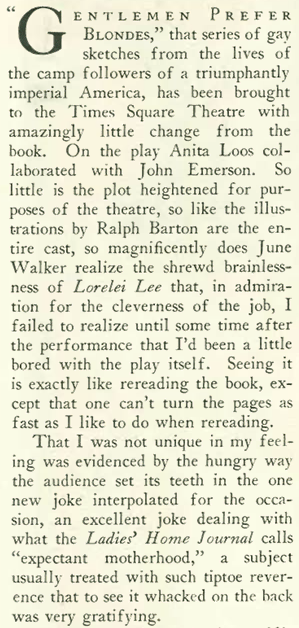
And so we have the Oct. 9, 1926 issue with a review of the much-anticipated Broadway play Gentlemen Prefer Blondes, which was based on a surprise bestselling novel by Anita Loos (and illustrated by The New Yorker’s own Ralph Barton). Despite garnering lukewarm reviews from critics, the public loved the adventures of gold-digging flapper Lorelei Lee.
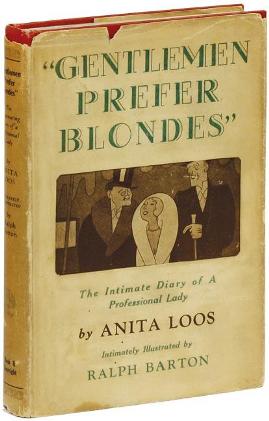
GentlemenPreferBlondes
First edition of Gentlemen Prefer Blondes, by Anita Loos, illustrated by Ralph Barton (Wikipedia)
tumblr_l7eu7x4QVv1qcl8ymo1_500
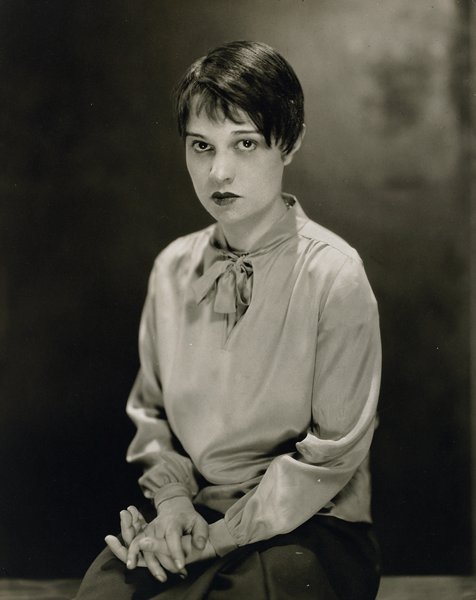
Edward Steichen portrait of Anita Loos, 1926. The New Yorker would feature a lengthy, admiring “Profile” of Loos in its Nov. 6, 1926 issue. (Minneapolis Institute of Art)

According to Wikipedia, the book was one of several famous novels published in 1925 to chronicle the Jazz Age, including F. Scott Fitzgerald’s The Great Gatsby (which ironically didn’t do so well) and Carl Van Vechten’s Firecrackers. Loos was inspired to write the book after watching a sexy blonde “turn intellectual H. L. Mencken into a lovestruck schoolboy.” Mencken, a close friend of Loos, actually enjoyed the work and saw to it that it was published.

nypl.digitalcollections.ab6c9cc0-81c6-da79-e040-e00a1806702e.001.w
Gold-digging flapper Lorelei Lee (June Walker, second from left), Henry Spofford (Frank Morgan, second from right), and the rest of the cast tussle in the stage production Gentlemen Prefer Blondes, Times Square Theatre, 1926. Another “blonde,” Marilyn Monroe, would famously portray Lorelei Lee in the 1953 Howard Hawks film. (New York Public Library)

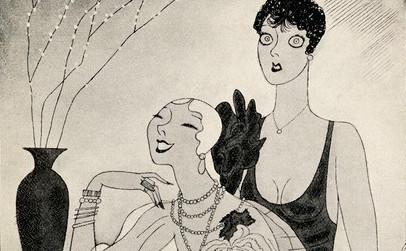
Ralph Barton contributed this drawing of June Walker for the magazine’s review:
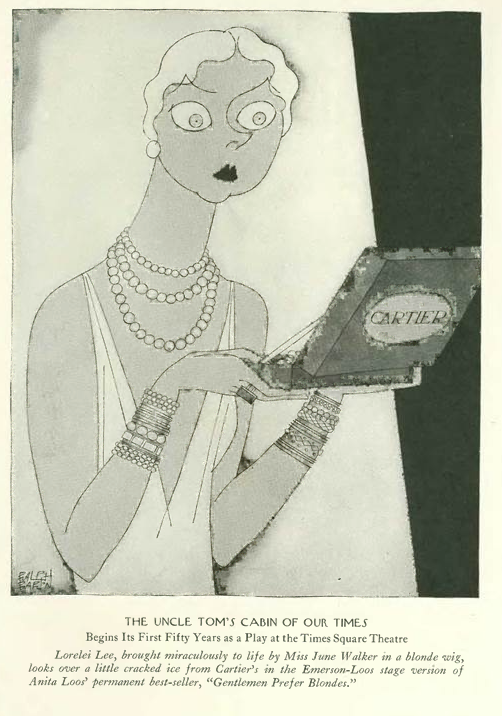
Screen Shot 2016-02-29 at 9.26.56 AM

And a bit of the review itself…

Screen Shot 2016-02-29 at 9.28.33 AM

In other items, Lois Long paid a visit to Texas Guinan’s 300 Club on 54th Street, which apparently was still the place to go for a roaring good time:
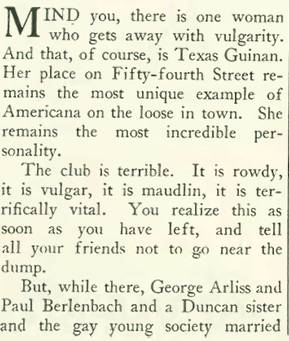
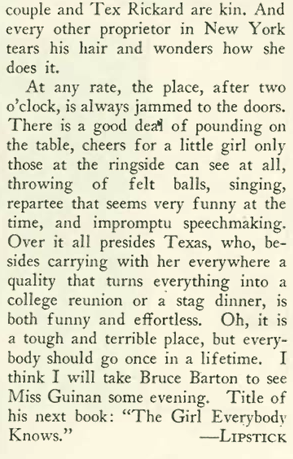
Screen Shot 2016-02-29 at 9.30.16 AM

Screen Shot 2016-02-29 at 9.30.33 AM

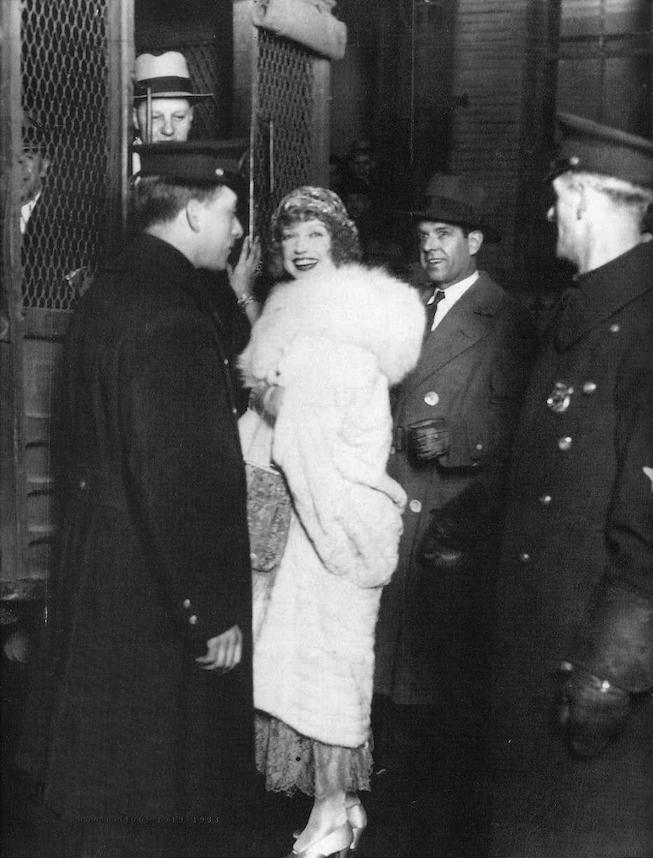
texasguinanpolice
JUST HAVING FUN…According to the blog Ephemeral New York, Texas Guinan’s 300 Club at 151 West 54th Street hosted the likes of John Barrymore, George Gershwin, and Clara Bow. The club was targeted by prohibition officials, who were constantly padlocking the door and arresting Texas. Guinan’s clever rejoinder to the officials: The 300 Club’s patrons brought liquor with them, and because the place was so small, the showgirls were forced to dance close to customers. (Ephemeral New York)

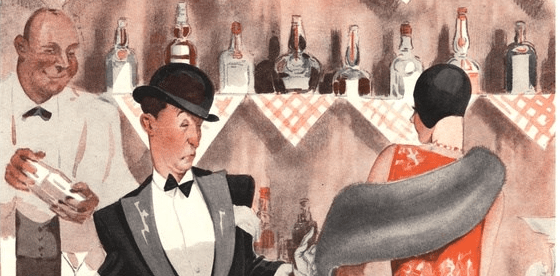
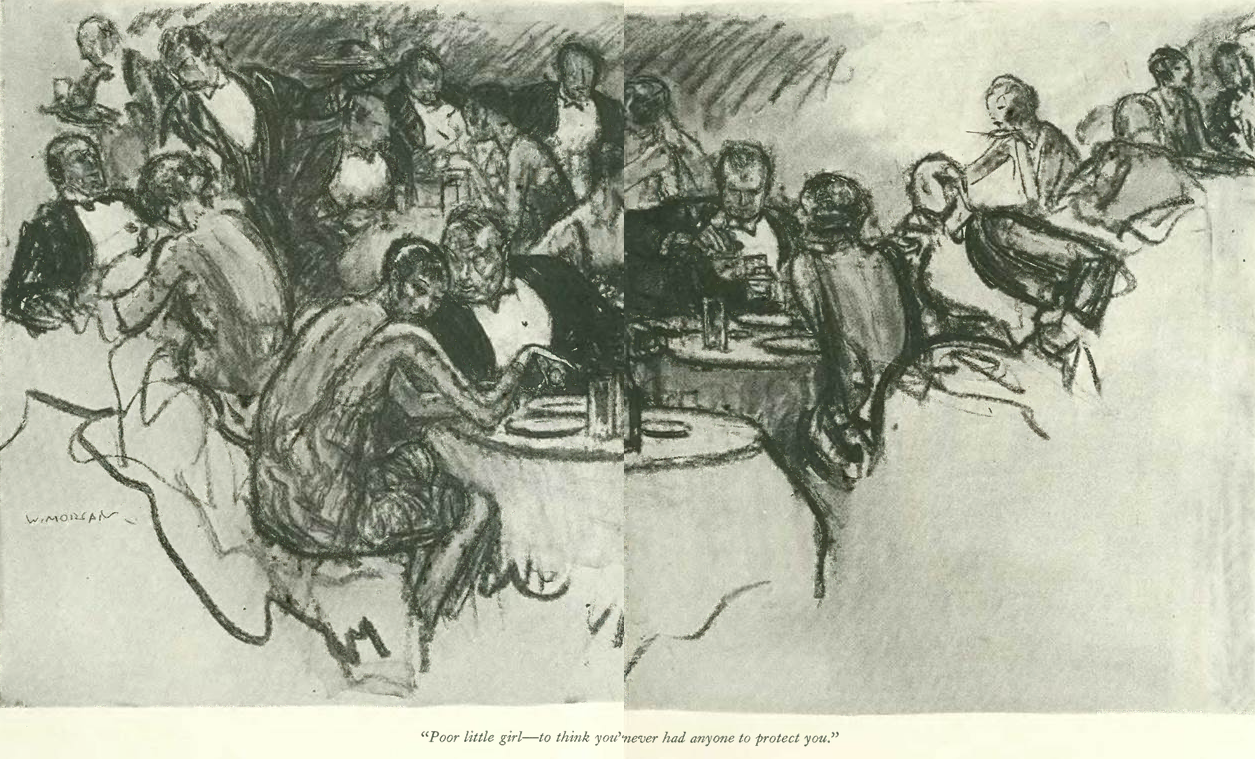
The magazine’s cartoons continued to mine the humor of rich old men out on the town with their young flapper mistresses. The one below was a center spread illustration by Wallace Morgan with the caption: “Poor little girl–to think you’ve never had anyone to protect you.”
Screen Shot 2016-02-29 at 9.21.32 AM

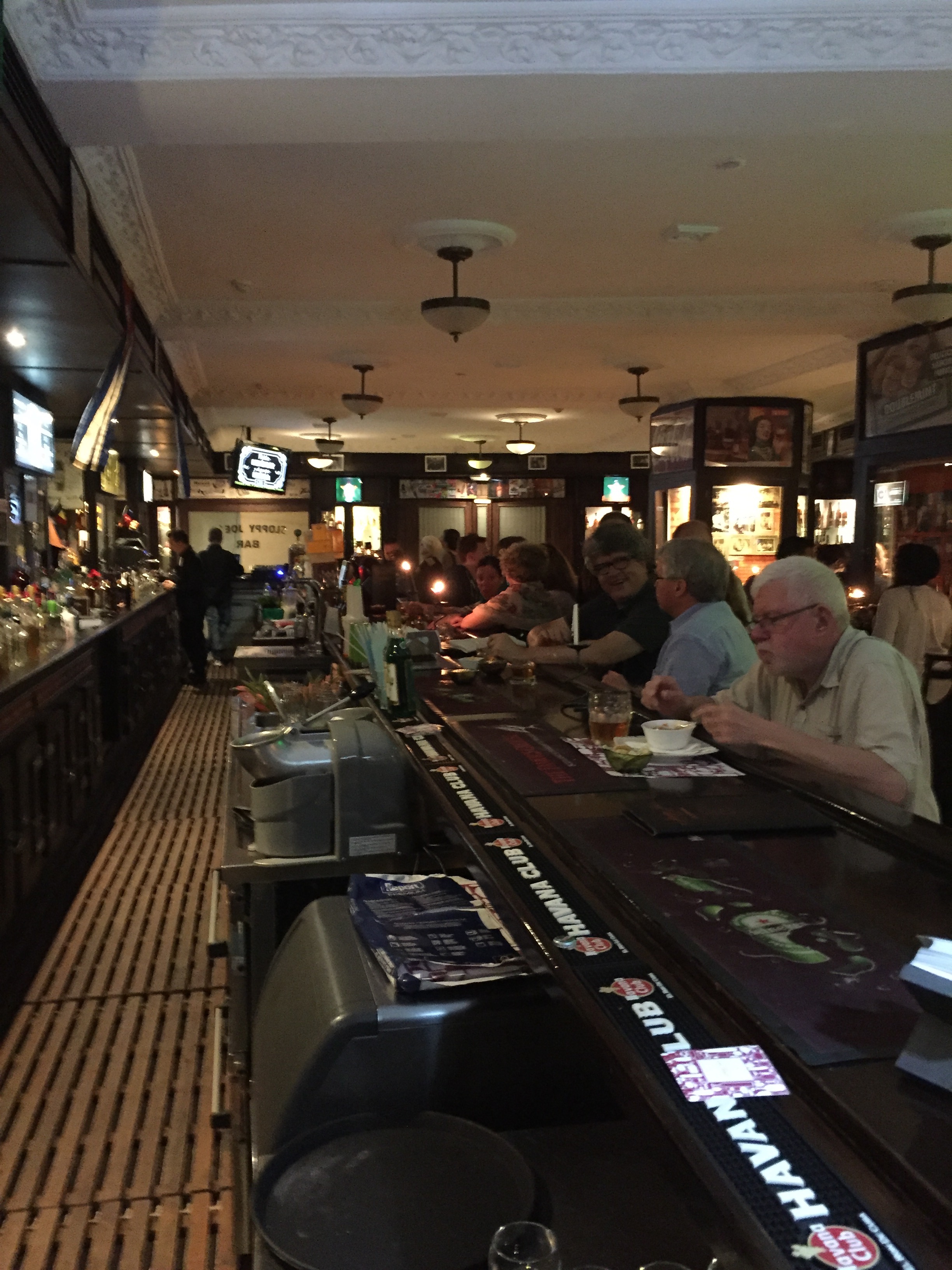
Finally, a look back at one of my earlier blog posts (Cuban Idyll) that featured Americans in Havana. I recently traveled to Cuba and visited some of the old haunts, including the famed Sloppy Joe’s:
IMG_1549
(Photo by David Ochsner)

Next Time: The Changing Skyline…

c37832e544c79a83494d91ea68c0329b


Parisians & Puritans

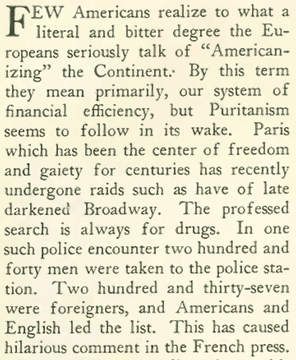
In her latest dispatch from Paris, correspondent Janet Flanner offered New Yorker readers a glimpse into the French mind, its fear of “Americanization” and its perception of America’s Puritanical attitudes behind Prohibition.

Screen Shot 2015-11-13 at 2.25.59 PM
April 3, 1926 cover by Rea Irvin.

All the more reason the French were bemused by reports that American and English citizens led the lists of reported drug raids in the City of Light…

Screen Shot 2015-12-01 at 11.56.02 AM

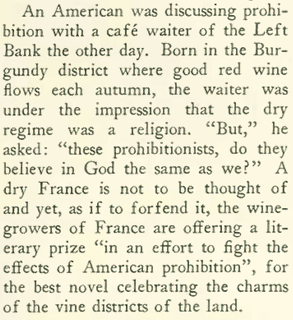
or that somehow Prohibition was a question of theological differences:

Screen Shot 2015-12-01 at 11.56.11 AM

The April 3, 1926 issue also offered up some curious advertisements. Aiming square at the grasping Anglophilia of New Yorker readers, here’s a pitch for a used Rolls Royce:

Screen Shot 2015-12-01 at 11.38.46 AM

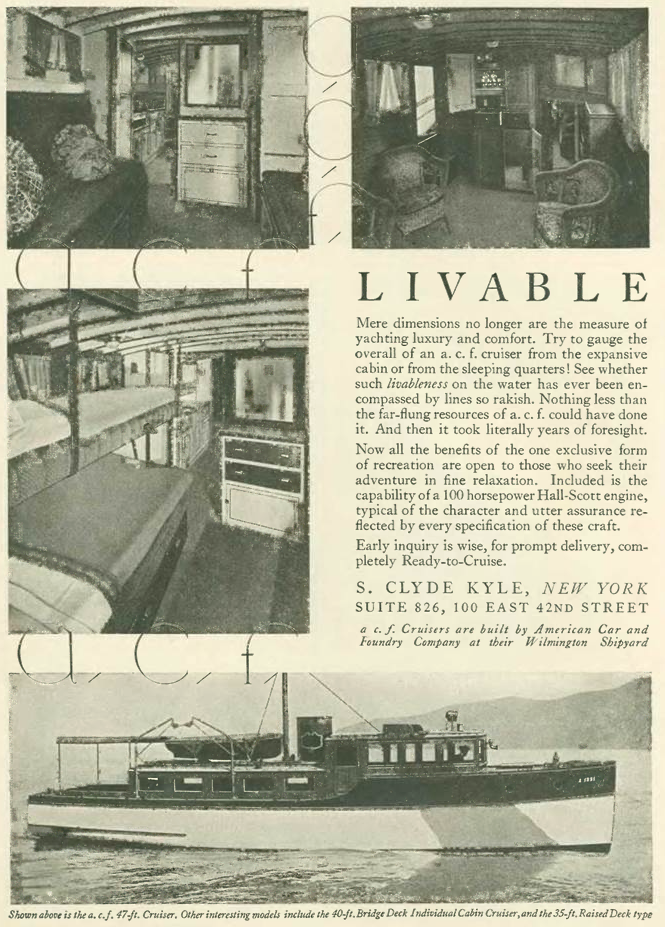
And with the money left over from your savings on the used Rolls, you could buy this 47-foot cruiser from the American Car and Foundry Company:

Screen Shot 2015-12-01 at 11.57.04 AM

Moving along to the April 10, 1926 issue (cover designed by H.O. Hofman)…

Screen Shot 2015-12-01 at 11.57.38 AM
April 10, 1926 cover by H.O. Hofman.

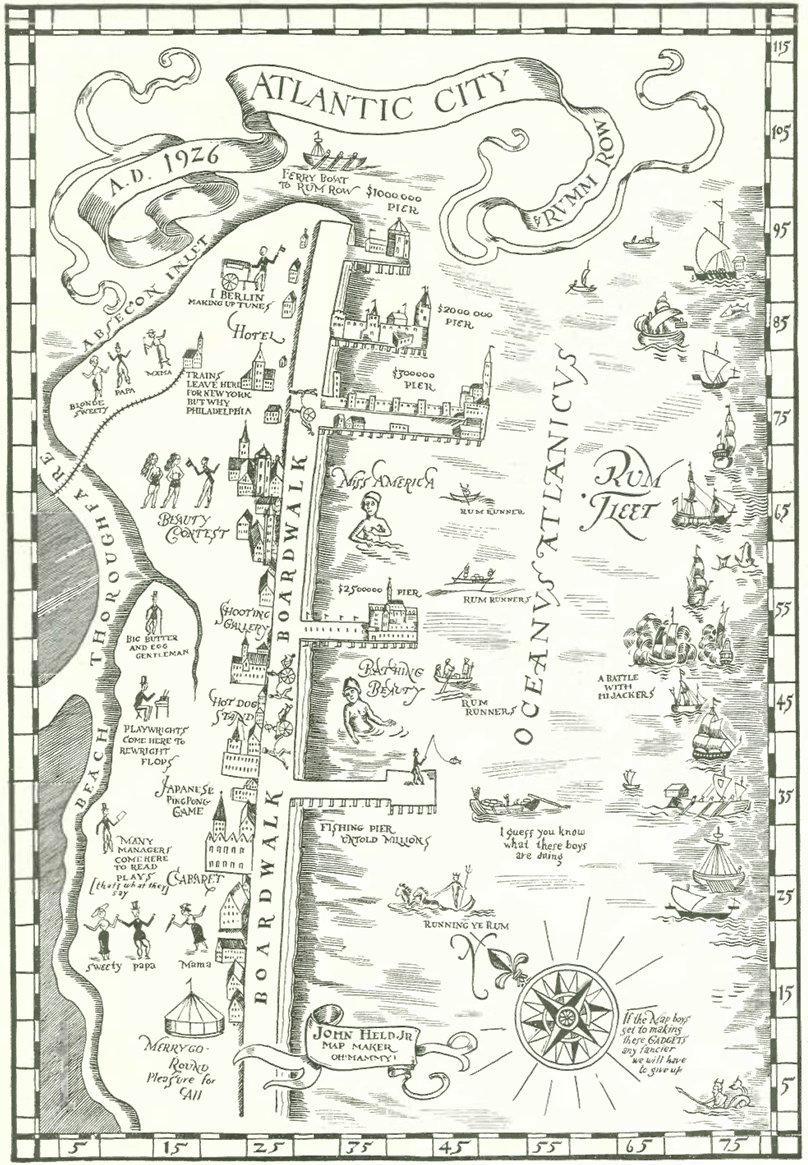
…I discovered this clever “map” by John Held Jr. For fans of “Boardwalk Empire” or other 1920s gangster-themed fare, Held’s map confirms it was no secret that Atlantic City was a major port for rum runners:

Screen Shot 2015-12-01 at 12.06.44 PM

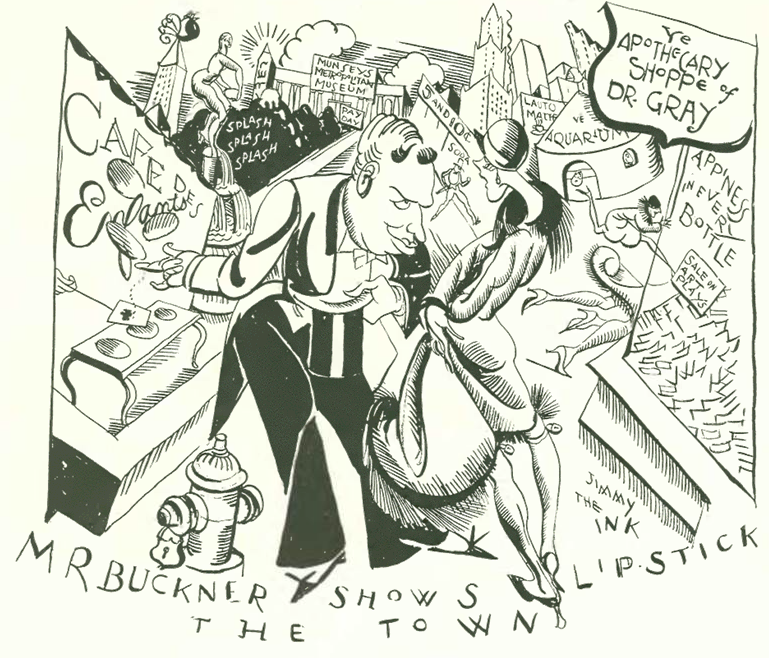
Also on the theme of Prohibition, cartoonist James Daugherty (Jimmy the Ink) had some fun with New Yorker colleague Lois Long (aka Lipstick) by pairing her with New York’s top Prohibition prosecutor Emory Buckner in this unlikely scenerio:

Screen Shot 2015-12-01 at 12.08.38 PM

Note the lock on the fire hydrant. Padlocking restaurants and clubs suspected of selling alcohol was a favorite tactic of Buckner and his agents. Long famously took him task in her Oct. 31, 1925 “Tables for Two” column. You can read about it here in my previous post, “How Dry I Am.”

Next Time: The Great American Novelist…

Screen Shot 2015-12-01 at 12.12.47 PM

Life of a Rum Runner

Screen Shot 2015-10-30 at 10.13.15 AM
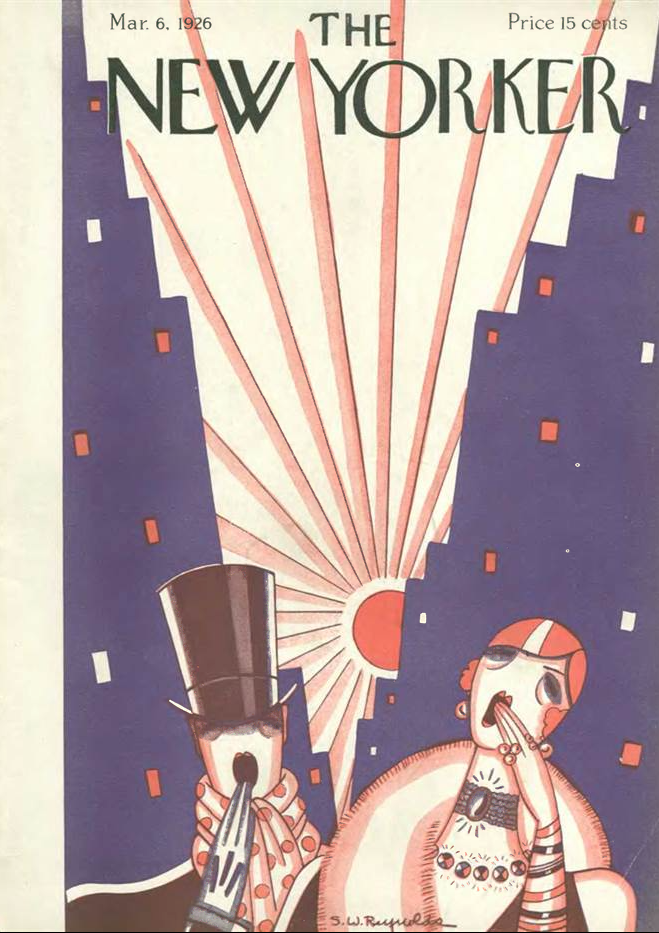
March 6 cover by S.W. Reynolds.

Although they didn’t know it, thirsty New Yorkers still had more than six and half of years of Prohibition to endure, and business was brisk for the rum runners who plied the coastal waters.

The March 6, 1926 issue featured the article “Rum Runners Must Live,” in which writer Emile C. Schnurmacher described the heroic efforts of bootleggers and rum runners in keeping New York’s countless speakeasies (and many home liquor cabinets) well stocked. Some 30,000 speakeasies were opened in New York City alone during the Prohibition era.

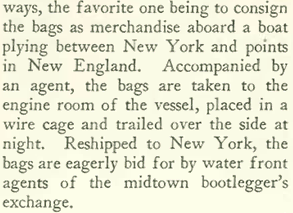
Schnurmacher described the risky game of running “overboard stuff:”

Screen Shot 2015-11-03 at 4.40.45 PM

Screen Shot 2015-11-03 at 4.40.57 PM

He told of how one rum-running boat, the Sea Bird, made its way through Flushing Bay (to pick up bootleg Scotch) while evading the Coast Guard:

Screen Shot 2015-11-03 at 4.49.39 PM

The boat later successfully delivered the “Scotch” near Yankee Stadium:

Screen Shot 2015-11-03 at 4.53.52 PM

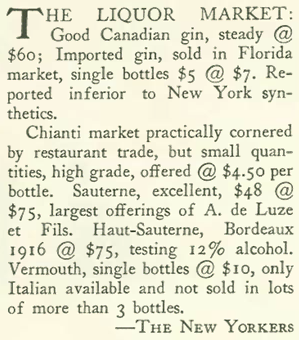
“The Talk of the Town” offered its regular update on bootleg prices. The local “synthetic” gin was reported to be of better quality than the imports, surprising given that synthetics poisoned a good number of folks back then:

Screen Shot 2015-11-03 at 4.24.16 PM

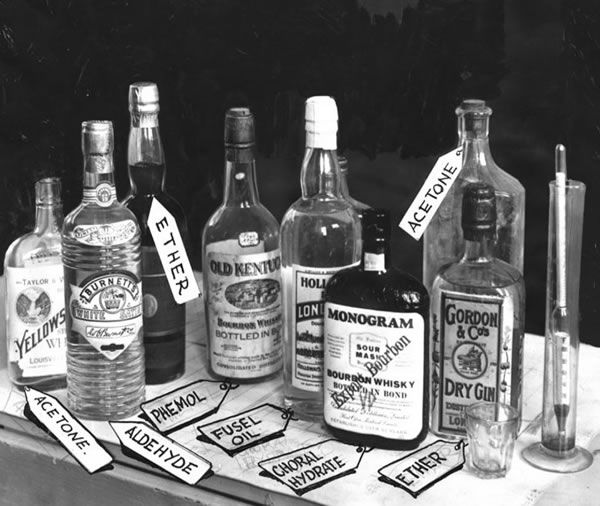
The blog Speakeasy Science notes that during Prohibition, police department chemists, “analyzing the so-called gin in the Brooklyn bar and around the city, reported that much of it was industrial alcohol, re-distilled to try to remove the wood alcohol content. The re-distilling was not notably successful. The poisonous alcohol remained and there was more: the chemists had detected traces of kerosene and mercury, and disinfectants including Lysol and carbolic acid in the beverages.”

800px-McCoy
HE HAD THE GOOD STUFF…Not all bootleg was poison. Until he was busted in 1923 by government agents, one of the most famous purveyors to wealthy buyers was rum-runner William McCoy. (US Coast Guard)
Prohib_29
In order to destroy evidence, the crew of the rum-runner Linwood set fire to their vessel after being pursued by a patrol boat. (Photo circa 1923, U.S. Coast Guard)

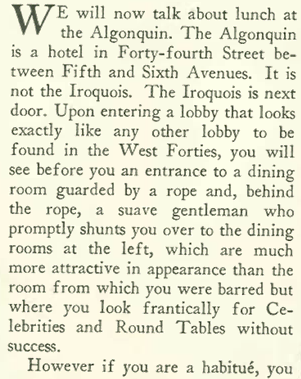
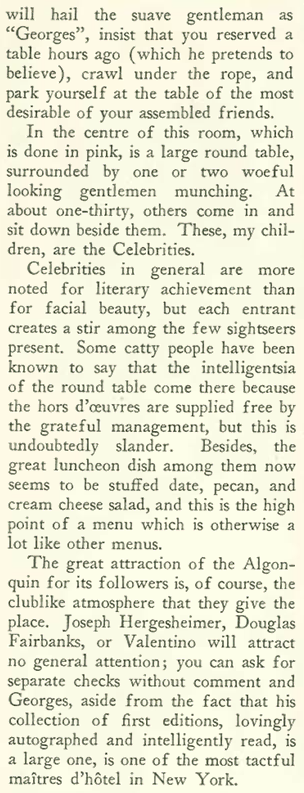
In “Tables for Two,” Lois Long paid a visit to the Algonquin hotel and took some playful swipes at the denizens the famed Round Table:

Screen Shot 2015-11-03 at 4.56.54 PM

Screen Shot 2015-11-03 at 4.57.03 PM

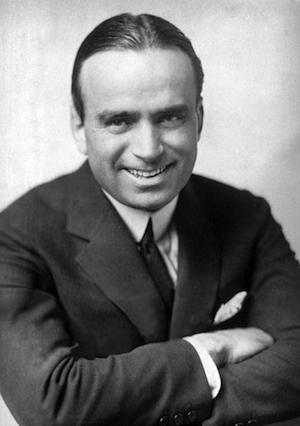
fairbankssrdouglas02
IS THAT YOU DOUG? Silent screen star Douglas Fairbanks could relax unmolested in the quiet confines of the Algonquin. (Meredy.com)

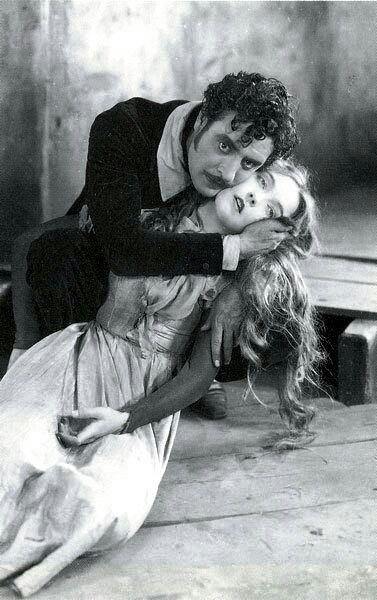
At the movies, Theodore Shane took deadly aim at the silent film version of the opera La Bohème:

Screen Shot 2015-11-03 at 4.59.33 PM

Screen Shot 2015-11-03 at 4.59.41 PM

09195167aac69af7150fc7800c86c26a
A “pop-eyed” John Gilbert and Lillian Gish in the 1926 silent film version of La Bohème. (IMDB)

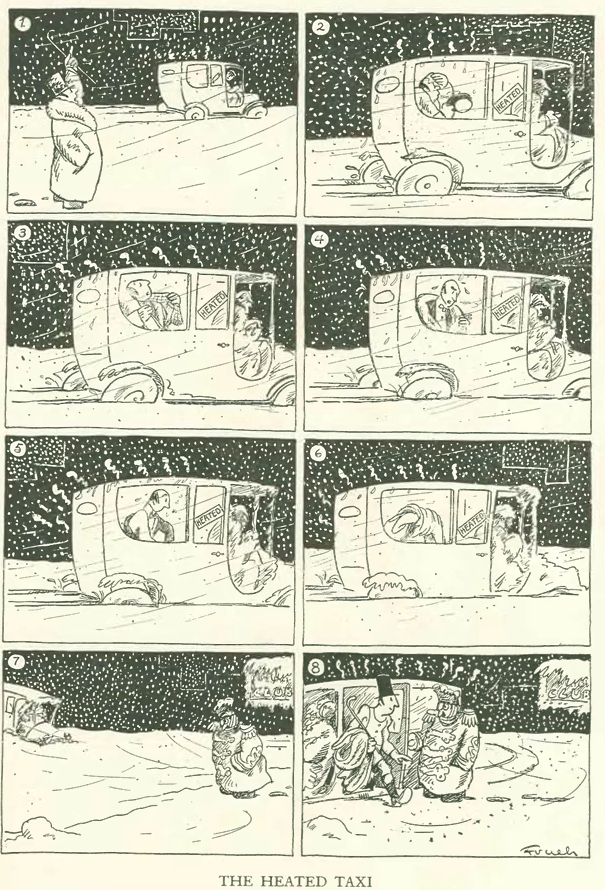
And finally, Al Frueh’s sympathetic take on the wintertime toils of the rich:

Screen Shot 2015-11-03 at 4.25.29 PM

Next time: A Technicolor World…

Screen Shot 2015-11-03 at 5.01.33 PM