The Shape of Things to Come

(Photograph by Flickr user August Fischer)

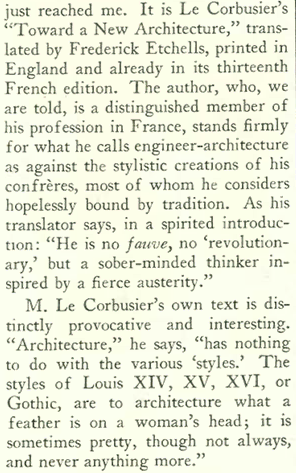
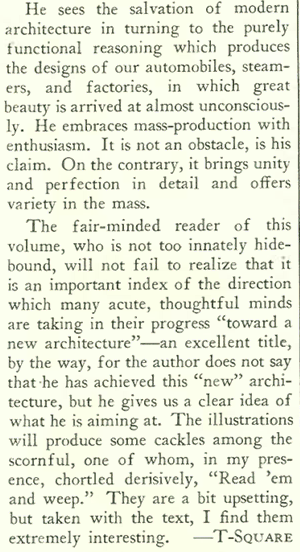
It is often observed that when we look to the past we can see our the future. More than 90 years ago, Swiss architect Le Corbusier (Charles-Édouard Jeanneret) wrote an influential book on modern architecture, Vers une Architecture (1923) that helped to radically change how we looked at our built environment. Translated into English in 1927 under varying titles (Toward an Architecture, or Towards a New Architecture), the book caught the appreciative eye of New Yorker architecture critic George Chappell, who wrote under the pseudonym “T-Square.”

6a4881d9250d214bed267228a8881e08
Nov. 12, 1927 cover by Theodore G. Haupt.

Given that most new architecture in Manhattan was adorned in architectural stylings from the past, or gussied up in Jazz Age art deco, Chappell was introducing his readers to something very different, to ideas that would transform their city within two generations.

screen-shot-2017-01-19-at-9-10-14-am

screen-shot-2017-01-19-at-9-10-22-am

slide31-720x540
A SOBER-MINDED THINKER…Le Corbusier at work in his apartment at 20 Rue Jacob, Paris, in the late 1920s. (Brassai Paris)

In his embrace of technology and mass production, Corbusier maintained that houses should be built in standardized forms that allowed for continuous refinement, designed as “machines for living” with the same precision as automobiles and airplanes…

screen-shot-2017-01-18-at-9-28-04-am

In case you doubt the architect’s fervor, here is Corbusier’s manifesto on mass production included in Towards a New Architecture:

screen-shot-2017-01-23-at-10-01-39-am

0195a9893bd41cf67cb5cd7b0bacc4f9
MACHINES FOR LIVING…This two-family structure on the outskirts of Stuttgart, Germany, was designed by Le Corbusier and his cousin, Pierre Jeanneret in 1927. It was one of the first built manifestations of Corbusier’s Five Points of a New Architecture, a manifesto written in 1926. The house set an important precedent for the emerging International Style associated with Germany’s Bauhaus movement. (noordinaryhomes.com)

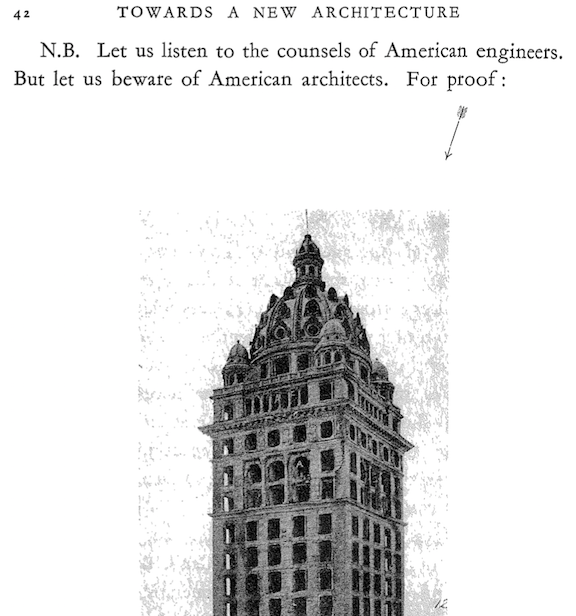
In Towards a New Architecture, Corbusier wrote that while architecture was  stifled by custom and lost in the past (“to send architectural students to Rome is to cripple them for life…”), engineers were embracing new technologies and building simple, effective and “honest” structures. Rather than rely on past forms or contemporary trends such as art deco, Corbusier said architecture should fundamentally change how humans interact with buildings.

monoskop-org
ALL DRESSED UP WITH NOWHERE TO GO…A photograph from Towards a New Architecture. Corbusier said contemporary architecture was stifled by custom and lost in the past. (monoskop.org)
fig_7_page_29_copy_0
FORM FOLLOWS FUNCTION…Examples of “honest” and functional industrial buildings featured in Towards a New Architecture. (monoskop.org)

Corbusier concluded his book with a moral imperative and an ominous choice  for the future: “Architecture or Revolution.”  He asserted that the “great disagreement between the modern state of mind…and the stifling accumulation of age-long detritus” would force modern man to live in an “old and hostile environment” and deny him an “organized family life,” ultimately leading to the destruction of the family.

In less than ten years the Nazis would chase the “degenerate” Bauhaus out of Europe and into the embrace of American academe. In short order Corporate America would adopt Corbusier’s International Style, if imperfectly, but most Americans would prove resistant to making their homes into “machines for living.”

Corbusier would doubtless be shocked (and disappointed) to know that 100 years hence people still live in mock Tudors and “Tuscan Villas,” especially in the midst of so much advanced technology.

villa-savoye-near-paris-france_le-corbusier_unesco_flickr-august-fischer_dezeen_936_0-1
HOME SWEET HOME…Villa Savoye near Paris, France. Designed by Le Corbusier in 1928, completed in 1931. Named a World Heritage Site in 2016. (Photograph by Flickr user August Fischer)

 *  *  *

AS HE WAS SAYING…
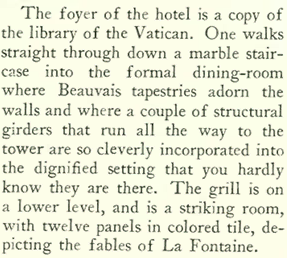
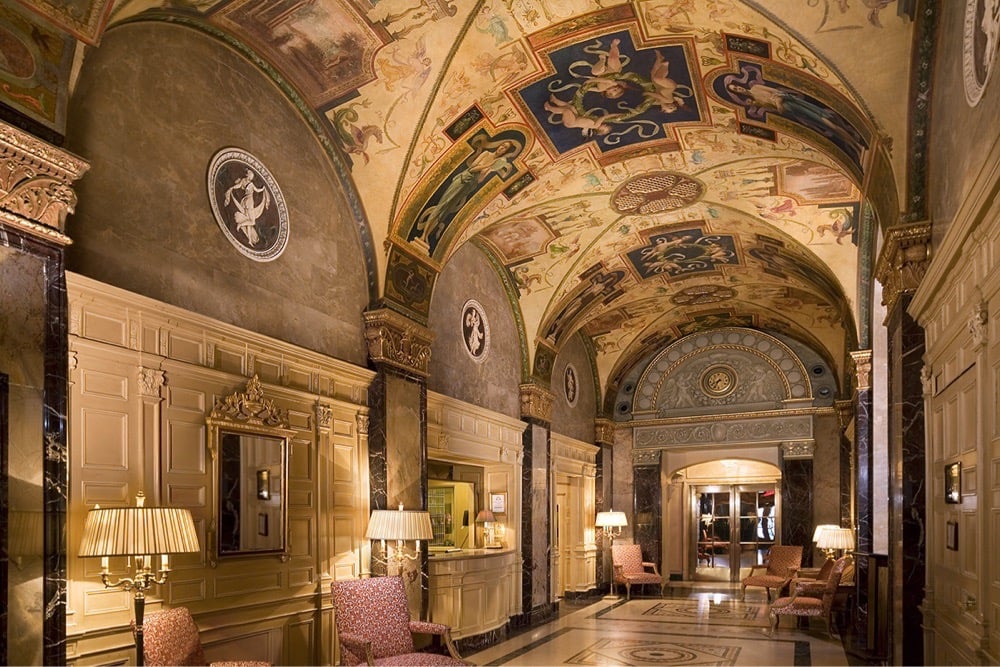
The new Sherry-Netherland apartment hotel near Central Park was exactly the sort of architecture Corbusier detested. “The Talk of the Town,” however, seemed impressed with its elegant appointments…

penthouse-35k

o
SUMPTUOUS…The foyer of the Sherry-Netherland, restored to its former glory in 2014. (Wikipedia)
screen-shot-2017-01-24-at-9-28-00-am
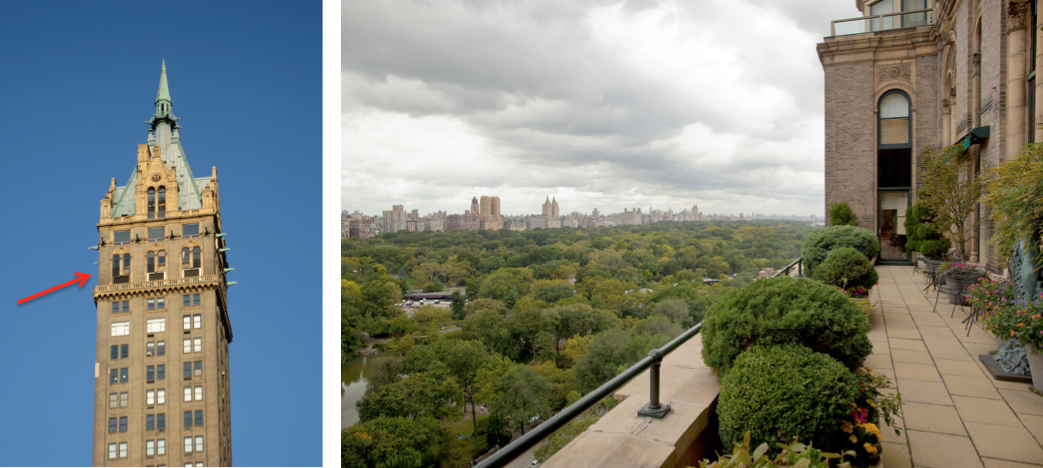
ROOM WITH A VIEW…The Sherry-Netherland penthouse, priced at $35,000 a year in 1927, is now worth more than $100 million. (TripAdvisor/Robert Caplin for The New York Times)

“Talk” noted that beneath the Sherry-Netherland’s spire the penthouse apartment could be had for $35,000 a year, roughly equivalent to $477,000 today. The building went co-op in the 1950s, and that would have been a good time to buy the penthouse. Today it is valued at more than $100 million.

Poo on Pooh

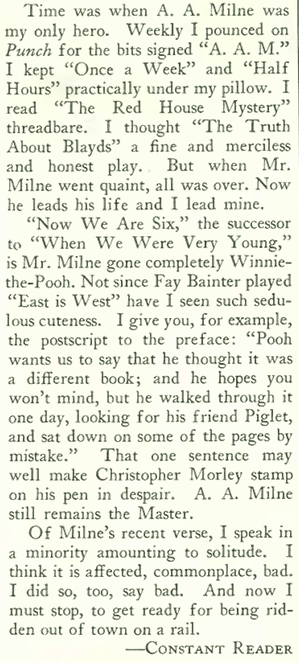
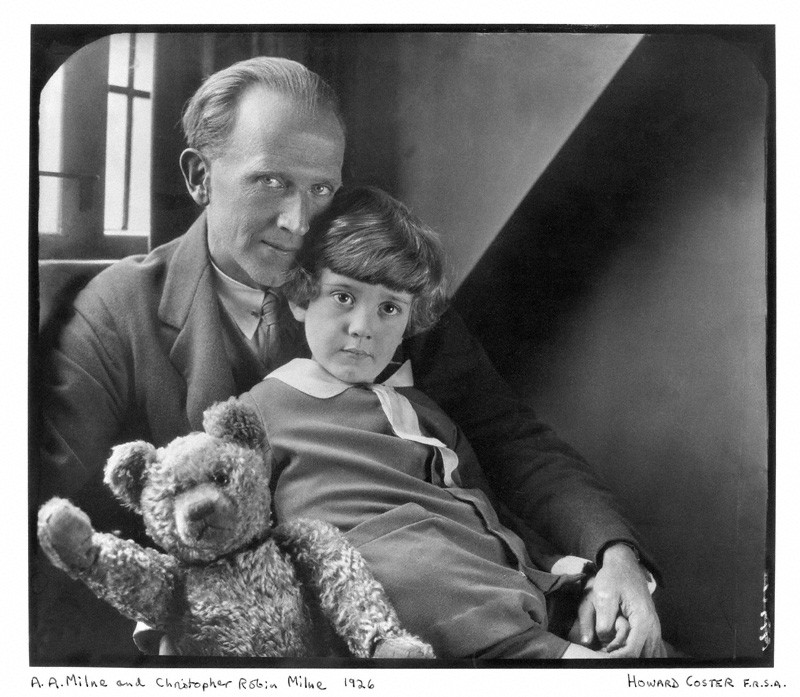
Dorothy Parker lamented the state of children’s literature in the “Books” section, and expressed her displeasure with A.A. Milne, a former humor writer for Punch who “went quaint” with his Winnie the Pooh stories.

screen-shot-2017-01-18-at-9-32-35-am

by Howard Coster, half-plate film negative, 1926
OLD SOFTIE…A. A. Milne with his son Christopher Robin and Pooh Bear, at Cotchford Farm, their home in Sussex, in 1926. Photo by Howard Coster. (npg.org.uk)

 *  *  *

New Game in Town

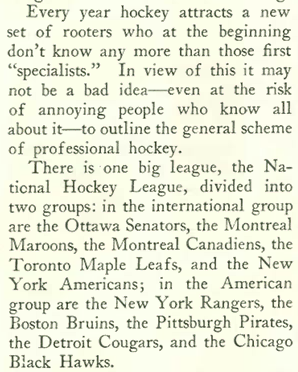
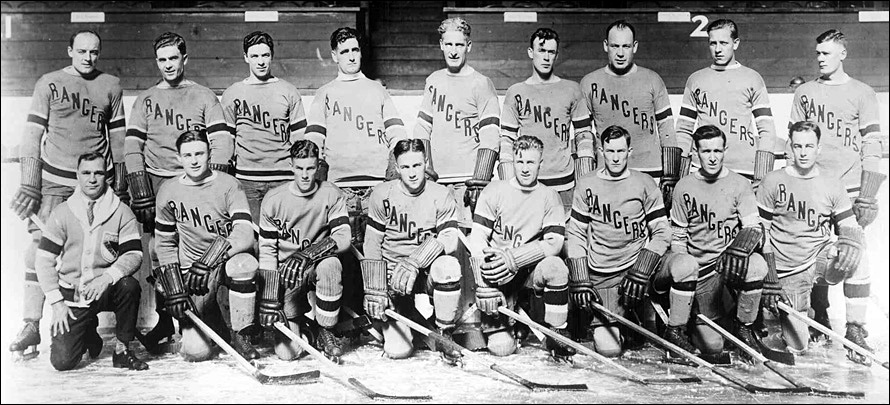
Niven Busch Jr. wrote about the growing popularity of professional hockey. Tex Rickard’s two-year-old franchise, the New York Rangers, were a major draw at the new Madison Square Garden (they would win the Stanley Cup in their second year), and even Texans were into the sport–Busch noted that a game between Dallas and Fort Worth teams drew 20,000 spectators.

screen-shot-2017-01-19-at-9-05-43-am

192728_lg
ICE MEN…Stanley Cup winners, the 1927-28 New York Rangers. (rangers.ice.nhl.com)

 *  *  *

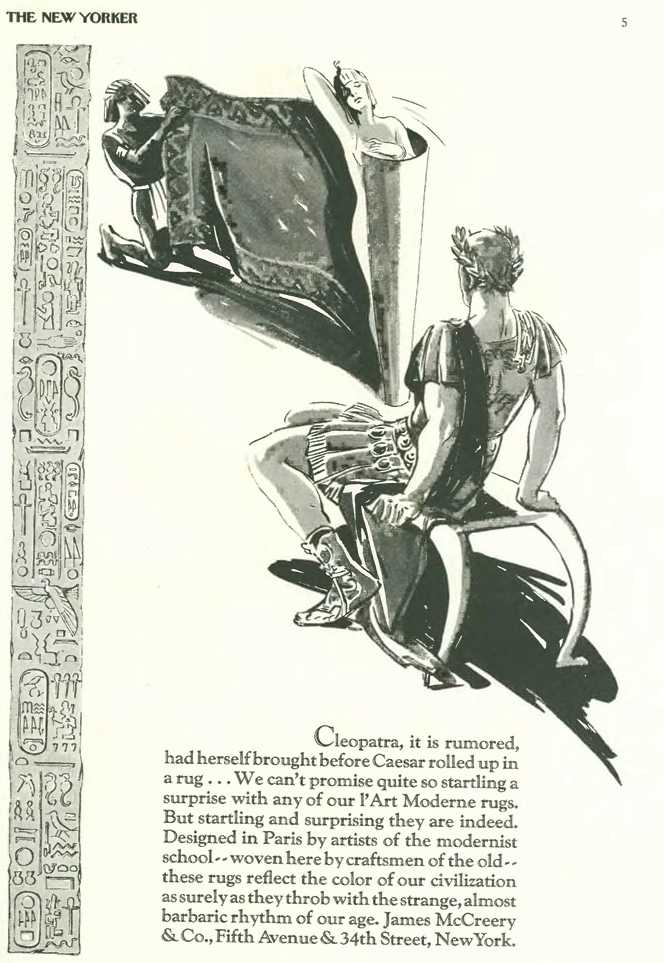
And finally, from the world of advertising, here is one in a series of classically themed ads for the McCreery department store…
screen-shot-2017-01-10-at-12-32-37-pm

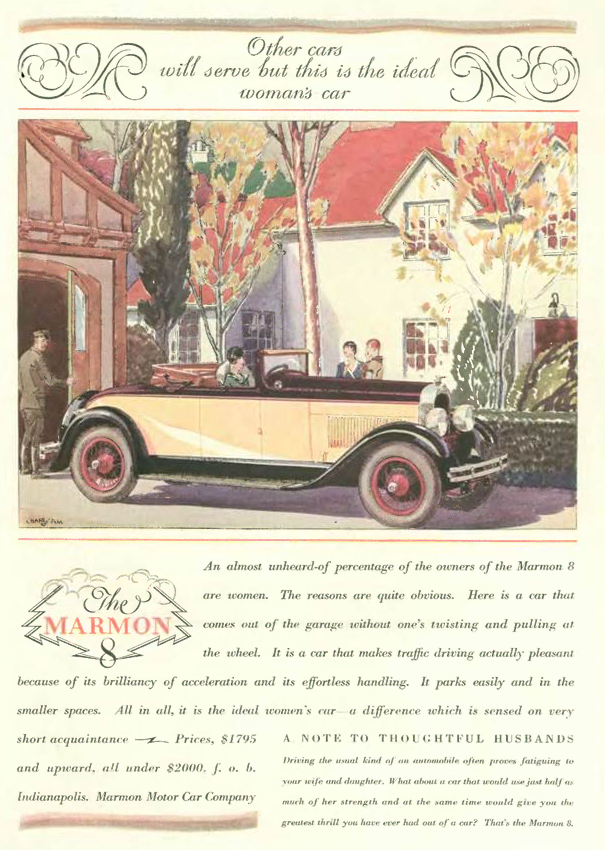
…and this advertisement for the Marmon 8, an “ideal woman’s car”…
screen-shot-2017-01-17-at-9-12-50-am

Next time: Mutt & Jeff…

b68f7029982159e66d4478b3e80316ef

Death Avenue Days

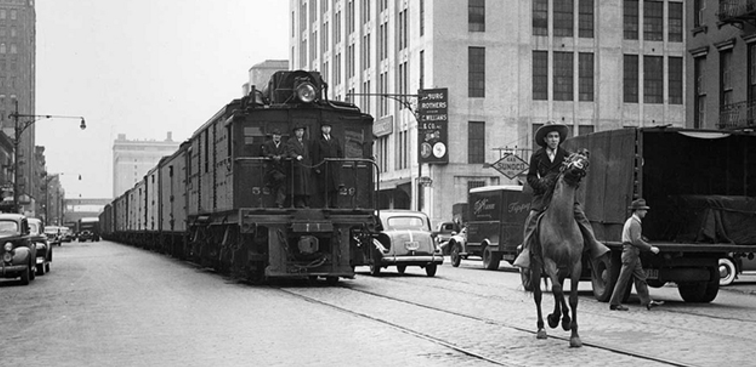
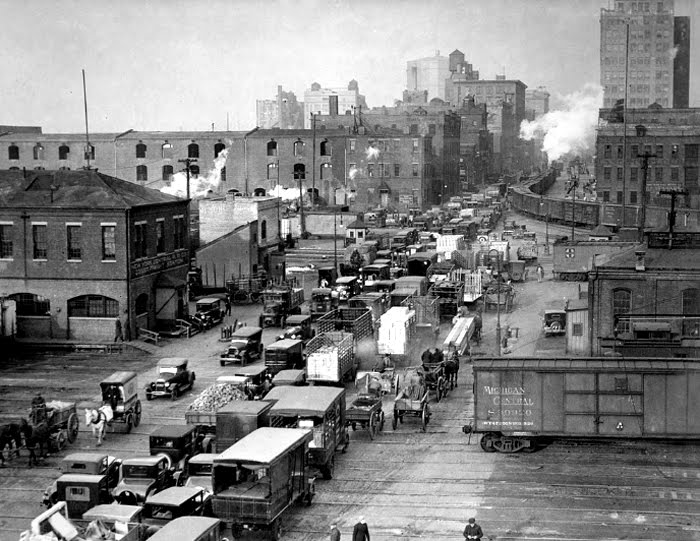
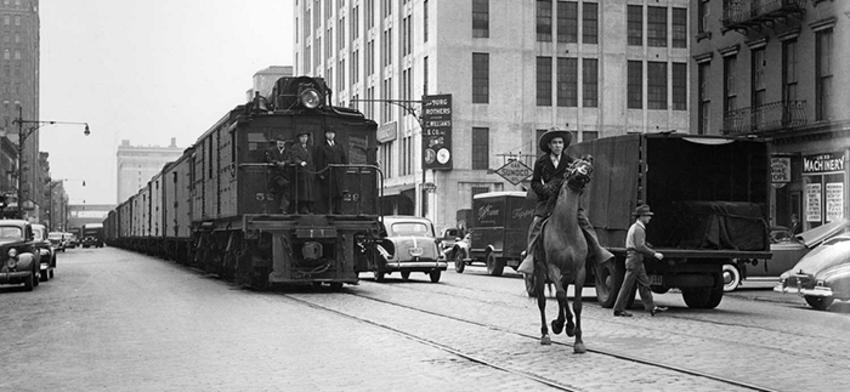
Before the elevated tracks were constructed in the early 1930s in Manhattan’s west side warehouse district (home of today’s popular “High Line”), freight trains rumbled through the city–at street level–on “Death Avenue.”

8b6d47f5480e534755b5a03ab5ea97a4
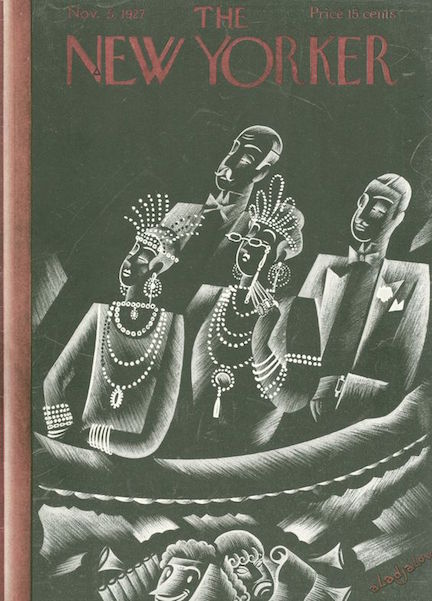
November 5, 1927 cover by Constantin Alajalov.

Freight trains were introduced to the west side warehouse district in 1846, which was a bad plan from the very start. Block-long trains would run through cross streets and congested traffic, maiming and killing along the way.

11and41
ON YOUR LEFT!…Both diesel and steam locomotives rumbled along Manhattan avenues well into the 20th century. Pictured is a freight train at 11th and 41st Street. Eleventh was known as “Death Avenue.” (Forgotten NY)

According to Friends of the High Line, “an 1892 New York World article referred to the trains as ‘a monster which has menaced them night and day,’ and by 1908 the Bureau of Municipal Research claimed that since 1852, the trains had killed 436 people. A New York Times piece from the same year reported that in the preceding decade there had been almost 200 deaths, mostly of children.”

caption-1death-avenue
MIXED USE…This circa 1920 photo shows the congestion that occurred when freight trains, horse-drawn carts, cars, and pedestrians used the same streets. (Kalmbach Publishing Company)
the-history-of-death-avenue_list_image
SHOWDOWN…Beginning in 1850, the West Side Cowboys rode ahead of oncoming trains to ensure the safety of people on the street, although statistics show that some pedestrians did not heed the warnings. (Friends of the High Line)

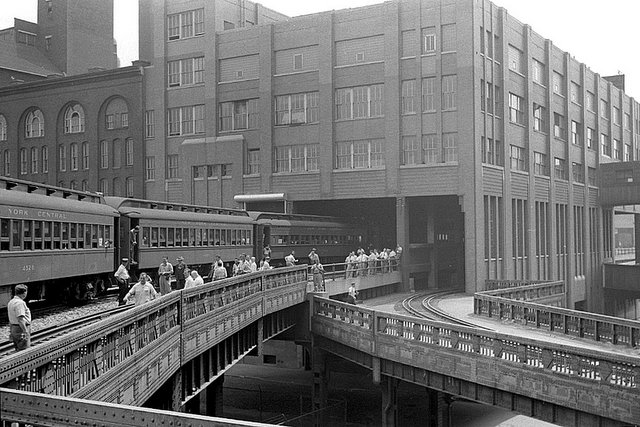
The safety issues on Death Avenue were finally addressed in 1929 when city and state officials reached an agreement with New York Central Railroad to move the rail above street level. New elevated tracks opened in 1934 were novel in the way they bisected city blocks, unloading cargo directly into buildings in the district.

high-line-chelsea-meatpacking-nabisco-factory-chelsea-market
BETTER…The elevated tracks served warehouses including one for the National Biscuit Company (Nabisco), pictured above, which today houses another popular High Line attraction, the Chelsea Market. (Friends of the High Line)
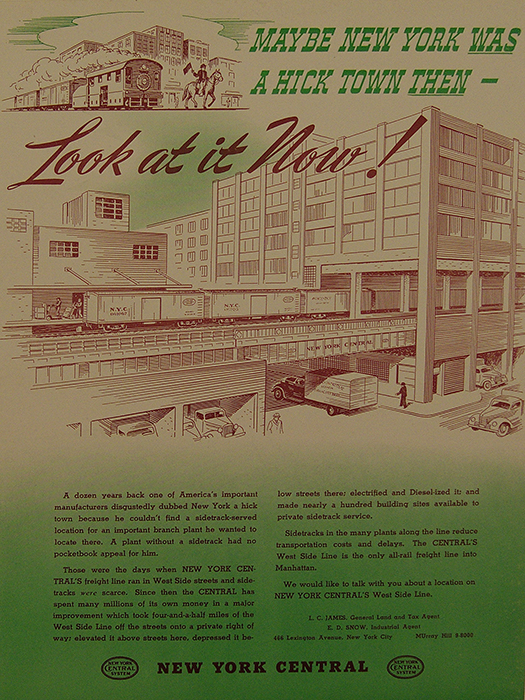
hick-town-10172013
A New York Central Railroad advertisement touting the benefits of its elevated West Side Line, which today supports a unique and popular urban park–the High Line. (Friends of the High Line)

The elevated West Side Line’s unique design also complements the current use of the tracks–the High Line, one of New York’s most popular tourist draws and a widely successful example of urban reuse and renewal. Today few visitors to the High Line are aware that the peaceful oasis they now enjoy was once a dangerous and chaotic place that was home to the aptly named Death Avenue…

image_3_1436827707
NOT SO BAD, THIS…Visitors to the High Line enjoy a peaceful oasis above the former “Death Avenue.” (Friends of the High Line)

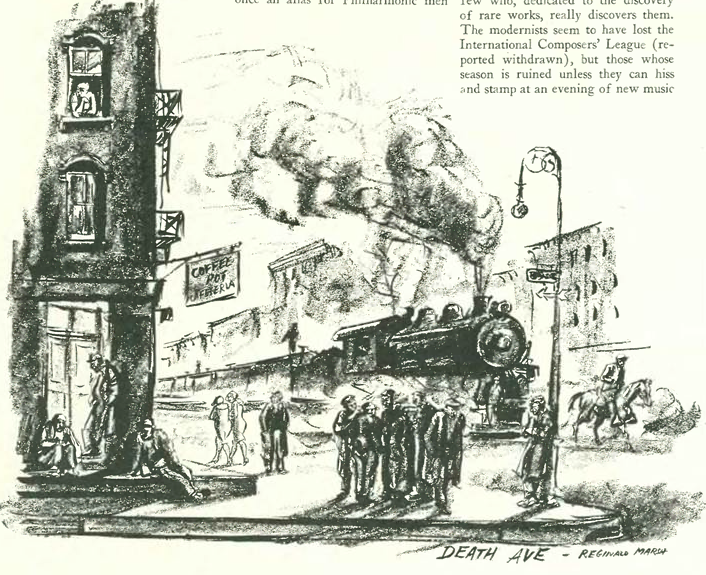
What prompted my interest in Death Avenue was this illustration by Reginald Marsh in the Nov. 5, 1927 issue of The New Yorker:

screen-shot-2017-01-10-at-8-35-23-am

Marsh (1898-1954) joined The New Yorker as one of its first cartoonists, and stayed there for seven years. He was practically born an artist, growing up in an artists’ colony in New Jersey where his father worked as a noted muralist and his mother made watercolors. After graduating from Yale he went to work of the Daily News, where he contributed sketches of vaudeville acts and illustrated a column titled “People We’d Like to Kill but Don’t.”

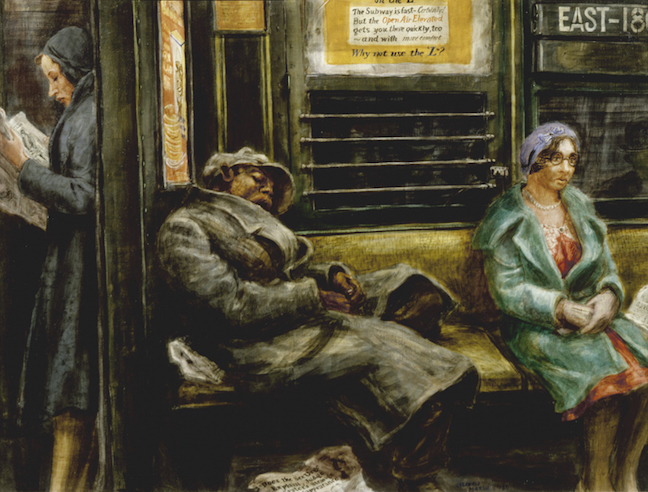
Described as a “Social Realist” painter, Marsh studied painting at the Art Students League, where the prevailing theme was life among the working poor, the unemployed, and the homeless, especially after the market crash in 1929…

31-293_marsh
WHY NOT USE THE “L”?…the title of a 1930 work by Reginald Marsh. (Whitney Museum of Art)
m3y34958
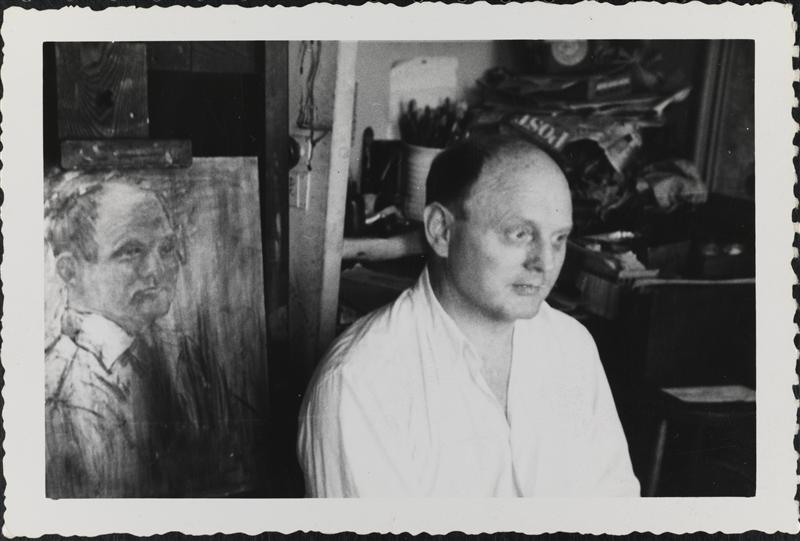
SELF REFLECTION…Reginald Marsh with one of his self-portraits, circa 1938. (Museum of the City of New York)

*  *  *

Write What You Know

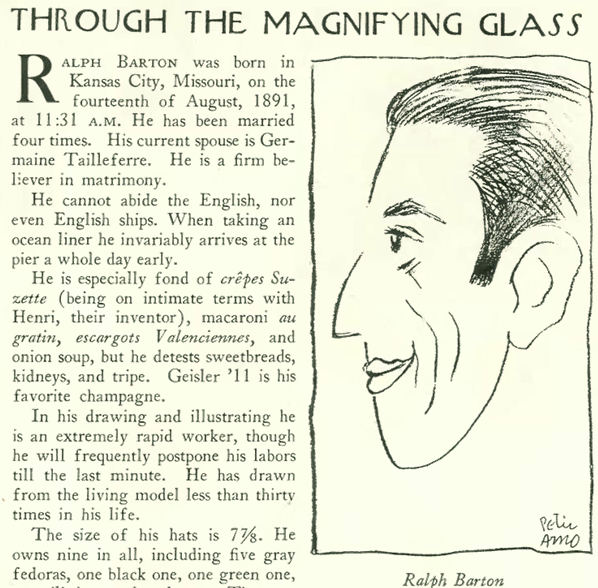
Among other items in the Nov. 5, 1927 issue was this profile written by Charles Shaw of fellow New Yorker contributor (artist and writer) Ralph Barton. An excerpt, with sketch by Peter Arno...

charles-g-shaw-profile

By Any Other Name

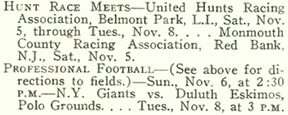
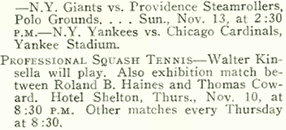
As it still does today, The New Yorker listed area happenings in the front section of the magazine, and in the early days the magazine included extensive listings of sporting events. The excerpt below offers various diversions from a “hunt race” to “squash tennis.” There were also professional football games featuring such mighty foes as the New York Giants and the Duluth Eskimos…

screen-shot-2017-01-09-at-12-40-58-pm

screen-shot-2017-01-09-at-12-41-17-pmHope(ful) Chest

Before the age of smart phones, the term “smart” in advertising meant one was on the leading edge of fashion–for aspiring young women this meant all things French–clothes, perfumes, beauty treatments–and for the bride, the all-important trousseaux, or so claimed this advertisement from Franklin Simon & Co. on page five of the Nov. 5 issue…

screen-shot-2017-01-09-at-12-38-23-pm

Couldn’t afford the latest from Paris? In that case you could turn to the back pages of the same issue, where you would find cheaper ads from places like Kathleen, Inc, which sold knock-offs of the latest in haute couture

screen-shot-2017-01-10-at-12-24-03-pm

 *  *  *

And finally, we return to Reginald Marsh, who contributed this cartoon to the Nov. 5 issue…

screen-shot-2017-01-13-at-4-50-08-pm

Next Time: The Shape of Things to Come…

6a4881d9250d214bed267228a8881e08


The Castle Builder

Publisher William Randolph Hearst was a larger-than-life personality who inspired writer Herman Mankiewicz* —an early New Yorker contributor—to pen the screenplay for Orson Welles’s film Citizen Kane.

8ccd85e651ca664aba48a8264a536d7a
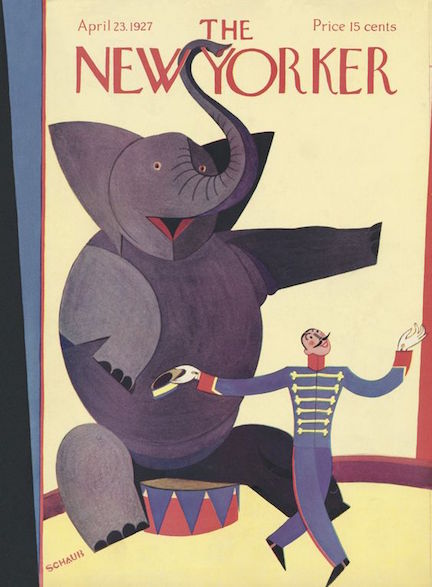
April 23, 1927 cover by Andre De Schaub.

* Stuart Cooke adds this clarification: Herman Mankiewicz did not write the screenplay of Citizen Kane. He contributed to it along with many others. (See Citizen Welles by Frank Brady). However, Welles credited him as the co-writer and at the last minute, graciously put Mankiewicz’s before his in the credits.

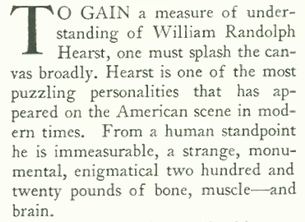
So when the New Yorker featured Hearst in its April 23, 1927 “Profile,” it required five lengthy installments by the writer (and Hearst biographer) John K. Winkler, who began the profile with this observation:

Screen Shot 2016-09-01 at 10.48.03 AM

Hearst_and_Morgan
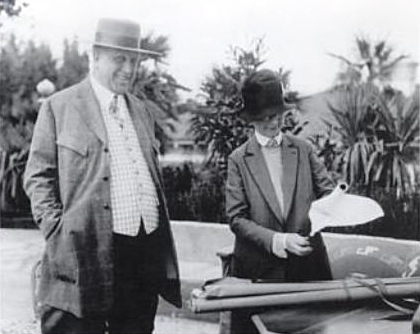
MAKE NO SMALL PLANS…William Randolph Hearst reviews blueprints with Julia Morgan, architect of Hearst Castle, in 1926. (Wikipedia)

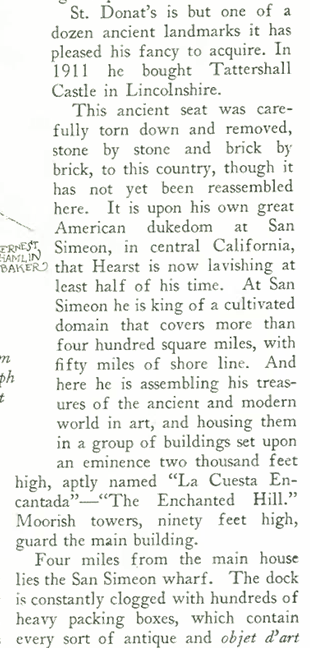
Winkler detailed Hearst’s plunder of European art and architecture—much of it sitting on a wharf below his “castle” at San Simeon on California’s Central Coast—awaiting architect Julia Morgan’s decision on where it might fit into the fabric of what became one of America’s most famous “homes.” Later in the profile Winkler described Hearst’s purchase of St. Donat’s Castle in Wales, and his acquisition of another castle that he had dismantled and shipped to San Simeon.

Screen Shot 2016-09-01 at 10.50.08 AM

920x920
Hearst Castle at San Simeon. (sfgate)
hccparty9
LEGENDARY PARTIES FOR THE LEGENDS…Hollywood actors pose for a photo at one of the famed Hearst costume parties…(back row) Douglas Montgomery, Leslie Howard, Marion Davies, unidentified man; (front row) Bruce Cabot, George K. Arthur, Ramon Navarro & Eileen Perry. (moviemorlocks.com)
3471550307872146b19487864f6cbdc2
HOST & HOSTESS…Hearst and his mistress, actress Marion Davies, at one of their famous San Simeon costume balls (oldloves.tumblr.com)

The mid-1920s to the mid-1930s were glory days at San Simeon. In his Great Hall Hearst “held court” with movie stars and statesmen who also attended famous costume parties hosted by Hearst and actress Marion Davies.

The profile writer, John K. Winkler, would publish two books on Hearst in 1928 and 1955, as well as books on other captains of industry including Andrew Carnegie, John D. Rockefeller, F.W. Woolworth, J. Pierpont Morgan and the DuPont family.

 *  *  *

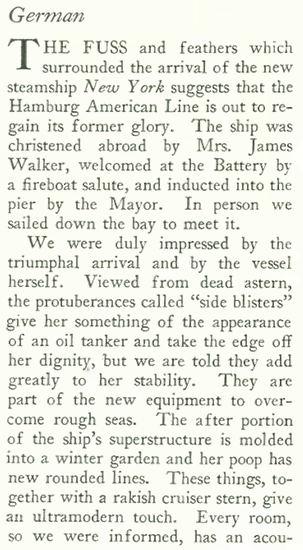
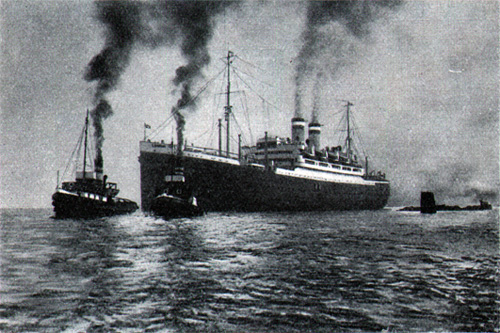
The Germany-based Hamburg America Line had been a major player in moving both passengers and freight between Europe and North America since 1847. In 1914, its passenger flagship, the Vaterland, was caught in port at Hoboken, New Jersey at the outbreak of World War I. She was later seized, renamed Leviathan after the declaration of war on Germany in 1917, and served as a U.S. troopship. So it was significant to European travelers (including many New Yorker readers) that the line was out to regain its former glory with the launch of the New York.

Screen Shot 2016-09-01 at 10.45.15 AM

Screen Shot 2016-09-01 at 10.45.21 AM

FrontCover-250
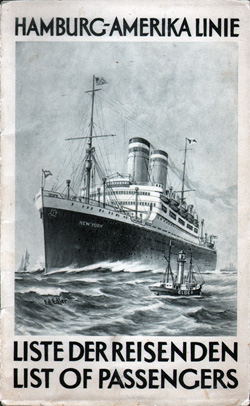
Cover of the passenger list for the, SS New York.
Photo01-DepartureOfTheSteamshipNewYork-500
Photo of the departure of the steamship SS New York.

 * * *

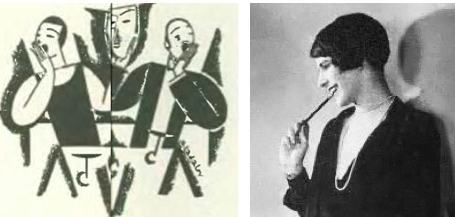
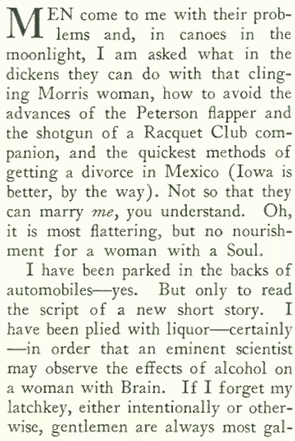
Lois Long chronicled nightly escapades of drinking, dining, and dancing for The New Yorker in her column “Tables for Two,” and she often teased her readers about her true identity. Although in reality she was young (26), attractive and a big partier, she often described herself to readers as a bit of wallflower, or a “short squat maiden of forty.” When her marriage to cartoonist Peter Arno was announced in August 1927, her true identity was revealed.

Long seemed to be growing bored with New York nightlife, as evidenced by shorter “Tables” columns (the feature would go on hiatus in 1930) while her fashion column—On and Off the Avenue—took on more importance. In her “Tables” column for the April 23, 1927 issue, she devoted most of it to yet another playful deception for her readers.

Screen Shot 2016-09-02 at 10.26.29 AM
The artwork that accompanied Lois Long’s “Tables for Two” column often featured this pair of bored nightclub patrons. Long, with stylish bob, shown during her New Yorker days in the 1920s.

Screen Shot 2016-09-01 at 10.58.52 AM

Screen Shot 2016-09-01 at 10.59.01 AM

This time she portrays herself as a bookish spinster…

Screen Shot 2016-09-01 at 10.59.14 AM

Screen Shot 2016-09-01 at 10.59.51 AM

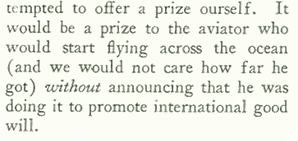
In other diversions, “Talk of the Town” made this mention of the Orteig Prize, a reward offered to the first aviator to fly non-stop from New York City to Paris or vice versa. Of course we know Charles Lindbergh would capture the prize the following month (and six others would die trying):

Screen Shot 2016-09-01 at 10.40.59 AM

Screen Shot 2016-09-01 at 10.41.09 AM

In advertising, the issue featured this promotion for radio station WOR. Broadcast radio was in its infancy in 1927, and this is one of the first ads of its kind to appear in The New Yorker:

Screen Shot 2016-09-01 at 10.35.57 AM

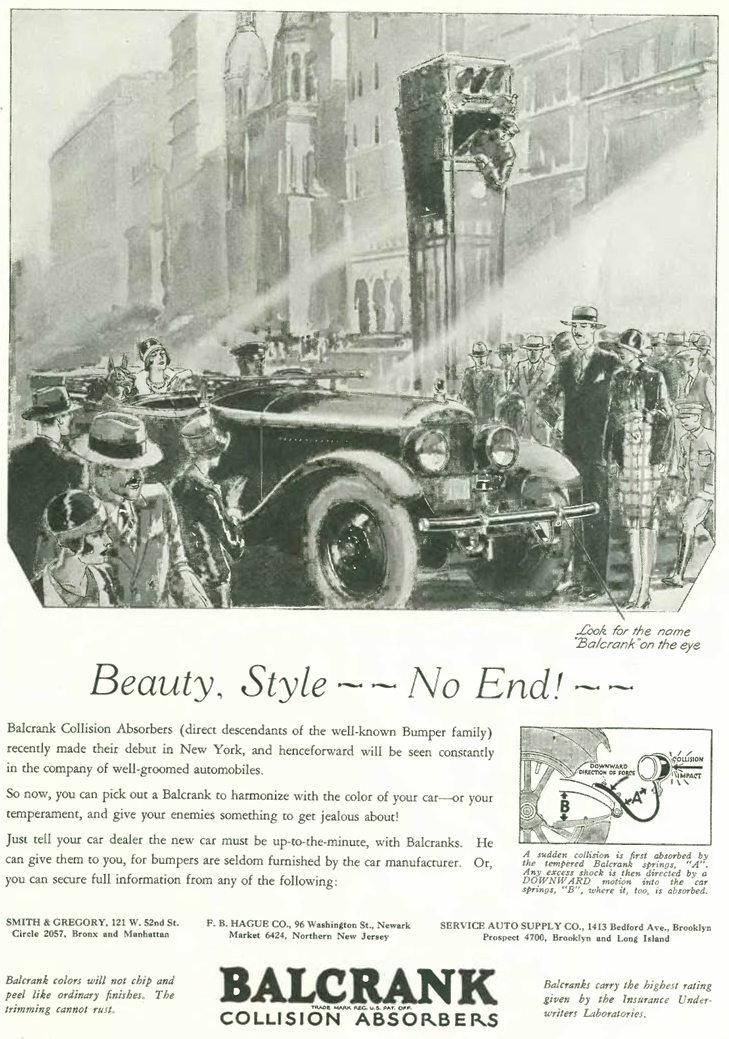
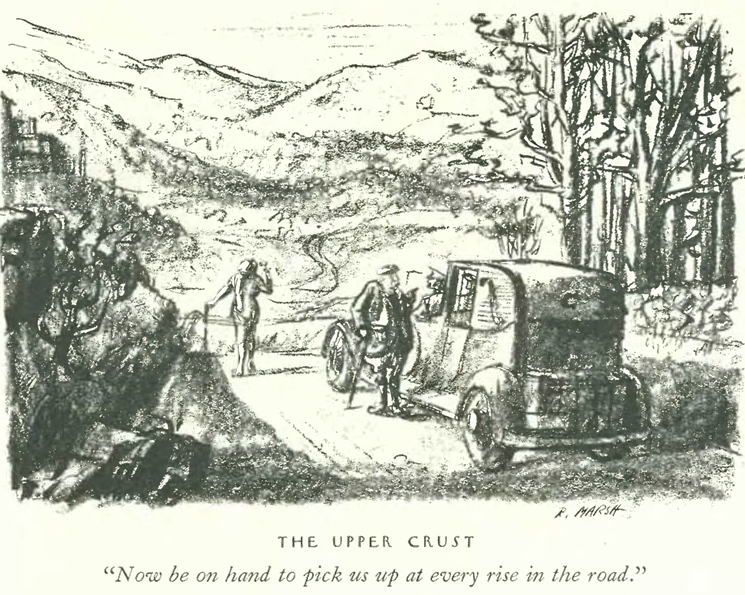
The following advertisement for Balcrank auto bumpers tells you a lot about the bourgeois New Yorker reader it is trying to reach. It suggests the addition of these bumpers to your car will lend an upper class touch people will admire and notice—everyone from the traffic cop in the signal tower to the smart couple who seem to be inches away from having their feet run over.

I love the smug expression worn by the female passenger. Of course the actual old money upper class wouldn’t see this ad—they could care less about bumpers or literature—and would be reading Town & Country, the Social Register, or nothing at all. Funny how the early New Yorker loved to tweak the nose of the upper class, all the while running ads that appealed to a grasping bourgeois desire for status. The bumper ad says it all.

Screen Shot 2016-09-01 at 10.37.56 AM

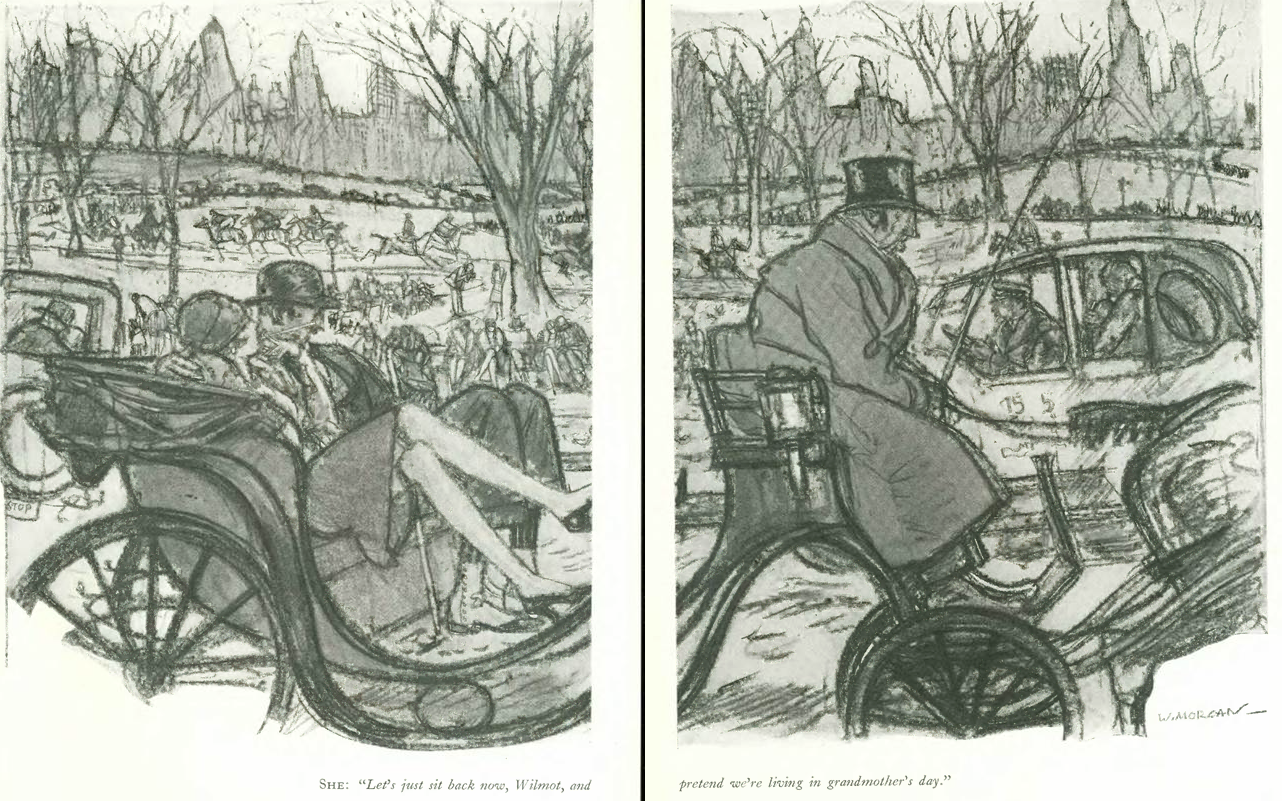
The issue included this cartoon by Wallace Morgan, set in Central Park. Displayed across a two-page spread, the caption reads: SHE: “Let’s just sit back Wilmot, and pretend we’re living in grandmother’s day.” (click to enlarge)

Screen Shot 2016-09-01 at 10.52.43 AM

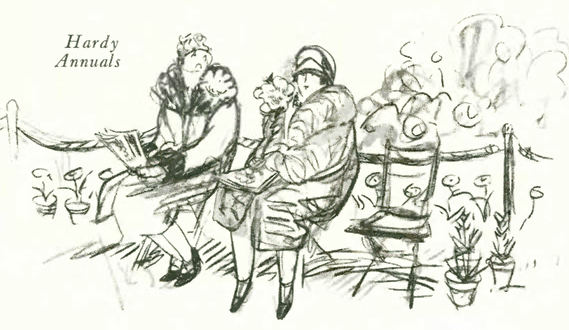
And finally, the Barnum and Bailey Circus was in town, so we end with this cartoon by Carl Rose:

Screen Shot 2016-09-01 at 10.47.03 AM

Next Time: Unfit to Print…

e83e83f37e5b2787e23dd4ee7a85c62d

The Garden City

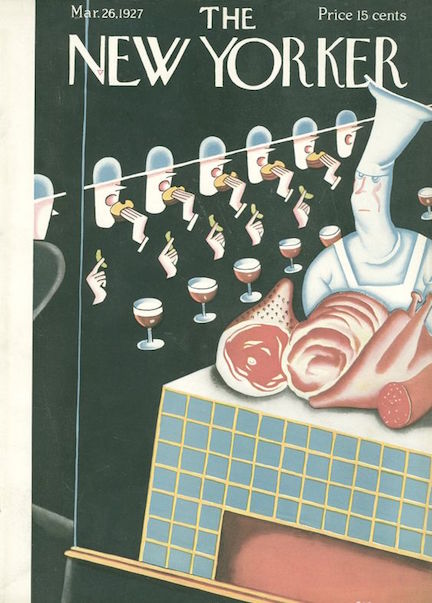
The last days of winter on the streets of 1920s Manhattan — remnants of snow and slush mixed with coal soot and car exhaust — were quickly forgotten with the advent of spring. The New Yorker (March 26, 1927) turned its attention to more pleasant diversions including the annual Madison Square Garden flower show…

232025ffa678f70369b2642ceae085d0
March 26, 1927 cover by unknown artist.

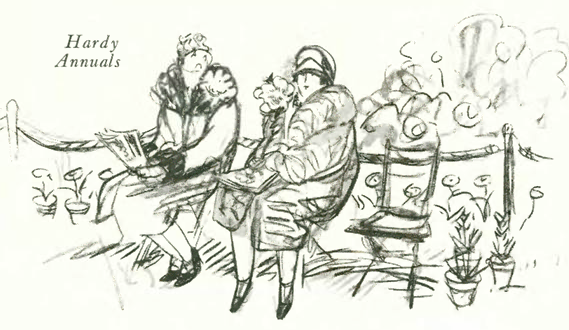
…and to the people it attracted, rendered in illustrations for “The Talk of the Town” by Alice Harvey

Screen Shot 2016-08-12 at 11.41.40 AM

Screen Shot 2016-08-12 at 11.41.53 AM

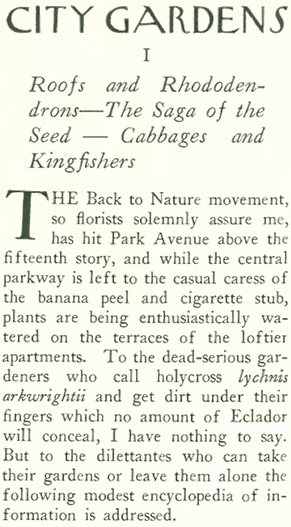
Backyard gardens and window boxes also welcomed spring, as did a two-part feature that offered helpful advice to amateur urban gardeners. An excerpt:

Screen Shot 2016-08-12 at 12.02.45 PM

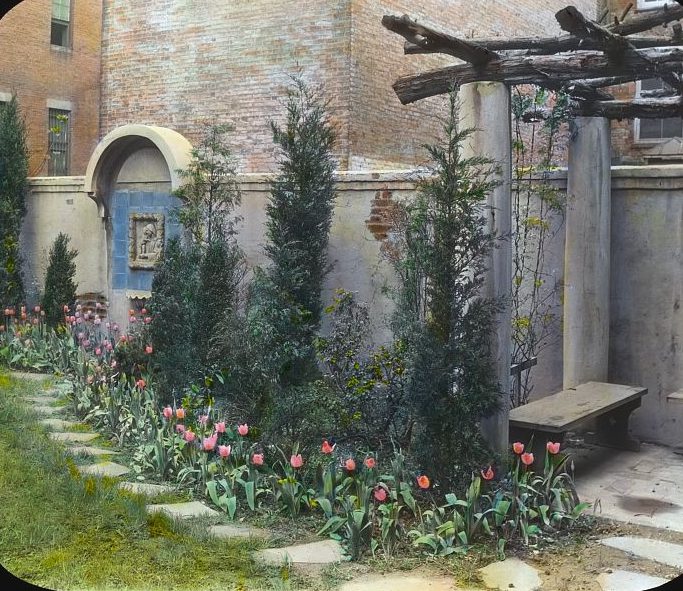
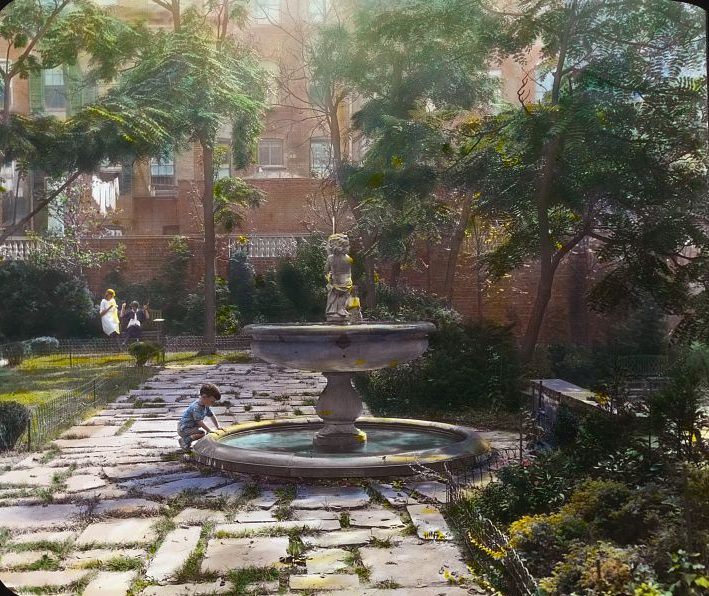
No doubt the writer saw something akin to what we can see in Frances Benjamin Johnston’s rare color photographs of backyard gardens in the early 1920s Manhattan (all photos courtesy Library of Congress):

turtle-bay-secret-gardens-nyc
Turtle Bay Gardens, 227-247 East 48 Street and 228-46 East 49 Street. View east to common garden.
Ingalls
George Hoadly Ingalls house, 154 East 78 Street.
Stafford
Laura Stafford Stewart house, 205 West 13th Street.
jones-wood-nyc
“Jones Wood” townhouses, north terrace fountain.

 * * *

Let’s look at a couple of advertisements from March 26 issue…why fight the crowds on the commuter train? — you could live a life of ease and convenience in the new Tudor City…

Screen Shot 2016-08-12 at 12.06.34 PM

…and perhaps you could afford a car almost as prestigious as a Cadillac…introducing the new LaSalle, manufactured by Cadillac but priced lower to “satisfy that other great market”…

Screen Shot 2016-08-12 at 11.59.47 AM

For industrial design buffs, the 1927 LaSalle in many ways marked the beginning of modern American automotive styling. The LaSalle line, designed by Harley Earl, would be eliminated in 1940, but Earl’s career as the man in charge of design at General Motors would last into the late 1950s.

Earl was a pioneer in auto design, one of the first to use modeling clay to develop forms for cars. He also established an “Art and Color Section at GM,” a radical notion at a time when American automobile manufacturers paid little attention to the appearance of automobile bodies, which were merely engineered for functionality and cost.

Earl also pioneered the idea of planned obsolescence in cars (which he termed “Dynamic Obsolescence”) in which annual model changes were used to induce sales. It was Earl who convinced GM to build a sports car—the Corvette—and it was Earl who also oversaw the introduction of the tail fin—culminating in the 1959 Cadillac—the year he retired from GM.

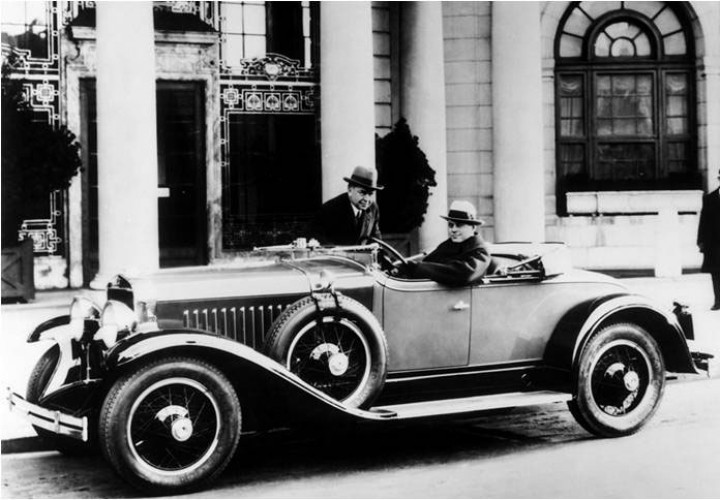
In the course of just 32 years, Earl’s designs went from this…

1926-Harley-Earl-at-the-wheel-of-a-1927-LaSalle-Series-303-Roadster-720x500
Harley Earl at the wheel of a 1927 LaSalle Series 303 Roadster. (carbodydesign.com)

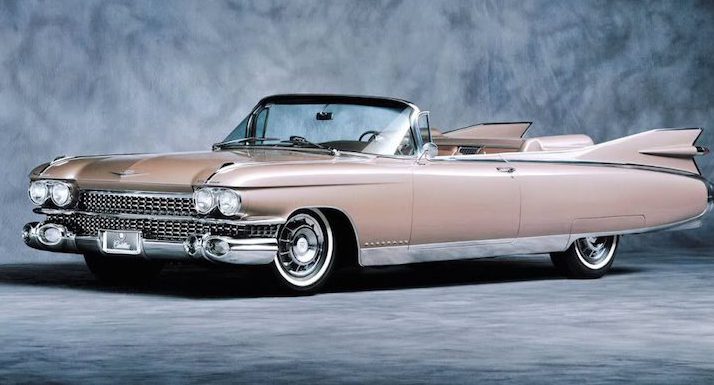
…to this…

1959-Cadillac-Eldorado-1024
Harley Earl’s swan song, a 1959 Cadillac Eldorado. (photobucket.com)

Next Time: Dinosaurs of Upper West Side…

deb15aac127a5a9b06b890362c4878a1

Those Jaunty Jalopies

The January 8, 1927 issue of the New Yorker was all over the 27th Annual Motor Show at the Grand Central Palace, both in its lengthy review of the show and the many automobile ads throughout its pages.

02a20a11df95c233092dc64bfc8f2b3c
January 8, 1927 (Issue # 99) cover by Ilonka Karasz.

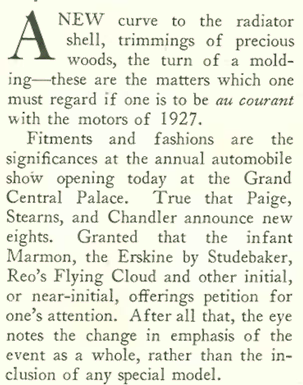
Auto manufacturers discovered early on that cars didn’t need to advance technologically from year to year as long as there were superficial changes–trimmings and such–to dazzle the consumer:

Screen Shot 2016-06-02 at 3.29.54 PM

Screen Shot 2016-06-02 at 3.29.13 PM
Helen Hokinson added this touch to the issue devoted to the auto show.
1927_Roadster_Model-90
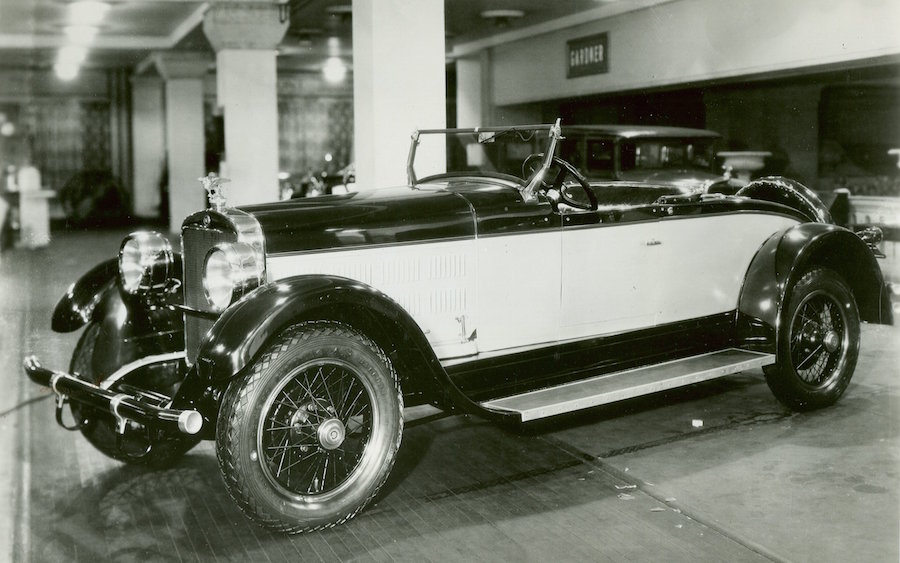
A 1927 Gardner Model 90 Roadster on display at the 27th Annual New York Motor Show at Grand Central Palace. (gardnermotorcars.com)

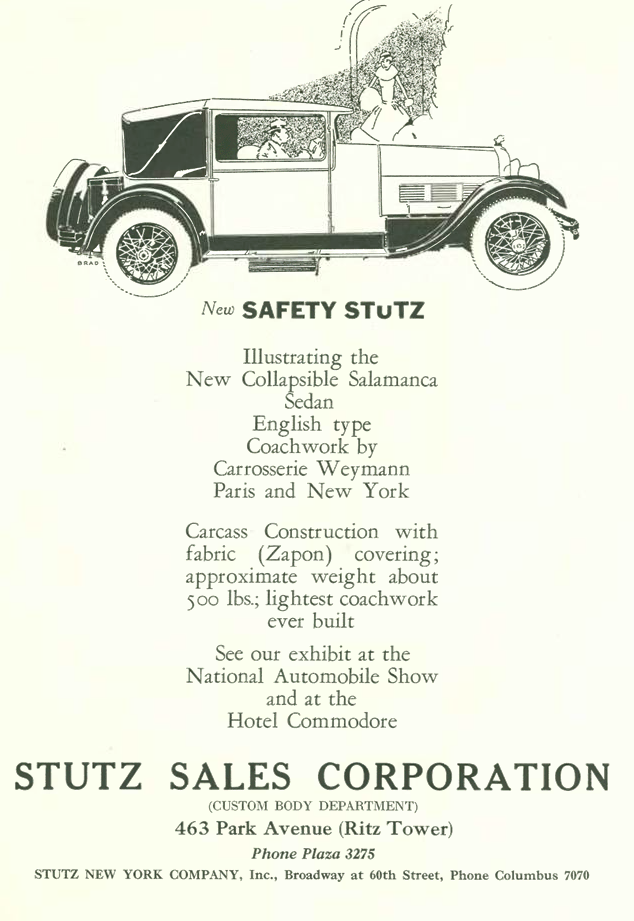
Advertisements in the New Yorker ranged from snobbish appeals to Francophiles…

Screen Shot 2016-06-02 at 3.32.48 PM…to those who might be concerned about safety. Although cars weren’t very fast, they were fast enough to kill, and their plentiful numbers often overwhelmed a city with rudimentary traffic control.

Screen Shot 2016-06-02 at 3.32.07 PM

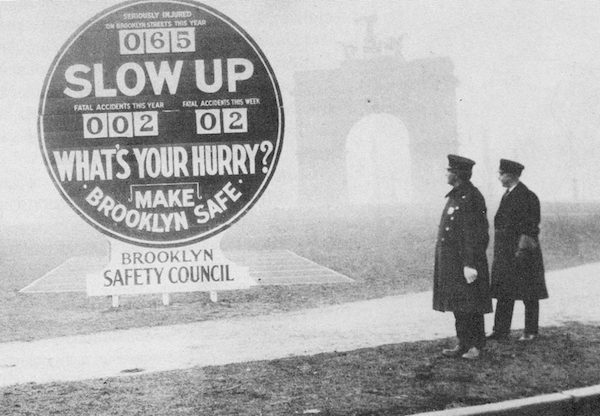
In his book, One Summer: America, 1927, Bill Bryson writes that New York in 1927 was the most congested city on earth. It contained more cars than the whole country of Germany, while at the same 50,000 horses (and wagons) still clogged the streets. More than a thousand people died in traffic accidents in the city in 1927, four times the number today.

slowupbrooklyn
THE DEATH-O-METER … was a 20-foot sign installed near Grand Army Plaza in 1927. It tallied traffic accidents and fatalities in the borough and reminded motorists to slow down at the traffic circle. (Ephemeral New York)

Traffic control was still in its infancy in the 1920s. Seven ornate bronze towers, 23 feet high, were placed at intersections along Fifth Avenue from 14th to 57th Streets starting in 1922. By 1927 smaller, simpler lights were mounted on street corners and the system of green, yellow and red was generally adopted.

491px-62646_253114161496208_2059581299_n_zpsf6a62b6c
Bronze traffic signal tower designed by Joseph H. Freedlander at 42nd Street and Fifth Avenue, 1922. (stuffnobodycaresabout.com)

Keeping with the motorcar theme, the issue also featured a profile (written by Lurton Blassingame) of Walter P. Chrysler, founder of the new car company that bore his name (Chrysler founded his company in June 1925 after acquiring and reorganizing the old Maxwell Motor Company). In just three years a famous New York City landmark bearing his name would pierce the skyline.

I recently noted that the fall 1926 editions of the New Yorker barely mentioned baseball, even though the Yankees made it to the World Series that year. No doubt the Black Sox scandal of 1919 still lingered in the minds of many fans. Morris Markey’s “Reporter at Large” column in the Jan. 8, 1927 issue suggested that the game, “no more important than the circus,” was still dishonest, thanks in part to its collusion with the newspapers:

Screen Shot 2016-06-02 at 3.27.58 PM

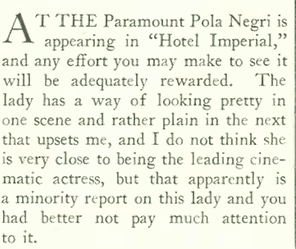
Baseball might have been down and out, but actress Pola Negri still maintained her place in the spotlight with her latest film, Hotel Imperial.

Screen Shot 2016-06-02 at 3.36.15 PM

zoom_1418768545_hotel_imperial@2x
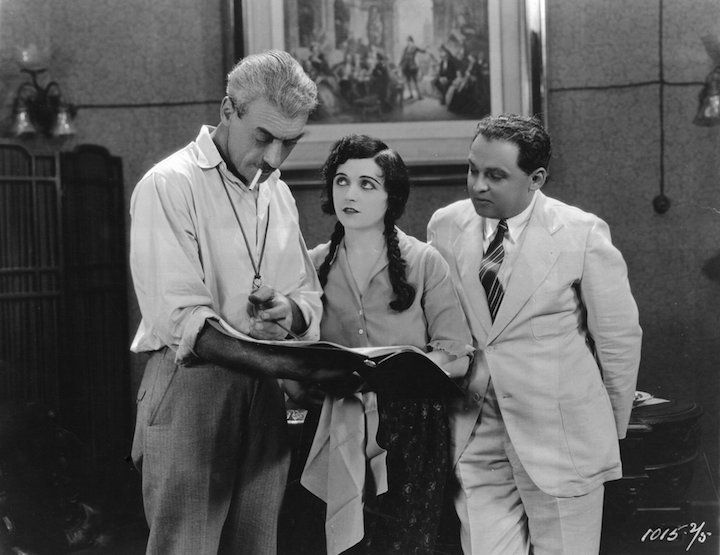
Actress Pola Negri consults on a script with director Mauritz Stiller (left) on the set of Hotel Imperial. (MOMA)

Next Time: Bad Hootch…

8d2aebbb715d1dad58142be9b1bce88f

A Changing Sky Line

Although architectural criticism was practiced by a rare few in 1926 (and even fewer today), it was prominent in the pages of The New YorkerLewis Mumford famously served as the magazine’s critic from the 1930s to the 1950s, and longtime critic Paul Goldberger took over the magazine’s “Sky Line” column from the mid-90s to 2011.

c37832e544c79a83494d91ea68c0329b
October 16, 1926 cover by Constantin Alajalov.

In 1926 George S. Chappell served the magazine as architecture critic under the pseudonym “T-Square.” A rare combination of architect, parodist, and journalist, he was perhaps best known for his travel series parody published under the pseudonym “Walter E. Traprock.”

In the Oct. 16, 1926 issue, Chappell took critical aim at the “cheap architecture” sprouting amidst the clamor of a rapidly changing landscape…

1

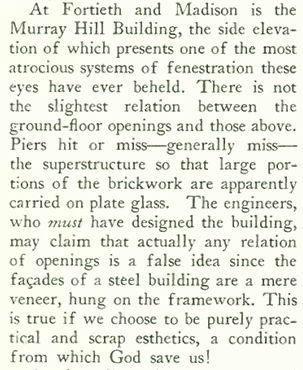
…and referred to the fenestration (the arrangement of windows and doors) of the Murray Hill Building as “atrocious.”

2

MNY329523
The Murray Hill Building. (Museum of the City of New York)
01_big
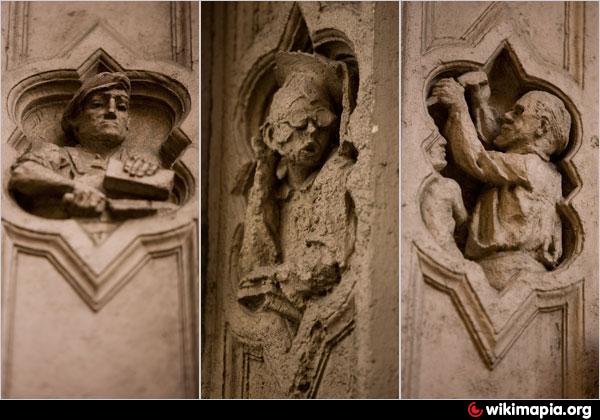
The ground-floor show windows of Murray Hill feature free-hand carvings depicting people in various trades. (Wikimapia)

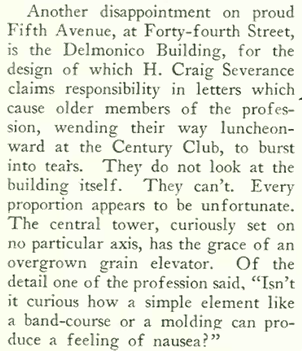
Chappell then set his sights on “another disappointment,” the Delmonico Building, which he said possessed “the grace of an overgrown grain elevator…”

3

Screenshot 2015-05-18 13.19.10
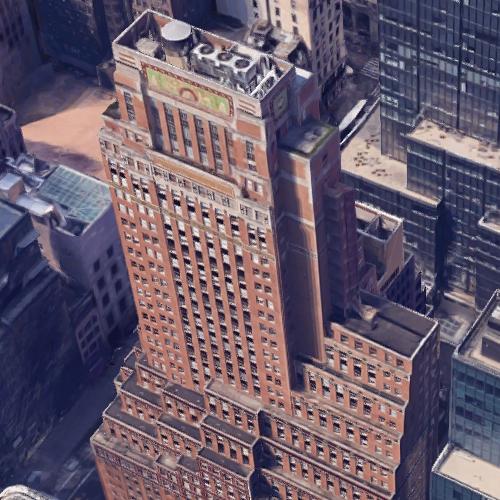
Part of Chappell’s disgust is no doubt attributable to the fact that the beloved old Delmonico Building at Fifth Avenue and 44th Street (left, photo from The Brickbuilder, 1899), was razed in 1925 and replaced by the “overgrown grain elevator” at right. (Google Maps screen image)

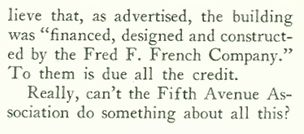
He then moves on to the landmark French Building with its “dreary factory windows”…

4

4.1

The French Building. (Google Maps)
Fred_French_building_entrance
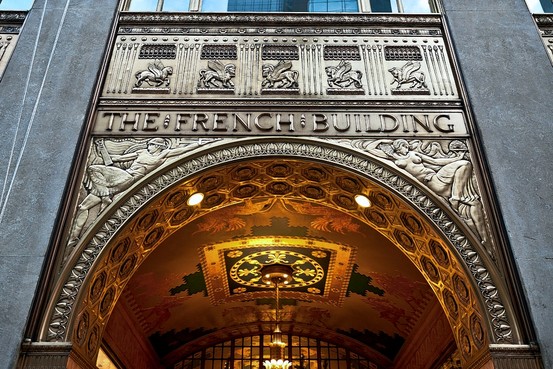
The 5th Avenue entrance to the French Building. (omnidisc)

So what did Chappell prefer? Read on…

5

aeoliean 1-13-1927
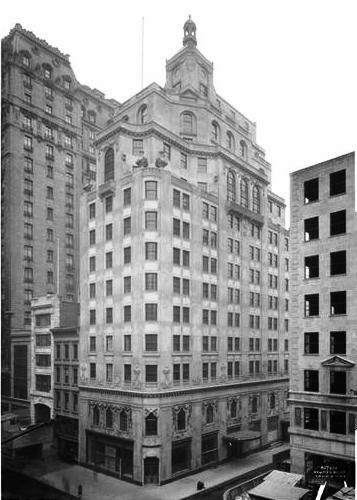
Aeolian Hall on Fifth Avenue, constructed on a site formerly occupied by the William Rockefeller mansion. (Museum of the City of New York)
P2810035
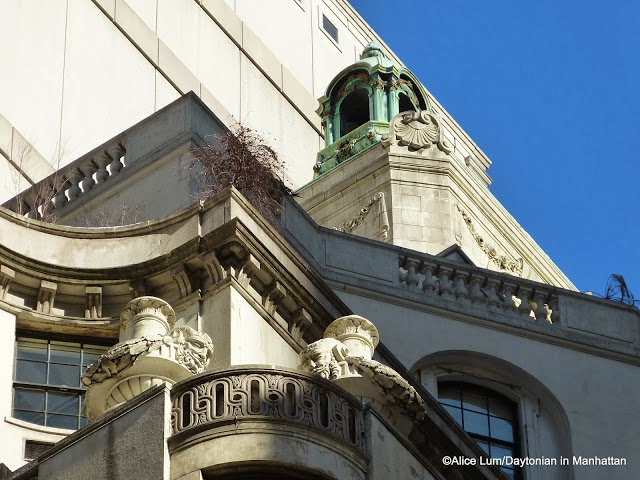
Detail of the upper stories of Aeolian Hall. (Daytonian in Manhattan)
20512108023_f7771faf39_b
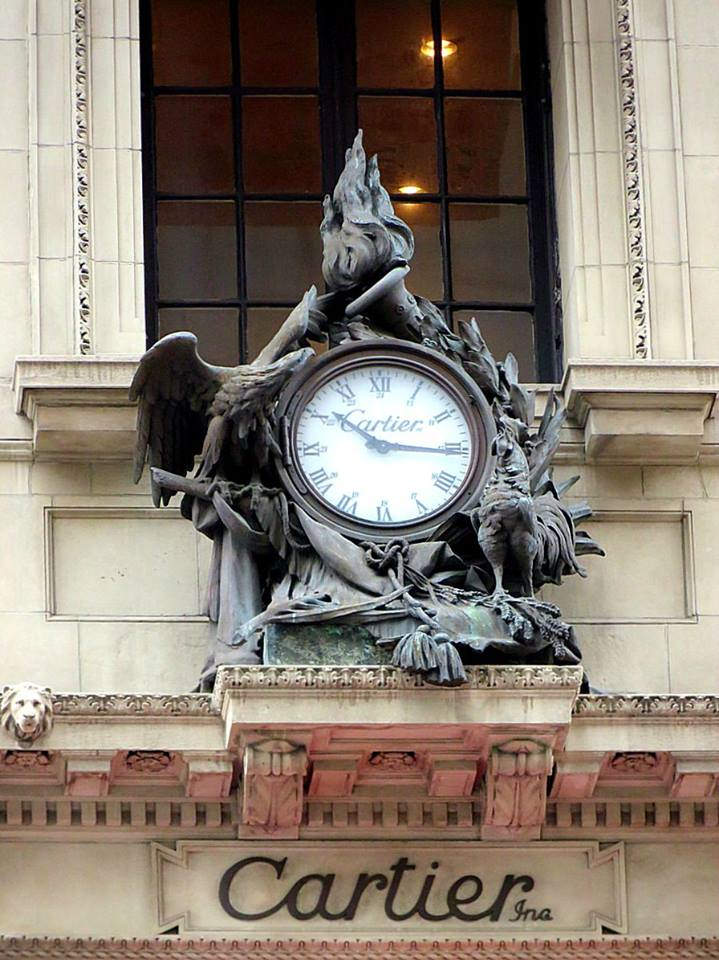
Cartier’s clock on Fifth Avenue (Pinterest)

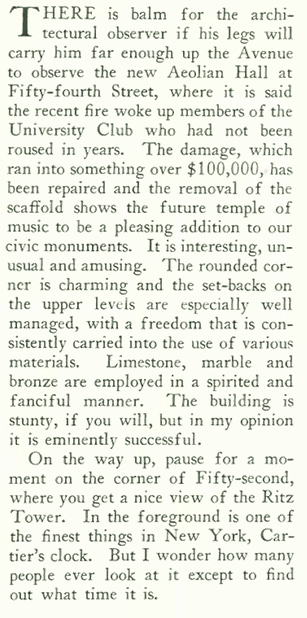
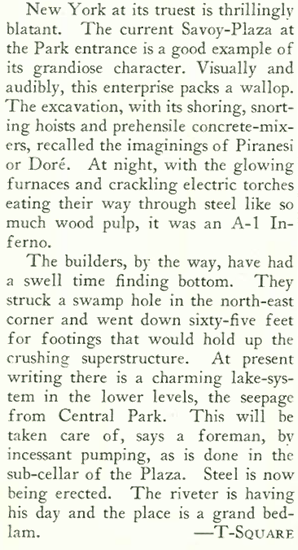
Despite Chappell’s oft disapproving gaze, in the end he (along with other editors and writers at The New Yorker) could not help but be caught up in the thrill of one of the city’s grandest building booms…

7

Other items of note in the Oct. 16 issue, this ad promoting the first-ever “New Yorker book,” a collection of “Profiles” by Waldo Frank, who wrote under the pen name “Search-light”…

Screen Shot 2016-03-31 at 9.55.06 AM

And finally this picturesque ad for Marmon automobiles. The company was defunct by 1933.

Screen Shot 2016-03-31 at 9.55.42 AM

Next time: A Royal Flush…

Screen Shot 2016-03-31 at 9.58.22 AM