Although architectural criticism was practiced by a rare few in 1926 (and even fewer today), it was prominent in the pages of The New Yorker. Lewis Mumford famously served as the magazine’s critic from the 1930s to the 1950s, and longtime critic Paul Goldberger took over the magazine’s “Sky Line” column from the mid-90s to 2011.
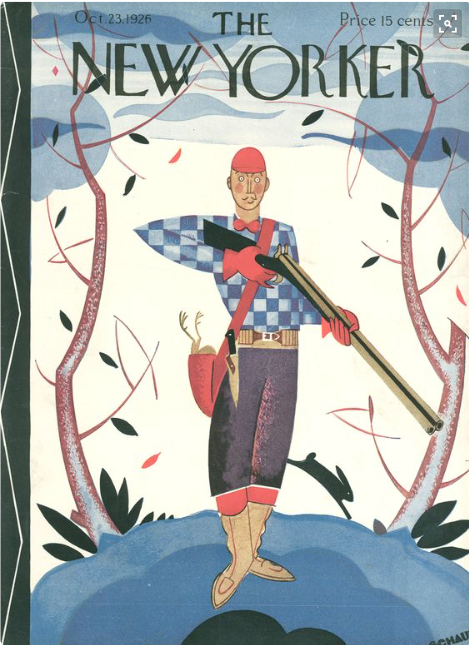
October 16, 1926 cover by Constantin Alajalov.
In 1926 George S. Chappell served the magazine as architecture critic under the pseudonym “T-Square.” A rare combination of architect, parodist, and journalist, he was perhaps best known for his travel series parody published under the pseudonym “Walter E. Traprock.”
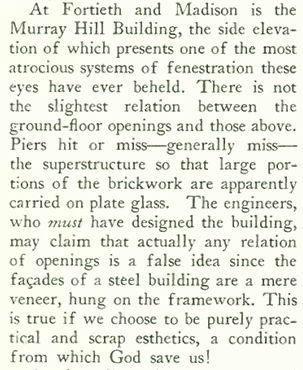
In the Oct. 16, 1926 issue, Chappell took critical aim at the “cheap architecture” sprouting amidst the clamor of a rapidly changing landscape…
…and referred to the fenestration (the arrangement of windows and doors) of the Murray Hill Building as “atrocious.”
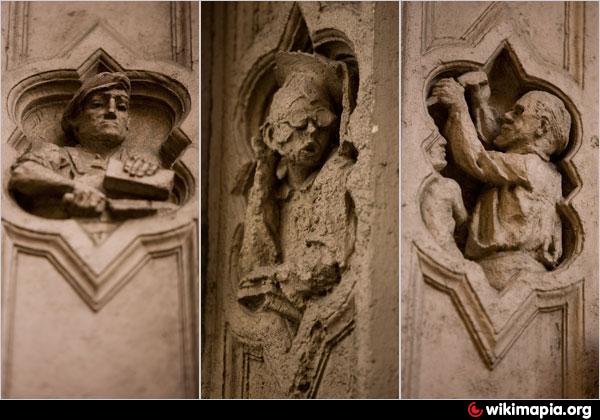
The Murray Hill Building. (Museum of the City of New York)The ground-floor show windows of Murray Hill feature free-hand carvings depicting people in various trades. (Wikimapia)
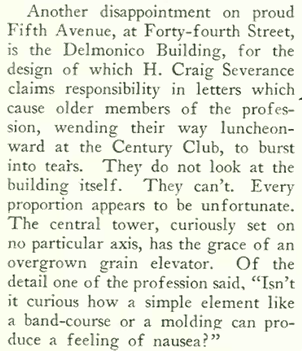
Chappell then set his sights on “another disappointment,” the Delmonico Building, which he said possessed “the grace of an overgrown grain elevator…”
Part of Chappell’s disgust is no doubt attributable to the fact that the beloved old Delmonico Building at Fifth Avenue and 44th Street (left, photo from The Brickbuilder, 1899), was razed in 1925 and replaced by the “overgrown grain elevator” at right. (Google Maps screen image)
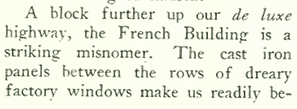
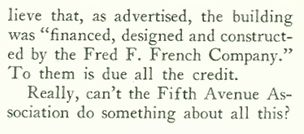
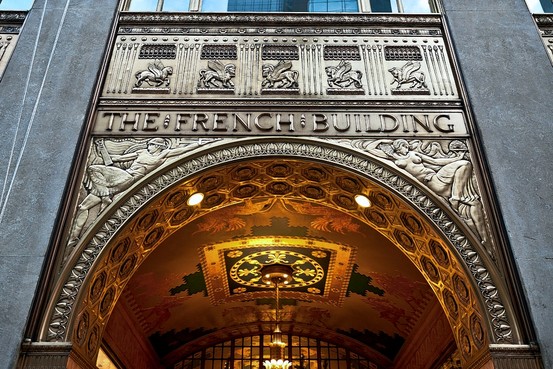
He then moves on to the landmark French Building with its “dreary factory windows”…
The French Building. (Google Maps)The 5th Avenue entrance to the French Building. (omnidisc)
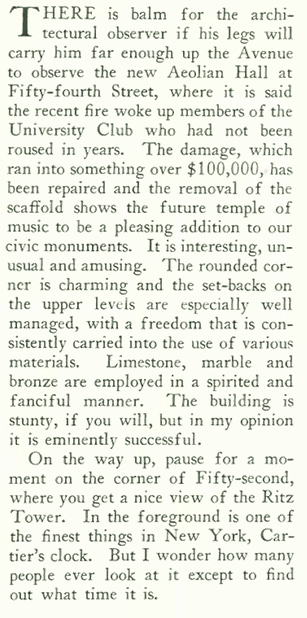
So what did Chappell prefer? Read on…
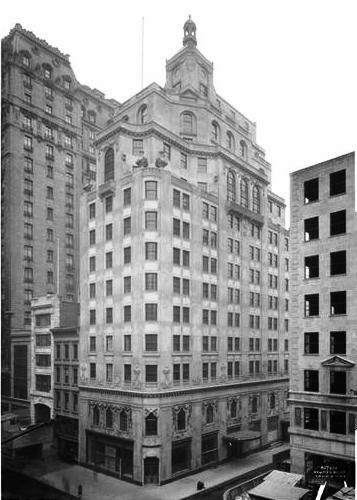
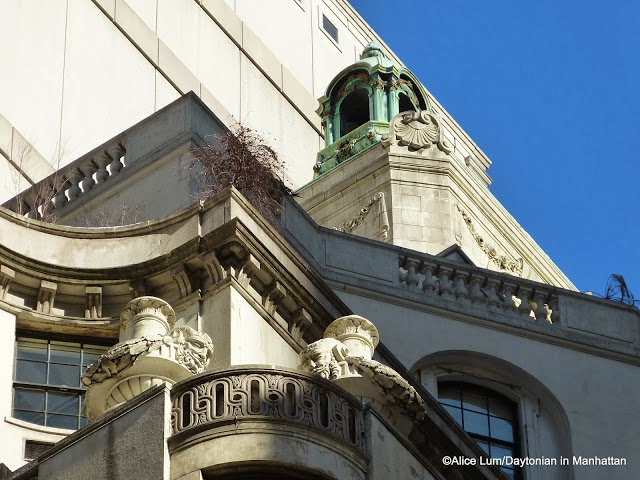
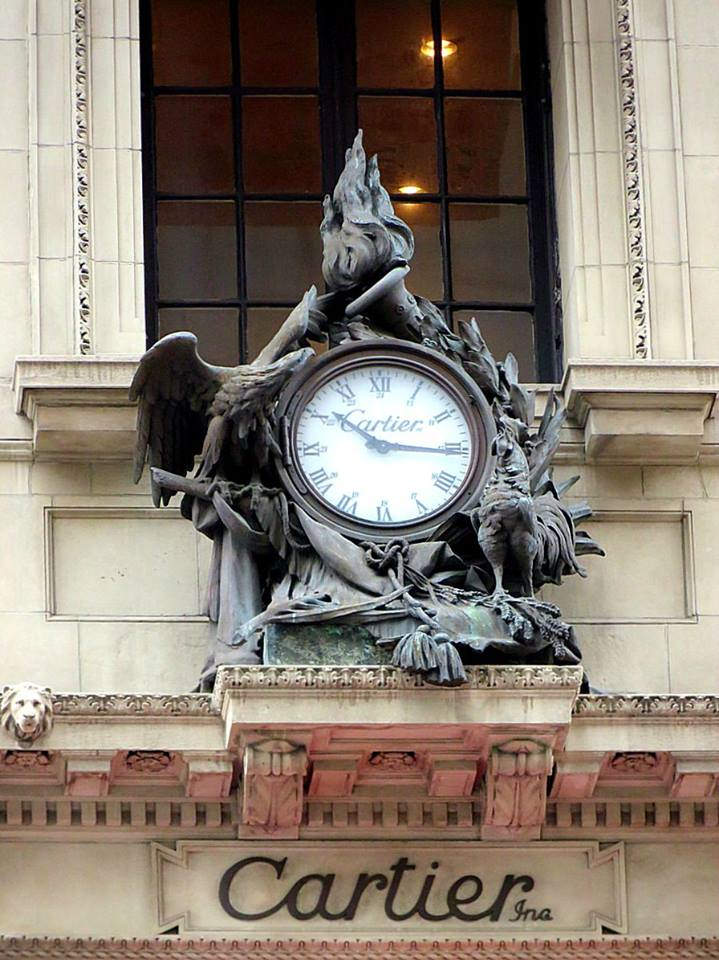
Aeolian Hall on Fifth Avenue, constructed on a site formerly occupied by the William Rockefeller mansion. (Museum of the City of New York)Detail of the upper stories of Aeolian Hall. (Daytonian in Manhattan)Cartier’s clock on Fifth Avenue (Pinterest)
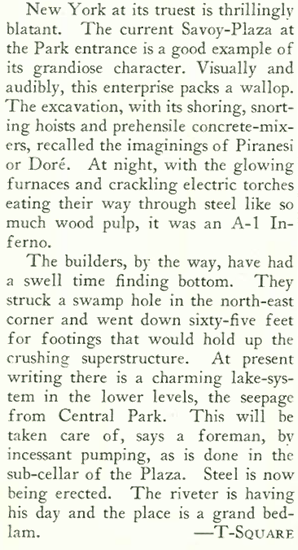
Despite Chappell’s oft disapproving gaze, in the end he (along with other editors and writers at The New Yorker) could not help but be caught up in the thrill of one of the city’s grandest building booms…
Other items of note in the Oct. 16 issue, this ad promoting the first-ever “New Yorker book,” a collection of “Profiles” by Waldo Frank, who wrote under the pen name “Search-light”…
And finally this picturesque ad for Marmon automobiles. The company was defunct by 1933.
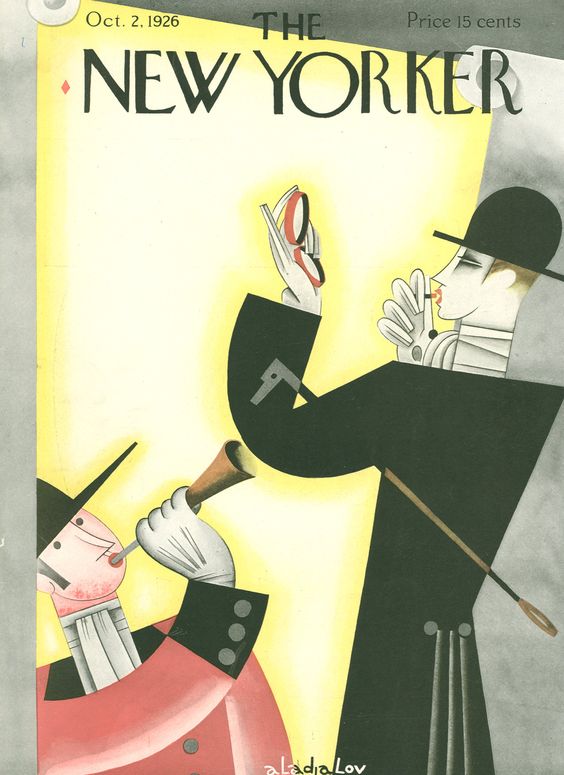
We skip ahead to the Oct. 2, 1926 issue to look at one of the big events of that year–the Dempsey-Tunney heavyweight prize fight (I’m not skipping issues…Sept. 25 appears later in this blog).
Oct. 2, 1926 – Issue # 85 – Cover by Constantin Alajalov. (Once again, note the ongoing comic reference to androgyny in 20’s fashion)
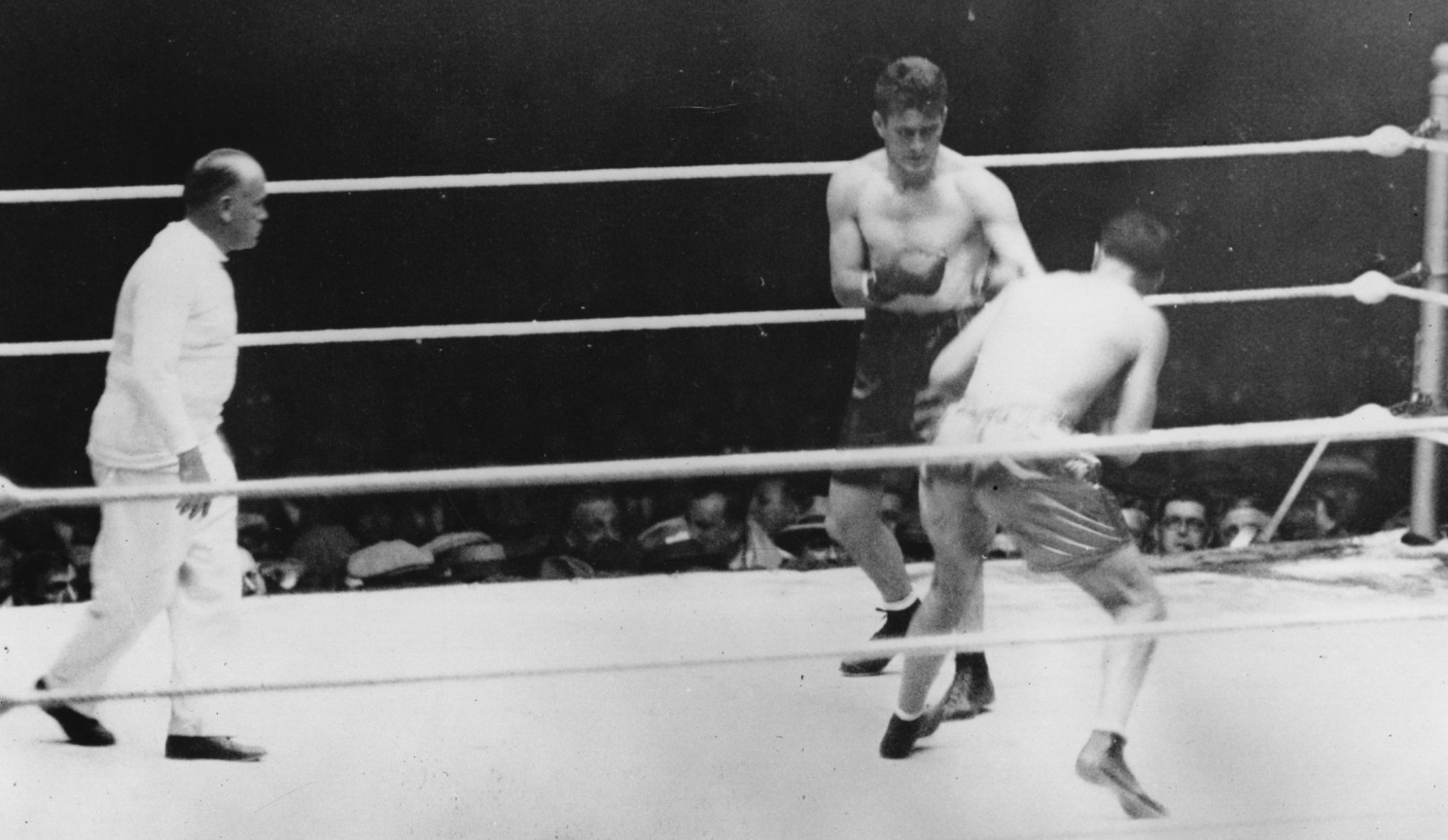
Heavyweight boxing was a big part of the American sports scene in the 1920s, and two giants of the sport, Jack Dempsey and Gene Tunney, dominated the headlines in the late 1920s thanks to much-heralded bouts in Philadelphia in 1926 and a rematch in Chicago the following year (which would include the famous “long count” incident).
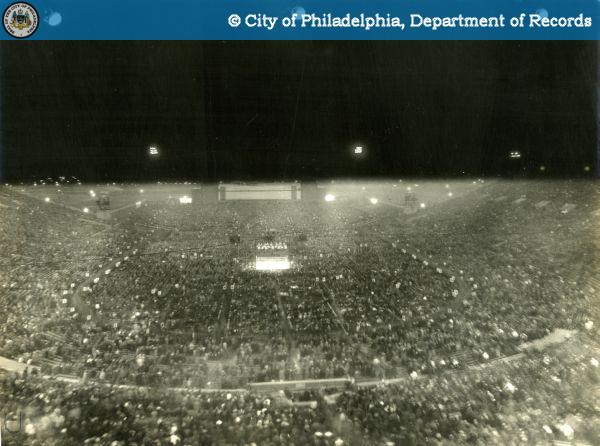
An estimated 135,000 fans packed Sesquicentennial Stadium in Philadelphia for the Dempsey-Tunney bout. (NYTimes)
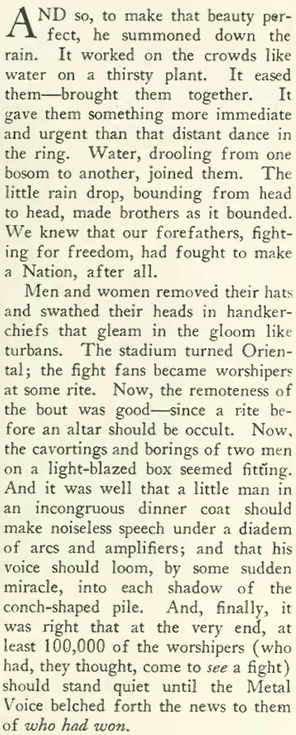
The New Yorker joined in on the hoopla, publishing a lengthy account of the match by Waldo Frank (aka “Search-light”), who trained his jaded eye on the whole affair:
VIEW FROM THE CHEAP SEATS…a rain-soaked throng at the Dempsey-Tunney fight in Philadelphia. (City of Philadelphia)
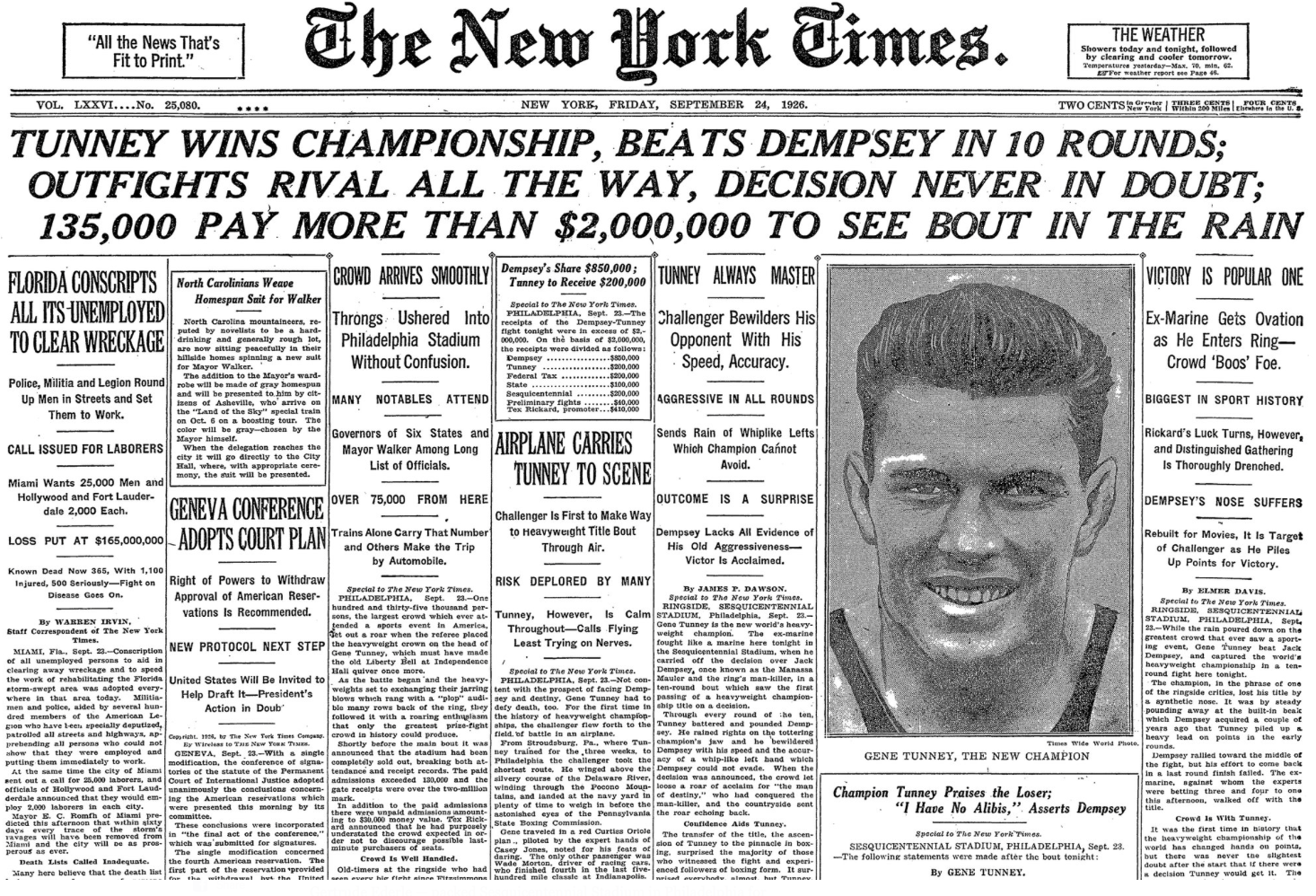
According to the New York Times, the crowd included such notables as Charlie Chaplin, cowboy movie star Tom Mix and the English Channel swimmer Gertrude Ederle.
Coverage of Tunney’s victory by unanimous decision took up three-quarters of the front page of The New York Times, and also filled most of pages 2 through 7. (The New York Times)
But in typical fashion, Waldo was less than dazzled, finding the rain an apt metaphor for a spectacle mostly unseen by those in attendance:
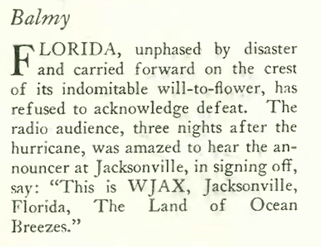
Never one to wallow in tragedy, the magazine made a brief (and oddly droll) reference in “The Talk of the Town” to a hurricane that hit Miami and its environs (it killed 372 people and injured more than 6,000):
Other items of note in the issue included this examination of country vs. city life by cartoonist Barbara Shermund…
…and this cartoon by Al Frueh commenting on the challenges of Manhattan’s rapidly changing cityscape:
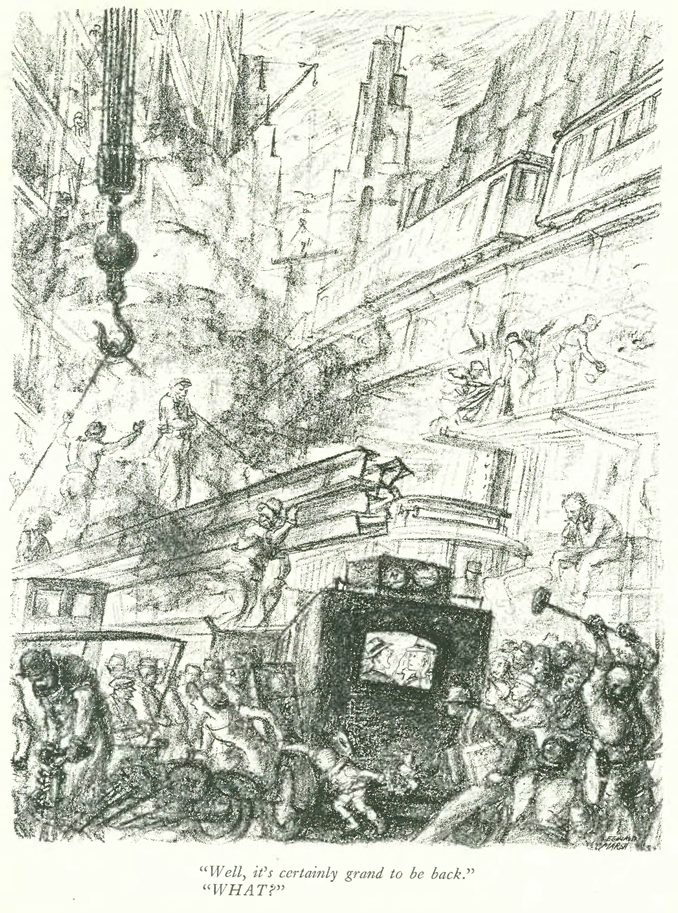
The changing city was also on the mind of Reginald Marsh in this illustration he contributed to the Sept. 25, 1926 issue of the magazine:
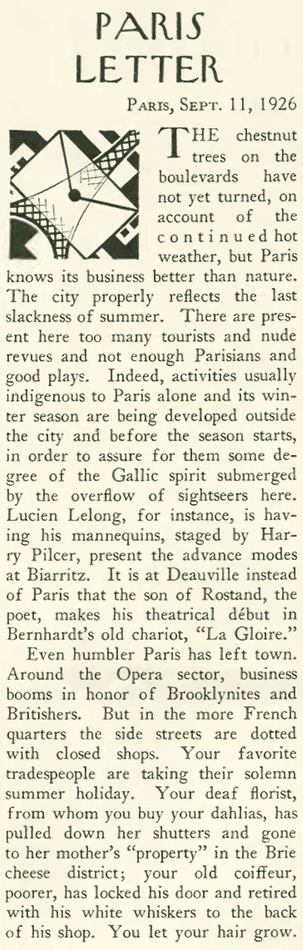
Back to the Sept. 25 issue, which featured an update from Paris correspondent Janet Flanner…
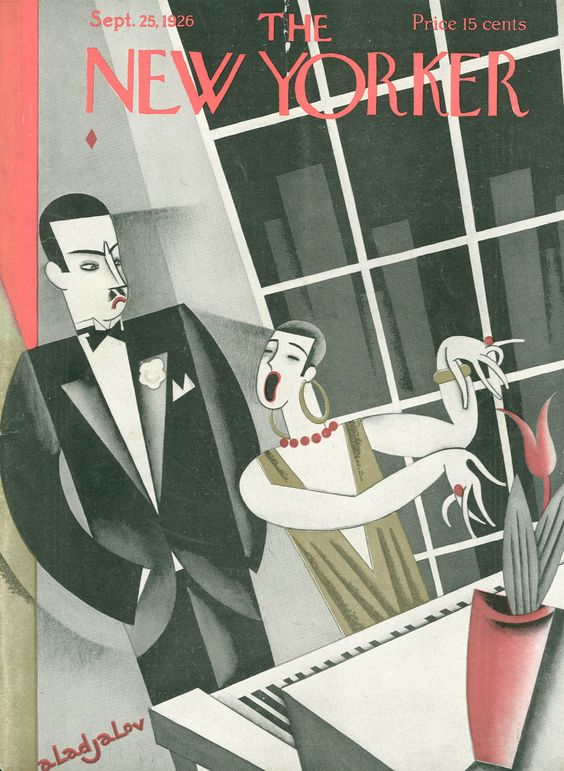
Sept. 25, 1926 – Issue # 84 – Cover by Constantin Alajalov.
…who commented on the large number of American tourists crowding the city just as the locals were fleeing for their long, late summer holidays:
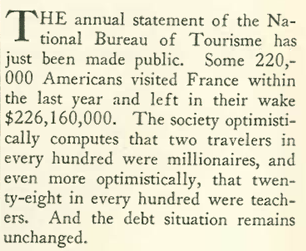
She offered some numbers to back up her observations:
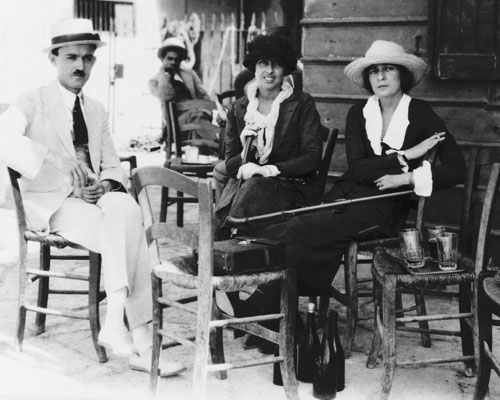
Janet “Genêt” Flanner (right) and longtime companion Solita Solano (center) in Paris, 1921. Solano was a well-known writer and drama critic for the New York Tribune. (Vintage Everyday)
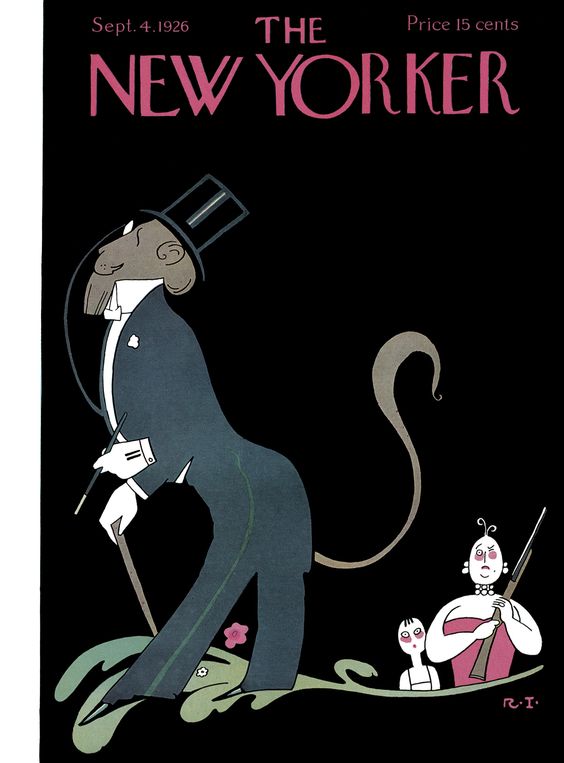
And finally, a cartoon by Rea Irvin exploring the trials of the idle rich:
As much as they affected a refined disinterest in the latest fads, The New Yorker editors were nevertheless impressed by the many electronic innovations in the 1920s consumer market. Although electricity in cities had been around for awhile, inventions to exploit this new resource would come into their own in the Jazz Age with the advent of mass-produced electrical appliances (refrigerators, toasters etc.).
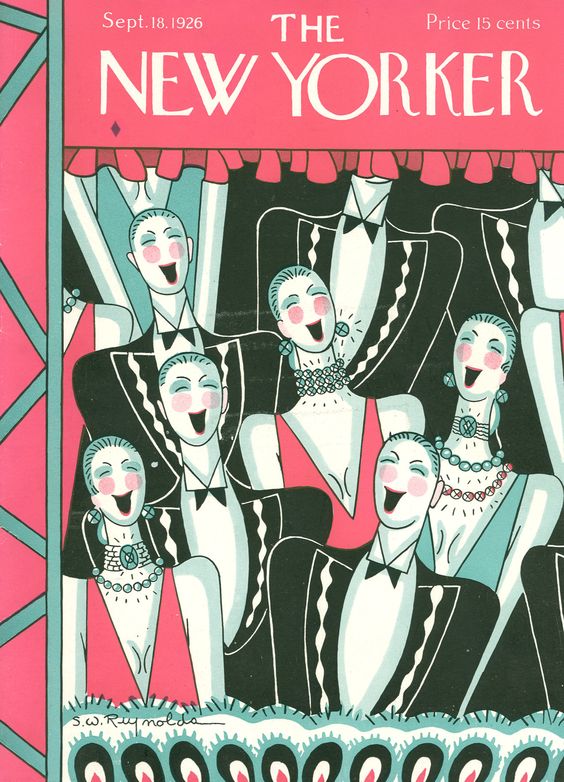
Sept. 18, 1926 cover by Stanley W. Reynolds.
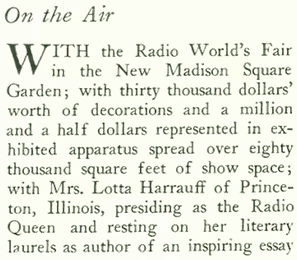
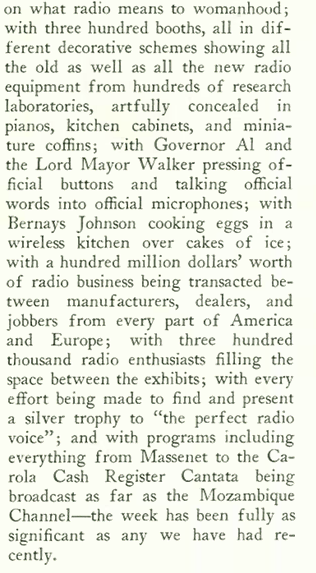
So when the 1926 Radio World’s Fair opened at Madison Square Garden, the magazine was there to report on its many marvels in the Sept. 18 issue:
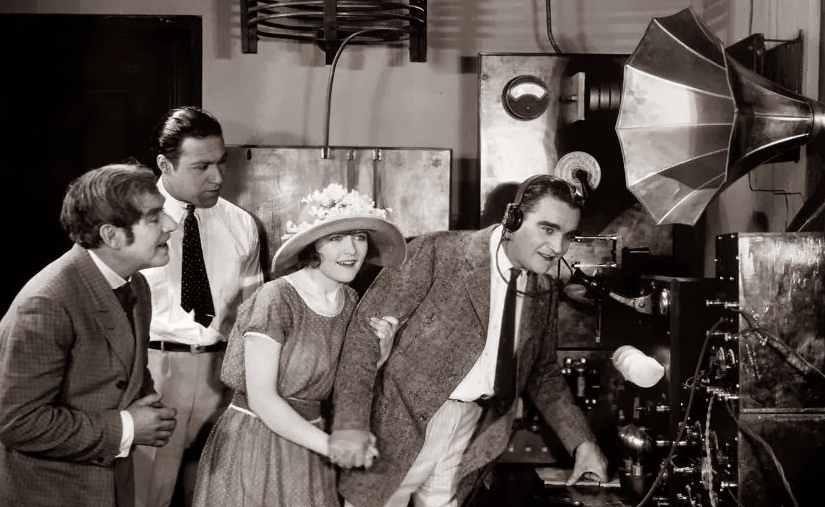
IF ONLY THEY HAD SPOTIFY…Teens tuning in, mid 1920s. (hancockhistoricalmuseum.org)
Although New York’s radio fair was doubtless the largest (akin to today’s annual Consumer Electronics Show), similar fairs were held in other major cities where broadcast radio was taking hold.
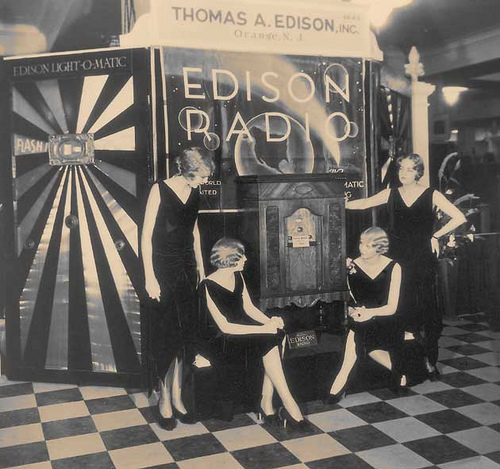
Promotional image for Edison Radio from the 1926 New York Radio World’s Fair. (artdecoblog.com)
…and for comparison, an image from the 2016 Consumer Electronics Show in Las Vegas:
(CES)
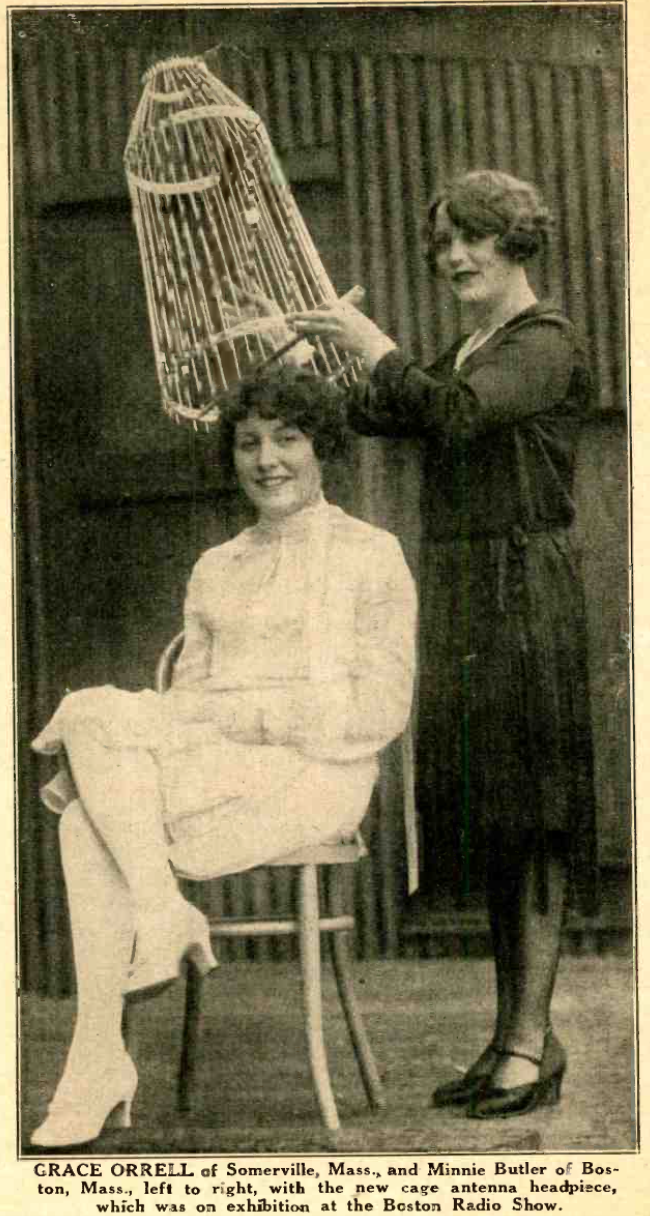
To give you an idea of some of the stranger innovations in the world of 1920s radio, here is an image scanned from the Oct. 16, 1926 issue of Radio World magazine demonstrating the wonders of a wearable cage antenna, apparently through which the wearer could make or receive wireless broadcasts…
…and a detail of an advertisement from the same issue depicting a typical household radio for the time:
Before tuning in for the first time, the radio’s owner needed to string a 100-foot outside aerial. Until 1927, when owners could plug their radios into electric sockets, radios required two types of batteries—a storage battery that required recharging every two weeks and a set of dry-cell batteries that needed to be replaced about every three weeks.
If all this looks crude, remember that in September 1926 broadcast radio was less than six years old. But it was big year for radio, with the National Broadcasting Company (NBC) establishing a network of stations that distributed daily programs. Columbia Broadcasting System (CBS) would establish a rival network in 1928.
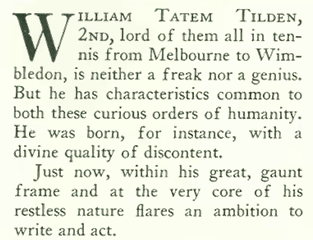
In other items, the magazine offered a lengthy profile on tennis legend Bill Tilden, and later in the sports section described his Davis Cup loss to Frenchman René Lacoste.
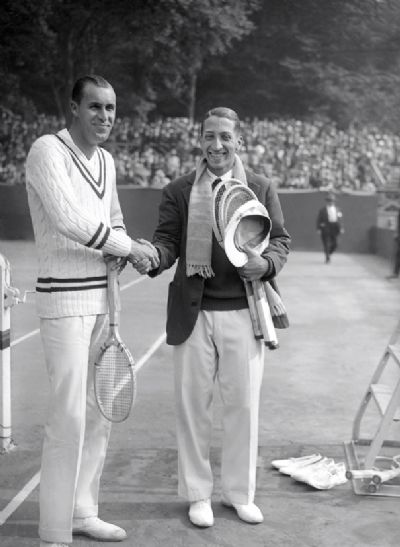
Tennis rivals Bill Tilden and René Lacoste meet in Philadelphia, 1927. (greensleevestoaground.)
Tilden is often considered one of the greatest tennis players of all time. However, The New Yorker “Profile” described him as a reluctant star with artistic ambitions…
…who distained the life of a sports hero…
Samuel Merwin, referred to above, was a playwright and novelist.
Tilden was the world’s number one player for six years (1920-1925). He won 14 Major singles titles including ten Grand Slams. He also won a record seven US Open titles.
There is a sad footnote to Tilden’s career, however. Twenty years after The New Yorker profile, Tilden would be arrested for soliciting sex from an underage male, an offense he would arrested for again three years later, in 1949. He was subsequently shunned by the tennis and Hollywood world, although old friend Charlie Chaplin allowed Tilden to use his private court for lessons, which helped him financially as he dealt with legal and financial problems.
* * *
Going Going Gone
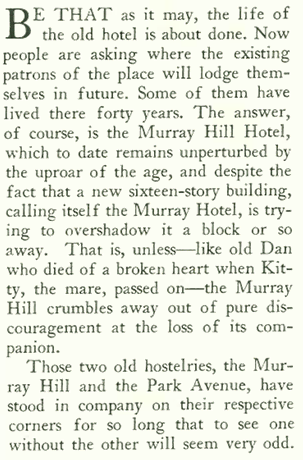
The magazine editors continued to watch the rapidly changing skyline of the city, as beloved old buildings were demolished to make way for new skyscrapers. This time it was the old Park Avenue Hotel:
The editors of “Talk of the Town” fondly recalled the time when the hotel, with its spacious courtyard of flowers and fountains, attracted “almost every dinner party of consequence in New York.”
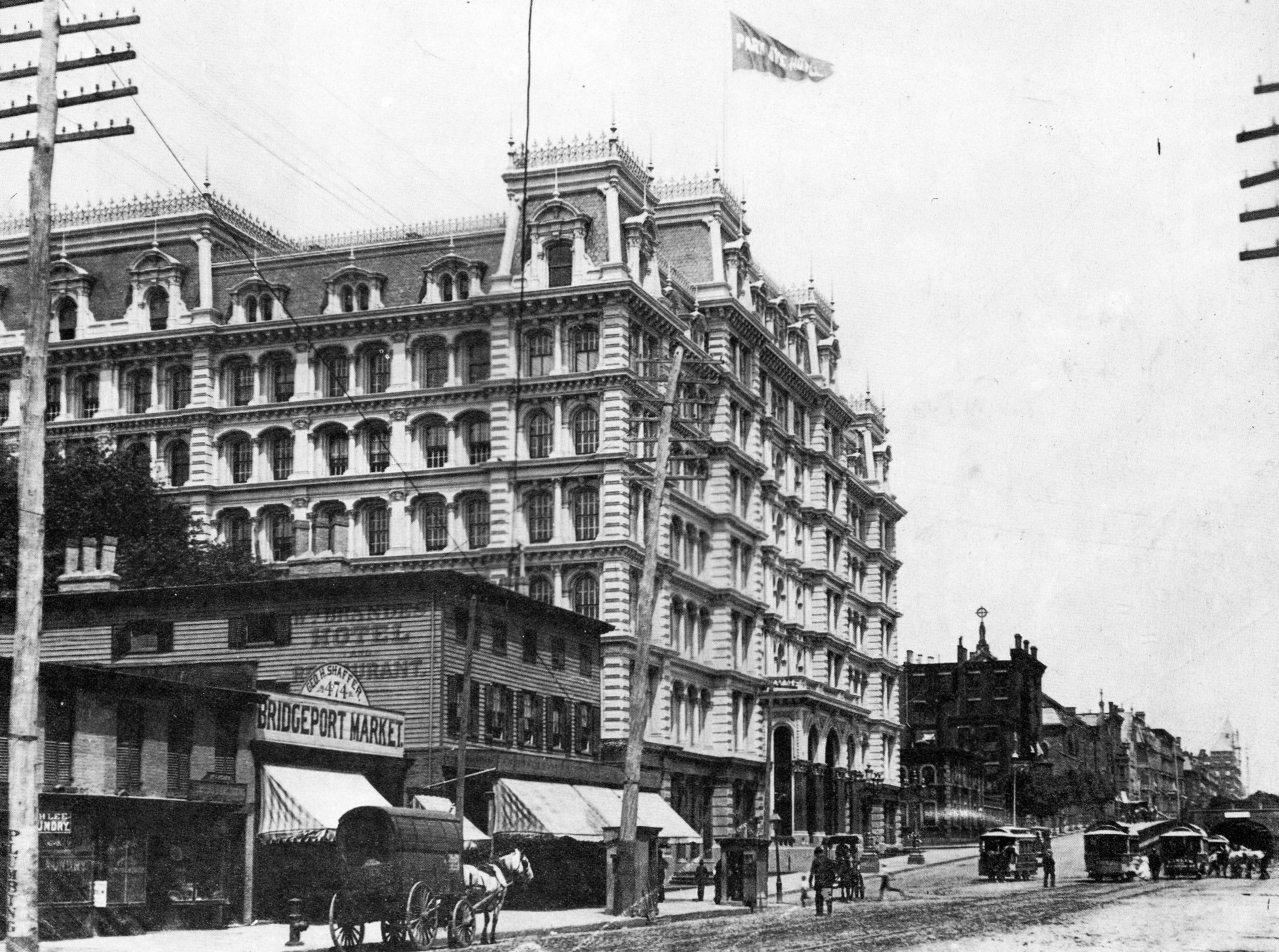
This photo of the old Park Avenue Hotel was taken in 1890, only two years after Fourth Avenue was renamed Park Avenue. Constructed in 1877, the hotel was originally called Stewart’s Hotel for Working Women, designed to provide safe housing for the influx of single working women pouring into New York City. The name didn’t last long: the hotel was opened in April 1878, closed in May and reopened in June as the Park Avenue Hotel. It was razed in 1927. (Ephemeral New York)
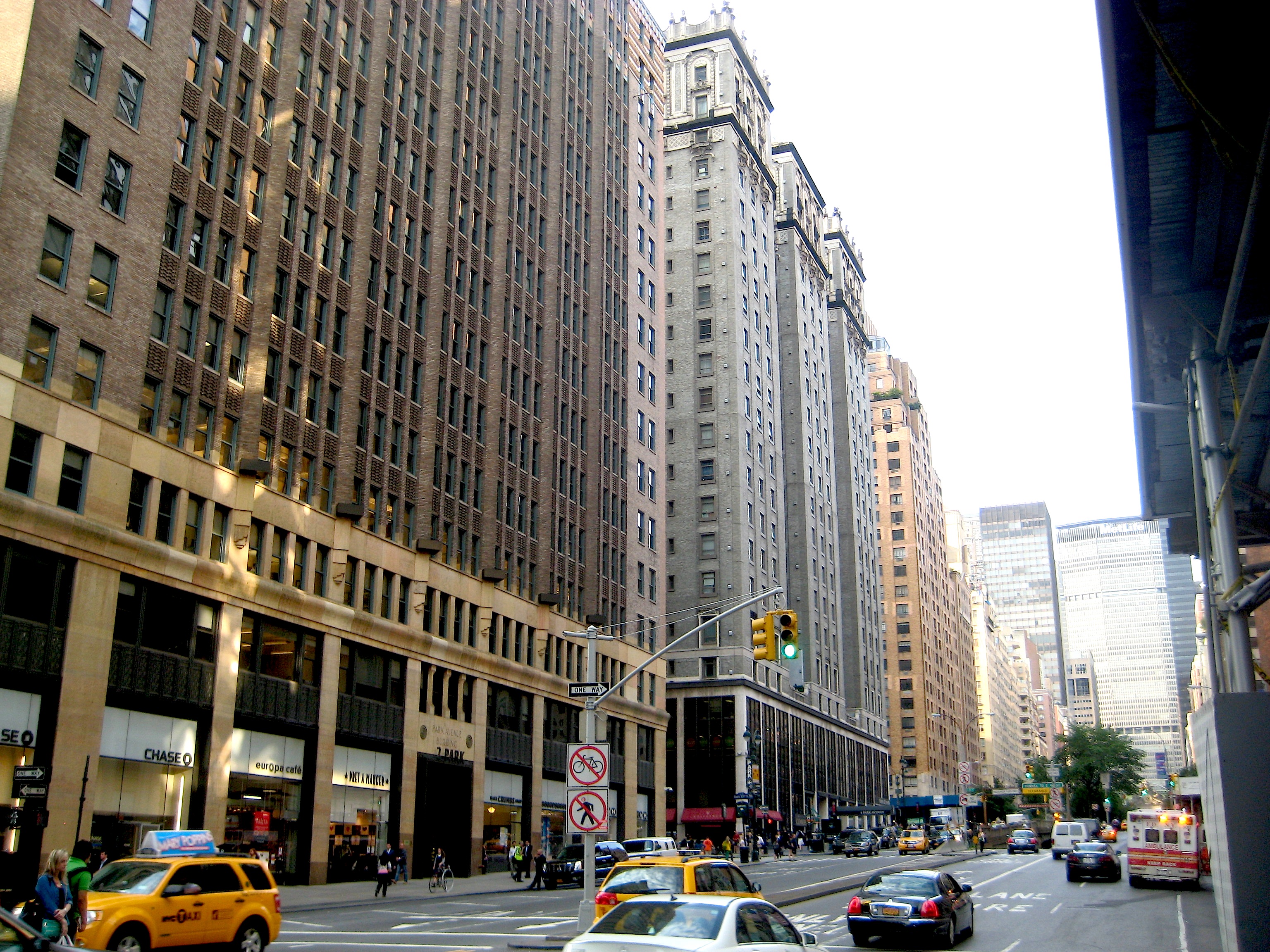
The same site today:
(Ephemeral New York)
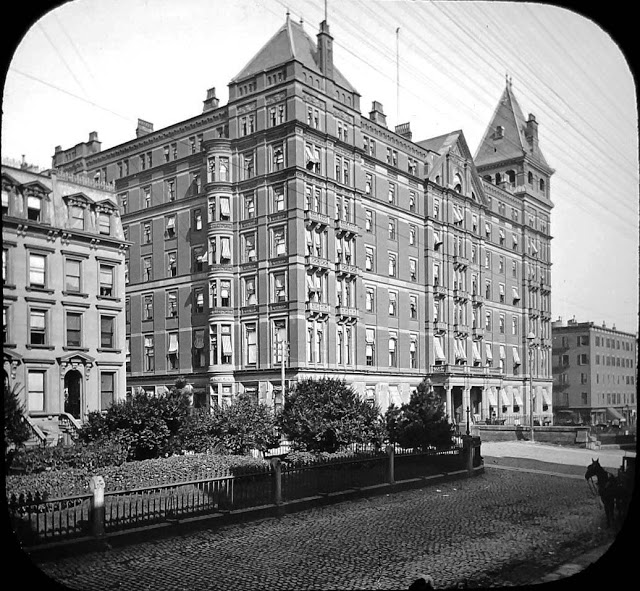
The nearby Murray Hill Hotel mentioned in the article would last another 20 years, falling to the wrecking ball in 1947:
The Murray Hill Hotel, built in 1884, would outlive the Park Avenue Hotel by 20 years, falling to a wrecking ball in 1947. (Library of Congress)
American cinema did little to excite the writers or critics of The New Yorker, who considered European films, and particularly German ones, to be far superior to the glitzy and sentimental fare produced in Hollywood.
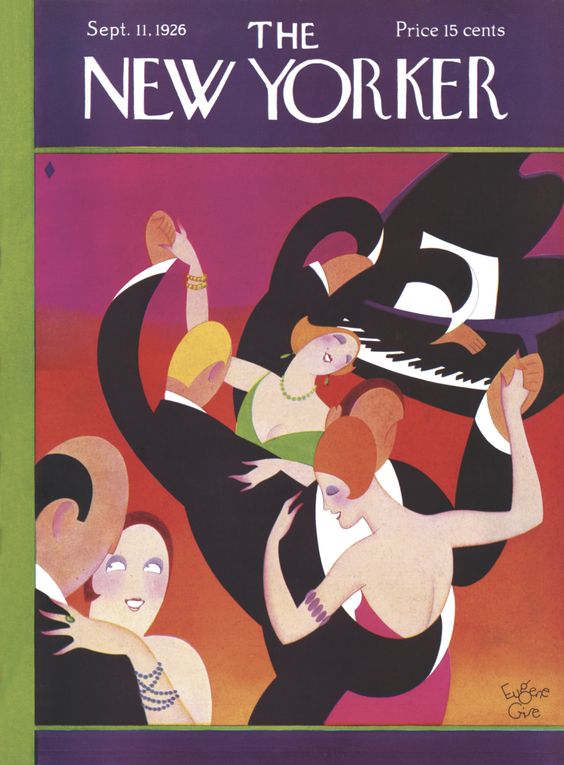
Sept. 11, 1926 cover by Eugene Gise.
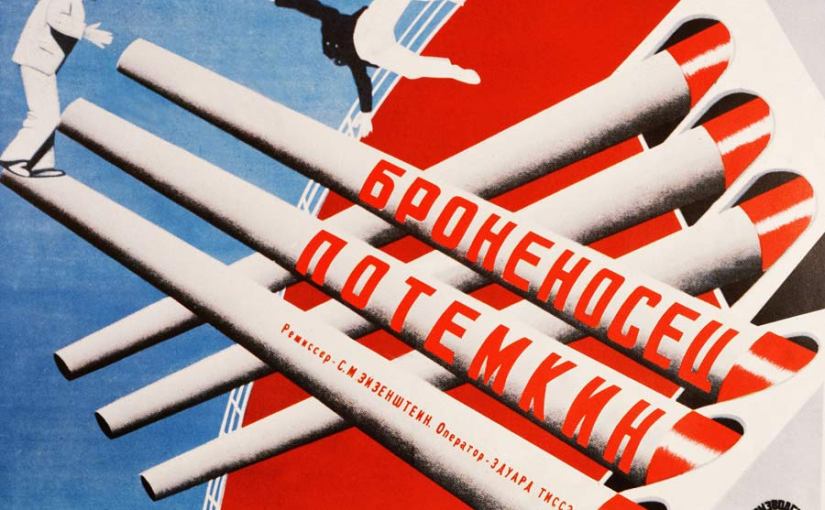
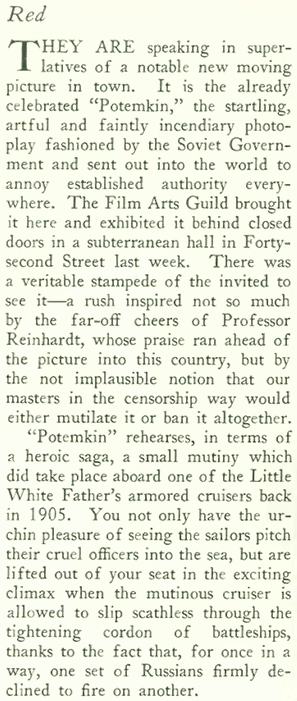
So when it was announced that Russian/Soviet filmmaker Sergei Eisenstein would be releasing Battleship Potemkin in New York City, the magazine’s editors in “The Talk of the Town” expressed both anticipation for the masterpiece as well as worries that American censors would slice the film to bits or even ban it outright.
The magazine’s film critic “OC” also expressed his concerns regarding censors:
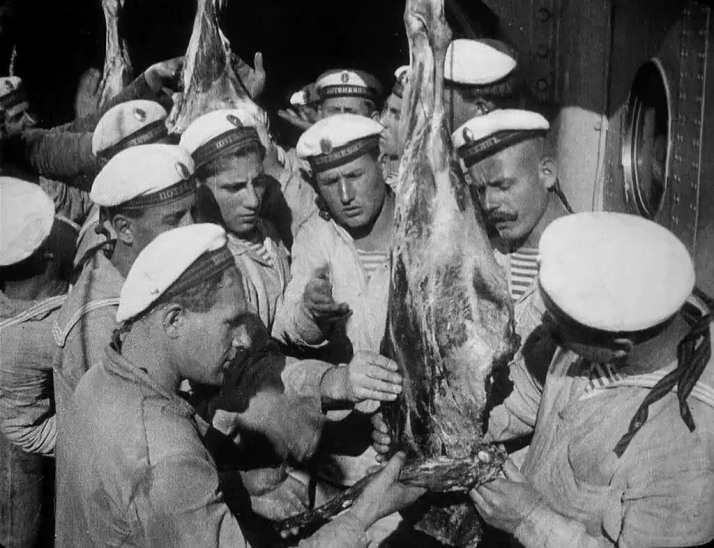
IT’S NOT WHAT’S FOR DINNER…Sailors examine maggot-infested meat in the film Battleship Potemkin. (themoviesnob)
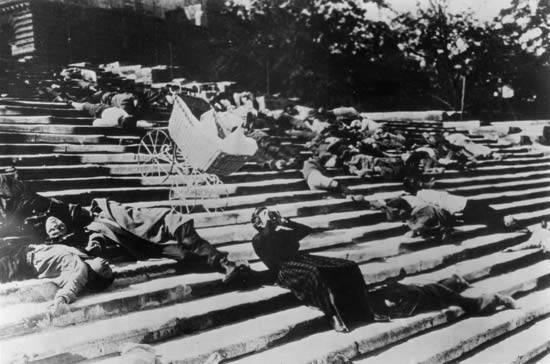
The film was based on an historical event–a mutiny on the battleship Potemkin that occurred after the crew was served rotten meat for dinner. The sailors rebelled, seized the ship, and then attempted to ignite a revolution in their home port of Odessa, which in turn led to a massacre of citizens by Cossack soldiers on the city’s famed Potemkin Stairs.
Mutineers revel in a scene from Battleship Potemkin. (Wall Street Journal)A still from a classic scene in Battleship Potemkin that depicts Odessa citizens being massacred by Cossacks on the city’s famous Potemkin Stairs. The image of the unattended baby carriage tumbling down the staircase has been re-created in a number of films, including Brian De Palma’s 1987 The Untouchables. (Film 4)
The film would ultimately be released in December of 1926. Perhaps more on that in a later post.
The Sept. 11, 1926 issue also noted the passing of famed silent film star Rudolph Valentino, who died at age 31 of peritonitis and other complications. The “Talk” editors suggested that if anything, it was good for newspaper sales:
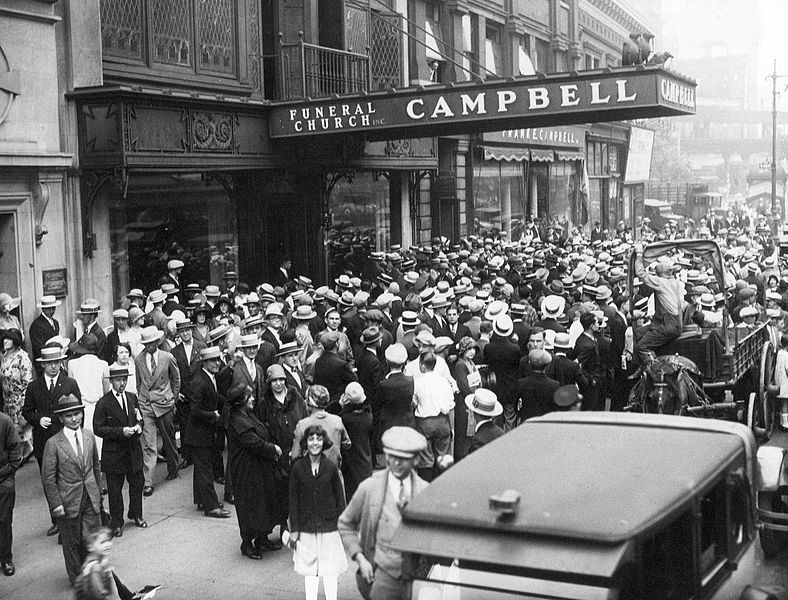
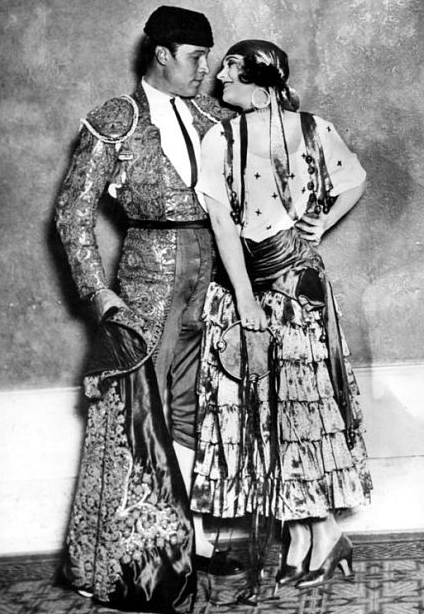
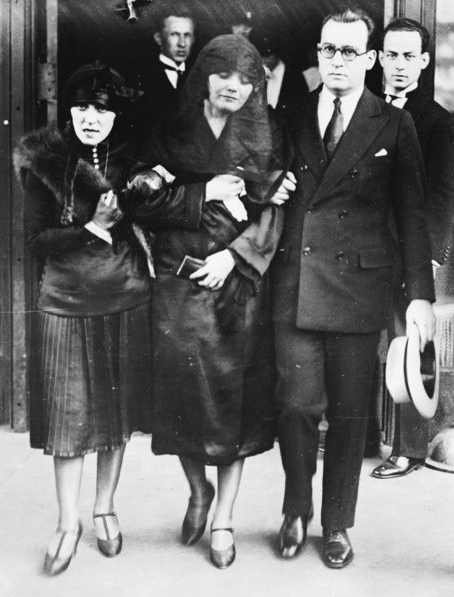
FUNERAL FUN…Rudolph Valentino’s first funeral in New York (the second was in Beverly Hills) drew a huge crowd of in what was described as a “carnival setting”. More than 100,000 fans filed past his open casket at the Frank E. Campbell funeral home. Windows were smashed as fans tried to get in and an all-day riot erupted on August 24. More than a hundred mounted officers and NYPD’s Police Reserve were deployed to restore order. A phalanx of officers would line the streets for the remainder of the viewing. Some media reports claimed the body on display was a wax dummy, and not “The Sheik” himself. (Wikipedia)SWEETHEARTS? Rudolph Valentino and Pola Negri met in early 1926 at a costume party thrown by Marion Davies. Negri claimed she was engaged to be married to the actor at the time of his death. (Wikimedia Commons)DIVA MOMENT…Pola Negri’s grief-stricken performance at Valentino’s New York funeral was considered by most to be over-the-top, even for a famous diva. Supported by a secretary and press agent (photo above), Pola declared to reporters that she and Valentino were secretly engaged to be married. She posed in dramatic fashion for the reporters and then threw herself, weeping and fainting, on Valentino’s open casket. (flickchick1953)
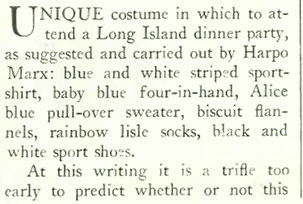
On the lighter side, The New Yorker men’s fashion columnist “Bowler” offered this observation of a new style suggested by Harpo Marx:
Vaudeville star Harpo Marx in 1926. The first Marx Brothers movie was still three years away. (Wikipedia)
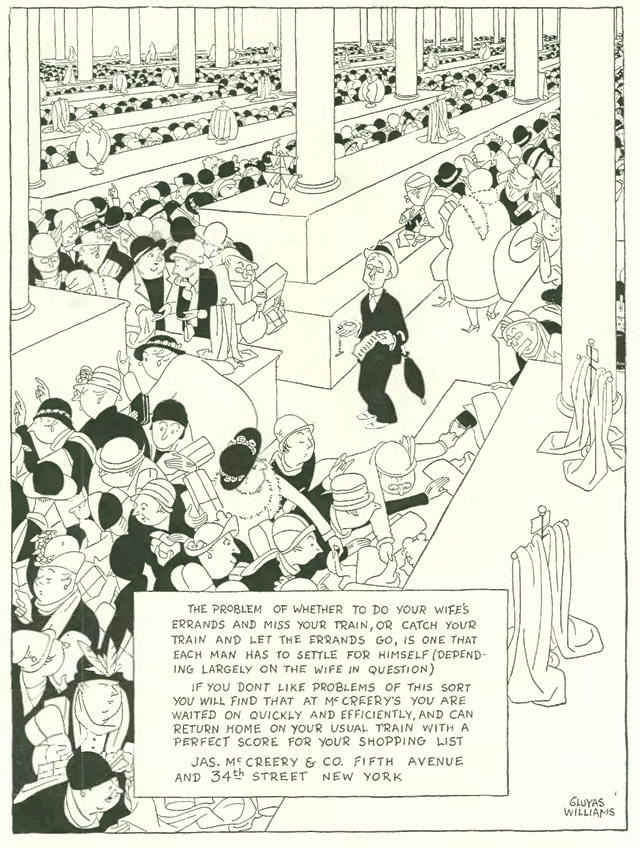
And to close, a couple of advertisements from the Sept. 11 issue…the first is a McCreery & Company ad illustrated by Gluyas Williams. These would become a series, featuring a milquetoast husband facing the daunting task of shopping for his wife, among other challenges…
…and this ad from Park Central Motors, depicting a child who’s all too aware of her standing in society…
Since most of us complain about the sad state of air travel these days, it’s nice to get a little historical perspective on this mode of transportation.
Sept. 4, 1926 cover by Rea Irvin.
Ninety years ago the editors of The New Yorker were enamored with passenger air service, even though it was only available to those who were wealthy and had the stomach to actually fly in one of these things:
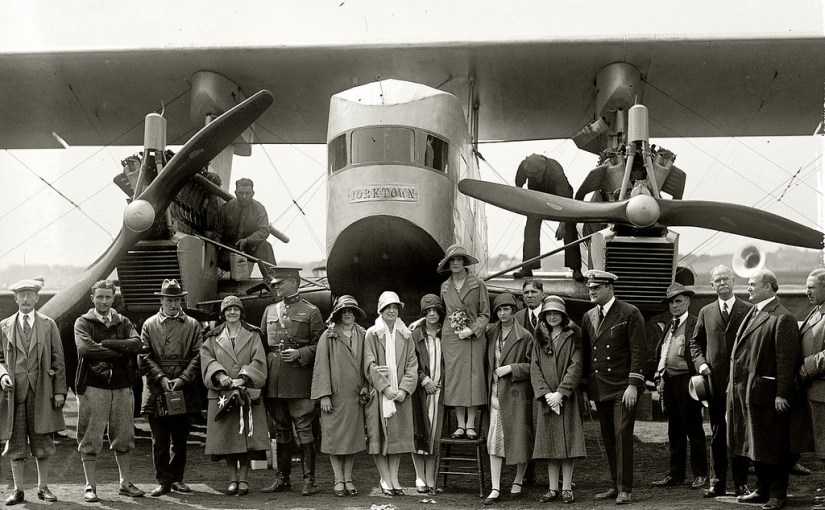
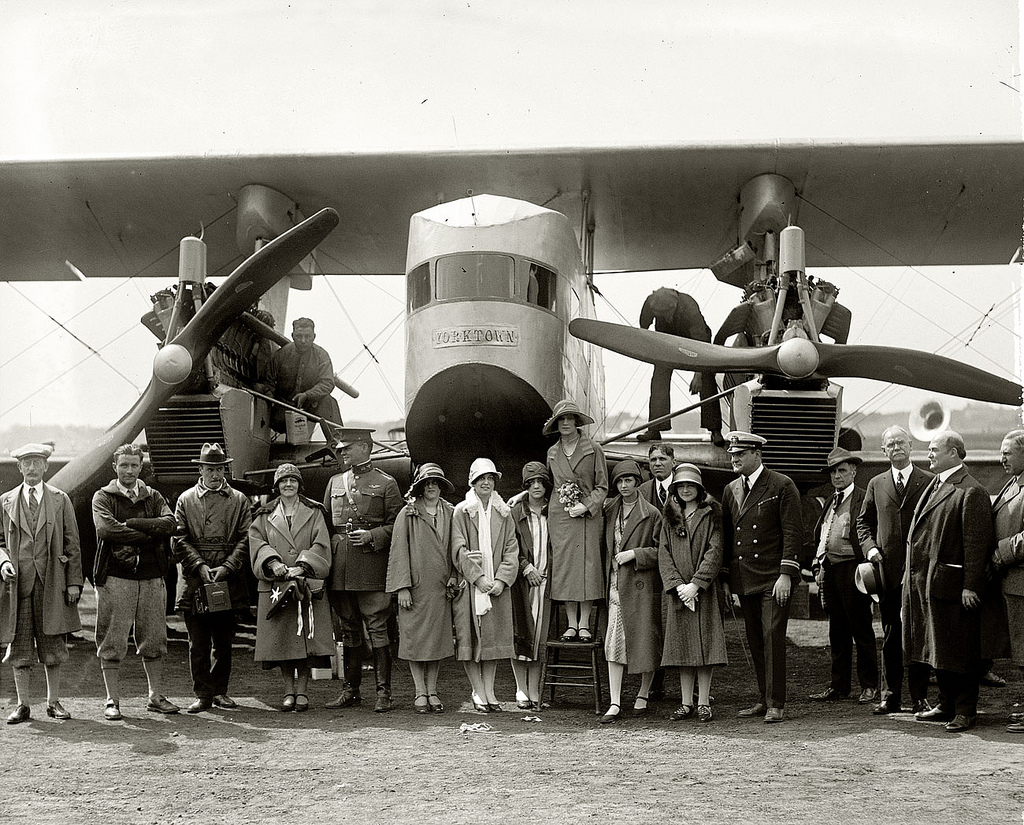
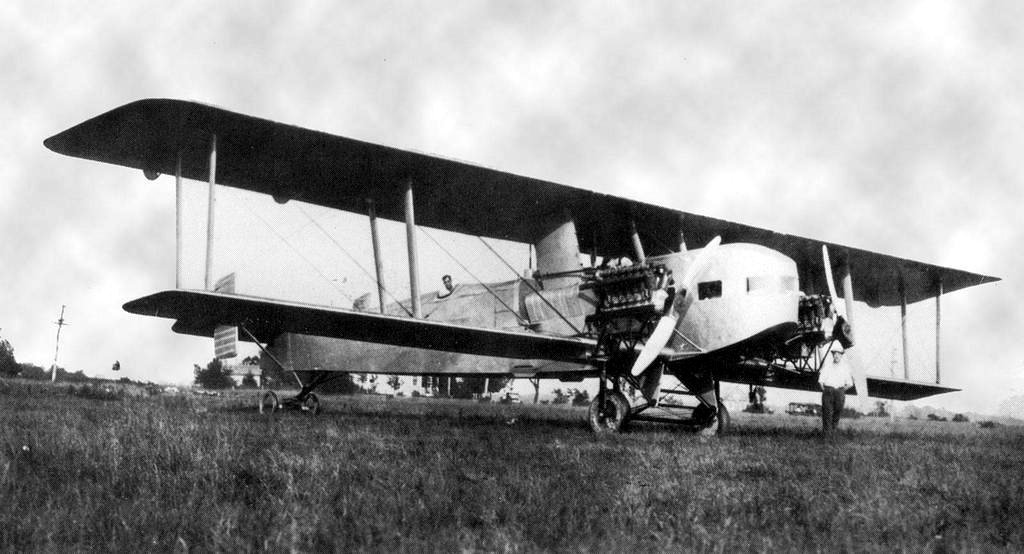
The May 8, 1925 christening of the Sikorsky “Yorktown.” The “huge” plane is referred to in the Sept. 4, 1926 “Talk of the Town.” (Library of Congress)
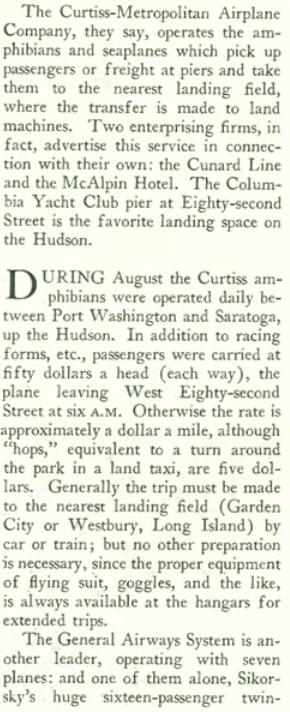
In the “Talk of the Town” section, The New Yorker editors marveled at the regular air taxi service available to Manhattanites:
The “huge” Yorktown might look crude to a traveler in 2016, but this was advanced stuff considering the Wright Brothers had made their first flight less than 23 years earlier. Planes like the Yorktown looked less like aircraft we know today and more like a trolley car with wings attached. And that window in the front wasn’t for the pilot. He sat up top in the open air:
Side view of the Sikorsky “Yorktown.” Note the pilot seated aft of the wings. (Flickr)
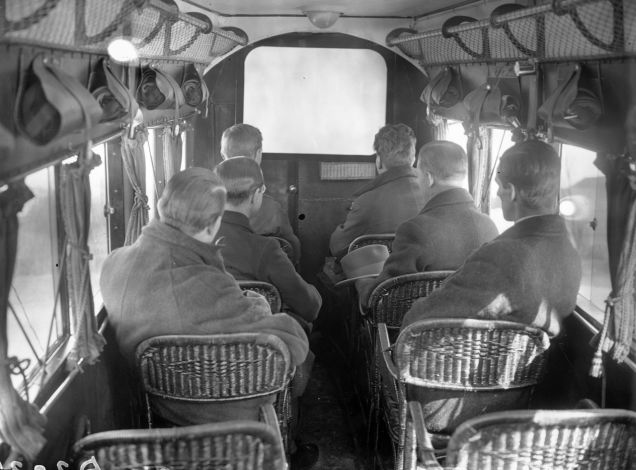
But then again, the interiors of these planes were no picnic, either. Imagine sitting in this while crashing through a storm:
Interior of a Farman Goliath, which would have been similar to the Sikorsky, if not a little nicer. (Historic Wings)Another photo of a 1920s passenger flight. As in the preceding photo, note the wicker chairs. And no leg room. These fellows appear to awaiting the showing of an early in-flight movie. At least movies were silent then, because with giant piston engines flanking the cabin you weren’t going hear anything anyway. (Paleofuture)
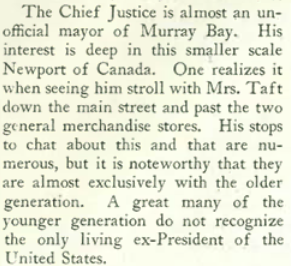
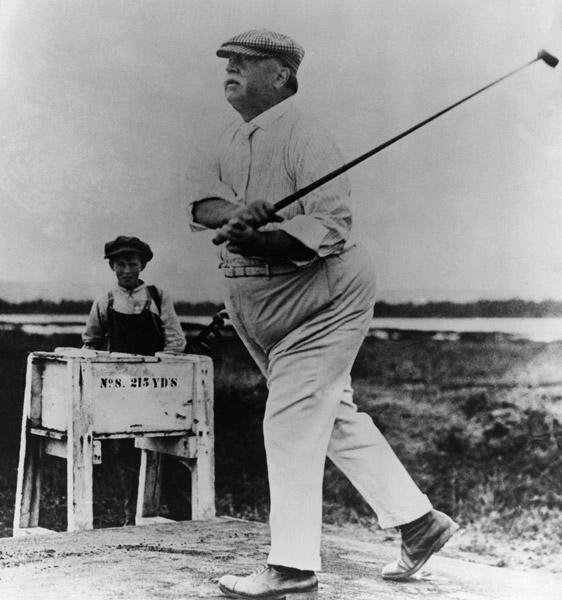
Other items from the Sept. 4, 1926 “Talk” section included a bit about the former president and then Supreme Court Justice William Howard Taft, and his rather ordinary life in Murray Bay. An excerpt:
Ex-President, Supreme Court Justice and avid golfer William Howard Taft follows through on the links in this undated photo (jmarkpowell.com)
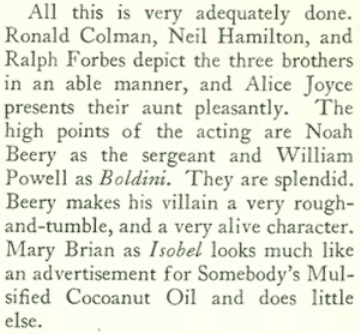
At the movies, The New Yorker gave a lukewarm review of the much-ballyhooed film Beau Geste:
AT LEAST SHE HAD A NICE COMPLEXION…Mary Brian (dubbed “The Sweetest Girl in Pictures”) with Neil Hamilton in Beau Geste, 1926 (classiccinemaimages)
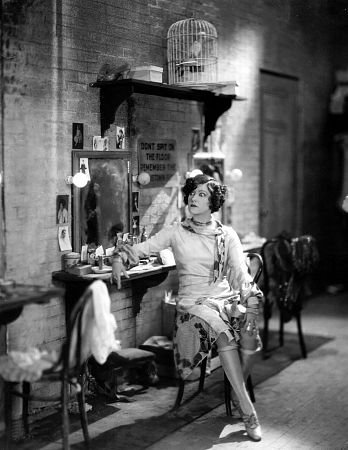
And although Gloria Swanson was one of the biggest stars in the Silent Era, The New Yorker was never a big fan of her films:
Gloria Swanson in Fine Manners, 1926 (IMDB)
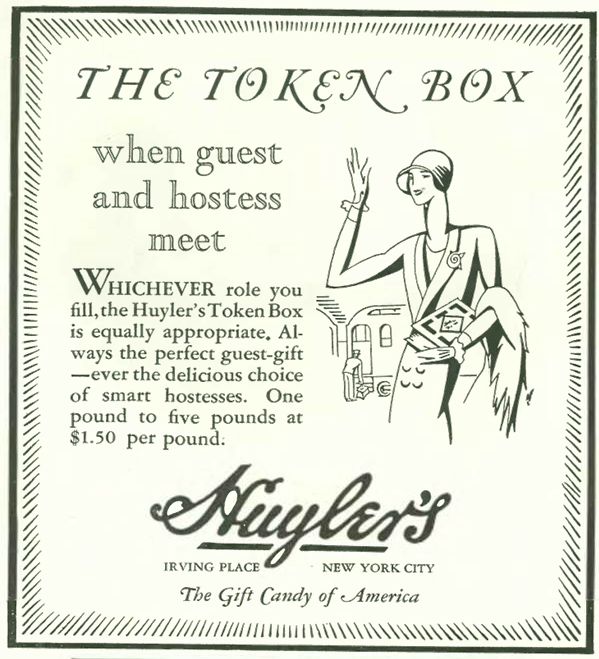
And finally, this advertisement from Houbigant, featuring a drawing of an elegant woman with an impossibly long neck. I wouldn’t want her sitting in front of me at the movies…
Another ad (from the Sept. 11 issue) also depicted this ridiculously giraffe-like neckline:






























 A New Yorker State of Mind