Vive La Normandie

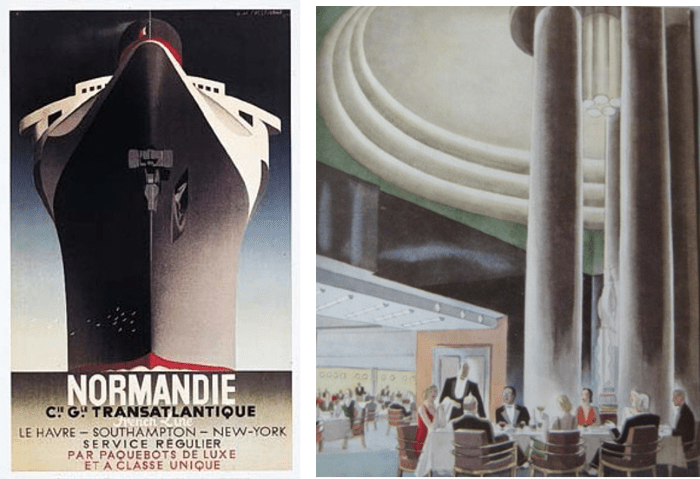
Above: At left, Adolphe Cassandre's famed 1935 depiction of the S.S. Normandie; right, image from a 1935 promotional booklet published by the French Line.

When the S.S. Normandie entered service in 1935, she was the largest and fastest passenger ship afloat, crossing the Atlantic in a little over four days. The ship was so impressive that even the imperturbable Janet Flanner expressed enthusiasm over its launch.

May 25, 1935 cover by Constantin Alajalov.

As Paris correspondent, Flanner was giving New Yorker readers a preview of Normandies May 29 maiden voyage from Le Havre to New York City.
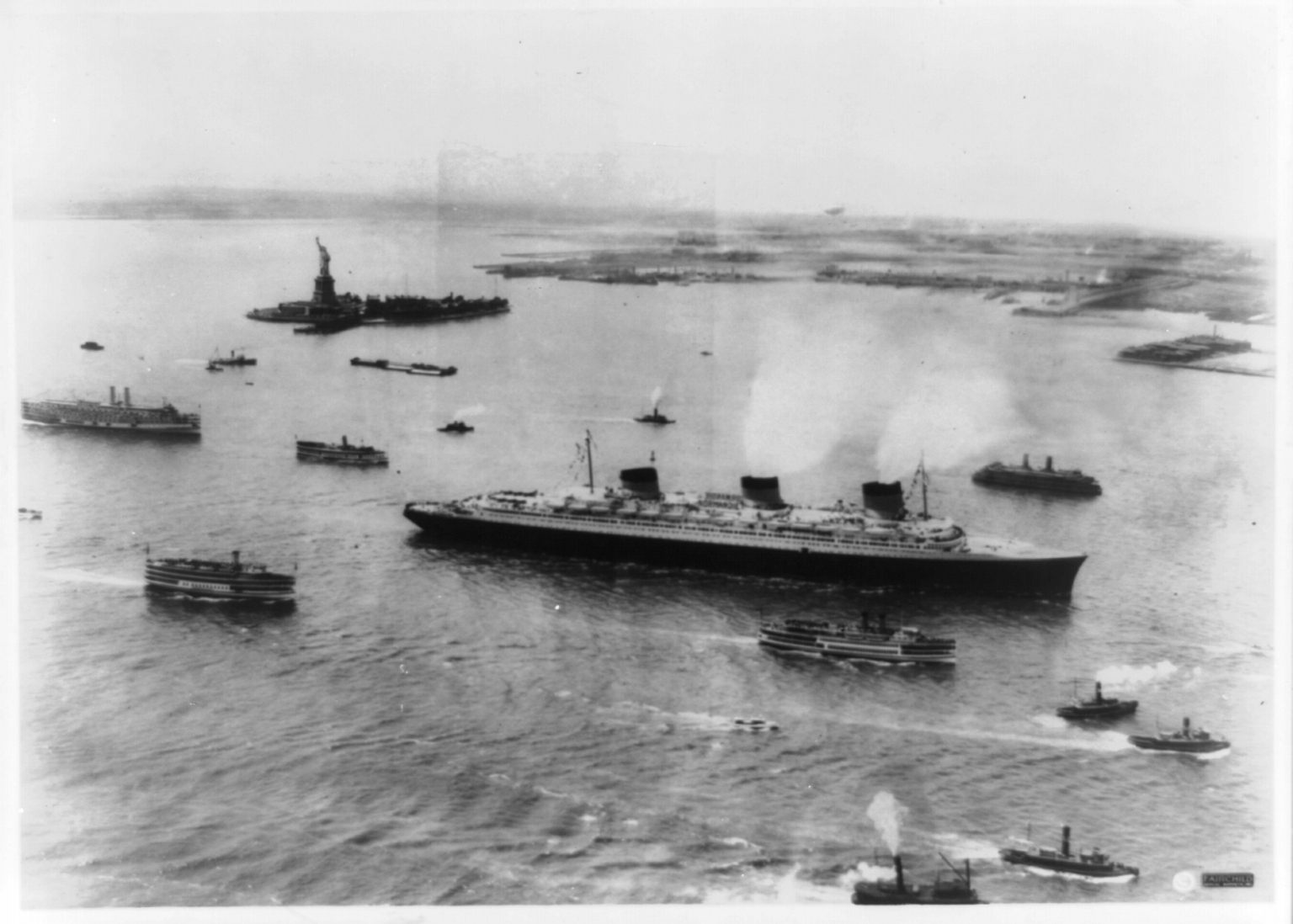
HER ENTOURAGE…The S.S. Normandie was welcomed into New York Harbor on June 3, 1935. (Wikipedia)
IMAGINE THAT…An S.S. Normandie promotional poster from 1935 depicts the ocean liner making an unlikely entrance into Manhattan. The sleek ship measured 1,029 feet (313.6m) in length and carried nearly 2,000 passengers plus 1,345 crew. It was the first ocean liner to exceed 1,000 feet in length. (Museum of the City of New York–MCNY)

To give New Yorkers some idea of the liner’s size, Flanner noted that the Normandie would stretch from 43rd to 47th Street, and if stood on her stern, would stand nearly 180 feet above the RCA Building at Rockefeller Center.

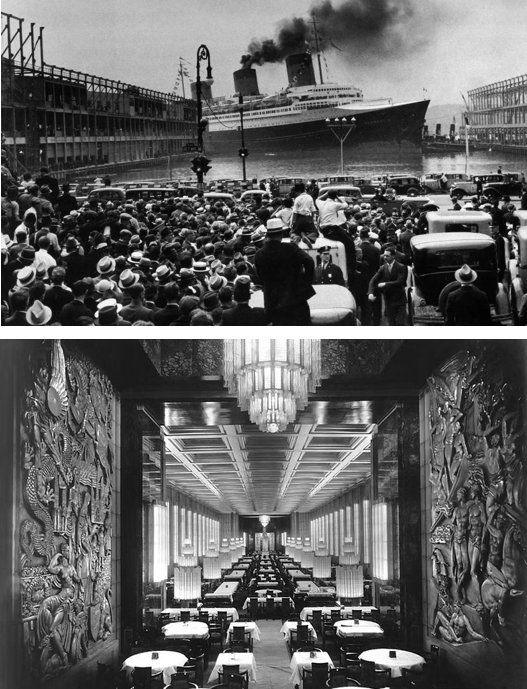
FRENCH TOAST…Top, a crowd cheers the S.S. Normandie as it arrives at New York’s Pier 88 on June 3, 1935; below, the first class dining hall was 305 feet long, 46 feet wide and three decks high. (drivingfordeco.com/MCNY)
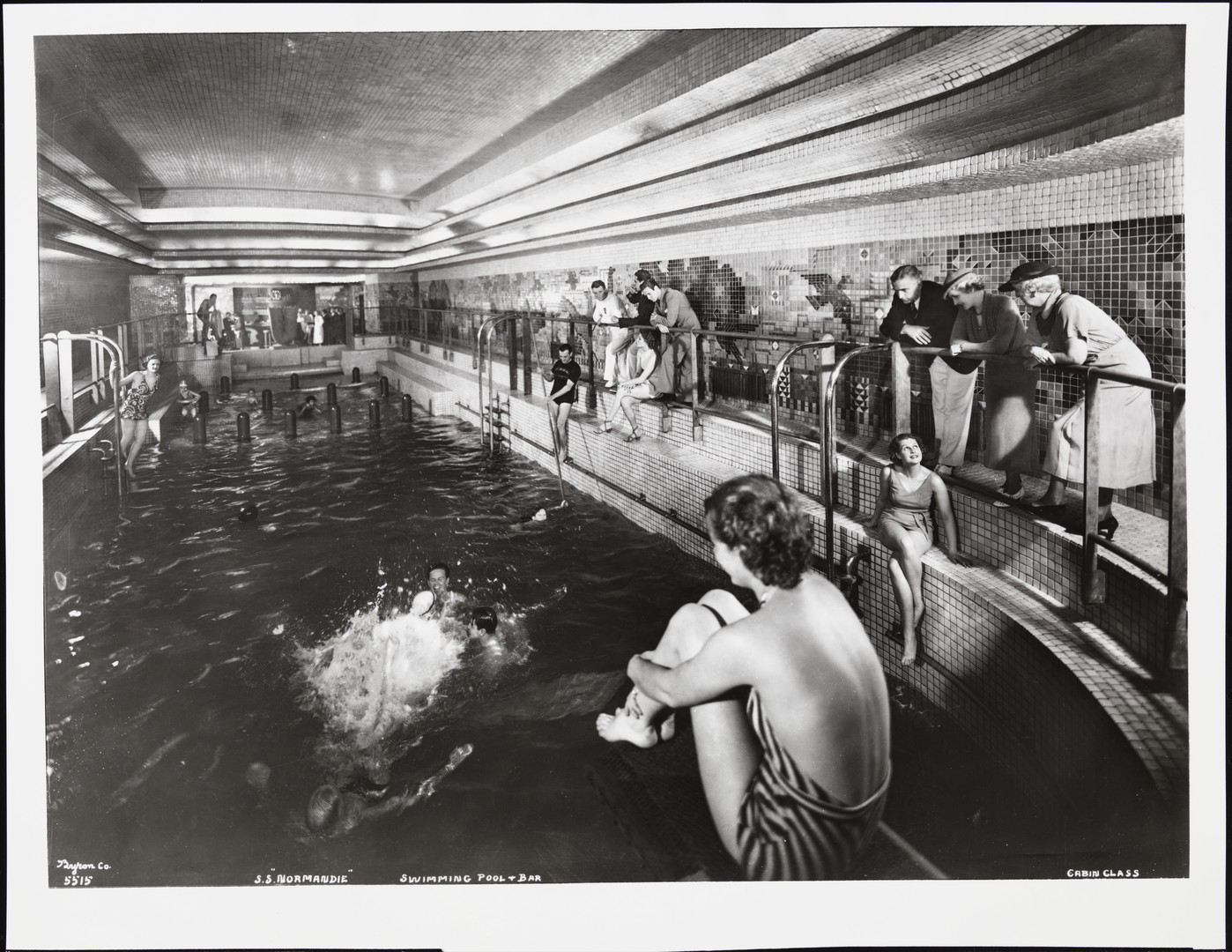
IN, AND ON THE WATER…Passengers take a plunge in the Normandie’s swimming pool, which included a bar at the far end. (MCNY)
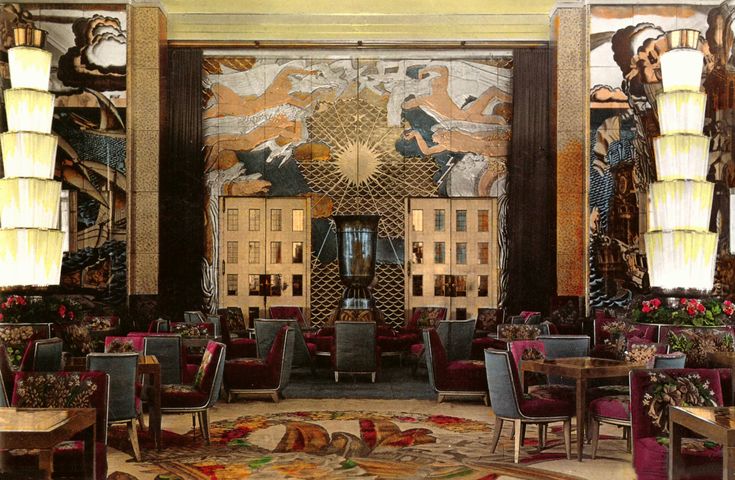
EYE-POPPING…Colorized image of the first-class lounge. (Pinterest)
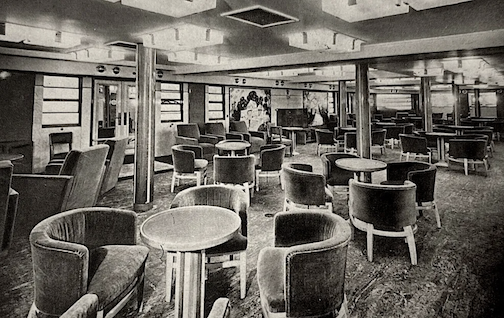
BARGAIN…Accommodations for weren’t too bad, either, for the other classes. Here is the 3rd class salon. (drivingfordeco.com)
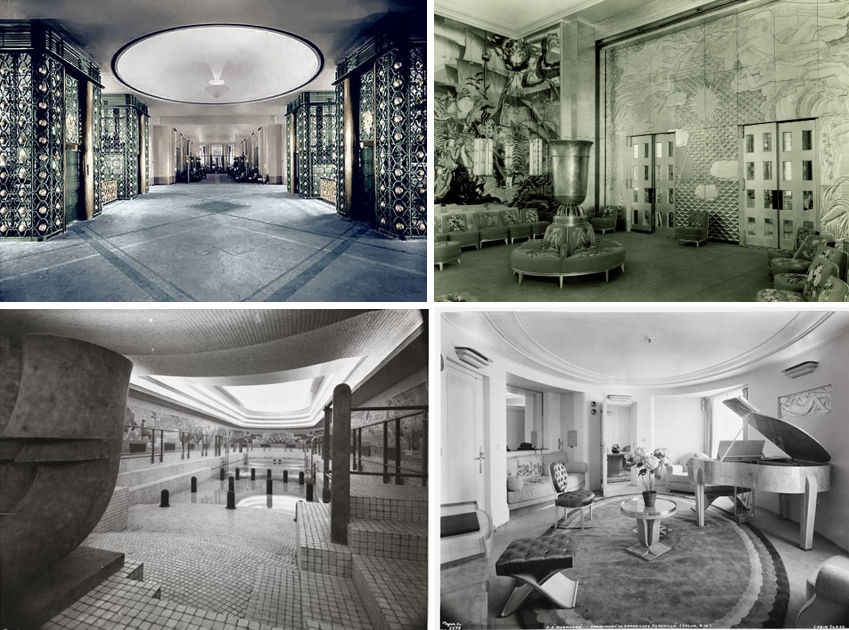
TAKE YOUR PICK…Clockwise from top left, elevators decorated in sea shells; the rear of the Grand Salon; a first class suite; view of the swimming pool. An incredible scale model of the S.S. Normandie is displayed on the Queen Mary, which is permanently docked at Long Beach, CA. (MCNY)

World War II would cut short the Normandie’s life. Seized in New York and renamed USS Lafayette in 1942, she was being converted to a troopship when she caught fire, capsized onto the port side, and came to rest half submerged on the bottom of the Hudson at Pier 88, the same pier where she was welcomed in 1935. She was scrapped in 1946.
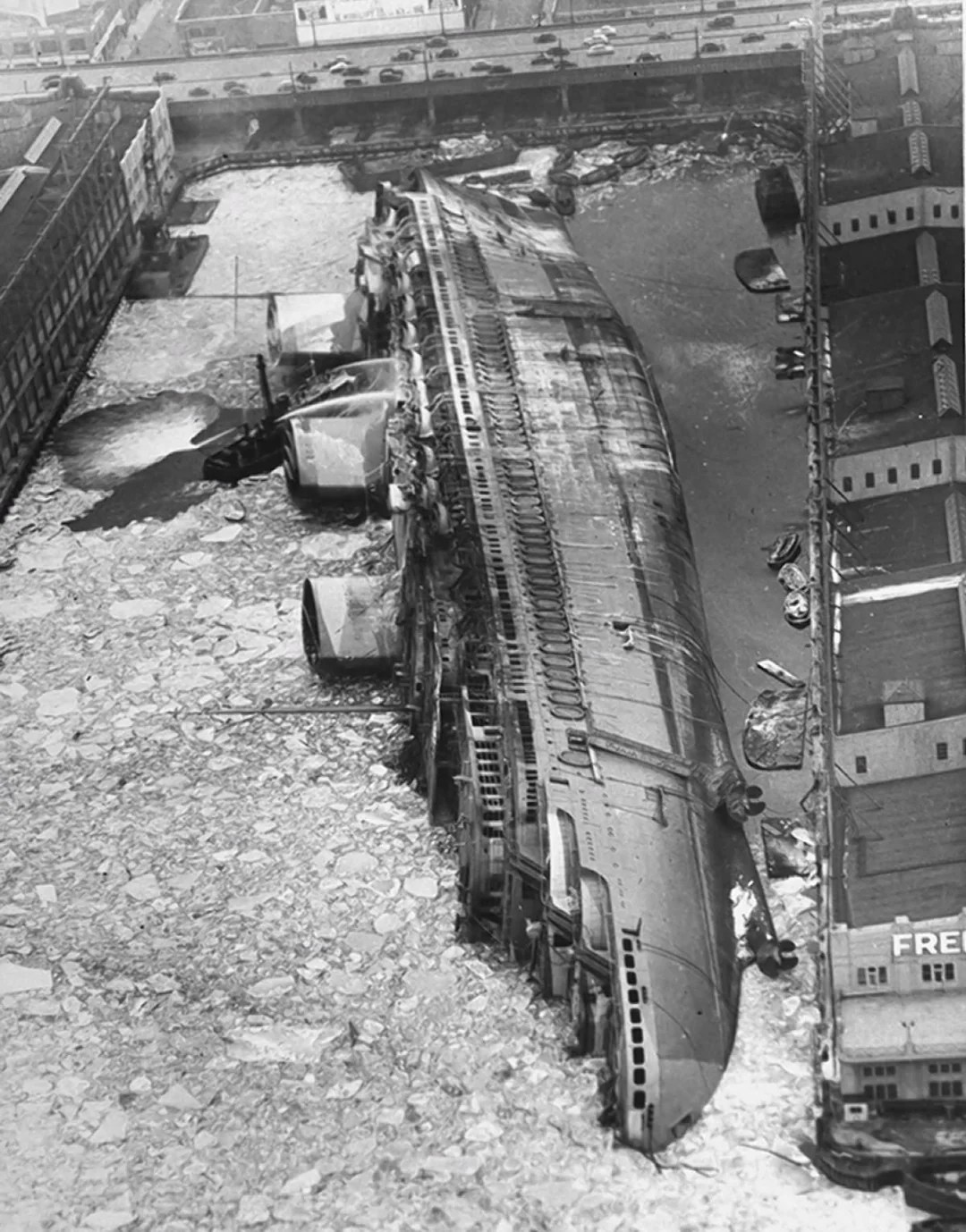
THE WAGES OF STUPIDITY…The Normandie after a fire brought her glory days to an end. (Reddit)

 * * *

A Critic Is Born

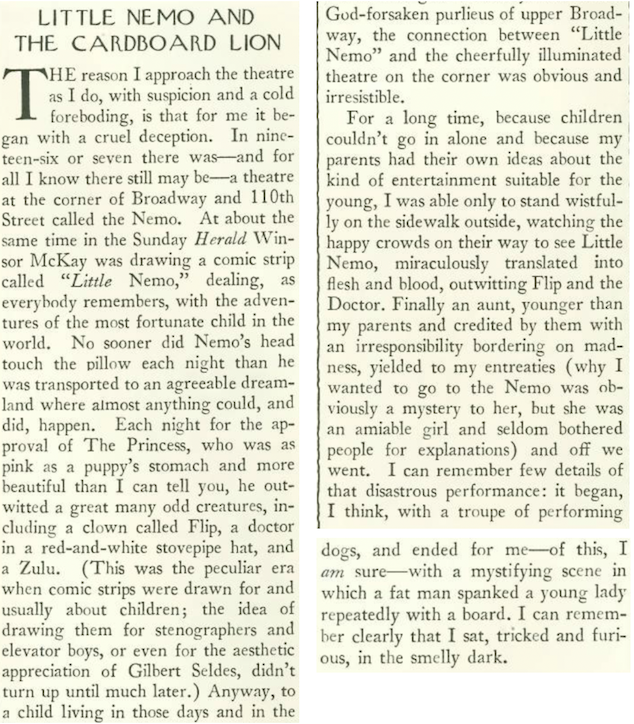
It turns out that Wolcott Gibbs (1902–1958) cut his teeth as The New Yorker’s theatre critic while he was still in short pants. Gibbs recalled his five-year-old self in an essay that described his first experience with the theatre—a play based on the New York Herald’s popular comic strip, Little Nemo in Slumberland, by Winsor McCay. In parallel with Gibbs’ childhood, the strip ran from 1905 to 1911.

As a child, Gibbs was wild about Little Nemo’s adventures, but the stage adaptation left the child disillusioned (and feeling “tricked and furious”). The New York Public Library’s Douglas Reside wrote (in 2015) that the producers, seeking to draw as wide an audience as possible, presented Little Nemo “as a bloated mixture of theatrical styles, including the minstrel show, pantomime, operetta, farce-comedy, vaudeville, revue, and ballet,” featuring three comedians “mostly superfluous to Nemo’s story.” The part of Nemo was played by a 25-year-old actor with dwarfism.
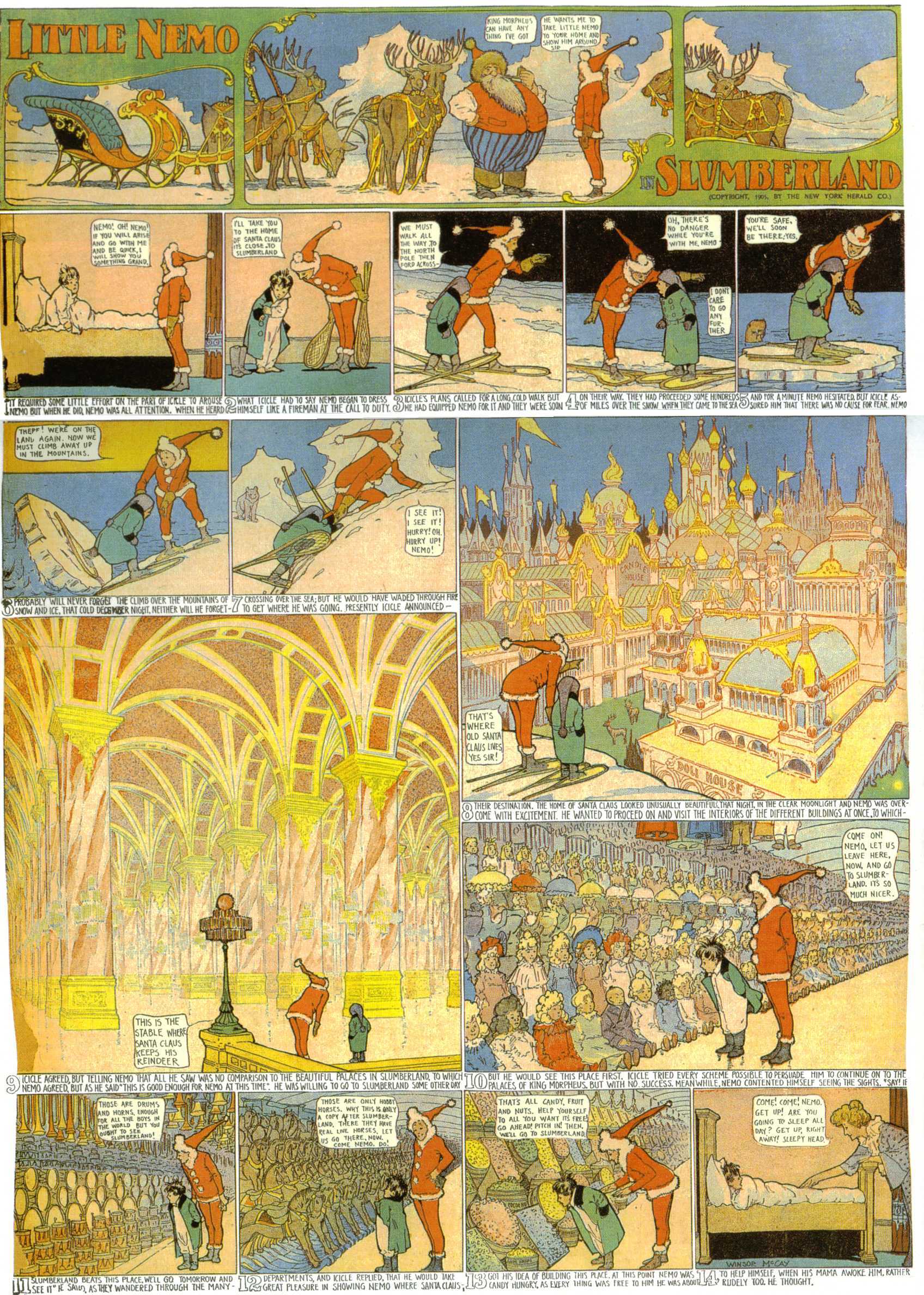
DREAMLAND…The Little Nemo strip from Dec. 17, 1905 depicted the boy’s dream of a visit to Santa’s magical city at the North Pole. (Wikipedia)
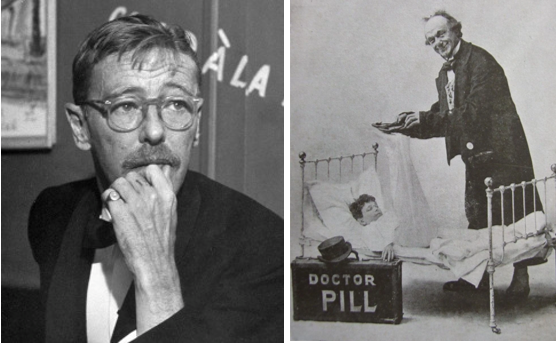
THAT’S SHOWBIZ…As a boy, Wolcott Gibbs (left) was disillusioned by a 1907 theatre adaptation of his favorite comic strip, Little Nemo in Slumberland. The play was dominated by three comedians including Joseph Cawthorn, right, who burlesqued German linguistic and cultural mannerisms for comic effect. He played Dr. Pill, the quack doctor of Slumberland’s royal court. The “boy” in the bed portraying Nemo was 25-year-old “Master” Gabriel Weigel. (Wikipedia/New York Public Library)

 * * *

Humorous Humors

Clarence Day, best known for his Life with Father stories, wrote humorously about his physical ailments and contributed a number of cartoons to The New Yorker that were accompanied by satirical poems. Day would be dead by December—after a bout with pneumonia—however, despite his ailments he would spend his last months arranging publication of his Life with Father book, which was published posthumously.

 * * *

Frankie Got Hitched

Film critic John Mosher still wasn’t finding much to rave about at the cinema, getting more chuckles from the monster mash-up of Boris Karloff and Elsa Lanchester in The Bride of Frankenstein than he did from the Dolores Del Rio vehicle Caliente.
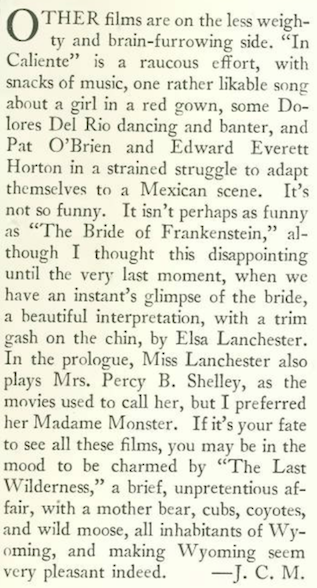
DATE NIGHT…Top, Elsa Lanchester and Boris Karloff let the sparks fly in The Bride of Frankenstein, while Dolores Del Rio danced and chatted her way through the unfunny musical comedy Caliente. (Wikipedia/TCM)

* * *

Other features in the May 25 issue included H. L. Mencken’s continuing exploration into the origins of American names…

…and The New Yorker published its first John Cheever story, “Brooklyn Rooming House.” Of Cheever’s 180 short stories, the magazine would publish 121 of them.
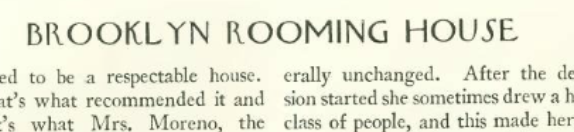

A NEW FACE…In spring 1935 The New Yorker bought two John Cheever stories, paying $90 for “The Brooklyn Rooming House” and $45 for “Buffalo.” Fiction editor Katharine White urged the purchase of the stories. Above, Walker Evan’s photo of Cheever, circa 1940s. (metmuseum.org)

 * * *

From Our Advertisers

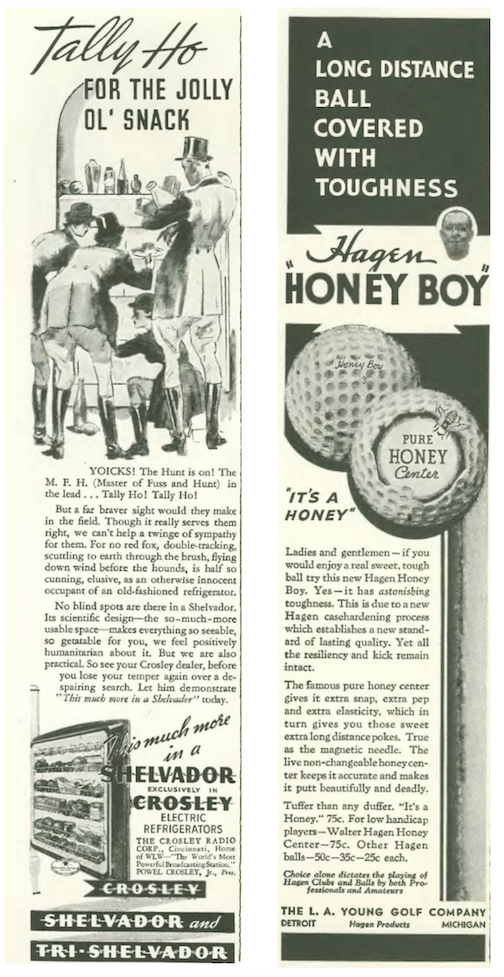
We start with some one-column gems from the back of the book including the latest innovation in electric refrigerators…a shelf in the door!…apparently Crosley was the first to invent this “Shelvador”…the ad to the right is interesting in that it advertises honey-filled golf balls…in the early 20th century some golf balls did contain real honey…apparently it was chosen for its consistent viscosity (or maybe for a quick snack on the ninth hole)…
…and from General Tire, we have another ominous warning from Dad as the teens head out for another night of crooning, or whatever they are dressed for…

…last week Chrysler was offering its sedans for $745, and this week you could have one of their Plymouths for just 510 bucks…the message: you would be admired by your polo buddies for your smart, thrifty choice…
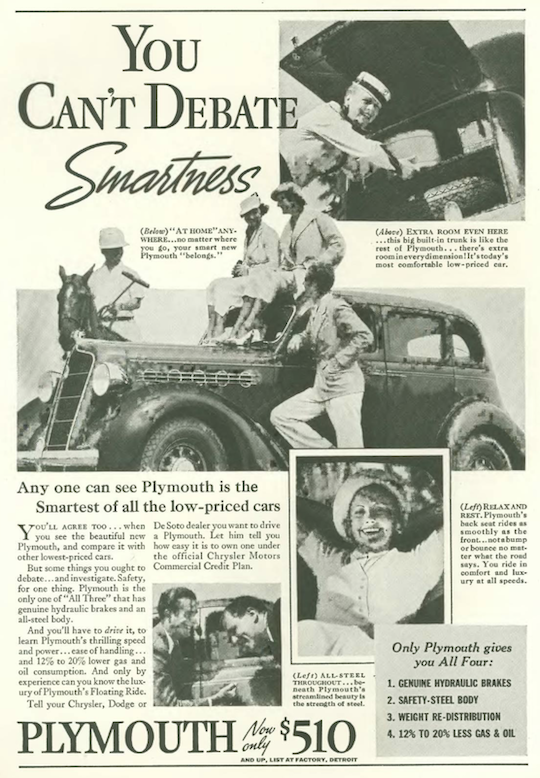
…where the above ad crammed every square inch with information, the folks at Pierce Arrow offered a restrained, minimal message (suggesting “we can afford to buy a full-page ad and leave much of it blank”)…another class signifier was the absence of a price tag (about $150k in today’s dollars)…but Chrysler-Plymouth would survive the Depression because it sold affordable cars, while Pierce Arrow was on its last legs…

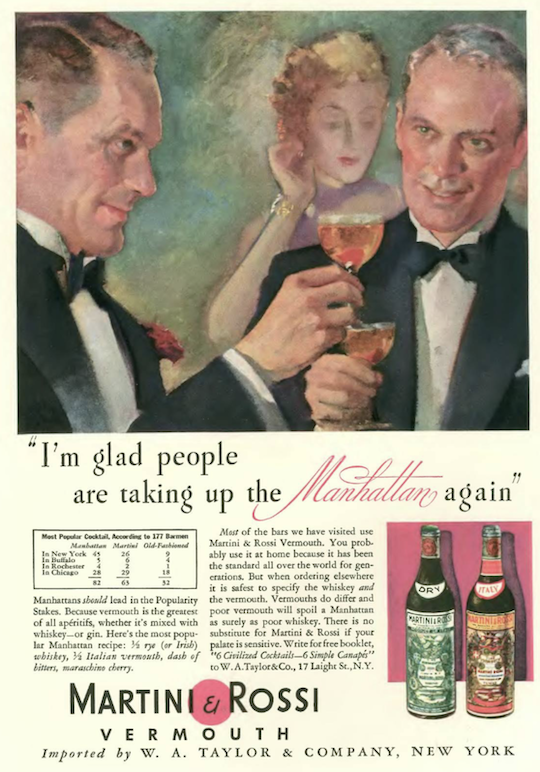
…here’s a couple of Pierce Arrow owners toasting the return of the Manhattan…
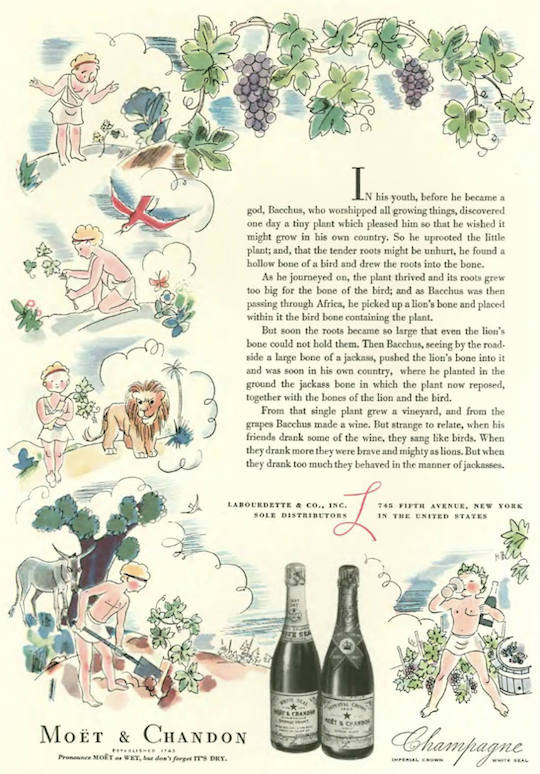
…Moët & Chandon offered up this whimsical tableau from the youth of Bacchus…
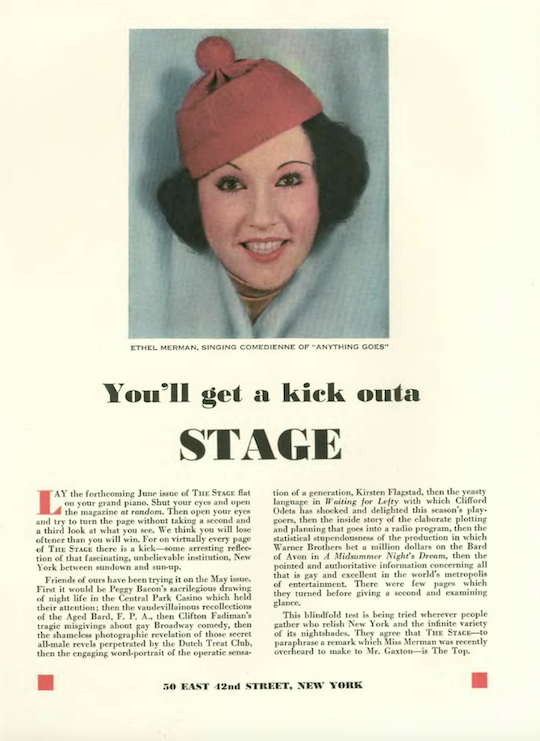
Ethel Merman popped through a curtain on the inside back cover to invite readers to subscribe to The Stage magazine…
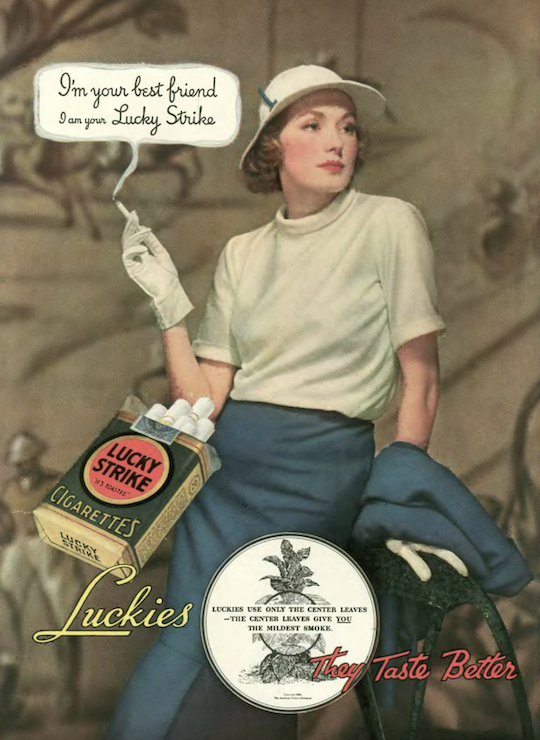
…and Lucky Strike claimed the back cover with another stylish woman and a talking cigarette bent on mind control…
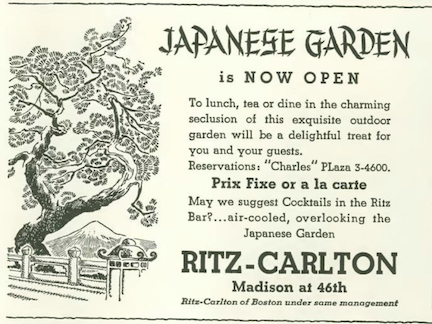
…the Ritz-Carlton announced the spring re-opening of its famed Japanese Garden…
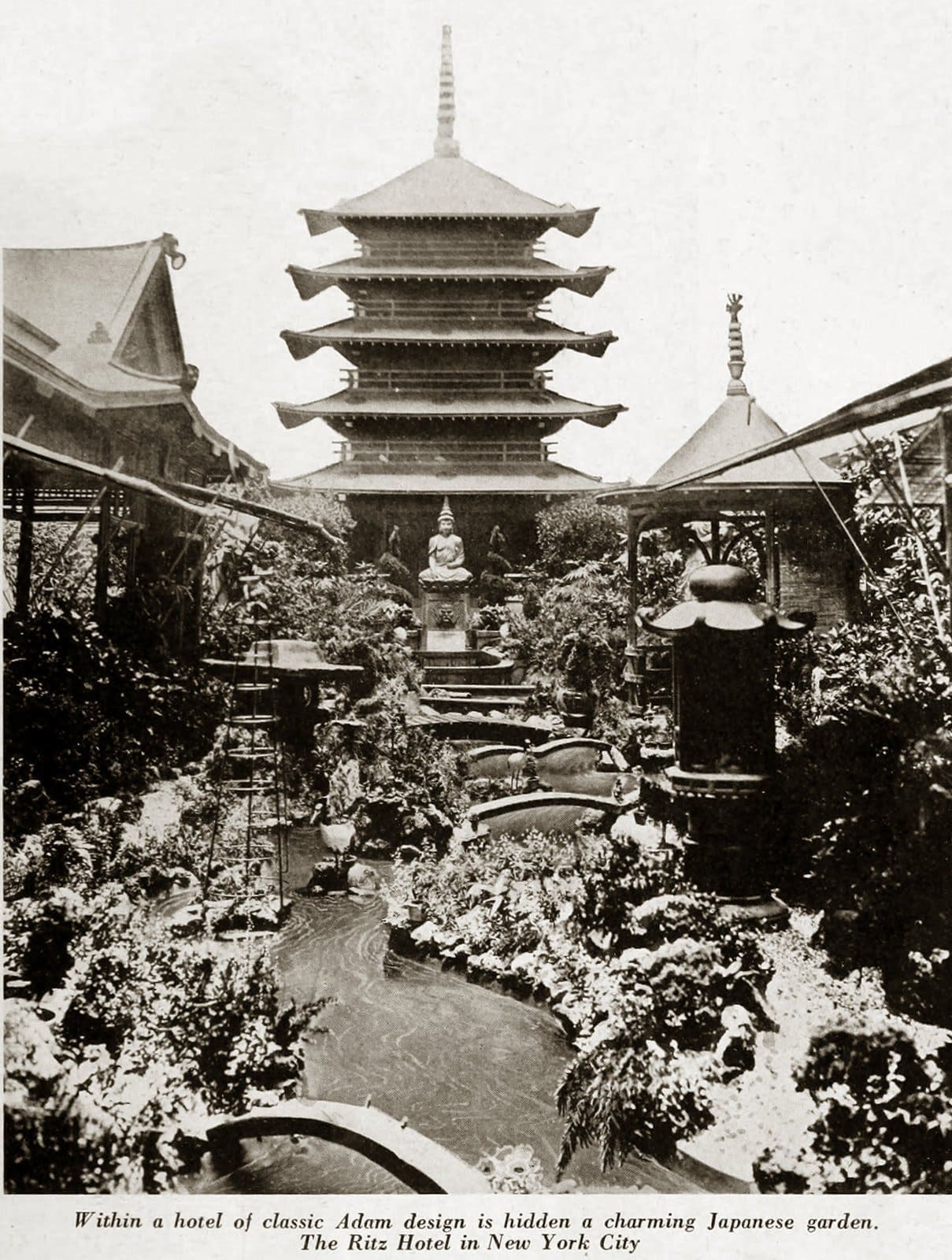
The Japanese Garden in 1924. (clickamericana)

…and we kick off our cartoonists with this “Goings On” topper by D. Krán

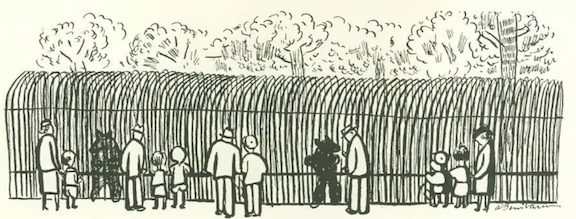
…followed by this visit to the zoo by Abe Birnbaum

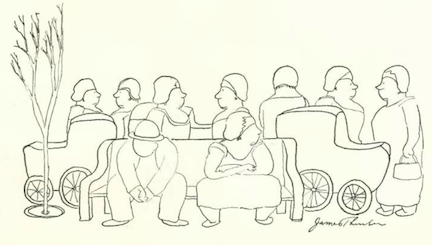
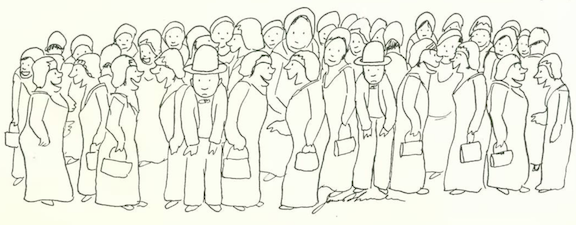
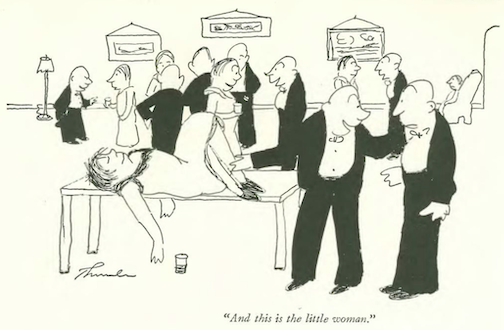
James Thurber was up for some fashion criticism…

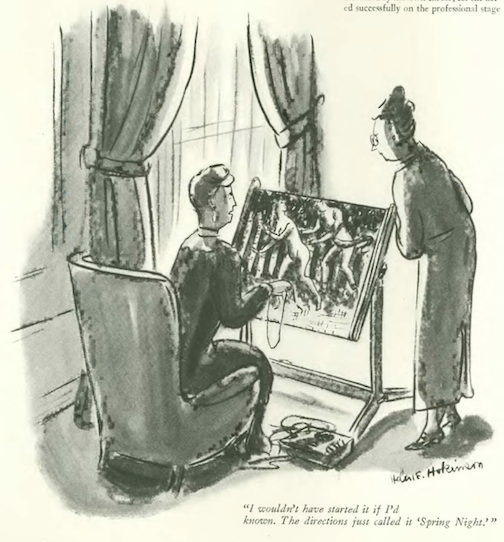
Helen Hokinson found a surprise in a paint-by-numbers kit..
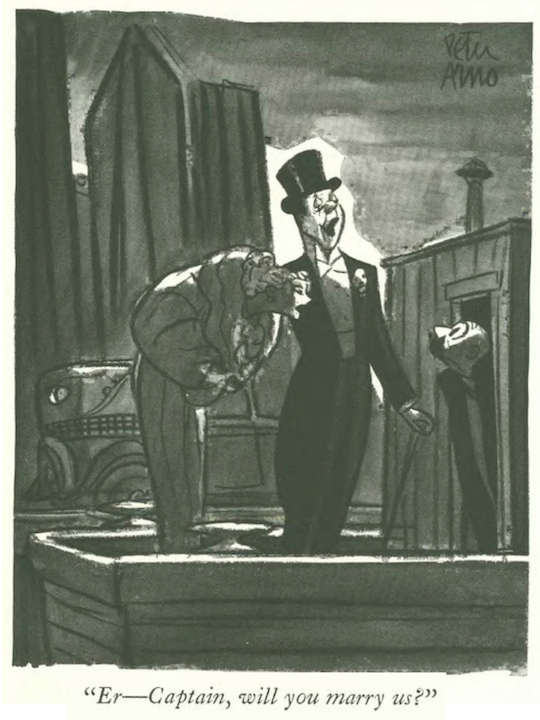
Peter Arno was up for some late night nuptials…
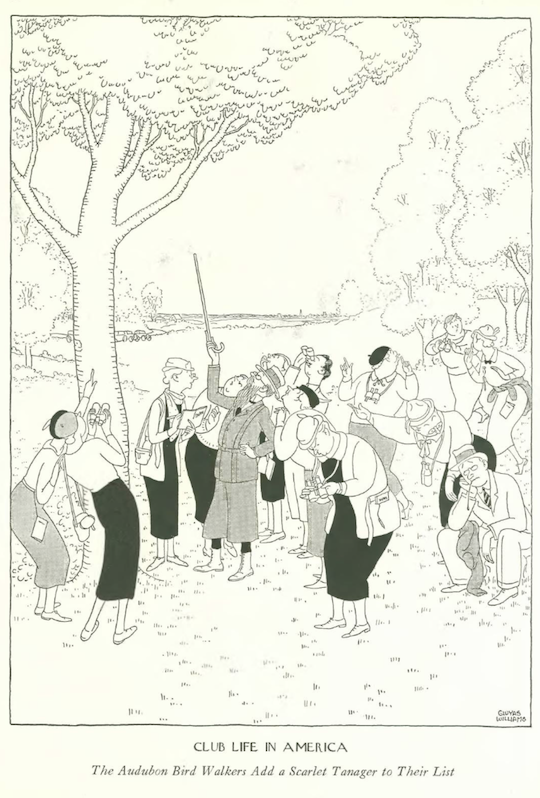
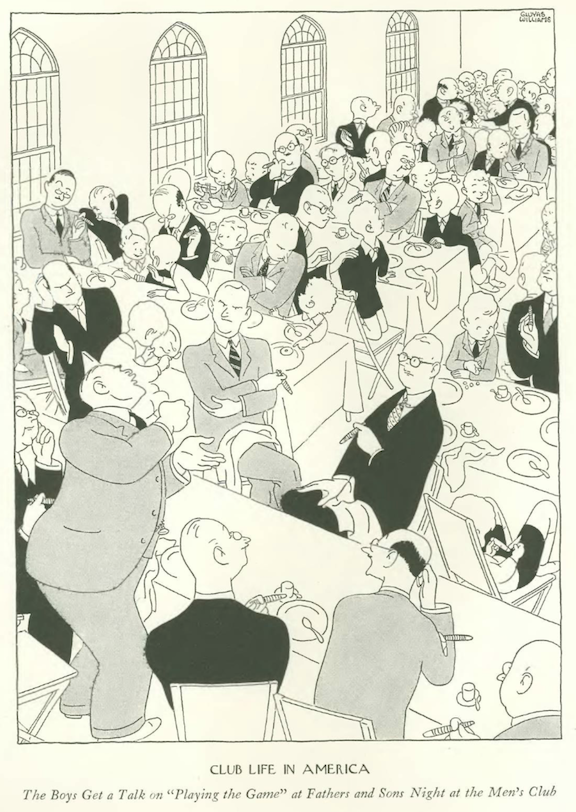
Gluyas Williams continued to examine club life…
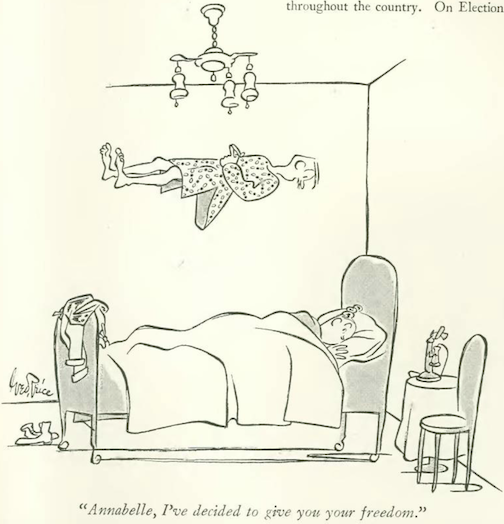
...George Price was back in the air…
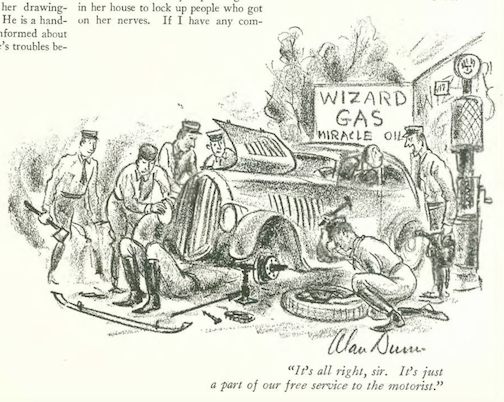
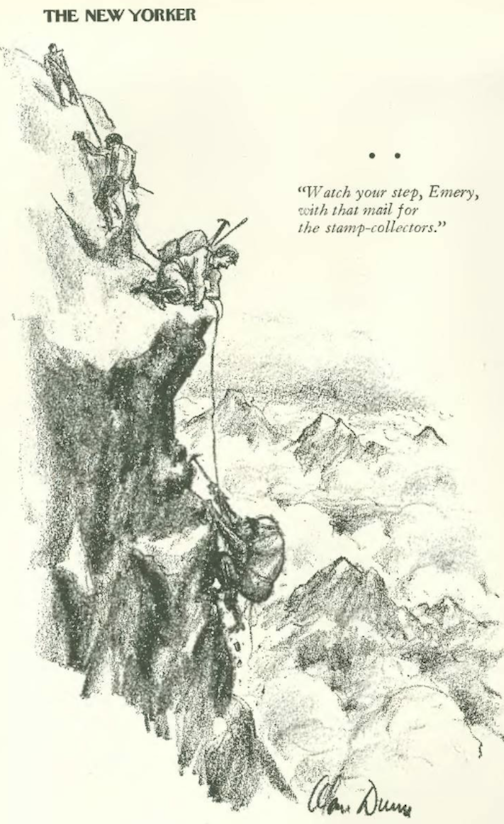
Alan Dunn gave us some men on a mission…
…and we close with Charles Addams, and some dam trouble…

Next Time: Wining and Dining…

 

Settling Down

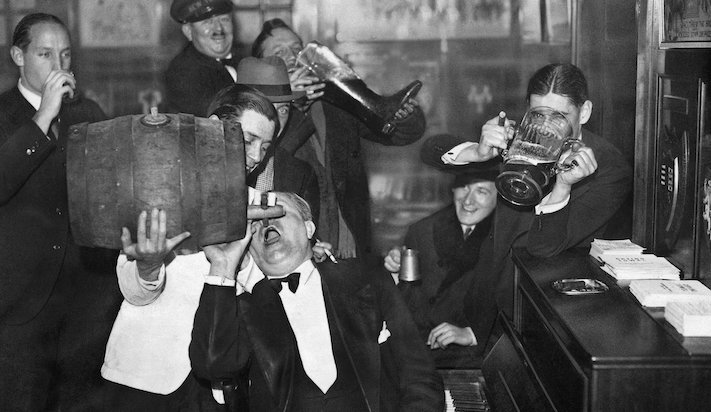
Above: Celebrating the repeal of the 18th Amendment, 1933. (New York Times)

“Settling Down” was the title given to Morris Markey’s examination of the post-Prohibition world, which to no one’s surprise heartily embraced (and imbibed) everything this world had to offer.

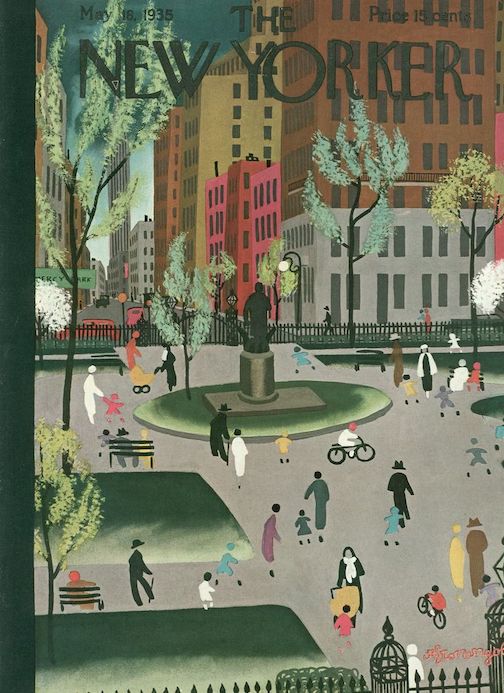
May 18, 1935 cover by Adolph K. Kronengold.

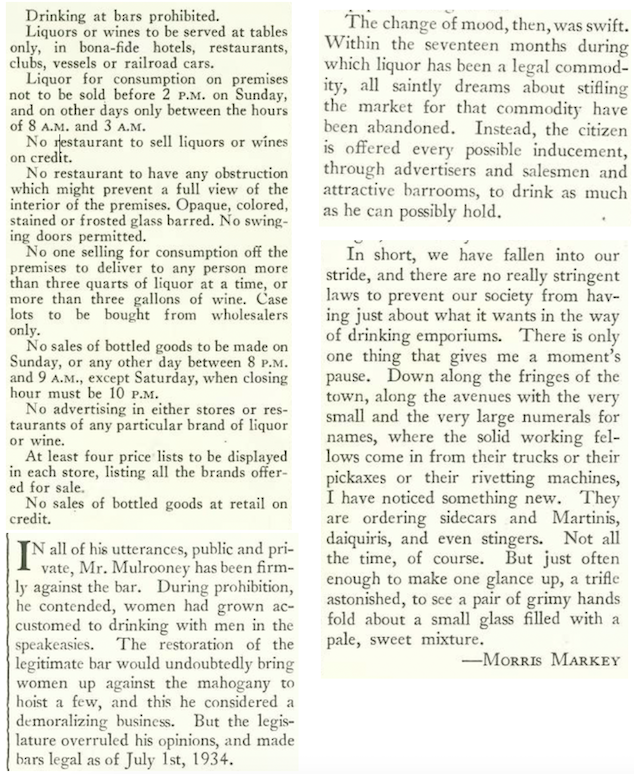
In his column, “A Reporter at Large,” Markey examined the challenges faced by local and federal governments in reestablishing old liquor control laws, in many cases creating new ones to address the technological, economic and social changes that transpired during the fourteen years of Prohibition. Facing this challenge in New York was Edward P. Mulrooney (1874-1960), a former police commissioner tapped in 1933 to head the State Alcoholic Beverage Control Board. Markey explained how Mulrooney and New York regulators tried to create new standards for alcohol consumption that would encourage moderation. Excerpts:

CAN’T HAVE A BELT IN THE BIBLE BELT…Published by The United States News on Nov. 11, 1933, this map shows how liquor laws varied by state following Prohibition. After Prohibition ended with the ratification of the 21st Amendment, states gained the authority to regulate alcohol sales, leading to a wide variety of state and local laws. Many states adopted local option laws, allowing cities and counties to decide whether to allow alcohol sales, resulting in “wet,” “dry,” and “moist” jurisdictions. (us news.com)

Seventeen chief provisions for moderating alcohol use were published in The New York Times on Nov. 10, 1933, but ten of those provisions were quickly abandoned. Less than a year and a half after repeal, Markey noted that “the citizen is offered every inducement…to drink as much as he can possibly hold.”

SO MUCH FOR RULES…Celebrations for the repeal of Prohibition in bars and former speakeasies began when Franklin Roosevelt signed the Cullen-Harrison Act on March 22, 1933; the president himself was known to enjoy a dry martini; former New York Police Commissioner Edward P. Mulrooney had the unlucky task of figuring out how to regulate the juice of the grape and the grain. In the end, people seemed to be drinking more than ever. (themobmuseum.org/thrillist.com/Condé Nast)

 * * *

Hordes From the Hinterland

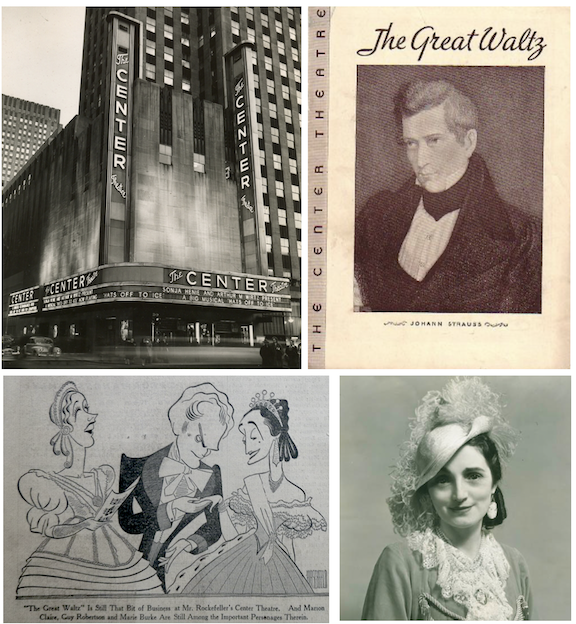
There was a time, long ago, when Broadway catered mostly to New Yorkers, but with the advent of mass media and better transportation options folks from the hinterlands (from beyond the Hudson) began to descend on the Great White Way. Then as now, certain shows attracted thousands, including The Great Waltz, a musical based on the works of Johann Strauss I and Johann Strauss II. It opened in September 1934 at the Center Theatre and ran for 289 performances. “The Talk of the Town” sniffed that “People who literally have never seen a play before in their lives turn up at Sixth Avenue and Forty-ninth Street, ready for anything.”

MANY AMERICANS WERE AGOG over the The Great Waltz…Clockwise, from top left, the play was performed at the Center Theatre (formerly the RKO Roxy Theatre) at 49th Street and 6th Avenue—sadly, it was demolished in 1954, the only building to ever be demolished from the original Rockefeller Center complex; cover of the Playbill; actress Marie Burke portrayed Countess Olga Baranskaja; Al Hirschfeld illustration of Burke and fellow actors Guy Robertson (as Johann Strauss) and Marion Claire as Therese. (cinematreasures.org/playbill.com/nyt.com)

 * * *

From Our Advertisers

Appropriately, this full-page advertisement for Gordon’s Gin appeared opposite the opening page of Morris Markey’s exploration of the post-Prohibition world…

…and business was booming in the liquor trades…most of the full-color ads in The New Yorker were placed by liquor companies, cigarette manufacturers, and automakers…the inside back cover shilled for Penn Maryland…

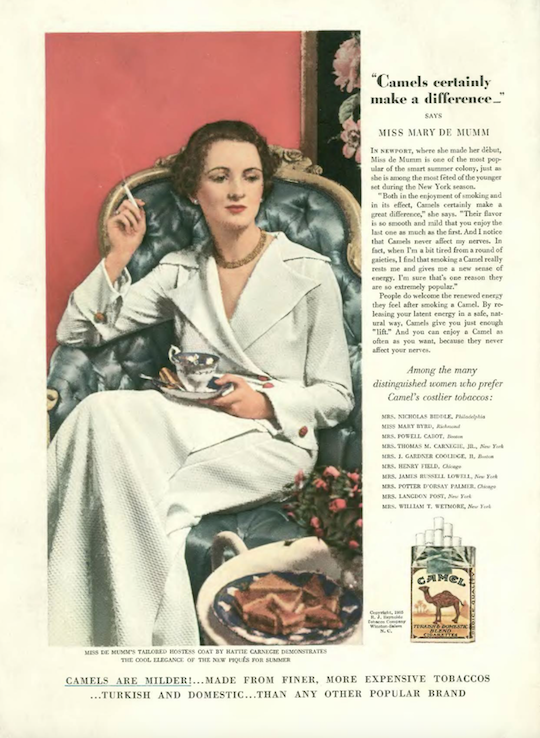
…while the back cover was once again claimed by big tobacco…here we have Newport deb Mary De Mumm expounding on wonders of Camel cigarettes, which somehow helped her feel both restful and energetic…

…those who enjoyed the finer things could buy this Packard for about $3,000 (nearly $90K today).

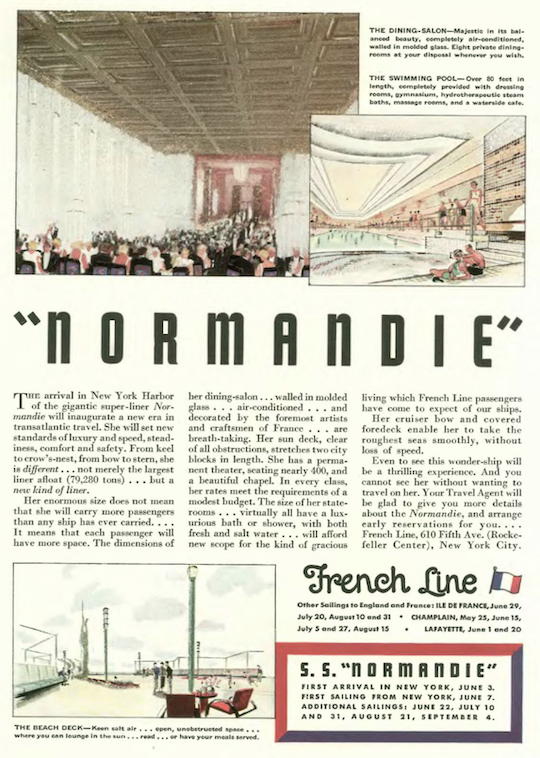
…anticipation was building for the June arrival of the new French liner S.S. Normandie, the largest and fastest passenger ship afloat…

S.S. Normandie on the high seas. (Wikipedia)

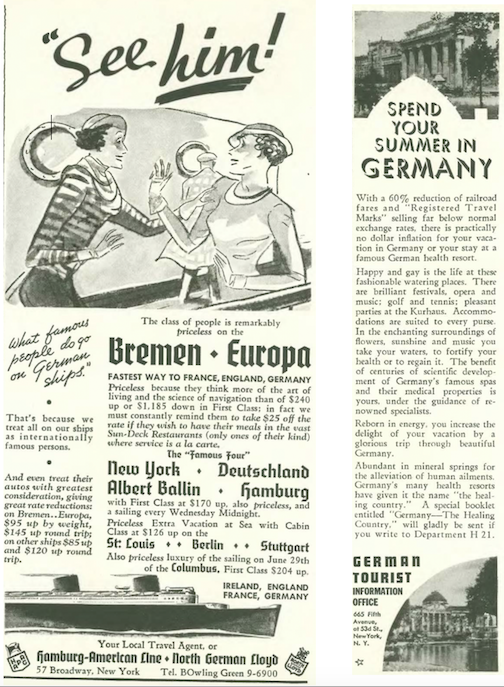
…the Hamburg-American Line was another way to get across the pond, and it promised a ship filled with famous and classy people (and likely more than a few Nazis)…the single-column ad on the right suggested you could spend your summer in Germany…the tourist bureau claimed that Germany was known as “the healing country,” and doubtless many needed healing after being beaten by Brownshirts…

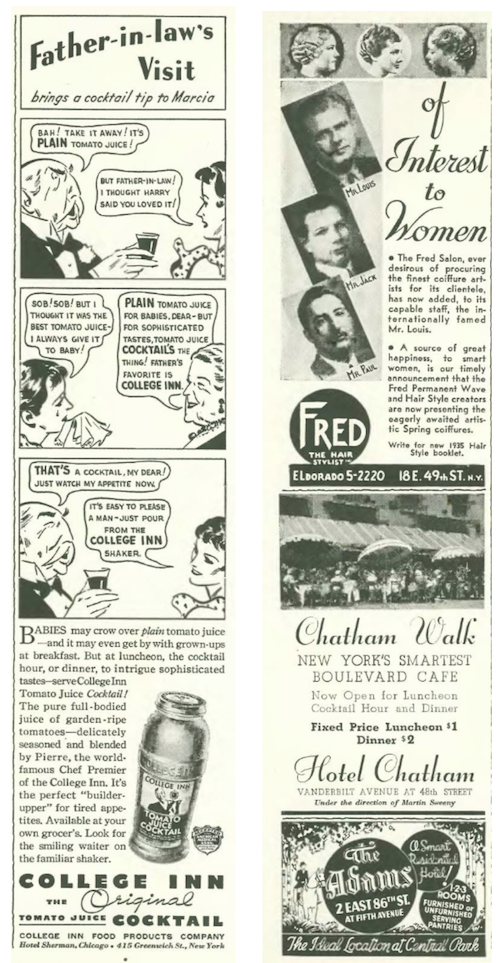
…a couple more single-column ads, first from our friends at College Inn, who dumped the furious Duchess in favor of a dyspeptic father-in-law who brings his daughter-in-law to tears over her choice of tomato juice…the ad at right advertised the services of Mr. Louis, Mr. Jack, and Mr. Paul at the hair stylist Fred, while a tiny ad at the bottom offered a luncheon for a buck at New York’s “Smartest Boulevard Cafe”…

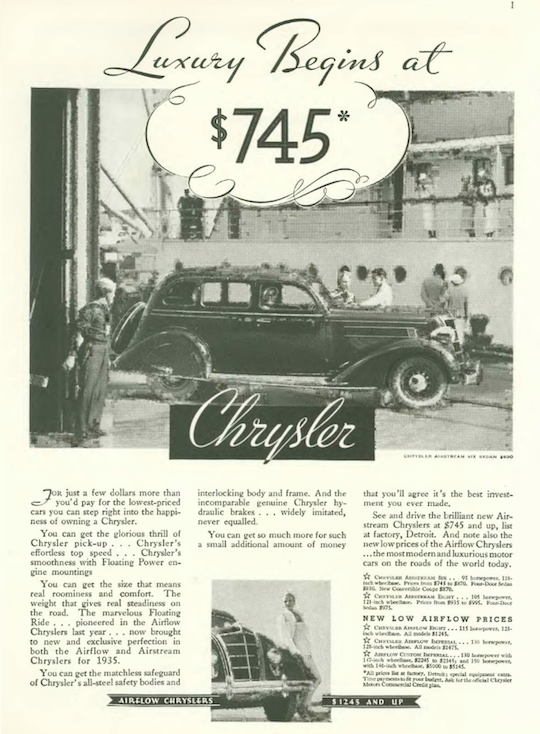
…the key word in many New Yorker advertisements was luxury, and for a fraction of what you would pay for a Packard, you could, apparently, experience luxury for as little as $745…

…or you could enjoy a bit of elegance by opening a some cans of Heinz soup, chili sauce, stuffed olives and other delectables…here a couple of shady-looking butlers are serving nothing but canned goods at a swanky party, much to the annoyance of the cook, who appears poised to take a cleaver to the scheming pair…

…and look what else you can get from a can, some soup with a “personality”…

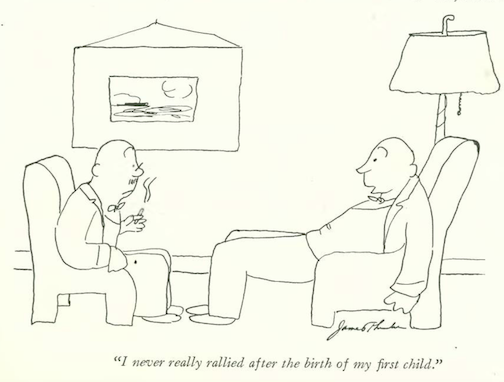
…enough of that nonsense, on to our cartoonists, with two spots from James Thurber

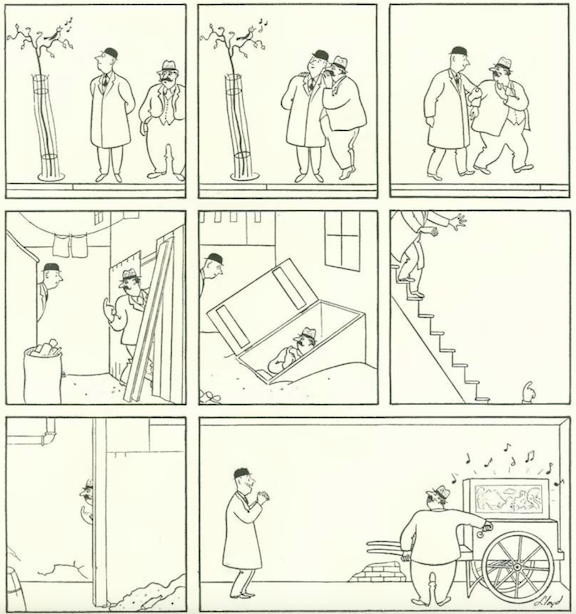
...Lloyd Coe gave us this musical multi-panel…

Leonard Dove looked in on the complex world of young love…

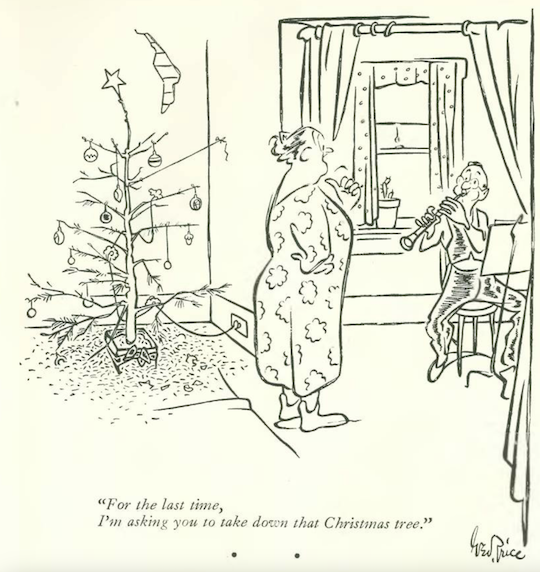
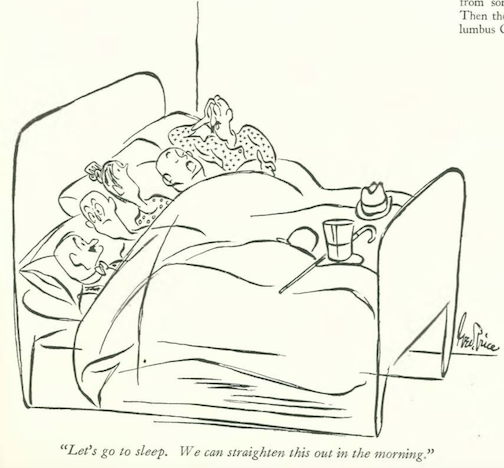
George Price found the Yuletide spirit still alive among procrastinators…

…and we close with Alan Dunn, and some earthy reading…
Next Time: Vive La Normandie…

What’s in a Name?

Above: H.L. Mencken at the Baltimore Sun, circa 1930. From April 1934 to September 1949, Mencken contributed more than fifty articles to The New Yorker.

The American journalist Henry Louis Mencken (1880–1956) was well-known as a biting satirist and cultural critic, but he was also a noted scholar of the English language and its various quirks.

May 11, 1935, Mother’s Day cover by William Cotton.

One of those quirks was explored in Mencken’s essay, “The Advance of Nomenclatural Eugenics In the Republic,” for the column “Onward & Upward With The Arts.” Broadly defined, eugenics refers to the discredited belief that selective breeding could be used to improve the human race. Mencken used the term satirically to describe the anglicization of immigrant names, either to conform to English spellings or, in many cases, to avoid racial and ethnic discrimination. An excerpt:

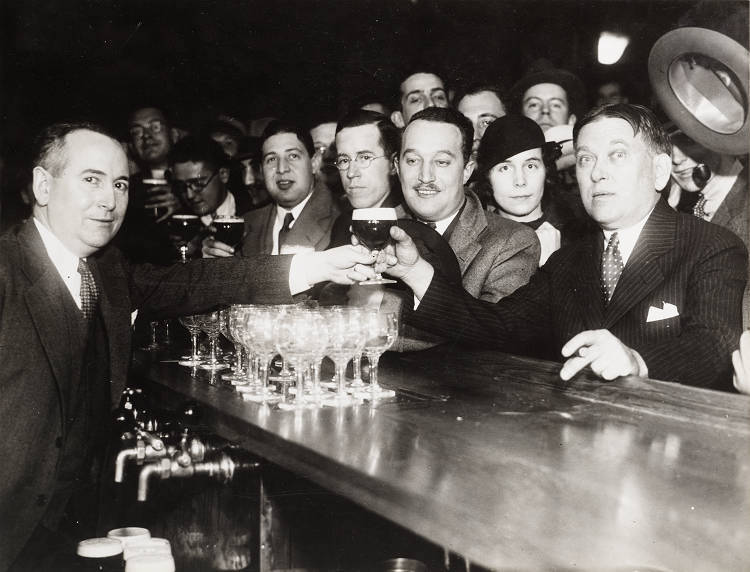
A PERFECT PAIRING, for H. L. Mencken, was a beer and a cigar. Here he is accepting “his first public glass of post-Prohibition beer” at the Rennert Hotel in Baltimore on April 7, 1933. In 1924 Mencken wrote: “Five years of Prohibition have had, at least, this one benign effect: they have completely disposed of all the favorite arguments of the Prohibitionists.” (digitalmaryland.org)

Many Jewish immigrants also abandoned their surnames, seeking to blend in and avoid discrimination. Historian and author Kirsten Fermaglich (A Rosenberg by Any Other Name, 2016) found that persons with Jewish-sounding last names made up 65 percent of all name change requests in New York in the first quarter of the 20th century. Mencken observed:

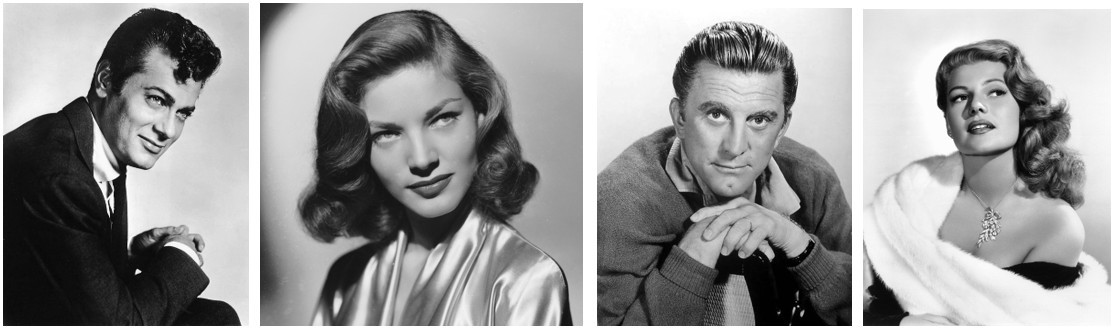
MEET BERNARD, BETTY, ISSUR AND MARGARITA…Some more famous examples of name changes in the first half of the 20th century. From left, actors (and New Yorkers) Tony Curtis (Bernard Schwartz), Lauren Bacall (Betty Joan Perske), Kirk Douglas (Issur Danielovitch Demsky), and Rita Hayworth (Margarita Carmen Cansino). (Wikipedia)

 * * *

Canada Dry

In his column, “Of All Things,” Howard Brubaker noted the “well-merited spanking” FDR gave to military leaders who were talking about fortifying the border with Canada. Brubaker agreed with FDR’s action, observing how Canadians came to the aid of thirsty Americans during Prohibition.

 * * *

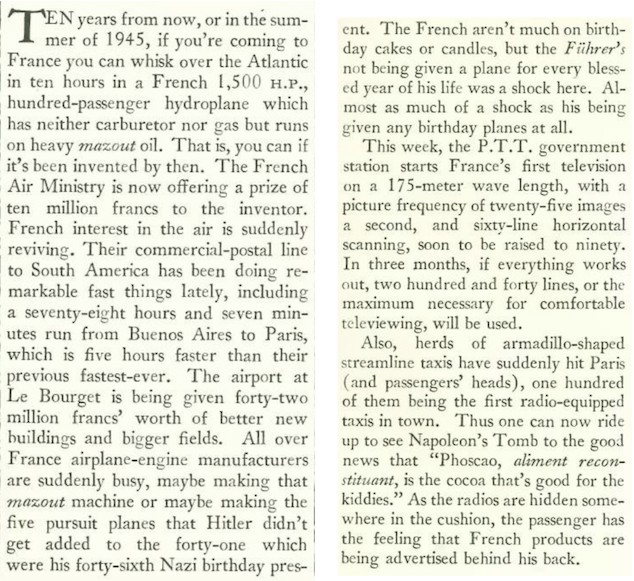
Air France

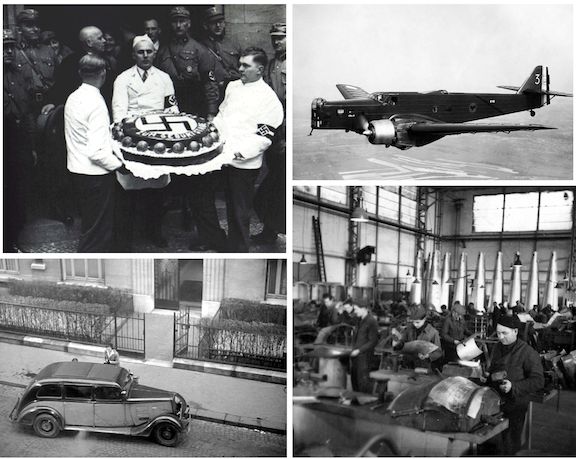
Paris correspondent Janet Flanner considered the state of French aviation as well as signs of war preparation. She also noted the birthday of German dictator Adolf Hitler, the birth of French television, and the streamlined taxis that had suddenly appeared on the streets of Paris. Excerpts:

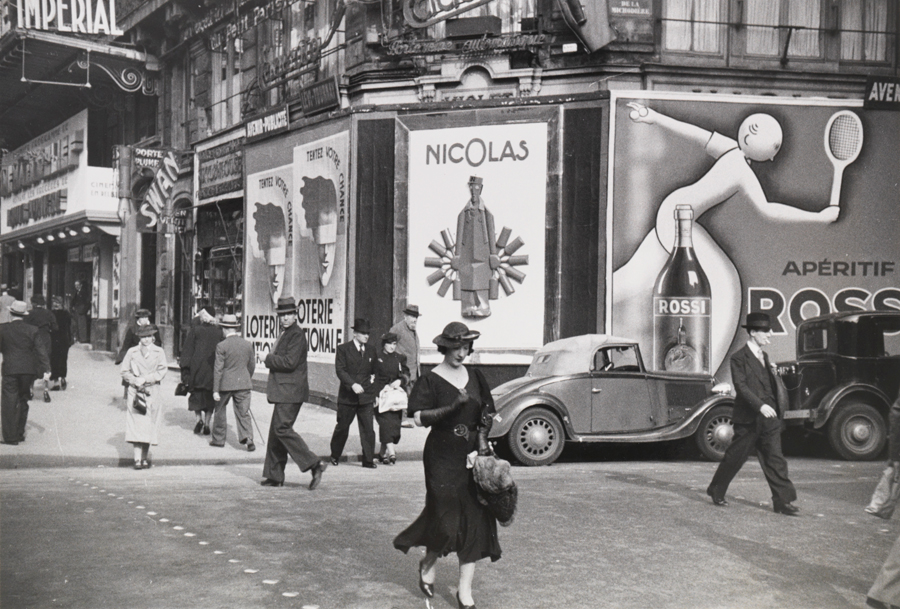
SOME ICE CREAM WITH YOUR SLICE OF HATE?…Clockwise, from top left, bakers carefully carry Adolf Hitler’s birthday cake in April 1935; the French, meanwhile, were ramping up war production including the manufacture of the M210 bomber; airplane factory workers fashion sheet metal in a factory in Châteauroux-Déols; streamlined Peugeot 401 taxis hit the Paris streets in 1935. (reddit.com/dassault-aviation.com/imcdc.org)

 * * *

Vamps and Vampires

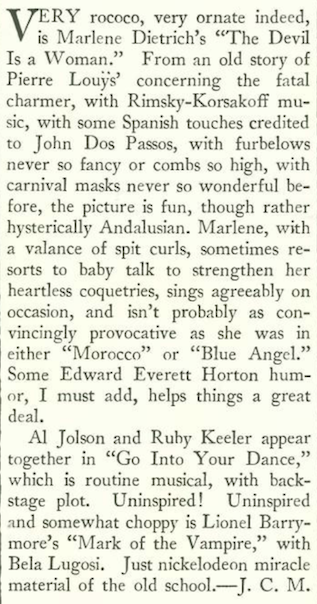
John Mosher offered mixed reviews of Hollywood’s latest fare, finding Marlene Dietrich’s latest vehicle “fun,” and the singing and dancing of husband/wife Al Jolson and Ruby Keeler “uninspired,” a term he also applied to Bela Lugosi’s latest vampire flick.

TAKE YOUR PICK…Critic John Mosher sampled some very different films including, left, Marlene Dietrich and Lionel Atwill in The Devil Is a Woman; top, Ruby Keeler with her then-husband Al Jolson in Go Into Your Dance; and Bela Lugosi did his vampire schtick with the help of Carroll Borland (who played Dracula’s daughter) in Mark of the Vampire. (MoMA/Pinterest/Instagram)

 * * *

From Our Advertisers

We start off with a bang from Goodyear…tire blowouts were common in the 1930s as tire technology could not keep pace with the increasing speed of automobiles, nor the poor condition of many roads…

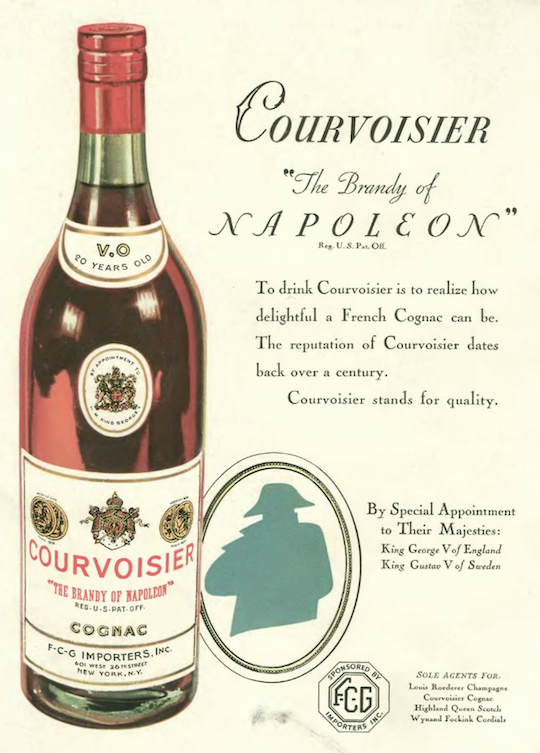
…after many weeks, the back cover went to something other than cigarette manufacturers…

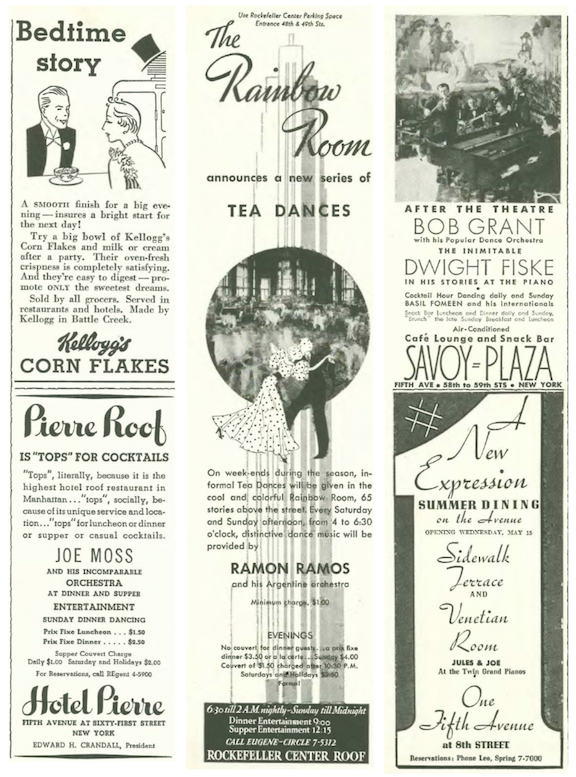
…let’s take a look at some of the one-column ads from the back pages…many of them highlighted the various nighttime entertainments, from the rooftop of Hotel Pierre to the air-conditioned lounge at the Savoy-Plaza (plus that weird ad that suggested Corn Flakes as a nightcap)…

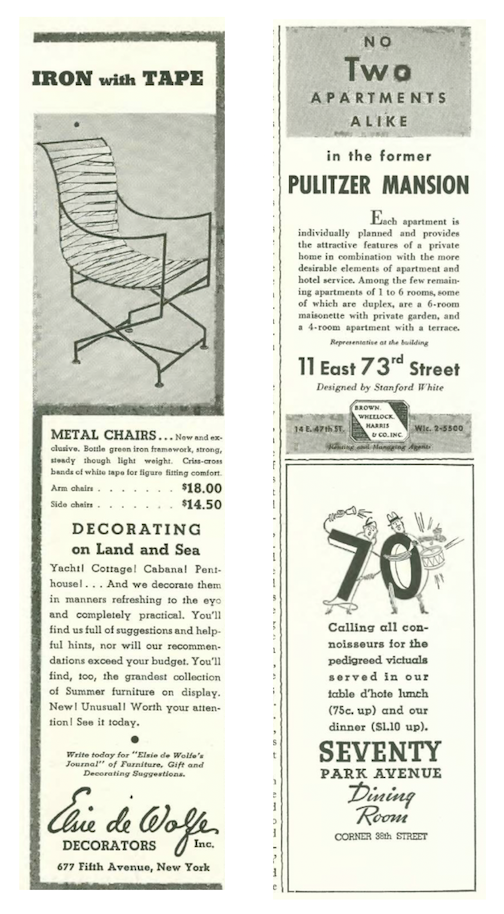
…interior designer Elsie de Wolfe rolled out “Iron with Tape” chairs, which might be the first example of what would become the ubiquitous webbed lawn chair…also advertised were apartments in the former Pulitzer mansion…

…the Pulitzer apartments were one happy outcome of the Great Depression, which foiled the plans of investors to demolish the house in 1934 and erect an apartment building…
The Pulitzer mansion still stands today, now divided into high-class coops. (daytoninmanhattan.blogspot.com)

…here’s something new from the Jay Thorpe shop, “noted for unusual sportswear”…

…perhaps inspired by Hollywood…
Ruby Keeler in 1935’s Shipmates Forever. (Reddit)

…illustrator Lyse Darcy created many of these distinctive ads for Guerlain products from the 1930s through the 1950s…

…on to our cartoonists, we begin with spot art from James Thurber

…and Thurber again…

…and we have two from George Price

Otto Soglow continued with his multi-panel tricks…

Howard Baer did some eavesdropping on the rails…

…while Barbara Shermund checked in on her modern women…

Alan Dunn gave us a mother who took care of herself on Mother’s Day…

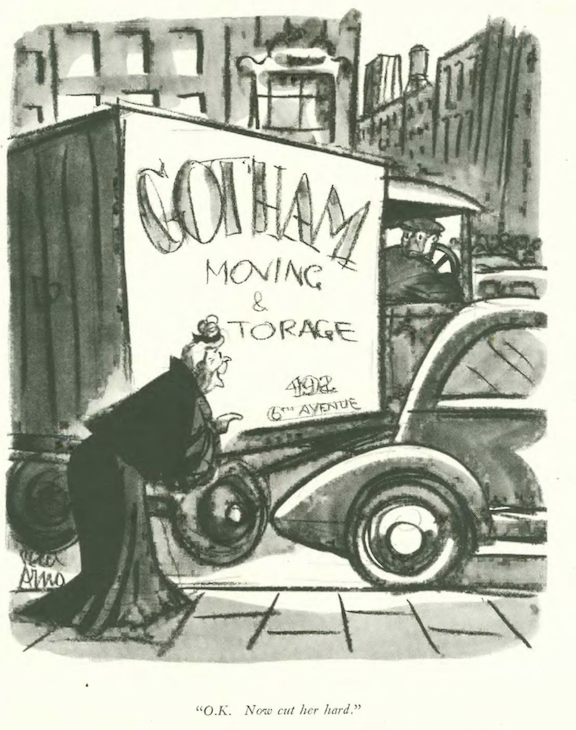
Peter Arno found some kindly advice in the crowded city…

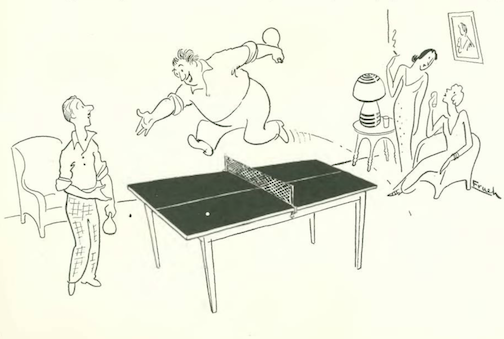
Al Frueh put the “tennis” back into table tennis…

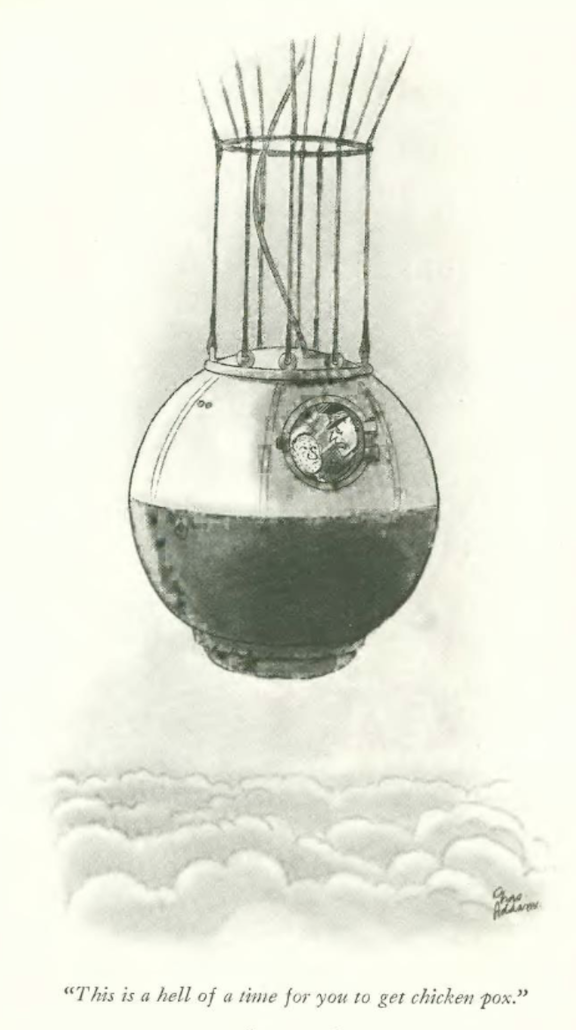
…and we close with Charles Addams, who had become a regular contributor but was still more than three years away from launching his “Addams Family” cartoons…

Next Time: Settling Down, In a Way…


The Royal Treatment

Above: King George V and Queen Mary posed for portraits by John St Helier Lander to commemorate the king’s Silver Jubilee in 1935. (Wikipedia) 

The British Royal Family has never been my cup of tea, but its hard to deny their influence on world affairs, even if today it is mostly ceremonial. The king and queen were also figureheads back in 1935, however they could still claim to lead a vast empire, albeit one badly fraying at the seams.

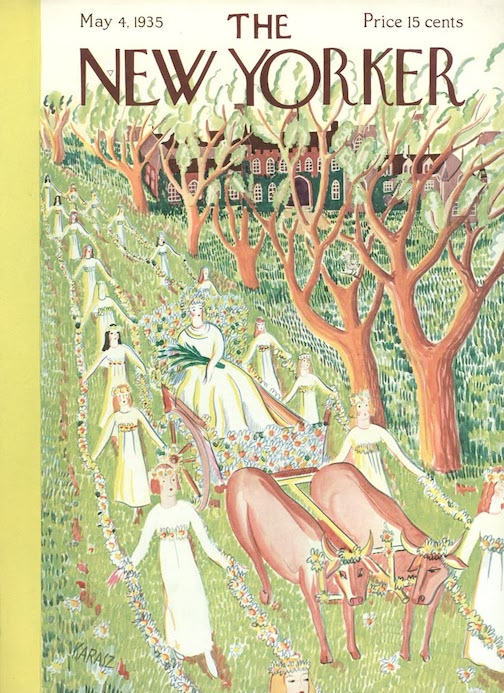
May 4, 1935 cover by Ilonka Karasz.

Then as now, the power of the royals lay largely in their ability to boost the political and economic fortunes of their island nation. Such was observed by The New Yorker’s Paris correspondent Janet Flanner, who penned a two-part profile of Queen Mary (nee Mary of Teck or more formally Victoria Mary Augusta Louise Olga Pauline Claudine Agnes; Queen of the United Kingdom and the British Dominions, and Empress of India). Flanner wrote the profile of Queen Mary (1867-1953) in anticipation of the Silver Jubilee of her husband, King-Emperor George V (1865-1936). Excerpts:

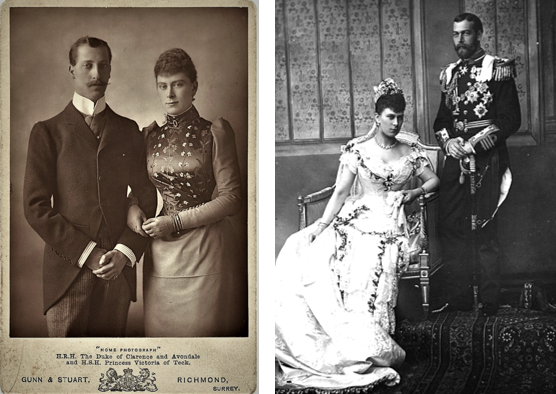
A DEB AND A DUKE…In 1886 Mary was a an unmarried British princess who was not descended from Queen Victoria, so she was a suitable candidate for the royal family’s most eligible bachelor, Mary’s second cousin Prince Albert Victor, Duke of Clarence and Avondale. In early December 1891 Albert Victor (left photo) proposed marriage to Mary, but he died six weeks later in the Russian flu pandemic. Less than two years later (July 1893) Albert Victor’s brother, Prince George, Duke of York, would wed Mary—at right, their wedding day photo. (Wikipedia)

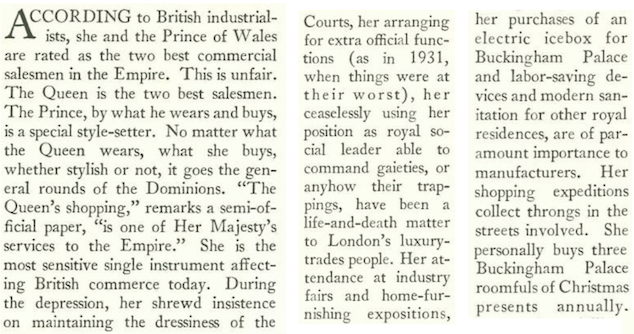
Flanner noted that the King George V and Queen Mary were rated by British industrialists as the Empire’s “two best salesmen,” however it was Mary who proved the most influential whether she was buying a hat or a refrigerator. Excerpts:

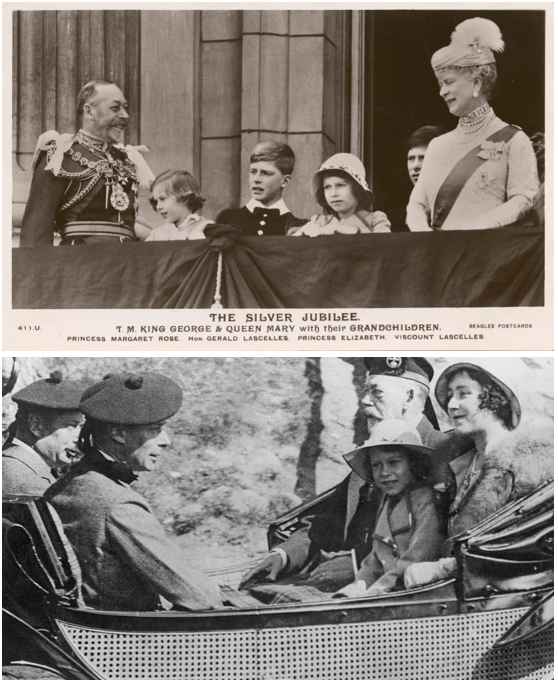
SILVER AND GOLD…Top photo: to mark the king’s Silver Jubilee on May 6, 1935, King George V and Queen Mary greet their subjects from a balcony at Buckingham Palace with their grandchildren, (from left) Princess Margaret Rose, Hon. Gerald Lascelles, Princess Elizabeth, and Viscount Lascelles. Below, King George V, the Duke and Duchess of York, and Princess Elizabeth take a trip in the royal carriage, 1933. The Duke and Duchess would succeed the throne upon the death of King George in 1936 and the abdication of the Duke’s brother, Edward, that same year. (Reddit/Town & Country)

Naturally, not everyone in the kingdom was thrilled by the Silver Jubilee…

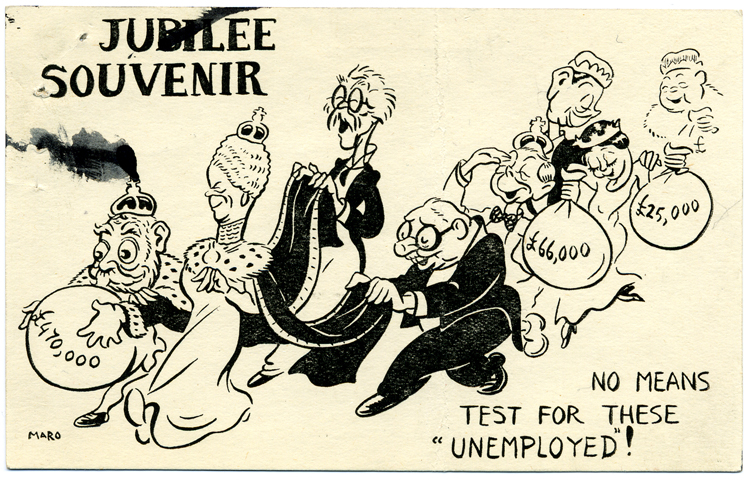
OPPOSING VIEWPOINT…The anti-monarchist cartoonist Desmond Rowney commemorated the Silver Jubilee with this cartoon in the Daily Worker. The public expense for the Silver Jubilee in the midst of a financial depression caused some controversy. (National Archives UK)

 * * *

Corn-fed Canvasses

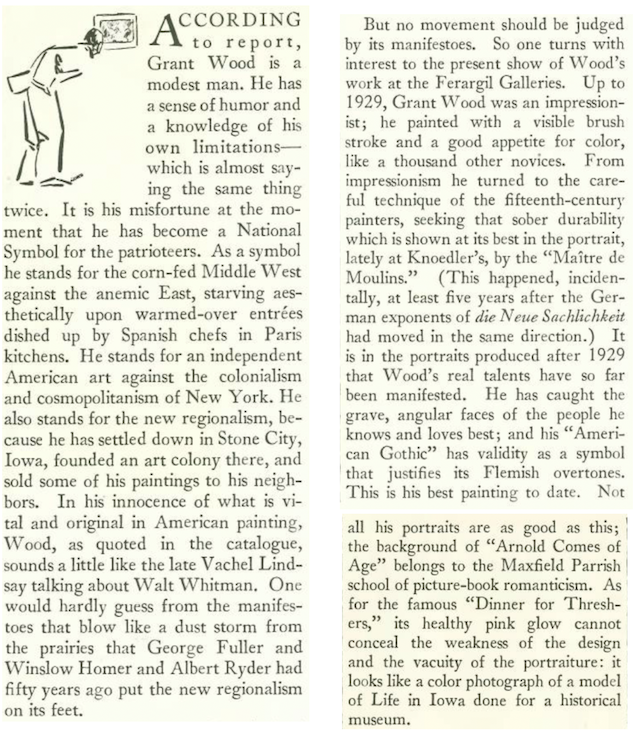
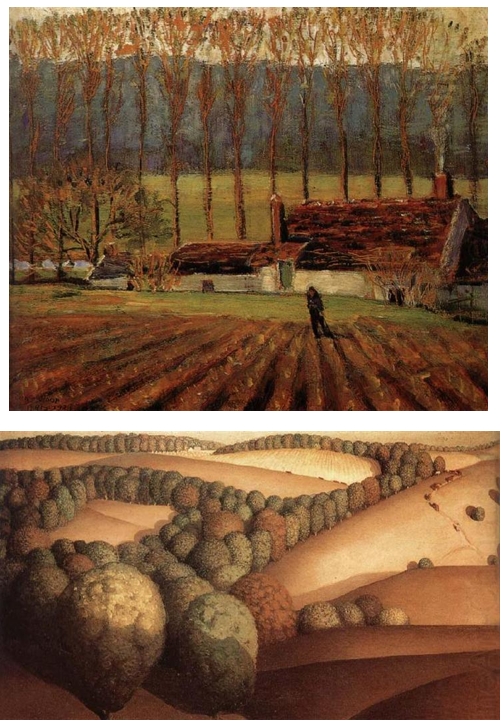
Critic Lewis Mumford, like many East Coast intellectuals, was allergic to the over-patriotic and the sentimental, so when it came to assessing the work of the regionalist painter Grant Wood (1891-1942), Mumford found himself perplexed but hopeful that Wood would one day “find himself” and produce “first rate” art.

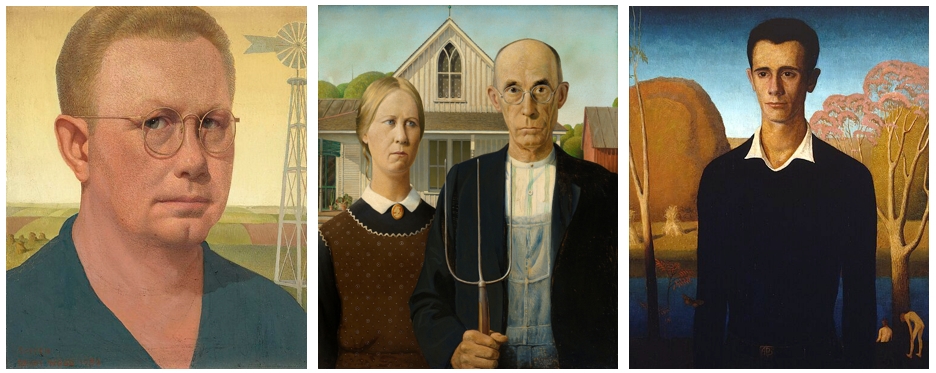
FLANKING THE ICONIC painting American Gothic (1930) are Grant Wood’s Self Portrait (1932) and, at right, Arnold Comes of Age (1930). Lewis Mumford considered American Gothic to be Wood’s best work. (figgeartmuseum.org/whitney.org/sheldonartmuseum.org)

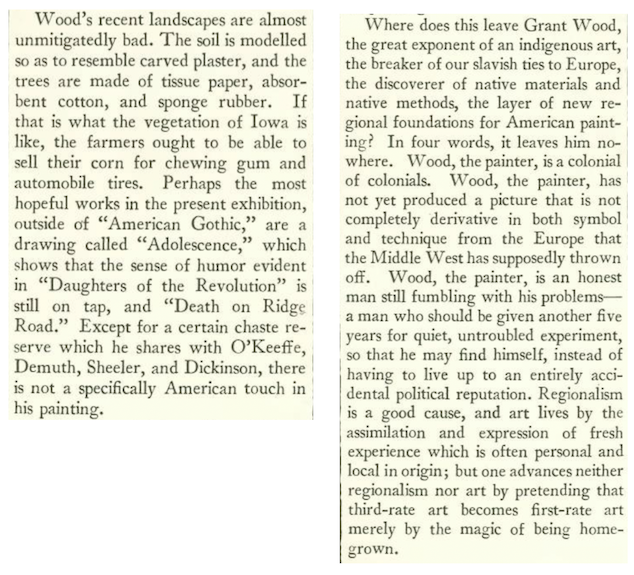
Mumford did not mince words, however, when it came to Wood’s contemporary landscapes, which he called “unmitigatedly bad…If that is what the vegetation of Iowa is like, the farmers ought to be able to sell their corn for chewing gum…”

BUBBLEGUM TREES…From 1919 to 1925, Grant Wood taught junior high art in Cedar Rapids, Iowa. The seasonal nature of teaching allowed Wood to take summer trips to Europe to study art, and his early work showed strong post-impressionist influences, including his impressionistic Vegetable Farm (top) from 1924; below, Mumford thought Grant’s later landscapes looked like they were made of cotton and sponge rubber, including Near Sundown, from 1933. (wikiart.org)
HOPE AND NOPE…Mumford wrote that Wood’s more “hopeful” works included, top left, Death on Ridge Road and, top right, Adolescence. On the other hand, he found the portraiture in Dinner for Threshers (bottom) vacuous, suggesting “a color photograph of a model of Life in Iowa done for a historical museum.” (wikiart.org/figgeartmuseum.org)

 * * *

Daring Young Man

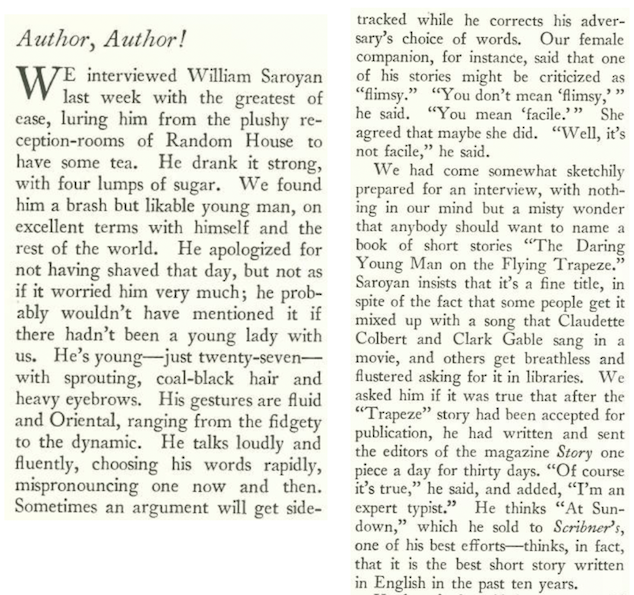
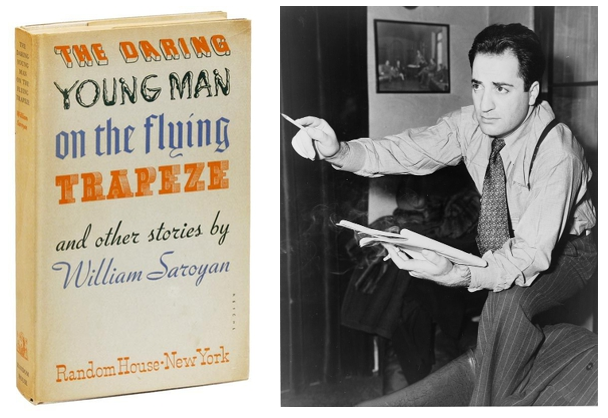
“The Talk of the Town” paid a visit to William Saroyan (1908–1981), an Armenian-American novelist, playwright, and short story writer who would go on to receive a Pulitzer Prize for Drama in 1940 and a 1943 Academy Award for Best Story for the film The Human Comedy. An excerpt:

HIGH WIRE ACT…The Daring Young Man on the Flying Trapeze and Other Stories (1934) was the first collection of 26 short stories by William Saroyan (pictured here in 1940). The book became an immediate bestseller. (Wikipedia)

 * * *

Not Long For Long

In his column “Of All Things,” Howard Brubaker noted that the “loose talk” of Huey Long, a U.S. Senator from Louisiana and prominent critic of the New Deal, could be squelched by a Senate vote. As it turned out, it wouldn’t be necessary; Long was felled by an assassin’s bullet four months later.

 * * *

Ode to Abode

E.B. White turned to verse to offer his thoughts on where one should live:

 * * *

Tough Guys

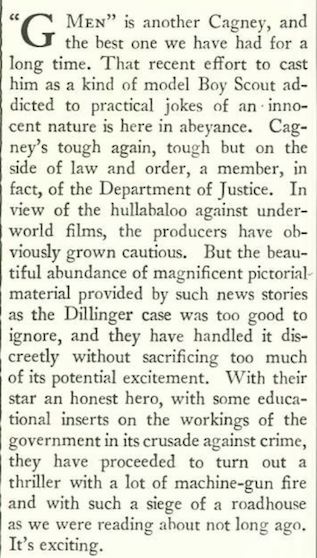
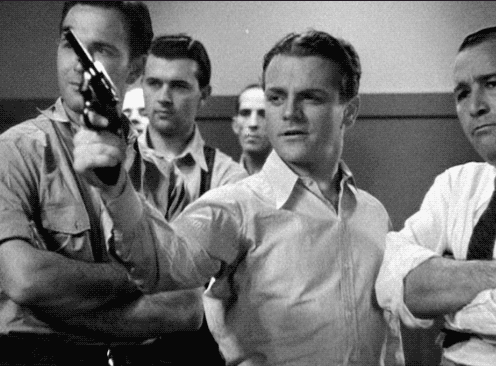
After a musical comedy, a Shakespeare adaptation (A Midsummer Night’s Dream), and another comedy, James Cagney returned to familiar form with an exciting crime drama, G Men. Critic John Mosher was pleased that Cagney was back to tap-dancing with machine guns rather than showgirls.

CRIME PAYS…AT THE BOX OFFICE… James Cagney takes aim at his new role as a federal agent James “Brick” Davis in G Men. With the Hays Code in force, Warner Brothers made the film to counteract what many leaders claimed was a disturbing trend of glorifying criminals in gangster films. (Still from film)

 * * *

From Our Advertisers

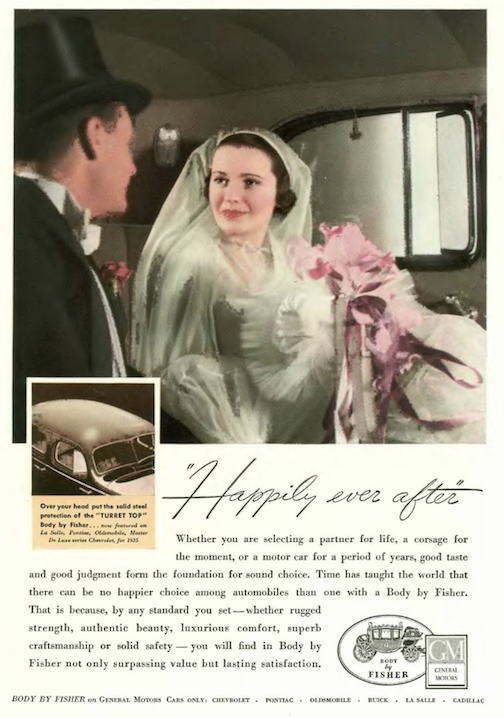
According to General Motors’ Fischer division, good taste was in order whether you were choosing a spouse or an automobile…

New Yorker ads continued to display bright colors to sell everything from cars to whiskey to sparkling water (with apparent health benefits)…

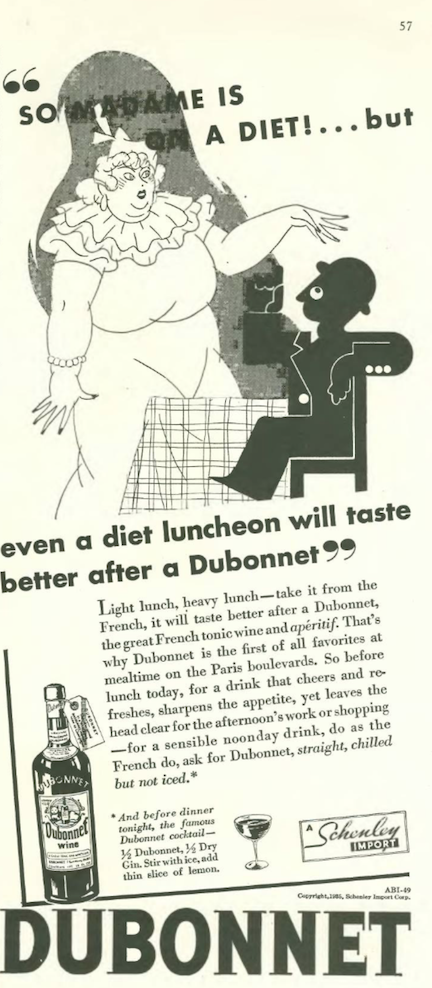
…the shadowy Dubonnet mascot was back, here making the claim (against the wisdom of the ages) that a lunchtime drink will clear your head for the afternoon ahead…

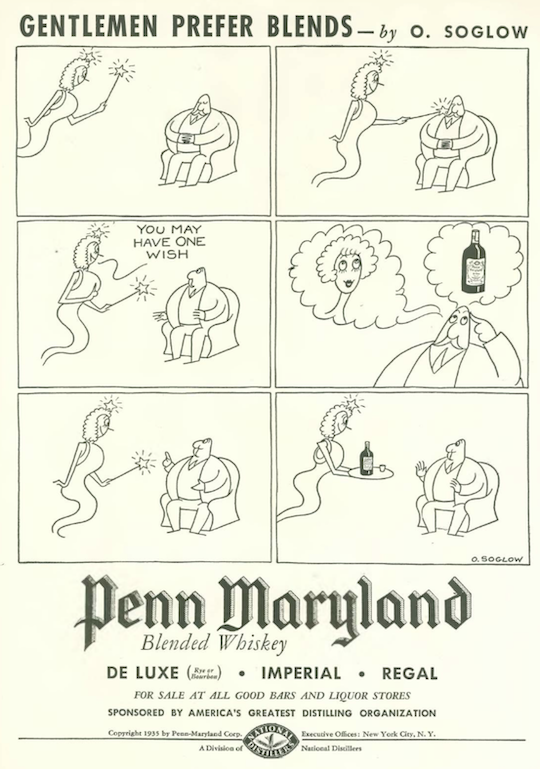
…no health claims here from Penn Maryland, just pure magic as depicted by Otto Soglow

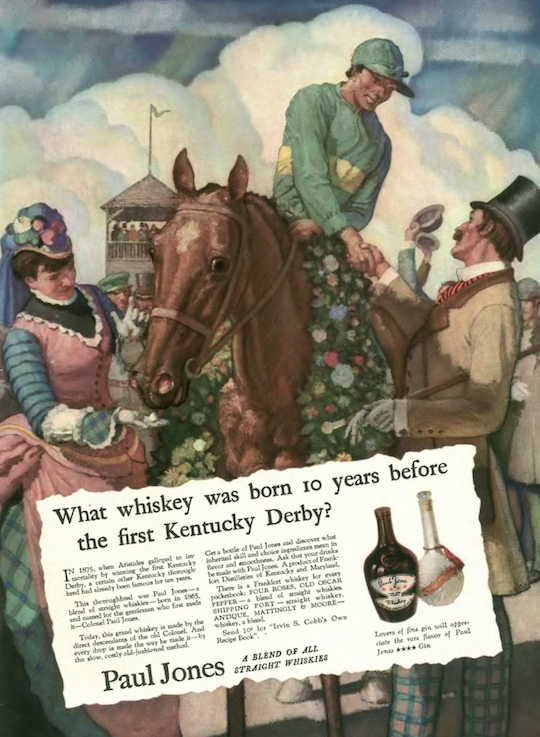
…and what goes better with whiskey than the Kentucky Derby…

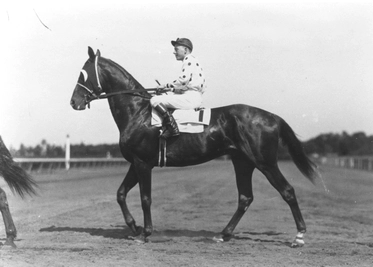
…the 1935 Kentucky Derby was won by Omaha, a three-year-old Thoroughbred; he was the third horse to ever win the Triple Crown (Omaha was the son of Gallant Fox, the 1930 U.S. Triple Crown winner)…

Omaha in 1935 (Wikipedia)

…on the subject of Thoroughbreds, Camel offered up testimonials from top athletes in a variety of sports…they all agreed that the cigarettes “don’t get your wind”…so what did that mean?…according to R.J. Reynolds, “It means you can smoke Camels all you want”…

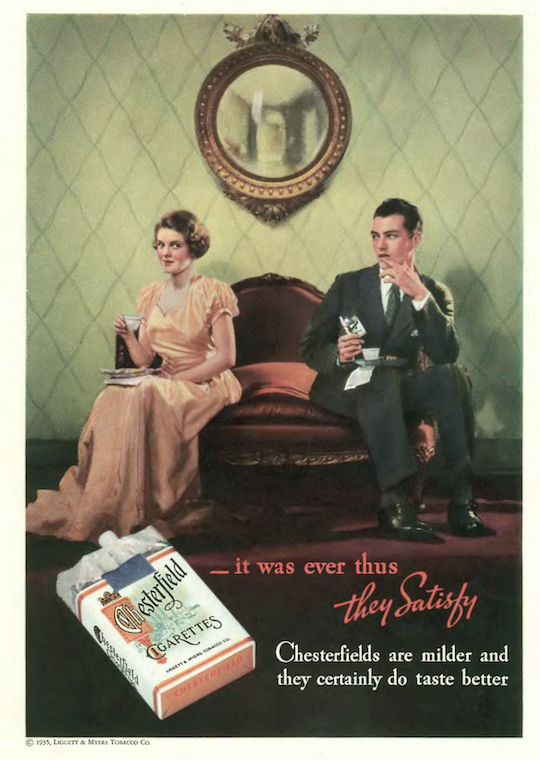
…Camels also calmed the nerves, and so apparently did Chesterfields…

…on to our cartoonists, we begin with a spot by Charles Addams at the top of page 2…

…later in the issue James Thurber contributed this drawing to stretch across the bottom of page 62 (“On and Off the Avenue”)…

…Thurber again, with the life of the party…

William Steig offered up a page-full of wits…

…plus one more on the preceding page…

Gluyas Williams continued to follow the strange ways of club life in America…

…and we close with Alan Dunn, and service with a smile…

Next Time: What’s In a Name?…


Broadacre City

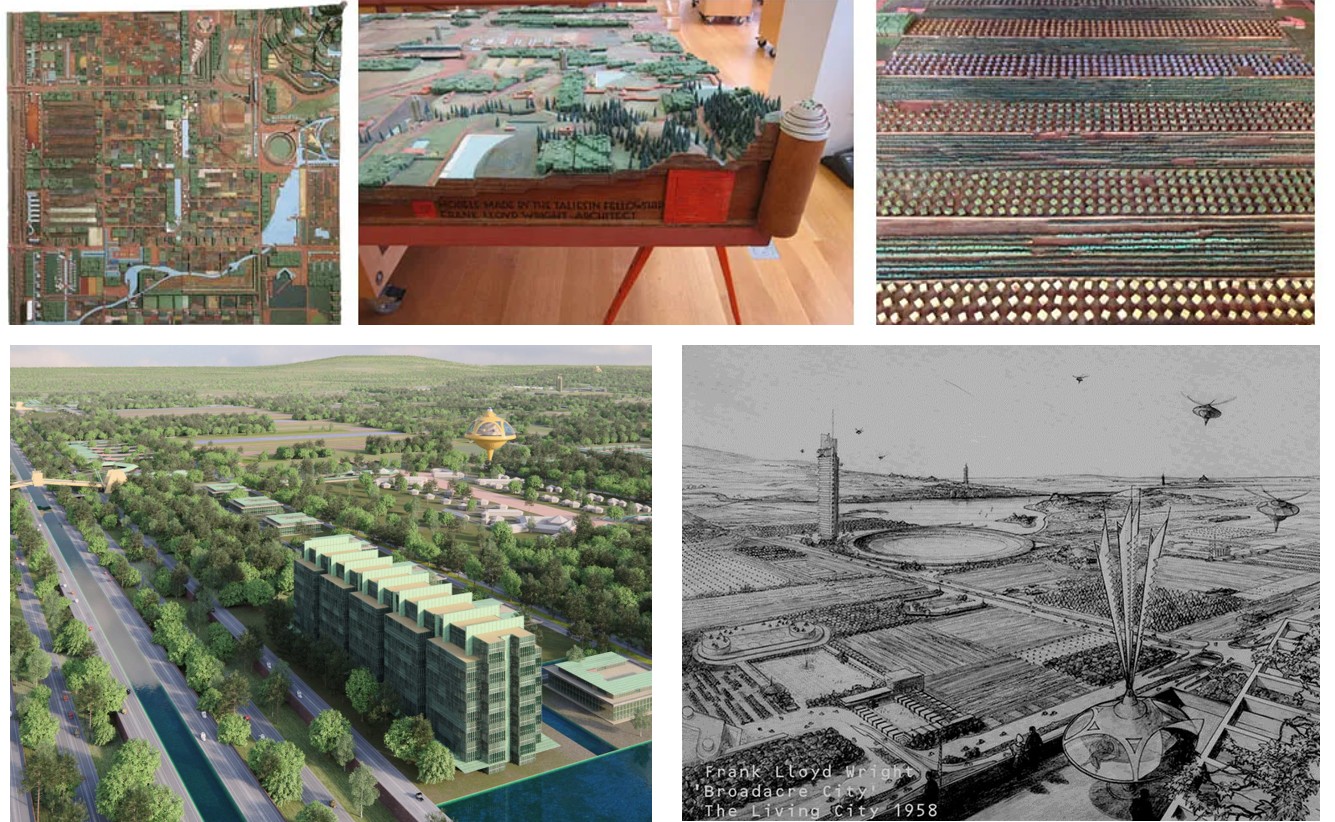
Above: Detail from Spanish architect David Romero's computer-generated model of Frank Lloyd Wright's Broadacre City, complete with an "aerotor" flying car.

To be sure, architect Frank Lloyd Wright was a visionary, creating a uniquely American vernacular that influences architecture and design to this day. That might also true for his Broadacre City concept, which demonstrated how four square miles (10.3 km2) of countryside might be settled by 1,400 families. Wright unveiled this escape to the countryside in the middle of Manhattan.

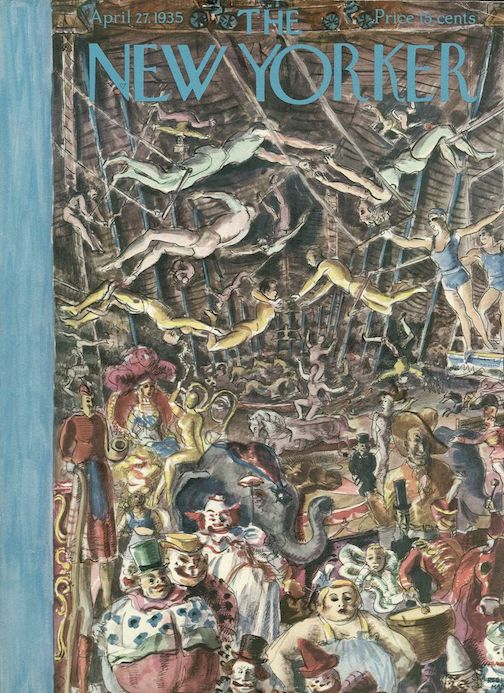
April 27, 1930 cover by Reginald Marsh.

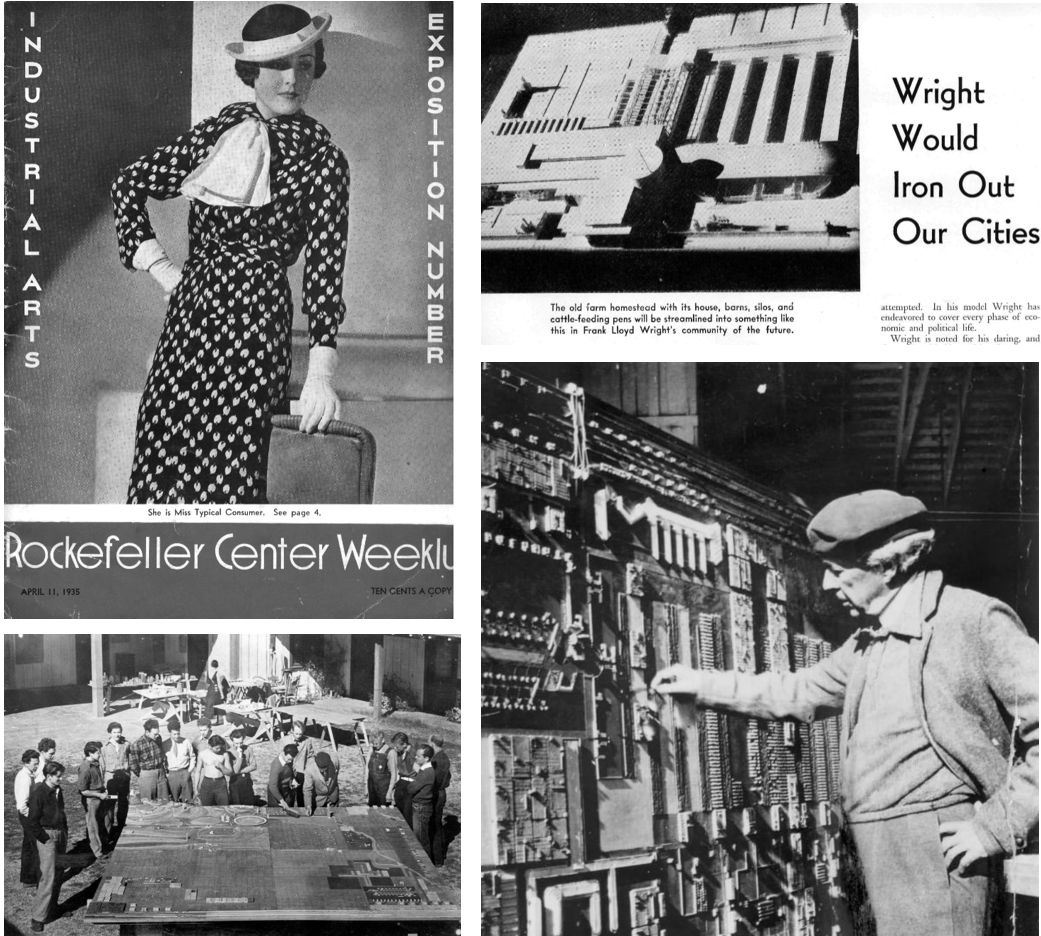
On April 15, 1935, the Industrial Arts Exposition opened at Rockefeller Center, and Wright (1867-1959) was front and center with his audacious proposal to resettle the entire population of the United States onto individual homesteads. Critic Lewis Mumford observed that Wright “carries the tradition of romantic isolation and reunion with the soil” by putting every American family on a minimum of five acres of land.

FLAT EARTH…Clockwise, from top left, cover of Rockefeller Center Weekly featuring the Industrial Arts Exposition—the model on the cover is identified as “Miss Typical Consumer”; detail from the magazine depicting a “streamlined farmstead” in Broadacre City; Frank Lloyd Wright examining the Broadacre City model, circa 1935; Wright students who crafted the 12×12-foot model, circa 1935. (digital.hagley.org/franklloydwright.org)

Wright first presented the idea of Broadacre City in his book The Disappearing City in 1932…

ROMANTIC ISOLATION…Broadacre City as depicted in Wright’s 1932 book The Disappearing City. (Wikipedia)

…note how the above drawing is reflected in one of Wright’s last designs, the Marin County Civic Center:

(visitmarin.org)

A detailed 12×12-foot scale model of Broadacre City—crafted by Wright’s student interns at Taliesin, was unveiled at the Industrial Arts Exposition:

GREEN ACRES…The 12×12-foot model (top images) crafted by student interns who worked for Wright at Taliesin is now housed at the Museum of Modern Art (MoMA); bottom right, Wright’s rendering of Broadacre City, and at left, detail from Spanish architect David Romero’s computer-generated model of Broadacre City (more images below). (MoMA/David Romero via Smithsonian)

For the most part Mumford reacted favorably to Wright’s vision, which is no surprise considering that Mumford derided the dehumanizing skyscrapers popping up all over his city (including Rockefeller Center).

Despite his patrician demeanor, Wright envisioned an egalitarian Broadacre City, with every family having access to cars, telephones and other appliances. Power would come from solar and electric energy, and any technological advances would be applied at a local level toward the common good.

VIRTUAL REALITY…In 2018 Spanish architect David Romero created computer-generated models to see what Wright’s unrealized structures might have looked like. At left, cars (based on Wright concepts) in Broadacre City, and an aerial view featuring a tower that bears a strong resemblance to Wright’s 1956 Price Tower in Bartlesville, Oklahoma. Modeling Broadacre took Romero more than eight months to complete—it contains more than one hundred detailed buildings, one hundred ships, two hundred “aerotors” (based on the autogyros of the day), 5,800 cars, and more than 250,000 trees. (David Romero via Smithsonian and openculture.com)

What Mumford (and perhaps Wright) didn’t fully anticipate was the urban sprawl such a vision would help inspire, the suburban and exurban landscape that would lead to a car-dominated world of congested, multi-lane highways and housing developments that continue to encroach on our woodlands and wetlands. And we didn’t get those groovy aerotors either.

(Christoph Gielen, webcolby.edu)

 * * *

Little House on the Avenue

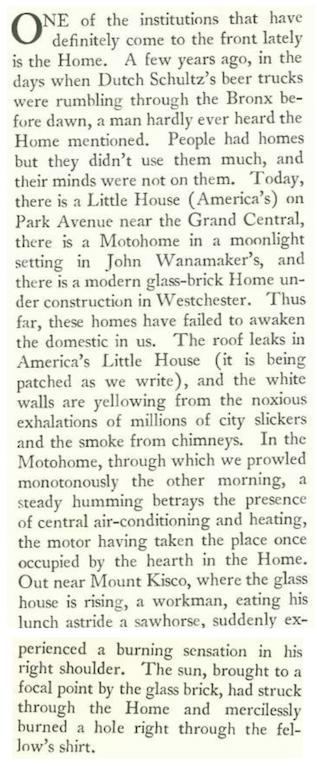
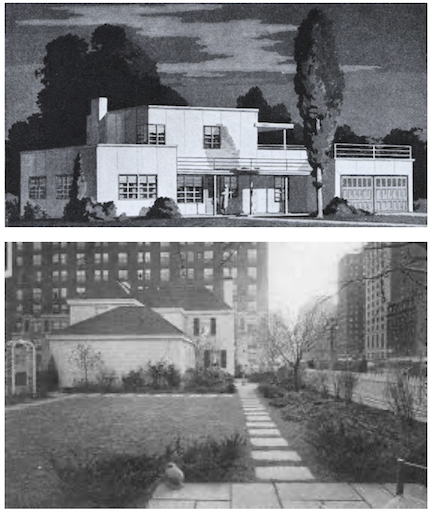
E.B. White, in his “Notes and Comment,” also offered some observations on housing trends, noting the manufactured “Motohome” displayed at Wanamaker’s as well as “America’s Little House,” plopped down at the corner of 39th and Park Avenue.

SETTING A STANDARD…Above, the factory-manufactured Motohome (above) was touted as the solution to the nation’s housing shortage. The federal Better Homes in America organization built a model house (“America’s Little House,” below) at 39th and Park Avenue to illustrate how standardized components and methods could make home improvement easier. (Google Books/Johns Hopkins)

* * *

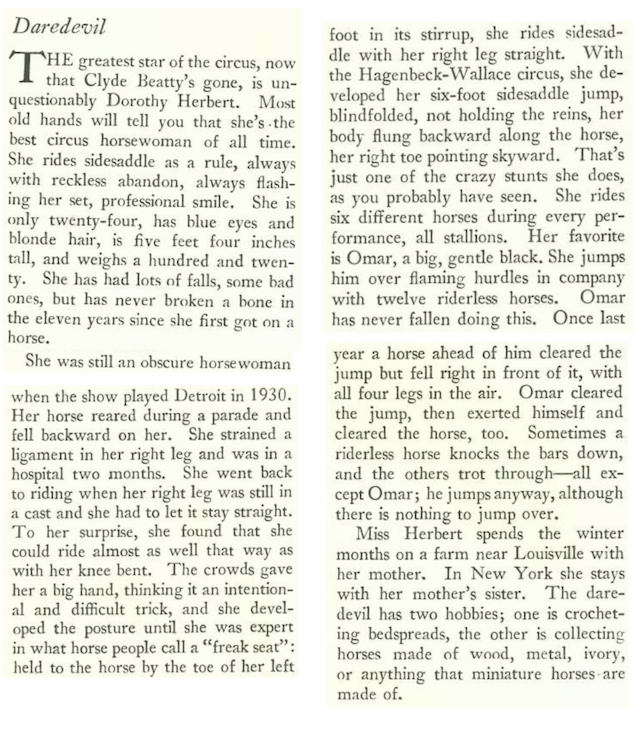
Horsing Around

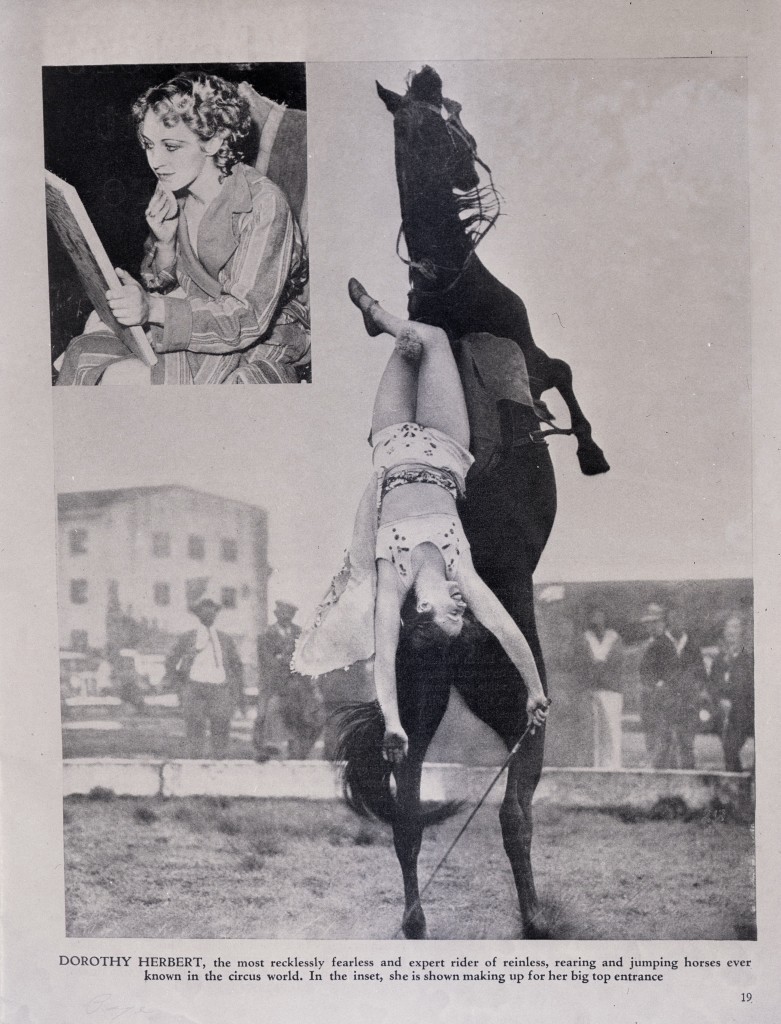
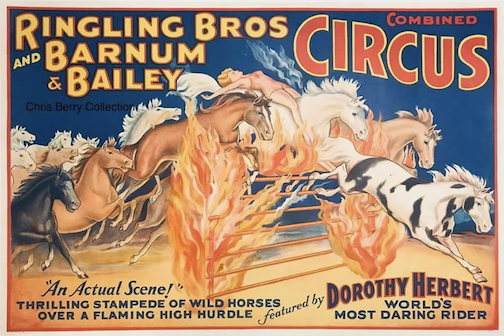
Although known for their nonchalance, New Yorkers could still find some enthusiasm when the circus came to town. “The Talk of the Town” looked in on the star of the circus, Dorothy Herbert (1910-1994), a trick rider with the Ringling Bros. and Barnum & Bailey Circus.

WHOA NELLY…One of Dorothy Herbert’s signature moves was her layback on a rearing horse. Here she demonstrates the move in 1939. (equineink.com)
HOT STUFF…Circus poster touts Herbert’s ride over flaming hurdles in the company of twelve riderless horses. (circushistory.org)

 * * *

Don’t Call Him ‘Tiny’

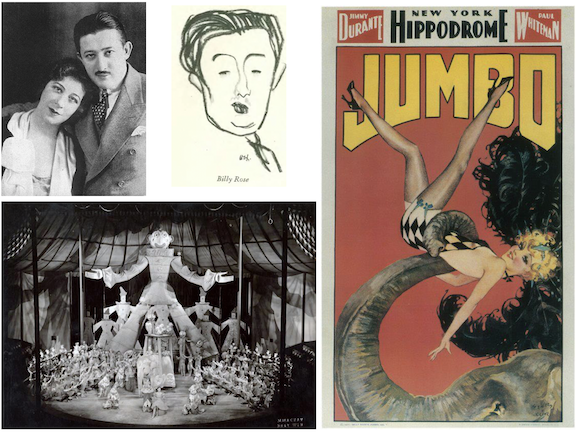
He was known as “The Little Napoleon of Showmanship,” but there was nothing small about Billy Rose’s accomplishments as an impresario, theatrical showman, composer, lyricist and columnist. Here are excerpts from Alva Johnston’s profile:

JUMBO-SIZED ENTERTAINMENT…Clockwise, from top left, Billy Rose and his first wife, comedian-actress Fanny Brice; illustration of Rose for the profile; poster announcing Rose’s 1935 stage spectacle Jumbo at the Hippodrome; described as more circus than musical comedy, Jumbo was one of the most expensive theatrical events of the first half of the 20th century. (jacksonupperco.com)

 * * *

On Guard

We shift gears and turn to more sobering events of the 1930s, namely the rise of fascism in Europe. In his column “Of All Things,” Howard Brubaker pondered the possibilities of fascism in his own country…

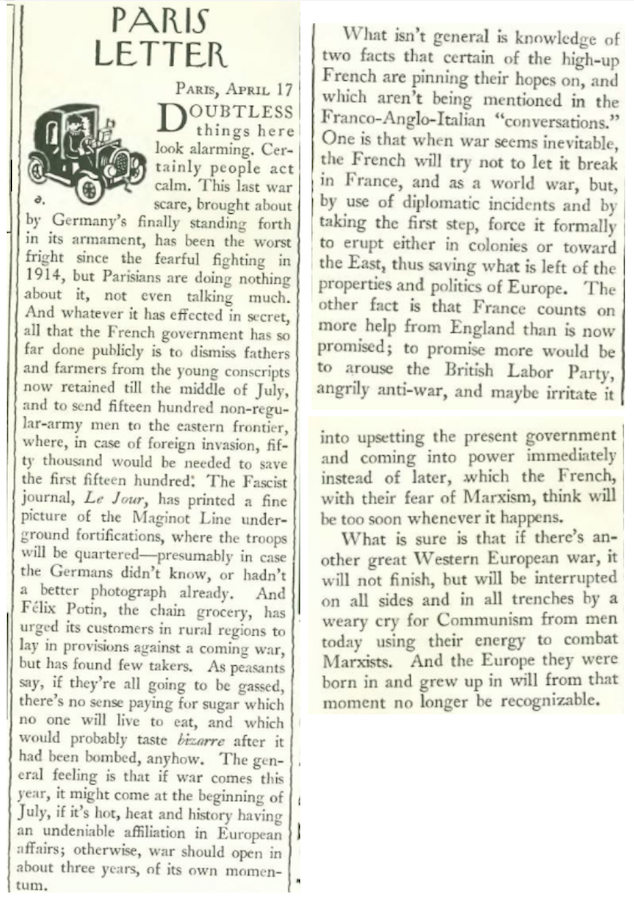
…meanwhile, Paris correspondent Janet Flanner was finding nothing funny about the uneasy calm among Parisians as war with Germany seemed likely.

C’EST LA VIE…Janet Flanner found Parisians resigned to whatever fate awaited them in 1935. (unjourdeplusaparis.com)

Flanner also remarked on Leni Riefenstahl’s Nazi propaganda film Triumph des Willens (Triumph of the Will). Flanner’s assessment of this “best recent European pageant” wryly underscored the horrors the film portends.

 * * *

News From An Old Friend

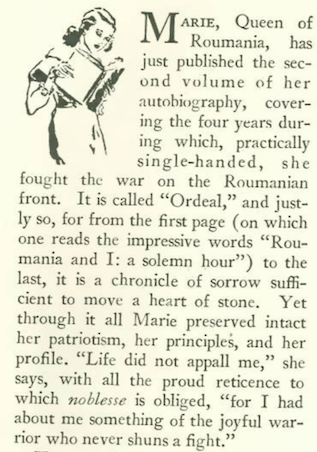
Longtime readers may recall one of my earliest entries on Queen Marie of Romania (1875-1938); the March 14, 1925 edition of The New Yorker (issue #4) found New Yorkers “agog” over her planned 1926 visit to the city. Her comings and goings were followed for a time (she also appeared in a Pond’s Cold Cream ad in the June 6, 1925 issue), but then she abruptly disappeared. Here she is again, courtesy of a glowing book review by Clifton Fadiman. An excerpt:

A PROGRESSIVE THINKER for her time, Marie of Romania was immensely popular in America. Born into the British royal family, she was the last queen of Romania from 1914 to 1927. At left, portrait from 1920; at right, during her 1926 visit to the States, Marie received a headdress from two American Indian tribes. They named her “Morning Star” and “Winyan Kipanpi Win”—“The Woman Who Was Waited For.” (Wikipedia/brilliantstarmagazine.org)

 * * *

From Our Advertisers

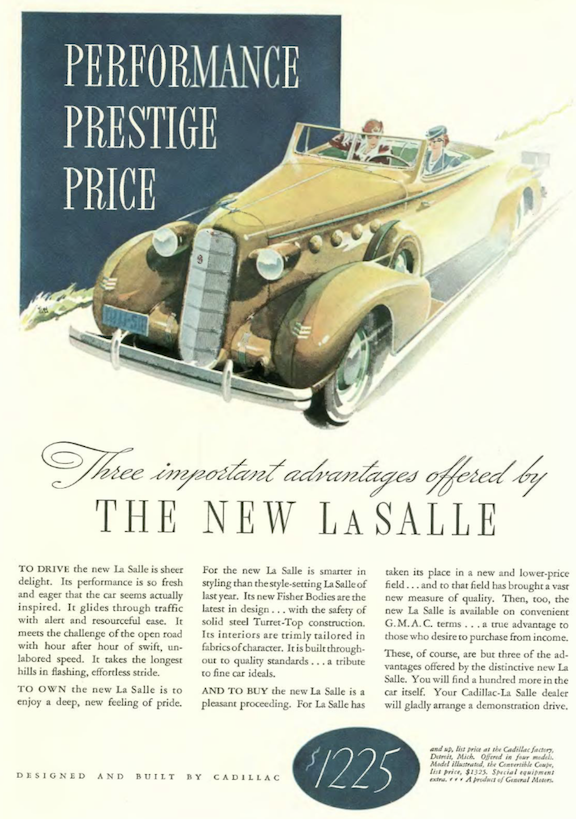
Although we’ve seen plenty of ads from prestige automakers such as Packard, it was clear that companies found their sweet spot in lower-priced models that still suggested “prestige”…here’s an example from Cadillac’s budget line LaSalle…

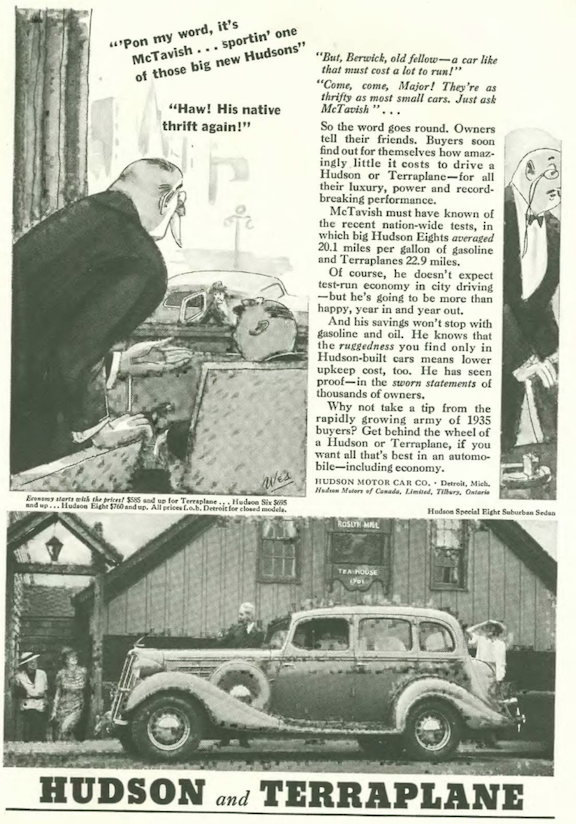
…for less than half the price of a LaSalle you could get behind the wheel of Hudson, its makers suggesting that prestige doesn’t preclude thrift…this ad seems to have been hastily produced–note the right side of ad, with just a slice of some toff squeezed next to the copy…

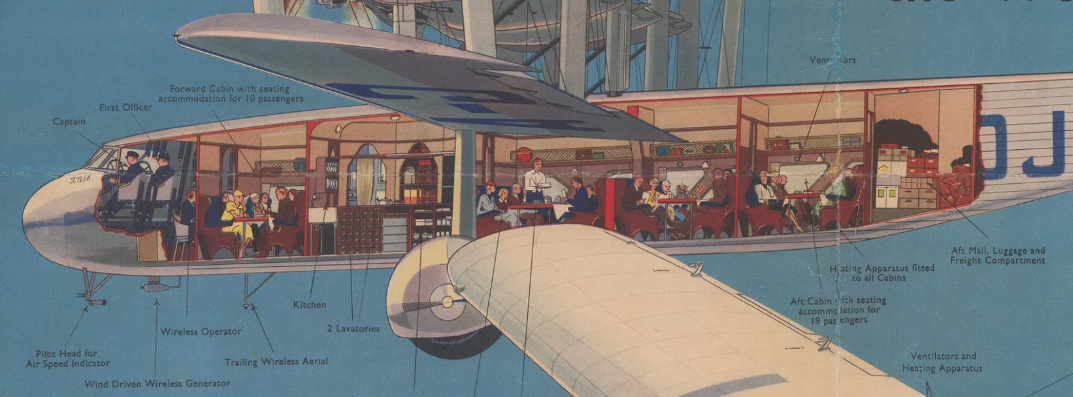
…this advertisement would only appeal to those who were among the tiny minority who could afford to fly…from 1924 to 1939 this early long-range airline served British Empire routes to South Africa, India, Australia and the Far East…

…for reference, detail below of a Scylla-class airliner used by Imperial Airways…

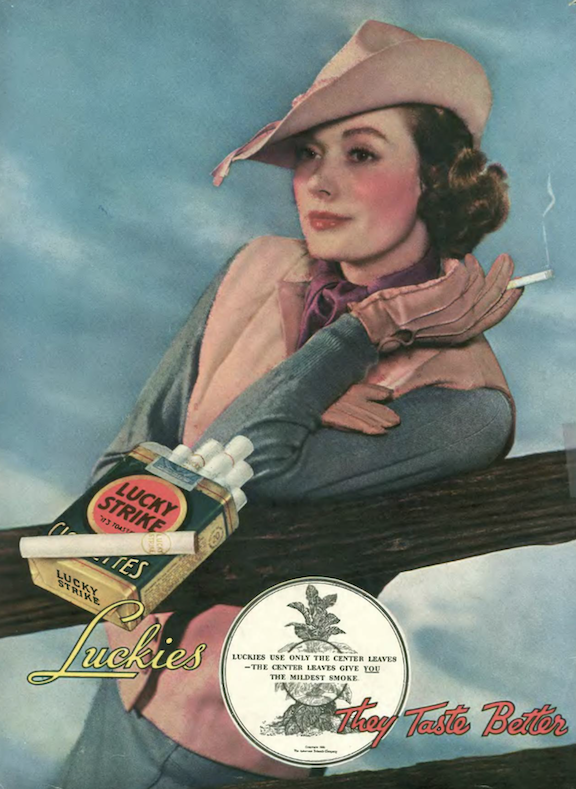
…and what would the back cover be without a photo of a stylish woman having a smoke?…

…a few advertisers referenced the circus in town to drum up business…

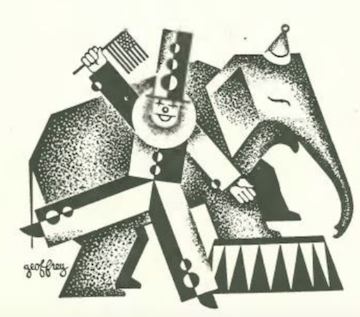
…and we segue to our cartoonists and illustrators, and this circus-themed spot from an illustrator signed “Geoffrey”…

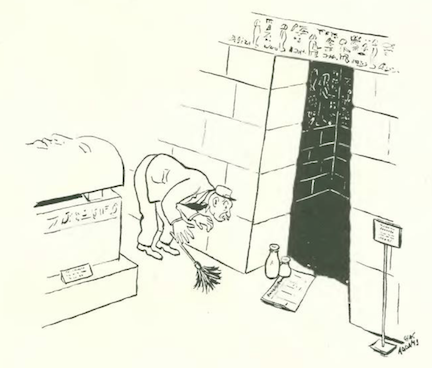
…a more familiar name is found at the bottom of page 4…namely Charles Addams…the milk order outside the tomb hints at things to come…

…Addams again, going from Bacchus to beige…

George Price, and well, you know…

Robert Day was aloft with a speculative builder…

William Steig typecast his Small Fry…

Leonard Dove made a sudden exit…

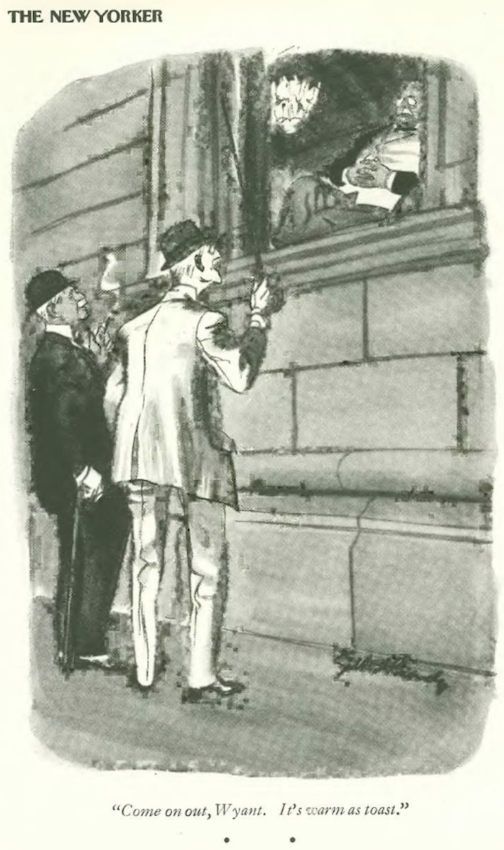
Gilbert Bundy found one old boy unaffected by spring fever…

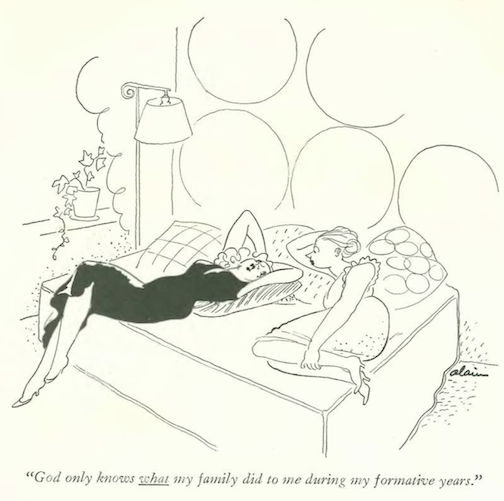
Alain channeled Barbara Shermund to give us this gem…

…and we close with a typical day in James Thurber’s world…

Next Time: The Royal Treatment…