The Last Dandy

Like his good friend Charlie Chaplin, Ralph Barton wore a mask of a clown that hid a face of bitter anguish. Chaplin would cope, more or less. Barton would not.

March 16, 1929 cover by Rea Irvin.

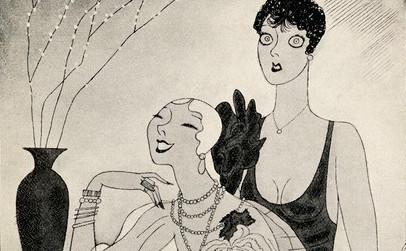
A member of the New Yorker gang from the very beginning, Barton served as the magazine’s advisory editor but more famously as a caricaturist of the Roaring Twenties, also contributing to the likes of Harper’s Bazaar, Collier’s, Vanity Fair and Judge. He also illustrated one of the most popular books of the Twenties, Anita Loos’ Gentlemen Prefer Blondes:
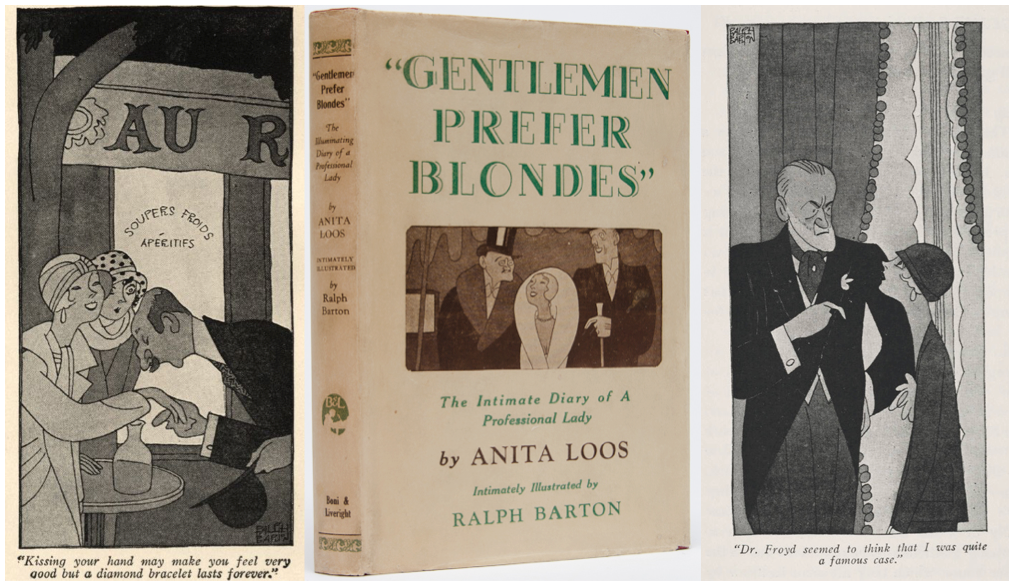
Images (left and right) from the book, Gentlemen Prefer Blonds.

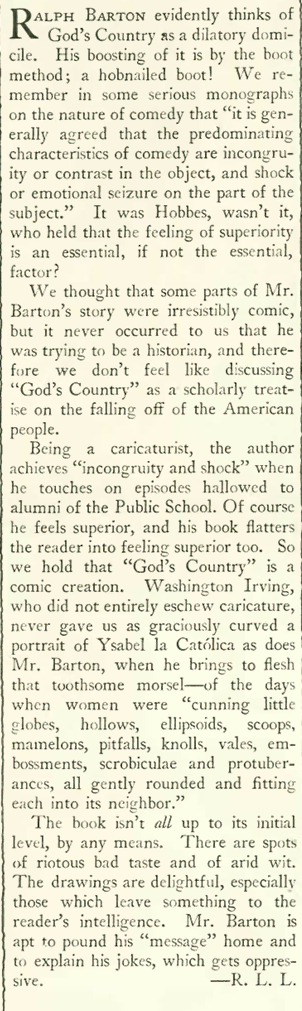
In 1929 Barton would publish a book of his own, God’s Country, which was reviewed in the March 16, 1929 edition of the New Yorker:
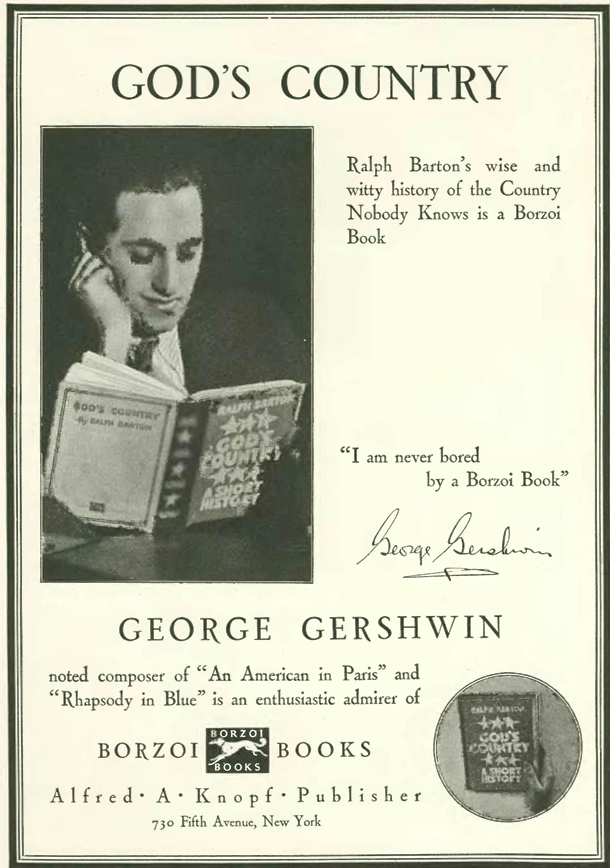
The same issue featured this advertisement from Knopf promoting God’s Country as the latest addition to its lovely Borzoi Books collection (and endorsed by composer and Barton friend George Gershwin)…
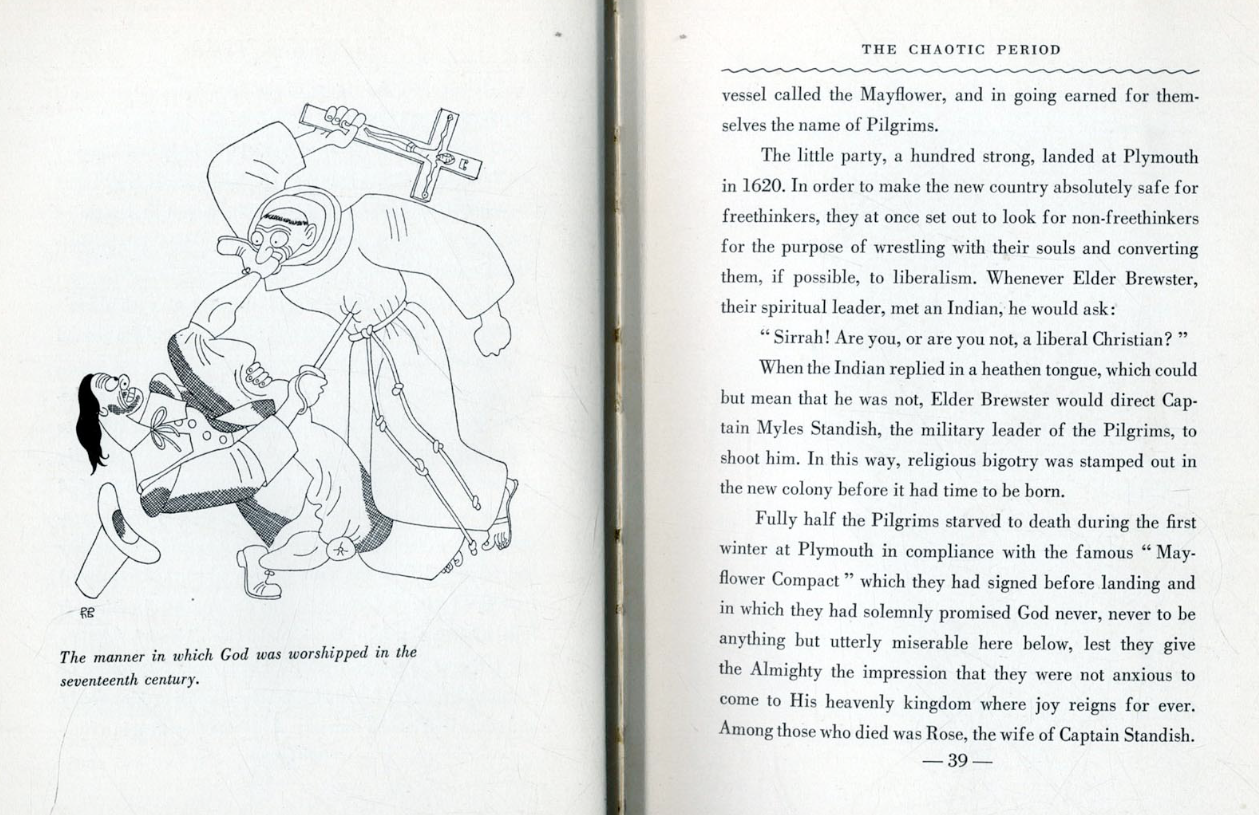
Some excerpts from the book…(click to enlarge)

(All images courtesy fulltable.com)

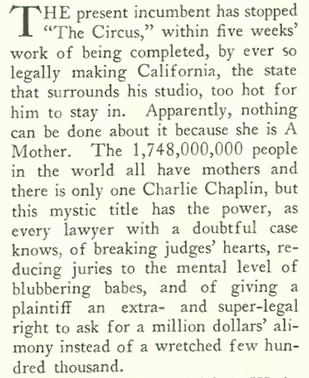
Barton was a longtime friend of Charlie Chaplin, even coming to the silent film star’s defense (in the pages of the July 23, 1927 New Yorker) when many Americans turned their backs on the comedian during a messy and much publicized divorce trial. In that New Yorker piece Barton concluded that France would be a better, more welcoming home to such an artist:

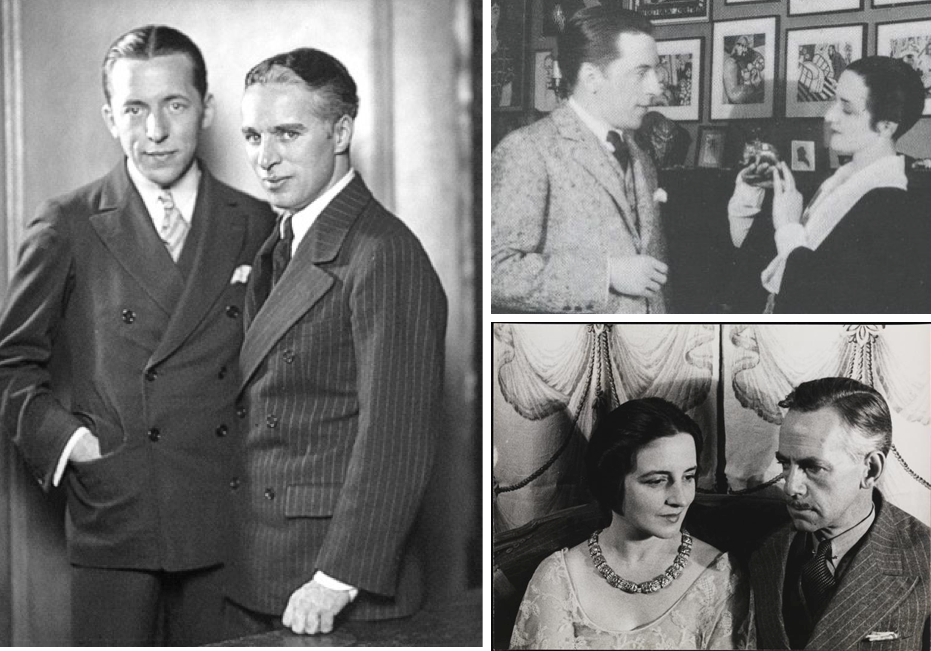
Clockwise, from left: Ralph Barton poses with his old friend Charlie Chaplin for photographer Nickolas Muray in 1927; Barton with wife Carlotta Monterey in the mid-1920s; Carl Van Vechten’s portrait of Monterey with husband Eugene O’Neill in 1933, two years after Barton’s death. (Mimi Muray/allstarpics.com/Museum of the City of New York)

The manic-depressive Barton had his own problems in the love department, marrying four times in his short life, most famously to wife No. 3, stage and film actress Carlotta Monterey, who divorced Barton in 1926 and married playwright Eugene O’Neill in 1929. Although Barton would marry again, he would never recover from his loss of Monterey.
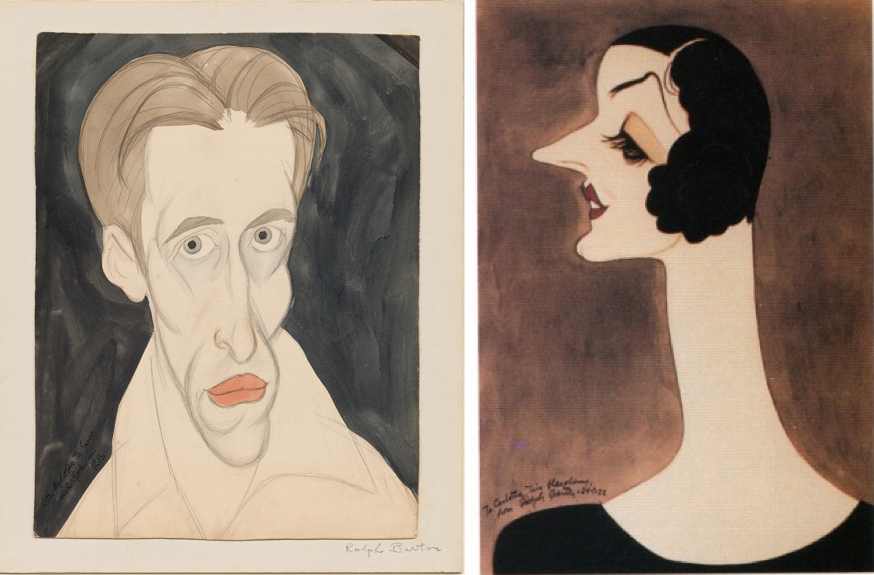
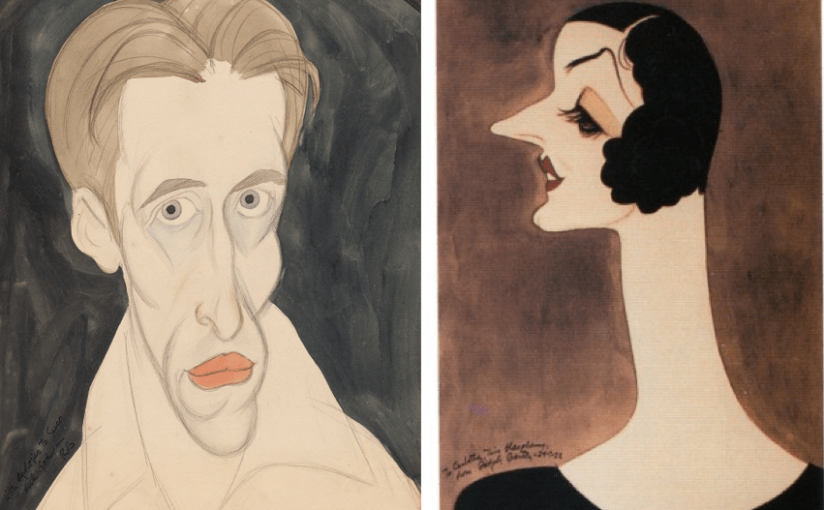
PORTRAIT IN ANGUISH…Ralph Barton self-portrait, 1925. At right, Barton’s portrait of his third wife, Carlotta Monterey, from 1922. In 1926 Barton wrote, “The human soul would be a hideous object if it were possible to lay it bare.” (National Portrait Gallery/Mimi Muray)

A little more than two years after publishing God’s Country—May 19, 1931—the 39-year-old Barton shot himself through the right temple in his East Midtown apartment. He referred to Carlotta Monterey in his suicide note, writing that he had lost the only woman he’d ever loved. He also wrote: “I have had few difficulties, many friends, great successes; I have gone from wife to wife and house to house, visited great countries of the world—but I am fed up with inventing devices to fill up twenty-four hours of the day.”

As the exuberance of the Jazz Age faded into the Depression, so did Barton’s reputation as a chronicler of that age. An abstract for the 1998 Library of Congress exhibition Caricature and Cartoon in Twentieth-Century America notes that “in a good week he (Barton) could make $1,500 (about $22,000 today) but a couple of years after his early death his caricature of George Gershwin sold for $5.”

The last caricature Barton ever drew was of his old friend, Charlie Chaplin.

Note: I took the title of this blog entry from a 1991 book on the life of Ralph Barton: The Last Dandy, Ralph Barton, American Artist, 1891-1931, by Bruce Keller.

Babbitt Babble

Preceding the review of Barton’s book in the March 16 New Yorker was this much less complimentary review of Sinclair Lewis’s latest effort, Dodsworth, a story in the tradition of Henry James about wealthy middle-class Americans on a grand tour of Europe.

The task of skewering Lewis and his book fell to Dorothy Parker, who would never mistake Lewis for Henry James: ““I can not, with the slightest sureness, tell you if it (Dodsworth) will sweep the country, like ‘Main Street,’ or bring forth yards of printed praise…My guess would be that it will not. Other guesses which I have made in the past half-year have been that Al Smith would carry New York state, that St. John Ervine would be a great dramatic critic for an American newspaper, and that I would have more than twenty-six dollars in the bank on March 1st. So you see my my confidence in my judgment is scarcely what it used to be.”
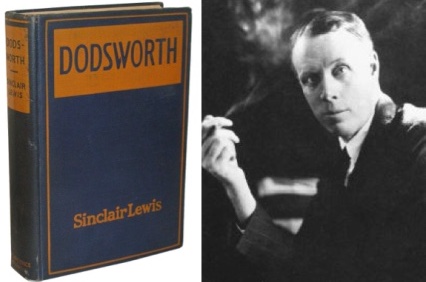
NOT UP TO SNUFF…Sinclair Lewis, circa 1930s. (Library of Congress)

Parker took particular umbrage at Lewis’s use of the name of a character from another book as a descriptive term for his latest:

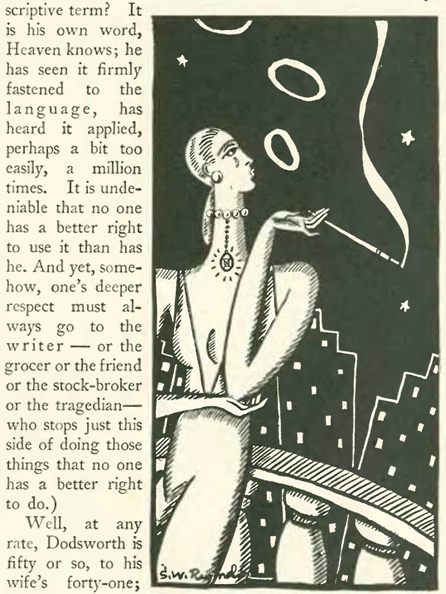
Parker concluded that if a reader could wade through the book’s cluttered language and “grotesquely over-drawn figures,” there was a conclusion that was perhaps worth pursuing…
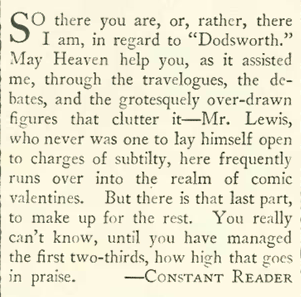
…the New Yorker was never afraid to bite the hand that fed it (except Raoul Fleischmann’s, whose money saved the magazine from an early death), so even though its author was savaged on the opposite page, Dodsworth’s publisher Harcourt still sprung for an ad:

 *  *  *

This Geometric Life

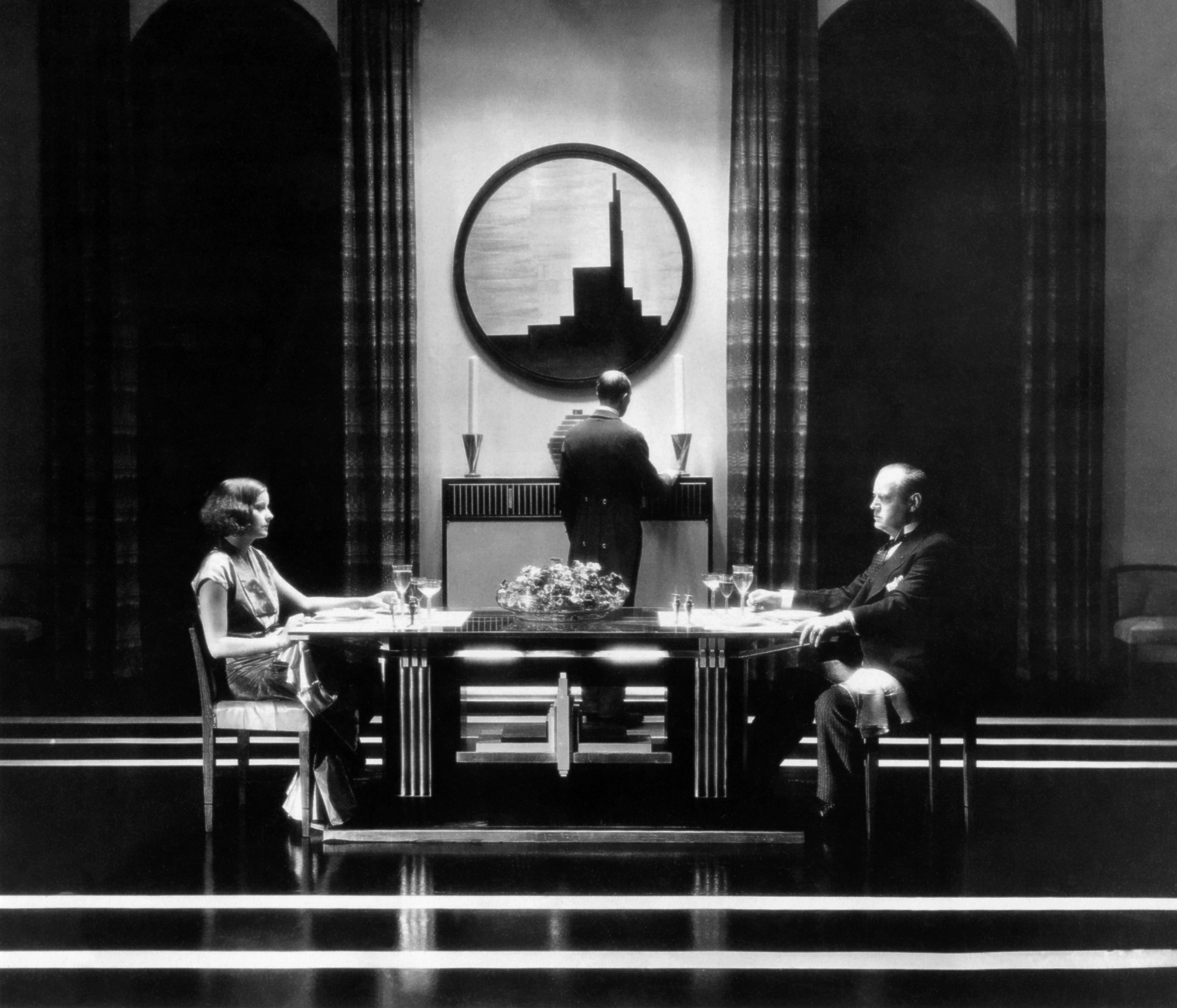
The author of the March 16, 1929 “Comment” (Leading item of “The Talk of the Town”) found the “geometric life” dictated by modern design took some getting used to. This entry was most likely written by E.B. White:

DARLING, YOU SEEM RATHER COLD…Greta Garbo and Anders Randolf break bread amid the angular lines of an art deco dining room in the 1929 film The Kiss, set design by Cedric Gibbons. (pinterest.co.uk)

 *  *  *

Mexican Firecracker

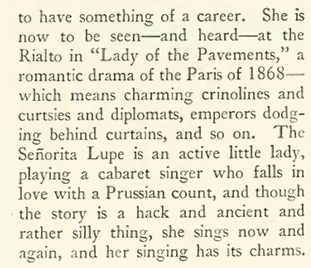
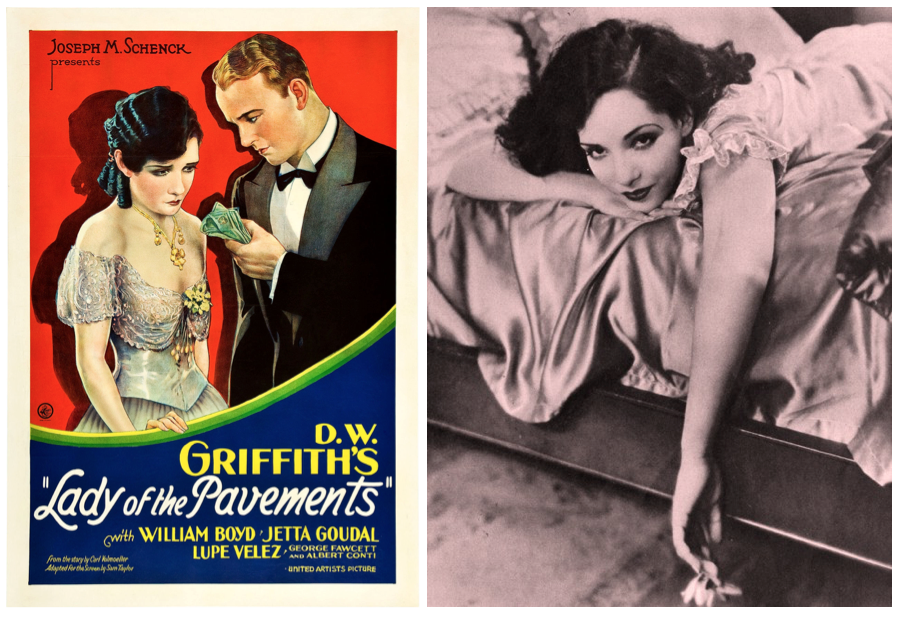
Mexican actress and emerging star Lupe Velez caught the eye, and ear, of the New Yorker in her latest film, Lady of the Pavements

DUBBED THE ‘MEXICAN FIRECRACKER,’ Lupe Velez emerged as a star at the advent of sound motion pictures. Theatrical release poster, left, and Velez in a scene from D.W. Griffith’s 1929 film, Lady Of The Pavements. (Wikipedia/moviessilently.com)

An ad in the same issue of the New Yorker touted the film’s appearance at Public Theaters, a chain owned by Paramount:
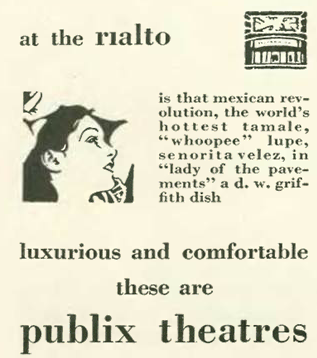
Well-known for her explosive screen presence, Velez was big star in the 1930s. Married to Tarzan actor Johnny Weissmuller from 1933 to 1939, her star began to fade at the end of the decade. She died of a drug overdose in 1944, just 36 years of age.

 *  *  *

From Our Advertisers

A few advertisements that caught my eye from the March 16 issue…one thing you notice is the emerging sophistication of advertising techniques, including this ad for Resilio Cravats that enticed by deliberating not showing the product…

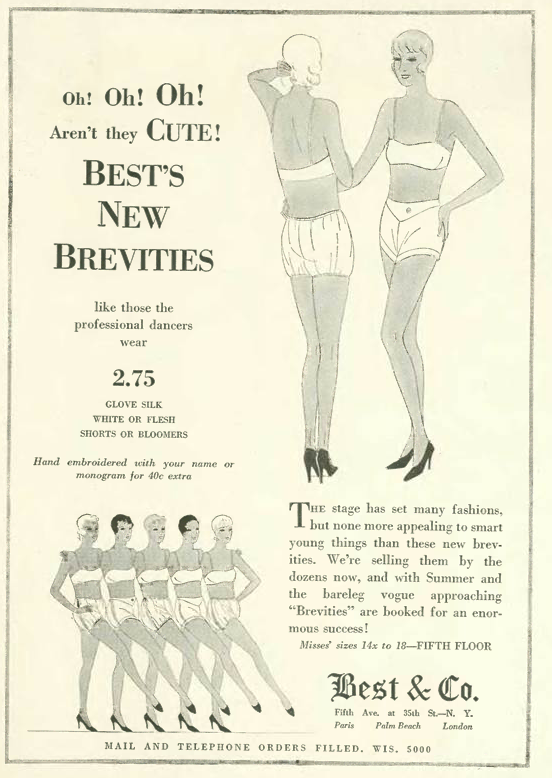
…and this ad that demonstrated Best & Co. was not shy at all to show women in their skivvies (or suggest that they could wear the same undergarments as a Follies performer)…
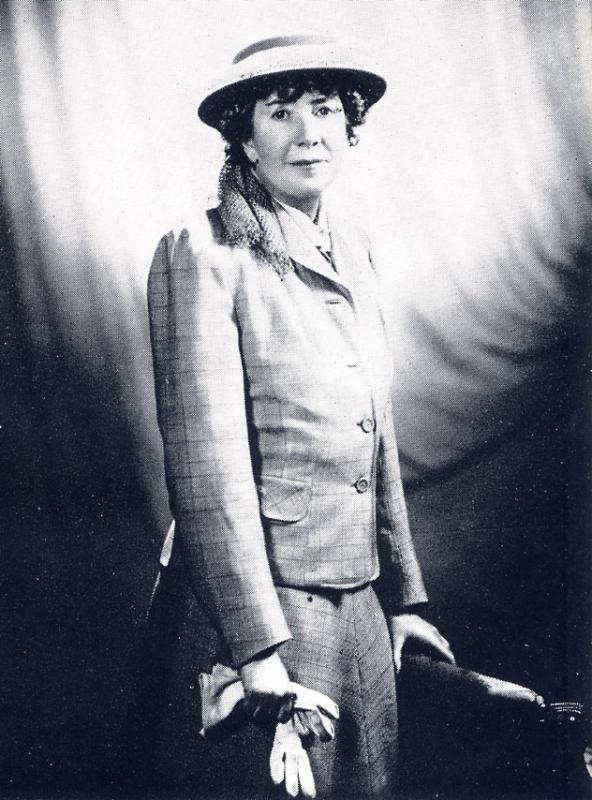
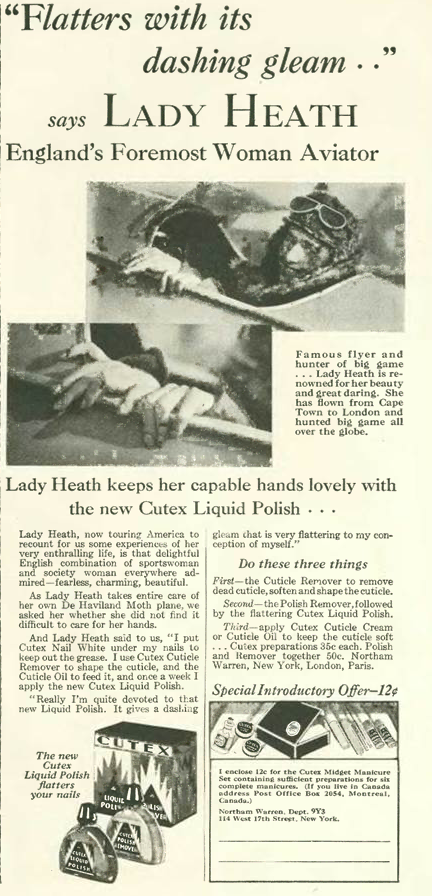
…and then we have this strange ad for Cutex nail polish, with an endorsement by Sophie Peirce-Evans, later known as Mary, Lady Heath, a well-know aviatrix (dubbed “Lady Icarus”) of the 1920s who shared headlines with Amelia Earhart for her high-flying derring-do. The close-up shot of the hands is priceless…
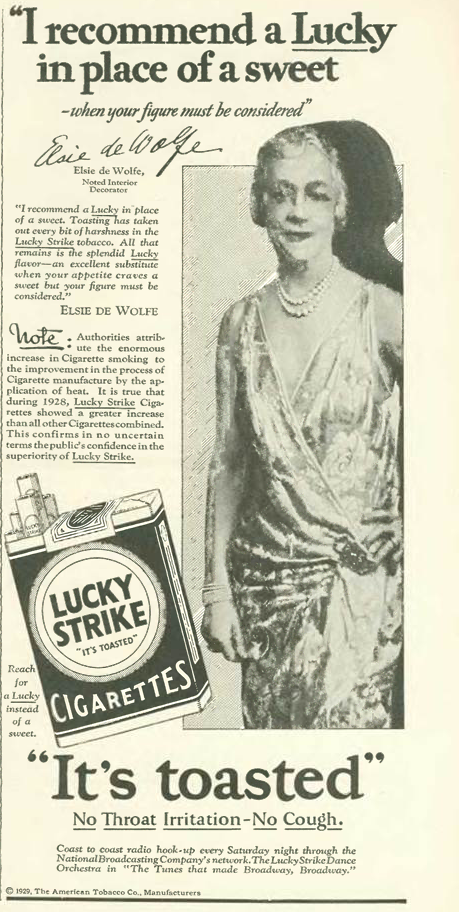
…and then we have another celebrity endorsement of a cigarette by a society figure—interior designer and social maven Elsie de Wolfe, who was also known as Lady Mendl…
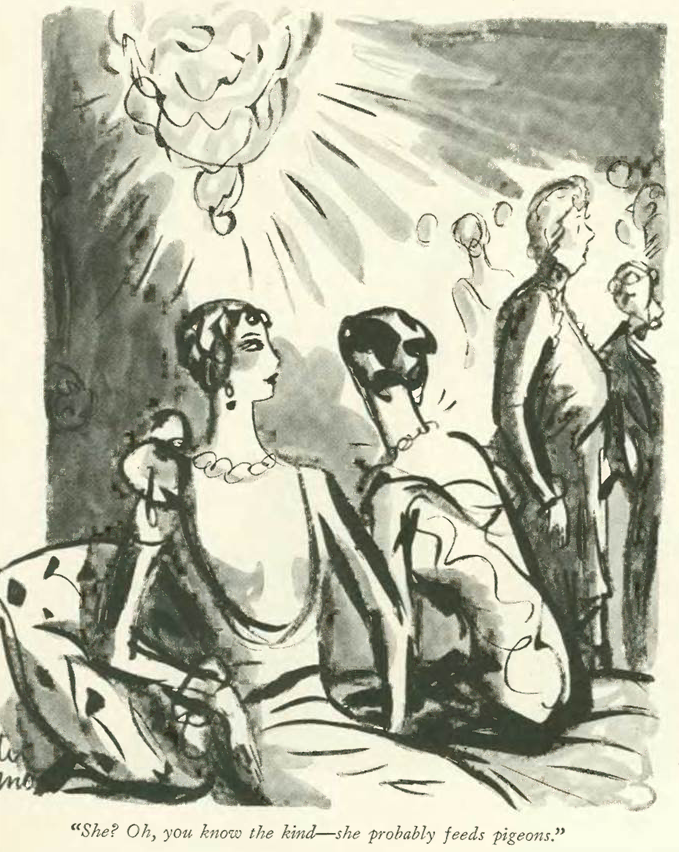
…and on to the cartoons…Peter Arno listened in on two young debutantes sizing up a dowager at a society gathering…
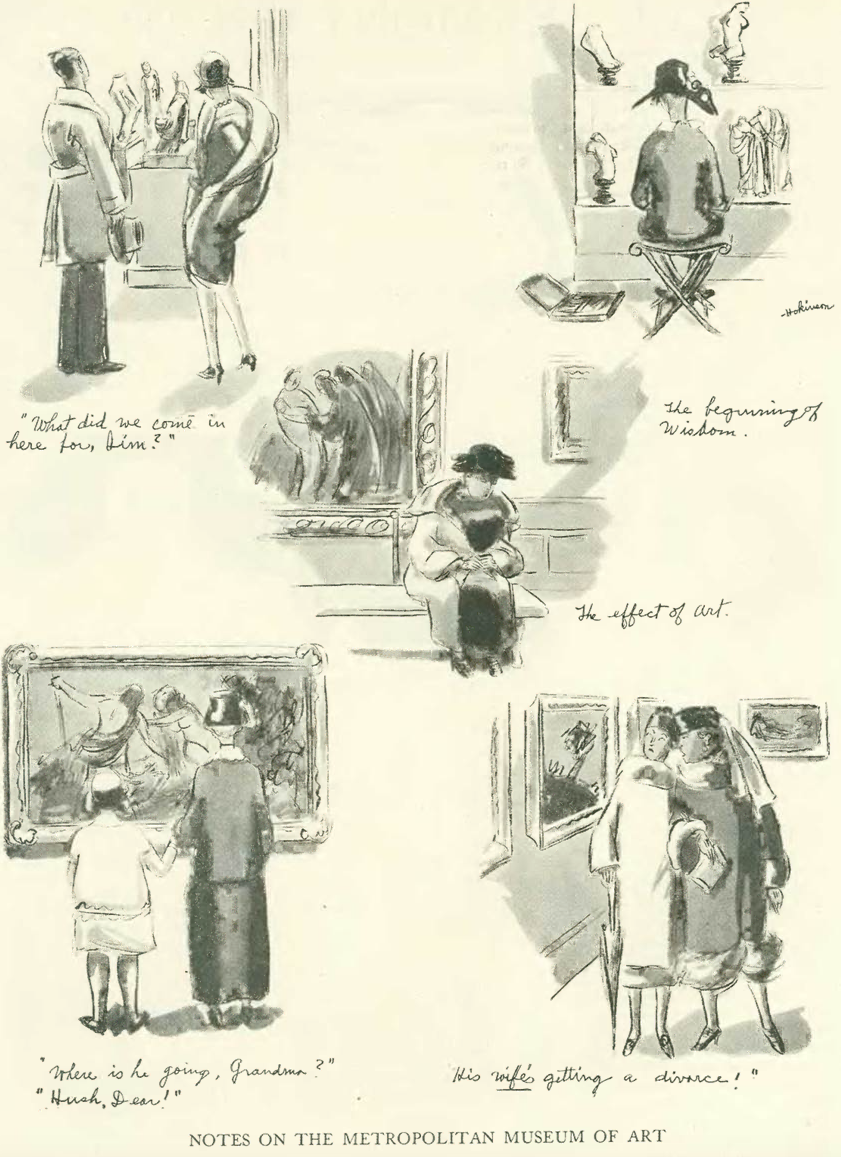
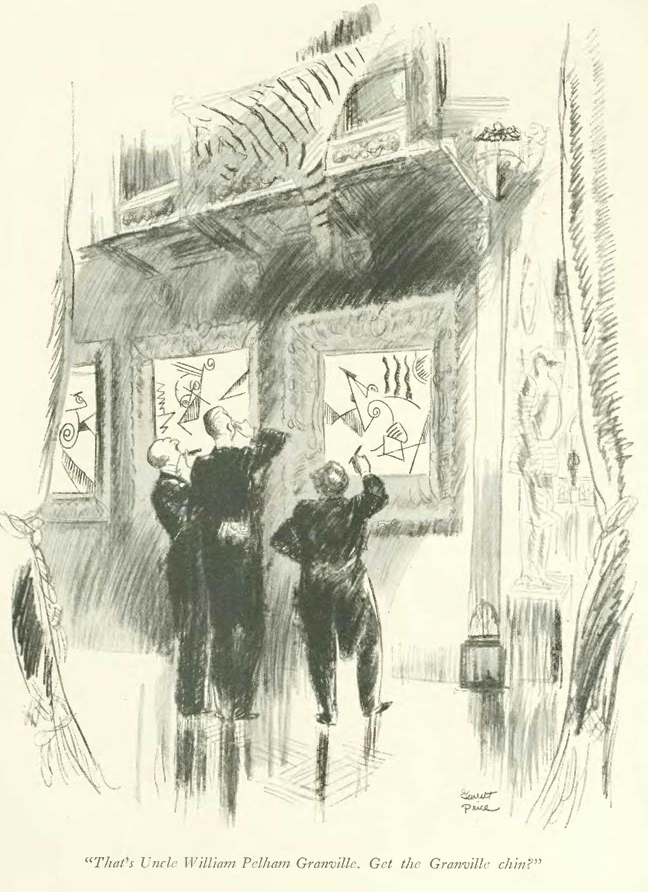
…while Garrett Price looked in on well-heeled visitors to the Metropolitan Museum of Art contemplating what appears to be the work of W.A. Dwiggins in the museum’s The Architect & the Industrial Arts exhibition…
Next Time: Queen of the Night Clubs…

Death Avenue Days

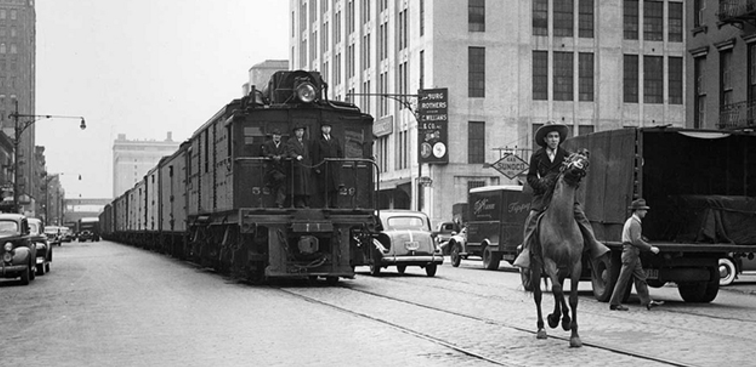
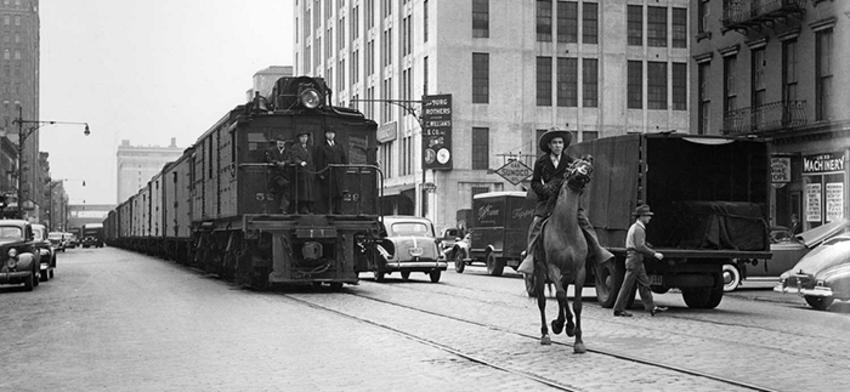
Before the elevated tracks were constructed in the early 1930s in Manhattan’s west side warehouse district (home of today’s popular “High Line”), freight trains rumbled through the city–at street level–on “Death Avenue.”

8b6d47f5480e534755b5a03ab5ea97a4
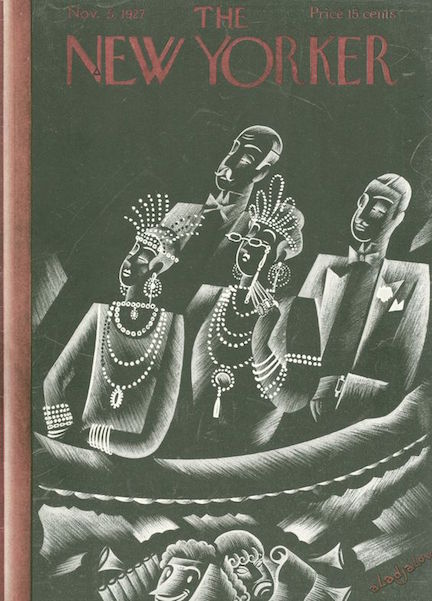
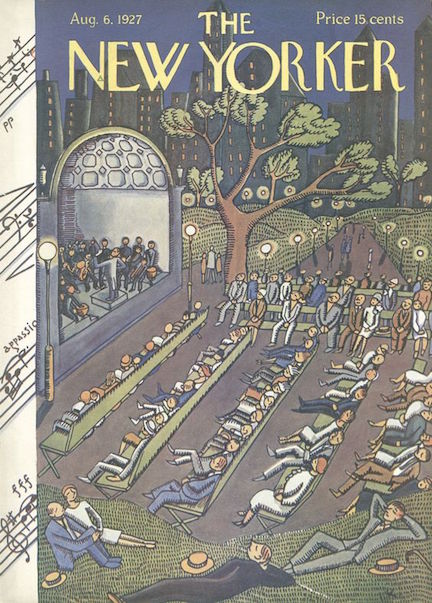
November 5, 1927 cover by Constantin Alajalov.

Freight trains were introduced to the west side warehouse district in 1846, which was a bad plan from the very start. Block-long trains would run through cross streets and congested traffic, maiming and killing along the way.

11and41
ON YOUR LEFT!…Both diesel and steam locomotives rumbled along Manhattan avenues well into the 20th century. Pictured is a freight train at 11th and 41st Street. Eleventh was known as “Death Avenue.” (Forgotten NY)

According to Friends of the High Line, “an 1892 New York World article referred to the trains as ‘a monster which has menaced them night and day,’ and by 1908 the Bureau of Municipal Research claimed that since 1852, the trains had killed 436 people. A New York Times piece from the same year reported that in the preceding decade there had been almost 200 deaths, mostly of children.”

caption-1death-avenue
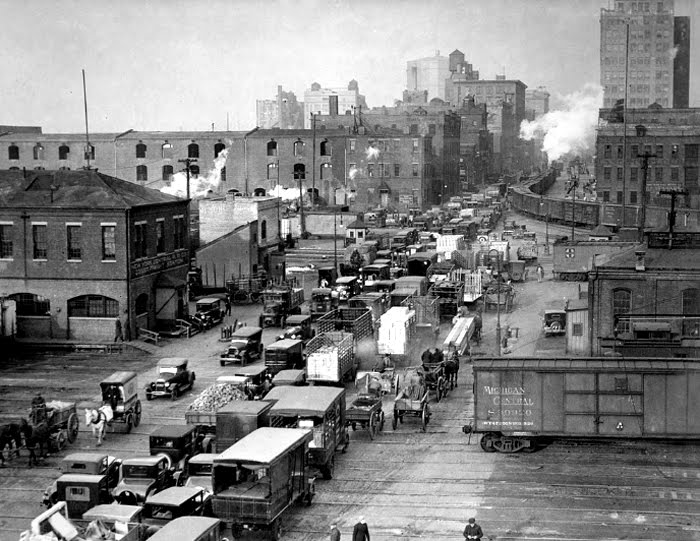
MIXED USE…This circa 1920 photo shows the congestion that occurred when freight trains, horse-drawn carts, cars, and pedestrians used the same streets. (Kalmbach Publishing Company)
the-history-of-death-avenue_list_image
SHOWDOWN…Beginning in 1850, the West Side Cowboys rode ahead of oncoming trains to ensure the safety of people on the street, although statistics show that some pedestrians did not heed the warnings. (Friends of the High Line)

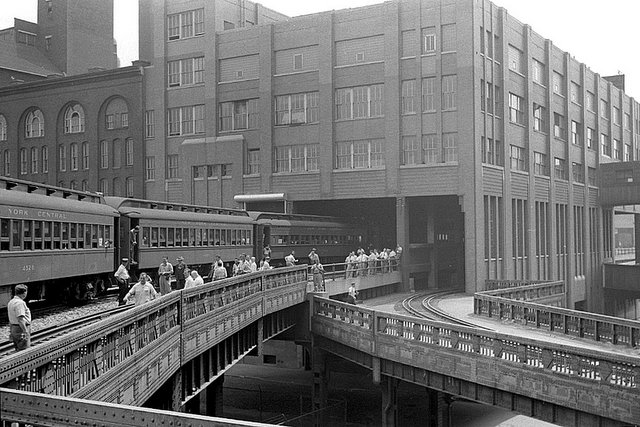
The safety issues on Death Avenue were finally addressed in 1929 when city and state officials reached an agreement with New York Central Railroad to move the rail above street level. New elevated tracks opened in 1934 were novel in the way they bisected city blocks, unloading cargo directly into buildings in the district.

high-line-chelsea-meatpacking-nabisco-factory-chelsea-market
BETTER…The elevated tracks served warehouses including one for the National Biscuit Company (Nabisco), pictured above, which today houses another popular High Line attraction, the Chelsea Market. (Friends of the High Line)
hick-town-10172013
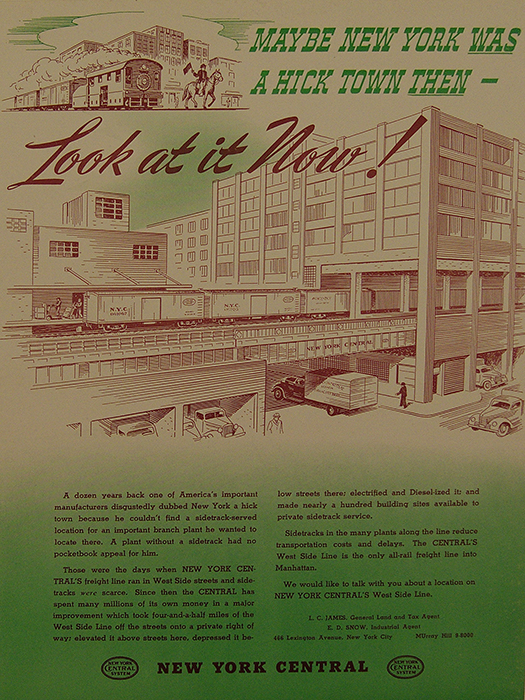
A New York Central Railroad advertisement touting the benefits of its elevated West Side Line, which today supports a unique and popular urban park–the High Line. (Friends of the High Line)

The elevated West Side Line’s unique design also complements the current use of the tracks–the High Line, one of New York’s most popular tourist draws and a widely successful example of urban reuse and renewal. Today few visitors to the High Line are aware that the peaceful oasis they now enjoy was once a dangerous and chaotic place that was home to the aptly named Death Avenue…

image_3_1436827707
NOT SO BAD, THIS…Visitors to the High Line enjoy a peaceful oasis above the former “Death Avenue.” (Friends of the High Line)

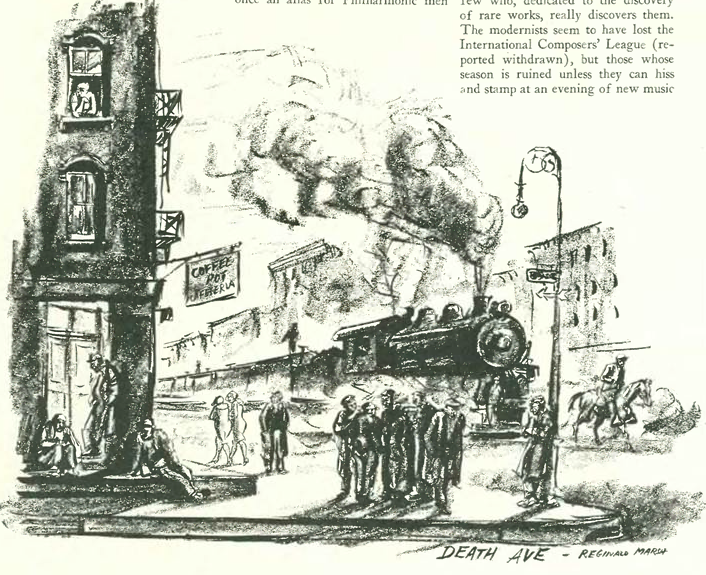
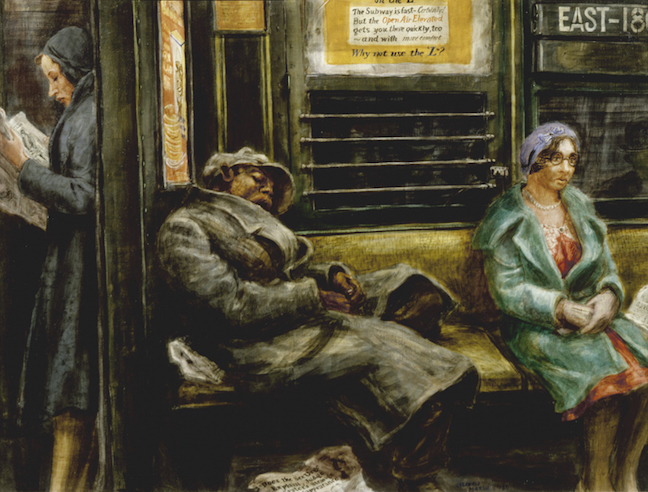
What prompted my interest in Death Avenue was this illustration by Reginald Marsh in the Nov. 5, 1927 issue of The New Yorker:

screen-shot-2017-01-10-at-8-35-23-am

Marsh (1898-1954) joined The New Yorker as one of its first cartoonists, and stayed there for seven years. He was practically born an artist, growing up in an artists’ colony in New Jersey where his father worked as a noted muralist and his mother made watercolors. After graduating from Yale he went to work of the Daily News, where he contributed sketches of vaudeville acts and illustrated a column titled “People We’d Like to Kill but Don’t.”

Described as a “Social Realist” painter, Marsh studied painting at the Art Students League, where the prevailing theme was life among the working poor, the unemployed, and the homeless, especially after the market crash in 1929…

31-293_marsh
WHY NOT USE THE “L”?…the title of a 1930 work by Reginald Marsh. (Whitney Museum of Art)
m3y34958
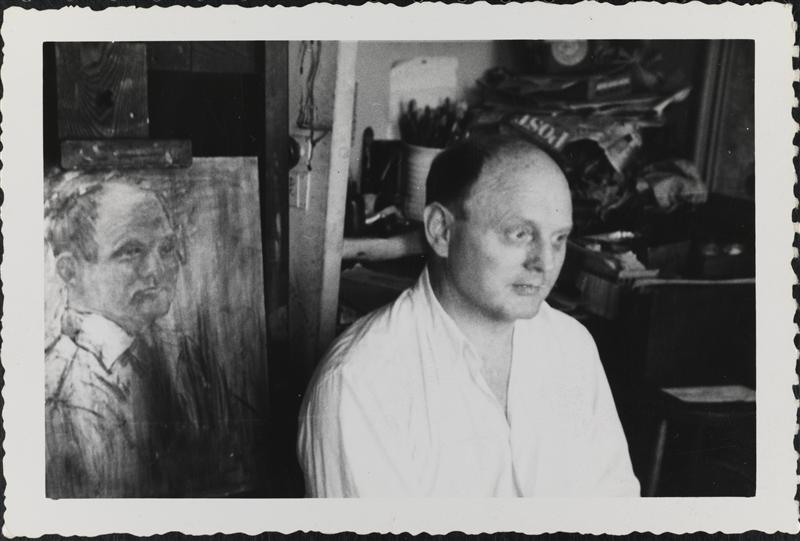
SELF REFLECTION…Reginald Marsh with one of his self-portraits, circa 1938. (Museum of the City of New York)

*  *  *

Write What You Know

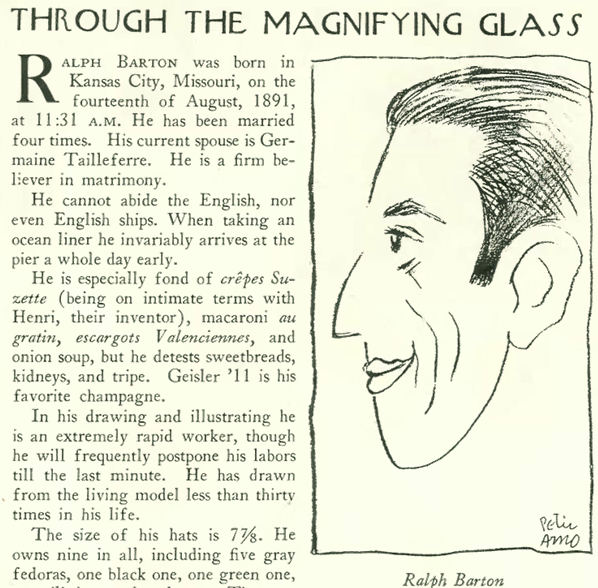
Among other items in the Nov. 5, 1927 issue was this profile written by Charles Shaw of fellow New Yorker contributor (artist and writer) Ralph Barton. An excerpt, with sketch by Peter Arno...

charles-g-shaw-profile

By Any Other Name

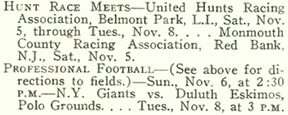
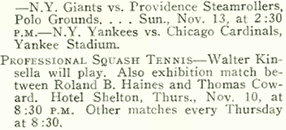
As it still does today, The New Yorker listed area happenings in the front section of the magazine, and in the early days the magazine included extensive listings of sporting events. The excerpt below offers various diversions from a “hunt race” to “squash tennis.” There were also professional football games featuring such mighty foes as the New York Giants and the Duluth Eskimos…

screen-shot-2017-01-09-at-12-40-58-pm

screen-shot-2017-01-09-at-12-41-17-pmHope(ful) Chest

Before the age of smart phones, the term “smart” in advertising meant one was on the leading edge of fashion–for aspiring young women this meant all things French–clothes, perfumes, beauty treatments–and for the bride, the all-important trousseaux, or so claimed this advertisement from Franklin Simon & Co. on page five of the Nov. 5 issue…
screen-shot-2017-01-09-at-12-38-23-pm

Couldn’t afford the latest from Paris? In that case you could turn to the back pages of the same issue, where you would find cheaper ads from places like Kathleen, Inc, which sold knock-offs of the latest in haute couture

screen-shot-2017-01-10-at-12-24-03-pm

 *  *  *

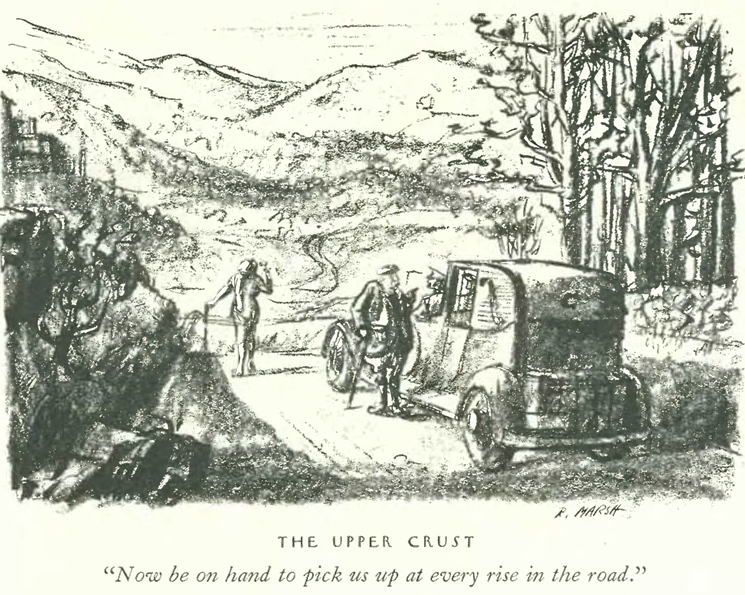
And finally, we return to Reginald Marsh, who contributed this cartoon to the Nov. 5 issue…

screen-shot-2017-01-13-at-4-50-08-pm

Next Time: The Shape of Things to Come…

6a4881d9250d214bed267228a8881e08


Picking on Charlie Chaplin

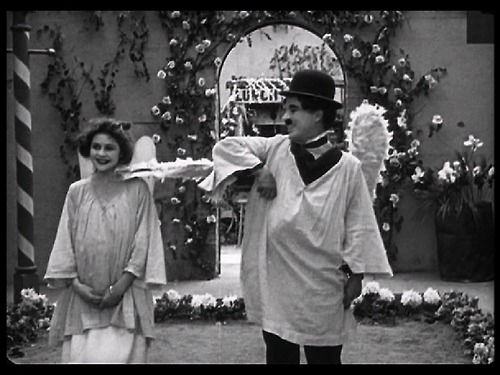
In 1927 silent film star Charlie Chaplin was working on his latest film, The Circus, when his second wife, Lita Grey, filed for divorce, accusing her husband of infidelity, abuse, and of harbouring “perverted sexual desires.” Life imitated art, and Charlie’s own life became a circus.

5128947dc365cb603134bbb6e56f67aa
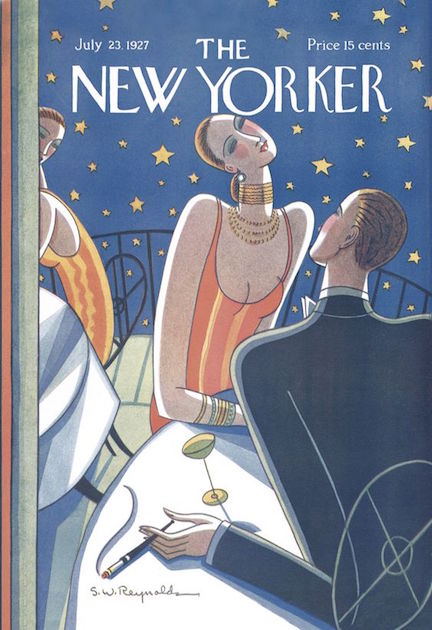
July 23, 1927 cover by Stanley W. Reynolds.

The New Yorker’s Ralph Barton, who contributed countless illustrations for the magazine (and was a close friend of Chaplin’s), wrote about Chaplin’s latest travails in a column titled “Picking on Charlie Chaplin.”

screen-shot-2016-11-01-at-9-59-23-am

screen-shot-2016-11-01-at-9-59-43-am

chaplin1928circus
LIFE ON THE HIGH WIRE…Charlie Chaplin in The Circus (1928). (MoMA)

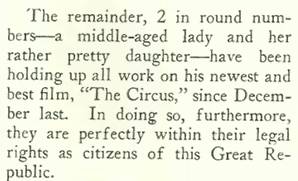
The “2” Barton mentioned were teenaged actress Lita Grey and her mother, Lillian Parker.

In 1924 the 35-year-old Chaplin married the 16-year-old Grey in a discreet ceremony in Mexico — because Grey was pregnant, Chaplin could have been charged with statutory rape under California law (it was Chaplin’s second marriage, and his second to a teenaged actress). Chaplin and Grey had two sons from their brief union–Charles Spencer Chaplin, Jr., was born in 1925, followed by Sydney Earl Chaplin in 1926.

The divorce made headline news as Chaplin was reported to be in a state of nervous breakdown. Filming for The Circus was suspended for ten months while he dealt with the mess:

screen-shot-2016-11-01-at-10-02-50-am

Chaplin’s lawyers agreed to a cash settlement of $600,000—the largest awarded by American courts at that time (Roughly equivalent to more than $8 million today). Groups formed across America calling for his films to be banned (no doubt the same groups that had earlier protested his marriage to a pregnant, teenaged minor). Barton mused that the protests might cause Chaplin to abandon America for the more permissive atmosphere in Europe:

screen-shot-2016-11-01-at-10-03-56-am

screen-shot-2016-11-01-at-10-04-47-am

lita-charlie-flirtatious-angel
HERE’S LOOKING AT YOU…Charlie Chaplin first became acquainted with the 12-year-old Lillita McMurray (later Lita Grey) during the filming of The Kid (1921).
Charlie-Chaplin-and-Lita-Grey
PRATFALL…Charlie Chaplin and Lita Grey during their brief, tumultuous marriage. (The Artifice)

The Circus was released in January 1928 to positive reviews, and during the first-ever Academy Awards Chaplin received a special trophy, “For versatility and genius in acting, writing, directing and producing The Circus. Despite the film’s success, he rarely spoke of it again. For Charlie, it was a time best forgotten.

 *  *  *

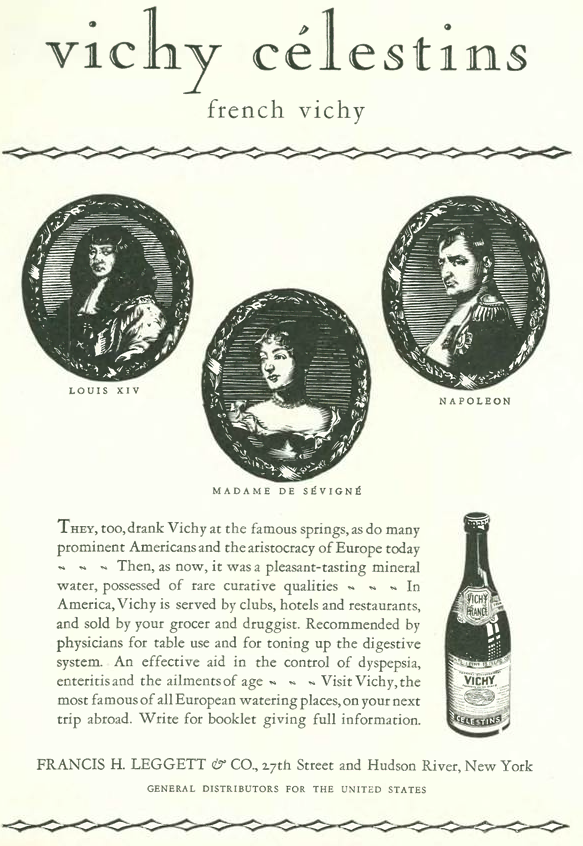
And now, an advertisement from the July 23 issue urging readers to buy the 1920s equivalent of “Smart Water” endorsed by the Sun King himself…

smart-water

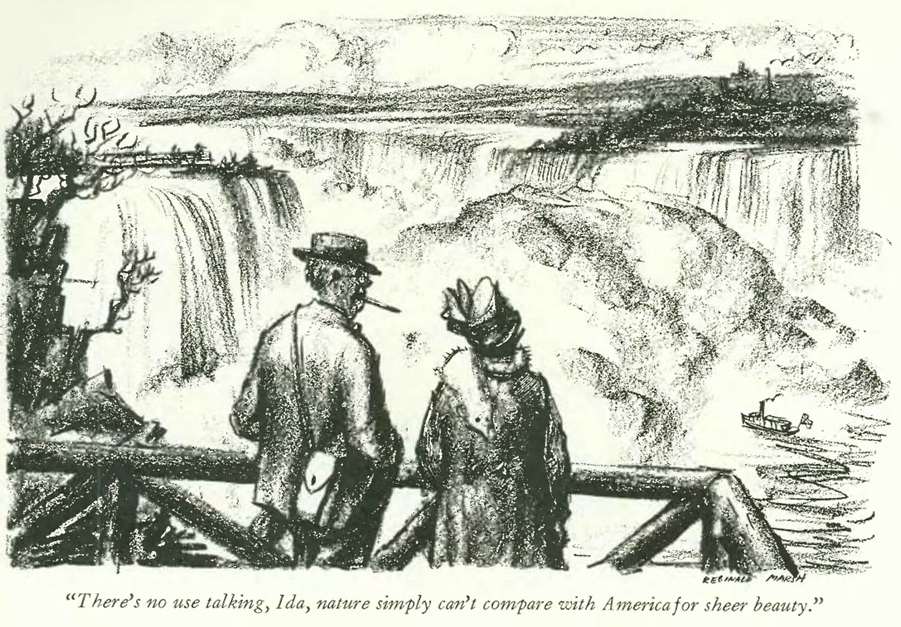
…and a cartoon by Reginald Marsh, portraying a distinctly American view of the grandeur of Niagara Falls…
screen-shot-2016-11-01-at-10-06-41-am

*  *  *

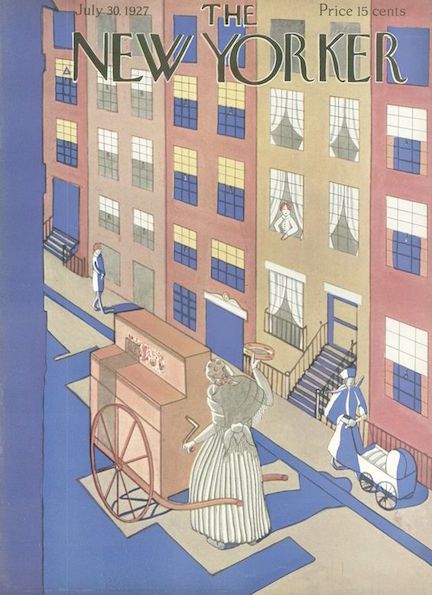
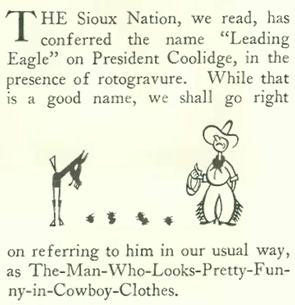
On to July 30, 1927 issue, in which The New Yorker once again takes a poke at our 30th President…
a5bc3067a36eb35927e56509e2fd7092
July 30, 1927. (Cover is unsigned, but I suspect it is by John Held Jr.)

…and his latest adventures in the wilds of South Dakota’s Black Hills:

screen-shot-2016-11-02-at-1-03-12-pm

90
BIG CHIEF…President Calvin Coolidge donned a headdress while being named an honorary Sioux chief (“Leading Eagle”) in Deadwood, South Dakota. His advisers cautioned that the headdress would make him look funny, but he apparently replied, “Well it’s good for people to laugh, isn’t it?” (AP)

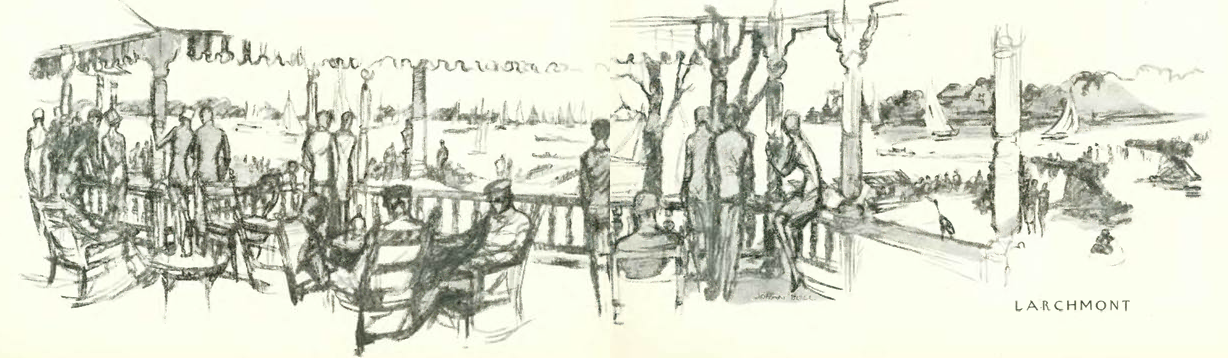
Safely back in the environs of the big city, The New Yorker continued to take stock of summer sports such as tennis, polo, and the yacht races at Larchmont (but still no mention of the legendary ’27 Yankees). This illustration of the races (unsigned, but I guess it is Reginald Marsh) graced a double-spread below “The Talk of the Town”…

screen-shot-2016-11-02-at-1-02-09-pm
(click to enlarge)

…and if you were attending the races, or wanted to look stylish on your yacht (or if you just wanted to dress this way to appear that you owned one), you could check out the selections at B. Altman’s…

screen-shot-2016-11-02-at-12-59-24-pm

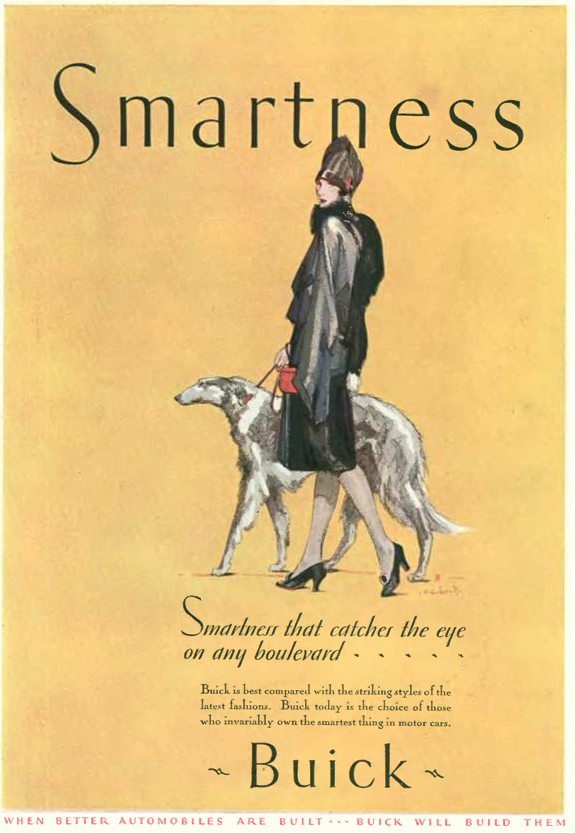
…looking smart was everywhere in the issue, from multiple ads for fall furs, to this come-on from Buick, which suggests that even though it is no Cadillac, and certainly not a Rolls, its smartness will prevail “on any boulevard”…

screen-shot-2016-11-02-at-12-59-32-pm

The Buick ad is somewhat revolutionary for an early automobile ad in that it doesn’t actually show the product advertised.

As for those not among the smart set, and not enjoying the races at Larchmont, there were other summer diversions, as rendered here by J.H. Fyfe:

screen-shot-2016-11-02-at-1-07-23-pm

Next Time: Babe Comes Home…

447032a734d61215ca61a95a205dd7da


Fun With Harold

The Nov. 6, 1926 issue of The New Yorker was actually two issues, one for the newsstands and subscribers and the other a rare parody issue privately published and presented to founding editor Harold Ross on his 34th birthday.

Screen Shot 2016-04-01 at 3.03.49 PM
The cover of the “official” issue (left) for November 6, 1926, was illustrated by William Troy, the parody issue by Rea Irvin.

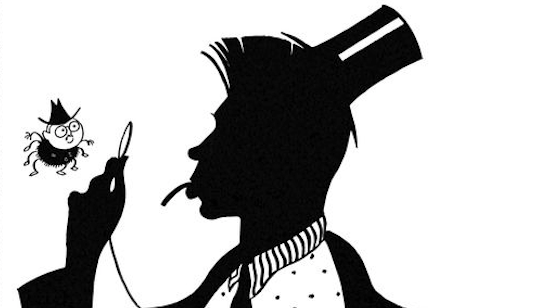
The parody issue’s cover featured a silhouette of Ross (drawn by Rea Irvin, as “Penaninsky”) in the pose of dandy Eustace Tilley, looking at spider bearing a strong resemblance to Alexander Woollcott, critic and commentator for The New Yorker who first met Ross overseas when the two worked on the fledgling Stars and Stripes newspaper.

Screen Shot 2016-04-07 at 3.16.19 PM
OLD PALS…Alexander Woollcott and Harold Ross (Britannica; Jane Grant Collection, University of Oregon)

Ralph Barton’s contribution to the parody issue…

Screen Shot 2016-04-07 at 2.44.38 PM
(From About Town: The New Yorker and the World It Made, By Ben Yagoda)

…and an unsigned contribution that took a poke at Ross’s efforts to create efficient procedures at the magazine’s office:

Screen Shot 2016-04-07 at 3.32.46 PM
Excerpt from Defining New Yorker Humor, by Judith Yaross Lee

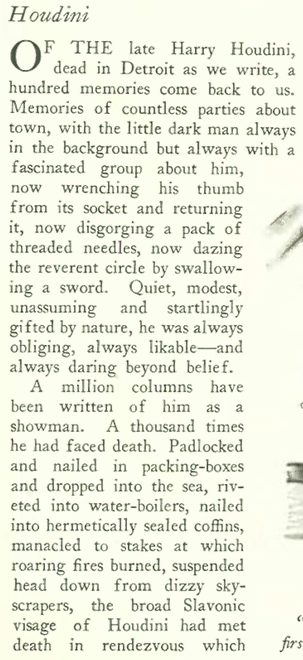
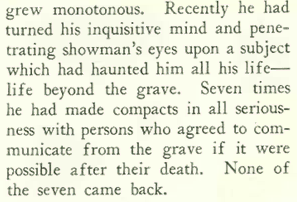
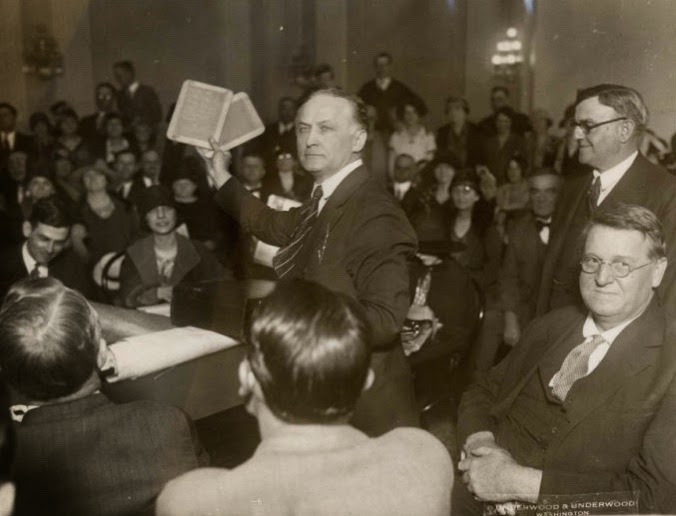
In the other Nov. 6 issue, “The Talk of the Town” editors commented on the death of the famed magician Harry Houdini:

Screen Shot 2016-04-07 at 3.43.59 PM

Screen Shot 2016-04-07 at 3.44.26 PM

ONE OF HIS FINAL ACTS…Harry Houdini appearing before a Senate committee to expose fake spiritualists in February 1926. (wildabouthoudini.com)

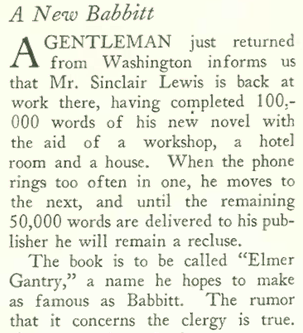
“Talk” also noted a new book called Elmer Gantry was being penned by Sinclair Lewis:

Screen Shot 2016-04-07 at 3.45.20 PM

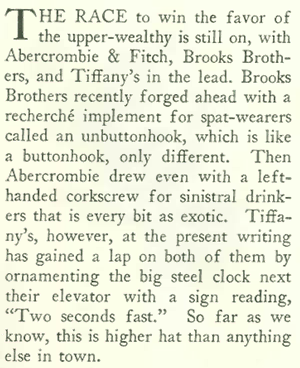
The book was a biting satire of the hypocrisy of fanatical preachers during the 1920s. It created a public furor when it was published in 1927. Another “Talk” item mocked the taste of wealthy New Yorkers for the latest exotic gadgets…

Screen Shot 2016-04-07 at 3.40.08 PM

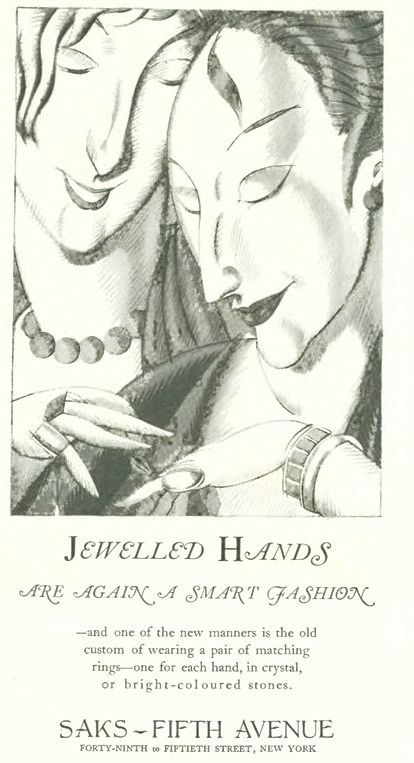
…but the same issue was also filled with the usual advertisements appealing to those very same desires of the Smart Set. Here’s a couple of gems, so to speak…

Screen Shot 2016-04-07 at 3.37.43 PM

Screen Shot 2016-04-07 at 3.38.34 PM

Next Time: The Cotton Club & Other Distractions…

8a3e8956e7cf51e58975801865fdce55

Gentlemen Prefer Blondes?

Despite The New Yorker’s taste for the finer things–polo, opera, classical music–its editors couldn’t resist the pull of popular culture as both spectacle and fodder for mockery of the hoi polloi.

848d031119e0d470956ce963e6e7fb62
Oct. 9, 1926 cover by Julian de Miskey.

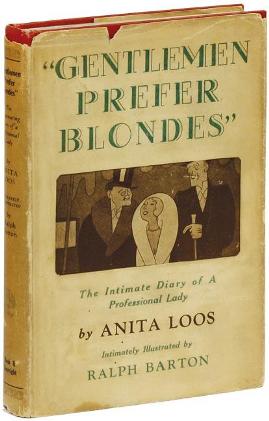
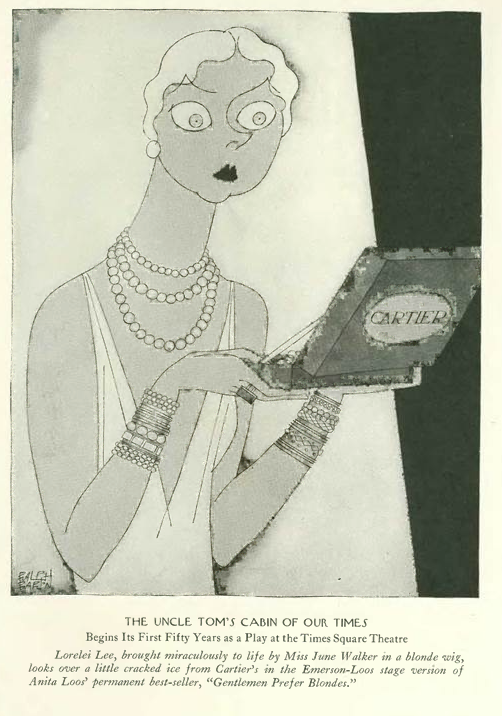
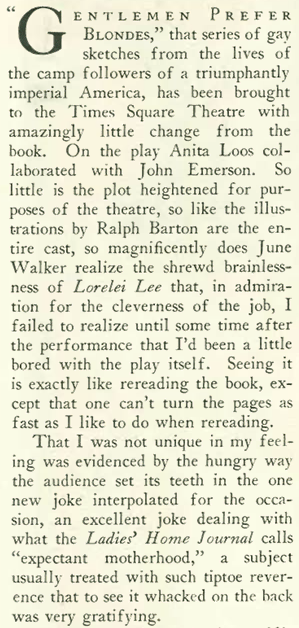
And so we have the Oct. 9, 1926 issue with a review of the much-anticipated Broadway play Gentlemen Prefer Blondes, which was based on a surprise bestselling novel by Anita Loos (and illustrated by The New Yorker’s own Ralph Barton). Despite garnering lukewarm reviews from critics, the public loved the adventures of gold-digging flapper Lorelei Lee.

GentlemenPreferBlondes
First edition of Gentlemen Prefer Blondes, by Anita Loos, illustrated by Ralph Barton (Wikipedia)
tumblr_l7eu7x4QVv1qcl8ymo1_500
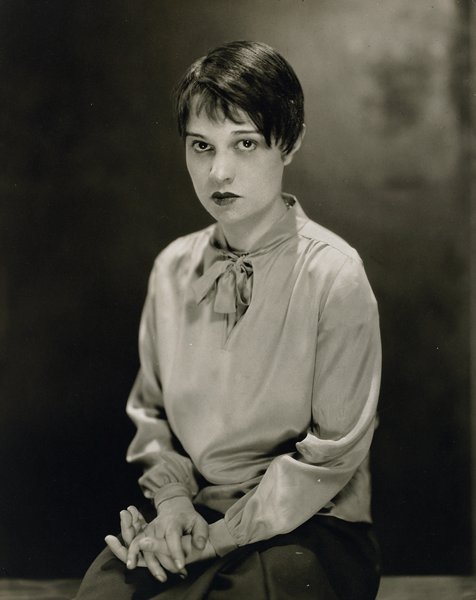
Edward Steichen portrait of Anita Loos, 1926. The New Yorker would feature a lengthy, admiring “Profile” of Loos in its Nov. 6, 1926 issue. (Minneapolis Institute of Art)

According to Wikipedia, the book was one of several famous novels published in 1925 to chronicle the Jazz Age, including F. Scott Fitzgerald’s The Great Gatsby (which ironically didn’t do so well) and Carl Van Vechten’s Firecrackers. Loos was inspired to write the book after watching a sexy blonde “turn intellectual H. L. Mencken into a lovestruck schoolboy.” Mencken, a close friend of Loos, actually enjoyed the work and saw to it that it was published.

nypl.digitalcollections.ab6c9cc0-81c6-da79-e040-e00a1806702e.001.w
Gold-digging flapper Lorelei Lee (June Walker, second from left), Henry Spofford (Frank Morgan, second from right), and the rest of the cast tussle in the stage production Gentlemen Prefer Blondes, Times Square Theatre, 1926. Another “blonde,” Marilyn Monroe, would famously portray Lorelei Lee in the 1953 Howard Hawks film. (New York Public Library)

Ralph Barton contributed this drawing of June Walker for the magazine’s review:

Screen Shot 2016-02-29 at 9.26.56 AM

And a bit of the review itself…

Screen Shot 2016-02-29 at 9.28.33 AM

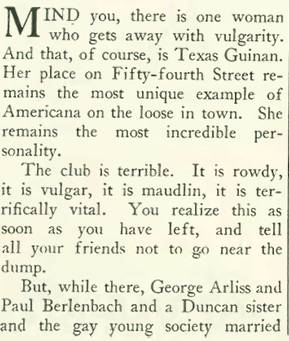
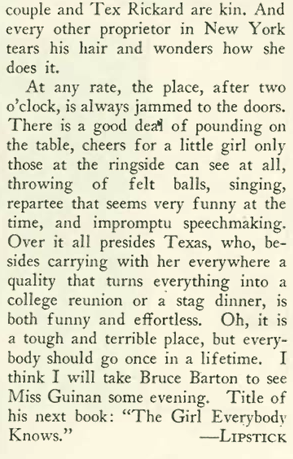
In other items, Lois Long paid a visit to Texas Guinan’s 300 Club on 54th Street, which apparently was still the place to go for a roaring good time:

Screen Shot 2016-02-29 at 9.30.16 AM

Screen Shot 2016-02-29 at 9.30.33 AM

texasguinanpolice
JUST HAVING FUN…According to the blog Ephemeral New York, Texas Guinan’s 300 Club at 151 West 54th Street hosted the likes of John Barrymore, George Gershwin, and Clara Bow. The club was targeted by prohibition officials, who were constantly padlocking the door and arresting Texas. Guinan’s clever rejoinder to the officials: The 300 Club’s patrons brought liquor with them, and because the place was so small, the showgirls were forced to dance close to customers. (Ephemeral New York)

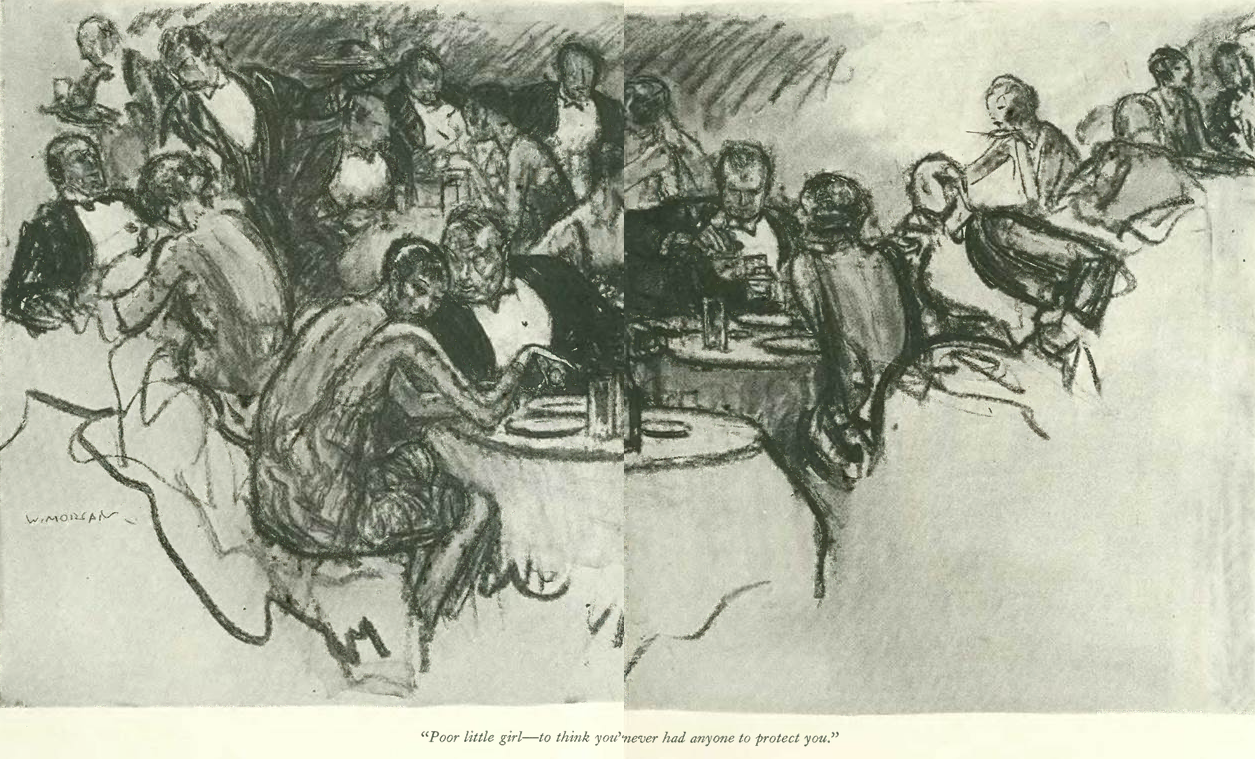
The magazine’s cartoons continued to mine the humor of rich old men out on the town with their young flapper mistresses. The one below was a center spread illustration by Wallace Morgan with the caption: “Poor little girl–to think you’ve never had anyone to protect you.”

Screen Shot 2016-02-29 at 9.21.32 AM

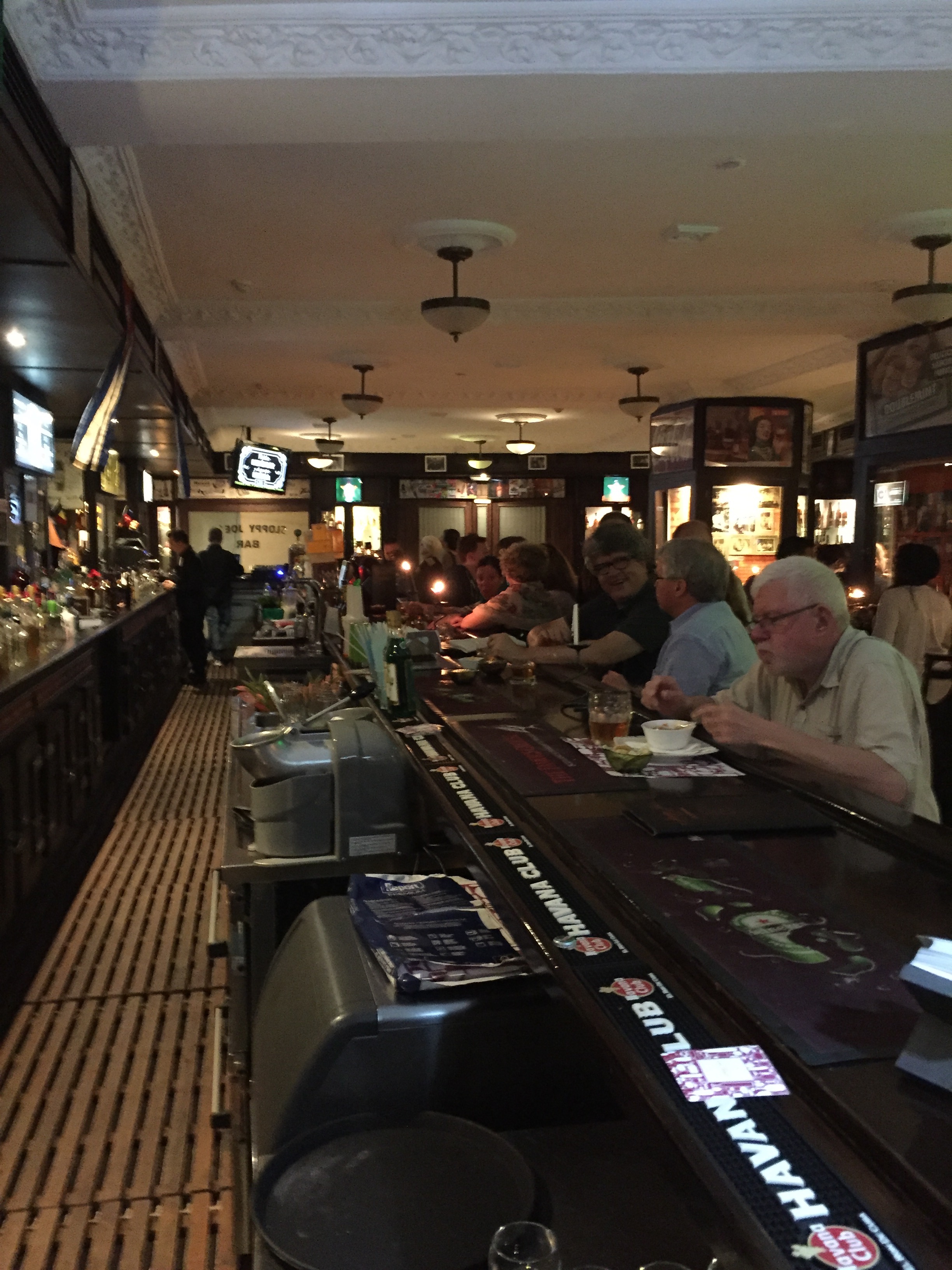
Finally, a look back at one of my earlier blog posts (Cuban Idyll) that featured Americans in Havana. I recently traveled to Cuba and visited some of the old haunts, including the famed Sloppy Joe’s:

IMG_1549
(Photo by David Ochsner)

Next Time: The Changing Skyline…

c37832e544c79a83494d91ea68c0329b


Beloved Aunt Helen

Screen Shot 2015-08-13 at 1.28.18 PM
Dec. 12, 1925 cover by Rea Irvin

Last time we looked at one of The New Yorker’s most prolific artists, Peter Arno. Equally prolific was Helen E. Hokinson, who preceded Arno at the magazine by several months as one of the magazine’s first regular artists.

Hokinson’s signature cartoons of often plump society women engaged in their various activities–clubs, shopping, dining out and gardening–were hugely influential in giving The New Yorker a distinct look and style.

In all she contributed 68 covers to the magazine and more than 1,800 cartoons (including the one that heads this blog entry). So strong was Hokinson’s identity with the magazine, a number of her cartoons were published after her death in 1949.

38159549.HelenHokinson
Helen Hokinson (pbase.com)

New Yorker artist Richard Merkin later wrote (The New Yorker, Feb. 14, 1994) that Hokinson was “something of a stay-at-home, preferring the rewards and routines of her work and of an apartment near Gramercy Park and a cottage in Connecticut.” He observed that it was a “dismal irony” when this homebody died in a plane crash en route to a speaking engagement in Washington, D.C.

But let us remember the joys she brought to so many through her work. Merkin wrote that Hokinson was “a beloved aunt among the family of New Yorker artists…(she) created a type that will forever bear her name–the Hokinson Woman.” Here is Hokinson’s contribution to the Dec. 12, 1925 issue:

Screen Shot 2015-08-24 at 5.17.25 PM

The reluctant debutante Ellin Mackay was back for the Dec. 12 issue with a follow-up piece, “The Declining Function: A Post-Debutante Rejoices.” It would be her final word on the topic. As I reported earlier, Mackay went on to marry famed songwriter Irving Berlin, but would continue writing, most notably a number of short stories for the Saturday Evening Post and other publications.

889666834-ellin-mackay-irving-berlin-atlantic-city-honeymoon-with-modern-concept-and-atlantic-city-honeymoon
FREE AT LAST…Newlyweds Ellin Mackay and Irving Berlin on their honeymoon in Atlantic City. They were married on Jan. 4, 1926. (www.kuaike.co)

In this her second and final New Yorker piece, Mackay drove the final nail into her past debutante life, writing that balls and other society events were “no longer a recognition of any kind of distinction.” She concluded:

People are bored, at least for a while, with being sheep; they are weary of filling their hours of ease with tiresome duties; they have learned to go where they want to go, not where they want to be seen.

* * *

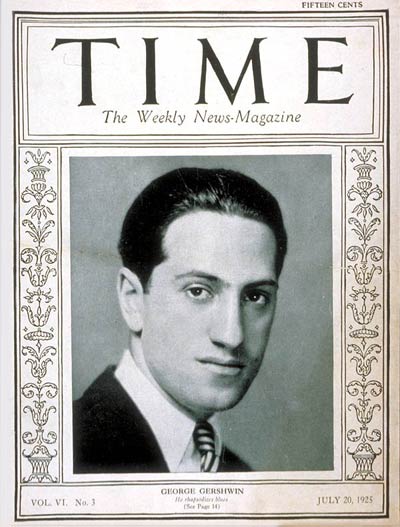
“The Talk of the Town “ reported on George Gershwin’s latest work of “ambitious jazz,” his Concerto in F, which premiered at Carnegie Hall with Walter Damrosch conducting.

1101250720_400
George Gershwin on the cover of the July 20, 1925, issue of Time magazine. (Time.com)

It was noted that Gershwin’s new work had the “beat of the Charleston stirring it.” Later in the “Critique” section, the work was applauded as an “advance on Rhapsody in Blue” and “sharply effective.”

“Profiles” featured Tex Rickard, proprietor of the new Madison Square Garden. The profile’s writer, W. O. McGeehan, suggested that Rickard had assumed the mantle of P. T. Barnum, and although he had given up his saloon-dealing days (promoting gambling and boxing) and now feigned “respectability and elegance,” his primary talent remained in rounding up the gullible masses for popular entertainments:

He will promote anything that will gather a sufficient number of Rubes for profit or for prestige…Behind his guileless exterior, there is a deep guile that is half benevolent and half Satanic…

1024px-Tex_Rickard
Tex Rickard (Library of Congress)

The following year (1926) Rickard would be awarded an NHL franchise to compete with the (now defunct) New York Americans hockey team. Rickard’s team would immediately be nicknamed ‘Tex’s Rangers,” a moniker that remains to this day.

Daybreak_by_Parrish_(1922)
Maxfield Parrish’s Daybreak (1922) is regarded as the most popular art print of the 20th century, based on number of prints made: one for every four American homes. The original sold in 2010 for $5.2 million. (artsycraftsy.com)

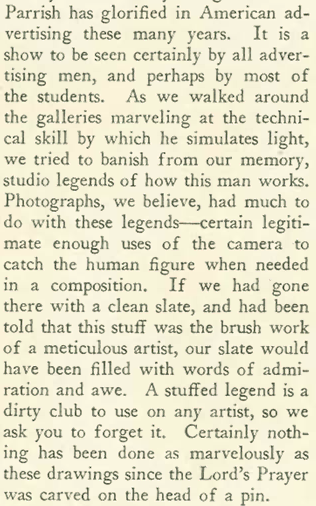
In “Art,” Murdock Pemberton wrote a dismissive critique of the young Maxfield Parrish’s work, which was on display at Scott & Fowles gallery. It was Parrish’s first exhibition. Pemberton took pains to point out that although the work had technical merit, it was by an artist largely glorified in American advertising and not in serious art circles:

Screen Shot 2015-08-24 at 9.58.20 AM

The Dec. 12 issue was filled with Christmas advertisements, including this one that suggests even “sophisticated” readers of the magazine had a taste for kitsch:

Screen Shot 2015-08-24 at 9.06.31 AM

Included in the back pages was an extensive list of “Christmas Shopping Suggestions” compiled by Lois Long (who noted that the list was “not compiled for the benefit of the Old Lady from Dubuque”), while in “Tables for Two” she confessed something akin to horror that she had not yet visited Harlem in the fall season. Among her observations:

Screen Shot 2015-08-24 at 10.11.28 AM

And in the spirit of the season, the “Old Lady from Dubuque” made an appearance in the magazine courtesy of cartoonist Ralph Barton:

Screen Shot 2015-08-24 at 9.46.33 AM

Next Time: Social Errors…

Screen Shot 2015-08-24 at 10.15.29 AM


The Maddest Week

Screenshot 2015-06-26 15.03.49
Sept. 26 cover by Rea Irvin.

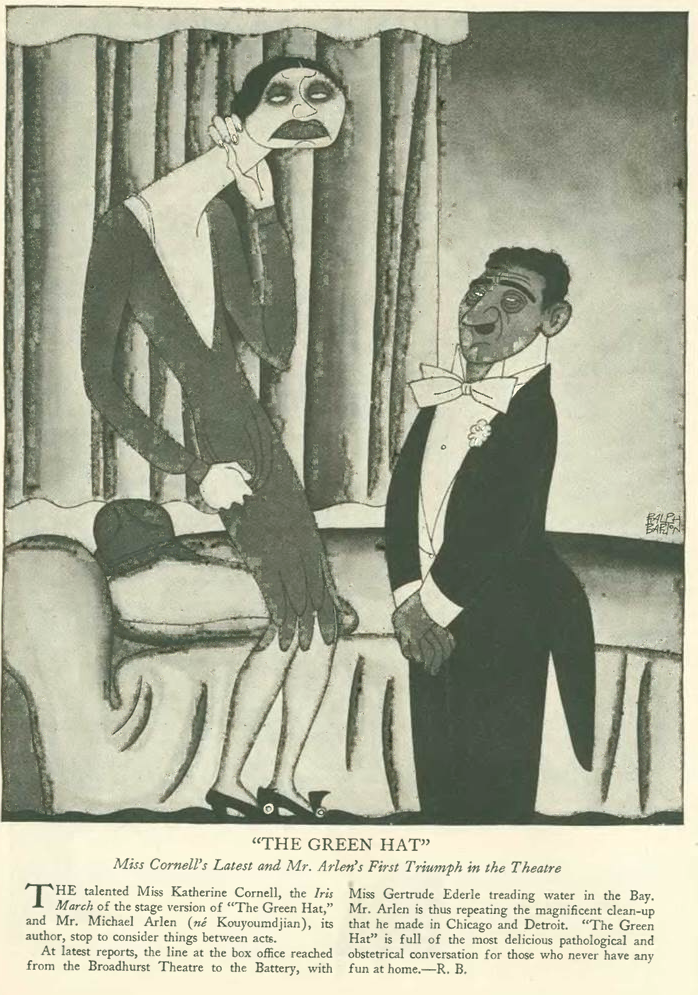
“The maddest week any of us remembers in the theatre,” observed “The Talk of the Town” for Sept. 26, 1925, as The Green Hat (the play based on Michael Arlen’s popular novel) was creating a riotous rush for tickets on The Great White Way.

Talk described The Green Hat as “a play so eagerly sought after that even in a week providing 12 openings, speculators were offering five hundred dollars for twenty tickets” ($500 then is roughly equivalent to $6,800 today).

It was noted that despite the openings of such plays as The Vortex and No, No Nanette, The Green Hat was consuming most of the attention, with the opening attracting “every bigwig of Broadway” including Irving Berlin.

RV-AA996_ARLEN_DV_20101210165837
Michael Arlen in 1925 (Wall Street Journal)

One notable guest, however, did not arrive until after the second act: Michael Arlen himself. It was said that Arlen had never seen a complete performance of his play, due to “nervousness.”

Perhaps there was a good reason for his butterflies.

Later in the “Critique” section, Herman J. Mankiewicz (H.J.M.) pronounced The Green Hat as “unreal and consequently uninteresting…a grand sentimental debauch for the romantically inclined. It has no place at all in the discussion of the Higher Theatre…”

Mankiewicz observed that the acting itself was passable, with Katherine Cornell delivering an “excellent, though scarcely ideal portrayal of Iris March,” but she was “showing the strains of playing a role that has no more grasp on life than a little boy’s daydream that the Giants will, after all, snatch the pennant from Pittsburgh.”

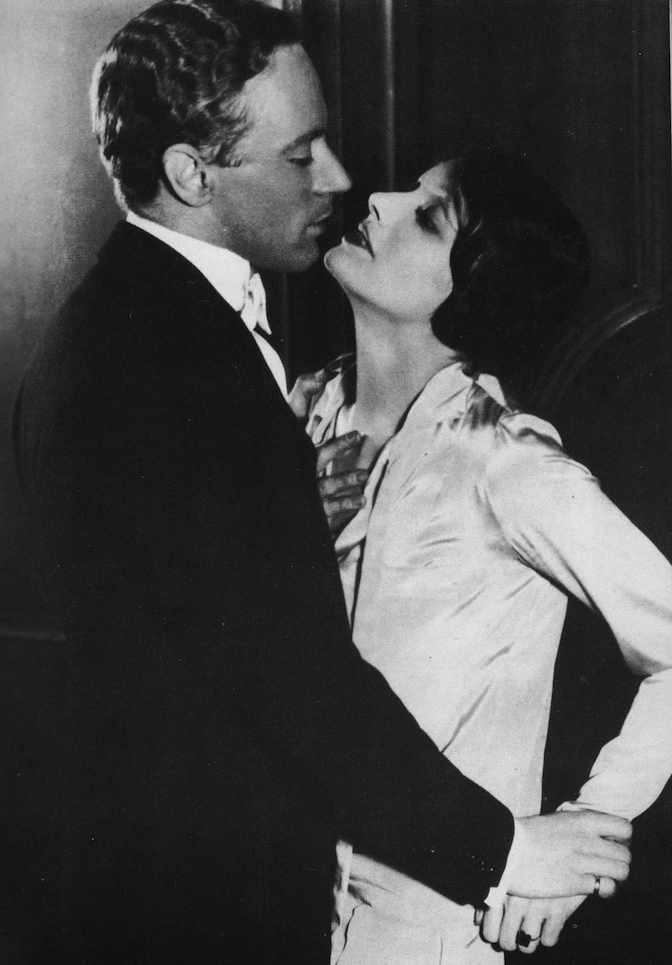
A publicity photo from the play:

tumblr_lzh0jmptsi1qg8r34o1_1280
Broadway newcomer Leslie Howard embraces Katherine Cornell in this publicity photo from The Green Hat. (inafferrabileleslie)

And Ralph Barton’s unique take on the whole thing:

Screenshot 2015-06-30 10.53.40

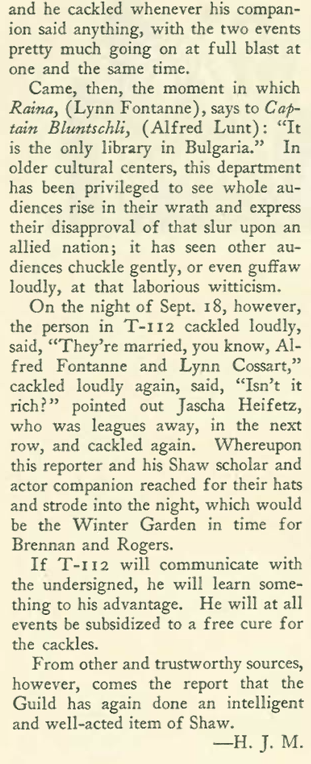
Mankiewicz also reviewed the play, Arms and the Man, but his focus was not the play but rather an annoying patron in seat T-112:

Screenshot 2015-06-30 11.02.48

Screenshot 2015-06-30 11.03.17

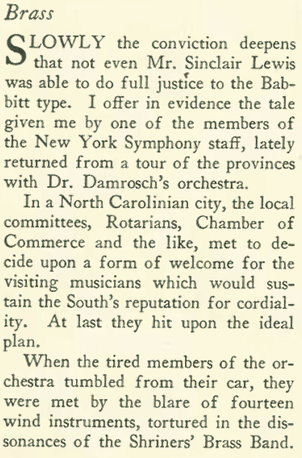
Although the Scopes Trial was long over, The New Yorker still found opportunities to take potshots at the backwardness and Babbittry of folks in the hinterlands:

Screenshot 2015-06-30 09.53.38

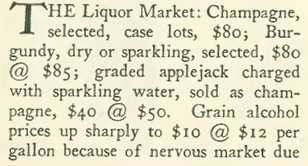
Talk also continued to help its readers with regular updates on the bootleg liquor trade:

Screenshot 2015-06-30 09.53.07

Screenshot 2015-06-30 09.53.18

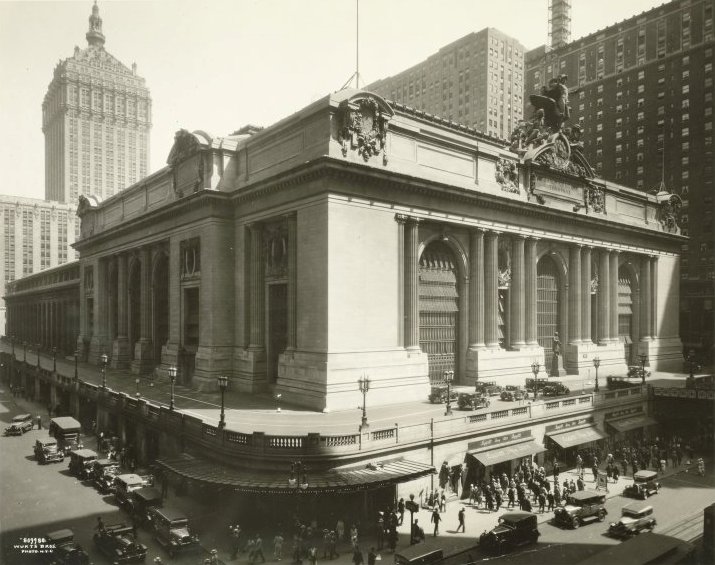
An article titled “Mid-Town” celebrated the 100th anniversary of 42nd Street. Henry Collins Brown wrote that 100 years had changed the street “from a dusty country lane to a self-contained metropolis. The brownstone of its middle age has given way to granite and marble. It has seen a railroad dynasty rise and has written its epitaph on a narrow, short avenue.”

17
A 42nd Street landmark: Grand Central Station in the 1920s. (wirednewyork)

Then Brown concluded with these prescient thoughts:

Screenshot 2015-06-30 10.10.01

An illustrated tribute (by Rea Irvin) to 42nd Street appeared in the “Talk” section:

Screenshot 2015-06-30 09.51.38

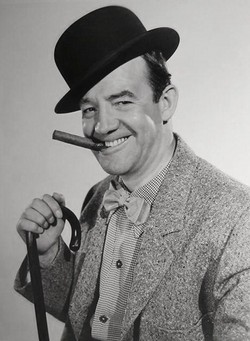
In “Profiles,” Jo Swerling looked at the life of comedian Louis Josephs, known to all as Joe Frisco, a mainstay on the vaudeville circuit in the 1920s and 1930s.

Swerling wrote admiringly that Frisco—who was from Dubuque, Iowa, of all places—was “the comedian’s comic.”

7915_125375025410
Joe Frisco (findagrave.com)

Considered one of the fastest wits in the history of comedy, Frisco was a famous stutterer but could recite his scripted dialogue unimpaired. According to Wikipedia, he was first known for his popular jazz dance act–called by some the “Jewish Charleston”– which was a choreographed series of shuffles, camel walks and turns. He usually danced in a derby hat with a king-sized cigar in his mouth, often performing in front of beautiful women “smoking” prop cigars.

His most famous line was uttered while in a New York hotel. A clerk learned that Frisco had a guest in a room that was only reserved for one occupant, so he called up to the room and said, “Mr. Frisco, we understand you have a young lady in your room.” Frisco replied, “T-t-t-then send up another G-g-gideon B-b-bible, please.”

With vaudeville in decline, in the 1940s Frisco moved to Hollywood and appeared in several low-budget movies. A compulsive gambler who was constantly in debt, he died penniless in Los Angeles in 1958.

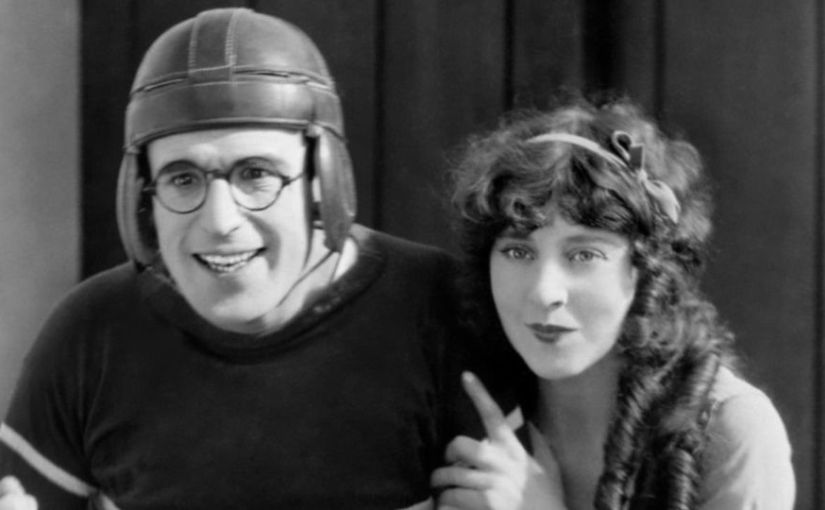
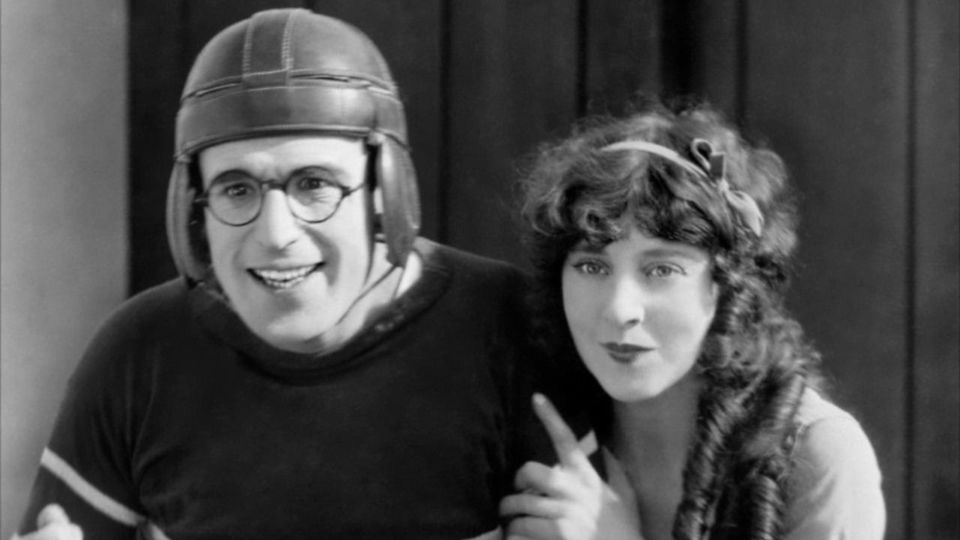
In “Motion Pictures,” Harold Lloyd’s “college comedy,” The Freshman, which Theodore Shane wrote was filled with “glorious laughter.” Shane also noted that another Rin Tin Tin picture was appearing at Warner’s Theatre (Below the Line), and “as usual our hound hero is enlisted on the side of virtue.”

FOLLIES OF YOUTH…Harold Lloyd and Jobyna Ralston in The Freshman. (avclub.com)

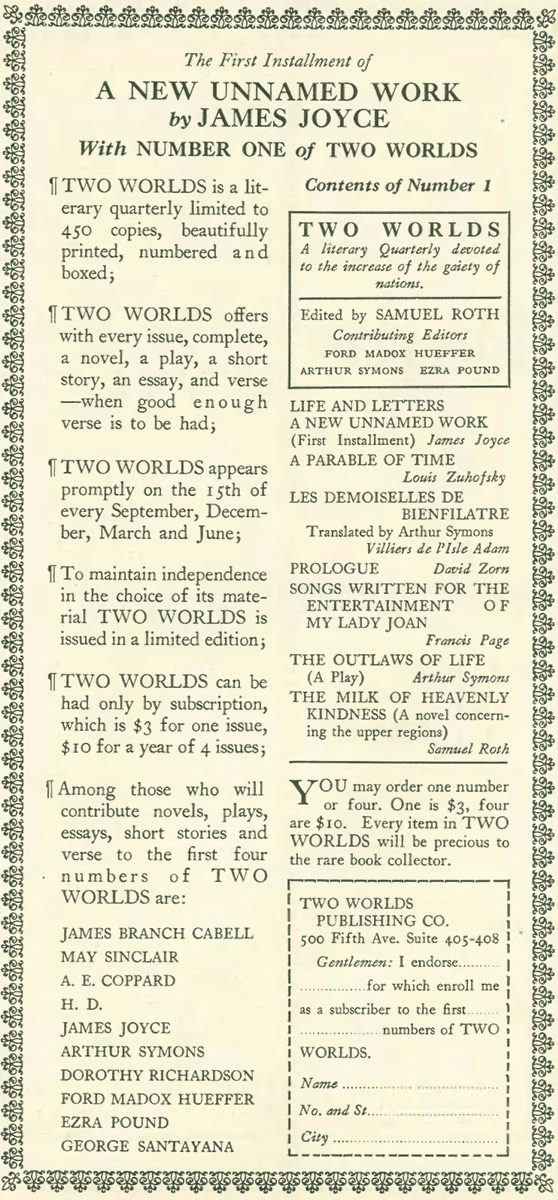
An interesting ad near the back of the magazine (and the book reviews) offered readers an opportunity to sample a new, unnamed work by James Joyce:

Screenshot 2015-06-30 11.13.05

What this ad described was an avant-garde work by Joyce that would appear in serialized form until it was finally published in its entirety in 1939 as Finnegans Wake.

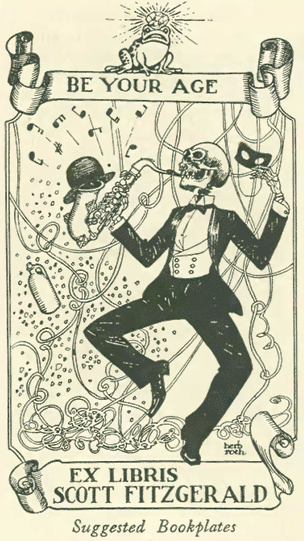
In other book-related matters, this illustration by Herb Roth appeared in the pages of the “Critique” section:

Screenshot 2015-06-30 11.03.28

Anne Margaret Daniel wrote about this “Suggested Bookplate” in her May 1, 2013 blog for the Huffington Post, and made this observation:

“Be Your Age” shows how fully the magazine at the pulse of the Jazz Age registered both Fitzgerald’s personification of the decade, in many readers’ eyes, as well as the dangers he had foretold in The Beautiful and Damned, and again in Gatsby of decadence and of the coming Crash. It’s a very double-edged image of festivity and fatality, just like so many of the images of people at parties that end in disasters in Fitzgerald’s best-known, and best-loved, novel.

Charles Baskerville (Top Hat) continued to report from the City of Lights in his “Paris Letter,” mainly focusing on the doings of American tourists. No offense to the urbane and talented Baskerville (also a great illustrator), but I am looking forward to Janet Flanner’s (a.k.a. Genêt) take on Paris in future issues (Does anyone out there know if she wrote the unsigned “Paris Letter” in the Sept. 5 issue?).

The issue featured a rather faded-looking movie ad for the back cover:

Screenshot 2015-06-30 11.19.19

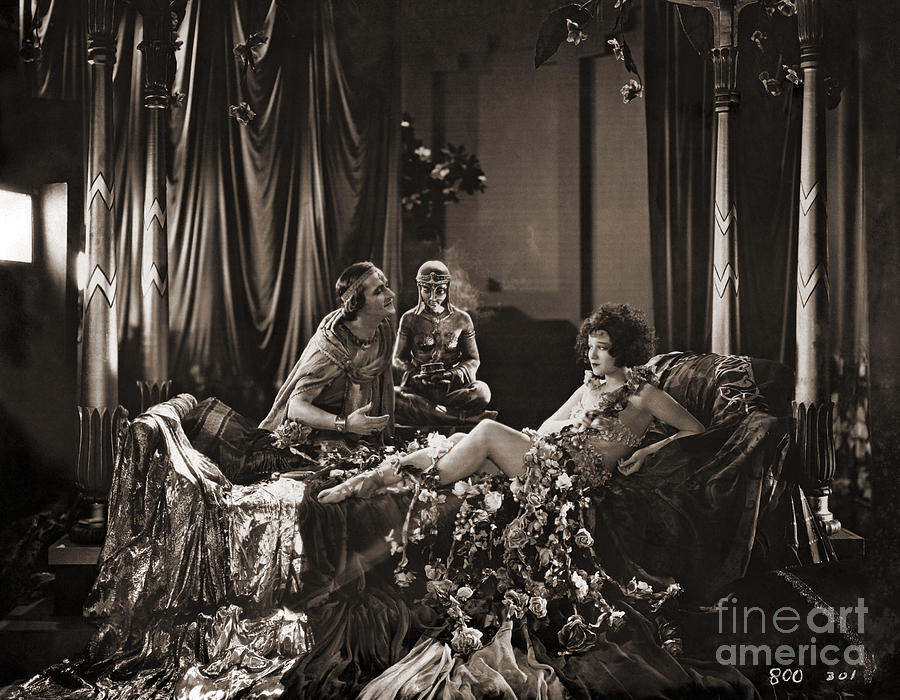
And a still from the film on which the drawing is no doubt based:

greta-nissen-the-wanderer-1925-sad-hill-archive
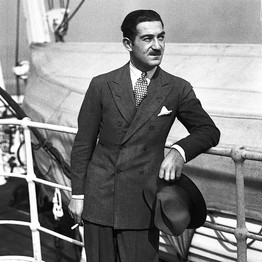
Tyrone Power Sr. and Greta Nissen in The Wanderer (1925) (Sad Hill Archive)

Next Time: Lois Long’s Fifth Avenue…

Screenshot 2015-06-30 12.24.30


Logrolling on West 44th

Screenshot 2015-06-10 16.51.20
August 29, 1925 cover by Garrett Price.

In a previous post I briefly looked at the Algonquin Round Table–writers, critics, artists, some of them New Yorker contributors–who had been exchanging witticisms over lunch at the Algonquin Hotel since 1919.

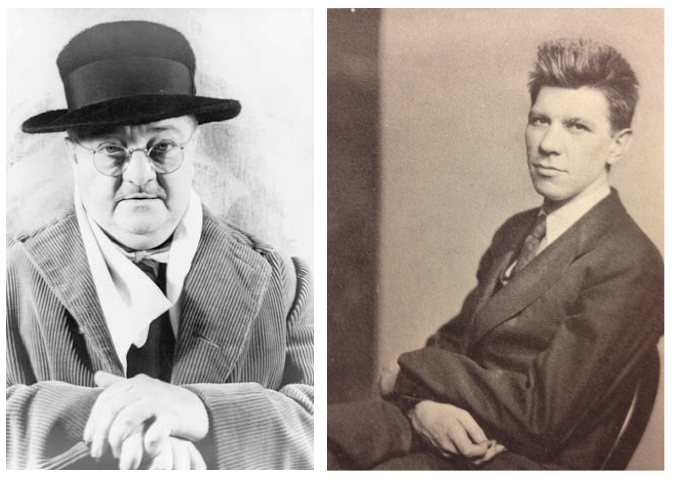
Like so many things connected to The New Yorker, Alexander Woollcott was at the center of the famed table’s origin story. According to Wikipedia, the group that would become the Round Table began meeting as the result of a practical joke carried out by theatrical press agent John Peter Toohey, who was annoyed at Woollcott (a New York Times drama critic) for refusing to plug one of his clients (Eugene O’Neill) in his column. Toohey organized a luncheon supposedly to welcome Woollcott back from World War I, where he had been a correspondent for Stars and Stripes (and where Woollcott first met Harold Ross and Jane Grant). Instead Toohey used the occasion to poke fun at Woollcott on a number of fronts, including his long-winded war stories. Woollcott’s enjoyment of the joke and the success of the event prompted Toohey to suggest that the group meet every day at the Algonquin for lunch.

An illustrated feature by Ralph Barton in the August 29, 1925 issue (titled “The Enquiring Reporter”) thumbs its nose at critics of the Round Table who accused its members of “logrolling” (exchanging favorable plugs of one another’s works). Barton’s feature spoofs the man-on-the-street interviews that were popular in the 1920s. The persons chosen “at random” are none other than members of the Algonquin Round Table who take turns denying that any logrolling takes place at the famed gathering:

Screenshot 2015-06-15 15.16.27

In fact, there was quite a bit of logrolling taking place in this “Vicious Circle.” As Thomas Kunkel writes in Genius in Disguise, in addition to New Yorker contributors, the Algonquin Round Table variously included representatives of the New York Times, the New York Tribune, Vanity Fair, Harpers Bazaar and Life.

“The wits cross-pollinated feverishly. Shrugging off charges of logrolling, they quoted one another in their columns, reviewed one another’s shows, publicized one another’s books. To be fair many of the glowing notices were deserved—and in any case not all the notices were glowing.”

Screenshot 2015-06-16 15.31.56
The four writers featured in Barton’s fictitious “man on the street” feature. Clockwise, from top left: Alexander Woollcott, Heywood Broun, George Jean Nathan, and Franklin P. Adams. (reocities.com, Wikipedia, artsfuse.com, electronpencil.com)

Kunkel also observes, “By far the most powerful transmitter of Round Table wit was (Franklin) Adams (known to most as F.P.A.), whose column in the Tribune (and later the World), “The Conning Tower,” was scoured by tens of thousands of New Yorkers for its dollops of quippery and clever verse. Young writers conspired to break into the column, and the appearance of even a four-line snippet was regarded as a triumph…the Round Table supplied F.P.A. with a freshet of material, and he wasn’t bashful about using it. A particularly good line from Parker or Kaufman or Benchley might turn up in “The Conning Tower” within hours of its utterance.”

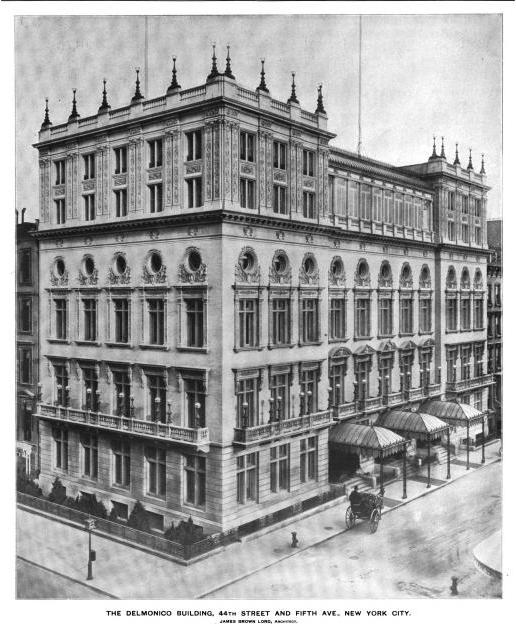
In other happenings, “The Talk of the Town” noted that the last meal served at Delmonico’s–which was fated for the wrecking ball–was less a cause for mourning and more one of scorn for the bad taste of the site’s owners:

Screenshot 2015-06-15 15.08.28

Delmonico Building
The New Yorker bids a bitter farewell to Delmonico’s.

Screenshot 2015-06-15 15.17.50Among other items, O.H.P. Garrett penned a “Profile” about flamboyant mayoral candidate Jimmie Walker that seemed to anticipate the raucous career that would follow after his election.

Garrett observed that “his life is constructed of minutes and seconds. He can be clocked with a stop watch,” and that Walker’s main concerns seemed to be Sunday baseball, boxing and the repeal of movie censorship.

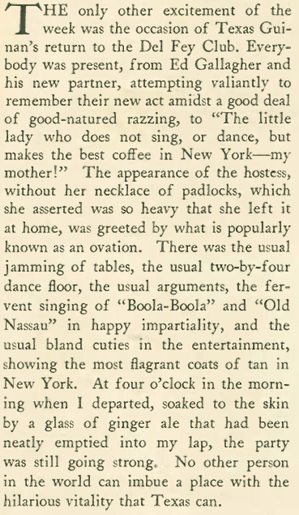
Lois Long seemed a bit bored with the week’s diversions in her column, “When Nights Are Bold,” but did welcome the reappearance of Texas Guinan after yet another club was threatened with padlocks by the Prohibition Authority:

Screenshot 2015-06-15 15.40.23

TexasGuinan(1)
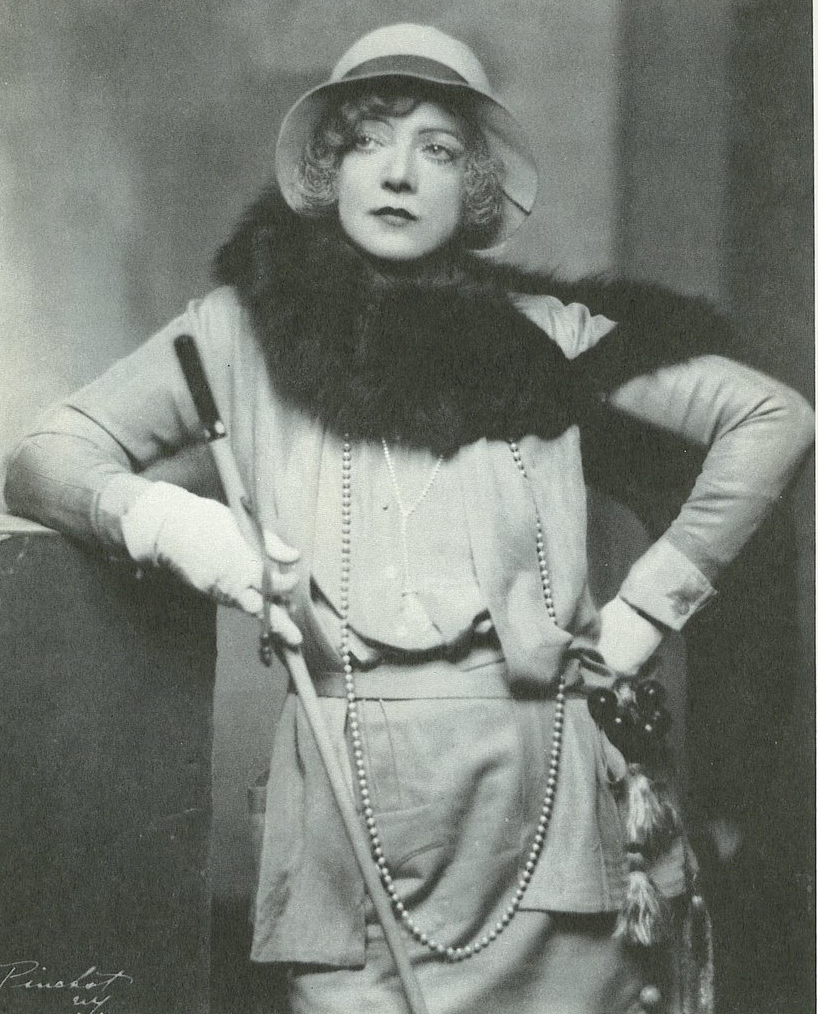
She just wants to have fun…Texas Guinan was well known to New Yorker writers and editors and was a frequent guest of the numerous parties hosted by Harold Ross and Jane Grant in the Hell’s Kitchen brownstone they shared with Alexander Woollcott and Hawley Truax. (texasguinan.blogspot)

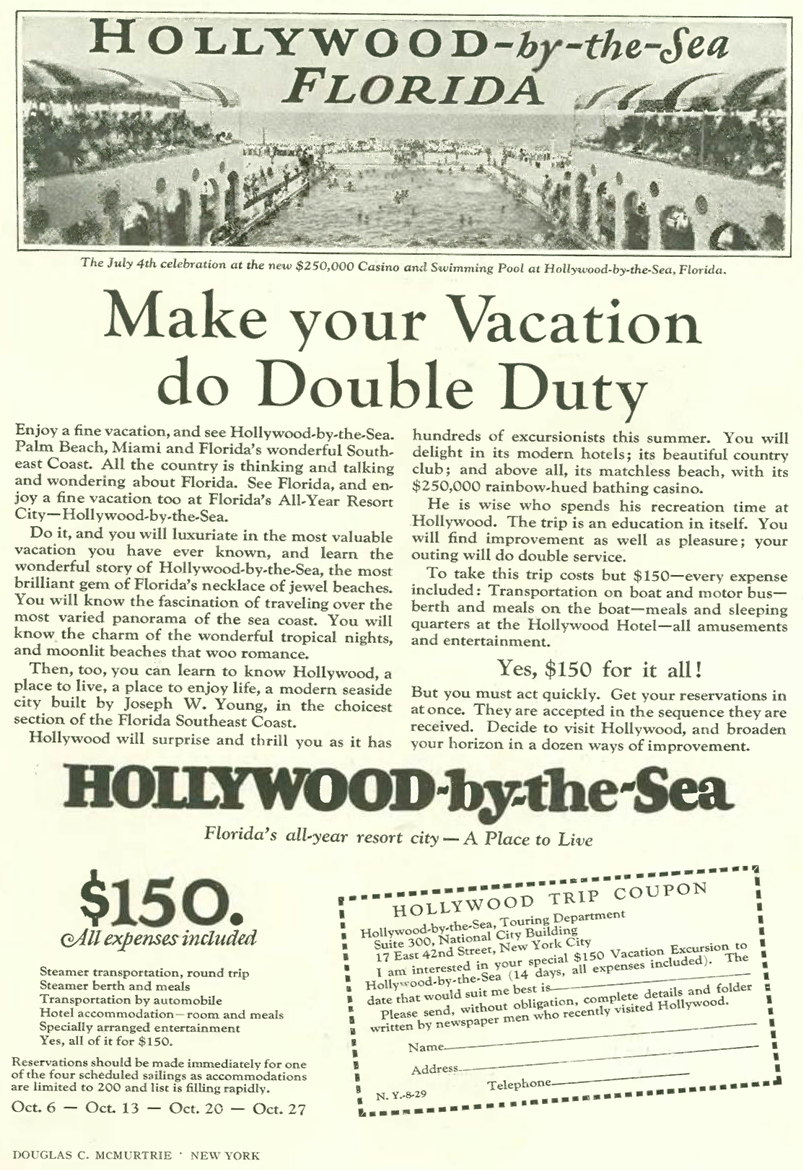
On the advertising front, the back inside cover and back cover were graced with paid advertising. As with most ads in The New Yorker, the target audience had some money to spend on travel:

Screenshot 2015-06-15 15.41.31

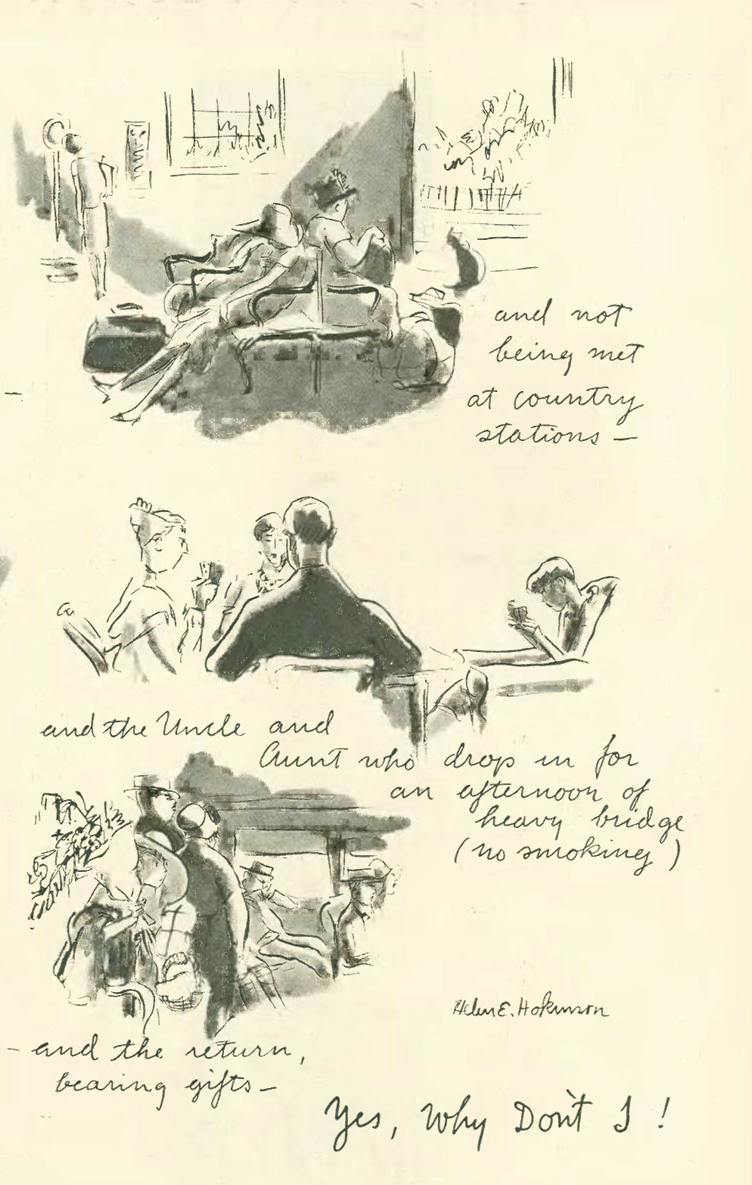
And we end with these weekend scenes from the magazine’s center spread, drawn by Helen Hokinson:

Screenshot 2015-06-15 15.31.25

Screenshot 2015-06-15 15.31.35

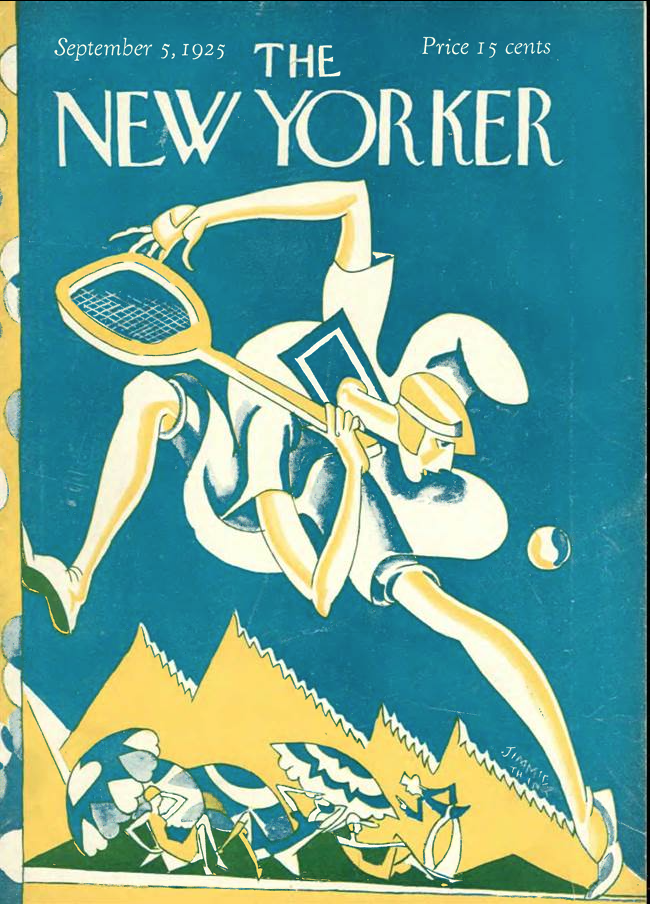
Next time, tennis anyone?

Screenshot 2015-06-16 15.17.43


A Peach of a Scandal

Screenshot 2015-06-04 15.04.48
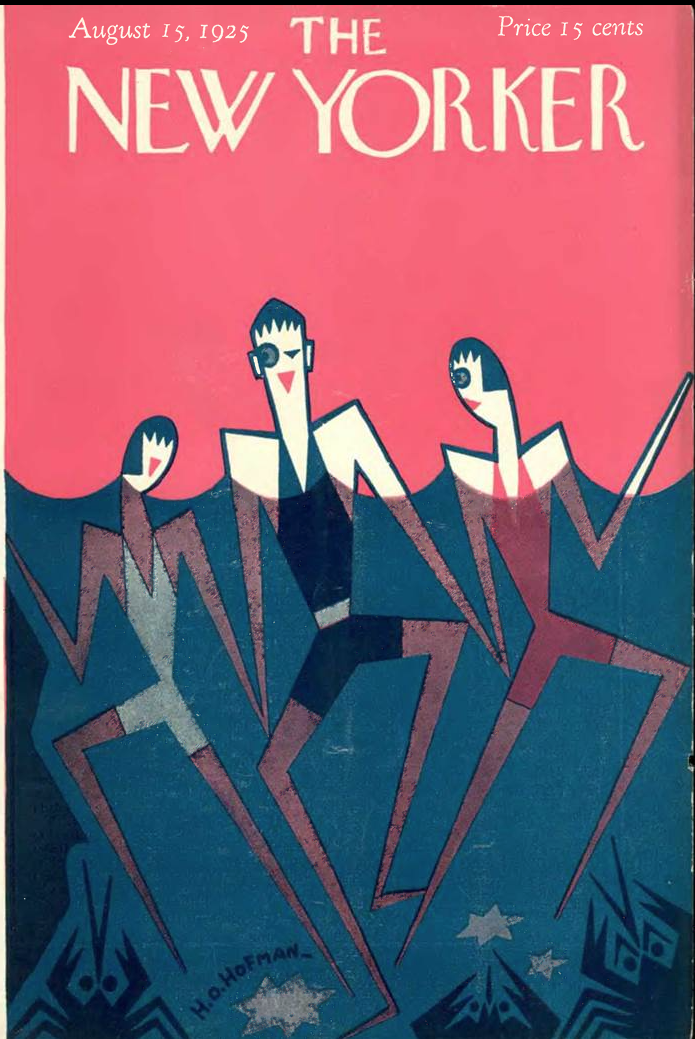
Cover for August 15, 1925, by H.O. Hofman.

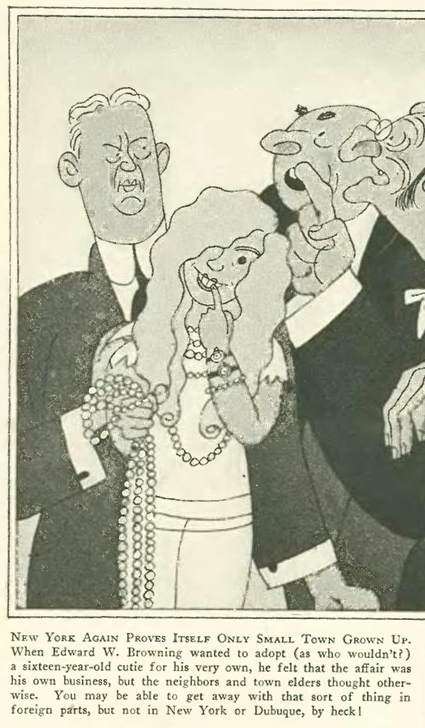
Ralph Barton’s “The Graphic Section” in the August 15, 1925 edition of The New Yorker gave readers their first whiff of one of the sensational scandals of the Roaring Twenties. Barton reported that wealthy, middle-aged bachelor Edward Browning (then 51 years old) wanted to “adopt” a “sixteen-year-old cutie for his very own.”

What Barton referenced in his comic illustration foreshadowed the “Peaches” scandal that would occur the following year.

According to an April 1, 2012 article by Dan Lee in New York Magazine (titled with the subhead, “She was 16, he was 52, what could go wrong?”), Browning was well known in New York City “as perhaps the most idiosyncratic of the city’s eligible bachelors…worth what would now be an estimated $300 million.”

Screenshot 2015-06-09 10.12.31
Ralph Barton illustrates Edward Browning’s predicament in “adopting” Mary Louise Spas. (New Yorker Digital Archive)

Lee writes that Browning was already a tabloid fixture at age 40 when he married his first wife, Adele, a considerably younger file clerk. They adopted two daughters, Marjorie and “little Dorothy Sunshine,” Browning’s favorite. When Adele left him for a “28-year-old playboy dentist,” they split the girls between them. Browning, of course, chose “Sunshine,” and vowed never to marry again. Lee takes it from there:

In what the tabloids quickly helped morph into a Willy Wonka–style lottery, Daddy set about finding a sister for Sunshine: After personally reviewing 12,000 applications and interviewing scores of would-be daughters, he chose Mary Louise Spas of Queens, who, despite being 16 and therefore two years older than the cutoff, bore a charming gold tooth and stole his heart. A My Fair Lady transformation ensued, rapturously reported by the press, which continued trolling Spas’s past, ultimately uncovering revealing swimsuit photos that led to school records that led to the disclosure that Mary was actually 21 and not poor. Daddy moved to have the adoption annulled. Mary responded with a tabloid tell-all and lawsuit, alleging Daddy was a pervert.

e6aeeb5a799b4f45774e8544fccee037
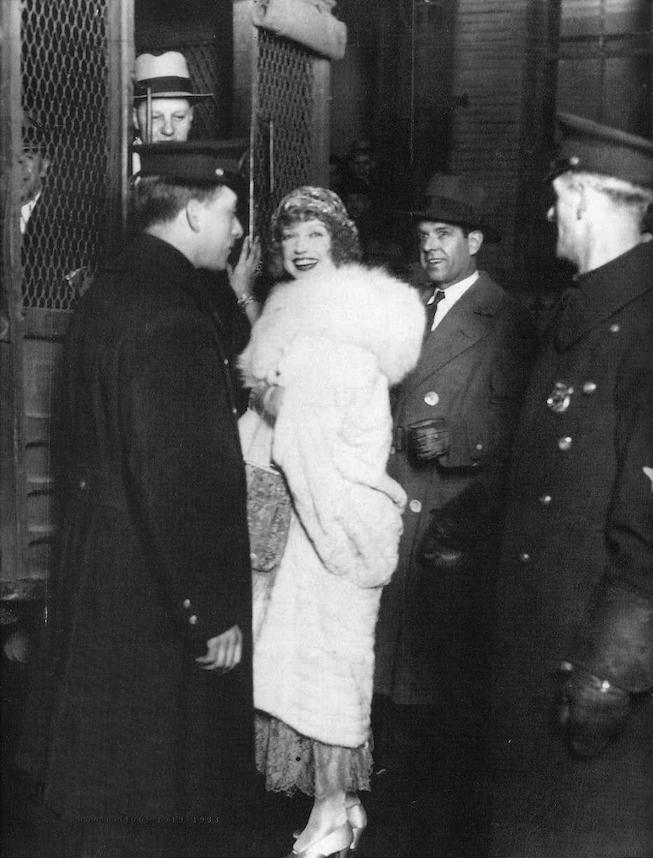
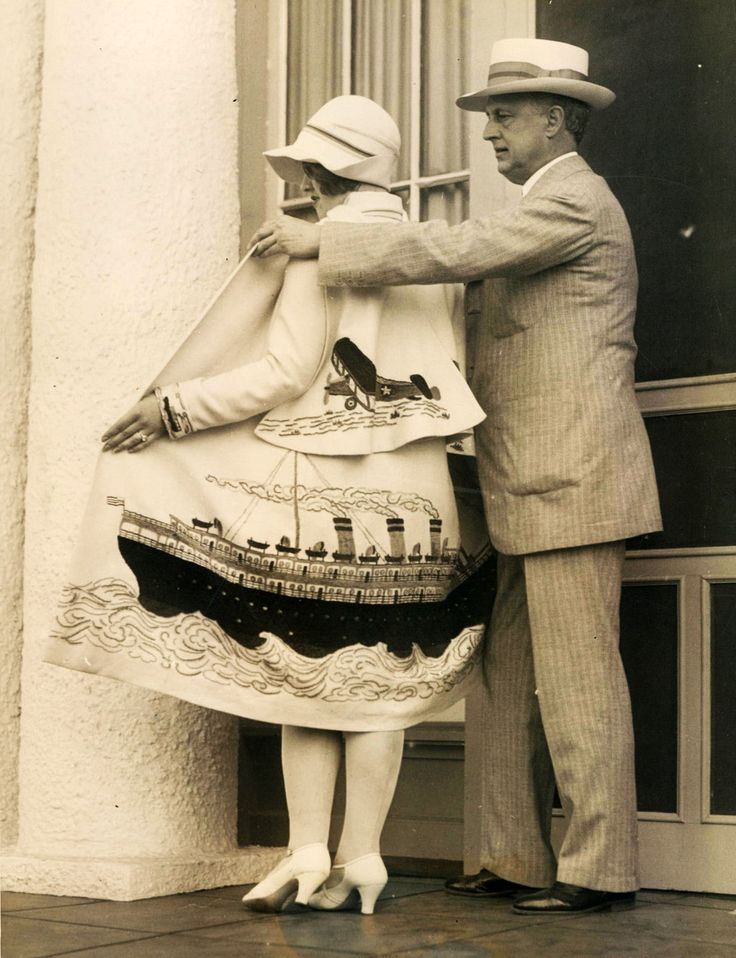
“Daddy” helps “Peaches” with her coat. If that is an image of the Titanic, the irony is just too rich…(Retronaut)

According to Lee, Browning then turned his attention to charity, “especially for a local chapter of the Phi Lambda Tau social sorority for high-school girls, of which he was the main benefactor.” Lee continues:

The sorority’s primary function was throwing dances across Manhattan for girls in scanty flapper dress, where Daddy, with his long, sagging face and steep W-collared dress shirts, smoked cigars and held court. And so it went that one night, inside the ballroom of the Hotel McAlpin on 34th and Broadway, Browning’s life intersected with Frances Heenan’s, whom the press would describe as a “chubby,” strawberry-blonde high-school dropout with “piano legs” but an inexplicably “magnetic” smile who worked as a shop clerk and lived with her single mother in Washington Heights. He likened her to peaches and cream, securing her lifelong nickname. Thirty-seven days later to thwart a child-protective-services investigation, they were married.

peachesanddaddy2
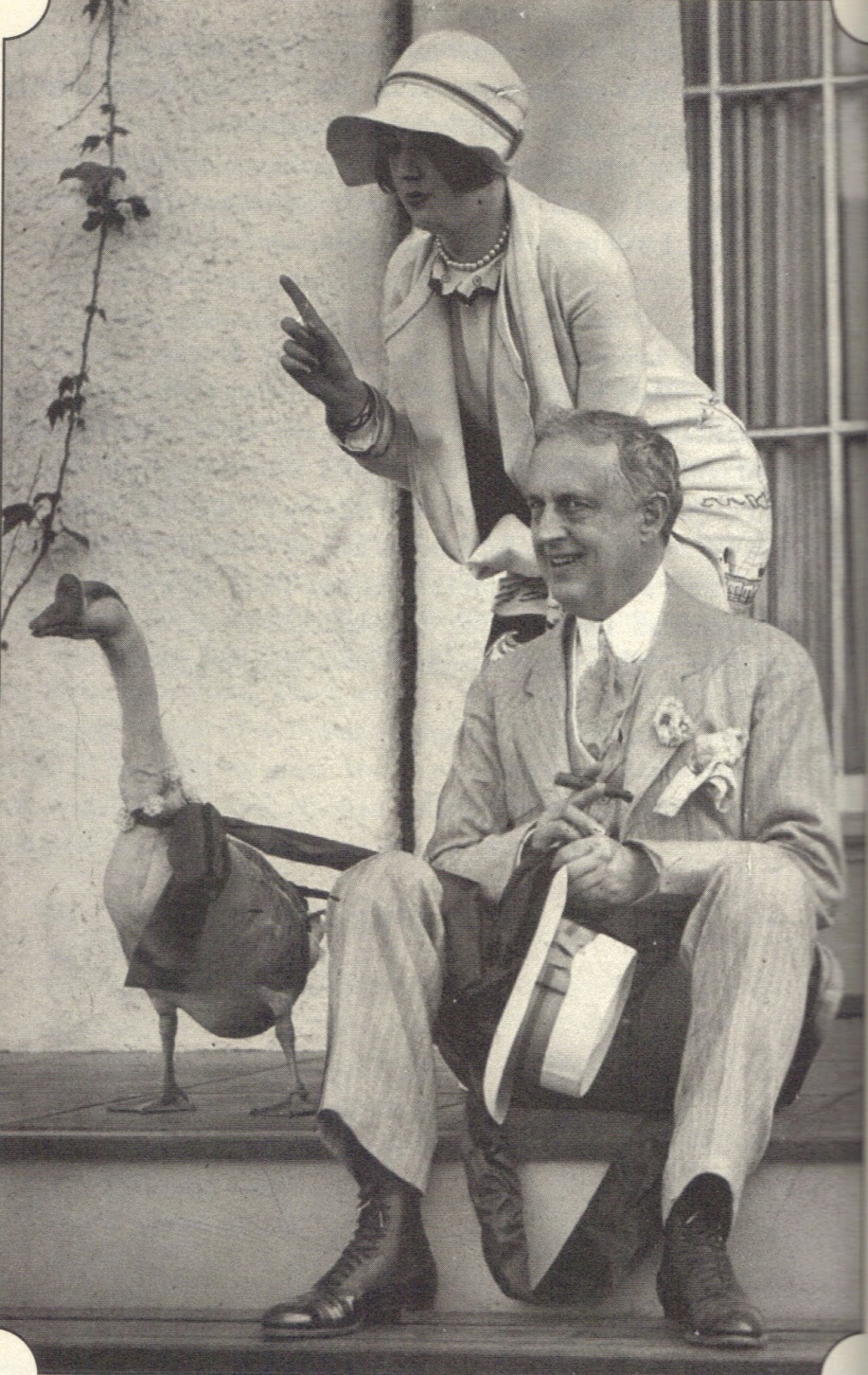
Peaches and Daddy with African goose. (brandypurdy.blogspot)

The wedding took place on June 23, 1926, Peaches’ 16th birthday, but later that year, Peaches would seek a divorce.

The divorce trial in White Plains, New York drew intense coverage by the tabloids including Bernarr McFadden’s notorious New York Graphic, which published “composographs” of the couple, including this one:

daddy1fw70
Composographs, forerunners of photo manipulation, were retouched photographic collages popularized by publisher and physical culture advocate Bernarr Macfadden in his New York Evening Graphic. The Graphic was dubbed “The Porno-Graphic” by critics of the time and has been called “one of the low points in the history of American journalism.” The images were cut and pasted together using the heads or faces of current celebrities, glued onto staged images created by employees in Macfadden’s in-house studio. (Image: dhtinshakerheights.blogspot.com, Text: Wikipedia)

The story was featured in newspapers across the country, including reports of Peaches’ testimony regarding her husband’s odd sexual behavior and the fact that he kept an African goose in their bedroom. According to Wikipedia, the phrase “Don’t be a goof,” which Browning allegedly used to insult Peaches, came into national vogue, and later turned up in the lyrics of the song “On Your Toes,” by Rodgers and Hart.

In the end, the judge ruled that Peaches had abandoned her husband without cause, and released Browning from the marriage. She was however awarded a $6,000 “widow’s portion” when Browning died in 1934.

3664657628_76bc1d6954_z
Peaches in her vaudeville days. (travsd.wordpress.com)

According to Lee, Peaches pursued a successful career in vaudeville, “had an affair with Milton Berle,” would marry and divorce three more times, and would become an alcoholic. On August 23, 1956, her mother heard a crashing sound in the bathroom of their New York City apartment and found Peaches unconscious with a large contusion above her ear. She was dead at 46.

If you want to read more about this strange coupling, Michael Greenburg has written a bookPeaches and Daddy: A Story of the Roaring 20s, the Birth of Tabloid Media, and the Courtship that Captured the Hearts and Imaginations of the American Public.

And so on to the rest of the issue…

“Profiles” featured Theodore Dreiser, whom Waldo “Search-light” Frank dubbed “the martyr of the American Novel” and a “heroic warrior against legions of a commercial and Puritan world.”

“The Talk of the Town” offered this postscript on the “Scopes Monkey Trial,” observing that the small Tennessee town was suffering a bit of hangover (and attendant humiliation) from all of the trial publicity:

Screenshot 2015-06-09 13.03.41

“Sports of the Week” covered the annual “Dog Show of the Consolidated Hamptons,” featuring illustrations by Johan Bull:

Screenshot 2015-06-09 11.25.19

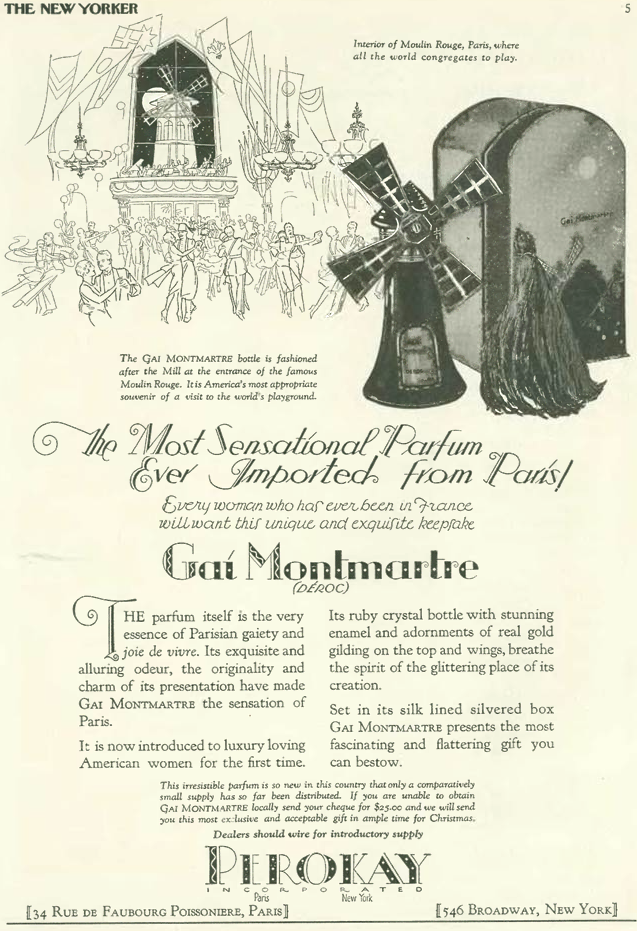
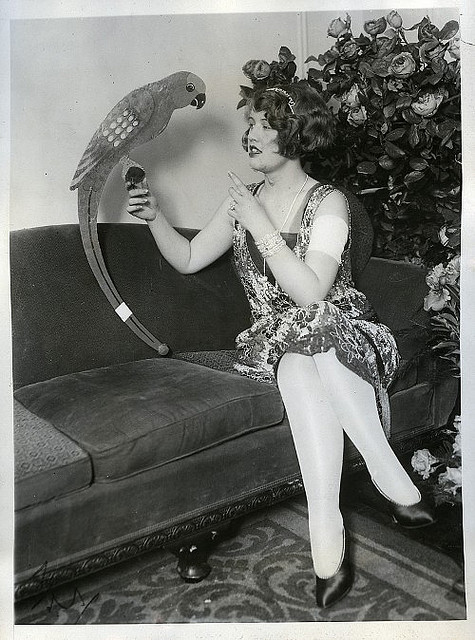
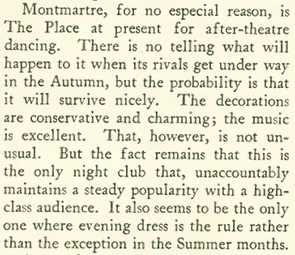
In her column, “When Nights Are Bold,” Lois Long offered the Montmartre as a venue for summer entertaining:

Screenshot 2015-06-09 11.27.06

Screenshot 2015-06-09 11.27.47

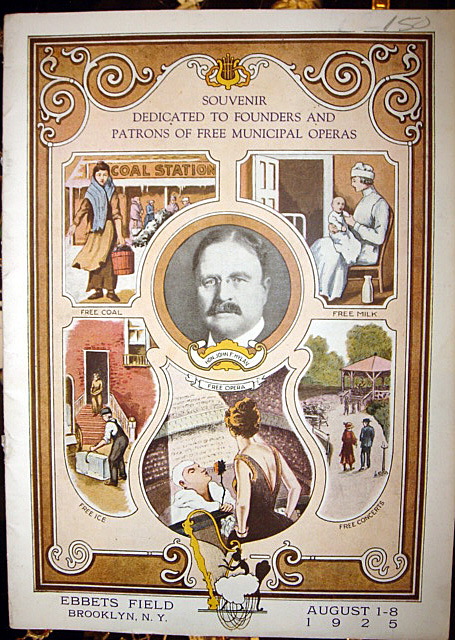
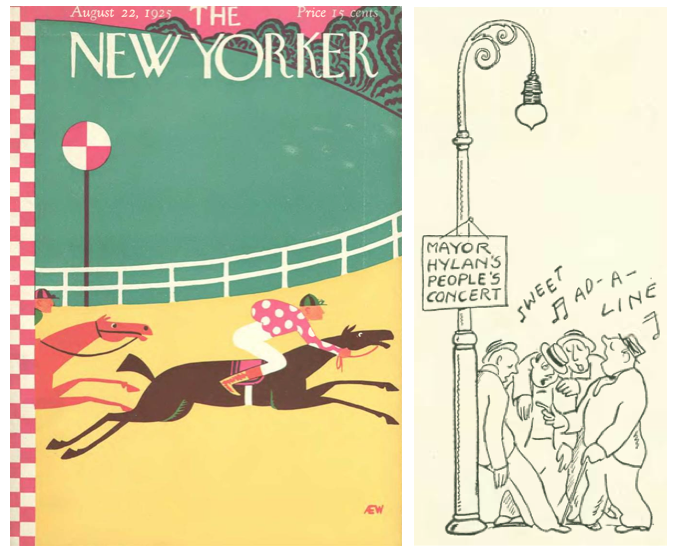
“Music” featured a brief review of Mayor John F. Hylan’s “free people’s concert,” Aida, at Ebbett’s Field, taking the usual shots at the mayor’s grasping attempts at publicity:

Screenshot 2015-06-09 11.21.10Screenshot 2015-06-09 11.21.32

DSC09255_edited-1wedwe
Program promoting Mayor Hylan’s public operas and other services from August 1925

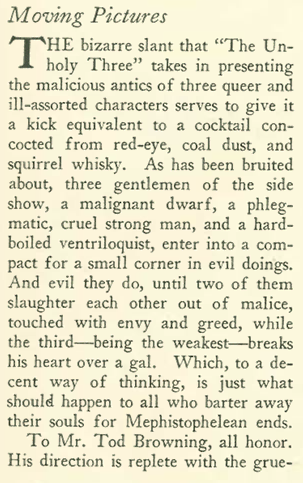
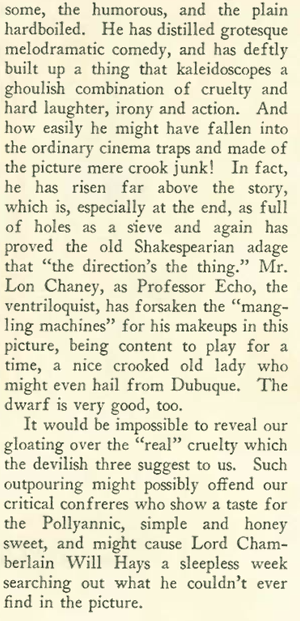
“Moving Pictures” peered between fingers at Tod Browning’s latest picture, The Unholy Three (the same Tod Browning who would go on to direct Dracula with Bela Lugosi in 1931 and the creepy 1932 cult classic, Freaks):

Screenshot 2015-06-09 11.24.09

Screenshot 2015-06-09 11.24.28

unholy-three-1
Lon Chaney and friend in The Unholy Three (1925) (Alamo Drafthouse)

Sweet dreams!

Next time, more horseplay, and another jab at the mayor:

Screenshot 2015-06-09 14.07.39

Invasion from the Hinterland

Screenshot 2015-06-04 12.52.15
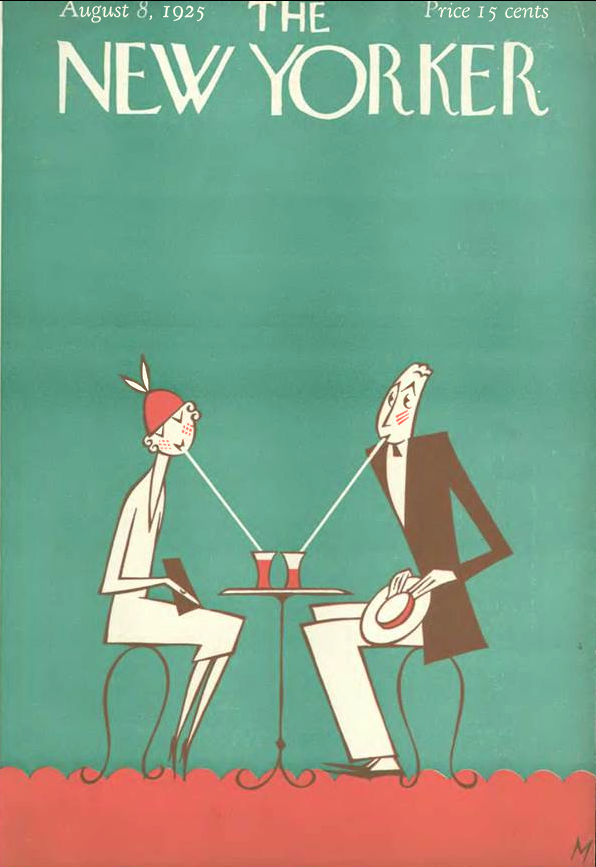
August 8, 1925 cover by Julian de Miskey.

The dog days of summer were ushered in by the news that “the buyers” had “invaded” the city.

The “buyers” in question were tourists (and no doubt some clothing store merchants) from across the country who had descended upon Gotham in search of the latest fashions that could be bundled off to the hinterlands.

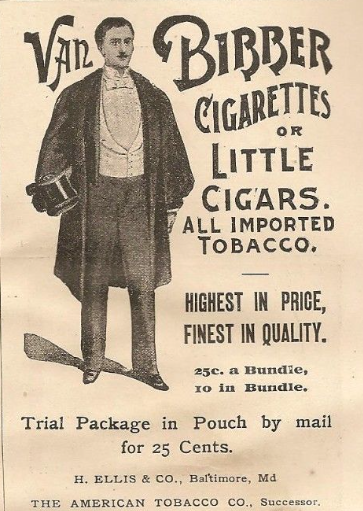
“The Talk of the Town,” speaking through the fictional persona “Van Bibber III,” took a sneering view of this annual migration:

Screenshot 2015-06-04 13.47.57

Screenshot 2015-06-04 13.48.07
(New Yorker Digital Archive)

In the first issues of The New Yorker, the “Van Bibber III” signature appeared occasionally at the end of “Talk” or other items.

Screenshot 2015-06-04 15.12.01
Van Bibber advertisement in Cosmopolitan, 1896

In her book, Defining New Yorker Humor, Judith Yaross Lee wrote that early readers of The New Yorker would have recognized the Van Bibber III persona “as a joke, a personification of Van Bibber cigarettes, whose ads targeted the devil-may-care, swagger young man about town all dressed up for the opening night. As an insiders view of the urban scene, Van Bibber’s accounts featured casual conversation—that is, talk.”

“Of All Things” offered this update on the activities of illusionist Harry Houdini:

Houdini, charged with disorderly conduct after smashing up an office, replied: They locked the door and I had to fight my way out.” Bang goes another illusion! We thought he could open anything but a car window.

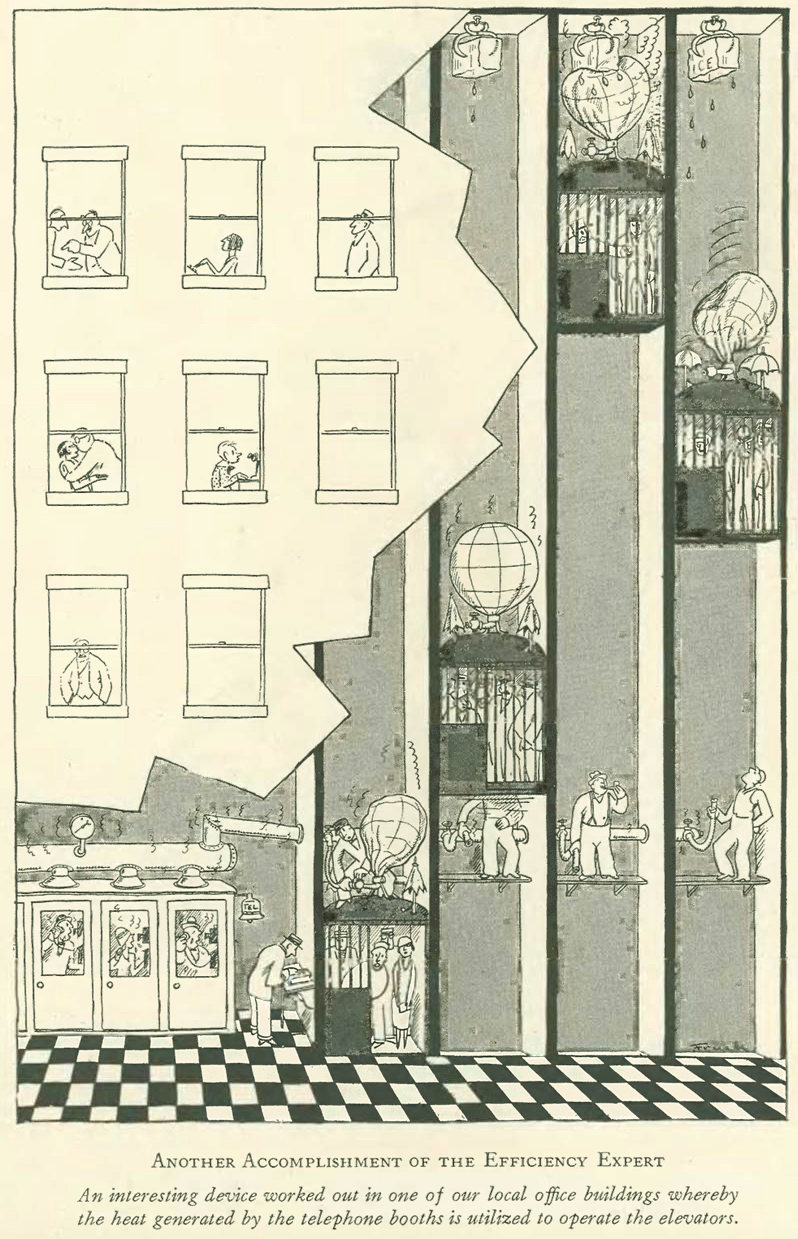
Murdock Pemberton wrote about the life of poet Harry Kemp in “Profiles,” and cartoonist Al Frueh offered this twist on the uses of “hot air:”

Screenshot 2015-06-04 14.16.14
(New Yorker Digital Archive)

And more art from Ralph Barton, this time along with his views on the play Artists and Models and the contrasts between life in New York and Paris:

Screenshot 2015-06-04 14.18.13
(New Yorker Digital Archive)

“Moving Pictures” offered praise for Sally of the Sawdust, featuring W.C. Fields. Theodore Shane wrote that Fields had distinguished himself from other movie comedians through his act as a “snooty sort of superclown.”

Screenshot 2015-06-04 14.47.03
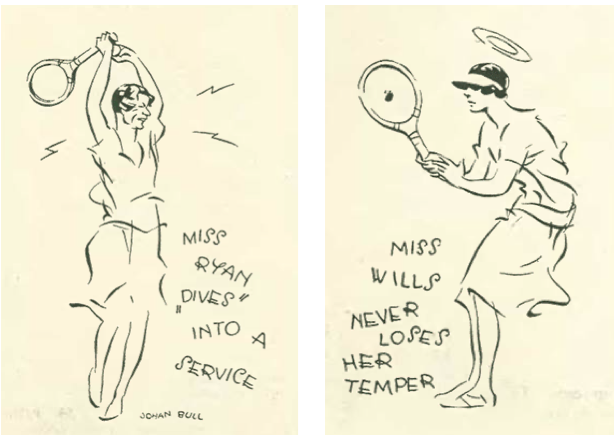
Art work  by Johan Bull from “Sports of the Week.” In their careers, Elizabeth Ryan won 30 Grand Slam Titles, and Helen Wills won 31 (New Yorker Digital Archive).

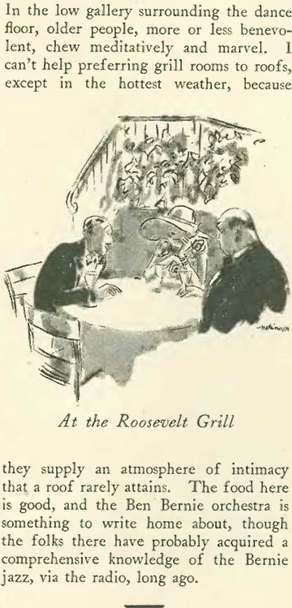
The tennis tournament at Seabright featuring Elizabeth Ryan and Helen Wills was the subject of “Sports of the Week,” and in “When Nights Are Bold,” Lois Long continued her look at nighttime entertainment venues to beat the summer heat:

Screenshot 2015-06-04 14.27.23

Screenshot 2015-06-04 14.27.30
(New Yorker Digital Archive)
MNY19570
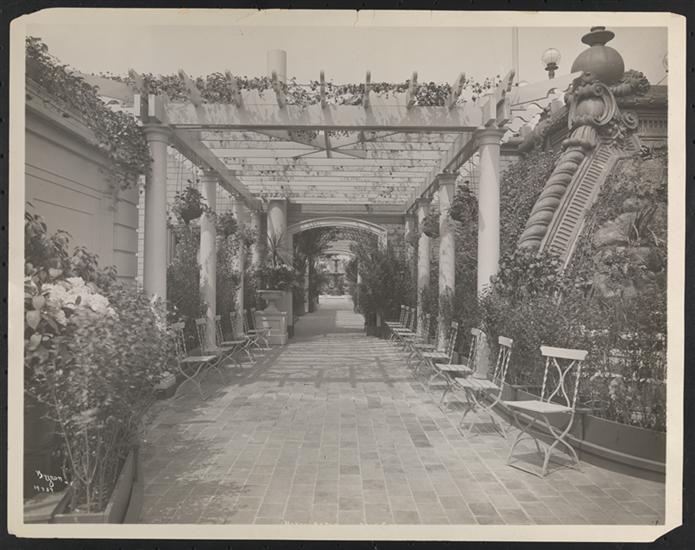
Hotel Astor Roof Garden in 1905 (Museum of the City of New York)

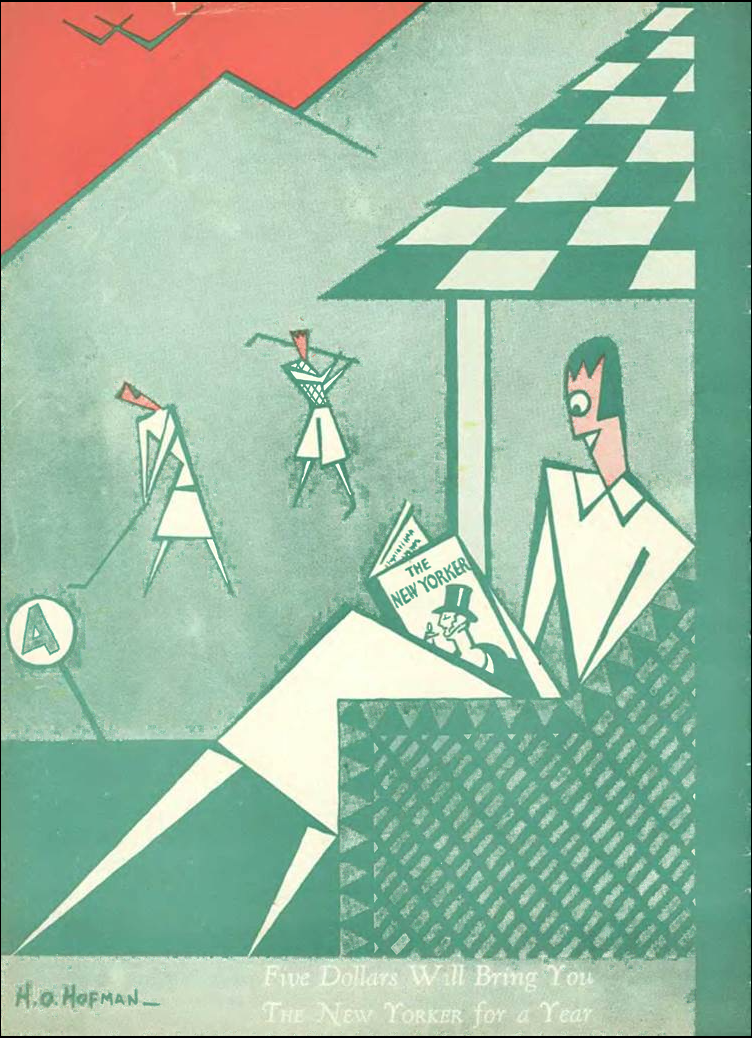
Advertising remained sparse in the pages of The New Yorker, with both inside front and inside back covers devoted to in-house ads promoting the magazine. In addition, the color back cover was also a house ad, featuring a rendering by H. O. Hofman:

Screenshot 2015-06-04 14.28.05
(New Yorker Digital Archive)

Next time. Will The New Yorker sink or swim?

Screenshot 2015-06-04 15.04.48