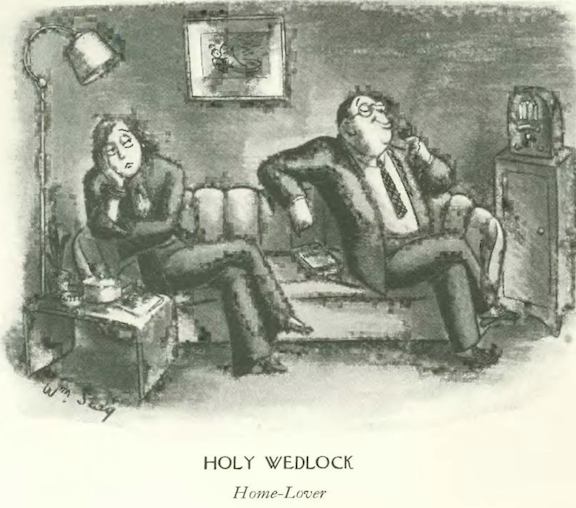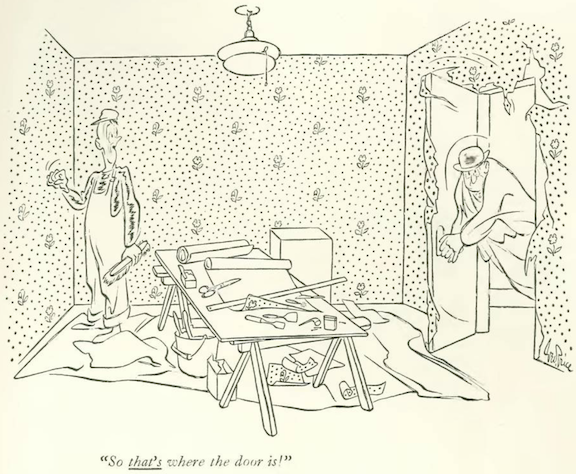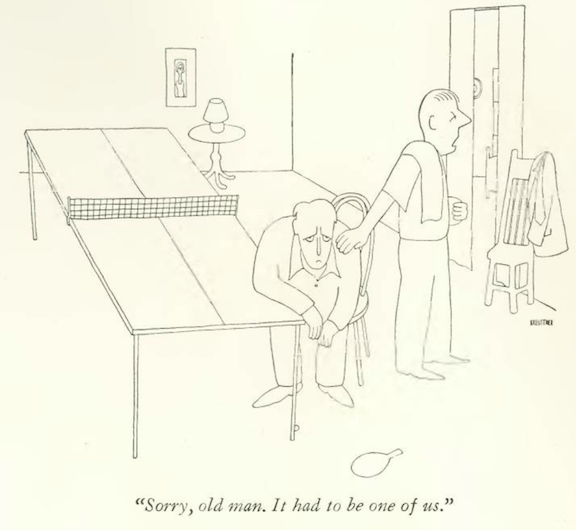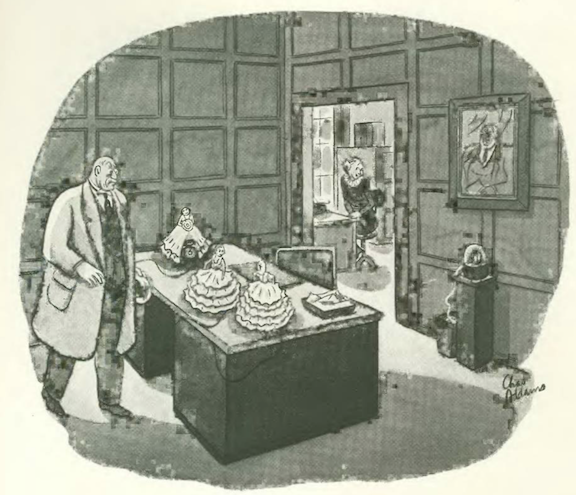
A Decade of Delights

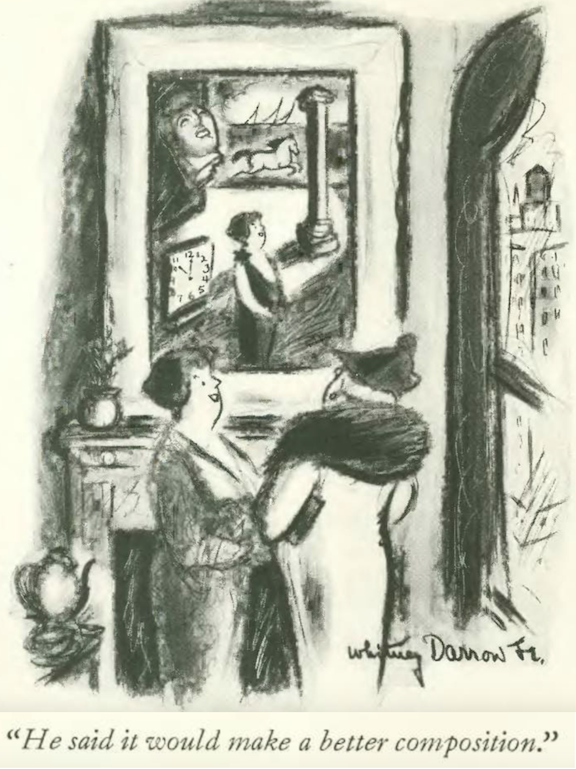
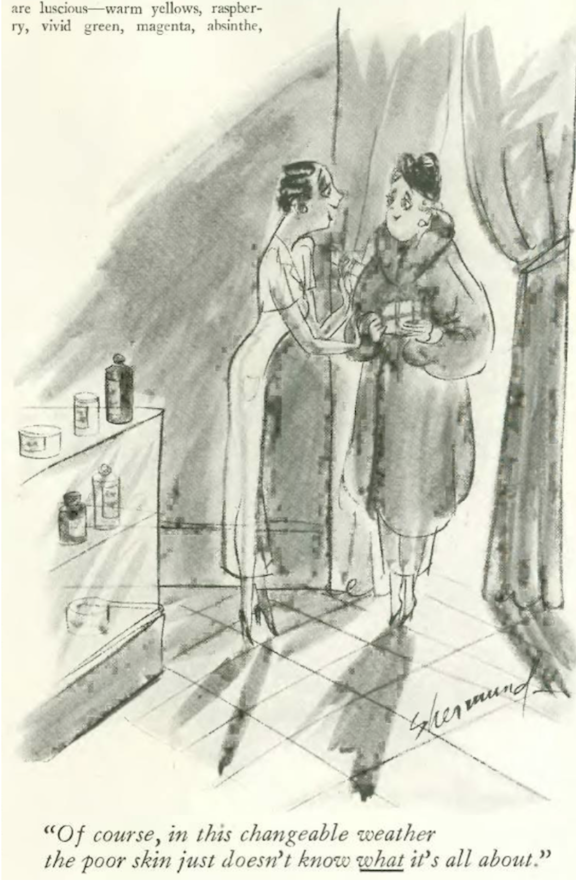
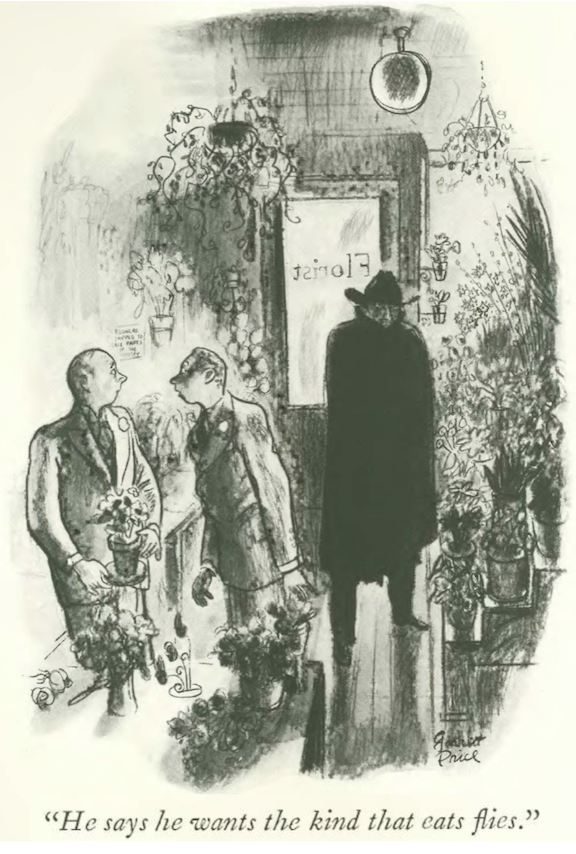
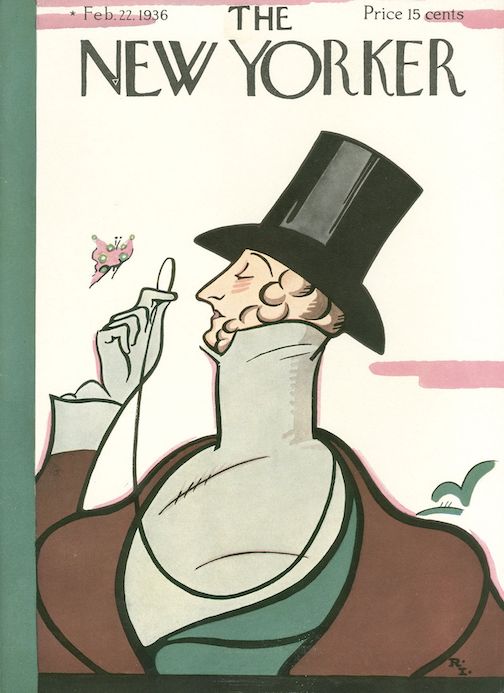
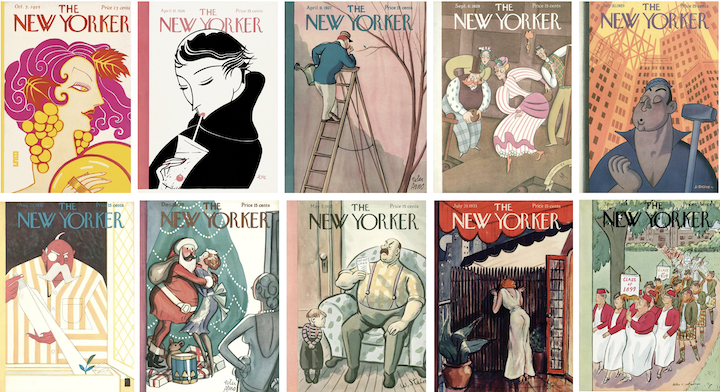
With this post (No. 413), we mark the tenth anniversary of The New Yorker. Since I began A New Yorker State of Mind in March 2015, I’ve attempted to give you at least a sense of what the magazine was like in those first years, as well as the historical events that often informed its editorial content as well as its famed cartoons. Those times also informed the advertisements; indeed, in some cases the ads give us a better idea of who was reading the magazine, as well as their changing tastes and buying power as we moved from the Roaring Twenties to the Depression, and from Prohibition into Repeal.

I have also chosen this time to go on hiatus, and hopefully resume this blog when The New Yorker celebrates its centennial next February (this site will remain active and available, and I will continue to monitor comments and messages). Let us hope that the editors use the original Rea Irvin cover for that occasion, and restore his masthead above “The Talk of the Town” section. Perhaps some enterprising soul could start a petition.

Feb. 16, 1935 cover by Rea Irvin.

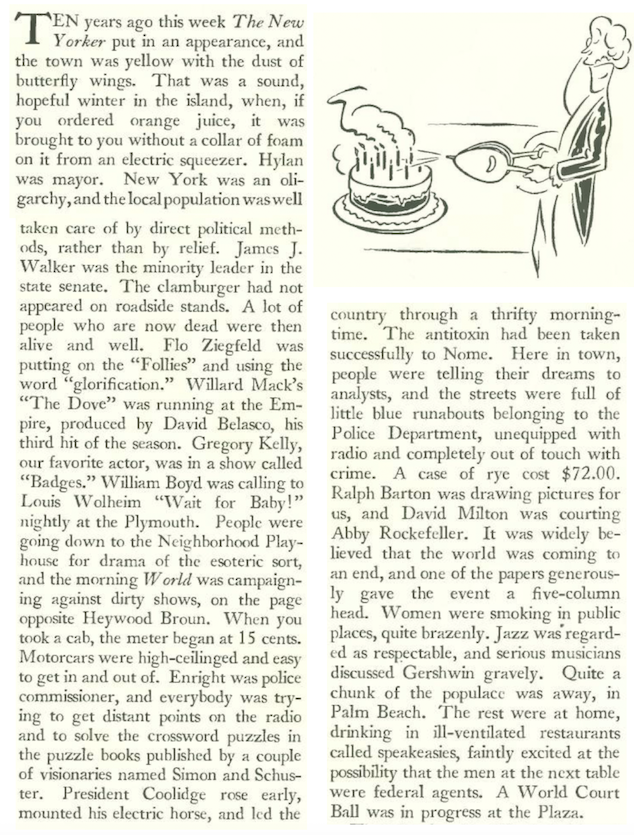
Moving on to the tenth anniversary issue, we find E.B. White recalling the world of The New Yorker’s first days. Given the massive economic and societal shifts that occurred from 1925 to 1935, those first days seemed distant to White, who felt old, “not in years but events.”

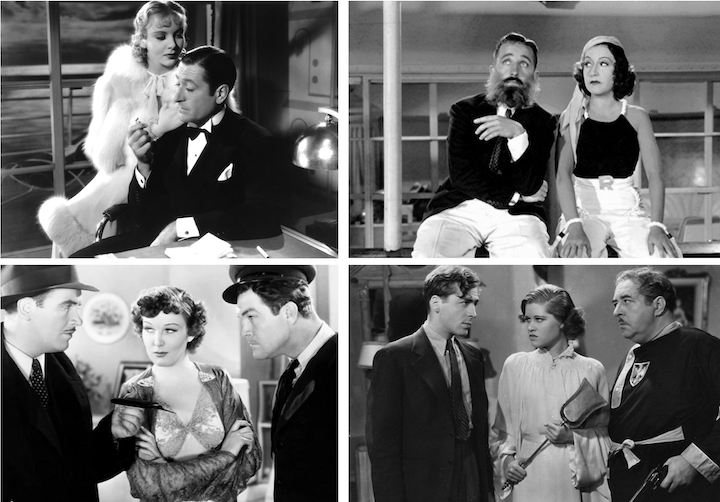
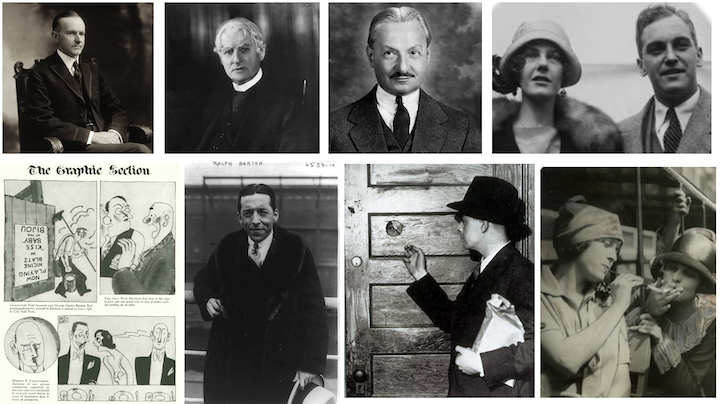
DAYS OF YORE…E.B. White noted the many changes that had taken place during The New Yorker’s first ten years, including, clockwise from top left, the passing of 1920s notables such as President Calvin Coolidge and two very different theatre impresarios—David Belasco and Flo Ziegfeld; White also recalled the much-publicized 1925 wedding of Abby Rockefeller to David Milton, the throngs of women who took to smoking in public in the 1920s and the drinkers who took their activities behind closed doors; and one of the early magazine’s beloved contributors, Ralph Barton, who offered his whimsical take on the news in “The Graphic Section” as well as in other illustrated features. (Wikipedia/Wikitree/Ephemeral New York)

White also noted a new craze that had originated around the same time as the birth of The New Yorker…

TWO ACROSS…Max Schuster and Richard Simon of Simon & Schuster, with their first crossword book, 1924. (americanbusinesshistory.org)

White concluded with these parting words, tinged with world-weariness, writing “More seems likely to happen.” One wonders if he imagined The New Yorker at 100, which in our day is just around the corner. Like White, many us have grown weary of this angry world, where indeed more seems likely to happen. Let us hope it is for the best.

Now, some unfinished business. We need to look at the previous issue, Feb. 9, 1935, before we close out the decade.

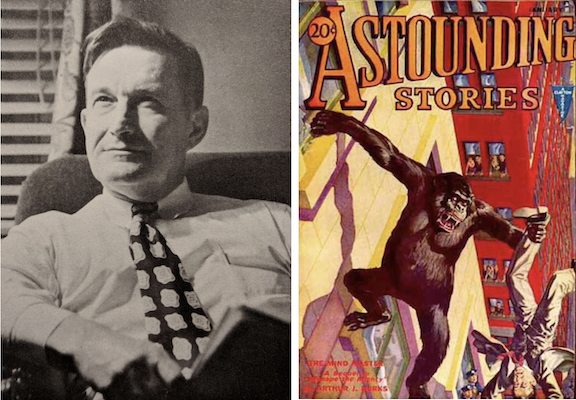
Feb. 9, 1935 cover by William Cotton.

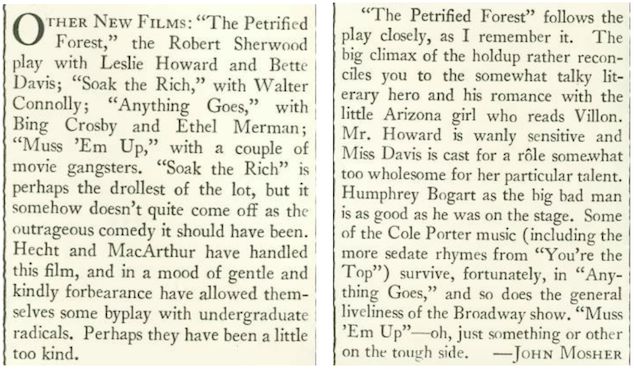
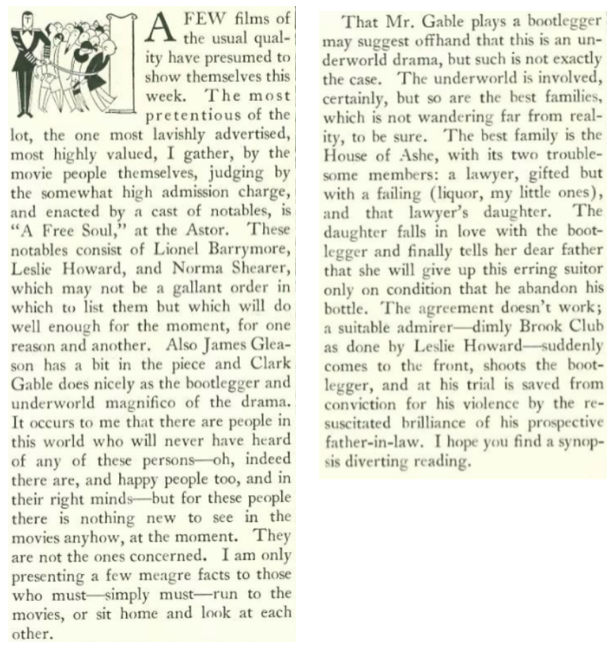
We stay on the lighter side, joining critic John Mosher at the local cinema to appreciate Leslie Howard’s dashing performance in The Scarlet Pimpernel…

WORKING OVERTIME…Leslie Howard and Merle Oberon in The Scarlet Pimpernel. Howard portrayed an aristocrat who leads a double life, publicly appearing as a dandy while secretly rescuing French nobles from Robespierre’s Reign of Terror. (PBS)

 * * *

From Our Advertisers

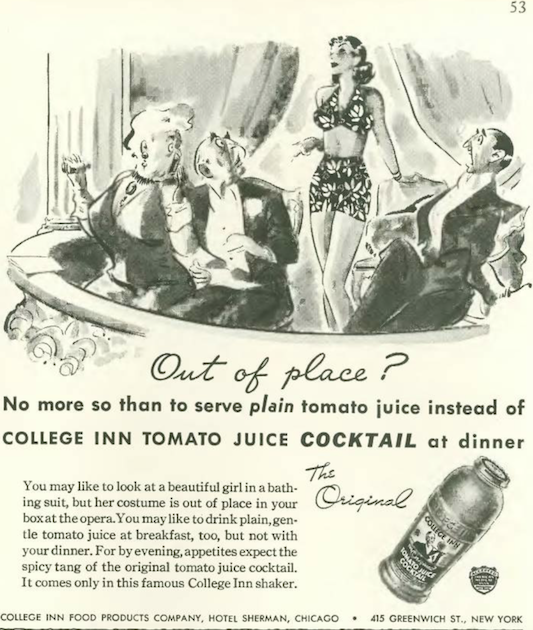
Cigarette manufacturers employed every angle from sex to health claims to move their product…not to be left out of any niche market, Chesterfield even went after the little old ladies…

…by contrast, the makers of Old Gold cigarettes featured a clueless sugar daddy and his leggy mistress in a series of ads drawn by famed pin-up artist George Petty

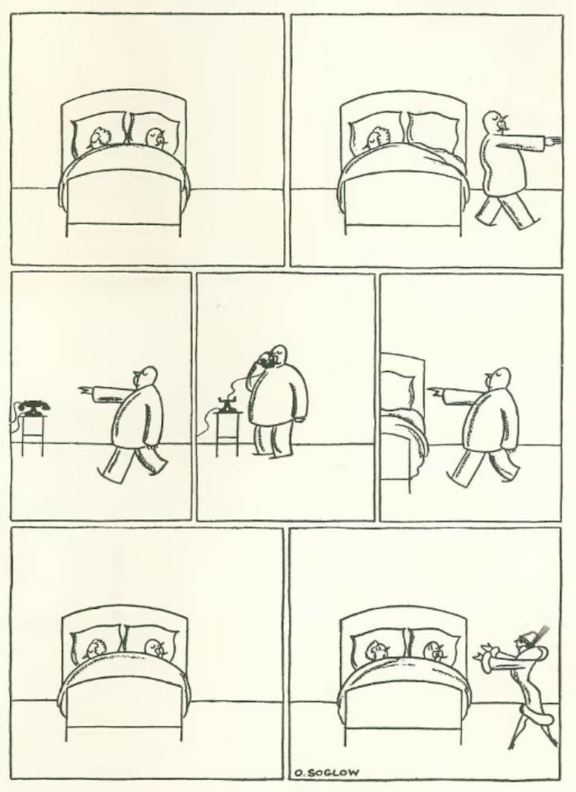
Otto Soglow would do well with advertisers during his career, promoting everything from whiskey to Pepsi and Shredded Wheat to department stores…in this case Bloomingdale’s…after William Randolph Hearst’s King Features Syndicate wrested The Little King away from The New Yorker in September 1934, this was the only way you would see the harmless potentate in the magazine…

…another New Yorker artist earning some ad dollars on the side was Constantin Alajalov, here adding a stylish flair for Coty…

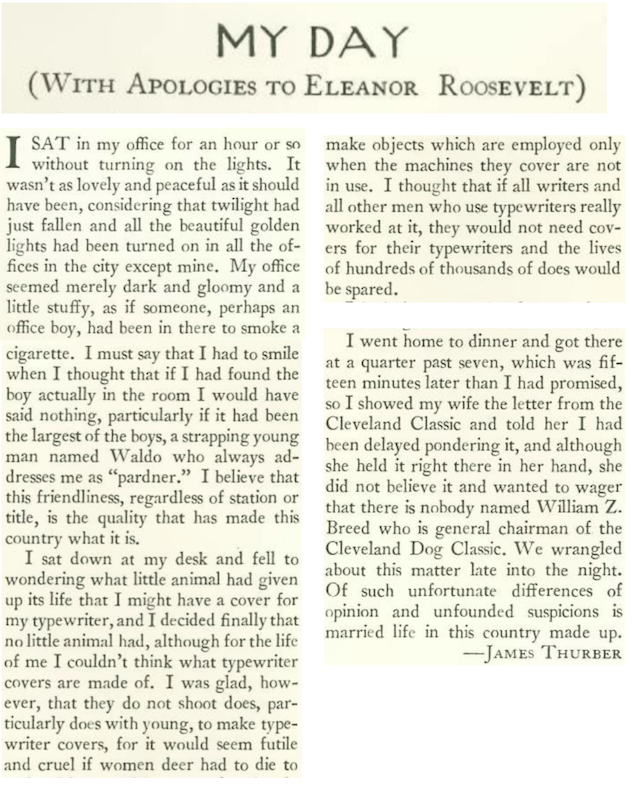
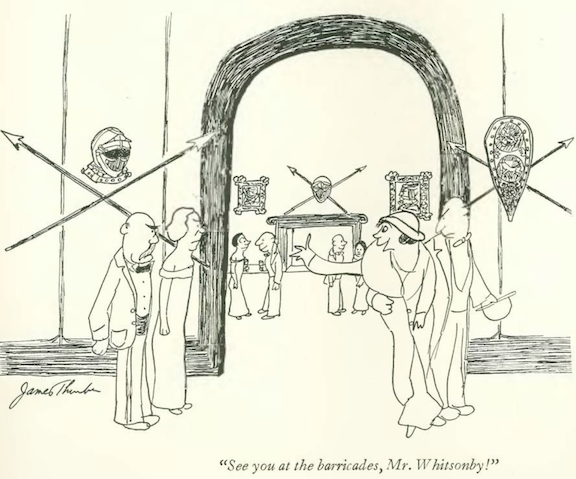
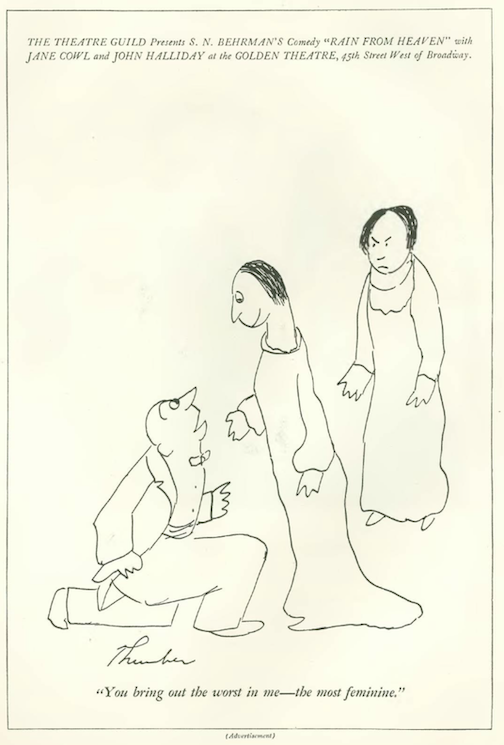
…and then there’s James Thurber, who continued to contribute his talents on behalf of the Theatre Guild…

…and we move along to the Feb. 9 cartoons, with Thurber again…

…the issue also featured two by George Price

…and Howard Baer supplied some life to this little party…

…now let’s return to the Feb. 15, 1935 issue…

…where John Mosher was back at the cinema, this time enjoying the story of a “beautiful stenographer”…

POPCORNY…Fred MacMurray and Claudette Colbert meet cute over popcorn in the romantic comedy The Gilded Lily. It was MacMurray’s second credited screen role, and it was the first of seven films in which Colbert and MacMurray would star together. (Wikipedia)

 * * *

More From Our Advertisers

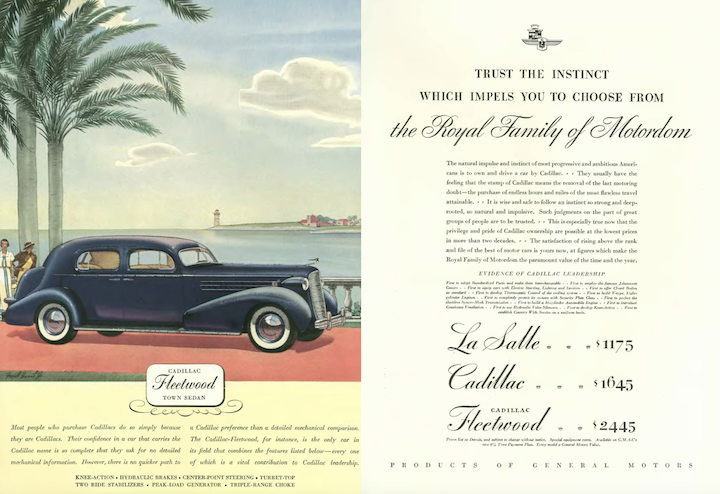
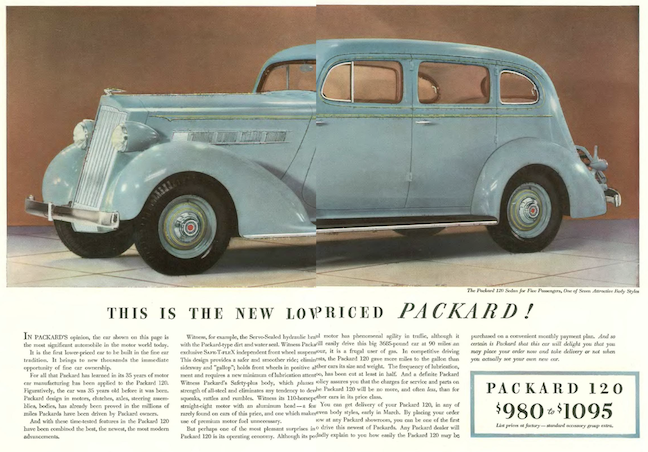
In its bid for survival during the Depression, the luxury brand Packard introduced its first car under $1000, the 120. Sales more than tripled in 1935 and doubled again in 1936…

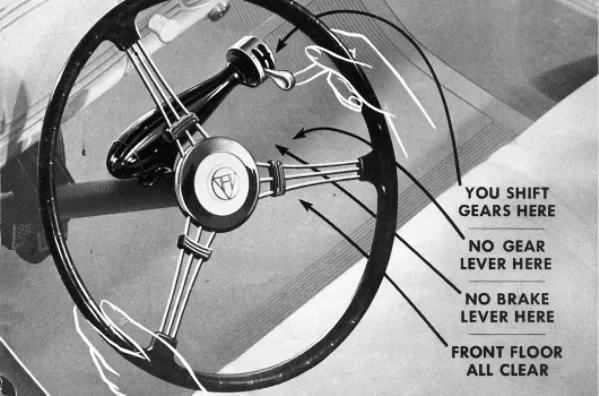
…meanwhile, Hudson was hanging in there with innovations such as the “Electric Hand”…it was not a true automatic transmission, but it did allow drivers to shift gears near the steering wheel…

…as demonstrated here…

…whatever you were driving, Goodyear claimed it would keep you the safest with their “Double Eagles”…

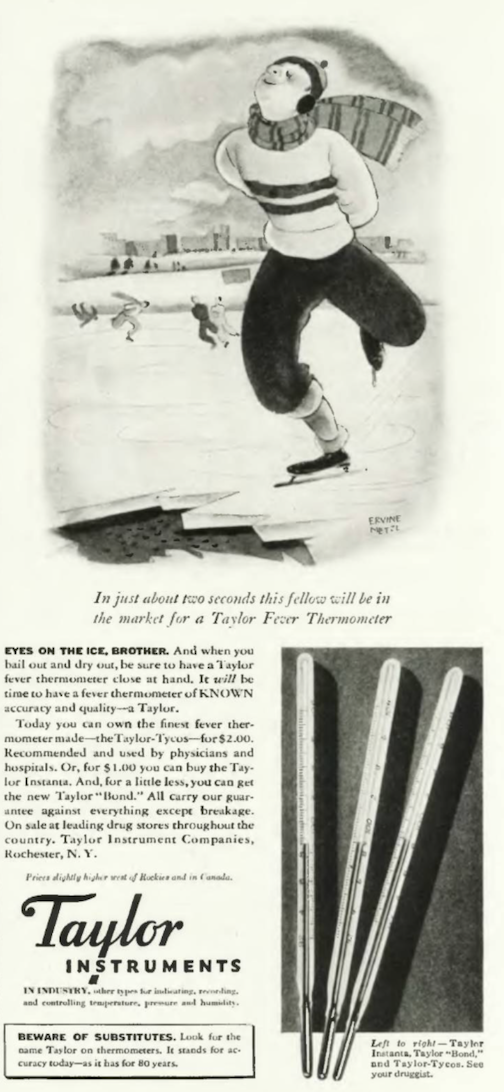
…I include this ad for Taylor Instruments because it features an illustration by Ervine Metzl, who would become known for his posters and postage stamp designs…

…Metzl’s design of a three-cent stamp commemorating the 1957–1958 International Geophysical Year…

…on to our cartoonists, we begin with this Deco-inspired artwork by an unidentified illustrator…

…one of Helen Hokinson’s “girls” was going about her daily rounds…

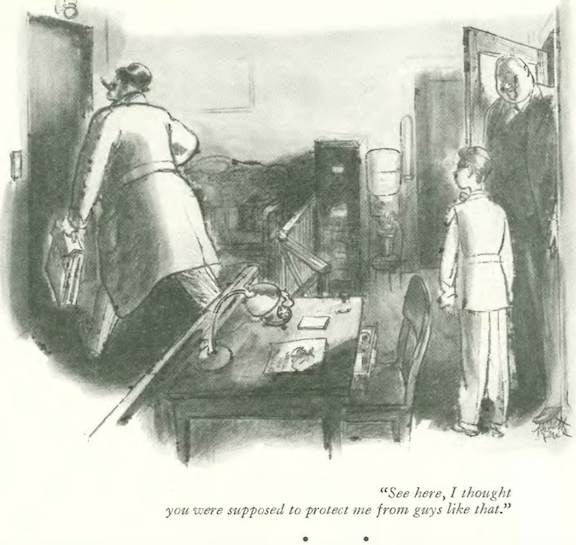
Garrett Price gave us a gatekeeper not quite up to his task…

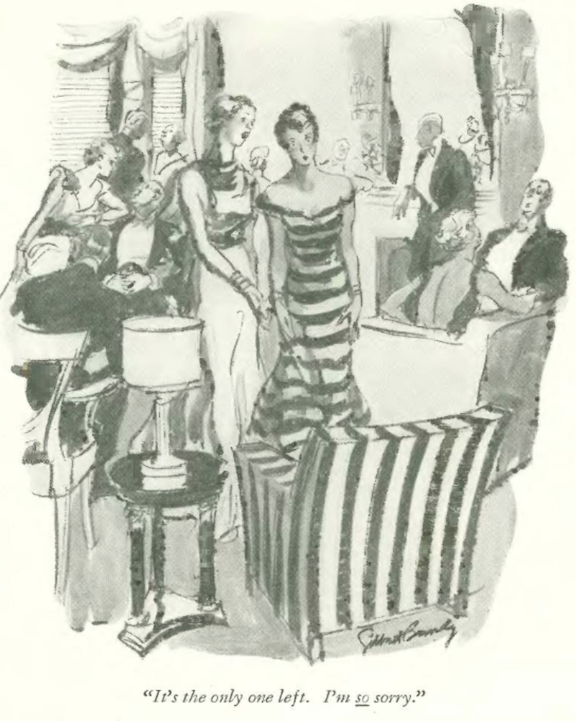
Gilbert Bundy was seeing stripes rather than stars…

…while James Thurber’s medium was getting in touch with an equine spirit…

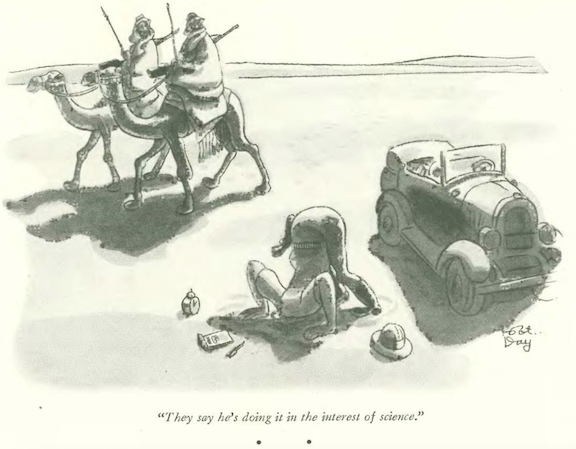
…scientific inquiry knew no bounds in Robert Day’s world….

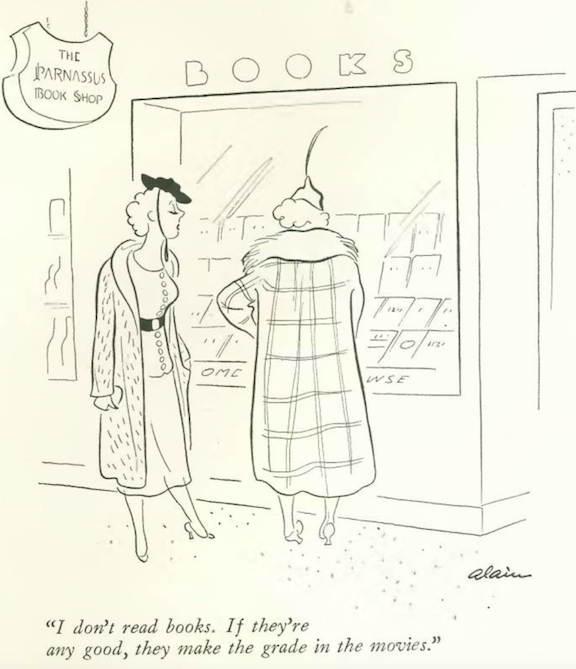
…and in the world of Alain (aka Daniel Brustlein), old habits died hard…

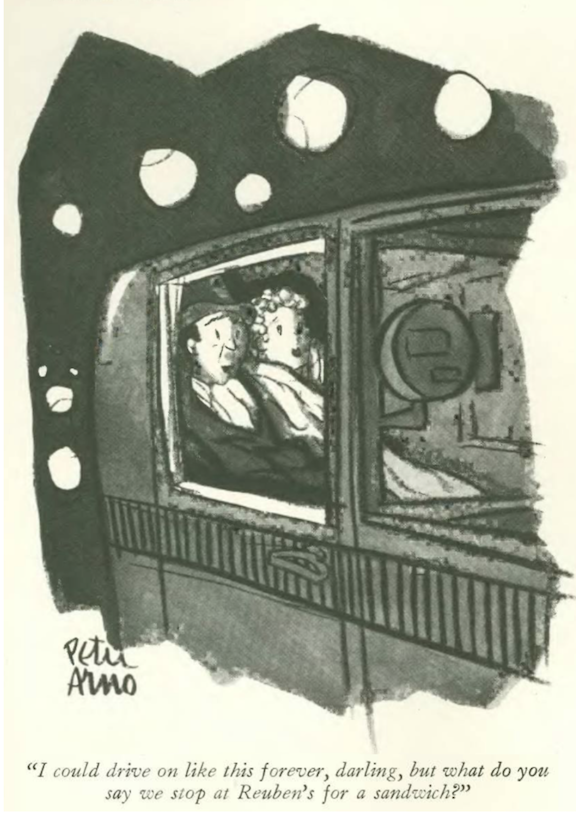
…and we close with Peter Arno, at his risqué best…

Thanks for reading The New Yorker State of Mind!


A Star is Born

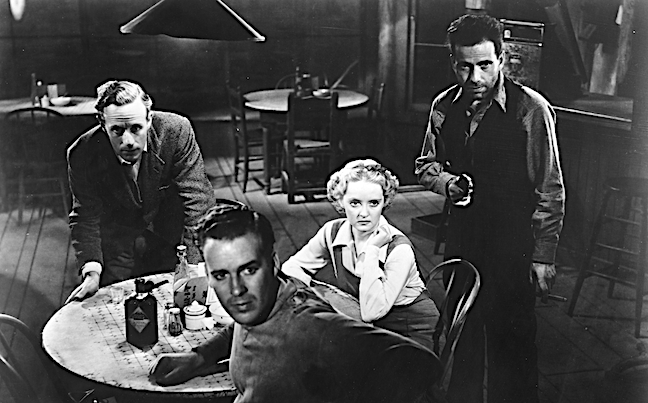
Clark Gable made such an impression as a charming rogue in 1931’s A Free Soul that it transformed him almost overnight from a bit actor to into one of Hollywood’s biggest stars of the 1930s.

June 13, 1931 cover by Helen Hokinson.

When the film was released it was Norma Shearer who was the biggest name, supported by Lionel Barrymore and Leslie Howard. As this was “Pre-Code” Hollywood, MGM played up the film’s risqué themes of gangsters, drunks and infidelity. After all, according to this ad, Norma was “born in an age of FREEDOM!”

Although critic John Mosher—already weary of the fledgling gangster film genre—found the film pretentious, the public voted it one of the best films of 1931, and Barrymore took home an Oscar for his performance as a successful but conflicted (and alcoholic) attorney…

TRUST ME, HE WON’T BITE…Defense lawyer Stephen Ashe (Lionel Barrymore) introduces Ace Wilfong (Clark Gable), a bootlegger he successfully defends from a murder charge. Unfortunately, Ashe’s daughter Jan (Norma Shearer), who was betrothed to another (the squeaky-clean Dwight Winthrop, played by Leslie Howard), ends up falling for his shady client. (IMDB)
DECISIONS, DECISIONS…Jan Ashe (Norma Shearer) must decide between bad boy and goody two-shoes in 1931’s A Free Soul. Clark Gable and Leslie Howard would again play rivals for a woman’s affections eight years later in 1939’s Gone With The Wind. (IMDB)

 *  *  *

Speaking of Gangsters

A real one was profiled in The New Yorker by novelist and screenwriter Joel Sayre — Jack “Legs” Diamond — a thug who seemed to have nine lives but would be dead before the year was out (spoiler: he would not die from natural causes). An excerpt:

IN TROUBLE AGAIN?…Jack Diamond, aka “Legs Diamond” being escorted to the courthouse in Troy, New York in July 1931. (Everett)

 *  *  *

Some Real Guts

“The Talk of the Town” (via E.B. White) looked in on the work of famed aerial photographer Albert Stevens, who back in the day employed the common practice of chucking “flashlight bombs” out of airplanes to illuminate subjects below, including buildings along Riverside Drive that had their windows blown out during one of his aerial photo sessions…

Captains Albert Stevens (left, with the devil-may-care smile) and St. Clair Streett prepare for a high-altitude airplane flight in 1935. At right, Stevens readies his camera for an aerial photo session. (National Air and Space Museum).

Below is something similar to what Stevens dropped from the plane to get the effect he needed during nighttime shots…

Nighttime aerial photography owes its origins to pioneers like George Goddard, who stunned residents of Rochester, NY, in 1925 when he ignited an 80-pound flash bomb to illuminate the city (image at left). It is considered the first aerial night photograph. At right, Manhattan at night, 1931.

(16thphototech.wordpress.com)

 *  *  *

Poetic Pugilist

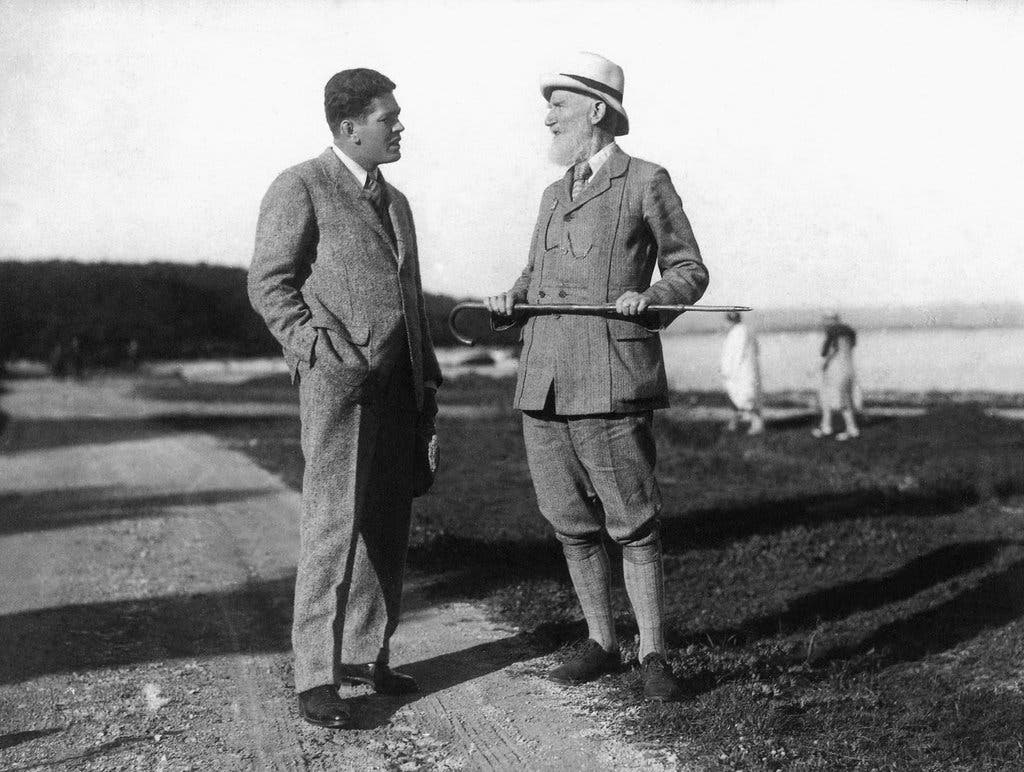
Throughout his career and into his retirement, heavyweight boxing champion Gene Tunney took great pains to distinguish himself from the other brutes who practiced his violent trade, and was known for his love of the higher and gentler arts. In his “Notes and Comment” E. B. White further explored this phenomenon upon the boxer’s return to the States:

I’M NO PALOOKA…Gene Tunney chewing the fat with playwright George Bernard Shaw during a holiday in Brioni, 1929. (Associated Press)

 *  *  *

Not So Brief

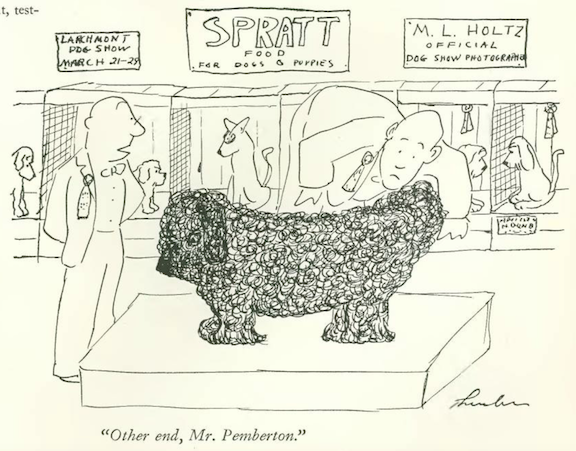
I include this entire page to feature both Garrett Price’s cartoon (Judge Benjamin Barr Lindsey, a leader in abolishing child labor, supported the idea of unmarried couples living together, hence the caption), and Wolcott Gibbs’ thoughts on applying for an advertising position…

 *  *  *

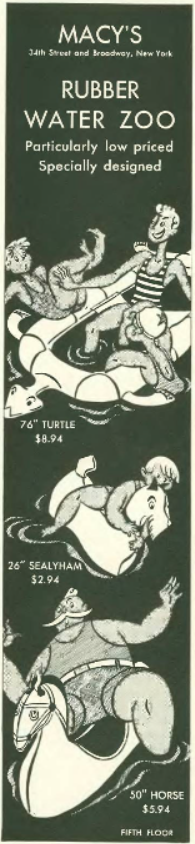
And speaking of advertising, we have this summer-themed ad from Macy’s (yes, they had inflatables back then, too)…

…for reference, here’s a 1930s photo of actress Una Merkel astride an inflatable horse like the one featured in the ad…

Publicity photo of Una Merkel for the 1933 film “Her First Mate.”

…R.J. Reynolds continued to market Camel cigarettes to women, but the ads moved away from illustrations of Continental leisure and instead emphasized the freshness of the product, thanks to the cellophane-wrapped “Humidor pack”…

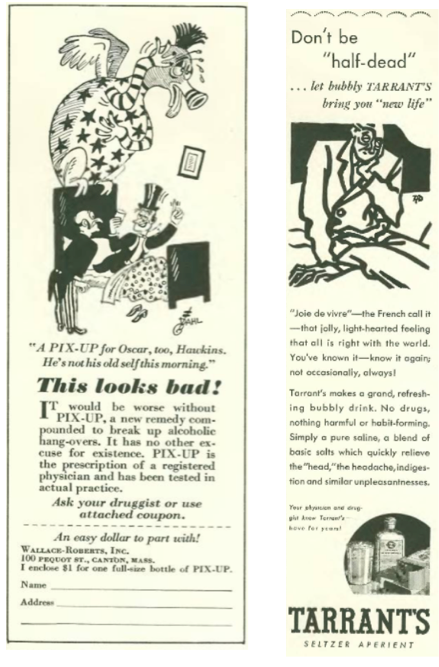
…while cigarette smoking continued to increase in America, the sale of alcohol remained illegal — it didn’t stop people from drinking, and if you got a bad batch of bootleg, or just had too much, there were remedies available…

…perhaps a fortunate few were able to just sleep it off on a lovely bed fitted with Wamsutta sheets…

…on to our cartoons, Rea Irvin continued to explore his alter ego, “Du Maurier Irvin”…

Alan Dunn showed us why some “can’t make it there” in New York, New York…

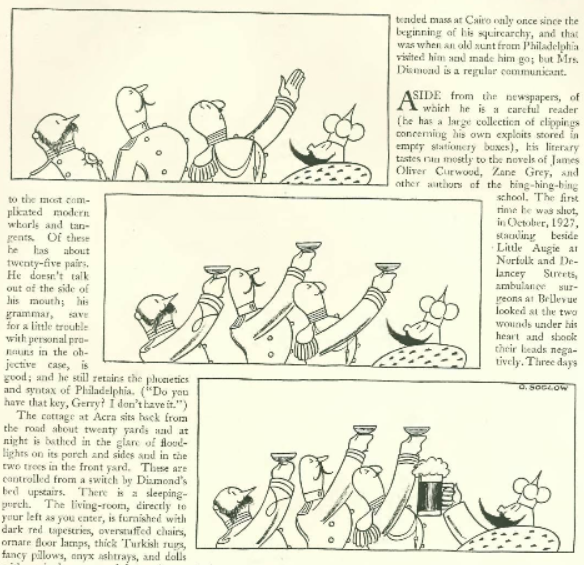
Otto Soglow revealed that his Little King preferred beer to bubbly…

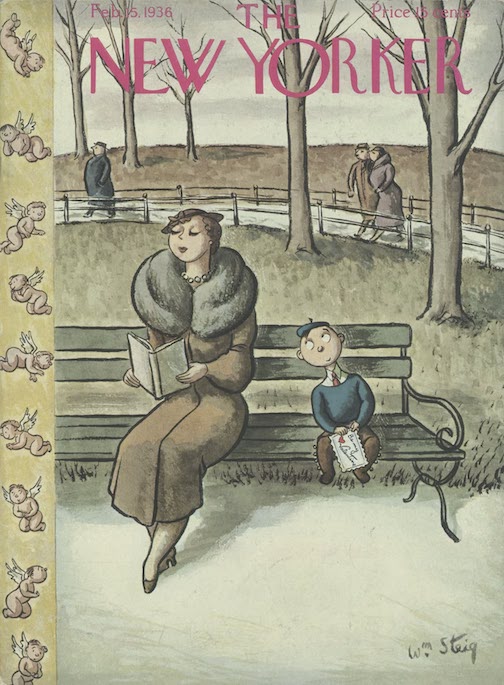
William Steig found an unlikely customer for a photo button…

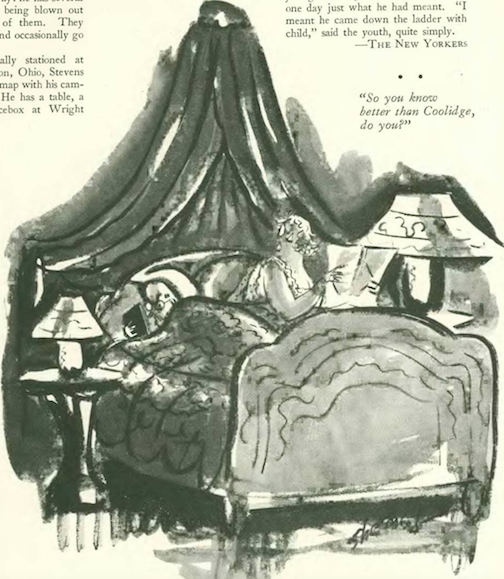
Barbara Shermund explored politics between the sheets…

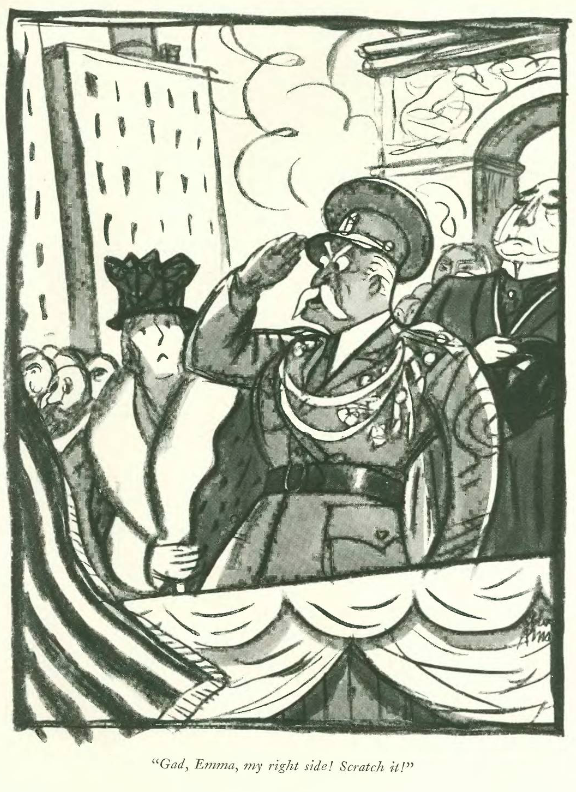
…and Peter Arno gave us his Major with a major itch to scratch…

Next Time: Frozen at 30 Rock…


How Dry I Am

Screenshot 2015-07-14 10.28.30
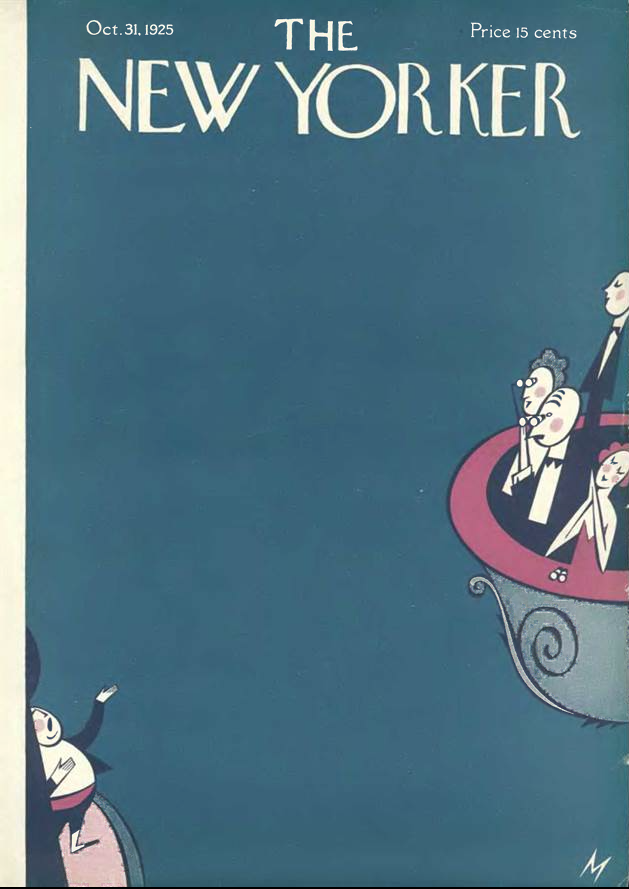
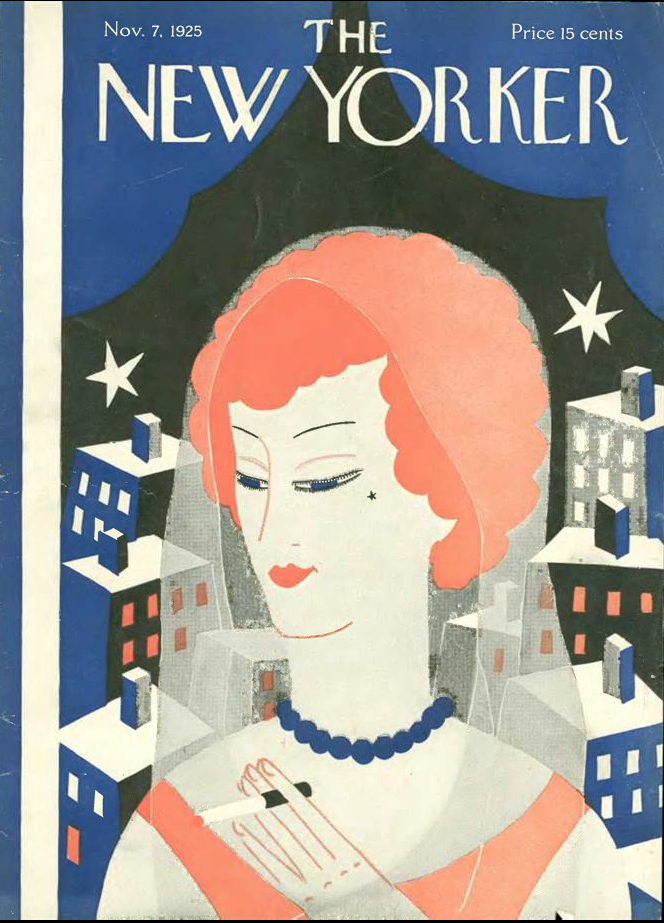
Oct. 31 cover,  Julian de Miskey.

The woes of Prohibition were acutely felt by the readership of The New Yorker. The magazine responded in kind with its continued criticism of the law’s enforcement and particularly the tactics of Manhattan District Attorney Emory C. Buckner, whose agents continued to padlock restaurants and clubs suspected of selling alcohol.

The New Yorker previously called the padlocking tactic a “promotional stunt” that would ultimately backfire (I wrote about this in a previous blog post last March).

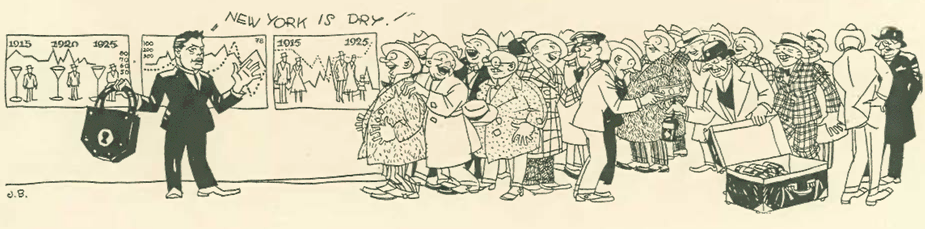
Both the “The Talk of the Town” and “Tables for Two” took aim at Buckner this time around. “Talk” led with this item, accompanied by the art of Johan Bull:

Screenshot 2015-07-17 10.15.48

Screenshot 2015-07-17 10.14.34

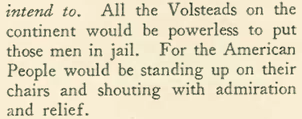
“Talk” also made a call to action by “men of virtue:”

Screenshot 2015-07-17 10.15.08

Screenshot 2015-07-17 10.15.16

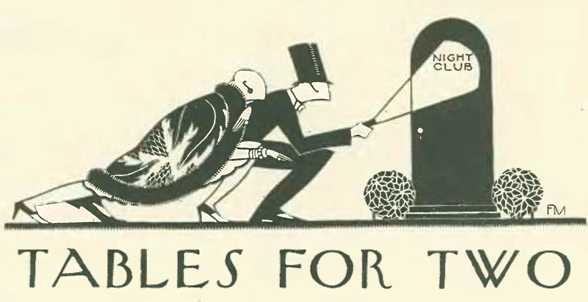
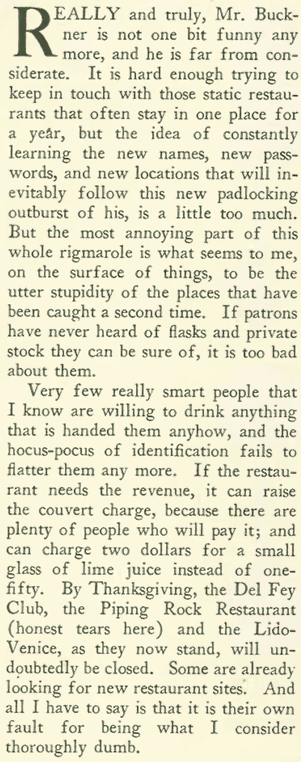
Heck with statements. Lois Long just wanted to have some fun, and led her column, “Tables for Two,” with her own attack on Buckner and on the “stupidity” of establishments that were closed by Buckner’s agents (I include art that accompanied the column by Frank McIntosh—at least that is what I think the “FM” stands for; if I am in error, someone please correct me!):

Screenshot 2015-07-17 11.23.28

Screenshot 2015-07-17 11.23.45

In a previous column (Oct. 17), Long pondered the popularity of a new dance, the “Charleston.” She closed her Oct. 31 column with “telegrams” from exemplary colleges in answer to the query: “Is the Charleston being done at college dances?”

Screenshot 2015-07-17 11.24.53

W.J. Henderson wrote a lengthy article about the upcoming opera season at the Metropolitan Opera (it was opening with La Gioconda), and recalled the days after World War I when the once-popular German singers suddenly grew scarce on the American stage.

1920px-Metropolitan_Opera_House,_a_concert_by_pianist_Josef_Hofmann_-_NARA_541890_-_Edit
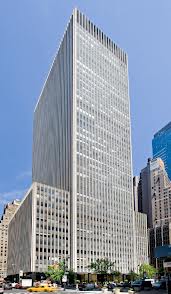
The old Metropolitan Opera House at 1411 Broadway. The “Old Met” opened in 1883 and was rebuilt after a fire in 1892. The interior, shown here, was redesigned in 1903. This photo depicts a recital by pianist Josef Hofmann on November 28, 1937. The old Met was torn down in 1967 and replaced by a 40-story office tower. (Wikipedia)
World-Apparel-Center-1411-Broadway-NY
Site of the old Metropolitan Opera House today.

According to Henderson, this led to a general falling off of quality in the performances, a situation made even worse by the absence of the late, great Enrico Caruso on the Metropolitan’s stage.

In other items, John Tunis wrote about Illinois All-American halfback Red Grange in “Profiles,” calling him “a presentable youth of twenty-two…well-groomed, he would pass anywhere—even in the movies—for a clean type of American manhood.”

Tunis also noted that Grange had been offered a “half a million” to star in movies, and that professional football was ready to offer him a sum “that would cause even the once-mighty Ruth to blanch.” Grange, known as “The Galloping Ghost,” would later join the Chicago Bears and help to legitimize the National Football League (NFL).

5851492109_857e5ac401
Howard (Real Photograph)

The young actor Leslie Howard, who was appearing on Broadway in Michael Arlen’s The Green Hat, wrote a humorous account of theatre life in “The Intimate Diary of An Opening Night.”

It was one of seven articles on the acting life that Howard (perhaps best known for his role as Ashley Wilkes in Gone With the Wind) would write for The New Yorker between 1925 and 1927.

For the record, I include Howard’s first New Yorker article here (with Carl Rose cartoon):

Screenshot 2015-07-17 10.54.36

Screenshot 2015-07-17 10.54.51

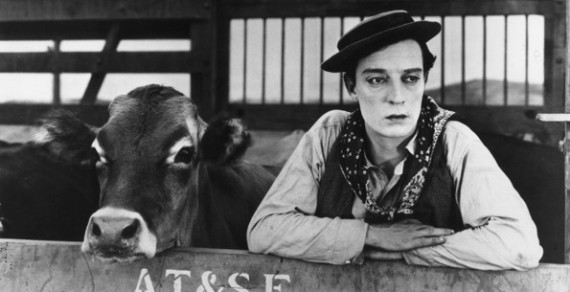
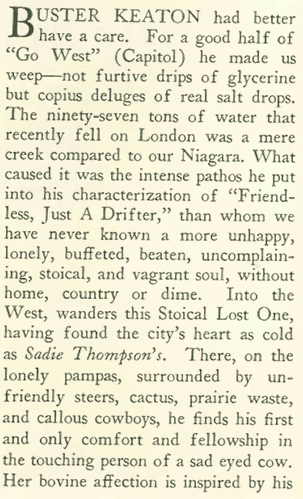
“Motion Pictures” looked at Buster Keaton’s new film, Go West

keaton-cow
Cow and Keaton in Go West (1925) (silentology.com)

Theodore Shane wrote that what at first seemed to be a real weeper…

Screenshot 2015-07-17 11.05.38

…turned into a comic romp thanks to the introduction of the “sad-eyed cow…”

Screenshot 2015-07-17 11.06.04

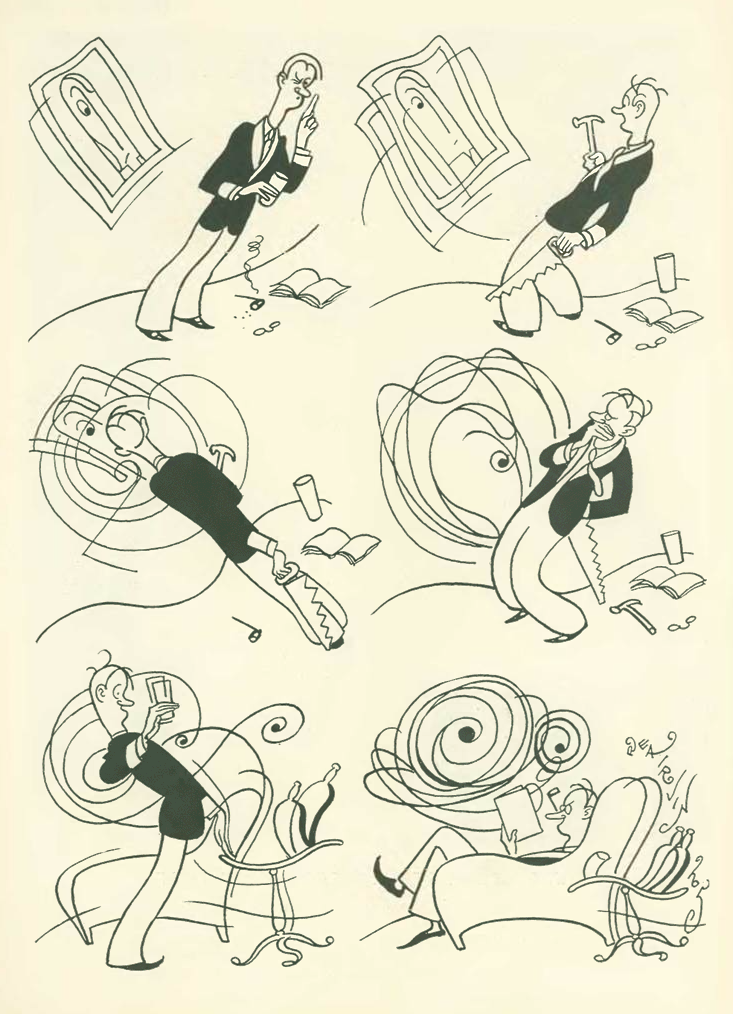
And finally, in keeping with the Prohibition theme, here is a center-spread cartoon by Rea Irvin that seemed to depict the results of consuming too much bootleg booze:

Screenshot 2015-07-17 10.55.20

Screenshot 2015-07-17 10.55.29

Next Time: Oh Behave…

Screenshot 2015-07-17 11.26.37