To Bob, or Not to Bob

Perhaps no other hairstyle has a stronger link to a historical period than the “bob cut,” associated not only with the flapper lifestyle in the 1920s but with women in general who wished to signal their independence from old cultural norms that defined femininity.

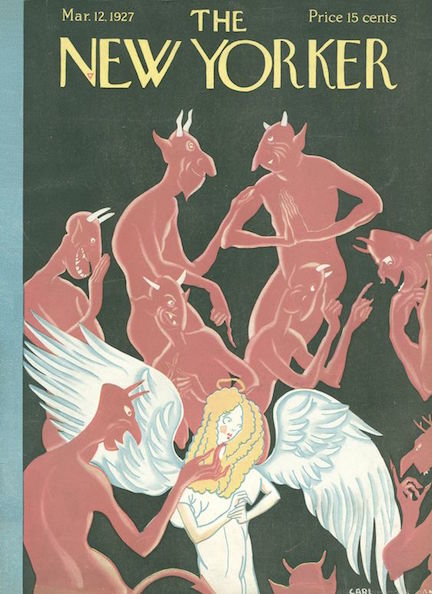
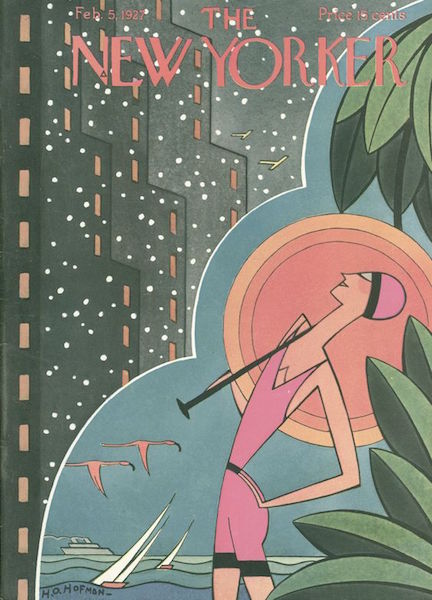
March 10, 1928 cover by Ilonka Karasz.

Women in Western cultures typically wore their hair long, but in the early years of the 20th century a few women of prominence began to flout convention and wear their hair in a bobbed style, including French actress Polaire, who began wearing her hair short in the 1890s; English socialite Lady Diana Cooper, who wore her hair short as a child and continued to do so as an adult; and dancer Irene Castle, who unveiled her “Castle Bob” to Americans in 1915. By 1920 the style was all the rage.
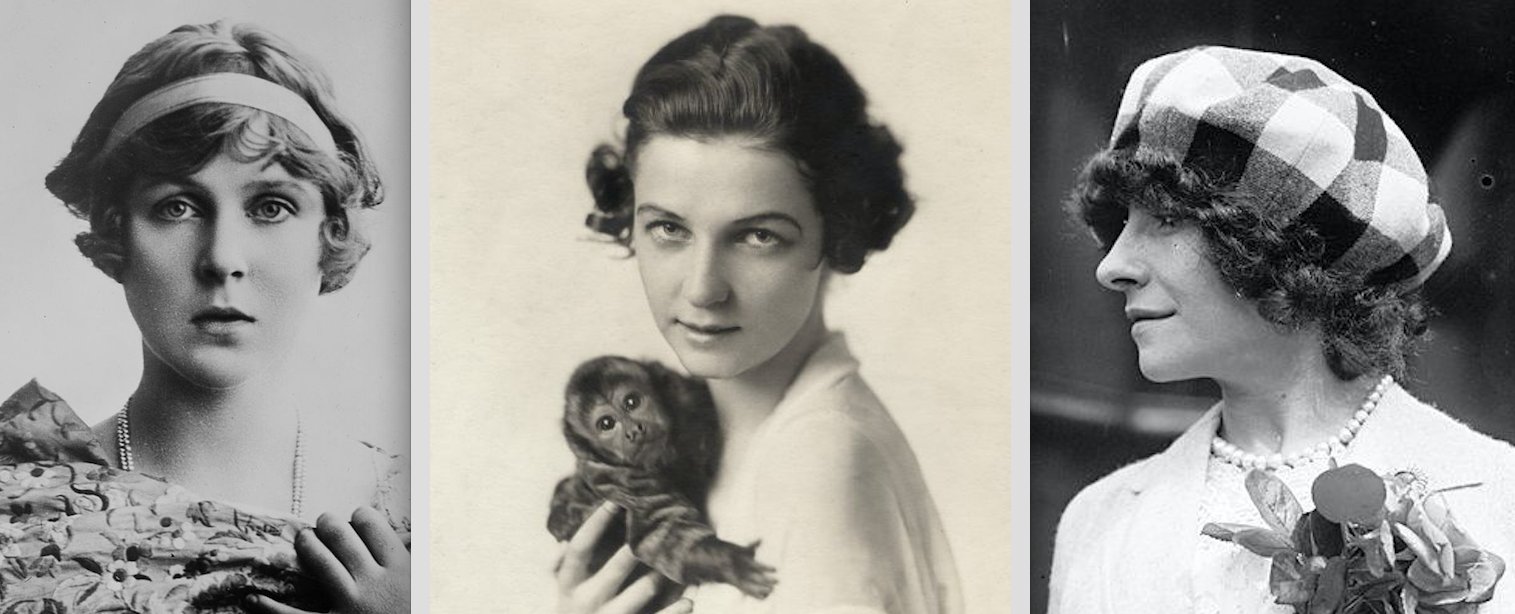
EARLY TRENDSETTERS…From left, Lady Diana Cooper in the mid 1920s; dancer Irene Castle with her pet monkey, Rastus, in 1915; and French actress Polaire in 1910. (Cooper & Polaire photos from Library of Congress; Castle photo courtesy Wisconsin Historical Society)
AMERICAN BOBS…Perhaps the most famous bob belonged to 1920s silent film star Louise Brooks (at right, wearing the “King Tut” bob, circa 1925), who was considered the very definition of a Roaring Twenties flapper. At left, another version of the bob as worn by Anita Loos, circa 1930. Loos was a screenwriter and author who achieved great fame in the 1920s with her blockbuster comic novel Gentleman Prefer Blondes. (fashion1930s.tumblr.com / Smithsonian)

Another famous bobbed flapper of the 1920s was The New Yorker‘s own Lois Long, who wrote under the pseudonym “Lipstick” for her nightlife column “Tables For Two,” but signed her fashion column (“On and Off the Avenue”) with a simple “L.L.” Long was also a regular unsigned contributor to “The Talk of the Town,” and is credited as one The New Yorker’s early writers who gave the magazine its voice.

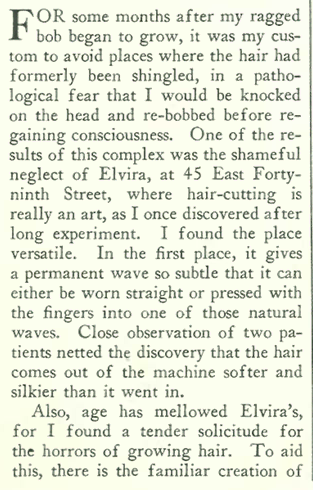
In the March 10, 1928 issue Long wrote in “On and Off the Avenue” about the challenges in maintaining her bobbed hairstyle:
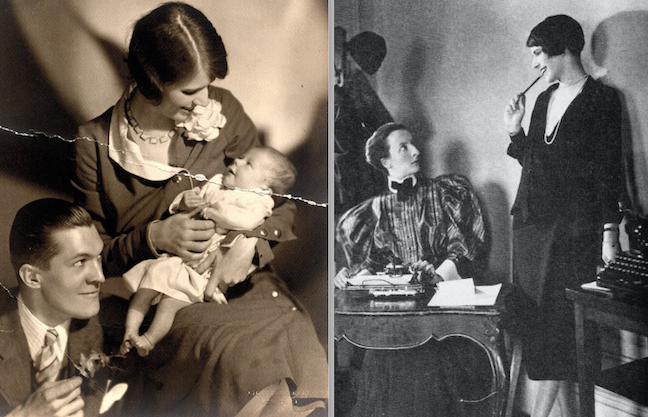
LIFESTYLE CHANGES…Lois Long helped define the flapper lifestyle of the Jazz Age in her writing for The New Yorker. Long’s own bob evolved during the decade, from the straight boyish cut at right, circa 1925, to a “shingle style” bob at left in 1929, where she is pictured with her husband, New Yorker cartoonist Peter Arno, and their newborn daughter, Patricia. (Patricia Arno / Wikipedia)

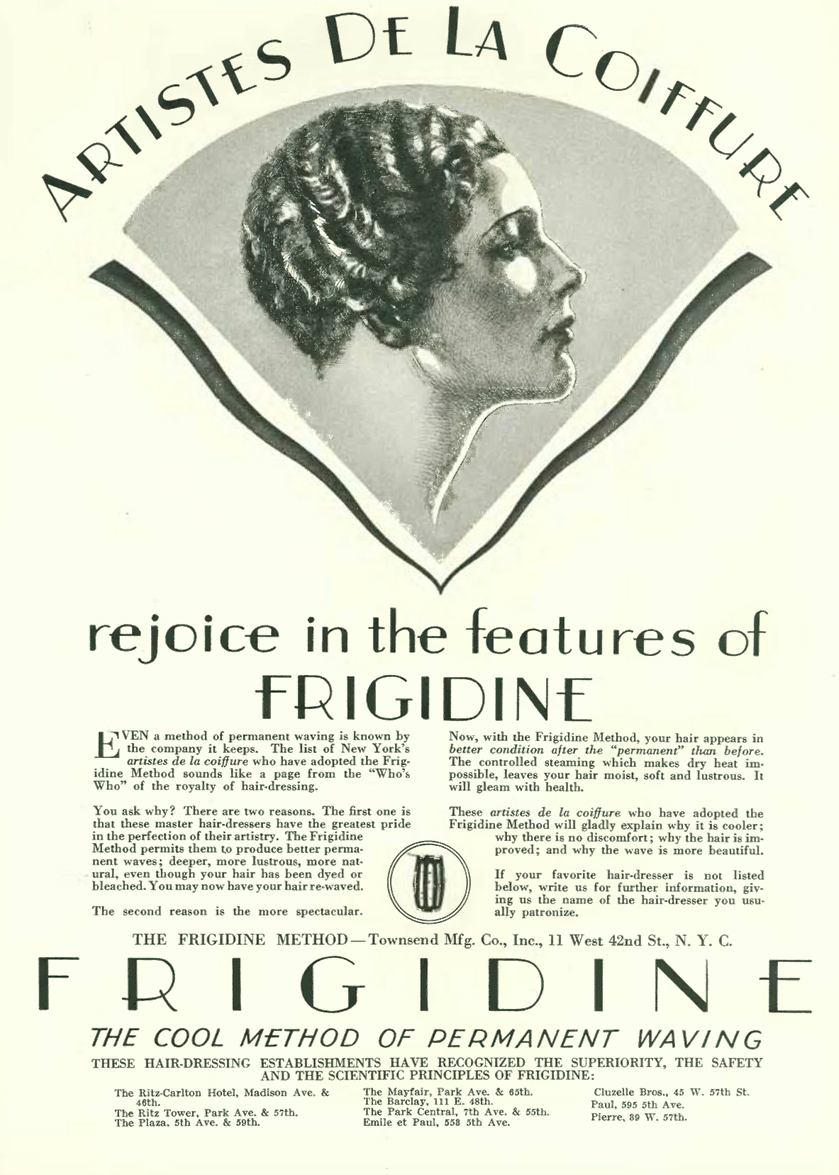
Many women in the 1920s preferred to have a permanent wave treatment applied to their bob, which usually involved the application of high heat via a complex array of wires and hot rollers. In the March 10 issue, this ad promoted an alternative “cool method”…
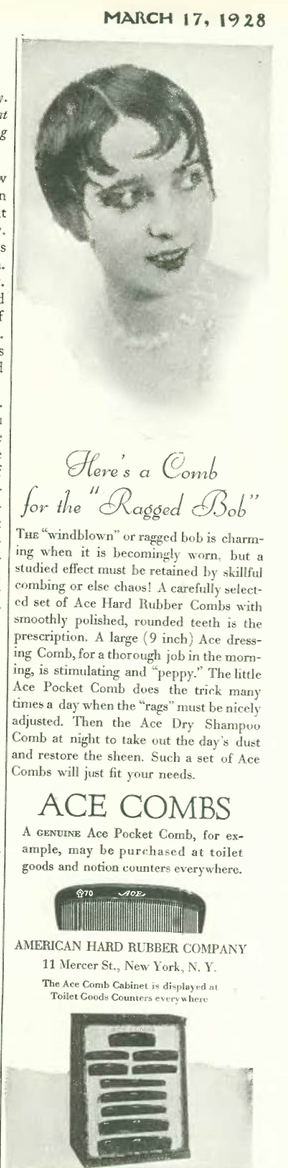
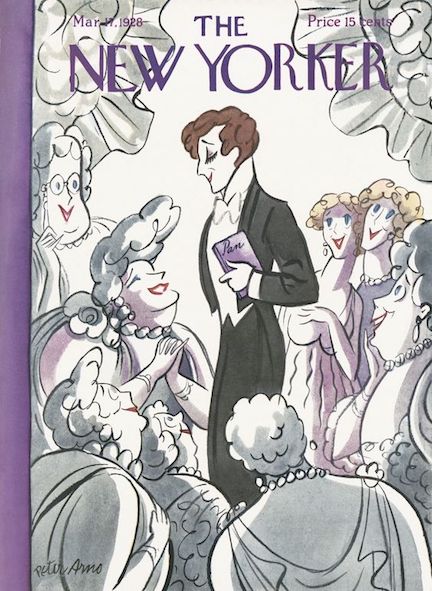
…and in the March 17, 1928 issue, the Ace Comb company made a pitch to improve its market share by touting their hard rubber combs as ideal for the “ragged bob”…
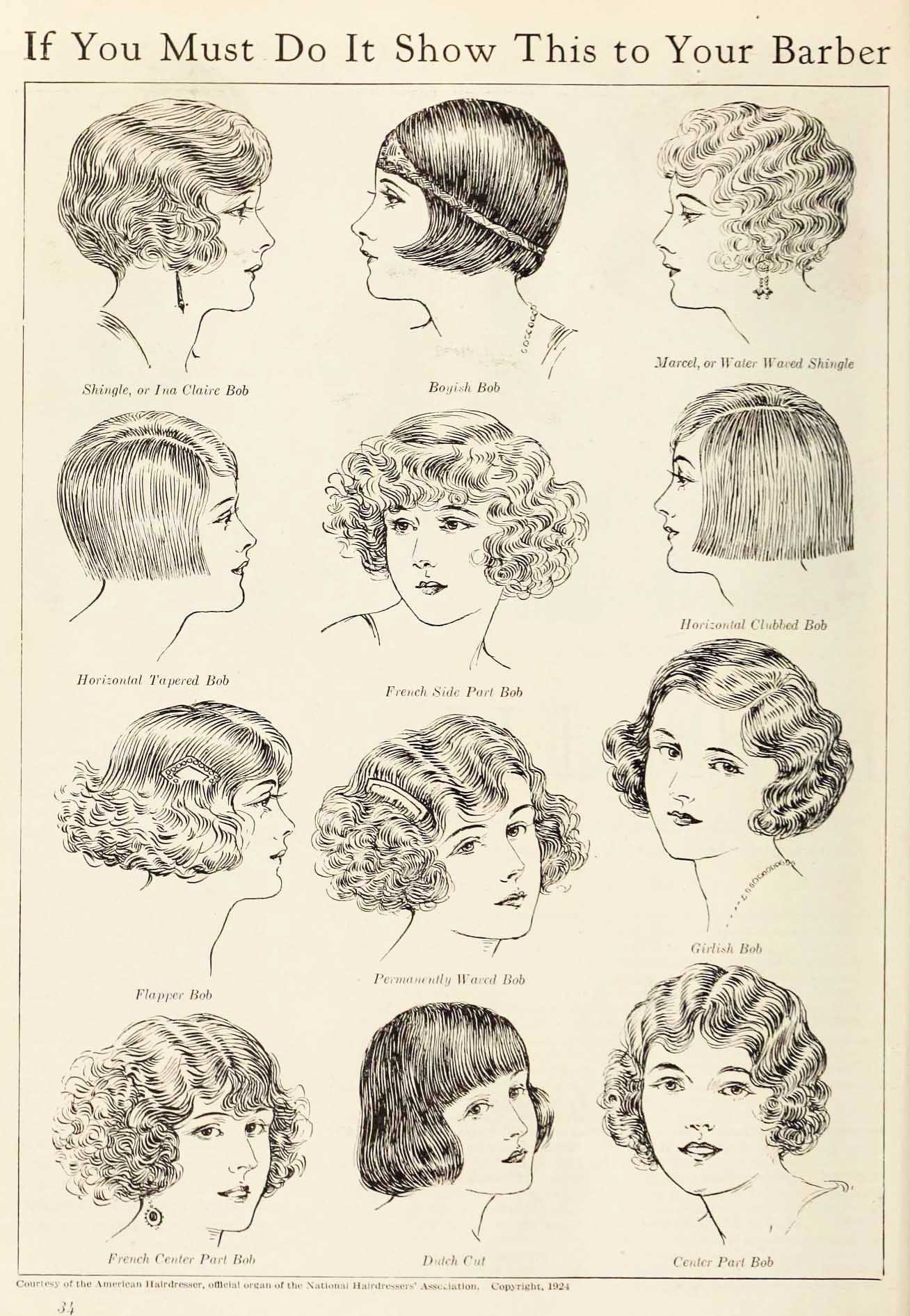
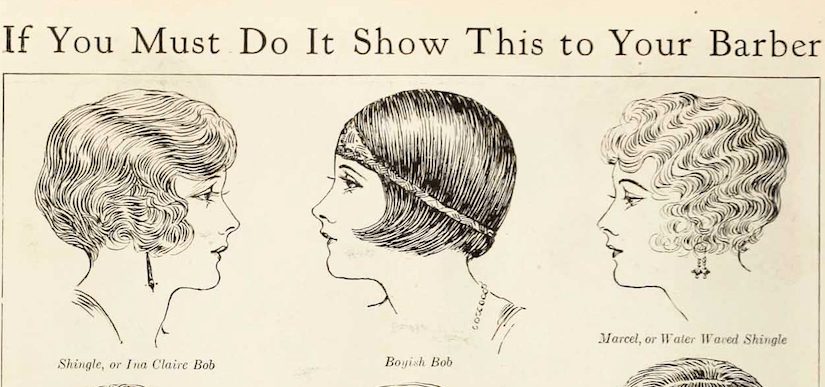
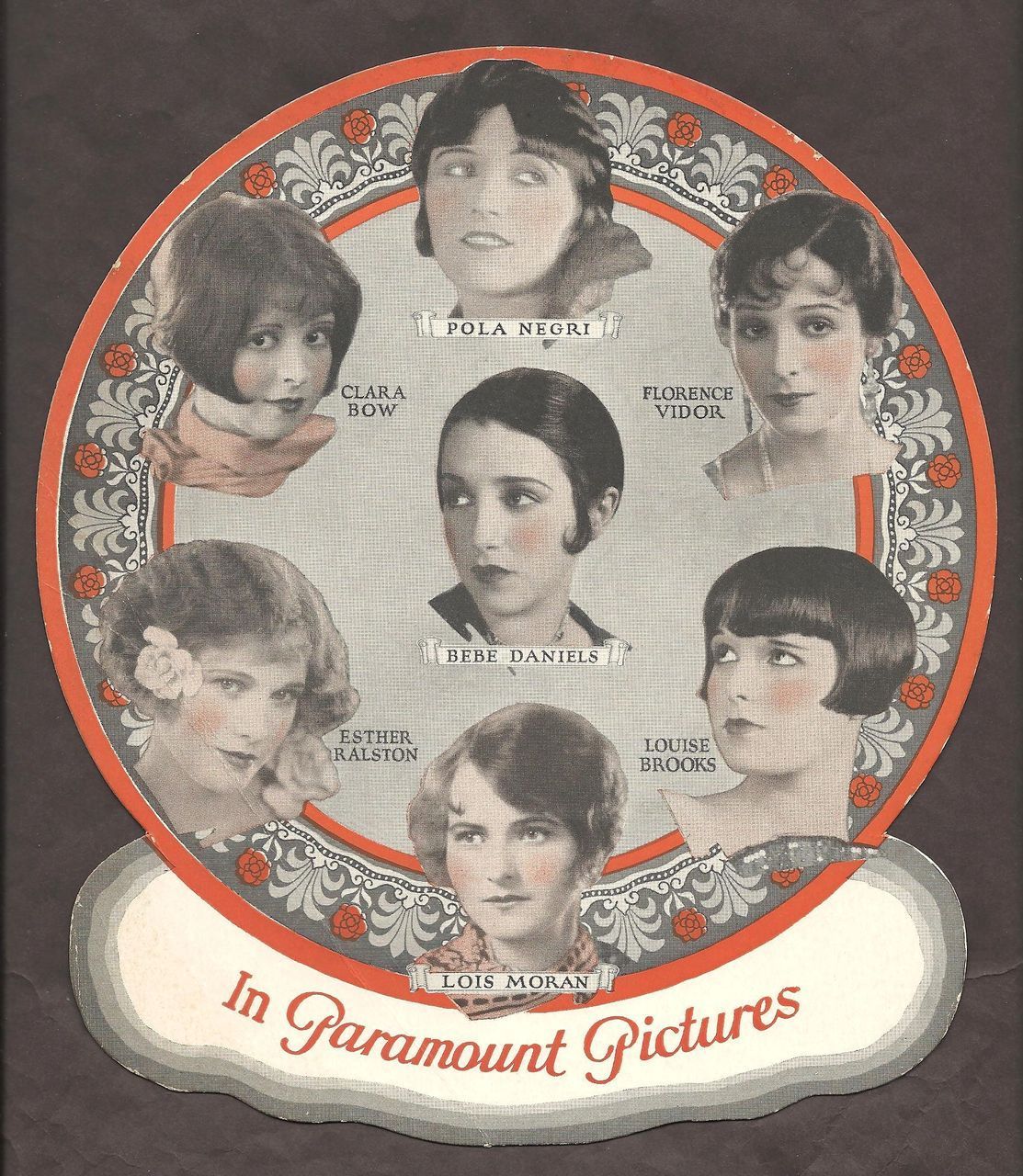
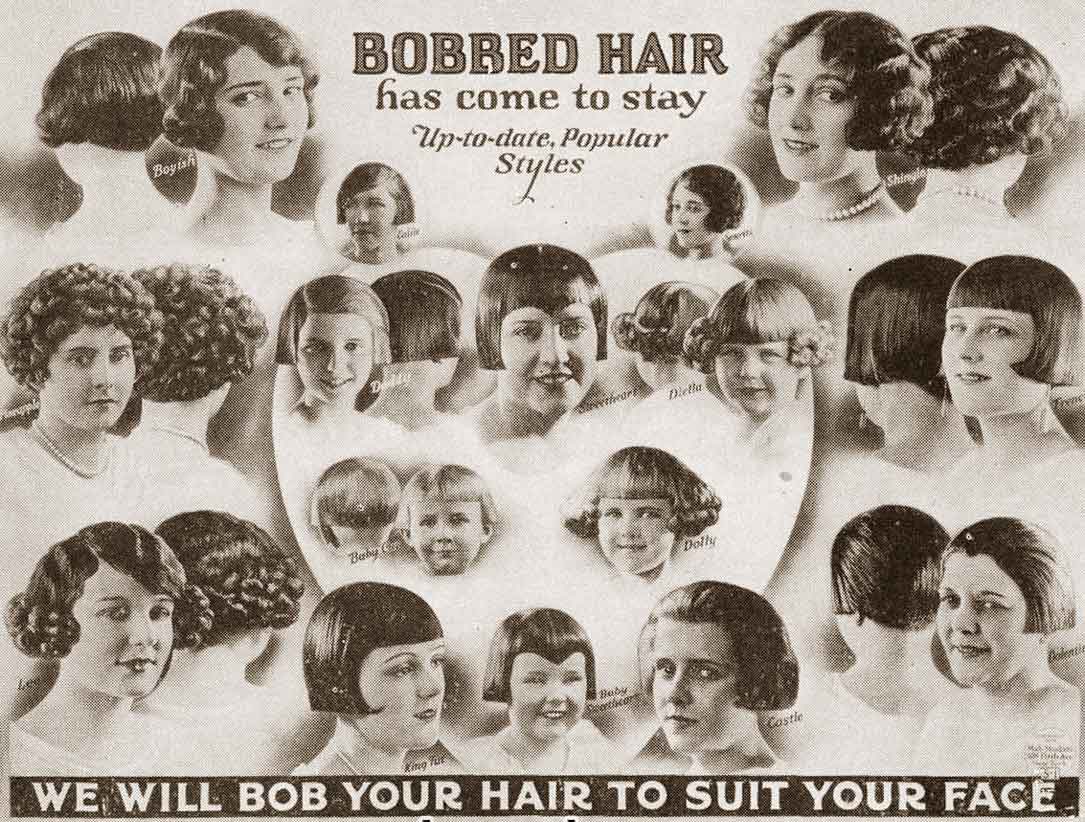
…and for some further context on all things bobbed, following are some images gleaned from glamourdaze.com, including a page from a 1920s movie magazine featuring Paramount’s bobbed stars; a 1920s salon advertisement promoting bobs for all ages; and finally, a helpful reference card from the American Hairdresser, circa 1924…
 *  *  *

A New Plot for Billy Haines

William “Billy” Haines was a top male box office draw in the 1920s, and throughout the decade was typecast in a number of comic roles as a conceited baseball player (Slide, Kelly, Slide), conceited cadet (West Point), conceited football star (Brown of Harvard), conceited golfer (Spring Fever), and conceited polo player (The Smart Set). It was that last picture that left The New Yorker wanting Haines to consider taking a different approach in his next picture:
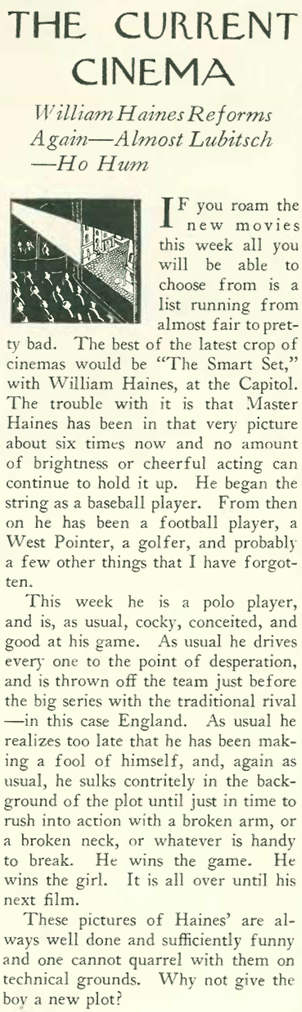
Haines would eventually escape being typecast as a wisecracking, arrogant leading man, not by choosing different roles but by quitting acting altogether in 1935. The head of MGM, Louis B. Mayer, had demanded Haines deny his gay lifestyle (which he had lived quite openly despite the times) and marry a woman for appearances. Haines went on to become a successful interior designer, with clients ranging from Joan Crawford and Gloria Swanson to Ronald and Nancy Reagan.
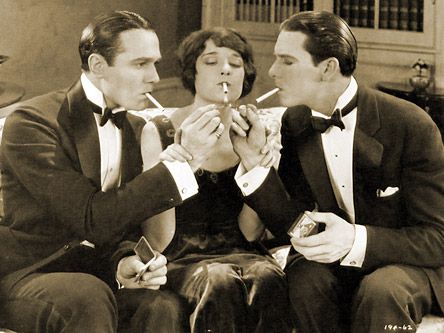
TYPECAST…Billy Haines (left), Eleanor Boardman and Ben Lyon in Wine of Youth, 1924. (whenwewerecool.tumblr.com)
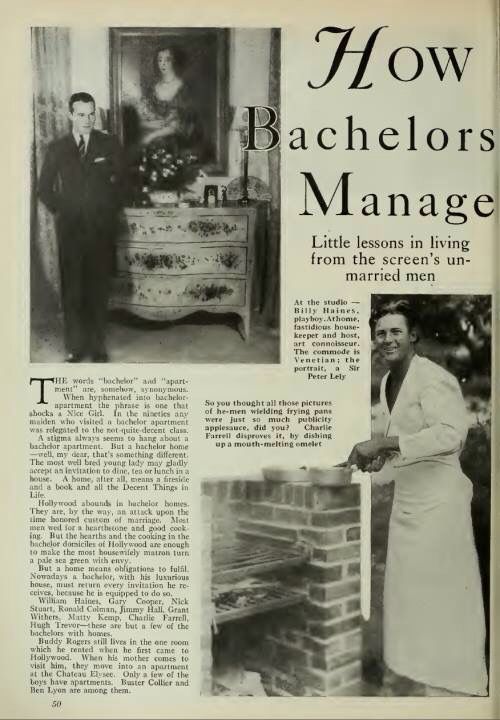
FAN FICTION…Movie fan magazines until mid-century were tools of the major studios with portrayals of the “real lives” of stars that were nearly as fictional as their film roles. Billy Haines (upper left) was one of the Hollywood “bachelors” featured in this article from an unidentified fan magazine. (Unknown/Pinterest)

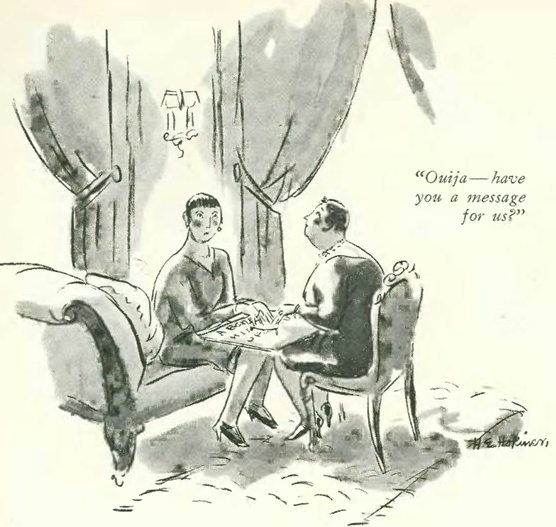
In our featured cartoon from March 10, 1928, Helen Hokinson spied on her famous spinsters passing the time with a Ouija board:
Next Time: Broadway’s Soap Stars…


Flapper Fitness

Lois Long stepped off her fashion beat to check out a new fitness salon on East 49th Street that used a combination of spa treatments, exercise and body shaming to get women into shape.

fd4accb02ed7d01ae3624ea180d47357
September 24, 1927 cover by Ilonka Karasz.

Operated by a “Miss Marjorie Dork,” the salon offered a comprehensive and “rather sweeping program of making a new and perfect woman of you.” Long observed…

screen-shot-2016-11-30-at-2-45-47-pm

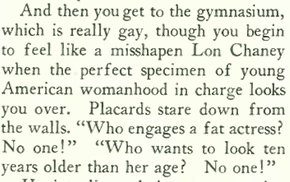
…and what gym would be complete without large placards shaming you for gaining weight or growing old?…

screen-shot-2016-12-02-at-4-09-43-pm

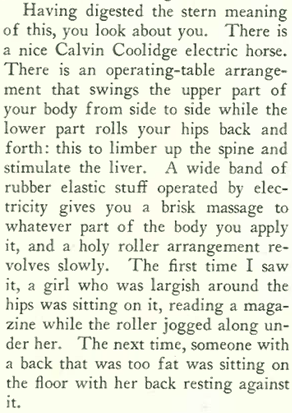
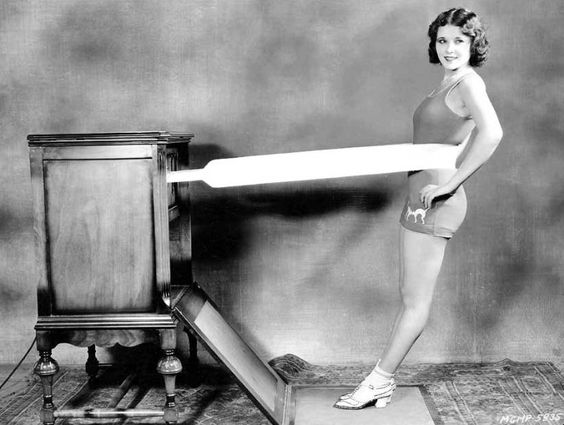
…or an array of newfangled electric gadgets one could use to melt away those extra pounds…

screen-shot-2016-11-30-at-2-45-54-pm

article-0-1a8ab29b000005dc-646_634x827
ON THE BOARDWALK…Treadmill technology has advanced since these wooden numbers from the 1920s. It’s hard to believe anyone actually worked out in Mary Janes, but there it is. (Daily Mail)

 *  *  *  *  *

Another One Bites the Dust

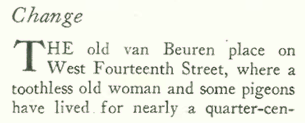
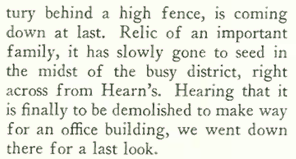
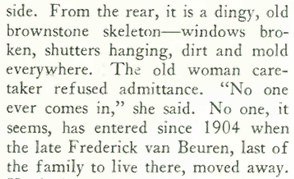
The New Yorker bid farewell to yet another familiar landmark, the old Van Buren Place at No. 21 West 14th Street. Four stories high and five bays wide, the 1845 mansion was considered the height of early Victorian taste.

screen-shot-2016-11-30-at-2-31-19-pm

screen-shot-2016-11-30-at-2-31-24-pm

According to the blog Daytonian in Manhattan, in the 19th century the Van Buren estate had a large garden that extended through the block to 15th Street, and in the rear included a conservatory, a stable, arbors, dove cotes “and remnants of the farm life—chicken coops and a cow or two.”

van-buren-mansion-1906-oct-14
REMNANT OF THE PAST…The old Van Buren Place (center) with its garden to the left. (Museum of the City of New York)

The August 7, 1927 issue of The New York Times reported that the mansion, erected “when all that section north of Washington Square was occupied principally by estates and truck farms, has finally succumbed to the march of improvements and will be demolished to make way for a theatre and office building.” The New Yorker managed to get one last look via “a hole in the fence”…
screen-shot-2016-11-30-at-2-32-16-pm

screen-shot-2016-11-30-at-2-32-25-pm

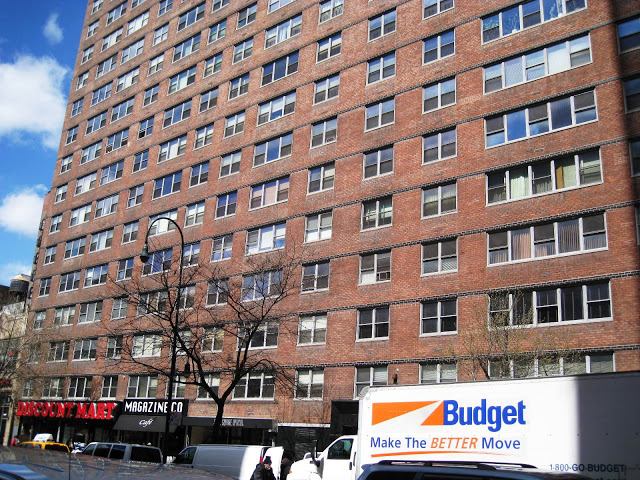
I don’t know if either a theatre or office building was ever erected on the site, but this is what stands there today:

daytoninmanhatten
THE GREAT WALL…The Van Buren estate site as it appears today. (daytoninmanhattan)

 *  *  *  *  *

Chill Out With Sanka

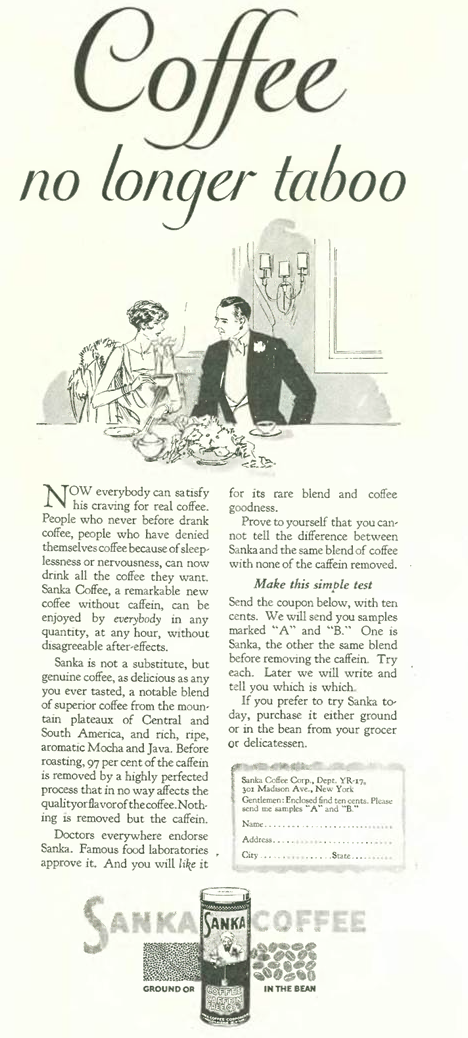
Sanka decaffeinated coffee was first marketed in the U.S. in 1923, but was only sold at two Sanka coffee houses in New York. The company made a big retail push in 1927, including sponsored broadcasts under various titles including the Sanka After-Dinner Hour on WEAF radio in New York. At least until the 1980s if you wanted a decaffeinated coffee you simply ordered a “Sanka.” According to a Wikipedia entry, the bright orange color of the Sanka can was so easily identifiable to consumers that even today a restaurant’s decaf coffee pot might sport a bright orange handle–the direct result of the public’s association of the color orange with Sanka, no matter which brand of coffee is actually served.

screen-shot-2016-12-05-at-5-13-31-pm

Our cartoon from the Sept. 24 issue comes from Alan Dunn, who explored the topic of the birds and bees among the posh set…

screen-shot-2016-11-30-at-2-36-30-pm

Next Time: Wits of the Round Table…

488a50459a792547010d30e8bfe5ddf4

Babe Comes Home

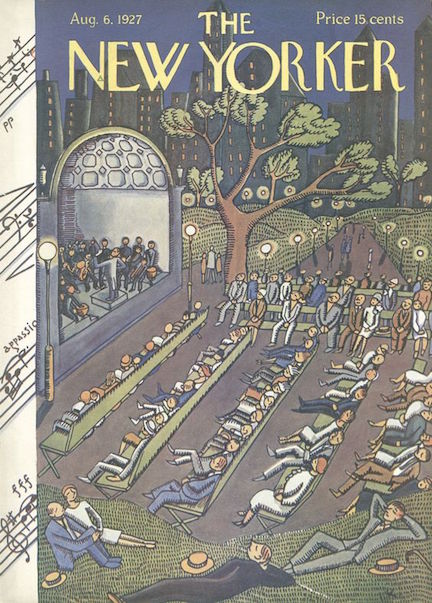
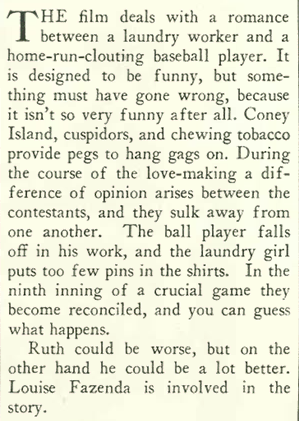
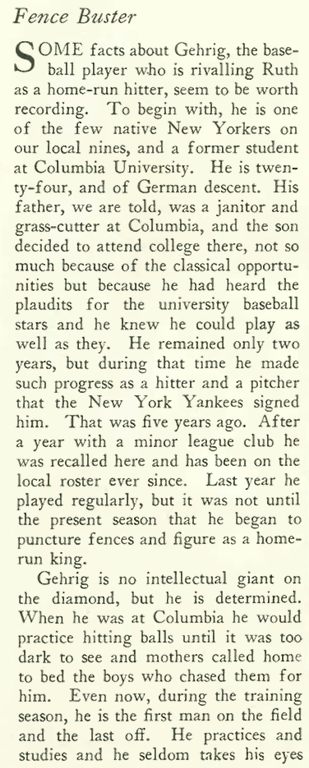
After months of reporting on polo, golf, tennis and yacht races, The New Yorker finally mentioned baseball–sort of–reviewing a movie featuring Babe Ruth and penning a brief piece about Lou Gehrig in “The Talk of the Town.”

447032a734d61215ca61a95a205dd7da
August 6, 1927 cover by Ilonka Karasz.

But the magazine still made no mention of the incredible season that was shaping up for the legendary 1927 New York Yankees, or the feats of its feared  “Murderer’s Row” lineup. Although widely considered to be the best baseball team in the history of major league baseball, The New Yorker up to this point had given more ink to the game of ping pong. But we’ll take what we can get, namely Babe Ruth’s acting performance in Babe Comes Home…

screen-shot-2016-11-07-at-12-50-00-pm

screen-shot-2016-11-07-at-12-50-10-pm

screen-shot-2016-11-11-at-12-51-20-pm
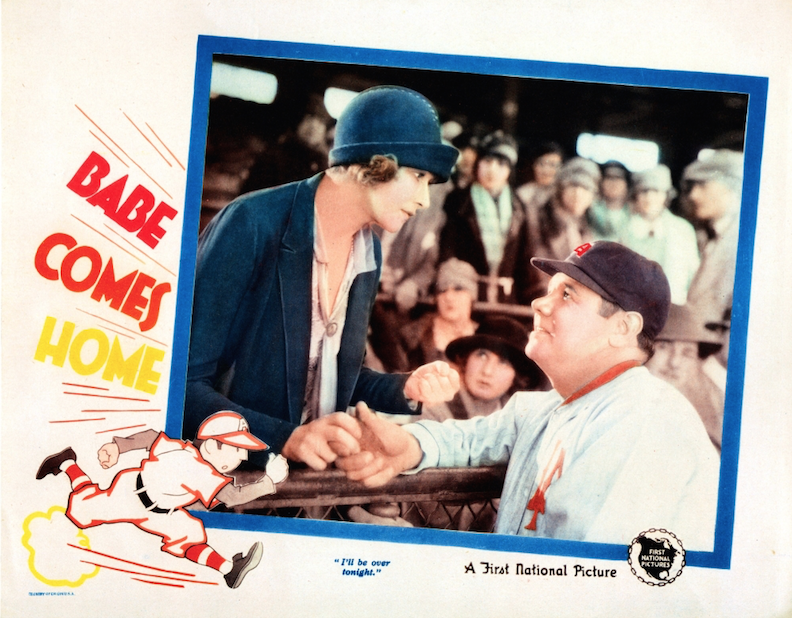
BETTER STICK TO BASEBALL…Lobby card for the 1927 film, Babe Comes Home, featuring Anna Q. Nilsson and The Bambino himself. (posterscancollections.com)

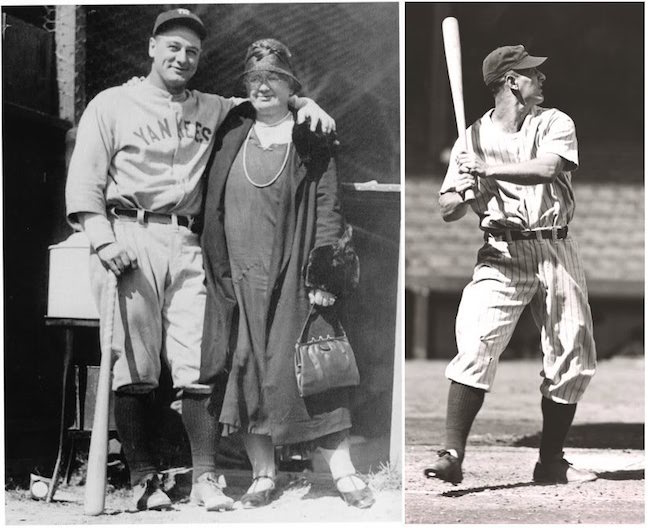
…and over in “The Talk of the Town” section the editors looked at another Yankee slugger, Lou Gehrig, who besides his hitting ability was Ruth’s opposite…

screen-shot-2016-11-07-at-12-32-32-pm

screen-shot-2016-11-07-at-12-32-51-pm

image5-9
MOM & APPLE PIE…Lou Gehrig and his mother, Christina, in 1927. (baseballfever.com)

 *  *  *

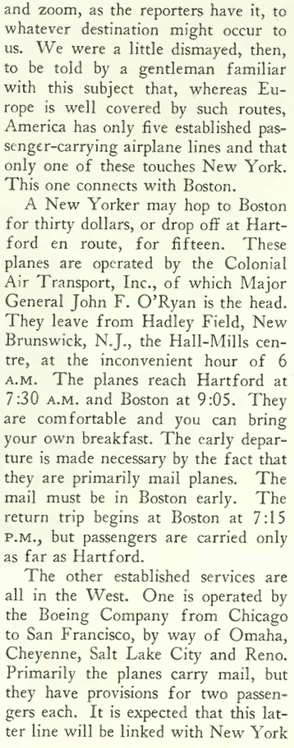
With the hullabaloo over Charles Lindbergh’s transatlantic flight, more Americans were becoming interested in flying as an actual travel option, although in August 1927 New York City had only one established passenger line:

screen-shot-2016-11-07-at-12-37-24-pm

screen-shot-2016-11-07-at-12-37-30-pm

screen-shot-2016-11-07-at-12-37-45-pm

eastbostonairport018-2562
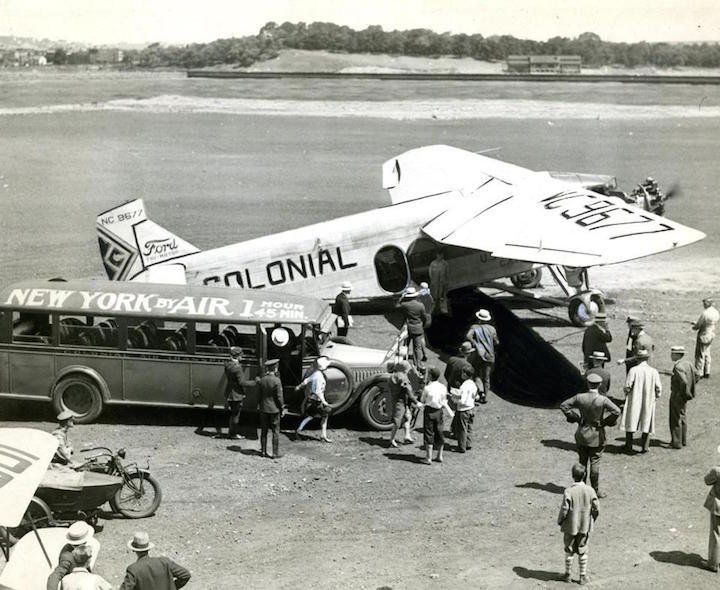
HUMBLE BEGINNINGS…On April 15, 1927, Colonial Air Transport (a predecessor of American Airlines) began passenger service between Boston and New York City. (Boston Globe)
pic04
SORRY, NO WI-FI…National Air Transport, a predecessor of United Airlines and a prime mail carrier, brought the Travelair 5000 to their minimal fleet in 1927 to add passenger revenue to its Midwestern and Western hops that linked Chicago, Omaha, Cheyenne, Salt Lake City, Reno and San Francisco. (traveler.com)

 *  *  *

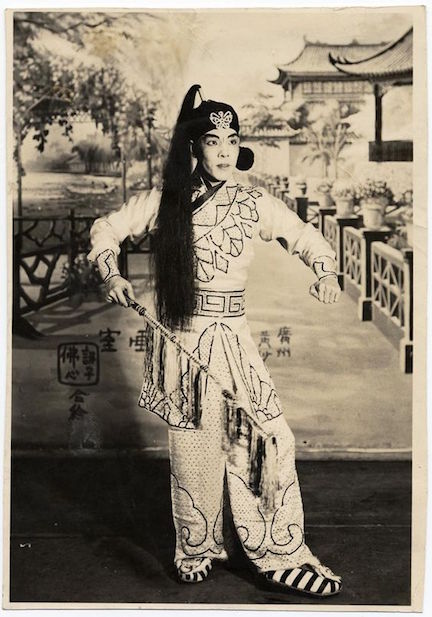
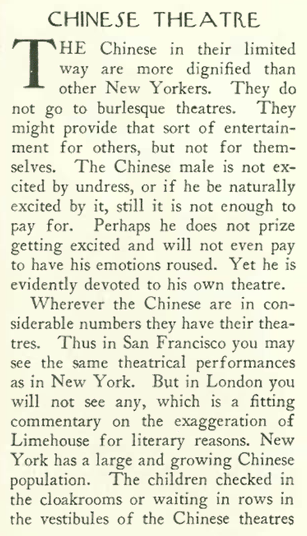
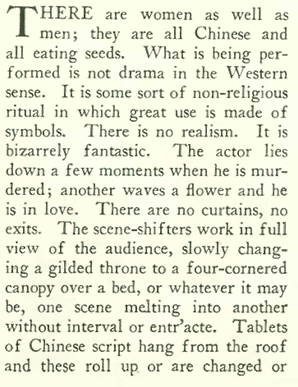
The August  6 issue also featured this strange little review in “Talk” about the popularity (or fad) of attending Chinese theater. Note how the writer described it as an exotic curiosity, as though the Chinese actors were as unknowable as Martians. I suppose it didn’t occur to the writer that you could actually speak to these performers, and have them explain the meanings of the various rituals.

7d5022414f367319b77659cba19591ac
OFF-BROADWAY…Actor Ma Shi-tsang posing with a riding crop in a 1920s publicity photo. Chinese theater actors performed in U.S. cities with large Chinese populations, including San Francisco and New York. (cdlib.org)

chinese-stephen-graham

screen-shot-2016-11-07-at-12-43-42-pm

screen-shot-2016-11-07-at-12-44-19-pm

screen-shot-2016-11-07-at-12-44-28-pm

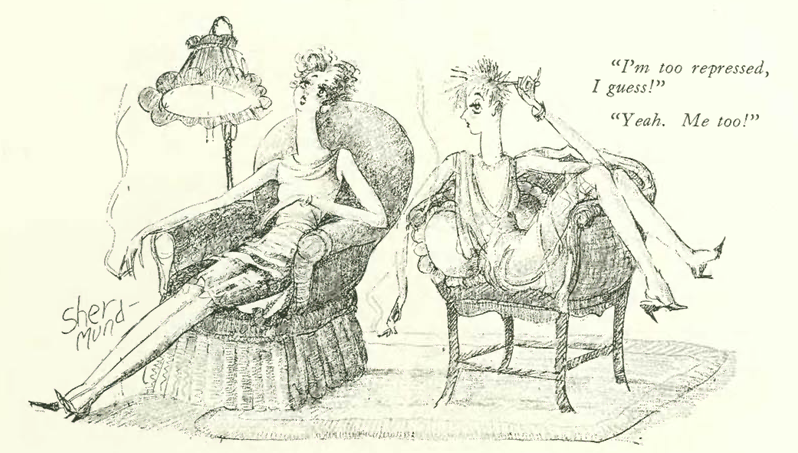
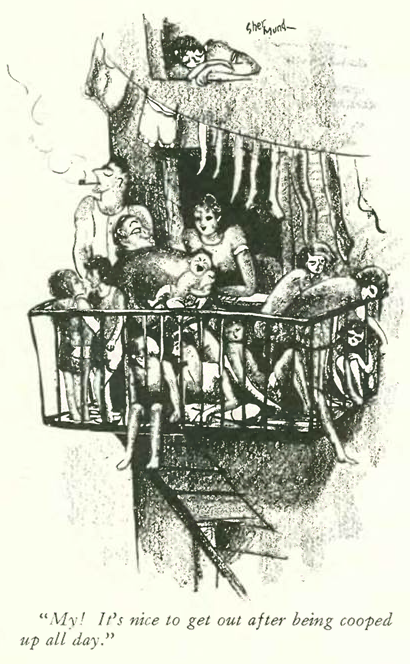
And to close, a couple of cartoons from the issue by Barbara Shermund that illustrated two very different aspects of New York society:

screen-shot-2016-11-02-at-1-15-19-pm

screen-shot-2016-11-02-at-1-14-57-pm

Next Time: An Office Romance…

30e6d833482958226738b30ce4244558


Île-de-France

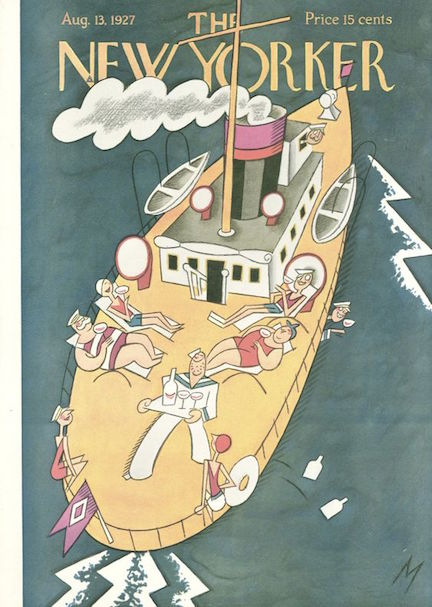
On June 22, 1927, the legendary French ocean-liner, the Île-de-France, traveled from Le Havre to New York on its maiden voyage, soon to be greeted by the American media and the thousands who would crowd the docks at New York Harbor to see the great ship.

80c5240bf5ffaaff418de94b7e176525
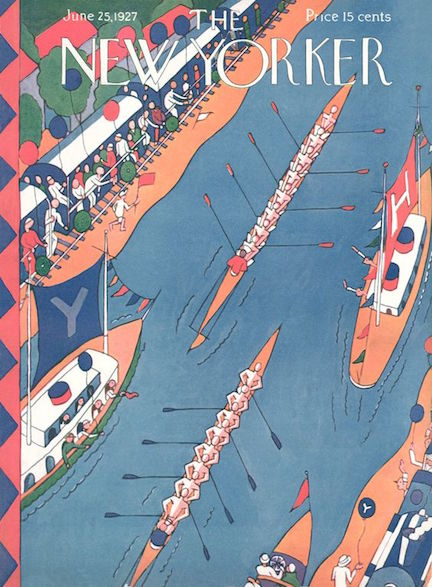
June 25, 1927 cover by Ilonka Karasz.

Among those anticipating the visit was The New Yorker, which offered this account in “The Talk of the Town” for the June 25, 1927 issue:

screen-shot-2016-10-14-at-9-46-05-am

screen-shot-2016-10-14-at-9-46-18-am

screen-shot-2016-10-14-at-9-46-27-am

ss_ile_de_france_c1935
PRIDE OF FRANCE…Postcard image of the Île-de-France from 1935. During a post-war refurbishment, the three funnels were replaced with a pair of stockier, more stylish funnels. (Wikipedia)

The Île-de-France was unique in that it was the first ocean-liner to have an interior design that didn’t imitate “shore-style” interiors that resembled rooms in manor houses or grand hotels. The trend-setting ship sported a modern, art deco look that celebrated the present and the future.

mainfoyer
IN WITH THE NEW…The Main Foyer & Grand Staircase of the Île-de-France,(newyorksocialdiary.com)
c1fe5bedcb3cb40a005ca4aa6672195c
LEAVE YOUR FLIP-FLOPS AT HOME…The first-class dining room in the Île-de-France. (newyorksocialdiary.com)

Note that these photos do not contain images of water slides or all-you-can eat buffets. An ocean voyage, if you could afford it, was an elegant affair. The Île-de-France was especially popular among wealthy Americans who liked its stylish, youthful vibe.

The Île-de-France served as a troop ship during World War II, and in 1956 played a major role in rescuing passengers from the sinking Andrea Doria off the coast of Nantucket.

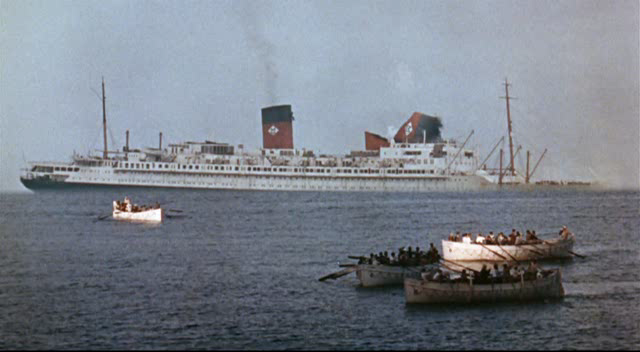
Unfortunately, anything that is youthful soon grows old, and as we all know, style is an ephemeral thing. With the advent of transatlantic jet transport, ships like the Île-de-France fell out of favor, and by 1960 the grand ocean liner was reduced to serving as a floating prop for a disaster movie titled The Last Voyage. The filmmakers partially sunk the poor ship, set fires and detonated explosions in the interior, and in a final act of desecration dropped one for the ship’s smoke stacks onto its deck house.

oceanlinersmagazine
(IMDB)
the-last-votage
NOT A BUFFET IN SIGHT…Still from the 1960 movie, The Last Voyage, shot on board the soon-to-be-scrapped Île-de-France. (Screen shot from movie trailer)
screen-shot-2016-10-20-at-2-20-28-pm
FIERY END…Fires were set in the interior of the Île-de-France during the filming of The Last Voyage. (Screen shot from movie trailer)
the-last-voyage-1960-ship-sinking
BROUGHT TO ITS KNEES…The Île-de-France (named the SS Clarion in the movie) is partially sunk with its forward funnel collapsed in a still from the film, The Last Voyage.

 *  *  *

The Ruth Snyder–Judd Gray murder trial and sentencing captivated Americans in 1927, but another trial and sentencing in the 1920s would bring worldwide attention and spark mass protests.

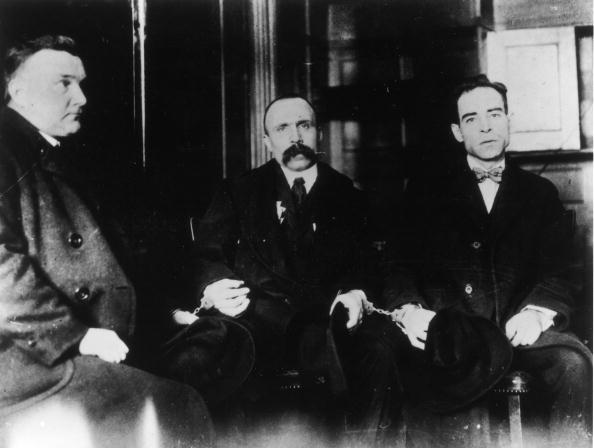
Nicola Sacco and Bartolomeo Vanzetti were Italian-born Americans who were convicted of murdering a paymaster and guard during a robbery of a Boston-area shoe company in 1920. Although convicted of murder the following year, many critics of trial believed Sacco and Vanzetti, who held anarchist views, were innocent of the charges, and the case became one of largest causes célèbres in modern history with protests held on their behalf in major cities across the U.S. and around the world.

Ferdinando Nicola Sacco and Bartolomeo Vanzetti in handcuffs, circa 1920s. (Photo by Fotosearch/Getty Images).
Cause Célèbre…Nicola Sacco and Bartolomeo Vanzetti handcuffed together at the Dedham, Massachusetts Superior Court, 1923. (Boston Public Library).

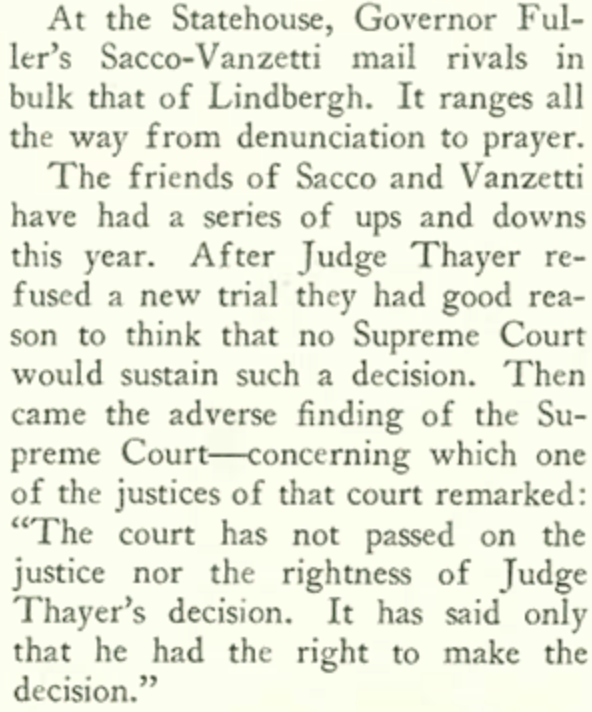
Sentenced to death in April 1927, they would be executed the following August. The New Yorker, predisposed to look down on Boston as something of a backwater, had this to say about the trial in an article by Gerald Day for the “Reporter at Large” column:

screen-shot-2016-10-22-at-10-18-49-am

The case also rekindled memories of other notorious trials:

screen-shot-2016-10-22-at-10-19-05-am

The governor did appoint a commission to review the case, but the final decision was in his hands…
screen-shot-2016-10-22-at-10-19-49-am

And so the only option left for Sacco and Vanzetti was clemency from the governor.

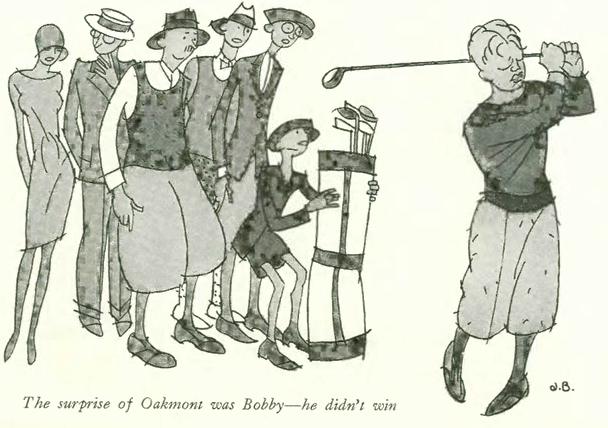
To close, a few illustrations from some of the magazine’s mainstay artists…this one from Johan Bull used to illustrate an article on the U.S. Open featuring amateur Bobby Jones

screen-shot-2016-10-14-at-9-49-23-am

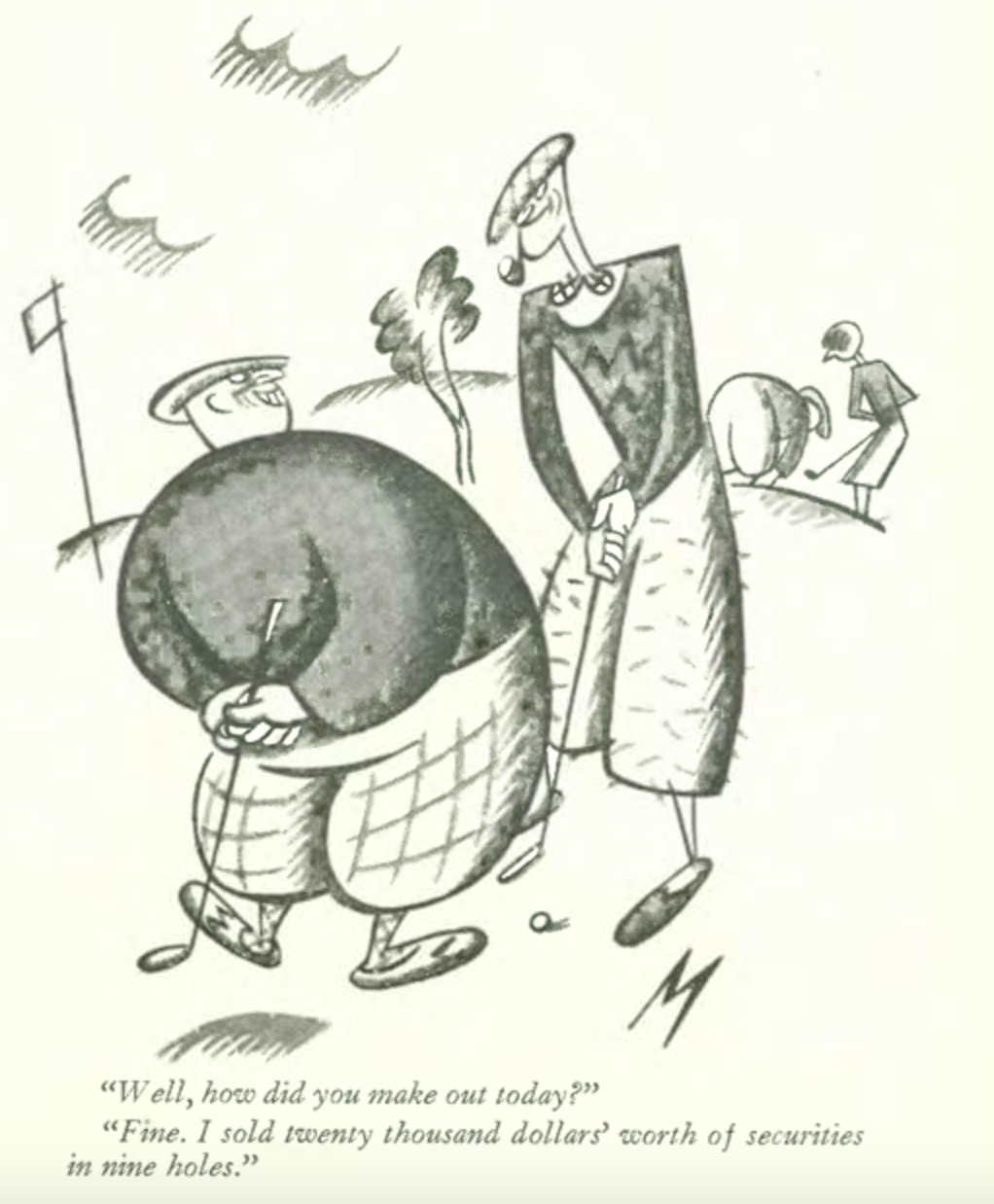
…and keeping with the golf theme, this cartoon by Julian de Miskey

screen-shot-2016-10-22-at-9-36-35-am

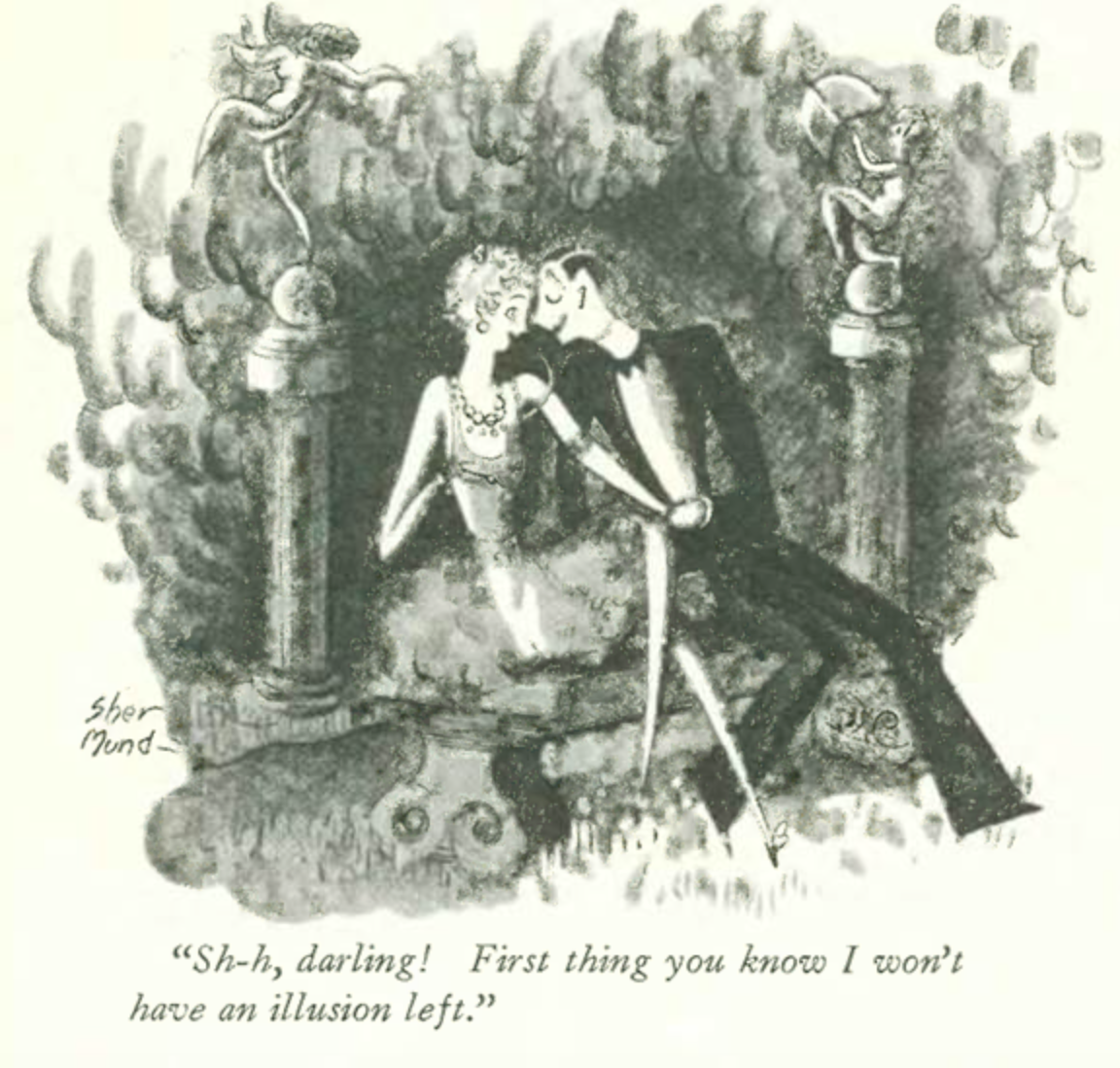
…and finally, a little fun with Barbara Shermund and her comment on social mores of the day:

screen-shot-2016-10-22-at-9-37-14-am

Next Time: Fifteen Minutes is Quite Enough…
7b096a824e274d6b7b7c5e0f1a3e85e7


The Flying Fool

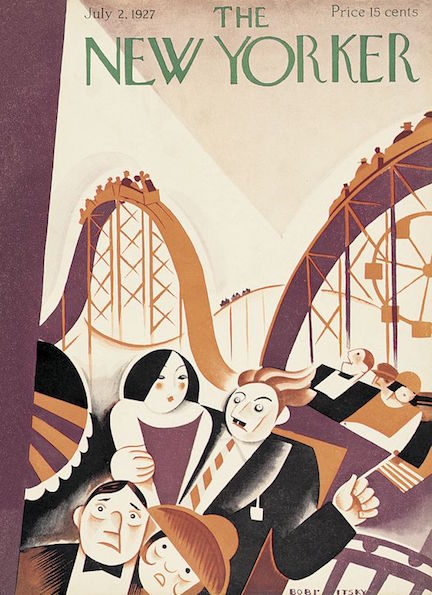
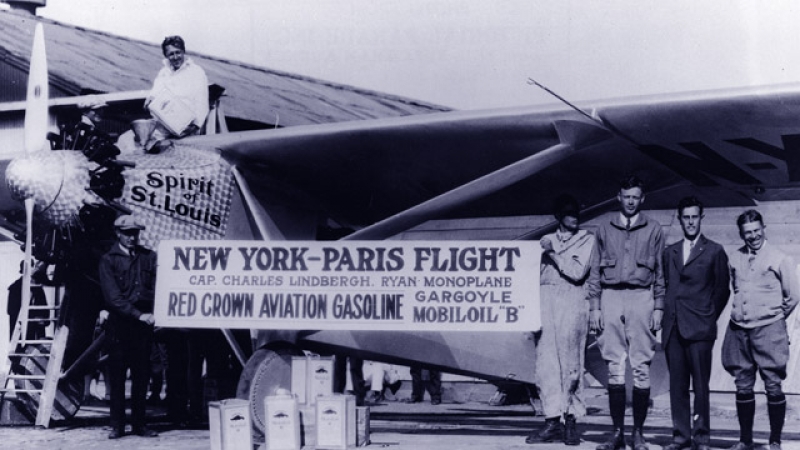
Charles Lindbergh was “The Flying Fool” no more after flying nonstop across the Atlantic to worldwide acclaim. The New Yorker shared in the enthusiasm, although it tried its best to appear not too impressed by the feat. But as we shall see in subsequent issues, The New Yorker, along with the rest of the media, couldn’t get enough of the man with a new title, “Lucky Lindy.”

may-28
May 28, 1927, cover by Ilonka Karasz.

But that’s in the future. Here’s what the New Yorker had to say following Lindbergh’s famous flight in “Talk of the Town…”

screen-shot-2016-10-05-at-8-43-05-am

And from its distant perch the magazine also took some shots at the media hype surrounding Lindbergh, and the usual retinue of money-changers (see title image above)…

screen-shot-2016-10-05-at-8-43-15-am

So what was the New Yorker saying about the historic moment? Well, for most of us, life goes on…

screen-shot-2016-10-05-at-8-43-50-am

screen-shot-2016-10-07-at-4-48-14-pm
HE’S A GOOD BOY…Still from Movietone newsreel showing Charles Lindbergh with his mother, Evangeline Lodge Land, before the historic flight. (Movietone)

…and for those who missed it on TV (because it wasn’t invented yet), they could catch a newsreel of Lindbergh at the Roxy, complete with crude sound effects:

screen-shot-2016-10-07-at-1-43-36-pm

air_and_space_museum_paris_lindbergh
OH CALM DOWN…A gendarmerie links arms in a futile attempt at crowd control as a mob closes in on the just-landed Spirit of St. Louis at Le Bourget airport in Paris. (parisdigest.com)

 * * *

On the other side of the pond, Paris correspondent Janet Flanner wrote about the Paris media’s complete denial or ignorance of the deaths of their own Atlantic flyers, Charles Nungesser and Francois Coli, who were lost at sea in their crossing attempt.

screen-shot-2016-10-07-at-1-39-30-pm

 * * *

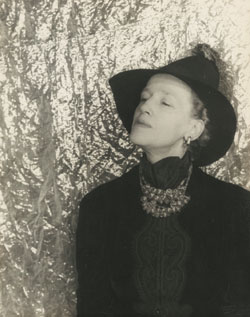
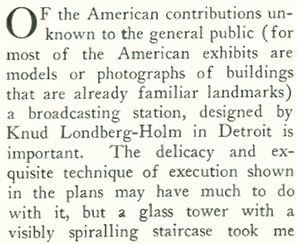
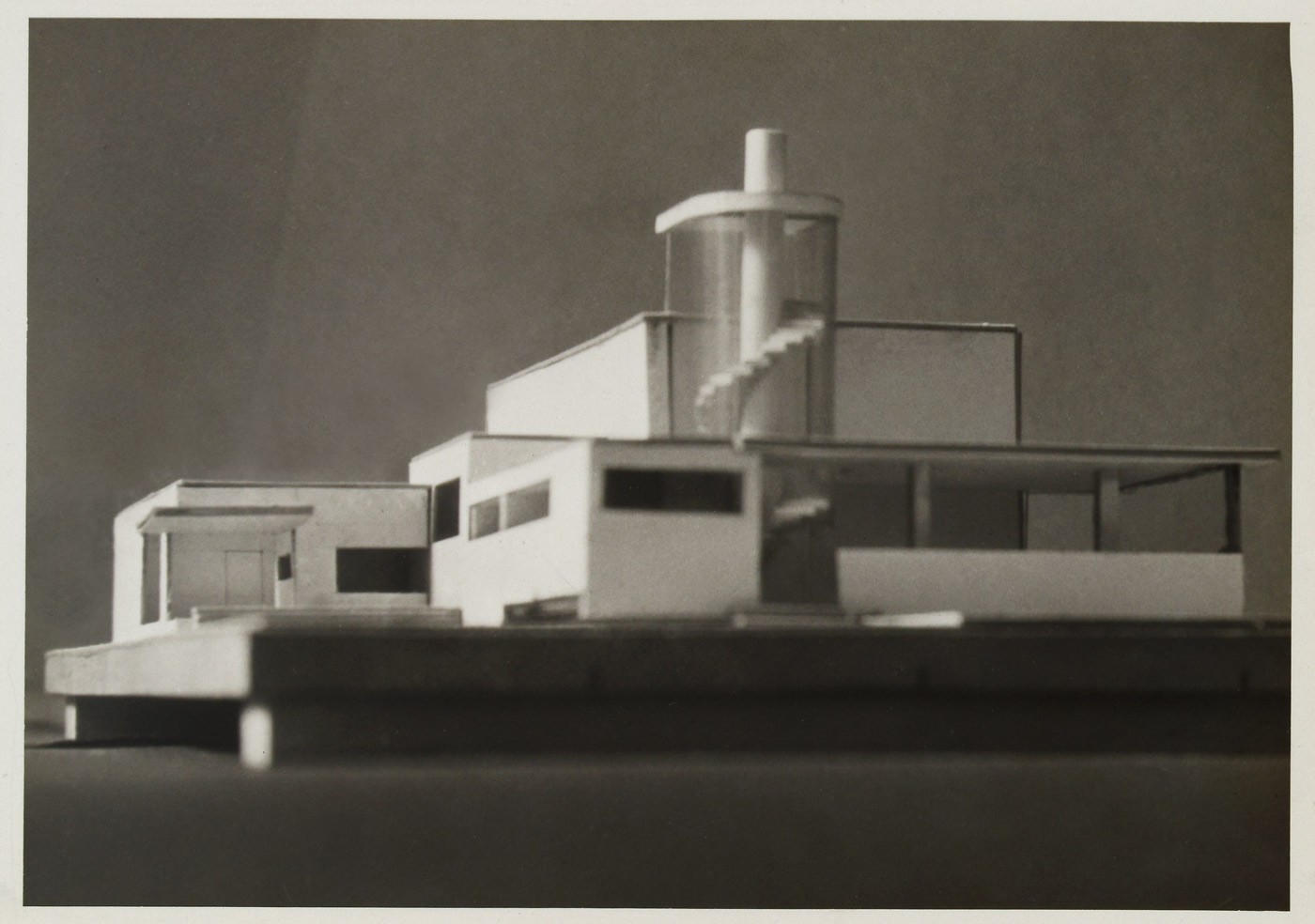
The New Yorker offered more observations on the Machine-Age Exposition, this time in a column titled “About the House,” by “Repard Leirum,” or Muriel Draper spelled backwards. Under this pseudonym Draper served as interior decoration critic for The New Yorker—she was one of the most influential personalities in the American interior decorating in the early 20th century.

1013583
Muriel Draper, as photographed by Carl Van Vechten on July 30, 1934. (Muriel Draper Papers, Yale)

screen-shot-2016-10-05-at-9-25-08-am

screen-shot-2016-10-05-at-9-25-23-am

klh_36_hr-web
This model of a radio station by Knud Londberg-Holm was displayed at the Machine-Age Exposition in New York City May 16-28, 1927. (artblart.com)

About Muriel Draper: Although she wrote on interior design for The New Yorker during the late 1920s, she was more widely known as a “culture desk” writer, and was prominent in promoting the Harlem Renaissance. She became active in left wing politics after a trip to the Soviet Union in 1934, and in 1949 she was investigated by the U.S. House Un-American Activities Committee and thereafter ceased her political activities.

The Machine-Age Exposition Draper visited had a decidedly socialist flavor with its prominent inclusion of the Soviet Union and its touting of the International Style of architecture. Before it was appropriated by post-war corporate America, the International Style was developed as housing and workspaces for the masses.

A side-note: The Exposition was initiated by Jane Heap, who like Draper was a follower of the charismatic Russian mystic G. I. Gurdjieff (among Gurdjieff’s other followers were architect Frank Lloyd Wright, the writer P. L. Travers (Mary Poppins) and 1960s counterculture figure Timothy Leary).

georges_gurdjieff
George Ivanovich Gurdjieff, circa 1925-35 (Library of Congress)

Marxists with spiritual yearnings—and especially guild socialists—were attracted to Gurdjieff’s ideas about something he called “The Work,” in which crafts and community life provided ways to cultivate a deeper understanding of ourselves and our purpose amidst the activities of daily life.

 *  *  *

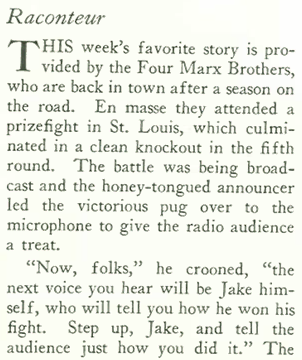
And now on to a different kind of Marxism…this odd little item from the “The Talk of the Town”…

screen-shot-2016-10-05-at-9-07-51-am

screen-shot-2016-10-10-at-10-38-34-am

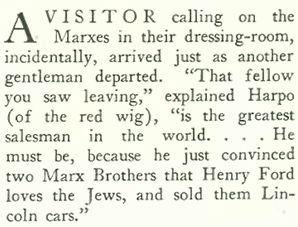
In 1927 the Marx Brothers were still known as a traveling vaudeville act—their first feature film was still two years away. But thanks to the vaudeville circuit of the day, an astonishing number of people in cities large and small across the country would see them perform. The “Talk” item concludes with this story that references Henry Ford’s well-known anti-semitism:

screen-shot-2016-10-05-at-9-08-01-am

mte5ndg0mdu0nty4njy2njm5
OH THE MOVIES THEY WILL MAKE…The Marx Brothers, from left, Chico, Zeppo, Groucho and Harpo. (biography.com)

Next Time: The Age of Innocence…

fe856464214bef0718e3c838d3a54ab2

Shock of the New

Above: The Bauhaus in Dessau, Germany (photo credit: Andreas Meichsner for The New York Times)

The Roaring Twenties saw astonishing changes to American life, including a dramatic break from the technologies and habits of the past. Icemen gave way to electric refrigerators, broadcast radio brought entertainment and news into living rooms, and Charles Lindbergh made flying something everyone wanted to try.

may-21
May 21, 1927 cover by Ilonka Karasz.

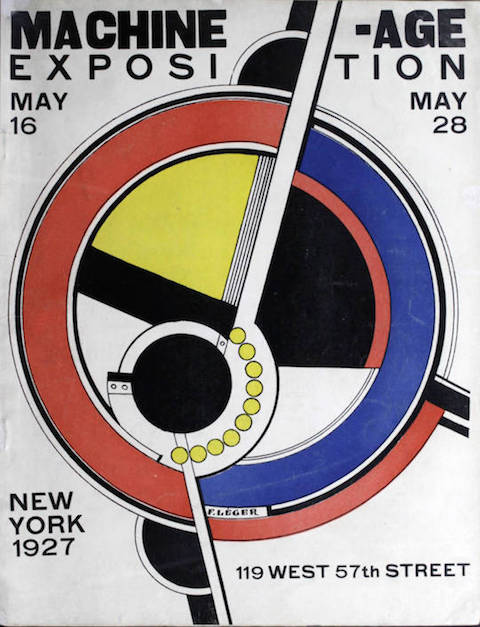
Despite the mechanized horrors of World War I, most people were enchanted by the idea of man and machine coming together to make a better world. In the U.S. the machine-age exuberance was expressed largely in capitalist terms, while many European and Soviet intellectuals saw the machine as integral to the progress of socialism. The Machine-Age Exposition in New York City (May 16-28 at 119 West 57th Street) celebrated all facets through a unique event that brought together architecture, engineering, industrial arts and modern art from a number of nations.

machine-age_exposition_catalogue
Cover of the Exposition Catalogue. (monoskop.org)
screen-shot-2016-09-27-at-10-05-00-am
Scanned illustration of an airplane from the Exposition catalogue.

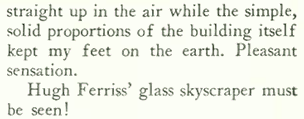
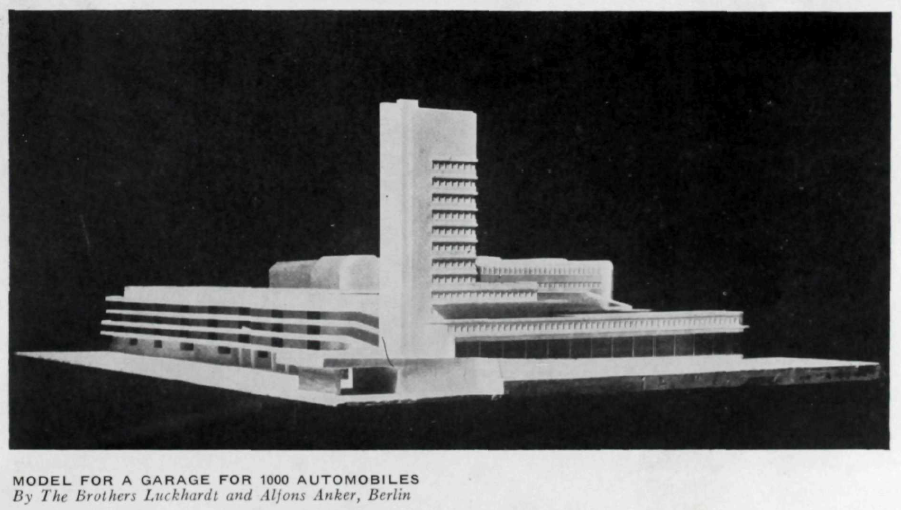
The exhibition, initiated by Jane Heap of the literary magazine The Little Review, included exhibits from the U.S., Austria, Belgium, France, Germany, Poland and the Soviet Union. Artists in the exhibition represented a Who’s Who of modernists and futurists—Alexander Archipenko, Marcel Duchamp, Hugh Ferriss, Man Ray and others who celebrated the aural and visual cacophony of the age as well as the gleaming precision of machines and machine-like buildings.

screen-shot-2016-09-28-at-4-38-04-pm
Model of a futuristic parking garage by the Luckhardt brothers and Alfons Anker on display at the Exposition. (Scanned  image from the Exposition catalogue)

New Yorker writer E.B. White shared in the enthusiasm with this bit for “The Talk of the Town…”

screen-shot-2016-09-26-at-3-38-06-pm

screen-shot-2016-09-27-at-10-04-31-am
The Futurist Hugh Ferriss contributed this design of a glass skyscraper to the Machine Age Exposition. A thing of dreams in the 1920s, such buildings are now commonplace in cities around the world. (Scanned from the Exposition catalogue)

The sleek and glass-walled buildings featured at the Exhibition were fantastic images in 1927, when most large-scale buildings were still being rendered in brick and stone in various neoclassical, federal or gothic styles.

screen-shot-2016-09-28-at-4-36-30-pm
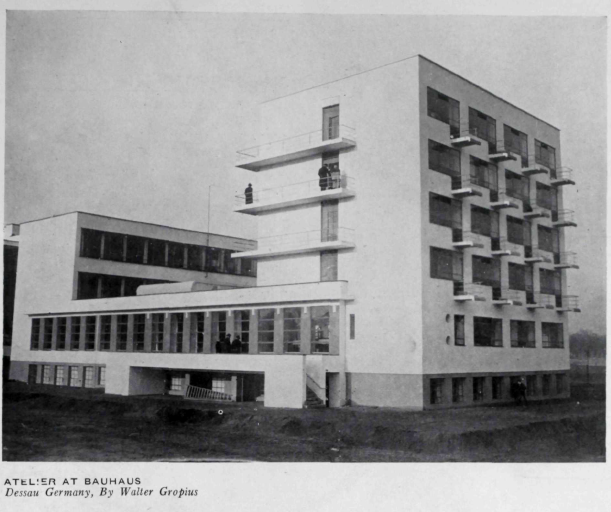
Image from Exposition featured Walter Gropius-designed student studio apartments at the Bauhaus in Dessau, Germany. (Scan from the Exposition catalogue)

Little did Exposition visitors realize that the radical Bauhaus style on display would become ubiquitous in the U.S. in the second half of their century, thanks not to some new machine age of peace and harmony but rather because of the annihilation of the Second World War and the mass migration from Europe of architects, artists, scientists and other professionals fleeing Nazi oppression.

screen-shot-2016-09-28-at-4-38-35-pm
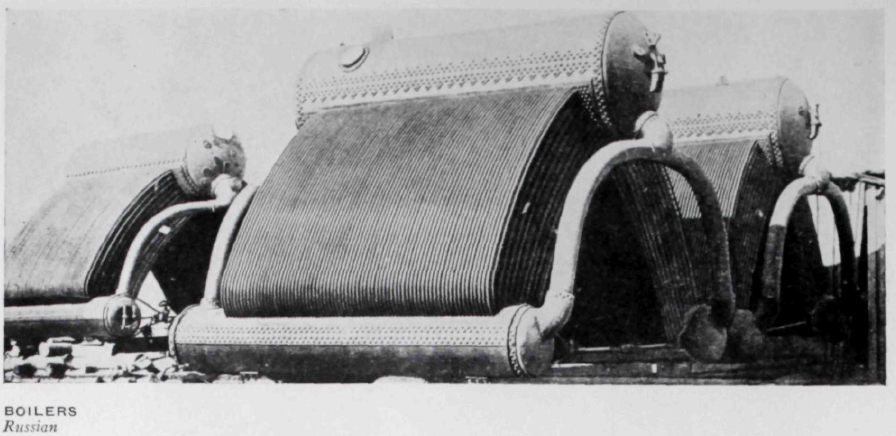
This image of giant steam boilers from Russia was displayed at the Exposition. (Scan from the Exposition catalogue)

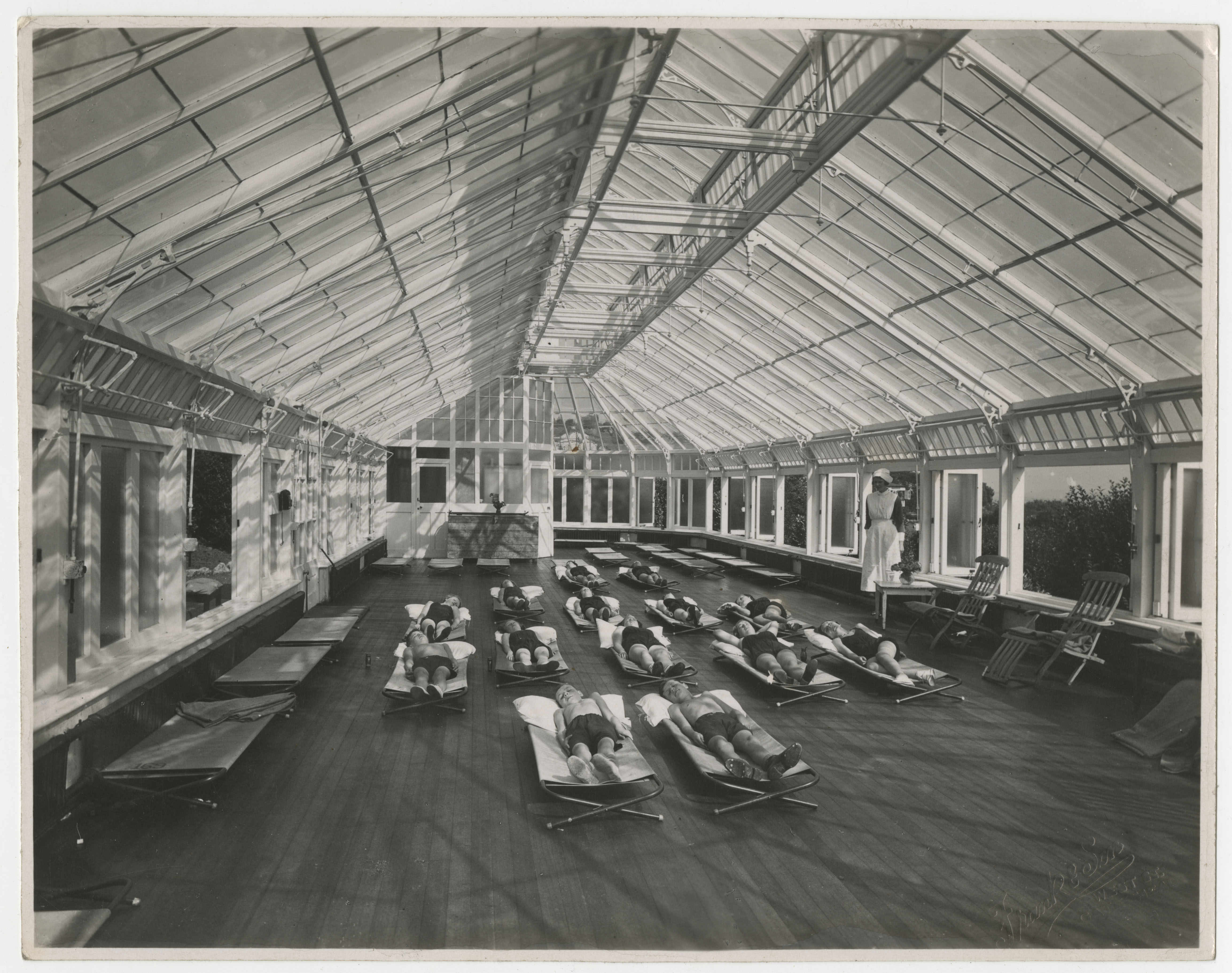
It was also a time when it was believed technology was on the verge of conquering nature, and that the invention of air-conditioning and “Vita-Glass” would create indoor environments with all of the health benefits but none of the discomforts of the outdoors:

screen-shot-2016-09-26-at-3-38-27-pm

screen-shot-2016-09-26-at-3-38-36-pm

hosp-stan-11-01-31
Children at rest in a “Vita-Glass” pavilion, built in 1927 at Stannington Sanatorium, Northumberland. Used primarily in the treatment of those with pulmonary TB, the glass was designed to allow ultraviolet rays to penetrate easily while protecting patients from the elements. (northumberlandarchives.com)

The invention of sulfa drugs and antibiotics was still a few years away, so health providers were excited about the possibilities of these artificial environments.

 *  *  *

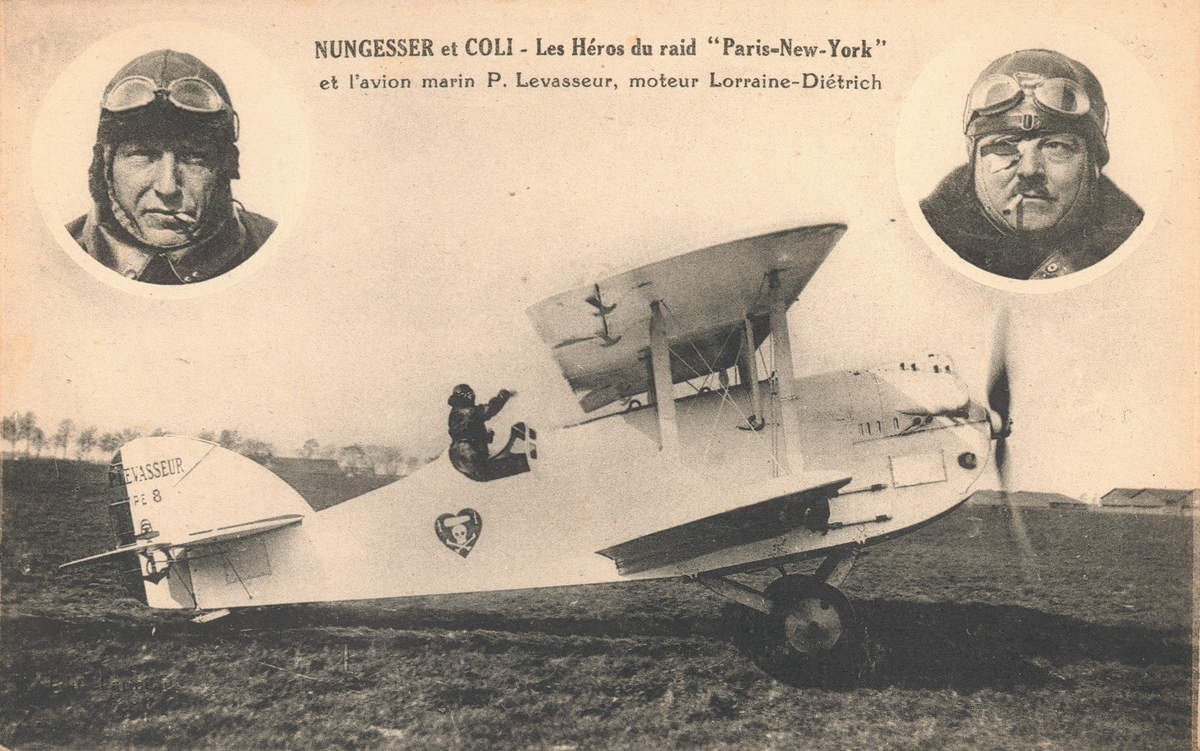
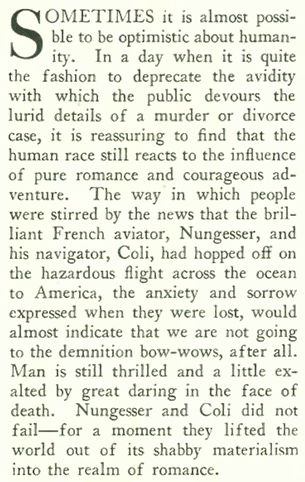
In the “A Reporter at Large” column, Russell Owen wrote about the intrepid aviators who were vying to become the first to fly nonstop across the Atlantic. He began the piece with a tribute to French ace pilot Charles Nungesser and his one-eyed wartime buddy François Coli, who disappeared during their May 8 attempt to fly from Paris to New York.

carte_postale-nungesser_et_coli-1927
A 1927 postcard commemorating Nungesser, Coli and their airplane, The White Bird (L’Oiseau Blanc).

screen-shot-2016-09-26-at-3-58-11-pm

Owen also wrote about those who would soon be taking the same daring leap into “the illimitable terror of space”…

screen-shot-2016-09-26-at-3-57-16-pm

screen-shot-2016-09-26-at-3-57-24-pm

Although Charles Lindbergh had yet to accomplish his transatlantic feat, he had already been singled out as a loner and a bit of an odd duck:

screen-shot-2016-09-26-at-3-53-40-pm

screen-shot-2016-09-26-at-3-53-51-pm

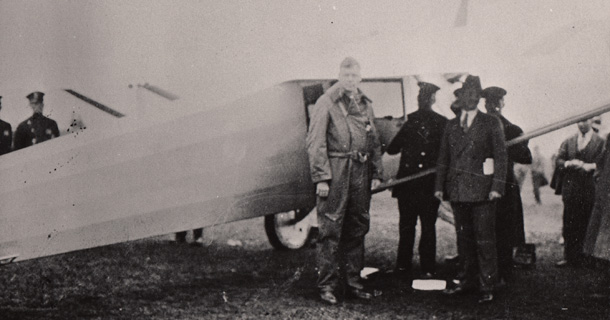
Charles Lindbergh preparing for his transatlantic flight. (Long Island Press)

 *  *  *

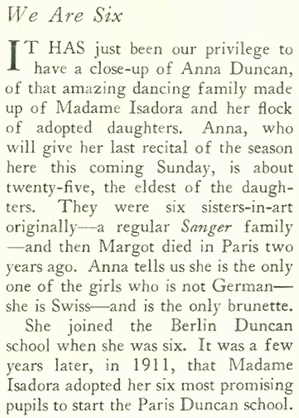
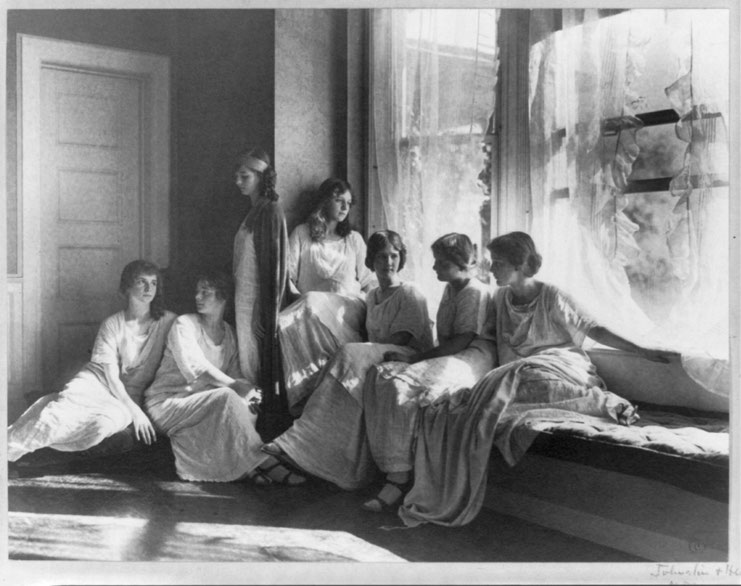
Editors of “The Talk of the Town” also checked in on famed dancer Isadora Duncan, her eldest daughter Anna, and Isadora’s “amazing dancing family…”

screen-shot-2016-09-26-at-3-37-13-pm

anna-duncan-dans-la-berceuse-choregraphie-d-isadora-duncan-musique-frederic-chopin-photo-arnold-genthe-1920-courtesy-of-tanzarchiv-koln-allemagne
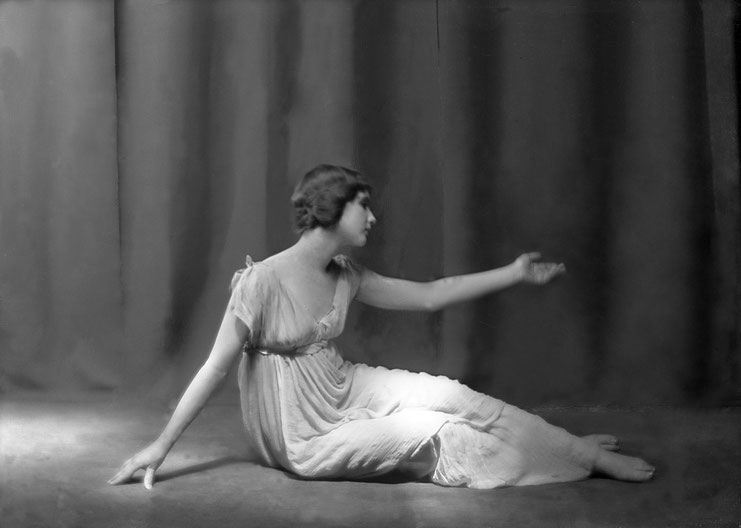
Anna Duncan dances La Berceuse, choreographed by Isadora Duncan with music by Frédéric Chopin, in 1920. Photo by Arnold Genthe. (Tanzarchiv, Cologne, Germany)

screen-shot-2016-09-26-at-3-37-32-pm

isadora-s-dancers-by-frances-benjamin-johnston-1864-1952-photographer-public-domain-via-wikimedia-commons
Isadora’s Dancers, by photographer Frances Benjamin Johnston. (Wikimedia Commons)

 *  *  *

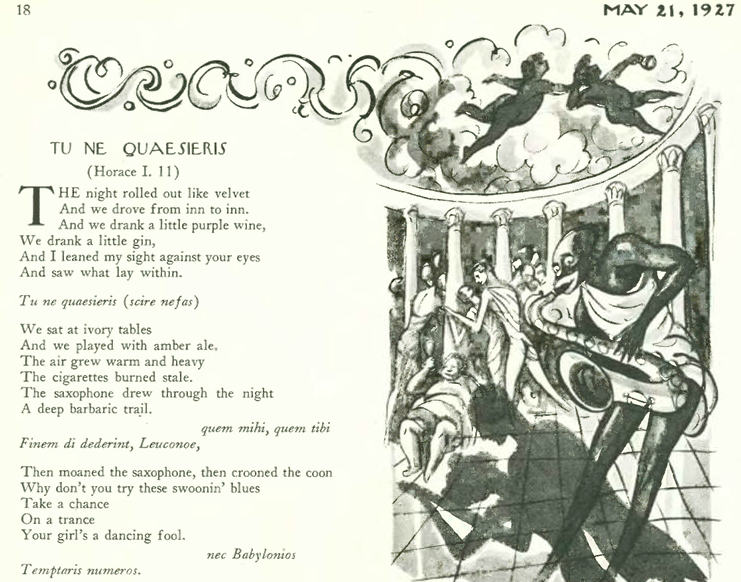
And finally, an excerpt of a poem contributed by Marion Clinch Calkins—who often wrote humorous rhymes for the New Yorker under the pen name Majollica Wattles. Here she riffs on Horace’s “poetry of pleasure…”

screen-shot-2016-09-26-at-3-49-19-pm

Next Time: The Flying Fool…

may-28

Those Restless Natives

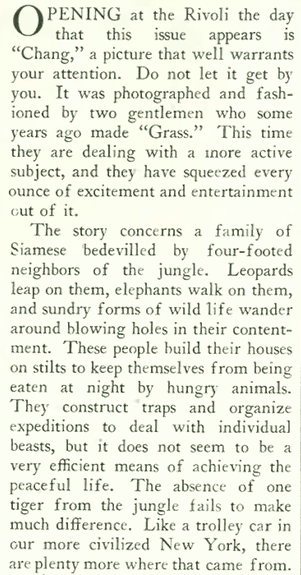
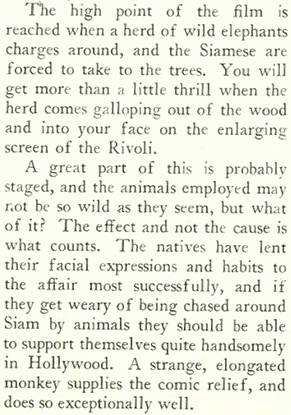
The evolution of filmmaking in the 1920s included the development of “docudramas.” Nanook of the North (1922), which captured the struggles of an Inuit hunter and his family, was received with great acclaim. A few years later Grass (1925), directed by Merian C. Cooper and Ernest B. Schoedsack, followed a tribe in Iran as they guided herds to greener pastures. So when Chang: A Drama of the Wilderness opened at the Rivoli, The New Yorker was there (May 7, 1927) to share in the adventure.

43b9e74a7197a3d27d520d251a303549
May 7, 1927 cover by Ilonka Karasz.

Chang, also directed by Cooper and Schoedsack, told the story of a poor farmer and his family (native, nonprofessional actors) in Issan—now northeastern Thailand—and their constant struggle for survival in the jungle. Cooper and Schoedsack attempted to depict real life but often re-staged events. The danger, however, was real to all involved, as was the slaughter of animals in the film.

chang_poster
(Wikipedia)

According to Ray Young, writing for Viennale, the website for the Vienna International Film Festival (which is screening a retrospective of Chang this fall) Cooper and Schoedsack “open with scenes of domestic bliss and, offsetting title card warnings of the dangers of the jungle, a bucolic Eden ripe for development. But the tone soon shifts as tigers and leopards attack, and the picture evolves into a succession of episodes concerning their survival.”

The perils in Chang often feel rigged, notes Young, “most conspicuously in places where animals appear to have been killed simply for the benefit of the camera. By most accounts, Schoedsack did most of the filming while Cooper covered him with a rifle.”

chang-criticsroundup
I’D BE WARY OF THOSE GUYS TOO…Image from the filming of Chang. (criticsroundup.com)
elephant-stampede-from-chang-1927
JUST PASSING THROUGH…Elephants stampede a village in the film’s finale. (image capture from film)

Chang was nominated for the Academy Award for Unique and Artistic Production at the first Academy Awards in 1929. It was the only year when that award was presented (It lost to F.W. Murnau’s Sunrise: A Song of Two Humans).

However appalled as we are today by the film’s exploitation of humans and animals alike, those were different times, even for the usually discerning eye of The New Yorker:

chang-1

In 1927 most people had a very limited view of the non-Western world, which was perceived as both savage and exotic, populated by child-like “natives” who in this case “lent their facial expressions and habits to the affair most successfully…”

chang-2And so in 1927 we also encounter cartoons like this one by Alan Dunn that at once dismisses out-of-town conventioneers (here: an Elks Lodge) as a bunch of ignorant racists, yet the early New Yorker’s own depictions of Blacks were usually minstrel-era stereotypes.

screen-shot-2016-09-06-at-1-06-50-pm

 *  *  *

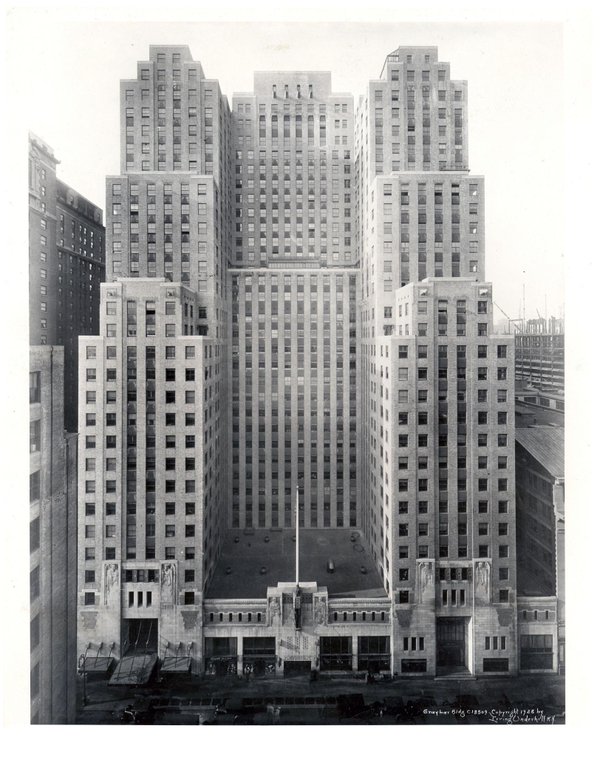
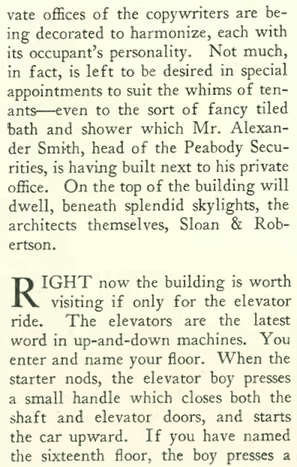
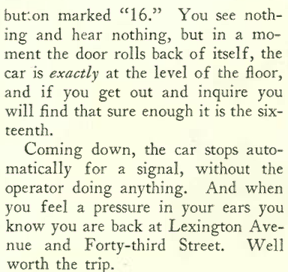
The massive Graybar Building made its debut at 420 Lexington Avenue, the multi-tiered edifice impressing the “Talk of the Town” editors with the latest technology, including push-button elevators: 

The Graybar Building (history.graybar.com)

screen-shot-2016-09-06-at-1-04-11-pm

screen-shot-2016-09-06-at-1-04-38-pm

screen-shot-2016-09-06-at-1-04-45-pm

graybar-building-2
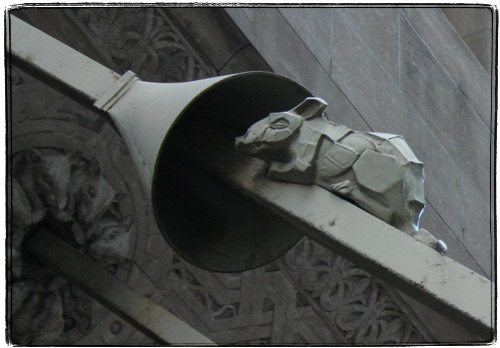
PERMANENT INFESTATION…The Graybar’s rain canopy cables include anti-rat devices (cones) decorated with rats. If you look carefully, the rosettes anchoring the cables are also decorated with rat heads. (deadprogrammer.com)

 *  *  *

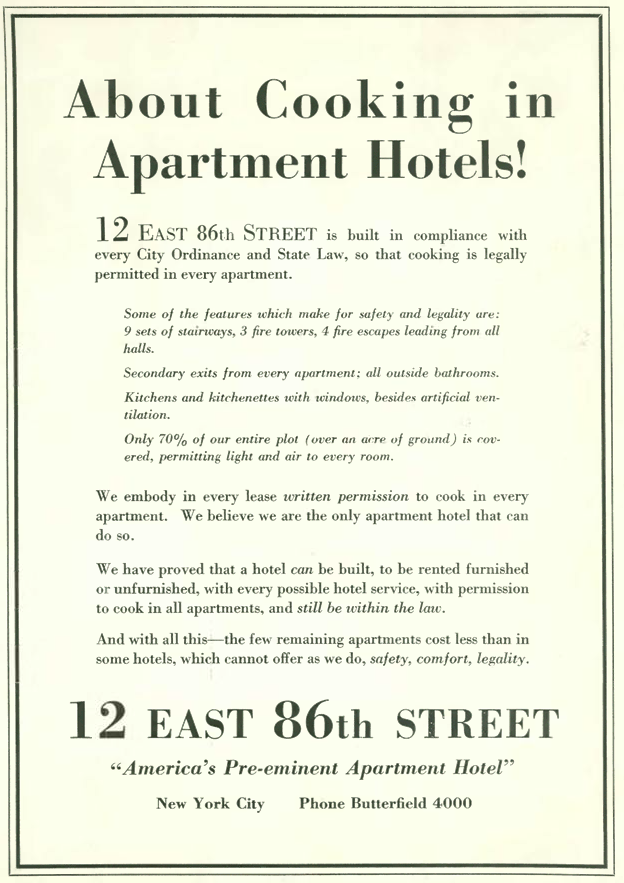
The following advertisement needs some explanation: The 1867 Tenement House Act imposed constraints on height and lot coverage that large apartment buildings routinely violated.

According to an article in the Observer by Stephen Jacob Smith (April 30, 2013), “Some developers got out of these requirements by building co-operative buildings, without rental units, but others wanted to retain the revenue and control that came with rentals, while at the same time building larger structures than the tenement laws allowed. And thus was born the ‘apartment hotel.'”

The New York Times’s columnist Christopher Gray wrote (Oct. 4, 1992) that Apartment Hotels were a “widespread fiction of the period,” and “tenants in fact usually set up full kitchens in the serving pantries.” Smith adds that “one of the reasons apartment hotels were allowed to be built more densely than their fully residential counterparts was that there would be no cooking—a fire hazard in those days—in the units.” An so the ad:

screen-shot-2016-09-06-at-1-08-22-pm

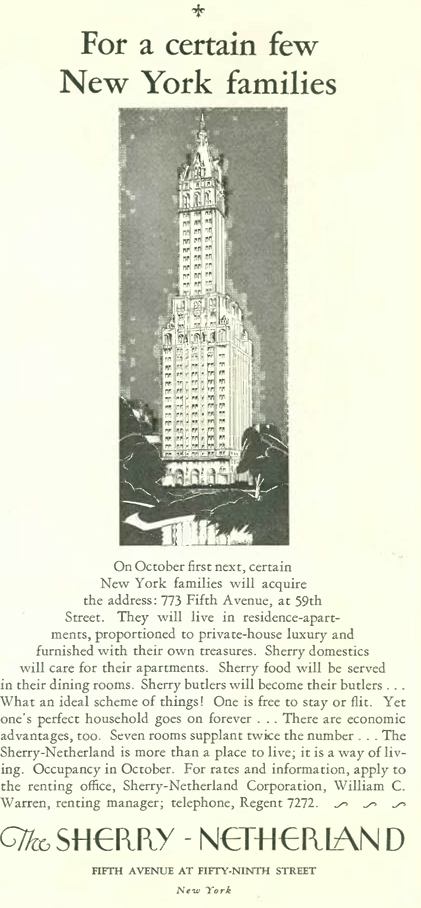
Smith writes that by calling their buildings ‘apartment-hotels,’ builders could claim that as hotels they were outside of the rules of tenement legislation. He notes that “some of Manhattan’s most illustrious buildings were constructed using this legal sleight of hand,” including the Sherry-Netherland on Park Avenue.

The famous scaffolding fire at the Sherry-Netherland, which I featured in my last post, no doubt prompted developers to run the following ad in hopes that people would soon forget about the giant roman candle that burned bright near Central Park on the evening of April 12, 1927.

screen-shot-2016-09-06-at-1-09-30-pm

If you are ever in New York, check out the Sherry Netherland. It is a beautiful building.

And finally, this ad from the makers of Wildroot hair care products. I love the flapper artwork by John Held Jr., and even better the words “CRUDE-OIL SHAMPOO” displayed prominently as a selling point.

screen-shot-2016-09-06-at-1-12-51-pm

Next Time: Mode de Vie…

304b9308de906b0c02f50b14add69c6d

The Enchanting Modernist

If you’ve been following the cover credits of the 113 issues I have featured so far, you’ll notice that many of the covers were illustrated by Ilonka Karasz, including the cover of the April 16, 1927 issue featured in this post.

1eeb12ad3b9cff3f5e529a466432adbe
April 16, 1927 cover by Ilonka Karasz. She would design 186 covers for The New Yorker between 1925 and 1973.

During her long and varied career Karasz would design 186 covers for the New Yorker. A native of Hungary, she moved to the U.S. in 1913 and settled in Greenwich Village, where she quickly rose to become a prominent practitioner of modern design and the decorative arts.

She created paintings, prints and drawings in her early years before moving on to a variety of machine- and hand-made objects rendered in silver and ceramic. She designed furniture strongly influenced by the European De Stijl movement, and was also a pioneer of modern textile design, even developing textiles for use in airplanes and automobiles.

Beginning in the 1940s Karasz would emerge as one of the country’s leading wallpaper artists. Her younger sister, Mariska Karasz, would also become a noted American fashion designer and textile artist.

The range of Ilonka Karasz’s work is astonishing—from homespun images of rural America to the sleek, hard edges of modern design; from textiles and wallpaper to silver sets and large-scale furniture.

Screen Shot 2016-08-26 at 12.56.52 PM
Ilonka Karasz’s first and last covers for The New Yorker: April 4, 1925 (left) and Oct. 22, 1973.
Screen Shot 2016-08-26 at 1.01.44 PM
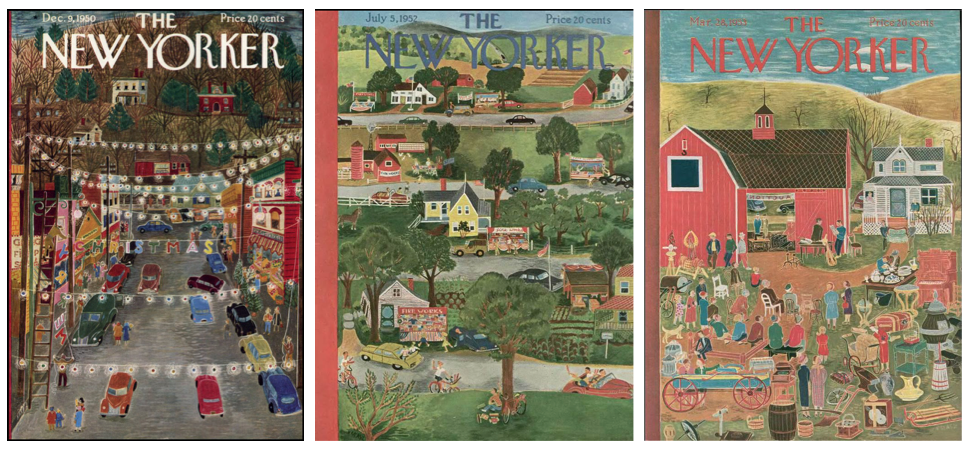
Many of Karasz’s covers were scenes of Americana—small towns, villages and farms. From left to right, covers from Dec. 9, 1950, July 5, 1952, and March 28, 1953.
Screen Shot 2016-08-26 at 1.40.05 PM
Ilonka Karasz, circa 1920s. At right, an illustration from her 1949 book, The Twelve Days of Christmas. (Wikipedia/Harper and Row)
Screen Shot 2016-08-26 at 1.24.21 PM
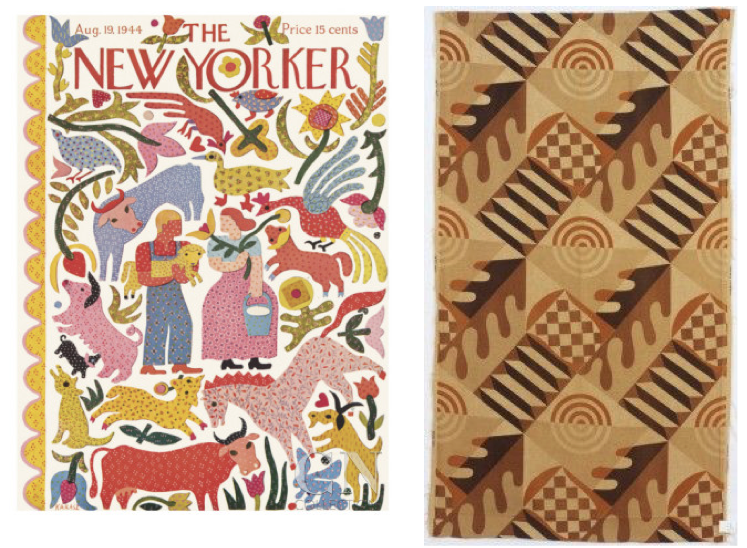
TEXTILE ARTIST…Karasz’s cover design for the Aug. 19, 1944 New Yorker (left), and an oak leaf-pattern textile in Mohair, 1928 (RISD)
Screen Shot 2016-08-26 at 1.28.38 PM
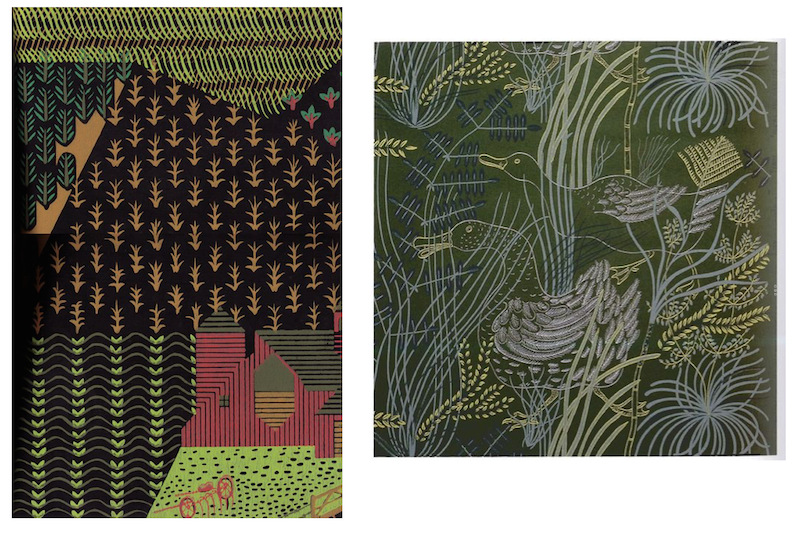
WALLPAPER…“Wisconsin,” a mid-century wallpaper design by Ilonka Karasz (left), and her “Ducks & Grasses” wallpaper from 1948. (Pinterest)
Screen Shot 2016-08-26 at 1.50.11 PM
Candlestick and small bowl by Karasz from a set designed for Paye & Baker, 1928. (Cooper Hewitt)
Screen Shot 2016-08-26 at 1.47.41 PM
Karasz’s mahogany desk from 1928 (Minneapolis Institute of Arts)

For more on Ilonka Karasz’s amazing career, see the Core77 article, Ilonka Karasz, 20th-Century Design Polymath, by Rebecca Veit.

Next Time: The Castle Builder…

8ccd85e651ca664aba48a8264a536d7a


Clark’s Folly

The breathtaking changes along Manhattan’s streets and across its skyline in 1927 were reflected in the New Yorker’s frequent accounts of venerable landmarks giving way to new skyscrapers.

Screen Shot 2016-07-26 at 9.29.38 AM
The Feb. 26, 1927 cover (left) is by an unknown artist. The March 5, 1927 cover is by Ilonka Karasz.

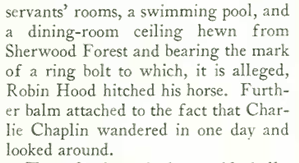
We’ll skip ahead for a moment to the March 5 issue in which the “Talk of the Town” editors reflected on the upcoming demolition of the William A. Clark house on Fifth Avenue and 77th Street, just 16 years after its completion in 1911. The editors noted that the empty house received many curious visitors in its last days, including the silent film star Charlie Chaplin:

Screen Shot 2016-07-26 at 8.57.04 AM

Screen Shot 2016-07-26 at 8.57.12 AM

NY_099_18
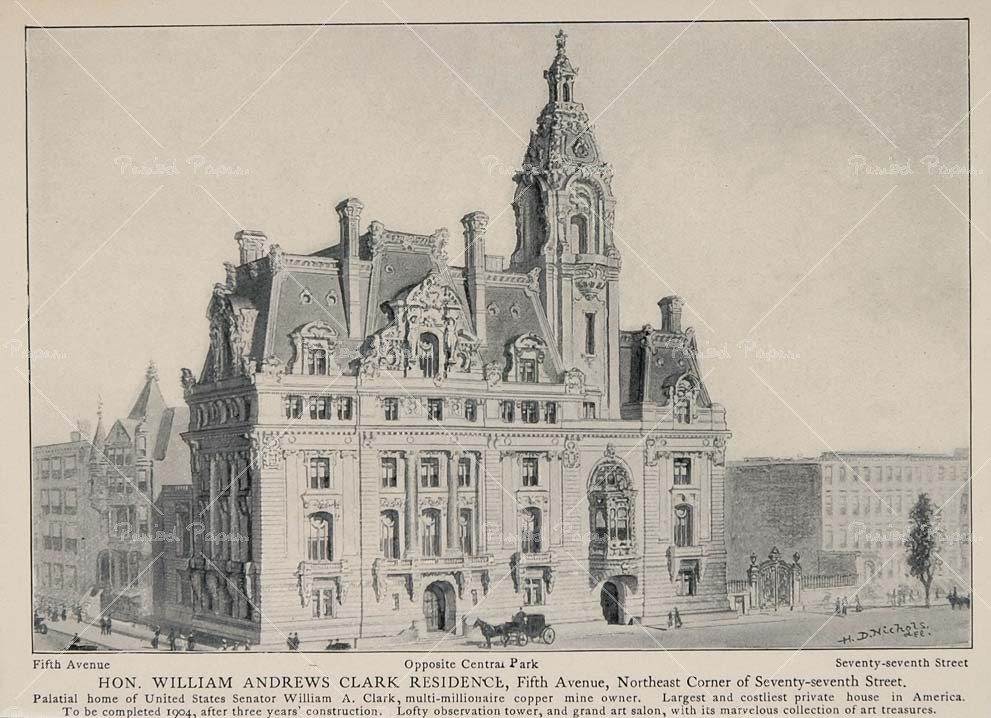
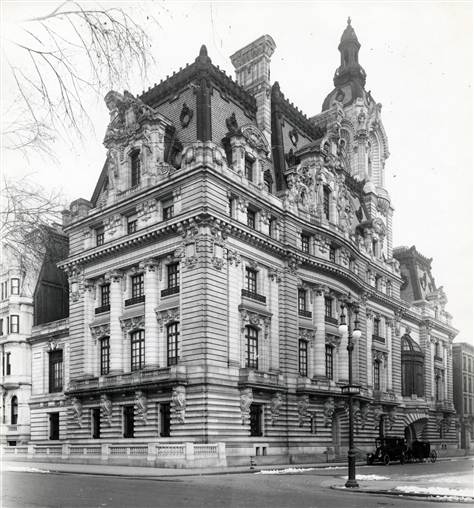
CURB APPEAL…This newspaper account of Clark’s planned mansion noted that it would be the largest and costliest house in America, and would take three years to complete. In fact, it took 13 years to finish the job, in 1911. Just 16 years later it would be demolished. (1889victorianrestoration.blogspot.com)

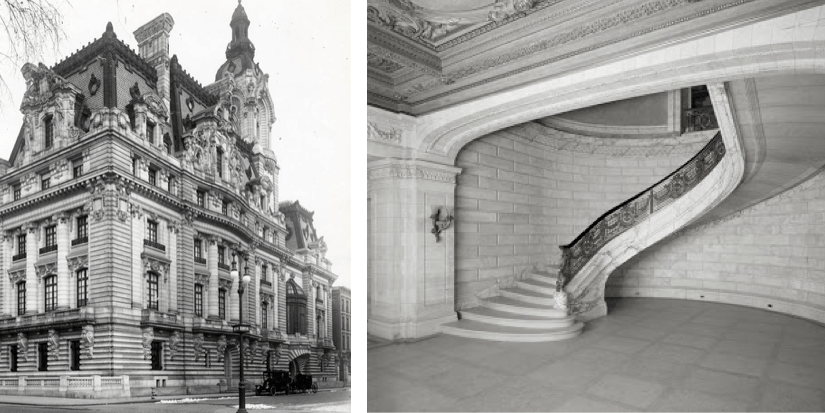
Clark was an enormously wealthy Montana entrepreneur (copper and railroads) and politician. His New York mansion, dubbed “Clark’s Folly,” took almost as long to complete—13 years—as its actual lifespan—16 years. In today’s dollars the house would cost nearly $200 million. It included imported marble from Italy, oak from England’s Sherwood Forest, and sections of whole rooms from old French Châteaus.

Clark-family-home-1907
The William A. Clark mansion on Fifth Avenue and 77th Street. (Museum of the City of New York)

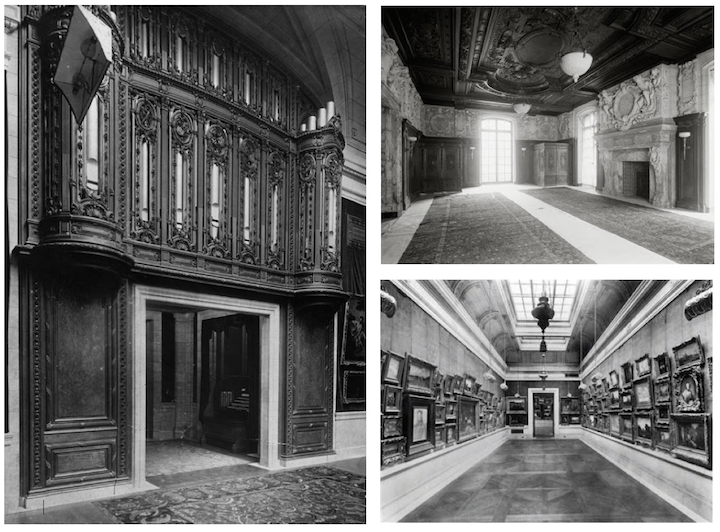
According to Wikipedia, the second floor featured a 36-foot-high rotunda, used as the statuary room. This opened onto a conservatory of solid brass and glass, 30 ft. high and 22 ft. wide. Across the rotunda was the marble-paneled main picture gallery that was 95 ft. long and two stories high. An organ loft housed the largest chamber organ in America.

The nine-story house contained 121 rooms, 31 bathrooms, four art galleries, a swimming pool and Turkish baths. High-tech for its times, with electricity and central air conditioning, it required seven tons of coal per day, brought in by a private subway line.

Screen Shot 2016-07-26 at 12.01.39 PM
PARTING SHOTS…Interiors of Clark’s “Folly” included the largest chamber organ in America (left), an immense dining room (upper right) and a two-story art gallery, a section shown below, right. The photos were taken just prior to demolition. Although some interior appointments were saved, the organ was apparently torn apart and dumped into a swamp in Queens. (Wikipedia)

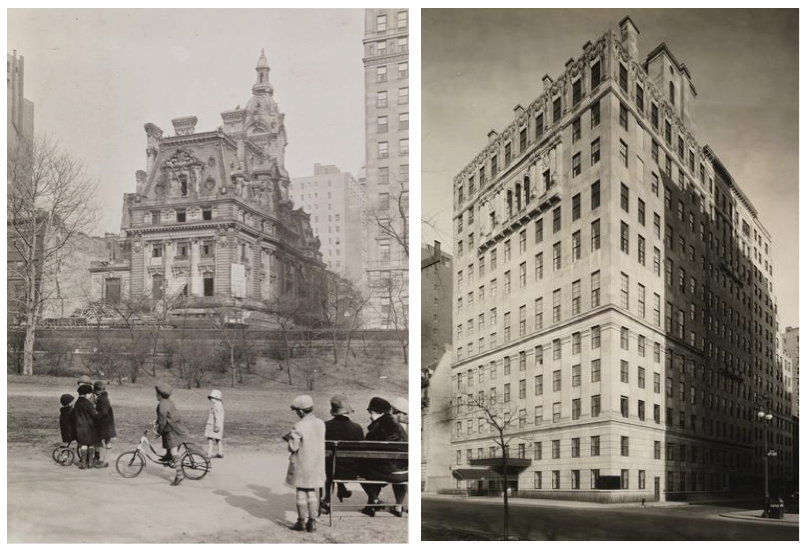
After Clark died in 1925, his daughter, Huguette, and her mother, Anna, moved to 907 Fifth Avenue and the mansion was sold to developer Anthony Compagana for $3 million (more than $40 million today). Compagana had it torn down, replacing it with a luxury apartment building.

Screen Shot 2016-07-26 at 12.34.05 PM
The demolition of “Clark’s Folly” (left) in 1927. A large sign on the mansion advertises modern apartments to come. (New York Historical Society). At right, the building that replaced it, 960 Fifth Avenue. (Museum of the City of New York).

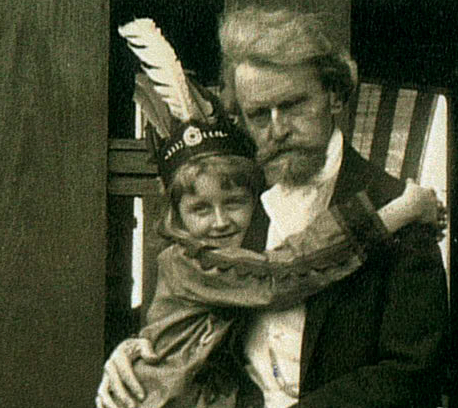
A footnote: Clark’s daughter and heiress, Huguette, would go on to own a $24 million Connecticut country estate and a $100 million estate in Santa Barbara, but would keep them uninhabited. Briefly married from 1928 to 1930, she became reclusive, holed up in her apartments at 907 Fifth Avenue until she moved to a series of hospital rooms beginning in the 1980s.

Huguette Clark in an Indian costume with her father, W.A. Clark, c. 1912.
HAPPIER TIMES…Huguette Clark with her father, William A. Clark, circa 1912. (EmptyMansionsBook.com)

Huguette died at age 104 in 2011. You can read more about her strange and fascinating life in Bill Dedman’s Empty Mansions: The Mysterious Life of Huguette Clark and the Spending of a Great American Fortune.

Architecture’s Middle Finger

Continuing the theme of the changing skyline, the Feb. 26 New Yorker featured this advertisement for the new Drake Hotel at Park Avenue and 56th Street:

Screen Shot 2016-07-25 at 12.01.17 PM

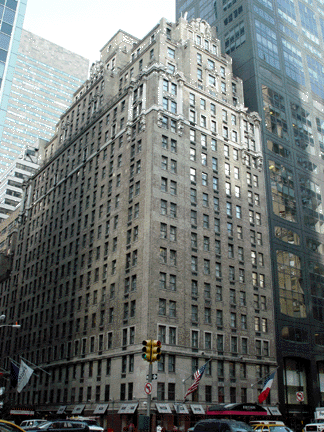
The hotel was built in 1926 by the real estate organization of Bing and Bing, 21 stories with 495 rooms. Like Clark’s Folly, it was innovative for its time, with automatic refrigeration and spacious rooms and suites.

It saw plenty of famous guests, from silent star Lillian Gish (she lived there for three years) to ’60s and ’70s rock bands like Led Zeppelin and The Who.

1137783985_drake
The Drake Hotel, demolished in 2007. (skyscrapercity)

Razed in 2007, the Drake Hotel was replaced by 432 Park Avenue. At 96 stories and 1,400 feet, 432 Park it is the tallest residential tower in the Western Hemisphere (as of August 2016).

432-Park-Avenue-New-York-Raphael-(dezeen.com)Vinoly_dezeen_sq
432 Park Avenue (Wikipedia)

Completed in 2015, the supertall 432 Park was designed for the superrich. The building has been maligned by many who find it not only ugly but also a stark representation of the city’s increasing cost of living and conspicuous displays of wealth. One blogger suggested that the building was giving the city “the finger.”

Even Fortune magazine’s Joshua Brown (“Meet the house that inequality built: 432 Park Avenue,” Nov. 24, 2014) noted “in a building so tall and imposing, with over 400,000 square feet of usable interior space, there are only 104 units for people to live in. 432 Park Avenue is, in short, a monument to the epic rise of the global super-wealthy. It is the house that historic inequality built.”

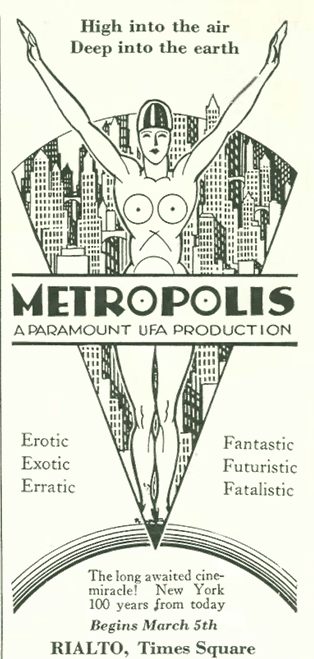
After reading about 432 Park, it seems appropriate that I spotted this advertisement in the New Yorker’s March 5, 1927 issue:

Screen Shot 2016-07-26 at 9.08.34 AM

Fritz Lang’s film Metropolis was set in a futuristic urban dystopia where the upper classes lived high above the toiling masses. Hmmm.

Next Time: World of Tomorrow…

2ab7711b486573bd3d0e3be1880afe36


All That Jazz

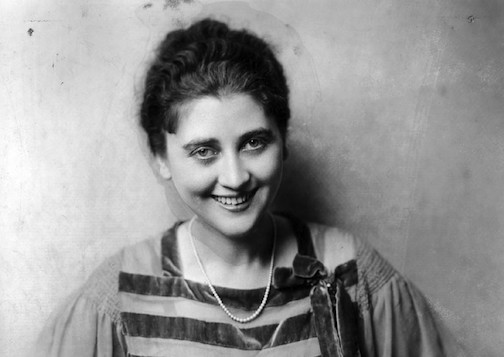
The New Yorker’s “Talk of the Town” editors were always in search of something to amuse, and in the Jan. 29, 1927 issue they found it in one Maurine Watkins, who wrote the Broadway hit musical Chicago (yes, THAT one) while still enrolled in her drama class at Yale:

Screen Shot 2016-06-21 at 12.08.32 PM

ct-flashback-chicago-murder-roxie-hart-fosse-yale-per-0315-jm-20150312
Maurine Watkins (Chicago Tribune)

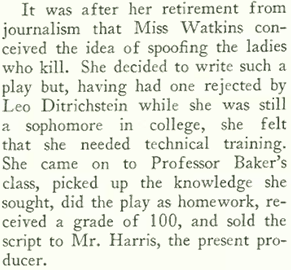
Watkins transformed a brief career as a Chicago Tribune crime reporter into her Broadway success, thanks to her fondness for writing about murderers:

Screen Shot 2016-06-21 at 12.09.22 PM

Chicago opened on Broadway in late December 1926 at the Sam Harris Theatre, where it ran for 172 performances. Watkins wrote the play as “homework” for her Yale drama class:

Screen Shot 2016-06-21 at 12.09.30 PM

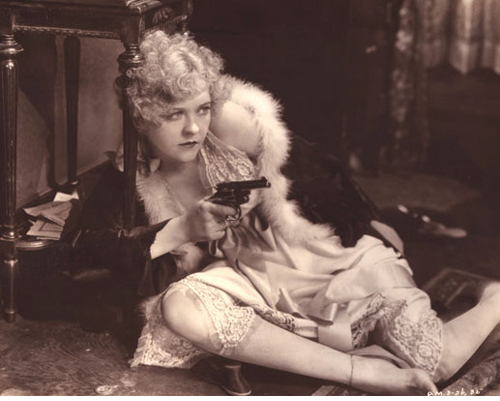
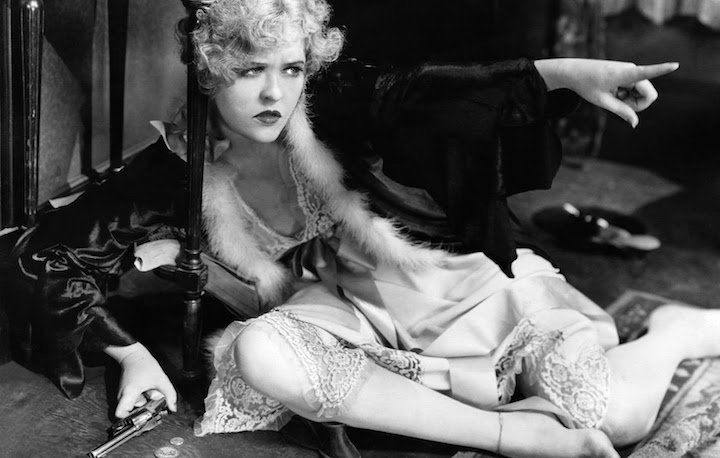
It didn’t take long for Hollywood to come calling, with Cecil B. DeMille producing a silent film version (directed by Frank Urson) in 1927.

phyllishaverroxie
Phyllis Haver as Roxie Hart from the 1927 film, Chicago. Ginger Rogers would play the role in the 1942 movie Roxie Hart, and Renée Zellweger would play the part in the 2002 film, Chicago. (chicagology)

Watkins would go on to write about twenty plays, moving on to Hollywood to write screenplays including the 1936 comedy Libeled Lady. She left Hollywood in the 1940s to be close to her parents in Florida. A lifelong Christian, Watkins spent much of her fortune funding the study of Greek and the Bible at some twenty universities, including Princeton. Following her death in 1969, her estate sold the rights to Chicago to famed choreographer and director Bob Fosse. Fosse would go on to develop Chicago: A Musical Vaudeville in 1975, which was revived in 1997 and turned into an Academy Award-winning film in 2002.

*   *   *

Winter doldrums had set into city, which was digging out of the latest snowstorm and leaving the “Talk” editors pining for spring.

b8a47deb10bba89d024899c9500bba81
January 29, 1927 cover by Ilonka Karasz.

So it was unwelcome news that the green lawns along Cottage Row were to become the latest casualties of the booming city:

Screen Shot 2016-06-21 at 12.06.43 PM

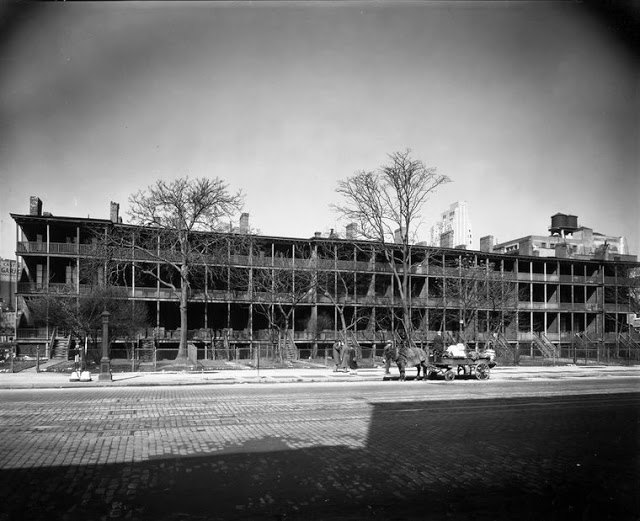
According to the excellent blog Daytonian in Manhattan, around 1848 William Rhinelander filled the 7th Avenue block between 12th and 13th Streets with eleven three-story homes above “English basements.” The simple residences were intended for middle-class families and sat more than twenty feet back from the street, providing grassy lawns and garden space. During summer weather each floor had a deep veranda that provided shade and caught cooling breezes.

rhinelander row abbott March 30 1936
This 1936 photograph by Berenice Abbott shows the abandoned “Cottage Row.” (Library of Congress)

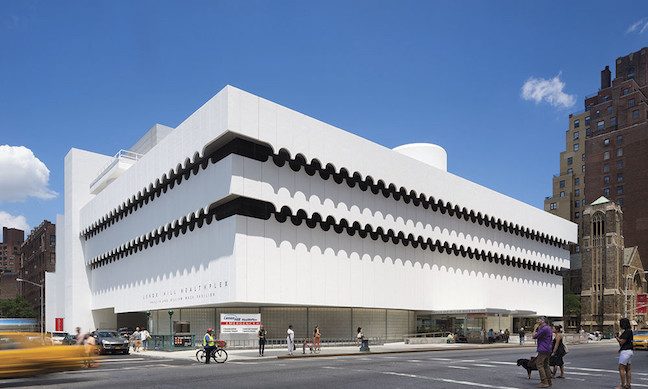
As it turned out, the green lawns won a brief reprieve: By the time developers got around to building an apartment on the site, the Depression hit and left Cottage Row standing for another ten years. It was demolished in 1937, replaced not by an apartment building but rather by a gas station and used car lot, which were replaced in 1964 by the Joseph Curran Building (now the Lenox Hill Healthplex):

Lenox-Hill-Exterior-1000x600
Today the Cottage Row site is occupied by the 1964 Joseph Curran Building (now the Lenox Hill Healthplex). Albert C. Ledner, a New Orleans architect, fancifully evoked seafaring themes in his design of the Curran Building, which originally housed the headquarters of the National Maritime Union. (MCD Magazine)

* * *

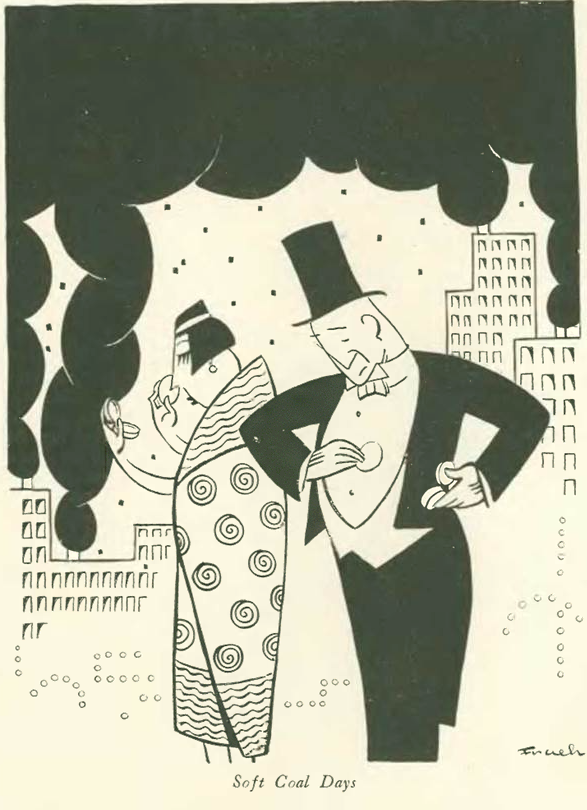
The winter drear was further compounded by the sooty smog that lingered over the city, fed by so many coal-fired furnaces. The “Talk” editors noted:

Screen Shot 2016-06-21 at 12.07.00 PM

Screen Shot 2016-06-21 at 12.06.53 PM

Screen Shot 2015-10-30 at 9.52.10 AM
A PERENNIAL NUISANCE…This Al Frueh drawing originally appeared in the Feb. 27, 1926 issue of the magazine.

To read more about “soft coal days,” see my previous post, “A Fine Mess.”

* * *


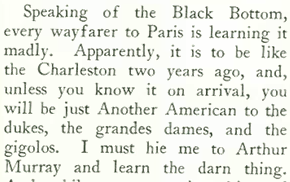
Columnist Lois Long (“Tables for Two”) was contemplating dance lessons to learn the “Black Bottom,” the dance craze that supplanted “The Charleston” in 1926.

Screen Shot 2016-06-21 at 12.17.23 PM

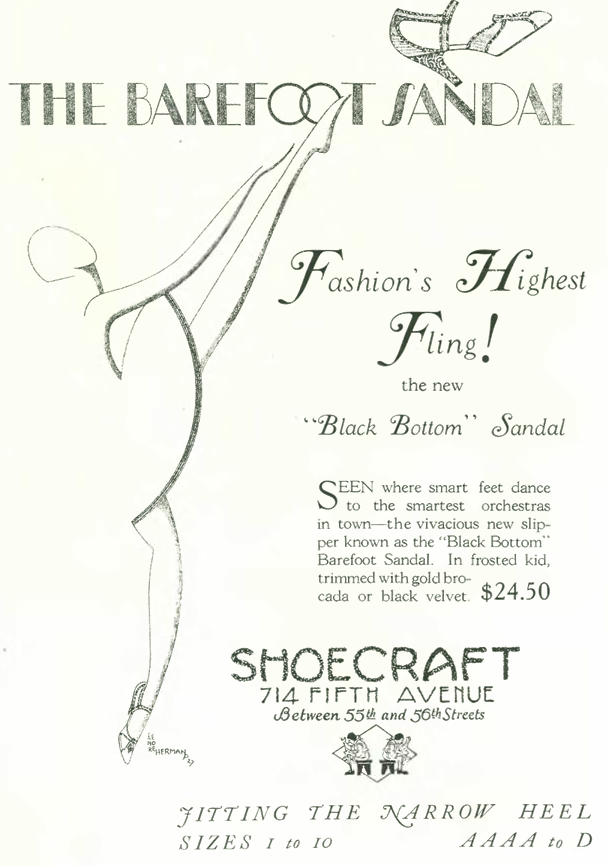
Apparently the dance called for special shoes, per this advertisement from the same issue:

Screen Shot 2016-06-21 at 11.53.19 AM

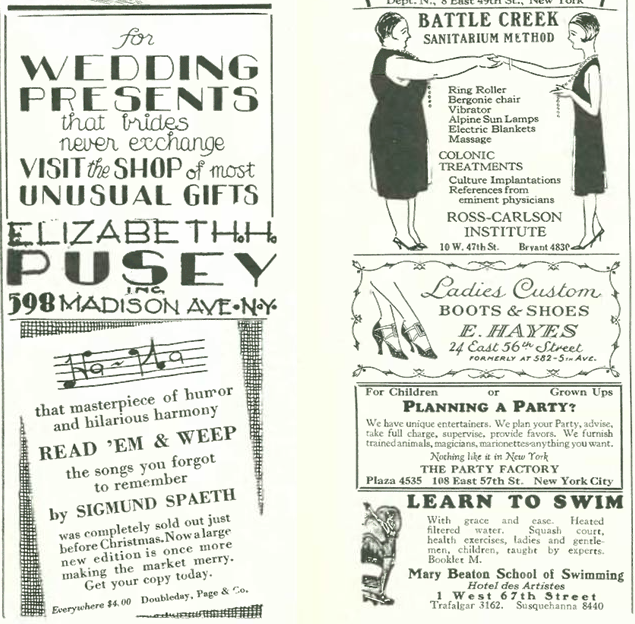
Up to now I’ve been posting images of often lavish ads featured mostly in the first sections of the magazine and on the front and back inside covers, but there were other, less expensive (and less artful) ads sprinkled in the back pages of the magazine, a tradition that continues to this day:

Screen Shot 2016-06-21 at 12.27.14 PM

Next Time: Spring Fever…

e4051b8c99ab27eb2272f12bb1634373