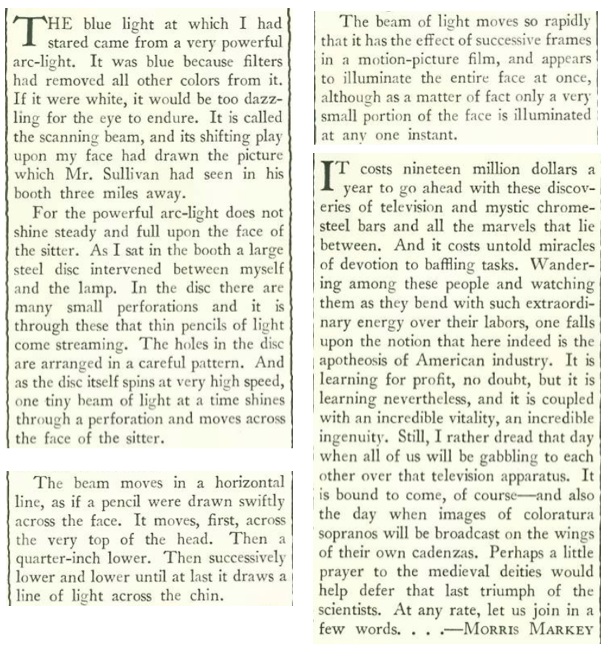
The next time you complain about a boring Zoom meeting, think about Morris Markey’s visit to New York’s Bell Laboratories in the spring of 1931, when he marveled at what was, perhaps, the “apotheosis” of American industry: a two-way video telephone.
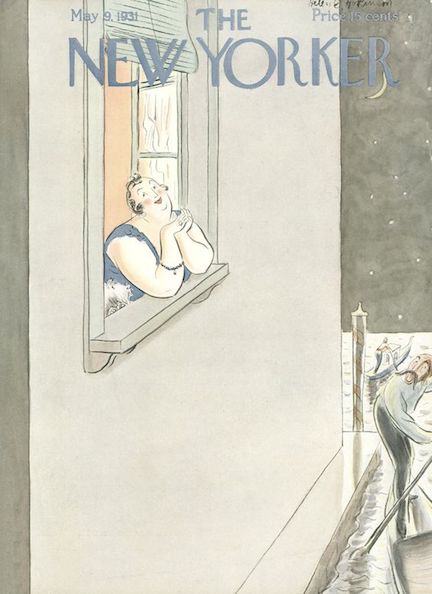
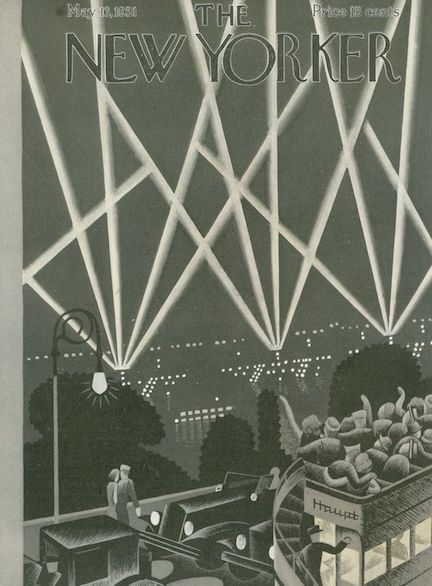
May 9, 1931 cover by Helen Hokinson.
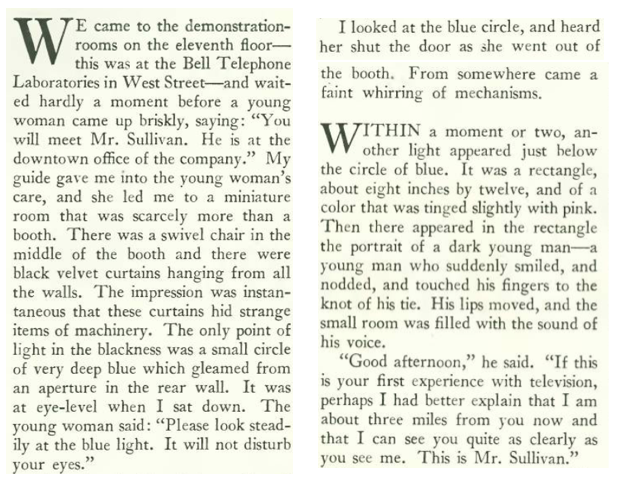
Mass-market television in the U.S. was still two decades away, but what Markey saw demonstrated in 1931 was a glimpse of the future, seeing and conversing with another man three miles away via a long wire that transmitted images from a fantastic array of spinning discs and neon tubes:
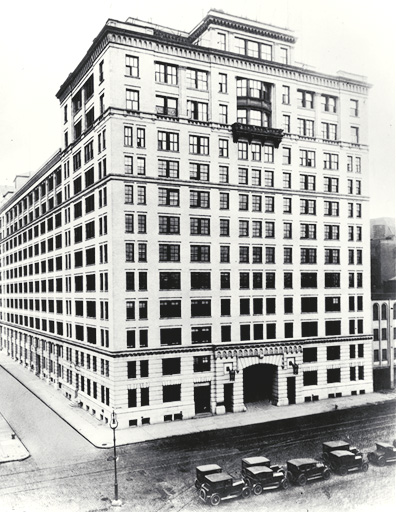
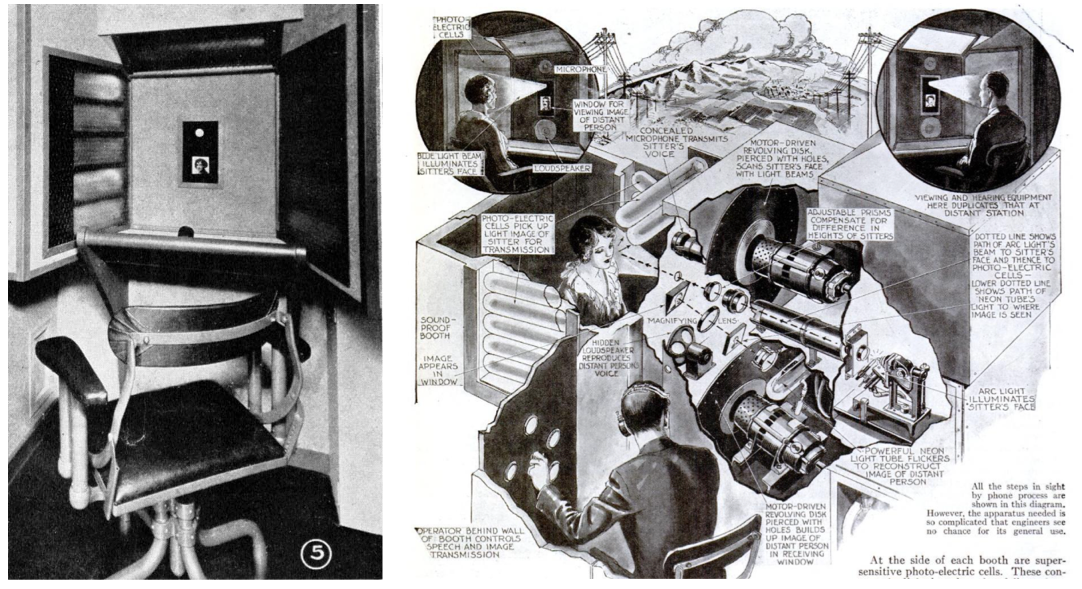
TECHNOLOGY’S MATERNITY WARD…The original Bell Labs building at 463 West Street in New York. It was the birthplace of talking movies, television, radar and the vacuum tube. (att.com)DEFINITELY NOT HI-DEF…At left, this is most likely where Morris Markey sat for the demonstration of early video phone technology. At right (click image to enlarge), a July 1930 article in Popular Science Monthly described how the transmitting apparatus worked. (earlytelevision.org/books.google.com)BUT WILL IT SELL?…Herbert Hoover, then secretary of commerce, became the world’s first television personality in 1927 when his voice and face (inset) were transmitted to an audience at Bell Laboratories in New York City. At the time, AT&T, Bell’s parent company, was doubtful about television’s moneymaking potential. (edn.com)SPINNING WHEELS…Whirling metal discs, pictured at left, perforated with tiny holes, cast a series of horizontal beams of light across a viewer’s face (right), which were then transmitted to a receiver. (earlytelevision.org)
Despite its gee-whiz factor, many, including the folks at Bell Labs, seemed doubtful that the technology would come into wider use or be profitable any time soon, if ever. Markey noted that his little demonstration required many millions of dollars in research and development, but he was prophetic in suggesting that such technology might come to be dreaded if it ever came into common use.
* * *
Uplifting Sight
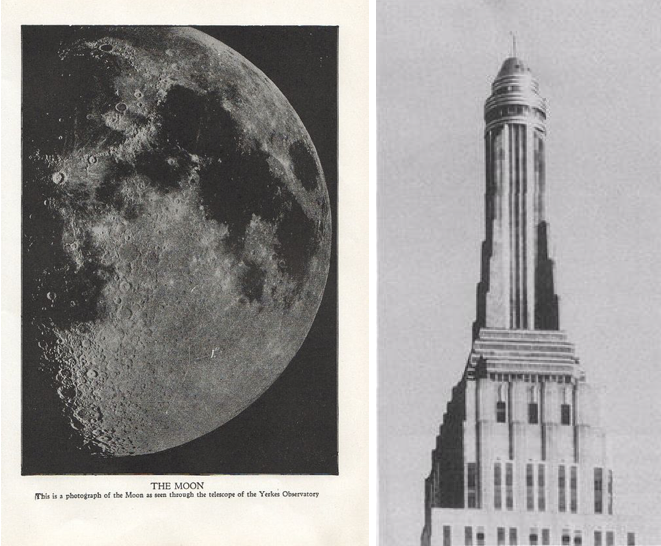
That a bra and girdle maker should become the topmost tenant at the new Empire State Building was not lost on E.B. White, who commented thusly…
…and while viewers wouldn’t actually see a giant bra atop the skyscraper, many were nevertheless interested in getting a closer look at some of the building’s details, as reported in “The Talk of the Town”…
OVER THE MOON?…The moon gained some keen competition from telescope viewers when the Empire State Building climbed its way into the sky. (Pinterest/tech-notes.tv)
* * *
Channelling Marlene
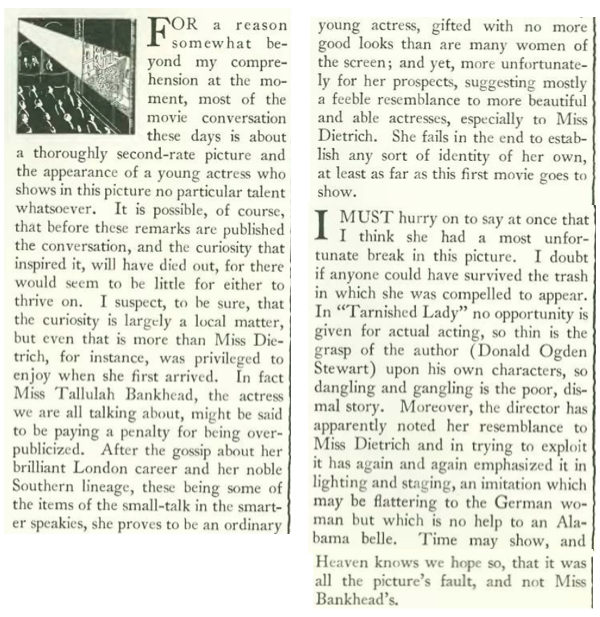
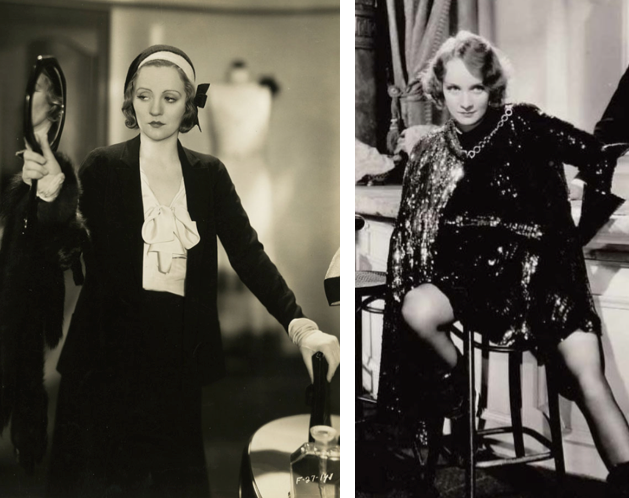
Film critic John Mosher wasn’t over the moon when it came to the acting of Tallulah Bankhead in Tarnished Lady, however he surmised it was likely the director’s fault for trying to exploit Bankhead’s passing resemblance to Marlene Dietrich. Mosher noted that lighting and staging flattering to the German actress just didn’t work with the belle from Alabama.
MIRROR, MIRROR…Tallulah Bankhead (left) might have pondered who was the fairest in the land, but The New Yorker’sJohn Mosher found her to be no match for German actress Marlene Dietrich (right, in 1931’s Dishonored) when it came to screen presence. (IMDB)
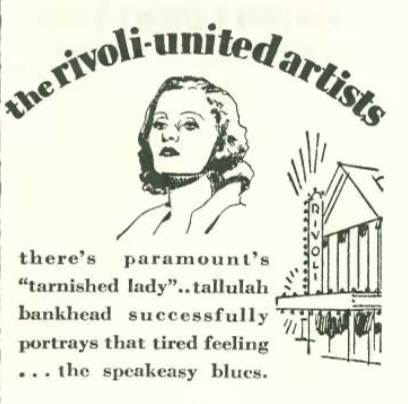
Despite Mosher’s blah review, Paramount touted Bankhead’s portrayal of a “tarnished lady” in this ad from the same issue:
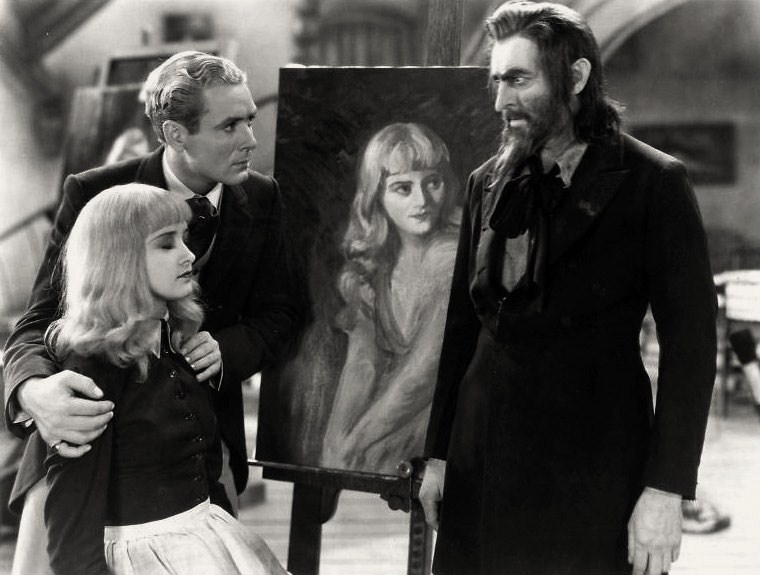
Mosher, however, found redemption in another film making the rounds, Warner Brothers’ Svengali starring John Barrymore:
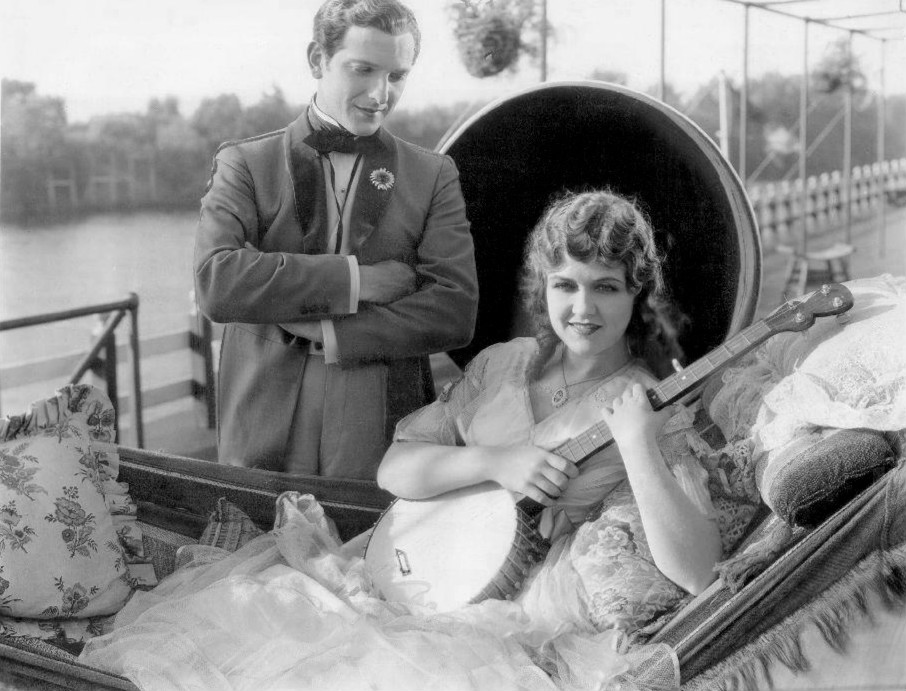
YOU ARE GETTING VERRRY SLEEPY…in 1931’s Svengali, 17-year-old Marian Marsh played the artist’s model Trilby, who is transformed into a great opera star by the sinister hypnotist, Svengali, played by John Barrymore. Also pictured is Bramwell Fletcher, who portrayed Trilby’s love interest, Billee. (Wikipedia)
* * *
From Our Advertisers
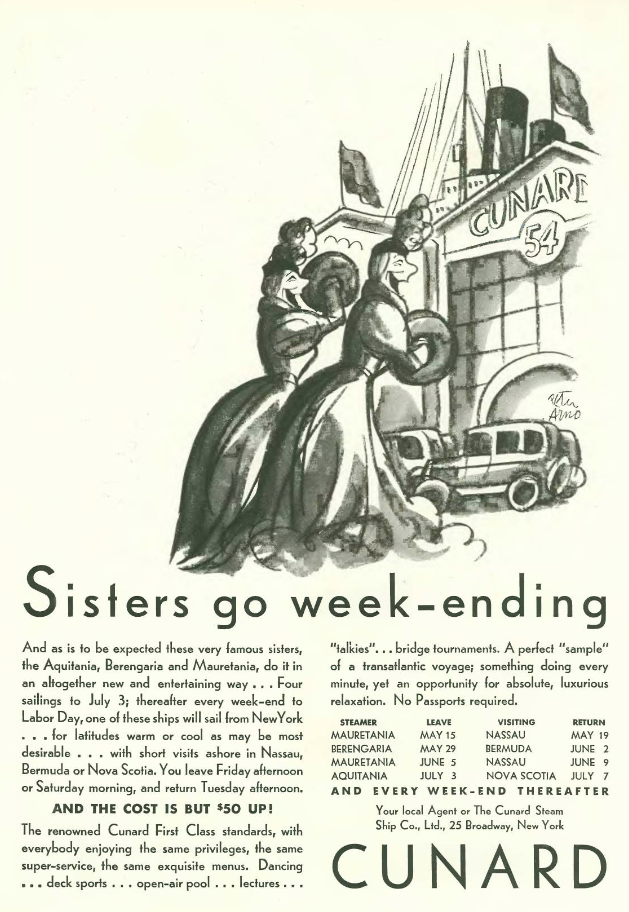
After a long absence, Peter Arno’s Whoops Sisters returned to the pages of The New Yorker, not as a cartoon panel but as shills for the Cunard Line…
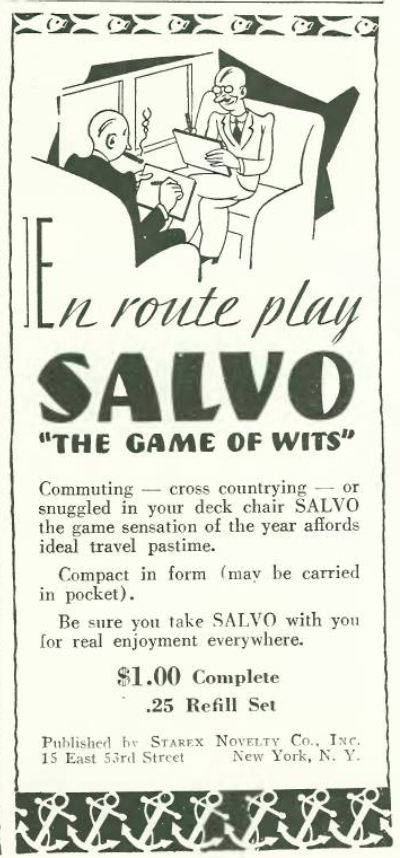
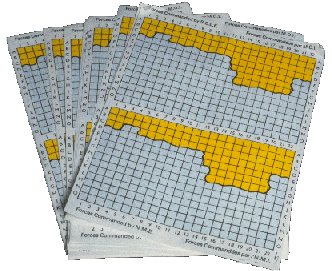
…whether traveling by boat or train, you might have considered bringing along “Salvo,” an early version of a popular game that today we call “Battleship”…
…Salvo and other Battleship-type games were originally played on pieces of paper like this…
…and here’s an ad for ice cube trays that exploited the popularity of the “Ripley’s Believe It or Not” syndicated newspaper feature…
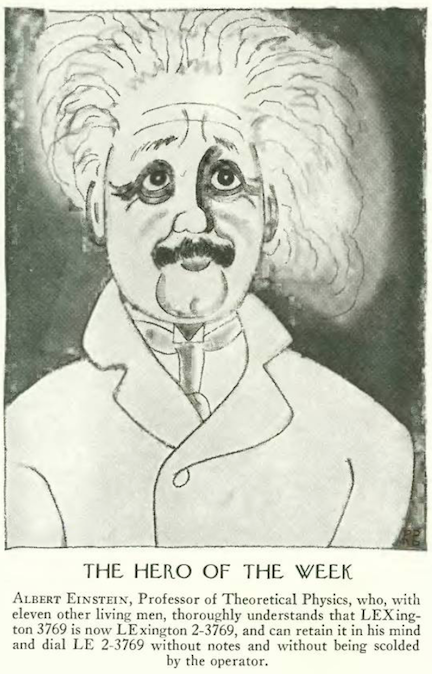
…on to our cartoonists, Ralph Barton rendered Albert Einstein as his latest “Hero”…
…and interpreted the latest headlines in his “Graphic Section”…
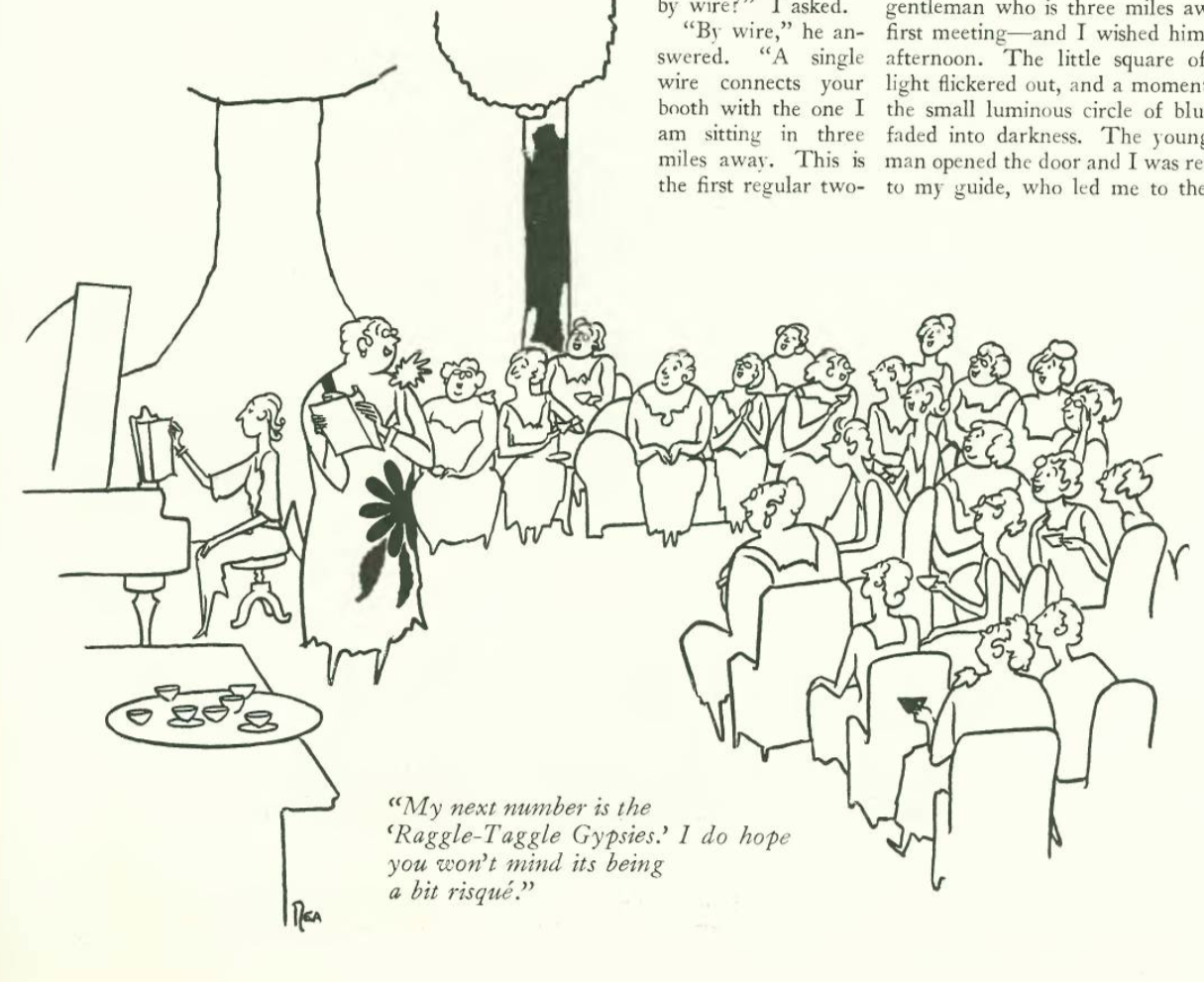
…among the delicate set, we got a bit risqué with Gardner Rea…
…and nearly apoplectic with Gluyas Williams…
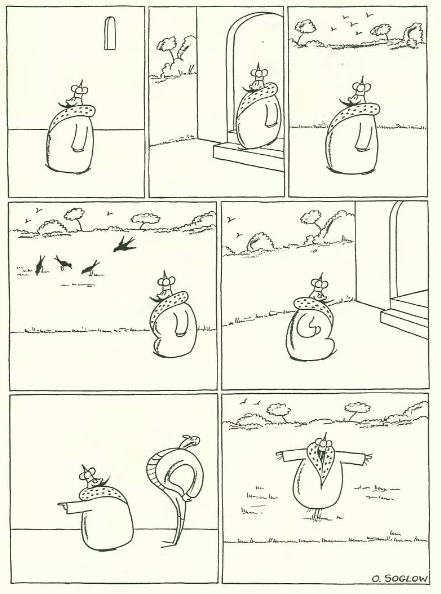
…Otto Soglow’s Little King, on the other hand, reigned with a steady hand…
…and we end with I. Klein, and a little bauble for the Missus…
Introduce the topic of the Wickersham Commission at your next dinner party and you will most likely be answered with a puzzled silence.
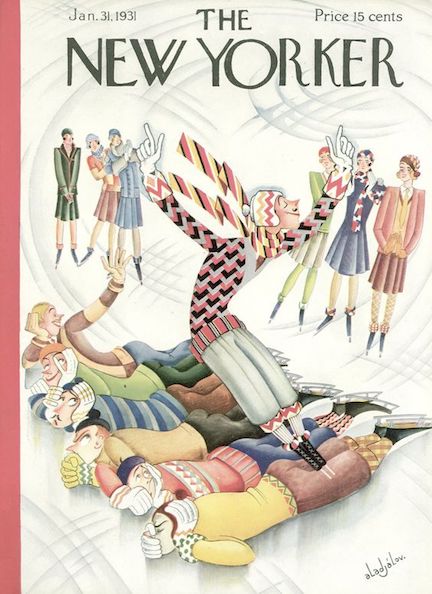
January 31, 1931 cover by Constantin Alajalov.
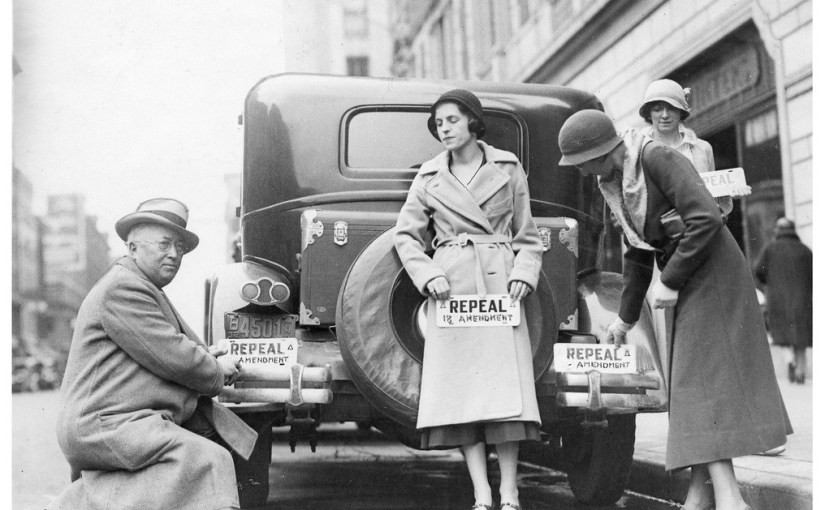
However, in January 1931 it was THE topic of the month, especially among New Yorkers keen to see the end of Prohibition, which was the focus of the commission.
Established by President Herbert Hoover, the 11-member Wickersham Commission (officially, the National Commission on Law Observance and Enforcement) was not seeking to repeal the 18th Amendment, but rather to examine the criminal justice system under Prohibition, everything from police brutality and graft to the rapid rise of organized crime.
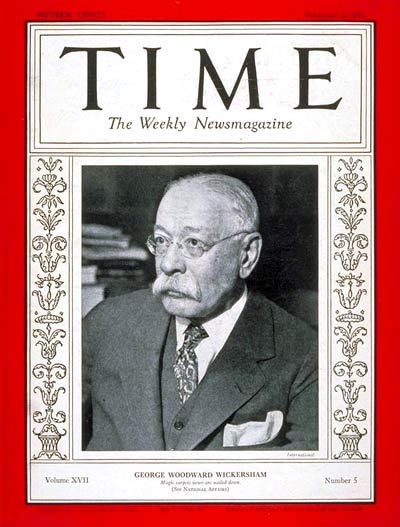
SOBER UNDERTAKING…George Wickersham was featured on Time’s Feb. 2, 1931 cover for his leadership on the National Commission on Law Observance and Enforcement, better known as the Wickersham Commission. (Time Inc.)
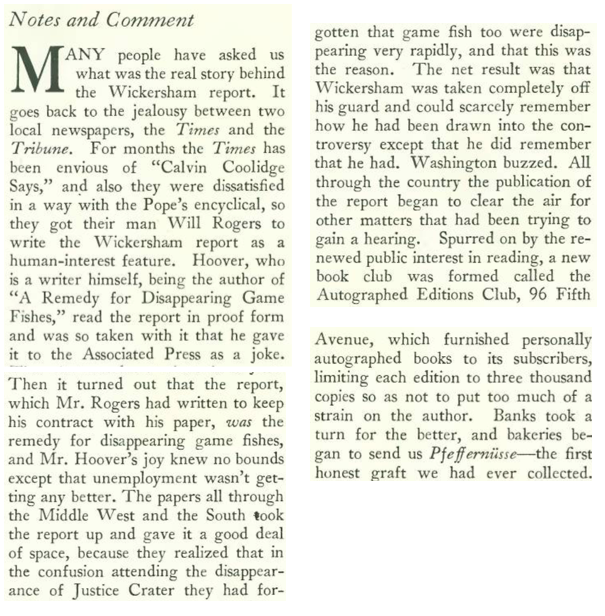
To the chagrin of many New Yorkers, the report (released on Jan. 7, 1931) called for even more aggressive enforcement of anti-alcohol laws.
This caused such a stir that The New Yorker dedicated the entire first page of “The Talk of the Town” to a satirical commentary furnished by E.B. White. An excerpt:
LEAVE MY NAME OUT OF IT…Former US Attorney General George Woodward Wickersham, left, was tapped by President Herbert Hoover to lead the National Commission on Law Observance and Enforcement. Humorist Will Rogers weighed in on the likely outcome of the Commission’s report. (Wikipedia/PBS)
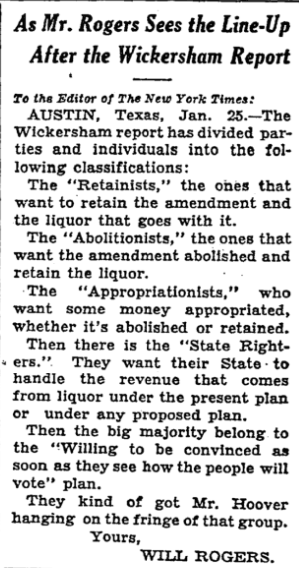
Humorist Will Rogers also commented on the report in this letter published on page 19 of the Jan. 26, 1931 edition of The New York Times…
…Algonquin Round Table co-founder Franklin P. Adams, on the other hand, summed up the Commission’s report with a poem:
Prohibition is an awful flop. We like it. It can’t stop what it’s meant to stop. We like it. It’s left a trail of graft and slime It don’t prohibit worth a dime It’s filled our land with vice and crime, Nevertheless, we’re for it.
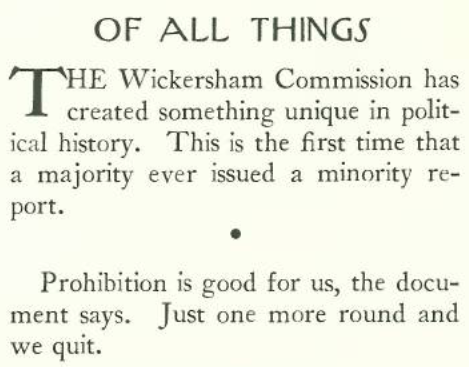
Back to The New Yorker,Howard Brubaker weighed in with his column, “Of All Things,” correctly noting that the majority of Americans wanted an end to Prohibition laws despite the Commission’s recommendations…
…and Rea Irvin gauged the mood of the parlor crowd in light of the report:
* * *
Polar Plunge
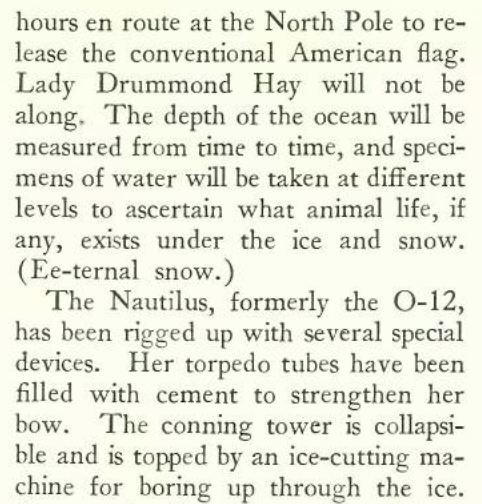
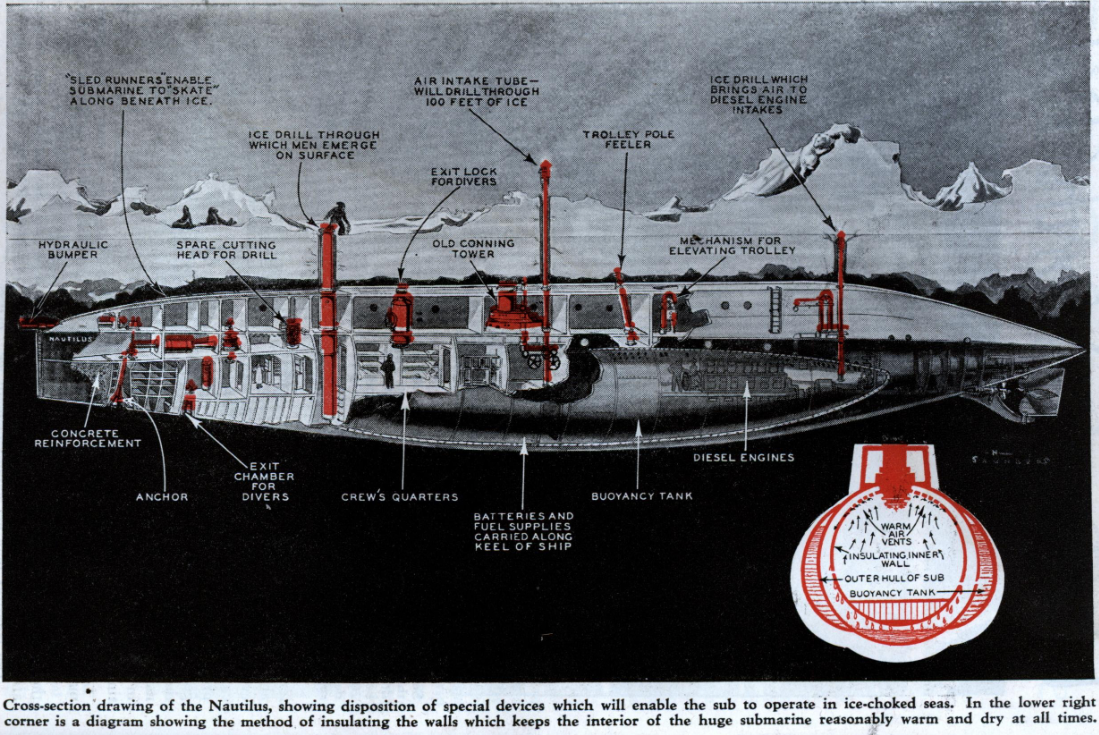
On to happier news, “The Talk of the Town” looked in on preparations for a North Pole trip by a refitted and renamed military submarine, Nautilus. An excerpt:
POLAR OBSESSED…Above, the Nautilus arrives at Plymouth, England, on June 26, 1931. It left New York City on June 4 on the first leg of a voyage that was to continue on to Spitsbergen, Norway and ultimately to the North Pole and a rendezvous with Germany’s Graf Zeppelin. At right, crew members Cornelius P. Royster, John R. Janson, and Harry Zoeller dine in the Nautilus galley, April 20, 1931. (amphilsoc.org)HOW IT WORKED…The June 1931 issue of Modern Mechanics asked the question, “Will the Nautilus Freeze Under the North Pole?” Stay tuned. (Modern Mechanix)
* * *
Dorothy, Abridged
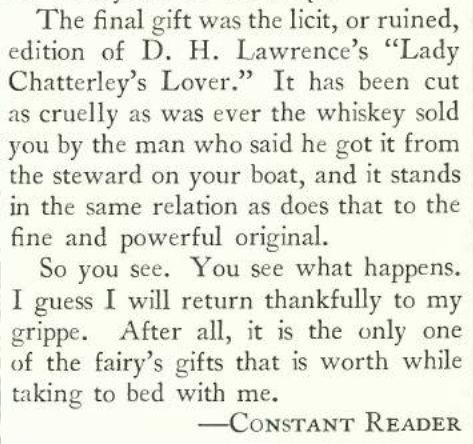
Laid up with the flu, Dorothy Parker turned to some reading during her convalescence, only to find that the books provided to her (for review) were far from uplifting. One in particular, a censored version of D.H. Lawrence’sLady Chatterley’s Lover, was downright galling. Excerpts:
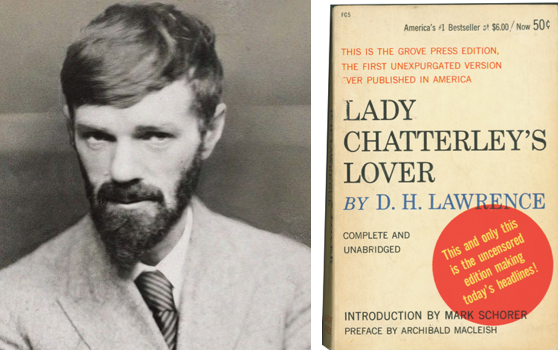
FIFTY SHADES OF EMBARRASSMENT…D.H. Lawrence’sLady Chatterley’s Lover was published privately in 1928 and swiftly banned by the United States the following year. Amazingly, the first unexpurgated edition would not be published in the U.S. until 1959, in the edition pictured above issued by the fledgling Grove Press. (mhpbooks.com/orbooks.com)
* * *
Old Before Her Time
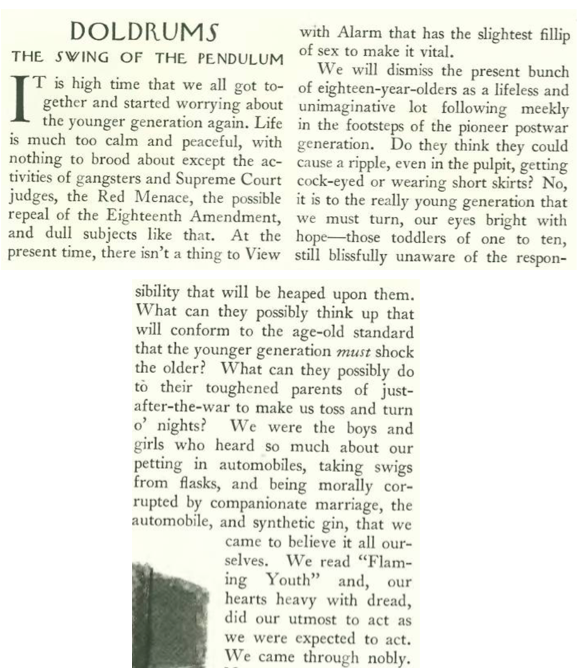
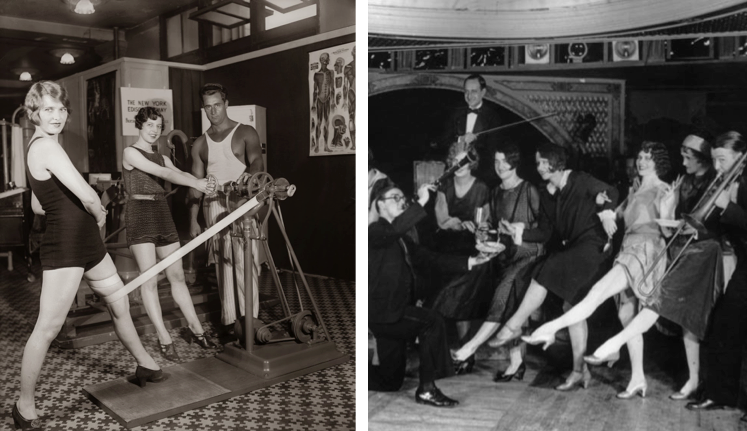
Lois Long was only 29 years old when she wrote her “Doldrums” series for The New Yorker, but the chronicler of Jazz Age nightlife who once epitomized the flapper lifestyle felt much older given how much the world had changed in just a few short years. She was particularly appalled by the younger generation’s embrace of “health and vitality” over her own generation’s lust for the party life…
GETTING THEIR KICKS…Lois Long was appalled by the new generation’s healthier pursuits, left, contrasted with the flapper lifestyle Long embodied in the 1920s. (Pinterest)
…Long was mother to a toddler at the time, and would divorce husband and New Yorker colleague Peter Arno in the spring. This, no doubt, contributed to her feeling of estrangement from the younger generation:
Endnote: Bernarr MacFadden (1868-1955), referred to above, was an early proponent of body building and healthy diets that anticipated the rise of physical culture icons such as Charles Atlas and Jack LaLanne.
* * *
The Last Warrior
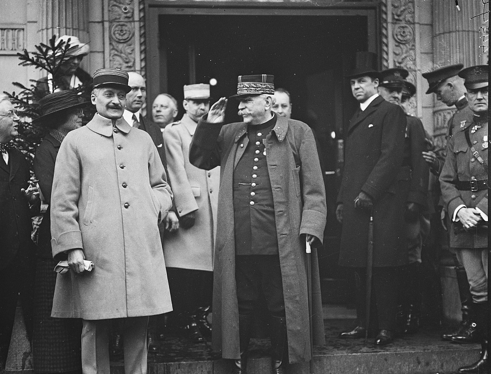
Paris correspondent Janet Flanner noted the passing of 78-year-old French Field Marshal Joseph Joffre, the last of the great World War I military leaders. Note that Flanner referred to Joffre’s war as “the world war,” since the next world war was still on the horizon.
AU REVOIR…French Field Marshal Joseph Joffre (saluting) in 1922. (Library of Congress)
* * *
From Our Advertisers
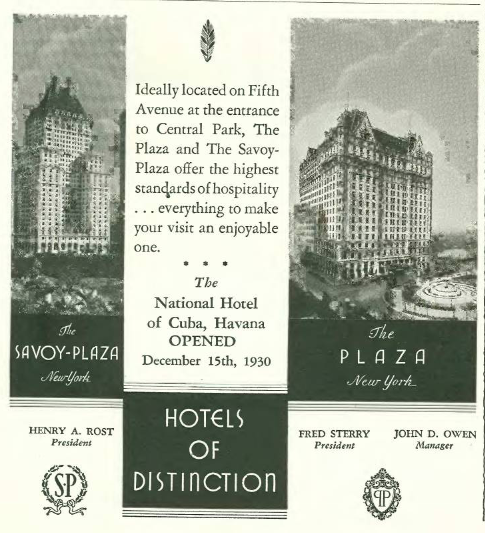
We have two of New York’s finest hotels advertised along with the newly opened National Hotel in Havana, Cuba. All three were under the same management at the time. The Cuban hotel would be heavily damaged two years later in a coup led by Fulgencio Batista. It would be restored, and eventually nationalized by Fidel Castro. The Savoy-Plaza would not be so lucky, demolished in 1965 to make way for the General Motors Building…
NOW YOU SEE IT, NOW YOU DON’T…The elegant Savoy-Plaza (left) was razed in 1965 to make way for the General Motors Building. (Wikipedia)
…and we have this lovely color ad from the makers of Alcoa aluminum chairs, which bespoke “the new vogue.” Alcoa created the market for aluminum furniture in the 1920s in an effort to increase demand for its aluminum products. It obviously worked, as all kinds of aluminum chairs and desks became ubiquitous by mid-century, especially in the workplace…
…on to our cartoonists…the Jan. 31, 1931 issue marked a big moment in New Yorker cartoons, as it featured James Thurber’s very first…
…Alan Dunn showed us a man who could not be distracted from financial woes…
…William Steig settled in as a New Yorker regular…
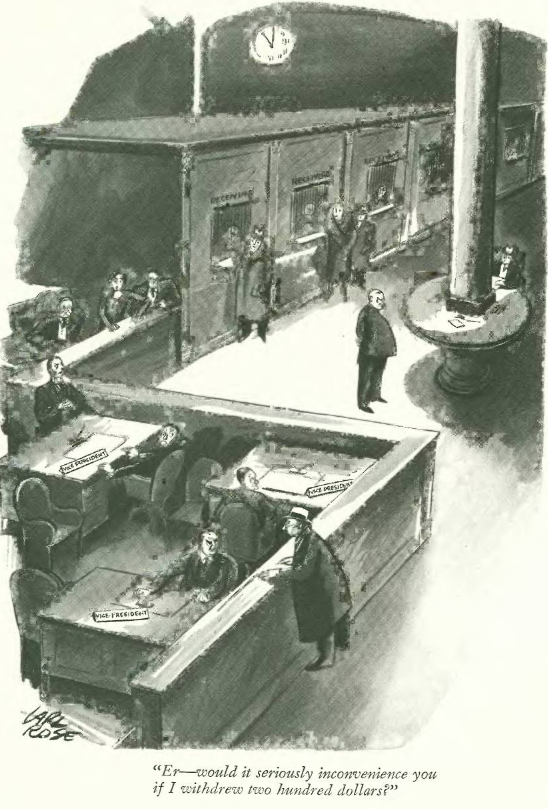
…Carl Rose gave us a lot of sour faces in a bank lobby…
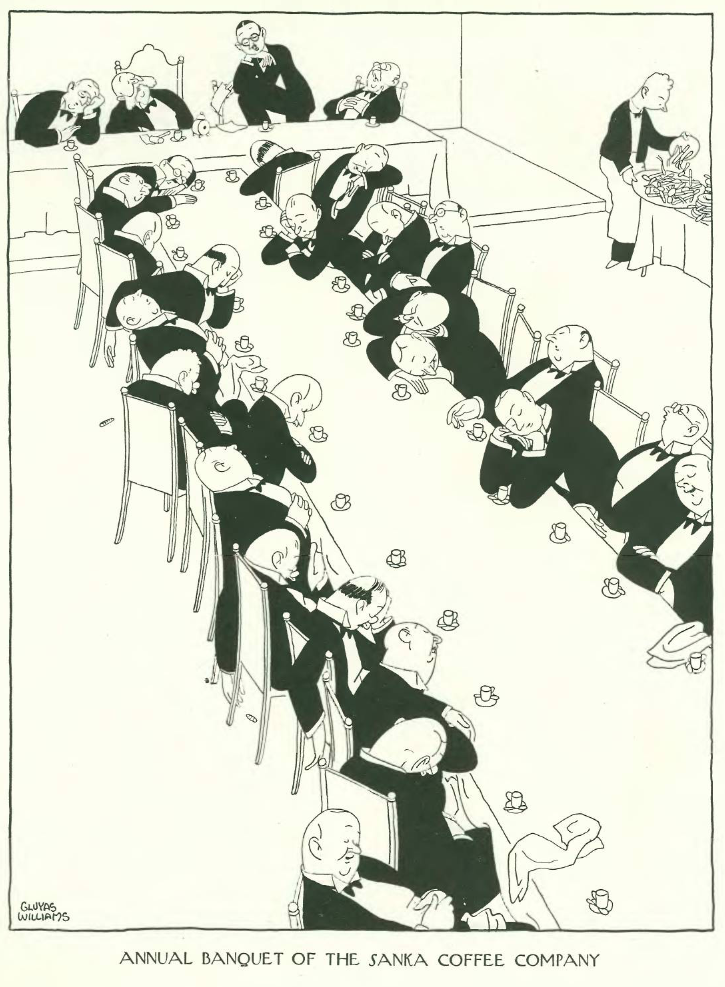
…and Gluyas Williams demonstrated the effects of decaf coffee…
…and before I go, here is a scene from the Third Academy Awards, which are referred to as the 1931 awards, although they were actually held on Nov. 5, 1930 in the Fiesta Room of the Ambassador Hotel in Los Angeles….
While the New Yorker was happy to send singer Marion Talley packing back to Midwest (see last post), it was wholly embracing one of its own, Molly Picon. But as we will see, it had every reason to do so.
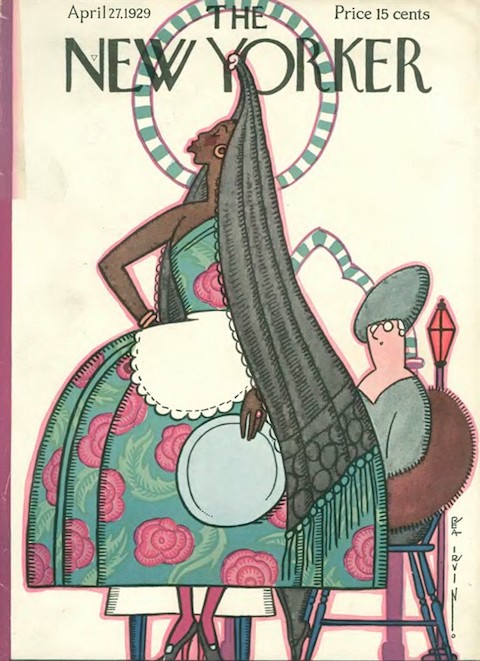
April 27, 1929 cover by Rea Irvin.
The daughter of Polish immigrants, Molly Picon (1898-1992) was born Małka Opiekun in New York City on Feb. 28, 1898, and became of a star of Yiddish theatre and film before moving to English language productions in the 1930s.
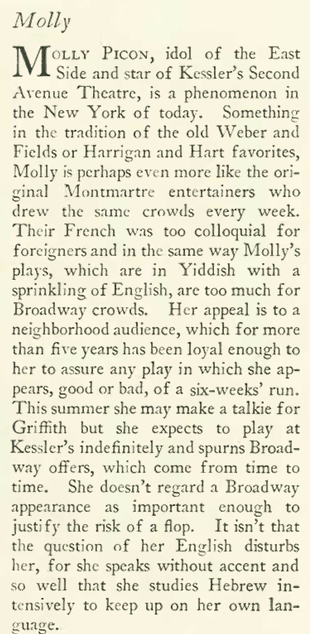
Writing in “The Talk of the Town,” James Thurber described Picon as an “idol of the East Side”…
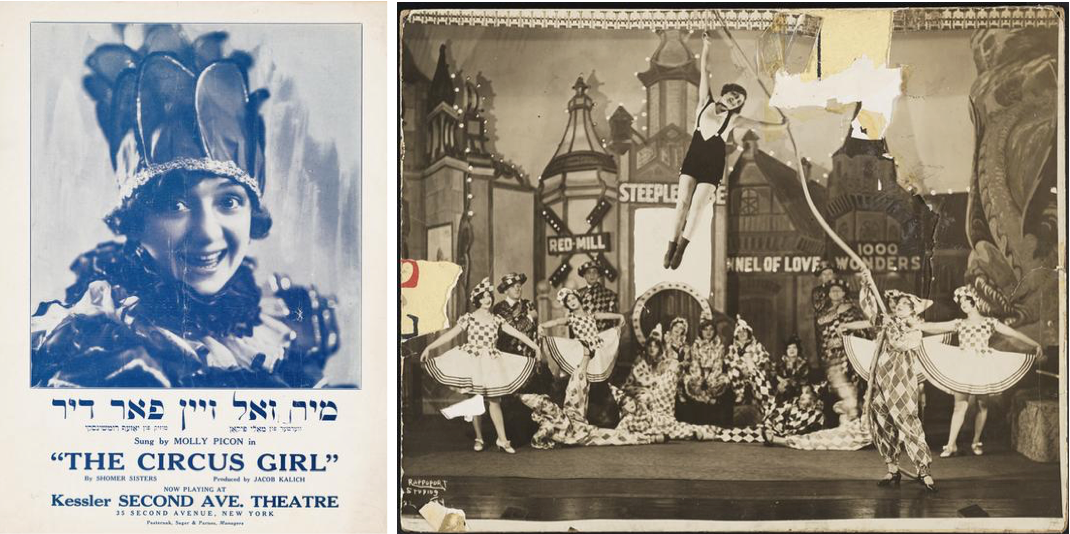
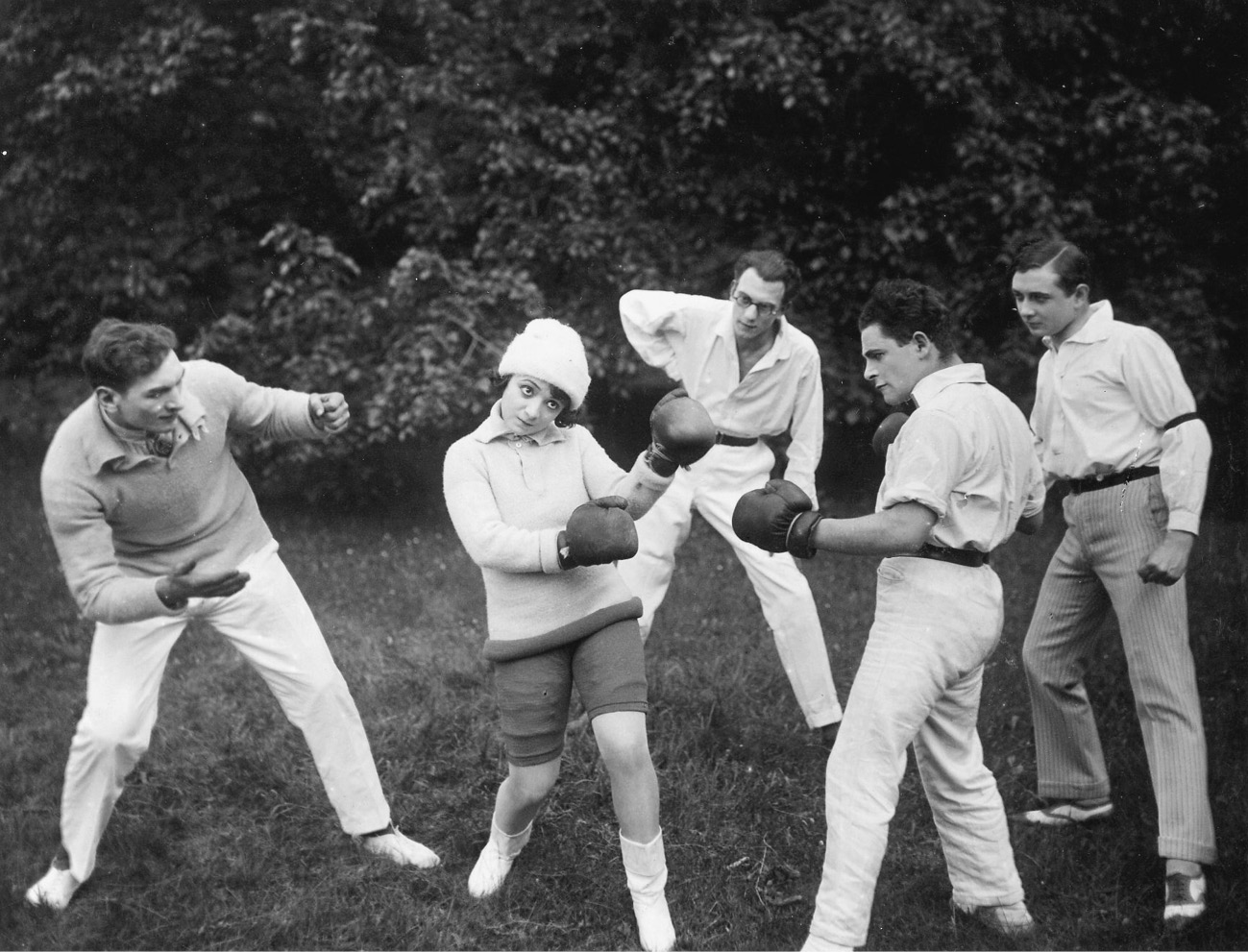
PRECOCIOUS…Molly Picon began performing in the Yiddish Theatre at age six. Pictured, from left, is 10-year-old Molly in a 1908 Nickelodeon short of a vaudeville act, Fagan’s Decision; an undated press photo; in The Jolly Orphan, 1929. (Jewish Women’s Archive/Wikipedia/Museum of the City of New York)At left, music sung by Molly Picot in the a Yiddish theatre production, Tsirkus meydl (The Circus Girl), 1928. At right, a scene from the play. (Museum of the City of New York)PUT ‘EM UP…Molly Picot tries her hand at boxing in the silent comedy, East and West, originally produced in Austria in 1923. In this film about assimilation and Jewish values, a sophisticated New Yorker travels back to his village to attend his niece’s traditional wedding. There he encounters the rambunctious Molly, whose hijinks include boxing, and teaching other young villagers to shimmy. (Image: National Center for Jewish Film / Caption: UC Berkeley Library)
Thurber described Picon’s personal life as simple and focused on her family, a path she followed throughout her 94 years:
Picon met her husband, Jacob “Yonkel” Kalich (1891-1975) in 1918 and they married a year later. In an exhibition at the American Jewish Historical Society, Picon is quoted on how meeting Kalich changed her life:
“When we met in Boston, I was the All-American Girl full of hurdy-gurdys and absolutely illiterate about Jewish culture. Yonkel, on the other hand, was the complete intellectual who knew not only classic Yiddish but its plays, theater and writers.”
After they married in 1919, the couple toured Eastern European cities with large Jewish populations in order that she could improve her Yiddish and gain experience as a performer. Kalich served as her manager and creator of many of her roles, and they often performed together, including in two films nearly 50 years apart—East and West (1923) and Fiddler on the Roof (1971).
Top photos, left to right, Molly Picon in the Yiddish Theatre comedy Di Tsvey Kuni Lemels (The Two Kuni Lemels), 1926; with husband Jacob “Yonkel” Kalich in the 1923 silent film comedy, East and West; with Kalich that same year in Vienna. Bottom row, left to right, Picon tapes the Maxwell House Radio Show, 1938, and below, on the set of the Fiddler on the Roof (1971) with husbandJacob “Yonkel” Kalich; with Frank Sinatra in Come Blow Your Horn (1963); and on the TV show The Facts of Life (1979). (Wikimedia Commons/American Jewish Historical Society/Jewish Women’s Archive)
Picon appeared on a variety of TV shows from the 1960s through the 1980s including Car 54, Where Are You?, Gomer Pyle,The Facts of Life, and Trapper John M.D. Movie appearances during that time included Fiddler on the Roof (1971); For Pete’s Sake (with Barbra Streisand, 1974); and perhaps one of her oddest roles, as Roger Moore’s longsuffering mother in The Cannonball Run (1981) and 1984’s The Cannonball Run II (In those films, Moore portrayed Seymour Goldfarb, heir to the Goldfarb Girdles fortune, who preferred the life of pretending to be a spy to girdle manufacturing).
Thurber observed that Picon was only interested in comedic roles, a preference she stuck to throughout her long career.
Molly Picon as Mrs. Bronson in the television show Car 54, Where Are You? (1962) (Wikimedia Commons)
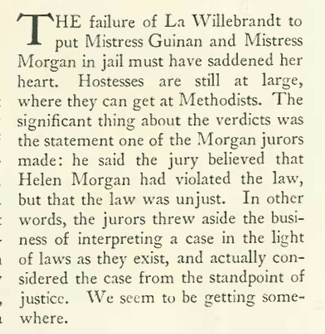
Despite Prohibition, booze flowed freely in New York in the late 1920s thanks to bootleggers and corrupt cops. U.S. Assistant Attorney General Mabel Walker Willebrandt tried her best to crack down on violations, arresting (among many others) the operators of two of Manhattan’s most popular nightclubs, actress Texas Guinan (300 Club) and torch singer Helen Morgan (Chez Morgan). In the “Talk of the Town,” the New Yorker found hope in the acquittal of Guinan and Morgan, and in the opinion of one of the jurors:
In the same issue, this cartoon by Oscar Howard tells us a lot about New York’s approach to Prohibition enforcement in 1929…
* * *
Captive Audience
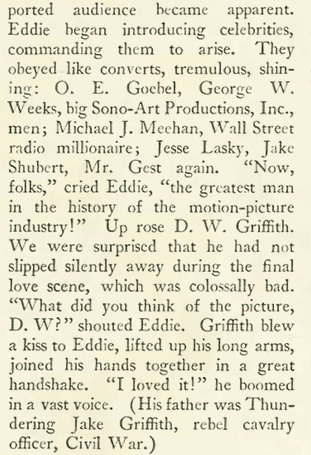
In the April 27 “Talk of the Town” James Thurber also turned his attention to the latest treacle flowing out of Hollywood—the premiere of The Rainbow Man, starring Eddie Dowling in his first talking picture. Thurber found the film to be “alarmingly bad.” But that was only the beginning…
TIRED OF ME YET?…Lloyd Ingraham, Eddie Dowling, and Marian Nixon in The Rainbow Man (1929) (IMDB)
Thurber wrote that the film was followed by live performances from “a Kate Smith” and by Eddie Dowling himself, who piled more ham on the proceedings.
PILING IT ON…Eddie Dowling gave audiences more than they needed (at least in the view of James Thurber) at the premiere of The Rainbow Man. Dowling would share the stage with Kate Smith, apparently unknown to Thurber at that time. She would go on to massive stardom. Dowling, not so much. (IMDB/Pinterest)
* * *
Slow Man River
Things didn’t look much better in the magazine’s movie review section, where the 1929 film version of the huge 1927 Broadway hit musical Showboat seemed stuck on sandbar:
SLOW BOAT…Scene from the 1929 film Show Boat featuring Laura LaPlante as Magnolia Hawks and Joseph Schildkraut as Gaylord Ravenal. (Wikipedia)
* * *
Elsie Dinsmore Revisited
Phyllis Crawford (writing under the pseudonym Josie Turner) contributed another parody of the Elsie Dinsmore book series. The original books (28 in all), were written in the late 19th and early 20th century and featured an impossibly upright eight-year-old as the main character.
Crawford, herself an author of children’s books (including the award-winning Hello, the Boat!), had some fun with the Dinsmore books, her parody featuring a still pious and innocent Elsie living with her father in New York, where she encounters his circle of friends including gamblers and chorus girls (the collected pieces were published as a book in 1930: Elsie Dinsmore on the Loose). In this brief excerpt from Crawford’s piece in the April 27 issue (“Elsie Dinsmore Entertains at Tea”), little Elsie tries her best to entertain a friend of her “dear Papa”…
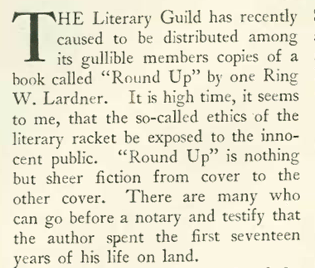
On the topic of books, Dorothy Parker, in her “Reading and Writing” column, took aim at middlebrow book clubs such as the Literary Guild, expressing (in her way) surprise that such a club would actually recommend something with literary merit…
Advertisement in the April 27 issue for Ring Lardner’sRound Up. At right, Lardner and Dorothy Parker, circa 1930. (thenationalpastimemuseum.com/selectedshorts.org)
* * *
From Our Advertisers
We begin with a colorful ad from the makers B.V.D., a brand name that would become synonymous with men’s underwear…
…Russian prima ballerina Anna Pavlova demonstrated the wonders of Cutex nail polish in her famous “Dying Swan” costume (Pavlova would be dead herself in less than two years)…
…while the Wizard of Menlo Park applied his genius to the cause for better toast…
…and actor John Gilbert was the latest actor to “reach for a Lucky instead of a sweet”…
…this ad in the back pages enticed readers to visit the International Exposition of Barcelona…those fortunate enough to have made the trip would have seen Mies Van Der Rohe’s “Barcelona House” (pictured) and the first-ever Barcelona chair…
(thomortiz.tumblr.com)
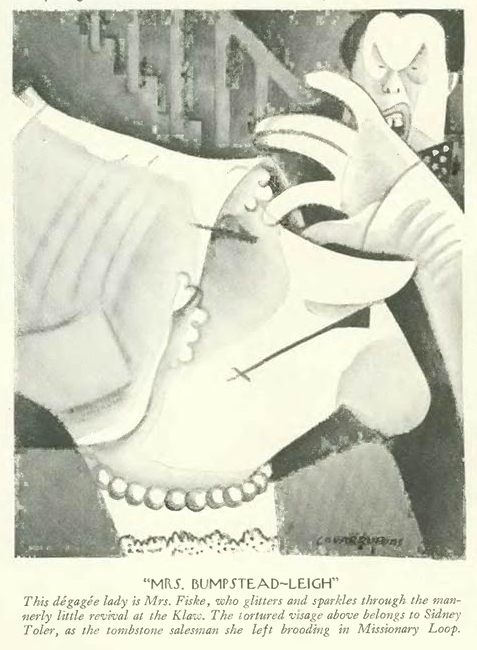
…on to cartoons and illustrations, in the theatre section this contribution by Miguel Covarrubias…
…Covarrubias (pictured) was an early contributor to the New Yorker, indeed he contributed to the very first issue with this rendering of Italian opera manager Giulio Gatti-Casazza for the first-ever profile…
…Gluyas Williams illustrated the collective shaming of a commuter by residents of Tudor City…
…Tudor City was touted in many early New Yorker ads as having all the amenities of the suburbs but within walking distance of the city…here is an ad from the March 26, 1927 issue of The New Yorker…
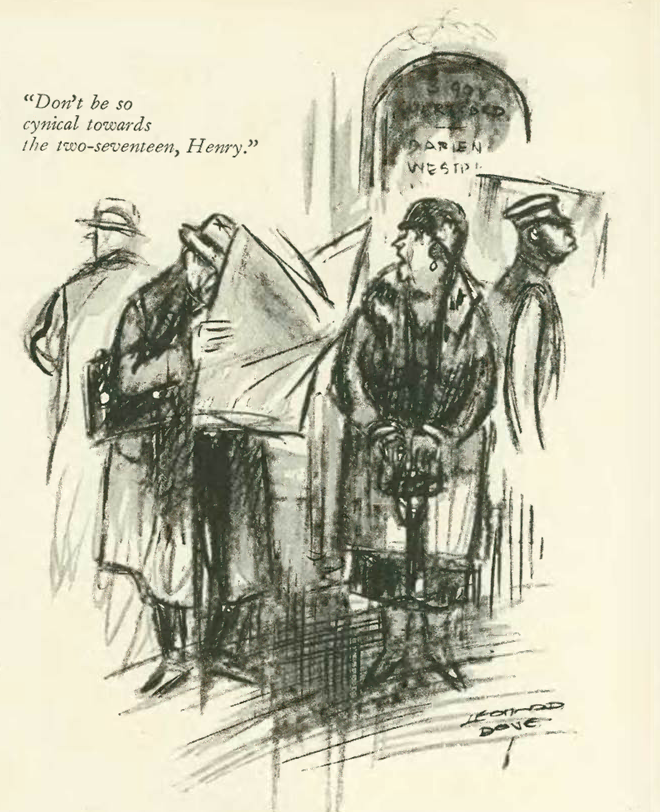
…and then we have the English cartoonist Leonard Dove, who looks in on a couple who are obviously not from Tudor City…
…and finally, a terrific cartoon by an artist I have failed to identify (if anyone knows, please comment!)…
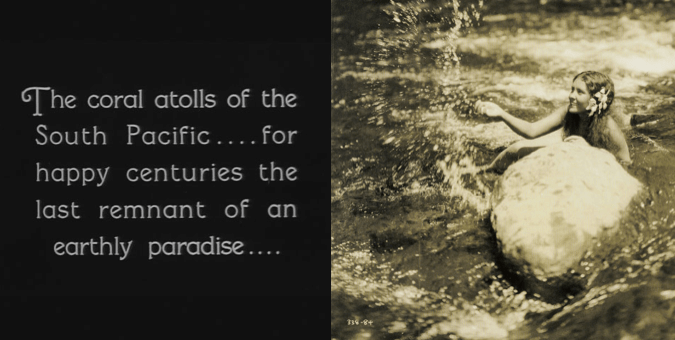
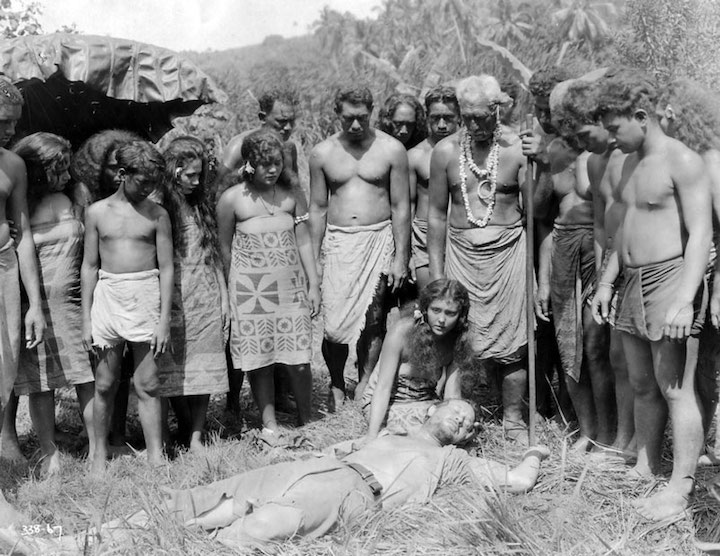
Thirty years before South Pacific would grace the silver screen, an earlier film that also explored the clash of civilizations in Polynesia, White Shadows of the South Seas, wowed audiences with its cinematography and, like South Pacific, a melodramatic love story between an American and a beautiful Polynesian girl, Fayaway, played by Mexico-born actress Raquel Torres.
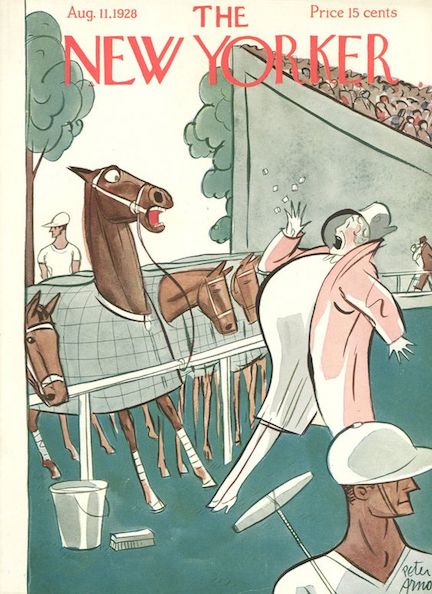
August 11, 1928 cover by Peter Arno.
Inspired by a 1919 travel book of the same name (by Frederick O’Brien), what is significant about the film is that it was shot in Tahiti, featured a supporting cast of Tahitian islanders, and was the first MGM picture to be released with a pre-recorded soundtrack, which consisted of a musical score and a few effects. It was also the first film in which the MGM Lion (known then as “Jackie”), roared during the introduction.
TROUBLE IN PARADISE…Raquel Torres and Monte Blue in White Shadows in the South Seas. (cinemasojourns.com)
Leonard Maltin writes the film “features stunning, Oscar-winning cinematography of the Marquesas Islands welded to a story about the corrupting influence of Western civilization, with Blue as an alcoholic doctor who falls in love with native Torres and clashes with an exploitative (pearl) trader…Portions of the beautiful, documentary-style footage were shot under the supervision of Robert Flaherty, who fought with the studio over its emphasis on a melodramatic plot and left the production.”
The film also caused David O. Selznick, one of the top executives at MGM, to quit the studio over a dispute with fellow MGM exec Hunt Stromberg. According to the 1990 book The Dame in the Kimono by Leonard Left and Jerold Simmons,David (Selznick) thought it an idyllic story, Hunt wanted more sex.
Here’s what the Aug. 11, 1928 New Yorker had to say about the film:
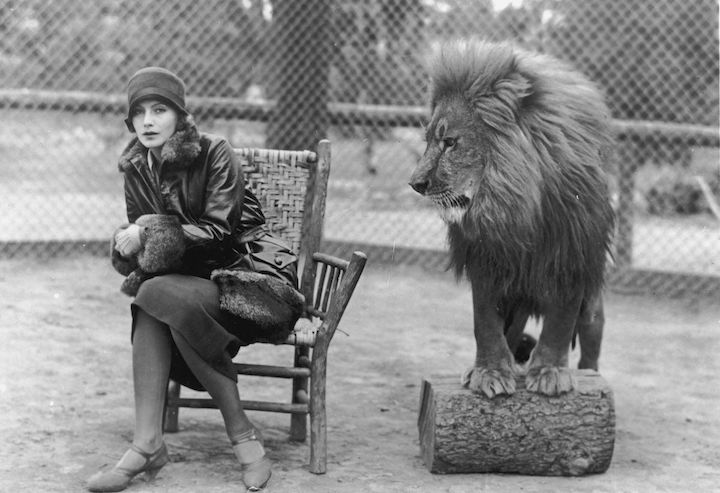
GOING NATIVE…Raquel Torres as Fayaway in White Shadows in the South Seas. (torontofilmsociety.org)HE ROARS AT LAST…A cameraman and a sound technician record Jackie’s roar for MGM’s famous logo in 1928. The footage was first used on MGM’s first talking picture, White Shadows in the South Seas, as seen at right. (MGM)WHILE WE ARE ON THE SUBJECT…Five different lions have been used for the MGM logo. Pictured above is Lion #1, named “Slats,” seated next to a less than enthusiastic Greta Garbo in this publicity photo from 1925. Slats was never heard, his career limited to the silent era. Slats was followed by Jackie, the first lion to roar on film (through the use of a gramophone synched to the movie). Jackie was followed by Tanner, George, and finally, Leo. (martinturnbull.com)
Speaking of Garbo, The New Yorker’s film critic “O.C.” was one of the few moviegoers in the world not bewitched by the Swedish actress. In the same issue this is what he had to say about her latest film, The Mysterious Lady:
CHANNELING HER INNER WALLOP…Greta Garbo in The Mysterious Lady, 1928. (Pinterest, uncredited)
* * *
Revisiting Race
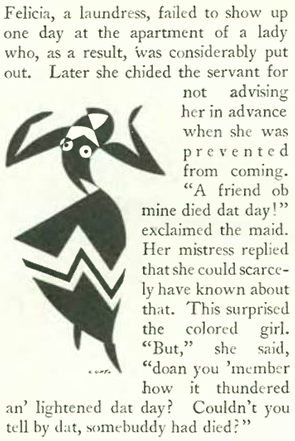
As I’ve noted before, The New Yorker of the 1920s was decidedly mainstream in its treatment of blacks and other minorities as racial “others.” Here is an example (from the Aug. 11 issue) of the casual bigotry that occasionally could be found in “The Talk of the Town.”
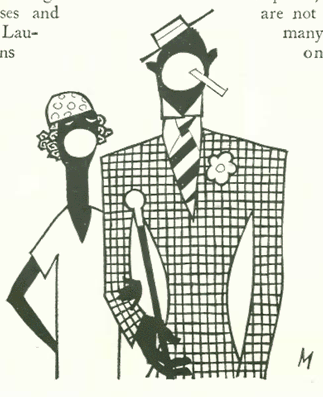
…and a few pages on in the same issue, this filler art by Julian de Miskey:
* * *
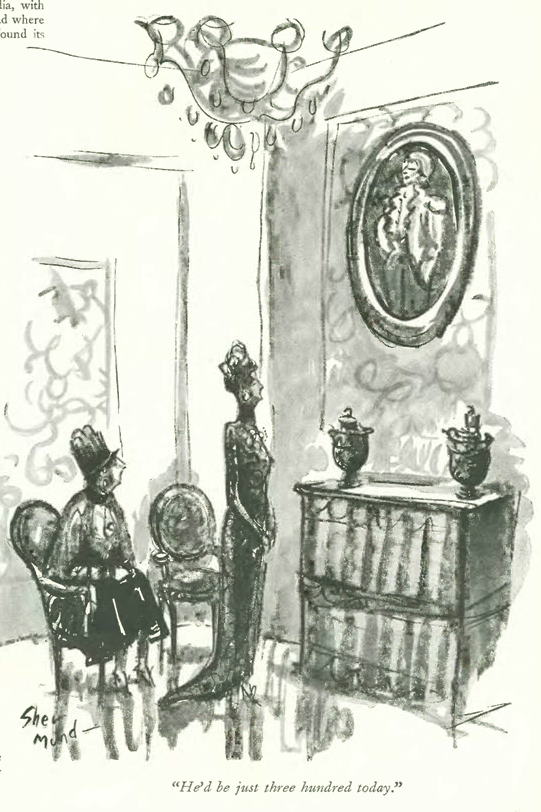
And to close out the Aug. 11 issue, Barbara Shermund looked in on the Uppers during a moment of contemplation:
* * *
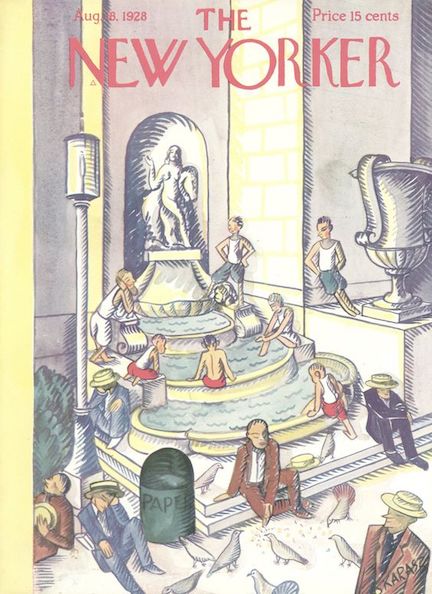
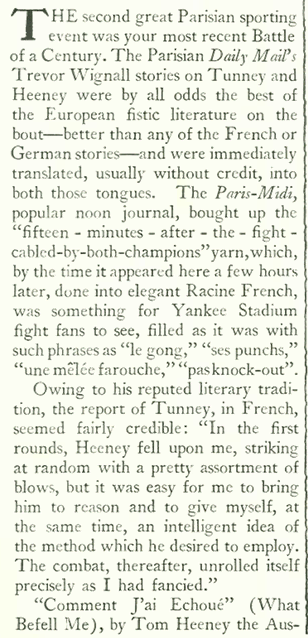
The Aug. 18, 1928 issue featured an interesting dispatch from the magazine’s Paris correspondent, Janet “Genêt” Flanner.
August 18, 1928 cover by Ilonka Karasz.
Flanner gave us a taste of how the French regarded the recent “Battle of the Century” between heavyweight boxers Gene Tunney and Tom Heeney:
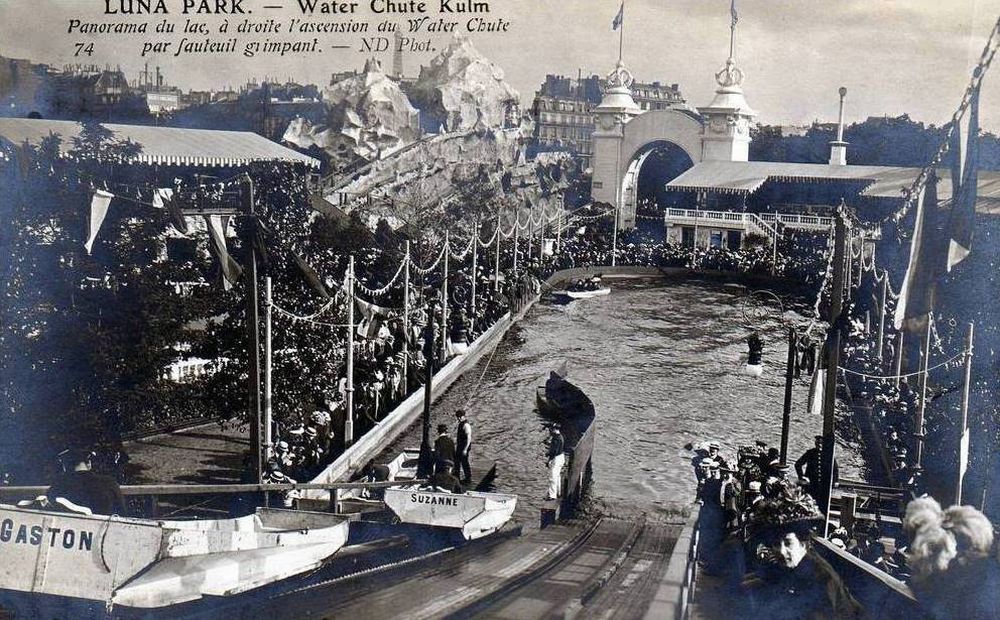
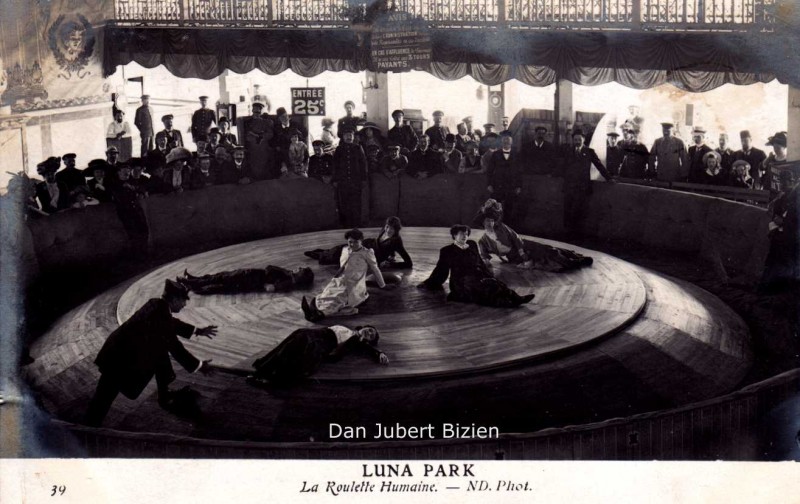
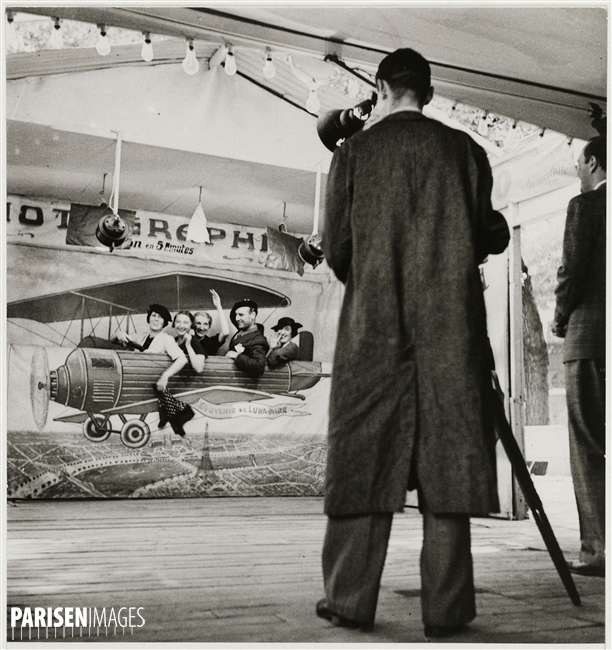
Flanner also wrote about an amusement park near the Porte Maillot in Paris called Luna Park:
WITH A FRENCH ACCENT…Entrance to Luna Park near the Porte Maillot, circa 1922. (Wikipedia)
Postcard image of the French Luna Park’s river ride, circa 1910. (paris-unplugged.fr )Postcard image of Luna’s Roulette Wheel ride, recalling similar ride at Coney Island’s Pavilion of Fun. (paris-unplugged.fr )Photographer snaps a photo of visitors to Porte Maillot in 1935. Although the banner on plane reads “Souvenir de Luna Park,” the park itself closed in 1931. (parisenimages.fr )
* * *
From Our Advertisers
Another sports celebrity who didn’t mind relieving Old Gold of some extra cash was Babe Ruth, who was next in line to submit to the blindfold test:
I include this ad for Proctor & Gamble’s Ivory Soap (from a 1928 issue of The Saturday Evening Post) as an explanatory note for The New Yorker cartoon that follows, by Gluyas Williams…
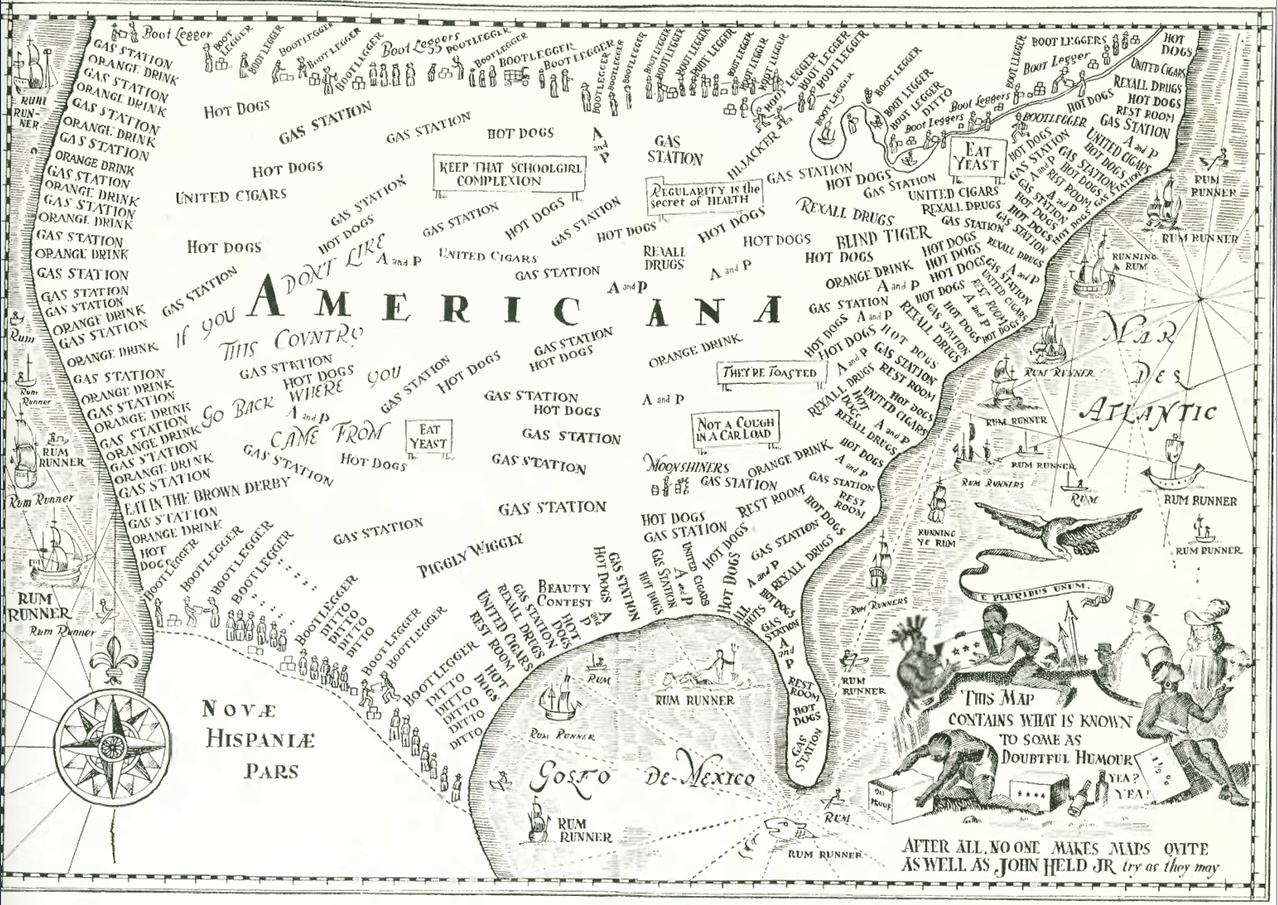
Also in the issue, John Held Jr. contributed one of his famous maps, displayed sideways, full-page (click to enlarge):
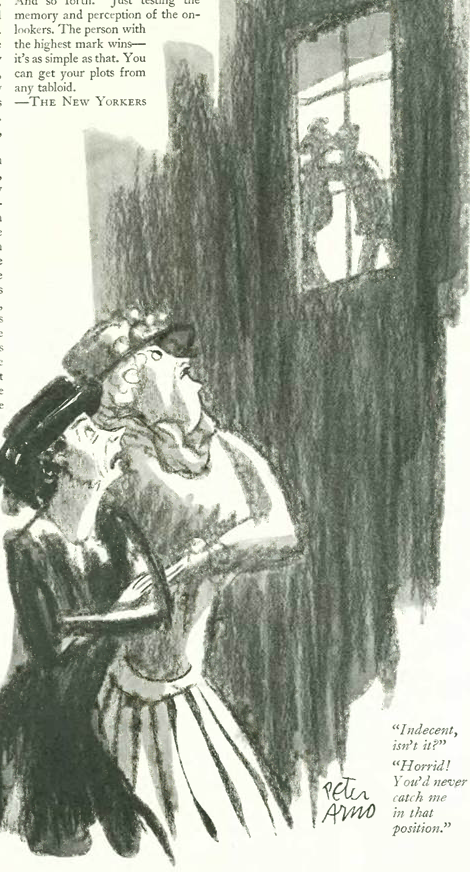
And finally, we close with Peter Arno, and two outraged spinsters:
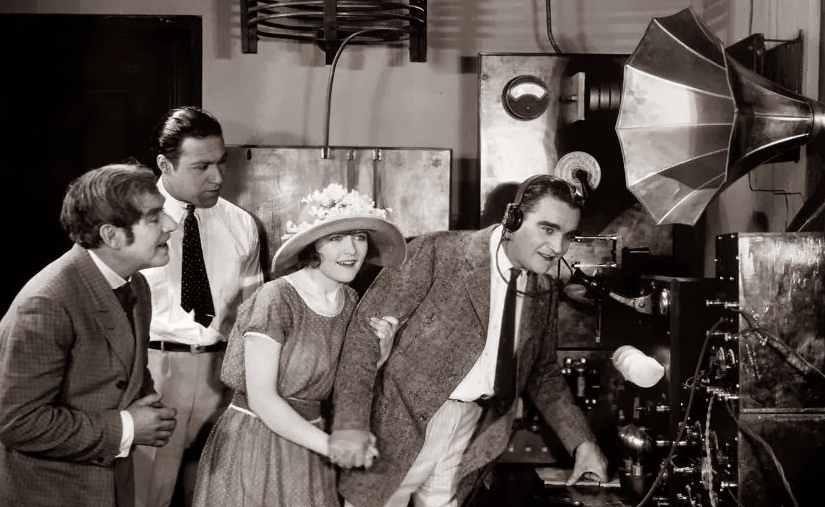
As much as they affected a refined disinterest in the latest fads, The New Yorker editors were nevertheless impressed by the many electronic innovations in the 1920s consumer market. Although electricity in cities had been around for awhile, inventions to exploit this new resource would come into their own in the Jazz Age with the advent of mass-produced electrical appliances (refrigerators, toasters etc.).
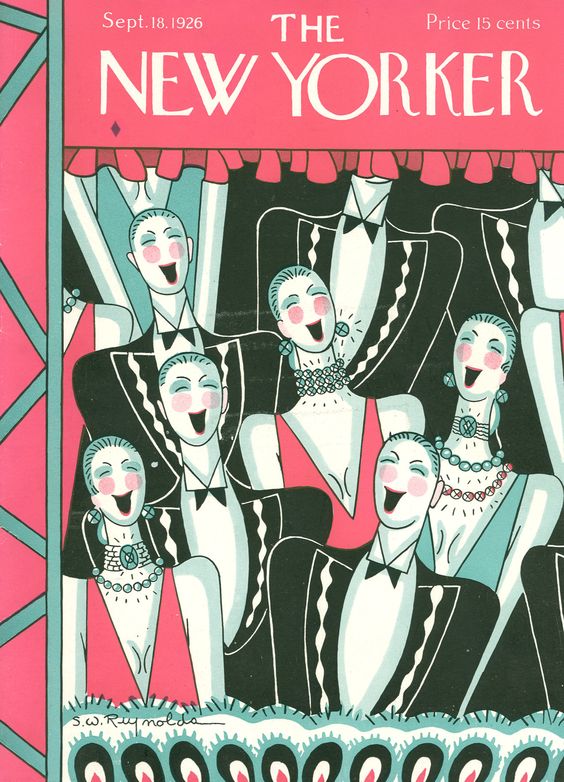
Sept. 18, 1926 cover by Stanley W. Reynolds.
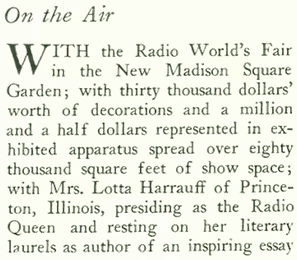
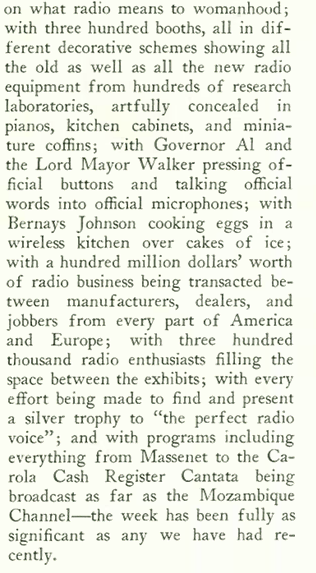
So when the 1926 Radio World’s Fair opened at Madison Square Garden, the magazine was there to report on its many marvels in the Sept. 18 issue:
IF ONLY THEY HAD SPOTIFY…Teens tuning in, mid 1920s. (hancockhistoricalmuseum.org)
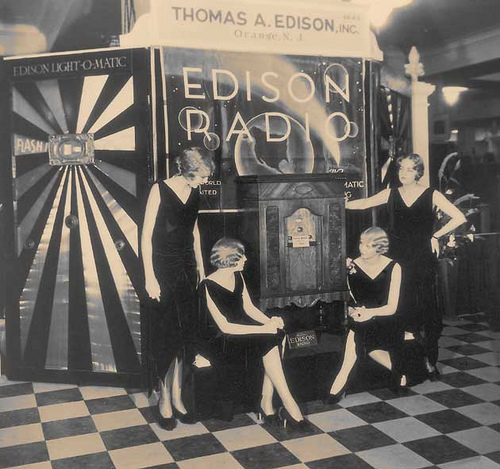
Although New York’s radio fair was doubtless the largest (akin to today’s annual Consumer Electronics Show), similar fairs were held in other major cities where broadcast radio was taking hold.
Promotional image for Edison Radio from the 1926 New York Radio World’s Fair. (artdecoblog.com)
…and for comparison, an image from the 2016 Consumer Electronics Show in Las Vegas:
(CES)
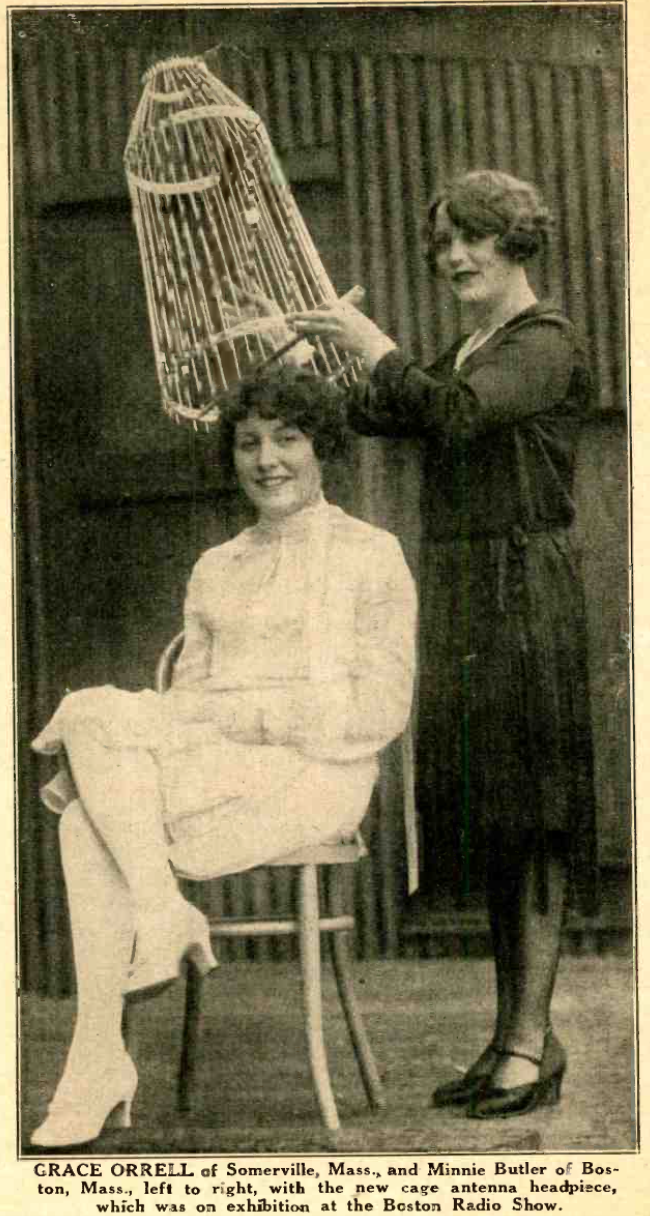
To give you an idea of some of the stranger innovations in the world of 1920s radio, here is an image scanned from the Oct. 16, 1926 issue of Radio World magazine demonstrating the wonders of a wearable cage antenna, apparently through which the wearer could make or receive wireless broadcasts…
…and a detail of an advertisement from the same issue depicting a typical household radio for the time:
Before tuning in for the first time, the radio’s owner needed to string a 100-foot outside aerial. Until 1927, when owners could plug their radios into electric sockets, radios required two types of batteries—a storage battery that required recharging every two weeks and a set of dry-cell batteries that needed to be replaced about every three weeks.
If all this looks crude, remember that in September 1926 broadcast radio was less than six years old. But it was big year for radio, with the National Broadcasting Company (NBC) establishing a network of stations that distributed daily programs. Columbia Broadcasting System (CBS) would establish a rival network in 1928.
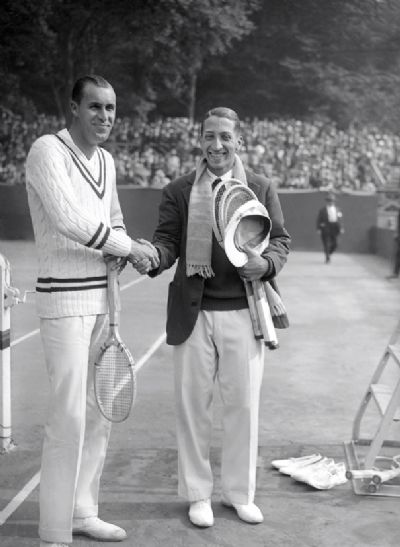
In other items, the magazine offered a lengthy profile on tennis legend Bill Tilden, and later in the sports section described his Davis Cup loss to Frenchman René Lacoste.
Tennis rivals Bill Tilden and René Lacoste meet in Philadelphia, 1927. (greensleevestoaground.)
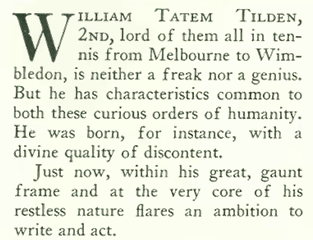
Tilden is often considered one of the greatest tennis players of all time. However, The New Yorker “Profile” described him as a reluctant star with artistic ambitions…
…who distained the life of a sports hero…
Samuel Merwin, referred to above, was a playwright and novelist.
Tilden was the world’s number one player for six years (1920-1925). He won 14 Major singles titles including ten Grand Slams. He also won a record seven US Open titles.
There is a sad footnote to Tilden’s career, however. Twenty years after The New Yorker profile, Tilden would be arrested for soliciting sex from an underage male, an offense he would arrested for again three years later, in 1949. He was subsequently shunned by the tennis and Hollywood world, although old friend Charlie Chaplin allowed Tilden to use his private court for lessons, which helped him financially as he dealt with legal and financial problems.
* * *
Going Going Gone
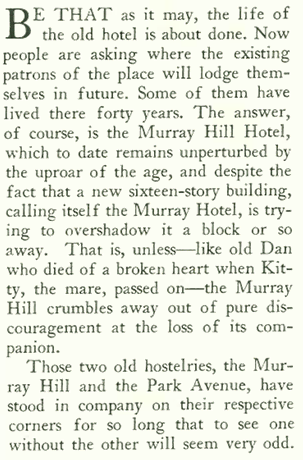
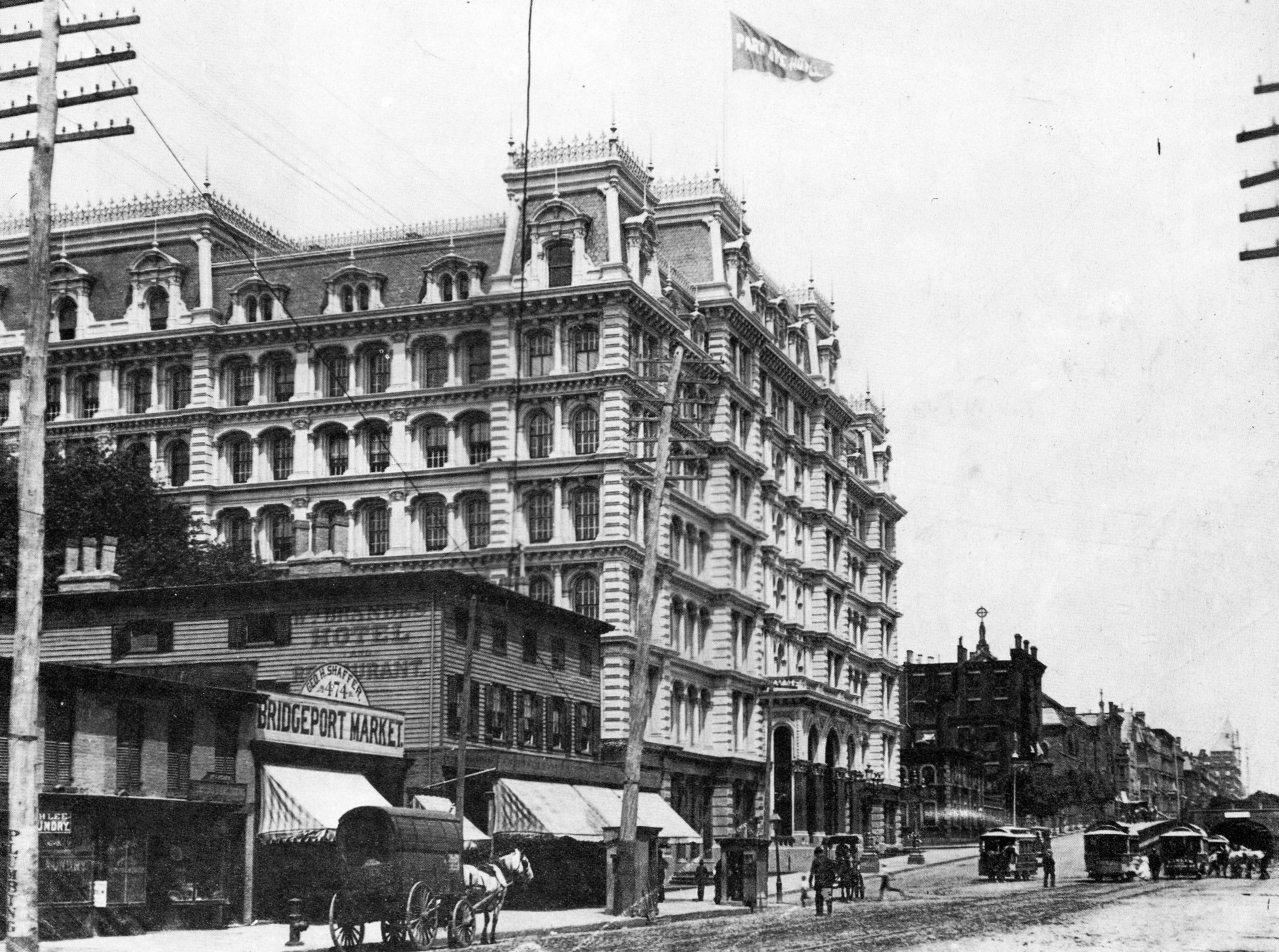
The magazine editors continued to watch the rapidly changing skyline of the city, as beloved old buildings were demolished to make way for new skyscrapers. This time it was the old Park Avenue Hotel:
The editors of “Talk of the Town” fondly recalled the time when the hotel, with its spacious courtyard of flowers and fountains, attracted “almost every dinner party of consequence in New York.”
This photo of the old Park Avenue Hotel was taken in 1890, only two years after Fourth Avenue was renamed Park Avenue. Constructed in 1877, the hotel was originally called Stewart’s Hotel for Working Women, designed to provide safe housing for the influx of single working women pouring into New York City. The name didn’t last long: the hotel was opened in April 1878, closed in May and reopened in June as the Park Avenue Hotel. It was razed in 1927. (Ephemeral New York)
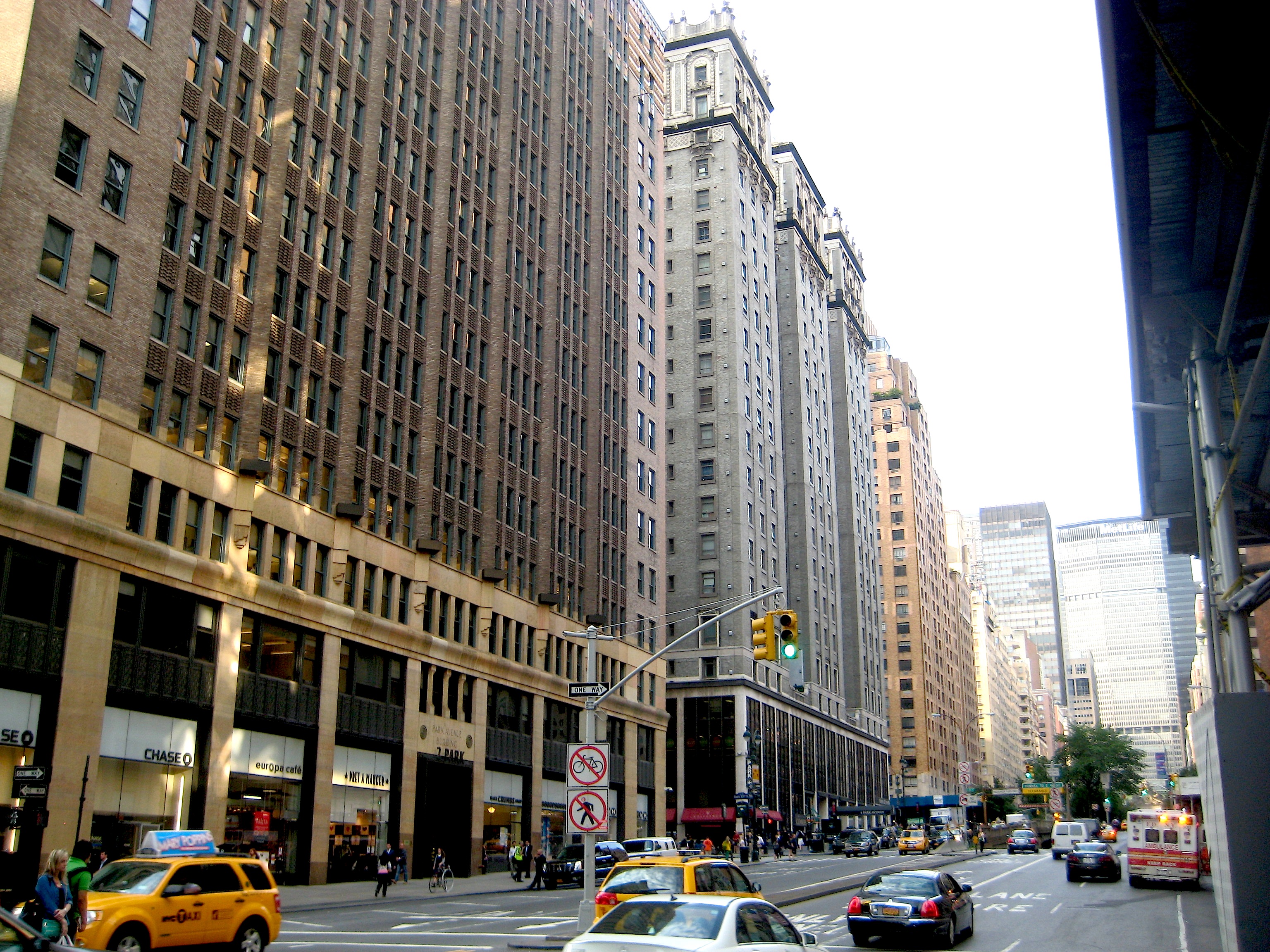
The same site today:
(Ephemeral New York)
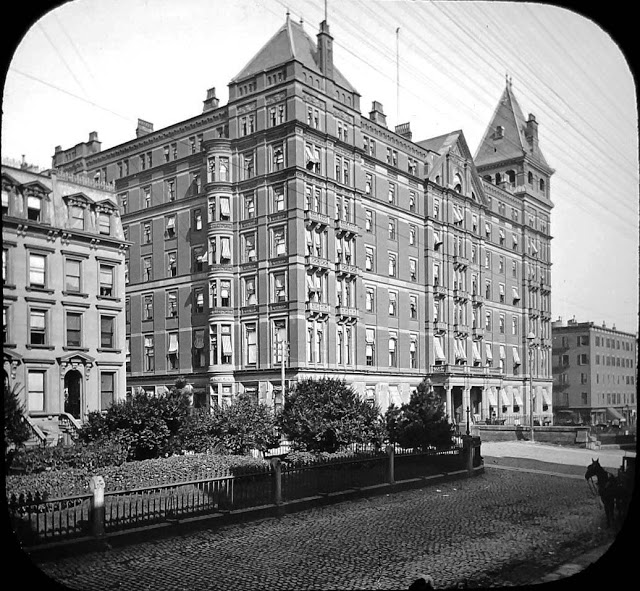
The nearby Murray Hill Hotel mentioned in the article would last another 20 years, falling to the wrecking ball in 1947:
The Murray Hill Hotel, built in 1884, would outlive the Park Avenue Hotel by 20 years, falling to a wrecking ball in 1947. (Library of Congress)
American cinema did little to excite the writers or critics of The New Yorker, who considered European films, and particularly German ones, to be far superior to the glitzy and sentimental fare produced in Hollywood.
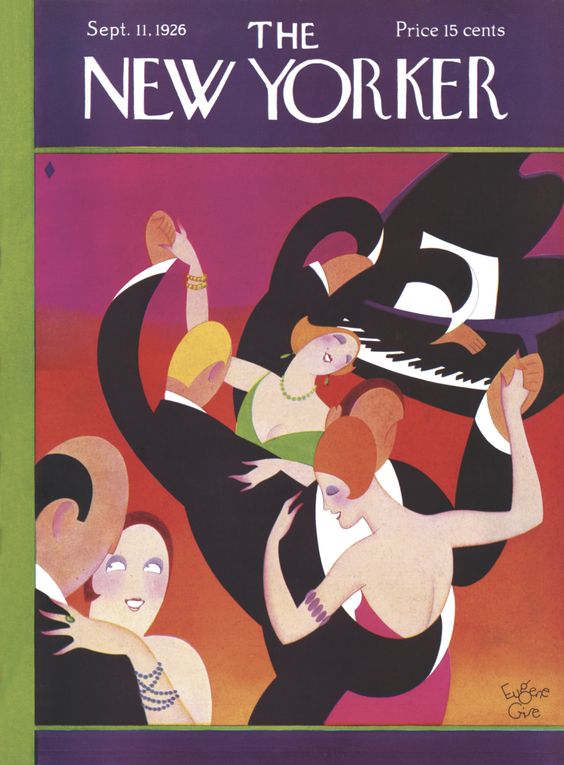
Sept. 11, 1926 cover by Eugene Gise.
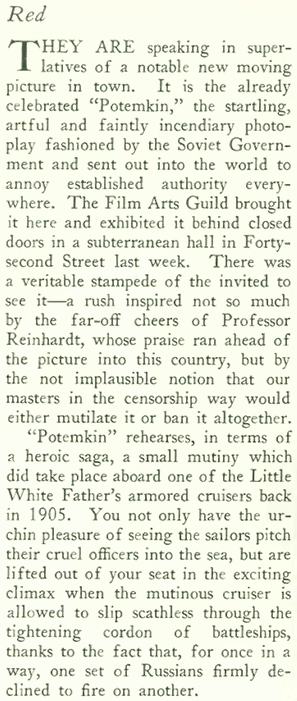
So when it was announced that Russian/Soviet filmmaker Sergei Eisenstein would be releasing Battleship Potemkin in New York City, the magazine’s editors in “The Talk of the Town” expressed both anticipation for the masterpiece as well as worries that American censors would slice the film to bits or even ban it outright.
The magazine’s film critic “OC” also expressed his concerns regarding censors:
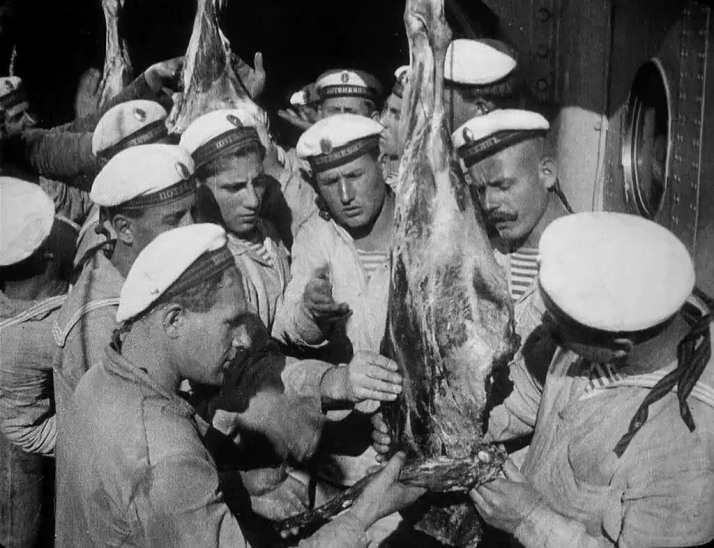
IT’S NOT WHAT’S FOR DINNER…Sailors examine maggot-infested meat in the film Battleship Potemkin. (themoviesnob)
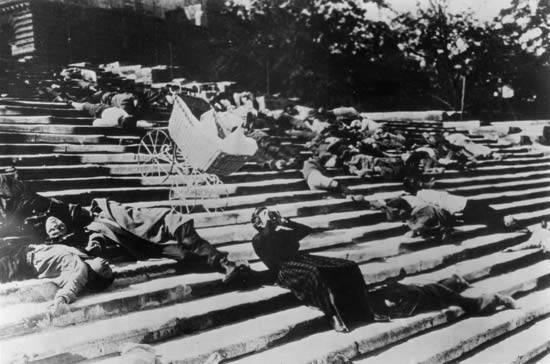
The film was based on an historical event–a mutiny on the battleship Potemkin that occurred after the crew was served rotten meat for dinner. The sailors rebelled, seized the ship, and then attempted to ignite a revolution in their home port of Odessa, which in turn led to a massacre of citizens by Cossack soldiers on the city’s famed Potemkin Stairs.
Mutineers revel in a scene from Battleship Potemkin. (Wall Street Journal)A still from a classic scene in Battleship Potemkin that depicts Odessa citizens being massacred by Cossacks on the city’s famous Potemkin Stairs. The image of the unattended baby carriage tumbling down the staircase has been re-created in a number of films, including Brian De Palma’s 1987 The Untouchables. (Film 4)
The film would ultimately be released in December of 1926. Perhaps more on that in a later post.
The Sept. 11, 1926 issue also noted the passing of famed silent film star Rudolph Valentino, who died at age 31 of peritonitis and other complications. The “Talk” editors suggested that if anything, it was good for newspaper sales:
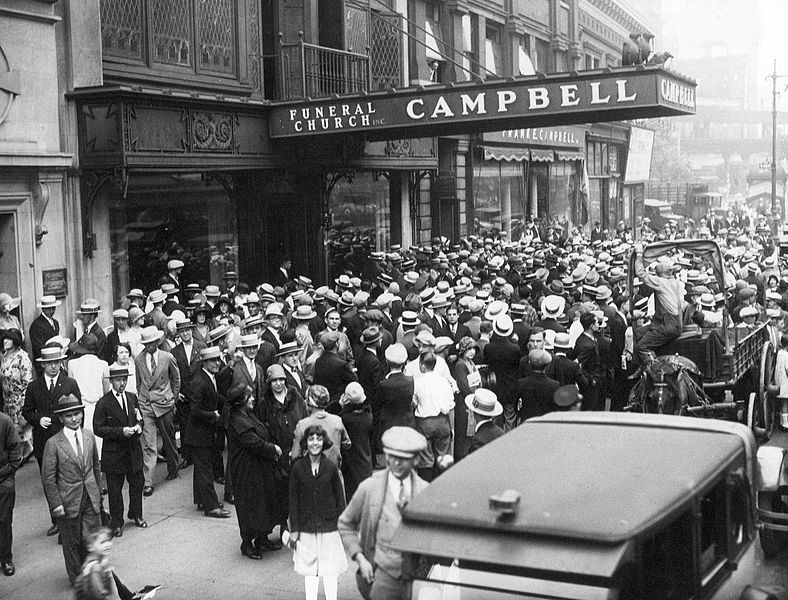
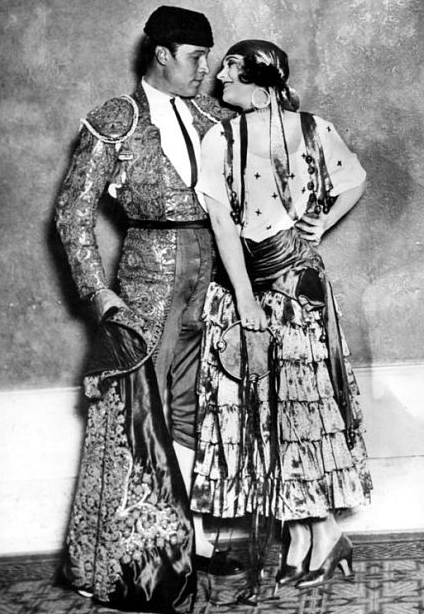
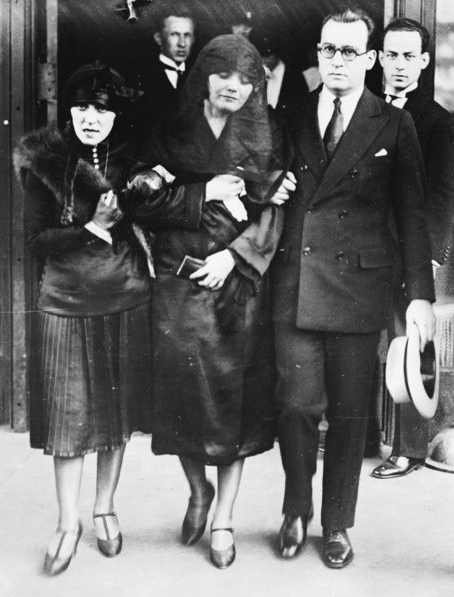
FUNERAL FUN…Rudolph Valentino’s first funeral in New York (the second was in Beverly Hills) drew a huge crowd of in what was described as a “carnival setting”. More than 100,000 fans filed past his open casket at the Frank E. Campbell funeral home. Windows were smashed as fans tried to get in and an all-day riot erupted on August 24. More than a hundred mounted officers and NYPD’s Police Reserve were deployed to restore order. A phalanx of officers would line the streets for the remainder of the viewing. Some media reports claimed the body on display was a wax dummy, and not “The Sheik” himself. (Wikipedia)SWEETHEARTS? Rudolph Valentino and Pola Negri met in early 1926 at a costume party thrown by Marion Davies. Negri claimed she was engaged to be married to the actor at the time of his death. (Wikimedia Commons)DIVA MOMENT…Pola Negri’s grief-stricken performance at Valentino’s New York funeral was considered by most to be over-the-top, even for a famous diva. Supported by a secretary and press agent (photo above), Pola declared to reporters that she and Valentino were secretly engaged to be married. She posed in dramatic fashion for the reporters and then threw herself, weeping and fainting, on Valentino’s open casket. (flickchick1953)
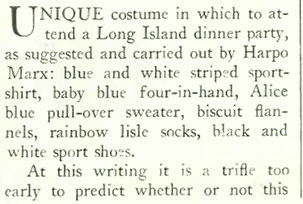
On the lighter side, The New Yorker men’s fashion columnist “Bowler” offered this observation of a new style suggested by Harpo Marx:
Vaudeville star Harpo Marx in 1926. The first Marx Brothers movie was still three years away. (Wikipedia)
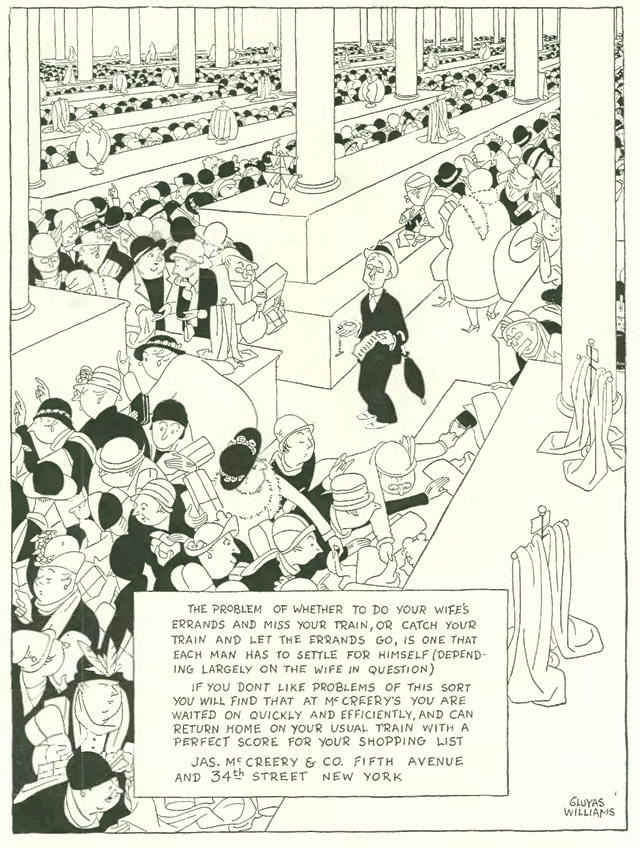
And to close, a couple of advertisements from the Sept. 11 issue…the first is a McCreery & Company ad illustrated by Gluyas Williams. These would become a series, featuring a milquetoast husband facing the daunting task of shopping for his wife, among other challenges…
…and this ad from Park Central Motors, depicting a child who’s all too aware of her standing in society…























































 A New Yorker State of Mind