Strike Me Pink

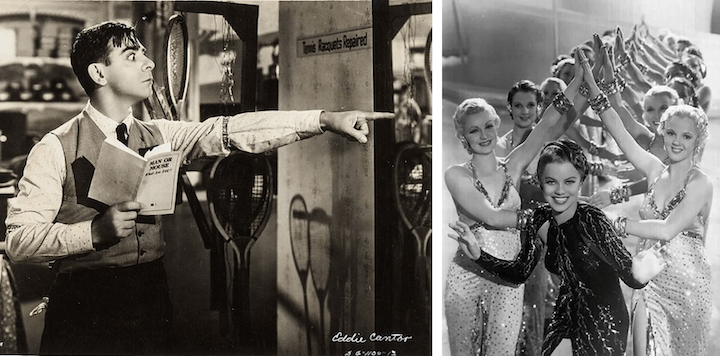
Above: Eddie Cantor (left) consulting his "confidence book" in Strike Me Pink; at right, Dona Drake and the “Goldwyn Girls” performing “The Lady Dances." (cometoverhollywood.com)

You don’t hear much about him today, but in 1936 Eddie Cantor was a household name, an entertainer who seemed to do it all—comedian, actor, dancer, singer, and songwriter were just a few of his trades.
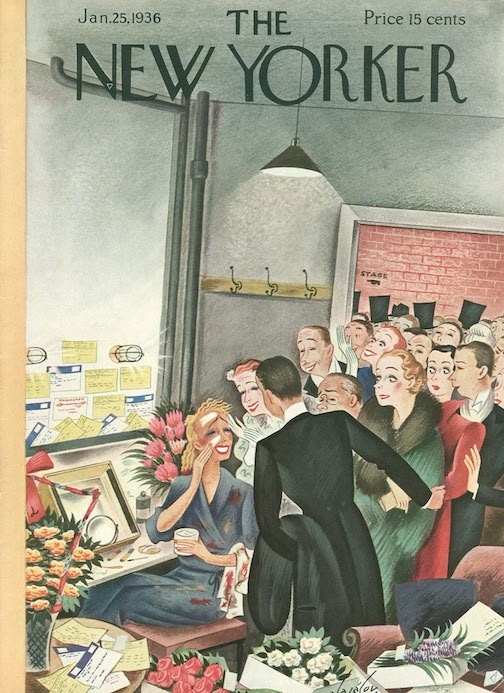
January 25, 1936 cover by Constantin Alajálov.

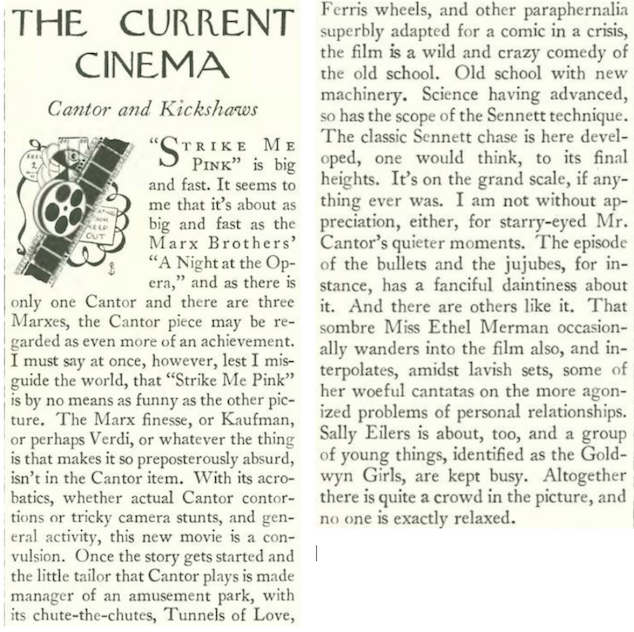
Critic John Mosher marveled at the energy Cantor (1892–1964) brought to his latest film, Strike Me Pink, in which Cantor played a mild-mannered manager of an amusement park infested with mobsters. The film was a “convulsion,” Mosher wrote, packed with action on “the grand scale” with occasional interludes by co-star Ethel Merman, who portrayed Cantor’s love interest.
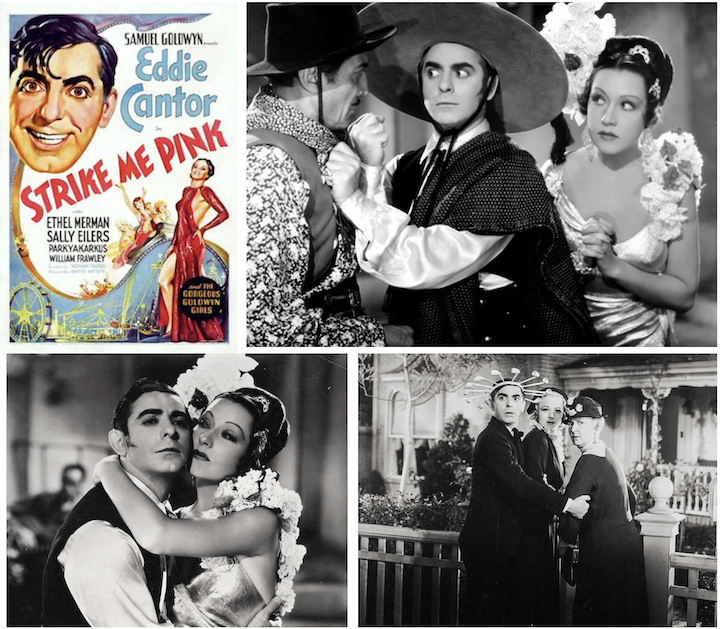
FINDING HIS MOJO…top and below left, Eddie Cantor and Ethel Merman in Strike Me Pink. Bottom right, Cantor, Sally Eilers and Helen Lowell in a scene from the film. (Wikipedia/tcm.com/imdb.com)

Bette Davis wasn’t the only Hollywood celeb known for her peepers. After artist Frederick J. Garner published a big-eyed caricature of Cantor in 1933, those “Banjo Eyes” became Cantor’s trademark.
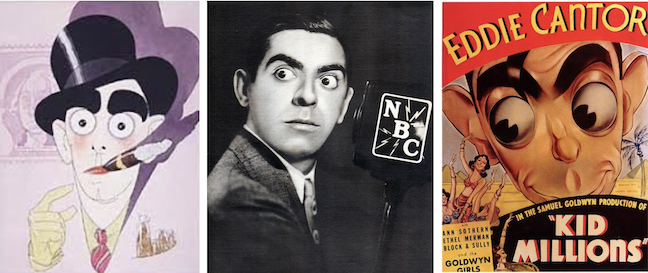
BANJO EYES…at left, Frederick J. Garner’s caricature of Cantor. After he published the drawing in 1933, other artists followed suit with their own interpretations of the “Banjo Eyes.” At right, movie poster for 1934’s Kid Millions. (npg.si.edu/laughterlog.com/imdb.com)

Cantor would pack a lot into his seventy-two years, a regular with the Ziegfeld Follies (he would repeat his routines in numerous films), he would also appear in other stage productions, on the radio, on television (hosting The Colgate Comedy Hour) and recording hit songs like “Makin’ Whoopee.” He wrote or co-wrote seven books, was the second president of the Screen Actors Guild, and a co-founder of the March of Dimes (Cantor came up with the name as well). He also appeared in numerous cartoons, and even wrote the Merrie Melodies/LooneyTunes theme song, “Merrily We Roll Along.”

DOWN AND OUT…Eddie Cantor was caricatured along with, from left, Al Jolson, Jack Benny and Bing Crosby in the 1950 Looney Toons short “What’s Up, Doc?” The scene depicts a low point in Bugs Bunny’s career when he spends the winter with fellow struggling actors in Central Park. (Warner Brothers)

In 1934 Cantor was depicted as a balloon in the Macy’s Thanksgiving Day Parade, the only full-size balloon to represent a real person.
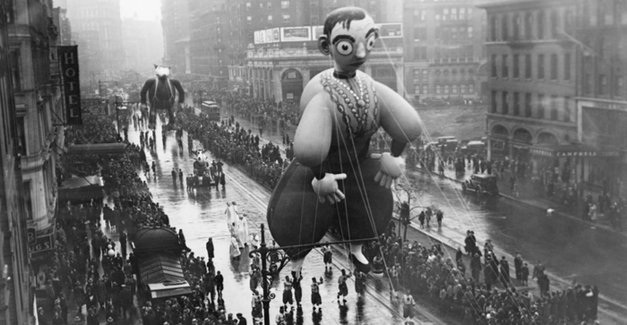
MY, WHAT BIG EYES YOU HAVE…Eddie Cantor looms over the Macy’s Thanksgiving Day Parade in 1934. (Ephemeral New York)

 * * *

Fishing For Buyers

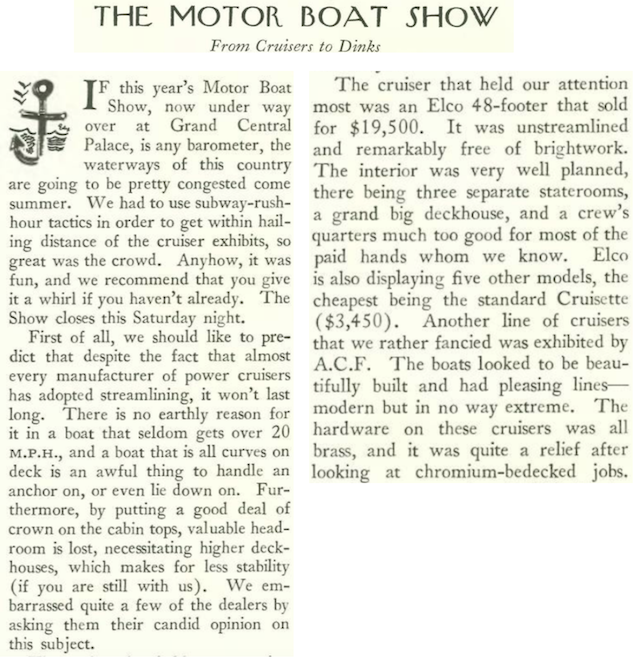
The Thirty-first annual Motor Boat Show was on at the Grand Central Palace, featuring everything from yachts to tiny sailboats. Excerpts from a report by a correspondent who wrote under the name “Bosun.”
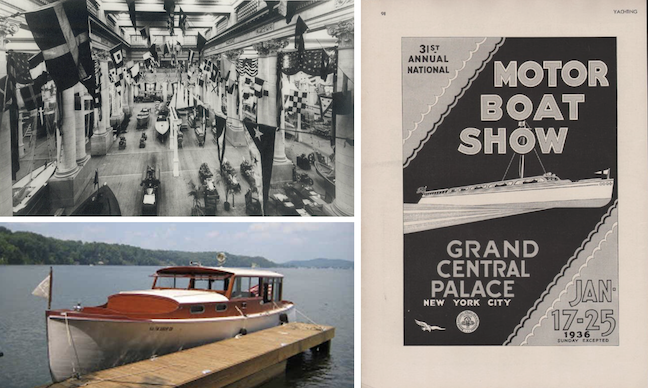
FOR LANDLUBBERS TOO…The New York Motor Boat Show began in 1905 at Madison Square Garden before moving to the resplendent surroundings of the Grand Central Palace. Clockwise from top left, undated photo from the Grand Central Palace; advertisement in Yachting magazine; a 1935 Elco Cruisette. (offthehookyachts.com/antiqueboatamerica.com)

 * * *

Cultured Congress

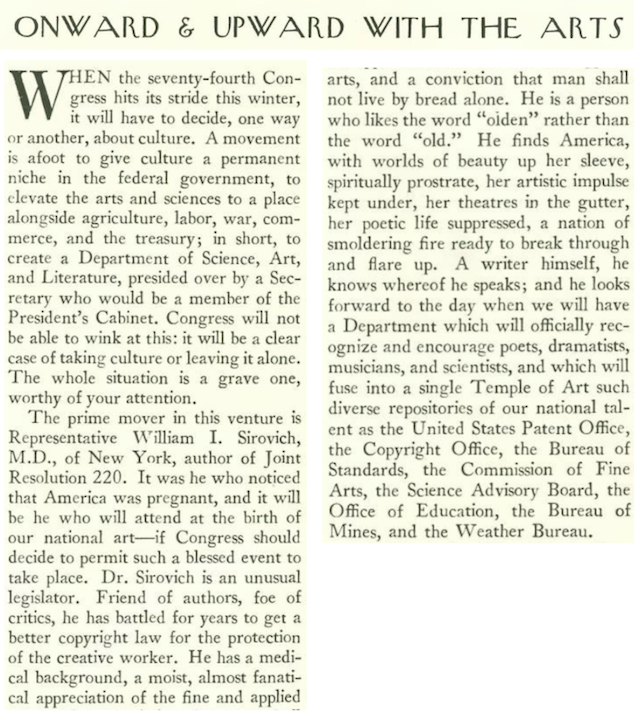
Hard to believe that ninety years ago the U.S. House of Representatives devoted considerable time and attention to a proposed bill for a “Department of Science, Art and Literature.” E.B. White covered the hearings in an extensive two-part report for “Onward & Upward With the Arts.” Here is a brief excerpt from part one.
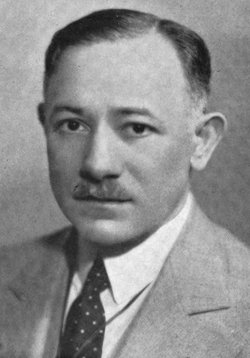
ARTS FANATIC is how E.B. White characterized New York Congressman William I. Sirovich (1882–1939), who proposed the establishment of a Department of Science, Art and Literature. (findagrave.com)

 * * *

A Really Big Show

“The Talk of the Town” paid a visit to the Adelphi Theatre to see how preparations were going for opera-oratorio The Eternal Road. Conceived by journalist and playwright Meyer Weisgal to alert the public to the persecution of Jews in Nazi Germany, it featured a score by Kurt Weill with libretto by Franz Werfel (translated into English by Ludwig Lewisohn).

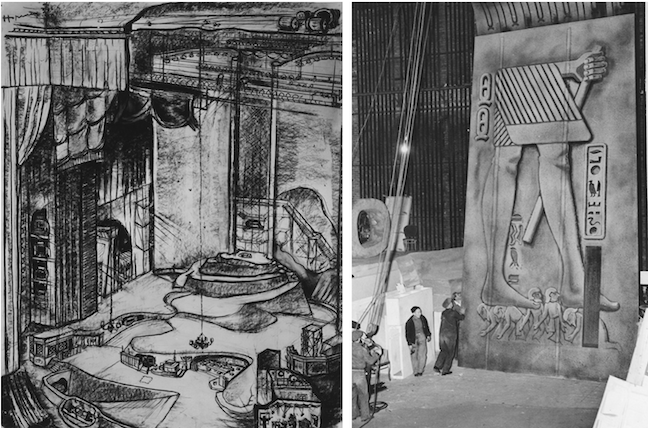
Directed by Max Reinhardt on an imposing set designed by Norman Bel GeddesThe Eternal Road would take time to produce, finally premiering at the Manhattan Opera House on Jan. 7, 1937. It ran for 153 performances.
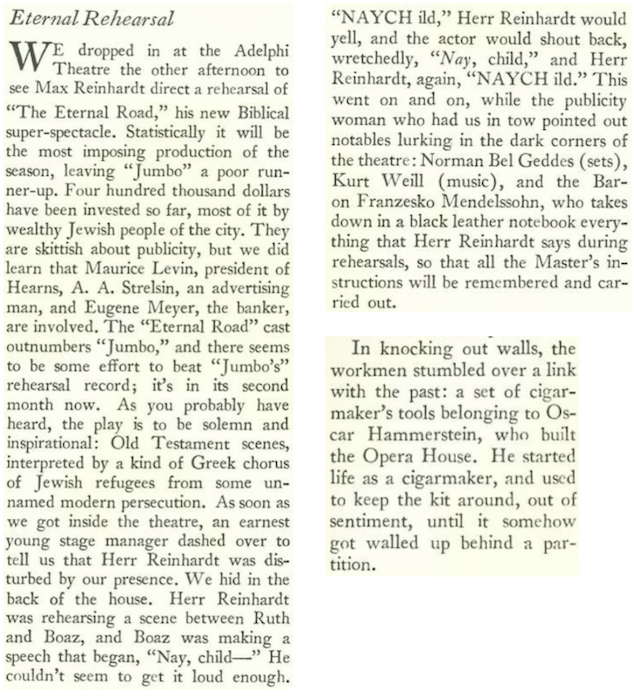
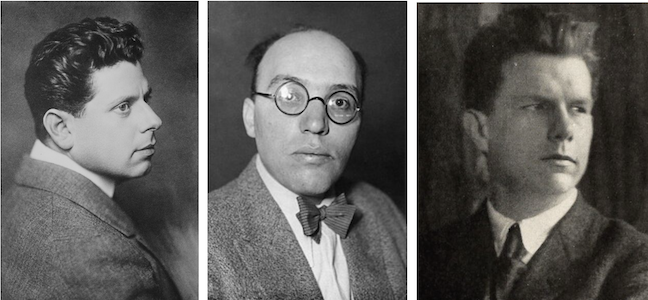
ON THE ROAD…Key figures in the production of The Eternal Road included, from left, director Max Reinhardt, composer Kurt Weill, and set designer Norman Bel Geddes (who here bears an uncanny resemblance to New Yorker founding editor Harold Ross). (weillproject.com)
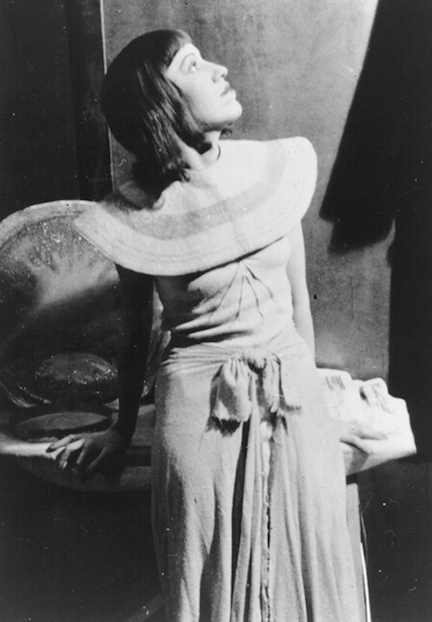
DRAMA QUEEN…Among the 245 actors in the production was Lotte Lenya, who portrayed Miriam. An acclaimed Austrian singer and actress, Lenya was also Kurt Weill’s ex-wife, and is probably best known today for her role as the sadistic Rosa Klebb in the 1963 James Bond film From Russia with Love.
MAKE NO LITTLE PLANS…At left, a sketch by Harry Horner of the The Eternal Road’s five-level set designed by Norman Bel Geddes for the Manhattan Opera House; at right, massive set piece from the production. (Kurt Weill Foundation kwf.org)

 * * *

Location, Location, Location

“Talk” also looked at property values in the city, noting that the site occupied by the Hell Gate power plant was assessed at nearly $57 million (roughly $1.3 billion today). Excerpt:
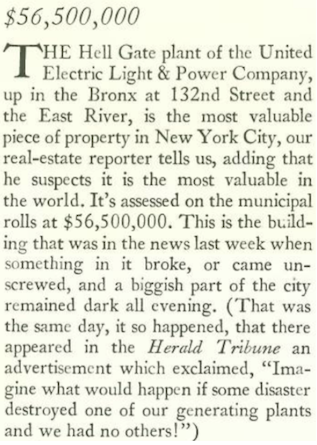
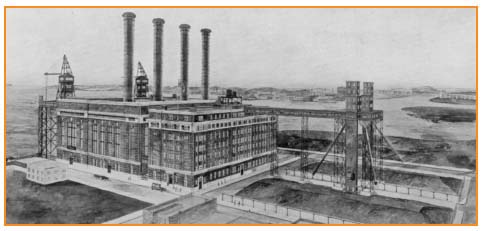
PRIME REAL ESTATE…Artist’s rendering of the Hell Gate generating station, circa 1922. (T.E. Murray, Power Stations 1922)

 * * *

A New, Improved Carmen

Music critic Robert Simon (writing for “Musical Events”) was delightfully surprised by the Met’s latest production of Carmen, and namely by the performance of Swedish mezzo-soprano Gertrud Pålson-Wettergren:
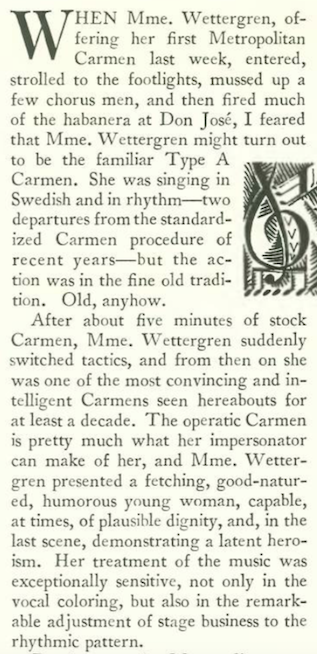
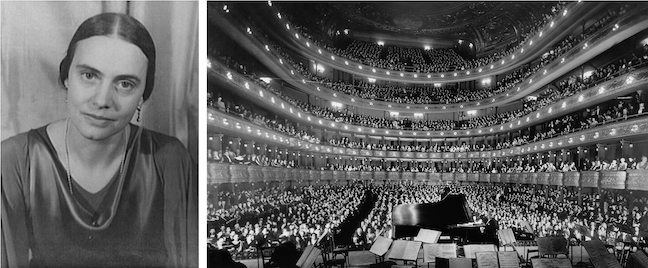
HUMOROUS AND HEROIC were just two for the adjectives Robert Simon used to describe an interpretation of Carmen by Swedish mezzo-soprano Gertrud Pålson-Wettergren (1897–1991). She made her Metropolitan Opera debut in December 1935. (Wikipedia)

 * * *

At the Movies

We rejoin critic John Mosher for a look at the rest of the cinema lineup, beginning with King of Burlesque, which featured Alice Faye and “everything but the kitchen stove.”
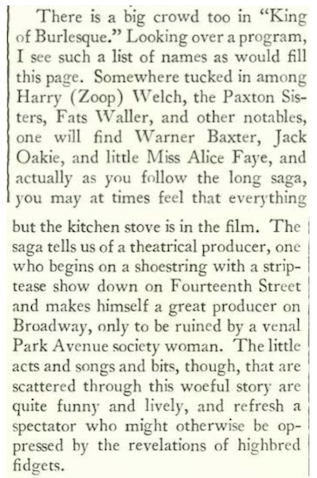
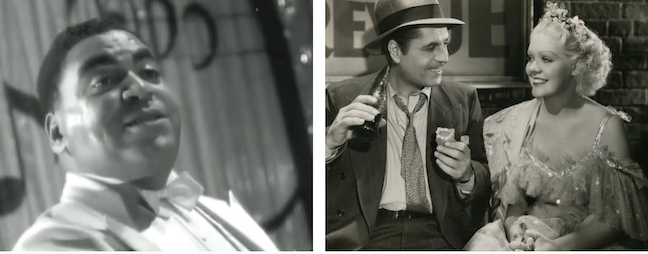
FACES IN THE CROWD…Mosher found a film crowded with talents in King of Burlesque, including Fats Waller (performing “I’ve Got My Fingers Crossed”), Warner Baxter, and Alice Faye. (YouTube.com/IMDb.com)

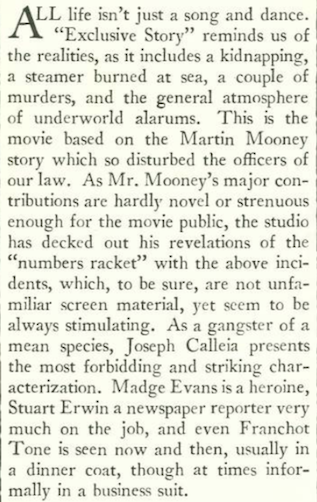
Mosher found a “stimulating” gangster flick in Exclusive Story

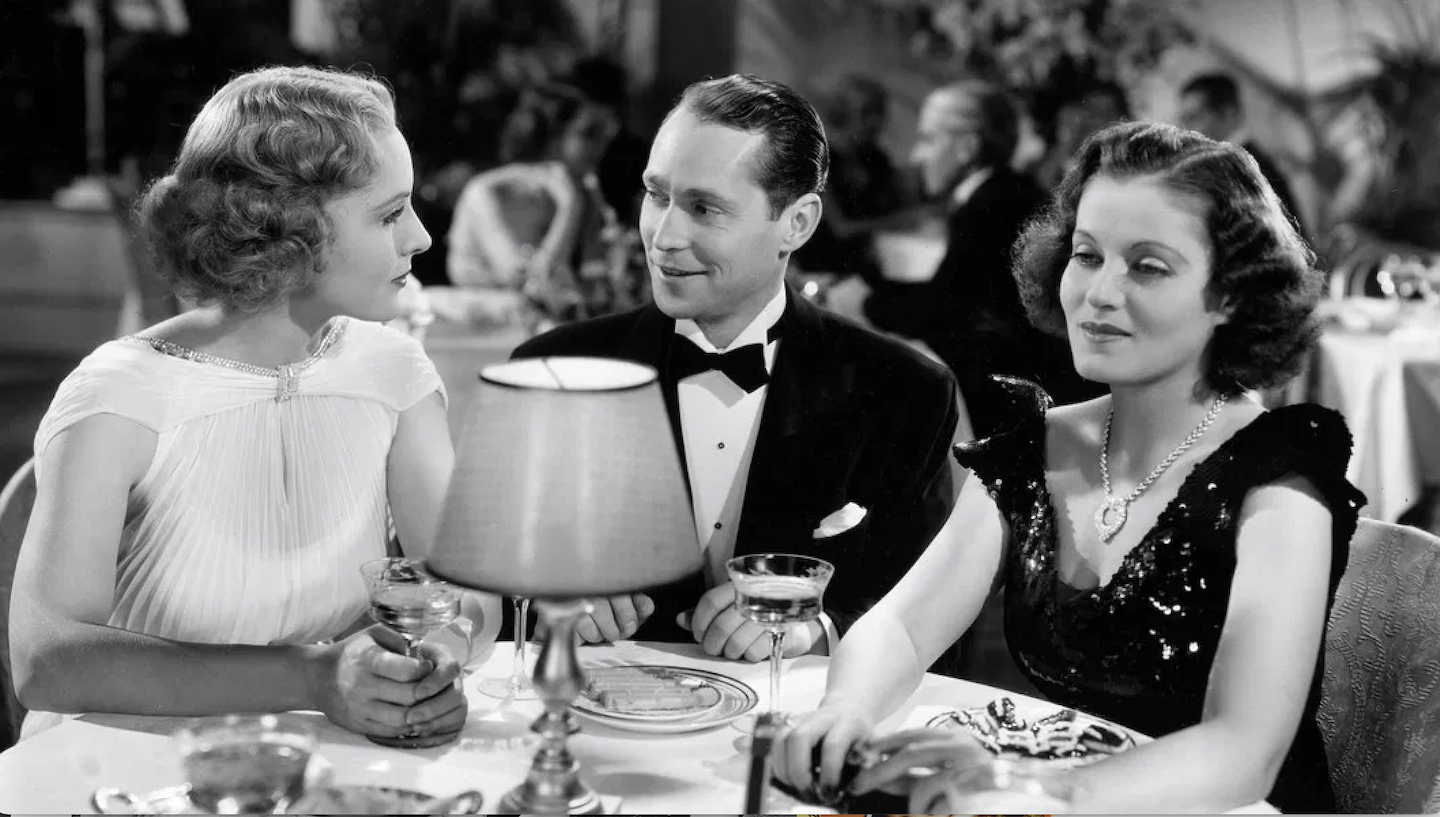
DRESSED TO THE NINES…Franchot Tone was clad in his usual Sunday best, here flanked by Madge Evans (left) and Louise Henry. (themovied.org)

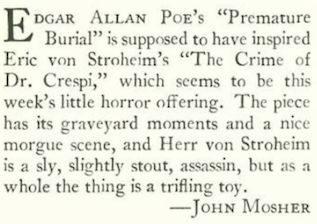
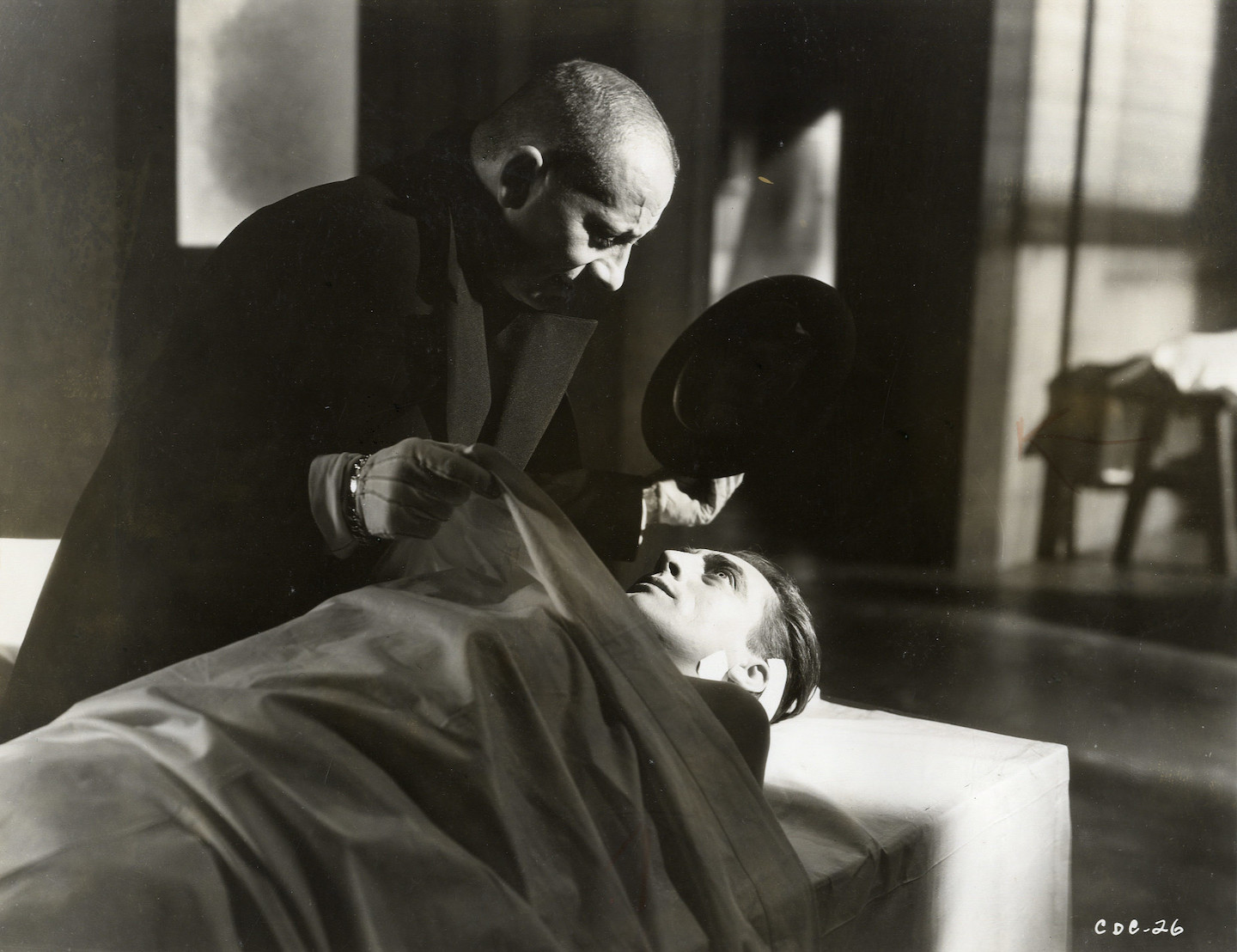
…and a “trifling” horror movie, The Crime of Dr. Crespi

I’M NOT DEAD YET…Evil Dr. Crespi (Erich Von Stroheim) gives fellow doctor Stephen Ross (John Bohn) a drug that induces a state of apparent death in The Crime of Doctor Crespi. (moma.org)

 * * *

A Hot Hobby

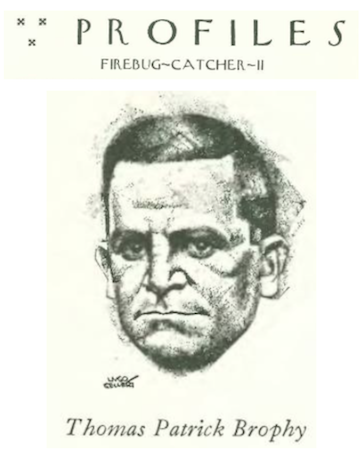
St. Clair McKelway filed the second of a two-part profile on New York’s Chief Fire Marshal Thomas P. Brophy (1880-1962). McKelway wrote, “How to stop a fire is the fire chief’s problem; how it got started, that of the fire marshal, Thomas Brophy…Brophy’s specialty, however, is pyromaniacs— it is almost his hobby.” Hugo Gellert supplied the drawing.
* * *

From Our Advertisers

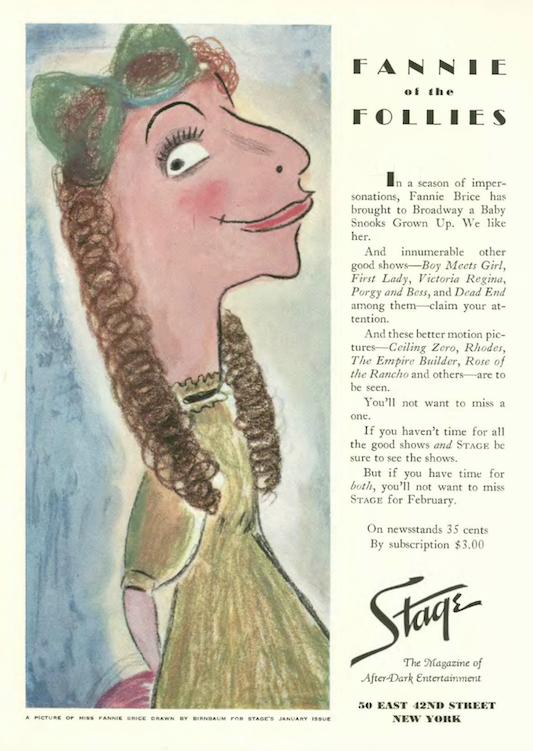
We begin with the inside front cover, and this colorful illustration of Fanny Brice by Abe Birnbaum for Stage magazine…
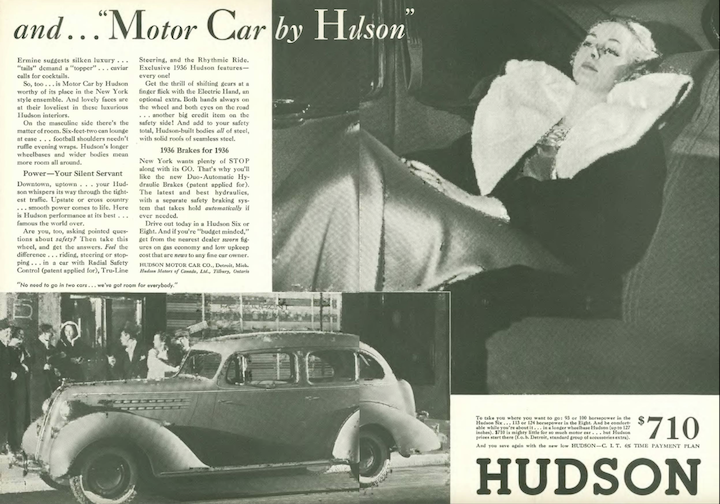
…the makers of budget automobiles such as Nash, Plymouth and Hudson were all on the same page when it came to marketing their automobiles, namely, that their products suggested luxury despite the bargain price…a “Motor Car by Hudson,” the ad proclaimed, is “worthy of its place in the New York style ensemble”…
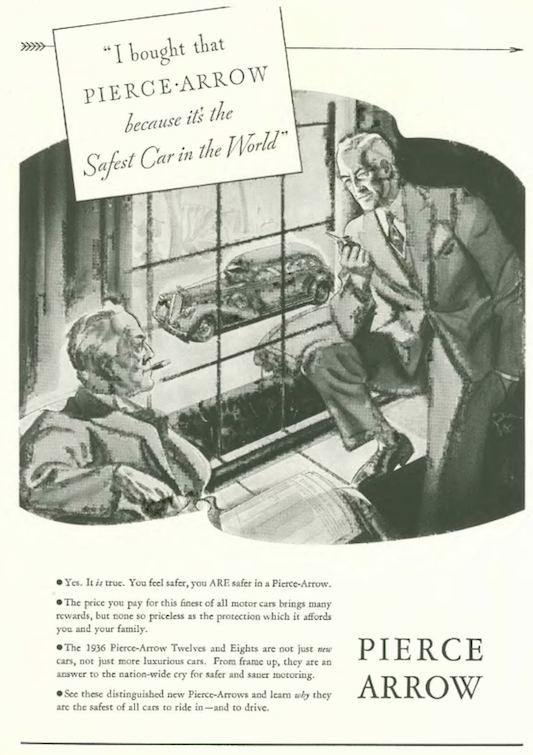
…the makers of Pierce Arrow had a solid reputation as the Rolls-Royce of American automobiles, so they took the safety angle in this understated, hyperbole-free advertisement…(however, cheaper cars like Hudson would survive the Depression, Pierce-Arrow would not)…
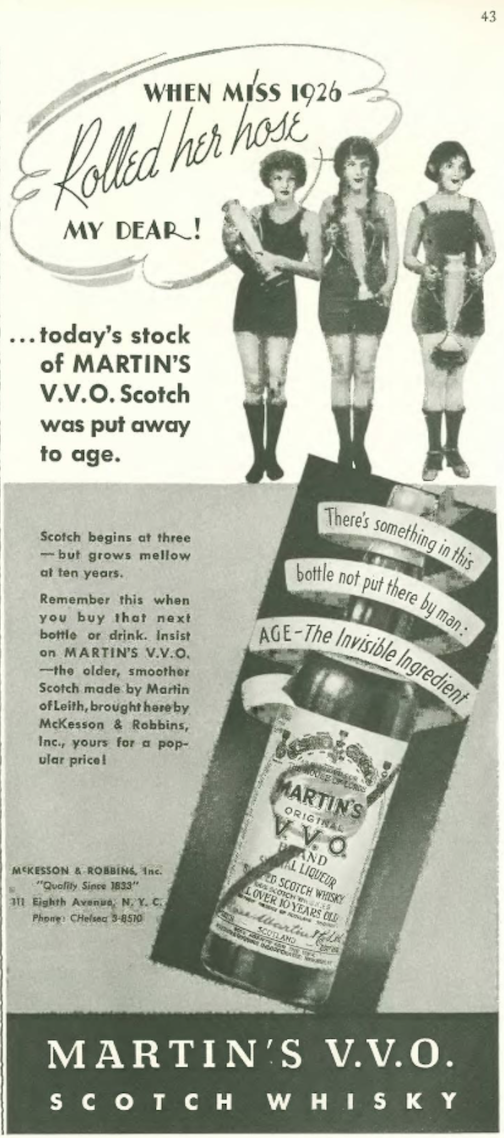
…this Scotch whisky ad recalled the days when “rolled hose” could create a scandal, underscoring how things can mellow after ten years, including whisky…
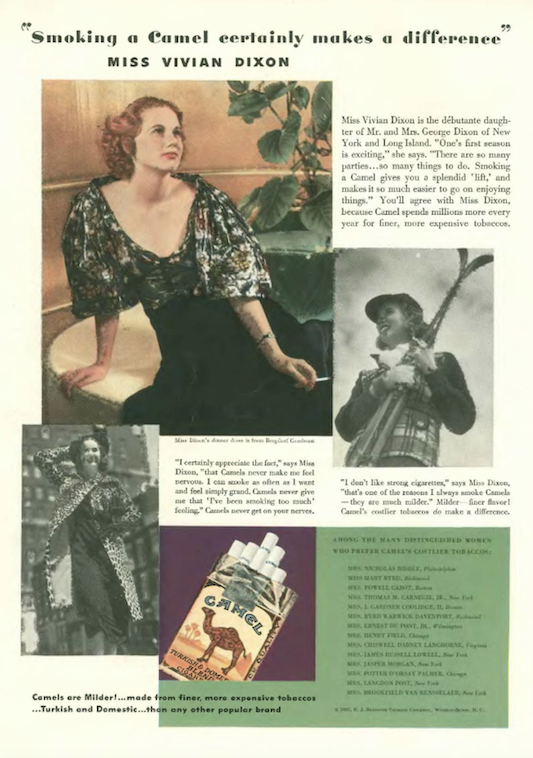
…in this back cover advertisement, Vivian Dixon (apparently just eighteen years old) was the latest New York debutante to invite young women to join her in smoking Camels…
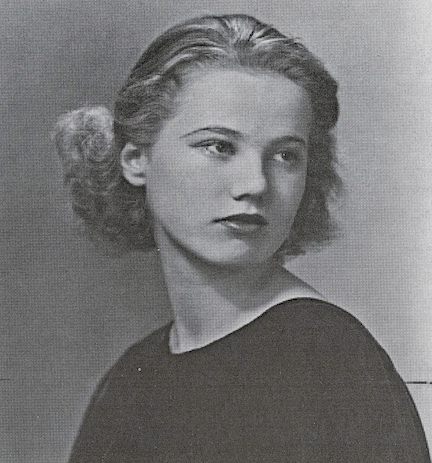
Vivian Dixon (1918-1974) circa 1940. You can read more about her here. (stoningtonboroughct.com)

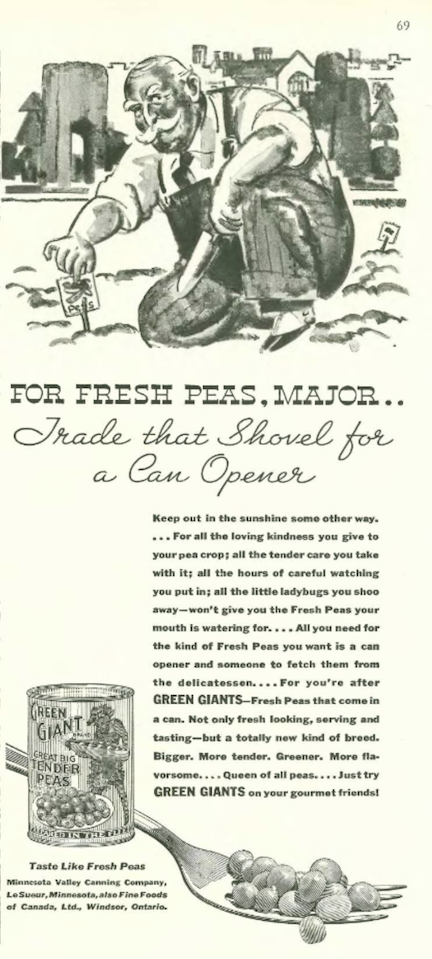
…the Major continued his quest for fresh peas in this ad from the Minnesota Valley Canning Company (aka Green Giant)…
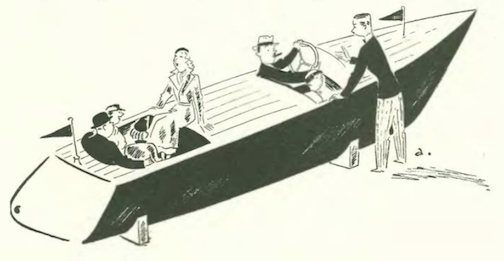
…on to our cartoonists, beginning with this spot drawing for the boat show by Constantin Alajálov

…this spot by Abe Birnbaum broke up the text for James Thurber’s “Nine Needles” short story…

Perry Barlow gave us a gentleman attempting to explain the subtleties of ice hockey…
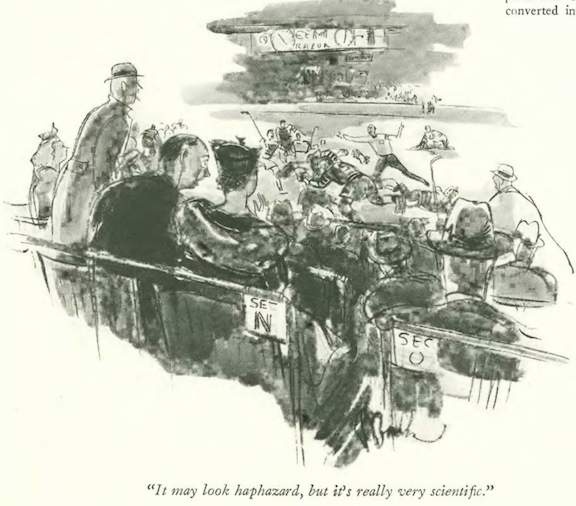
…Barlow again, where seeing is not necessarily believing…
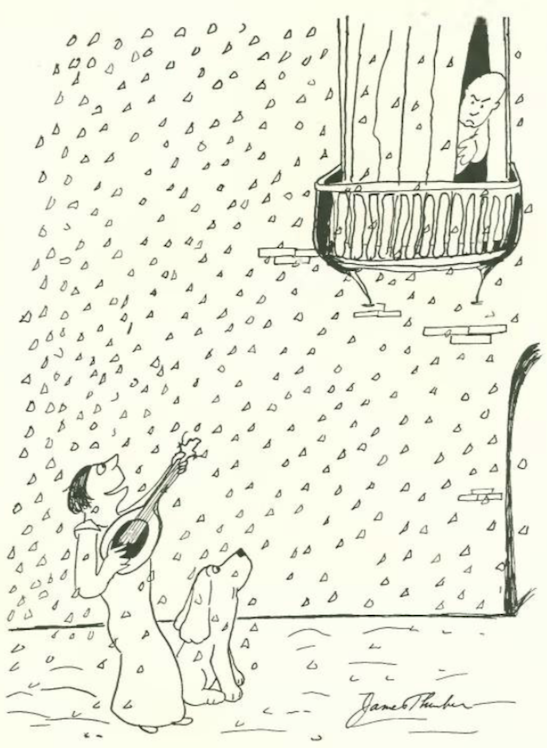
James Thurber contributed a serenade, accompanied by dog…
Peter Arno bid farewell to honeymooners destined for Niagara Falls and the Shredded Wheat factory…

…besides the falls, the Shredded Wheat factory was a big attraction in the early 20th century…
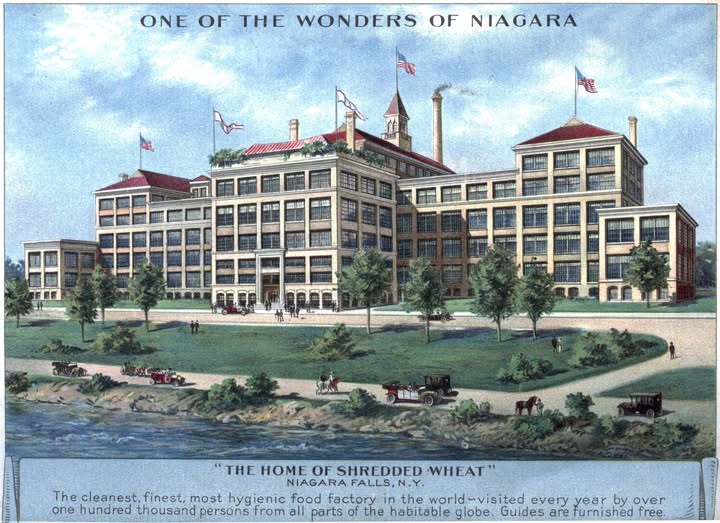
A 1905 postcard touting “One of the Wonders of Niagara.” (Niagara Falls Public Library)

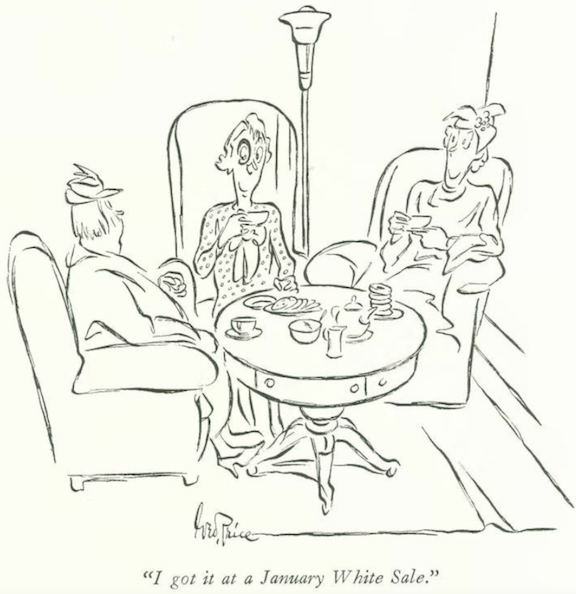
George Price illustrated the hazards of bargain shopping…
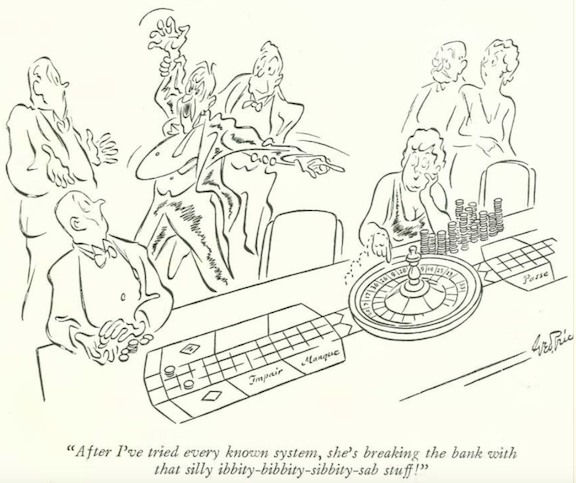
…and Price again, with a lucky streak in Atlantic City…
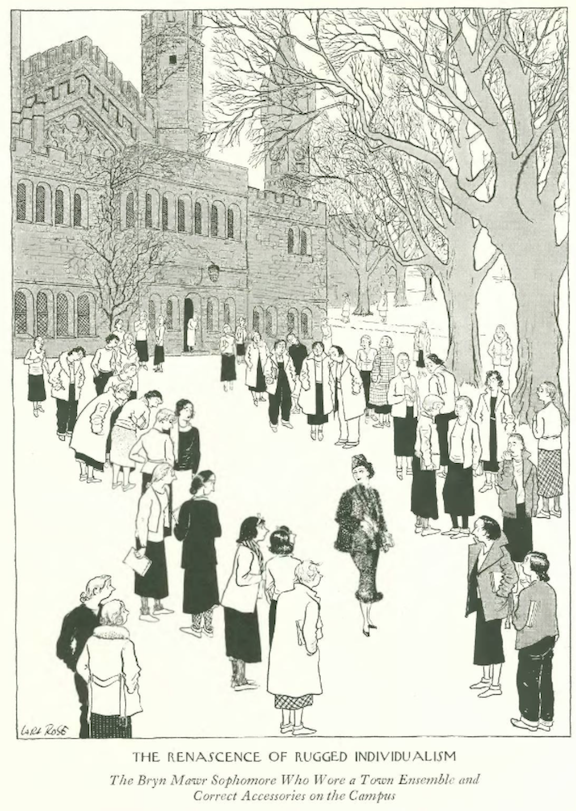
Carl Rose continued to offer examples of rugged individualism…
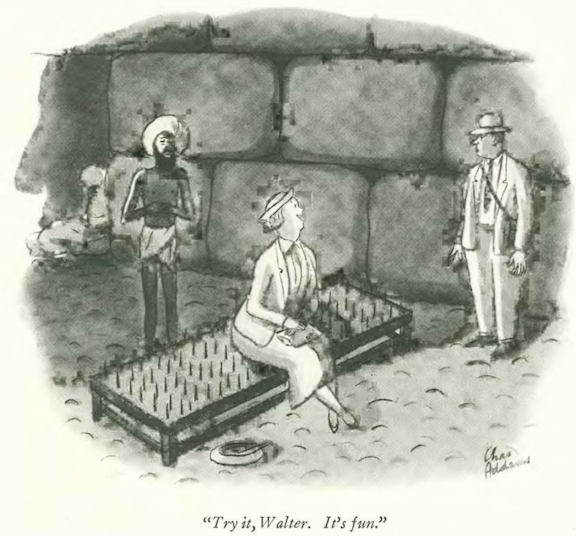
Charles Addams explored some exotic thrills…
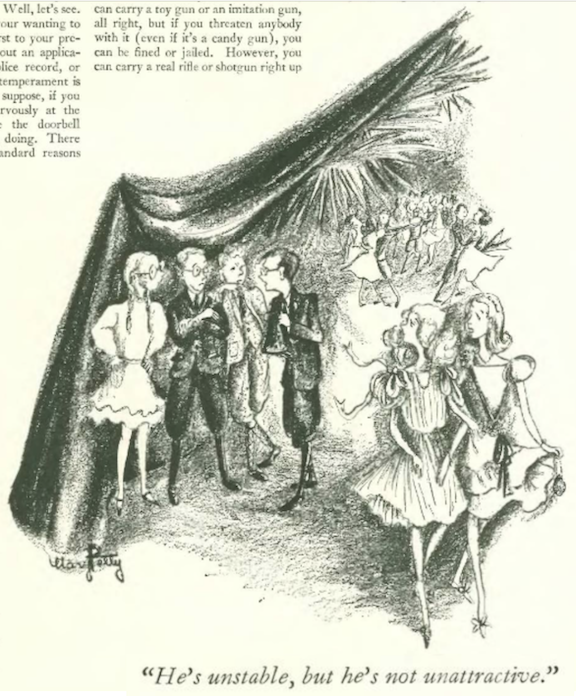
Mary Petty found nuance among youthful suitors…
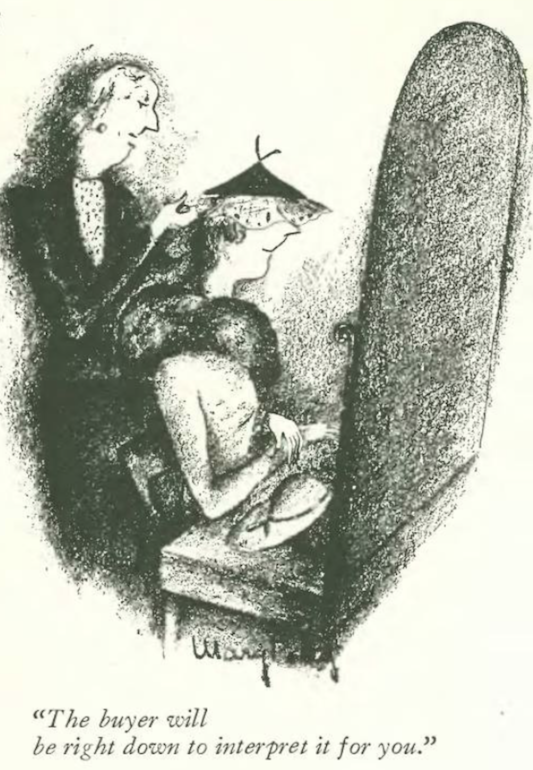
…and Petty again, and the complexities of hat shopping…
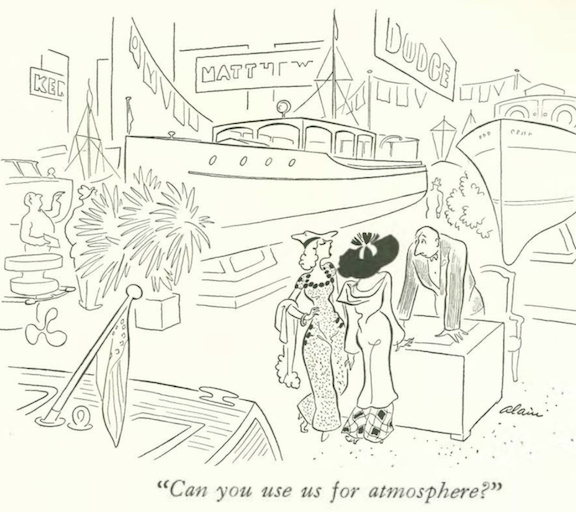
Alain paid a visit to the boat show…

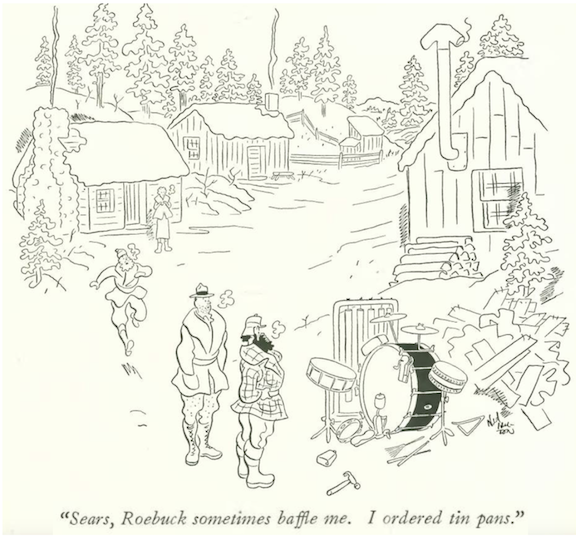
Ned Hilton drew up a mail-order mix-up…
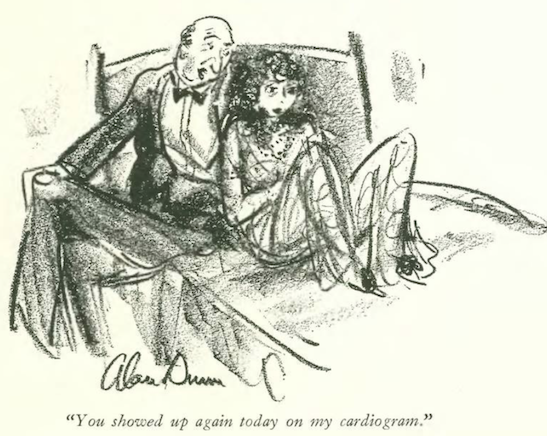
…and we close with Alan Dunn, and a matter of the heart…
Next Time: Having a Ball…

Big Fish, Little Fish

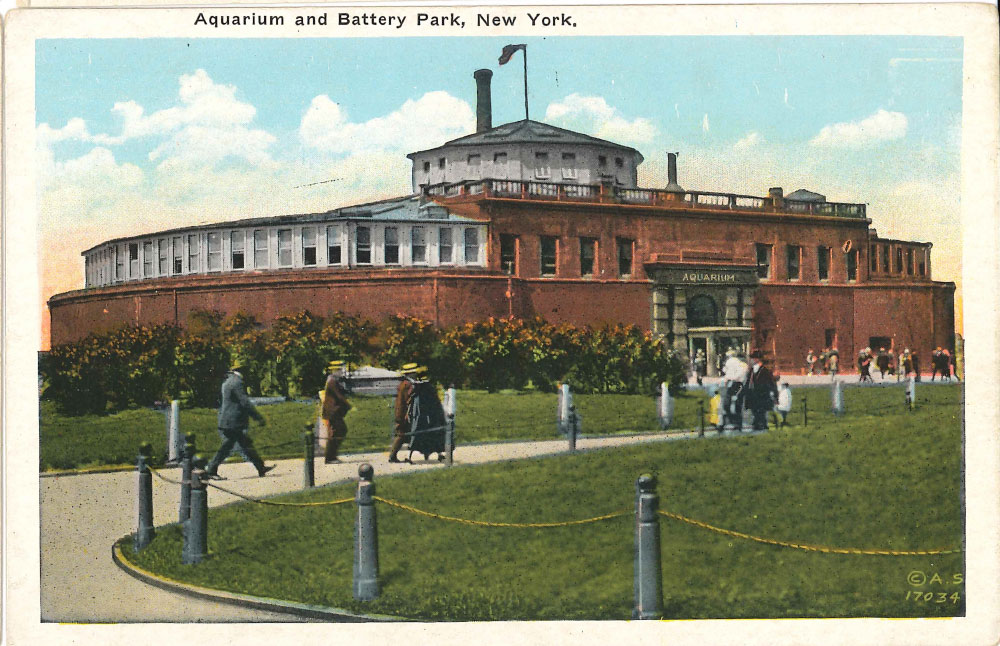
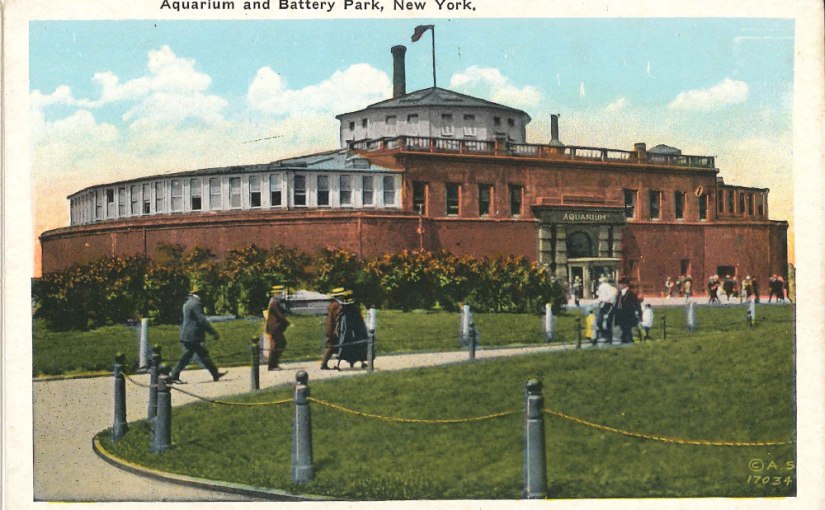
Battery Park’s Castle Clinton was a fort, a popular entertainment complex, and an immigration depot before the architectural firm of McKim, Mead, and White transformed it into the New York Aquarium in 1896.

Sept. 26, 1931 cover by Rea Irvin.

The Aquarium’s beginnings were modest, but under the direction of zoologist Charles Haskins Townsend it became one of lower Manhattan’s biggest attractions. “The Talk of the Town” looked in on its latest acquisitions, including the first display of live piranha (here spelled paranha) in America:

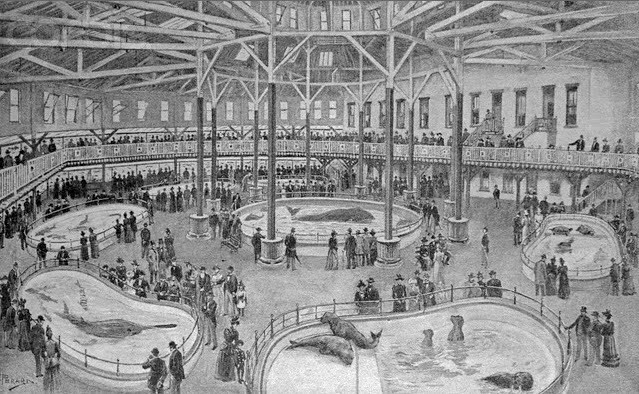
When the Aquarium opened it was marvel of late 19th century technology; its enormous glass tanks and pools — holding more than 300,000 gallons of water — were controlled by an elaborate behind-the-scenes operation that ensured each species had the right kind of water conditions and food to survive, at least for awhile; the Aquarium in its early days, like the Central Park Zoo we visited recently, displayed its creatures as curiosities in decidedly unnatural surroundings…

DE-NATURED…In the New York Aquarium’s early days, fish and other aquatic animals were displayed in glass tanks that lined the out walls as well as in concrete ponds below the expansive trussed ceiling. If this rendering is accurate, then these creatures, especially the whales, had miserable, short lives. (thebattery.org)

…and this is a promotion for the Aquarium you would not see today…

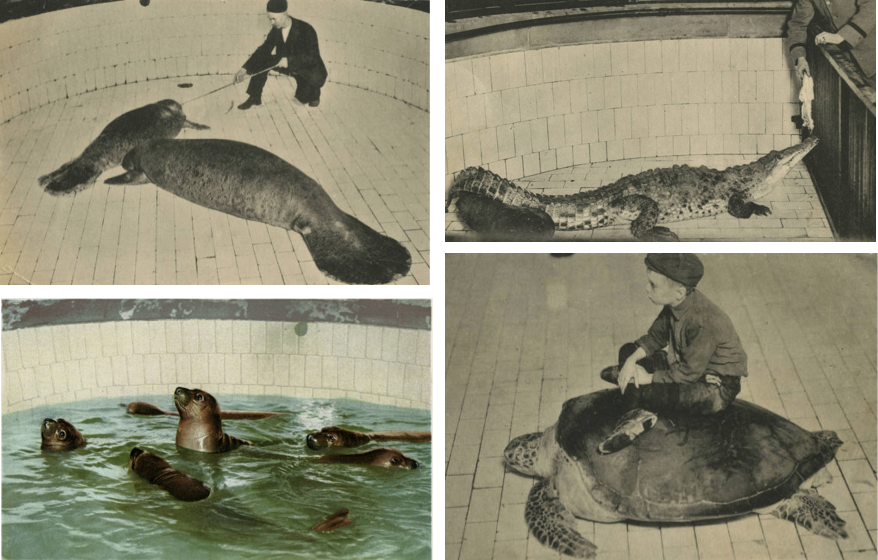
…and here are a few images from the early years…more than 100 years old but still not easy to look at…

DRY-DOCKED…these are images used on postcards to promote the Aquarium — the black and white ones are from 1909, the color image circa 1925-30. Clockwise, from top left, Aquarium worker poking at a manatee with a stick (yeah fella, they’re not happy, and probably dying); a crocodile gets some dinner; image common from yesteryear of a child (or groups of children) sitting on a hapless turtle or tortoise; seals in a pool that contained water but nothing else remotely similar to their natural environment. (nyheritage.org)

…it’s easy for us to pass judgment on the unfortunate actions of our forebears, but to his credit Charles Haskins Townsend, director of the Aquarium from 1902 to 1937, advocated for bans on whaling and constantly worked to improve conditions at the Aquarium…

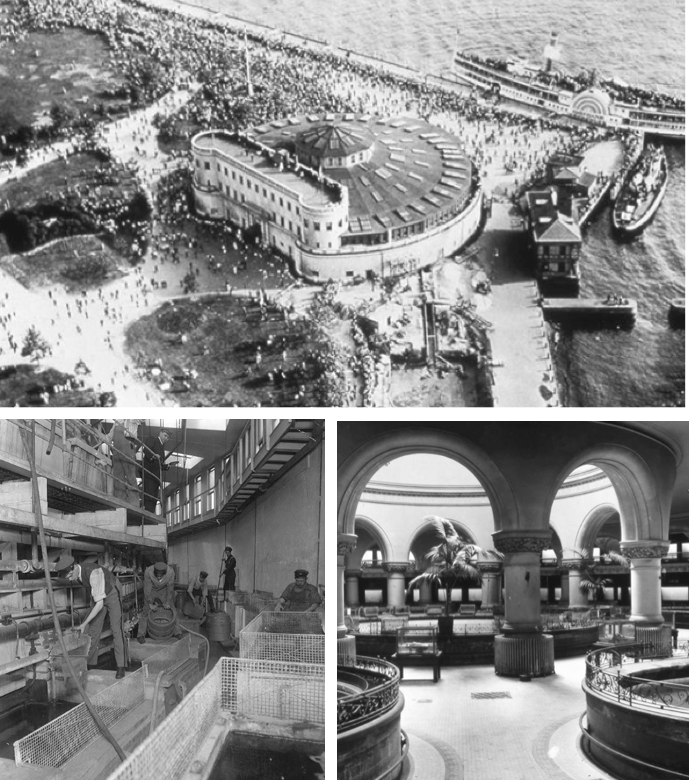
POPULAR DESTINATION…Whether folks were visiting the Aquarium or jumping on a riverboat or ferry, Battery Park was a place to go in the early 20th century. Top and bottom right, exterior and interior views of the Aquarium. Bottom left, the care and feeding took place behind the outer walls. (wcsarchivesblog.org)

…and Aquarium staff tried their best to keep fish alive during relocation, even using train cars specially designed for the purpose…

(Popular Mechanics 1931)

…once at the Aquarium, teams were ready to put the animals into their proper places…

LONELY NO MORE…Paddlewings, the lonely penguin apparently famous enough to be mentioned in the “Talk” piece, is pictured at right in this 1931 article. (Modern Mechanics, August 1931) click to enlarge.

The end came for the Battery Park aquarium when NYC Parks Commissioner Robert Moses proposed construction of the Brooklyn–Battery Tunnel under Castle Clinton. Moses also thought the aquarium was an eyesore, and had it demolished in 1941…

(thebattery.org)

…preservationists managed to stop the demolition before the walls of Castle Clinton were razed. It is now a national monument…

Castle Clinton, circa 1970s. (Flickr)

 *  *  *

Flying High

Attitudes toward drunken driving — or drunken flying — were very different 89 years ago. Case in point was this “Epitaph” written by Morris Markey marking the passing of Carter Leigh, who carried the air mail while flying under the influence (Reginald Marsh contributed the portrait) …

 *  *  *

Exit, Stage Left

The glitzy showgirl revues continued on Broadway with George White’s Scandals, which featured such headliners as singers Ethel Merman and Rudy Vallée, and hoofer Ray Bolger. Reviewer Robert Benchley wrote that the show gave him “the feeling of having a good time,” but the same could not be said for Mae West’s The Constant Sinner; Benchley thought the glare of West’s stardom upstaged the play itself:

SIMULACRUM OF A GOOD TIME…Robert Benchley questioned his own enjoyment of George White’s Scandals of 1931; from top, left, program from the show; singers Rudy Vallée and Ethel Merman were popular stars, as were hoofer Ray Bolger (who in 1939 would portray the Scarecrow in The Wizard of Oz) and actress Luella Gear (photo from the 1934 play Life Begins at 8:40); chorus girls in costume during a Scandals performance. (Playbill/Heritage Auctions/gershwin.com/Pinterest)
A STAR IS WORN…Benchley thought Mae West upstaged herself in The Constant Sinner. At right, West in a publicity photo with co-star Walter Petrie. (Playbill/Heritage Auctions)

 *  *  *

Play Ball

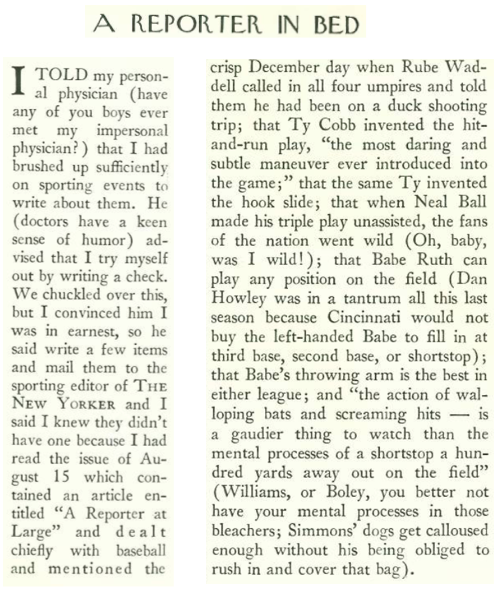
Sports columnist and occasional New Yorker contributor Ring Lardner enjoyed poking fun at revered institutions including Morris Markey’s “A Reporter at Large” column. Lardner rambled through several subjects but mostly reminisced about great baseball players of the past. Two brief excerpts: 

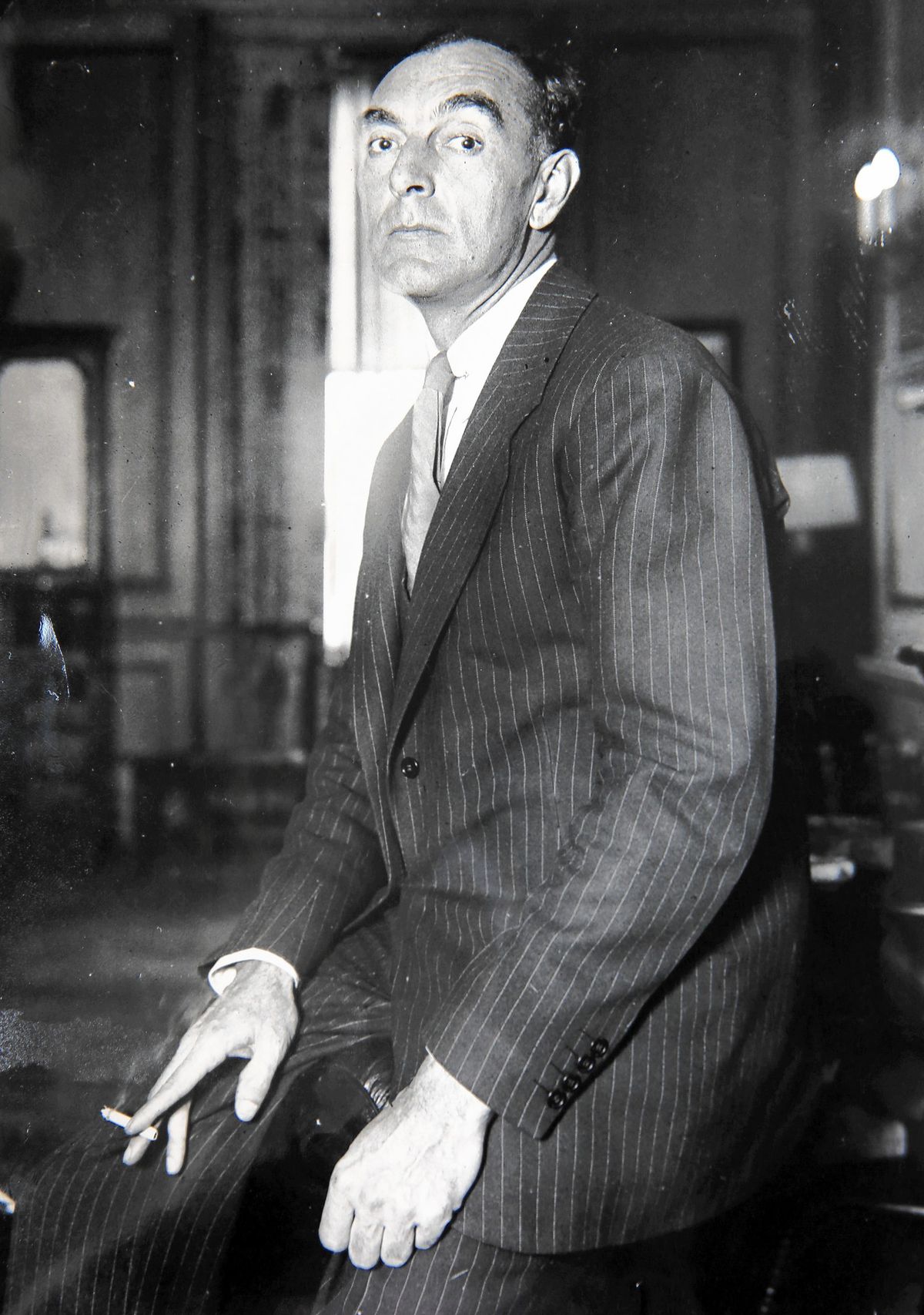
BEDTIME STORIES…the great American sports writer and satirist Ring Lardner, circa 1930. (Chicago Tribune)

 *  *  *

From Our Advertisers

We have yet another somewhat misleading ad from the makers of Lux Toilet Soap featuring an older actress who looked deceptively young for her age…

…the Russian-American actress Alla Nazimova (1879 – 1945) was actually 52 years old when this ad appeared, but the photo featured at left was taken in early 1923, when she was 43, so in a sense the ad was somewhat truthful…

Photo of Alla Nazimova taken by Nickolas Muray on Feb. 1, 1923 for Vanity Fair magazine. (Conde Nast)

…Park Avenue would never be the same with the opening of the grand Art Deco Waldorf Astoria, at 47 stories and 625 feet, it was the world’s tallest hotel from 1931 until 1963…

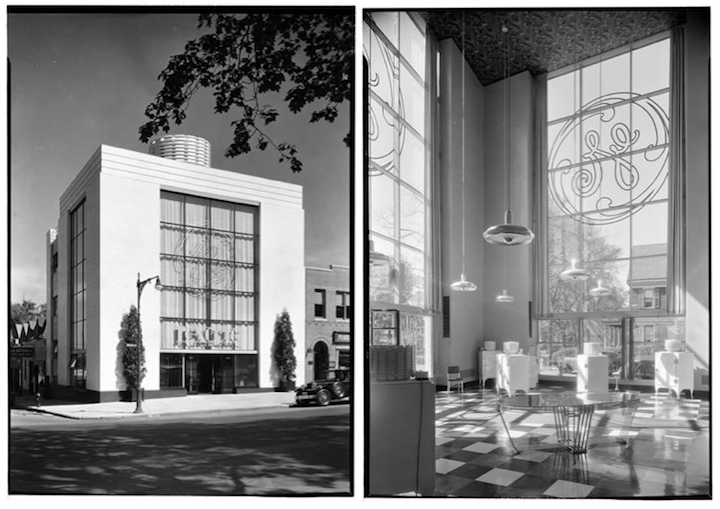
…nor would the skyline at Central Park West be the same with the addition of Irwin Chanin’s modern “Majestic” and “Century” apartments that featured GE refrigerators sold by Rex Cole, who himself was keen on architecture and design…

…and who hired Raymond Hood to create distinctive refrigerator showrooms in Manhattan, Brookyn and Queens…

Rex Cole Showroom in Flushing, Queens, crowned with a replica of the GE refrigerator’s disintictive “Monitor Top.” With their spare, open plan, the modern showrooms were ahead of their time. (Museum of the City of New York, Photo by Samuel H. Gottscho, 1931)

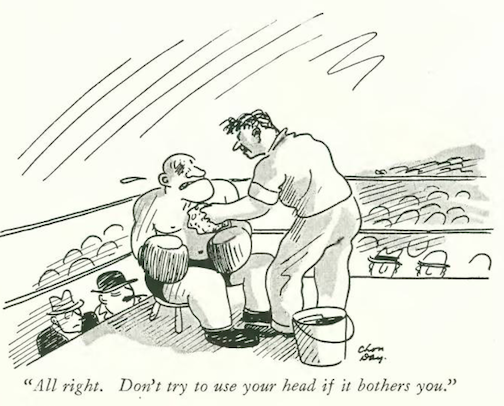
…on to our cartoonists, we have Chon Day at ringside…

Kemp Starrett eavesdropped on some science-minded shoppers…

Garrett Price gave us a maid’s refreshing perspective on a game of chess…

Helen Hokinson found some serious talk among the younger posh set…

…and we end with another from Garrett Price, and the challenges of renting a room near Times Square…

Next Time: The Coming War…


Ghosts of Gotham

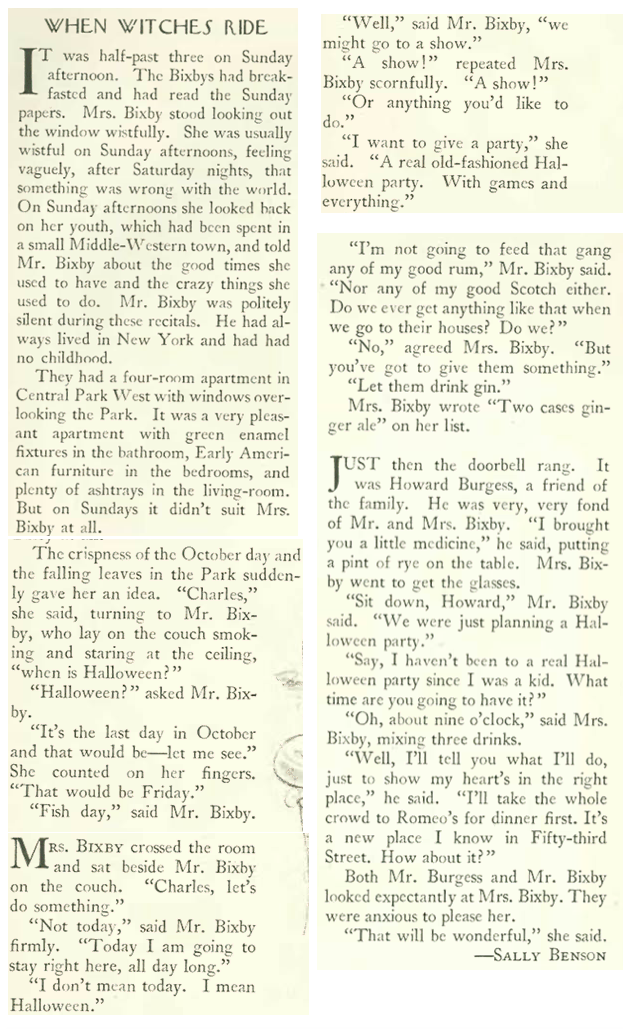
Since I am posting this on the night before All Hallow’s Eve, let’s take a quick look back 89 years at Halloween 1930 through the pages of the Oct. 25, 1930 issue of The New Yorker

…which featured a short story (excerpted below) by Sally Benson, who would write a series of shorts for The New Yorker in 1941-42 that were later published in her book, Meet Me in St. Louis. Note how Prohibition laws seemed to pose no obstacle to the Bixbys’ party plans:

Benson’s Meet Me in St. Louis would be adapted into a popular 1944 film starring Judy Garland. One of the film’s highlights featured the Halloween hijinks of Tootie and Agnes Smith (Margaret O’Brien and Joan Carroll).

BOO!…Margaret O’Brien and Joan Carroll go trick-or-treating in 1944’s Meet Me in St. Louis. (Comet Over Hollywood)

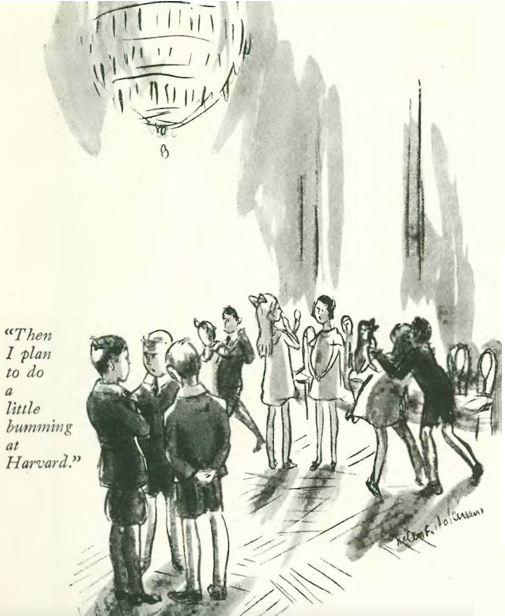
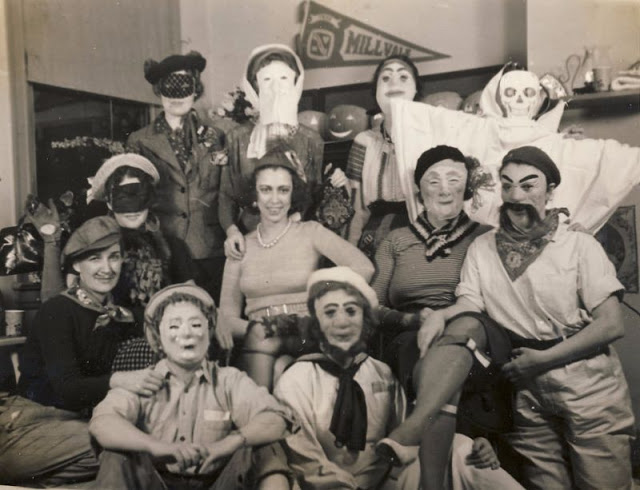
…Halloween revels were also popular with the college kids…

(Vintage Everyday)

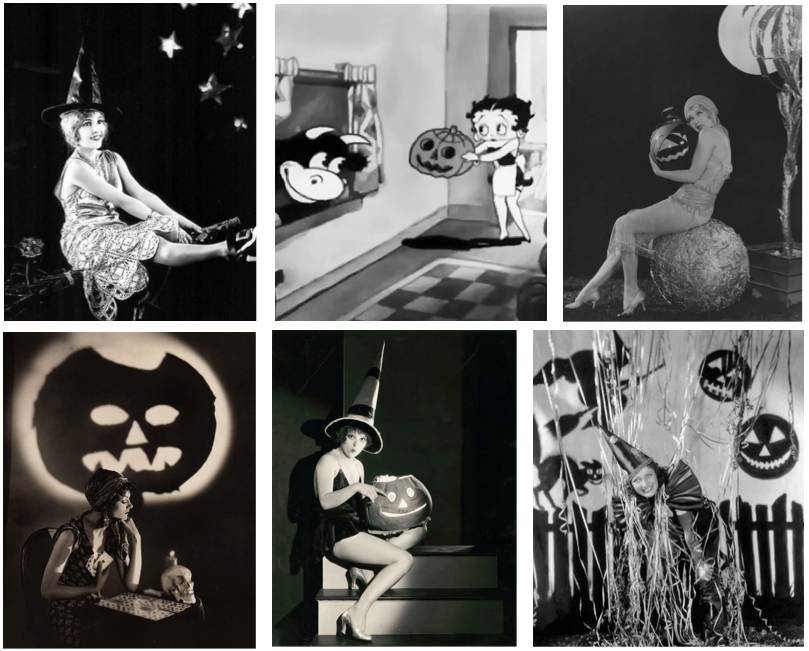
…and of course Hollywood got in on the act, each studio issuing pinup-style images of major female stars to newspapers and magazines …

Clockwise, from top left, Bessie Love (ca. 1920s), a still from a 1933 Betty Boop cartoon, Anita Page, Joan Crawford, Clara Bow, and Myrna Loy. (Vintage Everyday/YouTube)

…the pages of the Oct. 25 issue contained other references to the holiday, including these Julian de Miskey spot drawings…

…and there were also ads offering both parties and party treats to those seeking some Halloween fun…

 *  *  *

Not Exactly Whale Watching

On to our issues, the Oct. 15, 1930 edition featured a strange account (in “The Talk of the Town”) of a man who travelled the country with an embalmed whale carcass, which apparently drew large crowds wherever it was displayed.

Oct. 15, 1930 cover by Peter Arno. As I noted in my previous post, it seemed everyone was lighting up in the 1930s.

The account is disgusting on a number of levels (the last line: “People simply love whales”). During my research I learned that these “whale tours” continued into the 1970s.

SAVE THE WHALES…in this case, by pumping the animal with gallons of formaldehyde.

For further reading, author Lydia Pyne offers some history on this strange phenomenon at Not Even Past.

 *  *  *

From Our Advertisers

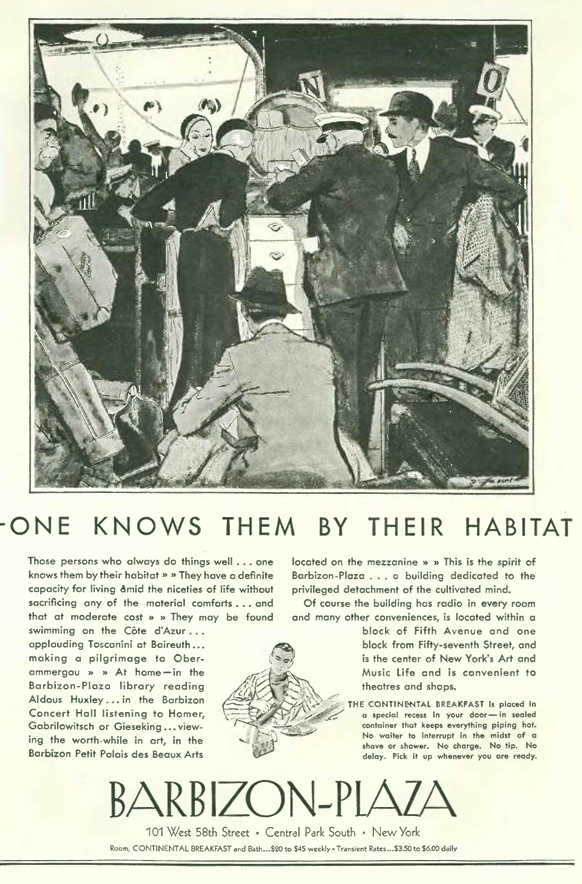
The owners of the new Barbizon-Plaza Hotel at 106 Central Park South tried their best to lure the smart set (especially artists and musicians) to this “habitat” designed especially for them. Unfortunately, artists and musicians were as broke as everyone else, and the property was foreclosed on in 1933…

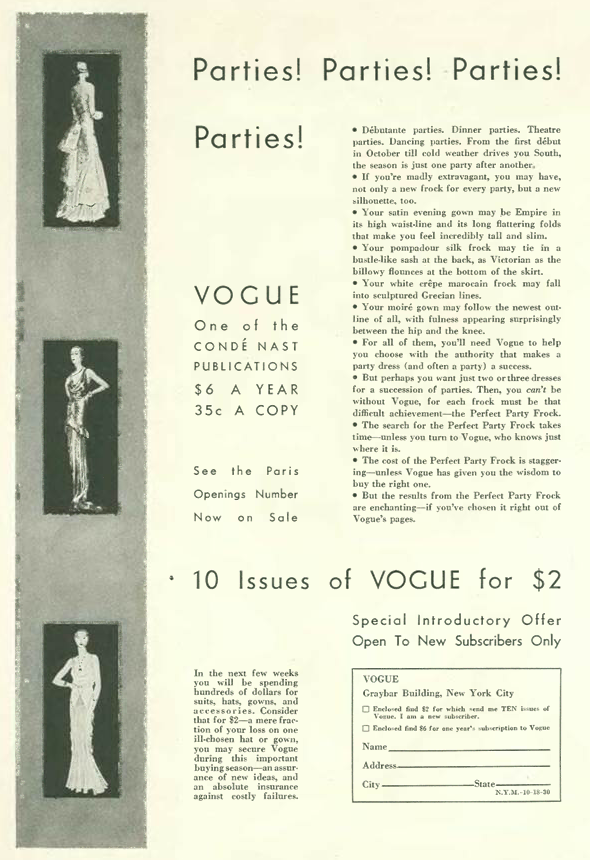
…and we have another appeal to the smart set, this one from the publishers of Vogue magazine (now a sister publication to the New Yorker, as both are now owned by Condé Nast)…

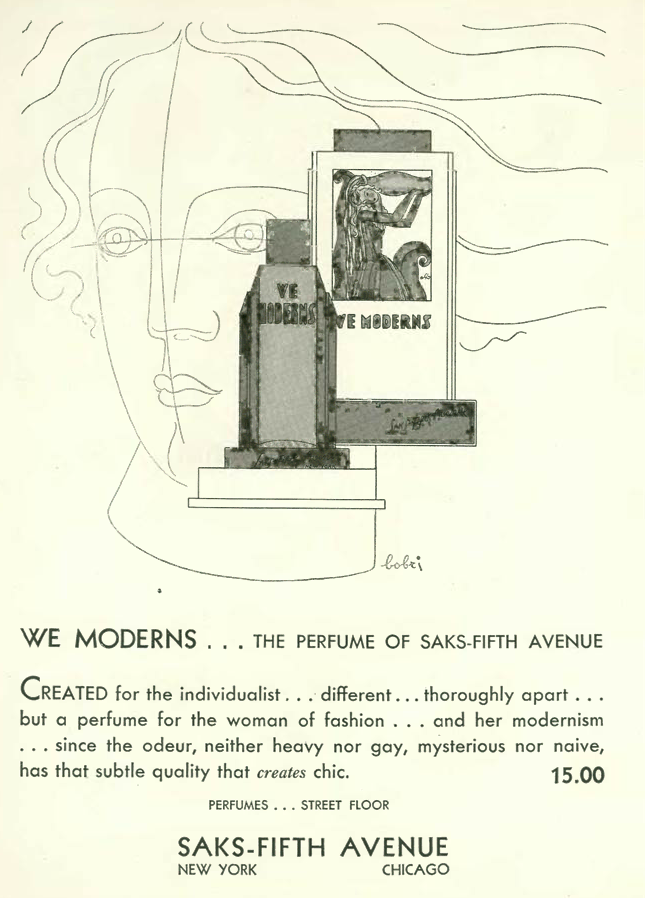
…and one more appeal to fashionable sorts, this time perfume in a bottle shaped like an art deco skyscraper…

…here is what one version of the bottle looked like in 1928, similar to ad above. According to the blog Cleopatra’s Boudoir, the We Moderns perfume was sold from 1928 to 1936 in bottles made in Czechoslovakia. The bottle below was made from glass, enamel (label), and the early plastic Bakelite (cover and base)…

(Perfume Bottles Auction)

…on to our color ads, I like this one because RCA induced the inventor of wireless radio, Guglielmo Marconi, to endorse their “Radiola”…

…and we have a beautiful illustration by Ellis Wilson for Dodge Boats…

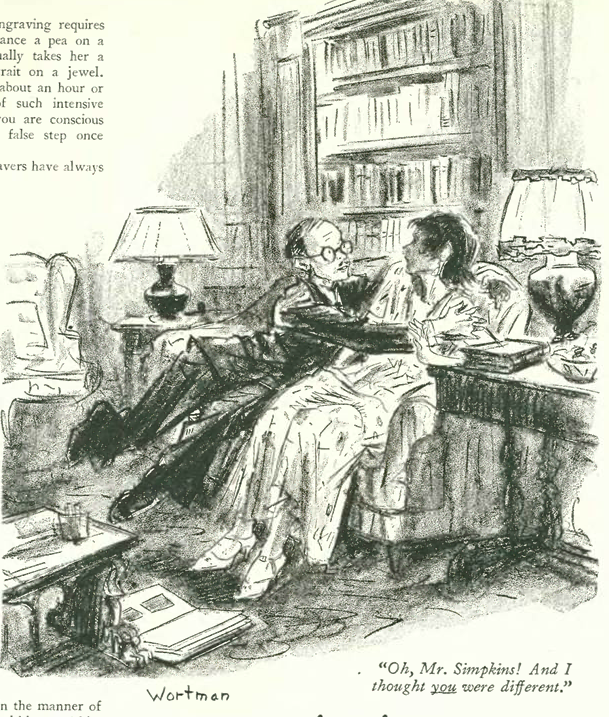
…on to our cartoons, we begin with Denys Wortman

…here’s the art of Rea Irvin on a full page…

Helen Hokinson kept up the tradition of New Yorkers looking down on those backward Bostonians…

Alan Dunn, illustrating the sunlamp fad of the 20s and 30s…

…and Jack Markow, checking on the progress of the Empire State Building…

On to the Oct. 25 issue, and the Broadway opening of the comedy Girl Crazy…

Oct. 25, 1930 cover by Rea Irvin.

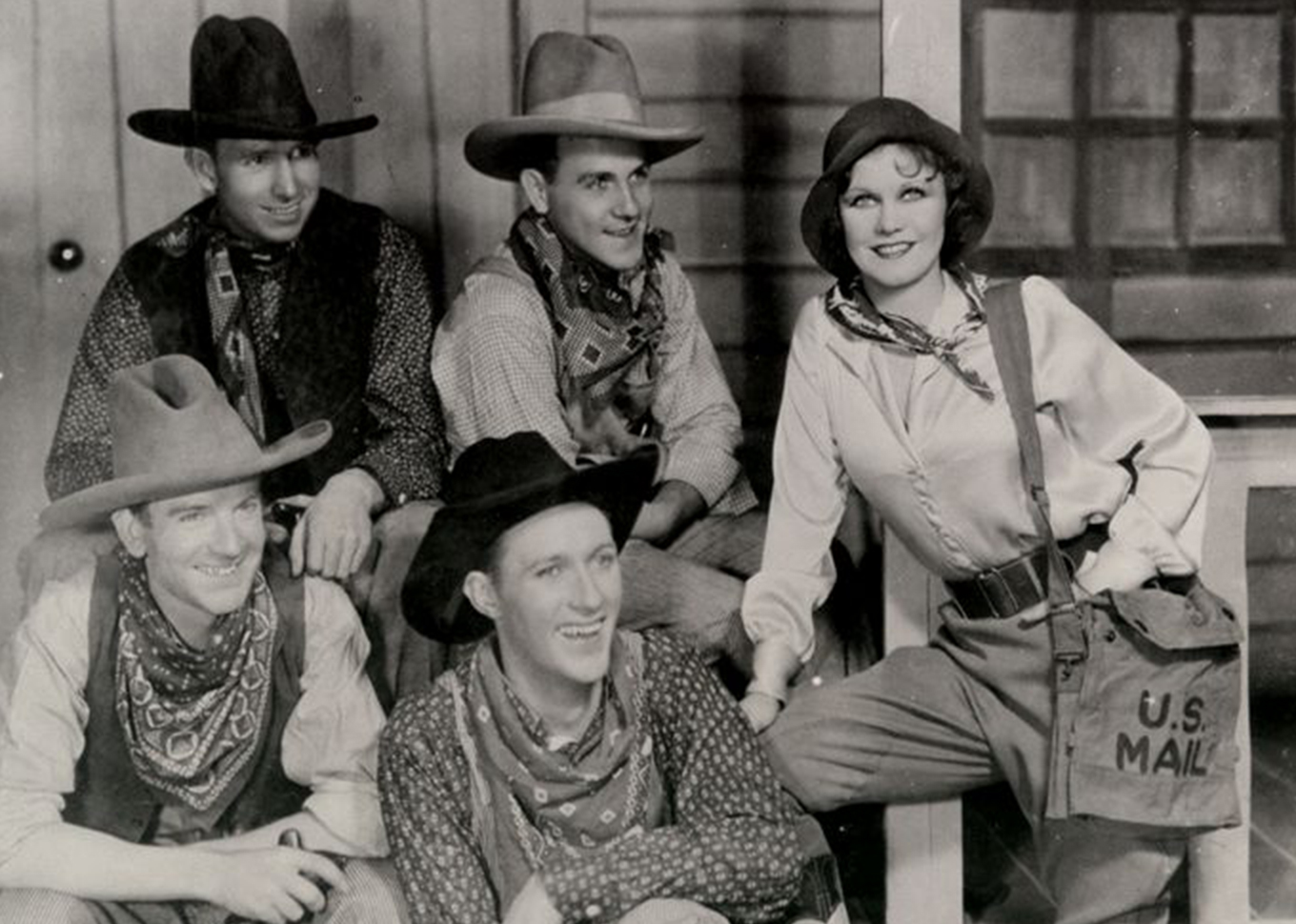
…which featured Ginger Rogers and Ethel Merman introducing the many hits from George Gershwin’s score including “I Got Rhythm” and ‘Embraceable You.” The plot was simple: a young New York playboy is banished by his family to a dude ranch in Arizona to keep him out of trouble…where of course he finds trouble. The orchestra for the Broadway performance included such talents as Benny Goodman, Glenn Miller, Jimmy Dorsey, Jack Teagarden, and Gene Krupa.

THEY SEEM SANE ENOUGH…Above, poster for the Broadway musical Girl Crazy. Below, Ginger Rogers poses with fellow stage actors. (gershwin.com)

 *  *  *

More from Our Advertisers

Ads from the Oct. 25 issue included this recurring one from the promoters of the Empire State Building, marking progress through various historical vignettes…

…the ad accurately depicted the building’s progress, measured against these images below…

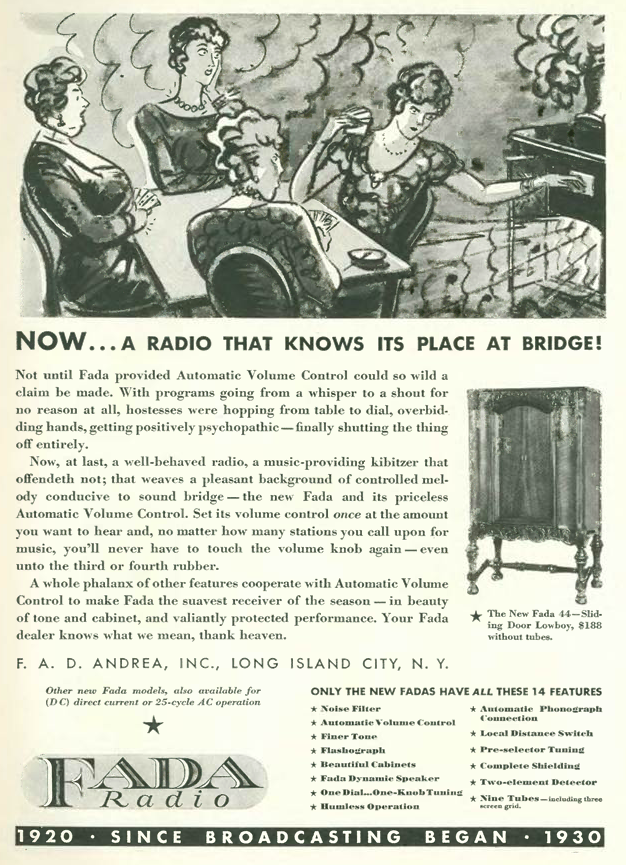
…and we have more radio ads…no endorsement from Marconi here, but the makers of Fada claimed their receiver was far less annoying than their rivals…

…while Atwater Kent touted the convenience of its new “Quick-Vision Dial”…

…as I’ve previously noted, backgammon was all the rage in 1930, so much so that this clothier even advertised a special frock for the game…

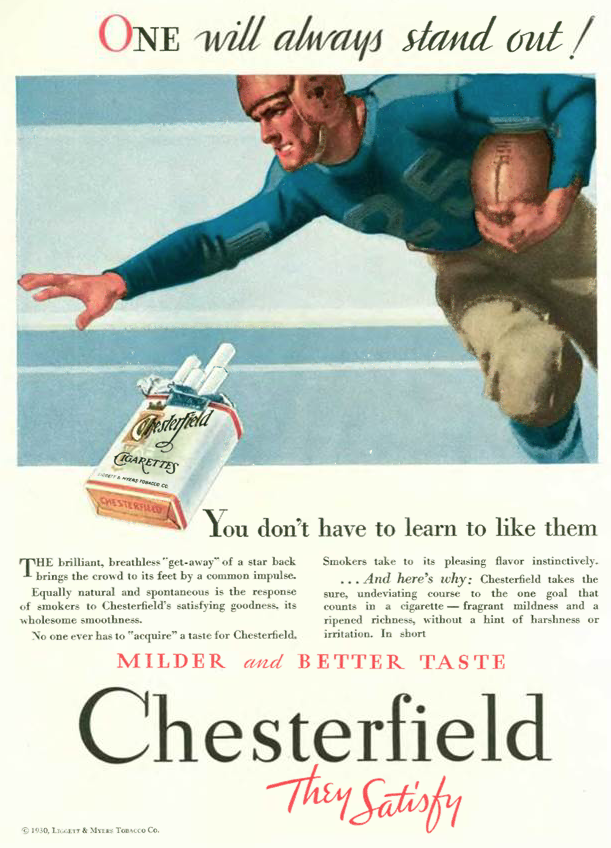
…and what would the 1930s be without smoking tied to athletic prowess…

…and remembering friends and family in California in 2019 as they battle wildfires across that great state…

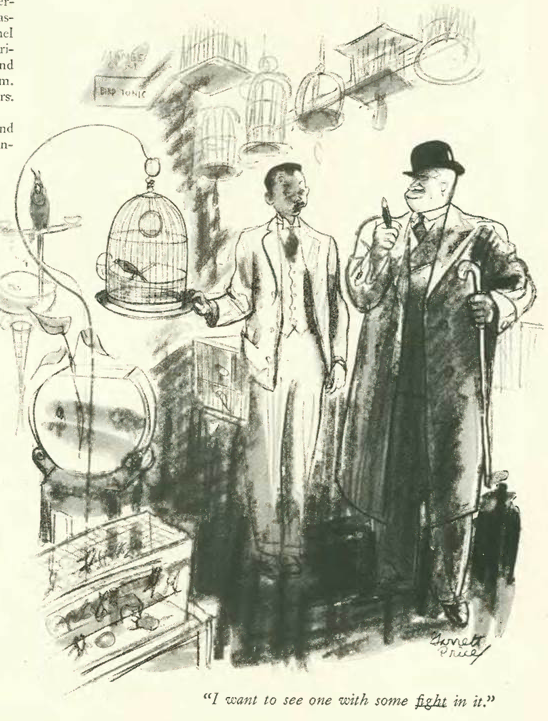
…on to our cartoons, Garrett Price introduced us to a man with a peculiar taste in pet canaries…

Barbara Shermund illustrated the startling views afforded by rail travel…

…and Peter Arno leaves us in a moment of religious ecstasy…

Next Time: Risky Business…