A Tadpole on Wheels

Above: British architect Norman Foster's 2010 recreation of R. Buckminster Fuller's 1933 Dymaxion car. (Wikipedia)

Despite the limitations of 1930s technology, a few architects and designers were hell-bent on building a streamlined future that until then was mostly the stuff of movies and science fiction magazines.

May 5, 1934 cover by Rea Irvin.

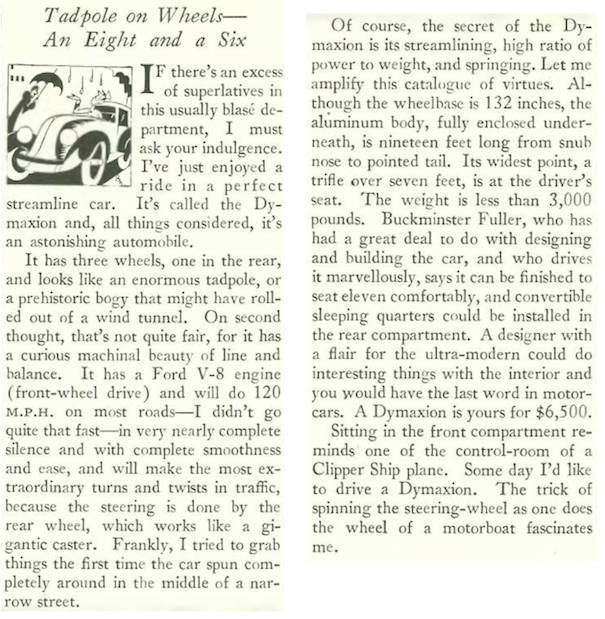
One of them was R. Buckminster Fuller (1895–1983), architect, designer, and futurist probably best known today as the inventor of the geodesic dome (think Disney’s Epcot Center). In the 1930s Fuller was all about a concept he called Dymaxion. Derived from the words dynamic, maximum, and tension, when applied to architecture and design it would supposedly deliver maximum gain from minimal energy input. The writer of the New Yorker article (pseud. “Speed”) was fascinated by the Dymaxion’s motorboat-type steering, no coincidence since Fuller intended to adapt his futuristic car for use on and under the water, as well as in the air.
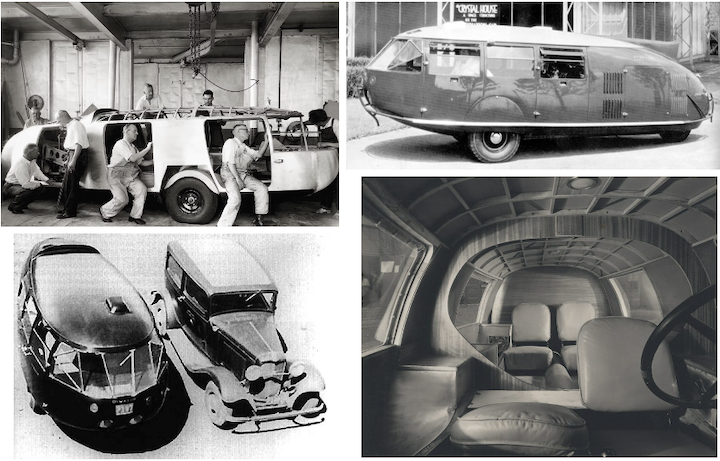
THE SHAPE OF THINGS TO COME…Clockwise, from top left: Workers at a Bridgeport, Conn., plant creating the first of three Dymaxion cars; the Dymaxion at Chicago’s 1933 Century of Progress exposition—the car was involved in a fatal accident at the fair; interior view of the Dymaxion; using the same engine and transmission as a Ford sedan (pictured), the Dymaxion offered three times the interior volume with half the fuel consumption and a 50 percent increase in top speed. (Buckminster Fuller Institute/Poet Architecture)
THINKING WITHOUT THE BOX…In 1927 R. Buckminster Fuller (pictured) developed a Dymaxion House, a “Dwelling Machine” that would be the last word in self-sufficiency. Although the aluminum house was intended to be mass-produced, flat-packaged and shipped throughout the world, the design never made it to market (however its ideas influenced other architects); at right, a Fuller geodesic dome at Disney’s Epcot Center in Florida. (archdaily.com/Wikipedia)

The 1933 Century of Progress exposition in Chicago was supposed to be a major showcase for Fuller, but when professional driver Francis Turner was killed while demonstrating the first prototype of the Dymaxion, the car’s prospects dimmed considerably. According to an article by Stephanie d’Arc Taylor (cnn.com Oct. 30, 2019), during the demonstration a local politician tried to drive his own car close to the Dymaxion—to get a better look—and ended up crashing into the unwieldy prototype, which rolled over, killing the driver and injuring its passengers. “The politician’s car was removed from the fracas before police arrived, so the Dymaxion was blamed for the accident,” writes Taylor, who notes that the rear wheel–powered car, though unconventional, was not necessarily the problem. However, “the thing that made the Fuller death-mobile singularly deadly was the fact it was also steered by the rear wheel, making it hard to control and prone to all kinds of terrifying issues.”

That history did not stop architect Norman Foster from building a replica of the Dymaxion in 2010. Foster worked with Fuller from 1971 to 1983, and considers Fuller a design hero.

GIVING IT ANOTHER GO…Architect Norman Foster with his 2010 recreation of the Dymaxion. To build a new Dymaxion, Foster sent a restorer to the National Automobile Museum in Reno, Nevada (home of the only surviving Dymaxion, Car No. 2), and after thousands of photos and measurements Foster had the car recreated using only materials available in 1933: Foster’s Dymaxion consists of an ash frame sheathed in hand-beaten aluminum, mounted on the chassis of an old 1934 Ford Tudor Sedan. (CNN/The Guardian)

According to Taylor, Foster cleaved so closely to Fuller’s original designs that he refers to his creation as a fourth genuine Dymaxion—not a replica. “The car is such a beautiful object that I very much wanted to own it, to be able to touch as well as contemplate the reality for its delight in the same spirit as a sculpture,” said Foster. “Everything in (the car) was either made in 1934, or recreated using techniques and materials that Bucky would have had access to in that period.”

 * * *

Meanwhile, At The Tracks…

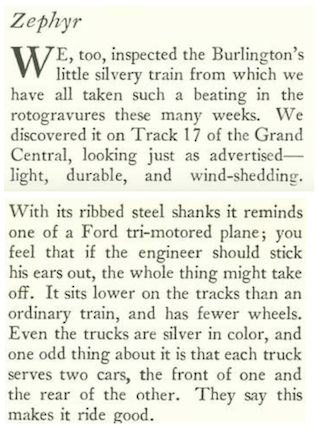
If Fuller’s attempt at the streamlined future was a bit of bust, the Burlington railroad was making a splash with its gleaming new Zephyr. E.B. White reported:
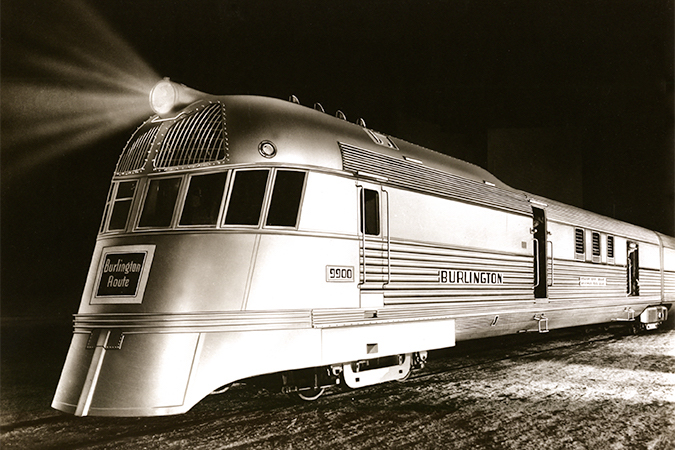
ZOOM ZOOM…The Burlington Zephyr set a speed record for travel between Denver and Chicago when it made a 1,015.4-mile (1,633 km) non-stop “Dawn-to-Dusk” dash in 13 hours 5 minutes at an average speed of almost 78 mph (124 km/h). In one section of the run it reached a speed of 112.5 mph. Following a promotional tour that included New York, it was placed in regular service between Kansas City, Missouri, and Omaha and Lincoln, Nebraska, on November 11, 1934. Other routes would be added later in the Midwest and West. (BNSF)

…we continue with E.B. White, here with some observations regarding Mother’s Day and bank robber/murderer John Dillinger, who had escaped from prison in March 1934 and was on the FBI’s Most Wanted List…

I REMEMBER MAMA…John Dillinger posed with Lake County prosecutor Robert Estill, left, in the jail at Crown Point, Ind. while he awaited his trial for murder in January 1934. Dillinger would escape from the jail in March and would be on the lam until July, when FBI agents would gun him down outside a Chicago movie theatre. (NY Daily News)

…and a last word from White, about an important change at Radio City:

 * * *

Voice In The Wilderness

A combination of newsreel footage, documentary, and reenactment, Cornelius Vanderbilt Jr’s Hitler’s Reign of Terror played to capacity crowds for two weeks in New York City, despite the refusal of the state’s censor to license the film. Disinherited by his parents when he became a newspaper publisher, Vanderbilt was a determined journalist, covertly filming scenes in Nazi Germany and even briefly encountering Adolf Hitler outside the Reichstag, where Vanderbilt yelled to Der Führer, “And what about the Jews, Your Excellency?” (Hitler ignored the question and referred Vanderbilt to one of his lackeys). Unfortunately, Vanderbilt wasn’t much of a filmmaker, and although he warned Americans about the emerging threat in Germany, few took the film, or his warning, seriously, including John Mosher:
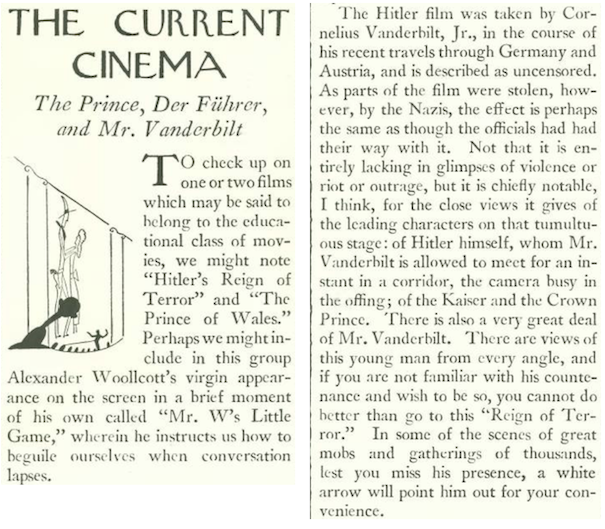
UNHEEDED…Audiences flocked to see Cornelius Vanderbilt Jr’s Hitler’s Reign of Terror, but critics dismissed the rather amateurish film—Film Daily scoffed at the film’s prediction that Hitler’s Germany was a future threat to world peace; at right, in the film Vanderbilt confronted “Hitler” in a recreation. (TMDB/Library of Congress)

 * * *

From Our Advertisers

It wouldn’t seat eleven people like a Dymaxion, but a Body by Fisher (coach builder to General Motors) certainly impressed this young woman…but better check with the hubby just in case…
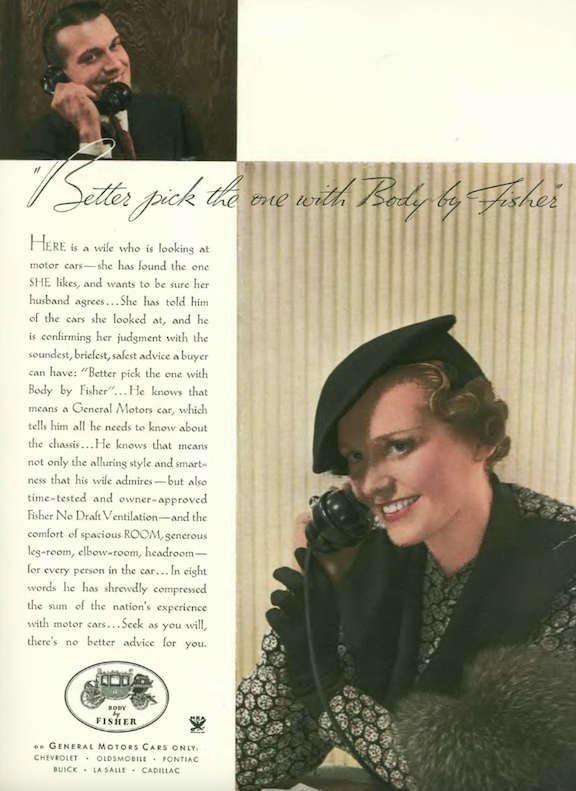
…in this next ad, we find what looks like the same woman, perhaps celebrating her decision with a nice smoke…
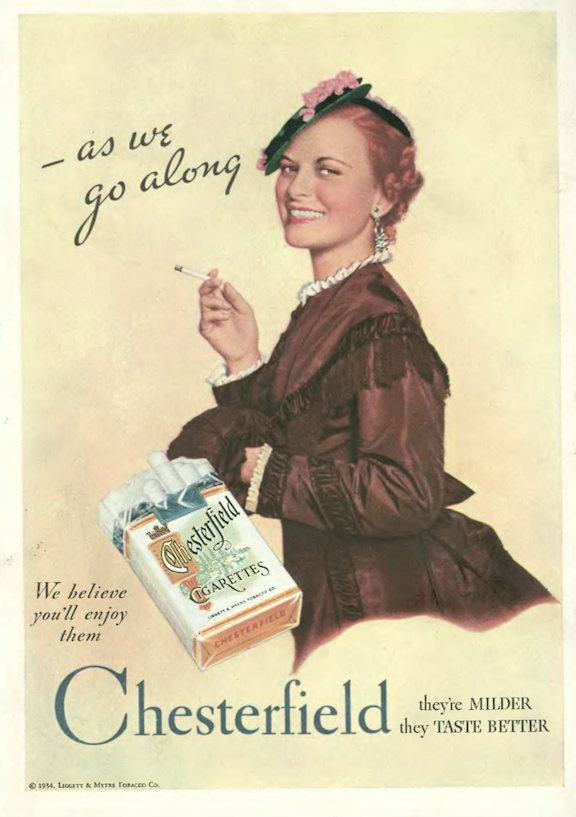
…this spot seems out of place in the New Yorker, like it snuck over from Better Homes & Gardens...

…on to our cartoons…with James Thurber’s war of the sexes over, life returned to normal…

…and both sides shared in the gloom of a rainy afternoon…
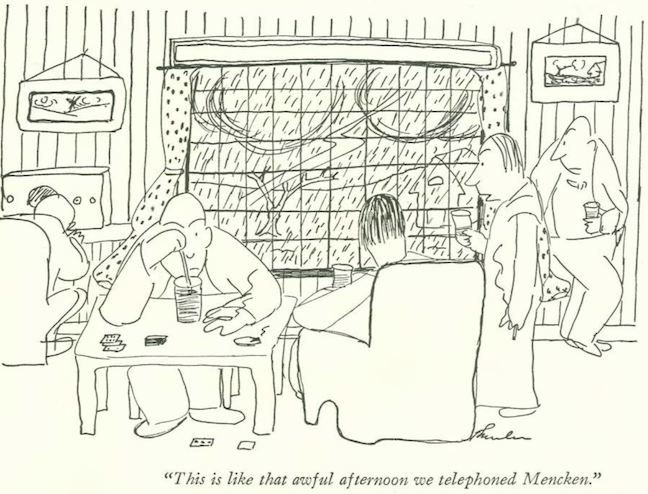
…by contrast, Perry Barlow brightened things up with this life of the party…
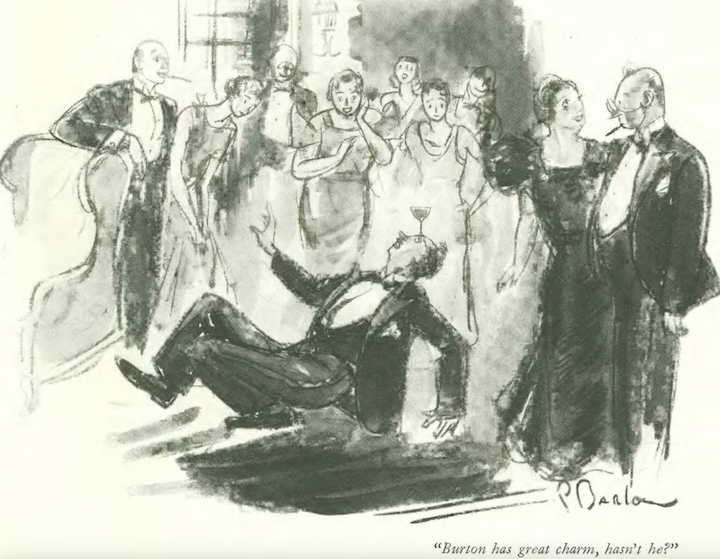
…but a good time doesn’t always translate over the airwaves, per George Price

Alain illustrated the consequences of losing one’s nest egg…

Peter Arno didn’t leave any room for dessert…

…and Charles Addams returned, a macabre cast of characters still percolating in his brain…
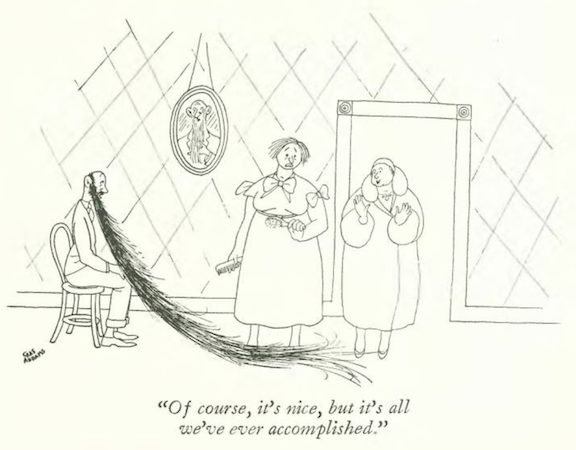
…on to May 12, 1934…

May 12, 1934 cover by Leonard Dove.

…and back to the movies, this time critic John Mosher found more cheery fare in 20th Century, a pre-Code screwball comedy directed by Howard Hawks and starring John Barrymore and Carole Lombard. Battling alcohol abuse since age 14, Barrymore nevertheless managed to display his rare genius as a comedian and turned in what is considered to be his last great film performance.
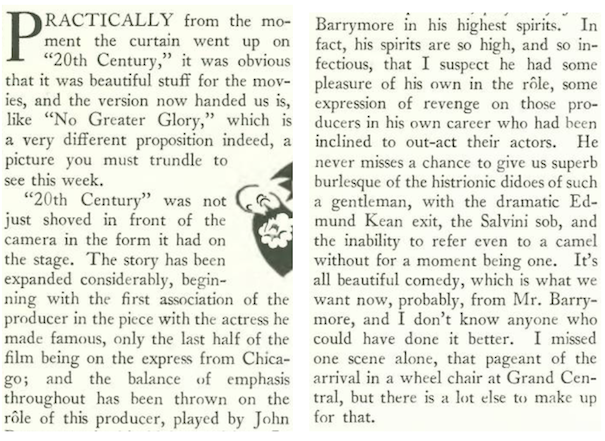
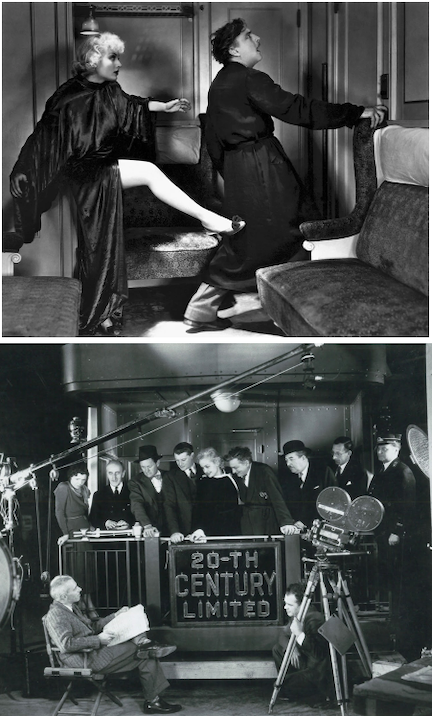
GETTING HER KICKS…Top, Carole Lombard delivers a swift one to John Barrymore in the screwball comedy 20th Century. Below, director Howard Hawks with the cast. (greenbriarpictureshows.blogspot.com)

 * * *

Playing the Ponies

Horse racing correspondent George F. T. Ryall (pseud. “Audax Minor”) considered a losing wager at the Kentucky Derby in his column, “The Race Track.”

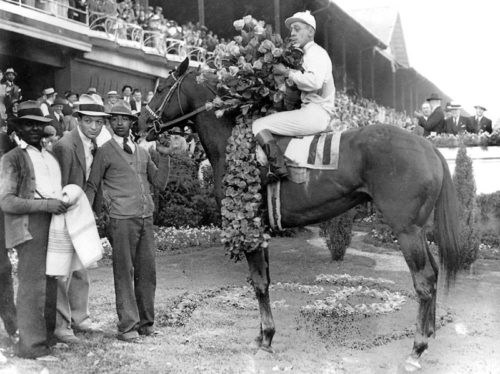
A HORSE OF COURSE…Jockey Mack Garner rode Cavalcade to victory at the 1934 Kentucky Derby. (Appanoose County Historical Society)

 * * *

More From Our Advertisers

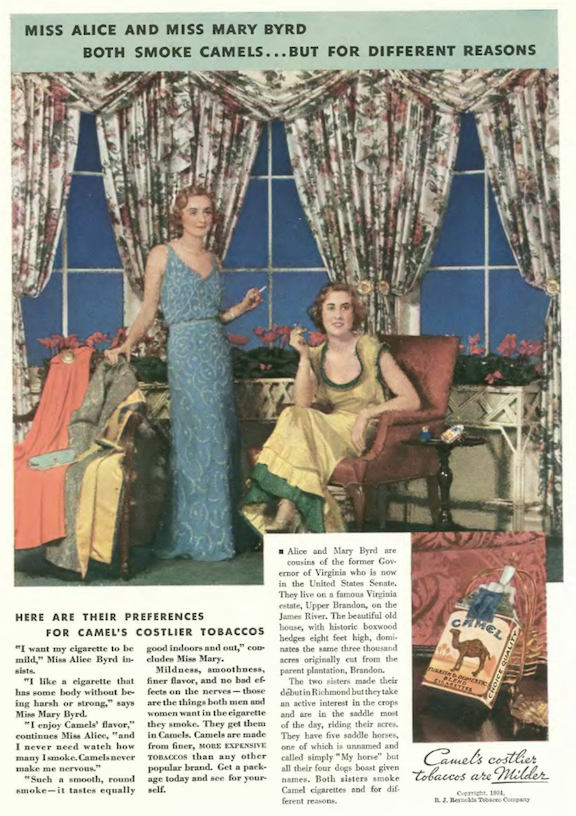
We begin with Camel cigarette endorsers Alice and Mary Byrd, residents of Virginia’s famous Brandon plantation and cousins of Virginia Senator and Governor Harry F. Byrd, known for his fights against the New Deal and his “massive resistance” to federally mandated school desegregation...
…also to the manor born, Whitney Bourne, a New York deb who would go on to a brief stage and film career that would end when she married her first husband (diplomat Stanton Griffis) in 1939…

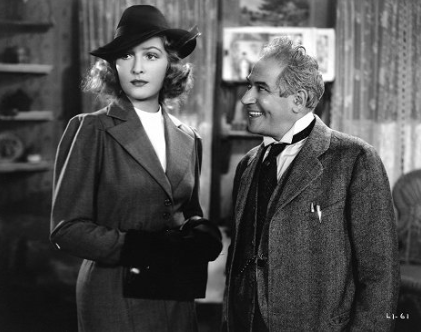
AN EYE FOR STYLE…Whitney Bourne in a scene with Solly Ward in 1937’s Flight From Glory. Named in 1933 as one of America’s best dressed women, Bourne was a noted New York socialite, skier, golfer and tennis player as well as an occasional actress.

…we move along from the effervescent Whitney Bourne to the sparkling waters of Perrier…

Gardner Rea followed other New Yorker cartoonists by illustrating an ad for Heinz…

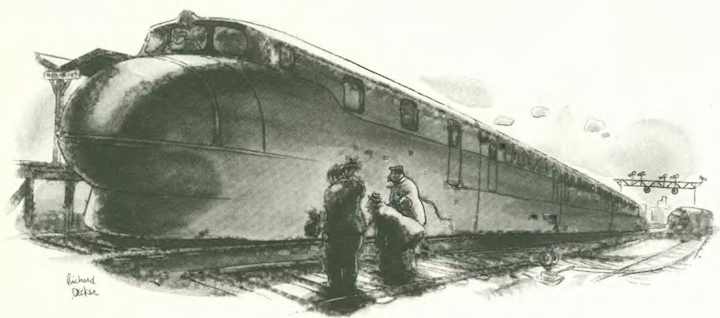
…which brings is to more cartoons, where according to Richard Decker, the move to streamlined trains wasn’t welcomed by everyone…
Carl Rose illustrated this two-page spread with an imagined right-wing response to the recent left-wing May Day parades…

William Steig eavesdropped onto a saucy little conversation…

Barbara Shermund continued her explorations into the trials of the modern woman…
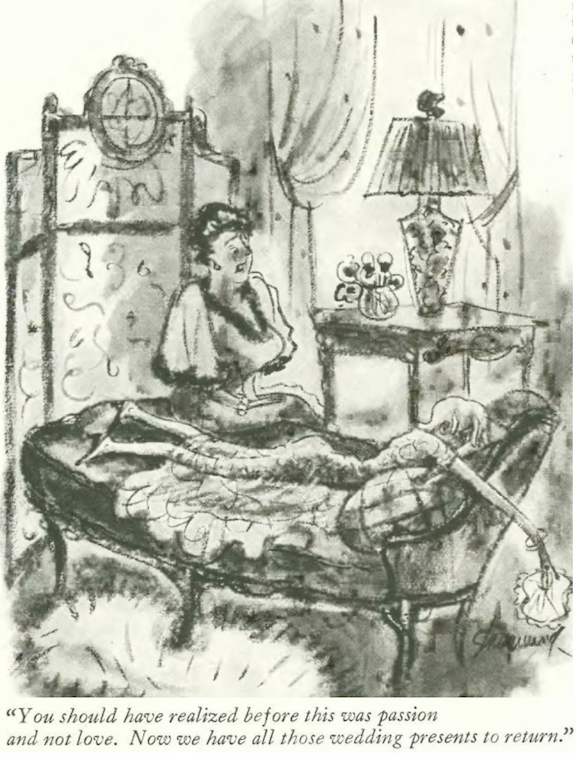
James Thurber was back to his old tricks…

…and we conclude our cartoons with Eli Garson, and a new perspective…

Before I close, a bit of housekeeping. The first issues in 1925 sometimes ended “The Talk of the Town” with…

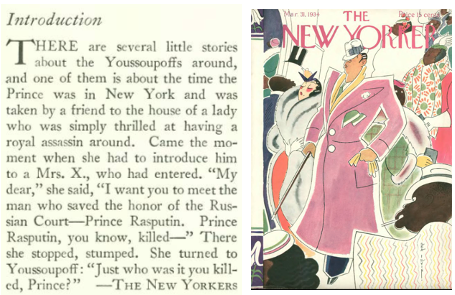
…but on May 23, 1925, “Talk” signed off with —The New Yorkers. That continued until the March 31, 1934 issue (below), the last time the New Yorker signed off “The Talk of the Town” with —The New Yorkers:
Next Time: Moses Parts a Yacht Club…


The Lights of Broadway

Above: Samuel Herman Gottscho photograph, New York City, Times Square South from 46th Street. General view of “Whiteway” toward Times Building, December 9, 1930. Museum of the City of New York

The lights of Broadway dazzled the editors of “The Talk of Town,” who commented on the changing displays that brightened The Great White Way.

Screen Shot 2016-01-25 at 5.31.10 PM
Cover of August 7, 1926 issue by Stanley W. Reynolds.

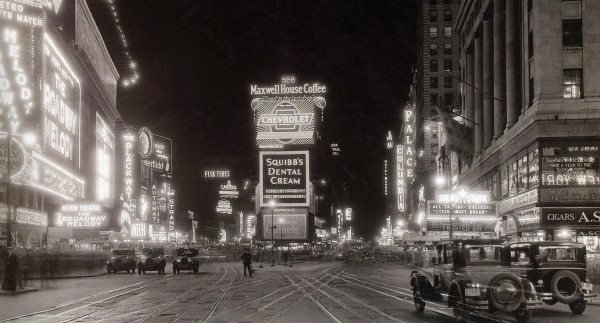
Broadway hit its prime in the 1920s, when many old buildings originally used for housing or commercial interests became more valuable as places to hang brightly lit signs.

NYC-at-Night131-600x323
Broadway in the 1920s (TimesSquareNYC.org)

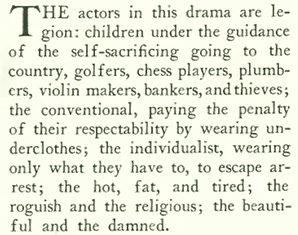
The “Talk” editors were more or less impressed by the displays. Despite their garishness, the Broadway lights were also a symbol of the youthful exuberance of Roaring Twenties New York:

Screen Shot 2016-01-28 at 4.31.47 PM

Screen Shot 2016-01-28 at 4.32.03 PM

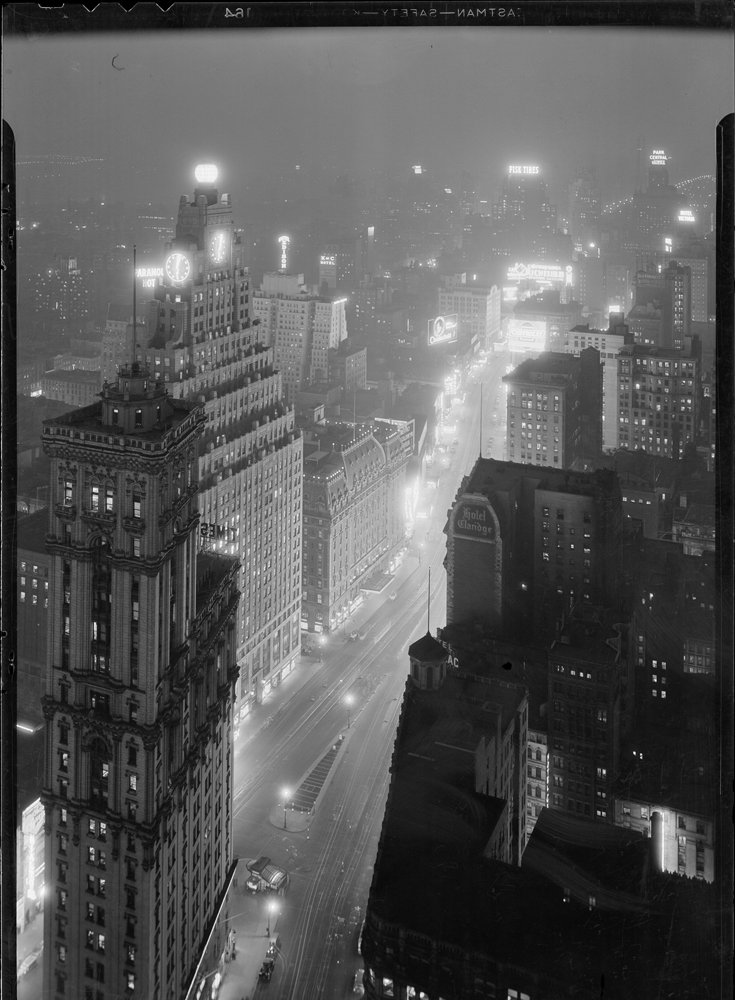
Samuel Herman Gottscho photo of Times Square from 41st Story [of the] Continental Building, at night, February 16, 1932. (Museum of the City of New York.)
tumblr_nw4uc5kmEh1ti90t5o1_500
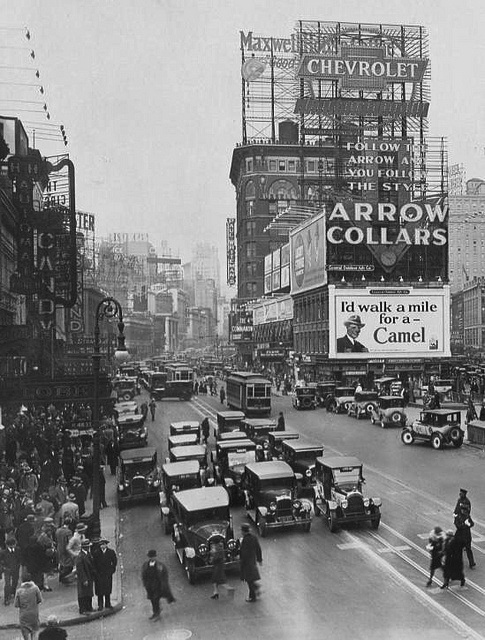
Daytime view of Times Square in the 1920s (Tumblr)

The “Talk” editors sang the praises of the “aortic” Grand Central Station, which they dubbed a place of both dignity and efficiency that sorts a “surprisingly cheerful stream” of travelers with a certain rhythm, set in motion by an impassive gateman:

Screen Shot 2016-01-28 at 4.28.56 PM

gc
The main concourse at Grand Central Terminal, 1929. (New York Transit Museum)

The Talk writers also added this lyrical observation of the traveling masses:

Screen Shot 2016-01-28 at 4.30.39 PM

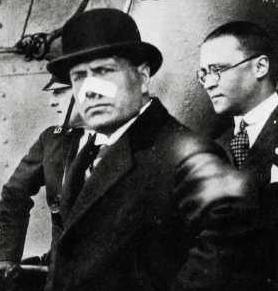
Talk also noted the recent travels of Cornelius Vanderbilt Jr., who was an apparent heir to the Vanderbilt fortune until he shunned high society and was disinherited by his parents for becoming a journalist and newspaper publisher. The Talk segment noted that Vanderbilt had returned from travels in Europe, where among other things until he rubbed elbows the Italian dictator Benito Mussolini and observed the curious habits of people under his fascist rule:

Screen Shot 2016-01-28 at 4.23.59 PM

Italian Premier Benito Mussolini (before he started wearing the fascist uniform) leaving for Tripoli on May 13, 1926. His nose was bandaged after an assassination attempt on April 26 by a British woman, Violet Gibson, who shot him with a revolver at close range. She was ruled insane and deported to England (strangehistory.net))

Next Time: Talking Pictures…

Screen Shot 2016-01-28 at 4.34.57 PM

The Last Laugh

Screen Shot 2015-09-06 at 12.02.47 PM
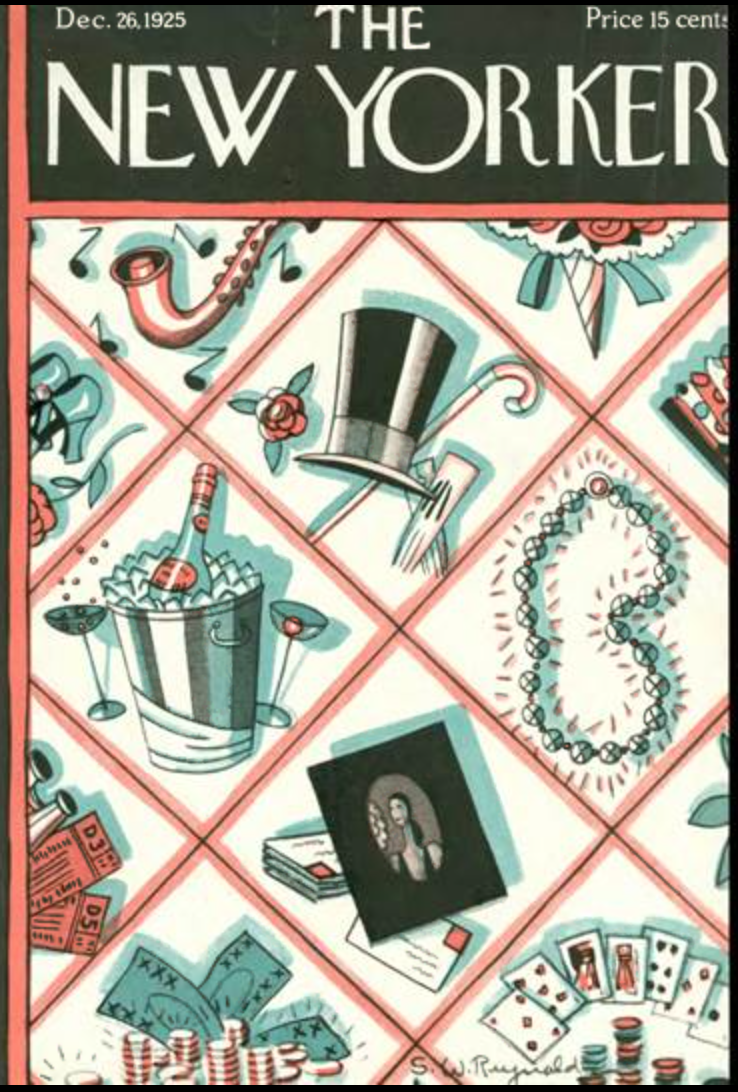
Dec. 26, 1925 cover by S.W. Reynolds

We close out The New Yorker’s first year with the magazine on firmer footing and many of its mainstay writers and artists firmly in place.

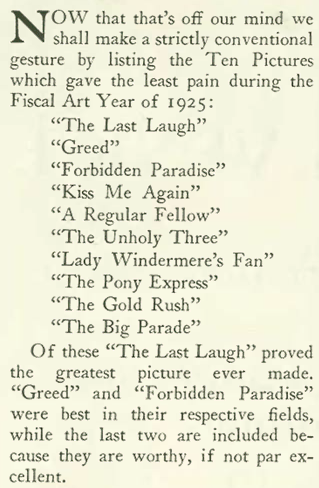
The Dec. 26, 1925 issue was the usual hodgepodge, but some writers did give a nod to the end of the year, including film critic Theodore Shane, who offered his list of the best ten moving pictures of 1925.

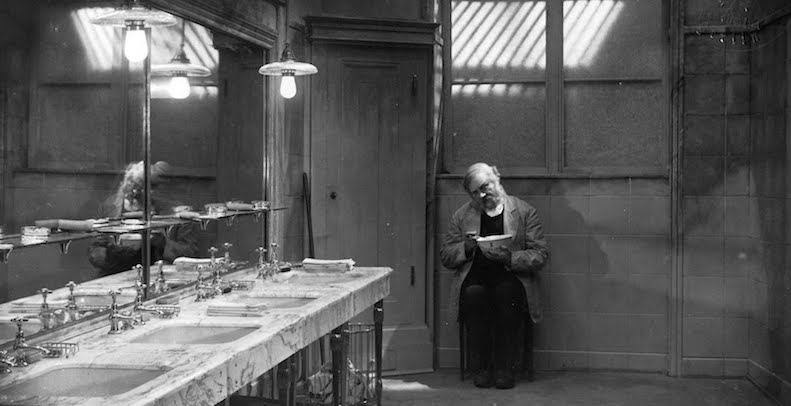
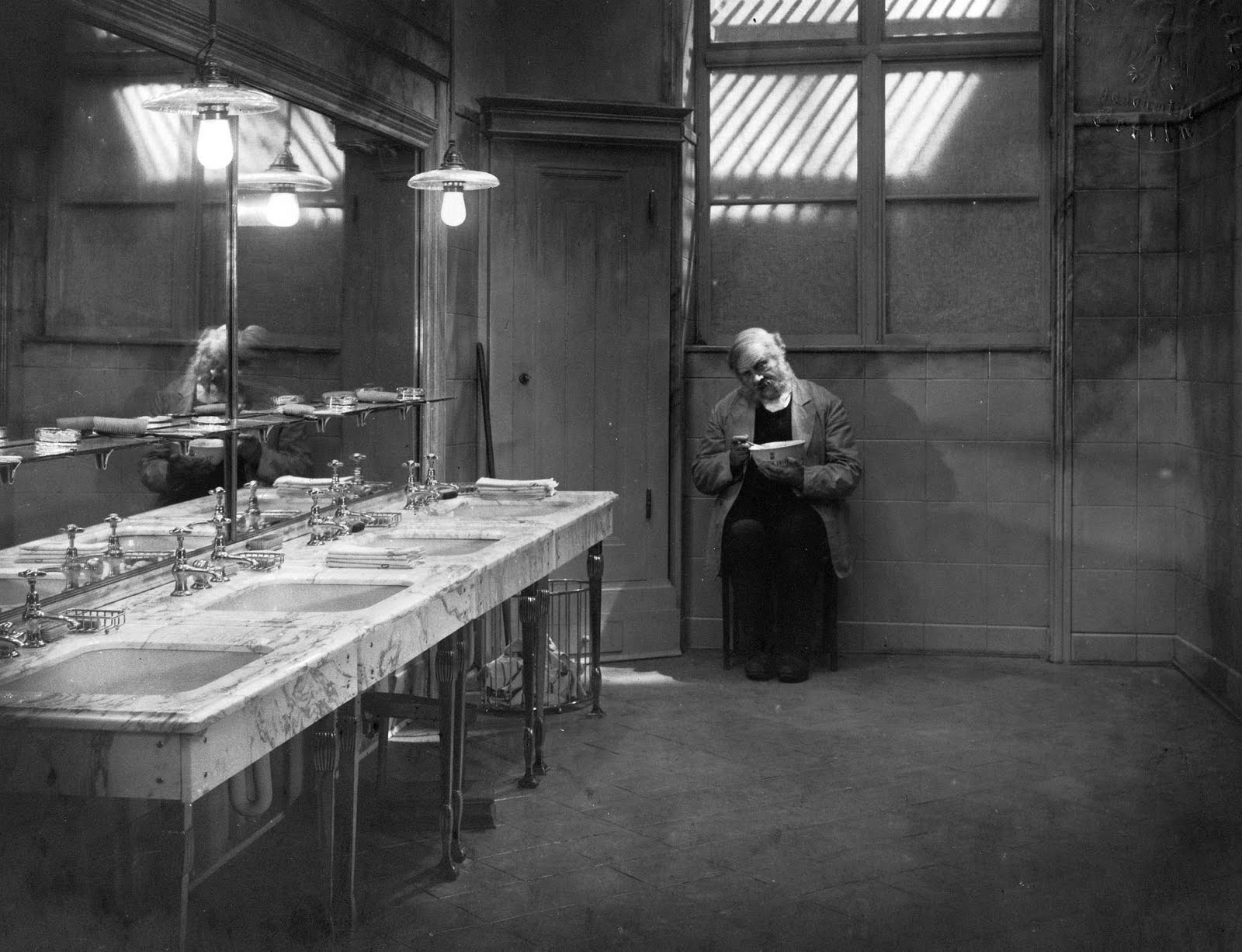
Shane’s favorite film by far was The Last Laugh, (the German title was Der letzte Mann, or The Last Man) a 1924 German film directed by F.W. Murnau and starring Emil Jannings (who would later win the first Academy Award for Best Actor in 1929). Shane referred to it as “the greatest picture ever made.” Released in the U.S. in 1925, the film was about a proud doorman who loses his job and tries to hide the fact from his friends and family. Shane usually reserved his highest praise for German cinema in his columns.

derletztemann2
Scene from The Last Laugh (1924) starring Emil Jannings. (Roger Ebert)

Shane’s complete list of the ten best movies of 1925:

Screen Shot 2015-09-09 at 12.26.59 PM

For the worst films of the year, Shane suggested a tie between Drusilla With a Million, Lord Jim, Joanna, the Million Dollar Girl or Stella Dallas.

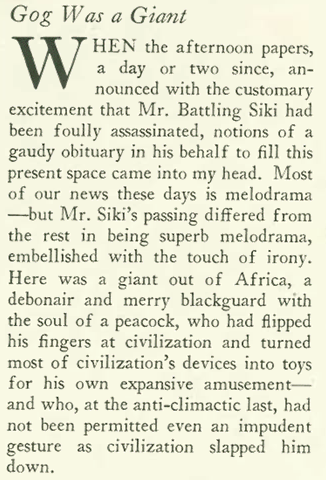
The New Yorker also commented on the murder of the irrepressible boxer Louis Mbarick Fall, popularly known as “Battling Siki.”

BattlingSiki
“Battling Siki” in his heyday. (Wikipedia)

Born in Senegal, he was a light heavyweight boxer from 1912–1925, and briefly reigned as a light heavyweight champion. Known for his heavy drinking and carousing, on the night of Dec. 15, 1925, he was found dead near his 42nd Street apartment. He had been shot twice in the back at close range. He was 28.

In his column, “A Reporter at Large,” Morris Markey offered this observation on Battling Siki’s passing:

Screen Shot 2015-09-09 at 12.47.15 PM

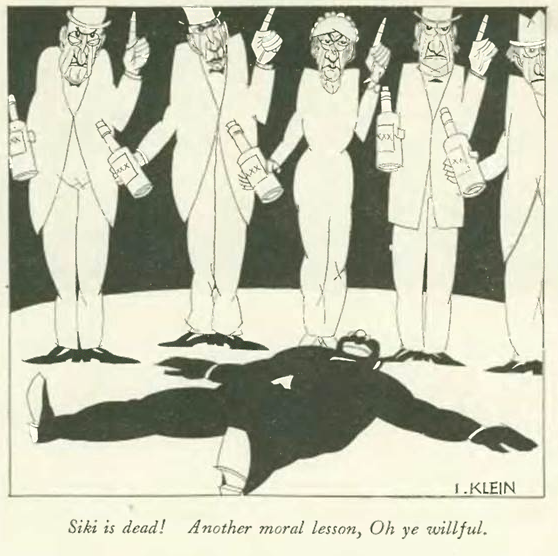
The cartoonist Isadore Klein, on the other hand, contributed this strange stand-alone illustration for “The Talk of the Town” section:

Screen Shot 2015-09-08 at 11.50.02 AM

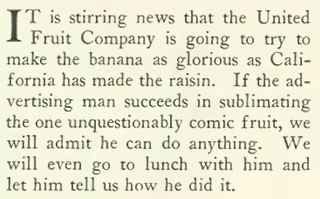
Also in “Talk” was this brief item about the United Fruit Company:

Screen Shot 2015-09-08 at 11.40.53 AM

United Fruit would be no laughing matter three years later with the Banana Massacre, which would claim the lives of an unknown number of workers who were striking for better working conditions in Columbia.

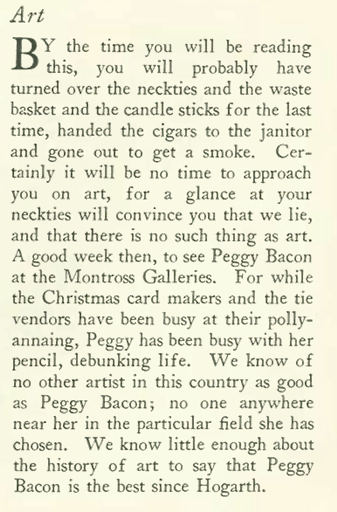
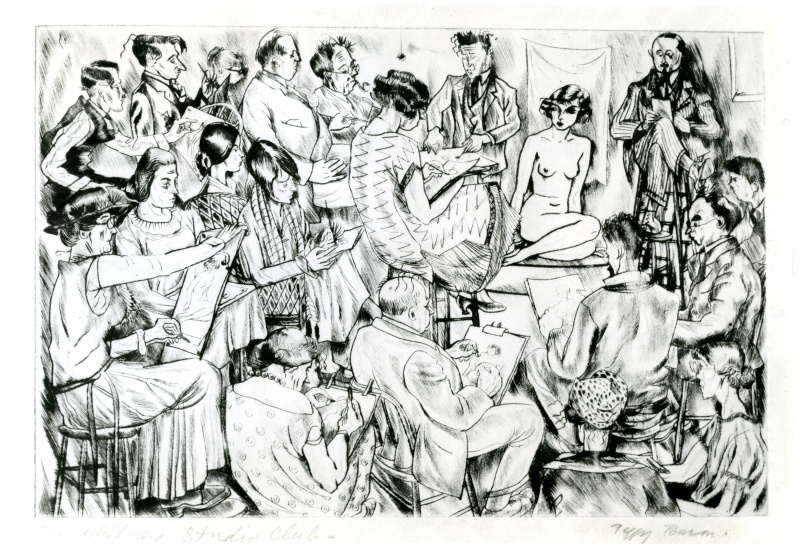
Art critic Murdock Pemberton offered a glowing review of an exhibit at the Montross Galleries by frequent New Yorker contributor Peggy Bacon:

Screen Shot 2015-09-09 at 12.19.40 PM

cc2_1540
Peggy Bacon, The Whitney Studio Club, 1925. (Whitney Museum of American Art)
Peggy_Bacon,_American_painter,_illustrator_and_printmaker,_1895-1987
Peggy Bacon (Smithsonian)

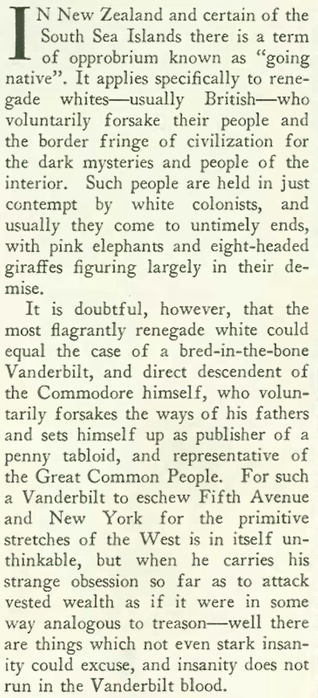
“Profiles” looked at Cornelius Vanderbilt Jr, “The Fifth Avenue Maverick.” William Boardman Knox wrote that the young Vanderbilt “is as alien to his blood as a marmoset to a gorilla.”

Screen Shot 2015-09-09 at 12.45.35 PM

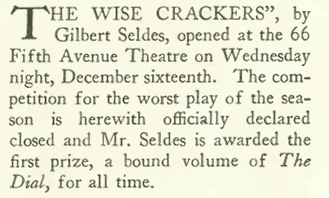
In the “The Theatre,” critic Herman J. Mankiewicz pulled no punches when he declared Gilbert Seldes’ play The Wise Crackers “the worst play of the season” (Seldes was himself a noted critic and sometime New Yorker contributor):

Screen Shot 2015-09-09 at 12.15.09 PM

What’s more, the play was about a group of literate New Yorkers who gather to exchange witty barbs and sarcastically comment on the doings of the day. In other words, it was inspired by the Algonquin Round Table, which famously included Mankiewicz as a member.

Another Round Table notable was Robert Benchley, who contributed this piece for the last issue of the year:

Screen Shot 2015-09-09 at 12.39.48 PM

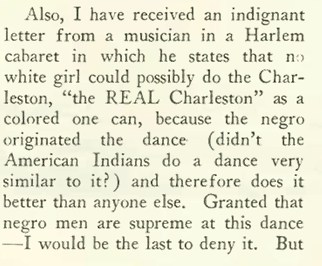
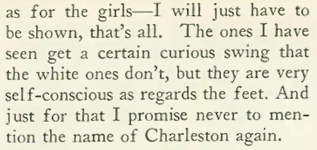
Lois Long offered her regrets for ever bringing up the subject of “The Charleston:”

Screen Shot 2015-09-21 at 6.19.44 PM

Screen Shot 2015-09-21 at 6.20.17 PM

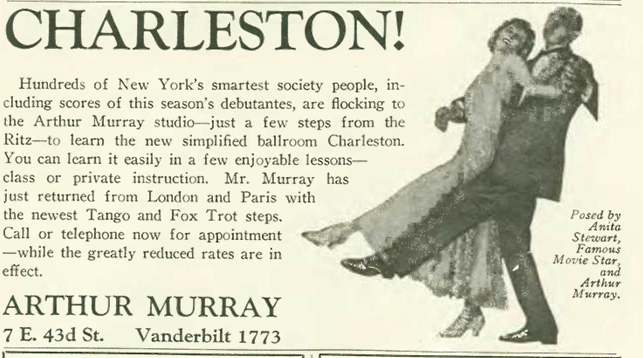
And just a few pages over, lessons were advertised for…The Charleston!

Screen Shot 2015-09-09 at 12.34.19 PM

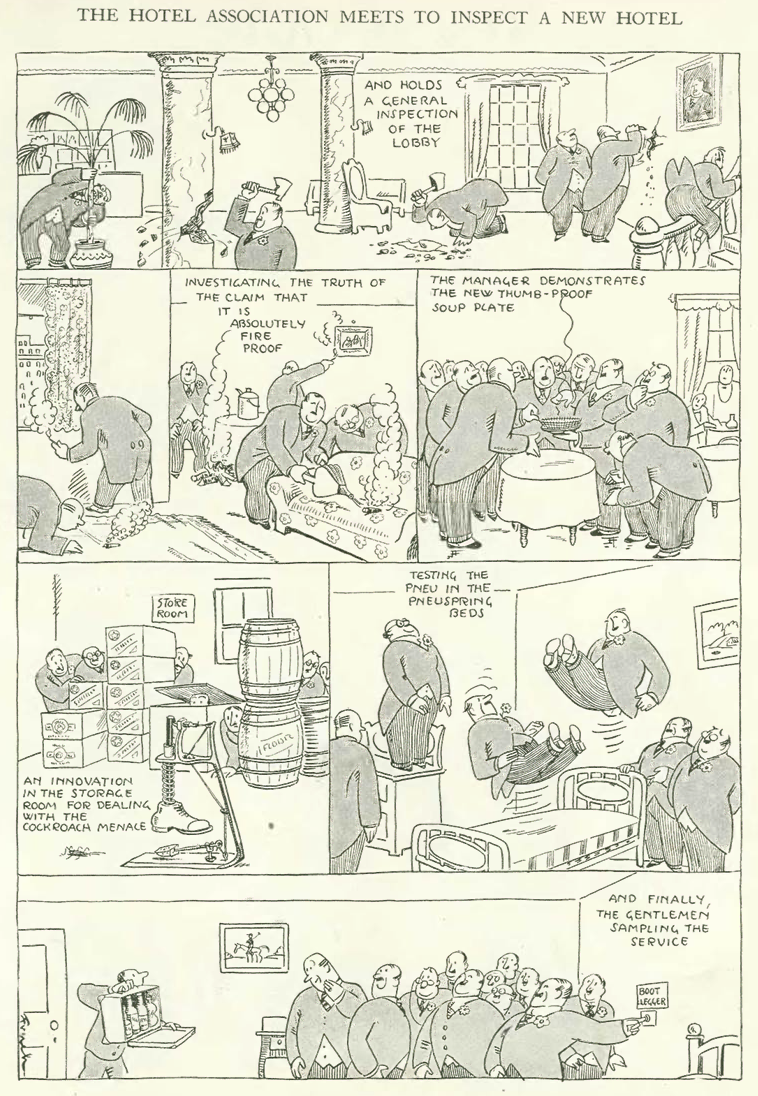
And to close, here’s a little fun with hotel inspectors, courtesy of Al Frueh:

Screen Shot 2015-09-21 at 12.52.41 PM

Next Time: Fun in the Sun…

Screen Shot 2015-09-09 at 12.47.57 PM