Down to Earth

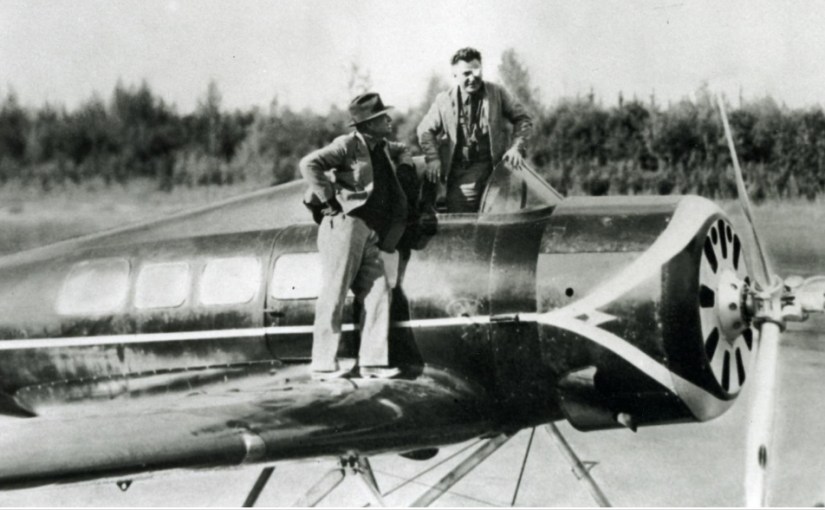
Above: Will Rogers (with hat) visits with pilot Wiley Post near Fairbanks, Alaska, hours before their fatal crash on August 15, 1935. (okhistory.org)

It would be a challenge to find a place for a multi-talented, mega-star like Will Rogers in today’s over-saturated and segmented media landscapehe was a trick roper, vaudevillian, social commentator, comedian, journalist, author, and radio and film celebrity. His early fame on the vaudeville circuit, including the Ziegfeld Follies, would spark a film career in 1918 (he would appear in 71 films), and a 1922 town hall speech would lead to a nationally syndicated newspaper column. When radio became a nationwide phenomenon his voice could heard coast-to-coast. He was seemingly everywhere.
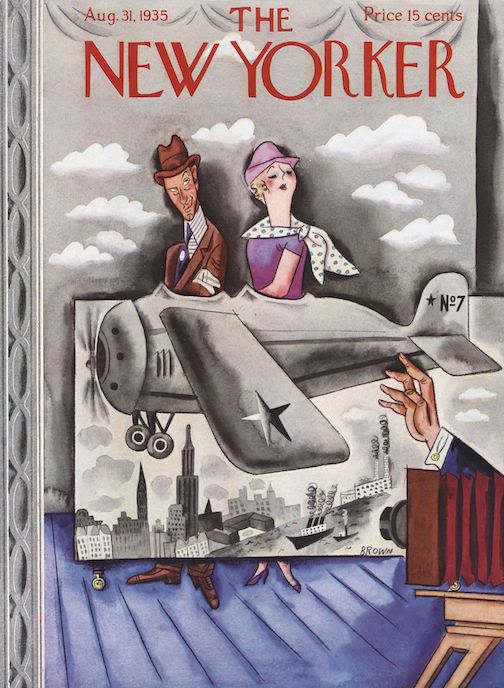
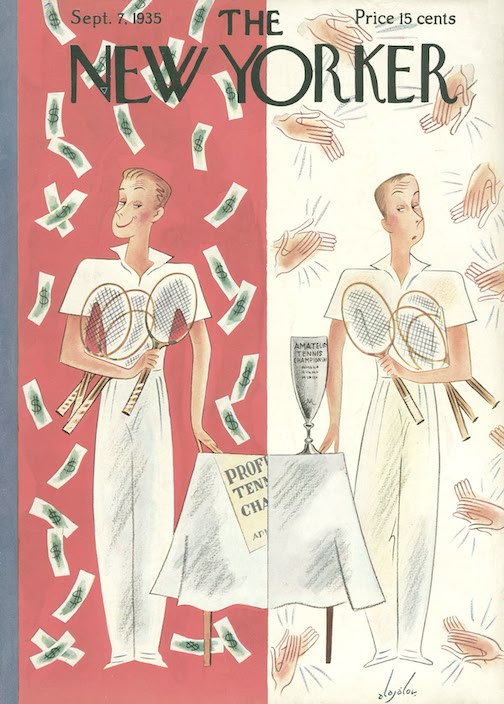
August 31, 1935 cover by Harry Brown. Brown illustrated eighteen covers for The New Yorker.

Rogers (1879-1935) was also a big promoter of aviation, and he gave his audiences many entertaining accounts of his world travels. In the summer of 1935 he announced plans to join famed aviator Wiley Post (1898-1935) on a flight to Alaska and beyond. It appeared to be routine, making the trip’s tragic ending all the more poignant.

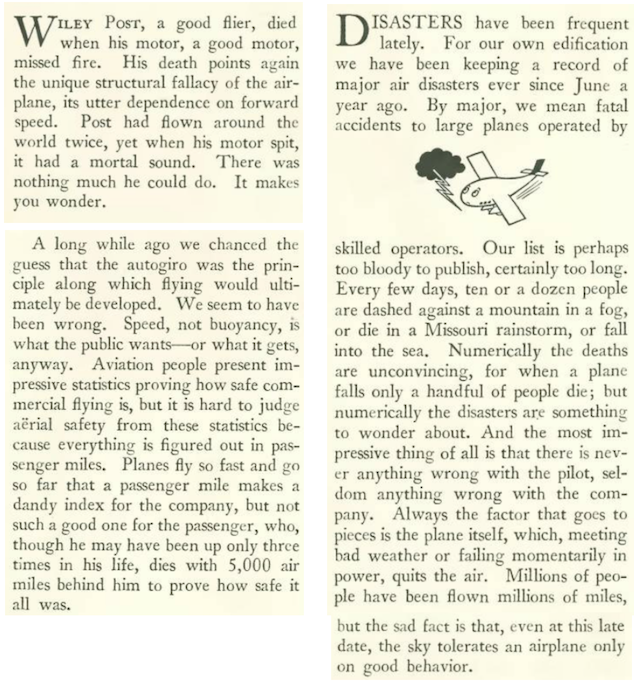
Although E.B. White often seemed stuck in the past—he preferred Model Ts and rattily omnibuses to more more modern conveyances—he was a flying enthusiast, never missing a chance to hop aboard an airplane and marvel at the scene far below. However, when tragedy struck, White would become circumspect. When Notre Dame coach Knute Rockne’s Fokker Trimotor crashed into a Kansas wheatfield, White expressed doubts about air safety and pondered “safer” alternatives such as autogiros (a kind of early helicopter that wasn’t so safe or practical). Such doubts returned in his “Notes and Comment” for August 31, 1935:
The fated aircraft, a Lockheed Orion, was heavily modified by Post into a floatplane; one wing was even salvaged from a wrecked Explorer (an older Lockheed model). The pontoon floats he attached were also designed for a larger aircraft, which made the nose-heavy Orion even more unwieldy.

BUILT FOR SPEED…A Lockheed Model 9 Orion parked at Boeing Field, Seattle, in May 1935. With 200-mph speed, the single-engine passenger aircraft (5 to 6 passengers) was faster than any American military aircraft of the time. It was Lockheed’s last aircraft to use wood construction in the frame, which was lightweight but not designed for longevity on major airlines. (James Borden Photography Collection)
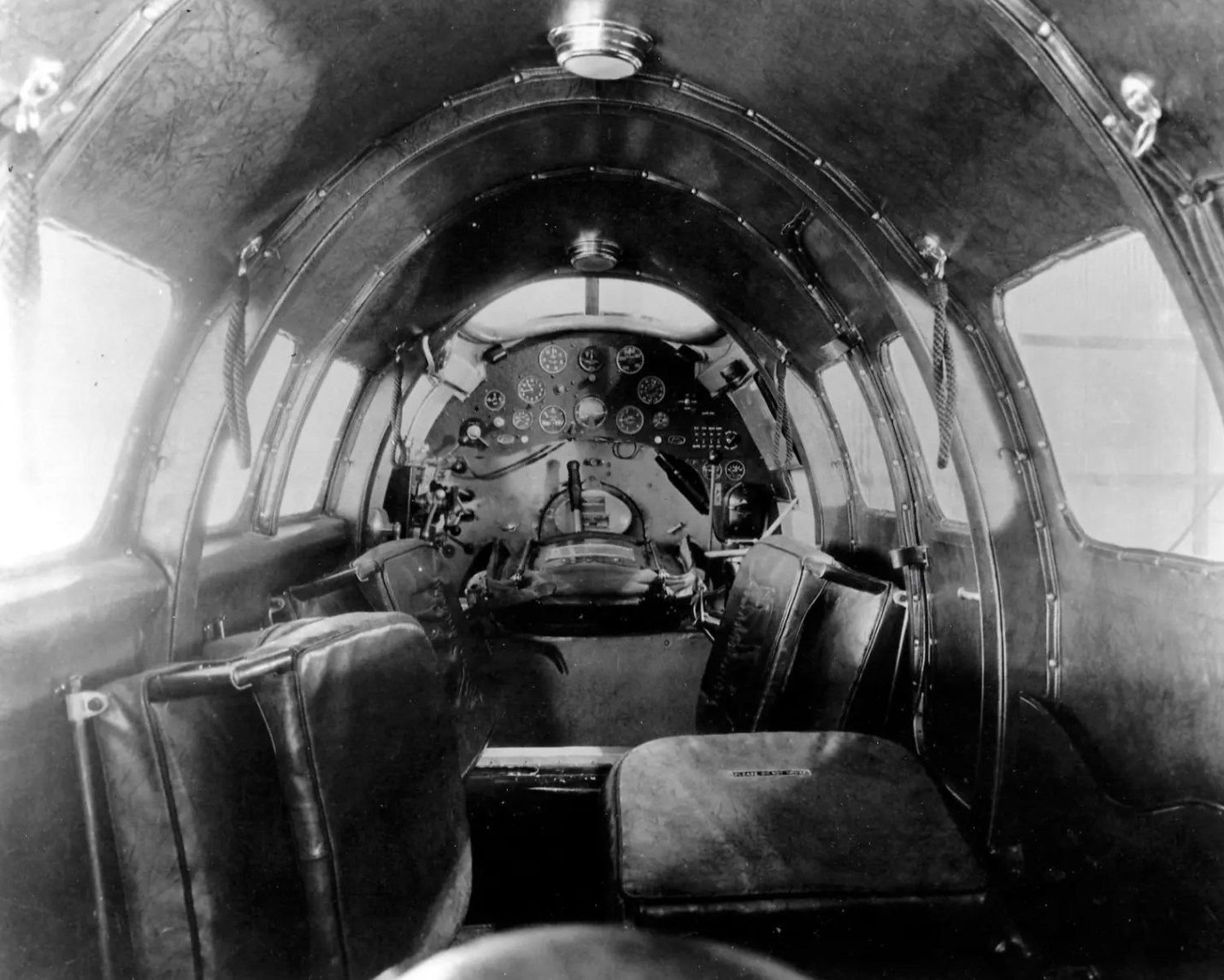
TIGHT QUARTERS….Interior view of a Lockheed Orion 9. No doubt much of the passenger space was loaded with gear for the trip to Alaska. (James Borden Photography Collection)

When Post and Rogers arrived in Juneau, local bush pilots doubtfully regarded the Orion and asked Rogers about the flight plan. “Wiley and I are like a couple of country boys in an old Ford—don’t know where we’re going and don’t care,” he said. They were actually headed to Point Barrow, and from there planned to hop over to Siberia.

After stopping in Fairbanks they set off for Point Barrow in bad weather. Lost in the murk, they landed short of their destination in the shallow waters of Walakpa Lagoon, fifteen or so miles southwest of Point Barrow. Post and Rogers then took off—despite warnings from locals about the conditions. But the weather wasn’t the worst problem: Post had a bad habit of taking to the air in an abrupt, steep climb, which likely caused the engine to stall. Powerless, the ungainly aircraft plunged into the lagoon and landed on its top. Post and Rogers were killed instantly.
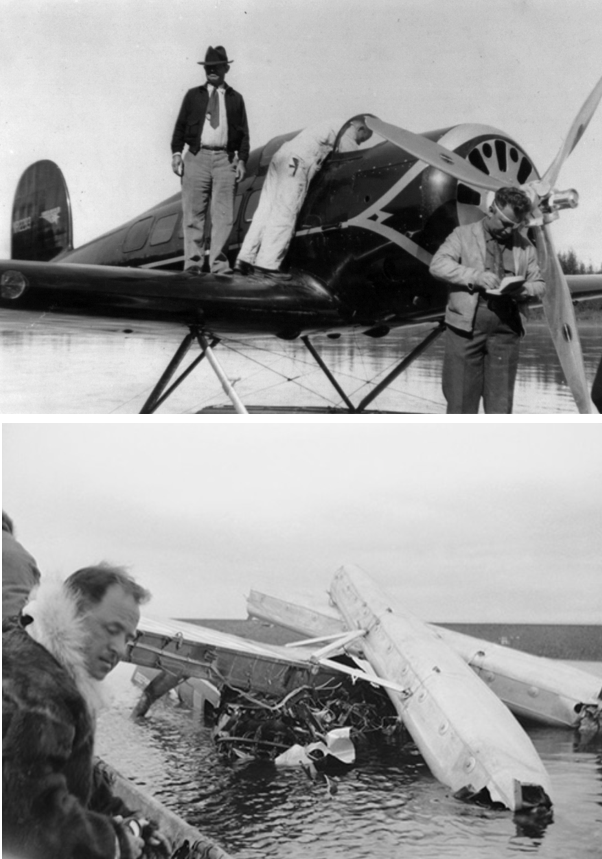
JUST A COUPLE OF COUNTRY BOYS…Top photo, Will Rogers on the wing of the Lockheed floatplane belonging to famed aviation pioneer Wiley Post, hours before their fatal crash on August 15, 1935. Below photo, inverted wreckage of the float plane in Walakpa Lagoon.  (Wikipedia/vintageaviationnews.com)

Rather than eulogize the fallen Rogers, “The Talk of Town” offered up an anecdote about his rise as a newspaper columnist, which was sparked by a backhanded endorsement speech:

A HUMAN FACE…Top left, Will Rogers backstage with the 1924 Ziegfeld Follies cast. At right, Rogers made his film debut in the now lost silent film Laughing Bill Hyde (1918) with co-star Anna Lehr. The magazine ad at right quoted producer Rex Beach, who called Rogers “the most human player who ever faced a camera.” (Will Rogers Memorial Museum/Wikipedia/IMDB)
FINAL CURTAIN…Top photo, Will Rogers with co-star Anne Shirley in Steamboat Round the Bend. Rogers wrapped filming just before heading to Alaska. The film was released posthumously on September 6,1935. Bottom image is a detail from a full-page ad in the October 1935 issue of Picture Play Magazine. Oddly, the ad makes no mention of Rogers’ death, proclaiming that “Will blazes a new path in his screen career as he scores his greatest triumph!”  (theretrorocket.blogspot.com/IMDB)

 * * *

Putting it Mildly

In “Onward & Upward With the Arts,” H.L. Mencken continued to explore the quirks of American language, this time looking at the pervasive (and evasive) use of euphemisms by “professional uplifters.” Excerpts:

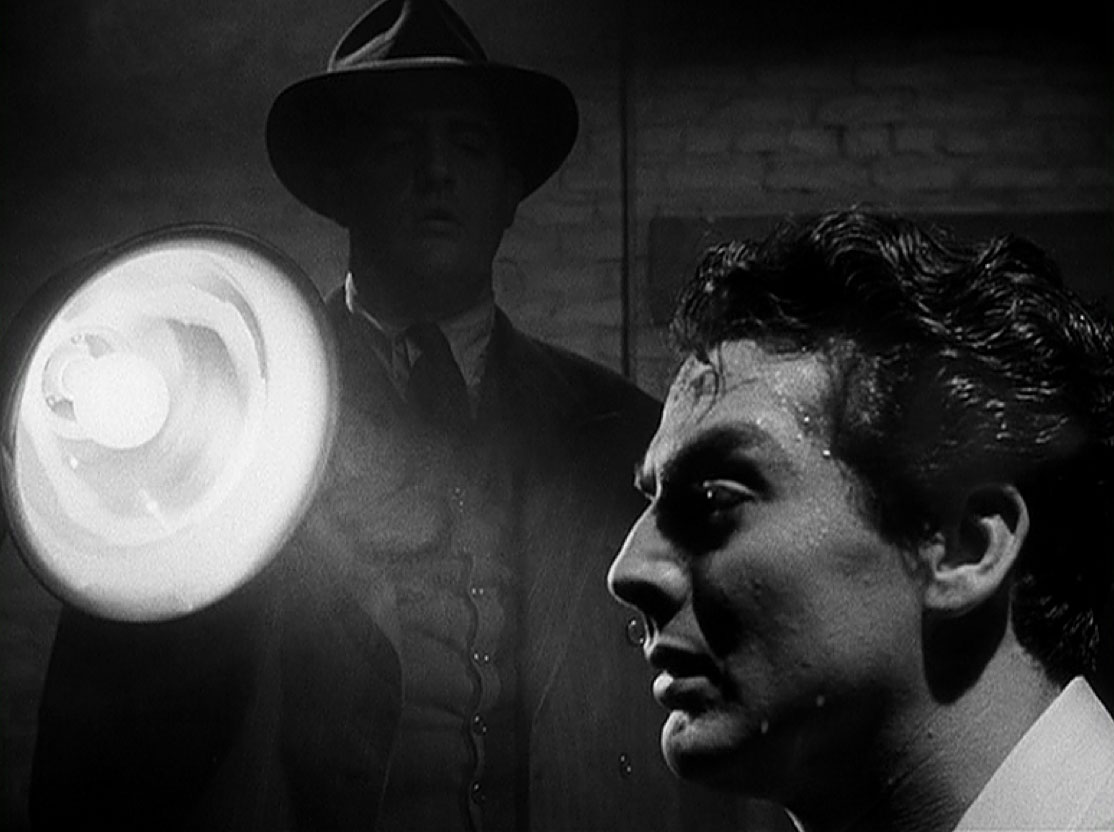
INTELLIGENCE TEST was suggested by “professional uplifters” as a polite replacement for giving someone “The Third Degree.” Image is from the 1941 noir thriller I Wake Up Screaming, starring Victor Mature, pictured here getting his “intelligence test.” (cinematography.com)

 * * *

At the Movies

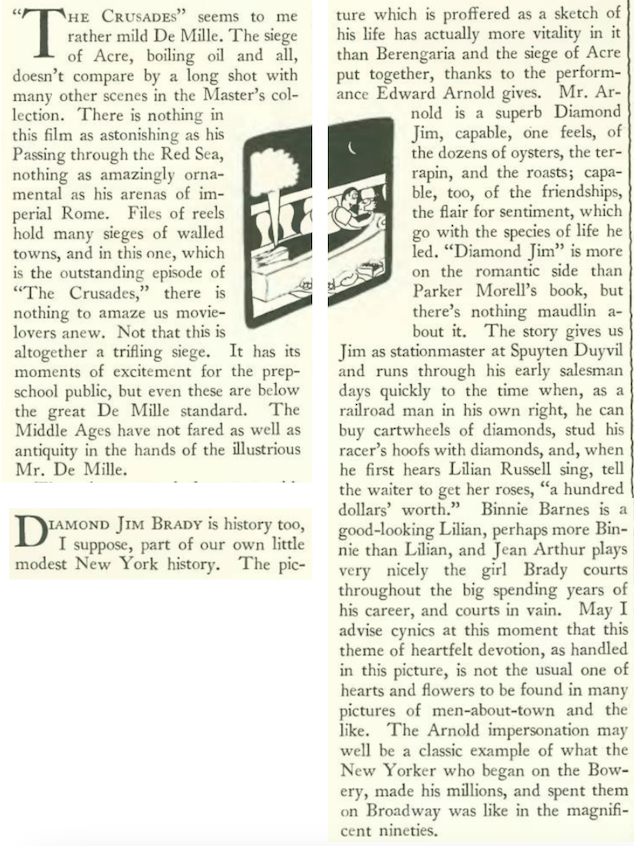
We join film critic John Mosher to take a look at the latest epic from Cecil B. DeMille, The Crusades, which to Mosher’s disappointment was a rather mild epic, with little to astonish. However, our critic did find something to admire in a more recent historical drama, Diamond Jim.
ANTISEPTIC EPIC?…Clockwise, from top left, movie poster for The Crusades offered up an image one typically does not associate with religious warfare, but you had to bring ’em in somehow; Henry Wilcoxon and Ian Keith in a scene from the film; co-stars Loretta Young as Berengaria of Navarre and Wilcoxon as Richard the Lionheart; the film also featured Joseph Schildkraut as Conrad of Montferrat and Katherine DeMille as Princess Alice of France (bottom left). A talented actress, Katherine reportedly landed the role as a Christmas gift from her adoptive father, Cecil B. DeMille. (cecilbdemille.com)
HEY BIG SPENDER…At right, Edward Arnold in the title role (here with Eric Blore) in Diamond Jim. At left, Cesar Romero moves in on Diamond Jim’s love interest, portrayed by Jean Arthur. (Rotten Tomatoes/IMDB)

 * * *

From Our Advertisers

We begin with this advertisement from Lord & Taylor, featuring the latest fall fashions for young women heading to college…notable here is the inclusion of Mickey Mouse in the illustration…the animated rodent was in vogue as much the latest fashions…


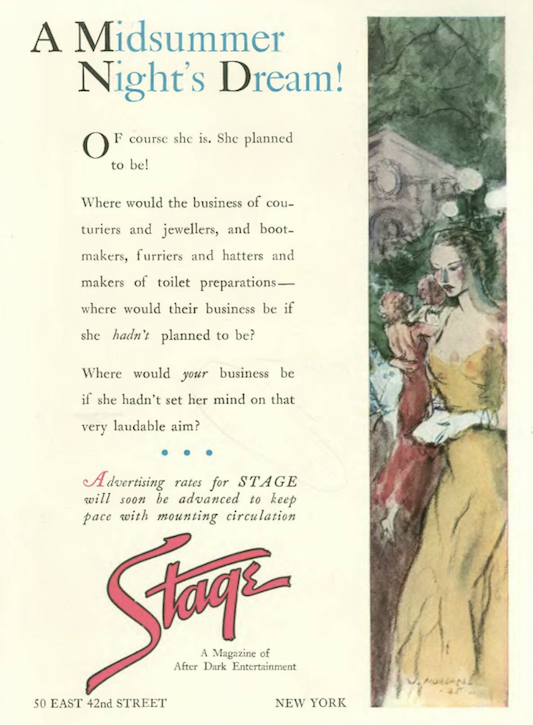
John Hanrahan, whose advertising savvy helped guide The New Yorker through its lean early years, was publisher of the richly designed Stage magazine, promoted here on the inside front cover…
…soft drink giant Coca-Cola recalled its soda fountain origins in this ad that promoted its 6.5-ounce bottled product…

…on the inside back cover Goodyear continued its series of perilous ads illustrating the dangers of tire blowouts (but not the obvious hazard of children riding untethered in a rumble seat, where they doubtless inhaled all manner of noxious fumes)…

…the majority of back covers in 1935 featured tobacco companies…here we learn that Lucky Strikes were more than cigarette; they were your “best friend”…

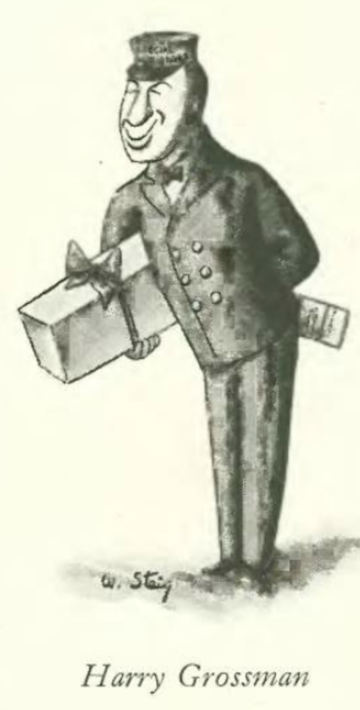
…on to our cartoonists, we start with this “Profile” illustration by William Steig…the profile was a two-parter featuring a clever summons server…
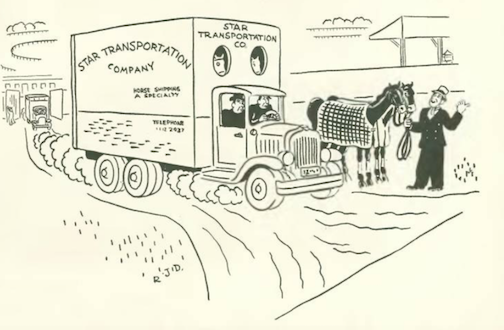
Adolph Dehn adorned the “Goings On” section with this illustration…
…unsigned, but I’m pretty sure this is H.O. Hofman

…here we get a lift from Robert Day

Al Frueh conjured up a nightmare of leaping sheep…

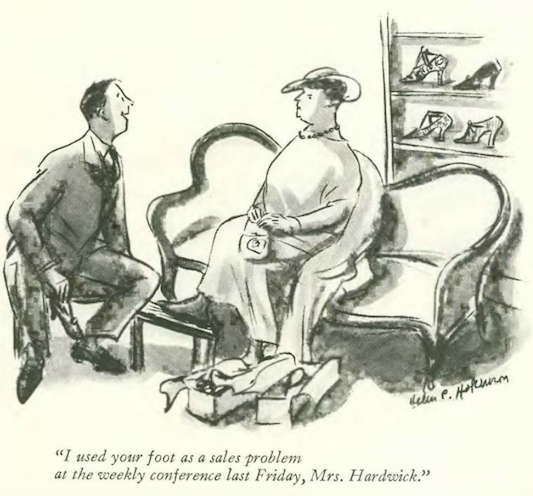
Helen Hokinson gave us some famous footwear…
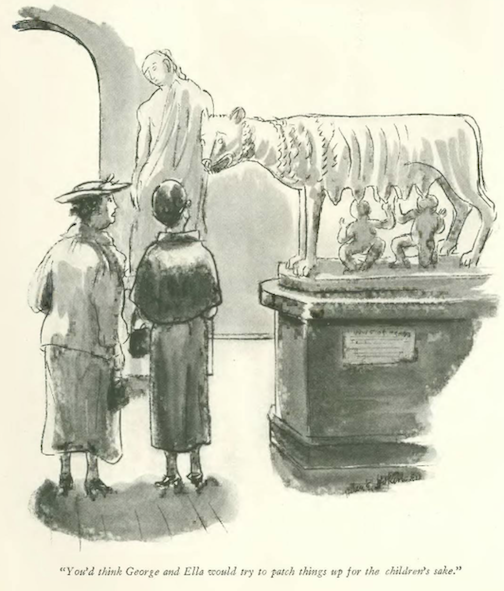
…Hokinson again, with Romulus and Remus providing a convenient metaphor…
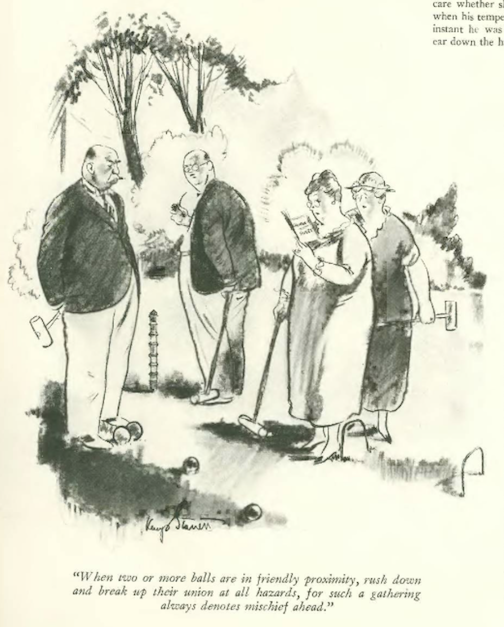
Kemp Starrett was bogged down in the rules of a game…
George Price discovered a budding talent…

Richard Decker took to the back roads…(reminds me of a scene from The Long, Long Trailer with Lucy and Desi)…

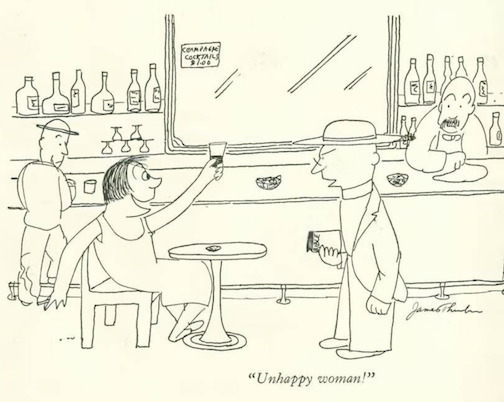
James Thurber raised a glass to a dry do-gooder…
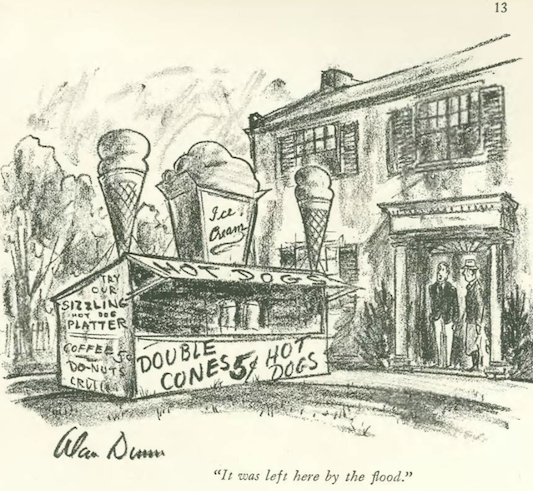
Alan Dunn brought an unexpected windfall to Westchester…
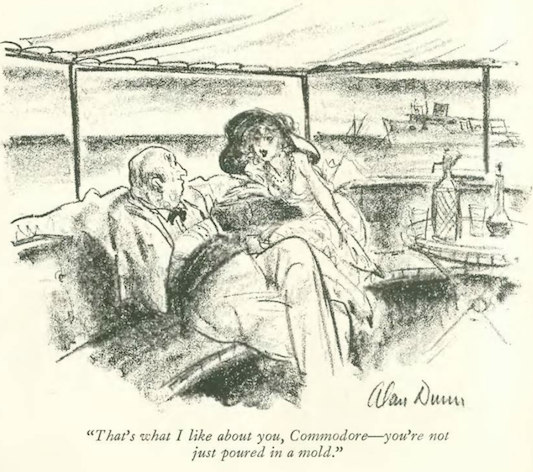
…and to close we Dunn again, and a bit of flattery…
Next Time: A Summer Night…
Cleo’s Allure

Claudette Colbert and Henry Wilcoxon in 1934's "Cleopatra." (cecilbdemille.com)

New Yorker film critic John Mosher was in the mood for one of Cecil B. DeMille’s big, splashy epic movies, but was disappointed to find a relatively restrained effort in DeMille’s latest flick, Cleopatra.

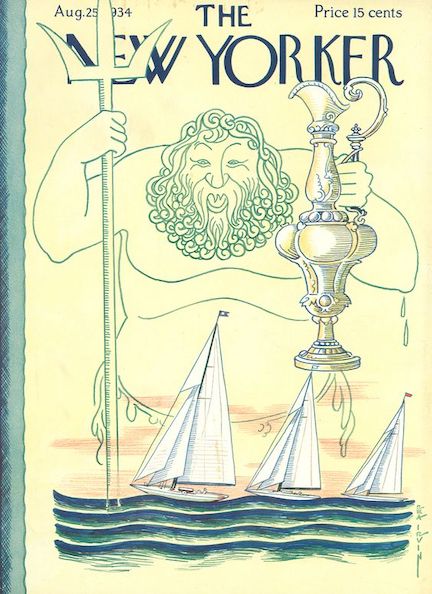
August 25, 1934 cover by Rea Irvin.

Perhaps Mosher would have preferred a silent version of the film, finding the dialogue “the worst I have ever heard in the talkies.” Among examples cited by Mosher was Warren William’s Caesar, who utters the word “Nope” to one of his senators.

CLEO BRIO…Clockwise, from top left, Paramount’s trailer for Cleopatra made a bold claim; Cleopatra (Claudette Colbert) hails Caesar after emerging from a rolled up rug that had been presented to the Roman court; Julius Caesar (Warren William) acts unimpressed, but eventually falls for the Egyptian queen before meeting his demise; Marc Antony (Henry Wilcoxon) is the next to fall for Cleopatra’s seductions. It ends badly for both of them. (pre-code.com/obscurehollywood.net)

Despite Mosher’s grumbles, Cleopatra would receive five Academy Award nominations (winning for Best Cinematography) and would become the highest-grossing film released in North America in 1934. That year Claudette Colbert (1903-1996) would appear in three films that were all nominated for the Academy Award for Best Picture—she is the only actress ever to do so.

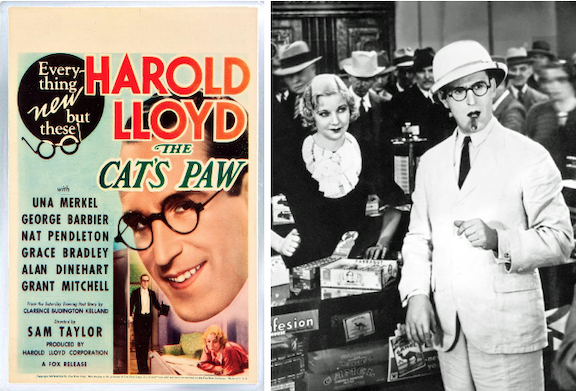
On the lighter side, Mosher took a liking to Harold Lloyd’s latest picture, The Cat’s Paw, which marked a sharp departure from Lloyd’s trademark slapstick. Lloyd adopted to a calmer pace, “touched with the delicate bloom of satire.”

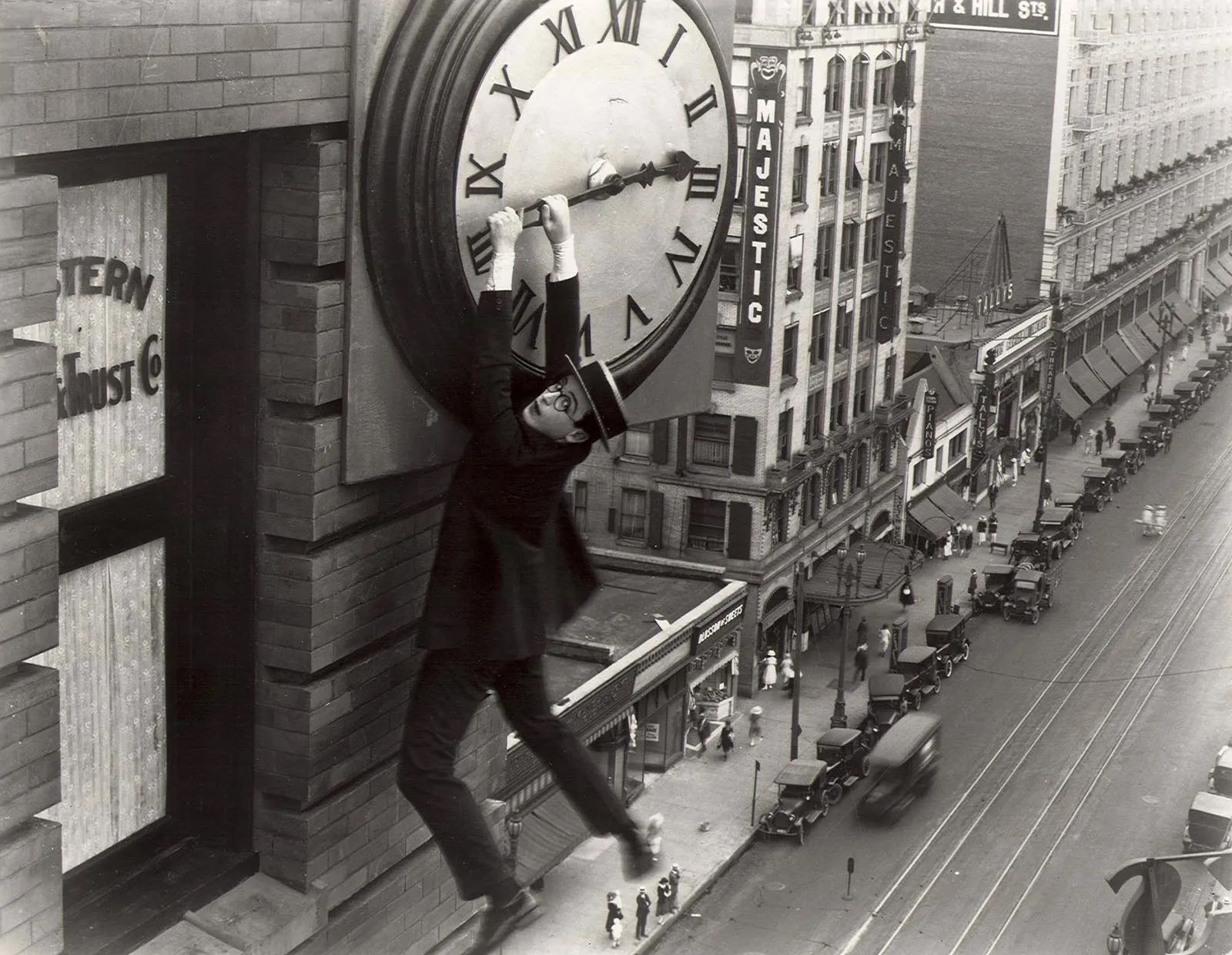
Moviegoers who associated Lloyd with such pictures as 1923’s Safety Last

(britannica.com)

…would have to settle for this new version of Lloyd, which was even touted on the movie’s promotional poster…

STAYING ON HIS FEET…Fox Pictures touted a “new” Harold Lloyd (except for his trademark glasses) in The Cat’s Paw. At right, Lloyd with co-star Una Merkel. (IMDB/criterionchannel.com)

 * * *

Fun With Philately

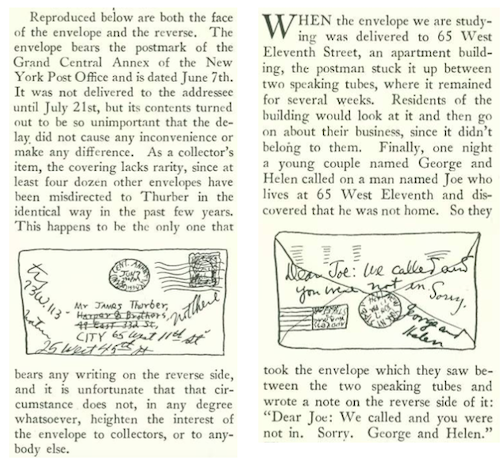
After reading a column in The Herald Tribune that concerned interesting stamps and envelopes…
James Thurber found himself inspired to make a brief examination of the “Thurber envelope”…

…which proved to be neither interesting nor unusual (excerpts):

 * * *

From Our Advertisers

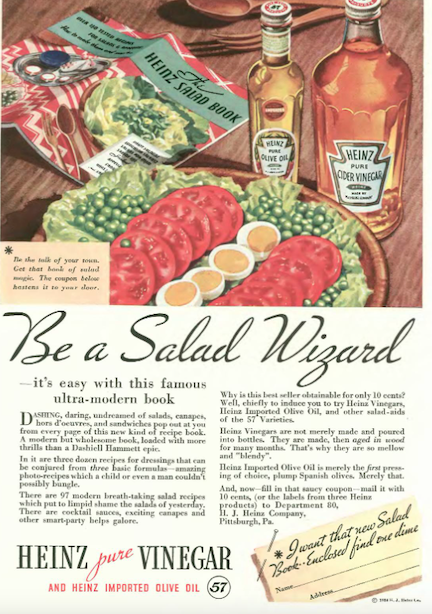
A couple of colorful advertisements, the first from the folks at Heinz, who invited New Yorker readers to become “Salad Wizards”…

…if being a salad wizard wasn’t good enough, you could pop open a bottle of Cora vermouth and feel downright aristocratic…

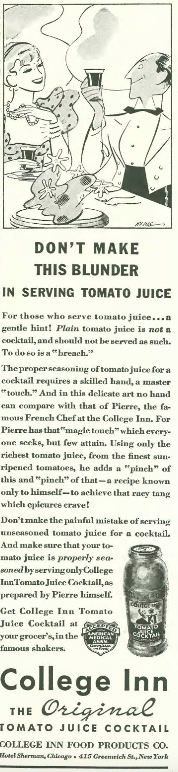
…and if you wanted to maintain that aristocratic pose, you’d better know how to serve your tomato juice, and make sure it is prepared by a “famous French Chef”…

…more libations in the back pages…here’s a sampling of three…there must have been a reason why all of the one-column ads featured mixers and spirits on the top and ads for hotels and apartments on the bottom…

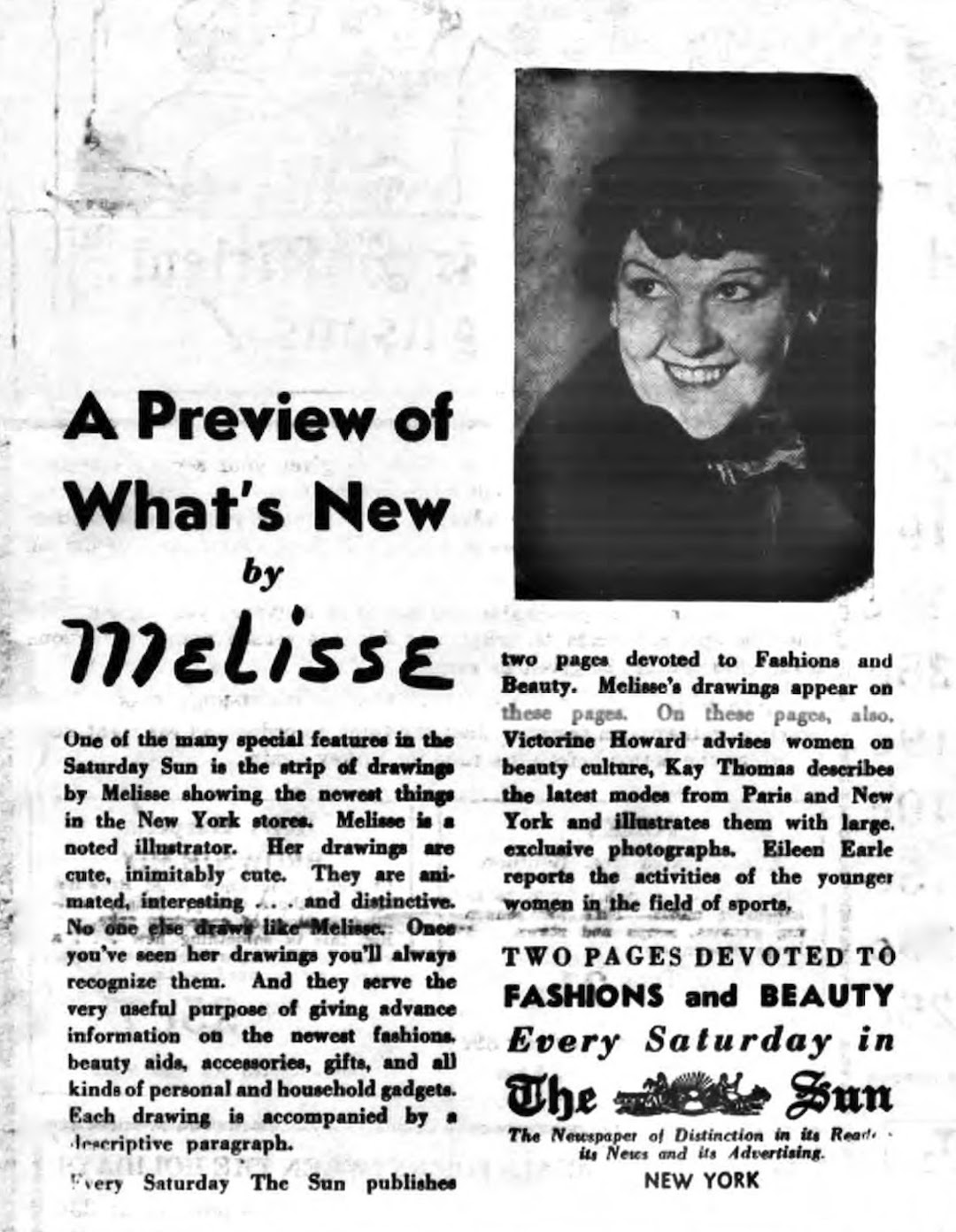
…and before we jump into the cartoons, a brief look at illustrator Mildred Oppenheim, who worked under the pseudonym “Melisse.” Her work was seen in the early New Yorker mostly in ads for Lord & Taylor, however she also did work for others including the makers of Cannon towels (seen below). In 1931 The New York Times described her as “a wicked and telling satirist—almost a feminine counterpart of Peter Arno”…

…Melisse ran a cartoon strip, “Real News of New York…A Preview of What’s New,” in the New York Sun from 1933 to 1935. Melisse seemed to be flying high, but in 1940 she declared bankruptcy. However she quickly rebounded in 1941 with an advertising panel for Orbachs—Around Town…with Melisse”—which became a nationally syndicated feature:

(strippersguide.blogspot.com)

…in the 1940s Melisse also produced a variety of drawings and paintings, designed mannequins for window and counter displays, and even produced designs for handkerchiefs and other clothing items. But for all her fame as a commercial illustrator, very little is known about her personal life, or what became of her after 1950. According to Alan Jay of the Stripper’s Guide, Melisse was born in Newark in 1905 and died in Miami in 1993, and was briefly married to another commercial artist in the early 1930s. A December 14, 1934 ad for her “Real News” strip in the Pelham Sun featured her photo:

(strippersguide.blogspot.com)

…on to our well-known New Yorker cartoonists, we begin with the stalwart Rea Irvin

…accompanying part two of a three-part profile of New Deal Administrator Hugh Samuel Johnson was this terrific caricature by Miguel Covarrubias

…never too early to get ready for winter…spot drawing in the opening pages by Alan Dunn

…but there was enough summer left for William Steig’s “Small Fry” to enjoy some leisurely pursuits…

William Crawford Galbraith continued to ply his familiar waters…

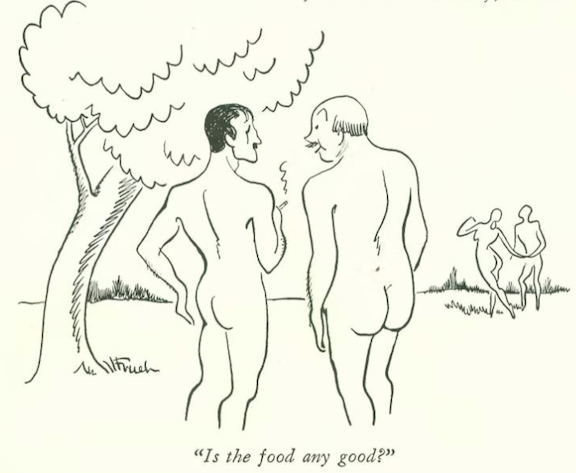
…while Al Frueh turned in this gem…

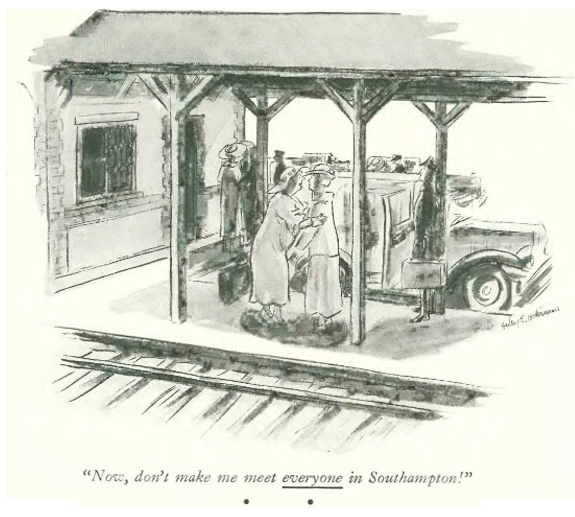
Helen Hokinson found some lively anticipation at the train station…

Garrett Price took us to the seashore…

…while Barbara Shermund kept us abreast of current events…

Next Time: Some Pitiful Melodies…

Beer Thirty

There’s a good reason why Americans celebrate National Beer Day on April 7.

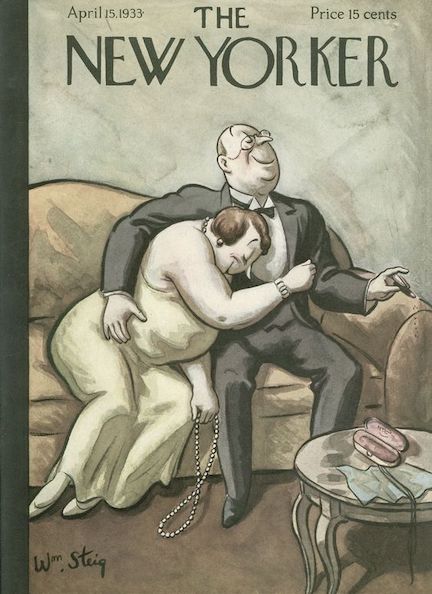
April 15, 1933 cover by William Steig.

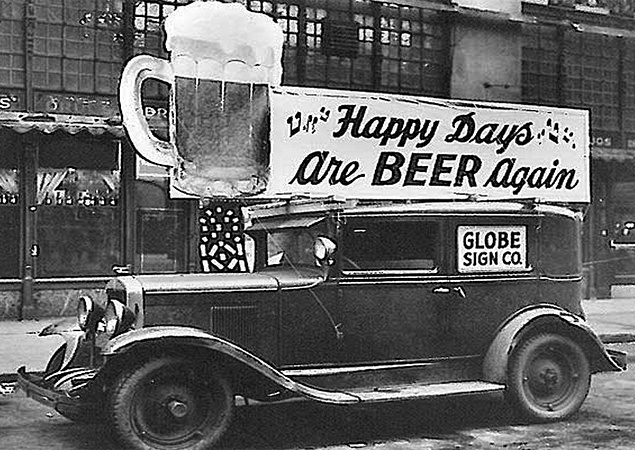
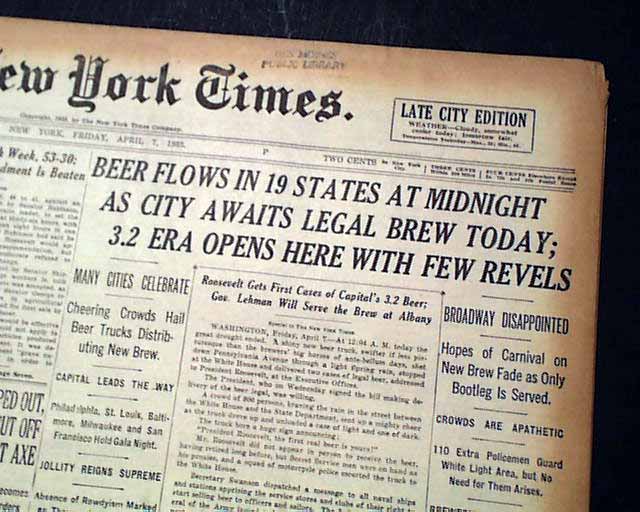
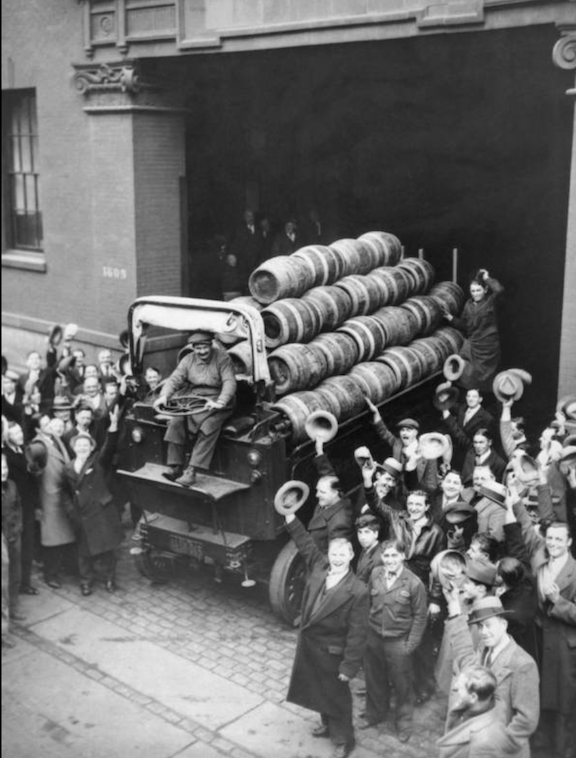
It was on that day in 1933 that the Cullen-Harrison Act went into effect; after nearly 13 years of Prohibition, folks were allowed to buy and drink low-alcohol content beer. The act not only promised to wet their whistles on the hot summer days ahead, but it also signaled the eventual doom of 18th Amendment. E.B. White opened his column with musings on the Easter holiday, but soon turned his attention to the big news of the day.

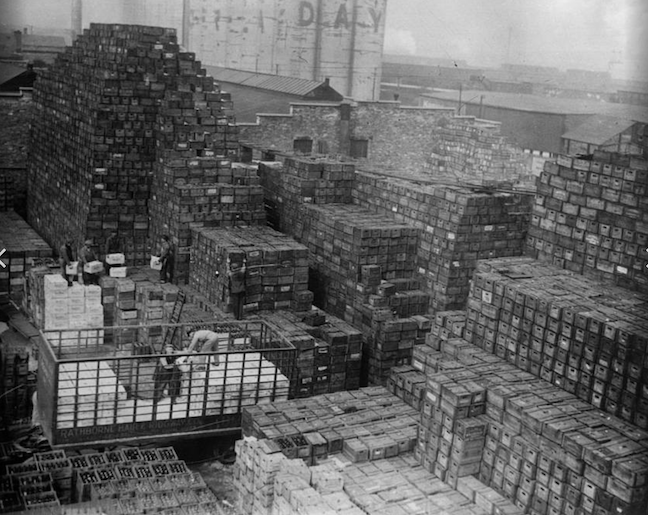
THINK THIS WILL BE ENOUGH?…Workers at a New York brewery unload thousands of crates of beer, getting ready for the return of legal beer in April 1933. (allthatsinteresting.com)
FRONT PAGE NEWS…The New York Times proclaimed the return of legal beer in this April 7, 1933 edition.
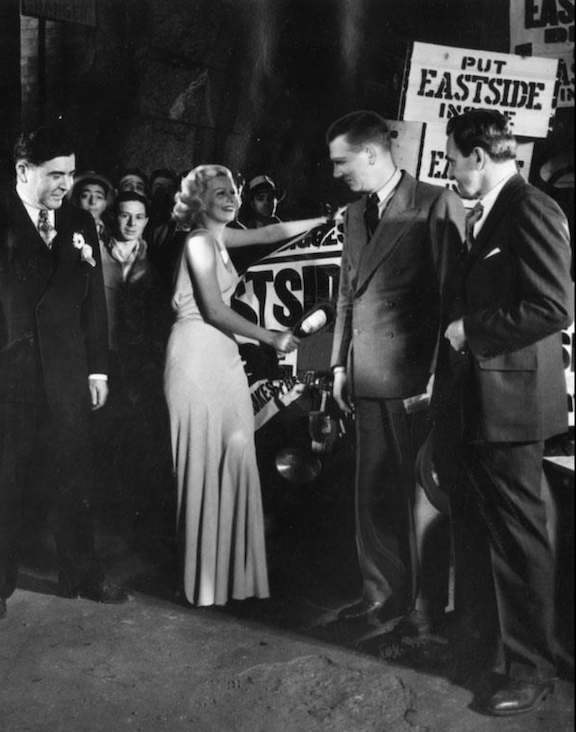
BLONDE’S BOMBSHELL…While on the other side of the Lower 48, actress Jean Harlow christened the first legal bottle of beer at midnight in Los Angeles, April 6, 1933. (Los Angeles Public Library)

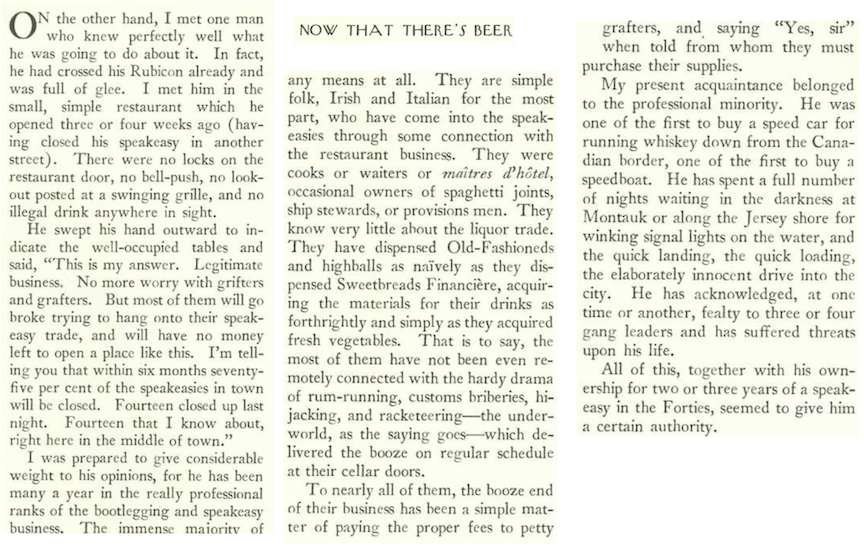
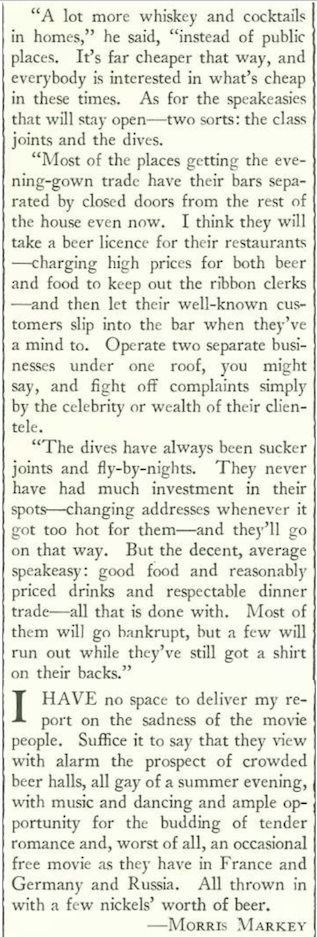
In his “A Reporter at Large column,” Morris Markey looked in on a former speakeasy owner who was more than happy to go legit, and who also predicted the demise of his fellows who still lingered in the underground liquor trade. An excerpt from “Now That There’s Beer”…

CHEERS!…The first truckload of beer to leave New York exits the Jacob Ruppert Brewery in New York in 1933. (allthatsinteresting.com)

The subject of Markey’s column explained why speakeasies would soon be a thing of the past. Markey also observed that theatre owners would soon feel the pinch as folks would forgo movies for summer evenings at a beer garden.

 * * *

No Laughing Matter

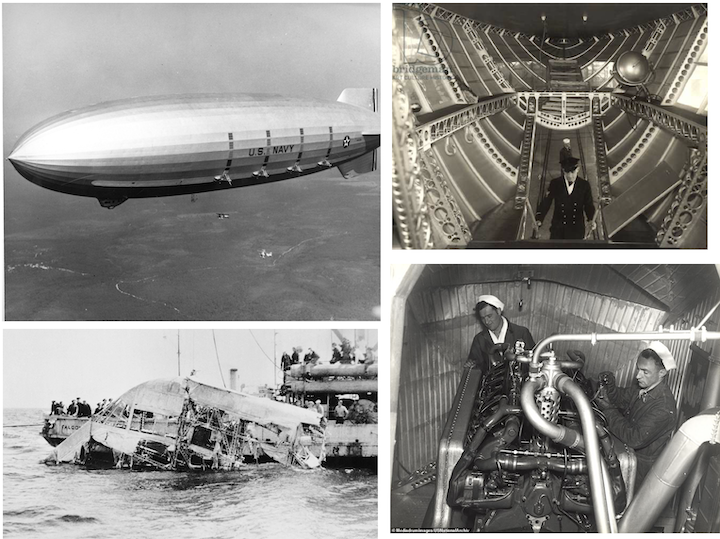
Writers and editors at The New Yorker did their best to keep things as light and witty as possible, but sometimes the headlines could not be ignored, and tragedy was acknowledged, albeit briefly. “The Talk of the Town” had this to say about history’s deadliest airship disaster:

NATURE’S FURY…The U.S. Navy’s 785-foot dirigible, the USS Akron, plunged into the Atlantic Ocean during a violent storm shortly after midnight on April 4, 1933, claiming the lives of 73 crewmen. Clockwise, from top left, the Akron on a routine flight; men in a rear control car; servicemen in the dirigible’s engine room; April 23, 1933 photo of wreckage recovered off the coast of New Jersey. Because the ship had no life vests and one rubber raft, only three crew members survived the disaster, which heralded the end the Navy’s dirigible fleet. (howstuffworks.com/AP/Daily Mail)

In his “Of All Things” column, Howard Brubaker had this to add:

 * * *

Alex at the Movies

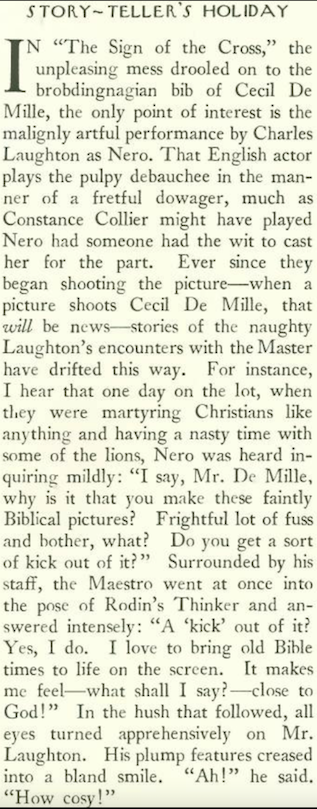
It wasn’t every day you got to read a movie review by Alexander Woollcott, but he did just that in the opening lines of his “Shouts and Murmurs” column, calling Cecil B. DeMille’s The Sign of the Cross an “unpleasing mess drooled on to the brobdingnagian bib” of the director.

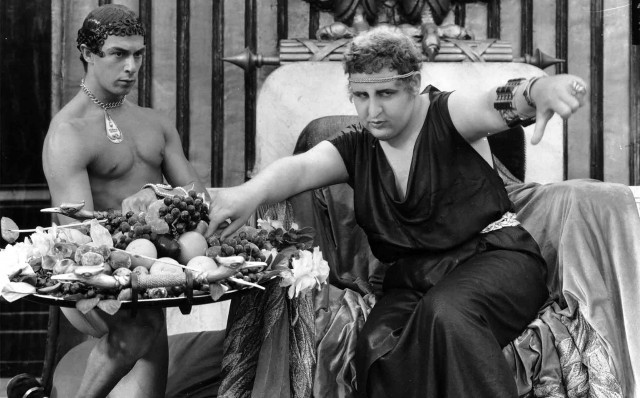
Woollcott, who doubtless related to Nero’s bacchanalian ways, singled out Charles Laughton’s campy performance as the Roman emperor.

ANIMAL HOUSE…Charles Laughton camped it up as the Emperor Nero in Cecil B. DeMille’s The Sign of the Cross. (IMD

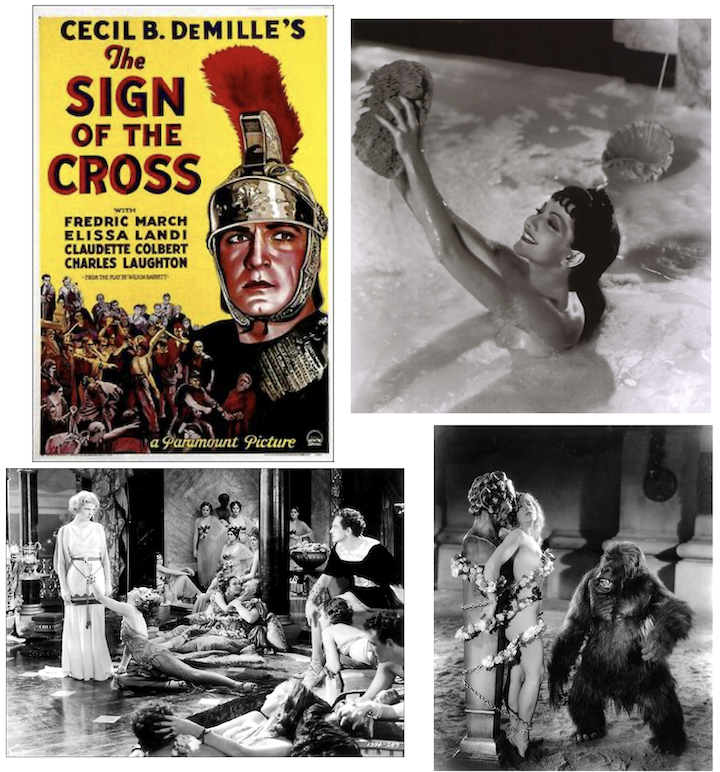
Besides Laughton’s performance, the pre-Code film is perhaps best known for Claudette Colbert’s revealing milk bath scene, which took several days to shoot—the powdered cow’s milk eventually turned sour, making it a very unpleasant experience for all involved.

IT STINKS…that was Alexander Woollcott’s assessment of The Sign of the Cross. Clockwise, from top left, studio poster for the film; Claudette Colbert’s famous bath scene; an actress portraying a Christian being thrown to the lions (as well as crocodiles and gorillas) was the famed burlesque dancer Sally Rand, who left little to the imagination in her uncredited appearance; an orgy scene. Although Paramount marketed the film to churches, it was attacked by the Catholic Legion of Decency: a re-release of the film was censored after the Hays Code went into effect in 1934—a “lesbian dance,” violent gladiator scenes and sequences with naked women being attacked by crocodiles were cut and wouldn’t be restored until a 1993 video release. (Wikipedia/IMDB)

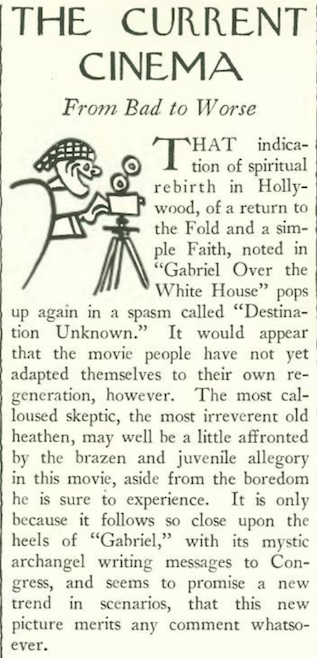
As for film critic John Mosher, the remaining Hollywood fare was even worse—like The Sign of the Cross, these pictures used faith-based themes, a seemingly new trend in Hollywood scenarios, to poor effect.

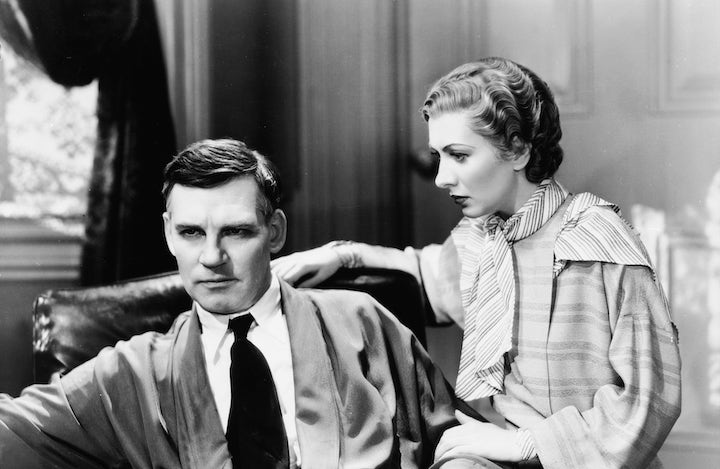
Gabriel Over the White House starred Walter Huston as a politically corrupt president who, after a near-fatal car accident, comes under the divine power of the Archangel Gabriel and the spirit of Abraham Lincoln…

I SEE DEAD PEOPLE…Walter Huston and Karen Morley in Gabriel Over the White House. (TCM)

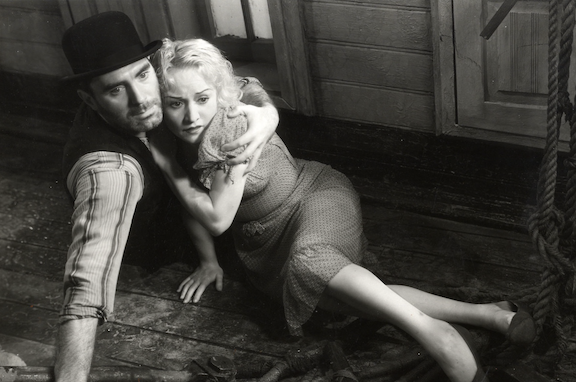
…the pre-Code drama Destination Unknown also summoned supernatural forces to tell the tale of a stranded ship saved by a stowaway who turns wine into water and heals a crippled man.

NEEDING A MIRACLE…Pat O’Brien and Betty Compson in Destination Unknown. (IMDB)

 * * *

From Our Advertisers

Considering that Adolf Hitler gave Nazi paramilitary units control of German streets in January 1933, the words “Appeasing refuge” don’t readily come to mind…

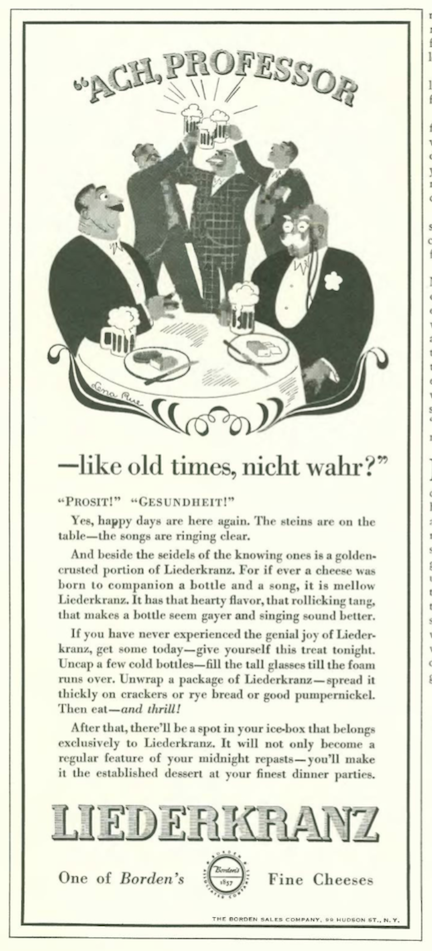
…if you liked all things German but wanted to avoid getting a jackboot to the groin, you could remain stateside, drink some 3.2 beer, and chew on some Liederkranz…

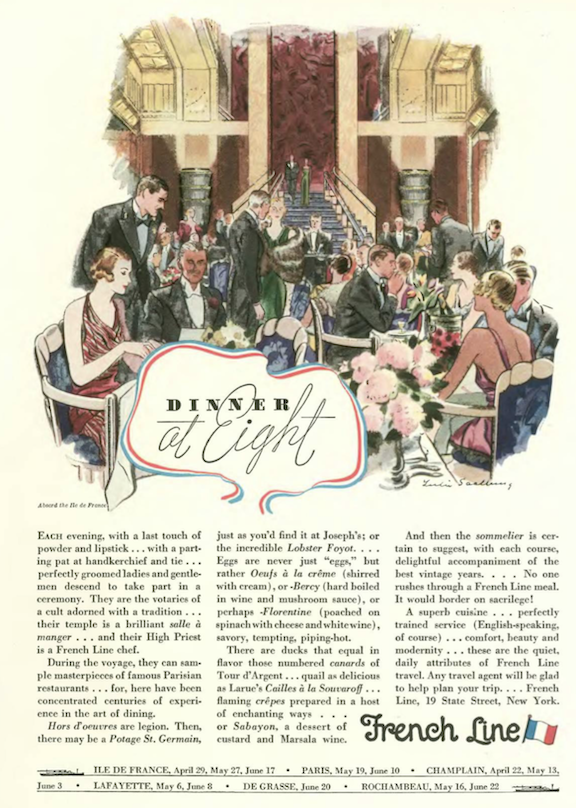
…actually this looks more preferable, especially as rendered by fashion illustrator Leslie Saalburg

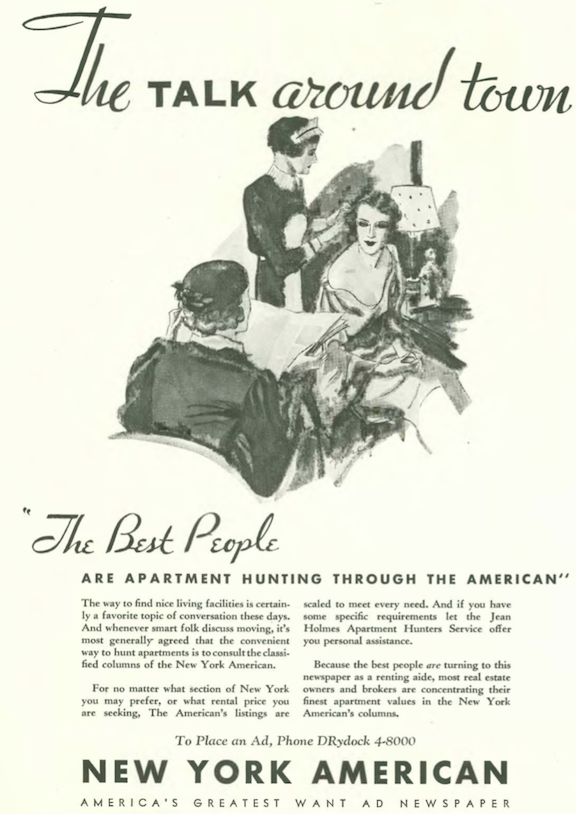
…before Zillow or Craigslist you could look for some digs in the New York American, which merged with the New York Journal in 1937…

…the makers of leaded gasoline urged on a stereotypical country doctor, even though the stork seemed to have things under control…

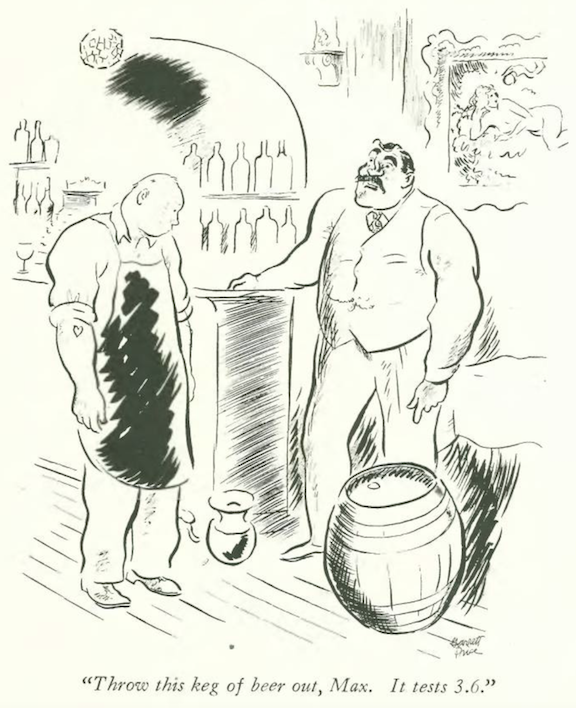
…on to our cartoonists, Garrett Price illustrated the limits of legal beer…

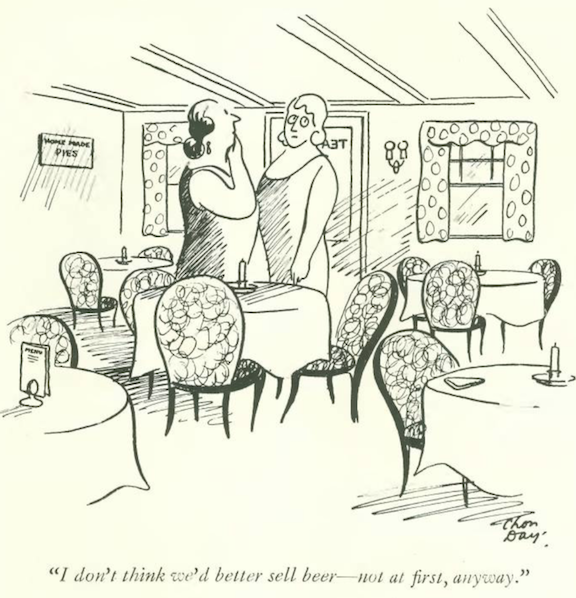
…while Chon Day explored the same problem at this tea room…

…here’s a trio of The New Yorker’s early women cartoonists…Barbara Shermund

Mary Petty

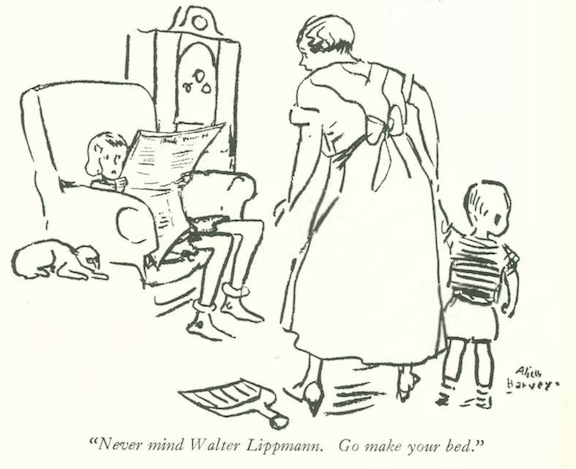
…and Alice Harvey

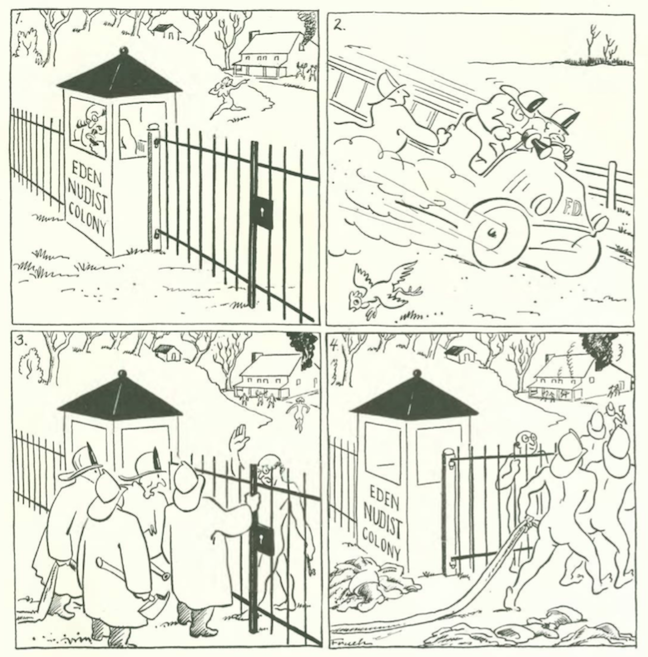
…and we close with Al Frueh, and some brave firefighters…

Next Time: Not Worth a Dime…

Will It Play In Peoria?

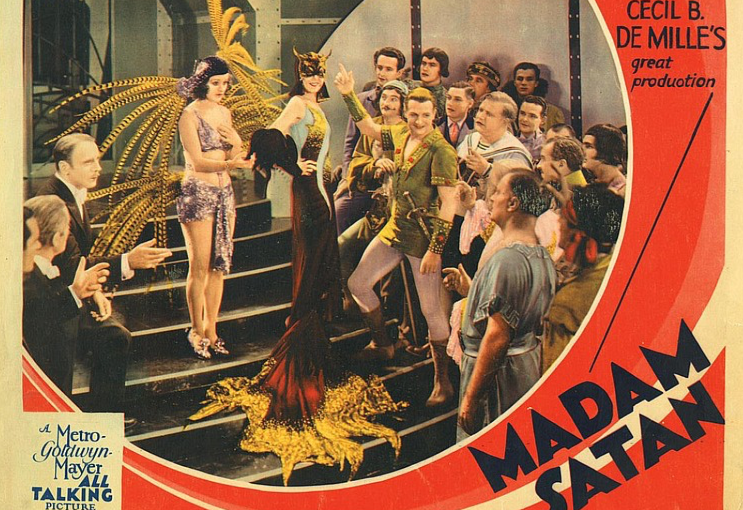
Cecil B. DeMille was known for his epic films (e.g. The Ten Commandments, 1923 and 1956) and cinematic showmanship, but in 1930 he puzzled his audiences with a very weird pre-Code musical, Madam Satan.

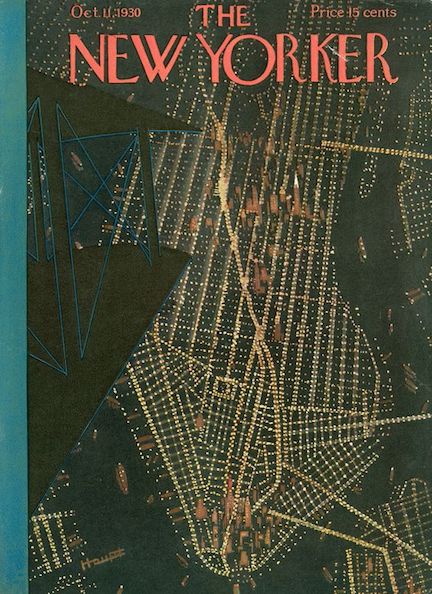
Oct. 11, 1930 cover by Theodore Haupt.

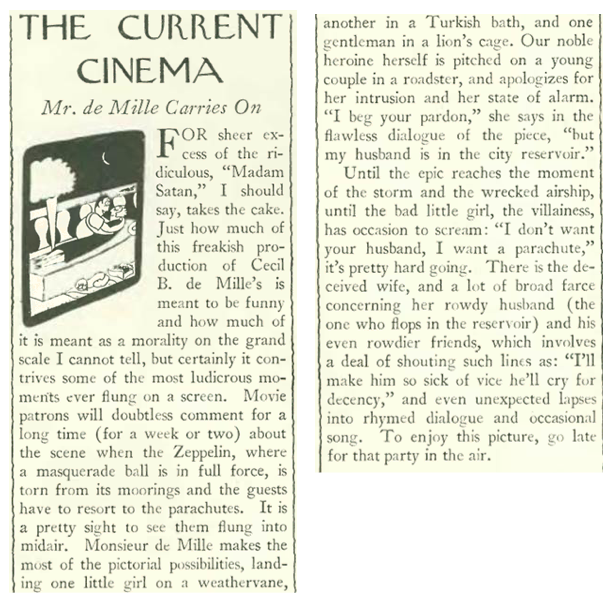
The film centered on a wealthy couple, Angela and Bob Brooks (played by Kay Johnson and Reginald Denny). Bob is unfaithful to his wife (a common pre-Code theme), and she attempts to lure him back by disguising herself as a mysterious devil woman at a masquerade ball held aboard a dirigible. Quite a plot indeed. Here’s what The New Yorker’s John Mosher had to say about it.

(IMDB)

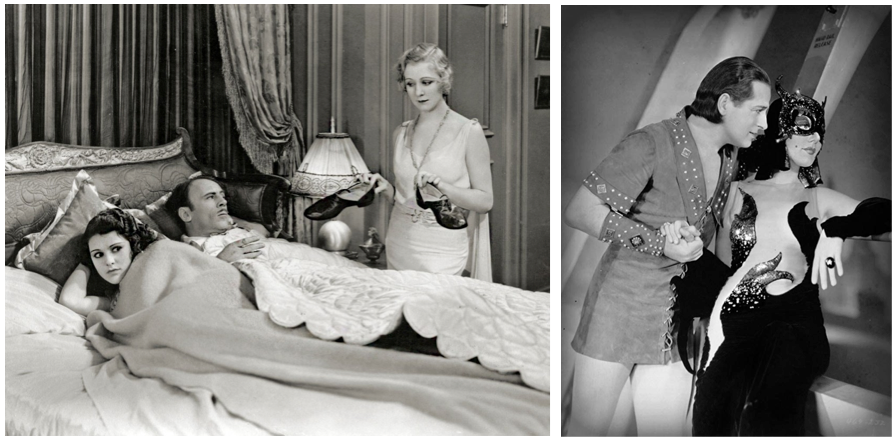
PAJAMA GAMES…Lillian Roth, Roland Young, and Kay Johnson in Madam Satan. At right, Reginald Denny falls for the charms of his wife (Kay Johnson), disguised as a devil woman at a masked ball held aboard a giant dirigible. (IMDB/cecilbdemille.com)
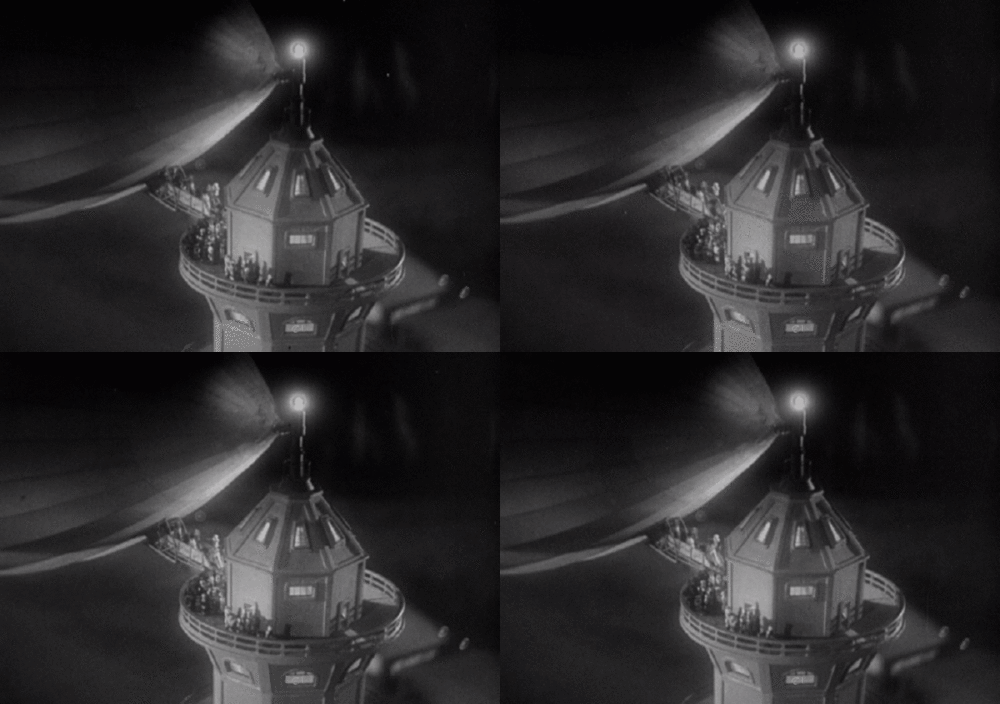
AIRHEADS…Via a giant mooring mast, partygoers board a dirigible for the masquerade ball in Madam Satan. Curiously, developers of the Empire State Building (which was under construction) envisioned a similar use for the mast that would top out their tower. In reality, winds that whipped around high towers would have prevented this type of boarding. (twitter.com)
SOMEONE CALL THE FAA…At right, the lavish masquerade ball aboard a giant dirigible in Madam Satan. At right, the dirigible is damaged by lightning in a scene that foreshadowed the Hindenberg disaster of 1937. (cecilbdemille.com/precode.com)
SEEMS PLAUSIBLE…In a silly ending to a silly film, partygoers float on parachutes away from the damaged dirigible. (twitter.com)

*  *  *

Let Them Eat Cake

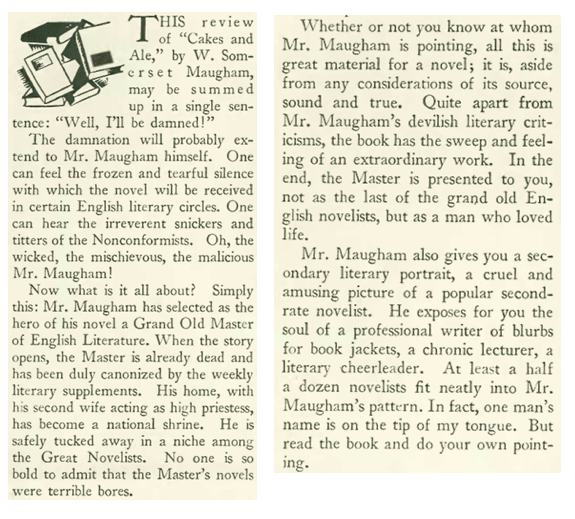
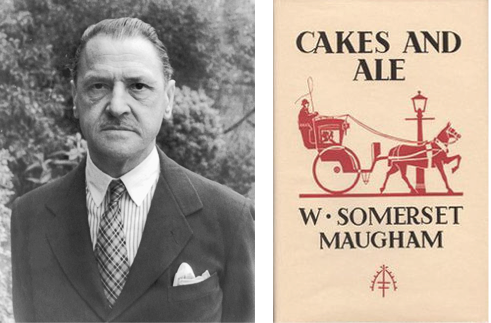
Somerset Maugham regarded his comic novel, Cakes and Ale, to be his favorite. The book took aim at snobs as well as at the legacy of one overrated, late-Victorian writer—a character many believe was based on the recently departed Thomas Hardy (Maugham denied the inspiration). The New Yorker had this to say about Cakes and Ale:

THROW HARDY INTO THE DUSTBIN…Somerset Maugham as photographed by Carl Van Vechten in 1934. (Wikipedia)

 *  *  *

He Meant What He Said

Howard Brubaker, in his “Of All Things” column, found humor in the words of a rising figure in German politics, you know who…

 *  *  *

Throw Him a Softball

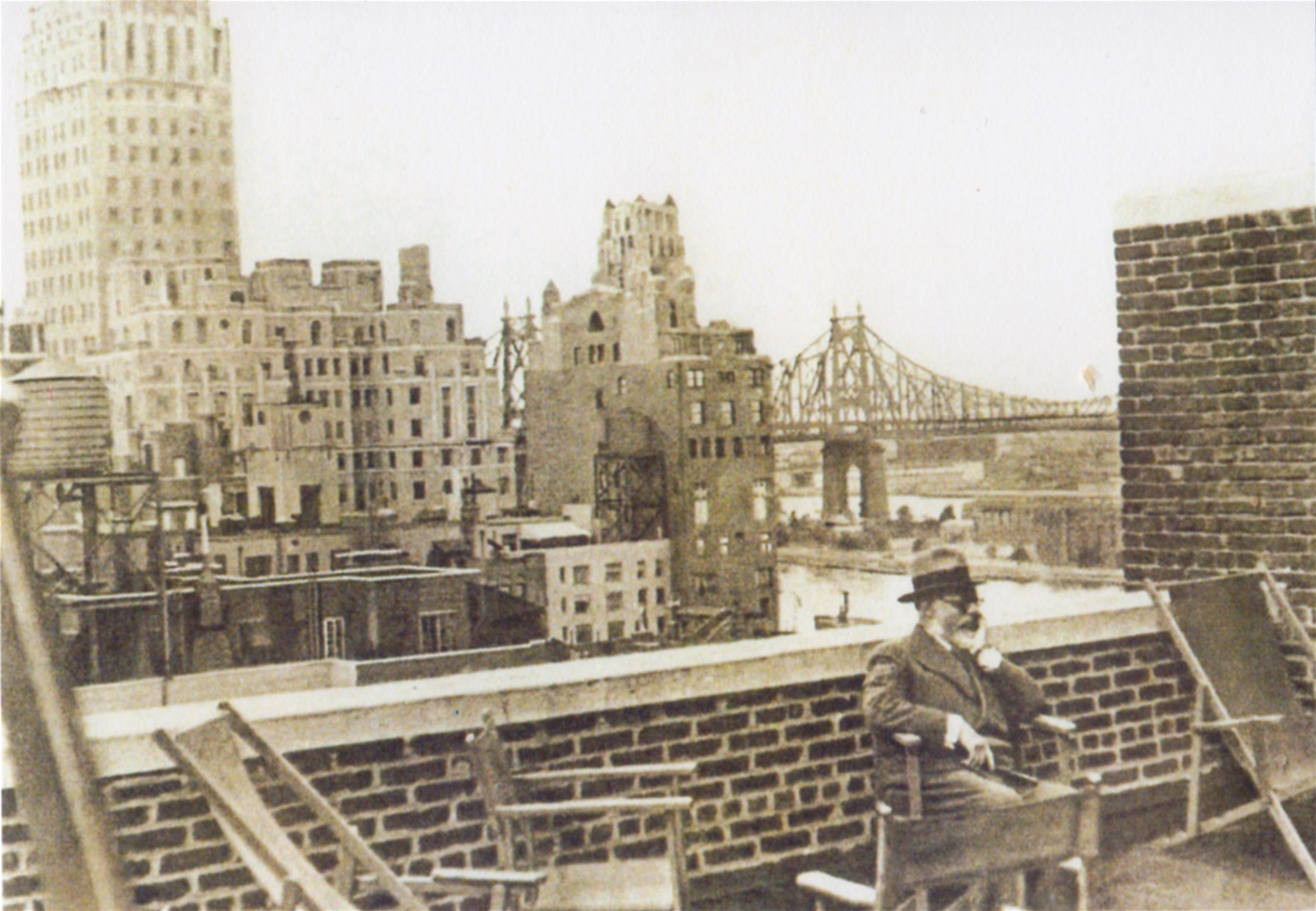
The famed French artist Henri Matisse paid a visit to New York City, and according to this account in “The Talk of Town,” seemed to be seeking some peace of mind…

AN OPPOSITE VIEW…Henri Matisse struck a thoughtful pose atop a Manhattan apartment at 10 Mitchell Place in 1930. The Queensboro Bridge can be glimpsed in the background. (ephemeralnewyork.wordpress.com)

 *  *  *

Still Barred From the Bar

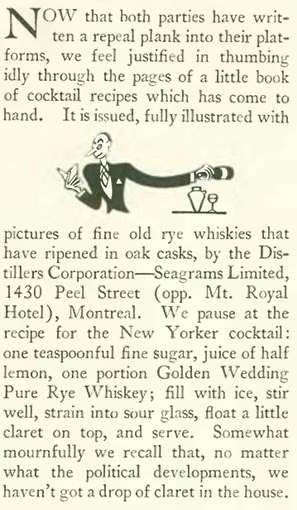
We are still about three years away from the official repeal of the 18th Amendment, but as we know the partying continued in houses and speakeasies across the great city. E.B. White, in his “Notes and Comment,” wistfully recalled the days when good booze was legal:

White did find some cheer in the pro-wet platforms of the two major parties…

A GIMLET IN EVERY POT…The major political parties in 1932’s U.S. presidential race were represented by incumbent Herbert Hoover (Republican) and Franklin D. Roosevelt (Democratic). Both favored repeal of the 18th Amendment. Pictured at the center, a New Yorker cocktail, the object of E.B. White’s longing. (Wikipedia)

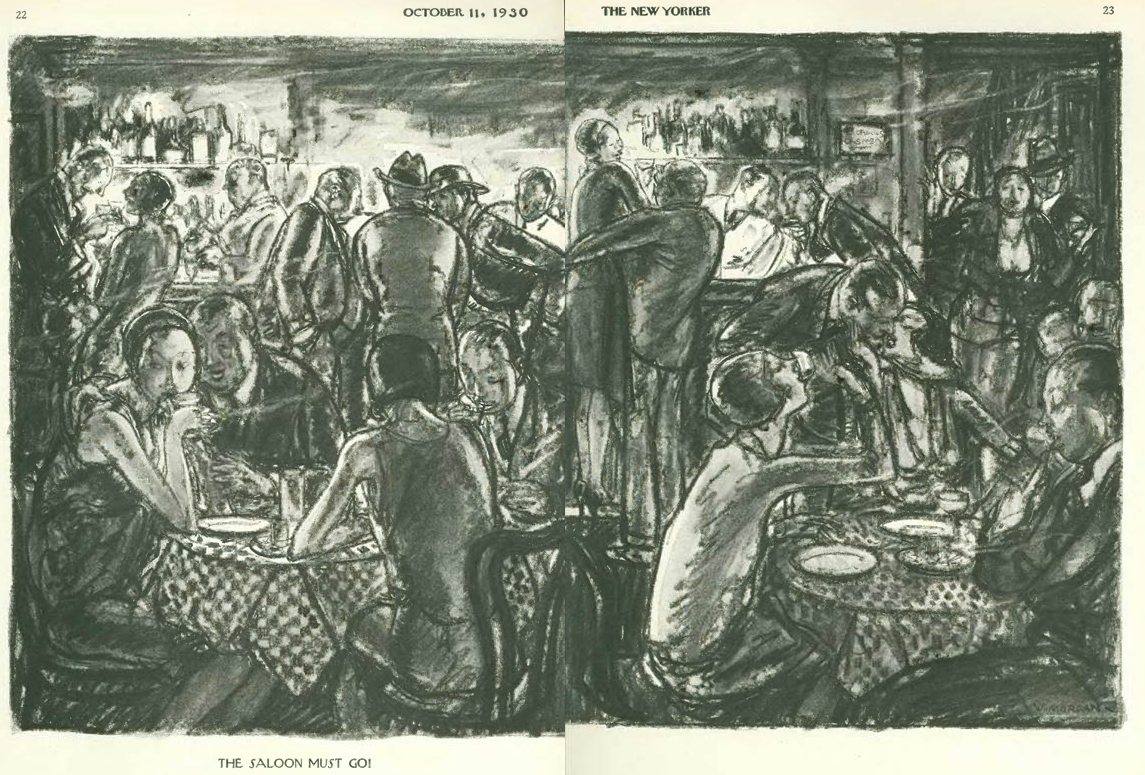
And while we are on the subject, we have this Wallace Morgan illustration of a lively speakeasy with the ironic caption, “The Saloon Must Go!” — referencing an old Anti-Saloon League Slogan.

You didn’t have to go to a speakeasy if you wanted a glass of wine. During Prohibition American winemakers found a lucrative loophole by selling perfectly legal concentrated grape juice (called “wine bricks”) to home brewers and bootleggers alike.

According to an article in the Smithsonian, winemakers marked the wine bricks with warnings that they were “for non-alcoholic consumption only.” However, the package would also bear a note explaining how to dissolve the brick in a gallon of water, and yet another “warning” instructing the buyer not to leave the jug in a cool cupboard for 21 days, lest it turn into wine.

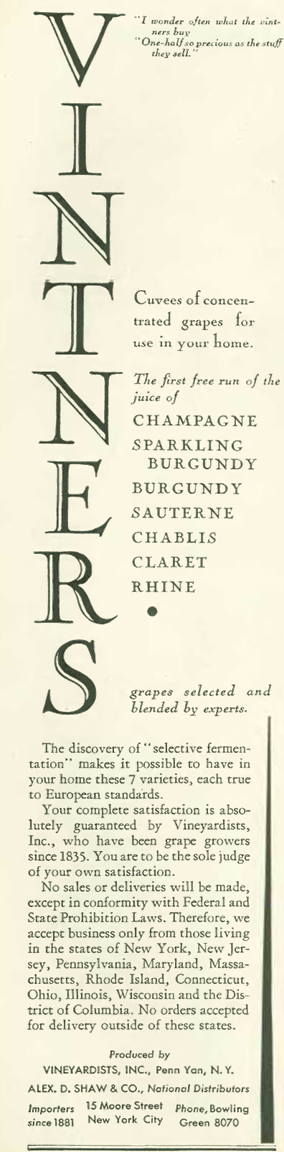
Here’s an ad in the Oct. 11, 1930 New Yorker that not-so-subtly offered a selection of varietals…

Here’s what a wine brick looked like:

A wine brick from San Francisco’s Vino Sano company. The label reads: “Each Brick dissolve in one gallon of water. To prevent fermentation, add 1-10% Benzoate of Soda.” Yeah right. (vinepair.com)

 *  *  *

From Our Advertisers

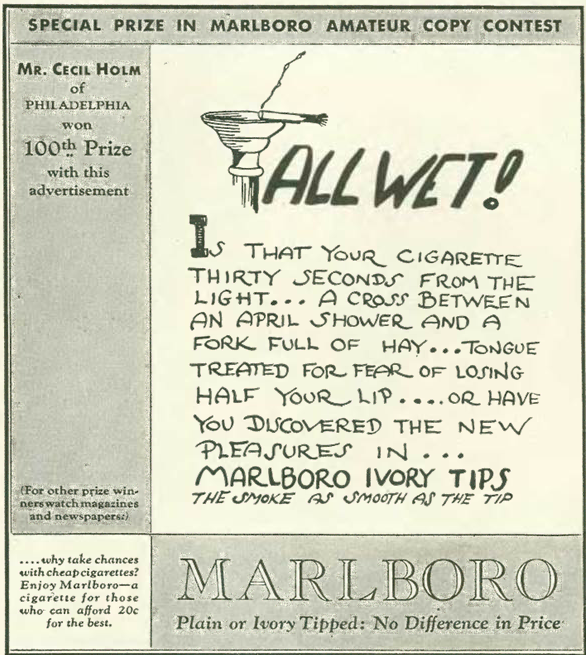
No doubt Prohibition caused more than a few people to take up smoking. Women adopted the habit in droves during the Roaring Twenties, and by the Depression it seemed everyone was lighting up. Advertisers explored various ways to market cigarettes, and long before the Marlboro Man made the scene, that brand pushed its product through a series of dopey handwriting and essay contests,,,

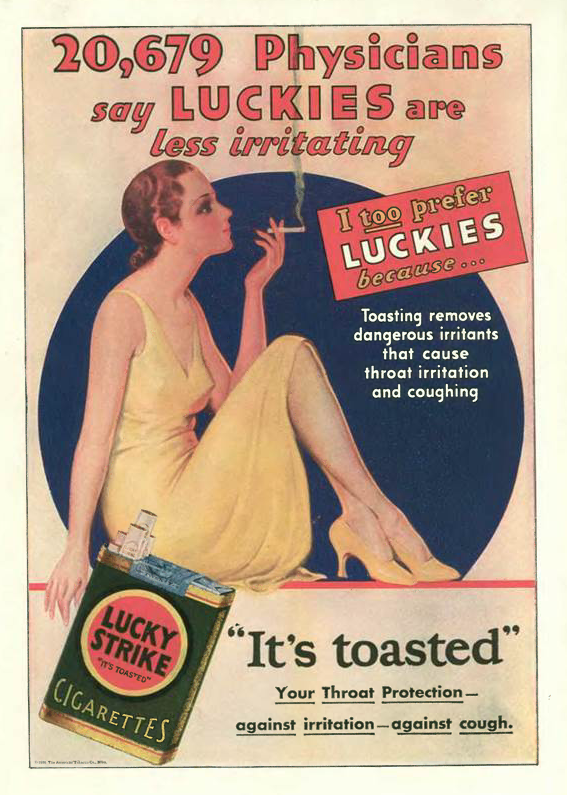
…the makers of Luckies used a combination of sex and bogus health claims to sell their products…

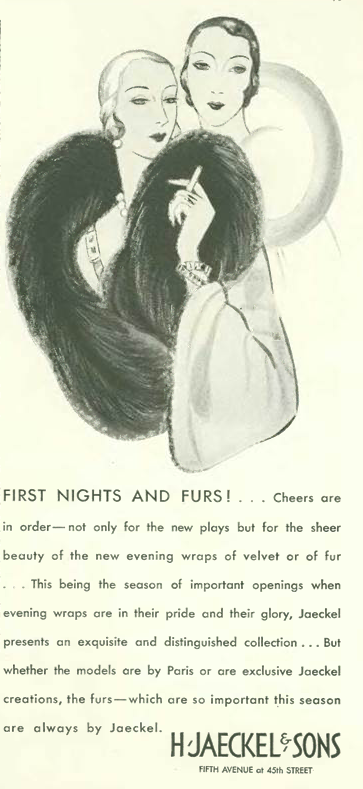
…cigarettes were not confined to ads by tobacco companies; here they are accessories to fine furs…

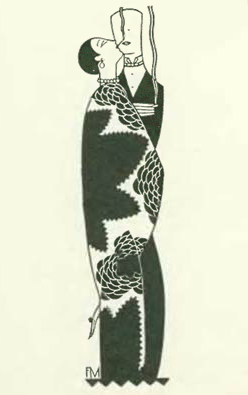
…even The New Yorker’s spot illustrations (this by Frank McIntosh) featured smokers…

…as did cartoons, such as this one by Barbara Shermund in the Oct. 4 issue…

…and we have one more ad, this one from Chrysler, which acknowledged the new world of the Great Depression, but only through use of careful euphemisms (The New Yorker editorial side practiced much of the same)…

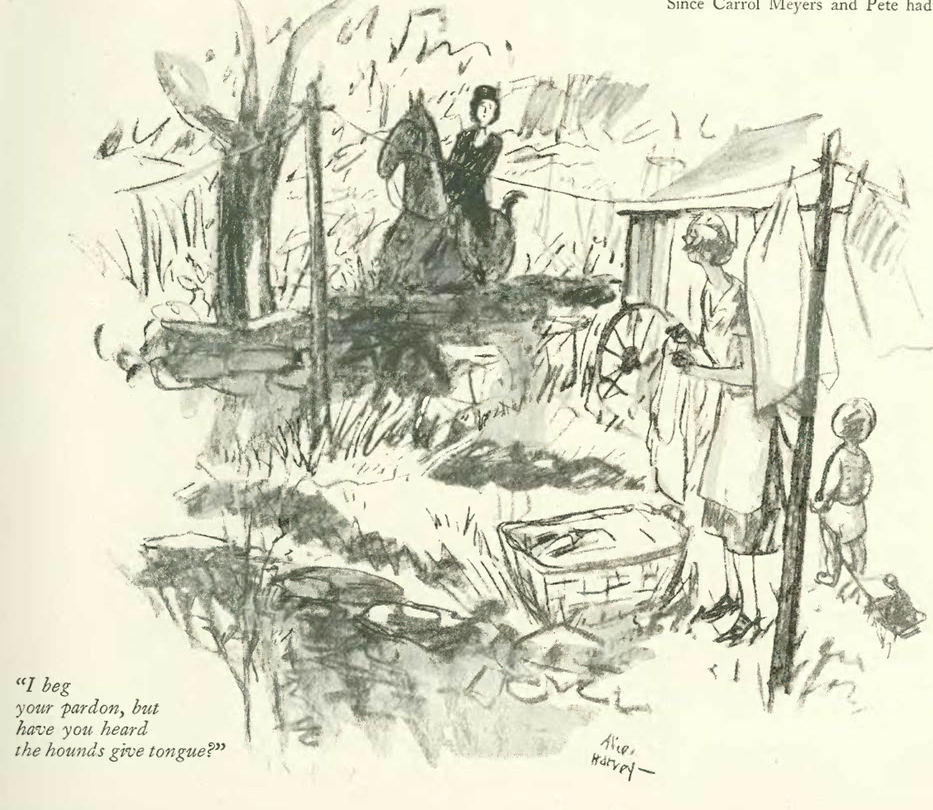
…on to our cartoons, beginning with an exploration of city vs. country life, by Alice Harvey

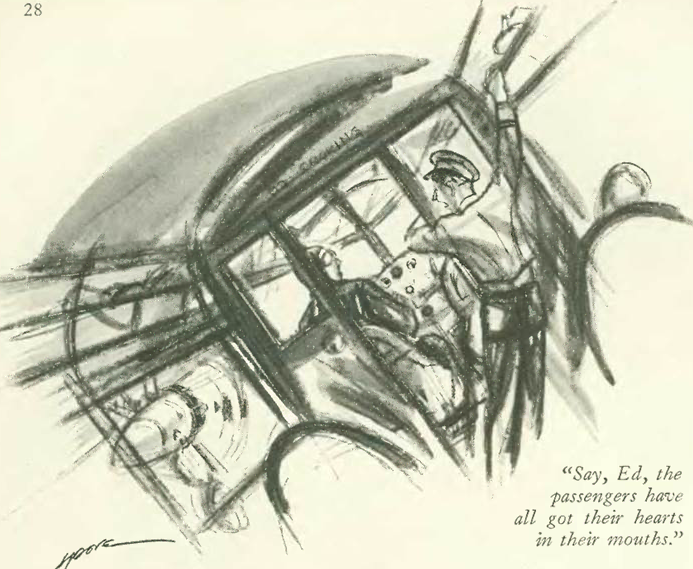
…a depiction of what commuter flying was actually like in 1930, thanks to Leonard Dove

…a glimpse at modern parenting, with Helen Hokinson

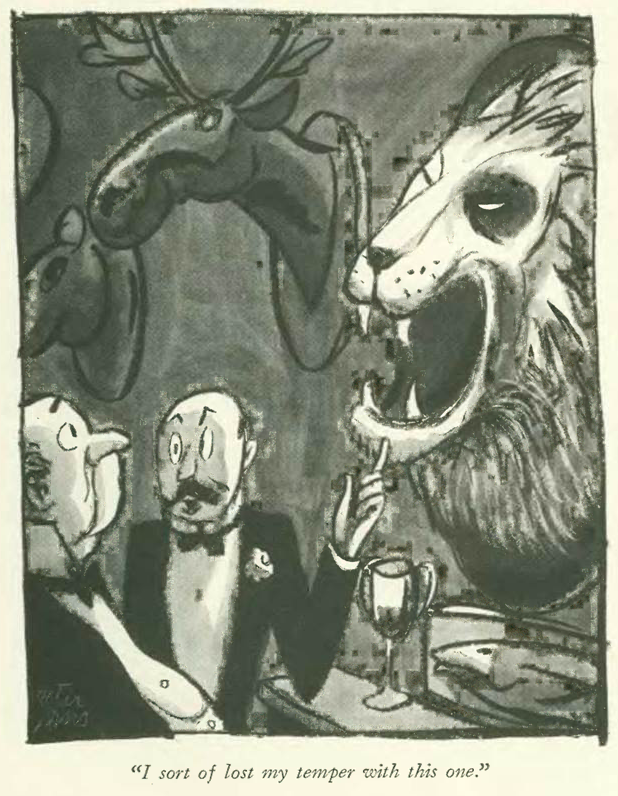
…humor in a gentleman’s drawing room, courtesy Peter Arno

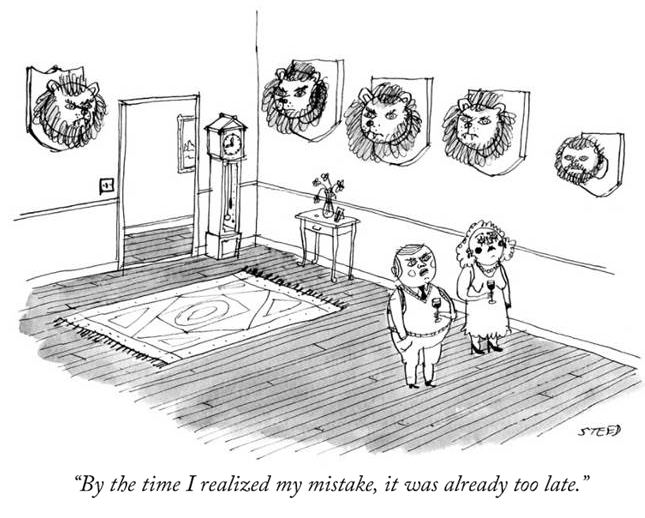
…and 89 years later, a hilarious update on the subject by Edward Steed in the Sept. 9, 2019 issue…

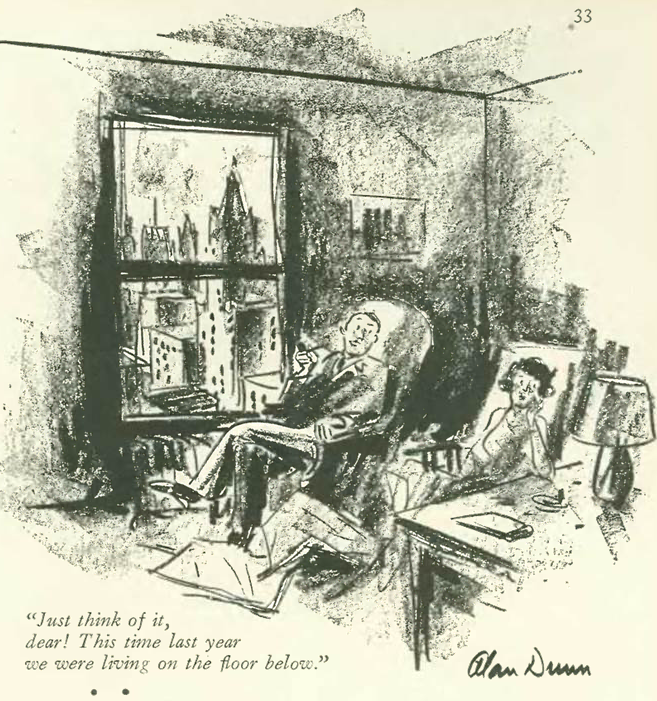
…and finally, the joys of urban life brought to us by Alan Dunn

Next Time: Ghosts of Gotham…

Unfit to Print

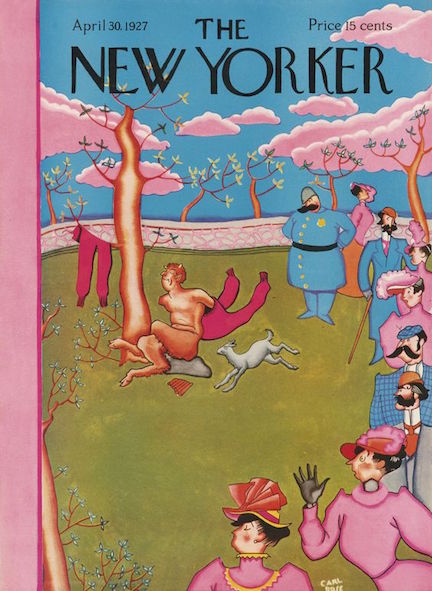
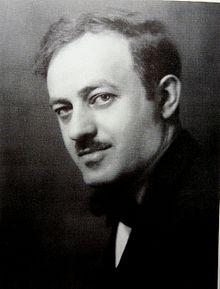
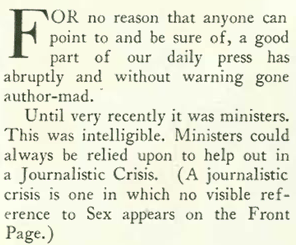
The journalist and screenwriter Ben Hecht wrote the “Reporter at Large” column for the early New Yorker, and for the April 30, 1927 issue took aim at the shoddy coverage of the Ruth Snyder murder trial at the Long Island City Courthouse.

e83e83f37e5b2787e23dd4ee7a85c62d
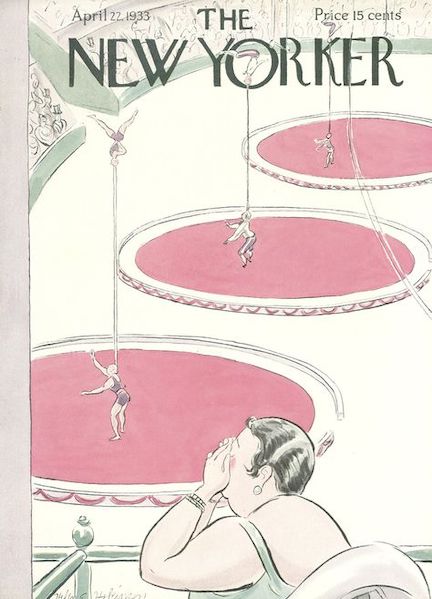
April 30, 1927 cover by Carl Rose.

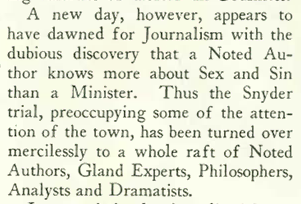
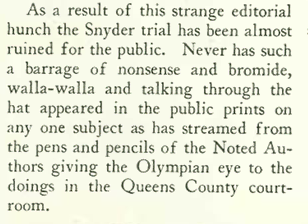
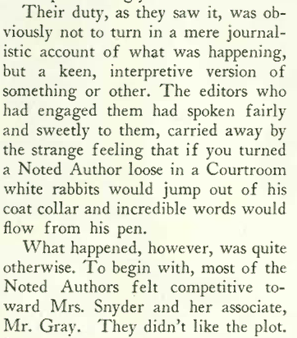
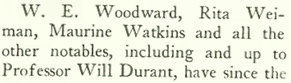
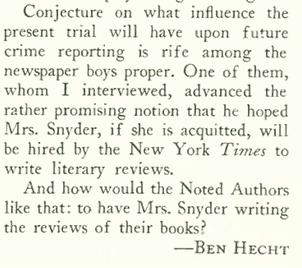
Hecht was appalled by the media’s use of celebrity “experts” to cover the trial, which only served to sensationalize and trivialize the proceedings:

Ben Hecht (Wikipedia)

hecht-1

hecht-2

The Ruth Snyder trial dominated headlines in 1927. A housewife from Queens, Snyder began an affair in 1925 with Henry Judd Gray, a married corset salesman. After she persuaded her husband, Albert Snyder, to purchase life insurance, she enlisted Gray’s help to murder him. On March 20, 1927 the couple garrotted Albert (after bludgeoning him with a sash weight) and then staged the murder scene to look like a burglary.

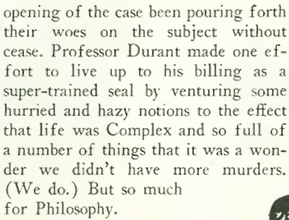
The trial was covered by such figures as former Ziegfeld Follies showgirl Peggy Hopkins Joyce, the radio evangelist Aimee Semple McPherson, movie director D. W. Griffith, author Damon Runyon, popular philosopher Will Durant, and James M. Cain, a crime reporter who went on to write Double Indemnity, which was later made into a major Hollywood movie. Hecht (who would go on to co-write a hugely successful play about newspaper reporters, The Front Page) would have none of this celebrity circus. Some excerpts:

hecht-3

hecht-4

hecht-5

hecht-6

hecht-8

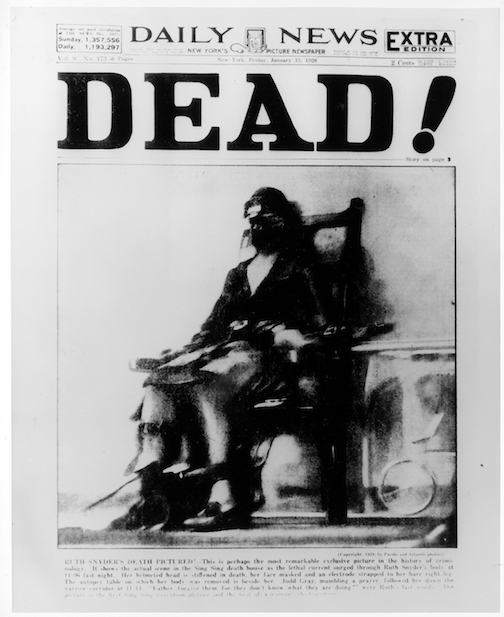
Ruth Snyder would not be acquitted (or live to write reviews), but instead would go to Sing Sing’s electric chair on Jan. 12, 1928. The 32-year-old Snyder would go to the chair first, followed shortly thereafter by her former lover and accomplice, 35-year-old Henry Judd Gray. The pair had sealed each other’s fate: During the trial, Snyder and Gray had turned on each other, contending the other was responsible for killing Albert Snyder.

screen-shot-2016-09-08-at-12-22-48-pm
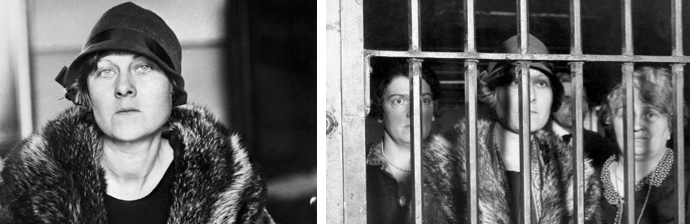
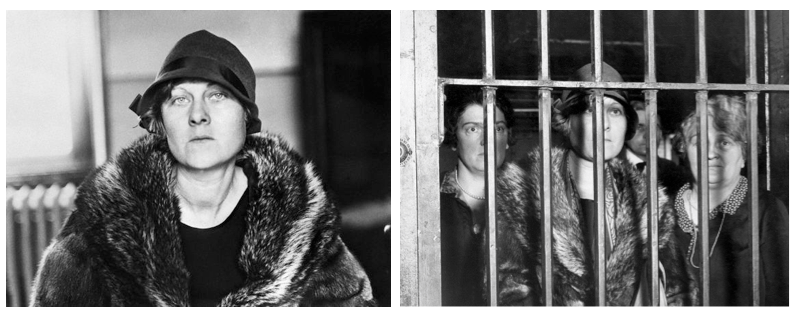
BUSTED…Ruth Snyder in custody and behind bars at the Queens County Jail. (Criminal Encyclopedia/NY Daily News)
snyder-and-gray
END OF THE LINE…Mugshots of Ruth Snyder and Henry Judd Gray taken at Sing Sing Prison following their conviction. (Lloyd Sealy Library, CUNY)
connect_blog_ruth-snyder
NATIONAL SENSATION…The cover of Jan. 13, 1928, issue of the New York Daily News. Although photographs of the execution were not allowed, photographer Tom Howard took this now-famous photo of Snyder at the moment of her execution with the aid of a miniature camera strapped to his ankle. (newseum.org)

 *  *  *

On to a lighter topic…The Sherry-Netherland Hotel has graced the corner of Fifth Avenue and East 59th Street since 1927, and when it was built it was the tallest apartment-hotel in New York City.

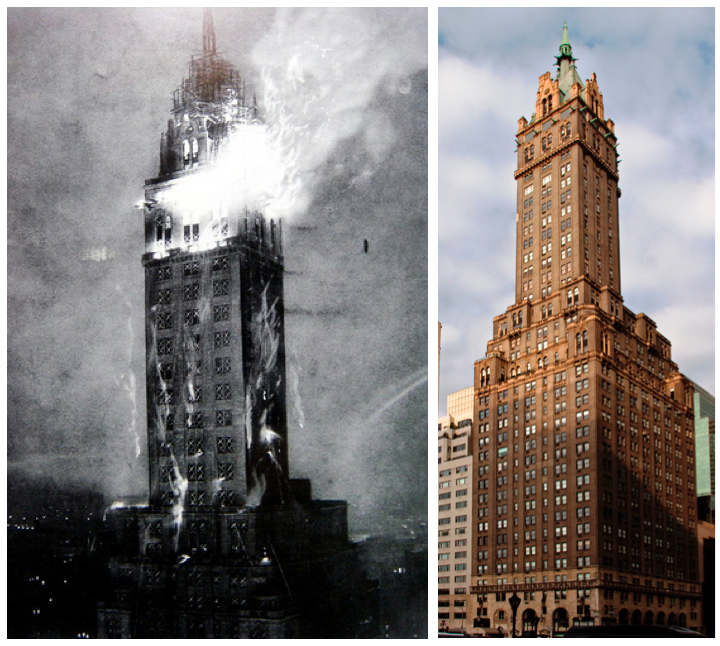
The building was nearing completion when around 8 pm on April 12, 1927, fire broke out on wood plank scaffolding surrounding the top floors. Firefighters responded only to find they lacked water pressure to fight the blaze.

According to the New York Times (“The Night a Hotel Turned Into a Torch,” Nov. 15, 2012), the fire was watched by hundreds of thousands, and “the windows of the Plaza Hotel across the street were ‘black with people’; every front room was engaged, either by news organizations or for spontaneous parties to watch the fire.”

Planks tumbled to the street for hours, and The Times said one “sailed in a crazy parabola” and crashed against the Savoy-Plaza, also nearly finished; occasionally minor collapses of the scaffolding turned the picturesque top into a “lofty Roman candle.” The crowds on the street could feel the heat on their faces, and the roar and crackle of the fire could be heard for blocks around. The fire burned itself out around midnight.

Oddly, the New Yorker had little to say about the fire, mentioning it only in passing in this “Talk of the Town” item:

screen-shot-2016-09-06-at-12-48-11-pm

screen-shot-2016-09-08-at-1-14-21-pm
HOT TIME IN THE CITY…In 1927 the Sherry-Netherland caught on fire, creating what The New York Times called “the best show of the season.” The newspaper ran this photo (left), retouching it for contrast (New York Times). At right, the hotel as it appears today (Wikipedia)

An interesting side note…at the time of the Sherry-Netherland’s construction, the nearby Vanderbilt mansion was being demolished. Carved limestone panels from the mansion’s porte-cochere as well as ornamental frieze roundels were salvaged and installed in the Sherry-Netherland’s lobby.

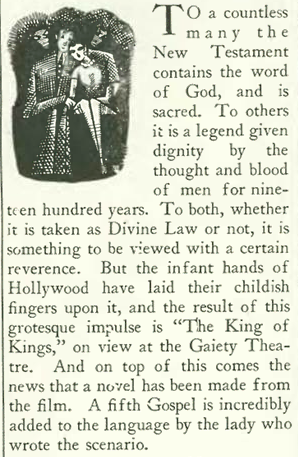
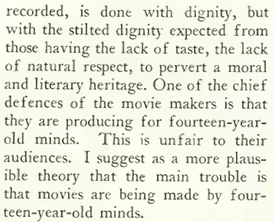
Hollywood movies continued to disappoint New Yorker critics, including Cecil B. DeMille’s silent epic The King of Kings.

screen-shot-2016-09-06-at-12-58-11-pm

screen-shot-2016-09-06-at-12-58-48-pm

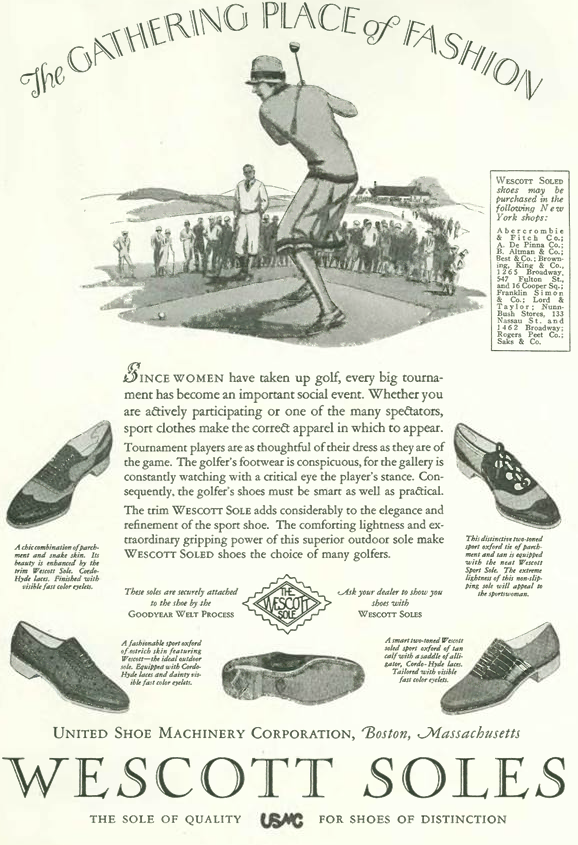
screen-shot-2016-09-06-at-12-59-22-pmFinally, a couple of advertisements from the April 30 issue. It was spring, and time to hit the links…

screen-shot-2016-09-06-at-12-44-22-pm

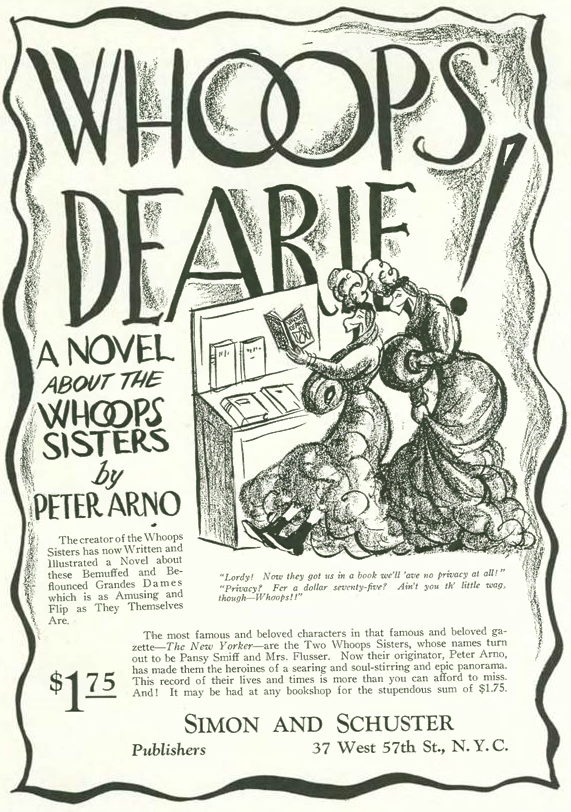
…and New Yorker cartoonist Peter Arno plugged his new book featuring the Whoops Sisters:

screen-shot-2016-09-06-at-12-51-37-pm

Next time: Those Restless Natives…

43b9e74a7197a3d27d520d251a303549