Jimmy Comes Home

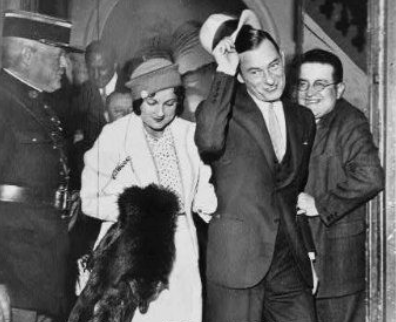
Above: Former New York Mayor Jimmy Walker and wife Betty Compton, aboard the S.S. Manhattan in 1935. (New York Daily News Archive)

The Roaring Twenties and Jimmy Walker seemed made for each other. A dandy with a taste for fine clothes, late-night parties, and Broadway showgirls, the 97th mayor of New York was a darling of the media…until the market crashed; as nest eggs evaporated along with jobs, folks quickly lost their taste for such frivolity.


November 9, 1935 cover by Daniel “Alain” Brustlein. This was the first of nine covers Brustlein created for the magazine. An Alsatian-born American artist, cartoonist, illustrator, and author of children’s books, Brustlein (1904–1996) contributed to The New Yorker under the pen name “Alain” from the 1930s through the 1950s.
Daniel “Alain” Brustlein, in an undated photo. During the height of Abstract Expressionism Brustlein became a reputable painter, exhibiting his work in New York and Paris. (derfner.org)

 *

The fall of 1935 marked three years since Walker had left office, and for nearly two of those years the city had been governed by the reformist Mayor Fiorello La Guardia. New Yorkers, it seemed, were ready for a dose of Jimmy when he returned from his European exile, hailed by a throng of media and well-wishers.

Writing for Airmail, longtime New York journalist Sam Roberts observes that the city loved Walker, “a charming hellion, a witty, self-effacing, glib humanist, far more flawed, too, and compassionate than pictured previously, a man elevated and condemned by his own character, created and ultimately consumed by his times. He conjures up the anti-Trump—a dodgy philanderer who governed by making people feel good rather than angry.”

WHERE’S THE PARTY?…Former Mayor Jimmy Walker and his wife, Betty Compton, returned to New York in the fall of 1935 amid tremendous fanfare. The New Yorker’s Morris Markey noted that at least 160 media representatives were on hand for the couple’s arrival. (YouTube)

Walker (1881-1946) fled to Europe in November 1932 amid a bribery scandal that had prompted his resignation. Accompanied by Ziegfeld Follies singer Betty Compton (1906–1944)—whom he would marry in Cannes the following April—they would bounce around the continent until Walker determined that the danger of criminal prosecution had passed.

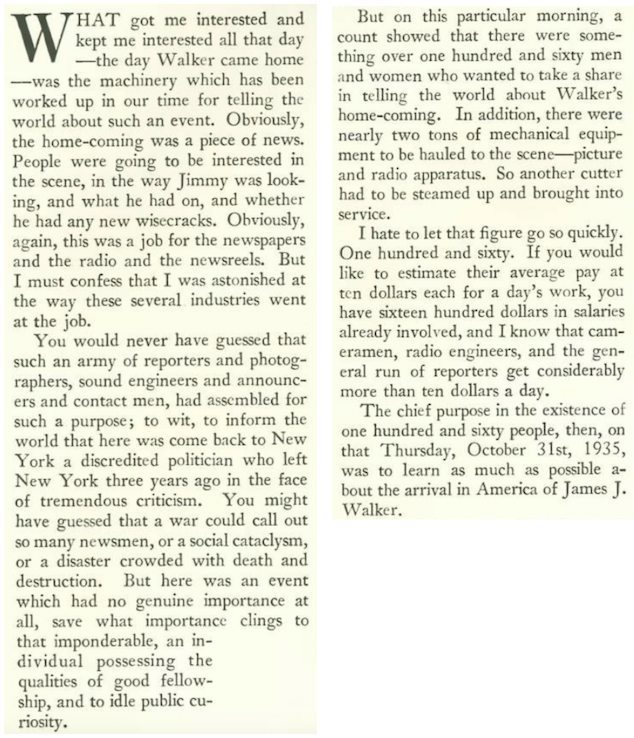
In his “A Reporter at Large” column, Morris Markey wrote about the media’s reception of the exiled mayor, “an army of reporters and photographers, sound engineers and announcers and contact men”…all assembled to inform the world of the return of a “discredited politician.”
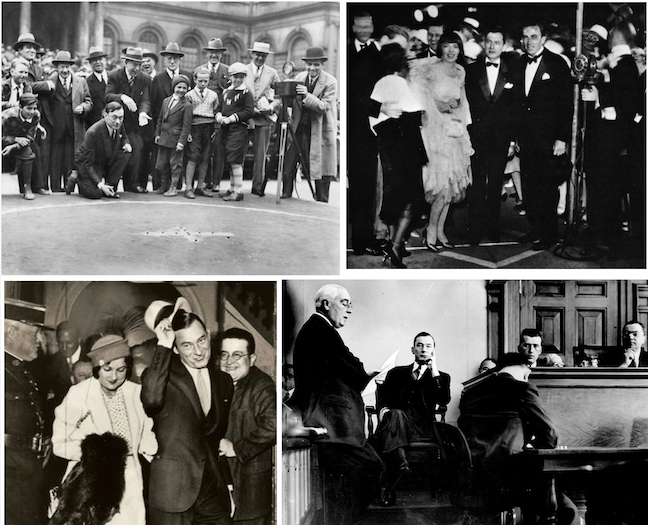
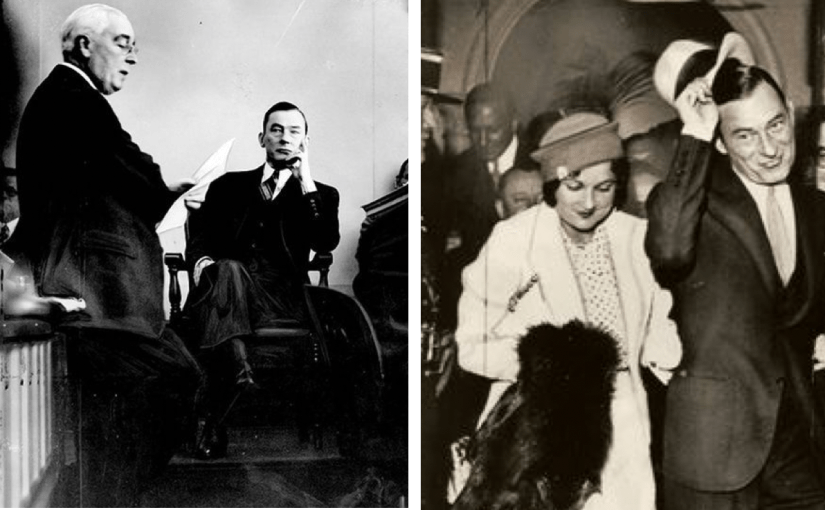
HE GOT AROUND…During his time in office from 1926 to 1932, Mayor Jimmy Walker never seemed to miss a moment in the spotlight. Clockwise, from top left, Walker presided over the first shot in the city’s annual marble tournament on June 3, 1928; with actress Colleen Moore at the 1928 premiere of her latest film, Lilac Time;  testifying on bribery charges before the investigative committee of Judge Samuel Seabury, 1932; with Betty Compton following their 1933 wedding in Cannes. (New York Times/konreioldnewyork.blogspot.com/villagepreservation.org)

Markey continued to convey his astonishment at “the monstrous complexity, the fabulous opulence, of the machinery put in motion to inform the universe of Mr. Walker’s arrival upon his native shore.” This included a massive cocktail party—hosted by The United States Lines—for more than two hundred press representatives and other officials.
After all the commotion, Walker would settle into a job as head of Majestic Records, adopt two children with Compton, and host his own radio series on WHN, Jimmy Walker’s Opportunity Hour.

Compton would divorce Walker in 1941 and remarry. Becoming ill after the birth of a son, she would die at age 38 in 1944. Walker would die two years later at age 65 of a brain hemorrhage.

CALLING ON THE ROOSEVELTS…Jimmy Walker and Betty Compton at the White House in 1937. It was pressure from FDR that led to Walker’s resignation in 1932. (Wikipedia)

 * * *

High-flying Hooplah

While New Yorkers were going gaga over Walker, folks in the Bay Area were all atwitter over the first air-mail flight across the Pacific, loading a Pan Am Clipper to the gills with all manner of collectables. E.B. White noted:
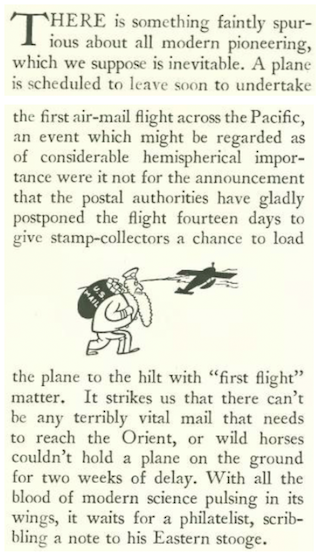
BELLYFUL…On Nov. 22, 1935, Pan American Airways made aviation history as the China Clipper lifted off from Alameda, beginning the world’s first trans-Pacific airmail service. Captained by Edwin Musick and crewed by famed navigator Fred Noonan, the Martin M-130 opened a new era of long-distance flight across the Pacific. Noonan, who charted many commercial routes across the Pacific, would go missing along with Amelia Earhart during their ill-fated flight in July 1937. (Library of Congress)

* * *

Wise Men From the East

“The Talk of the Town” visited with Soviet satirists Ilya Ilf (1897–1937) and Evgeny Petrov (1903–1942), who were in New York preparing for a ten-week road trip to California and back. On assignment as special correspondents for the newspaper Pravda, they later published a series of illustrated articles, “American Photographs,” as well as a book titled Single-Storied America (the summer 2004 issue of Cabinet Magazine features an account of their journey as well as a number of their photographs).
AMERICA WAS A GAS…Soviet satirists Ilya Ilf (left) and Yevgeni Petrov check out New York before heading into the American heartland on a ten-week road trip, a highlight being the countless full-service gas stations they encountered along the way. After seeing skyscrapers and mountains and other wonders, the pair agreed that the most enduring image was the one at right: “an intersection of two roads and a gasoline station against a (back)ground of wires and advertising signs.” Sadly, Ilf died two years later from tuberculosis; Petrov died in a plane crash in 1942 while working as a war correspondent. (Aleksandra Ilf archive/Cabinet Magazine)

 * * *

A Jumbo Career

Wallace Beery (1885–1949) got his start in the comedy silents of the 1910s and became a star before the sound era made him an even bigger one; by 1932 he was the world’s highest-paid actor. Alva Johnston’s profile (titled “Jumbo”) took a look at Beery’s life and career (illustration by Al Frueh). Excerpts:

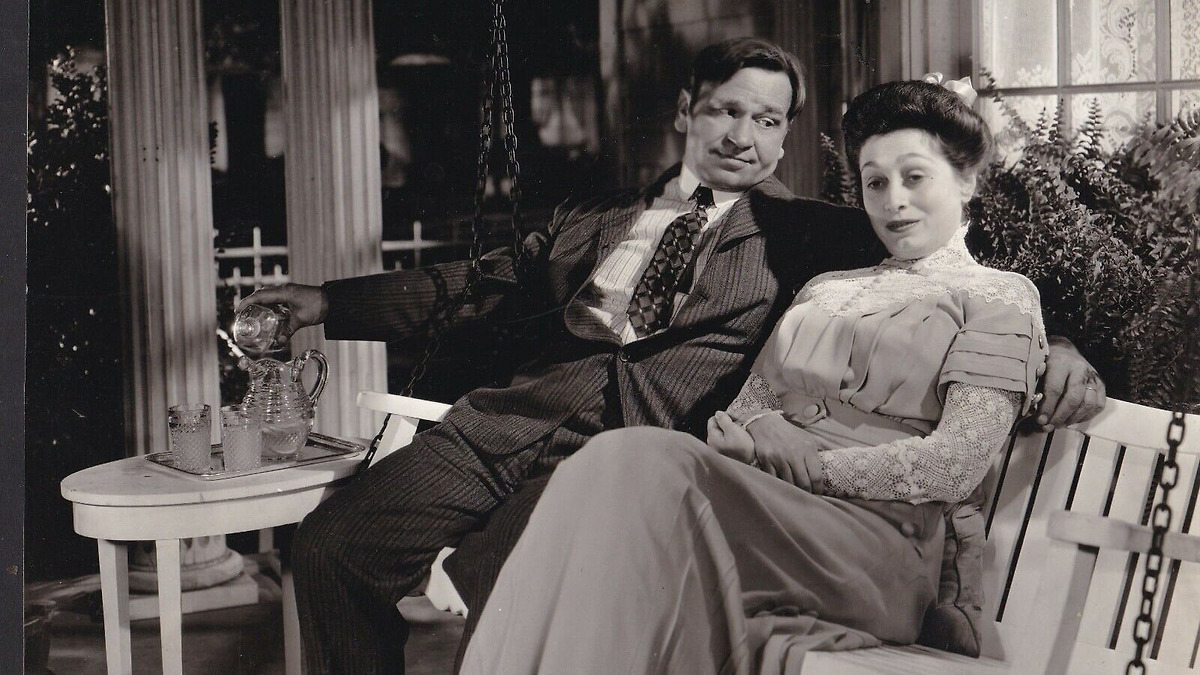
COURTING AND SPARKING…Sid Miller (Wallace Beery) spikes the lemonade as he woos Lily Davis (Aline MacMahon) in a scene from the 1935 film, Ah Wilderness! (letterboxd.com)

 * * *

A View and Corbu

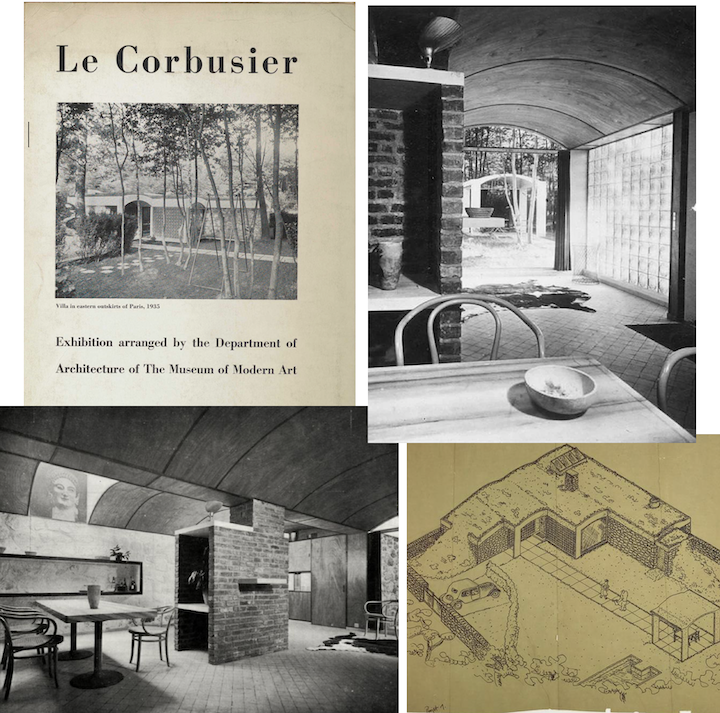
Art and design critic Lewis Mumford was well-known for his hypercritical eye, but occasionally he could be moved to rhapsodize, in this case about the opening of Fort Tryon Park, and particularly about the view it afforded visitors. He reserved his criticism for one of the latest works by Le Corbusier (aka Charles-Édouard Jeanneret), on exhibit at MoMA.
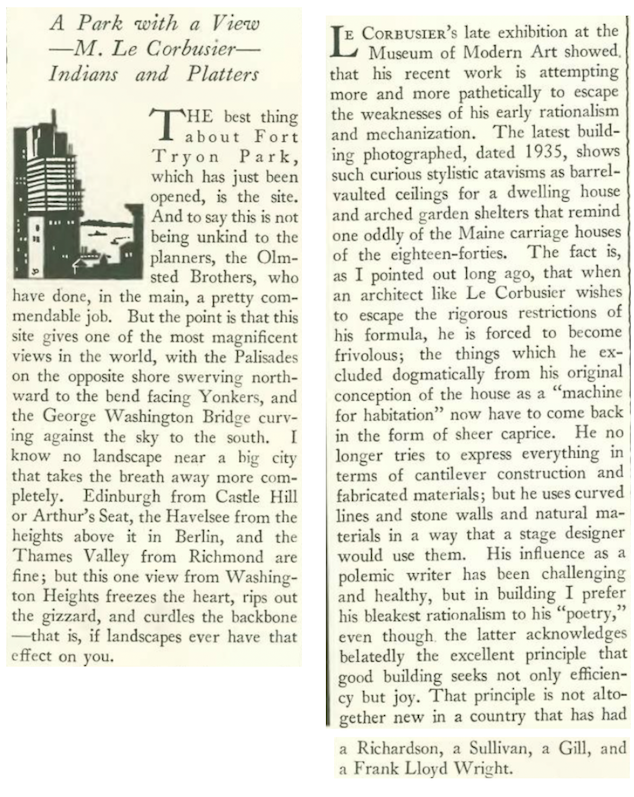
MAGNIFICENT is the word Lewis Mumford used to describe the view from Fort Tryon Park. This scene is taken from Linden Terrace to the west: a barge on the Hudson River and the Hudson Palisades beyond, with the Englewood Cliffs campus of Saint Peter’s University on the top. (Wikipedia)
IRRATIONAL?…Mumford was not pleased with Le Corbusier’s latest work, Le Petite Maison de Weekend (Villa Henfel), which was featured on the cover of the MoMA exhibition catalogue (upper left). Mumford saw the design as a pathetic escape from the architect’s renown rationalism. (MoMA/Fondation Le Corbusier)

* * *

At the Movies

It was a mixed bag at the movies for critic John Mosher, who was delighted by a Soviet take on Gulliver’s Travels, rendered with puppets engaged in a proletarian struggle…
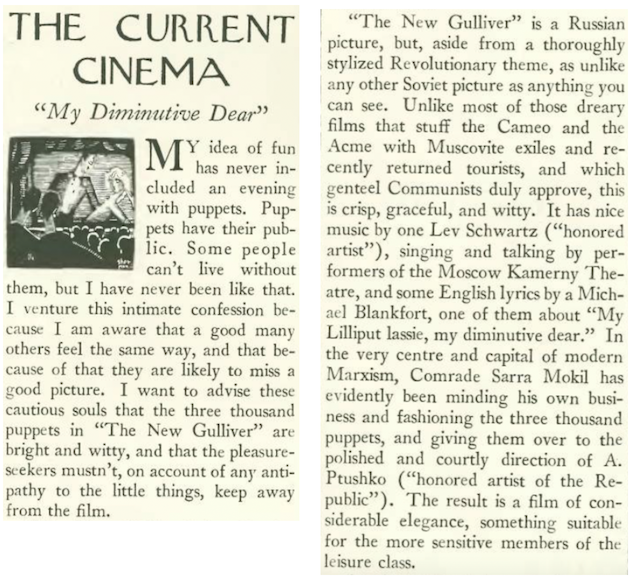
KOMRADE GULLIVER…The Soviet stop motion-animated fantasy film, The New Gulliver, was a communist re-telling of Jonathan Swift’s 1726 novel. The film depicted Lilliput suffering under capitalist inequality and exploitation, with Gulliver enabling a proletarian revolution against the Lilliputian monarchy. (revolutionsnewstand.com)

…but Mosher was less than delighted with the latest from Hollywood, including a sedate The Three Musketeers, a “conventional” remake of D.W. Grifffith’s 1920 melodrama Way Down East, and the romcom Hands Across the Table, which the Times called “uproariously funny” but Mosher deemed barely worth a chuckle.
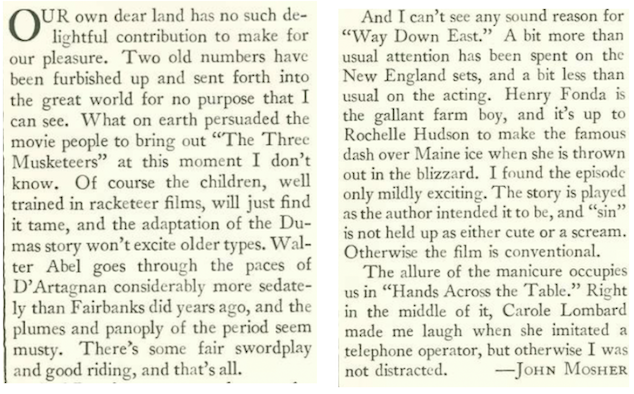
OUTCLASSED BY PUPPETS…John Mosher found the latest from Hollywood underwhelming. Clockwise, from top, Onslow Stevens, Moroni Olsen, and Paul Lukas in The Three Musketeers; Rochelle Hudson and Henry Fonda in Way Down East; Fred MacMurray and Carole Lombard in Hands Across the Table. (mabumbe.com/zeusdvds.com/Wikipedia)

 * * *

From Our Advertisers

The Dorothy Gray salons didn’t mince words when it came to a woman’s beauty regimen…without their help, claimed this ad, the poor “Mrs. Madison” would be “frankly plain,” with a face too wide and eyes and mouth too small…
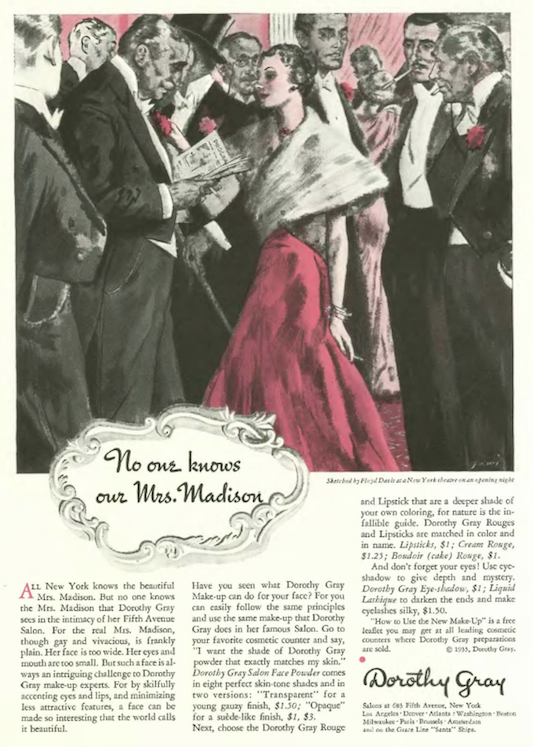
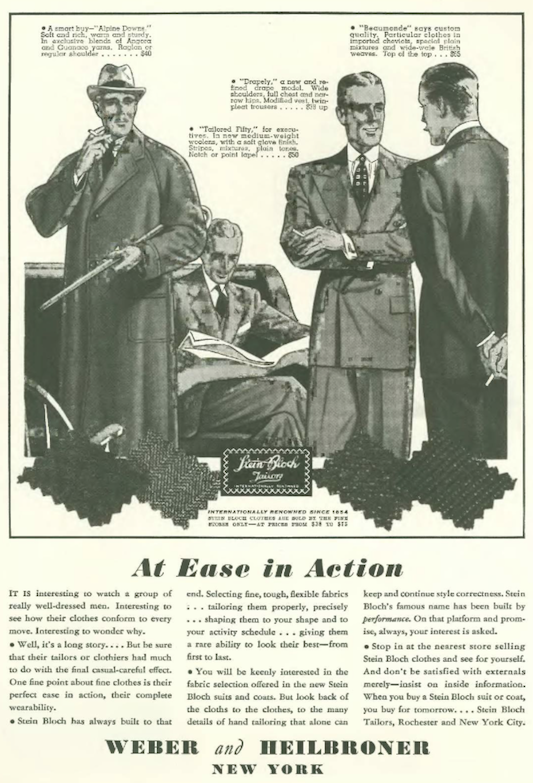
…notable in ads for men’s and women’s clothes were the presence of cigarettes…all three of the men in this spot are having a smoke in their smart attire…
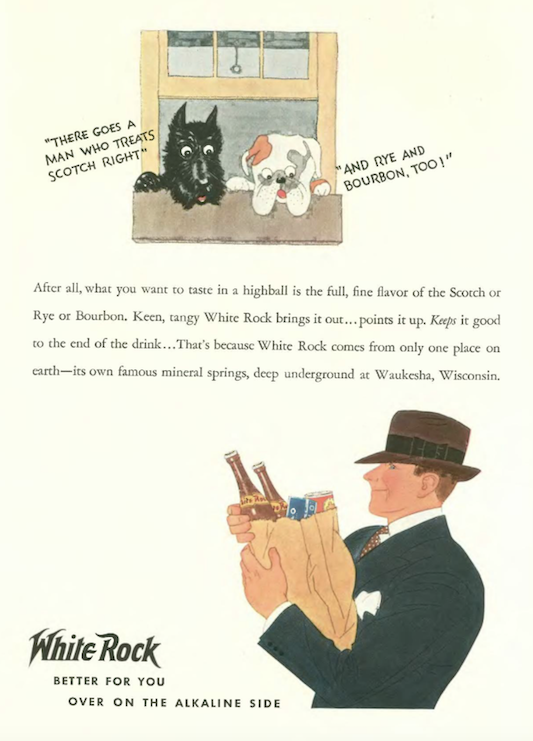
…White Rock gave their logo-bearer Psyche a rest in 1935 with a variety of ads including this one…
…the makers of Bisquit assumed their customers could read the French dialogue, or at least pretend to…

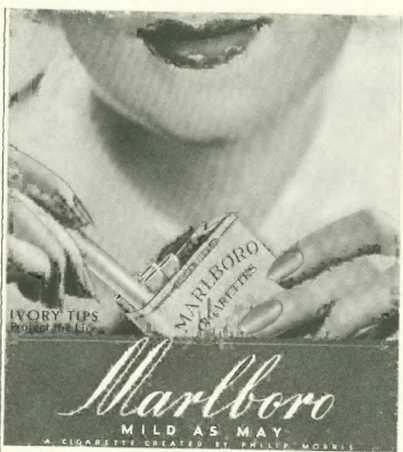
…when we (of a certain age) think of Marlboro we think of the rugged Marlboro Man, but in 1935 the brand was exclusively marketed to women…
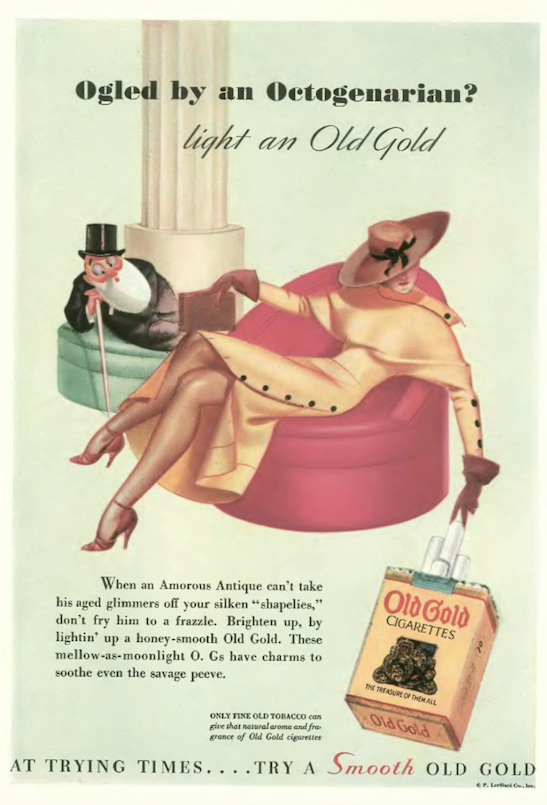
…and who knows what Old Gold’s target was here…definitely women smokers, who were the growth market, but men would take notice of the George Petty pin-up…
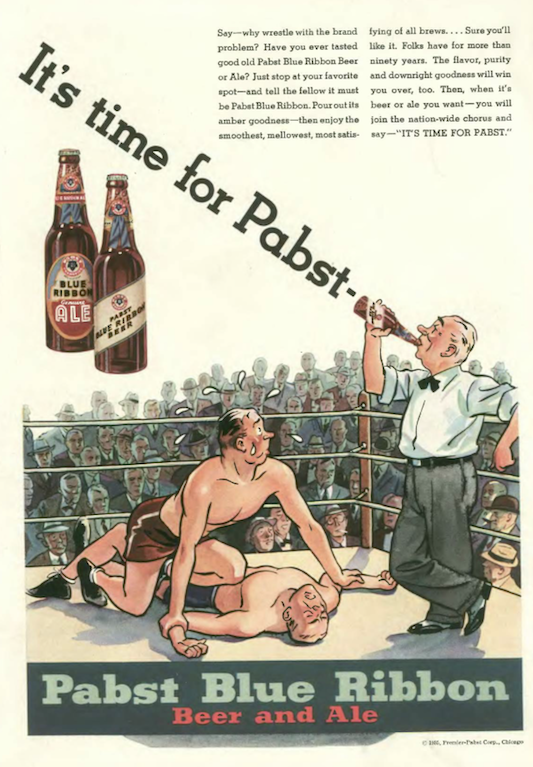
…the makers of Pabst Blue Ribbon Beer, who endured Prohibition by offering products like Pabst-ett cheese spread, were ready to grab a big market share after Repeal…
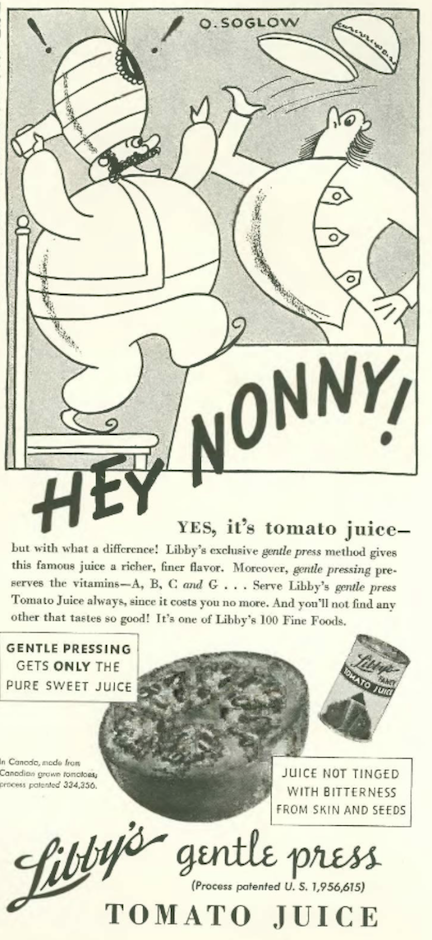
Otto Soglow, still contributing to The New Yorker despite taking his Little King to Hearst, drew up this potentate for a tomato juice spot…
…which segues to our other cartoonists, beginning with Al Frueh and his take on the latest  Broadway hit, Jubilee!

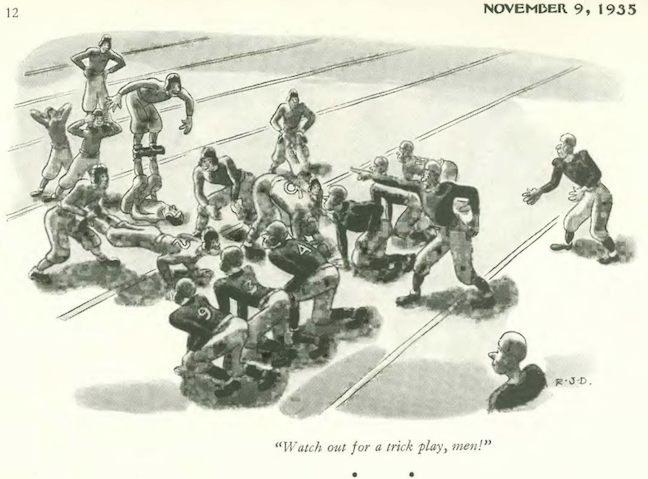
Robert Day saw action on the gridiron…

…unless I missed something, this might be Richard Taylor’s first New Yorker cartoon…
James Thurber put a unique spin on a bowling ball…

Alan Dunn was all in knots at a crime scene…
…Dunn again, pondering the wonders of a makeover…
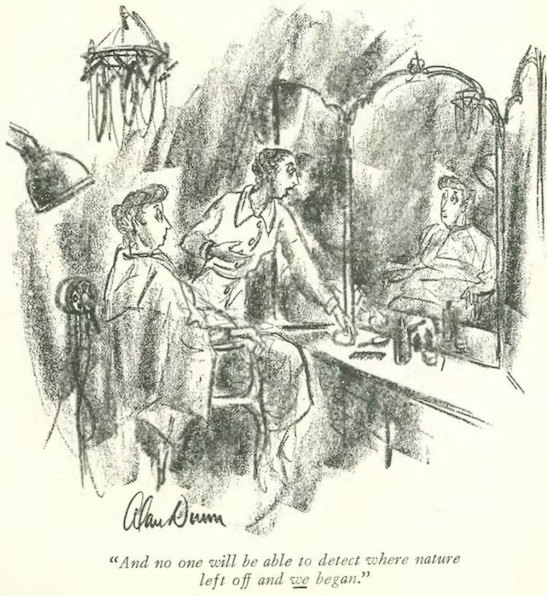
Barney Tobey eavesdropped on a Downtown subway…

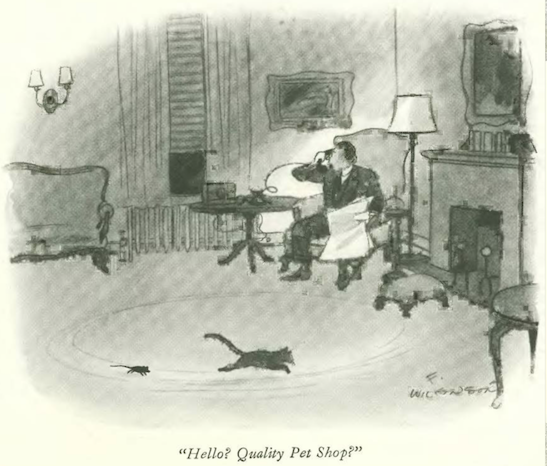
Fritz Wilkinson looked to return a defective pet…
Carl Rose needed two pages to illustrate his epic cartoon (caption added at the bottom for readability)…

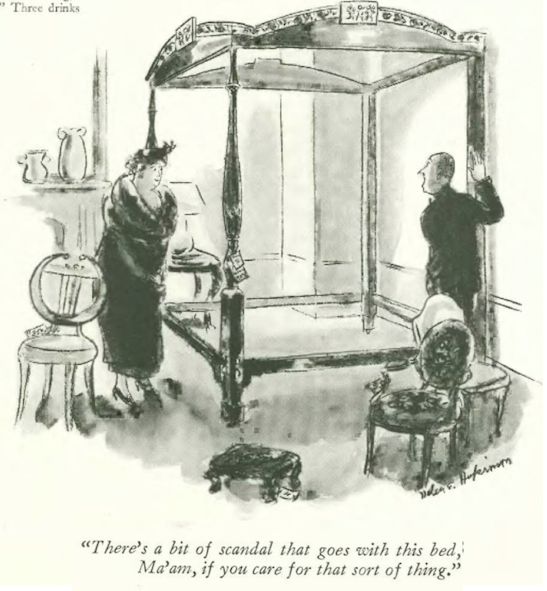
…and we close with Helen Hokinson, and a whiff of scandal…
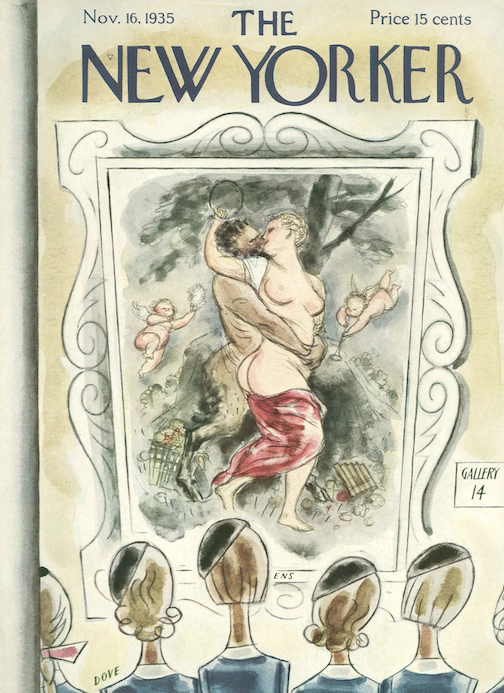
Next Time: Seeking Decorative People…
 

Jimmy’s Jam

New York City Mayor Jimmy Walker (1881-1946) was commonly referred to as “Beau James” for his flamboyant lifestyle and his taste for fine clothes and Broadway showgirls.

June 4, 1932 cover by Theodore Haupt.

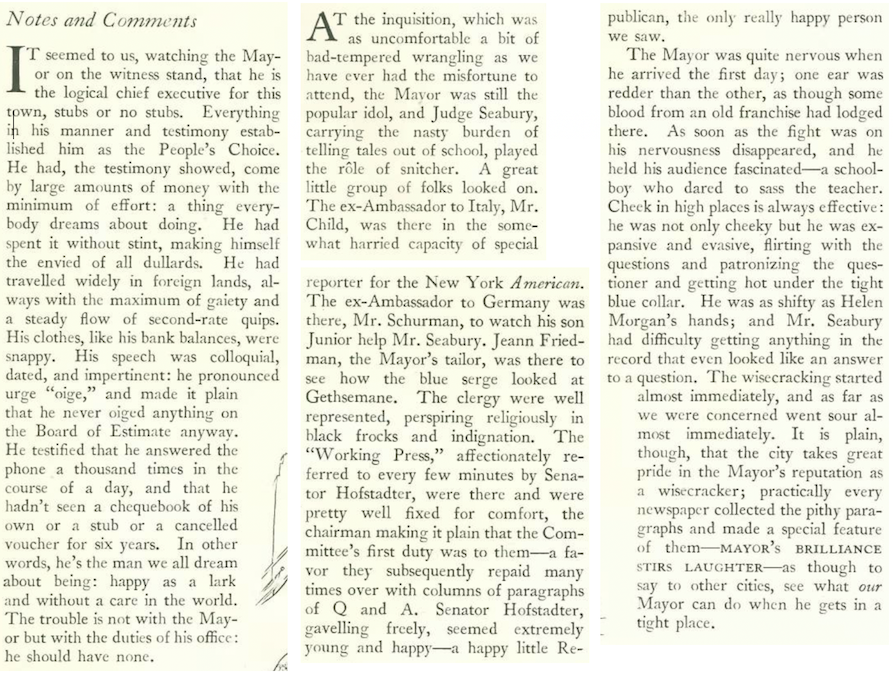
Mayor Walker was also a product of the powerful Tammany Hall machine that traded in political favors and outright bribery. When he took office in 1926, the economy was riding high, and few seemed to care that hizzoner was aloof, partying into the night (while openly flouting Prohibition laws), and taking numerous pleasure trips to Europe. He easily won reelection in 1929, but when the stock market crashed later that year his hijinks began to wear a bit thin, and reform-minded politicians like State Senator Samuel H. Hofstadter began looking into corruption in New York City. The actual investigation was led by another reformer, Samuel SeaburyThe New Yorker’s E.B. White looked in on the proceedings and its star witness, Mayor Walker.

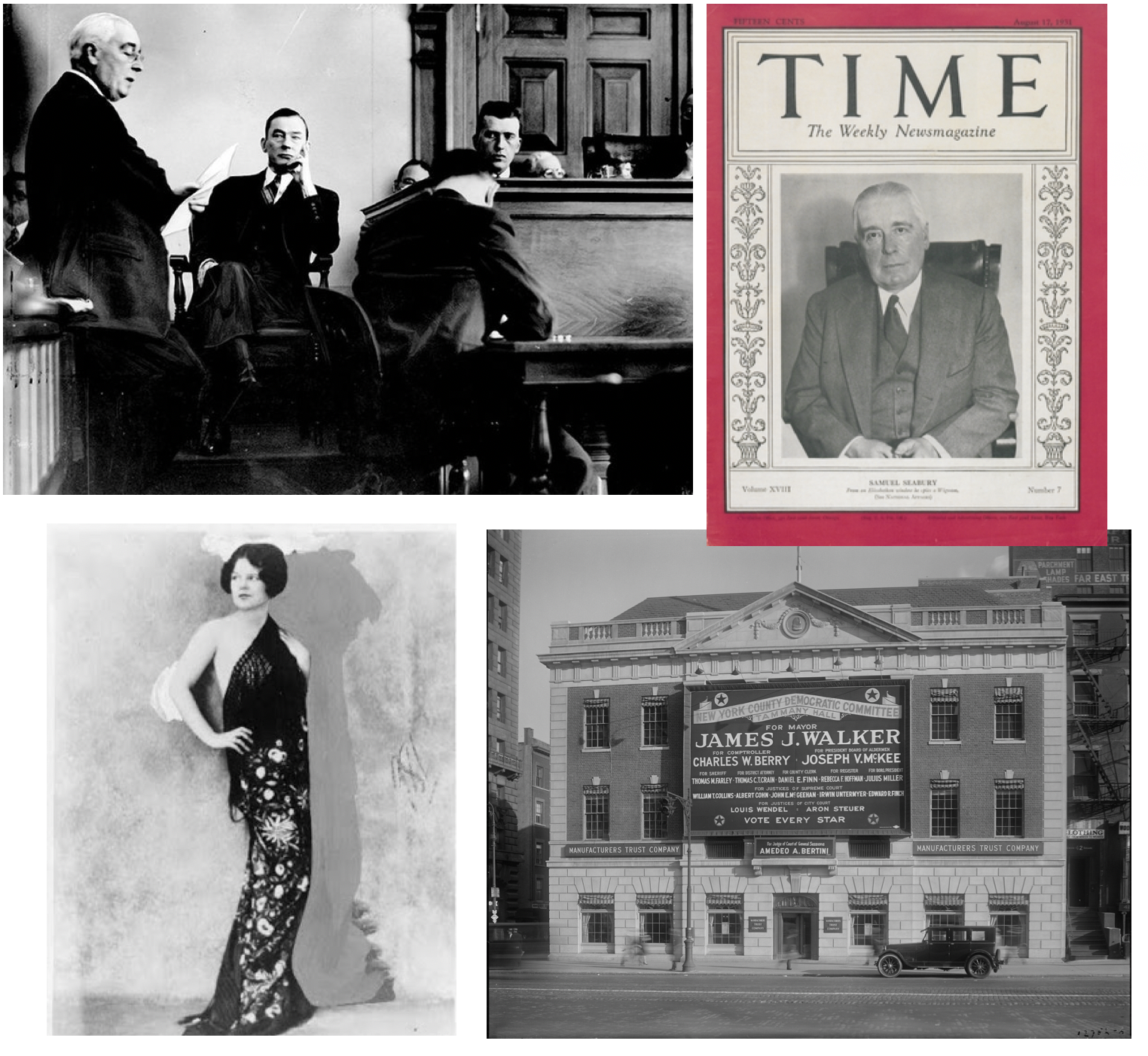
I DO NOT LIKE THIS, SAM I AM…Clockwise, from top left, Mayor Jimmy Walker was full of wisecracks during his testimony before Samuel Seabury, far left; Seabury’s role in the high-profile commission landed him on the cover of Time (Aug. 17, 1931); Tammany Hall’s support was writ large for Walker in the 1920s; Vivian Gordon was a surprise witness in the Seabury investigation, telling investigators police received bonuses for falsely arresting women on prostitution charges. After her testimony Gordon was found strangled in Van Cortland Park, leading many to believe Walker’s corruption played a role in her death. (Daily News/Time/archives.nyc/Pinterest)

Public opinion really started to turn on Walker with the death of star witness Vivian Gordon (see caption above). The final blow came from New York Governor Franklin D. Roosevelt, who like Walker was a Democrat but unlike Walker was not a Tammany product. Roosevelt was also running for president, and rightly seeing Walker as a liability, asked the mayor to resign, which he did on Sept. 1, 1932. That event was still three months away when E.B. White wrote these concluding lines:

SO LONG, SUCKERS…Eight days after he resigned from office, New York Mayor Jimmy Walker headed for Paris, where his mistress, Ziegfeld star and film actress Betty Compton, awaited with open arms. Clockwise, from top left, Compton and Walker on their wedding day in Cannes, France, April 19, 1933; and a 1920s photo portrait of Compton; Walker’s first wife, Janet Allen Walker, had sued for divorce a month earlier (March 10, 1933) claiming Jimmy had deserted her in 1928 and they had not lived together since; Walker and Compton on the deck of SS Normandie, June 17, 1936. (legacy.isle-of-wight-fhs.co.uk/IMDB/Pinterest/NYC Municipal Archives)

Eight days after Walker resigned from office he caught a boat for Paris, where his mistress, Ziegfeld star and film actor Betty Compton (1904-1944), awaited him. They married the following year in Cannes.

 *  *  *

Out of the Shadows

F. Scott and Zelda Fitzgerald were Jazz Age fixtures, cutting wide swaths through literary and society worlds filled with wild drinking and various infidelities. Francis Scott (1896-1940) was a chronicler of that age, most notably with The Great Gatsby, but Zelda (1900-1948) also took pen in hand, contributing short pieces to various magazines in the 1920s. By 1930 their self-destructive ways caught up with them both, and Zelda was admitted to a sanatorium in France that spring; it was the beginning of a long road of treatments that would end in her death nearly two decades later.

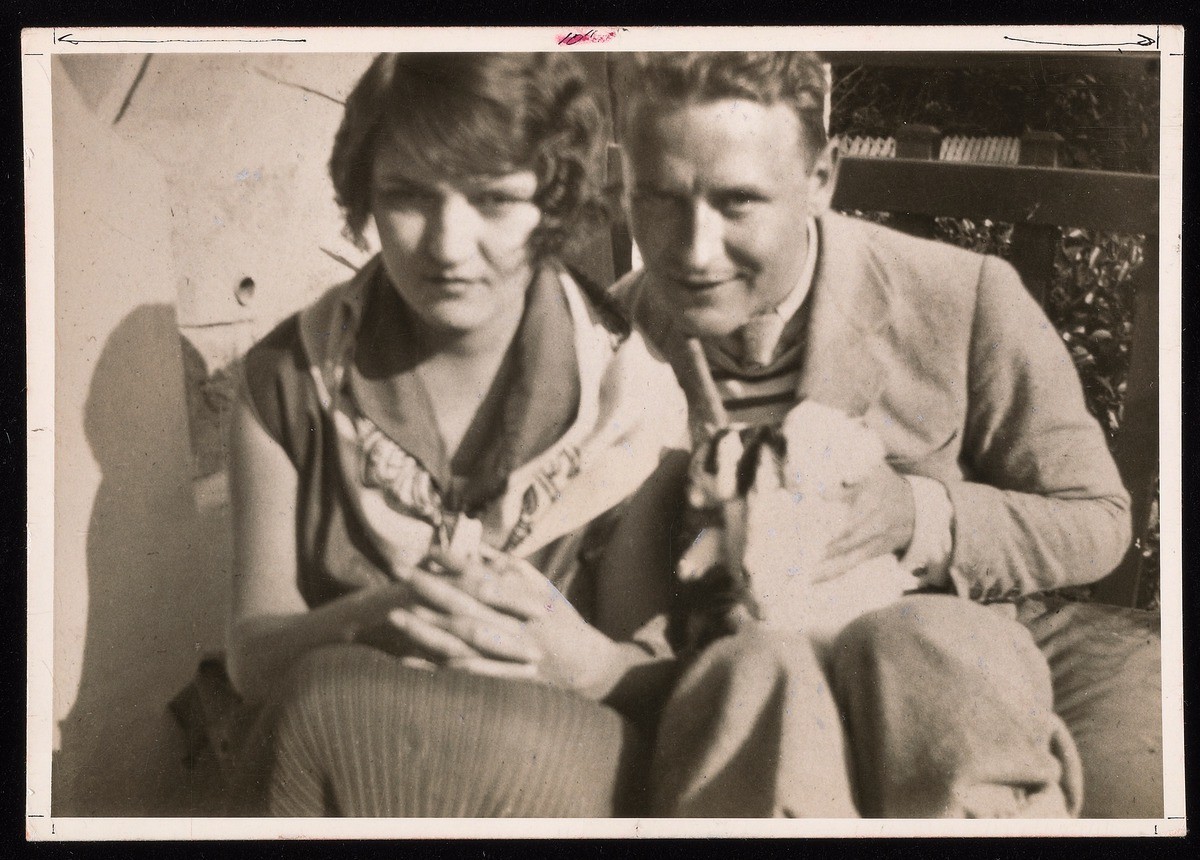
ALL THAT JAZZ…Zelda and F. Scott Fitzgerald (pictured here in 1926) embodied the riotous days of the Roaring Twenties. (beinecke.library.yale.edu)

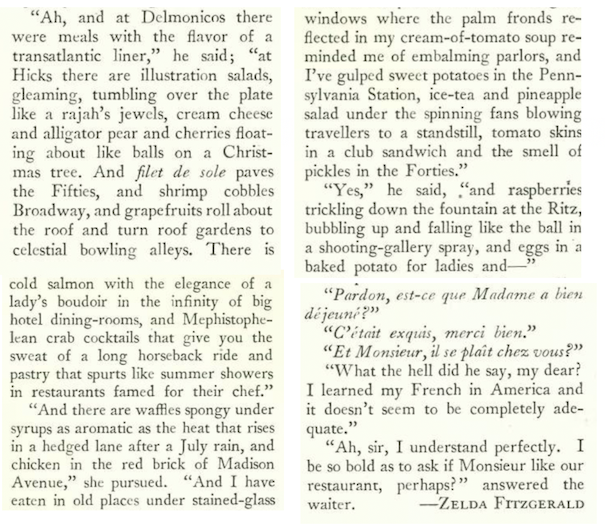
In 1932, during her stay at the Phipps Clinic (Johns Hopkins), Zelda experienced a burst of creativity, writing an entire autobiographical novel — Save Me the Waltz — in just six weeks. Sadly, it was not well-received (by critics or by her husband), and fewer than 1,400 copies of the novel were sold — a crushing blow to Zelda. However, during that same time she published a short story in The New Yorker titled “The Continental Angle.” Here it is:

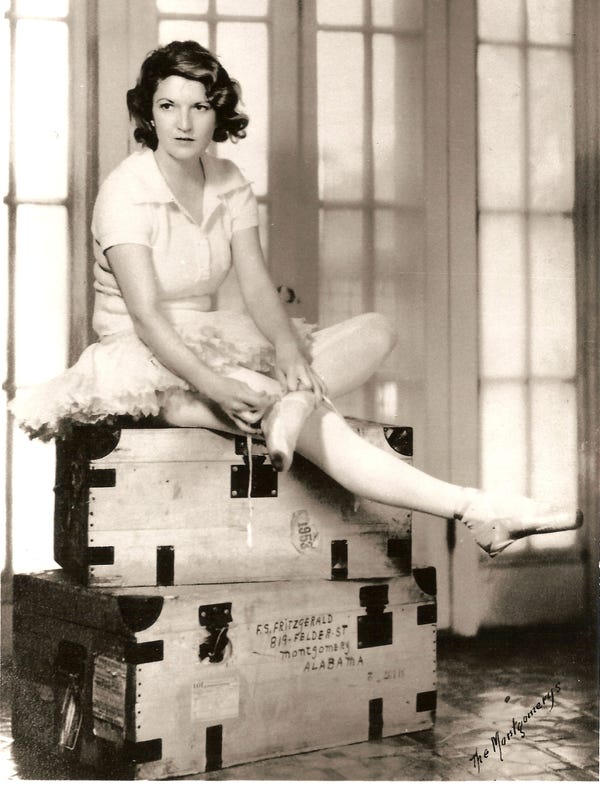
TALENTED AND TROUBLED…Zelda Fitzgerald in 1931, a year before she entered the Phipps Clinic and had a burst of creativity. (citizen-times.com)


 *  *  *

From Our Advertisers

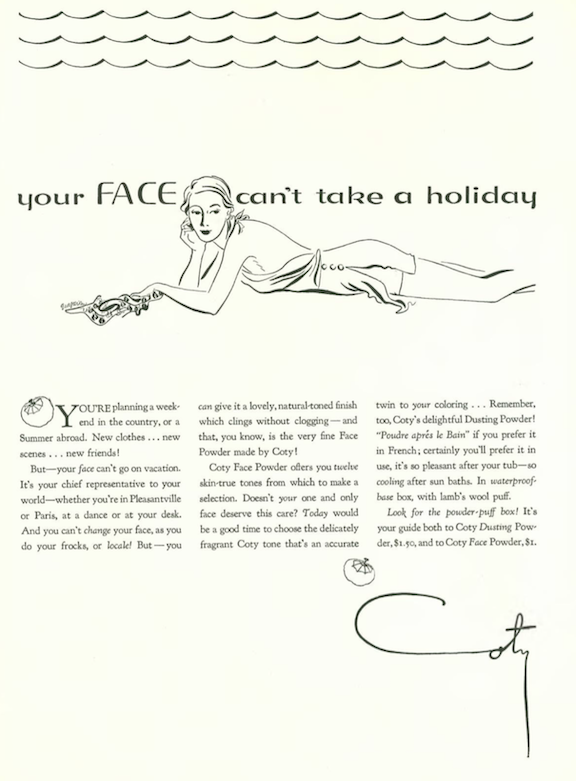
Yet another stylish and very modern-looking ad from Cody, thanks to the artistry of American fashion illustrator Ruth Sigrid Grafstrom…

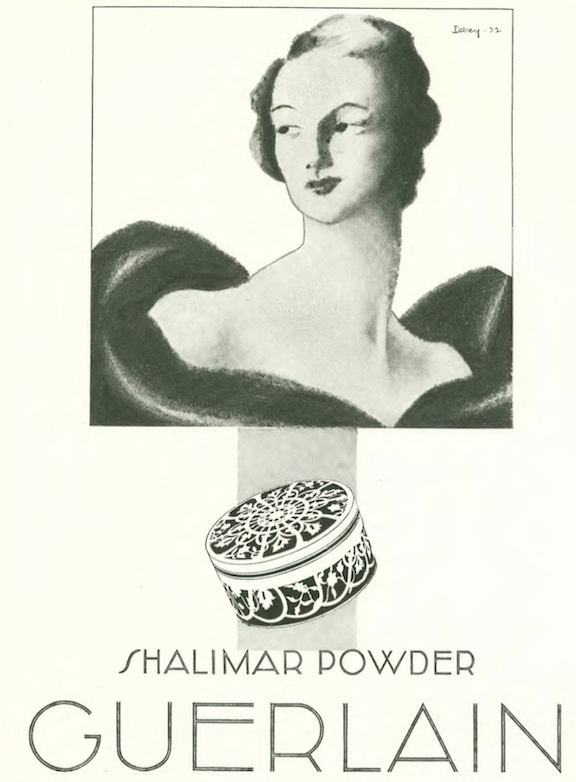
…while later on in the issue French illustrator Lyse Darcy gave his subject an Art Deco look to promote Guerlain’s face powder…

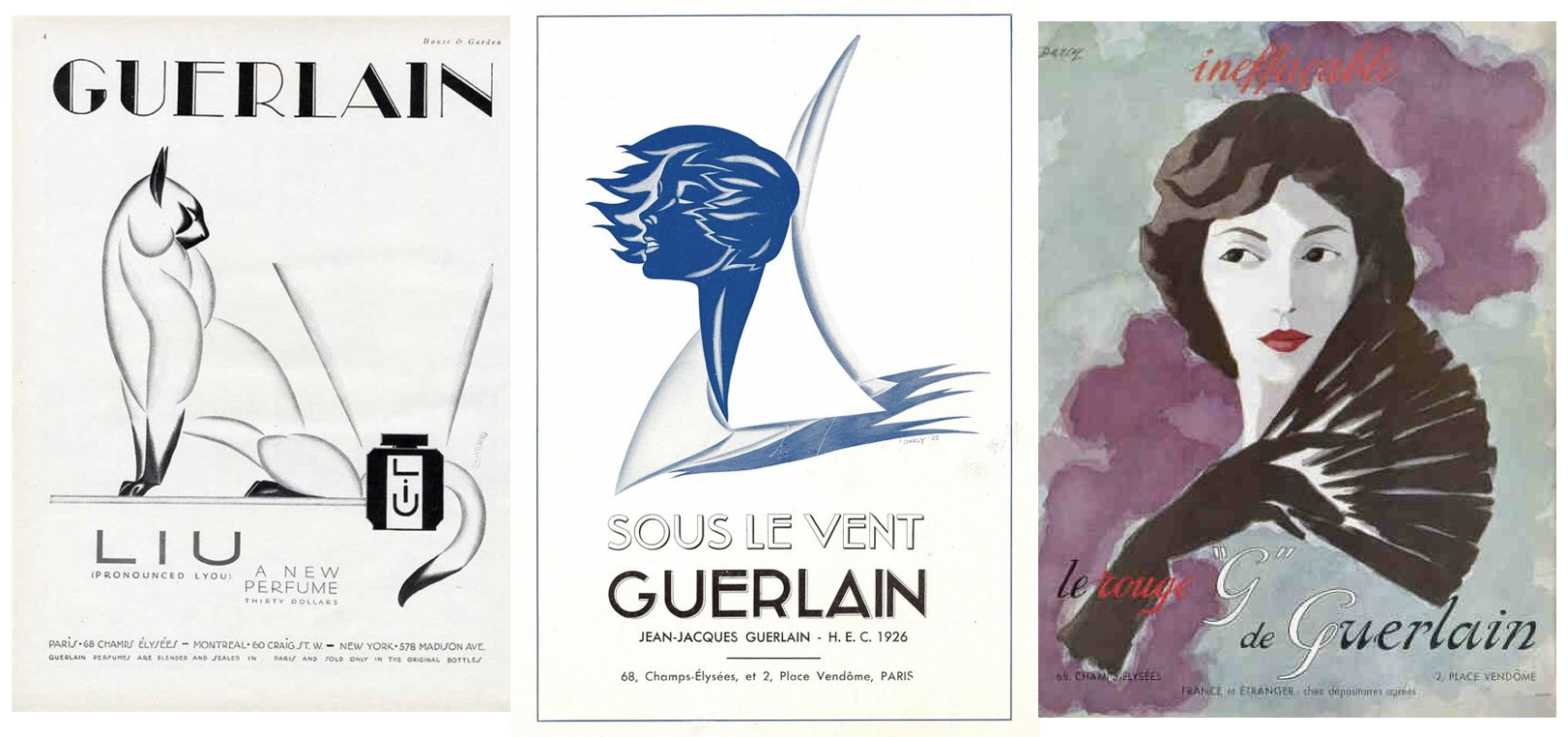
…Darcy was famed for his Guerlain ads from the 1920s to the 1950s…

From left to right, Darcy ads from 1929, 1938, 1957…

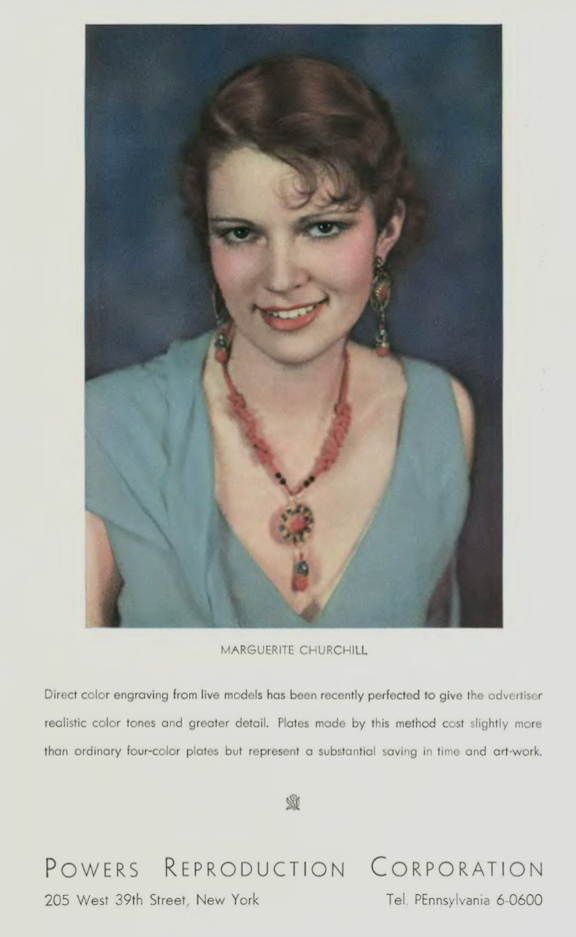
…Powers Reproduction turned to star power to promote their latest color engraving techniques…

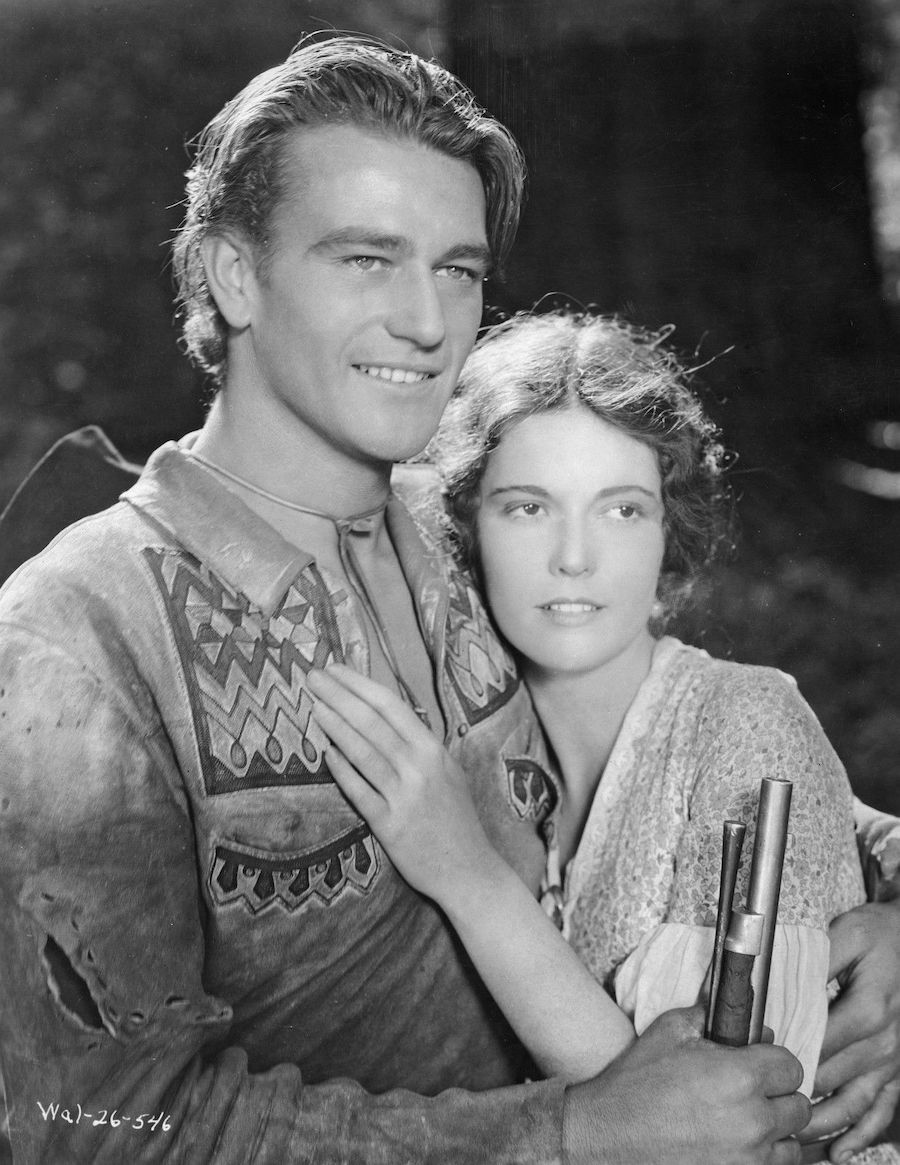
…the actor Marguerite Churchill (1910-2000) had a film career spanning 1929 to 1952, and was John Wayne’s first leading lady in 1930’s The Big Trail

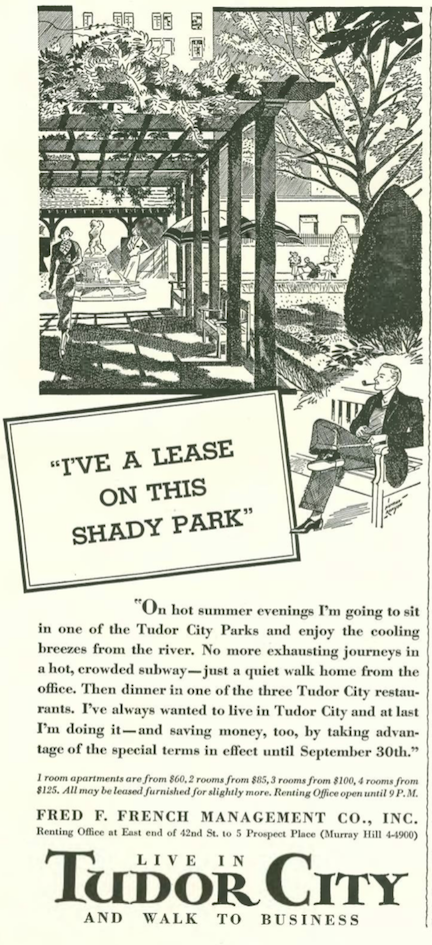
…and we head back to the city, Tudor City, to be precise, where apparently it was common in the 1930s to spot a gent in formalwear relaxing with his pipe…

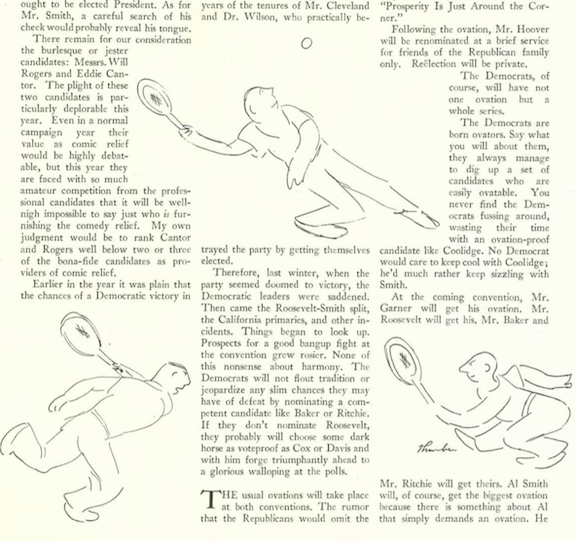
…on to our cartoons, we have James Thurber contributing some spots…

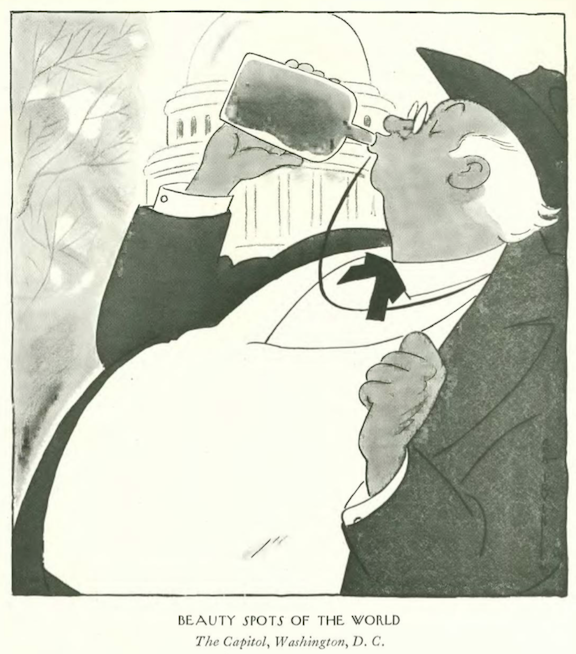
Rea Irvin continued to visit the world’s “Beauty Spots”…

Garrett Price showed us a couple looking for the “We Want Beer” parade…

…which happened three weeks earlier, on May 14, 1932…the parade was organized by none other than Mayor Jimmy Walker, who believed prohibition was making life difficult for New Yorkers…

(brookstonbeerbulletin.com)

Barbara Shermund introduced two men with bigger issues than beer on their minds…

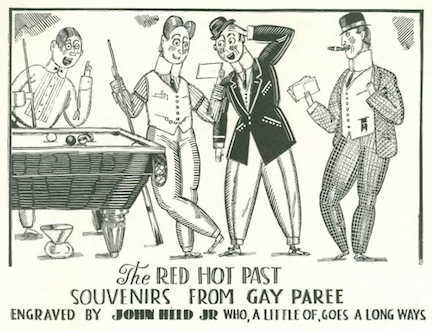
John Held Jr. continued to plumb the depths of the naughty Nineties…

…and some more naughtiness, courtesy Gardner Rea

Next Time: Summer Indulgences…


Last Stand for Beau James

“Everyone in this life draws bad cards with the good. The great trouble with most of us is that we do not know when to discard quickly,” observed New York Mayor Jimmy Walker.

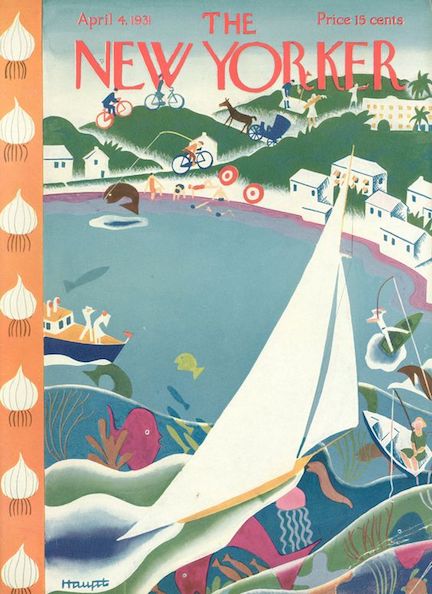
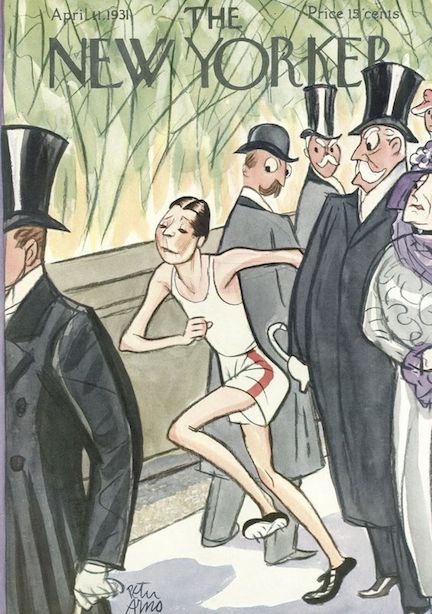
April 4, 1931 cover by Theodore Haupt.

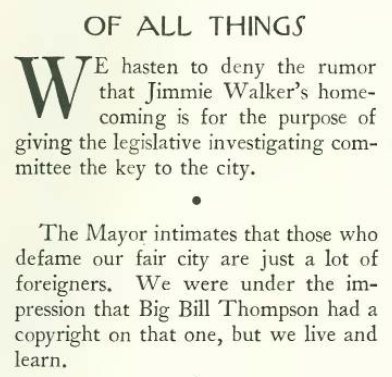
Signs that the first bad card was being turned were apparent in the April 4, 1931 edition of The New Yorker. In his weekly collection of quips — “Of All Things” — Howard Brubaker suggested that Walker — known for his frequent trips and general lack of attention to governance — had a different sort of homecoming awaiting his return from California…

…Walker was no doubt hobnobbing with the Hollywood crowd back in the Golden State…the mayor loved donning fine attire (thus the nickname “Beau James”) and enjoyed throwing lavish events for famous people…
MIGNIGHT MAYOR was one of the many nicknames New Yorkers bestowed on Mayor Jimmy Walker, known for his love of nightlife, fine clothes, and beautiful people (another nickname was “Beau James”). Although he was married at the time, he conducted a very open affair with actress Betty Compton (left), who later became his wife. At right, in his element, Walker (center) accompanies actress Colleen Moore to the October 1928 premiere of her film, Lilac Time. (IMDB/konreioldnewyork.blogspot.com)

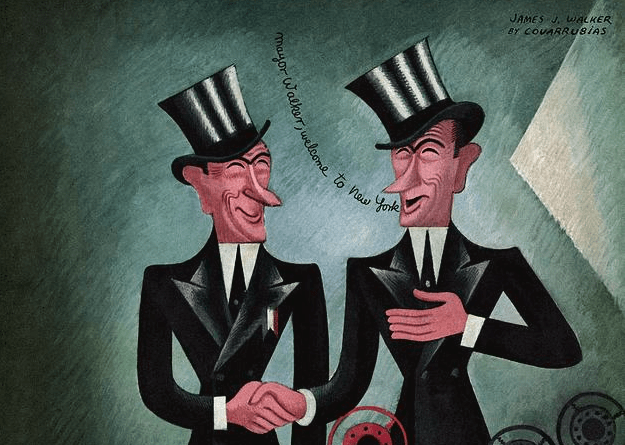
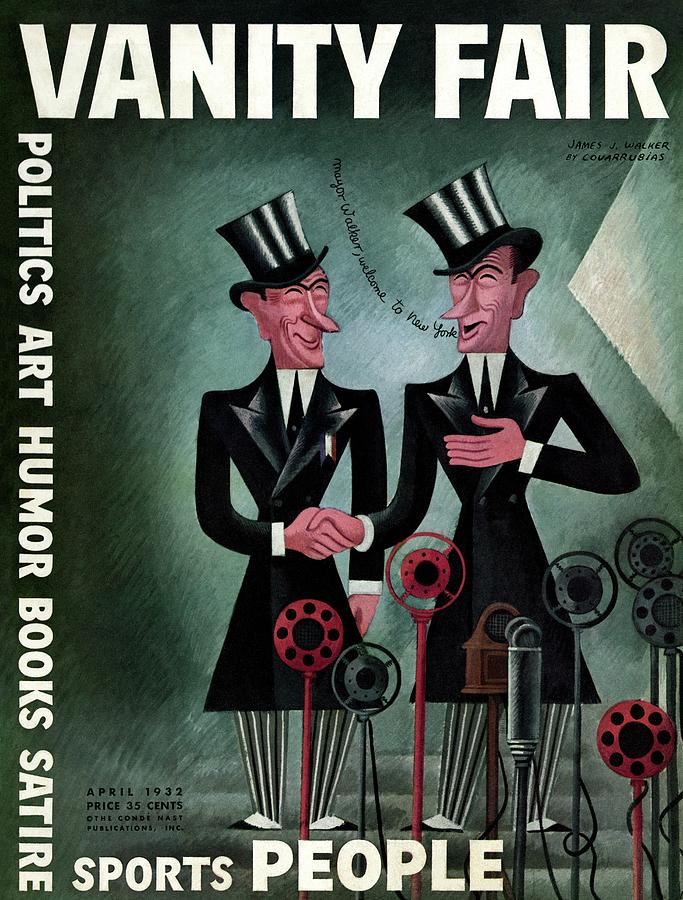
…which made him an easy target for parody, such as this 1932 Vanity Fair cover, where the mayor even welcomes himself to the city…

(Conde Nast)

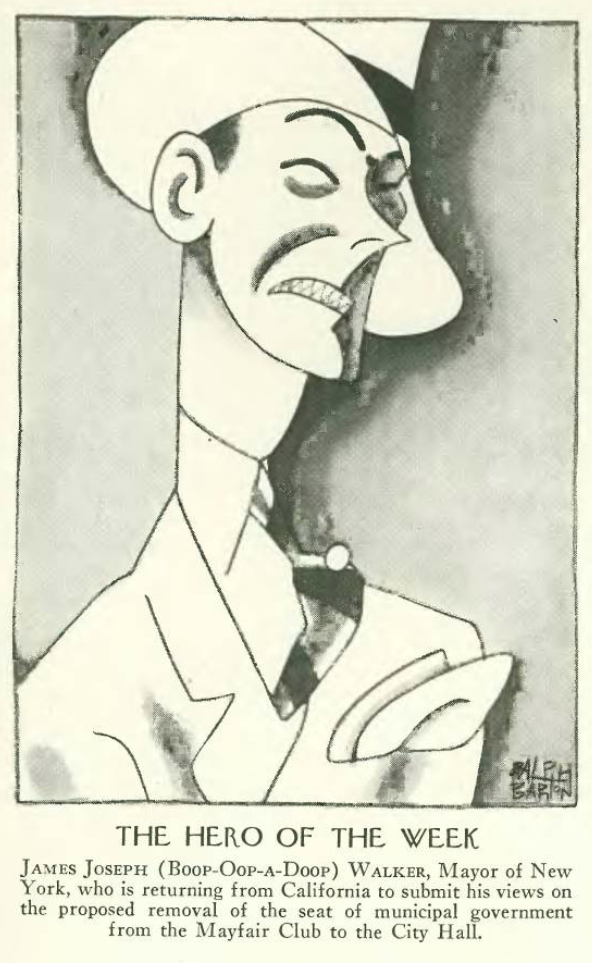
Ralph Barton revived his “Hero of the Week” feature to welcome the mayor back to the city…Barton alluded to the fact that Walker preferred conducting his office outside of the official confines:

Walker (1881-1946) made a far more interesting personality than an effective mayor. When he took office in 1926 he proved to be a terrible administrator, partying at speakeasies late into night, sleeping till noon, and leaving city matters (except the lavish ceremonies) to Tammany Hall cronies. This didn’t seem to bother voters when the economy boomed in the 1920s, and indeed they re-elected him by an overwhelming margin in 1929.

The 1929 market crash quickly changed things. The Roaring Twenties abruptly ended, and with people losing their jobs (and fortunes), the mayor’s antics didn’t seem so amusing anymore. Reform was in the air, and leading the charge was Gov. Franklin Roosevelt, who was no fan of Walker’s.

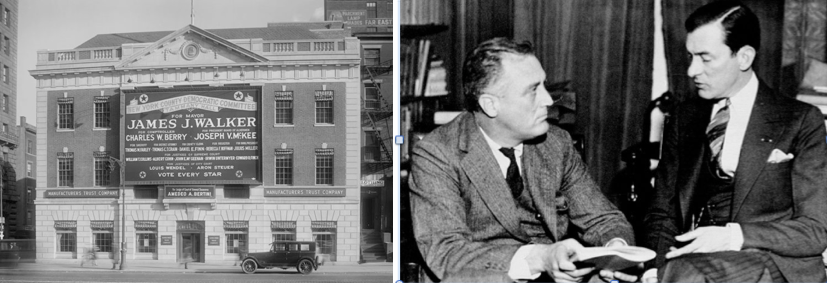
IF LOOKS COULD KILL…Gov. Franklin D. Roosevelt meets with Mayor Jimmy Walker in conference at Roosevelt’s home on E. 65th St. in December 1928; at left, campaign banner for Walker on Tammany Hall, 4th Avenue and 17th Street, Oct. 28, 1929. Walker was a product of the Tammany Hall political machine, and much of the mayor’s backroom dealings were conducted there, as well as at various speakeasies and nightclubs. (NYC Municipal Archives/NY Daily News)

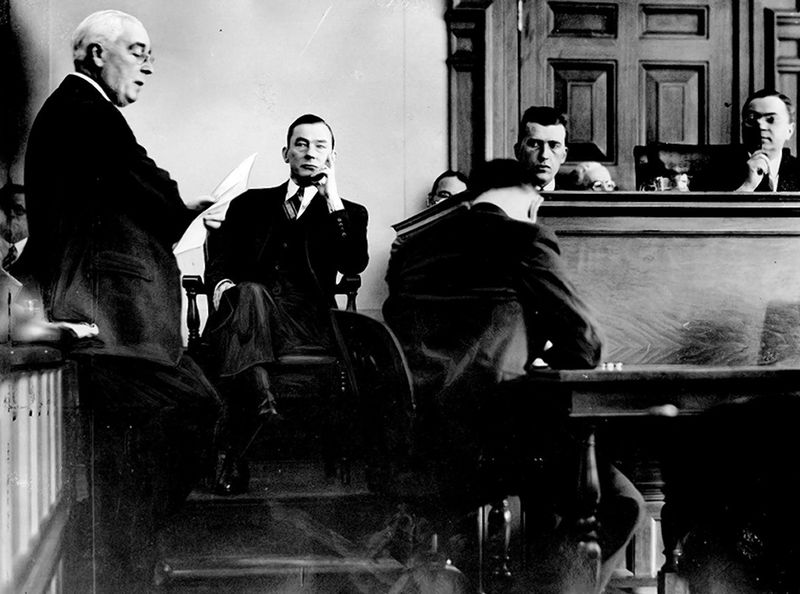
Investigations into corruption in Walker’s administration landed Walker before an investigative committee of led by Judge Samuel Seabury in 1931…

IN THE COLD LIGHT OF DAY…Mayor Jimmy Walker takes the stand in the New York County Courthouse on May 25, 1932, to answer questions from Judge Samuel Seabury (left). Thousands of New Yorkers showed up to cheer the mayor when he entered the courthouse, but those cheers soon became jeers as details of the administration’s corruption were made public. (NY Daily News).

…Mayor Walker resigned the following year and fled to Europe, where he married his mistress, Betty Compton (1904-1944) in Cannes, France, on April 19, 1933. We will revisit this tale in later issues…

SEE YA…

 *  *  *

On the Lighter Side

“The Talk of the Town” included this note about the play Peter Pan, which was being staged at the Fourteenth Street Theatre. Much was made of the wizardry that enabled actors to float above the audience.

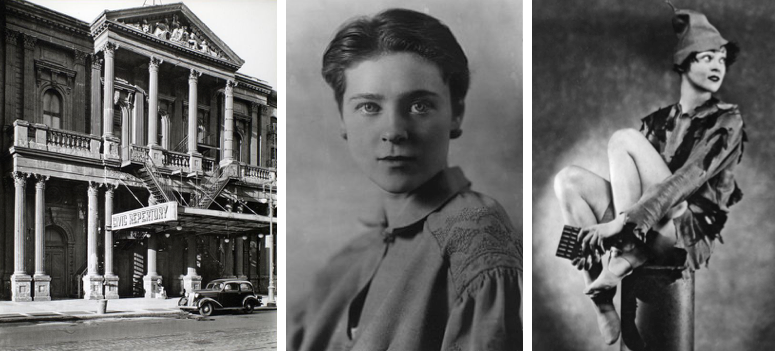
Eva Le Gallienne (1899-1991), who portrayed the title character, made the theatre home of her stage company in 1926, and renamed it the Civic Repertory Theatre. Le Gallienne played the role of Peter Pan 129 times, and although the flying effects were quite hazardous, she said she “took to flying like the proverbial duck to water.”

NO STAGE FRIGHT HERE…The Fourteenth Street Theatre, originally constructed in 1866, was dubbed the Civic Repertory Theatre when Eva Le Gallienne (center) made it the home of her stage company. Le Gallienne played the role of Peter Pan 129 times on the theatre’s stage, and loved performing the dangerous flying stunts. Images of Le Gallienne from Bruce K. Hanson’s book, Peter Pan on Stage and Screen, 1904-2010. (Wikipedia/Bruce K. Hanson).
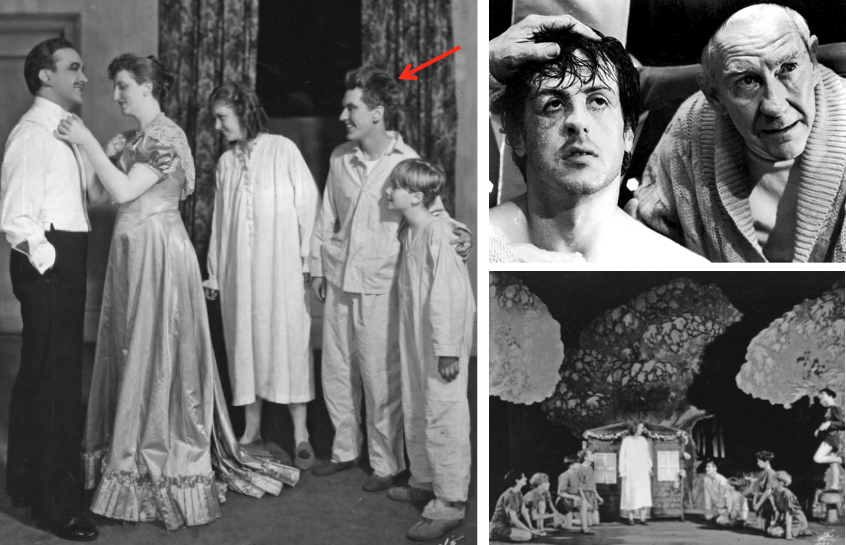
DARLINGS…The Darling family as portrayed in the Civic Repertory Theatre’s production of Peter Pan. At bottom, right, “The Wendy House” as it appeared on stage. And a bit of trivia: the young lad who portrayed John Darling (see arrow) was none other than Burgess Meredith, who would go on to a long and successful career on the stage, television (he played the Penguin in the 1960s Batman TV series), and in film, seen top right as Sylvester Stallone’s trainer Mickey in 1976’s Rocky. (Bruce K. Hanson/IMDB)

Eva Le Gallienne lived 92 years, and Burgess Meredith made it to 89. Such was not the fate of the Civic Repertory Theatre, which closed in 1934 due to the Depression. The 1866 building was demolished in 1938. Not a trace remains.

 *  *  *

Fightin’ Words

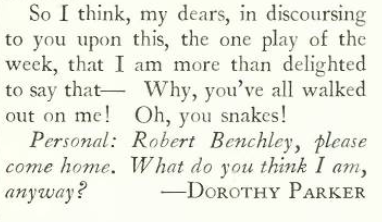
It’s really too bad Dorothy Parker didn’t stay on as theatre critic for The New Yorker (she was subbing for her friend, Robert Benchley) because her weekly forays into the middlebrow world of Broadway produced some of her most entertaining writing. For the April 4 issue Parker offered some thoughts about The Silent Witness, which ran from March to June at the Morosco Theatre.

Instead of turning cartwheels, Parker took aim at actress Kay Strozzi, “who had the temerity to wear as truly horrible a gown as ever I have seen on the American stage. … Had she not luckily been strangled by a member of the cast while disporting this garment, I should have fought my way to the stage and done her in, myself.”

She ended the review with another plea to Benchley, who was traveling abroad:

WHAT ABOUT THIS OUTFIT, DOROTHY?…I don’t have a photo of the “horrible” gown worn by Kay Strozzi (left) in The Silent Witness, so you’ll have to settle for this image of Ms. Strozzi from the 1931 film Captain Applejack. At right, and dressed to kill, Dorothy Parker posed for Edward Steichen in this 1931 portrait. (IMDB/Pinterest)

 *  *  *

Tipsy Tots

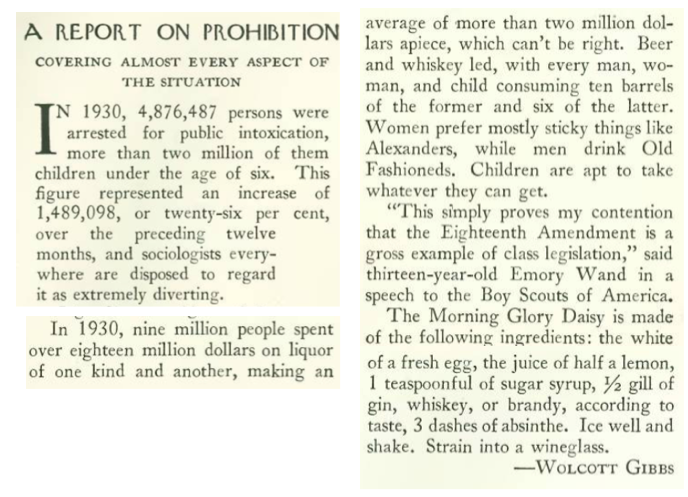
Tired of Prohibition, and its farcical enforcement, Wolcott Gibbs had some fun with the official Wickersham Report’s conclusions regarding the success of the 18th Amendment:

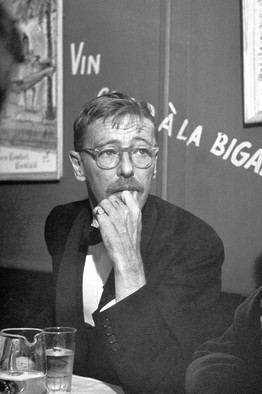
Wolcott Gibbs (wsj.com)

On a loftier note, we have this ode to the new Empire State Building from Price Day, Pulitzer Prize-winning reporter and noted editor of the Baltimore Sun:

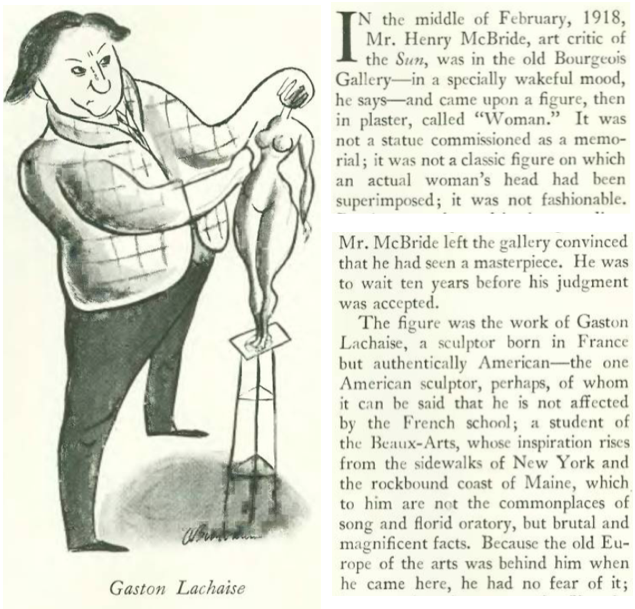
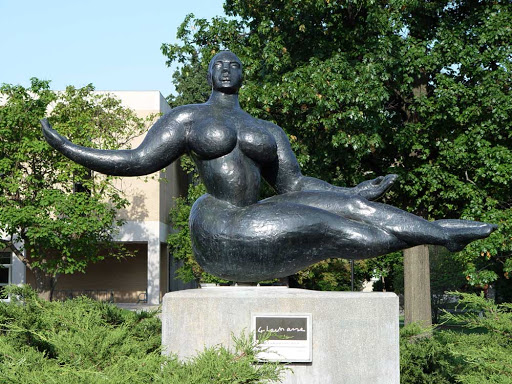
The profile, written by Gilbert Seldes, featured artist Gaston Lachaise…I include a brief excerpt for personal reasons, because I first encountered this artist in the Sheldon Memorial Art Gallery’s sculpture garden in Lincoln, Nebraska (my hometown), many years ago, via his “Floating Figure”…

WEIGHTLESS…”Floating Figure” by Gaston Lachaise was cast in bronze at the end of 1934 after a retrospective held in January 1935 at the Museum of Modern Art, New York. This is one of seven casts, at the University of Nebraska’s Sheldon Memorial Art Gallery. (Lincoln Arts Council)

 *  *  *

From Our Advertisers

Pierce Arrow would struggle to promote its luxury cars in the Great Depression (and they would go under by the mid-1930s) but their advertising still harked back to the carmaker’s early days of refined travel…

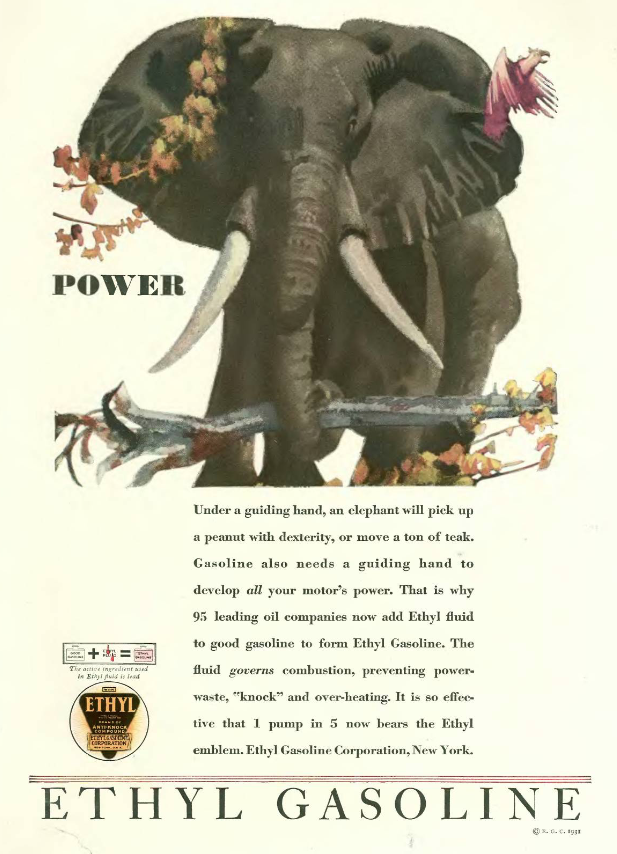
…the folks at Ethyl would make that car run smoother, thanks to the lead they added to gasoline (and to the air folks were breathing)…

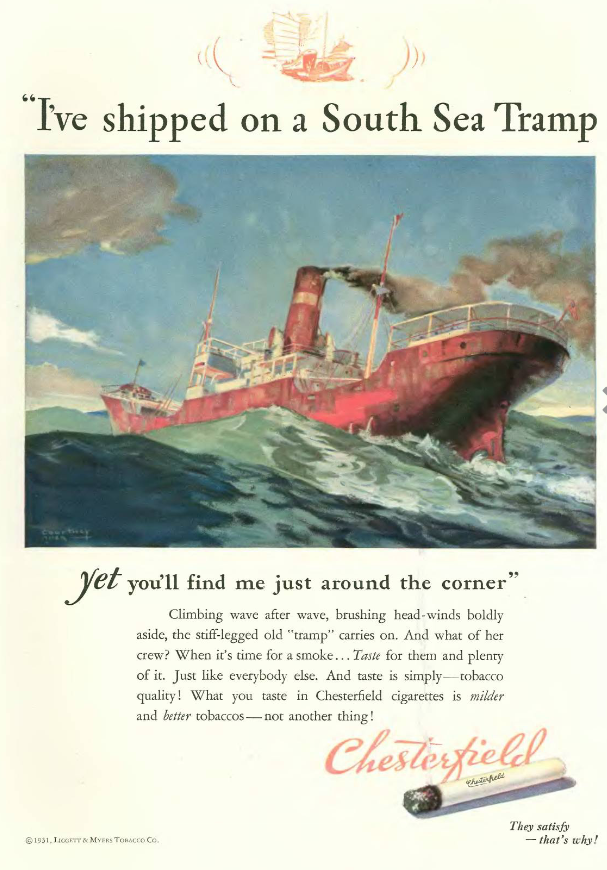
…tired of driving? Then hop a freighter and fire up a Chesterfield…

…or go for a more cushy ride on the French Line…
…we turn to our cartoons, and Ralph Barton’s revival of his old “Graphic Section”…
Helen Hokinson showed us the nuances of the DMV…

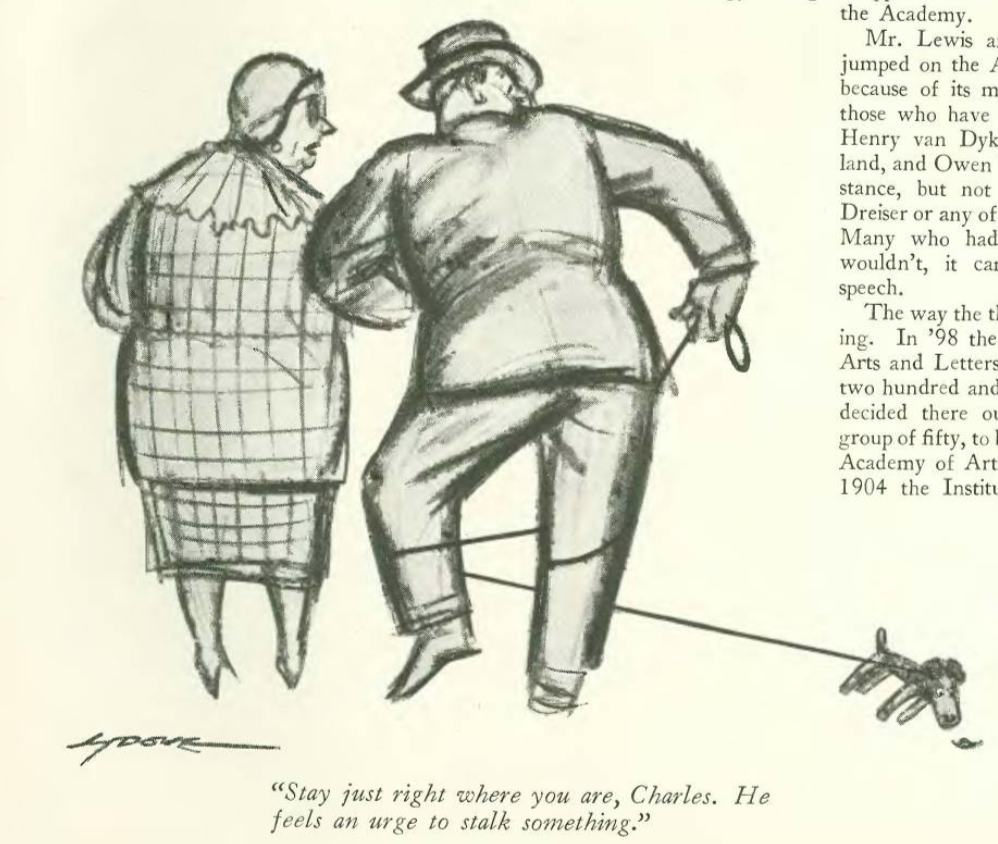
Leonard Dove showed us a pet on the wild side…

…thanks to the typography skills of The New Yorker’s layout artist Popsy Whitaker, Otto Soglow zigzagged across the pages with his Little King…

…and Gardner Rea revealed the wonders of world travel…

Next Time: Fear of Flying…