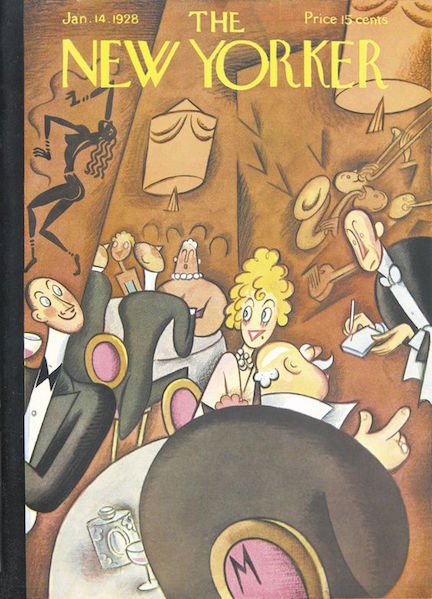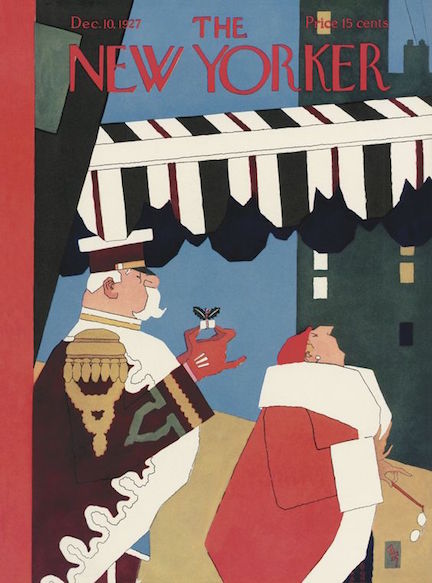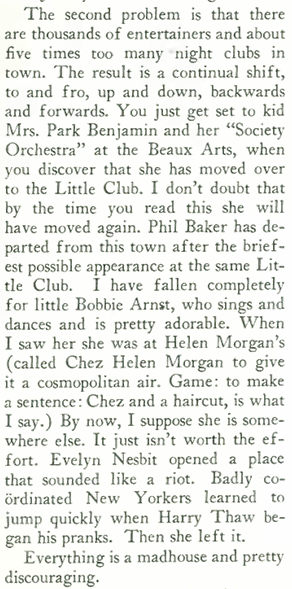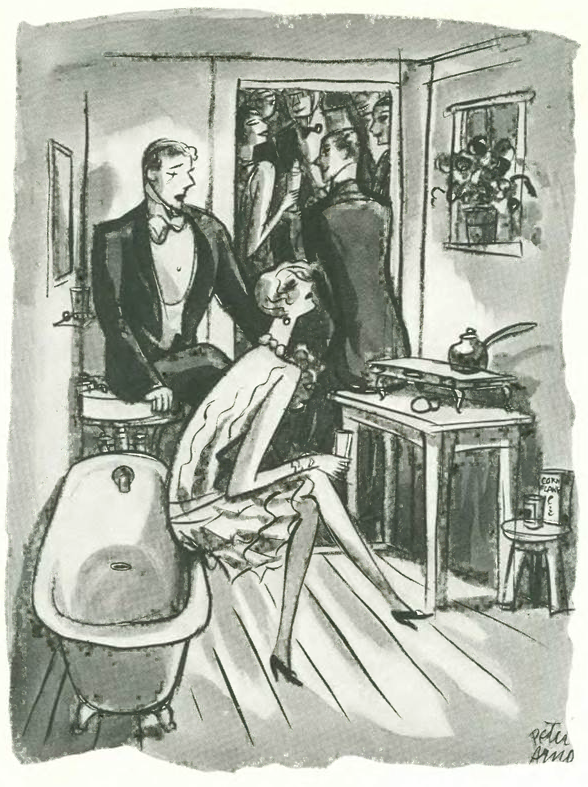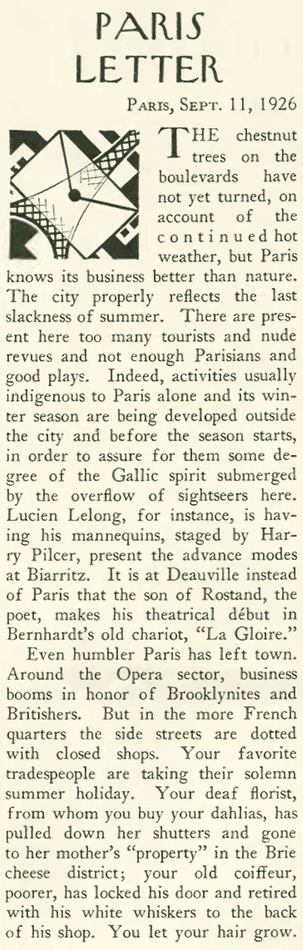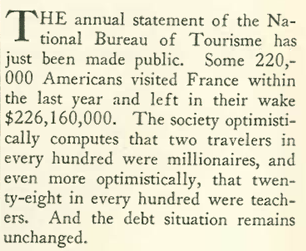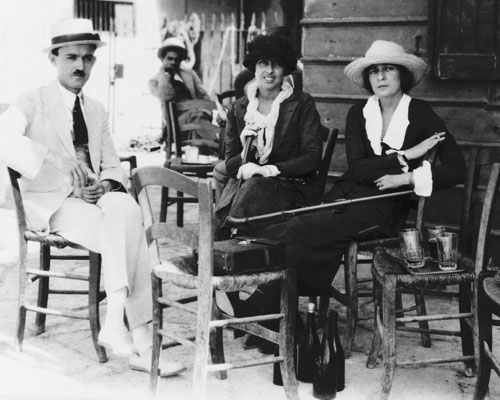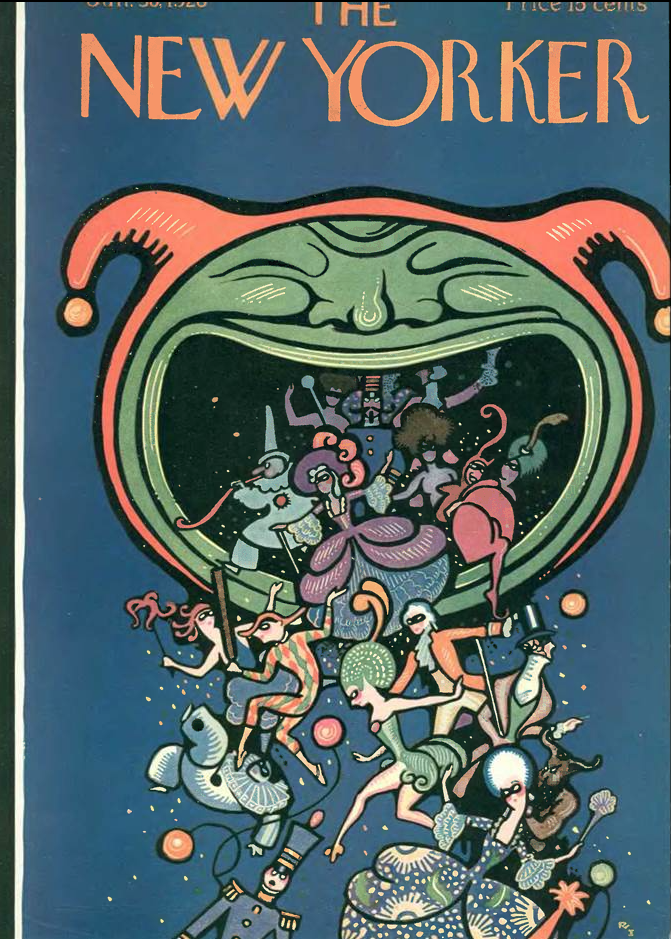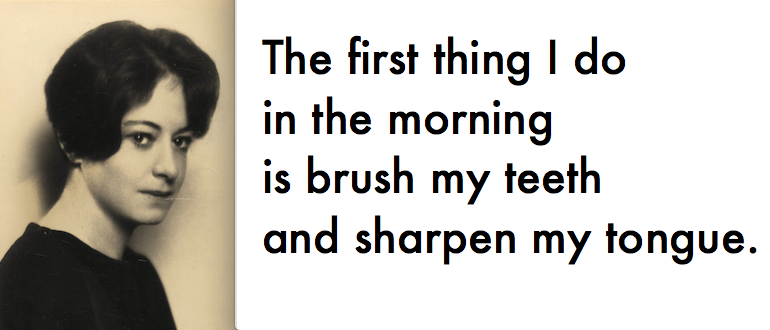
The Roaring Twenties were a strange confluence of the Puritan and libertine, perhaps best represented by Prohibition and the speakeasy night life it inspired. Many if not most of The New Yorker readers of the late 1920s were familiar with these establishments as well as with reliable bootleggers and rum runners. And for those of you following this blog we all know that “Tables for Two” columnist Lois Long was the voice of speakeasy and New York nightlife.
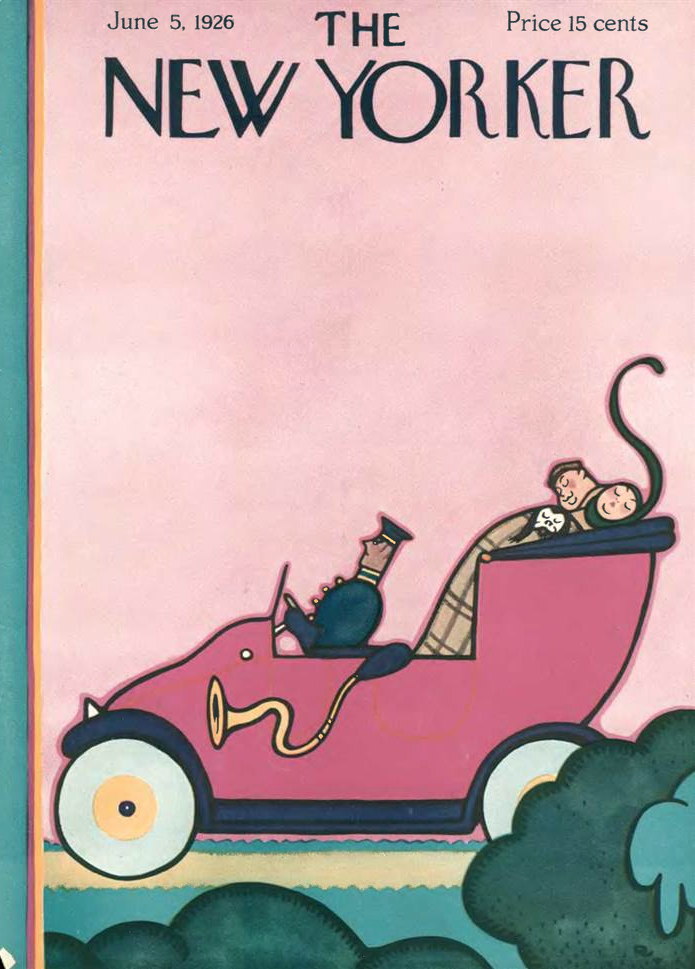
May 29, 1926 cover by Stanley W. Reynolds.
Prohibition did not make consumption of alcohol illegal. The 18th Amendment prohibited the commercial manufacture and distribution of alcoholic beverages, but it did not prohibit their use.
So if you had a connection to a smuggler bringing whisky from Scotland via Canada, for example, you could enjoy a Scotch at home without too much trouble, although the prices could be high. “The Talk of the Town” editors regularly reported black market wine and liquor prices (I include an adjoining Julian de Miskey cartoon):
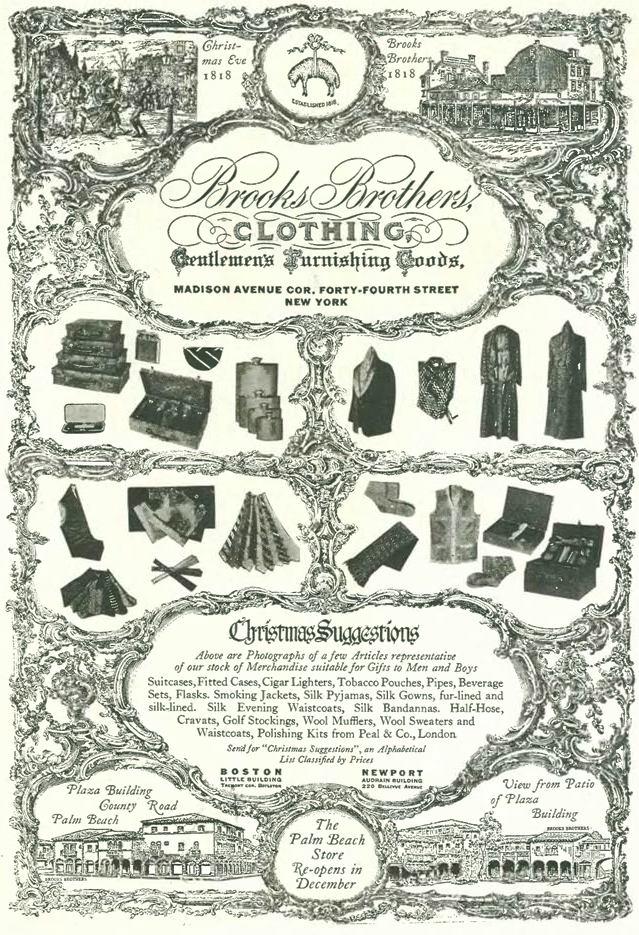
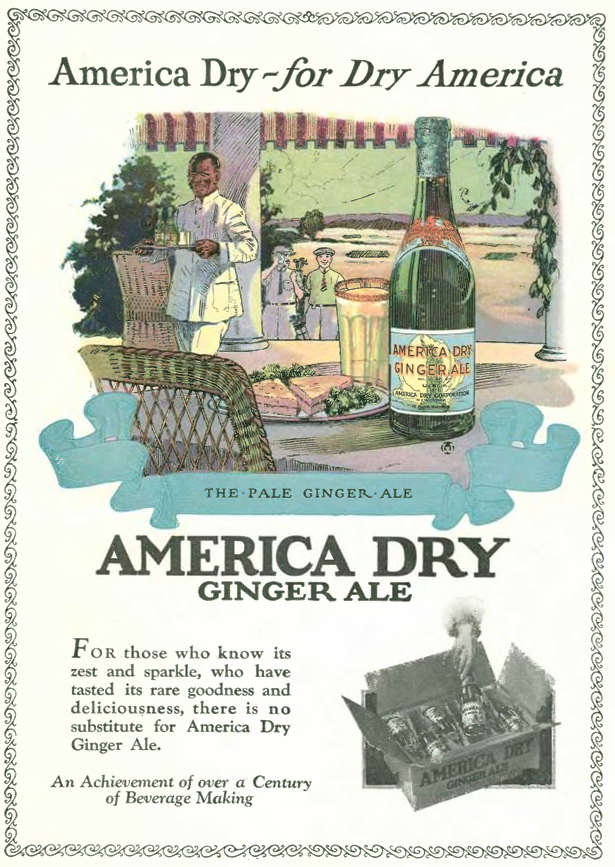
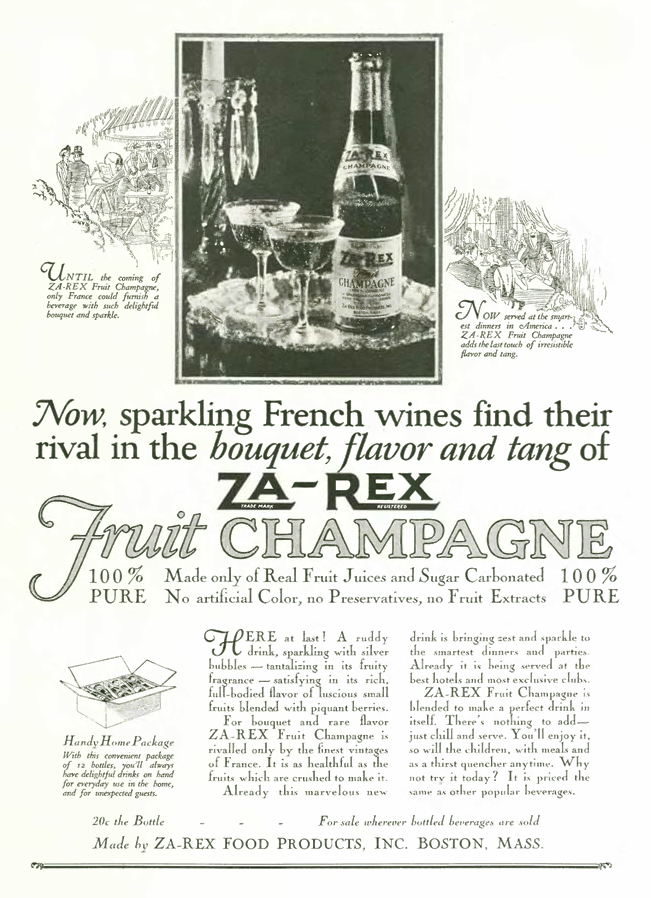
Note the mention of pocket flasks, which were an important item in a purse or vest pocket when one went to a nightclub or restaurant, where White Rock or some other sparkling water was sold as a mixer for whatever you happened to bring with you. You see a lot of this type of advertisement in the Prohibition-era New Yorker:
I’ll bet those grinning golfers have something in their bags besides clubs.
And then there were ads like these, which I find quite sad:
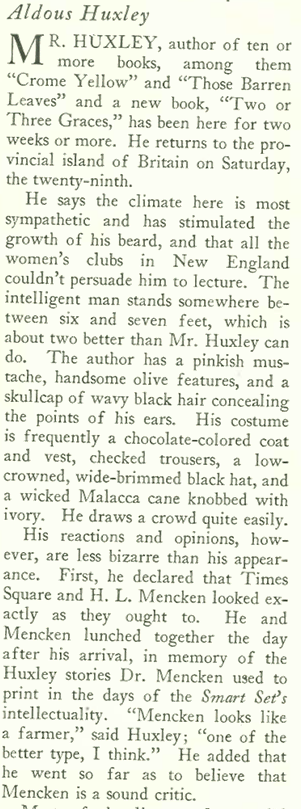
“The Talk of the Town” also commented on the recent visit of British writer Aldous Huxley, who told his New York hosts that he admired American writers Willa Cather and Sherwood Anderson, and he also had praise for writer and critic H.L. Mencken, whom he likened to a farmer “of the better type:”
Aldous Huxley in the 1920s. (Biography.com)
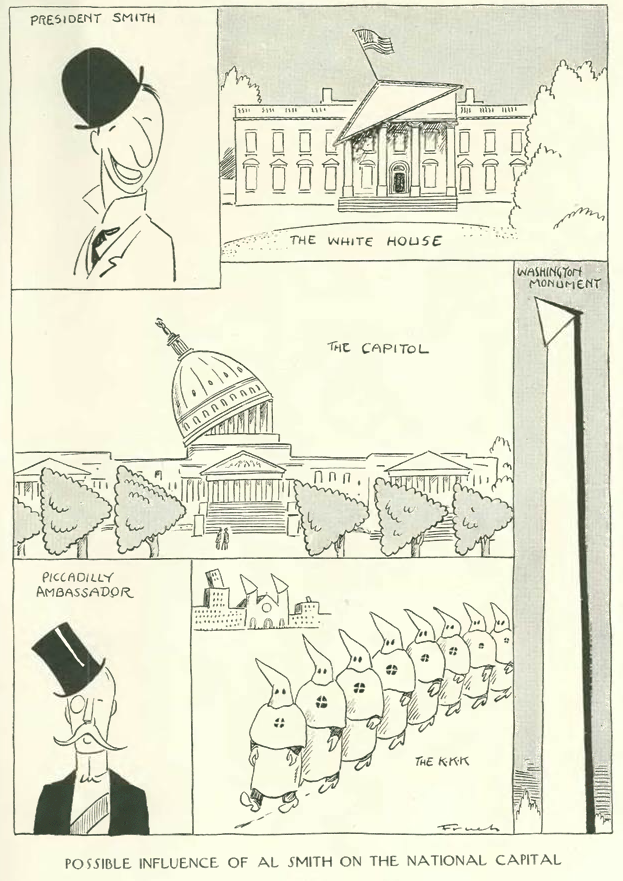
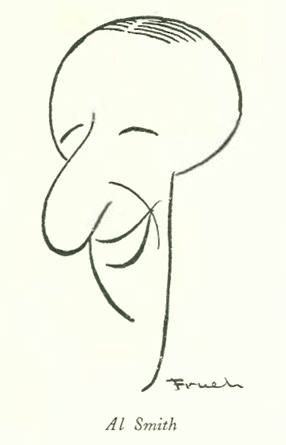
Other odds and ends from this issue…a clever drawing by Al Frueh for the “Profile” feature on New York Governor Al Smith:
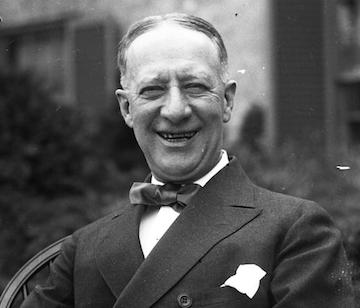
A photo of Al Smith for comparison:
New York Gov. Al Smith (IMDB)
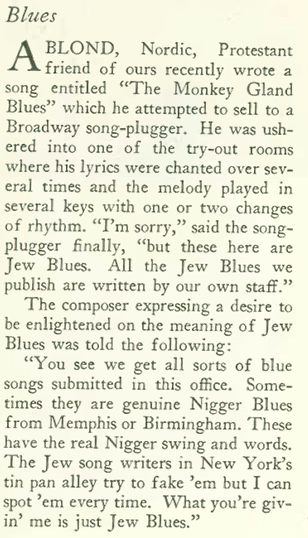
And this bit from “Of All Things,” complete with bad pun/racial slur:
New Yorker readers in 1926 had little reason to believe that in a decade Benito Mussolini would try to make good on his statement and join Adolf Hitler in the next world war.
Here’s a couple more ads from the issue that are signs of those times. Note the listing of Florida locations for those New Yorkers who were flocking to that new winter vacation destination:
And this ad for an electric refrigerator…for those who could afford such newfangled things. The ice man was still plenty busy in 1926, but his days were numbered.
And finally, a nod to springtime, and this excerpt of an illustration by Helen Hokinson for the “Talk” section:
The “sad young man” in question was none other than F. Scott Fitzgerald, who was profiled by John Mosher (who would succeed Theodore Shane as film critic) in the April 17, 1926 issue of The New Yorker.
April 17, 1926 cover by Clayton Knight.
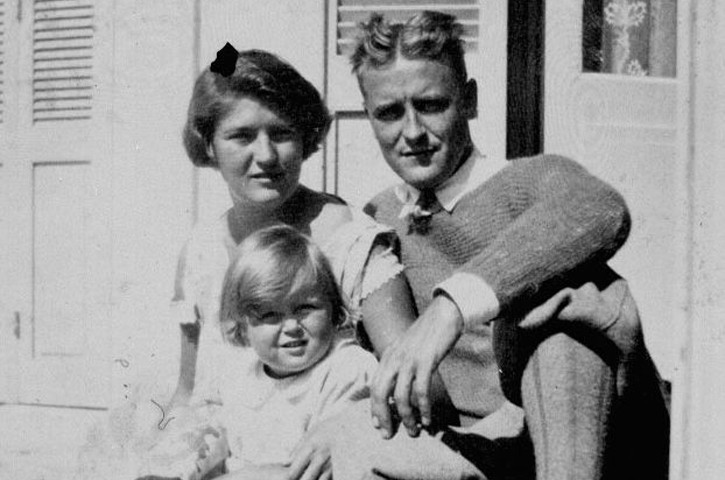
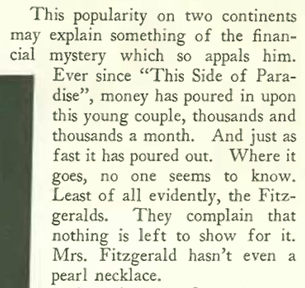
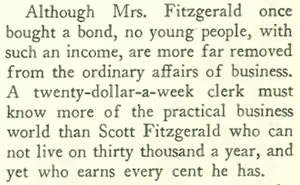
Mosher wrote that Scott believed he was “getting on in years,” even though he was only 29 years old and had recently published The Great Gatsby (which had received a brief, lukewarm review from The New Yorker in 1925). Mosher observed that the novelist and his wife, Zelda, famous on two continents and with money pouring in from the publication of This Side of Paradise, nevertheless complained of being broke:
It was noted however that the couple had little financial sense:
Mosher found Fitzgerald to be a grave, hardworking man, and seemed to sense the melancholy that would lead to madness (in Zelda’s case), alcoholism and an early grave (Fitzgerald would be dead in 14 years).
Illustration of Fitzgerald by Victor De Pauw for the April 17 “Profile.”
In this issue we were also introduced to Peter Arno’s “Whoops Sisters,” although they are not yet identified here by that title:
According to New Yorker cartoonist Michael Maslin, “in 1925, The New Yorker published nine Arno drawings. In 1926, it ran seventy-two. The enormous jump was due to the wild success of two cartoon sisters Arno created: Pansy Smiff and Mrs. Abagail Flusser, otherwise known as The Whoops Sisters. The Sisters were not sweet little old ladies — they were naughty boisterous grinning “wink wink, nudge nudge” sweet little old ladies, their language laced with double entendres.”
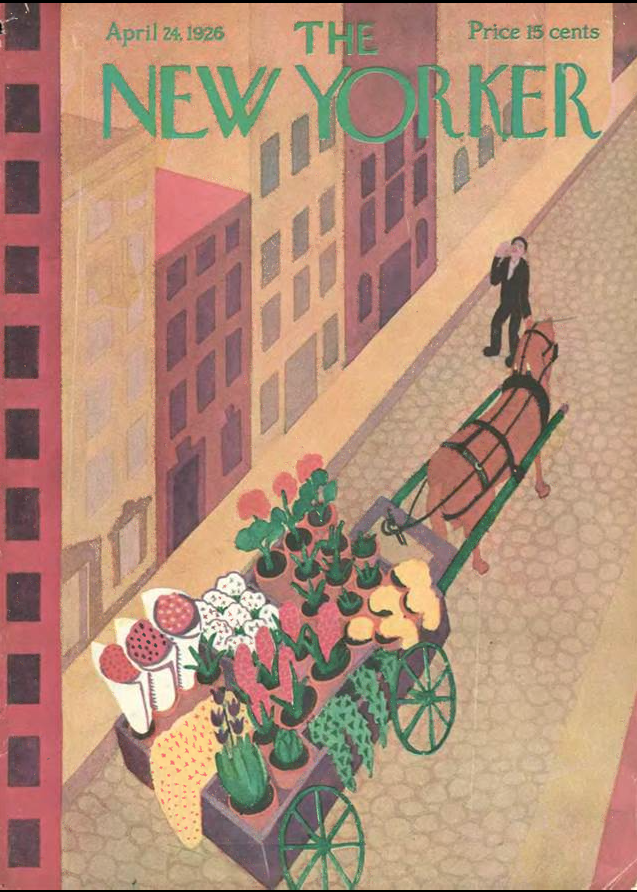
April 24, 1926 cover by Ilonka Karasz.
In the April 24, 1926 issue, the dyspeptic film critic Theodore Shane took aim at Cecil B. DeMille’sThe Volga Boatman:
VOLGA HOKUM…Elinor Fair and Victor Varconi in The Volga Boatman. (Virtual History)
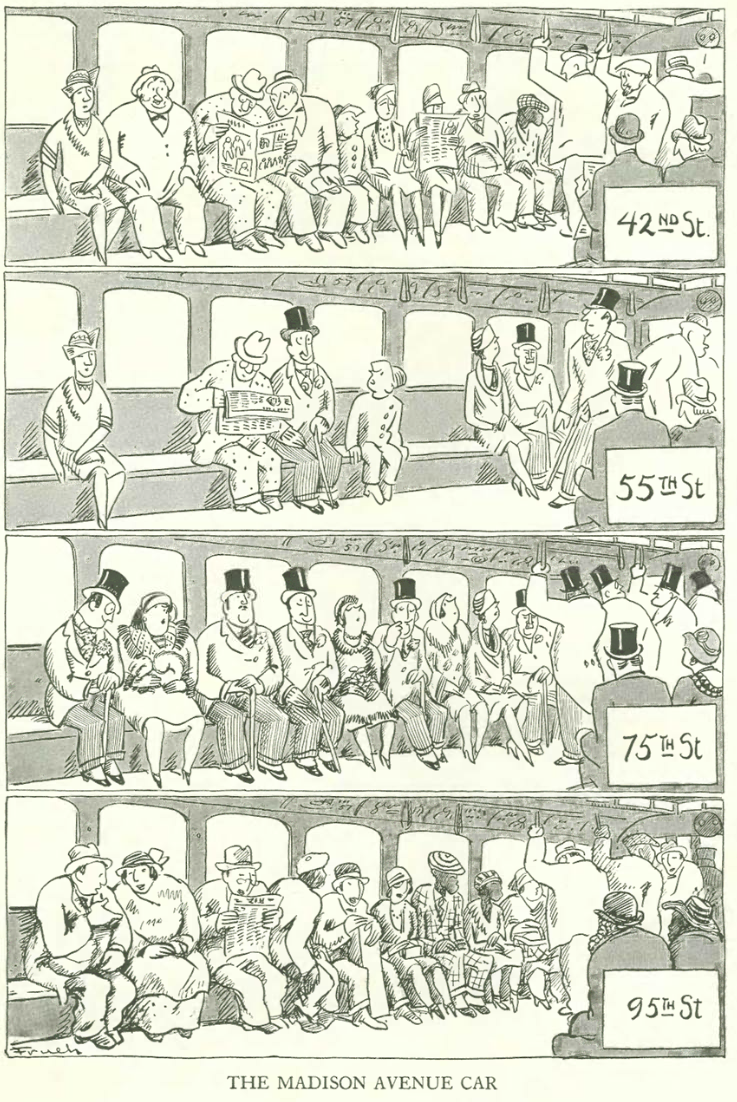
Also in this issue, Al Frueh’s interpretation of New York’s social strata via the city’s Madison Avenue train stops:
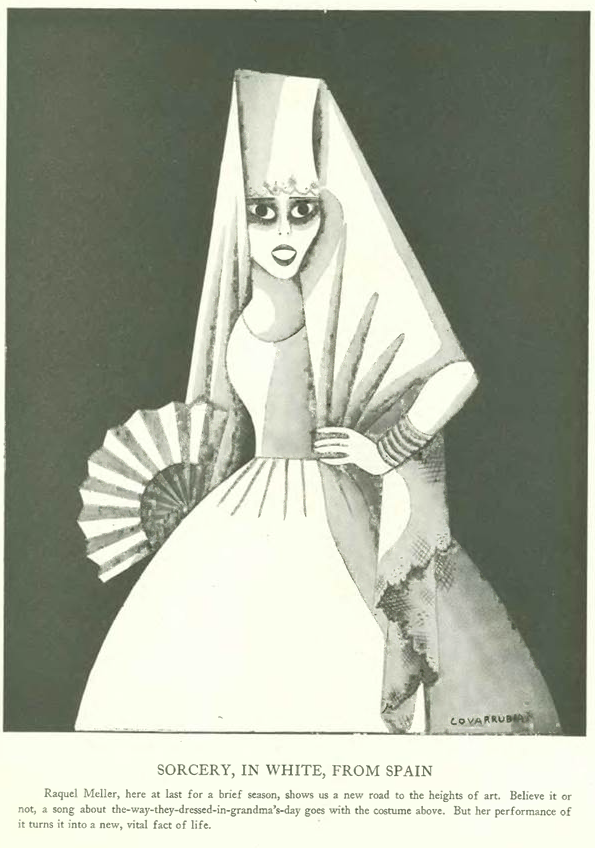
Near the theatre section, this illustration of famed Spanish singer and actress Raquel Meller, as rendered by Miguel Covarrubias:
And a photo of Meller from the 1920s that looks like it could have been taken yesterday:
(rameller.tripod.com)
An international star in the 1920s and 1930s, Meller appeared in several films and sang the original version of the well known song La Violetera.
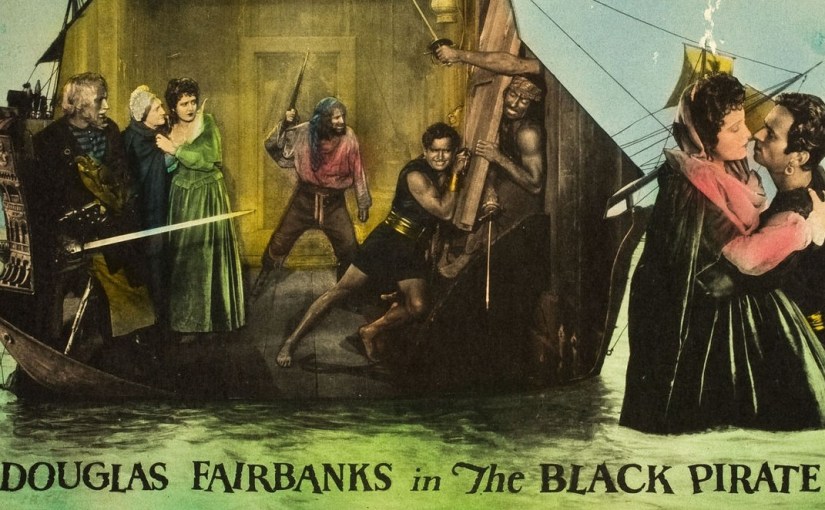
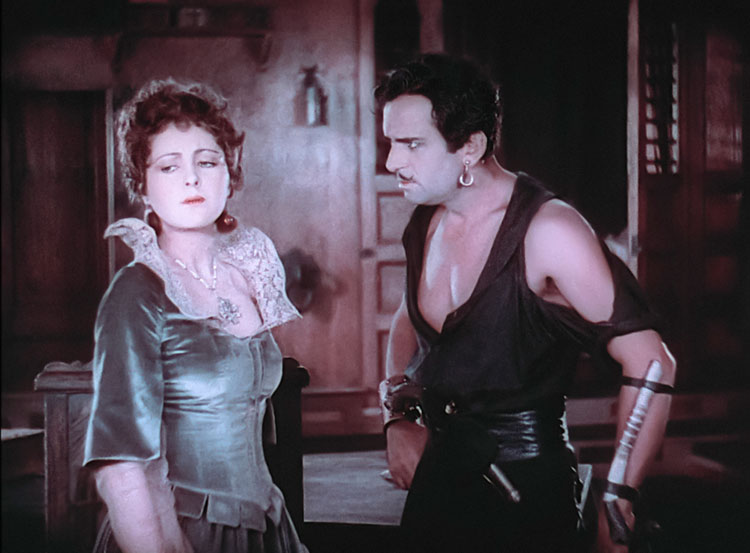
Although the trade name “Technicolor” conjures up images of mid-century Hollywood, the process was actually invented in 1916 and developed over subsequent decades.
Early Technicolor was a complicated process, using a prism beam-splitter behind the camera lens to simultaneously expose two consecutive frames of a single strip of black-and-white negative–one behind a red filter, the other behind a green filter. A projectionist had to be highly skilled to keep the film aligned during its showing. The Black Pirate, however, used a later technique that cemented the two prints together, making for a thick film that was prone to bulging and distortion.
When the New Yorker’sTheodore Shane reviewed Douglas Fairbanks’ latest swashbuckler film, The Black Pirate, in the March 13, 1926 issue, it appeared that after ten years of development the Technicolor process had a long way to go:
DEAR, YOU LOOK A BIT PEAKY…Billy Dove and Douglas Fairbanks rendered in early Technicolor in The Black Pirate. (MovieMail.com)
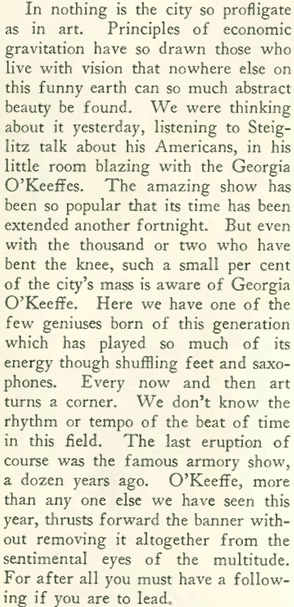
Art critic Murdock Pemberton wrote about the genius of the young artist Georgia O’Keeffe, whose work was on display at husband Alfred Stieglitz’s new exhibition space, the Intimate Gallery:
Georgia O’Keeffe’sBlack Iris, 1926. (Metropolitan Museum of Art)
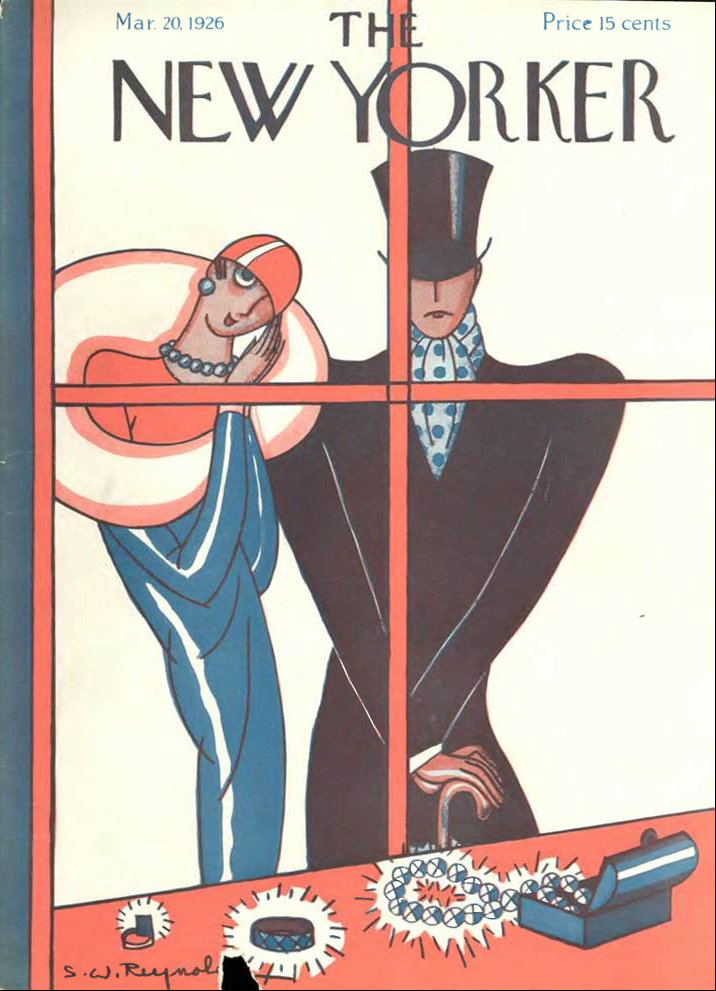
On to the March 20 issue, boldly illustrated by S.W. Reynolds, who contributed a number of deco-themed covers for the magazine:
March 20, 1926 cover by S.W. Reynolds.
For all The New Yorker’s progressive wit and style, you are occasionally reminded that some of its sensibilities were still very much mired in those times. For example, this bit from the issue’s “The Talk of the Town” segment:
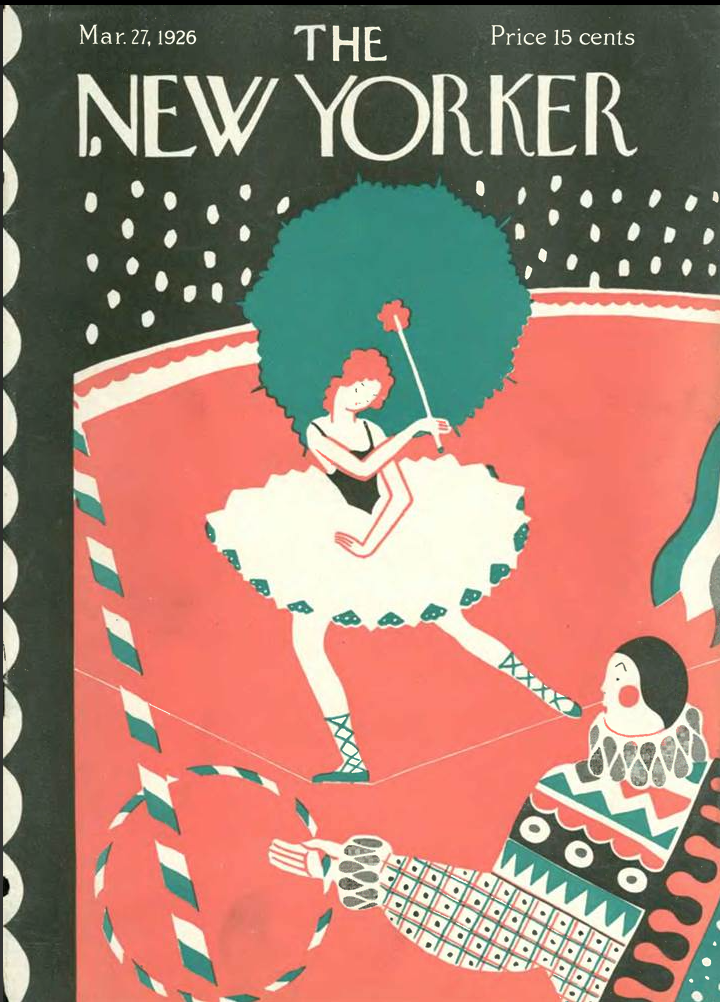
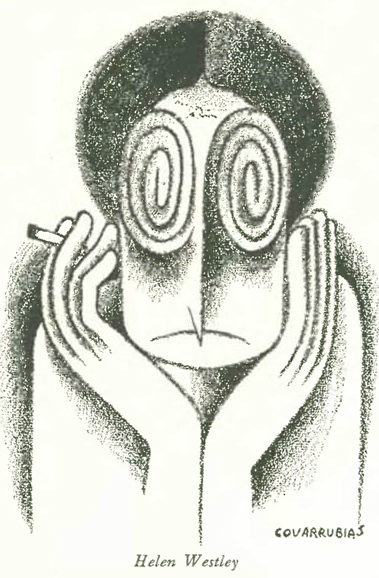
The March 27 issue offered a profile of actress Helen Westley, who was described by writer Waldo Frank (pen name “Search-light”) as “a goddess of our city” whose “true value and her art (was) her personal life.”
March 27 cover by Ilonka Karasz.
Wesley often played a stern, indomitable character who wore a hawk-like glare, and in her later years portrayed dour dowagers and no-nonsense matrons. Frank wrote that while Wesley was not a particularly good actress, she lived her life with a spirit for adventure and a need to plunge her fine-born, gracious manner into the “frowsy” world of Broadway.
A Miguel Covarrubias rendering of Helen Wesley for the “Profiles” piece.
And to close, Al Frueh’s take on a day in the life of a doorman:
Although they didn’t know it, thirsty New Yorkers still had more than six and half of years of Prohibition to endure, and business was brisk for the rum runners who plied the coastal waters.
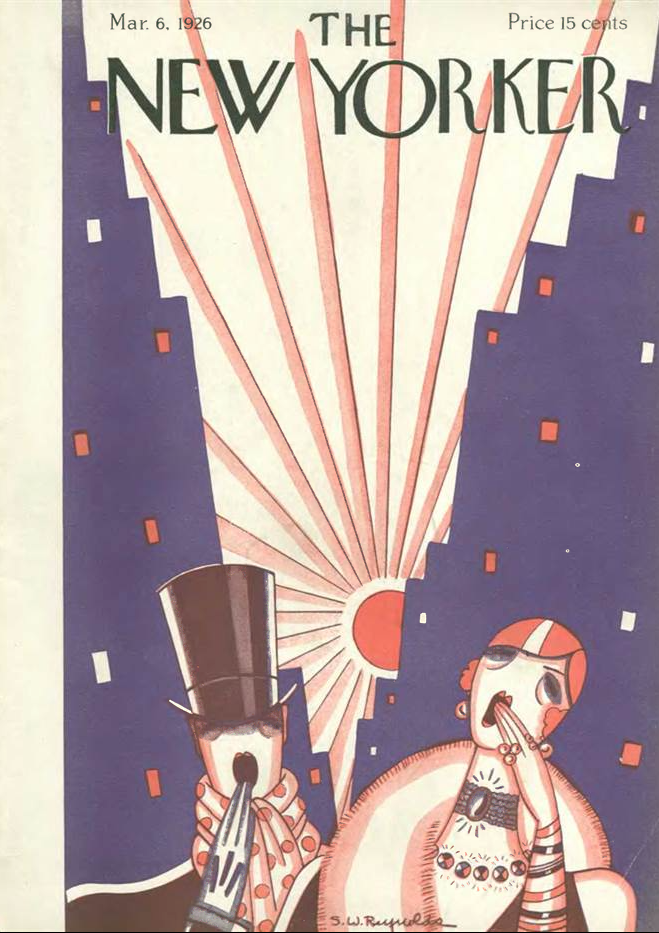
The March 6, 1926 issue featured the article “Rum Runners Must Live,” in which writer Emile C. Schnurmacher described the heroic efforts of bootleggers and rum runners in keeping New York’s countless speakeasies (and many home liquor cabinets) well stocked. Some 30,000 speakeasies were opened in New York City alone during the Prohibition era.
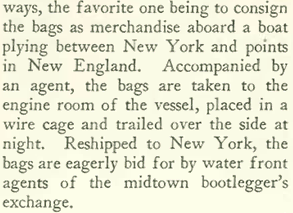
Schnurmacher described the risky game of running “overboard stuff:”
He told of how one rum-running boat, the Sea Bird, made its way through Flushing Bay (to pick up bootleg Scotch) while evading the Coast Guard:
The boat later successfully delivered the “Scotch” near Yankee Stadium:
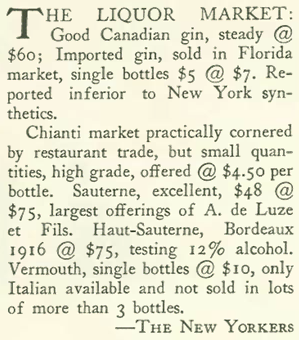
“The Talk of the Town” offered its regular update on bootleg prices. The local “synthetic” gin was reported to be of better quality than the imports, surprising given that synthetics poisoned a good number of folks back then:
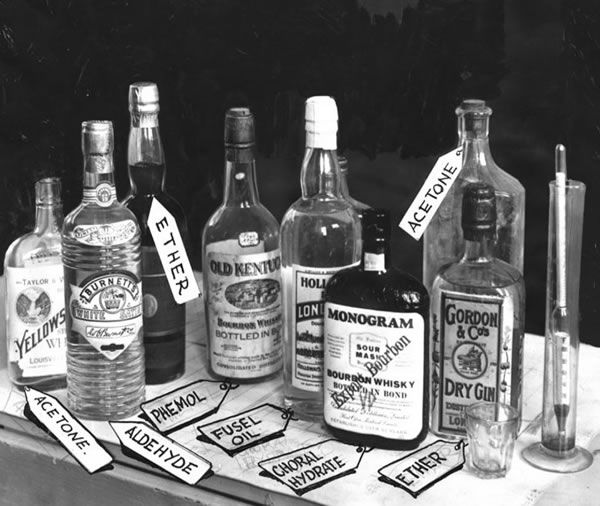
The blog Speakeasy Science notes that during Prohibition, police department chemists, “analyzing the so-called gin in the Brooklyn bar and around the city, reported that much of it was industrial alcohol, re-distilled to try to remove the wood alcohol content. The re-distilling was not notably successful. The poisonous alcohol remained and there was more: the chemists had detected traces of kerosene and mercury, and disinfectants including Lysol and carbolic acid in the beverages.”
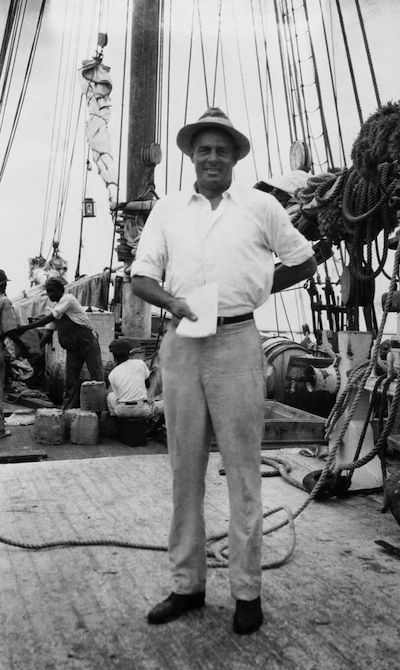
HE HAD THE GOOD STUFF…Not all bootleg was poison. Until he was busted in 1923 by government agents, one of the most famous purveyors to wealthy buyers was rum-runner William McCoy. (US Coast Guard)In order to destroy evidence, the crew of the rum-runner Linwood set fire to their vessel after being pursued by a patrol boat. (Photo circa 1923, U.S. Coast Guard)
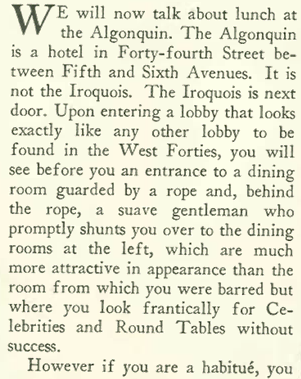
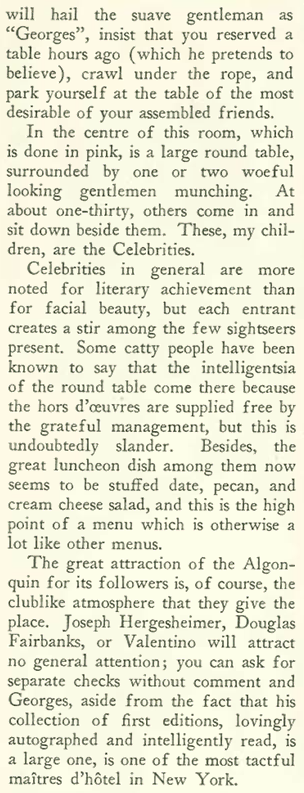
In “Tables for Two,” Lois Long paid a visit to the Algonquin hotel and took some playful swipes at the denizens the famed Round Table:
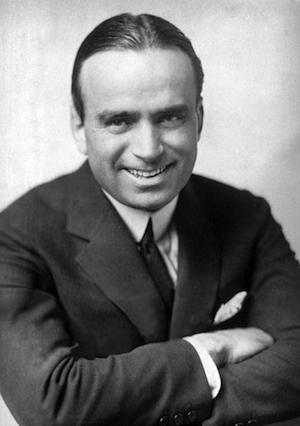
IS THAT YOU DOUG? Silent screen star Douglas Fairbanks could relax unmolested in the quiet confines of the Algonquin. (Meredy.com)
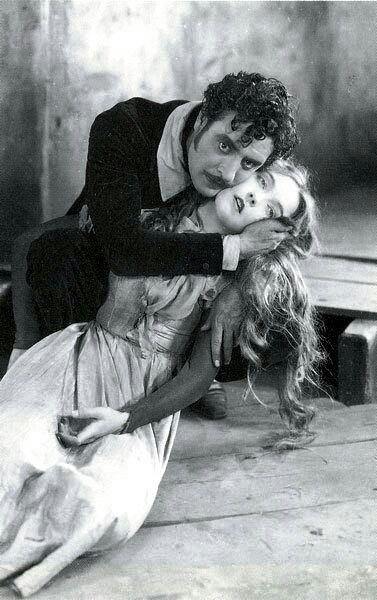
At the movies, Theodore Shane took deadly aim at the silent film version of the opera La Bohème:
A “pop-eyed” John Gilbert and Lillian Gish in the 1926 silent film version of La Bohème. (IMDB)
And finally, Al Frueh’s sympathetic take on the wintertime toils of the rich:
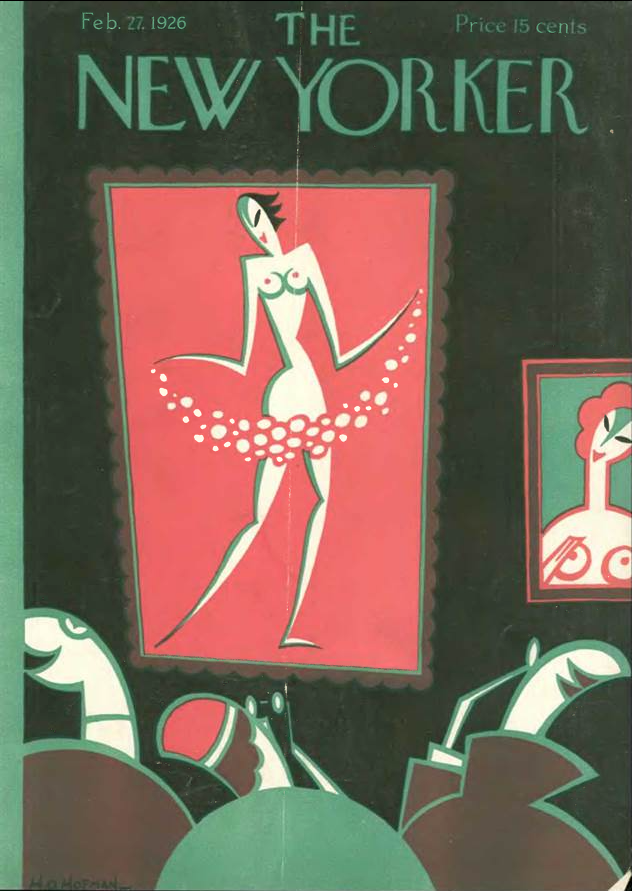
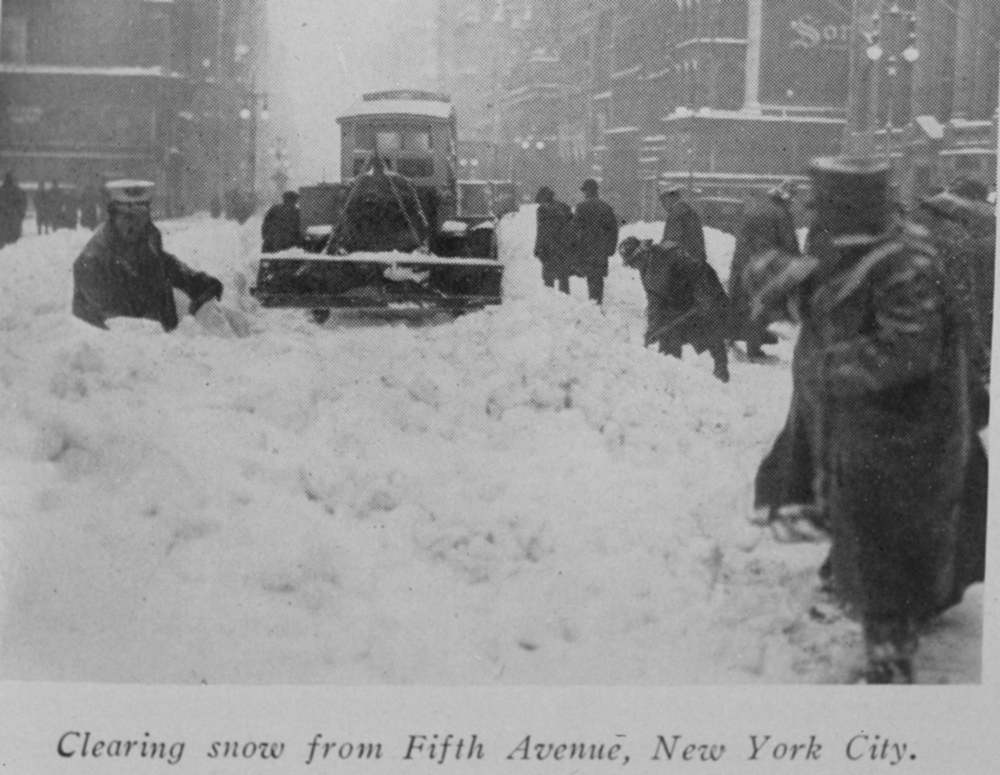
The month of February 1926 must have been miserable in New York City. A massive blizzard made a mess of the streets, which were then topped by a soot-laden smog. The smog was the result of homes and businesses burning soft coal, which produced far more smoke than the hard variety (which was in short supply).
The photo above, from the Daily News archive, shows a chaotic scene on Orchard Street (Manhattan’s Lower East Side) after the storm.
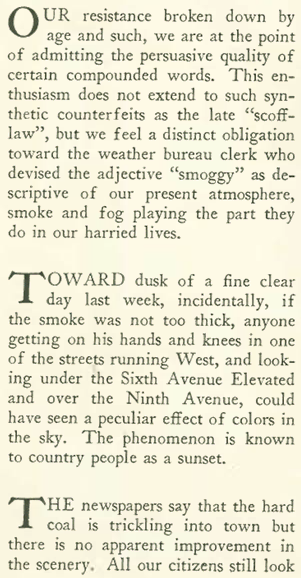
As could be expected, The New Yorker editors tried their best to make light of the situation, although they couldn’t resist making a racist remark regarding the effects of soot on the population. It is also interesting to note that the word “smoggy” was considered by the editors to be a relatively new term:
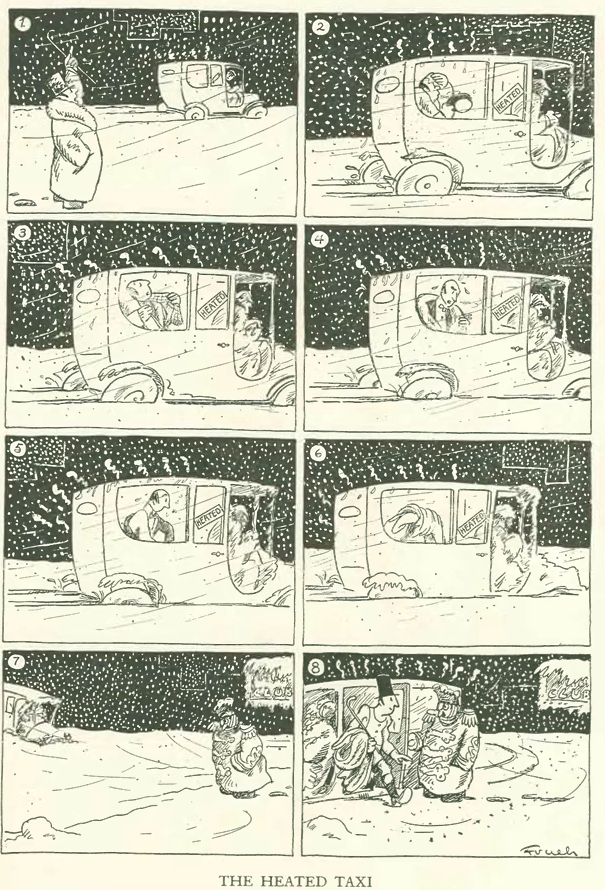
Al Frueh showed us how the toffs dealt with the situation…
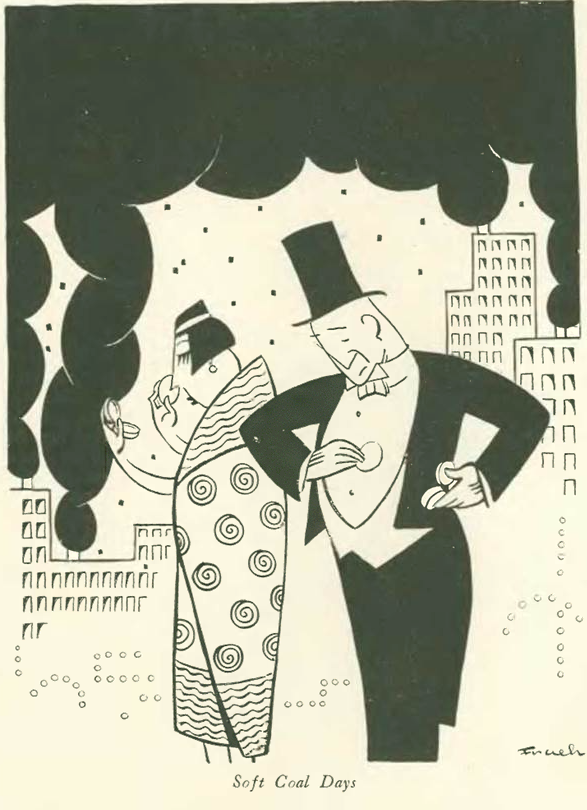
…and Fifth Avenue was not the best place for a fashionable stroll…
Shovelers were hired to clear the streets after 1926 blizzard (National Oceanic and Atmospheric Administration)
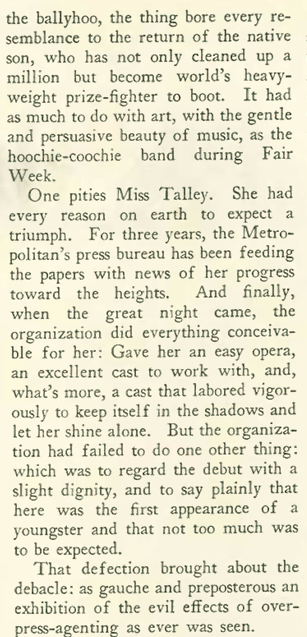
No doubt the foul weather contributed to the mood of the writers and critics at The New Yorker, who reacted rather sourly to the much ballyhooed Feb. 17, 1926 debut of young Marion Talley at the Metropolitan Opera. At the tender age of 19, she was the youngest prima donna to sing at the Met at that time.
In his “A Reporter at Large” column, Morris Markey scoffed at the hype and small-town boosterism that accompanied the young singer from rural Missouri:
Talley’s debut performance was as Gilda, the daughter of the title character in Giuseppe Verdi’s Rigoletto. The Metropolitan Opera’s general manager, Giulio Gatti-Casazza, hoped Talley’s debut would be low-key and not overshadow the production. However, a delegation of two hundred leading citizens of Kansas City, including the mayor, arrived via a special train for the event.
Adding to the chaos, a noisy telegraph machine was set up backstage so Talley’s father could send dispatches to the Associated Press.
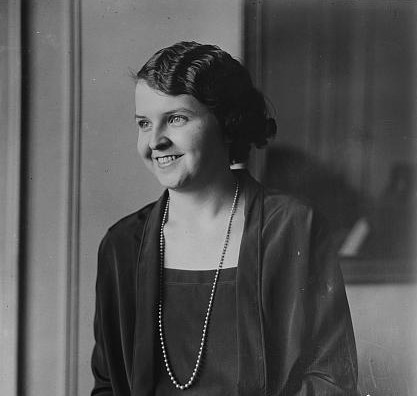
OVER EXPOSED: Marion Talley in 1926. (Library of Congress)
Talley’s swift rise to fame would be followed by a relatively quick return to obscurity. After appearing in seven productions at the Met, her contract was not renewed for the 1929 season.
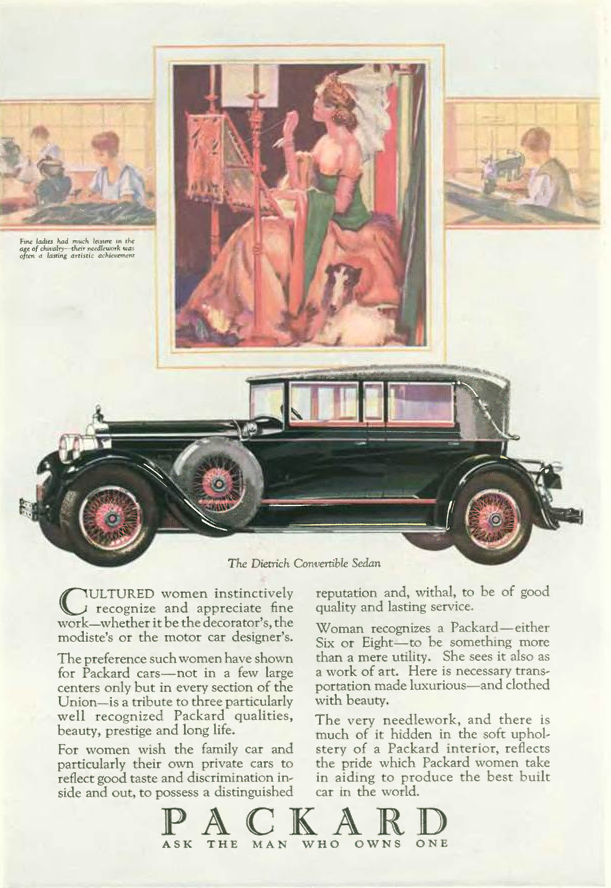
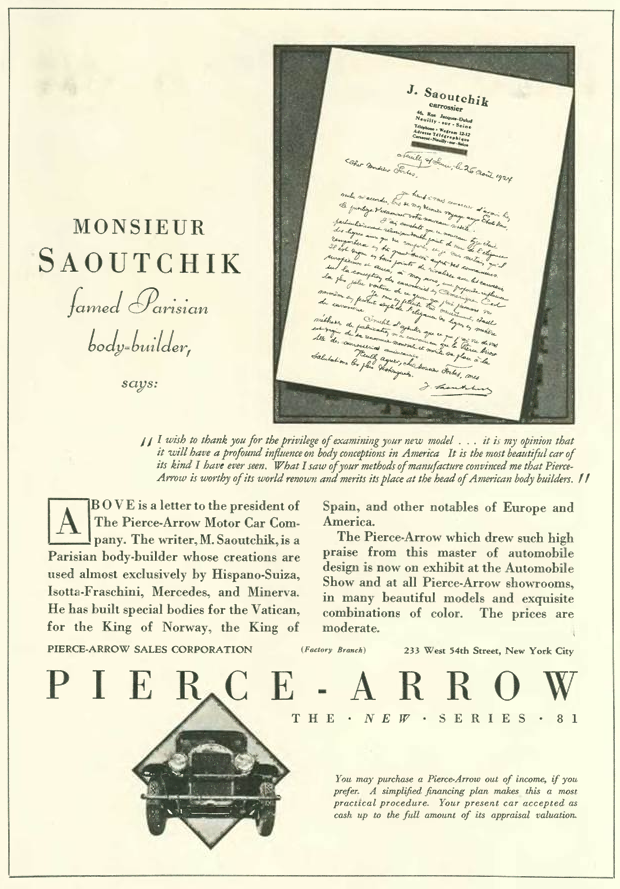
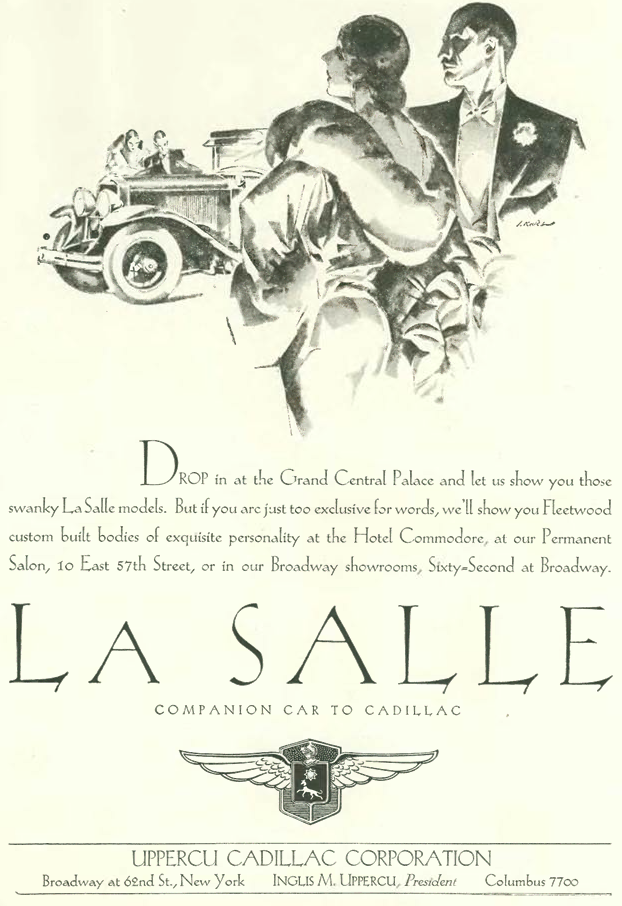
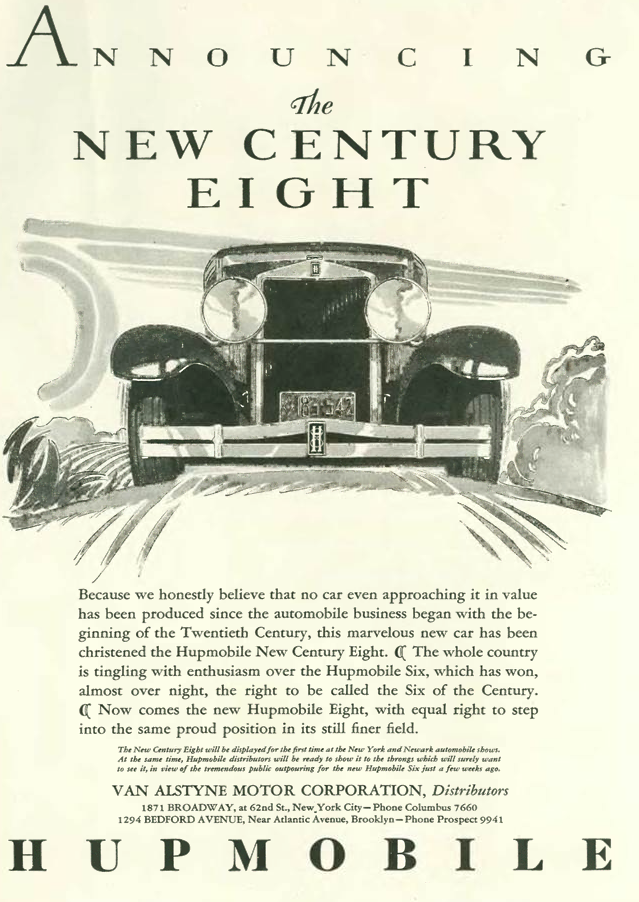
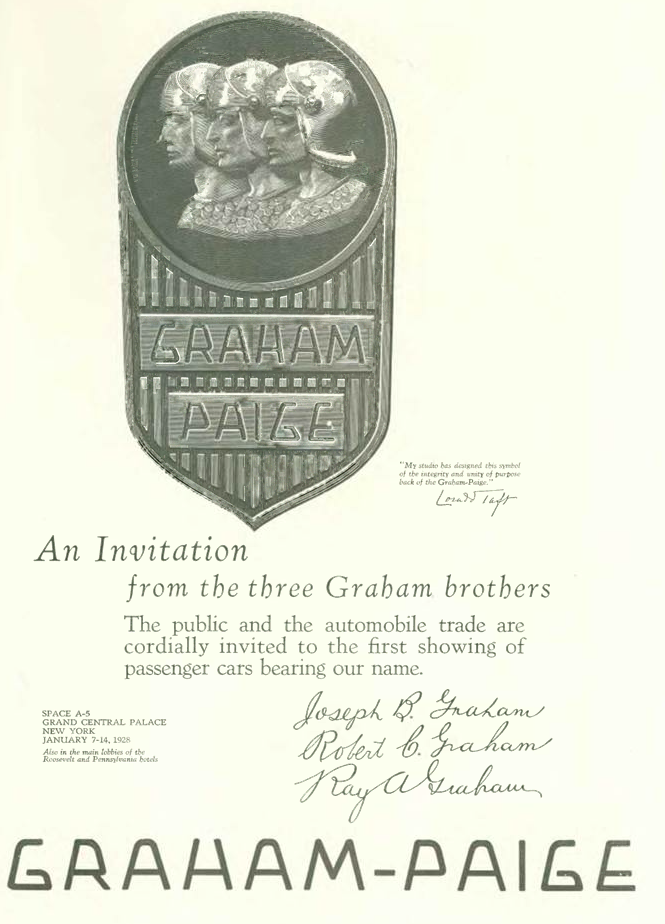
As if covering the nightclub scene and the fashion set wasn’t enough, Lois Long found the time to attend the National Automobile Show at the Grand Central Palace and offer her insights and criticisms on the latest in automotive design.
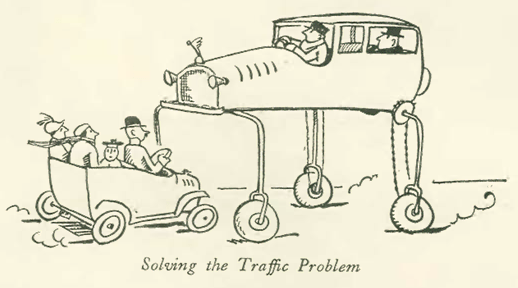
The show featured more than 500 new models, bigger and more powerful cars mounted on new-fangled balloon tires. There were also cheaper cars available–GM introduced the Pontiac line to appeal to the mass market, and other manufacturers lowered their prices in an effort to lure customers. Visitors packed the show despite the fact that the city streets were already hopelessly clogged with traffic and navigating them was difficult and often perilous. Al Frueh offered his take on the traffic situation with a little doodle in “The Talk of the Town” section (featured above).
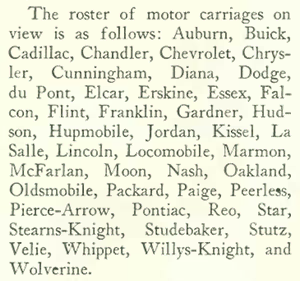
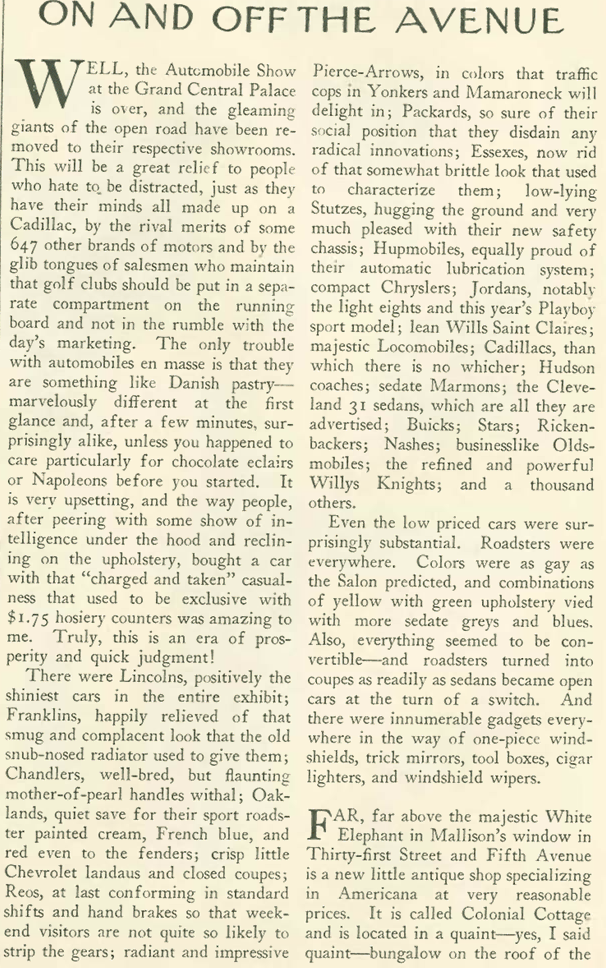
Long gave readers her usual straightforward assessment of the show (her Danish pastry metaphor in the first paragraph is spot on). Note her list of American car companies, many of which are long gone:
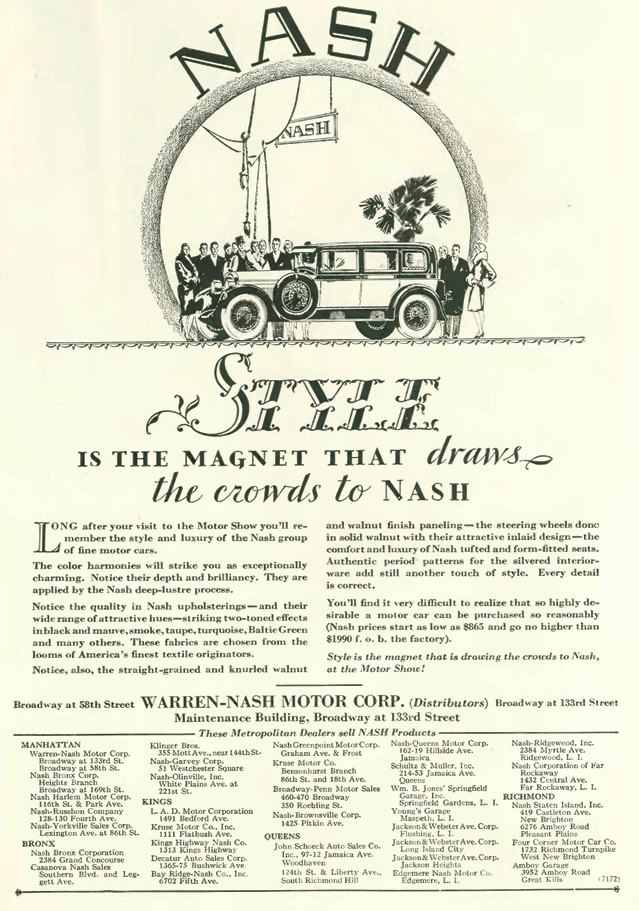
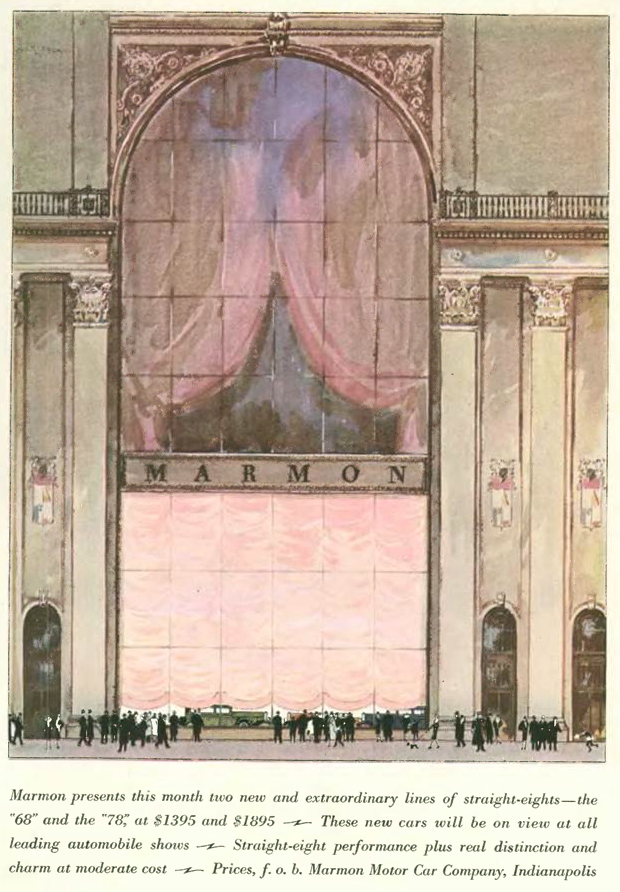
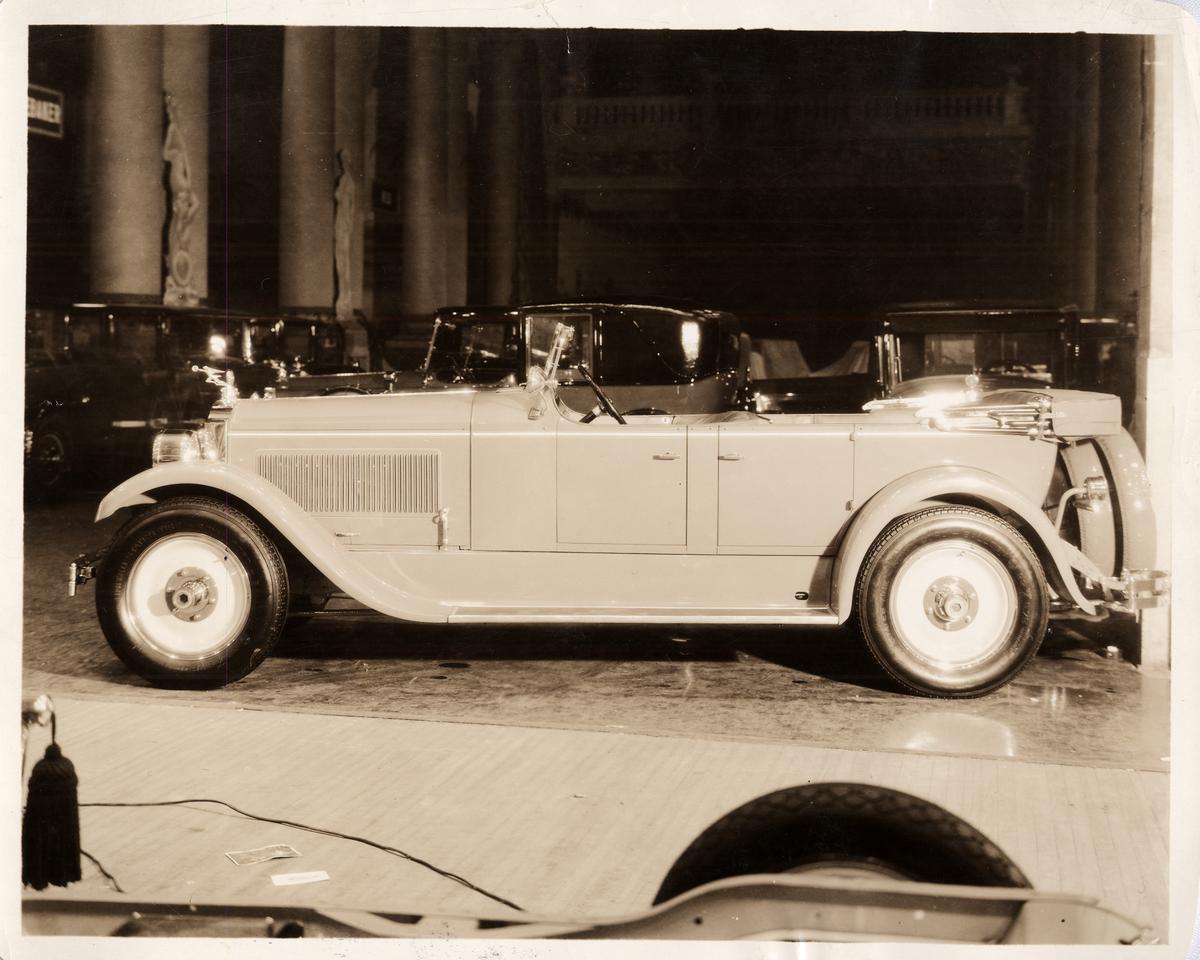
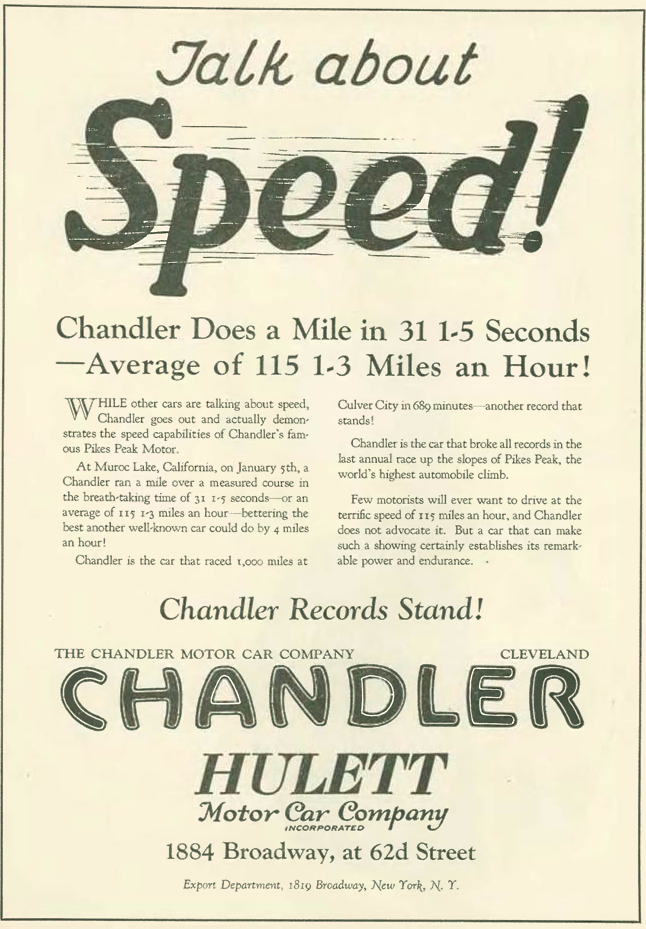
LOOK AT ME…No doubt Lois Long walked by this Packard special sport phaeton, prominently displayed at the 26th National Automobile show. (Wayne State University)GRAND INDEED…The 26th National Automobile Show was at the Grand Central Palace, which occupied the block of Lexington Avenue between 46th and 47th Streets. It was razed in 1963. A 44-story office tower, 245 Park Avenue, took its place. (New York Times)A Cleveland auto manufacturer, Chandler, took advantage of the moment by placing this ad in the Jan. 23 issue of The New Yorker.
***
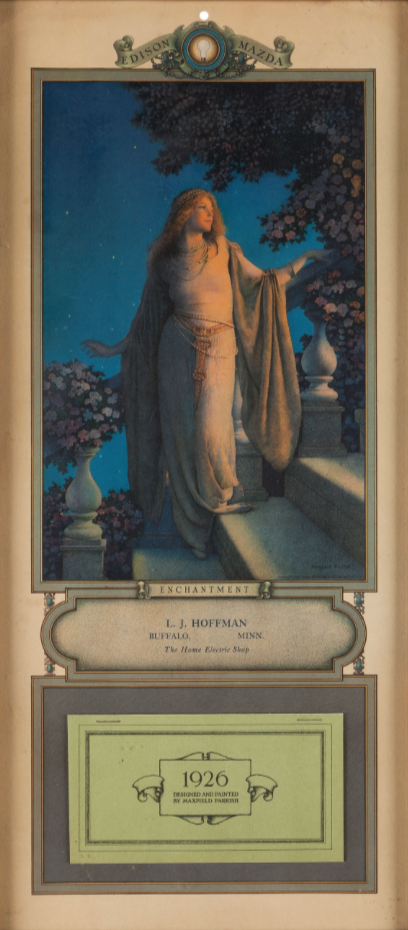
“The Talk of Town” editors were bemused over the news that artist Maxfield Parrish had received “a check in six figures” following his first-ever exhibition. It was reported that Parrish received $80,000 (roughly equivalent to $1 million today) for a single painting, which the editors suggested made him “the highest paid artist living.” They also wondered “if he gets amusement out of being the highest paid painter,” since Parrish was known for wanting to be left alone, and until recently was “not well off” because no one “could persuade him to the sell the pictures with which he lined his house.”
A 1926 Edison MAZDA calendar featuring artwork by Maxfield Parrish. (icollector.com)
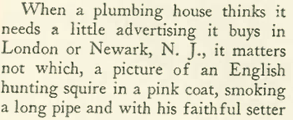
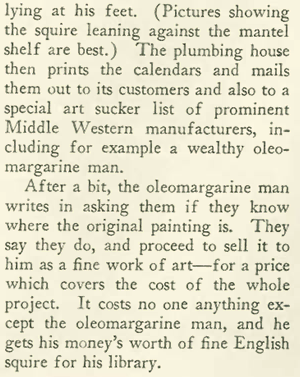
In a previous issue (Dec. 12, 1925), New Yorker art critic Murdock Pemberton wrote a dismissive critique of the young Parrish’s work and noted that the artist was largely glorified in American advertising and not in serious art circles. This was followed by another “Talk” item in which the editors sneered at the trade calendar market that fed the popularity of artists like Parrish:
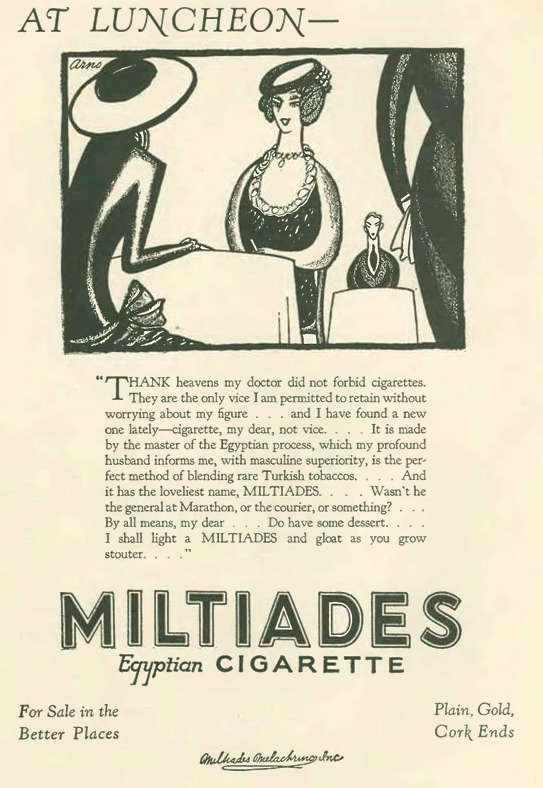
And to close, this message (illustrated by Peter Arno) from Miltiades Egyptian cigarettes. Apparently they empower you to call your non-smoking friend “fatso.”
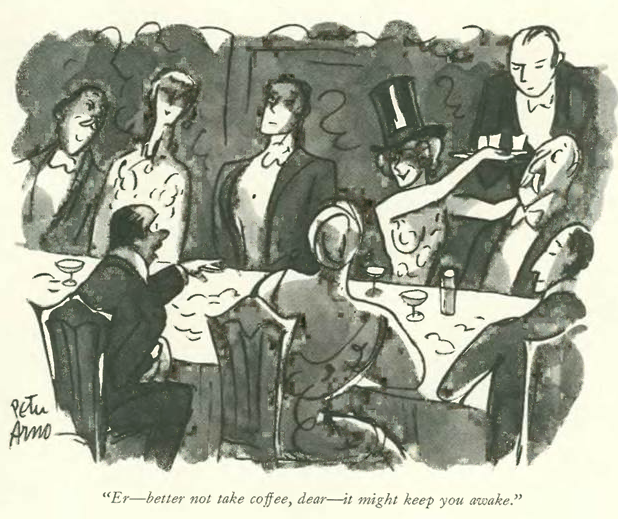
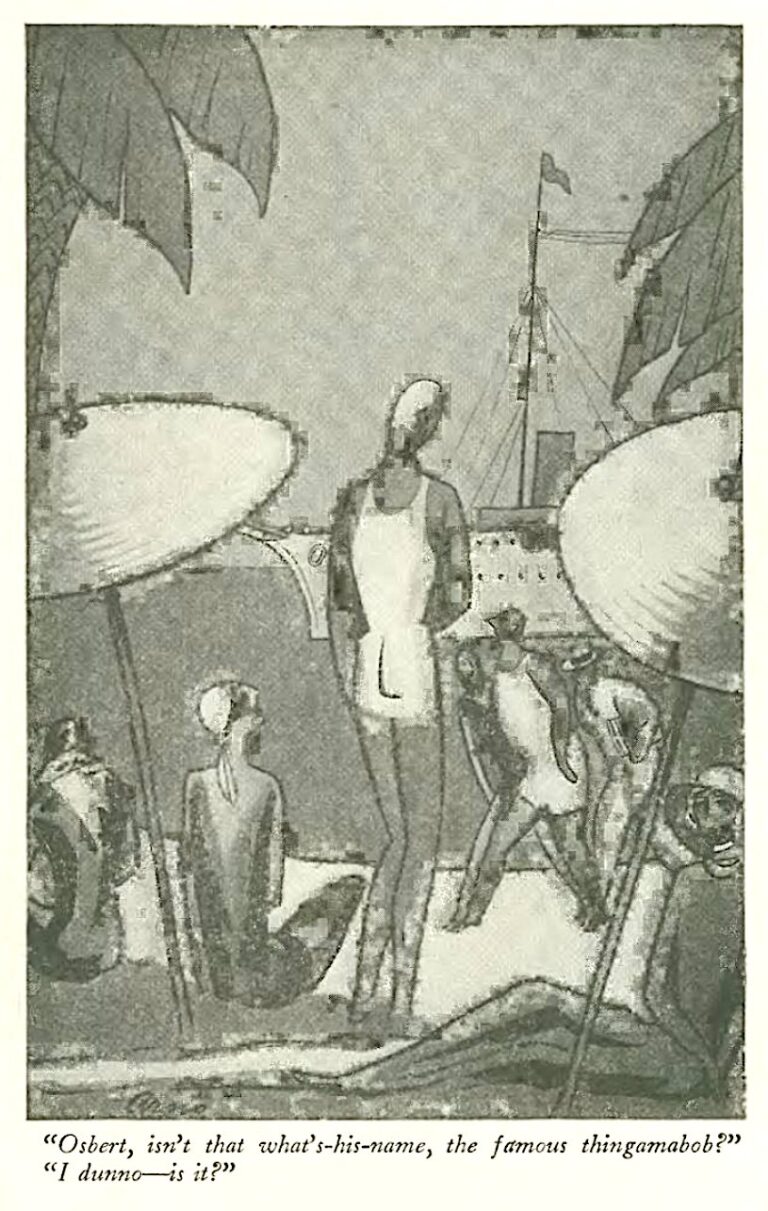
On the subject of Arno, there was only one drawing with a caption…by Arno…
We close out The New Yorker’s first year with the magazine on firmer footing and many of its mainstay writers and artists firmly in place.
The Dec. 26, 1925 issue was the usual hodgepodge, but some writers did give a nod to the end of the year, including film critic Theodore Shane, who offered his list of the best ten moving pictures of 1925.
Shane’s favorite film by far was The Last Laugh, (the German title was Der letzte Mann, or The Last Man) a 1924 German film directed by F.W. Murnau and starring Emil Jannings (who would later win the first Academy Award for Best Actor in 1929). Shane referred to it as “the greatest picture ever made.” Released in the U.S. in 1925, the film was about a proud doorman who loses his job and tries to hide the fact from his friends and family. Shane usually reserved his highest praise for German cinema in his columns.
Scene from The Last Laugh (1924) starring Emil Jannings. (Roger Ebert)
Shane’s complete list of the ten best movies of 1925:
For the worst films of the year, Shane suggested a tie between Drusilla With a Million, Lord Jim, Joanna, the Million Dollar Girl or Stella Dallas.
The New Yorker also commented on the murder of the irrepressible boxer Louis Mbarick Fall, popularly known as “Battling Siki.”
“Battling Siki” in his heyday. (Wikipedia)
Born in Senegal, he was a light heavyweight boxer from 1912–1925, and briefly reigned as a light heavyweight champion. Known for his heavy drinking and carousing, on the night of Dec. 15, 1925, he was found dead near his 42nd Street apartment. He had been shot twice in the back at close range. He was 28.
In his column, “A Reporter at Large,” Morris Markey offered this observation on Battling Siki’s passing:
The cartoonist Isadore Klein, on the other hand, contributed this strange stand-alone illustration for “The Talk of the Town” section:
Also in “Talk” was this brief item about the United Fruit Company:
United Fruit would be no laughing matter three years later with the Banana Massacre, which would claim the lives of an unknown number of workers who were striking for better working conditions in Columbia.
Art critic Murdock Pemberton offered a glowing review of an exhibit at the Montross Galleries by frequent New Yorker contributor Peggy Bacon:
Peggy Bacon, The Whitney Studio Club, 1925. (Whitney Museum of American Art)Peggy Bacon (Smithsonian)
“Profiles” looked at Cornelius Vanderbilt Jr, “The Fifth Avenue Maverick.” William Boardman Knox wrote that the young Vanderbilt “is as alien to his blood as a marmoset to a gorilla.”
In the “The Theatre,” critic Herman J. Mankiewicz pulled no punches when he declared Gilbert Seldes’ play The Wise Crackers “the worst play of the season” (Seldes was himself a noted critic and sometime New Yorker contributor):
What’s more, the play was about a group of literate New Yorkers who gather to exchange witty barbs and sarcastically comment on the doings of the day. In other words, it was inspired by the Algonquin Round Table, which famously included Mankiewicz as a member.
Another Round Table notable was Robert Benchley, who contributed this piece for the last issue of the year:
Lois Long offered her regrets for ever bringing up the subject of “The Charleston:”
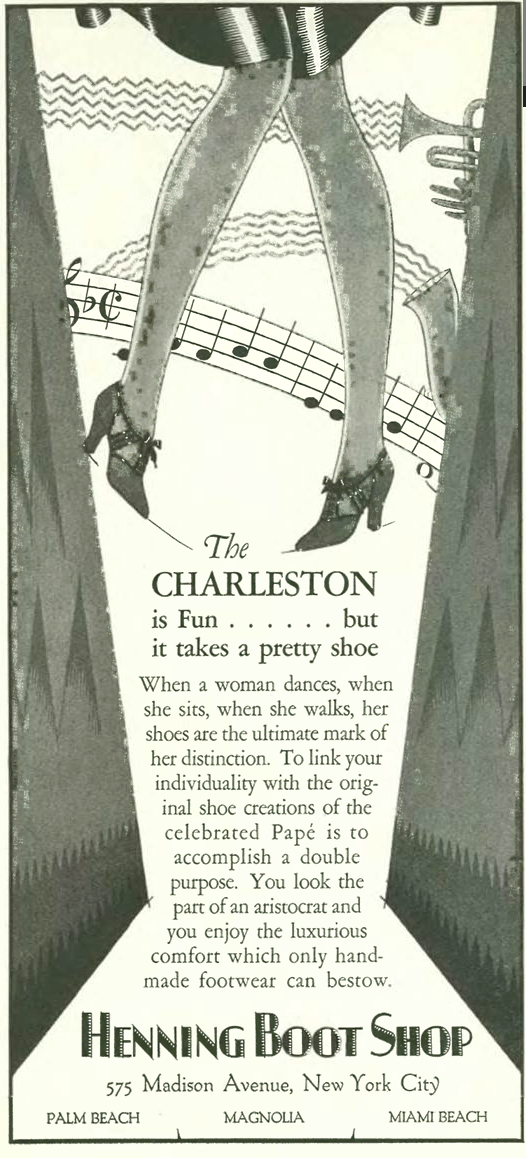
And just a few pages over, lessons were advertised for…The Charleston!
And to close, here’s a little fun with hotel inspectors, courtesy of Al Frueh:
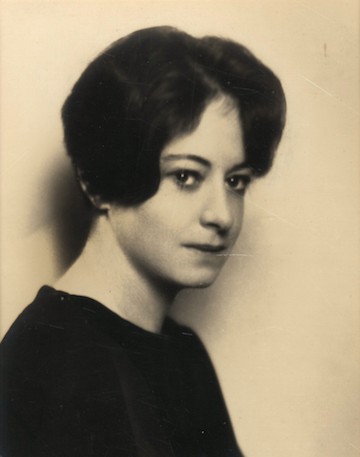
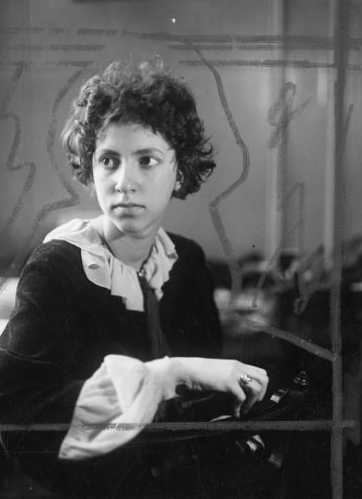
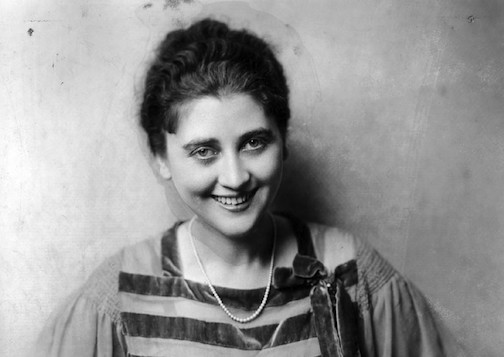
At an age when most students are barely out of college (23), Lois Long was emerging as one of The New Yorker’s most prolific contributors and a prominent voice of Roaring Twenties New York.
The Oct. 3, 1925 issue not only saw her continuing coverage of night life in “Tables for Two” (which she signed under the pen name “Lipstick”), but also the introduction of her column, “Fifth Avenue” (which she signed L.L.), that would further define her voice at the magazine for years to come.
And The New Yorker wasn’t even her first professional stint as a writer.
Beginning in 1922, Long wrote for both Vanity Fair and Vogue before she caught the eye of New Yorker editor Harold Ross, who hired her to take over the “When Nights Are Bold” column from Charles Baskerville. She later made it her own by changing the name to “Tables for Two.”
Lois Long in the 1920s. Photo from Andrea Long Bush. (Wikipedia)
With the Oct. 3 issue she doubled her workload as both an observer of night life and the fashion scene.
According to Judith Yaross Lee’sDefining New Yorker Humor, the “Fifth Avenue” column took a very different tack from the magazine’s original “Where to Shop” listings that were merely classified ads.
Yaross writes that Long’s first “Fifth Avenue” column relied on “the conceit of her friend Jerry, ‘boarding school roommate, perennial flapper, and graceful idler’ (evidently the department’s target reader)…”
The column would soon be renamed “On and Off the Avenue,” and Long would officially assume the title of fashion editor in 1927.
Her obituary in The New York Times (p. 36, July 31, 1974) quoted New Yorker editor William Shawn, who declared that “Lois Long invented fashion criticism,” and that Long “was the first American fashion critic to approach fashion as an art and to criticize women’s clothes with independence, intelligence, humor and literary style.” The article noted that her task was particularly challenging since The New Yorker did not publish photographs “and more than other writers she had to turn to words alone to describe clothes in detail.”
You can read Long’s first “Fifth Avenue” column, featuring her friend, “Jerry,” here in its entirety:
In the same issue, just three pages back, in “Tables for Two,” Long shared these insights on the opening of the Club Mirador:
And she pulled no punches in this erratum item that appeared below this Johan Bull illustration:
And in “The Talk of the Town,” Bull provided this illustration depicting the flare-up of Tong Wars among New York’s Chinese immigrant population. The main consequence of murderous assault seems to be a patron’s ruined shirt:
“Profiles” featured Reinald Werrenrath, “A New Yorker Who Sings.” Described by writer Clare Peeler as someone who “looks New York,” the baritone opera singer also recorded popular songs and was a regular on early radio broadcasts.
In “Critique” George S. Kaufman’s The Butter and Egg Man received a positive review by Herman J. Mankiewicz, who wrote that the play was “not for the artistically inclined,” but adds:
Gregory Kelly as Peter Jones in The Butter and Egg Man (1925). The Broadway play was a resounding success. Sadly, the beloved Kelly would die of a heart attack in 1927 (at age 36) while on tour with the play. (Museum of the City of New York)
By the way, the queen of New York nightlife, Texas Guinan, has been attributed as the source of the term “Butter and Egg Man” to generally describe generous souls (according to a “Talk” item in the Oct. 31 issue). At the movies, Theodore Shane found little to amuse as he panned The Tower of Lies (“colorless and loose-jointed”). Rather than capturing a Scandanavian setting, Shane wrote that the film “reeks of the studio scenario shops and the pleasant fields of Long Island.”
LITTLE TRAMP’S BIG BROTHER Sydney Chaplin performed in 37 films, including The Man on the Box (1925) with actress Alice Calhoun (above). He was Charlie Chaplin’s older brother and business manager. (Ohio State University)
He also took Sydney Chaplin’s attempts at humor to task in the film, The Man on the Box, including his tired “male dressing up as a woman” gag.
“Talk” also commented on changing face of New York City, including plans for a new Ziegfeld theatre as part of a “regeneration” of Columbus Circle:
According to performingartsarchive.com, Florenz Ziegfeld took over Columbus Circle’s Cosmopolitan theatre in 1925 and updated the interior. The building originally opened in 1903 as the Majestic (where the first musical stage version of The Wizard of Oz and the play Pygmallian debuted). It was briefly a burlesque house in the early 1920s (Minksy’s Park Music Hall) until William Randolph Hearst acquired it as a main venue for his Cosmopolitan Pictures company.
Postcard image of Columbus Circle, circa 1925. The Cosmopolitan is at far lower right. (NYC Architecture)
Under Ziegfeld, the Cosmopolitan returned to “legitimate” theater, but in 1926 he gave it up to focus on the construction of his self-named theatre at Sixth Avenue and 54th Street. The Cosmopolitan (renamed the International in 1944) would continue to serve both as a venue for movies and live performances until 1949, when it was acquired by NBC as a television studio for the TV program Your Show of Shows, featuring Sid Caesar and Imogene Coca. NBC left the International in 1954, and not long afterwards, the former theatre, along with most of its neighbors on Columbus Circle, was razed to make way for the New York Convention Center.
The long-gone Majestic, later Cosmopolitan theatre on Columbus Circle. (performingartsarchive.com)
Also from this issue, Al Frueh’s take on a “Busy Business Man’s Day:”
Hans Stengel delivered “Sermons on Sin”…
And lest we doubt the snob appeal of our fledgling magazine, check out this advertisement from the Mayfair House assuring that tenants will be kept a safe distance from the proles and other undesirables…
And to close, a back page ad for the Restaurant Crillon, featuring the unmistakable graphic innovation of Winold Reiss:
The dog days of summer were ushered in by the news that “the buyers” had “invaded” the city.
The “buyers” in question were tourists (and no doubt some clothing store merchants) from across the country who had descended upon Gotham in search of the latest fashions that could be bundled off to the hinterlands.
“The Talk of the Town,” speaking through the fictional persona “Van Bibber III,” took a sneering view of this annual migration:
(New Yorker Digital Archive)
In the first issues of The New Yorker, the “Van Bibber III” signature appeared occasionally at the end of “Talk” or other items.
Van Bibber advertisement in Cosmopolitan, 1896
In her book, Defining New Yorker Humor, Judith Yaross Lee wrote that early readers of The New Yorker would have recognized the Van Bibber III persona “as a joke, a personification of Van Bibber cigarettes, whose ads targeted the devil-may-care, swagger young man about town all dressed up for the opening night. As an insiders view of the urban scene, Van Bibber’s accounts featured casual conversation—that is, talk.”
“Of All Things” offered this update on the activities of illusionist Harry Houdini:
Houdini, charged with disorderly conduct after smashing up an office, replied: They locked the door and I had to fight my way out.” Bang goes another illusion! We thought he could open anything but a car window.
Murdock Pemberton wrote about the life of poet Harry Kemp in “Profiles,” and cartoonist Al Frueh offered this twist on the uses of “hot air:”
(New Yorker Digital Archive)
And more art from Ralph Barton, this time along with his views on the play Artists and Models and the contrasts between life in New York and Paris:
(New Yorker Digital Archive)
“Moving Pictures” offered praise for Sally of the Sawdust, featuring W.C. Fields. Theodore Shane wrote that Fields had distinguished himself from other movie comedians through his act as a “snooty sort of superclown.”
Art work by Johan Bull from “Sports of the Week.” In their careers, Elizabeth Ryan won 30 Grand Slam Titles, and Helen Wills won 31 (New Yorker Digital Archive).
The tennis tournament at Seabright featuring Elizabeth Ryan and Helen Wills was the subject of “Sports of the Week,” and in “When Nights Are Bold,” Lois Long continued her look at nighttime entertainment venues to beat the summer heat:
(New Yorker Digital Archive)Hotel Astor Roof Garden in 1905 (Museum of the City of New York)
Advertising remained sparse in the pages of The New Yorker, with both inside front and inside back covers devoted to in-house ads promoting the magazine. In addition, the color back cover was also a house ad, featuring a rendering by H. O. Hofman:
The “King of Greenwich Village Bohemians,” Maxwell “Bogie” Bodenheim, was a leading (and notorious) American poet and novelist when “The Talk of the Town” (July 25, 1925) reported on the controversy surrounding his latest novel, Replenishing Jessica, sometimes referred to as one of the infamous “lost” bohemian novels of the 1920s.
Although few consider the book to be great literature (or by today’s standards, scandalous), Replenishing Jessica’s frank portrayal of a woman’s many sexual liaisons was enough to draw the ire of censors.
Maxwell “Bogie” Bodenheim (The Chiseler)
Bodenheim’s publisher, Horace Liverwright, even found himself the subject of a grand jury investigation, which had declared the book obscene, although he was never prosecuted (Liverwright’s defense attorney was none other than Arthur Hayes, who would also serve on Clarence Darrow’s defense team in the Scopes Monkey Trial).
The New Yorker reported that Bodenheim was “present under a $2,500 bond” following publication of Replenishing Jessica, and called him “one of our few sincerely colorful literati.” It was also suggested that Bodenheim suffered from a “the same persecution complex which tortured Lafcadio Hearn; in his mind, editors meet to plot means to keep him out of print” (Hearn was a late 19th century writer known for his stories based on Japanese legends).
“Talk” described Bodenheim as “ragged and unkempt,”
his pipe “a burnt corn-cob, wedged in his broken front teeth…Eccentric, erratic, is Mr. Bodenheim, careless of the world’s criticism outside of his work, but there is an air of sincerity about him, cynical sincerity, a brittle sparkle to his conversation, that fascination of exotic, social lawlessness.
There is an interesting New Yorker connection to Bodenheim, who met writer Ben Hecht in Chicago in 1912 and with him co-founded the short-lived Chicago Literary Times, which featured such poets and writers as Carl Sanburg, Theodore Dreiser and Sherwood Anderson.
After his success as a leading American author in the 1920s and 1930s, Bodenheim became a panhandler and was arrested and hospitalized a number of times for vagrancy and drunkenness. In an article for The Chiseler, critic John Strausbaugh wrote that Bodenheim had “a real talent for scandal, easy enough to generate during Greenwich Village’s prolonged drunken orgy in the Prohibition years.”
Maxwell Bodenheim and Ruth Fagin sharing a breakfast of tomato juice and sandwiches as they await eviction from their Bleecker Street apartment, circa 1952. (The Chiseler)
In 1952 the 60-year-old Bodenheim married his third wife, Ruth Fagin, who was 28 years his junior. Strausbaugh takes it from there:
In 1953, Ruth took up with a violent, mentally unstable dishwasher named Harold Weinberg. One night in the winter of 1954 the three of them wound up in Weinberg’s room off the Bowery. Bodenheim roused himself from a drunken stupor to see Ruth and Weinberg having sex. He attacked Weinberg, who pulled out a .22 and shot him through the heart. Then Weinberg stabbed Ruth in the chest. The last photos of Bodenheim show him and Ruth lying dead in the squalid room.
Weinberg confessed to the double homicide, was judged insane and sent to a mental institution.
Now on a happier note…
This issue was also replete with various equine diversions. A feature titled “Au Gallop!” looked at groups of New Yorkers who plied the bridal paths of Central Park.
In “Profiles,” Jack Frost wrote admiringly about Harry Payne Whitney (accompanied by an heroic pen-and-ink portrait by Johan Bull). Whitney was a wealthy American businessman, thoroughbred horse breeder, and according to Frost, a “restless impatient force” who “concentrates on success.”
The victorious American team at the 1911 Westchester Cup. Harry Payne Whitney is second from left. (westchestercup.org/archives)
Among other things, The New Yorker credited Whitney with the creation of international-level polo competition in America and considered him the country’s best hope to win the Westchester Cup from England (Whitney was on the 1909, 1911 and 1913 winning American teams). Frost wrote that thanks to Whitney, “we have Homeric contests at Meadow Brook, as blood-stirring as the most epic battles of a Griffith film…”
There was no coverage of the Scopes Monkey Trial in Dayton, Tennessee, but cartoonist Al Frueh provided this reminder:
(New Yorker Digital Archive)
“Of All Things” noted that the population of New York City stood at 6,103,384, the 384 representing “those who have never had ferry-boats named after them” (The current population of the city is about 8.5 million).
View of midtown Manhattan looking southeast from Central Park, May 1925, when the population stood at 6,103,384. (Fairchild Aerial Surveys)
The column also offered this quip about the difference between France and England: “Another difference between the two countries is that England is working on the isolation of germs while France is still concerned with the isolation of Germany.”
Will Rogers was a popular draw as part of the “Follies” cast. (Will Rogers Memorial Museums)
The “Critique” section urged readers to see select Broadway shows before the new fall season. Recommended plays included What Price Glory, They Knew What They Wanted, Desire Under the Elms, Is Zat So?, the Ziegfeld Follies, Artists and Models, Lady Be Good and Rose-Marie.
The “Music’ section praised a new talent, Abram Chasins. “This young man is going to be something. In fifty years you may pat your granddaughter’s hair (if she has any) and tell her that you saw it in THE NEW YORKER first.” Chasins would have a long career as a pianist and composer, and later as a broadcaster and radio executive. He is perhaps best known for his Three Chinese Pieces composition.
The “Moving Pictures” section looked at Lightnin (“all our sentimental friends will find it a charming American epic”), and Rugged Water, starring Wallace Beery, who played a cowardly coast guard captain. Wrote the reviewer: “(Beery) does not seem to know what it is about and funks badly indeed. As for the rest of the picture, a good performance is given by the ocean.”
June Marlowe and Rin Tin Tin in a scene from Tracked in the Snow Country. (1925) (Warner Bros.)Rin Tin Tin and June Marlowe appear in an advertisement for wristwatches. They made four films together in 1925-26 (Warner Bros.)
In reviewing the dog superstar Rin Tin Tin’s latest movie, Tracked in Snow Country,Theodore Shane (“TS”) mused “It is questionable as to what a dog would say were he able to appraise the virtue that he defends on the screen. Would he find that gold mine worth fighting for or that gal’s innocence worth saving or that villain’s throat worth chawing?…He is a handsome animal to look on and appealing in every foot of the film he plays, but we wish that all that beauty would get cynical for a change.”
Susan Orlean wrote a terrific article about Rin Tin Tin in the August 29, 2011 issue of The New Yorker titled “The Dog Star: Rin Tin Tin and the making of Warner Bros.” She also published a book, Rin Tin Tin: The Life and the Legend that same year. Highly recommended.
In her column “When Nights Are Bold,” Lois Long offered readers cool escapes from the summer heat at various themed entertainment venues:
(New Yorker Digital Archive)
While advertisers continued to shill exclusive getaways for “carefully selected clientele”…
(New Yorker Digital Archive)
At this point the magazine itself seems to be hanging on by a thread. There is scant advertising in this thin issue (24 pages plus cover). The full-page ads on both the inside front and back covers are in-house ads promoting subscriptions to The New Yorker:
And here are two 1/6 page ads featured in the sports section, one from a Detroit hotel no less:
(New Yorker Digital Archive)
In a final note, I feature a rare non-NYC item. After falling into decay over several decades, Detroit’s Book Cadillac Hotel (advertised above) was restored in 2008 and reopened as a Westin hotel:
Before restoration (NBC News)The same room today after restoration (above), and the hotel’s exterior (Westin/Wikipedia)